The Geographer: United? The State of America (Summer 2026)
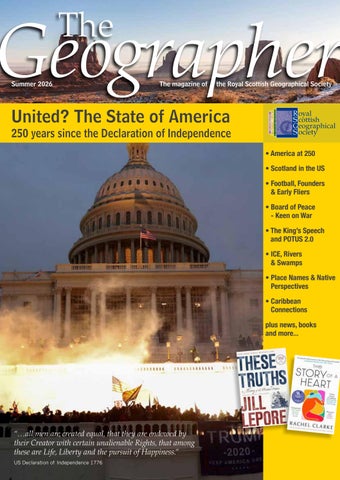
United? The State of America
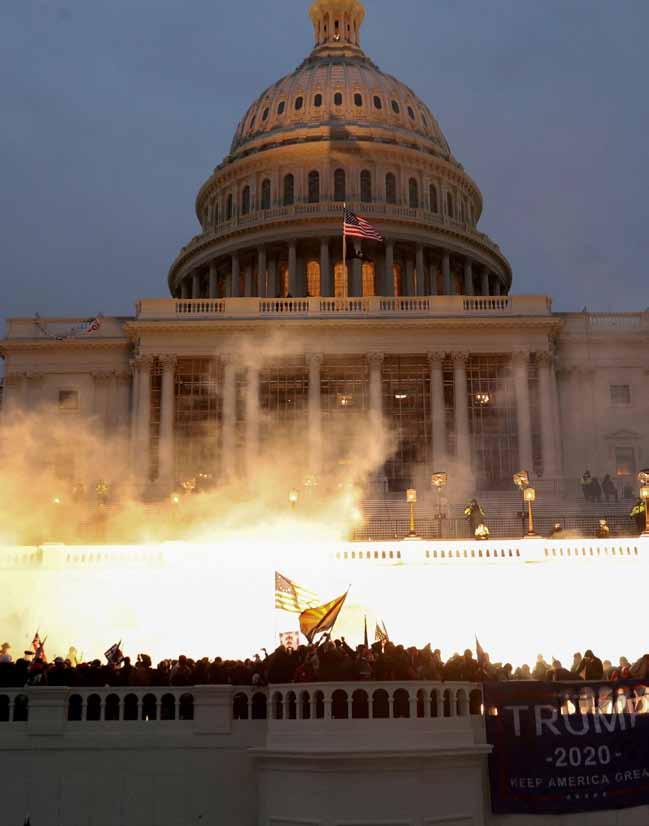
“…all
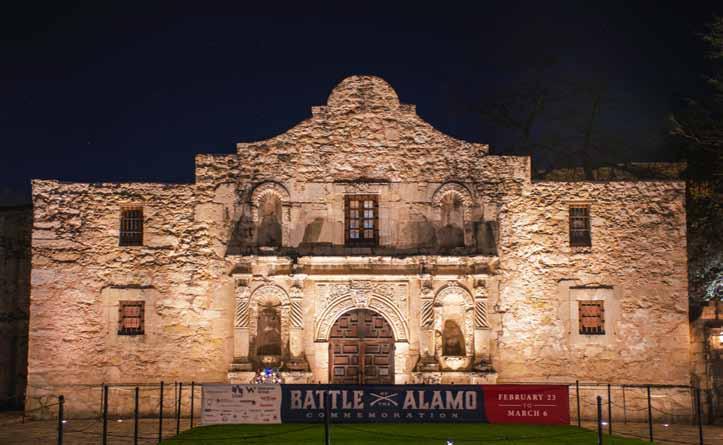
• America at 250
• Scotland in the US
• Football, Founders & Early Fliers
• Board of Peace
- Keen on War
• The King’s Speech and POTUS 2.0
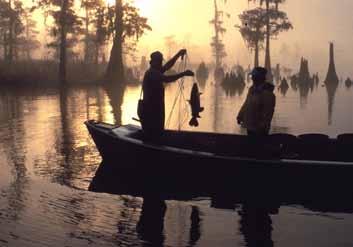
• ICE, Rivers & Swamps
• Place Names & Native Perspectives
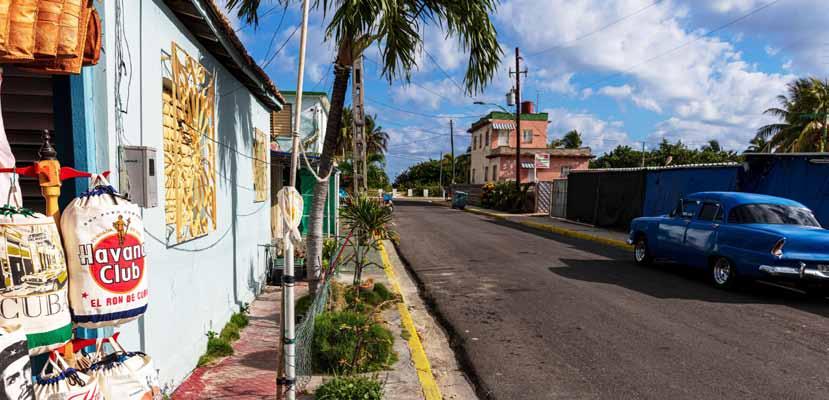
• Caribbean Connections plus news, books and more...
The GeographerAmerica at 250
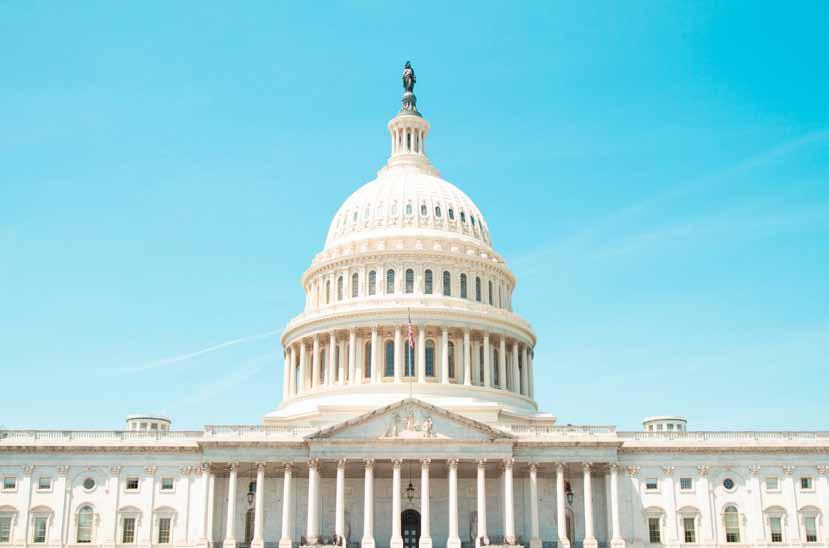
Choosing the USA’s celebration of the 250th anniversary of the Declaration of Independence seemed like an obvious but strong theme for a Geographer, but has proved more difficult than I had imagined. It is after all a huge topic, however, it has also been victim to the increasing polarisation we are witnessing in the US.
As the America 250 official website declares: On July 4, 2026, our nation will commemorate and celebrate the 250th anniversary of the signing of the Declaration of Independence. The journey toward this historic milestone is an opportunity to pause and reflect on our nation’s past, honor the contributions of all Americans, and look ahead toward the future we want to create for the next generation and beyond.
It will celebrate the fact that 250 years ago, people in America decided they would no longer be ruled by Britain, and started to govern themselves as their own country. As the declaration states: “…whenever any Form of Government becomes destructive of these ends, it is the Right of the People to alter or to abolish it...”. This US Declaration (inspired in part by 14thC Declaration of Arbroath) is comprised of a long list of injustices perpetrated by King George III. It is the basis on which independence was justified, but even a cursory read through these various grievances sounds almost as much of a critique of the current POTUS and his cronies as it is of the 18thC British Monarch.
4th July 1776 is viewed by many as the USA’s birthday, although the Native Americans clearly view it differently. Many black African Americans do too – after all, at the time, many felt betrayed by the seeming promise of freedom when still held in slavery. Some New Yorkers for instance, look to July 5th as a more apt celebration, recognising the State’s (and the US’s first) Abolition Act of 1827, when the freedoms expressed in the Declaration of Independence began to extend to more of the citizenry.
It is of course, first and foremost, a celebration, but it is much richer, deeper and more reflective, within this wider context. Without different perspectives after all, there is danger of history simply becoming propaganda. Our intention is to focus this magazine on that celebration and to reflect on the USA in its 250th year. It is an opportunity to pause and reflect, to honor the contributions of all Americans and to look ahead. America is a beautiful country, with many remarkable and celebrated citizens, with an incredible global impact culturally, economically, technologically, militarily and geo-politically, and (despite this anniversary of independence from Britain) has remained one of the UK’s closest friends for much of that 250 year history.
It is important to reflect too that this relationship, and those with so many of its allies, have been put under incredible strain in recent months, so what does that future look like? Despite their historical leadership in much science and technology, the current administration are decimating many of its most revered universities and institutions. What is going on in the country, why are ICE (Immigration & Customs Enforcement) roaming the streets in such numbers and how united are the States on this their 250th anniversary?
There is so much to the USA, I suspect we could have filled these pages many times over, but I am grateful to everyone who contributed and helped make this edition happen. Despite the intention of having an undertone of celebration, the current obfuscation of science and reality in the US has made it harder to source articles than usual, but I hope it goes some way to helping celebrate and reflect on this important time in the history of the USA. And arguably the world as we currently understand it.
Mike Robinson, Chief Executive, RSGS
RSGS, Lord John Murray House, 15-19 North Port, Perth, PH1 5LU tel: 01738 455050
email: enquiries@rsgs.org www.rsgs.org
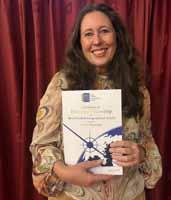
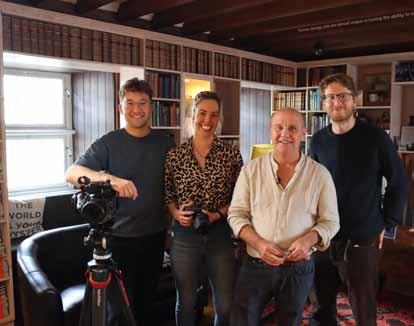
Alice Morrison FRSGS
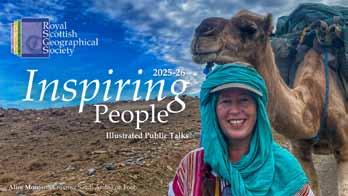
We were delighted to present RSGS Honorary Fellowship to Alice Morrison, in recognition of her many adventures, and the insights and stories that she shares from her travels. On top of her recent achievement to walk the length of Saudi Arabia, Alice became the first woman to walk the Draa River in Morocco in 2019, followed by journeys across the Sahara and the Atlas Mountains - earning her the moniker ‘Indiana Jones for Girls.’ Alice has also spoken for the RSGS talks programme numerous times and never fails to inspire our audiences.
Volunteering Opportunities
Join the Fair Maid’s House Team
us in your local area
If you have a passion for geography, history, or meeting new people, we’d love you to join our fantastic volunteer team at the Fair Maid’s House Visitor Centre. We’re open every Thursday, Friday, and Saturday from 12:30pm to 4:00pm, running through to 10th October. Our volunteers play a key role in welcoming visitors and sharing the story of RSGS, the historic building, and the city of Perth.
Join one of our Local Groups
Our Local Groups across Scotland are always keen to welcome new volunteers to help host our Inspiring People talks programme. There are six talks a year at each group, taking place from September to March, in 13 towns and cities across the country : Aberdeen, Ayr, Borders, Dumfries, Dundee, Dunfermline, Edinburgh, Glasgow, Helensburgh, Inverness, Kirkcaldy, Perth, and Stirling - this is a wonderful opportunity to meet new people and hear from leading explorers, photographers, communicators, and scientists. If you’re interested in volunteering, please get in touch at enquiries@rsgs.org or phone 01738 455050
Inspiring People 2025-26
Our 2025-26 Inspiring People talks programme came to a close on 26th March with the talk by Jack Capener in Helensburgh.
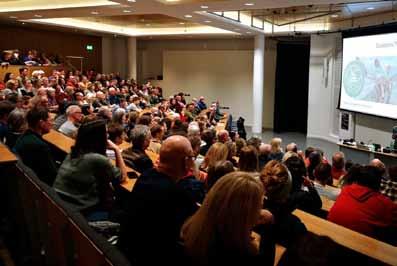
Thank you to our Local Group volunteers for all of their hard work, all our incredible speakers for sharing their inspiring stories, and to everyone who came to our talks this season. Just some of our highlights this year have included broadcaster George McGavin, wildlife filmmaker Dan O’Neill, explorer Alice Morrison, and the Seas the Day Pacific rowing team, at our 13 Local Groups across the country.
We look forward to seeing you again in September 2026! In the meantime, look out for extra events on throughout the year at www.rsgs.org/events
Blog Update
We continue to make weekly additions to our blog (www. rsgs.org/blog), covering a range of interesting topics and news about our work. Recent posts include:
‘Eager for the Air’: the women pilots of the Air Transport Auxiliary: We share the extraordinary story of the pioneering women aviators of the Air Transport Auxiliary, who ferried aircraft across Britain, from Tiger Moths to Spitfires and heavy bombers for the war effort - often flying alone, without radios, and in all kinds of weather.
Reflecting on the legacy of our early polar explorers: Scotland has a long and proud history of glaciology and polar research, punching far beyond its weight in the international research community.
Professor Johan Rockström Coppock Research
Medallist: We share more from our visit to Berlin to present the RSGS Coppock Medal to Professor Johan Rockström.
Call for Action on Climate Change
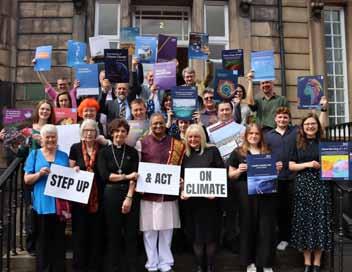
In May 2024 we held an event to regalvanise efforts towards climate action, by bringing together all the faith leaders in Scotland with a wide range of senior academic scientists to reinforce the necessity and urgency of action on climate change - a joint faith and science declaration.
Since then, we have added in other voices from many different walks of life who all clearly recognise this needthat scientifically, morally and economically acting on climate change is the best course of action. And by embracing the challenge we can improve the quality of people’s lives, lead the world in innovation and build a far more robust society. Watch the full video now on RSGS YouTube.
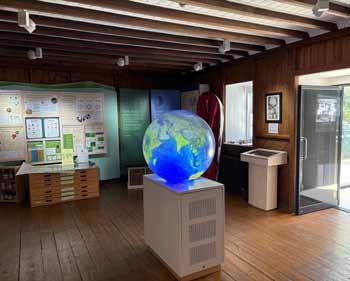
Fair Maid’s House Reopens
We are excited to share that the Fair Maid’s House Visitor Centre reopened to the public on Thursday 9th April!
There is also a brand-new addition to the visitor centre this year - RSGS was recently donated thousands of 35mm slides by former NatureScot photographer Lorne Gill, who has travelled across Scotland, capturing its wildlife and landscapes in remarkable detail.
The Fair Maid’s House is located at 15-19 North Port, just behind Perth Concert Hall. The visitor centre is open every Thursday, Friday, and Saturday from 12:30pm to 4:00pm until October 2026, with entry by donation.
come and visit!
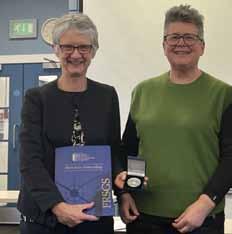
Dr Catherine Souch Tivy
We were pleased to present the RSGS Tivy Education Medal to Dr Catherine Souch (left), in recognition of her exceptional contributions to geography education at all levels.
Medal
Dr Souch is Head of Research and Higher Education at the Royal Geographical Society, and for nearly two decades she has championed the development of higher education geography in the UK - ensuring it remains relevant and future-focused. What stands out about Dr Souch’s work is its practical and far-reaching impact - building systems, resources, and opportunities that genuinely benefit students, teachers, and schools across the country.
Sir David turns 100
Sir David Attenborough celebrated his 100th birthday in May of this year. Over his career Sir David has received a host of awards and honours, and more than 40 species have been named after him. He first spoke for RSGS in 1964 about his then travels on the Zambezi and has since been awarded the RSGS Livingstone Medal in 1989 and the Scottish Geographical Medal in 2011. Read more about Sir David as he reaches this amazing milestone at www.rsgs.org/blog
Britain’s Most Detailed Map
Ordnance Survey has announced the latest expansion of the national map of Great Britain, the OS National Geographic Database. Three and a half years since its launch, the database has expanded into a collection of datasets to deliver the most detailed and data-rich digital map in history. Described as the biggest change to OS data access in a generation, the database brings together a high volume of authoritative geographic data for GB into one location, providing improved access and richer attribution.
Remembering Doug Allan FRSGS
We were deeply saddened to hear about the recent death of our friend Doug Allan. Doug could be described as nothing short of a legend. An award-winning cameraman, for over 40 years he created some of the most stunning and iconic photography and television footage ever captured. From his beginnings as an avid diver, to graduating with a degree in biology, to a chance meeting with David Attenborough in Antarctica that would launch his career in wildlife filmmaking – he was driven by a remarkable blend of unique skills and passions.
As Sir David Attenborough once told us: “Doug is not like other men. He seems impervious to cold... He delights in company – particularly if he can find someone who has not heard his jokes – yet he can tolerate, even welcome, long periods of total solitude. And he has that mixture of physical bravery, technical skill and zoological expertise that you need if you are to be one of the greatest of natural history cameramen. Which he is.”
RSGS Chief Executive Mike Robinson spoke for everyone at RSGS when he said: “We’ve lost a friend. Doug was an RSGS Mungo Park Medallist, a Fellow of RSGS and a regular and popular speaker. He was a tireless and generous supporter of our charity for many years and a great fan of geography and our work. He was one of the family, a proud Fifer, always generous and welcoming, and it was a joy spending time in his company. We shared a deep passion about wildlife loss and climate change, witnessing both, as he did, at first hand. He was a dynamo, full of adventures, which is why he has his own chapter in Jo Woolf’s book - Voices of the Earth. We were so pleased to host him as a speaker at A Wild Night In just this past December alongside his friends and colleagues Gordon Buchanan, Mandi Stark and Libby Penman. He regaled the 900-strong audience with a customary twinkle in his eye, his stories full of humour, self-deprecation and drama. Every one of the other film makers featured on the night spoke of how much he inspired them in getting started. His enthusiasm for meeting people, helping others and sharing his stories was infectious. We will miss him.”
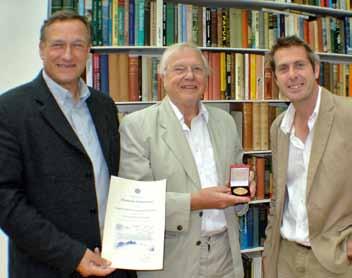
Professor Johan Rockström Coppock Research Medal
We recently had the opportunity to travel to Berlin to present Professor Johan Rockström with the RSGS Coppock Research Medal. A global leader in climate and sustainability science, Professor Rockström led the development of the Planetary Boundaries framework and has played a vital role in shaping international climate and sustainability policy. This award recognises not only his ground-breaking research, but his tireless efforts to engage directly with world leaders and policymakers at major international gatherings about the climate crisis, from Davos to the G20 to the UN COPs.
Route 66 Turns 100
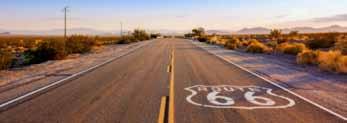
One of the most famous highways in the U.S. is celebrating its centenary this coming November. Route 66 was established in 1926 as part of the country’s first numbered highway system, linking existing roads into a continuous corridor that started in Chicago and travelled 2,400 miles to Santa Monica, California. Early marketing of the road promoted Route 66 as the “Main Street of America,” touting it as a direct and enjoyable way to travel across the country. The route became a major corridor for migration, commerce and tourism - it first carried Dust Bowl migrants west in the 1930s, and after World War II, it helped define the American road trip and its automobile culture.
Super El Niño
New forecasts show increasing confidence that the developing El Niño in the tropical Pacific Ocean could be one of the strongest on record with warnings of record global temperatures and huge humanitarian impacts. Parts of the Pacific have been warming rapidly with data this week showing sea surface temperatures around 0.5C above normal - one threshold used to suggest the onset of El Niño, a natural warming of the Pacific. It is expected to strengthen over the next few months, peaking potentially as a very strong - or so-called super El Niño - in the autumn.
UK’s First Electric Flight
Royal Mail, Loganair, and BETA Technologies have launched the UK’s first real-world electric flight demonstrations across Royal Mail’s essential Scottish mail flight routes.
The first of a series of demonstration flights across Scotland’s regional airport network took place in March between Glasgow and Dundee, with further flights planned between Aberdeen, Inverness, Wick and Orkney. The flights will carry representative letters and parcels, replicating the daily mail flights Loganair operates so Royal Mail can deliver to Orkney and the wider
V&A Football Scarf
The V&A Dundee have produced an exclusive Scotland World Cup football scarves designed in collaboration with artist Aoife Cawley and young creatives from Rockwell Learning Centre. With pops of pink and yellow amongst the blue, a unicorn motif and a nod to ‘Flower of Scotland’, the scarf design plays with traditional Scottish symbols and football scarfs. It is available to buy from the V&A shop.
The Balloonists
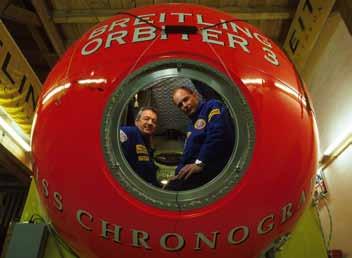
In 1999, the unlikely duo of Swiss explorer and RSGS Medallist Bertrand Piccard and British flying instructor Brian Jones took on the world’s leading aeronauts and billionaires in a race to become the first people to fly nonstop around the world in a balloon. Now a new documentary film titled The Balloonists captures the gripping true story of the epic flight that changed aviation history.
Sovereign Wealth Fund for Canada
Canadian Prime Minister Mark Carney FRSGS, recently announced plans to launch a sovereign wealth fund. The Canada Strong Fund will invest in energy, infrastructure, mining, agriculture and technology, with an initial contribution of C$25bn. The move is part of a broader goal by the Carney government to boost Canada’s economy in the face of US tariff threats. At a press announcement in Ottawa, Carney said that Canada was at a critical point in its history due to its changing relationship with the US, requiring it to invest and build at an urgent pace.
NASA Earthset
The Artemis II crew captured this view of Earth setting on April 6, 2026, as they flew around the Moon. As the astronauts flew over the Moon’s far side, the crew photographed and described terrain features including impact craters, ancient lava flows, and surface cracks and ridges formed as the Moon slowly evolved over time. They also noted differences in colour, brightness and texture, which provide clues that help scientists understand the composition and history of the lunar surface.
What Does Geography Mean to You?
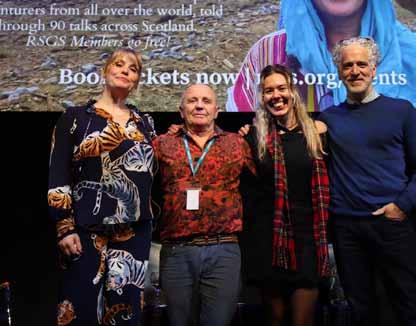
Simon Reeve FRSGS
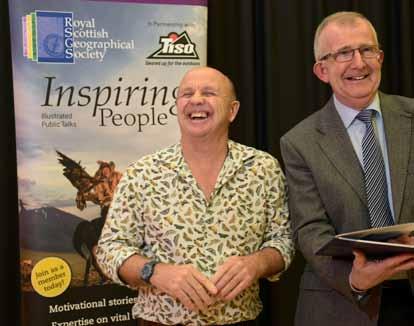
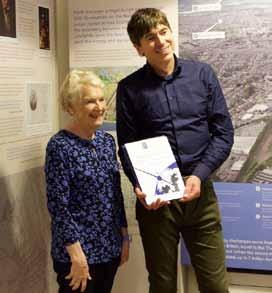
We were delighted to present RSGS Honorary Fellowship to Simon Reeve while he was in Perth for his event at the Concert Hall! Through his many television programmes, Simon has helped popularise geography, travel and exploration to a very broad audience. He was presented the award by RSGS Trustee Lorna Ogilvie who commented: “Simon much deserves his RSGS Fellowship as he articulates, with ease, a deep and caring understanding of the changes our world is undergoing both environmentally and socially. His relaxed communication style allows him to talk knowledgably to both locals and dignitaries, often about controversial issues, whilst also showing a wider fascination and real enjoyment of travelling around their countries.”
We want to know what geography means to you. Over the past few years, we’ve asked our members, fellows and speakers to share their reflections on geography. Unsurprisingly, their responses have been as varied and wide-ranging as the subject itself. When you think about geography, what comes to mind? Is it landscapes and maps, people and places, climate and culture, exploration and discovery? How does it shape the way you see the world, and how does it make you feel? There are no right or wrong answers. Geography means something different to everyone, and that diversity of thought is what makes the subject so special, and our charity so unique. By sharing your perspective, you help us better understand our community and ensure that, as a geographic society, we continue to reflect, support and champion what matters most to you. To share your thoughts, please visit www.rsgs.org.
Seven Times People Discovered the Americas – and How They
Nicholas R. Longrich, Senior Lecturer in Paleontology and Evolutionary Biology, University of Bath.
When Columbus landed in 1492, the Americas had been settled for tens of thousands of years. He wasn’t the first person to discover the continent. Instead, his discovery was the last of many discoveries.
In all, people found the Americas at least seven different times. For at least six of those, it wasn’t so new after all. The discoverers came by sea and by land, bringing new genes, new languages, new technologies. Some stayed, explored, and built empires. Others went home, and left few hints they’d ever been there.
From last to first, here’s the story of how we discovered the Americas.
7. Christopher Columbus: AD 1492
In 1492, Europeans could reach Asia by the Silk Road, or by sailing the Cape Route around the southern tip of Africa. Sailing west from Europe was thought to be impossible. The ancient Greeks had accurately calculated that the circumference of the Earth was 40,000 km, which put Asia far to the west. But Columbus botched his calculations.
An error in unit conversion gave him a circumference of just 30,000 km. This mistake, with other assumptions born of wishful thinking, gave a distance of just 4,500 km from Europe to Japan. The actual distance is almost 20,000 kilometres.
South Americans acquired chickens from Polynesians, while the Polynesians may have picked up South American sweet potatoes. And they shared more than food. Eastern Polynesians have Native American DNA. Polynesians didn’t just meet Native Americans, they married them.
5. Norse: AD 1,021
According to Viking sagas, around AD 980, Eric the Red, fierce Viking and cunning salesman, named a vast, icy wasteland “Greenland” to entice people to move there. Then, in AD 986, a boat from Greenland spotted the coast of Canada
Around AD 1,021, Erik’s son Leif established a settlement in Newfoundland. The Vikings struggled with the harsh climate, before war with Native Americans ultimately forced them back to Greenland. These stories were long dismissed as myths, until 1960, when archaeologists dug up the remains of Viking settlements in Newfoundland
“In all, people found the Americas at least seven different times. For at least six of those, it wasn’t so new after all.”
So Columbus’s ships set sail without enough supplies to reach Asia. Fortunately for him, he hit the Americas. Columbus, thinking he’d found the East Indies, called its people “Indios”, or Indians. He ultimately died without realising his mistake. It was the navigator Amerigo Vespucci who realised Columbus had found an unknown land and in 1507 the name America was applied in Vespucci’s honour.
6. Polynesians: AD 1,200
Around 2,500 BC, a seafaring people sailed from Taiwan to find new lands. They sailed south through the Philippines, east through Melanesia, then out into the vast South Pacific. These people, the Polynesians, were master navigators, reading wind, waves and stars to cross thousands of kilometres of open ocean.
Using huge double canoes, the Polynesians settled Samoa, Fiji, Tonga, and the Cook Islands. Some went south to New Zealand, becoming the Maori. Others went east to Tahiti, Hawaii, Easter Island, and the Marquesas. From here, they at last hit South America. Then, having explored most of the Pacific, they gave up exploration and forgot South America entirely.
But evidence of this remarkable voyage remained. The
4. Inuit: AD 900
Just before the Vikings, the Inuit people travelled from Siberia to Alaska in skin boats. Hunting whales and seals, living in sod huts and igloos, they were well adapted to the cold Arctic Ocean, and skirted its shores all the way to Greenland.
Curiously, their DNA is closest to native Alaskans, implying their ancestors colonised Asia from Alaska, then went back to discover the Americas again.
3. Eskimo-Aleut: 2,000-2,500 BC
The Inuit descend from an earlier migration: that of speakers of the Eskimo-Aleut languages. These are distinct from other Native American languages, and might even be distantly related to Uralic languages such as Finnish and Hungarian This, with DNA evidence, suggests the Eskimo-Aleut was a distinct migration. They came across the Bering Sea from present-day Russia to Alaska, perhaps 4,000-4,500 years ago, partly displacing and mixing with earlier migrants: the Na-Dene people.
2. Na-Dene: 3,000-8,000 BC
Another group, the Na-Dene, crossed the Bering Sea to Alaska around 5,000 years ago, although other studies suggest they settled the Americas as long as 10,000 years ago
DNA from their bones links them not to modern people in the Eskimo-Aleut group, but to Native Americans speaking the Na-Dene language family, such as the Navajo, Dene, Tlingit, and Apache people. Na-Dene languages are closest to languages spoken in Siberia, suggesting again that they represent a distinct migration.
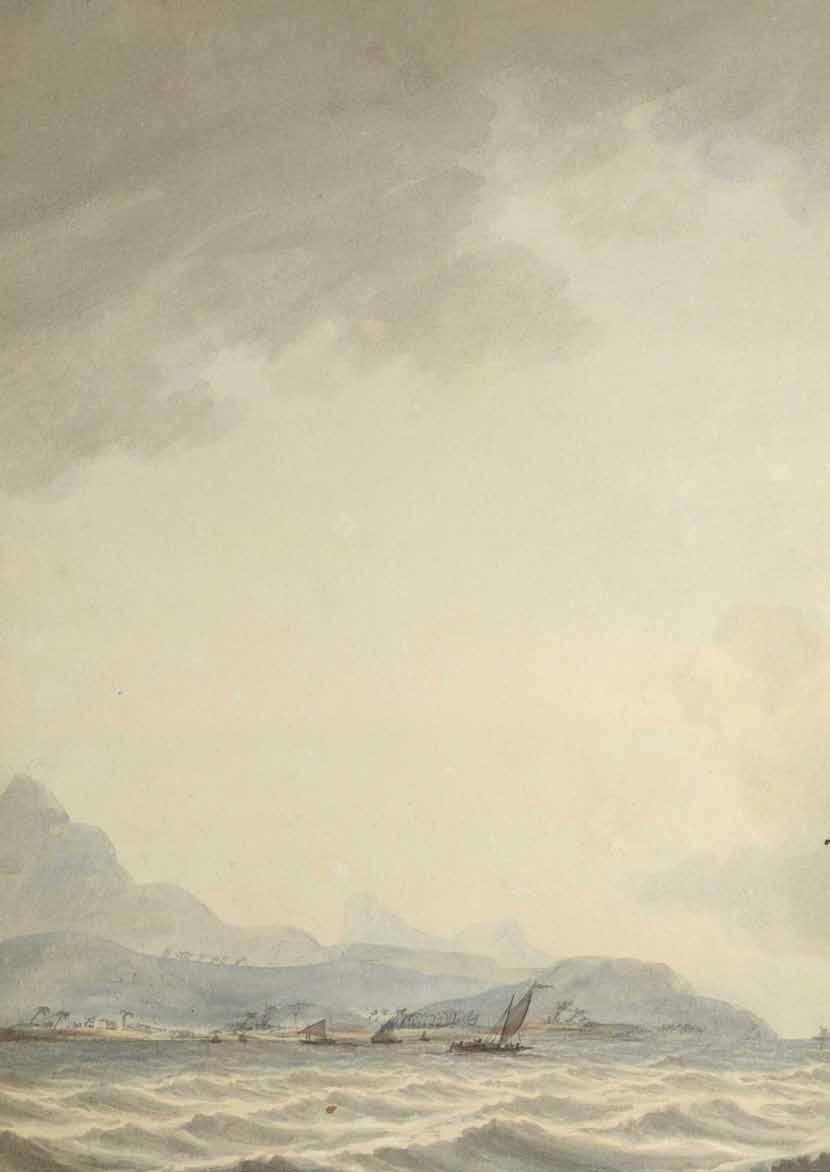
Captain Cook’s ships, Resolution and Discovery, off the coast of Tahiti.
1. First Americans: 16,000-35,000 years ago
Almost all Native American tribes – Sioux, Comanche, Iroquois, Cherokee, Aztec, Maya, Quechua, Yanomani, and dozens of others – speak similar languages. That suggests their languages evolved from a common ancestor tongue, spoken by a single tribe entering the Americas long ago. Their descendants’ low genetic diversity suggests this founding tribe was small, maybe less than 80 people
How did they get there? Before the last ice age ended 11,700 years ago, so much water was locked up in glaciers that sea levels fell. The bottom of the Bering Sea dried out, creating the Bering Land Bridge. America’s first people just walked from Russia to Alaska. But the timing of their migration is controversial.
Archaeologists once thought the Clovis people, living 13,000 years ago, were the first settlers of America. But evidence now suggests humans arrived in the Americas much earlier.
Finds in Washington, Oregon, Texas, the east coast of the US, and Florida suggest people reached the Americas long before the Clovis people. Footprints in New Mexico date to 23,000 years ago. Stone tools in a Mexican cave may date to 32,000 years ago. A butchered mammoth from Colorado dates to 31,000-38,000 years ago. And traces of fire put humans in Alaska 32,000 years ago.
Some of these dates could be incorrect, but with each new discovery it seems increasingly unlikely that they’re all wrong.
An early migration would neatly solve a major mystery. 13,000 years ago, a vast glacier, the Laurentide Ice Sheet,
buried Canada in ice up to three kilometres thick. If people arrived in North America then, how did they cross the ice? Southeast Alaska’s rugged coast, full of glaciers and fjords, was likely impassible, and early Americans probably lacked boats. But 30,000 years ago, the ice sheet hadn’t fully formed.
Before the ice spread, people could have hunted mammoths and horses east from Alaska into the Northwest Territories, then south through Alberta and Saskatchewan into Montana. Remarkably, humans may have settled the Americas before western Europe. Yet that might make sense. Alaska’s Arctic is harsh, but Europe had potentially hostile Neanderthals
The end of discovery
1492 was the last discovery of the Americas. Following the voyages of Columbus, Magellan, and Cook, the scattered descendants of humanity’s diaspora were finally reunited. Aside from a few uncontacted tribes, everywhere was known to everyone. Discovery was impossible.
But the story of the Americas’ settlement is still being written, and our understanding is evolving. The Eskimo-Aleut may have been two different migrations, not one. Genes hint at the possibility of other, early founding populations. And given how little evidence the Polynesians and Norse left of their visits, it’s conceivable there were other migrations, ones of which we have little evidence.
There’s so much we don’t know. No one can discover the Americas anymore, but there’s a lot left to discover about their discovery.
Back to the Future: The American Self-Image on the 250th Anniversary of the USA
John Agnew, Emeritus Professor, UCLA
This seems like a strange time to be celebrating the 250th anniversary of the founding of the United States as a constitutional republic. The national government has been at or threatening war with various countries since January 2025 (Greenland, Venezuela, Nigeria, Iran, Cuba, for example) with little seeming interest in the longstanding commitment to “spread democracy.” The monumental core of Washington DC is being made over in the manner of an absolutist monarchy with celebratory arches, massive ballrooms, and statuary memorializing European colonialism. Various academic reports suggest that the country is in trouble as a democracy because of a range of emergent authoritarian trends, not least in the increasing lack of legislative and judicial checks on the office of the president, the rewarding of business “friends” and foreign governments in return for investment preferences to family and supporters, and the apparent collapse of predictable relations between the federal and state governments as the presidency nationalizes many issues and some states then revolt in response, largely in terms of their partisan (Democratic versus Republican) coloration. Political partisanship is incredibly extensive nationwide, perhaps at a level not seen since the 1850s and certainly beyond that of the 1930s.
More fundamentally, and lying behind the polarization, the historic self-confidence of Americans about their “special” history and central place in the world is increasingly in doubt on all sides. The powerful narrative about US exceptionalism, “the Great Nation of Futurity” as it was cast in the 1830s, and the so-called American Dream of relentless upward social mobility for the masses, including penniless immigrants, is now in open question. Immigrants are no longer welcome in the eyes of many Americans, whatever their legal status, and income/ wealth inequality is now at levels previously only encountered in, say, Brazil, Russia, and South Africa. The financialization of the US economy since the 1980s fueled by massive tax cuts for the rich and paired with the decline in manufacturing employment in the face of technological change and the globalization of the world economy has produced a huge income gap between the richest 1% and everyone else. A string of recessions and foreign-policy fiascos since the 1990s has replaced the euphoria of “winning” the Cold War with the Soviet Union with the sense that the country is declining with respect to what everyone has learned to expect is their birthright: increasing upward social mobility across generations, returns to investment in education, jobs even for those with little or no academic talent or marketable skills, and so on.
nationalist and/or anti-immigrant clothing. Twenty or so years ago Professor Sharp and I wrote a book chapter in which we alleged that this story would soon run out of steam. We said that the narrative had been kept alive partly because of the Cold War but that in its absence and notwithstanding efforts at finding alternative negative forces, the Victory Culture that had emerged out of the American conquest of the continent and subsequent service as global role model for the “Free World” was in increasing doubt because the US had become “less distinctive in terms of its selfdefined virtues – individual liberty, wealth, and democratic institutions – and more distinctive in terms of its historic vices – impoverishment, violence, and crass vulgarity – than many other countries” (Agnew and Sharp 2002, 84).
“The future is global, that’s more or less what was always most positive about the ‘American experience.’”
It is to US history that we should look then in accounting for this shift rather than to the rise of external challengers. The very globalized economy now blamed for the economic losses suffered by some American people and regions had its beginnings in those very places. The making of a globalized economy since the 1970s reflects the ways in which the US economy was made and then spread worldwide. First of all, it was in the United States that the geographical expansion of the marketplace beyond existing borders was first practiced. Secondly, economic liberty or independence was defined as the only foundation for freedom per se. The US Constitution essentially combined these two “principles” in the uniquely American version of democratic capitalism. But it also represented a conception of freedom of action that refused to be bounded by national-institutional limits. The future-facing expansion of the frontier by individual European pioneers was exactly the prototype political-economic model for what has become the globalization that is now widely viewed as undermining the specialness of being American. Looking to the continental past now is no way to make a prosperous future…. for anyone. The future is global, that’s more or less what was always most positive about the “American experience.”
FURTHER READING
J. A. Agnew, The United States in the World Economy, Cambridge: Cambridge University Press, 1987.
J. A. Agnew and J. P. Sharp, “America, frontier nation: from abstract space to worldly place,” in J.A. Agnew and J. M. Smith (eds.) American Space/American Place, Edinburgh: Edinburgh University Press, 2002.
A. Cooley and D. Nexon, “The Age of Kleptocracy: geopolitical power, personal gain,” Foreign Affairs, 105, 2 (2026): 24-37.
M. Nord et al. Democracy Report 2026, Gothenburg: University of Gothenburg, V-Dem Institute, 2026.
Apart from some attempted reforms in healthcare insurance little or nothing has been done by recent US governments to address these material challenges to the conventional wisdom about what makes the US “special.” Indeed, and particularly since 2016, the effort has been to reinstate a mid-20th century John Wayne version of US history by removing all of the native Americans, African Americans, Latinos, and women of all sorts who had struggled to find their places in the US story. Whether this will manage to compensate for the material losses even for the average white American male is something else again, even if dressed up in Christian-
M. Peterson, The Making and Breaking of the American Constitution, Princeton NJ: Princeton University Press, 2026.
Gaffney V, Fitch S, Smith D (2009), Europe’s Lost World, The Rediscovery of Doggerland (CBA Research Report 160)
Wickham-Jones CR (2014), Prehistoric hunter-gatherer innovations: coastal adaptions. In Cummings V, Jordan P, Zvelebil M (eds), The Oxford Handbook of the Archaeology and Anthropology of Hunter-gatherers (Oxford University Press)
ScARF, Scottish Archaeological Research Framework (www. scottishheritagehub.com)
We’re Still Here: Why it’s Still a Good Day to be Indigenous
Levi Rickert, Native News Online, First published October 13 2025
It’s a good day to be Indigenous.
Yes, even now. Even after what we witnessed when the White House issued a proclamation for Columbus Day and failed to acknowledge Indigenous Peoples’ Day. Even with the return of a presidential administration that has made no secret of its disdain for diversity, equity and inclusion (DEI) efforts. And even though white nationalists continue to grumble at the idea of honoring Indigenous peoples at all – yes, it is still a good day to be Indigenous.
Being Indigenous doesn’t depend on who sits in the Oval Office. It doesn’t hinge on whether a president utters the words “Indigenous Peoples’ Day” or if federal websites decide to scrub Native achievements from their pages. Our strength is not defined by visibility in colonial spaces. Our strength comes from something much older, deeper, and more enduring. We are still here.
Let’s talk about what happened. In October 2025, the White House only released a proclamation for Columbus Day –nothing for Indigenous Peoples’ Day, which has now been recognized in some form by more than 20 states and over 130 cities and towns. That silence was loud. But it wasn’t surprising.
After all, this is the same administration that stormed back into office declaring war on DEI initiatives. Federal agencies began purging mentions of contributions by people of color. Even the Defense Department – prior to renaming itself the Department of War – removed references to the Navajo Code Talkers from its website. It took serious backlash from Indian Country for them to quietly restore those mentions.
And in September 2025, Defense Secretary Pete Hegseth announced he would not rescind the Medals of Honor awarded to soldiers who killed as many as 300 Lakota people – most of them unarmed women, children and elders – at the 1890 Wounded Knee massacre. The pattern is clear: This administration will honor those who committed atrocities against Native peoples while erasing the contributions of those who served with distinction.
So no, we weren’t shocked when Indigenous Peoples’ Day was erased at the federal level. But we’re also not deterred. We’ve always had to fight to be seen. And we’ve never needed permission to celebrate ourselves.
“Our strength is not defined by visibility in colonial spaces. Our strength comes from something much older, deeper, and more enduring.”
Let’s also be clear about something that gets twisted too often in this conversation: Being against honoring Columbus is not the same as being anti-Italian.
The criticism of Columbus is based on truth, not prejudice. His legacy is one of conquest, enslavement and genocide. He did not “discover” America – there were already thriving Indigenous nations across this continent thousands of years before 1492.
What Columbus did do was initiate a wave of violence that forever altered the lives of Native peoples across the Americas. This is not debatable; it is historical fact, documented by scholars, and acknowledged by many –including Italians themselves.
Some Italian Americans have come forward to say they don’t want their cultural pride tied to Columbus. And they shouldn’t have to. Italian heritage can and should be celebrated through figures who reflect the best of that culture – not through a colonizer whose name has become synonymous with suffering in Indian Country. Being against Columbus statues and Columbus Day is not an attack on Italian identity, just as opposing Confederate monuments is not an attack on Southern culture. It’s about aligning public honor with shared values – truth, justice, and respect.
Let’s also reject the false idea that opposing Columbus is anti-American. If anything, it’s deeply American to confront the full truth of our history. To question who we celebrate, and why. That’s what “to form a more perfect union” is about. That’s what progress looks like.
Today, we celebrate Indigenous Peoples’ Day because it tells a more accurate story. It’s a day that recognizes the resilience of Native peoples – the original stewards of this land – and affirms our place in the present and the future, not just the past. But even if this day weren’t on the calendar, we would still be here, still celebrating our cultures, still fighting for our rights, and still loving our people.
Because every day is a good day to be Indigenous. We carry forward languages that were nearly lost. We raise our children with teachings that go back generations. We protect sacred lands and sacred stories. We organize, vote, protest, create, lead, teach, and thrive. And we do it all while navigating the ongoing realities of colonization, invisibility, and erasure.
Indigenous Peoples’ Day is not just a counterpoint to Columbus Day – it’s a declaration. A refusal to be erased. A reminder that we are more than what happened to us. We are who we have always been.
So yes, even though the powers that be chose not to recognize us, we still recognize ourselves. We always have.
Today and every day, it’s a good day to be Indigenous. Thayék gde nwéndëmen – We are all related.
Trump 2.0 and the Planet: Carnage Continues but Change Is
Professor Elizabeth Bomberg, University of Edinburgh
As the USA turns 250 this year, scholars and observers may be reflecting on the ‘state of the union’ with particular emphasis on the impact of the current Trump Administration. In the area of environment and climate policy, this impact has been unquestionably harmful, both domestically and abroad. That impact may appear grim, but it is not irrevocable.
THE IMPACT
On the domestic level the extent and damage of Trump’s domestic environmental policies are unprecedented, and the level of destruction phenomenal. It includes the dismantling of scores of environmental protection, pollution and climate regulations, and the severe weaking of enforcement tools. Trump’s actions represent not just the sidelining of scientific advice (as we saw in his first term), but an attempt to eviscerate federal scientific expertise and institutions. This includes the gutting of climate research (including that necessary to predict extreme weather events which themselves are increasing due to climate change). It includes the emasculation of environmental institutions, including the Environmental Protection Agency which was established (under a Republican administration no less) to protect human health and the environment. These attacks on science, expertise and institutions are more than cost-saving or deregulation to help business (in many cases they do neither). Rather, they suggest a broader, more ominous agenda aimed at destroying competing forms of knowledge.
This Administration has also implemented punitive policies explicitly designed to hobble renewables (especially wind), while granting generous subsidies and support for fossil fuel extraction, including coal. Trump’s crusade to halt the energy transition is also seen in his successful attempt to convince Congress to largely undo President Joe Biden’s capstone Inflation Reduction Act (IRA) which included core incentives and support for a transition to a green economy. Trump replaced that bill with ‘One Big Beautiful Bill’ which, inter alia, removed tax credits for electric vehicles, scuppered energy saving measures, and terminated grant programmes.
Globally the Administration actions are no less important. Trump withdrew the US not just from the Paris Climate Agreement (as he had done in his first term), but the entire UN climate framework, and a score of related UN agencies established to protect biodiversity, the seas, public health, sustainable development and more. The Trump Administration went further – bullying other states to join his assault. Threatening small states with tariffs or visa restrictions, it coerced others to block progress on a maritime deal to cut pollution for cargo ships.
The US attack on Venezuela in early 2026, and seizure of its leader, was openly described by Trump as a means to ‘take back the oil’. That escapade was followed by Trump’s threats to take over Greenland because of its mineral wealth and link to national security. Then in March, Trump’s ‘war of choice’ against Iran began. It has been a humanitarian crisis and has wreaked unprecedented instability in energy supplies and the global economy. It has also caused enormous environmental devastation. US/Israeli strikes have ignited fuel depots, unleashing toxic clouds of smoke. The war has devastated land and polluted waterways. Oil tankers are being targeted, leading to fears of oil spills. In the longer term (albeit only under new US leadership) the subsequent energy chaos could lead to greater emphasis on homegrown renewables. In the short term it has given Trump and his fossil fuel allies an excuse to release more oil and gas. Indeed, Trump has used the war to encourage others (especially developing countries desperate for fuel) to become more dependent on the fossil fuels produced by the US. This list of actions provides an only partial glimpse of the policies and damage caused by Trump’s first 18 months in office. In some ways these environmental attacks are a repeat of his attempts in his first term 2017-2020. But this term has been more extreme in scope, implementation and impact.
EXPLAINING TRUMP’S IMPACT
When attempting to explain these actions and consequences, most have focused on Trump himself; what he has proposed, threatened, signed and enacted. That’s all important. Trump actively solicited funds from fossil fuel firms, promising in return to save their industry. He’s delivered on that promise. But Trump has a personal vendetta against wind turbines which can’t be explained by cost alone. Scholars of presidential leadership will have field day unpacking the psychological source of his particularly vitriolic animosity to renewables, though it is clear Trump continues to hold a personal grudge - dating back to 2012against the ‘ugliest you’ve ever seen’ turbines ‘ruining’ the view from his golf resort in Scotland.
Possible
But let’s go beyond Trump. One reason for the extent of damage (especially compared to his first term) is the work of a team of lawyers and right wing think tanks close to Trump who had, in the run up to 2024, developed a roadmap (‘Project 2025’) which included an ambitious, coordinated agenda to scupper environmental and climate science and protections, while developing vast oil and gas coal extraction. Even more importantly, the damage has been made possible by what other branches or actors have not done. These ‘enablers’ are often overlooked, but they are key to understanding why we’ve seen such devastation. We can start with a supine Congress. Many of Trump’s executive actions (stripping funding agreed by Congress, removing climate assessments mandated by Congress) not only ignored Congress, but usurped that body’s legislative and oversight authority. Several of these actions were deemed unconstitutional by lower courts. Yet congressional Republicans – who currently hold control of both Houses – offered no resistance to this executive overreach, even when, as in case of IRA provisions, their home states were benefiting handsomely from IRA measures. That abdication of Congress’ oversight power is a potent illustration of the fierce party loyalty and fear Trump has commanded.
At the same time, a sympathetic Supreme Court (featuring several Trump-appointed justices) issued rulings which empowered the executive over the legislative branch and core agencies. Key court rulings in 2025-6, for example, limited the ability of agencies to regulate chemicals or address greenhouse emissions. Meanwhile, opposition from the national Democratic party remained fragmented and disunited following Trump’s election. Democrats currently hold a minority in both houses of Congress, and have been thus far unable to offer coherent challenge.
RESISTANCE, PUSH BACK, LOOKING FORWARD
In recent months we’ve seen cracks in Trump’s hold over other actors, including amongst Republicans. Trump’s public unpopularity has grown considerably in the wake of the Iran war and ongoing concerns over affordability. Most Republicans remain supportive, but Trump’s falling public approval and signs of negotiating weakness have emboldened those who were uneasy with Trump’s moves but reluctant to speak out. For instance, several Republican members of Congress have recently pushed back on Trump’s policies to expand logging, mining, and drilling on millions of acres of public lands. The opportunity- if not necessity -to push back is especially acute for those running for office or re-election in the midterm congressional elections in November 2026. All lower (House of Representatives) seats are up for re-election as well as a third of the Senate. Whereas Democratics once seemed unlikely to win both Houses, they are now better positioned. Siding with Trump has become more problematic and many Republicans are – belatedly – voicing opposition.
“Across the country, both Democratic but also Republican states are accelerating their shift to renewables.” Burlington, Vermont USA, 14 June 2025. Demonstrators stage a die-in at a ‘No-Kings’ Trump protest-day. John Lazen/Alamy/Live News
is even more apparent. In the last year alone a range of plaintiffs – states, cities and NGOs – have filed lawsuits against the Trump administration’s actions, claiming they were illegal or unconstitutional. Under challenge are Trump’s attempts to block spending of money appropriated by Congress; or open up legally protected offshore waters to drilling; halt approval for wind turbines, or purge climate change information from its federal websites.
Beyond Washington DC, the growing strength of resistance
Nor has Trump been able to void or cancel the economic benefits -and inevitability- of the green transition. Despite Trump, US coal plants remain un-economic to operate compared with cheaper gas and renewables. We’ve seen under Trump a continued (indeed larger) fall in US coal-fired power capacity than any other president. Despite Trump, solar is now the fastest growing, and often cheapest, form of energy in the US. Across the country, both Democratic but also Republican states (e.g. Utah, Texas) are accelerating their shift to renewables and cuts to greenhouse gas emissions. Some states are introducing stricter transparency rules requiring companies to disclose information about their greenhouse gas emissions. Or states are bypassing the federal level entirely. In Spring 2026 the UK and California signed a new Memorandum of Understanding to accelerate clean energy cooperation and boost investment. Meanwhile global action continues. While the U.S. has backtracked on climate action this year, the rest of the world moves on. There has been no cascade of defections from UN agencies and agreements; nor have countries submitted to US demands for environmental damaging military attacks or take-overs. On the global level the transition to clean energy is already accelerating despite Trump. Last year renewable sources surpassed coal as the leading producer of electricity worldwide. In sum – it is impossible to ignore the seriousness of Trump’s destructive actions. But change and pushback is possible. What will matter most is not Trump himself, but other actors at all level of governance. Re-building environmental action in a post-Trump era will be difficult, but it can be done.
The Federal Duck Stamp Program: A Cornerstone of American Conservation
Valerie Fellows, Chief, Federal Duck Stamp Office, U.S Fish and Wildlife Service
Few conservation initiatives have combined art, legislation and public engagement as successfully as the United States’ Federal Duck Stamp Program. Established in 1934 during the economic hardship of the Great Depression and the ecological crisis of the Dust Bowl, this program remains one of the most effective wildlife conservation funding mechanisms in the United States. Its companion initiative, the Junior Duck Stamp Program, extends this legacy by inspiring future generations through education and art.
A Stamp That Saves Wetlands
The Federal Duck Stamp Program was born out of necessity. By the early 20th century, North America’s wetlands – critical habitats for migratory waterfowl – were disappearing at alarming rates due to drainage for agriculture, urban expansion, and unregulated hunting. Waterfowl populations plummeted, prompting urgent federal action. In response, Congress passed the Migratory Bird Hunting and Conservation Stamp Act in 1934, signed by President Franklin D. Roosevelt. This legislation required all waterfowl hunters aged 16 and older to purchase an annual stamp, then priced at US $1, as part of their hunting license. The proceeds were earmarked exclusively for wetland acquisition and conservation.
against floods. Many migratory birds that benefit from Duck Stamp–funded habitats traverse international flyways, linking conservation efforts across North America, the Caribbean, and even parts of Europe.
Global Relevance and Lessons for Conservation
While rooted in American regulations, the Duck Stamp model offers lessons for conservation worldwide. It demonstrates how targeted legislation, coupled with public participation, can secure long-term funding for habitat protection. The program’s success lies in its simplicity: a small annual fee, widely supported by hunters and non-hunters alike, translates into vast ecological benefits. Its integration of art – through the stamp design contest – adds cultural resonance, making conservation a shared national endeavor rather than a niche interest.
The first stamp, designed by renowned cartoonist and conservationist Jay Norwood “Ding” Darling, depicted two mallards descending onto a marsh – a symbolic gesture linking art and conservation. This tradition continues today through an annual art contest, the only federally sponsored competition of its kind, which selects the design for each year’s stamp.
Impact and Achievements
The program’s success is staggering. Since its inception, sales of Federal Duck Stamps have generated more than US $1.3 billion, protecting more than 6 million acres of wetlands across the United States. The stamps are now US $25.00 each, and sales go directly to conserve wetland habitats as part of the U.S. Fish and Wildlife Service’s National Wildlife Refuge System, providing habitat not only for ducks and geese but also for countless other species – from shorebirds and amphibians to pollinators and fish.
By law, 98% of every stamp dollar goes directly into the Migratory Bird Conservation Fund, ensuring that nearly all revenue supports habitat acquisition or conservation easements. These wetlands deliver ecosystem services far beyond wildlife benefits: they filter pollutants, store floodwaters, recharge groundwater, and offer recreational opportunities such as birdwatching and photography.
The program’s influence extends to cultural and economic spheres. Duck stamps are highly collectible, and the annual art contest has supported and increased acclaim for wildlife artists. In addition, a whole world of newer and younger artists in their 20s and 30s have gained interest in the program with the advent of social media outlets showcasing their artistic process and work.
Moreover, the program exemplifies a user-pay, public-benefit model – hunters and conservationists voluntarily fund habitat protection, creating a sustainable conservation finance mechanism admired worldwide.
Wetlands: A Shared Global Responsibility
Wetlands are among the planet’s most productive ecosystems. They regulate water flow, filter pollutants, and buffer communities
For organizations such as the Royal Scottish Geographical Society, the Duck Stamp Program underscores the value of innovative funding mechanisms and community engagement in conservation. Scotland’s own wetlands and migratory bird populations face pressures from ecological changes and land-use shifts. Adapting similar models –where citizens contribute directly to habitat protection – could strengthen conservation efforts while fostering public ownership of environmental outcomes.
Inspiring the Next Generation:
The Junior Duck Stamp Program
Recognizing the importance of education, the Junior Duck Stamp Conservation and Design Program was introduced in 1989 and formally authorized by Congress in 1994. Its mission is simple yet profound: “teach conservation through the arts.” Targeting students from kindergarten through grade 12, the program blends science and creativity, encouraging participants to learn about waterfowl biology, wetland ecology, and conservation ethics before expressing their understanding through original artwork.
Each year, thousands of students nationwide submit entries to state-level contests. Winners advance to the national competition, where the top design becomes the official Junior Duck Stamp, sold for US $5. Unlike the Federal Duck Stamp, this is not a hunting license but a collectible item, with 100% of proceeds funding environmental education. The program also includes a Conservation Message Contest, inviting students to craft short statements about the importance of protecting wildlife and habitats – a powerful exercise in advocacy and awareness.
The educational impact is significant. By integrating art and science, the Junior Duck Stamp Program fosters ecological literacy and stewardship among young people. It cultivates a generation that not only appreciates wildlife aesthetically but also understands the ecological and societal value of conservation.
Conclusion
The Federal Duck Stamp Program is more than a hunting requirement; it is a testament to the power of collective action in safeguarding biodiversity. Paired with the Junior Duck Stamp Program, it bridges generations, ensuring that the ethos of conservation endures. In an era of accelerating ecological change, these programs remind us that effective conservation is not solely about science or legislation – it is about inspiring people to care, contribute, and create.
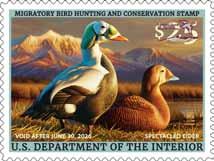
2025-26 Federal Duck Stamp - Spectacled Eiders painted by Adam Grimm.
Scotland’s men have qualified for their first FIFA world cup in 28 years but can they go further than previous campaigns and finally bury the ghosts of tournaments past?
Rob MacPhail, Scotland supporter/sympathiser
“It’s not the despair, Laura. I can take the despair. It’s the hope I can’t stand.”
The line above, spoken by John Cleese’s character in the 1986 film Clockwise, reflects a sentiment that will resonate with many Scotland football fans.
While the nation is still basking in the glow of qualifying for the men’s football world cup for the first time since 1998, fans of a certain vintage may find it hard to separate the hope from the heartache of previous competitions. I experienced my own first dose of world cup woe in 1978.
Archie Gemmil has just jinked and waltzed his way through a bamboozled Dutch defence, helping Scotland to claim a famous 3-2 win over one of the tournament favourites. Yet it is Holland who progress to the next stage. Scotland are out. Seven-year-old me is left bereft by this injustice and bemused by the cruelties of a nemesis I would come to know as ‘goal difference’. And thus, I had, unwittingly, successfully unlocked level 1 of Being a Scotland Fan (Beginner).
In time I would become schooled in Scotland’s penchant for the premature and sometimes preposterous tournament exit. At the 1974 world cup in West Germany, we made history as the first ever nation to be knocked out without losing a game. In 1982 and 1986 we checked out after inflicting on ourselves horrors too awful to recount here. At Italia 1990, Scotland, hanging on unconvincingly against Brazil, were a measly eight minutes away from finally extricating themselves from the group phase. But the world cup gods are cruel and must have their fun. A late Brazilian winner and an even later Uruguay goal against South Korea (don’t ask) consigned us to another painful and ludicrous exit. Scotland’s faithful tartan army, all boisterous bravado and bonhomie, know the score. There are inescapable certainties. If there is a ‘group of death’, Scotland will surely find themselves in it. At some point, without warning, a Scotland player is going to abandon all reason and do something inexplicable. Calamity is never far away. We will be back home before the postcards. This is the way.
“Scotland will be coming to the 2026 world cup. There shall be a party.”
Of course, everything is clear in the rear view mirror. Now in my mid-50s, I can appreciate that Scotland spoiled me in my formative years. Between 1974 and 1990, we qualified for five world cups in a row. Qualification almost became routine. Along with the hosts and the holders, Scotland was a ubiquitous presence. Inexplicably we failed to qualify in 1994 – the last time the world cup was held in the USA – and it seemed a little rude of the rest of the world to proceed without us. We would qualify again in 1998 – falling at the group stage once more – before lapsing into 28-year exile.
If the world cup is the film Groundhog Day then Scotland is Bill Murray, resolutely trialling new and increasingly outlandish ways to exit the stage. You might even chart the nation’s collective psyche through our choice of world cup songs. From the jaunty and, frankly, wholly unwarranted hyperbole of 1978’s ‘Ally’s tartan army’ (“we’re going to win the cup!”), to the more grounded, aspirational ‘We have a dream’ in 1982, on to 1998 and the mournful, plaintive plea of Del Amitri’s ‘Don’t come home too soon’. This may all be coming across as a bit negative. For all the doom and gloom, there have been glorious moments that are seared in the memory. David Narey’s spectacular opening strike against Brazil (Spain 1982). A diminutive Gordon Strachan plonking a triumphant leg over an advertising board after scoring against West Germany (Mexico 1986). John Collins cooly converting a penalty to equalise against world champions Brazil in the opening fixture (France 1998). Vivid vignettes all, although each ultimately served only to irritate our opponents and rouse them into countering with a decisive coup de grace.
All of that changed on 18 November 2025 with a chaotic, barnstorming 4-2 win over Denmark at Hampden Park. Scotland, largely labouring against the technically superior Danes, improbably conjured up three world class goals to book their place at the finals and unleash a torrent of joy and emotion on the terraces and across the country. After such a long period of abstinence, this is a success that will be drunk deeply. Scotland will be coming to the 2026 world cup. There shall be a party.
Lying in wait for us are Brazil (naturally), Haiti and Morocco. Not a group of death, perhaps, but potentially a group of pain. As ever, there is the hope but I’m not getting carried away this time (clearly).
To the Scotland players, I humbly offer three pieces of advice. Firstly, go out there and enjoy yourselves (but not too much). Secondly, if you see someone you know on the pitch, pass the ball to him. And thirdly, for the love of all that is good in the world, whatever you do, please, please….. don’t come home too soon.
From the White North to the White House: the Resolute
Jo Woolf FRSGS, RSGS Writer-in-Residence
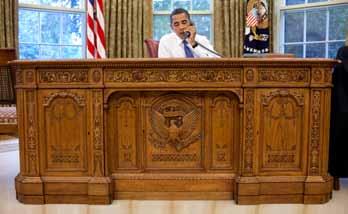
Search for a photograph of the US President in the Oval Office and the odds are that he’ll be shown seated behind an impressive oak desk, with the flags of office framing the window behind him. The desk is panelled and heavily carved, with a rich chestnut patina: a silent but solid testimony to the President’s heft and authority.
A brass plaque set into the front of the desk reveals an astonishing provenance. This is the Resolute Desk, named after the ship from which it was made. The story of that ship is tangled up in one of the longest, largest and most ambitious Arctic search missions ever mounted: the quest to rescue a British expedition that had gone missing in an attempt to find the Northwest Passage.
The expedition had set out from London in May 1845. Sir John Franklin, a senior naval officer, commanded two former Royal Navy bomb-ships, HMS Erebus and HMS Terror. Re-fitted and icestrengthened, they carried 129 men and the very latest equipment and provisions. Once in the Arctic, Franklin had no means of communication with the outside world, and becoming ice-fast in winter was an accepted hazard; but after two years with no news, public concern began to grow. Urged by Lady Franklin, Sir John’s wife, the Admiralty offered rewards for their rescue and organised expeditions to go and look for them.
Historians differ as to the exact number of Franklin search expeditions that were launched from 1848 onwards, not just by the Admiralty but by private individuals and even the US Government; the best estimate is between 30 and 40. The specific expedition connected with this story consisted of five Royal Navy vessels: Her Majesty’s Ships Assistance, Pioneer, Resolute and Intrepid, accompanied by a supply vessel, HMS North Star. They sailed from Britain in 1852 under the overall command of Sir Edward Belcher, and entered the Arctic via the Davis Strait and Lancaster Sound.
have their enemy chilling them to the very heart and paralyzing their very limbs; the others the very contrary.’
While scouring the coast for Franklin’s ships, the sledge parties were also looking for two more lost vessels: HMS Investigator and HMS Enterprise, under Captains Robert McClure and Richard Collinson respectively. This was a search expedition that had set out in 1850, and had entered the Arctic via the Bering Strait. Coincidentally, in the summer of that year, Kellett had been in charge of another ship that had encountered Investigator off Alaska. By that time, the Investigator and the Enterprise had become separated, but McClure assured Kellett - rather prematurely, as it turned out - that all was well. Since then, nothing had been heard of the Investigator or the Enterprise, and Kellett was hopeful of rescuing either or both of their crews. Despite appalling conditions, the sledge parties covered remarkable distances. Leopold McClintock, leading the party from the Intrepid, sledged more than 1,325 miles in 80 days, while Lieutenant George Mecham of the Resolute travelled 1,150 miles in 71 days. It was Mecham who made the first significant discovery: wedged under a cairn of stones was a note recording the Investigator’s course up to April 1852. If Mecham hadn’t discovered the fate of Franklin, he had at least pinpointed the likely whereabouts of McClure.
Originally named Ptarmigan, HMS Resolute was a 115-foot, three-masted barque, and like her companions she had been re-fitted for Arctic service. Her captain was Henry Kellett, an experienced naval officer, and his counterpart on Intrepid was Leopold McClintock. By September 1852, both ships had found winter quarters at Dealy Island, which lies off the much larger Melville Island.
Meanwhile, Assistance and Pioneer were bound for Wellington Channel, between Devon Island and Cornwallis Island. In Northumberland Inlet, on the northeastern point of Devon Island, they found shelter for the winter. North Star was stationed off Beechey Island, to the south.
The ships soon became ice-fast, but while daylight lasted the Resolute and Intrepid sent out sledge parties, some of which were gone for several months. Captain Kellett sympathised with the men embarking on these journeys, which he judged to be far more gruelling than military combat. He wrote: ‘Men require much more heart and stamina to undertake an extended travelling party than to go into action. The travellers
The irony, when Mecham returned in exhausted jubilation to the Resolute, was that conditions were now too severe for any rescue to be attempted. Instead, with tarpaulins thrown over the decks, the officers and crew settled down to while away the darkest months as best they could, with books, music, lectures, games, and a programme of entertainment put on by the Resolute’s ‘Theatre Royal’.
When conditions improved in the spring of 1853, McClure and his crew were rescued from a state of near-starvation and brought aboard the Resolute. As the ice loosened, there followed a summer of little progress and sudden alarms when Resolute was struck by ice floes, luckily sustaining only minor damage. Still hopeful of contacting Franklin, Kellett released balloons carrying slips of paper with the Resolute’s location printed on them. With the sea freezing again by late August, the men resigned themselves to another polar winter, enlivened by more plays and concerts.
“The Resolute’s arrival caused a sensation.”
Early in 1854, with the ships still ice-fast, Kellett drew up fresh search plans and sent them by sledge messenger to Sir Edward Belcher on HMS Assistance, some 250 miles away. The reply that came back astonished both Kellett and McClintock. They were ordered to abandon ship and make their way to Beechey Island where all the ships’ companies would embark on HMS North Star and return to Britain. Sir Edward Belcher was giving up. It later transpired that relations between Belcher and his officers had deteriorated almost to breaking point. Belcher’s official reasoning was complicated, but he seems to have had a sense of impending doom. He wrote: ‘We who have commanded so many years know full well how suddenly,
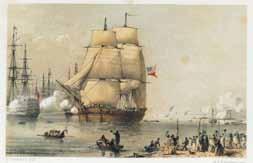
HMS Resolute entering Portsmouth, 1856 (after George Chambers)
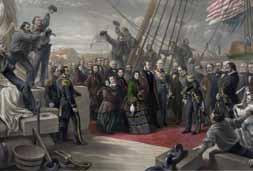
Queen Victoria’s visit to HMS Resolute (after William Simpson) Both images above: public domain.
without disease, men droop and will not recover - in fact, make up their minds to die.’ (Back home in Britain, he faced a courtmartial and was narrowly acquitted; but with hindsight, our still incomplete knowledge of Franklin’s fate gives his words a strange resonance.)
Kellett and McClintock protested, but obeyed Belcher’s order. Just before their departure, Lieutenant Mecham returned from another sledge journey, bringing two notes left by Collinson of the Enterprise, but there was no time to look for him. Of even more concern, North Star was dangerously overloaded, so it was fortunate that she encountered two more search vessels, onto which the surplus passengers could be transferred.
Kellett no doubt assumed that the Arctic would claim his abandoned ship. But in October 1855 a US whaling captain, James Buddington, sighted a derelict vessel adrift in the Davis Strait. He stared in disbelief at her rusting nameplate. How she had managed to travel 1,200 miles from her point of abandonment he could not imagine. Realising her value in prize money, he set about the Herculean task of pumping out her hold and repairing her shattered masts. The Resolute was built for a crew of 70; Buddington had only 26 men, whom he divided between the naval ship and his own vessel, the George Henry. Battling vicious storms, they arrived in New London, Connecticut, on Christmas Eve.
Buddington recalled: ‘I had our colors flying, of course, but out of politeness to the Britisher, I had his flag flying, too. The harbor froze over solid every night the Resolute lay there, with the George Henry on the west side. I used to say that the Resolute brought the ice with her.’
The Resolute’s arrival caused a sensation. Below deck, visitors gazed at abandoned relics: books, rifles, swords, discarded boots. Newspapers reported that a Union Jack had been thrown over Kellett’s chair ‘as if to keep possession.’ Indeed, the question of the Resolute’s ownership was uppermost in many people’s minds, not least that of Henry Grinnell, a philanthropist who had funded two US-based searches for Franklin and would go on to support several more.
Grinnell proposed that Britain relinquish its claim to the ship, a suggestion to which the Admiralty agreed. He then wrote to the US Secretary of State, urging that the Resolute be fully restored in a US naval dockyard and returned to Britain as ‘an act of comity and justice towards a brother nation.’ Grinnell added that Buddington should receive compensation of between thirty and fifty thousand dollars. The scheme was approved by Congress, and in Brooklyn Navy Yard the Resolute was re-fitted from stem to stern.
The Resolute’s return to Britain heralded a whirl of balls, banquets and galas. At Cowes, Queen Victoria was welcomed aboard by Captain Henry J Hartstene of the US Navy and shown around the ship. Closing the festivities two weeks later, Hartstene officially handed over the Resolute to Sir George Seymour, the Royal Navy’s Commander-in-Chief at Portsmouth.
‘Permit me to hope,’ Hartstene told him, ‘that long after every timber in her sturdy frame shall have perished, the remembrance of the old Resolute will be cherished by the people of the respective nations.’
The generous restoration of HMS Resolute did much to ease an atmosphere of political tension that had been developing between Britain and the United States. In 1879, when the ship was decommissioned, Queen Victoria returned the gesture. In Chatham Dockyard, master carpenter William Evenden used some of Resolute’s timbers to build a magnificent desk which
was shipped to New York; an inscription explained that it was presented to the US President ‘as a memorial of the courtesy and loving kindness which dictated the offer of the gift of the “Resolute”.’ President Rutherford B Hayes was delighted, and installed the desk in his office on the second floor of the White House.
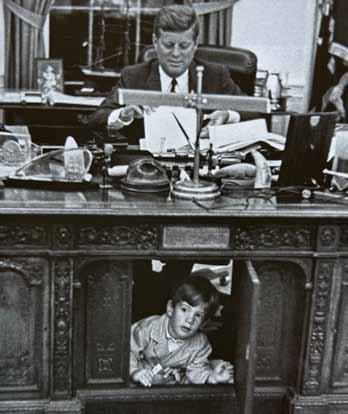
The Resolute Desk has undergone a few alterations over the decades. In 1945 a central panel was added, bearing the Presidential Coat-of-Arms, and President Reagan had the desk raised two inches to accommodate his height. It was first placed in the Oval Office by President John F Kennedy, and with some exceptions has been used by every US President since its arrival.
FURTHER READING
Martin W Sandler, Resolute (2006)
Footnotes - HMS Enterprise returned to Britain in May 1855.Three smaller desks were also made: one for
and two for Queen Victoria herself.
Henry Grinnell’s widow, Sarah,
President Barack Obama, 2009. Image: public domain.
President John F Kennedy with his son. Image: public domain.
Scottish-American Identities: Stars, Stripes and Saltires
Duncan Sim & Murray Stewart Leith, University of the West of Scotland
At the time of writing, America has just celebrated Tartan Week. Recognising the USA’s historic connections to Scotland, there have been a series of events across the country, including church services, receptions and symposiums, and all culminating in the New York Tartan Day parade down the city’s Sixth Avenue. Comprising pipe bands, clan associations and even the football supporters of the New York Tartan Army, it took place on April 11th and was led this year by Outlander star, Sam Heughan.
Although we are perhaps used to the idea of Scots-Americans celebrating their heritage, and indeed travelling to the Scottish homeland to visit relatives, undertake genealogical research and to explore places of personal meaning, this was not always the case.
many black Americans to explore their historic roots in West Africa. But it also led to many white Americans also exploring their ancestry, a reflection, as sociologist Mary Waters has suggested, of a particular American need to be ‘from somewhere’. As a result, the numbers of Scottish organisations grew, even in areas like the mid-West, with little history of Scottish settlement. By 2000, there were over 200 Scottish festivals and Highland Games taking place across the country, having received a further boost with the success of Mel Gibson’s Braveheart, released in 1995.
“Scottish societies played a vital role in helping emigrant Scots to maintain their sense of identity.”
For decades, Scotland was a country of emigration, with around 2 million people leaving in the century prior to the First World War. Sometimes, Scots left to seek their fortunes overseas but sometimes emigration was forced, for example after the 1745-6 Jacobite rising and, later, the Highland Clearances. Indeed, it has been calculated that between 1825 and 1938, 2.3 million Scots emigrated. As a result, it has been estimated that the worldwide Scottish diaspora has upwards of 40 million people, with the largest number being in America. The 2020 US Census reveals a total of 5.3 million people claiming direct Scottish ancestry, the eighth largest ancestral grouping. A range of Scottish societies has long been established to support migrants to America, the earliest being the Scots Charitable Society of Boston in 1657 and America held its first Highland Games, in New York in 1836.
Scottish societies played a vital role in helping emigrant Scots to maintain their sense of identity, as communication with relatives back in Scotland was very difficult. Even in the mid-twentieth century, travelling to the USA usually involved a five day sea voyage and so it was only the development of affordable air travel and later, the internet, that facilitated contact. That said, some Scots did travel to America to meet with the Scottish diaspora, notably entertainers like Harry Lauder, and following the establishment of clan associations in America, some clan chiefs also began to visit. Perhaps the greatest shift came with the Second World War, when Scotland served as a major strategic base for American troops and the Highlands were used for specialised training. Some GIs with Scottish ancestry began to explore the homeland, a process which continued into the 1950s. Following visits to America, for example, Dame Flora MacLeod established a Clan Parliament in 1956 to act as a gathering point for all MacLeod clan members. That same year saw the establishment of the Grandfather Mountain Highland Games in North Carolina by Donald F. MacDonald following a visit to Skye which enthused him so much that he also established a local branch of the Clan Donald Society, a Robert Burns Society and a Scottish country dance group. At the time, MacDonald had never actually attended a Burns Club meeting or a Burns Supper.
Another boost to Scottish-American identity came in 1976, the year of the US’s bicentennial. The publication that year of the novel Roots by Alex Haley, later filmed, led
The culmination perhaps of this trend came in 1998, with the establishment of Tartan Day, the result of a Resolution proposed by Trent Lott, the Republican leader in the Senate. Over time, it has become Tartan Week and is held in the week closest to April 6th, the anniversary of the Declaration of Arbroath.
Because two of the signatories to the American Declaration of Independence in 1776 were Scots, with a handful of others of Scottish ancestry, there is a belief among some ScotsAmericans that the one Declaration directly influenced the other, although some historians have regarded this claim with some scepticism.
So what is the position today? There is little doubt that Scots-Americans have been highly successful in maintaining their identity. Any internet search will unearth a significant number of Scottish societies, Highland Games, clan societies and Scottish country dance groups across the US and these organisations have been instrumental in maintaining the connection with the homeland. The advent of more affordable air travel has allowed Scots-Americans to visit Scotland, while the internet has enabled them to access Scottish websites. In many respects, Scotland has been a leader in encouraging genealogical research for example, with the Scotland’s People website a key source of information on births, marriages and deaths. There are now many publications and academic courses available to help expatriates trace their ancestors. Perhaps most significantly, the establishment of the Scottish Parliament and Government in 1999 has allowed Scotland to engage directly with its diaspora in a way which was not previously possible. The model here is perhaps Ireland which, like Scotland, has a large diaspora but has a well-developed strategy for connecting with it, which has evolved over many years. As Scottish Government policy towards the diaspora has developed, it has allowed Scots themselves to appreciate its importance and the value of diaspora engagement.
This can be seen in relation to clan gatherings and Years of Homecoming. There was an International Gathering of the Clans in Scotland in 1977 but it appears to have been of limited success, with many homeland Scots rather bemused by the Scots-Americans’ enthusiasm for everything tartan. But by 2009, the Scottish Government itself held a Year of Homecoming with a range of events across Scotland. The key event was perhaps The Gathering, which took place in July in Edinburgh. This was a clan gathering which included Highland Games, a parade up the city’s Royal Mile and a clan pageant on the Castle Esplanade. An economic evaluation of the Homecoming suggested that it brought 72,000 additional tourists to Scotland and the net additional expenditure which they generated was £54 million. A second Year of
Homecoming was held in 2014. There is no doubt about the value placed on such events by Scots-Americans; in subsequent research in the US, we find that many still talk about them (and would like another)!
The Scottish Government has now adopted a Scottish Connections Framework, designed to enhance the links between Scotland and its diaspora. A key statement within the Framework was that ‘Scotland’s diaspora is an extension of Scotland itself’, and thus an integral part of the Scottish nation. It stressed the importance of the diaspora to Scotland, it had a strong cultural focus and embraced Scottish imagery, so that Scotland has perhaps become more at ease with the tartanry so beloved of Scots-Americans.
“In a major shift, the Framework also recognised the existence of a significant number of black ScotsAmericans, whose background lay in slavery and their ancestral connections with Scottish plantation owners.”
cultural interest, and to those who had studied in Scotland and, as alumni, wished to maintain a contact with their place of study. Finally, the Framework offered support to the Scottish diaspora to pursue their own connections through genealogical research and what has become known as ‘ancestral tourism’ and there has also been the establishment of a Scottish Connections Fund which has helped to support a wide range of diasporafocused projects and events, many in America.
In a major shift, the Framework also recognised the existence of a significant number of black Scots-Americans, whose background lay in slavery and their ancestral connections with Scottish plantation owners. It also recognised that the Scottish-American diaspora was not solely confined to those with a direct bloodline to Scotland but also those who felt an affinity to the country, perhaps through marriage or a
FURTHER READING
Duncan Sim: American Scots (Dunedin Academic Press 2011)
Murray Stewart Leith and Duncan Sim (eds,), The Modern Scottish Diaspora (Edinburgh University Press, 2014)
The Scottish-American identity appears therefore to be alive and well, with a wide range of Scottish-themed events taking place regularly in the US, from local festivals to the splendour of the New York Tartan Day parade. Research has shown that the ancestral connection of Scots-Americans is widely recognised in Scotland as an indicator of Scottishness and ‘ancestral’ or ‘heritage’ tourism is of major significance to the Scottish homeland; our own research has shown the strength of feeling Scots-Americans show in their identity. It is interesting to note that, at this time when America is celebrating its 250th anniversary, it is led by the most Scottish President in its history.
Welcome to the American Winter
Robert F. Worth - The Atlantic Online
The six-car ICE convoy came to a stop and instantly dozens of people swarmed it, cellphones in hand, while others ran out of nearby houses – I saw a woman in gym shorts in the 20-degree weather – and began surrounding the masked and heavily armed agents who had spilled out of their black SUVs. The fury in the crowd felt almost like a physical force, as real as the cacophony of whistles and honking cars and angry chants: “ICE out! F*** you! Go home!”
The officers threw a protester to the slushy asphalt and piled on top of him, then cuffed him and dragged him away. The screaming only got louder. With their escape route blocked by protesters and their cars, the agents tossed out tear-gas canisters, the white clouds billowing up into the winter air. An injured man stumbled past me and vomited repeatedly into the snow.
From where I stood, a few yards back from the scrum last Wednesday afternoon, it looked, at best, to be a savage caricature of our national divide: on one side, militarized men demanded respect at the butt of a gun; on the other, angry protesters screamed for justice.
But behind the violence in Minneapolis – captured in so many chilling photographs in recent weeks – is a different reality: a meticulous urban choreography of civic protest. You could see traces of it in the identical whistles the protesters used, in their chants, in their tactics, in the way they followed ICE agents but never actually blocked them from detaining people. Thousands of Minnesotans have been trained over the past year as legal observers and have taken part in lengthy role-playing exercises where they rehearse scenes exactly like the one I witnessed. They patrol neighborhoods day and night on foot and stay connected on encrypted apps such as Signal, in networks that were first formed after the 2020 killing of George Floyd.
“Overall, this community has exercised enormous restraint,” Allison Sharkey, the executive director of the Lake Street Council, which represents many minority-owned businesses that have been hit hard by the ICE raids, told me. “But we have been pushed, probably intentionally, towards civil unrest.”
And as with the Arab uprisings, there is profound unease about where it is all leading – especially now that two people have been shot dead in scenes like the one I witnessed – alongside an undertow of hope that Minnesota can provide the rest of the country with a model of democratic resistance.
“And as with the Arab uprisings, there is profound unease about where it is all leading - especially now that two people have been shot dead in scenes like the one I witnessed.”
Over the past year, a three-story brick building in south Minneapolis has become a magnet for people who feel they – and their neighbors – need protection from their own government. The nonprofit that runs training sessions there asked me not to identify its location. When I visited, an ebullient labor organizer named Emilia Gonzalez Avalos was standing onstage in front of a packed auditorium, talking about the facial-recognition technology used by ICE agents, who routinely photograph protesters. “Everyone is at risk now,” she said. Behind her, a screen offered bullet points on how to legally observe ICE raids.
Avalos told me that 65,000 people have received the training, most of them since December. “We started in a very different tone; it was preventive,” she said. Now, after Good’s death, “people are understanding the stakes in a different way.”
Again and again, I heard people say they were not protesters but protectors – of their communities, of their values, of the Constitution. Vice President Vance has decried the protests as “engineered chaos” produced by far-left activists working in tandem with local authorities. But the reality on the ground is both stranger and more interesting. The movement has grown much larger than the core of activists shown on TV newscasts, especially since the killing of Renee Good on January 7. And it lacks the sort of central direction that Vance and other administration officials seem to imagine.
At times, Minneapolis reminded me of what I saw during the Arab Spring in 2011, a series of street clashes between protesters and police that quickly swelled into a much larger struggle against autocracy. As in Cairo’s Tahrir Square, Minneapolis has seen a layered civic uprising where a vanguard of protesters has gained strength as many others who don’t share progressive convictions joined in feeling, if not always in person. I heard the same tones of outrage from parents, ministers, school teachers, and elderly residents of an affluent suburb. Some of the quarrels that divided Minneapolis city leaders only a few weeks ago, over policing or Gaza or the budget, have faded as people have come together to oppose ICE.
I went upstairs to see breakout sessions where people were being trained for direct confrontations with ICE. Inside a classroom, several dozen people ranging in age from 14 to about 70 faced off against three trainers playing ICE agents, in a loud fracas that lasted several minutes. Afterward, the trainers offered the volunteers a critique. One gray-haired lady said she had found the exercise difficult, “not being a ‘F*** you’ person.” Others got tips on how to brace themselves more effectively so that the agents could not easily knock them down.
Before I left, I watched the trainers put the group through two more simulations: an unexpected ICE raid on a neighbor’s home and a planned demonstration at an airport that ICE is using to deport people. The second scenario appeared to come to life a few days later, when about 100 clergy members were arrested for protesting at the Minneapolis–St. Paul International Airport.
The participants I spoke with did not seem like typical protest types. One of them, a driver’s ed teacher who asked me to identify him only as Dave, told me, “I do not like confrontation at all, and that’s another reason that it’s weird I went to the training.” But in light of what is happening around him, he felt he needed what the trainers had to offer. His 14-year-old daughter, who attended the training with him, told me, “It was kind of overwhelming. But I don’t think it could be too much, because they’re just being realistic.”
The nonprofit groups that run these training sessions are not organizing or directing the anti-ICE protests taking place in the Twin Cities. No one is. This is a leaderless movement – like the Arab Spring protests – that has
emerged in a spontaneous and hyperlocal way. The people who follow ICE convoys (they call themselves “commuters,” a verbal gesture that is part joke and part effort to elude government surveillance) have organized on a neighborhood basis, using Signal groups. The man who drove me to the ICE raids I witnessed – a lawyer, activist, and socialmedia figure named Will Stancil – had a cellphone fixed above the windshield of his car, and I could hear people tracking the location of the ICE convoy as it passed through their neighborhoods on a Signal audio chat. It was like being inside a police car that is getting updates by radio from a dispatcher.
You do not have to get tear-gassed to observe all of this self-organization; it is visible to anyone walking through Minneapolis. One bitterly cold morning, I approached a man standing across the street from an elementary school, a blue whistle around his neck. He told me his name was Daniel (he asked not to be identified further, because his wife is an immigrant) and that he stood watch every morning for an hour to make sure the kids got into school safely. Other local volunteers come by regularly to bring him coffee and baked goods, or to exchange news. These community watches take place outside schools throughout the Twin Cities, outside restaurants and day-care centers, outside any place where there are immigrants or people who might be mistaken for them.
“It’s kind of unorganized-organized,” Daniel said, when I asked how the school monitoring worked. “George Floyd connected everybody.”
The local networks that formed after Floyd’s killing were not just about fighting racism. During those febrile weeks in May and June of 2020, there were looters and provocateurs of all kinds on the streets, and so much anger had been directed at the police that they pulled back from parts of the city. Many neighborhoods began organizing local watches simply to defend themselves.
I had been talking with Daniel for only a few minutes when a tall man walked up, said he was a parent observer for the school we stood across from, and asked me to identify myself. When I showed him my press badge, he seemed friendlier, but still wary. He explained that he had heard reports of ICE agents impersonating journalists. I asked about the parent patrol, and he apologized, saying he couldn’t give out any information. Inside the schools, many administrators have been making their own preparations over the past year. Amanda Bauer, a teacher at a Minneapolis elementary school that has a large portion of immigrant students, told me
that administrators informed parents last fall about their emergency plans for ICE raids by phone or in person, because they were already concerned about leaving email chains that could be mined by a hostile government.
Bauer, who is 49, struggled to maintain her composure as she described the day early this month when ICE showed up in force outside her school. Agents had been circling the school since December, seemingly learning its routines, and they arrested some parents just before the winter break. But this time, agents leapt out in riot gear and began entering the apartments just across from the school, where many students live.
“We had to lock down and keep the kids inside, and parents linked arms to block the school entrance,” Bauer said. “We had a student who was looking out the window and saw them break into his apartment and just sobbed, ‘That’s my house. That’s my home.’ And we shut the blinds, but it was too late.”
Bauer has been a teacher for 25 years, a period that has included a rise of school shootings and the drills that have become common to protect against them. “But I never thought it would be our own government we had to protect the kids from,” she told me.
Mississippi – the River that Changes You
Martin Strel, marathon swimmer and five-time Guinness World Record holder
A River, a Body, a Decision
I did not start with the Mississippi. I started with a decision. A simple one: to go where it is difficult, and to stay there long enough for it to change you. In 2002, I carried that decision through. Between 4 July and 9 September, I became the first person in history to swim the entire length of the Mississippi – 3,797 kilometres from its source in Minnesota to the Gulf of Mexico – in 68 days, earning a Guinness World Record.
But this was not just a swim. It was dedicated. I swam for the United States. Against terrorism. And in honour of the victims of the attacks on the World Trade Center in 2001.
The Beginning: Cold and Commitment
system, and an ecological mirror.
The greatest challenge was not the distance. It was control. Control over the body in water that is not clean. Control over the mind in an environment that is constantly shifting. And control over direction in a river that is never the same twice.
At its source, the Mississippi is almost unremarkable. Narrow. Quiet. You can step across it.
Yet even there, you feel its direction. The first days were cold. The body resists – every instinct tells you to get out. But if you stay, something shifts. The cold is no longer an enemy. It becomes information. That was the key to the entire journey. Not force. Adaptation.
The Middle: A River Becomes a System
Further south, the Mississippi changes character. It grows wider, heavier, more demanding. The current strengthens. Traffic appears – barges, industry, movement. You are no longer alone with nature. You are inside a system.
Swimming here is not romantic. It is strategic. You read the current, search for your line, and adjust constantly. Often, I could not see my hands in the water. You swim by feel, by rhythm, by trust in your own movement. Days stretched to 12 or even 15 hours. Not out of heroism, but because consistency is the only way through something of this scale. Extreme achievements are not built on moments of glory. They are built on discipline.
There were also moments when the swim was no longer just a personal challenge. The river is dangerous and unpredictable, and on several occasions I helped people who had found themselves in difficulty. In towns and at bridges, crowds would gather – people waving, calling my name, following the journey. That is when you realise you are no longer swimming only for yourself. You become part of something larger than you.
What Made the Mississippi Different
I had already swum some of the world’s greatest rivers, but the Mississippi was different.
The Amazon is raw nature. The Yangtze is a physical test. The Danube is structured and predictable. The Mississippi is all of these – and more, shaped by human impact. It is not just a river. It is a transport route, an industrial
The Body: Limits Move
The Mississippi tests everything.
Pollution, infections, fatigue, heat. There were moments when continuing did not seem logical. But logic is not always decisive. What matters is regulation. You do not remove discomfort – you learn to work with it. Pain does not always mean danger. Often, it simply means you are at the edge of your capacity. Stay there long enough, and the edge moves.
The Mind: Simplicity
Over time, everything becomes simple. Continue or stop. Everything else falls away. The Mississippi strips thinking down to essentials: movement, breath, direction. And somewhere in that simplicity, freedom appears.
The River: A Reflection of Us
This river is not just nature. It is a reflection of us. It carries life, but also the consequences of human decisions –industry, agriculture, waste. When you are in the water, there is no distance.
You are not observing it. You are inside it. And that changes everything.
The End: Not an Ending
Reaching the Gulf of Mexico was not a spectacle. It was not even an ending. It was a shift.
After the swim, on 11 September 2002, I attended the commemoration in New York and later addressed the United States Congress. Following my address, all 100 U.S. Senators and 473 Members of Congress unanimously supported a resolution formally dedicating the swim to the victims of the 11 September 2001 attacks, recognising it as an act against terrorism and a symbol of solidarity between nations. That was when the swim took on its full meaning.
What the Mississippi Gave Me
Not just a record. Clarity – that the body is capable of more than we assume, that the mind becomes stronger when it becomes simpler. And that limits are not fixed – they are a decision.
Closing
What does it take to swim the Mississippi? Not strength. A decision to enter. And the discipline to stay when everything in you wants to leave. Because that is where change happens.
As told by Martin
Strel,
by
now lives in Slovenia and is preparing for his next challenge: in 2028, he plans to swim the English Channel once again – this time aiming to become the oldest person ever to do so.
Lawrence J. MacDonnell, Senior Fellow, Colorado River Research Group
Battles over the use of water from the Colorado River Basin have a long and fabled history. The basin includes lands in seven states in the western United States as well as lands in the Republic of Mexico. The lands are predominantly arid or semi-arid, so the basin’s water is essential to this region. The relative scarcity of water in the basin prompted an interstate compact among the states in 1922, essentially a treaty (not including Mexico) among the basin states apportioning usage. Unable to agree on apportionments to individual states, the negotiators divided the basin into two hydrologic units and essentially evenly split the basin’s estimated water supply (conservatively assumed to be 15 million acre-feet (maf)) and then added an extra one maf/year for use in the faster growing Lower Basin. Unfortunately, because of climate change, the basin’s annual supply has turned out to be smaller than expected.
Water development proceeded rapidly, supported by federal construction of large dams--paid for primarily by sale of the hydroelectric power generated at the dams--to store the basin’s variable water supply. A series of decisions over the following years by Congress, the U.S. Supreme Court, the states, and the federal government allocated specified water uses to each of the states and to Mexico and established rules governing operation of the large federal storage projects. These collective decisions are known colloquially as the “Law of the River.” The basin became one of the most intensively developed and used river systems in the world. By the year 2000, annual consumptive water use exceeded 17 maf, with about 85% used for irrigation. Yet, by this time the annual supply of water had been declining and only averaged about 15 maf/year, an imbalance made possible by use of reservoir storage.
River basin development, especially construction of large onstream dams, substantially altered the normal flow regimes in the basin. River segments turned into lakes, sediment flows were blocked, river temperatures below dams became colder as dams released colder water, floods no longer scoured the riparian habitat, salinity levels increased with diminished flows, and the river stopped flowing into the Sea of Cortes. Native species suffered while introduced species thrived. Much work has since gone into restoring and maintaining remaining areas with critical habitat for native species.
Remarkably, for such a modest river system, its water now provides at least part of the municipal supply for 40 million people within and outside of the basin; it helps to irrigate 5.5 million acres of land; its hydroelectric power facilities
have the capacity to generate 4,200 megawatts of power. In many respects the Colorado River Basin serves as the model of planned river basin development. However, since the year 2000, the basin has been in the grip of a severe, sustained drought. The basin’s reservoirs, with a total capacity of nearly 60 maf of water, were nearly full in 1999. By 2025, the reservoirs were only a third full and dropping. Snowpack in the mountainous Upper Basin has been well below average during the winter of 2025-26, meaning there will be little runoff added to these reservoirs this year. Lake Powell, a massive reservoir on the Colorado River formed by Glen Canyon Dam that stores flows as they are about to pass to the Lower Basin is projected to drop to levels at or below that necessary to generate hydroelectric power unless releases to the Lower Basin are reduced, but that risks violating the 1922 Compact. Failure to meet this requirement could trigger litigation among the states. These are indeed challenging times in the Colorado River Basin.
Water leaders in the basin met initial shortfalls in the early 2000s by getting California to agree to eliminate its use of what had been regarded as surplus water. Next, in 2007, the basin states addressed deliveries from Lake Mead and agreed on the rules governing reductions. Next, they persuaded Mexico to share shortages when users in the Lower Basin had their deliveries reduced. Much effort was put into encouraging more efficient uses of water, especially in irrigation, funded with federal and state money. Some flexibility in storage rules was allowed so users in the Lower Basin could voluntarily reduce deliveries in any given year and could instead keep that water stored in Lake Mead. In 2019 the two basins developed Drought Contingency Plans, intended to put in place more active measures for conserving water. Despite these various efforts, storage levels kept declining as the drought continued while consumptive uses declined only modestly. Since 2022, as reservoir levels in Lake Mead reached record lows, water deliveries to Lower Basin states and Mexico have been involuntarily reduced.
The criteria that guide operation of basin reservoirs, including reductions of deliveries, expire at the end of 2026. The states have been unable to agree on new criteria. As a stopgap, the U.S. has announced it will reduce releases to the Lower Basin while releasing water from an upstream reservoir to enable continued hydroelectric power generation at Glen Canyon Dam. Predictably, there have been widespread complaints, but there is little else the U.S. can do without agreement of the states. Time is running out.
“The basin became one of the most intensively developed and used river systems in the world.”
Oregon | 5. Columbia River Gorge, Oregon | 6. Sol Duc Falls, Washington | 7.
| 8. Bandon Sunset, Oregon | 9.
Wahclella,
South Rim View, Arizona
Mohave Point, Arizona
From Manifest Destiny to the Board of Peace
Professor Teresa Almeida Cravo, University of Coimbra
As the United States marks its 250th year, contemporary debates about American power invite reflection on the longer history through which the country has imagined and pursued its place in the world. From the outset, the projection of that power was inseparable from the ambition to shape political order beyond its borders.
“Membership is invitation-only and reportedly linked to substantial financial contributions.”
During the nineteenth century, notions of Manifest Destiny – a term popularised in the 1840s to frame continental expansion as historical mission and civilisational vocation –presented U.S. territorial growth as both inevitable and morally justified. By the late nineteenth and early twentieth centuries, as European colonial influence receded across the Americas, Washington increasingly asserted hemispheric dominance through military intervention, economic pressure and the reorganisation of neighbours’ political economies around U.S. strategic priorities. The Monroe Doctrine of 1823 – later reinforced by Theodore Roosevelt’s Corollary of 1904 and his “Big Stick” diplomacy –provided the justification for this expanding regional order. As the twentieth century progressed, earlier imperial practices of intervention, hierarchical order-making and externally managed political authority did not disappear, but were increasingly reframed through universalist claims about liberal governance, international order and collective security. This discursive shift was already apparent in Woodrow Wilson’s vision of international order, even as it remained entangled with older assumptions about America’s exceptional global role.
Wilsonian internationalism was followed by a period of renewed isolationism, yet the trajectory it traced resumed with even greater force in the construction of a post-war liberal international order under U.S. leadership. The creation of the United Nations, the Bretton Woods institutions, and a network of multilateral alliances institutionalised American influence within an ostensibly universal, rules-based global architecture. During the Cold War, these universalist ambitions were pursued through modernisation programmes, anticommunist interventionism and the promotion of capitalist development models, often justified through the language of development, stability and freedom. Following the Soviet collapse, democracy promotion, liberal peacebuilding and statebuilding interventions became increasingly central instruments of American foreign policy, with conflict and instability understood as challenges to be addressed through the transformation of societies along liberal lines. In the 2000s, the “Global War on Terror” reoriented these models to include counterterrorism, stabilisation and security-driven approaches to governance.
Although the forms, vocabularies and instruments of American power shifted across these historical phases, they remained tied together by a recurring conviction: that the United States possessed both the authority and the capacity to shape political and international order far beyond its borders.
President Trump’s new Board of Peace can be read against
this longer trajectory as the latest instantiation of a familiar dynamic, expressed now in a new register. First announced during his 2025 presidential campaign and formally launched in early 2026 amid the ongoing destruction of Gaza, the initiative was presented as a mechanism to oversee ceasefire implementation, reconstruction and long-term stabilisation. Yet it was quickly reframed in far broader terms, as a potential prototype for peace governance elsewhere, presumably extending to conflict settings from Ukraine to Sudan, Iran and beyond.
In one sense, the Board signals a return to older traditions of American-led order-making, less concerned with multilateral legitimacy than with strategic leverage and the open projection of power. Although formally endorsed by the UN Security Council, it operates through an ad hoc structure that effectively sidelines the United Nations as the central framework for peace governance, shifting authority towards selective arrangements under U.S. leadership where influence is enjoyed by anointed partners rather than negotiated through multilateral processes.
What distinguishes the Board more fundamentally, however, is the way this older imperial ethos merges with an increasingly personalised, transactional and financialised model of governance, producing a novel fusion of corporate and peace governance. Earlier U.S.-led projects of international order, however uneven or coercive in practice, generally sought legitimacy through the language of international law, collective security and multilateral cooperation. The Board, by contrast, approaches peace governance openly through the logic of bargaining, investment and selective access. Membership is invitation-only and reportedly linked to substantial financial contributions, with influence tied less to representation than to economic leverage and strategic usefulness. Reconstruction becomes linked to investment opportunities and geopolitical clout, with participating states effectively buying their seat at the table.
The language surrounding the Board frequently blurs distinctions between diplomacy and deal-making, between peacebuilding and investment strategy. Governance is no longer framed primarily as a collective political responsibility negotiated through multilateral institutions, but as a managed transaction organised among a restricted circle of powerful actors. While political and financial “shareholders” gather to determine the terms of reconstruction and stabilisation, the populations most directly affected by violence are distant “stakeholders”, largely excluded from shaping the conditions of the peace imposed upon them.
Whether or not the Board ultimately succeeds or survives, it is politically revealing: it suggests that contemporary forms of American power projection are becoming at once more openly unilateral and increasingly detached from the institutional and multilateral frameworks through which U.S. authority was previously legitimised. The Board of Peace may therefore be less an aberration than a striking reminder that the question is not simply whether America continues to shape international order, but what kind of order it is now helping to produce.
Teresa
Almeida Cravo is Associate Professor in International Relations at the Faculty of Economics and Researcher at the Centre for Social Studies, University of Coimbra, Portugal teresacravo@ces.uc.pt
HM The King’s Address to Congress
On 28th April, during a state visit to the United States, His Majesty The King addressed a Joint Meeting of Congress in Washington, DC. He began by acknowledging the welcome extended to himself and Her Majesty The Queen during the semi-quincentennial year after the Declaration of Independence; and he observed that, for all of those 250 years, the destinies of both the US and the United Kingdom have been interlinked.
“We meet,” he continued, “in times of great uncertainty; in times of conflict from Europe to the Middle East which pose immense challenges for the international community and whose impact is felt in communities the length and breadth of our own countries.” The King also referred to an incident a few days earlier, in which a gunman had forced his way into a Washington hotel where a White House Correspondents’ Association dinner was taking place. “Let me say with unshakeable resolve,” he said, “such acts of violence will never succeed.” To this, he received a standing ovation. Harking back to the history of US independence, the King described Congress as a citadel of democracy representing the voice of all American people. “The Founding Fathers,” he said, “were bold and imaginative rebels with a cause. Two hundred and fifty years ago (or, as we say in the United Kingdom, just the other day…) they declared Independence. By balancing contending forces and drawing strength in diversity, they united thirteen disparate colonies to forge a Nation on the revolutionary idea of ‘life, liberty and the pursuit of happiness’. They carried with them, and carried forward, the great inheritance of the British Enlightenment - as well as the ideals which had an even deeper history in English Common Law and Magna Carta.”
Continuing this theme, the King observed that the UK’s Declaration of Rights of 1689 was not only the foundation of our constitutional Monarchy, but provided the source of many principles of the American Bill of Rights of 1791. Magna Carta, he explained, is cited in at least 160 Supreme Court cases, not least as the foundation of the principle that executive power is subject to ‘checks and balances’. This observation drew spontaneous applause. The King added that an acre of land at Runnymede, where the Magna Carta was signed, had been gifted to the US in 1965 “to symbolise our shared resolve in support of liberty, and in memory of President John F Kennedy.”
The King touched on many global and national topics, including the UK’s renewed investment in defence spending; the “unyielding resolve” needed to secure a just and lasting peace in Ukraine; the importance of NATO in keeping North Americans and Europeans safe from common adversaries; and mutual interests in promoting technology, research, trade, education and cultural exchange. He added that “as we look toward the next 250 years, we must also reflect on our shared responsibility to safeguard Nature, our most precious and irreplaceable asset.”
Revealing that his Christian faith underpins his sense of hope, the King shared his heartfelt belief that “the essence of our two Nations is a generosity of spirit and a duty to foster compassion, to promote peace, to deepen mutual understanding and to value all people, of all faiths, and of none.” He said that the story of the United Kingdom and the United States is, at its heart, “a story of reconciliation, renewal and remarkable partnership,” and he prayed that this Alliance “will continue to defend our shared values, with our
partners in Europe and the Commonwealth, and across the world, and that we ignore the clarion calls to become ever more inward-looking.”
The King’s address was spiced with gentle humour: he teasingly quoted Oscar Wilde, who once declared that “We have really everything in common with America nowadays except, of course, language!” and later suggested that Washington was a city that Charles Dickens might have called ‘A Tale of Two Georges’ - a reference to President George Washington and the King’s five-times great-grandfather, King George III, who reigned throughout the American War of Independence. With a twinkle, the King told Congress that King George never actually set foot in America, and added: “Please rest assured, I am not here as part of some cunning rearguard action!”
Time and again, the King paused in his address as the entire house rose to applaud him. His concluding message drew inspiration from the past and paired it with hope for the future: “America’s words carry weight and meaning, as they have since Independence. The actions of this great Nation matter even more. President Lincoln understood this so well, with his reflection in the magisterial Gettysburg Address that the world may little note what we say, but will never forget what we do. And so, to the United States of America, on your 250th birthday, let our two countries rededicate ourselves to each other in the selfless service of our peoples and of all the peoples of the world.”
Taken from an address to US congress by King Charles III annotated by RSGS Writer-in-Residence Jo Woolf.
FURTHER READING
The King’s Address to the Joint Meeting of Congress in Washington https://www.royal.uk/news-andactivity/2026-04-28/the-kings-address-to-the-joint-meeting-ofcongress-in-washington
Why America, and the Meaning of the States
Mike Robinson, RSGS Chief Executive
Genoese explorer, Columbus famously stumbled across the “Americas” in 1492, sailing on behalf of the Spanish crown, although he didn’t realise, thinking instead he’d found the Indian subcontinent, and only ever landing on Caribbean islands and in what is now Puerto Rico.
He was followed by Portuguese explorer Pedro Cabral a decade later who landed in South America and soon afterwards by Italian explorer Amerigo Vespucci (on behalf of the Portuguese crown) who copied Cabral and landed in Brazil too. It seems to be Vespucci who first understood this to be a ‘new world’, from a European-centric perspective at least, but despite being quite late to the party, it is he who gives his name to both continents. He owes this legacy to the map maker Waldseemuller, who in 1507 used Vespucci’s first name as the name for the South American continent, later adopted by both Da Vinci and Mercator.
Although there is controversy around many of Vespucci’s claims and expeditions – even how many he actually did – it is thought that he didn’t even know of his name being given to the continent.
America is the feminine form of Amerigo, which Waldseemuller deemed more appropriate for naming the landmass, and although it was many years later before it was applied to North America, it has now, to a degree, come to be a shorthand for the USA. It’s hard to see how the United States of Christopher or Pedro (or even Lief or even Bjarn) would have become so familiar or acceptable. Although the naming of much of North America is a legacy of European colonisation, it is interesting how many of the State names (which of course wouldn’t have existed then) owe their etymology to native American words and phrases. The East coast of the USA is full of references to European royal families and reveals a story of European battles for dominance, as New England, New France, New Spain, New Holland etc gave way to the more familiar modern states. The far west draws upon the Spanish dominance of the Pacific coast and South and Central America. But the more midwestern and northerly states still have echoes of their indigenous past, and as with so many traditional roots, speak of the land, the rivers and mountains and the relationships of the people. Some of the cities also hint at this history – Seattle named after the Chief who negotiated peace in the area, or Chicago – the place of the wild onions.
Whilst the origin of place names can court controversy and some are lost in the mists of time, the following is an attempt to summarise the most likely derivations of names for each of the 50 US states. And Puerto Rico.
Alabama - Choctaw words alba and amo meaning plantgatherer – a tribal name
Alaska - Aleut word alaxsxaq, meaning mainland, great land or land the sea crashes upon
Arizona - The origin is disputed - possibly from Tohono O’odham language place of the small spring or Aztec silver bearing or Basque place of good oaks
Arkansas & Kansas - probably from Algonquin word for Sioux tribe – Akansa (people of the south wind) but corrupted into French.
California - Spanish name drawn from a fictional land (Califia) in a 16th-century chivalric novel.
Colorado - the Spanish for of red color referring to the river or the red rocks
Connecticut - from the Algonquian word quinnehtukqut meaning long tidal river
Delaware - named for the expedition investor and governor of Virginia, Baron de la Warr.
Florida - full of flowers - a reference to a Spanish Easter feast, around the day that explorer Juan Ponce de Leon landed here, but also refers to Florida’s abundance of flowers
Georgia - named for King George II of Great Britain
Hawaii - disputed - possibly from the Polynesian small homeland, or after the Polynesian legend of chief Hawai’i Loa or from Polynesian hawaiki, meaning “Place of the Gods.”
Idaho - In 1860, mining lobbyist George Willing proposed Idaho, after a girl called Ida, as a name for a part of Colorado. It was falsely rumoured to be related to a Shoshone expression meaning Jewel of the Mountains or Light on the Mountains. 30 years later, the state of Idaho adopted the name when it broke off from Oregon Country, believing its fake connection to a Native American word.
Illinois - a borrowed word between two indigenous American languages, adjusted into French it was based on the name for the Inoca used by a different tribe - the neighboring Ojibwa and meant he who speaks in a regular way. French explorers turned it into Illinois, later becoming the name of the river and the territory.
Indiana - literally means Indian country
Iowa - French then English adaptation of tribal word for Ayuway people meaning beautiful land or sleepy ones
Kentucky - highly uncertain – possibly from Wyandot : land of tomorrow; or Shawnee : at the head of the river; or Iroquois : among the meadows
Louisiana - In honour of King Louis XIV of France
Maine - literally mainland as named by fishermen, or in honour of a French province
Maryland - in honour of the wife of King Charles I. Massachusetts – after the Massachuseuck tribe & means great hill, or great hill, small place
Michigan - from the Ojibwe michigama, meaning large body of water
Minnesota - from the Dakota name for the Minnesota River meaning sky-tinted or cloudy water - The most poetic translation is Gwen Westerman’s “land where the water is so clear it reflects the sky.”
Mississippi - means big river or father of waters and derived from a French transcription of the Objiwe word misi-ziibi .
Missouri - Anglicised form of the Algonquian tribal name Emessourit, meaning people with dugouts. A popular alternative meaning is from a tribal word for muddy water
Montana - from the Spanish montaña (meaning mountain/ mountainous)
Nebraska - comes from the Native American name for a major river in the territory. The Otos word nebrathka, meaning broad or flat water refers to the Platte River
Nevada - from Spanish Sierra Nevadas : snow-covered mountains. New Hampshire - named after Hampshire, the county in England.
New Jersey - named after Jersey, the island in the English Channel.
New Mexico - The Spanish Nuevo México actually predates the country of Mexico, which was founded in 1821. The name likely refers to Mexiitli, the Aztec God of War. It’s use here probably refers to an important Aztec valley (in Mexico now) which the area resembled.
New York - previously New Amsterdam, renamed after Duke of York (later James II)
North & South Carolina - in honour of Charles I and confirmed by Charles II
North & South Dakota - from the name of the Dakota tribe, one of three tribes commonly referred to as Sioux. It means friendly people or allies. The territory was split in two in 1889 after a dispute over the location of the state capital.
Ohio - unclear, but likely an Anglicised version of an Iroquois word meaning great or beautiful river
Oklahoma - red people or courageous people from Choctaw words okla and humma
Oregon - unclear but possibly after a river called Ouragon or the land of wild sage or land of big eared men
Pennsylvania - named for Admiral Penn, father of Quaker and founder, William Penn, who was gifted the land by the King, although he wanted to name it Sylvania - Latin for wooded lands
Rhode Island - from the Dutch for Red Island
North & South Carolina - in honour of Charles I and confirmed by Charles II
North & South Dakota - from the name of the Dakota tribe, one of three tribes commonly referred to as Sioux. It means friendly people or allies. The territory was split in two in 1889 after a dispute over the location of the state capital.
Tennessee - From Cherokee word Tanasqui, meaning roughly meeting place or possibly bend in the river
Texas - comes from Caddo taysha, from Caddo people meaning friend or ally
Utah - Likely became corrupted in Spanish but either the name of the local Ute tribe (people of the mountains), or an Apache word for higher up
Vermont - Green mountain in French
Virginia & West Virginia - in honour of England’s Virgin Queen.
Washington - only state (so far anyway – Trump!) named after a president.
Wisconsin - from the Menominee Weskohsaeh, meaning a good place to stay or Algonquin Meskousing, meaning river running through red land but likely a French corruption.
Wyoming - Possibly from Delaware Indian word, meaning rolling mountains and valleys
Puerto Rico - Rich port in Spanish, as the island was thought to hold large amounts of gold
Image: Hans via Unsplash
Hutton’s Tercentenary
John Lewington FRSGS, RSGS Member and Volunteer
James Hutton was born on June 3, 1726, so this year is the tercentenary of his birth. What makes Hutton incredibly important was the contents of his book “Theory of the Earth”, published in 1788, but read to the Royal Society of Edinburgh in 1785. In the book he seeks to disprove the idea that the Earth was just over 6,000 years old, as had been accepted based on timings taken from a study of the Bible, and that it was in fact many millions of years old, which has been accepted as correct since his “Theory” was published. We now put the age of the Earth as four and a half billion years old. He has been described as “the Father of Modern Geology” (although the term ‘geology’ was not in use until after his death), a genius and a star of the Scottish Enlightenment.
His “Theory” was based on the study of rock formations, the first on Arran, the second at Inchbonny, near Allar’s Mill in Jedburgh, and the third, and now world-famous, Siccar Point on the coast of Berwickshire, of what we now know refer to as “an unconformity”. But what had brought this ageing gentleman, he was 59 years of age when the “Theory” was first heard, to this radical and indeed revolutionary conclusion ?
Hutton was the son of an Edinburgh merchant, William Hutton, who died when his son James was just three years old, leaving a widow, Sarah, and four children (James, Isabella, Jean and Sarah) who were well enough provided for. James fell heir to two small farms in Berwickshire. After his early years attending the High School of Edinburgh, Hutton went to the University of Edinburgh aged just 14, to study ‘humanities’, although he became interested in chemistry and mathematics – a grounding in formulas and rules. However to support his family he became a solicitor’s apprentice, teaching him under Scots Law that reason was more important than precedent, but the law was not for him so he soon turned to medicine.
Here he became friends with John Clerk of Eldin whose family were wealthy landowners who mined coal in Midlothian, and here can be seen the start of Hutton’s interest in geology. After three years studying medicine in Edinburgh he headed to Paris and then the University of Leiden where he
completed his studies and was awarded his degree in 1749. His degree thesis was on the circulation of blood, however Hutton had no interest in practicing medicine so worked with a friend to manufacture ammonium chloride, from the soot of Edinburgh’s chimneys, to supply the dyeing industry.
A scandal involving a relationship, which produced a child, drove Hutton from the city to his two farms, Slighhouses and Nether Monynut, north of Duns in Berwickshire. At the time, Scottish agriculture was modernizing so before embarking on actual farming Hutton went on a tour of East Anglia and later the Low Countries to seek out best practice, ostensibly learning about farming but studying the soils and rocks. It was on these sojourns that his ideas that rocks were composed of animal, vegetable and mineral fragments of more ancient formation began to develop.
Slighhouses farm was about 100m above sea level and potentially decent arable land, whereas Nether Monynut was 300 m above sea level - a hill farm with poor stony soil. To both, Hutton applied his new learnings on agriculture in order to make a living from his land – making friends with the Dunglass family, which would later make an impression on rather more than Hutton. As a break from farming, after ten years he went travelling in the Highlands, as usual interested in geology.
Hutton’s interests widened to include weather and climate, fertility and fertiliser components and how the studies of light, heat and the chemistry of the soil operated together to support life. Surely a model Geographer ! All the while, Hutton’s ideas and knowledge of the Earth and its surface developed. Soil he decided was formed from the erosion of the bare rock, of which the planet was formed, but that soil too would be eroded. Thus the “rock cycle” came into understanding.
In time, using this widely accumulated knowledge, he had turned his farms into reasonable successes so he returned to Edinburgh in December 1767, where he became involved in the construction of the Forth and Clyde Canal. He built a
house at St. John’s Hill facing Salisbury Crags, today marked by a monument to its most famous resident and became involved in driving forward the Scottish Enlightenment.
Hutton’s journeys to prove his Theory of the Earth took him to Glen Tilt, near Blair Atholl with the purpose of demonstrating that granite was a young, igneous rock and not of ancient origin. He had such a thorough knowledge of the geology of the British Isles he estimated accurately where to look and found exposed on the River Tilt the contact point between granite and its surrounding rock. The granite had broken the edges of the surrounding marble and penetrated deeply into it – proving it was both intrusive and younger than the surrounding rock and not of ancient origin.
The following summer he journeyed south-west to examine the granite of Galloway and its junction with the older sedimentary rocks of the Southern Uplands, then to Arran to study “the nature of granite and the connection of it with the contiguous strata”, observing the power of the sea in eroding whole land-masses. Later that year, he made a chance, but important, discovery whilst visiting his friend John Davidson of Stewartfield near Jedburgh in the Scottish Borders. In the exposed sheer banks of the River Jed, across the water from Allars Mill, he noticed the sedimentary sandstone rock-layers lying horizontally over vertical layers of greywackes (and shale), with a thin layer between them of a conglomeration of material from the lower rock-layers of greywackes. The significance of this (now known as an unconformity), was the two different rock layers lying at angles and not parallel to each other.
Hutton deduced that the greywacke and shale, having been deposited on the sea bed as muds and clays, were than physically folded and elevated above the surface of the sea. This was followed by exposure to erosion, which removed the curve at the apex of the fold, leaving the vertical layers, before the land sank to be re-submerged by the sea. A second phase of sedimentation and compaction of sands, took place on the ocean floor before a second elevation to form a new land-mass took place. This process could only have
been possible given a gigantic timescale, proving Hutton’s proposition of the ancient age of the Earth.
Hutton typically sought verification of this observation through other examples so the following year, he made a journey by boat along the foot of the Berwickshire cliffs not far from his farm at Slighhouses. “Having taken boat at Dunglass Burn, we set out to explore the coast”, he writes of his trip with his friends John Playfair and James Hall, to find further proof for his theory… and this they did “At Siccar Point”, he wrote “…we found a beautiful picture of this junction washed bare by the sea”. They found the same junction of the same rock layers as those at Jedburgh; the horizontal sandstone rock-layers extensively eroded by the sea, exposing in parts, the vertical ends of the more resistant greywacke which are left protruding above it.
Siccar Point validated and clarified the unconformity in Jedburgh, providing the defining proof for Hutton’s Theory of the Earth. John Playfair, deeply moved by the significance of what they observed wrote later “The palpable evidence presented to us, of one of the most extraordinary and important facts in the natural history of the Earth, gave a reality and substance to those theoretical speculations, which, however probable, had never till now been authenticated by the testimony of the senses… What clearer evidence could we have had of the different formation of these rocks, and of the long interval which separated their formation, had we actually seen them emerging from the bosom of the deep? …The mind seemed to grow giddy by looking so far into the abyss of time”.
Hutton’s ideas were not then universally accepted. He was seen as a “Plutonist”, believing that the interior of the Earth was hot and rock could emerge from it before being eroded and re-deposited, as opposed to the “Neptunists” who believed that the rocks of the Earth had emerged after a single enormous flood. Over the long time since The Theory of the Earth was published, Hutton has been shown to be absolutely correct.
250 Years of American Expansion
Professor Max Edling, King’s College London
Two centuries and a half ago, the United States was born in rebellion against Britain. Starting out a thin sliver of land sandwiched between the Appalachian Mountains and the Atlantic Ocean, the nation grew to become a power with global reach. First came continental conquest. The generous peace treaty that recognized independence awarded the U.S. a national domain stretching all the way to the Mississippi River, encompassing roughly 820,000 square miles. In the next seven decades more than 2,000,000 square miles were added by purchase (Louisiana Territory, 1803), annexation (Texas, 1845), negotiation (Oregon Settlement, 1846), and war (Mexican Cession, 1848). Another 570,000 square miles followed with the Alaska Purchase in 1867. At the turn of the nineteenth century, the United States began acquiring overseas colonies and protectorates. Most of these dominions were given up after the Second World War as empires decolonized. Yet decolonization heralded the third phase of expansion when the U.S. took the lead in cheering on free markets and guarding against the threat of socialism. The three phases of American expansion correspond to three manifestations of American power. In the nineteenth century, the United States was an incorporating federal union. In the first half of the twentieth century, it was an insular empire akin to European empires and Japan. In the second half of the twentieth century, it was a world hegemon. Each of these manifestations had its own logic and method of expansion. With the current administration, expansion is back on the agenda. In little over a year there have been the abduction of the President of Venezuela, talk of annexing Canada, demands to purchase Greenland, and a war of aggression against Iran. Neither logic nor method seem much in evidence, with the U.S. governed by a president who makes up foreign policy on the hoof while trotting down the fairway of Trump International Golf Club. Yet for all its apparent randomness, even Trump’s aggression is structured by the long history of American expansion.
Incorporating union, 1789-1898
union. Over the long nineteenth century, the U.S. grew from 13 to 48 states. Because the official view held that the United States was a white, Protestant, and Anglophone nation, the Ordinance took aim at prospective migrants from the eastern states and said little about the indigenes already settled on the land. The Native Americans were pushed first across the Mississippi River and then into reservations. Other groups were also thought problematic. Francophone Catholics in Louisiana, mixed-race Hispanophone Catholics in Nuevo México, and Mormons in the Republic of Deseret seemed unsuitable for incorporation into the American nation. Despite readily meeting the population requirement, Utah had to wait 46 years for statehood, New Mexico 62 years. It took more than a century for Indian Territory to become the State of Oklahoma. Only after the U.S. had engineered solid white majorities were these territories welcomed in the American union.
The racial identity coupled with the logic of expansion by incorporation explains why nineteenth-century United States swerved when it came up against large unwanted populations. At various points, proposals to take over Mexico, Nicaragua, the Yucatan Peninsula, Cuba, Haiti, and the Dominican Republic were aired. None materialized due to the fear that incorporating a large non-white, Spanish-speaking, Catholic population would debase the American nation.
Insular empire, 1898-1946
“At the turn of the nineteenth century, having conquered the continent, the United States metamorphosed into an empire.”
Nineteenth-century expansion was driven by land hunger. The economy was agrarian. Political leaders feared that economic diversification on the model of western and northern Europe would produce inequality and proletarization. Their commitment to agrarianism became a commitment to expansion due to explosive population growth. In the late eighteenth and early nineteenth century, the American population doubled every twenty years. Without expansion, a rural, rather than urban, proletariat of vagabonds, day labourers, and cottagers would arise. If in contrast new territory could be acquired and new farmland distributed among the growing population, the U.S. could continue a republic of property-owning citizens.
Adopted in 1787, the Northwest Ordinance provided a blueprint for expansion by incorporation. Once the population of new western territories reached 60,000 residents, they could apply to Congress for statehood and entry into the American
At the turn of the nineteenth century, having conquered the continent, the United States metamorphosed into an empire. For the next fifty years, Americans heeded Kipling’s call to “pick up the white man’s burden” to rule over brown and black peoples. The causes of the Spanish-American War (1898) are hotly contested. But when the dust settled, Spain had lost Cuba, the Philippines, Puerto Rico, and Guam to the United States. The U.S. also annexed Hawaii. With the Roosevelt Corollary to the Monroe Doctrine in 1904, the United States became an “international police power” eager to correct “chronic wrongdoing” of neighbouring countries. The next three decades saw repeated interventions around the Caribbean Basin and the occupation of Panama, Nicaragua, Haiti, and the Dominican Republic.
Rather than the extended geographic reach it was the status of the new acquisitions that made the United States an empire. For most of the nineteenth century, before the transcontinental railway, the islands and rim of the Mexican Gulf were far more accessible than California and Oregon on the Pacific Coast. The status of the indigenous population of the new possessions was decided by the Supreme Court in the so-called Insular Cases in 1901. The Court formulated a principle of subjection and exclusion that denied Puerto Ricans and Filipinos the “constitutional rights” of US citizens and defined their homelands as unincorporated territories, “subject to the jurisdiction of the United States” but “not of the
Image: Joshua Hoehne via Unsplash
United States.” No promise of statehood was ever extended to the subjects of America’s insular empire. Never formally annexed, Cuba was in practice an American protectorate to 1934. The Philippines became independent in 1946, Hawaii a state in 1959. Puerto Rico and Guam remain under American tutelage.
World hegemon, 1945-1991
With the defeat of the Axis powers in 1945, imperial competition was replaced by the existential struggle between liberal democracy and communism. Despite horrific losses, at the war’s end the Soviet Union held Berlin and half of Europe. In the post-war settlement at Yalta, the American leadership reluctantly accepted the fait accompli. But to prevent further communist gains, the United States adopted a policy of containment in 1947. The Second World War exhausted European empires and boosted demands for colonial independence. The U.S. sided with the decolonization movement. It also begun to address its domestic racial inequalities, making universal human rights, regardless of colour or creed, the nation’s new official identity. Yet the fear of communism saw the U.S. step in to cover the retreat of Europe’s empires. A tragic example is Vietnam. In 1945 it declared independence with words borrowed from the American Declaration of Independence only to see French colonial masters replaced by U.S. military advisors and troops.
In the postwar era, the United States reshaped the world by means of international rules and -institutions. The United Nations was designed to settle inter-state conflicts peacefully. Military alliances like the Rio Pact (1947), NATO (1949), ANZUS (1951), SEATO (1954), and CENTO (1955) were designed to provide security against communist expansion. International economic organizations like the IMF (1945), the IBRD (1946), better known as the World Bank, and GATT (1948), which later became the WTO, were designed to encourage free trade and market economies. The global architecture served its purpose well and the United States
won the Cold War by growing wealthier and more powerful than its rivals. A deeply dysfunctional Soviet Union toppled in 1991. The year after, the People’s Republic of China twisted the logic of language and economics by becoming a “socialist market economy.” Starry-eyed commentators imagined a worldwide happily ever after of liberal democracy and freemarket capitalism.
The United States made the world safe for democracy and capitalism with liberal use of violence. Wars in Korea, Vietnam, and Iraq are but the top of an iceberg of military action. Between 1946 and 1990, there were close to 130 military interventions worldwide. In 1989, the United States had over 1,700 military installations and more than 1.25 million troops abroad. Victory in the Cold War led to more, not less, violence. During the Cold War, the United States intervened in foreign countries on average 2.5 times per year. After the war, the figure jumped to 4 times per year. In 1989, the Soviet Union’s military budget was two-fifths that of the American. Today, China spends around one-third of what the U.S. spends on the military.
A colossus seeks its way
In the current moment the American foreign policy appears confused. The international alliances, institutions, and rules created for the bipolar Cold War world order are dismantled in favour of a less ambitious goal to dominate the western hemisphere. In some ways this shift is a throwback to earlier manifestations of American power. Interventions in Venezuela and threats against Greenland and Cuba are reminiscent of the U.S. imperial phase. The fanciful promise to make Canada the 51st state suggests that the idea of expansion by incorporation still lives. Yet as the war against Iran shows, the United States struggles to give up the urge to control events far from home. But in contrast to previous iterations, American power is now used without clearly defined intent, against the law, and in isolation from, and contrary to the interests of, the long-term allies of the U.S. Trump has notched up both the rhetoric and reality of American warmongering, and the nation is gaining a reputation as the principal threat to global peace and prosperity. As the president continues his erratic policymaking, with the world anxiously awaiting the next slice to whisk by, it seems increasingly likely that the long saga of American expansion has come to its end.
Image: Caleb Weiner from Unsplash
Rooted in History
David Henry & Margaret Wilkes FRSGS, RSGS Board Members
The roots of the thistle run far and deep. So it is, perhaps, unsurprising to find that two of the current Trustees of the RSGS have famous ancestors who helped shape the United States of America.
One Trustee, David Henry, is a descendant of Founding Father Patrick Henry (1736-1799), the American statesman, lawyer and orator who played a highly significant role in the birth of a new nation. He is perhaps most famous for his 1775 speech, made as the then British colonies stood on the verge of rebellion, which closed with the words: “I know not what course others may take, but as for me, give me liberty or give me death!” Little more than one month later, the first shots of the Revolutionary War rang out at Lexington and Concord. Once independence had been achieved, Patrick Henry served as the first post-colonial Governor of Virginia in 1776; he was re-elected to that office in 1777 and 1778. Throughout his life, he remained a fierce advocate for individual liberty and regularly warned against the dangers of unduly centralised and overreaching federal authority.
Patrick Henry’s father, John, came from the small village of Foveran, in Aberdeenshire, not far from where the current American President has a golf course at Balmedie. His older brother, Patrick – after whom John’s son was named – studied at Marischal College in Aberdeen between 1713 and 1718. Then John attended King’s College between 1720 and 1724, (the two colleges later merged in 1860 to become the University of Aberdeen). Emigrating in 1727, John arrived in Virginia, where he put down new roots as a land surveyor and farmer. Here he worked closely with a neighbour, John Syme, who had also emigrated from Aberdeenshire some years earlier - Scottish thistles also tend to grow close together. John Henry’s firebrand son was born eleven years later.
“The roots of the thistle run far and deep.”
swathe of Antarctica. This drew attention to his role as a naval surveyor. He too achieved a measure of notoriety, both men being threatened with prison. The one avoided this; the other did not!
Getting to know one’s ancestors can sometimes prove a hazardous and ironic undertaking. Another RSGS Trustee, Margaret Wilkes, comes from the same family roots as John Wilkes MP, the radical English politician who became somewhat notorious in the mid-18th century for his robust open support for American Independence - and the cry of ‘Wilkes and Liberty’. Additionally, another Wilkes family member, John Wilkes’s great-nephew, Charles Wilkes, rose to the rank of Rear Admiral in the American Navy, with his surname still be seen on maps and charts straddling a vast
The Wilkes family link and roots, in geographical terms, go back to the former County of Staffordshire and a rural hamlet now subsumed into the north-west of the city of Wolverhampton. Family tradition dies hard too, for Samuel Wilkes, a later member of this family became notorious in a nearby village of Bloxwich (now part of the town of Walsall) and was sent to prison for refusing to pay his taxes to the Town. His gravestone remains proudly upright in Bloxwich parish churchyard, for he wanted his and other Bloxwich people’s taxes used for the benefit of his village, not for Walsall town. Independence of mind and liberty of thought have been on passed down the Wilkes generations!
Patrick Henry statue at Virginia-State-Capitol. Image: Alamy
Mapping Independence: John Wallis and the New United States, 1783
Chris Fleet, FRSGS, Map Curator, National Library of Scotland
John Wallis’s 1783 map is an important image of American independence because it captures the United States at the moment of international recognition, immediately after the Peace of Paris. It is one of the earliest British maps to present the new republic as a coherent political entity rather than a group of rebellious colonies.
What makes it especially striking is that it does not stop at the Atlantic seaboard. The map extends into the western lands claimed by the United States and also marks Native American nations, French territory to the west and north, and Spanish Florida. It reveals how independence created a larger and more contested geopolitical landscape than the familiar outline of the thirteen states alone.
The symbolic cartouche is equally revealing. On the left, George Washington walks alongside Liberty, while Athena (goddess of wisdom) and the blindfolded figure of Justice assist a seated Benjamin Franklin on the right. The pairing links military victory with diplomacy, wisdom, and lawful government, presenting independence as both won and duly established.
Unlike later maps, Wallis’s image does not show a settled interior nor the territorial system that would emerge afterwards. Its value lies in that very incompleteness, reflecting the uncertainty, ambition, and compromise of the new nation.
John Wallis, The United States of America laid down from the best authorities, agreeable to the Peace of 1783. Courtesy of the Norman B. Leventhal Map & Education Center, Boston.
Wild and Imperiled: The Atchafalaya Basin’s Fight for Survival
Kirby Vining, Community Engagement Coordinator, Atchafalaya Basinkeeper
You become incredibly aware of life in the Atchafalaya Basin before you ever see it. During the high-water season, immersion comes suddenly, the sounds of life surround you, and your senses become stimulated. The low chorus of katydids and frogs combines with the sounds of songbirds, owls, and woodpeckers. The smell of wet soil, the humidity, and fresh vegetation hit you with a heaviness, and the sight of cypress trees being slightly moved by the wind, showing life and creation at its best. Water and land blur here.
Cypress knees rise out of the earth like knotted fingers, with the underground showing a similar story of interweaving, providing these resilient trees with immense stability and fortitude. Light fractures across the surface of the water, and for a moment, you can’t tell where you end, and the basin begins; you are one with the Atchafalaya Basin.
You move forward, as many have done before you. There is no straight path, no clear boundary, only a slow surrender to the rhythm of the place. The basin doesn’t ask permission; it absorbs you in the sense that everything here is connected in ways too complex to untangle. You realize, standing there, that this is not just scenery. It is a system, a living, working body, and you are standing inside of it.
America’s migratory waterfowl (more than 300 bird species) and provides the most important habitat for neotropical migratory land birds in the Western Hemisphere. Migratory birds depend on it as a seasonal refuge, a place to rest and feed as they travel vast distances across continents. Without it, their journeys would fracture, and their survival would be uncertain.
Below the waterline, fish weave through submerged roots and channels, using the basin as a nursery where young can grow protected from stronger currents and larger predators. Crawfish are high in abundance, making the Atchafalaya Basin swamps the most productive wetlands in the world, an unlimited food supply for reptiles, mammals, birds, and even spiders and insects, shaping both the ecology and the culture tied to this land. Alligators and other reptiles bask in filtered sunlight, and countless unseen organisms sustain the delicate balance that keeps everything else alive.
“The Atchafalaya Basin plays a role far greater than its quiet presence suggests.”
The Atchafalaya Basin plays a role far greater than its quiet presence suggests. Beneath the surface, beyond what the eye can easily trace, it functions as one of the most critical habitats in the region. The Basin supports half of
It is easy to overlook how much life depends on this place because it operates without spectacle. The Basin feeds, shelters, filters, and connects. It is not just habitat; it is a majestic infrastructure built by nature itself. Most importantly for humans, the Basin makes life in southcentral Louisiana possible, protecting hundreds of industrial plants, the largest port by tonnage in the Western Hemisphere, and major cities like Lafayette, Baton Rouge, and New Orleans from catastrophic Mississippi River flooding.
Despite the Basin’s beauty and importance to humans and animals alike, and to the future of the United States, it is severely threatened.
“The gap between policy and practice leaves the basin exposed.”
Thousands of miles of oil access and pipeline canals crisscross the fragile ecosystem everywhere. Environmental laws are not being enforced, and projects labeled “water quality” are filling the swamps at an alarming rate, despite public and parish opposition. These wetlands are not empty spaces waiting for development; they filter water, protect us from floods, and provide critical habitats. Losing them accelerates a cycle of degradation that is difficult, if not impossible, to reverse. Each acre lost weakens the system further, making the next loss more likely.
The gap between policy and practice leaves the basin exposed. Protection requires not just laws, but the will to enforce them, the resources to monitor compliance, and the recognition that short-term gain often comes at long-term cost. Without that commitment, the basin remains vulnerable, not because its value is unknown, but because it is ignored.
Remove it, and everything in Louisiana and beyond shifts: migrations, resilience, and the fragile balance that holds them together.
In the face of change, the Atchafalaya Basin endures as something still becoming, reshaped, resilient, and unwilling to fall silent.
All images: Greg Guirard
Scottish Universities: Fee or Free?
Margaret Chingos, Student and Previous Editor of the Young Geographer magazine
“Fee or free” has become a defining debate for Scottish Universities, as they confront increasingly difficult conversations about their financial futures.
Since 2008, Scotland has maintained a commitment to free tuition for domestic students. Under this system, the government pays fees directly to universities, saving students costly debt while widening access to higher education. This is an ideal model in principle, but it is growing financially precarious.
In reality, government contributions no longer cover the full cost of a university education. In recent years, universities have relied heavily on international students, whose unrestricted fees helped fill the deficit. This dependence is inherently risky, as the University of Dundee demonstrated when a 27% fall in international students plunged them into a £35m deficit in 2025. Furthermore, the already limited funding from Holyrood is expected to decrease 22% in value this year, placing further pressure on university budgets.
In the face of this unsustainable funding structure, universities are debating the introduction of fees for Scottish students. In the debate of fee or free, looking beyond Scotland can show the difference an “r” can make.
The US is often brought up as a cautionary tale about the dangers of student fees. In the past two decades, it has seen tuition prices rising at twice the rate of inflation, while student debt has grown by 500 percent to reach $1.6 trillion.
Having grown up in the US, I have witnessed how the weaknesses of this system stem, in part, from our consistent failure to learn from the experiences of other countries. In Scotland, there are growing fears that the introduction of fees will send the country hurtling in the same trajectory as the US. That outcome is not inevitable, but it requires careful consideration of what the American experience actually teaches.
When discussing student debt in the US, it is important not to contribute to alarmist narratives. A 2014 analysis of dominant media coverage found that the average debt of profiled students was $85,000, a sum far exceeding what 99% of 4-year university degree holders actually owe. Such exaggerations can drive poorly targeted policy responses, including broad-based debt forgiveness proposals, that fail to offer support to those most in need.
However, correcting these misconceptions does not minimize the very real ways student debt shapes the US landscape. Debt has value beyond the dollar sign; it carries moral value. The language of debt “forgiveness” implies fault, echoing the German word Schuld, which means both debt and guilt. The American system encourages
millions of people to take on debt to access opportunity, then stigmatizes them. This stigma translates to a lack of meaningful support for individual debtors. They face complicated, rigid repayment schemes that have driven roughly one in four federal student loan borrowers into default. In the most extreme cases, students shackled by debt have declared bankruptcy.
The consequences of this system reach far beyond individual borrowers. Student debt takes a toll on the economy, with estimates suggesting that a full cancellation could boost the economy by up to $108 billion annually. Moreover, this debt structure deepens structural racial inequities. Two decades after beginning their university degree, the average white student owes 6% of their cumulative federal loans, while the average black student owes 95%.
Up against this landscape, the value of a university education begins to shift. What should be a tactical investment in a student’s future is beginning to resemble a gamble. While university attendance still generally enhances future outcomes, not all degrees deliver this guarantee. In response, students are favoring highly specific, technical degrees, a risky game in an unpredictable job market.
The US example demonstrates that tuition fees have impacts far beyond university balance sheets. They shape economies, inequities, and the way we value education. For Scotland, these realities may feel like a distant future, but if taken blindly, the introduction of fees could be a step in this direction.
“The US is often brought up as a cautionary tale about the dangers of student fees.”
Scotland has the opportunity that the US so often misses, to learn
In Tuition – Spiralling Cost or Social Value
Dr Chris Tucker, Chairman, American Geographical Society
Higher education in America was affordable through the mid1970s, and it was not an accident of history. It was the result of a deliberate, bi-partisan post-WWII consensus that viewed a college degree as a national infrastructure project rather than a personal luxury. The single biggest reason for low tuition was that state governments shouldered the lion’s share of the cost. State appropriations often covered 70% to 80% of the total operating costs of public universities, which not only keep tuitions low, but of course also created downward financial pressure on private college tuitions. During the 1960s and 1970s, this was sometimes referred to as the ‘Penny Tuition’. Because taxpayers funded the buildings and the professors’ salaries, tuition was essentially a nominal fee. For example, in the mid-1960s, a student at a University of California campus might pay only $100–$200 in annual fees (roughly $1,000–$1,800 today). A student could work their way through college.
In America, Federal policy related to higher education shifted radically in the 1980s. In the post WWII era, the G.I. Bill flooded universities with funding, allowing millions of veterans to attend for free. A massive supply of high-quality public institutions were expanded, transformed, or created to meet the demand. In the early 1970s, the Pell Grant program was created as a vehicle for aid, to further expand access to the economically disadvantaged. The Pell Grant could cover nearly 80% of the cost of attending a four-year public college. The administrative costs at American universities were far leaner than today, and all the amenities (dorms, gyms, dining halls, etc.) were very basic.
education onto students through tuition and loans, specifically to curb the political activism of liberal arts students. Freeman argued that the 1960s campus protests and socalled ‘countercultural movements’ were caused by an oversupply of educated individuals. He famously warned that the U.S. was ‘in danger of producing an educated proletariat’ and stated, “We have to be selective on who we allow [to go through higher education],” arguing that college should be reserved for a select few. By raising tuition so that state and local treasuries would not have to cover the costs of education, which he believed would deter student radicals. He believed this would ‘restore law and order on college campuses’ by making students value their education more and discouraging ‘rabble-rousing’. Reagan embraced this approach, aiming to dismantle the state’s traditional tuition-free higher education model, which he viewed as a ‘subsidized’ breeding ground for ‘disruptive elements’. Reagan argued that taxpayers should not be ‘subsidizing intellectual curiosity’.
“The rise of unaffordable higher education in the United States and the contrasting ‘social contract’ model in Scotland represent two radically different philosophies on how a society should value and fund human capital.”
In the post WWII era, Baby Boomers were heading to college in record numbers, requiring a massive, rapid expansion in the US higher education system. The 1960s saw a boom in the construction of new state colleges and community colleges. But, this was not what drove the rise in student’s burden of the costs in American higher education beginning in the 1980s. As inflation spiked in the 1970s, state budgets were squeezed by the energy crisis. Most importantly, a shift in political philosophy began to treat higher education as a private benefit for the individual rather than a collective benefit for the nation. This led to a withdrawal of state funding for higher education, and a shift of the cost burden for higher education onto students, levying increasingly large loans rather than the modest grants of the previous era.
The shift in the dominant American political philosophy guiding the financing of higher education was driven by a specific personality. Roger A. Freeman, a senior fellow at the Hoover Institution and an advisor to California Governor Ronald Reagan (1967-1975) was the primary political figure who advocated for pushing the costs of higher
The shift to tuition-based funding, coupled with increased reliance on loans, was designed to change the composition of the student body and lessen the influence of activist students in favor of more practical, career-focused studies. Instead, this shift spurred massive competition between colleges and universities, with them investing in non-academic luxuries such as high-end student unions and fitness centers, increased spending on marketing and recruitment, and expanded student services departments. Though perhaps unanticipated at the time, it now makes sense that as higher education is treated as a private benefit for the individual rather than a collective benefit for the nation, any financial prudence might fall to the wayside.
The rise of unaffordable higher education in the United States and the contrasting ‘social contract’ model in Scotland represent two radically different philosophies on how a society should value and fund human capital. The ‘social contract’ model fosters a sense of national identity and fairness, reducing the class divide often exacerbated by financially ‘elite’ vs. ‘accessible’ education tiers. Meanwhile, the American higher education sector is considered to be in crisis.
Image: Christian Lendl
The 51st State – a Caribbean Conundrum?
Mike Robinson, RSGS Chief Executive
If you were to head just over 1,000 miles east south east from Miami, past Cuba and the Bahamas, past the Turks & Caicos islands, past Haiti and the Dominican Republic, you would arrive in, well, the USA. Puerto Rico to be more precise. This Spanish speaking archipelago provides a vibrant blend of tropical rainforests, turquoise-rimmed coastlines and historic facades, but unlike all the islands you will have passed to get here, Puerto Rico is officially part of the USA. But as one observer commented, the relationship status is best described as ‘it’s complicated’. Although Puerto Ricans have enjoyed US citizenship since 1917, it occupies a bit of a political limbo.
Puerto Rico is not a state, but rather a U.S. territory with commonwealth status. It is a bit of a paradox, and as the US Council on Foreign Relations describes it, it remains part of the United States but distinct from it, lacking full political representation, and infused with its own brand of nationalism despite not being a sovereign state. More than a century after being forcibly acquired by the United States from Spain, the island continues to grapple with its status as a US territory and a legacy of colonialism in the Caribbean. And it has struggled in recent years, it’s government debt ridden, and clobbered by natural disasters and Covid-19, leading to significant emigration.
When Columbus landed on the west coast of what is now Puerto Rico in November 1493, it was known as Boriken by the native Taínos. The explorer swiftly claimed the island for Spain and renamed it San Juan Bautista, after John the Baptist (who still features in the island crest). Columbus’ lieutenant, Juan Ponce de León, became the first governor of the island and was chosen by the Spanish Crown to establish the port of Puerto Rico (Rich Port). During the 1520s, the island took the name of Puerto Rico while the port became San Juan. For the next 400 years, Puerto Rico was under Spanish colonial rule. During this time, the island experienced extreme levels of poverty, repression and taxation.
On several occasions the Puerto Ricans did try to fight back, and in 1868, hundreds of pro-independence Puerto Ricans attempted an uprising in the mountain town of Lares. While the Spanish military suppressed the rebellion, it marked a turning point for the island. National political parties were born, slavery was abolished and Spain began granting Puerto Rico limited autonomy.
But the decades of relative autonomy ended in 1898 when the US declared war on Spain and invaded Puerto Rico during the Spanish-American War. When the peace Treaty of Paris was signed, ending the war, the United States took ownership, but it is still not been plain sailing.
Just in the 21st century Puerto Rico has struggled with recession and natural disasters. The economy contracted by 10% in the decade up to 2017, and 10% of the population left to avoid unemployment which reached 15% in 2014. The island has also struggled under a large public debt, totalling more than $70Bn in 2021 before San Juan finalized its debt restructuring – the largest in U.S. history – in 2022.
In 2017, Hurricane Maria battered the island, killing around 3,000 people, knocking out power and costing billions. 130,000 residents fled to the US mainland. 2020 saw Puerto Rico’s strongest earthquake in a century. Then the COVID-19 pandemic hit, exposing the frailties of the health care system. And then in September 2022, Hurricane Fiona triggered severe flooding and mudslides again impacting the power system.
Perhaps unsurprisingly then, the island’s average household income is about one-third of the U.S. average, and its poverty rate is more than twice that of the poorest state, Mississippi. Unable to borrow on global markets, Puerto Rico turned over its budget to an independent control board appointed by Washington as part of the restructuring plan, but it still remains in economic limbo.
One option being considered is to formalise its US status and make it the 51st State? In the latest non-binding referendum on this issue in November 2024, close to 57% of voters on the island favoured statehood (although a growing 31% favoured independence). Others want Washington to implement an economic stimulus program, which the territorial government cannot do because of federally imposed spending restrictions. And there is a call to reverse some of the arcane laws applied to Puerto Rico in the past which are driving up costs and reducing autonomy, like the 1920 Jones Act on shipping.
Disaster relief is another area of contention. The Trump administration was criticized for what some researchers say was a slower, smaller federal response following Hurricane Maria. After the 2020 earthquakes the US administration released about $16Bn in already allocated relief for the territory, but added some very stringent conditions.
Whilst people speculate about a 51st State – could it be Greenland, or Venezuela, or Canada, or the UK – it is more likely to be Puerto Rico. But it currently remains stuck. It is part of the USA and it isn’t, but the ensuing compromise is not serving it well. It feels like the worst of both worlds, not the best. But as one legal commentator wrote recently: “Perhaps statehood is in the offing? Then we’ll have to figure out what to do with the 51st star on the flag!”
“Puerto Rico is not a state, but rather a U.S. territory with commonwealth status.”
Image: Wei Zeng via Unsplash
The U.S. Embargo Against Cuba
Professor Joseph Gonzalez, Appalachian State University
The U.S. embargo of Cuba, almost seventy years old, has its roots not only in the Cold War, but also Cuba’s subordinate relationship to the United States.
From 1898 to 1959, America ran Cuba. The U.S. government determined how the Cubans governed themselves, while American businesses owned most of what was valuable, notably sugar and tourism. Though officially sovereign, Cuba nonetheless existed as a protectorate within a larger American empire; the U.S. ambassador was the most powerful man on the island.
The Cuban Revolution changed all this – and precipitated the U.S. embargo. Shortly after his assumption of power in 1959, Castro asserted Cuba’s sovereignty, nationalizing Americanowned oil refineries and purchasing armaments from the Soviet Union, America’s Cold War adversary. The Dwight D. Eisenhower administration responded by refusing to sell oil to Cuba or buy its sugar. After Castro nationalized all U.S. businesses, the Eisenhower administration proscribed all trade with Cuba, except for food and medicine, while severing diplomatic relations.
Following John F. Kennedy’s ill-fated Bay of Pigs invasion in April 1961, Castro declared both himself and his revolution ‘socialist,’ and formally allied Cuba with the Soviet Union. (The missiles of October 1962 soon followed.) The Kennedy administration responded to Castro’s moves with a nearlycomprehensive system of trade sanctions against Cuba, including goods made abroad with Cuban materials, along with travel restrictions for U.S. citizens.
In the years since, the embargo has remained more or less in place. The Cuban Democracy Act of 1992 tightened restrictions by limiting trade with foreign subsidiaries of U.S. companies. Later, the Helms–Burton Act of 1996 enshrined the embargo with an Act of Congress, making it impossible for future presidents to remove sanctions without approval from Congress. Helms-Burton also penalized foreign companies that did business with entities using property confiscated by the Cuban government.
Only the ‘Cuban-American Thaw,’ led by the Barack Obama administration, weakened the embargo. In 2015, the Obama administration both established diplomatic relations with Cuba and chose not to enforce travel restrictions. The result? Between 2014 and 2018, hundreds of thousands of Americans visited Cuba.
President Trump enforced the embargo more strictly in his first administration, though he did not terminate diplomatic relations; beginning in 2021, the Biden administration loosened aspects of the embargo, but otherwise left the structure unchanged and unchallenged. After his second election to the presidency, President Trump tightened the embargo further: As of today, the U.S. government has prohibited the export of oil to Cuba by any other country, all the while strictly enforcing other aspects of the embargo.
During 2026, the Trump administration has demanded that Havana’s leaders implement a series of political and economic reforms in order to resume the flow of oil – and perhaps see an easing of U.S. sanctions.
The economic effects of the U.S. embargo have been substantial for Cubans. The Cuban government has faced difficulties importing goods, accessing international credit, and attracting foreign investment. What is more, the Cuban government blames the embargo not only for life-threatening shortages of food, medicine, fuel, and technology, but also robbing them of as much as $160 billion USD in economic development.
Supporters of the embargo argue that Cuba’s problems owe far more to the mismanagement and indifference of the bureaucrats who direct Havana’s centrally-planned communist state. According to these critics, among them U.S. Secretary of State Marco Rubio, formerly a senator from Florida, lifting the embargo, absent political and economic reforms, would strengthen what remains of the Castro dictatorship, while doing little to improve the lives of Cubans.
As of today, U.S.-Cuban relations remain much as they have for almost seventy years, if not a century: tense, unpredictable, and potentially violent.
“The economic effects of the U.S. embargo have been substantial for Cubans.”
Alamy
From the UK to the US: A Personal Journey to Citizenship
Jo Donachie, RSGS Membership Officer
The Fourteenth Amendment of the United States Constitution establishes that anyone born or naturalized in the United States is a citizen. Naturalization – the process through which lawful permanent residents become citizens – grants immigrants nearly all the rights of native-born Americans, including voting, access to federal employment, and protection from deportation. Despite these benefits, the path to citizenship can be complex and demanding.
To qualify for naturalization, applicants must meet several requirements. They must be at least 18 years old and have held lawful permanent resident status (a “green card”) for at least five years, or three years if married to a U.S. citizen. They must demonstrate continuous residence in the U.S. during that period and be physically present for at least half of it. Applicants must also show “good moral character,” meaning no serious legal issues, and demonstrate basic proficiency in reading, writing, and speaking English. Additionally, they must pass a civics test covering U.S. history and government and take an oath of allegiance to support the Constitution and the American system of government.
The process can take years. After moving from the United Kingdom to the United States in 2001 on a non-immigrant visa, I applied for permanent residency. This involved filing petitions with U.S. Citizenship and Immigration Services (USCIS), completing extensive paperwork, and attending multiple inperson appointments. After more than a year, I was granted permanent residency.
Although eligible to apply for citizenship in 2007, I did not begin the application until 2013. A key motivation was ensuring my UKborn daughter would not be classified as an international student when applying to U.S. universities, thus avoiding higher tuition fees. At the time, the application fee was $680 (now $760). After submission, applicants typically wait months or longer, though they can track their status online.
Roughly a year later, I received notification of my naturalization interview. This step evaluates English proficiency and civic knowledge. During the civics portion, I was asked questions from a standard list (previously 10 out of 100, now 20 questions). A minimum number of correct answers is required to pass. Surveys have shown that many native-born Americans would struggle with this test. The interview also included questions about my background, such as affiliations, criminal history, and moral character, along with a short English reading task. The entire process took less than an hour.
After passing the interview,
“The path to citizenship can be complex and demanding.”
the final step is the naturalization ceremony. In this case, it took place on September 17, 2014 – Constitution Day – at Alamo Plaza in San Antonio, Texas. There, alongside around 300 immigrants from 45 countries, I took the Oath of Allegiance before a federal judge. The ceremony marked my official transition to U.S. citizenship and proved to be both solemn and deeply emotional.
A defining feature of American citizenship is allegiance not to an individual leader but to a set of principles – justice, liberty, and equality. This shared commitment forms the foundation of the nation and explains its long-standing openness to immigrants. By welcoming people from diverse backgrounds, the United States continually renews and strengthens itself.
New citizens are immediately granted full civic participation. Among the first to congratulate us after the ceremony were representatives from the League of Women Voters who encouraged voter registration, enabling us newly naturalized citizens to vote in upcoming elections. I voted for the first time as a new American in the 2016 presidential election.
Recent statistics highlight the scale of naturalization in the United States. As of 2024, approximately 9 million of the 12.8 million lawful permanent residents were eligible to become citizens. That year alone, about 819,000 individuals were naturalized, compared to 654,000 in 2014. Over the past decade, more than 7.9 million immigrants have become U.S. citizens. While I emigrated from Europe, most naturalized citizens come from countries such as Mexico, India, and the Philippines. Employment-based immigration, like my case, accounts for only 12–14% of naturalizations, with most immigrants entering through family-sponsored pathways.
However, changes in policy can affect this process. In August 2025, USCIS introduced new measures that make naturalization more stringent for some applicants and extend processing times overall. These changes require immigration officers to review applicants’ full histories in greater detail, placing greater responsibility on applicants to thoroughly document their backgrounds and eligibility.
Despite these challenges, naturalization remains a powerful avenue for integration and opportunity. As Republican President Ronald Reagan observed, in one of his final speeches at the White House immigration is “one of the most important sources of America’s greatness. America leads the world because, unique among nations, we draw our people – our strength – from every country and every corner of the world. And by doing so we continuously renew and enrich our nation.”
Image: Álamo, Alamo Plaza, San Antonio by Gabrial Tovar via Unsplash
What Geography Means to Me – A US Perspective
Professor Bryan T. Shuler, RSGS member
Growing up in a home with a Father who circumnavigated the globe twice as a Merchant Marine during WWII, left me little room to avoid the discussion of Geography, Society, and Culture. Whether it was sharing his experiences riding a bus over the Andes, sailing up the Yangtze River, having conversations with children in Accra, British Gold Coast (now Ghana), or piloting a ship through the Panama Canal, I learned about the world while listening to the tales he shared as I searched through his cache of foreign coins that he bundled in an old tied up handkerchief. Thus, lessons in currency exchange, learning to count in other languages, or being instructed in politics and history via the faces on the coins, brought the lessons in my Geography class at school to come alive. I began to realize that “Geography” was not simply a concept merely based upon the physical landscape, but of the flora and fauna, the social and the cultural that inhabit that landscape, and the influence of each upon the other.
Growing up in America allows one to wander across a vast range of unique geographical examples without ever leaving one’s nation home. Hemmed in by two major oceans on the East and West, and bookended by impressive countries on the North and South, it is easy to understand why so many of my fellow country men and women, choose to spend their lives exploring the vast array of State and National Parks, from Glacier Bay, Alaska, to John Pennecamp Underwater State Park in Key West, Florida, without the need of applying for a passport.
This, however, was not to be my choice of direction. As a young traveler, I enjoyed hiking across a glacier in the Jungfrau Region, participating in Volks Marches in Bavaria, walking along Loch Lomond on The West Highland Trail, or trekking Devil’s Dyke in Sussex. And, although these adventures gifted me great lessons, my true understanding of Geography and its personal meaning to me, did not materialize until some years later as a Fulbright Scholar in Accra, Ghana, West Africa, the very location where my Father used to describe as one of his favorite places to meet people from a completely different world.
I arrived as a composer in residence to the National Dance Company of Ghana, and returned home as an aspiring Anthropologist/ Ethnomusicologist. Throughout my travels in West Africa, I began to realize that, for me, everything was Geography, and Geography was everything. Flora, fauna, human, animal, mountains, culture, streams, society, minerals and villages were all Geography. It is when we begin to chart- map- the Geography of a country, we begin to envision the connections between all of those aspects as we record not only the hills and rivers, but the roads, towns, and farms.
Geographic Information Systems (GIS) is the plu-perfect manifestation of what I came to realize as my definition of Geography. Inspired by my daughter, Bella, who used GIS in her undergraduate thesis to track changes in sea grass over a period of decades in Sarasota Bay, I chose to expand my experience in mapping beyond my work as a cartobibliographer of antiquarian maps for a medieval manuscript dealer, and began studying GIS. What transpired before my eyes was the realization that my definition of Geography had already been described via the technology of GIS; everything could be mapped, everything could be collated, everything could be related to another phenomena;
it was all Geography.
Despite the incredible technologies available to us, such as GIS, educational television, YouTube, and the all-mighty search engine, I remain amazed at my fellow countrymen and women’s lack of understanding when it comes to geographical awareness, whether it is giving directions using such terms as, ‘drive East and it will be on the North side of the street,’ or attempting to explain the physical relationship between Scotland, England, and Wales, never mind mentioning Hadrian’s Wall. It is the lack of understanding Geography in all its encompassing forms that causes many to not understand political, economic, and cultural differences within the Middle East North African (MENA) region.
As we prepare to celebrate our 250th anniversary as a nation, it is my hope and dream that more of my fellow countrymen and women, choose to discover their own country, and, just perhaps, apply for a passport in order to give themselves the finest gift they could ever receive, that of wandering the earth in search of their place in it.
I believe that we who deem ourselves as Geographers, regardless of our approach, may be some of the most fortunate souls, as we strive to understand our world in relation of one system to another. Our eyes are open to realizing the connectivity between cause and effect, energy and entropy, and action and lethargy in responding to changes in environment, changes in society, changes within ourselves. We can only hope that every young person recognizes the Geographer in themselves and begins to make connections throughout this planet and beyond.
“Growing up in America allows one to wander across a vast range of unique geographical examples without ever leaving one’s nation home.”
Image: Onno Blaauw via Unsplash
175 years young – Geography for Good
Dr. Lee Schwartz, CEO, American Geographical Society
Over the past 175 years, the American Geographical Society has stood at the forefront of exploration, geographic knowledge and geospatial science and technology. The AGS stands as a bridge between the mid-19th century art and science of crafting physical maps of an unknown world, and the forging of virtual, data-driven landscapes of the 21st. Founded in 1851, the Society was born from a desire to rescue lost explorers; today, it is the navigator for a rapidly changing world trying to find its ethical and technological bearings in the geospatial age.
The AGS was established during a fever pitch of American westward expansion and maritime curiosity. Its founding mission was distinct: to bring order to the world’s geographical knowledge and support the scientific rigor of exploration. In its early decades, the Society was a lifeline for the era’s most ambitious expeditions. Notably, it was founded with a specific focus on the search for Sir John Franklin’s lost Arctic expedition, signalling from its inception that geography was more than the pursuit of lines on a map, but a tool for solving global mysteries, building critical infrastructure, addressing humanitarian crises, and equipping new generations to address grand challenges of the day.
While the AGS spent its first century focused on elite exploration and high-level policy, the late 20th century saw a shift toward rejuvenating and democratizing geographic education in America. No figure embodies this more than long-time AGS Councillor and past AAG President, Professor Alexander (Alec) Murphy.
“The AGS was established during a fever pitch of American westward expansion and maritime curiosity.”
Recognizing that American students were trailing their international peers in geographic literacy, Murphy spearheaded the movement to create the Advanced Placement (AP) Human Geography course. Launched in 2000, this initiative transformed the study of geography in US schools from largely memorizing features and characteristics on the earth’s surface into a rigorous study of spatial patterns, cultural landscapes, and economic systems. By bringing baccalaureate level geography education into the American high school curriculum, Murphy and the AGS ensured that a new generation of leaders would view the world through a spatial lens. After a quarter century of expansion, over 4 million Americans have taken AP Human Geography, with over a quarter million students taking the exam each year. And the annual cohort size continues to increase each year.
Throughout the late 19th and early 20th centuries, the AGS became a primary technical advisor to the United States government. During the First World War, the Society hosted “The Inquiry,” a secret brain trust of scholars tasked by President Woodrow Wilson to prepare for the postwar peace. This work, conducted at the AGS headquarters in New York City, was then shipped to Europe in hundreds of boxes with a team of geography experts to aid the negotiations of the Treaty of Versailles, effectively redrawing the map of Europe. The Inquiry placed the Society at the forefront of political geography in the USA. This tradition of excellence was mirrored in its publications.
The Geographical Review, launched in 1916, became the premier venue for scholarly geographic thought, while FOCUS on Geography later, in the mid-century, emerged to provide accessible, vibrant insights into the human and physical patterns of our world.
While academic Geography in the United States experienced a notable decline in the post WWII era, with major university Geography departments closing, and its loss of momentum within the “Arts and Sciences” across American universities, the United States also served as the locus of the explosion in both academic and industry growth in Geographic Information Systems (GIS), Remote Sensing, and related geospatial science and technology. While GIS was notably invented by a northern cousin, Canadian Roger Tomlinson, under steadfast federal sponsorship by the Canadian government, the early GIS industry and its subsequent explosion was really anchored in the United States. AGS Councillors and Medallists played major roles in this geospatial revolution.
The Transformation: A Modern Mission (2011–2026)
Over the last 15 years, the AGS has undergone a profound metamorphosis. In 2011, the Society pivoted to drive the recognition that the “information age” was, in truth, the “geospatial age.” The explosion of GPS, satellite imagery (and other space based remote sensing phenomenologies), drones, oceanographic sensors, and mobile data meant that geography was no longer just a subject in a textbook – it was the operating system of modern life. And what was once geospatial data had become spatio-temporal information, helping us to understand and interpret the ever changing, rapidly changing planet. Everything on and around the planet Earth, is, by definition, geospatial. And the AGS pivoted to steward this technological revolution to help address the grand challenges of the day, much as The Inquiry did a century ago.
In this pivot, the Society sought to provide leadership not just to the academic discipline of Geography, but to the multibillion dollar geospatial science and technology sector, and the public sector missions that rely on it, and contribute to it themselves.
This modern vision and mission is built on three pillars:
1. Connecting across sectors: Linking business leaders, government officials, academic researchers, non-profit leaders, innovators, entrepreneurs, teachers, and everyday citizens.
2. Championing ethical practice: Ensuring that location data is used for good, and does no harm.
3. Future-proofing the field: Investing in youth and emerging technologies, and supporting GeoSTEM education.
The Geography2050 Symposium Series
The centerpiece of this transformation is the Geography2050 symposium series (www.Geography2050.org). Hosted annually in collaboration with Columbia University in New York City, this multi-year strategic dialogue brings together some of the world’s brightest minds to forecast the trends shaping our future. Whether discussing the “Future of Energy,” the “Borders of Tomorrow,” or “The Future of Health,” Geography2050 has become the premier forum where the “where” of the future is debated and defined.
Last year’s theme was “The Future of GeoAI and the Planet,” exploring the role of Artificial Intelligence in supercharging the geospatial revolution, and changing how the next generation, and learners of all ages, will learn and wield Geography in their everyday life.
sciences, demonstrating how GIS (Geographic Information Systems), spatial analysis, and the massive complex of geospatial technologies are critical to solving scientific, engineering, math, and environmental challenges.
For the younger demographic, the TeenMaptivists program (www.TeenMaptivisits.org) has revolutionized how students engage with their communities. By empowering teenagers to use open-source mapping tools to address local issues – such as identifying food deserts or mapping safe walking routes – the AGS has turned geography into a form of civic activism.
“from 1851 to 2026 has been marked by a constant: the belief that understanding ‘place’ is the key to understanding ‘us.’.”
Ethics in the Age of Location: EthicalGeo and the Locus Charter
As location tracking became ubiquitous, the AGS stepped into the role of a moral compass. Through its EthicalGeo initiative (www.EthicalGeo), the Society provides fellowships and a platform for researchers to explore the privacy, surveillance, and human rights implications of geospatial tech.
This work culminated in the Locus Charter (https://ethicalgeo. org/locus-charter/), a landmark set of international principles for the responsible use of location data. Developed in partnership with international partners, the Charter provides a framework for organizations to balance innovation with individual privacy and collective responsibility – ensuring that the maps of the future do not become tools of exploitation. Investing in the Next Generation: GeoSTEM and TeenMaptivists
The Society’s modern vision is perhaps most visible in its “cradle-to-career” approach to education. The GeoSTEM initiative bridges the gap between geography and the harder
Laying the Groundwork for the Next 175 Years
As the American Geographical Society celebrates its 175th anniversary, it aspires to be not only a champion for geographic education, geographic thinking, and geospatial innovation. It seeks also to be a laboratory at the center of an ever-growing future global ecosystem of thinkers, innovators, policymakers, and global citizens. The transition from 1851 to 2026 has been marked by a constant: the belief that understanding “place” is the key to understanding “us.”
The groundwork for the next 175 years is being laid in the integration of Artificial Intelligence with geospatial data, the pursuit of climate resilience through precision mapping, and the continued defense of geographic literacy as a prerequisite for local action and global citizenship. The Society’s leadership is no longer measured by the miles of coastline it explores and charts, but by the ethical standards it sets and the millions of students it inspires to look at a map and see not just a picture, but a lens into a future of possibilities.
In 2026, the AGS remains Ubique – everywhere. It stands ready to guide humanity through the complexities of navigating a changing planet, ensuring that no matter how much the technology evolves, we will never lose our way.
Image: Pierre Jeanneret via Unsplash
Bessie Coleman: Flying in the Face of Prejudice
Jo Woolf FRSGS, RSGS Writer-in-Residence
In the late 1800s, Ellis County in Texas was widely known as the largest cotton-producing county in the United States. Its chief town, Waxahachie, was a bustling hub of mills and warehouses, fed by the annual cotton harvest which was gathered by a workforce of predominantly Black labourers. Here, in 1895, George Coleman purchased a small plot of land and built a three-room house for his wife, Susan, and their growing family.
If George Coleman hoped to prosper, he was soon frustrated. The colour of his skin denied him the right to vote and excluded him from land-grant programmes. Racial segregation was enforced everywhere, from schools to hotels and railway carriages, and anyone who protested risked violent retribution.
Seeking a better life, George moved away to Oklahoma Territory, where land had been set aside for Native Americans: because he had Native American ancestry, in Oklahoma he hoped that this would guarantee him and his family more rights as citizens. But Susan, who was an African-American, refused to join him. She stayed in Waxahachie, working as a cotton picker and a housekeeper, while raising her children in the belief that they could transform their lives and “amount to something.”
Like her brothers and sisters, Bessie Coleman’s early life followed a pattern of school days and household chores, with regular attendance at the African-American Baptist Church on Sundays. By law, schools operated a ‘separate but equal’ policy, under which Black students - in theory, but rarely in practice - received a similar standard of education to their white counterparts. Throughout the summer and often well into autumn, schools were closed so that the children of cotton harvesters could help their parents in the fields.
“Bessie spoke about her ambition to establish a flying school so that she could train Black people to fly.”
Encouraged by her mother, Bessie was convinced that “since she had mastered reading and maths, there was nothing in the world she could not learn.” In books borrowed from a visiting library wagon, she read about courageous women such as Harriet Tubman, an abolitionist who had helped to rescue enslaved people. Leaving school after eighth grade, Bessie got a job doing laundry and saved enough money to enrol at a university in Langston, Oklahoma. When her money ran out, she returned home but held onto her ambition: in 1915 she moved to Chicago to live with an older brother while she looked for a job.
Chicago’s South Side contained a rapidly expanding and vibrant community of Black people. Louis Armstrong and Joe ‘King’ Oliver played in smoky nightclubs, illicit alcohol flowed freely, and there was a sense that new opportunities awaited those who dared. As a manicurist in a barber’s shop on State Street, Bessie met wealthy patrons; among them were Jesse Binga, a banker, and Robert Abbott, who owned a newspaper called the Chicago Defender
Bessie made enough money to afford her own apartment, but she was still looking for a cause. Race riots in the city were increasing, and after the Great War these violent attacks were exacerbated by job shortages. Returning from military service in France, one of Bessie’s brothers told her that he’d seen French women piloting aeroplanes, and then he taunted his sister by saying that she could never do such a thing. Bessie took that as a challenge. “You just called it for me,” she told him. Spurred by a new ambition, she used her new contacts from the barber’s shop to find aviators who might teach her to fly. Go to France: that was the advice of Robert Abbott, when Bessie encountered one refusal after another. The French, he told her, were leaders in aviation, and they were not racist. In Bessie, Abbott must have foreseen an inspiring story for his newspaper and it is likely that both he and Jesse Binga helped with her expenses. Bessie got a better-paying job, took lessons in French and obtained a passport. In November 1921 she embarked on a ship for France. On the banks of the Somme River, aviators and aircraft designers Gaston and René Caudron operated a flying school that had trained elite pilots in the war. Here, Bessie was introduced to a Nieuport biplane with a 40-foot wingspan and dual controls. She learned to inspect the plane carefully before take-off, and in the air she grappled with the steering system, which consisted of a vertical stick and a rudder bar beneath her feet. Accidents were common, and she was appalled to witness a crash in which another student died: “It was a terrible shock to my nerves,” she said, “but I never lost them; I kept going.” After seven months she gained her licence from the Fédération Aéronautique Internationale, a qualification which - uniquely for that time - allowed pilots to fly anywhere in the world.
Back in New York, Bessie was fêted as a celebrity. At a musical staged by Black performers, she was presented with a silver cup and the audience rose to applaud “the only Black woman aviator in the world.” In an interview for the Chicago Defender she declared her wish to see more Black pilots, and added: “Do you know you have never lived until you have flown?”
Becoming a pilot was a huge step, but earning money from it was a different matter. With commercial flights still a thing of the future, aviators organised ‘barnstorming’ displays for paying audiences. Bessie returned to France to learn stunts such as barrel rolls and loops, and in September 1922 she performed “the first public flight of a Black woman in this country” at a show in Long Island, New York, organised to honour the servicemen of the 15th New York Infantry. A passenger plane offered joy rides, and a reporter observed that “more people of colour went up that day than had ever flown since planes were invented.”
Bessie Coleman in 1923
More shows followed, and Bessie spoke about her ambition to establish a flying school so that she could train Black people to fly. For that, she needed her own plane. By dropping advertising literature from the sky, she earned money to buy a US-built biplane - a Curtiss JN-4 - and she arranged a flying display in California. But just moments into the show, the engine stalled and the plane fell to the ground. Bessie was pulled out of the wreckage with a broken leg, several fractured ribs and cuts to her face. Although she begged doctors to “patch her up” so she could resume her display, she was too badly hurt. Her recovery took three months. Locating new sponsors took time and determination, but Bessie made a triumphant comeback in Texas. Over San Antonio, a Black woman named Eliza Dilworth made a parachute jump from the wing of Bessie’s plane, and was likely the first African-American woman to perform such a stunt. In Houston, Bessie asked another pilot to fly her plane and made a parachute jump herself, landing safely amongst the crowd.
At colleges and town halls, Bessie gave talks aimed at motivating Black people to become pilots. As well as challenging racial prejudice, she was also fighting the widespread and persistent belief that women were ‘the weaker sex’ whose role was limited to bearing and rearing children. Girls at a high school in Jacksonville, Florida, were excited to meet a female aviator: “Imagine, a woman flying a plane!” said one, while another student was “thrilled that a real flier had come to talk to us,” because “in those days we almost never saw planes.”
For her display in Jacksonville, Bessie was planning to make another parachute jump, this time from a newly-acquired aircraft that was being flown over from Dallas. Her previous display planes had been hired, and this purchase was her first step towards setting up a school of aviation. But it was a fateful choice. An early Curtiss biplane, it malfunctioned twice en route, forcing the pilot, William D Wills, to make two unscheduled landings. When it reached Jacksonville, two
FURTHER READING
local pilots expressed astonishment that it had completed the distance of nearly 1,000 miles, as it looked so worn out and poorly maintained.
On 30th April 1926, which was the morning before the display, Bessie and Wills took the plane up for a test flight. Bessie sat in the rear seat and left her seatbelt off because she wanted to lean over and locate a suitable point for the jump. Satisfied, they turned for home, but the plane suddenly accelerated of its own accord, then nose-dived and went into a tailspin. Bessie was thrown out, while Wills struggled to regain control until it hit the ground. Both were killed. Examination of the wreckage showed that a loose wrench had jammed the controls.
Bessie is now recognised as the first African-American woman and first Native American woman to hold a pilot’s licence. Her family continues to honour her legacy: her great-niece, Gigi Coleman, is CEO and President of Bessie Coleman Aviation All-Stars, an organisation which encourages young people to consider careers in aviation. In the Afterword to Bessie’s biography, former NASA astronaut Mae Jemison wrote: “I point to Bessie Coleman and say without hesitation that here is a woman, a being, who exemplifies and serves as a model for all humanity, the very definition of strength, dignity, courage, integrity and beauty.”
Doris L Rich, Queen Bess: Daredevil Aviator
Bessie Coleman and her plane 1922
The Cadence of a Song
Fiona J, Mackenzie (Birlinn Ltd, 2025)
The American-born folklorist and musician Margaret Fay Shaw’s passion for the Hebrides led her to the island of South Uist in 1929 and then to Canna in 1935 as the wife of the eminent folklorist John Lorne Campbell. Her extraordinary work in documenting and preserving traditional Gaelic songs and customs remains a vital resource for understanding Hebridean music. This book celebrates the legacy and life of a remarkable woman, who herself wrote with such wit and flair of her travels and adventures.
Lifeboat at the End of the World
Dominic Gregory (William Collins, 2026)
Lifeboat at the End of the World is the first book to depict the experience of what it is like to volunteer on a lifeboat; the smells of the station, the emotions when the call to ‘a shout’ comes, how the crew is trained, the teamwork and trust, the ethos of the service. And incident aplenty – terrifying rescues both past and present, often to overladen inflatable small craft and their desperate passengers.
Why We’re Polarized
Ezra Klein (Profile Books, 2021)
America is polarized by identity.
Over the past fifty years in America, partisan identities have merged with racial, religious, geographic, ideological, and cultural identities, attaining a weight that is breaking much in politics and tearing at the bonds that hold the country together.
Political analyst Ezra Klein shows how and why American politics polarized around identity in the twentieth century and what that polarization did to the way people see the world and one another.
These Truths: A History of the United States
Jill Lepore (W.W. Norton & Co, 2026)
The United States was founded on a set of “self-evident” truths: political equality, natural rights, and the sovereignty of the people. But how well has the nationfrom its revolutionary birth to our fractious present - lived up to these founding ideals? Historian Jill Lepore engages this question and offers a magisterial account of the origins and rise of a divided nation. These Truths tells the story of America, beginning in 1492, to ask whether the course of events has proven the nation’s founding truths or belied them.
Russia Starts Here
Howard Amos (Bloomsbury Continuum, 2026)
On Russia’s European borderlands, people live their lives among the ruins of successive empires. Pskov, an old Slavic land of forgotten stories and faded waysides, has weathered the tides of history. Once a thriving nexus of trade and cultural exchange, today it is one of the poorest and most rapidly depopulating places of this vast nation. In a country where history has been erased, manipulated and marginalised, the voices Howard Amos spotlights are a powerful antidote against forgetting.
The Story of a Heart
Dr Rachel Clarke (Abacus, 2025)
An inspiring true story of two families linked by one heartwritten by a bestselling author and palliative care doctor. In The Story of a Heart, Dr. Rachel Clarke interweaves the history of medical innovations behind transplant surgery with the story of two children - one of whom desperately needs a new heart. This book explores a history of remarkable medical innovations, stretching back over a century and involving the knowledge and dedication not just of surgeons but of countless physicians, immunologists, nurses and scientists.
Phone 01738 455050 or visit www.rsgs.org to join the RSGS. Lord John Murray House, 15-19 North Port, Perth, PH1 5LU Charity SC015599