s the Grand Junction City Council debated whether to amend city code to strengthen enforcement of the camping ordinance, questions about shelter capacity and the size of the local homeless population took on new importance.
The shelter-capacity discussion is further complicated by the fact the shelter system serves more than just Mesa County residents. Many neighboring communities have either no shelter at all, only seasonal shelter options, or significantly fewer homeless services.
The question of whether Mesa County is carrying a regional burden has also surfaced during Grand Junction City Council discussions. During a Nov. 19, 2025, meeting regarding additional funding for HomewardBound, Council member Anna Stout suggested the city consider structuring its contribution as a matching grant to encourage participation from neighboring communities.
“To the extent that the city can be a leader in getting other jurisdictions to pony up, that might be a good use of our funding,” Stout said.
That leaves several important questions that extend beyond the camping-ordinance debate:
• How much of the demand for shelter beds and homeless services originates within Mesa County?
See story Page 4
Bought the Barn
New owner purchased Barn Boutique on the night before the prior owner planned to close it — See Page 2
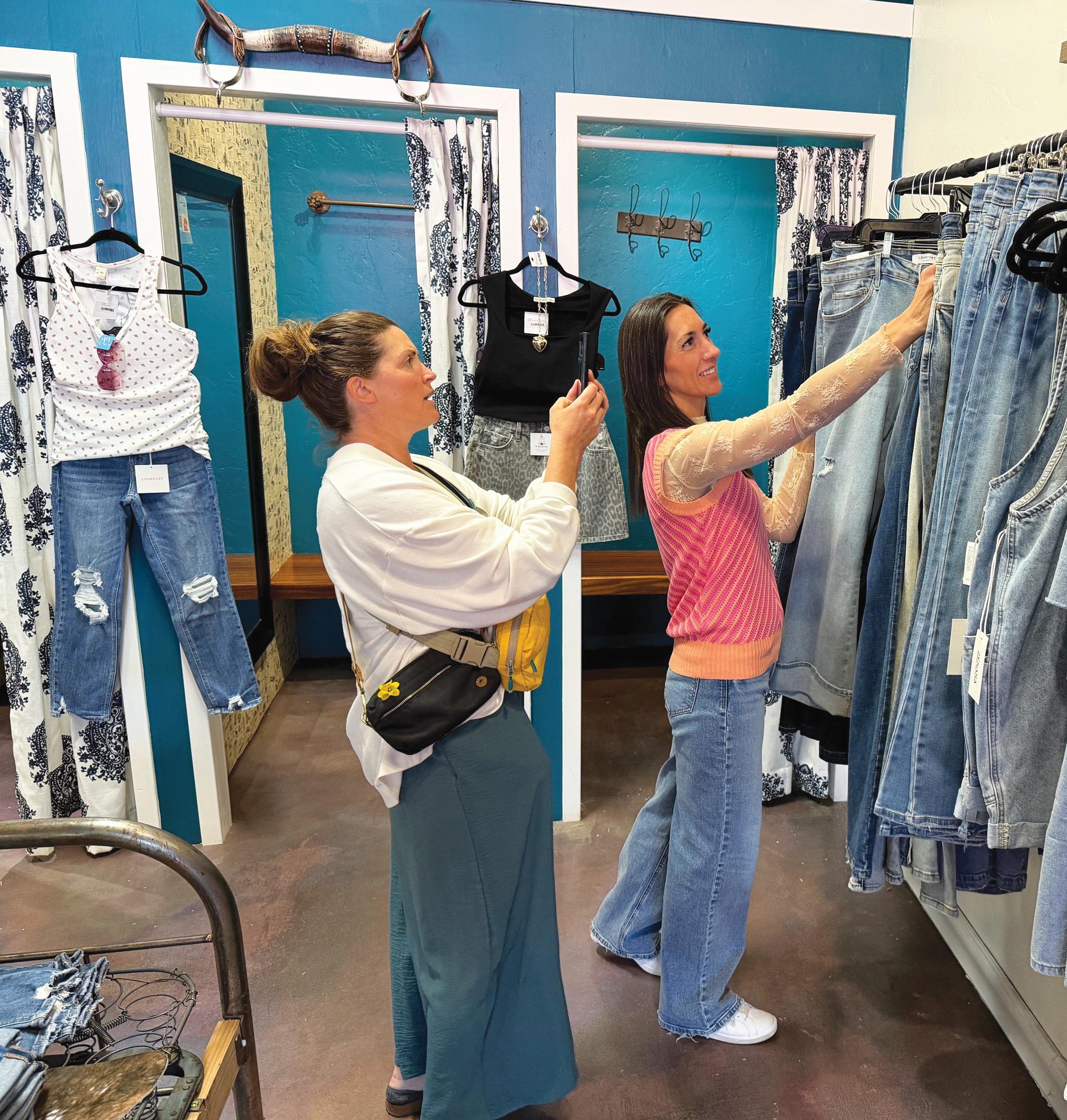
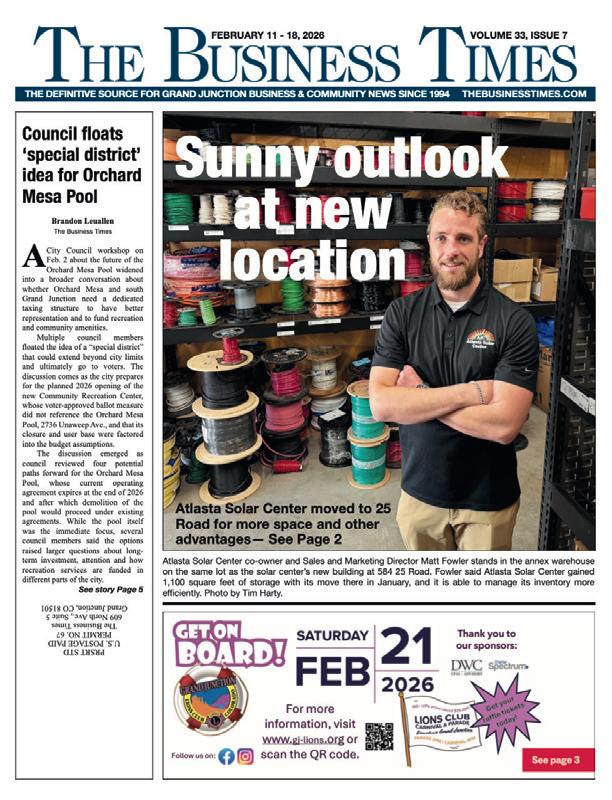
The Barn Boutique owner Jami Nelson stands next to a clothes rack in her store at 210 E. Aspen Ave. in Fruita. Buying the women’s clothing store at the end of March marked a career change for Nelson, a longtime real-estate agent, and her debut as a business owner. Photo by Tim Harty.
Last-second sale saves Barn Boutique
New owner traded real-estate sales for selling women’s clothes in Fruita
Tim Harty The Business Times
It wasn’t like it was two minutes to midnight on the doomsday clock, but there was a swooping-in-tosave-the-day vibe that preceded the sale of The Barn Boutique this spring.
Jami Nelson knew the women’s clothing store at 210 E. Aspen Ave. in Fruita had been listed for sale for a while, because she followed owner Emily Kempton on Facebook. Then, Nelson learned at the end of March the store’s last day was nigh, and she had to make a decision.
“She was trying to sell it, and if she couldn’t sell it, she was going to close it,” Nelson said. “It was, like, the last day before, and she was like, ‘OK, I’ve got to make a decision, and if I don’t have a buyer by tomorrow, I’m closing it down.’
“And the night before that, my husband and I sat down and talked to her, and we decided to make an offer on the business, so she didn’t have to close it down.”
With that it was: Welcome to retail and welcome to business ownership, Jami Nelson.
The 41-year-old is a licensed real-estate agent with Realty ONE Group in Grand Junction, but she’s shelving that work to pour her effort into her new challenge.
“It’s totally different from real estate or anything I’ve ever done. I never thought I’d own my own business like this,” Nelson said.
That’s not to say it never crossed her mind.
“When we go traveling, my daughter and I always seek out the little boutiques, and it’s always been a dream of mine to have my own and to be able to shop for it,” she said.
The dream is now reality.
After Kempton had a final sale to clear out some merchandise, Nelson said she closed the store for three weeks, ordered new inventory and got some training –Kempton was helpful on those – then “opened fresh on the 22nd of April.”
Nelson said she’s learning the retail world as she goes.
“I’m still learning. There’s so much to learn,” she said. “It’s actually really fun. There’s things that I didn’t think I would enjoy doing, like the bookkeeping stuff, that I’m kind of enjoying more than I thought I would.”
Some things are a quick study. Others aren’t. Nelson said the fashion learning curve will take time.
“What actually is selling, what is actually trending, what’s going to sell here versus other places, it’s a little bit different,” she said. “I was not a very fashion-forward kid. I wore what was available.
“And so, it’s a learning curve. It’s so fun to just get in there, and I want to buy it all, but learning what is actually going to sell is different than just buying it all.”
The time of the year will dictate inventory, and knowing how much to order and when to make each move is new territory.
“Learning how to prepare for the hard seasons, like, I haven’t had it,” Nelson said. “I’ve had one month of business, so I don’t really know what a hard season looks like. And so, learning how to prepare for those is gonna be something I’m gonna learn. Learning how to shop season to season and when to buy things.
“I could list a ton of things that are going to be things that I have to learn still, but it’s all enjoyable, and it’s all flexible learning. It’s not like if I don’t learn it now, my business is over. No, there are things that I can learn as I’m going.”
The women’s clothing is similar to what The Barn Boutique carried previously, but it will reflect some new vendors and Nelson’s tastes.
For those not familiar with The Barn Boutique, Nelson describes it as “a more unique shopping experience ... items that you’re not gonna see at, like, Target or your mainstream stores.”
She said she stocks items that she would personally wear.
“I feel it’s like shopping my closet,” she said. “It’s all stuff that I would wear, whether it’s to a concert or to church or to just an everyday outing.”
Or to a rodeo, she added.
That means there are a lot of tops and plenty of denim, plus “fun pairs of pants,” meaning there are patterns or lace or little ribbons that tie.
“It’s different than just a pair of black pants to wear,” Nelson said.
As important as letting shoppers know what The Barn Boutique carries is letting them know that it’s open, period.
“I’m just excited for them to know that we’re still here, that we didn’t close, because a lot of people are like, ‘Oh, we thought you closed,’” Nelson said. “We’re still here, and we’re excited about being open, and we try to cater to – it is a women’s boutique – I really do try to cater to all women. That’s my focus.”
Nelson added she has a pretty good salesman in her family helping the cause: her 12-year-old son, Cason, who tells his friends to buy squishies at his mom’s store.
“Yeah, he does a good job,” Nelson said with a smile, then quipped, “That’s one of my business models is to have my kids promote the store.”
Darcy Case of Western Slope Life, left, uses her smartphone to record video of The Barn Boutique owner Jami Nelson on May 7 for an online video feature about the women’s clothing store at 210 E. Aspen Ave. in Fruita.
Photo by Tim Harty.
Why does Mesa County account for such a large share of Western Slope homelessness? Homelessness
Continued from Page 1
• To what extent has Mesa County become the region’s default homelessnessservices hub, and how much demand comes from neighboring communities that offer few comparable services and no permanent year-round shelter in their own communities?
• How many additional homeless individuals arrive in Mesa County from elsewhere in Colorado or other parts of the country, because it offers a greater concentration of services than some other communities in the country or the region.
Finding answers to those questions is difficult, because there is relatively little publicly available administrative or independently verified data addressing them. Much of the available information comes from self-reported surveys, which provide valuable insight, but rely on respondents’ recollections and statements rather than verified records and are often based on relatively small sample sizes.
The primary publicly available sources are the annual Point-in-Time (PIT) count, which measures homelessness on a single night and tracks factors such as sheltered versus unsheltered homelessness and chronic versus non-chronic homelessness, and a series of Unhoused Needs Assessments conducted by the City of Grand Junction.
While those datasets provide valuable insight into the local homeless population, they also leave many questions unanswered about migration patterns, service utilization and the extent to which Mesa County may be serving a broader regional population.
A relevant outside source examined by The Business Times is a 2017 Guardian investigation titled “Bussed Out: How America Moves Its Homeless.” The project mapped where homeless individuals were reportedly sent. The interactive map appears to show Grand Junction receiving a large number of homeless arrivals through such programs.
Simply comparing the PIT counts to the total populations of the counties does show one thing clearly: Mesa County has by far the largest homeless population on the Western Slope and accounts for a disproportionately large share of the region’s homeless individuals.
The findings from the Guardian investigation, along with other evidence related to migration and service utilization, are examined in greater detail in this article.
Is housing affordability enough to explain the disparity?
The City of Grand Junction’s unhoused-needs survey identifies housing affordability, rising rents, stagnant incomes and economic hardship as primary drivers of homelessness. Those factors are widely recognized by researchers and service providers and undoubtedly play a role in Mesa County’s homelessness challenges.
However, local-housing-affordability issues alone may not fully explain why Mesa County reports a disproportionately large homeless population compared to neighboring communities.
Many Western Slope counties face housing-affordability challenges that are similar to or
even greater than those found in Mesa County. According to Colorado Association of Realtors market data, the median home-sale price in Mesa County was approximately $420,000 in 2025. By comparison, the median home-sale price was approximately $769,000 in Garfield County and $1.83 million in Eagle County.
While incomes are generally higher in those communities, housing costs are dramatically higher as well.
The 2025 Point-in-Time count identified 725 homeless individuals in Mesa County, compared with 104 in Montrose County, 65 in Garfield County, 55 in Eagle County, 35 in Pitkin County and 23 in Delta County.
Combined, those five neighboring counties reported 282 homeless individuals, compared with 725 in Mesa County alone.
According to U.S. Census Bureau population estimates for 2025, Mesa County has approximately 163,000 residents, while Delta, Montrose, Garfield, Eagle and Pitkin counties combined have roughly 211,000 residents. Despite accounting for only about 44 percent of the population in the six-county region, Mesa County accounted for approximately 72 percent of the homeless individuals counted in those counties in 2025.
Also, the decline in homelessness counts across the Western Slope between 2025 and 2026 suggests other factors besides housing affordability are influencing homelessness. During that period, Mesa County’s Point-in-Time count fell from 725 to 613, Montrose County’s from 104 to 72, Garfield County’s from 65 to 43, Eagle County’s from 55 to 25, Pitkin County’s from 35 to 20 and Delta County’s from 23 to 19, all while housing-affordability issues persisted. Mesa County has more homeless services than surrounding counties
One factor that may contribute to homeless individuals coming to Mesa County from outside the area is the concentration of services available in Grand Junction. HomewardBound of the Grand Valley, which operates the Pathways shelter on 29 Road and previously operated the North Avenue shelter before its closure and consolidation, describes itself on its website as the only year-round, open shelter system in Western Colorado and Eastern Utah. The organization says it serves as the closest emergency shelter option for a 12-county region with a combined population of more than 400,000 people.
In a 2025 interview with The Denver Voice, HomewardBound Board Chair Doug Clayton said the shelter’s reach extends even farther.
“We are the largest homeless shelter between Denver and Salt Lake City,” Clayton said. “We serve clients from 14 counties.”
According to the article, that service area stretches from resort communities such as Aspen and Telluride to rural communities including Delta and Rangely. See HOMELESSNESS on Page 5
Homelessness
Continued from Page 4
Services that assist individuals experiencing homelessness and are located in Grand Junction include the VA Western Colorado Health Care System and Grand Valley Catholic Outreach, which provides meals, showers, laundry facilities, mail services and other assistance to veterans and nonveterans experiencing homelessness. These and other resources are largely unavailable elsewhere in the region. What do the surveys say?
The Unhoused Needs Assessment report is a survey separate from the Pointin-Time Count, and it states that more than 80 percent of survey respondents reported living in the Grand Junction area before becoming unhoused. By implication, slightly less than 20 percent reported not living in the area before becoming homeless.
For example, if that percentage were applied to Mesa County’s 2025 Point-in-Time count of 725 homeless individuals, it would suggest that approximately slightly less than 145 individuals may not have been living in the Grand Junction area before becoming homeless. That by itself would amount to more than 50 percent of the other abovementioned counties combined total.
Furthermore, the survey sample was heavily weighted toward chronically homeless individuals.
The distinction may be significant, because, based on a rough calculation using the survey data, nonchronic respondents appeared to be more than twice as likely as chronic respondents to report being bused to Mesa County or coming because of available services. Because the survey sample contained a much smaller share of nonchronically homeless individuals than the overall homeless population identified in the Pointin-Time count, the survey-wide average may understate the prevalence of those factors in the broader homeless population. Additional analysis and information would be needed to determine the extent of that effect.
The Business Times reached out to the City of Grand Junction Housing Department for clarification of the methodology and questions asked to determine a person’s local origins and will report the answers and further information at a later date when a response is received.
The report notes a couple limitations that should be considered when interpreting the survey results:
The assessment relies on self-reported information from voluntary participants, meaning responses could not always be independently verified and may not fully represent the entire unhoused population.
The survey also reflects a sample of respondents rather than a complete census, and some questions required participants to recall past events and circumstances. As a result, the report states that its findings should be viewed as indicators of trends and experiences among survey participants and used alongside other sources of information, including Point-inTime counts and service-provider data.
Local approach in Delta
Not every community has chosen to open its facilities to the broader region.
In a 2025 public statement, the City of Delta said the Riverbend Resource Center “remains
focused on serving individuals and families who reside in Delta and Delta County.” The city also stated Riverbend “was not designed to operate as a regional hub for homelessness services” and that its staffing, facility capacity and funding are aligned with local needs.
According to the statement, “The Center does not have the capacity to absorb demand from outside municipalities.” City officials also noted Delta’s housing, behavioral health, food assistance and shelter resources are already strained by meeting local demand, and the city encouraged individuals to seek assistance within their home communities whenever possible.
Delta City Council member Janet Rowland said local residents initially worried that establishing the center would attract homeless individuals from outside the area.
Riverbend operates as a year-round day center, offering case management, counseling, assistance obtaining identification, employment support and housing assistance. During periods when Delta’s seasonal Abraham Connection shelter is closed, Riverbend also provides overnight shelter beds.
Rowland said Delta’s services are far more limited than those available in Mesa County. Because of those limitations, she said Delta does not tend to retain homeless individuals seeking extensive services.
“They might swing by to see what’s available. They might stay a few days, but they’re not gonna stay long term, because we just don’t have those levels of services,” she said. What about homeless relocation programs?
Rumors that large cities are dropping off busloads of homeless individuals in Grand Junction have persisted for years. However, The Business Times was unable to identify any publicly documented cases of cities simply transporting large groups of homeless individuals to Grand Junction and leaving them here.
That does not mean transportation programs do not exist. A 2017 Guardian investigation titled “Bussed Out: How America Moves Its Homeless” documented at least 34,240 homeless relocations through transportation-assistance programs between 2011 and 2017. The programs typically provided bus tickets or other travel assistance to individuals seeking to reconnect with family, friends, employment opportunities or support networks in another community.
The Guardian’s interactive map appears to show Grand Junction receiving by far the largest numbers of homeless arrivals through such programs on the Western Slope and even one of the largest in Colorado, potentially ranking behind only Denver and Colorado Springs. However, the map itself does not provide detailed cityby-city totals, and the underlying data is not publicly available in the article.
The Business Times has requested the underlying Colorado data from The Guardian in order to verify the figures, determine the number of arrivals attributed to Grand Junction and better understand how those numbers compare to other Colorado communities.
The Business Times will continue this investigation and follow up as more information becomes available.
Spark Summit returns to GJ in September
Brandon Leuallen The Business Times
A leadership and professionaldevelopment conference designed to bring nationally recognized speakers and practical business training to the Western Slope will return to Colorado Mesa University this fall.
Spark Summit is scheduled for Sept. 23 at CMU and will feature three keynote presentations, three rounds of masterclass sessions, networking opportunities and an evening reception.
To register or view the full agenda, go online to thecsi.biz or sparksummit.biz.
Organizers say the event provides local business leaders access to the type of training and connections often found at larger conferences in major metropolitan areas.
“We’ve designed Spark Summit specifically for the high-level leader or decision maker who is ready to level up their professional development,” organizer Kristin Donahue said.
Donahue said the summit is focused on providing practical tools that business professionals can apply immediately. She said organizers have continued hearing success stories from attendees since last year’s inaugural event. One attendee reported uncovering about $10,000 in previously overlooked revenue after attending Kelly Johnston’s financialstrategy session.
The conference returns after its inaugural event in 2025 drew more than 100 business leaders. According to organizers, attendees rated last year’s conference 4.8 out of five stars, and 95 percent said they would recommend it to colleagues.
Many of the elements that received positive feedback last year will remain unchanged.
The event will again feature three mainstage keynote presentations, three rounds of breakout masterclasses and the “playground,” a dedicated networking area where participants can continue conversations with speakers throughout the day.
“We’ll still have the playground,” Donahue said. “That was a popular part of last year.”
Sessions for leadership, AI, communication, business growth
In addition to the keynote presentations, attendees will be able to choose from three rounds of master-class sessions focused on practical business challenges.
Topics include leadership development, hiring and people management, communication, financial strategy, marketing and artificial intelligence. Sessions will cover subjects such as scaling a business, building leadership capacity, improving high-stakes communication, developing employees and strengthening financial performance.
Several workshops will focus specifically on artificial intelligence and its business
applications. Topics include building an AI employee, using AI to document business processes and implementing AI tools to save time and improve efficiency.
Other sessions will explore leadership styles that drive performance, people development, executive support, digital marketing, financial strategy and conversational skills.
Donahue said organizers intentionally moved AI-related content from the main stage into breakout sessions this year, so attendees could choose more specialized and practical instruction.
“AI looks so different depending on what kind of company you run and what your business is and what your role in the company is,” Donahue said.
Returning speaker Kelly Johnston will again lead a financial-strategy session, while Carl Lubbe will present two workshops focused on communication and people development.
The morning keynote will feature Dr. Rick Perea of Think One, who has worked with professional athletes and served as a performance coach for the Denver Broncos organization. His presentation will focus on applying high-performance principles in business settings.
“He talks about how to take that high-performance mindset and transfer it into the work that you do in a company,” Donahue said.
The lunchtime keynote will feature Craig Weber, whose presentation will focus on communication and what he calls conversational capacity. Closing keynote speaker Denise “DT” Thomas will focus on helping attendees translate ideas into measurable action after returning to work.
“How do you turn around and actually make something happen when you get back to your office?” Donahue said of Thomas’s presentation. “What does that look like?”
Building long-term value for local businesses
Donahue said the conference is intended to create benefits that continue long after attendees leave the event.
Throughout the year following the inaugural Spark Summit, she said organizers have continued hearing from participants who implemented ideas from sessions, developed new professional relationships and generated tangible business results.
Attendees have reported continuing conversations and business relationships that began during the event.
“I feel like I’ve had Spark moments all year, because I will have people say, ‘I’m still talking to that person. I was just on the phone with so-and-so that I met last year at Spark Summit,’” Donahue said.
She said those stories reinforced the conference’s mission of creating connections and practical value for local businesses.
“The ripple impacted the community, which was awesome,” Donahue said.
Wenzel stepping down from Community Foundation at end of 2026
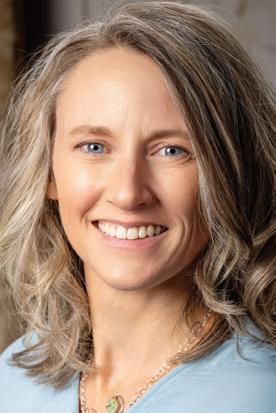
Western Colorado Community Foundation President and CEO Anne Wenzel announced in a June 9 email letter she will retire from her position at the end of this year, concluding 25 years of leadership and service to communities across western Colorado.
The foundation added in a June 10 news release that during Wenzel’s tenure, “WCCF has grown into a trusted community institution that now stewards $211 million in total assets and distributes nearly $9.5 million annually in grants and scholarships throughout the Western Slope.”
The news release included WCCF Board of Directors Chair Terri Chinn saying Wenzel’s leadership helped shape the foundation into the organization it is today.
“Her commitment to this region, her care for people and communities and her ability to bring others together around shared goals have had a lasting impact across western Colorado,” she said.
But Wenzel’s letter said things best, so what follows is her letter:
I want to share some personal news with the many people who have supported and shaped WCCF over the years. At the end of this calendar year, I will step down from my position as President and CEO of the Western Colorado Community Foundation and begin the transition into retirement. This October, I will celebrate 25 years with this organization. A quarter century is a good long run!
It has been both a privilege and the joy of a lifetime to be entrusted with this role. For me, this has always been more than a well-suited job; it has been a calling. Over the past 25 years, I’ve worked with focus and passion alongside many others to help grow WCCF from its early beginnings into the organization it is today. In doing so, I’ve had the opportunity to carry forward the vision of the respected community leaders who founded WCCF in 1997 as a charitable foundation “built by the people, for the people of western Colorado.”
Today, WCCF is a highly regarded and impactful community foundation. We have a fabulous staff team of 15, a dedicated Board of Directors guiding our growth, and exciting forward-looking plans. Most importantly, we have a strong foundation and tremendous potential to continue amplifying generosity and strengthening communities across western Colorado.
For years, I joked that I would retire when we reached $100 million in assets. Never in a hundred years did I think we would actually get there, but we did, five years ago. And here we are in 2026, with more than $210 million in assets and generating nearly $9.5 million annually in grants and scholarships. I am truly humbled to have worked with so many generous donors, nonprofit partners, community leaders, and friends to build this institution. What we have accomplished together is something I will always be proud of.
I am working closely with our Board of Directors as we plan for WCCF’s next generation of leadership and the transition ahead. As the organization prepares to celebrate its 30th anniversary next year, the timing feels right for a new chapter to begin. While I am focused on completing several important organizational projects, I am also looking ahead to my own next chapter. That will include pursuing long-deferred intellectual interests, spending more time with my adult children, and continuing to travel internationally and explore the world with my husband of 35 years, David.
I do not plan to leave this community. Western Colorado is home, and I am certain I will find new ways to stay involved and contribute to this remarkable place.
We will share more information in the coming months about our leadership transition and plans to celebrate WCCF’s 30th anniversary.
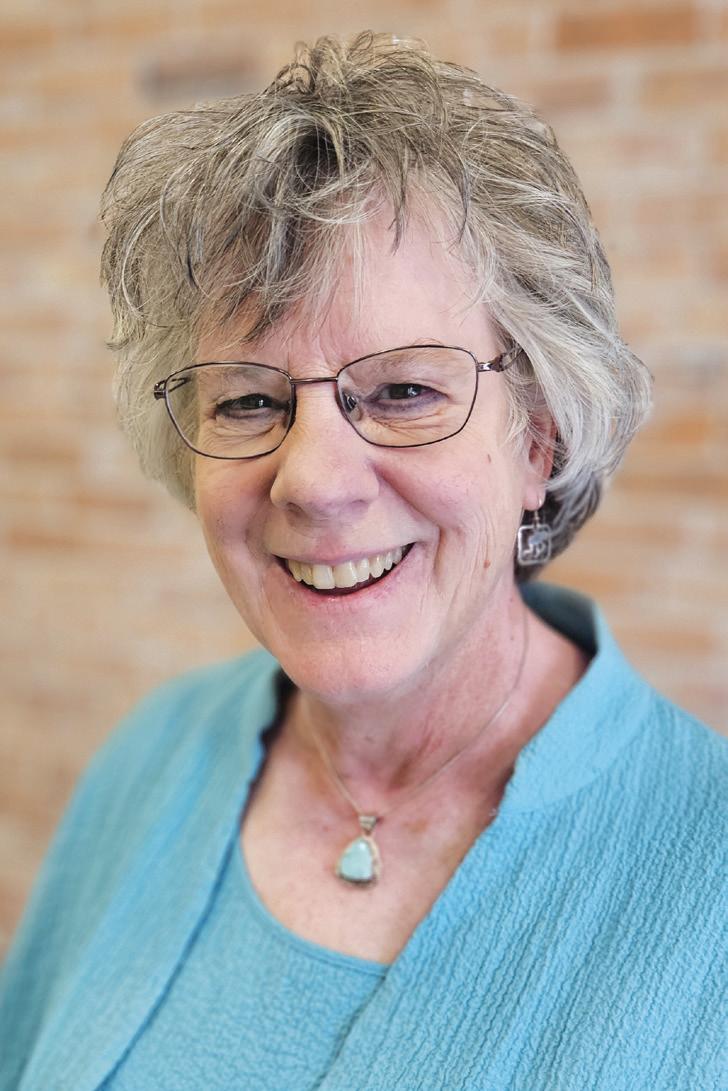
In gratitude, Anne Wenzel
Anne Wenzel
Keep your capital working by deploying 1031 Exchange equity
Finding yield in Colorado’s tight commercial real estate market requires moving your capital exactly where the growth is happening. Whether you are eyeing multifamily units in Grand Junction, industrial flex spaces, or converting agricultural land, a 1031 exchange is the cleanest way to keep your capital working without a massive tax hit.
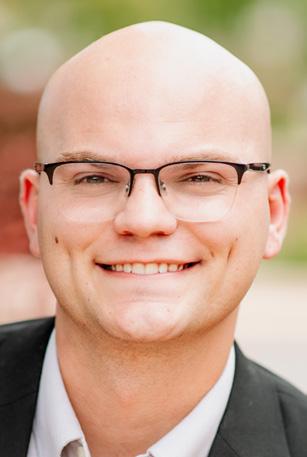
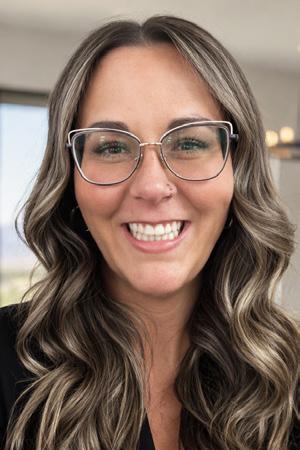
Matthew Parker
What exactly is a 1031 Exchange?
A 1031 Exchange, otherwise known as a tax-deferred exchange, lets you sell a property and roll that money into a new one without paying capital-gains taxes right away. The difference between a normal sale and an exchange, though, is the matter that a normal sale forces you to pay taxes immediately, whereas an exchange lets you defer them.
This strategy has a lot of upsides, but also some things to worry about. You must buy a replacement property of equal or greater value and use all net cash proceeds. If you scale down or take cash out, that difference is called boot, which is just taxable cash or debt relief left over. Boot is what you do not want, because it means you get hit with taxes anyway.
The 1031 clock: Strict 45-day and 180-day windows
The 1031 clock is something that can be bad if you miss your deadlines, though. The trick with an exchange is that you must follow a strict timeline, and the government won’t give you any slack. You have exactly 45 days from closing
on your sold property to identify replacement properties in writing, and 180 days to close on the new purchase. It boils down to if you pass those days and haven’t finished everything perfectly, the exchange becomes an issue, and you get hit with the full tax bill anyway.
Versatile «like-kind assets
One of the biggest misconceptions about 1031 exchanges is that like-kind means you must swap a duplex for a duplex. In the eyes of the IRS, any real estate held for business or investment use is like-kind to any other.
This has a lot of upsides, because you can transition equity between different asset classes. You can sell a rental house in Denver and buy a multifamily building in Mesa County for cash flow, exchange an office condo for industrial flex space (buildings with a warehouse and office mix), or trade raw agricultural land into commercial assets.
Colorado-specific rules
Colorado introduces a few specific operational rules that you must worry about. The first trick is that you cannot touch the money from your sale yourself; it must go straight to a Qualified Intermediary, or QI. Taking cash into account breaks the rules, making you pay taxes on the whole thing.
Colorado requires QIs to maintain a minimum of $1 million in bonding. Another thing to worry about applies to out-of-state residents. Colorado takes a 2 percent withholding tax on nonresident sales over $100,000, but there are ways to bypass this.
Western Slope asset playbook
Deploying capital on the Western Slope boils down to matching your goals with local economic drivers. In
the multifamily sector across Grand Junction and Fruita, strong population growth makes exchanging scattered rentals into a consolidated multi-unit building a great strategy to improve efficiency. If you prefer industrial flex space along I-70, moving equity out of low-yield retail into stable, triple-net industrial leases is an excellent play where the tenant covers taxes and maintenance. Lastly, you can transition raw agricultural land into commercialdevelopment sites using a structured exchange to capture major upside as valuations evolve.
Your investment strategy: Maximizing portfolio momentum
At the end of the day, the trick with commercial real estate on the Western Slope is keeping your investment momentum going. If you let a huge chunk of your equity get eaten up by taxes immediately after a sale, you are going to have a lot less leverage to scale up your portfolio.
Deferring your taxes through a 1031 exchange is good, as it means 100 percent of your hard-earned money stays out there working directly for you. If you want to avoid losing money early and want to build wealth in larger local assets, a properly structured exchange is exactly how you make it happen.
Sources Available
Land Title Guarantee Company, CorCapa 1031 Advisors, BlueBird Advisory, Investment Property Exchange Services, Inc. (IPX1031).
F Matthew Parker is a commercial broker for Bray Commercial Real Estate.
So much on my mind, but there’s one thing that won’t let go
And most of that “much” comes through a little device in my hand that I am guilty of inviting into my cranium before my eyes remove the blur to focus on safely getting out of bed. Isn’t that the case in your house?
Back in the good old days, many would reach for a cigarette or their water first thing. And while certainly a big gulp of H20 is a healthy thing first thing in the morning, I’m beginning to think perhaps cigarettes are healthier than our bedside technological connection.
Because when I think about it, cellphones might be the biggest scourge on the American way of life – outside of those convinced our elections are being stolen by the other side.
Especially you Tina toddlers.
Which brings me to something which keeps screw-worming its way into my grey matter. The matter of Tina Peters. Personally, I think Pontius Polis should have made staying out of anything politics as a condition of her commutation, but then that would negate the sole reason he commuted her sentence, because Jolly Jared KNEW she’d stick her nose right back under the republican tent, and that would be the best thing democrats could run for office on. Yup. Tina’s back and is working to be more of a menace than ever.
That’s because our Pontius one recognizes the one thing republican leaders in our state refuse to admit. A very large percentage of republicans want nothing to do with Tina, as proven by her failed run for state chair along with that pesky court case and its fallout, because she is cannon fodder for dem dominance in 2026.
But back to the worm infestation at 609 North Ave., Suite 5. In case you are wondering, that is the location of the palatial palace of punditry known as the office of The Business Times. It’s the location where I receive phone calls (although those can follow me around the globe with that little handheld thing no one can survive without) and emails espousing anywhere from jokes to criticism to threats (including to my daughters) for putting ink on paper about what’s on my mind. I also from time to time get letters.
And all of them are frighteningly on queue. Oh, and 99 percent are anonymous.
Like this last letter I received, which ironically came the same day after I had morning coffee with a friend and the topic of Tina was touched upon. It’s almost as if I spoke the idiocy of this letter into existence. Pretty much convinced that’s the only super power I have. Then again, I write in the hopes folks will think about my words. For this lost soul, it appears they’ve been pondering my propensity of punditry in perpetuity.
I don’t have to mention my love of alliteration, do I?
But this letter was special as it was about a column I wrote back in February about Mesa County’s most famous (now) ex-con, and it came with a caveat slathered in irony:
“These comments are going to remain anonymous. My grandfather taught me that writing a letter to the editor was the sign of a deranged mind! Enough said –”
To that I’ll add, anonymous letters are the sign of a chicken you-know-what who doesn’t have the courage of their convictions. Or a sure sign of cognitive dissonance. Or both. Given the notes on my column, I’ll go with a heavy dose of both along with paraphrasing Ronald Reagan in saying this person just doesn’t realize that what they think they know just isn’t so.
Support Local Support Business
But I’m not gonna get caught up in the minutiae of every little thing wrong with Tina’s takes on the 2020 election in Mesa County other than to say: No one cares about the vote in Mesa County from six years ago that went pretty much exactly as expected. Even with that knowledge (known as denial in Parts Unknown republican circles), which doesn’t require a password to obtain, this person still insists the old talking point how Tina wasn’t allowed to present evidence at her trial. The fact is, she presented evidence, all kinds of “evidence.” It’s just that the judge determined that “evidence” had nothing to do with the charges filed, so it was not allowed.
I agree with the judge. I’ve seen Tina’s “evidence,” and besides it being not relevant to the trial, there’s actually no “there” there. So there.
Then came the old, “Do you know her personally?” with the added, “Why are you the mudslinger now?” Have to admit, that’s a new one. For the record, my anonymous, tardy reader, I prefer the term “muckraker,” which was coined over a century ago, so knowing it should have made your reading list by now. Then again, not sure reading is your strong suit. Because I wrote in this column that I know Tina and had met with her a couple of times, you know, personally, which is how one actually meets with people they know personally.
Next came the oft quoted, “Tina was just doing her job.” Reminiscent of certain soldiers in the past “just following orders.” Ironically, two of Tina’s soldiers who were “just following orders” testified against her. Then again, for some reason Tina’s supporters believe Tina’s “job” included breaking the law. I used the term cognitive dissonance for a reason, and this dear reader made notes showing it to a T.
Also included was the typical rant of calling me a hater, which is barely worth noting anymore.
But my favorite part from Captain Anonymous must be their claim Tina needed a voice for the truth. I’m gathering this means Tina’s truth didn’t have a news source in town willing to be that voice, and it was “so sad” to them, because they “thought they had a chance of getting the truth” out to Mesa County in The Business Times.
I must admit, that’s news to me. Fact is, Tina never approached The Business Times for anything at any time during her time destroying faith in Mesa County’s election process – or any aspect of the job of clerk and recorder. Instead, she chose to let all of her “pillow talk” hit the masses out of Minnesota. Imagine that. The biggest story in Mesa County history and the only folks allowed to tell it were her Minnesota Marionette money masters.
Honestly, I think those notes were simply setting up their little “truth” insult. Then again, we probably would’ve had questions trying to get to the truth of what Tina did. Truths that were proven beyond a reasonable doubt in a local courtroom. And Tina, and this author, along with too many others, simply cannot have that.
The truth is Tina committed crimes and was found guilty and sentenced based on that guilt and her behavior before, during and after the trial And then Pontius Polis commuted her sentence to give Colorado democrats something to run on – with assured victory in most cases – for the coming election.
That’s not much of a story. But The Business Times’ publisher just told it.
In Truth and freedom.
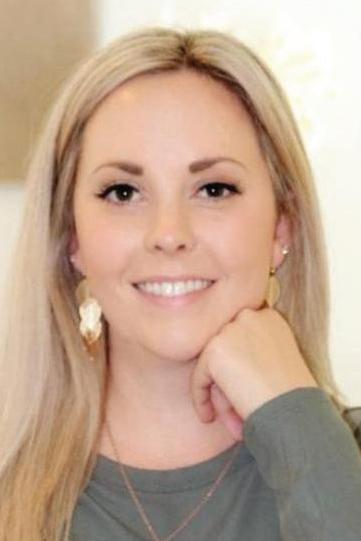
FCraig Hall is owner and publisher of The Business Times. Reach him at 424-5133 or publisher@thebusinesstimes.com
Craig Hall
n Coldwell Banker agents listed in nation’s top 1.5 percent
Coldwell Banker Distinctive Properties announced six professionals from its Grand Junction office made the list for the 2026 RealTrends Verified Rankings, which “has served as the real estate industry’s most respected performance benchmark for more than 30 years.”
Coldwell Banker said in a news release there are no applications or nominations for the list. RealTrends Verified Rankings uses independently verified transaction data, and the agents whose numbers qualify make the list.
For Coldwell Banker Distinctive Properties, those honorees are Cindy Ficklin (sales volume $28.76 million), Jen Pedersen ($19.6 million), Amy Ashcraft ($15.26 million), Nikki Metiva ($11.02 million), Michelle Evans ($10.73 million), and The Shafer Team ($38.49 million). They earned a place among the top 1.5 percent of real estate professionals in the United States.
Coldwell Banker Distinctive Properties said in its news release, “There is no shortcut to this list. There is no workaround. You either produced or you didn’t. These six did.”
Coldwell Banker Distinctive Properties CEO Todd Conklin added, “When six of your own show up on a list like this in the same year, it tells you something about the culture. This isn’t one exceptional year for one exceptional agent. This is what happens when talented people operate inside a system that’s built for performance. We are incredibly proud of every one of them.”
The Grand Junction honorees were part of a larger achievement across Coldwell Banker Distinctive Properties. In total, 18 agents and teams from across the company earned recognition in the 2026 RealTrends Verified Rankings. The brokerage itself was also recognized nationally, with $713.44 million in sales volume and 1,337 transaction sides.
n Tax credit awarded for affordable-housing development in Clifton
Housing Resources of Western Colorado announced it was awarded a 9 percent Low-Income Housing Tax Credit from the Colorado Housing and Finance Authority to develop Crawford Commons, a 60-unit affordable housing community in Clifton.
Crawford Commons will offer a mix of one-, two-, three-, and four-bedroom homes designed to serve individuals and families across a broad range of incomes from 30 percent to 80 percent of Area Median Income. This project represents the first LIHTCfunded housing development in Clifton in more than two decades.
“This is more than just a funding win,” said Emilee Powell, Housing Resources executive director. “It reflects our deep commitment to Clifton and the shared vision that community members, partners and stakeholders brought to the design and application process. Together, we are creating opportunities for more families to access stable, affordable housing and build stronger futures.”
Given the rigorous and competitive nature of the Low-Income Housing Tax Credit program, this award underscores both the strength of the project and the collaborative effort behind it, the news release said.
To bring Crawford Commons to life, Housing Resources has partnered with Evergreen Real Estate Group, Holst Architecture, Mesa County, and Shaw Construction, a team with extensive experience in affordable-housing development. Housing Resources also said input and support from Clifton’s community leaders were instrumental throughout the planning and application process.
For more information about Housing Resources’ programs and upcoming projects, visit hrwco.org.
n Tickets on sale for Asteria Theatre’s 2nd Broadway season
Building on the success of its sold-out inaugural Broadway season, the Asteria Theatre at Colorado Mesa University announced the return of the Broadway Series with seven world-class productions coming to Grand Junction. Tickets are on sale now.
This season’s lineup includes: The Wiz; Legally Blonde; Stomp; Waitress; Shucked; Clue; and Mystic Pizza.
“The inaugural 2025-2026 Broadway season brought this community together in a new way. We are excited to bring another collection of shows to campus and to engage with the community once again in the Asteria Theatre,” CMU President John Marshall said.
Tickets for all seven productions are available at CMUstages. com/broadway or by calling the Asteria box office at 970-986-3000.