Cost-share could save Community, Montrose hospitals up to $31M
Tim Harty The Business Times
If two area hospitals see the $19 million to $31 million they stand to save via a cost-saving partnership, their respective CEOs may want to grab a handful of that cash and buy Angelina Salazar a nice dinner.
It was Salazar in her role as CEO of Western Healthcare Alliance who figured out Community Hospital CEO Chris Thomas and Montrose Regional Health CEO Jeff Mengenhausen were looking for each other. They just didn’t know it, because they’d been looking in their back yards for a solution that actually was just a little farther down the road.
Both were looking for a hospital to partner with on things like buying supplies and sharing IT services. Thomas thought that partner might be Family Health West in Fruita, but he said talks never gained much traction. Mengenhausen thought that partner might be in Delta or Gunnison. No luck. Salazar heard from each CEO about their experiences and knew who they needed to talk to instead.
As Thomas tells it, “She basically posed a question: Why don’t you two guys start talking about what you can do together?”
As Mengenhausen tells it, he was conversing with Salazar when she told him, “You know, you both are wanting kind of the same thing. Jeff, you should talk to Chris.”
See story Page 5
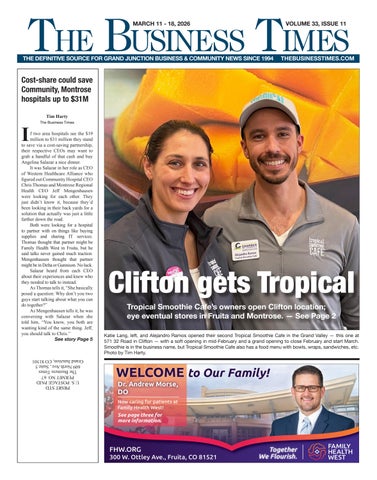
Clifton gets Tropical
Tropical Smoothie Cafe’s owners open Clifton location; eye eventual stores in Fruita and Montrose. — See Page 2
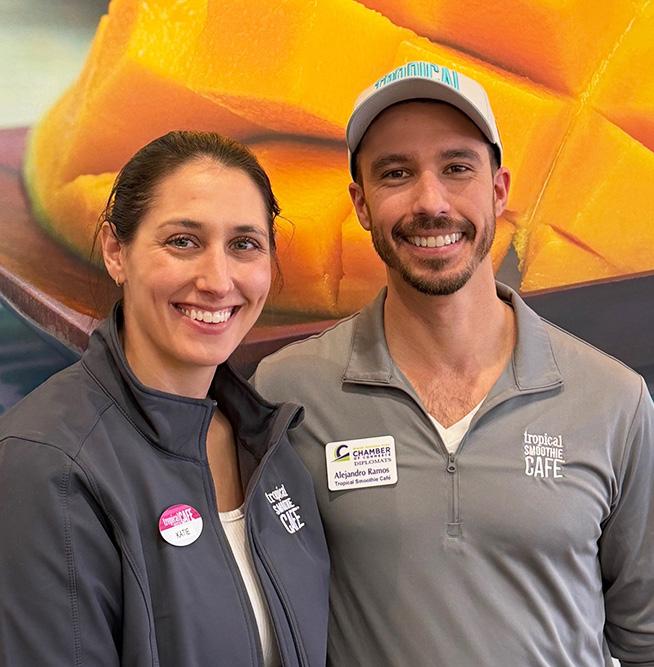
Lang, left, and
571 32 Road in
a
Katie
Alejandro Ramos opened their second Tropical Smoothie Cafe in the Grand Valley — this one at
Clifton — with
soft opening in mid-February and a grand opening to close February and start March. Smoothie is in the business name, but Tropical Smoothie Cafe also has a food menu with bowls, wraps, sandwiches, etc.
Photo by Tim Harty.
2 Tropical Smoothies down, 2 to go
Now that Clifton store is open, Tropical Smoothie Cafe’s owners eye Fruita, Montrose
Tim Harty The Business Times
When Alejandro Ramos and Katie Lang opened Tropical Smoothie Cafe at 2536 Rimrock Ave. in Grand Junction in April 2024, their intent was for it to be the first of several in the Grand Valley.
In mid-February, they opened Location 2 in Clifton. And Locations 3 and 4 may not be far behind.
The newest location is at 571 32 Road, in the middle of a strip mall that’s anchored by a Pizza Hut restaurant. Ramos and Lang stumbled upon the open unit after failing to land one in the nearby Peach Tree Center off the Interstate 70 Business Loop.
“We started looking in Clifton over a year ago, and in fact we started with the Peach Tree marketplace, and unfortunately weren’t able to make anything work with the landlord there,” Ramos said. “And so one day we just happened to be driving in the area, looking to see if anything had changed, and the landlord here had put out a lease sign, and we reached out, and here we are.”
Choosing Clifton for the second location was a matter of addressing the east end of the valley, and customer feedback suggested it was the place to be.
“We had a lot of people going to the Rimrock location that would tell us, ‘You need to open one in Clifton. I’m tired of driving this far,’” Ramos said.
Ramos and Lang, who aren’t married but said they will be “soon,” did a soft opening of the Clifton store on Feb. 11, then hosted a grand-opening weekend Feb. 27-March 1. On March 3, the Grand Junction Area Chamber of Commerce joined them for a ribbon cutting.
They said people are slowly figuring out the new location is open, and they will try to boost customer flow with “a lot of social media marketing” and “guerilla marketing.”
“We took a lot of samples into the nearby businesses and our little flyers for the grand opening,” Ramos said. “We’ve seen sales rising as people are becoming more and more aware. We still have some work to do, though, for sure.”
Once things get settled in Clifton, Ramos and Lang can turn their attention to the next locations.
“We came into the franchise intending to have three locations here in the greater Grand Junction area and one down in Montrose, assuming that everything went the way we were hoping it would,” Ramos said. “We saw that Rim Rock was doing well, and it gave us the confidence to open up over here.”
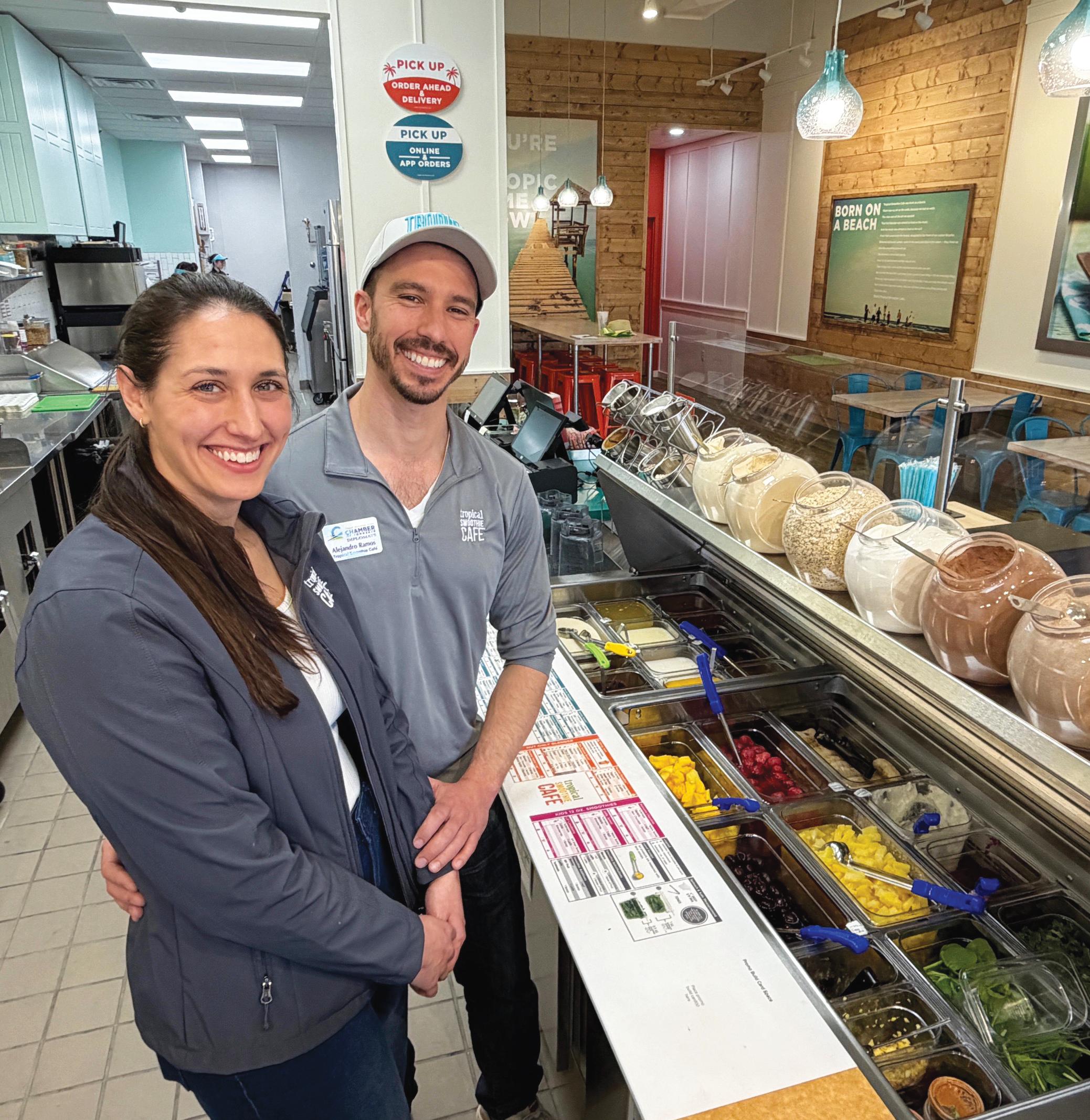
Tropical Smoothie Cafe owners Katie Lang, left, and Alejandro Ramos stand next to the selection of fresh fruits and vegetables that are available in their newly opened store at 571 32 Road in Clifton. They said Tropical Smoothie Cafe provides customers a healthy and affordable option, plus quick service.
Photo by Tim Harty.
Ramos and Lang said they’re already searching for real estate in Fruita and Montrose, and it’s finding real estate that’s the real challenge, as they learned during their Clifton search.
“Just finding a good location that has the visibility and is within our price range and all that,” Ramos said.
They would love to get a location that would allow for a drive-through window.
“We would definitely like it,” Ramos said, and Lang added,“That would be ideal, but we’re not gonna be super picky. If a good spot’s available, that will be more important.”
Ramos agreed, saying, “Definitely, location over drive-through.”
In the meantime, the Grand Valley has two Tropical Smoothie locations to check out, and Ramos and Lang said several things set Tropical Smoothie Cafe apart from other smoothie joints. She pointed to it being a good combination of a healthy and affordable option with quick service, and, of course, “The smoothies are delicious.”
But don’t let the store’s name fool you.
“We are more than just smoothies,” Ramos said. “We have a lot of food options, including bowls, which have become a really popular thing across America in general. The food options are healthy. We’ve got a lot of ability to modify and add ingredients or remove ingredients, that kind of thing.
“But the smoothies themselves, I would say we stand out in that aspect because we do use actual fruits and veggies. I know that a lot of other folks that do smoothies, it tends to be more concentrate-heavy. We do have concentrates that we use for some of
our smoothies, but we’ve got the strawberries and the bananas and the mangoes, all those actual fruit pieces that we’re using.”
Ramos said the Tropical Smoothie brand and “the vibe” also appeal to people.
“You hear that word a lot lately, but we really do just aim to be welcoming and have that sort of tropical flavor and theme in terms of how we try to have fun,” he said.
Lang said it’s funny how something they think is obvious can be overlooked, then shared this: “We have regulars that come in for smoothies (at Rimrock Avenue) that will sometimes just be like, ‘I didn’t even realize you guys had food.’ Somehow they haven’t seen that entire half of the menu.”
She added, “The people who do know about the food always love the food.”
The food options include the bowls Ramos mentioned, plus sandwiches, wraps, flat breads, quesadillas (they call them ’dillas), salads, sides and sweets. They also have a small breakfast menu with six items.
“The breakfast menu I always think is underrated,” Lang said.
Enough people realize there are more than smoothies on the menu, as Ramos said the Rimrock location gets such a good lunch crowd that “it’s our busiest time of the day. We build our staffing around those lunch hours.”
One more thing Ramos and Lang, a pair of Michigan transplants, want the Grand Valley to know is they’re serious about being part of the community.
“We try to be present,” they said, with Ramos starting the sentence and Lang finishing it.
“We love this area,” Ramos said, “so we want to see it continue to grow and prosper, and we want to be part of that.”
selection of Clifton. They service.
City approves 25-year CMU lease for Lincoln Park Barn, stadium area
Brandon Leuallen The Business Times
The Grand Junction City Council voted 5–1 to approve a 25-year lease and operating agreement that grants Colorado Mesa University use of the Lincoln Park Barn and adjacent land near Ralph Stocker Stadium for construction of a new football facility.
The vote followed more than an hour of public comment during the council’s March 4 meeting and capped months of discussions between city officials and university leaders about the future of the barn and the Lincoln Park Stadium Complex.
Under the agreement, CMU will lease the Lincoln Park Barn and adjacent areas on the football side of the complex and construct a new football facility between the barn and Ralph Stocker Stadium. The city will retain ownership of the property while granting the university operational control of portions of the stadium complex under the lease.
Financial terms
The agreement restructures the financial relationship between the city and CMU.
CMU will pay the city $300,000 annually for the ground lease and operational partnership while continuing its existing stadium rental fee of $36,705 per year, which carries an annual escalation factor of up to 2 percent.
The football team also will be practicing on the field on some mornings during the season, which will mean the track and the field will not be open to the public during those times. The stadium field and track must remain open to the public during normal daytime hours when not reserved for scheduled events.
Public
comment
The public comment portion lasted just over an hour, with 21 residents each given three minutes to speak. A slim majority opposed the agreement or urged the council to delay the vote, while several Colorado Mesa University representatives and student athletes spoke in support, and one speaker suggested pursuing a compromise.
The university will also continue prior commitments of $200,000 per year through 2032 and $100,000 in 2033 for stadium improvements, along with a $14,000 annual contribution to the Parks Improvement Advisory Board.
City staff said Stocker Stadium currently costs the city about $301,000 annually to operate after revenues, meaning the new lease payment would offset much of the city’s operating subsidy.
CMU will also assume 80 percent of field maintenance costs and pay half of the cost of future turf replacements.
Barn use
The agreement grants CMU exclusive use of the Lincoln Park Barn for footballrelated activities such as strength and conditioning, sports medicine and team-support functions.
CMU will be responsible for maintenance, utilities and operations inside the building. The barn’s historic exterior must be preserved, and any exterior modifications require approval from the city manager.
City recreation programs currently held at the barn are expected to relocate to the city’s new community recreation center once it opens.
Public access and existing uses
Existing community uses of Stocker Stadium will continue under the agreement, including events hosted by Mesa Valley School District 51 and other organizations.
Opponents said the barn has long served as a community gathering place for events and recreation programs. Supporters, including CMU football players and university representatives, said improved athletic facilities would strengthen the university’s program and its partnership with the city.
Council discussion and vote
After public comment concluded, Council member Scott Beilfuss made a motion to table the decision for 30 days to allow additional discussion and community input. The motion failed after it did not receive a second.
The council then approved the agreement on a 5–1 vote. Beilfuss voted against the proposal, while Mayor Cody Kennedy and council members Jason Nguyen, Anna Stout, Laurel Cole and Ben Van Dyke voted in favor. Councilmember Robert Ballard was absent.
Background
City Manager Mike Bennett said the proposal evolved through several council workshops and public discussions during the past year.
Colorado Mesa University first presented the concept during a Sept. 15, 2025, workshop that included demolishing the Lincoln Park Barn to make room for a new football-operations facility. Following public feedback and concerns about preserving the historic structure, the concept was revised during a Dec. 15 workshop to retain the barn and instead lease it to CMU while constructing a football facility between the barn and the stadium.
Bennet said the workshops generated significant public interest, with recordings of the discussions viewed more than 10,000 times online. The city also shared updates through its website, social media and the EngageGJ public-engagement platform.
Following community feedback, the concept evolved from replacing the barn to preserving the structure while constructing a new football facility nearby.
The proposal was first discussed publicly during the September workshop when CMU outlined its interest in replacing the aging locker-room facility at the stadium. See The Business Times Sept. 24 article about it online at thebusinesstimes.com. Search for the article titled: “CMU proposes new football facility to replace Lincoln Park Barn.”
GJ Chamber brings Western Slope business voices to Capitol
Brandon Leuallen The Business Times
About 50 Western Colorado business leaders traveled to Denver in late February as part of the Grand Junction Area Chamber of Commerce’s annual Legislative Days at the Capitol, a two-day trip designed to connect local employers with state lawmakers and policy leaders.
Participants traveled across the mountains to attend meetings and discussions focused on state-policy issues affecting businesses across Mesa County and the Western Slope.
Candace Carnahan, president and chief executive officer of the Grand Junction Area Chamber of Commerce, said the trip is organized each year to ensure business voices
Candace Carnahan
from Western Colorado are heard in state-policy discussions.
“The goal is to make sure we are creating an opportunity for Western Slope business voices to be heard in the Capitol,” Carnahan said.
The chamber schedules the trip during the legislative session, which began Jan. 16 this year and runs for 120 days, usually ending in mid-May. The visit typically occurs during the early part of the session while many bills are still being introduced and debated.
Participants included business leaders from across the Grand Valley as well as members of the Mesa County
Leadership program, which allows emerging community leaders to see how state government operates and how policy decisions affect employers and local economies.
While the Grand Junction Chamber organized the trip, representatives from other regional chambers also attended, including the Palisade Chamber of Commerce and the Fruita Area Chamber of Commerce.
Bills the chamber is watching Carnahan said the chamber is closely monitoring several pieces of legislation this session that could affect Colorado businesses, including proposals related to labor policy, workplace regulations and consumer pricing.
One bill the chamber is watching closely involves potential changes to Colorado’s collective-bargaining laws.
See GJ CHAMBER on Page 6
A conceptual rendering presented by John Marshall during the Dec. 15 Grand Junction City Council workshop shows a proposed Colorado Mesa University football facility adjacent to Ralph Stocker Stadium and the Lincoln Park Barn. Illustration by Perkins&Will.
Community, Montrose hospitals commit to pursue partnership that will not compromise their independence
Continued from Page 1
Mengenhausen said he then texted Thomas something like, “Hey, let’s go have breakfast.” So, they did.
Mengenhausen said that was in July 2025, “and we started just talking, and it’s like, ‘Oh, you know, I’m struggling with IT, and Chris is like, ‘Our IT department’s awesome.’ And I’m like, ‘Oh, they’re struggling with revenue cycle. Well, my revenue cycle, we got that figured out.’ So it really just started to mesh things organically like that.
“And cultures between Montrose and Community, we’re finding out, are so similar. And we’re both focused on high-quality care, high patient experience and our unwavering commitment of independence and keeping it local, not being part of a system.”
That led to approximately seven months of talks that brought them to early March and a commitment to pursue a partnership.
“What we’re doing,” Thomas said, “is we are creating a parent company, which is yet to be named. The board of directors this past week of both the Montrose hospital and Community Hospital approved the execution of a letter of intent to form this new partnership. And so it was a unanimous vote of both boards to move forward.”
Thomas added, “We have a lot of work to do. This is just the start and marks the beginning of our exploratory process that we hope to close and have a definitive agreement by late this fall.”
The agreement would be to form a new parent company controlled by Community Hospital and Montrose Regional Health. Each hospital would have three board members on the parent company board, and Thomas and Mengenhausen would be co-CEOs.
Thomas said their hope is: “The parent company would then allow us to look at different opportunities like: Can we do group purchasing together? Can we lower our supply costs? Can we improve our revenue cycles to improve our ability to bill and collect and deal with the insurance companies? One of the top priorities is: Can we share IT services?
“So, Community Hospital has MEDITECH Expanse. Montrose is on an older version of MEDITECH and needs to move to a new version. So, can we do that together to save money on systems, hardwares? Can we have a similar IT system
to save money and help us be more efficient and more viable going into the future?”
Thomas thinks the answer is yes, but there are hurdles to clear. If he’s right, he said the word from consultants is: “We anticipate a savings between 19 and 31 million dollars a year, every year with some of the different partnerships we’re talking about, so we’re talking significant savings.”
To the declaration of that being real money, Thomas said the same.
“It’s real money,” he said. “You know, we had a negative margin last year, so going into this year, there’s some challenges. So, yeah, we’re excited about the opportunity.”
Similarly, Mengenhausen said, “The last two years have been a little rough financially, just with the pressures of inflation and labor costs going up, and then some of the games that these payers are playing, which makes it hard to get paid for the services that you render.
“And so we’re facing the same pressures on, you know, supply costs going up with just simple things, needles and joints or equipment. And if we can come together and be bigger and have better purchasing power, we can actually drive down the cost. And that’s how these big systems are doing it, and we can accomplish that through a partnership versus a full-on merger/acquisition.”
Thomas addressed that merger/ acquisition sentiment in no uncertain terms, as Community Hospital and Montrose Regional Health remain steadfast in their independence.
“This is not a merger. This is not an acquisition. It’s not a takeover,” he said. “Both boards, both hospitals would remain independent. Our board of directors would remain the same with the same bylaws, the same governance, but we would be just looking at those, what I would say, back-office support services that we can do together to make us both more efficient, so that we can deal with, really, the changing environment in healthcare.
“You know, it’s getting more difficult. You’ve got the state of Colorado budgets that are going to be a challenge this year, the effects of the One Big Beautiful Bill, so we’re doing this to strengthen our independent hospitals.”
Mengenhausen added, “It’s actually going to help both hospital systems flourish and actually add jobs and add service lines. And it moves us from kind of surviving into flourishing. … It’s going to be economic drivers for both communities and add more jobs for both organizations.”
Again, there are hurdles to clear for the partnership to become official, and Thomas said, “Yeah, it’s going to be an interesting summer, working through this, but I think it’s going to be an exciting venture for us, and I’m very, very optimistic that we will get this done. And we will both be better organizations because of it.”
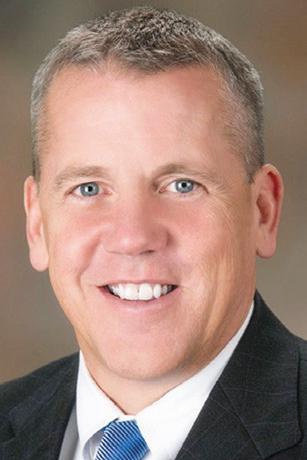
Chris Thomas
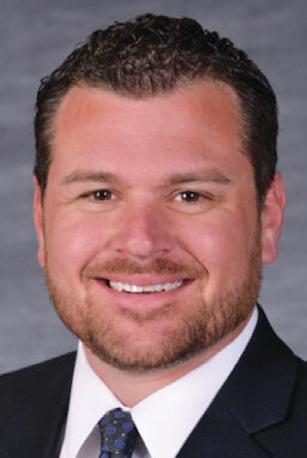
Jeff Mengenhausen
GJ Chamber
Continued from Page 4
The proposal is similar to legislation introduced last year that would remove the second vote currently required in many workplaces during the unionization process.
Under existing Colorado law, employees first vote on whether they want union representation. A second election is required before a union can negotiate an agreement requiring workers in the bargaining unit to pay union dues or fees. Carnahan said eliminating that second vote could affect Colorado’s competitiveness and could require some employees to pay union dues even if they do not support union representation.
“We’re still being really watchful on the collective bargaining bill,” she said.
Another proposal the chamber is monitoring involves workplace protections related to extreme temperatures. The revised bill would require employers to develop action plans addressing temperature conditions in the workplace, and it directs the Colorado Department of Labor and Employment to establish specific temperature thresholds.
Carnahan said business groups have raised concerns about how such requirements could be applied in industries that rely on outdoor work.
“There are a lot of questions around compliance and administrative burden,” she said, noting sectors such as agriculture and construction often face changing weather conditions.
Carnahan also pointed to a proposal addressing what lawmakers described as “captive consumer” pricing. The bill attempted to regulate pricing in situations where consumers have limited purchasing options, such as at stadiums or entertainment venues.
Carnahan said the chamber opposed the proposal, arguing it could allow government involvement in private pricing, and the consumers at entertainment venues are attending events and making purchases at them voluntarily.
The chamber opposed the proposal and worked with other business groups to submit a letter opposing the legislation. The bill ultimately failed in committee earlier this session.
In addition to those proposals, the chamber tracks other legislation through its online tracker, including current proposals involving workplace-safety regulations, economicdevelopment incentives, data centers, protections for agricultural products and measures that could allow local governments to tax vacant residential properties.
Policy discussions with agencies and business groups
During the trip, participants met with lawmakers, policy organizations and state agencies to discuss issues ranging from workforce development and regulatory impacts to state budgeting and economic competitiveness.
One panel discussion featured representatives from several state departments responsible for implementing legislation passed by the General Assembly, including the Department of
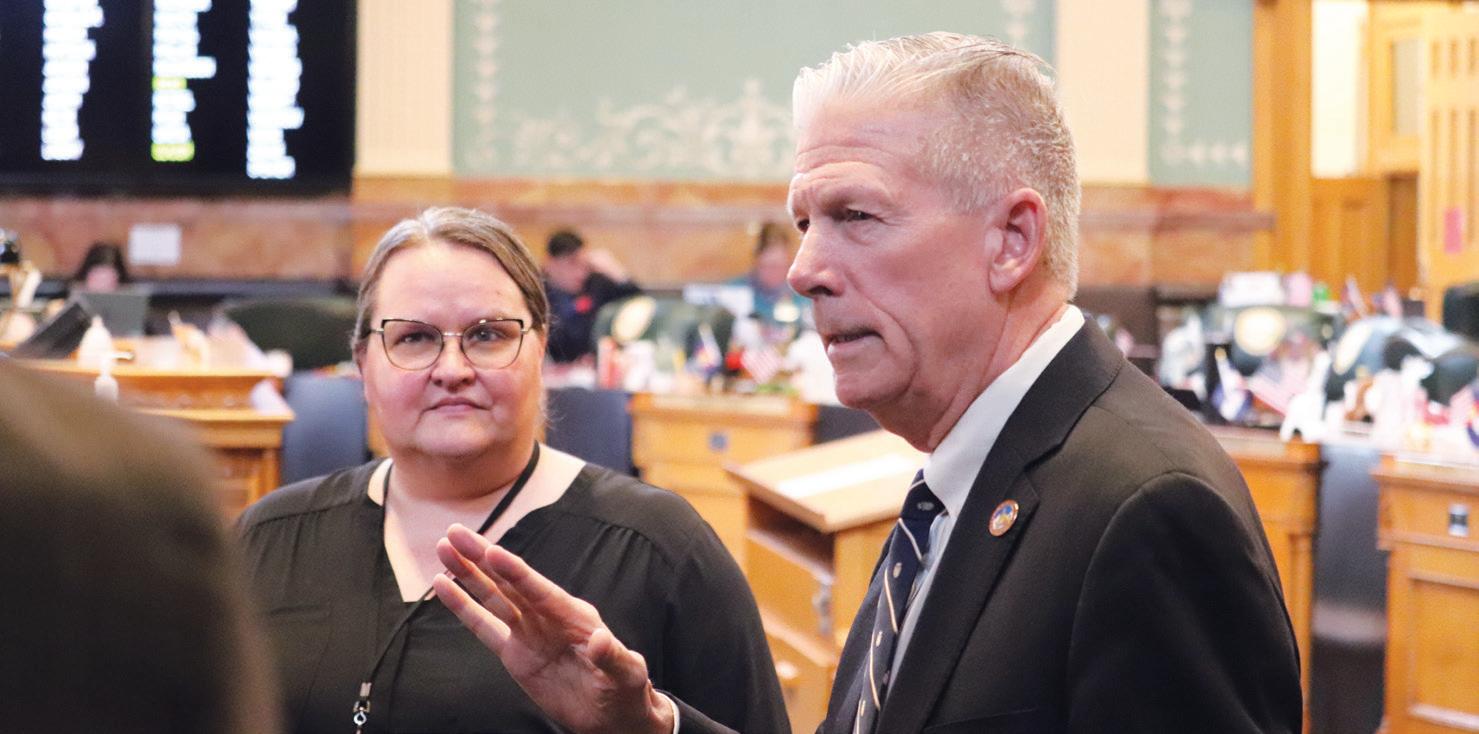
Colorado Rep. Rick Taggart speaks with members of the Grand Junction Area Chamber of Commerce delegation on the floor of the Colorado House of
sentatives during the chamber’s Legislative Days trip to Denver.
Regulatory Agencies, Department of Local Affairs and Department of Labor and Employment. The conversation focused on how legislation passed at the Capitol translates into regulations, agency rules and administrative requirements that businesses must follow.
Carnahan said the panel also discussed how agencies manage budget pressures while implementing new laws.
“Many of them mentioned they currently work off cash funds that are created from fees generated by the services that they provide,” Carnahan said. “But when more legislation passes that they are required to implement, that stretches capacity and budget, which means those funds often grow through increased fees.”
Those fees, she said, ultimately affect businesses across the state.
Participants also met with the Colorado Chamber of Commerce and the Common Sense Institute to discuss the state’s economic competitiveness and budget outlook. Carnahan said Colorado currently ranks as the sixth-most-regulated state and 38th in the nation for cost of doing business.
“There is a lot of pressure being put on Colorado to hold on to the businesses that we have here,” she said.
Repre-
Photo courtesy of the Grand Junction Area Chamber of Commerce.
The Business Times 609 North Ave., Suite 5 Grand Junction, CO 81501 (970) 424-5133
www.thebusinesstimes.com
The Business Times is published weekly and distributed throughout Grand Junction, Fruita and Palisade.
Advertising rates and deadlines are available upon request. Opinions expressed in this publication are those of the writers and don’t necessarily reflect the views of the publisher, editor or advertisers.
Letters to the editor at: publisher@thebusinesstimes.com
Submit stories or story ideas to: stories@thebusinesstimes.com
World-class competition BBQ coming to GJ
After a long hiatus, professional competitive barbecue is making a return to the Western Slope in a big way. The inaugural Rocky Mountain BBQ Classic will take over the Mesa County Fairgrounds on May 8-9, featuring a high-stakes state championship, Challenge of Champions Bull Riding Tour events, and a star-studded lineup of culinary legends.
Grand Junction has not had a professional competition barbecue event since Pork ‘n’ Hops, which last took place in September 2019, according to Brianna Toole, Rocky Mountain BBQ Classic’s sponsorship and marketing coordinator.
competing for $10,000 in prize money and a $2,500 grand champion title.
Adding to the heat is the Tailgate Challenge, a fast-paced showdown where 24 teams battle through creative BBQ rounds for a separate $10,000 top prize. This crowd-friendly event will be judged by the festival’s roster of celebrity female pitmasters.
The event will be emceed by Brian Duffy (Bar Rescue, BBQ Brawl) and features an elite roster of celebrity pitmasters who will showcase their craft on the demonstration stage, including:
• Kevin Bludso (James Beard Award winner).
Chef Brian Duffy, known for appearances on TV series “Bar Rescue” and competing in Season 4 of Food Network’s “BBQ Brawl,” will be the emcee at the Rocky Mountain BBQ Classic. Photo courtesy of Rocky Mountain BBQ Classic.
“We are so excited to bring competition barbecue back to Grand Junction,” event spokesperson Renee Perry said. “But this is more than just a cook-off, it’s a celebration of barbecue culture, world-class food and our community.”
Recognized as a state championship qualifier by the Kansas City Barbeque Society (KCBS), the Master BBQ Competition is the weekend’s main event, with $50,000 in total prize money being awarded, including a $10,000 cash prize for the grand champion. The grand champion from the KCBS pro division will be eligible for the American Royal World Series of Barbecue in Kansas City and the Jack Daniel’s World Championship Invitational in Lynchburg, Tenn.
The next generation of talent will face off in the Backyard BBQ Competition at Veterans Memorial Park by the fairgrounds,
• Lee Ann Whippen (BBQ Hall of Fame inductee).
• Stan Hays (CEO of Operation BBQ Relief).
• Thyron Mathews (Netflix’s BBQ Showdown winner).
• And more, including Mary Cressler, Andy Allo and Rasheed Philips.
“Having such high-powered, highly influential celebrity pitmasters take part in our competition here on the Western Slope is beyond our wildest dreams,” Perry said. “Their skills and experience elevate the entire event, and their openness to chatting and sharing their food with VIP ticket holders creates a truly unique experience in the valley.”
Beyond the pits, the weekend is packed with additional food trucks, live concerts and bull-riding events.
Tickets are on sale now, with general admission offering access to concerts and food trucks.
Exclusive VIP tickets offer the best way to experience the weekend as VIP guests receive:
• Exclusive meet-and-greets and food sampling with celebrity pitmasters.
• The “Live Fire” open-air live-fire cooking activation.
• Up-close VIP seating at live-fire and concert events.
• A Platinum option includes VIP seating at the bull-riding event, catering and drink tickets.
For more information or to purchase VIP tickets, visit rmbbqclassic.com.
Two initiated flights Airport, Service Alliance victory.
In a March air service partner for to the point succeed without Breeze commitment effectiveness between expanding the news
“This Alliance airlines; new routes Seaton, chair Junction “Breeze’s that our connectivity strategy to for our community.”
Breeze scheduled 6, 2024, Grand Junction Building route, Breeze 2025 with Today, Las Vegas and continue support from
Air Service Alliance touts success with sustainable Breeze Airways’ routes
Two years after Breeze Airways initiated flights at Grand Junction Regional Airport, the Grand Junction Regional Air Service Alliance celebrated a significant victory.
In a March 4 news release, the regional air service said Breeze is now a sustainable partner for the region, scaling its operations to the point where multiple routes now succeed without Alliance support.
Breeze Airways’ continued commitment to the region highlights the effectiveness of the collaborative approach between the alliance and the airport to expanding and strengthening air service, the news release said.
“This is exactly what the Air Service Alliance was created to do: partner with airlines; demonstrate demand; and turn new routes into lasting service,” said Jay Seaton, chair of the board for the Grand Junction Regional Air Service Alliance.
“Breeze’s success in Grand Junction shows that our region can support expanded connectivity and reinforces our long-term strategy to grow reliable air-service options for our community.”
Breeze launched its first-ever scheduled flights to Colorado on Feb. 6, 2024, with nonstop service between Grand Junction and Orange County, Calif. Building on the success of that inaugural route, Breeze expanded service in January 2025 with nonstop flights to Las Vegas.
Today, both the Orange County and Las Vegas routes have proven sustainable and continue to operate without additional support from the Alliance. Notably, Breeze
now offers five-times-weekly service between Grand Junction and Orange County, further strengthening connectivity to Southern California. Breeze’s service expanded travel options for residents, strengthened tourism to Western Colorado, and improved connectivity for business, education and outdoor recreation travelers, the news release said.
“Building sustainable air service is a long-term effort that requires strong partnerships and community support,” said Angela Padalecki, chief executive officer of Grand Junction Regional Airport.
“Breeze’s performance at GJT reinforces our region’s potential and helps position Grand Junction for future air-service opportunities.”
The Grand Junction Regional Air Service Alliance, which is funded in part by lodging-tax revenue, works with airline partners, the Grand Junction Regional Airport and the community to support existing air service and pursue opportunities that strengthen long-term connectivity for the Grand Valley. The alliance remains focused on building sustainable air service that supports economic growth, tourism,and quality of life for the entire region, the news release said.
Grand Junction Regional Airport offers 15 daily flights across four airlines to six nonstop destinations, and it provides one-stop connectivity to 300 unique destinations.
Search for and book flights directly at www.gjairport.com.
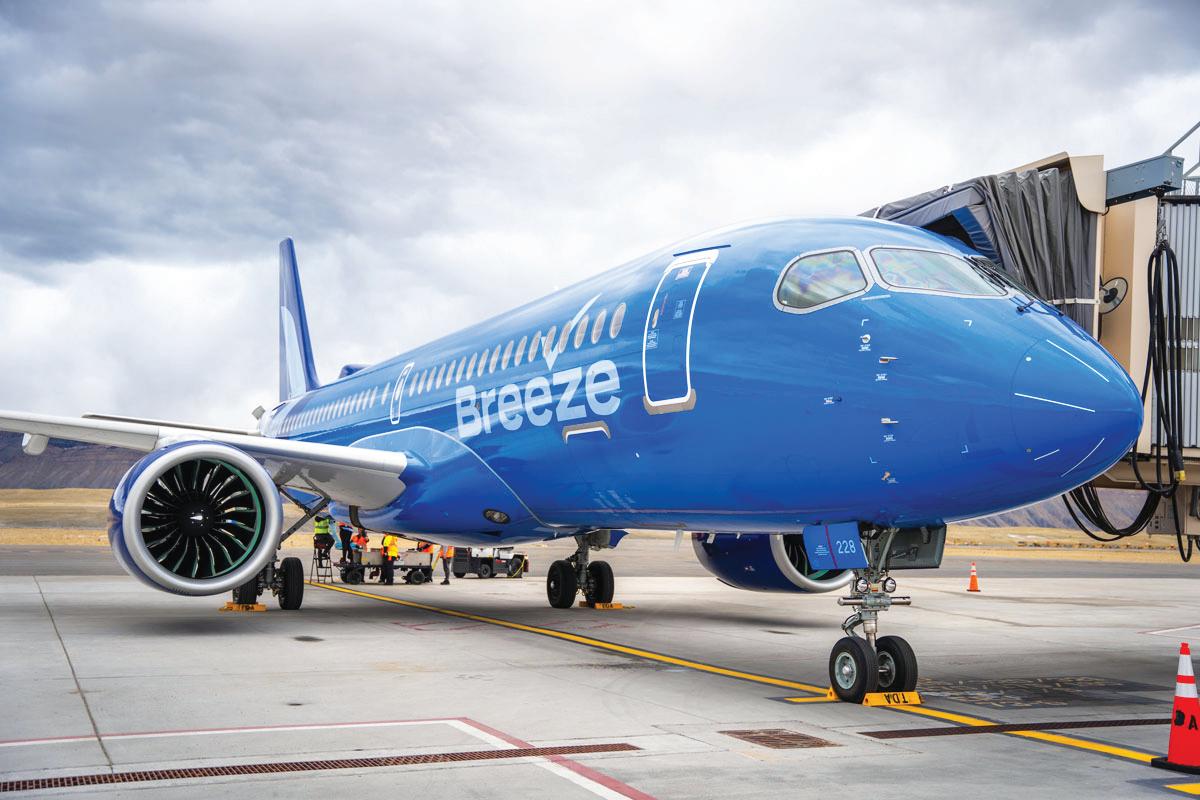
A Breeze Airways airbus at Grand Junction Regional Airport. Photo courtesy of Grand Junction Regional Airport.
GJ awards $400K to Housing Resources for workforce-homeownership project
Brandon Leuallen The Business Times
The Grand Junction City Council approved a $400,000 funding agreement with Housing Resources of Western Colorado to help acquire land for a workforce-homeownership development near St. Mary’s Hospital.
The resolution, which was approved on the council’s consent agenda without public comment, authorizes the city manager to execute an agreement supporting the acquisition of approximately three acres currently being subdivided from property at 631 26 1/2 Road. According to city staff, the project is expected to result in between 16 and 24 homes for sale to households earning at or below 120 percent of Area Median Income.
In a staff report prepared by Housing Manager Ashley Chambers for the March 4 City Council meeting, city staff wrote the infill site near St. Mary’s Hospital “supports efficient land use and aligns with the city’s housing production goals.”
The land is currently owned by American Lutheran Church and is in the process of being subdivided. The city’s funding is contingent on completion of the subdivision before the acquisition closes, according to the staff report.
Under the funding agreement, the city
will provide the $400,000 at closing to assist Housing Resources with purchasing the land. The nonprofit will then construct a minimum of 16 homes on the property.
The agreement says that as the homes are sold, the initial acquisition funding will be recaptured and converted into downpayment assistance loans for buyers. Those loans will be administered through Com Act Housing Corporation, a subsidiary of Housing Resources of Western Colorado, with the total assistance provided required to equal or exceed the original $400,000 award.
The agreement also establishes a 30year affordability covenant requiring the homes to be sold to households earning no more than 120 percent of area median income or in accordance with Proposition 123 housing guidelines or the city’s affordable-housing definitions.
The funding had already been approved as part of the city’s 2025 budget through Ordinance 5240, allocating onetime funds to support the acquisition.
According to the staff report, Housing Resources first sought funding for the project through the city’s American Rescue Plan Act process in 2023. At the time, the ARPA Housing Review Committee recommended that acquisition proposals be routed through a formalized city process.
District 51 Foundation awards $10,000 in grants
The District 51 Foundation awarded $10,000 in Professional Learning Grant Awards to train 48 School District 51 staff members.
Each year, the D51 Foundation uses proceeds from its White Iced Celebration and other fundraising efforts to fund specific needs in School District 51. Since 2018, the D51 Foundation has donated more than $180,000 to 638 D51 staff members for professional learning.
“The D51 Foundation believes that exceptional professional learning is essential to advancing the academic growth of every D51 student. It’s central to our mission,” said D51 Foundation Executive Director Angela Christensen. “Thanks to the generosity of our donors and supporters, we’re able to make these opportunities possible and continue investing in excellence across our schools.”
The latest recipients of professional learning grants are:
• Ellen Balzer, Independence Academy Charter School, $500, ArtSource Colorado Residency 2026.
• Julie Blevens, Fruita Monument High School, $1,190, 2026 CADA Convention (California Association of Directors of Activities).
• Kara Felton, Taylor Elementary, $400, Training with Grand Valley Behavior
Services and Consulting.
• Katelyn Collins, BTK-Special Education Department, $210, Colorado Society of School Psychologist Conference.
• Kim Smith, Emerson Building-D51 Math Specialist, $1,000, Teaching 6-12 Mathematics: A Practical Framework to Engage Students Who Struggle.
• Kimberly Popick, Palisade High School, $2,574, IB Global Conference, Denver 2026.
• Mandy Beilman, Central High School, $1,590, 2026 CADA Convention (California Association of Directors of Activities).
• Mira Hurshman, Fruita Middle School, $479, CEC 2026 Convention & Expo; Council for Exceptional Children.
• Nina Incorvaia, Orchard Avenue, West Middle School, $379.22, Pathological Demand Avoidance (PDA) & Education Training Bundle: Part 1 & 2.
• Ryan Crabtree, Fruita Monument High School, $325, Colorado Music Educators Association Clinic/Conference.
• Summer Jones, Emerson Building-D51 Science Specialist, $1,600, Professional Development Provider Institute.
For more information, visit www. d51foundation.org or call 970-254-5108 or 970-210-4120.
Centralization is not the same as access
In conversations about economic development, centralization is often presented as a sign of progress. If programs are consolidated, if funding streams are aligned, if decisionmaking is elevated to a single coordinating body, the assumption is that outcomes will improve. It looks orderly. It looks efficient. It looks fair.
Dalida Sassoon Bollig
But in rural regions, centralization and access aren’t interchangeable, and confusing the two can quietly undermine the very communities these systems are designed to support.
Access goes beyond the existence of a program or the announcement of funding. It depends on whether someone on the ground can realistically use it. A grant may technically be available statewide, yet remain out of reach for an entrepreneur who doesn’t have the time, grant-writing capacity or institutional familiarity to navigate a complex application process. A loan product may be well designed and still underutilized if business owners lack nearby coaching and technical support to help them prepare financials or determine the right capital structure for their stage of growth.
steady, hands-on work creates something that can’t be replicated quickly from afar, and that is trust.
In rural economies, trust functions as infrastructure. It shortens the path between opportunity and action. It increases participation in new initiatives. It reduces friction in partnerships because relationships exist before funding is introduced.
“Strong economies are built by keeping authority connected to the ground where businesses operate and communities live.”
- Dalida Sassoon Bollig
In rural economies, availability alone doesn’t create jobs. Growth happens when opportunity is usable in real-world conditions.
Over decades in Western Colorado, a pattern has emerged. Programs that gain traction here tend to be locally translated and locally trusted. They respond quickly to industry shifts, because they’re close to the industries themselves. They align with workforce realities, infrastructure constraints and capital cycles that define the region. Most importantly, they’re delivered by institutions that have built long-standing relationships with entrepreneurs and employers.
When those conditions are present, participation increases and momentum builds. Capital moves more efficiently, because risk is better understood. Employers engage because they recognize their own needs reflected in workforce design. Entrepreneurs take chances because they feel supported rather than processed.
Rural regions operate differently from metropolitan corridors. Population density changes how services are delivered. Geographic distance alters how partnerships form. Industry concentration, transportation networks and broadband access all shape how economic development tools function in practice. A model that works effectively along the Front Range doesn’t always translate seamlessly to communities separated by miles, scale and market structure.
None of this suggests that statewide coordination lacks value. Strong state partnerships are essential to long-term growth. Shared strategy can prevent duplication. Pooled resources can amplify impact. Alignment across regions can create clarity. The real question is whether coordination strengthens local capacity or gradually replaces it.
Local economic-development organizations do more than administer programs. They interpret policy in context and translate it into practical next steps for business owners. They provide coaching and technical assistance that help entrepreneurs refine strategy, strengthen financials, navigate regulatory requirements and prepare for capital. They connect funding mechanisms to real businesses in ways that reflect actual readiness and risk. They align workforce training with genuine hiring demand and build crosssector partnerships that reflect the specific character of their communities. Over time, this
Take workforce development. A statewide initiative may identify priority sectors, but alignment occurs locally when employers, educators and workforce leaders sit together to design programs around real job openings. Without that grounding, training pipelines can exist without producing sustained employment. The same dynamic appears in capital access. Funding may be available, but utilization often depends on nearby coaching or technical support that helps entrepreneurs navigate underwriting requirements and assess risk with confidence.
Large systems are often built for consistency, while local institutions are positioned to make that consistency workable. When the two operate in alignment, rural economies benefit. When local capacity is sidelined in favor of consolidation alone, implementation becomes more complicated and engagement slows. Participation declines when navigating the system requires more effort than building the business itself.
Western Colorado’s economic history reinforces this lesson. Resilience doesn’t emerge from crisis response alone. It grows from long-term investment in diversified industries, entrepreneurial ecosystems and community-anchored institutions that remain present long after a specific funding cycle ends. Regions that cultivate these local foundations are better positioned to adapt when industries shift or markets contract.
Strong economies are built by keeping authority connected to the ground where businesses operate and communities live.
The future of rural economic growth will depend less on how efficiently systems are consolidated and more on how intentionally local institutions are strengthened to administer, translate and custom-fit opportunity into action. Statewide coordination and local capacity don’t have to compete; when thoughtfully aligned, they reinforce one another. Recognizing that proximity is an asset rather than a liability is part of that alignment.
Ultimately, access depends on whether a business owner can use a policy or program to hire, expand or innovate.
In rural Colorado, local capacity rests on long-standing relationships between community institutions and the entrepreneurs they support. Those relationships create the conditions for ideas to move faster, capital to deploy with confidence and partnerships to endure.
True economic development isn’t measured by how neatly a program fits onto a spreadsheet in a distant capital; it’s measured by how many local doors stay open and how many regional dreams take root. Coordination across the state is a powerful tool, but it must be used to fuel local engines, not weaken or replace them.
When we prioritize local capacity over centralized control, we create long-lasting outcomes, and we build a resilient Colorado that can translate any challenge into its own version of success. F
Dalida Sassoon Bollig is chief executive officer of the Business Incubator Center, 2591 Legacy Way, Grand Junction.
Not yet convinced we don’t elect the best and brightest?
I mean, what else does Congress, the Colorado Legislature or our local politicians have to do to convince you?
And for those thinking this is all about democrats (hint, it isn’t, it just seems to always apply to them) I’ve got some public vaping, shooting dog stories and sex coverups for you that you seem to be ignoring.
Well, how about this? It’s beginning to look like it’s all an act. Both sides with their constant Friar’s Club routines on display for the world to see. Not that the world should care either, because this is solely for the benefit of the voting audience of the United States. Then again, given how lax our voting has become, maybe it is for the world – that is, if the voters vote the right way. The irony? Either way one votes, no matter your country of citizenship, one way is always the wrong way.
Yeah, this column is more sarcastic opining than meat and potatoes. There’s a reason for that. Washington, D.C., Denver and, more and more, Grand Junction don’t have meat and potatoes on the menu. Just a couple of small appetizers that wouldn’t sate a cat’s appetite.
I was wondering how I could get my latest favorite cat, Niko, into this.
I’m honestly at the point where I think the best thing we can do with government on most levels is shut it all down, split it up in court and let the economy absorb the loss (which it is magical at doing, even with all the crap the government creates and wastes over the centuries) and start from scratch after removing all laws created after the first pages of parchment in 1787.
And before you get all, “So you want slavery to be legal,” on me, just remember, the first laws about slavery were created to get folks to join the union. So yeah, they were created to make slavery legal, by folks we elected. Worse, they were confirmed legal by bureaucrats who were appointed and approved by folks we elected for nearly a century.
Yes, I just called the people who’ve served on the Supreme Court of the United States bureaucrats. And for us folks with a lick of common sense about the inalienable rights of free peoples, they also fall under my “not the best and brightest” category
Or do you agree with the court’s myriad rulings on slavery, Jim Crow, Roe v. Wade, Kelo v. Connecticut, Brown v. the Board of Education, Citizens United, all the unconstitutional gun laws, or the original oldie but goodie in screwing the citizens of the United States, Marbury v. Madison?
I listed those for a reason. And the reason is you can’t agree on all of them. And that’s because they are all political decisions. So yeah, the Supremes have been relegated to bureaucrat status in my humble (although you may not find it so, which you have the right to have that opinion) opinion. Because in the halls of government, under which the court sits, it’s all political, all the time. And today, most of the politics end up in court.
I mean, how long before someone sues President Trump over this hubbub with Iran? It’s coming. It has to. They’ve sued him or taken him to court on literally everything he’s done in his second term. And his first term. And Biden’s term in between. And it’s all politics. And yes, I understand fully that’s not what they say.
That’s because the one area of life we do elect the best and brightest is in electing sociopaths, gas-lighters and political-hack partisans. Ever watch a congressional “hearing?” On anything? These clown shows should be held under a big top, not in a
Support Local Support Business
SCIF. Although, given the idiocy intended to destroy a nation, maybe a SCIF is better since voters are easily manipulated. The problem we have is our clown cars hold as many as 435 nowadays.
In short – and I guess to finally make a point – what really is it that’s produced for the people in these hallowed halls of power that benefits the people? I ask that because of this simple fact: Other than some criminal laws, every law passed hurts some at the expense of others. They all violate rights. They all discriminate. Every action a politician takes does this while usually being the direct opposite of an action previously taken by the same folks.
How else can you have a Congress on soapboxes voting to release the Epstein files one week and then voting to cover up its own sexual violations just months later? How can you have a legislature in Denver passing between 600 and 1,000 laws every session? How can you have a city councilperson telling you we’re doing this to help businesses while saying we should boycott businesses who don’t agree with him?
I could go on and on, but this column would become even more vague, because the examples are legion (and I might be saying that in the Biblical sense), and I can hear the complaints already. But that’s not my purpose today—well, referencing the Bible in relation to all of this is always the point. No, my point is to make someone think about it. All of it.
We’ve reached the point where we really don’t have public servants anymore. Certainly not at the state and federal level. And it’s happening even more and more locally, as those jobs are only for the select few at the approval of the local parties –even the non-affiliated positions.
So how can government be for the people? You tell me. Because I can’t see much chance anymore. It sure can’t solve any problems. And worse, everything it does is about votes, power or getting rich at too many levels.
But back to my cat. He loves to climb and knock things over. Occasionally destroy things. But he lives here by the grace of Craig and by my choice. I can tolerate his behavior. It’s what cats do. I choose to freely live with that.
But why are we tolerating what politicians do? Why are we choosing the ones we choose? I’d hate to think it’s because we have no other choice. Because in time, you won’t live freely with any of them.
Oh, and for giggles – and responses – someone needed to take out Iran. The last few guys were afraid. And yes, democrats, your losers also ran on doing what Trump is finally doing. Another reason when we have a choice we don’t elect you. At least on the topic of strength, we knew better. Fact is, you only get elected when someone wants to force their ways onto free people (like California or Colorado). And republicans seem to get elected because they aren’t democrats. Only exception, Biden. Because he wasn’t Trump.
Then again, Trump’s not a republican in the sense republicans want us to think what republicans are. Same on the democrats. Maybe it’s time the voters realized that on both ends of the political spectrum. At least Trump’s his own guy.
Just thoughts to think on.
In Truth and freedom. Heavy on freedom this time.
F
Craig Hall is owner and publisher of The Business Times. Reach him at 424-5133 or publisher@thebusinesstimes.com
Craig Hall
n Alpine Bank Wealth Management hires Sharrow as senior fiduciary officer
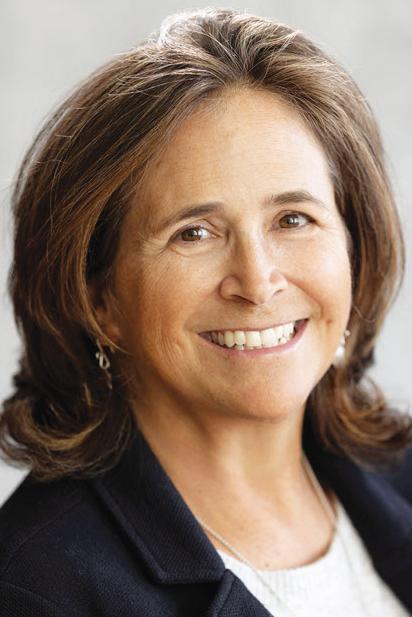
Alpine Bank Wealth Management announced Lorni Sharrow joined the organization as vice president and senior fiduciary officer. Sharrow brings nearly three decades of experience in trust and estate law, fiduciary administration, mediation and nonprofit leadership.
“Lorni brings a vital combination of technical expertise and a thoughtful, practical approach to fiduciary service,” Alpine Bank Wealth Management President Darla Daniel said. “Her background aligns well with our commitment to serving clients across generations.”
In her role, Sharrow works closely with Alpine Bank Wealth Management colleagues on trust and estate administration and fiduciary matters, with a focus on carrying out trust intent and balancing beneficiary needs with applicable trust and tax law
A fifth-generation Coloradan, Sharrow said, “I’m excited to join Alpine Bank Wealth Management and contribute to a team known for its client-focused approach. I look forward to supporting families and organizations as they steward what matters most to them.”
Before joining ABWM, Sharrow practiced as a trust and estate attorney, served as a mediator and held leadership roles at the University of Denver. Sharrow earned her Juris Doctor (J.D.) and Master of Laws (LL.M.) in Taxation from the University of Denver Sturm College of Law.
n MWCN brings back hormone health workshop March 10
The Mesa County Women’s Network welcomes back Karen Floyd of Western Colorado Compounding Pharmacy for an informative workshop on hormone health on March 10, 6-8 p.m. at Abstract & Title Company, The Summit Center, 2464 Patterson Road. This session will explore the critical role hormones play in the body and how low or imbalanced levels can contribute to a range of symptoms. Attendees will gain clear, evidence-based insight into today’s often confusing conversations around hormone-replacement therapy. The workshop will also introduce bioidentical hormones and discuss their potential benefits for symptom relief, overall wellness and long-term health.
The workshop is free for Mesa County Women’s Network members and $35 for nonmembers. Community members are encouraged to attend and bring questions for an open, educational discussion. For more information, go online to www.mcwn.us.
n Hilltop’s Brain Injury Services hosts 5th Annual Car Show
Hilltop’s Brain Injury Services team is hosting its 5th Annual Car Show on March 21 from 1 to 4 p.m. at 1405 Wellington Ave. This year’s theme, “Guardians of the Roadway,” celebrates safety, community and the shared responsibility we all have to protect one another on the road.
Car enthusiasts from across the region are invited to showcase their vehicles and compete for trophies. Registration of the show cars and donations go toward Hilltop’s Brain Injury Services programs, which provide resources and support to individuals and families impacted by brain injury.
The event will feature: classic, custom and specialty vehicles; trophies awarded to car-show winners; music throughout the event; a raffle with exciting prizes; food and drinks available by donation; a balloon artist for kids; and Matchbox cars and familyfriendly activities.
Participants will park in the west and east parking lots, and guests are asked to park across the street in the dirt parking lot.
n Applications accepted through March 31 for Credit Union of Colorado scholarships
The application for Credit Union of Colorado Foundation college scholarships opened March 1 for students from around the state. The foundation will provide a $5,000 scholarship to 10 students and a $10,000 scholarship to five students for a total of $100,000 in tuition assistance for the 2026-27 school year.
Credit Union of Colorado, which has a branch in Grand Junction at 202 Main St., will accept college scholarship applications through March 31. Scholarship eligibility is extended to students who are Colorado residents enrolled in, or scheduled to enter, an accredited community college, college or four-year university as an undergraduate taking at least 12 credit hours per semester. Applicants must maintain a minimum 3.5 gradepoint average on a 4.0 scale in high school or during the previous 12 months as a college undergraduate. Students must submit an essay that explains their financial need for this scholarship assistance.
Scholarship renewals are not automatic; student must reapply each year. For more information and to access this year’s application, visit the 2026/2027 Scholarship Application on the Credit Union of Colorado Foundation website: www.cuofcofoundation. org/scholarship-application.
n Honeybee Festival takes place April 11 at new site
The annual Colorado Honeybee Festival will take place April 11, 10 a.m. to 4 p.m., at Cross Orchards Historic Site, 3073 F Road in Grand Junction.
Formerly known as the Palisade International Honeybee Festival, the free event has educated the public on the importance of honeybees for the past 17 years. The governing board voted unanimously in 2025 to move, because the festival outgrew its original downtown Palisade venue. Additionally, the festival’s mission to educate the public about honeybees and other pollinators aligns perfectly with Cross Orchards’ agricultural heritage and educational programming.
“Our heart and base are still in Palisade,” event President Laurie Priddy said. “In fact, our 501(c)3 tax exempt status is unchanged. We will simply be doing business as the Colorado Honeybee Festival.”
By expanding its scope across Colorado, the festival can involve other organizations in spreading the educational message. While other honeybee festivals exist, they are mostly geared to beekeepers, beekeeping and the business side of operations, according to a news release from Colorado Honeybee Festival organizers.
“We will continue to focus on what individuals can do to help protect bees and other pollinators, emphasizing how vital they are to our agricultural economy, both locally and internationally,” Festival Coordinator Michelle Gossage said.
The festival will run round-trip shuttles from Grande River Vineyards in Palisade and Central High School in Grand Junction to Cross Orchards Historic Site for the convenience of those attending. Onsite parking will also be available at Cross Orchards.
The event will provide live music, food vendors, educational speakers, a bee-costume contest, a spelling bee, and a large variety of vendor booths.
“Success necessarily breeds change,” Gossage said, “so we urge all our patrons to come with us to Cross Orchards Historic Site. Our mission has not changed, and we promise the same wholesome, family-oriented, free festival that visitors have known and loved so well.”
Business Bite
The Grand Junction Area Chamber of Commerce will be at the new Panda Express restaurant in Clifton, 3226 I-70 Business, for a ribbon cutting on March 13.
Lorni Sharrow
Karen Floyd
awarded to food and and familyasked to park
Union of scholarships provide a a total of Main St., eligibility is enter, an undergraduate taking 3.5 gradea college need for this
For more Scholarship www.cuofcofoundation.
to 4 p.m., event has governing original the public agricultural said. “In business as the organizations they are according and other locally and Palisade Site for the Orchards. bee-costume