Contemplating collaboration to address local homelessness
Brandon Leuallen The Business Times
During a joint meeting of the Grand Junction City Council and Mesa County Commission on Feb 3, county officials laid out what they describe as a coordinated pipeline designed to move homeless and low-income residents from crisis to long-term stability, even as both governments navigate constrained budgets.
The workshop came at a pivotal moment for local homelessness services. HomewardBound of the Grand Valley closed its North Avenue emergency shelter on Feb. 28, with final intake on Feb. 27. HomewardBound will now focus operations at its Pathways Family Shelter at 562 29 Road, which has capacity for about 110 people under normal operations and more during emergencies.
In the months leading up to the closure, a combination of private donations and public funding kept the North Avenue shelter operating through the winter. In late 2025, HomewardBound raised approximately $150,000 from community donors to sustain operations through the end of the year. In January, the nonprofit raised an additional $60,000 to keep the shelter open through February.
See story Page 4
Waiting for West Winds
West Winds Gallery of Fine Art co-owner Cindy Duff stands in the front area of the store, which currently features some of her paintings. Duff’s art is on display now, but the gallery’s various artists will have opportunities to be featured there. Photo by
Tim Harty.
Meeting a need in GJ’s art scene
In addition to fine art, West Winds Gallery will provide wine-tasting and custom framing
Tim Harty The Business Times
Quicker than a dab with a paintbrush, Cindy Duff and Greg Tapp had proof there’s a need for their new business, West Winds Gallery of Fine Art, in downtown Grand Junction.
The gallery at 504 Main St., formerly home to Main Street Cafe, hadn’t opened its doors to the public, and it already had artists on a waiting list to show their work.
“There are a lot of terrific artists in this valley,” Duff said. “I’m afraid once we open the door, I’m gonna be blasted with artists wanting to be in here.”
Actually they aren’t waiting until then. Duff made that comment on Feb. 19, then added, “We already had one this morning.”
The official opening date is March 3, tied to the full moon, and the grand opening will be March 6, tied to downtown’s First Friday art events.
What customers are going to see are the works of a variety of local artists, be it painting, woodworking, photography.
There will be a wine-tasting area toward the back of the gallery, where Palisade winemaker Sauvage Spectrum will showcase its wines. Duff thinks people will appreciate that element.
“I added the wine tasting, because at artists’ receptions, it just always is a nice thing to have,” she said. “We feel that this is just going to be a nice place to visit, have a glass of wine, look at art, relax a little bit at the end of the day.”
But she quickly added, “We’re not a bar.”
The gallery also will offer custom framing through Desert Canyon Custom Framing, which will be receiving and delivering work, and Duff said the owner probably will be in the gallery one day per week.
Duff said there’s going to be a lot going on, and she’s thrilled to provide it.
“We want people to come in and just enjoy and breathe in, take a break from life. Breathe in the art, enjoy,” she said.
West Winds Gallery marks a return to owning a gallery for Duff, who said she owned and operated Prairie Winds Art Center in Grand Island, Neb., for 21 years.
But in the course of her travels as an artist, she encountered Grand Junction a number of times, and there was something about it, she said, that felt good. Good enough to move to the Grand Valley in 2006.
That was the end of gallery owning for the time being, though. She returned to operating a studio in her home and displaying her works in others’ galleries in the Grand Valley, such as Main Street
Metalsmith Tish Collins, left, and West Winds Gallery of Fine Art co-owner Cindy Duff converse while standing at the display cases where Collins’ jewelry will be featured. Collins owns fer•es, a closed studio in Palisade where she makes her jewelry. Collins said she displays her art at high-end galleries and didn’t have a place to do that in Grand Junction until West Winds Gallery arrived. Photo by Tim Harty.
Gallery and Blue Pig Gallery.
The itch to own a gallery resurfaced after the COVID pandemic, and it didn’t matter that she already was traditional retirement age. Then, Main Street Gallery closed, and Duff committed to taking the ownership plunge.
Of course, she needed to find a place to do that, and she wanted to own the building where she set up shop. Duff said she looked for three to four years, and she eyed the former Main Street Cafe location, but someone else was already there, looking to put in a restaurant. But that didn’t happen.
“And then the building went up for sale,” Duff said, “and we just snatched it up, because it was right on Main Street. Finding property on Main Street is not easy. There’s not that much of it.
“And so we purchased the building, totally gutted everything, new heating system, everything. Merritt Construction helped us put the place back together. And we are so pleased. It’s really coming together.”
See ART GALLERY on page 5
MORE ABOUT WEST WINDS GALLERY OF FINE ART
No such thing as retirement for artists
As husband and wife co-owners of West Winds Gallery, 504 Main St. in Grand Junction, Cindy Duff and Greg Tapp decided they aren’t going the retirement route despite being septuagenarians. Cindy is 71 years old, and Greg is 70.
“Artists, we don’t retire,” Duff said. “We do it until we die.”
She said she told Tapp about that when they met, which was 19 years ago, shortly after Duff arrived in Grand Junction. If they were going to be together, he needed to be OK with that, she said, “because I’m doing it until I die.”
She likes the wind – and the moon
Cindy Duff loves the full moon and the wind, the latter evidenced in the name of her business now and the one she owned and operated in Grand Island, Neb., for 21 years: Prairie Winds Art Center.
Joining Duff in her love of the full
moon is Tapp.
“My husband and I howl at the moon when it’s full,” Duff said.
She said West Winds Gallery will do the First Friday art events, but the problem with First Friday is “a lot of people have receptions on First Friday, and it’s hard for people to get around to all the galleries. So, we decided we’re gonna do it different. We’ll be open first Friday, but we’re also gonna do full moon.”
Duff said she learned Native Americans gave each full moon a name and a certain description.
“And so we’re kind of tailoring our shows to those descriptions,” she said. “We’ll have Celestial Blush in April and New Growth for May.
“And we’ll have certain artists that will be featured up front (in the gallery) for these shows. ... It’s a wonderful time for us to feature. We have areas for each artist, but when we pull them up front, they can bring more of a body of work in. So we’ll do that throughout the year.”
City, county to work together as shelter space shrinks
Joint city-county workshop details coordinated-service pipeline as both governments face tight budgets
Continued from Page 1
During that period, the City of Grand Junction released approximately $185,000 in previously allocated shelter funds, and Mesa County contributed $30,000, bringing total public support to roughly $215,000 as HomewardBound consolidated services and prepared for the transition.
The closure follows months of financial strain, as the nonprofit reported funding shortfalls tied to reduced federal and state support and declining private-foundation contributions. Those financial pressures have added urgency to conversations between the city and county about how limited public dollars are allocated and how services are coordinated.
County Commissioner Bobbie Daniel emphasized the county is structured to administer services funded through federal and state programs that cities do not receive directly through the Department of Human Services.
Mesa County Department of Human Services Executive Director Jill Calvert gave the services-pipeline presentation and said, “Our work is to provide safety, stability and meaningful employment to those people in our community.”
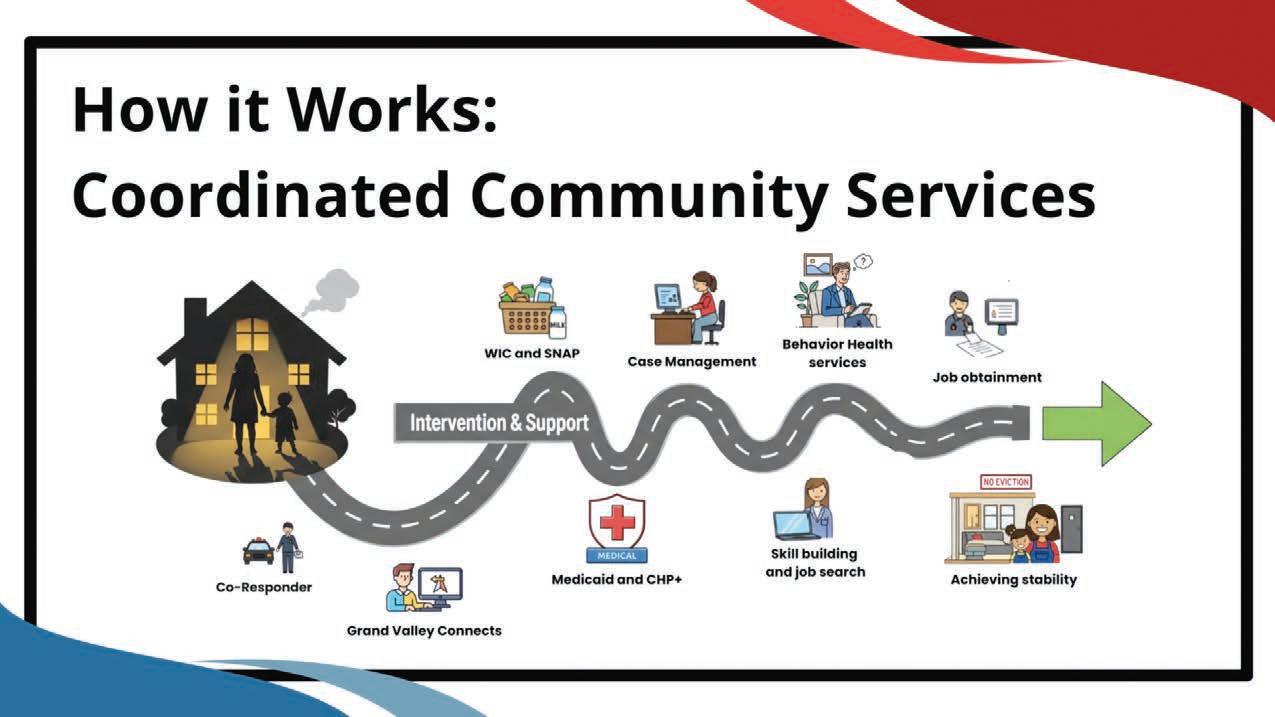
This graphic was a slide from a presentation during the joint workshop between the Grand Junction City Council and Mesa County Commission in early February. It outlines Mesa County’s coordinated-service pipeline, showing how residents move from crisis response to employment and long-term stability.
Where the pipeline starts: Crisis and contact
Homelessness is not a static number. Some individuals are moving out of homelessness, while others have more recently fallen into it. Still others have been homeless for extended periods.
There are multiple entry points into the county’s service pipeline. Calvert described “crisis” as one of the primary ways individuals enter the system. That crisis may begin with law enforcement, a behavioral health co-responder team, a hospital visit, a domestic violence call or contact with a shelter.
Mesa County Public Health and Human Services operate co-response models alongside law enforcement, coordinating with local nonprofits, and they are partnering with the City of Grand Junction’s community paramedic program.
Under that pilot, a Grand Valley Connects resource navigator works alongside paramedics to address housing, benefit and behavioral-health needs for individuals who frequently use emergency services.
Grand Valley Connects serves as a primary gateway into the system. The county’s resource navigation program has no income barrier and averages roughly 500 client contacts per month. From there, individuals may be referred to benefit programs, housing lists, behavioral health services and workforce support.
Stabilization: Address, ID and benefits
Calvert said for individuals experiencing homelessness, stabilization often begins with basic documentation and benefits.
Calvert explained that unhoused residents may use a Department of Human Services address to apply for public-assistance programs, because most benefits require a mailing address. The department also provides fee waivers to help eligible individuals obtain a Colorado ID.
Mesa County administers food, medical and cash assistance programs, including:
• Supplemental Nutrition Assistance Program.
• Medicaid, also known as Health First Colorado, and Child Health Plan Plus.
• Temporary Assistance for Needy Families, also known as Colorado Works.
• Old Age Pension.
• Aid to the Needy Disabled.
• Child-support services.
According to figures presented at the workshop, the county’s economic-assistance division brings in more than $455 million annually in medical benefits for Mesa County residents and more than $47 million in food and cash benefits that flow into the local economy. More than 42,000 individuals in the county receive at least one public benefit.
The presentation emphasized these programs are state and federally mandated, regulated and administered at the county level by certified caseworkers. Much of the funding flows from federal and state sources rather than local general-fund revenue.
Calvert acknowledged some programs, including WIC, may be underutilized, meaning not all available federal benefits are accessed locally, and if some of the money goes unused, then it is returned. She said participation levels have fluctuated, and
enrollment gaps are smaller than they have been in the past.
Behavioral health, prevention and coordination
Stabilization, officials said, also requires addressing behavioral-health needs.
Mesa County created a behavioral health division in 2025 and is working to standardize protocols across co-response teams and school-based interventions. Officials acknowledged behavioral-health capacity remains a major challenge, but described ongoing efforts to reduce duplication and improve coordination among providers, including the Mesa County Collaborative for the Unhoused.
Calvert said the relationship with the coalition is collaborative, and the goal is to streamline services rather than duplicate them. She emphasized the importance of identifying where programs intersect and ensuring community members do not have to navigate multiple systems unnecessarily.
The Mesa County Collaborative for the Unhoused includes a broad cross section of local government, nonprofit, health care and housing organizations. According to its publicly listed partner board, participating entities include the Grand Junction Housing Authority, Hilltop Community Resources, the Grand Junction Chamber of Commerce, the City of Grand Junction Housing Division, Mesa County Public Health, Grand Valley Catholic Outreach, Intermountain Health, the Grand Valley Coalition for the Homeless, Health Solutions West, United Way of Mesa County, Contexture, Mutual Aid Partners and HomewardBound of the Grand Valley.
The coalition also operates work groups and engages additional service providers, first responders and individuals with lived experience of homelessness as part of its broader collaborative structure.
The county emphasized it is not the sole provider of services that can help the unhoused. Beyond the county-administered pipeline and the collaborative, numerous other local organizations work directly with individuals experiencing homelessness or housing instability.
These include: The Joseph Center and its related transitional-housing programs; The Latimer House, which provides shelter and support for survivors of domestic violence; The Pregnancy Center; HOPE of the Grand Valley; The Salvation Army of Grand Junction; and MarillacHealth. This is not a complete list, but it reflects the breadth of faith-based, nonprofit, medical and service organizations operating alongside government programs in Mesa County.
Child Welfare and Youth Transition Services
The county also operates child-welfare and youth-transition services. In 2025, the child-abuse hotline received more than 4,500 allegations. About 28 percent met criteria for assessment, and 5.3 percent of children who were assessed required out-of-home placement. Nearly half of those children were placed with kinship providers.
For youth aging out of foster care or the juvenile-justice system, emancipation and transition services provide housing assistance, education support and life-skills training, part of what the presentation described as long-term prevention.
See HOMELESS on Page 10
Continued Duff Art Director associates Shepherd
“If someone explain everything around, tell Green fine-arts gallery
“We the valley displayed to bring this Tish of fer•es, one of the her jewelry Gallery, which of the high-end Collins needed in are many been forced
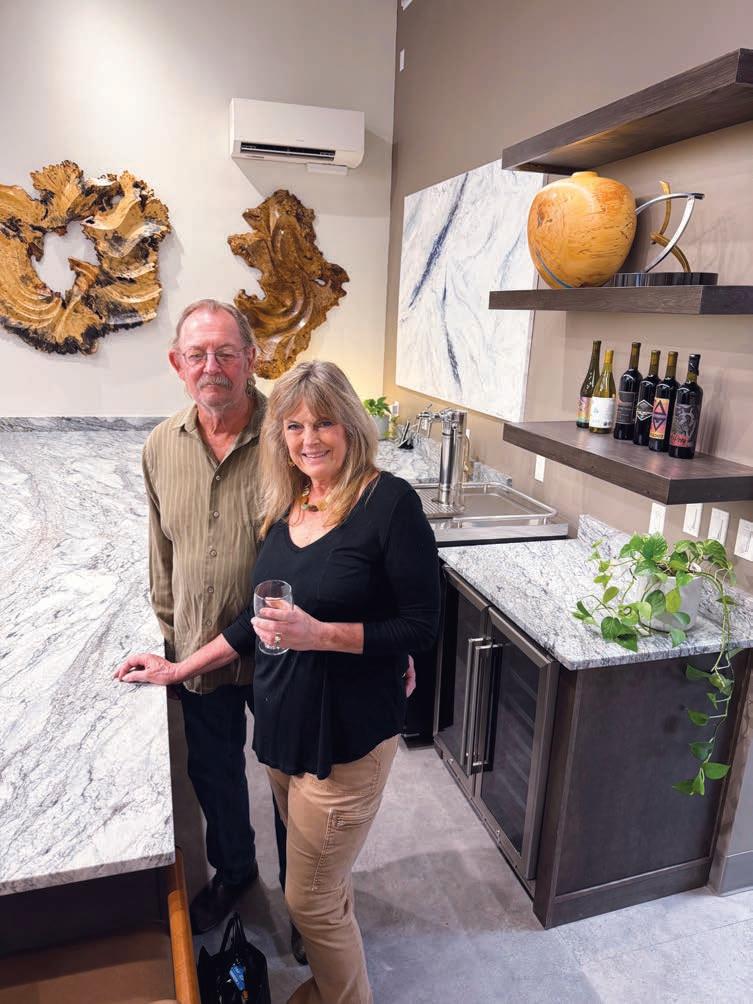
ABOVE — Greg Tapp, left, and Cindy Duff, the husband-and-wife co-owners of West Winds Gallery of Fine Art, stand in the gallery’s wine-tasting area, where Palisade winemaker Sauvage Spectrum will operate.
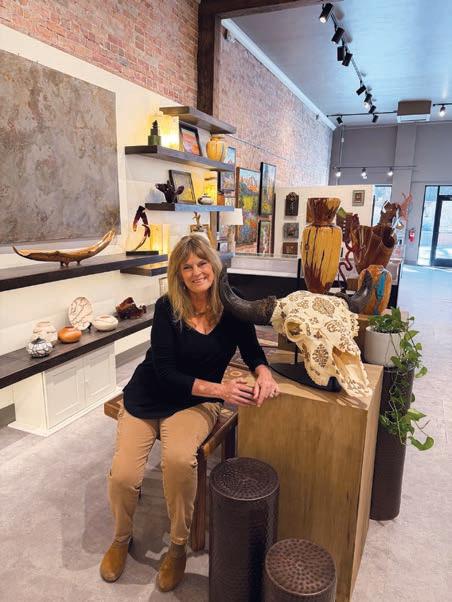
RIGHT — Duff sits next to a bison skull in an area of the gallery that currently features woodworking. Photos by Tim Harty.
Continued from Page 2
Duff hired a staff of three employees: Art Director Eva Green; and sales associates Diane Colburn and Naomi Shepherd Smith.
“If someone comes in, they’re gonna explain everything to them, show them around, tell the stories,” Duff said.
Green thinks local artists needed a fine-arts gallery like West Winds.
“We have such amazing talent in the valley that hasn’t had a chance to be displayed like this,” she said. “We’re going to bring this scene here.”
Tish Collins, a metalsmith and owner of fer•es, seconds that sentiment. She was one of the lucky ones who gets to display her jewelry from the outset at West Winds Gallery, which she said meets the standards of the high-end galleries she seeks.
Collins said West Winds Gallery is needed in Grand Junction, because “there are many more like me. Over the years I’ve been forced to go outside the area to show
Collins was working on her displays in the gallery on Feb. 26 and said co-op galleries aren’t for her. She called herself an introvert who works at home and needs places to display her art. She needs the fine-art approach of West Winds Gallery and someone else to do the selling of her handiwork.
“And since COVID, that is harder and harder to find. It’s harder to find galleries that are full-service and where we don’t work there,” Collins said. “Those are things that are important to me, as I am not that. I’m good at making art, not selling it, so I appreciate a good gallery.”
Duff is glad to hear it, and she referred to Collins’ resistance to co-ops when she said, “The people I show are not going to show in a co-op.”
That meant they weren’t showing in Grand Junction, as Duff said, “A lot of them don’t even exhibit in town, because they needed a place like this.”
Preoccupied by precious-metal prices
Silver and gold soared after Hedge Company’s new owner took over in late summer
Tim Harty The Business Times
If David Ledoux thought he’d ease into his new business venture in Grand Junction, gold and silver prices immediately told him that was wishful thinking.
Ledoux bought precious-metals brokerage Hedge Company, 225 N. Fifth St., Suite 514, from Teresa Mays on Aug. 29, then watched the price of silver shoot up like it never has before. And gold decided to climb into rarefied air, too.
And Ledoux has been busy ever since.
“In six months, silver went from $36 to $120 an ounce in that time. It’s been crazy,” Ledoux said. “Crazy good, obviously, for me, but still crazy nonetheless.
“I’ve never seen anything like it. I think the last time something like that happened was in the late ’70s when the Hunt brothers tried to, well, successfully corner the silver market, and silver went from $10 to $50.
“But this is a different type of situation where you have industrial uses for silver that are outpacing what we’re taking out of the ground. And so, we’ve seen that drastic increase in price in silver.”
Ledoux said gold went from $3,300 an ounce when he started at Hedge Company to $5,500 in January. And as of Feb. 23, when Ledoux spoke to The Business Times, gold was at $5,200, “and silver’s about $88, still almost three times what it was when I took over.”
That made Ledoux a busy boy, and his wife, Karen, who works in the office, has been a busy girl.
In more normal times Ledoux would be helping customers buy and sell silver and gold, but since he arrived in Grand Junction, they’ve wanted to sell, sell, sell.
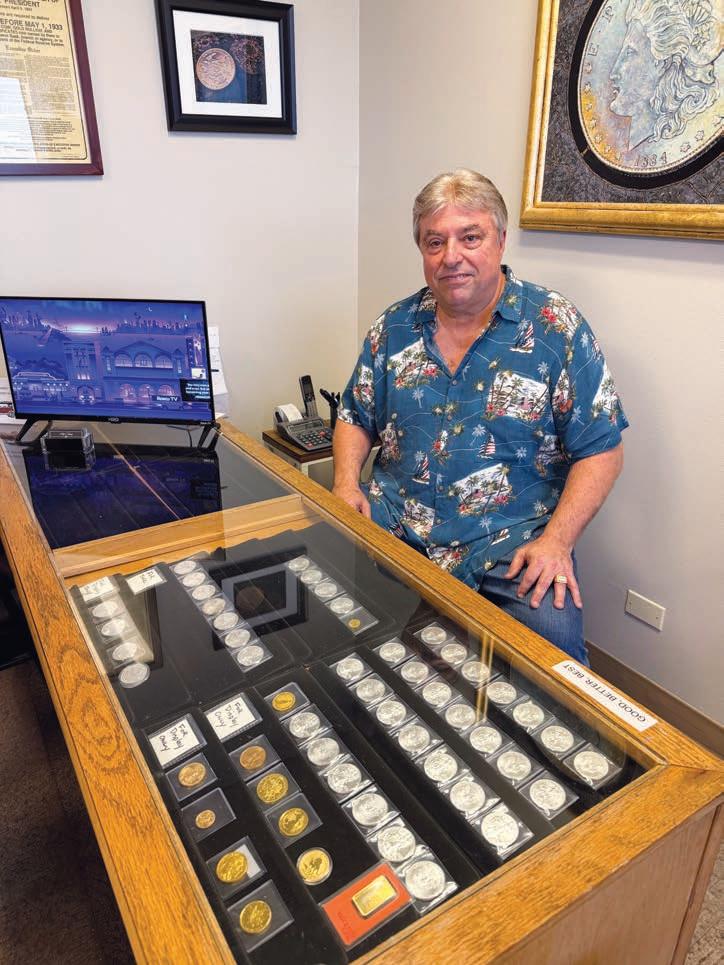
225 N. Fifth St., Suite 514, in Grand Junction. Ledoux bought the precious-metals brokerage in late summer 2025 and soon after watched the prices of silver and gold soar. Photo by Tim Harty.
It makes sense, he said, because they bought it for a much lower price a year or two ago, or maybe 20 years ago. Whenever it was, they’re taking advantage of the price going as high as it did.
“I had a guy come in and bring in 43,000 silver quarters about three weeks ago,” Ledoux said. “That’s 600 pounds of silver. And so he brought that in and said he had those bags from the late ’70s, early ’80s.
“So, it’s been just – I would never have guessed that in this area, this many people had physical possession of that much precious metal.”
People aren’t selling all of their gold or silver. In many cases, Ledoux said, customers will sell their silver to buy some gold.
“When you have enough silver, if you want to turn it into gold, it’s easy to do that,” he said. “Likewise, if you have gold, you want to turn it into silver, it’s easy to do that as well.”
Some of his customers also may feel like Ledoux does about the near future.
“I think the price is still going to be higher than what it is today in the near term,” he said. “They’re selling some of it and then waiting to see what happens with the rest of what they have.”
If that’s the case, Ledoux won’t be seeing a lull in activity any time soon.
If things ever do slow down, the Ledouxs want to
travel around Colorado and its neighboring states. That was one of the draws of buying Hedge Company.
Ledoux said he’s a former accountant who has “worked as controllers and CFOs of engineering and construction firms most of my life. Most recently, I was a real estate developer, developing self-storage facilities across the United States. That company got purchased by a private-equity firm, and I decided to do something different.”
Ledoux said he’s 63 years old, and after about 58 years in Houston, Texas, delaying retirement to move to Grand Junction to work sounded pretty good.
“I got out of the humid, flat climate of Houston, where there were 7 million people in the metropolitan statistical area, to Grand Junction, so I’m kicking myself for not getting here sooner,” he said.
Ledoux added he and Karen have found some time on weekends to go to nearby places, such as Powderhorn, Glenwood Springs, Vail and Aspen. They haven’t been to Moab, Utah, yet, but it’s on their list.
Outside of Colorado, a trip to Yellowstone National Park is a priority.
“Me and my wife, we love Grand Junction,” Ledoux said. “It’s nice not walking out of my house and having to take a shower, just going to check the mailbox for mail, because it’s so humid in the summertime.”
MORE ABOUT HEDGE COMPANY
The buyer she hoped for
When Teresa Mays was looking to sell Hedge Company a year ago, she wasn’t going to settle for just any buyer. She wanted someone who was going to live in Grand Junction and service the customer base that she, and her father before her, had built.
When she spoke to The Business Times in June 2025, Mays mentioned a potential buyer in Houston who might fill that bill. That was David Ledoux, who completed the purchase of Hedge Company on Aug. 29 last year and has done as Mays hoped.
It’s been easy to do it, because Ledoux wanted to move to Grand Junction, and he sees Hedge Company as a business that isn’t broke, so there’s nothing to fix.
“I just really liked her business,” he said. “I like the transparency of how she does her fees and everything. And that really spoke well to me, as well as she had a great client base. … My intent was to just continue doing what she did, what her family did for 26 years.
“I didn’t change anything about Teresa’s business at all. I tell people there’s just not a pretty face behind the counter. I can’t do much about that. But other than that, it should be about the same.”
Getting in the precious-metals game
In addition to maintaining the customer base he inherited, Ledoux would like to grow the business by getting young people to invest in gold. To accomplish that, he’s been advertising, trying to clear up a big misconception.
“You don’t have to buy an ounce of silver, an ounce of gold. … It comes in one-tenth of an ounce,” Ledoux said. “You can get a tenth of an ounce of silver for 15 bucks or something like that. … One of my commercials says, ‘Don’t let the high price of gold keep you from owning precious metals.’ You can, for a couple hundred bucks every month or every couple months or whatever your budget allows.
“If you wanted to start stacking precious metals, you’d be able to do that by starting with silver.”
The other message Ledoux hopes to convey to young investors is making ownership of precious metals a part of their investment portfolio.
“My goal,” he said, “would be to get younger people to start investing in precious metals. … If they learn about it, I think they’re gonna want to make that part of their investment portfolio or their savings portfolio.”
His honesty is admirable
Ledoux said he has been a coin collector for the past 20 or 30 years, and there are times when people bring him coins to sell, and he has to turn them away.
His reason? As a coin collector, he knows their coins are worth much more than he can pay them for precious-metal value, and he won’t rip them off.
“I give them back the coin, say, ‘No, take this to a coin shop. Don’t sell this to me for $50. You’ll get $300 for this at a coin shop someplace else,’” Ledoux said. “It helps that I’m a coin collector … I take stuff for precious-metal value, but if something has some other type of value and I recognize that, I’m aware of it, I give it back to them and make sure they know to take it someplace else.”
David Ledoux sits behind a display case at Hedge Company,
GJ Airport passenger traffic climbs 13.6 percent in 2025
Brandon Leuallen The Business Times
Continued growth at Grand Junction Regional Airport was highlighted during the Feb. 18 Grand Junction City Council meeting, where Mayor Cody Kennedy shared updated passenger figures reflecting another strong year for the facility.
Kennedy, who is the council liaison to the Airport Authority, told the council, “December 2025 was a 36th consecutive month of year-over-year growth in enplanements.”
According to the Grand Junction Regional Airport’s “December 2025 Data & Statistics Report,” the airport recorded 318,106 passenger enplanements in 2025, a 13.6 percent increase from 280,094 in 2024. Enplanements refer to passengers boarding departing flights.
Kennedy said the increase exceeded the 9 percent growth that had been budgeted for the year. When combined with 321,656 deplanements, or arriving passengers, total passenger traffic reached 639,762 for the year.
Overall load factor for 2025 reached 85 percent, up from 79 percent in 2024, meaning a higher percentage of available seats were filled.
United Airlines carried the largest share of departing passengers in 2025 at just over 50 percent of the market, followed
Community Hospital starts expansion of surgical services
Community Hospital announced it will begin work this month on a major expansion project designed to enhance perioperative services and surgical capabilities.
According to its Feb. 23 news release, this initiative will significantly increase Community Hospital’s ability to care for surgical patients before and after procedures, while supporting advanced surgical techniques and multidisciplinary care.
The project is expected to span 11 months, with completion anticipated February 2027.
The 12,400-square-foot expansion includes the modernization and expansion of the surgical department and the sterile-processing department.
With the addition of two new operating rooms, Community Hospital’s surgical department will be expanded to better accommodate increased procedural volume and complexity, the news release said. The surgical department will continue to operate under a team-based-care model led by surgeons and anesthesiologists and supported by perioperative nurses, surgical technologists and ancillary staff.
The new sterile-processing department will feature a new, state-of-the-art sterile-processing area that can support up to 10 operating rooms. Surgical care at Community Hospital remains focused on delivering high-quality surgical services in a sterile environment optimized for safety, efficiency and precision, the news release said.
“As a critical service line, our surgical services department plays a vital role in meeting procedural demand, and this expansion will help maintain the highest standards of infection prevention and operational throughput,” said Joe Gerardi, chief operating officer/chief nursing officer for Community Hospital. “Included in the expansion is our pre-operative and perianesthesia care unit as well as upgraded state-of-the-art equipment throughout our surgical suites. We remain committed to delivering high-quality, patient-centered surgical care, and we look forward to the positive impact this expansion will have on our community.”
Designed by Boulder Associates Architects, the new layout features a unidirectional flow to minimize patient-transport time and improve case-turnover efficiency. The space was planned to align with the highest standards for infection-prevention principles and provide flexibility for future growth.
Key design drivers included market demand, surgical-case mix and long-termgrowth projections, the news release said. The expansion is planned to avoid service duplication while maximizing throughput and recovery efficiency.
Total passenger traffic at Grand Junction Regional Airport in 2025 was 639,762 people. Photo by Brandon Leuallen.
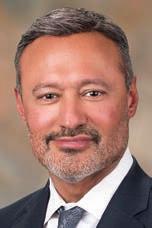
Joe Gerardi
AbleLight strengthens Mesa County presence with Ohana acquisition
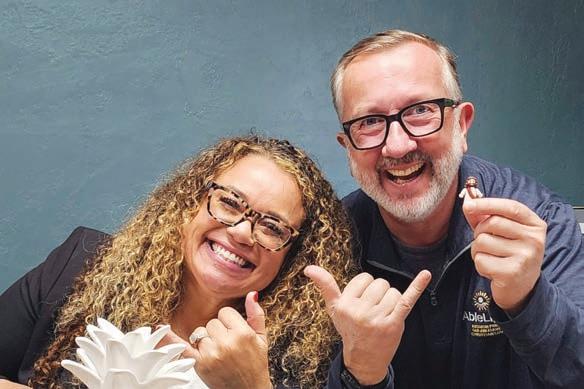
Ohana Supportive Services founder and owner Kehau Martinez, left, and AbleLight President and CEO Keith Jones. Photo courtesy of AbleLight.
AbleLight acquired Ohana Supportive Services, expanding specialized support for individuals with developmental disabilities throughout Mesa County.
AbleLight announced the acquisition in a Feb. 24 news release. The partnership strengthens AbleLight’s Western Slope operations, ensuring continuity of care for individuals currently supported by Ohana Supportive Services in Grand Junction.
Ohana and AbleLight will host a community-wide open house March 5 from 3-6 p.m. at: AbleLight’s Grand Junction location, 241 Grand Ave, Unit 5; and Ohana’s location: 104 Orchard Ave., Unit B4, in Grand Junction.
Attendees can explore day-program locations, learn more about residential services and meet the team. For more information or to register to attend, visit AbleLight.org/openhouse.
The acquisition introduces an innovative employment and retail model to AbleLight’s mix of services, the news release said. Combining AbleLight’s thrift-store experience with Ohana’s innovative Aloha 2 Go workshops will make a meaningful difference for people with developmental disabilities through employment services.
Partnering with Ohana also allows AbleLight to expand day-program services in Mesa County, which helps people feel connected within the community and combat isolation, a frequent concern for people with developmental disabilities.
“This marks a thoughtful next chapter, one focused on the enduring needs of the people we support,” said Kehau Martinez, founder and owner of Ohana Supportive Services. “Our commitment to compassionate and consistent care continues, and this transition ensures ongoing stability and enhanced opportunities for those we serve across the Western Slope. I am confident in AbleLight’s proven ability to: continue providing exceptional care; nurture the relationships that matter most; and sustain this important work for years to come.”
To honor Ohana’s strong reputation in the community, services will continue under the Ohana Supportive Services name as the transition progresses, and Martinez will remain actively involved during the tran-
sition to ensure stability and continuity of care. Both organizations are committed to ensuring that the individuals supported will remain at the center of every decision throughout the transition and beyond.
Additionally, the entire Ohana team has been invited to join AbleLight to ensure uninterrupted, high-quality support.
“We respect and honor the exceptional work that Ohana established over the years, and we are excited to build upon that strong foundation,” said Keith Jones, AbleLight’s president and chief executive officer. “Our first commitment is to the people we support and their families. Their belonging, safety and independence guide everything we do, and we look forward to strengthening the support available in Mesa County and Colorado’s Western Slope.”
A distinctive component of this acquisition is Aloha 2 Go, a unique retail and workshop operation that will continue operating under its established name. Unlike AbleLight’s 12 traditional thrift stores across the country, Aloha 2 Go operates as a convenience-style store featuring purchased inventory that includes food and goods, representing an entirely new retail model within the AbleLight ecosystem.
Additionally, Aloha 2 Go operates workshops where employees with developmental disabilities create and sell handcrafted products, including surfboards, cornhole boards and other custom items, directly to the public.
“This workshop-to-retail model provides meaningful employment opportunities and represents an exciting new service for AbleLight that the organization hopes to introduce to additional markets,” Jones said. “Seeing individuals create products they’re proud of and watching customers purchase their work creates dignity, purpose and economic opportunity in powerful ways. This is the kind of innovation we’re excited to bring to the AbleLight infrastructure.”
AbleLight has supported families for more than 120 years, with established operations in 11 states and communities in 21 Colorado counties. This acquisition strengthens AbleLight’s presence in Mesa County, allowing the organization to serve more individuals and families on the Western Slope while ensuring that residents in both urban and rural communities have access to quality specialized care and comprehensive support services.
To learn more about AbleLight’s services in Grand Junction and throughout Colorado, visit ablelight.org/locations/colorado.
Continued from Page 4
Services for veterans
Calvert highlighted services specifically available to veterans. Mesa County operates a Veterans Service Officer program through the Department of Human Services to help veterans and their families navigate federal disability, pension and education benefits. Officials reported serving more than 4,000 veterans and family members annually and helping secure roughly $7 million in federal benefits.
Veterans may also access workforce training and job-placement services through the Mesa County Workforce Center, as well as housing referrals and coordinated entry through Grand Valley Connects and local-housing-authority partnerships.
Prevention and employment: The end of the pipeline
As outlined during the workshop, the county’s pipeline is designed to move residents from crisis contact to resource navigation, benefits enrollment, behavioral-health support, workforce training and ultimately self-sufficiency
A key component of that final stage is the Mesa County Workforce Center, one of only four in Colorado housed within a humanservices department. Officials said that structure allows the county to create what they described as a continuum of services, connecting individuals receiving public assistance directly to employment resources.
Workforce Center services are available to job seekers and employers and do not require income eligibility.
The center provides resume assistance, mock interviews, skills testing, job fairs and on-the-job training opportunities. Officials reported that participants who engage in Workforce Center programs see a median annual wage increase of $11,492, and 71 percent remain employed after 12 months.
The center also funded child care for more than 1,100 children, graduated 51 GED students in the 2024 to 2025 program year and paid approximately $785,000 to local businesses to support internships and workforce training.
“It really provides us an opportunity to create a continuum of services for individuals to get them to self-sufficiency,” Calvert said.
Food Bank of the Rockies opens large, new Aurora distribution center
After years of planning and stretching the capacity limits as far as it could go in its old distribution center, Food Bank of the Rockies opened the doors to its new Aurora distribution center in early February.
The organization said in a news release that the 270,000-square-foot distribution center in Aurora will enable Food Bank of the Rockies to:
• Reduce operating costs by more than $500,000 annually by consolidating operations and investing in sustainability measures.
• Triple its cold-storage capacity, allowing it to receive and safely distribute up to 50 percent more fresh produce and accept significantly more rescued food.
• Triple its capacity for volunteers, which means triple the impact on how much food it can process.
• Quadruple the number of meals for kids it can deliver to after-school and summer programs.
• Expand its workforce-development program.
Food Bank of the Rockies has a distribution center in Grand Junction at 698 Long Acre Drive, and Joanna Wise, Food Bank of the Rockies’ press relations manager, said Grand Junction’s center stands to benefit from the improved Aurora location.
“More than 70 percent of the food we distribute through the Aspen to Parachute corridor, mountain communities and the entire Western Slope comes through our Aurora distribution center first,” Wise said. “That makes this new building, the capacity of it, directly relevant to the communities that we are serving all across our service area, including the Western Slope communities.”
Wise said the Aurora distribution center’s expanded kitchen will be able to create more meals from scratch.
“Our new kitchen, currently we’re able to do around 2,700 meals a day. Eventually we’ll be able to scale that up to about 10,000 meals that’s distributed across our service area,” she said.
The center also has expanded cooler space, which Wise said “really is the game changer for our operations. It will allow us to be able to increase the amount of frozen donations, especially proteins that we’re able to bring in. It will also allow us to increase the amount of fresh produce that we can accept and be able to distribute.”
Sundermann named Citizen of Year by GJ Chamber
The Grand Junction Area Chamber of Commerce named Brigitte Sundermann its Citizen of the Year during its annual banquet Feb. 27 at the Grand Junction Convention Center.
Sundermann’s award was one of four the chamber bestows annually, recognizing excellence in business and community leadership.
The other honorees were:
• Young Professional of the Year: Nick Gumpert.
• Small Business of the Year: Maid 2 Impress.
• Large Business of the Year: High Country Beverage.
The Chamber also recognized outgoing board leadership, including 2025 Board Chair Evan Walton and board members Frank Lindemann, Kelly Johnston and Ed Krey, for their dedicated service and commitment to advancing the chamber’s mission.
The Grand Junction Area Chamber of Commerce offered the following summaries about each of its four award recipients: Citizen of the Year – Brigitte Sundermann
The Chamber’s Citizen of the Year award recognizes an individual whose leadership and service have made a lasting impact on the Grand Junction community.
Brigitte Sundermann was selected for her ability to identify the evolving needs of the business community and bring partners together to create meaningful solutions.
Through her leadership at CMU Tech, she has helped strengthen connections between education and industry, expanding technical training and workforce pathways that support both local employers and students pursuing career opportunities in Western Colorado.
With a background in engineering and a career shaped by hands-on learning, teaching and leadership, Sundermann
has consistently focused on creating opportunity for others.
Colleagues and community partners recognize her collaborative approach, practical problem-solving, and her ability to unite organizations around shared goals that move the region forward. Known for her optimism and signature smile, her impact continues to strengthen Grand Junction’s workforce, business community and future leaders.
Large Business of the Year – High Country Beverage
High Country Beverage was recognized as Large Business of the Year for its sustained economic investment, strong workplace culture and deep commitment to community partnership across the Western Slope.
Founded in 1996 and expanding into Western Colorado in 2012, the family-owned company has grown into a major regional employer while maintaining a strong focus on service, responsibility and long-term investment. Under the leadership of CEO Dave Nichols and President Steve Nichols, High Country Beverage continues to prioritize employees, supplier relationships and customer partnerships while contributing significantly to the regional economy.
The company actively supports numerous nonprofit and civic organizations throughout Mesa County and surrounding communities and empowers employees through a unique giving program that directs charitable contributions to causes meaningful to its team members.
As High Country Beverage prepares to open its expanded multi-million-dollar facility, the investment reflects the company’s continued confidence in and commitment to the future of Western Colorado.
Small Business of the Year – Maid2Impress
Maid2Impress was honored as Small Business of the Year for transforming a small startup concept into a growing regional business while maintaining a strong commitment to community service.
Founded in 2009, the company has grown from modest
beginnings into a trusted cleaning-services provider serving communities throughout Western Colorado. Today, Maid2Impress employs dozens of team members and has expanded services to meet the evolving needs of businesses and residents across the region.
Beyond business growth, Maid2Impress has consistently reinvested in the community through fundraising efforts, nonprofit partnerships, youth sports sponsorships and direct support for local families and organizations. Their sponsorship of the “I’m A Survivor Fashion Show,” benefiting oncology patients through Community Hospital’s gas and lodging assistance program, reflects the company’s belief that business success should positively impact the community it serves.
Young Professional of the Year – Nick Gumpert
Nick Gumpert was named Young Professional of the Year for his commitment to cultivating leadership, encouraging innovation and investing in the future of Grand Junction’s business community.
A Grand Junction native and Colorado Mesa University alumnus, Gumpert has demonstrated a passion for helping others grow alongside his own professional success. Through his leadership at The UPS Store, educational efforts teaching emerging technologies at CMU Tech, and involvement in the Chamber’s Young Professionals initiatives, he actively encourages peers to remain adaptable and forward-thinking in a rapidly changing business environment.
In addition to his professional work, Gumpert mentors youth and supports leadership development through his involvement with Fire FC and Grand Junction Soccer Club while serving in community leadership roles that strengthen local organizations. The award recognizes a young leader dedicated not only to business success, but to encouraging others on the path toward strong leadership and meaningful lives.
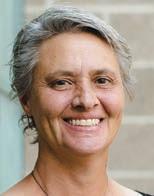
Brigitte Sundermann
Bring your light to work, not your shadows
When we walk into work each morning, we don’t shed our humanity at the door. We carry our hopes, our fears, our joys and our struggles with us. Some days we arrive energized and grounded. Other days, life has weighed heavily on us, and we show up carrying burdens no one else can see.
Marcus Straub
The idea that our personal and professional lives exist in two separate, air-tight compartments is comforting, but it simply isn’t true. We are whole human beings, and the state of our inner world inevitably shapes the way we lead, serve and show up for others.
Yet within this truth lies an extraordinary opportunity: the chance to choose which parts of ourselves we bring forward and which parts we gently set aside, so we can rise to the moment in front of us.
When someone is living with purpose, connection and a sense of inner steadiness, their presence at work becomes a source of calm and clarity. They listen better. They think more clearly. They respond rather than react. Their energy lifts the room.
But when life outside of work becomes turbulent with strained relationships, parenting challenges, family conflict, financial pressure, health concerns or a loss of meaning, their internal world can become clouded. And that cloud often drifts into the workplace.
Not because they’re careless or unprofessional. But because they’re human.
Unmanaged personal struggles can quietly erode
focus, patience and performance. They can dim a person’s confidence and drain their capacity to contribute at the level they once did. Even the strongest performers can lose their footing when life becomes overwhelming.
For those in leadership roles, the impact is amplified. A leader’s emotional state becomes the emotional climate of the team. People look to leaders for steadiness, direction and hope. When a leader is lost in their own storm, the entire organization can feel the shift.
A distracted leader creates a distracted team. A discouraged leader creates a discouraged team. A reactive leader creates a reactive culture.
But the opposite is also true and far more powerful. A leader who shows up with intention, presence and grounded energy becomes a lighthouse for others. Even on difficult days, their steadiness helps others find their own.
One of the most empowering choices a person can make is to treat work as a temporary sanctuary, a place where they can step out of the heaviness of their personal challenges and into a space of purpose, contribution and clarity. This isn’t avoidance. It’s restoration.
By focusing fully on the task at hand, you give your mind a break from the emotional noise. You reconnect with your competence, your creativity and your ability to make a meaningful impact. You remember that you are more than the challenges you’re facing.
This shift doesn’t solve personal problems, but it strengthens the person who must face them.
Many people believe they should be able to “handle it themselves,” as if seeking support is a sign of weakness. But the truth is that trying to navigate life’s hardest moments alone often leads to deeper struggle and prolonged suffering.
There is courage in asking for help. There is wisdom in seeking guidance. There is strength in choosing not to carry everything by yourself.
A skilled coach can help you regain clarity, rebuild balance and reconnect with the parts of yourself that feel buried under stress. With the right support, small shifts in perspective and behavior can create profound changes in both your personal and professional life.
Life will challenge you. But it doesn’t have to break you.
Every one of us will face seasons of difficulty. None of us are exempt from loss, uncertainty or moments when life feels heavier than we know how to carry. But these seasons do not have to define us, derail us or diminish the work we are capable of doing.
When personal struggles begin to affect your ability to lead, serve or succeed, the most powerful choice you can make is to reach for support. Not because you are weak, but because you are committed to bringing your best self, not your burdens, to the people who count on you.
Your team deserves that. Your customers deserve that. But most importantly, you deserve that.
You are at your best when your inner world is aligned, supported and cared for. And when you show up from that place, you don’t just perform better, you inspire others to rise with you. F
Marcus Straub owns Life is Great Coaching in Grand Junction. He’s available for free consultations regarding coaching, speaking and trainings. Reach Straub at (970) 208-3150, marcus@ligcoaching.com or through the website located at www.ligcoaching.com.
Yes, I see the irony, but I stand by the premise
It’s rare when I have a string of three consecutive columns (this now being the third) that somehow connect.
If I recall, I have done what some might consider a short “series” of columns on the same topic. A set comes to mind about how the health-care industry came into being and how the government poking its nose in and taking control has all but destroyed it. That one was years ago, and we all know how the government has doubled down on its destruction of that whole part of the economy.
And there were, I’m sure, a couple of other topics in a news cycle that had me on the same topic for a few editions in a row.
But I don’t recall writing two disparate columns on topics having nothing to do with one another that came together in the way this one will. And while there was some personal suffering involved, in the end the laughter caused by the irony told me I should write something up, so you folks hopefully get a kick out of it as well.
Now, I don’t mean to just vomit something up to take up 900 words and fill a space in my paper. But that verb is precisely where this story begins, taking off where my last column ended, in the wee hours of the morning on the Friday of my golf trip last week.
As you may recall, I ended the travails of yours truly getting my buddies home from the hospital with the small lesson to readers of when your friends need some help, you drop what you’re doing and help them. Which is what my buddy and I did. Which earned us dinner out with one of those friends, as the other simply wanted to get back to his room, take his meds and get to bed.
Little did your author understand, something in that dinner set of a series of events to link my last two columns together. If you read my submission from two papers ago about health-department inspections and how one locally got reported, you can probably guess where this is going – and it isn’t about unprofessional and lazy
reporting, which was the actual thrust of that writing.
Then again, a verb used previously in this column was a dead giveaway.
You see, I ended my last column with my lesson at taking care of your buddies for a few reasons. First, I was on deadline. Second, I hit my word count easily with what was already written. And third, there was no need to add anything from the night’s events after getting back to the hotel after dinner, as that time was spent typing away and enjoying some milk and cookies.
Yes, as our gang ages, the stories become much more lame as the hours get later, and adding anything to last week’s column would have been, lame.
But boy, in this case, I was wrong. And not in a good way or fun way. So, this isn’t going be all about how Craigy hit it big at the blackjack table. Although technically, I did spend quite a bit of time on the casino floor, albeit the floor of the bathroom. In the motel part of the casino, that is.
You know that feeling when you sit up in bed and feel like you better get to the bathroom, and not for the normal reasons.
So yes, you got it. There’s the connection for this and my previous two columns. Your favorite columnist got food poisoning.
Now, I can’t say exactly from what or where, but I got a pretty good idea. Now, some of you might say I got what I deserved because the health department could have prevented this with one of their surprise “inspections.” To be honest, I just think I got served up a healthy portion of irony.
And that’s because I’ll never change the premise I believe in: Restaurants aren’t in business to poison their customers. Fact is: No matter where one eats their meals –at home, a favorite dining place or grandmas – sometimes something undercooked (or just bad) might just get through. And when it does, it can have some painful (and gross) effects. And that’s what happened here.
I should add the fire alarm went off around 4 a.m. between bouts in the bathroom, just to give the story a bit more bombast.
Support Local Support Business
So yes, after a miserable night and morning as the bad stuff worked its way in me and out of me from top to bottom, I’m laughing at the irony. The greatest of which is how this episode gave me food for another column. And no, I haven’t changed my take on how I think our health department should be a proactive force in our restaurants. And even if that’s all it’s doing, it can’t see, find or predict anything that’s going to happen. And outside of consistent, serious negligence where it should act, it’s largely a reactionary setup. That’s just its nature. I don’t mean the health department should stop what it’s doing. I’m just saying what it does should be proactive and not punitive. If a few proactive visits don’t change things, then maybe it’s time for punishment. But I stand by this: No matter the number of proactive visits the health department makes to any restaurant, it can’t stop that one bit of food from being undercooked, or from going bad, or that one employee from not doing a 100 percent perfect job in all areas of food handling, or a customer or employee coming in with a bug. All it can do is instruct in the practices of food safety whether it finds “violations” or not.
Because no matter how perfect the job the health department does or your favorite restaurant does, there’s always going to that 0.0001 percent chance you might end up like me with the other P, puking (sorry) after you eat there.
Honestly, after all the dining out I’ve done in 64-plus trips around the sun, those aren’t the worst odds in the world, and way better than the casino. And no, this event didn’t begin there, in case you’re trying to ascertain where it did, although I did have one bet pay off and came home with a few bucks.
Frankly, I’ll take the odds on eating out or my silly bets on either of those any day of the week.
The only other odds in this scenario? The 100 percent irony. And it paid off in another column.
In Truth and freedom. F
Craig Hall is owner and publisher of The Business Times. Reach him at 424-5133 or publisher@thebusinesstimes.com
Craig Hall
n Sky Peak Technologies begins market study on AI readiness
Grand Junction-based Sky Peak Technologies launched a regional market study designed to better understand the operational challenges, growth constraints and AI readiness of small- and mid-sized professional firms. The study seeks input from principals, managing partners and operations leaders in engineering, accounting, legal, medical and other professional-service organizations throughout Mesa County and the surrounding region.
“As operational complexity increases and margins tighten, many firms are evaluating whether artificial intelligence can play a practical role in improving efficiency,” said Cat McIntosh, CEO of Sky Peak Technologies. “Before solutions are built, timing and pain points must be clearly understood. This study is about listening first.”
The survey will explore: administrative and coordination burdens; workflow inefficiencies and capacity constraints; hiring versus automation decision timing; leadership appetite for AI-enabled tools; and key triggers that drive operational change.
The results will be used to assess market timing and readiness, as well as the most pressing friction points facing professional firms in the region. Participants will receive early access to summarized findings and benchmarking insights relative to peers.
The survey takes approximately seven to 10 minutes to complete and will remain open for a limited period. To participate, visit: PC Focus Group 022026 at us3.list-manage. com/survey?u=5e157008fec2d5530bf5fa942&id=833b7c6201&attribution=false.
n Burn permits in GJ available though April 30
Mesa County Public Health is now accepting residential burn-permit applications. The spring burn season started March 1 and runs through April 30 for the City of Grand Junction, and through May 31 for the rest of Mesa County.
Mesa County Public Health issues permits for everyone in the county, including those within city limits. Within the city limits of Grand Junction, agricultural burning is permitted only during the designated spring and fall seasons. Outside of the city, agricultural burning is allowed year-round.
Residential permits cost $25 and are valid during both designated burn seasons for the calendar year. All of the proceeds from the permits support local fire-protection districts. Agricultural burn permits are free.
The easiest way to obtain a permit is through Mesa County Public Health’s online system at apps.mesacounty.us/burnpermits. The permit will be emailed right after checkout. For assistance navigating the online portal, call 970-248-6900. You can apply in person at the Health and Human Services Building at 510 29 1/2 Road.
It is the burn-permit holder’s responsibility to make sure conditions are safe to burn before ignition. Burn permits are not valid if there is a red-flag warning, fire restriction or a no-burn advisory in place. Air-quality information can be found on the Mesa County website’s Air Quality page and makes tracking air-quality conditions and advisories easy to access.
Because open burning pollutes the air and poses a fire hazard, Mesa County Public Health encourages alternatives, such as composting or wood chipping, if possible. The Mesa County Organic Materials Composting Facility at Mesa County Solid Waste accepts organic materials like leaves, grass clippings, tree limbs, hay and straw. It is located at 3071 U.S. Highway 50.
n REC launches giving campaign to mark 20 years
Riverside Education Centers is celebrating 20 years of supporting students and working families across Mesa County. Since opening in 2006 with just 12 students, REC has grown into a local resource now serving more than 1,300 students annually across 15 sites.
To commemorate the anniversary, REC will host a community open house this July, welcoming past and present families, alumni, partners and neighbors to reconnect and celebrate the organization’s impact.
As part of the celebration, REC has launched its “$20 for 20 Years” giving campaign, inviting community members to honor the milestone with a $20 recurring contribution that supports future programming for local students.
Throughout the year, REC will also share stories from those who have been part of its
journey, highlighting the relationships and experiences that have shaped the organization over the past two decades.
“REC gave me a place to be myself during middle school and explore passions beyond the classroom, from soccer and drums to robotics,” said Mario Bravo, engineer and former REC student. “The confidence and support I found there helped shape my path toward becoming an engineer and succeeding at Colorado Mesa University, where I helped start a chapter of the Society of Hispanic Professional Engineers to support the Hispanic community. Programs like REC create opportunities that truly influence a young person’s future.”
Those interested in sharing their REC experience or learning more are encouraged to connect with REC on social media, sign up for REC newsletters on the website, or contact
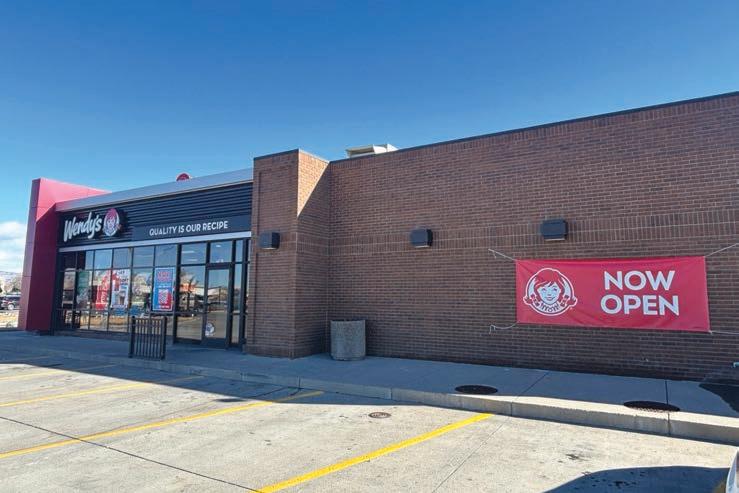
n Wendy’s on Horizon Drive reopened after last August’s fire
The Wendy’s restaurant location at 750 1/2 Horizon Drive in Grand Junction has reopened after being closed for several months because of an August fire.
According to the Grand Junction Fire Department, crews responded shortly before 4 a.m. on Aug. 12, 2025, to a structure fire at the restaurant. The blaze originated in the kitchen area and was extinguished without reported injuries. The building was unoccupied at the time.
The restaurant reopened with nearly all kitchen and mechanical equipment replaced and updated. The Horizon Drive location has resumed normal operations.
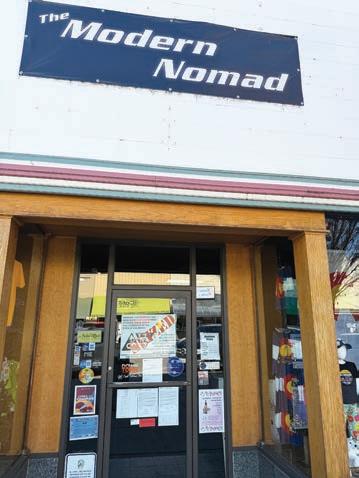
Business Bites: State seizes The Modern Nomad for nonpayment of taxes
• The Modern Nomad, 419 Main St. in downtown Grand Junction, has been seized by the State of Colorado for nonpayment of Colorado sales taxes and wage-withholding taxes in the amount of $23,462.42, according to signs posted on the store’s Main Street entrance.
A sign with “SEIZED” in large, red letters is displayed on the top half of the gift and souvenir store’s front door. Beneath it is a Notice of Public Sale by the order of Executive Director, Colorado Department of Revenue, dated and posted Feb. 23, 2026. Date, time and place of the sale are listed as TBD (to be determined).
The business is owned by Modern Nomad LLC, which has a Sister Bay, WI, address.
organization passions engineer shape my University, where to support influence a encouraged to or contact fire Junction has before 4 a.m. kitchen area time. replaced taxes