ART DIRECTOR .......................................................... JIM McHARG
Photographic Contributions: Mark - Godragracing.org, George Pich, Louis Fronkier, Blake Farnan, Jerry Garrison, Eddie Maloney, Wes Taylor, Steven Taylor and Amber Hynes
Editorial Contributions:
Chuck Scott, Mark-Godragracing.org, Tim Biro, Stan Smith, George Pich, Jay Misener, Eddie Maloney, Wes Taylor, Steve Baur
Technical Writing Contribution: Chuck Scott, Shane Tecklenburg, Tim Biro and Jay Misener
RPM Magazine is a REGISTERED TRADEMARK of Revolution Publishing & Media Inc. RPM Magazine is a worldwide motorsports publication distributed online.
To subscribe to RPM go to www.rpmmag.com or email Trish Biro at trish@rpmmag.com, or call 519752-3705.
The focus of RPM is to bring a diverse mix of high performance street and race automobiles to life within its pages including race cars, muscle cars, hot rods and street legal machines with an emphasis on the “EXTREME,” including fast doorslammer and outlaw forms of drag racing. Not familiar with these types of cars? They are considered to be the top-shelf of the industry and are on the edge with regard to design, performance, and power!
RPM Magazine does not sell its mailing list or share any of the confidential information regarding its subscribers.
RPM Magazine has been a world leader in motorsports publishing for 27 Years and has support locations in Ontario, Canada, Alabama, Texas, and Virginia, along with contributing writers and photojournalists worldwide.
If you have a story that may fit within the focus and scope of RPM Magazine’s coverage, please email our Editor In Chief at editor@rpmmag.com. Submission of an article does not guarantee that it will be published.
Revolution Publishing & Media Inc. (RPM) / RPM Magazine IS NOT responsible for errors or omissions in ANY advertisement or article. Advertisements may be rearranged or altered at the sole discretion of RPM to allow the ad to fit in the space purchased by the advertiser.
WE RESERVE THE RIGHT TO REFUSE ANY ADVERTISING WHICH WE CONSIDER TO CONTAIN MISLEADING, OFFENSIVE OR FALSE INFORMATION. REPRODUCTION OF ANY INFORMATION HEREIN IS STRICTLY PROHIBITED WITHOUT PRIOR WRITTEN CONSENT.
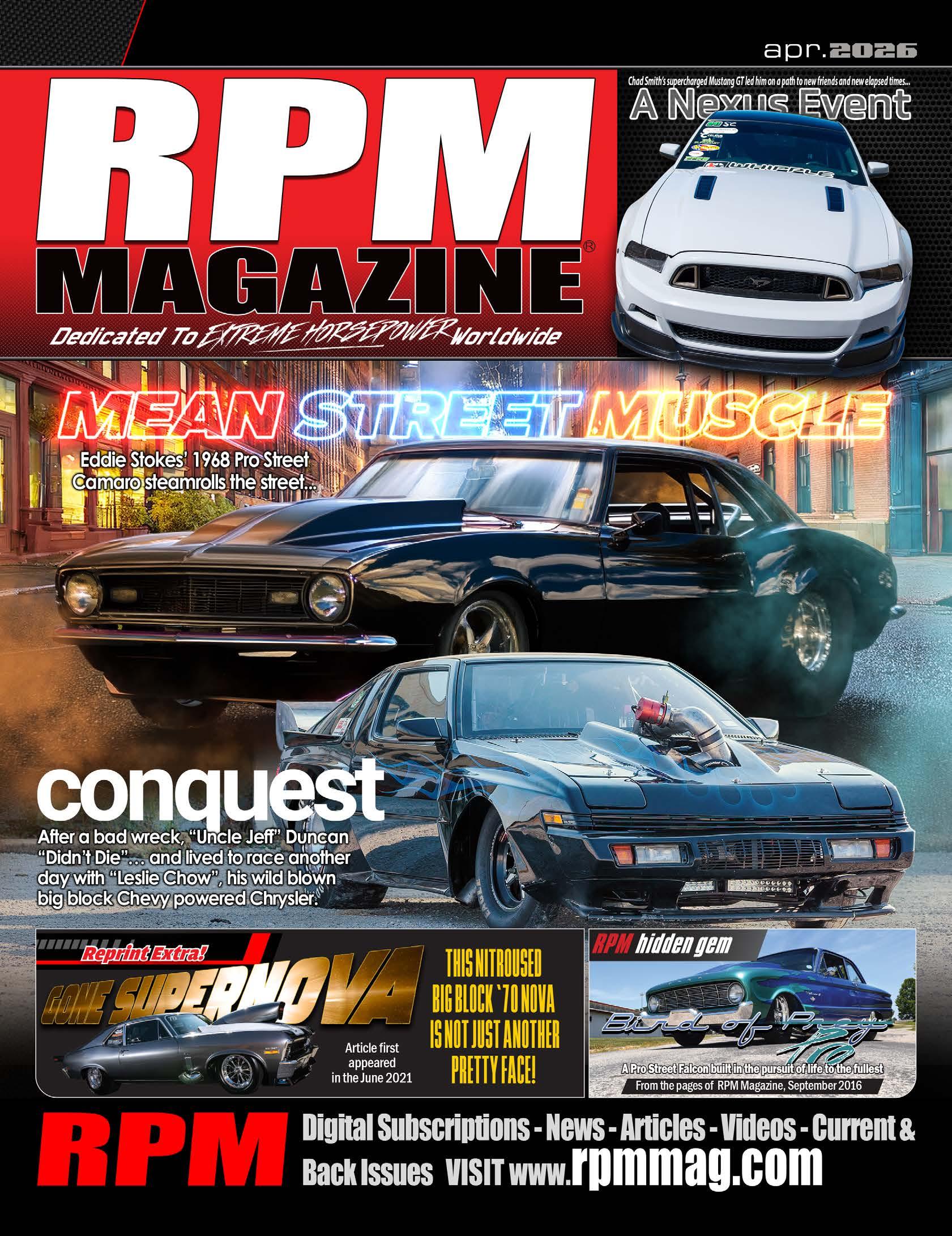
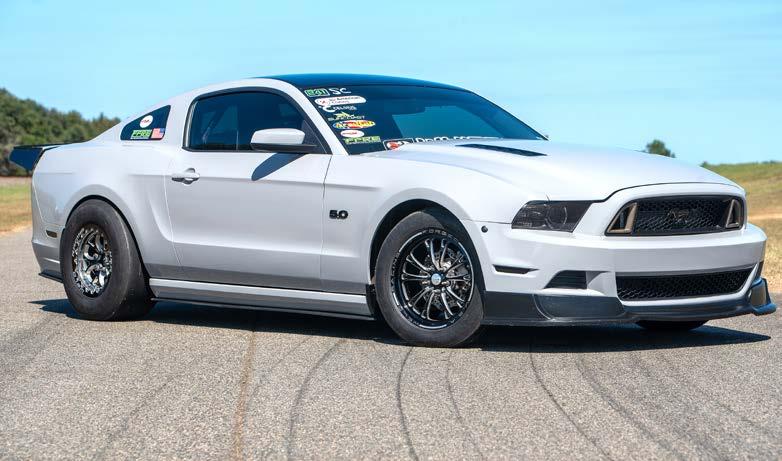
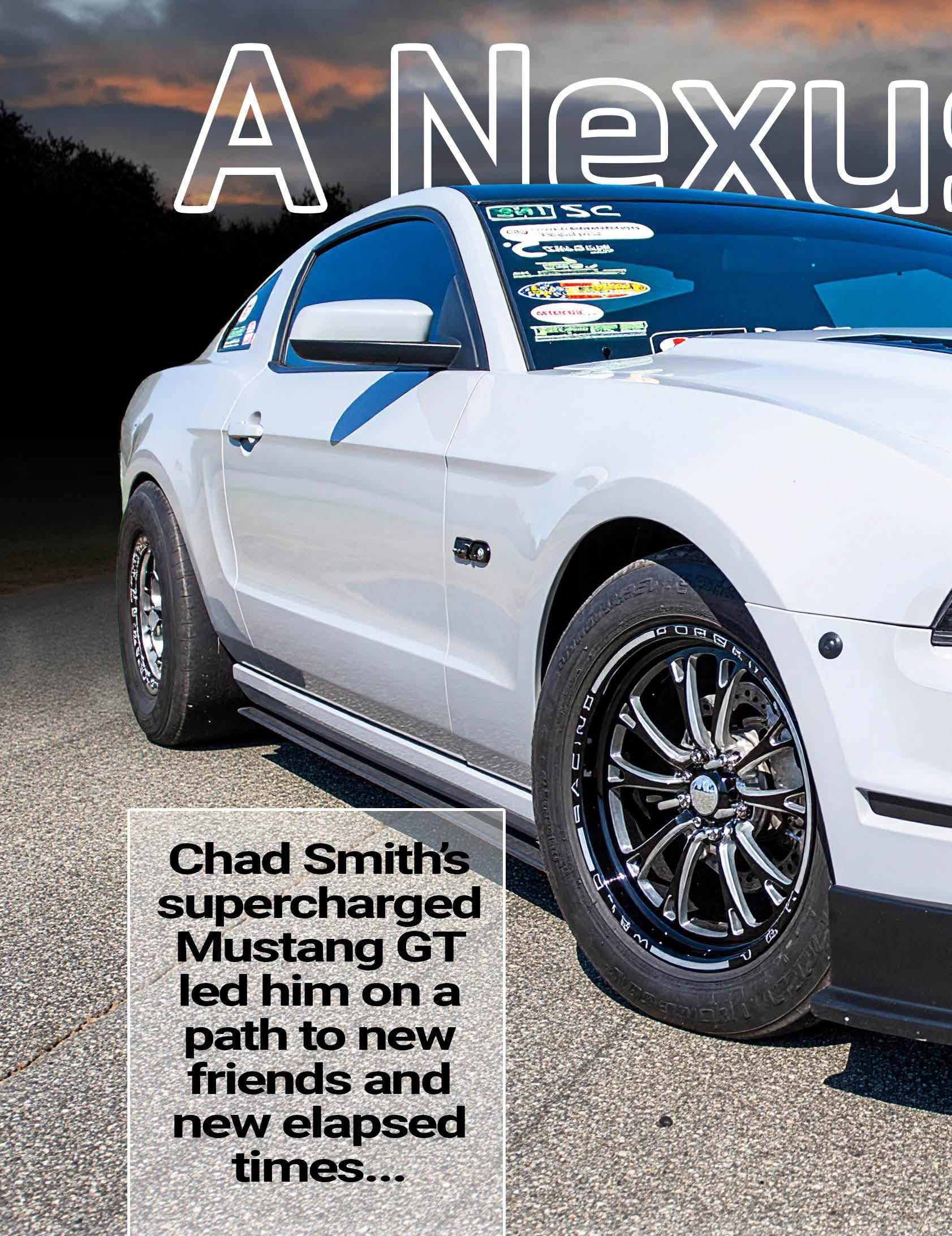
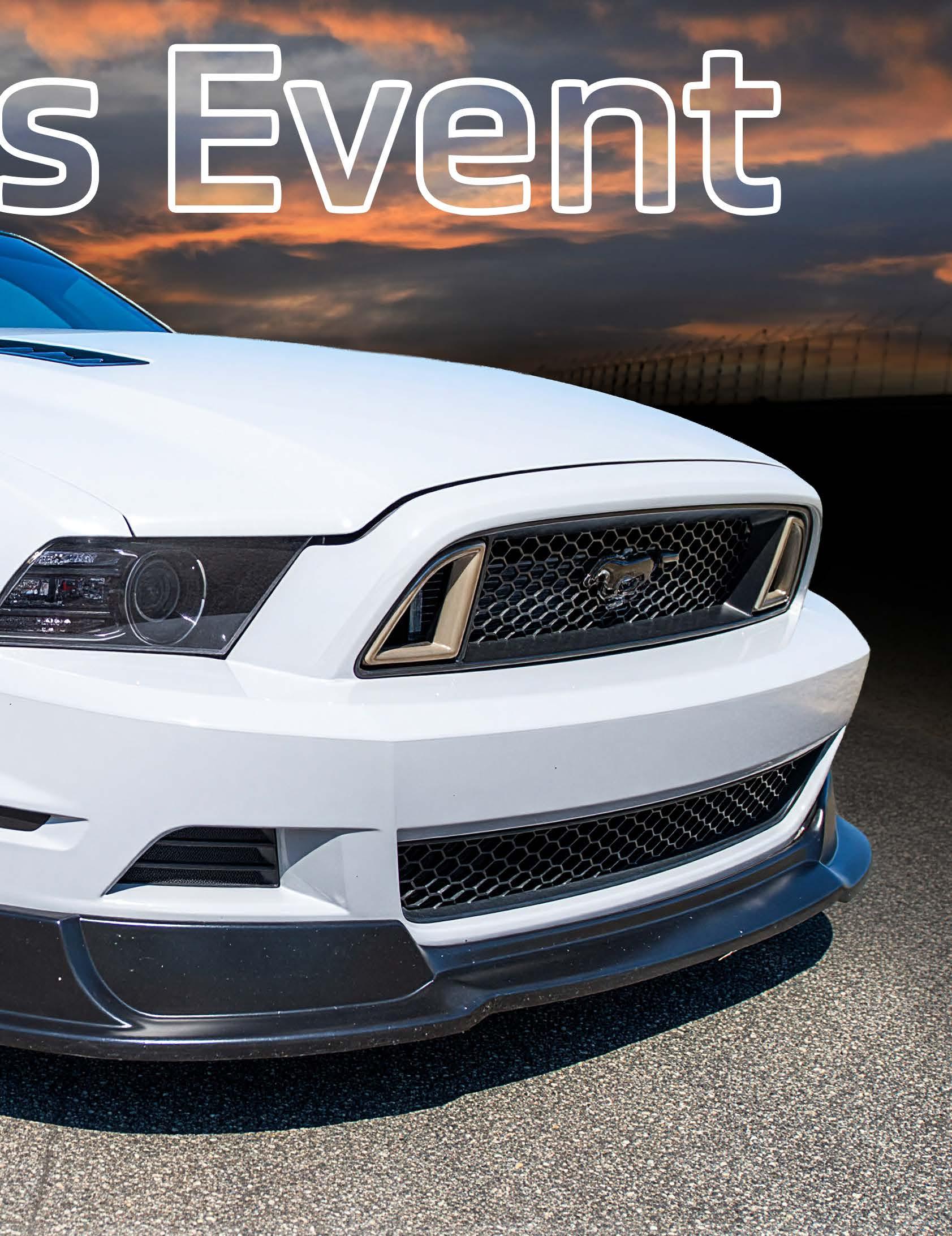
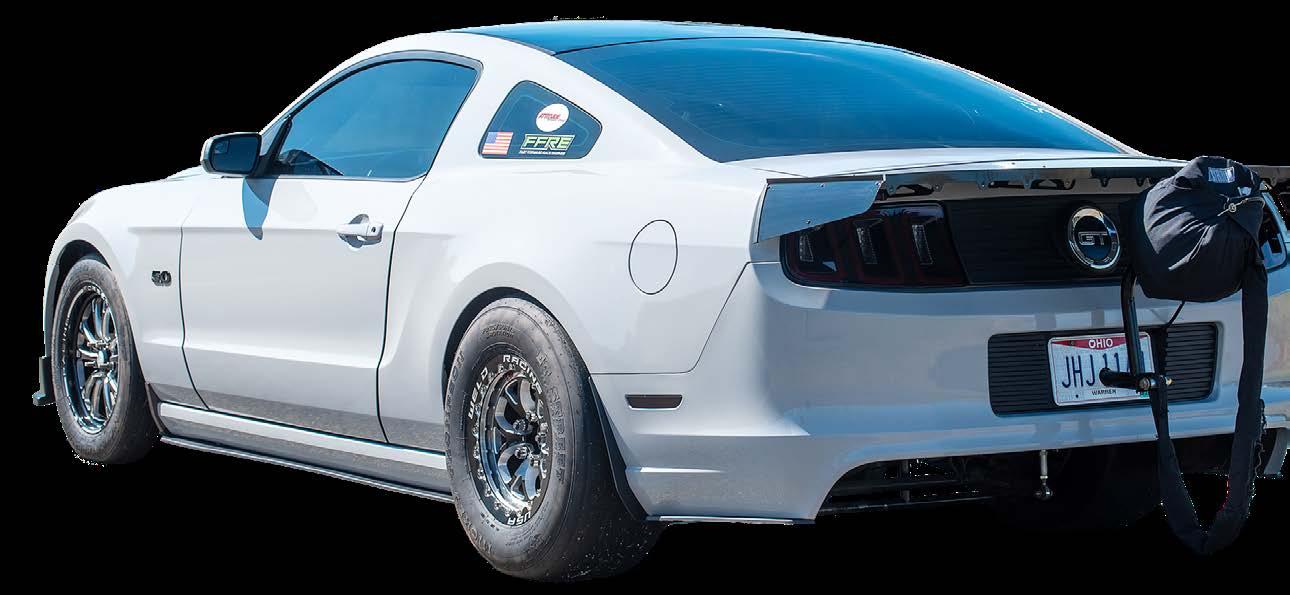
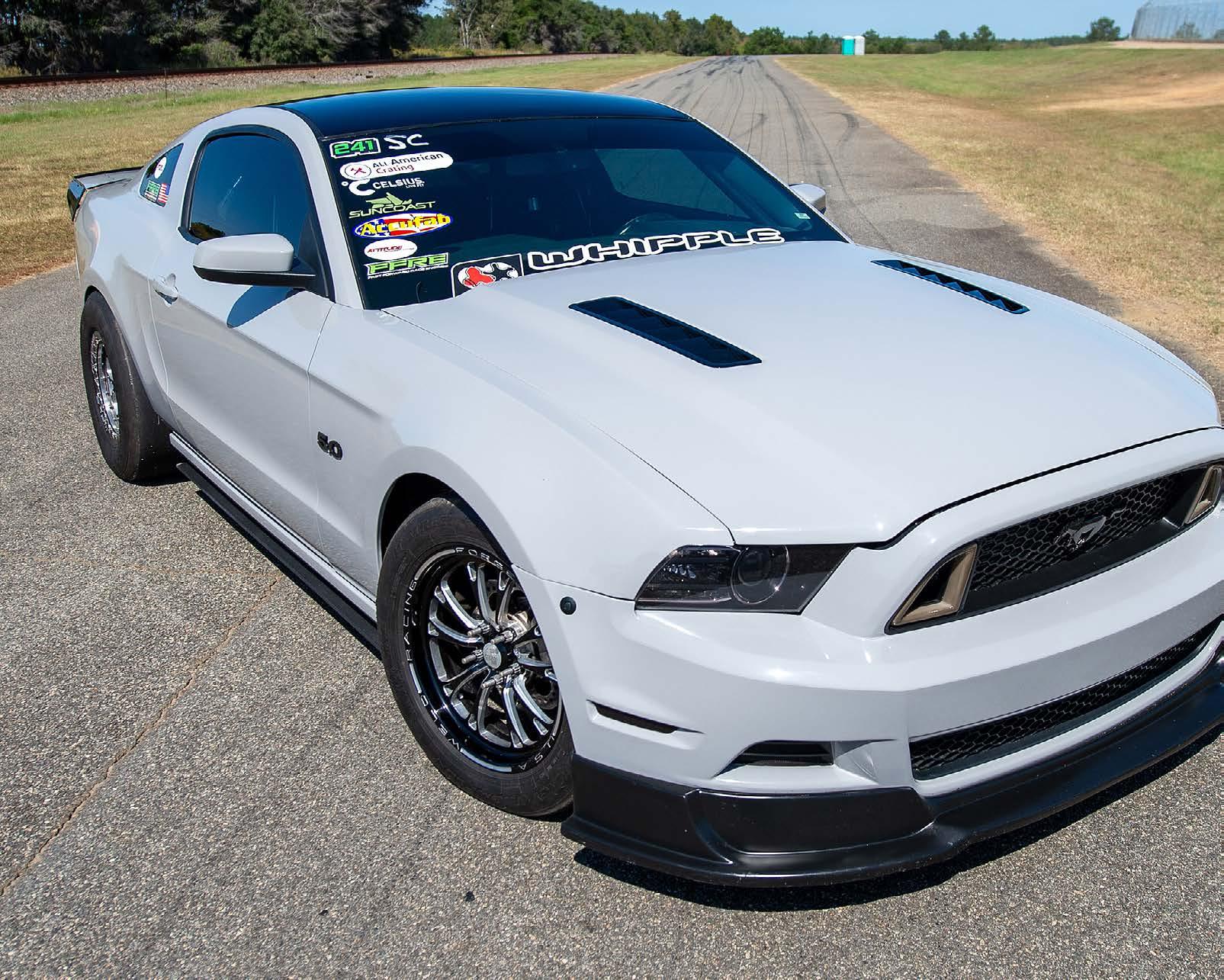
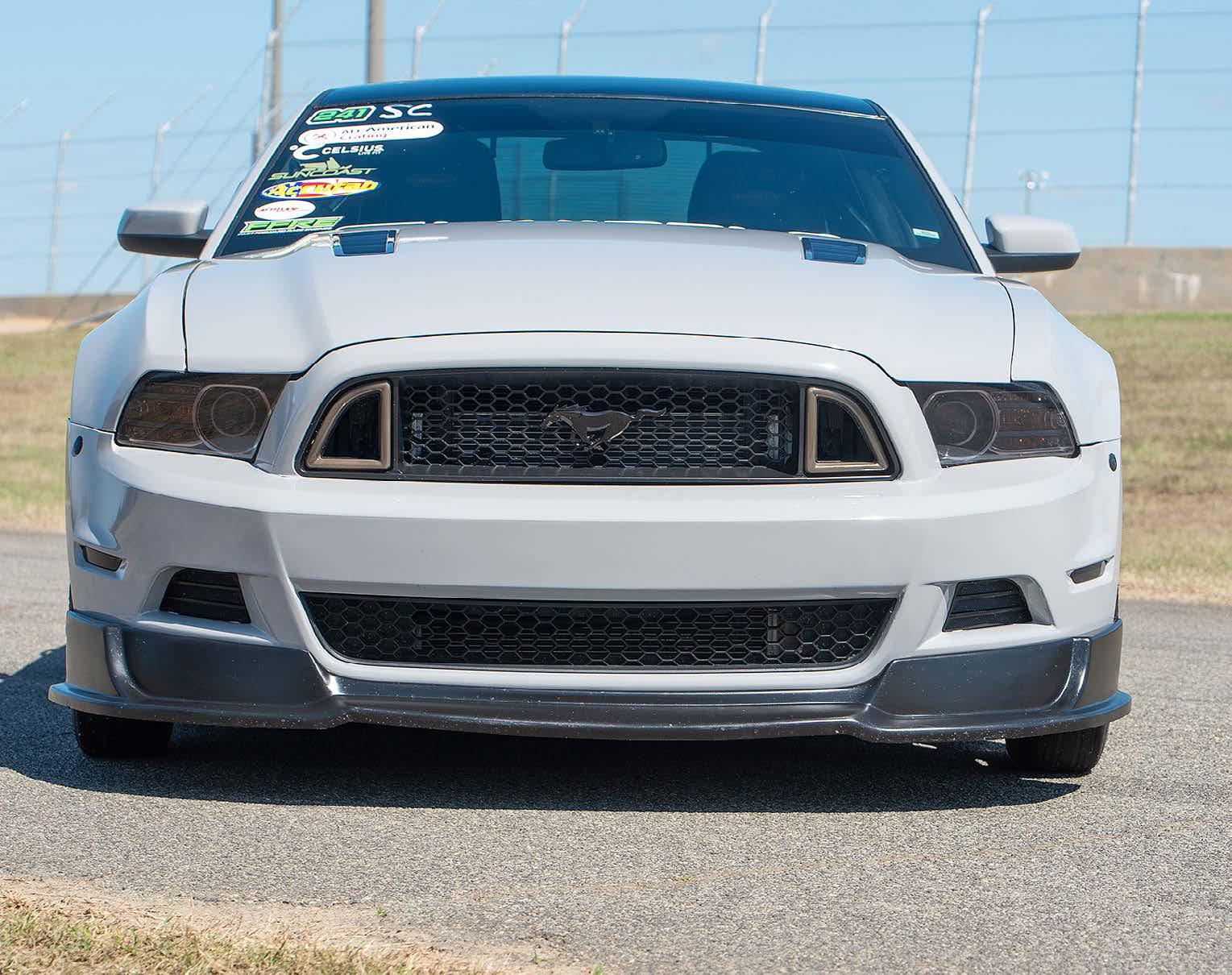
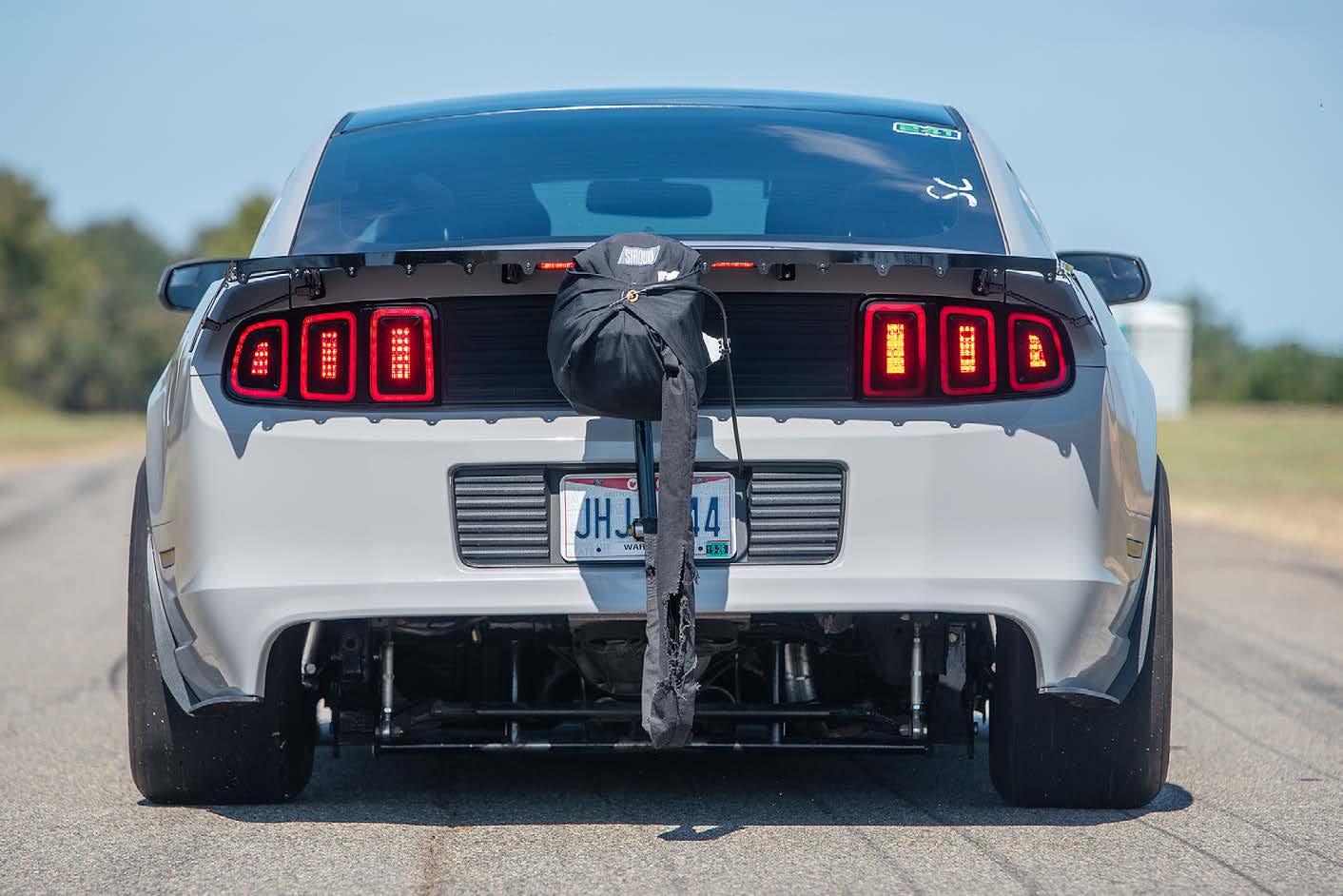
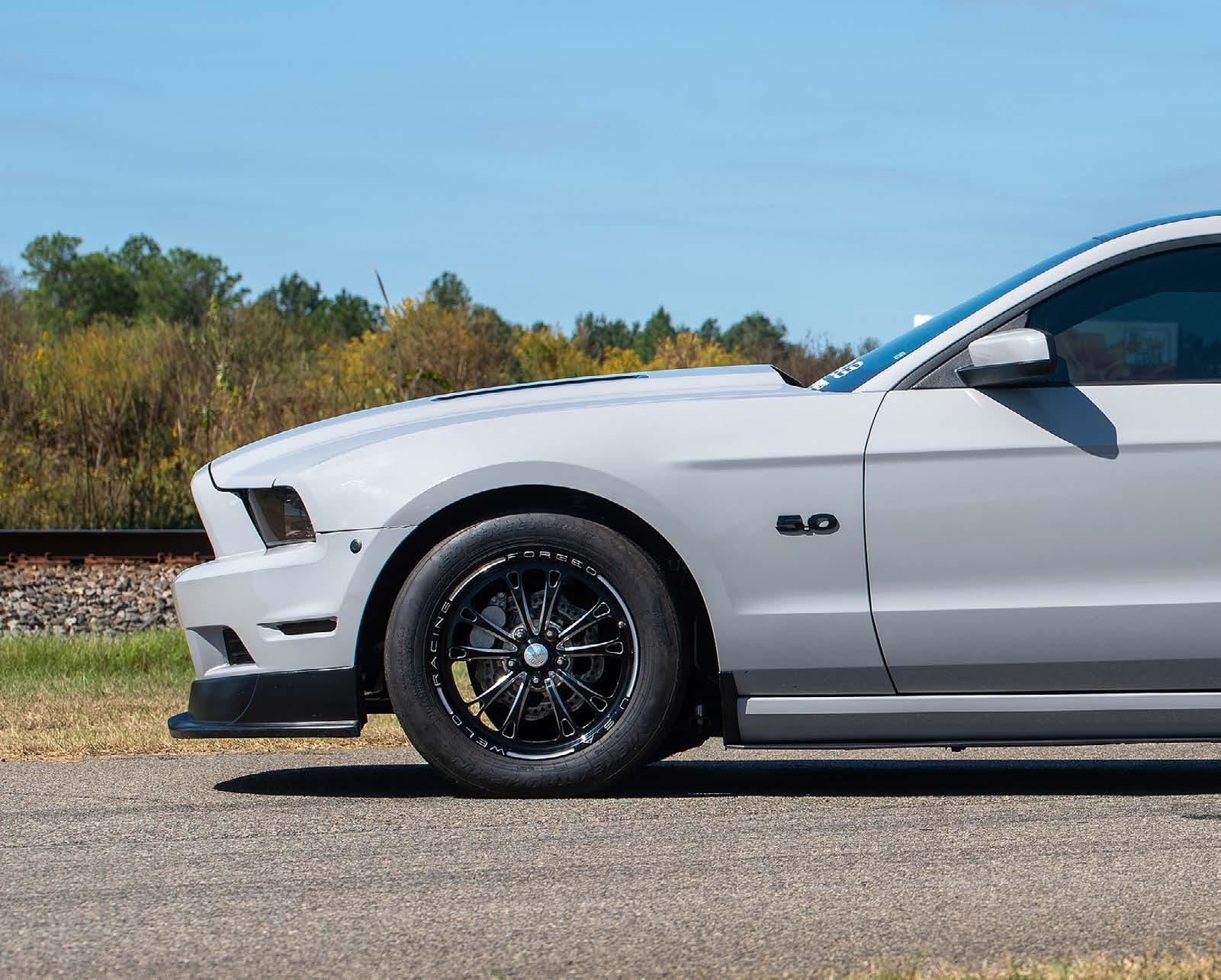
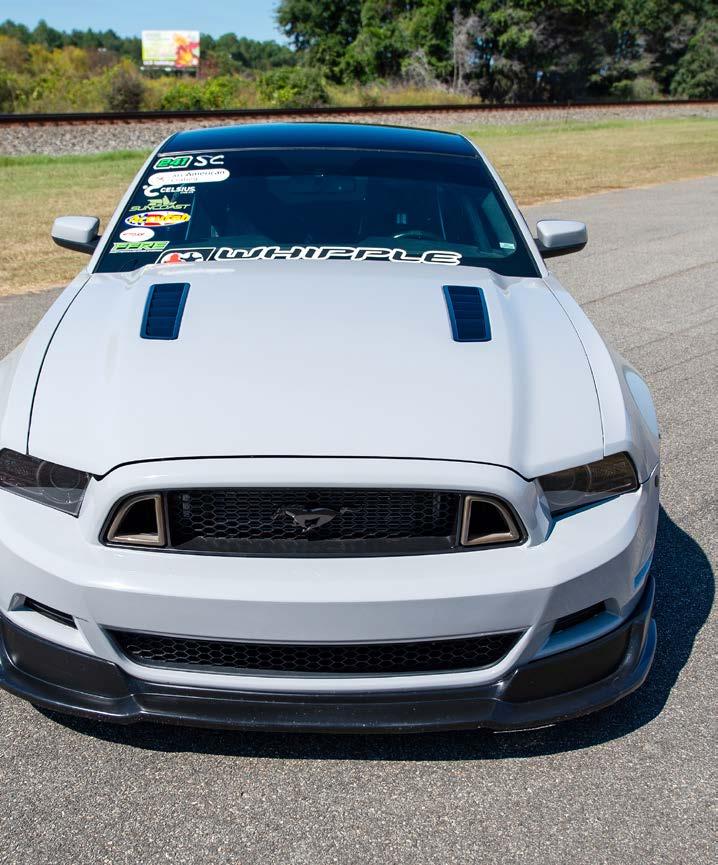
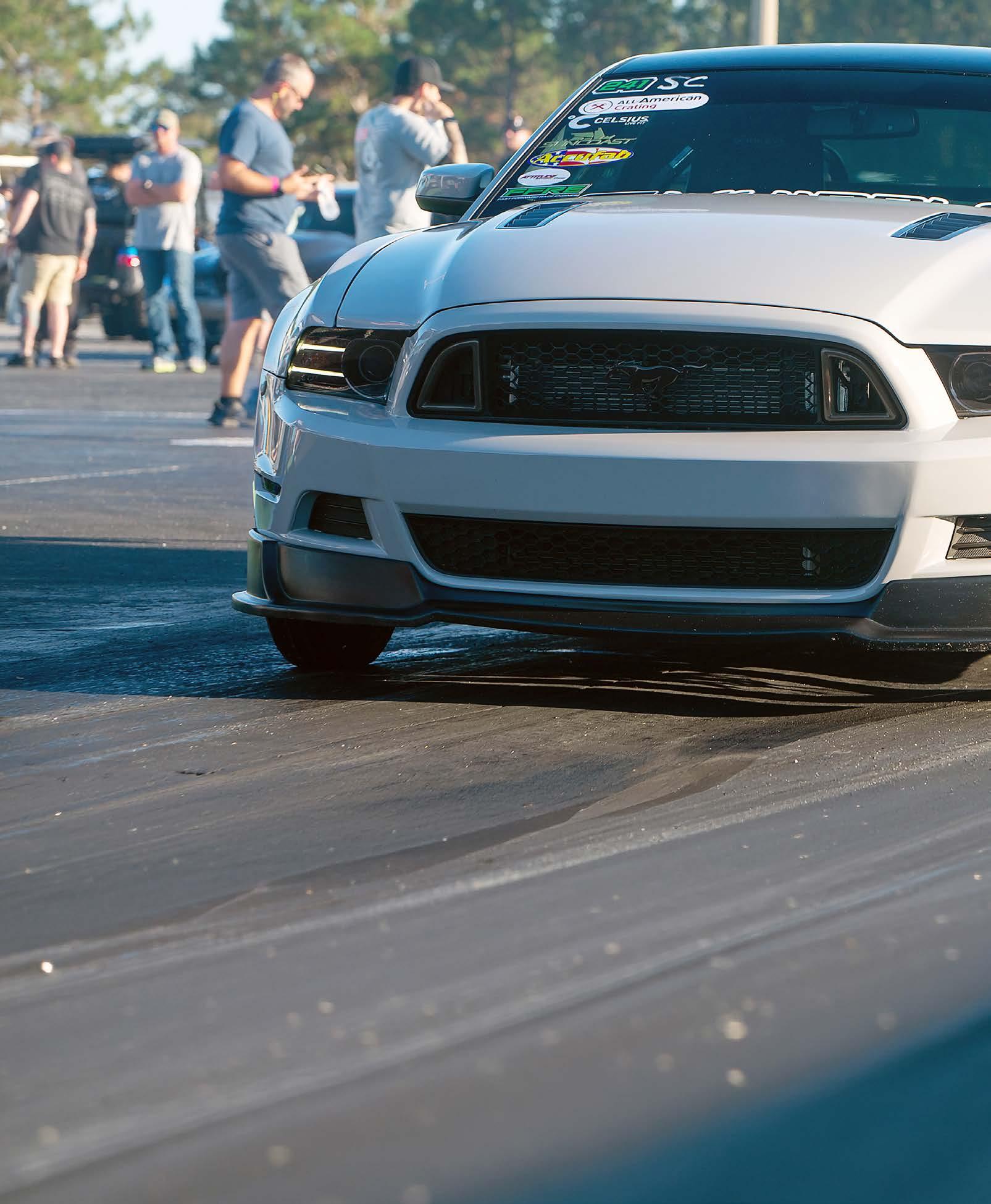
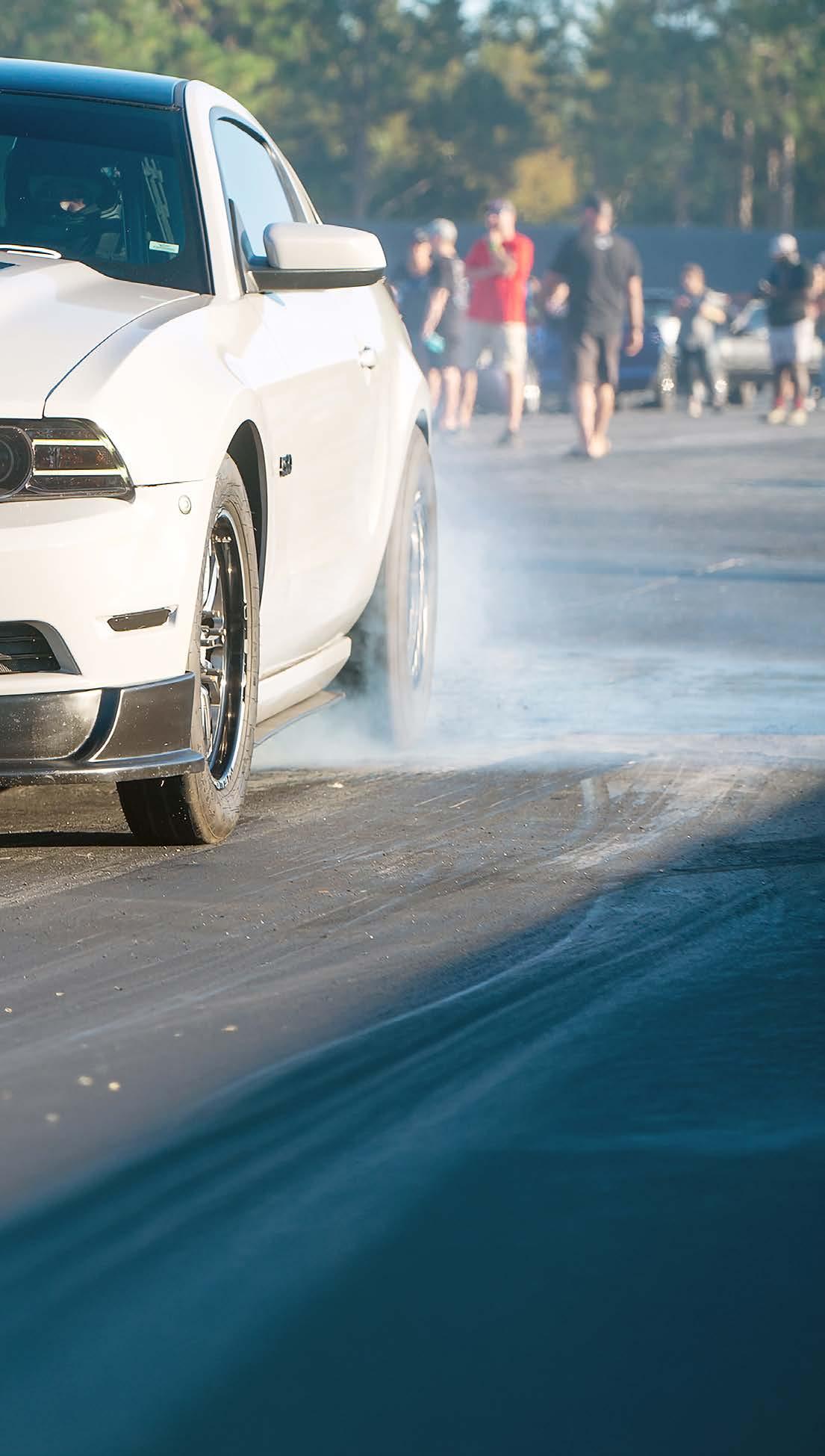
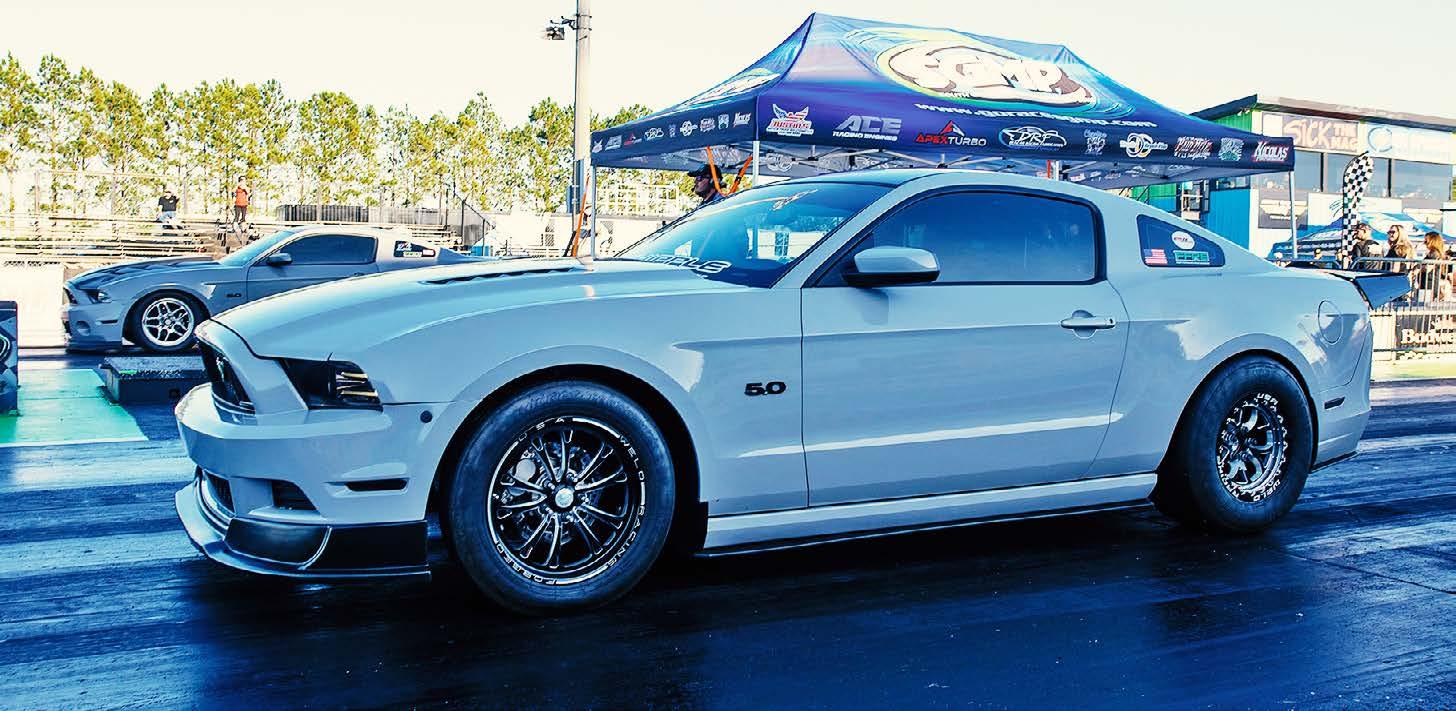
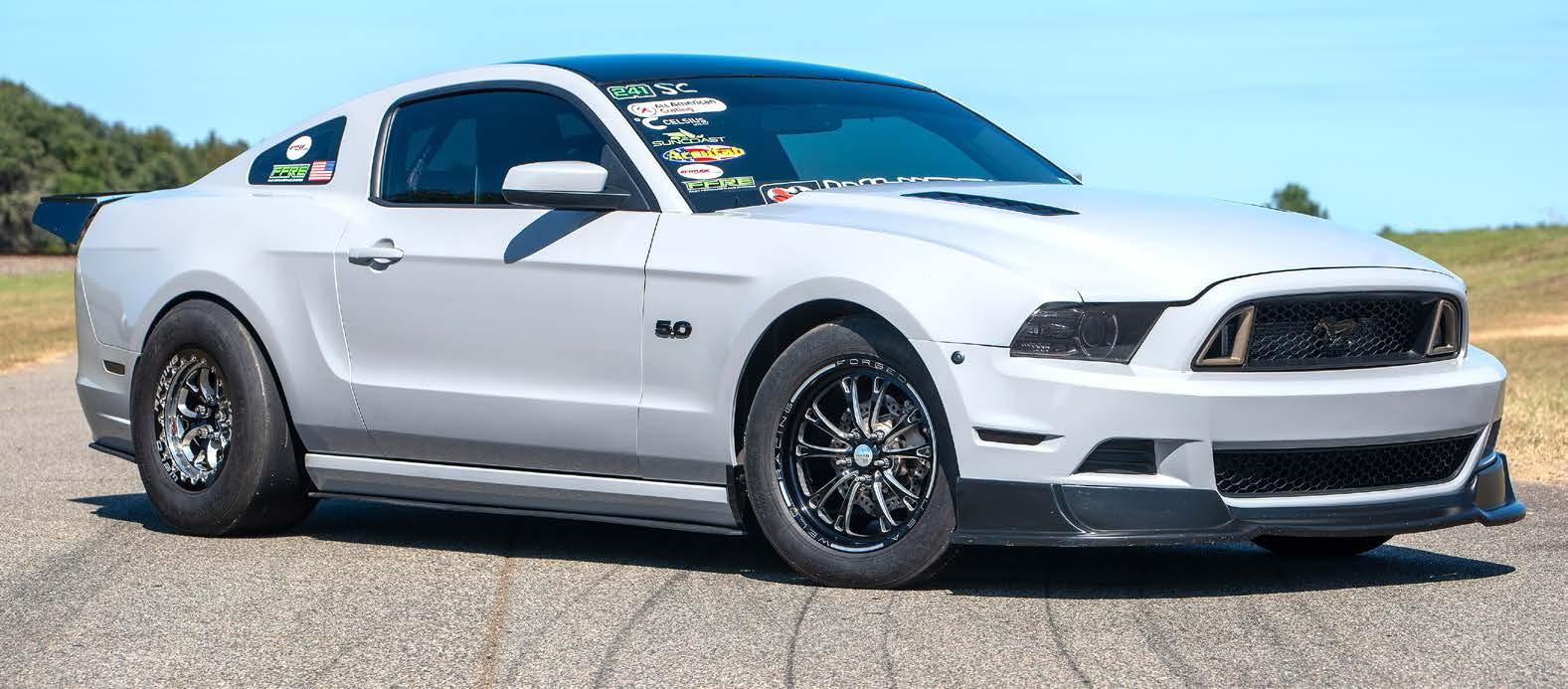
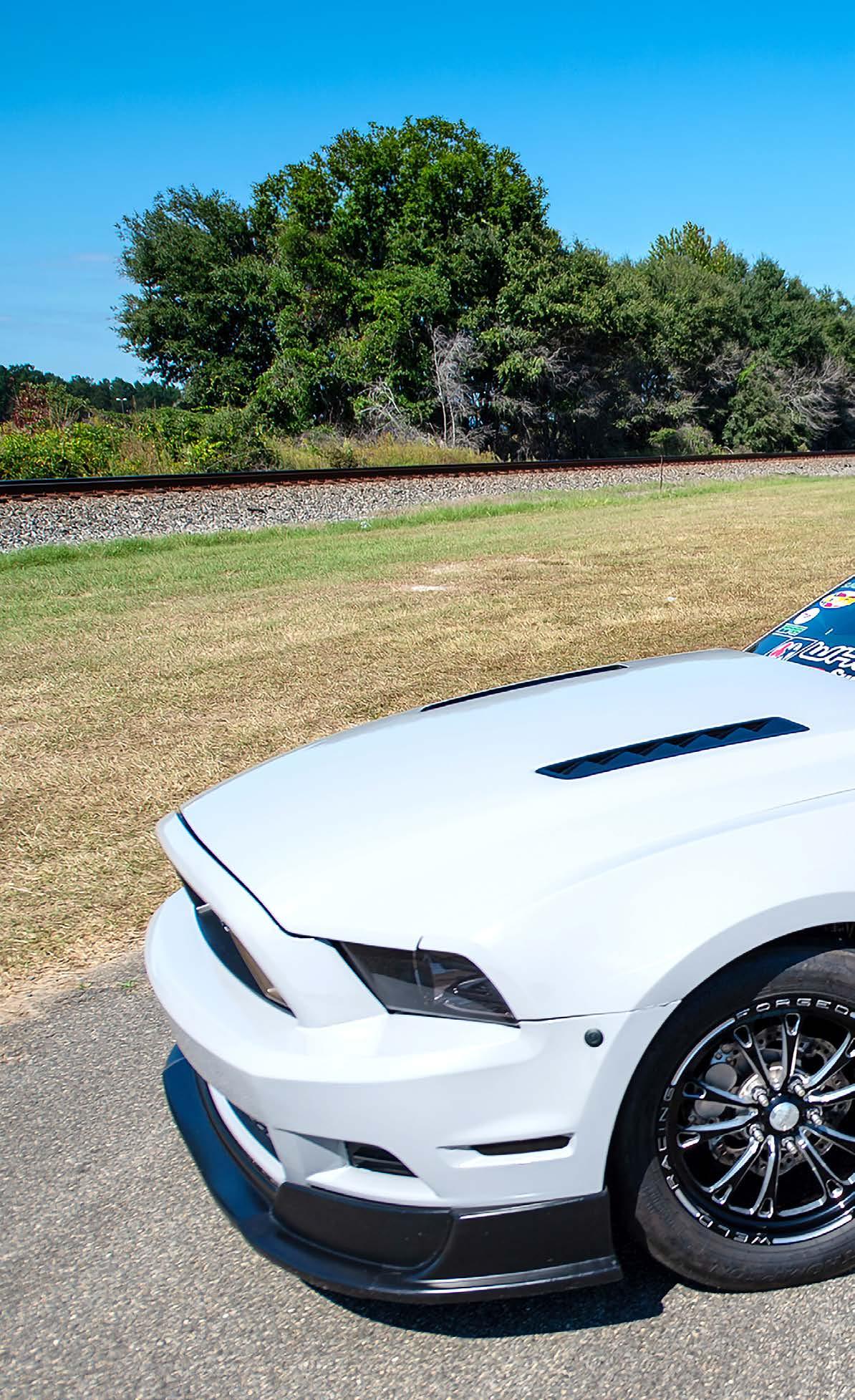
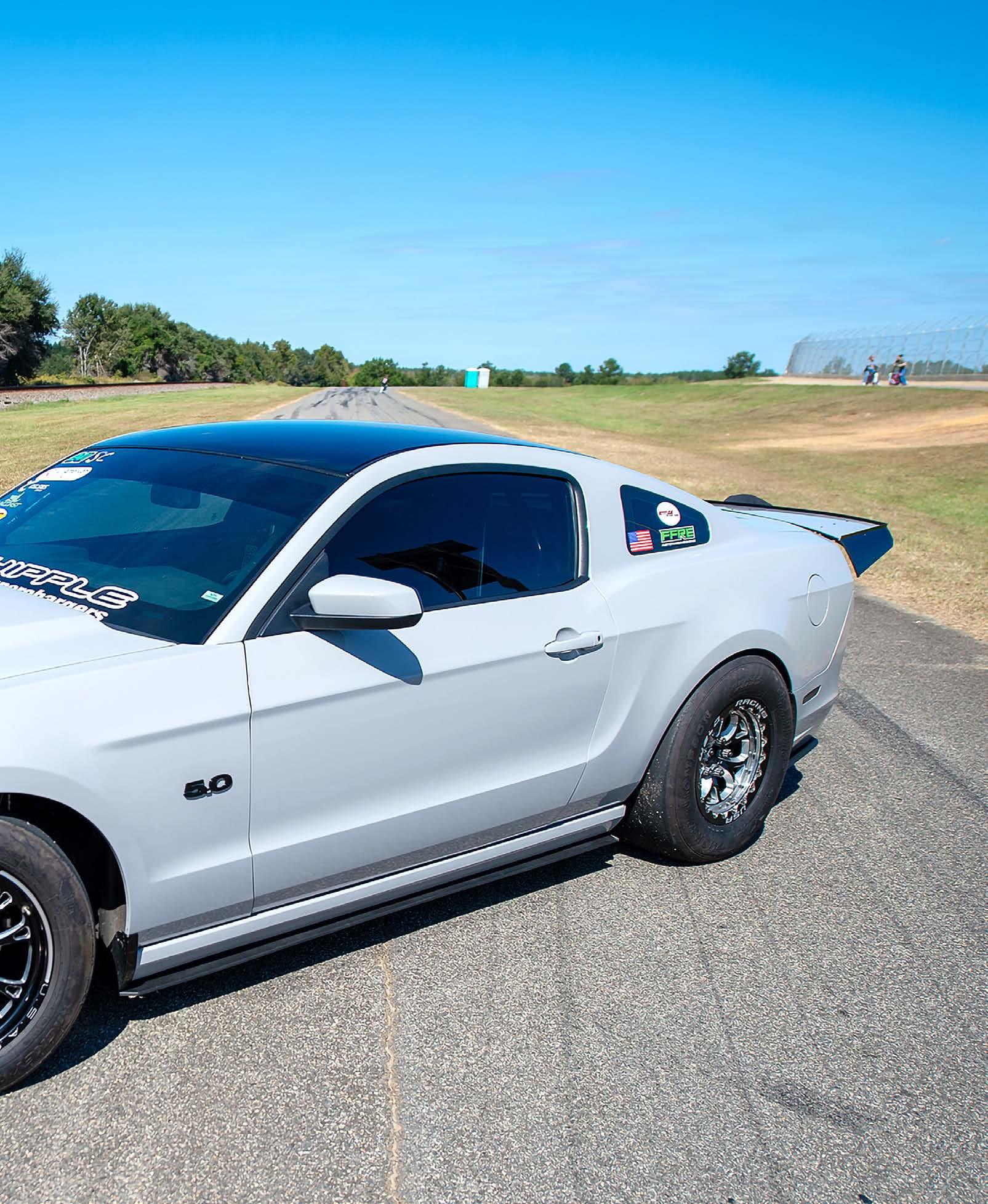
Chad Smith’s 2013 supercharged Mus tang GT was liter ally saved from a salvage yard and originally bought as a donor car to hop-up a previous ly purchased Fox Body. But when he got into it, Smith realized this S197 was a diamond in the rough and well worth saving.
Story: Steve Baur
As much as motor racing can be a singular sport, it often leads to personal relationships that make the sport even more enjoyable.
A local veteran passed on his knowledge and love of all things automotive to Chad Smith and his friends, and after taking a break from sounds, sights, and thrills of speed to buy a home and start a family, Smith eventually found his way back through his exploits with this 2013 Ford Mustang GT. Smith’s Mustang exposure began with a ’91 Mustang GT, that with enough mods, eventually clicked off impressive elapsed times.
“I was able to dip into the mid 10s, which was notable in the early 90’s,” Smith said. Once his first daughter was born, Smith saw the racing part of his life slow down while he focused his attention on hearth and home. After the Mustang sat long enough, it was sold to provide a down payment on a new home purchase.
Photos: Eddie Maloney
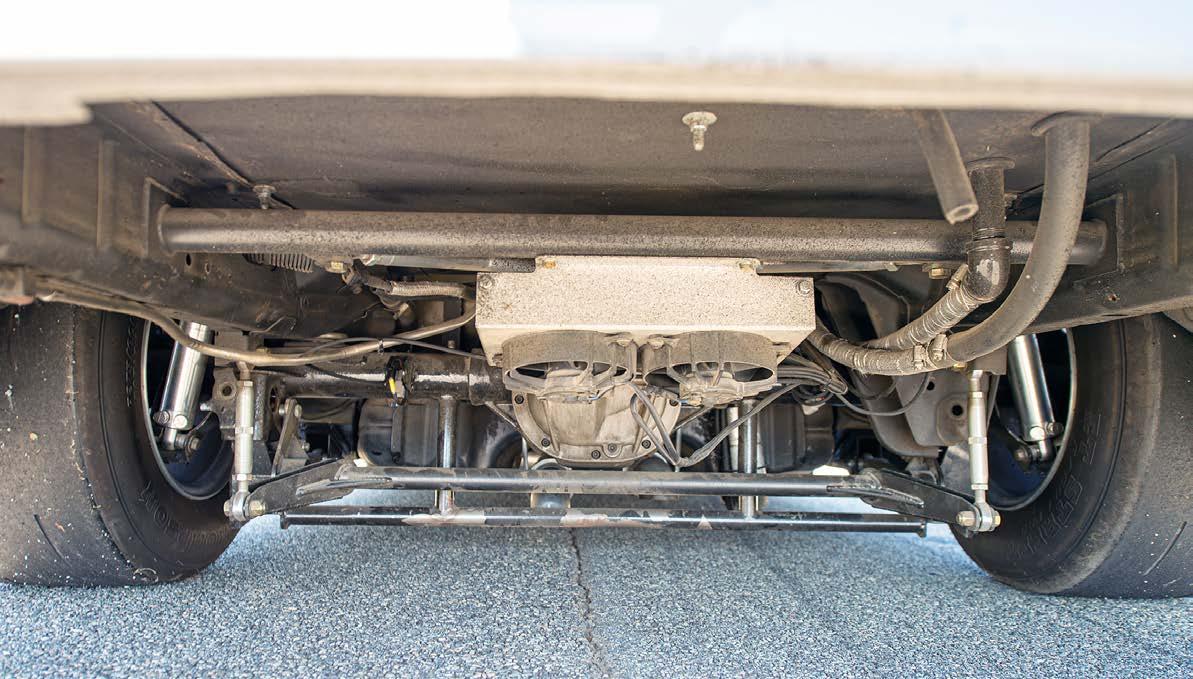
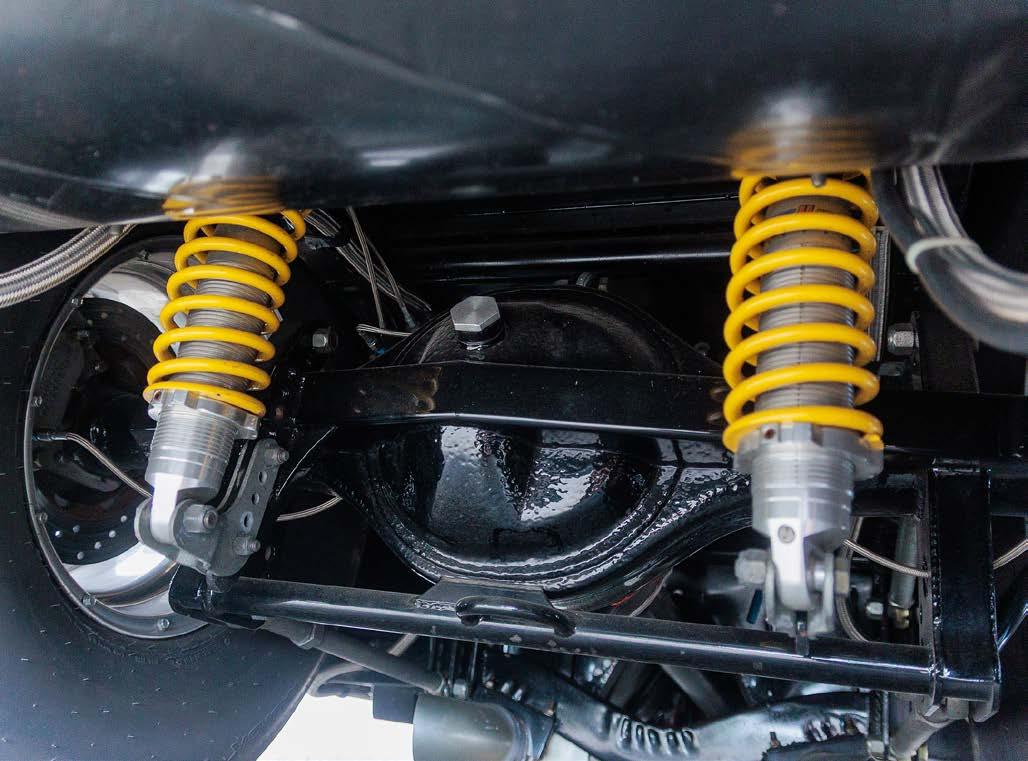
Smith incorporated a host of trick chassis work and rear suspension parts to help get the power to the ground. Custom lower control arm brackets were installed to position the 4.10-gear-equipped, fortified 8.8 rear axle with Kelltrac coilover shocks and anti-roll bar.
As the years passed, however, Smith longed to get back behind the wheel.“After 15 years of working as an electrician, I was able to start my own company,” Smith explained. “I was able to build it and quickly became financially capable of building a car again.” Smith noted that the Fox-Body Mustang was his first love, so that was the first car he purchased. He’s had numerous others since, and currently has a pair of Saleen Mustangs.
To get back into racing, he purchased a notchback Fox-
Body coupe and planned to Coyote-swap it. Smith then purchased the 2013 Mustang GT you see here from Copart with the idea of using it as the donor vehicle, but once he started looking at it, he realized he could easily repair it and get it up and running quicker than performing the swap.
Putting his mechanical skills to good use, Smith rebuilt the Mustang in his one-car, detached garage, then upgraded it with bolt-on parts and a custom ECM calibration.
Maximum Power in Motion
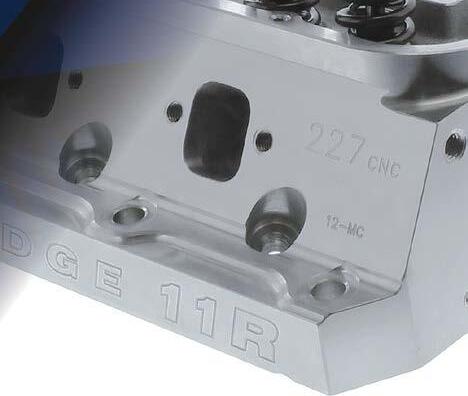
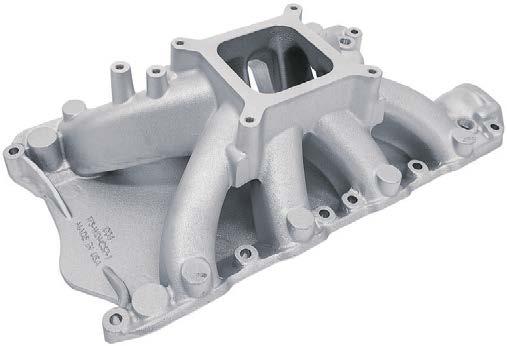
Take performance to the next level with Trick Flow Twisted Wedge® 11R 227 cylinder heads for small block Ford. They feature the ultimate development of the Twisted Wedge innovation, featuring TFS’ most efficient combustion chamber design and valve layout that moves the intake valves away from the cylinder walls to reduce shrouding and significantly improve flow at higher lift.
• Hydraulic roller designs available up to 250°/254° duration and .595"/.595" of lift
• Sold in sets of 16 with polylocks
• 3,500-7,500-plus RPM range
• Available in carbureted and carb-style EFI versions
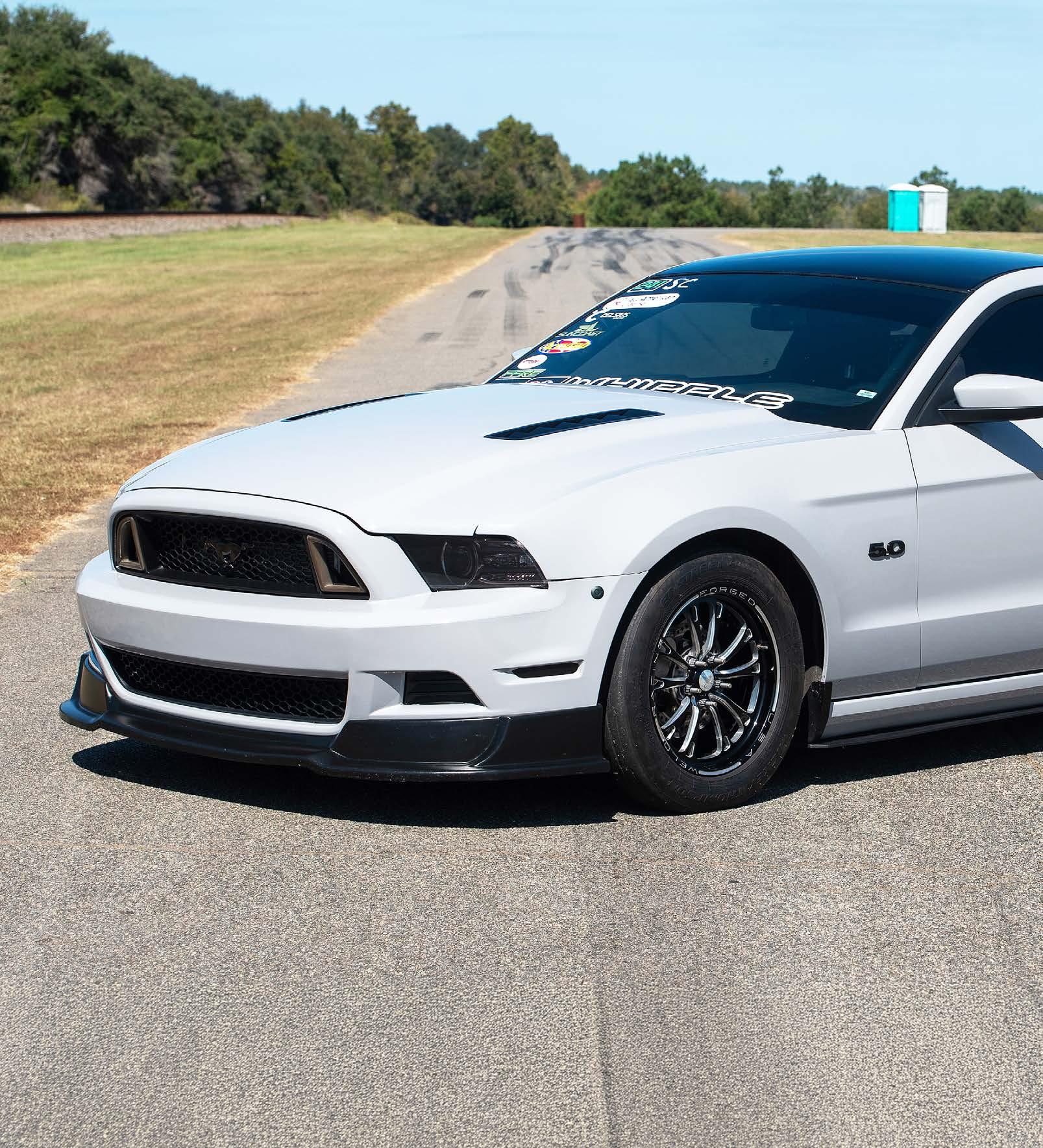
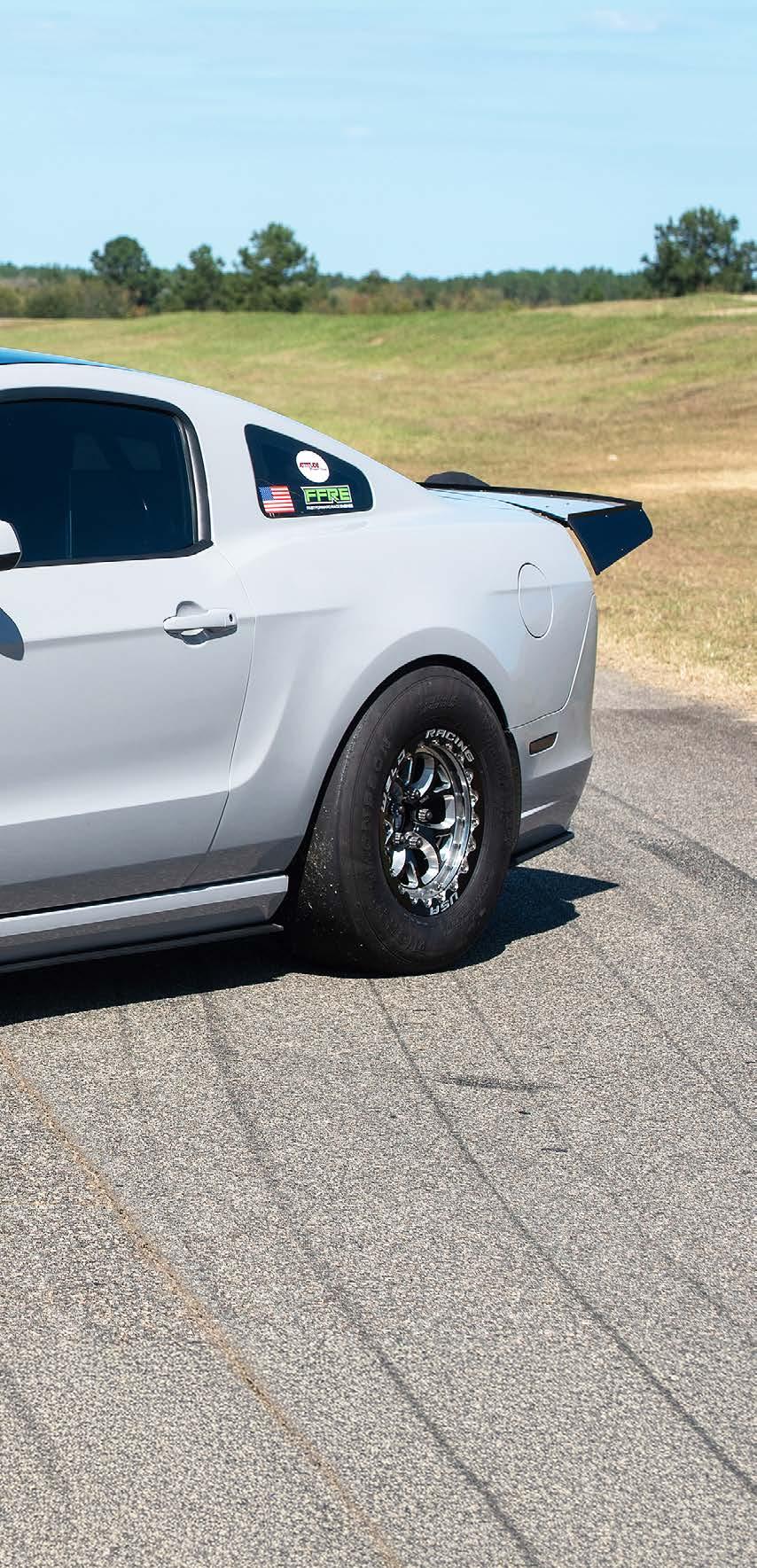
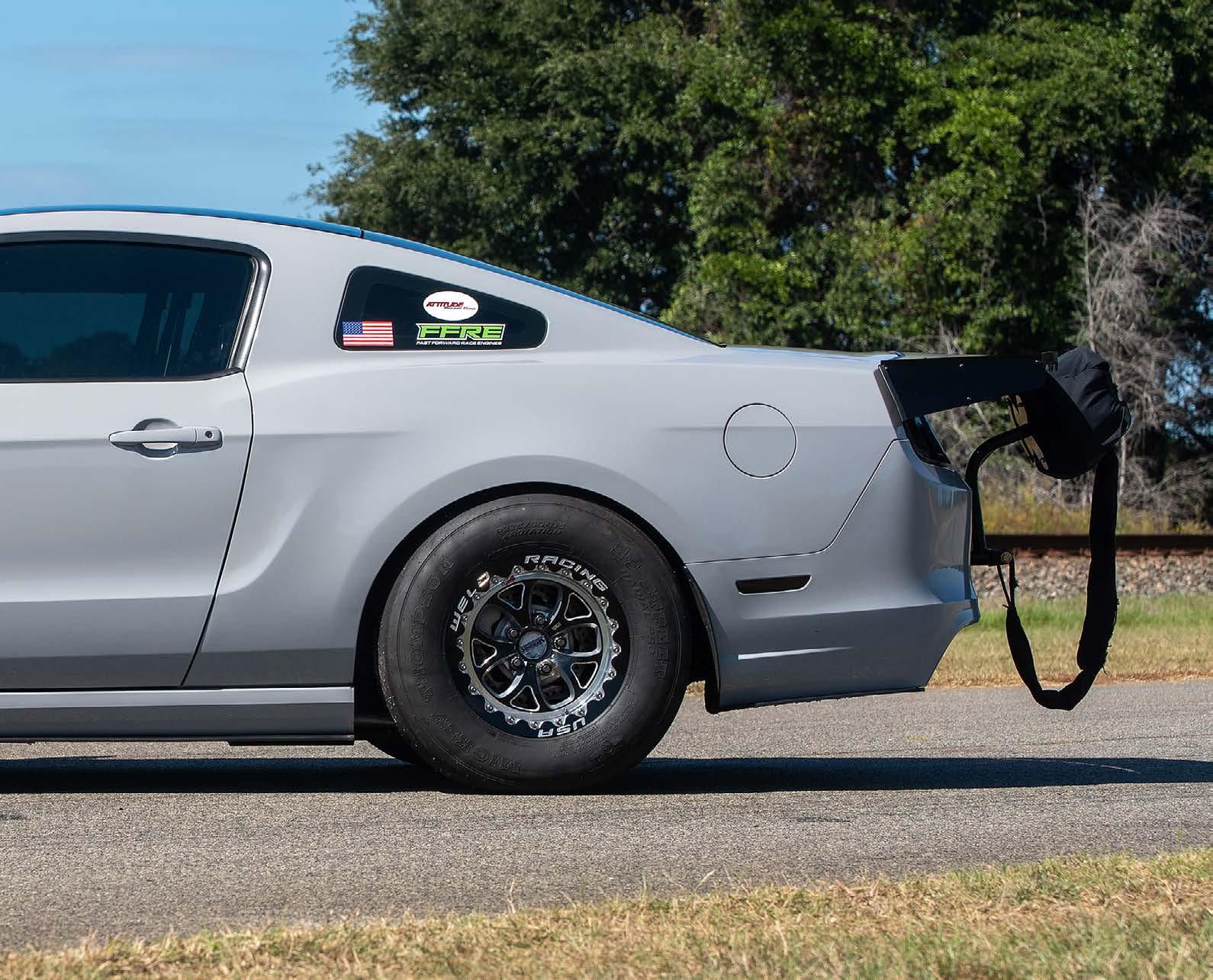
As a newer build should, the GT sits low to the ground giving it that sleek, fast look. Jessica Doxsey of Wrapitology covered the car in Chalk White gloss film and a Mike Thomas Fab drag wing was added (and needed) as well.
Later, a Roush 2.3-liter supercharger delivered 10-second timeslips. “The ‘13 S197 got me back to the drag strip where I fell in love with racing once again,” Smith noted. “I met some local NMRA racers at a local event and needless to say they corrupted me.” Those experiences eventually called for more horsepower, and the Roush blower was swapped out for a Gen 3 2.9-liter Whipple supercharger and the resulting performance improvement
netted 9-second timeslips.
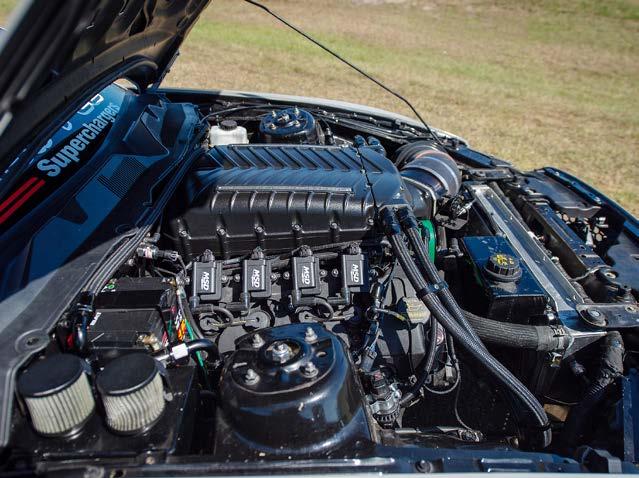
To further his need for speed, Smith had MPR Racing Engines build him a suitable powerplant. It was fitted with a Boss 302 crankshaft, Manley billet I-beam Pro connecting rods, and CP pistons with Total Seal rings. The cylinder heads were ported by Slawko Racing Heads and feature Manley 1mm larger Stainless valves with PAC springs, and custom blower cams from Todd Warren Cams enhance boosted operation.
MPR Racing Engines built the Coyote now between the rails of the Stang. A Boss 302 crankshaft swings Manley billet I-beam Pro connecting rods and CP pistons with Total Seal rings. The cylinder heads were ported by Slawko Racing Heads and feature Manley 1mm larger Stainless valves with PAC springs, and custom blower cams were spec’d by Todd Warren Cams.
FPMMetals.com Sales@FPMMetals.com 402.729.2264
Upgrade Your Ride to the Pinnacle of Elegance with Our Engine Turned Material.
FPM Metals
Offered in Aluminum or Stainless Swirl Sizes from 1/2” to 2” Dia.
These changes netted 9.0s with the 6R80 transmission.
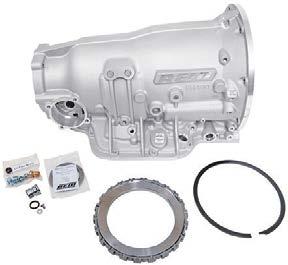
As Smith competed in the NMRA’s 8.60 class, he optimized the Mustang further to improve ETs, reliability and repeatability. Part of this was a switch to a Turbo 400 transmission that Extreme Automatics
put together using a Reid case, complemented with a Coan Engineering billet converter. Next, he worked with Samantha Moore from Vector Motorsports on a Holley EFI upgrade and custom tuning. These updates delivered a best ET of 8.54 at 158 mph.
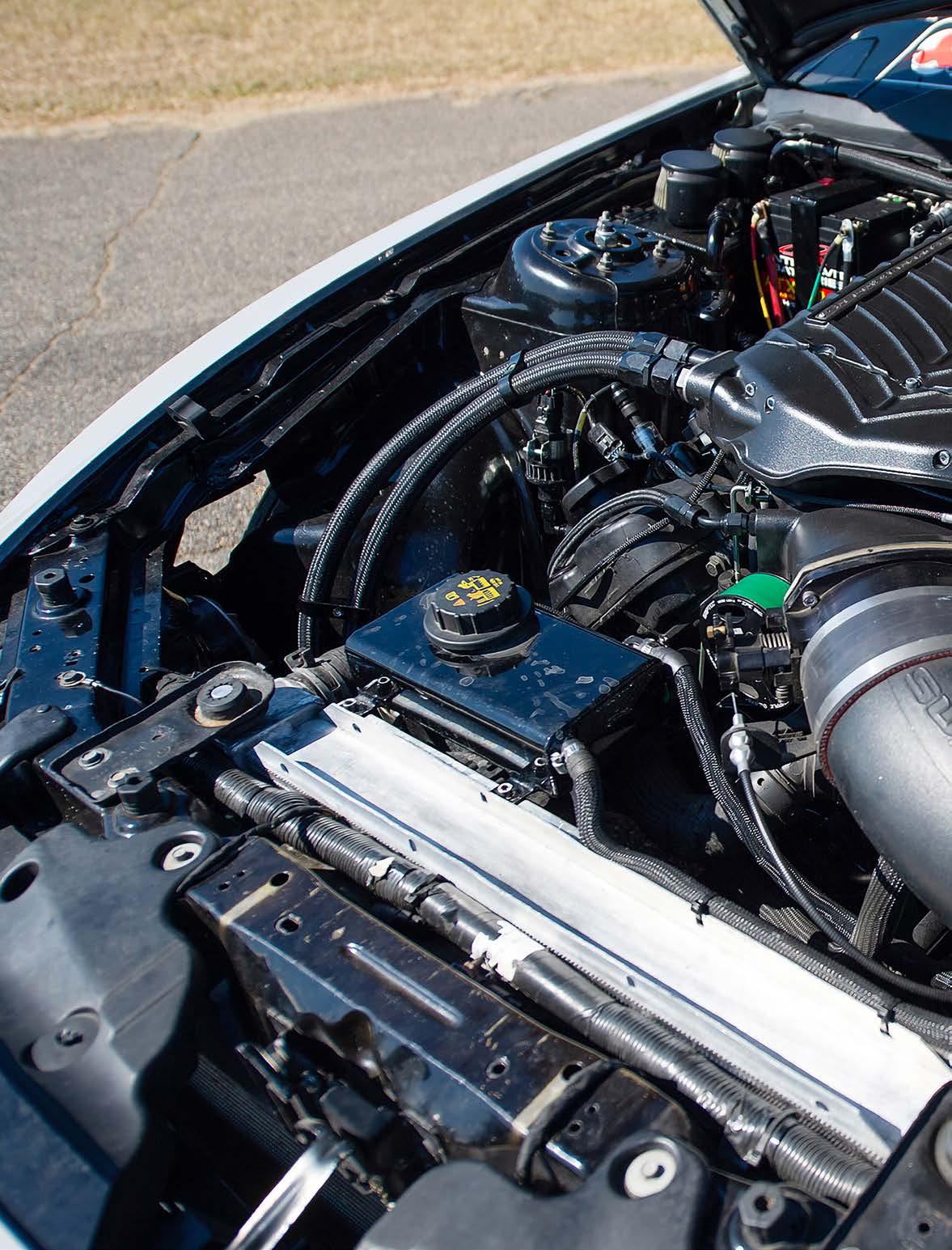
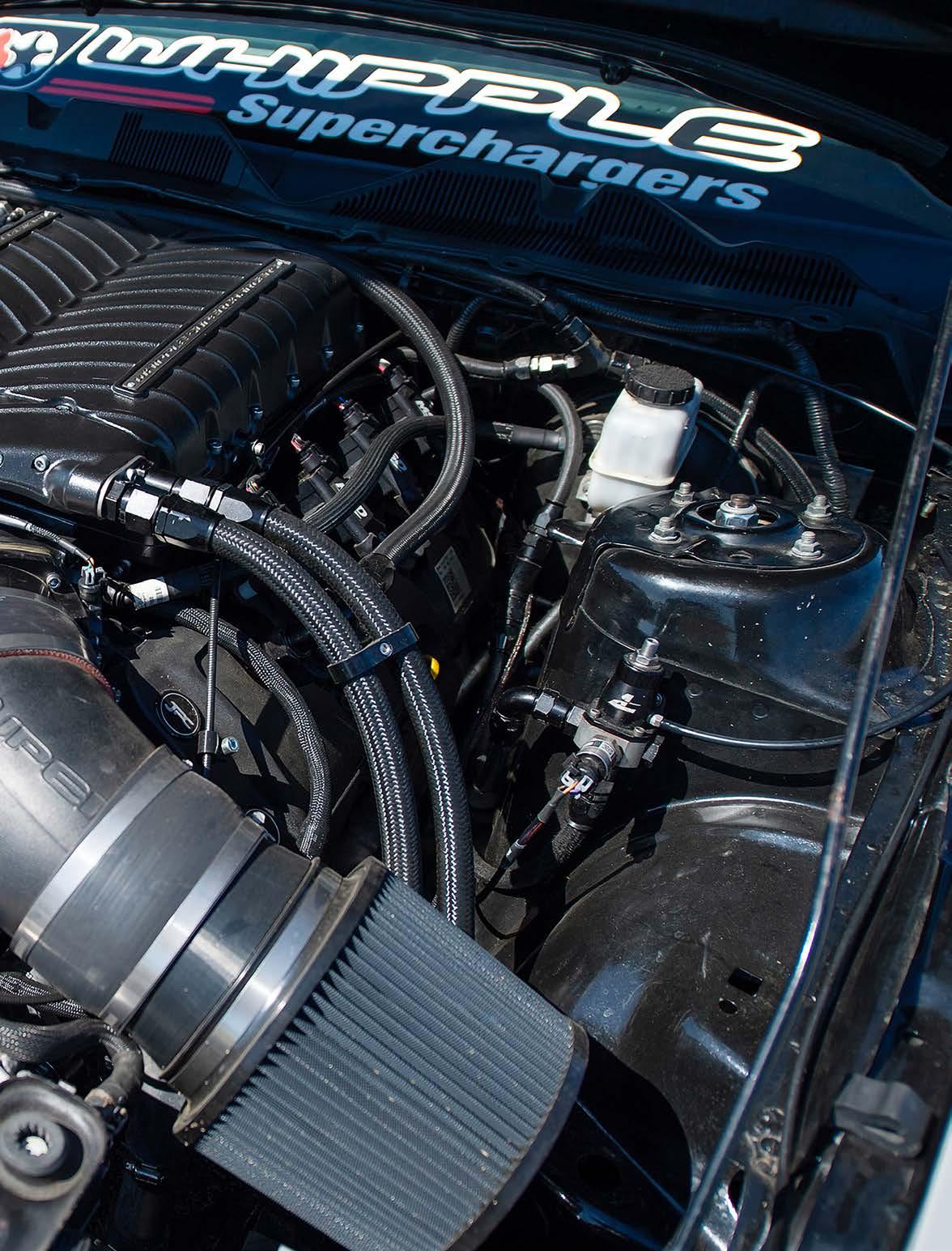
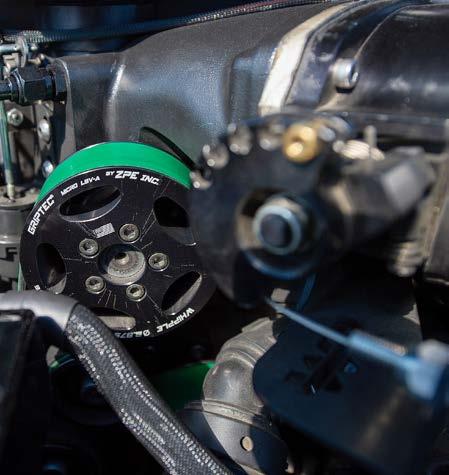
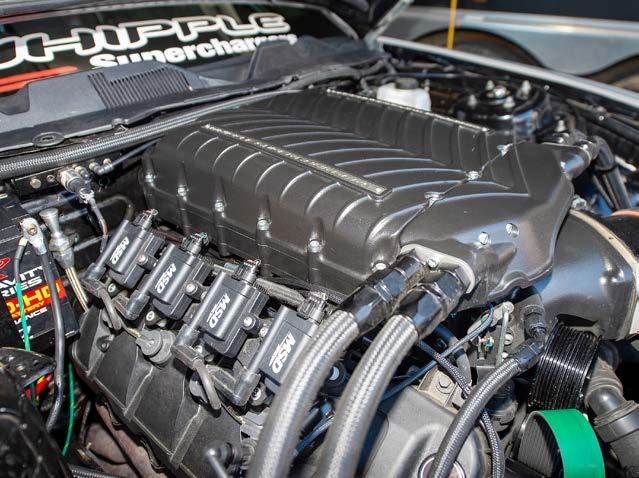
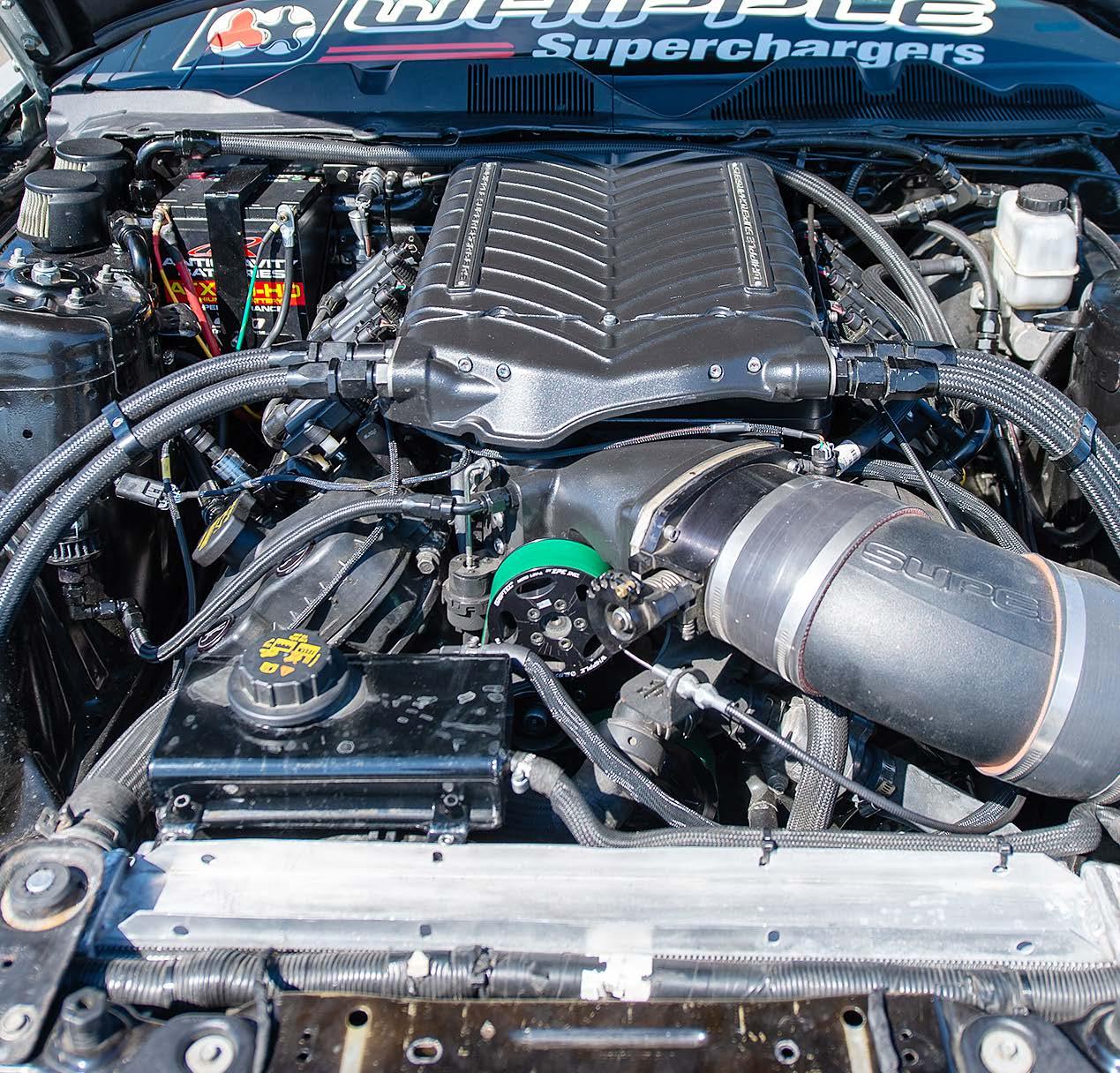
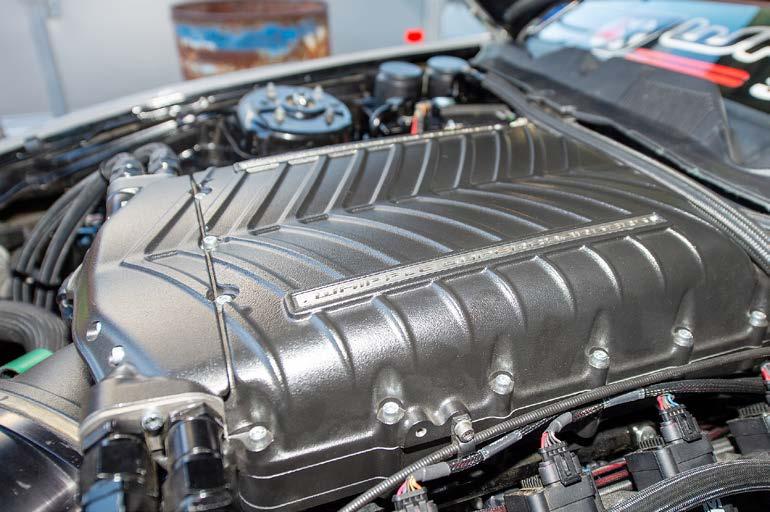
Although the underhood space could pass a factory install, hooked on boost, Smith swapped up to a Gen 6 3.0 Whipple, equipped with race-spec rotors and intercooler, a 10-rib belt, and a 150mm throttle body. Triple Fore 450LPH fuel pumps and ID1700 injectors provide fuel to the blown mill.
Chad Smith’s Supercharged 2013 Ford Mustang GT
Body & Paint:
KPMF Chalk White Gloss wrap done by Jessica Doxsey @ Wrapitology in Dayton, OH.
Chassis Modifications:
Fabrication of 8.50 Cert cage, 8.8 setup and bracing w/ wishbone, and front and rear Mike Thomas Fab control arm brackets installed by Gary Rohe Race Cars.
Suspension (Front & Rear):
Kelltrac Coilover struts, springs, shocks. Aftermarket upper and lower control arms and anti-roll bar.
Engine:
Ford stock aluminum 302CI sleeved Gen 1 Coyote block. Machining and assembly by MPR Racing Engines.
Rotating Assembly:
Boss 302 crank, Manley billet I-beam Pro rods, CP Carrillo 11.5:1 coated pistons, Total Seal rings.
Cylinder Heads:
Slawko Racing Heads ported Gen 1 Coyote heads. Manley 1mm larger stainless valves w PAC 1234X springs. Competition custom blower cams spec by Todd Warren Cams.
Herfurth Aluminum Racing Mufflers and builder kit.
Power Adder:
Whipple Gen 6 3.0L blower with race spec rotors and race intercooler bricks. 10 rib belt with Whipple alternator relocate. MFP crank brace and ATI 20% balancer.
Transmission:
Extreme Automatics, Reid case, billet internal TH400 with 1.77 close ratio gearset. Coan billet converter.
Rear End:
8.8 fully braced. Ford Performance 4.10 gear. Spool, 35 Spline axles, C clip eliminators.
Brakes:
TBM Medium Duty Drag calipers and rotors.
Tires & Wheels:
V Series wheels. 17” front, 15” rear. Radial Pro 275/60/15.
Interior:
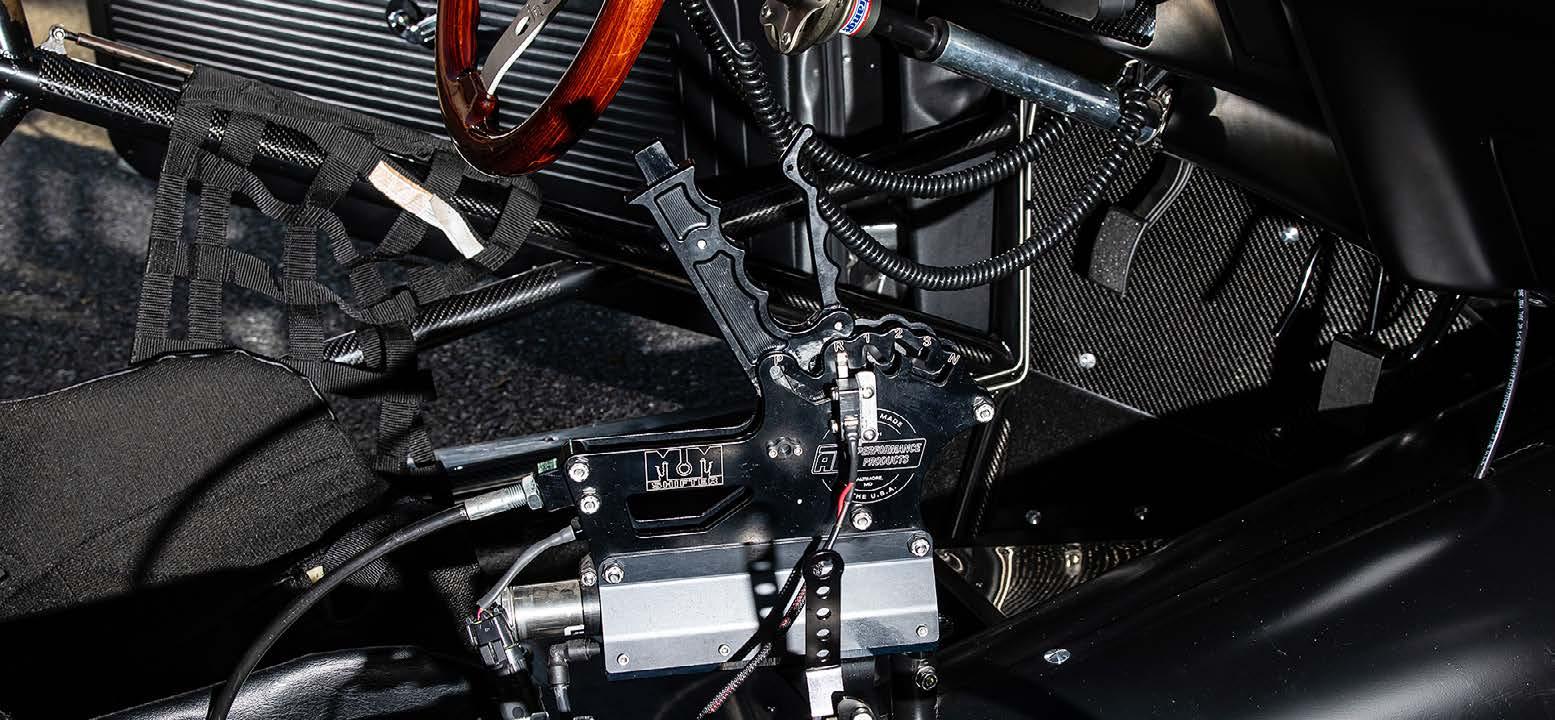
Holley 6.86 Pro Dash, Motion Raceworks TH400 air shifter, race seats, Racequip safety belts
ET & mph:
Best numbers depends on class raced - 1.18 60’, 5.24 @ 130mph, 8.300 @ 155mph. This was the first full pass on the new setup.
We have not since tried for a PB but are planning to turn it up in 26.
Goal is very low 8’s, possibly a 7 sec pass.
1.32 60’, 5.50 @ 127mph, 8.60 @ 162mph
1.28 60’, 5.45 @ 128mph , 8.50 @ 167mph
These are the most common trims as I race mainly either 8.60 or 8.50
Index classes or Street Car Formats with a floating index.
Most Unique Feature(s):
That the car was basically rescued from a salvage lot and originally built in a tiny single car garage. Through hundreds of hours of work all performed by myself has turned into an 8 second powerhouse.
Reason For Build:
The never dying desire to own and build a car of this calibre that never left me over a lifetime.
Build Timeline:
The goal post has continuously moved and several variations have come of that. In its current form all the work was performed in just a few months over the winter break.
Most Memorable Experience:
Quite simply the connections w/ the racing community. So many friends have been made over past several years and the re kindled friendships that have come from it.
Thanks To:
Pit Crew - Eric Nolan, who is a lifelong friend, which our relationship has been rekindled centered around cars after years of no real contact. He is the absolute best hype man in the lanes!
Tuning by Samantha Moore @ Vector Motorsports Engine by MPR Racing Engines
Cams by Todd Warren Cams
Fabrication by Gary Rohe Race Cars
Transmission by Extreme Automatics
Vehicle Wrap by Jessica Doxsey @ Wrapitology
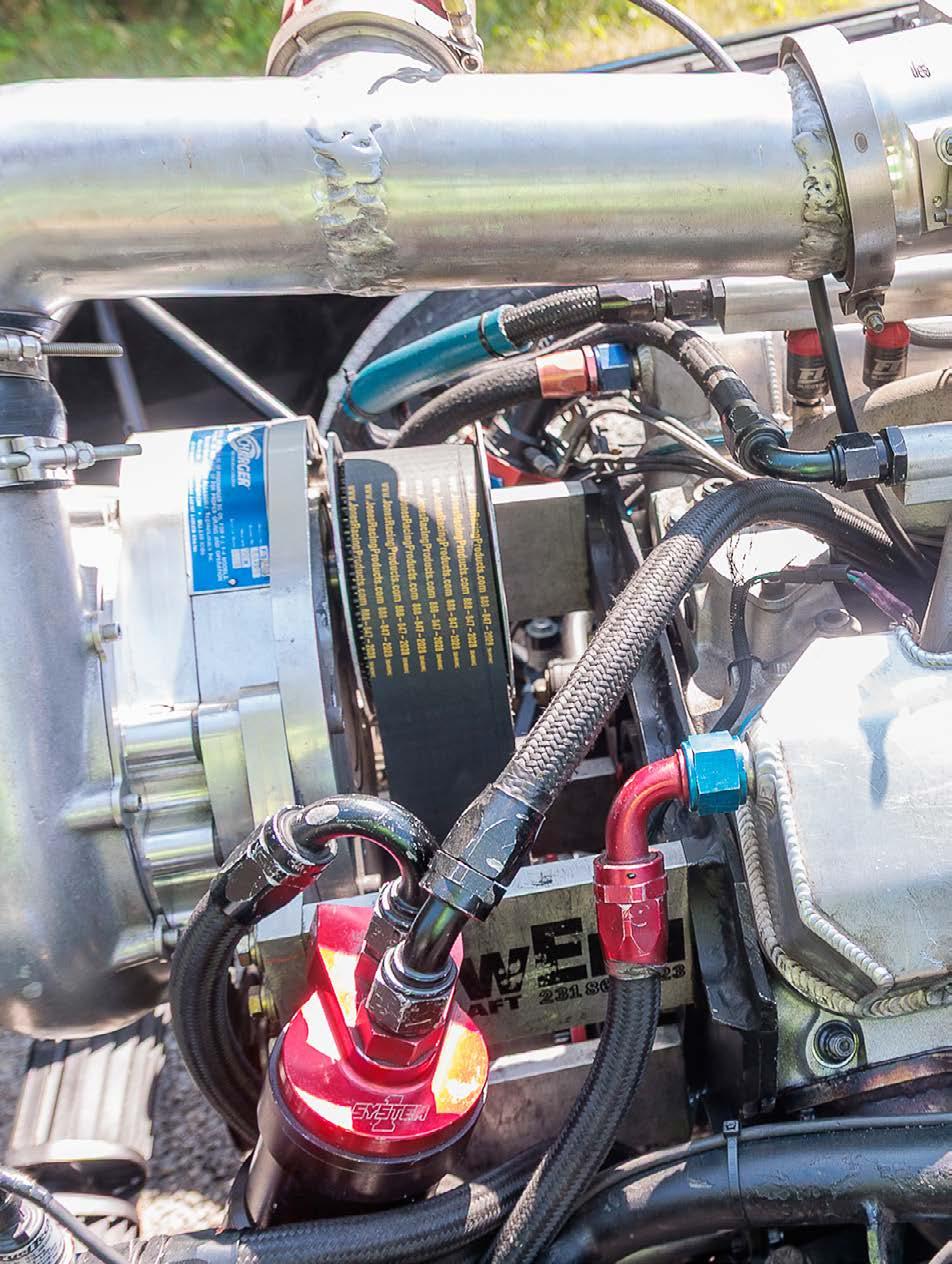
With help from Whipple Superchargers, Smith swapped out blowers again, going to a Gen 6 3.0 Whipple, and it wasn’t just your out-of-thebox blower, but one equipped with race-spec rotors and intercooler, a 10-rib belt, and a 150mm throttle body. Providing the complementary amount of fuel are triple Fore
450LPH fuel pumps and ID1700 injectors.
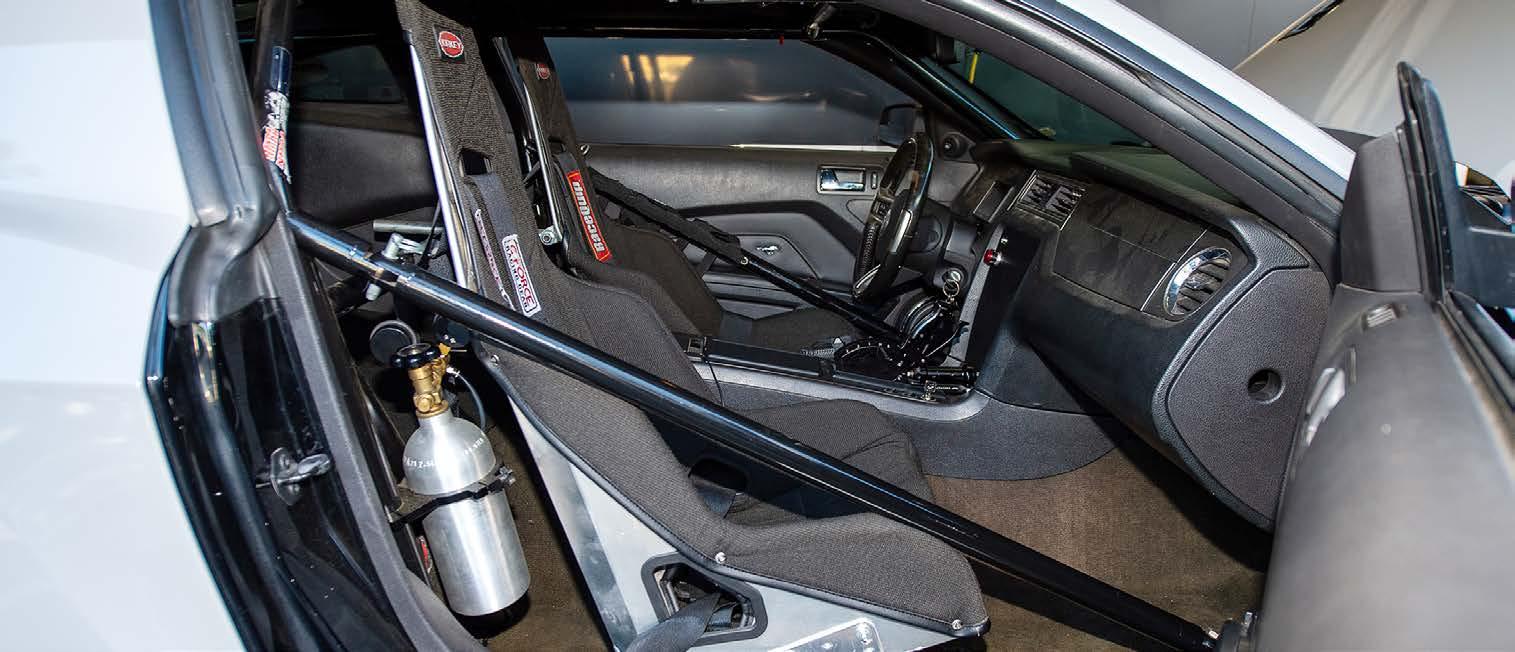
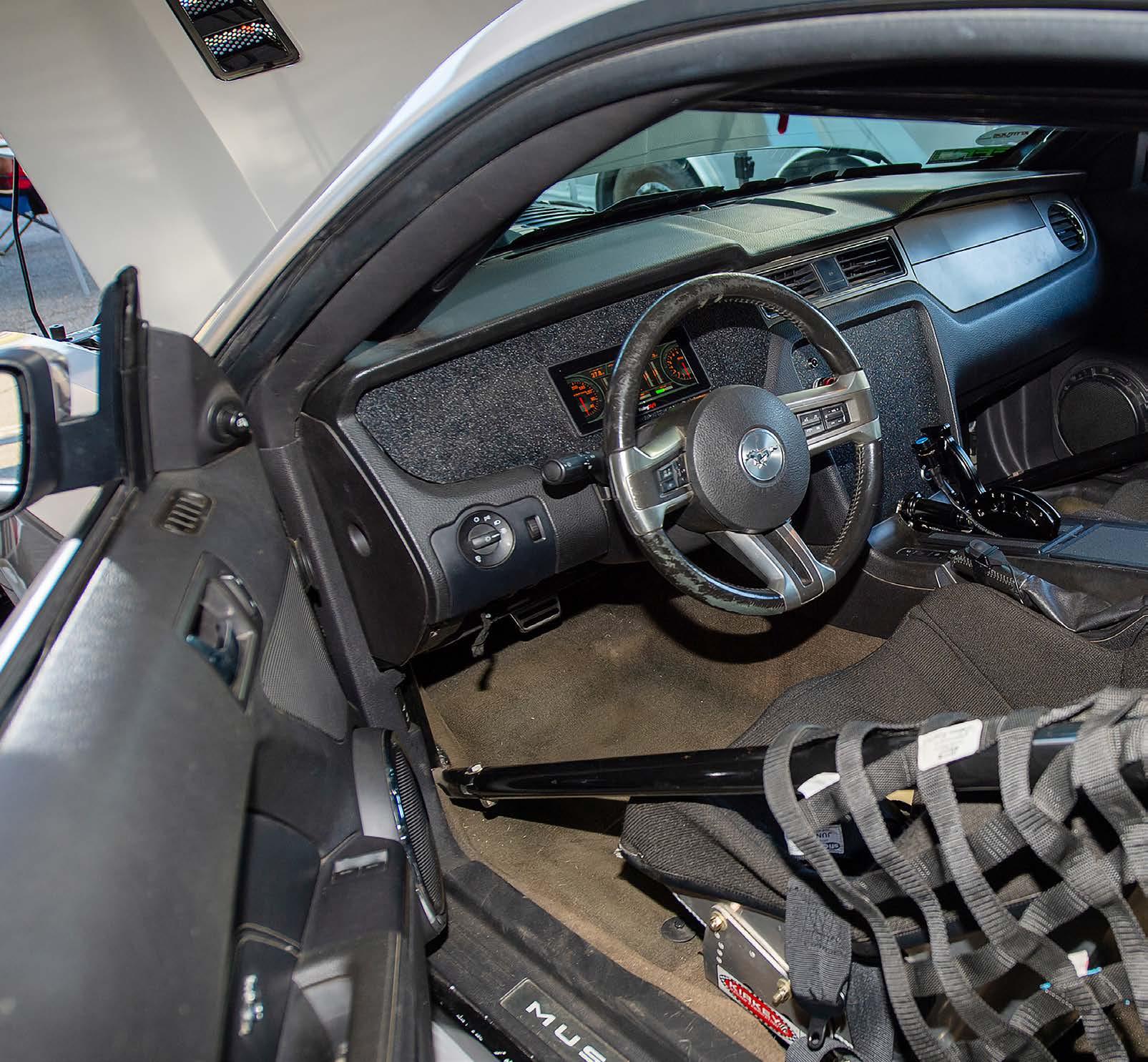
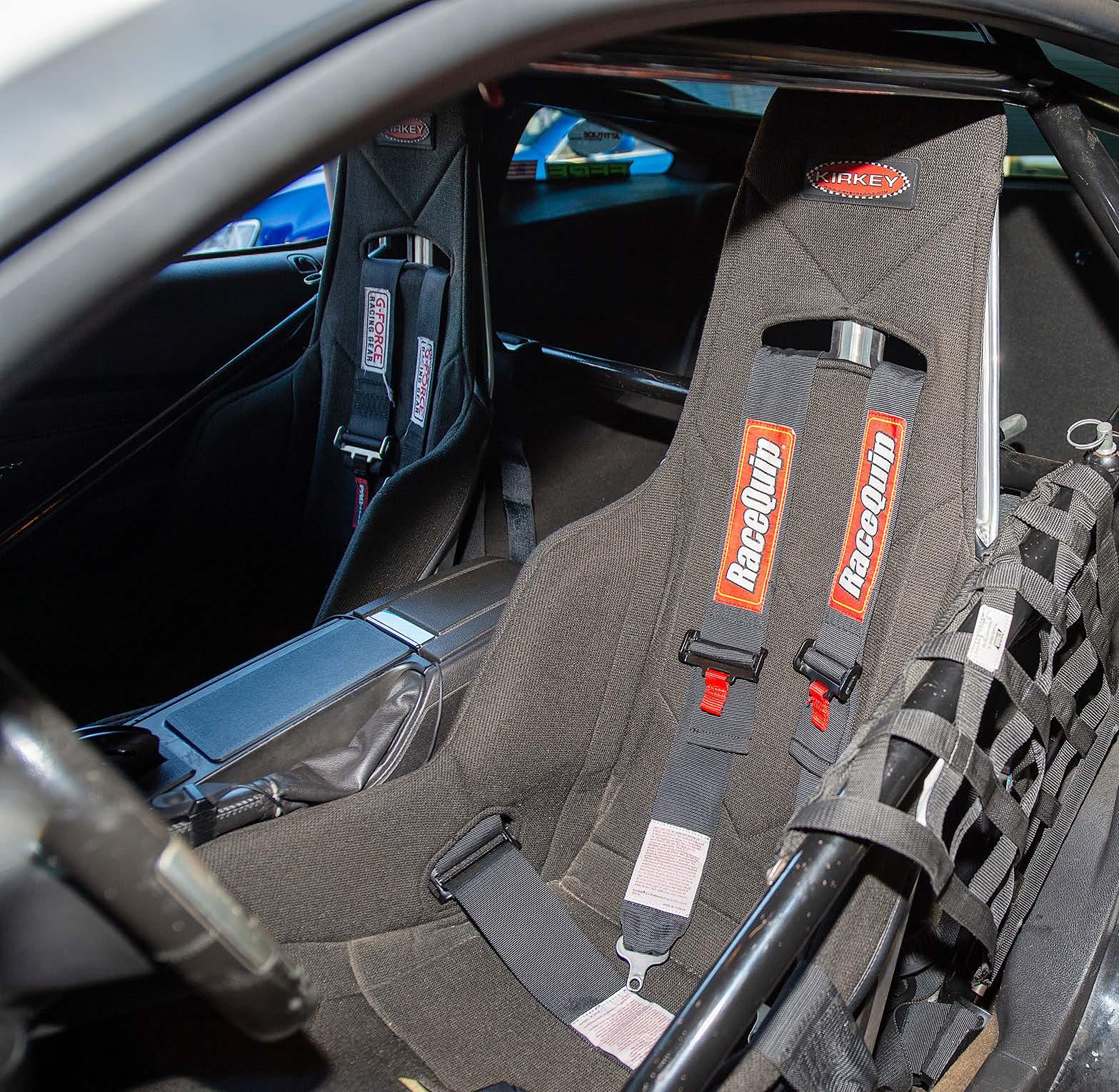
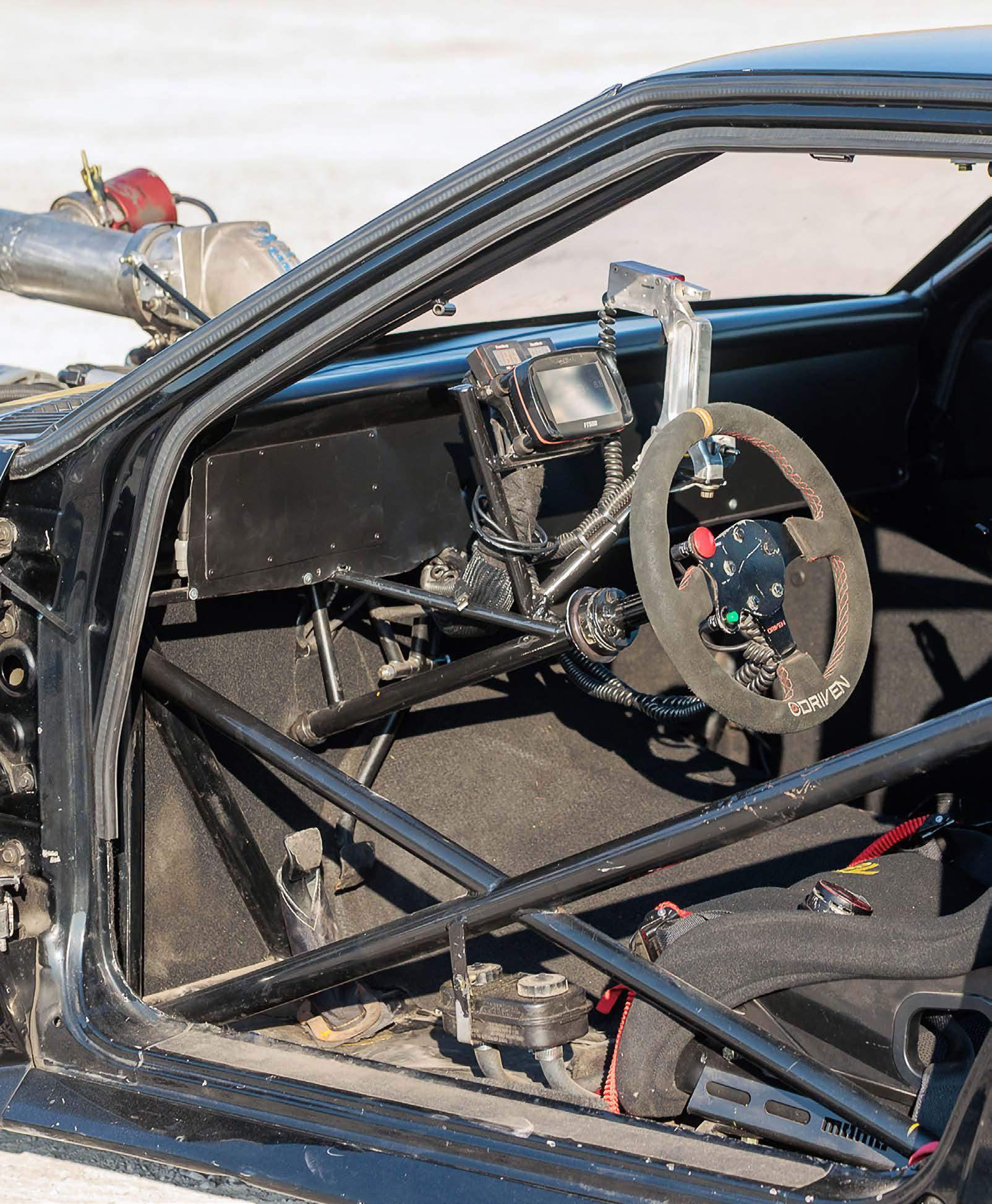
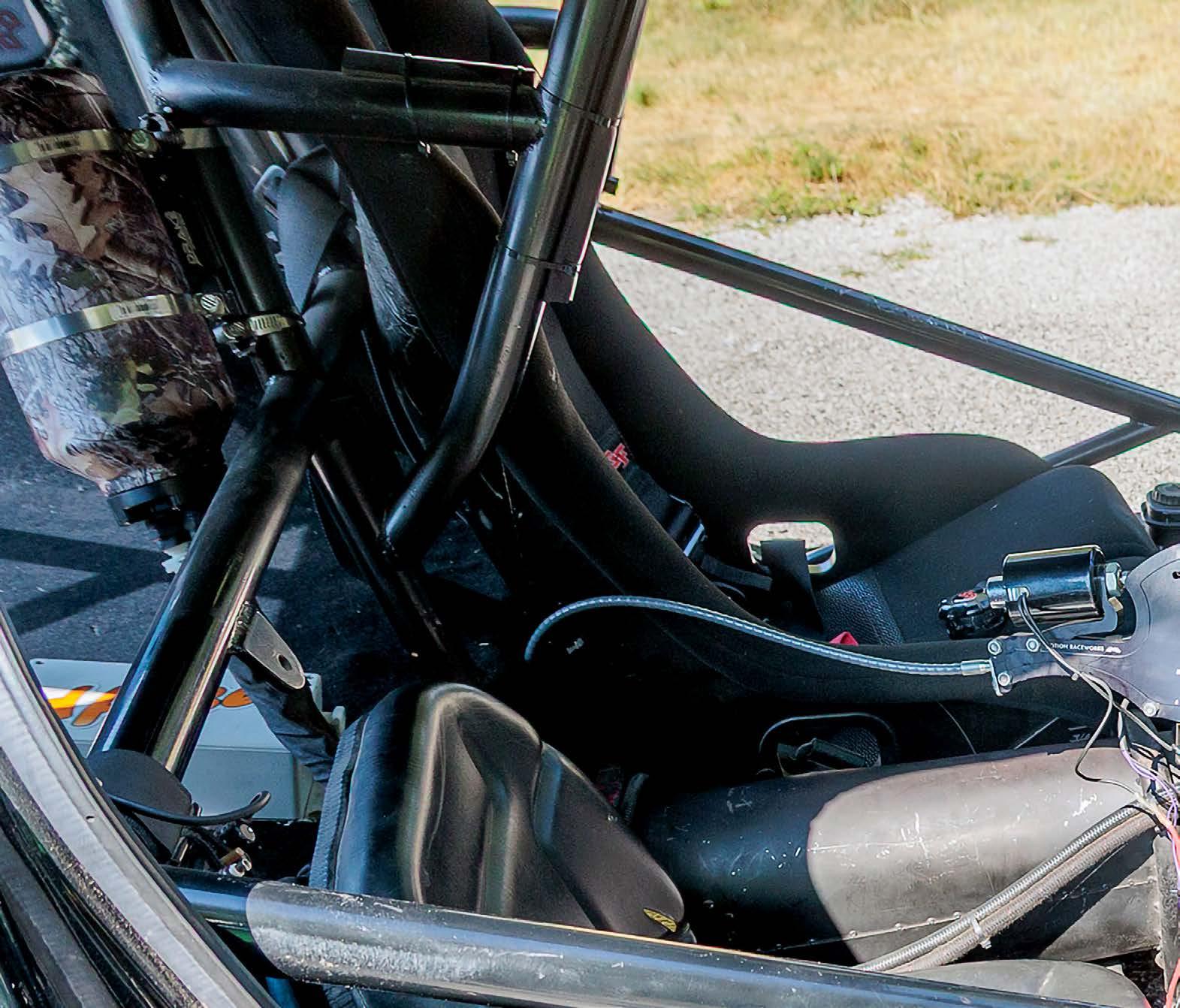
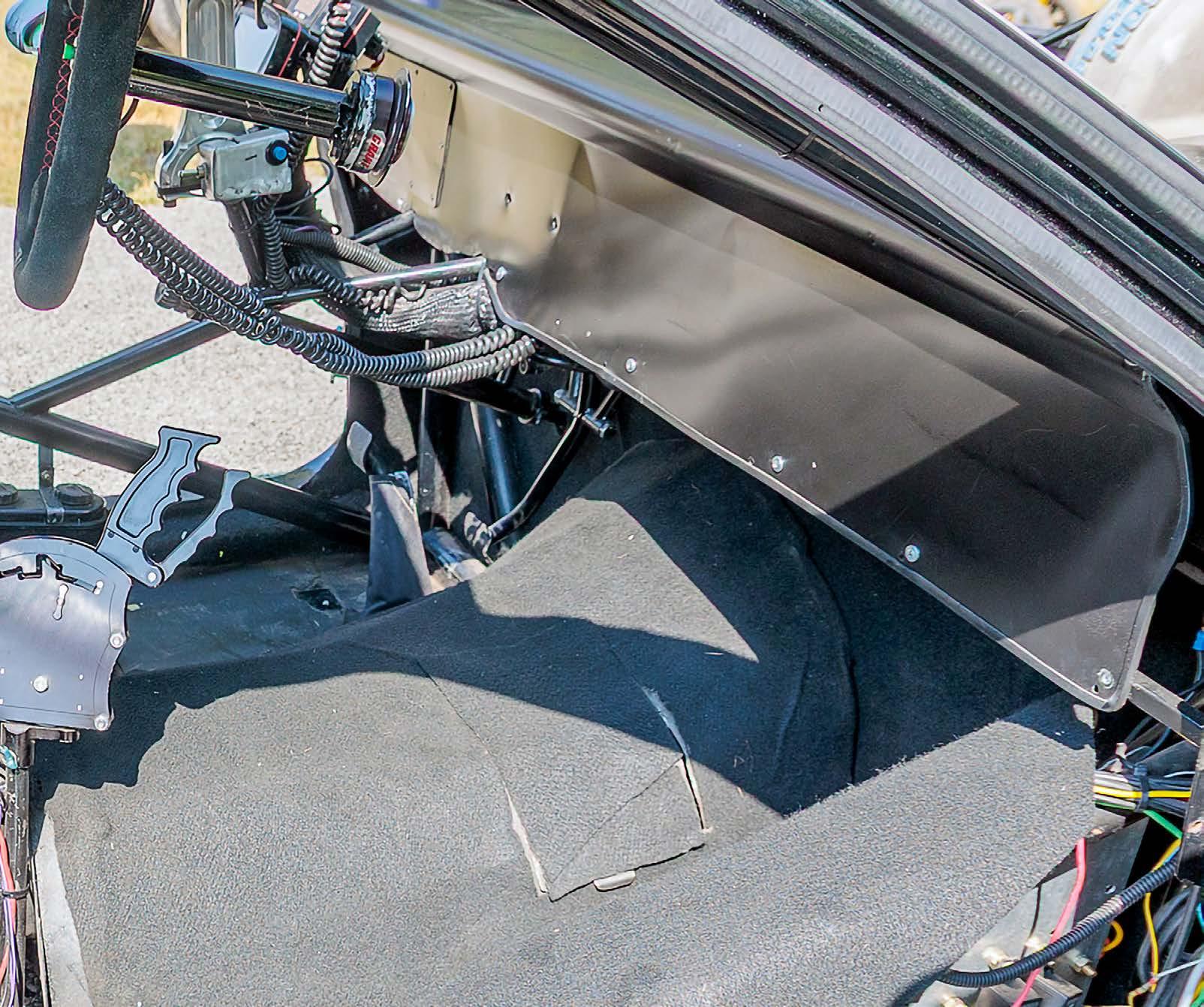
You’ll find additional racing upgrades in the Mustang’s interior space where Holley’s 6.86 Pro Dash, Motion Raceworks TH400 air shifter, Kirkey seats, and Racequip safety belts all move things towards lighter weight and focused performance.
A good chunk of interior trim was kept, including the dash, console, trim and carpet but additional racing upgrades in the Mustang’s interior space include a 6.86” interactive Pro Dash, Motion Raceworks TH400 air shifter, a pair of race seats, and Racequip safety belts.
Keeping the S197 unibody stiff and secure is an 8.50-certified roll cage. Gary Rohe Race Cars installed some Mike Thomas Fab lower control arm brackets to position the 4.10-gearequipped, fortified 8.8 rear axle perfectly, and Kelltrac
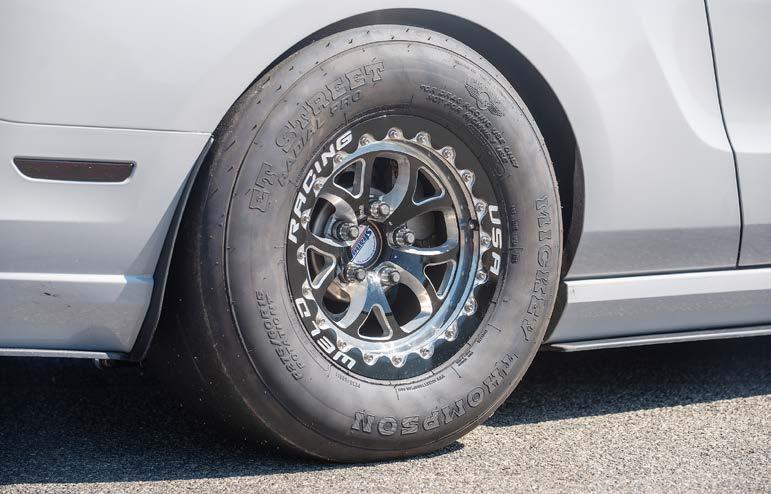
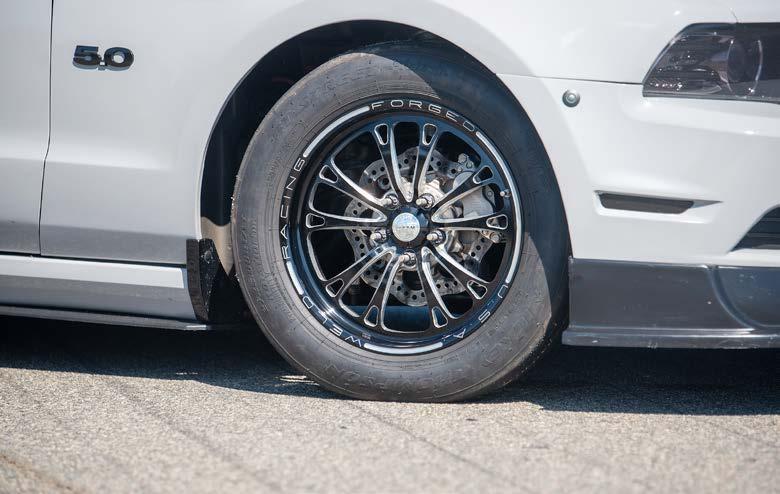
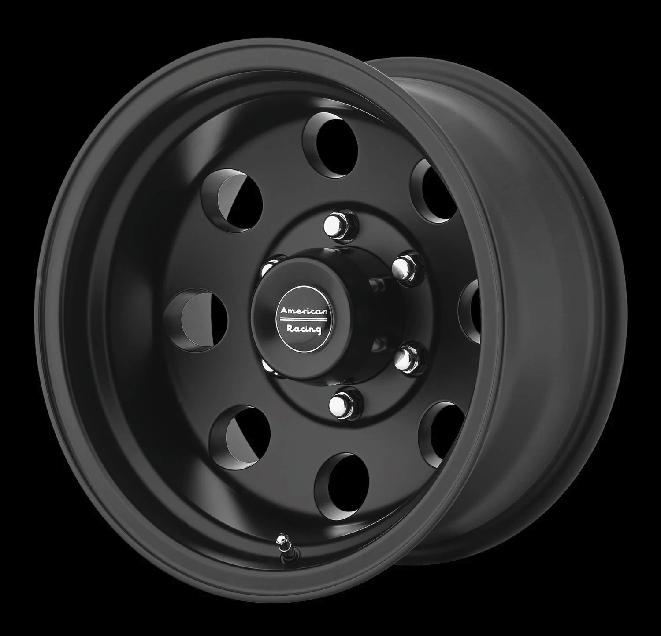
coilover shocks work with an anti-roll bar to properly stick the Mickey Thompson Radial Pros to the pavement. Up front, Kelltrac coilover struts maintain attitude while V Series wheels frame TBM’s Medium-duty drag racing disc brakes.
884 Colborne St. W, Brantford
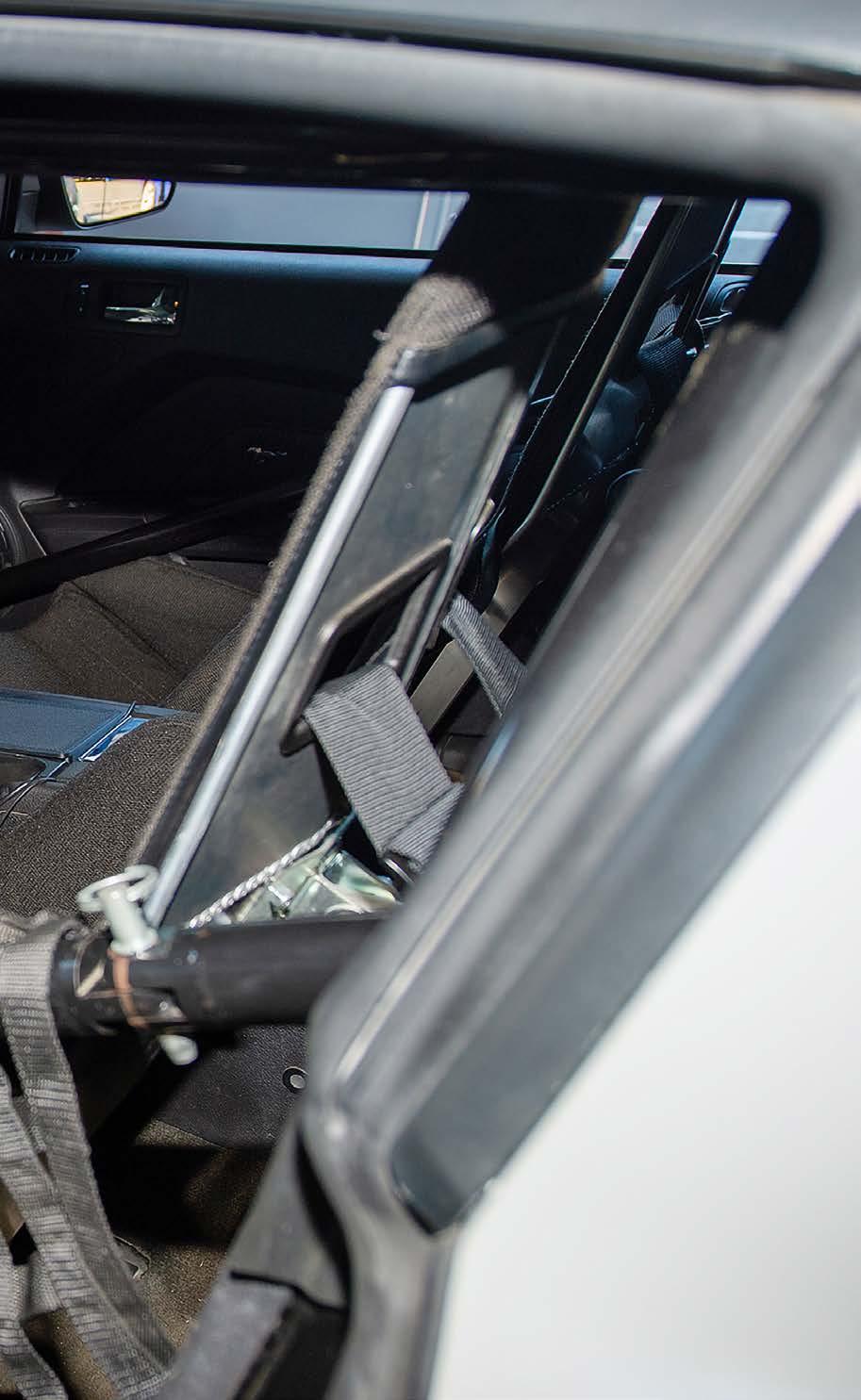
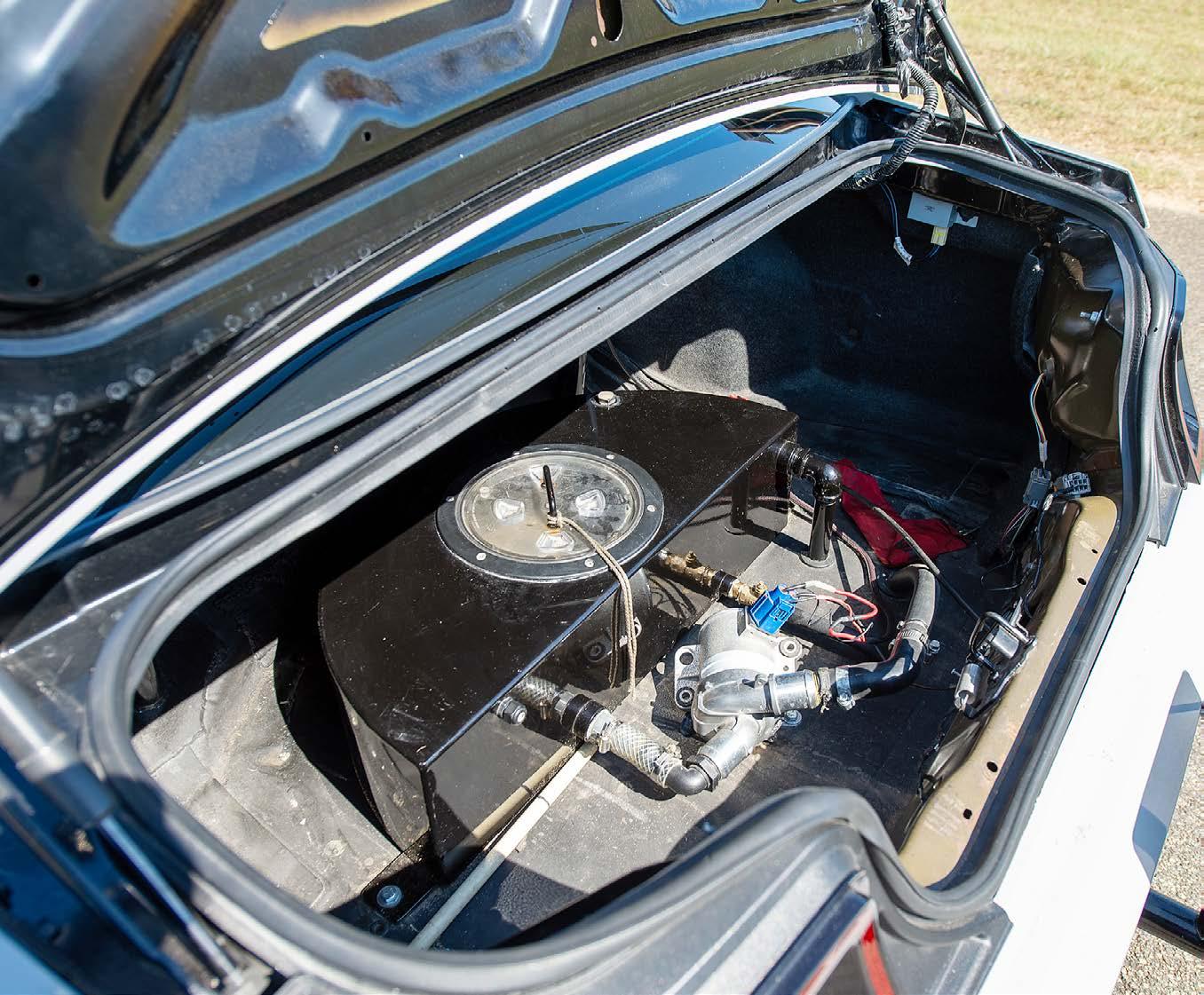
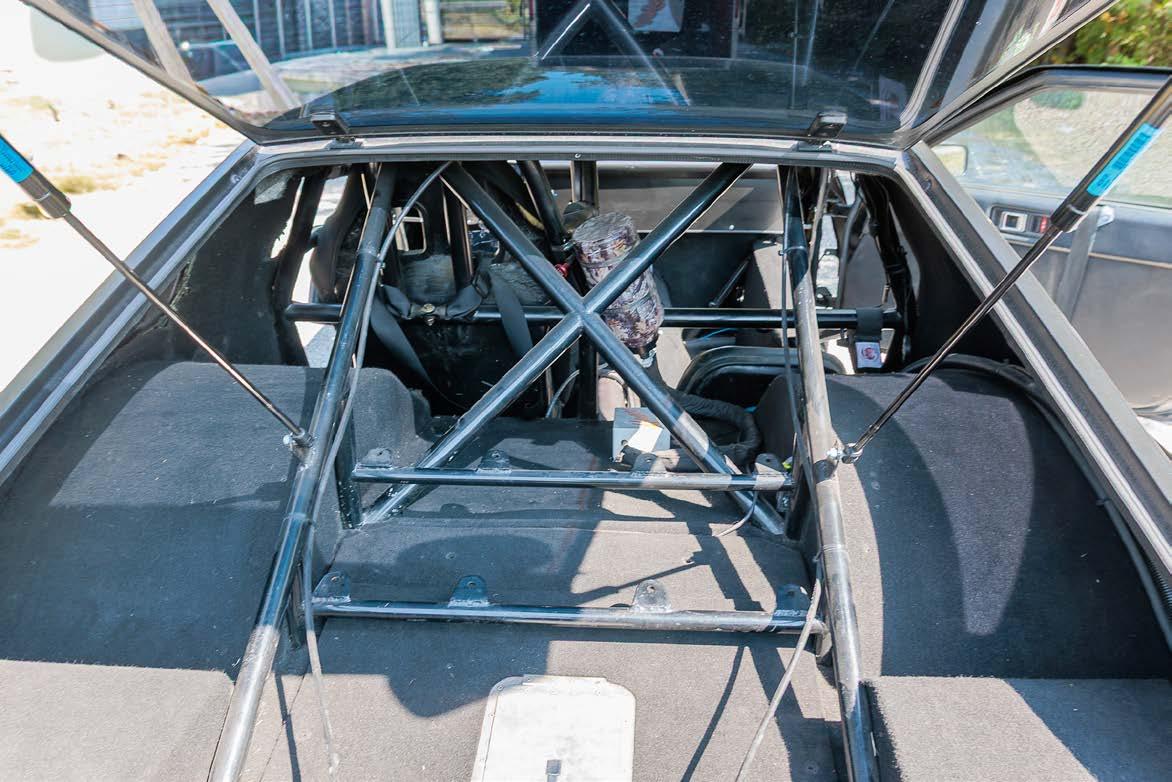
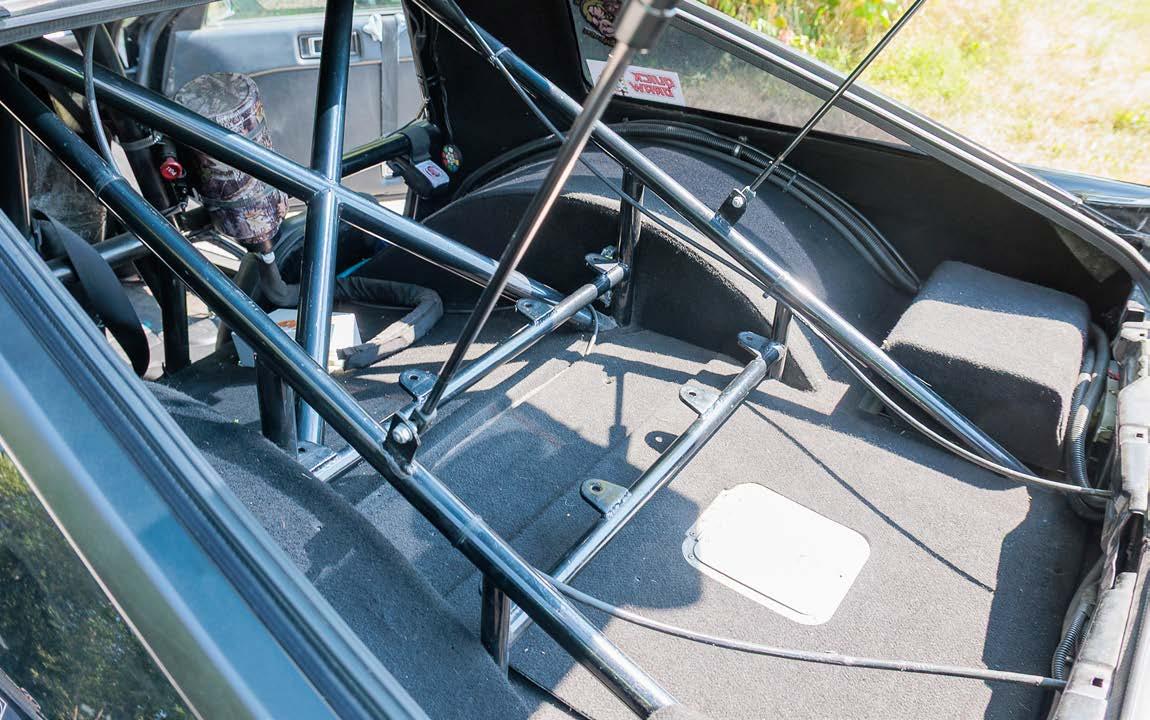
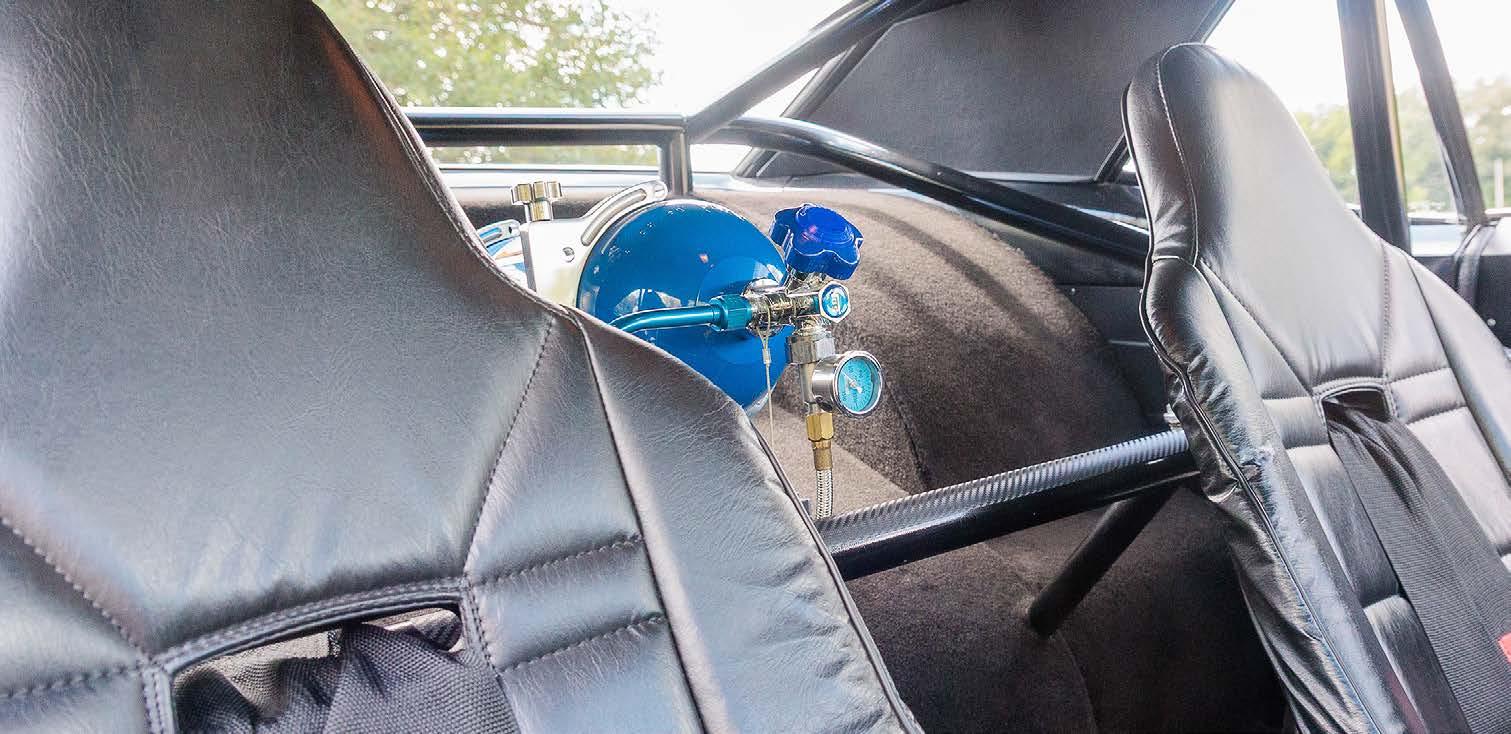
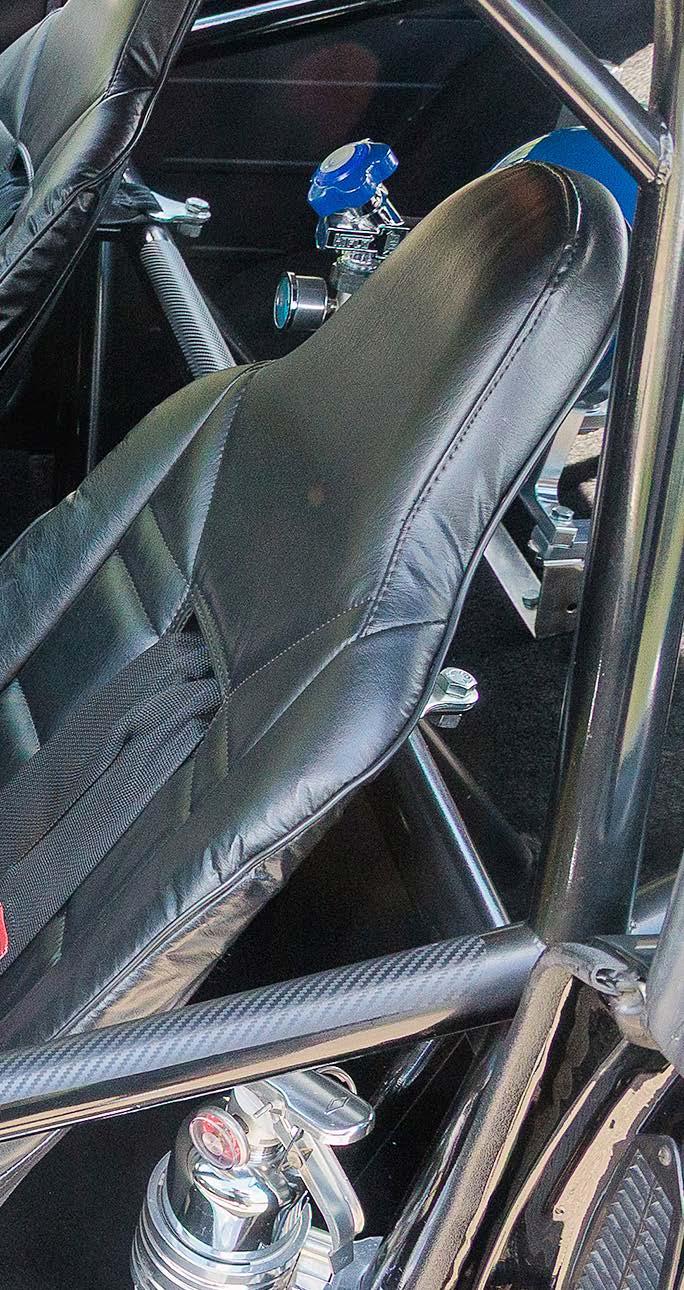
An 8.50-certified roll cage keeps Smith safe during track hits and the rear seat was deleted for additional weight savings. A cooler tank fills the modest trunk of the GT.
Smith primarily runs in 8.60 and 8.50 quarter-mile index and Street Car classes so his best numbers depend on the class he is racing in. On his first full pass on the fresh combo he laid down a 1.18 60’, 5.24 @ 130mph at the 1/8 and 8.300 @ 155mph in the long haul and he will consistently run the number in the index classes. “We have not tried for a Personal Best since, but are planning to turn it up in ’26. The goal is very low 8’s, possibly a 7 sec pass,” he said.
After the new upgrades, Smith decided the Mustang deserved some attention to its appearance and had Jessica Doxsey of Wrapitology cover the colt in KPMF Chalk White gloss film. He also bolted on a Mike Thomas Fab drag wing as well.
Running in an 8.50 class at his first event of the 2025 season, Smith nearly put the Mustang on its rear bumper on its first hit, but tamed it down for the second run and was rewarded with a personal best of 1.18 to the 60’, 5.24 at 130 to the 1/8, and an 8.300 at 155 through the ¼-mile. Additional changes during the season resulted in a final-round appearance at Street Car Takeover in Cincinnati, Ohio and a quarterfinal finish at Mod Nats that was prematurely ended due to weather.
“With all the new friends and ‘family’ the car has introduced me to, I thought it only fitting the name reflect that. The cars name would now be ‘NEXUS,’ which the general meaning of is ‘A means of connection or link between people, things, or ideas’,” Smith told us. “Even though the competition is a big draw of these types of events, the best part is actually all the people you become close to and they become your race family.”
For 2026, Smith is planning on competing in more 8.50 and 8.60 classes as well as some 5.30 index racing locally. He plans to turn up the power for a personal best run and possibly collect a 7-second timeslip, too.
Story: Steve Baur
Racers Are A Dedicated Bunch...
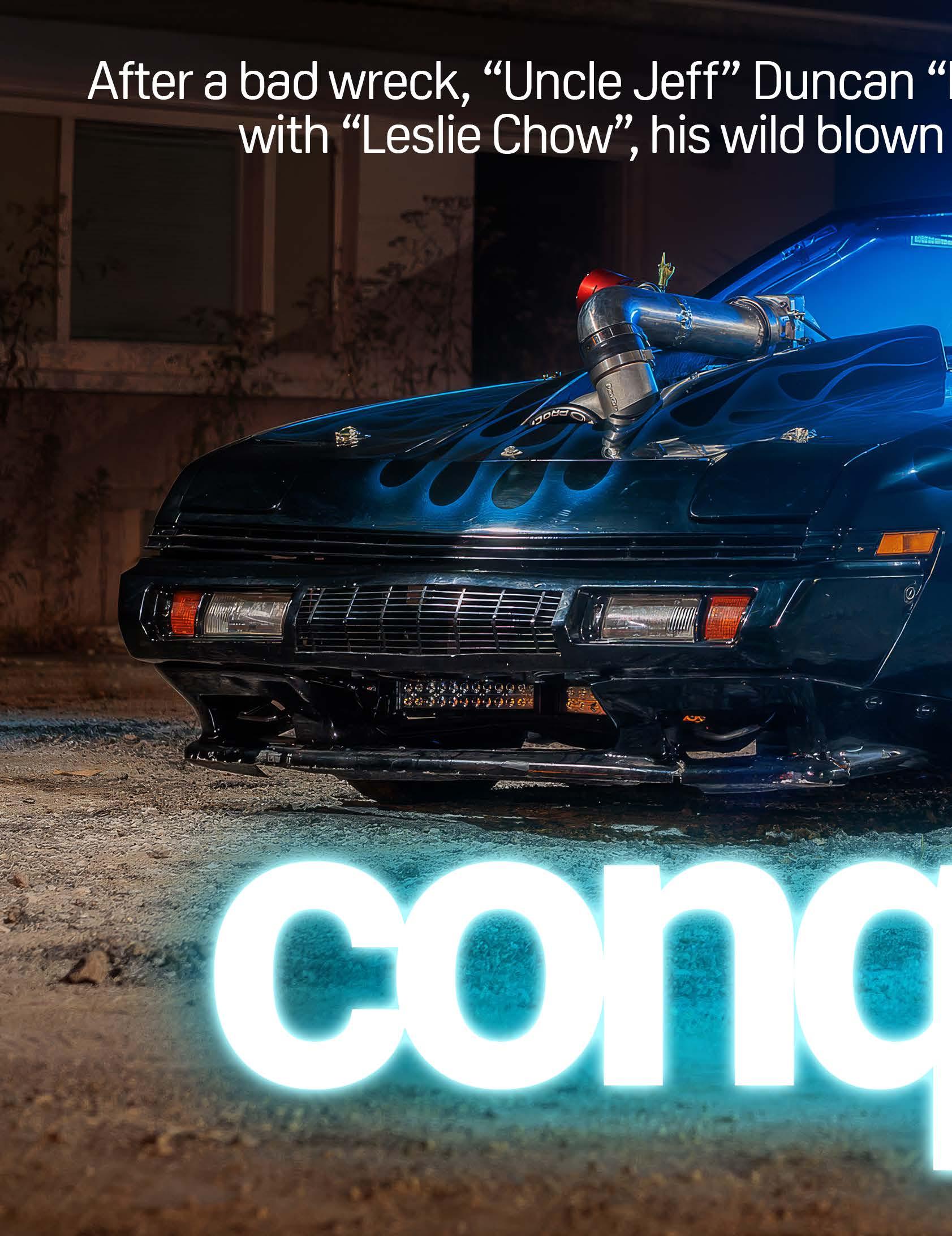
Even when they suffer a catastrophic wreck, some never miss a beat when it comes to getting back on track. Some are even buying new cars on the way home from the race they just wrecked at. For “Uncle” Jeff Duncan, it took him just a little longer to plan and execute his return to racing and he did it in one of the unlikeliest vehicles.
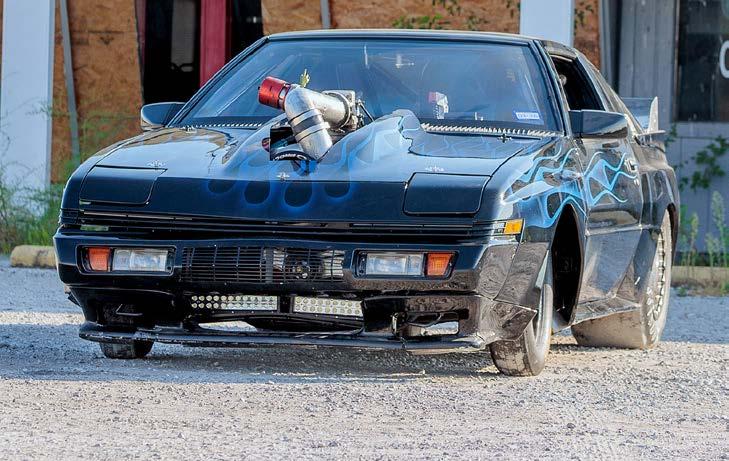
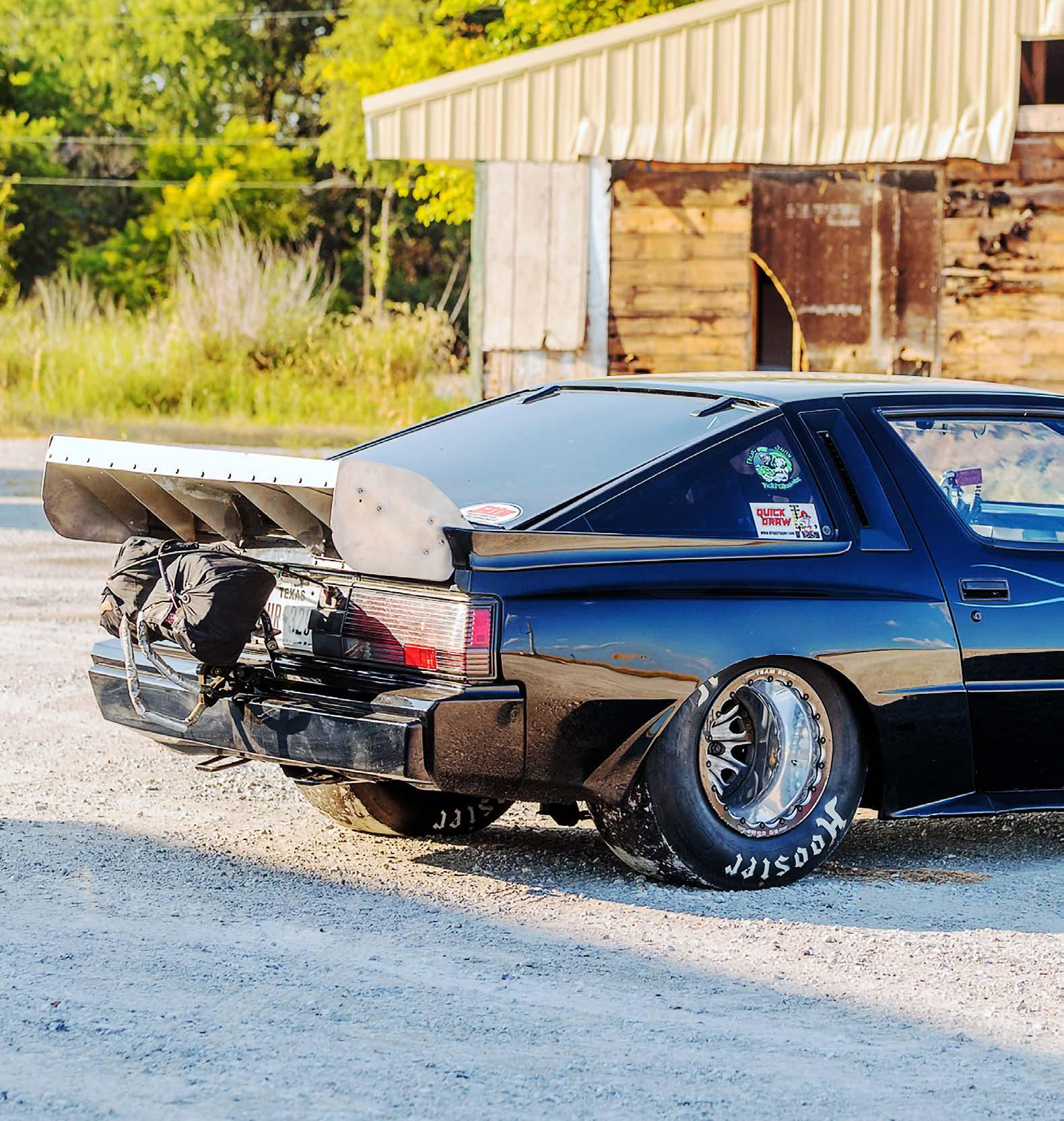
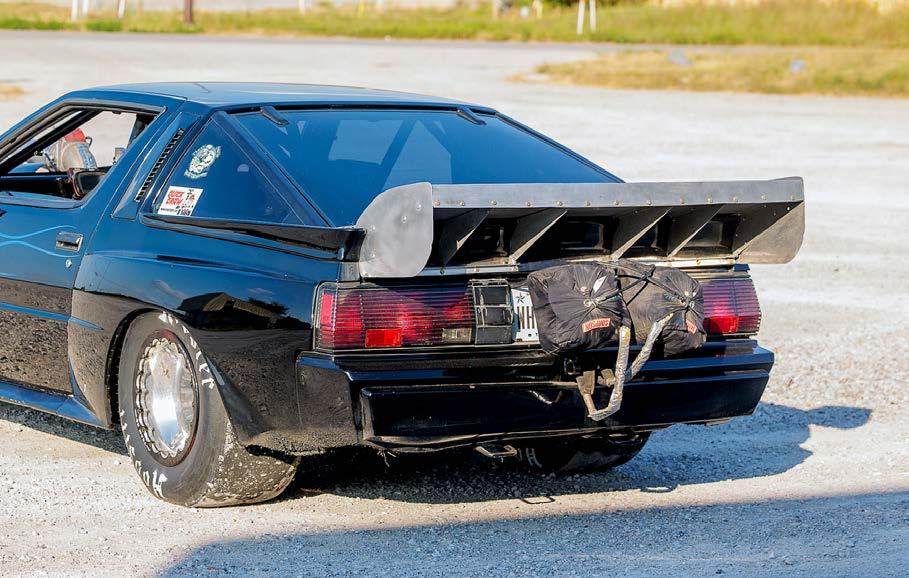
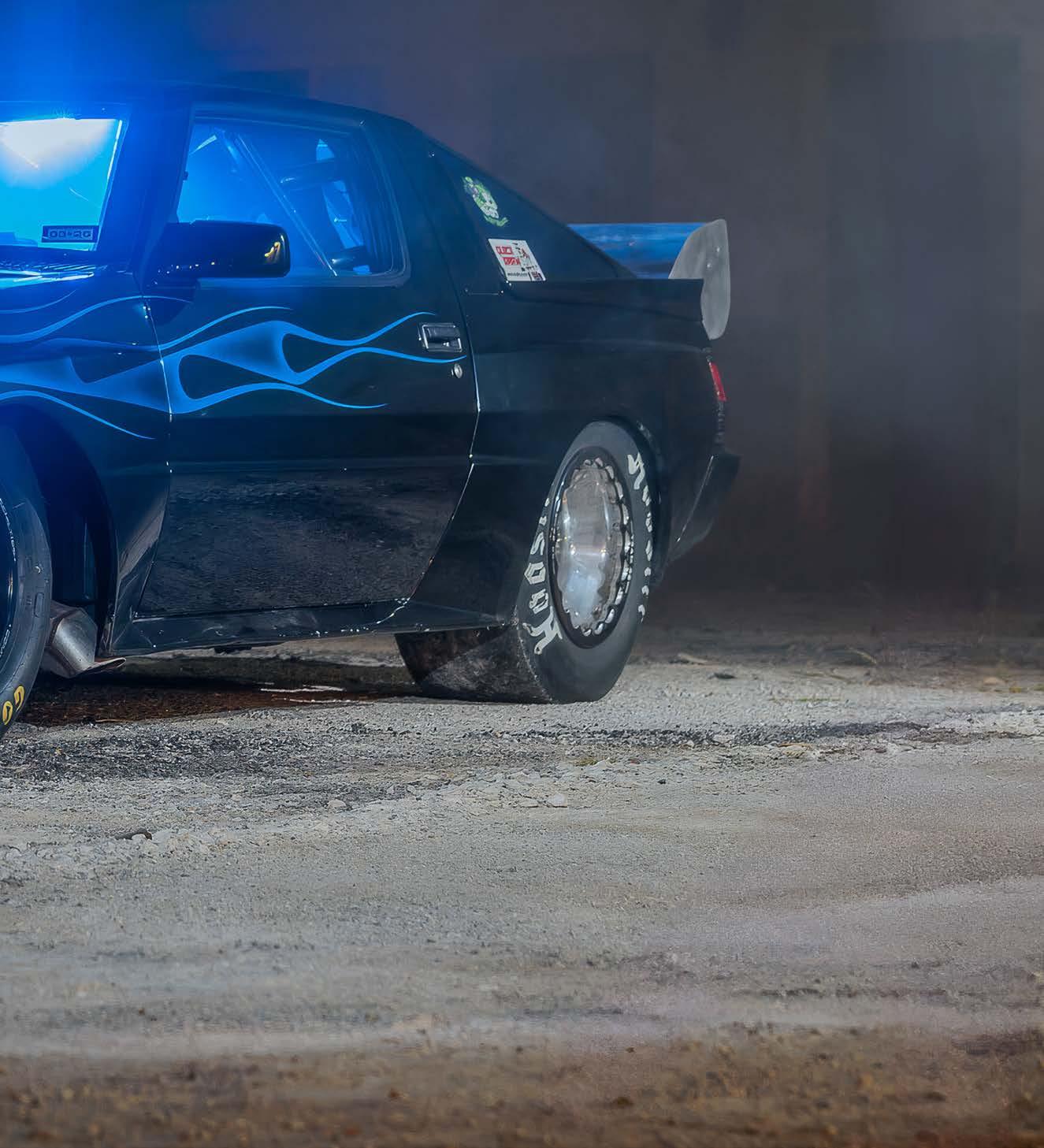
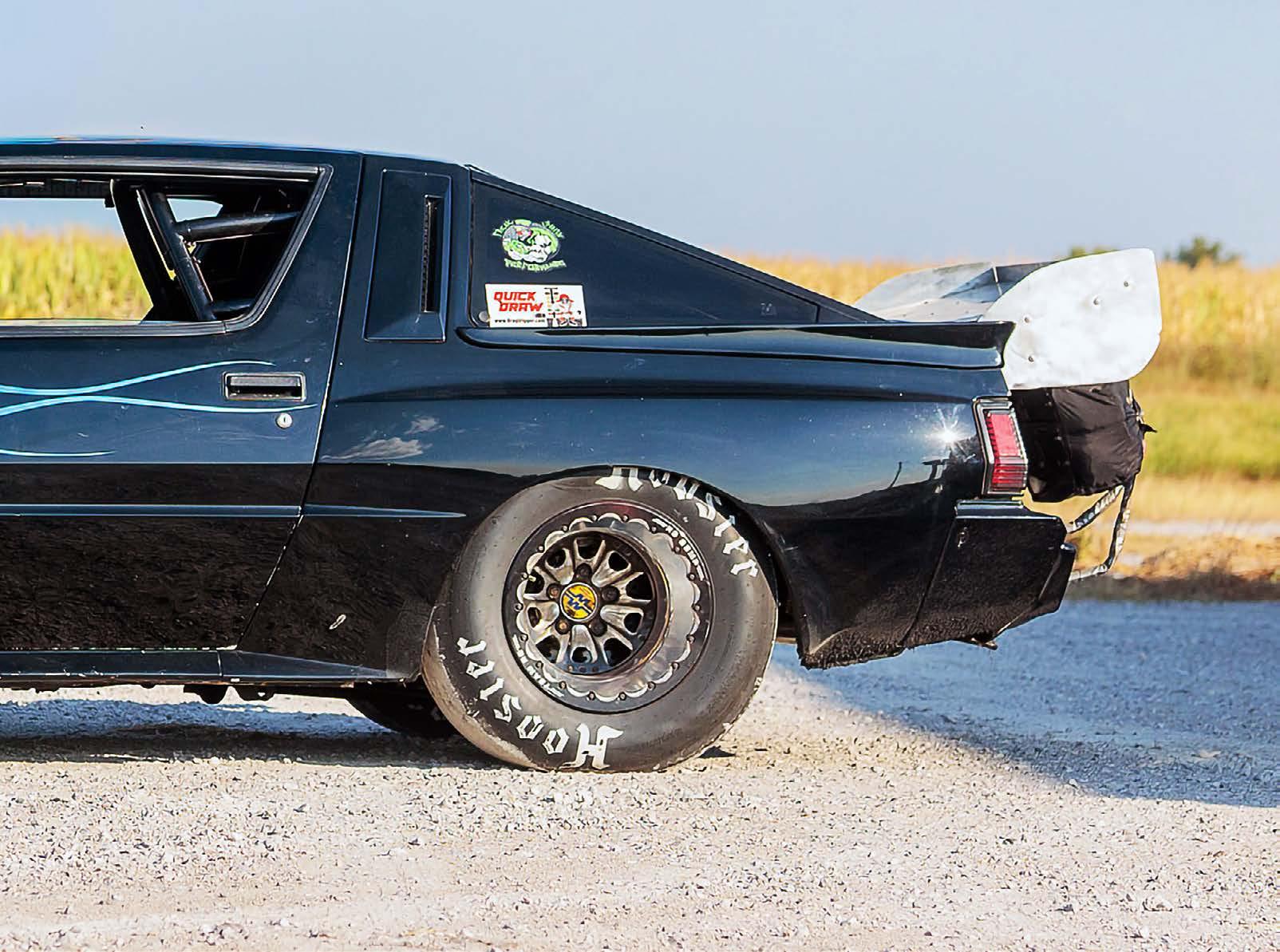
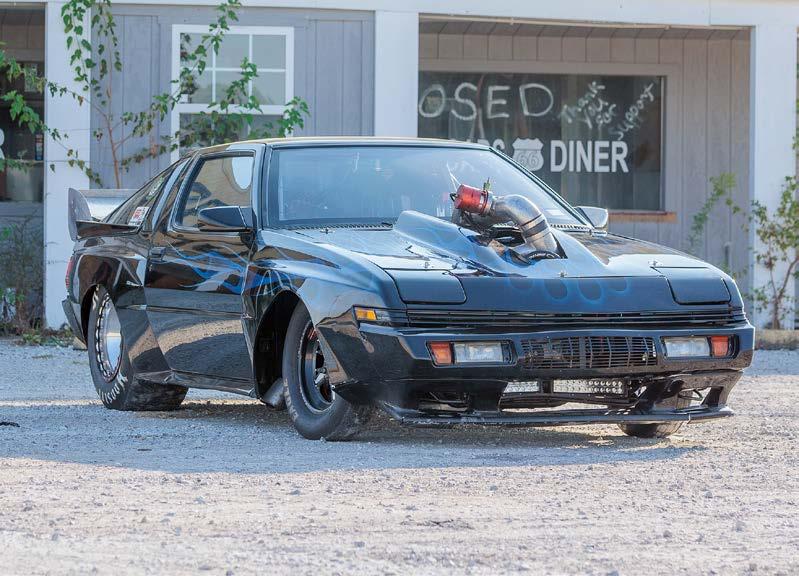
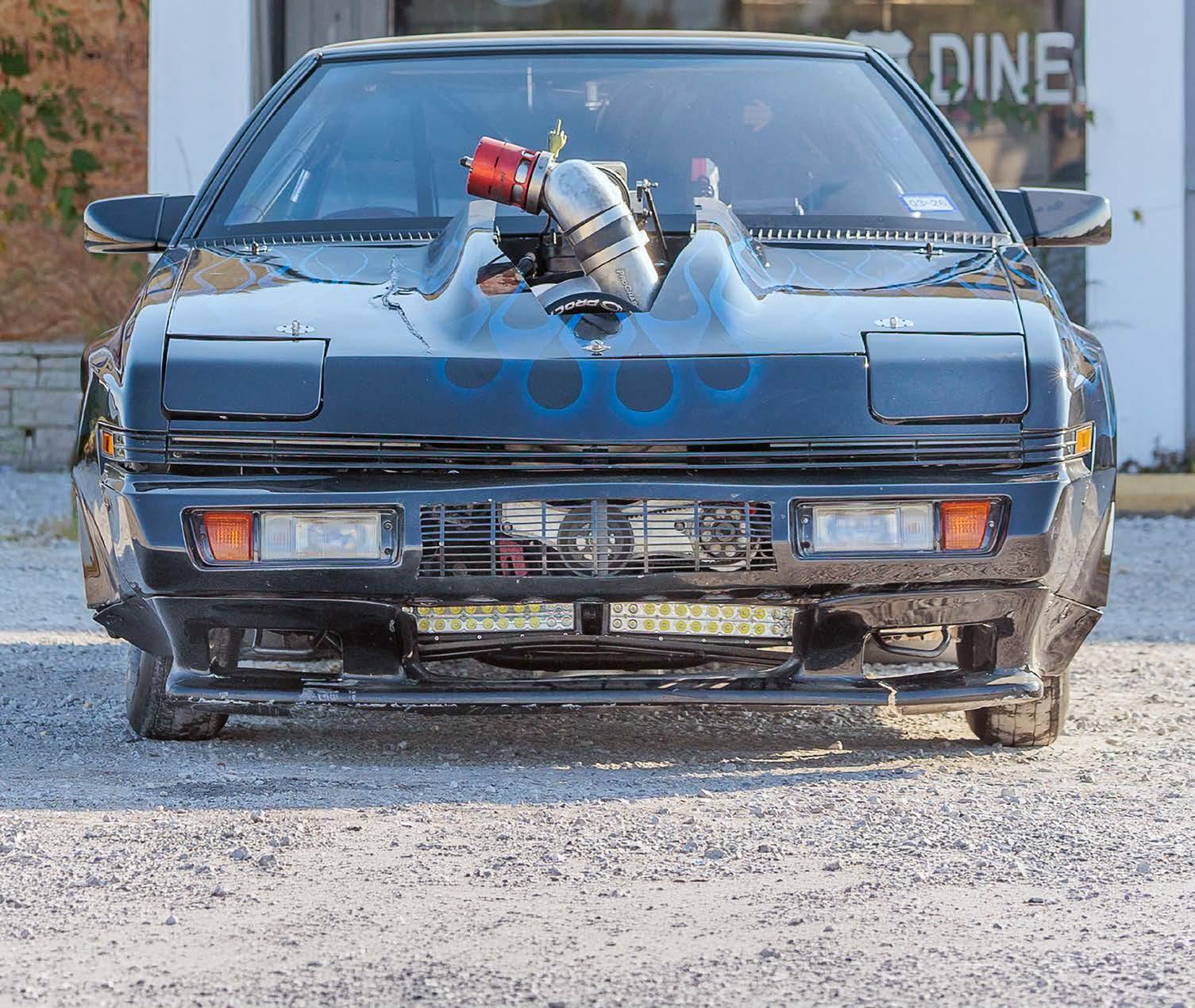
Chrysler’s 1987 Conquest showed off all of the technology of the 80s in a rear-wheel-drive platform packing a turbocharged four-cylinder engine. When Duncan got his hands on this one, it had already been turned into a race car, and the longtime street racer dug right into the rolling chassis.
That, as it turned out, was somewhat difficult to do from a wheelchair.
“This car we call Leslie Chow, because I was laying in an ICU hospital bed after a really bad accident street racing watching the movie “The Hangover.” Chow asks, ‘But did you die?’ and all I could do was sit there and start planning my next build because no, I didn’t die. So, I built this car while still in a wheelchair and learning how to walk on a newly installed hip.”
Photos: Stephen Taylor
“...I planned on racing before I even got out of the wheelchair...”
Jeff Duncan
A diesel mechanic by trade, as well as a martial arts instructor and experienced street racer, Duncan told us he searched all of his home state of Texas as well as nearby states for the chassis that fit his personality, as well as his new mobility limits. “I planned on racing before I even got out of the chair,” Duncan said. He
found this Conquest in Oklahoma City, and upon giving it a more thorough inspection at home, realized that most of the roll cage bars weren’t completely welded around, so the entire chassis was dismantled to complete those welds. He was also displeased with the rear suspension and gave that a complete overhaul.
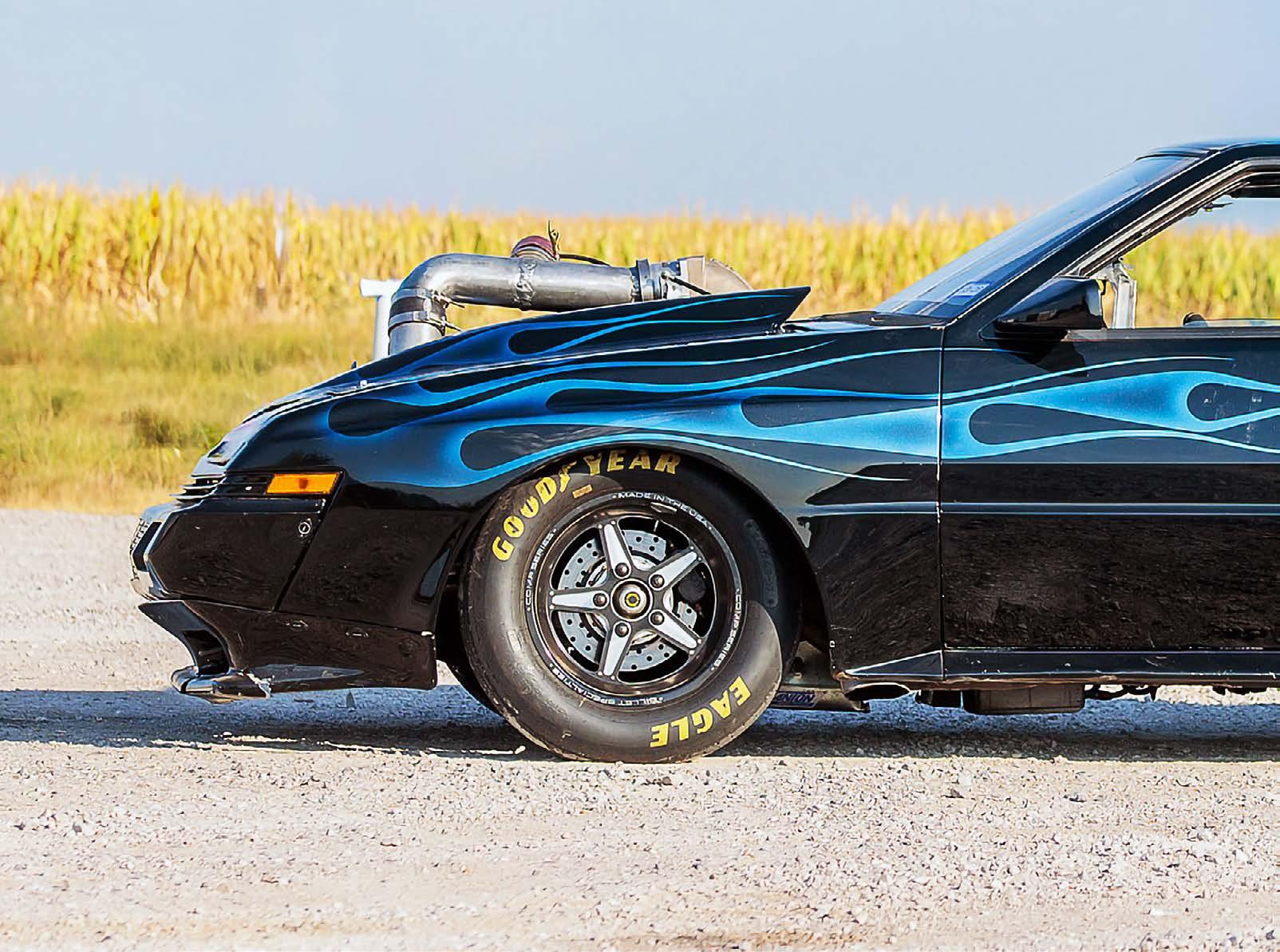
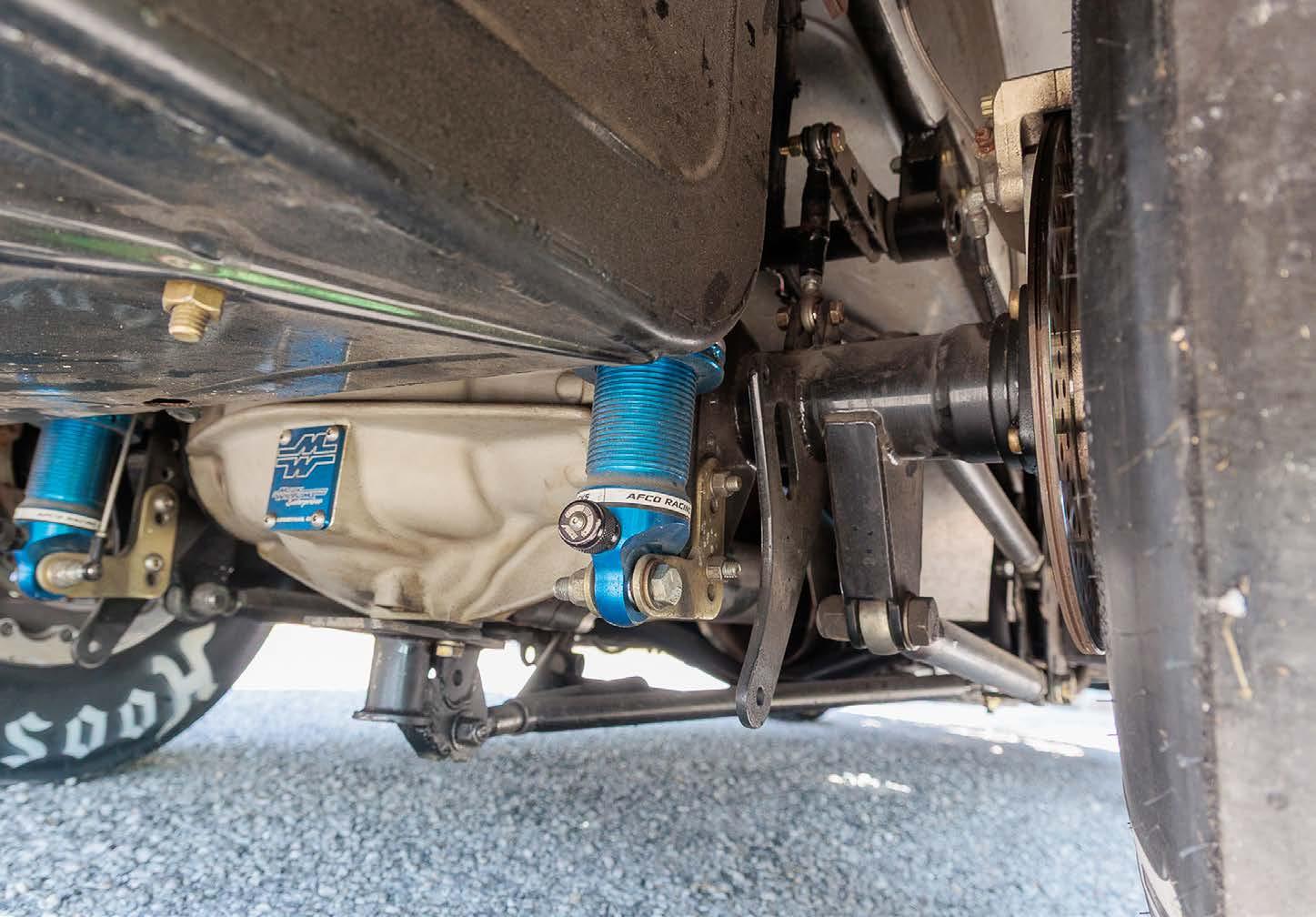
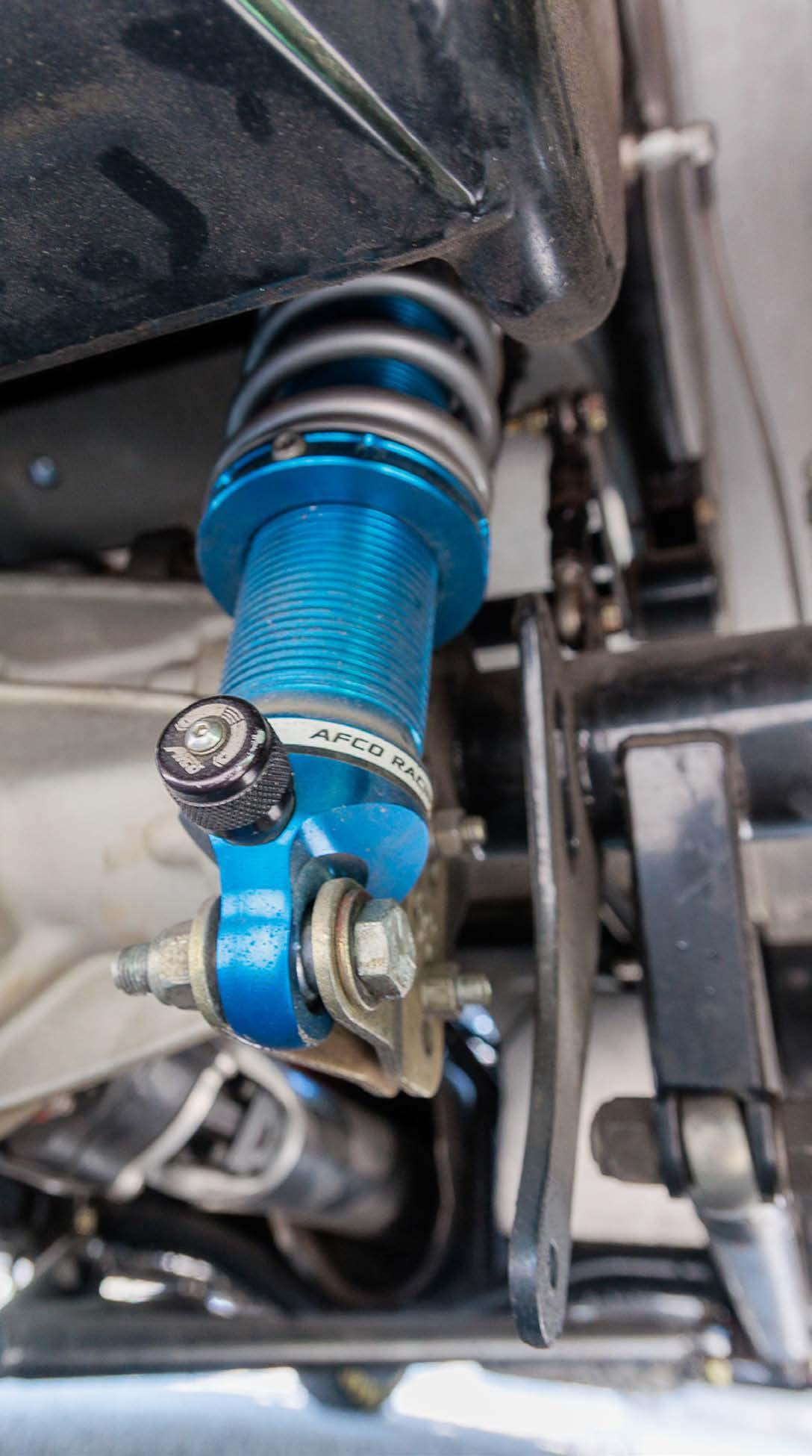
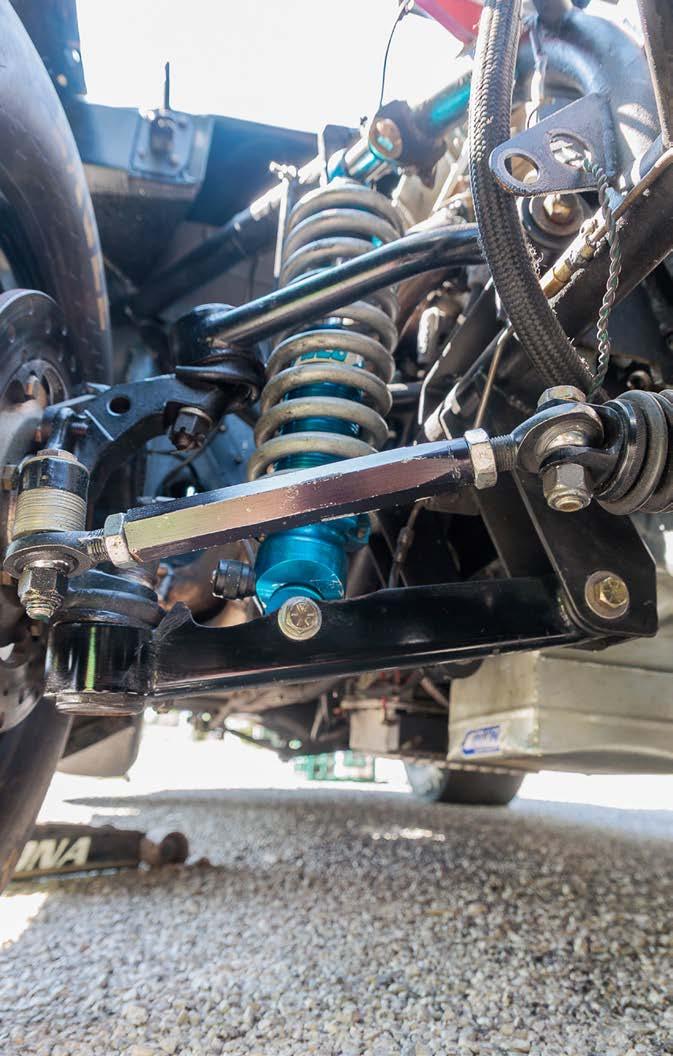
The full-tube chassis sports a 4-link rear suspension with a wishbone locator, anti-roll bar and AFCO Racing coilover shocks, while the front features custom upper and lower A-arms with AFCO coilovers that offer 16 inches of travel.
The full-tube chassis now sports a 4-link rear suspension with a wishbone locator, anti-roll bar and AFCO Racing coilover shocks, while the front features custom upper and lower A-arms with AFCO coilovers that offer 16 inches of travel.
One thing you’ll probably never imagine seeing is
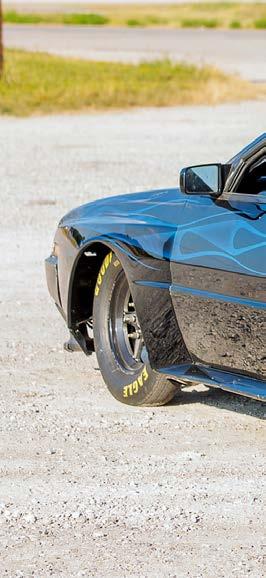
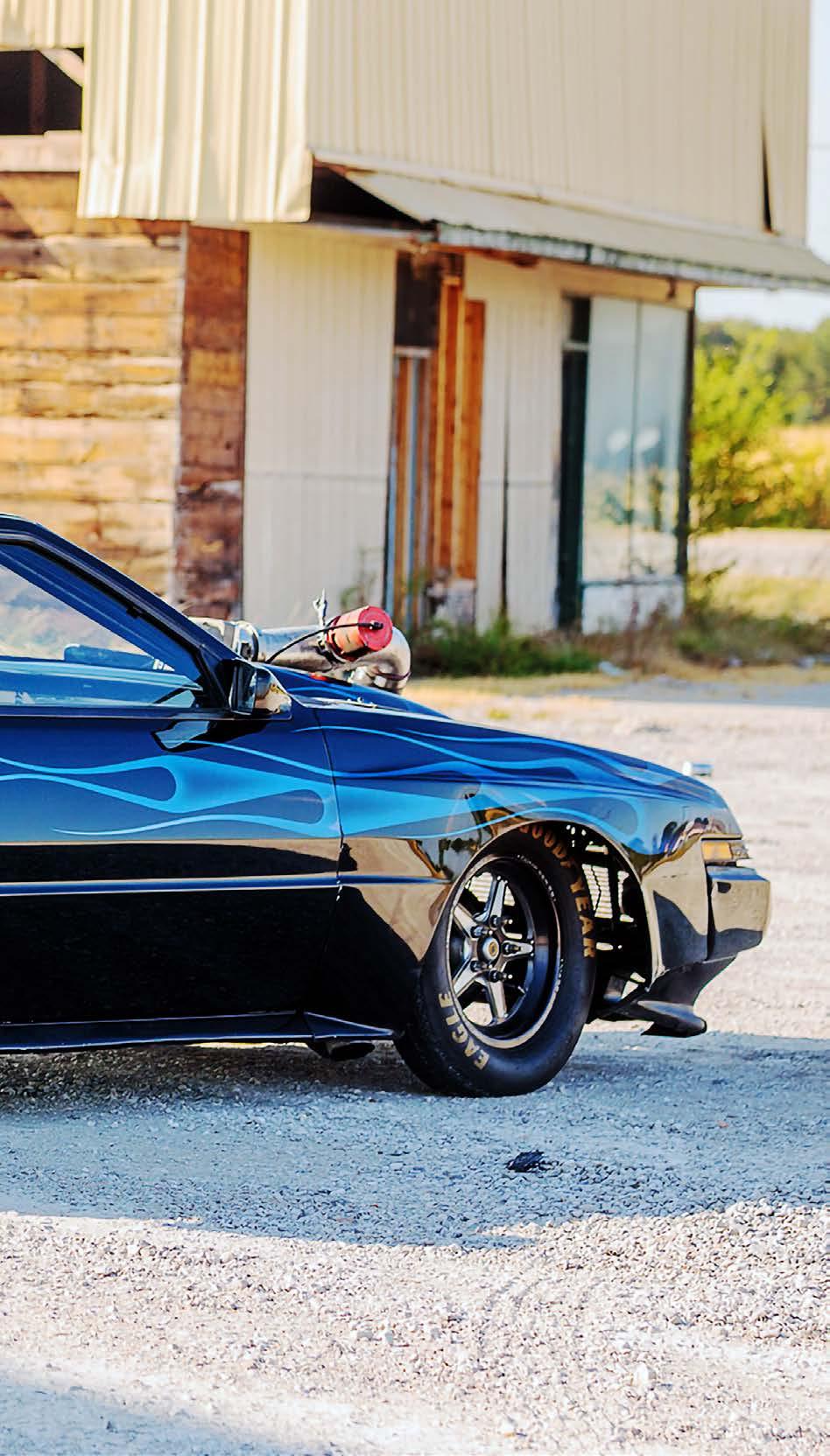
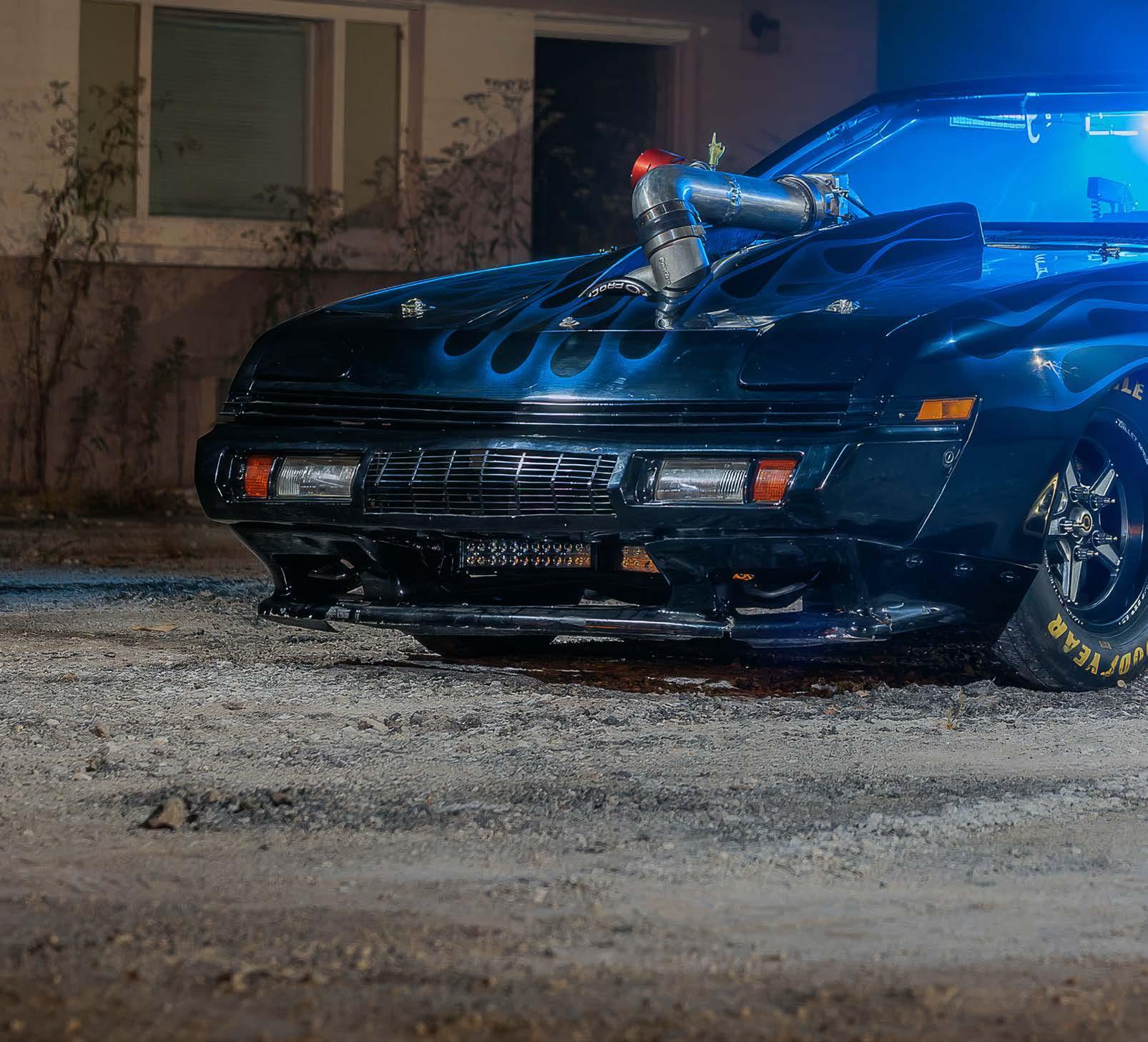
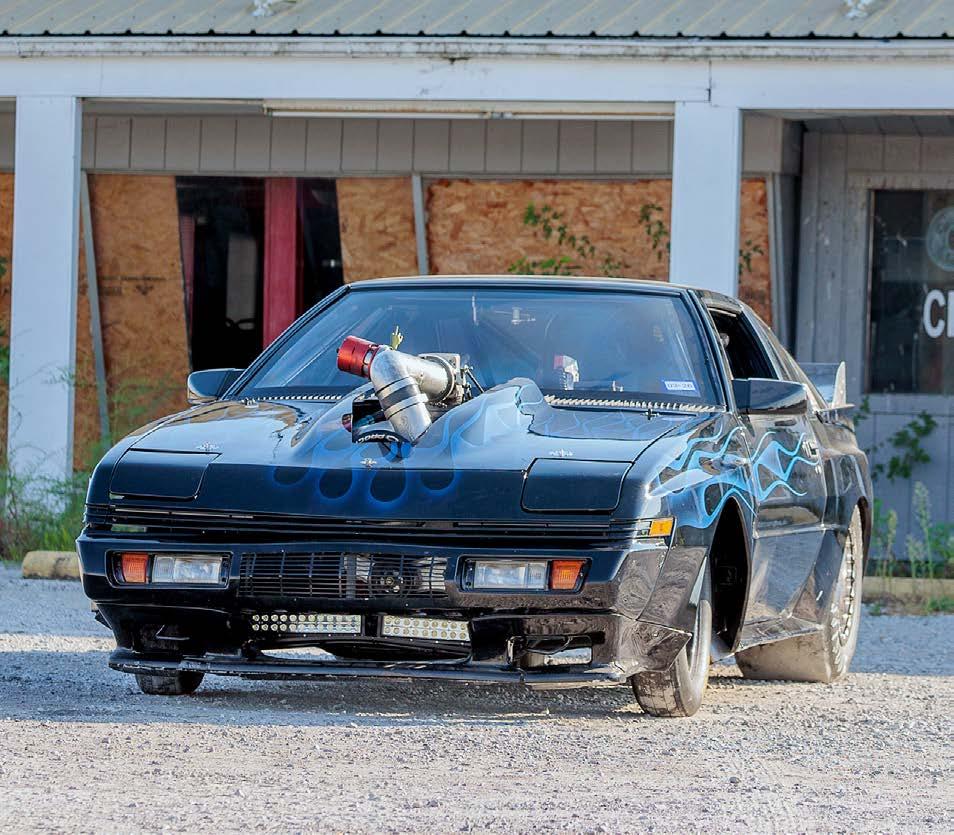
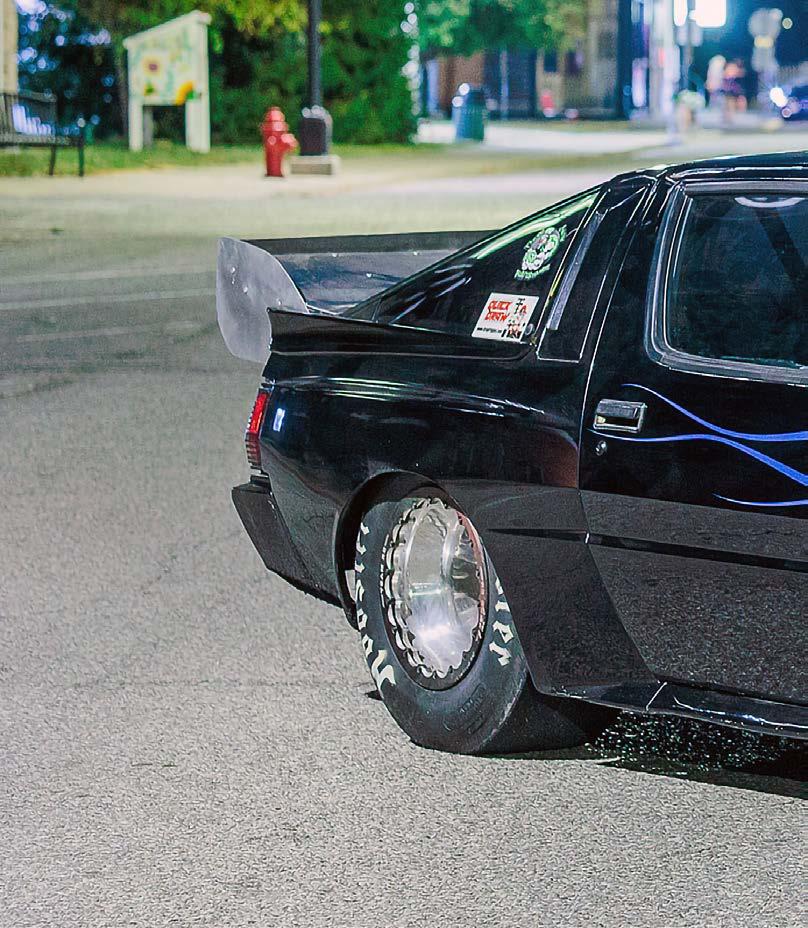
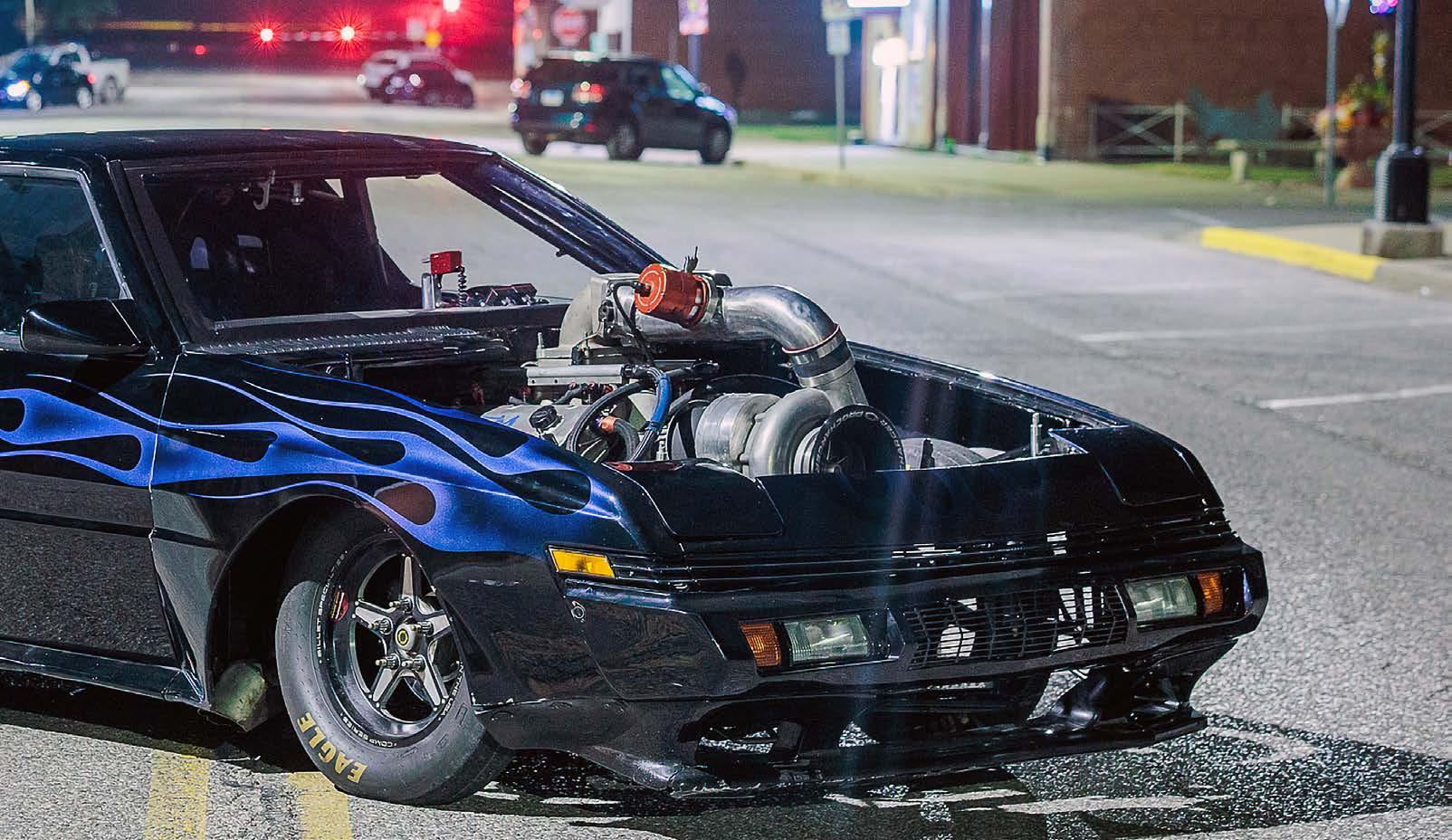
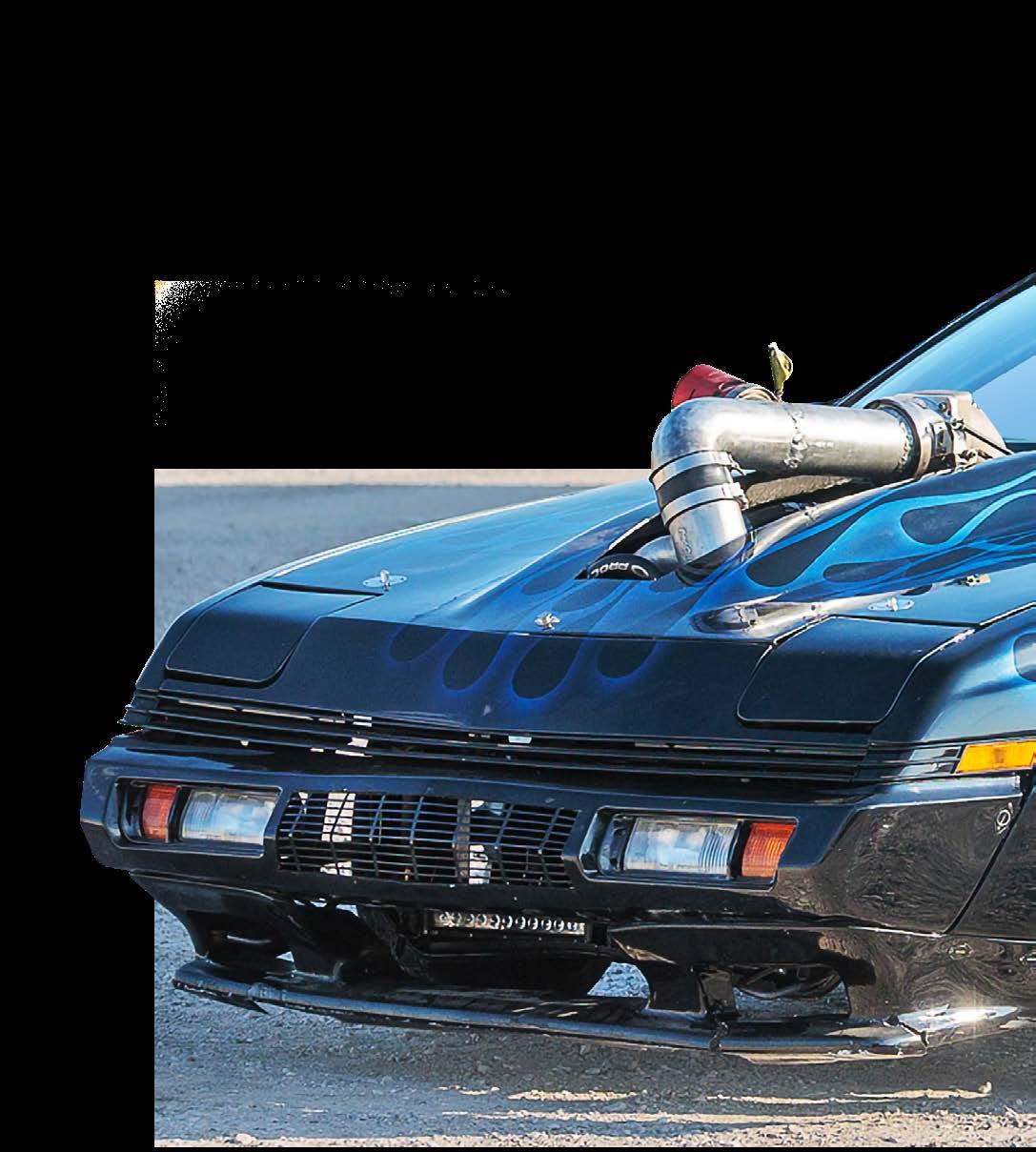
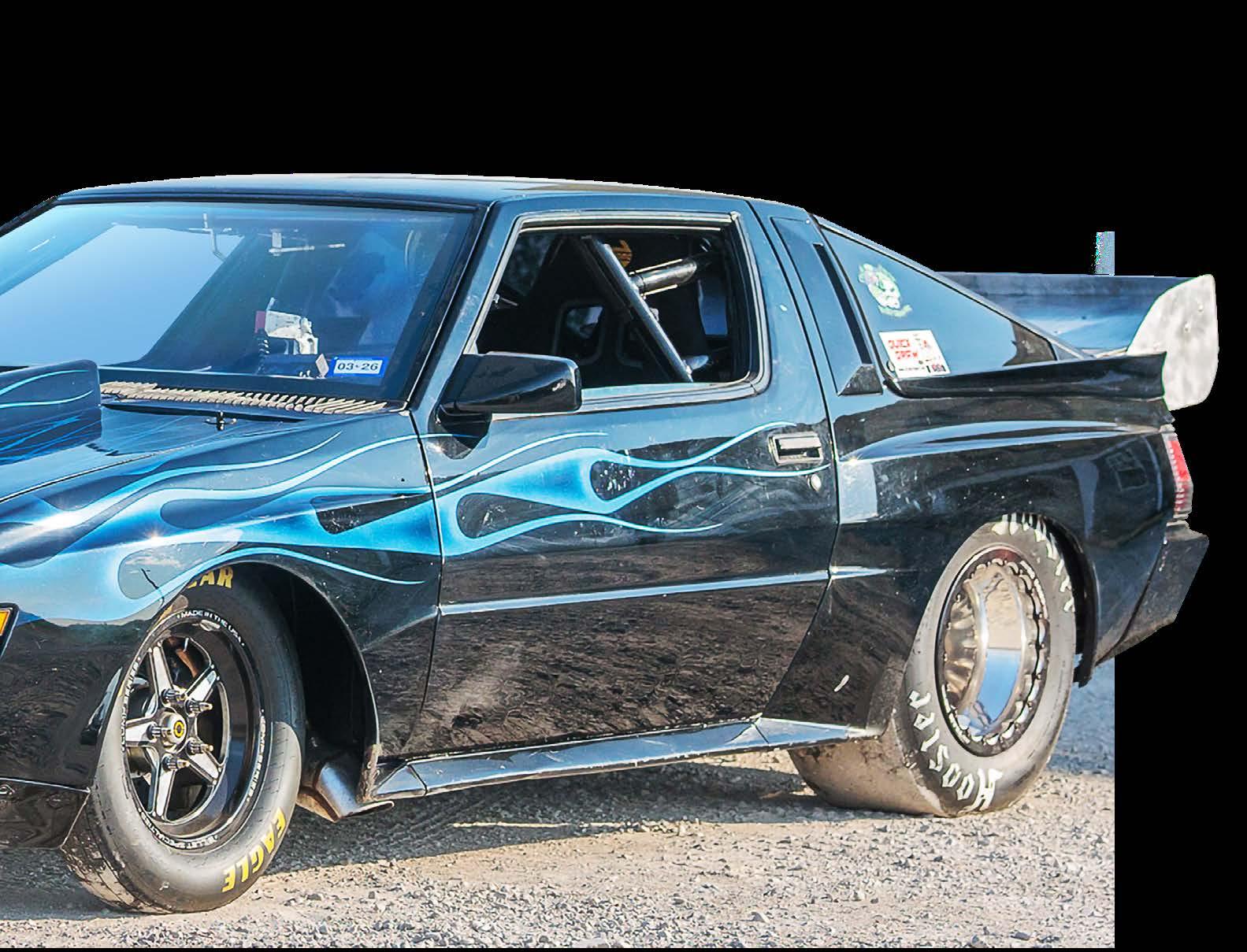
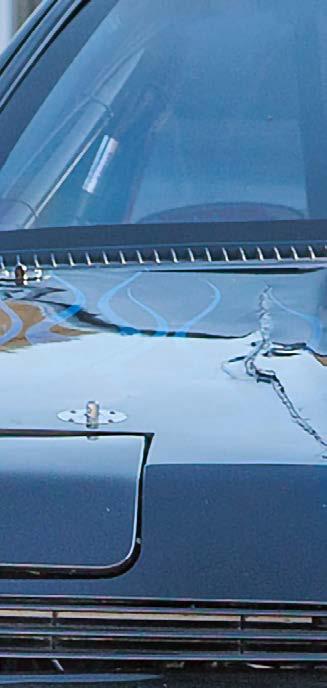
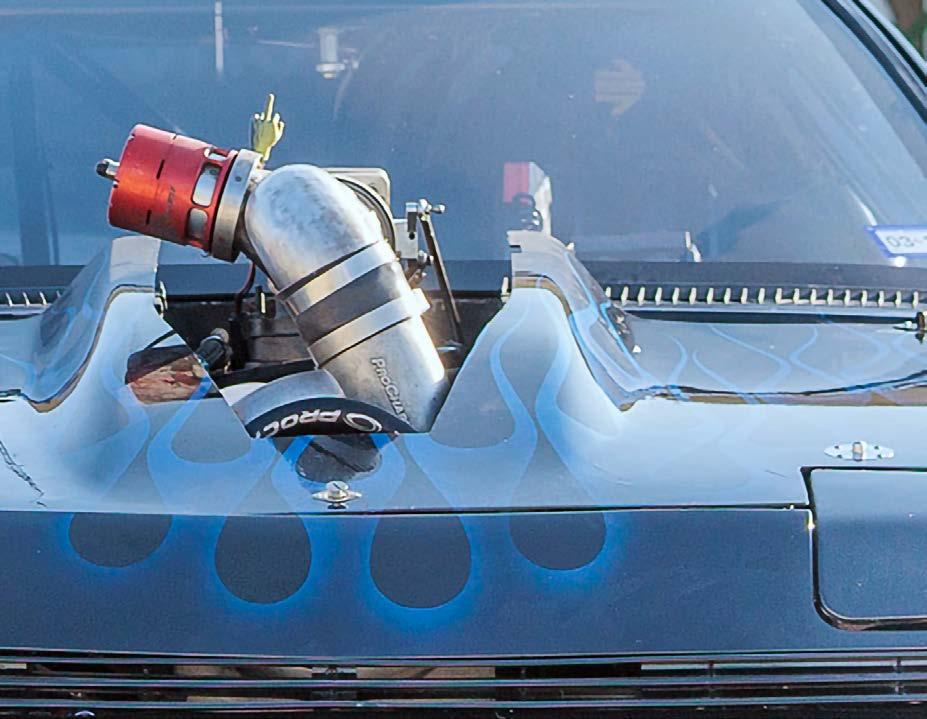
hot rod flames on a Chrysler Conquest, but the blue pearl flames over a shiny black base coat of paint is what initially attracted Duncan to the car. The majority of the body panels are still steel, with the exception of the aftermarket hood that’s been Swiss-cheesed to accommodate the engine.
Go Big Or Go Home!
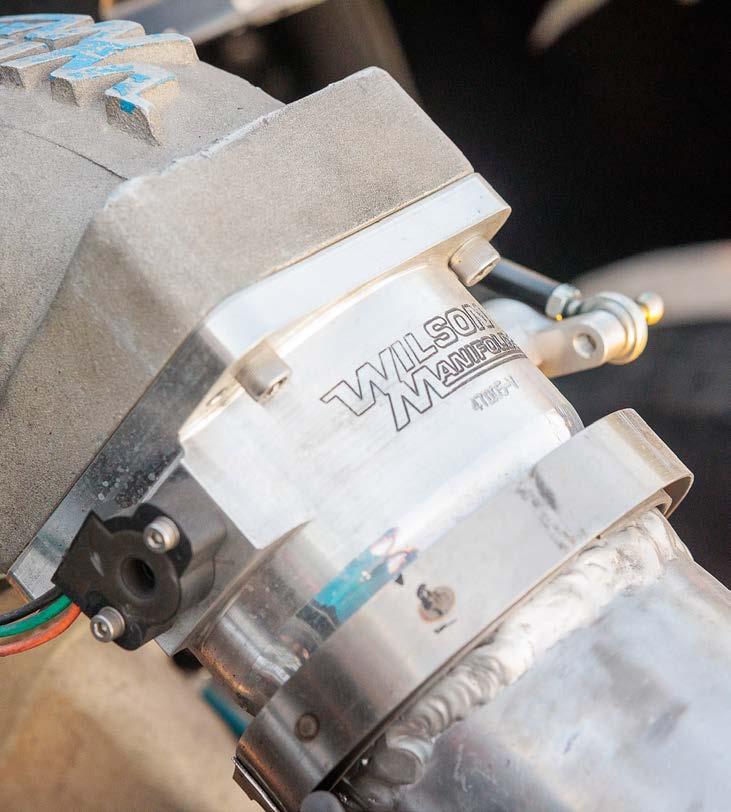
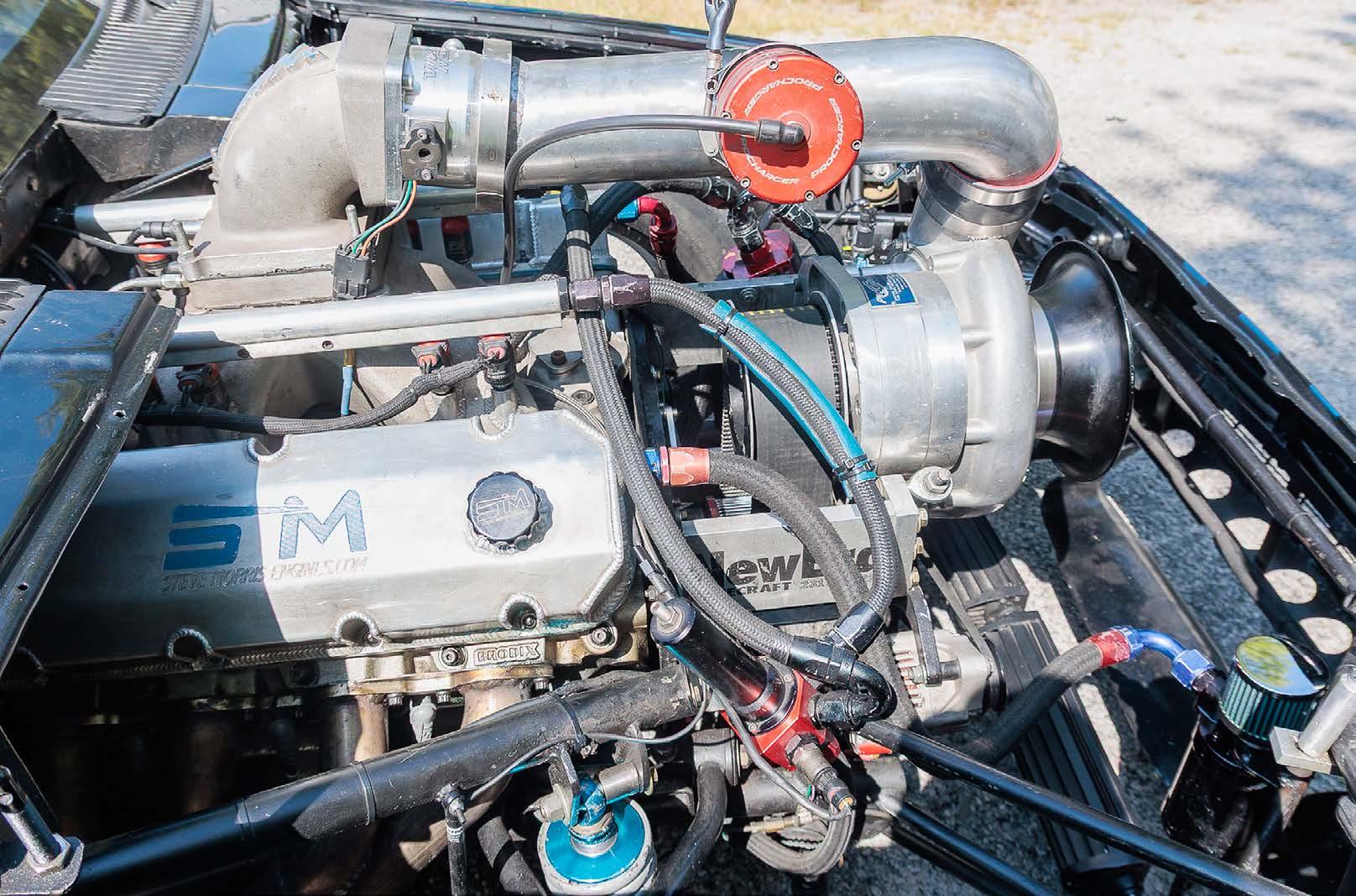
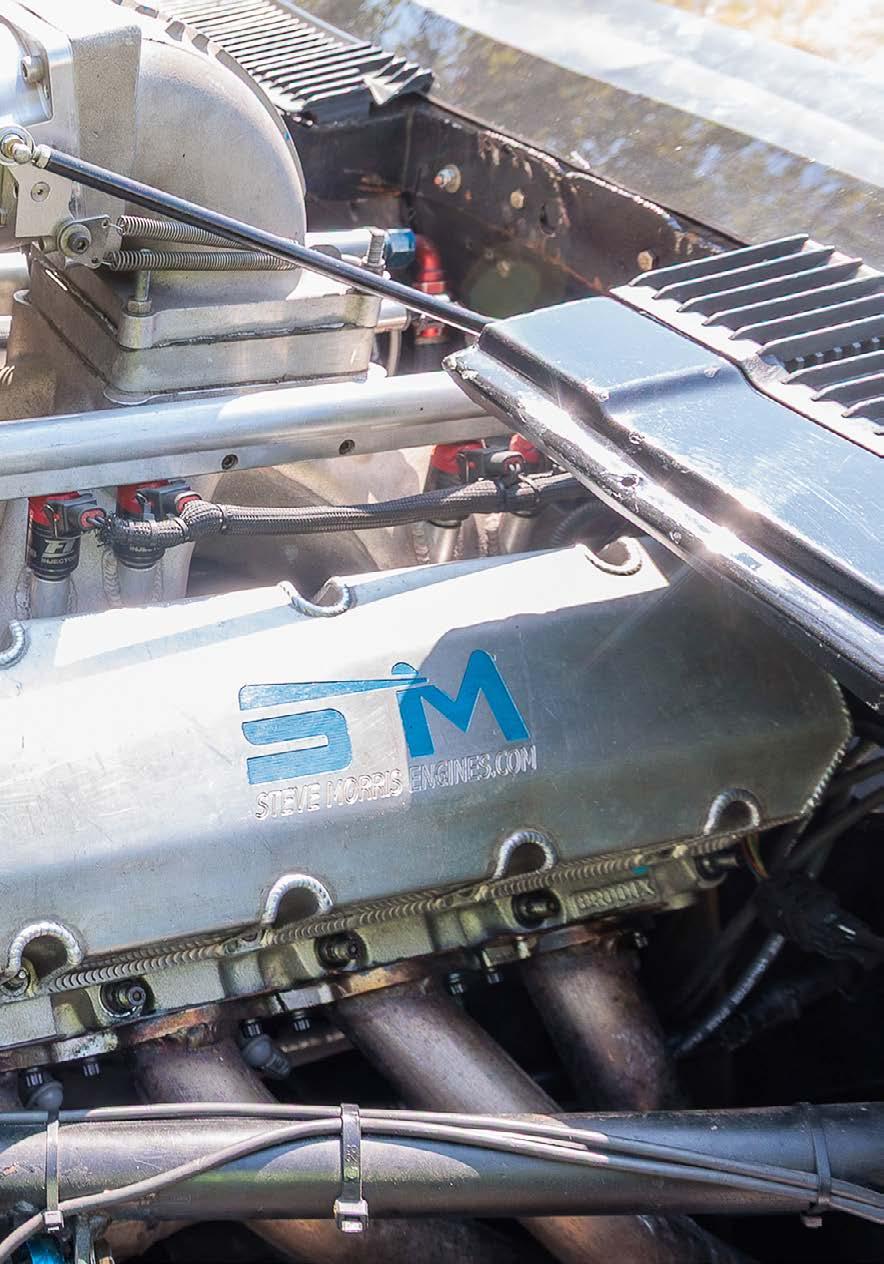
A Dart Big M cast-iron big block Chevy was filled with a Callies Ultra Boost crankshaft, GRP aluminum connecting rods, and ceramic-coated Diamond Racing pistons. Brodix BBX2 cylinder heads were ported and polished and torqued onto the short block. The cast aluminum high rise intake was modified to accept the EFI injectors and Wilson elbow with throttle body.
The original glass remains as well, but there have been plenty of areas where weight savings have been made, such as the removal of the original dash in favor of a svelte sheet metal version.
Duncan made changes to the roll cage bars to accommodate a 16-inchwide, padded MOMO racing bucket seat, which he wanted for extra comfort while in the cockpit.
Jeff Duncan “Uncle Jeff’s” 1987 Big Block Supercharged Chrysler Conquest
Body & Paint:
The body is all original Steel and Glass with a full tube chassis built into it. The doors weigh in at 86lbs each and I put a nice metal rolled dash in since the original one was missing.
The body currently has the same Midnight Black base, with blue pearl flames over it that attracted me to this roller originally.
Chassis Modifications:
It’s a full tube chassis built into an ASAG (all steel all glass) body.
Suspension:
A-arm front control arms with AFCO shocks mounts so we get a full 16” of front wheel travel.
Engine:
Dart Big M Cast Iron block.
Rotating Assembly:
Callies ultra boost crank with GRP aluminum rods and ceramic coated Diamond pistons.
Cylinder Heads:
Brodix BBX2 heads, ported and polished.
Induction & Fuel Delivery:
EFI FuelTech 820 Injectors, with a mechanical cable driven fuel pump to move the Methanol.
Power Adder:
F-3 136 ProCharger centrifugal supercharger.
Transmission:
FreakShow Converter and Powerglide transmission.
Rear End:
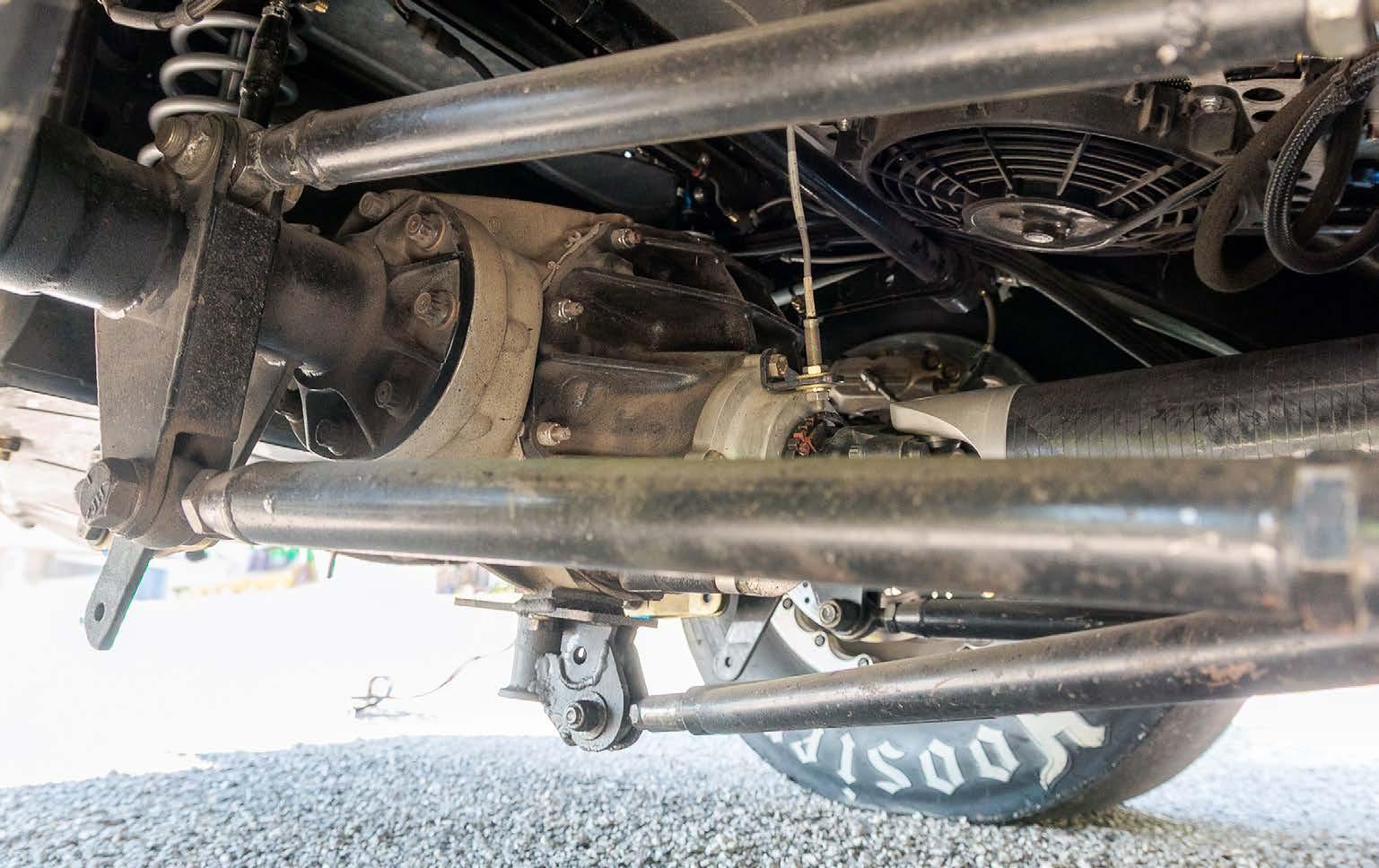
Mark Williams 9” rear end with 4.11 gears.
Tires & Wheels:
RC Comp rear rims with 28 x10.5 15” tires. Billet Specialties Comp5 front rims with Draglite tires.
Interior:
I picked out a 16” wide Full 6” Padded MOMO seat to put my New hip into... It’s like sitting in the Lazyboy at home it’s so cushy! We literally changed two bars in the chassis so I could fit this seat in, and welded everything in place after the seat was installed so everything is within arms reach that needs to be.
ET & MPH:
Being that we street race, and sometimes back of track with no timing systems we are unaware of exactly how fast, or slow the car really is (grudge N/T guys are always lying about this...). It has won a few Cash Days already and ends up in the semifinals, or finals quite regularly, so well, let’s ust say... It’s quick.
Most Unique Feature(s):
The most unique feature of the car is its overall persona, it’s just as ridiculous as I am.
Reason For Build:
I didn’t die... I had to put a new car together to be able to get back out there and race some of the fastest street racers the country has to offer.
Build Timeline:
It seemed like forever but it was probably about 7 months total time.
Most Memorable Experience(s):
The most memorable experiences with this car are not winning an event but rather it is sitting in that cushy MOMO seat, pulling the transbrake trigger, and not being afraid to live my life the way I want to after a horrific wreck.
Thanks To:
I really do want to say thanks to my actual friends and sponsors that have helped me get this car together -
Sammy Hussey, Justin Grosz, and Lonnie Kyukendahl for physically coming over and helping me set the motor and trans shells in while making motor mounts. Mike Reeves, at Freakshow Transmissions for building a trans that can keep up and stay together with me. City Driveshaft for that Pretty Carbon fiber driveshaft. John Acker at Acker Machine for bailing me out with machine work so I can keep putting these motors back together. Wade Owens at QuickDraw for that bad azz transbrake trigger. And as always, thanks to my Crew Chief for making sure the car is backed up to where it needs to be on the road, not where everyone else thinks it should go.
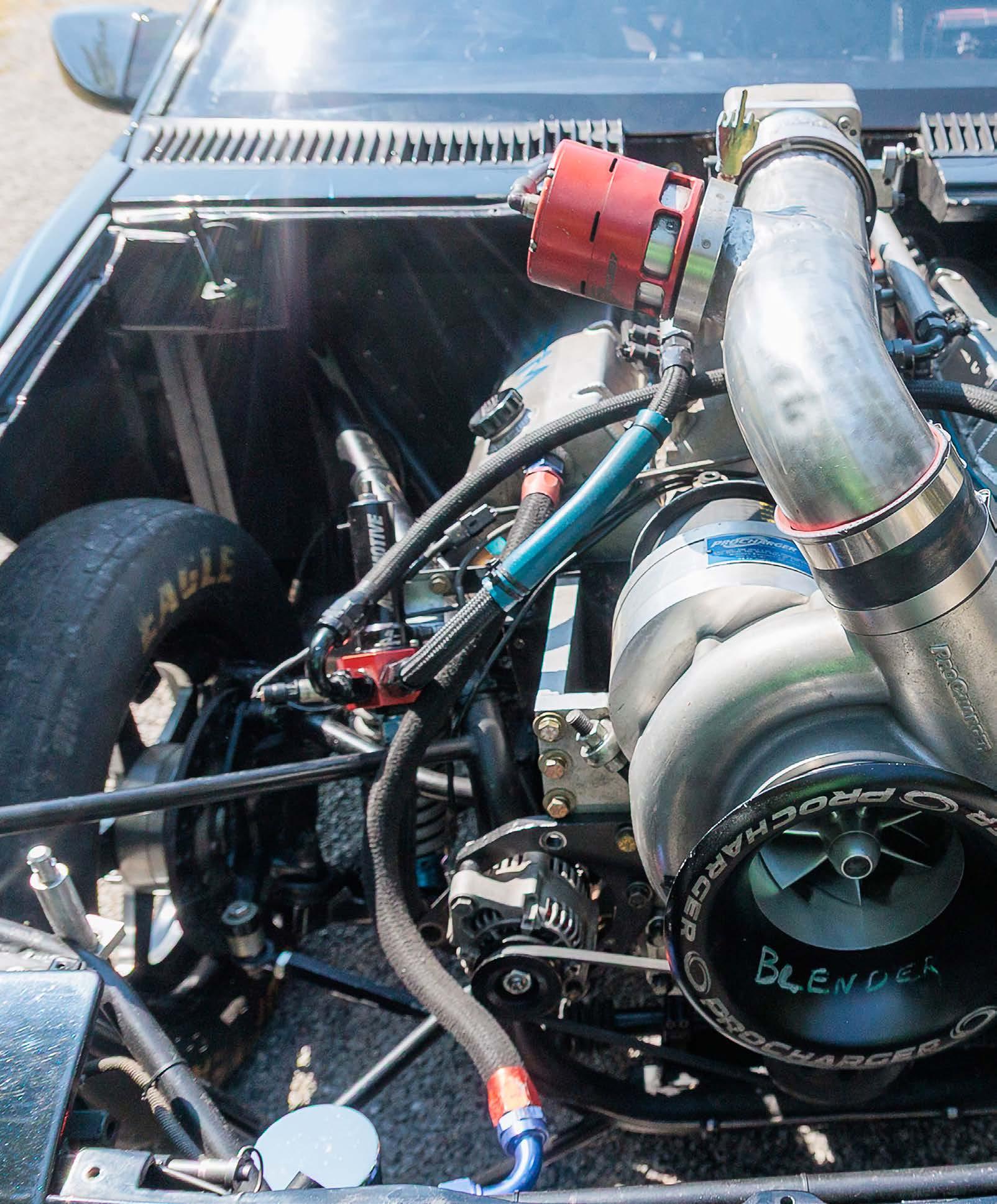
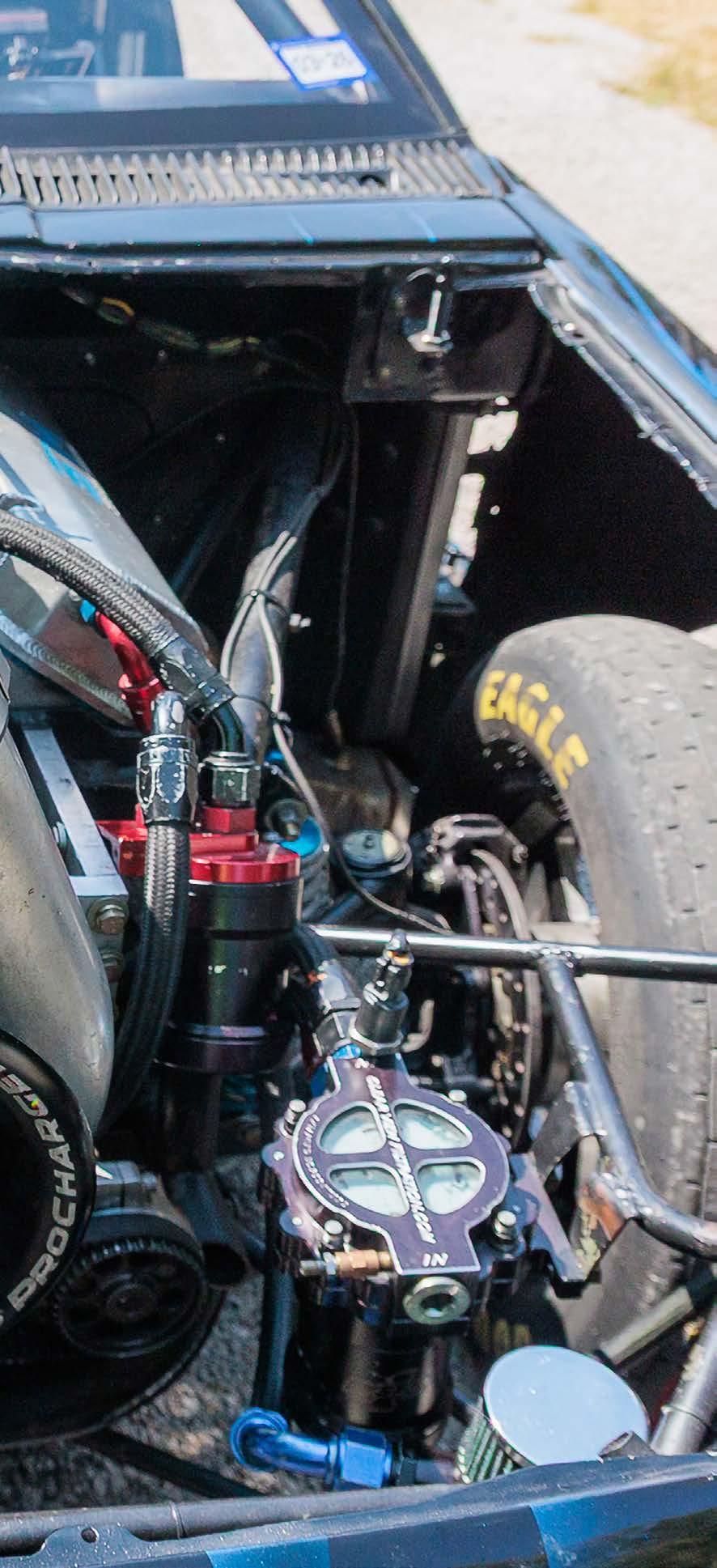
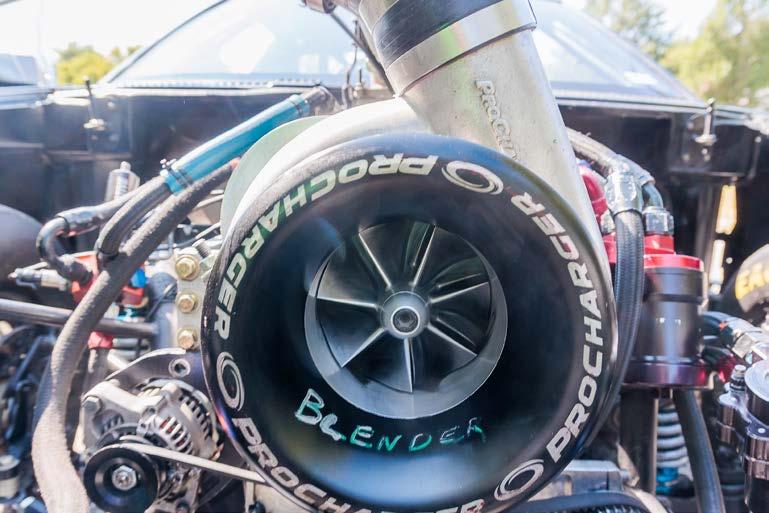
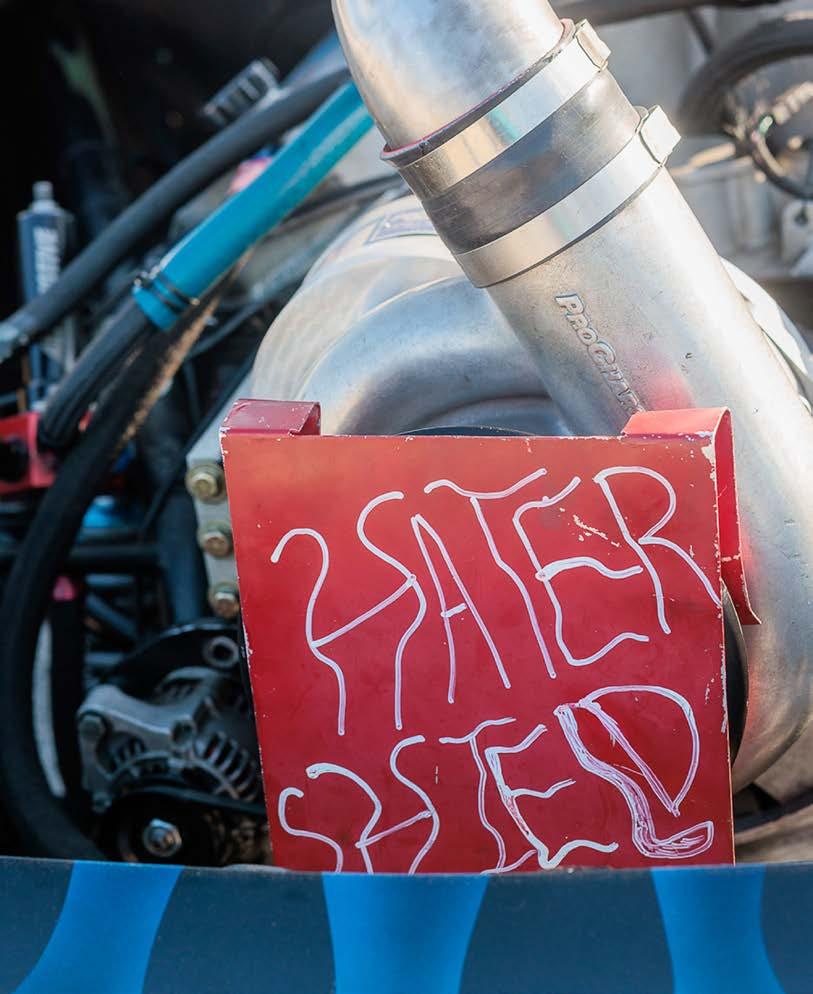
A ProCharger F3R-136 centrifugal blower compresses atmosphere that is combined with methanol supplied by a cable-driven fuel pump. Duncan has fabbed up a custom cover for the blower affectionately named “Hater Shield” in case any operatives of would-be competitors have the not so bright idea of sabotage in mind.
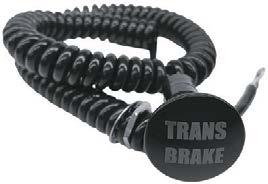
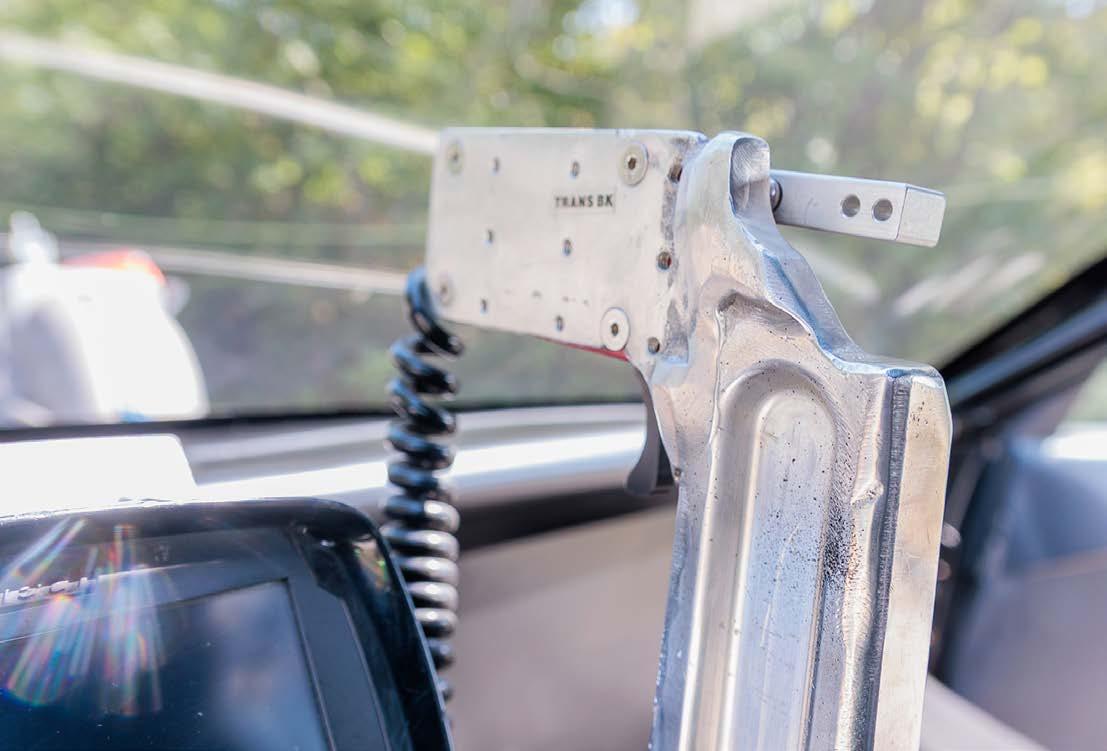
Keen eyes will spot the custom transbrake trigger that was fabricated out of an old connecting rod by Wade Owens at QuickDraw. Comfort and confidence will be key when piloting Leslie Chow, as the massivelypowered machine must contend with hooking up on Hoosier 28x10.5 tires mounted on the RC Comp wheels that are paired with Billet Specialties Comp 5 rims and Goodyear tires up front.
It’s hard not to notice the giant powerplant bulging from the Conquest’s engine bay, and owning up to the car’s namesake, the engine delivers the might needed to rule the streets.
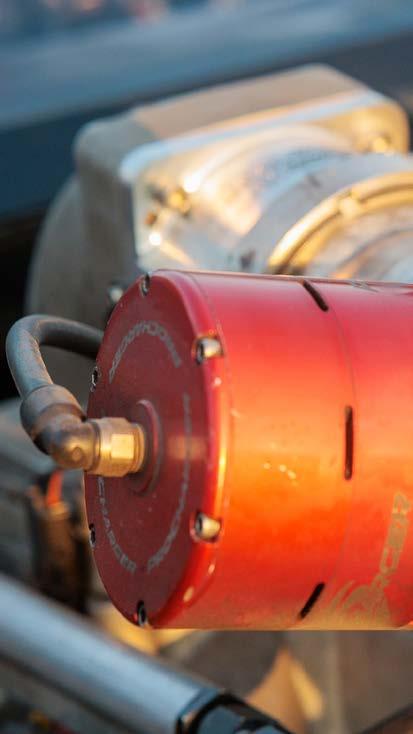
It’s based on a Dart Machinery Big M cast-iron block with a Callies Performance Products Ultra Boost crankshaft, GRP aluminum connecting rods, and ceramic-coated Diamond Racing pistons. Ported and polished Brodix BBX2 cylinder heads move the air and fuel into the cylinders, and a ProCharger F3R136 centrifugal blower compresses atmosphere that is combined with methanol supplied by a cabledriven fuel pump and FuelTech 820 injectors.
FuelTech’s FT550 ECU is charged with managing the blown big-block that is backed by a Powerglide transmission and torque converter built by FreakShow.
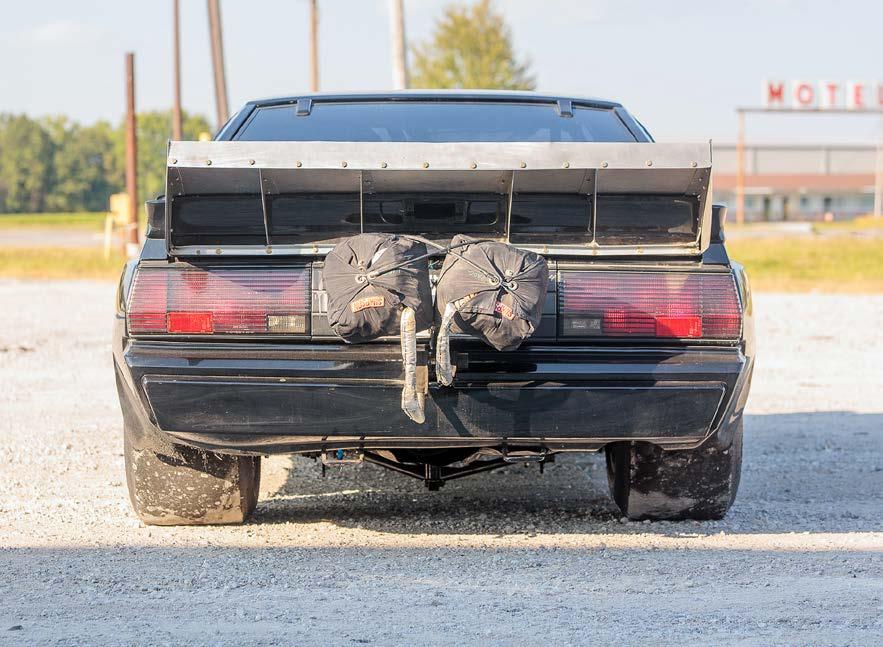
Beneath the Chrysler’s hatchback you’ll find a stout Mark Williams 9-inch rearend running 4.11 gears, and when the pass is over, Duncan squeezes down on a quartet of Wilwood Engineering’s finest disc brakes.
Keen eyes will spot the custom transbrake trigger that was fabricated out of an old connecting rod by Wade Owens at QuickDraw.
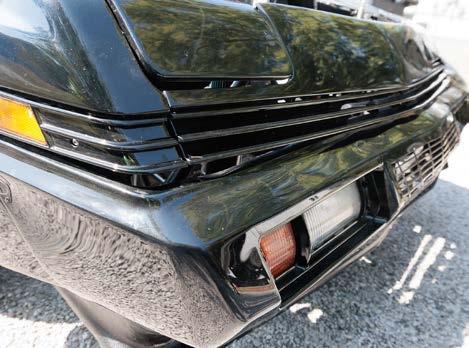
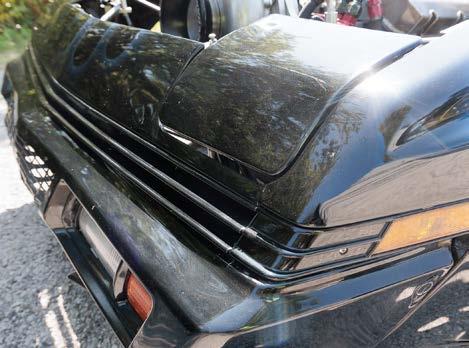
Uncle Jeff’s Conquest sports most of its original lighting and trim. The Chrysler Conquest is unique to say the least and was built to be an eighties-styled sports car to compete with the likes of the Porsche 944. It was really a rebadged Mitsubishi Starion and in some circles known as the “Starquest”.
“It’s just as ridiculous as I am,” Duncan quipped about the Conquest’s persona. While he doesn’t have any track times to speak of, a nod to the street and back-of-track no-prep racing he usually competes in, Duncan said he’s won a few cash day events with his wild machine and
is regularly in the semifinal or final rounds. Despite the victories, he says those aren’t the most memorable experiences, rather “It is sitting in that cushy MOMO seat, pulling the transbrake trigger, and not being afraid to live my life the way I want to after a horrific wreck.”
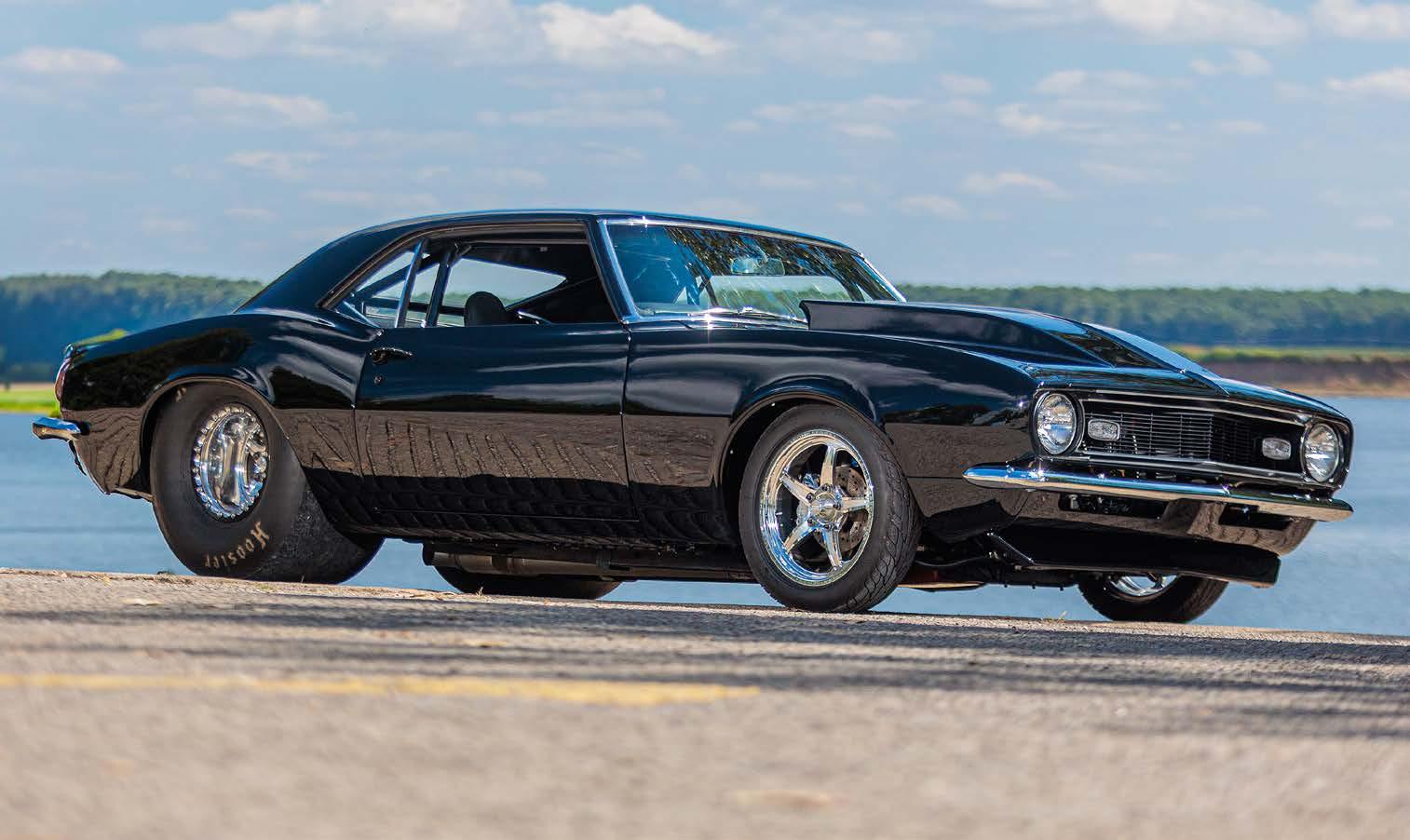
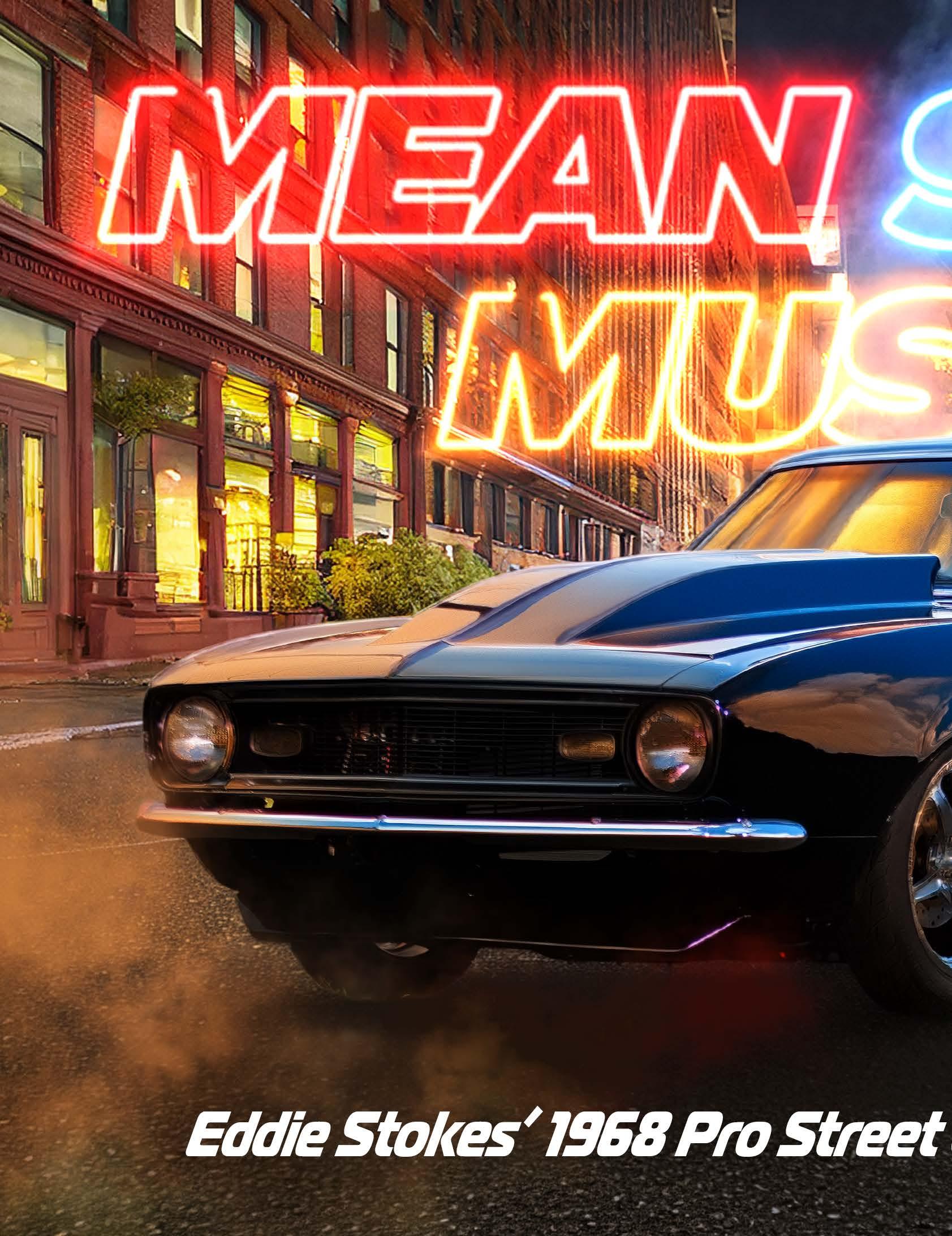
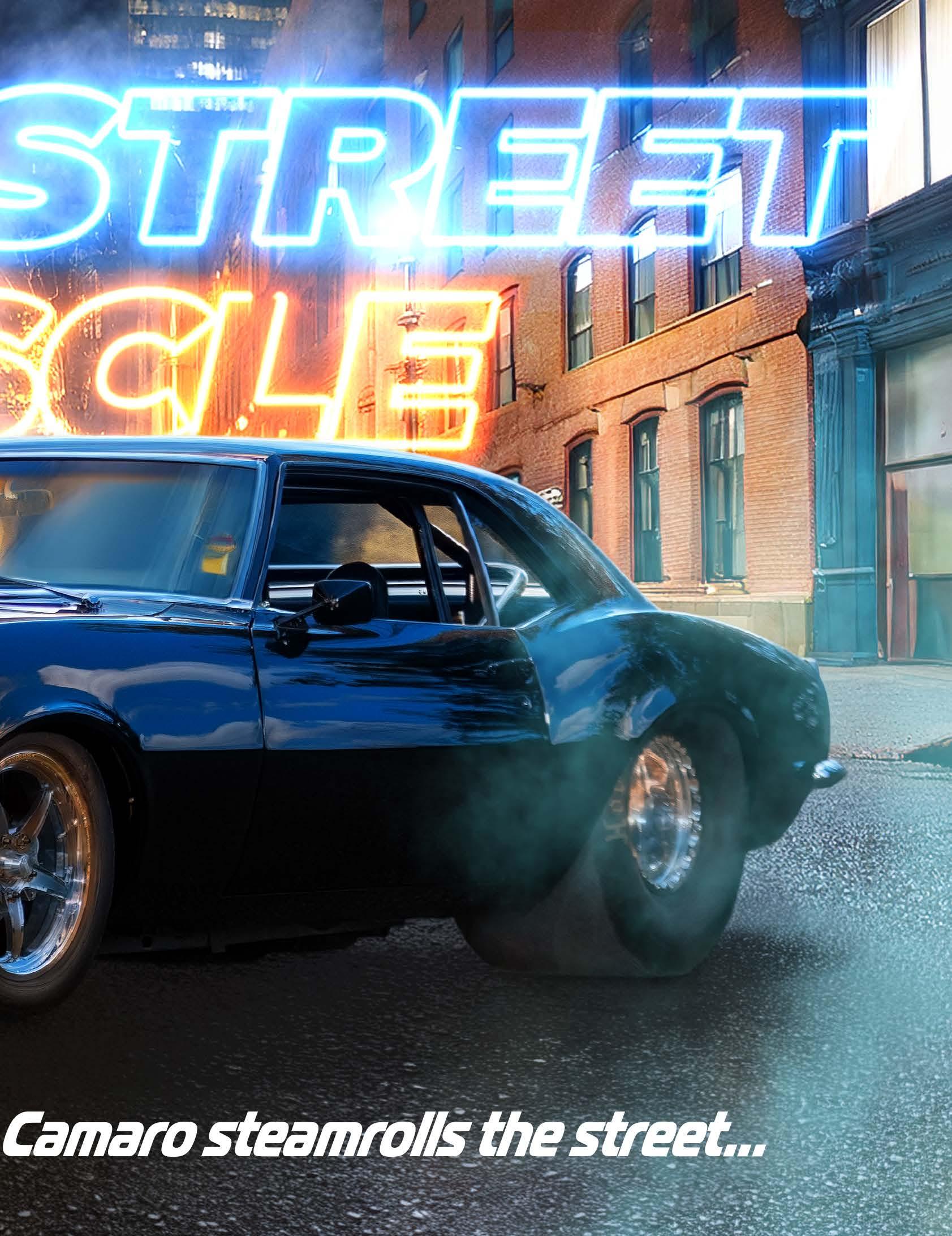
Hailing from Evansville, Indiana, Eddie Stokes bought this Camaro to replace a 1969 Chevy Nova that he built in the heyday of the Pro Street era back in 1980.
The year was 1996, but it would take a little while before Stokes decided exactly what direction he wanted to take the project. Stokes’ automotive background goes back to his childhood when he was helping his father work on cars at just ten years of age. Growing up around muscle cars steered his interests, and hot rods turned into street racing, and then
into drag racing on the track. Stokes was hands-on as well, building his street machines and even performing his own engine rebuilds.
“I found this Camaro located in a town called Birdseye, Indiana, about an hour’s drive from where I live,” Stokes explained. “After talking to the owner about buying it, he was hesitant about selling it at the time.
Stokes enjoyed the original Pro Street movement as it happened with a Chevy Nova he built and bought this Camaro back in 1994 to build and relive those fat-tire glory days that have seen a resurgence over the past number of years.
Story: Steve Baur
Photos: Wes Taylor
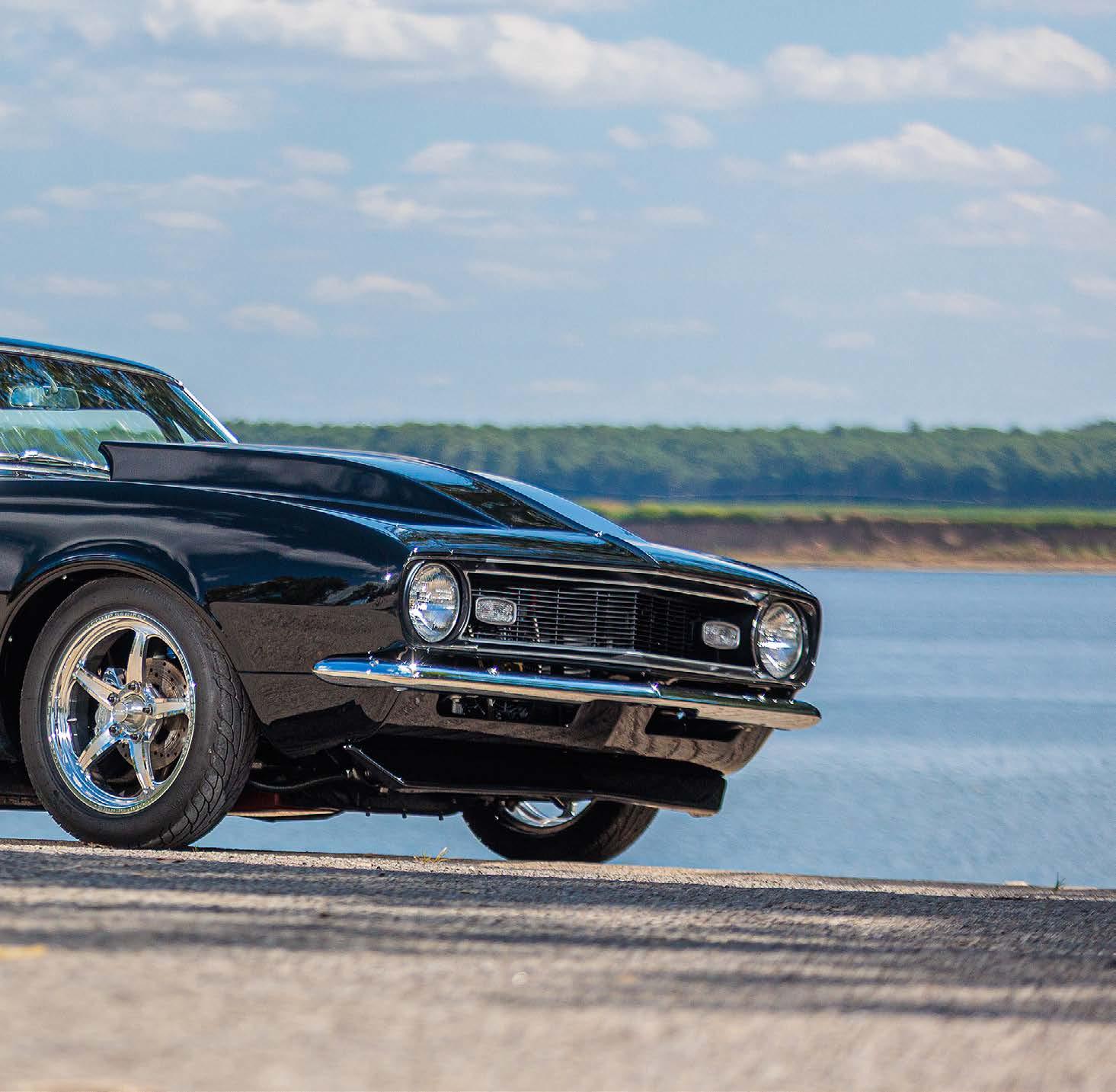
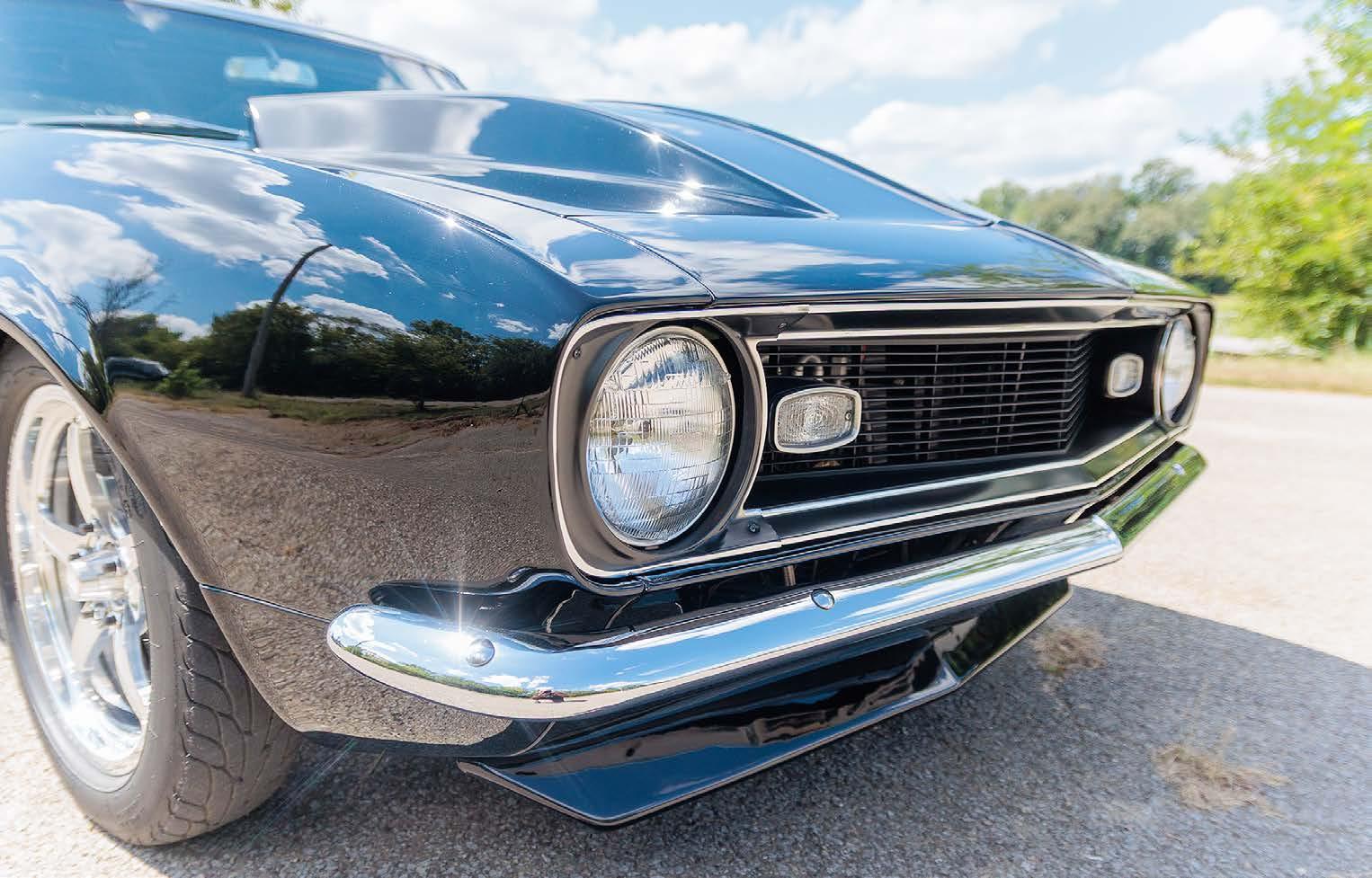
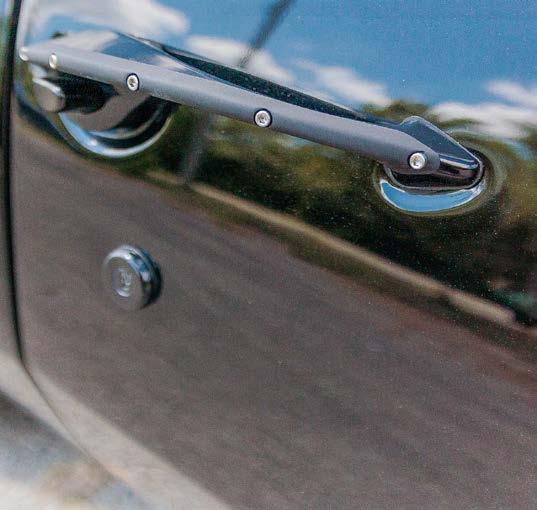
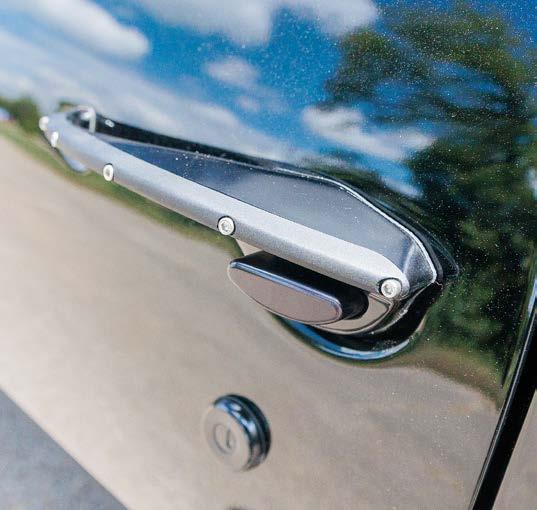
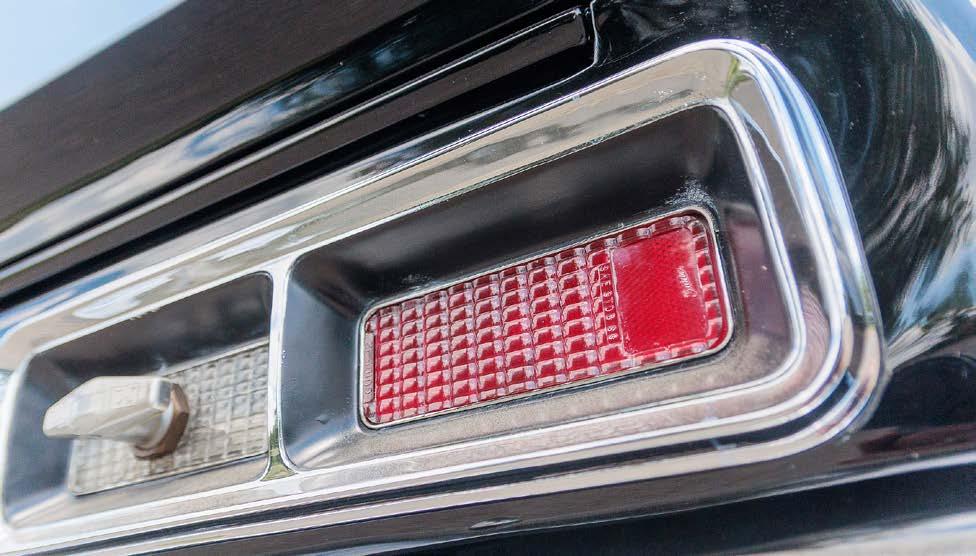
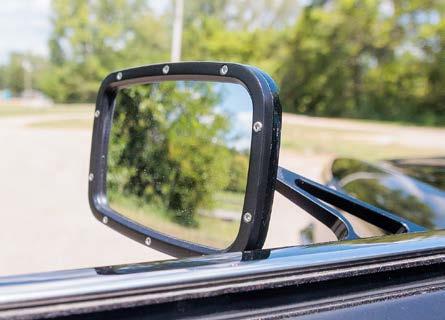
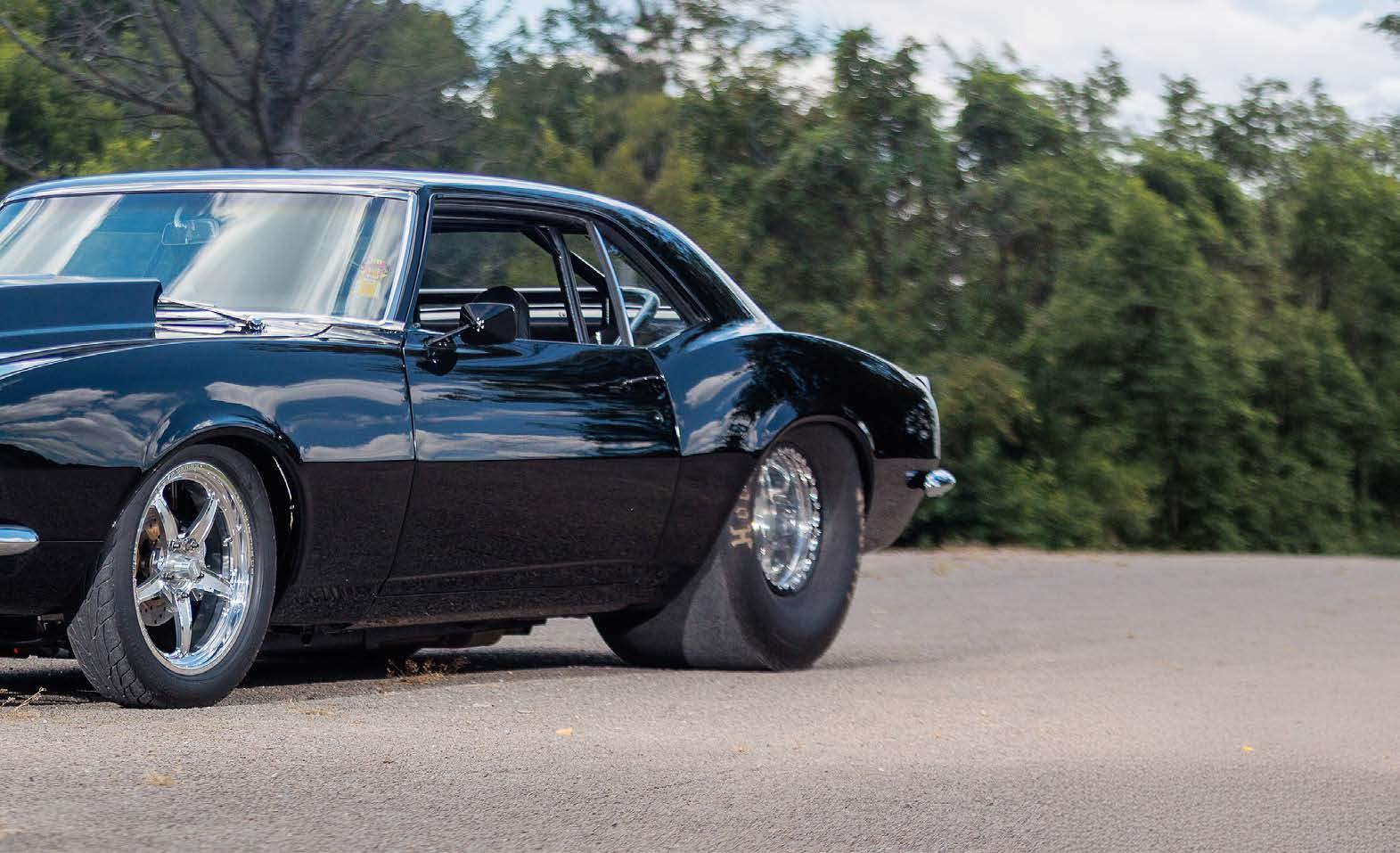
While factory bumpers, trim and lighting remain, Stokes installed door handles and mirrors with a slightly different take from the factory pieces.
After a couple of weeks, I was able to purchase the car for what he was asking, $3500.
The Camaro sat for about a year when I got it and I wasn’t sure on which direction I was going to go with it as far as either leaving the body and chassis stock with minor performance upgrades,” Stokes remarked, “but then my wife suggested that the car would look better tubbed out rather than stock appearing and she also
commented that I wouldn’t be happy without the fat tires. So that being said, we then knew which direction we were going.”
The rolling chassis project came with a 327 cubic-inch small-block Chevy engine and Powerglide transmission, and the entire interior was also included, albeit in boxes. The chassis was in great shape, essentially rust-free and didn’t require any sheet metal replacement, which goes a long way in getting a project like this to the finish line far sooner.
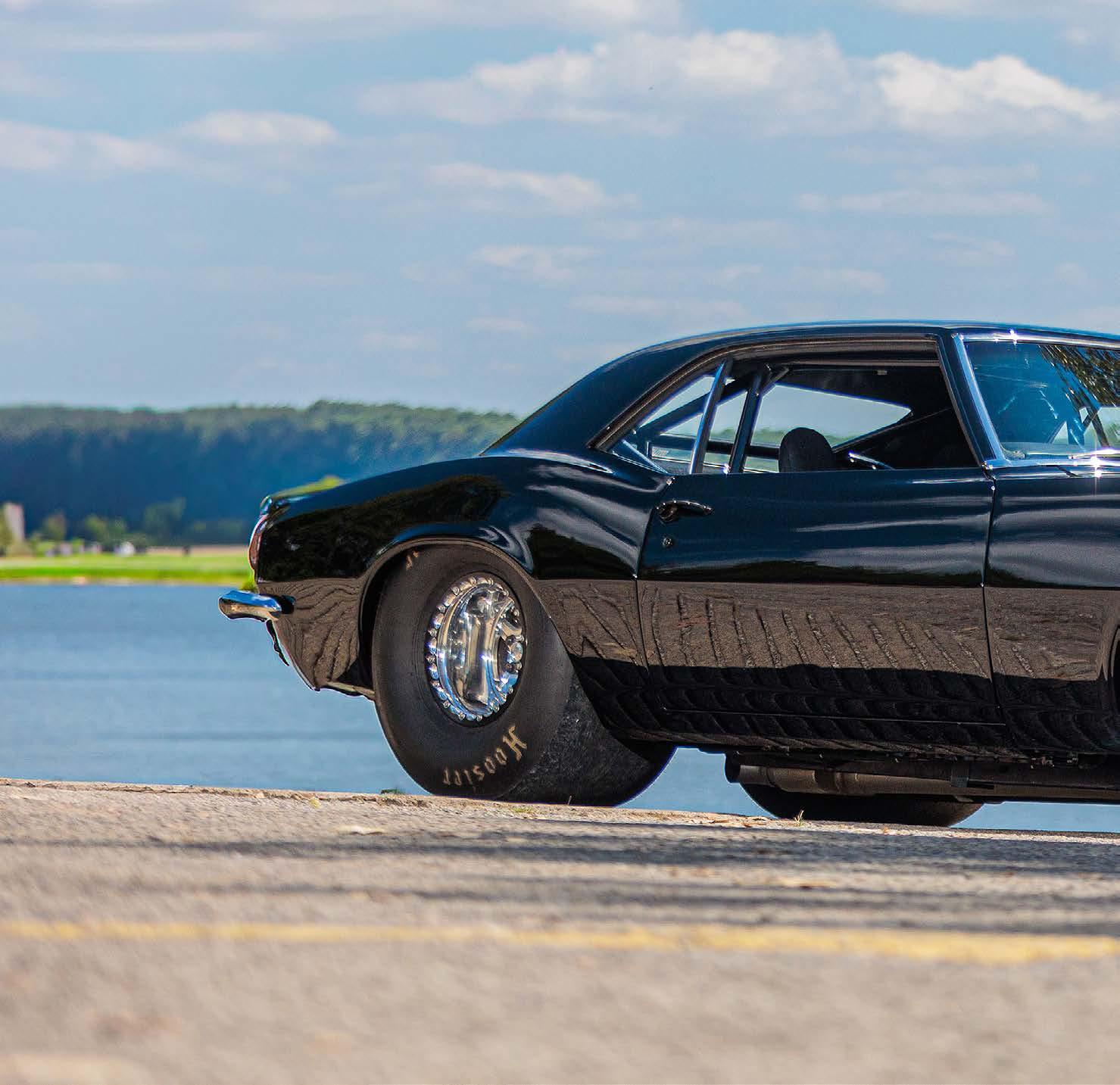
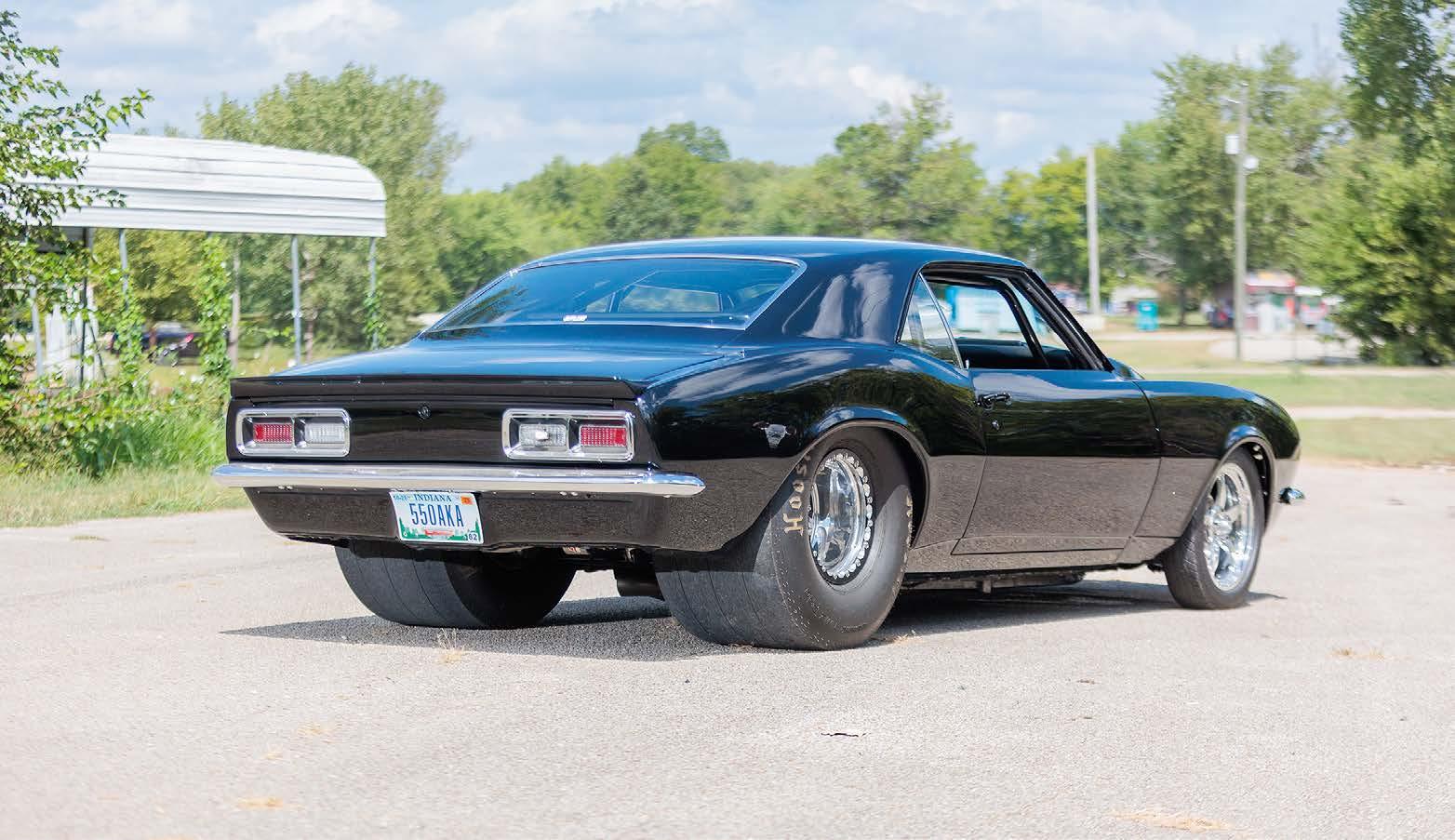
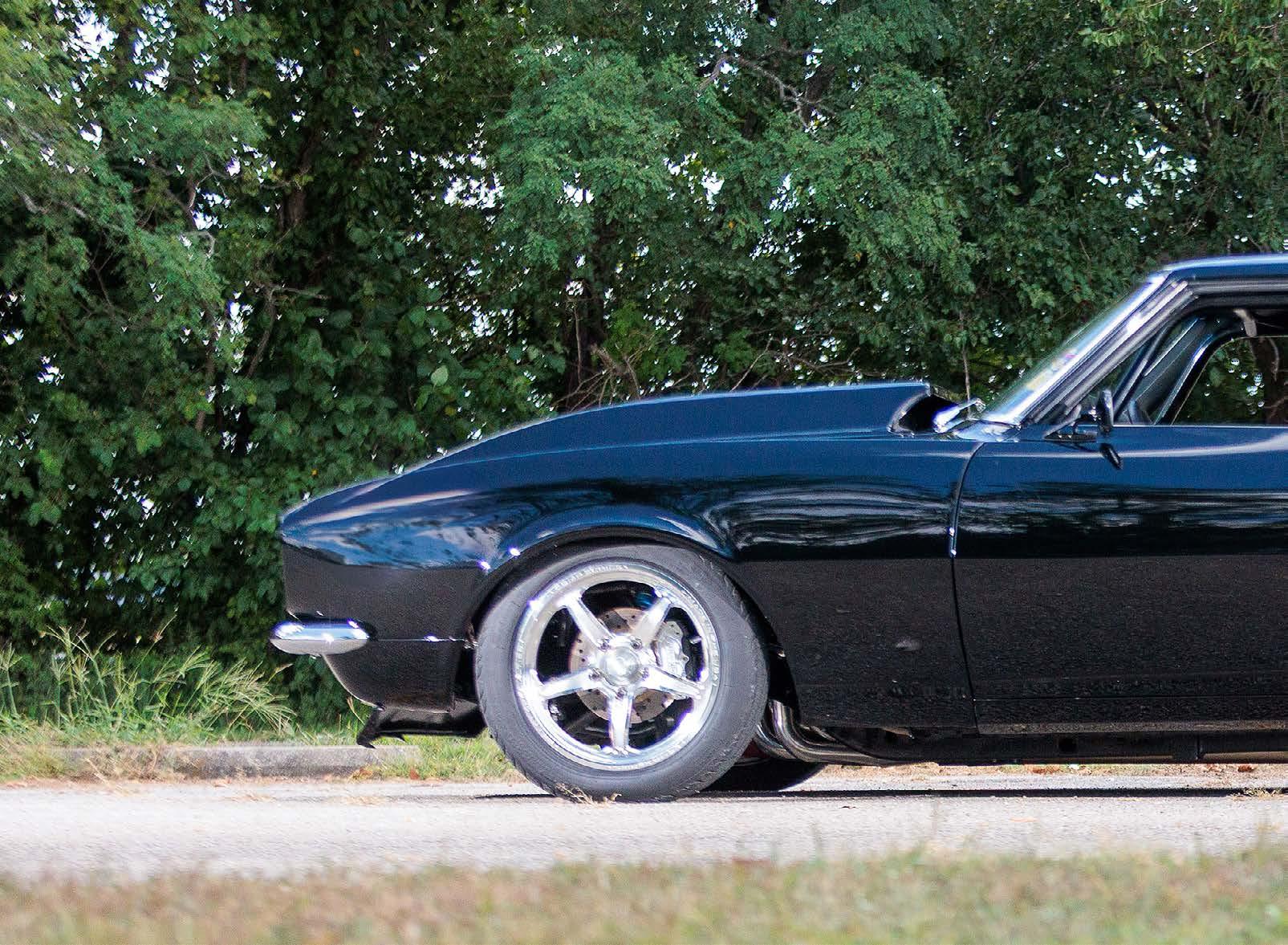
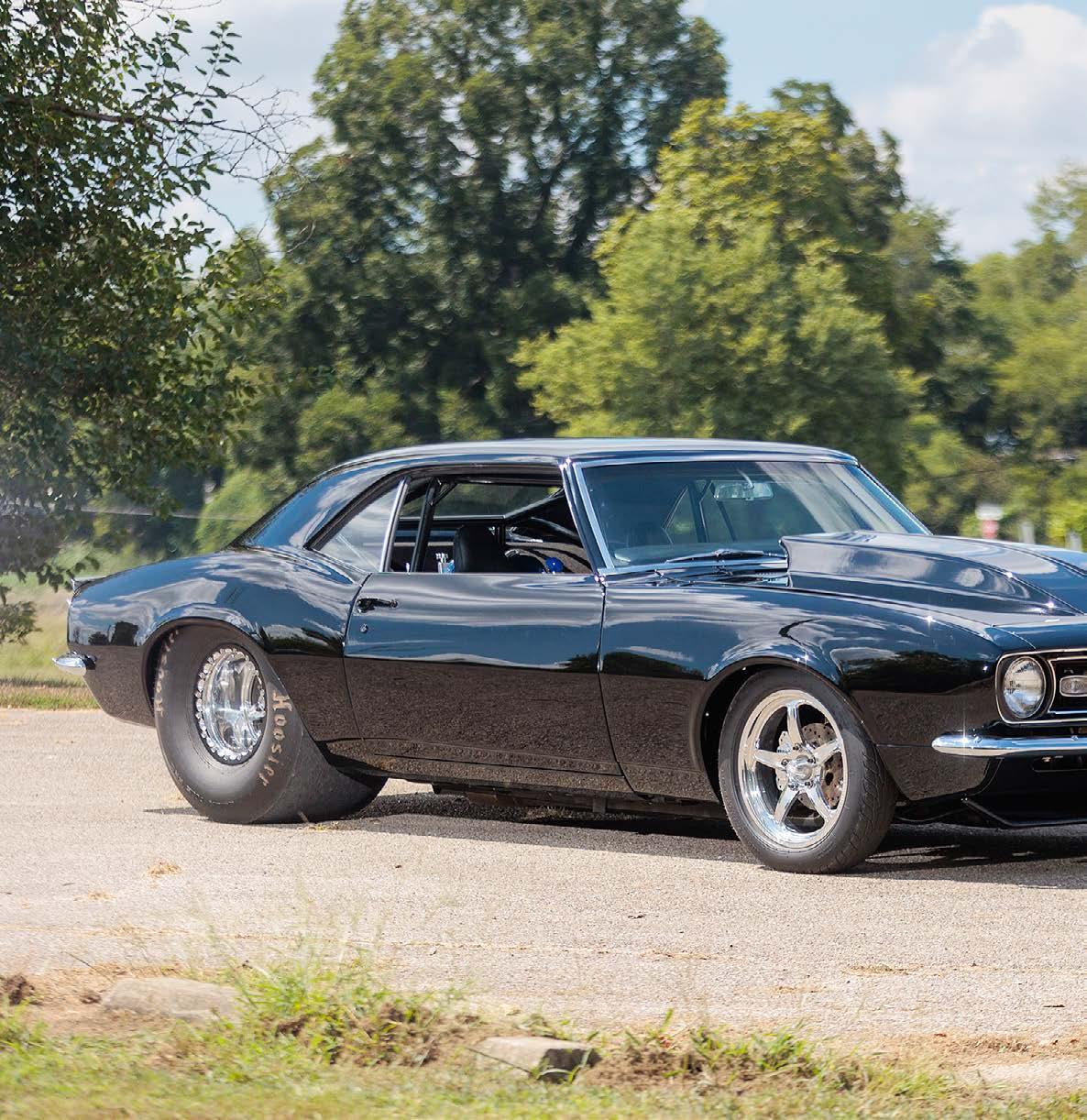
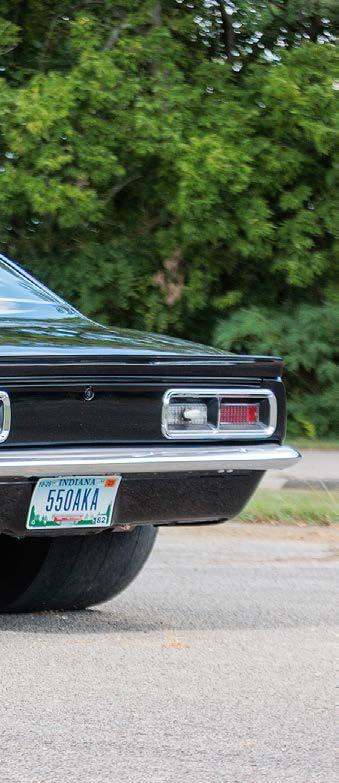
Dave Hicks Body Shop massaged the Camaro’s skin into the smooth finish it needed for a slick, glossy black paint job, which Stokes says is one of the car’s best attributes. The
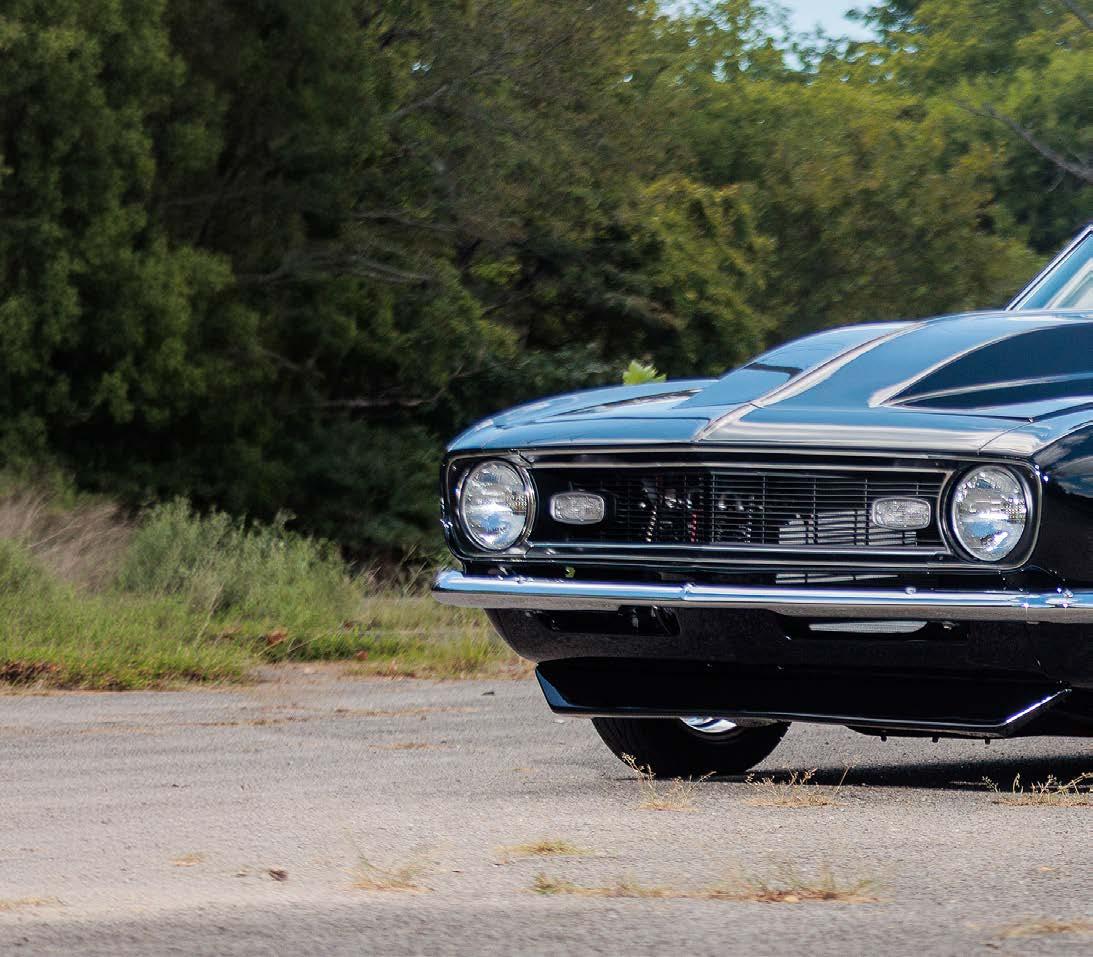
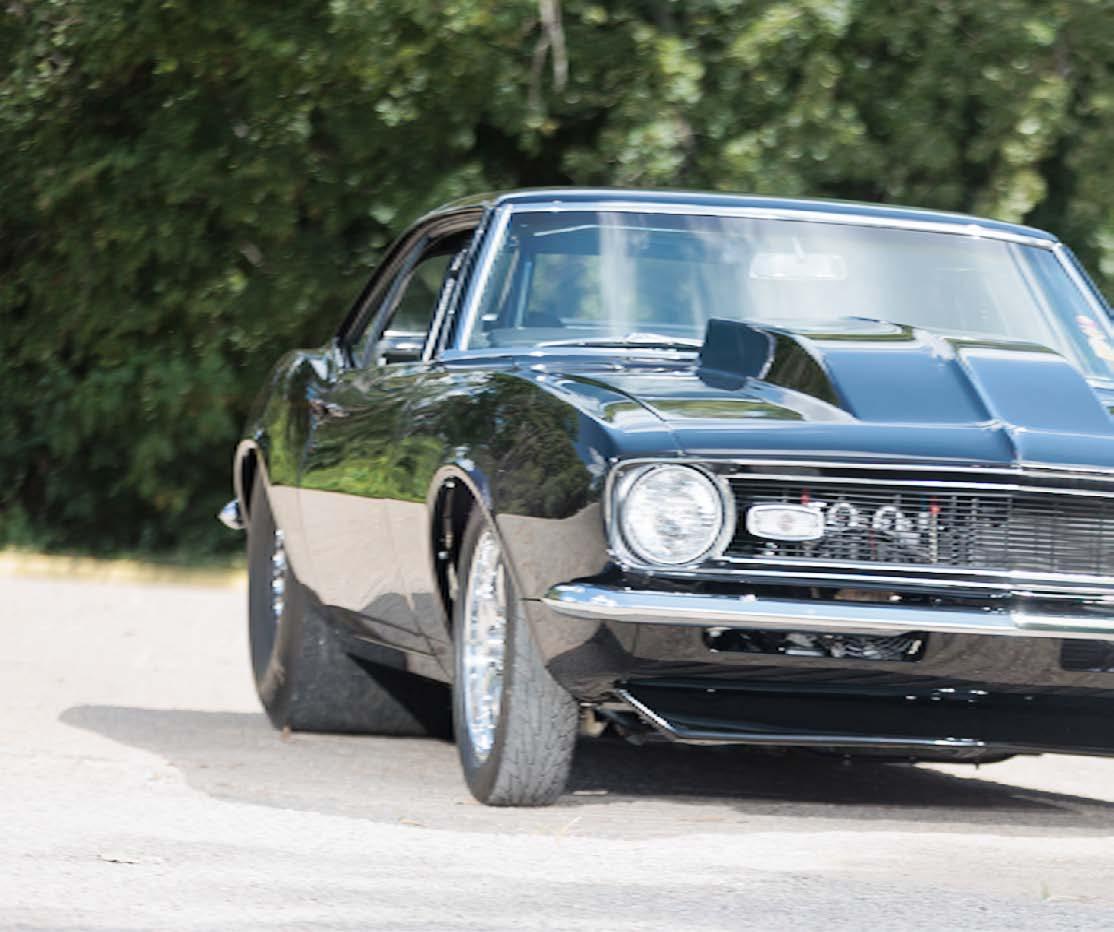
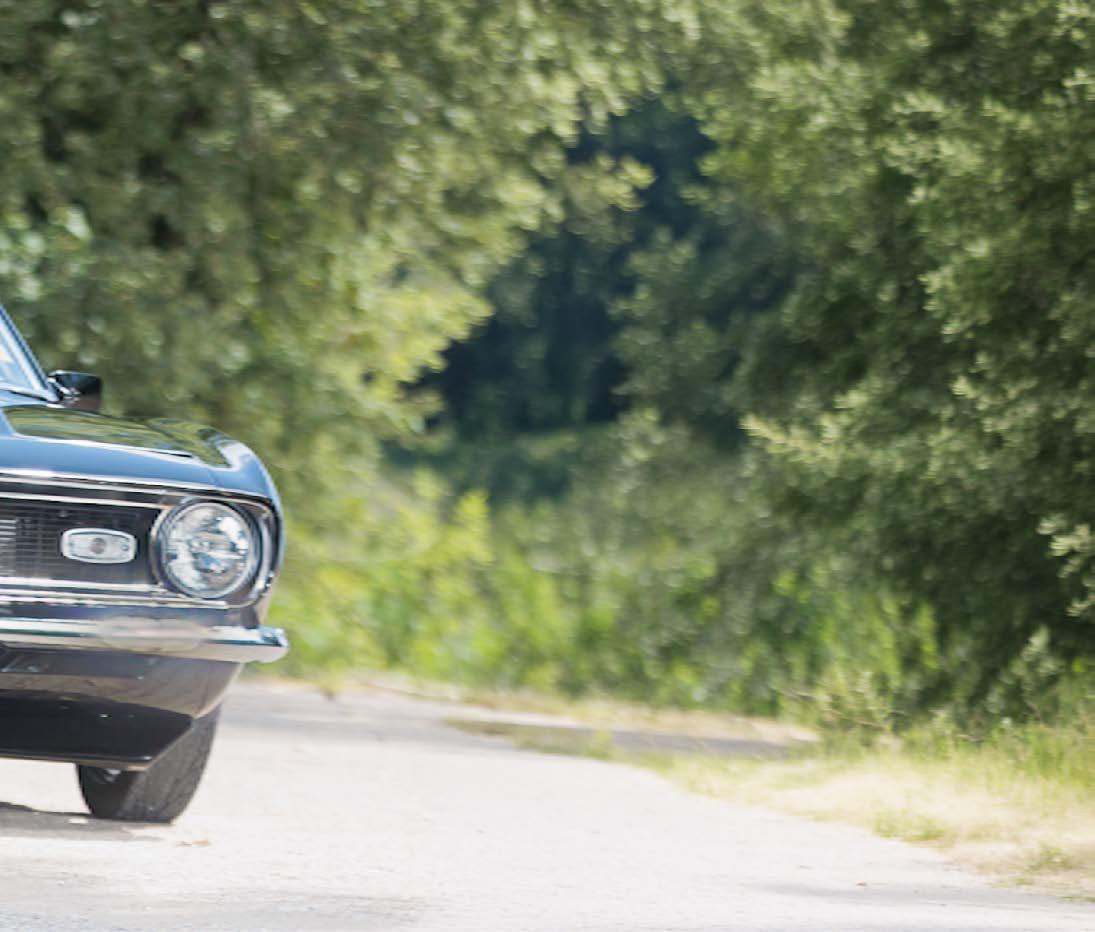
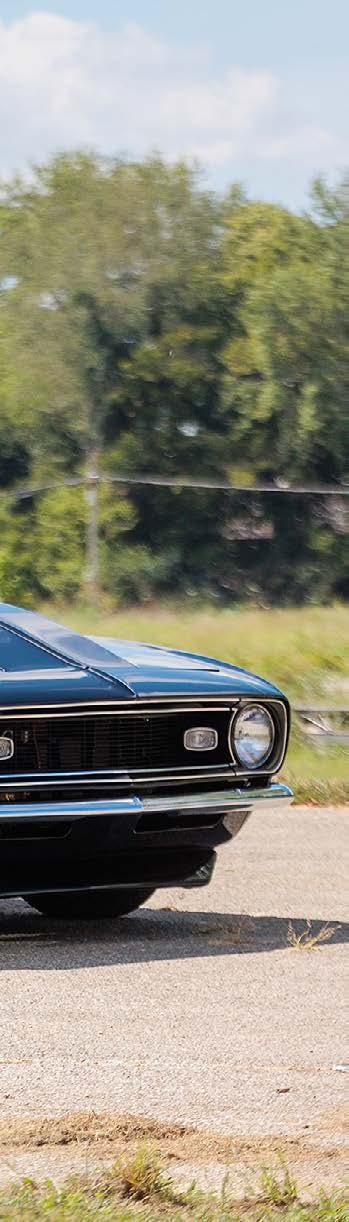
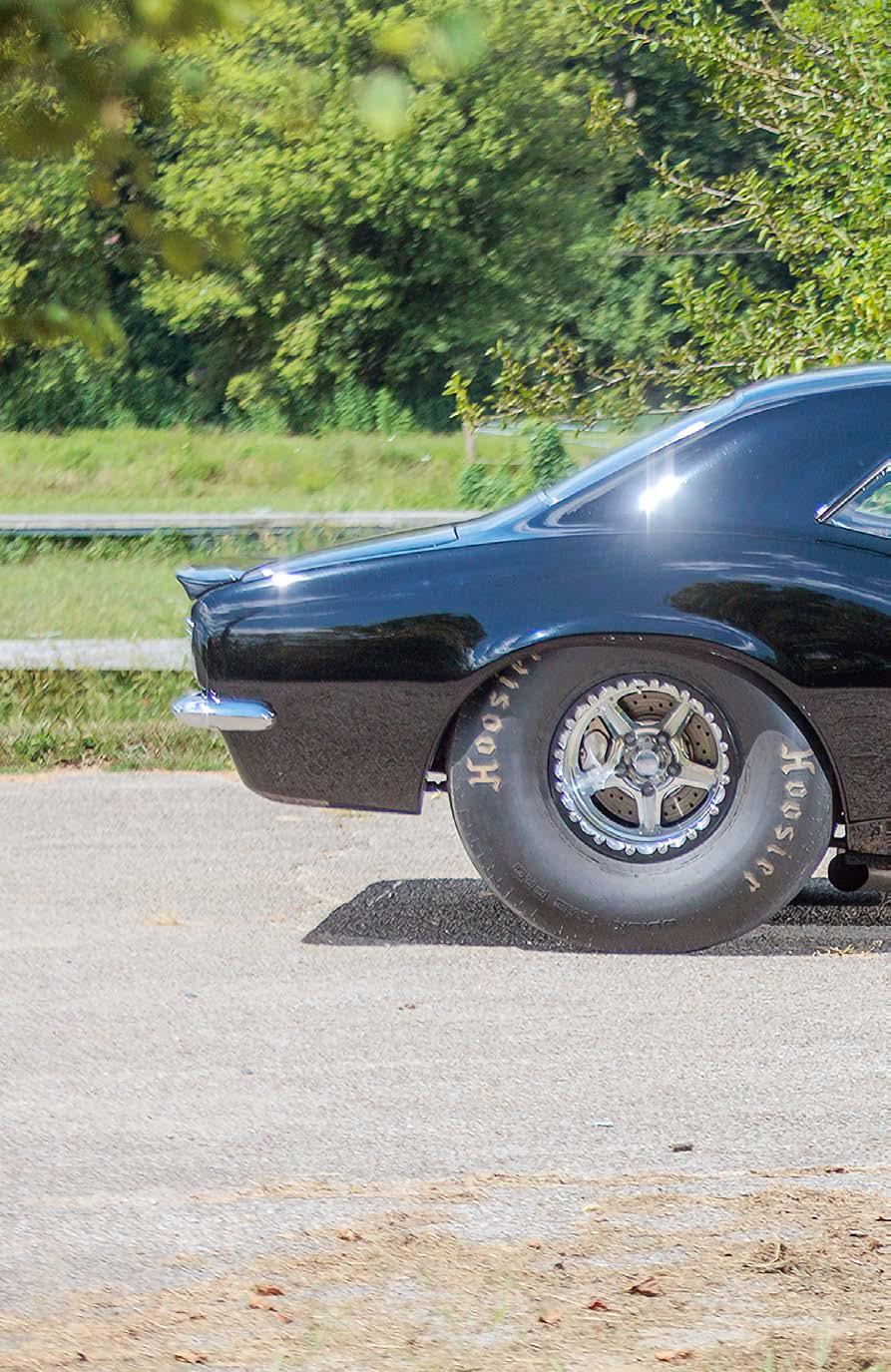
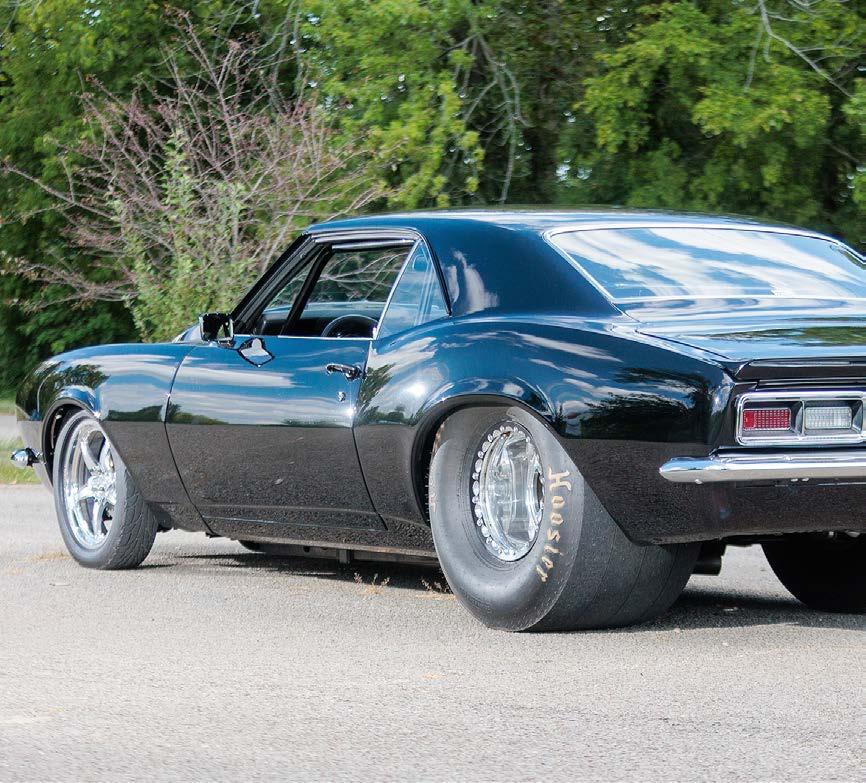
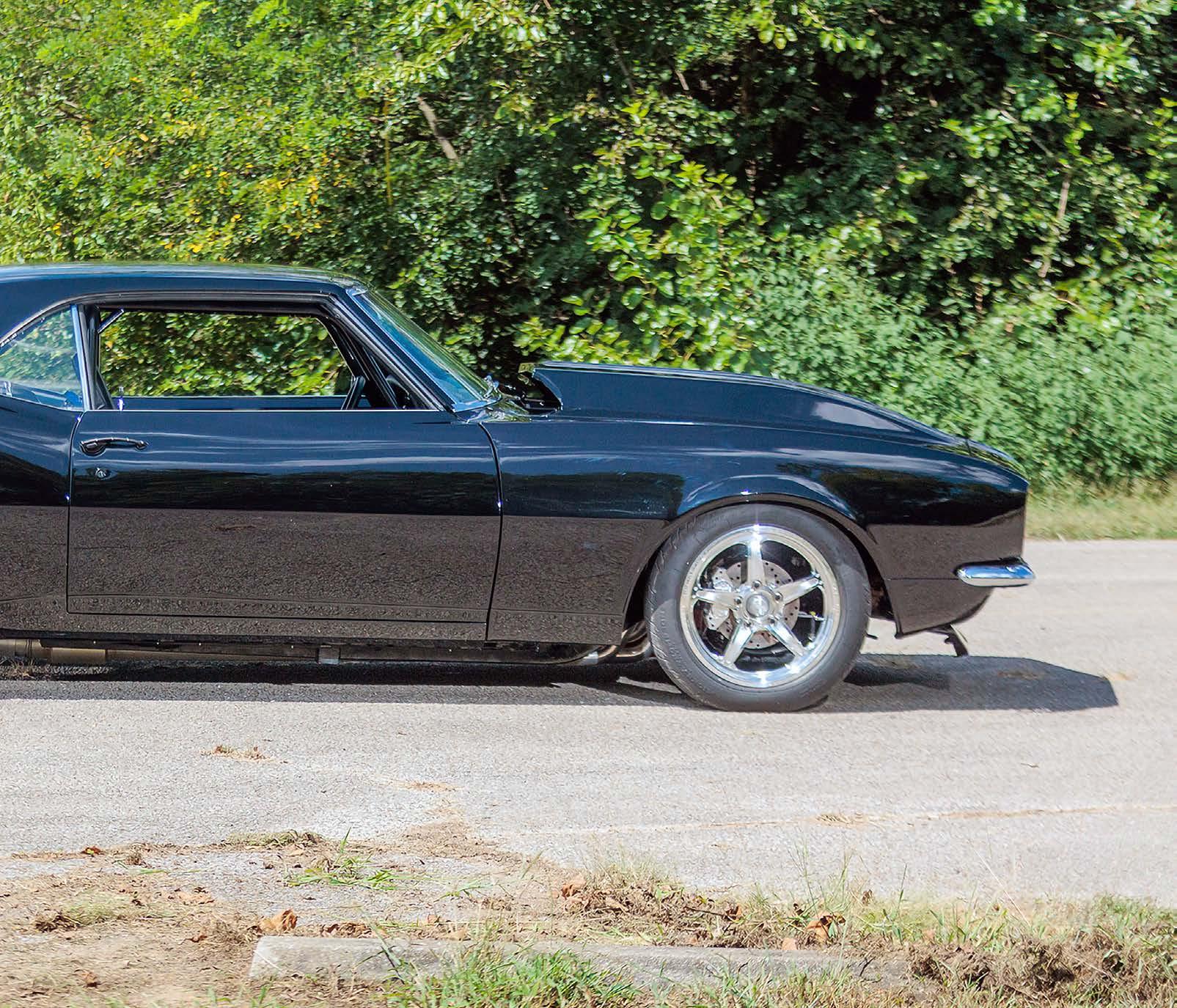
The iconic first generation Camaro body is arguably one of the most popular ever produced and Eddie Stokes’ 1968 Pro Street Camaro definitely does it justice. The body panels are all steel except for the Harwood 4-inch cowl induction-style fiberglass bolt-on hood and Dave Hicks Body Shop massaged the Camaro’s skin into the smooth finish it needed for a slick, glossy black paint job.
body panels are all steel except for the Harwood 4-inch cowl inductionstyle fiberglass bolt-on hood that pivots on Eddie Motorsports Billet hood hinges.
BRC Race Cars in Evansville, Indiana, performed the chassis upgrades that include a 4-link, back-half rear suspension conversion
that incorporates a wishbone track locator. Inside the Camaro, a 12-point roll cage ties the factory front subframe, rear suspension, and chassis all together, and front and rear motor plates provide a strong foundation for the big-block Chevy powerplant.
Eddie Stokes’ 1968 Nitrous Big Block Pro Street Camaro
Body & Paint:
All Steel car except Harwood 4 inch cowl fiberglass hood bolt on. Eddie Motorsports billet hood hinges. Deep Black paint.
Chassis & suspension:
Back Half 4-Link rear suspension with Afco adjustable coilover shocks.
Wishbone track locater, front motor plate and mid-engine mount plates, rack and pinion steering, tubular control arms upper and lower w/ adjustable coilover shocks.
Engine:
Chevrolet Bowtie Big Block 4 bolt main block bored out to provide 540 cubic inches.
Lunati roller cam and roller lifters 744/704 lift.
PRC custom aluminum radiator w/dual Spall fans.
Rotating Assembly:
Eagle 540 stroker kit, 14-1 compression ratio.
Induction & Fuel Delivery:
Weiand Team G Aluminum Dominator Intake with 1350 Holley HP Dominator carb. Barry Grant Fuel pump.
Power Adder:
Nitrous Oxide Systems 400 HP shot.
Electronics:
MSD ignition box.
Transmission & Converter:
Bowler Performance Transmission built 400 Turbo W/Trans brake and 5200 BTE stall converter.
Rear Differential:
Ford 9 inch with spool and 4.89 Pro gears. 35 spline Moser axles.
Brakes:
Front and Rear Aerospace 4 piston calipers with drilled rotors.
Tires & Wheels:
Front are Billet Specialties Comp 5 17 x 4.5 rims with Mickey Thompson SR 17 inch tires.
Rear are Billet Specialties 15 x 15 w/7.5 backspace with Quick Time 33 x 22.5 x 15 inch tires and MacFab beadlocks.
Interior:
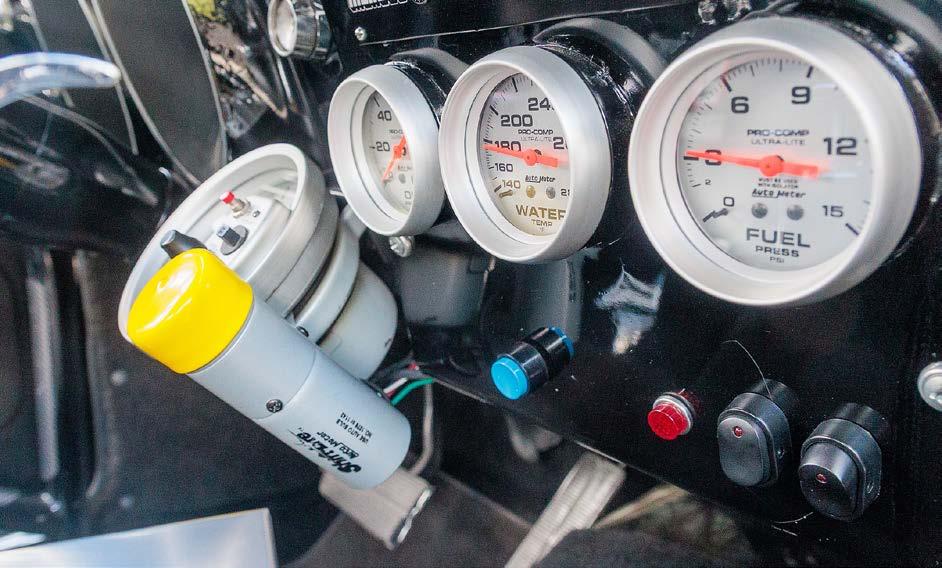
Autometer gauges and tachometer, Grant steering wheel w/quick release, Hurst Quarter Stick shifter. Race seats with 5 point safety harnesses. 12 point cage with halo.
Most Unique Feature(s):
The slick black paint job and straight body.
Reason For Build:
Yes, this one is replacing another Pro Street car I had built in 1980. It was a 1969 Chevy Nova Pro Street back in the beginning of Pro Street at the time.
Build Timeline: 4 years.
Most Memorable Experience(s):
When we had just finished the build in 2000, we were asked to have the car featured on a television show that was being filmed here in Evansville IN. We were actually asked to do another show for them that was seen nationwide a month later. It was pretty neat to have my family and friends from out of state contact me and say that they had seen me and my car on the show.
Thanks To:
BRC Race Cars, Evansville IN. for the complete chassis.
Dave Hicks Body Shop.
My wife Sherry Stokes for supporting me in every way on this build.
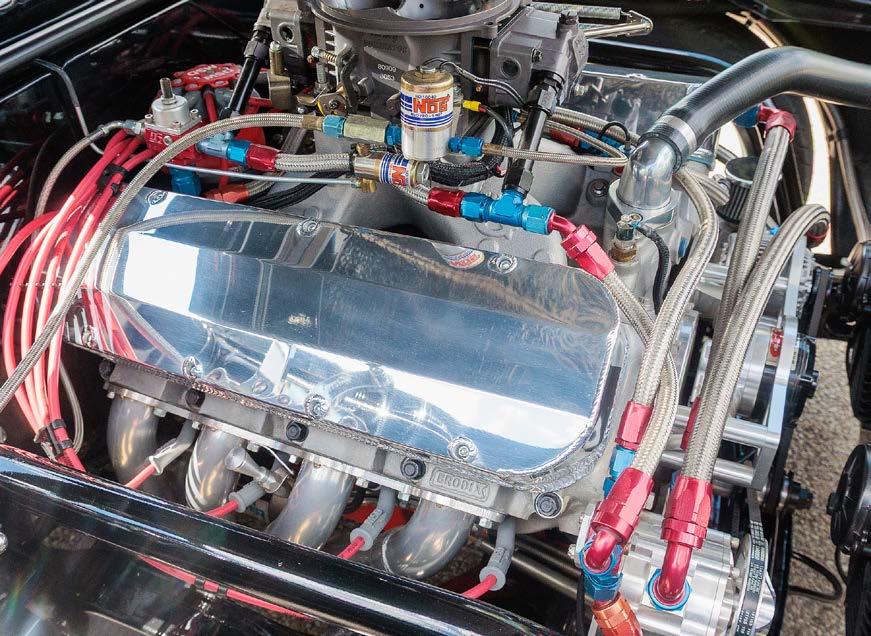
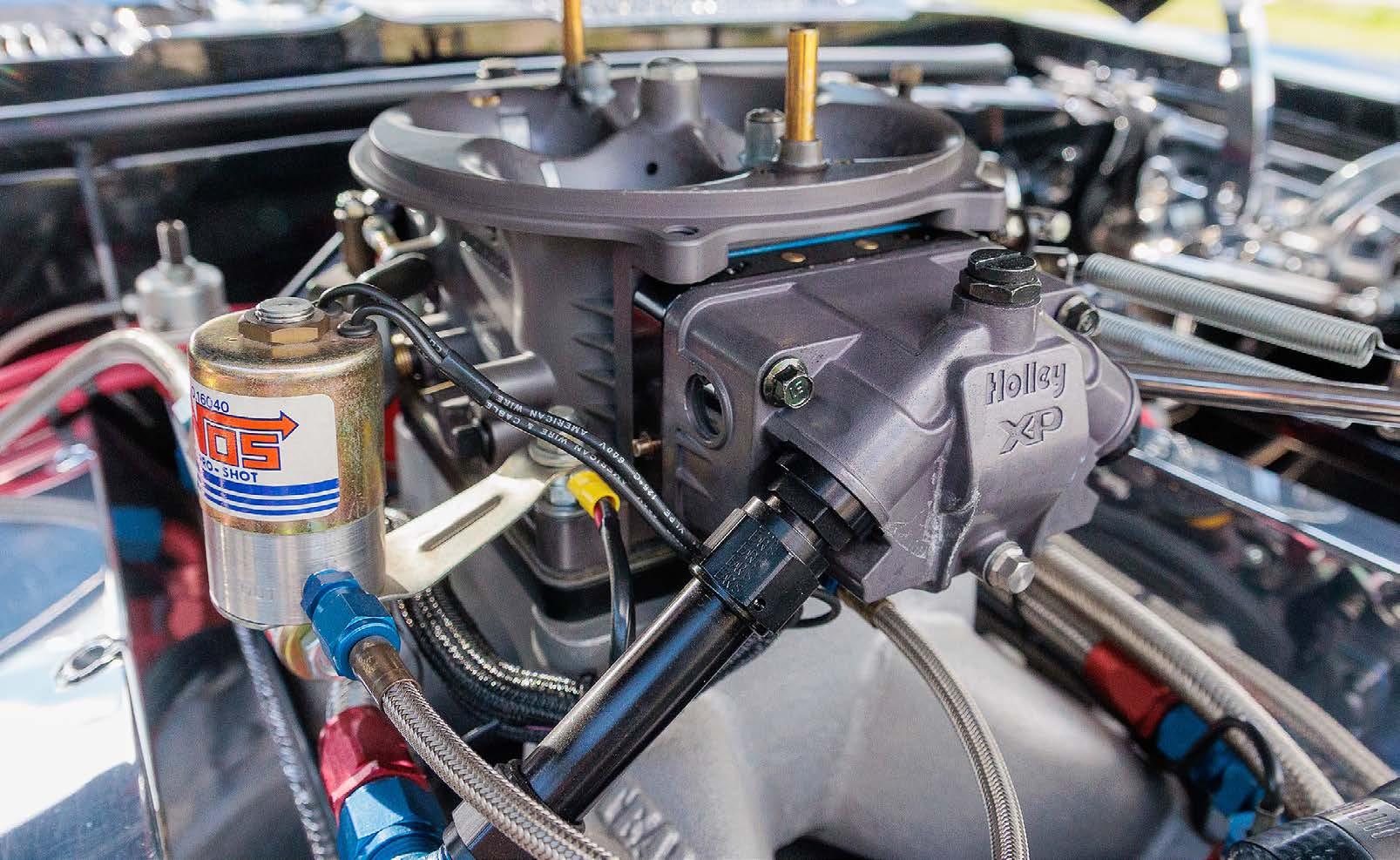
A Holley HP 1350 Dominator carburetor sits atop a Weiand Team G aluminum intake manifold. But wait there’s more, 400 horsepower more, as sandwiched between the manifold and fuel mixer is a Nitrous Oxide Systems plate that is ready to deliver an additional 400 horsepower on demand.
built in mounting bracket
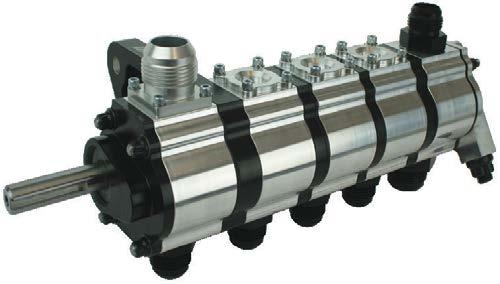
Tri-lobe scavenge sections feature individual timing gears to ensure proper clearance at high rpm Spur Gear pressure sections based off Moroso’s highly successful Billet Wet
Sump Pump Design
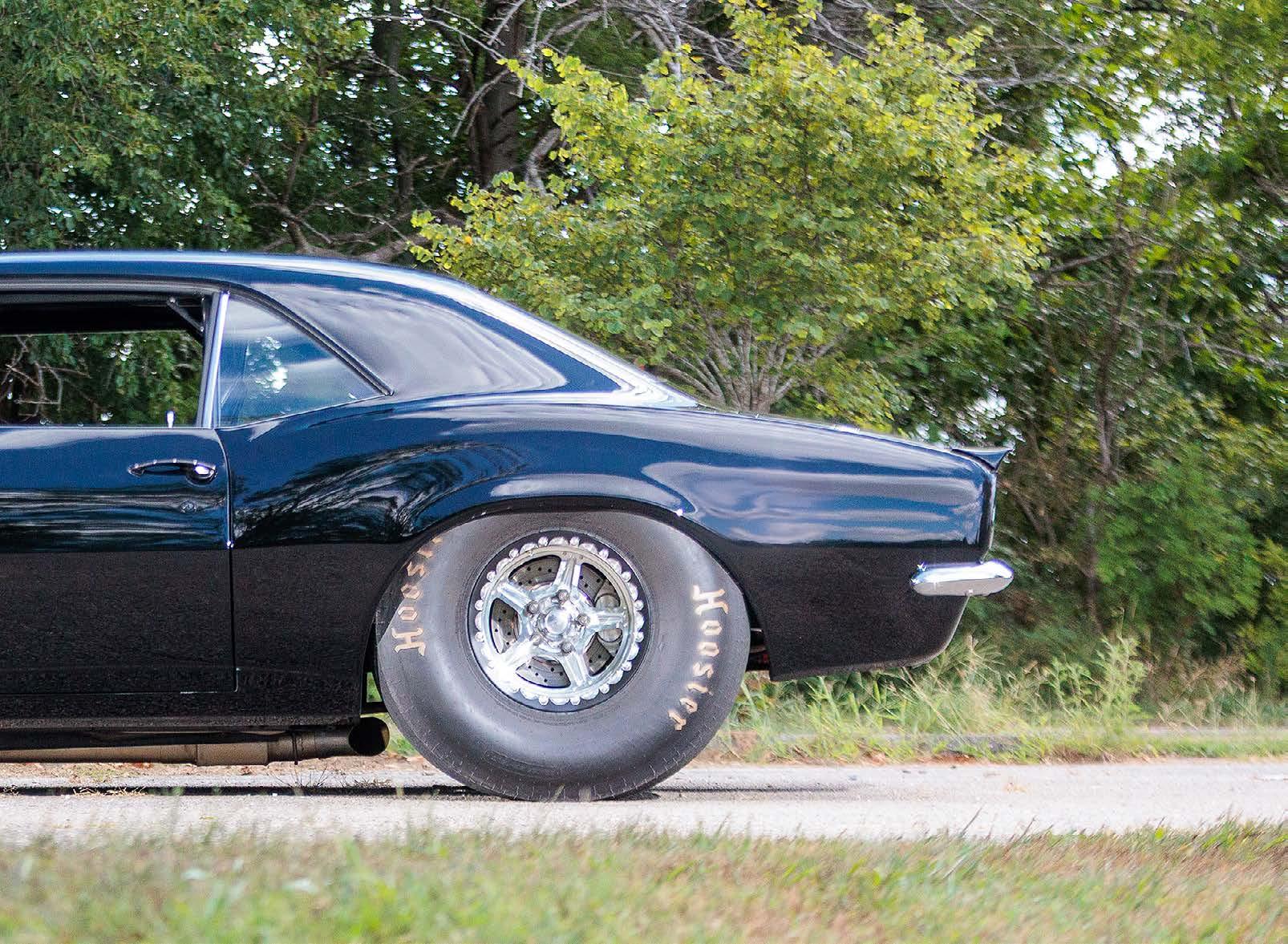
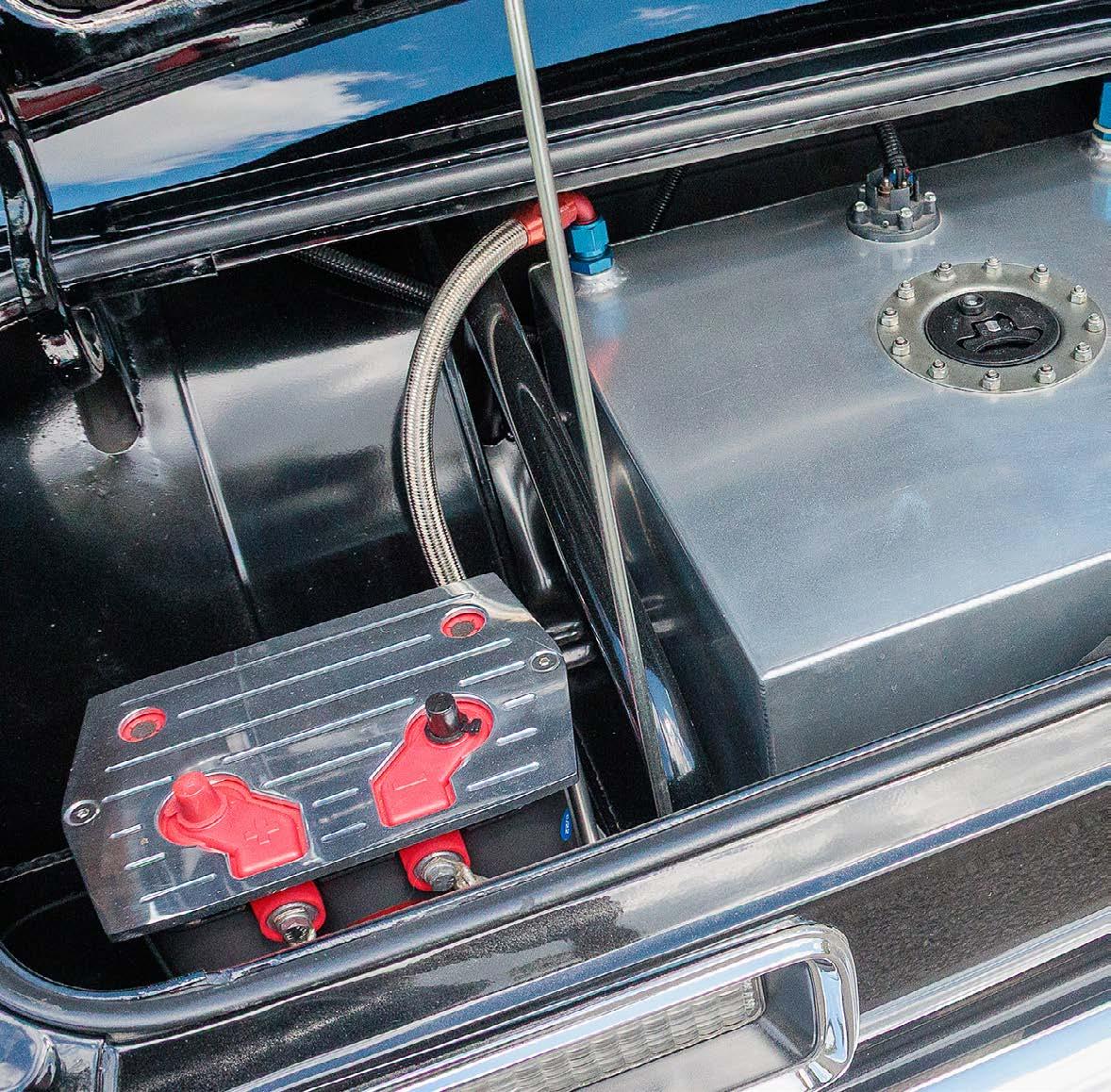
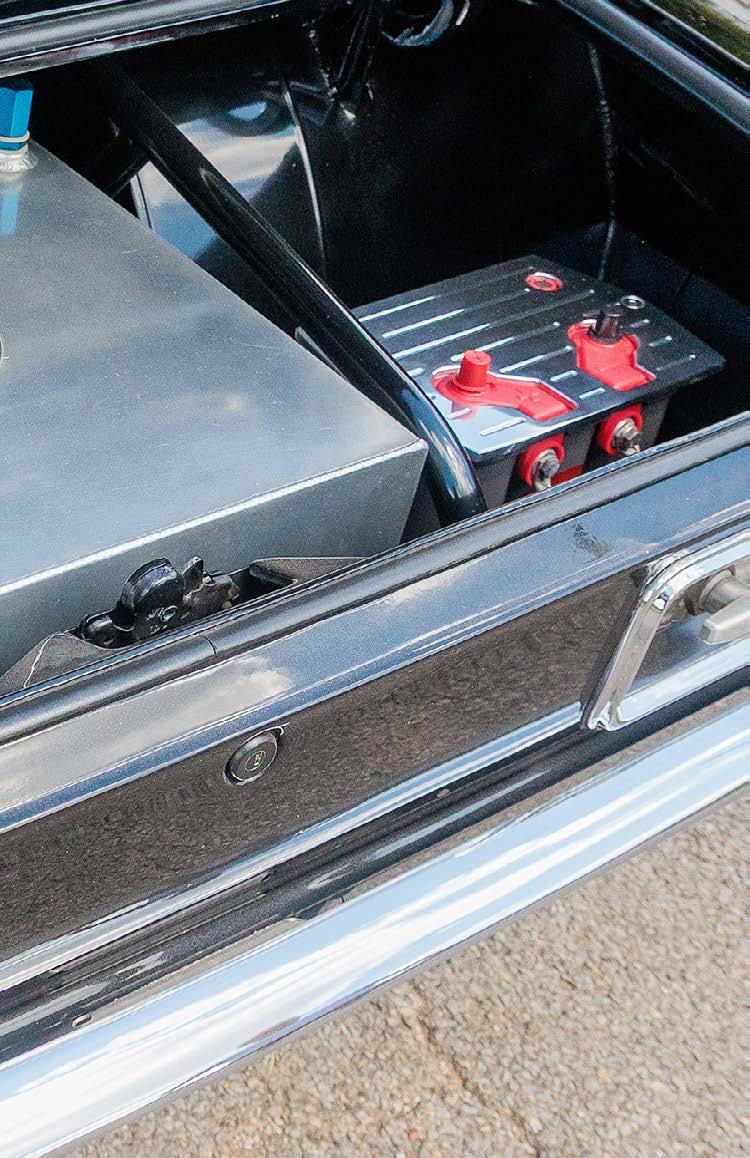
The limited trunk space of the Camaro is used up by a street cruising-capable fuel cell and twin batteries. The car rides on 15x15 Comp 5 wheels outback beadlocked to 33x22x15 stickies and 17x4.5 Comp 5 hoops with skinnies up front.
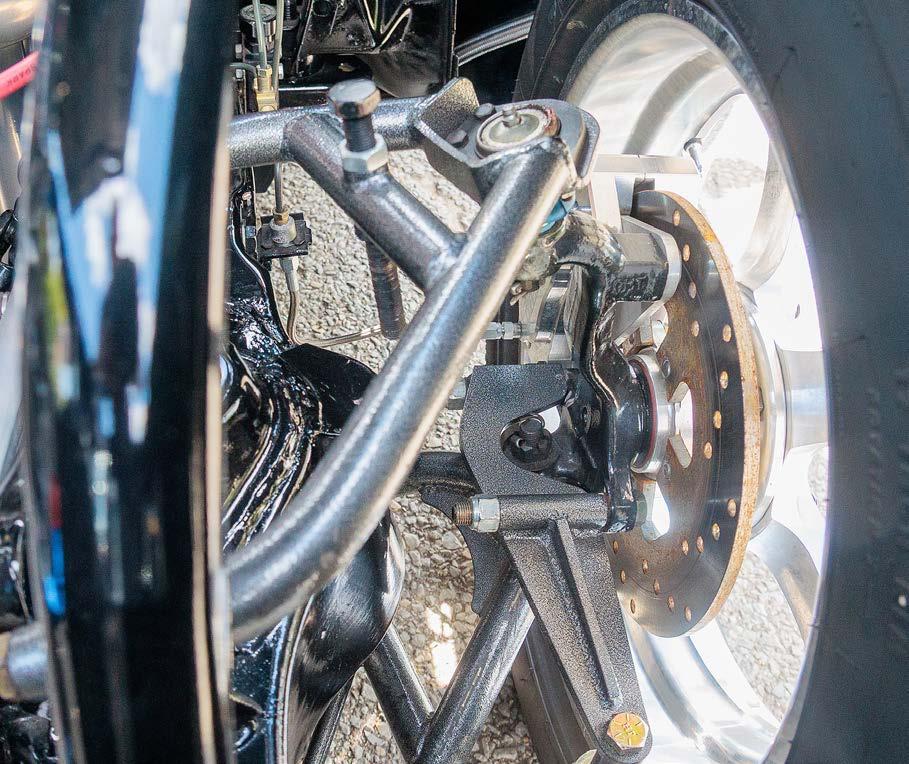
Steering comes from a manual rackand-pinion system and adjustable coilover shocks provide suspension to the tubular upper and lower front control arms. AFCO Racing coilover shocks handle the damping duties for the Ford 9-inch rearend that is packed with a spool and 4.89 gears that turn the 35-spline axles.
Big-block engines and Chevy Camaros go together like peanut butter and jelly, and Stokes has quite the powerplant on board.
The engine is based on a Chevrolet Bowtie, four-bolt-main block that has been bored and stroked to 540 cubic inches thanks in part to the Eagle Specialty Products rotating assembly.
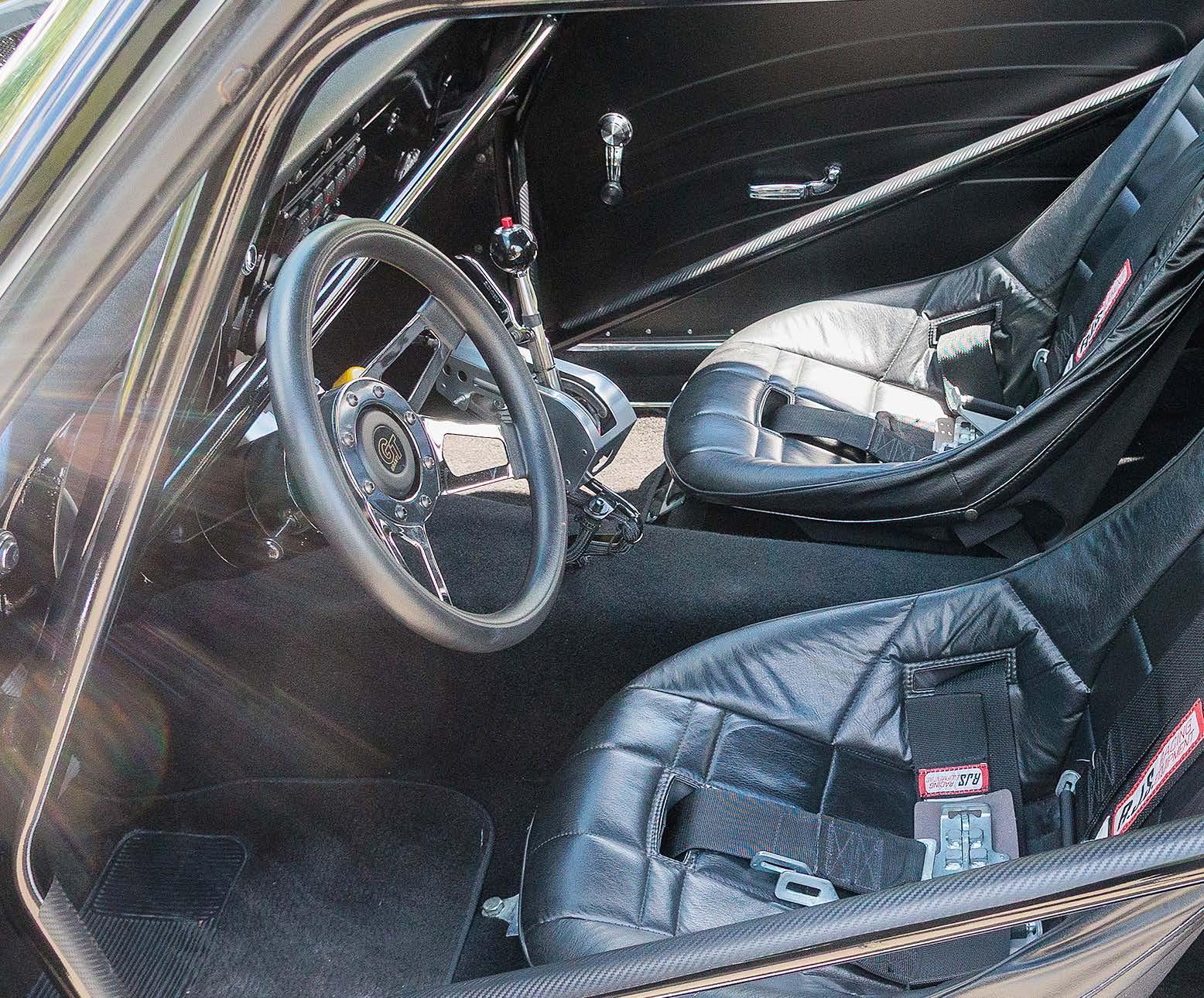
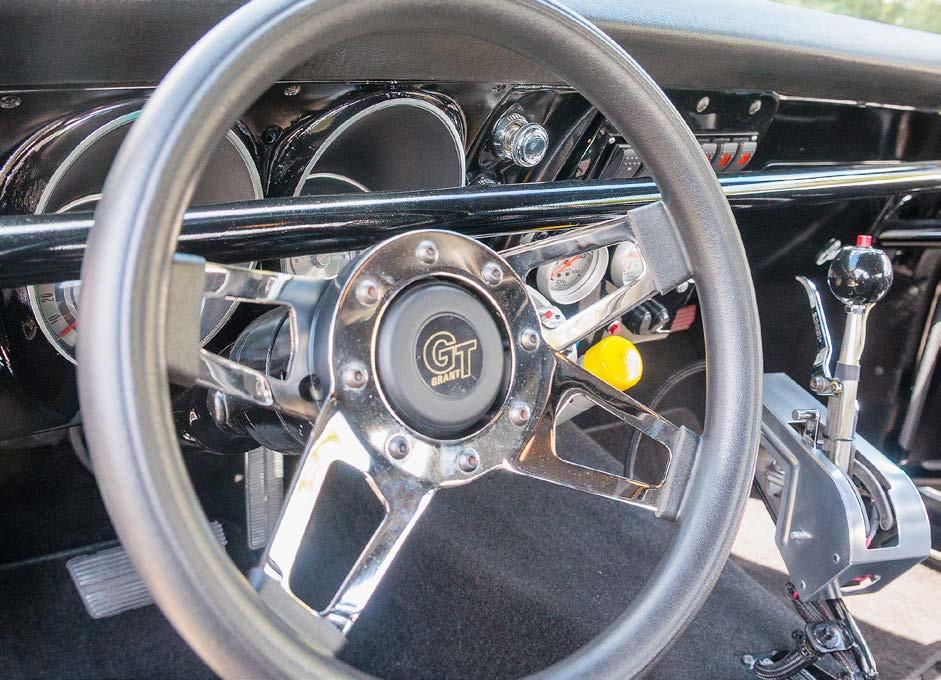
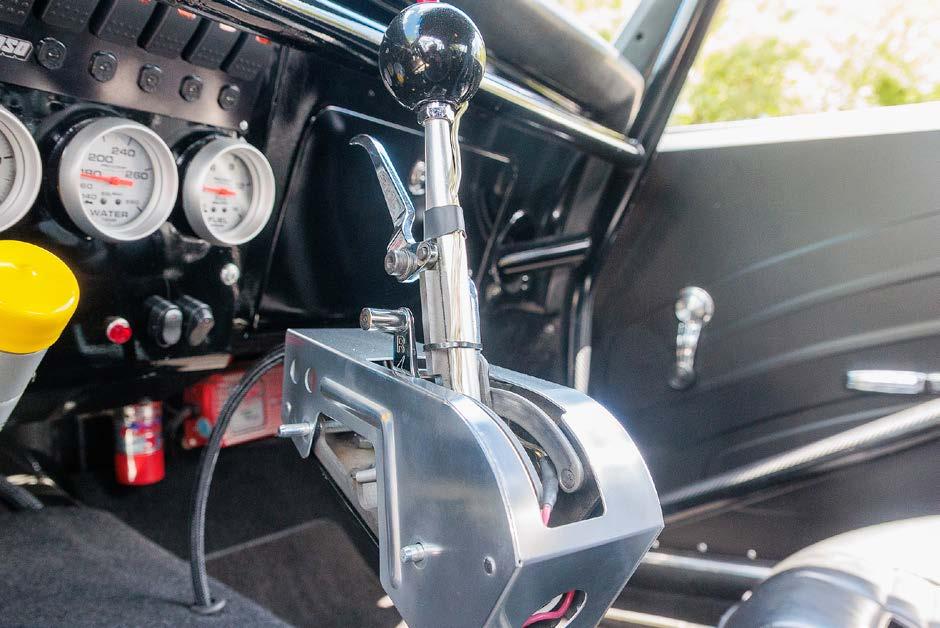
The original dash remains, but the remainder of the cabin has been updated with race-oriented options such as the aluminum door panels, Grant steering wheel with quick-release, and racing bucket seats. Auto Meter instrumentation offers Stokes necessary engine data, and a Hurst Quarter Stick shifter ensures precise gear changes in the Bowler Performance Transmission-built, Turbo 400 transmission
With a lot of displacement comes a need to move lots of air and fuel, and to that end, Stokes chose Brodix BB2 aluminum cylinder heads to give the big-block the lungs it requires. The 26-degree cylinder heads flow buckets of air and Stokes chose Crane 1.7:1 ratio roller rocker arms with stud girdles to ensure the movements from the Lunati roller camshaft with .744inch intake/.704-inch exhaust lift are accurate.
Inside the Camaro, a 12-point roll cage was fabricated in place. Two front race buckets are equipped with 5-point harnesses for the lucky occupants and, being a Pro Street build, the rear seat was removed to make room for the ginormous wheel tubs and, of course, a full nitrous bottle ready for duty.
The healthy slightly raked stance comes courtesy of the chassis and suspension work completed including the 4-link, back-half rear suspension conversion that incorporates a wishbone track locator, while custom tubular upper and lower front control arms with coilover shocks were used up front.
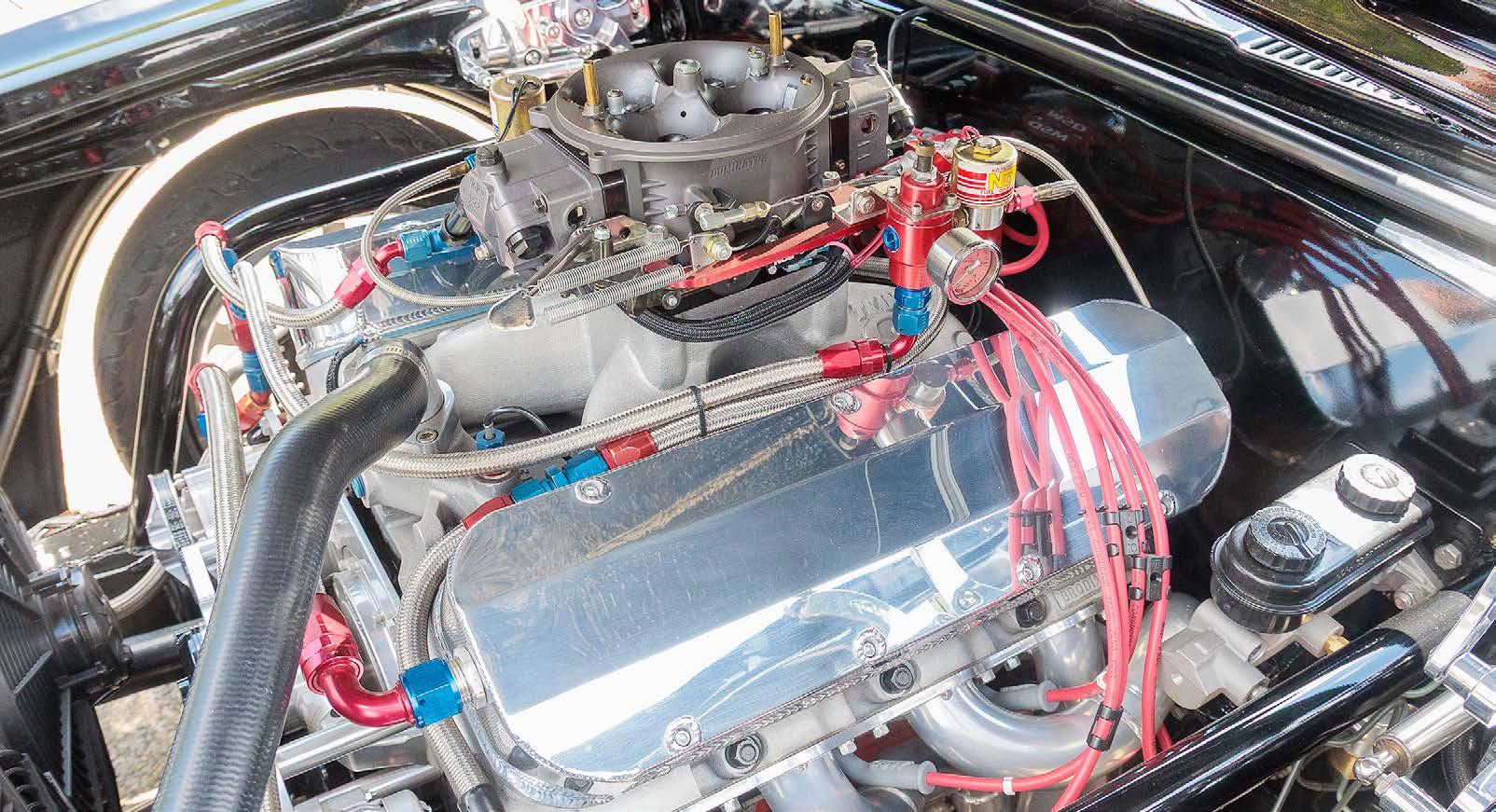
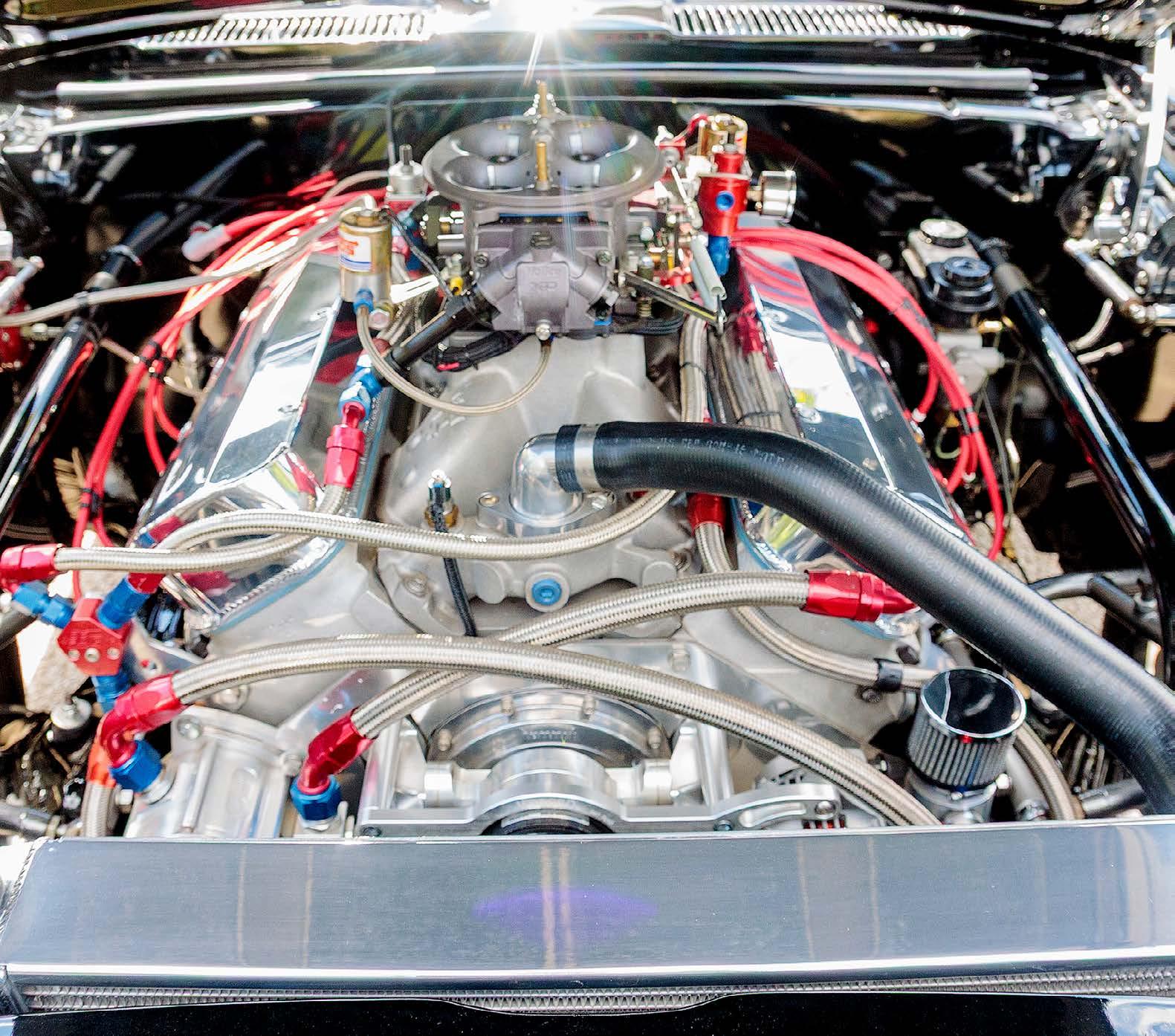
Fuel from the Barry Grant fuel pump is mixed with the incoming air charge by a Holley HP 1350 Dominator carburetor that resides on a Weiand Team G aluminum intake manifold. Sandwiched between the manifold and fuel mixer is a Nitrous Oxide Systems plate that is ready to deliver an additional 400 horsepower on demand. When the start button is pushed, an MSD 6AL ignition gets the 14:1 compression ratio bigblock crackling to life. Ingesting copious amounts of air and fuel requires a suitable exhaust, and Stokes’ big-block has been fitted with ceramic-coated, long-tube headers to evacuate the combustibles out in front of the rear tires.
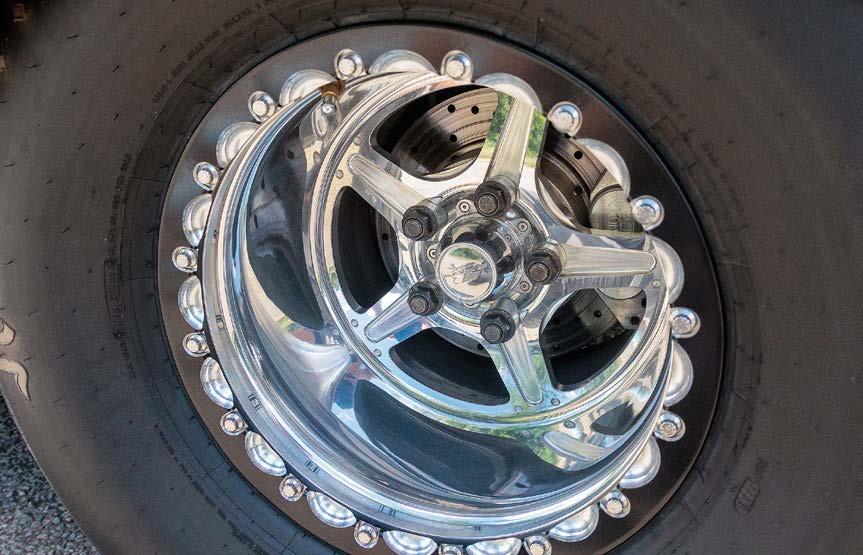
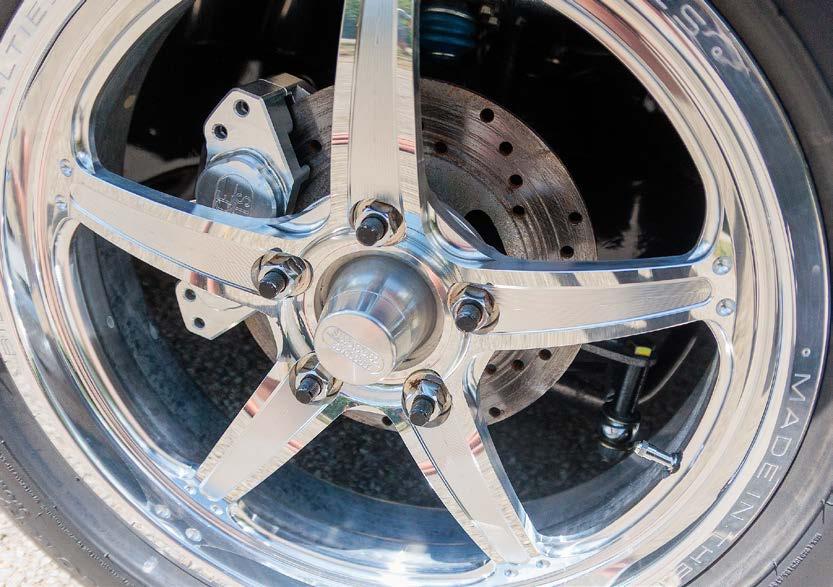
Speaking of tires, the rubber sticking the Camaro to the pavement consists of Mickey Thompson SR radials mounted on 17x4.5-inch Billet Specialties Comp 5 wheels up front, and Quick Time tires measuring 33x22.5x15 have been mounted on 15x15-inch, MacFab Beadlock-equipped Billet Specialties Comp 5 rear wheels.
We love how the bright wheels perfectly complement the gloss black exterior hue, and the staggered diameter fitment provides that modern, Pro Street look. Additionally, Stokes relies on a quartet of Aerospace Components 4-piston calipers and discs to slow the F-body down. Like the exterior and engine compartment,
the interior of this Chevy is clean, finely detailed, and appropriately appointed. The original dash remains, but the remainder of the cabin has been updated with raceoriented options, such as the aluminum door panels, Grant steering wheel with quickrelease, and racing bucket seats.
Ian Hill Racing
Post-race videos on
Auto Meter instrumentation offers Stokes necessary engine data, and a Hurst Quarter Stick shifter ensures precise gear changes in the Bowler Performance Transmission-built, Turbo 400 transmission, which has been equipped with a trans brake and 5,200rpm BTE torque converter for quick launches.
Being a Pro Street machine, the Camaro does need to perform on the street. Big-blocks build a lot of heat, particularly in traffic, so Stokes equipped the car with a PRC custom aluminun radiator w/dual Spall electric fans to ensure it keeps it’s cool among the commuters.
Four years after he started the build, the nowretired Stokes can enjoy his Camaro on the street and the track, with his very supportive wife, Sherry, in the passenger seat. To date, his best memories with the Camaro include being featured on a television show that was being filmed locally.
“We were actually asked to do another show for them that was seen nationwide a month later,” Stokes told us. “It was pretty neat that my family and friends from out of state contacted me and said that they had seen me and my car on the show.”
Back in 1999, with little to no cash in his pocket, Michael Naumann went out on a limb and paid $1,500 bucks for an x-bracket raced stripped down Nova. Needless to say, it spent the next several years in his garage while he earned some extra cash to do something with it.
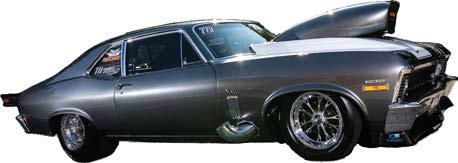
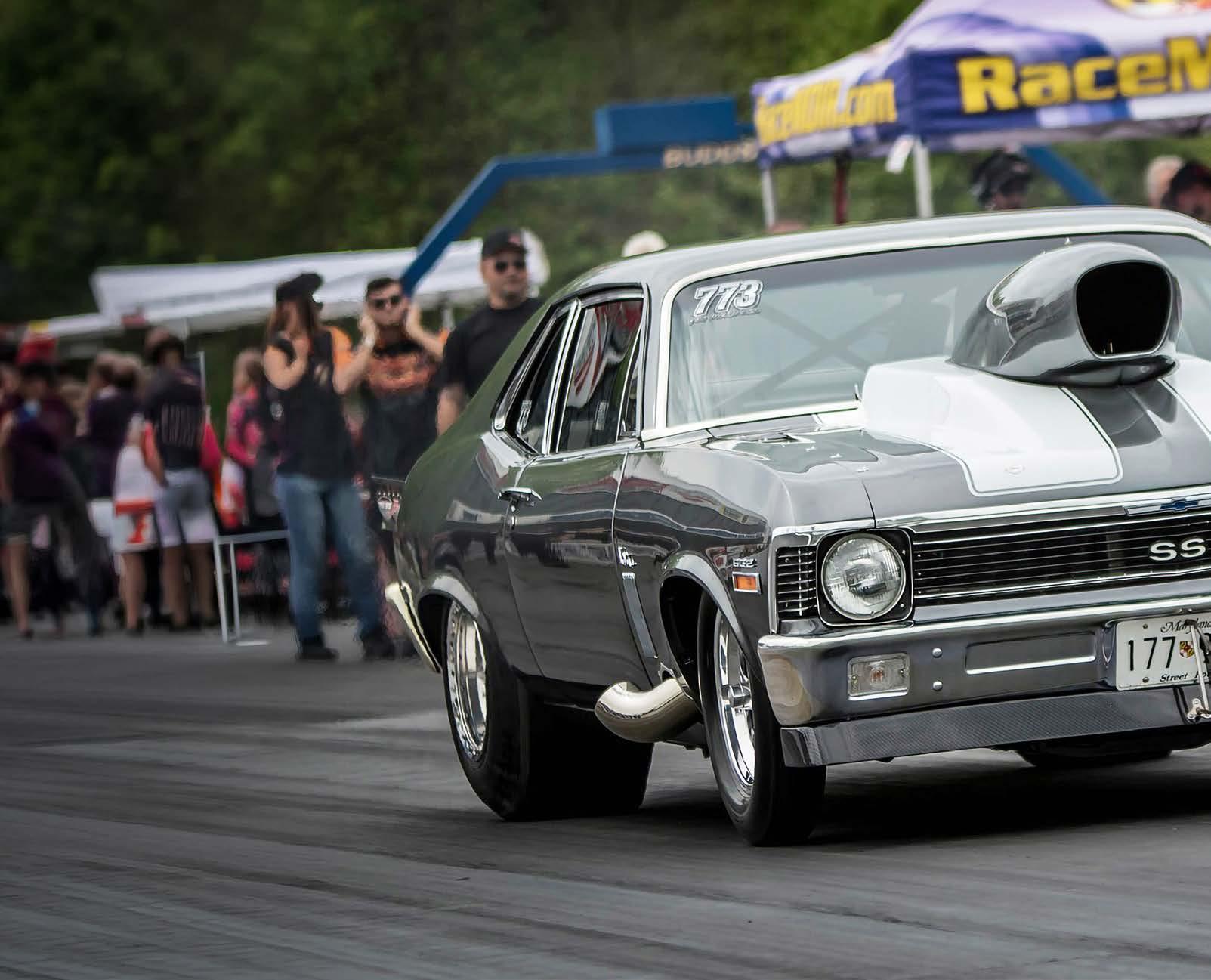
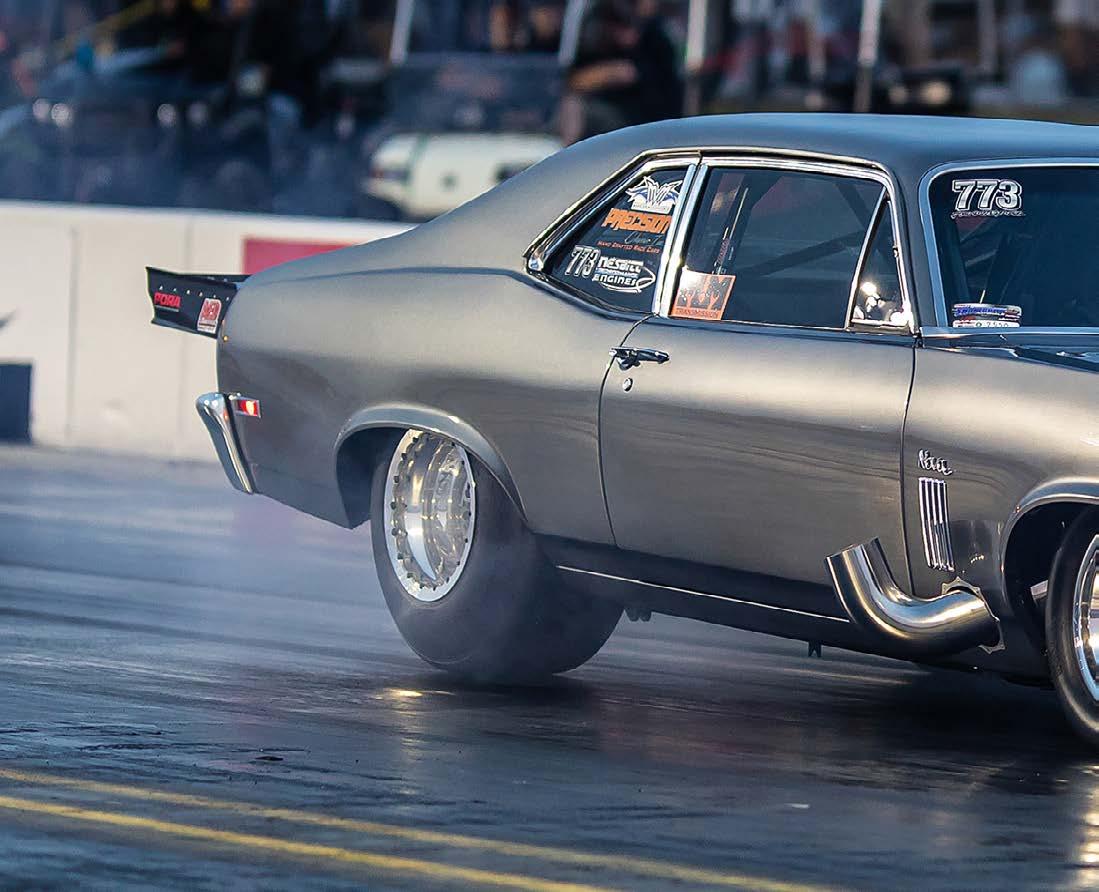
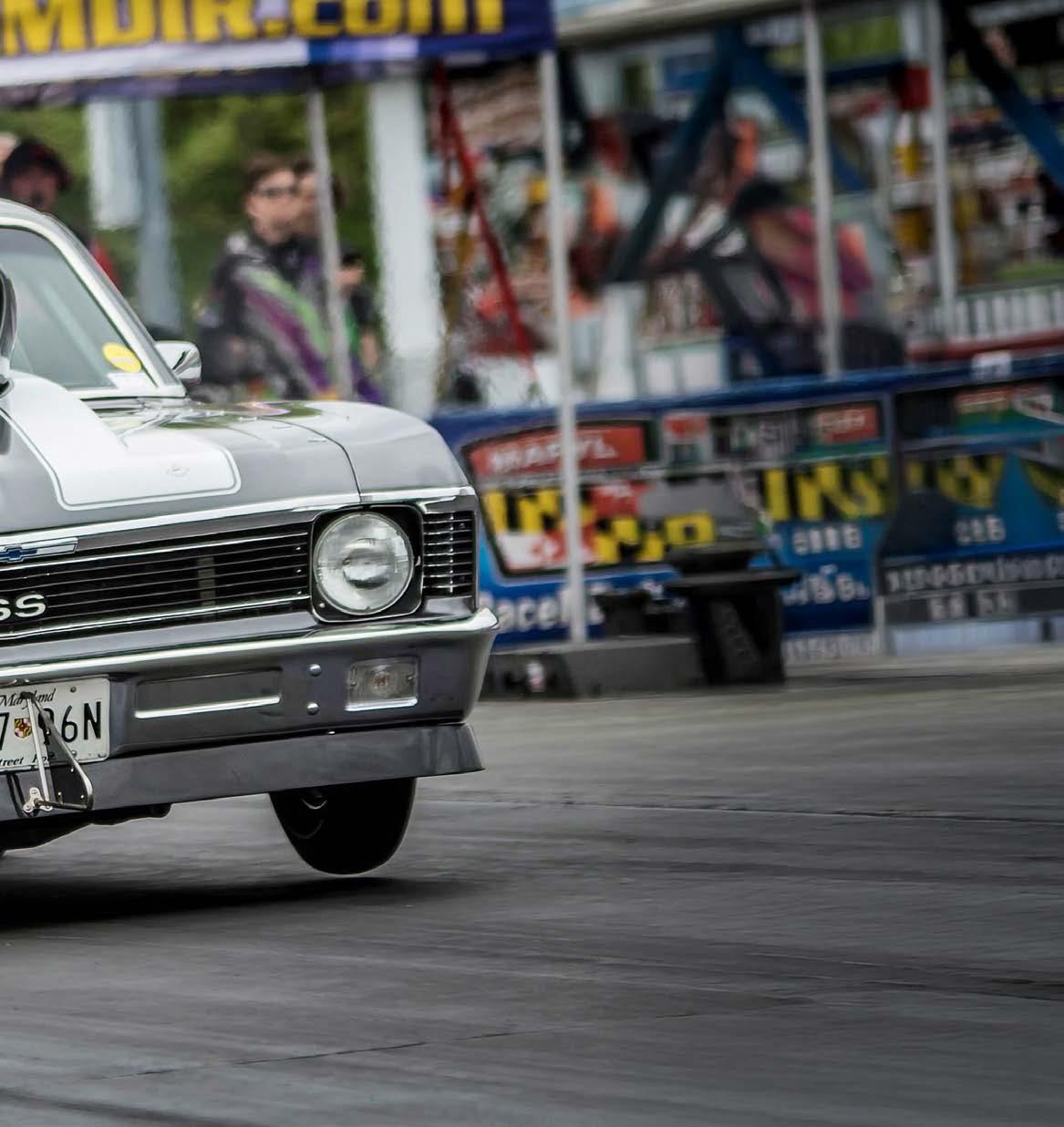
Today, that same 1970 Nova could easily be mistaken for a show car, but that would be at least third on the list, after badass street car and completely off the wall radial drag car.
“At the time of purchase the car was yellow, had no motor or trans, no interior, other than a stock dash (which was important), a 12 bolt rear and the body was in good shape,” explained Naumann. He would slowly pick away at the car, first building a 406 small block and installing the factory interior, and then having a local chassis shop do a ladder bar setup out back. By 2010, the car became a pretty nice piece and was running solid low 9s in the quarter in various bracket class events.
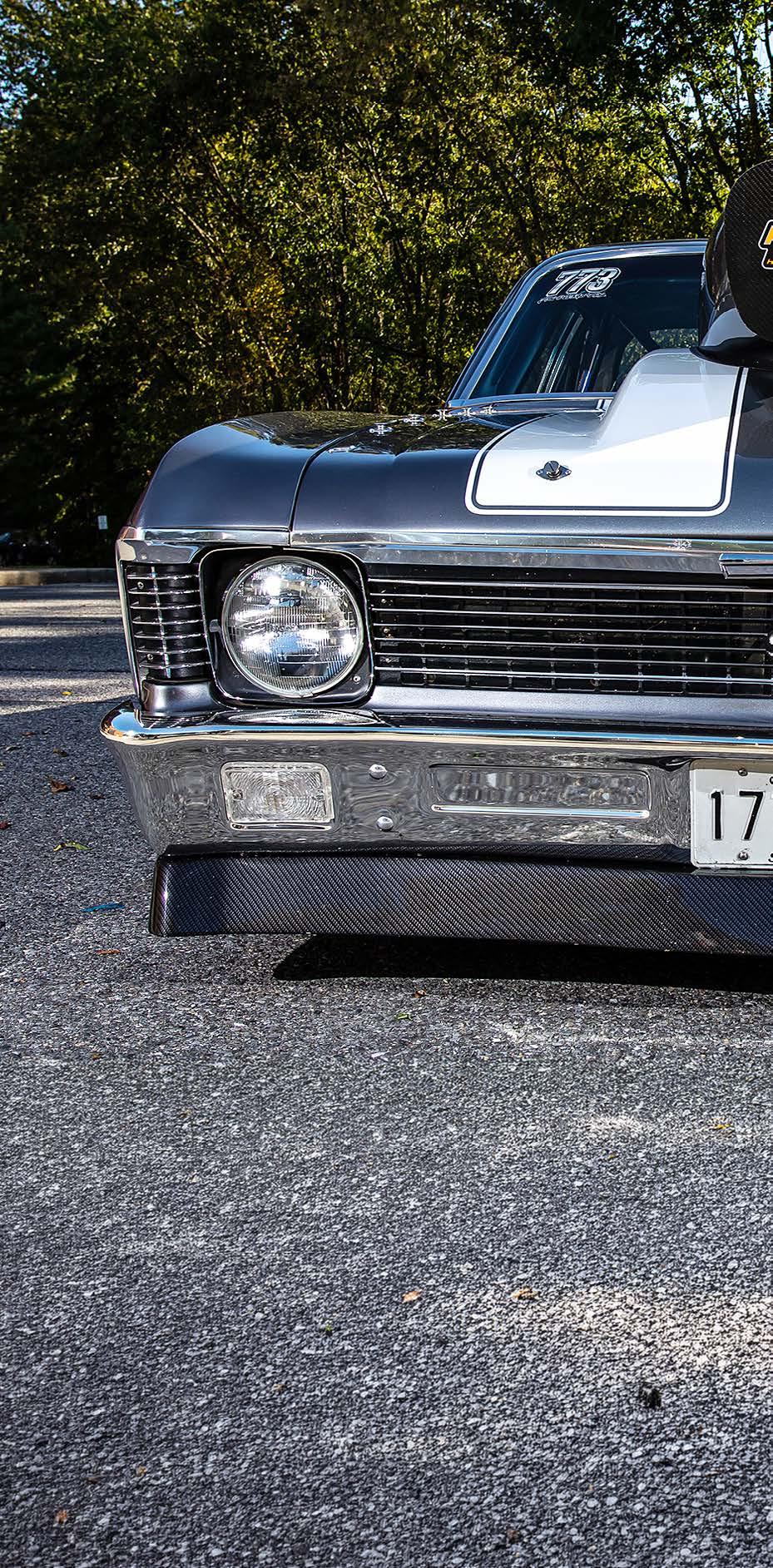
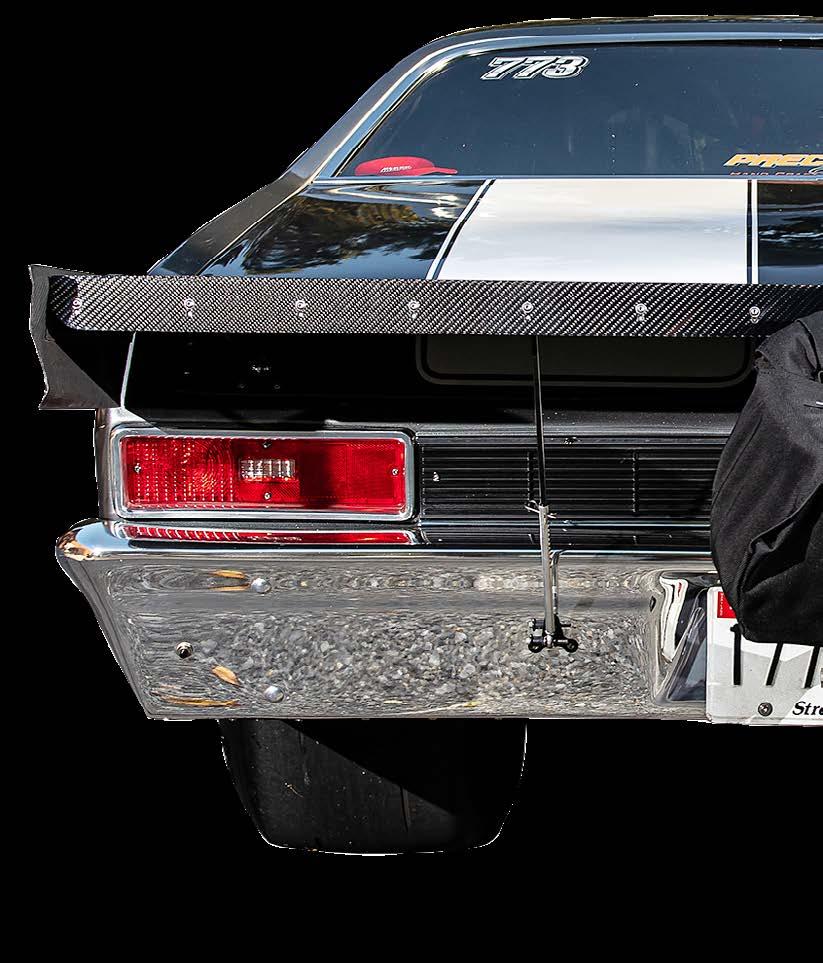
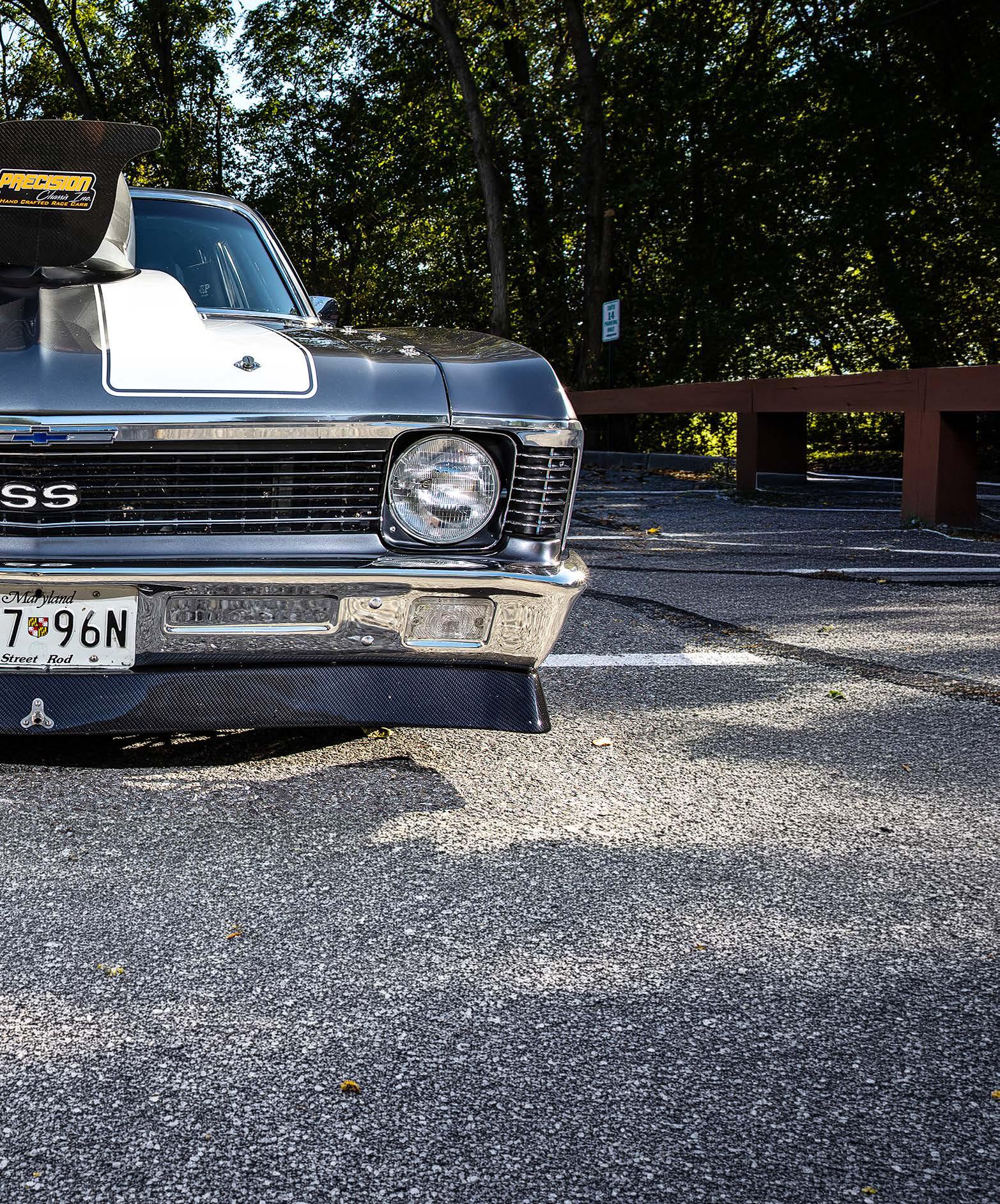
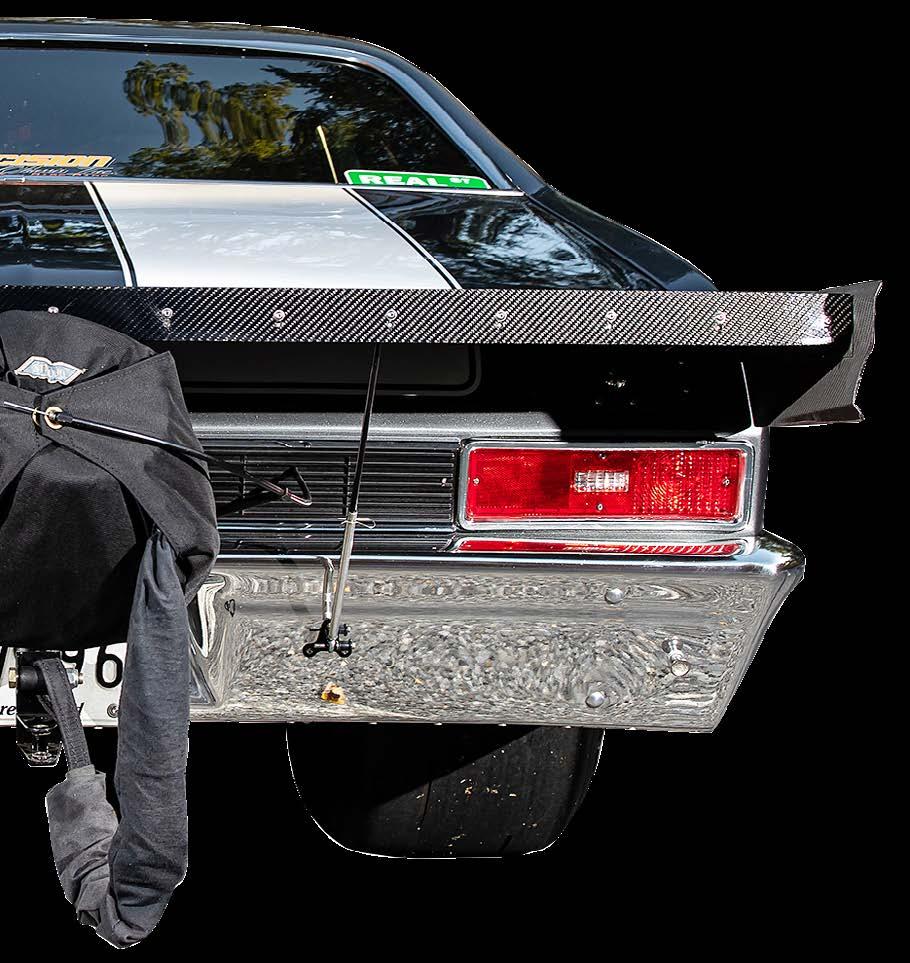
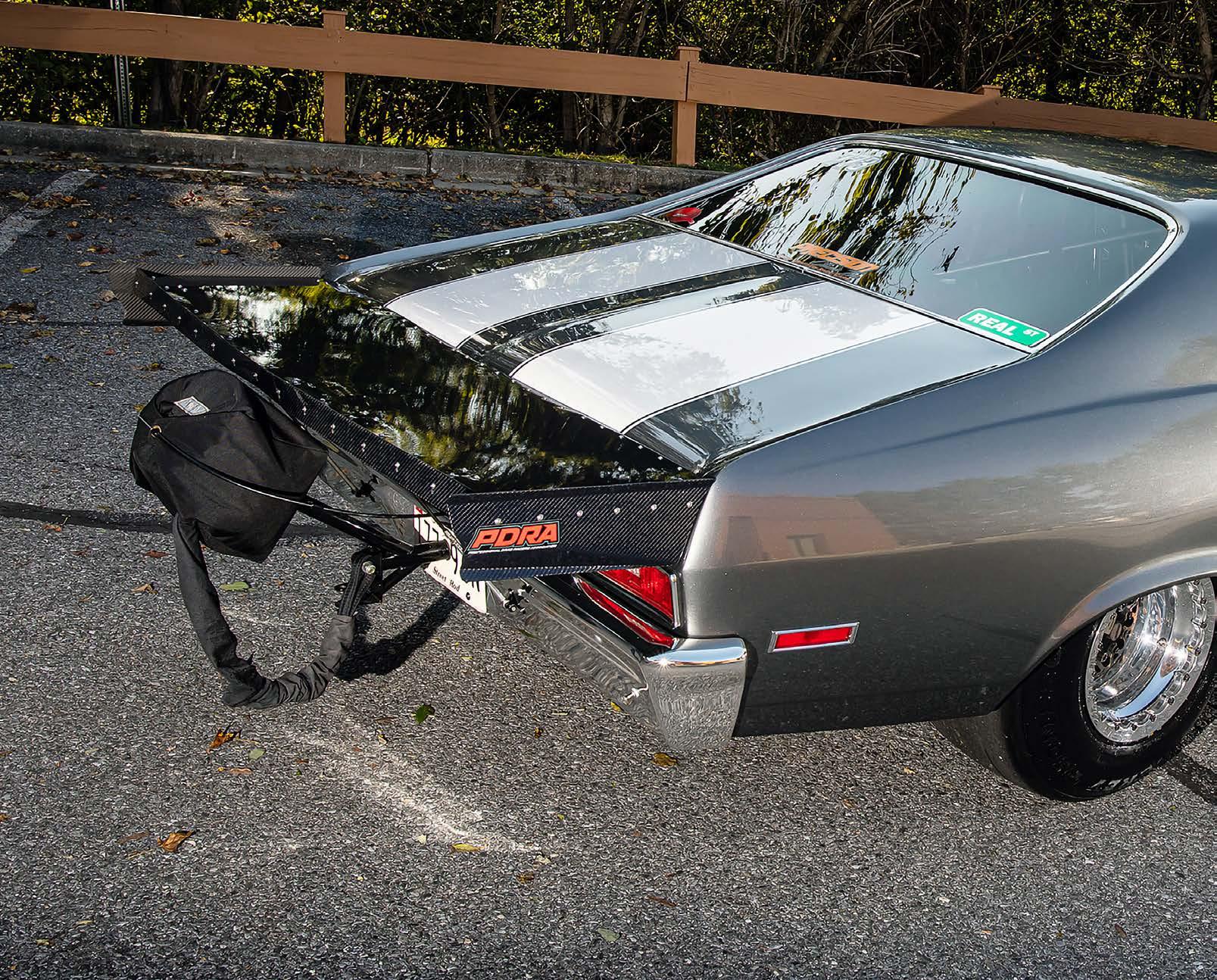
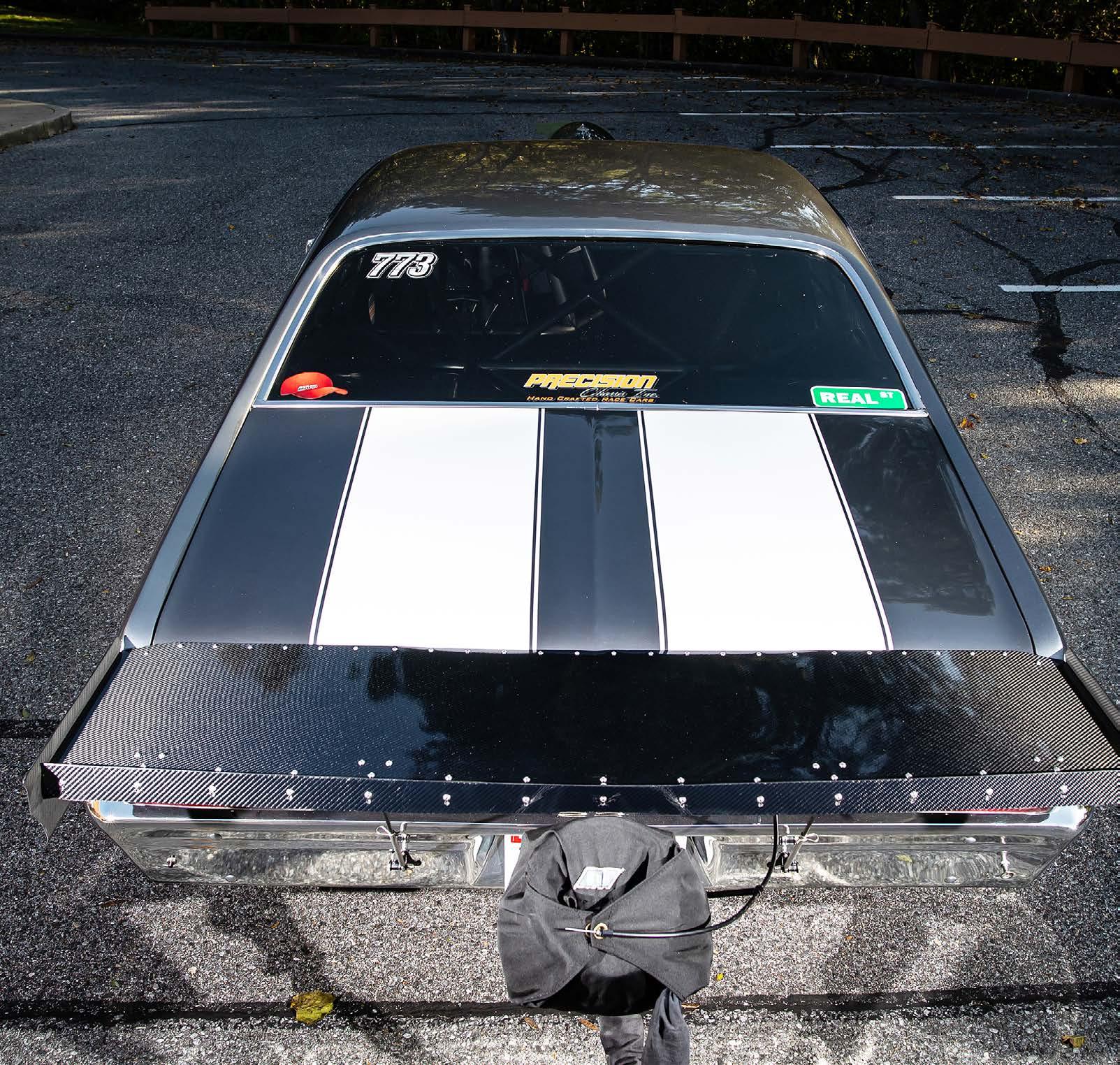
In the interest of some form of weight savings, the front and rear bumpers are chromed composite pieces and the rear wing carbon fiber.
Story: George Pich
Photos: David Gates
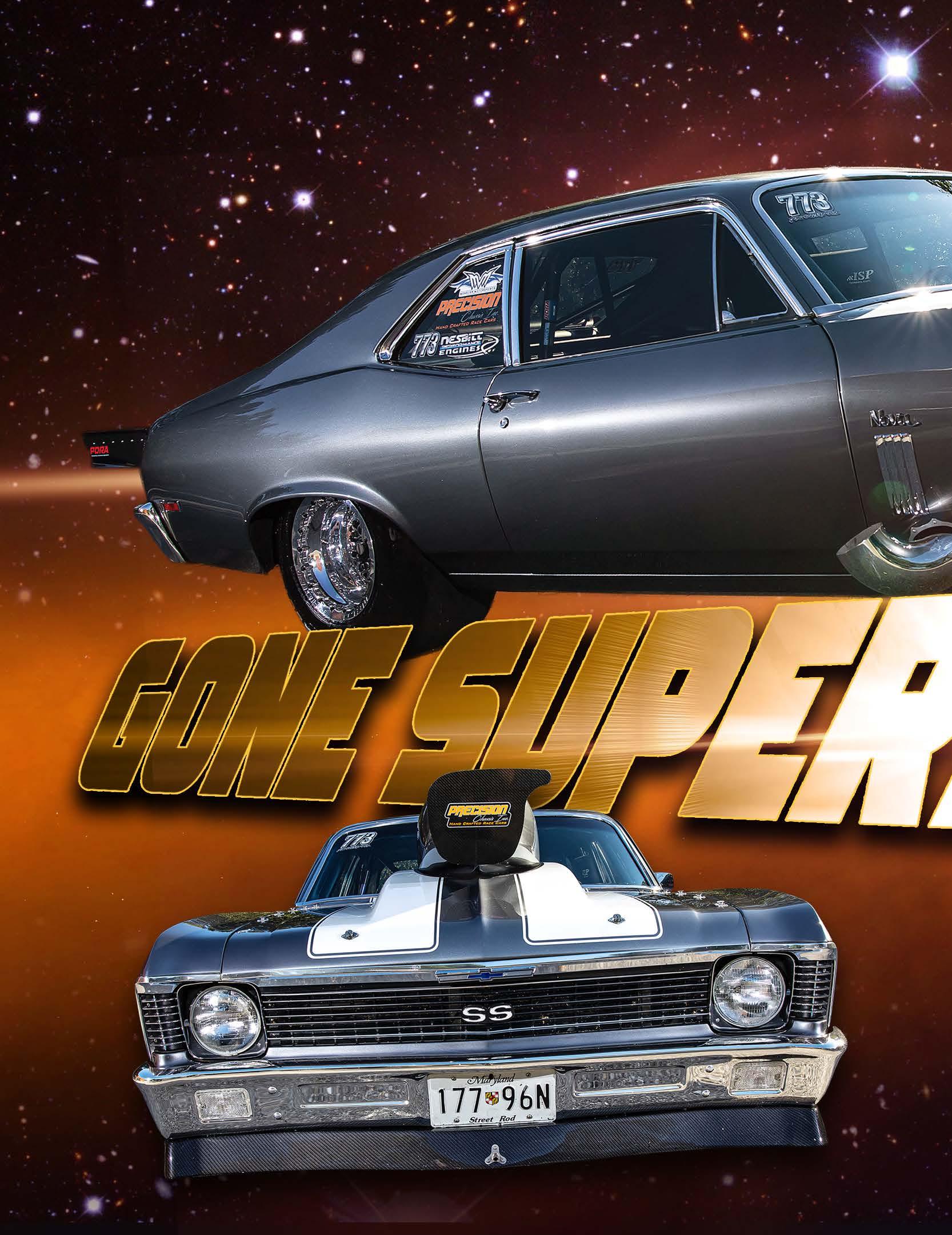
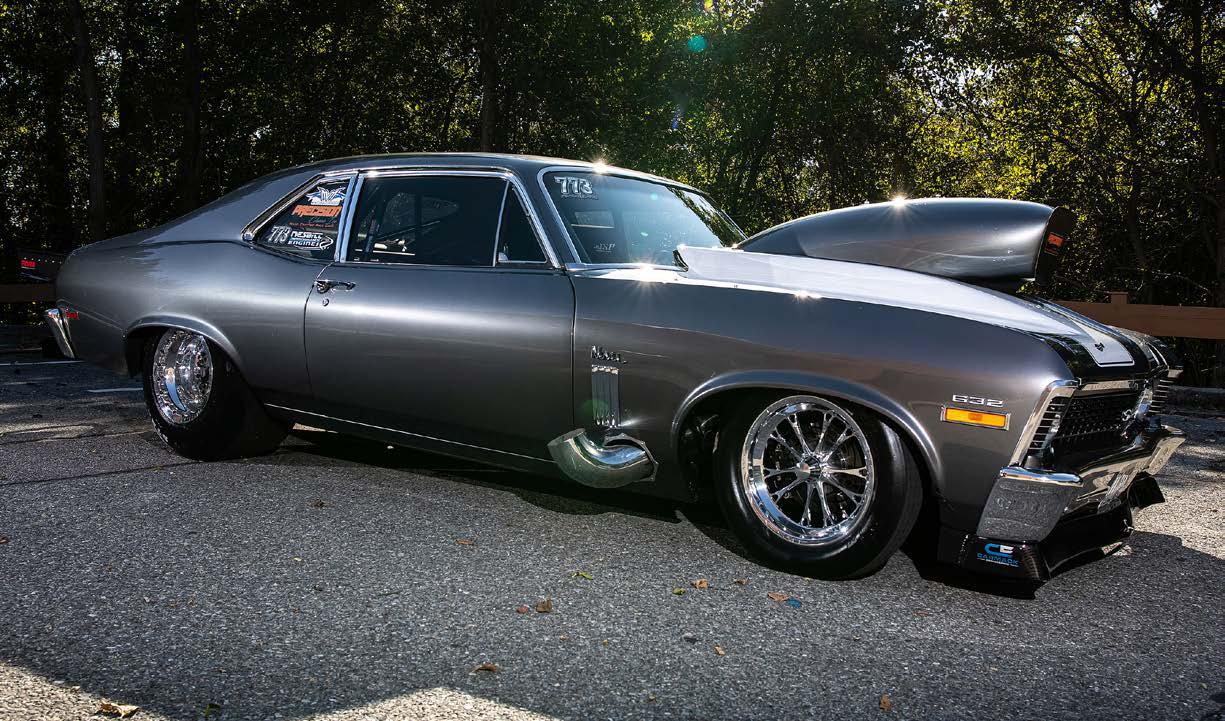
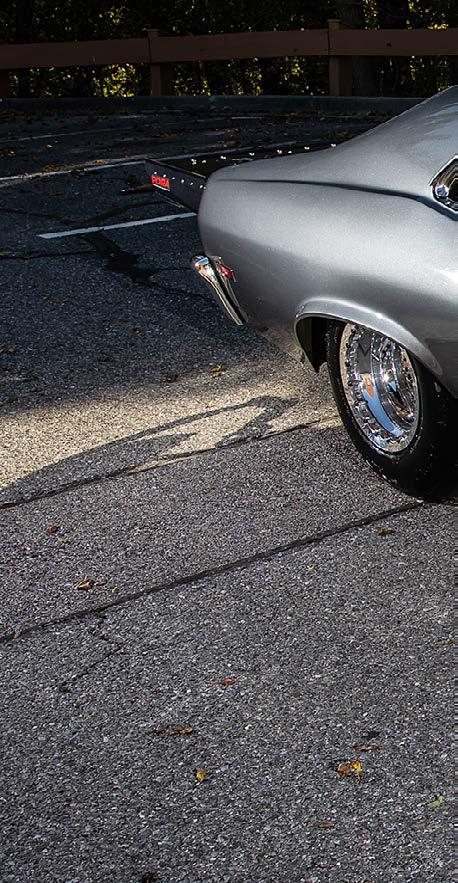
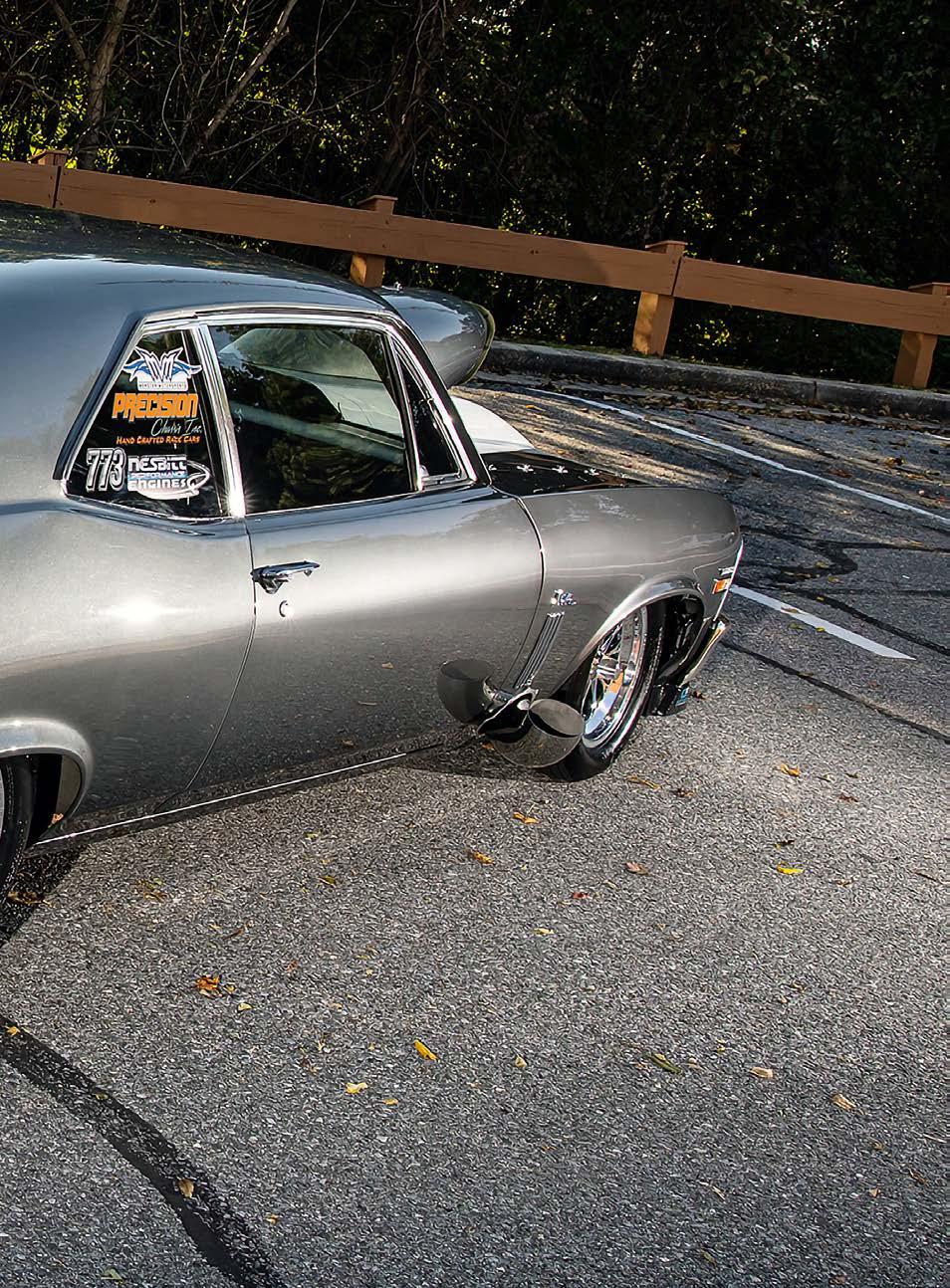
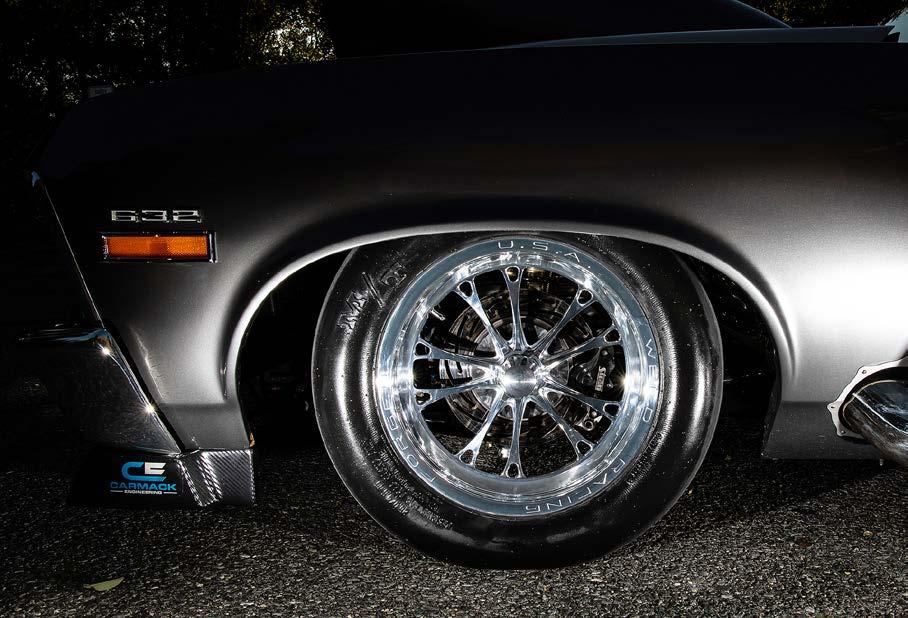
The Nova maintains its original steel body (except hood and trunk) and a complete OEM chrome and stainless trim package helping it keep that original muscle car look.
Watch this awesome daytime pass video!
1970s factory look meets badass racecar...
During most of 2011, racing the Nova took a back seat to opening a family business, but late in the year Michael had the inkling to try his hand at heads-up racing at the local track’s monthly Friday night deal. “I knew the car needed to be changed to go faster and that meant it had to go to the chassis shop and get updated, and it was also going to need more power,” he added.
To meet the class rules of the time, the Nova was sent to a local chassis shop to be back-halved while keeping the factory firewall and front frame intact. A 588inch big block was acquired and sent to the engine shop for refreshing, however, the car itself ended up in chassis shop hell for the next 3 years before Naumann pulled it out and sent it to Precision Chassis in PA.
Horsepower Revisited
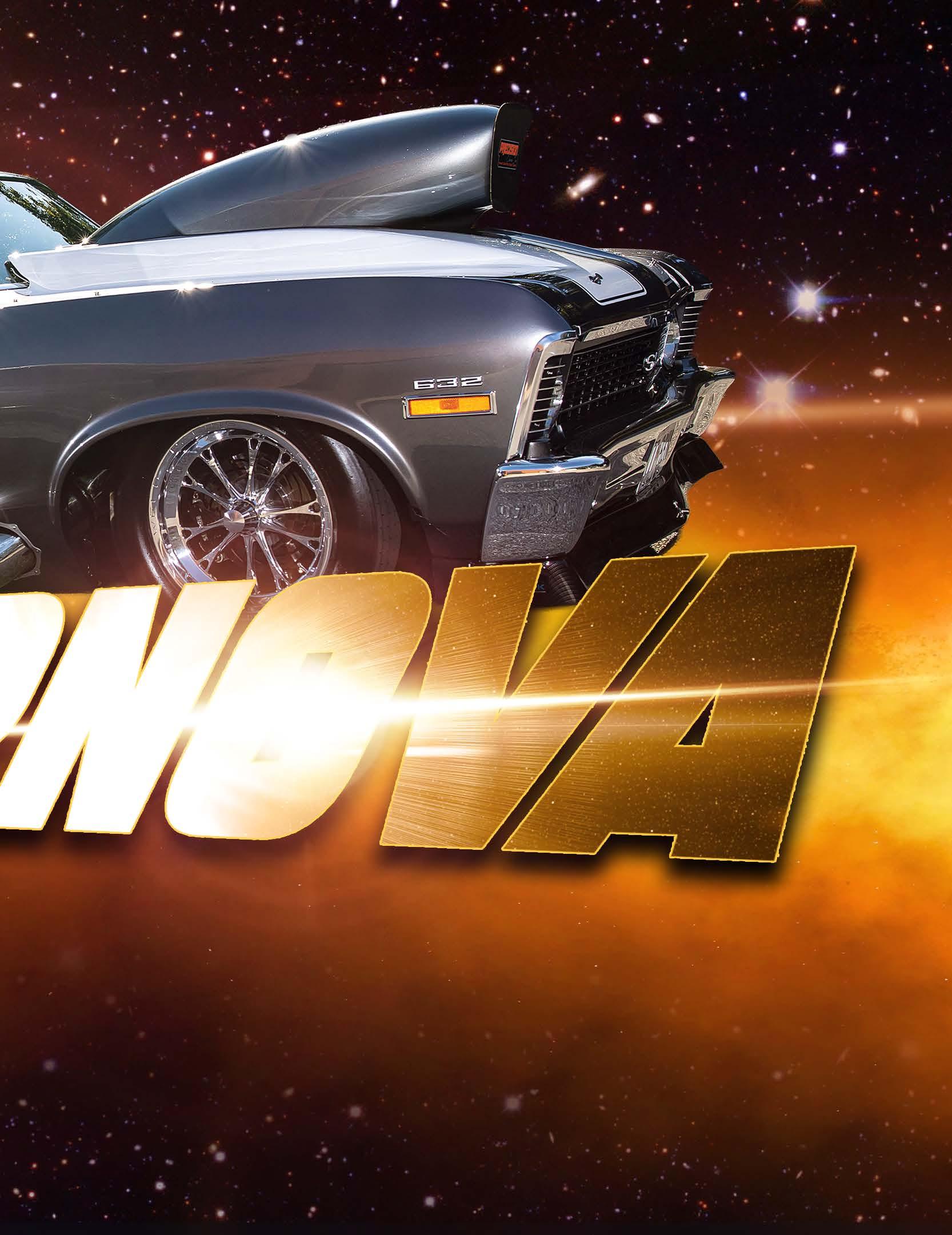
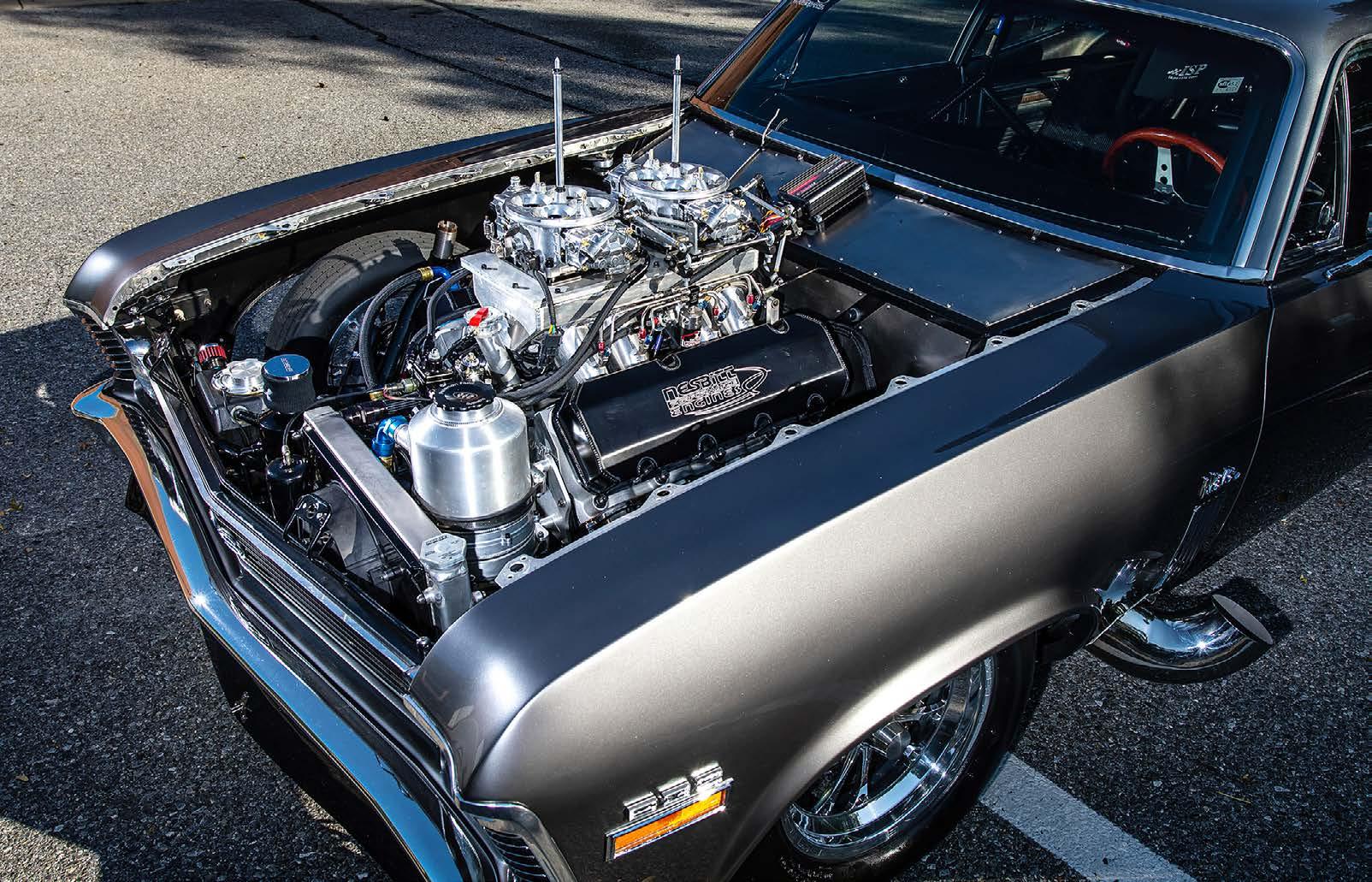
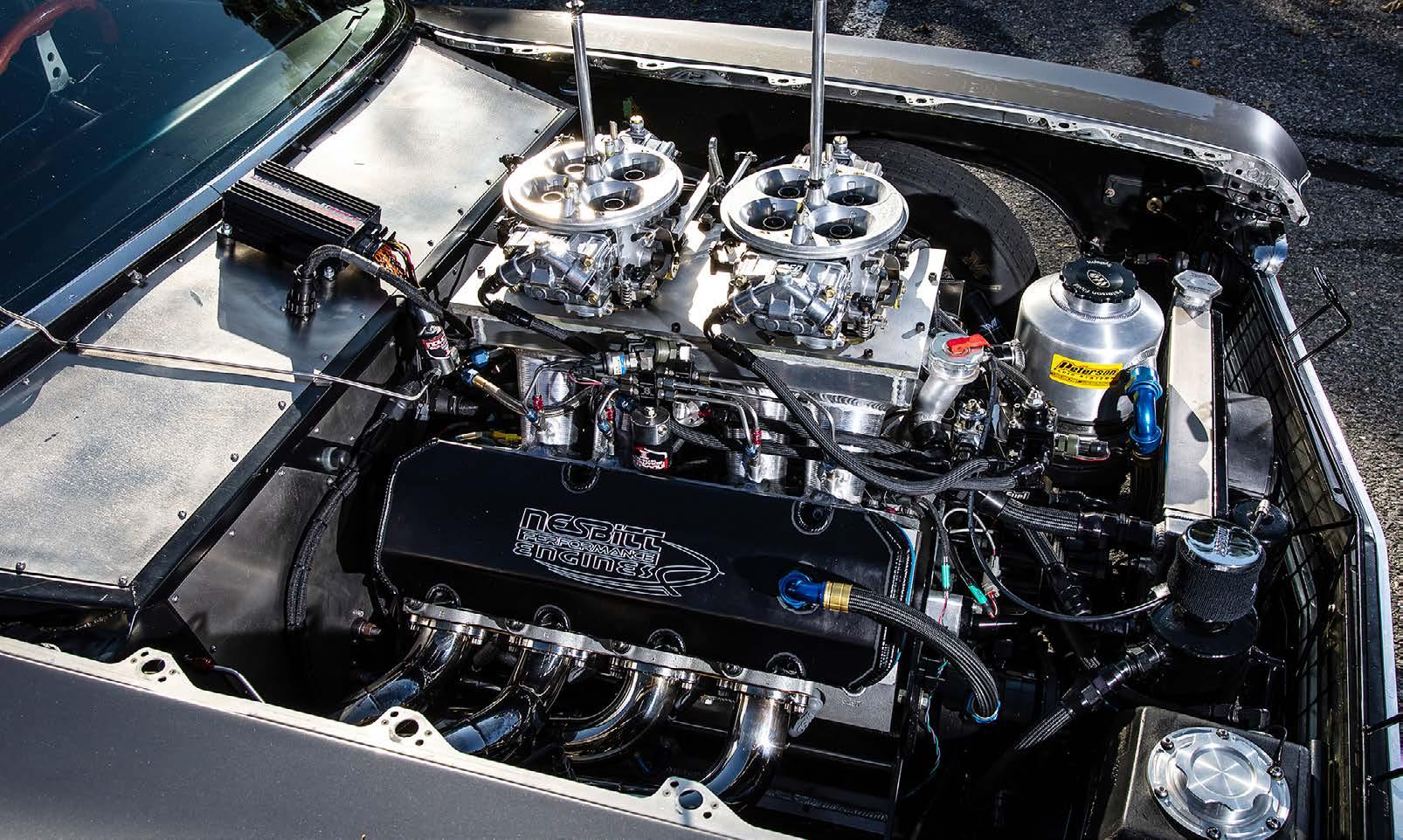
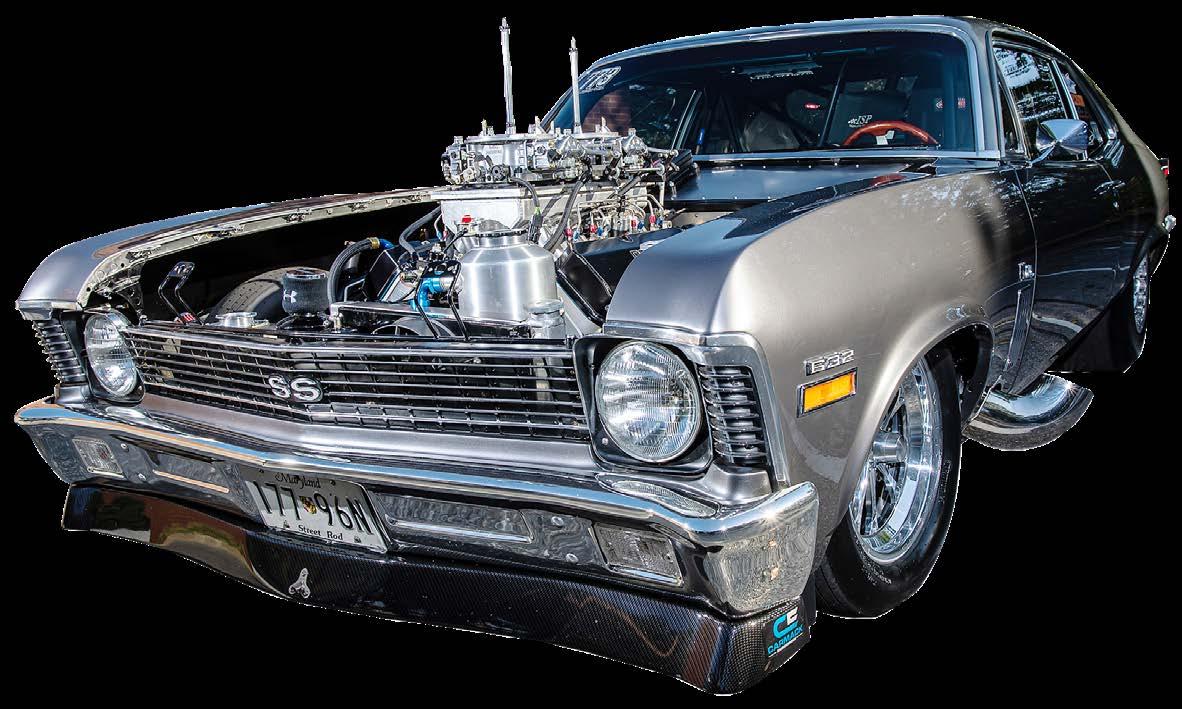
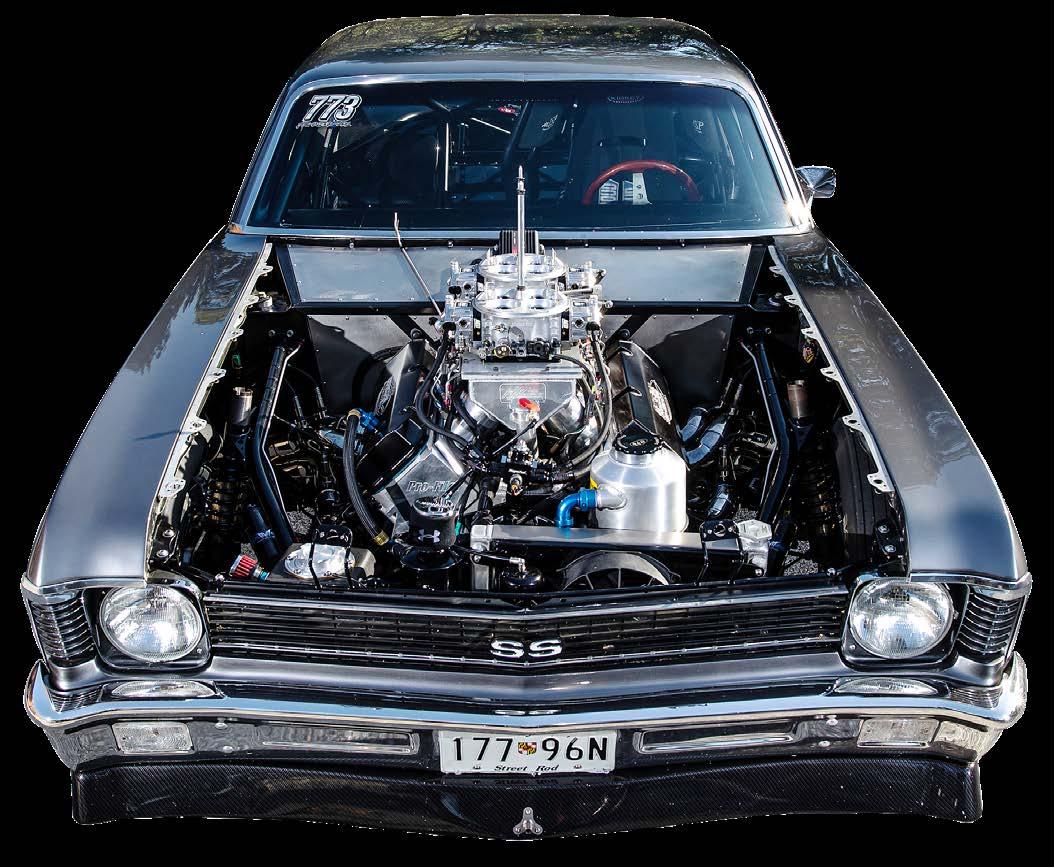
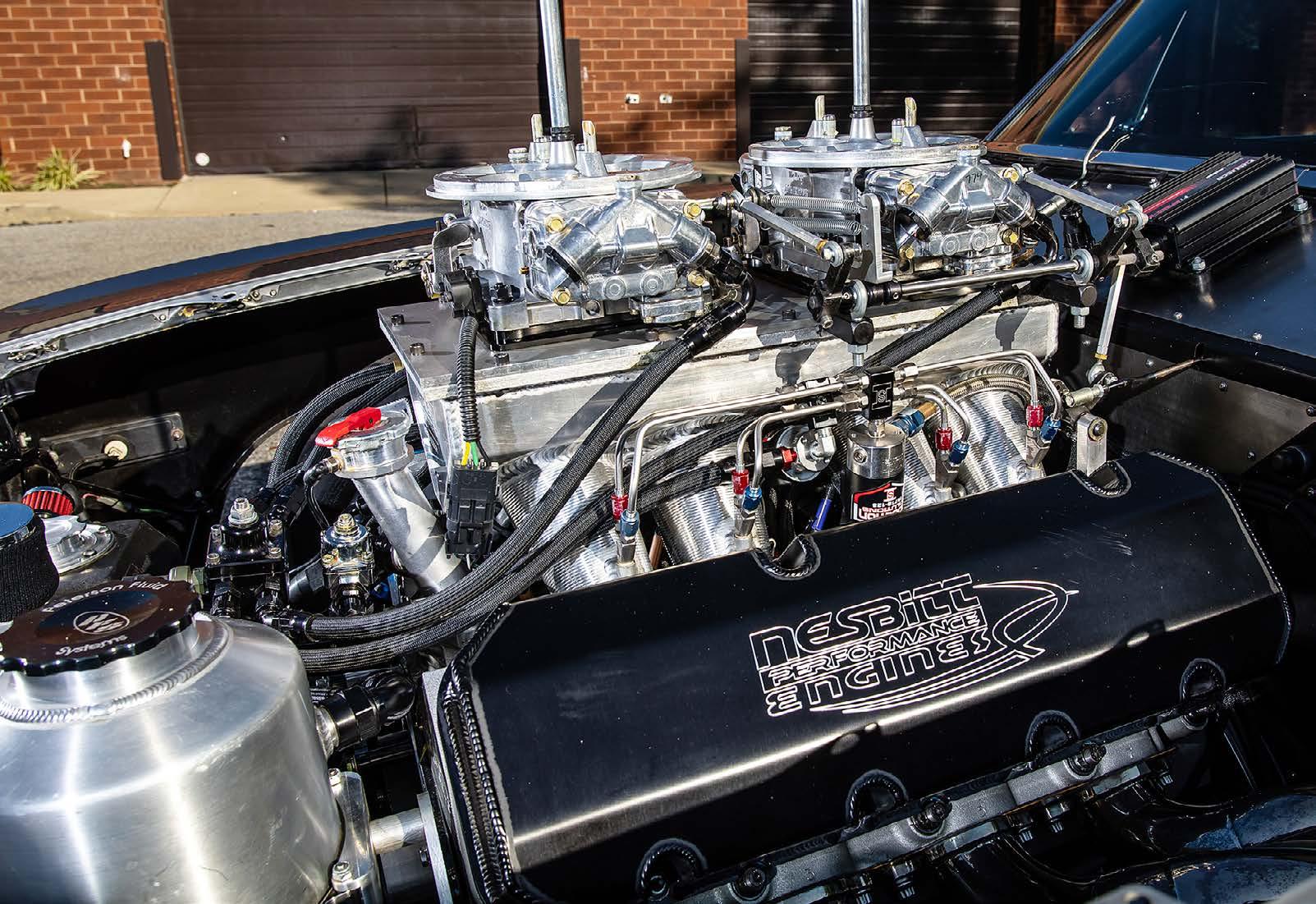
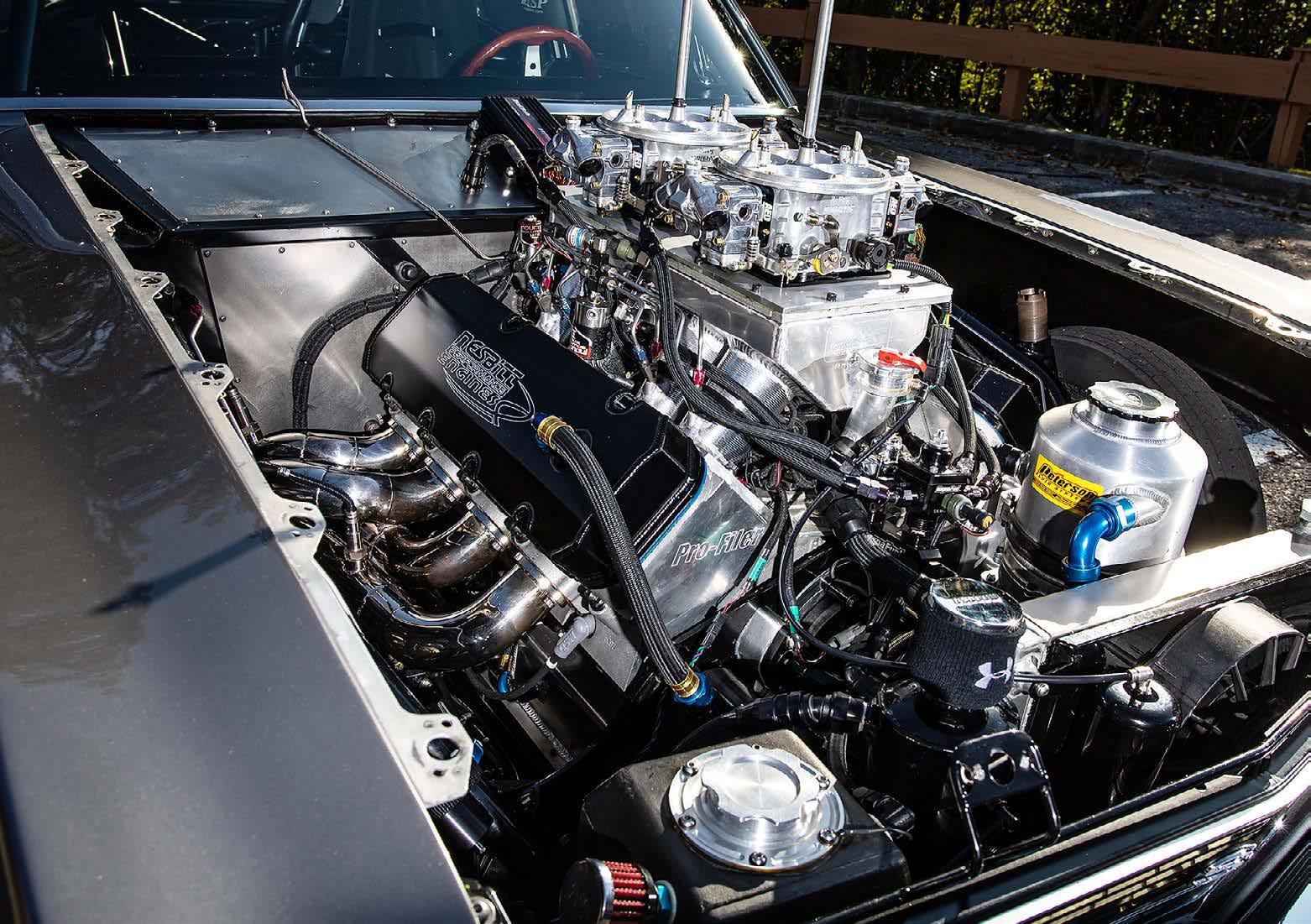
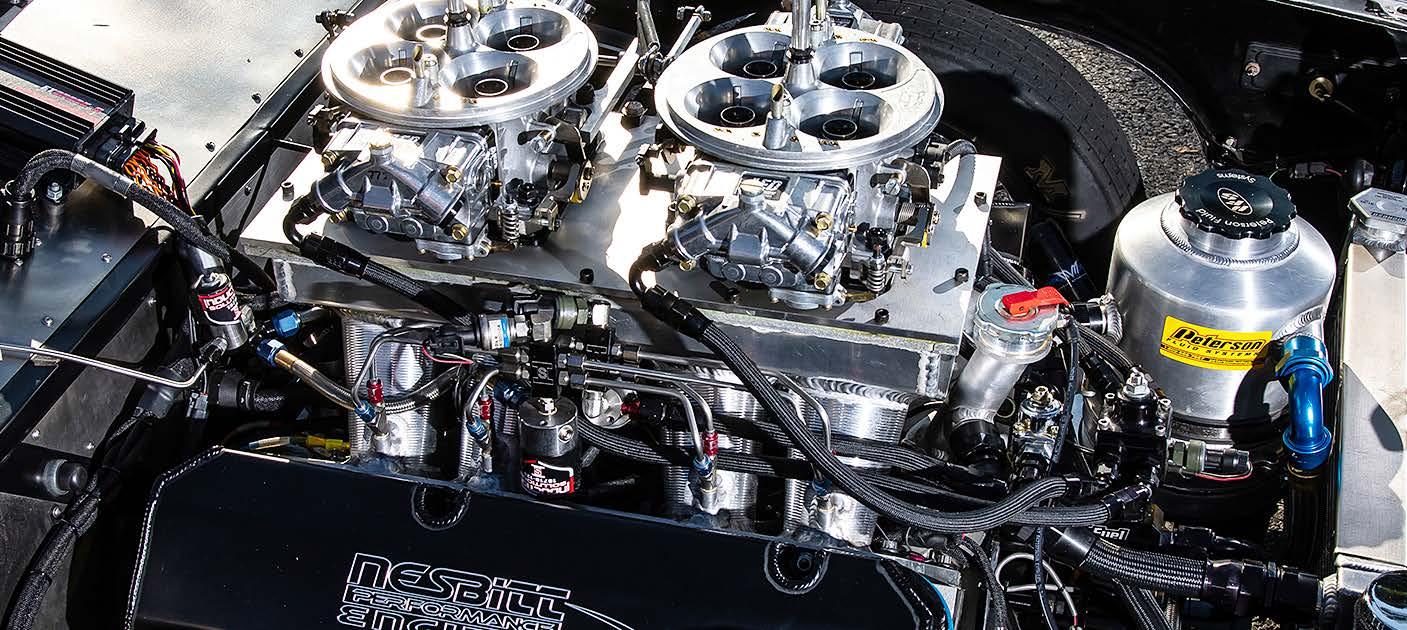
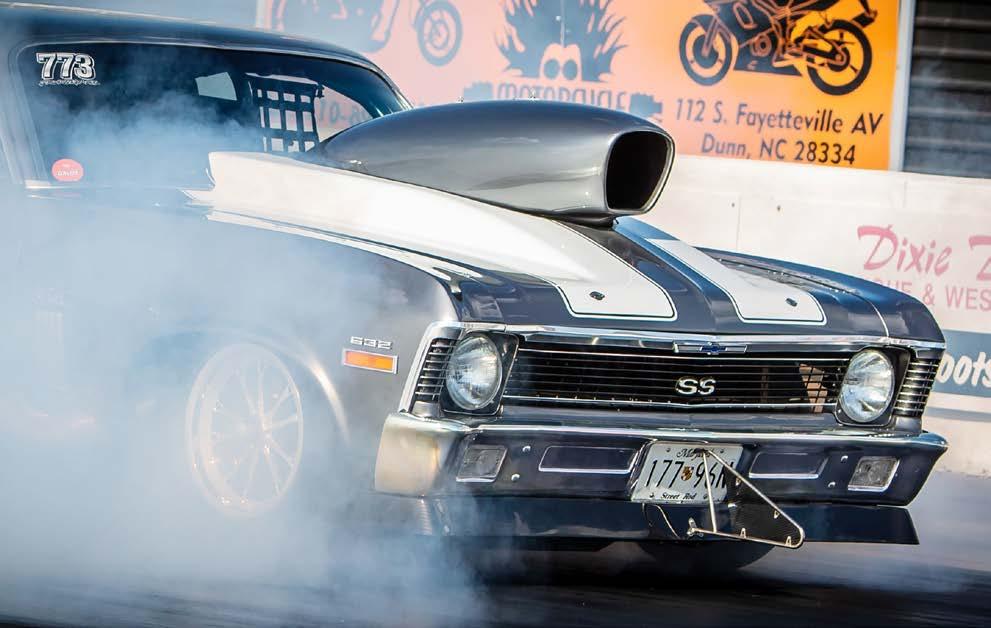
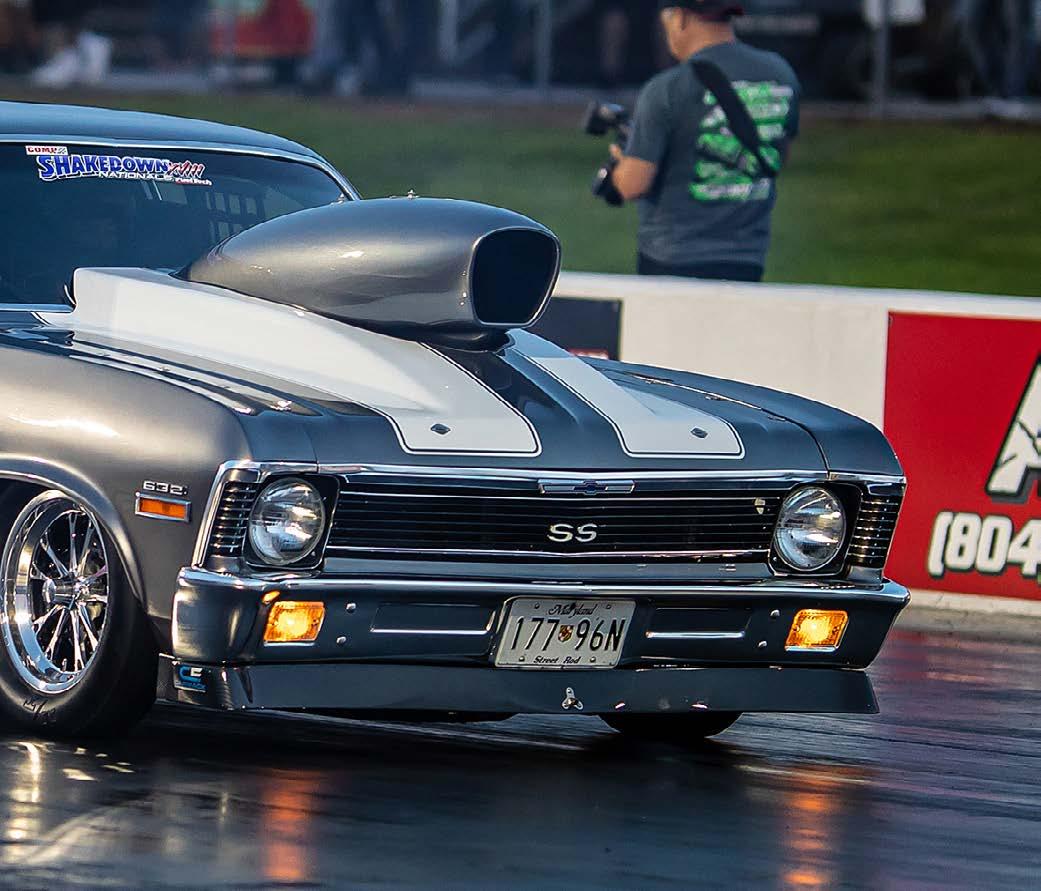
The 632 incher sports a Brodix block, Bryant crank, MGP rods, Gibtec pistons, and Jesel belt drive. Profiler 12-degree heads, an HRE billet runner intake manifold and AED carbs round out the top end.
“Doug and his staff at Precision Chassis jumped right on it and were able to have the car completed within a few months, which also included a motor change from the 588 to a 632 Nesbitt engine.”
It was now 2016 and on the motor the Nova was turning 5.10 in the 1/8th and an 8.03 in the ¼-mile, which lead to joining the PDRA Outlaw 632 class the following year, and meant that Naumann would finally need to turn on the nitrous to compete. “We attended our first PDRA race in March of 2017, which was also our first time on nitrous, and the car went 4.60’s in the 1/8th and what a blast it was!” Naumann exclaimed “and then we went 7.03 in the ¼ later in the year!”
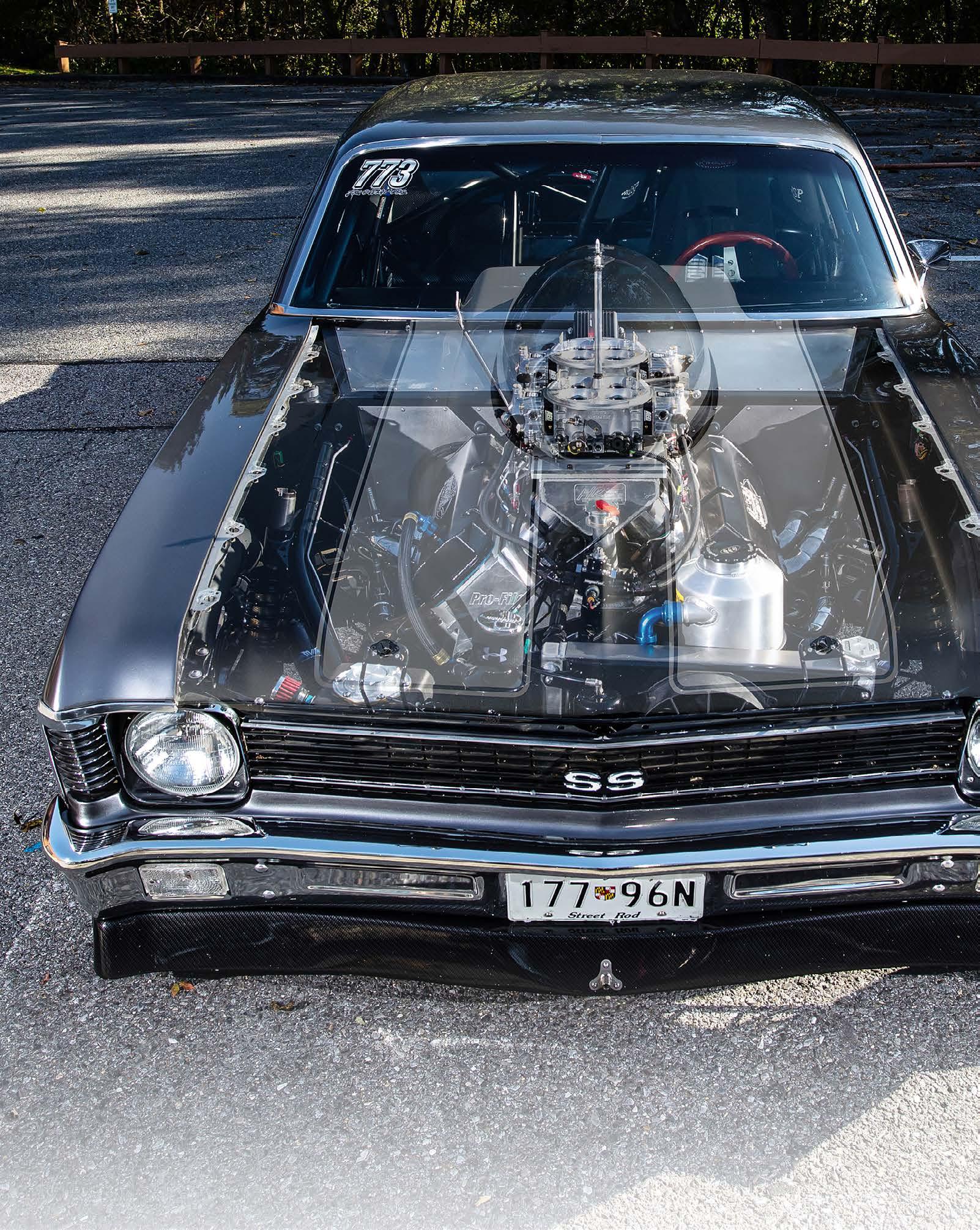
This series of shots shows what hides under the Nova hood….A Nesbitt built nitroused 632 inch big block!
Most folks would be completely satisfied with this level of performance, after all, Michael was knocking on the 6-second quarter-mile door with a car that, for all intents and purposes, could still be street driven. Not Naumann
though, in fact, not too long after that 7.03 pass, the car went back to Precision Chassis for yet another transformation where it was stripped down to the bare chassis and completely updated yet again to run the now popular radial tire.
A single Induction Solutions direct port system is plumbed into the mix, giving the big block the extra ponies to produce near 3-second eighth-mile times on the track.
Watch this awesome night pass video!
With changing times, for the direction Michael was going with the Nova in heads-up radial drags, the stock front frame and firewall were no longer required, so a completely custom bolt-in strut front end and titanium firewall were constructed. By March of 2018, the Nova was back out running mid to low 4.40s in the 1/8th and 6.80s in the 1/4. “It’s taken 20 years and it’s still not done,” Naumann said with a smile.
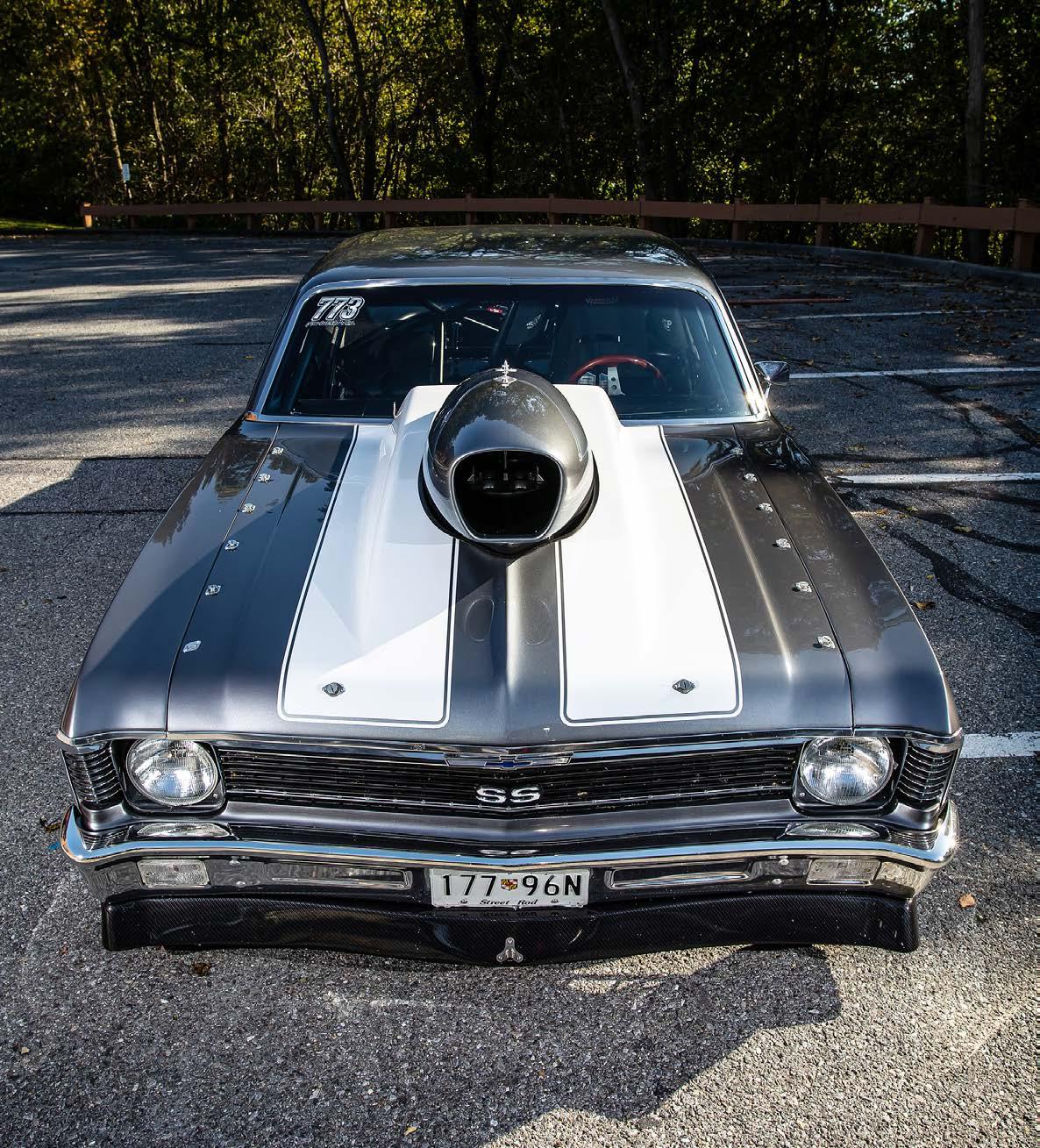
So here is what we do know about this drop dead gorgeous 1970 Nova as it stands today: Body wise, one look is all it takes, and go ahead, look closely because you’ll be hard pressed to find a cleaner, more well detailed car in the feature room at any car
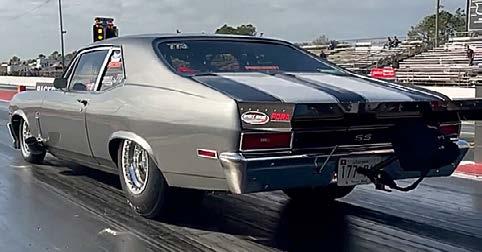
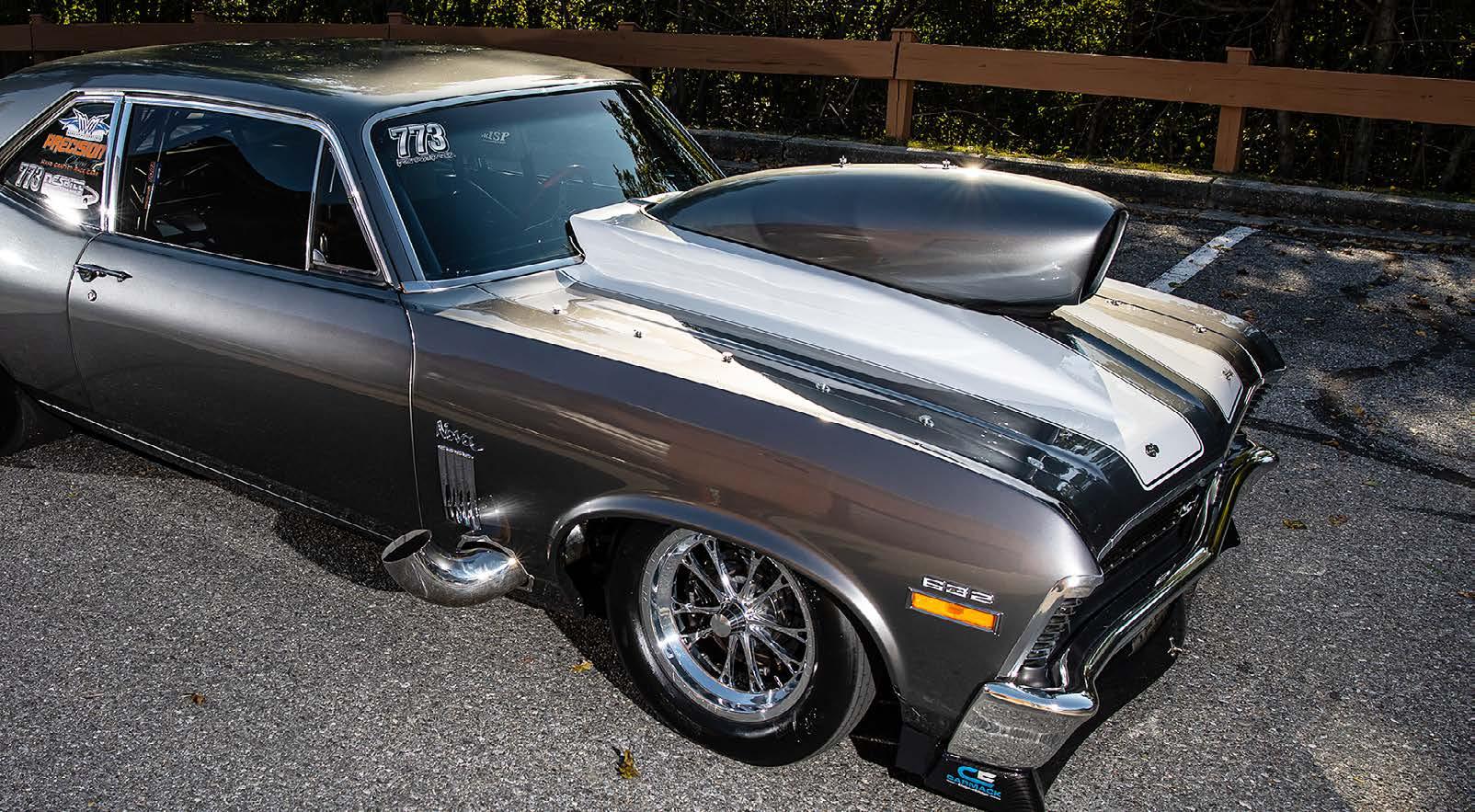
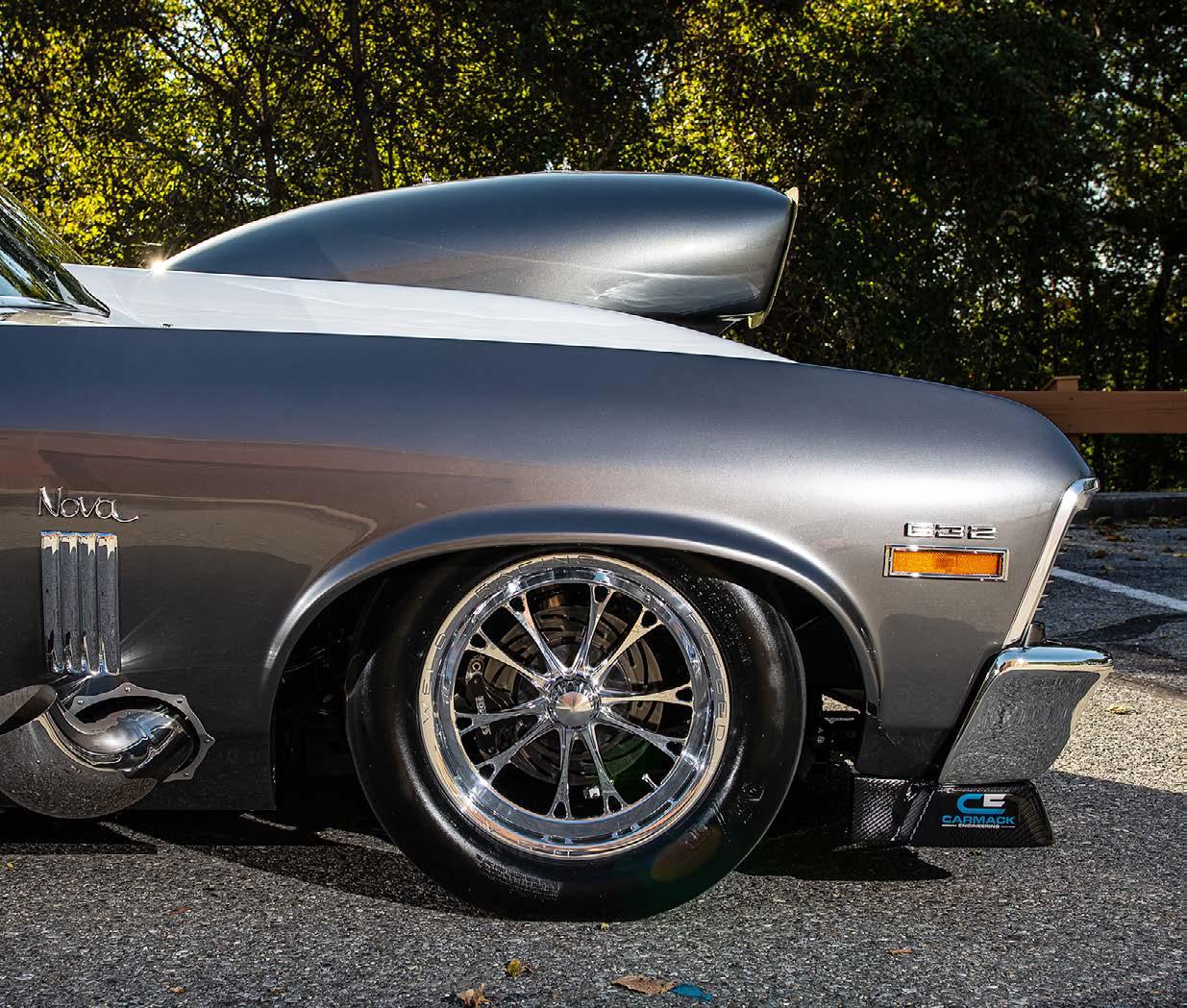
show, let alone at the drag strip. The nearly all steel body (except for hood, trunk lid and bumpers) is covered with 6-year old (that looks like it was sprayed yesterday) silver gray metallic paint applied by Wes’ Customs and is accented by a towering dual-scooped hood.
Michael Naumann’s 1970 Chevy Nova 632 Radial Car
Chassis Type & Mods:
Precision Chassis built Chromoly from the firewall back. Titanium fire wall, complete one-off Precision Chassis bolt-in strut front sub frame. 6.0 certified at 3000lbs.
Suspension:
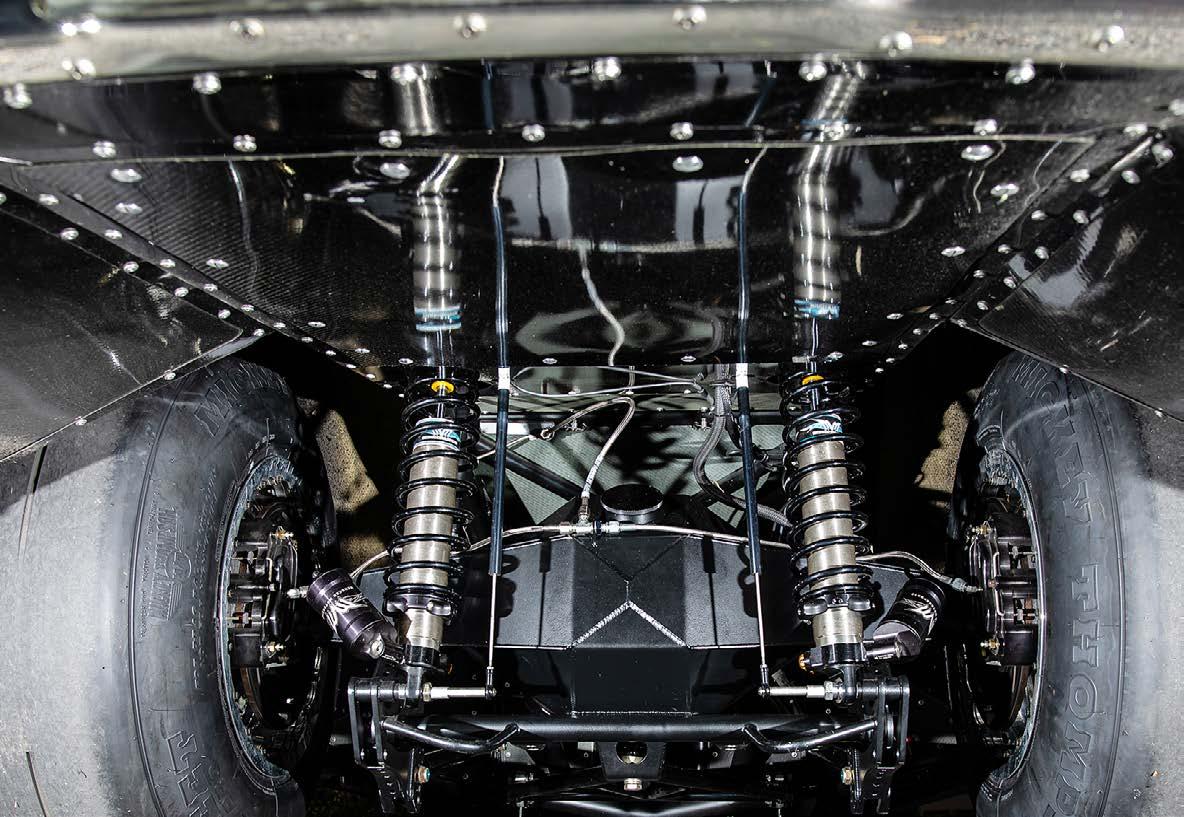
Menscer front struts, Menscer rear shocks, 4-link rear suspension.
Body & Paint:
Car is all steel other than the hood, deck lid and bumpers, carbon tubs etc. Painted by Wes’s Customs (paint is 6 years old).
Induction Solutions direct port (single system) with the FT600 controller.
Electronics:
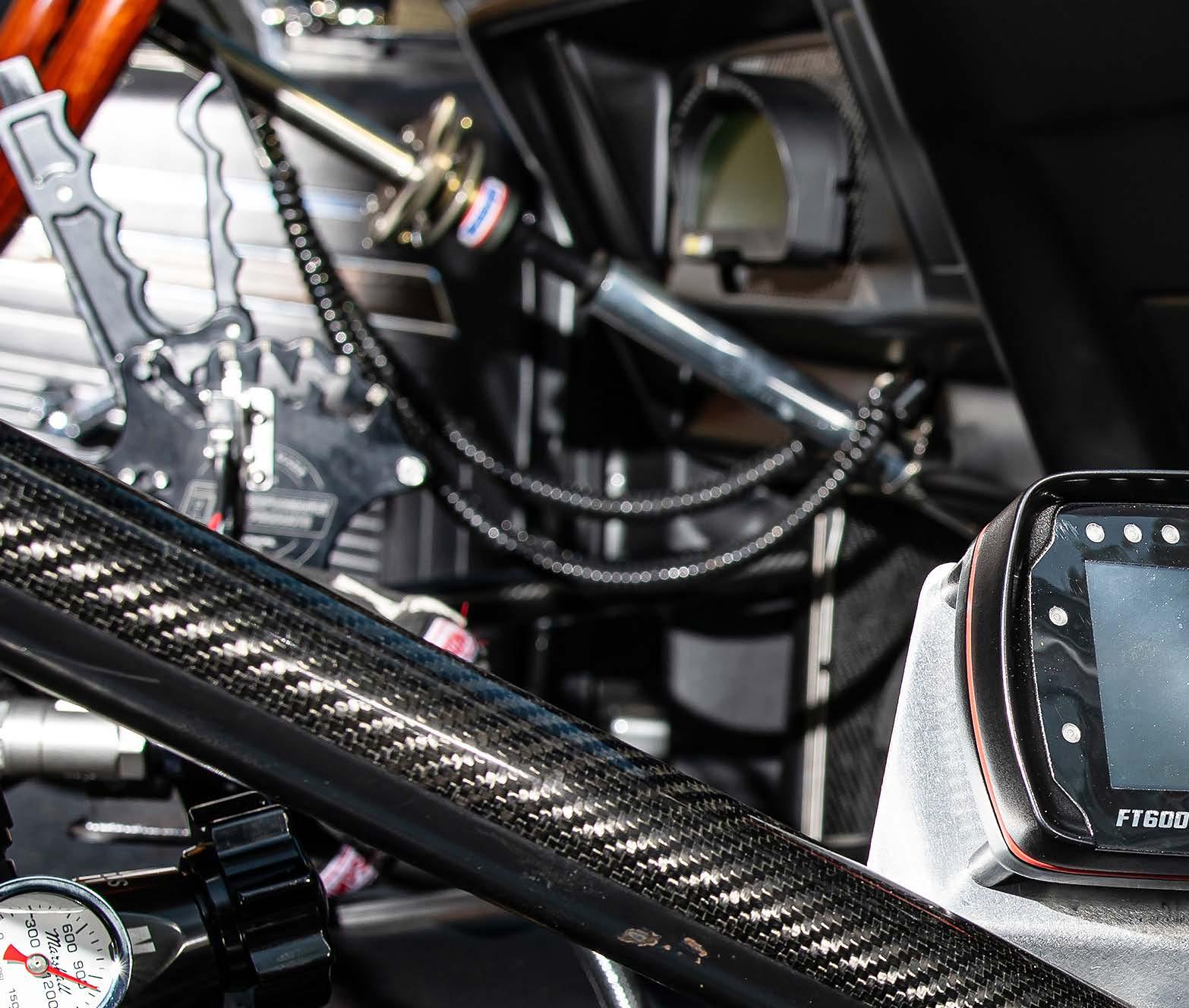
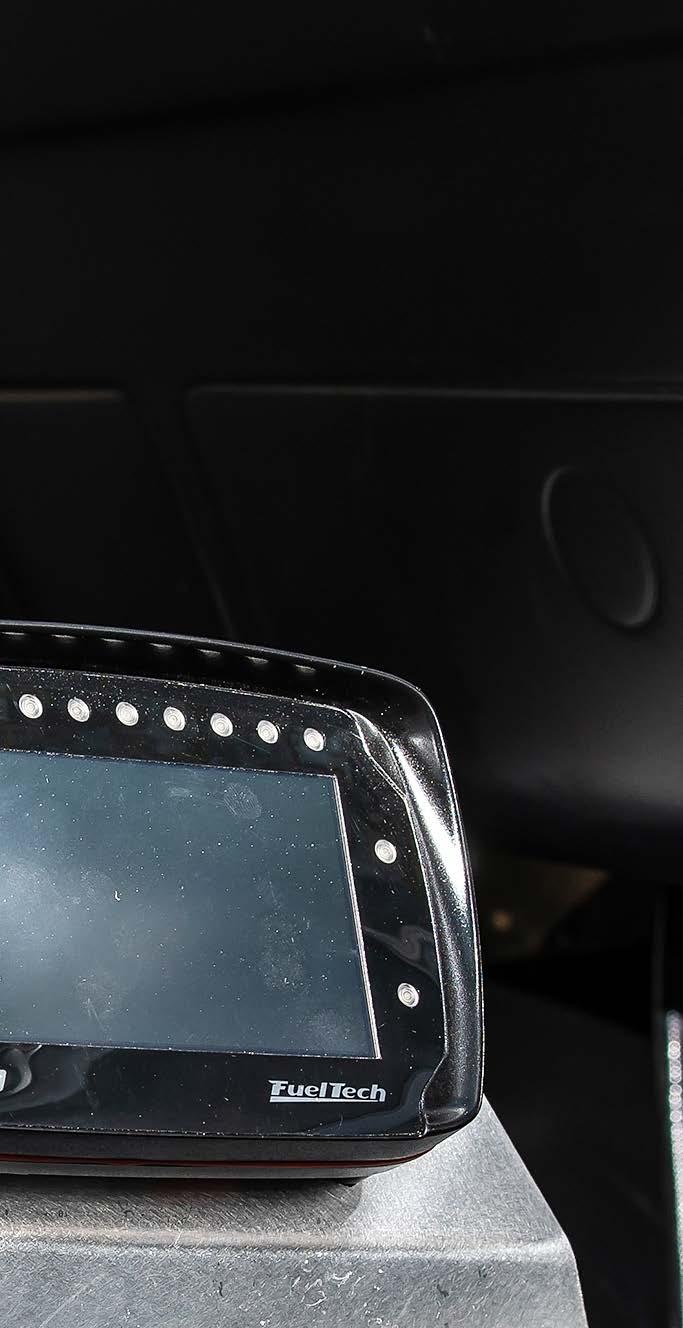
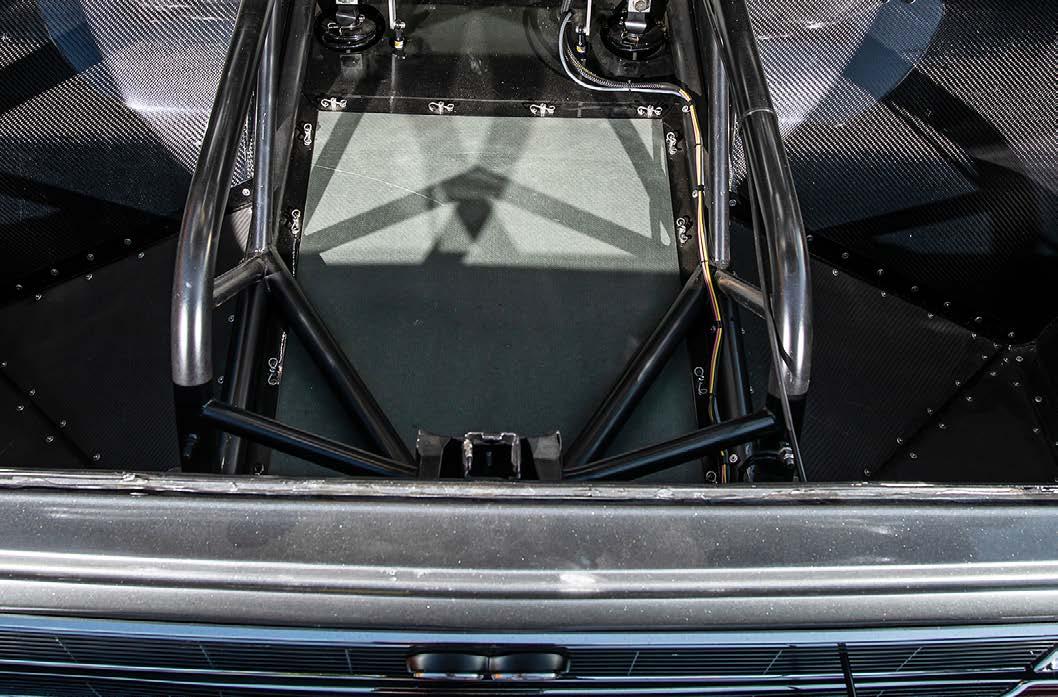
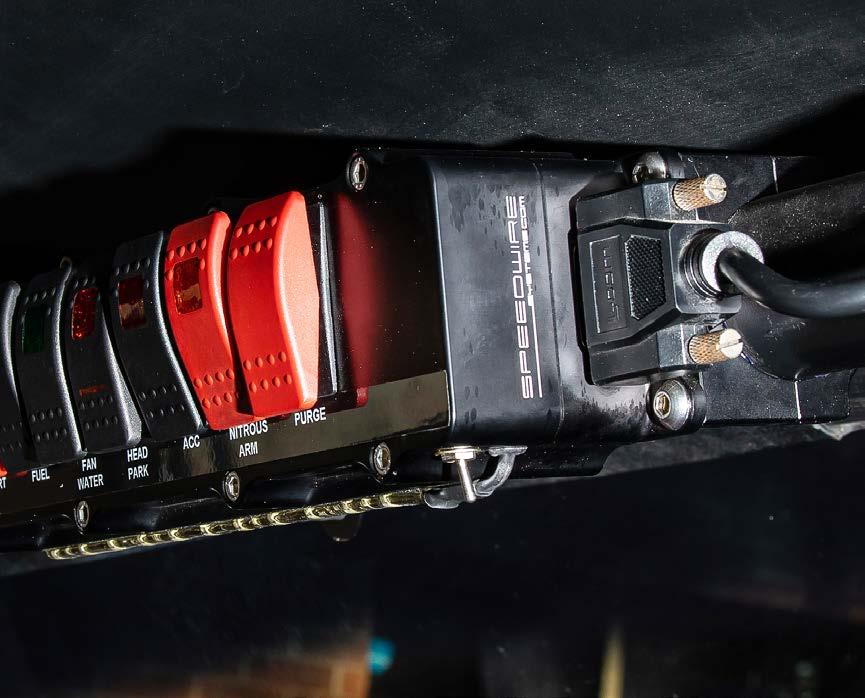
Fuel Tech FT 600, Speedwire switch panel, Race Pak.
Transmission & Converter:
M&M lock up 3 speed trans, lock up convertor and shifter.
Rear Differential:
Carmack Engineering billet center section and a Precision Chassis built Fab 9, Strange axles and floater ends.
Best ET & MPH:
4.18 @ 172 at 2940lbs
How Many Years Racing: 30 years
Division/Class Run:
PDRA Outlaw 632/ Pro 632/ LDR
Thanks To:
First and foremost my wife, Tina Naumann, although she refers to this car as the other woman and it’s been the topic of some rather heated discussions, she supports it. My oldest son Jake Naumann, I don’t race without him, he’s involved in every step of the way and in every decision made. Doug Kline (Precision Chassis) he’s with us at every race we attend, he tunes the car and makes sure it’s ready to go every time we leave the trailer. Joe Rivera (718 Motorsports), the entire staff at Precision Chassis, Ken Quartuccio Jr, his entire family and his entire team, Jamie Miller (the red hat mafia) a tuning genius , Nesbitt Racing Eng ines (Brett, Jared, John and Mr. Jeff), Mark Menscer (Menscer Shocks), Justin Carmack (Carmack Engineering) and Stu and Lindy Herman.
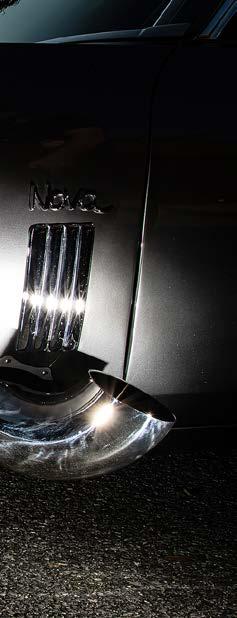
Additional bling includes the complete package of gleaming factory chrome and stainless trim, plus a the polished bullhorn pipes existing the front fenders and chrome 10-spoke wheels.
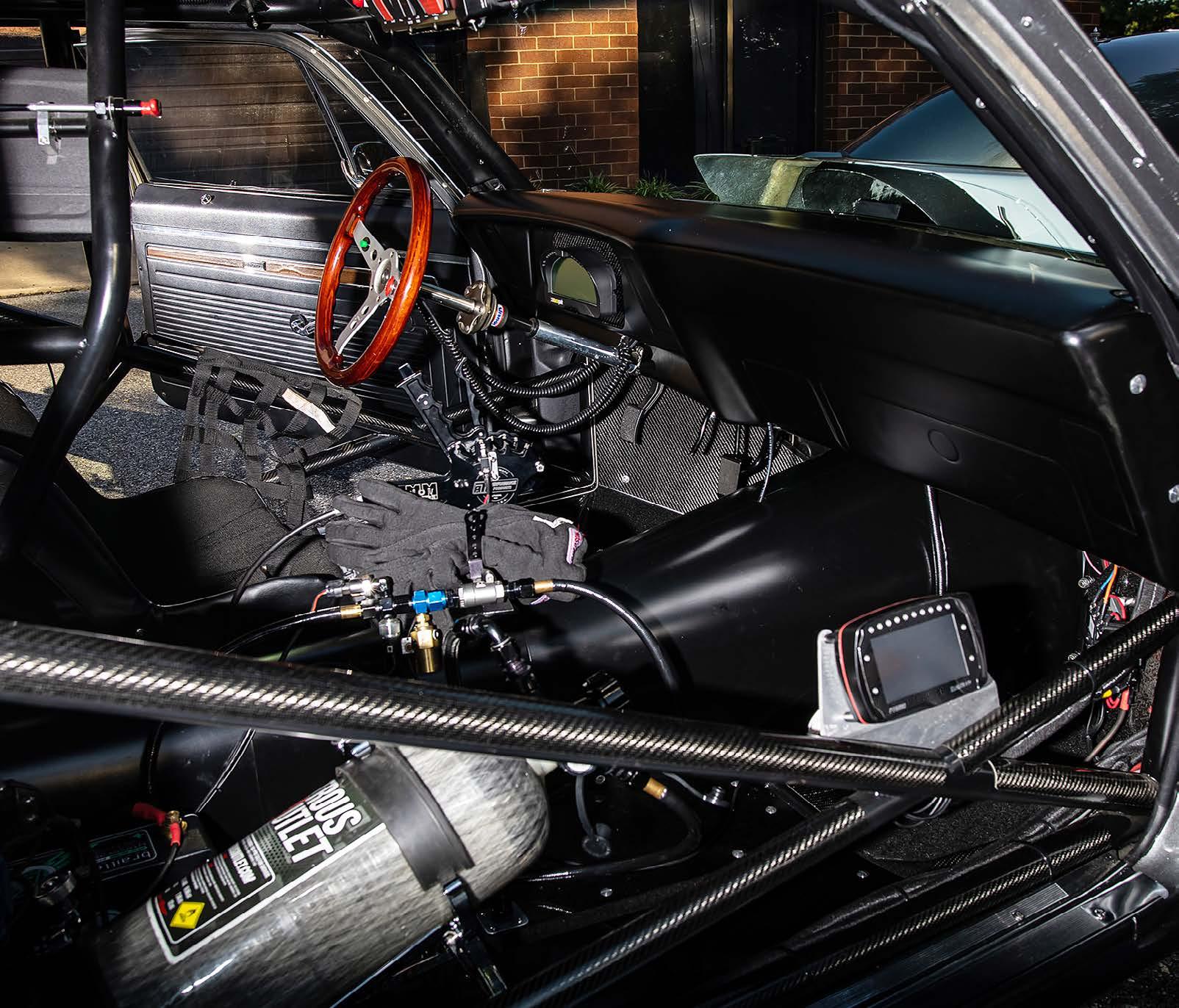
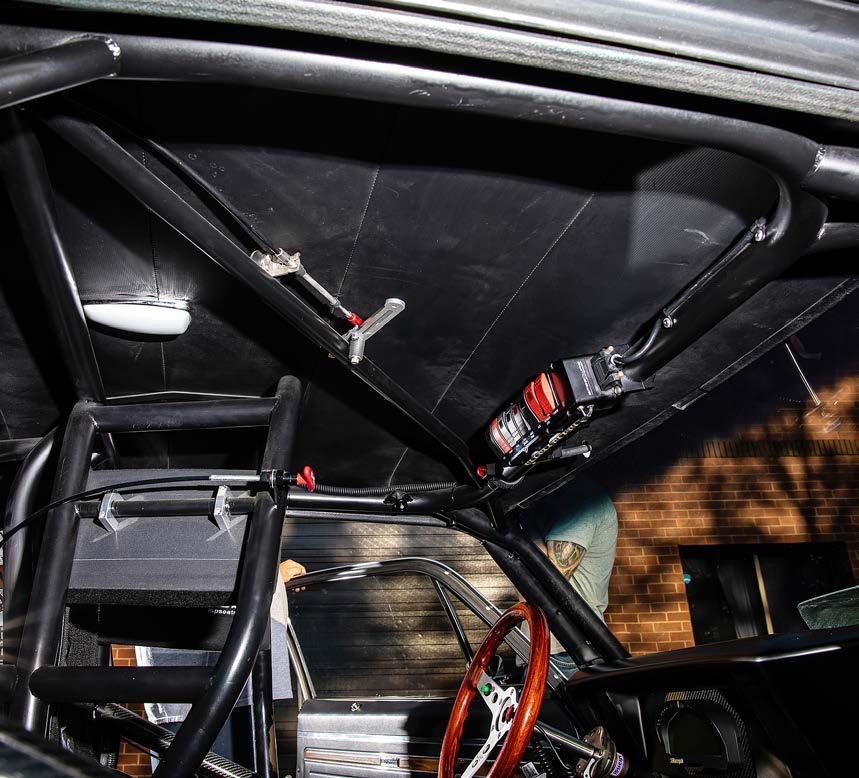
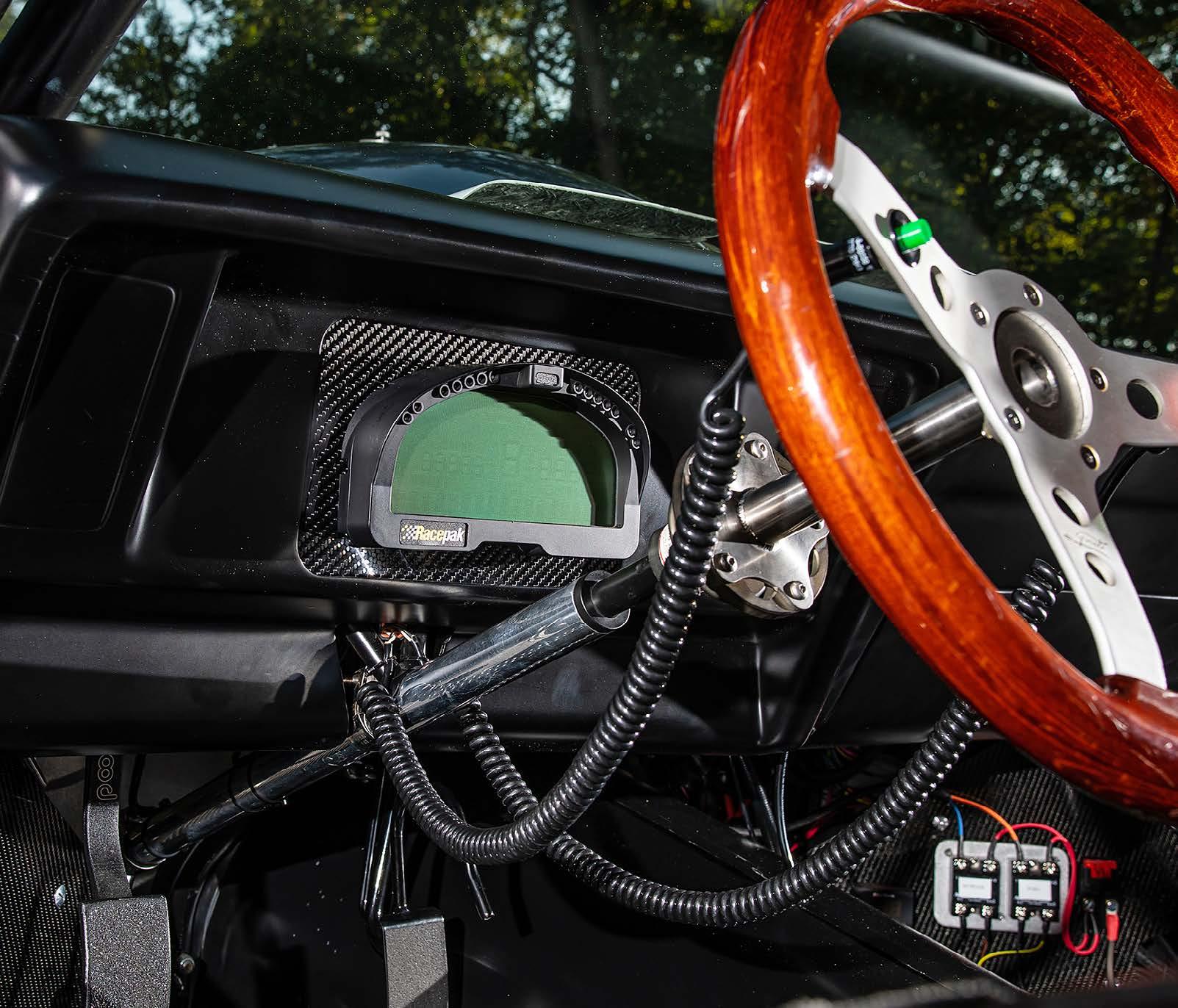
Inside, Naumann chose to continue with keeping an assortment of factory goodies in place, including the dash panel, door panels and headliner which includes the OEM dome light. The high gloss wood steering wheel is about where the 1970’s factory look meets badass racecar, as it is attached to a lightweight quick-release column.
From there, Naumann is protected by a maze of bars that make up the Precision Chassisbuilt 6.0 certified chromoly cage, and monitors and controls the massive amounts power afforded by the 632 mill via various components from Fuel Tech, Race Pak and M&M Transmissions.
Now about that 632… Nesbitt Performance Engines built the 4.84
bore space mill using a Brodix block. Inside, a Bryant crank spins MGP rods partnered with Gibtec pistons while a Jesel belt drive synchronizes the rotation with a Comp cam that bumps BAM lifters. Profiler 12-degree heads are equipped with Jesel stainless rockers and an HRE sheet metal billet runner intake manifold is topped by twin AED Carbs.
If you think we were exaggerating about the Nova being show quality, check out the trunk and underbody.
Nitrous oxide is the power adder of choice for Naumann and a single Induction Solutions direct port system supplies the charge.
A lock-up 3-speed M&M transmission transfers power rearward to the billet center section fabricated 9 inch rearend with Strange axles and floater ends. Allin, the Nova weighs-in at a healthy 2940lbs and has clocked a best elapsed time of 4.18 at 172mph in the eighth, gaining ground and consistency with every outing.
It might come as a surprise, though, that with a machine like this at your beck and call, that the most memorable experience with the Nova has nothing to do with Michael driving the car. Naumann explains; “While every time we take this car out, whether highest of highs or lowest of lows, is memorable, if I had to choose one favorite, it would be the 2019 Shakedown race where my son Jake drove the car for the first time. He went a 4.30 on his first hit, now that was a super proud Dad moment!”
Adam & Andrea Britz’s Pro Street 1960 Ford Falcon
From the pages of RPM Magazine, September 2016
It started as an ordinary day. In August of 2015, Export, PA residents Adam and Andrea Britz awoke to a normal, happy life. The world was a safe and predictable place. It seemed as though the couple had plenty of time to accomplish all they dreamed of— but in due time. For now, though, “living life” meant making conservative financial decisions and planning for that future. However, by day’s end, the definition of “normal” would change dramatically.
While on a golf cart, Andrea was ejected from her seat and sent hurtling to the ground. In an instant, that safe, secure, and assured future lay in doubt just as Andrea lay motionless at the scene of the accident. The fall resulted in a broken neck, emergency transport to a trauma center, a highly involved spinal fusion surgery, six weeks in the hospital, and another several months learning to walk and use her left side again.
Not to mention a terrifying brush with what could have been.
“The accident forced us to re-evaluate what really mattered in life,” Adam reflected. “Having been involved in drag racing and hot rods most of my life and a longtime subscriber to RPM, I came across an ad for the National Pro Street Association. I knew then that I had a longdormant passion from the ’80s rekindled. Finally pro street was back and we wanted to be a part of it!” he added.
A pro street Falcon built in the pursuit of life to the fullest
Stanced And Sparkling
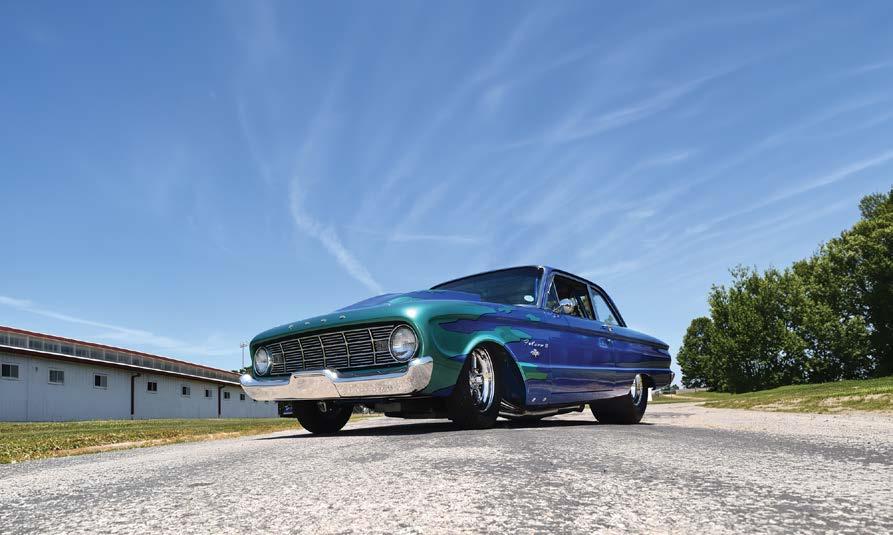
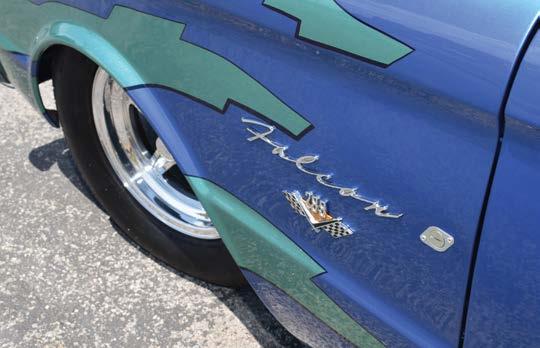
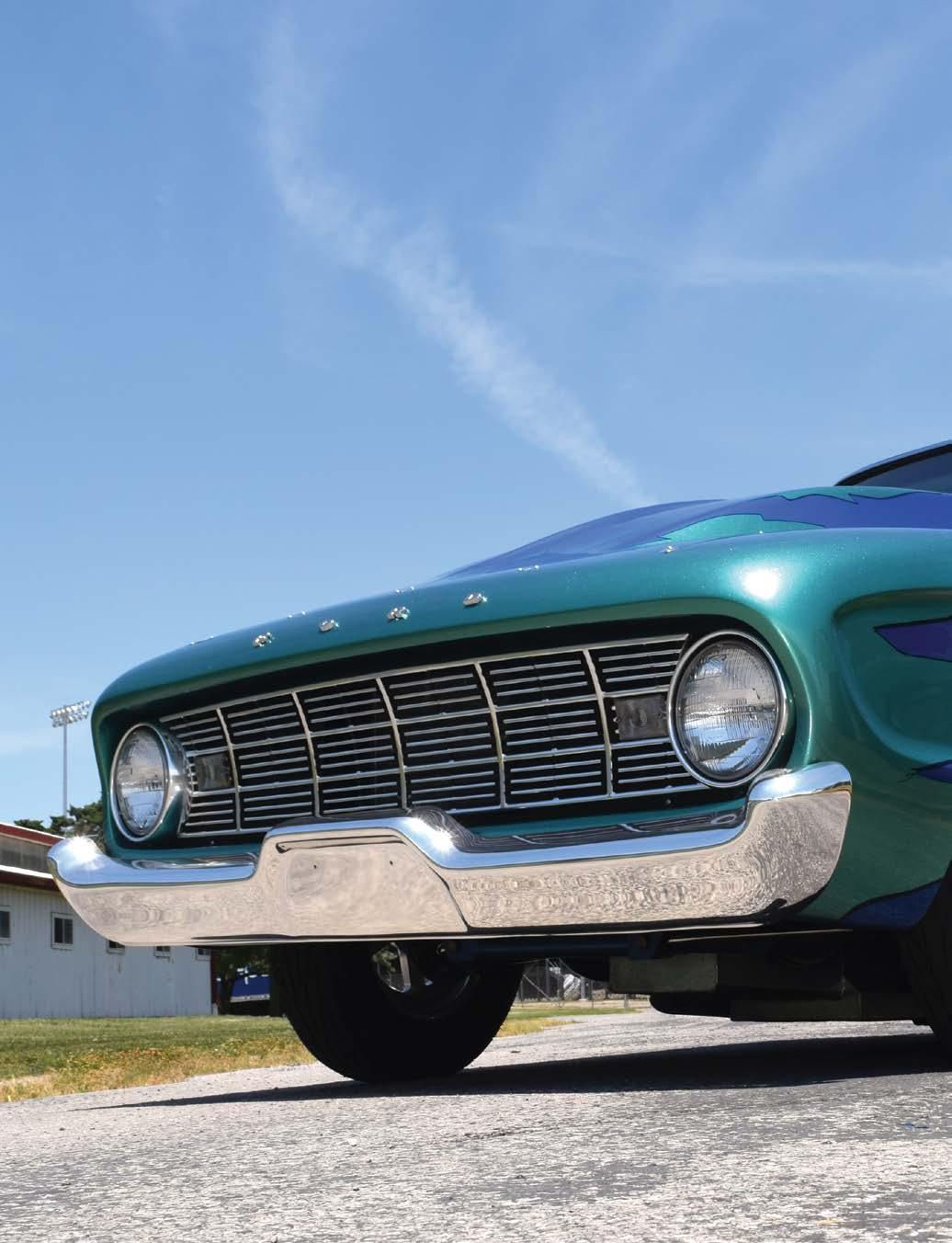
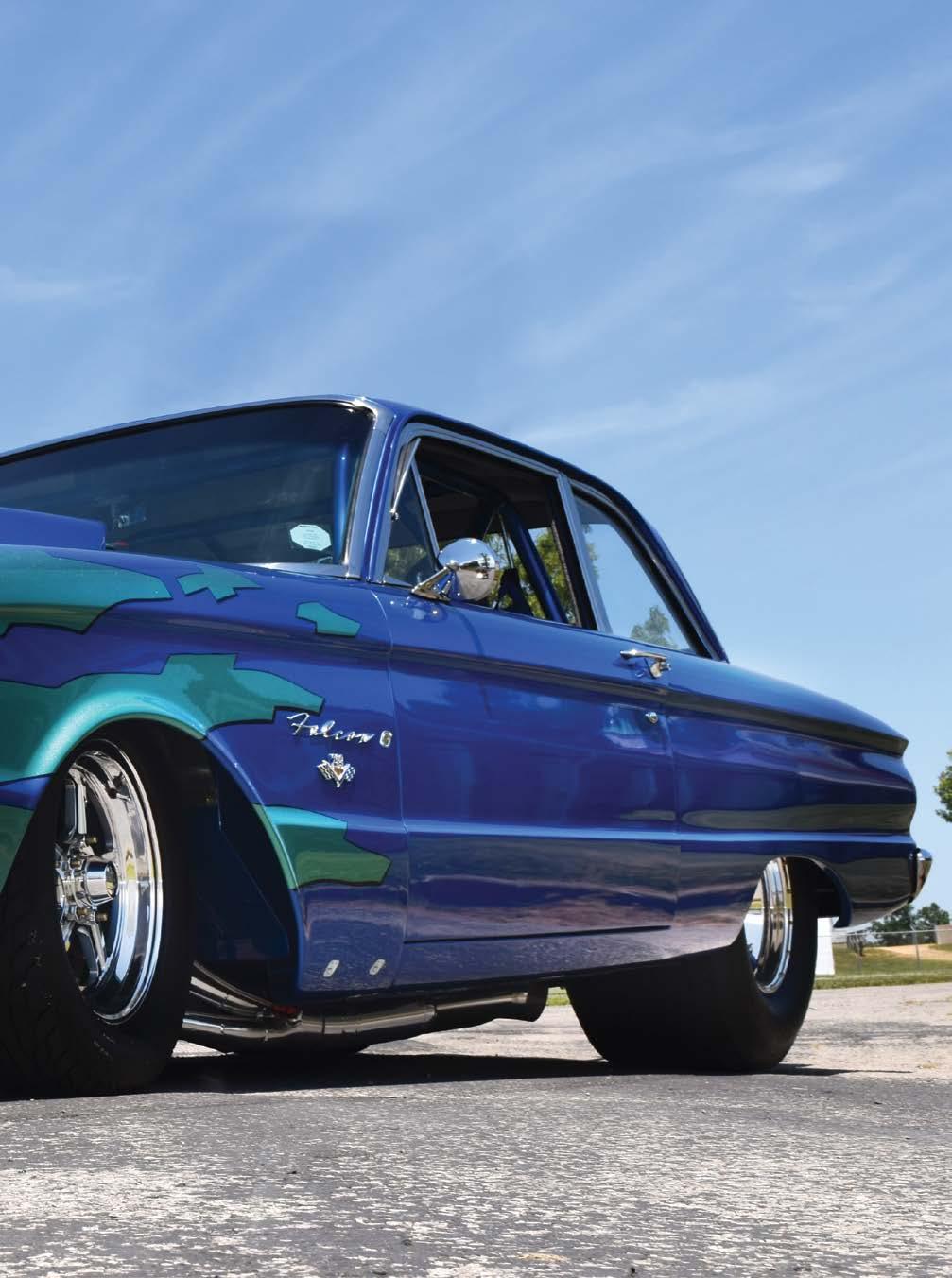
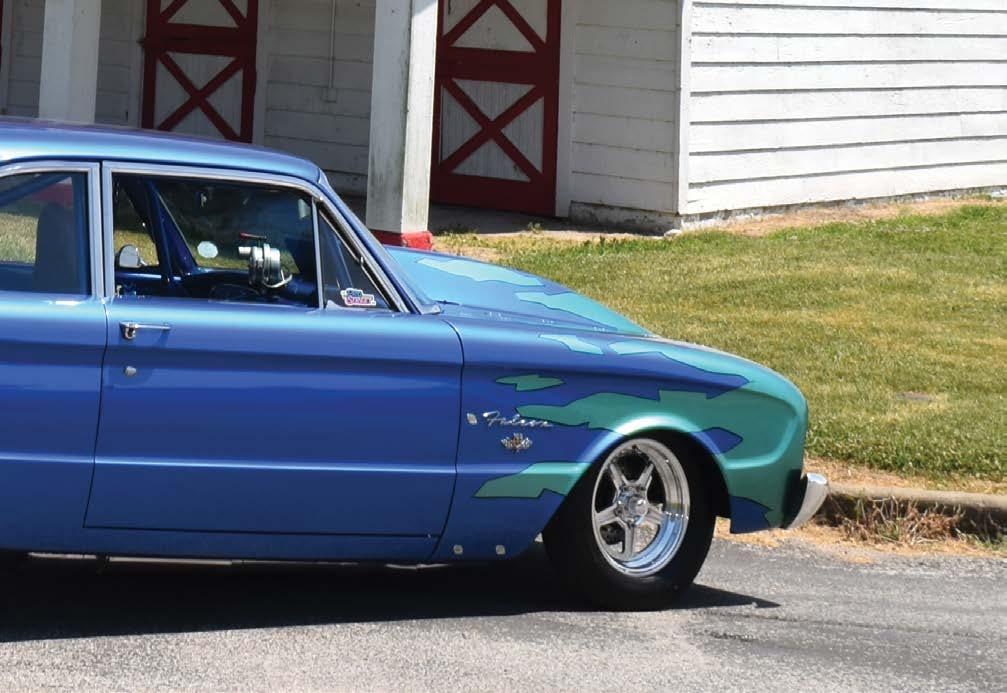
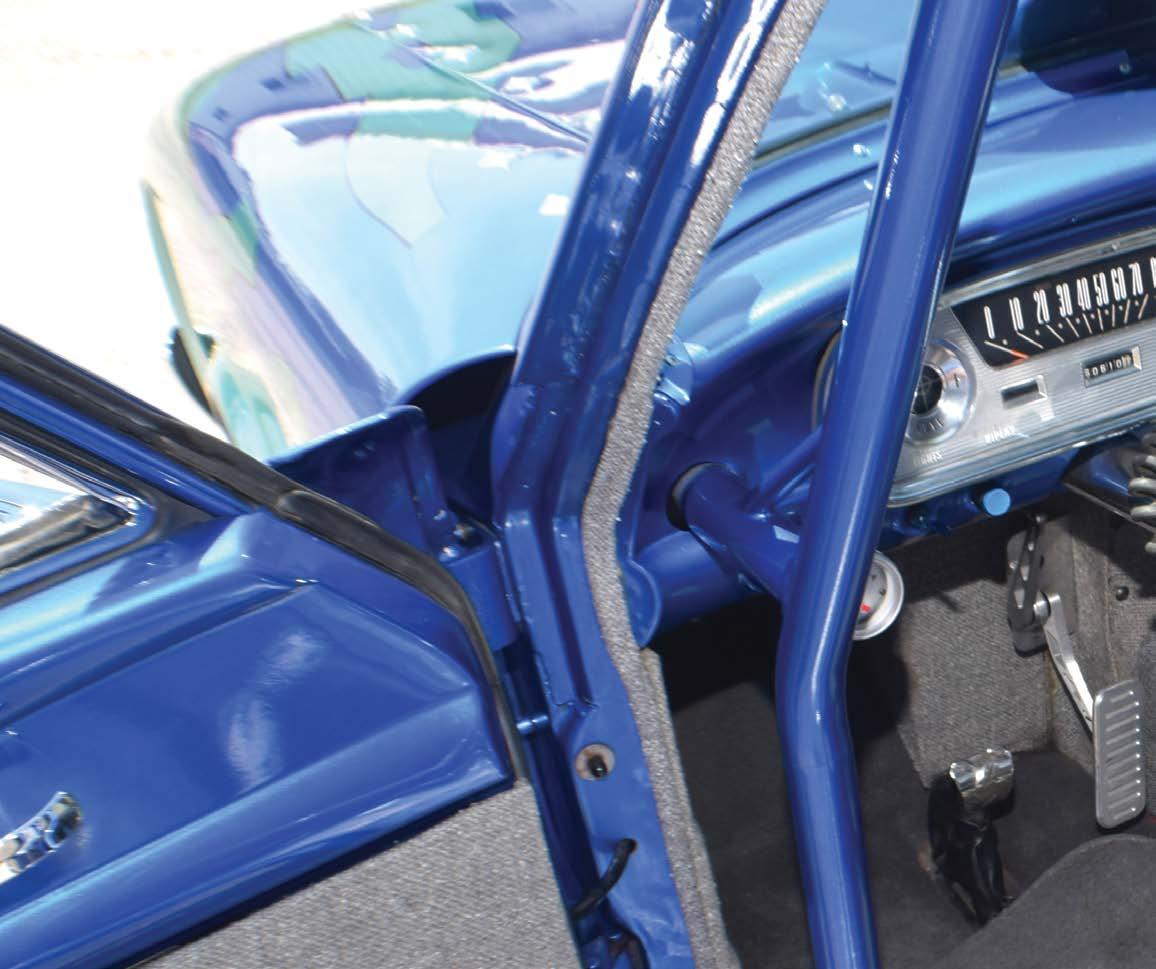
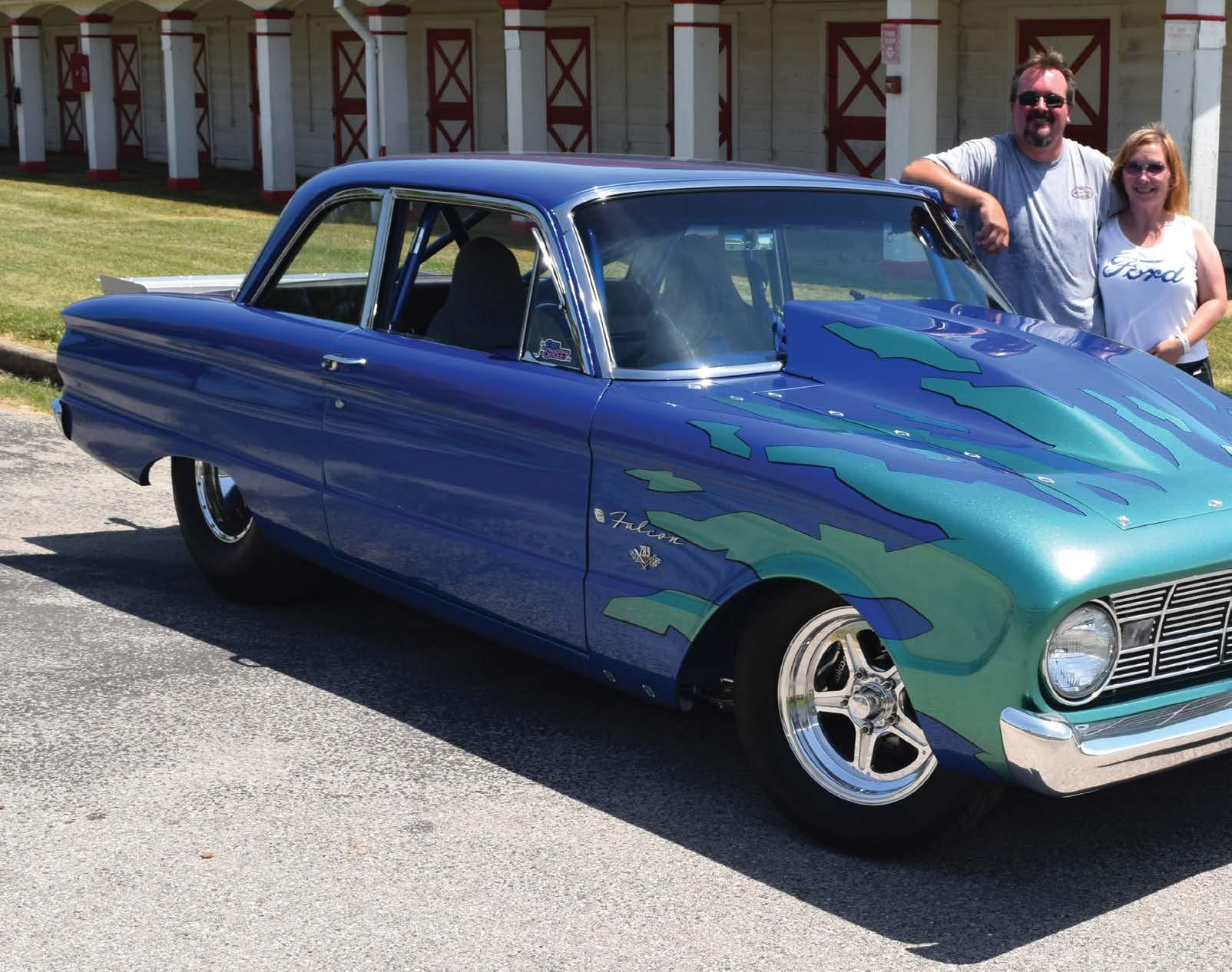
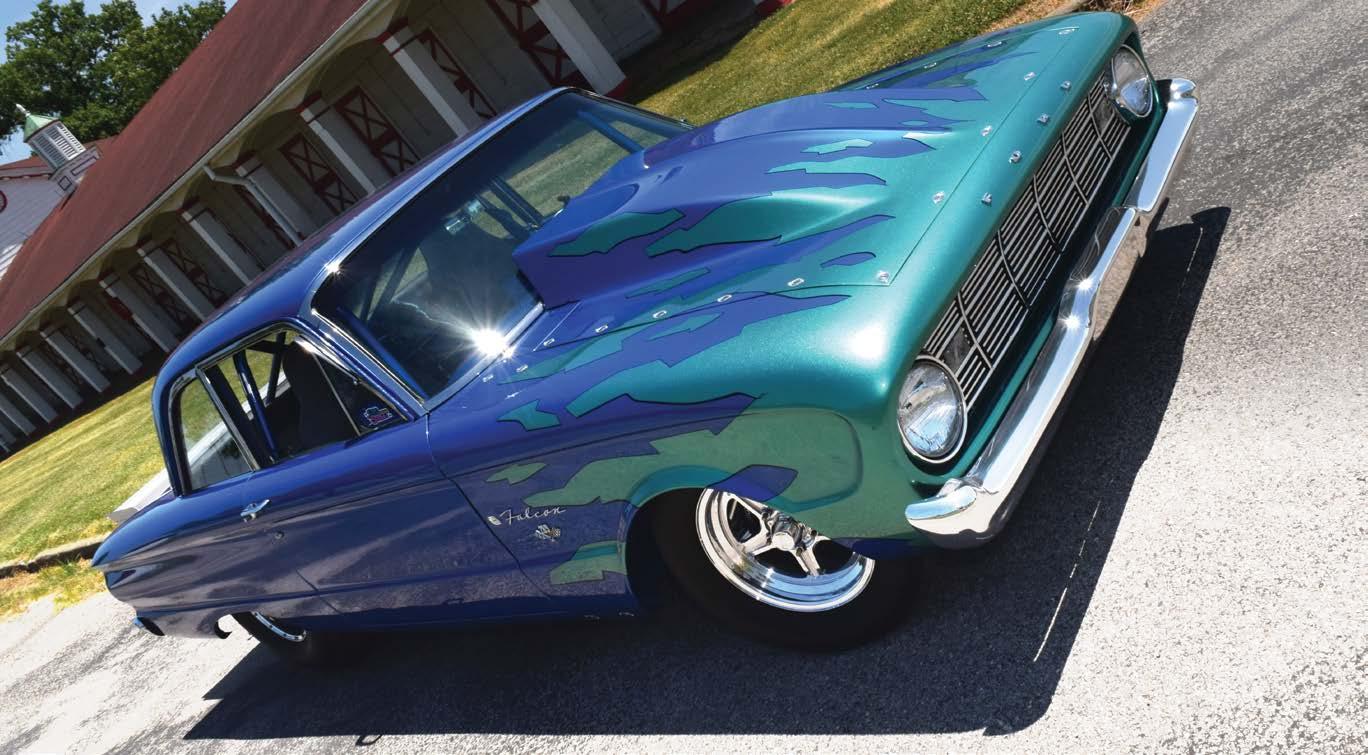
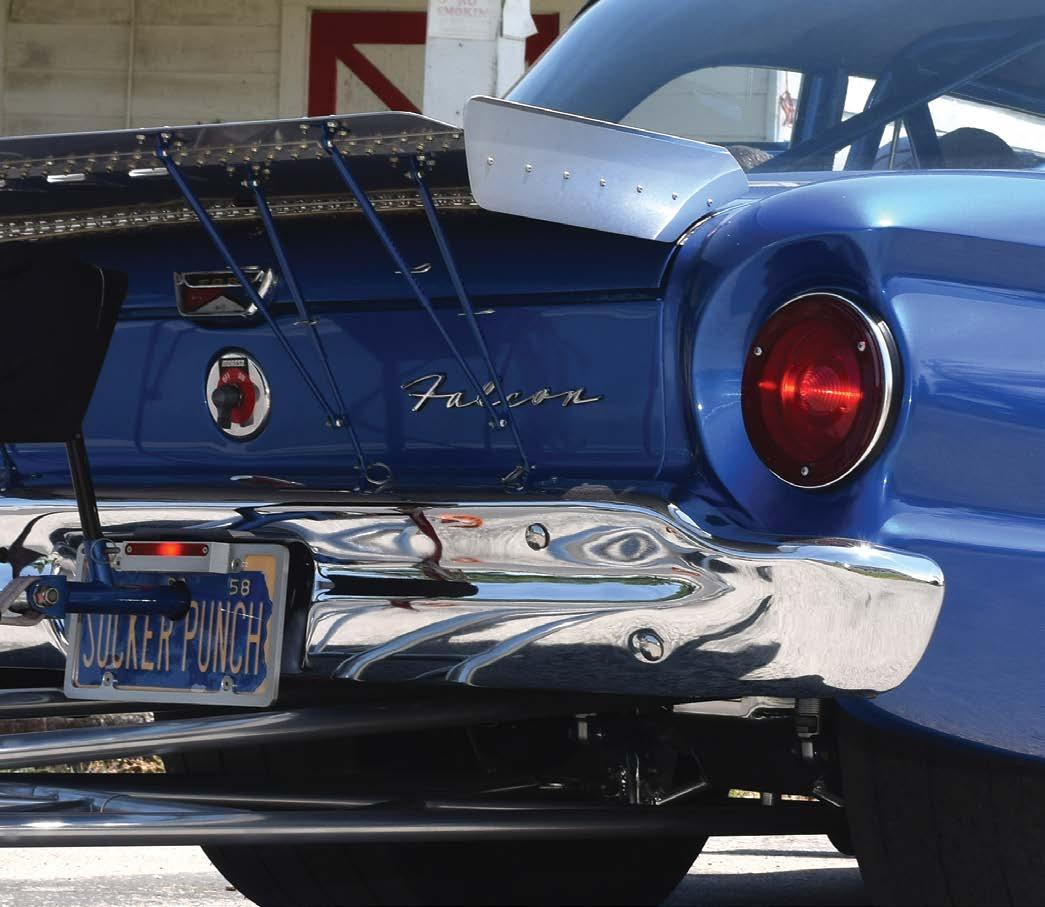
The UTP Race Cars full tube chassis helps the classic Ford sit just right, and the unique VW blue with Ford green tear-away graphics really pop in the sun with an ultra-fine metallic.
In The Details
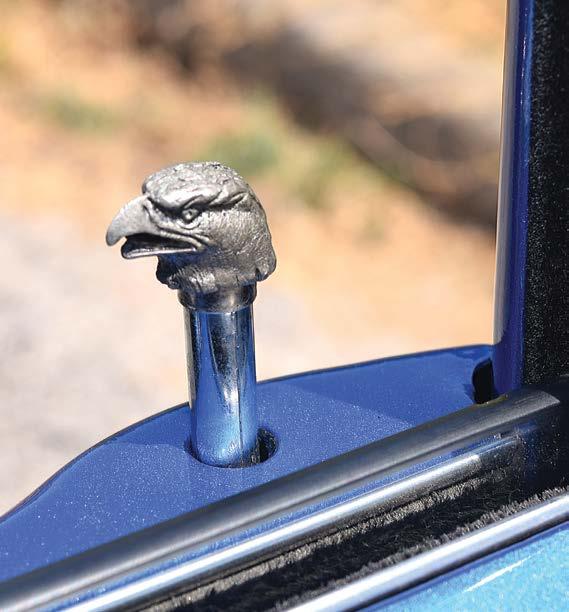
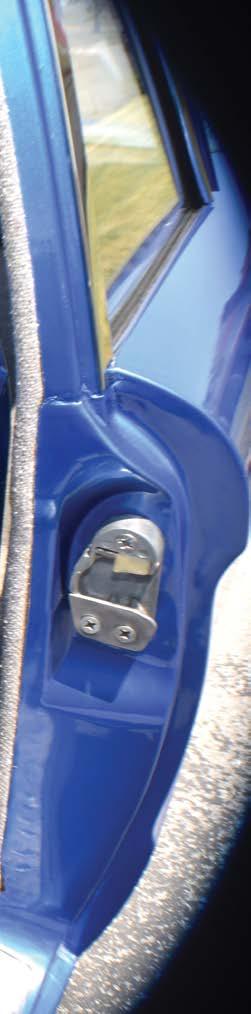
Small touches like these cool little falcon-themed door lock pulls show the Britzs’ attention to detail found throughout the build.
Photos: Toby Brooks
Easy Access
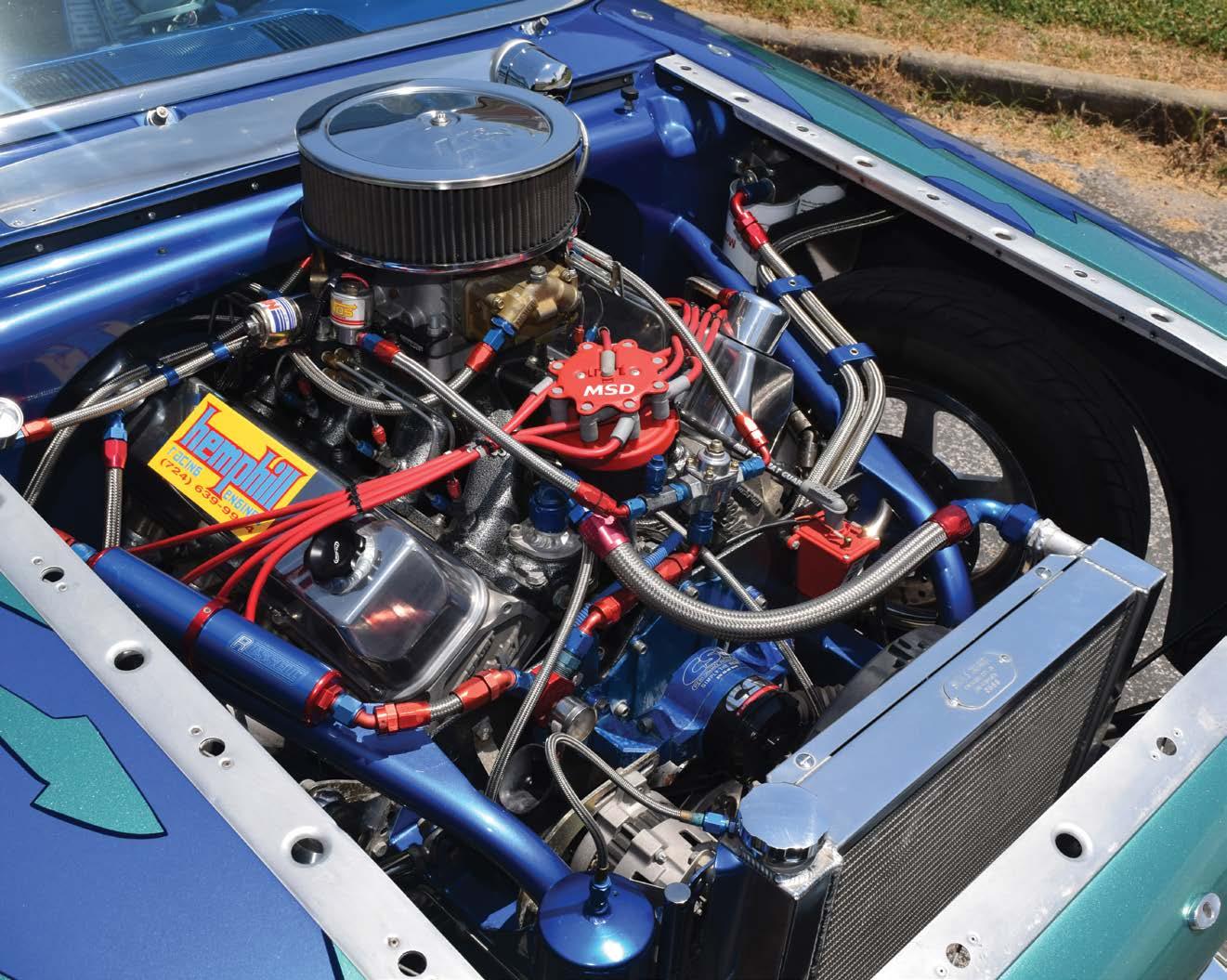
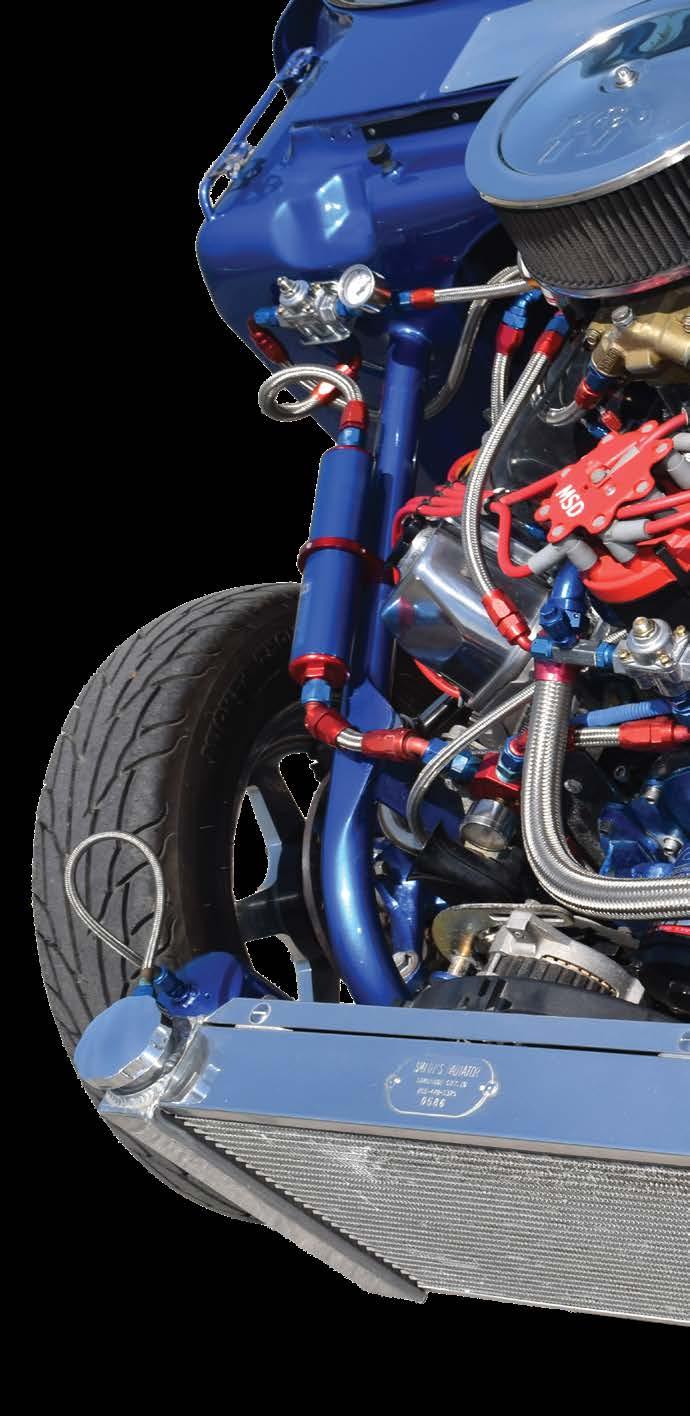
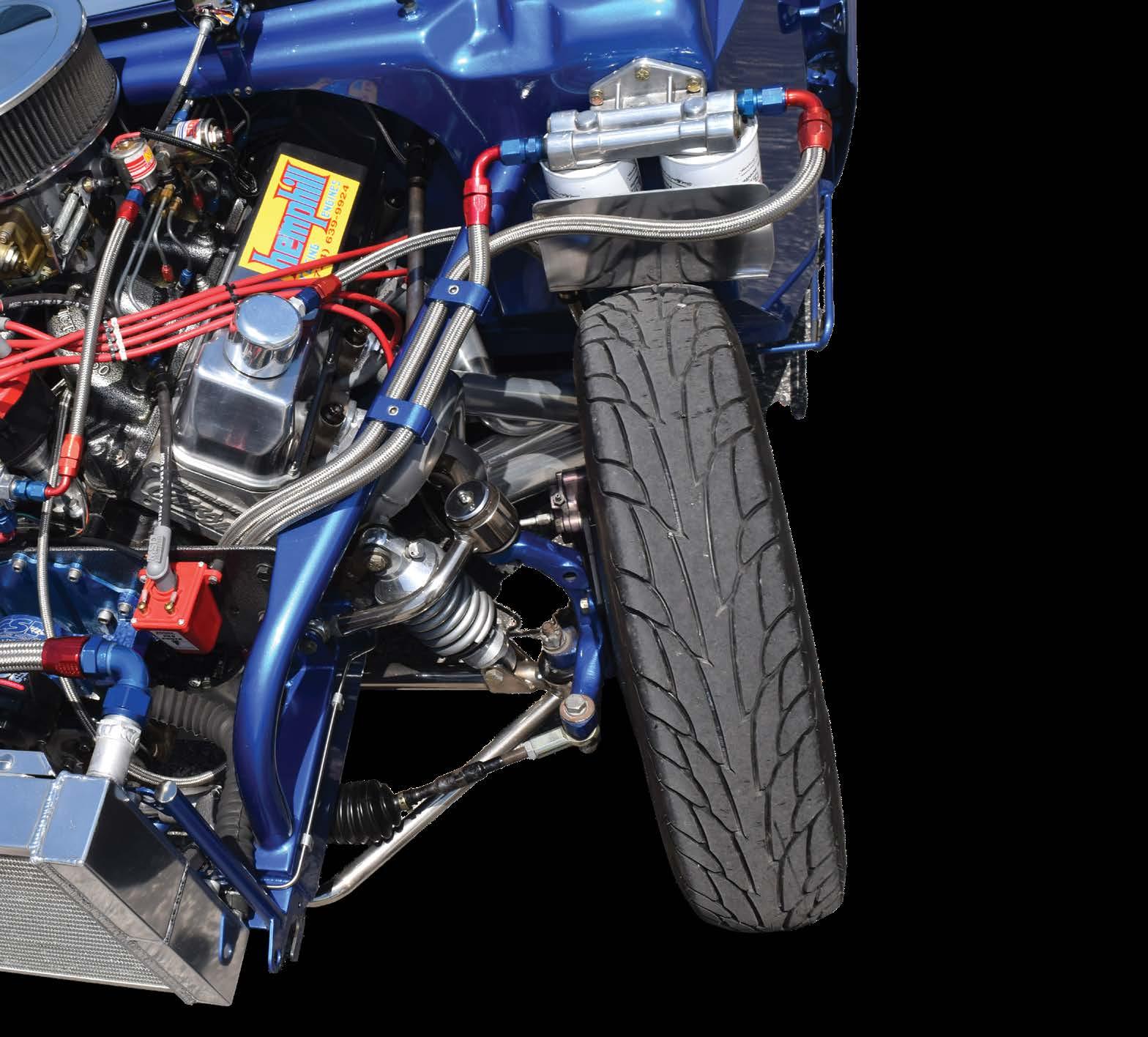
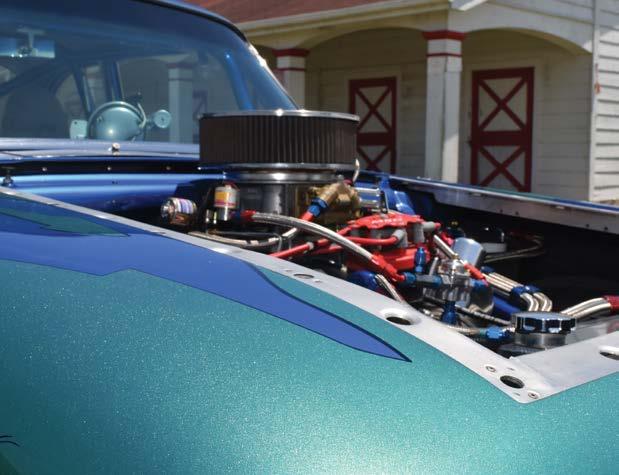
The Falcon features an incredibly well-executed fiberglass front clip, including a lift-off hood and a nose that can be pulled off in a matter of minutes, providing Britz a better look at the big Ford he built himself. The 521 sports 14:1 Diamond pistons and is plumbed for a healthy dose of NOS nitrous...although Britz has admitted he already has the boost bug. Plans are in the works to boost the blue Bird in the future.
ADAM & ANDREA BRITZ’S PRO STREET 1960 FORD FALCON
Chassis Type & Mods:
Alston mild steel full tube chassis by UTP Race Cars.
Suspension:
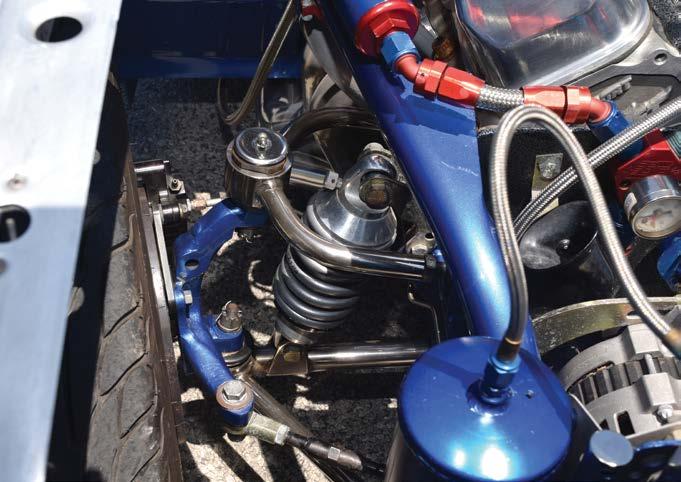
FRONT: Mustang II suspension with Strange doubleadjustable shocks and Hyperco springs. REAR: Alston 4-link with Strange double-adjustable shocks and Hyperco springs.
Body & Paint:
PPG basecoat/clearcoat Volkswagen Techno Blue with custom Ford Shamrock Green tear-away graphics. Prepped by UTP Race Cars and Street Rods.
Engine:
521 ci big block Ford assembled by owner. 4.390 bore/4.30 stroke, fully blueprinted. Ford Motorsport aluminum cylinder heads with ARP studs and Scorpion roller rockers. Kaase oil pump and CSR billet electric fuel water pump.
Rotating Assembly:
Scat stroker crank with Eagle rods and Diamond 14:1 compression pistons.
Induction & Fuel System:
Edelbrock Victor 460 intake with Holley 1150 carb and K&N filter. MagnaFuel electric fuel pump.
Power Adder:
NOS direct-port Fogger system with progressive controller.
Electronics:
MSD 7AL2 Plus.
Exhaust:
Custom ceramic-coated headers with 4-inch tubing and stainless Borla mufflers.
Transmission & Converter:
Ford C6 3-speed trans with manual valve body and 5,500 rpm stall converter.
Differential:
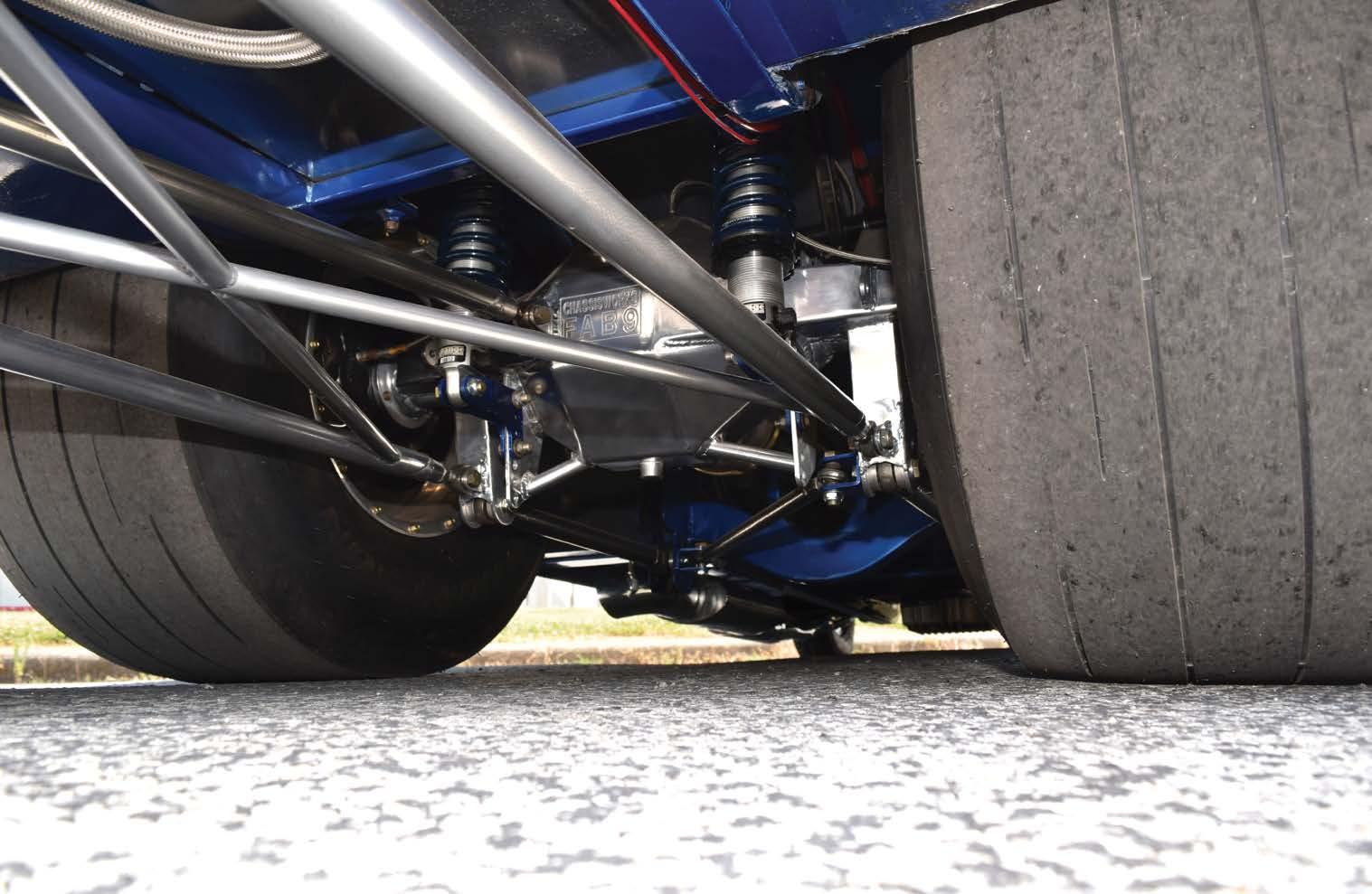
ChassisWorks Fab9 housing with Strange 35-spline axles and Pro Gear 4.30 gears.
Best Performance:
Passes pending fall of 2016 (new build).
Special Thanks:
“Jacob Hempel and “Big John” Litz for assistance in the build. Hemphill Racing Engines for machine work on the engine. Last but not least, my wife Andrea for supporting and helping with my hobby.”
What’s Old Is New if you haven’t read it yet!
Each month we host some of our past issues of RPM Magazine in this section. If you haven’t read them yet, they are new to you! If you have, maybe there’s a favourite car/story you want to read again….here they are!
CLICK A COVER OR SCAN A QR CODE TO GO BACK IN TIME!
Ridin’ Right
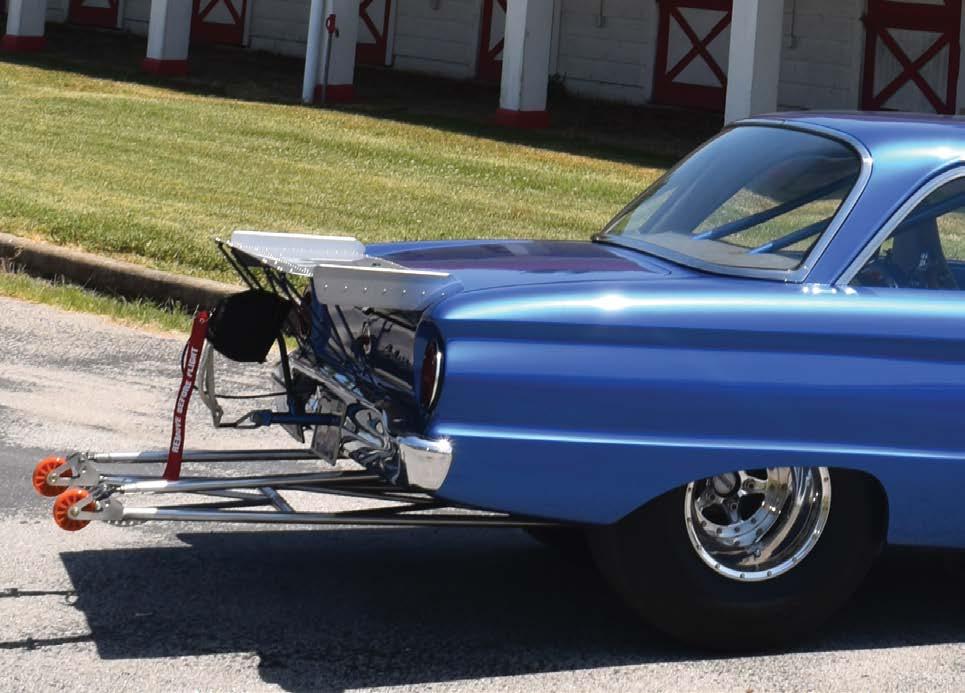
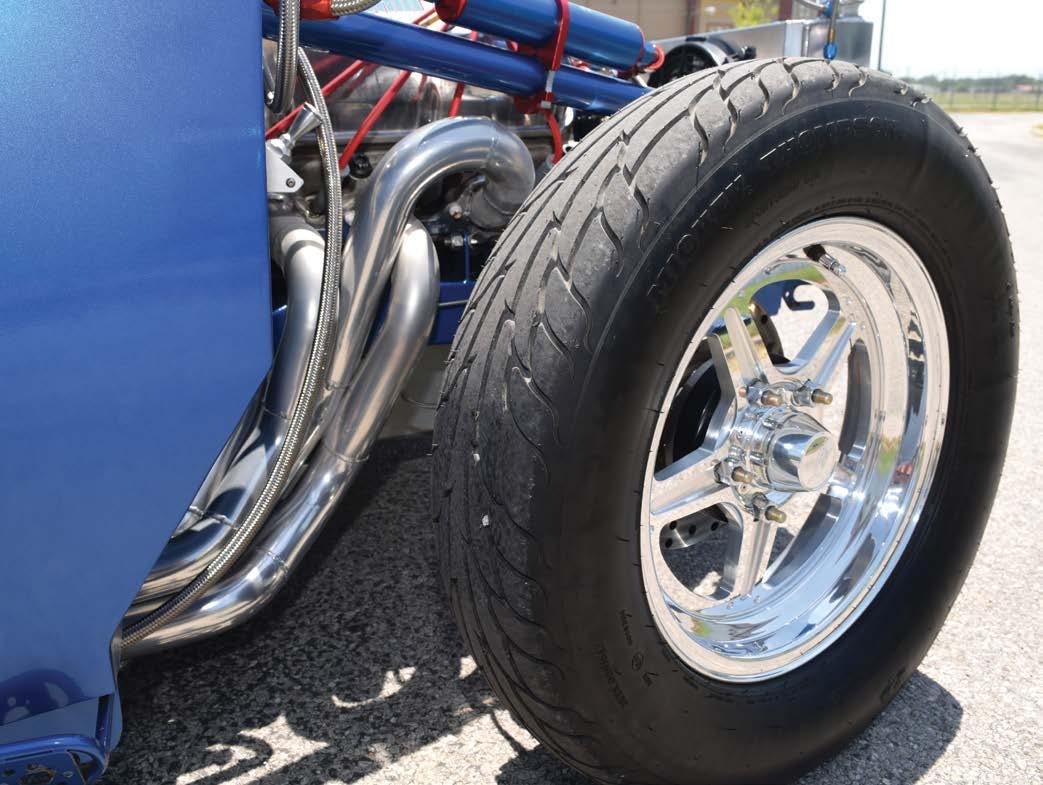
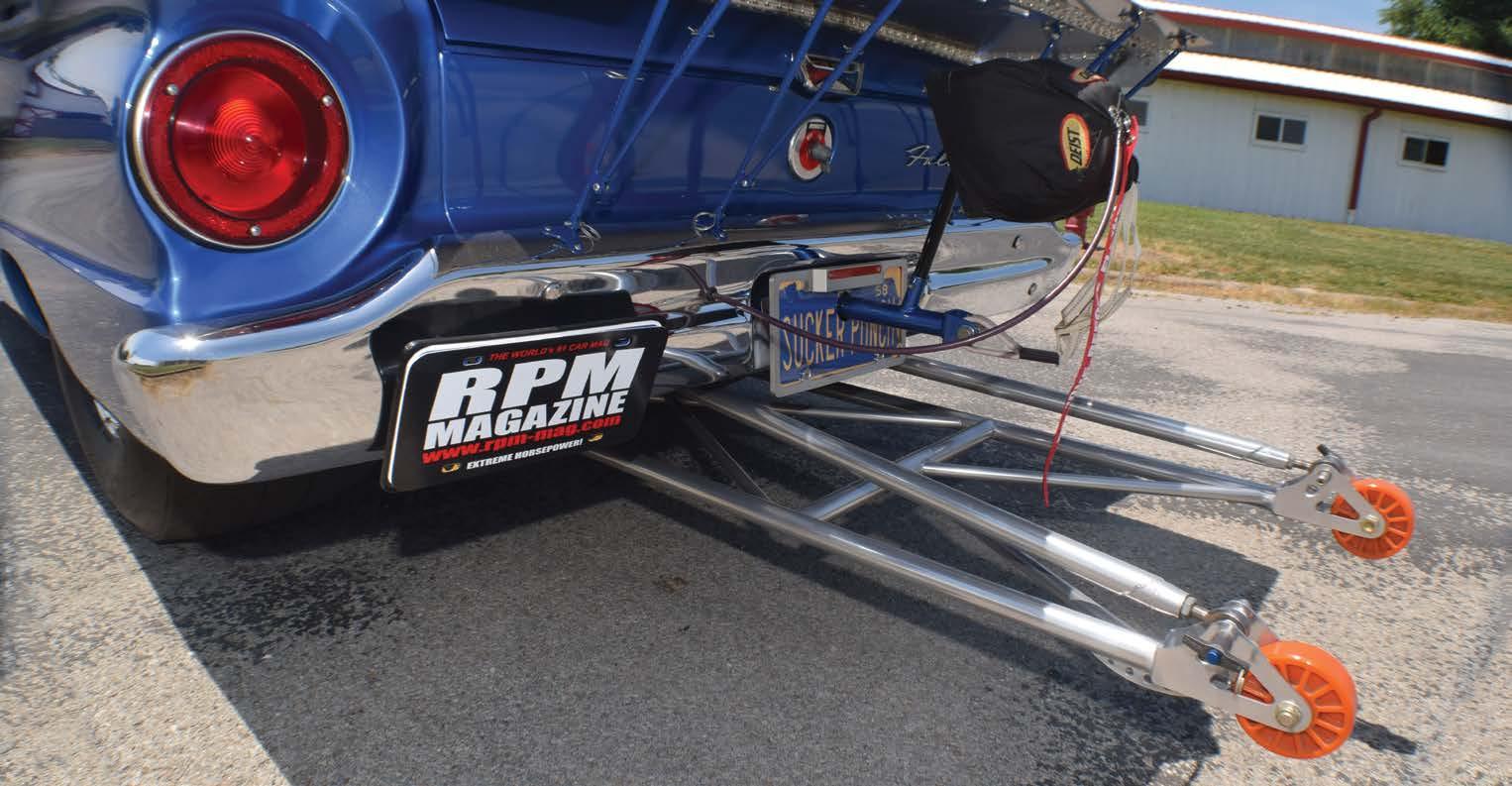
The Falcon sports a wicked low-slung stance thanks to a custom Mustang II suspension with Strange coil overs up front and a fully ceramic coated Fab9 rear on an Alston 4-link out back.
Reclamation Project
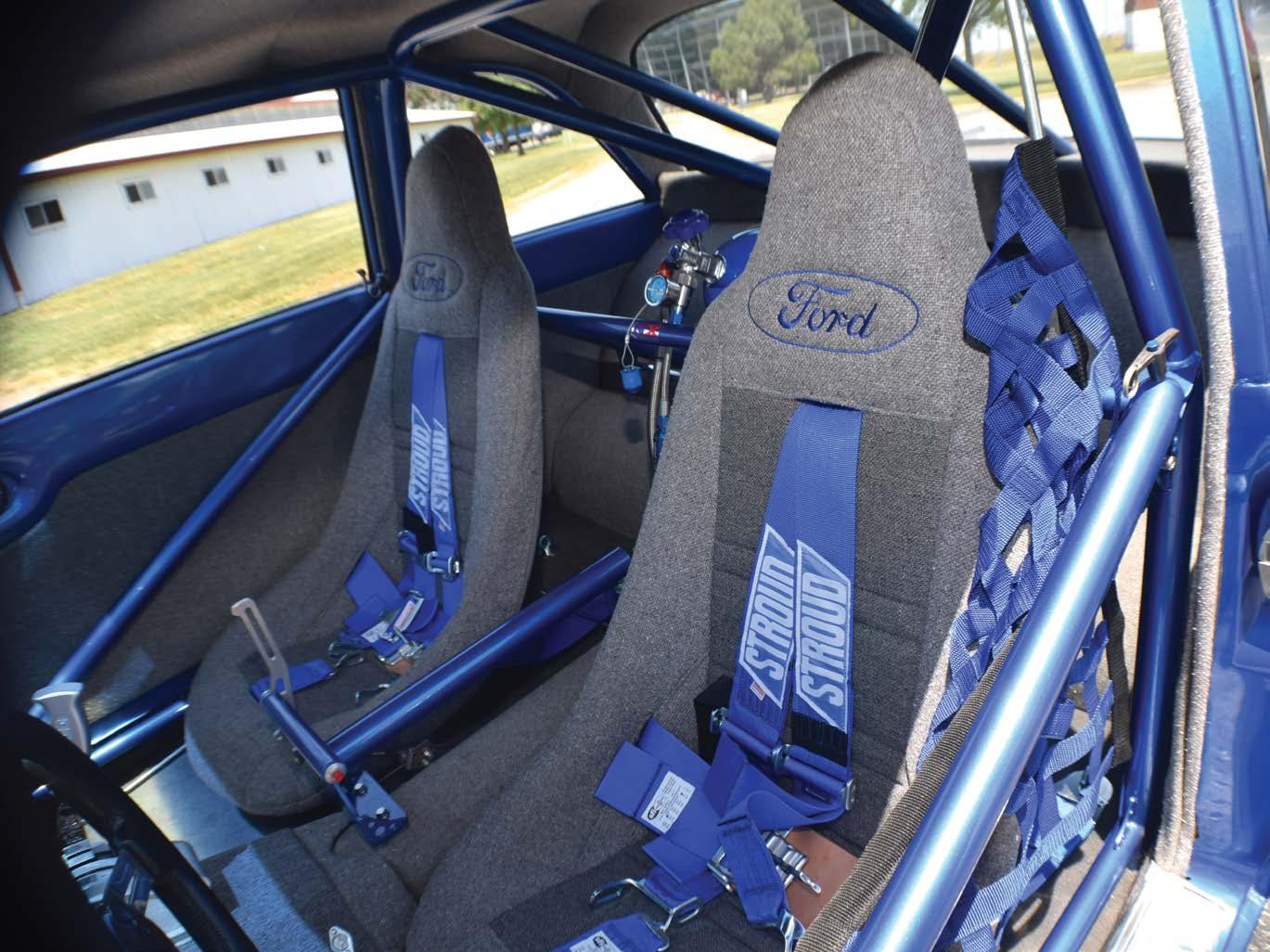
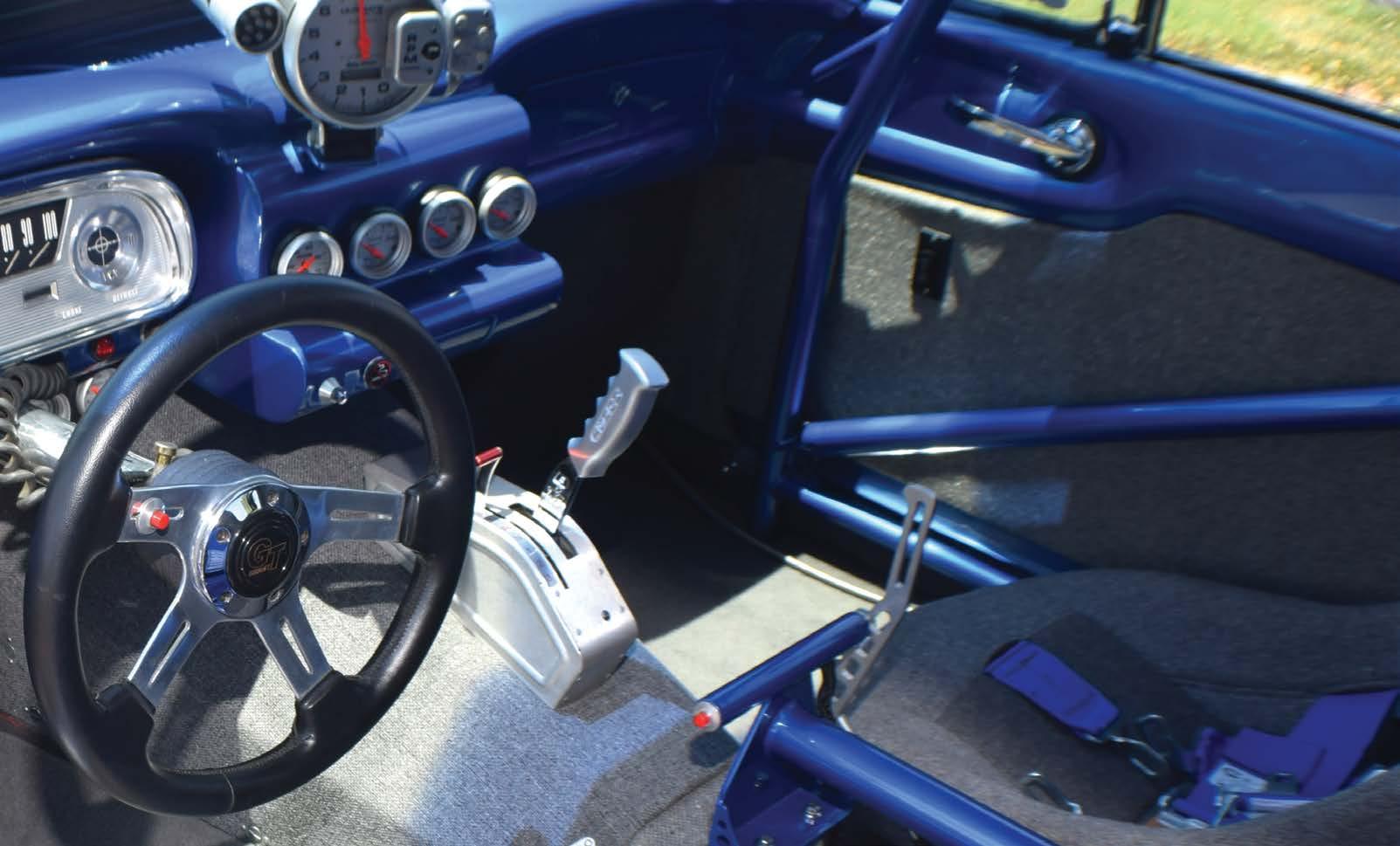
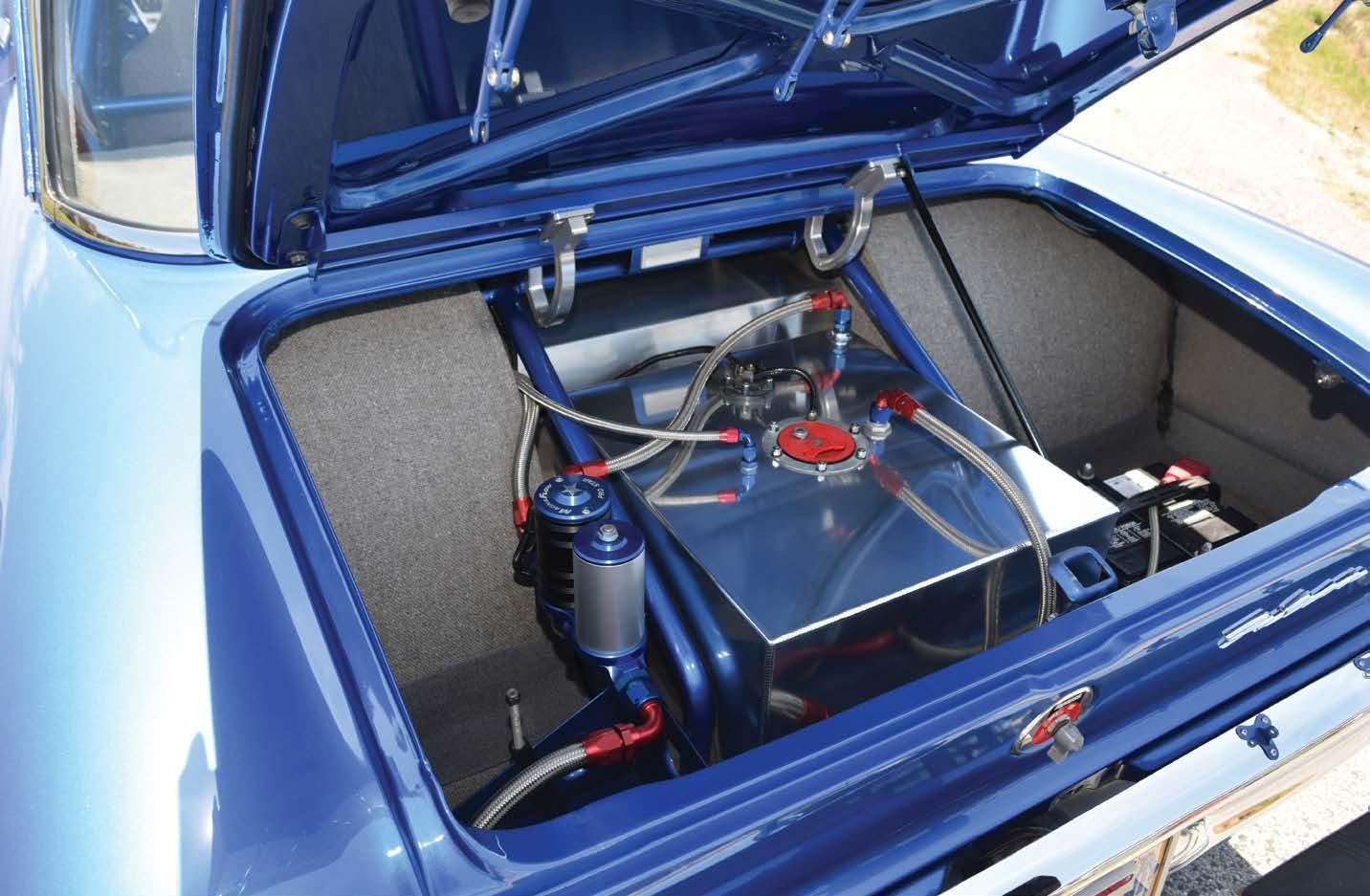
The former strip warrior’s transformation is nowhere more obvious than in the interior and trunk, where a full tweed cockpit has been installed around the body-color mild steel cage. Britz even commissioned a replica of the original door-mounted VIN tag to prove it is a legit titled and plated street bruiser these days. A polished fuel cell supplies the MagnaFuel pumps in the super sano trunk.
Adam & Andrea Britz stand beside their smooth Ford Falcon at the 2016 Du Quoin Street Machine Nationals.