ART DIRECTOR .......................................................... JIM McHARG
Photographic Contributions: Mark - Godragracing.org, George Pich, Louis Fronkier, Blake Farnan, Jerry Garrison, Eddie Maloney, Wes Taylor, Steven Taylor and Amber Hynes
Editorial Contributions:
Chuck Scott, Mark-Godragracing.org, Tim Biro, Stan Smith, George Pich, Jay Misener, Eddie Maloney, Wes Taylor, Steve Baur
Technical Writing Contribution: Chuck Scott, Shane Tecklenburg, Tim Biro and Jay Misener
RPM Magazine is a REGISTERED TRADEMARK of Revolution Publishing & Media Inc. RPM Magazine is a worldwide motorsports publication distributed online.
To subscribe to RPM go to www.rpmmag.com or email Trish Biro at trish@rpmmag.com, or call 519752-3705.
The focus of RPM is to bring a diverse mix of high performance street and race automobiles to life within its pages including race cars, muscle cars, hot rods and street legal machines with an emphasis on the “EXTREME,” including fast doorslammer and outlaw forms of drag racing. Not familiar with these types of cars? They are considered to be the top-shelf of the industry and are on the edge with regard to design, performance, and power!
RPM Magazine does not sell its mailing list or share any of the confidential information regarding its subscribers.
RPM Magazine has been a world leader in motorsports publishing for 27 Years and has support locations in Ontario, Canada, Alabama, Texas, and Virginia, along with contributing writers and photojournalists worldwide.
If you have a story that may fit within the focus and scope of RPM Magazine’s coverage, please email our Editor In Chief at editor@rpmmag.com. Submission of an article does not guarantee that it will be published.
Revolution Publishing & Media Inc. (RPM) / RPM Magazine IS NOT responsible for errors or omissions in ANY advertisement or article. Advertisements may be rearranged or altered at the sole discretion of RPM to allow the ad to fit in the space purchased by the advertiser.
WE RESERVE THE RIGHT TO REFUSE ANY ADVERTISING WHICH WE CONSIDER TO CONTAIN MISLEADING, OFFENSIVE OR FALSE INFORMATION. REPRODUCTION OF ANY INFORMATION HEREIN IS STRICTLY PROHIBITED WITHOUT PRIOR WRITTEN CONSENT.
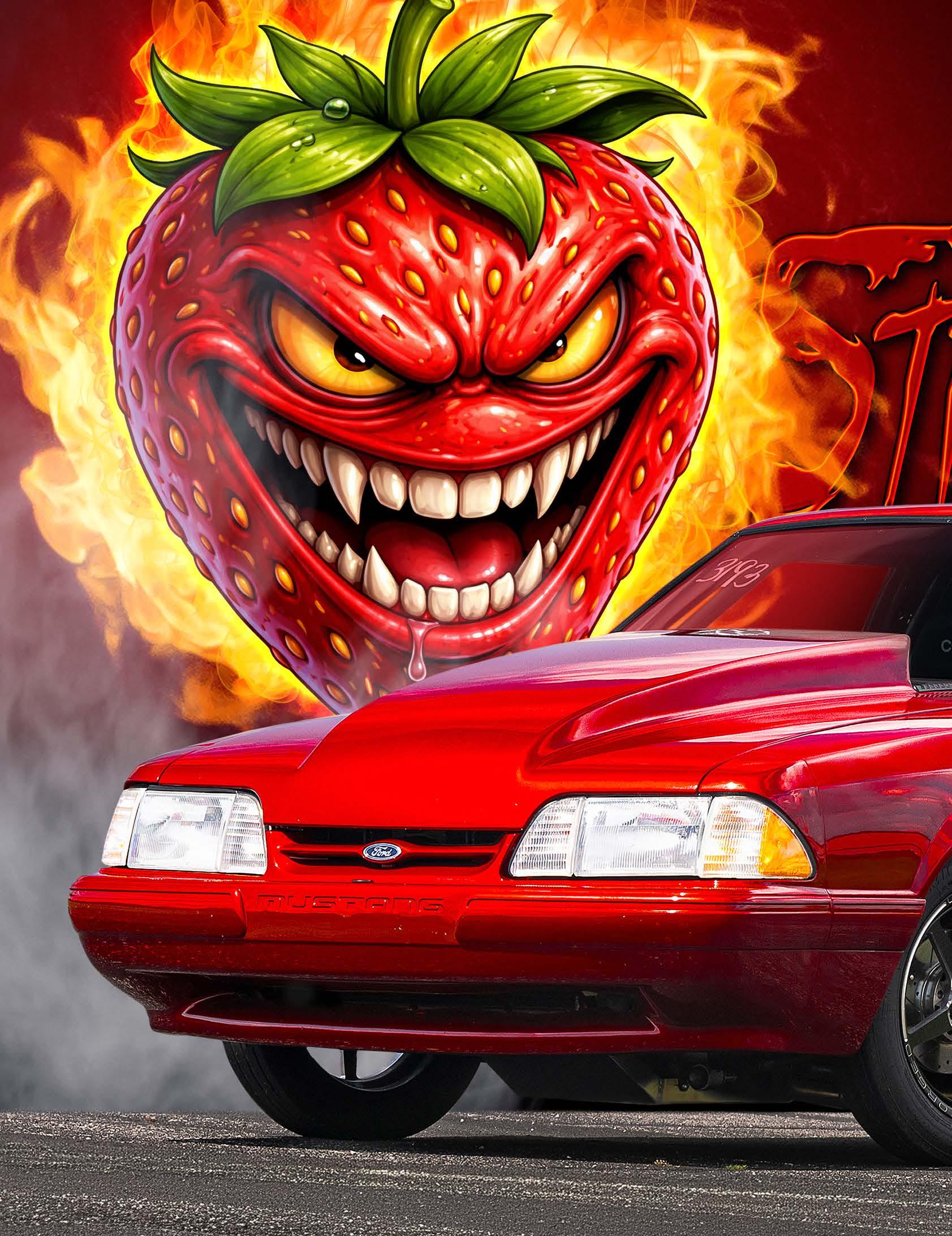
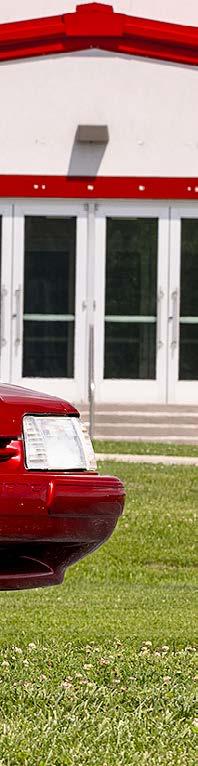
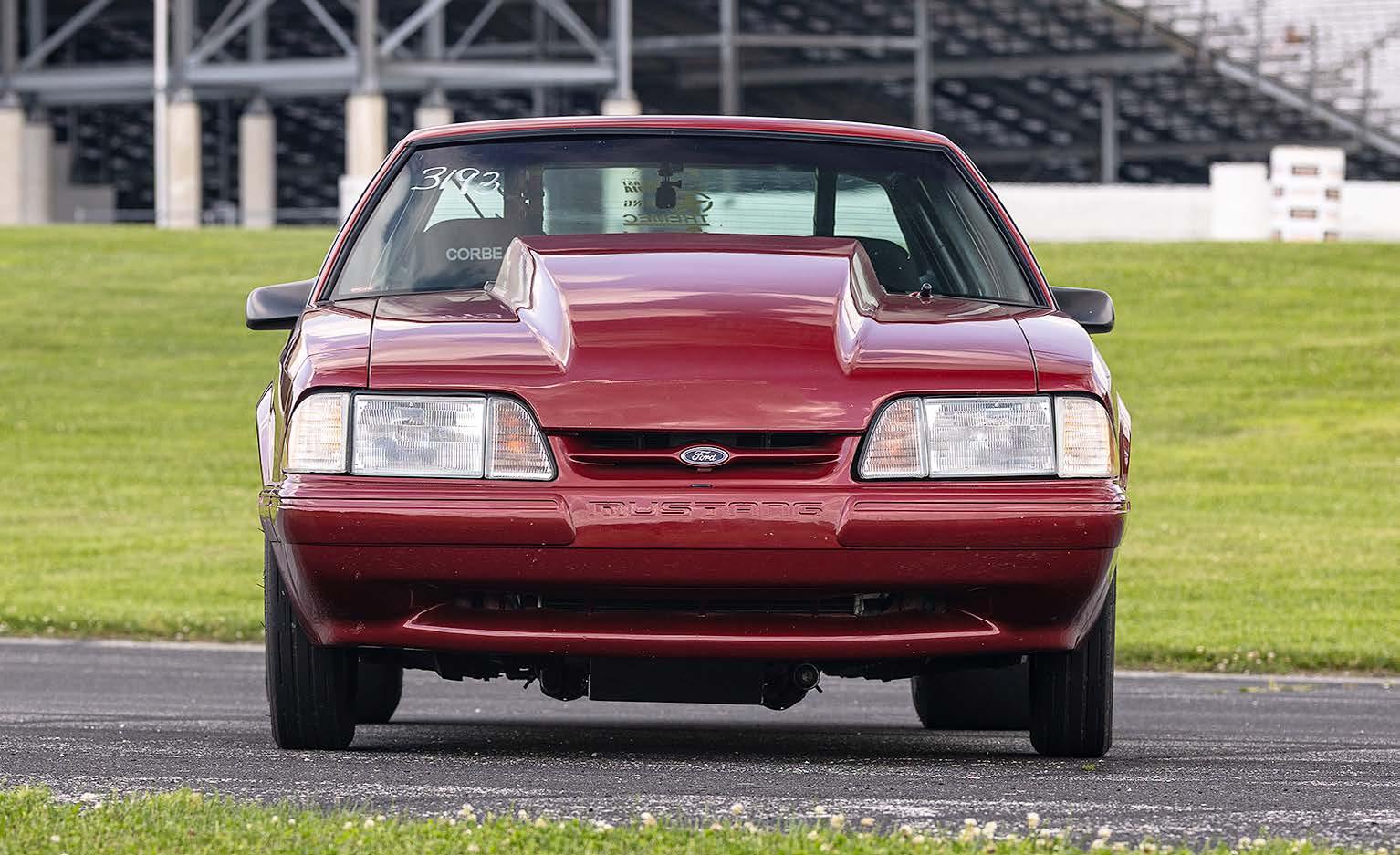
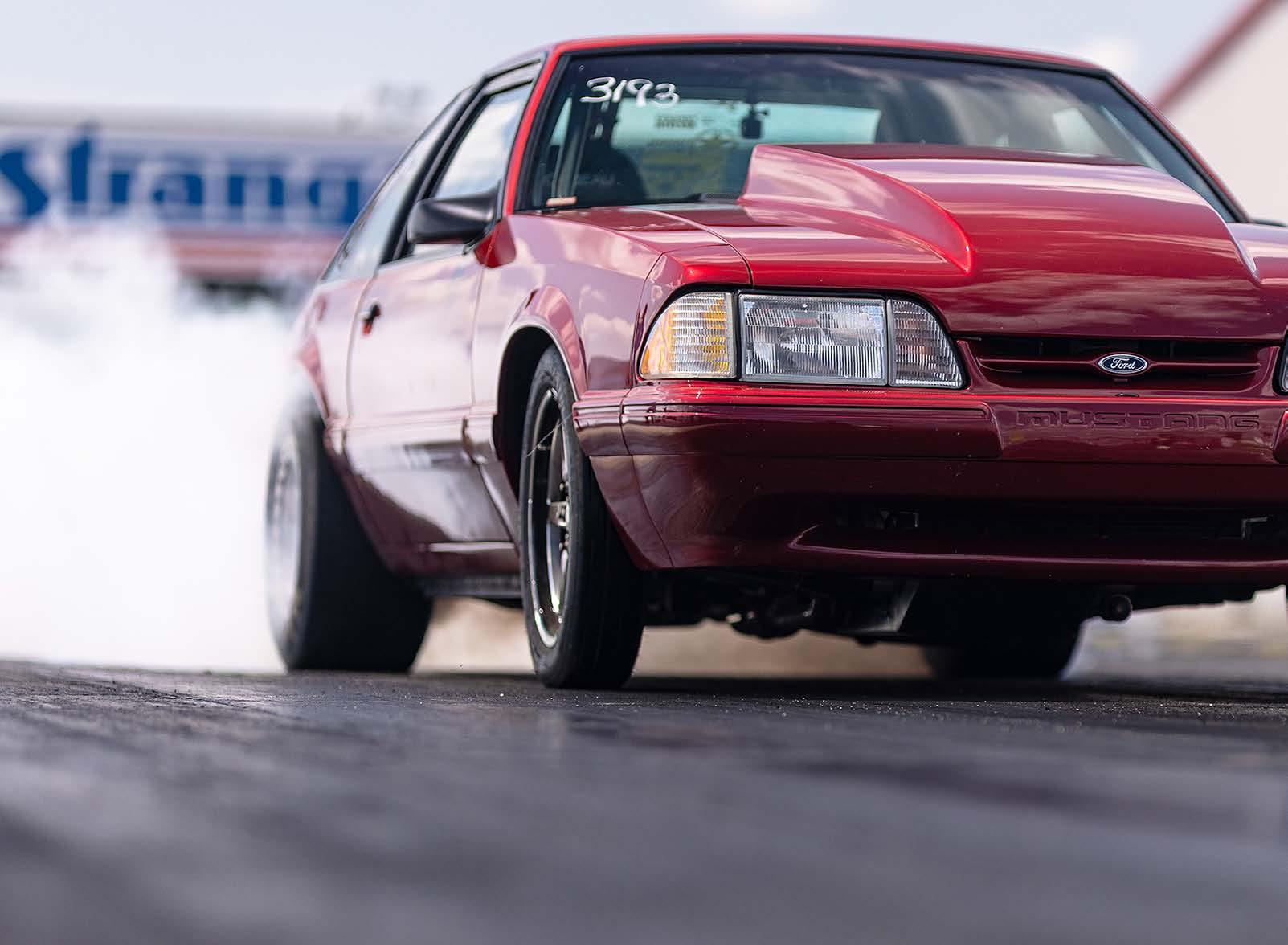
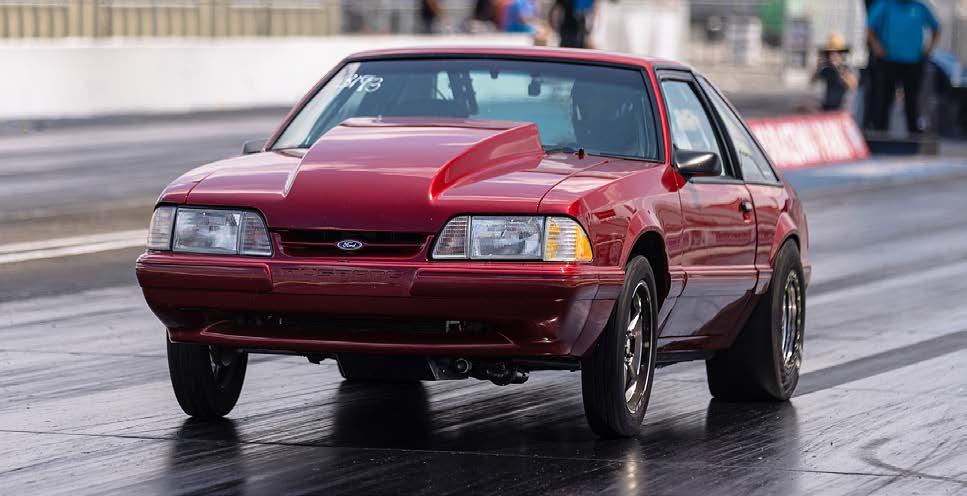
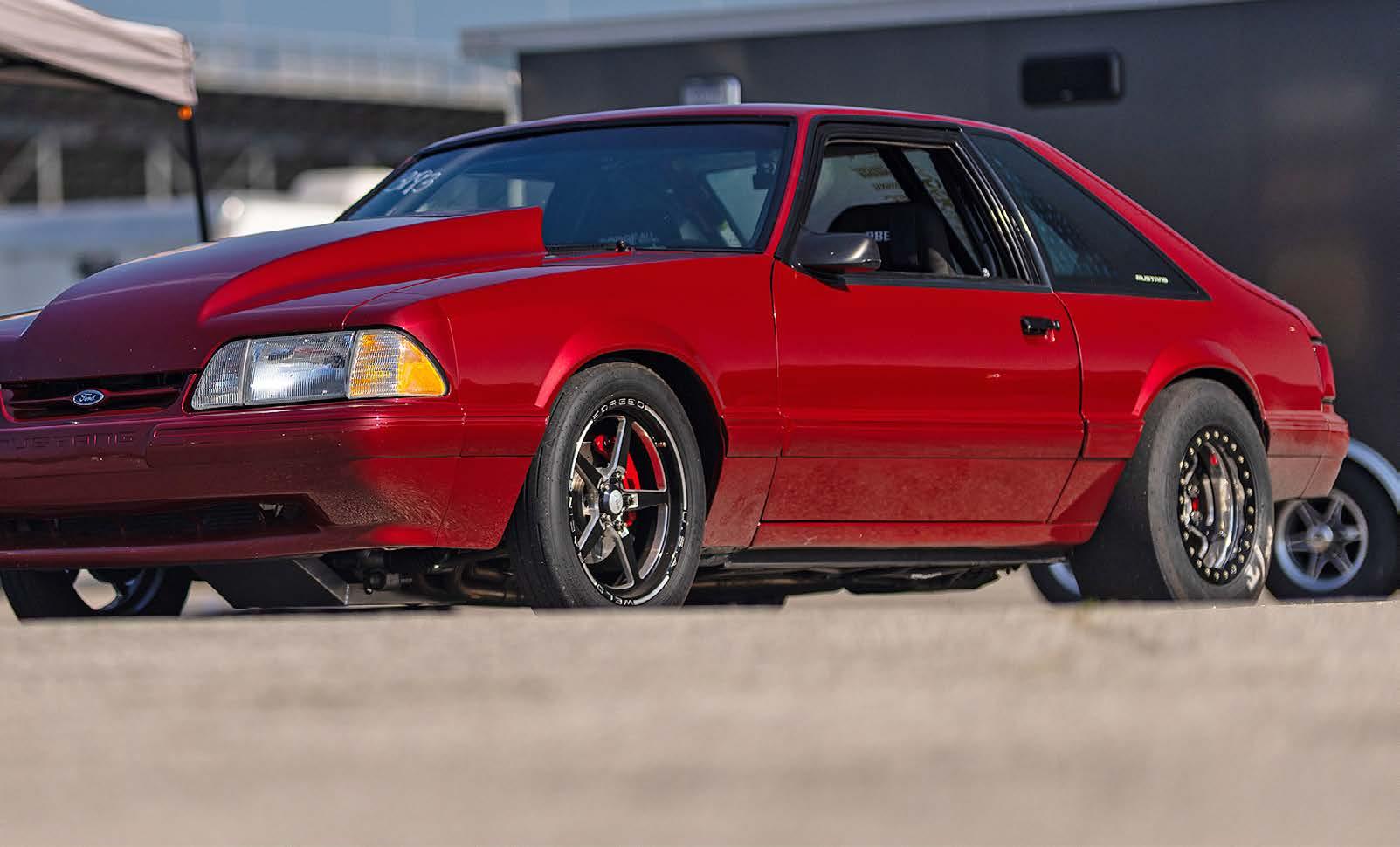
If you’re a car enthusiast but didn’t have a car-or at least a cool one-in high school, then chances are you knew people who did. It was the latter for Skyler Hardy, whose classmate cruised the school parking lot with his 1993 Mustang GT. It inspired Hardy to search for his own ponycar, and eventually he found it.
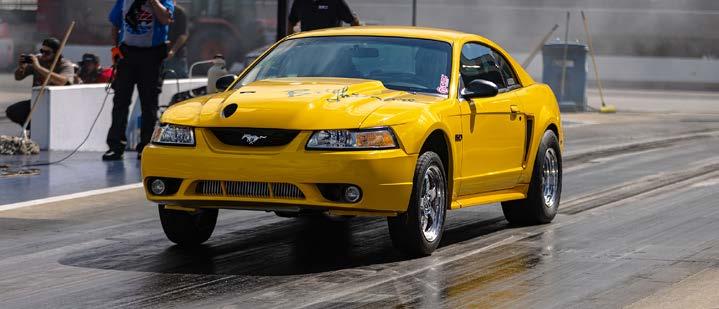
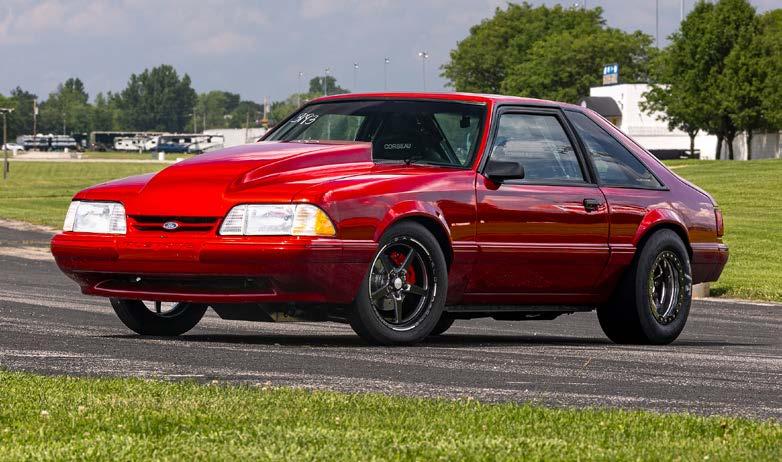
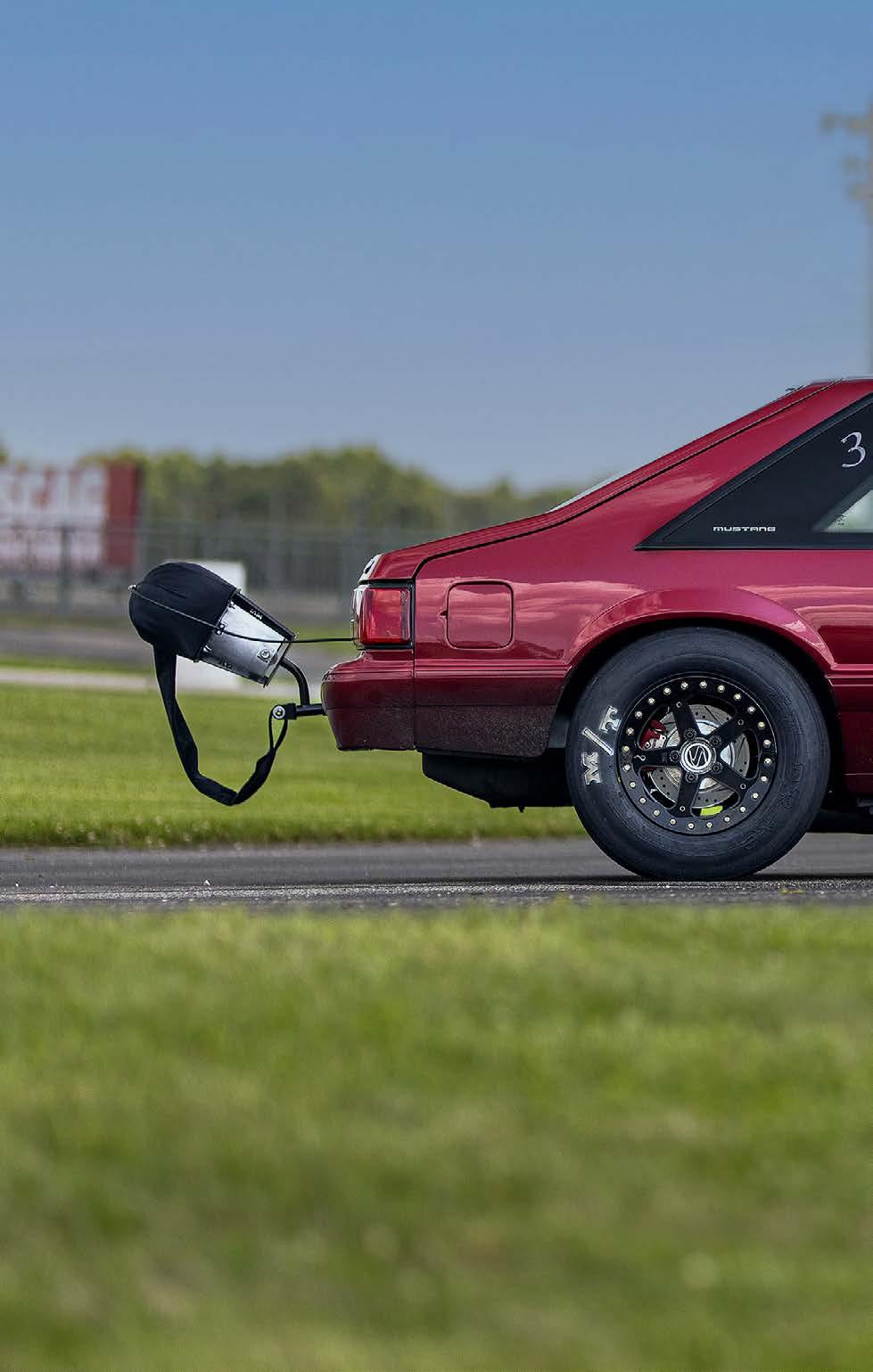
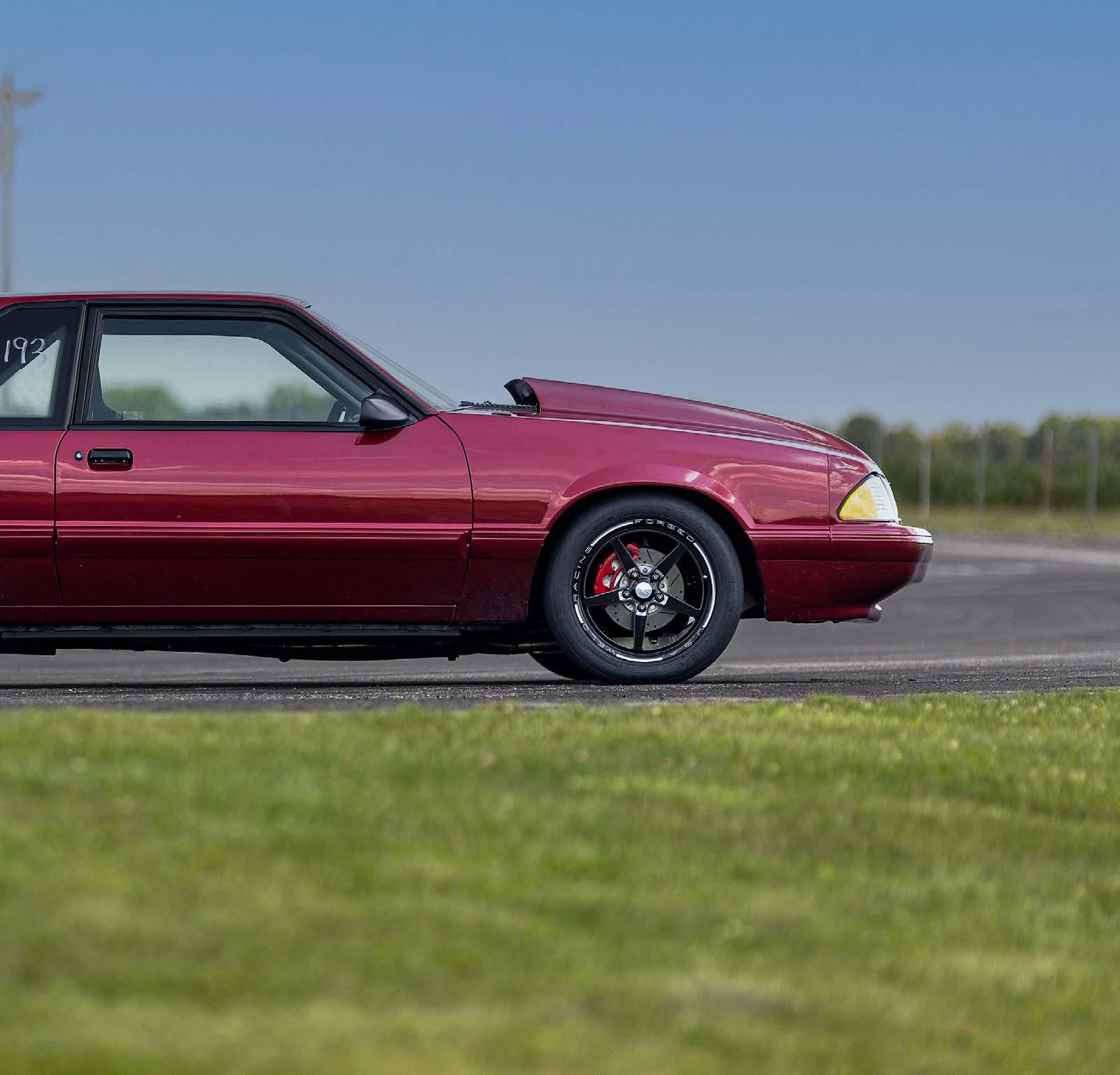
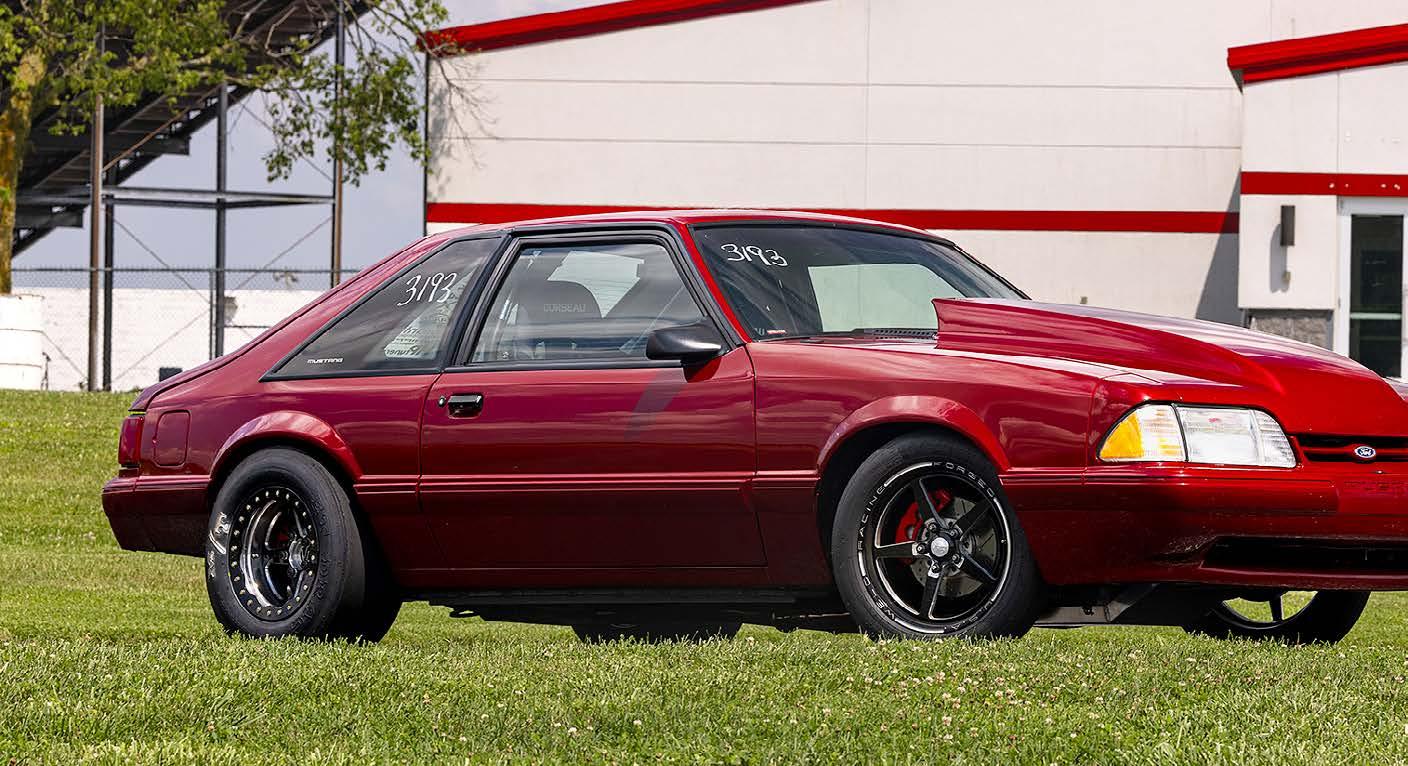
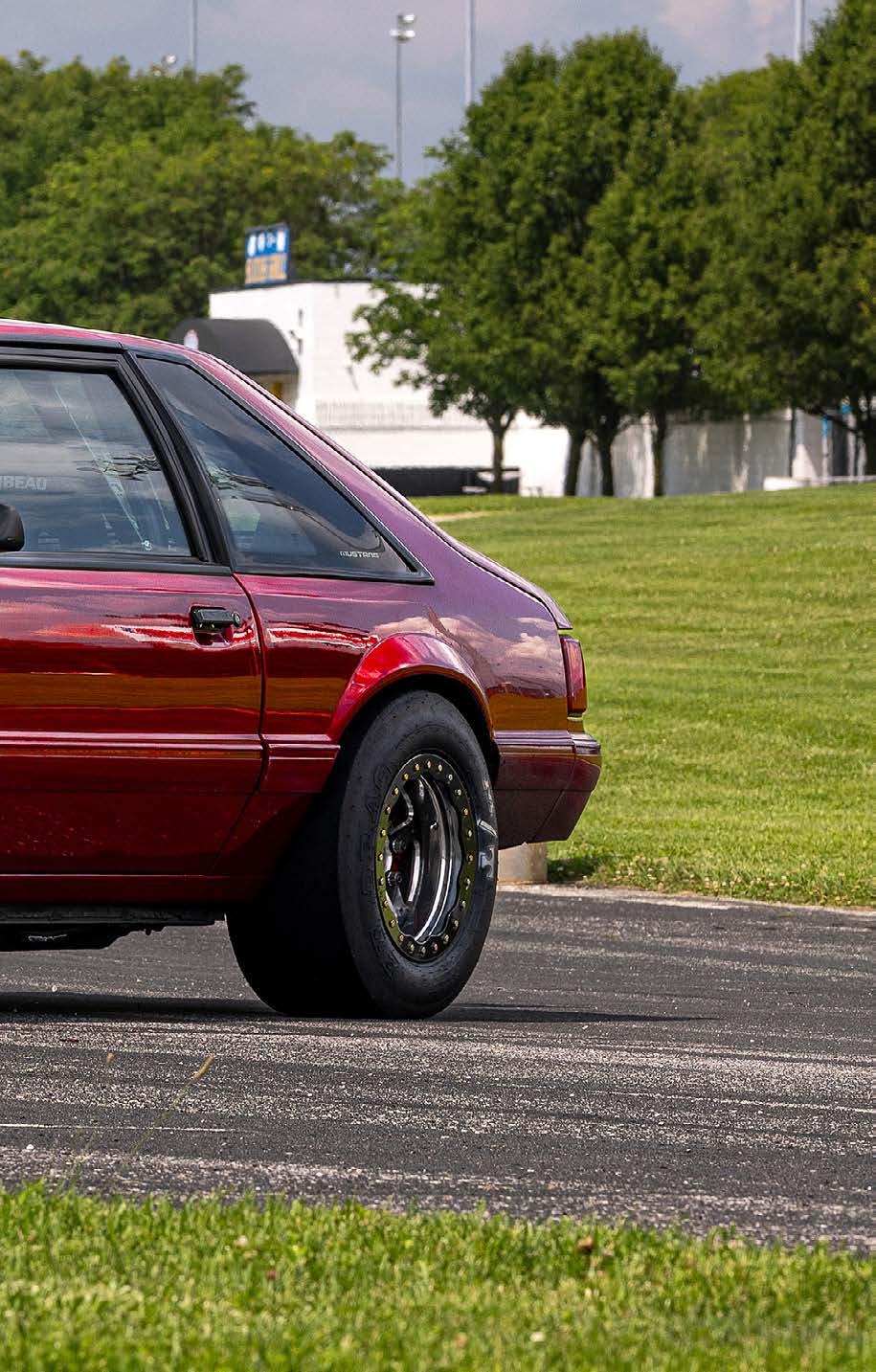
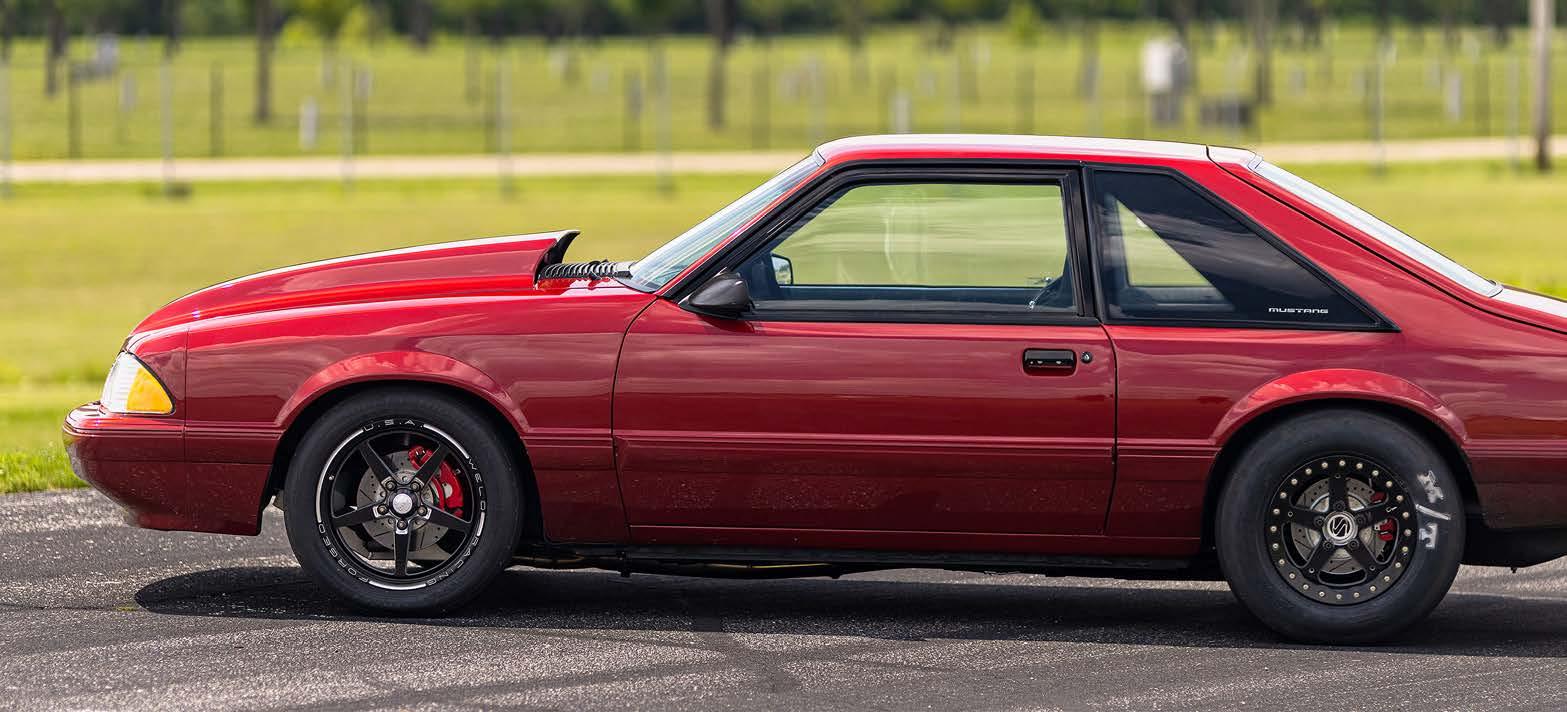
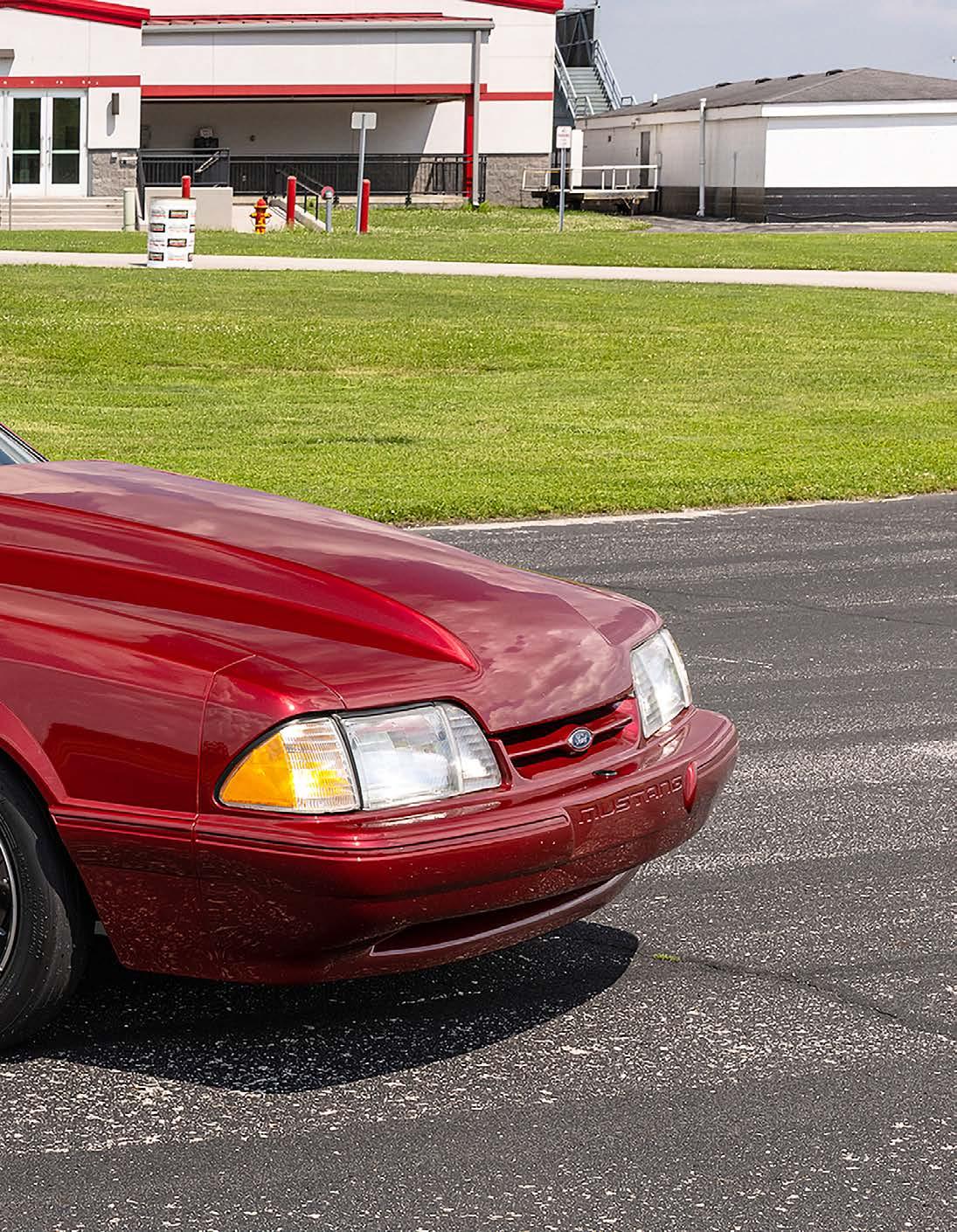
“I was immediately hooked on that car,” said Avon, Indiana’s Skyler Hardy. “As the years went on, I was always looking for one until I stumbled upon a good deal in the local ads-I finally found one for sale that I could afford.” As Hardy put it, the Mustang wasn’t the best one out there, but it was decent and fit within the limits of his budget. The 1992 Fox Body had logged 175,000 miles on the odometer, and Hardy would pile on many more as the Mustang served daily driver duties, but it was a 1992 LX hatchback with the 5.0-liter V-8 engine, five-speed transmission and the now very sought-after Wild Strawberry
Story: Steve Baur
Photos: Wes Taylor
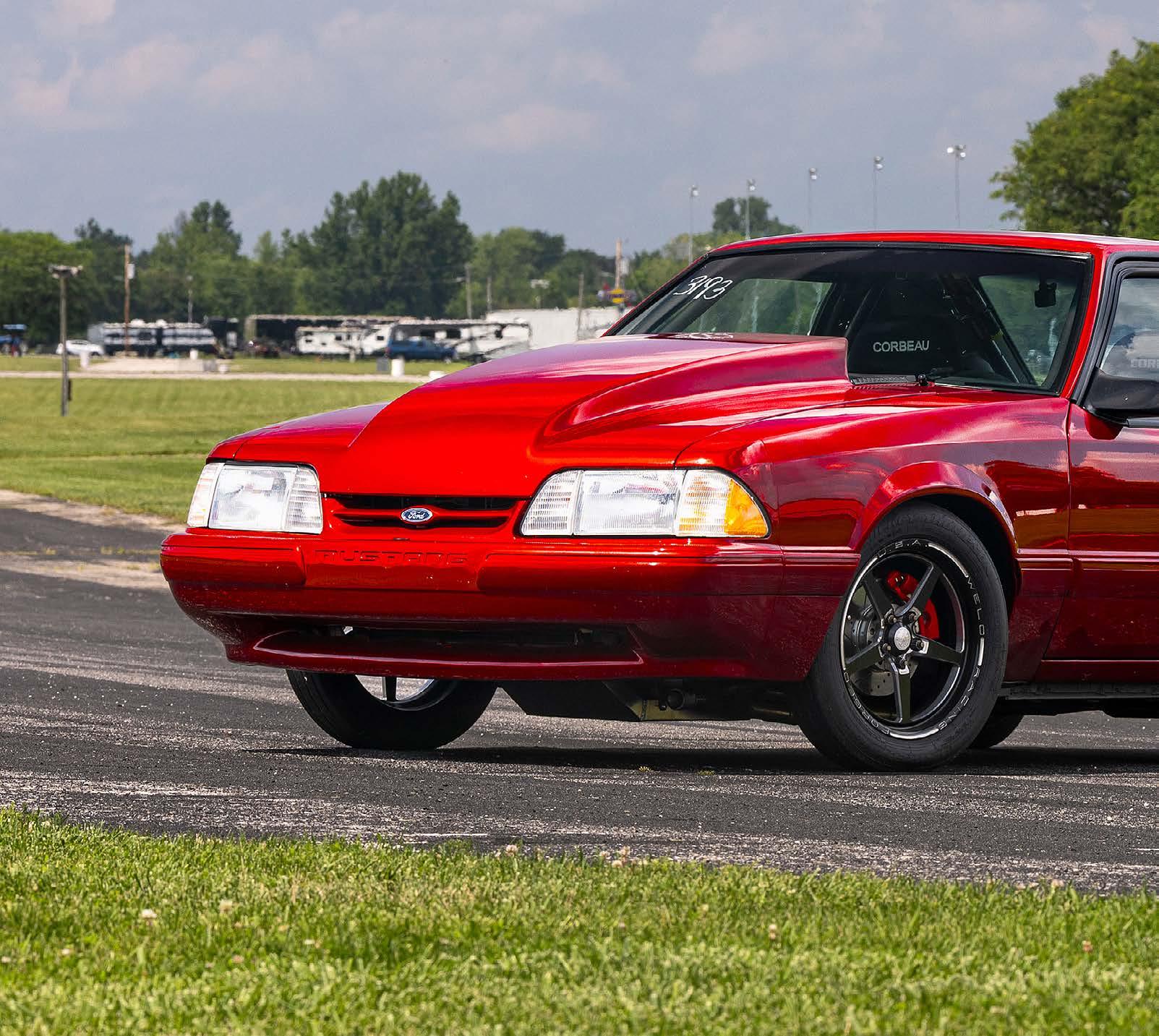
Over the years, Hardy’s Mustang received upgrade after upgrade. A fresh repaint of Wild Strawberry by Jeremy Ross along with a Kaenen 4-inch fiberglass hood revitalized the Mustang’s exterior. In 2015, Hardy
swapped 5.0-liter engines, going from the venerable pushrod motor to a dual-overhead-cam Coyote 5.0. He added nitrous oxide to it at first, and then later supercharged the V-8 for the ultimate in power output.
Competitors beware, this isn’t your ordinary wild strawberry...this one’s got teeth!
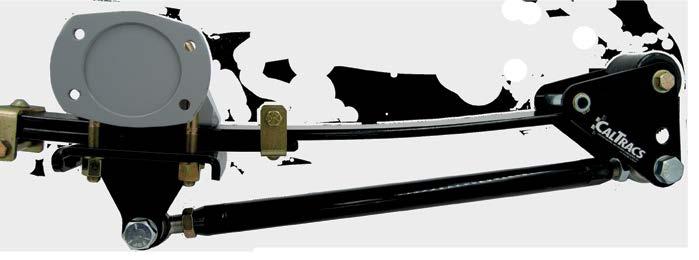
The Original Patented CalTracs Traction System
Complete bolt on system: no mods, cutting, welding, most applications
Keeps axle from rotating, maintains pinion angle
Eliminates spring wrap up
Pre-load adjustability
Durable powder coated finish
Detailed Illustrated Installation Guide
Custom sets available, call
CalTracs, Calvert Mono Leafsprings, Calvert Sliders and Lowering Blocks
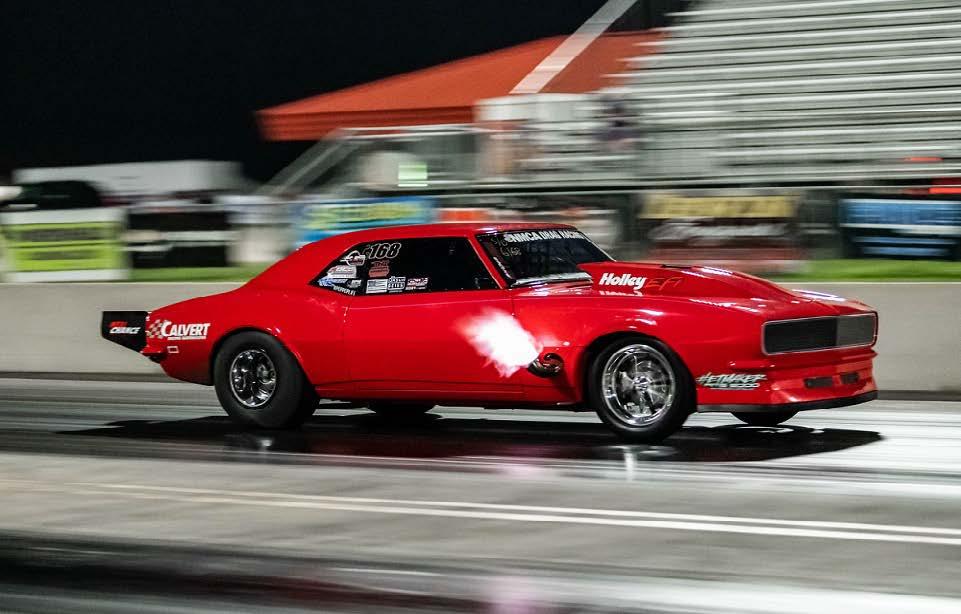
RON RHODES
1968 Chevrolet Camaro
A Legend in Their Own Time
Turn your LS into a legend in its own time with Trick Flow GenX® 280 HIP cylinder heads. These ultra-performance HIP’d (Hot Isostatic Pressed) castings are significantly stronger than regular heads and include many other outstanding features such as:
New heads are just one part of the Serious Horsepower formula. To complete it, you’ll need some more components.
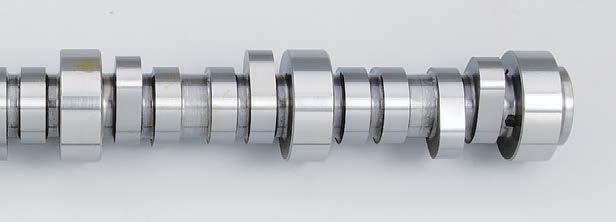
Track Max® Camshafts
• Dyno proven to significantly increase power
• Made from premium billet steel blanks
• Available in several hydraulic roller designs up to 230°/238° duration and .625"/.625" of lift
Scan
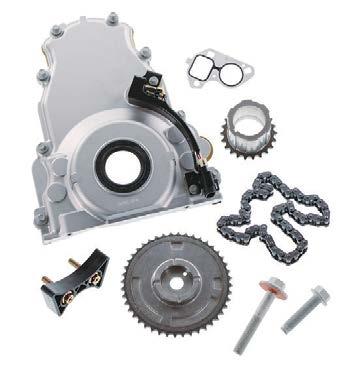
Variable Valve Timing Delete Kits
• Removes VVT so your engine makes big power with aftermarket parts
• Available with 1- and 3-bolt cam gears
• Includes cam/crank timing gears; timing chain and damper; LS2/LS3 timing cover with bolts, seal, and gasket; cam sensor, harness, and bracket; water pump gaskets; and cam, cam sensor, and balancer bolts
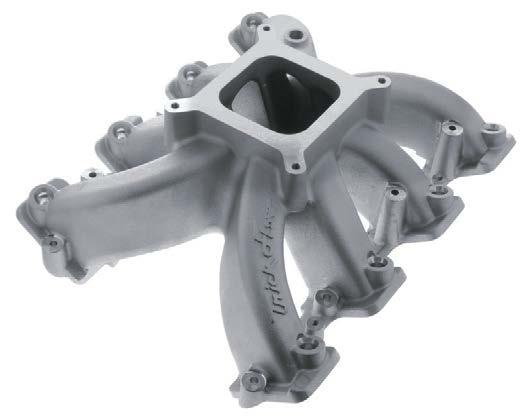
R-Series Intake Manifolds for GM LS3
• Bring carbureted-style aspiration to LS3-style engines
• 3,500-7,500-plus RPM range
• Available in carbureted and carb-style EFI versions
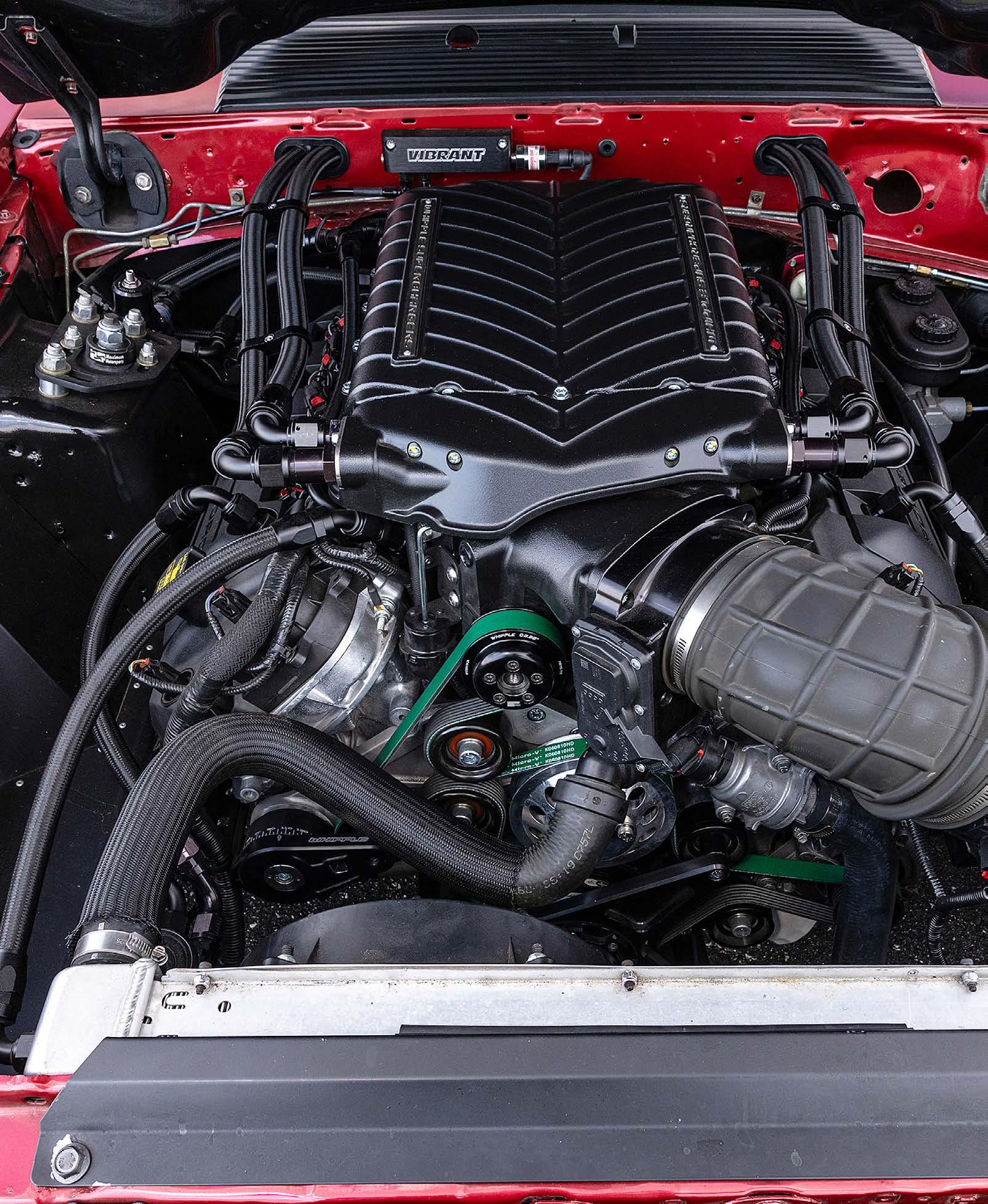
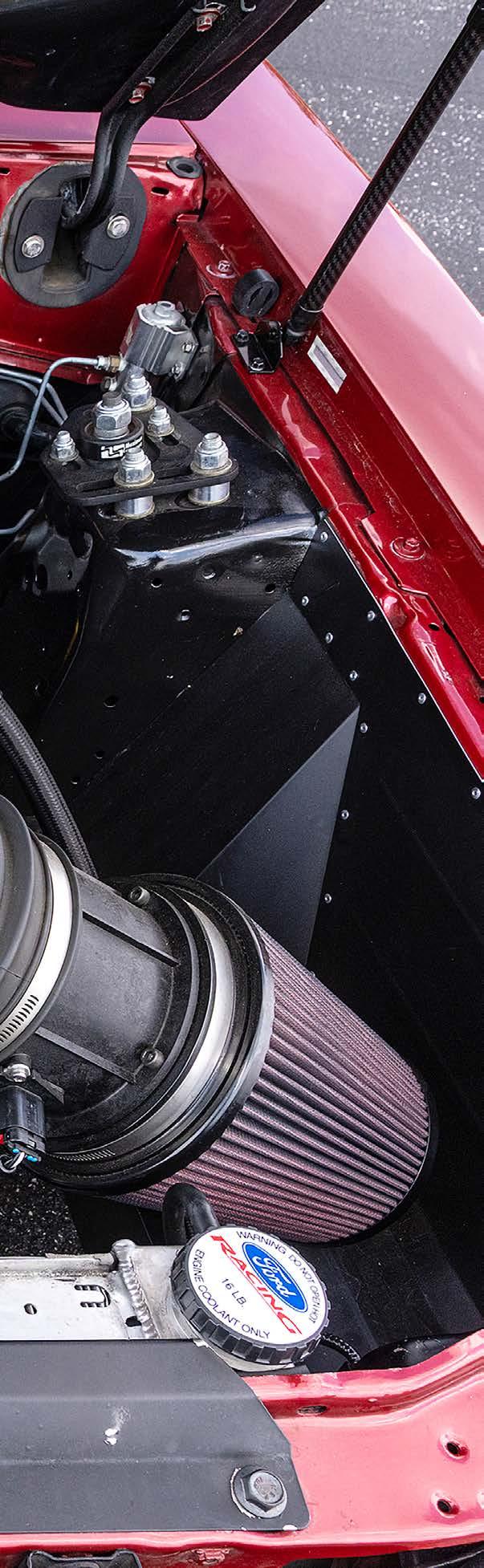
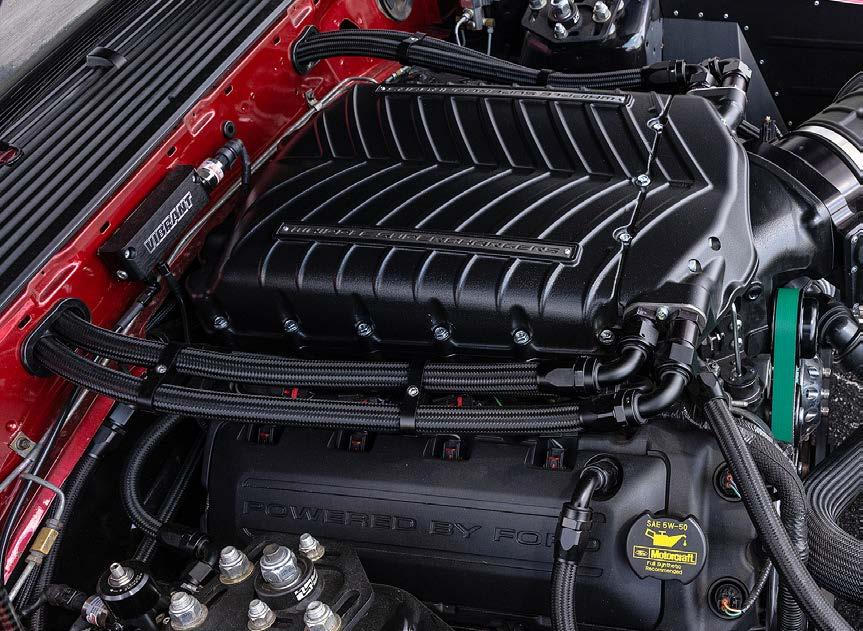
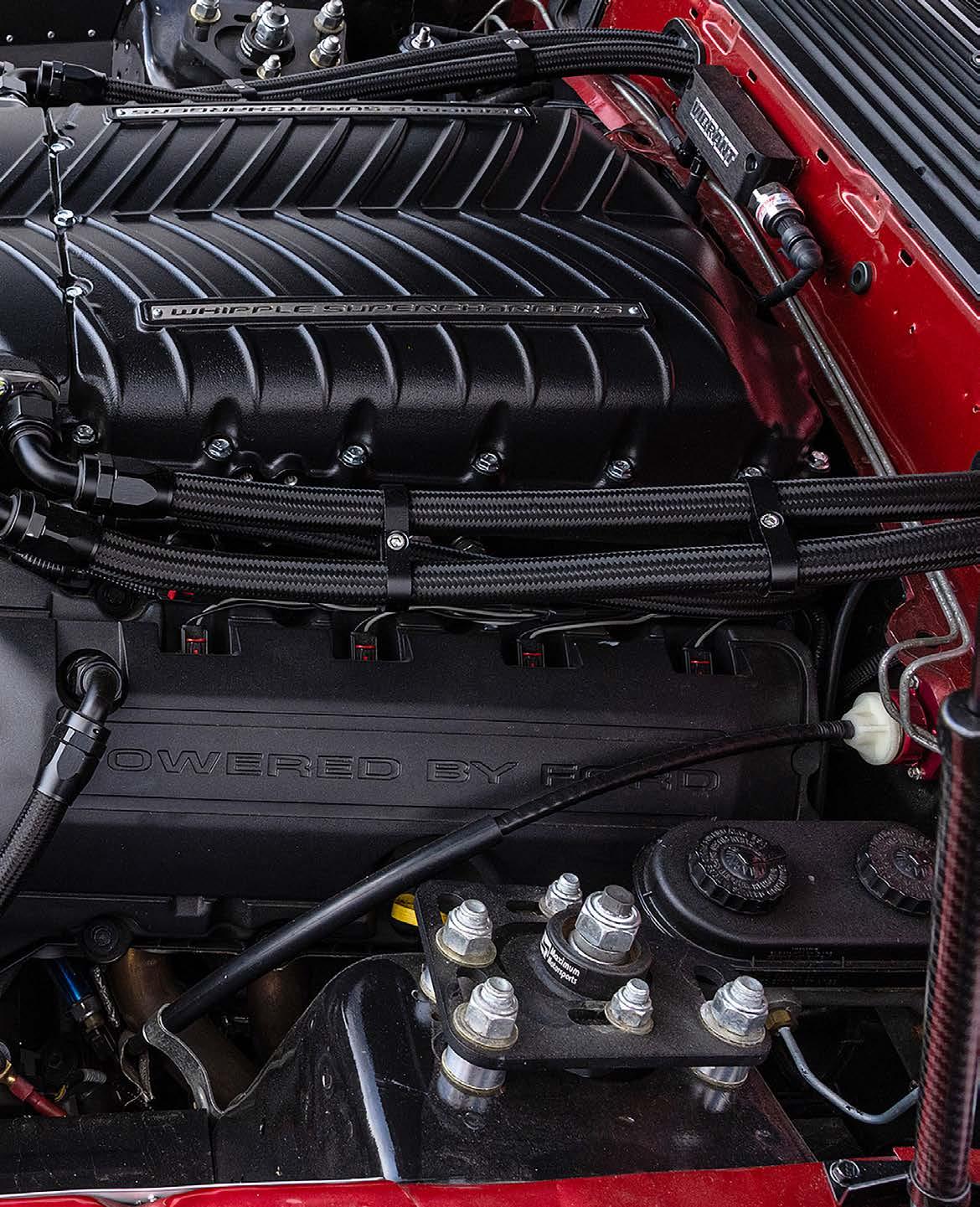
Boost is produced by a Whipple Superchargers Gen 5 3.0-liter blower and its air-to-water charge cooler works with a trunk-mounted reservoir to provide ample amounts of cooling water. Complimenting the copious amounts of atmosphere is a fuel system cable of delivering an appropriate amount of fuel. A pair of Aeromotive fuel pumps mounted in a Fore Innovations fuel hat fill Vibrant Performance fuel lines, a Fuelab filter, a Fore regulator, and an octet of ID 1700X fuel injectors provide the required bursts of atomized fuel.
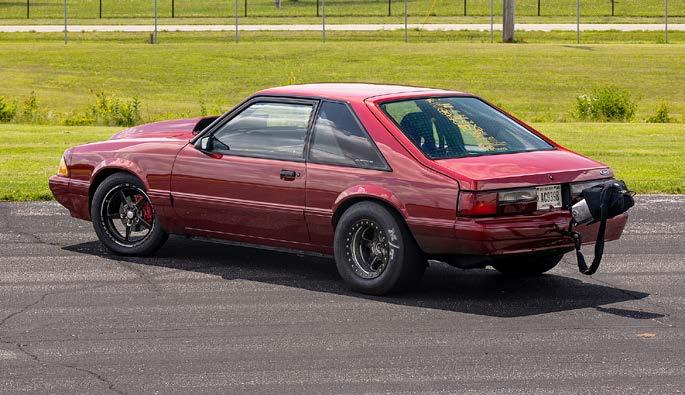
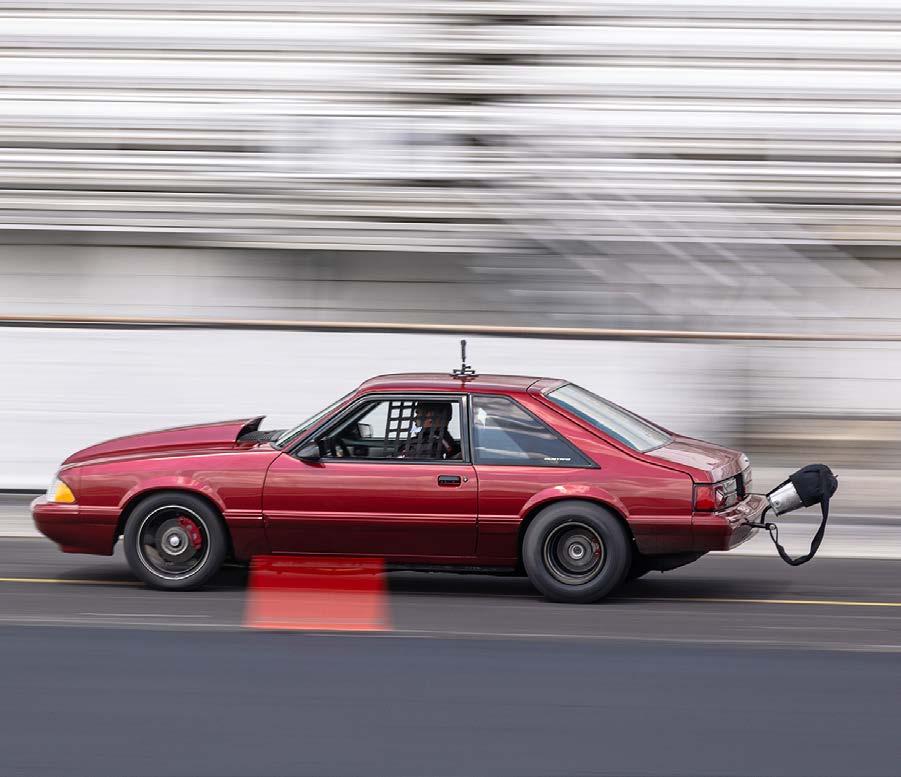
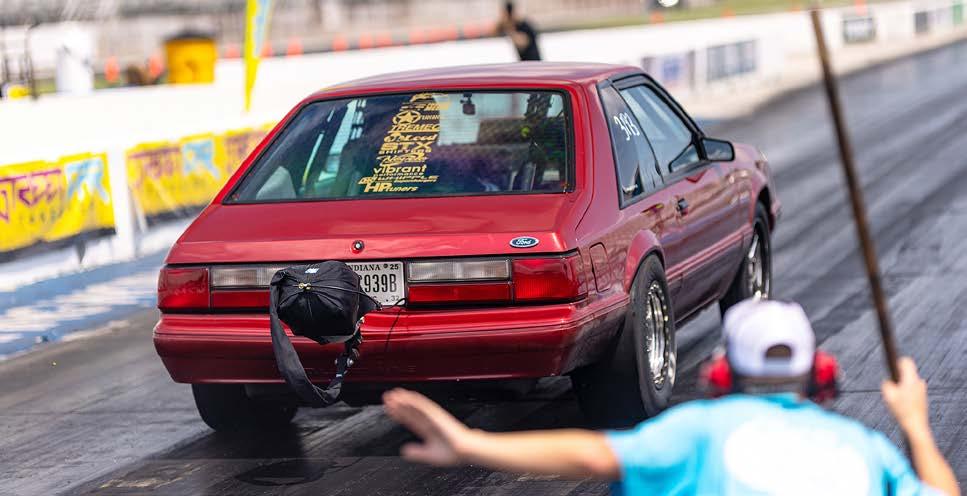
Multiple chassis and suspension upgrades not only create the Stang’s wicked stance, but also provide the required hook and transfer to enable bottom 9-second 1/4 mile ETs. As you see here, this Wild Strawberry Horse is no stranger to the dragstrip.
Fit,FinishAnd A Stock Look...
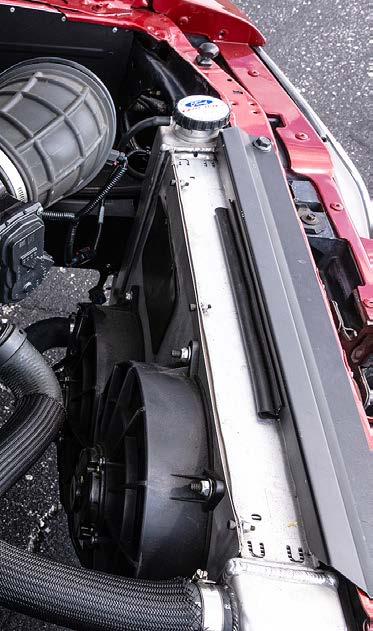
This is what Hardy was after when he swapped out the original pushrod H.O. 5.0 liter with the blown overhead cam Coyote mill.
Skyler Hardy’s Street/Strip Blown 5.0 Liter 1992 Ford Mustang
Body & Paint:
Original body, repainted in 2013 by Jeremy Ross in the OEM color Wild Strawberry. Kaenen 4in cowl hood.
Chassis & Suspension/Modifications:
Norman Boutant custom 8.50 cage, Merillat Racing torque boxes, Racecraft rear control arms, TeamZ factory location springs, Viking Crusader shocks. Custom front K-Member, Viking Crusader struts, Racecraft coilover springs, SN95 spindles, Steeda Bumpsteer kit, Maximum Motorsports caster camber plates, MAF racing tubular front bumper, rear bumper w/chute mount.
Engine:
Coyote Gen3 block.
Rotating Assembly:
Stock Gen3 crank, Manley H-Beam rods, Ross pistons.
Cylinder Heads:
Gen2 heads, PAC 1234x springs, GT500 head gaskets.
Induction & Fuel Delivery:
ID 1700x injectors, Fore Innovations fuel hat and regulator, TI Automotive twin pumps, Vibrant Performance -10 feed, -8 return lines, Fuelab filter.
Electronics:
Ford Performance Control Pack, HP Tuners MPVI 3 and ProLink cable, MSD 2-Step.
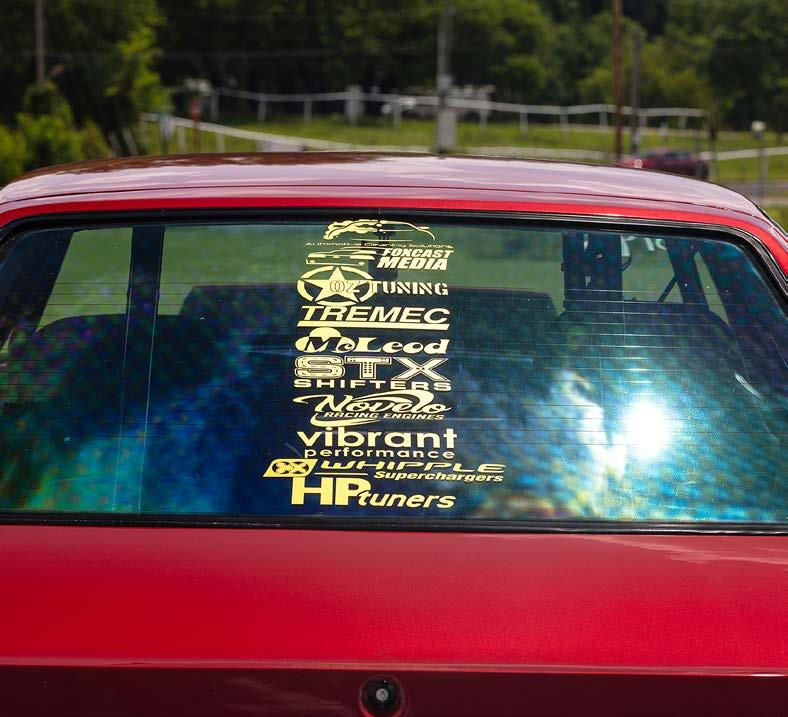
All of my sponsors, Automotive Cleaning Solutions, Foxcast Media, OzTuning, TREMEC Transmissions, McLeod Clutches, Silver Sport Transmissions, Novelo Racing Engines, Vibrant Performance, Whipple Superchargers and HP Tuners.
FPMMetals.com Sales@FPMMetals.com 402.729.2264
Upgrade Your Ride to the Pinnacle of Elegance with Our Engine Turned Material.
FPM Metals
Offered in Aluminum or Stainless Swirl Sizes from 1/2” to 2” Dia.
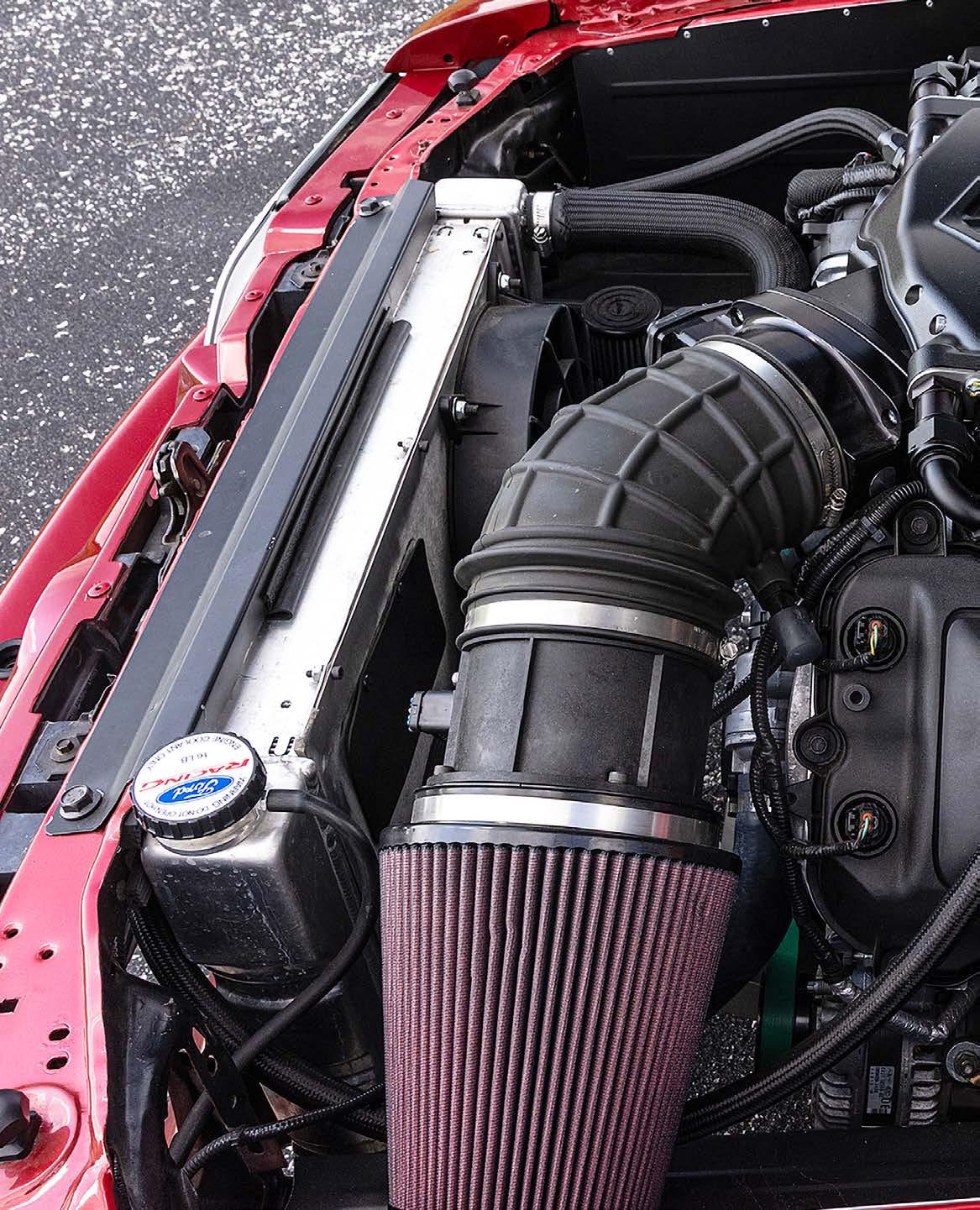
The engine is a Novelo Racing Engines Gen 3 Coyote with stock crankshaft, H-beam connecting rods, and Ross Racing pistons. Gen 2 cylinder heads were used and boost is produced by a Whipple Superchargers Gen 5 3.0-liter blower with airto-water charge cooler.
Additionally, an MSD two-step rev limiter functions in conjunction with a Ford Performance control pack, while the included factory ECM has been modified using HP Tuners VCM Suite and the company’s MPVI3 interface.
A technical writer by trade, Hardy found banging gears in his Mustang to be a fun endeavor like many of us have. As his car’s performance has progressed, so has his prowess with the manual transmission and his need to fortify the drivetrain behind ever-increasing amounts of horsepower and torque.
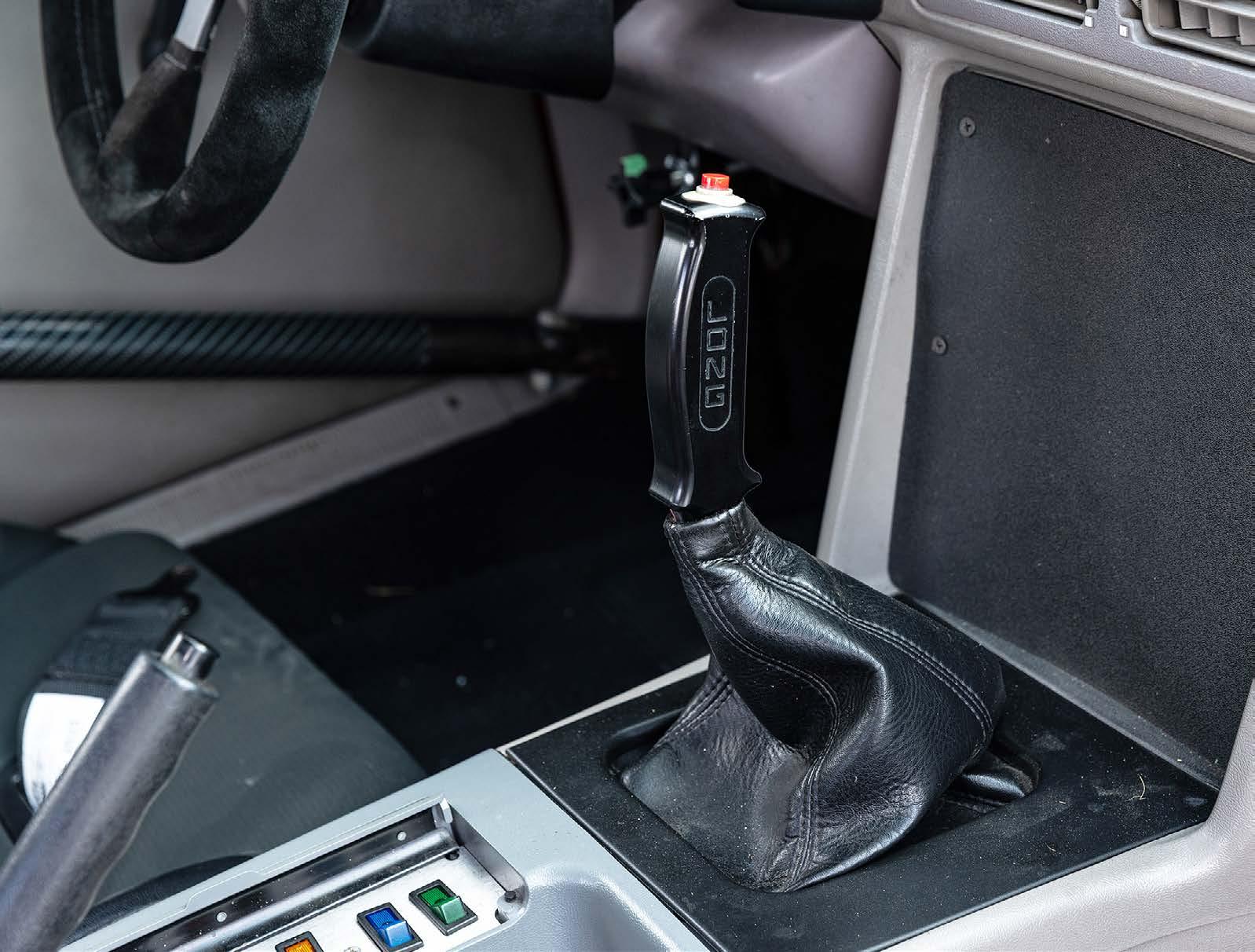
To that end, Hardy swapped his T-5 fivespeed for a TREMEC T56 Magnum six-speed and complemented it with a McLeod RXT 1200 twin-disc clutch, a billet steel flywheel, and a Silver Sport STX shifter.
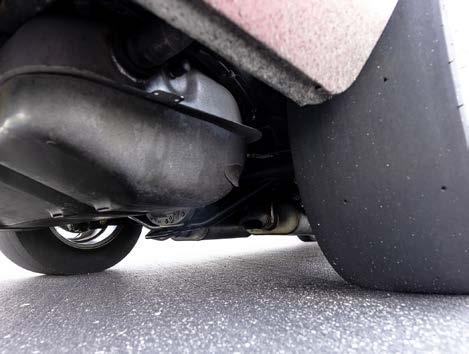
Twisting rearward, we find an 8.8 rearend with welded axle tubes for added strength. Inside is a Ford Performance 3.73 gearset mounted to a spool, and 5/8-inch
wheel studs at the end of the axles ensure the wheels stay connected even on the hardest of launches.
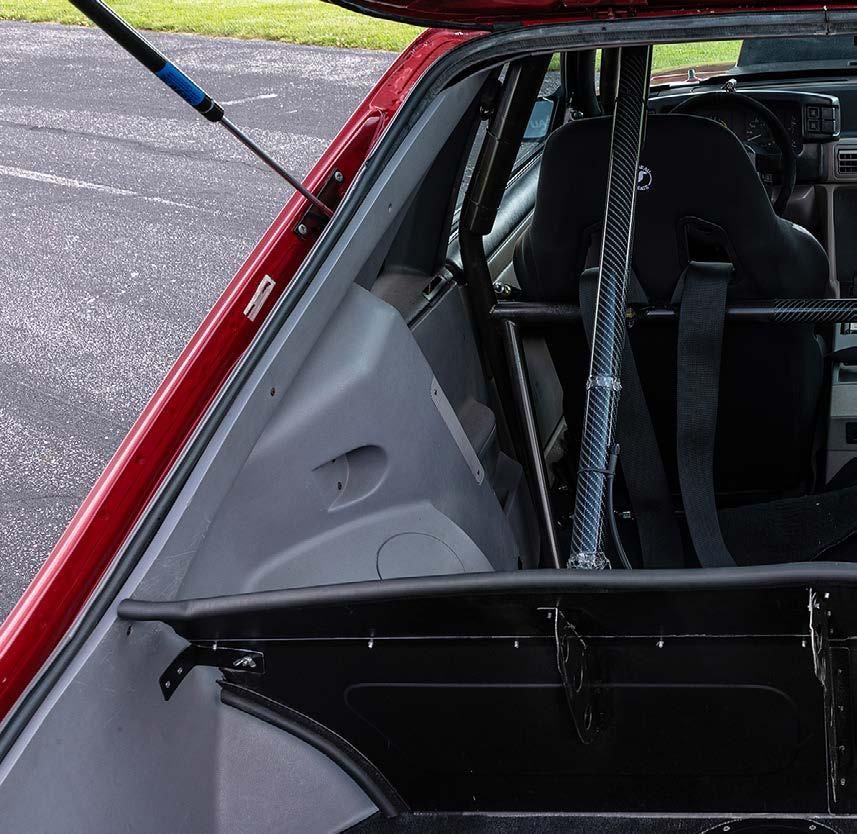
Norman Boutant fabricated the custom 8.50cert roll cage and the unibody has been fitted with Merillat Racing torque boxes, again, ensuring that dropping the clutch results in putting the power into the pavement and not into the Mustang’s original thin sheet metal.
Yes,It’sStill A Stick Car! Stick
Hardy rows the boat through a TREMEC T56 Magnum six-speed complemented by a McLeod RXT 1200 twin-disc clutch, a billet steel flywheel, and a Silver Sport STX shifter.
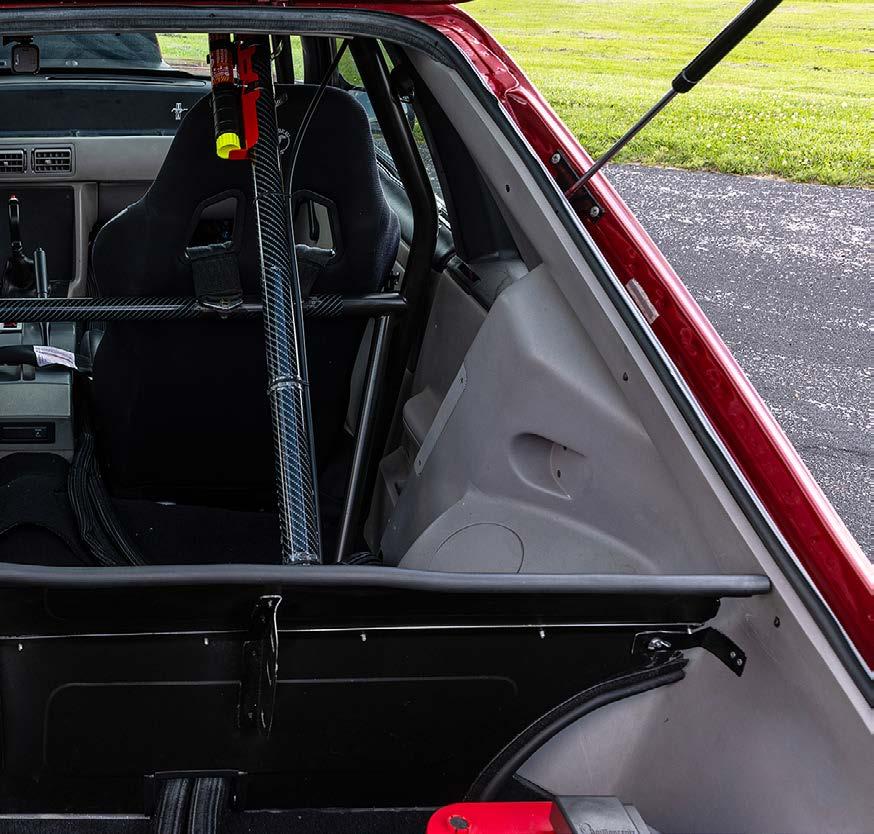
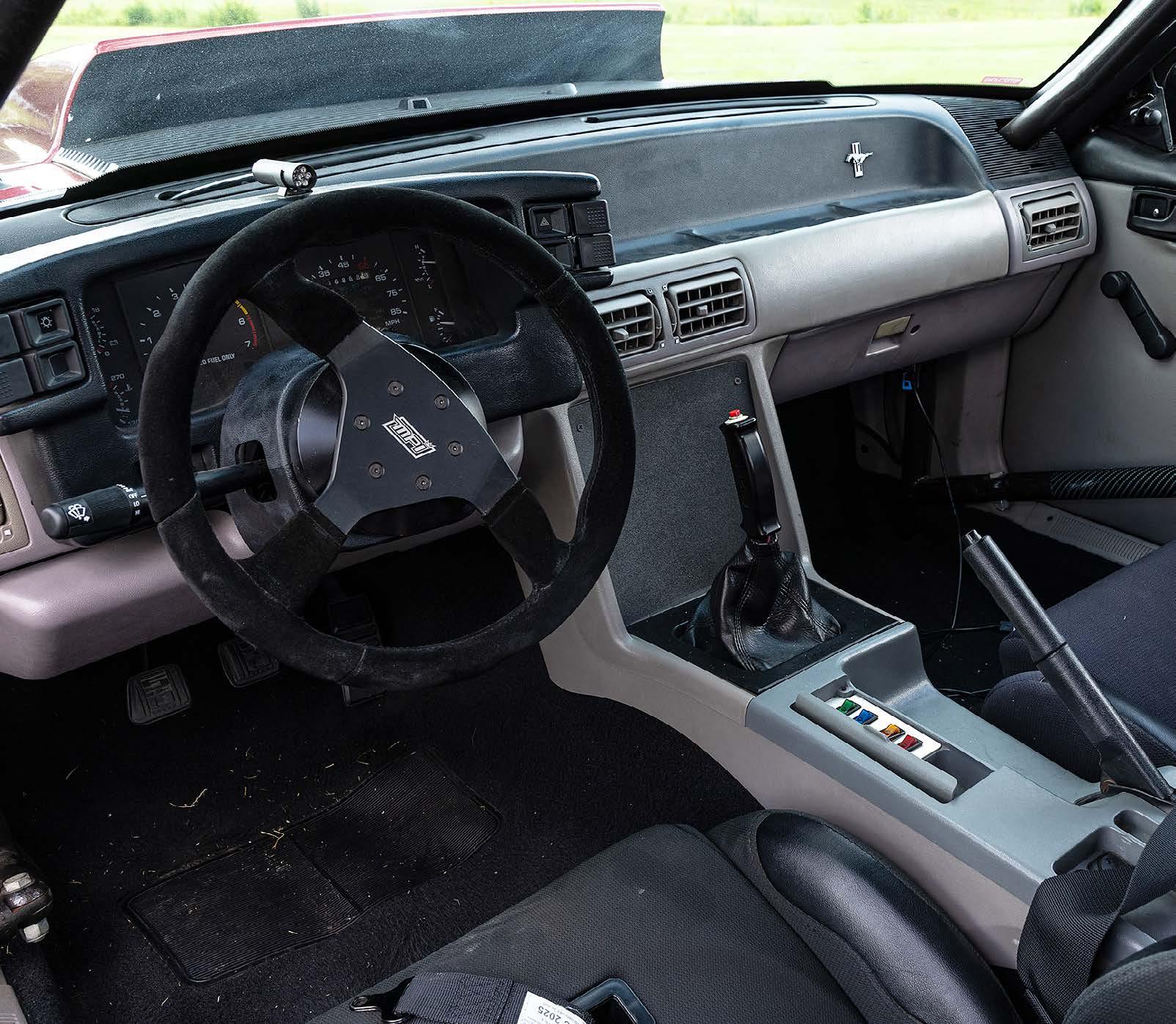
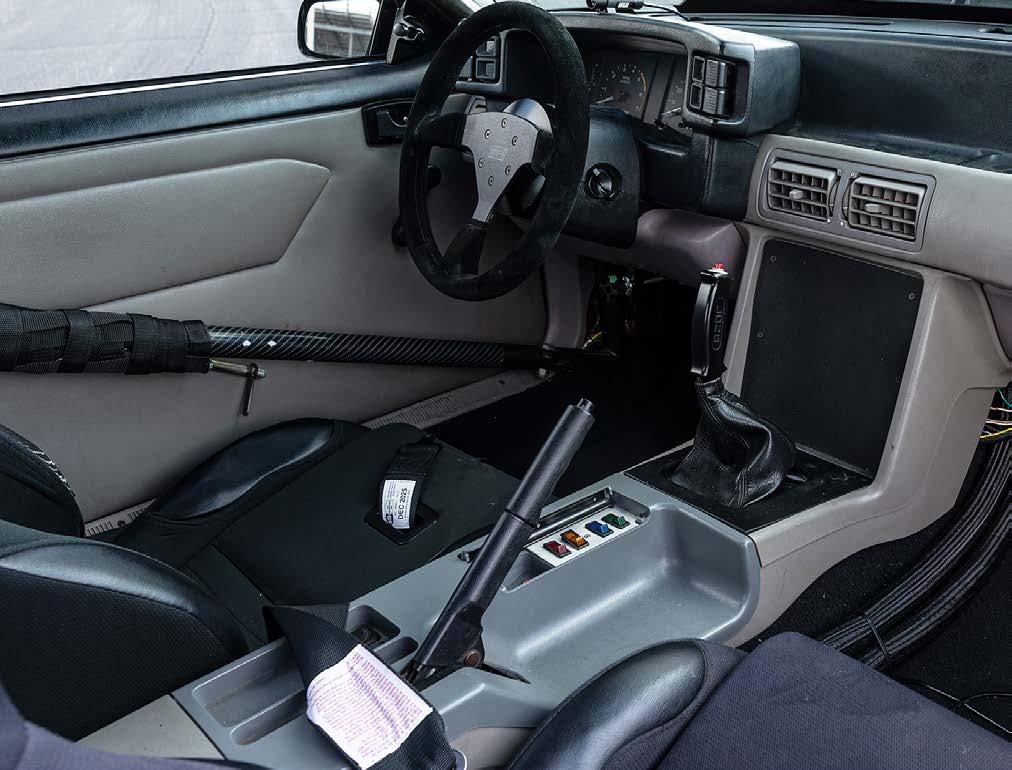
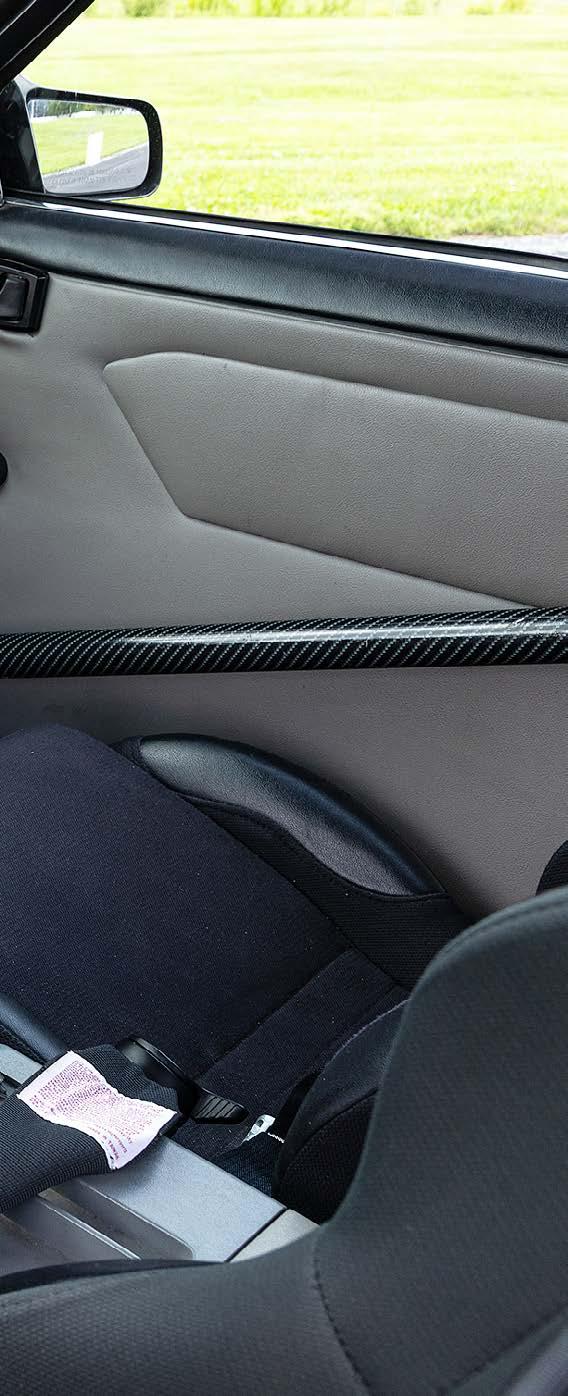
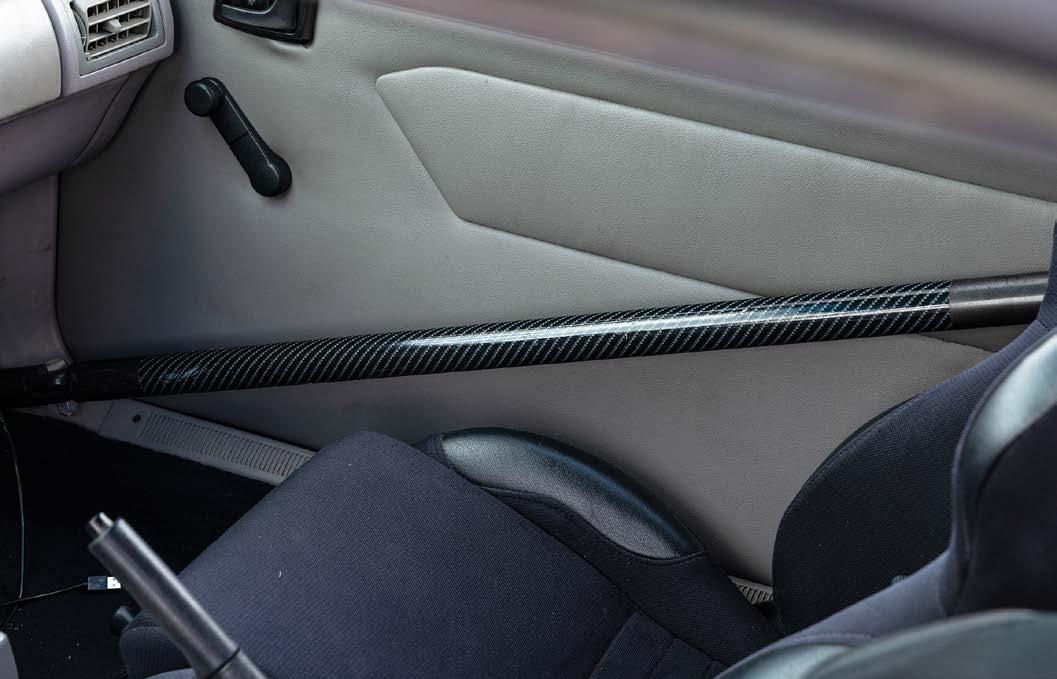
While the interior retains a number of stock trim parts, certain items have been replaced for weight savings or added for the purpose of drag racing and safety. During the build Norman Boutant was tasked with fabricating the custom 8.50-cert roll cage.
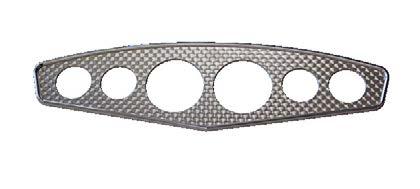
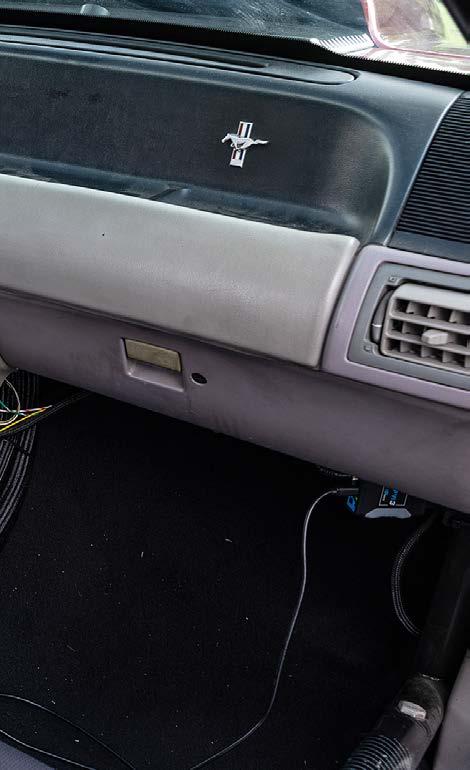
Lightweight, yet still comfy racing bucket seats support the occupants and an MPI steering wheel replaces the hefty factory airbag-equipped piece. A Motion Raceworks parachute handle allows Hardy to haul the horse down from triple-digit speeds and the complete set of factory gauges still relay vitals with a single shift light dash-mounted. A console delete plate from 417 Motorsports along with a slick “ashtray” switch panel gives the dash a clean, finished look.
The suspension out back includes Racecraft rear control arms, TeamZ factory location springs, and Viking Crusader shocks. Up front is a an aftermarket K-member, a pair of Viking Crusader struts, Racecraft coilover springs, SN95 spindles, a Steeda bumpsteer kit, and Maximum Motorsports caster camber plates. Further chassis changes also include a MAF Racing tubular front bumper support to lighten things up, and a
rear bumper cover modified with a parachute mount.
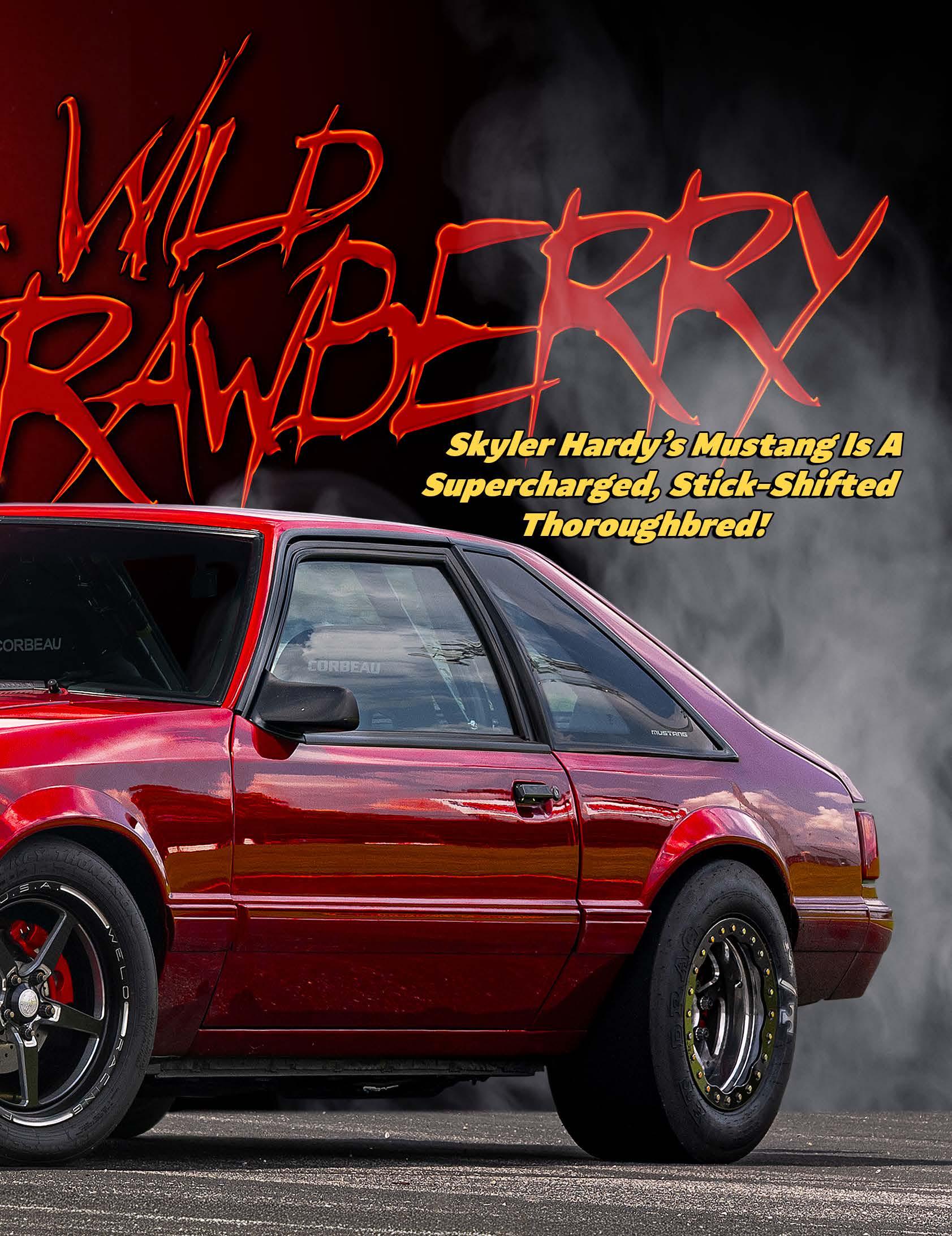
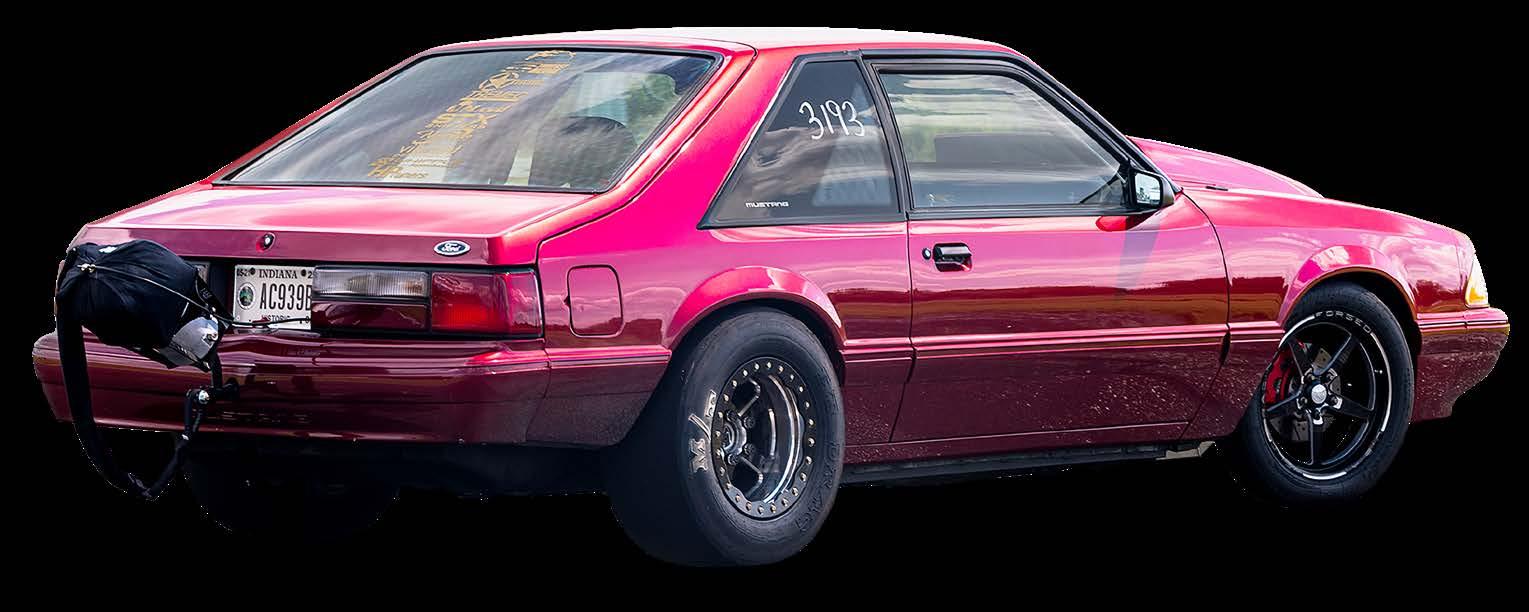
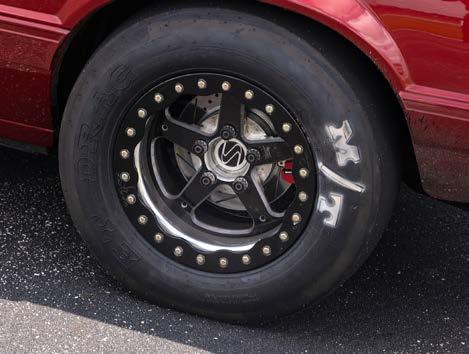
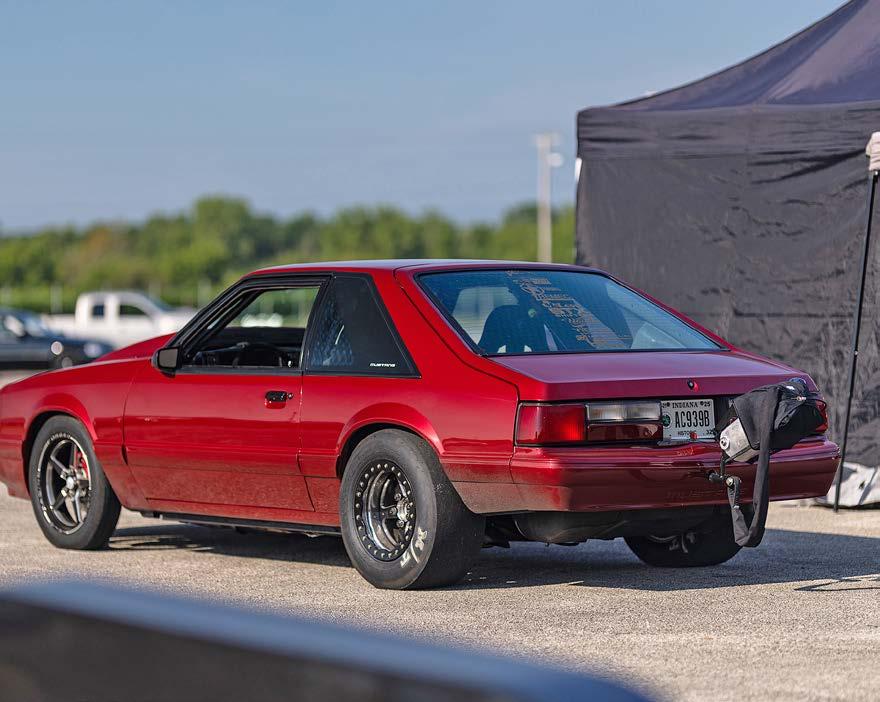
Contrasting the vibrant Wild Strawberry paint is a pair of black anodized Aluma Star wheels up front that measure 17x4.5 inches. An equally black pair of Champion Speed Series rims measuring 15x10 inches out back have been equipped with beadlocks to make sure the Mickey Thompson tires grip and don’t slip. Behind the hoops is a 1999-04 Mustang GT braking system
mounted with billet brackets.
Creature comforts on the inside have given way to a lighter curb weight and a racing focus. Corbeau A4 bucket seats support the occupants, an MPI steering wheel replaces the hefty factory airbag wheel, and a Motion Raceworks parachute handle allows Hardy to haul the horse down from tripledigit speeds. He also sourced a console delete plate from 417 Motorsports to give the dash a clean, finished look.
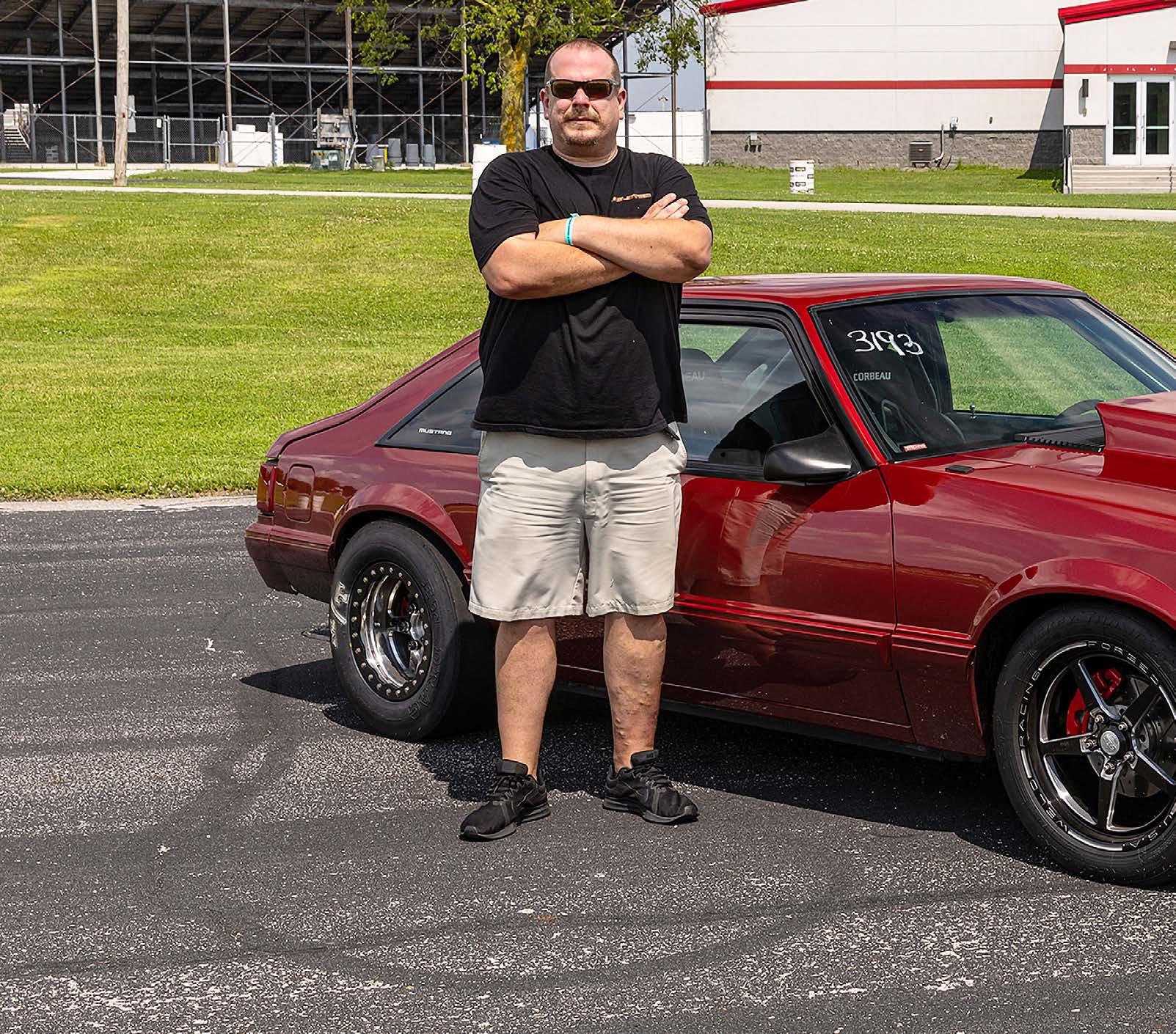
Hardy spent eight years building his Mustang and has owned it for over twenty. To date, he’s clocked a best elapsed time of 9.24 at 154 mph. He’s been a regular competitor in stick-shift classes at numerous NMRA, NMCA, NHRA, FL2K, and Street Car Takeover events. His best memory to date with the car is winning the TREMEC Transmissions Stick Shift Shootout at the 2022 NMRA World Finals in Bowling Green, Kentucky. Worth noting also is the fact that he never knew his parents to be car enthusiasts, but he later found out otherwise.
“After my dad passed away, I reached out to one of his high school friends that he still talked to,” Hardy explained. “I wanted to know more about my dad, you know, stuff that your parents wouldn’t say but their friends would. I found out that my dad and his high school friend spent months rebuilding a car when they were younger. I was shocked to say the least.”
We’re sure his father would be proud of what his son has created, and while Hardy’s Wild Strawberry Mustang now has over 300,000 miles logged, it looks as good as new these days and it is quicker than ever thanks to its supercharged 5.0-liter engine.
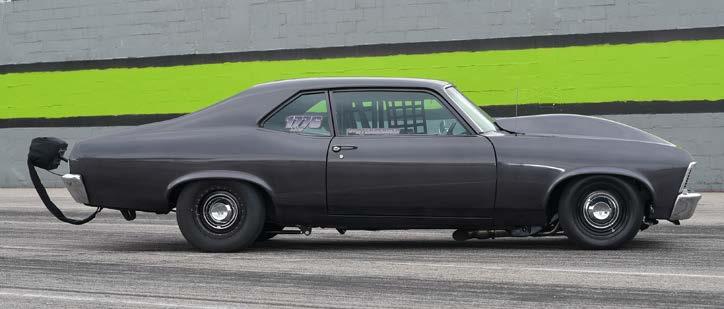
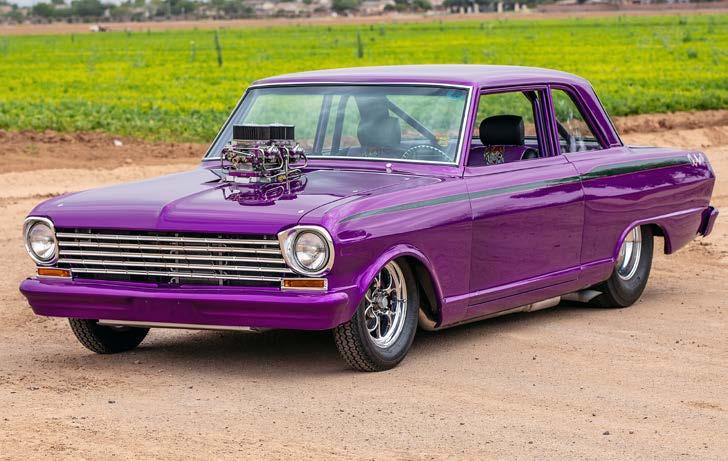
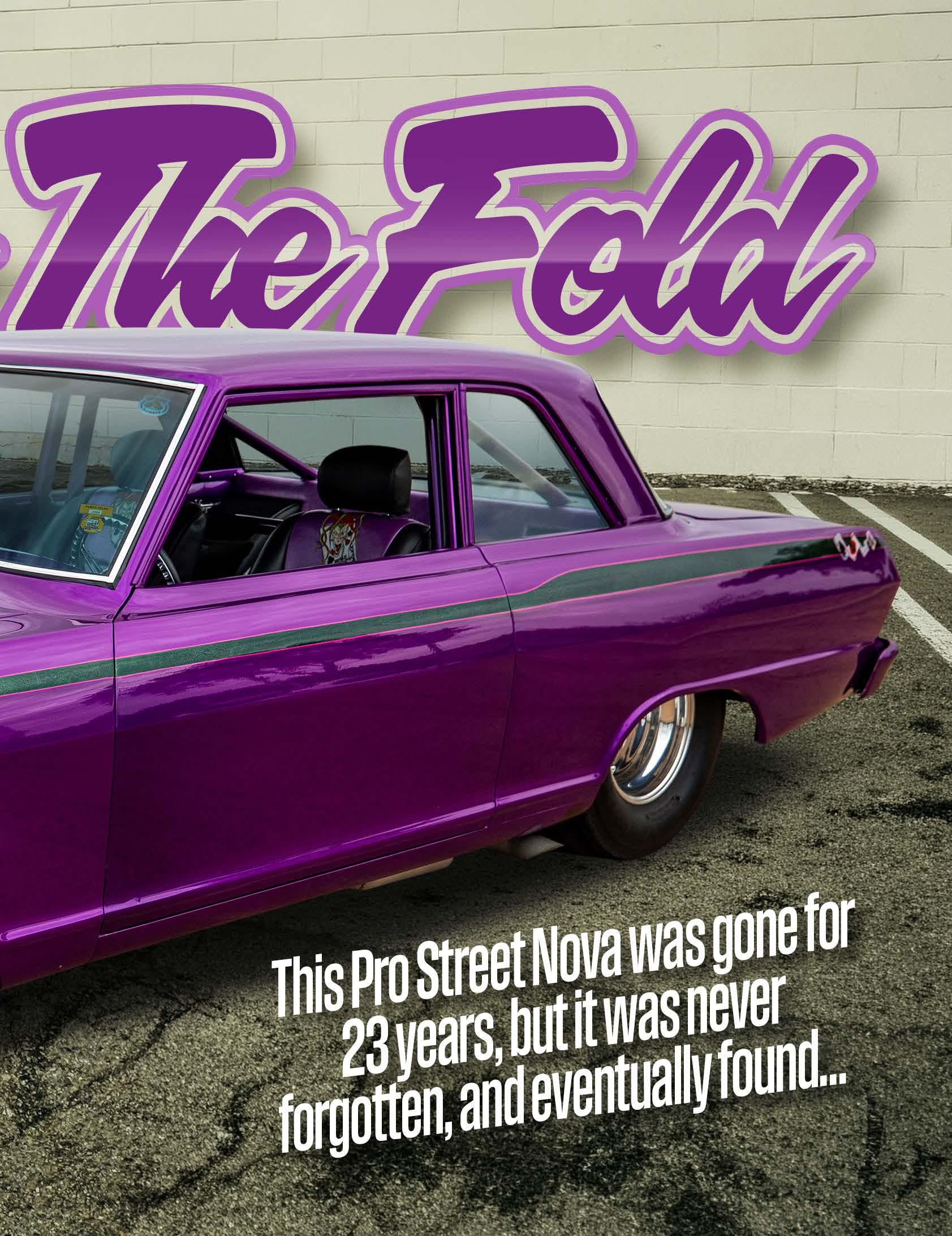
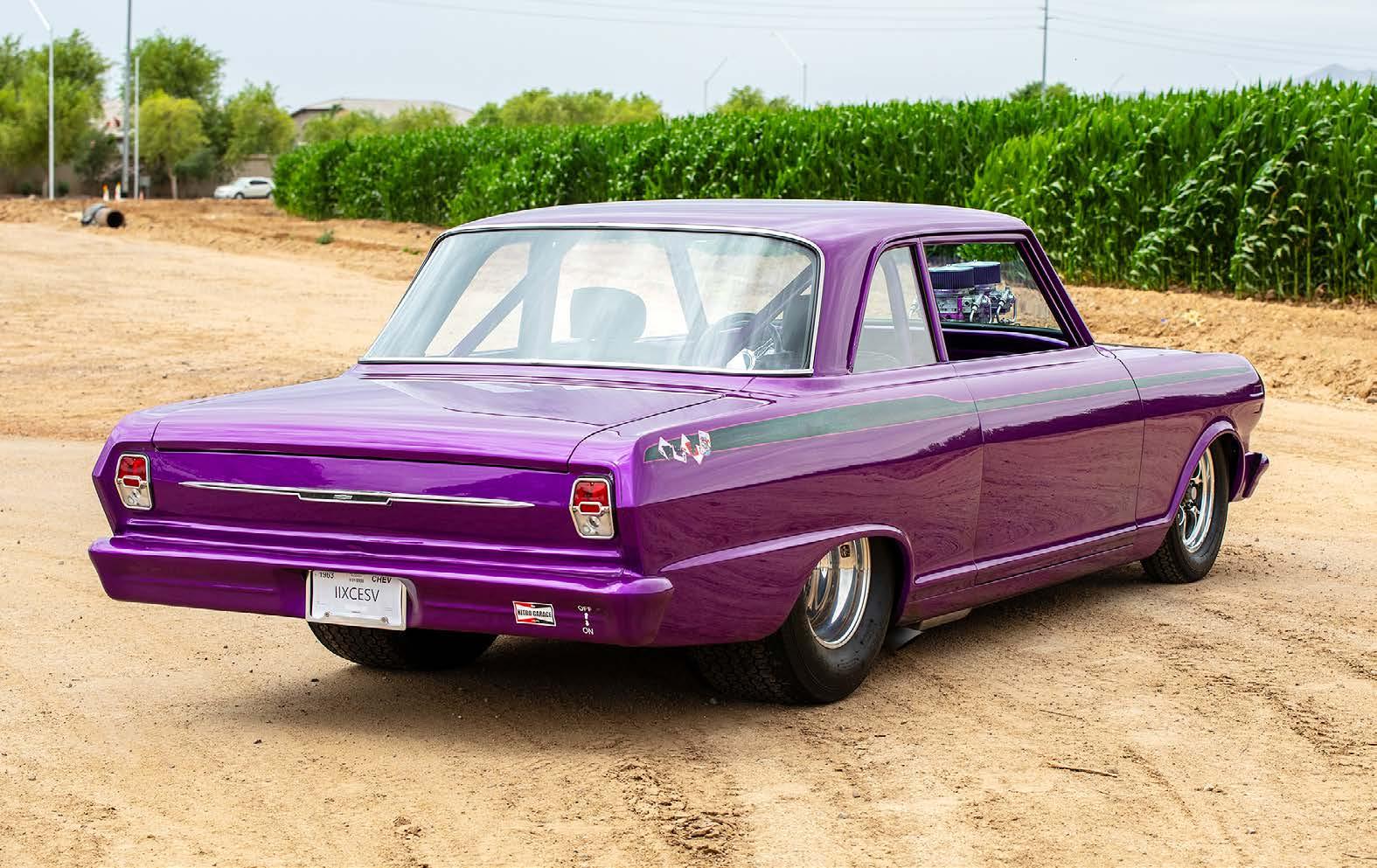
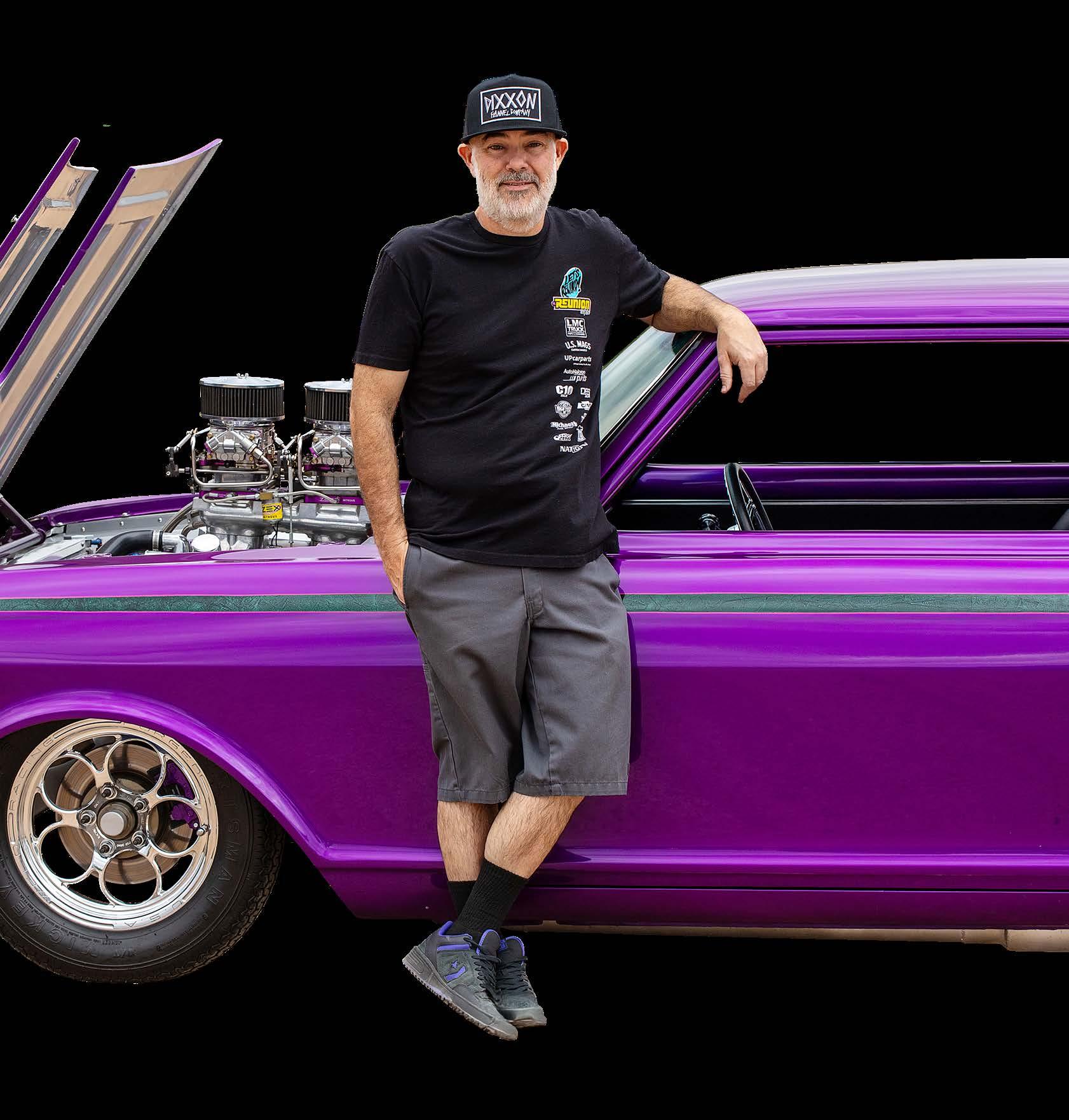
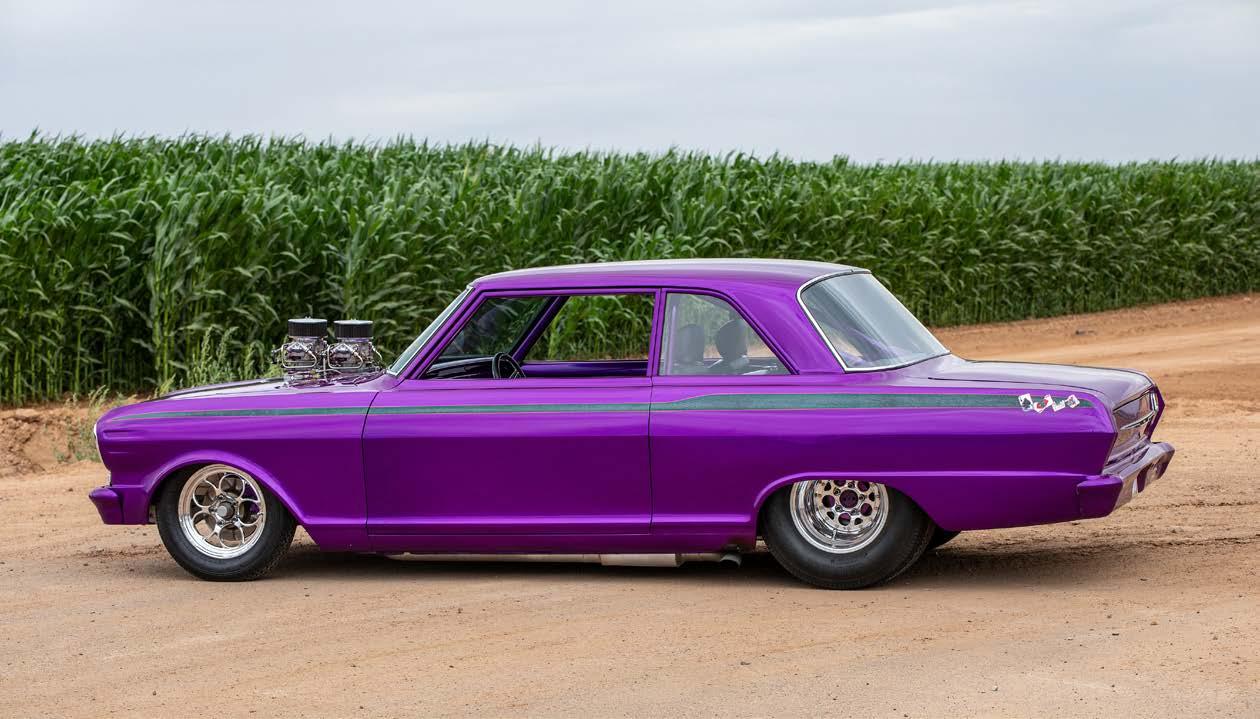
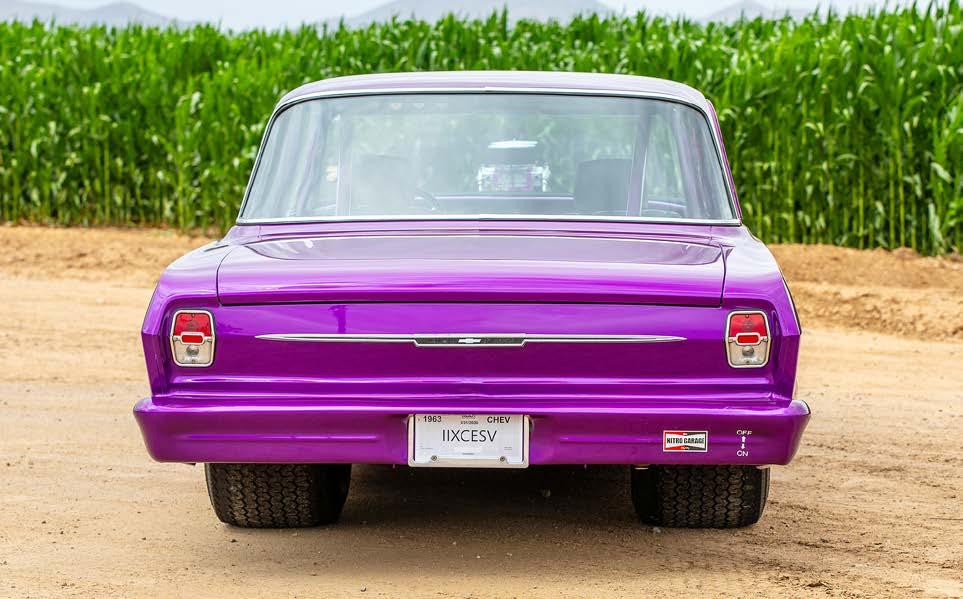
The story of this 1963 Chevy Nova’s Pro Street beginnings dates back to 1994 when The Nitro Garage’s Randy Lee Warriner purchased the 4-cylinder-powered econocar for his son Dustin.
Trucks took the young Warriner’s interest, however, and the project was given a new life through another owner. Over ten years later, Warriner’s son-in-law, Wayne Collard found the Nova for sale and after discussing it with his wife, Bobbi, a plan was hatched to bring it back home to the builder’s family.
Story: Steve Baur
Photos: Jerry Garrison
Despite his son not wanting the Nova, Warriner nearly finished the build after a customer purchased the project from him and hired him to build it. It only needed wiring and interior, but the owner had to sell it due to health reasons. The Chevy found a new home in Indiana in 2002, and another in Iowa before it was listed for sale once more.
As was the case for many who grew up in southern California, Wayne and Bobbi Collard spent much of their childhoods at car shows and dragstrips, so the hot-rodding culture is a strong theme in their upbringing.
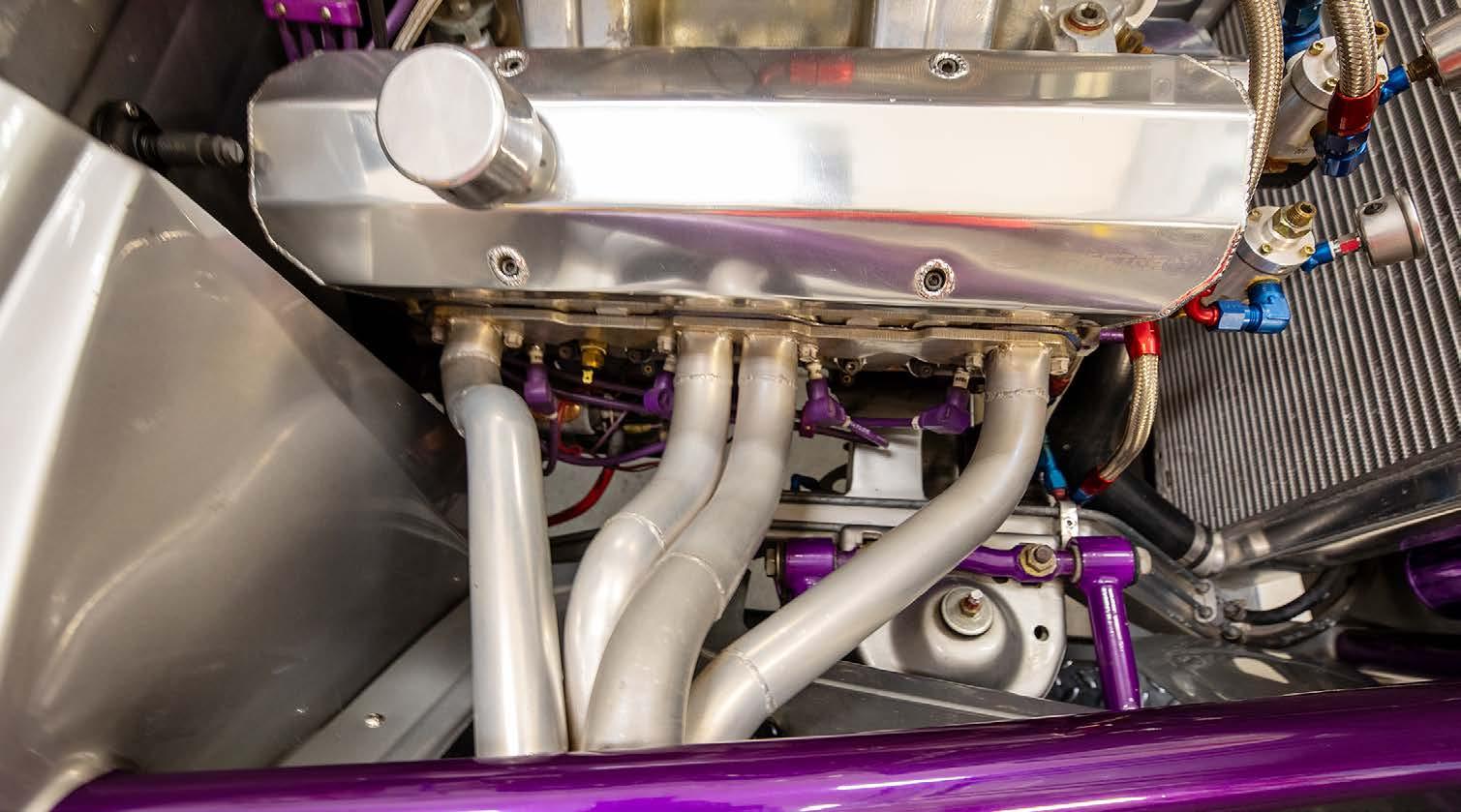
A set of custom headers hand-built by Nitro Garage empty into a 3.5-inch exhaust with 2-chamber Flowmaster mufflers and dumps spent exhaust gases outward just in front of the rear meats.
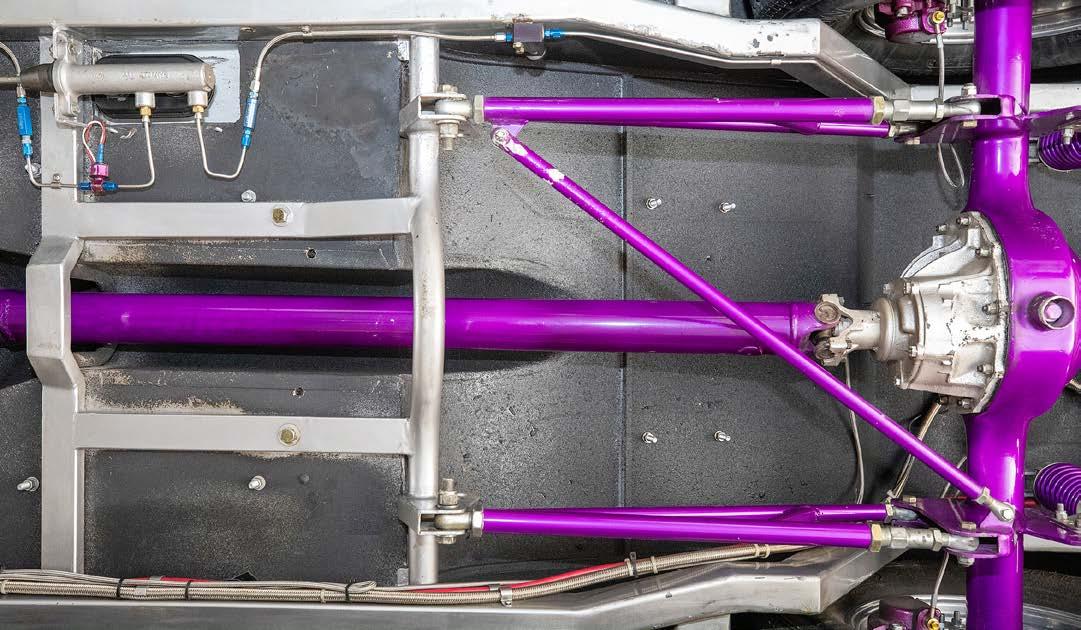
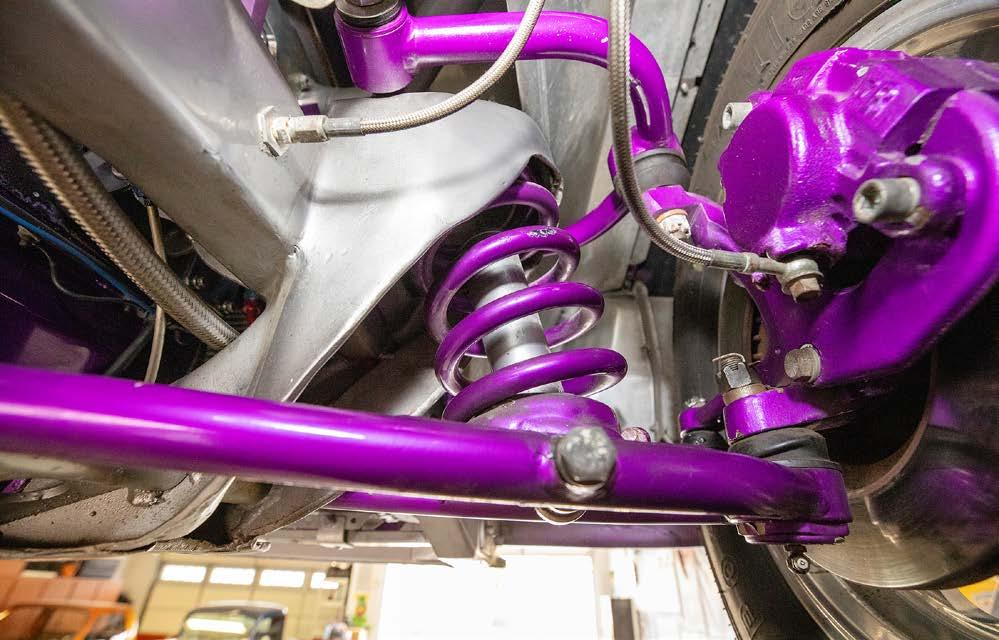
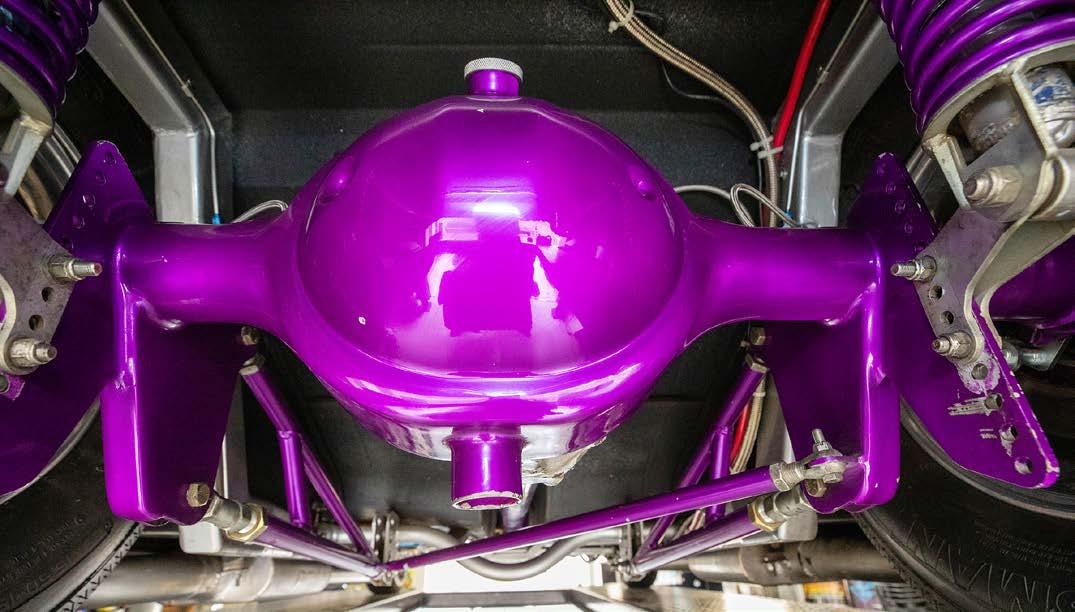
Under the car is pretty darn clean too, especially for a car that is driven and thrashed regularly. 2x3 chassis tubes and associated parts are finished in silver and suspension and rear end components in the body color. A custom ladder bar coilover setup with diagonal link resides out back and custom tubular control arms with aftermarket shocks and coil springs were used to control the ride up front.
Their son, Nate, has grown up in the hobby as well, and even built a 1969 C10 pickup with his grandpa Randy. Nate later ventured into a project of his own, a 1998 C1500 that garnered some awards at a Good Guys show.
“I was scrolling through Pro Street classifieds on Facebook and came across the car and showed it to my wife,” Wayne told us. “She sent the post to her dad, we discussed it and decided we needed to bring the car home. It’s Bobbi’s favorite car body style, plus her dad built it, so we made the arrangements and the three of us drove to Iowa to get it.”
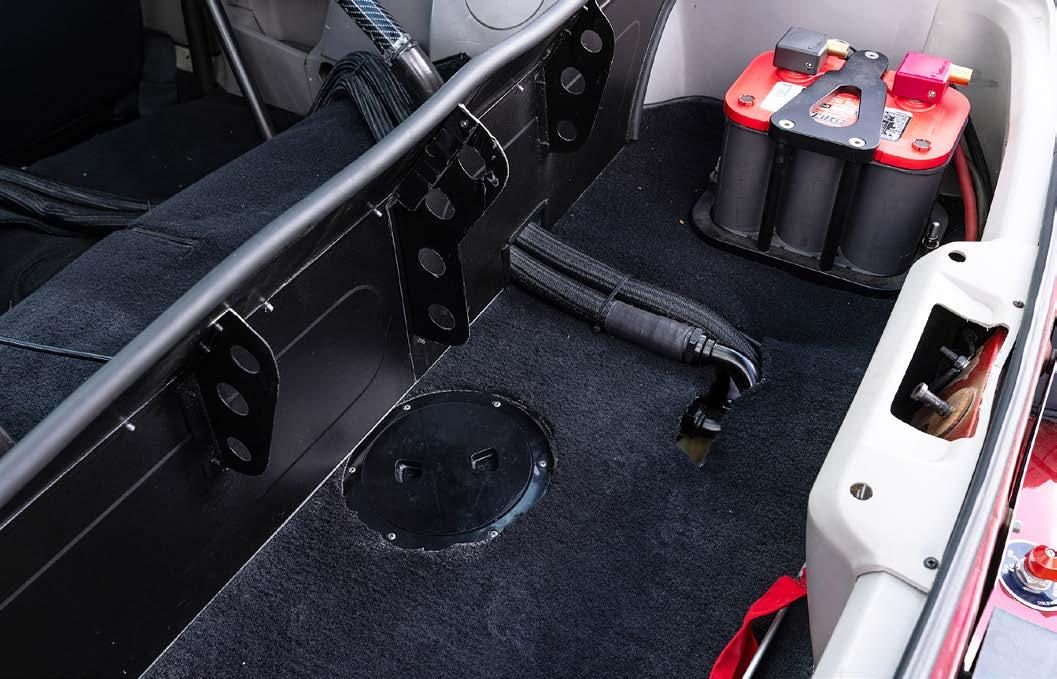
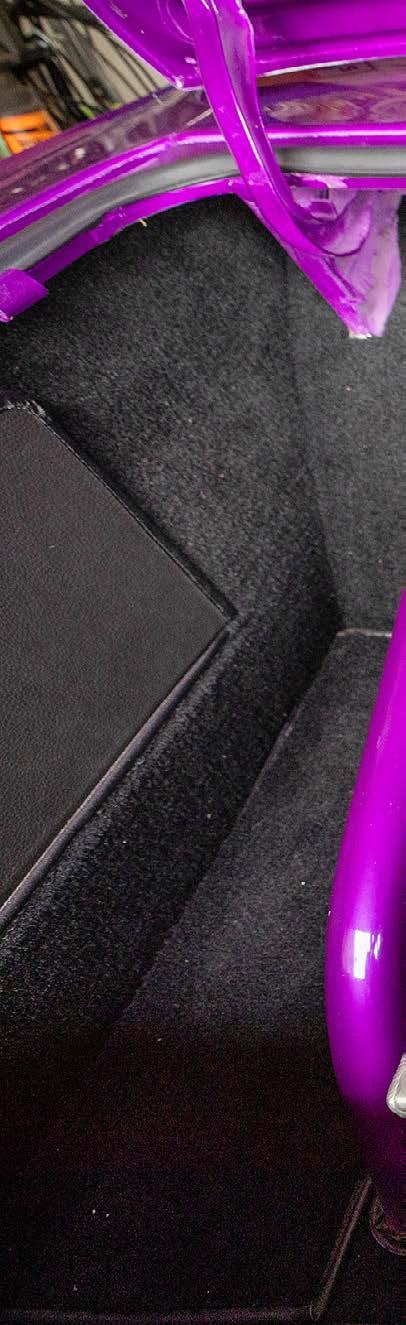
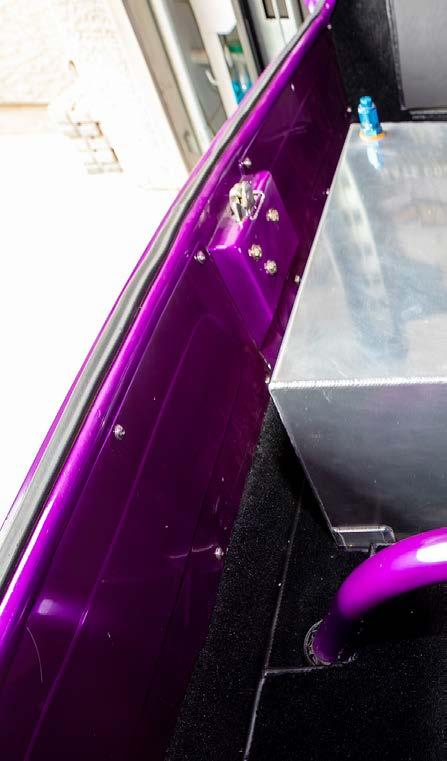
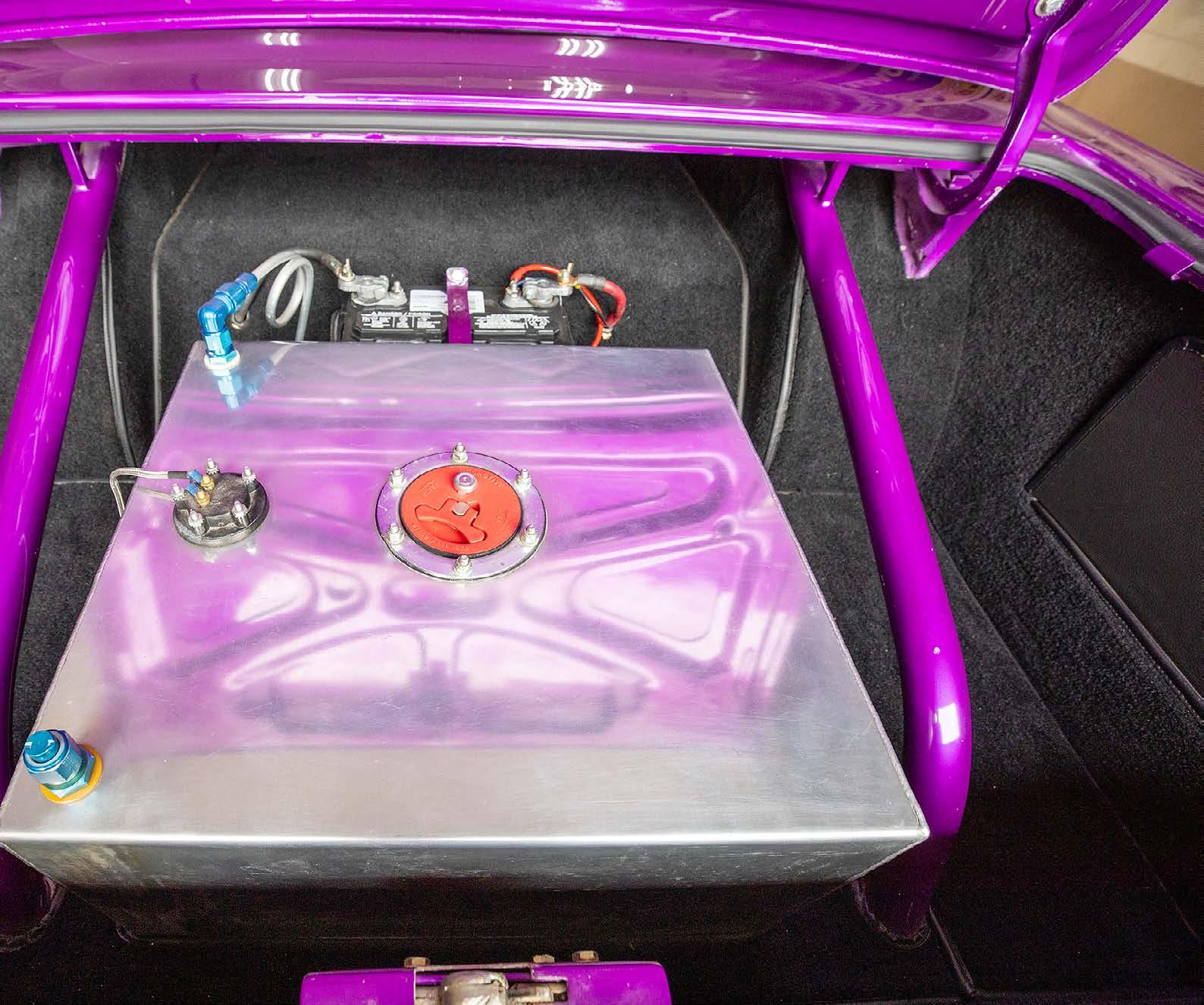
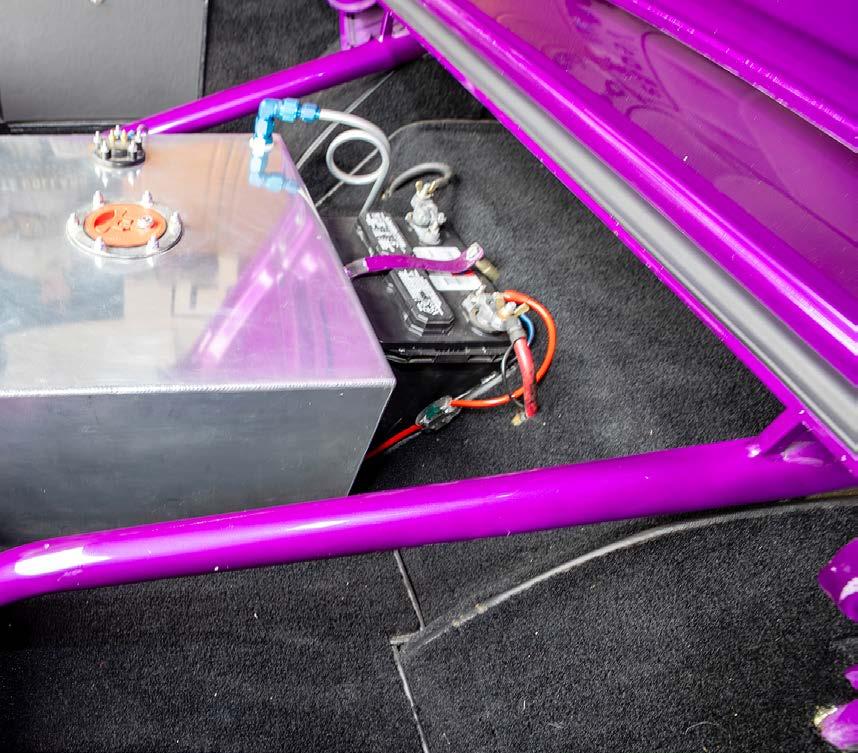
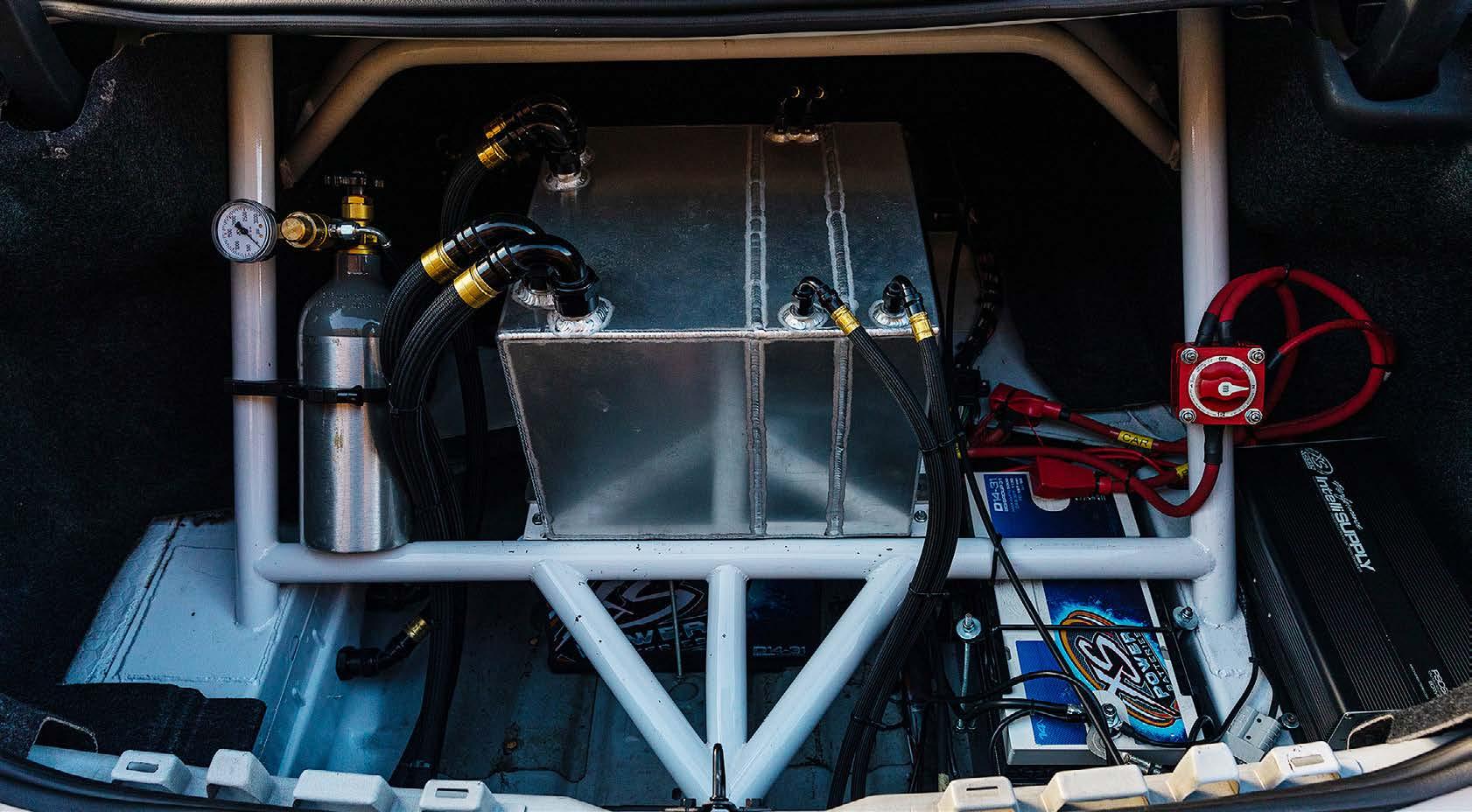
Chassis work extends into the trunk of the Nova which is also fully finished in custom black carpeted panels and houses the sizeable polished aluminum fuel cell and battery.
Gone for 23 years, this Pro Street Nova found its way back the family that originally built it. With a potent nitroused small block under the hood and a drivetrain to back it up, Wayne & Bobbi Collard are looking forward to creating new memories with the car on the streets of AZ, and maybe even an occasional hit on the strip.
The Nova was brought back to the family home in Surprise, Arizona, in the summer of 2025, so they haven’t had much time to do much more than enjoy it as it sits.
Warriner initially fitted the 1963 Chevy II Nova with a 383 cubic-inch engine and a tunnel ram intake, but the next owner dropped a more potent, 434 cubicinch powerplant between the fenders and that is what currently powers the Chevy. The engine starts with a Dart Iron Eagle tall-deck block with a 4.155-inch bore and 4.00-inch stroke.
Wayne & Bobbi Collard’s Nitrous Small Block Pro Street 1963 Chevy II
Body & Paint:
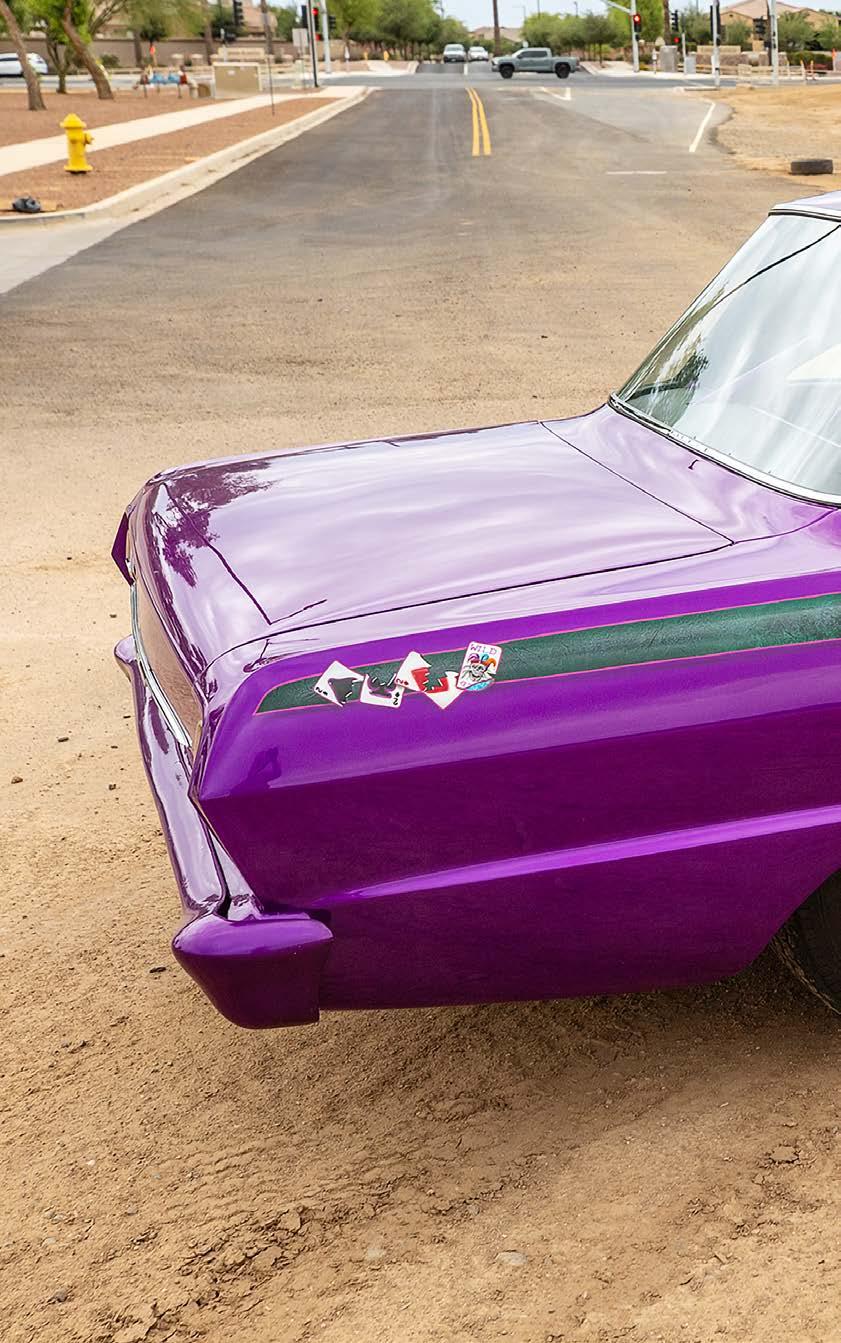
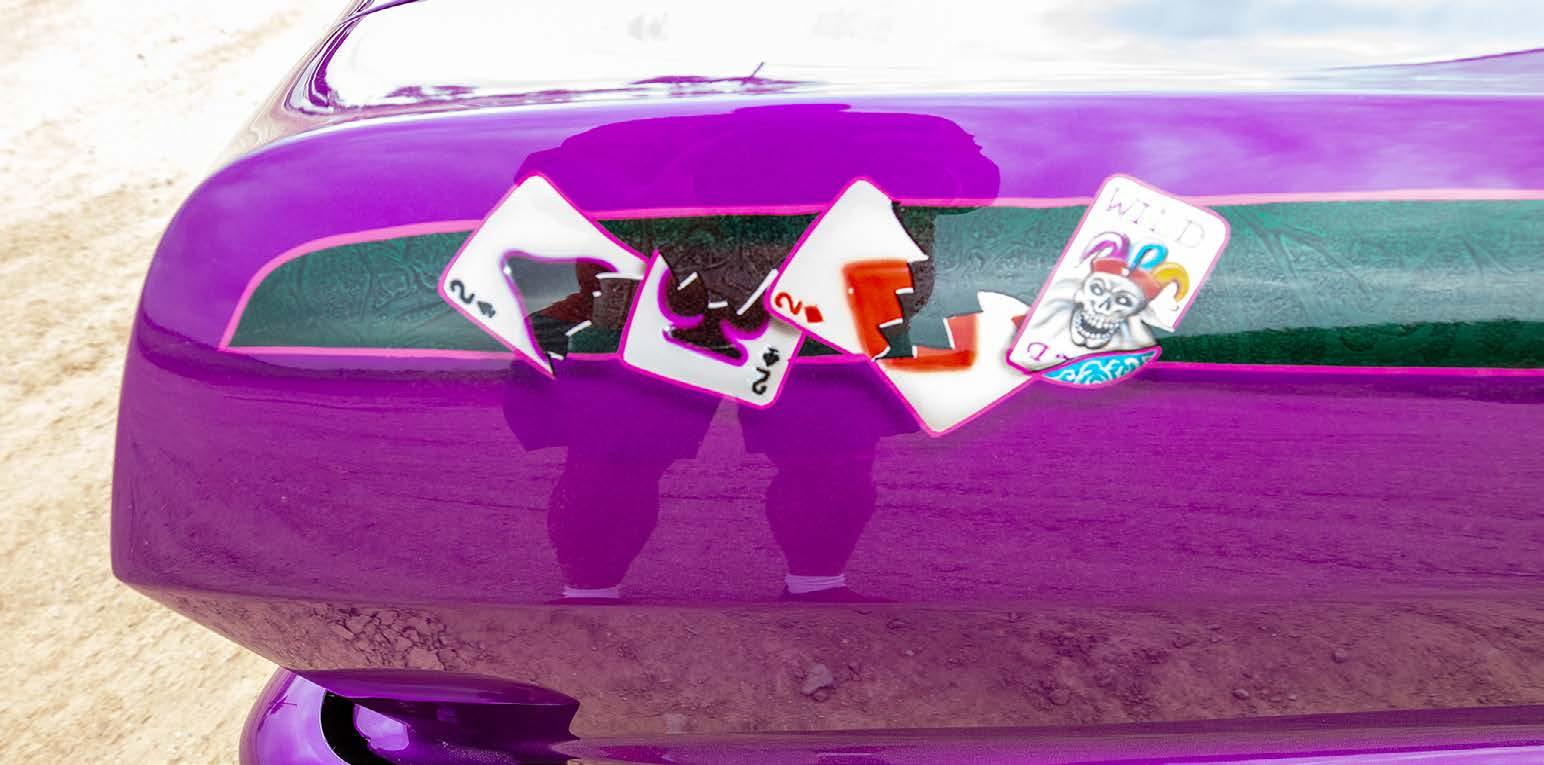
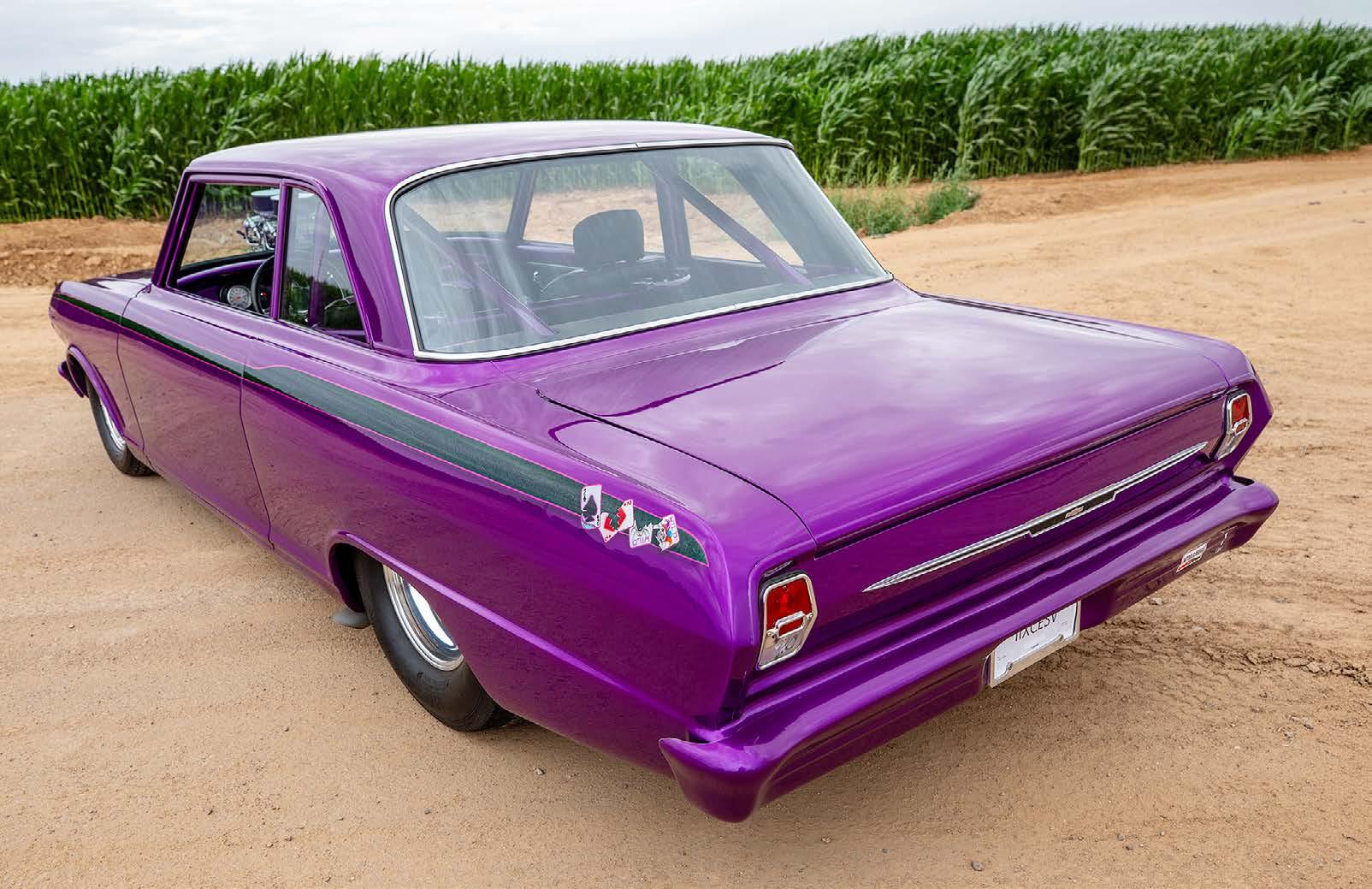
House of Kolor Passion Pearl Purple and Clear, green marblizer graphic stripe, hand airbrush work. Shaved trim, door handles & locks, 1-piece door glass.
Fiberglass front/rear bumpers painted body color.
Shortened decklid with reverse flip hood BWM hinge assembly.
Chassis Modifications:
Mustang II front suspension cross member with upper and lower tubular control arms. Full 2x3 square box-tube frame, custom built from scratch.
Currie 9” rear end, 31 spline axle, 3.89 gears.
Suspension:
Chris Alston coilover/ladderbar setup in the rear & upper and lower tubular control arms in the front
Chassis and all suspension parts are custom painted.
Engine:
434 cubic inch Dart Iron Eagle tall deck with a 4.155 bore x by 4.00 stroke.
Hand-built custom headers by Nitro Garage with 3.5” exhaust and 2-chamber Flowmasters.
Rotating Assembly:
Balanced rotating assembly with forged Diamond pistons, 12.5:1 compression. H beam rods, solid roller Comp cam .630/.630 camshaft with a 4-7 swap.
Cylinder Heads:
Trick Flow 23 degree aluminum heads with full roller valve train.
Induction & Fuel Delivery:
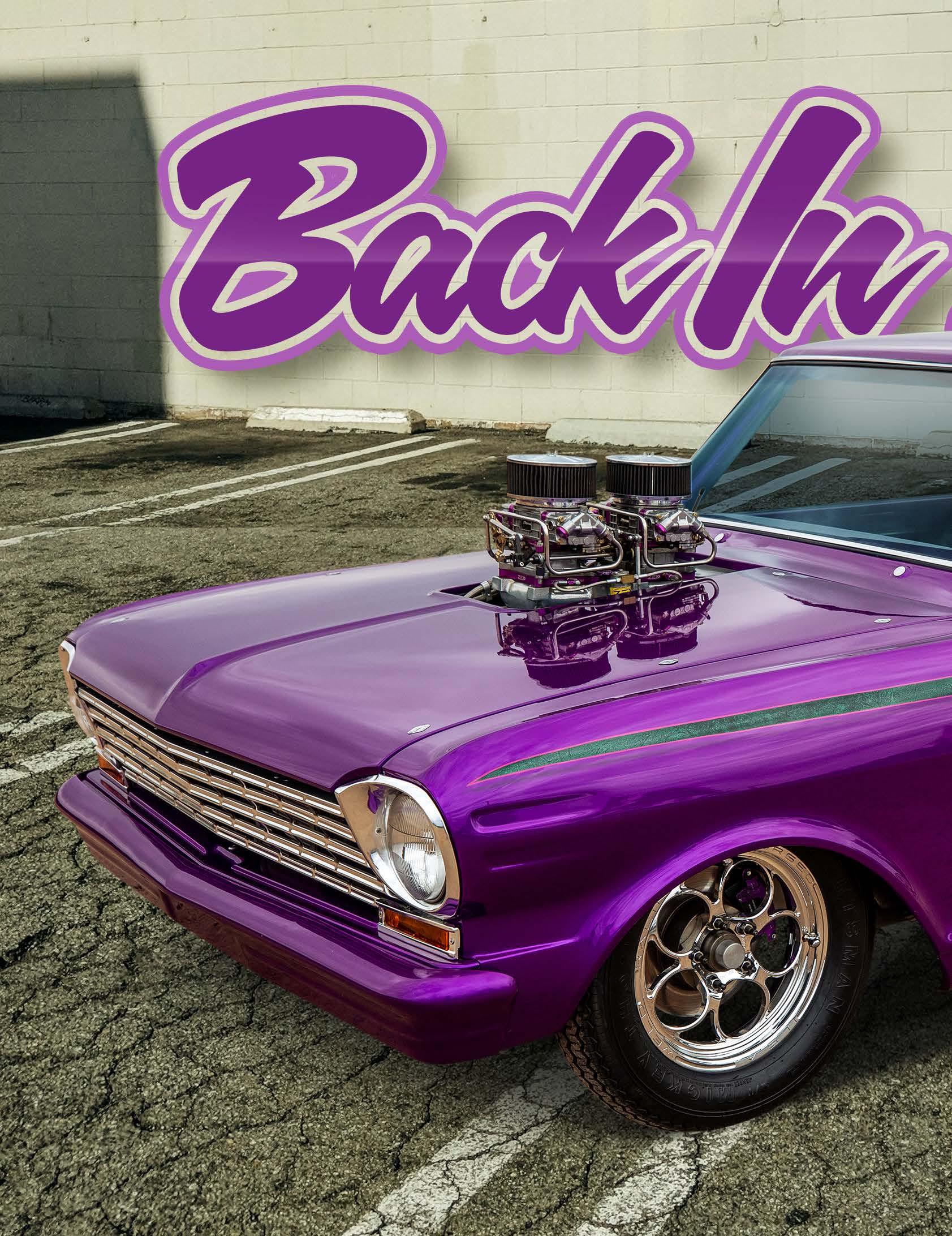
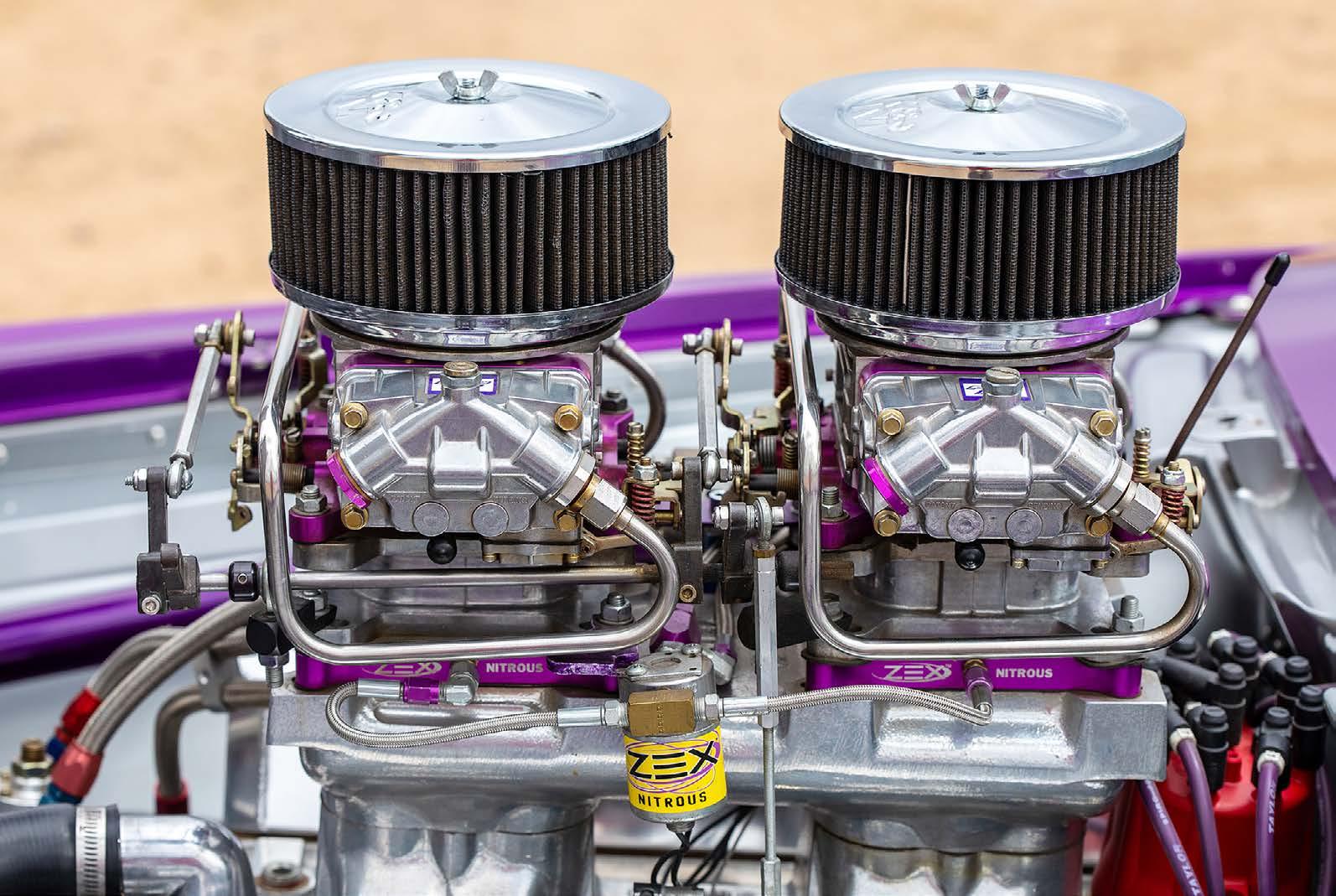
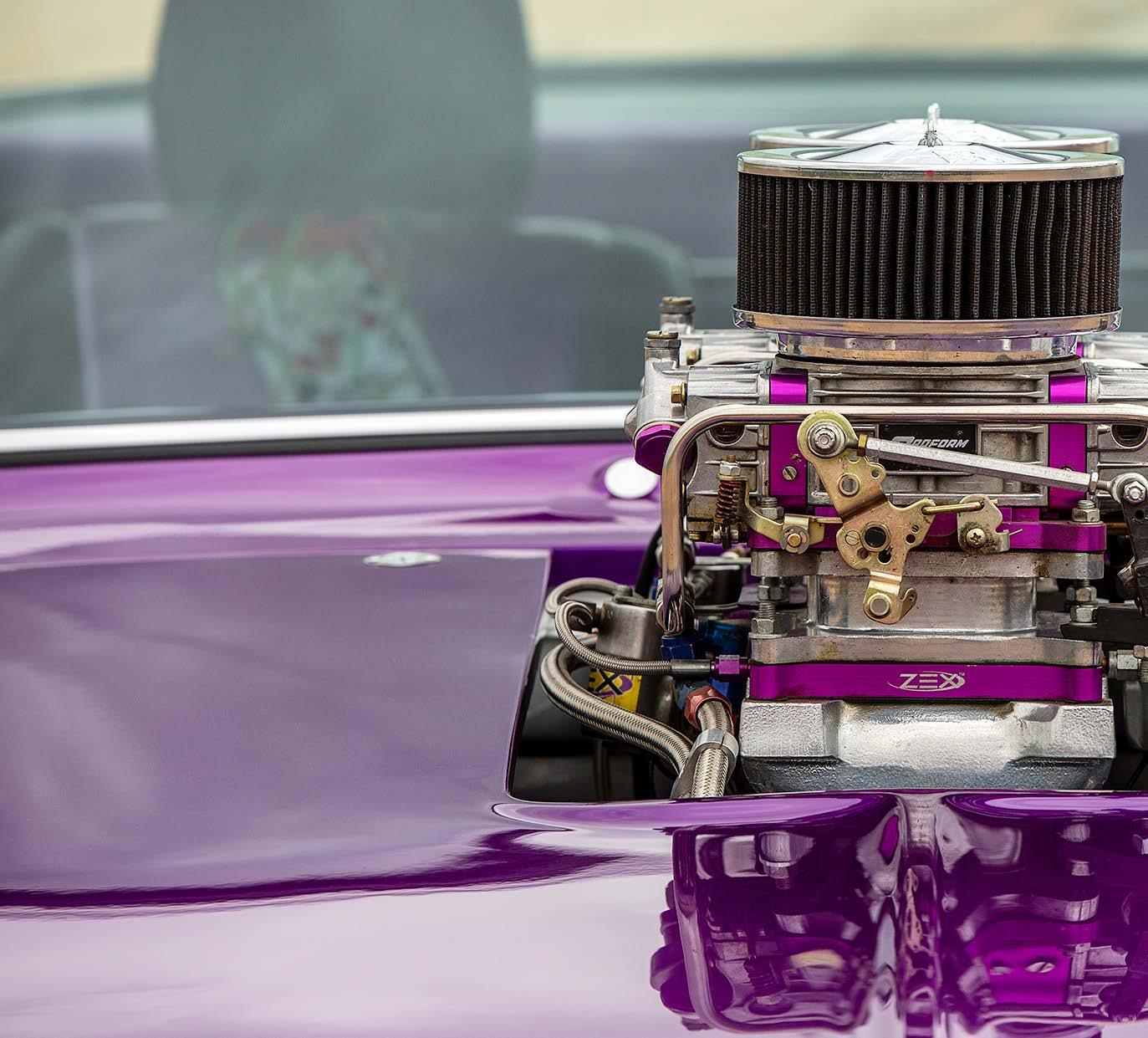
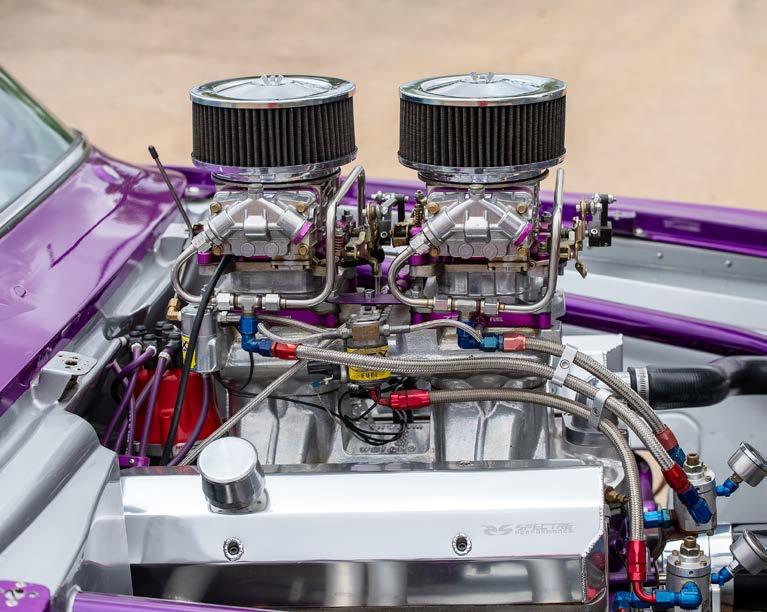
Weiand tunnel ram with dual 850 Proform double pumper carbs. Mallory fuel pump and 2 fuel pressure regulators with all steel braided fuel lines with A/N fittings.
Power Adder:
Zex Dual Perimeter plate nitrous system (300 hp shot).
Transmission:
Coan built Turbo 350 with a 3500 stall converter. Hurst Quarter Stick shifter controlled by Autometer Digital Pro Shift System controller.
Brakes:
Four-wheel disc brakes with custom calipers.
All hand-bent stainless steel brake lines with steal braided flex lines and AN fittings.
Tires & wheels:
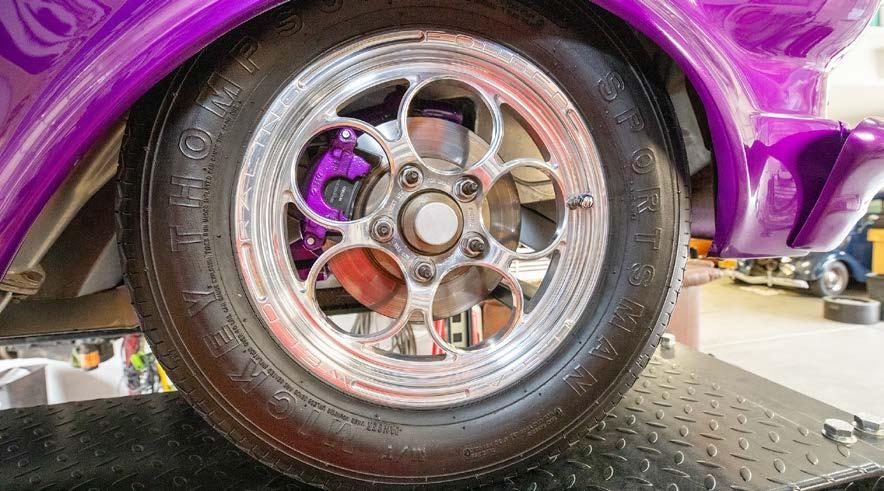
Front 15x3.5 Weld Magnums with 26x7.5-15 Mickey Thompsons.
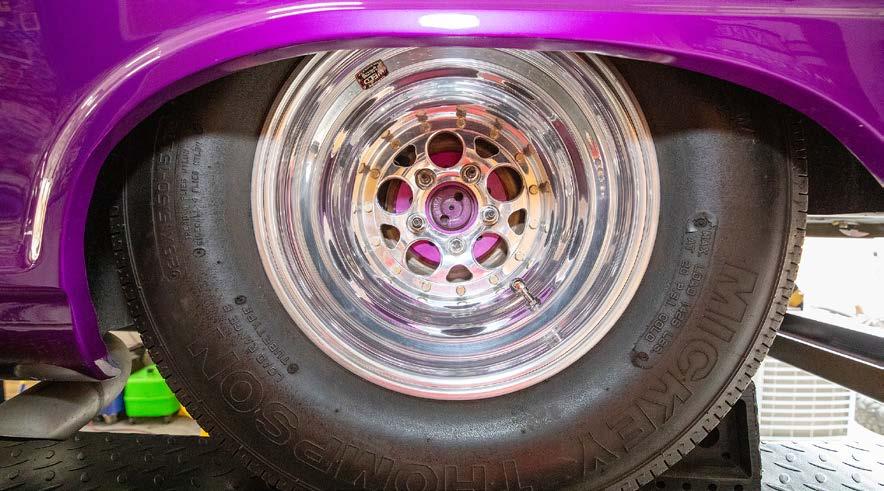
Rear 15x13 Weld Magnums with 29x15x15 Mickey Thompsons.
Interior:
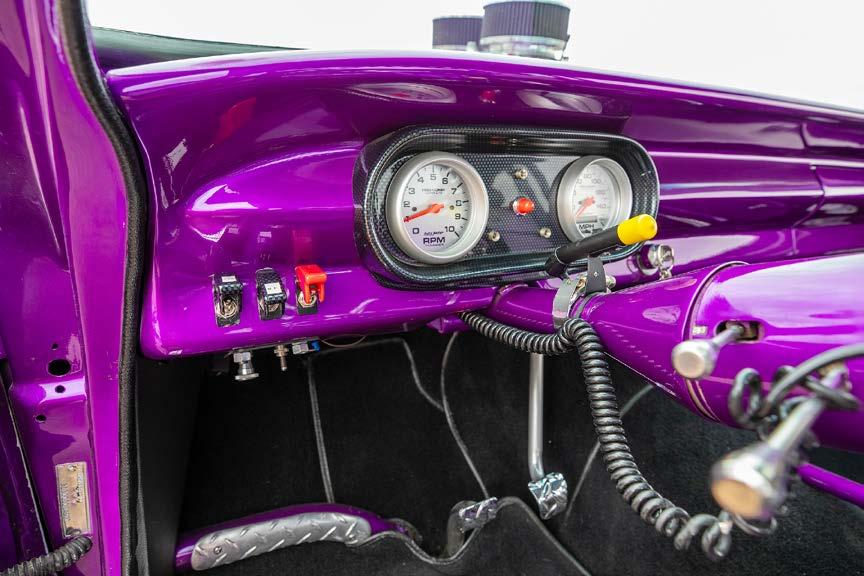
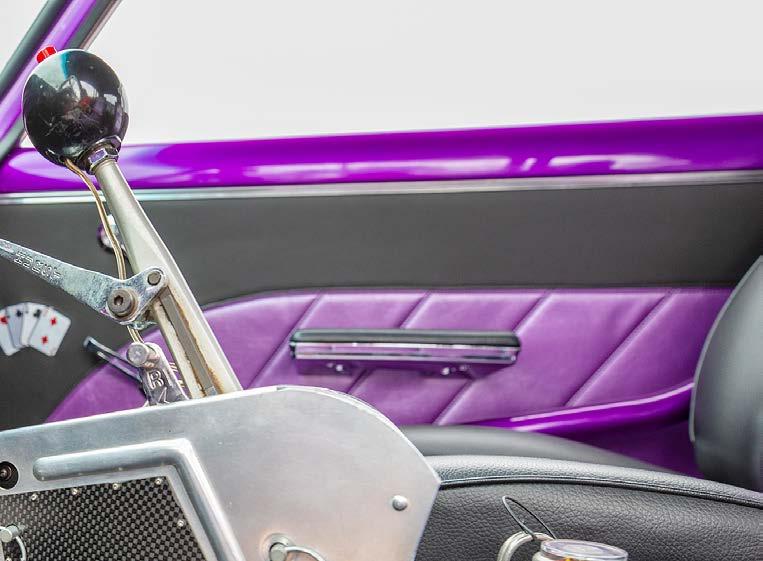
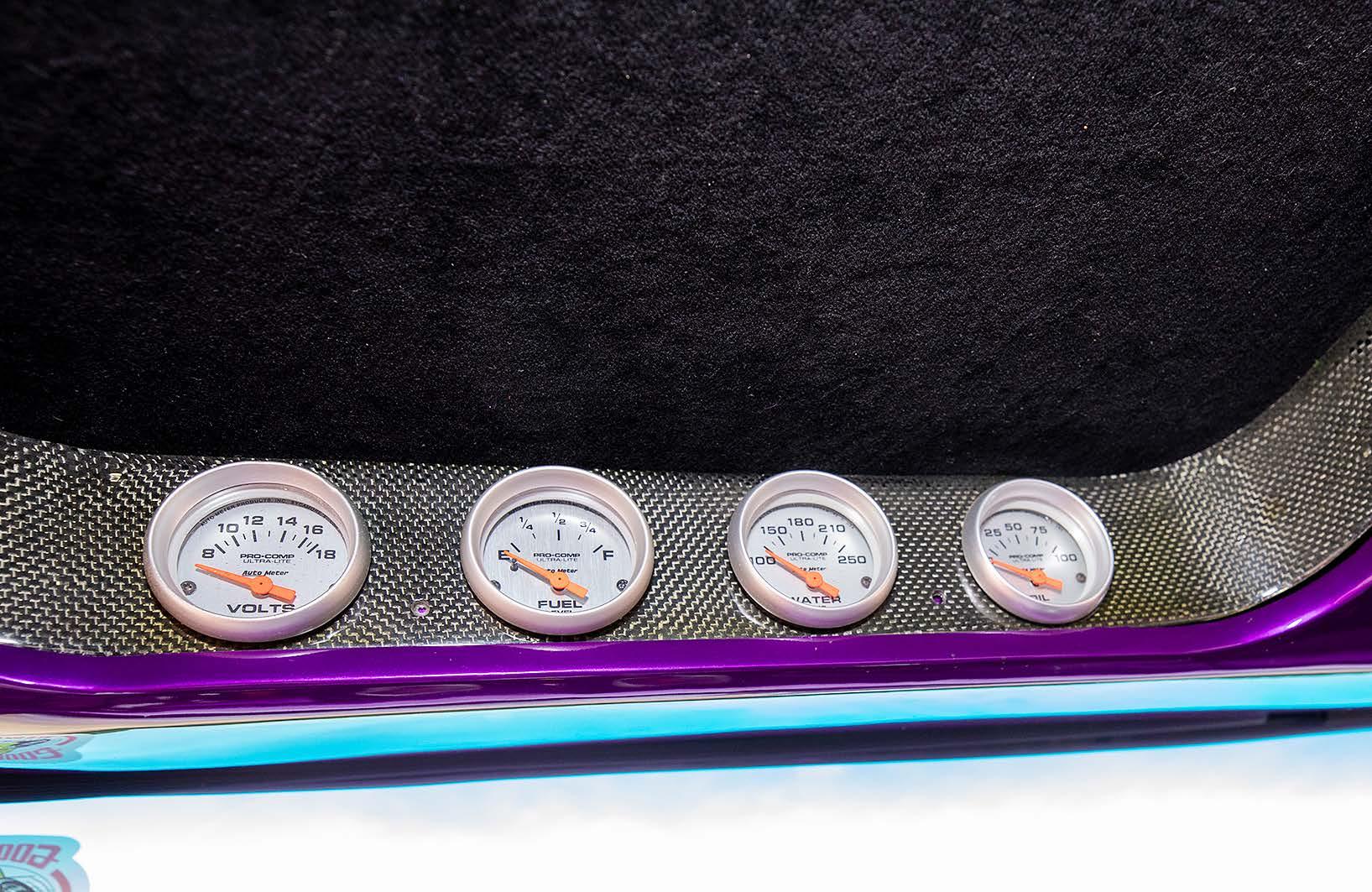
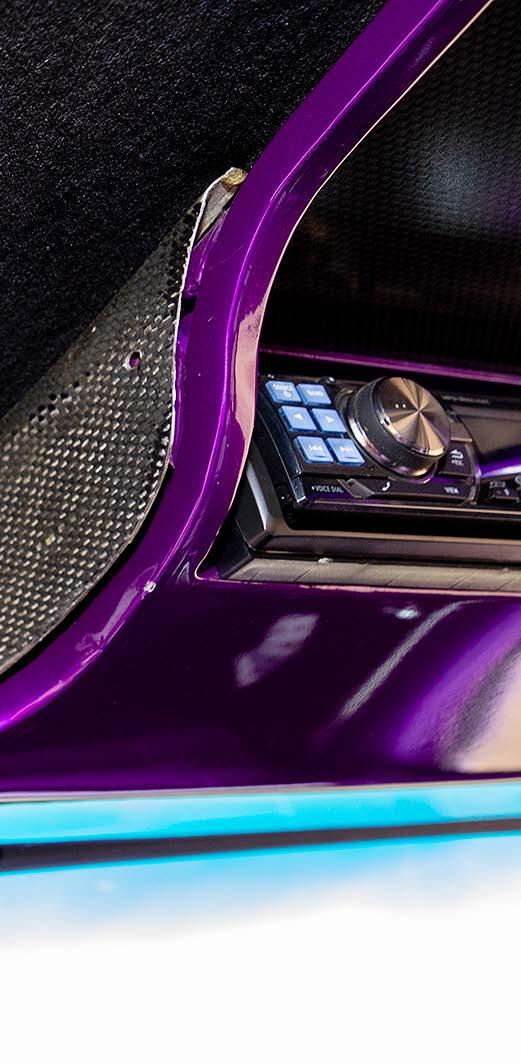
Autometer gauges, Hurst shifter, Alpine stereo with JL Audio speakers (2) 8” subs and set of 6.5” separates with JL amplifiers.
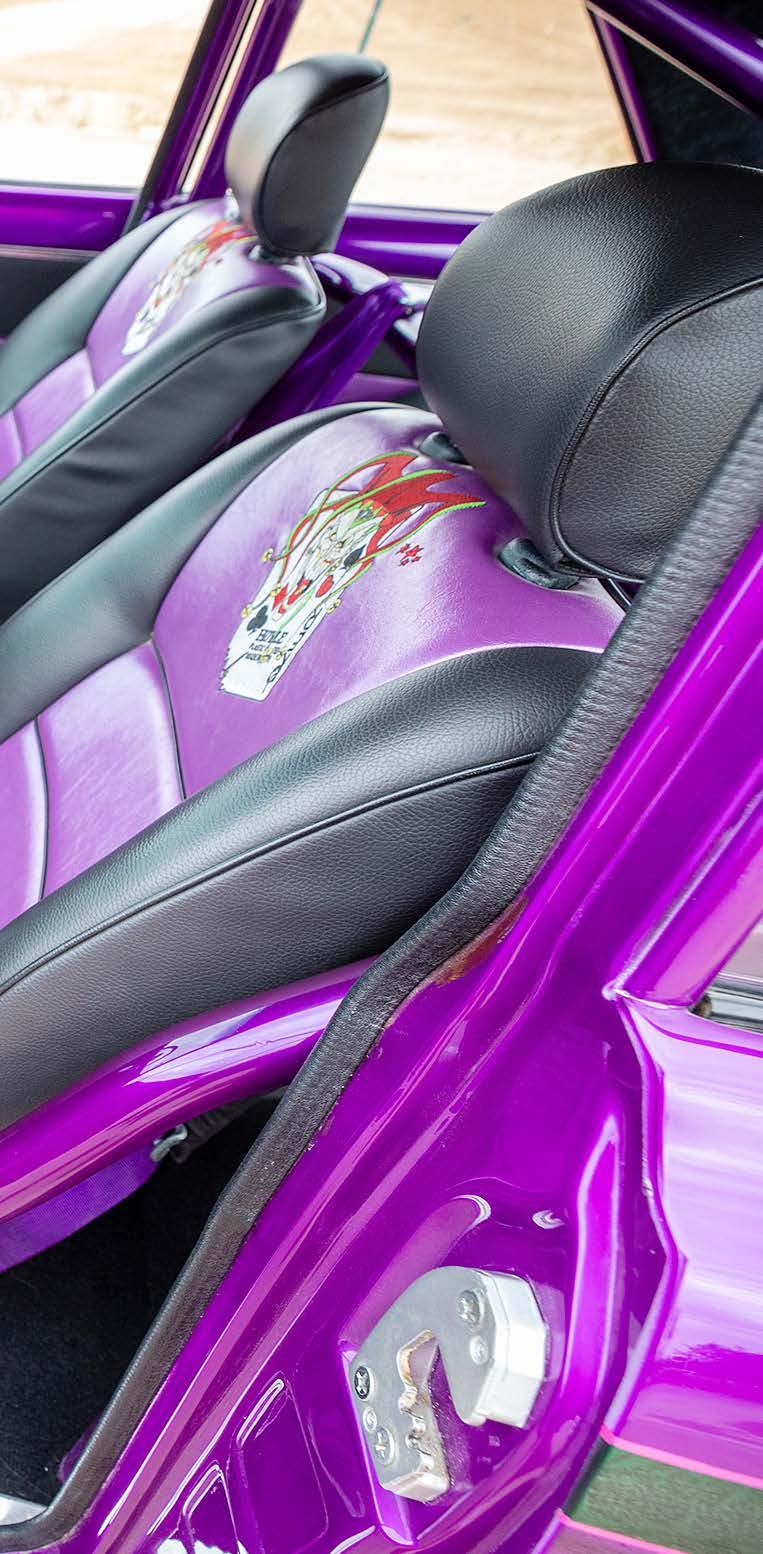
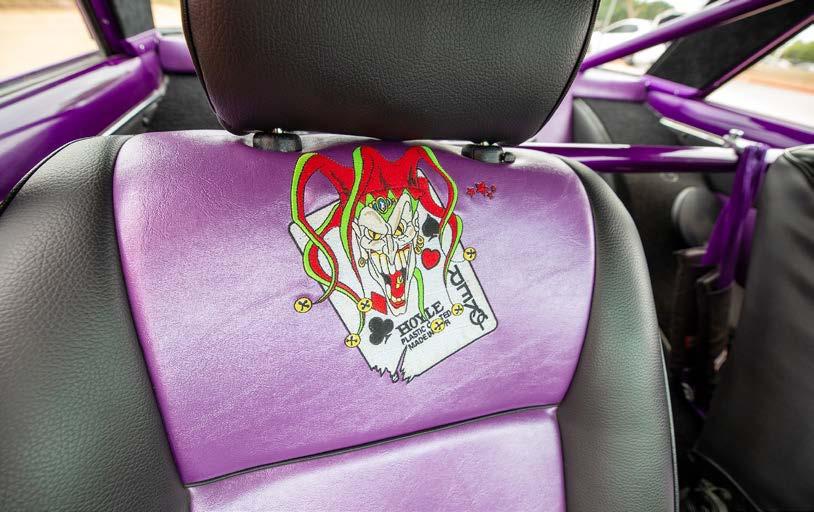
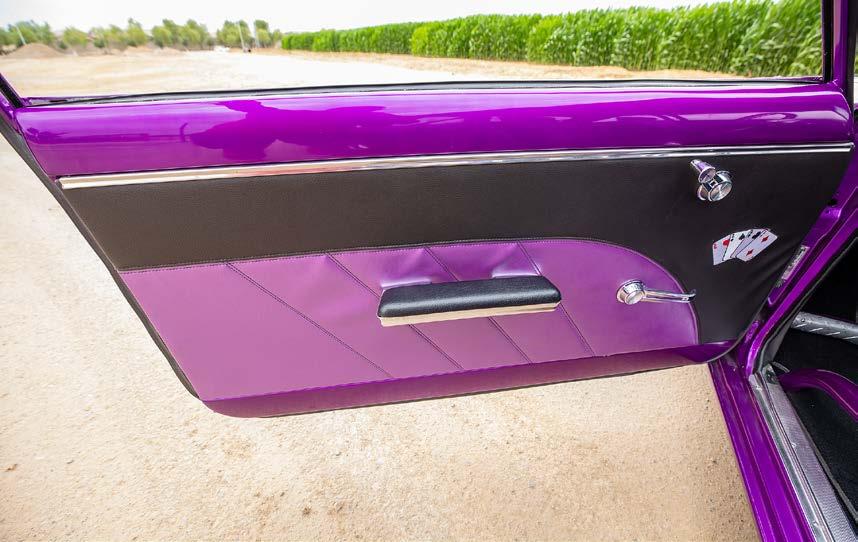
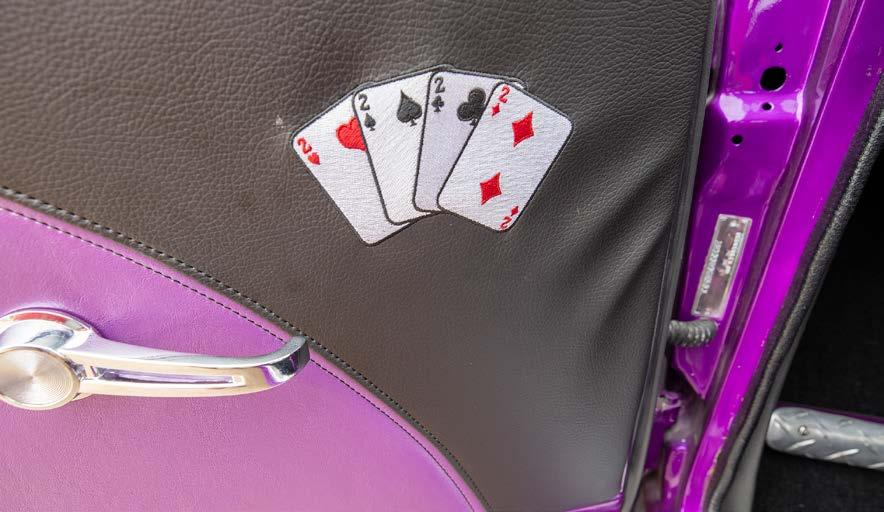
Full custom hand-built cage, custom overhead console, relocated seats for leg space. Full custom interior, black with purple inserts and custom embroidery, RJS 5-pt harnesses, Budnik billet steering wheel.
Custom sheet metal tubs, firewall.
ET & MPH:
Race No-time.
Most Memorable Experience(s):
The two road trips we took with family to first go see it/secure the purchase, then a week later returning with the car hauler to bring it home.
Thanks To:
Randy Warriner of The Nitro Garage for his part in building it and Kurt Brush for his kindness and patience working with us to be able to bring it home to AZ.
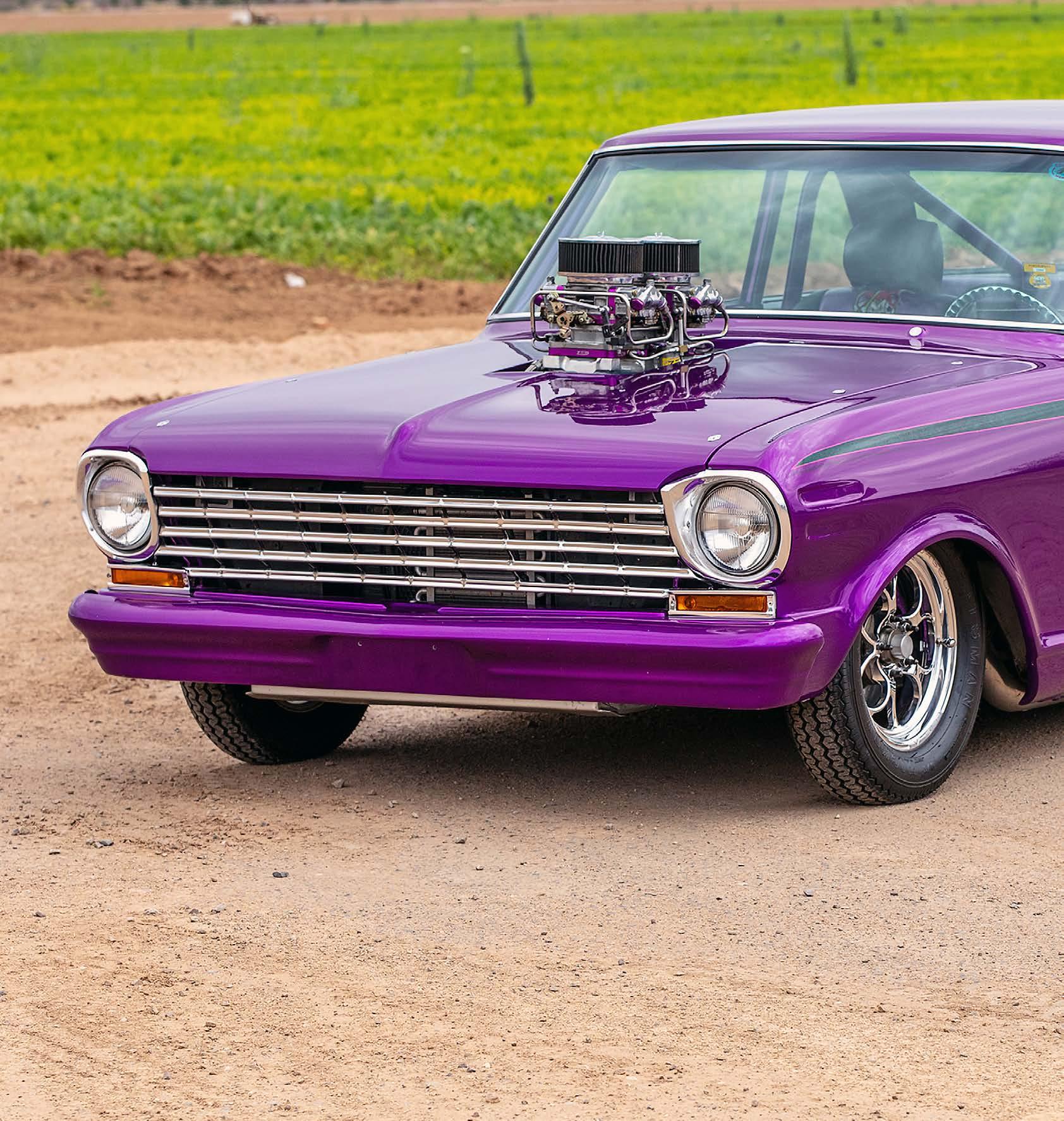
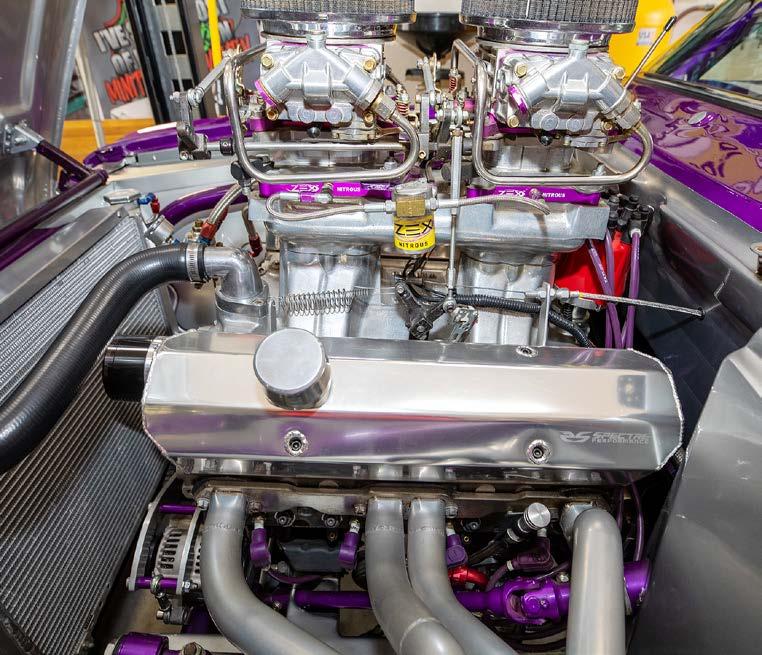
Adding a substantial extra punch (350 horsepower) to the already capable 434-incher is a Zex dual-perimeter plate nitrous system set up for each carb.
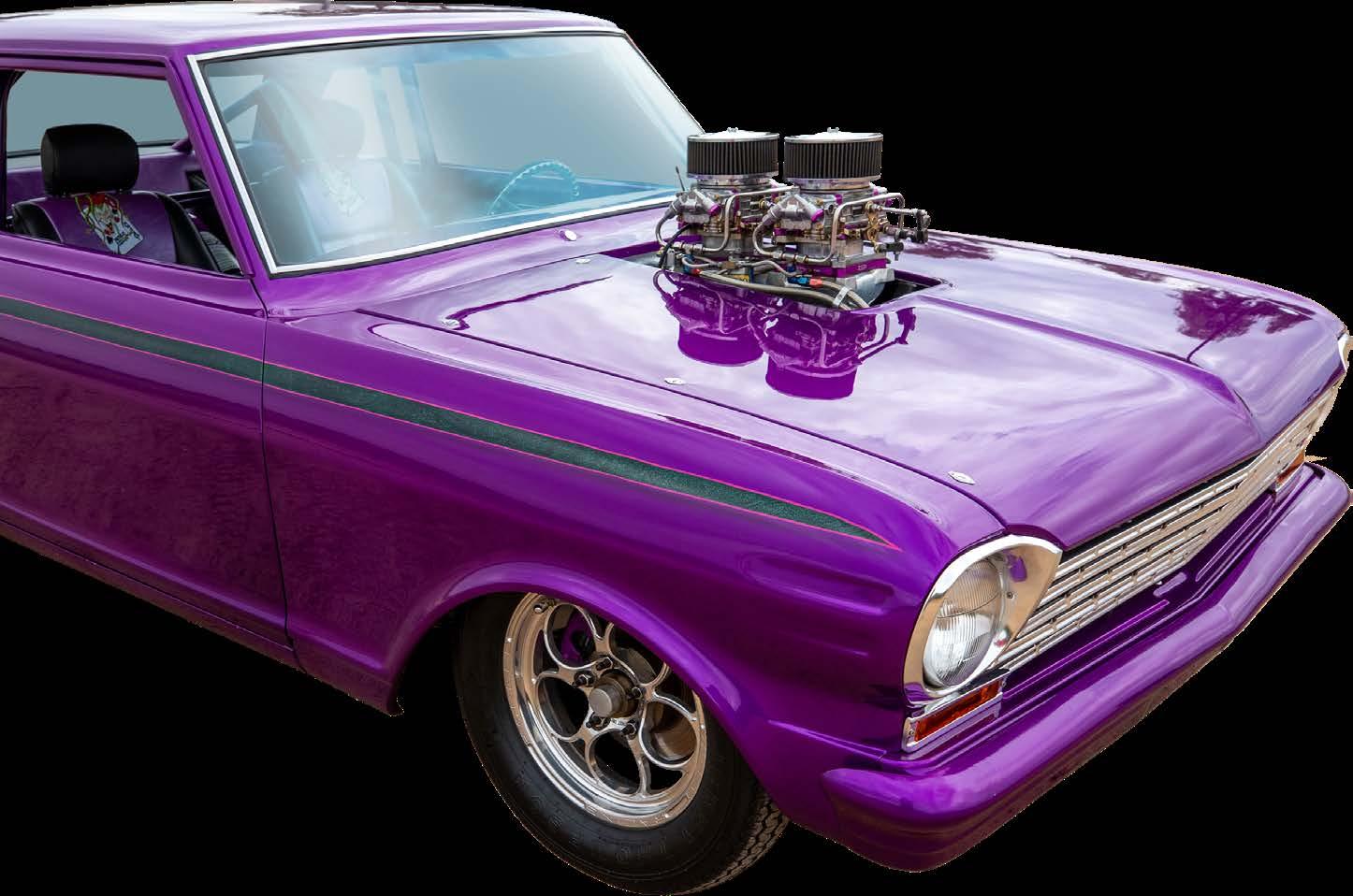
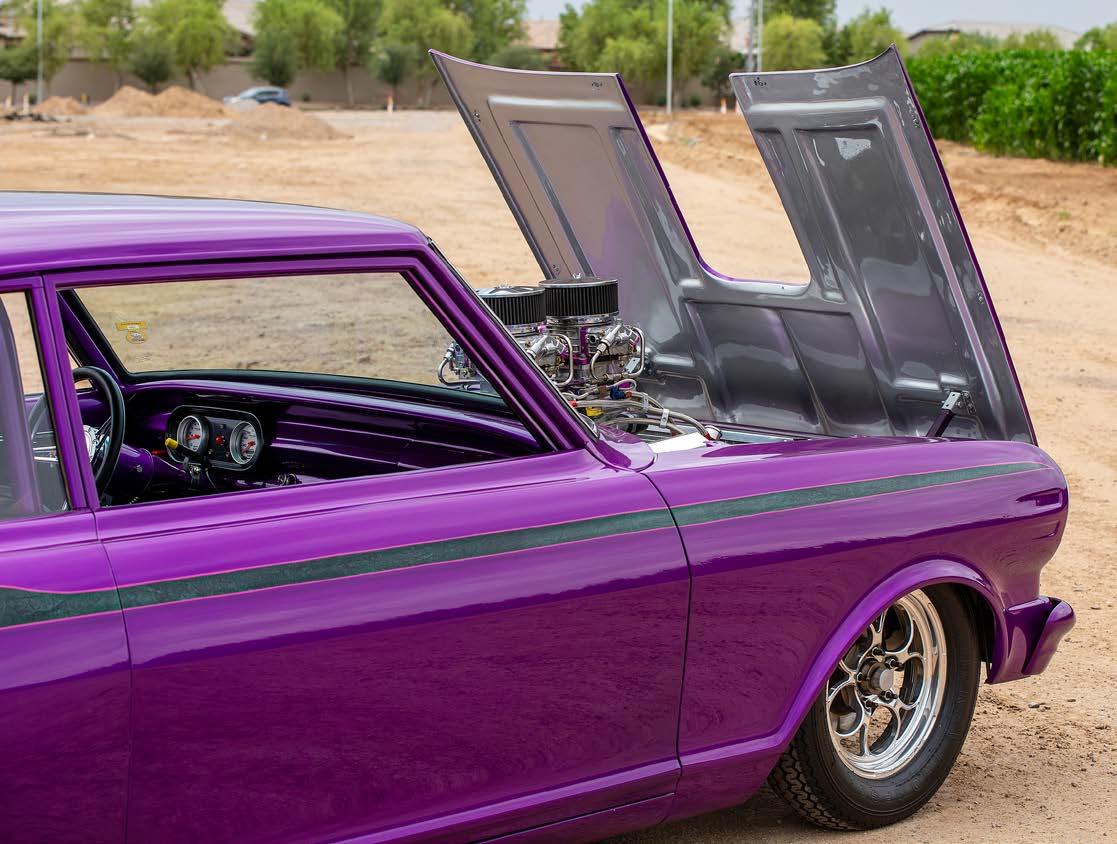
A Dart Iron Eagle tall-deck block with a 4.155-inch bore and 4.00-inch stroke is the base for the 434 cubic-inch 12.5:1 compression powerplant. H-beam connecting rods and Diamond Racing pistons rotate inside, and the valvetrain features a solid-roller Comp Cams stick with a 4/7 swap and .630inch lift. Trick Flow Specialties 23-degree aluminum cylinder heads were matched to a Weiand polished tunnel ram with dual 850cfm Proform carburetors.
The rotating assembly includes forged H-beam connecting rods and Diamond Racing pistons, and the valvetrain features a solid-roller Comp Cams stick with a 4/7 swap and .630-inch lift. Sitting on top are a pair of Trick Flow Specialties 23-degree alumi-
num cylinder heads and a Weiand tunnel ram with dual 850cfm Proform carburetors.
The 12.5:1 compression ratio engine gets its fuel from a Mallory pump, and nitrous oxide can be injected via the Zex Dual-Perimeter plate system.
On the exit side of combustion is a set of hand-built, custom headers built by Nitro Garage that empty into a 3.5-inch exhaust with 2-chamber Flowmaster mufflers. With plenty of power on tap, the Nova’s drivetrain is highly capable and starts with a Coan Engineering-built Turbo
350 with a 3,500rpm stall converter. Gear changes are made using a Hurst Quarter Stick shifter that is controlled by an Auto Meter Digital Pro Shift controller, and the subsequent twist is delivered to a Currie 9-inch rearend with 31-spline shafts and a 3.89 gear.
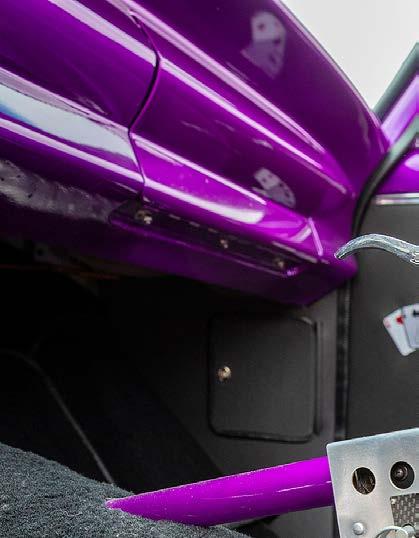
space is cleanly appointed and vividly finished in black and purple. A custom roll bar was welded in, along with custom footrests that work with the bucket seats that were relocated rearward for more legroom. There’s also a custom overhead console, Auto Meter gauges, an Alpine stereo with JL Audio speakers and amplifiers, RJS safety harnesses, and a Budnik billet steering wheel.
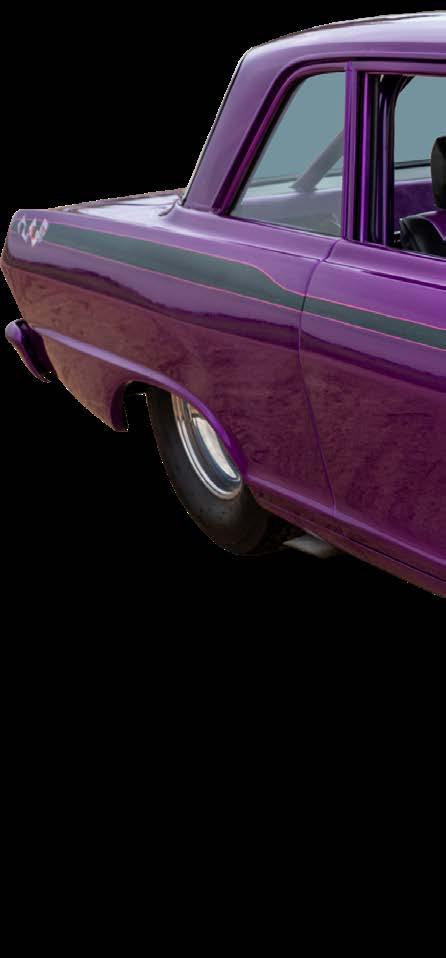
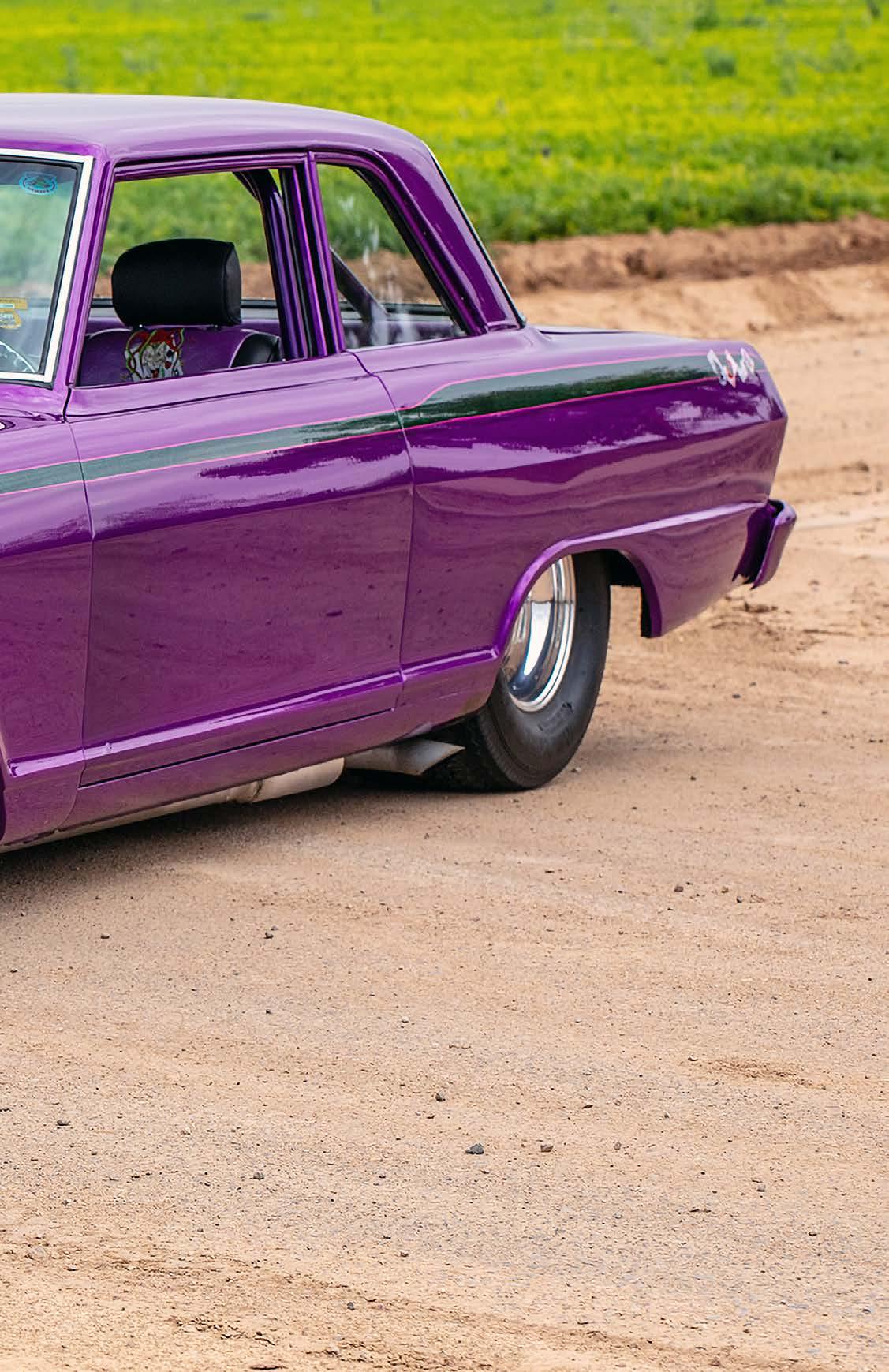
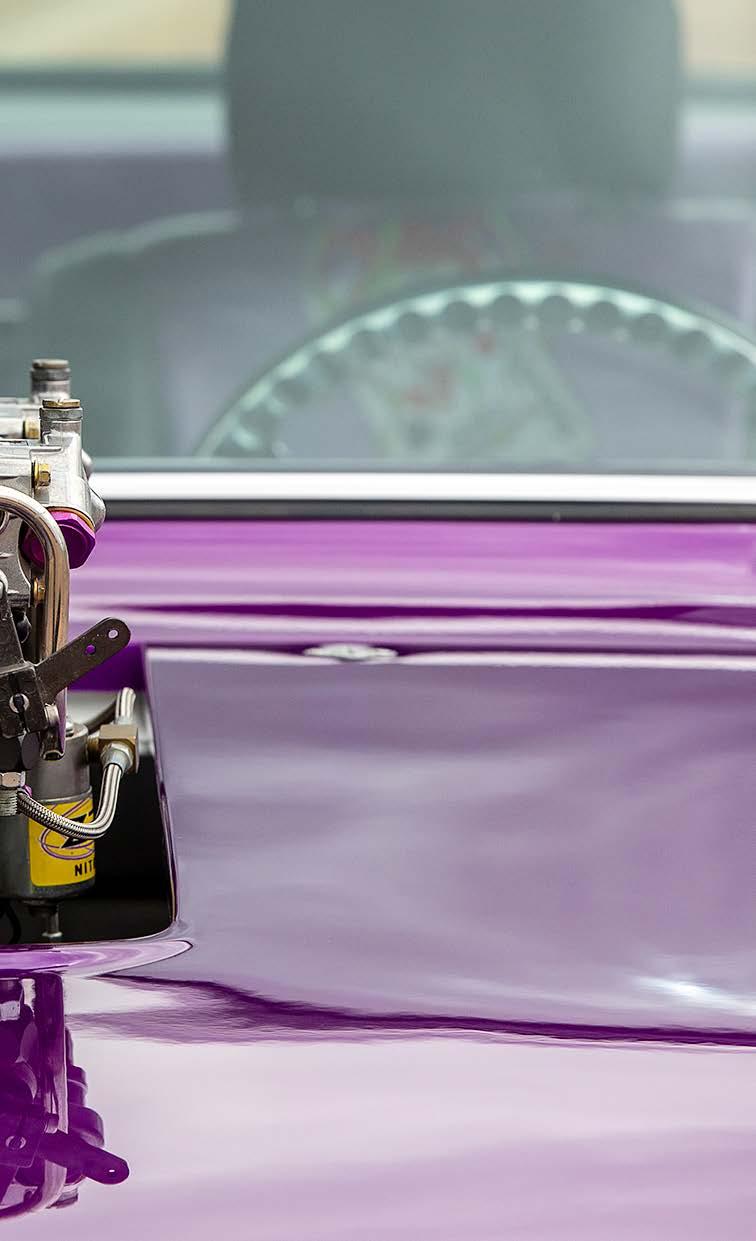
If there’s one thing we’ve glossed over so far, it is the House of Kolor Passion Pearl Purple paint. It’s bright, vivid, juicy, and sedately accented with a green stripe with marbling effect. As outstanding as the paint is, you might not notice that the door handles, locks, and other trim have been shaved.
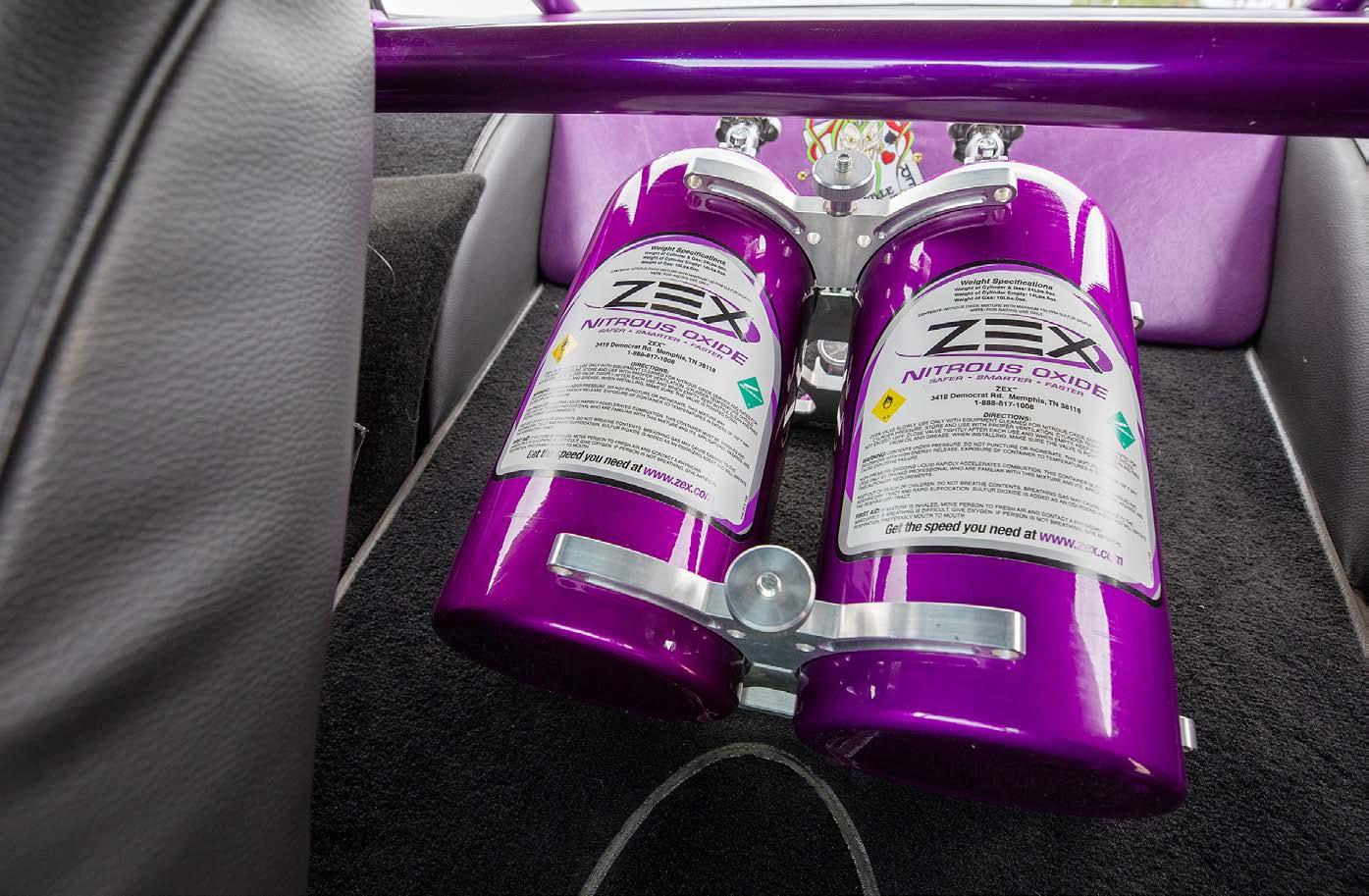
The dash and custom roll cage are painted body color and the area that would have once held the rear seat is now occupied by custom wheeltubs covered in black carpet panels and a pair of Zex nitrous bottles.
Fiberglass bumpers replace the original steel pieces and the hood has been mounted to the body with a reverse flip hinge assembly.
Pulling off the Pro Street look and performance are 2x3 boxed rear frame rails and a Chris Alston Chassis Works ladder bar coliover suspension. At the front end, a Mustang II front suspension with upper and lower tubular control
arms work with the coilover shocks that match the dampers in the rear.
A tasteful choice, the polished Weld Magnum 15x3.5 wheels wearing Mickey Thompson 26x7.515 tires up front join a pair of 15x13-inch Weld Magnums shod with 29x15x15 Mickey Thompson tires. Four-wheel-disc brakes were mounted up behind the shiny hoops and hand-bent stainless
steel brake lines work with braided stainless steel flex lines to supply the fluid.
The Collard’s Nova is a fun and fast cruiser that could probably turn a decent lap on track as well, but so far, the Collard’s favorite experiences with the Chevy are the road trips to check it out and bring it back in the fold.
“It was very well taken care of and in great condition, but [we] are excited to put our own personal touches on it soon,” Collard told us. “Knowing how much my father-in-law enjoyed this build really heightens the emotional connection.” The Collards wanted to thank Randy Warriner of The Nitro Garage for his part in building it and Kurt Brush for his kindness and patience in working with them to bring the Nova home.
in
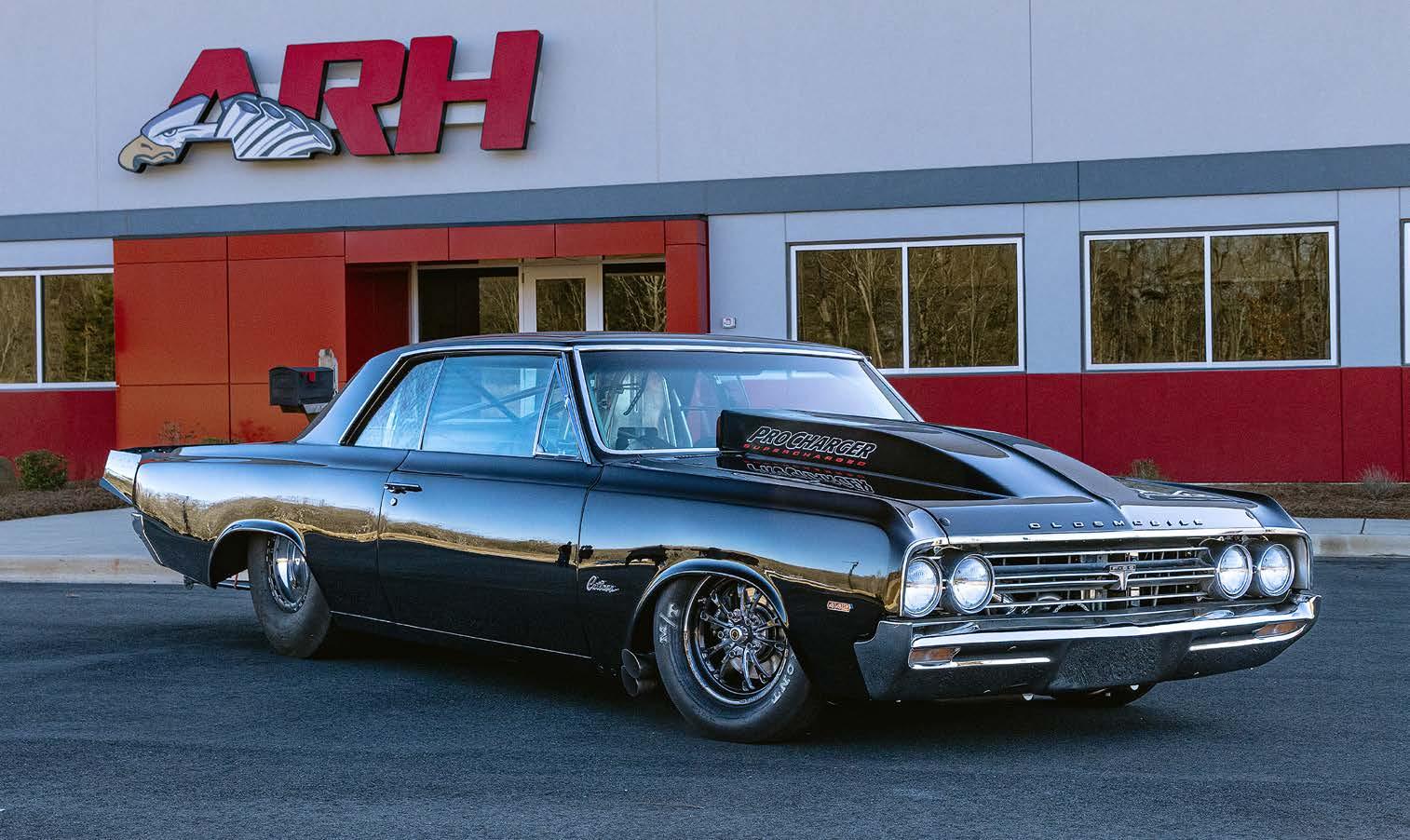
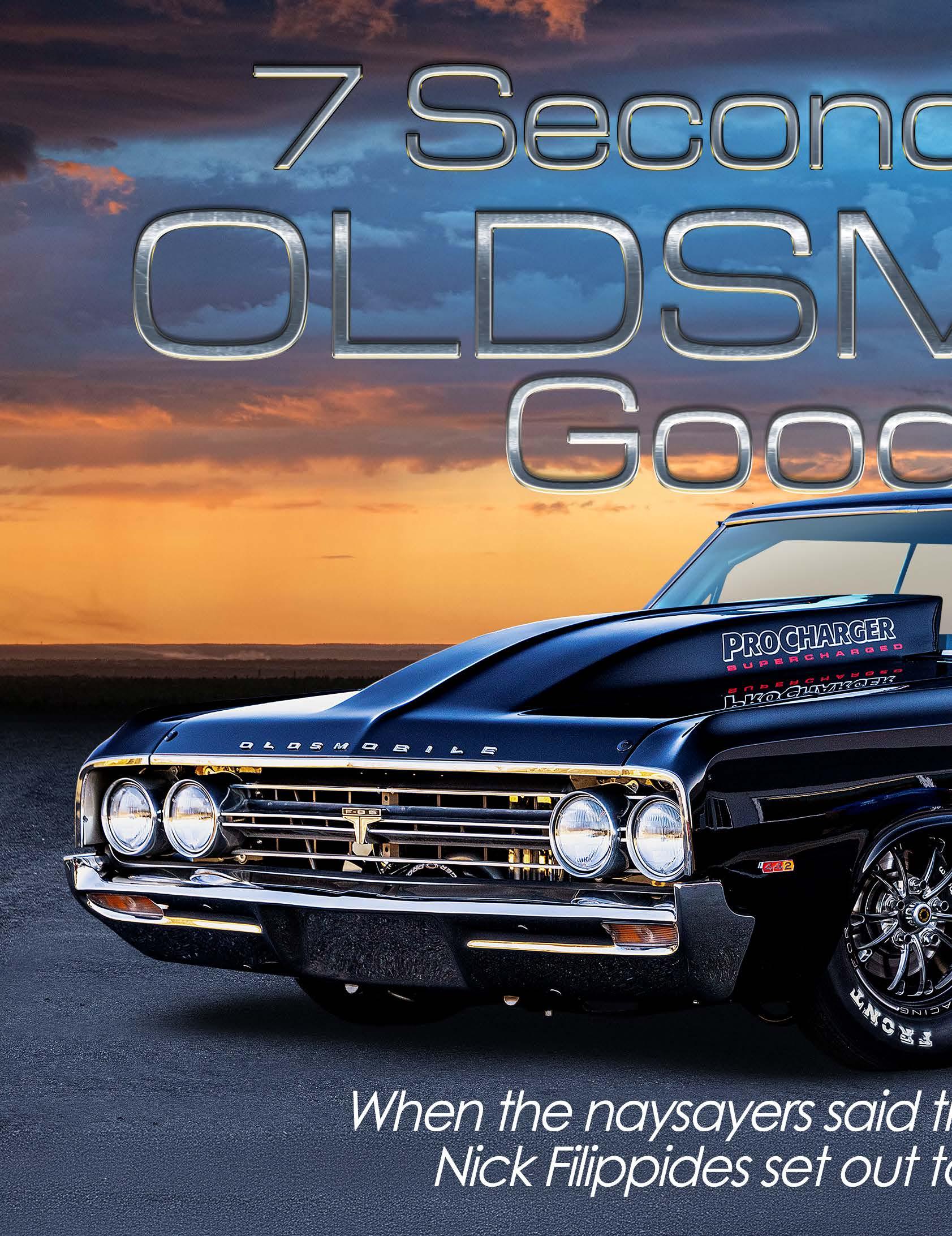
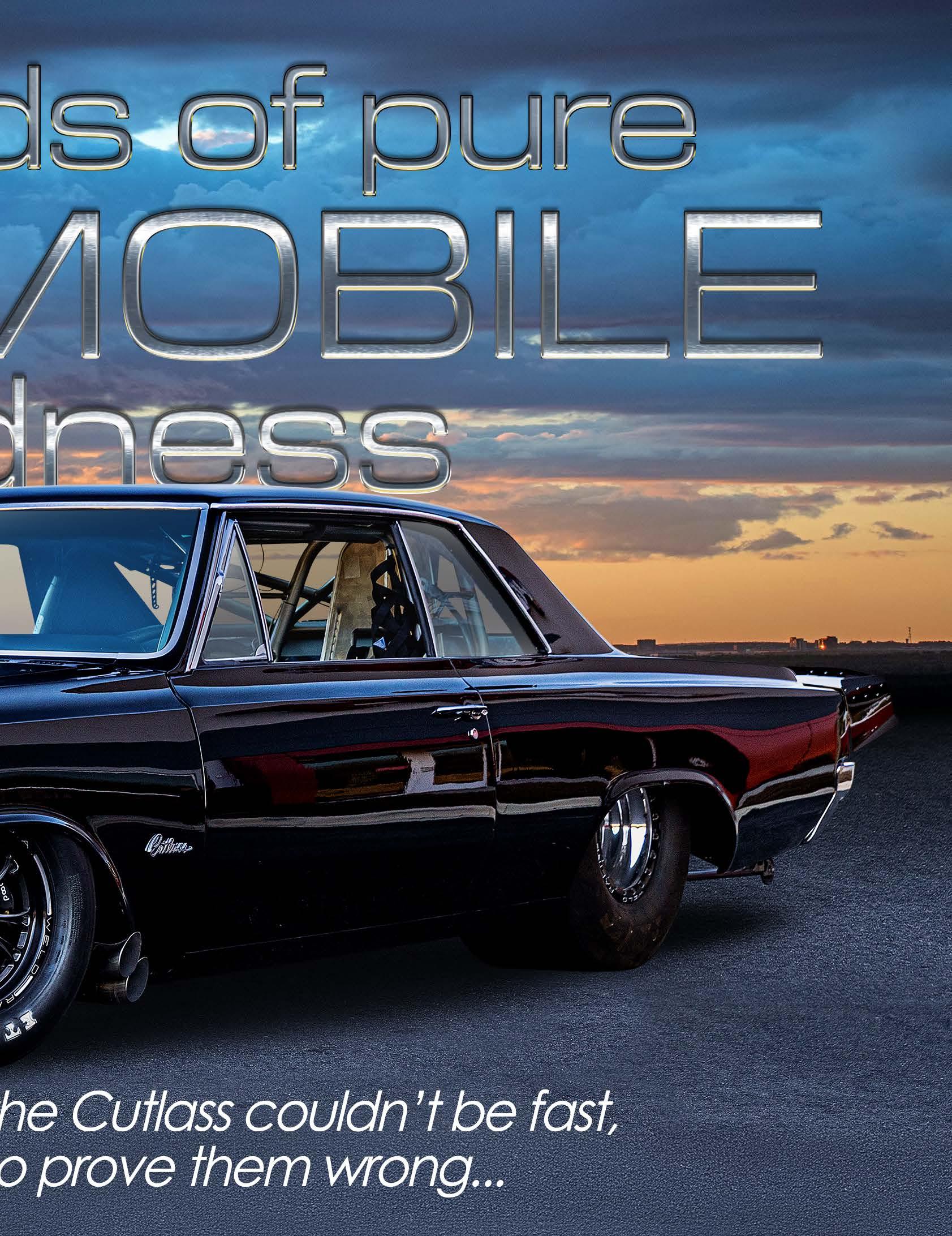
Purchased by his brother for $800 and given to him as a gift, the 1964 Oldsmobile Cutlass you see here entered Nick Filippides’ life in 1987 as a daily driver with a 330 cubic-inch engine and a 3-speed manual transmission.
Over the years, Filippides has owned numerous other Oldsmobile machines, but this one has always held a special place in his heart and these days it’s one of the quickest and fastest Olds-powered muscle cars you’ll find anywhere.
Spurred by Chevy friends who said Olds power was inferior to Chevy power, Filippides had the fuel he needed to charge ahead with his project.
After opening a performance shop in 1989, a plan was formulated to make the Cutlass the quickest and fastest Olds-powered street car. By 1992, the Cutlass was motivated by a 496 cubic-inch big-block Olds that made 800 naturally aspirated horsepower.
Story: Steve Baur
Photos: Wes Taylor
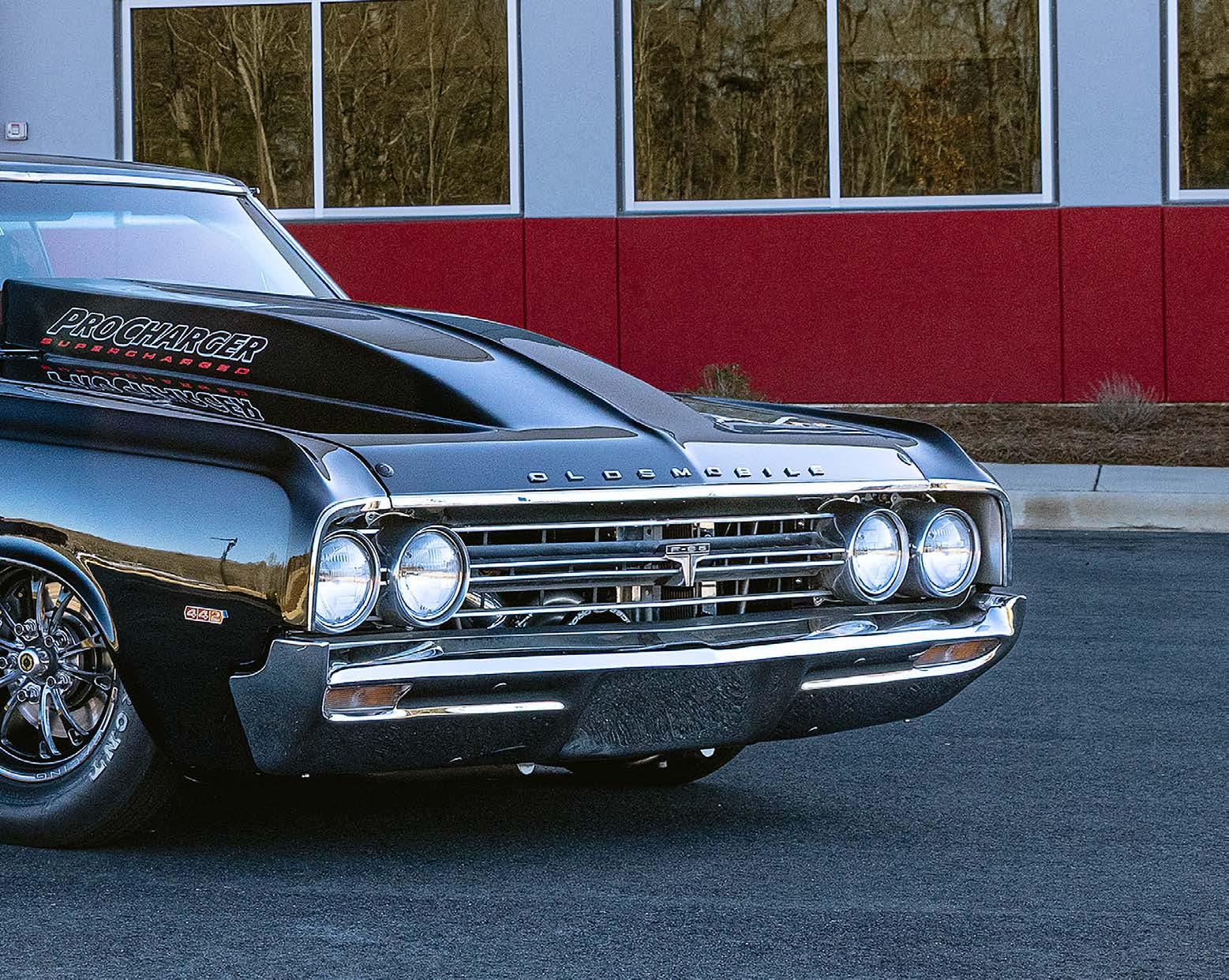
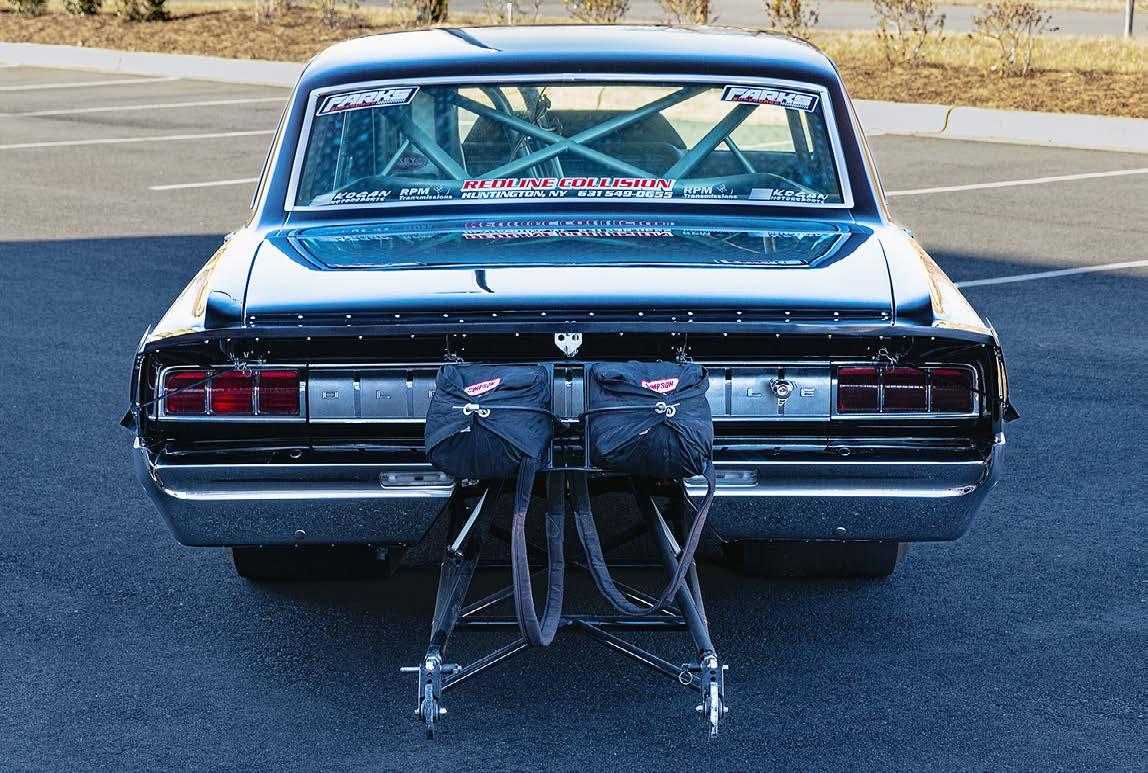
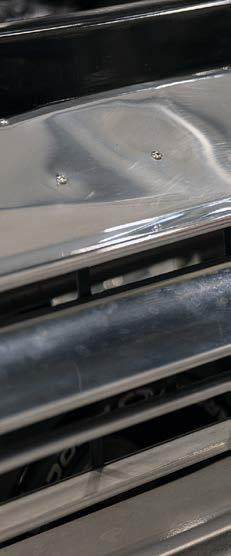
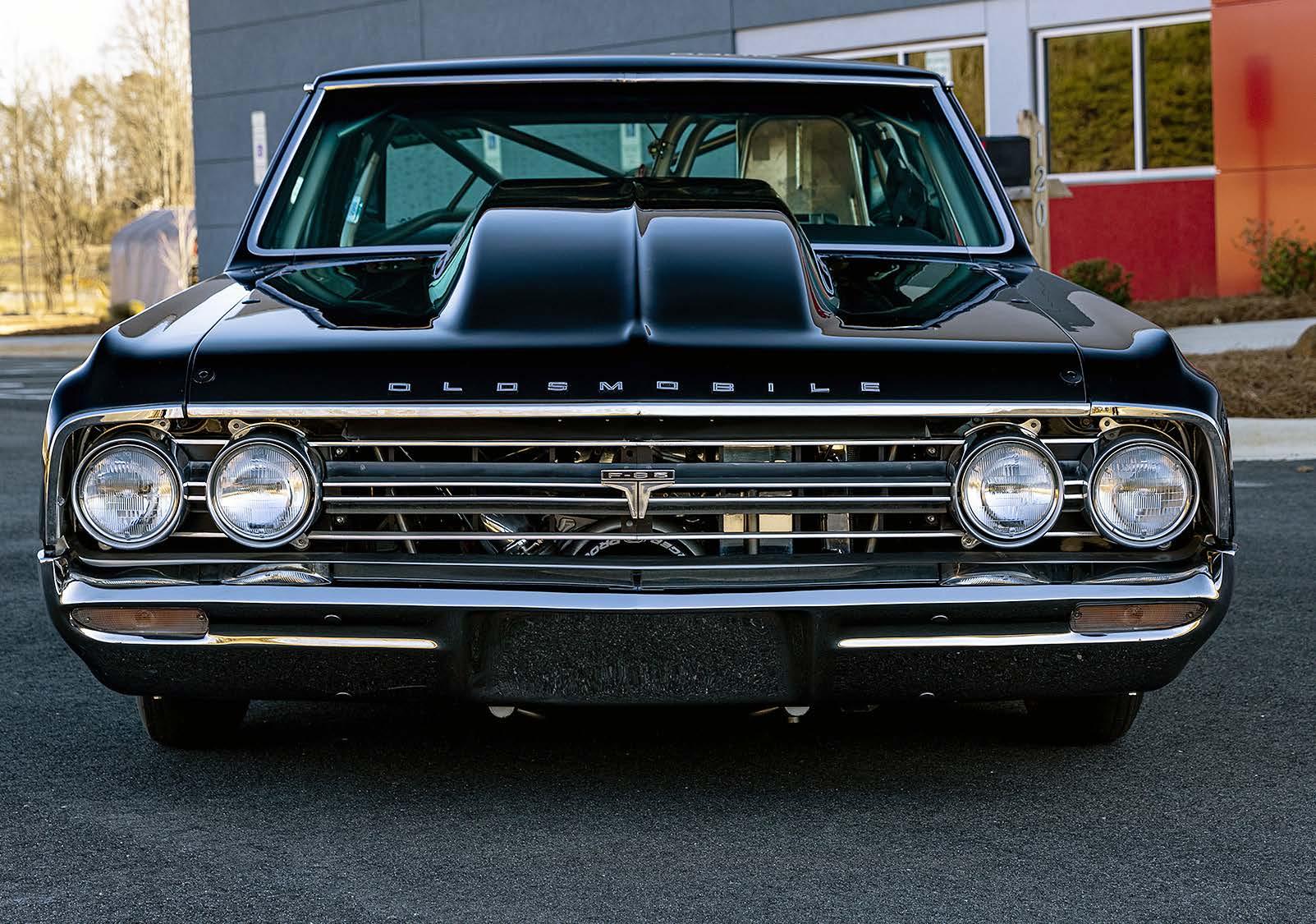
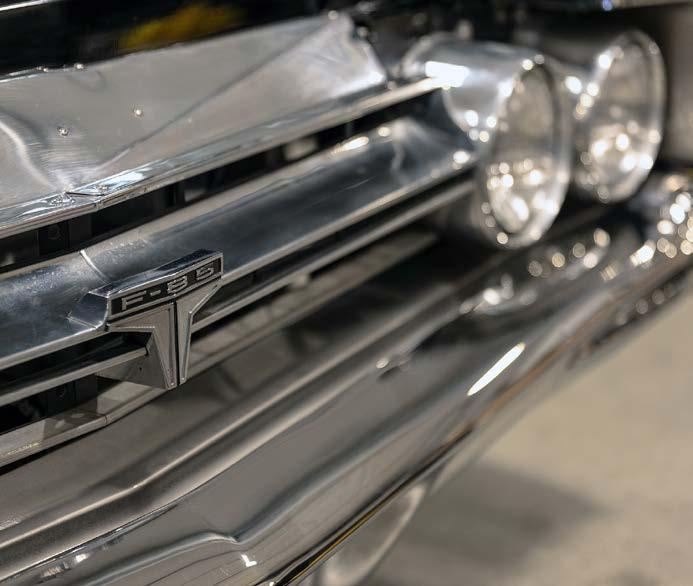
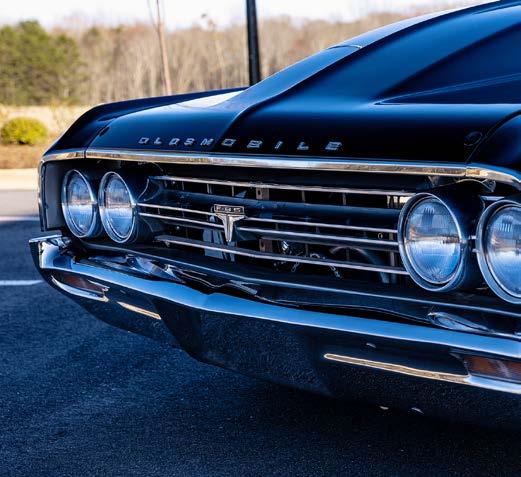
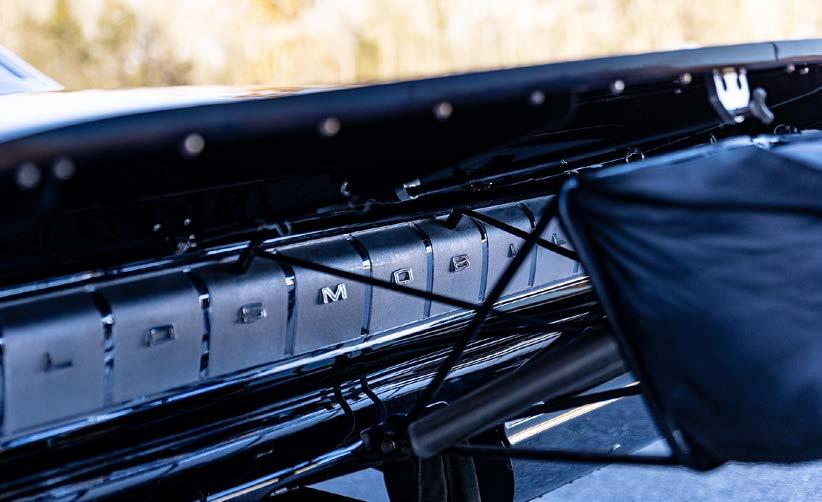
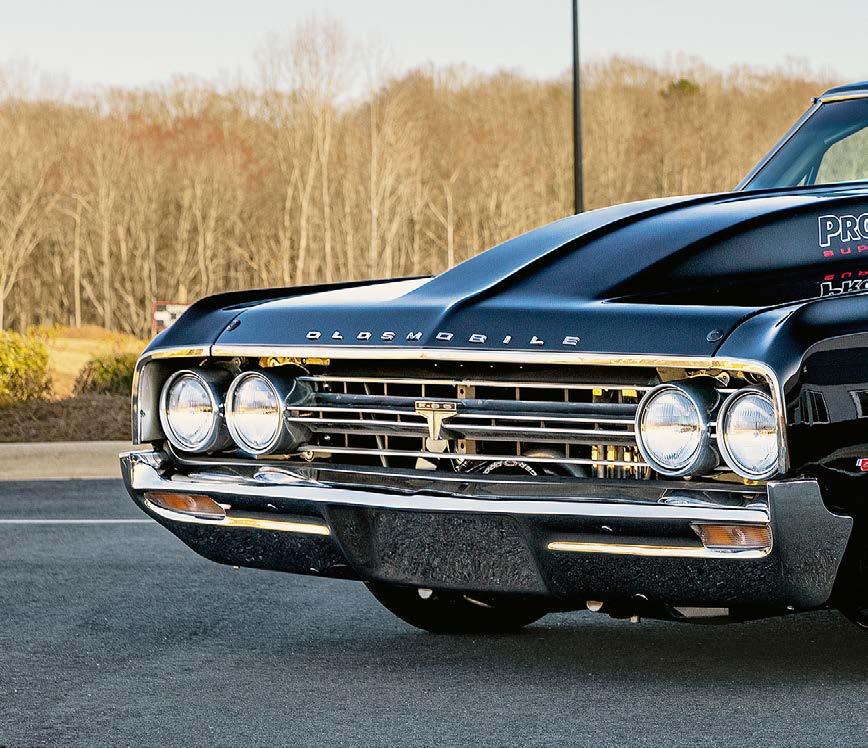
To maintain an OEM feel, the factory front grill, headlights and buckets were retained along with the rear lights, trim and badging.
Filippides drove it to a best elapsed time of 10.05 seconds at 135 mph, and over the next ten or so years, he whittled that down to 9.50 at 142.
The Cutlass was eventually sidelined so Filippides could focus on his new business venture, American Racing Headers. By 2010, though, he was ready to dust off the old girl and infuse some modern technology into it to go even quicker and faster.
Currently, the Cutlass features a chromoly double-frame-rail chassis by MI Performance that incorporates the original front frame section along with the tubular upper and lower control arms that are bolted to it.
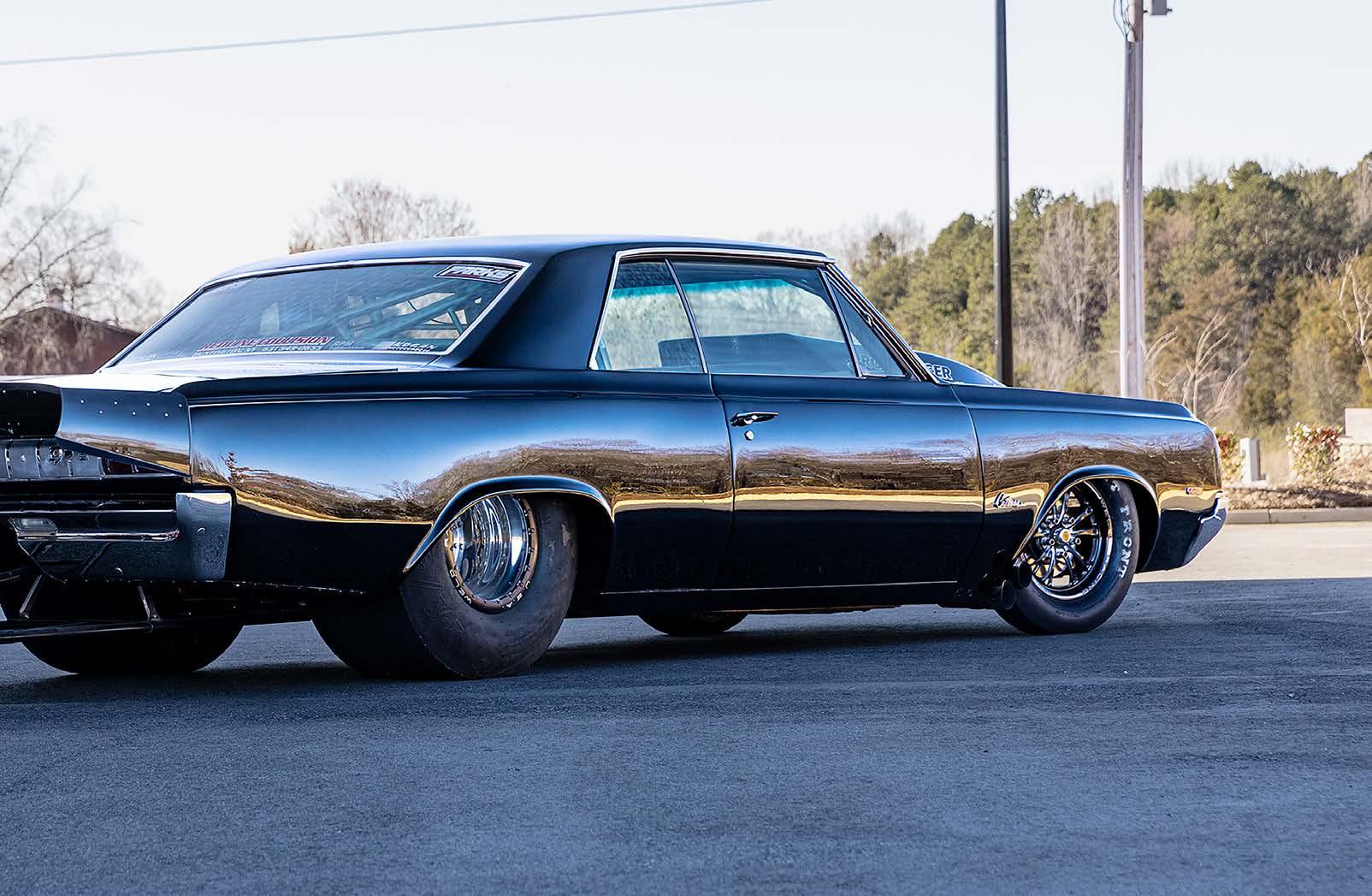
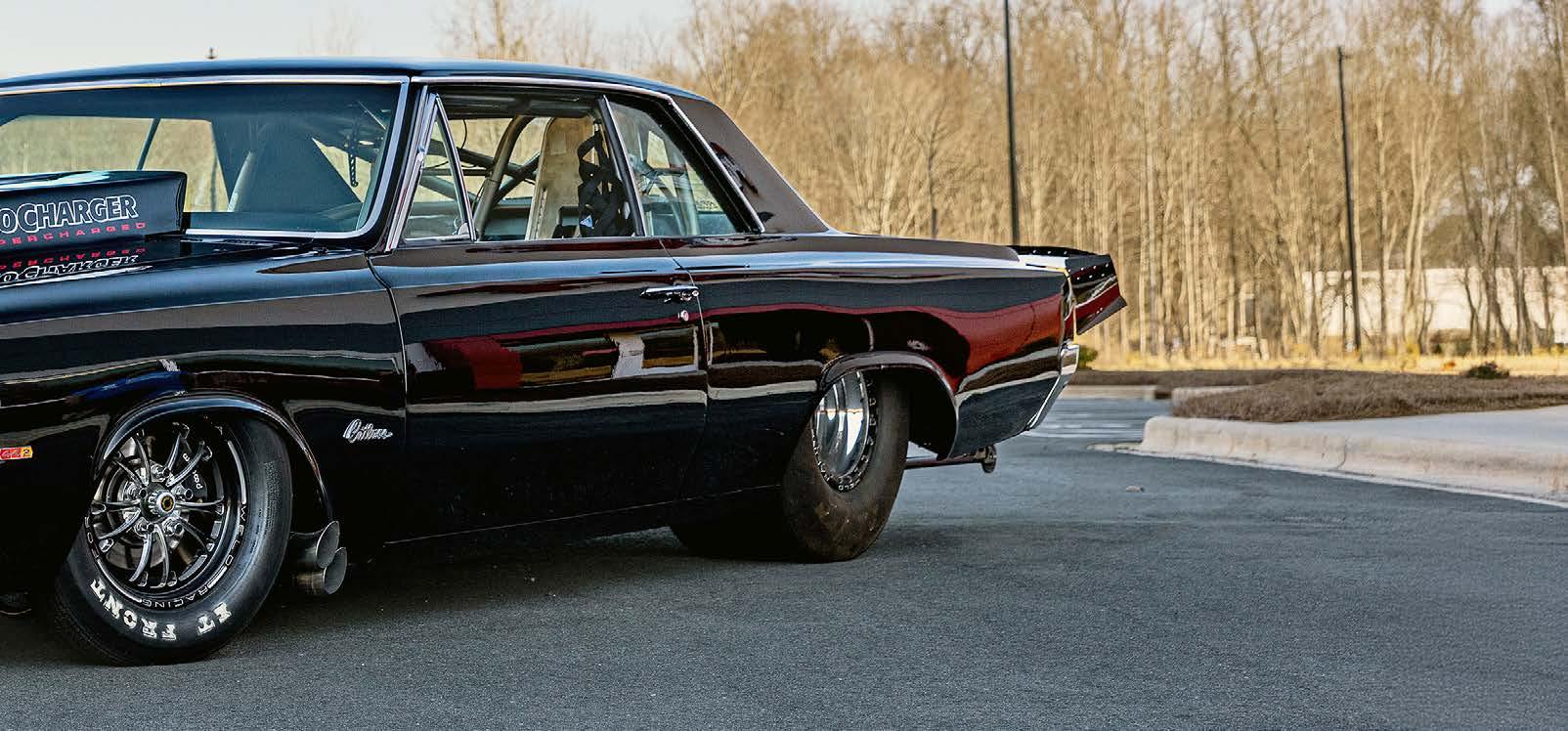
It’s easy to appreciate the long lines and contours of a big-bodied sixties muscle car, especially one as rare as this Oldsmobile Cutlass.
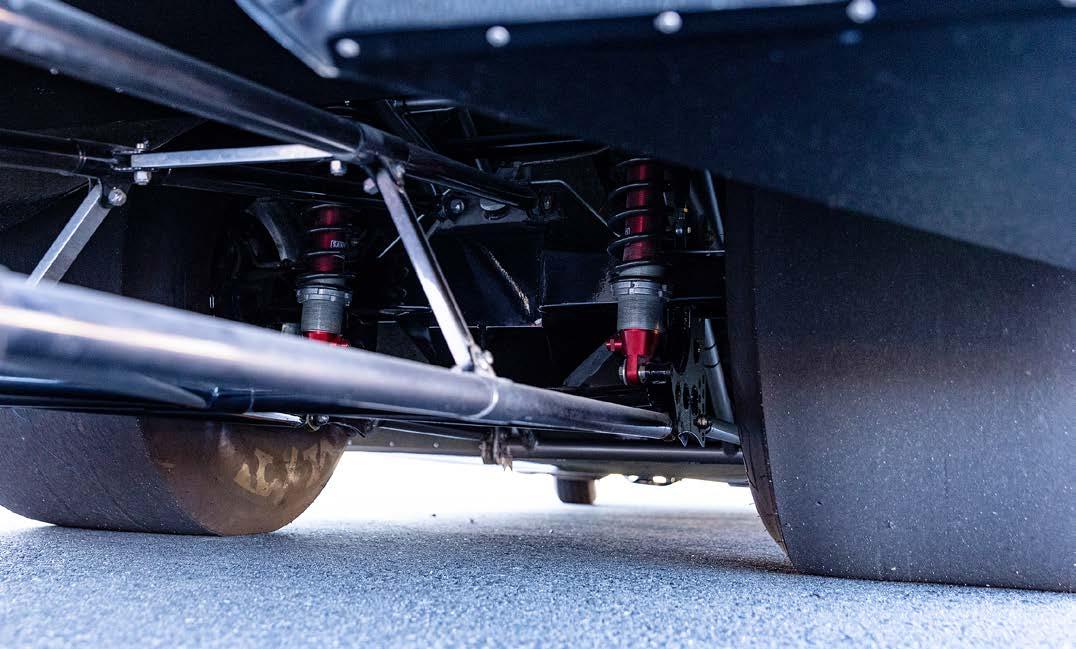
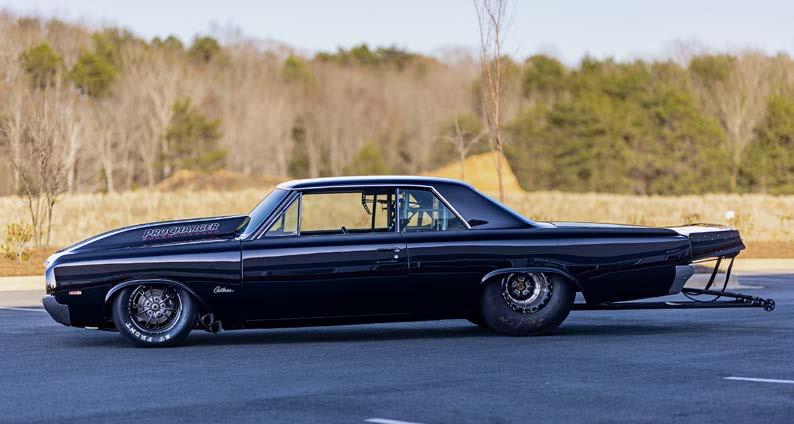
The car’s wicked stance is thanks to a double frame-rail chromoly tube chassis coupled with tubular upper and lower control arms and coilover shocks in the front and a 4-link with wishbone and coilovers in the rear.
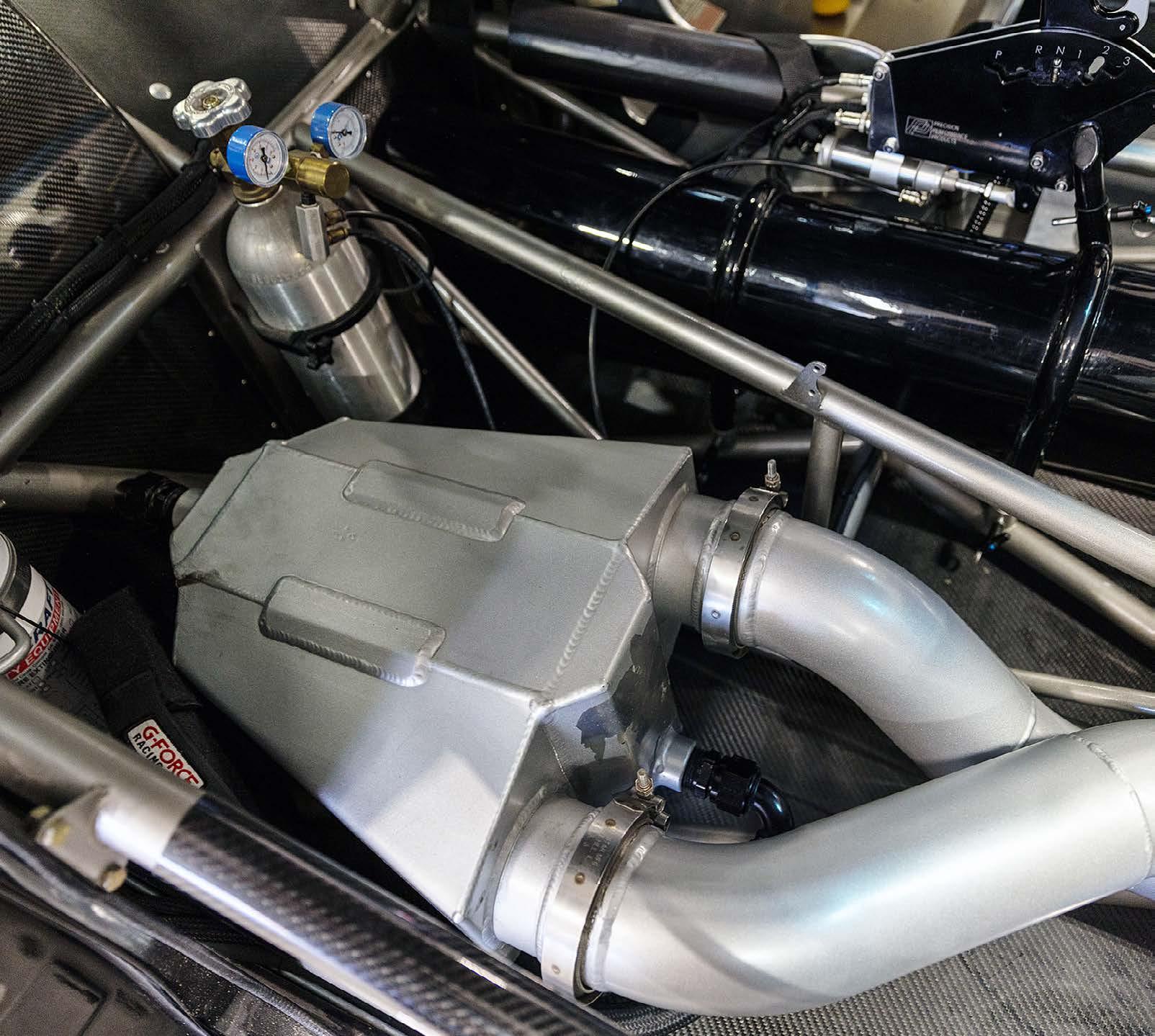
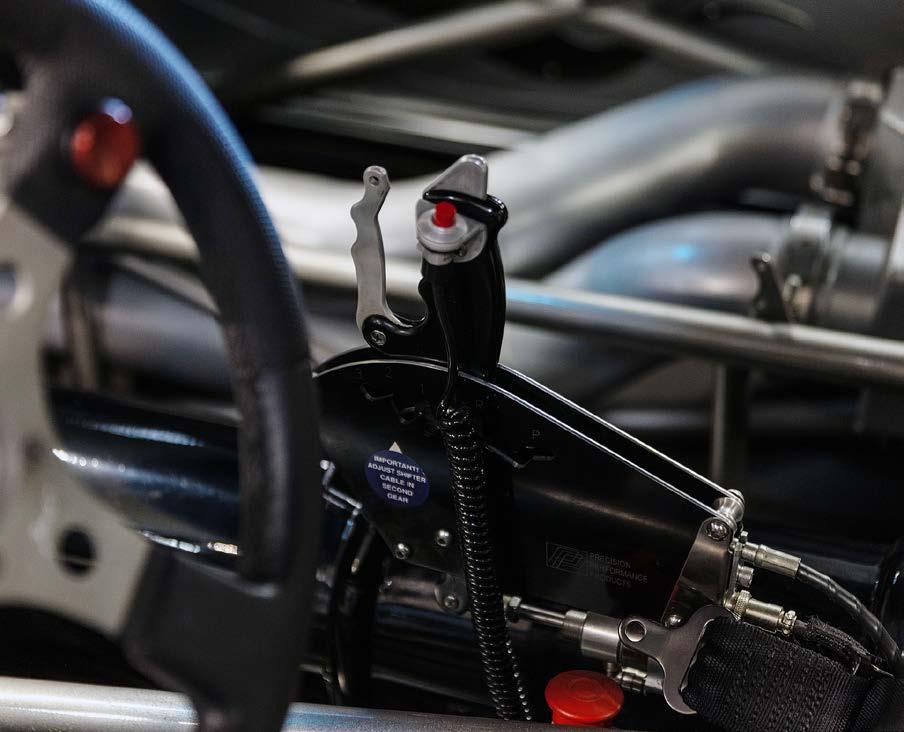
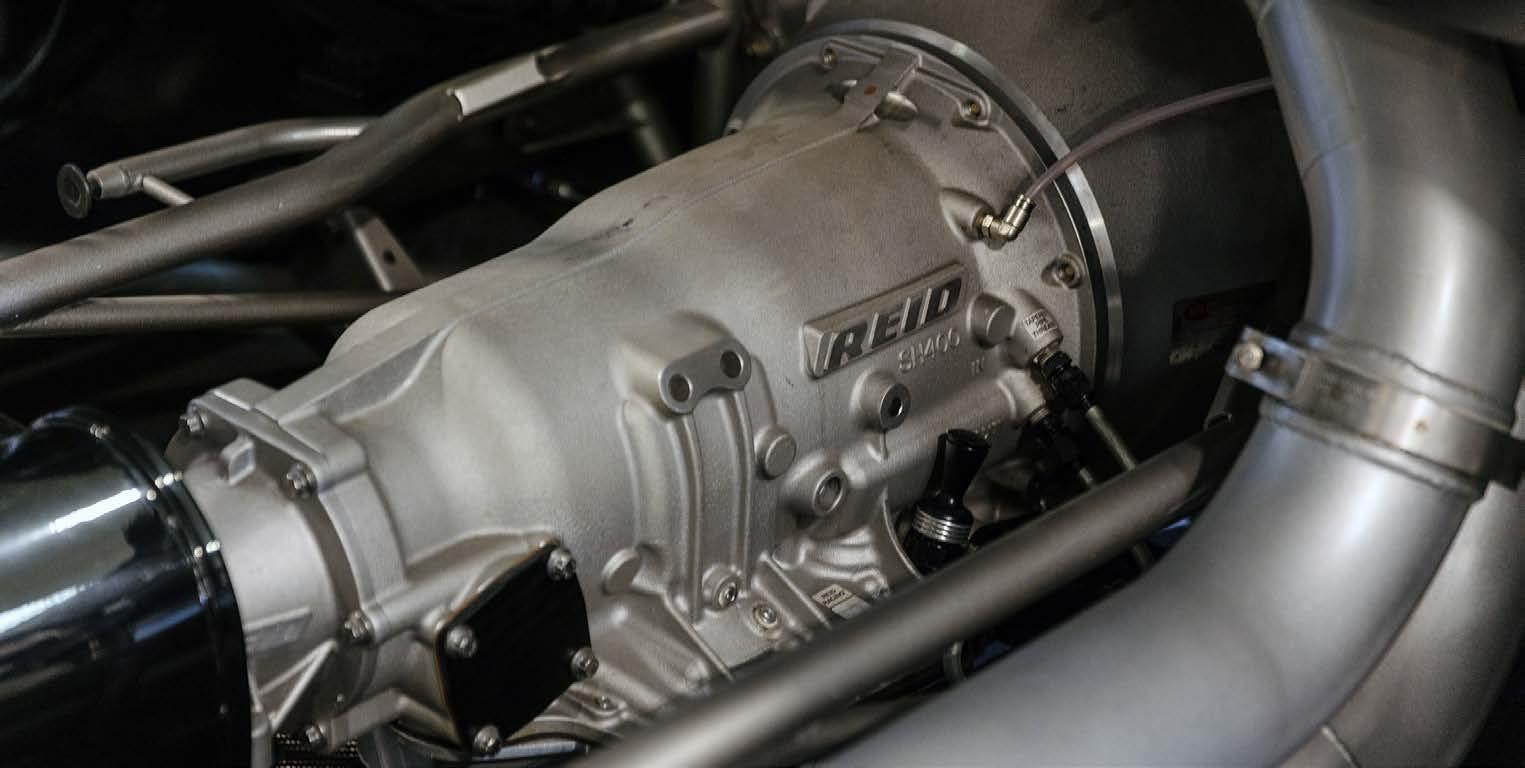
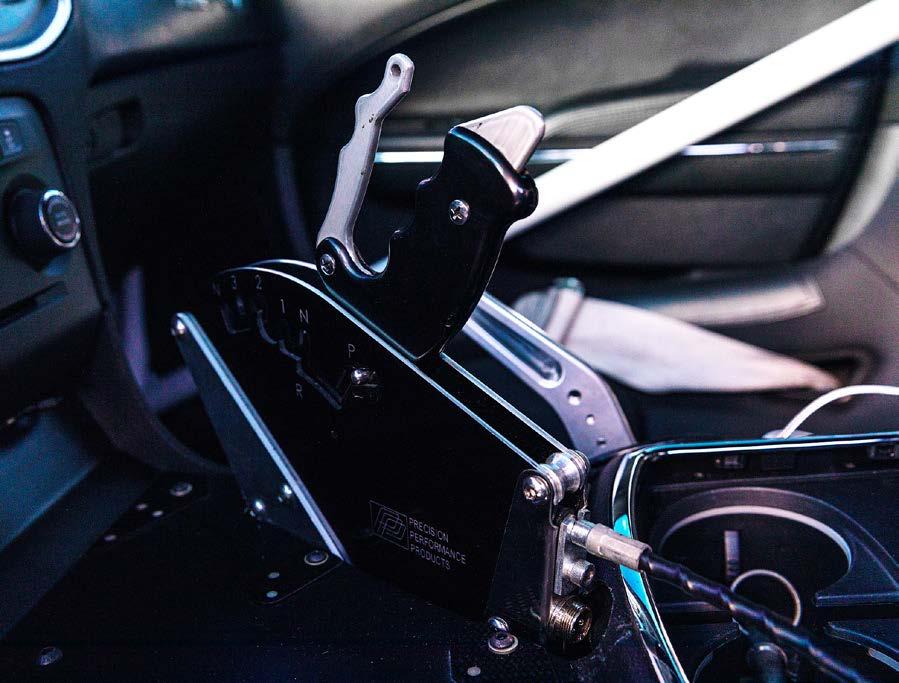
The Reid-cased Turbo 400 built by RPM transmissions is on full display beside the driver and is shifted through a Precision shifter. Instead of a passenger, the supercharger cooler tubes and tank ride shotgun.
At the back of the big black machine is a 4-link rear suspension with a wishbone locator.
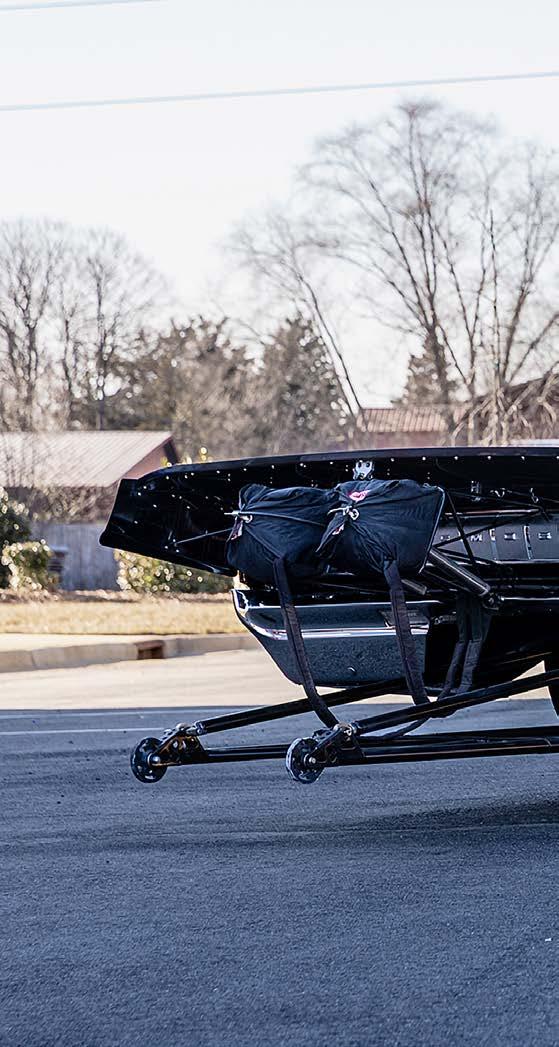
Dave Connolly and his Competitive Suspension outfit dialed in the front coilover shocks, while a pair of Santhuff’s coilovers get the job done at the rear of the car. Wheelie bars were also fitted to the Olds, and if you get
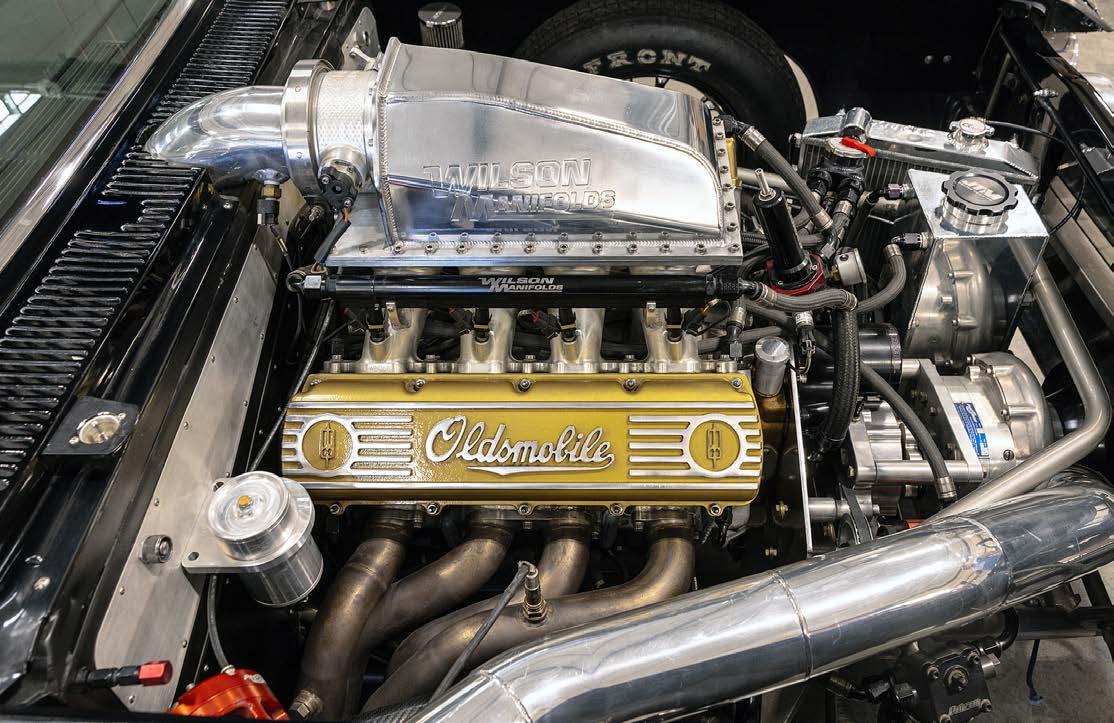
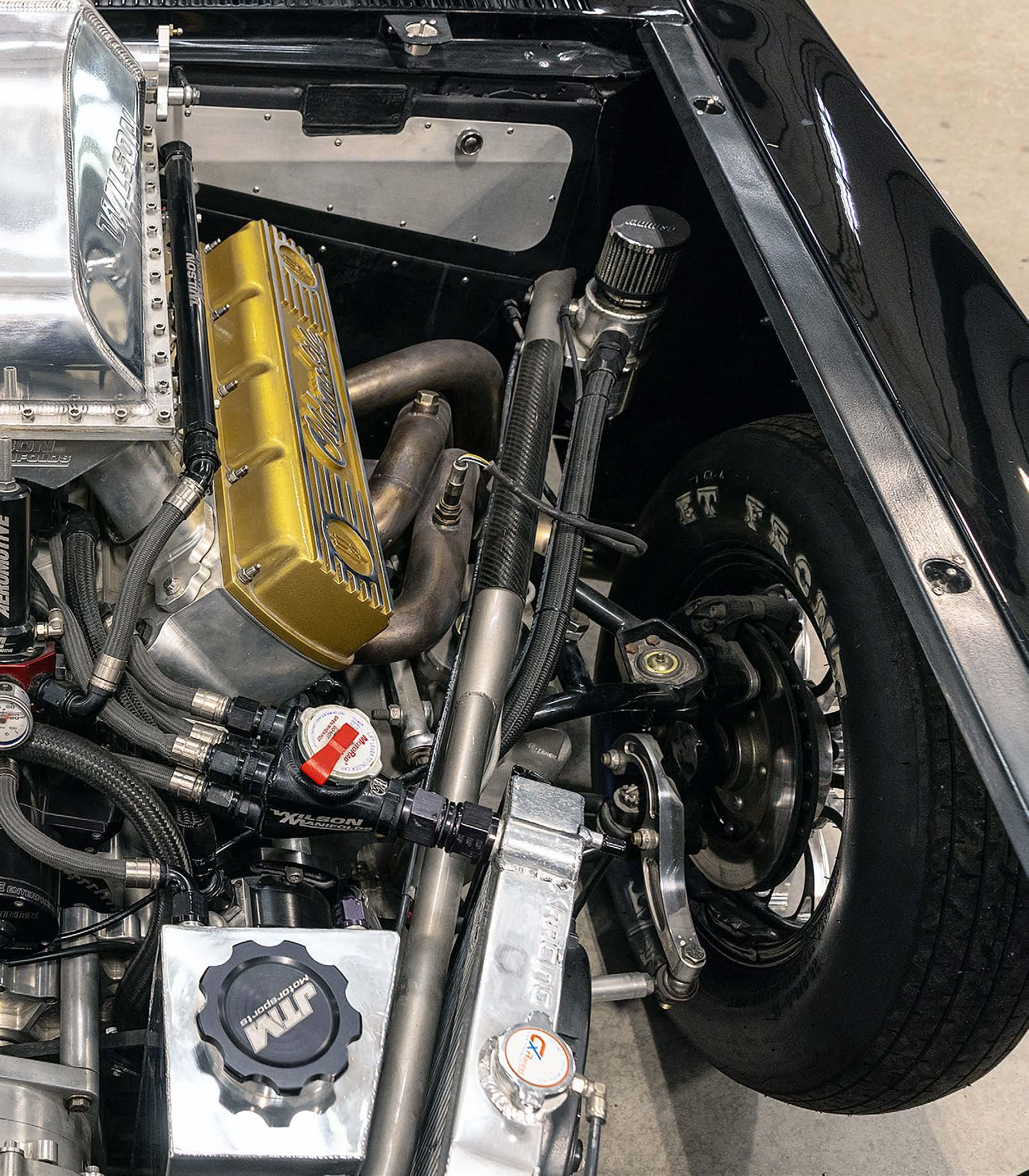
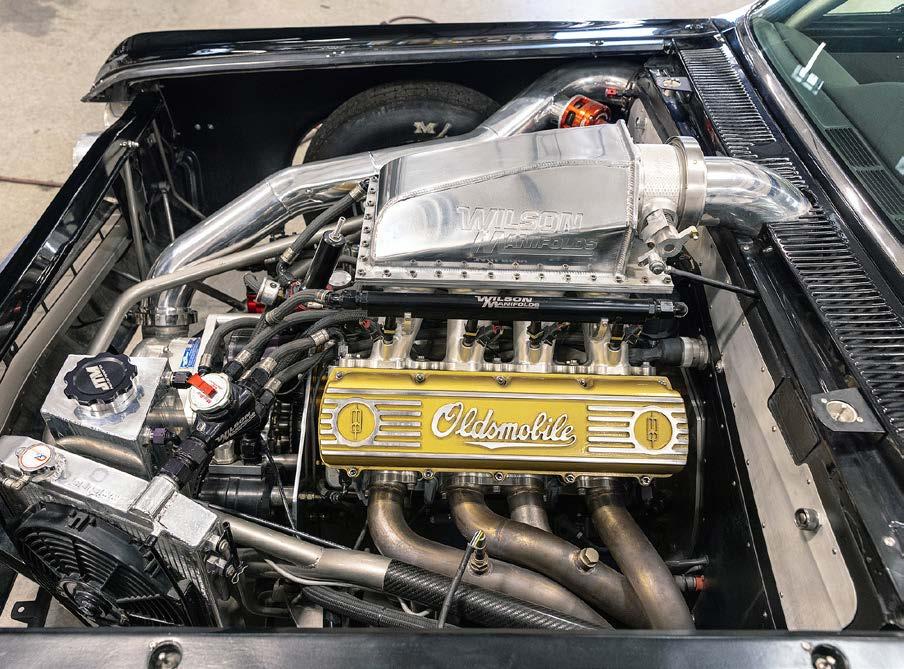
understand why. The main driving force of the powertrain is a unique piece as far as Oldsmobile power is concerned. The engine combination starts with an Olds NASCAR block that has been stretched out to 440 cubic inches courtesy of a Bryant crankshaft, GRP connecting rods, Diamond pistons and machine
The stainless steel headers are, of course, built by American Racing Headers...
Does This Look Odd?
...Well it should! The mill set between the rails of the Olds started off with a rare Oldsmobile NASCAR small block that was built into what Filippides refers to as a “Bill Trovato badass long block setup” that incorporates a Bryant crankshaft, GRP connecting rods, Diamond pistons and machine and assembly work by Dave Kogan. The creation rounds out to a solid 440 cubic inches.
Nick Filippides’ Supercharged 440-inch Oldsmobile Powered 1964 Olds Cutlass (442)
Body & Paint:
All steel except fiberglass fenders, hood and bumpers. Factory grill, headlights and headlight buckets retained. Body was originally painted by Redline Collision.
Chassis Modifications:
Double frame rail, chromoly tube chassis retaining front upper and lower control arm section for original frame.
Suspension:
Front is stock style frame section with tubular upper and lower control arms. Coilover shocks by AFCO custom modified by Dave Connolly. Rear is 4 link with wishbone, Santhuff coilover rear shocks, wheelie bars.
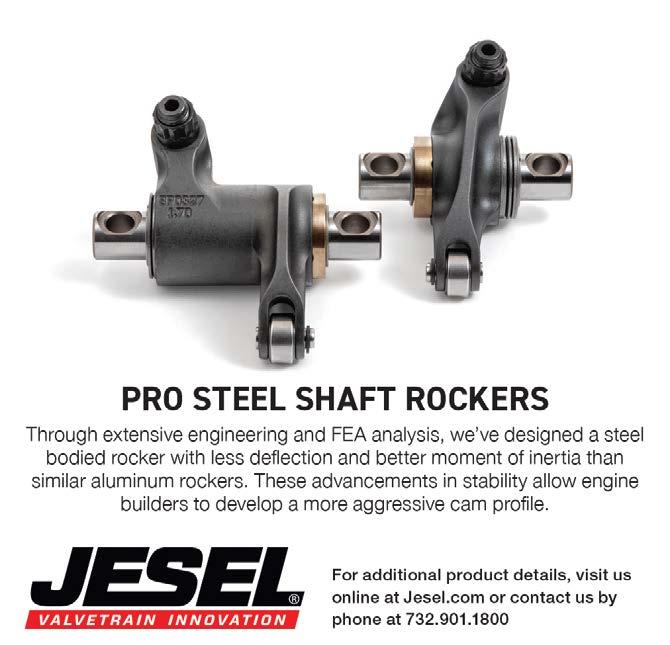
Custom billet aluminum heads designed and manufactured by Kellen Brown at Competition Services and finished by MBE and Marty Zimmerman. Titanium valves, Jesel rockers. Kellen also custom machined the billet valve covers.
Induction & Fuel Delivery:
Custom Wilson Intake and Throttle body. Aeromotive throughout with mechanical belt-driven fuel pump.
Power Adder:
ProCharger gear driven F1X.
Transmission:
Turbo 400 by RPM transmissions. Converter by Pro Torque.
Rear End:
Fabricated 9” with Mark Williams spool and axles.
Brakes:
Wilwood throughout.
Tires & Wheels:
Weld Racing wheels and Mickey Thompson tires.
Interior:
Retained stock original dash. The rest is full race with seat set back, carbon fibre floors and wheel tubs.
ET & MPH:
Best to date is 7.73 @ 178 MPH in 1/4.
Most Unique Feature(s):
The ‘64 Cutlass body style, that’s a rarity. The nonconventional small block Olds engine gets tremendous respect by those that appreciate doing big things differently.
Reason For Build:
To prove that you don’t need a Chevy engine to run impressive ETs in a reliable package.
Build Timeline:
Longer than I care to admit. 7 years. (See; chassis shop jail) But all said and done, the end results was a unique SEMA quality build that looks as great as it runs.
Most Memorable Experience(s):
There’s just too many to list, but it’s safe to say that making that first pass in 1992 with a N/A, 496” BB Olds on 10” tires and clocking a 10.05 at 135 right off the trailer and doing it in front of all my hardcore Chevy ball-breaking buddies, that was special. It put to bed the notion that Oldsmobile power can’t compete with my buddies in their BB Chevys. (But even with my newfound respect, they still thought I was nuts.)
Looking into the future, we want to continue pushing the envelope to see how quick and fast we can run in a true Olds powered doorslammer, only now with a power adder. An F3 Procharger is definitely in our future.
Thanks To:
My son Louie for all his continued assistanc,e including handling most of the driving duties. My family, that understood what this race car means to me and the Olds community of racers that love seeing their favorite brand hauling the mail. Dave Kogan (engine builder), Bill Trovato (supplied badass long block setup), Kellen Brown (custom billet heads and valve covers), Marty Zimmerman (consulting and supplier of valvetrain components), Joe @Jesel Valvetrain, Rodney (RPM Transmissions), and Joe at (Pro Torque Converters) Mike, formerly of MI Performance for building the chassis and putting the roller together.
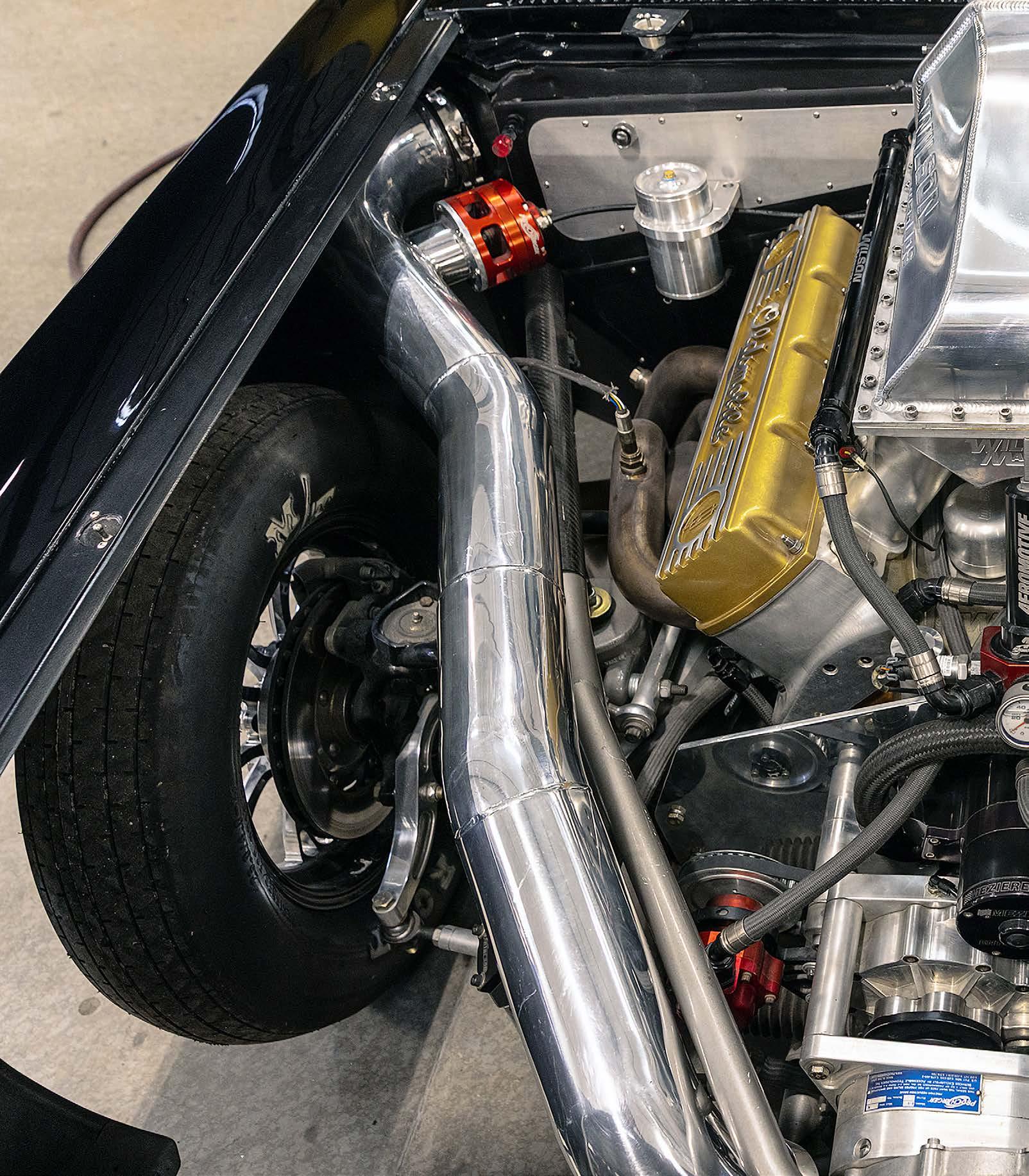
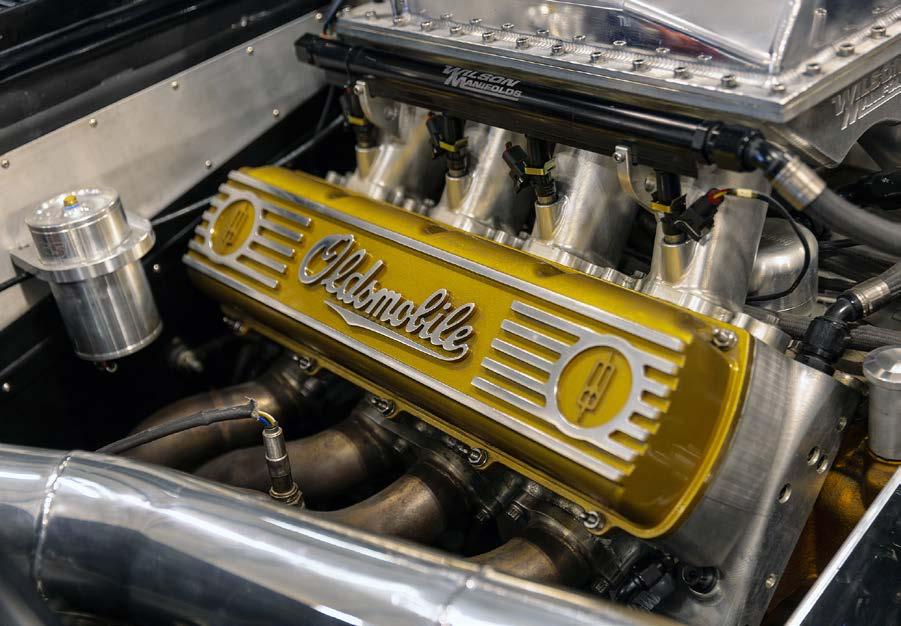
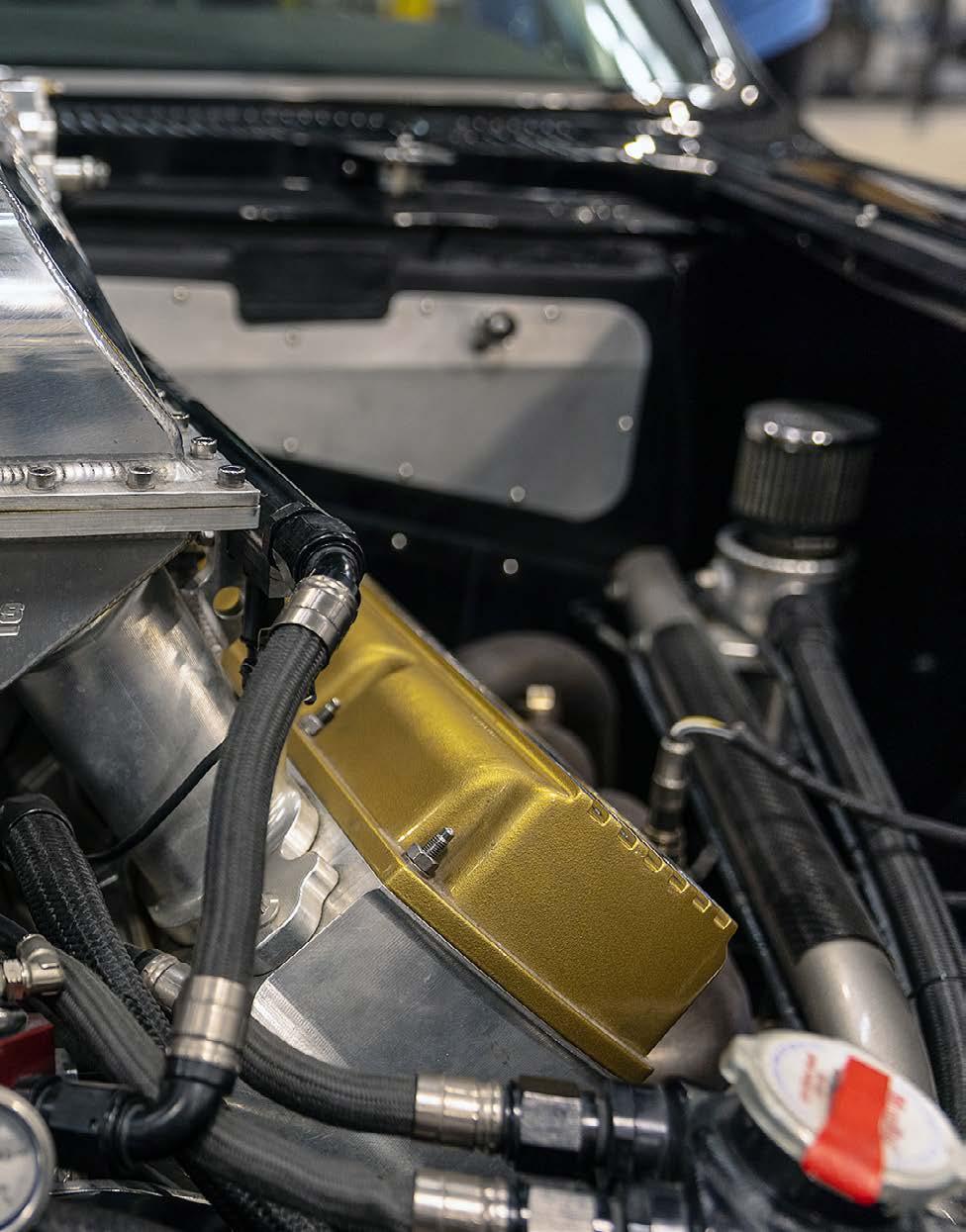
Cylinder heads are one-offs designed and manufactured by Kellen Brown at Competition Services, and fine-tuned by MBE and Marty Zimmerman. Jesel Valvetrain rocker arms actuate the Titanium valves directed by the BTR Performance-spec’d camshaft and the stainless steel headers are, of course, built by American Racing Headers.
Equally intriguing are the one-off billet aluminum cylinder heads that were designed and manufactured by Kellen Brown at Competition Services, and fine-tuned by MBE and Marty Zimmerman. The heads feature the common Olds exhaust design, but that’s about as close to the factory’s offerings as they get. Jesel Valvetrain rocker arms actuate the Titanium valves directed by the BTR Performance-spec’d camshaft. The stainless steel headers are, of course, built by American Racing Headers.
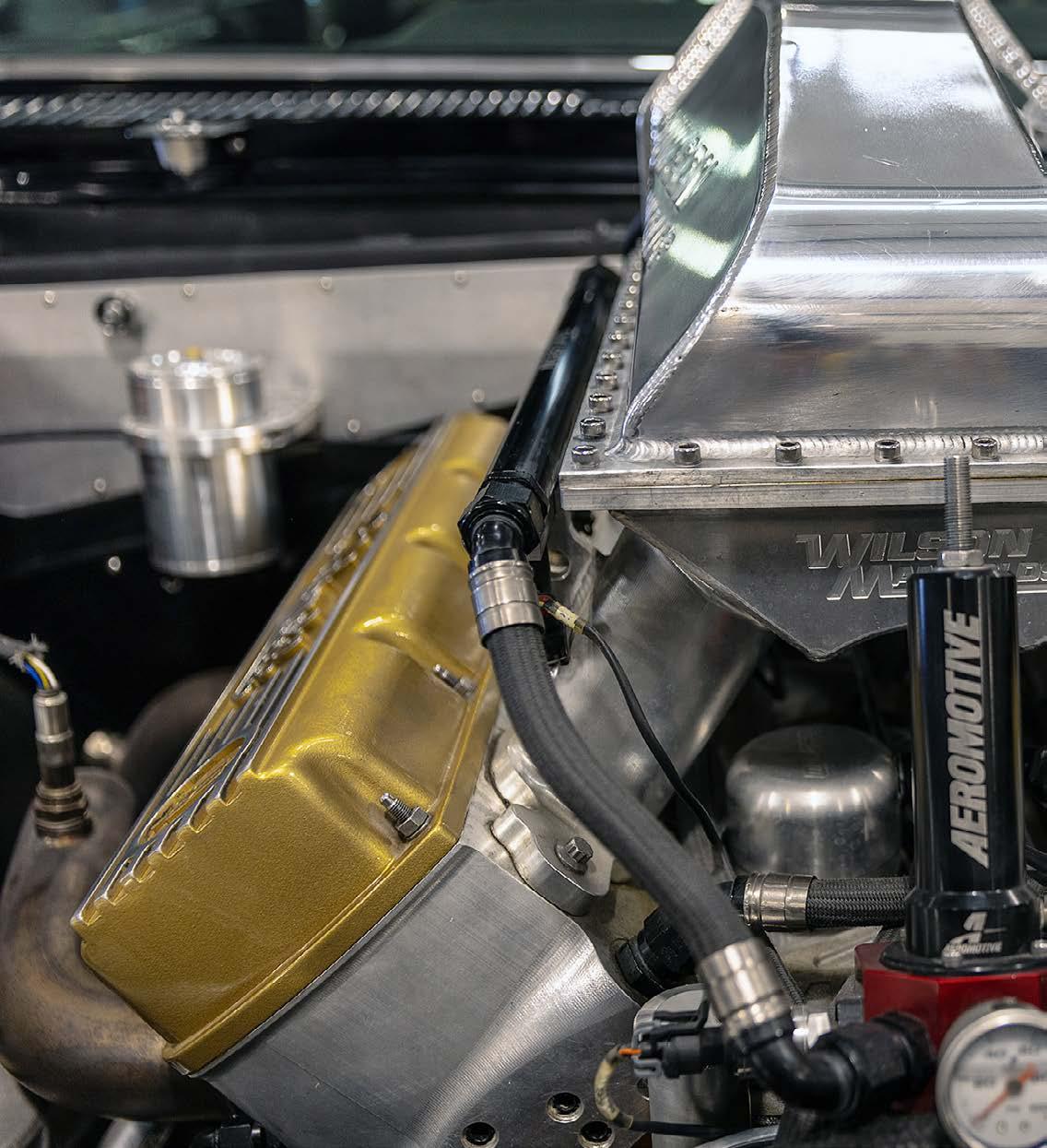
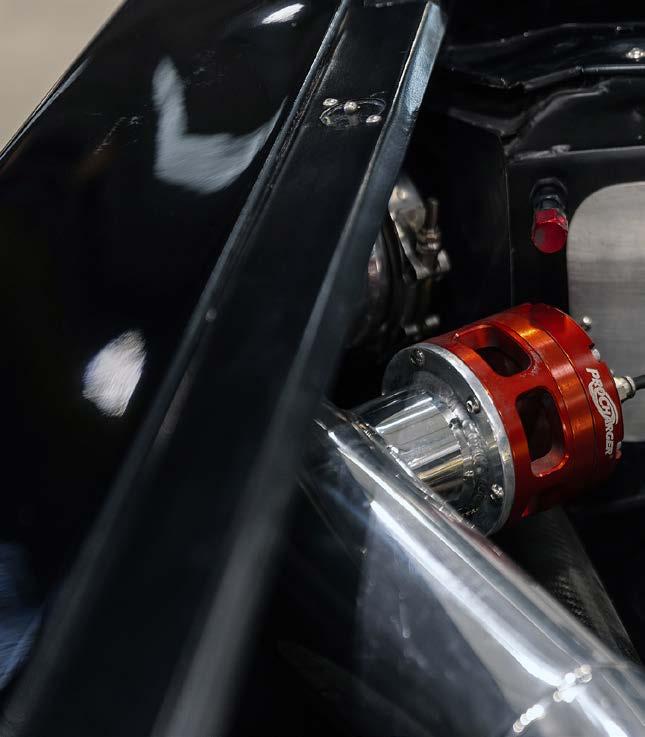
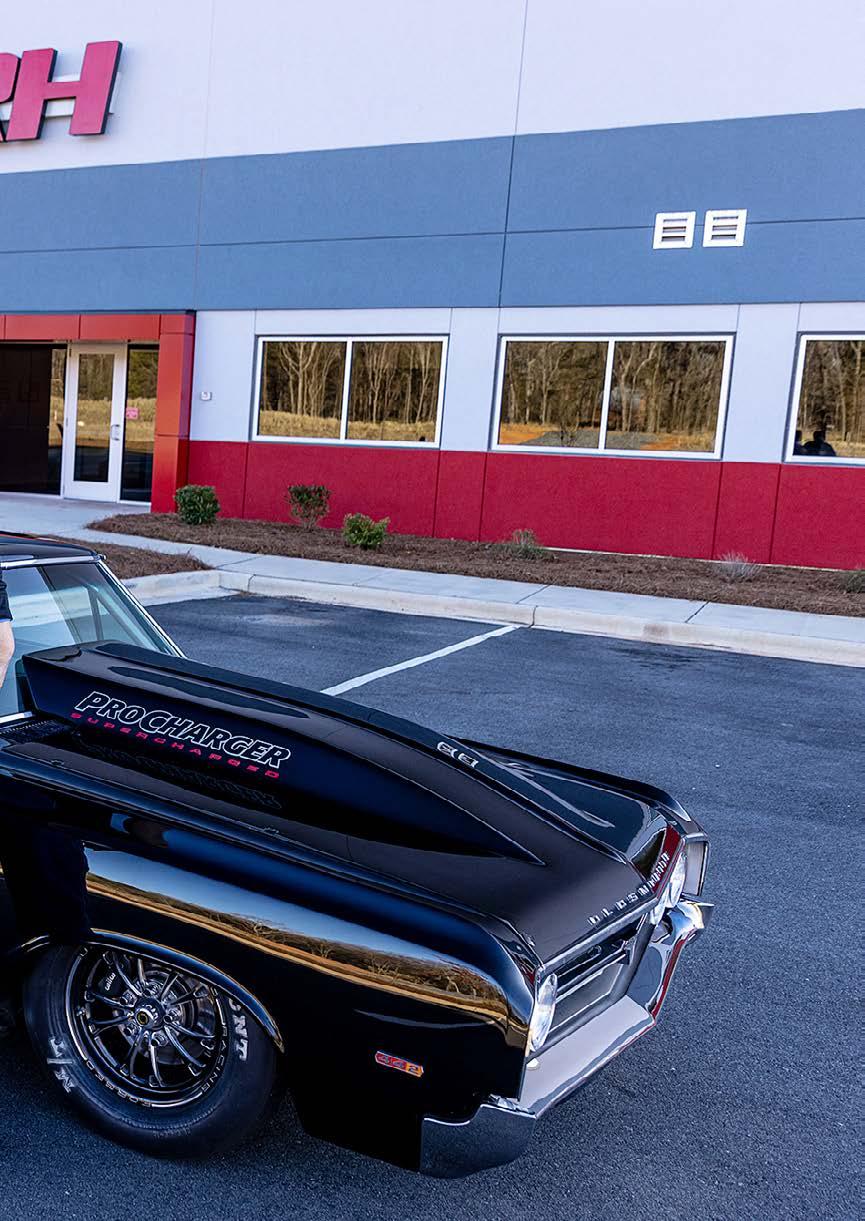
With custom cylinder heads, there was also a need and opportunity to fabricate a custom intake manifold and Filippides had Wilson Manifolds fabricate something special for this engine that took advantage of the cylinder head’s capabilities. The upper plenum is turned rearwards to allow it to connect to the cabin-based air-to-water charge cooler that receives pressurized atmosphere from a ProCharger F-1X centrifugal supercharger mounted on the front of the engine with a Chris Alston Chassisworks gear drive.
Wilson Manifolds fabricated the intake and the upper plenum is turned rearwards to allow it to connect to the cabin-based air-to-water charge cooler that receives pressurized atmosphere from a ProCharger F-1X centrifugal supercharger mounted on the front of the engine.
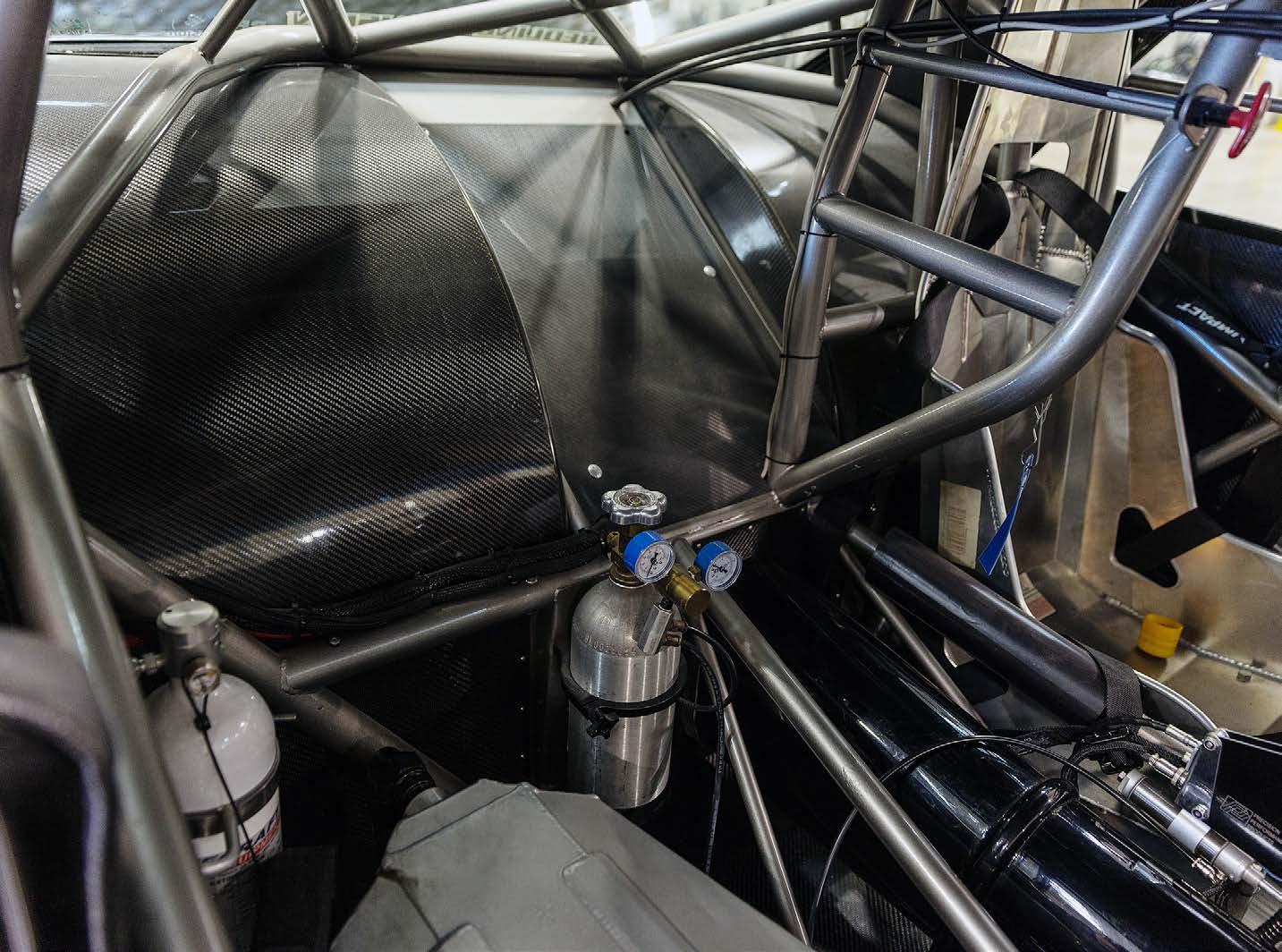
Aside from the dash, the interior of the Cutlass is all about drag racing. An aluminum racing bucket seat is tucked within the confines of the extensive safety cage and joined by carbon fiber floors and rear wheel tubs. Stainless steel flame inserts that adorn the aluminum door panels add a bit of hot rod vibe into the mix.
Providing the needed fuel to complement the increased air volume is a belt-driven Aeromotive mechanical fuel pump and regulator, and a Holley fuel injection system has been employed to manage the operation. With a wicked amount of horsepower being generated, the drivetrain needed to
be equally robust and Filippides turned to the capable folks at RPM Transmissions to assemble a Turbo 400 automatic transmission, which was paired with a ProTorque torque converter. The twist is fed into a fabricated 9-inch rearend housing that has been fitted with a Mark Williams spool and axles.
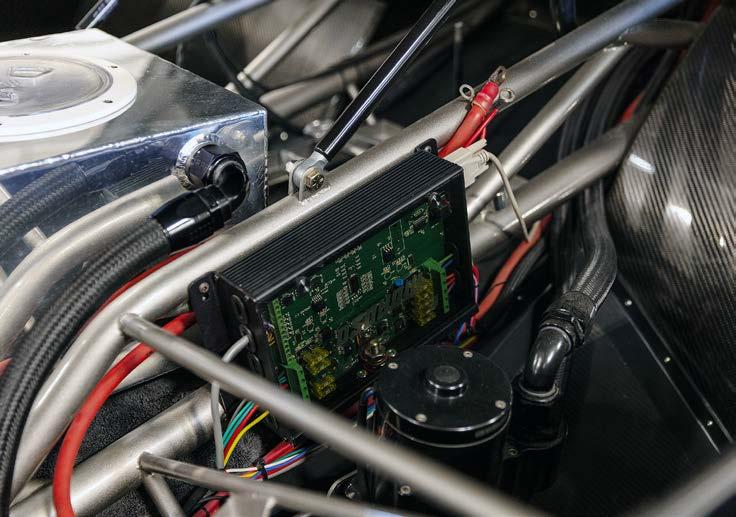
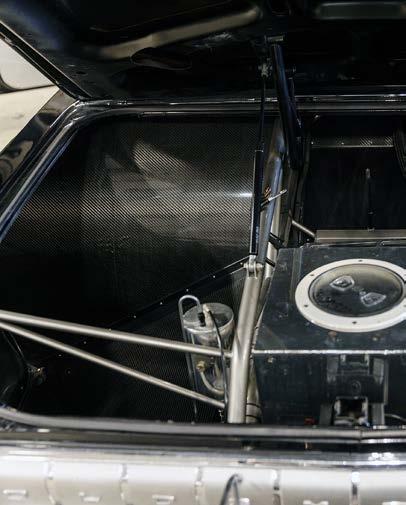
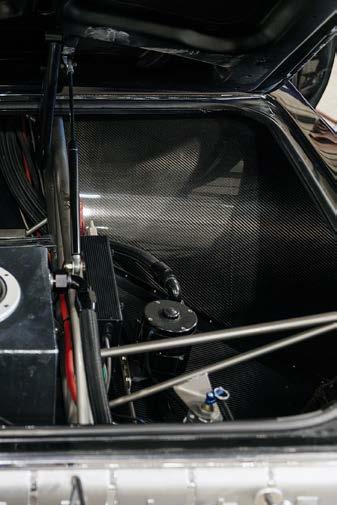
The sizeable trunk space, once used to sneak buddies into the drive-in, now makes a good home for the large carbon wheel tubs, fuel cell, electronics and fuel system components.
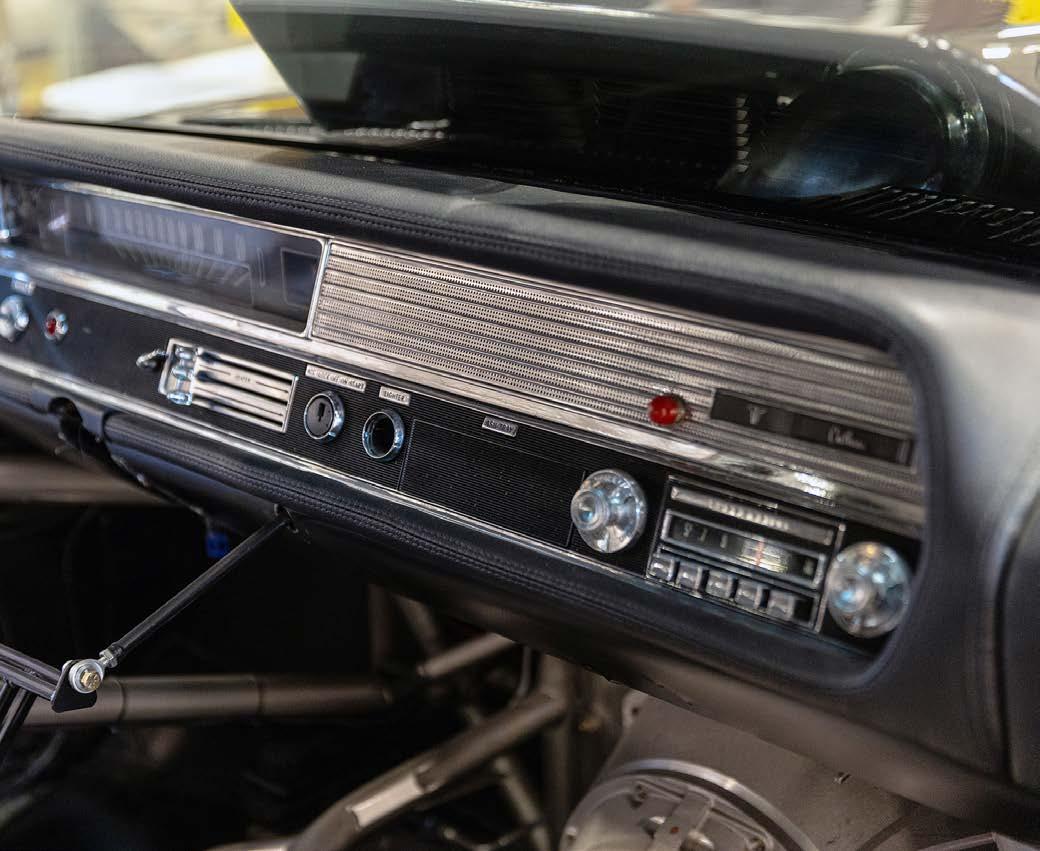
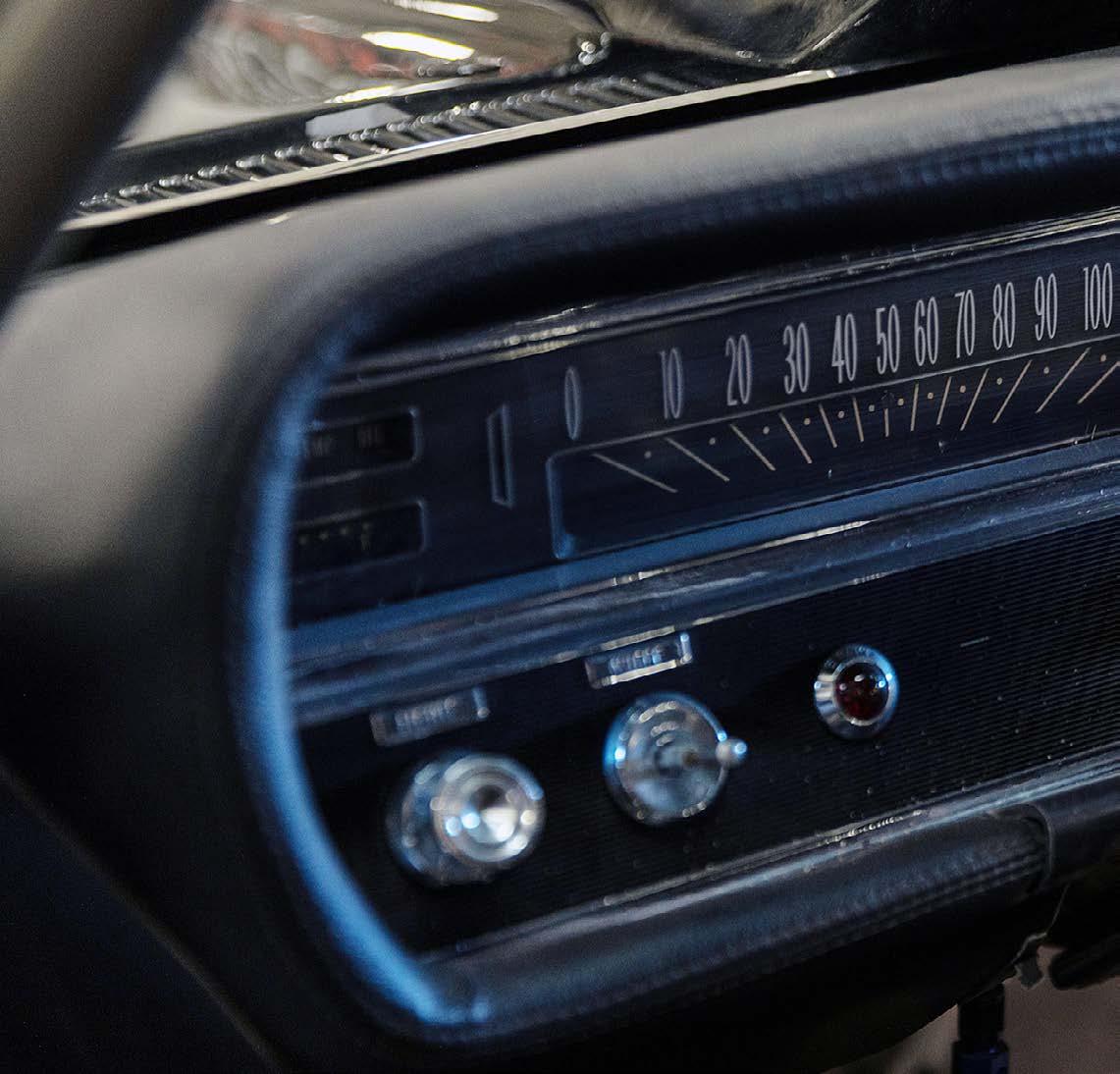
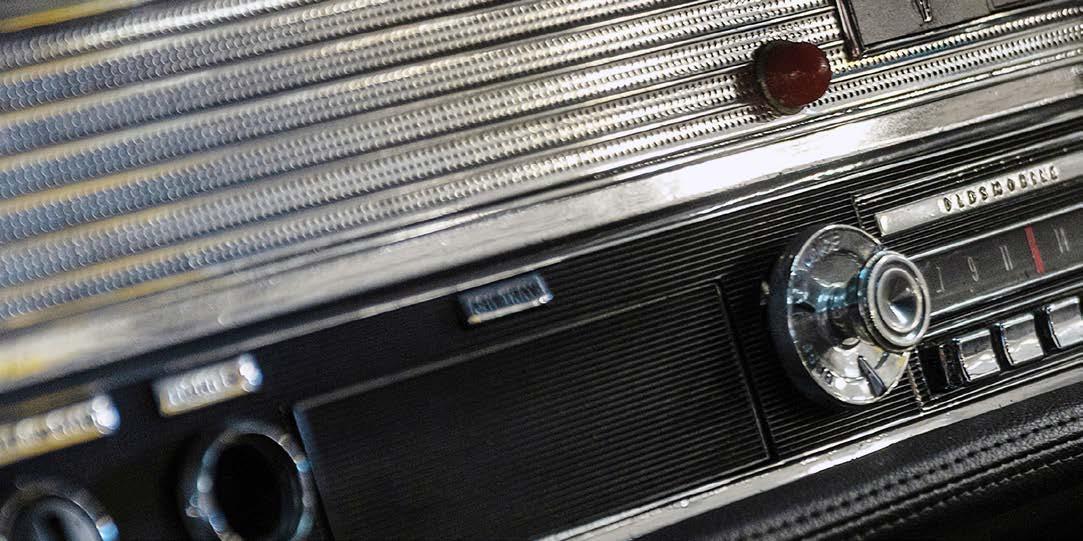
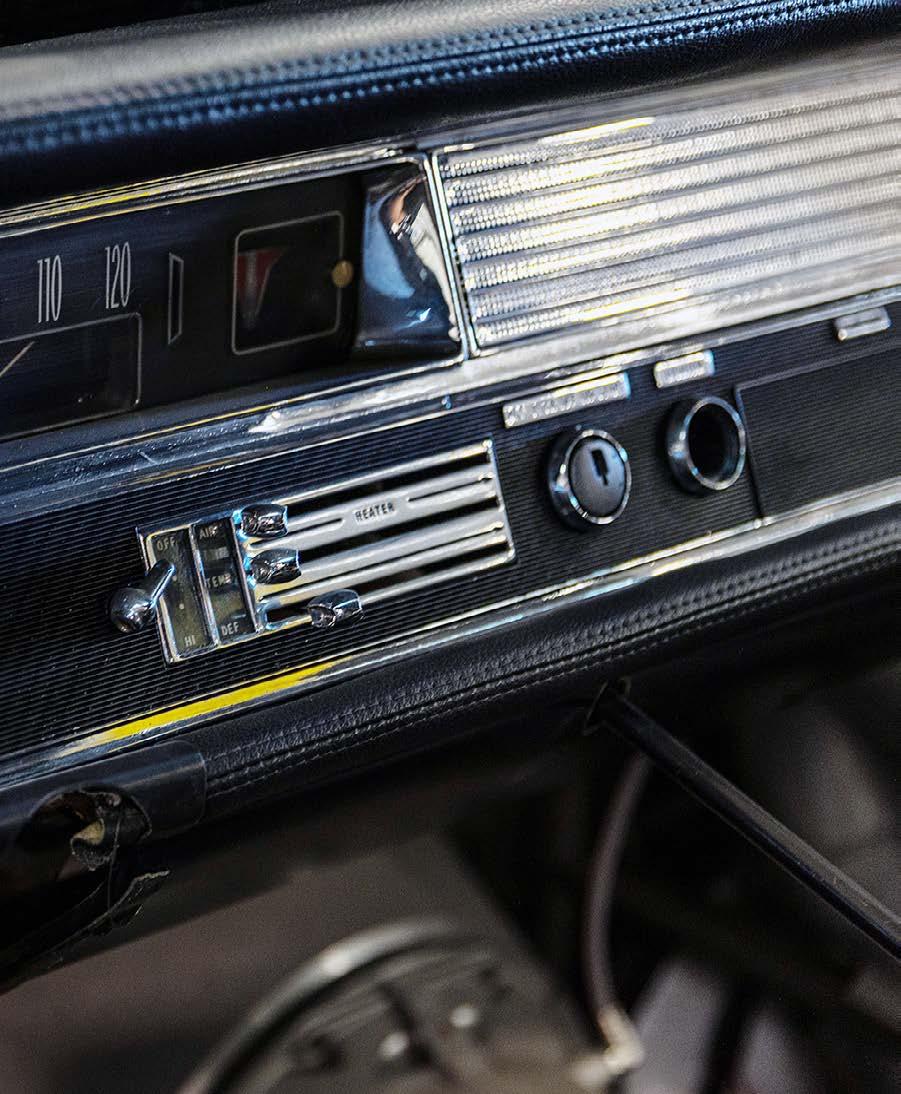
The stock dash in the Olds brings back a different time when things were just so simple. Being a more “luxury line” Oldsmobile production car meant more chrome and amenities were added.
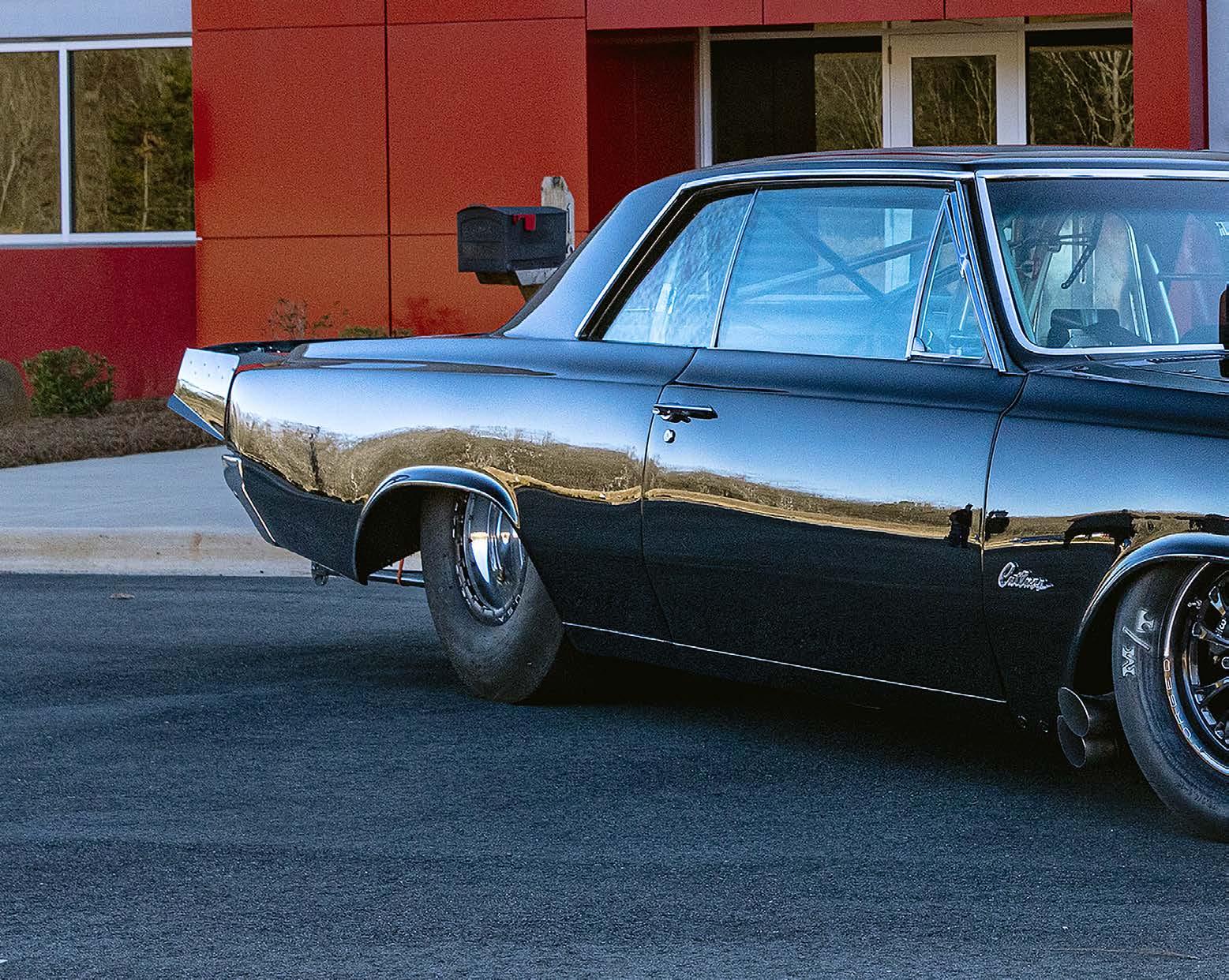
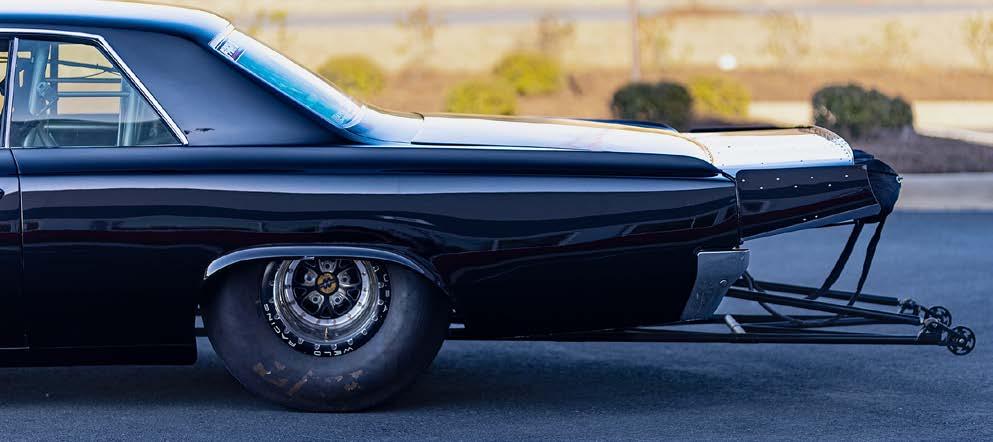
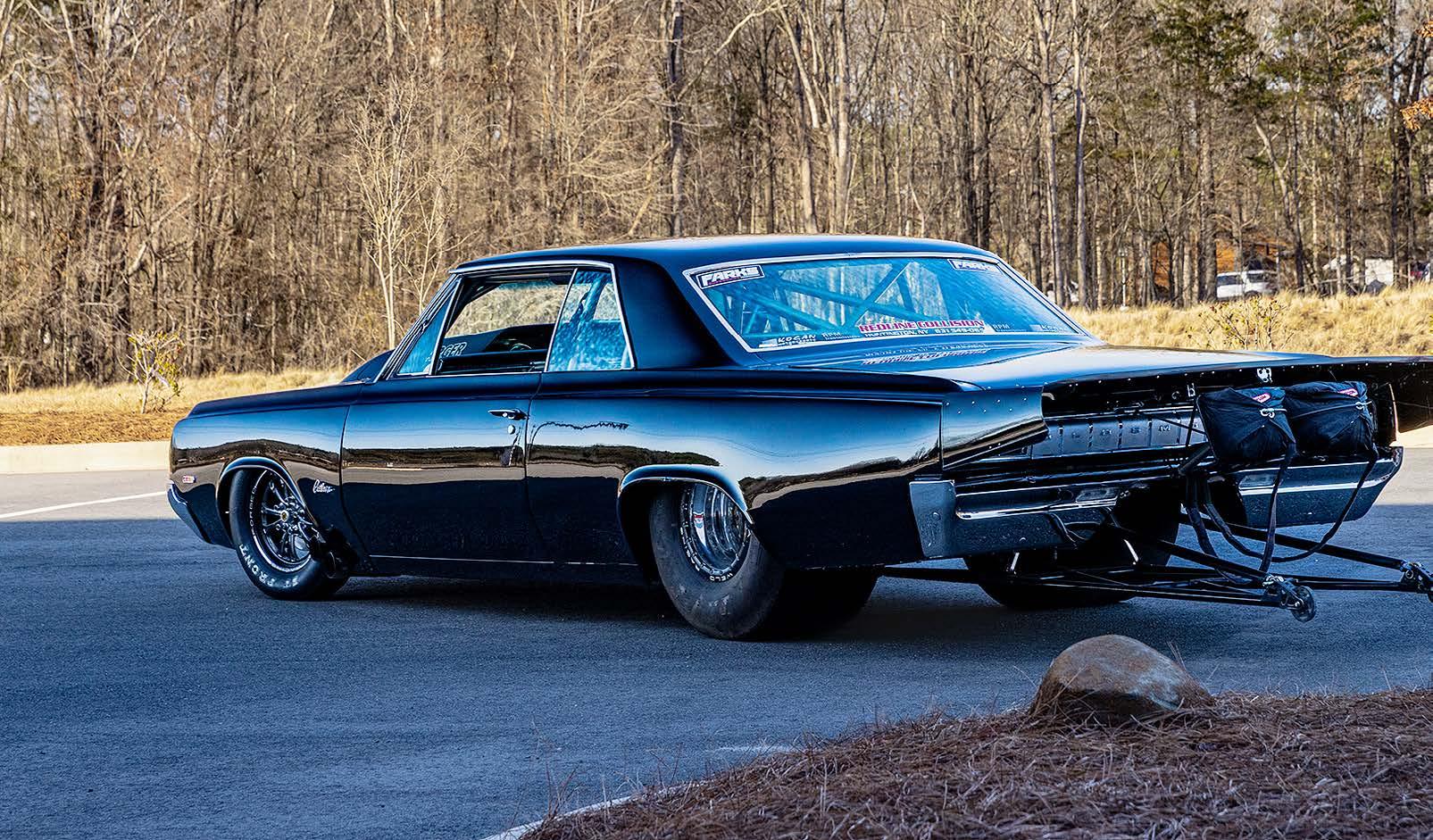
From the outside, the Cutlass’ long flanks have been massaged straight by Redline Collision. Lavished in luxurious and deep black pigment, the Oldsmobile retains much of its original steel construction aside from the front fenders, hood, and bumpers that were replaced with far lighter fiberglass options. To maintain originality, the factory front grill, headlights and buckets were retained.
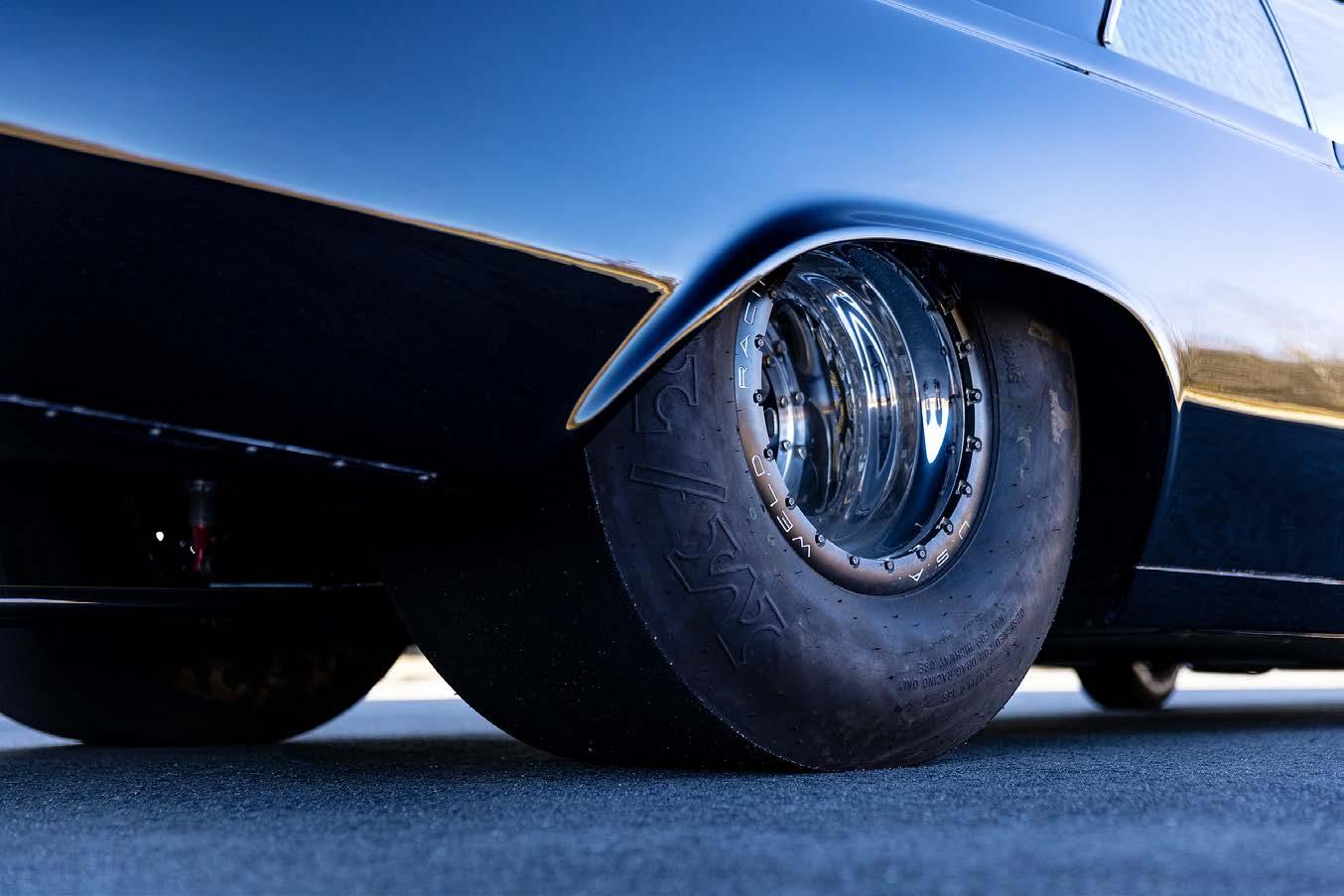
Hunkered down on its race-spec suspension, the Cutlass rolls on V-Series wheels with M/T tires, and custom disc brakes complement the parachute in bringing the speed down at the top end of the track.
The cockpit of the
Cutlass is part stock, part hot rod, and part race. The original dashboard remains and joins an aluminum racing bucket seat amid the safety cage, carbon fiber floors and rear wheel tubs, and stainless steel flames adorn the aluminum door cards.
...I’m a lifelong car enthusiast and lover of motorsports, especially drag racing...
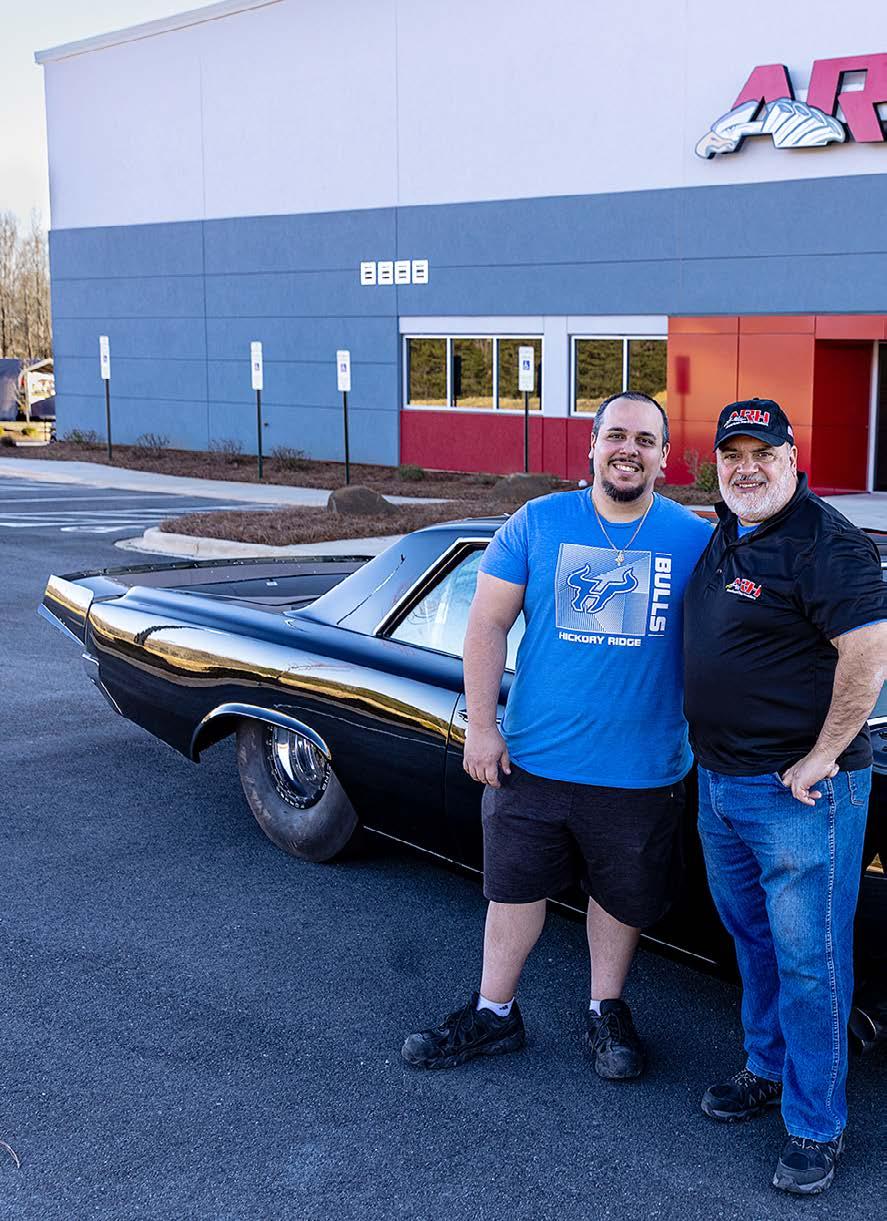
with his son Louie who not only works alongside his dad but also handles most of the driving duties in the Cutlass.
Nick Filippides
NICK FILIPPIDES
Ian Hill Racing
Post-race videos on
The car was a gift to Nick from his brother in 1987. Since then, the body has been massaged straight by Redline Collision and covered in a deep black skin. Originally his daily driver, the Oldsmobile is a true survivor retaining much of its original steel aside from the front fenders, hood, and bumpers that were replaced with lighter fiberglass options.
“I’m a lifelong car enthusiast and lover of motorsports, especially drag racing, long before I was even old enough to drive,” expressed Filippides. The relative rarity of his 1964 Cutlass is one of his favorite aspects of the project, as is the unconventional NASCAR-spec smallblock Olds powerplant that he says gets a lot of respect from enthusiasts. “Thanks to my son Louie for all his continual assistance including handling most of the driving duties. My family, that understood what this race car means
to me and the Olds community of racers that love seeing their favorite brand hauling the mail.”
To date, Filippides’ Cutlass has run a best elapsed time of 7.73 at 178 mph, and they hope to improve that to low 7s at 200. He also noted that a supercharger upgrade to an F-3 ProCharger is likely in the cards as well. “Looking into the future, we want to continue pushing the envelope to see how quick and fast we can run in a true Oldspowered doorslammer.
RPM Magazine Reprint in Print!
RPM Mag’s commitment to features that appeared digital-only since June 2020. Article first appeared in the June 2021 Digital Issue
As RPM readers know, we don’t discriminate. Instead, we practice brand inclusion, acceptance and openness.
We also never let our own preferences, egos, likes or dislikes get in the way of giving readers what they want (at least we try not to). Yes, we have to admit, we do focus on the Big 3 American offerings, but after all, they are what made this industry great, so no apologies for that. Regardless of brand, though, it’s not often you will witness a 4-door
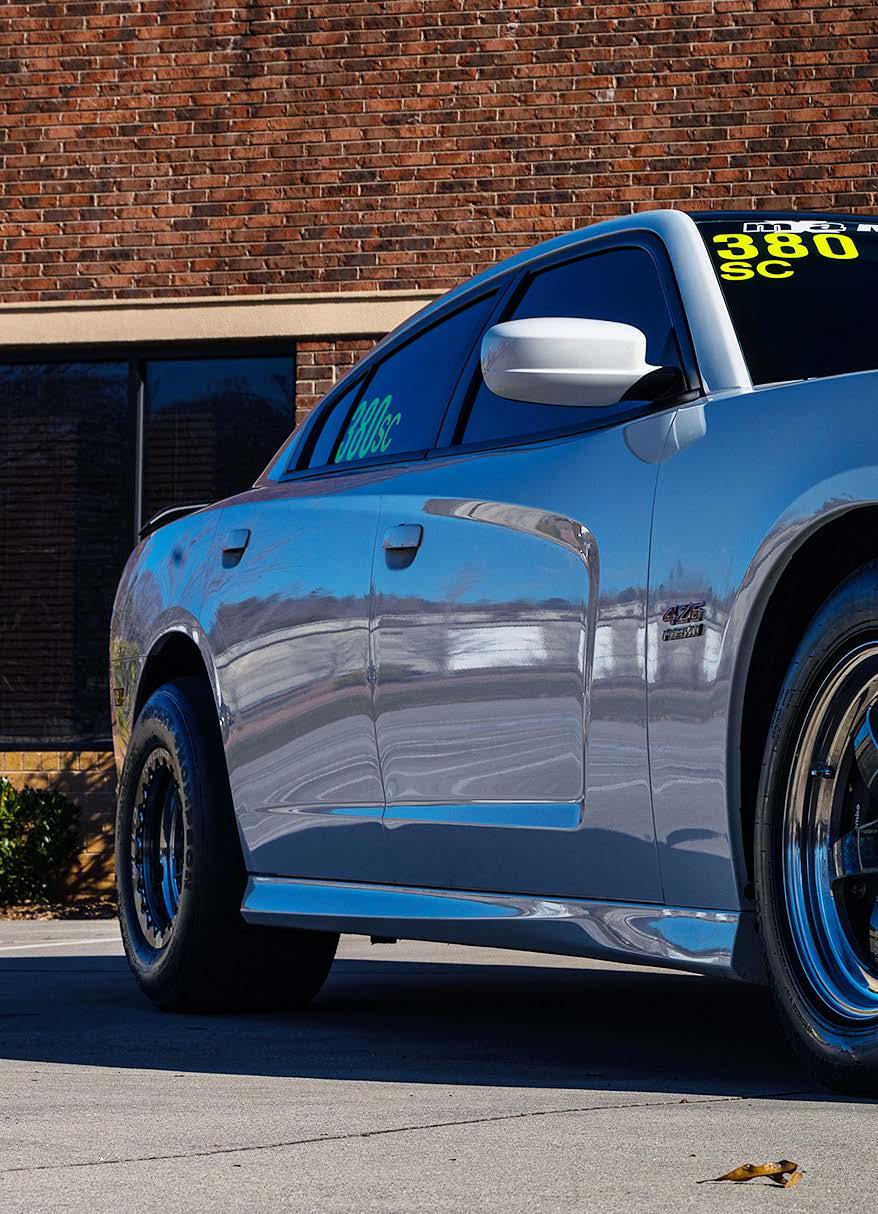
“family car” taking up the coveted main center feature real estate in RPM MAG, unless of course, it is a badass 1,800plus horsepower twin turbo Hemi Super Bee. And if that’s not enough, there’s just something about a real production line muscle car that still looks, feels and smells like one, and can mix it up on the track or street that pretty much seals the deal for us.
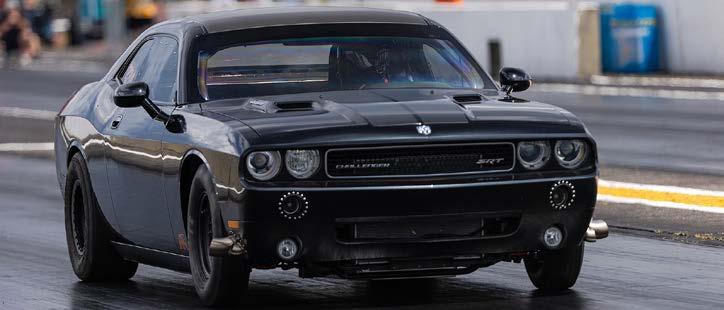
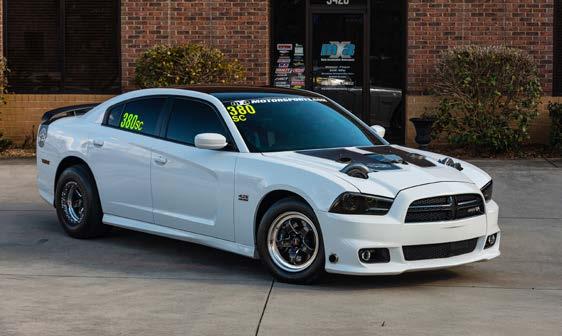
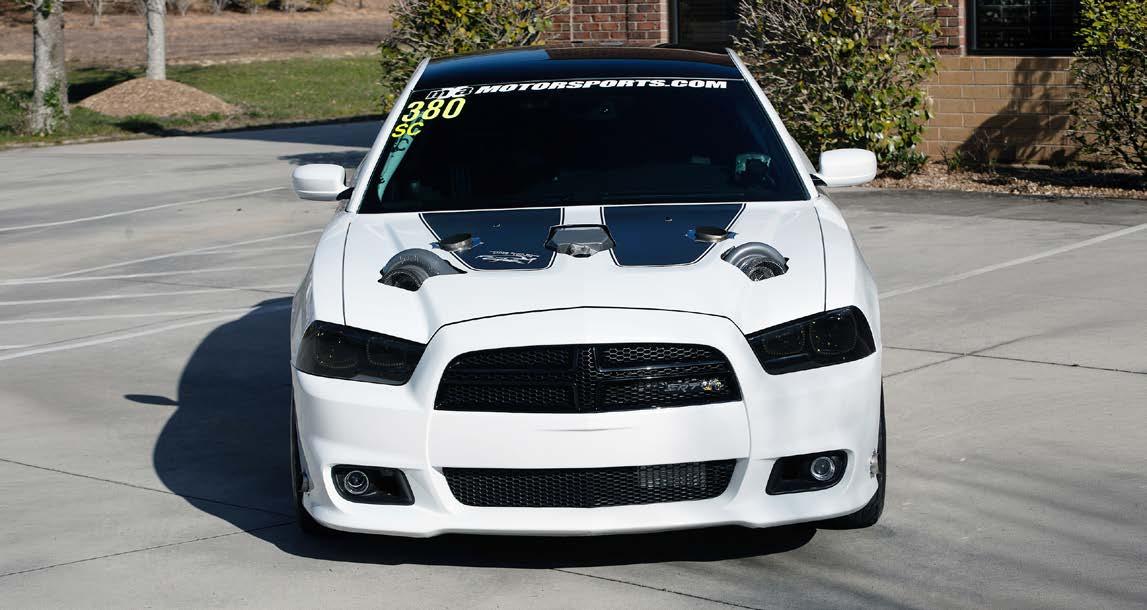
No wonder the reinvented 4-door version of the Dodge Charger has become a solid candidate for serious power among hardcore enthusiasts.
Story & Photos: Wes Taylor
The Dodge Charger name has been around for decades, known for being one of the most popular muscle cars during their heyday. Dodge started production in 1966, and while going through many changes through the mid-80s, steered away from the muscle car realm for two decades before reintroducing the iconic name in 2006 as a four-door sedan.
Although purists would turn their nose up at the “family car” styling, powered by a reengineered 6.4 Hemi, the muscle sedan moved quickly for a stock 4500lb car and recaptured the attention of Mopar enthusiasts.
Always having a
soft spot for American muscle, Eric Warren made his first pass down the drag strip at just 14 in his aunt’s Oldsmobile Rocket, and his brothers won him over with their Hemi Cudas, big block Road Runners and Mach 1 Mustangs.
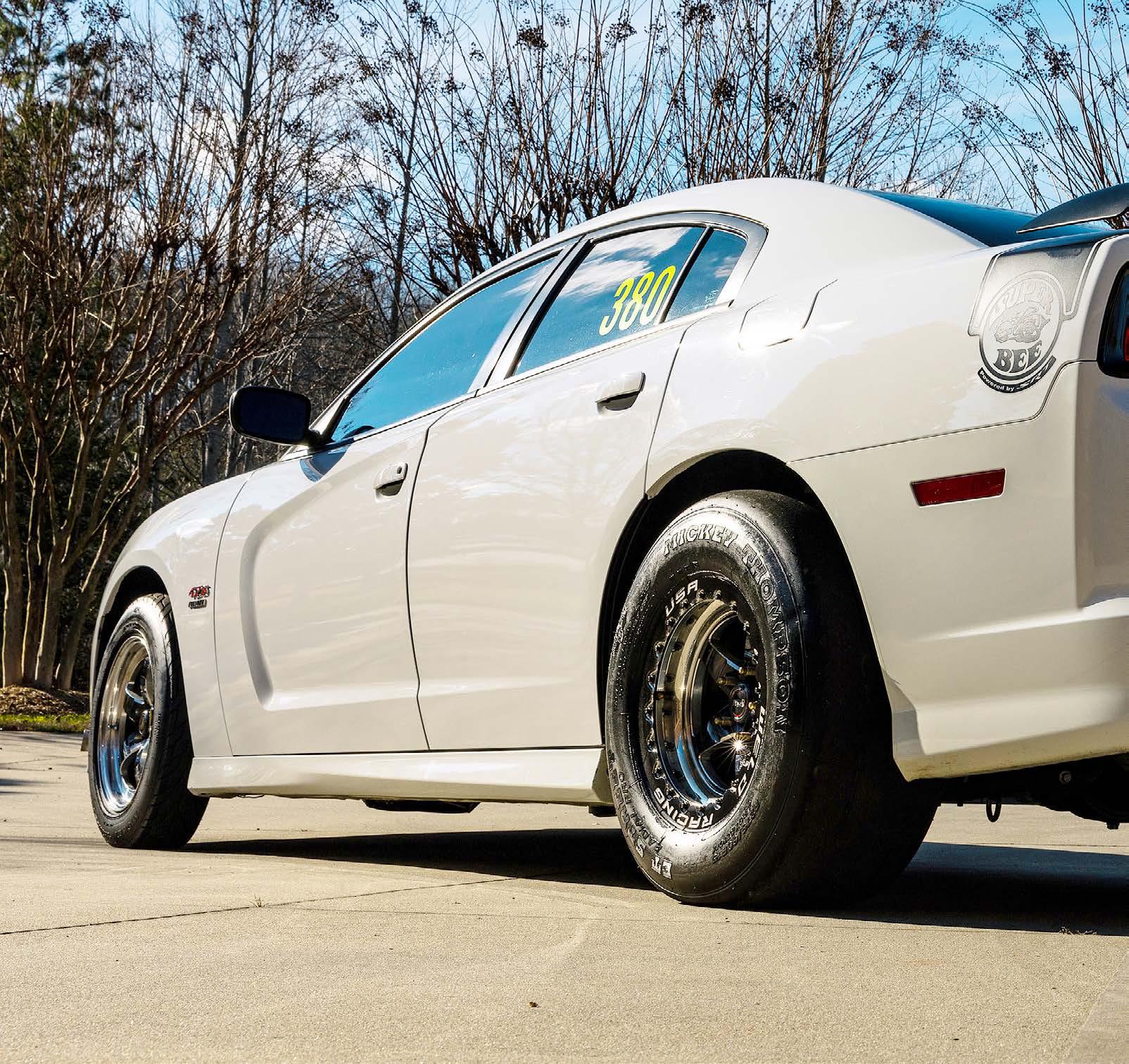
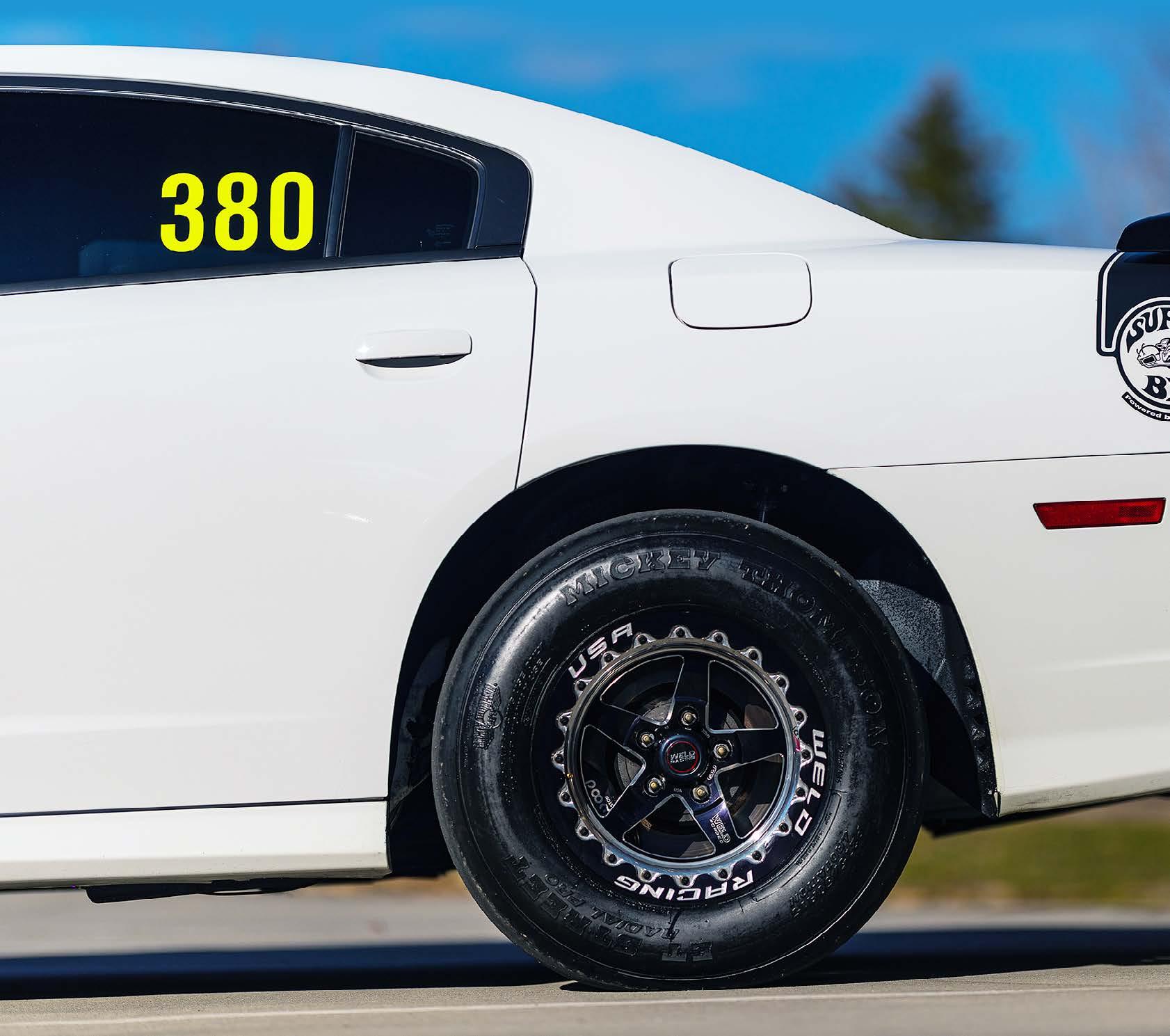
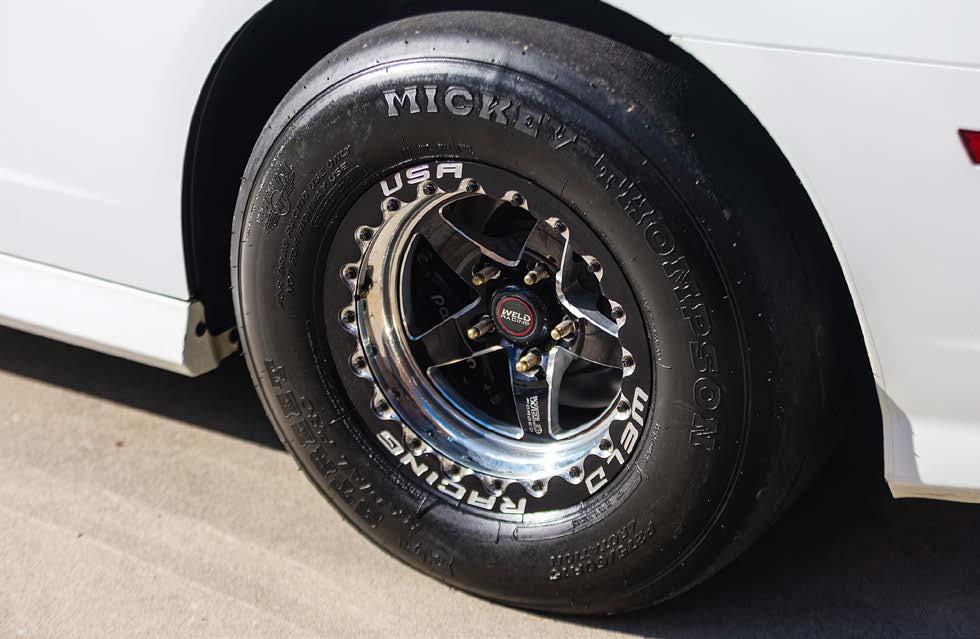
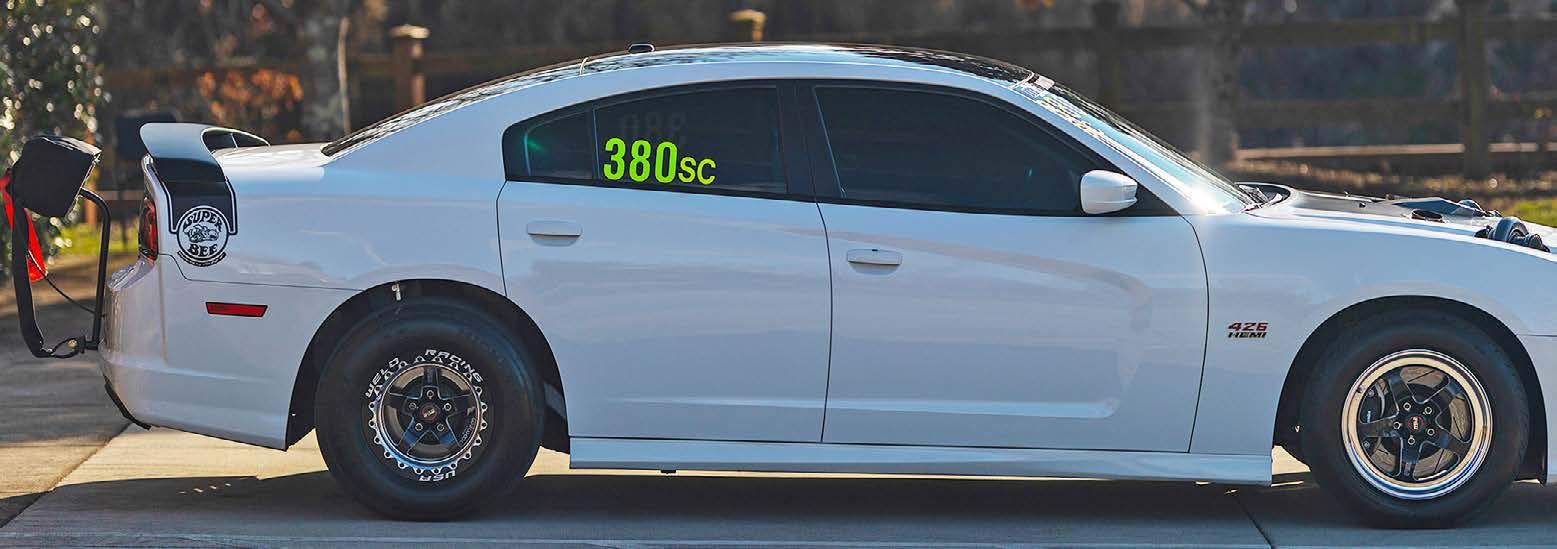
Beefy 15 inch Welds make sure the family car has the traction it needs when it needs it.
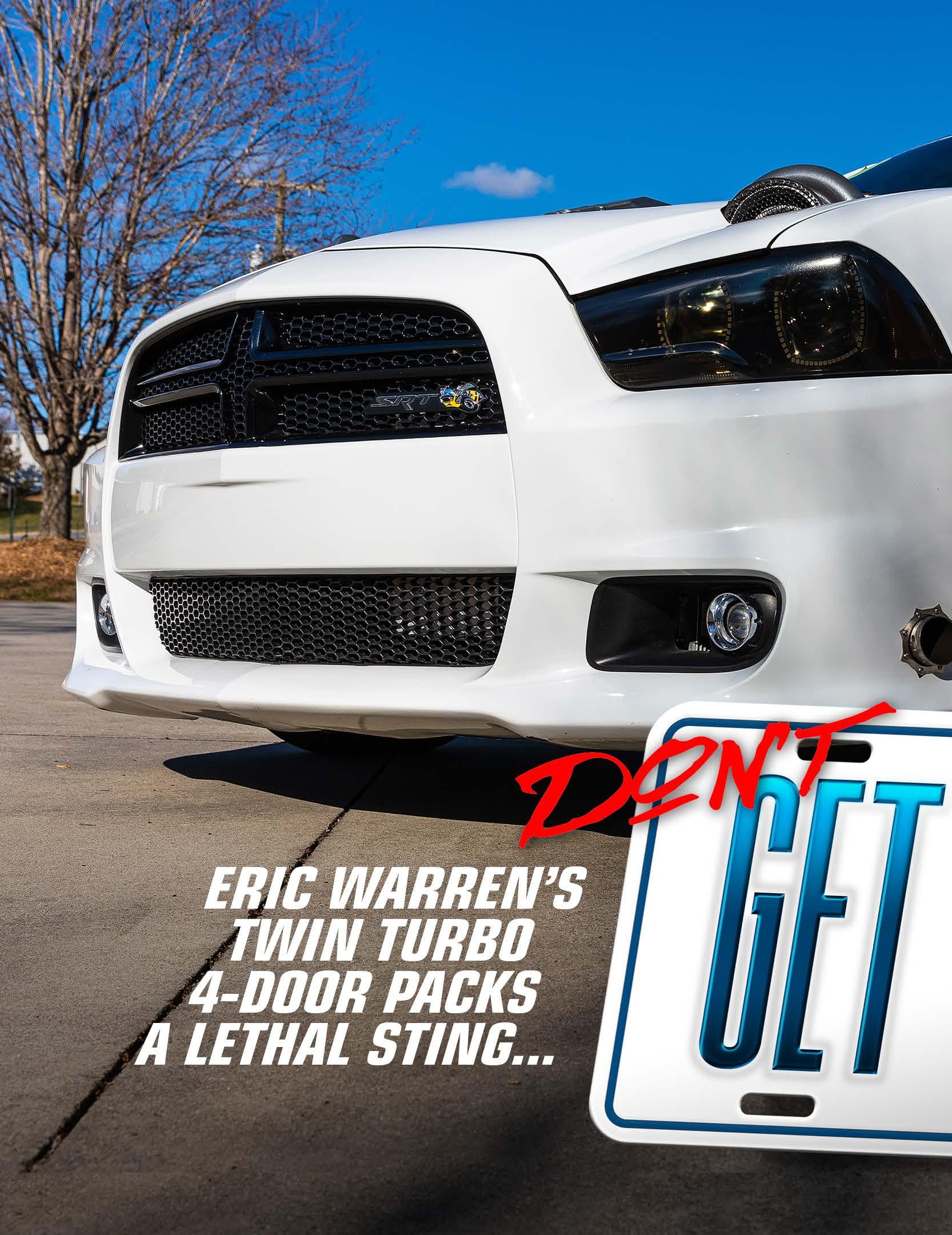
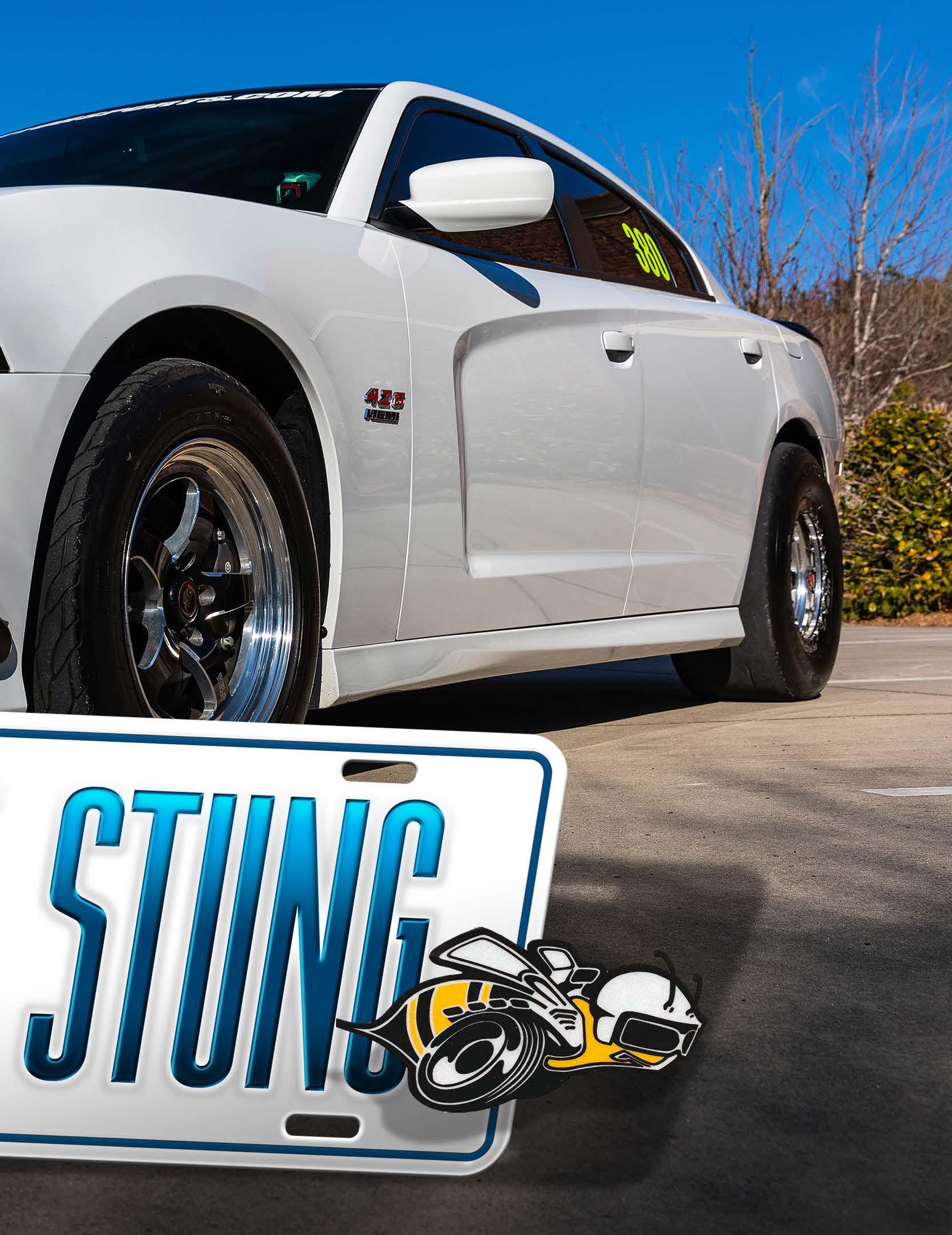
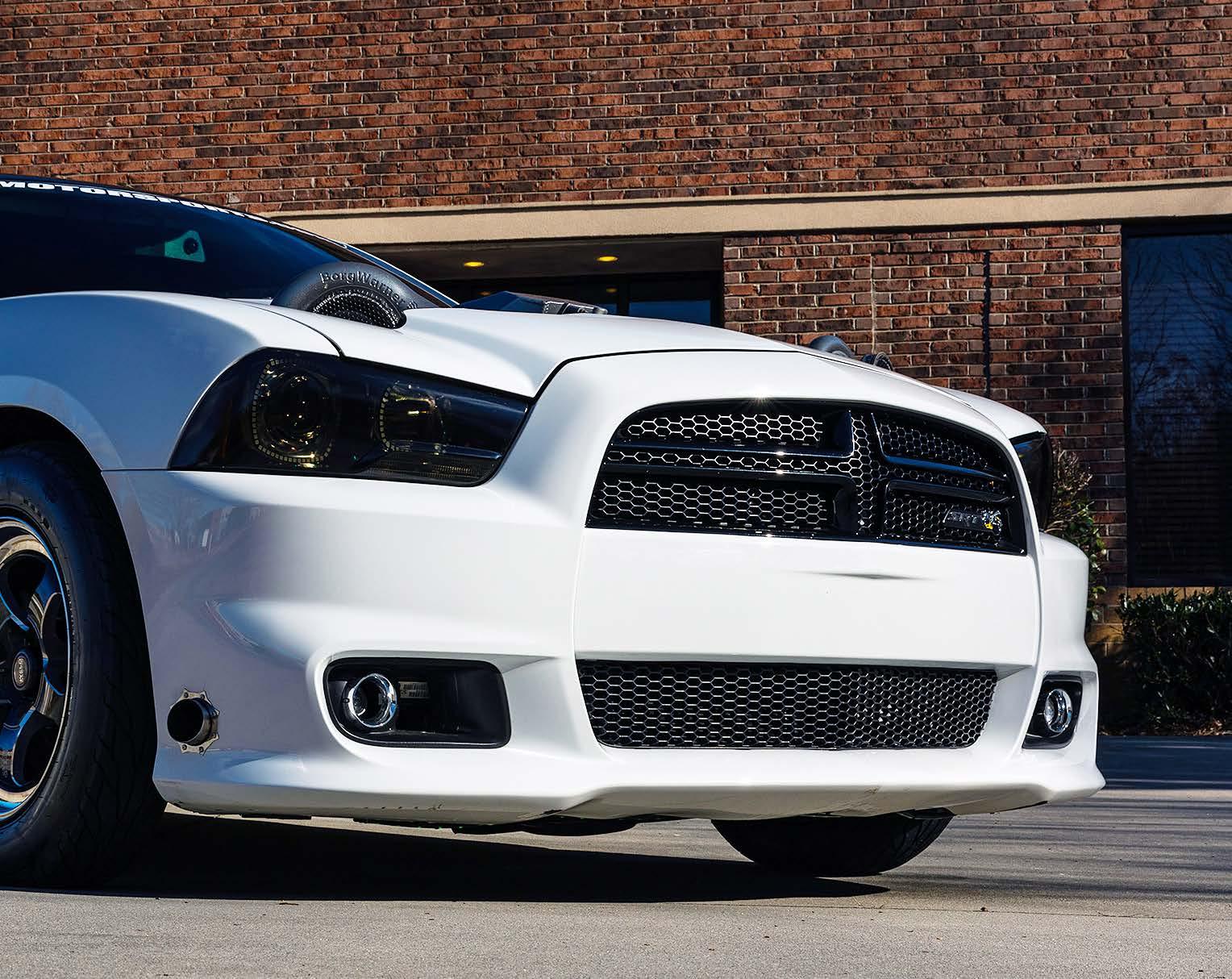
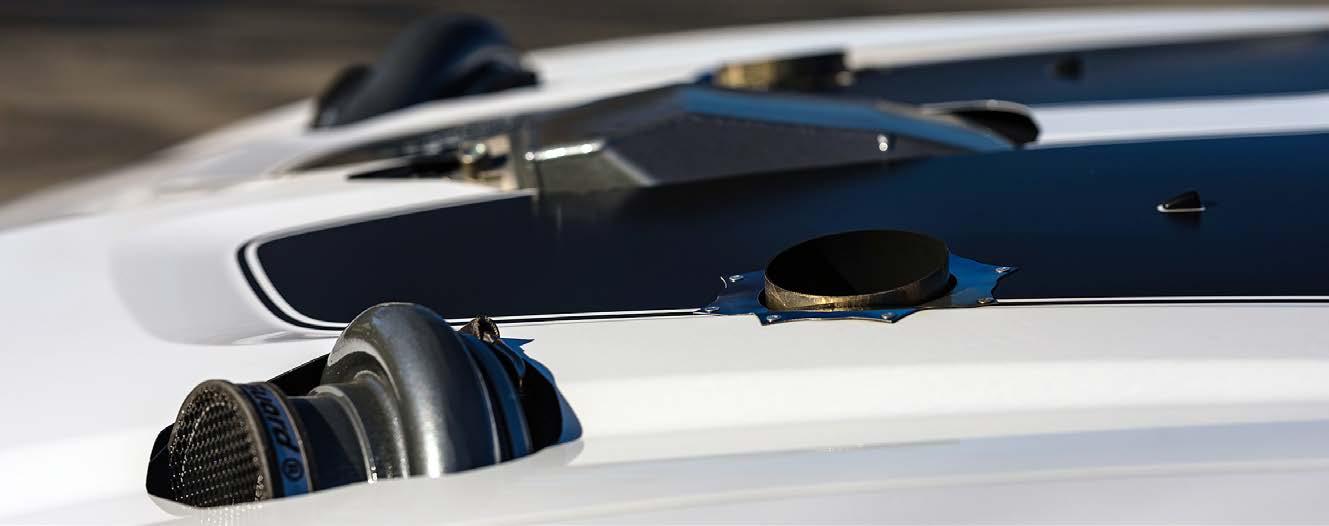
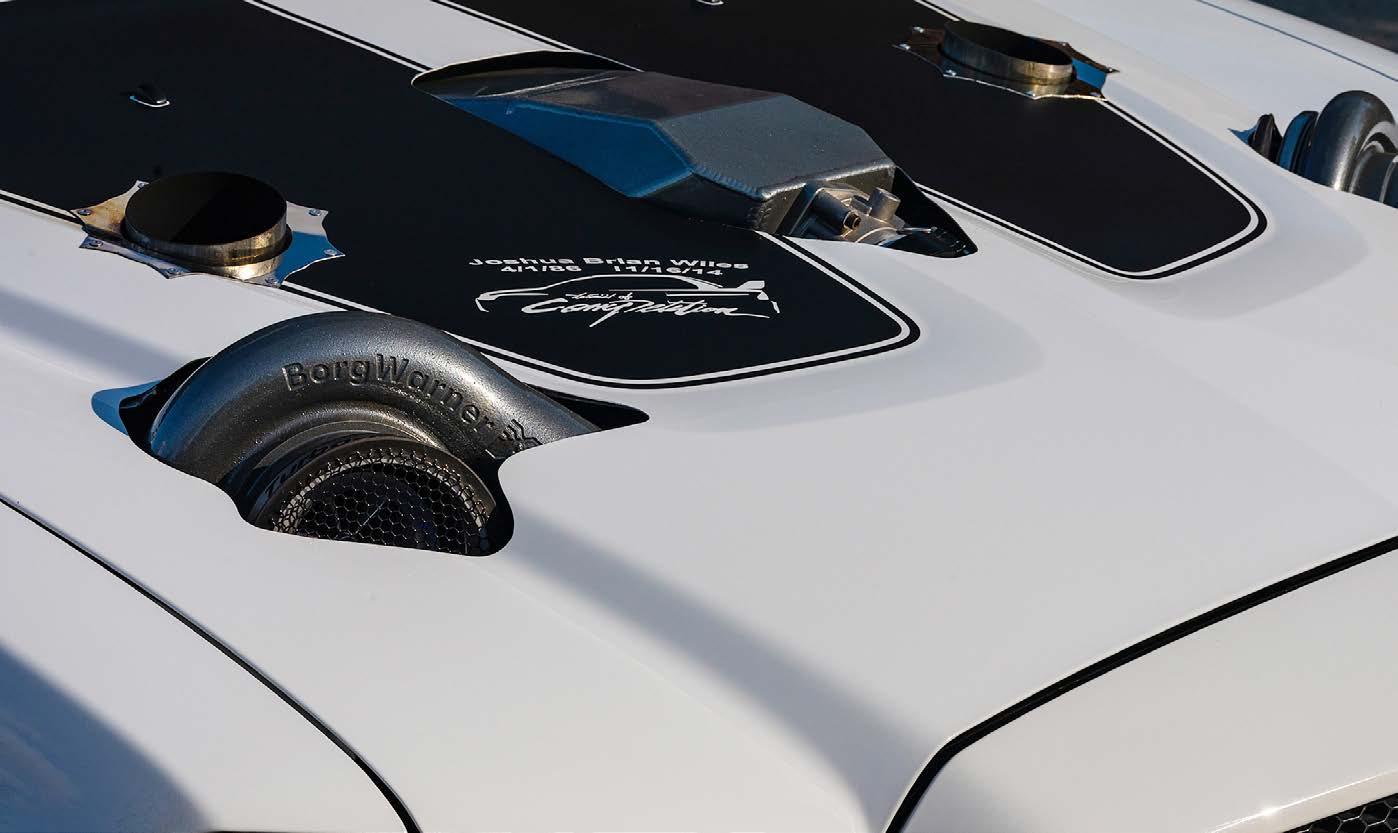
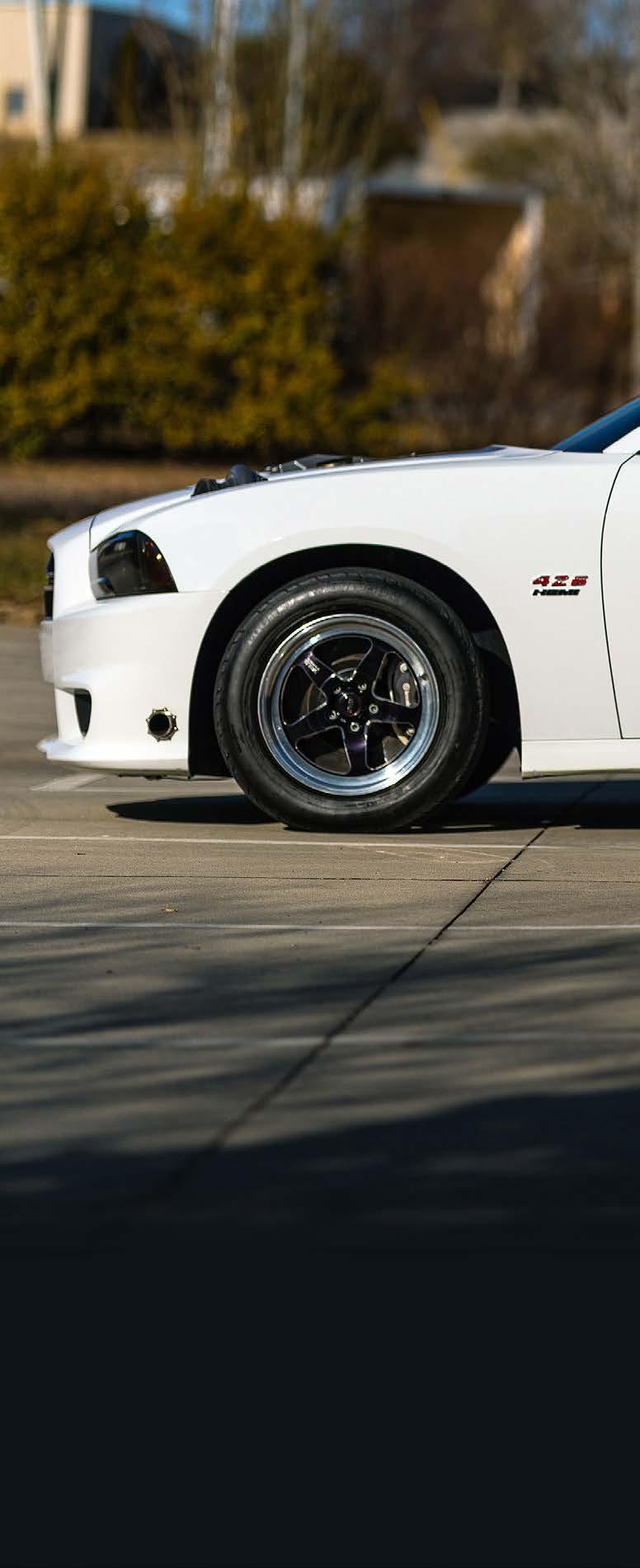
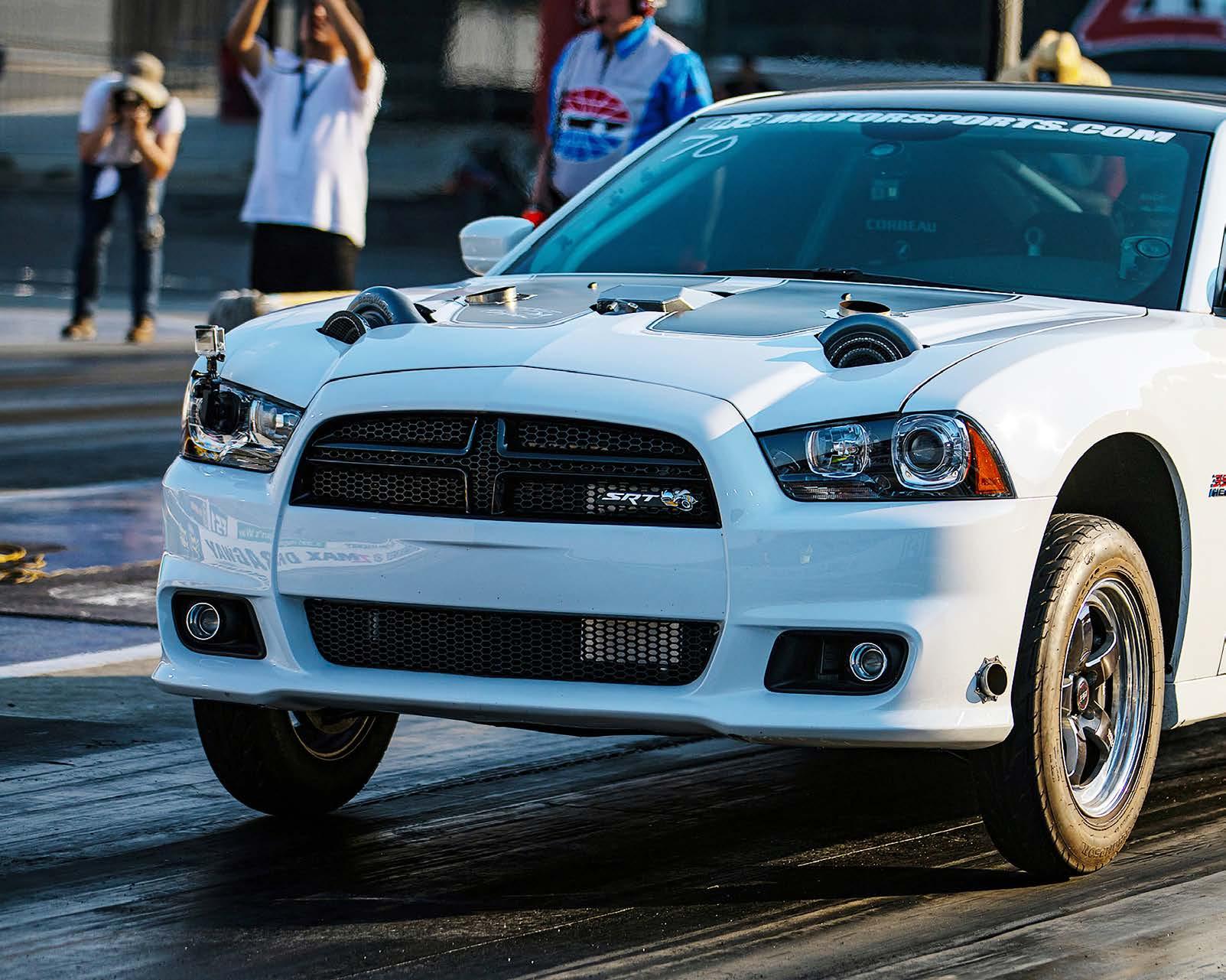
The bodies of the twin turbos poking through the hood are a dead giveaway that this Bee’s got sting!
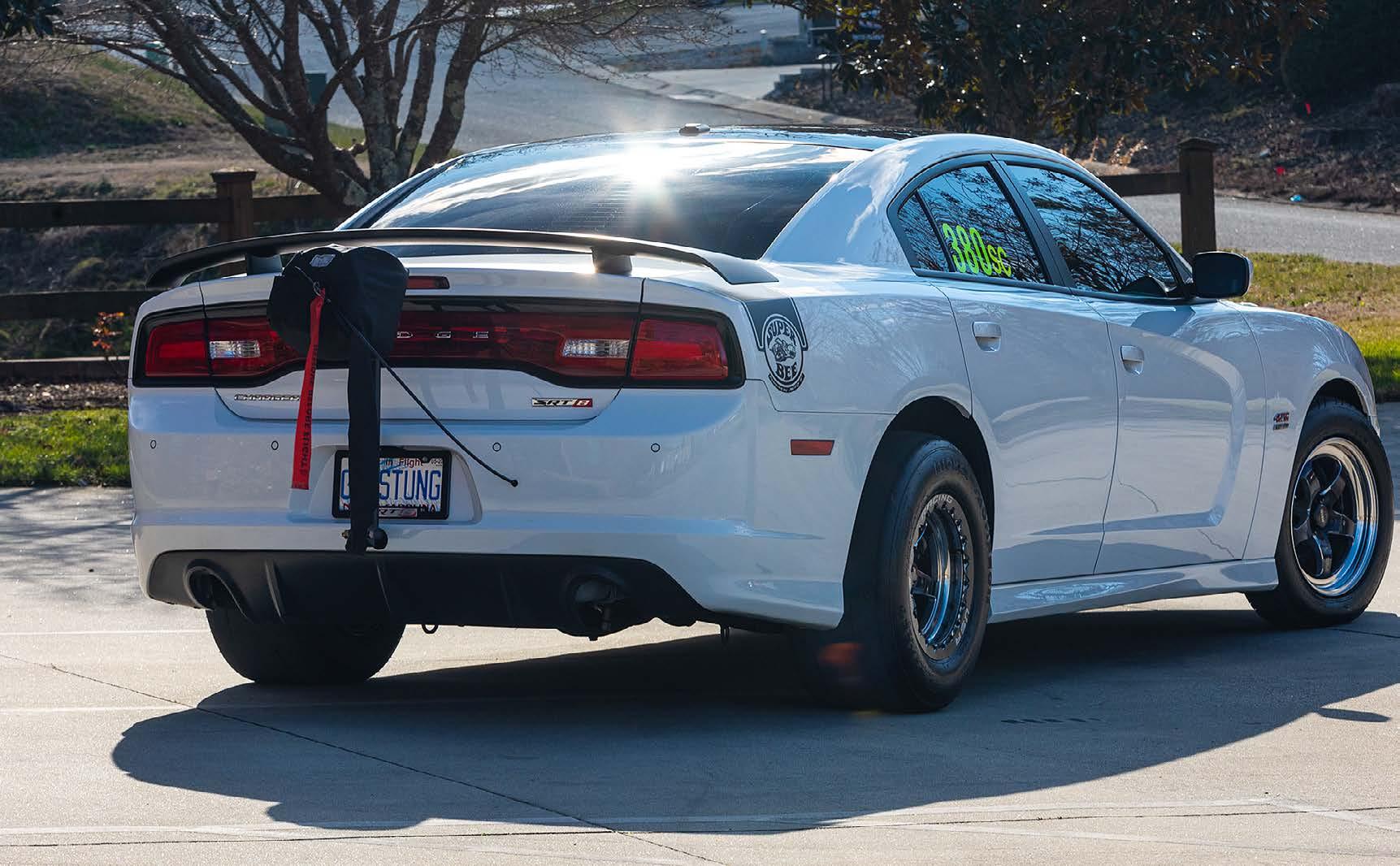
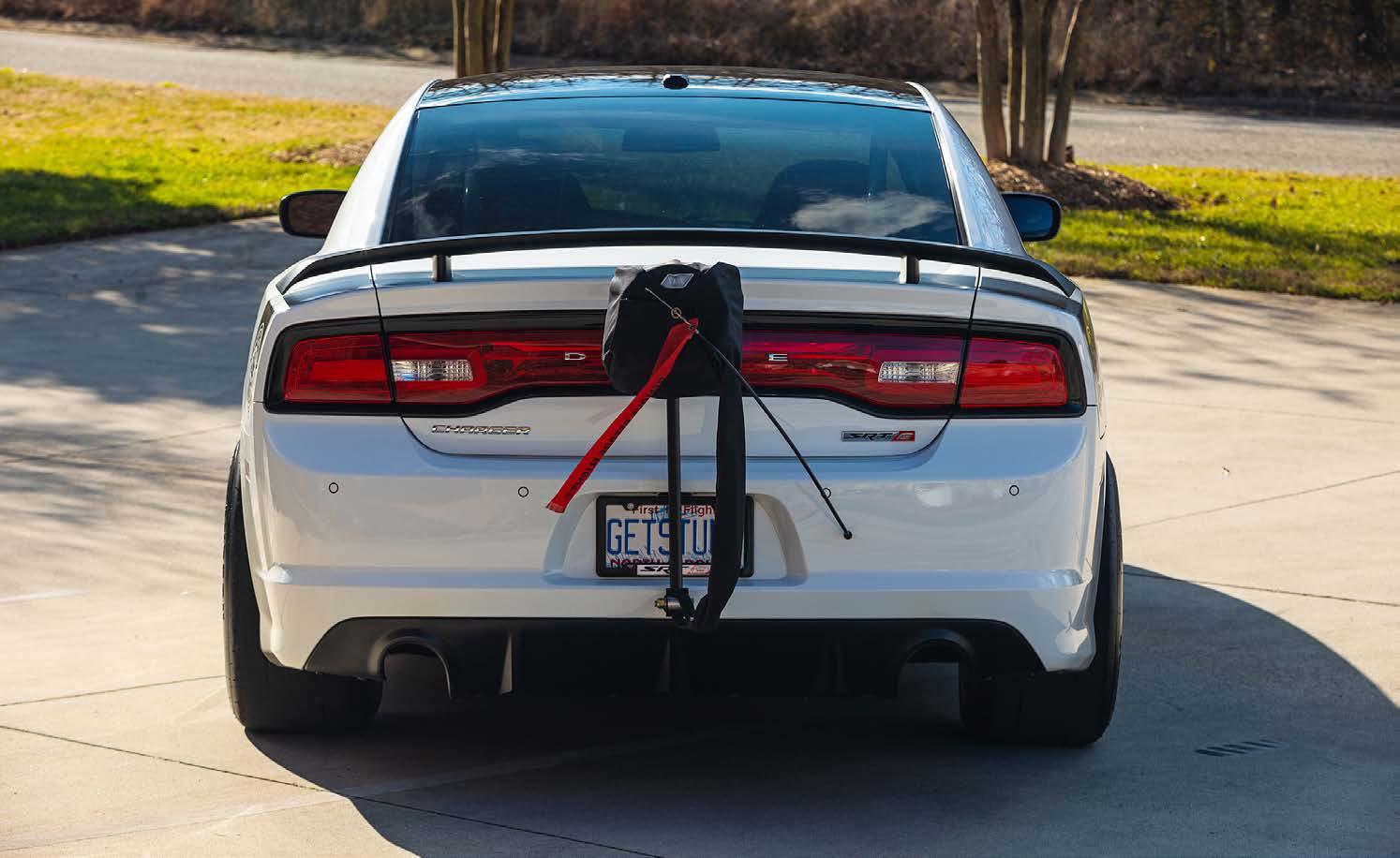
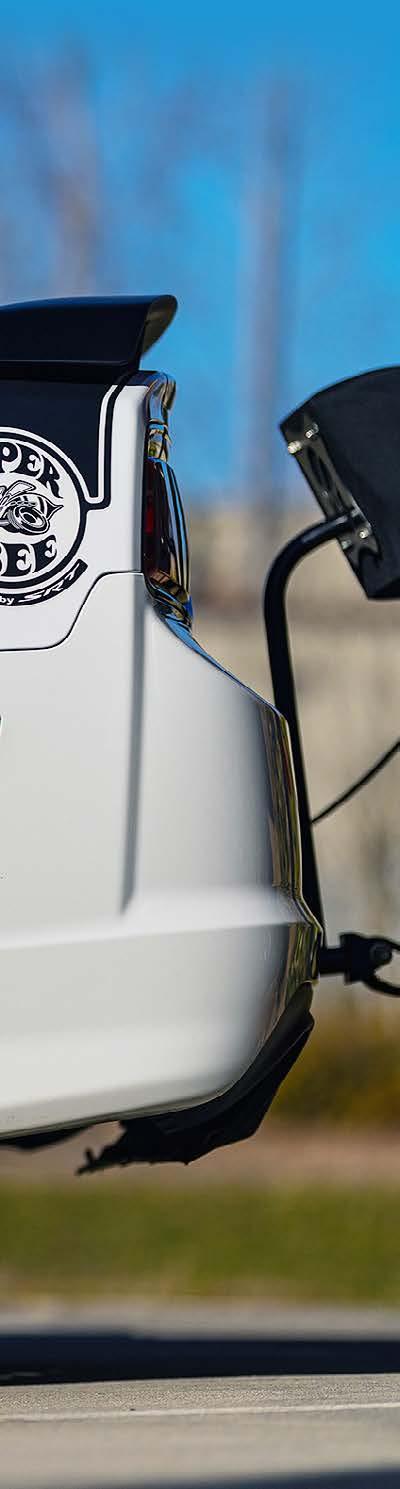
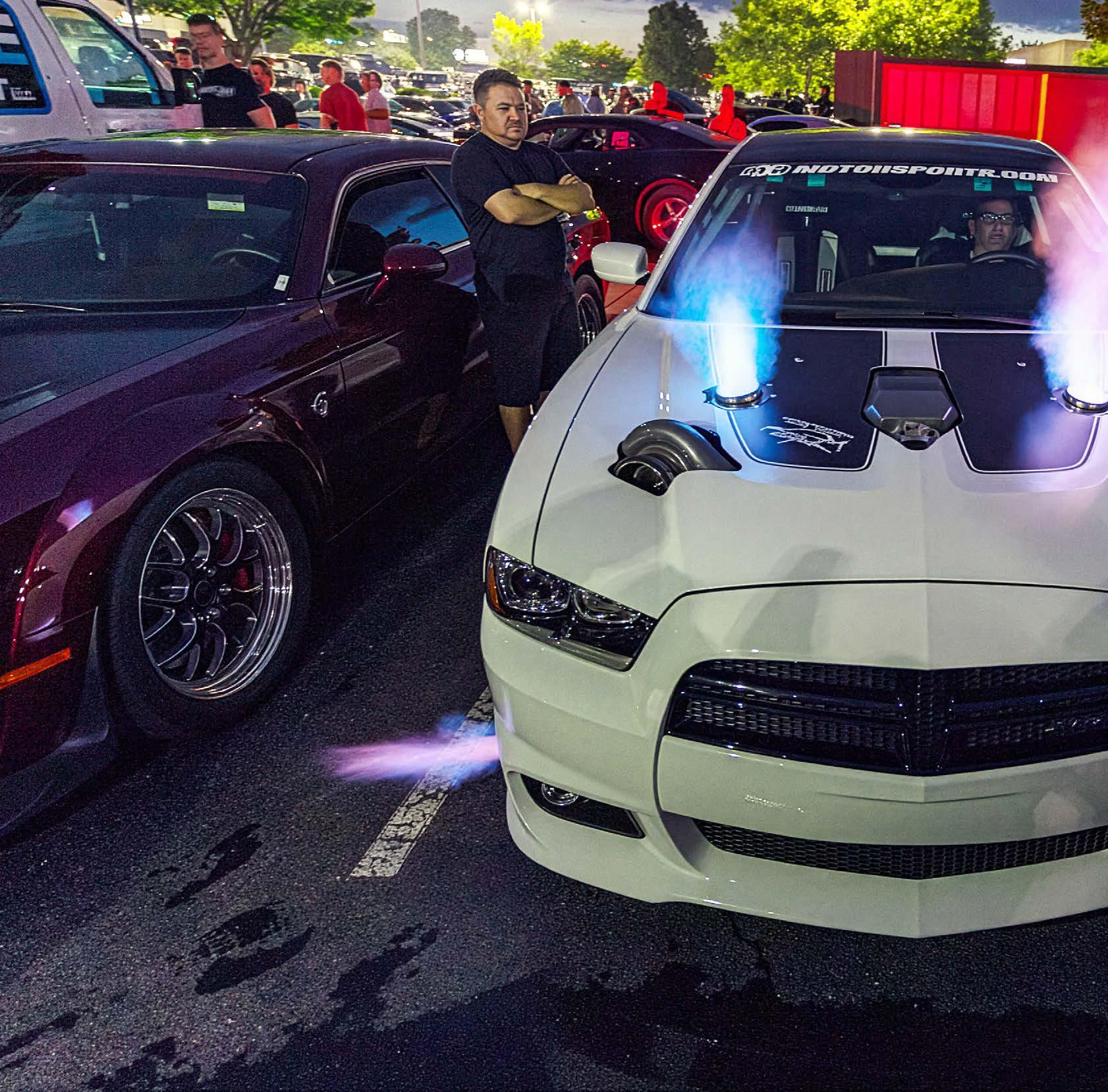
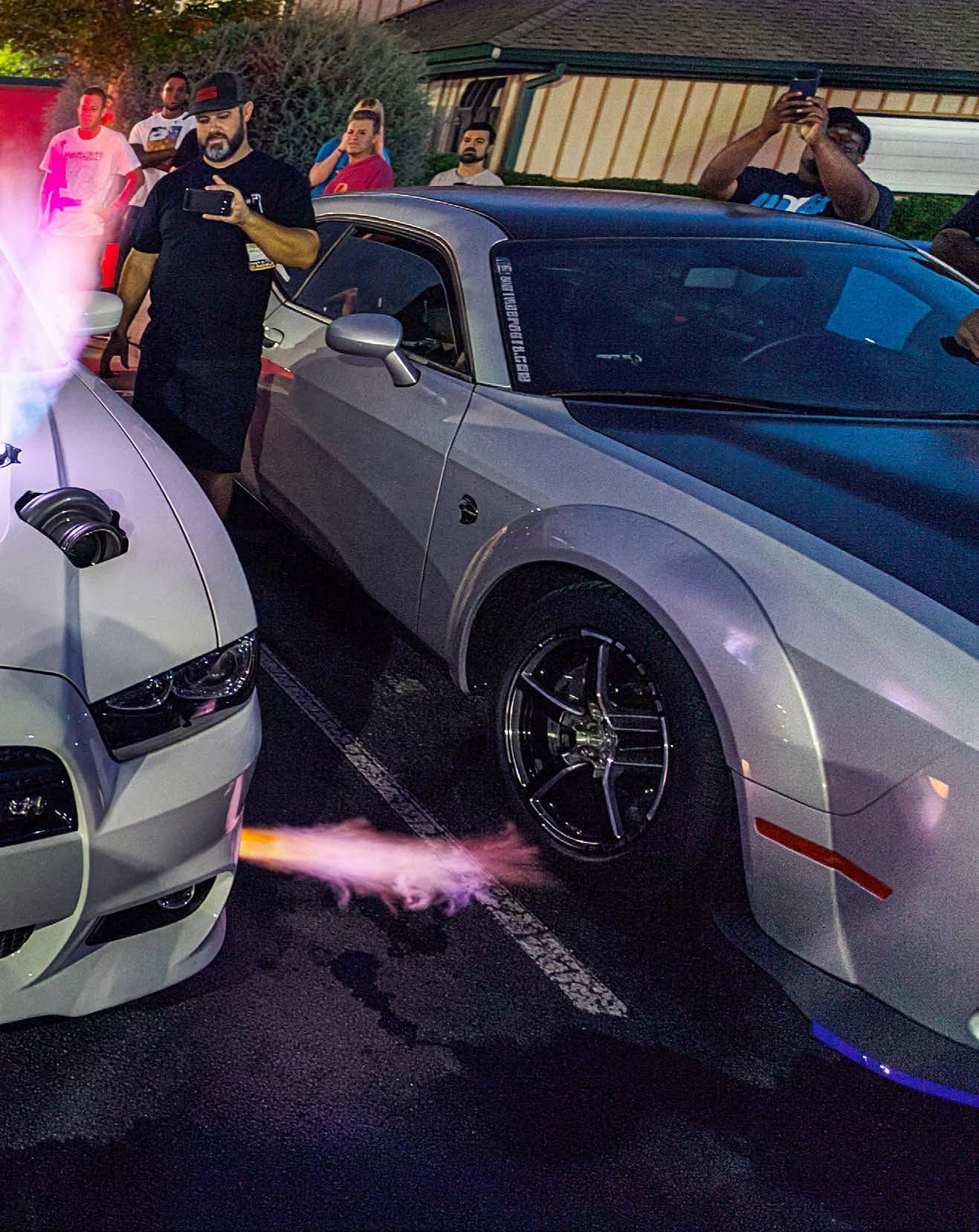
It’s not uncommon to see flames from all four exits while on the anti-lag. The Bee draws attention wherever it goes, street or strip.
Like many of us, it was part of his upbringing and he was just destined to be a car guy.
His first car was a 1971 SD Trans Am 455 and following that he played around with 15 or so more muscle cars as he grew up.
After stepping away from the hobby for about 25 years to work and raise a family, Eric got the itch again, but the hook was set when he was driving by his local Dodge dealership and saw a white 2013 Charger with the Super Bee package and just had to have it; the next day, the keys were in his hands.
...From that point, the Super Bee was slowly built into the incredible car it is today
The first set of rear tires didn’t last through the weekend, and by the first oil change, it got some boost via a Whipple 2.9 supercharger. The car made around 670 whp and was a lot of fun but like all car nuts, if a little was good a lot would be better! Next came smaller pulleys to up the boost and a 100
shot of nitrous just to make it fun.
“We made somewhere near 500 passes on that combo in the following two years and she made 1100 whp on a 650 hp build,” Eric said with a smile. And from that point, the Super Bee was slowly built into the incredible car it is today.
After going through the factory 392ci motor, the little Whipple just wouldn’t cut it anymore. From there, Eric went full tilt with the build and John Green, the owner of Mass Acceleration Motorsports, started on getting the car taken apart. Although 392ci is plenty of displacement,
by virtue of the Super Bee name, this ride needed 426 cubes of Hemi power to back it up.
Starting with the factory 6.4l iron block, Mass had the block bored to accept the custom 10:1 boostready CP pistons pinned to a set of custom Pro-H HD Carrillo rods spun by their stroker crankshaft.
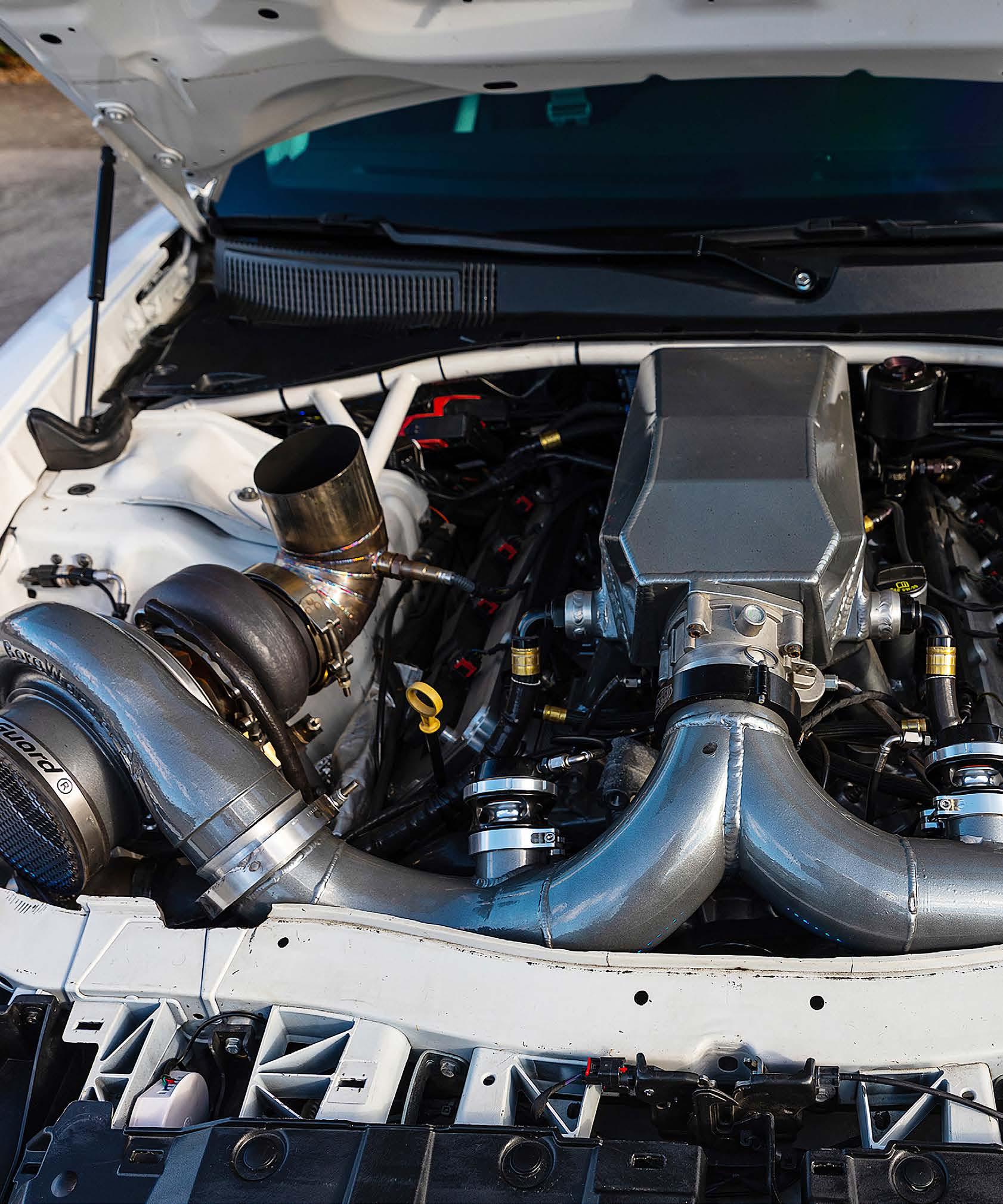
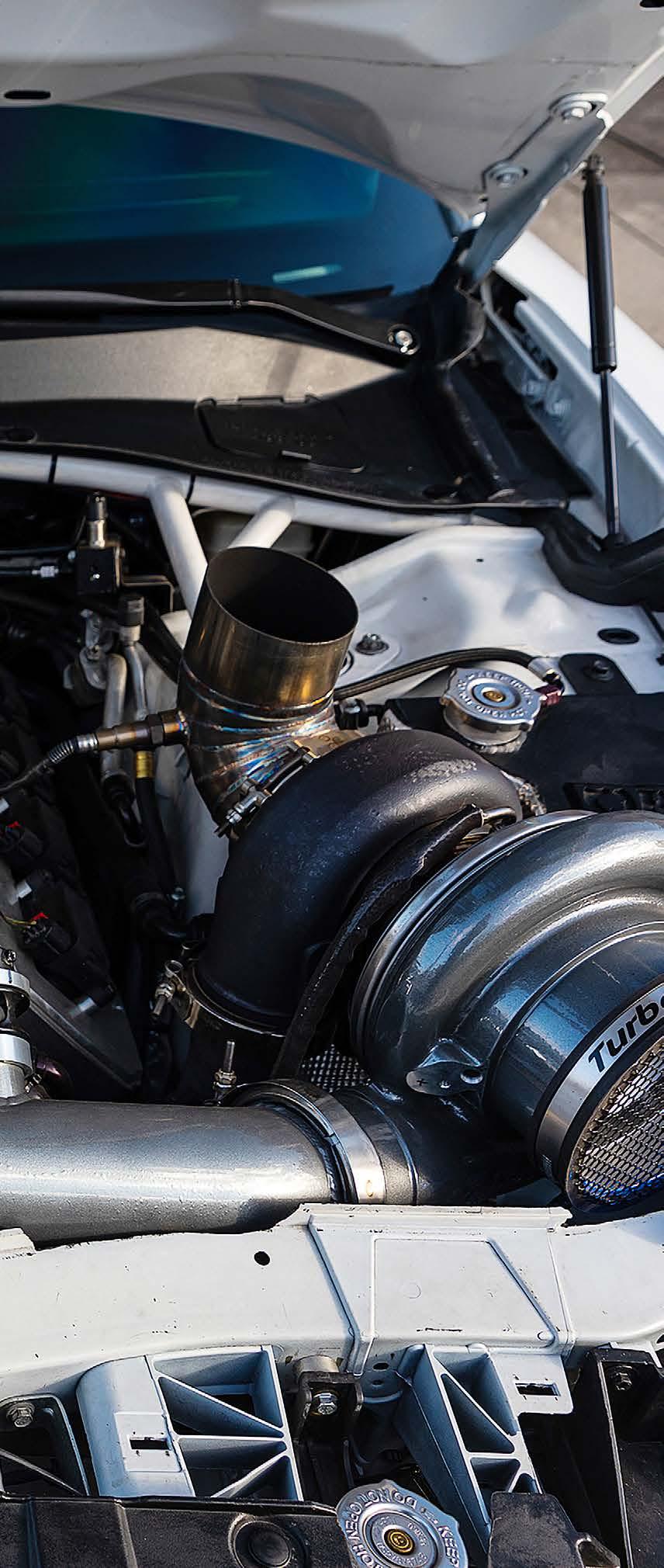
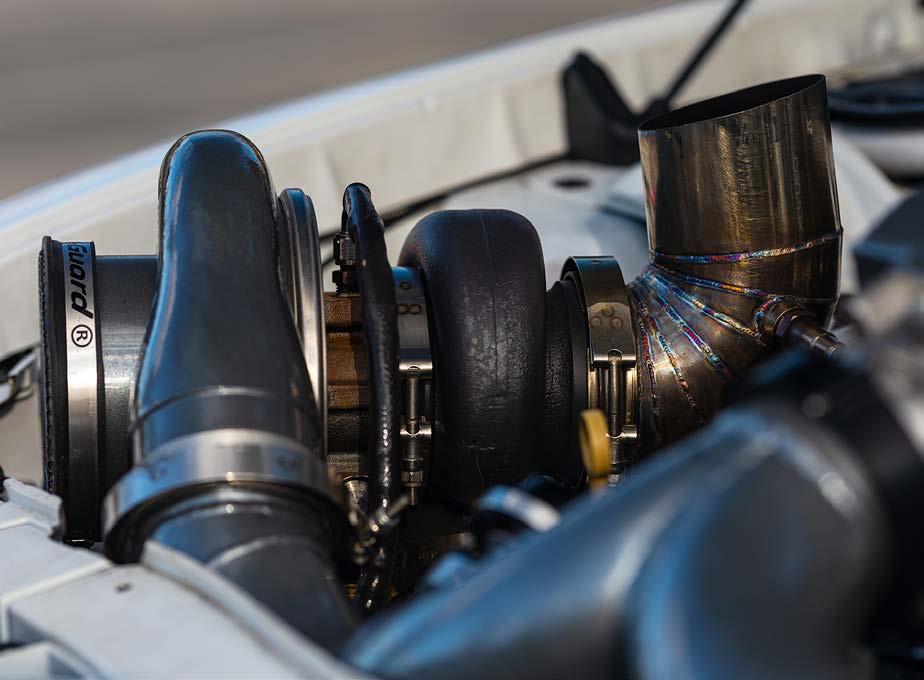
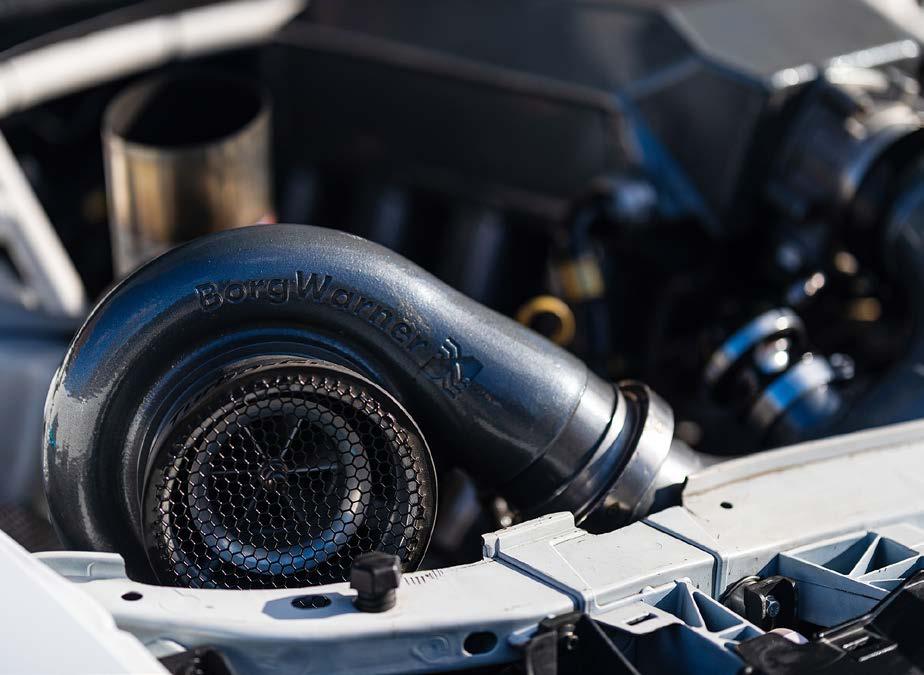
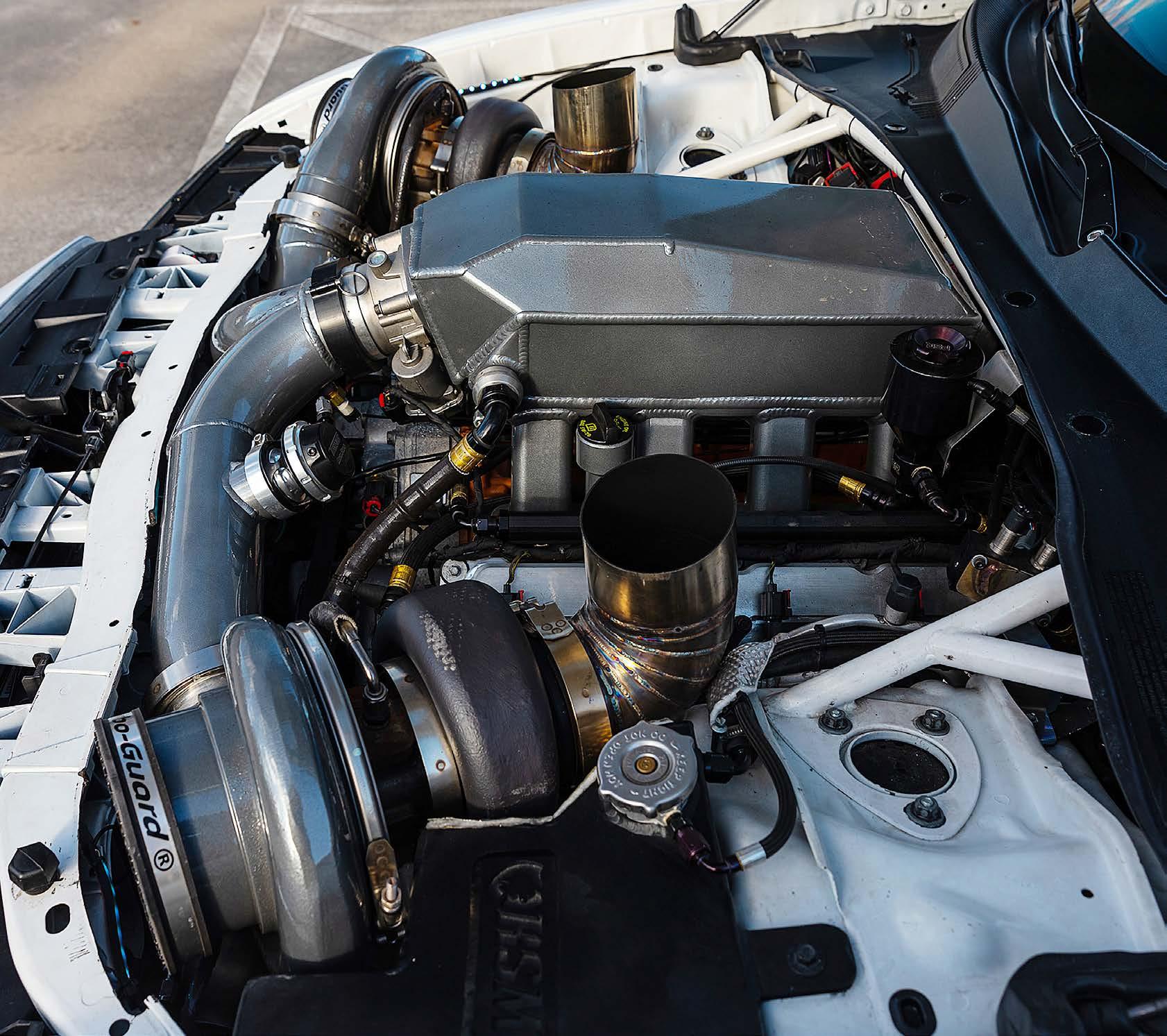
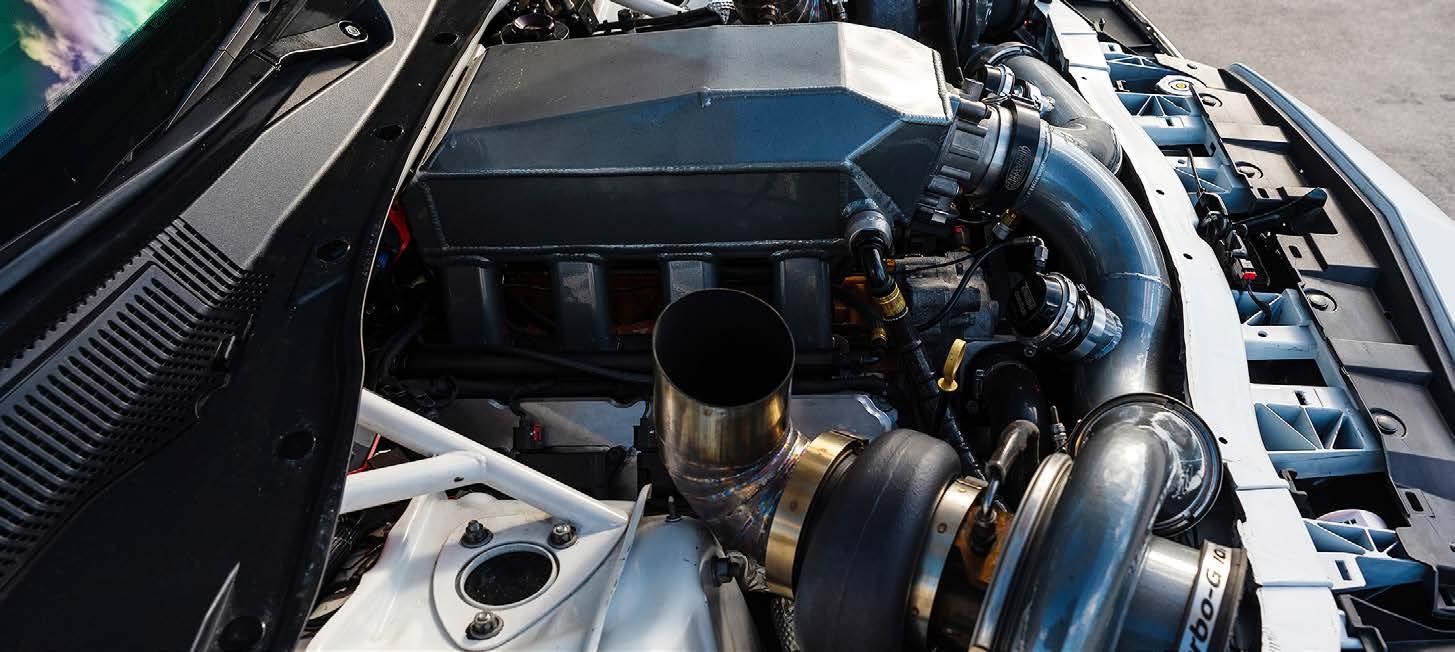
Twin 76mm turbos hang off each side of the built 426 Hemi.
...The Super Bee is capable of 1800whp and is entirely streetable...!
The factory 392ci heads got some port work done by RF Engines, while Mass went through the entire top end with their valvetrain package. What you see on the exterior of the Hemi is where it gets interesting. A G1Pro airto-water intake manifold tops off the long block. Twins replaced the outgoing Whipple, S400 frame
76mm from Forced Inductions, to be exact. Steven Eades, owner of Rock Solid Motorsports, designed and fabricated the turbo kit, which places both turbos up and out of the hood (a look made famous back in the NSCA days by Annette Summer on her Corvette).
Two Turbosmart blow-off valves and external wastegates regulate pressure and one of the more unique (and cool) things about Eric’s Charger is the wastegate and exhaust exits. Wastegate gas exits right before the front tires, while the exhaust exits straight out of the hood, not something you see every day on a street/strip car. On big boost, the Super Bee is capable of 1800whp and is entirely streetable!
Eric Warren’s 2013 Street/Strip Dodge Charger Super Bee
Occupation:
Welding and fabrication shop manager.
Body & Paint:
Factory Body, hood chopped and massaged by Bad Grandpa.
Original Dodge 6.4L cast iron block, bored/stroked to 7L. Callies stroker crankshaft with custom Carrillo Pro-H HD connecting rods & custom CP Pistons – 10:1 CR. Original Factory Dodge 6.4L cylinder heads, ported by RF Engines, assembled with Mass Acceleration Motorsports valve/valve spring package. Factory 6.4L rockers.
Induction & Fuel Delivery:
G1Pro air-to-water intake manifold, Radium Engineering fuel surge tank with triple Walbro fuel pumps, Radium Engineering multi-pump fuel pressure regulator & ID1700 fuel injectors. Engine control is Motec M150 Integrated and tuned by Modern-EFI & Mass Acceleration Motorsports.
Power Adder:
Twin Borg Warner S400 billet 76 turbos by Jose @ Forced Inductions. Custom turbo kit designed & fabricated by Rock Solid Motorsports using Turbosmart BOVs & external wastegates.
Transmission:
Transmission is a full option Performance TH400 with Reid case, billet manual valvebody, conveter dumps & transbrake. The converter was custom built by Greg Slack Converters.
Rear Differential :
Rear differential is a 9” conversion (still IRS) with Strange Engineering billet spool & Motive Pro gear. Using Drive Shaft Shop axles and custom carbon fibre single piece driveshaft.
Brakes:
Original Brembo 4 Piston fronts & rear are from Carlyle Racing.
Tires & Wheels:
Weld 15 inch rear conversion & 18 inch skinny front runners with Mickey Thompson Street R Pro 275 rears & SS Front Runners.
Interior:
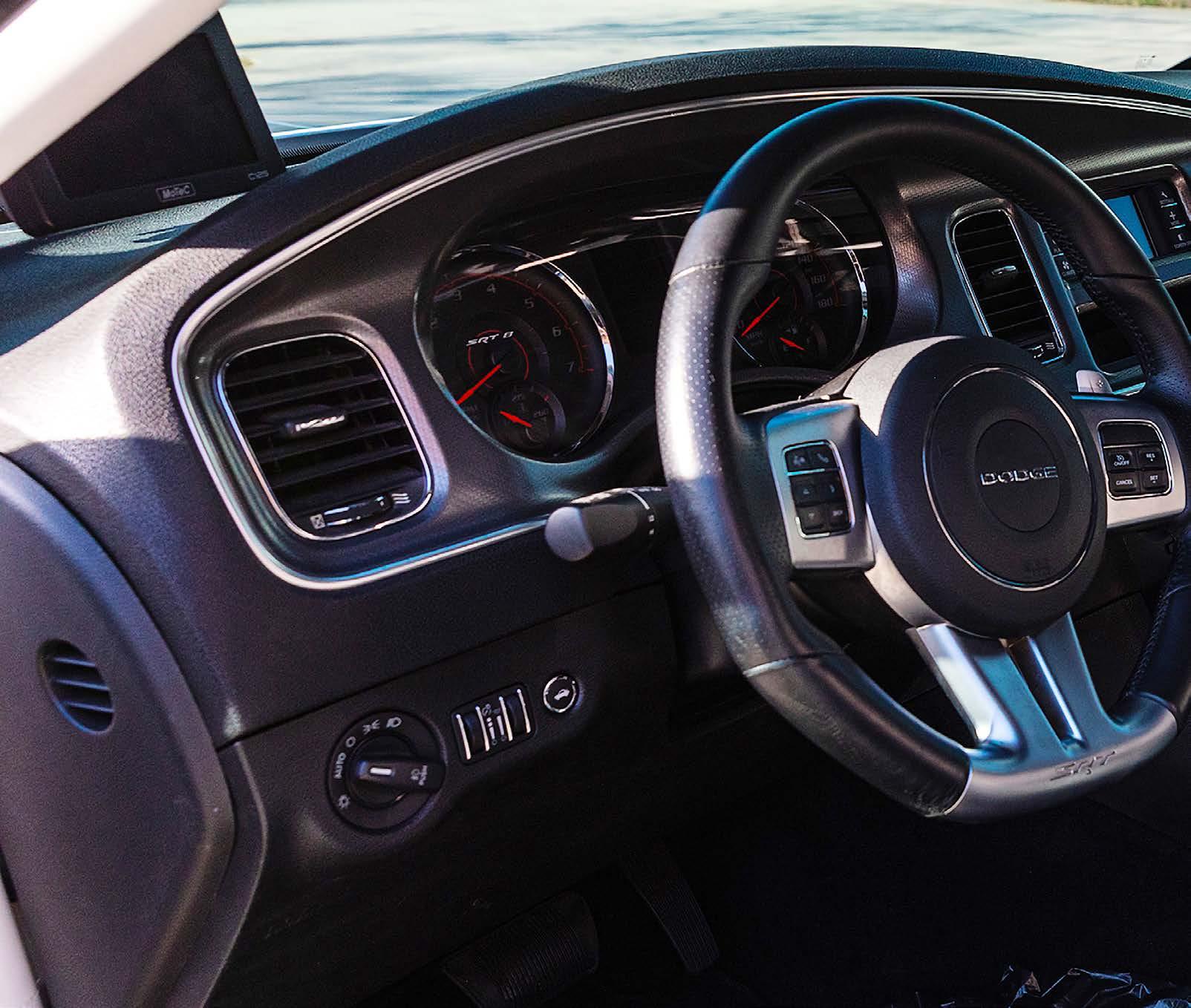
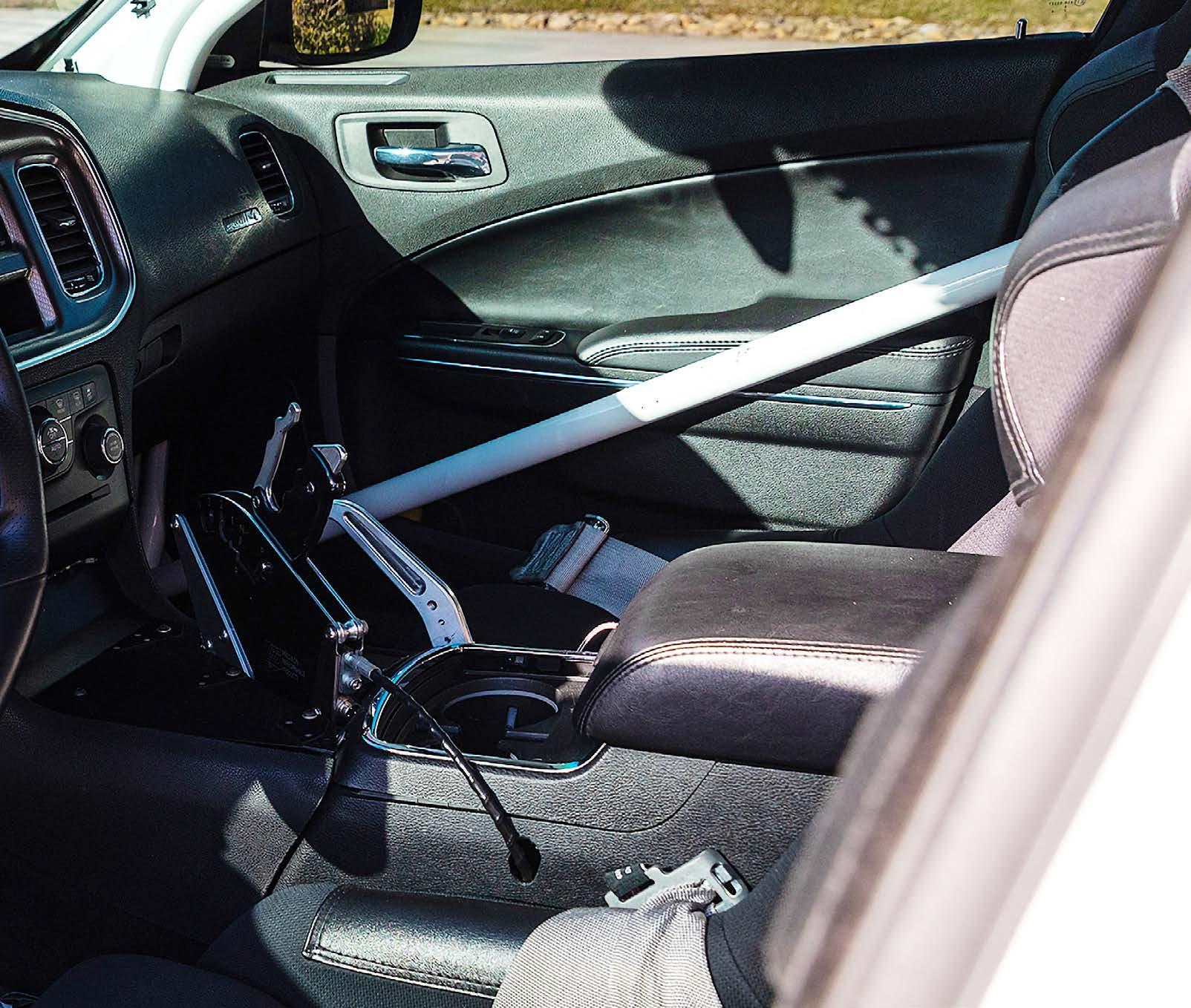
90% of the factory interior remains, including the back seat. 8.50 Certified cage by Mike Bright of Bright Fabrication with race seats & harnesses. Only non factory gauge is the additional C125 MoTec display, which displays all additional critical data.
Thanks To:
The team from Mass Acceleration, Modern-EFI, and Rock Solid Motorsports for coming together on this massive undertaking.
ET & MPH:
8.60 at 165mph in the ¼-mile to date. Only able to utilize maximum 1,500hp of 1,800 so far.
Fuel delivery comes from a Radium Engineering fuel surge tank and regulators with three Walbro pumps supplying 1700cc injectors. A MoTec M150 integrates with the factory system with the help of Modern-EFI and Mass Acceleration Motorsports.
Under the hood, everything is nice and neat, and the turbo kit is painted flat grey to
blend in with surroundings, although the snail bodies poking through the hood is a bit of a giveaway.
There are two main things to consider when you want to make a car quick and fast; power and weight. The power is more than adequate, but quite frankly, Eric is comfortable being overweight as he wanted to keep the car real.
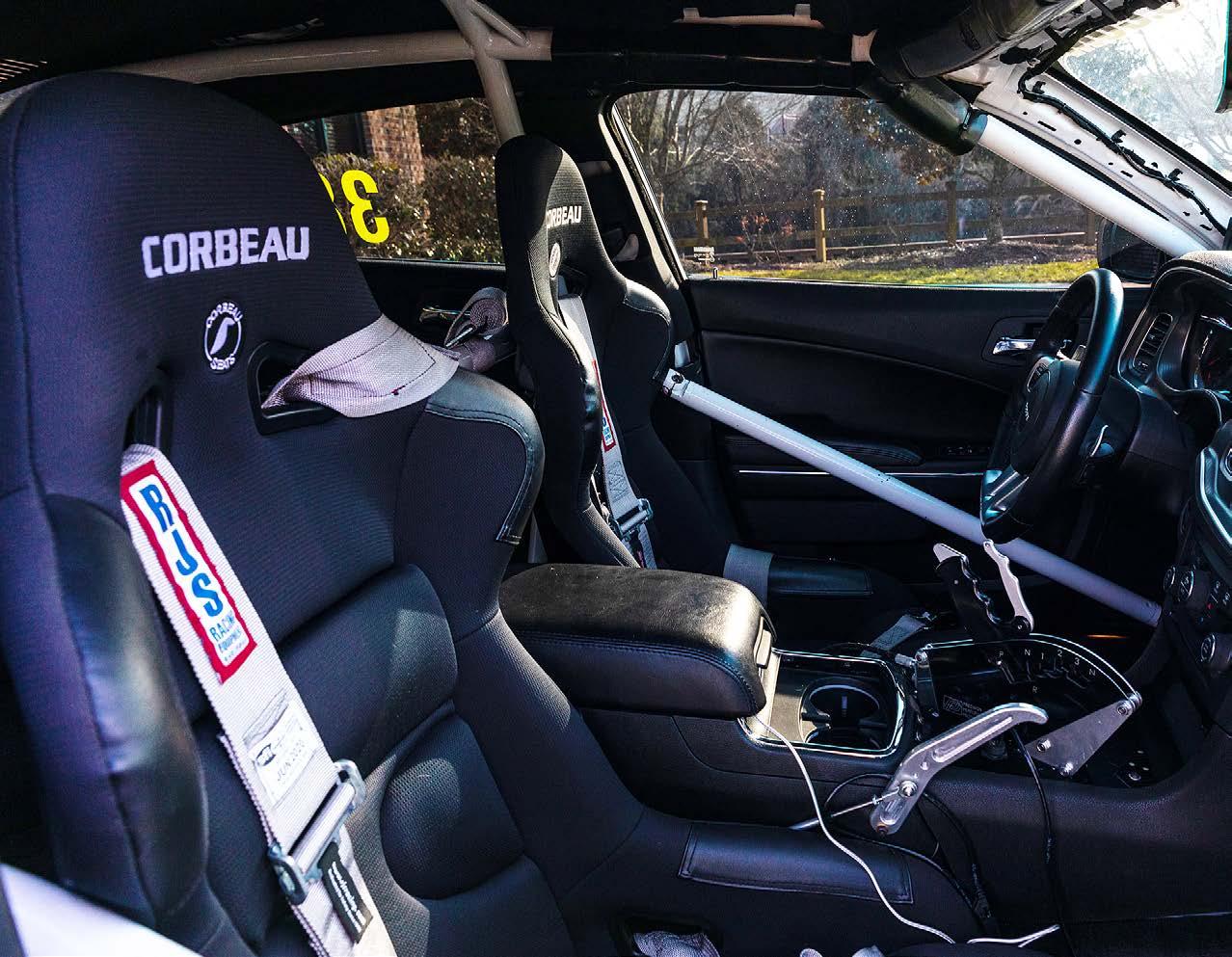
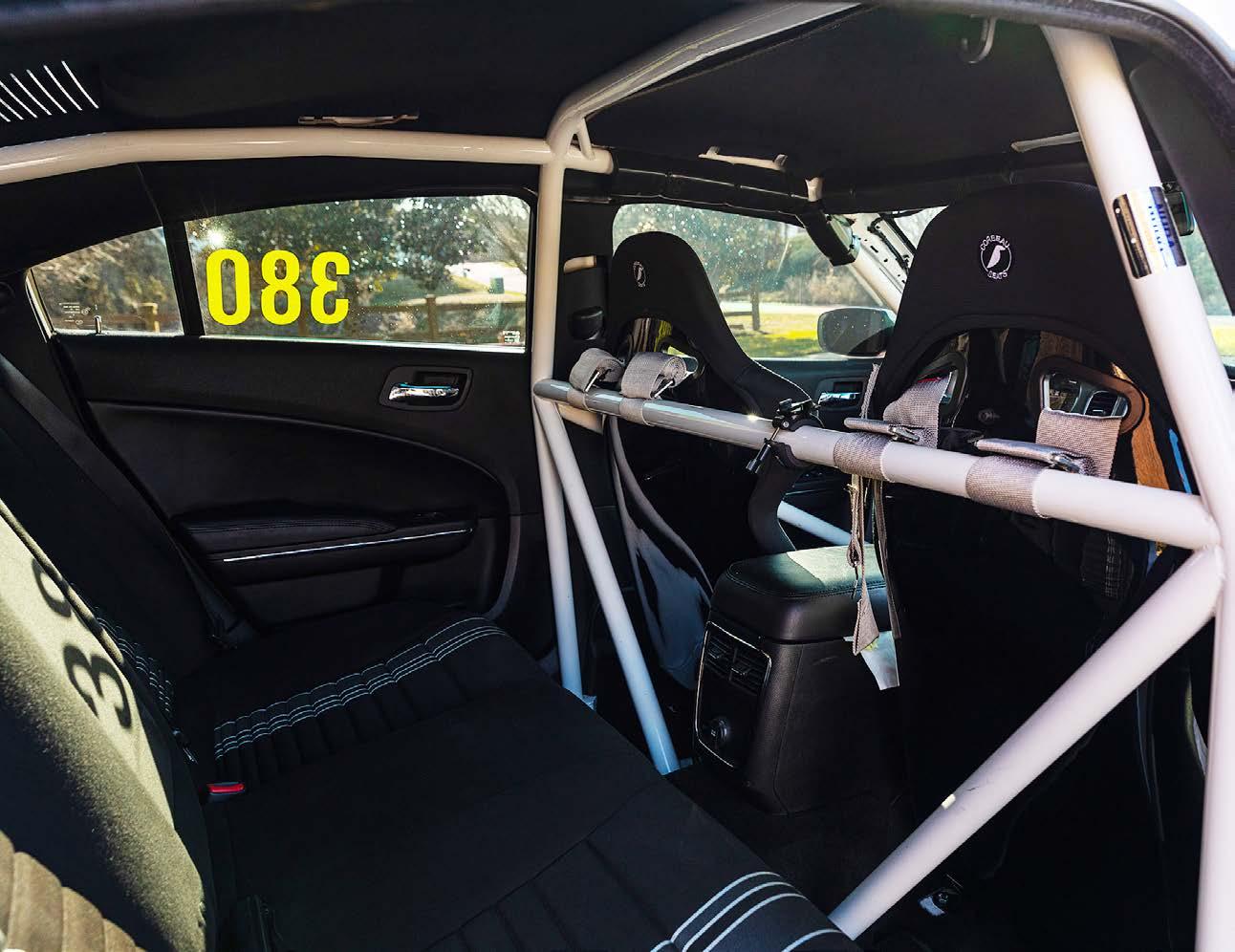
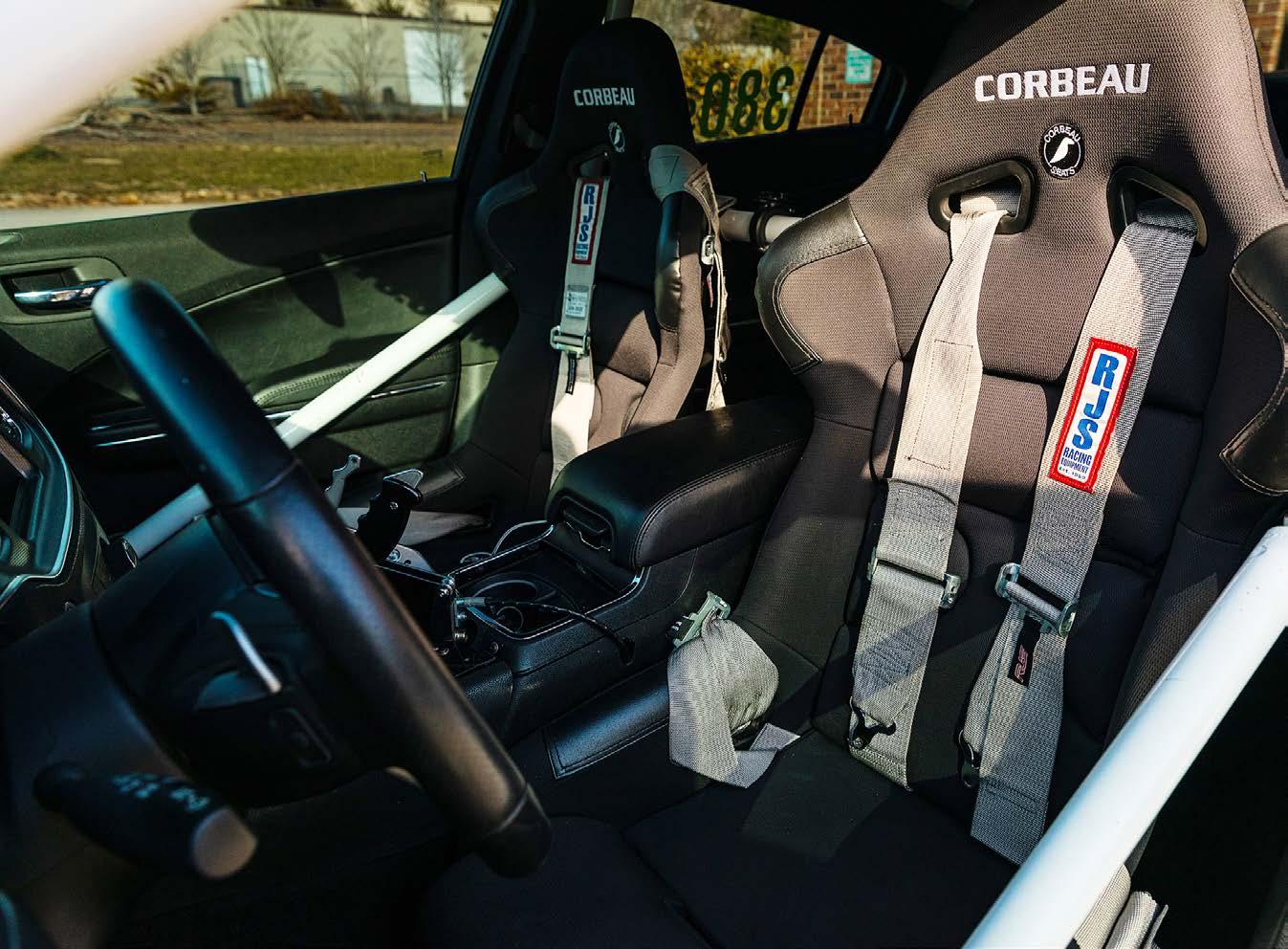
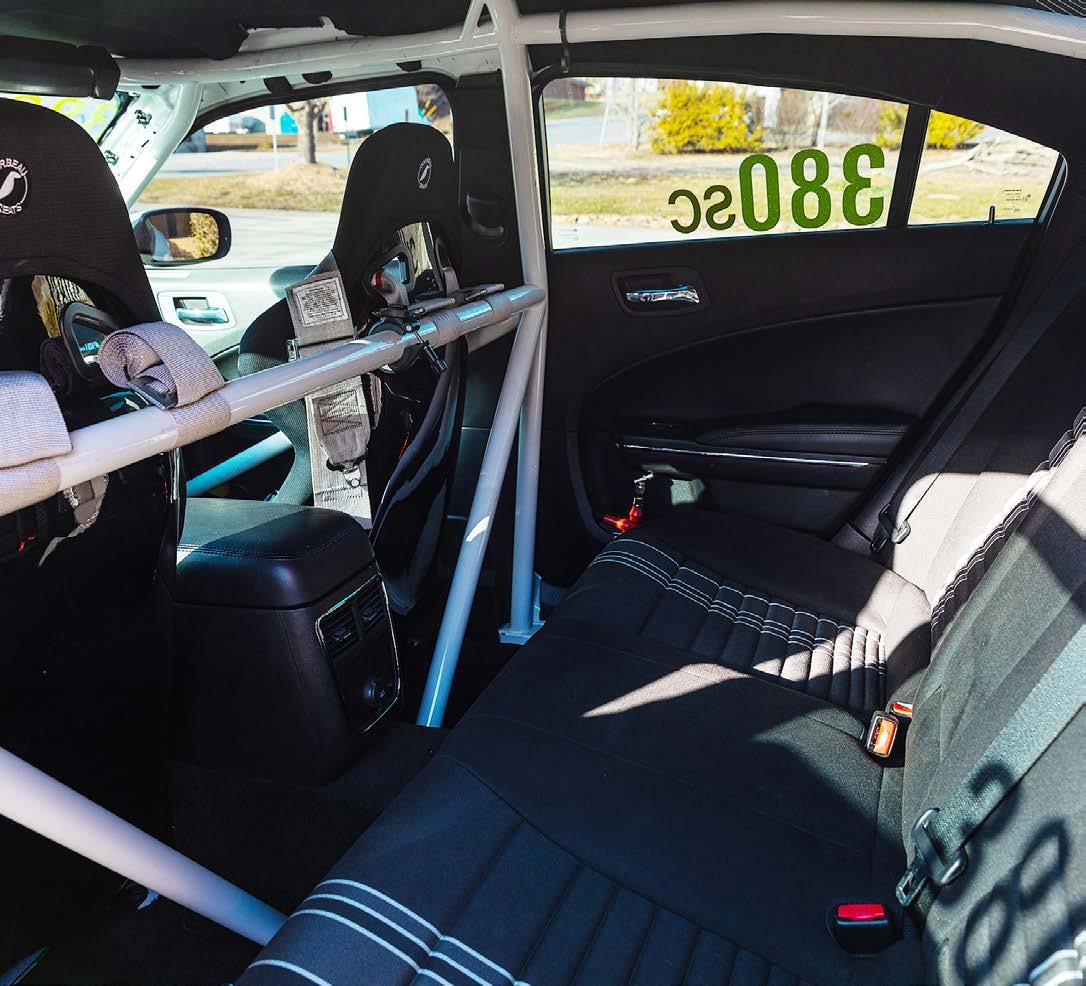
The interior remains mostly factory, including the rear seat; even with a cage, passengers can ride in the back. A MoTec display keeps check on additional vitals.
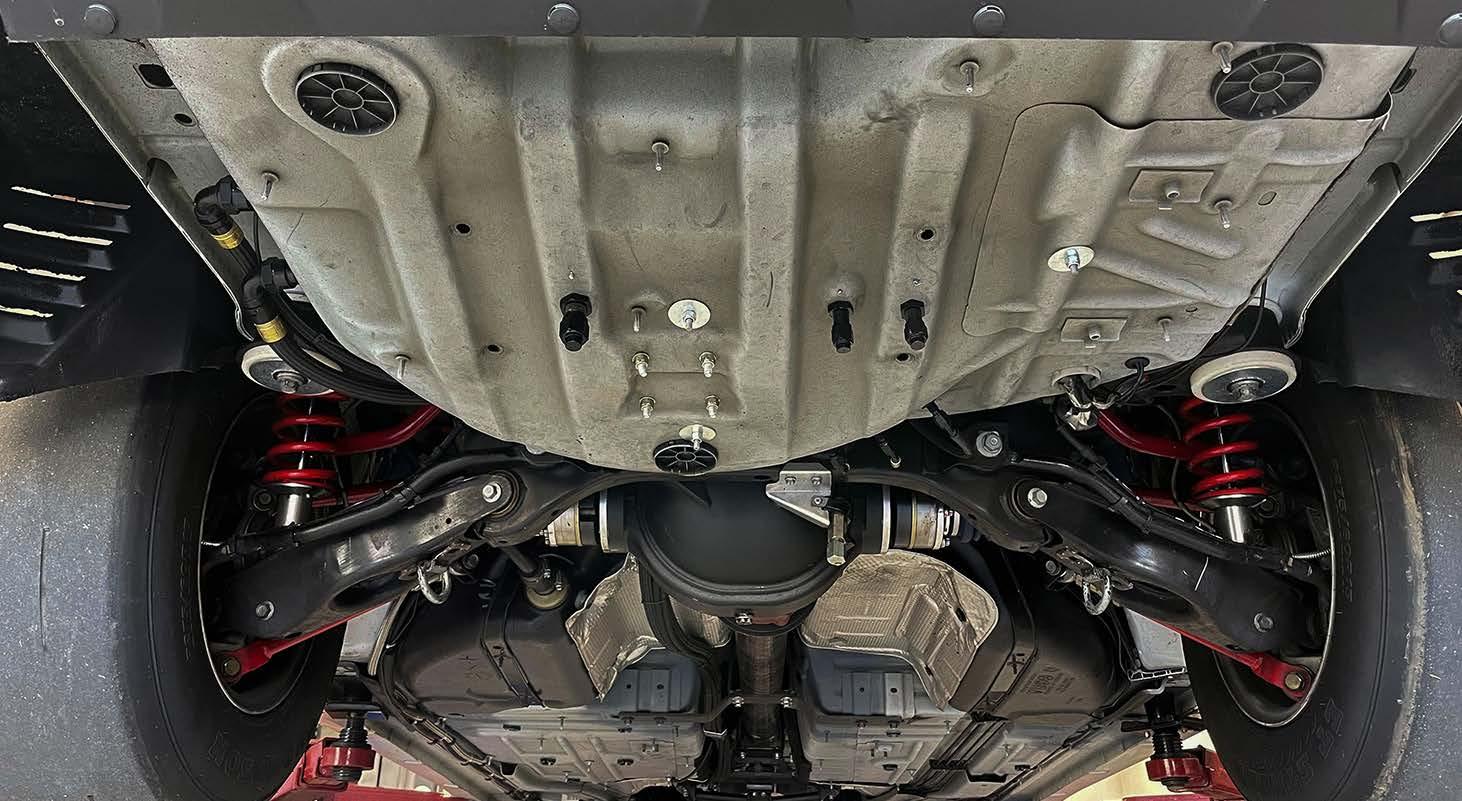
That unfortunately comes with a ripple effect as, aside from the extreme amount of power, the drivetrain must withstand the 4500lb weight, as well. A heavily built TH400 transmission backs the Hemi, complete with a Reid case, billet internals and manual valve body. A Greg Slack converter sends power through a Driveshaft Shop carbon fiber driveshaft and into Strange Engineering’s 9-inch conversion. Independent rear suspension stays in place, and the Strange pumpkin is stuffed with a billet Motive gearset and spool. The Driveshaft Shop also supplied half-shafts strong enough to take the abuse. BMR trailing and lateral arms along with Viking Crusader coilovers help put all that power to the pavement while custom Delrin bushings support the subframe and rear end, further helping traction.
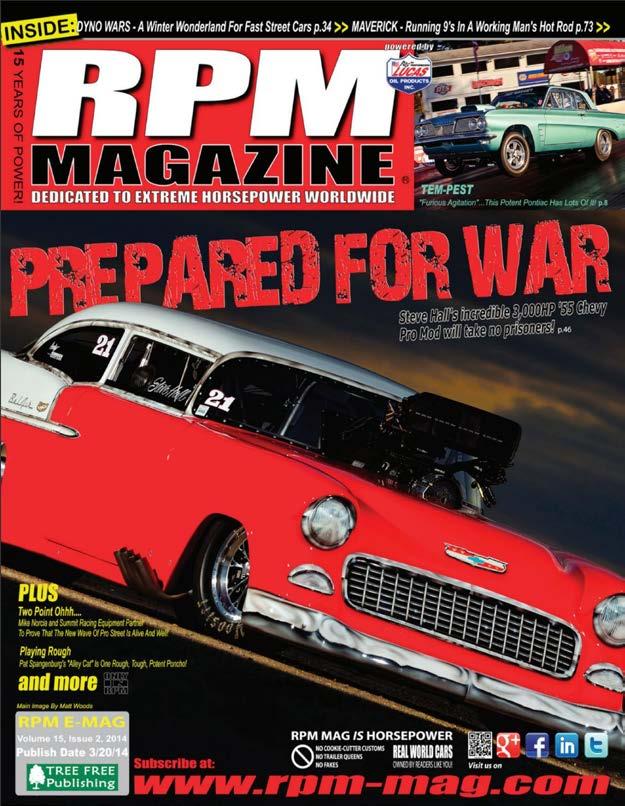
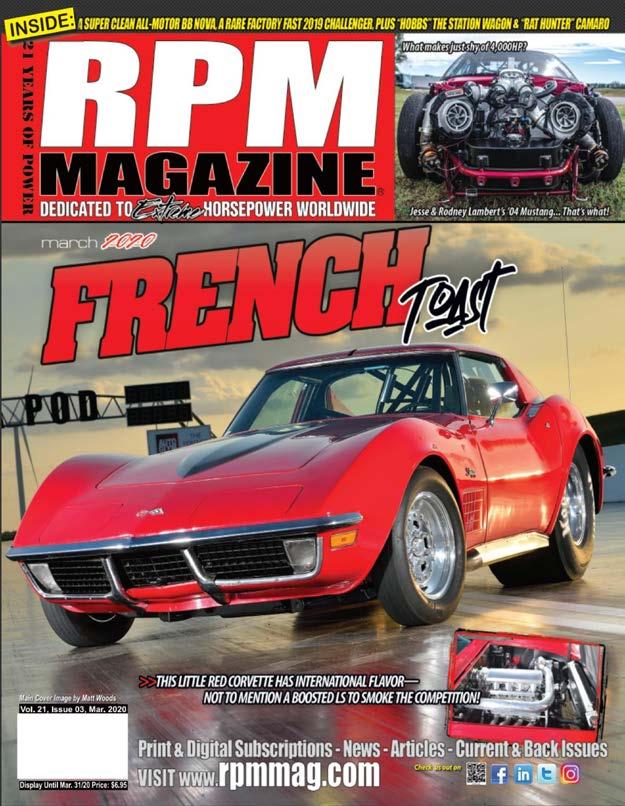
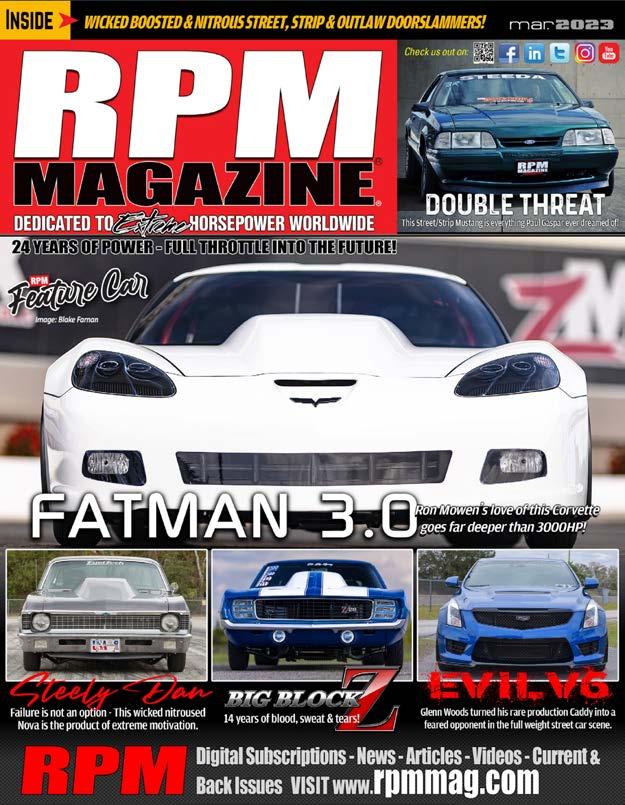
Each month we host some of our past issues of RPM Magazine in this section. If you haven’t read them yet, they are new to you! If you have, maybe there’s a favourite car/story you want to read again….here they are! CLICK A COVER OR SCAN A QR CODE TO GO BACK IN TIME!
Out back, the trunk area is caged and braced and underneath, the Charger retains the factory style independent rear suspension, albeit heavily fortified.
Other than Viking Crusader coilovers, the front suspension remains stock and surprisingly, the factory Brembo brakes still supply adequate stopping power up front, while the rears were swapped out
in favor of a set that would clear 15-inch wheels.
Outside of Eric’s Charger, the twins catch your eyes first, and then its Weld’s Drag Pack, all hinting to onlookers that this Bee will sting.
Running 8.60 in the quarter using just a portion of the available 1,800 ponies, Eric Warren looks forward to competing with cars with two fewer doors and 1000 less pounds in the Bee this year!
Watch this killer Bee lay the sting down!
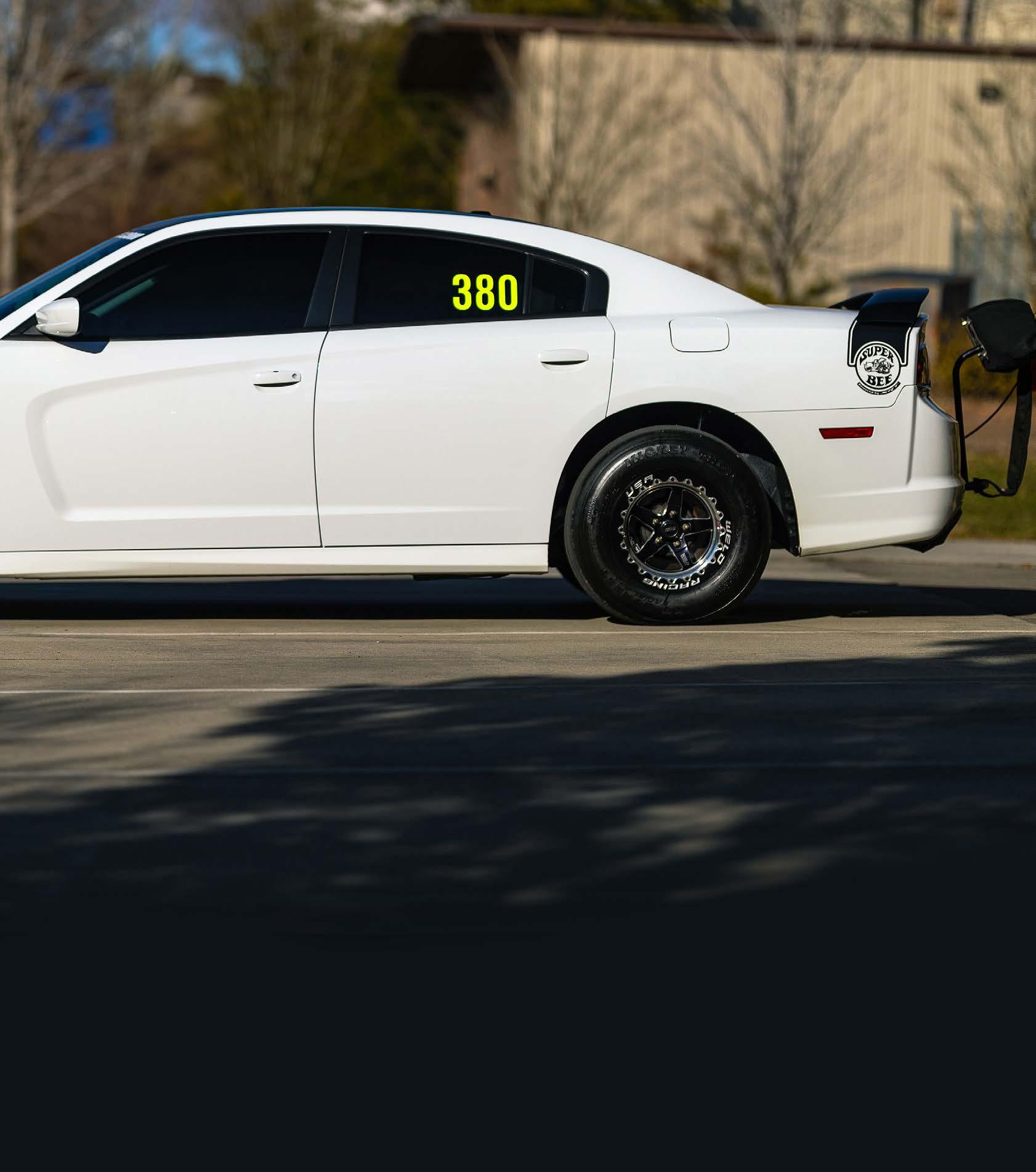
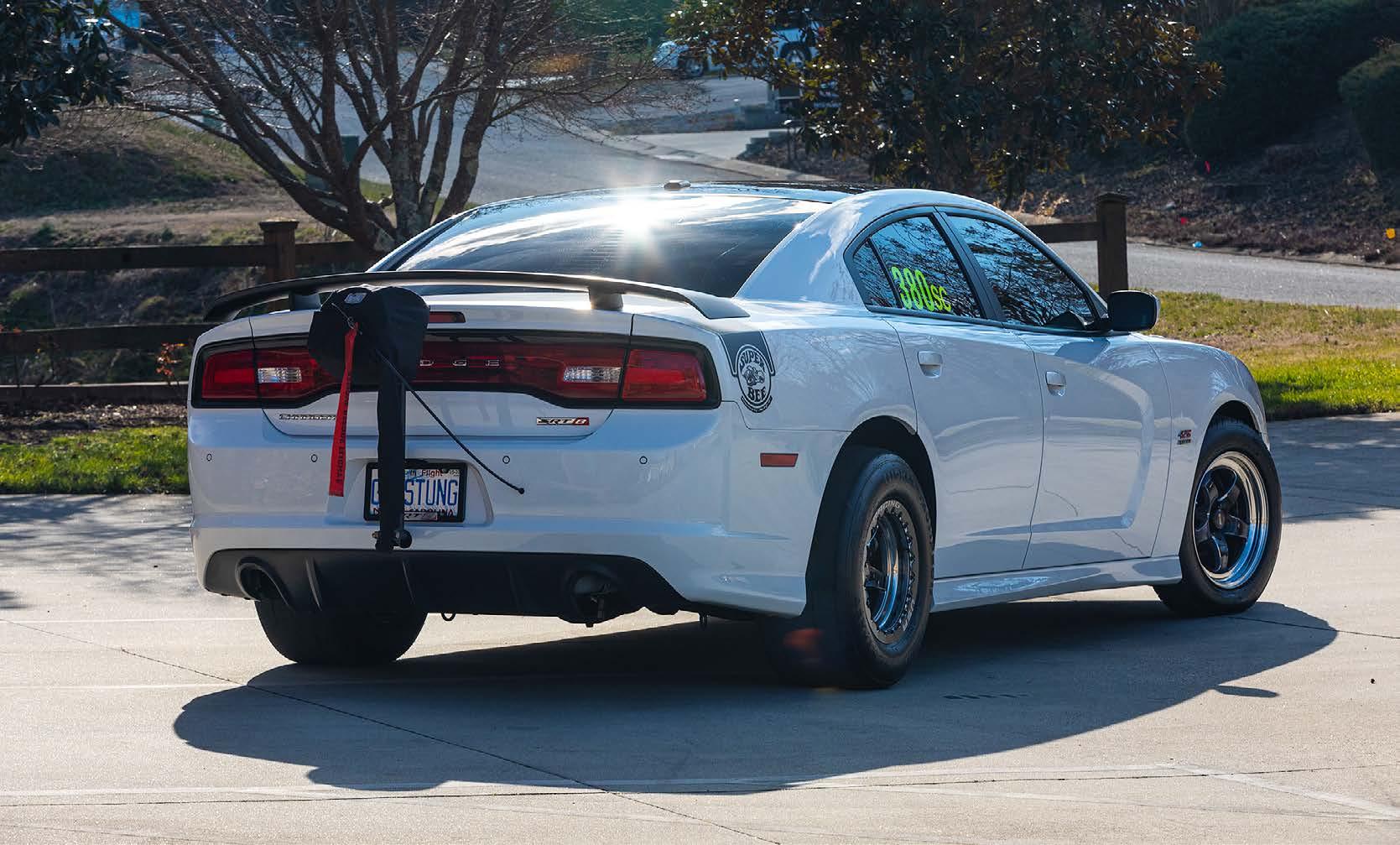
Super Bee trim and stripes remain, but the hood was modified by Bad Grandpa. Weld Racing wheels sit on all four corners, 18-inch skinnies up front allowing clearance for those big factory brakes and a Carlyle Racing 15 inch conversion for the rear. Mickey Thompson provides traction while keeping things street legal.
Almost all the factory interior remains intact, including the rear seat. Front racing seats are equipped with driver and passenger harnesses to keep thing safe and Mike Bright of Bright Fabrication did a spectacular job of snaking an 8.5 certified cage through the interior, allowing adequate room for Eric and all his passengers. The factory gauges are still there, and the only addition is a MoTec C125 display to monitor vitals and warn Eric of any other issues.
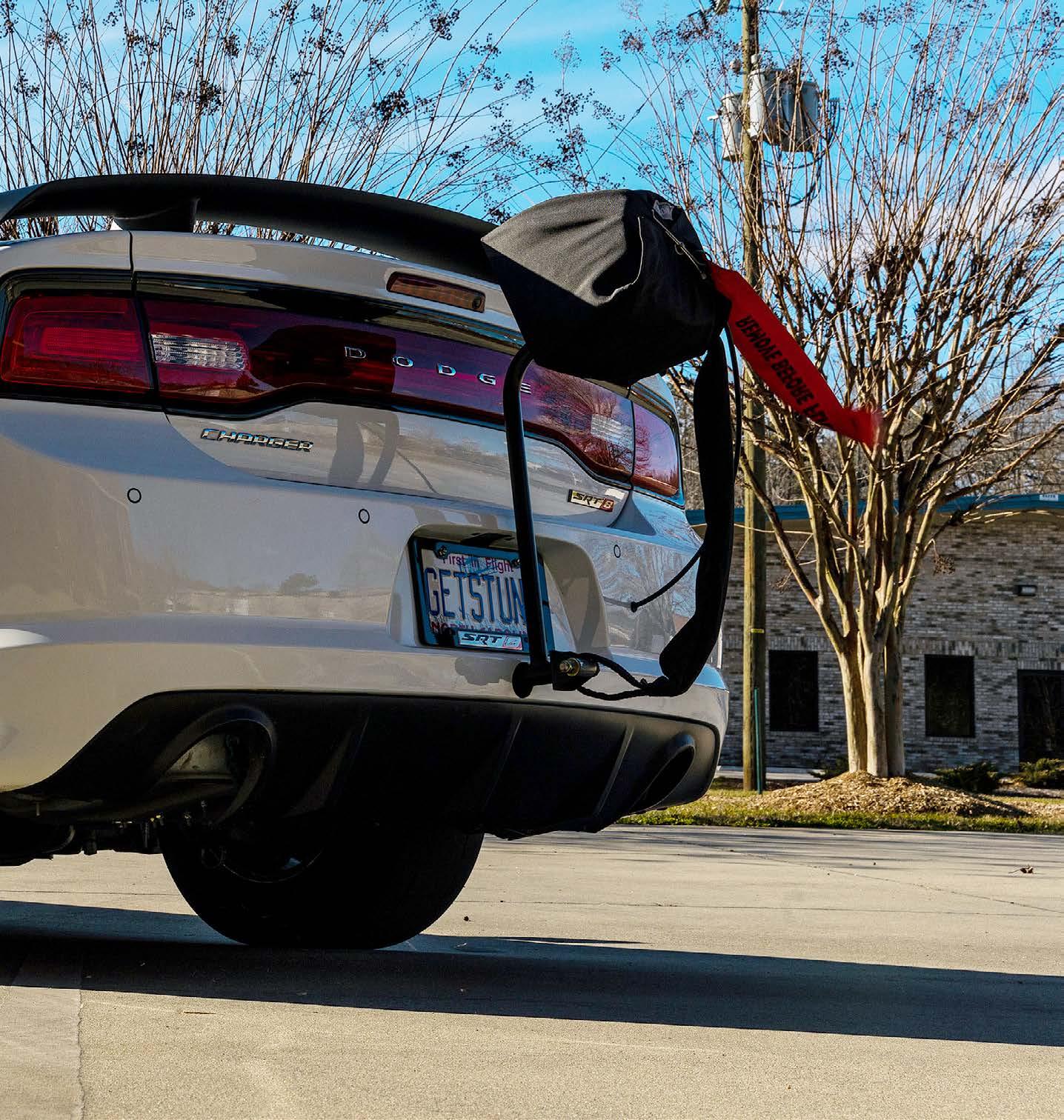
It seems that no matter where Eric and the car end up; the track, cruise night, show or burger joint, a crowd gathers, mostly because a Bee with twins and a killer stance just isn’t something you see every day. Keeping in mind the weight, John at Mass Acceleration and Steven Rankins have helped push Eric deep into the 8-second zone in the quarter mile at over 160mph, and it’ll only get faster from here on out. Even at over 4,000 pounds, with some tuning (as they have only been able to utilize 1,500 of the 1,800 horses), and maybe, just maybe, a small diet, it’s only a matter of simple math to realize that this is a solid 7-second capable ride. So while Warren’s license plate may say “Get Stung”, we highly recommend against tempting this Bee to exercise its options to do so.
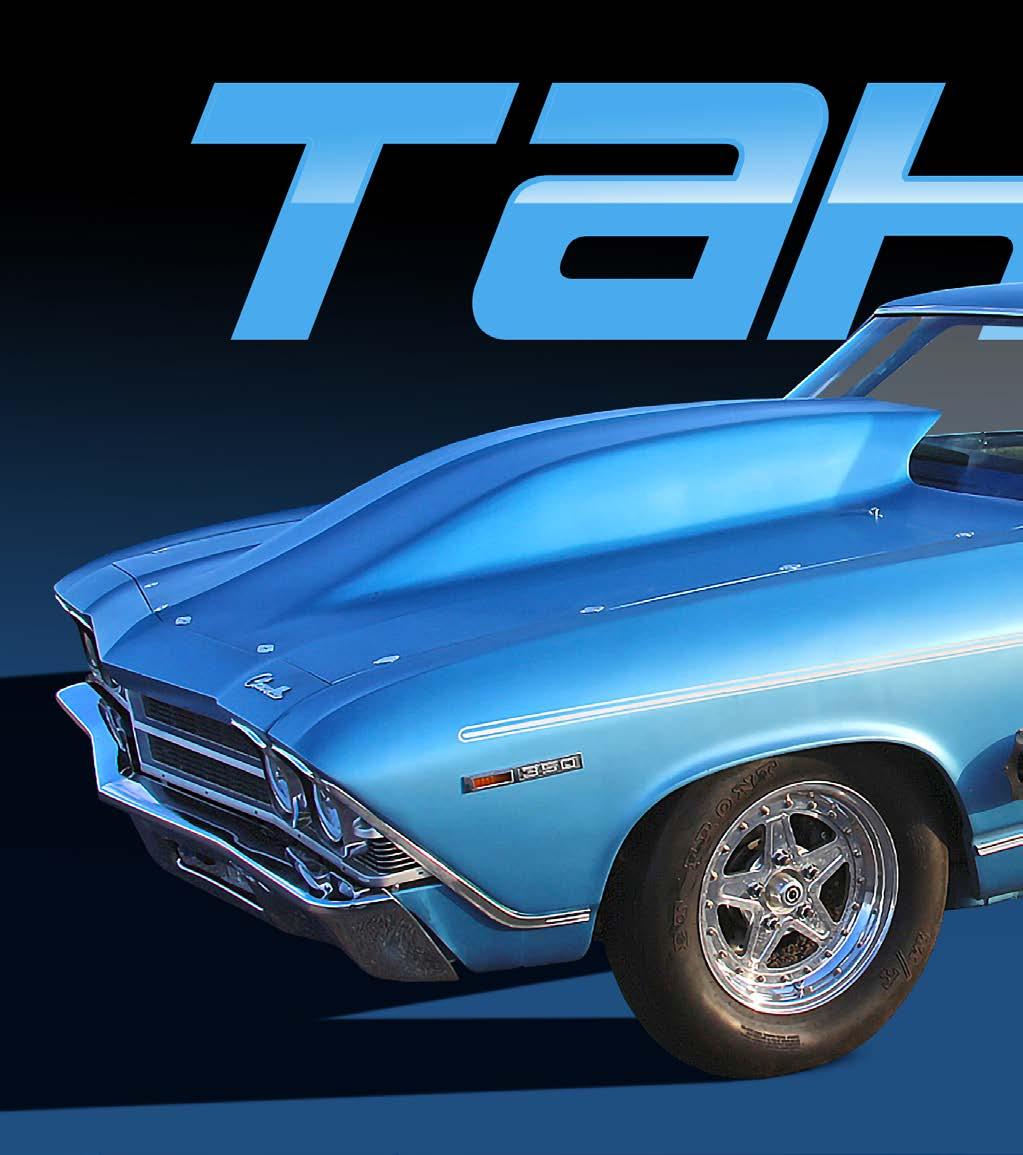
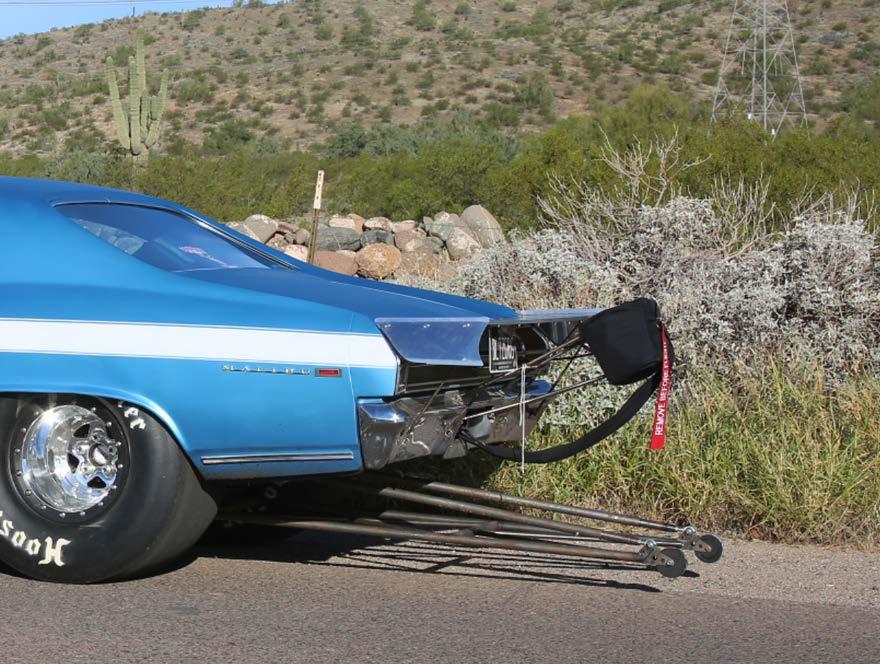
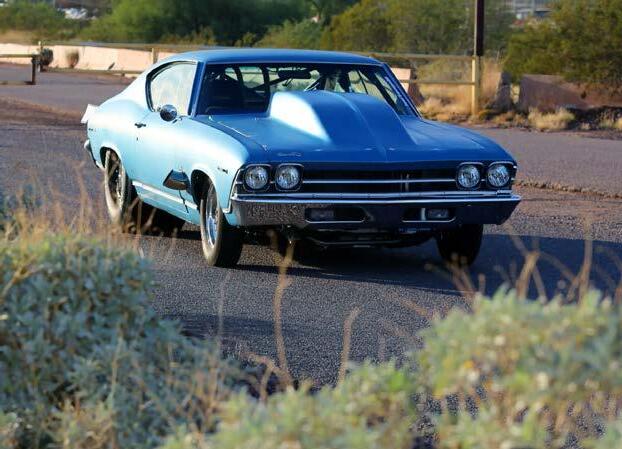
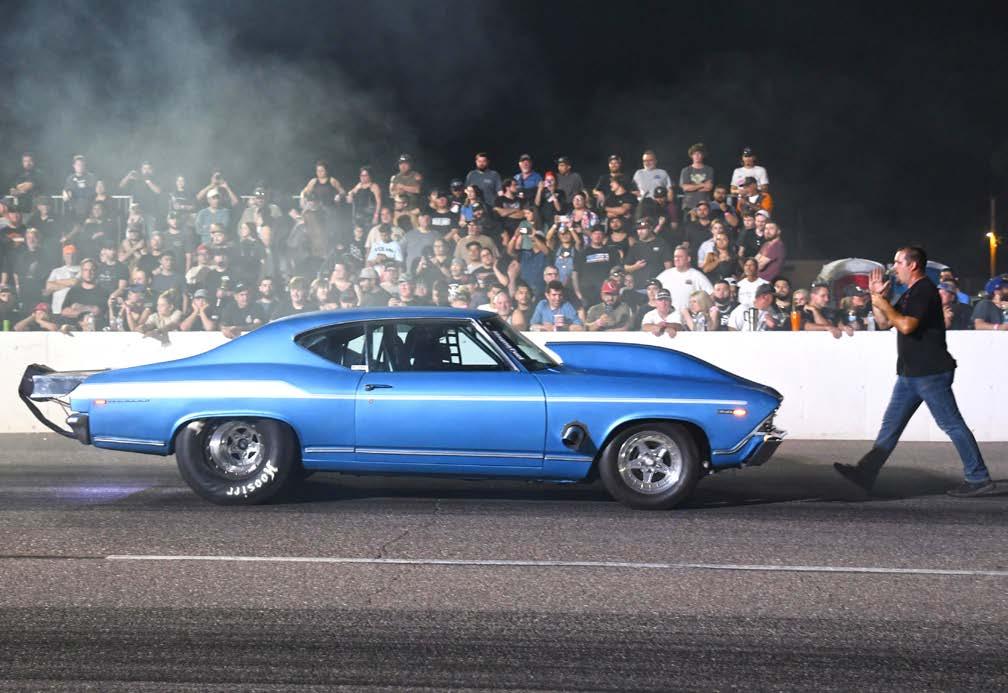
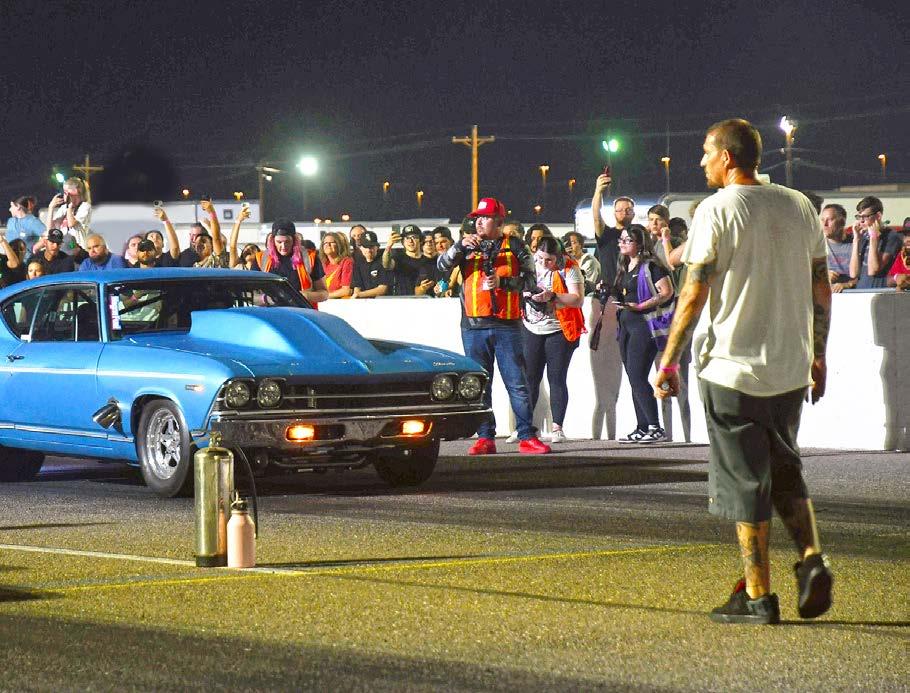
Jason Nolan’s 1969 Chevrolet Chevelle Nitrous Big Block
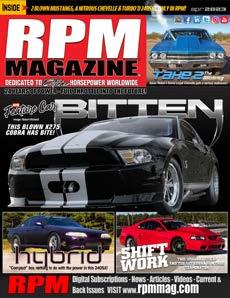
From the pages of RPM Magazine, April 2023
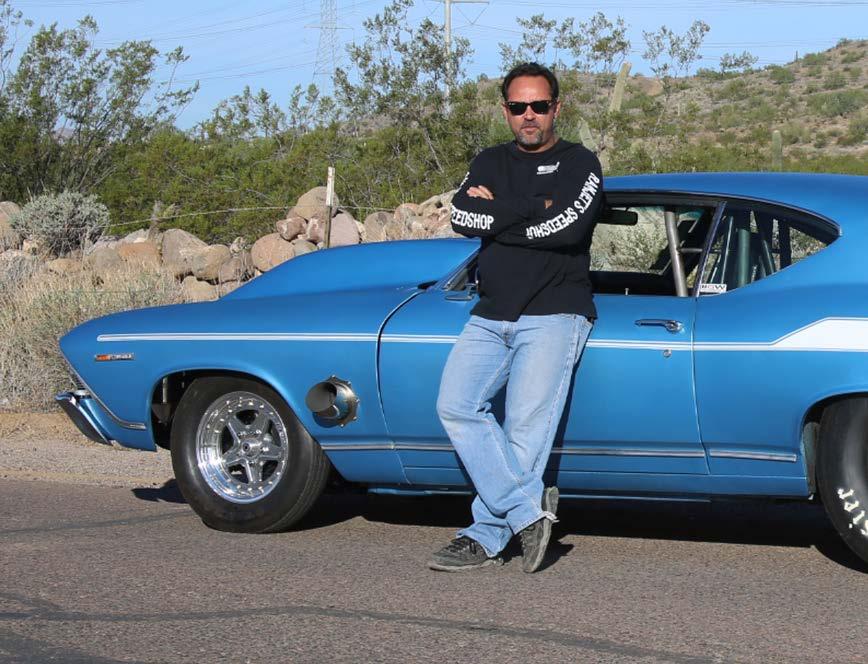
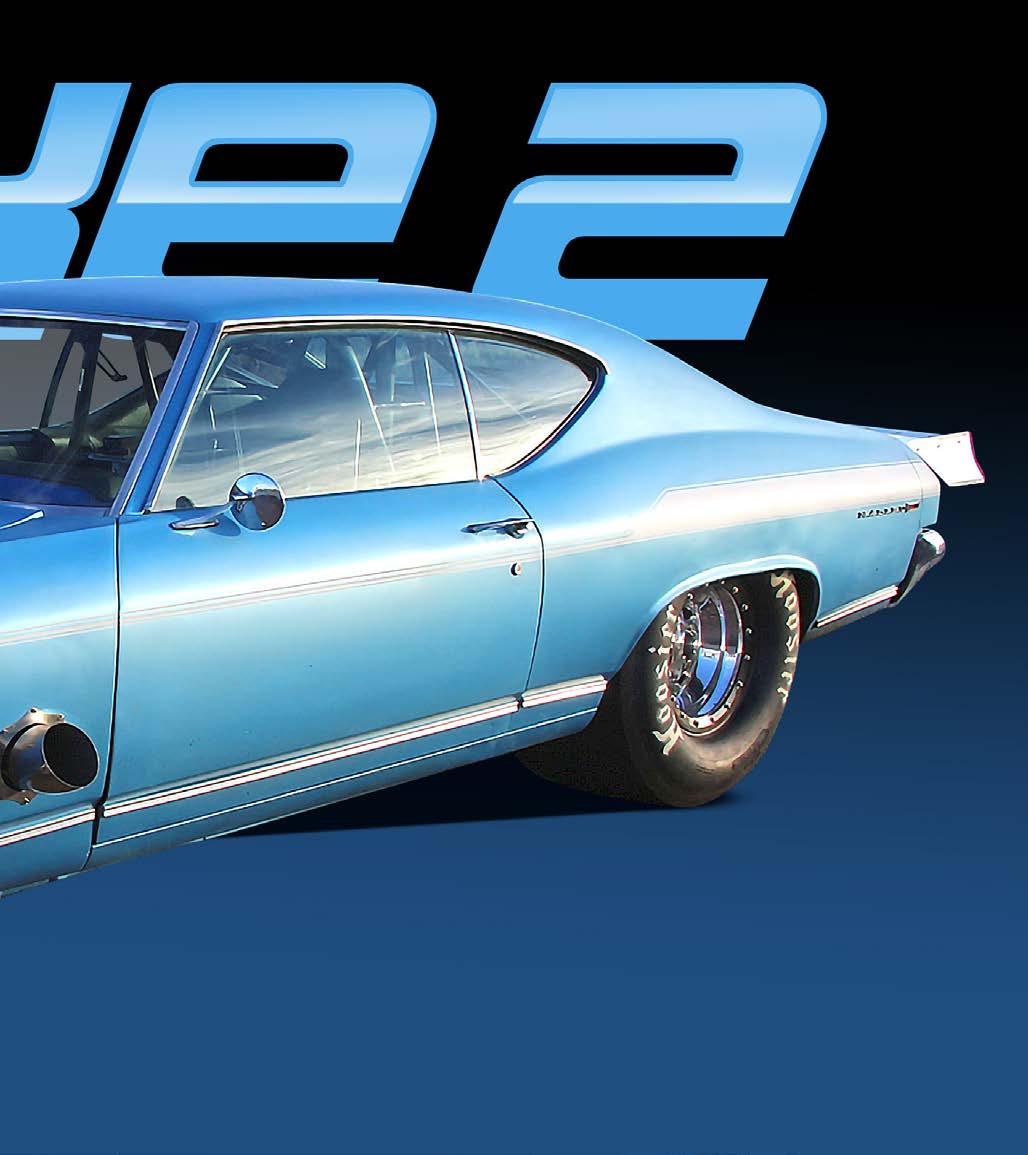
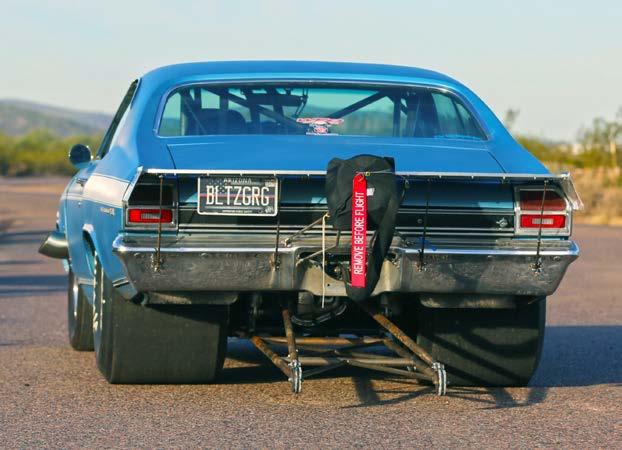
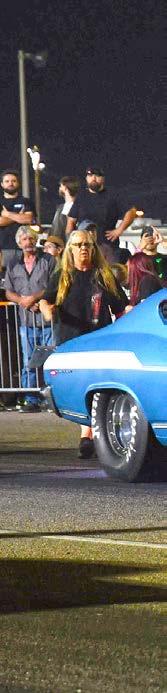
It may look similar, but this wicked street fighter has undergone some serious retooling, and while we’re not in the in the practice of featuring the same car twice in RPM Mag, Jason Nolan’s Chevelle was just too cool to turn down.
Nolan entered an over 4-year rebuild of an already capable street/ strip car for one reason, he explains; “This was a running, driving car and probably the quickest it had ever been when we got beat one night during a big street race. After that night I felt that if I had just a little more power or another nitrous kit I likely could have caught the guy.” Yes, just as many hardcore horsepower junkies might have guessed, it took a lost race to inspire Jason to go bigger…and not go home! “That following Monday I started looking for a bigger engine to buy or build.
Block Grudge Car
Photos: James Cummins
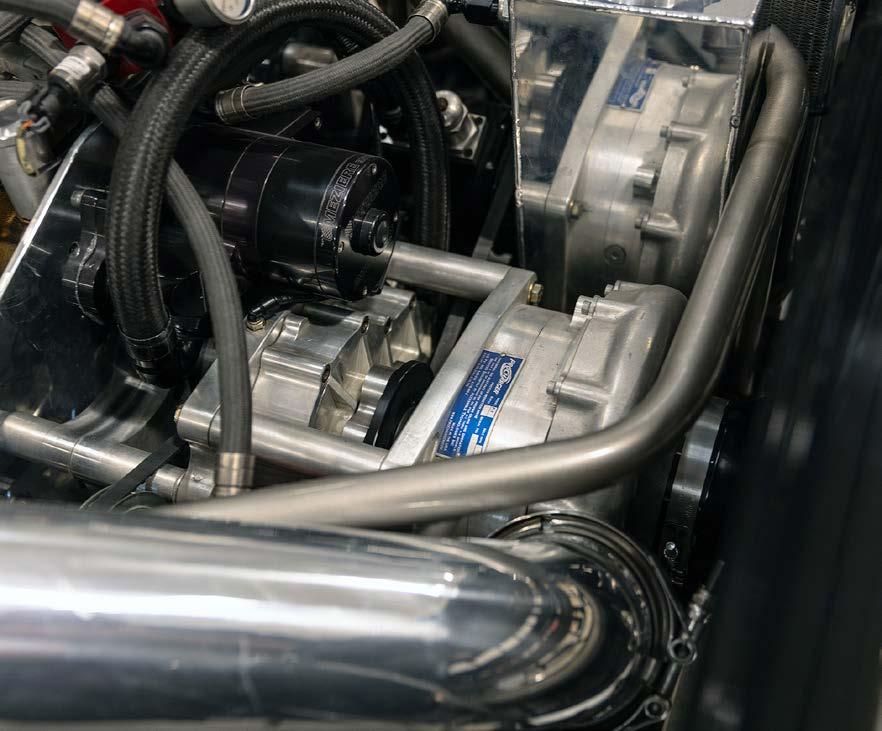
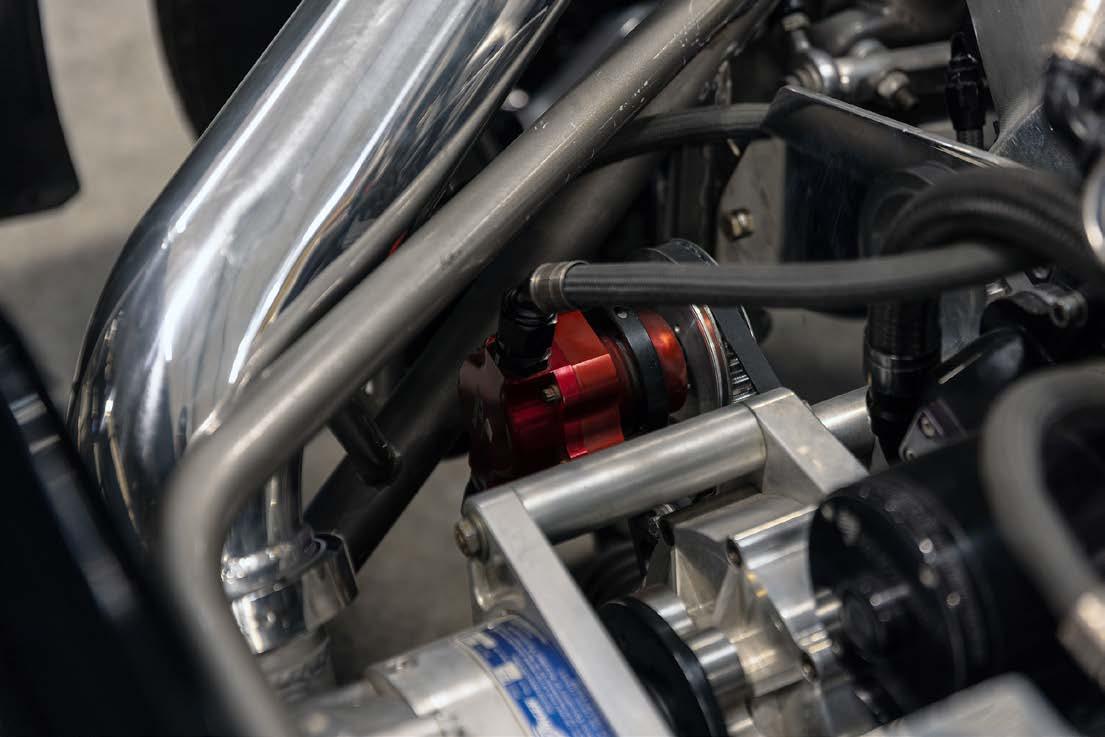
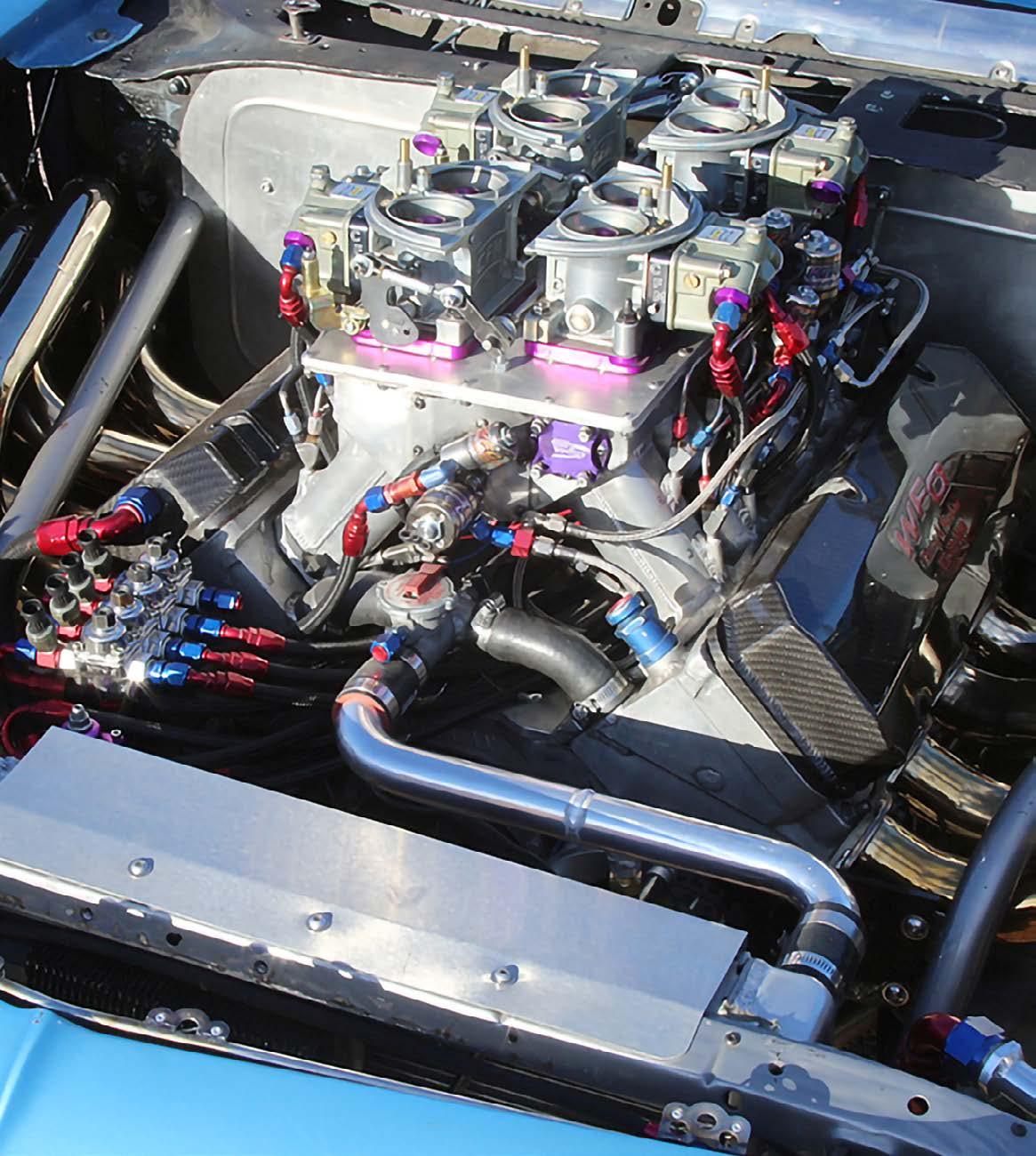
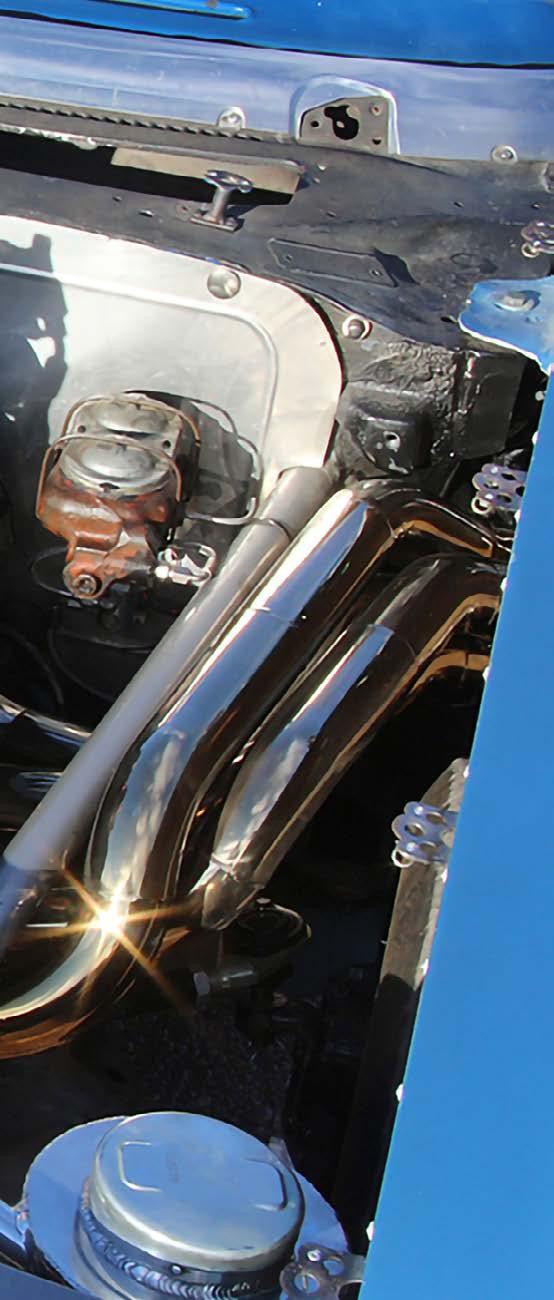
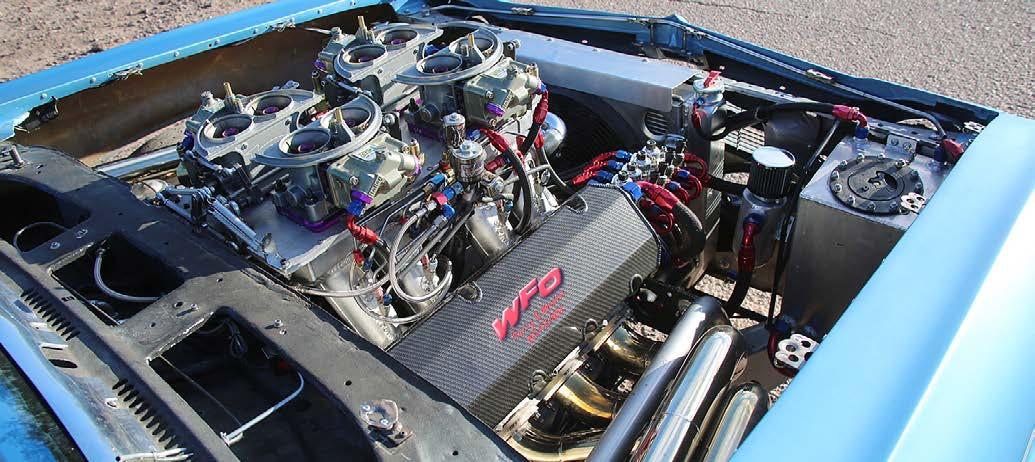
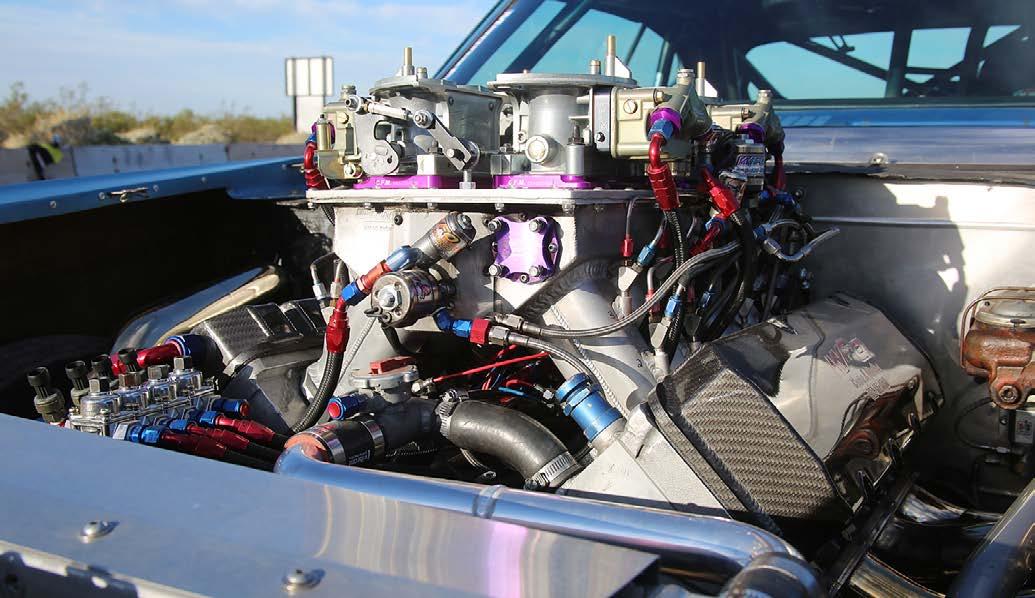
The big inch Donovan 5" bore space billet aluminum block mill came across Nolan’s radar from a friend and was just too good a buy to pass up. Assembly is credited to Kelly Bluebaugh @ WFO Racing and Machine and includes a billet crank, GRP billet aluminum rods, JE nitrous pistons and 18 degree CFE cylinder heads equipped with parts from Jesel and Manton. A pair of split Doms by Dale Cubic at CFM top a towering custom sheet metal intake.
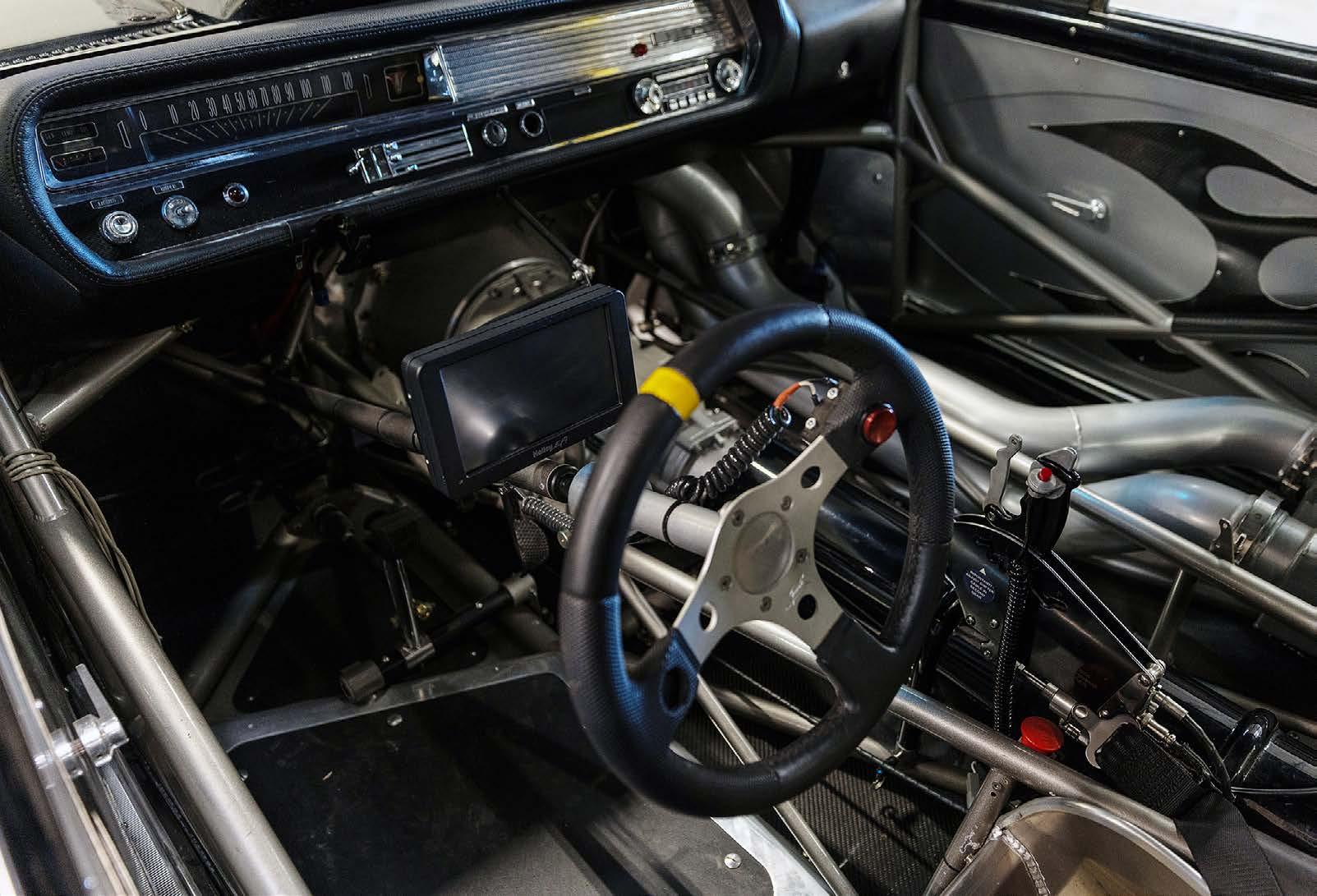
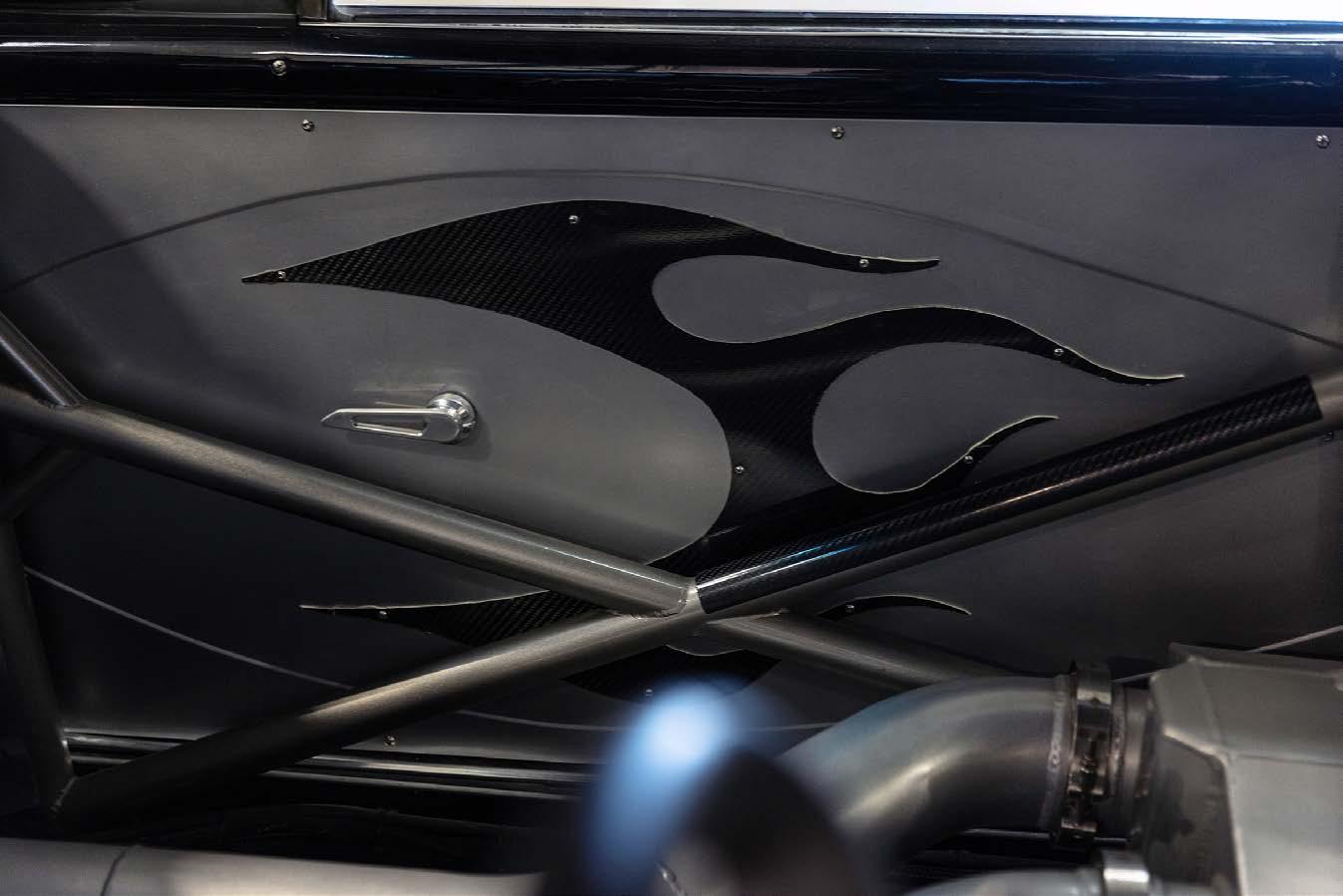
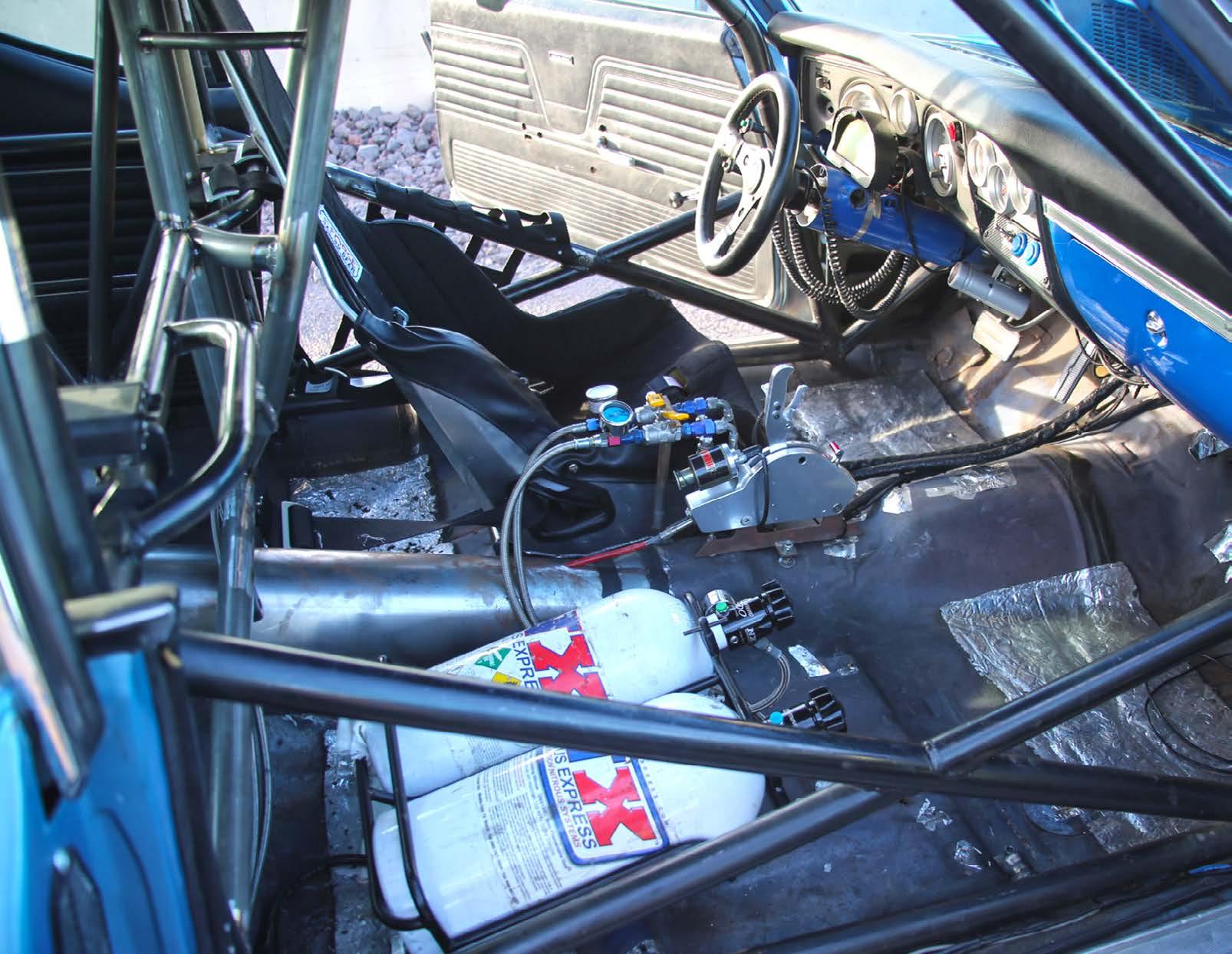
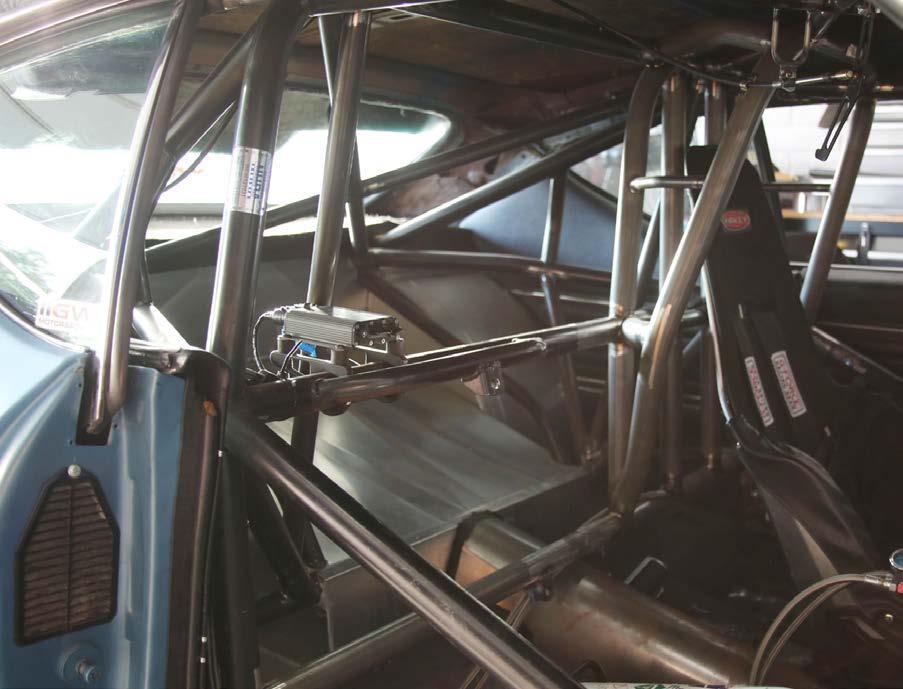
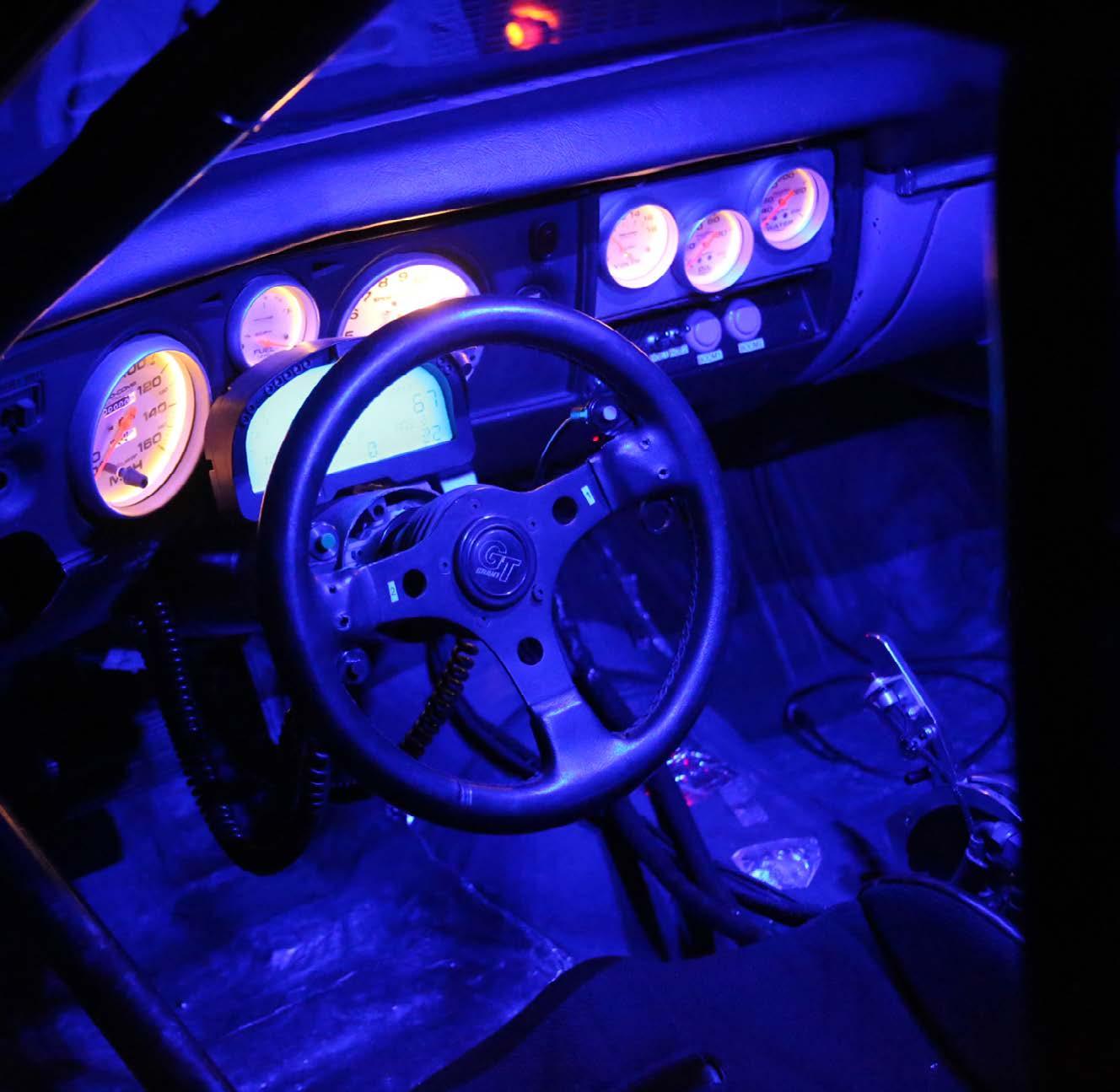
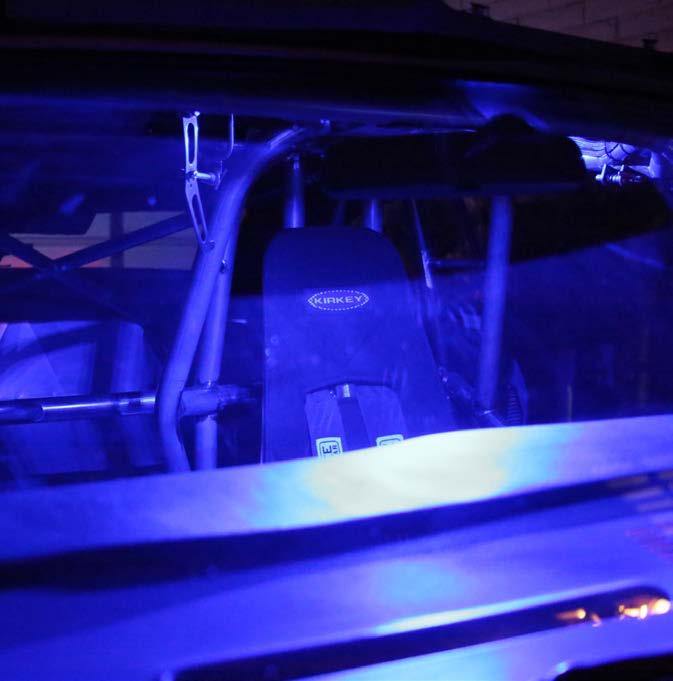
Lots of OEM parts remain inside the Chevelle. Things like the original door panels, steering column and dash pad were kept to maintain the car’s street vibe. Carpet was nixed revealing the amazing condition of the original floor. Jason wanted a serious race car but one he could legitimately street drive when the need arose.