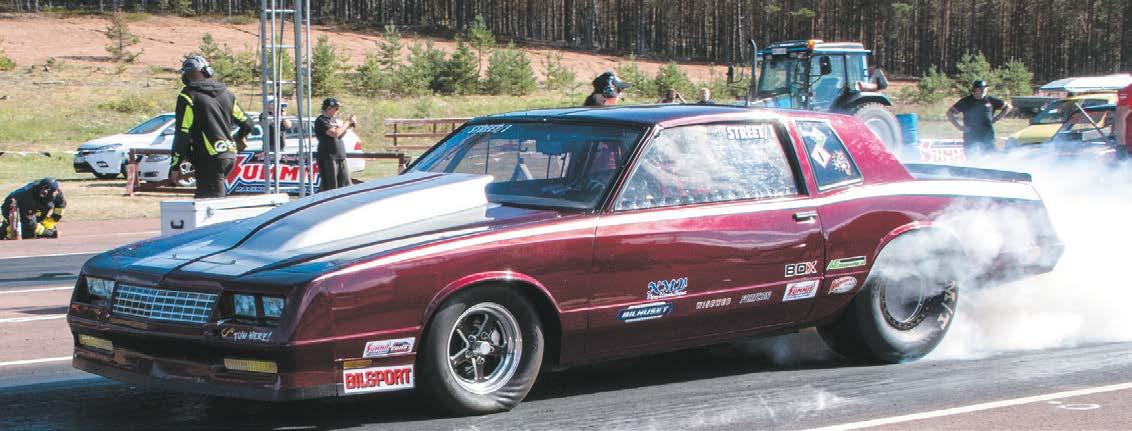
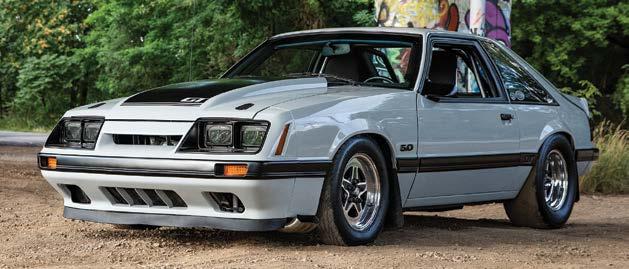
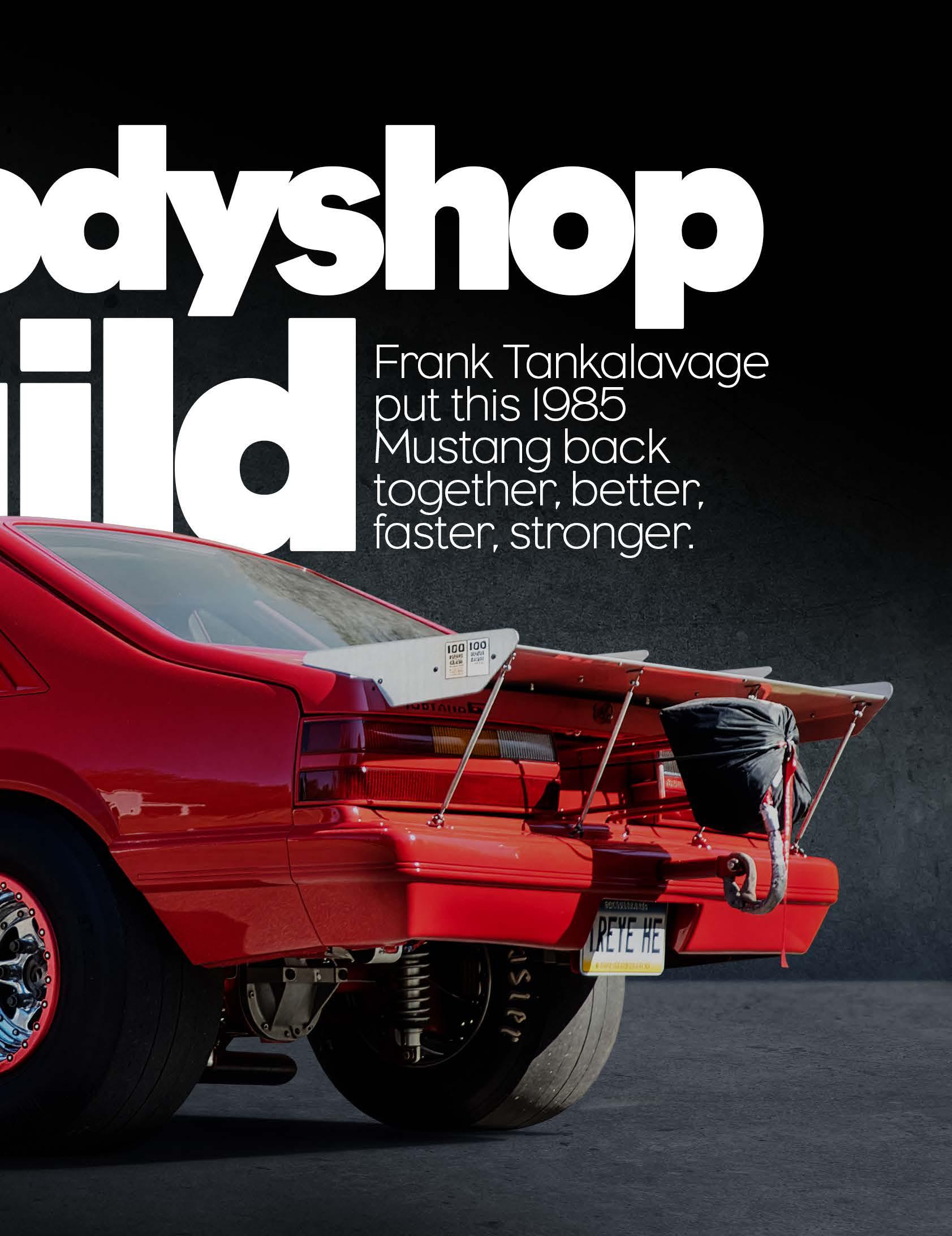
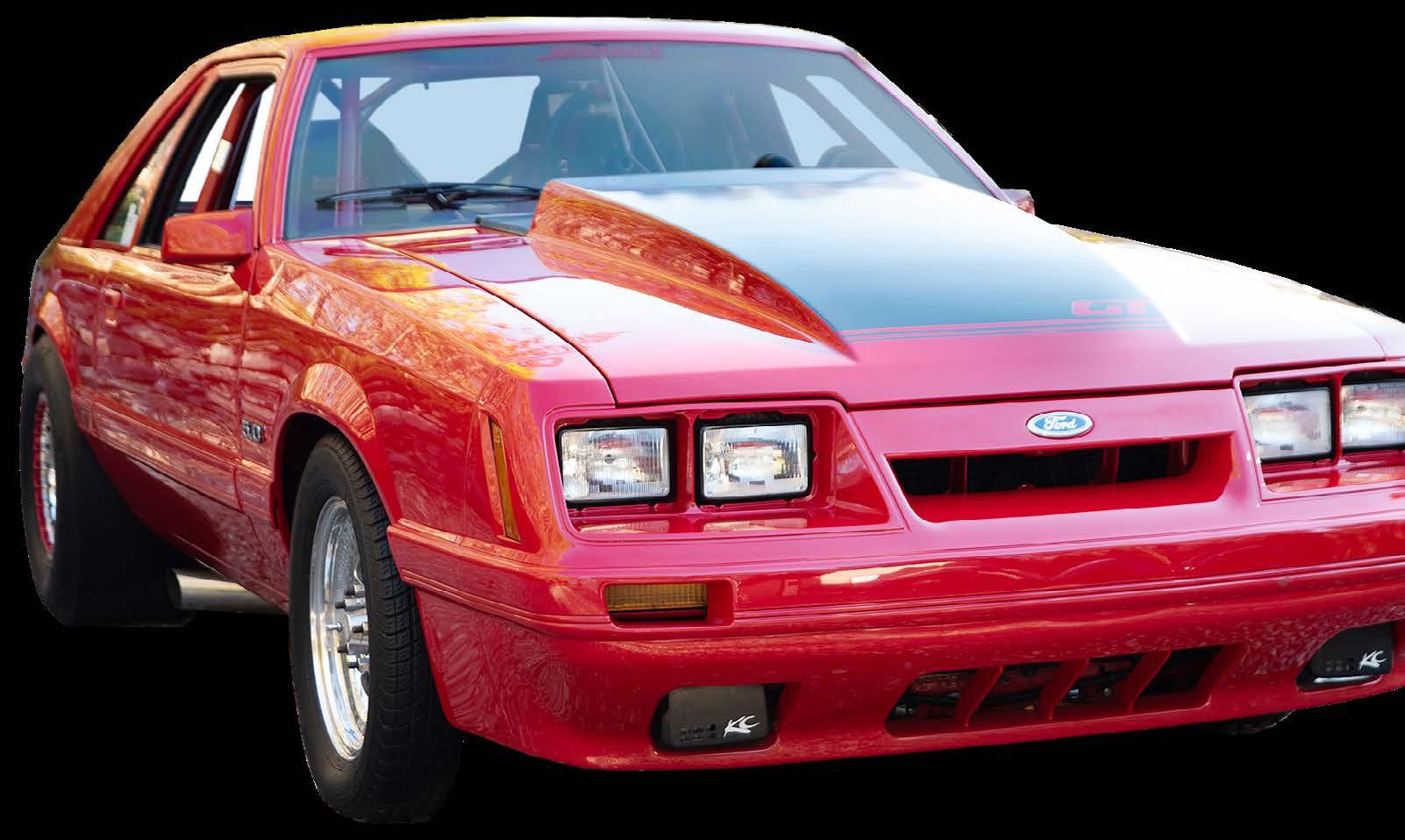
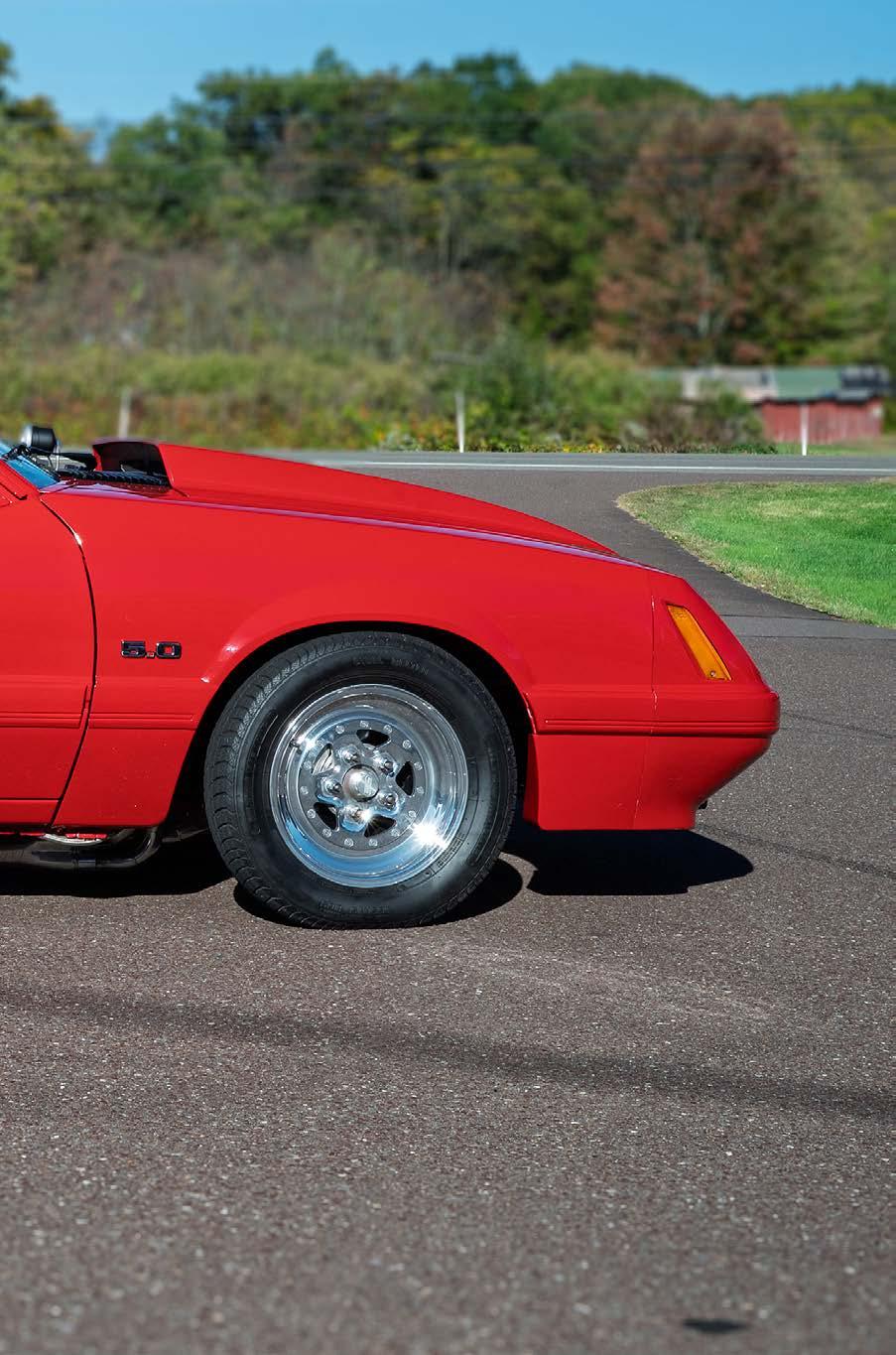
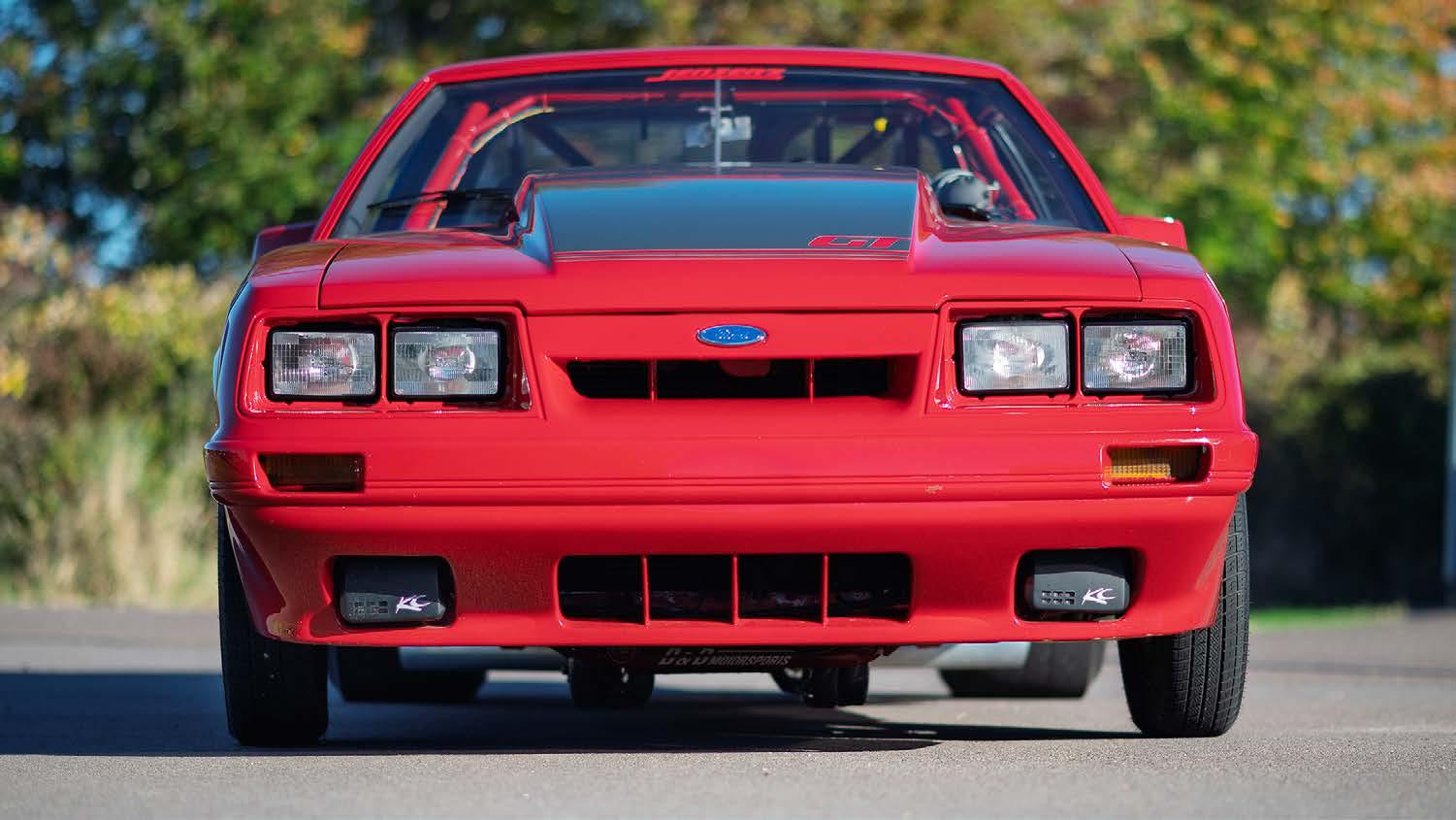
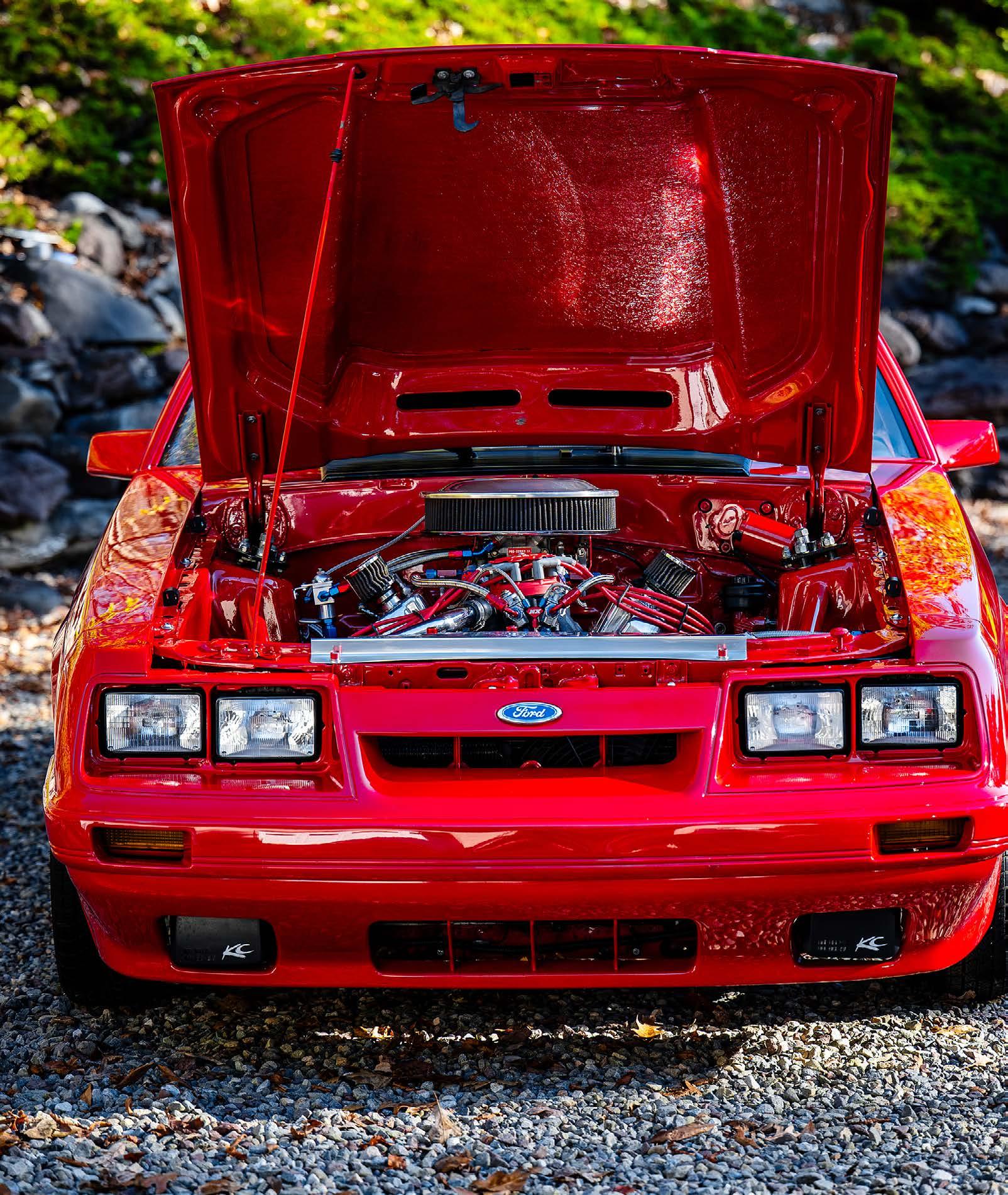
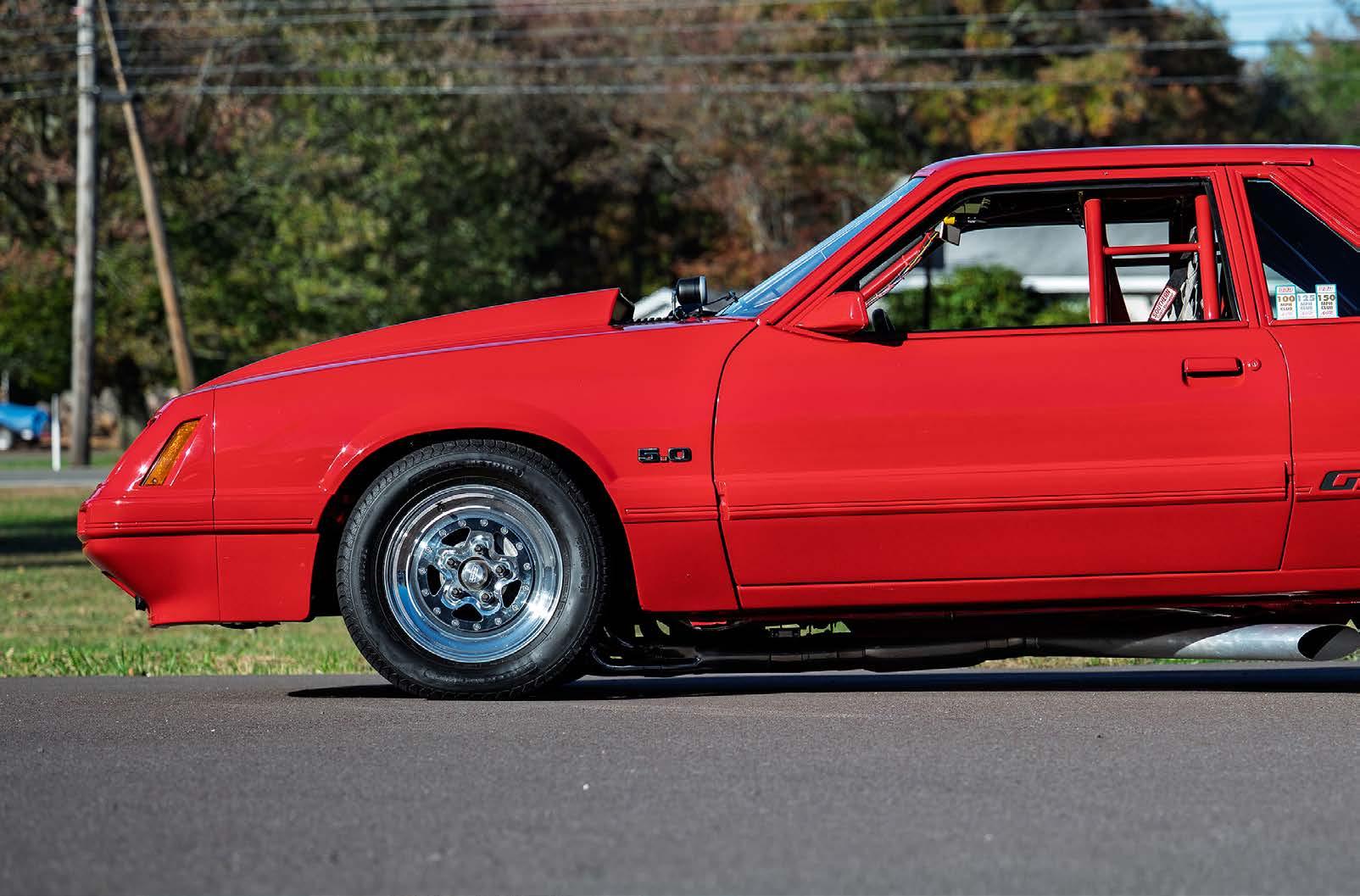
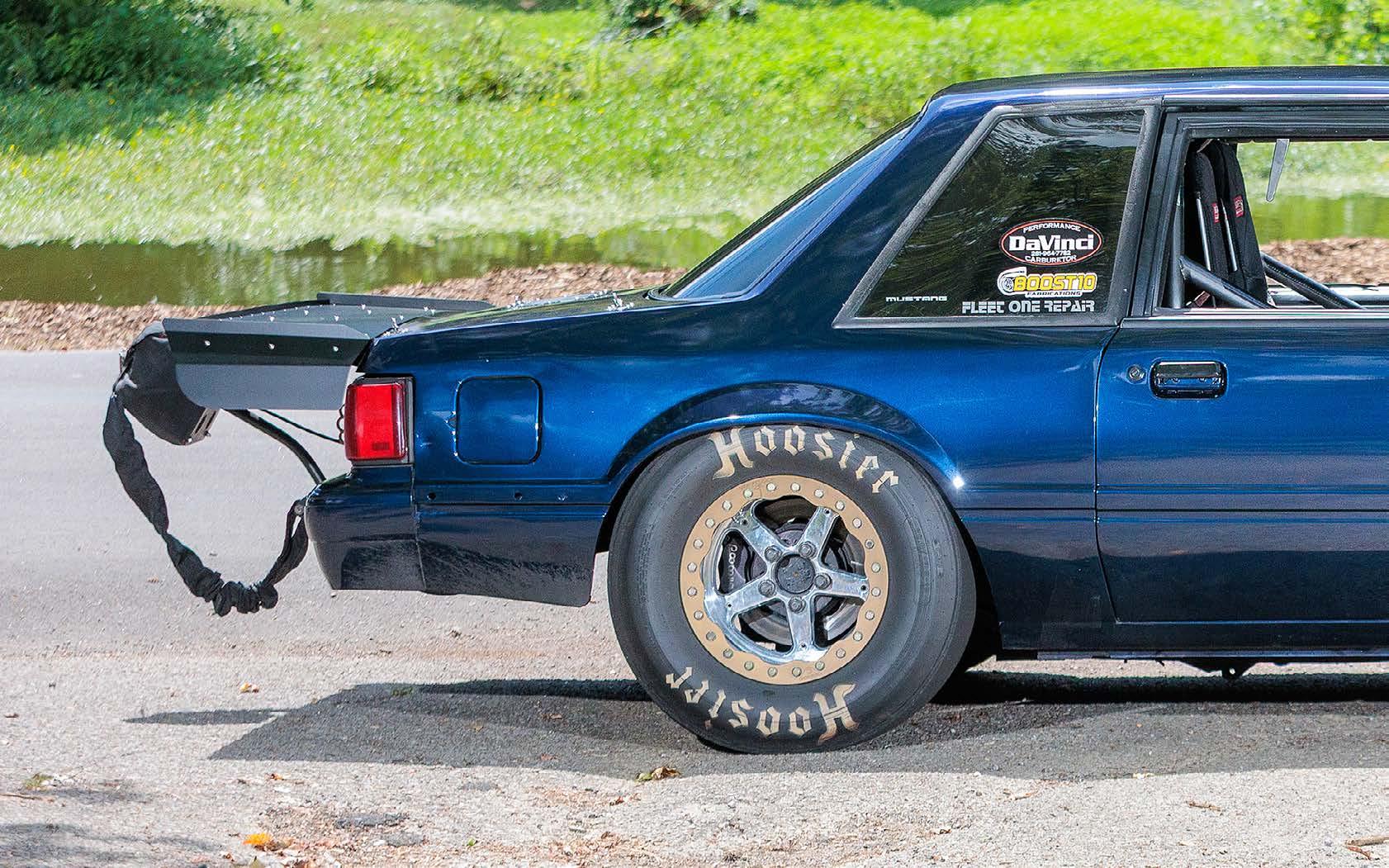
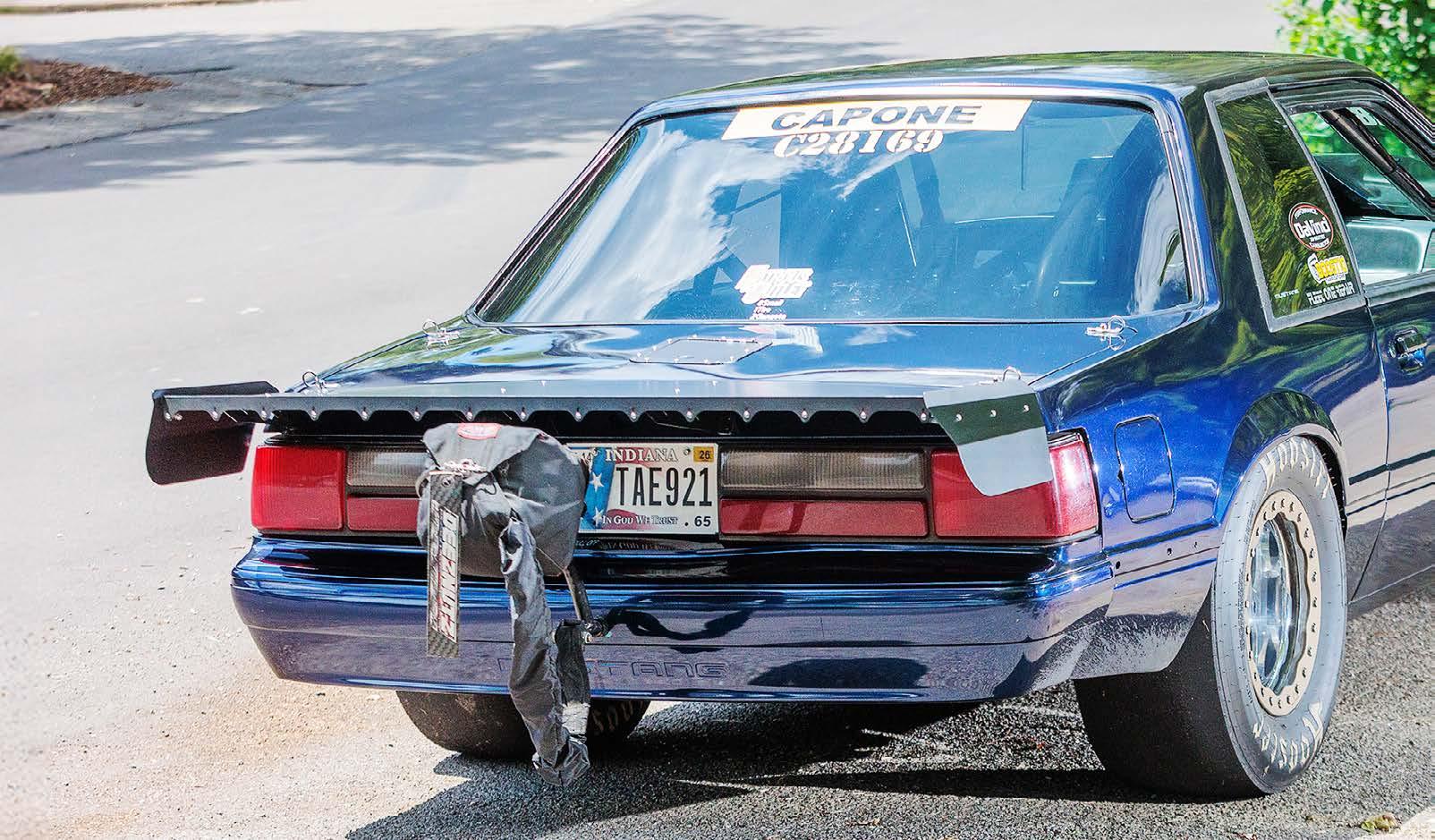
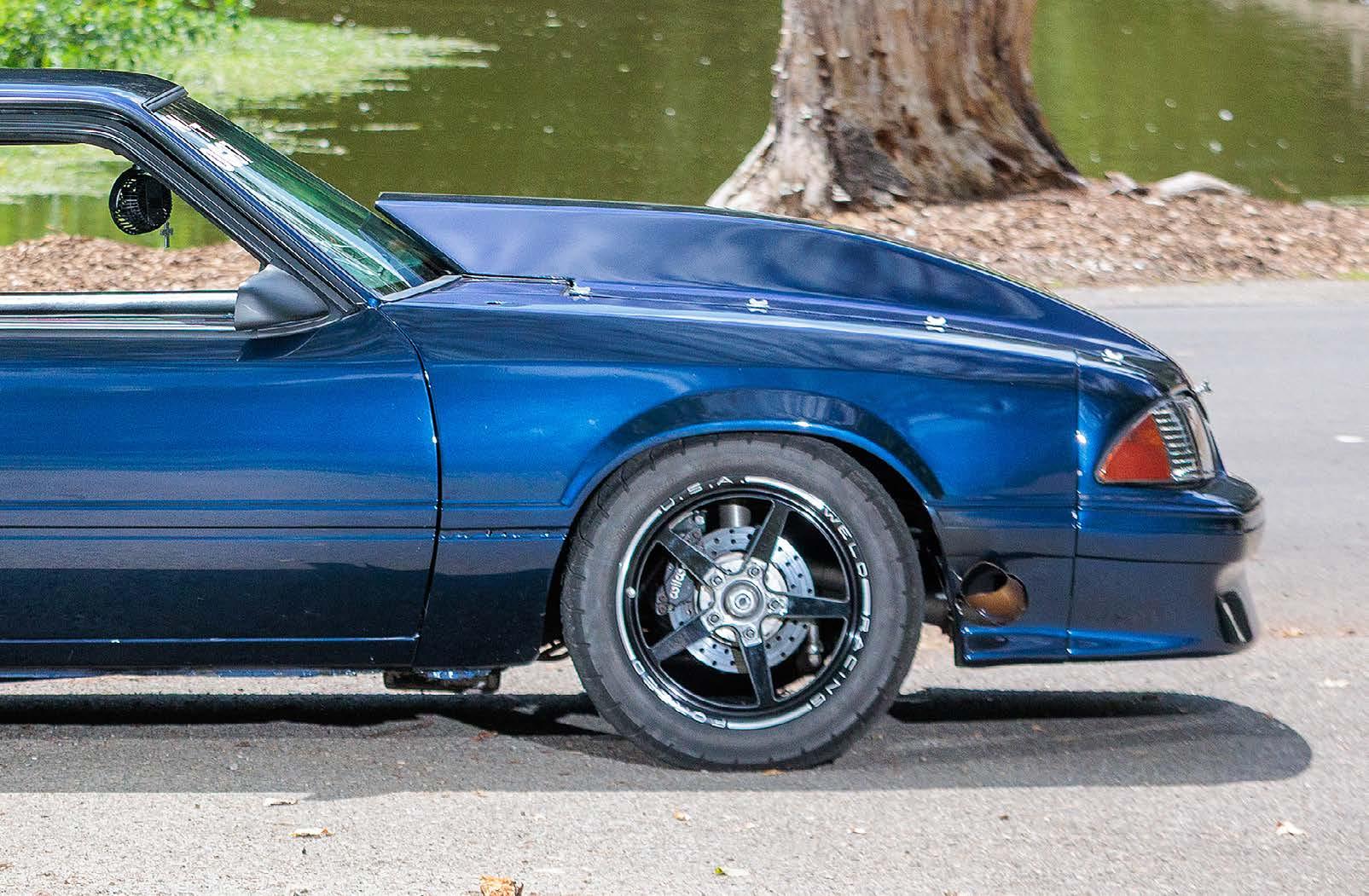
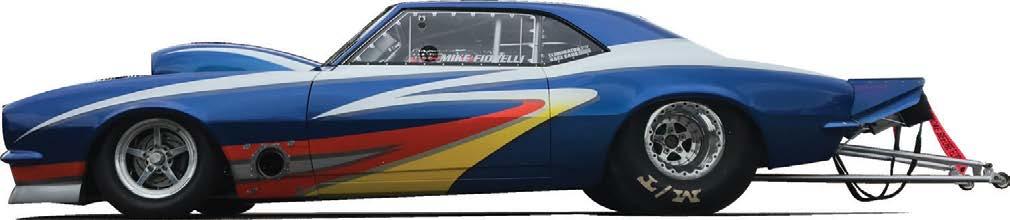
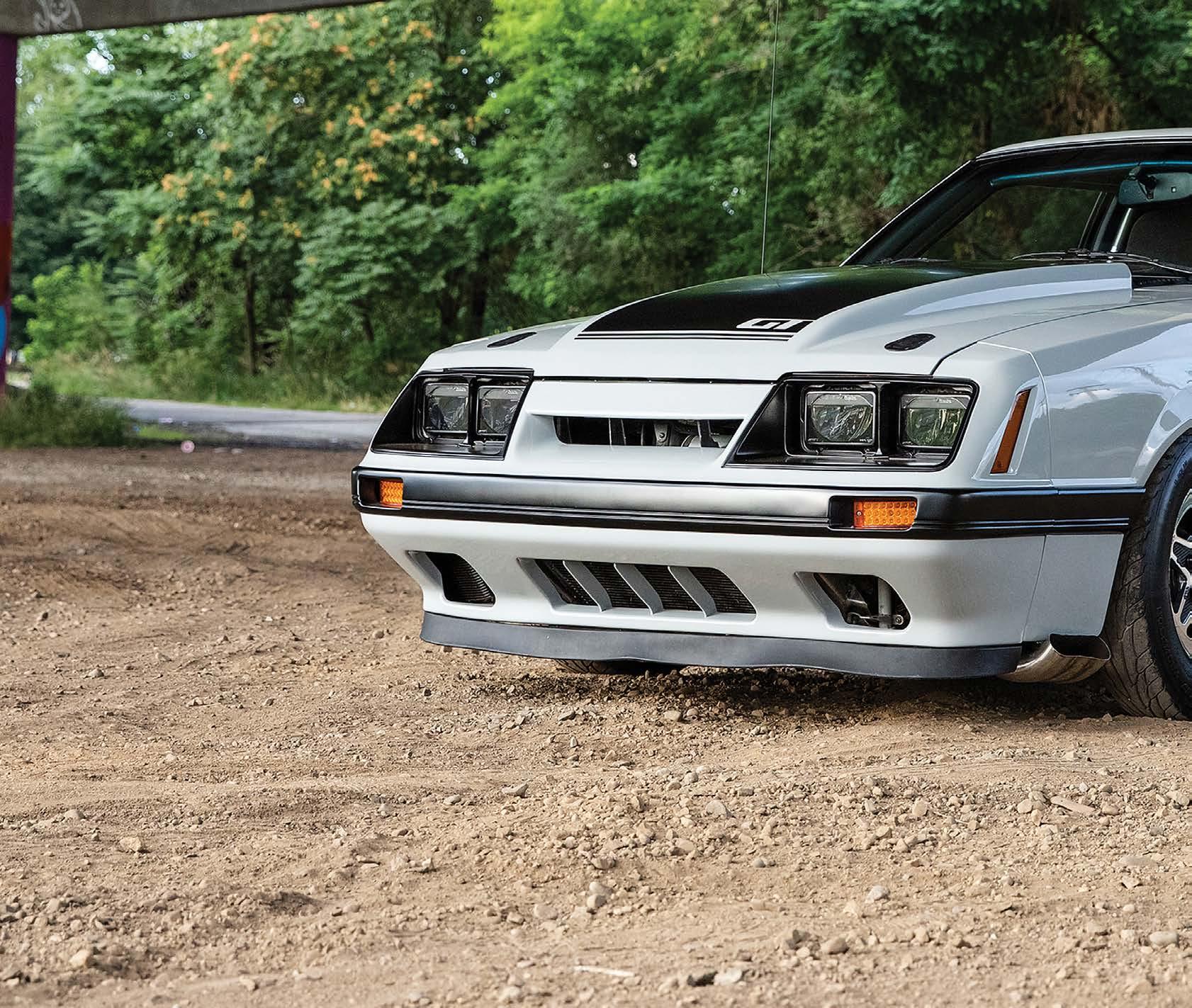
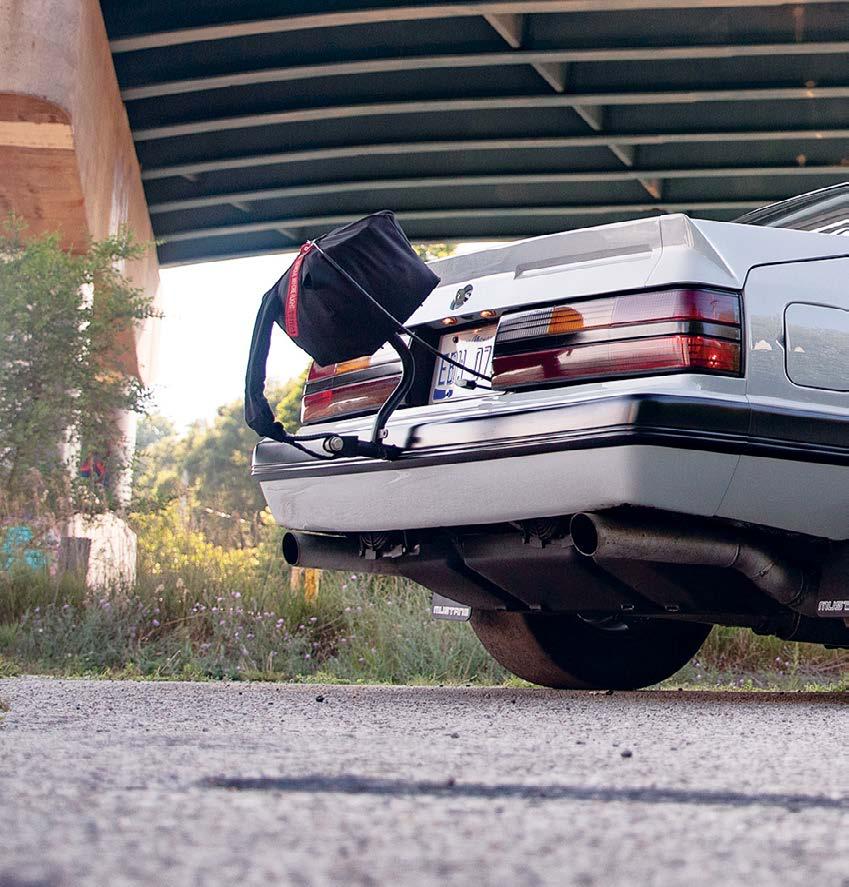
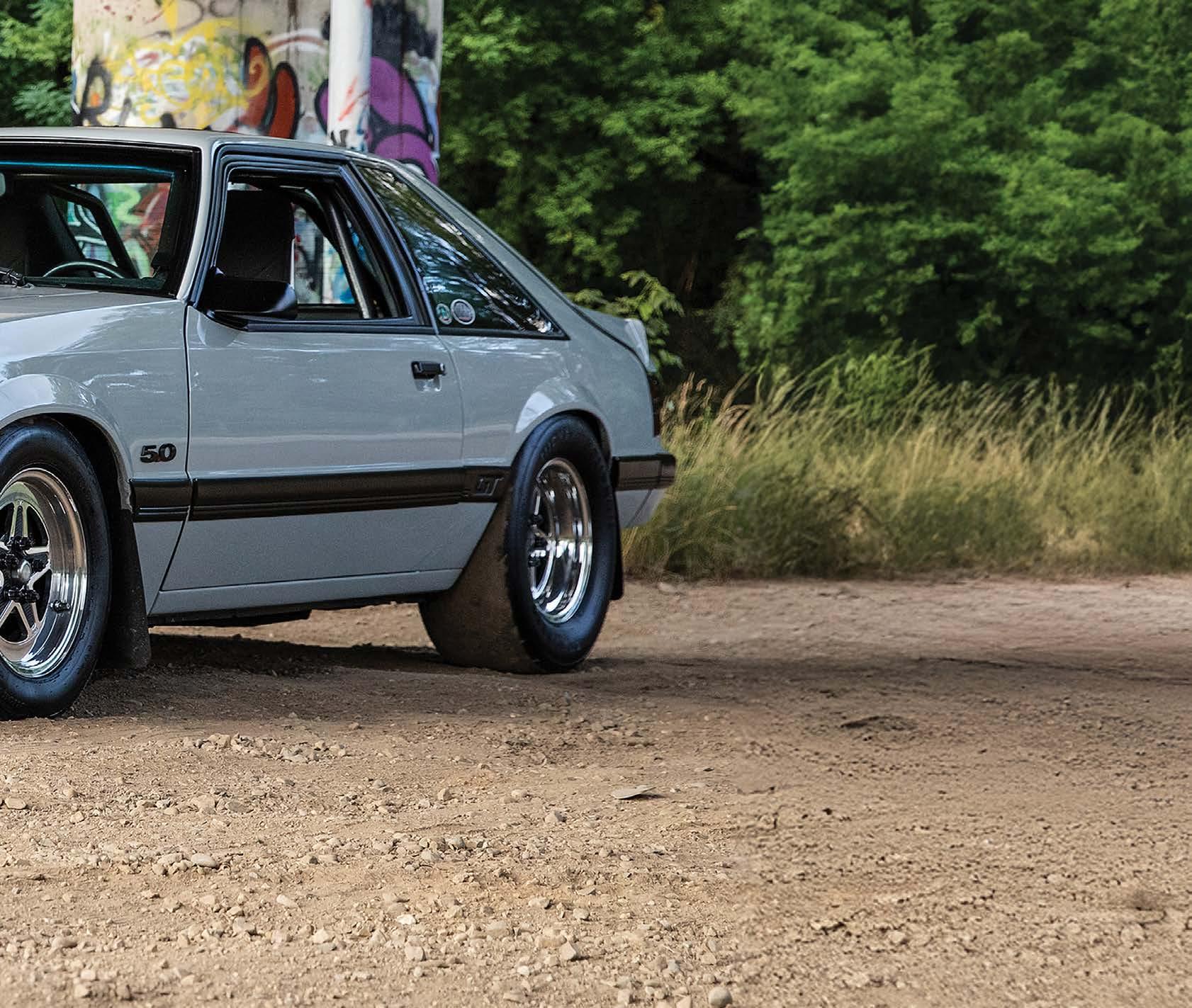
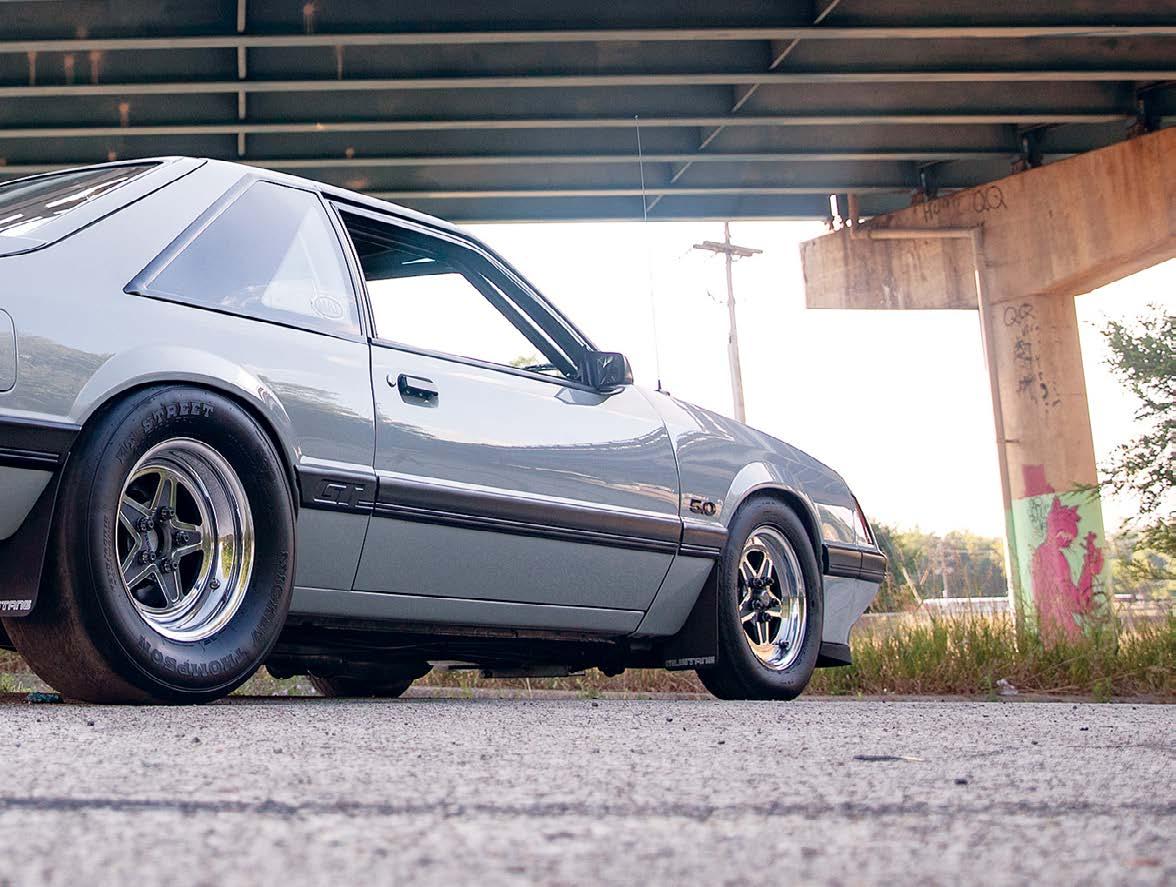
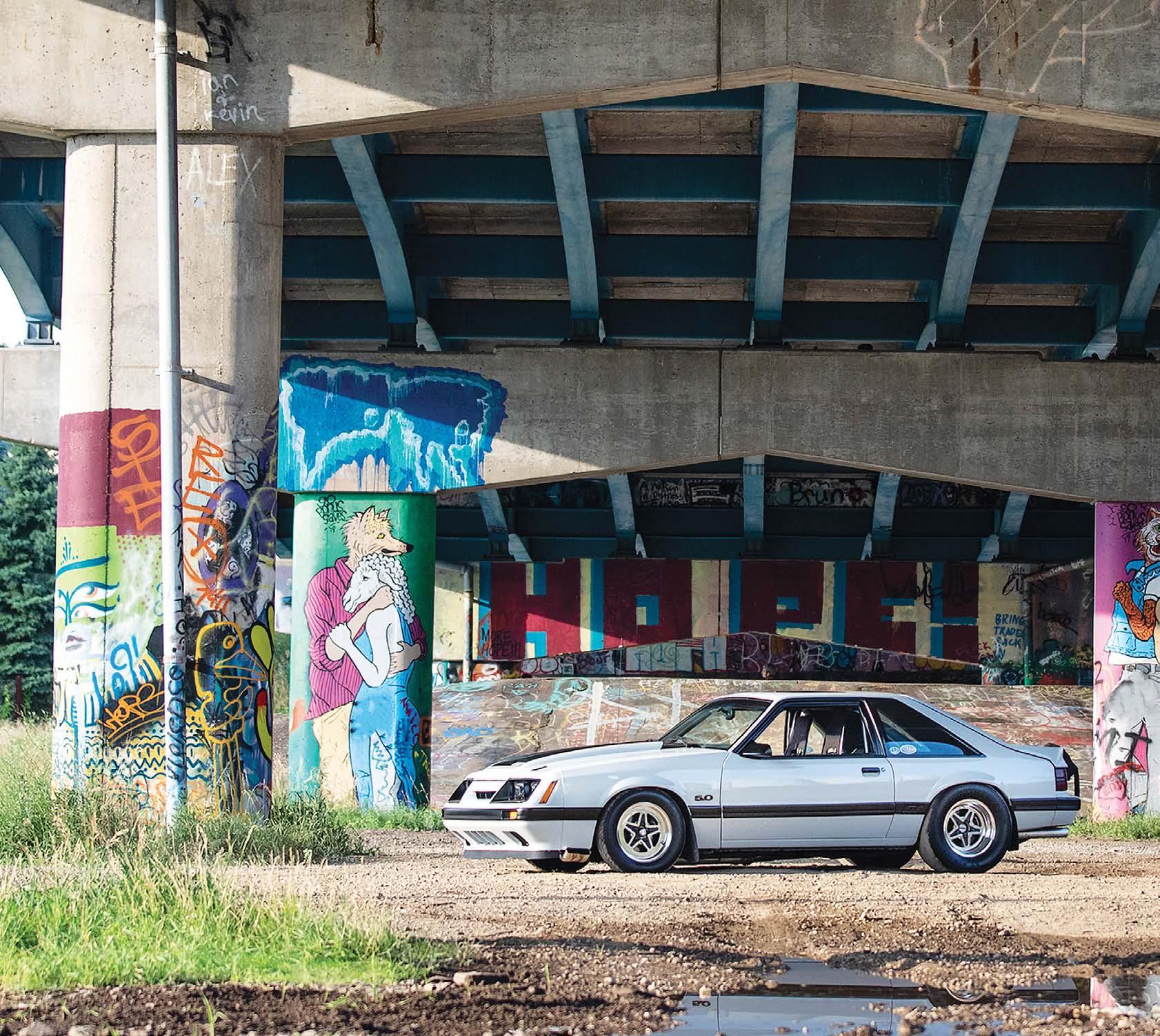
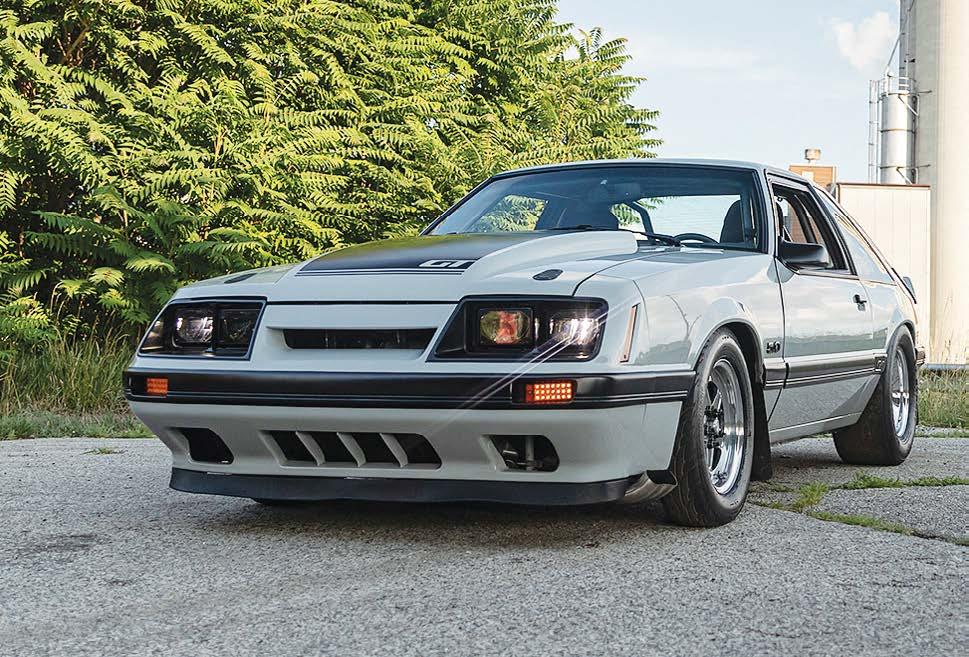
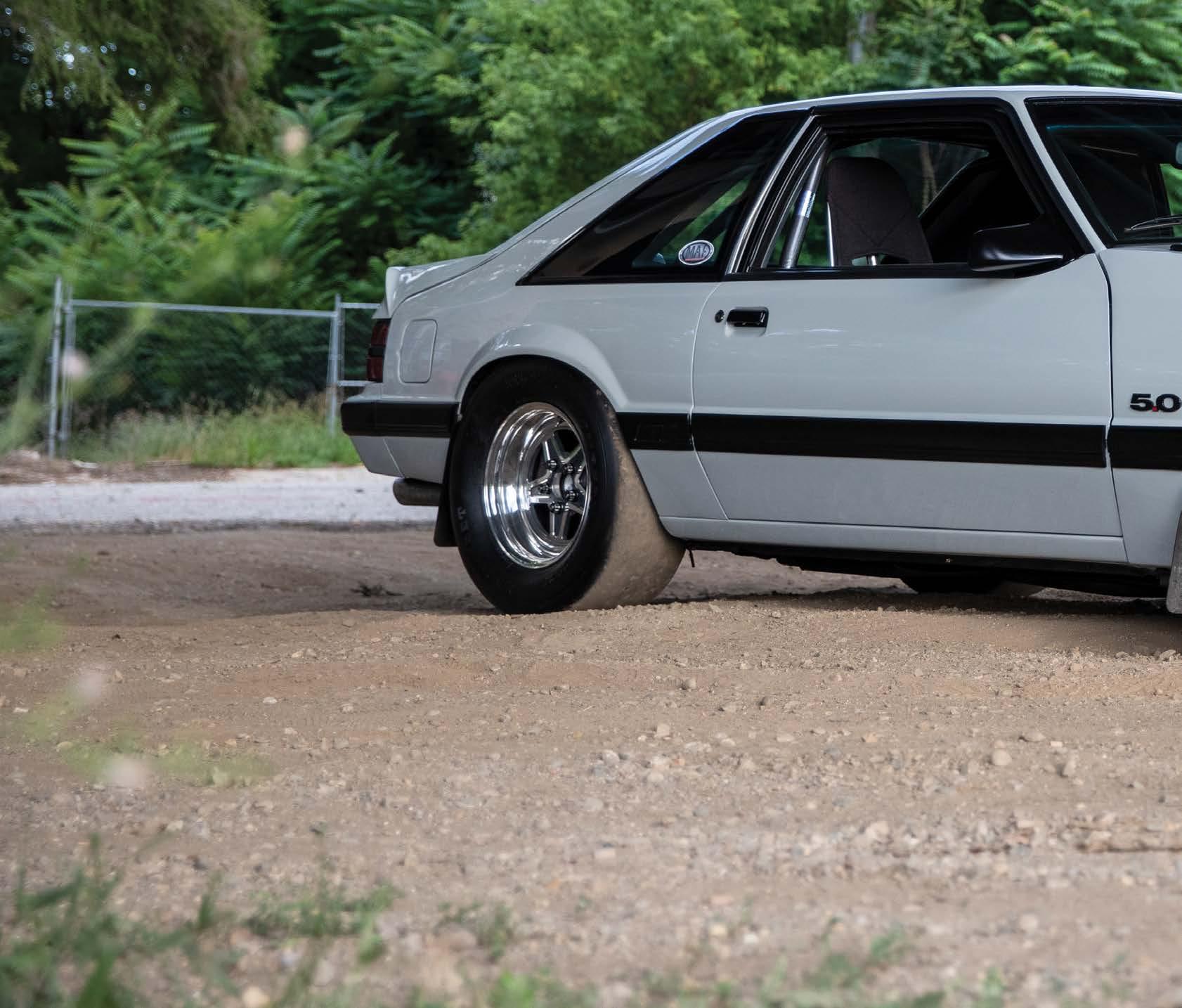
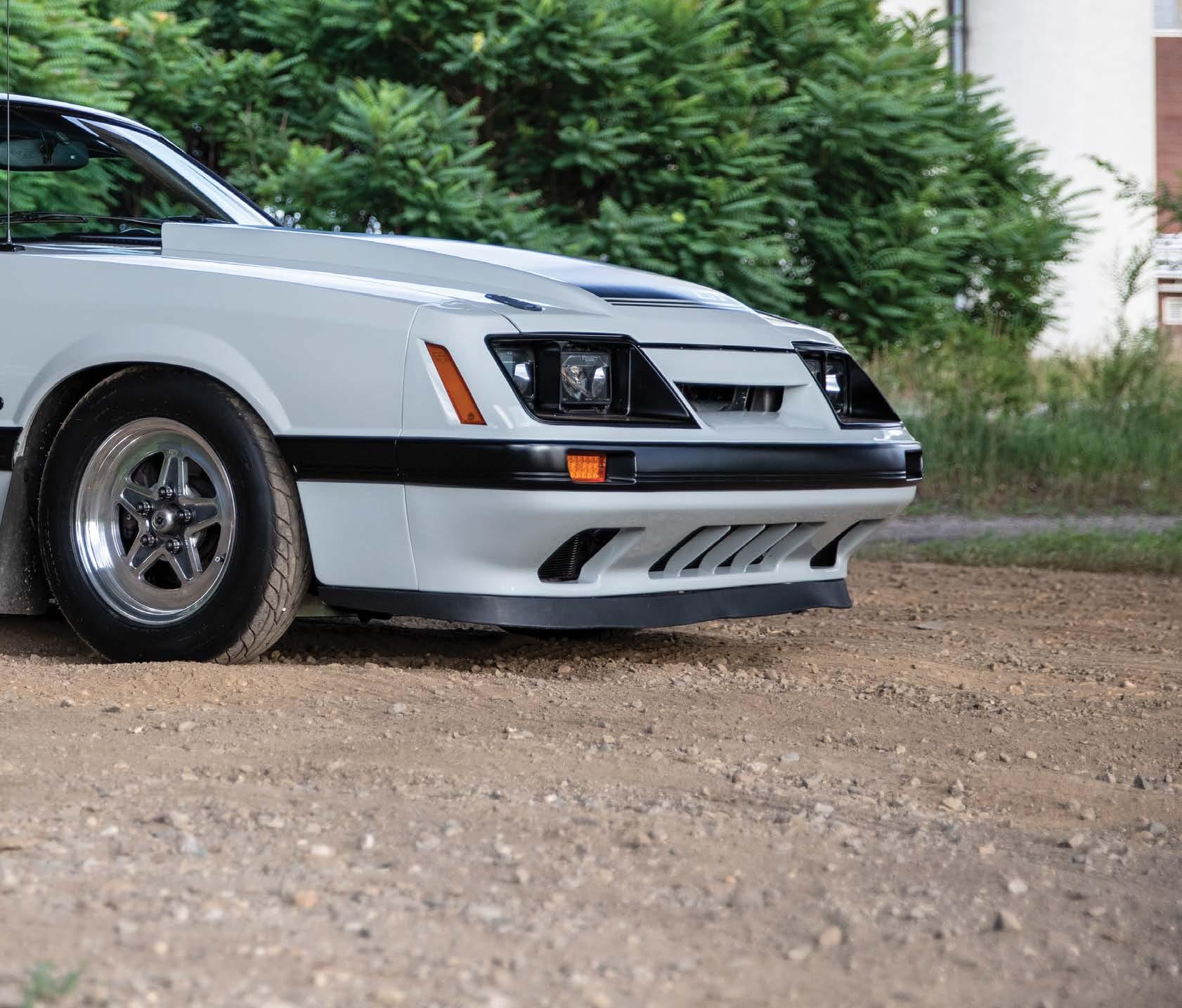
Frank Tankalavage’s 1985 Street/Strip Ford Mustang GT Hatchback Small
Body & Paint:
Block Ford with Plate Nitrous
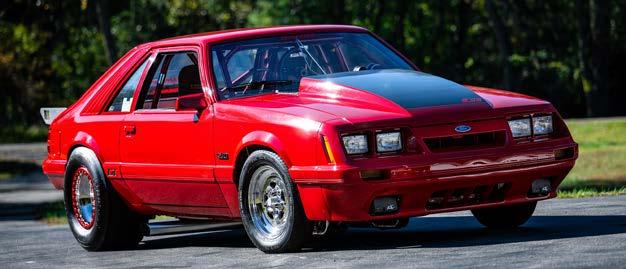
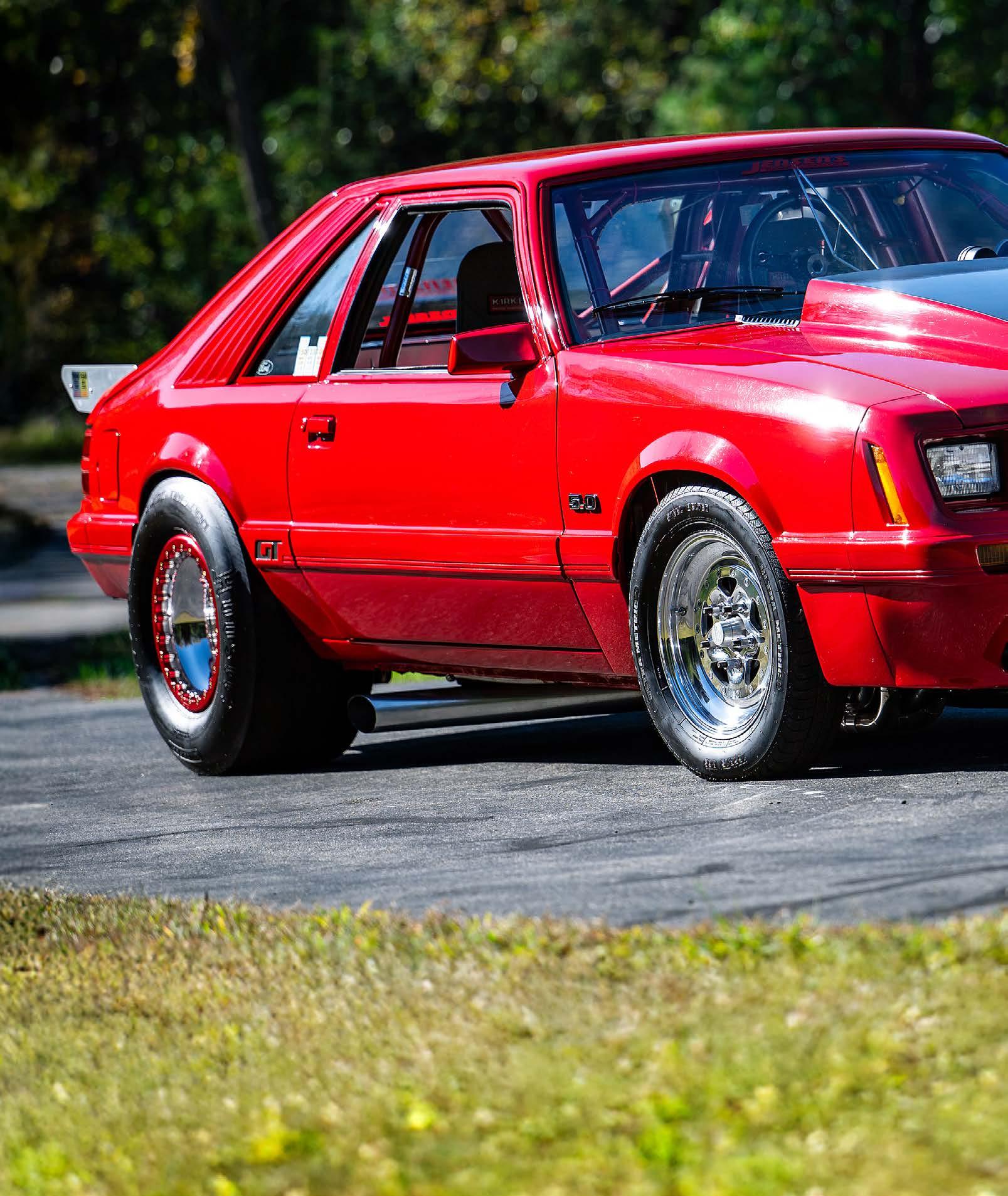
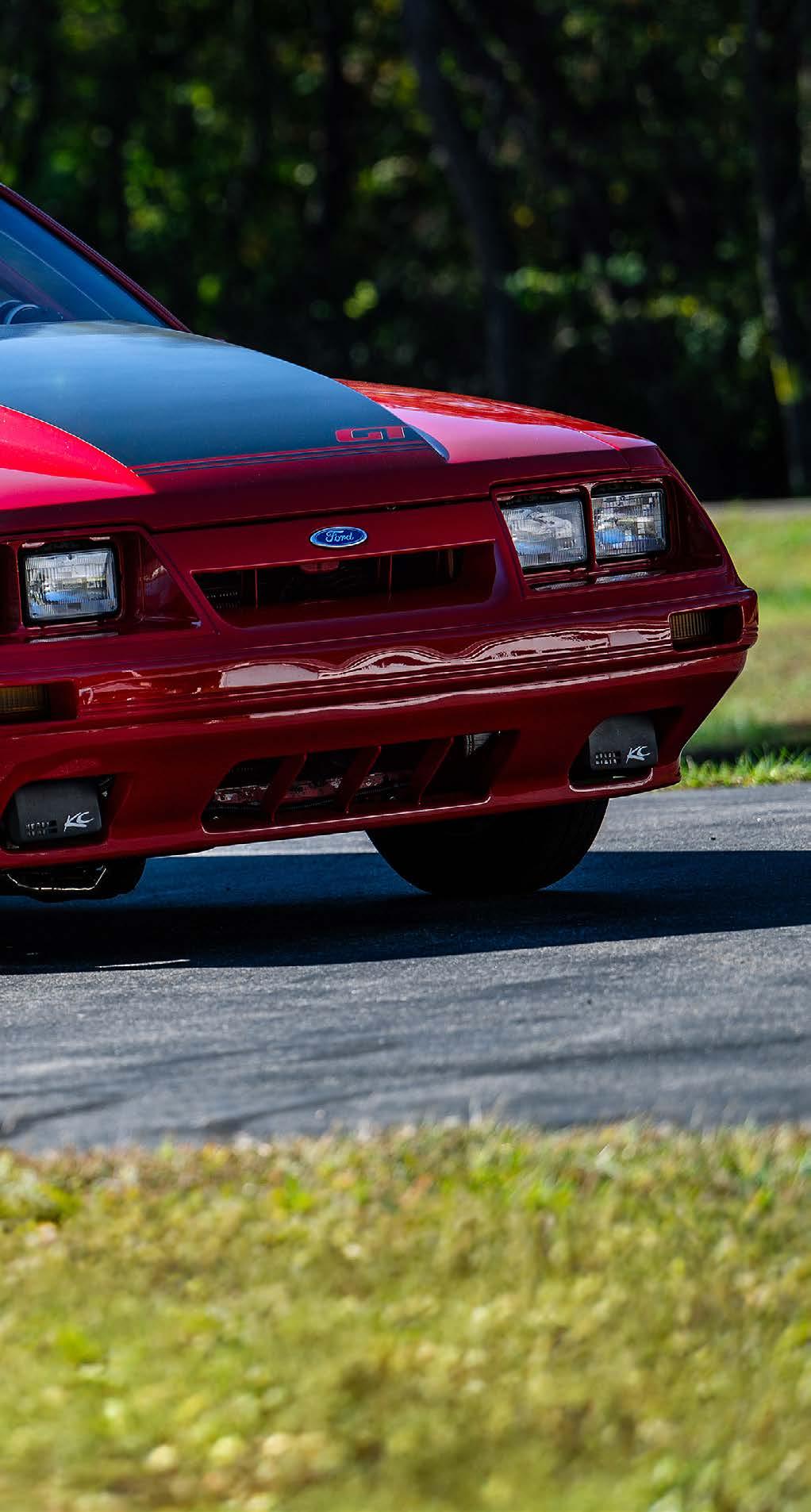
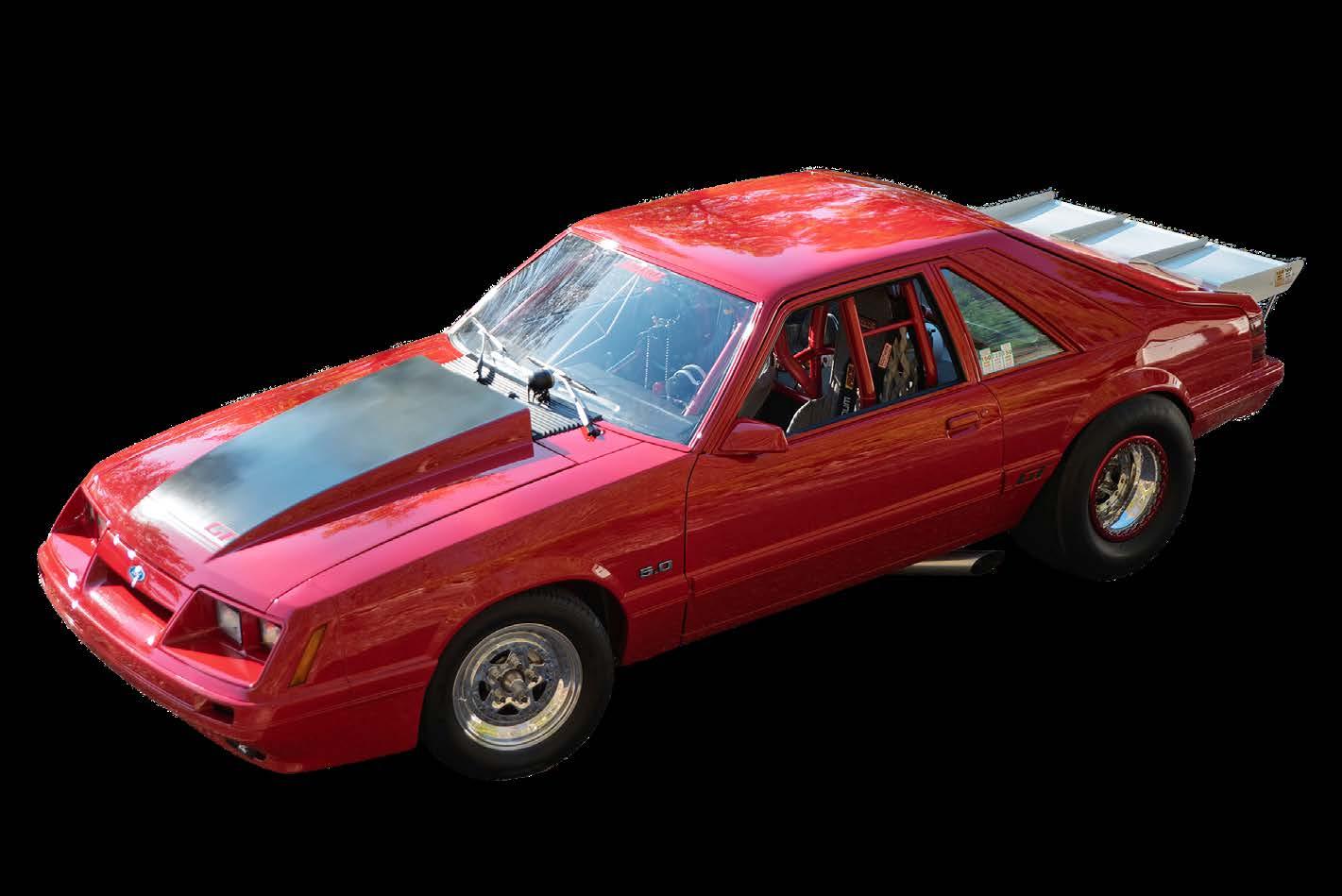
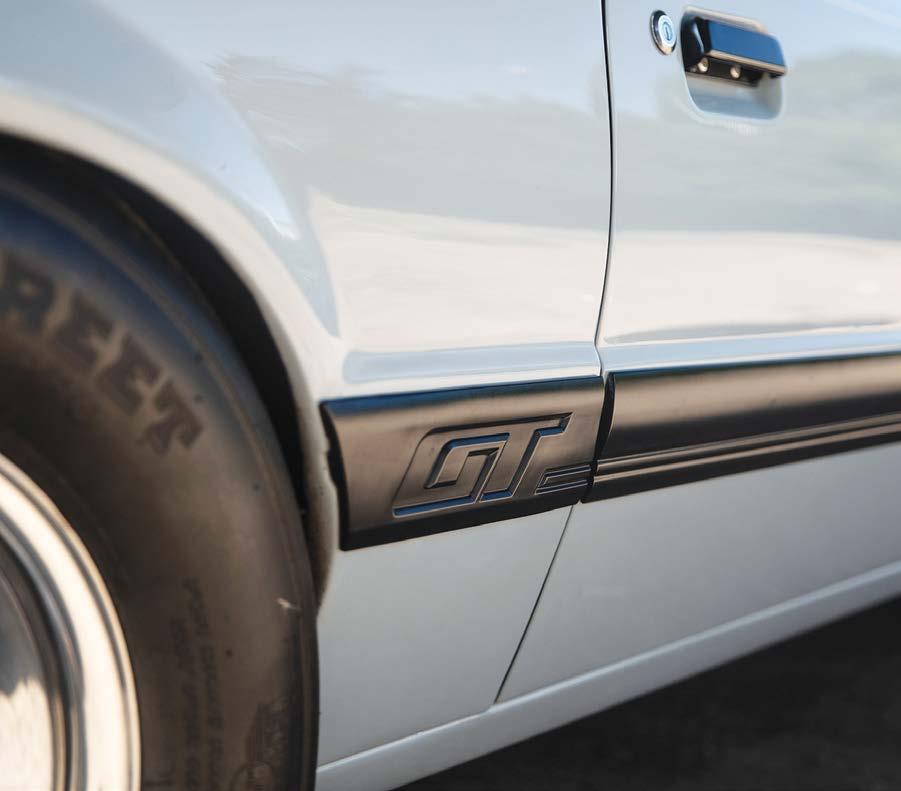
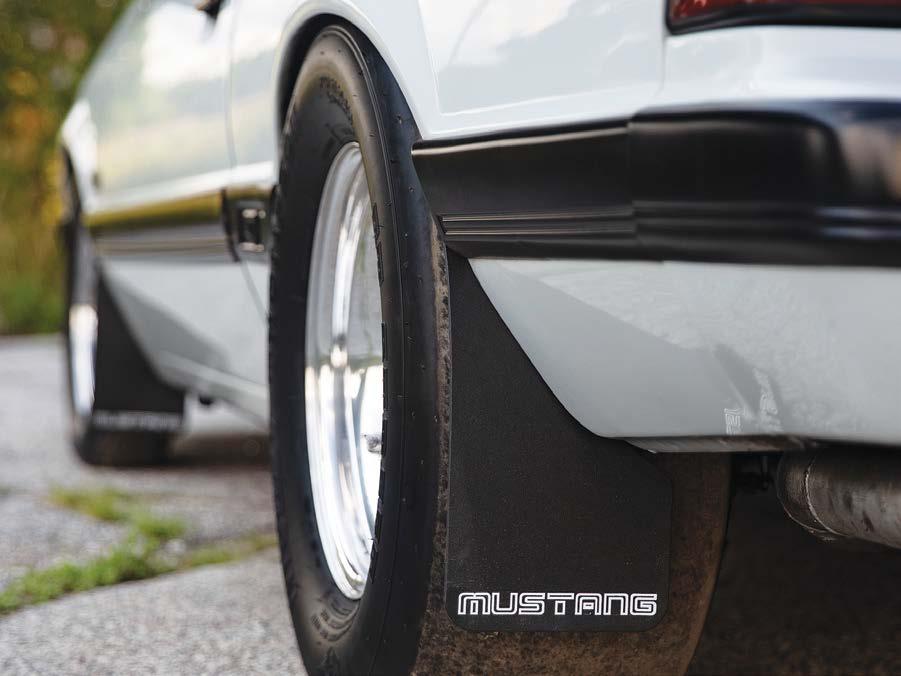
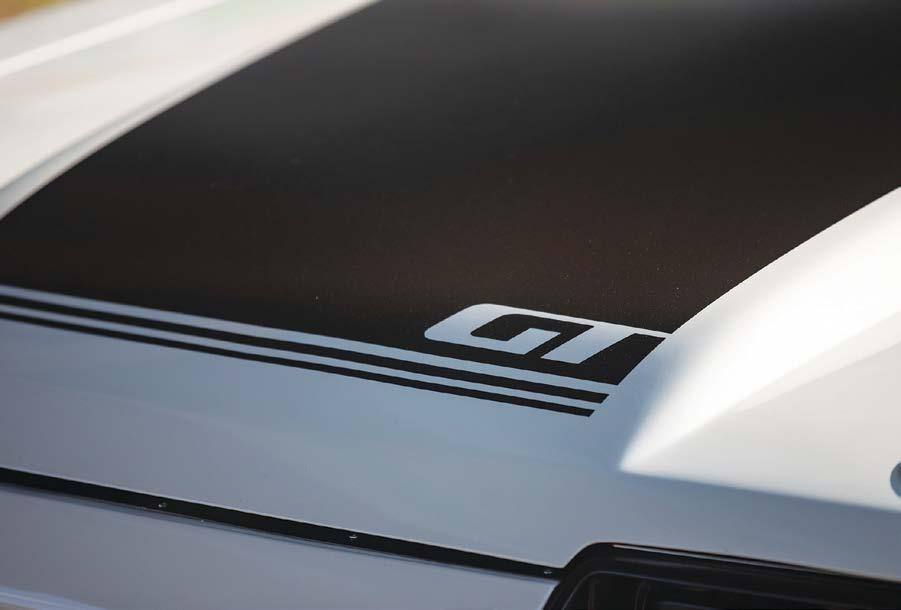
While it started out as a white GT with a red interior, I painted the car myself with the help of my daughter, Tiffany (Tankalavage) Jensen, at my auto body shop in Williamstown, PA. F & W Auto Body. The car is currently BASF Diamont BC/CC Victory Red, a Chevy color, as painful as it is to admit – with a grey interior. Stripes and badges are all original Ford from the factory. All factory trim (typically black – headlights, windows, etc.) was painted as well to Victory Red for a monochromatic finish.
Cervini’s 4” Cowl Hood.
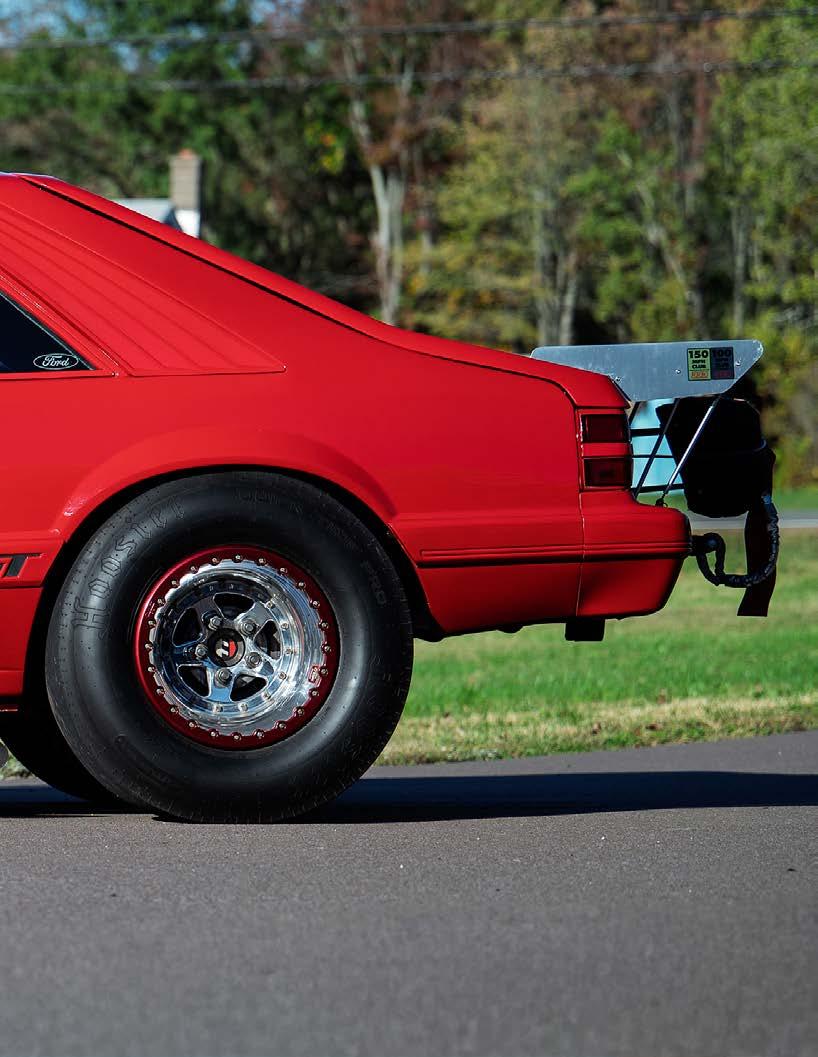
Cervini’s fiberglass rear hatch.
Lexan windshield & Rear window.
Chassis Modifications:
Southside frame connectors.
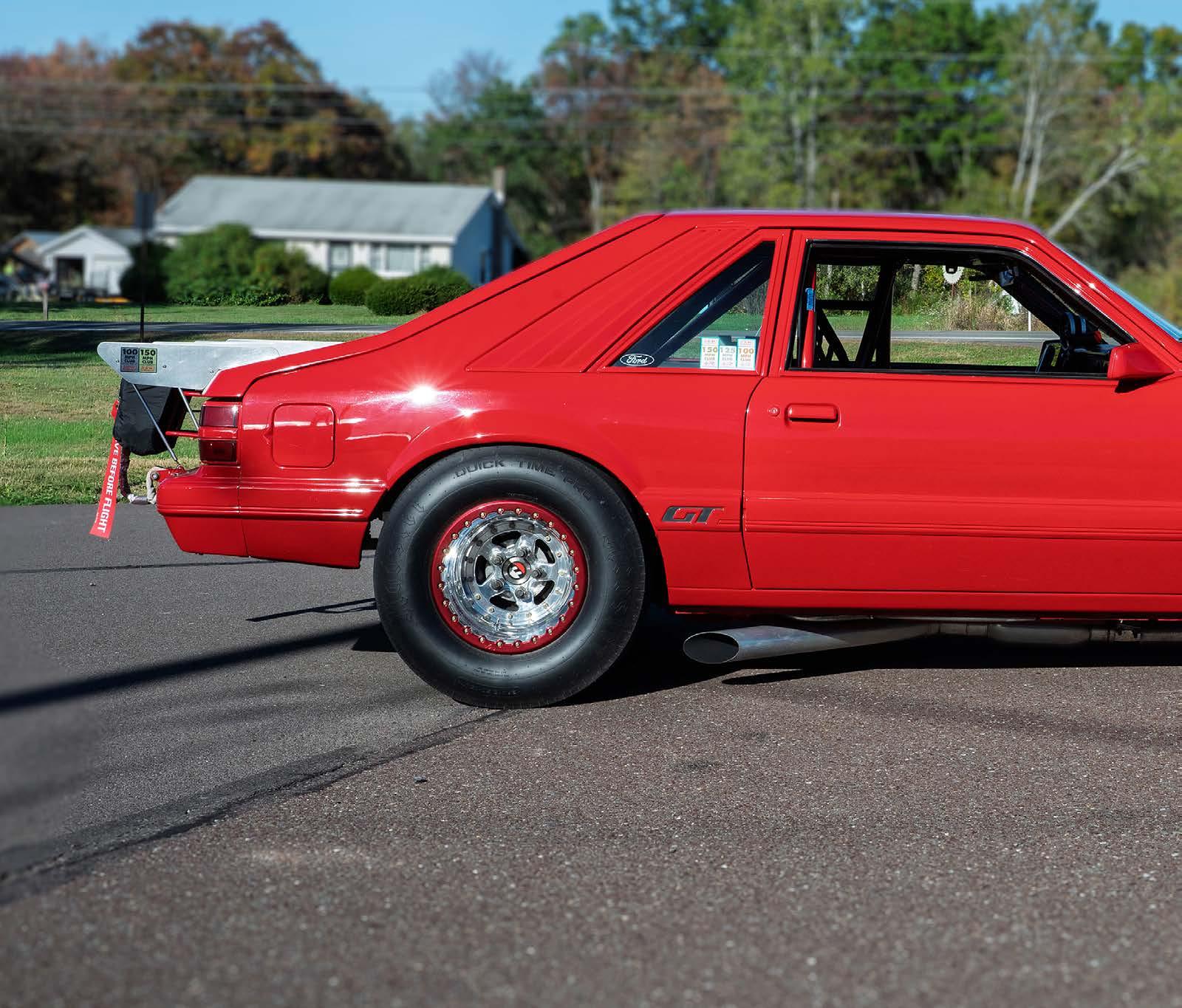
Mini-tubbed, rear wheel well radiused both front and rear to accommodate larger tires.
Wolfe RaceCraft chromoly 7.50 certified cage w/ funny car driver’s halo.
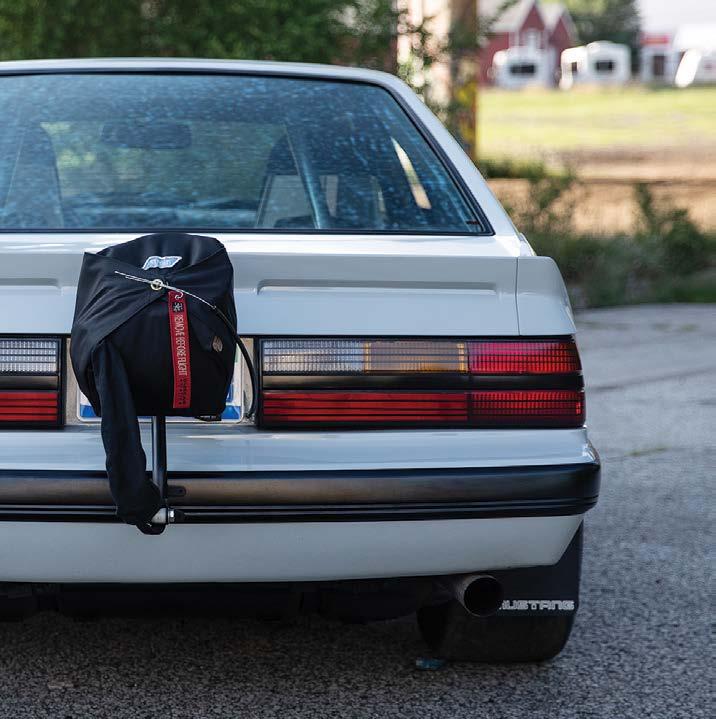
S & W parachute mount with Simpson parachute (Red).
Suspension (Front & Rear):
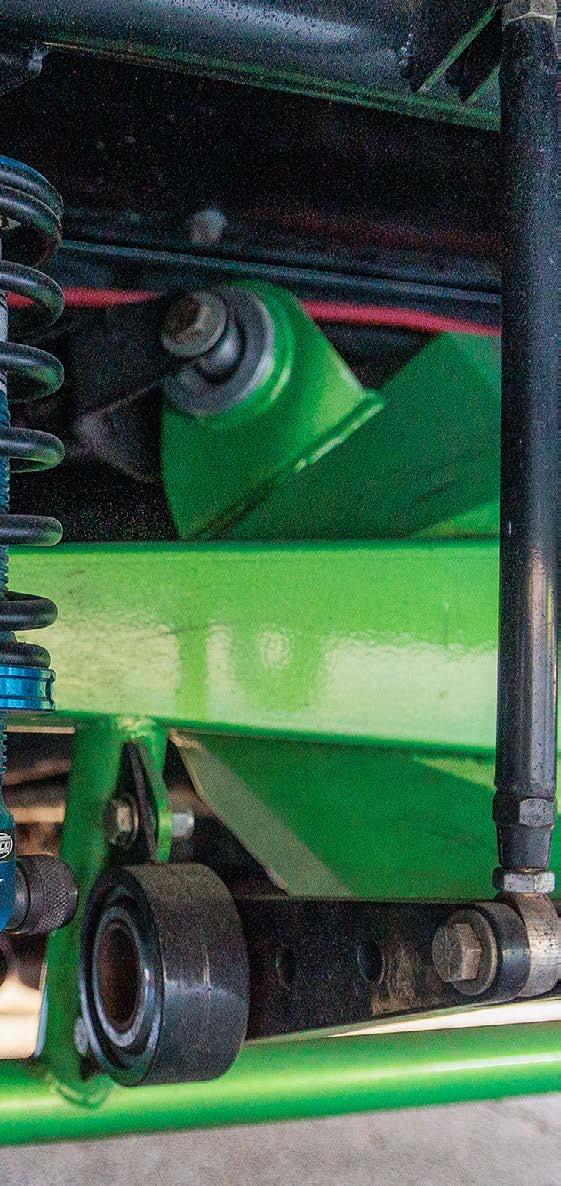
D & D Motorsports tubular K-Member and A-Arms. Coilover conversion kit and adjustable strut plates.
Front-Lakewood 90/10 Struts.
Rear-Shocks Qa1 double adjustable coilovers.
Wolfe Racecraft upper adjustable control arms, offset lower adjustable control arms, spherical aluminum upper bushings and rear anti-roll bar.
Owner-built custom upper and lower torque boxes.
4 to 5 lug Aerospace conversion front.
4 to 5 lug Moser conversion rear.
Engine:
Built by Jensen’s Engine Technologies in Nescopeck, PA.
349 Cu-In small block. Ford Motorsports R 302 block 8.2 deck.
Rotating Assembly:
Lunati 3.425 stroke crank.
Oliver Billet Rods.
JE Pistons .
Total Seal Rings.
Cylinder Heads:
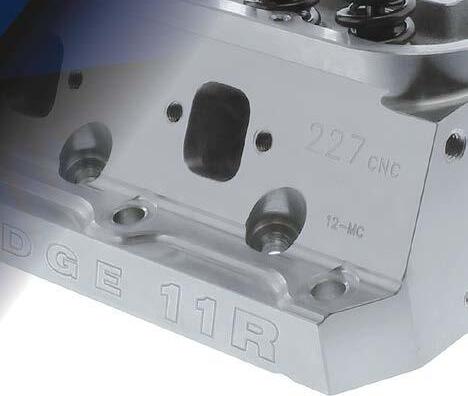
Brodix Track 1s – TRG fully ported
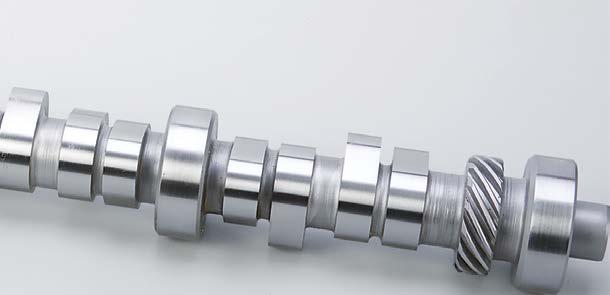
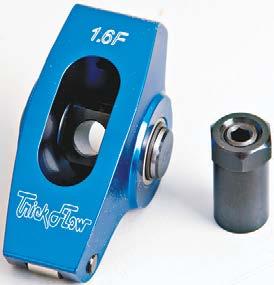
J.E.T. (Jensen’s Engine Tech)/ COMP Cam – custom solid roller Crower 1.7 rockers.
Manley valves, springs & pushrods.
Brodix stud girdles.
Induction & Fuel Delivery:
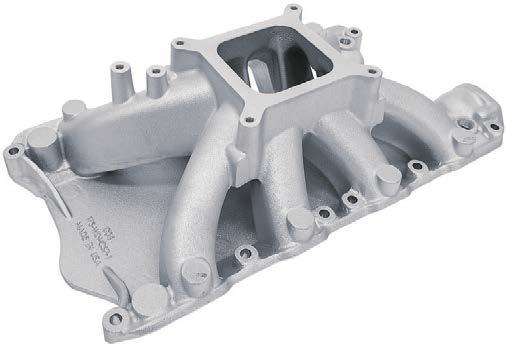
Edelbrock Super Victor Jr. Intake – port matched
Holley 750cm carb custom built by Patrick at Pro Systems.
Aerospace Components Dual 350 fuel pumps (1- carb / 1 – NO2).
Aerospace Fuel Regulator for the carb.
Holley Fuel Regulator for-NO2.
Power Adder:
NX 2-Stage Plate System Nitrous .
Transmission:
Chevrolet Powerglide built by Tom Zimmerman @ Kool Kars, Shamokin, PA. (One of the first that Tom built fully rollerized in its day).
PTC Converter high stall .
FTI internals.
Rearend:
Narrowed 8.8 Ford.
Moser spool.
Moser gun-drilled and scalloped 35-spline axles.
3.73 Moser gears.
Brakes:
Front & Rear Aerospace Components – rotors & callipers.
Tires & Wheels:
Alumistar 2.0 3.5 fronts, 15x12 rears with 6.5 backspacing and 29 x 13.5 DOT tires.
MacFab -anodized Red (outer) Beadlocks.
Interior:
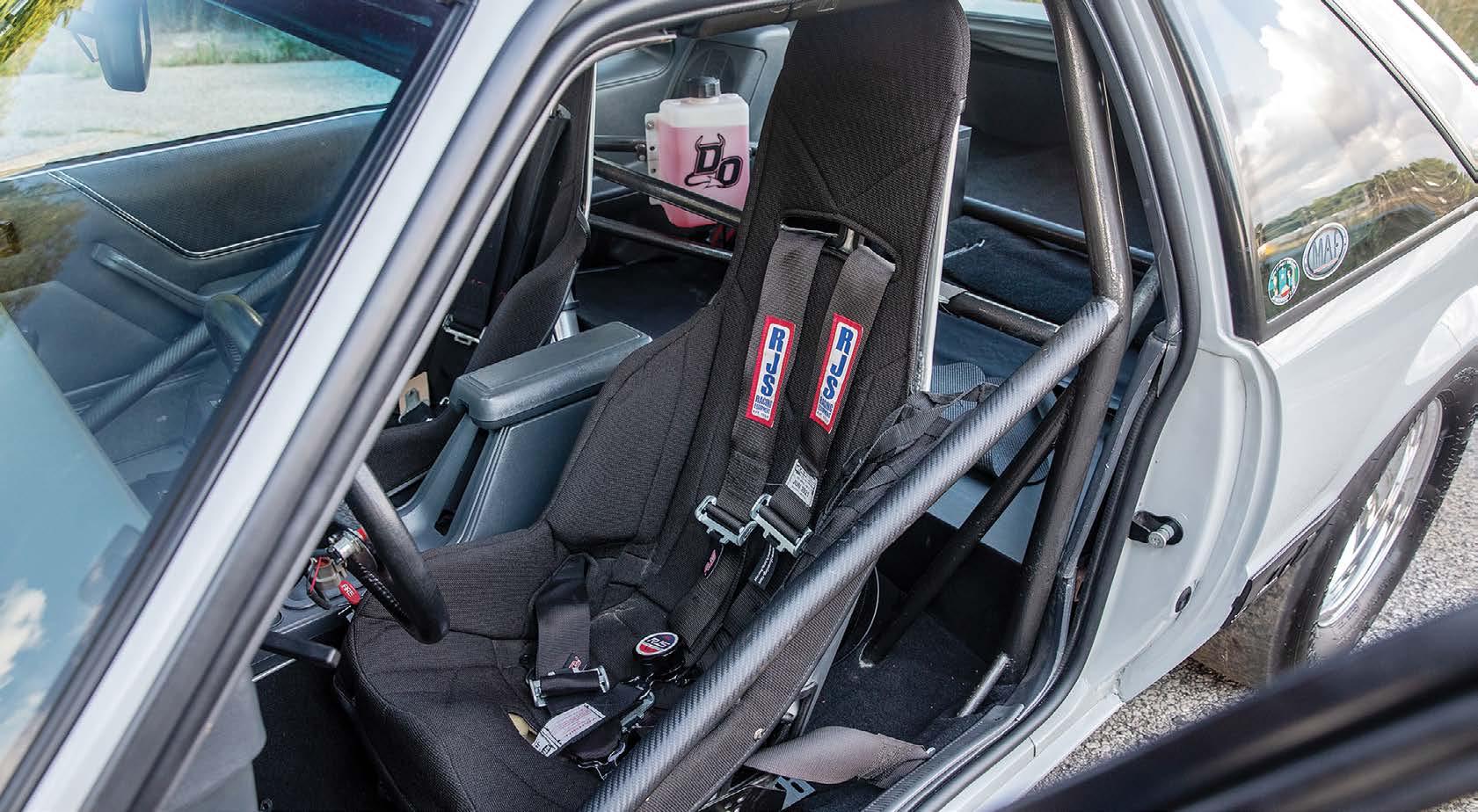
Race seats for driver and passenger and ower-fabricated rear seat delete.
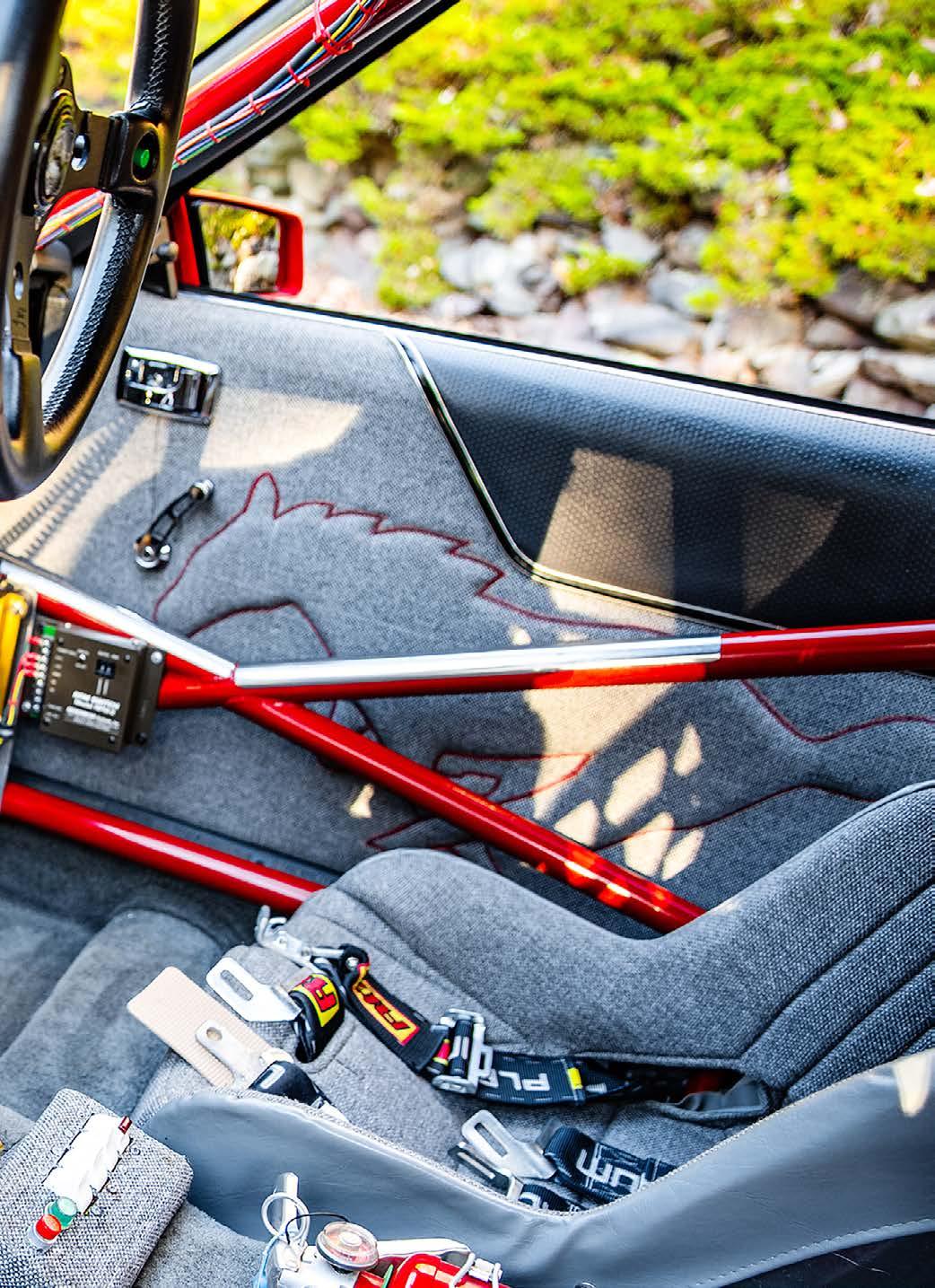
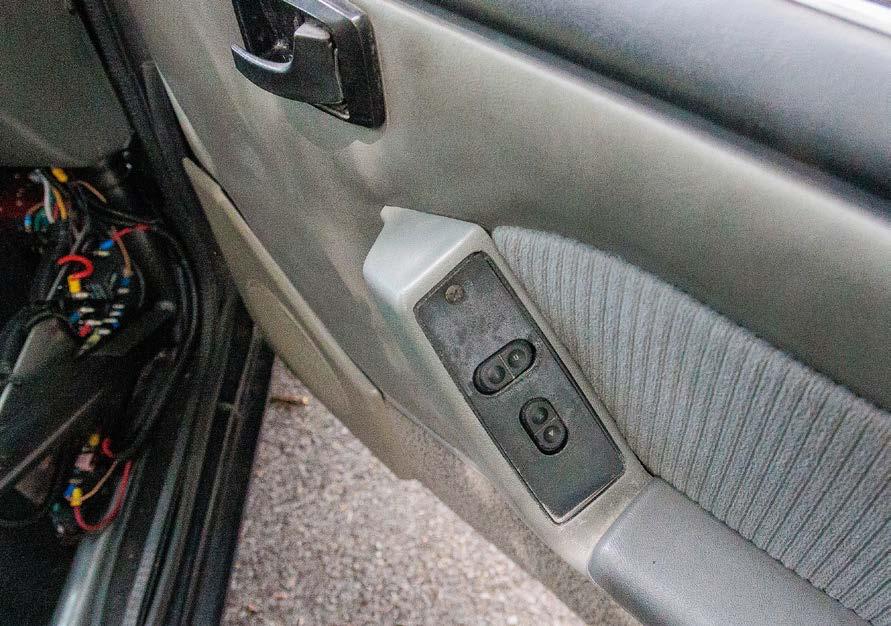
Custom designed door panels with Mustang insignia
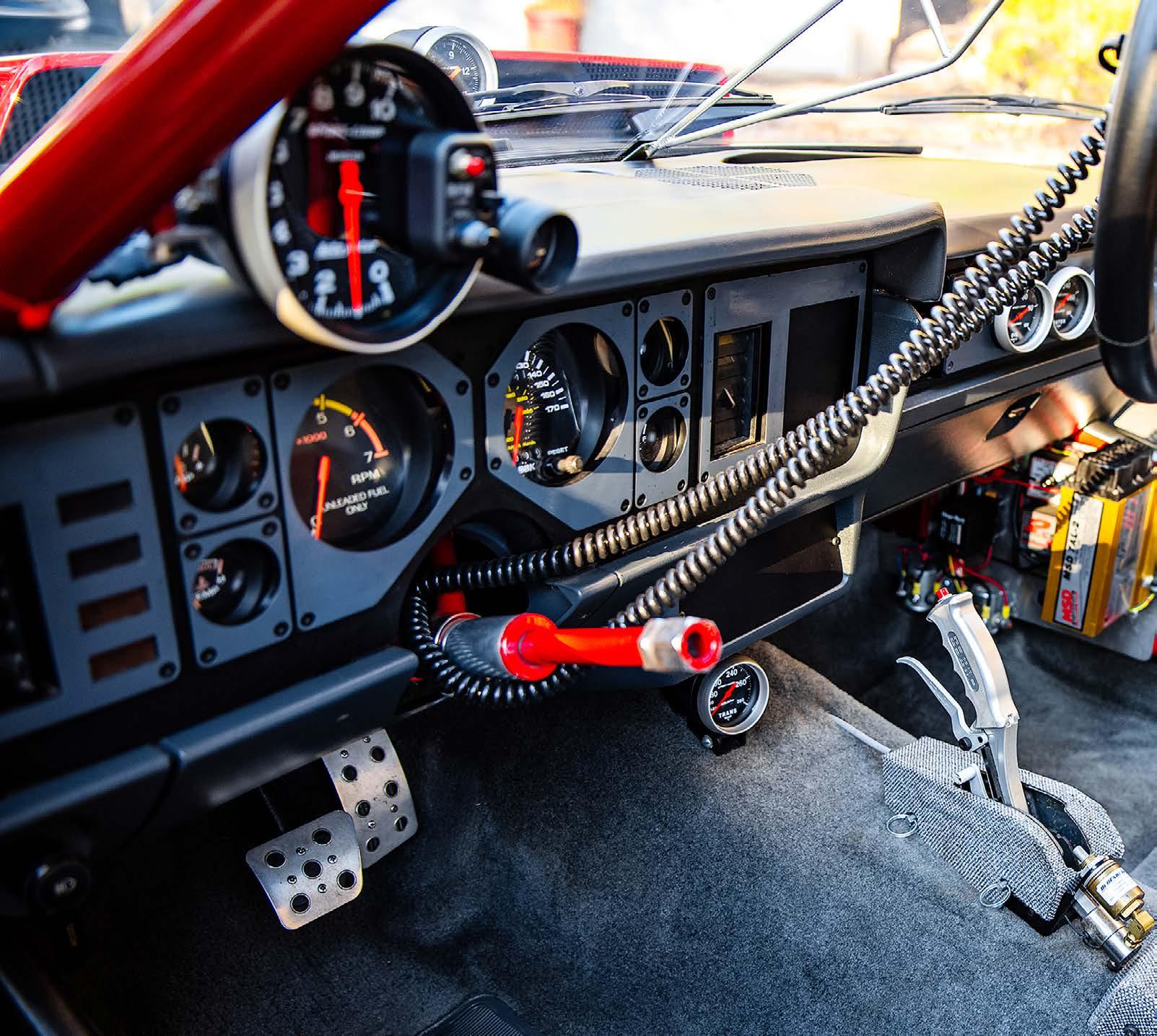
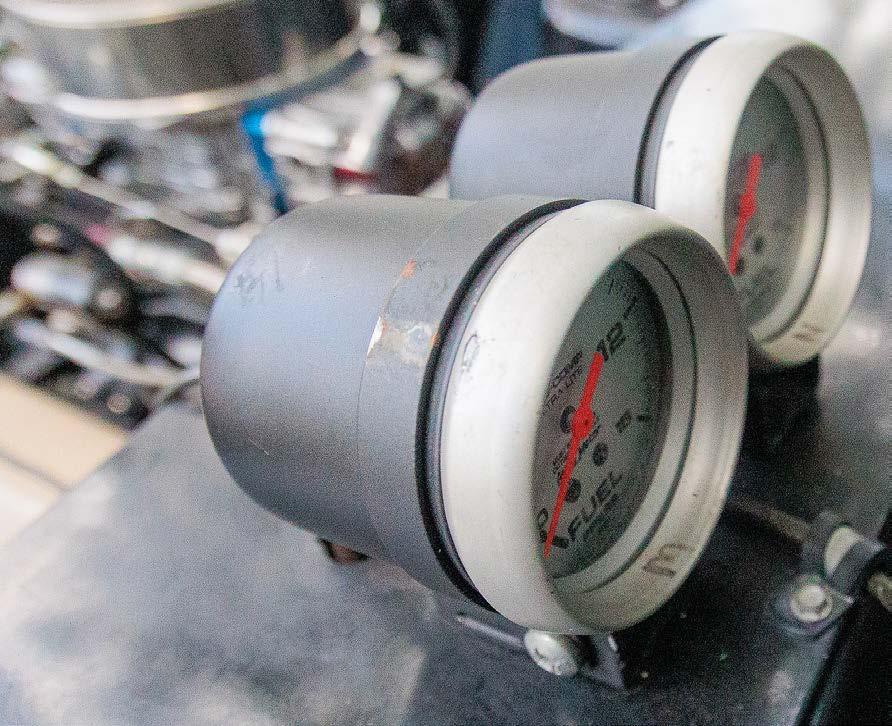
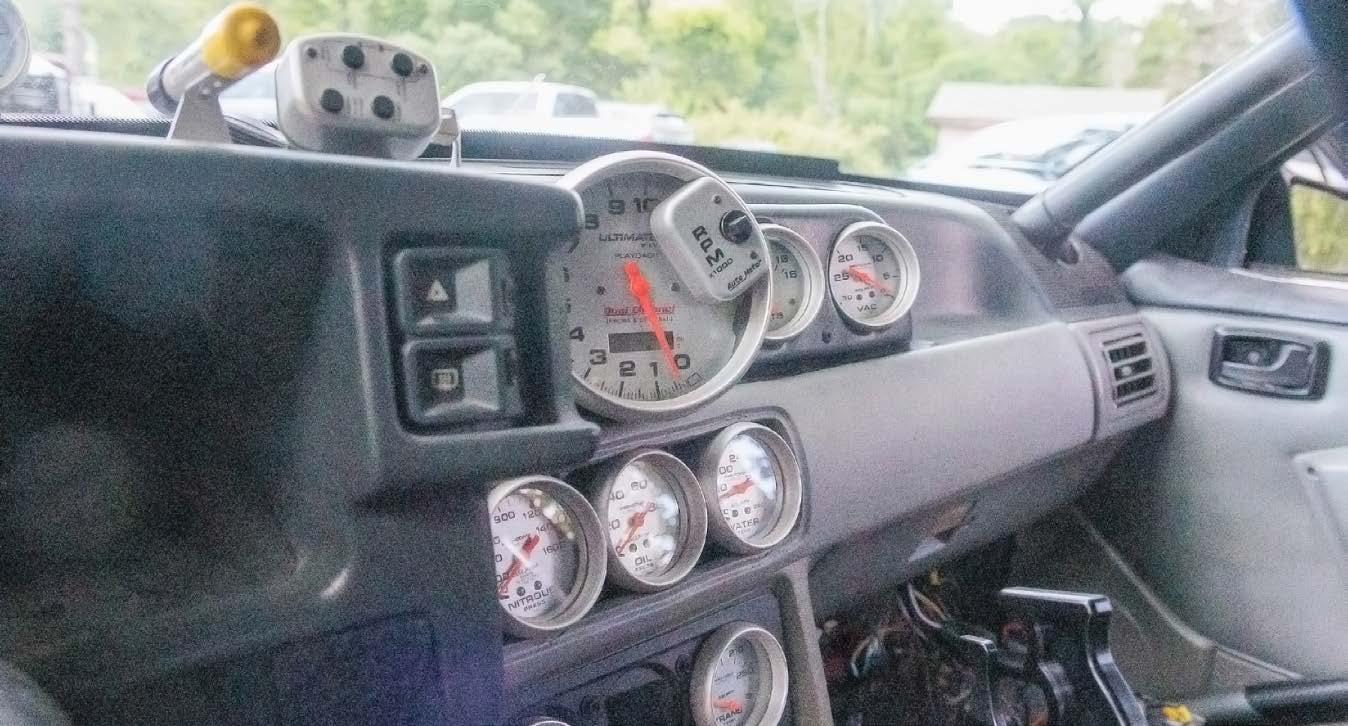
COMP gauges.
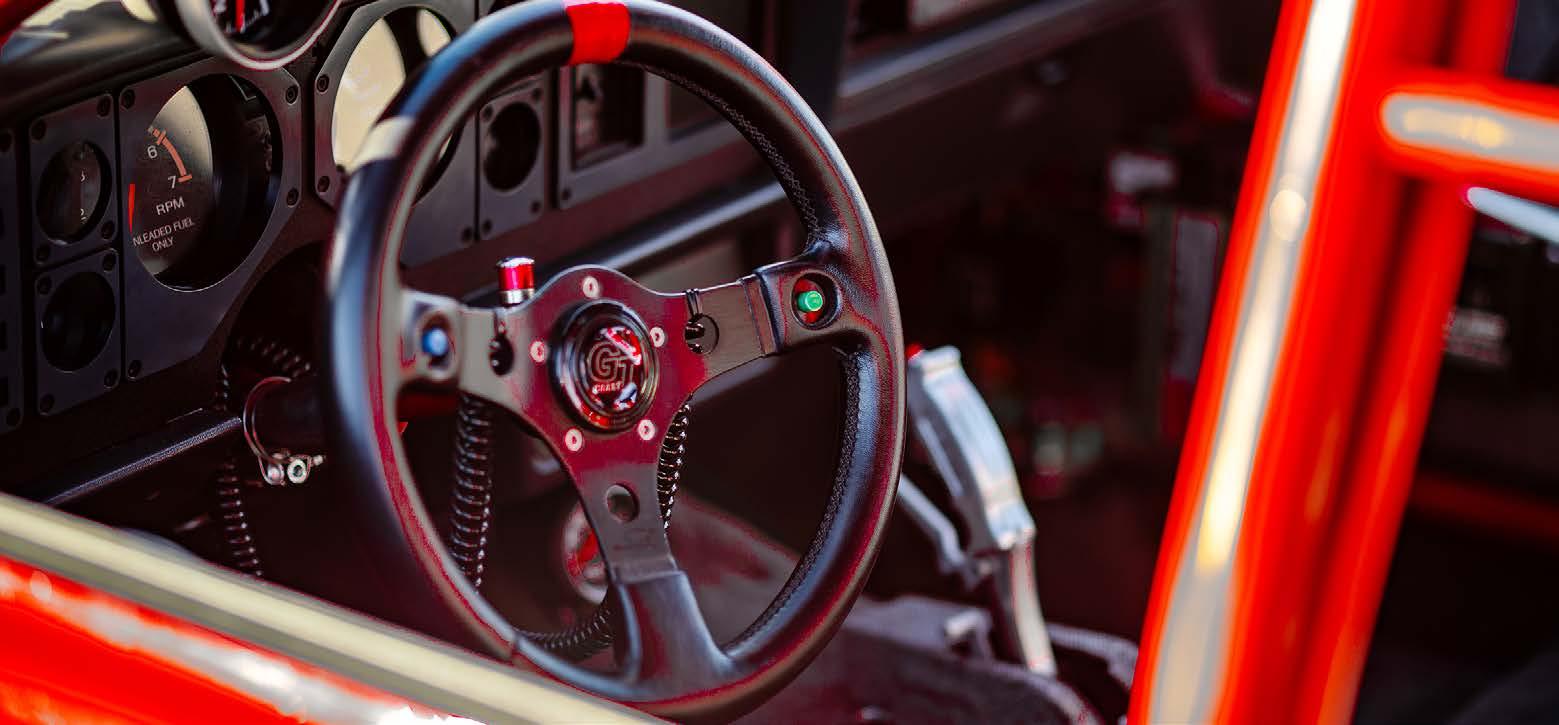
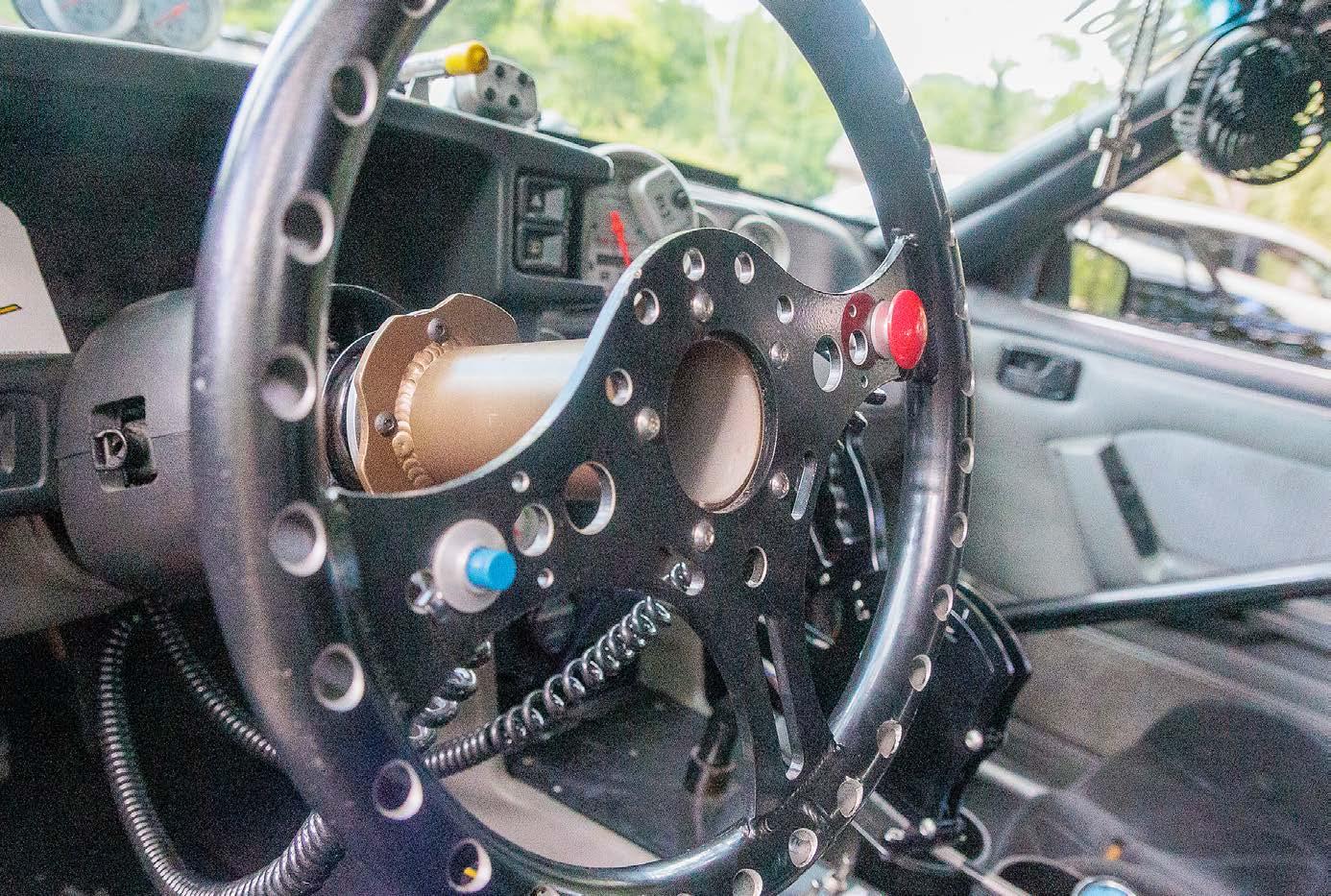
Grant Steering wheel.
Stock dash w/ custom gauge mounts.
Stock rear interior panels – no race car aluminum panels here!!
Battery relocation to rear area.
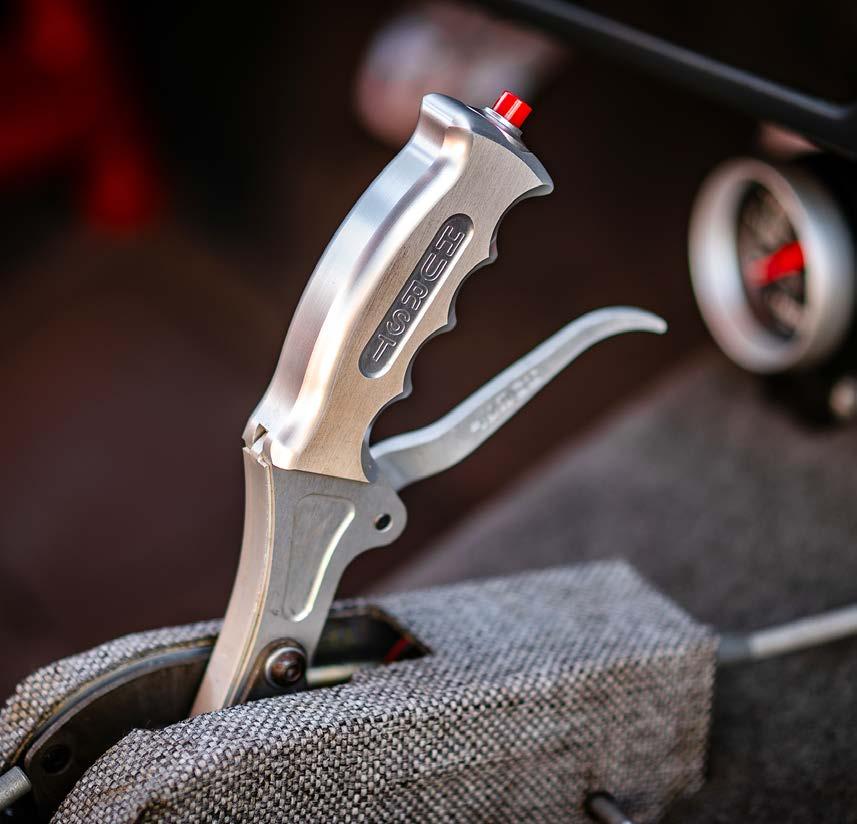
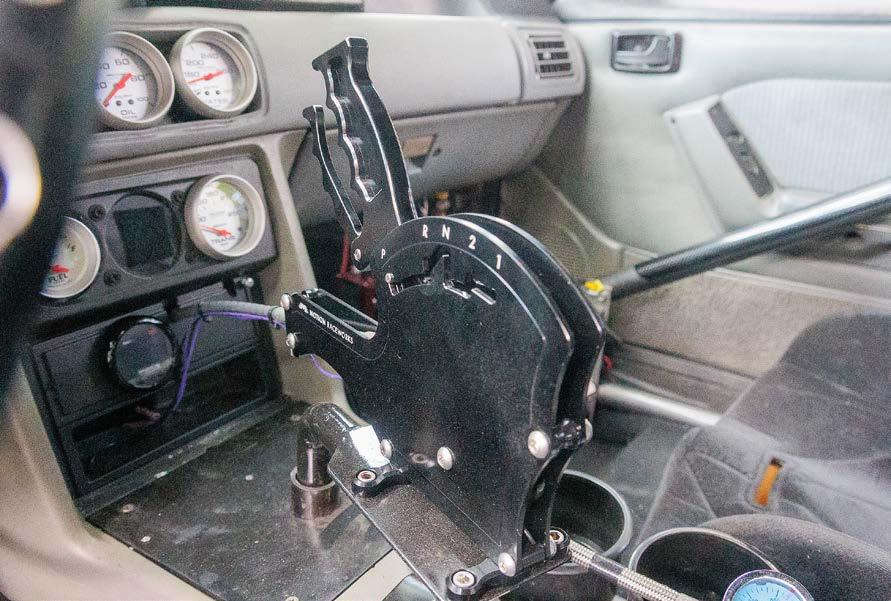
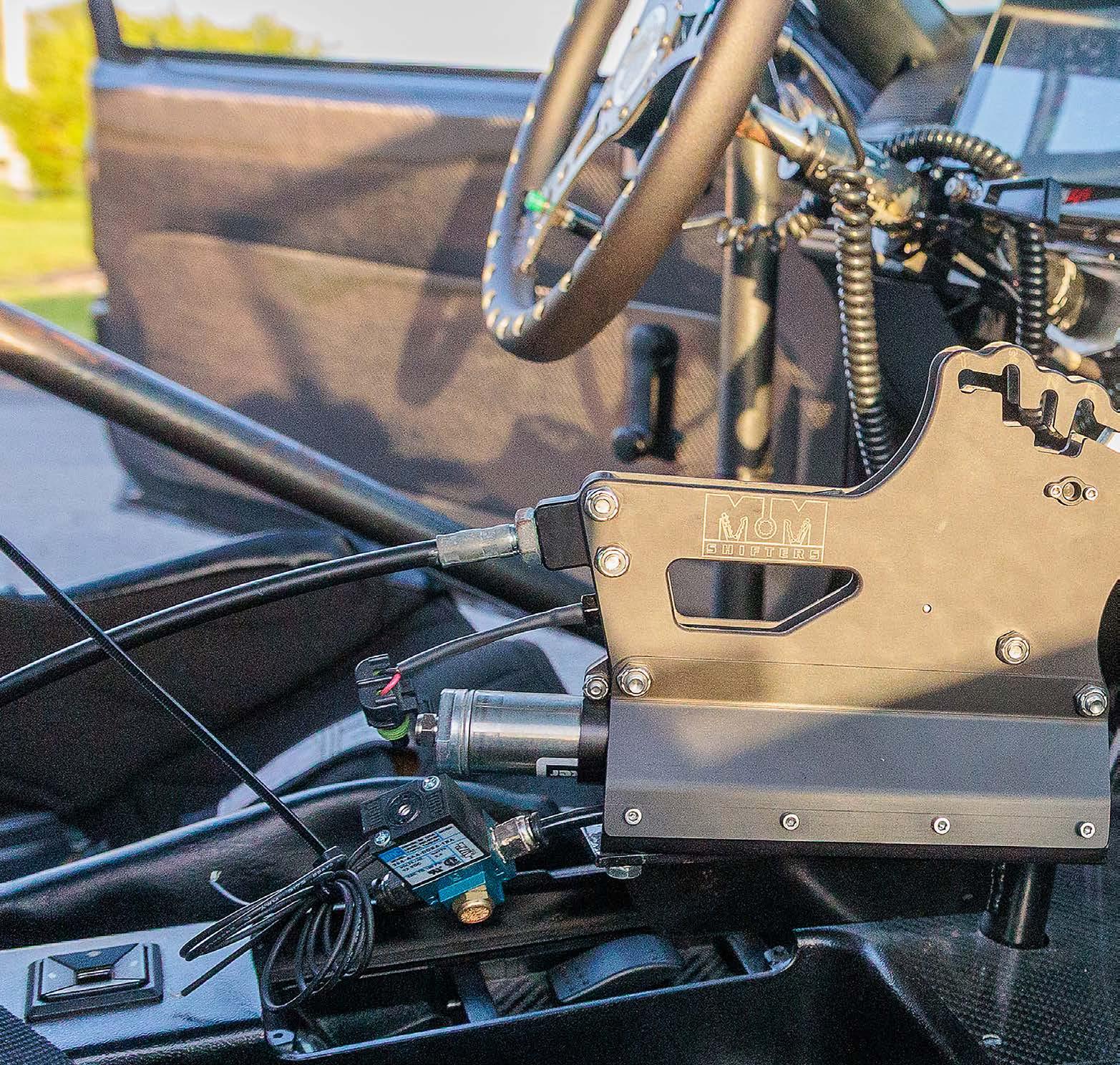
B&M Pro-Stick shifter.
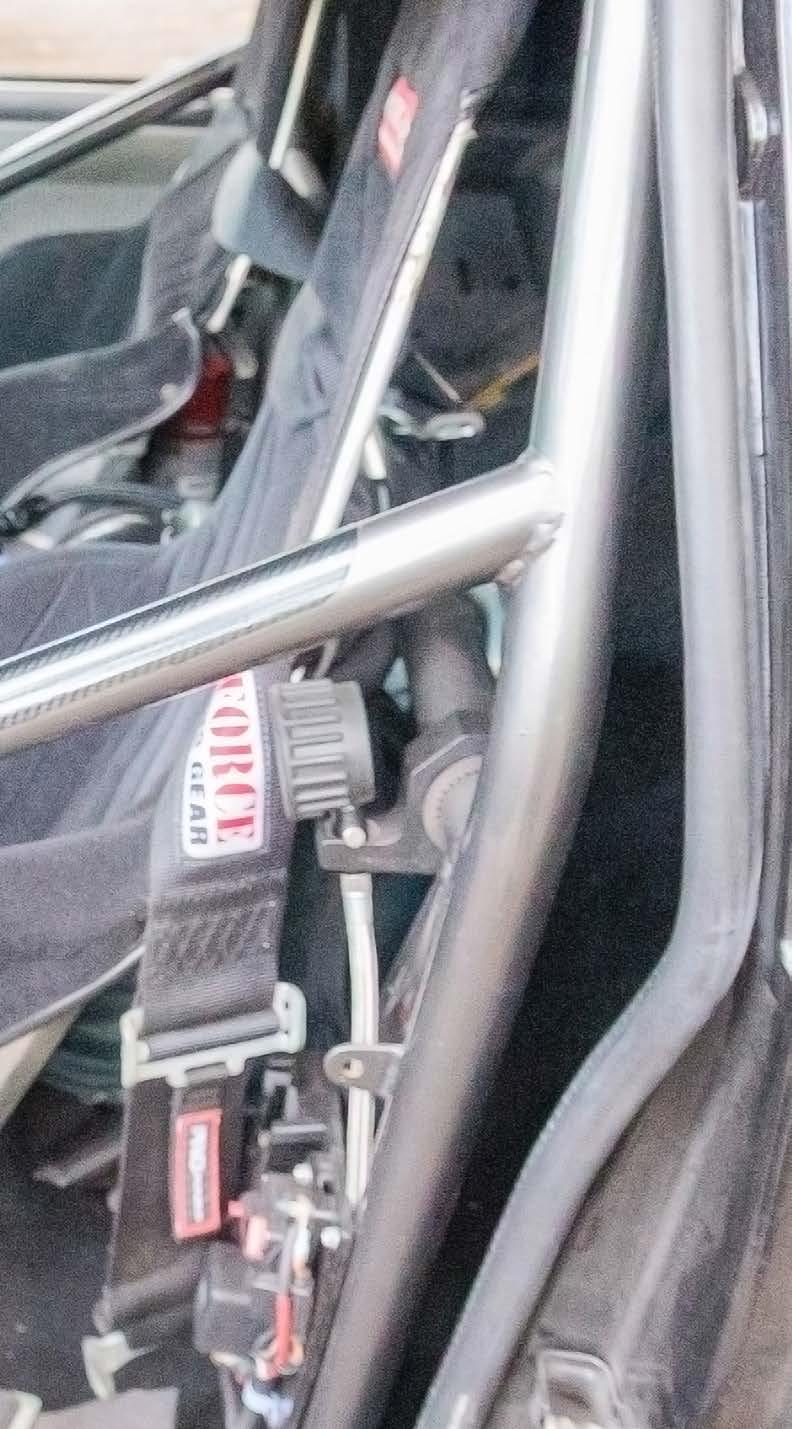
RJS 5-point harnesses .
Wolfe Racecraft rear firewall.
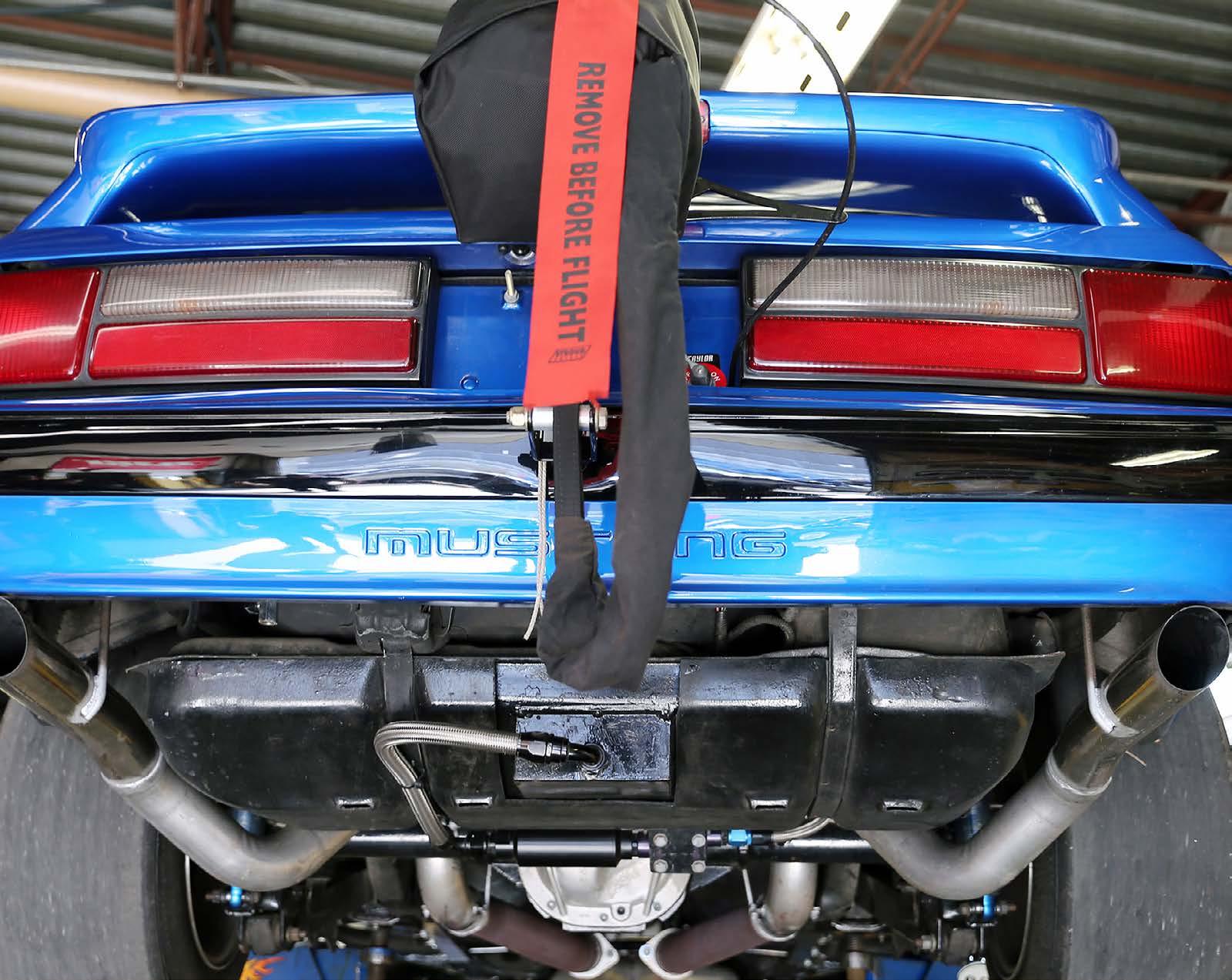
Aluminum 10-gallon fuel cell – great for racing…not for long cruises!
ET & MPH:
The car runs 8.90s @ 156.60 with a single plate system and that started 20 years ago!
Most Unique Feature(s):
Attention to detail. It’s just a 1985 Mustang GT …but if you look closer you will notice the interior, the undercarriage, etc.
Reason For Build:
Ford Power!
Build Timeline:
Bought it in 1995 and had it ready to cause trouble in 1996!
Moste Memorable Experience(s):
Running my first 8 second pass.
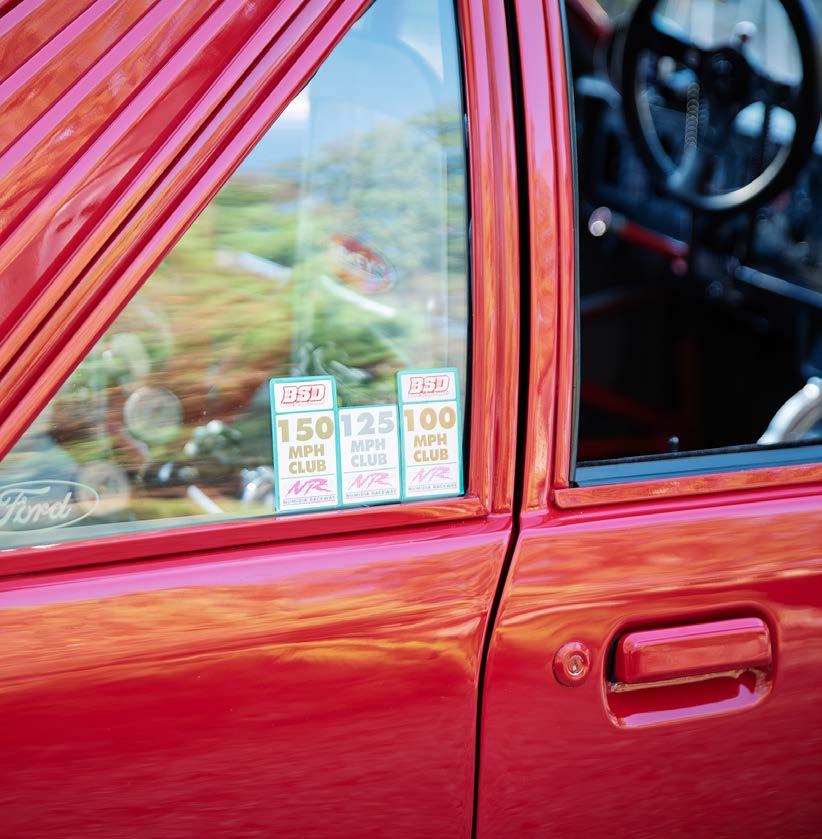
Becoming President of the 2005 Beaver Springs 100 MPH Club – the first Ford to ever win this title & the smallest cubic inch in the top 10!
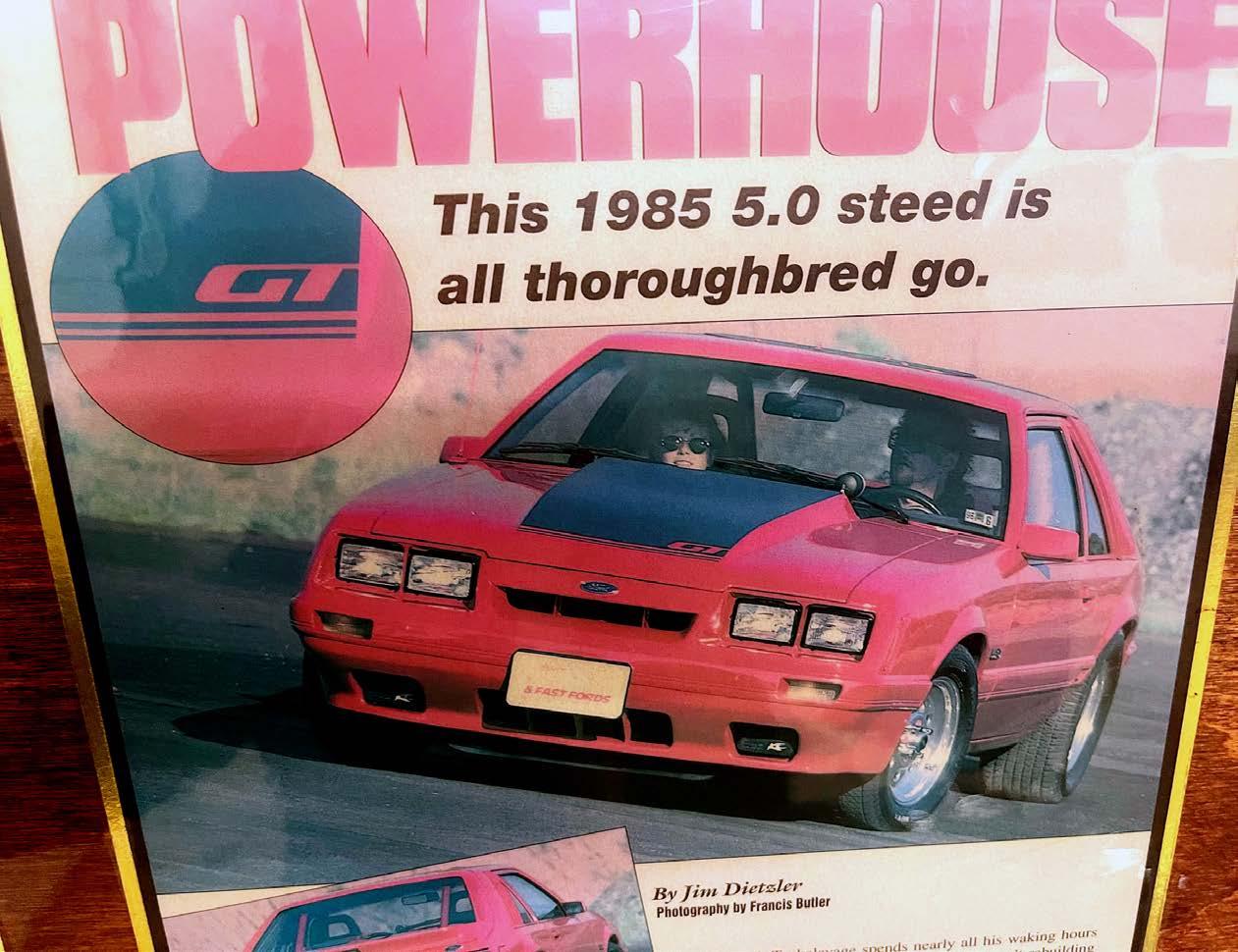
The first photoshoot for this car in Muscle Mustangs & Fast Fords at Maple Grove Raceway, Reading, PA for the August 1997 edition with my daughter, Tiffany in the passenger seat.
Father/Daughter feature in Hemmings Muscle Machines magazine in August 2006 with both of our Fox Bodies…my 85 GT… her 87 LX.
Thanks To:
My daughter Tiffany, for prepping the car for paint and final assembly.
Andy Jensen, my now son-in-law, for engineering the powerplant.
Upgrade Your Ride to the Pinnacle of Elegance with Our Engine Turned Material.
FPM Metals
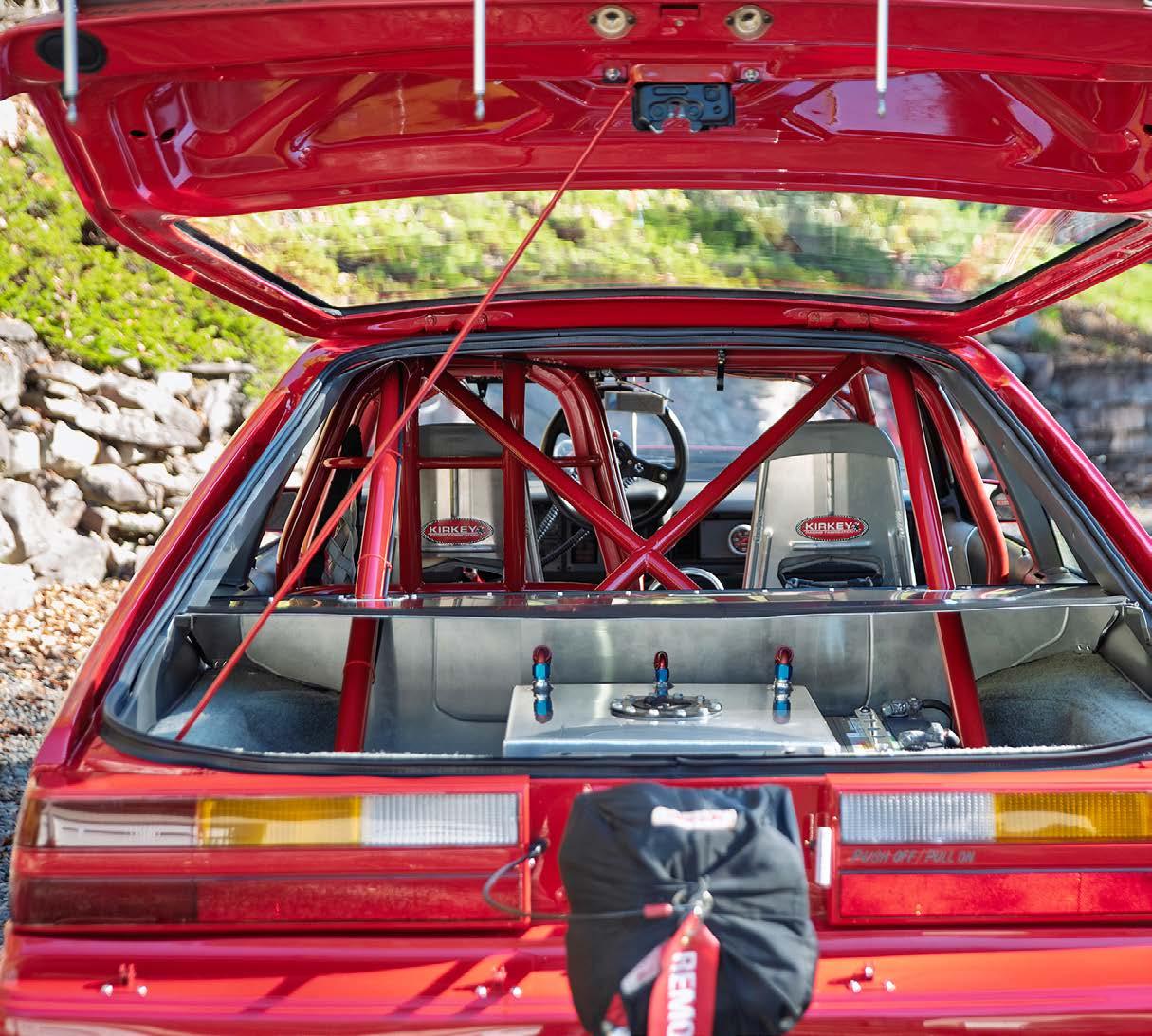
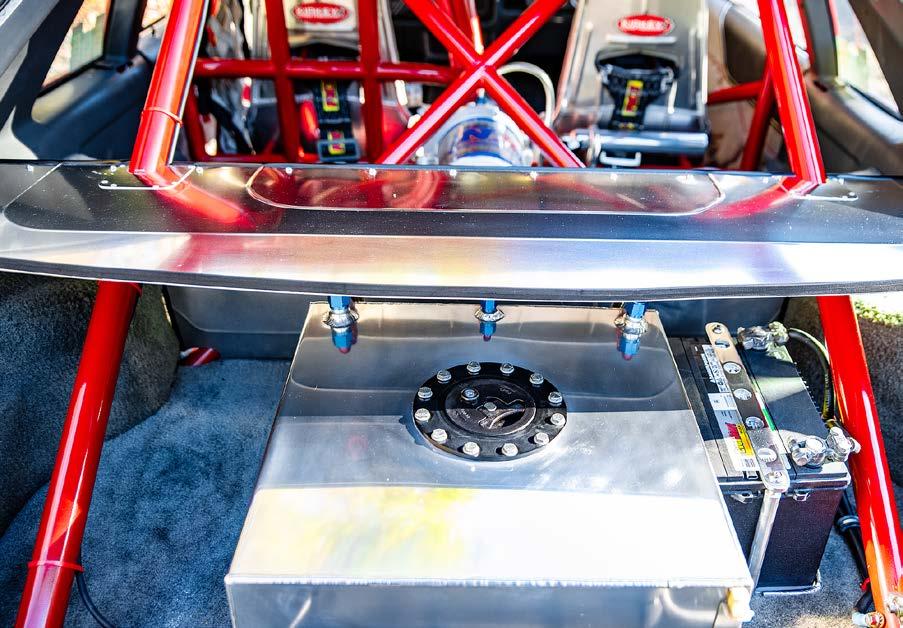
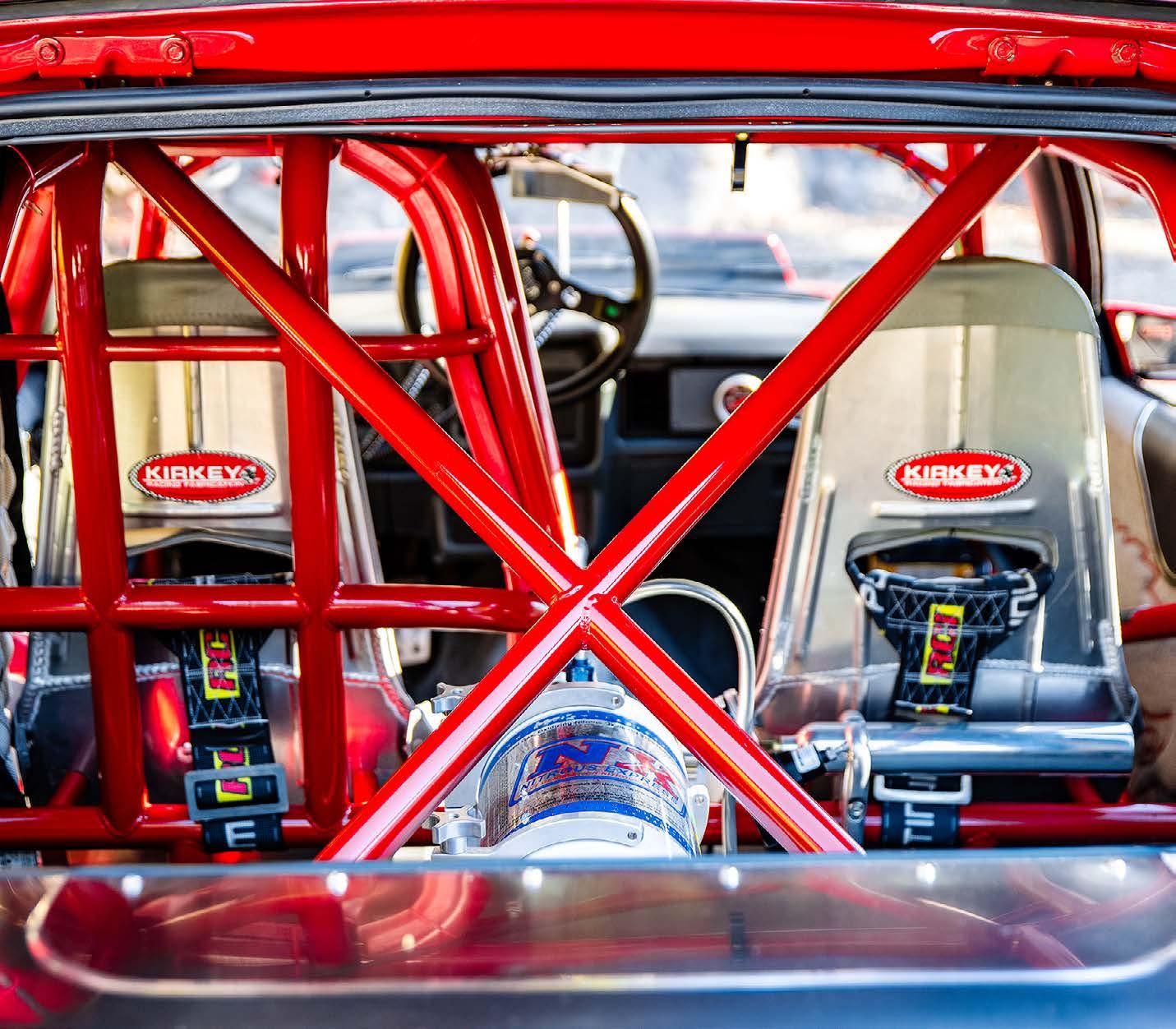
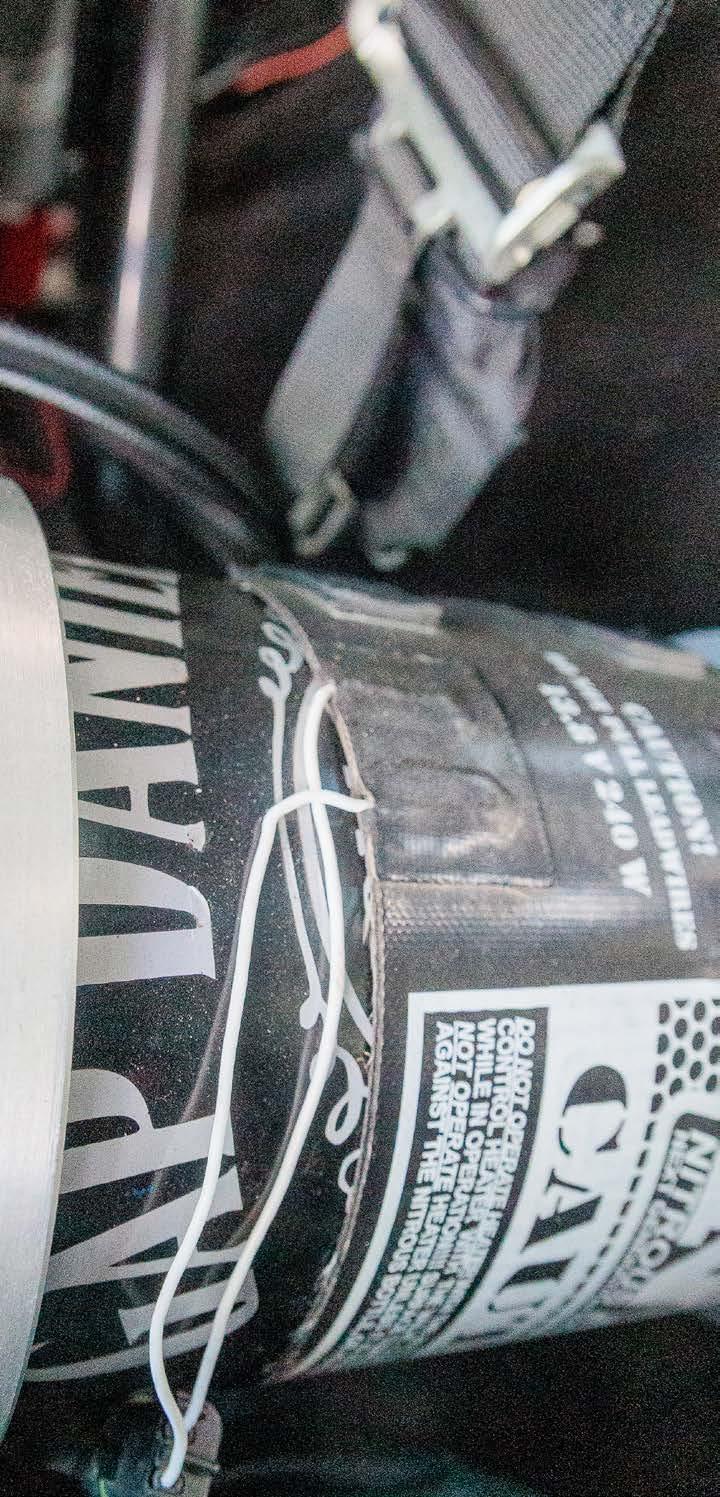
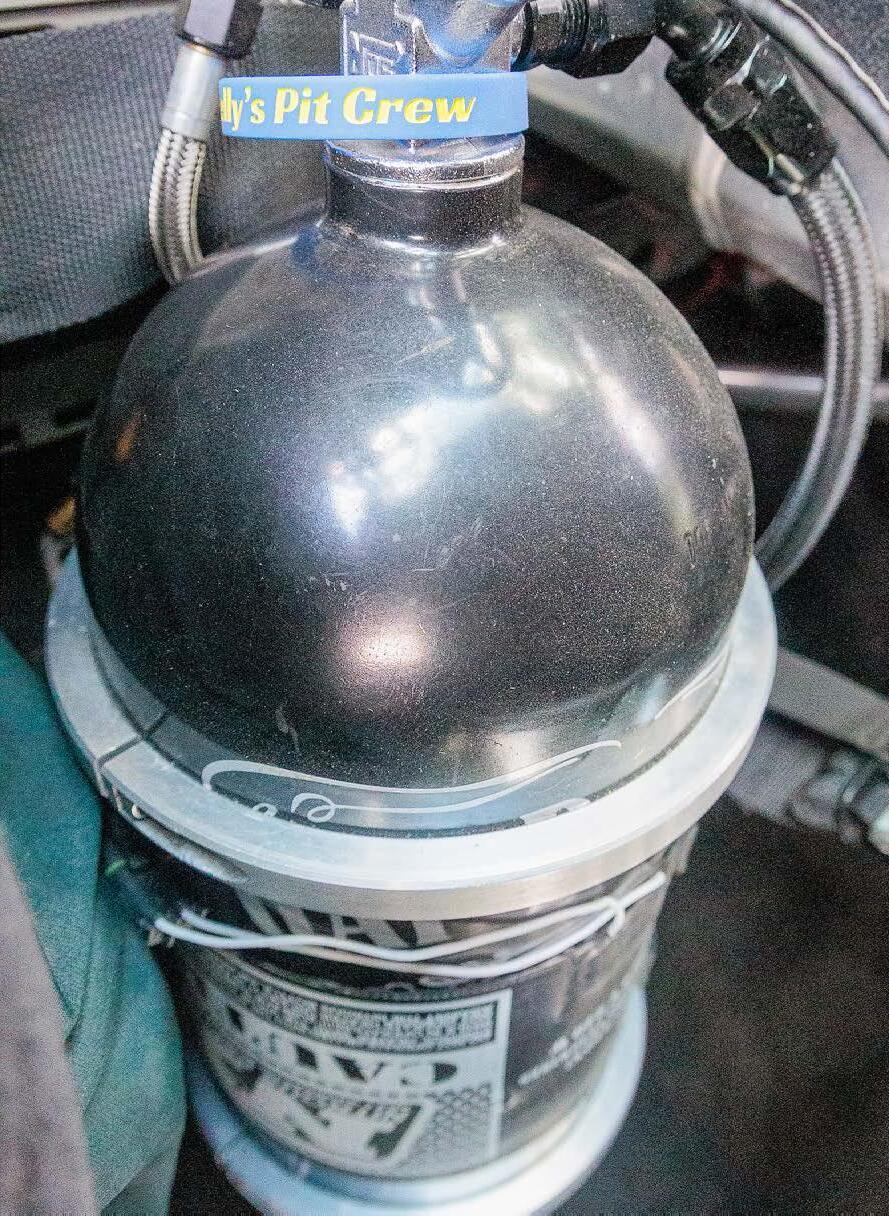
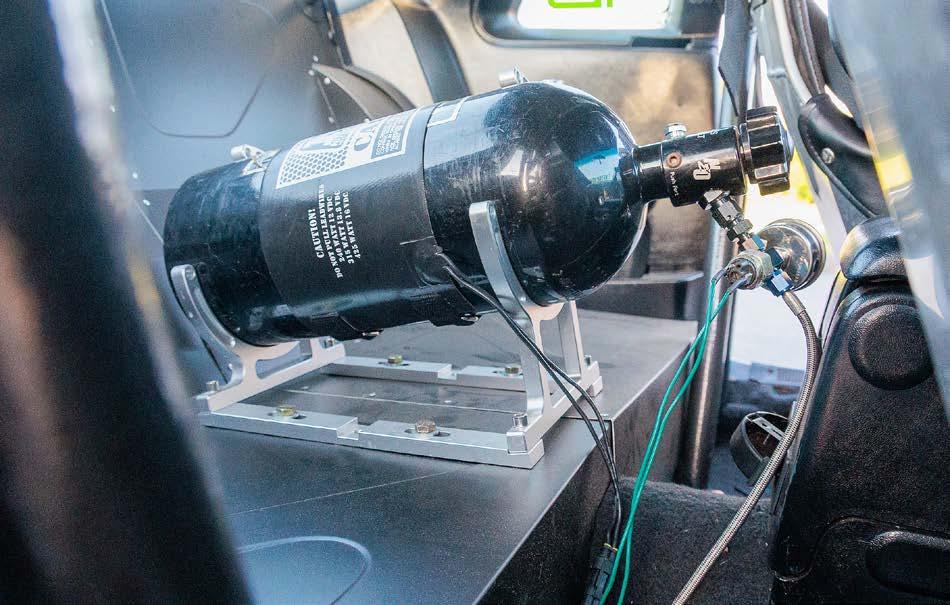
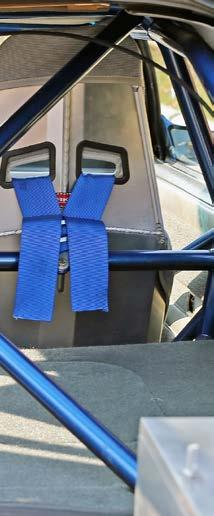
What was formerly the rear seat area is now reserved for the nitrous bottle and a trick Wolfe Racecraft rear firewall contains the 10-gallon fuel cell and rear-mounted battery safely away from the cockpit.
Offered in Aluminum or Stainless Swirl Sizes from 1/2” to 2” Dia.
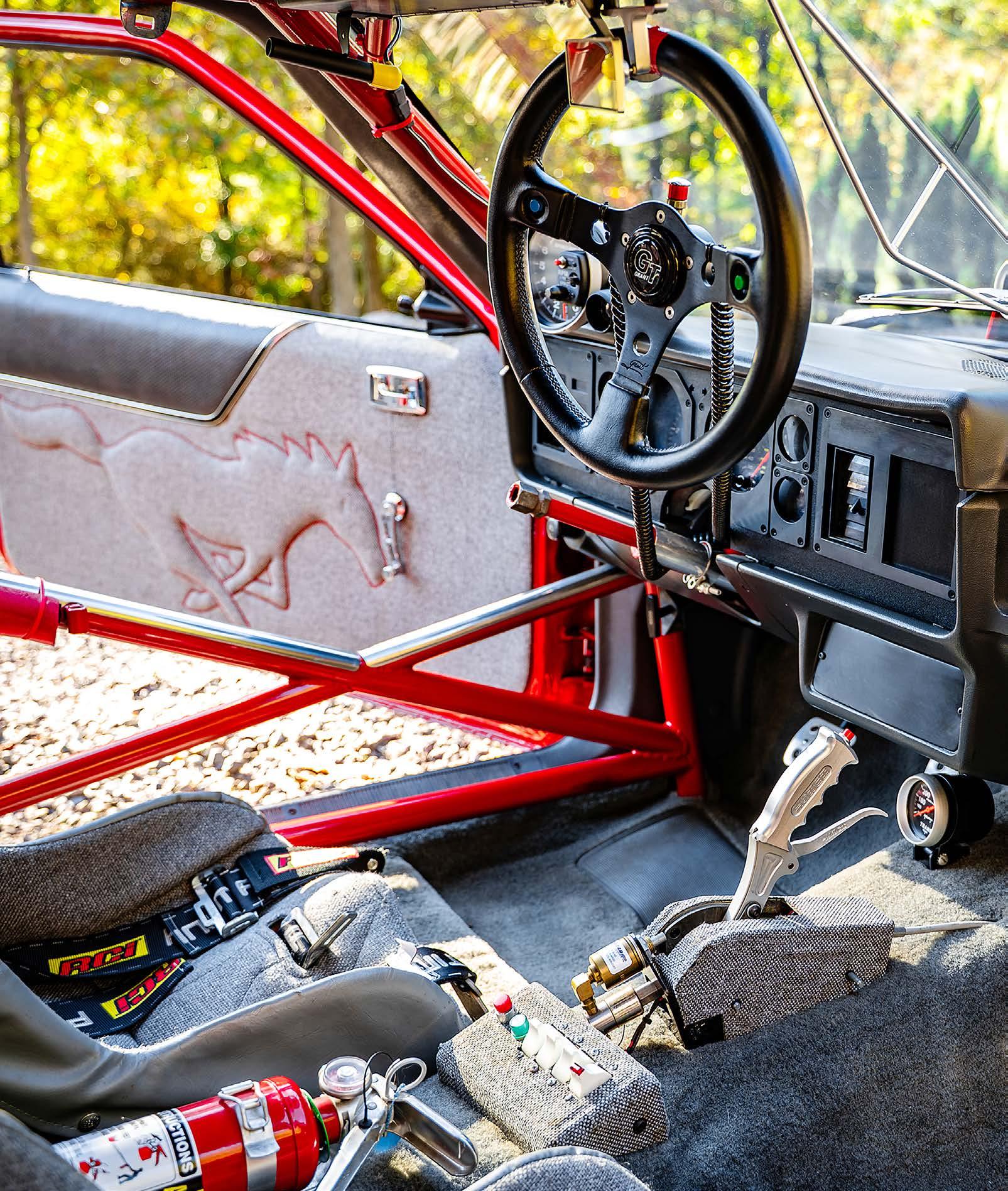
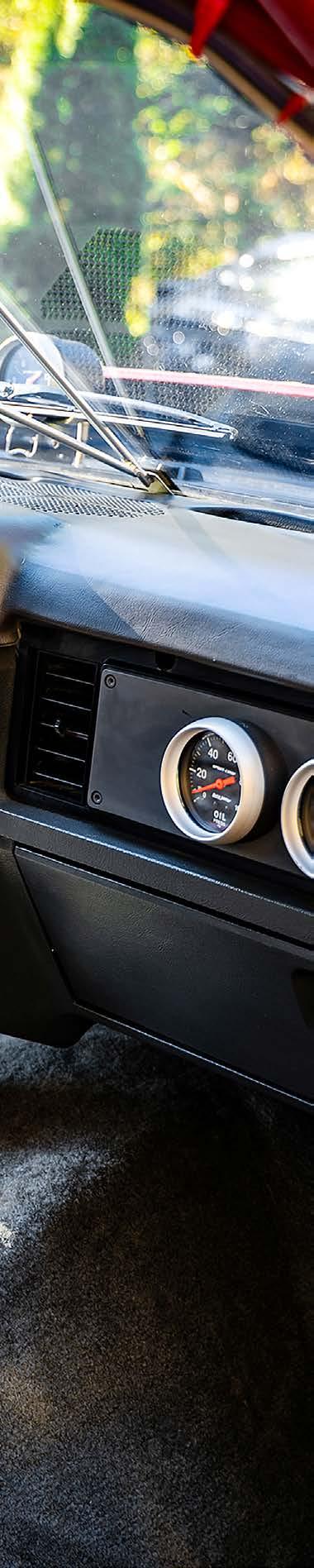
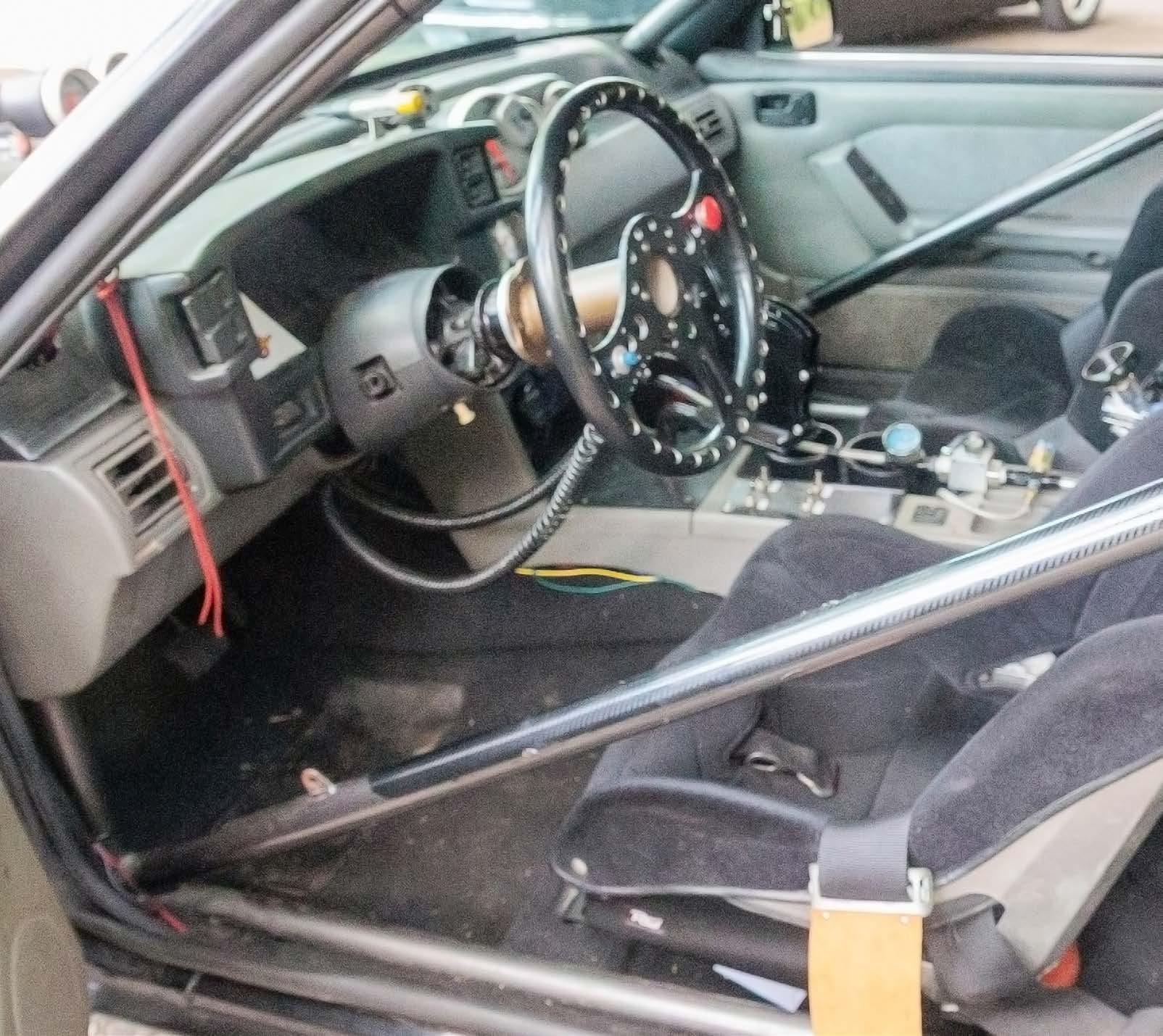
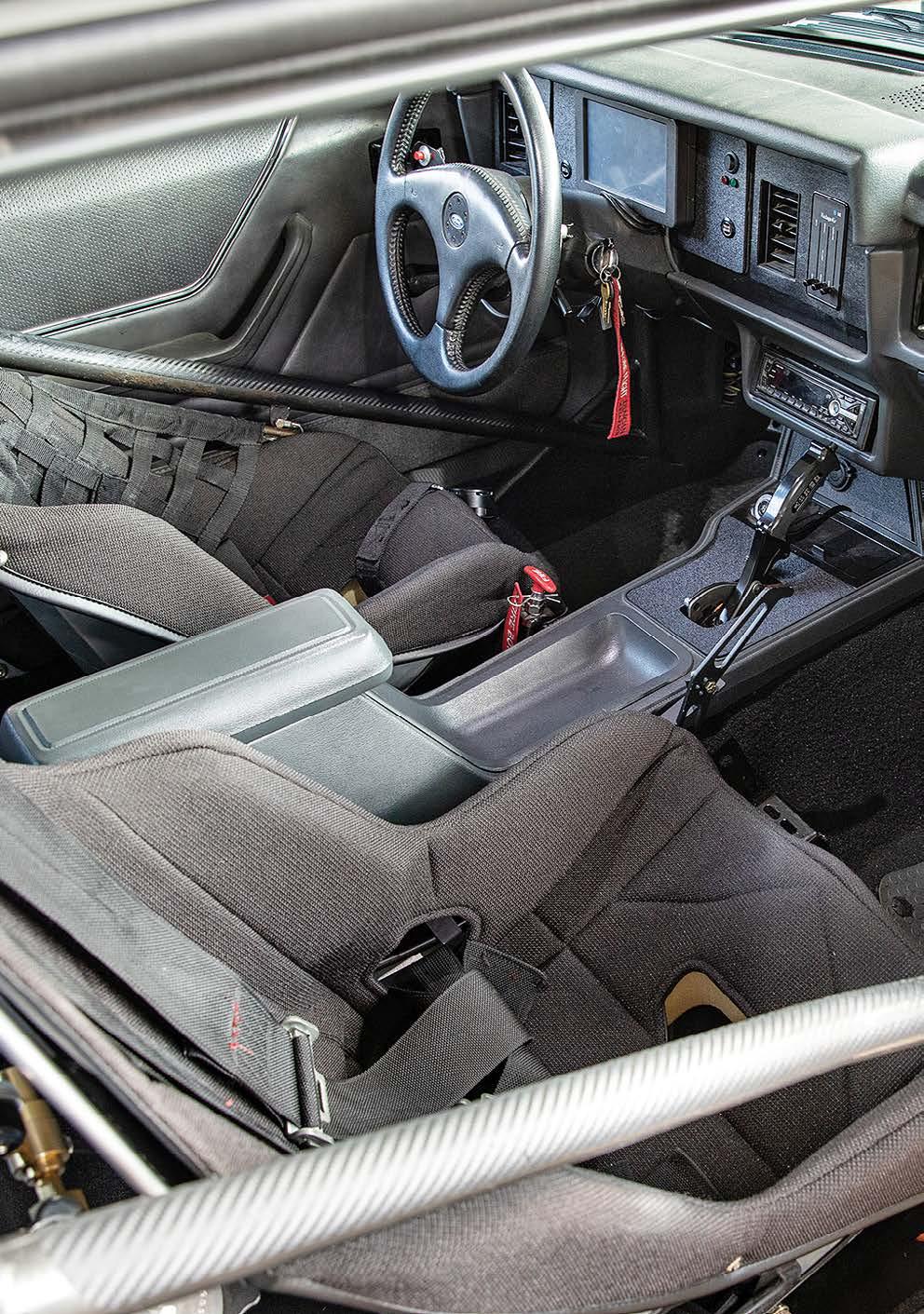
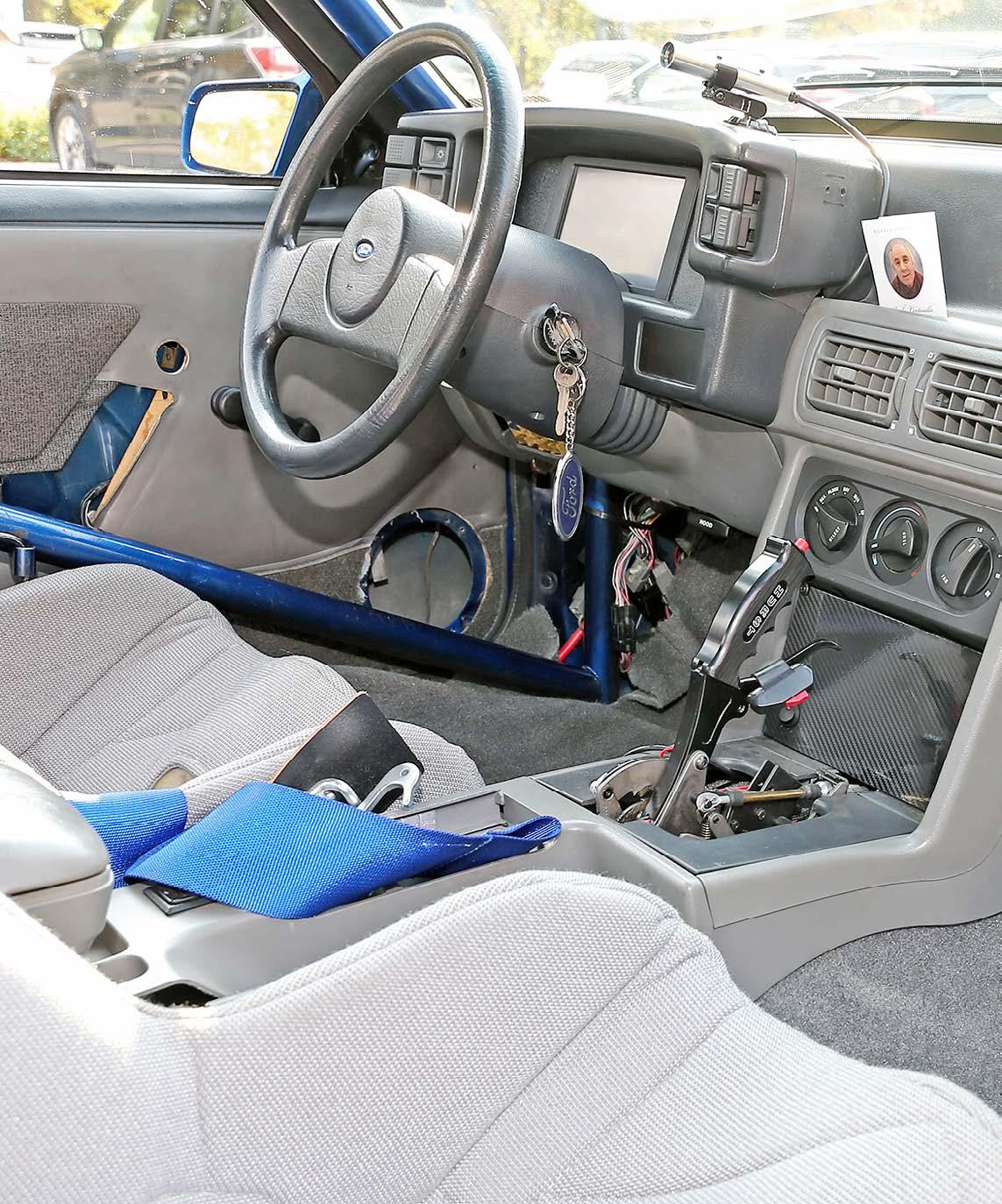
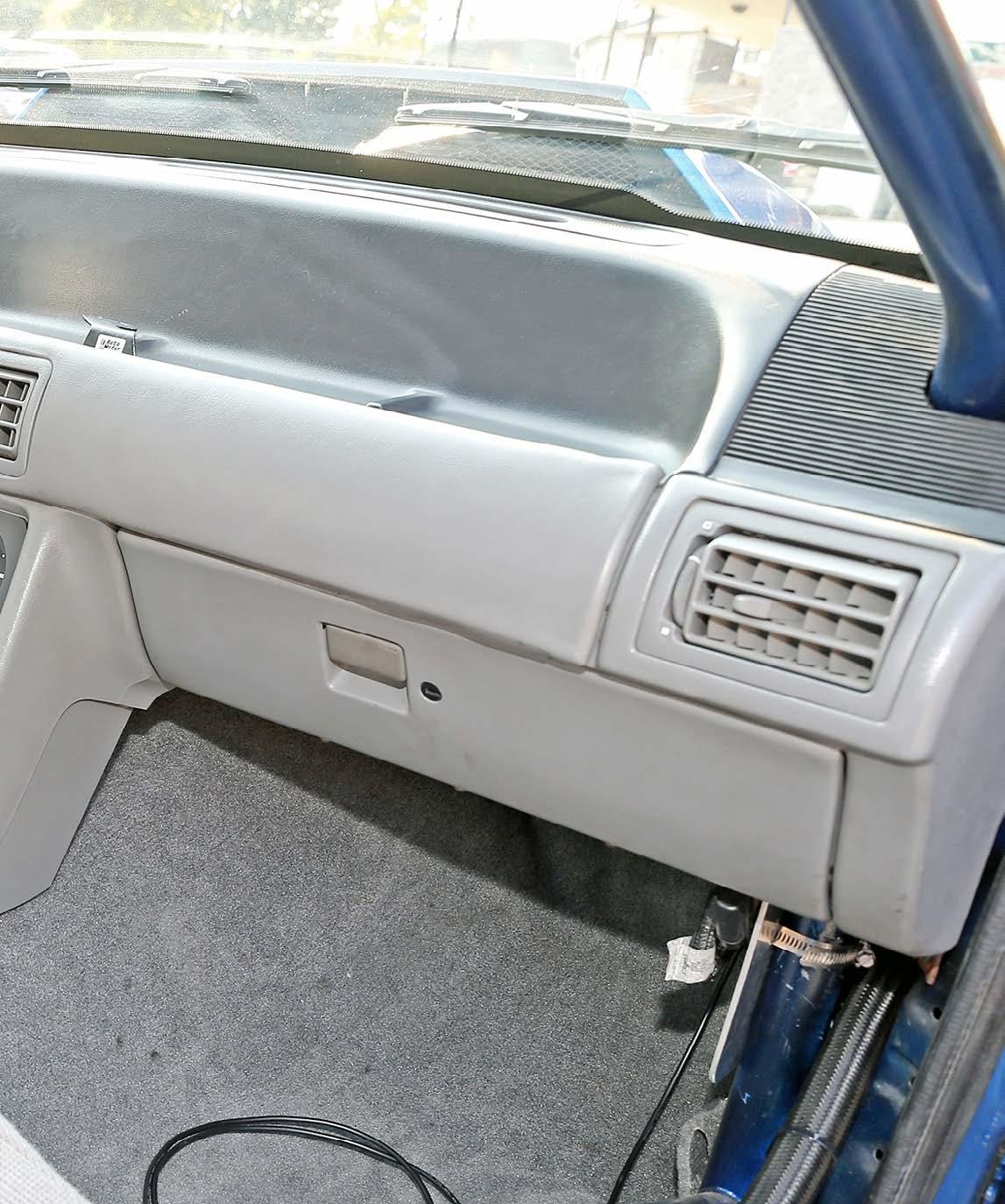
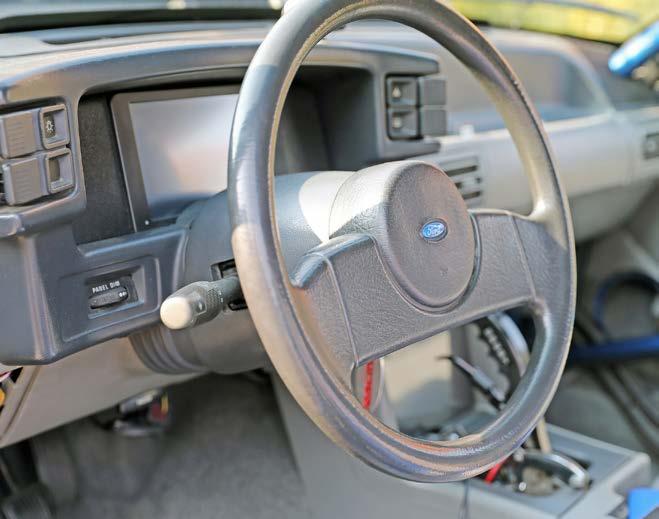
The interior of the Mustang was once red but during the rebuild it was swapped out for factory gray panels and custom door panels and race seats along with an owner designed and installed rear seat delete kit. The factory dash and gauges in the 85 were some of the coolest of the day and still look great , however, a full selection of aftermarket gauges, including a roll bar-mounted Monster Tach with shift light, was added to keep a closer eye on vitals.
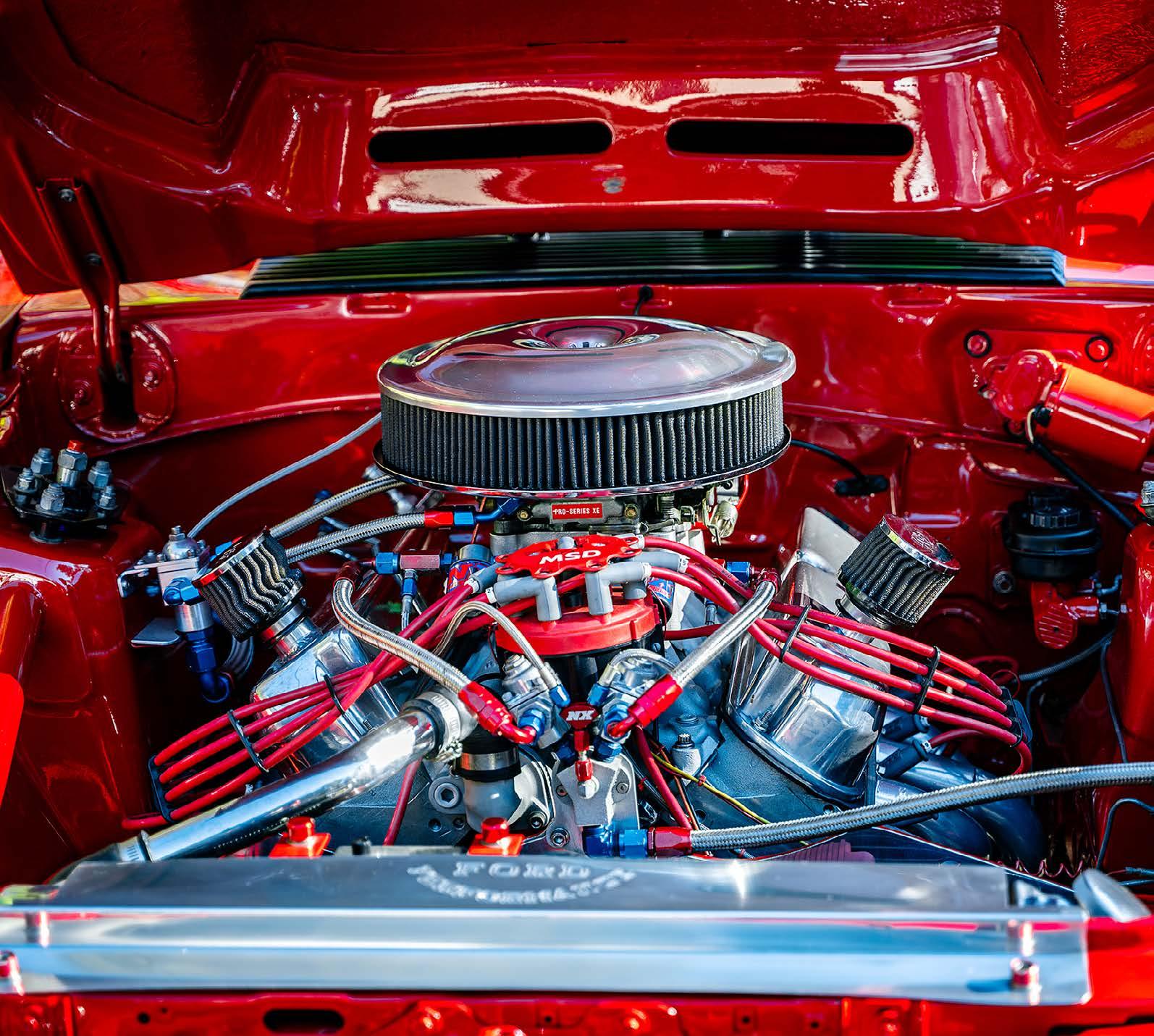
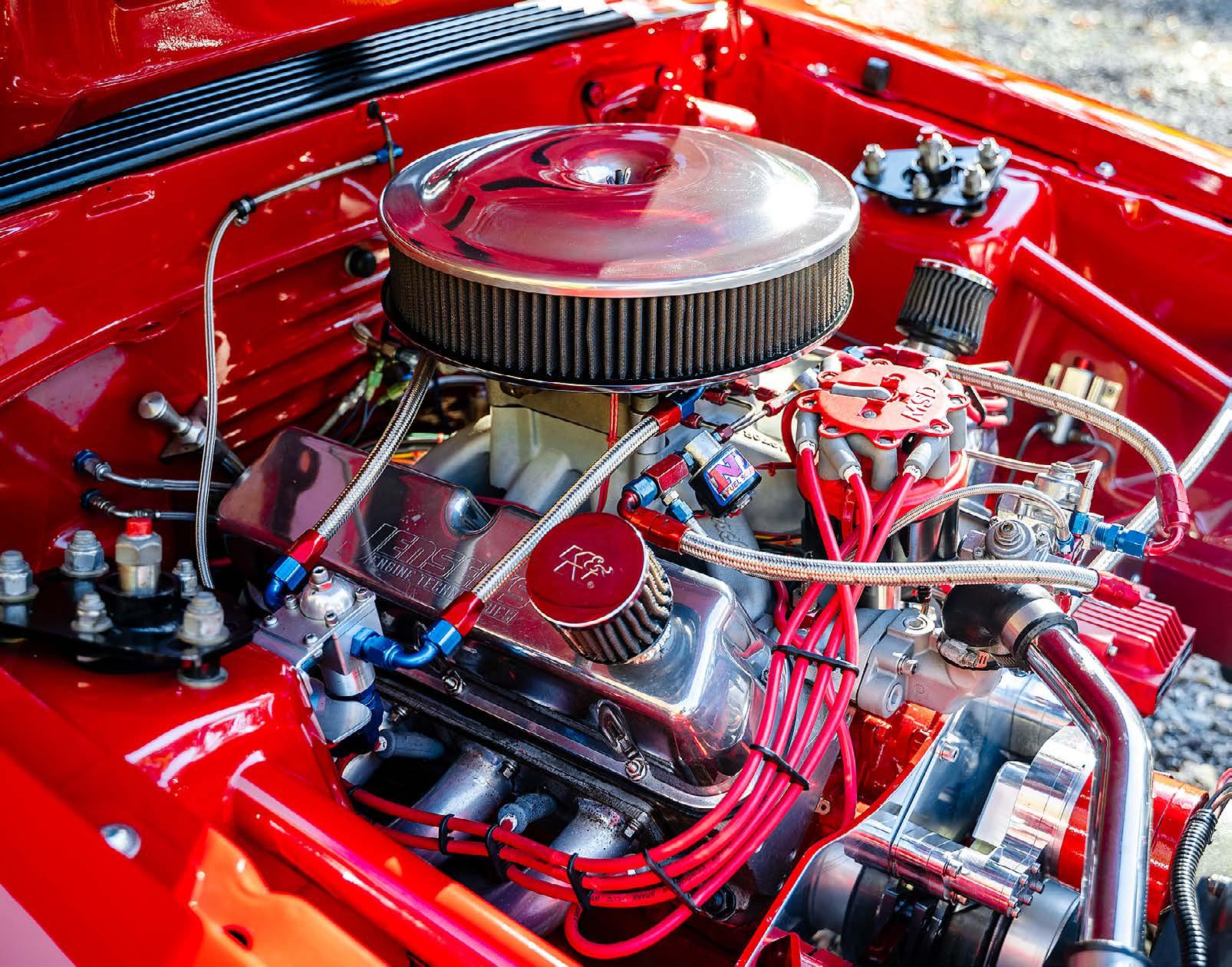
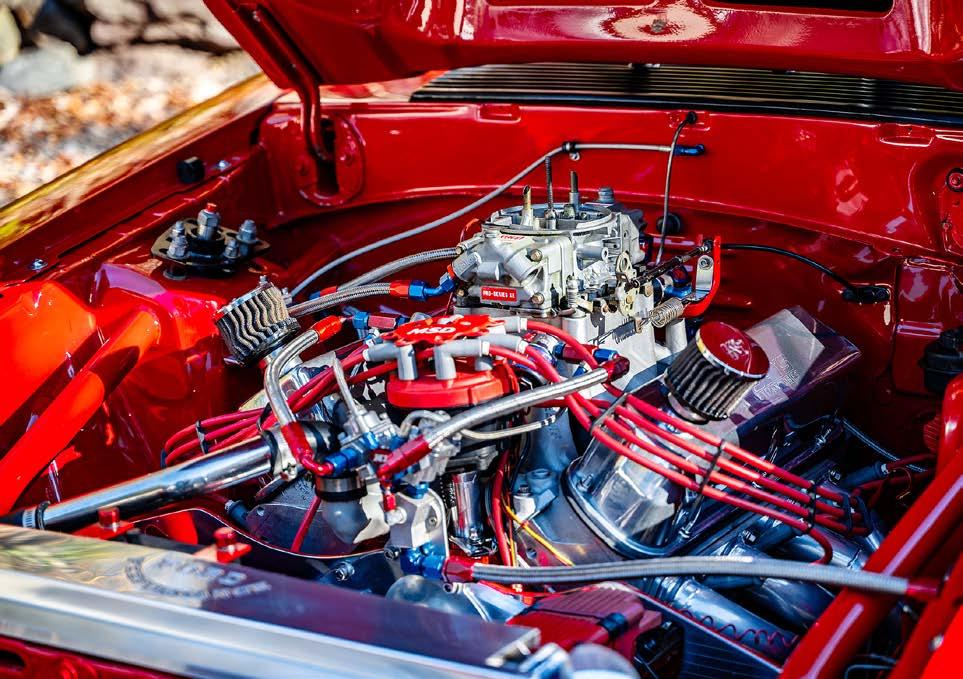
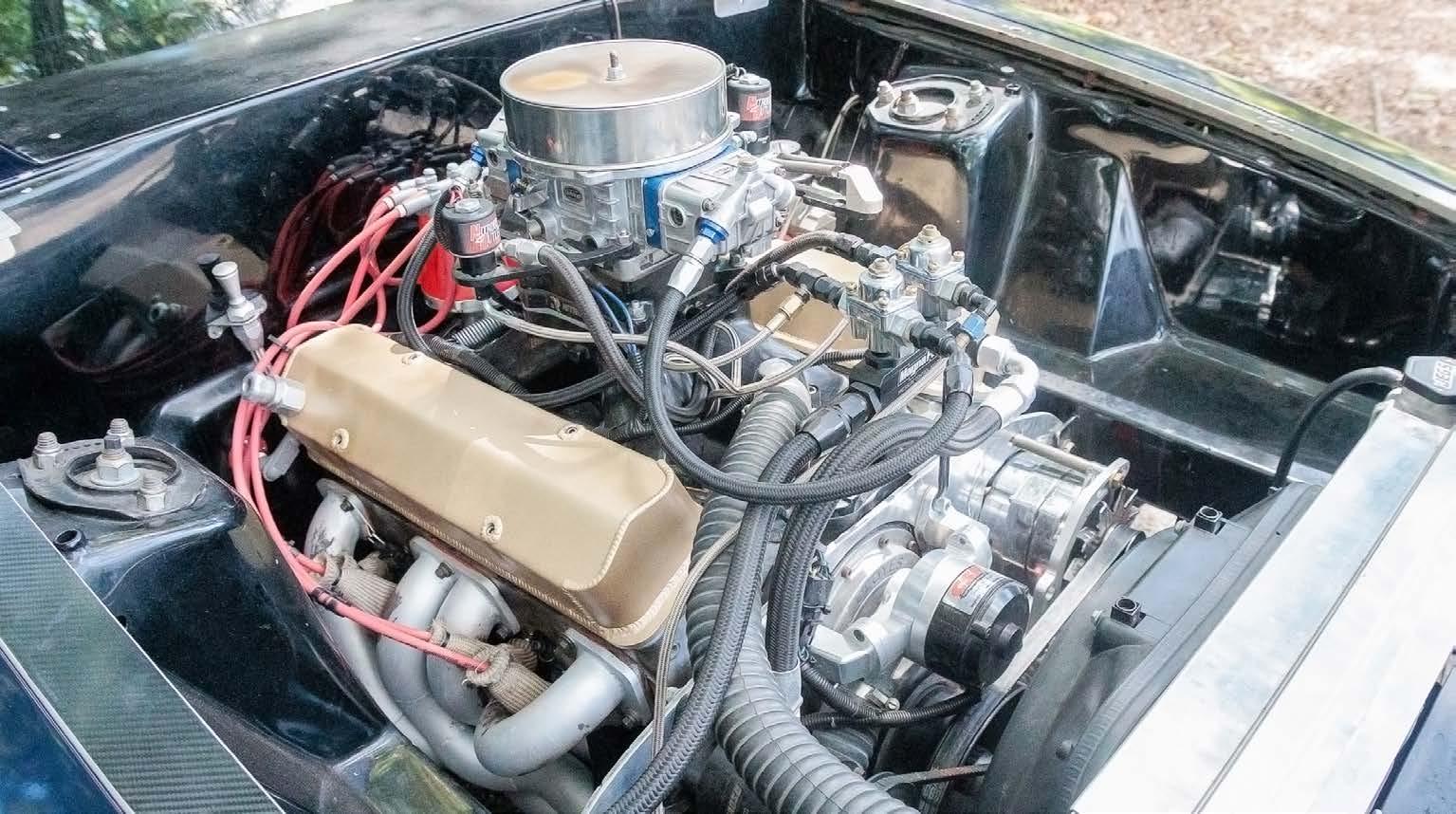
Above the block is a pair of highly capable and fully ported Brodix Track 1 cylinder heads. Jensen chose a custom solid roller camshaft from Competition Cams and employed Crower 1.7:1 rocker arms, and Manley valves, springs, and pushrods.
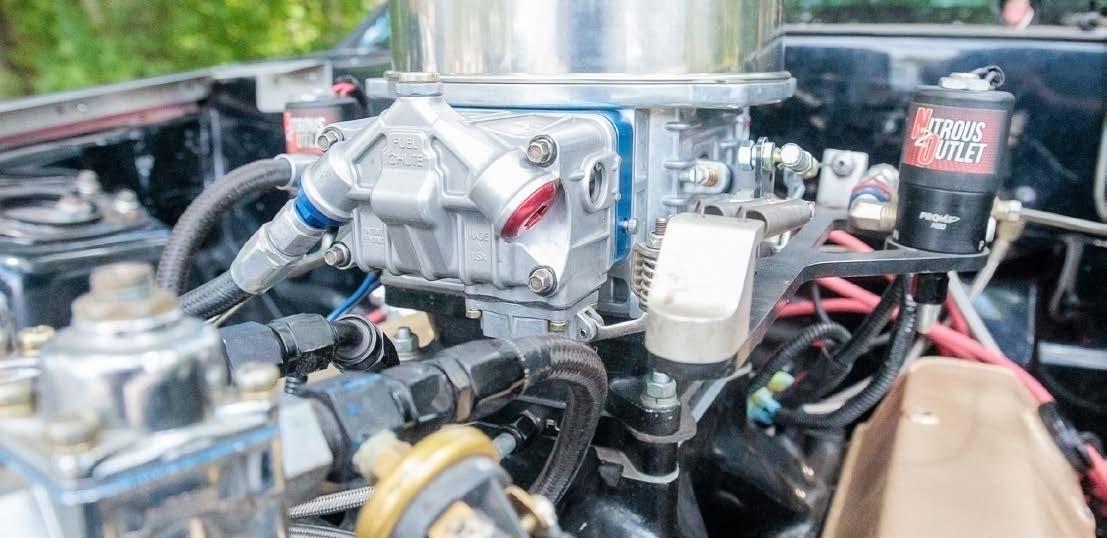
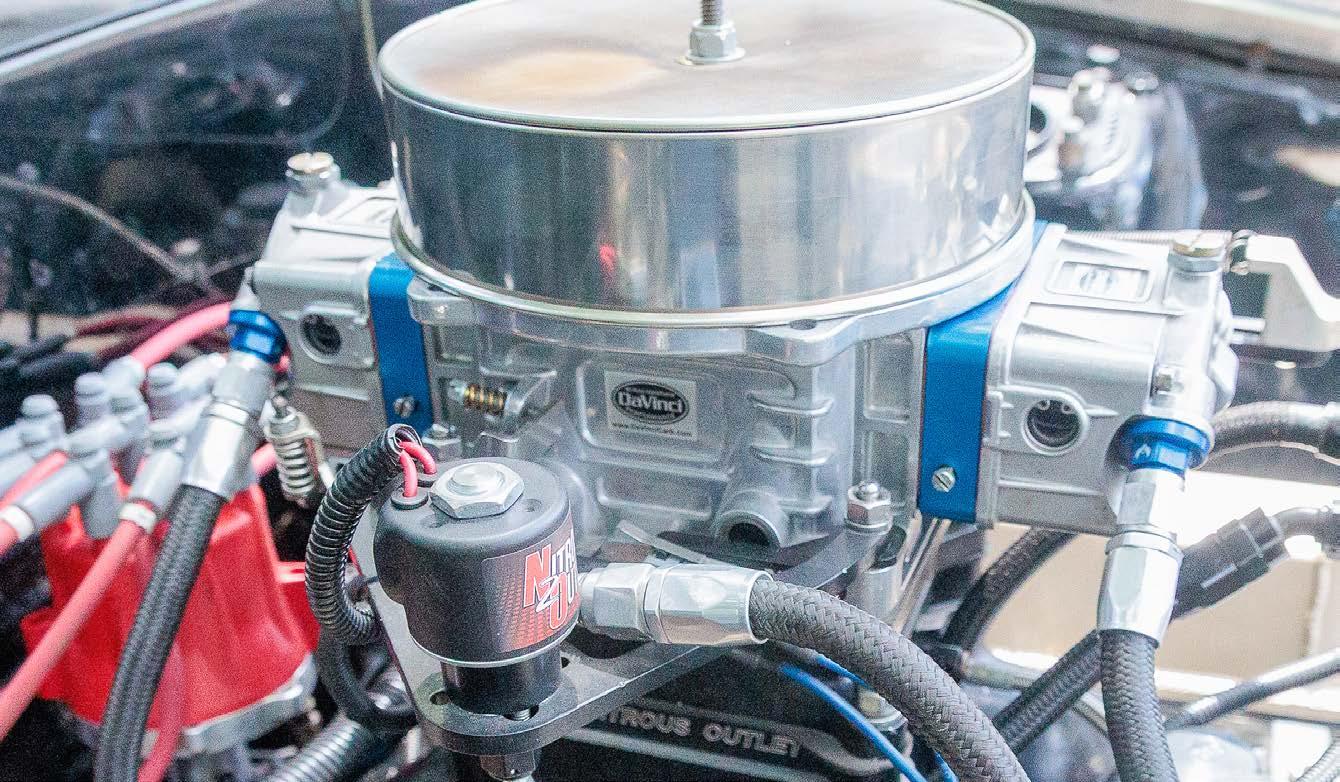
Boosting the smallblock is an NX two-stage nitrous oxide plate system that was placed above an Edelbrock Super Victor Jr. intake. In keeping with Tankalavage’s desire for carburetion, fuel mixing is handled by a custom-built Holley 750cm carburetor from Pro Systems.
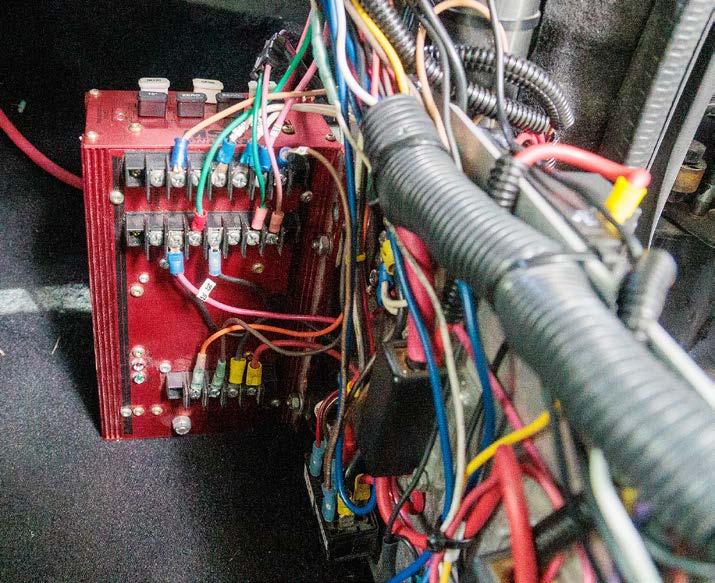
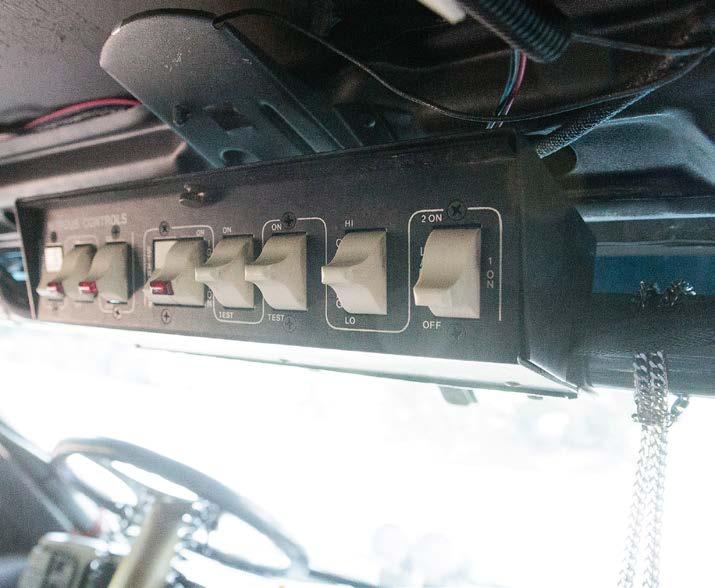
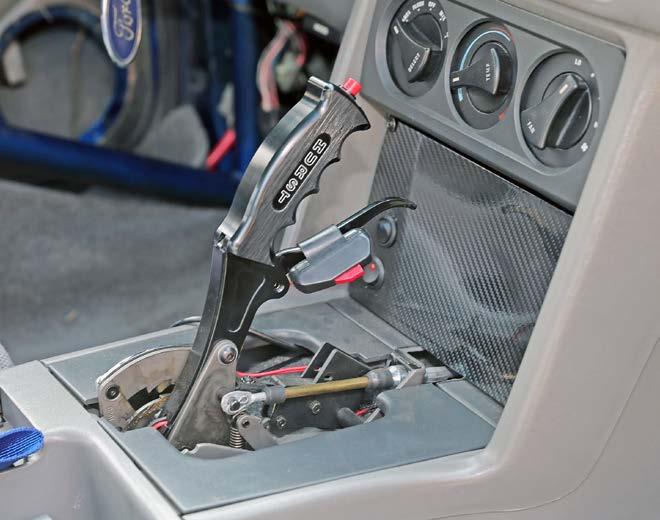
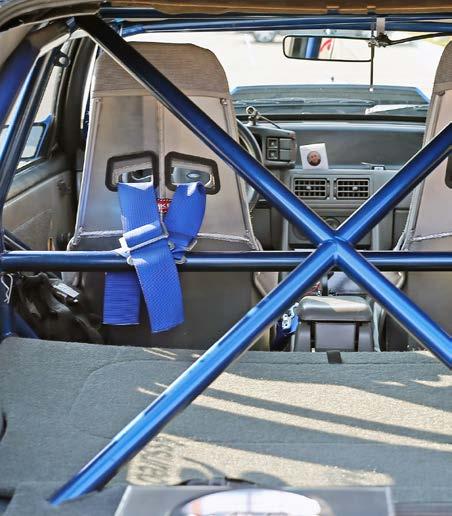
The extensive chromoly 7.50 certified cage bars were painted body color and Lexan replaces the factory windshield and rear hatch glass. Tankalavage shifts the rollerized Powerglide through a Hurst billet pistol grip shifter and electronics are mounted on the roll bar in the passenger side kick panel area.
Dual Aerospace Components 350 fuel pumps keep the high octane fuel flowing for the carburetor and the nitrous system, and big tube headers collect into a 3.5-inch exhaust and Dynamax bullet mufflers to provide the spent gases an easy exit path.
Paired with a PTC
torque converter, a twospeed Powerglide built by Tom Zimmerman at Kool Kars converts the engine performance into propulsion. Tankalavage narrowed an 8.8 Ford rearend housing and fitted it with a Moser Engineering spool with 3.73:1 gears and Moser gun-drilled 35-spline axle shafts.
Frank Tankalavage’s 1985 Street/Strip Ford Mustang GT Hatchback is certainly show quality and has appeared in numerous shows and even magazines over the years, but its more than just a show pony….it runs hard on the street and 8s on the strip!
Completing the rolling chassis is a set of Alumastar wheels measuring 15x3 inches up front and 15x12 out back. Nestled in the expanded wheel wells are Quicktime Pro tires in size 29x13.5 that are held tightly by MacFab bead locks. Behind the wheels you’ll find a quartet of Aerospace Components 5-lug disc brakes.
Just as the exterior of Tankalavage’s Mustang is show quality, so is the interior space. Much of the original interior has been replaced with custom parts and upholstery.
Aluminum racing seats wear gray upholstered covers and RJS harnesses, and Tankalavage fabricated his own rear seat delete that works with a Wolfe Racecraft rear firewall which ensures
through the hoop of the Grant steering wheel, and the last control surface is the Hurst Billet shift.
Lest you think this rig is just a show car, Tankalavage noted that his speedy Mustang has clicked off a best elapsed time of 8.90 at 156.60 mph. The build took about a year to complete and in addition to the quick elapsed times, the Mustang has provided Tankalavage with plenty of memories.
“My daughter, Tiffany, prepped the car for paint and final assembly,” Tankalavage told us. Andy Jensen, his now son-in-law, engineered the powerplant, and the Mustang has been the focus of numerous print magazine feature articles. And while he’ll never
The Fox-Body Mustang is easily one of the most common platforms you’ll find in grassroots, sportsman drag racing and for good reason.
The chassis is small, relatively light, plentiful, and has a strong aftermarket presence that is 50plus years in the making. Jesse Raes’ Mustang is a prime example with its focus on drag racing, but with street capability as well.
Growing up in his father’s gearhead footsteps, Raes told us he has around 25 years of being involved in the car hobby dating back to going to the dragstrip with his father and helping him work on his Pro Street 1964 Chevy Chevelle. Around 2020, Raes purchased this 1987 Ford Mustang notchback and tweaked it over the years to make it his own.
Story: Steve Baur
Photos: Stephen Taylor
“It was already running and driving,” said the Boonville, Indiana, resident. “My father and a few friends have helped out with changes and bracing in the car to help handle the new power.”
While you’ll often find a stock-style rear suspension in most small-tire, track-oriented Fox bodies, Raes’ pony received a back-half
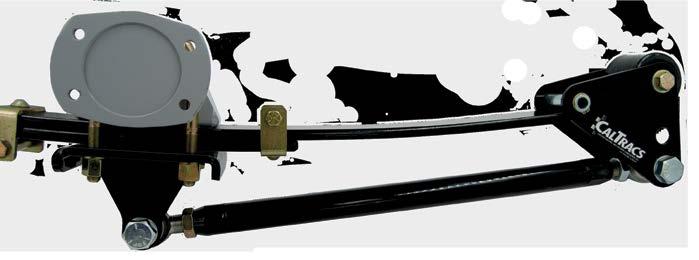
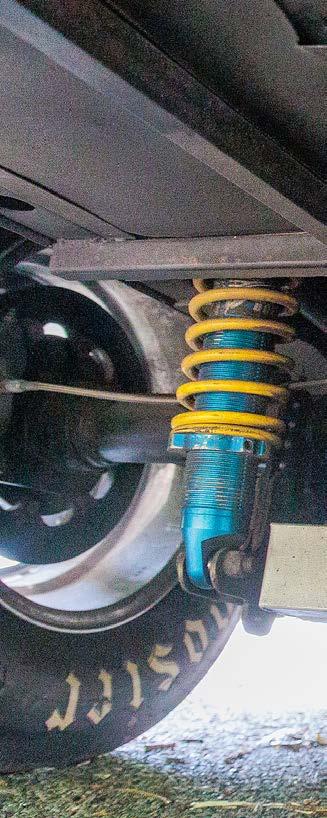
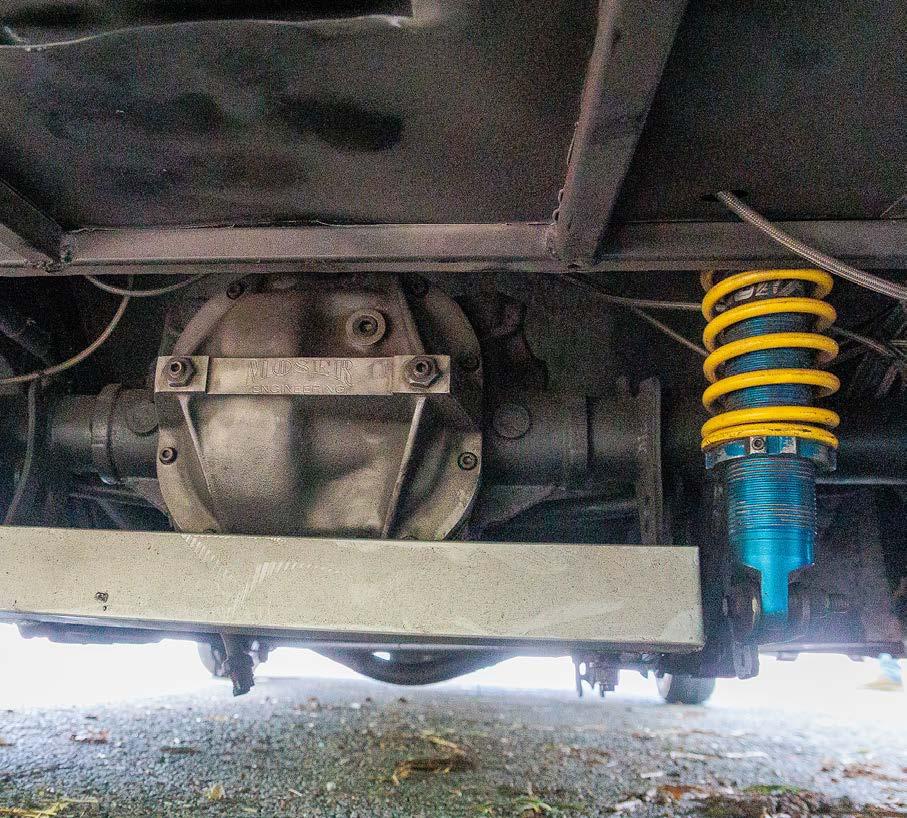
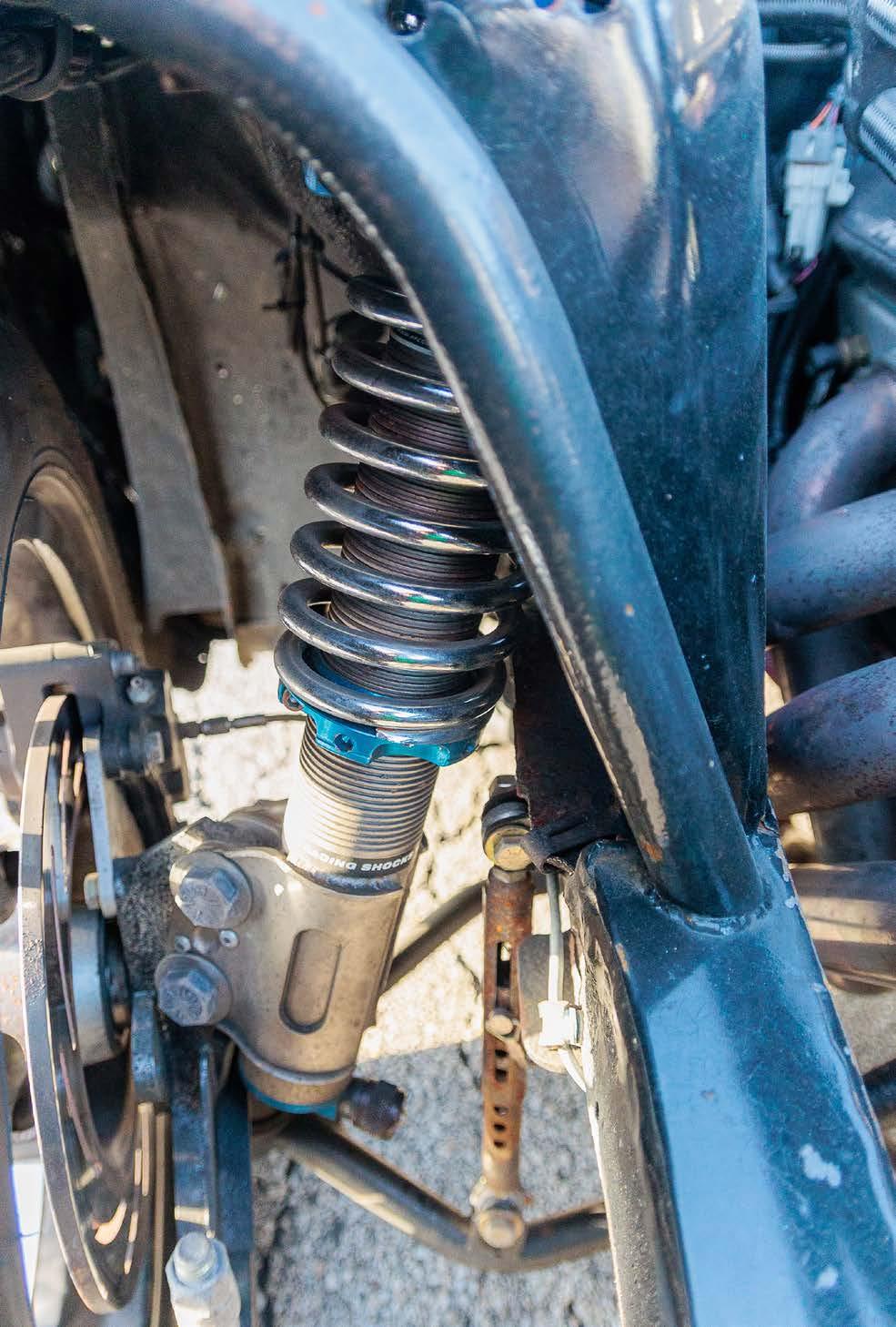
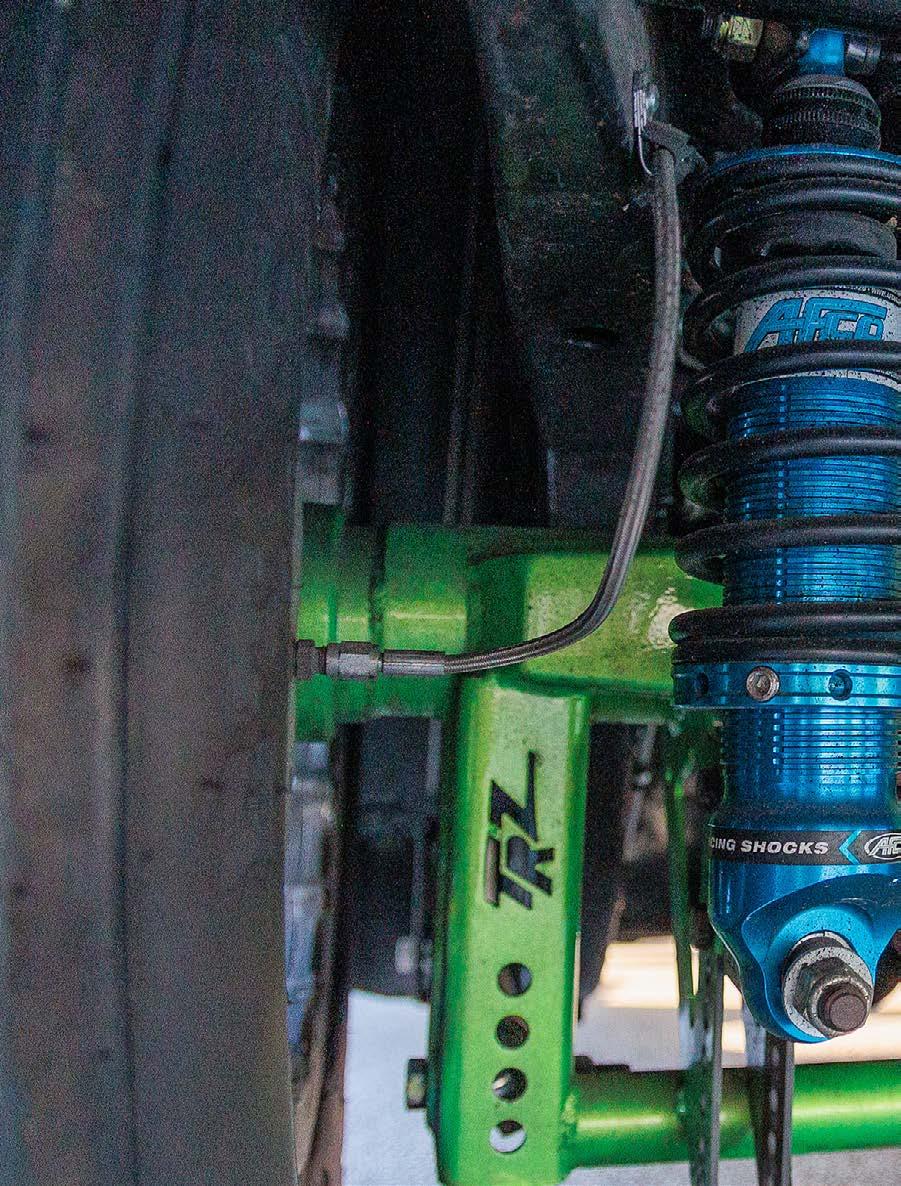
conversion, ditching the triangulated four-link mounted to chassis torque boxes in favor of a ladder bar rear suspension and supportive AFCO Racing coilover shocks. These components support a Ford 8.8 rearend housing that has been braced for additional stiffness and fitted with 3.73 gears and a Moser Engineering rear cover.
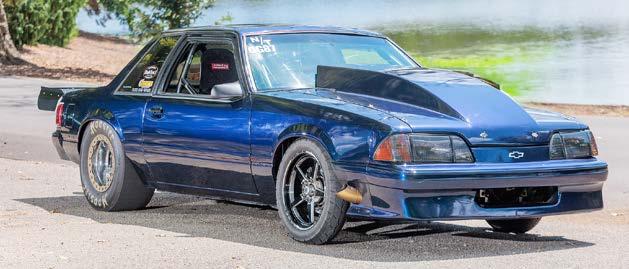
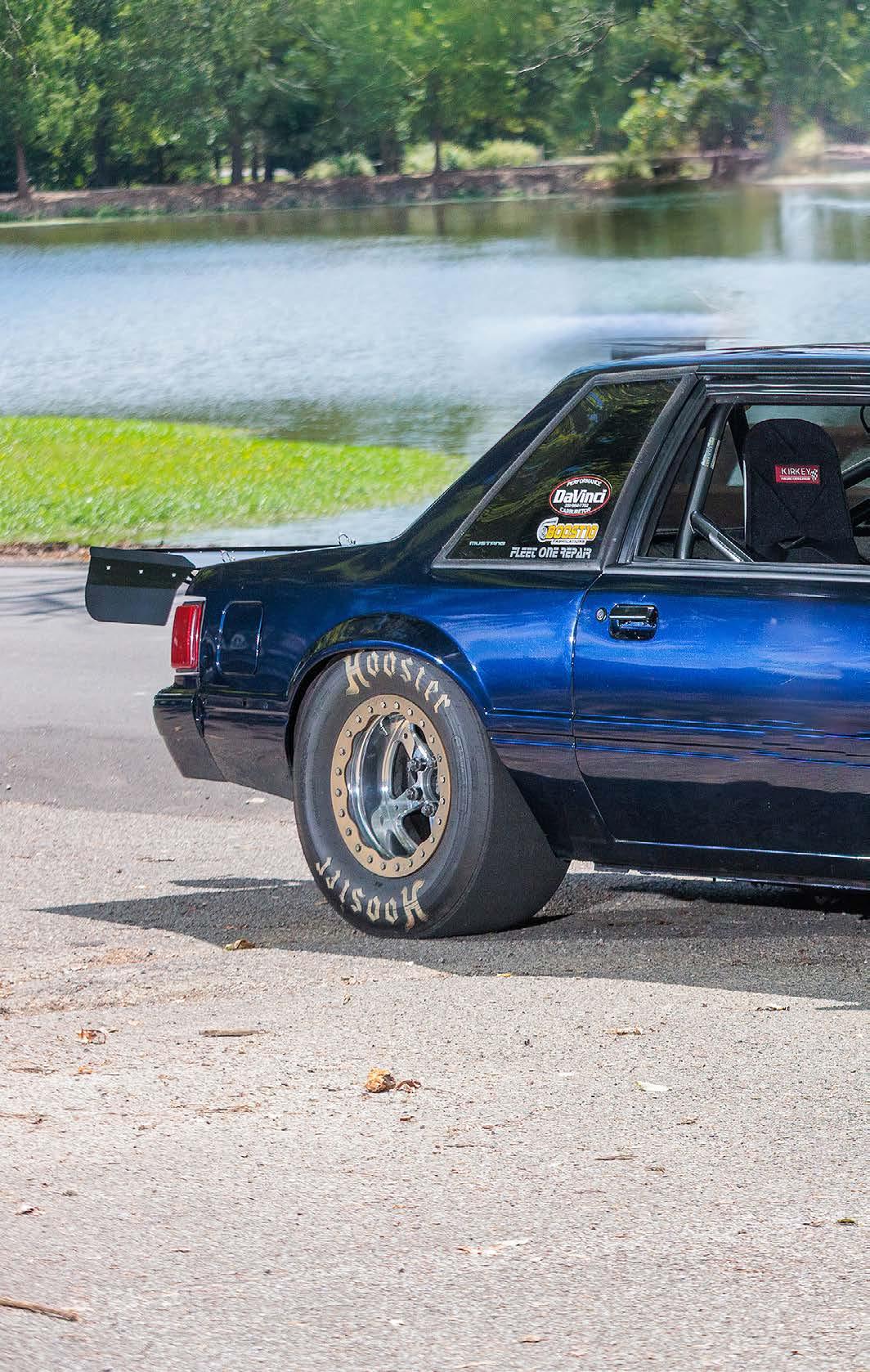
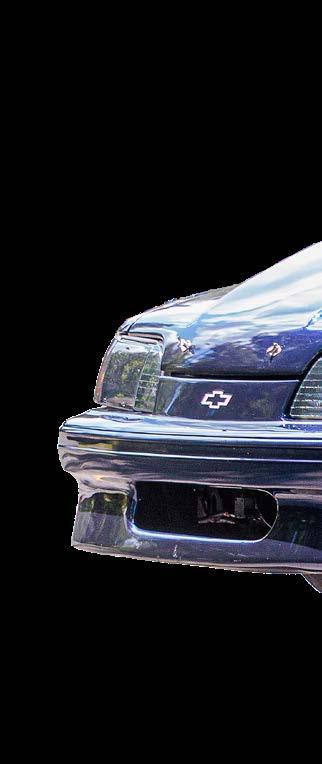
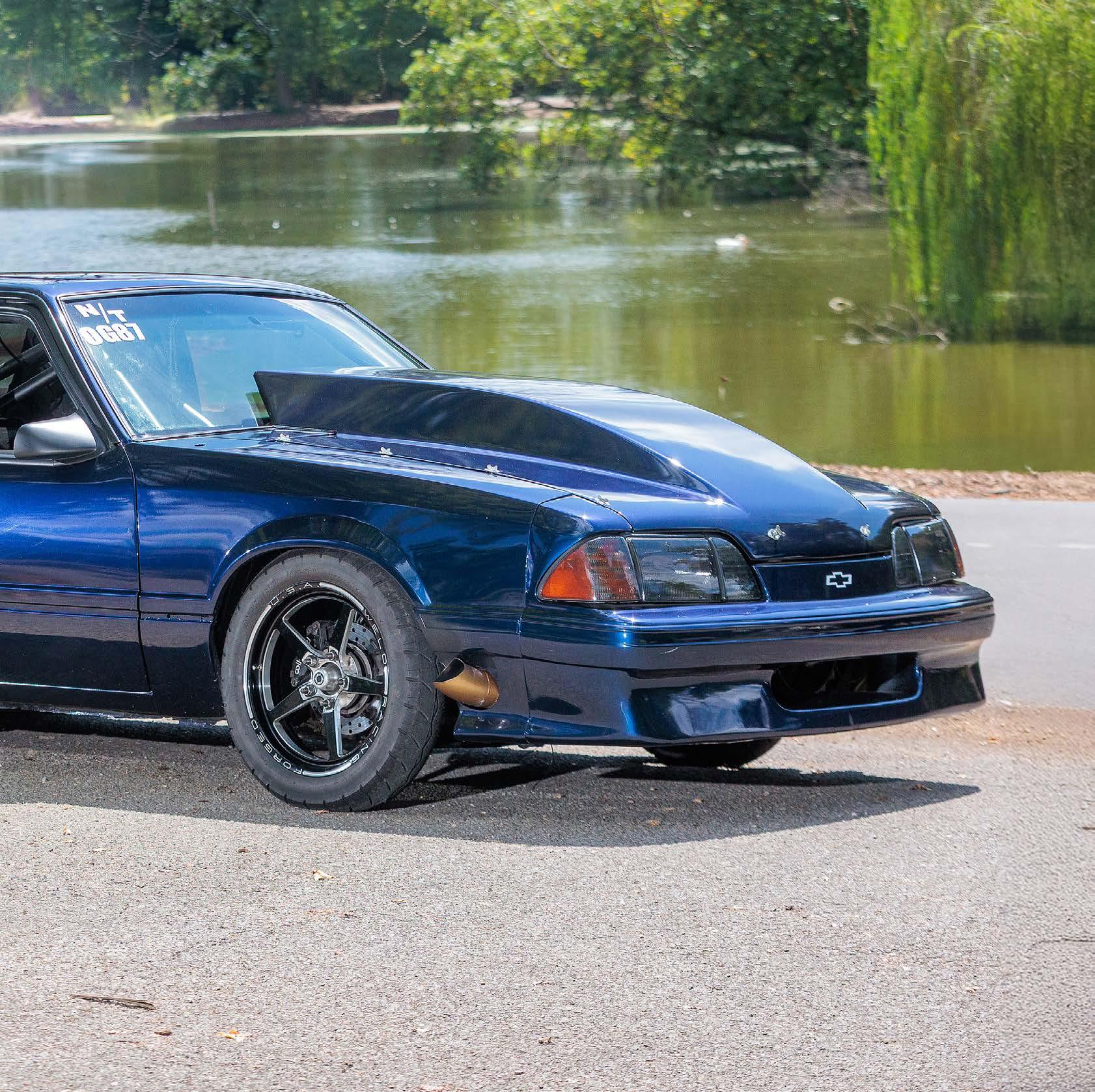
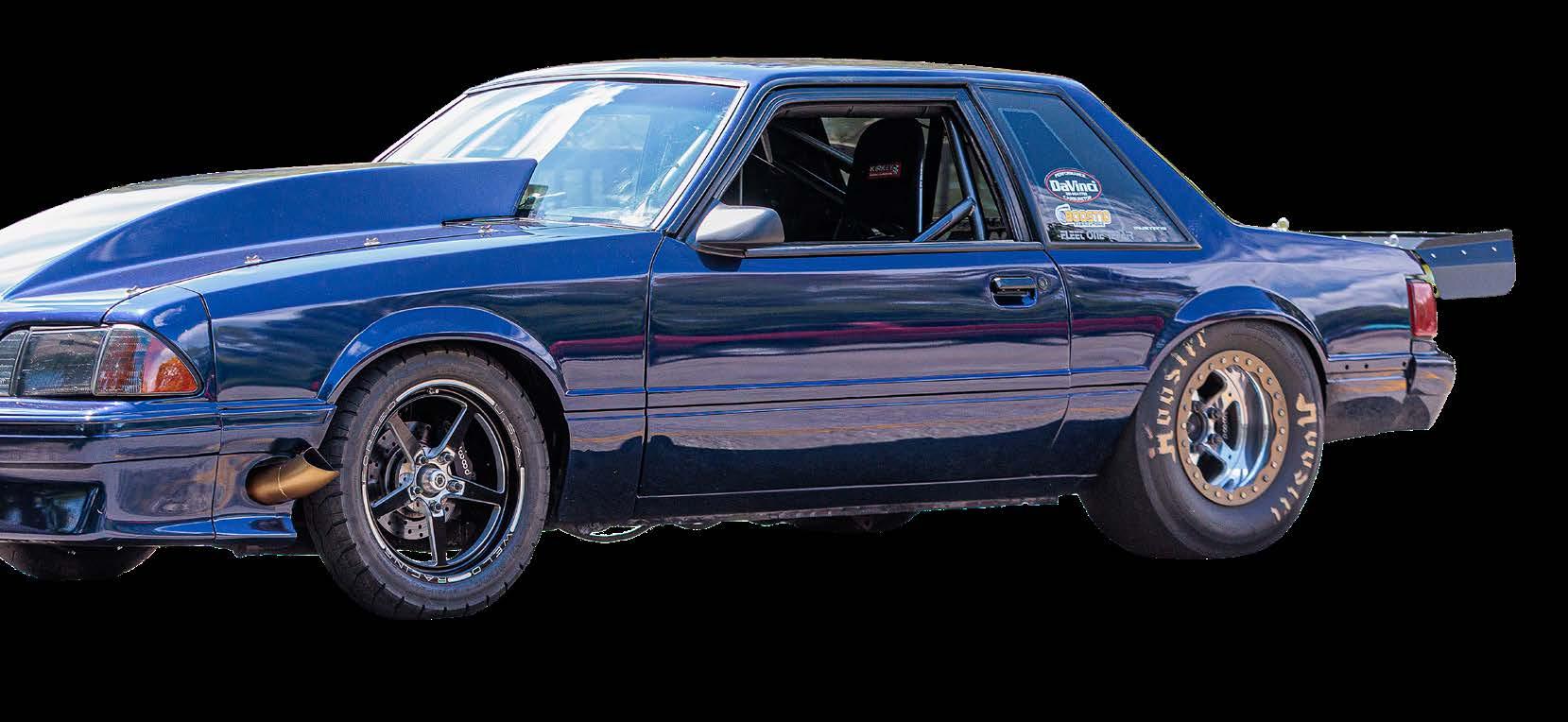
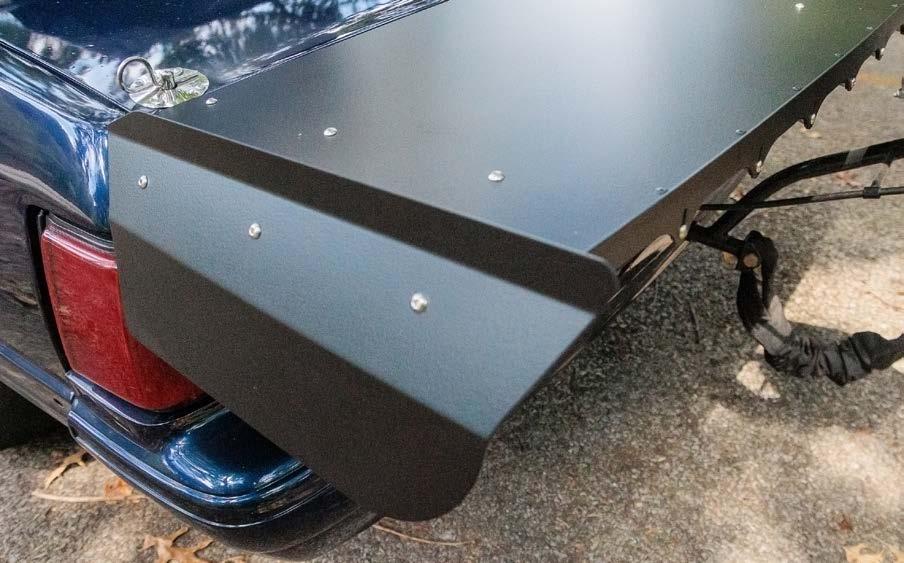
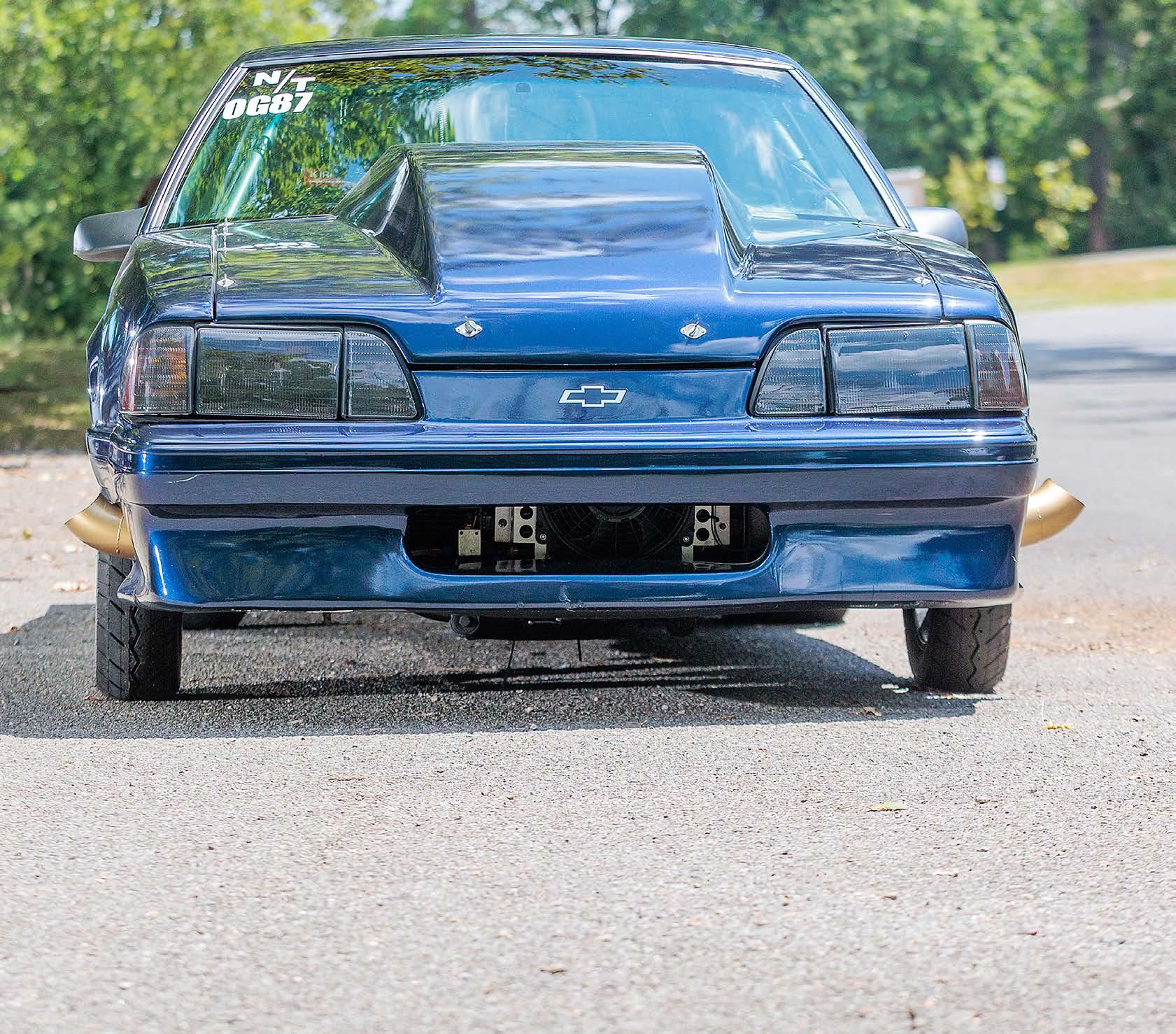
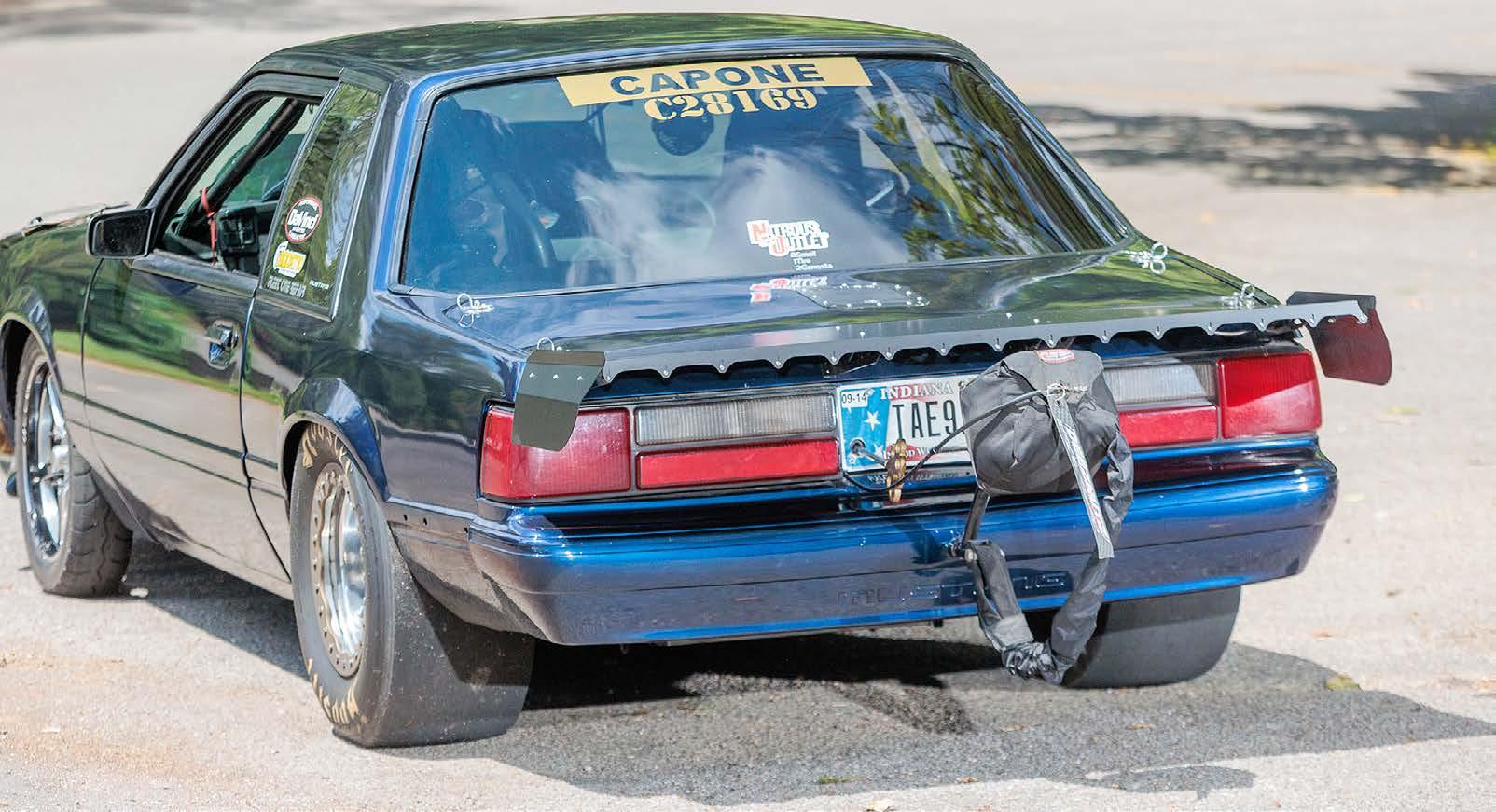
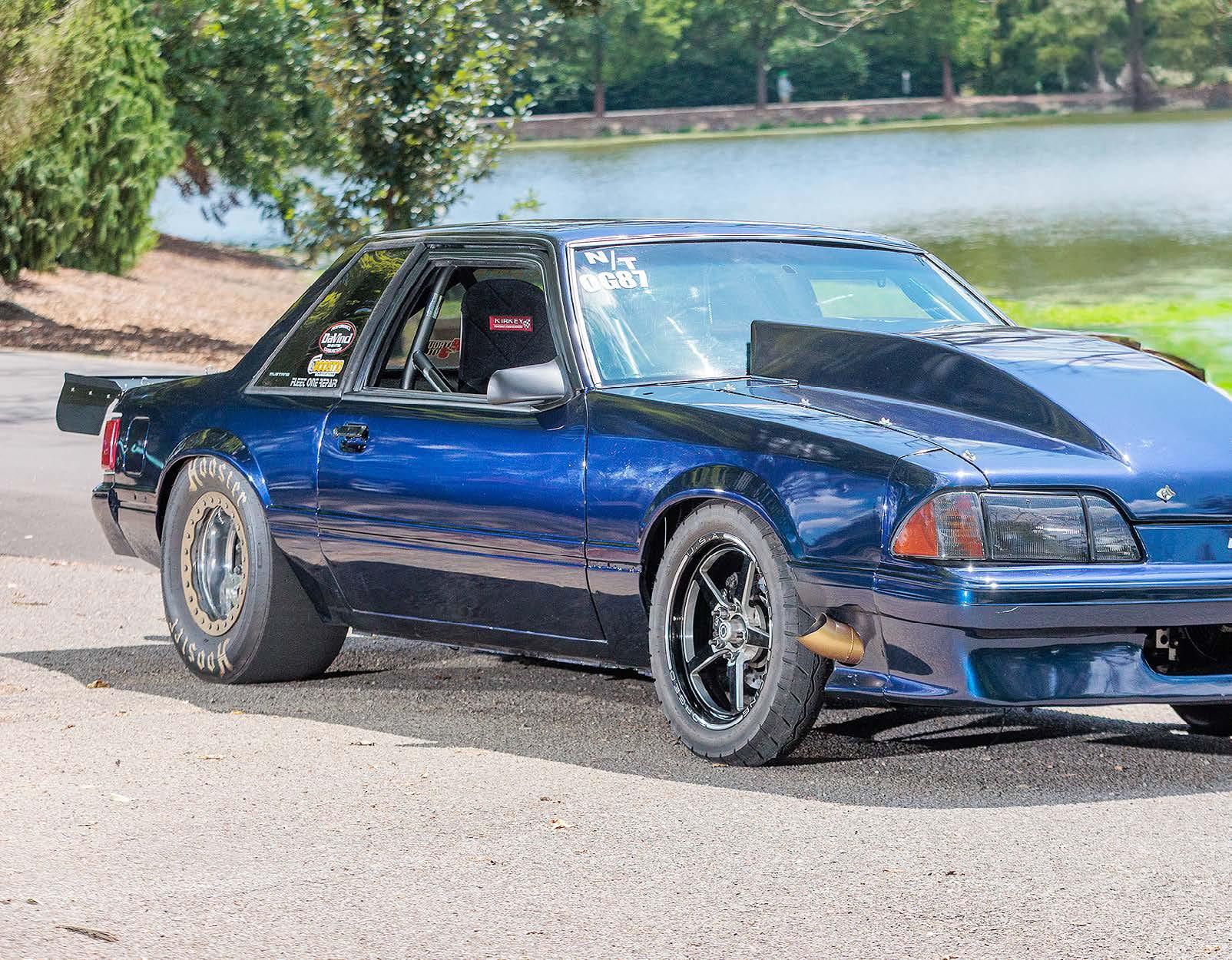
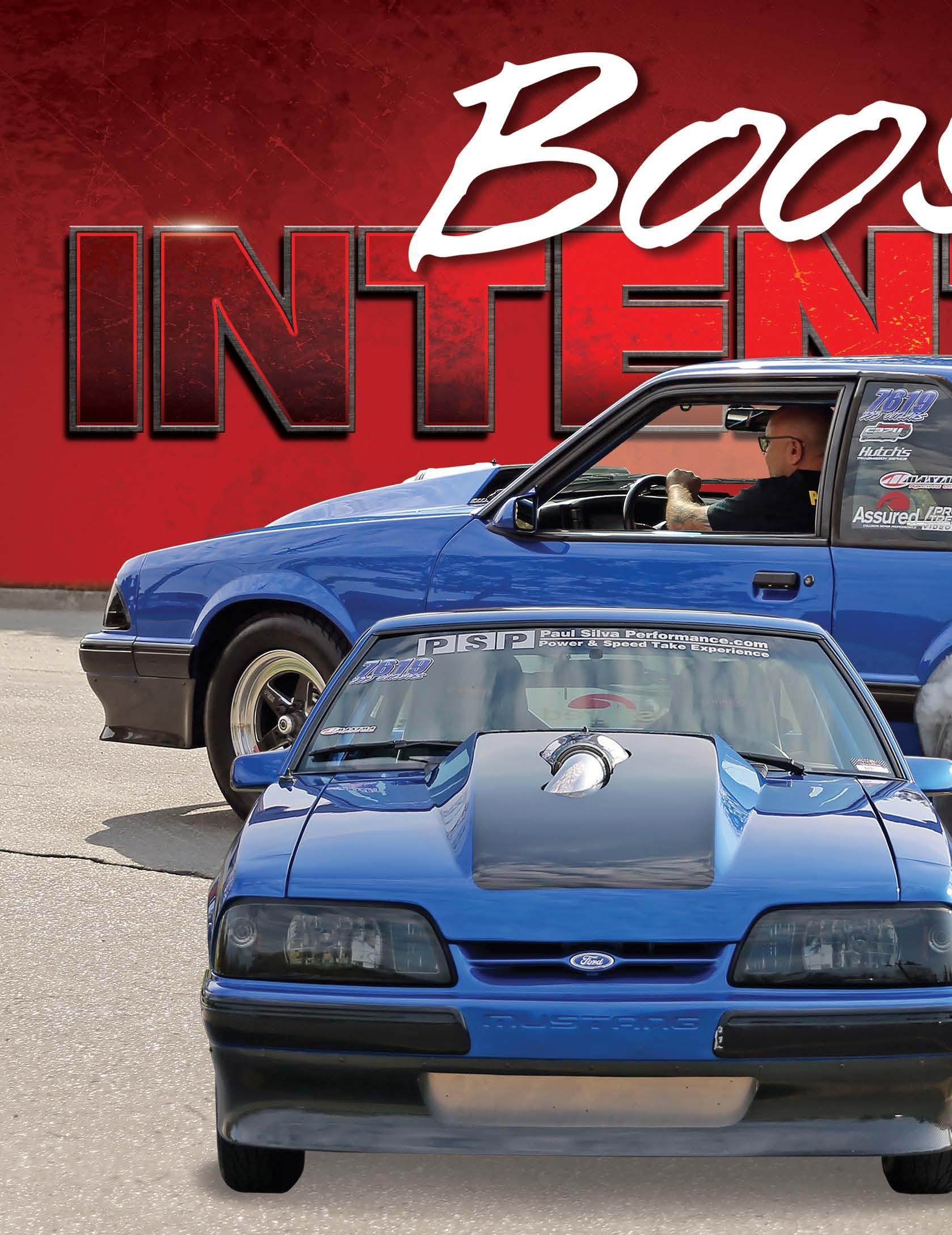
The all steel main body of the Coupe is joined by a GT-style front bumper cover, 6-inch cowl-induction-style composite hood and custom rear wing. The low stance, hood and wing definitely give the Coupe a longer, leaner look than its similarly equipped hatchback brethren.
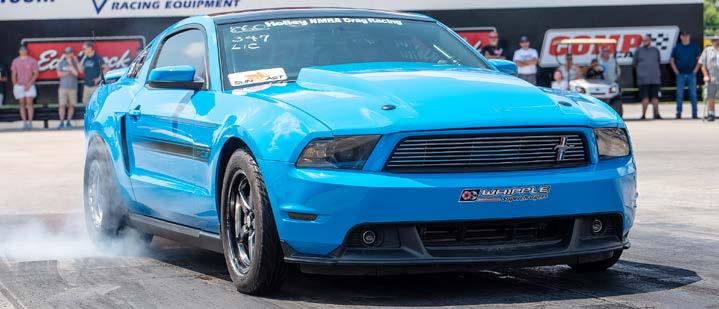
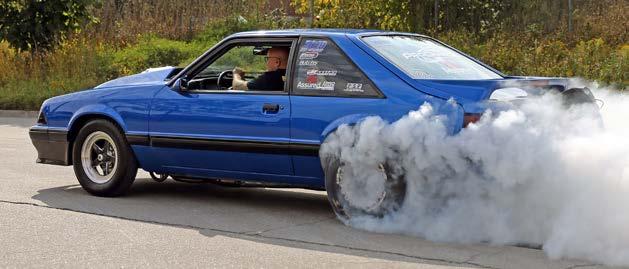
As you can see, the electric blue color chosen for the body just pops in the sun and gets attention on the street and strip.
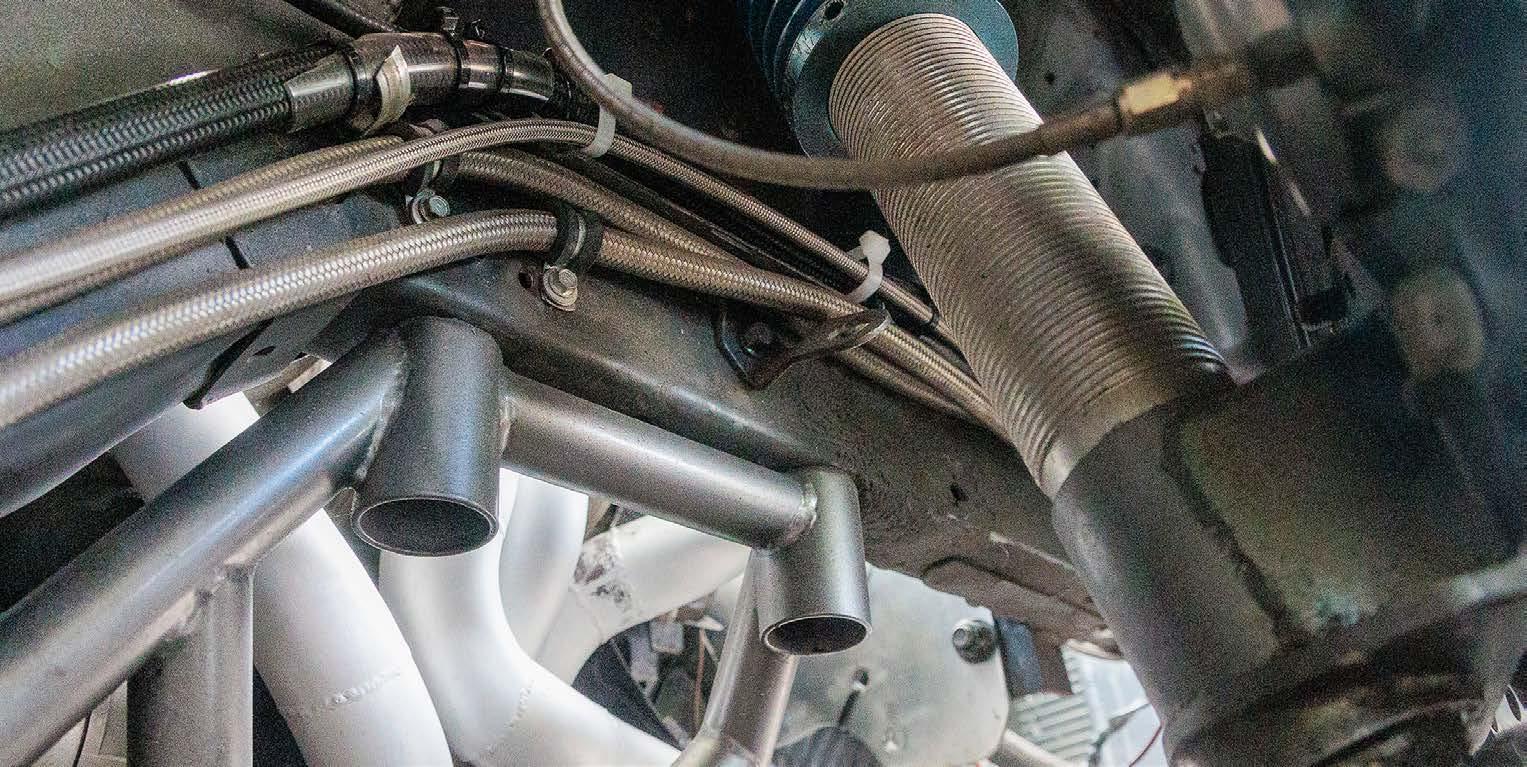
At the front of the Mustang, you’ll find the stock stamped steel K-member has been replaced with a lightweight, tubular steel version from Anthony Jones Engineering (AJE). Keeping the front suspension sturdy and lightweight is a set of AJE tubular front control arms and another pair of AFCO Racing coilover shocks handle damping and support duties up front.
And here is where many enthusiasts will split, as Raes’ Mustang features a small-block Chevy engine between its front fenders. Die-hard Ford enthusiasts often cry foul, but engine swaps across platforms is not an uncommon practice, and dates back to the beginning of cars themselves.
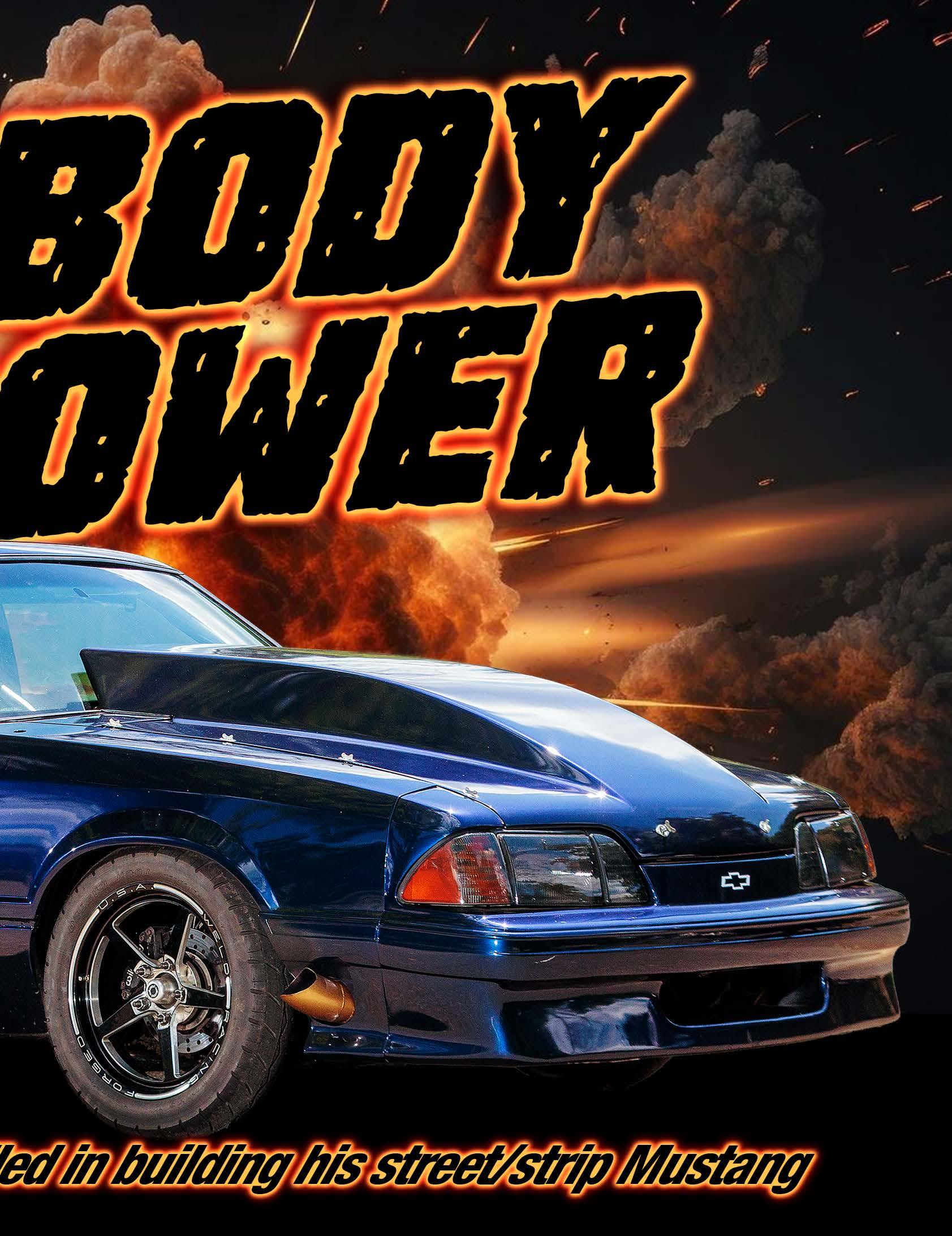
Jesse Raes shows off his ‘87 Ford Mustang Coupe
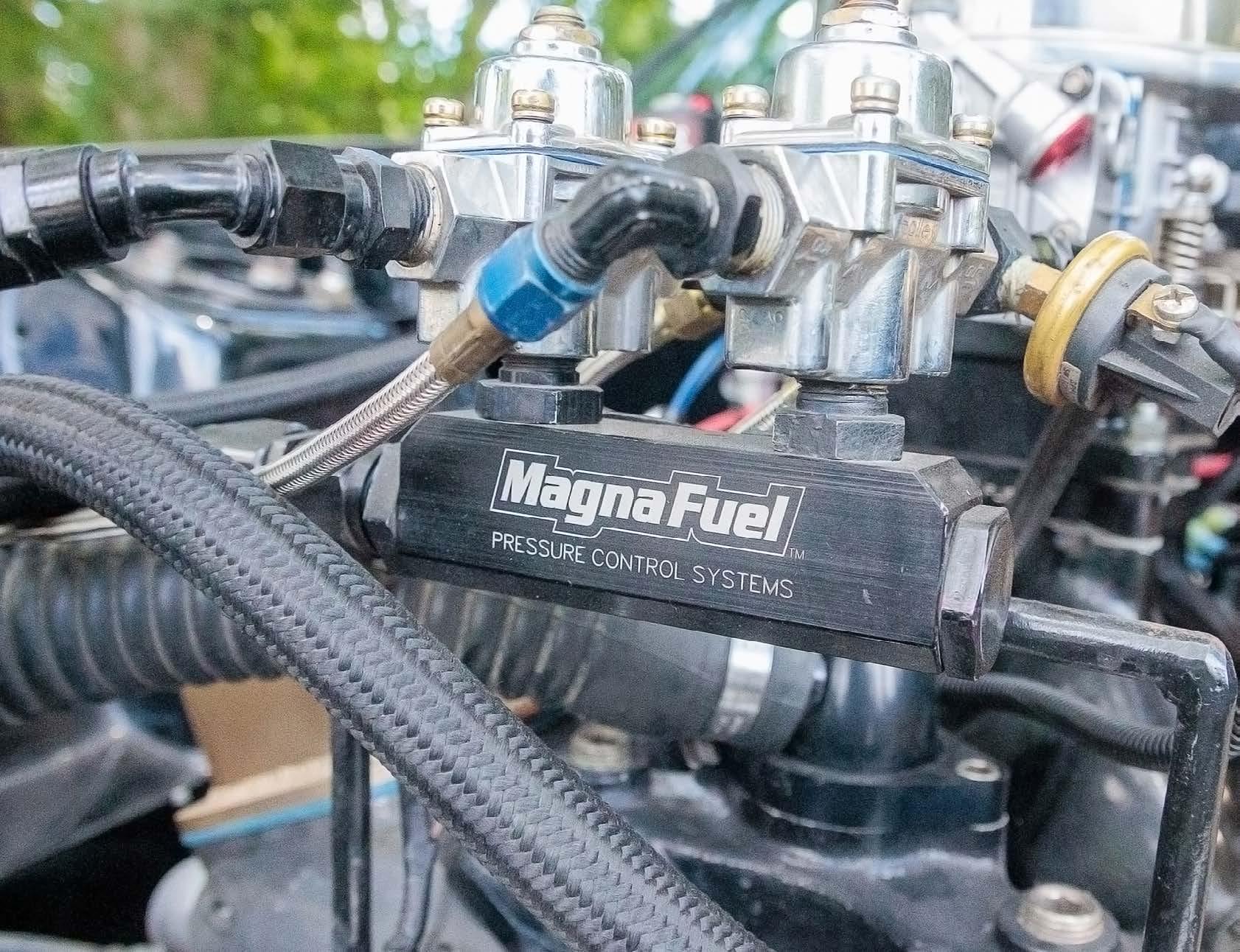
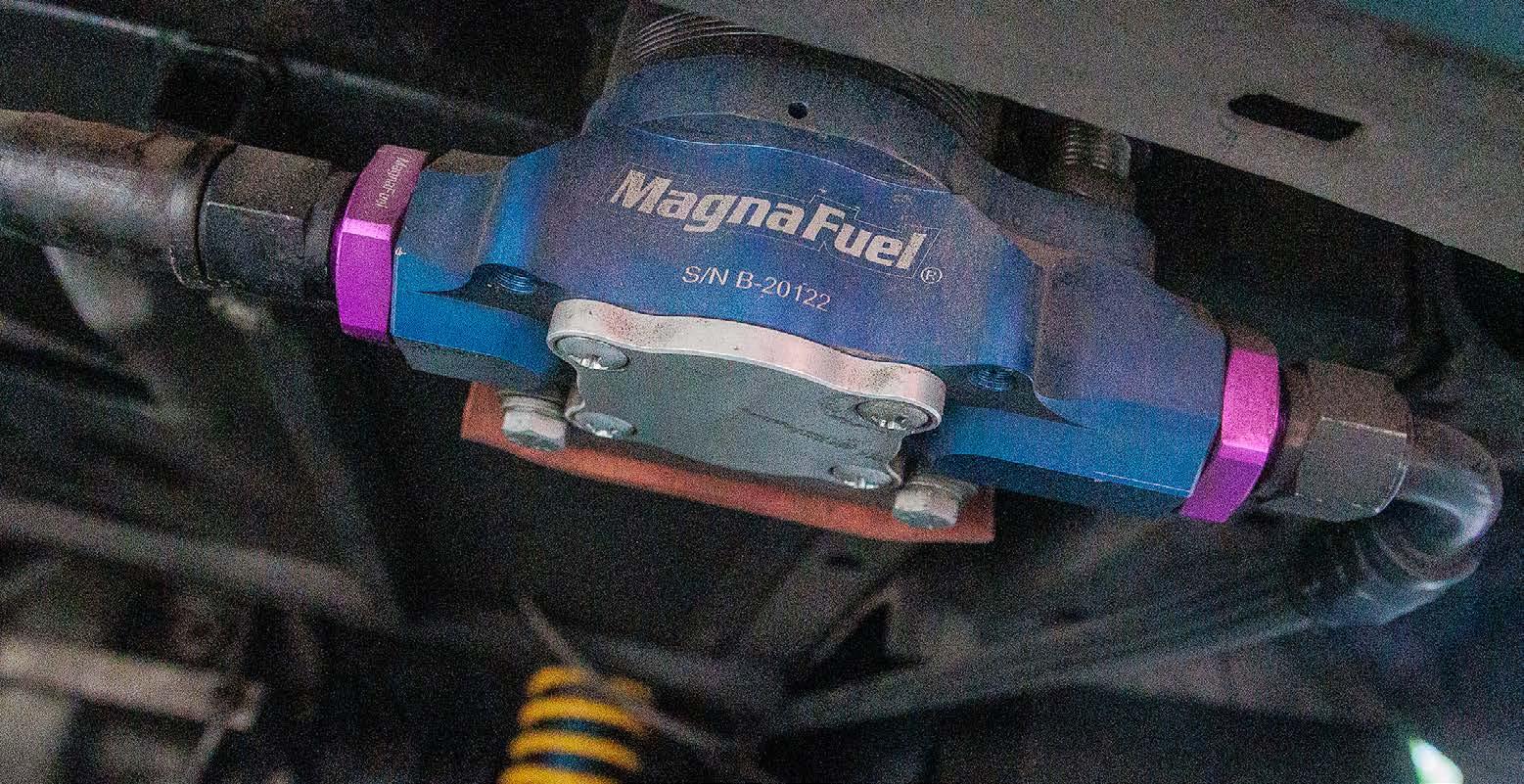
A Nitrous Outlet Stinger 3 nitrous oxide injection plate system was used to add an extra punch and although it’s capable of spraying up to 500 extra ponies into the muscular Mouse motor, Raes says he mostly sets it up for a 200300HP hit. MagnaFuel was the system of choice to feed E85 to the motor and nitrous system.
We’d call this an “ole-school” engine swap into a Fox Body Mustang, but that is exactly what Raes was shooting for, and what makes his Fox Body unique in today’s world of street/strip cars. In the early days of swapping foreign mills into Fox Bodies, the SBC was the number one choice due to the availability of parts and budget.
Jesse Raes’ Small Tire Street/Strip 1987 Mustang Coupe Small Block Chevy With Plate Nitrous
Rearend:
Body:
All steel OEM body other than the front bumper and hood. Motion Raceworks wing. Feather light composites 6 inch lift-off hood. All original glass.
Chassis & Suspension:
Backhalf full ladder bar car. Afco struts up front and Afco coilovers in the back. AJE K-member up front with AJE A-arms.
Engine:
Conventional small block Chevy, 421 cubic inches. JE pistons, Eagle forged crank and H-beam rods. Dart Pro 1 18 degree heads. Holley Dominator intake with Dan DaVinci built E85 1050 Dominator style carburetor.
Power Adder:
Nitrous assisted of course...Nitrous Outlet Stinger 3 plate. Good for up to 500HP and we normally spray a 200 to 300 hit.
Electronics:
Engine and nitrous are powered by MSD 7al3 box.
Transmission:
Powerglide built by Jeremiah Hall with Mitchell Transmission out of Newburgh IN.
Braced 8.8 with 3.73 gears.
Brakes:
Wilwood brakes on all four corners
Wheels:
Weld Alumastar 17x4 up front with Champion billet single beadlock 15x10 rears with 28x10.5 tires.
ET & MPH:
We run no-prep, no-time and heads-up in classes like Small Tire Gangster 26 and 5.30.
Thanks To:
I would like to thank my father Noal Raes for all the help with things like wiring on the car. I would also would like to thank Ryan Hall with Fleet One Repair out of Lynnville IN for all the help with the car when we go racing..
421 cubic inches of traditional small block Chevrolet reside under the hood. An Eagle forged crankshaft spins H-beam rods and JE pistons. Dart Machinery Pro 1 18-degree cylinder heads draw atmosphere from a Dominator intake topped by a DaVinci 1050cfm Dominator-style carburetor that is set up for E85.
If anything, the Fox Body platform, simply because it is arguably one of the most engineswapped cars to ever come out of Detroit, has helped brandloyal gearheads become more accepting to the practice.
Long before LS fans began swapping the Gen III smallblocks into Fox Body Mustangs, however, many chose the Gen I small-block Chevy for power. Oftentimes these swaps started
out as Chevy enthusiasts who were just looking for a lighter platform than what GM had to offer. Particularly back in the 80s and 90s when the Fox Body aftermarket was still in its infancy, the small-block Chevy had a head start on aftermarket performance parts support and many times the small-block Chevy swap made more sense from a dollar-per-horsepower perspective.
Raes warming up the buns in preparation for his next victim...
Jesse
In any case, Raes’ small-block choice of Bowtie power offers up 421 cubic inches of displacement. The block has been fitted with an Eagle forged-steel crankshaft and H-beam connecting rods, as well as a set of JE pistons. Handling the task of moving air and fuel into the cylinders is a set of Dart Machinery Pro 1 18-degree cylinder heads that draw atmosphere from a Holley Dominator intake manifold. Mixing the air and fuel into a combustible medium is a DaVinci Performance
Carburetor-built 1050cfm Dominator-style carburetor that is set up for E85 fuel. As potent a combination as the powerplant might be, it wasn’t enough to meet Raes’ performance goals, so there is a Nitrous Outlet Stinger 3 nitrous oxide injection plate system sandwiched between the carb and intake.
A mix of OEM and race equipment exists inside the Mustang. An extensive roll cage protects driver and passenger and a pair of aluminum racing bucket seats with harnesses keeps them planted under acceleration. A removable, lightweight steering wheel was added and a high-mounted race shifter commands the 2-speed ’Glide.
It’s able to provide up to an additional 500 horsepower, but Raes tells us he normally only uses 200-300 of additional performance boost. Ensuring that the air/ fuel mixture lights off in the cylinders is an MSD 7AL-3 ignition box.
Keeping things simple, reliable, and yet high-performing in the transmission department is a twospeed Powerglide automatic transmission, with Jeremiah Hall of Mitchell Transmission in Newburgh, Indiana, handling the assembly.
A complement of analogue instruments are dash mounted and joined by a pair of cowl-mounted gauges – something that was all the rage back in the heyday of the Fox Body. The factory dash and trim are joined by a rear seat delete kit installed when the car was back-halved and mini-tubbed.
The inside of Raes’ Mustang is all business, though that goes a long way in street applications these days. Amid the swing set of roll cage tubing you’ll find a pair of aluminum racing bucket seats with G-Force Racing Gear safety harnesses installed to keep the occupants firmly secured. A removable, lightweight steering wheel was added and a
small complement of analogue instruments provide engine data in real time. Aside from a set of manual, mechanical switches, the Mustang’s stock interior largely remains intact.
The stance on Raes’ Fox Body is perfect, with the mostly steel body upgraded with a fiberglass GT-style front bumper cover and 6-inch cowl-induction-style hood from
Featherlite Composites. Stretching the side profile of the coupe body is a Motion Raceworks rear wing, and shod in a stunning dark blue hue, the Mustang sits low enough to look as mean as it is, and yet rides high enough to be driven on the street without too much issue.
Rolling stock consists of Alumastar wheels measuring 17x4 inches up front and Champion
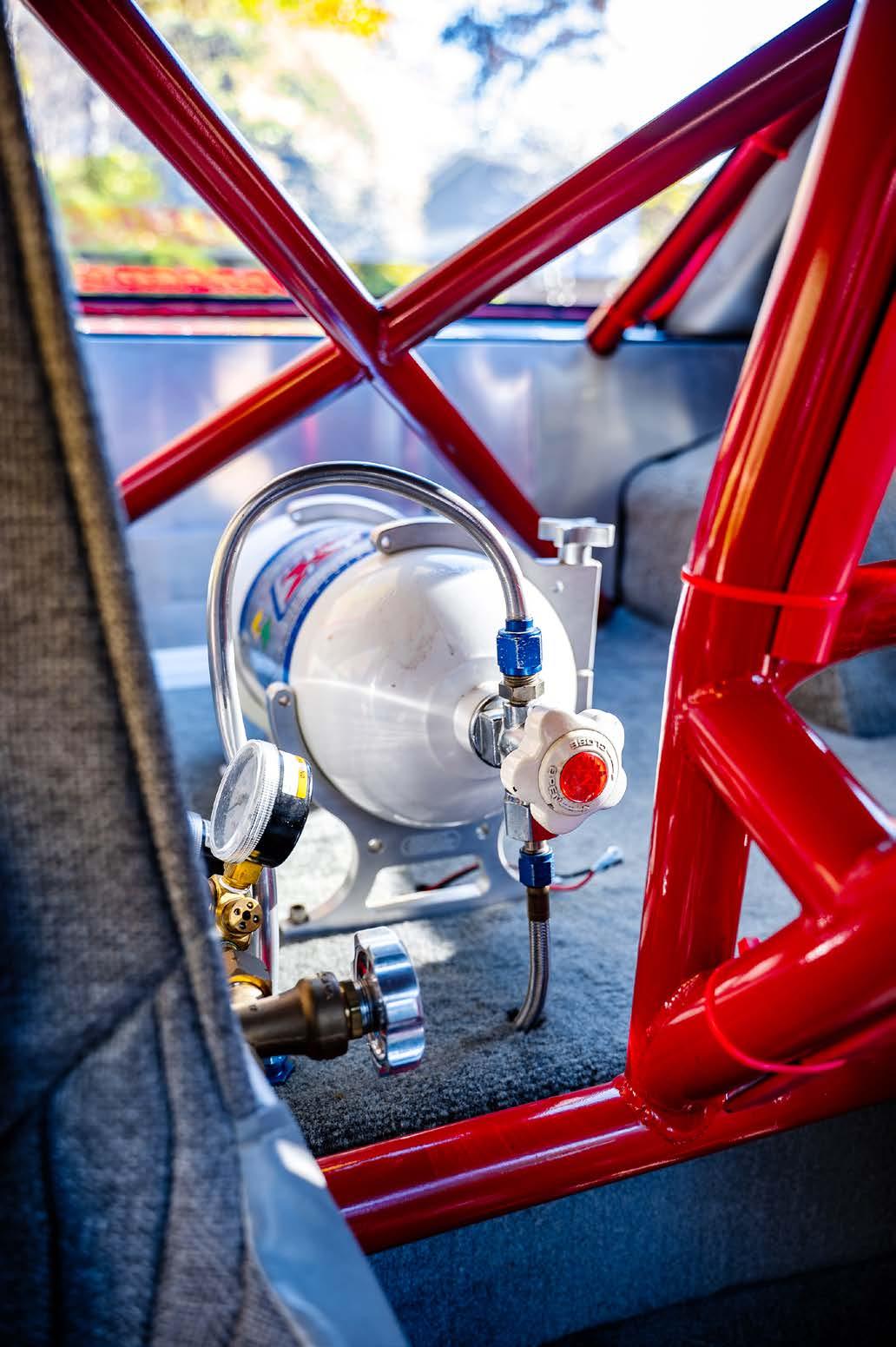
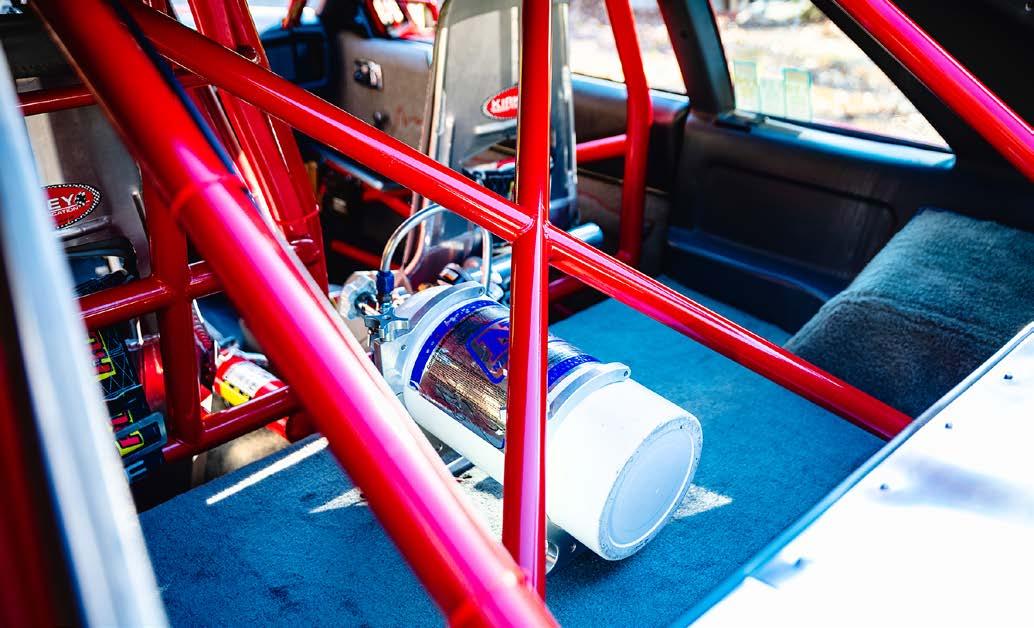
Raes has given his nitrous bottle a custom look and named it “Gap Daniels”.
Billet beadlock-equipped, 15x10inch wheels with 28x10.5 tires out back. Behind the hoops you’ll find a quartet of aftermarket disc brakes.
“There was no special reason I built this particular car other than cars and racing have always been a part of me. I just have a love and passion for hot rodding and drag racing.” Raes said. “The most unique feature of this build would
be the conventional small block Chevy as most swapped Fox Bodies you see nowadays are LS equipped,”
While Raes and his Mustang can be found most anywhere, from the street and shows, to the track, where you might find him competing in No-Prep events and in classes
such as Small-Tire Gangster 26 and 5.30, improvements are still being made to squeeze that extra bit of power out of the small block.
“We had a couple years in getting the car to where I wanted it, but there is always something new and I am always interested in making changes to improve performance.”
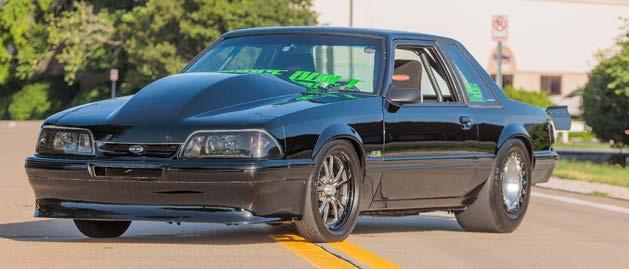
The ’87 Coupe is donned in mostly original steel, except for the hood and sits low thanks to front and rear chassis and suspension work completed over the 6 years of Winterer’s ownership.
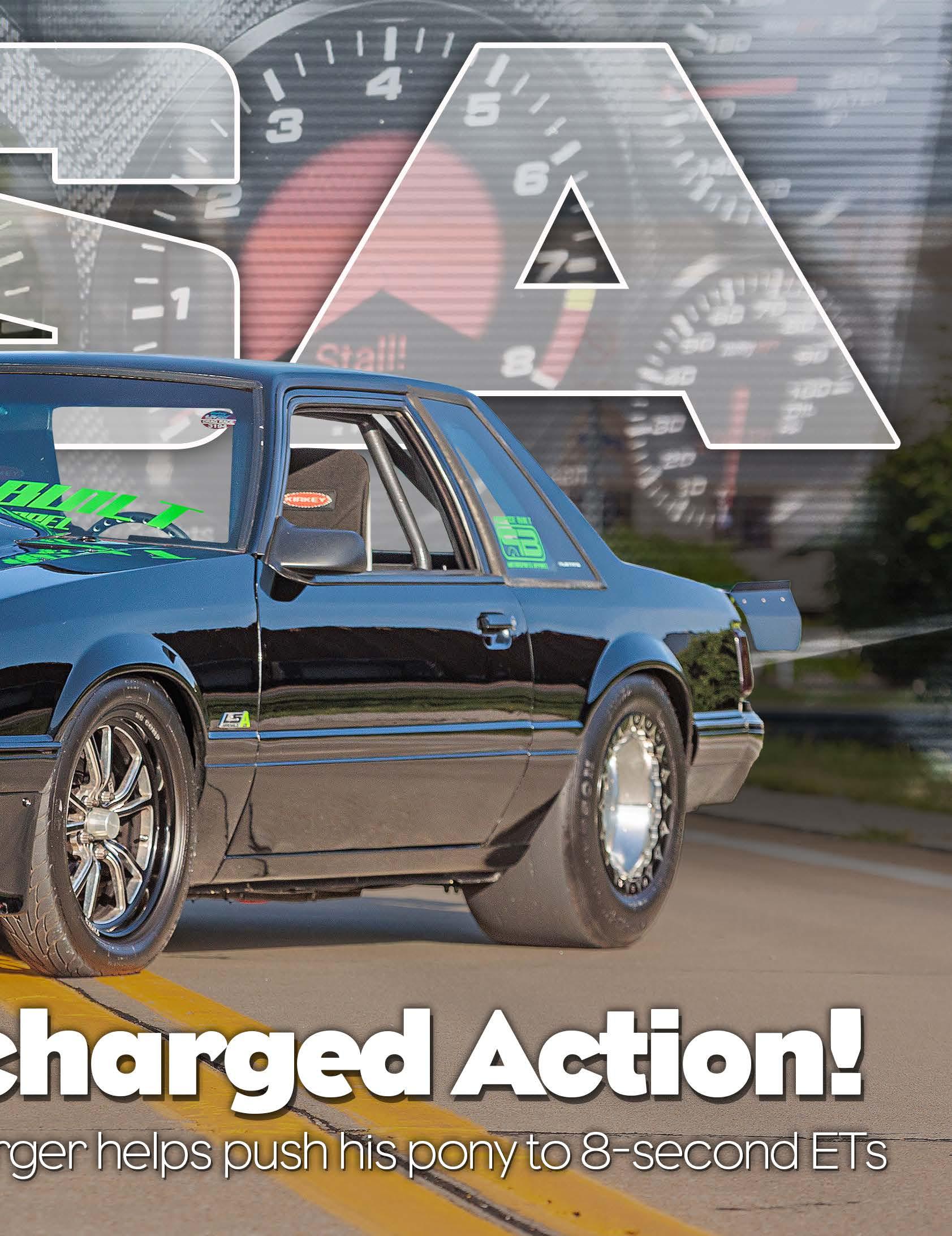
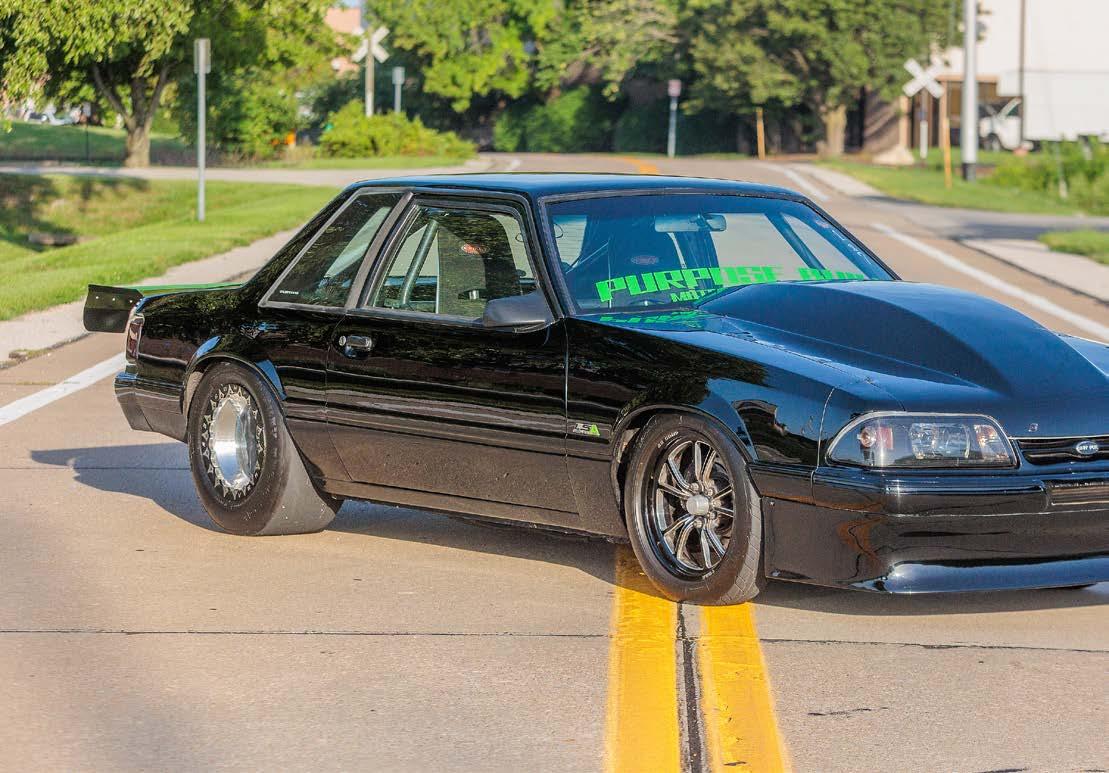
LSswaps and Fox-Body Mustangs go together like peas and carrots, but when it comes to equipping said engine with a power adder, it seems as though nitrous oxide injection and turbochargers are the performance-boosting choices most make. However, Michael Winterer took the road less traveled and supercharged his LS-swapped Mustang using a factory LSA supercharger.
Fenton, Missouri’s Michael Winterer picked up this 1987 notchback Mustang around 2019 and has continued to revise it ever since. Even though the Mustang was a very clean
car to start with, Winterer noted that the car fought him during every step of the build. Despite the adversity, however, he persevered as you can see from the photos here.
Story: Steve Baur
Photos: Stephen Taylor
He bought the coupe as a rolling chassis and with a vision in mind, mini-tubbed it and set up the suspension for a low and lean ride height.
The roll cage was already in the car, but Winterer made further modifications, including having Chuck Hunter install Mittler Bros torque boxes. Taking advantage of the new mounts and mini tubs, Winterer shortened the Moser Engineering fabricated rearend that features a 3.70 gear set mounted on a Moser center section as well as 40-spline axle shafts.
AFCO Racing coilover struts and shocks handle damping duties fore and aft respectively.
Rolling on forged RC Components
Torx wheels with 12-inch-wide, double-beadlock-equipped rims out back gripping Mickey Thompson
Pro Bracket Radial tires, the Mustang relies on race-quality lightweight disc brakes at all four corners to reduce speed on track.
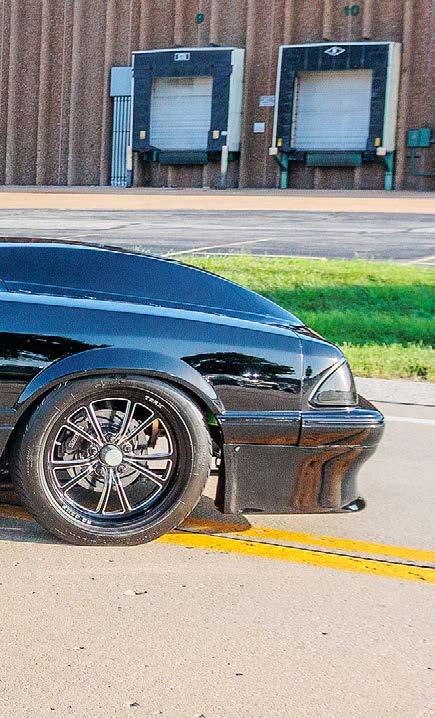
At the front of the car, much of the factory sheet metal in the engine bay has been replaced with lighter round tubing, as has the K-member and front suspension.
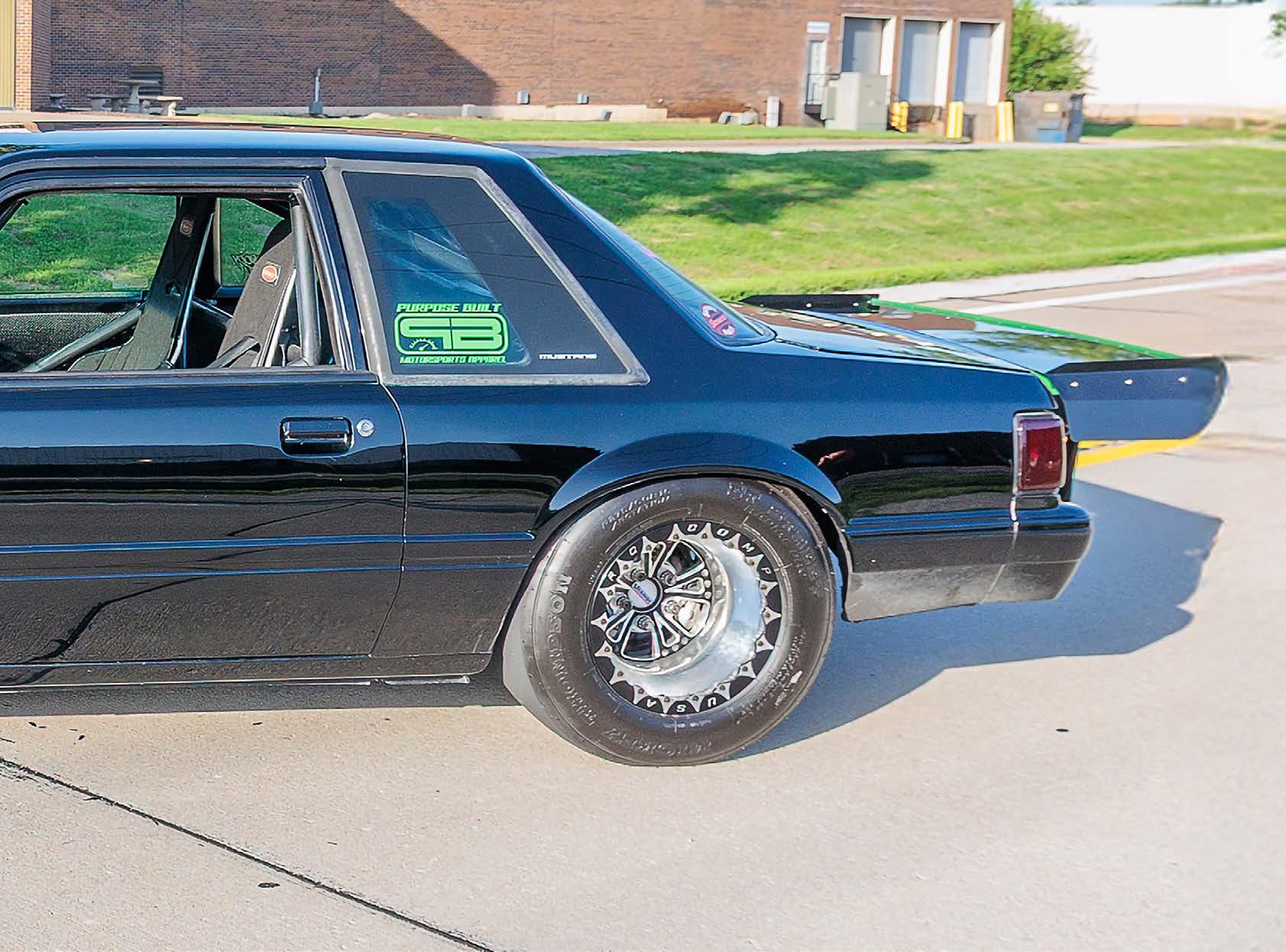
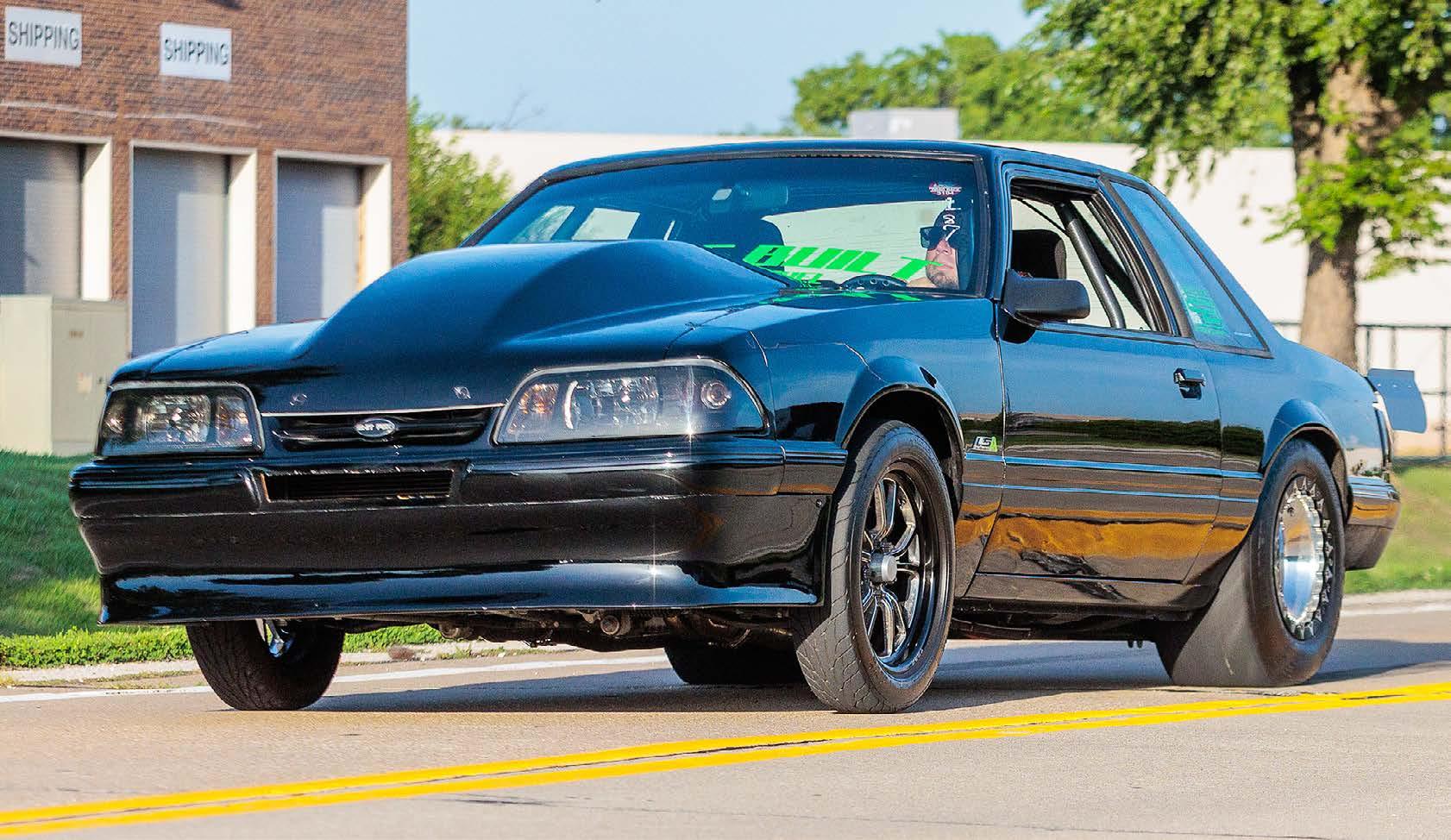
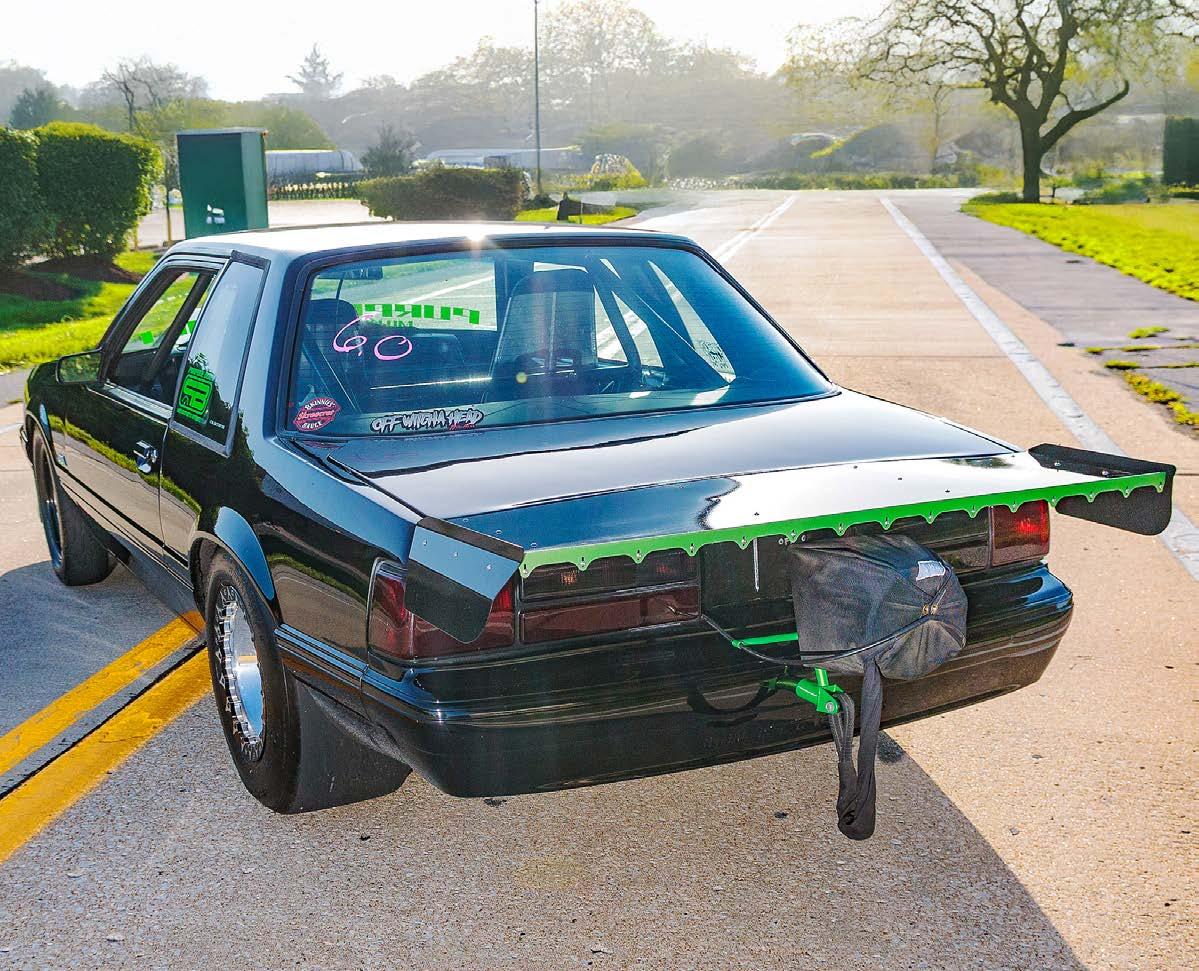
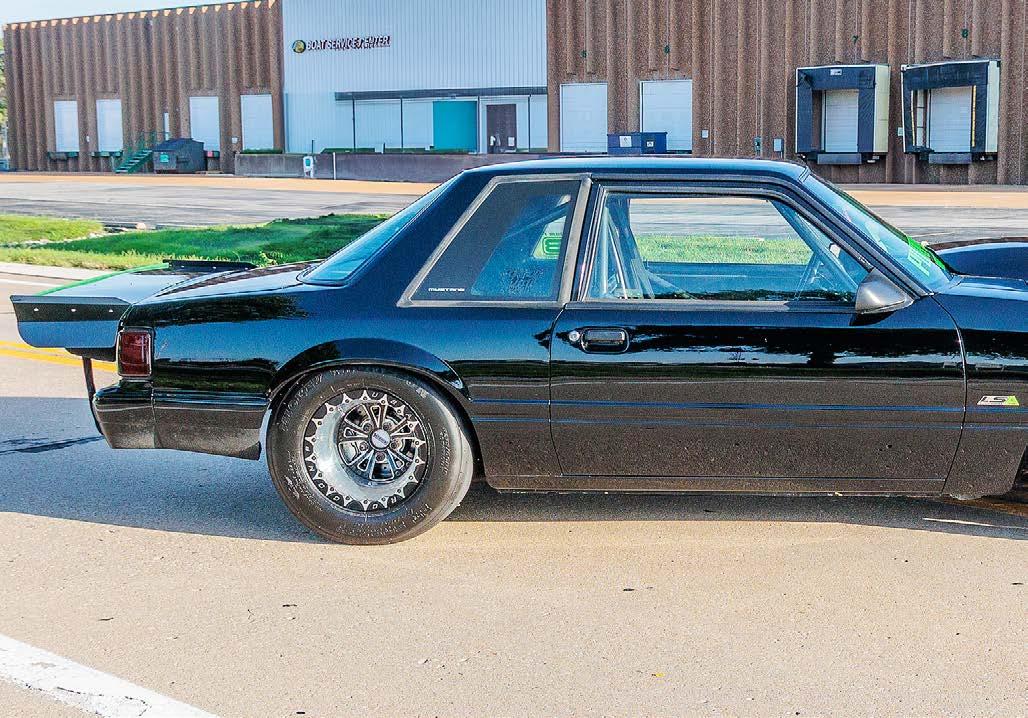
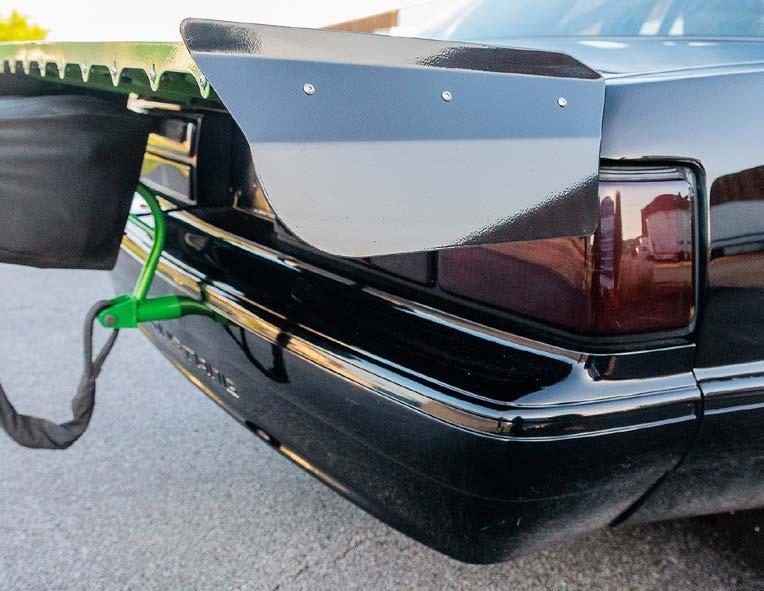
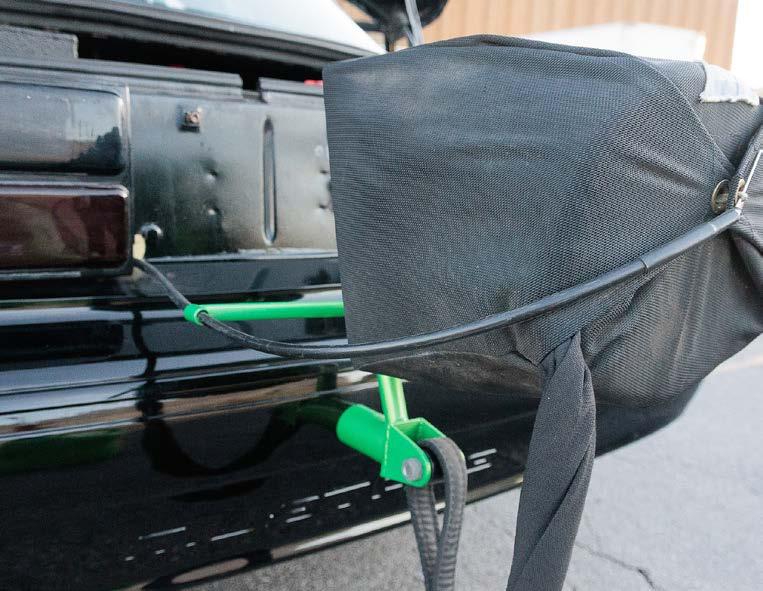
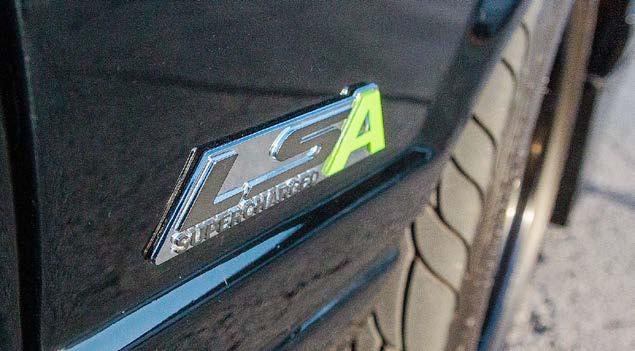
B&B Customs, Bobby and Billy Heinemann, are credited with body mods and the slick paint job on the Mustang, and while the car still sports its factory trim and moldings, LSA fender badges and the necessary rear wing and parachute were added and alert onlookers that this is not your average Mustang.
A fabricated Moser 9” rearend is equipped with Moser 40 spline axles, center section, 3.70 gears and an anti-roll bar setup. AFCO coilover shocks were used out back and their coilover struts handle the street and strip terrain in the front of the Mustang.
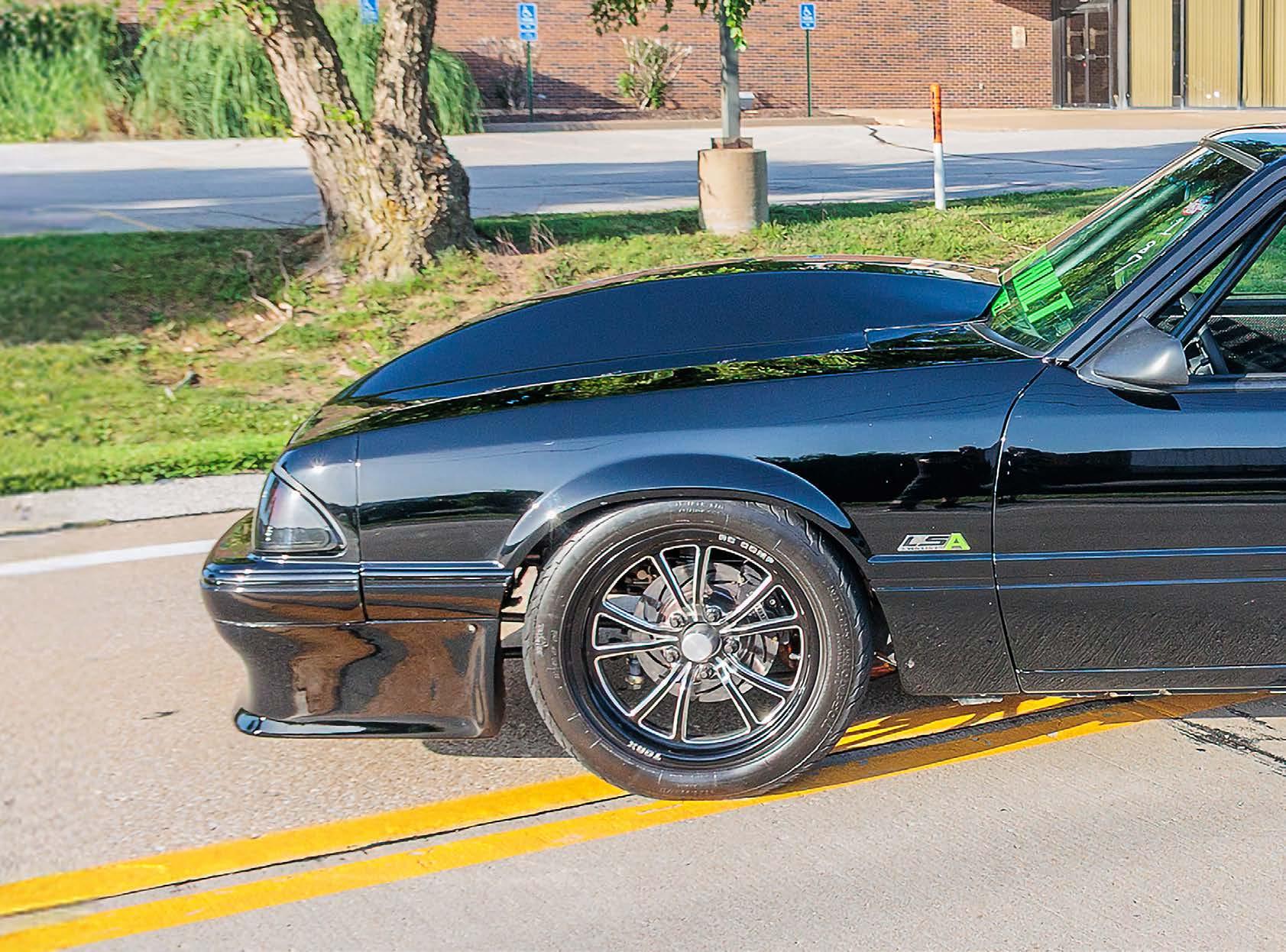
Finally, the exterior of the Mustang was handled by B&B Customs where Bobby and Billy Heinemann massaged the Mustang’s flanks so it could wear the slick black paint with pride. We also dig the custom LSA emblems on the front fenders.
Most of the pony’s interior accommodations are race-oriented, with nary a creature comfort feature to be
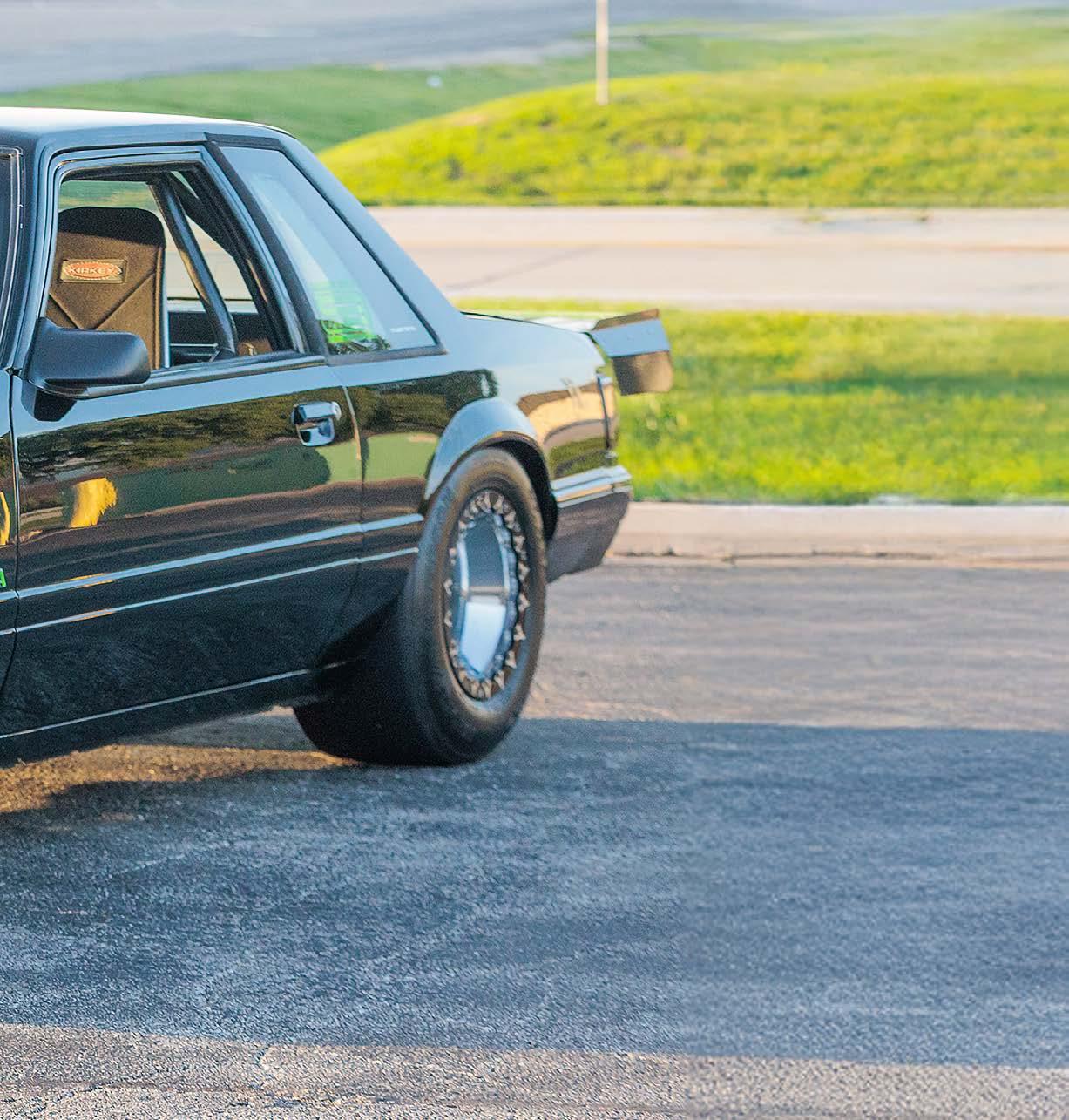
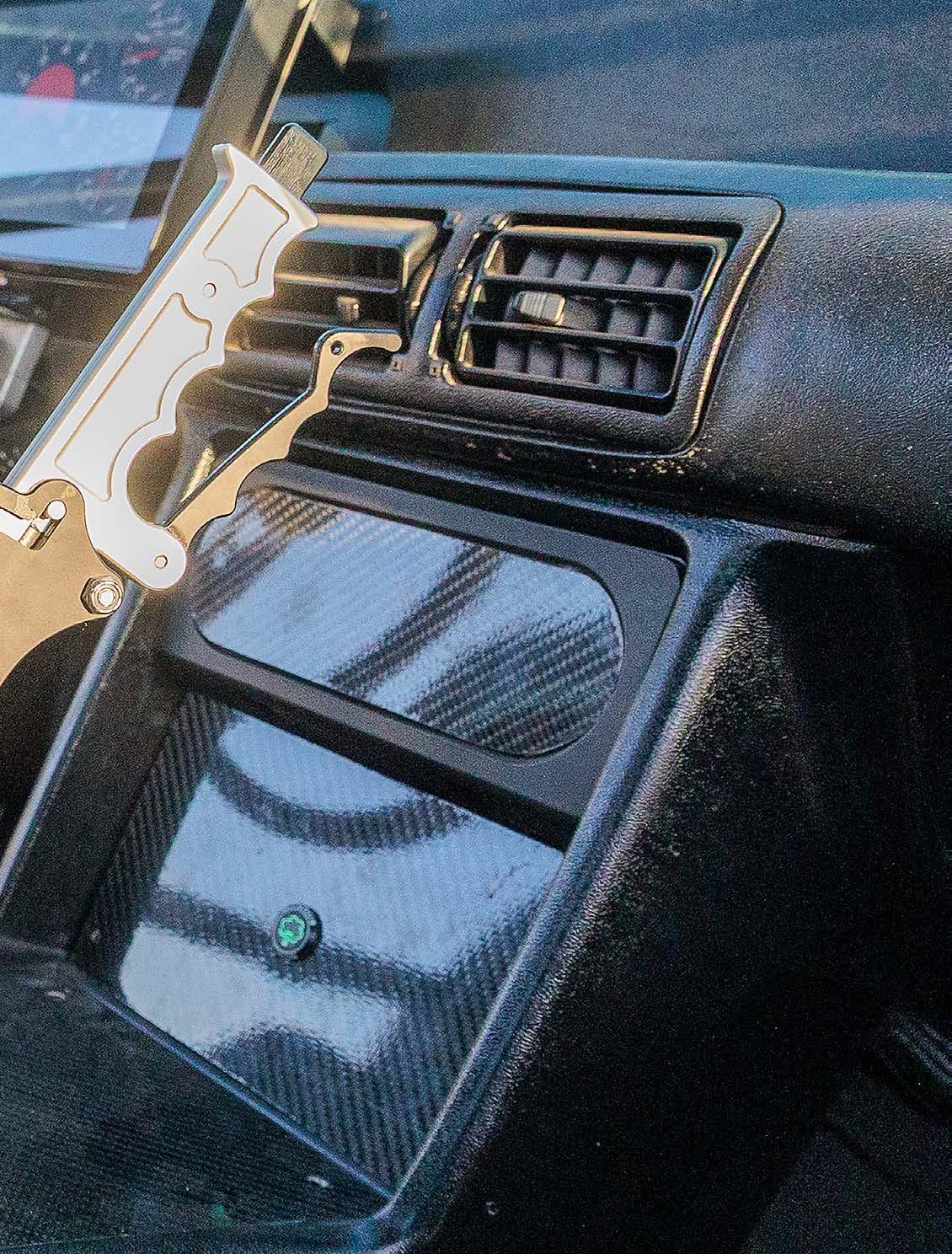
found. The original dash and center console remain, but aluminum race seats replace the original buckets, Scott Rod carbon door panels simplify and lighten, and Larry Jeffers Race Cars safety harnesses, a roll cage, and a removable steering wheel diverge from the street-born story Ford once told and illustrate a new life between the stripes.
Chassis Engineering
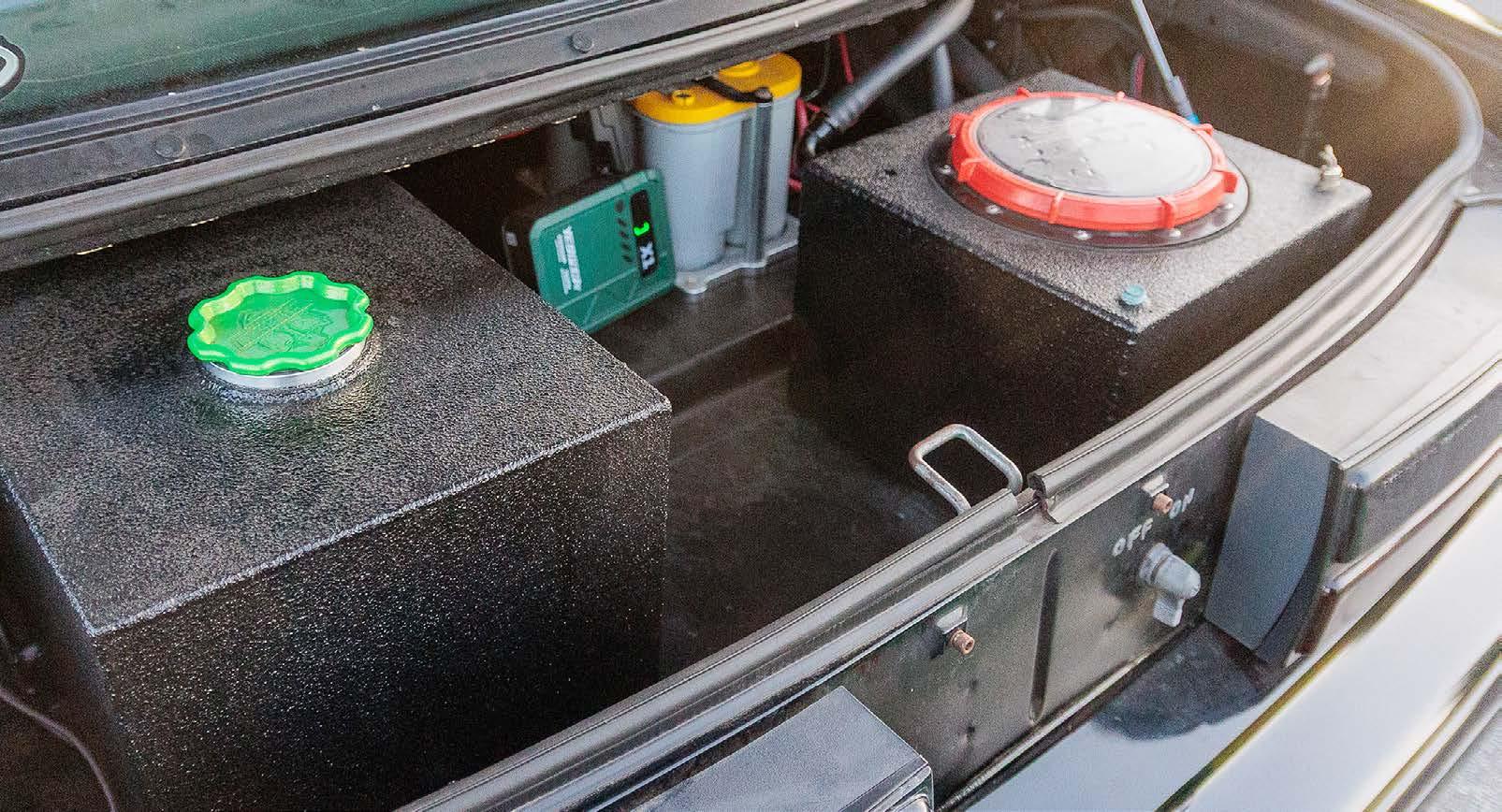
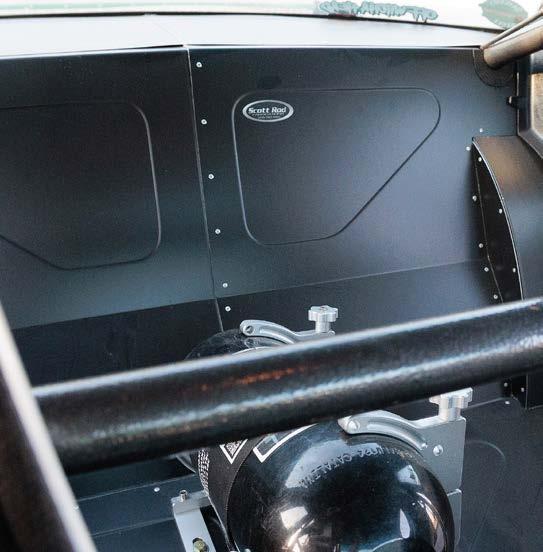
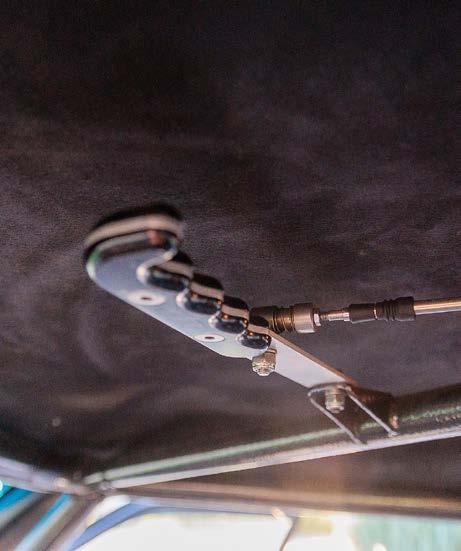
A custom shifter actuates gear changes of the built Powerglide transmission and you will notice a small surprise affixed within an aluminum bracket located where the rear seating once was, an area now finished in custom matte black tin work. That nitrous bottle is connected, however Winterer won’t disclose the car’s capabilities while using it. The rather modest Coupe trunk area is occupied by the battery, fuel cell and cooler tank.
Despite the original trunk-popping button still functioning in the glove box, there’s no stereo or climate control, but let’s be honest, do you really care when you’re rowing the M&M Transmission shifter and feeling the gears bang in the Trans-toGo-built Powerglide transmission on your way to 8-second elapsed times?
Connecting that Powerglide to the LS block is a Neal Chance torque converter and propelling Winterer’s Mustang to those single-digit, on-track performances is a 6.0-liter-based block that received a Molnar stroker kit for 404 cubic inches of displacement.
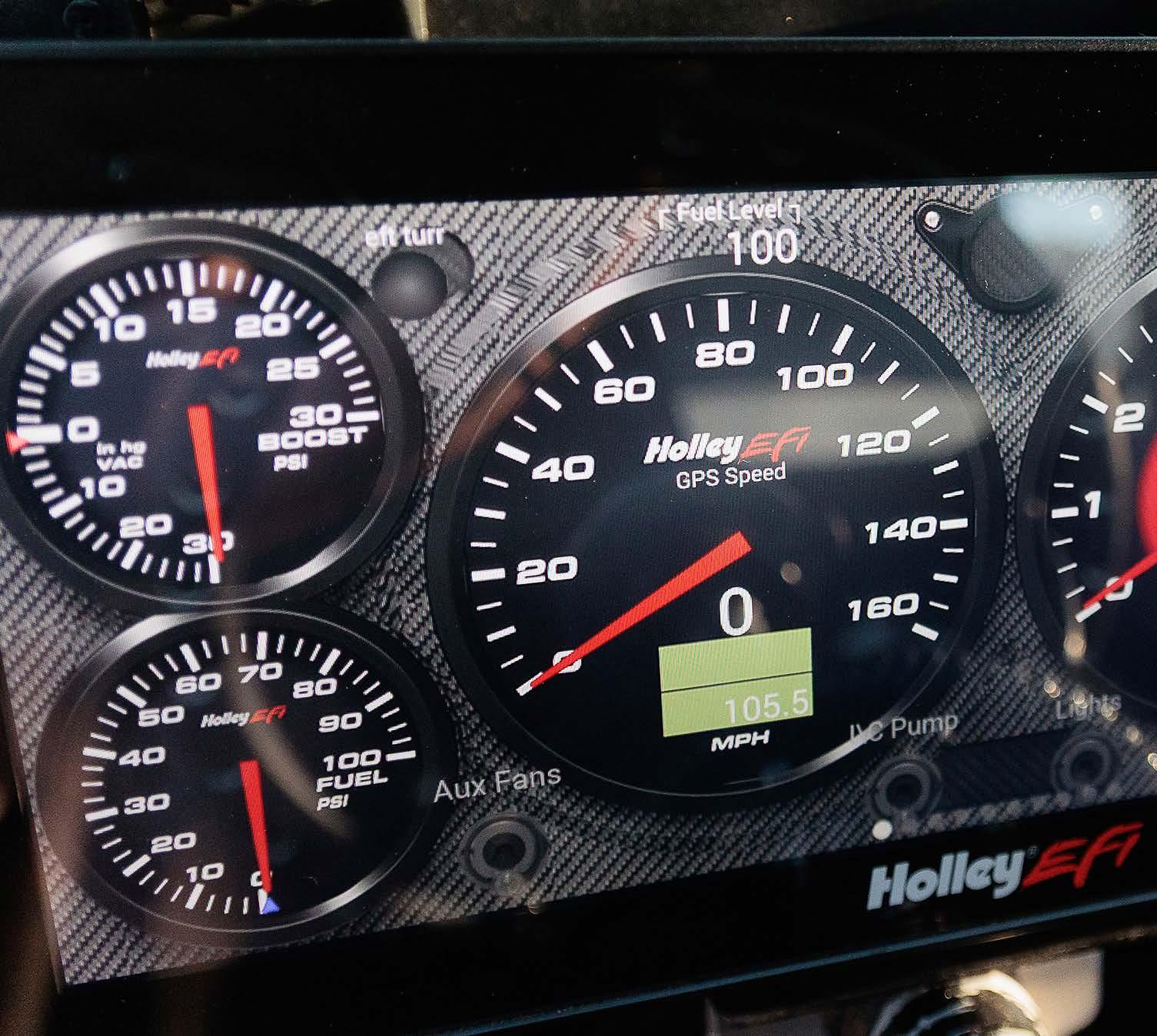
A Terminator EFI system with oversized digital dash replaces factory instrumentation in the factory dash structure and aluminum race seats were installed along with carbon door panels, safety harnesses, a roll cage and removable steering wheel.
Rod Stidem ported the factory LS3 cylinder heads, and the not-so-common power adder, the LSA blower, rests atop the aluminum cylinder heads ready to squeeze the atmosphere into something more combustible. With its Eaton twin vortices and high-helix design, the LSA blower was original equipment on
Chevy’s 580-horsepower 2012-2013 ZL1 Camaro, but this particular unit has been hand-ported and no doubt fitted with pulleys for more boost.
Winterer did mention there is a nitrous bottle on board, though he stopped short of saying how it was administered to the engine or how much he was using.
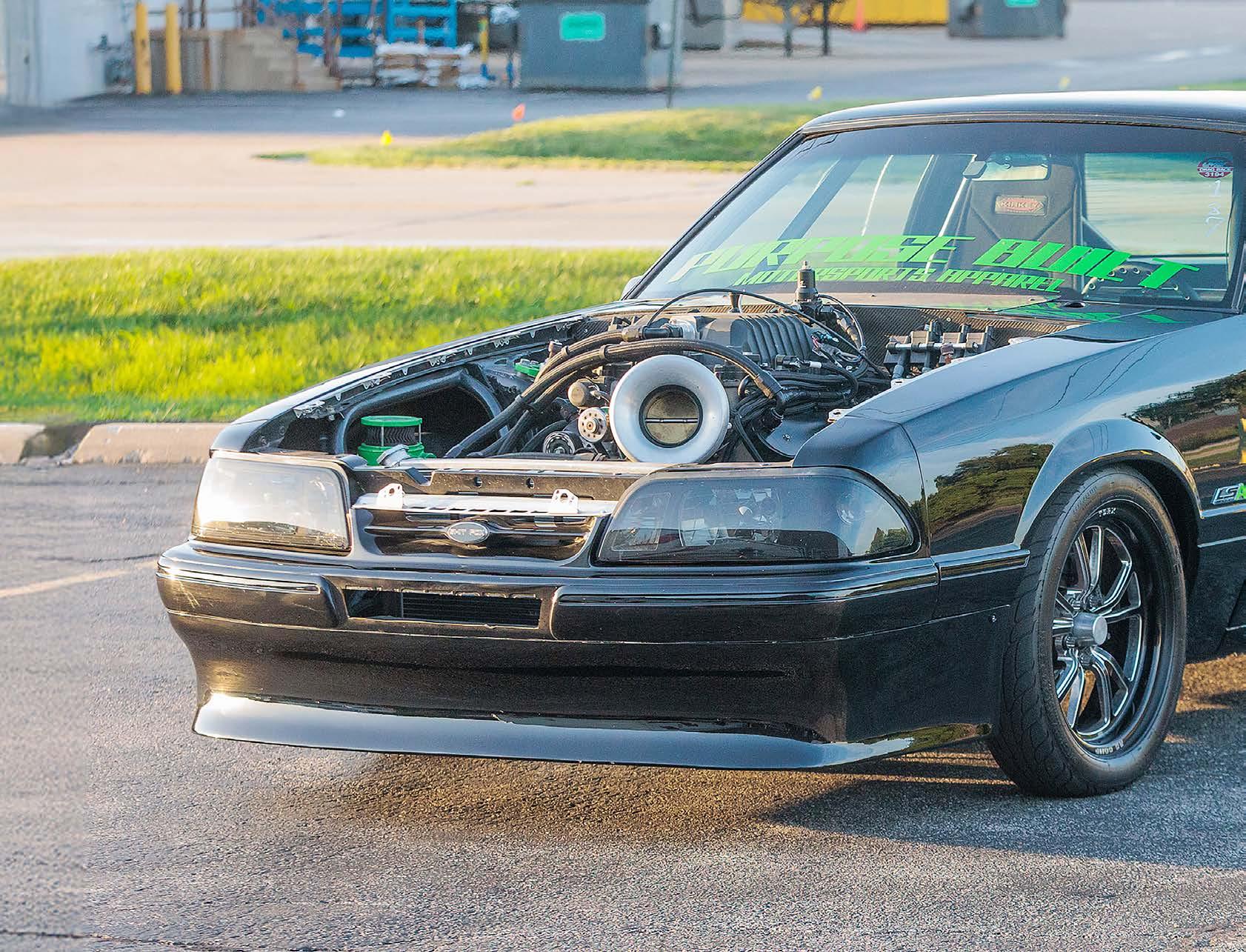
A Chevy LS occupies the space under the hood of this Fox Body and the Roots style LSA blower Winterer used on the build gives some extra height to the package requiring the use of the bulging Sunoco style composite hood.
Michael Winterer’s 1987 Small Tire Street/Strip Notch Back Mustang
Chevy LS Roots Blown
Interior:
Body & Paint:
B&B Customs, Bobby and Billy Heinemann are best in the game and I’m glad to call them friends.
Chassis & Suspension/ Modifications:
The cage was already in the car. Chuck Hunter did the Mittler Bros torque boxes, shortened the rearend and tubed the front end all out of his garage at the time. This is a garage built street/race car.
Engine:
6.0 Aluminum LS bored and stroked to a 404ci. Ported LS3. heads and a hand ported LSA blower. The engine has a catalog of Motion Raceworks parts..
Rotating Assembly:
Molnar 402-408 stroker kit
Induction:
Supercharged
Power Adder:
Ported LSA blower
Electronics:
Holley Terminator
Transmission & Converter:
Neal Chance spec converter with 2 speed Powerglide built by Trans To Go in Arnold, MO.
Rear Differential:
Moser fabricated 9” rearend with 40 spline axles, Moser center section with 3.70 gears.
Brakes:
Race brakes all the way around.
Tires & Wheels:
RC Components Torx front wheels & RC Torx LSX 12s in the rear double beadlocked with Pro Bracket radials.
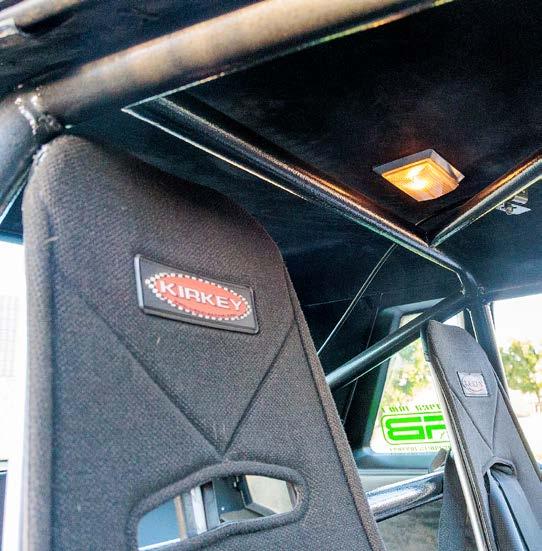
This car has full interior blinker lights, dome lights, pop trunk, 12” Holley screen, two Kirkeys, rear seat delete, M&M shifter, Larry Jeffers harnesses, Scott Rod Carbon door panels, roll up windows and a full bottle of nitrous when she is on kill mode.
Best ET and MPH:
1/4 mile is 8.88 at 153mph with blower only and 5.68 in the 1/8th blower only.
Most Unique Feature(s):
Definitely the LSA blower. It’s a small 1.9 liter blower putting in work and the rearend setup is beautiful as well.
Reason For Build:
My first car was a black 86’ Fox Body Mustang GT and when this one popped up I knew I had to get it..
Build Timeline:
I’ve owned the car 6 years & have done everything twice it seems, but that’s part of the game & we all know cars are truly never finished.
Most Memorable Experience(s):
My father passed away when I was 16 years old, I was blessed to be able to pick his brother George up who is now 80 to take him for a ride in one of the fastest cars he had ever been in. Uncle George is the one who started it all.
Thanks to:
Chuck Hunter for all the work with building and helping with the car, OCD Performance for always lending a hand and shop space to get me rolling again. Jeremy Sthezel N&N Performance And Tuning and myself for all the overtime hours I’ve put in for this to happen, staying dedicated and never giving up.
The on-board Terminator EFI system with digital dash providing engine data to Winterer has been tuned by Jeremy Statzel of N&N Performance. Winterer credits Chuck Hunter and OCD Performance with help building the beast that he’s driven to a
best elapsed time of 5.68 to the 1/8 and 8.88 at 153 mph through the quarter-mile, purportedly on the blower alone.
“My first car was a black ‘86 Fox-Body Mustang GT and when this one popped up, I knew I had to get it,” Winterer explained.
“My uncle George strapped me into his blower T-Bucket when I was about eight years old and I’ve been full throttle ever since. My father passed away when I was 16 years old. I was blessed to be able to pick his brother, George, up who is now 80 to take him for a ride in one of the fastest cars he had ever been in. Uncle George—the one who started it all.”
After six years of blood, sweat, tears and determination to get the Mustang to
where it is today, Winterer is a true gearhead at heart and knows all too well what that life entails.
“I’ve been racing and into cars my whole life. I’ve owned everything from NA cars to nitrous, turbos and now a blower car. I love it all, anything can be cool if it’s fast. I’ve owned this car six years and have done everything twice, it seems, but that’s part of the game and we all know cars are truly never finished.”
RPM Magazine Reprint in Print!
RPM Mag’s commitment to features that appeared digital-only since June 2020. Article first appeared in the April 2021 Digital Issue
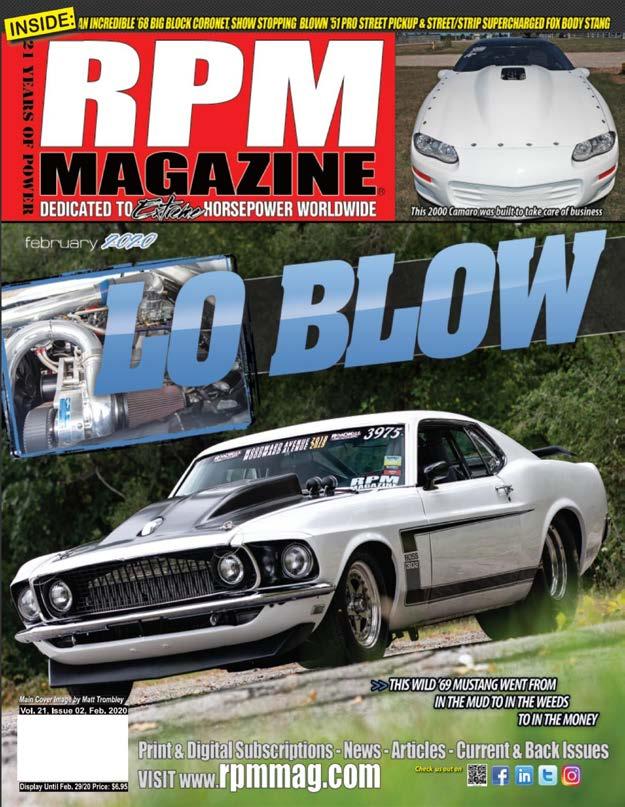
The first line of this story will shock many readers, but here it is, brace yourselves; “The car had a 454ci LS engine that I ran naturally aspirated before my 2019 rebuild, when I put in a boosted Ford Coyote engine,” said Tim Flanders. Whoa whoa whoa, what did this guy just say? He swapped OUT his LS for a Ford motor?
“Purists rejoice, raise your arms to the sky and give thanks for making guys like Tim Flanders come to their senses,” said the anonymous hardcore Ford guy who lives in his mom’s basement. “He must be on some type of thought altering spell, or drugs, or something!” exclaimed the unnamed world domination Chevy guy.
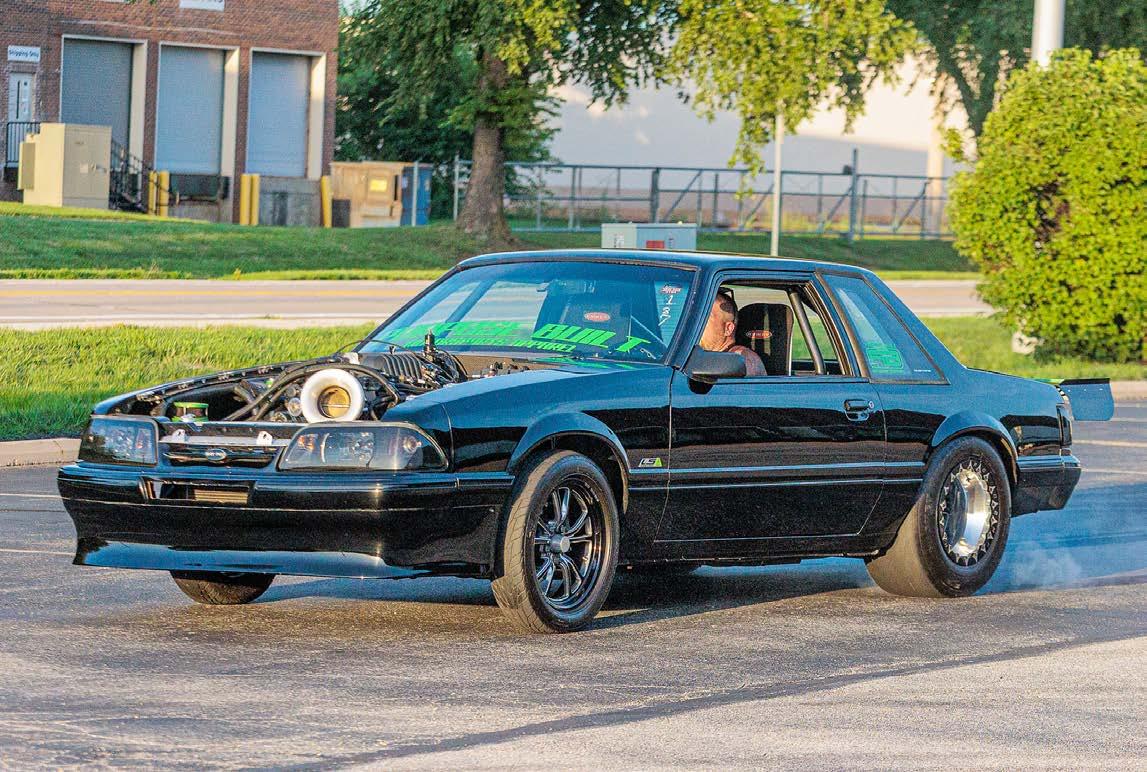
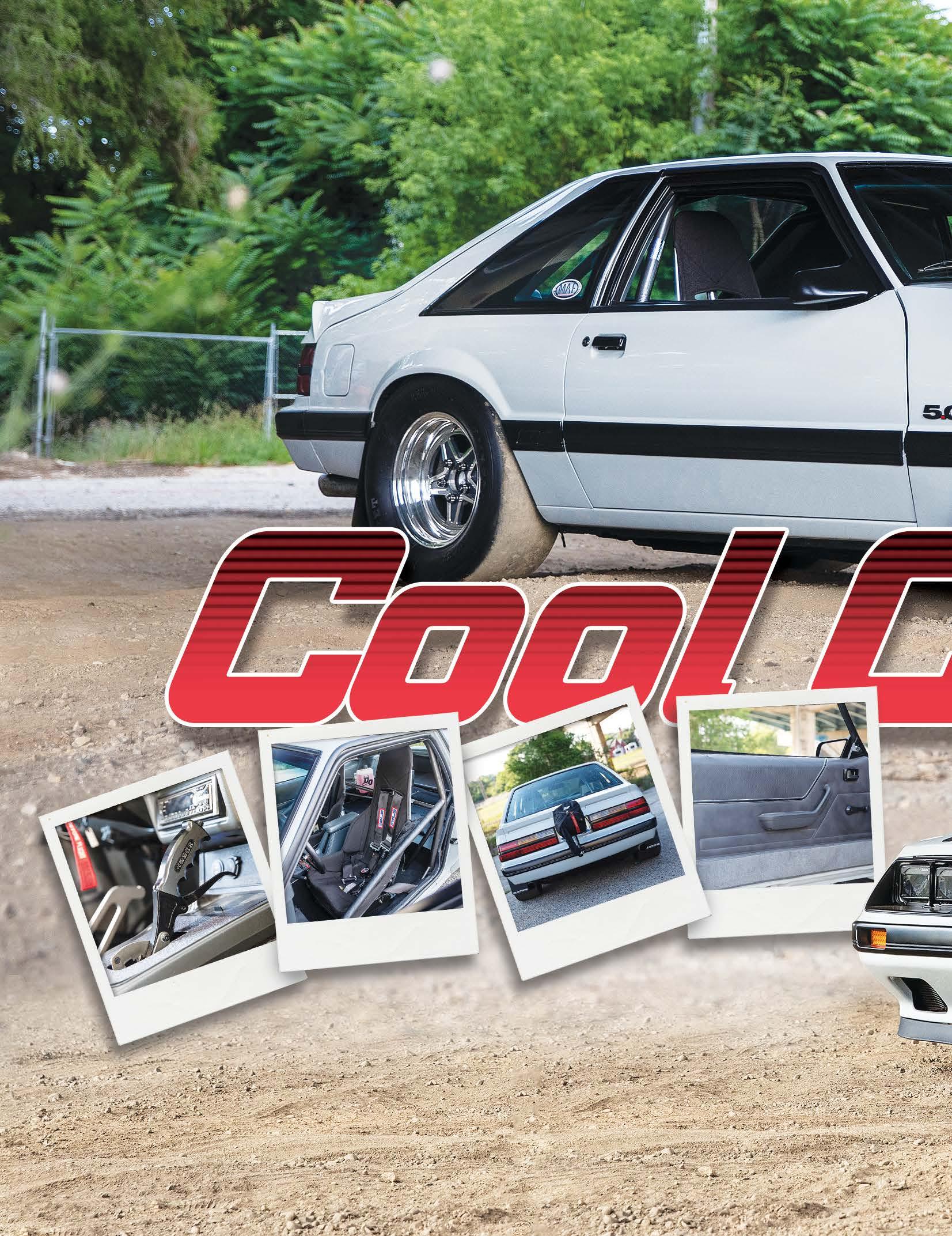
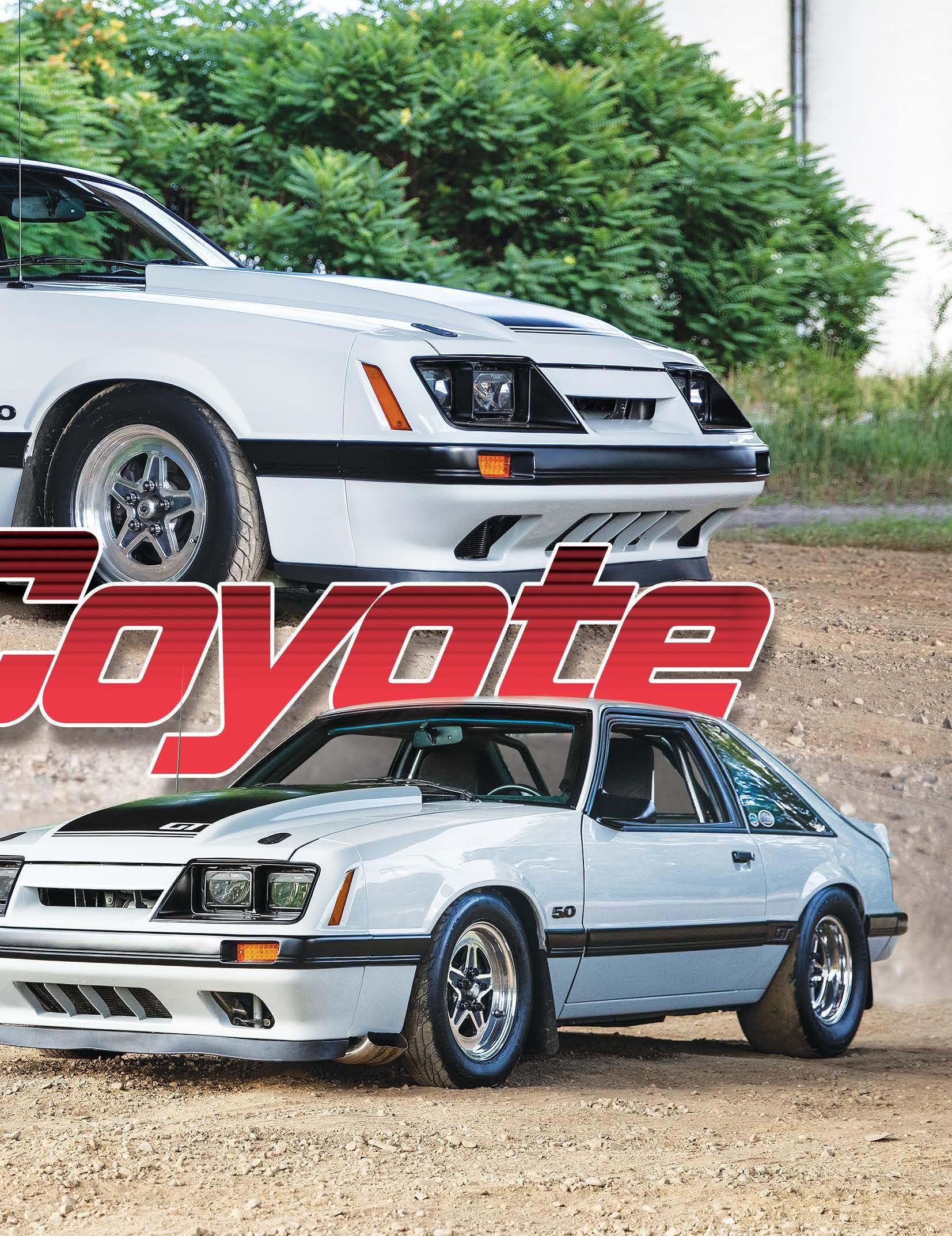
There’s just something about the look of a four-eye Mustang. 1986 was the last year for them.
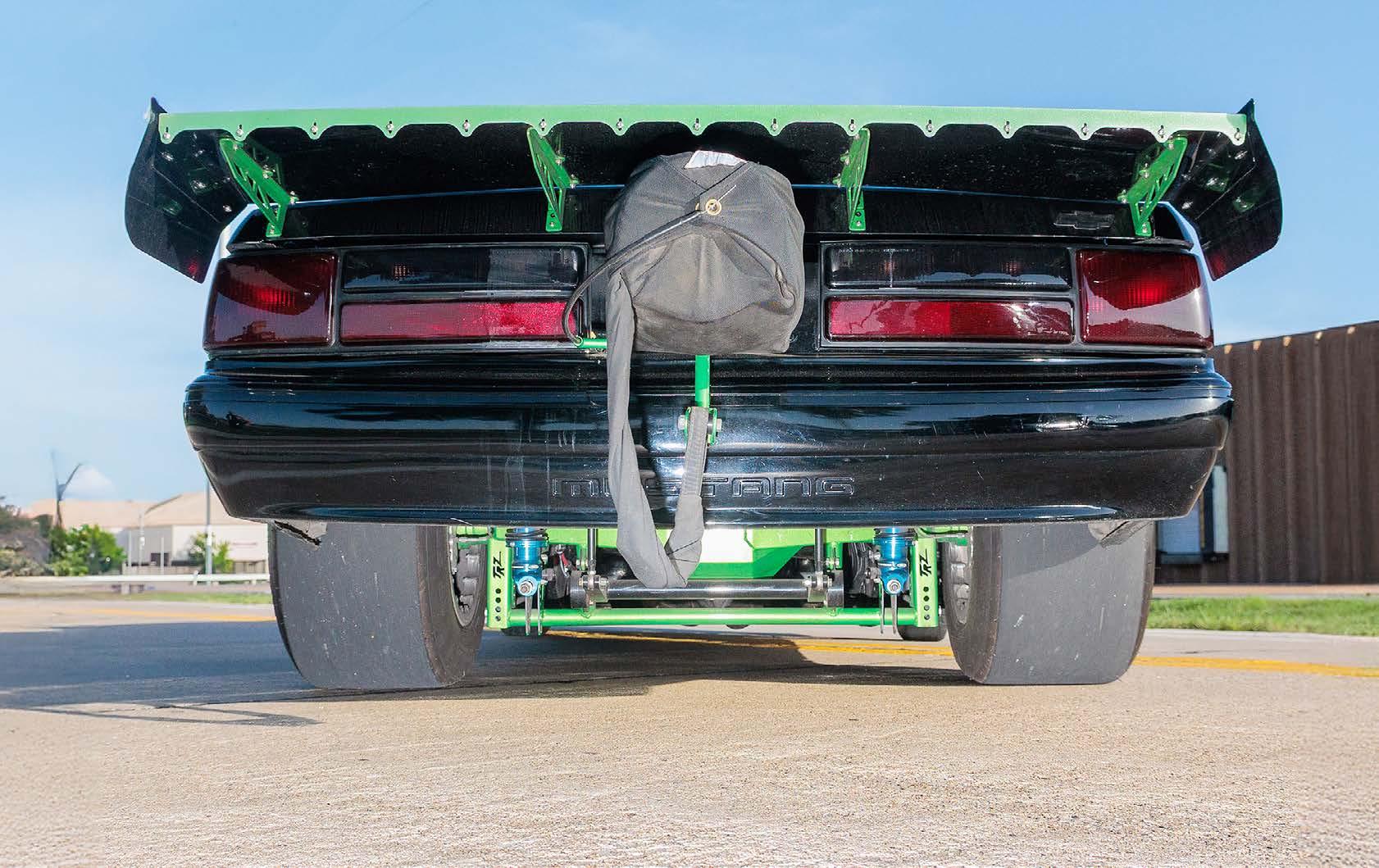
Oh oh, a parachute, that could mean one of two things, it’s for show or go. We choose the latter.
Story: George Pich
Photos: Matt Trombley
Post-race videos on
Ian Hill Racing
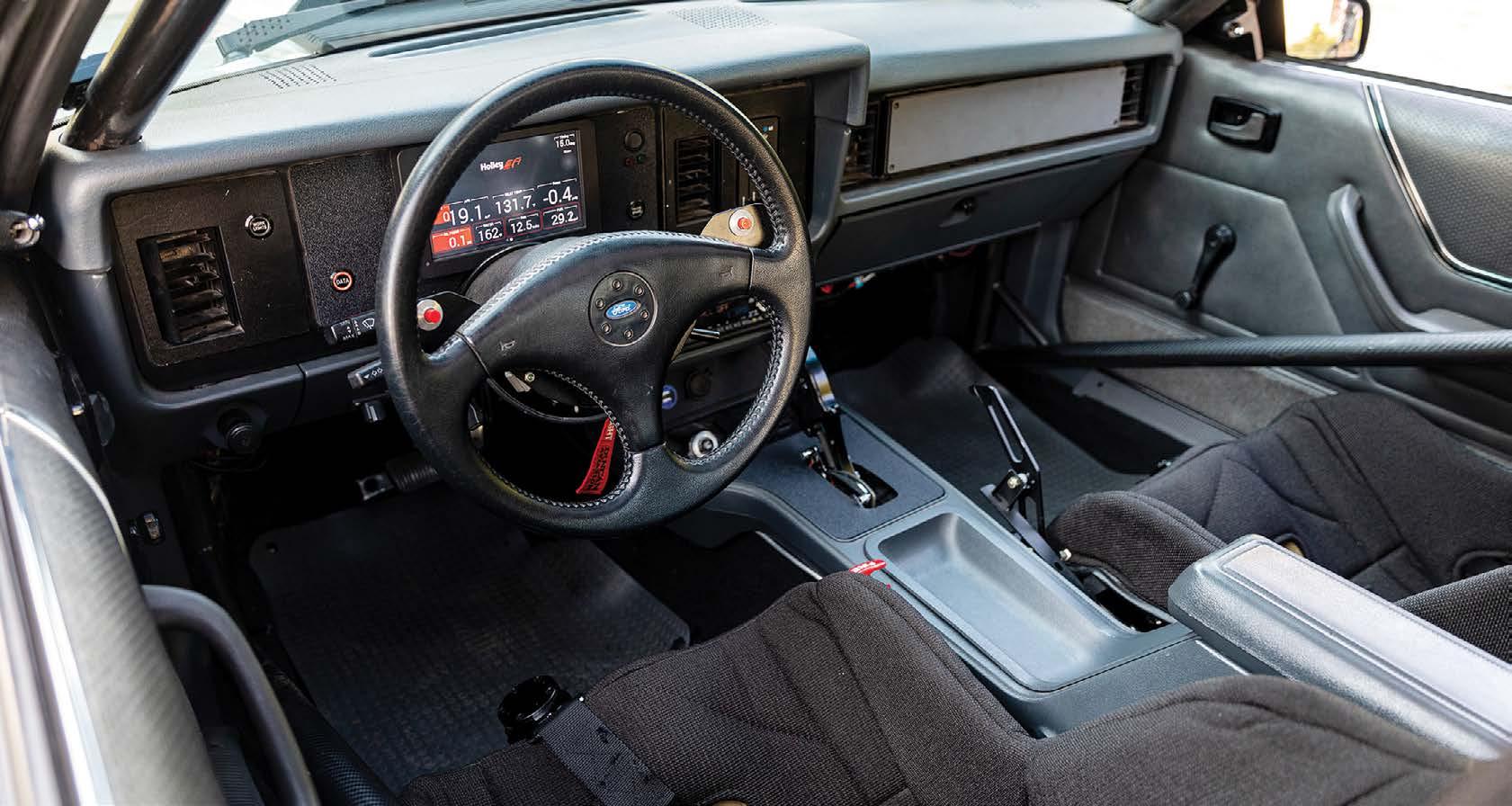
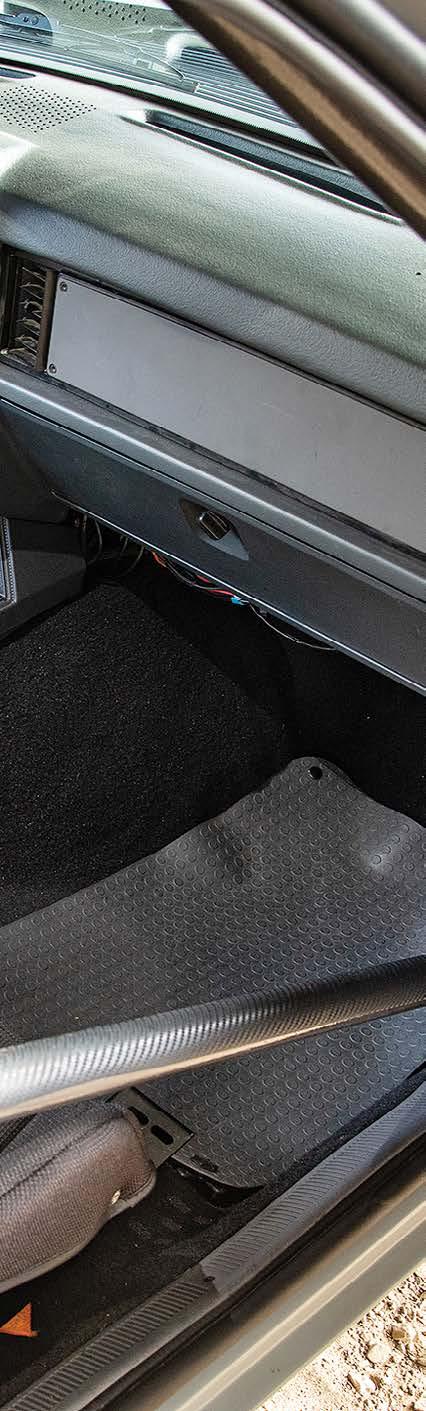
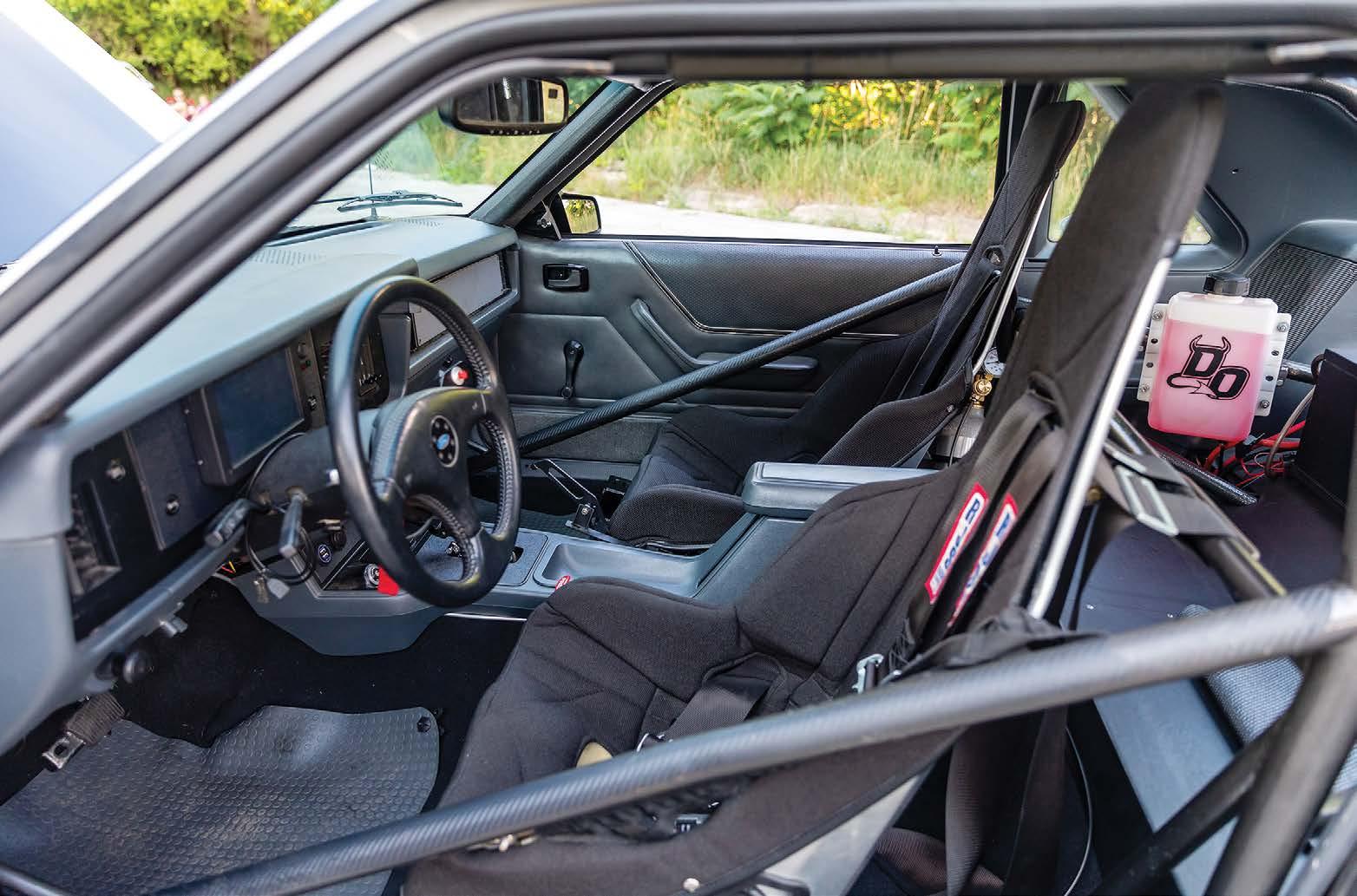
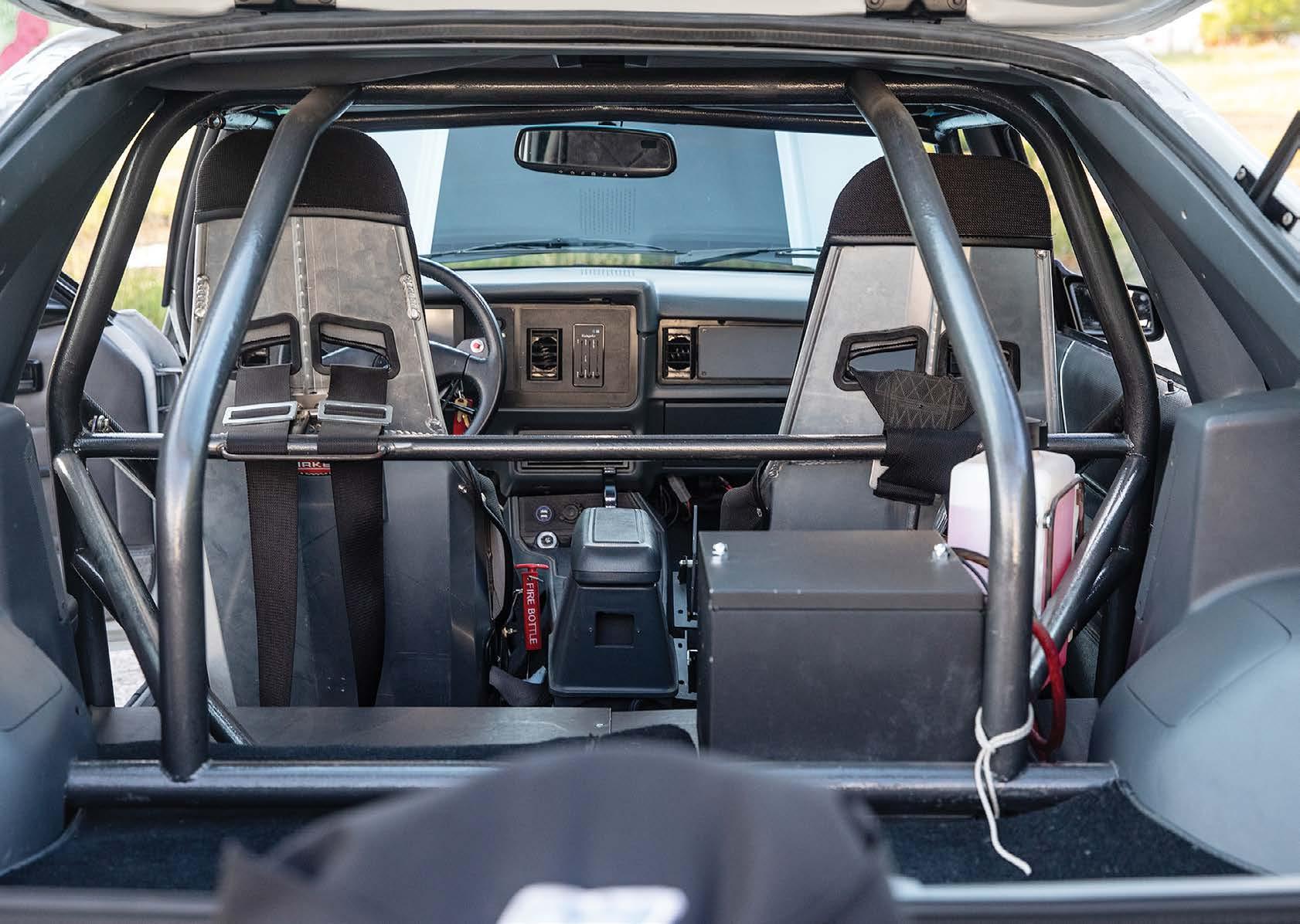
The GT looks new inside, even the factory steering wheel remains intact. Race buckets have been covered with a gray tweed to match the factory vibe.
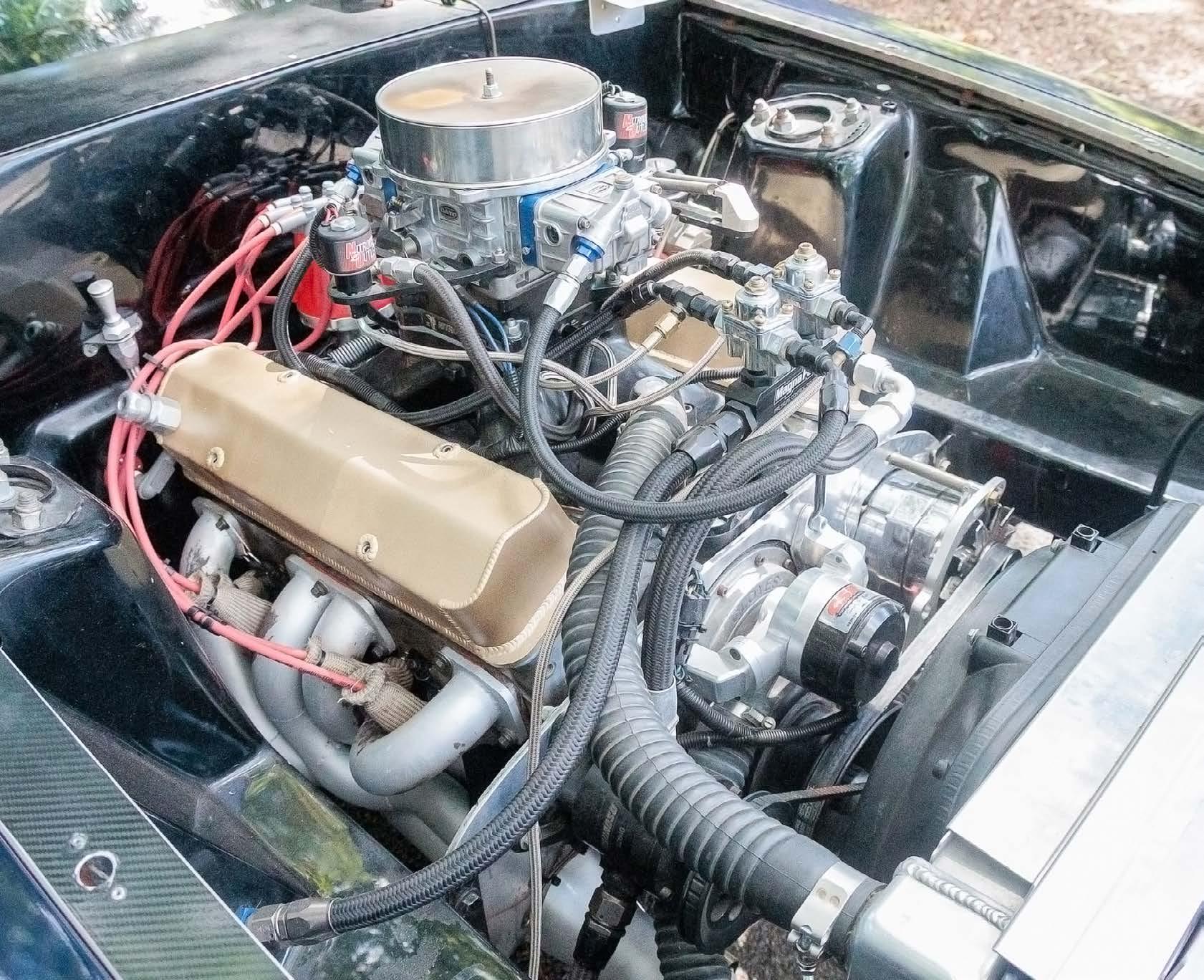
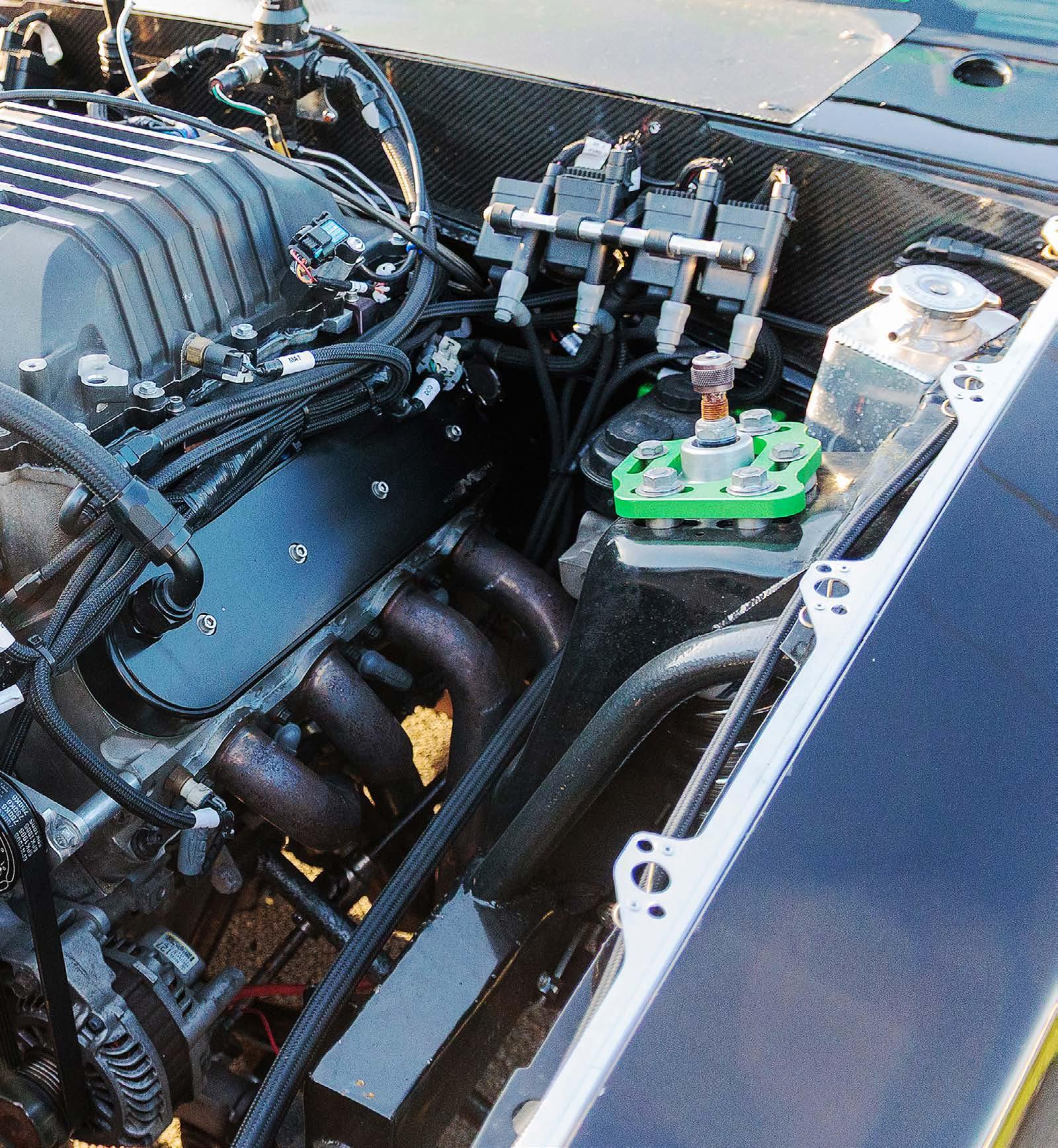
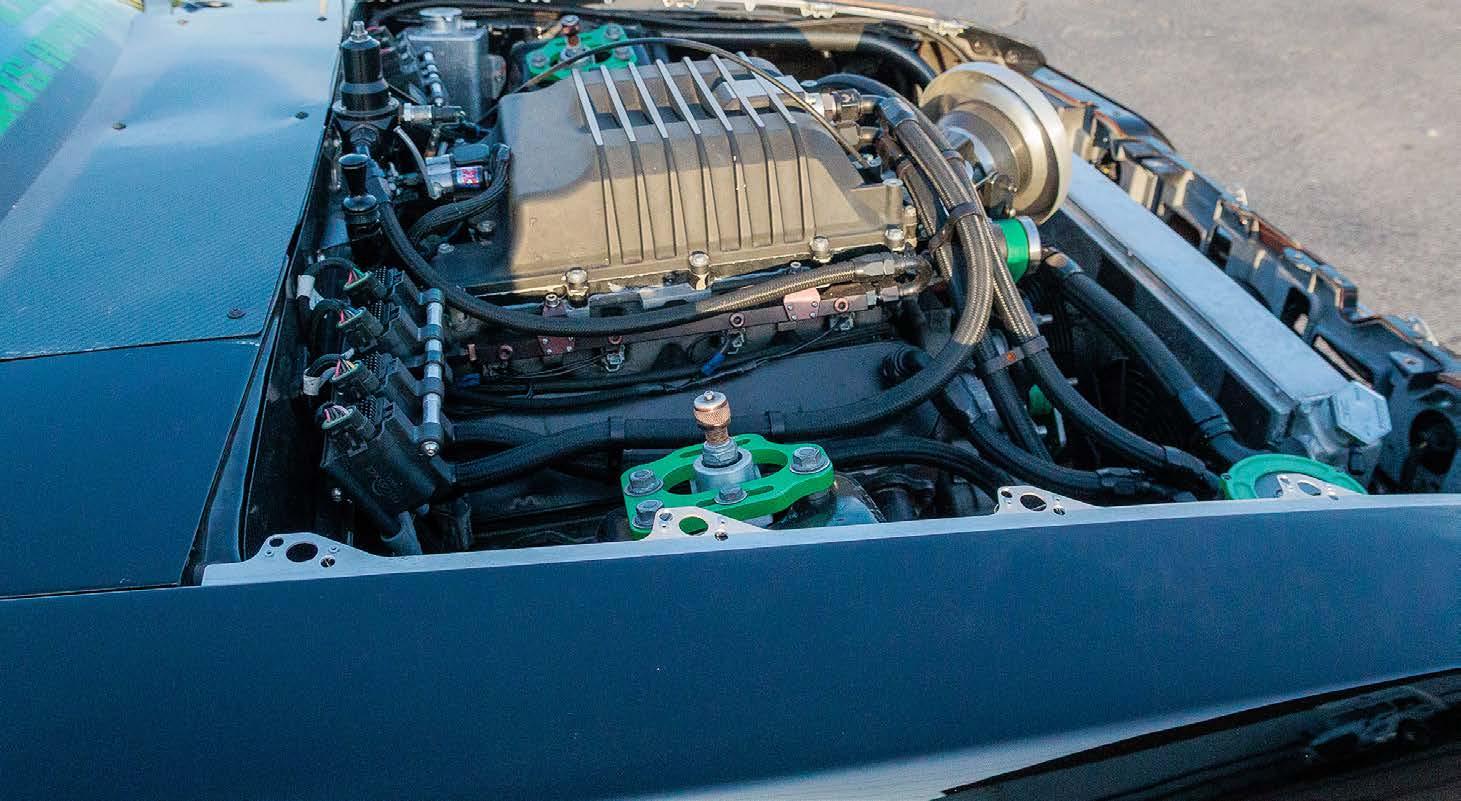
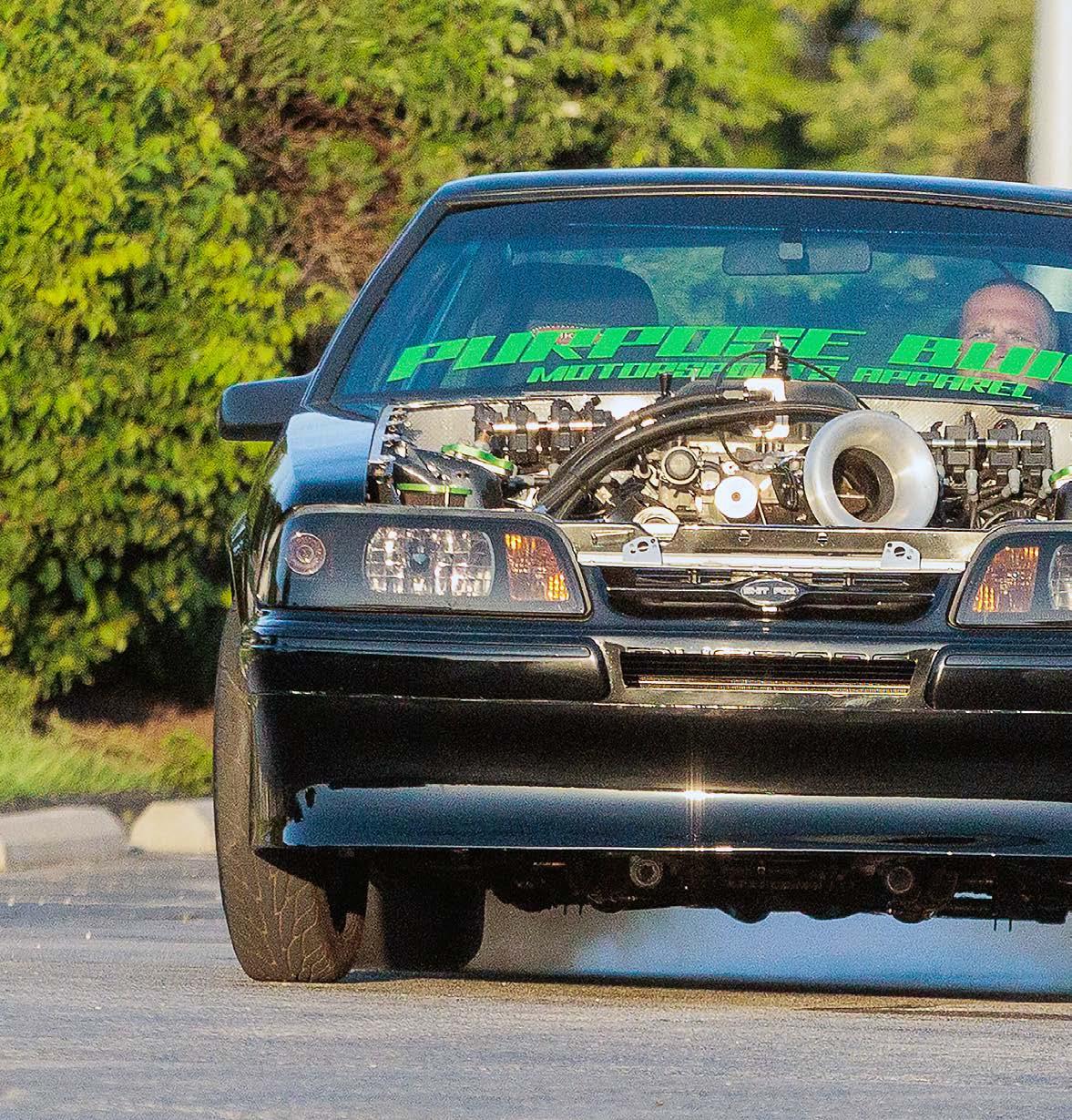
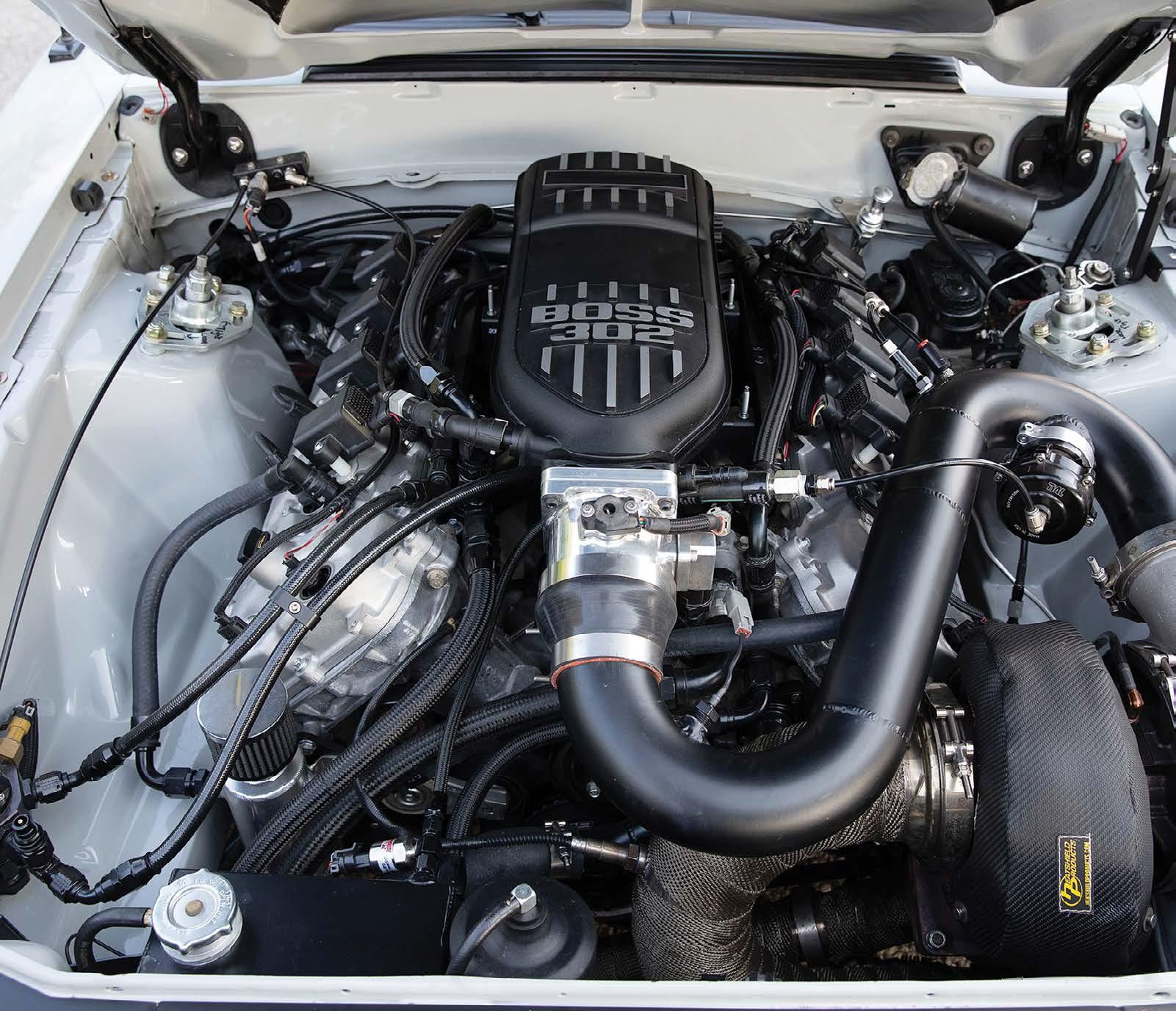
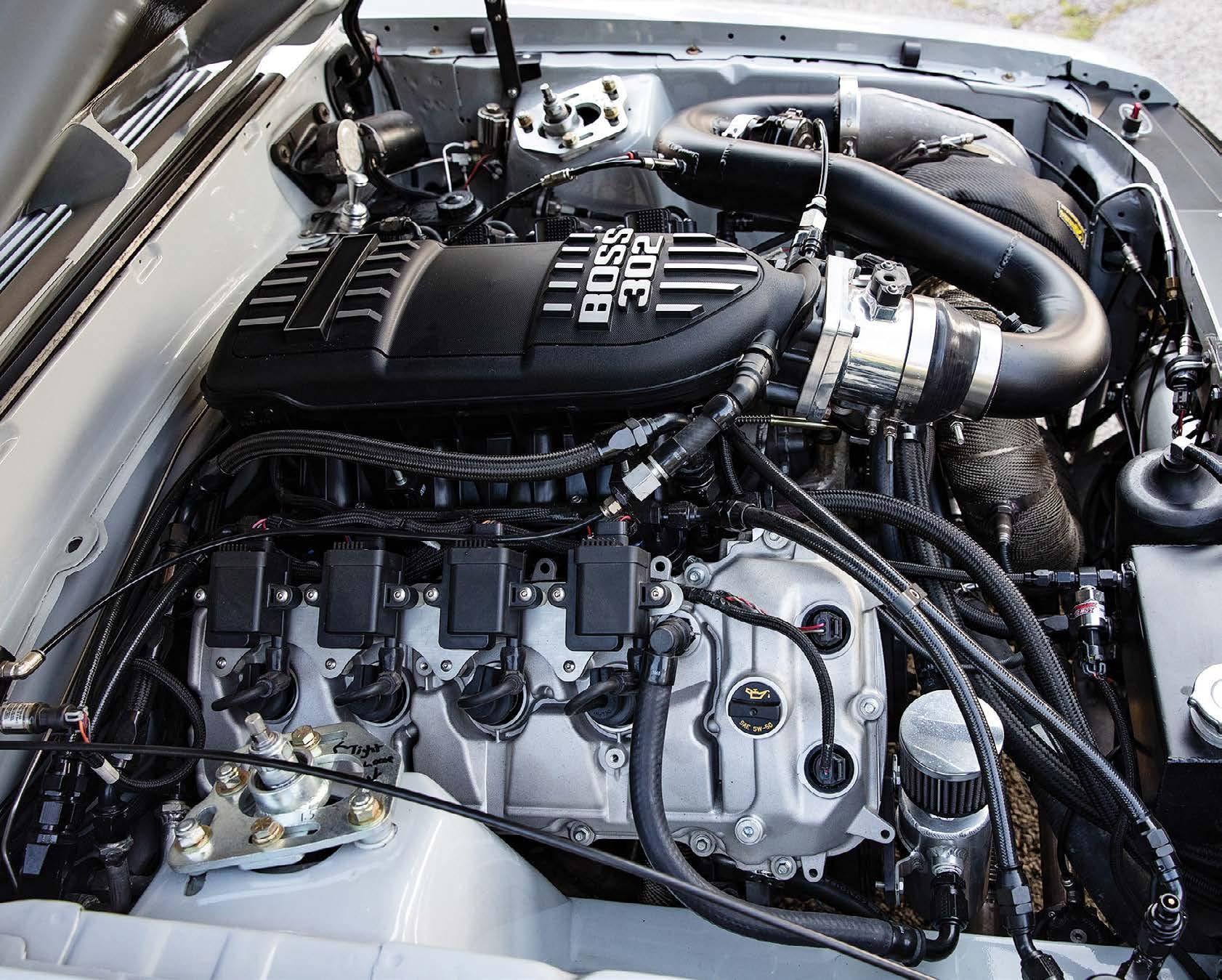
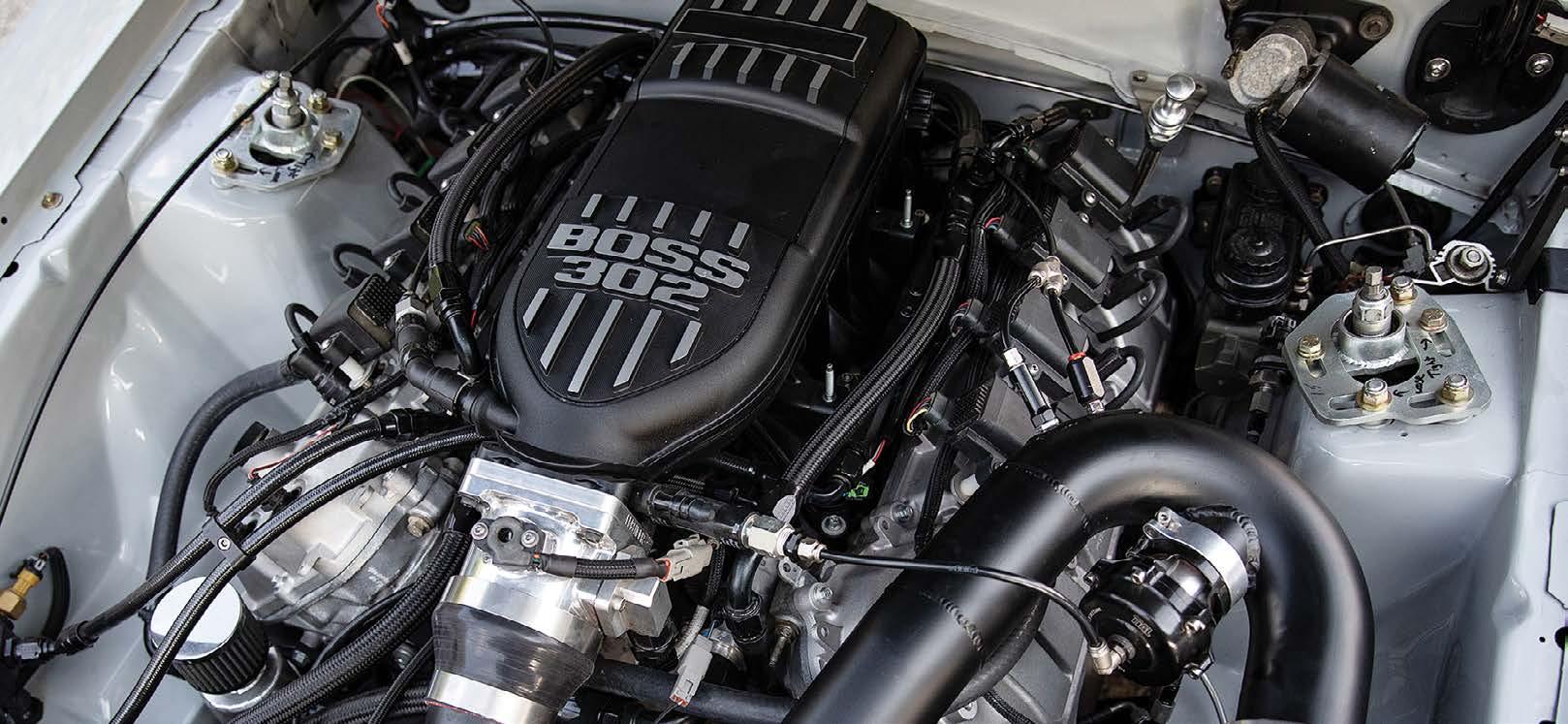
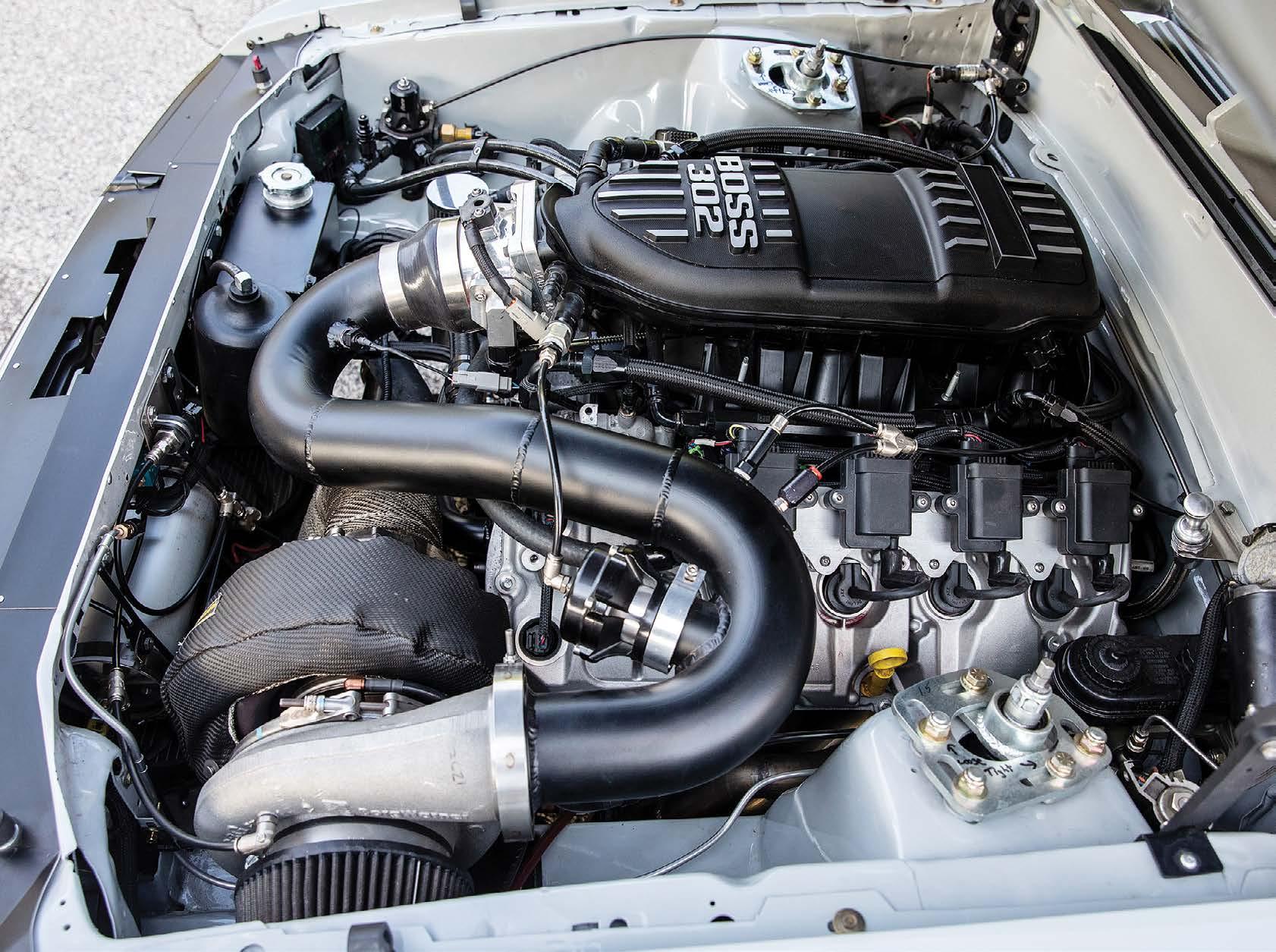
Such a clean install of the boosted Coyote engine combo looks like it belongs there from the factory.
then drives home, with his trailer in tow, of course!
All kidding aside, how often to do you see someone swap to an LS, and then return to a Ford mill, especially in a Fox Body Stang? Not very! Well Tim Flanders is that guy and his slick, ultra-clean badass turbo Coyote Mustang will have a bunch of those LS swap Stangs peeing themselves when he rips off 8.80 ETs, and
Flanders, from Battle Creek Michigan, tell us that he has owned the car for 20 years and had a ton of fun with it from stock to where it is now. “Over the past 20 years the Mustang has had 6 different engine combos,” he said, “But this one is the most fun yet!”
A ported Boss 302 intake was used along with factory unported cylinder heads.
Tim Flanders 1986 Ford Mustang GT – Street/Strip Small Block Coyote Ford Turbocharged
Chassis Type & Mods:
Factory 1986 body. MAF Racing custom 12-point cage. MAF Racing parachute mount and trailer hitch.
Wheels/Tires:
Bogart Welded RT wheels 15-4 15-8 MAF Racing custom carbon inlay, also have CCW 18” street wheels for driving to track. Mickey Thompson front, 26-6 275 Pro rear.
Suspension:
Front - Team Z K member, narrowed arms, coilovers 12-175, Strange DA struts, MAF Racing K member spacers. Rear Team Z rear housing with control arms factory location Team Z springs, Strange DA shocks. Low-dollar shock sensors.
Body & Paint:
H.O. Fibertrends 2” hood, Paint by Southern MI Auto Body Climax MI
Thanks to Greg, Terry, Marvin, Nick. Avalanche Grey RM BASF
Engine:
Coyote Gen 1 Ford Racing Sportsman block, factory Crank, Manley H beam rods, Diamond 11.5 pistons. Stock Mustang cams and un-ported factory heads with Ferrea valves and PAC springs. Cobra Jet oil pump, ARP fasteners, Moroso oil accumulator and oil pan (Driven FR50 oil), ATI balancer and Mechman alternator. MAF Racing custom radiator and cooling system.
Induction:
Ported Boss 302 intake, 90mm Accufab TB, MAF Racing custom intake tube.
Power Adder:
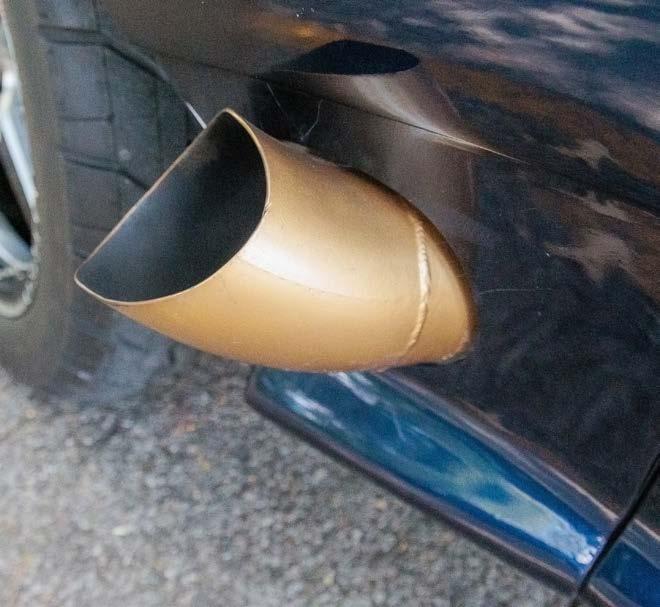
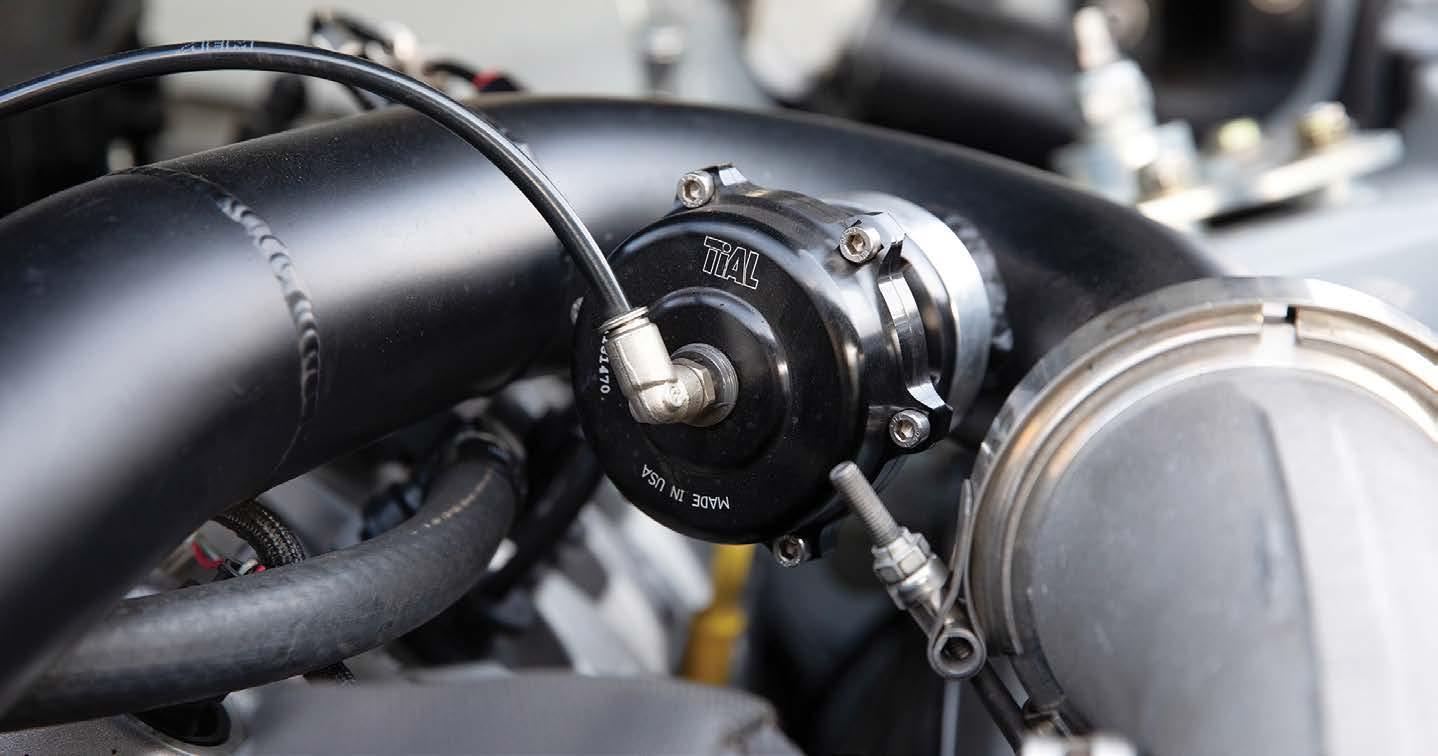
Forced Inductions billet S480 1.32, Water Meth, no intercooler. MAF Racing Custom Turbo Kit. 1 3/4 stainless headers 2.5 stainless crossover, Street Car Fabrication turbo flange. 4” MAF Racing stainless down pipe with custom oval fender exit, Tial dual 38mm wastegates, Tial BOV.
Exhaust:
3” MAF Racing dual aluminum exhaust and tailpipes, 3” MAF Racing aluminum mufflers.
Electronics:
Holley EFI Dominator, Smart Coils, FIC 1650 injectors, Firecore50 wires, 7” Holley Dash.
Transmission & Converter:
Capizzi Th400 2.48 with JW bellhousing, Ultimate Converter Concepts 9.5” converter, Meziere Billet heat exchanger pan and Gear Vendors overdrive. CCI Driveline 4” aluminum driveshaft with Metco motorsports driveshaft loop.
Rear Differential:
Team Z housing, custom 9” with 40 spline gun drilled. Pro HD 3.50 gear.
Miscellaneous:
Vintage Air HVAC with custom MAF Racing ducts and lines. Kirkey seats. Delta PAG dual 12” fans and controller, Fore Triple 03-04
Cobra fuel pumps, Fragola PTFE fuel lines, Wilwood vented front, solid rear brakes. Trucklite LED headlamps.
Other Important Information about the Vehicle: Everything done in house at MAF Racing other than paint. Driven to and from track with trailer in tow.
Thanks to my tolerant wife Kristin for the time this car consumes.
Best ET & MPH:
8.829 153.38 1.262 60’ 5.64 124.07 1/8th
How Many Years Racing: 19 years
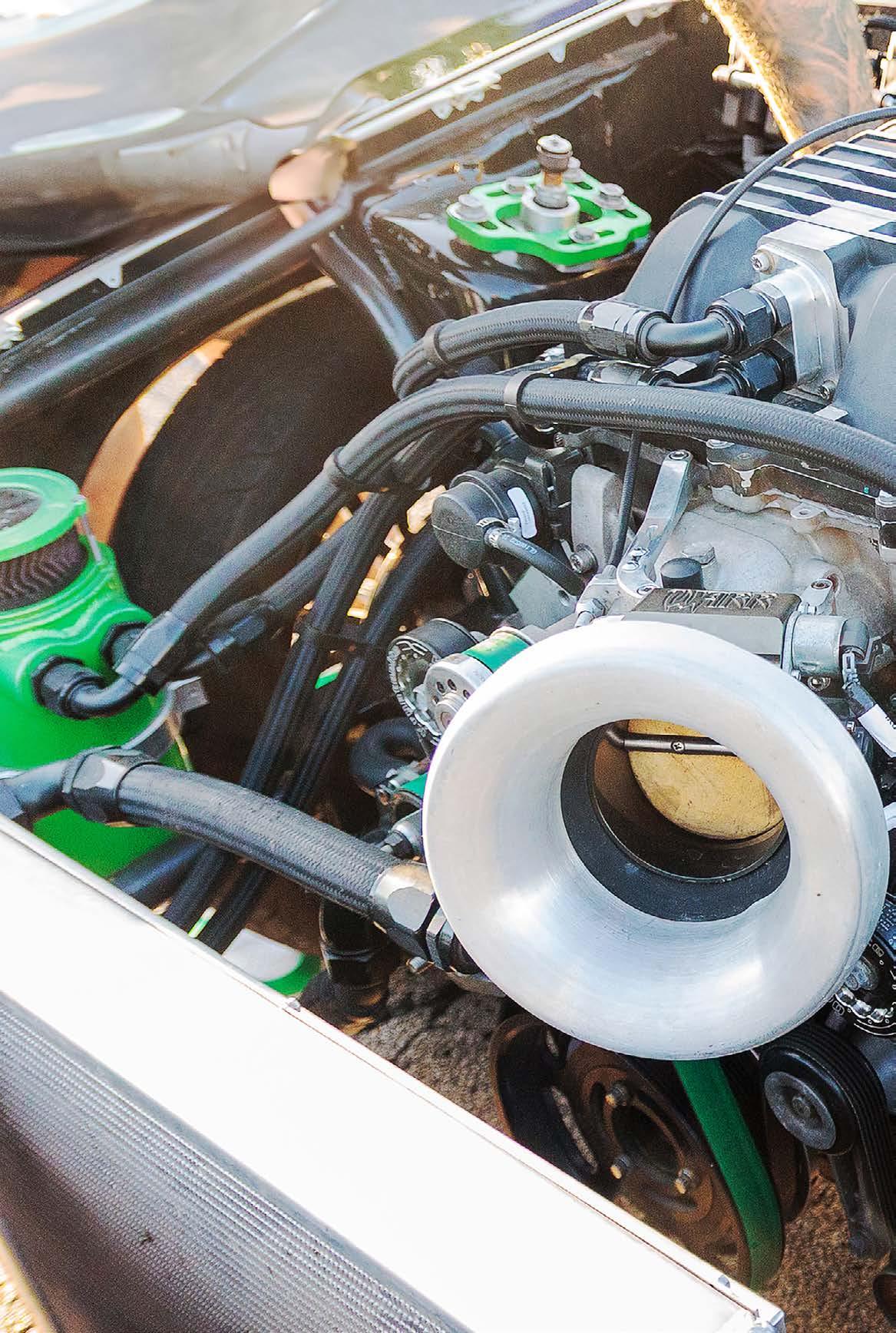
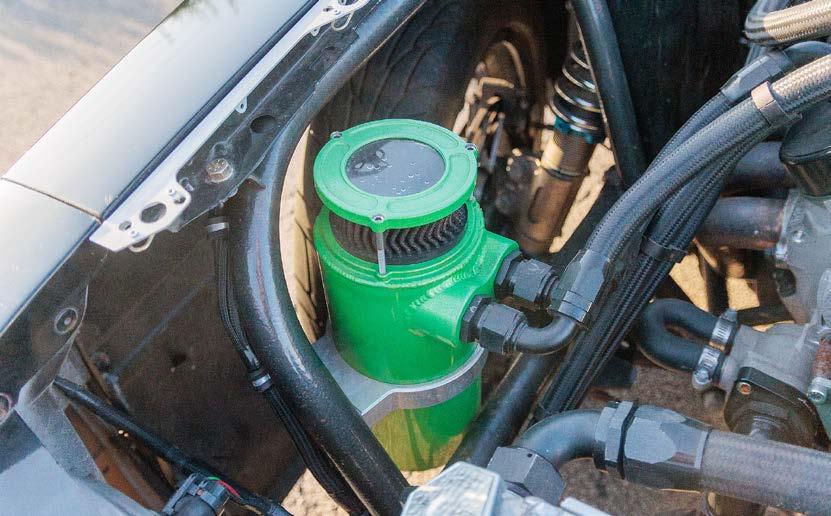
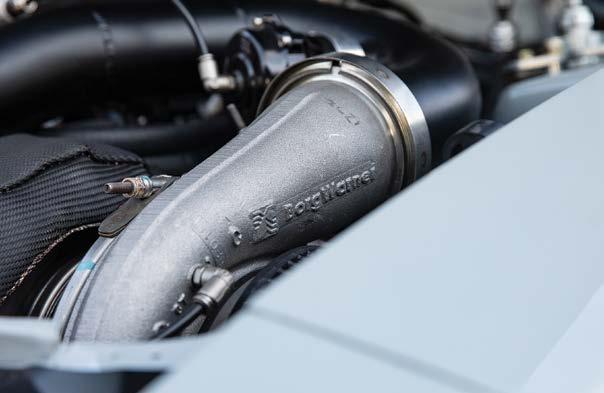
All turbo piping was handled by MAF Racing. The satin black gives the piping a less prominent look under the hood but there’s no mistaking the large aluminum turbo housing (right)
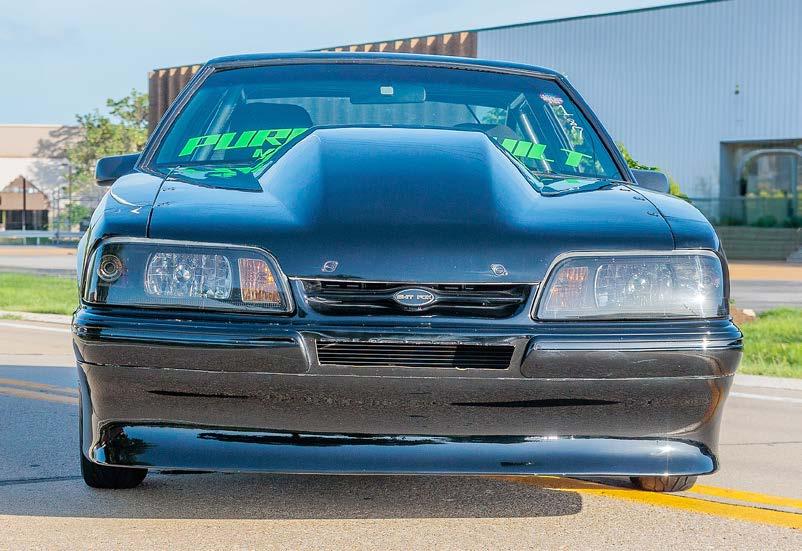
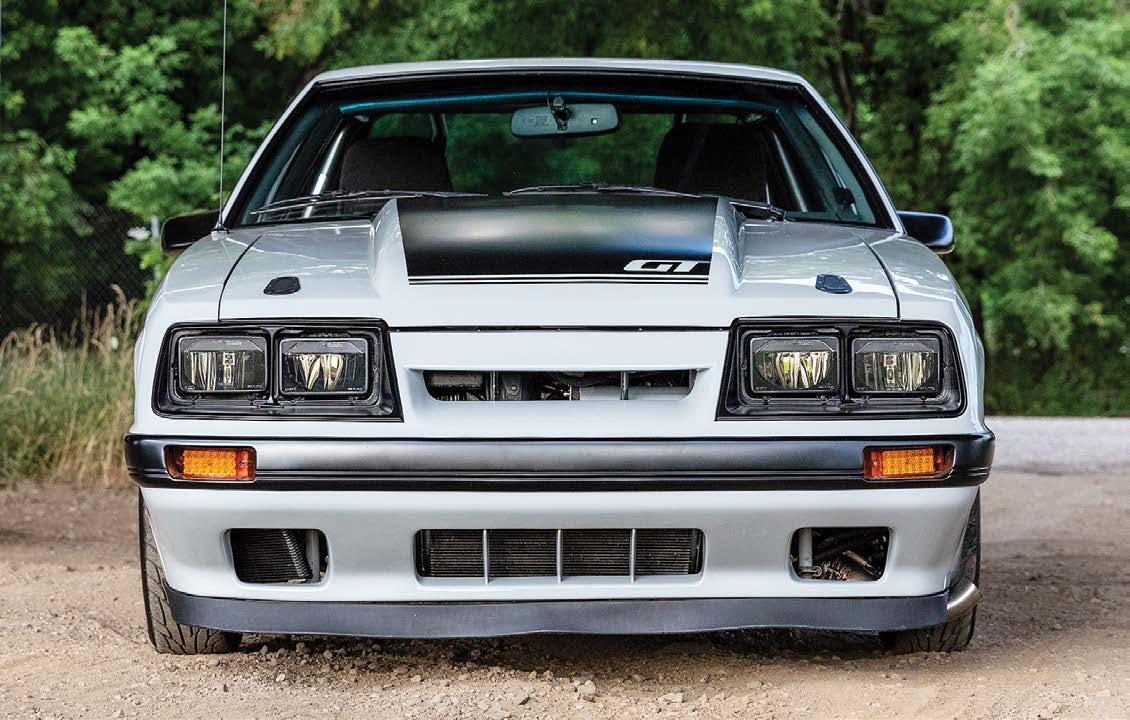
A first look at the car and the one thing that will alert you to the power within is…nope, nothing, it’s an ’86 GT with little cowl hood, some wider tires out back and skinnies up front, and maybe a little bigger tailpipes, with mud flaps. Three out of four of these (save the mud flaps) would be the first things that any one of us would do to a ’79-93 Mustang the first year we owned it. Hmmm, what’s this package out back?
MAF Racing handled the custom 12-point cage work along with pretty much everything else except the paint.
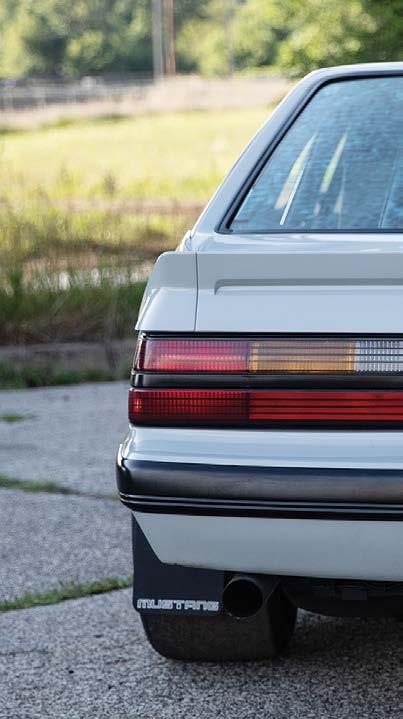
A parachute! What about those bars inside the hatch? Wait a minute, something’s going on here.
Flanders not only enjoys the shock and awe of selling a good ole “sleeper” tale on the streets with the unassuming look of his Mustang, but he’s also taken a liking to tour style events where the car is driven long distances and then raced at various tracks along the route while he sits in air conditioned comfort, of course.
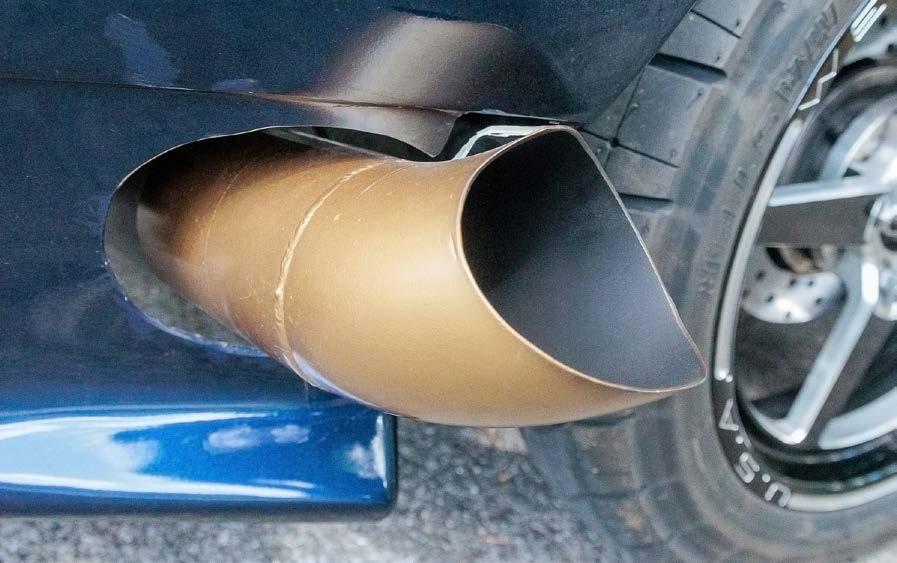
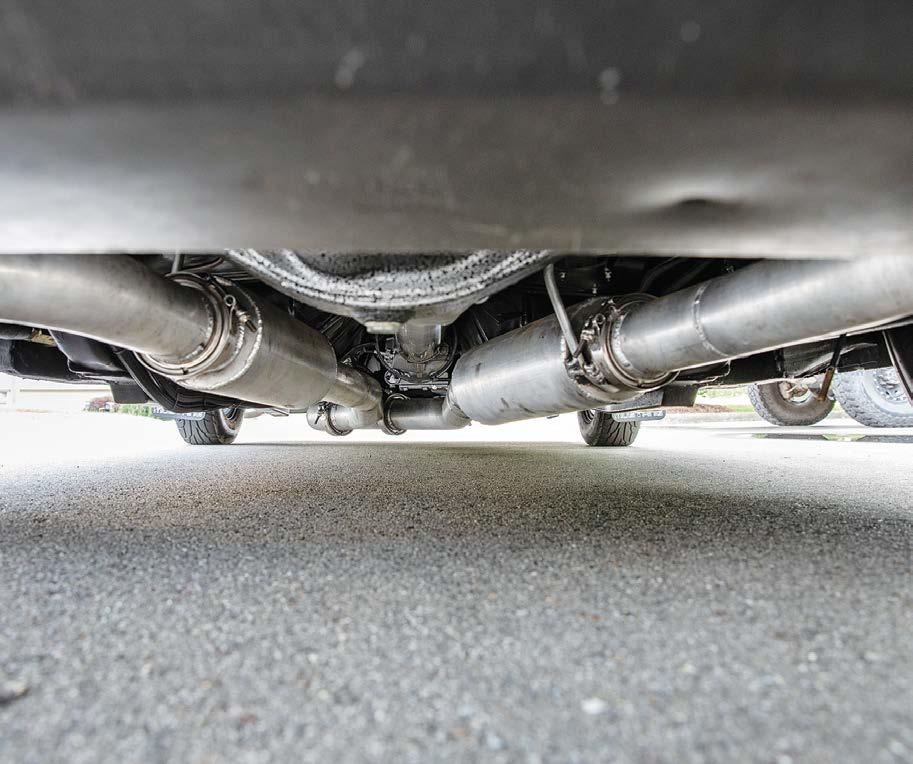
A MAF 3” aluminum exhaust with a pair of their 3” mufflers gives the Coyote a distinct tone.
The car is an original bodied 1986 GT that, as we mentioned, has been in Flanders’ possession for over 20 years. The very mild 2” Fibertrends fiberglass hood gives the GT a bit more breathing room under the hood, not to men-
tion a very slight indication that it is not entirely stock. The unique and eye catching Avalanche Grey RM BASF skin, that had the RPM office staff asking if it was off-white or light blue, was applied by Southern Michigan Auto Body.
Structurally speaking, the car can handle some power, but at the same time Flanders was sure to keep it a real stock chassis GT. MAF Racing expertly handled the custom 12-point cage along with parachute mount and trailer hitch, among other things, but more on that later.
Up front the Mustang rides on a Team Z K-member, narrowed control arms and double adjust-
able struts, while a Team Z housing 9” with custom 40 spline gun drilled axles and Pro 3.50 gears is hung by factory-location Team Z springs with double adjustable shocks out back.
The Coyote under the Fox’s hood started with a Gen 1 Ford Racing Sportsman block. A factory crank spins Manley H beam rods pinned to Diamond 11.5:1 pistons. Cylinder heads are fac-
tory unported heads with Ferrea Valves and PAC springs. Stock Mustang cams were also used and a factory Boss 302 intake was ported and mated to a 90mm Accufab throttle body.
MAF Racing stepped in once again to create the custom turbo kit for the Forced Inductions billet S480 turbo and there is no intercooler, but Flanders added a water/meth injection system.
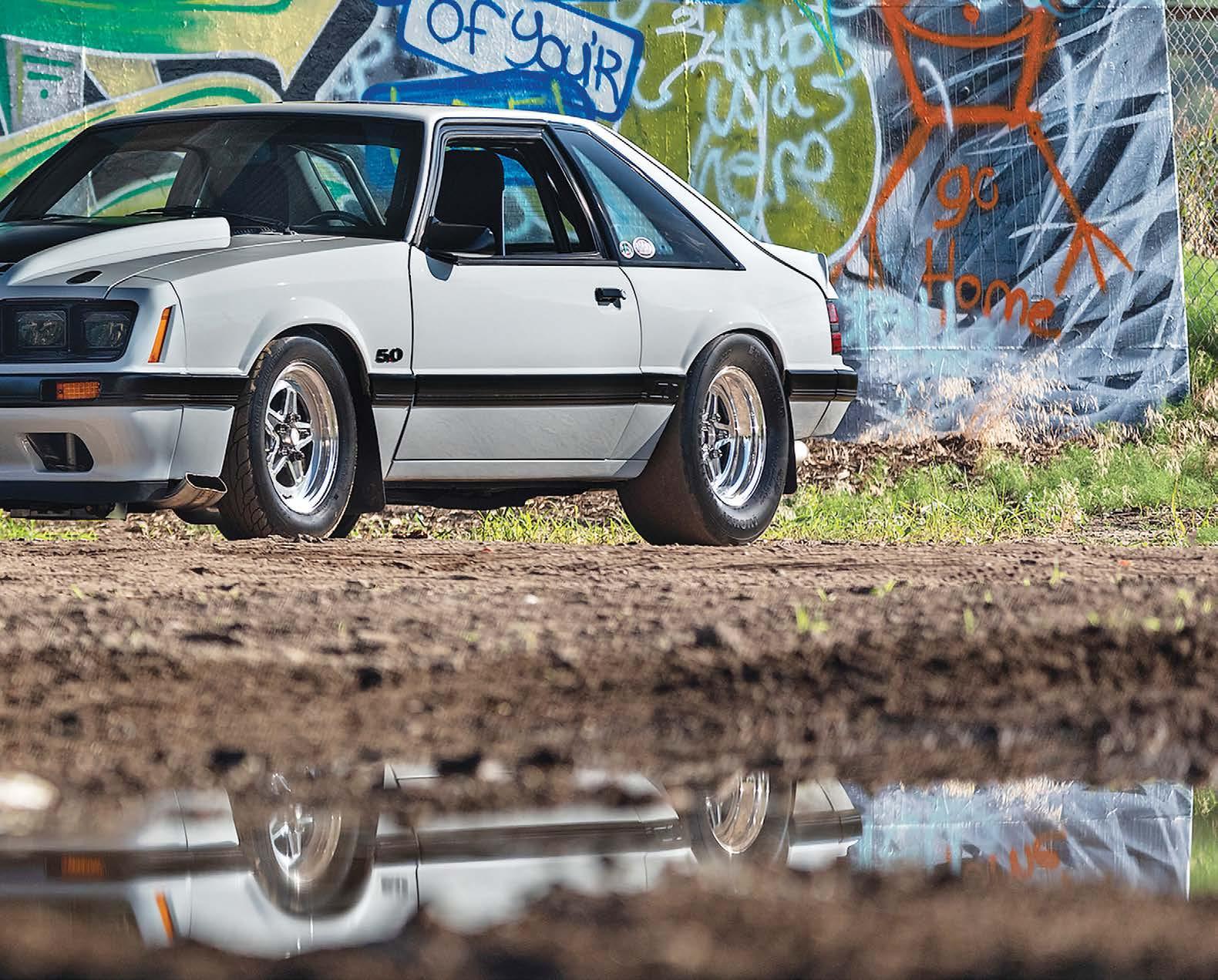
Ace RPM photog Matt Trombley captured the Mustang in a perfect setting. Check out the partial reflection of the car in the still puddle.
A Capizzi TH400 transmission with JW bellhousing, Ultimate Converter Concepts 9.5-inch converter, Meziere billet heat exchanger pan and GV overdrive unit transfers the boosted Coyote power rearward through a CCI Driveline 4-inch aluminum driveshaft.
Electronics consist of a Holley EFI Dominator system, Smart Coils, FIC 1650 injectors, Firecore50 wires and a 7-inch Holley dash. And those “almost” stock looking dual
exhaust tailpipes we mentioned, they are 3” fabricated aluminum and are also a creation of MAF Racing along with their aluminum mufflers. When all is said and done Tim Flanders has a car that he can drive on the street and drag on the strip reliably to the tune of 8.829 at 153.38 MPH in the quarter-mile with a 1.262 second 60-foot time, and 5.64 at 124.07 in the 1/8. And that my friends definitely makes this one Cool Coyote!
Most RPM readers either owned or got their butt handed to them on the street by a Fox body Mustang back in the 80s, 90s and even into the 2000s, long after the platform was discontinued. Even today, you’ll find a majority of them at any race, cruise or show. In other words, they are still a winning choice all these years later.
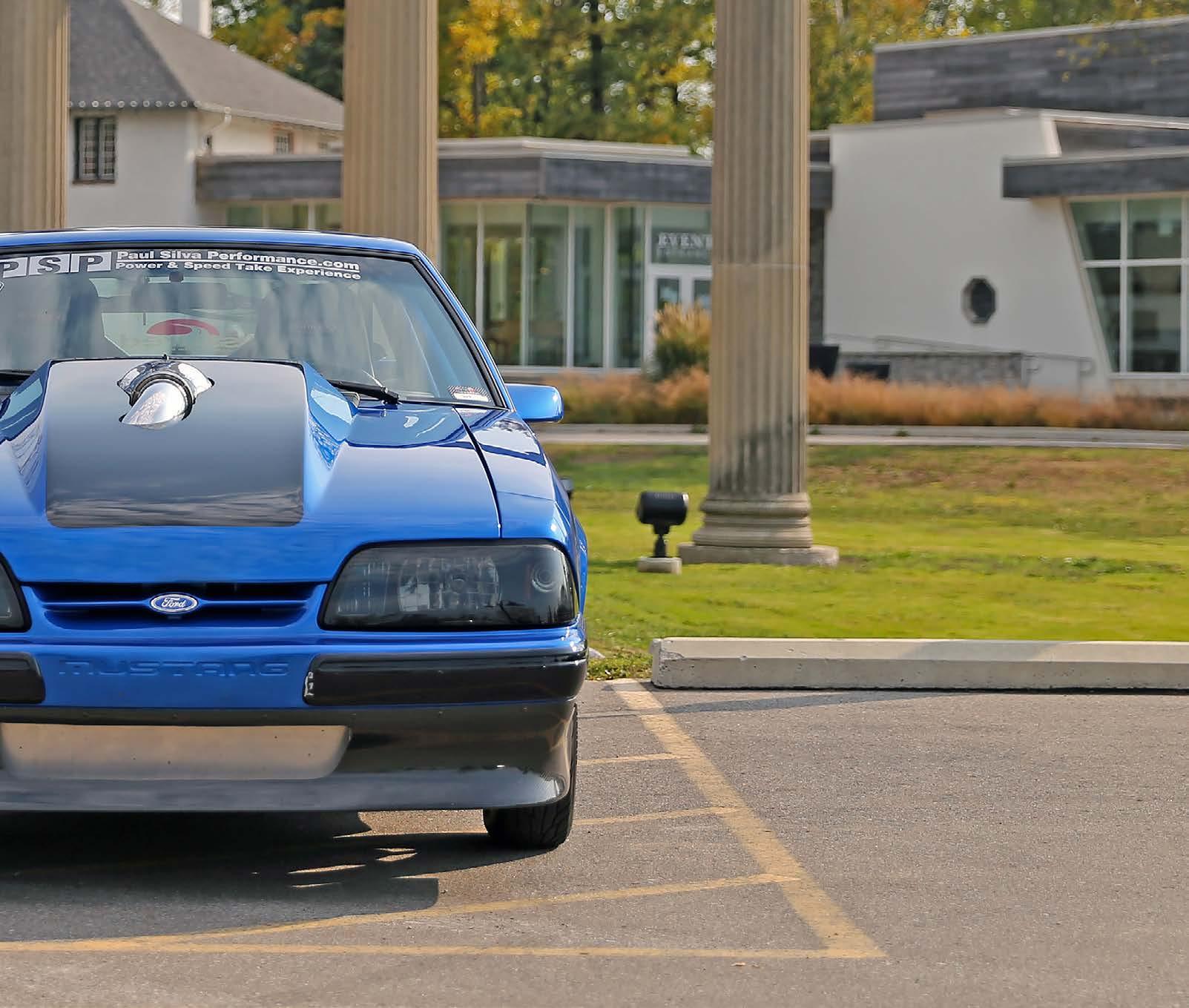
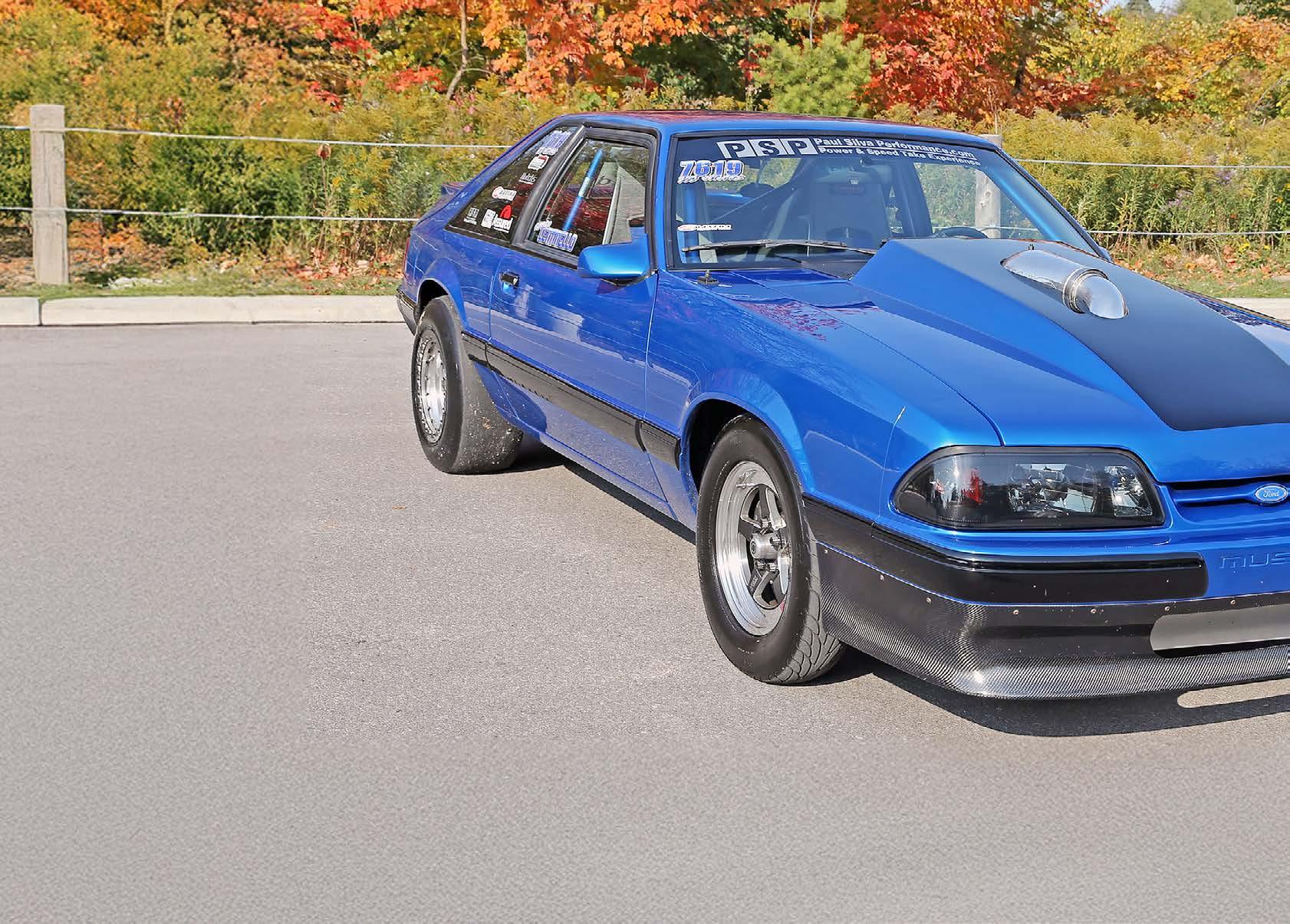
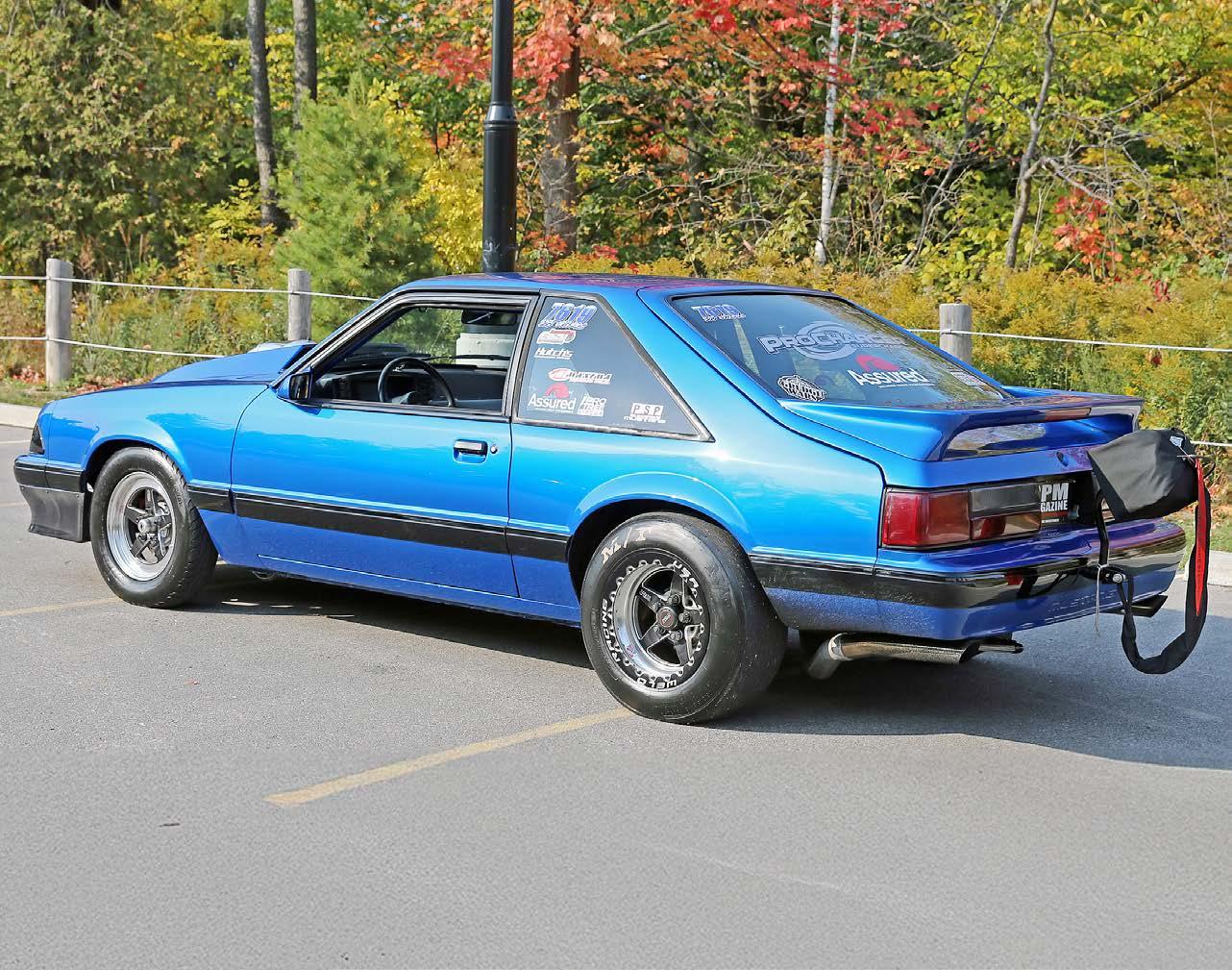
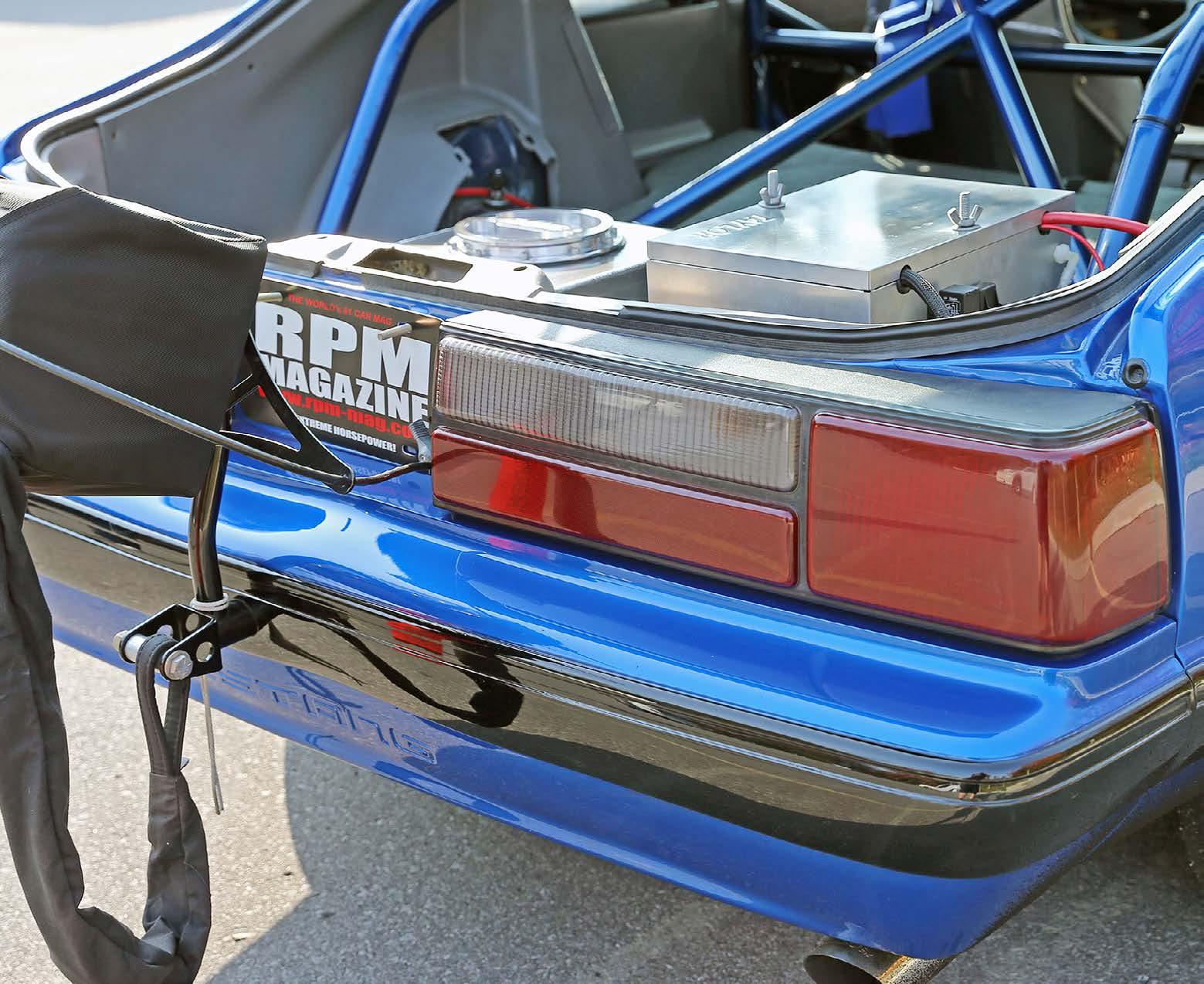
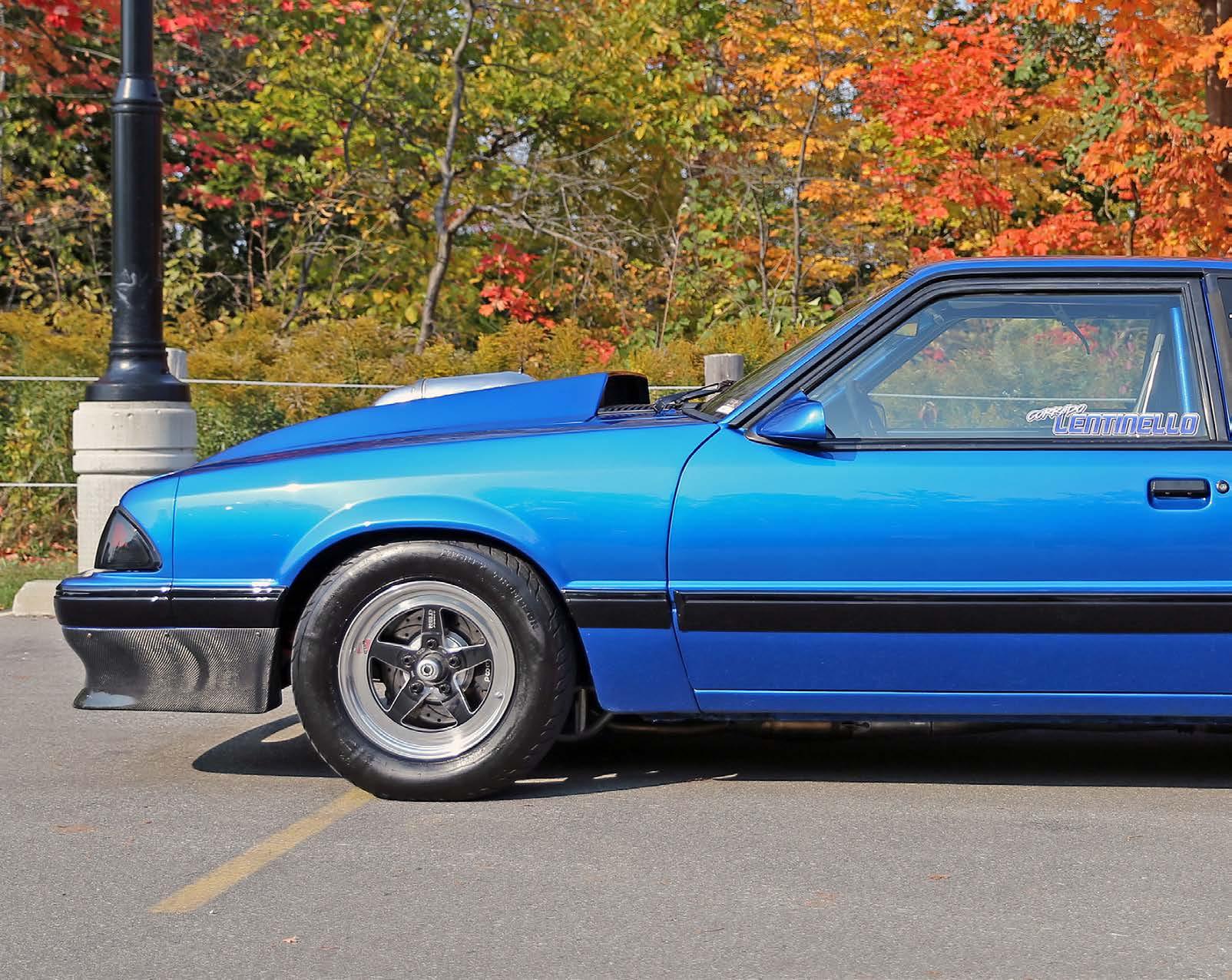
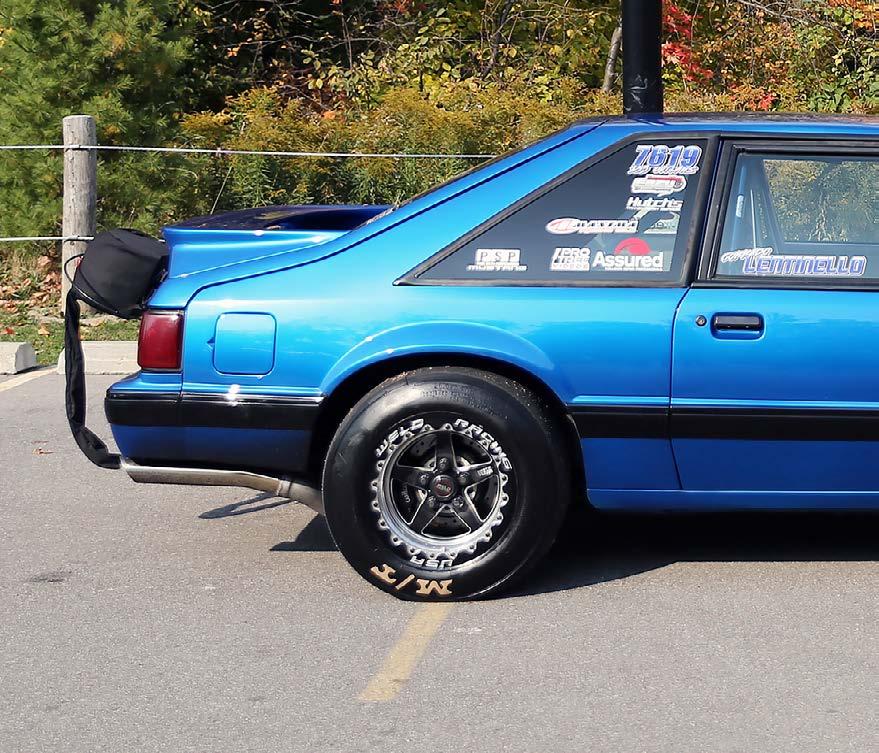
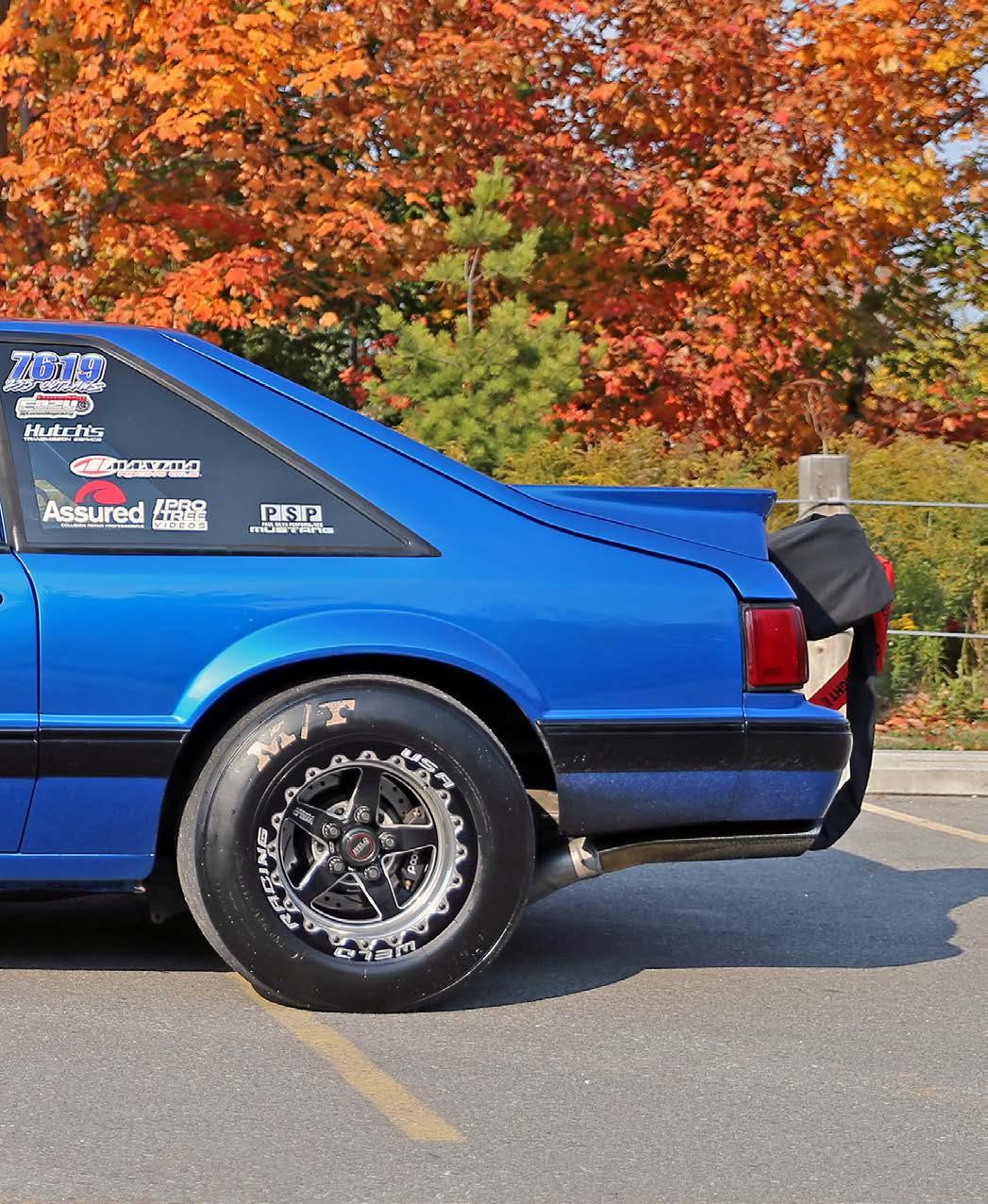
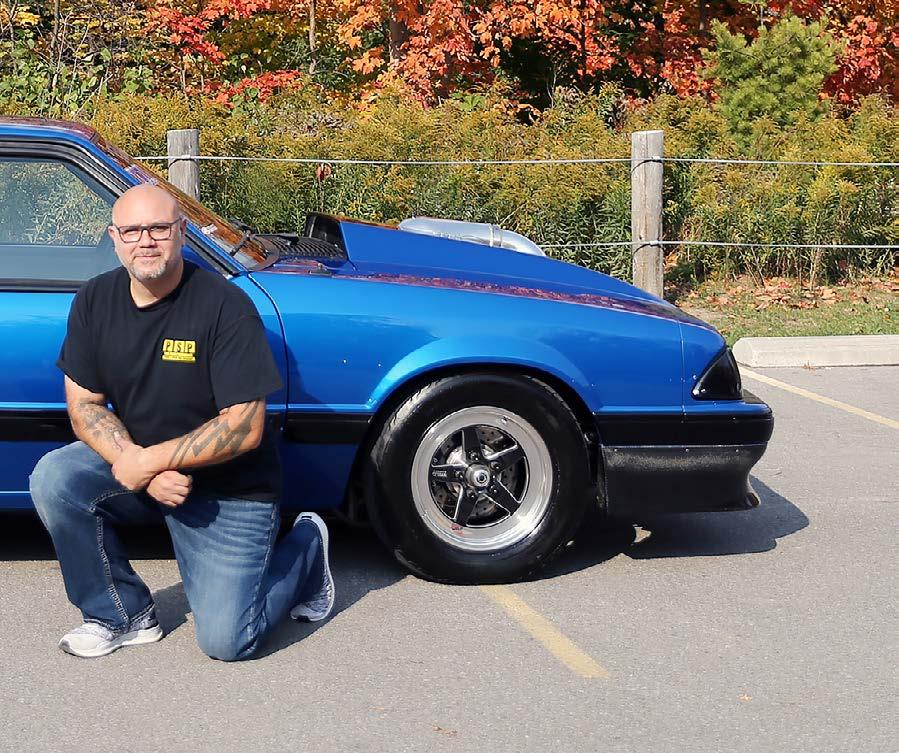
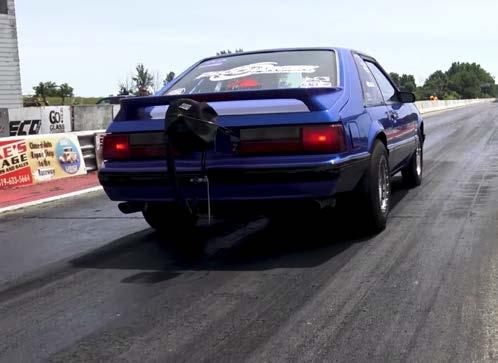
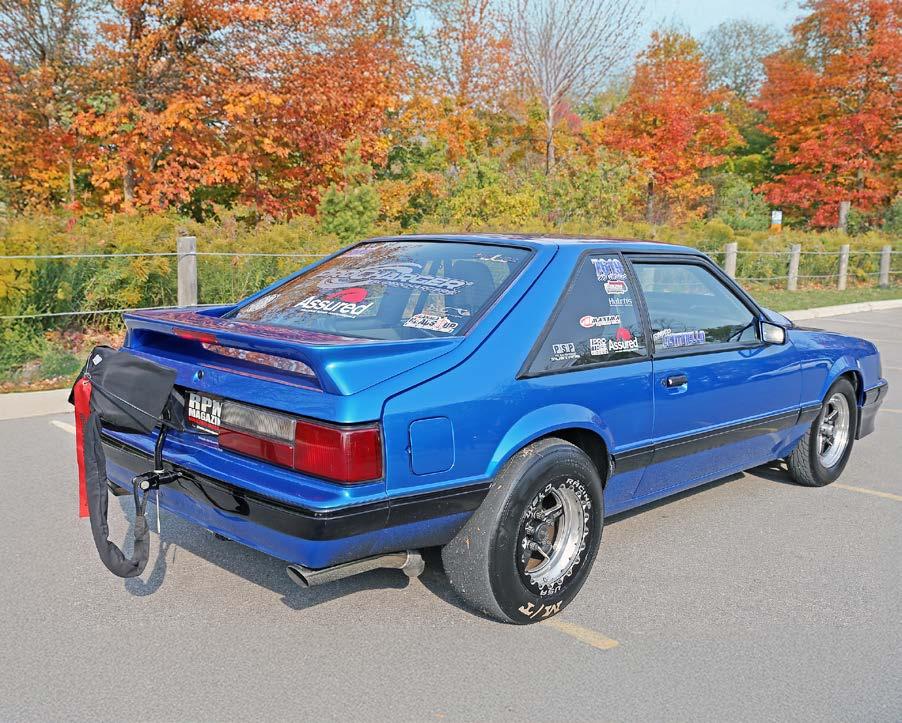
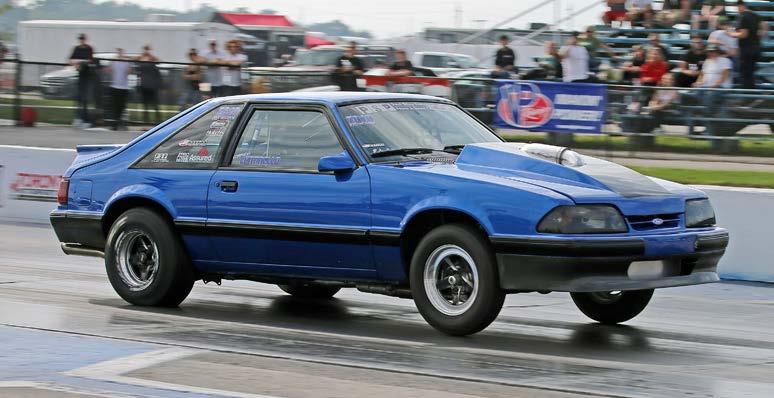
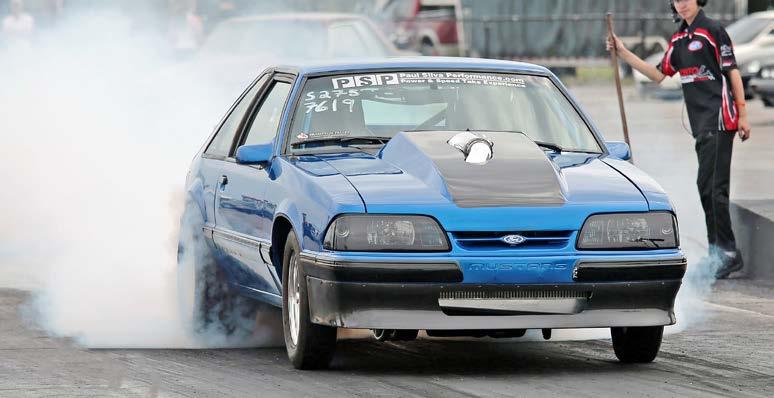
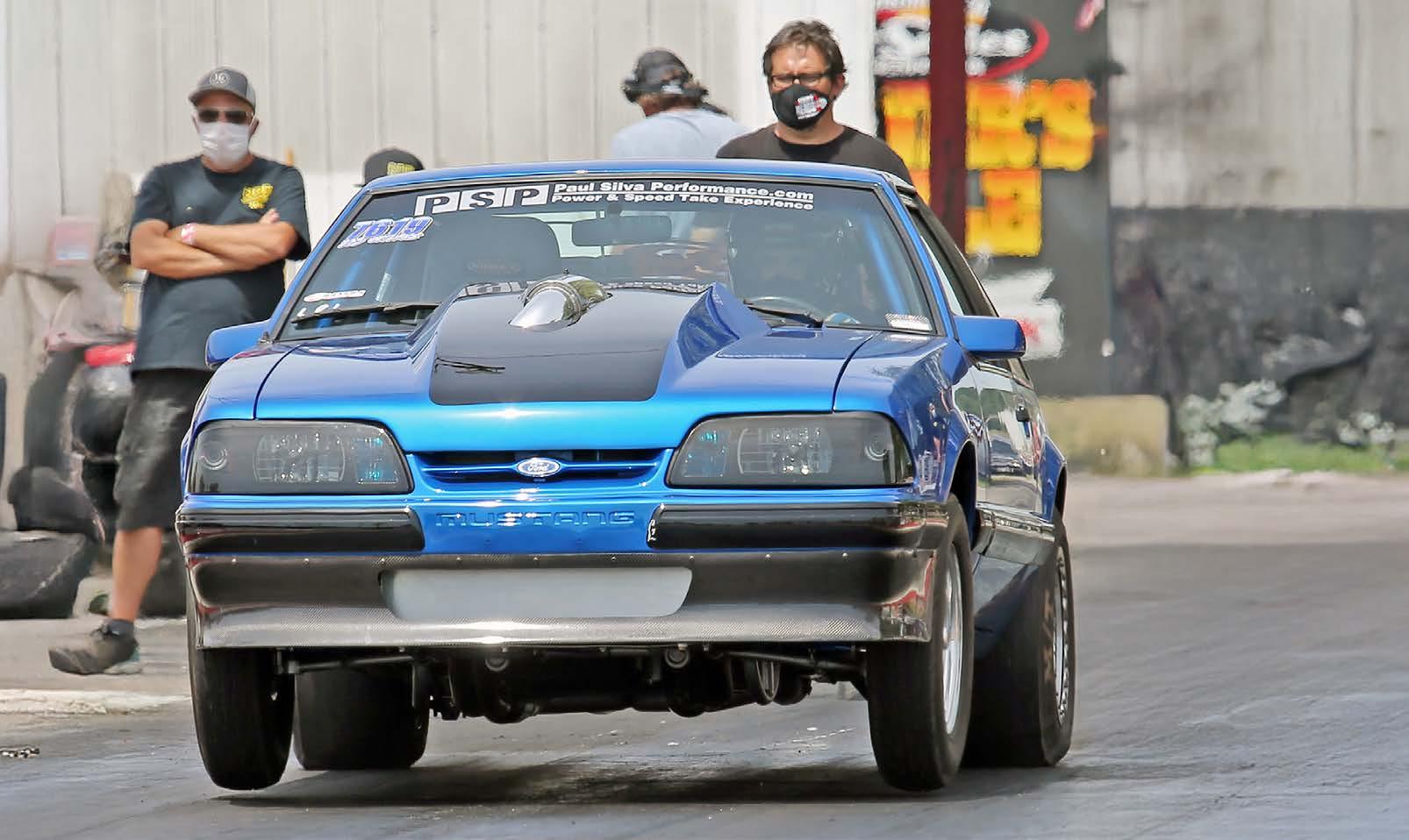
Aurora, Ontario’s Corrado Lentinello’s ’89 Fox Body hatchback started as a father/son project to build a fast street car and ended up as a heavily boosted record setting small tire brawler on the track.
Lentinello bought the car with his father back in September of 1998. At the time it had a stock block 351 Windsor with Canfield heads, a 150 shot of nitrous and a 5 speed behind it. “The intent of the car at the time was just to be a killer street car with a couple trips to Mexico,” Lentinello said with a smile. (Mexico being the code name for a popular street race location). A painter by trade, the Stang got a new skin laid down on it by Corrado and it stayed on street duty with future plans to build more power for it.
Story: George Pich
Photos: Blake Farnan
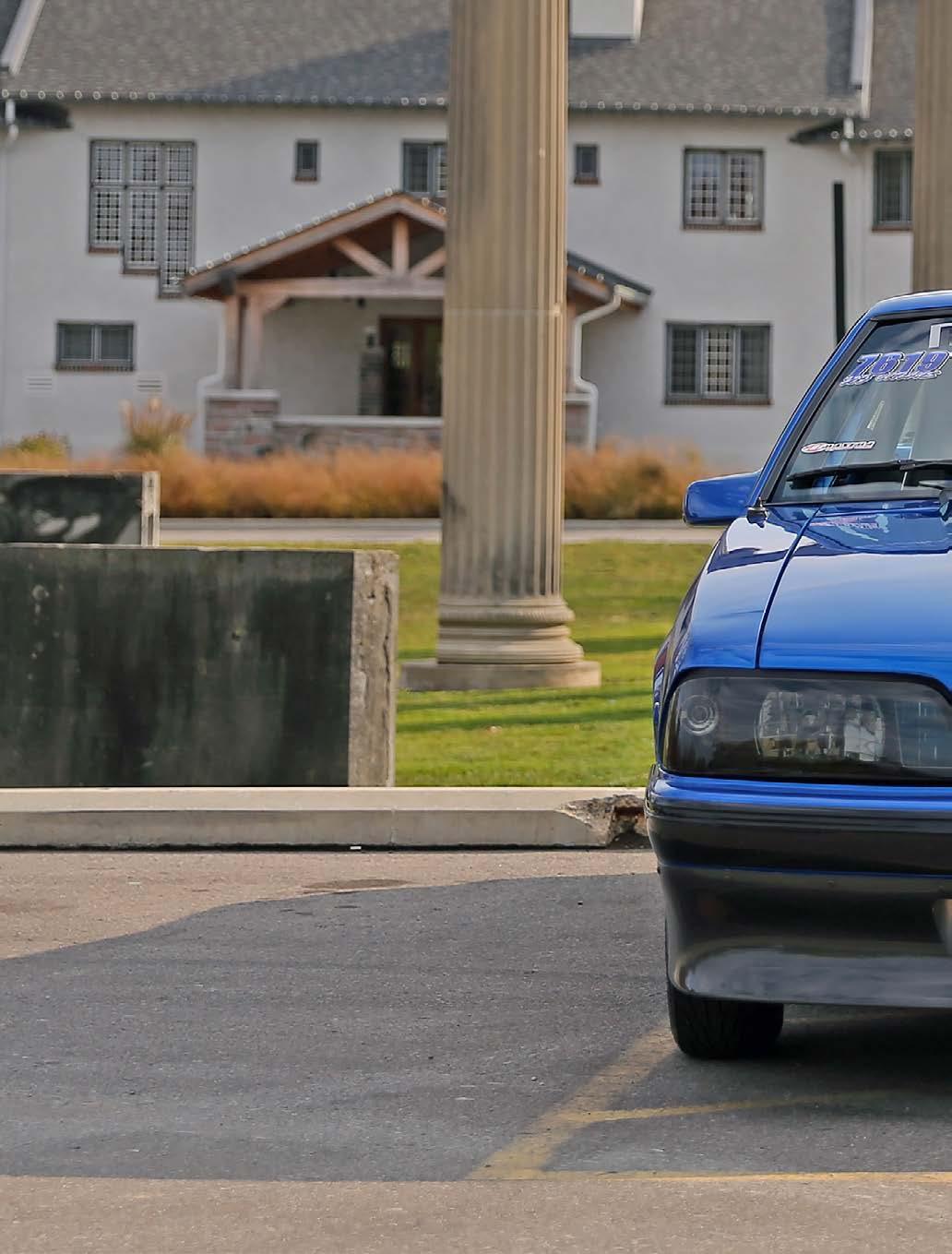
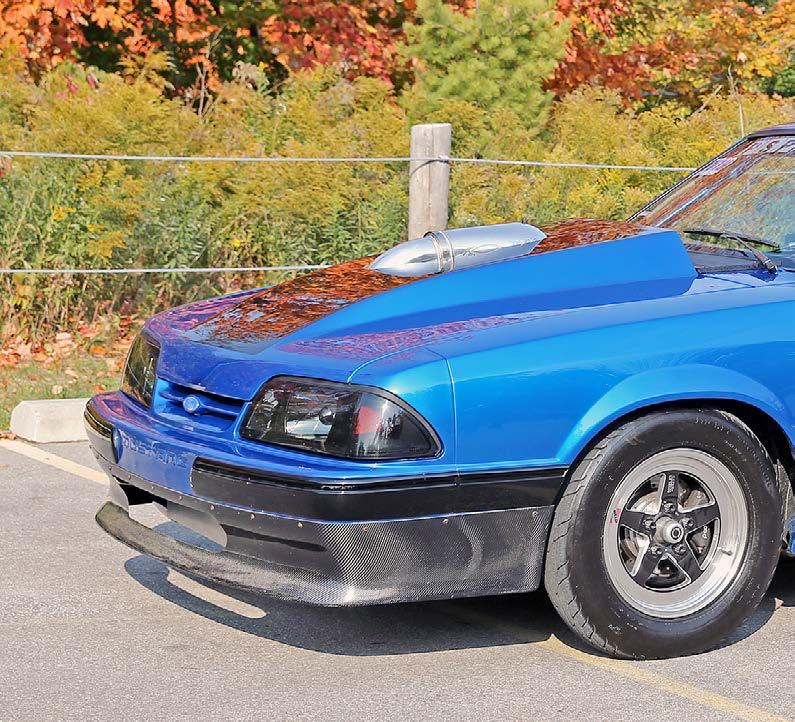
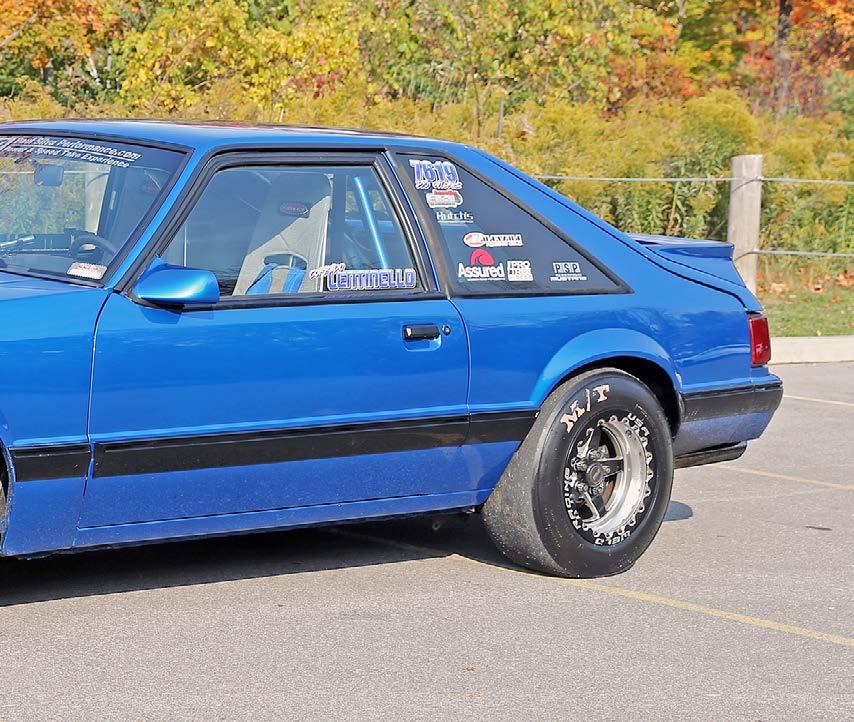
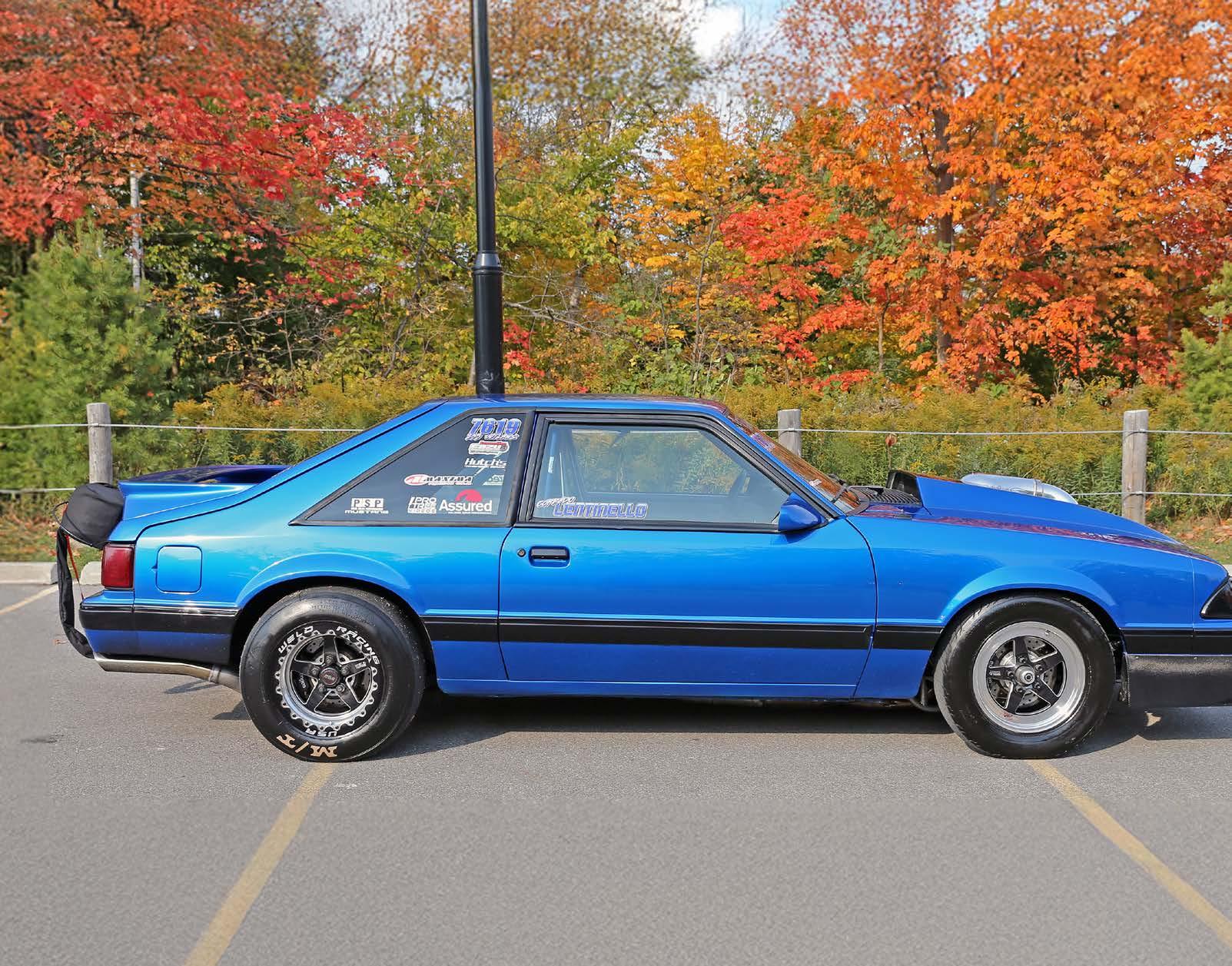
The slick paint on this Fox Body looks so nice because the owner is a painter by trade. The car is all original steel except for the fiberglass hood and carbon lower bumper extension
The record was the icing on the cake!
“My dad and I planned to continue with the car, but unfortunately my father passed in 2017, so the project was put on a bit of a pause,” he lamented. Once Lentinello got his motivation for the car back, he would dedicate it and his racing
efforts, now done on the track, to his dad. He would soon hook up with Paul Silva from PSP and start working on plans to build a dedicated class car that would dominate the strip. At the time, the Street 275 class was starting to take hold in Ontario, so they built the Mustang for it. Unfortunately it would change to a 5.50 index class, and since Corrado’s passion was heads-up racing, some decisions needed to be made.
It was late in 2019 when Lentinello would find his new class home and the car was changed over to fit the 235 Outlaw radial tire class rules.
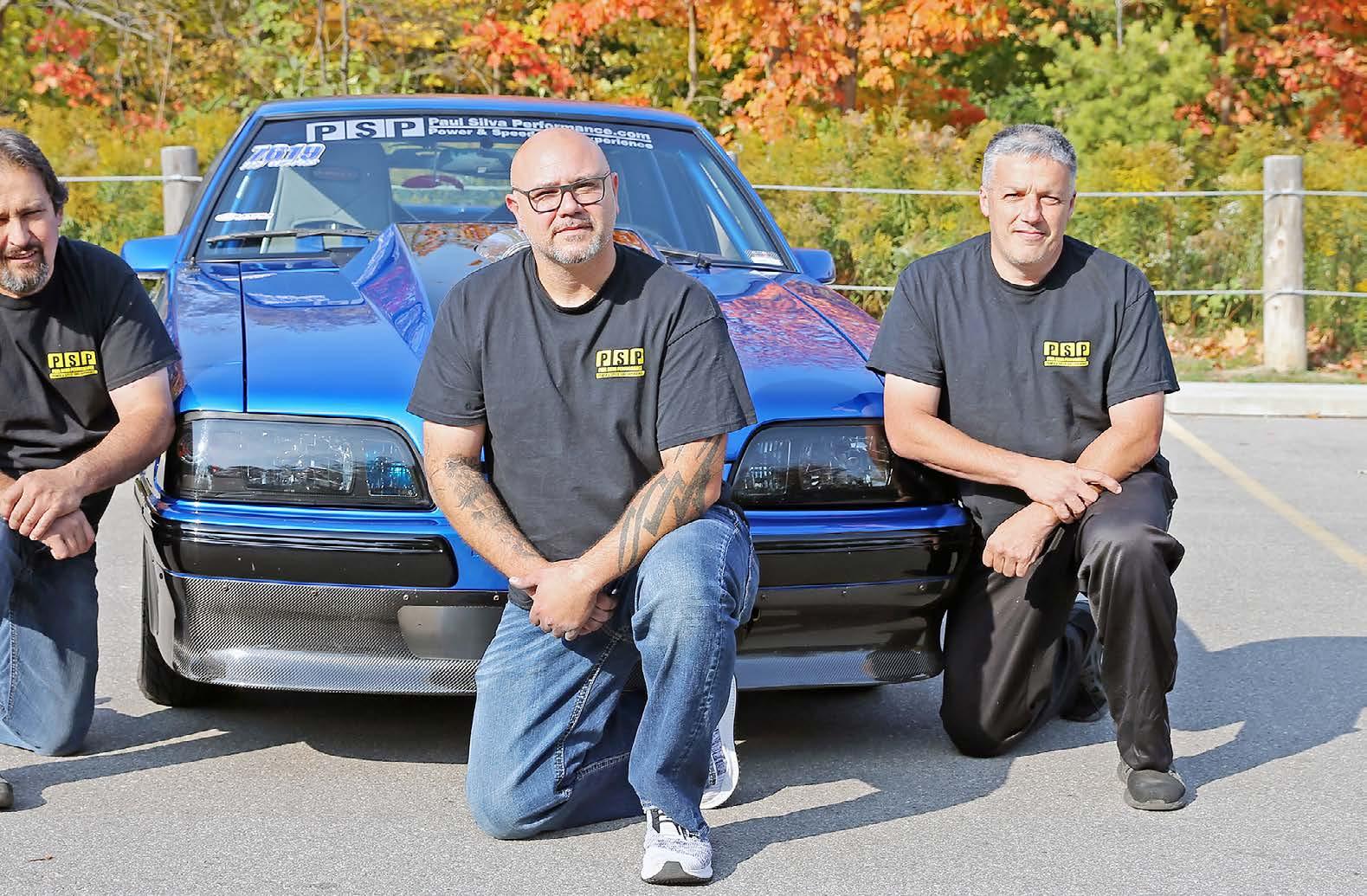
From left to right: Paul Silva, Corrado Lentinello, Ernie Zambri
What’s Old Is New if you haven’t read it yet!
Each month we host some of our past issues of RPM Magazine in this section. If you haven’t read them yet, they are new to you! If you have, maybe there’s a favourite car/story you want to read again….here they are!
CLICK A COVER OR SCAN A QR CODE TO GO BACK IN TIME! February
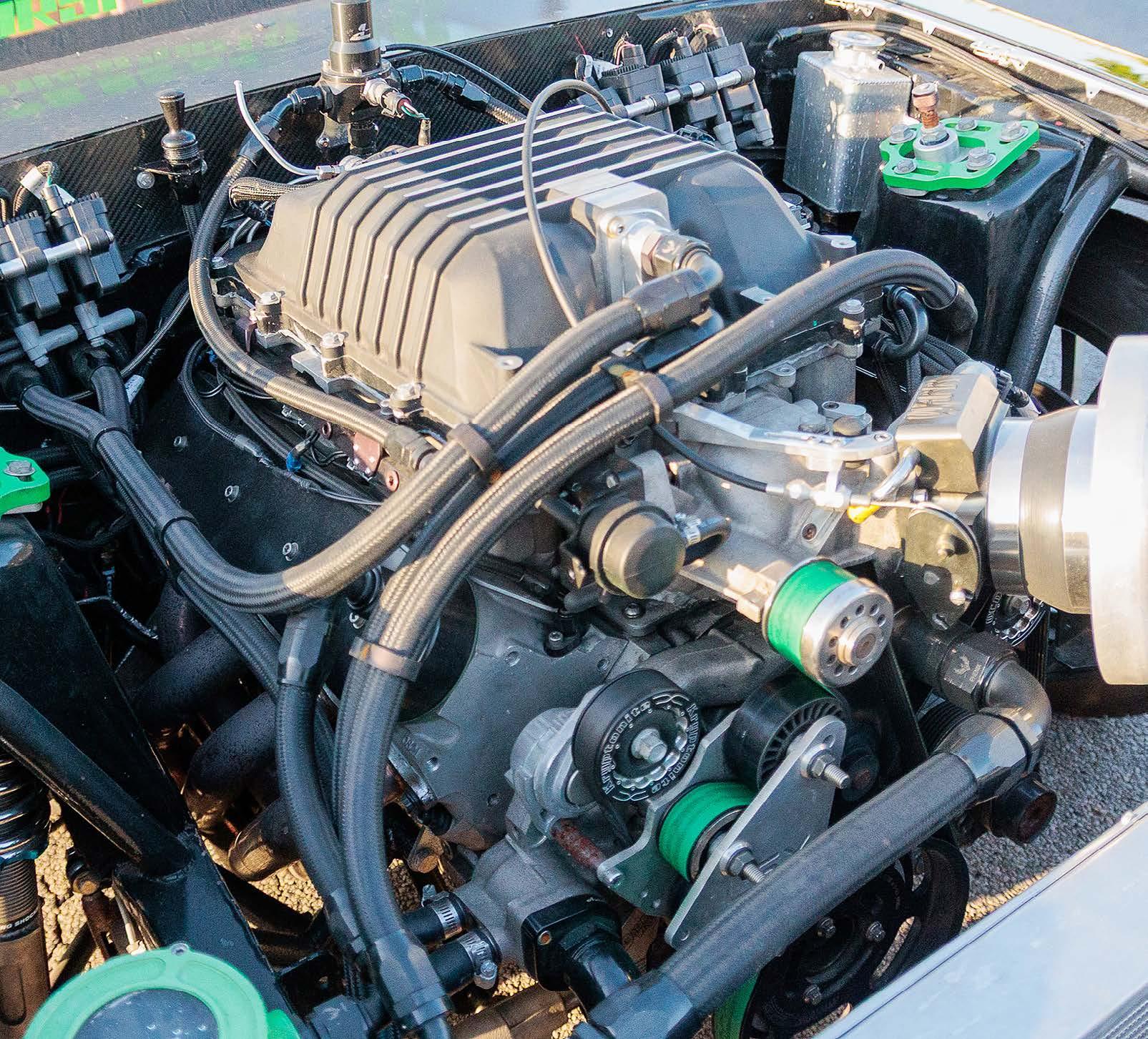
The coil near plug ignition setup might throw people at first, but make no mistake this Ford is all Ford!
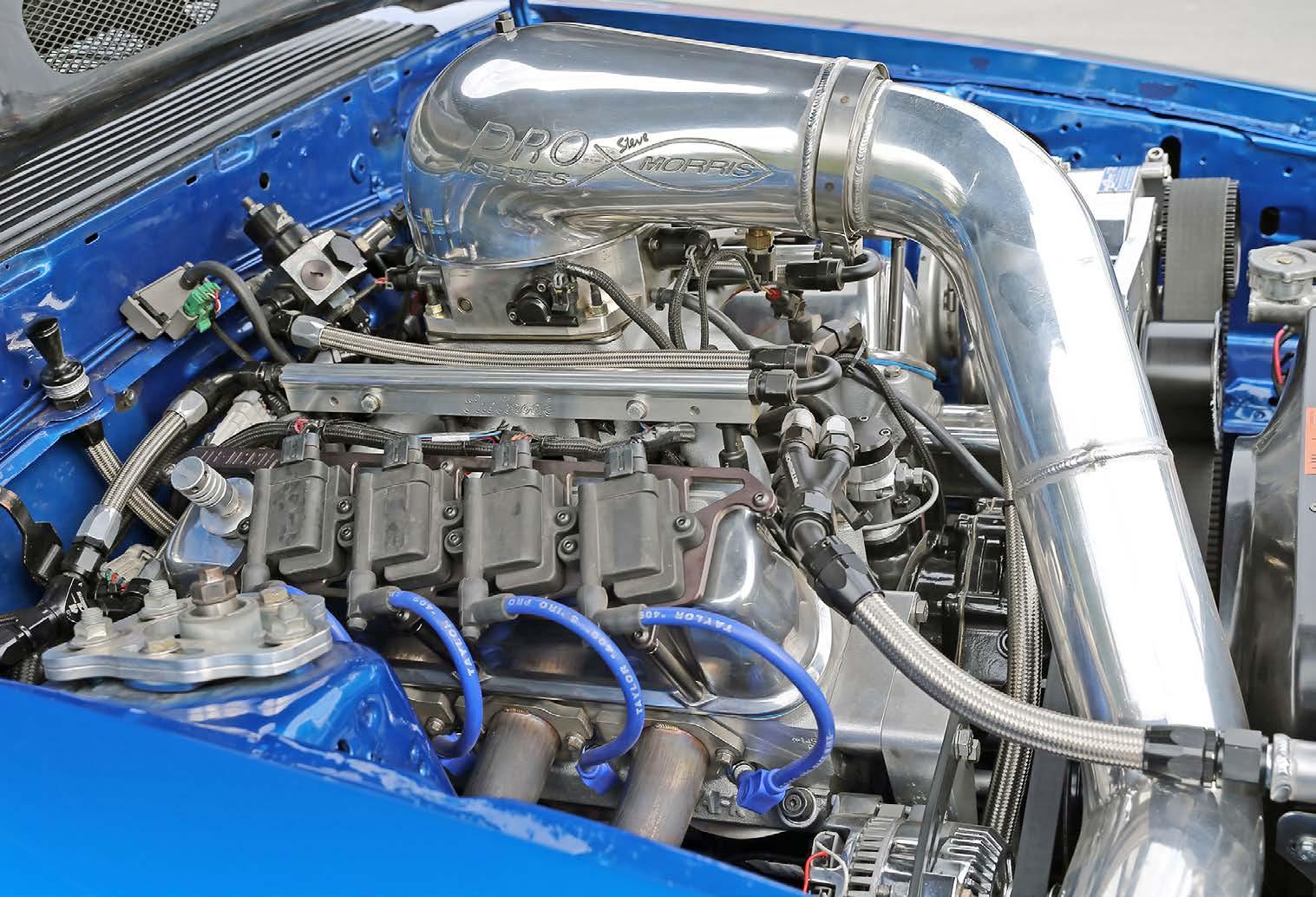
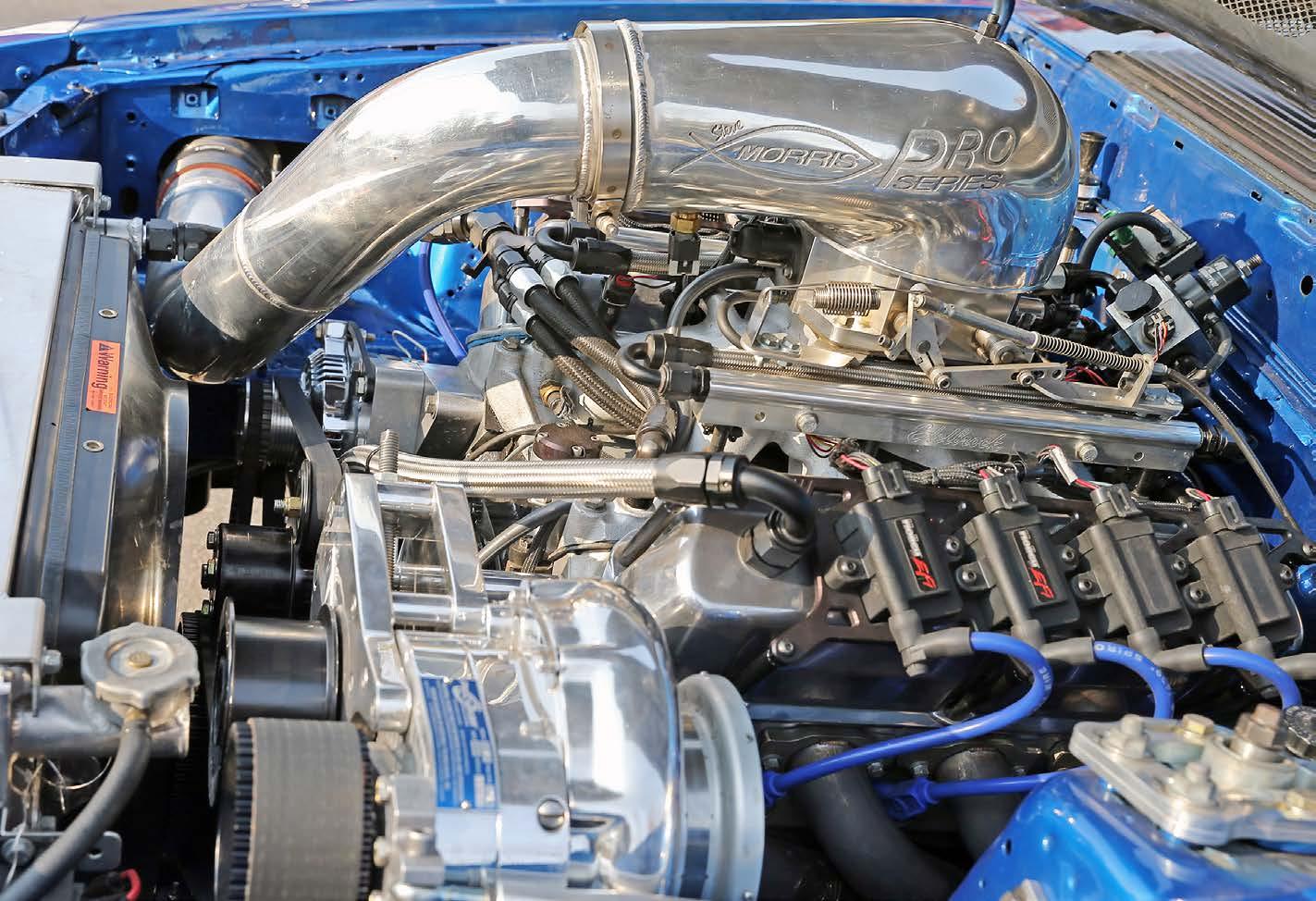
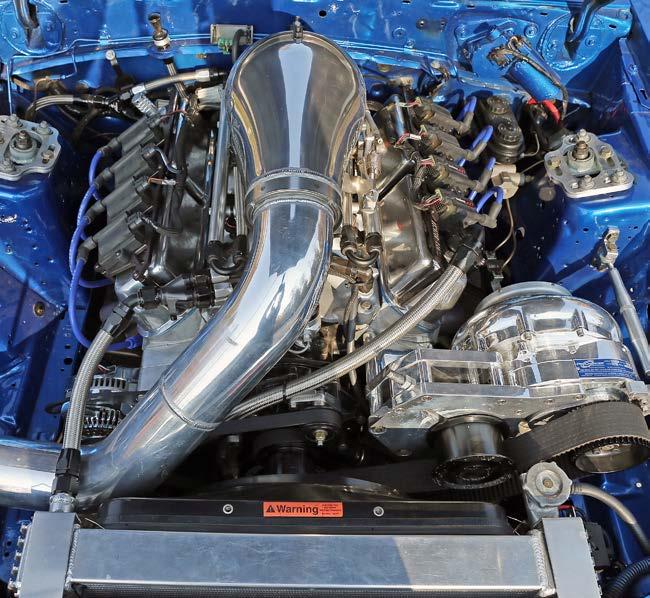
A ProCharger F1X centrifugal supercharger adds the extra punch to the small block.
The results were instant, as Corrado and the Mustang dominated the last 2 events of the year, and would end 2019 also holding the ET record after running and backing up a 5.19 eighth-mile hit.
With those early results in-hand, off-season plans were to upgrade a few areas of the car and continue at the top of the 235 Outlaw class in 2020, with hopes of winning a championship in honor of his late father and maybe capture another record.
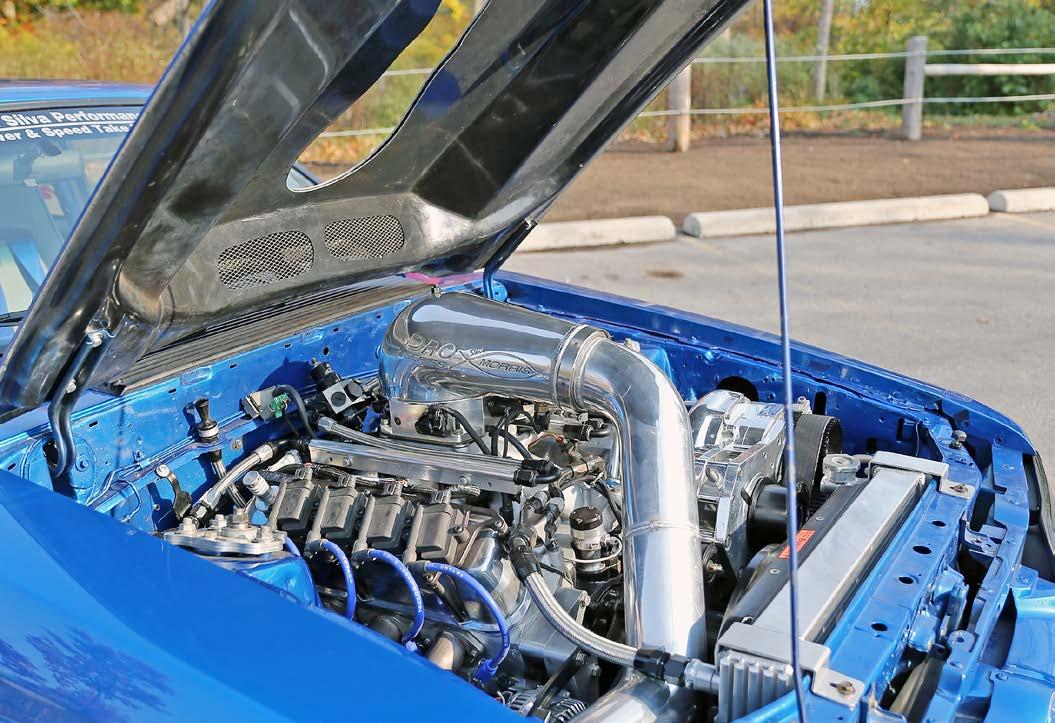
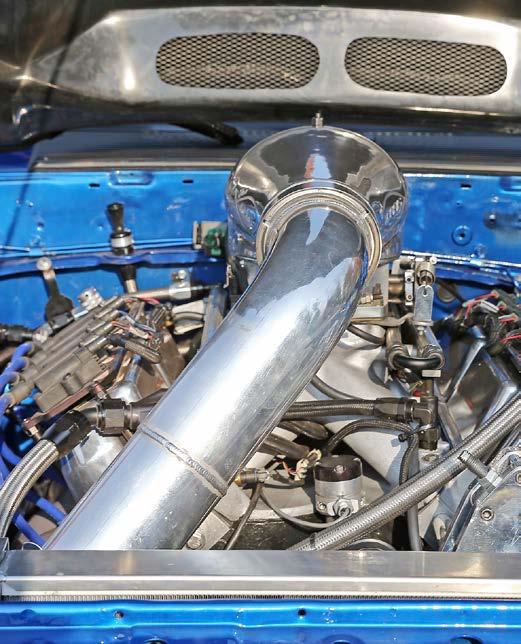
Like the car’s body, under the hood is sparkling clean and the polished tubing and Steve Morris throttle body hat, make shades mandatory issue!