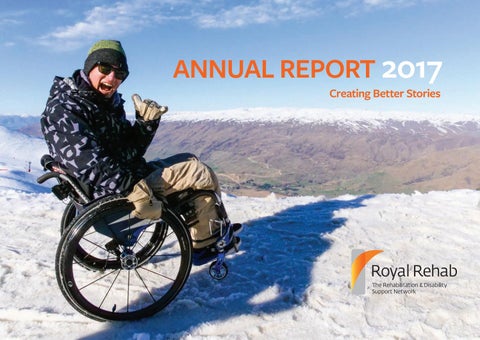
Annual Report 2017 Creating Better Stories
Find more content online
This year we are introducing QR codes to provide access to more Royal Rehab content online. Watch videos, connect with our social pages and find more in-depth information about our programs and services. These codes will appear throughout the Annual Report for you to scan with your smart phone and will direct you to relevant content online. You may need to download a QR code reader for your phone.
Mission
Vision
Values
World class lifestyle support, rehabilitation, education and research
To maximise your life skills and abilities
Person Centred
Collaborative and Inclusive
Respecting and promoting the rights, capacities and opportunities of all our people
Fostering teamship and participation
Honest and Trustworthy
Innovative and Informed
Ethical, accountable and acting with integrity at all times
Committed to learning, development and continuous improvement
Annual Report
2017
1
2
Annual Report
2017
A Year In Review 4 Chairman’s Report 6 CEO’s Report 7 Governance 8 The Numbers 10 Brain Injury Service 11 Return2Sport 14 Spinal Injury Service 17 Sargood on Collaroy 20 Lifestyle Support 24 Royal Rehab Private Hospital 27
Contents
Research 30 Productive Garden 34 Community Rehabilitation Service 36 Community Support 38 Thank You 40 Volunteer Services 42
Annual Report
2017
3
July 2016
August 2016
September 2016
October 2016
12 August 2016
30 September 2016
11 October 2016
11 November 2016
2 December 2016
NDIS rolls out in Royal Rehab service area
Annual Wall of Fame event held
Return2Sport receives $20,000 from Sidetember fundraiser to fund Cycling HUBs
Spinal Outreach Service hosts ‘Ageing with Spinal Cord Injury’ clinician workshop
Royal Rehab hosts 14th NSW Brain Injury Rehabilitation Program Forum
Volunteer Services awarded Excellence in Volunteer Management at The Centre for Volunteering’s Volunteer of the Year Awards
13 August 2016
14 & 17 October 2016 SAP Australia & New Zealand corporate volunteers visit Yagoona and Bass Hill community homes 27 October 2016
A Year In Review
December 2016
1 July 2016
Lifestyle Support Service receives $20,000 donation for community homes in Campbelltown
4
November 2016
Productive Garden wins First Prize in City of Ryde Spring Community Garden Competition
2 December 2016 Sargood on Collaroy celebrates official launch with former Premier Mike Baird 8 December 2016 Lifestyle Support Service clients experience first holiday cruise 18 December 2016 Ducati Owners Club NSW donate $13,500 to Royal Rehab at annual Track Day
Annual Report
2017
January 2017
February 2017
March 2017
24 January 2017
23 February 2017
1 March 2017
April 2017
5 May 2017
7 June 2017
Final Royal Rehab College graduation
Sargood on Collaroy open day
Sargood on Collaroy opens to the public
Spinal Injury Unit receives $15,000 donation from the Newcastle Permanent Building Society
Staff present at the 4th annual NSW Agency for Clinical Innovation Rehabilitation Network Forum
Royal Rehab relaunches Clinical Rehab Forum
22 March 2017 Sargood on Collaroy features on Channel 9 TODAY Show
April 2017
May 2017
10 May 2017 Return2Sport and Sargood on Collaroy feature at the ATSA Independent Living Expo 27 May 2017 Royal Rehab Gala held at the Hyatt Regency Sydney
June 2017
June 2017 Sargood on Collaroy wins in the 2017 Good Design Australia Awards, accepted by WMK Architecture 23 June 2017 North Ryde Rotary Pride of Workmanship Award awarded to Lifestyle Support Service Accommodation Manager Mukesh Thakur 23 June 2017 Macquarie Park Rotary Pride of Workmanship Award awarded to Lifestyle Choir member Glennen Fahey
Annual Report
2017
5
have proven our ability to take on the change and demands of the NDIS in particular. Growth and expansion also brings with it some financial pressure and this year has been no exception with our new computing systems, new housing and the much anticipated Sargood on Collaroy, along with the slow transitional arrangements for the NDIS.
Chairman’s Report
Further challenge came to us following the changes made to the federal government VET fee funding of our college, which led to it having to be wound back significantly. However, quality education and training continue to be of the upmost importance to Royal Rehab.
6
I have pleasure in presenting my Chairman’s Report for the year ended June 2017. The past year has offered some great challenges to Royal Rehab in the way we do business, how we report it, and how we adapt to the significant change with which we are continuously presented. I am very proud of the way the organisation has dealt with this change at every level. During the year we have been able to complete and open the state-of-the-art resort, Sargood on Collaroy, a new A-grade housing development in Charles Street Putney and implement a major transformation to our computing and management systems. As I have commented in previous reports we will continue to be asked to deal with change and we are becoming markedly more nimble in our approach and
We are very fortunate to be surrounded by good people. I would like to offer particular thanks to former ministers NSW Minister for Health and Minister for Medical Research Hon. Jillian Skinner for her ongoing support, and Hon. John Ajaka in his capacity as NSW Minister for Disability Services who once again went out of his way to present our Wall of Fame Awards, and on other occasions demonstrated his support with visits to Royal Rehab. Our local federal member John Alexander OAM continues to be very engaged with Royal Rehab and has assisted at many levels during the year and particularly to facilitate access to federal government ministers, for this we are very grateful. The Patron of Royal Rehab, Governor David Hurley and Mrs Linda Hurley have been extremely generous with time and support. At a recent visit “You are my Sunshine” seemed to be heard in every corner at the instigation of Mrs Hurley, with clients, staff and carers all joining in. I would also like to make special mention of Peter Overton who has again given generously of his time at our Wall of Fame presentation.
Volunteers are a most important aspect to enhancing the care given to our clients, and their dedication to that care is greatly appreciated. Our volunteers come from individuals in the community, community groups and increasingly, corporations and benevolent foundations. I would particularly like to acknowledge the special contribution of Mark Hanley who we lost this year following over 40 years as a volunteer at Royal Rehab. Royal Rehab benefits greatly from its association and partnership with organisations such as Wheelchair Sports NSW, the Stroke Recovery Association of NSW and Brain Injury Australia. We were honoured during the year to launch Stroke Awareness Week and host the 2016 National Acquired Brain Injury conference. As part of our engagement with the Ryde Sports Foundation Achievement Awards we were present to welcome home our local 2016 Paralympians. We also joined in the 40th anniversary celebrations of the Ducati Owner’s Club who have for 39 years supported our Brain and Spinal Injury Services. My role as chairman is greatly supported by my fellow directors to ensure that the legacy of our founder Susan Shardt is upheld and broadened. I thank our CEO Stephen Lowndes and his team for the professionalism with which they have adapted to the challenges presented to us throughout the year. I am confident that our financial and human resources are now well placed to continue to meet the needs of our clients during the next year and beyond.
Tony Staveley Chairman
Annual Report
2017
CEO’s Report
From a provider’s perspective, substantial delays in client assessment and funding approval, particularly for those with complex support needs and who continue to choose to remain in their existing communal homes, have created enormous funding pressures to support existing clients and unprecedented delays in the acquisition of new clients. Due to the uncertain outcomes, protracted processes and more recently, shorter-term and interim funding approvals, it is extremely difficult to manage client transfers. Such delays and uncertainty of outcomes equally frustrates new clients and their families, several of whom witness prospective housing options available to them disappear from the marketplace due to the length of the process.
The last twelve months have been another year of significant challenge and change for Royal Rehab and for many of our clients, particularly for those who have transitioned into the National Disability Insurance Scheme. Amongst the broad scope of health and disability support services which we deliver, the operational complexities, cash flow pressures and systems peculiarities associated with the NDIS transfer have demanded substantial resource time and effort. It is a credit to our Lifestyle Support team’s persistence, technical knowledge and client understanding that they have been able to so effectively support our clients into the NDIS, with funding packages broadly appropriate to their support needs and lifestyle choices.
Annual Report
2017
These same policy and process complexities around the National Disability Insurance Scheme continue to contribute significantly to delays in discharging many rehabilitation clients from our Spinal Injury Unit, and to a lesser degree our Brain Injury Rehabilitation Service. Otherwise, these services together with their respective home and community based services, have performed very strongly over 2016/17 with high levels of occupancy, good client outcomes and high patient satisfaction levels. Similarly, our Private Hospital has performed strongly, operating at close to full occupancy over the last several months, with a significant opportunity cost of unadmitted clients due to our current limited bed capacity. Our Day Programs are now well established, providing additional options for clients who have completed, or do not require, inpatient therapy. Unfortunately, the ongoing uncertainty and changing reform landscape around the Federal and State vocational training support schemes, and the burden of compliance led to a strategic decision to withdraw
our College’s Registered Training Organisation licence, after acquitting any obligations to continuing students. Whilst we are very proud of the graduates of our College, we will continue to provide on-site teaching for students enrolled with other tertiary institutions. Sargood on Collaroy finally opened its doors for business in April 2017, after extensive facility and systems testing, and comprehensive staff recruitment and training. This is truly a state of the art, ‘five star’ accessible facility, providing a range of leisure, vocational and skills based support and programs for people with spinal cord injury living in the community. Guest feed-back has been overwhelming, and we look forward to continuing to deliver upon the vision and objectives of each of the stakeholder partners in this venture. Again, the Royal Rehab Foundation was well supported by a number of our long-term supporters who are mentioned elsewhere in this report, which helps provide a range of innovative programs and purchase much needed aids and equipment. Finally, I would again like to acknowledge the dedication and commitment of all of my staff, and my Board of Directors who give tirelessly to help improve the lives of others and to thank our wonderful team of volunteers, corporate and individual, who help deliver a very much enriched experience and opportunity for all of our clients.
Stephen Lowndes Chief Executive Officer
7
The Board
Governance
Mr Anthony Staveley Chairman MComm, Grad Dip (Land Econ), FAPI, FRICS, MAICD, JP
8
Mr Anthony Wehby Vice-Chairman FCA MAICD
Mr Gregory Anderson ACA, CA
Mr David Piper OAM
The Executive Stephen Lowndes Chief Executive Officer
Wayne Wright
Chief Financial Officer
Matt Mackay
Chief Operating Officer
Dr Clayton King Director, Medical Services
Annual Report
2017
Professor Richard Madden BSc. PhD, FIAA
Mr Clive Austin AM LLM, FAICD
Ms Unis Goh PSM MA, BA, JP
Mr John Cullity Grad Dip Mmgt
Professor Catherine Dean BAppSc (Physiotherapy) MA, PhD
Consumer Representative Council Caroline Bowyer Elaine Kent Jane Rothman Nathan Foung Prahlad Kumar Srivastrava Sue Jacobs
Annual Report
2017
9
Traumatic Brain Injury Lifetime cost earnings due to workplace dropout or reduced participation $709.2
Million
Every week 5 more Australians sustain a spinal cord injury and 10 to 15 sustain a severe brain injury
Spinal Cord Injury Lifetime cost per incident case
Million Quadraplegia $9.5 Million
The Numbers
Paraplegia $5
10
Lifetime lost earnings due to workplace dropout or reduced participation $91.6 Million
People with disability are likely to have lower incomes and housing options and more dependence on support services
One in five peope in Australia have a disability
People with disability in Australia are only half as likely to be employed as people without a disability
Annual Report
2017
Royal Rehab hosted the 14th NSW Brain Injury Rehabilitation Program (BIRP) Forum this year.
Brain Injury Service
As a member of the Brain Injury Rehabilitation Network, Royal Rehab is one of three rotating organising committees for the Forum. Launched in 1996, the BIRP Forum provides a platform for sharing best practice and innovation in brain injury recovery and rehabilitation to maintain excellent and quality care. With an audience of allied health professionals, nursing and medical personnel, representatives of rehabilitation funders, private providers, government representatives, and clients and their family and friends, the Forum is a space that nurtures the growth of new ideas from experiences of others. The 2017 BIRP Forum explored the theme of “Reaching New Heights: an exciting future in Brain Injury Rehabilitation”. The 2-day event featured keynote presentations on the new applications of technology in clinical practice and the success of recreational programs.
Productive Garden Project Officer Claire Boyle presented on the increasingly positive impact of the award-winning garden on the health and wellbeing of brain injury clients who utilised the space in their rehabilitation. The benefits of the Return2Sport Cycling HUBs were also brought to light by Recreation Therapy Professional Leader and Return2Sport Coordinator at the time, Sebastian van Veenendaal, who oversaw the development of the HUBs as a place for brain injury clients to relearn cycling in a safe, traffic-free environment. The program also included keynote presentations on the benefits of computerised cognitive training in children and adults, as well as updates on research projects and programs from industry representatives.
Brain Injury Unit Age Group Under 18 18 – 24 25 – 34 35 – 44 45 – 54 55 – 64 65 – 74 0
2017
Total 60 4
6
8
10
12
Brain Injury Unit Presentations Brain – no trauma Brain – trauma
The BIRP Forum is conducted in partnership with the NSW Agency for Clinical Innovation (ACI). The NSW BIRP is a network of 14 metropolitan and rural in-patient, transitional and community specialist rehabilitation services for children, young people and adults following a severe traumatic brain injury.
Multiple trauma Ortho – fractures Stroke – haemorrhagic Stroke – ischaemic 0
Annual Report
2
5
10
Total 60 15
20
25
30
35
11
12
Annual Report
2017
Rediscovering possibility Gareth returns to skiing after a near-fatal brain injury Gareth’s life changed in July 2014 when he fell from his apartment building and sustained a traumatic brain injury. The fall also shattered his wrist and fractured his rib, face, and everything from his waist down, including his feet, ankles, knees and pelvis. Gareth was lucky to survive. After seven weeks in hospital Gareth started his long road to recovery at Royal Rehab. Two months into his rehabilitation he celebrated the major milestone of standing without assistance for the first time since his accident. Before his accident Gareth was an avid skier, but with his injury posing new challenges and limitations, the chances of him returning to the activity he once enjoyed seemed unlikely. Until he heard about Royal Rehab’s Snow Camp. The Snow Camp is offered through our Return2Sport program and provides a chance for people living with a disability to participate in snow sports and activities. Supported by our team of trained recreational therapists, the Snow Camp is an opportunity for clients to develop the skills and confidence to be able to experience the thrill of the snow again. Gareth attended his first Return2Sport Snow Camp at Thredbo in September 2016 and was reinvigorated by the experience and the unique opportunity to participate in an active sport again after his injury.
Annual Report
2017
“Recovery has been slow and I am restricted from doing quite a lot, so it was great to find something that I am able to do in sit-skiing, and to find that ultimately you can ski as well as anyone skiing normally.” “It’s pretty challenging. I feel like I have to concentrate the whole time but it feels great you can hold all this speed under your own esteem. I think I progressed more than I expected to, and I was able to ski without the instructors holding onto me.” The Camp also equipped Gareth with key techniques and strategies that would allow him to enjoy skiing as independently as possible again. In December 2016, just three months after his first Return2Sport Snow Camp, Gareth was able to use his new skills on a skiing holiday in France with his family! Return2Sport has opened up a world of opportunities for Gareth and others like him so that they, like us, can continue to enjoy independent, meaningful and enriching life experiences. “They [Return2Sport] show you that you can do virtually any activity you want if you’re disabled,” says Gareth. “There’s more sports than I have time to do – there’s so much going on, it’s great!”
13
Return2Sport 14
Annual Report
2017
Encouraging participation through recreation Return2Sport welcomes a fresh face with a passion for creating possibilities This year marked the beginning of a tide of change for Return2Sport with the appointment of its new Program Coordinator Samantha “Sam” Genco. Sam steps into the role with previous experience as a Recreation Therapist in Royal Rehab’s Spinal Injury Unit, but with a trail of sporting achievements under her belt, it’s almost as if the role was made for the former elite athlete. “I was very naturally athletic. I was never a kid to sit at home and do nothing. I was always doing something, and the thought that that was a limitation for some people didn’t sit right with me,” says Sam. So when Sam discovered Therapeutic Recreation, she knew instantly that she was on the right path, and a chance encounter with Royal Rehab would reaffirm her decision. Sam’s first interaction with Royal Rehab was during her professional placement, where she worked with clients within the Spinal Injury Unit. Shortly after starting, Sam discovered her dad’s mum had been a resident at Weemala, Royal Rehab’s on-site supported accommodation facility.
Annual Report
2017
“My Nonna passed away one year before I was born and everyone tells me I am just like her, so for me it was surreal to be standing and walking in the halls where she once did,” says Sam. “I have always had this connection to Royal Rehab and once I got the taste for working here I knew I would be back.” Two years later Sam returned to Royal Rehab as a Recreation Therapist in the Spinal Injury Unit. At this point the Return2Sport program was still in its infancy but Sam recognised the benefits of the program and immediately volunteered to assist with initiatives like Beach Access Day. “I think when you work within the realm of ‘disability’ it can be extremely eye-opening; you grow and develop a lot as a practitioner through the lived experience of others,” says Sam. “I have learnt that nothing is impossible. Things that I once thought were unachievable I have seen completed firsthand and it still blows my mind every day.”
“I am passionate about creating new opportunities and opening up that ‘closed door’ that many people put on life post injury, and that’s what I love about Return2Sport.” Having the opportunity to work with Return2Sport throughout the years made the transition into her new role less daunting for Sam. However the challenges were clear from the outset, with changes in the NDIS affecting the fee-for-service program. But Sam is positive that Return2Sport will flourish. “The NDIS is focused on and supports recreation, so it’s very good for us. Everyone’s facing these challenges – it’s not just us. It’s a new program and we’re still learning, but I think the benefits outweigh the challenges,” says Sam. Looking to further establish Return2Sport as the go-to service for community-based recreation, Sam is also determined to dispel the misconception that the program is merely an avenue for sport.
Unique to the initiative is its emphasis on community participation. With activities ranging from art and yoga to cycling and wheelchair rugby, Return2Sport focuses on providing pathways for participation at any level, whether through active involvement or as a spectator at events like Come and Try Days. “A lot of people want to do the little things, not the camps or the sports, but just their idea of leisure, and that’s what we do in Return2Sport. We work individually with many people and help them achieve their individual goals. We are not just sport, we are your choice – you tell us and we create it! With the NDIS this is all the more possible,” says Sam. There is nothing more fittingly described as having endless opportunities than Return2Sport, and with an energy and enthusiasm as contagious as Sam’s, you believe it. “It’s challenging but we’re getting to give people this joy in their lives that we feel every day without realising that it’s a plus.”
15
16
Annual Report
2017
Spinal Injury Service
The NDIS has assisted in providing many of our clients with access to care, equipment and home modifications following their in-patient stay, however the changes have also introduced new challenges and revisions of key processes and practices affecting service delivery. Over the past 12 months the Spinal Injury Unit team have been working diligently with clients to facilitate access to the NDIS and ensure that clients are able to discharge to the community safely. Increases in discharge delays have occurred as a result of the waiting time for approval on plans, equipment and home modifications that have come with the NDIS changes, although the team is collaborating with external bodies and the local health district to improve processes and ensure optimal outcomes for clients.
Key presenter and Senior Staff Specialist at Royal Rehab, Professor James Middleton, introduced a ‘Premature Model of Ageing’ concept to demonstrate the greater impact of the length of time post-injury and the age at which the new injury has occurred on a body’s reserve, in comparison to the chronological age. The Spinal Outreach Service is also working in partnership with iCare’s Lifetime Care and Support Scheme to conduct the Strength 2 Strength Program, focused on building family resilience after traumatic injury. The team is collaborating with other clinicians at Royal Rehab to facilitate similar groups for traumatic brain injury clients and families.
Private residence Other hospital Nursing home Interstate supported accommodation 0
5
10
15
20
25
30
35
40
Admissions 2016/17 Number of new admissions Male Female
MVA on road 0
10
20
30
40
50
MVA off road MVA overseas
In October the Spinal Outreach Service delivered a multi-disciplinary workshop at Royal Rehab on ‘Ageing with Spinal Cord Injury’. A full capacity audience of 55 attendees consisting of nursing, allied health, psychologists, peer support officers and case managers participated in discussions exploring the physical, functional and biopsychosocial aspects of ageing with spinal cord injury.
Spinal Outreach Service
Sport
New referrals
Falls
Total individual clients
Other traumatic
Total direct client contacts
Non traumatic 0
2017
Number of discharges
Cause of Injury
The Spinal Outreach Service has been working with external clinicians to maximise the quality and level of care for people living with spinal cord injury.
Annual Report
Discharges and Destinations
3
Total 45 6
9
12
15
Total face-to-face visits across Sydney metro 0
500
1000
1500
2000
17
18
Annual Report
2017
Learning resilience through rehab Scott shows us that although the path may change, the end goal can still remain the same After living overseas and working as a personal trainer and strength and conditioning coach, Scott returned to Australia with his girlfriend Angie to resume his studies and make the next move in his career – launch his own fitness business. Scott had a plan, but his path took a slight detour in December 2016. Taking advantage of the summer holidays, Scott was at Coogee Beach with Angie and a friend when he dove into the water and hit his forehead on the edge of a sandbar, instantly snapping his neck and rendering him unconscious. “I was just sort of floating in the water for a little while,” says Scott. “If I had been half an inch higher, I probably would have missed the bar, but I was just in the perfect spot.” Angie was watching Scott from the shore and rushed into the water when she lost sight of him. “I grabbed him and I remember saying to him, ‘Are you joking?’ His eyes were shut and he wasn’t responsive,” says Angie. “I didn’t even think about spinal cord damage or anything – I just put him on my chest to keep his mouth out of the water. That’s all I cared about.”
Annual Report
2017
Scott spent several months at Prince of Wales Hospital where he was diagnosed a C6 tetraplegic, meaning partial paralysis of the upper limbs and complete paralysis of the trunk and lower limbs. Scott began his rehabilitation at Royal Rehab in February 2017. Through months of daily physiotherapy and occupational therapy, Scott slowly began to regain the strength he needed to do the little things that make everyday life possible. From eating and getting dressed, to transferring into and out of a wheelchair, rehab has been a steep learning curve for Scott.
“When you first start, the list of things you can do is really short, but you just have to focus on those things. You have to be patient with yourself and you have to not let the bad times hang around for too long.”
“Being so strong and so literally useful and so independent, to the next second you are totally dependent – you’re helpless, you’re vulnerable, you are the polar opposite of everything you have been for however long. The acceptance of that is hard, but it’s really important for moving forward.” says Scott. Not one to slow down or shy away from a challenge, Scott kept a full and busy schedule. Continuing with school and work while still in rehab, Scott aimed to spend as much time in the community as he did in the gym to make his transition back home as smooth as possible. Scott was also introduced to wheelchair rugby through recreation therapy at Royal Rehab. More than a pathway to sport and recreation, the weekly sessions provided a reinvigorating source of social support and a ‘brotherhood’ for Scott to connect with; an environment to meet and learn from peers and like-minded people. Rehabilitation has been a rollercoaster ride through a mixture of emotions, successes and challenges for Scott, but there is one constant he has been able to depend on throughout his journey – Angie.
“She has been here every single day,” says Scott. “She quit her job straight away as soon as I had the accident. She put every single thing on hold.” Always at Scott’s side, this journey has been as much Angie’s as it has been Scott’s, but she couldn’t imagine having it any other way. “Everyone tries to give you advice, and it all comes from a good place, but you just have to do what you know is best,” says Angie. Scott’s accident has no doubt brought major change for the path he envisioned, but his goals still remains the same as he returns to work and studies, still on track to building his own business. The experience has also given both Scott and Angie a chance to re-evaluate their appreciation for the little things; for waking up next to each other, cooking together, doing the grocery shopping together. Suddenly, and refreshingly, these seem to outweigh everything else. “Being here and just being alive basically is just so much better than the alternative.”
19
Sargood on Collaroy 20
Annual Report
2017
This past year saw the completion and official opening of our luxury accessible beachside resort for people with spinal cord injury, Sargood on Collaroy. Sargood on Collaroy is the first of its kind, developed to promote access and inclusion for people with a spinal cord injury. Former Premier of NSW The Honourable Mike Baird attended the launch of the northern beaches resort in December before the facility opened its doors to the public in March 2017. Operated by Royal Rehab, Sargood on Collaroy features 17 self-contained rooms equipped with ceiling hoist capacity, a deluxe Pressalit-fitted bathroom, in-room iPad controls and height-adjustable facilities. A state-of-the-art accessible gym is available on-site, with advanced Human Underarm Resistance technology designed to provide a safe and effective exercise environment, as well as a range of recreation, lifestyle and wellness services, including adaptive shooting and fishing, beach access and individualised consultation with a qualified in-house occupational therapist and exercise physiologist. The resort will also begin its delivery of courses and conferences in late 2017. Sargood on Collaroy has garnered widespread recognition for its reimagining of disability travel for people with spinal cord injury. We have had opportunities to showcase the facility to Royal Rehab Patron, His Excellency General The Honourable David Hurley AC DSC (Ret’d), Governor of New South Wales, and local members of parliament, Jason Falinski, Member for Mackellar, and Hon Jane Prentice MP – Federal Assistant Minister for Social Services and Disability Services. The resort was also featured on the Nine network breakfast television program, TODAY, and in June was awarded Best in Architectural Design: Commercial and Residential Architecture at the 2017 Good Design Awards. The impact of Sargood on Collaroy has been undeniable, with guests marvelling at the location, ease of access, and quality care and services available that have made holidays possible again for people living with spinal cord injury.
Annual Report
2017
NEW BOOKINGS April 2017 May 2017 June 2017
17 25 41
FUNDING SOURCE OF GUESTS NOT PRIVATELY FUNDED 74 icare 37 NDIS 2 Men of League 1 Private benefactor OCCUPANCY May 2017 June 2017
24 guests over 77 room nights 37 guests over 136 room nights
SERVICES UPTAKE Recreational therapy 100% of guests have engaged in at least one recreational therapy activity
56% of guests identified that they wished to engage recreational therapy before their stay; others booked after speaking to other guests and seeing what is on offer
Occupational therapy
36% of guests have engaged our OT in community access, equipment trials, technology and home automation, adaptive cooking, wheelchair skills and practical parenting
Exercise physiology
50% of guests have booked to work 1:1 with the EP and enjoyed a trial gym program during their stay
21
22
Annual Report
2017
Reimagining accessible travel Bringing back the joy of holidays for people with a spinal cord injury When Katrina stayed at Sargood on Collaroy her visit was more than just a getaway – it was her first “proper” holiday in 10 years.
“Sargood on Collaroy is great because you get to see activities are available that you wouldn’t normally think are possible for a person in a wheelchair,” says Katrina.
Katrina was rendered a T4 complete paraplegic when the balcony of her home collapsed in 2006. After a combined 12 months in hospital and rehabilitation, the lawyer and single mother of three returned home to begin adjusting to life in a wheelchair. The accident not only changed her life, but also the lives of her children.
“The staff also have the knowledge to give you confidence to try new things.”
“When I had my accident my kids were 8, 11 and 14 and we all went through a big transition where we had to redefine roles. My kids became my predominant carers which meant that whenever I wanted to go anywhere I needed their help,” says Katrina. Reviewing accessible travel options can be both a draining process and a financial strain for wheelchair travellers. From locating available accommodation to suitable amenities, equipment, and accessible attractions, the planning and consideration involved may be enough of a barrier for some looking for a short break or respite. The concept of a vacation became a “stressful undertaking” for Katrina, until she was introduced to Sargood on Collaroy. Katrina first heard about Sargood on Collaroy from a friend, who is a Northern Beaches local. Discovering she was eligible to stay under the NDIS was an added bonus. “In over 11 years we had one week of family holiday, which cost me a fortune,” says Katrina. www.sargoodoncollaroy.com
Annual Report
2017
The range of adaptive activity options, included care and support, and accessibility-driven design redefined travel and reignited the enthusiasm and excitement around holidays again for Katrina. During her stay Katrina participated in art class and adaptive yoga and explored the surrounding Collaroy Accessibility Precinct, which offers accessible cafes, pathways, and even an accessible playground.
/sargoodoncollaroy
/sargoodoncollaroy
But for Katrina, the element that sets Sargood on Collaroy apart from other accessible destinations is its ability to provide a meaningful and enjoyable holiday experience for the whole family. The effects of trauma or crisis go beyond the individual, and a place like Sargood on Collaroy, with quality equipment and qualified care and support, is a welcome retreat for people like Katrina, who was able to experience her first “real” holiday in years with her daughter and two-year-old granddaughter.
“It was great to be able to just relax and spend some bonding time, without having to worry about my needs” “A place like Sargood on Collaroy is a total game changer for a family who are adjusting to a member having a spinal injury. It creates an opportunity to enjoy each other without the stress or responsibility of ‘looking after their mum’. If something like this had been available when I first had my accident it would have made the biggest difference for our family, especially my kids.” Katrina is looking forward to returning in the warmer months and participating in beach access and water activities, with plans already in place to spend Christmas with her parents, children and friends at Sargood on Collaroy.
23
Lifestyle Support
This year Lifestyle Support has focused on supporting clients to transition to the National Disability Insurance Scheme (NDIS). From 1 July 2016, up to 60 clients have entered the Scheme, with a further 11 transitioning this year.
24
The Lifestyle Support Service has actively engaged with clients and their family and/or carers to assist with pre-planning. An independent team of NDIS Support Coordinators has been established at Royal Rehab to support clients in understanding and navigating the NDIS. This includes assistance in finding and connecting with the right service providers, coordinating a range of supports, both funded and mainstream, and bringing NDIS Plans into fruition to enable choice and independence for more clients at Royal Rehab. The last year has also seen the completion of Royal Rehab’s Lifestyle Support Villas in Putney, an independent living environment designed to provide autonomy, independence and control for people with a disability. The transition into the new supported accommodation site commenced mid-July for residents using their new NDIA funding.
CLIENTS Current total clients
114
Number of new clients in reporting period Male Female Age of new clients in reporting period
36 40 51 58 59 60 61
STAFF Support workers Nurses Support team
9 6 3
1 2 1 2 1 1 1 174 53 21
ACCOMMODATION SITES Current total 40 accommodation sites Number of new 4 sites in reporting period
Annual Report
2017
Changing the future for independent living New Lifestyle Support Villas introduce accommodation model that enables choice and control for residents Residents welcomed Royal Rehab Patron, His Excellency General The Honourable David Hurley AC DSC (Ret’d), Governor of New South Wales, and Mrs Linda Hurley, to the new Lifestyle Support Villas as part of the Vice Regal tour of the Western Sydney Region. The Governor and Mrs Hurley were greeted at the front gate by Jamie, who has been with the Lifestyle Support Service for 15 years. Jamie moved to Royal Rehab’s Concord-based community home in 2002 where he lived with three other residents. Although constant on-site care and support was available, it had always been a dream for Jamie to live on his own, and the new Lifestyle Support Villas provided him with the opportunity to finally experience the joy and freedom of independent living. Located just 200 metres from the main Royal Rehab campus, the Lifestyle Support Villas are comprised of three 2-bedroom townhouses and four 1-bedroom villas, with capacity to accommodate up to 10 people. A departure from the shared living space of Royal Rehab’s 40 other group homes, the Lifestyle Support Villas are designed for the individual and introduces a new standard for supported accommodation services. With the added flexibility and comfort of electronic doors and on-call care, the Villas ensures residents are free to control their daily tasks and environments according to their support needs and interests. From the time they start their day to their preferred meal at night, the choice remains with the individual.
Annual Report
2017
For Jamie, the move has opened up avenues for exploring his independence and working towards his goals to learn new skills around the home, such as using the dishwasher, and enhance his engagement and involvement with activities and experiences in the wider community. The proximity of the Villas to nearby shops and Royal Rehab makes this both accessible and achievable for Jamie, particularly supporting his involvement with the Royal Rehab Lifestyle Choir. “I think the organisation has a splendid reputation,” said His Excellency.
“You’ve made some big improvements in people’s lives, and I think that sense of independence – to ‘Get back to where I want to be’ and ‘Be my own boss’ – I think that’s really critical for well-being.” “It’s such an impressive place to visit,” said Mrs Hurley. “The positive atmosphere for your clients here is almost tangible.” For people like Jamie, the Lifestyle Support Villas are the epitome of empowered living. With the move towards increasingly individualised supports, residents are regaining choice, control and an active role in their everyday lives.
25
26
Annual Report
2017
Royal Rehab Private Hospital
Royal Rehab Private provides both in-patient and day patient intensive rehabilitation programs supporting recovery following surgery, trauma or illness. The innovative, evidence-based programs integrate everyday life activities utilising a variety of settings as well as the more traditional gym and hydrotherapy pool. The extensive and therapeutic outdoor space with mobility training course, Productive Garden, sports courts, and onsite café provide an enriched environment for clients to progress back to their everyday lives.. During the past year Royal Rehab Private celebrated 3 years of successful operation including accreditation against the Australian Council on Healthcare Standards (ACHS) EQuIP National Standards in April 2017. Feedback received during the accreditation process highlighted that surveyors were impressed with the clinical team and their commitment to providing high quality services. Even more pleasing for our team has been the tremendous feedback that has been received from our clients. Feedback from our clients is extremely important as we strive to continuously improve on the care that is delivered.
“This facility impressed me from the moment I arrived and it hasn’t disappointed me over a week later. My recovery here has been extraordinary due to all the programs and of course the staff who without exception have all been fantastic. I can’t thank you enough,” said one client.
“The kind, positive encouragement brought me from disbelief on being able to make the necessary progress to walking out unaided in 10 days! Impressed by a calm, helpful, homely atmosphere - professional and patient without exception,” said another. Other highlights include the ongoing commitment of staff to research, including our latest trial of supplementary therapy guided by an app-based exercise program on a mobile device. The trial resulted in participants receiving more therapy, in the form of increased exercise repetitions, than the control group. This is significant given that research evidence supports the importance of increased frequency and intensity of therapy in delivering more positive outcomes for clients.
Likelihood to recommend Royal Rehab Private Hospital Extremely likley, 76% Likely, 24% 0
20
40
60
80
100%
Likelihood to recommend Private Outpatients
Age range
18-96
248
Royal Rehab Private Hospital
Average age (female)
76
Extremely likley, 54% Average age (male)
Male
38.26%
Likely, 33%
0
2017
557
2,193
Day Program Total no. of clients
20
40
60
80
Female
61.74%
Neither likely nor unlikley, 13%
Annual Report
Day Program Occasions of service
Total admissions
70
100%
27
28
Annual Report
2017
Trusting the process Mark embraces change and challenges to make rehab gains An exciting opportunity brought Mark to Australia from the UK. After five years living in both Manly and Sydney’s Inner West, Mark became an Australian citizen and spent much of his time in the water as an avid ocean swimmer. After months of training, Mark was gearing up for a 5km ocean swim in February 2016 when he was injured in the surf and dislocated his shoulder the day before the event. Unaware of the seriousness of his injury at the time, Mark completed the race the following morning but was rushed to hospital with additional damage to his shoulder and was required to undergo a shoulder reconstruction. For most of 2016 Mark underwent physiotherapy, osteotherapy and cortisone injections after he began to experience a numbing sensation following the surgery. Scans showed Mark also endured severe whiplash during the accident, causing damage to his cervical spine. In January 2017 Mark underwent another operation to fuse two discs in his neck and secure with titanium plates, but this time he woke to find he had lost all feeling throughout the right side of his body. Complications that arose following his anterior cervical discectomy surgery left Mark with damage to his spinal cord resulting in limited movement and difficulty in speaking and swallowing. This led him to Royal Rehab Private where he began rehabilitation for his injuries in February 2017.
Annual Report
2017
Mark’s rehabilitation focused on therapies to improve his movement, speech and diet, but immediately he knew recovery would not happen overnight. “Because I’m someone who’s very goal and objective focused, one of the biggest things for me to process over the whole of this is there isn’t a defined timeline I can work to, so I’ve had to rethink everything,” says Mark. Following the complications that arose from his injury, one of Mark’s early challenges was learning to trust his team of therapists and clinicians, but his concerns quickly subsided after starting his therapy sessions. “I found that just trusting the team here has been really important,” says Mark. Mark worked closely with Lily, his Speech Pathologist, to regain his ability to speak and swallow, building his diet from soft foods to solids. Following a serious choking incident before his move to Royal Rehab, Mark understandably grew nervous of trying new foods; he found that the handson experience with staff like Lily helped ease him into his recovery.
Mark also worked with a team of physiotherapists and occupational therapists, and participated in daily hydrotherapy sessions. Clients have the option to participate in group and one-on-one therapy, but Mark found the opportunity to interact with other clients in a group setting a more enriching and supportive rehabilitation experience.
“It’s actually quite good because you get a lot of support from each other and a lot of encouragement. Here you’ve got that real sense of community.” The road back to recovery has been a long and uncertain one for Mark and his family as they come to terms with not knowing if he will ever regain his full mobility. But with a team of supporters and a renewed outlook on life, Mark doesn’t seem fazed by what lies ahead. “It’s just embracing everything and just letting go because, you know, if you have any preconceptions or you work against stuff it’s just going to make it harder, so embrace it and just go with it.”
“Lily would come and sit with me when I was eating something new for the first time and it made me feel a lot more comfortable knowing that someone was there, rather than just being given something.”
29
As a leading rehabilitation and disability support provider, Royal Rehab is respected for our clinical, research and teaching excellence and for the practical programs which support real-life challenges faced by people with a disability. Our organisation is committed to the learning and development of our staff, fostering a culture of continuous improvement in the quality, safety and effectiveness of our services, and informed evidencebased practice.
31 research projects are currently being
conducted at Royal Rehab with numerous presentations and publications
Research
15 research projects during 2016/17 reached
30
their completion
8 new research investigations commenced 6 staff are undertaking tertiary studies
Projects Commenced in 2016/17
Principal Researcher
Neural Repair & Sleep in Traumatic brain injury
Dr Pearl Chung
International Spinal Cord Injury (InSCI) Community Survey
Prof. James Middleton
“SIFT� that social information! Feasibility of a novel social cognition treatment for people with acquired brain injury
Anneli Cassel
App-Based Exercise Rehabilitation Outcomes (AERO)
Dr Tram Bui
Nutrition in Spinal injury: Exploring food and nutrition knowledge, attitudes and behaviours of clients with spinal injury in Specialist Rehabilitation
Priya Iyer
Mobility following TBI: Improving mobility after traumatic brain injury with ballistic strength training and comparing the safety and efficacy of the ballistic strength and usual care training programmes.
Bridget Sticpewich
The 200-Rep Trial: 200 repetitions of isolated muscle contractions per day to increase the strength of partially-paralysed muscles in people with recent spinal cord injury. A randomised controlled trial.
Jason Redhead
A realist evaluation of an adapted yoga program for people with spinal cord injury
Lisa Bidgood
at Masters level
2 staff are undertaking studies at Doctoral level
Annual Report
2017
AERO Project: App Based Exercise Outcomes Principal Investigator: Dr Tram Bui, Rehabilitation Physician Dr Tram Bui, her team from Royal Rehab Private and Macquarie University researcher Dr Kate Scrivener are using a tablet computer application to improve rehabilitation for people following orthopaedic surgery. The AERO project investigated outcomes from an app based exercise program on a mobile device compared to traditional methods of verbal and paper based personal exercises. The primary aim of the research was to increase activity levels of clients outside of traditional therapy hours. Working closely with the app developers, the Royal Rehab physiotherapy team designed individualised exercises for each client. A single blind randomised controlled design gave participants supplemental exercises either via an app on a tablet device or with usual paper-based instructions recorded in a diary. Outcome measures included client satisfaction, activity levels in scheduled therapy, activity levels outside of therapy and measures of mobility.
The results showed that Royal Rehab Private clients spend an average of one hundred minutes per day in scheduled physiotherapy, much higher than previously published literature from other centres. Further, the use of app-based supplemental exercise programs lead to more supplemental activity than those who received traditional methods, with an average of five times more. A high rate of satisfaction with the app program was reported by Royal Rehab clients. A large study of the benefits of the app-based supplemental exercise program in addition to scheduled therapy is planned for late 2017. It is expected that the research will benefit innovation in rehabilitation programs for all clients of Royal Rehab.
A Realist Evaluation of Adapted Yoga Principal Investigator: Lisa Bidgood, Occupational Therapist Yoga has demonstrated benefits in the general population, including improving muscle strength and balance, improving flexibility and supporting relaxation but most people living with a disability feel they are prevented from attending a yoga class as it is not accessible. Royal Rehab Private Outpatient Services Coordinator and Occupational Therapist Lisa Bidgood has set up yoga programs which accommodate people with a disability by adapting yoga poses to meet the ability of the person practicing. These “still yoga but a little different� sessions were started at Royal Rehab and then introduced to Sargood on Collaroy on its opening. There are, however, very few studies looking at adapted yoga for people with a spinal cord injury. This research project is investigating if participants experience the same benefits as the general population – and how and why this happens for them. The aim of the research is to examine the unique perspectives and experiences of people with a spinal cord injury who participate in the adapted yoga program. Lisa is a registered and internationally trained yoga teacher and occupational therapist. Lisa is currently undertaking a Master of Philosophy at the University of Sydney with the project due for completion at the end of 2017.
Annual Report
2017
31
Exploring food and nutrition COMPARE trial knowledge, attitudes and behaviours Associate Investigator and Royal Rehab Coordinator: Kate Makin, Speech Pathology Professional Leader of patients with spinal injury in specialist rehabilitation Principal Investigator: Priya Iyer, Dietetics Professional Leader
Research
Individuals with spinal cord injury are at a greater risk of heart attack and other cardiovascular diseases at an earlier onset age. Many risk factors are modifiable, raising the possibility of preventing or minimising these risks.
32
Priya Iyer, Dietetics Professional Leader of Royal Rehab, under the guidance and supervision of leaders in nutrition from the School of Medicine, University of Wollongong, has taken a proactive approach with a new initiative to explore nutrition knowledge and behaviours in people admitted for spinal injury rehabilitation. This research project will provide valuable insights that can be used to guide practice and tailor interventions that are timely and improve outcomes.
Aphasia is a common cause of communication disability for people after stroke.
The first study of this kind on nutrition knowledge, attitudes and behaviours in spinal inpatients in specialist rehabilitation, the results of this client-generated data will direct interventions to change clinical practice. It is expected that a nutrition framework for prevention and management guidelines to minimise heart attack and cardiovascular risk in individuals with spinal injuries will follow from this research.
This National Health and Medical Research Council funded national project is being coordinated by the investigation partners at La Trobe University.
The findings and outcomes will be presented at the 10th World Congress of Neurorehabilitation held in Mumbai, India in February 2018. Further details available at www.wcnr2018.in
COMPARE is a national research study trialling two novel, intensive and contrasting treatments for chronic aphasic language disorder in comparison to usual therapy, in order to better target these specialised treatments.
“Royal Rehab Speech Pathologists are able to offer the most effective Speech Treatments for clients who have suffered language problems arising from stroke by involvement in research and a commitment to evidence based practice� Kate Makin, Speech Pathology Professional Leader
This research will help Royal Rehab improve the effectiveness of therapies provided by Speech Pathologists to clients who have suffered communication difficulties arising from stroke.
Annual Report
2017
Bowel care for people with spinal cord injury Principal Investigators: Associate Professor Julie Pryor, Nursing Research & Development Leader, Royal Rehab & Clinical Associate Professor, Sydney Nursing School, University of Sydney Associate Professor Murray Fisher, Sydney Nursing School, University of Sydney & Scholar in Residence, Royal Rehab Dr Grace Leong, Rehabilitation Specialist, Royal Rehab Dr Lisa Pont, Senior Research Fellow, Centre for Health Systems and Safety Research, Australian Institute of Health Innovation, Macquarie University
In all three settings, system based problems undermine the specific requirements for adequate and reliable bowel care following SCI. This situation contrasts with commonly applied techniques and routines found in specialist spinal services across Australia and New Zealand. The research provides incentive to develop systems that reliably establish techniques to support bowel care for people with spinal cord injury in acute care, residential aged care and other community settings, including appropriate education and training.
Range of Research areas at Royal Rehab Intellectual Disability 3% Orthpaedic 3%
General Rehab 7%
Funded by a Slater & Gordon Health Projects & Research Fund
Old Age Medicine 3%
This project explored the experience of people with spinal cord injury (SCI) in accessing help to maintain recommended bowel care regimes in acute care and community settings in comparison with specialist spinal injury services. It found that problems are experienced in hospitals, in the community and in residential aged care facilities. When admitted to hospital outside of specialist spinal services, people with SCI faced significant problems as their bowel care needs did not fit in with the pace and processes of the acute hospital environment. Similar problems were experienced in residential aged care settings, where low staffing numbers; time and workload constraints; and policy restricting nursing’s scope of practice caused bowel care to be limited and disorganised. In the community, problems relating to maintaining a regular and reliable roster of carers to cover bowel care days occurred. Difficulties related to availability of skilled carers and health policy restricting carers’ ability to perform bowel care procedures, rather than carers themselves.
Annual Report
2017
Occupational Therapy
Dietetics
SCI 31%
TBI 30%
Research at Royal Rehab is Multidisciplinary
Rehab Nursing
Medical
Physiotherapy
Stroke 14%
Psychology
Speech Therapy
33
SESSIONS PER UNIT (July 2016 – June 2017) BIU SIU LS RRP OPD R2S No. of sessions %
No. of sessions
Productive Garden
%
34
34
33
62
32
1
10
19.77
19.19
36.05
18.60
0.58
5.81
TOTAL 172
PRODUCTIVE GARDEN USE BY MONTH (July 2016 - June 2017) Jul Aug Sep Oct Nov Dec Jan Feb Mar
Apr
May
Jun
TOTAL
13
18
10
19
24
10
5
14
11
12
17
19
172
7.6%
10.5%
5.8%
11.0%
14.0%
5.8%
2.9%
8.1%
6.4%
7.0%
9.9%
11.0%
Launched in 2015, the Productive Garden Project was established as a new and innovative platform for rehabilitation in the context of everyday settings and activities. The initiative offeres both clients and clinicians a refreshing alternative therapeutic space, and the difference is noticeable, with improvements in client motivation and outcomes. The Productive Garden has become a welcome extension of the rehabilitation space. From the promotion of general health, wellbeing and participation, to targeted physiotherapy and occupational therapy, the Productive Garden has been instrumental in facilitating physical and psychological benefits for clients. In the past year we learnt the opportunities and potential for rehabilitation in the Garden were even greater.
Annual Report
2017
Taking communication into the garden Productive Garden provides meaningful space for Speech Pathology When Productive Garden Project Officer Claire Boyle mentioned the Speech Pathology team were running sessions in the Garden, the connection was far from obvious, and intriguing to say the least. In an innovative approach, the Speech Pathology team at Royal Rehab has embraced the Productive Garden as a unique opportunity for communication, which is at the heart of the discipline. Vanessa Hayward is one of the Speech Pathologists at Royal Rehab. Previously a teacher, Vanessa pursued a Masters of Speech and Language Pathology after her exposure to the work of early intervention Speech Pathologists sparked her interest. “I think there’s a lot of similarity between teaching and Speech Pathology as both professions facilitate learning. With children, learning focuses on acquiring new skills while after brain injury, adults are often re-learning skills. Whether it’s teaching or speech pathology, it also really helps if you enjoy working with people,” says Vanessa. Vanessa is also a resident green thumb, developing an interest in gardening from an early age, and currently a member of the FoodFaith community garden in Lane Cove. Discovering the opportunity to combine her interest in gardening and passion for people
Annual Report
2017
has been an added bonus and has opened up a world of possibilities for Speech Pathology at Royal Rehab.
“Even in the walk down to the garden and the walk back from the garden, there’s opportunity for conversation.”
Although commonly perceived as a role primarily dedicated to addressing speech impediments, the scope of Speech Pathology is far broader and involves a multidisciplinary approach to the assessment, identification, diagnosis and treatment of a variety of communication and swallowing difficulties.
Sessions vary between individual and small group sessions, often combining with recreation therapy or other disciplines. While the focus of each session is dependent on the ability of each client, the tasks and topics touch all aspects of the Productive Garden.
At its core, Speech Pathology supports clients in their journey towards independence by maximising their communication skills and abilities and the Productive Garden provides a safe, social and relaxed space to do this.
“Being outside is a really nice change from being in the clinical setting and can assist in establishing ‘more equal’ therapeutic roles. It also provides a real-life context that promotes generalisation of communication skills,”
For those who are minimally conscious, the Garden has been used to facilitate the recovery process through sensory stimulation. From visually tracking colourful blooms to smelling freshly crushed rosemary, the Garden has been used in Speech Pathology sessions as a means of heightening a client’s arousal and awareness following a brain injury. As a former chef, gardening provided a natural point of interest for David, who came to Royal Rehab in June 2017 following a nontraumatic brain injury. Although David’s brain injury has left him with fluctuating levels of alertness, his introduction to Speech Pathology sessions in the Productive Garden have provided an additional therapeutic space to encourage engagement with his rehabilitation.
“In conjunction with recreational therapy, we were able to support his participation in gardening and the timing of the Productive Garden’s ‘Soup Day’ couldn’t have been any better,” says Vanessa. “It was really good to be able to ask him about what sort of soup he’d like to make, what sort of ingredients he’d like to use, and actually take him down to the garden, have a look at what herbs he could put in the soup and have him name those herbs.” David’s exposure to the Productive Garden even facilitated his thinking around plants he hopes to grow for meals he is interested in cooking (pork belly with chilli jam!). “Just being in that environment sparked the conversation. It helped him tap into his knowledge base – his cooking, his life experiences – whereas in the clinical environment I doubt that we would have had such a meaningful interaction.” The Productive Garden has done just that, broadening the scope for achieving goals through meaningful and motivational rehabilitation. “There are many different communication activities that can be undertaken in and around the Productive Garden and I’m really excited to see where things go from here,” says Claire.
35
Community Rehabilitation Service 36
The Community Rehabilitation Service delivers innovative and client-focused rehabilitation programs and services that facilitate the participation of people and their families in the wider community. Multi-disciplinary programs provided through the Community Rehabilitation Service are offered through two streams: the Community Based Rehabilitation Service and the Centre Based Community Service. In the past year the Community Based Rehabilitation Service has seen the growth and development of Lifestyle Support Services, with Royal Rehab providing goal based therapies to participants with eligible NDIS funding. The Community Based Rehabilitation service also began the implementation of evidence-based group programs, such as clinical support for local stroke recovery, and facilitated innovative multi-disciplinary approaches to rehabilitation for participants with Parkinson’s disease and cancer, and improved support services and education for clients and carers. The roll-out of the NDIS also introduces significant changes for the Centre Based Community Service, with the expansion of the Return2Driving driver rehabilitation programs to NDIS clients. The service also launched the new Outclients Empower Me initiative in June, co-led by a stroke survivor to promote self-management for stroke, in addition to communication group programs led by Social Work and Speech Pathology.
Bringing rehabilitation to a space and setting that is both familiar and comfortable to the client, the Community Rehabilitation Service offers programs aimed at enabling clients to regain their independence and ability to participate as active, social and able members of their communities.
Total CBRS clients
775 Total number of driving assessments in 2016/17
200+
Total number of driver rehabilitation lessons
300+
Transitional Aged Care Program clients who were able to continue to live in their own homes
76% Approximate number of outpatients and hydrotherapy services provided
200
Northern Sydney Transition Care Unit clients who were able to return to live in their own homes
71%
Annual Report
2017
Supporting clients in their return to life’s pursuits Transpac program allows Libby to rediscover art after amputation “If you want to move forward, don’t look back at things you can’t do or haven’t done, but forward to where you’re going.” In April 2016, Libby was enjoying a beachside holiday with her family in Western Australia when she suddenly became unable to walk. After being rushed to hospital and placed in an induced coma, Libby’s family was told she had contracted meningococcal, a serious bacterial infection that led to the loss of circulation to her arms and legs. Libby underwent surgery to have her 4 limbs amputated: her left leg below the knee, her right foot, her right arm and the fingers on her left hand. For Libby, a well-respected illustrator, artist and author, the thought of losing her legs was terrifying, but the thought of losing her hands was unimaginable. Drawing and writing was not only her occupation, but as she describes, it was her identity. Though Libby can’t recall much of the time she spent in intensive care, she can recall the fear and grief she felt the night before the operation to remove her hands. Just before Christmas 2016, after many months of rehabilitation in hospital, Libby was able to return to her home in Sydney. Without her arms and legs, Libby was no longer able to do things she so easily could before and relied heavily on her husband
Annual Report
2017
and care workers to carry out most everyday tasks, but with the support of the Transitional Aged Care Program (Transpac) offered through Royal Rehab’s Community Based Rehabilitation Service, Libby was able to discover ways to return to living as independently as possible again, including regaining her ability to paint. During her program, Libby worked with a team of therapists comprised of a physiotherapist, occupational therapist, speech pathologist and social worker who each helped her rebuild her strength, skill and confidence. With the program conducted in her own home, Libby was able to develop her skills in walking and getting on and off furniture as she adapted to her new prosthetic limbs, and also had the opportunity to find new ways to return to her art.
had to make another visit to the hospital for her broken hip. In June 2017, Libby returned home for a third time, with another Transpac provided by Royal Rehab. As she was already familiar with the team, the therapists were able to continue where they previously left off and ensured the return home was as smooth as possible.
“I could not imagine how I would have coped coming home on my own. I’m so grateful Royal Rehab was there to support me on my journey, each and every time I needed it.”
Sessions were able to be spent in Libby’s art studio where she worked with therapists to identify strategies that would enable her to enjoy her art again, such as considering the layout and placement of her canvas and paints, and the best posture in which to sit.
Now on her third Transpac program, Libby is continuing to benefit from the guidance, support and expertise of her team. She is now confident to walk up the steps into her art studio, walk around her home, brush her teeth and feed herself, and get out and about in her power wheelchair to catch the bus and ferry to attend art classes in the city.
Unfortunately Libby returned to hospital to undergo further surgery shortly after coming home, but she recommenced with the Transpac program when she returned home in March 2017. She was making steady gains with therapy until she had a fall at home and
In addition to returning to painting, Libby has also been introduced to new technology that allows her to create art through alternative ways. Libby is now able to email using her voice and draw, sketch and write stories on an iPad using a specialised stylus.
“I can’t just sit here; I have to try and do things. I’m getting back to being myself.” says Libby. Libby is happy to be home with her husband, her dog Lily, and her art, and aspires to be an artist again, hoping to create picture books. She also looks forward to exploring sport and driving options through Royal Rehab’s Return2Sport and Return2Driving services, and is keen to get back to traveling and the world she left behind.
37
Community Support 38
Annual Report
2017
Creating pathways to participation with our community partners Celebrating more than 30 years of support from the Ducati Owners Club of NSW Donor support is invaluable to Royal Rehab in advancing rehabilitation and envisioning a future where there are no limitations to participation. Our original programs have provided clients with important pathways for exploring and developing independence and autonomy in their rehabilitation and return to life. These projects and initiatives are funded by donations received from our generous community of supporters and deliver outcomes that go above and beyond Royal Rehab’s day-to-day activities. The Ducati Owners Club of NSW has been a major supporter of Royal Rehab for more than 30 years, raising funds to help provide specialty equipment for clients undergoing rehabilitation. Ducati Owners Club NSW was founded in 1976 by a small group of Ducati owners who shared an interest in Italian motorcycles. Starting as a group of 50, the Ducati Owners Club has expanded to include more than 400 members,
Annual Report
2017
providing a place to bond over information about their bikes and a passion for the marque. The Club’s fundraising efforts for Royal Rehab began in 1977 when one of their members was injured in a racing accident and became a spinal injury client at Royal Rehab. Their first fundraiser was a raffle that raised several hundred dollars for the Spinal Injury Unit and evolved into an annual tradition. “Any time we had any raffles, we have a thing in the club where if anybody does anything silly or funny they get fined,” says Graeme Dobbs, who has been on the Ducati Owners Club NSW committee since 1980. “It used to be 20 cents, but it’s a gold coin for the fines now. That all ends up being a couple of thousand dollars by the end of the year.” Support for Royal Rehab grew over the years until the organisation became a major beneficiary of the Ducati Owners Club at their events like the Thunder Rally and their major annual fundraiser and
exhibition event, Ducati Day. The 2016 Ducati Day celebrated 40 years of the Ducati Owners Club NSW and raised $14,000 for Royal Rehab. The Ducati Owners Club’s support for Royal Rehab grew to extend beyond fundraising as members like Graeme turned to Royal Rehab for their rehabilitation needs. “We’ve had a few members go through here, through road trauma and things like that. I was at Royal Rehab after elective surgery, and it’s a totally different thing, but rehab is rehab,” says Graeme. “It’s still a service and I’m just really happy that I could get here to be perfectly honest.” Graeme came to Royal Rehab in June 2017 for in-client rehabilitation in the Private Hospital after undergoing a total knee replacement. The individualised program developed for Graeme, coupled with the progress he made in just a matter of days, provided him with the reassurance and confidence in his recovery and
ability to regain his ability to live and walk independently. “My wife had to go to Melbourne over the weekend of my stay. She left Thursday night and she was back Sunday night so she hadn’t seen me,” says Graeme. “The last she saw me was in hospital and then the first she saw me again was Tuesday afternoon”
“She couldn’t believe the difference in how I could move, how I could walk and how I could get up and wander around in that space of time.” Graeme found the opportunity to engage in hydrotherapy at Royal Rehab particularly beneficial to his rehabilitation. “You’re in an almost zero-gravity environment so I just found moving about in the water really good. And because the water’s nice and warm it’s quite relaxing,” says Graeme.
Graeme has held several positions on the Ducati Owners Club NSW committee since joining, including President, Vice President, Social Manager and Newsletter Editor. After 12 consecutive years on the committee Graeme retreated to spend time raising his family, and resumed his involvement with the Club six years ago where he continues to drive their fundraising efforts for Royal Rehab. Graeme continued his rehabilitation as an out-patient at Royal Rehab and has been busy coordinating the Club’s annual major raffle, which he hopes will raise even more to support the centre’s services. The ongoing support of our valued donors and partners like the Ducati Owners Club enables us to continue to have a profound impact in helping our clients to reclaim their lives and connectedness within their communities.
39
Thank You
Our work at Royal Rehab would not be possible without the support of our many valued partners and donors. We are sincerely grateful for all your support.
40
Major Donors
Louise Adami Rehan Ahmad Roelf Alma Barbara Austin Clive Austin AM Alvin Autar Graham J Banfield Kel Beckett Drew Benjamin Dorothy Bird Duncan Boyle Dr Stuart Browne John Cauchi Brian John Cohen Sok Fun Collins Richard Croall Johanna Gertrud de Groot Yvonne Dobson Christopher Eagle Christopher Earle Martina Fox Jennifer Galletta Scott Gibbons Unis Goh Pamela Grant Carmel Charlie Grima Simon & Hilary Gruenewald M Harris Edith Hill Frankie Ho Paul Hunt Bob Ingham Mark Johnson Muruguppillai Karunanithi Albert Teng-Sieu Khoo Christine Kirkwood Cathy Lam John and Kath Le Bas Stephen Le Bas
Pam Leamon Christine Dorothy Lee Nerissa Lee Dr Grace Leong Professor Gwynnyth Llewellyn Geoffrey Lodge Stephen Lowndes Lay Sun Lu Lynette Mason Marcelle McCallum Jenny McKenna Brian Andrew McKiernan Andrew Meldrum Naomi Ruth Meyer Dr James Middleton Rosa Middleton Beverley K Miller Brian Mortlock Beow Leng Pang Bron Peachey R Rampton Lou Reid James Rogan Allan Rowling Takatoski Sasaki Yanni Sergides Helen Wai-Har Sham-Ho Martin Sides David Simmonds Tina Sinclair Douglas Kenneth Staniforth Don Stephens Hung Truong Dr Gerard Weber Anthony Wehby Winifred Weir Helen Wiles Rob Wilkinson Dr John Yeo
Companies and Community Organisations Accounting Survival Systems Pty Ltd Aon Risk Solutions Commercial Caves Beach Public School Defence Industries Pty Ltd Desert Duel Ducati Owners Club of NSW First Aid for Motorcyclists Galderma Australia Gillis Delaney Lawyers Girls Ride Out Hesta icare John Wheatley Funeral Services Maxxia Men of League Multicultural Marketing and Management Narellan Rotary Newcastle Permanent Building Society Limited Optus Particular Baptist Church Ryde Putney Village Pharmacy Sidetember Spotless Staples Telstra Health Emerging The Lions Club of Epping Eastwood Inc. WFS
Trusts and Estates AOGF Benevity Macquarie Group Foundation Puffin Magic Foundation Sargood Foundation The Fusion Foundation The R A Gale Foundation The White Knight Foundation
Annual Report
2017
MAJOR SUPPORTERS
Annual Report
2017
41
Give Happy Live Happy Volunteers are an integral part of Royal Rehab, supporting staff and clients in a variety of roles. In the 2016-17 financial year, 97 new volunteers donated their time and talents to Royal Rehab.
Volunteer Services
The significant contribution of our volunteers was recognised by the City of Ryde last year who awarded Kevin Luu the 2016 Young Volunteer of the Year. Kevin is a former client and has continued his involvement with Royal Rehab as a volunteer of the High Mobility Group in the Brain Injury Unit.
42
Volunteer Services Manager, Ayse Dalkic, also accepted the 2016 Excellence in Volunteer Management Award from The Centre for Volunteering on behalf of the Volunteer Services team for their successful program, which has grown from 30 to over 200 volunteers since 2012. Volunteers have been involved with a wide range of programs at Royal Rehab and have contributed to new and exciting programs, such as A Musical Affair, Ukelele Group, Chair Tai Chi and All Abilities Discos.
Total volunteer requests made by staff 415*
Volunteers by gender 71% female 29% male
7,000+ hours donated 2016-2017
Total no. volunteer placements 900* Total no. expressions of interest 893*
Note: * reflect totals since 2012
247 expressions of interest 2016-2017
Total no. volunteers at Royal Rehab 406*
95 new volunteers at Royal Rehab 2016-2017 Total hours donated 28,000*
Current volunteers 214
A Musical Affair A number of our talented volunteers have shared their musical skills with clients in our Spinal injury Unit and Weemala community home. School student Phoebe volunteers weekly, singing and playing the guitar on Thursday afternoons, while Jim provides musical entertainment to clients every Tuesday afternoon and also performed for clients, families, carers and staff at the Weemala Multicultural Luncheon. Our annual Christmas Carols sing-along and Mother’s Day celebrations are also led by one of our volunteers, and talented guitarist, Terry.
Annual Report
2017
Ukulele Group
Chair Tai Chi
All Abilities Disco
Volunteer ukulele teachers Roscoe, David and Rose have enabled us to offer weekly ukulele lessons as recreational therapy for clients as well as staff and volunteers.
Volunteer Indira leads a weekly session of Chair Tai Chi for spinal clients every Wednesday evening.
Royal Rehab’s All Abilities Discos have occurred quarterly since May 2016. The Discos provide a regular social event for people of all abilities in the local community, including residents in our community homes, one of whom supports the professional DJ at each event!
Our volunteer teachers provide a warm and welcoming group atmosphere for participants to learn, play and sing, each at their own level and improving week by week. St Ives Ukelele Group have also kindly donated additional ukuleles and provided booklets with fingering diagrams to encourage and support increased participation.
Indira leads participants through one hour of meditation in motion, engaging clients in a series of movement and breathing techniques designed to develop a calm mental focus, strength, flexibility and stability.
Approximately 10 volunteers regularly donate their time and efforts to support the All Abilities Discos, assisting with venue preparation, accompanying clients, and joining the attendees on the dancefloor to make each event fun and memorable. The enthusiasm of our volunteers has made a significant impact on the All Abilities Discos, with attendee numbers growing at each event.
Annual Report
2017
43
Volunteer Spotlight: Isabella Since commencing, Isabella has supported clients and staff in a wide range of roles, from events like the Royal Rehab Gala and All Abilities Discos, to community homes and adapted yoga classes for brain injury clients. Every week Isabella visits two clients in our community homes, accompanying them to local cafes to provide companionship in accessing the local community. She also attends regular Lifestyle Choir rehearsals and performances to enhance and support the experience of clients, whether she is portering, holding song sheets or joining them in song. “Isabella quickly builds rapport with many of our clients who enjoy her companionship each week. Her area of strength is working with people who have a diverse range of disabilities,” says Ayse Dalkic Volunteer Servcies Manager. Isabella also harbours a passion for photography, and has shared her skills as the event photographer at Lifestyle Choir performances and All Abilities Discos. Isabella has made a tremendous difference in the lives of the many clients she has met throughout her time as a volunteer at Royal Rehab, but the experience has also left a lasting impact on her. “The most rewarding thing about volunteering is knowing that you are making a difference in someone’s life and giving back to the community,” says Isabella. “To have a client who struggles remembering names, but they remember you unprompted – this is a very special moment. And to have the clients tell you they’ve missed you while you were away reminds you how valuable the time you spend with them is”. Royal Rehab Volunteer Services wish to express their thanks and appreciation for the tireless efforts and commitment of all our volunteers and corporate supporters.
44
Annual Report
2017
“The treatment offered by Royal Rehab has been instrumental in getting me back on my feet and ready to face the world again. I feel I have developed the skills to take an active role in family life and be a strong community member again.” – David Adcock
Annual Report
2017
235 Morrison Rd Ryde NSW 2112 02 9808 9222
02 9809 6071
www.facebook.com /royalrehab
NSW Spinal Outreach Service & Rural Spinal Cord Injury Service
www.royalrehab.com.au
www.twitter.com/royal__rehab
info@royalrehab.com.au