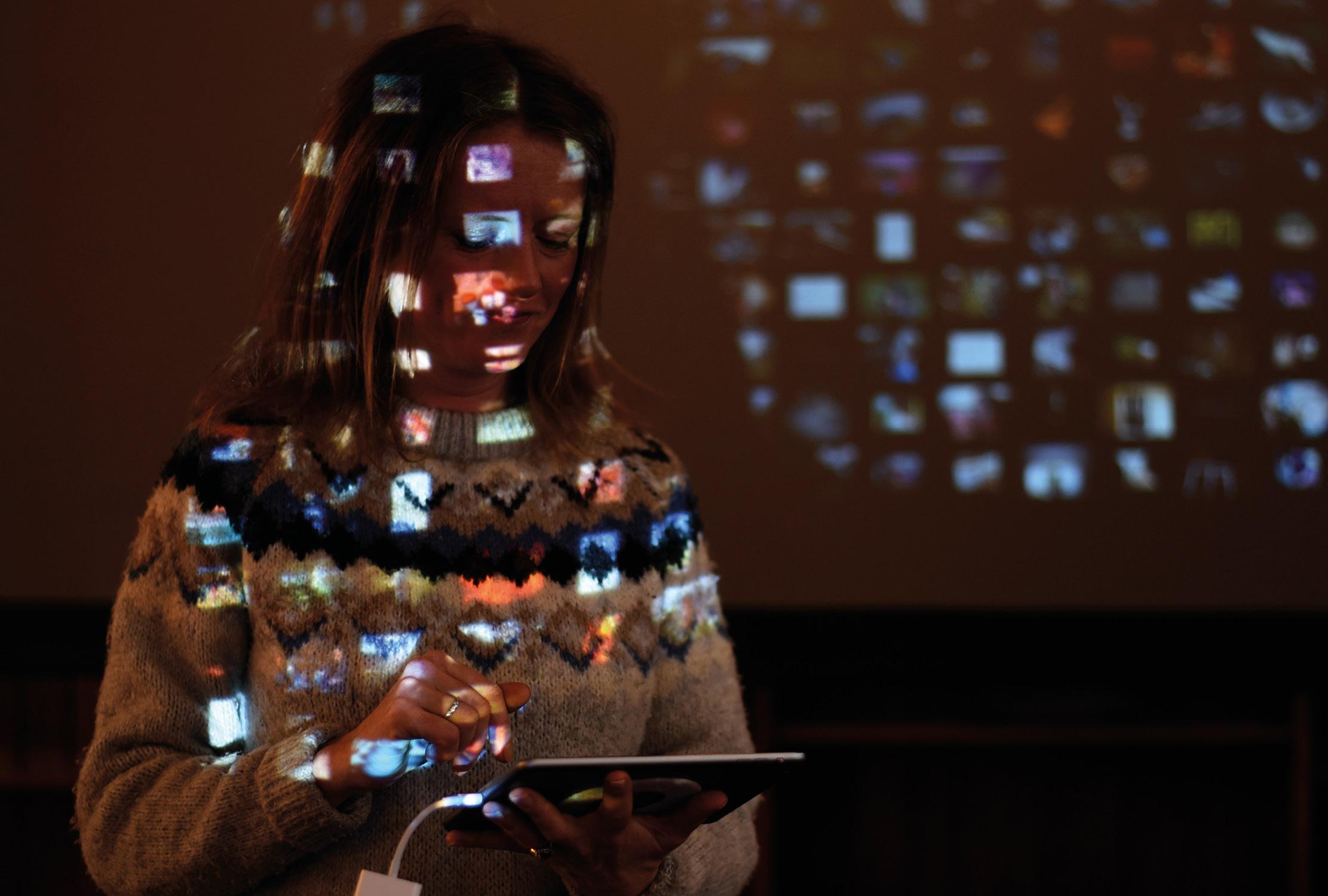
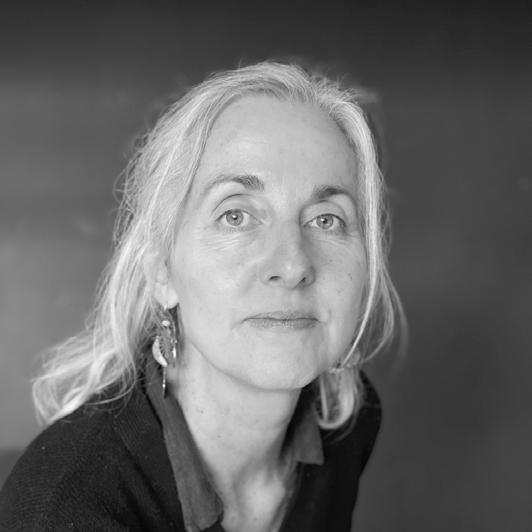
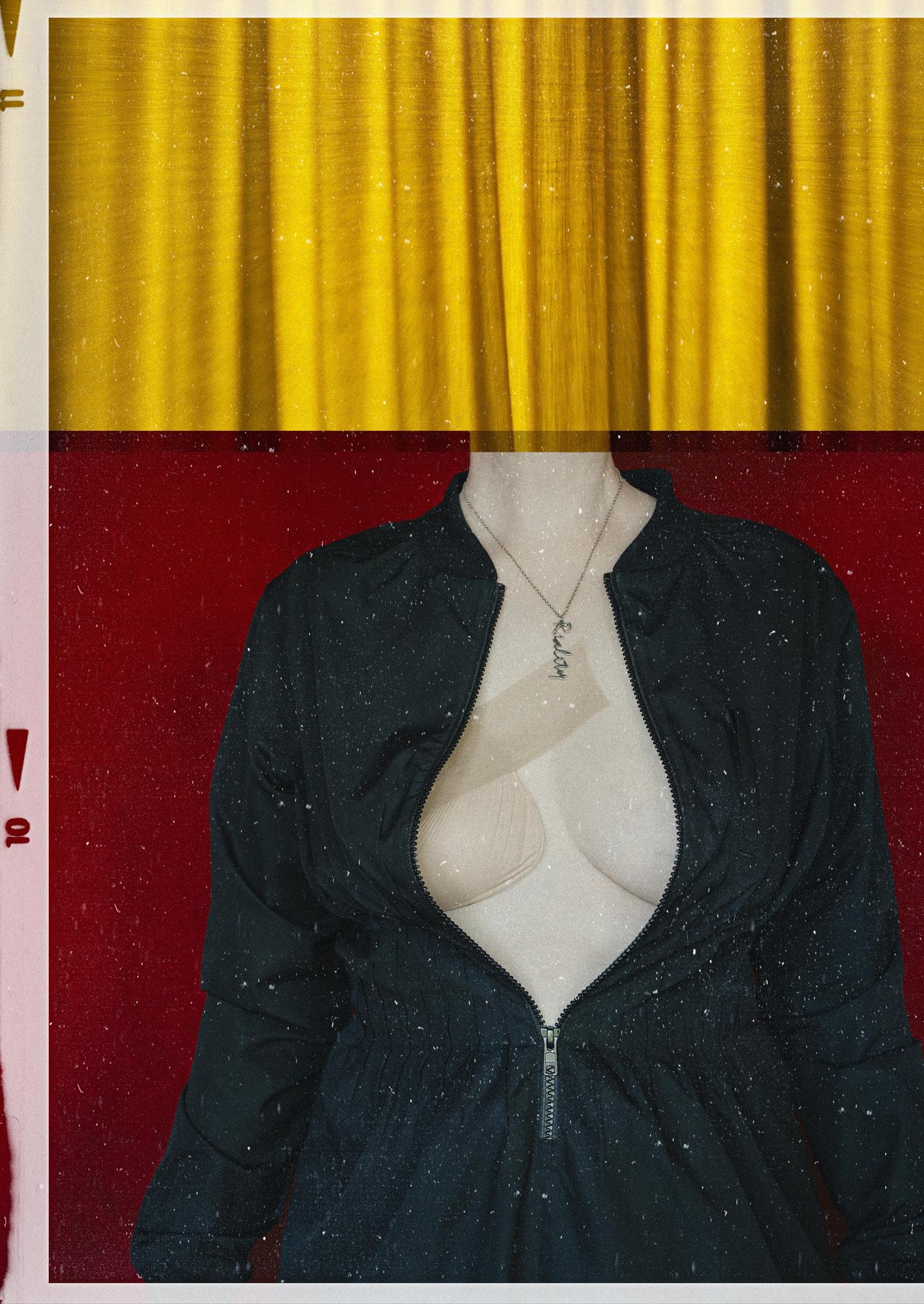
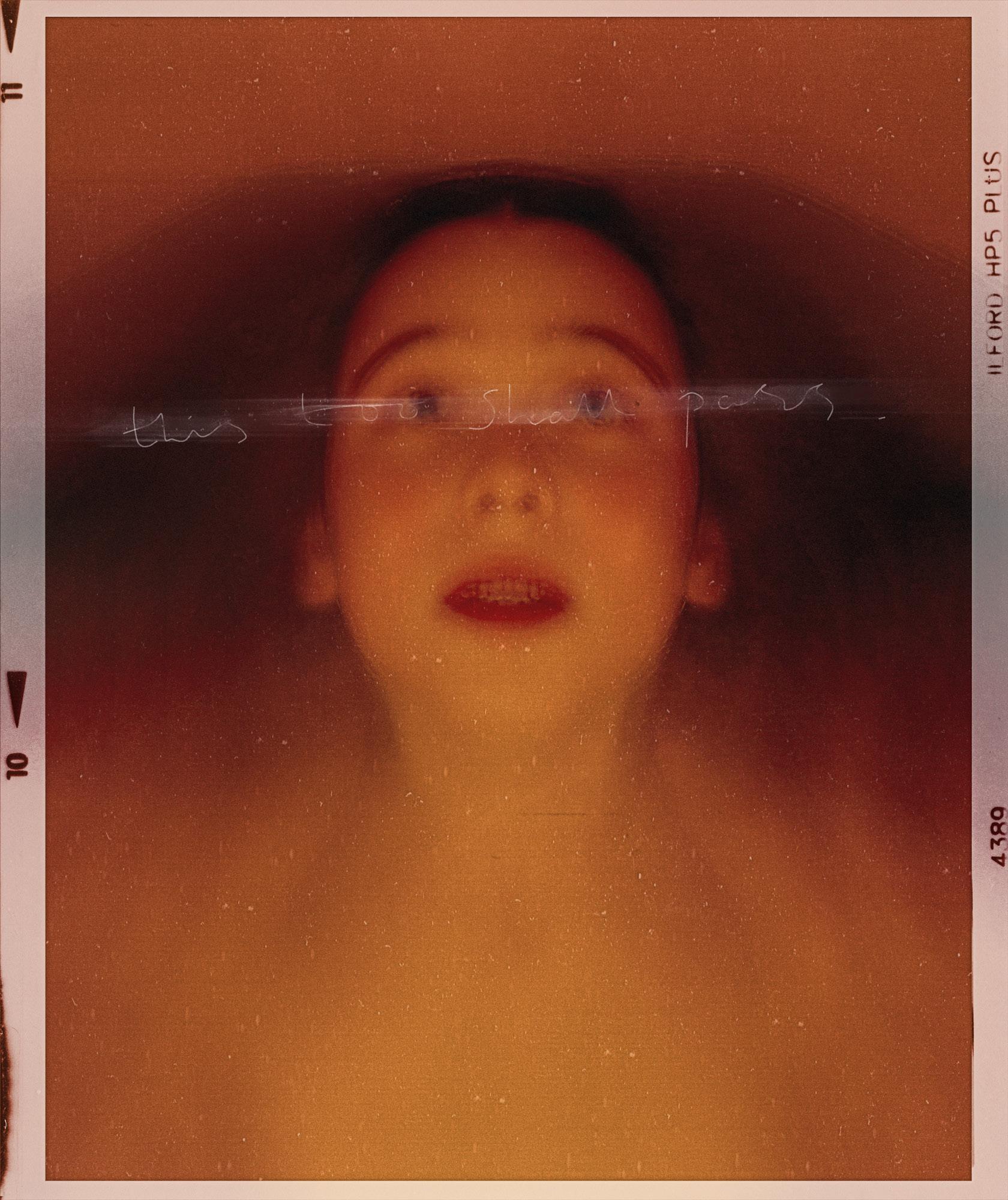
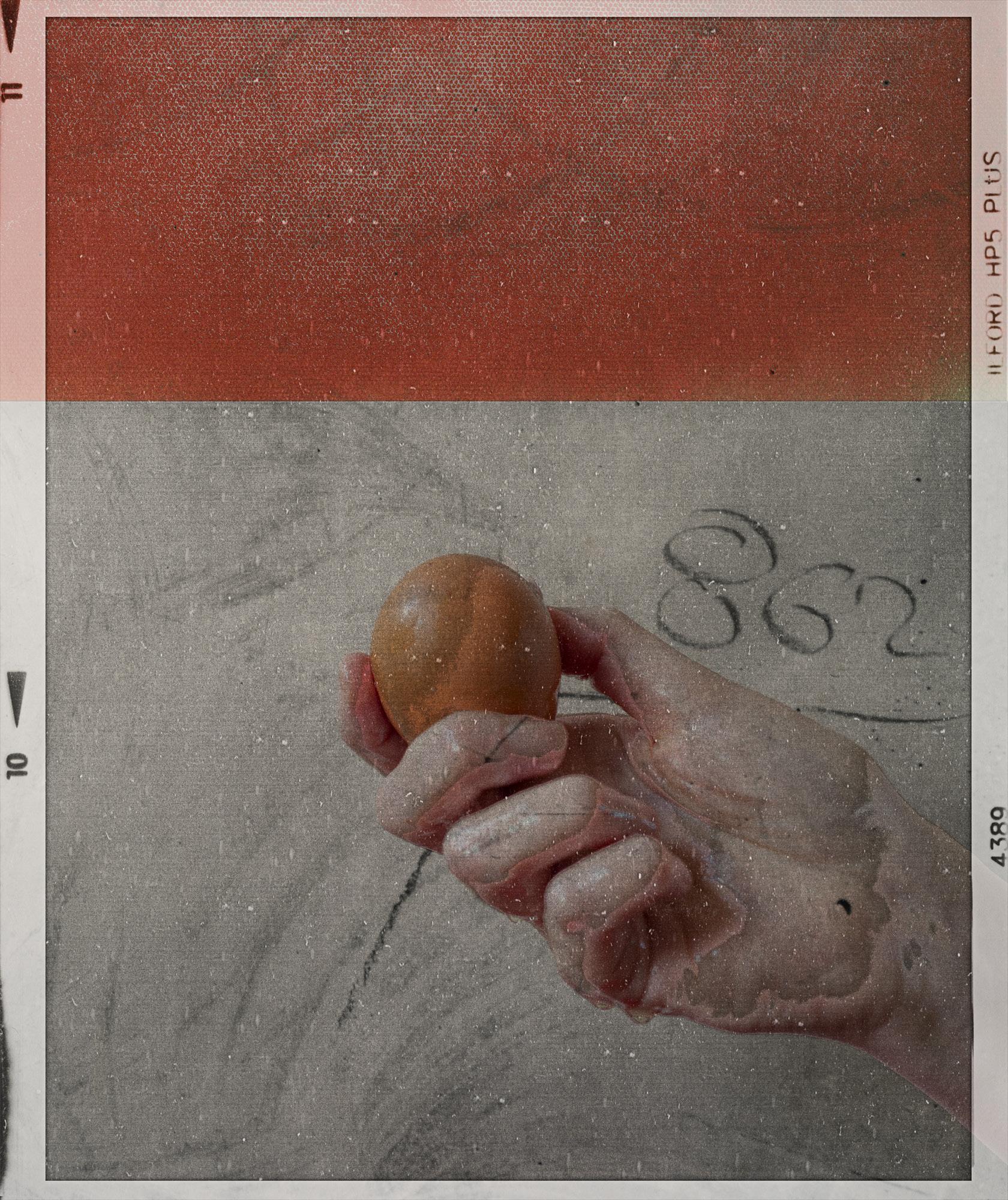
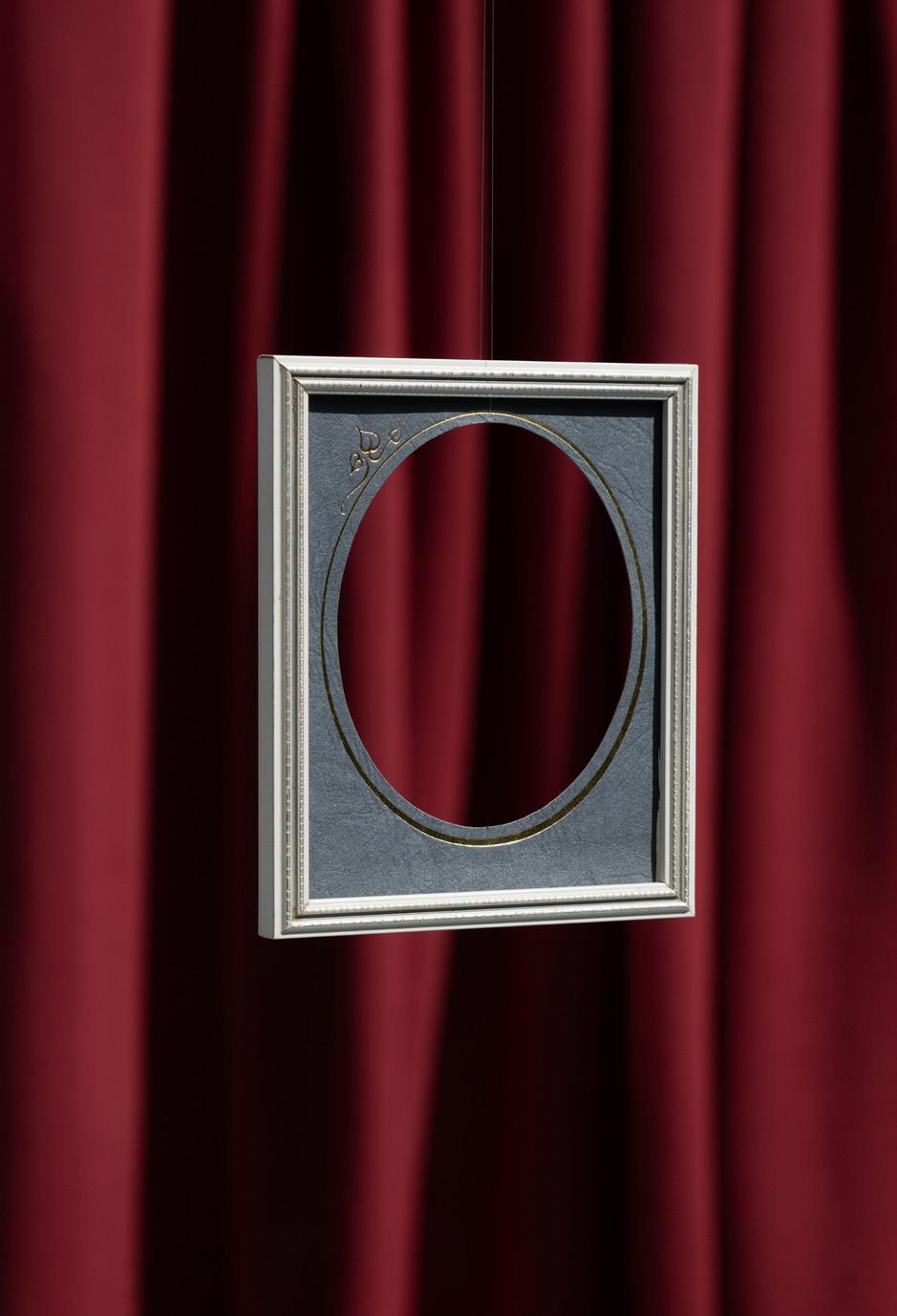
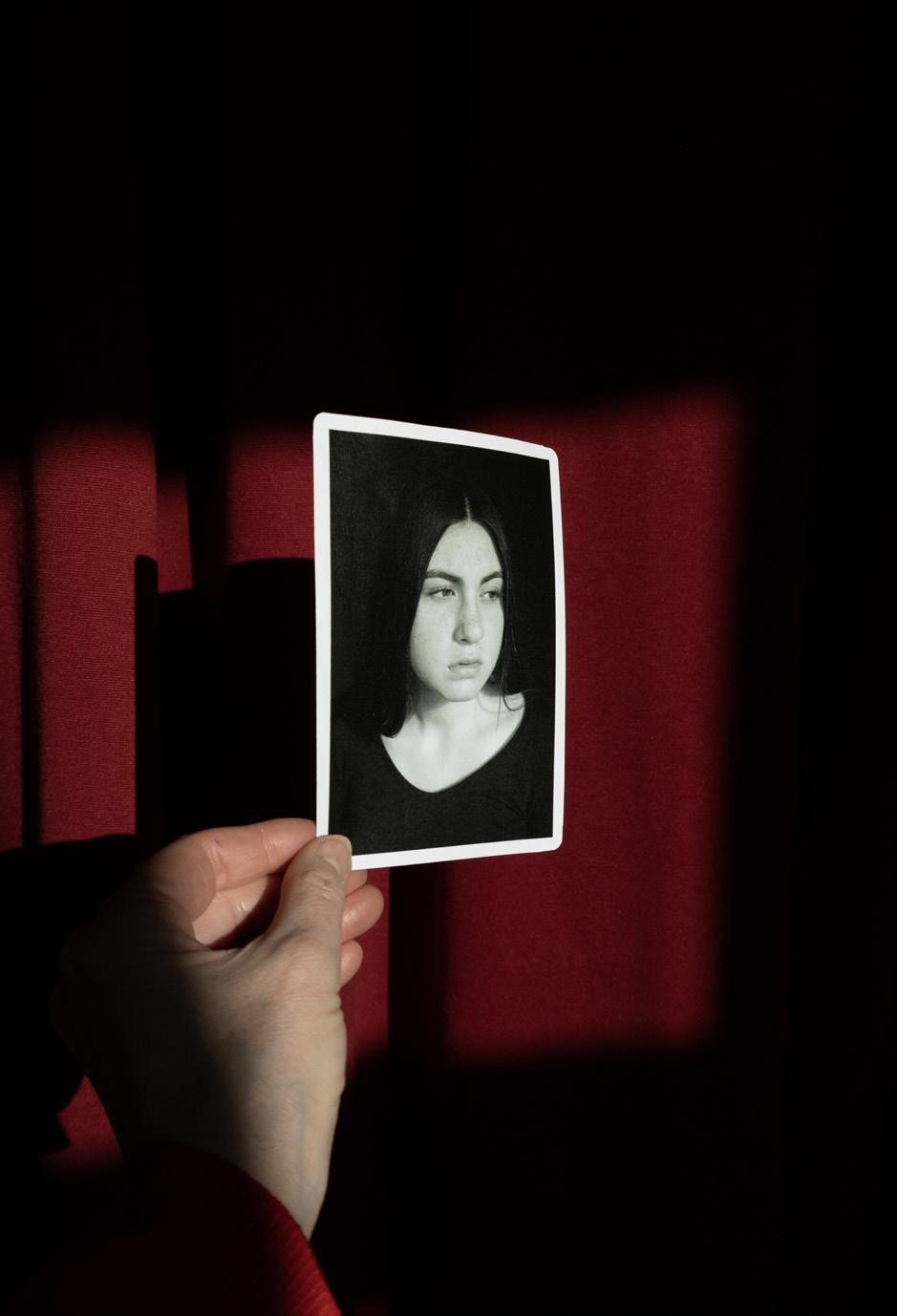
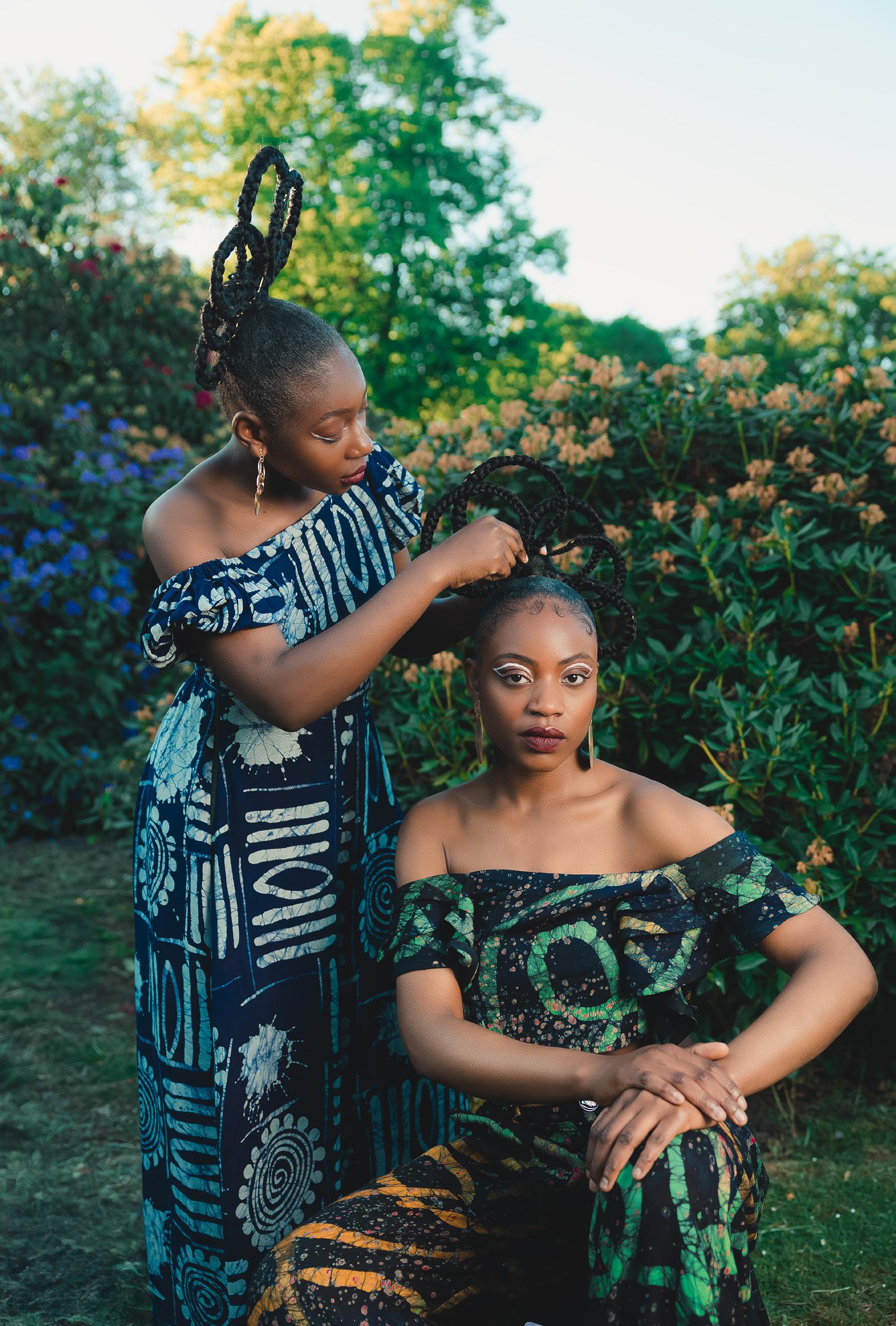
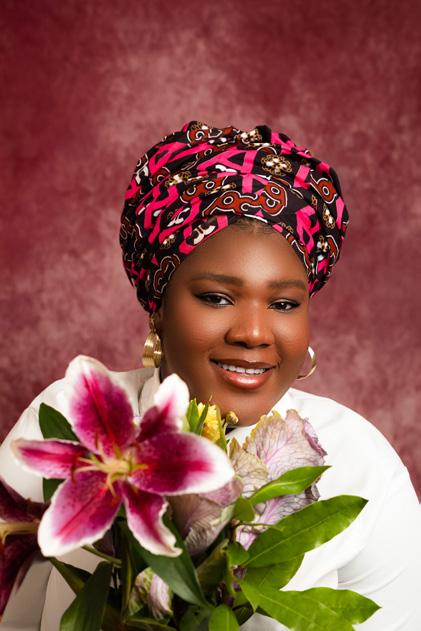
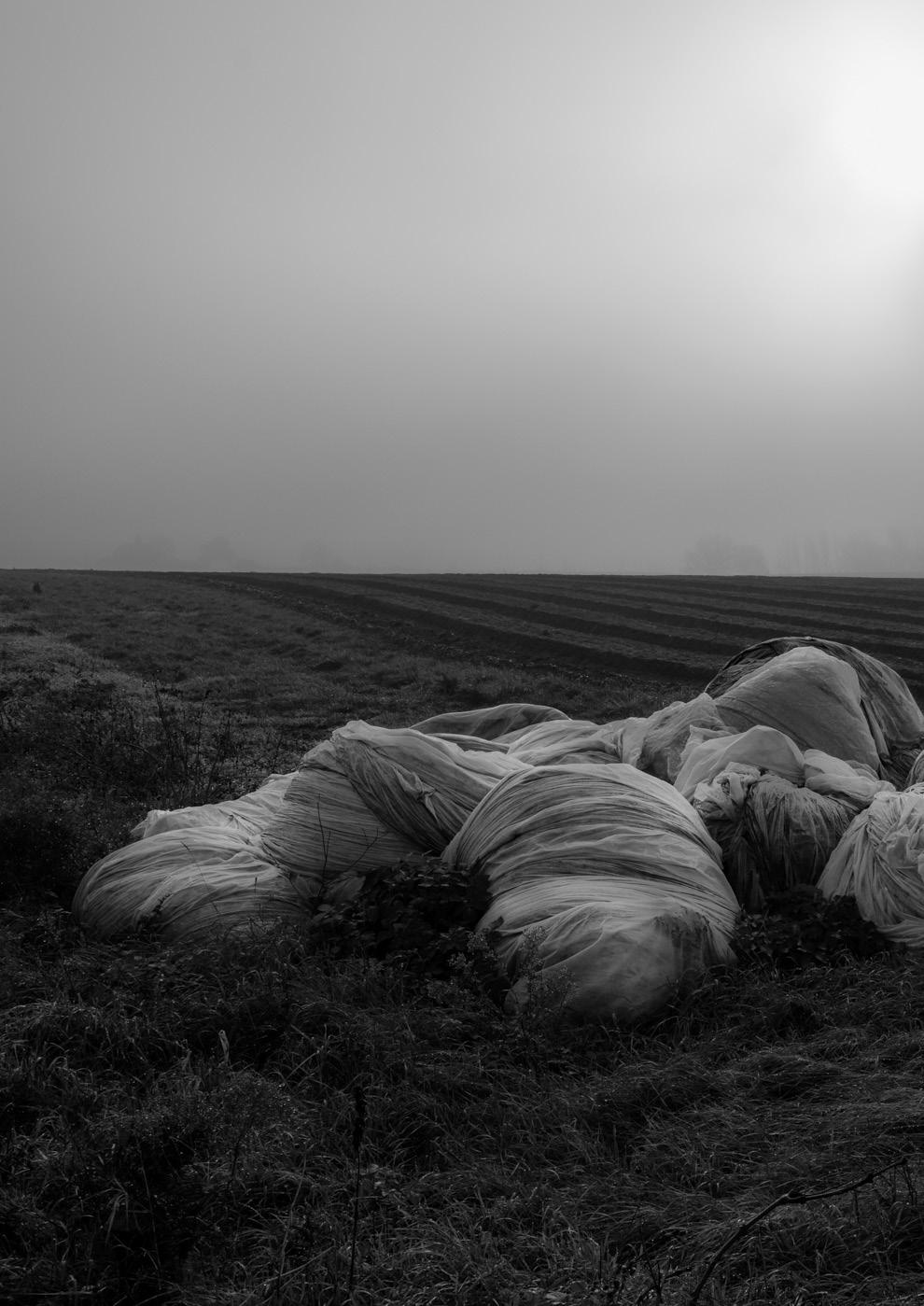
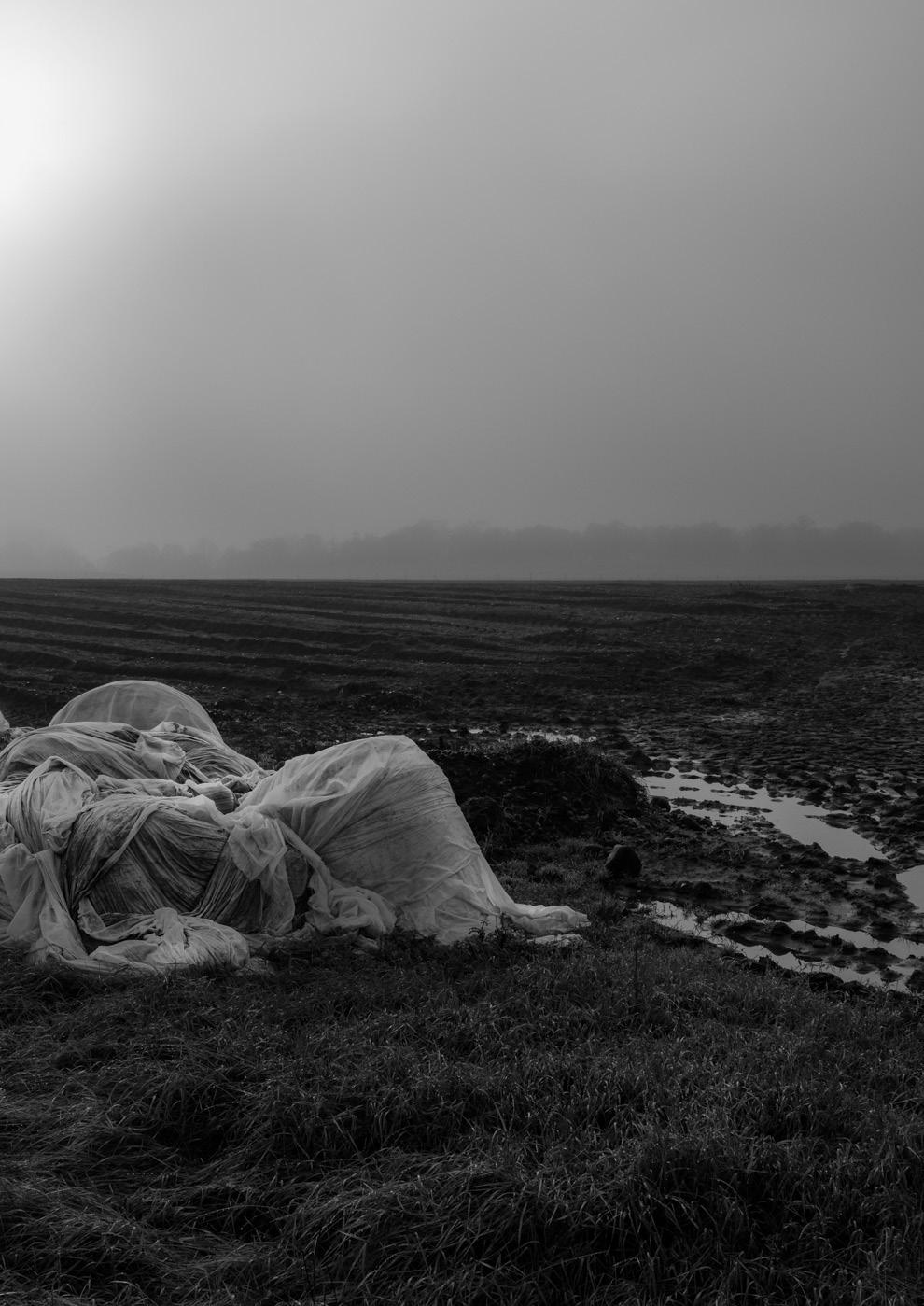
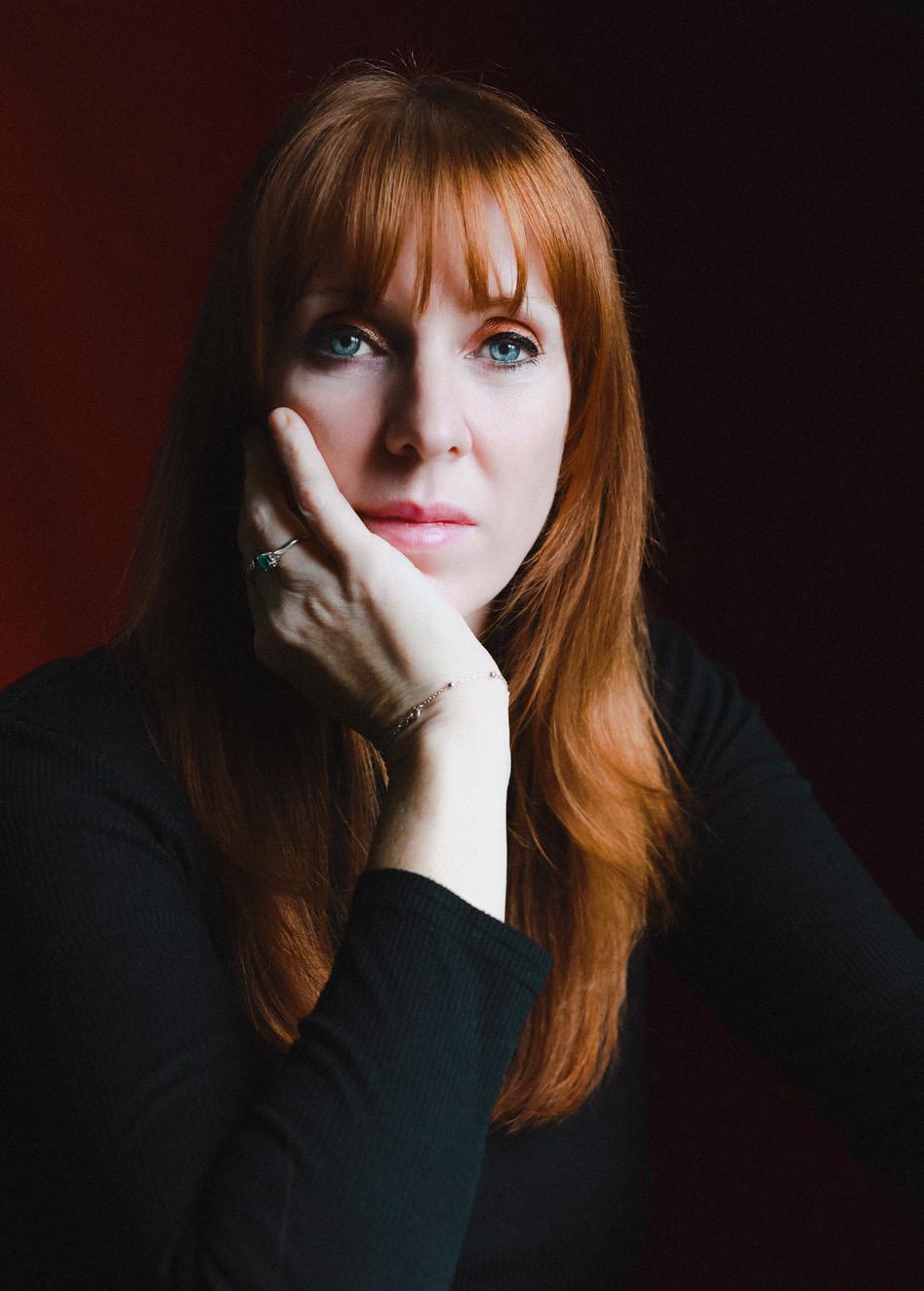
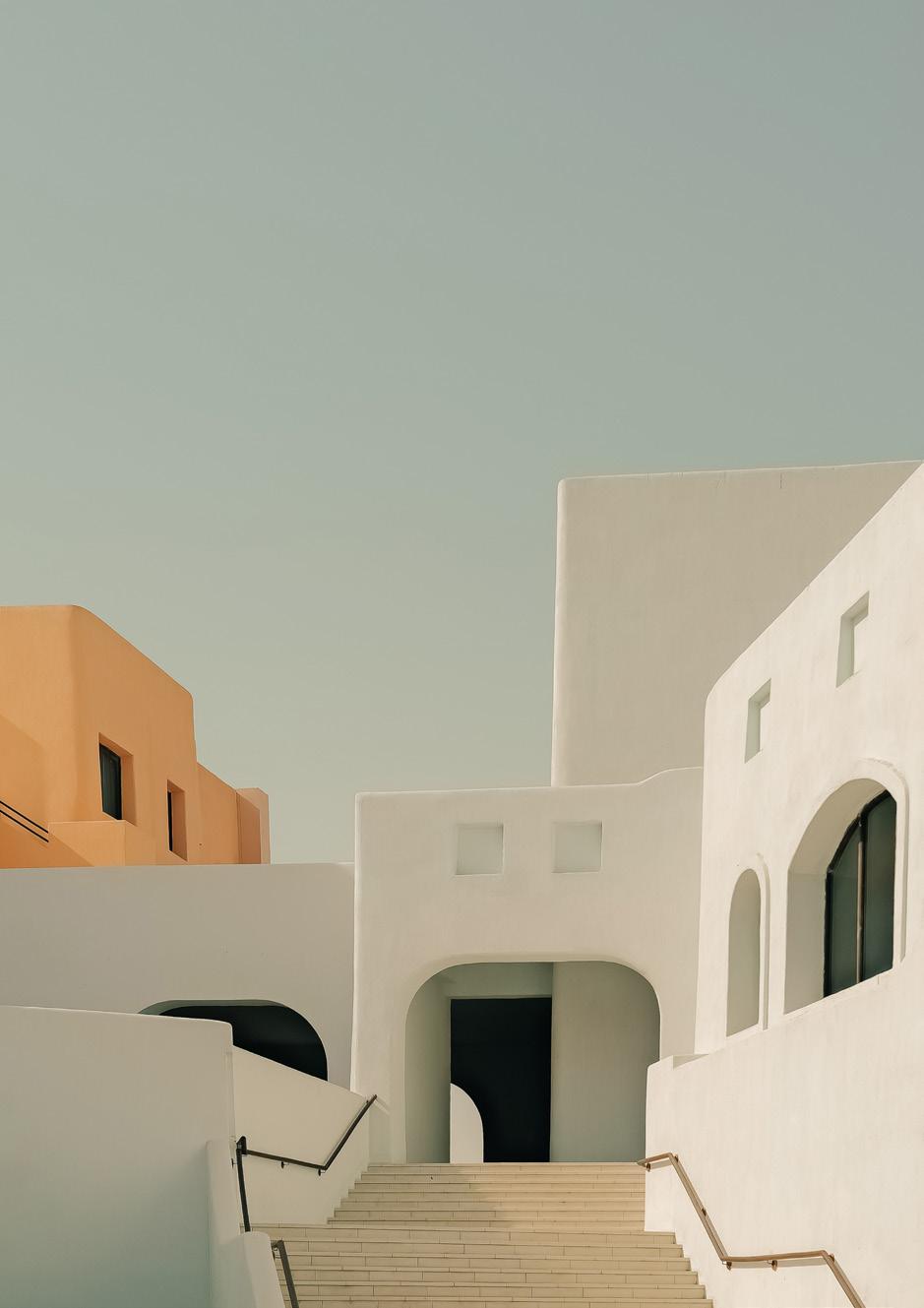
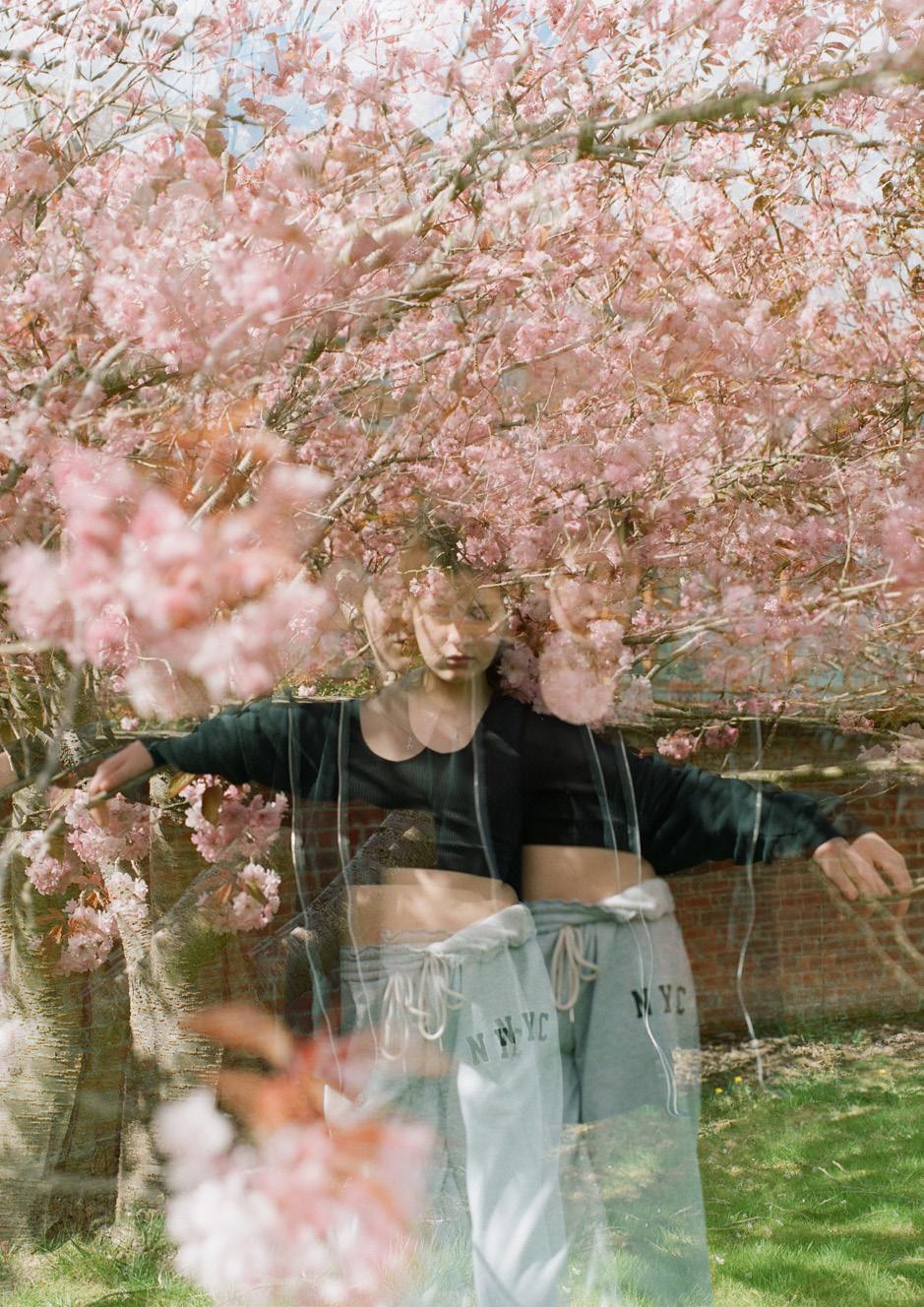
The RPS Women in Photography (WIP) Group’s objective is to facilitate the celebration, education and collaboration of female and femaleidentifying photographers.
We are not a genre. These are our stories. We are the discussion that drives a greater awareness of women photographers past, present and future.
Membership of the WIP group is available exclusively to RPS members. Visit our website for more information about who we are, what we do and how to join.
rps.org/groups/women-in-photography
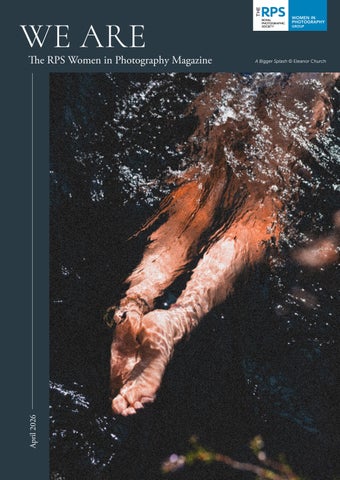
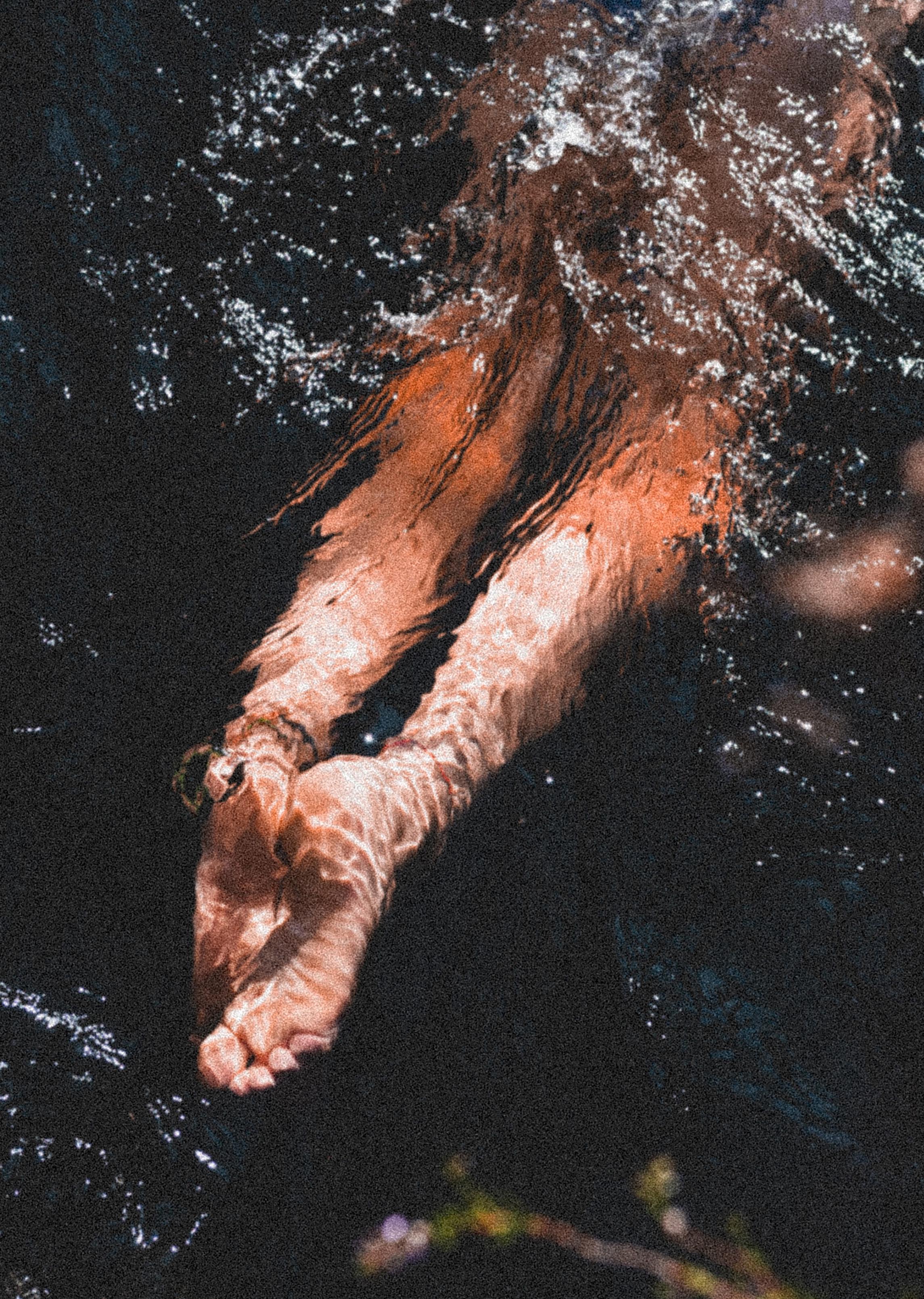
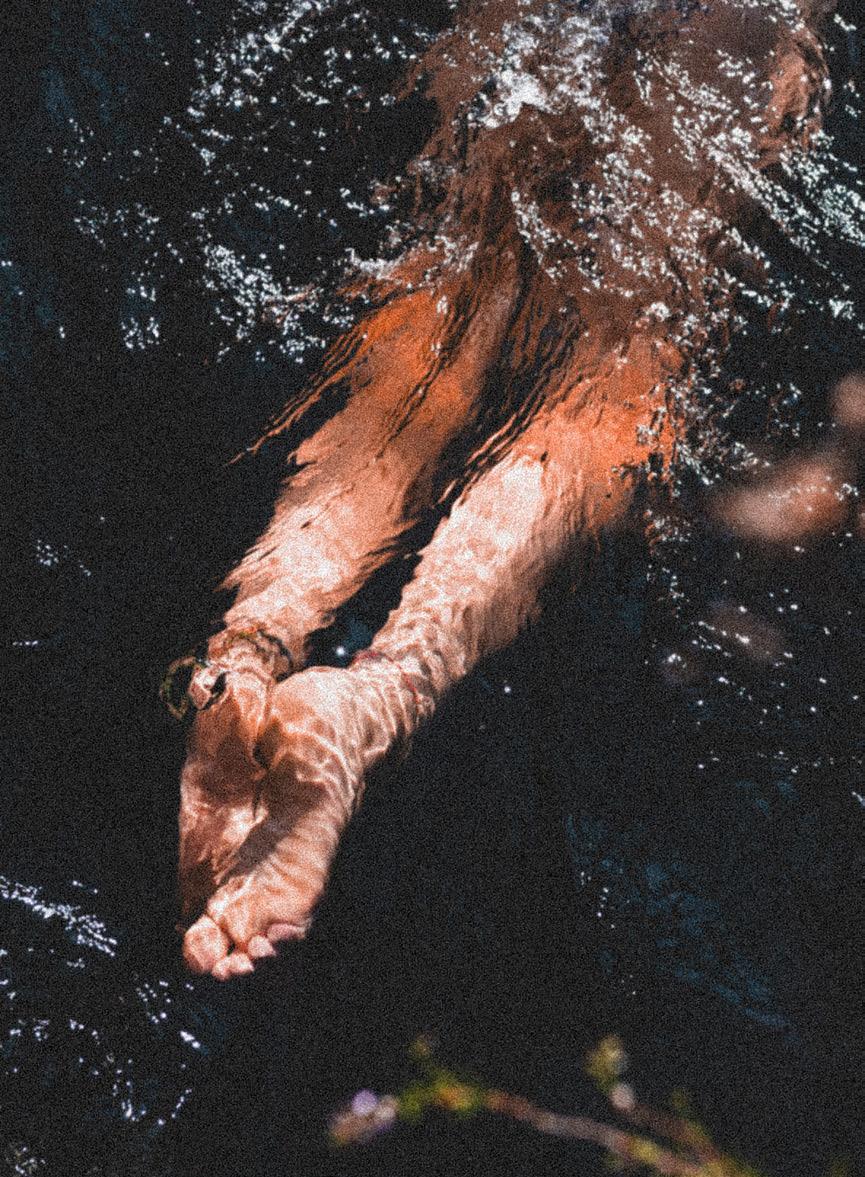
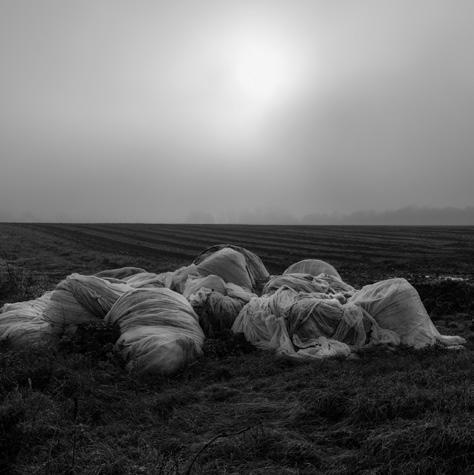
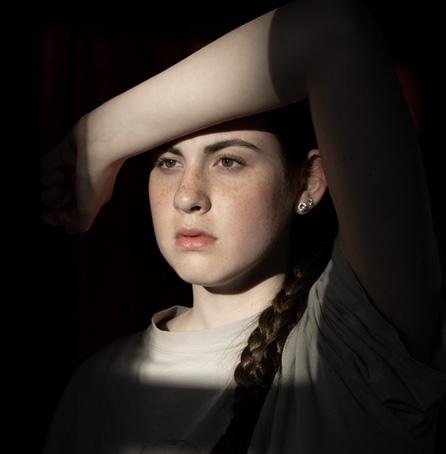
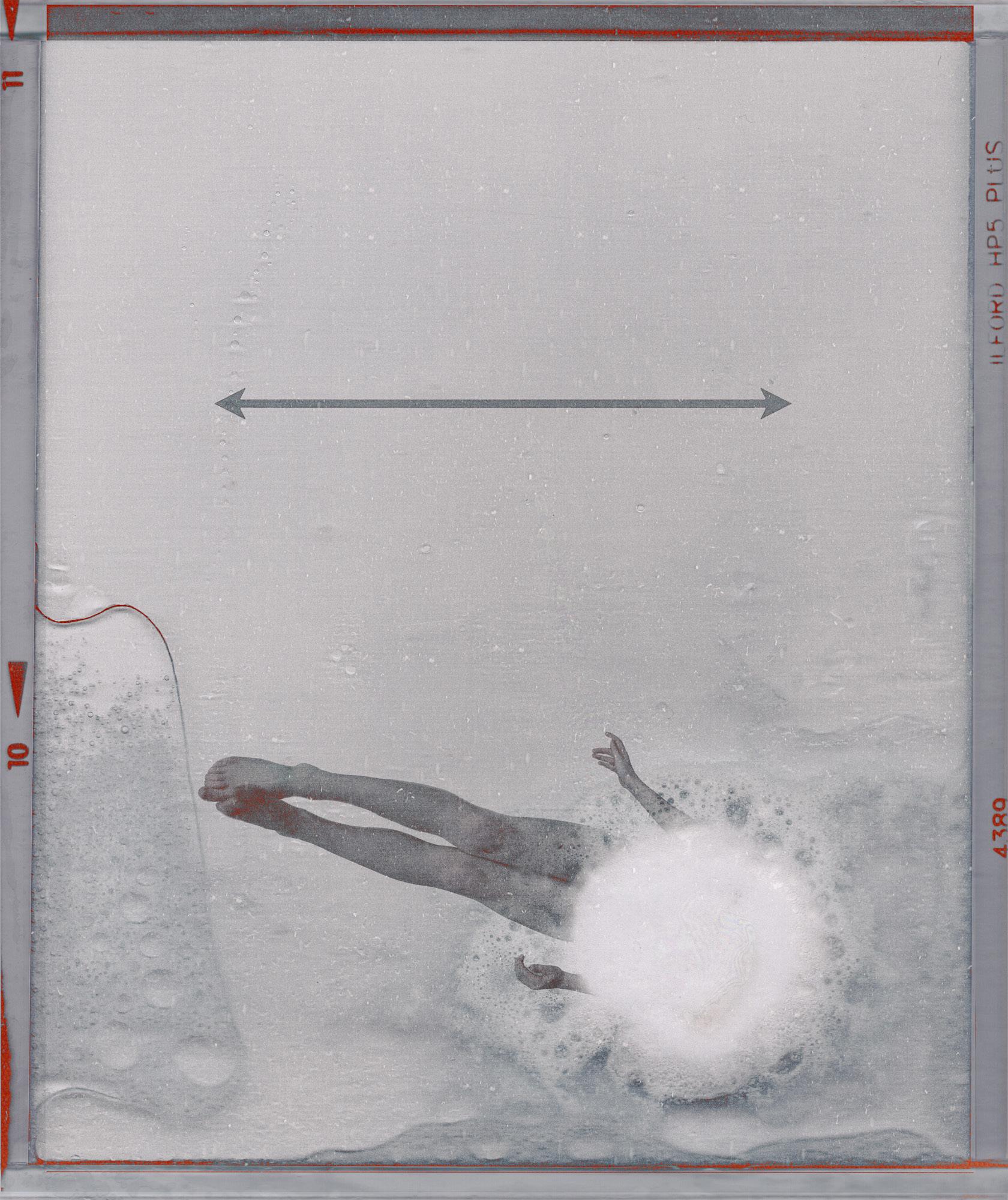
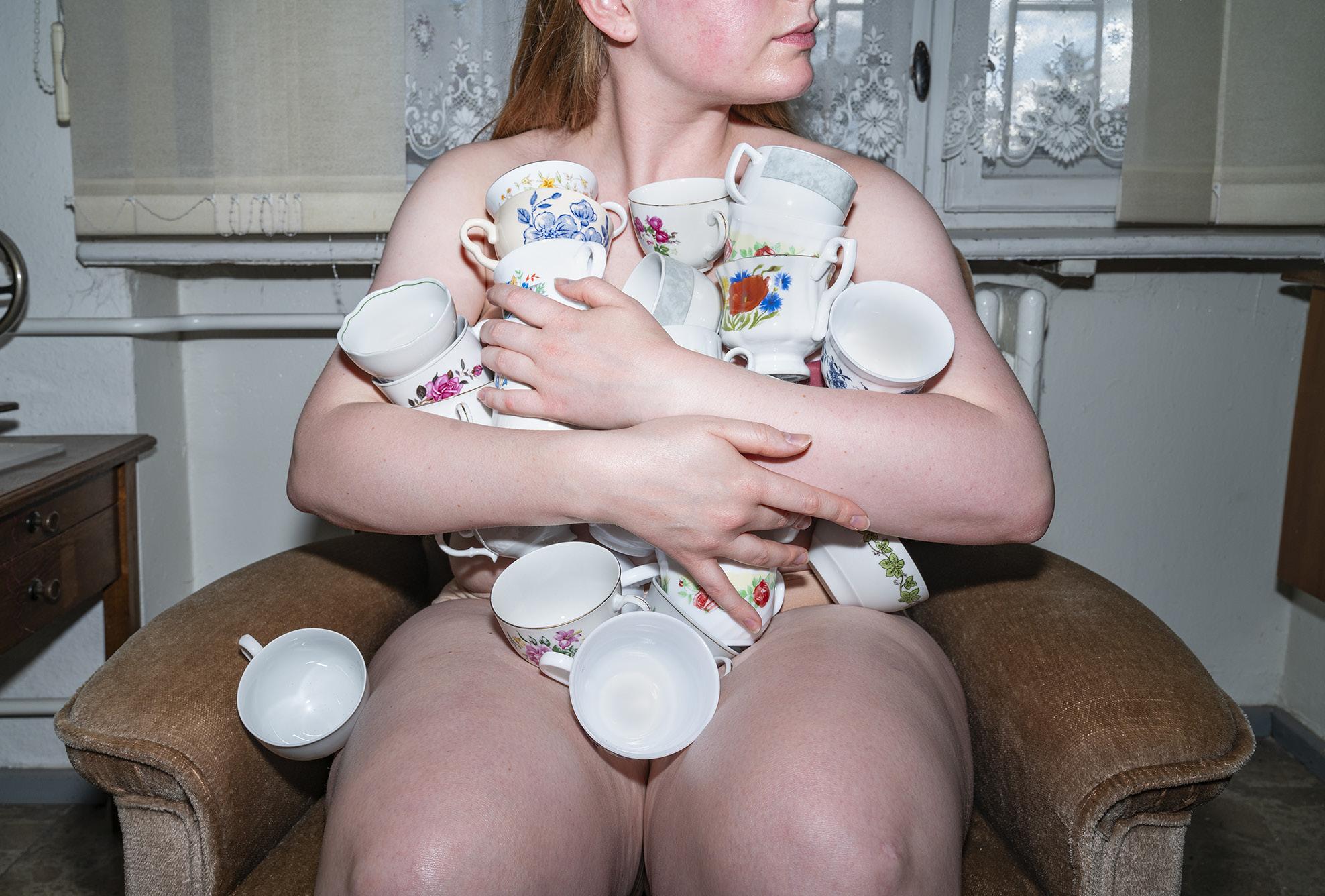
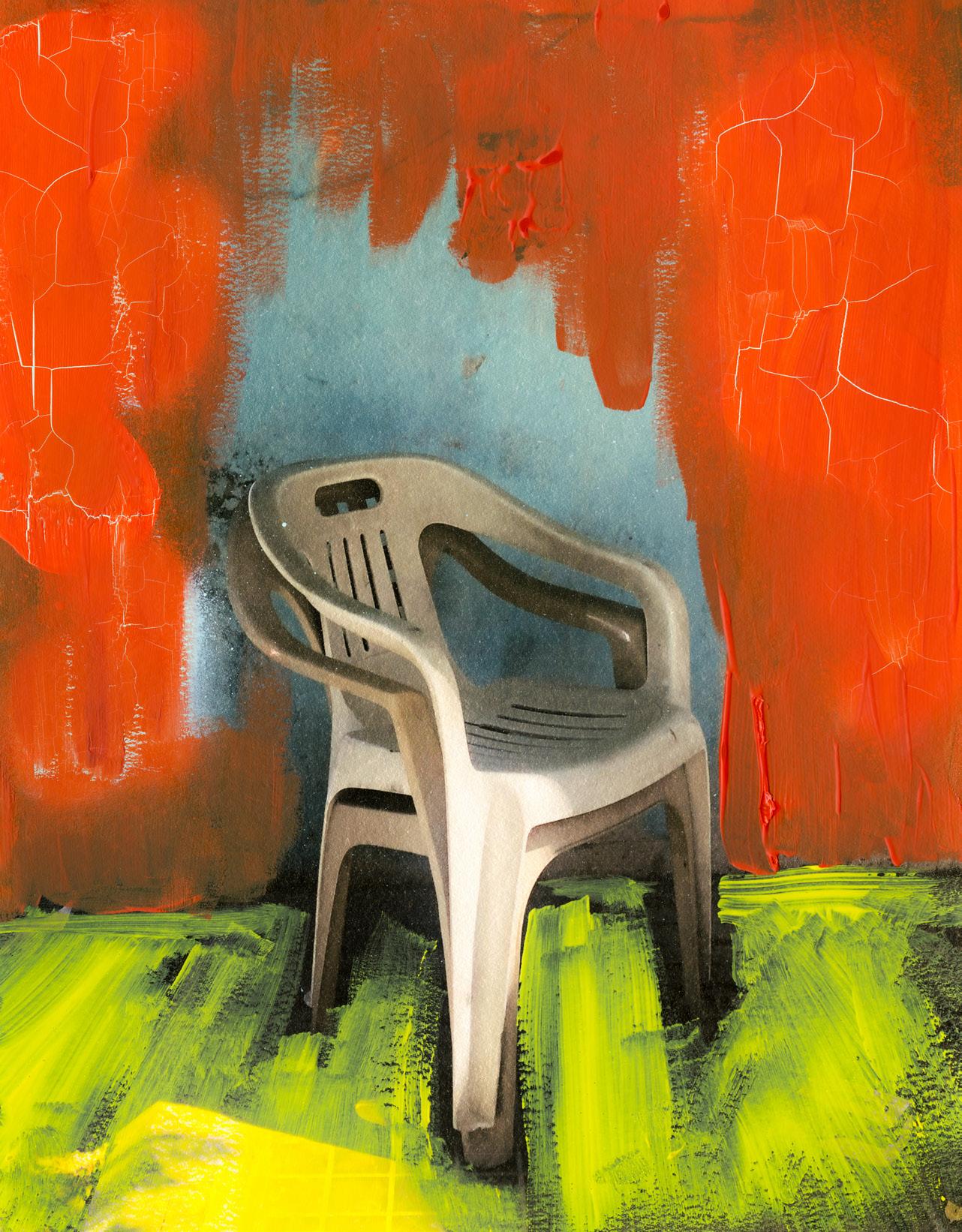
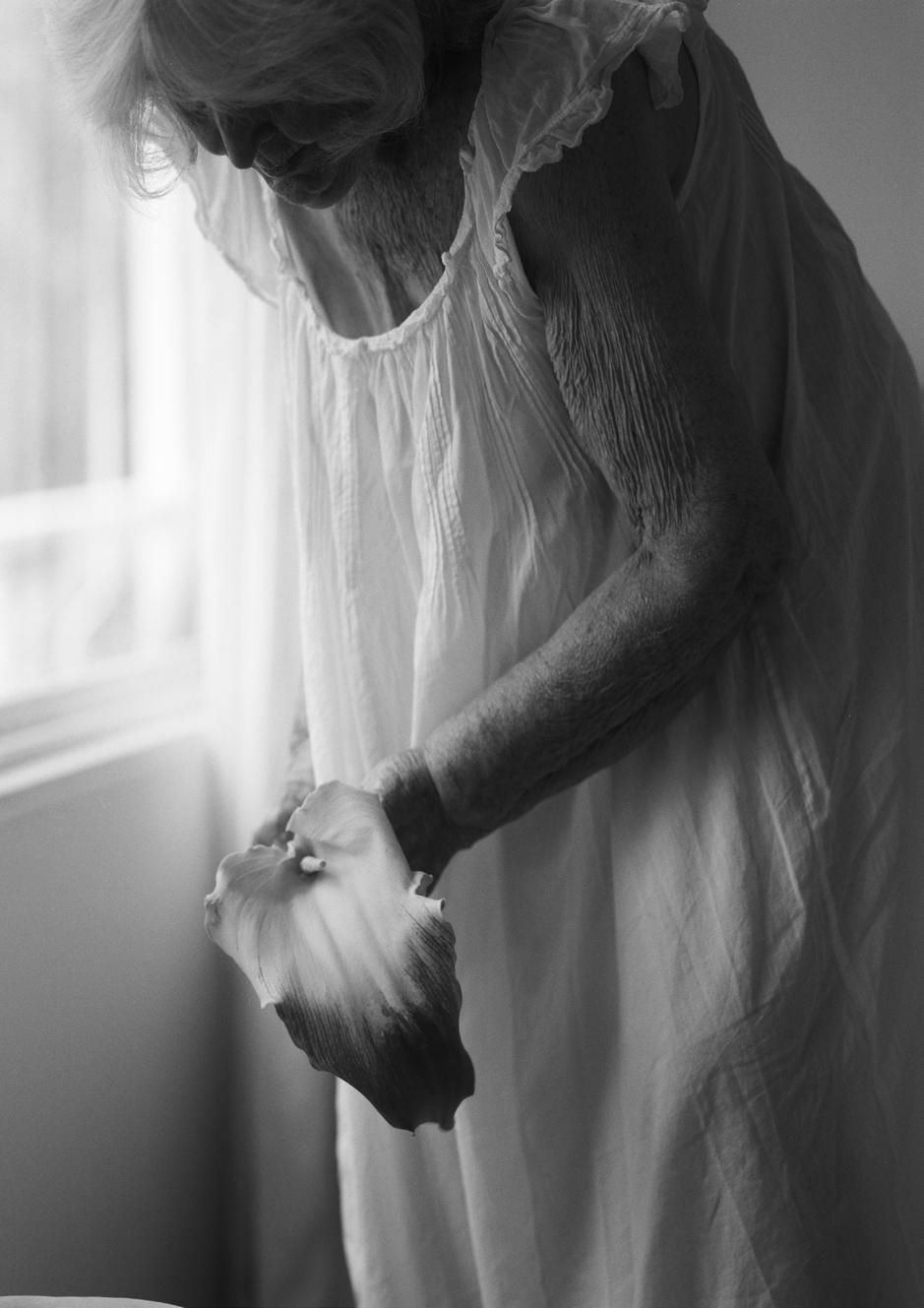
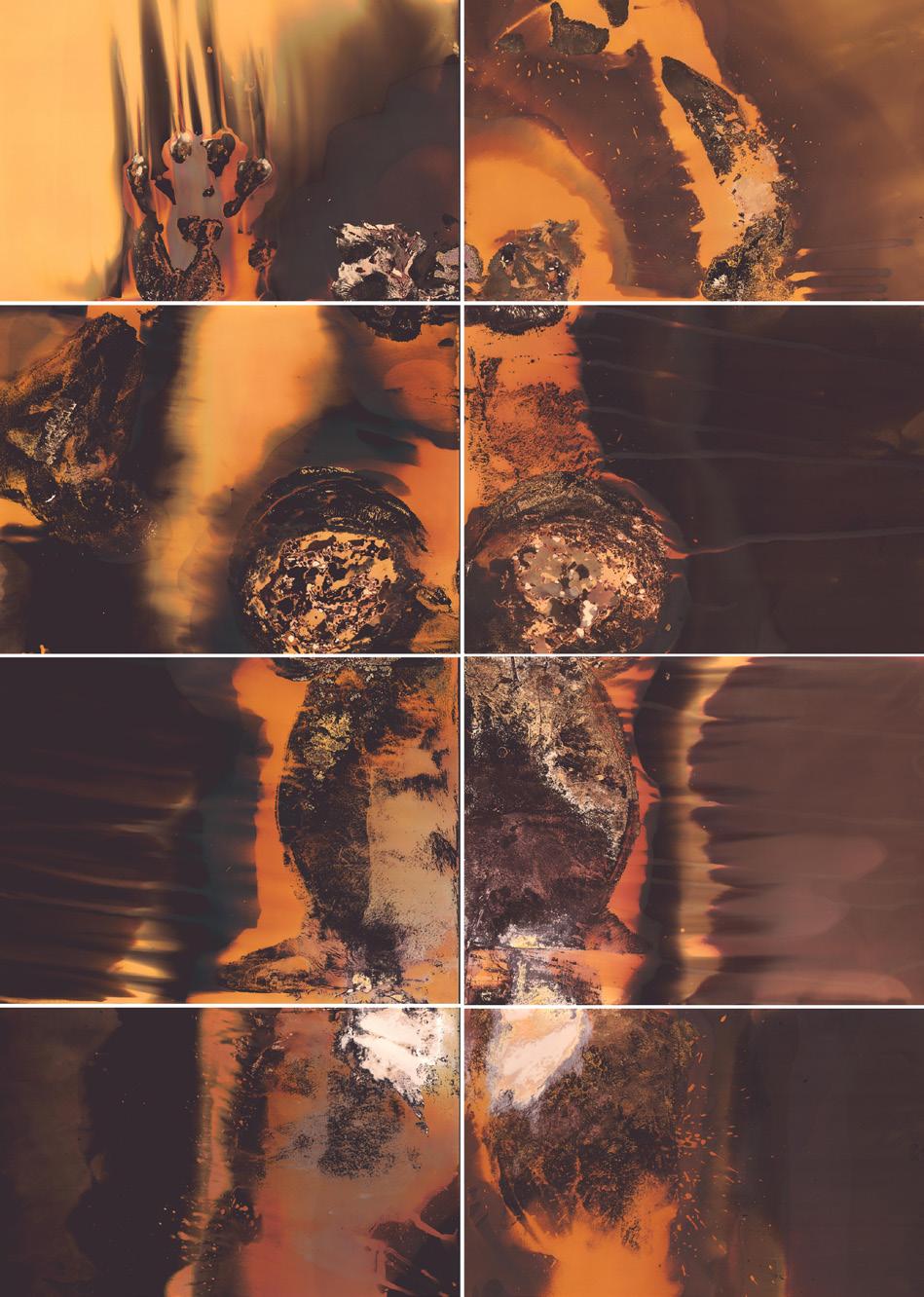
Eleanor Church
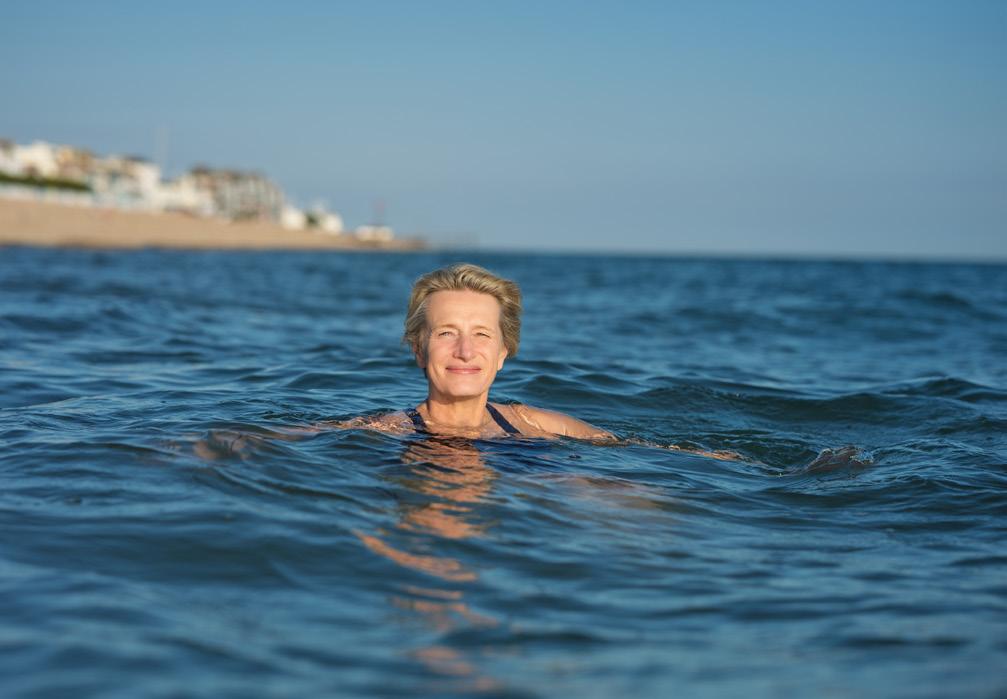
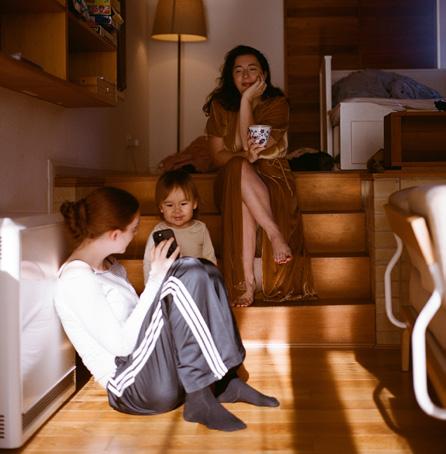
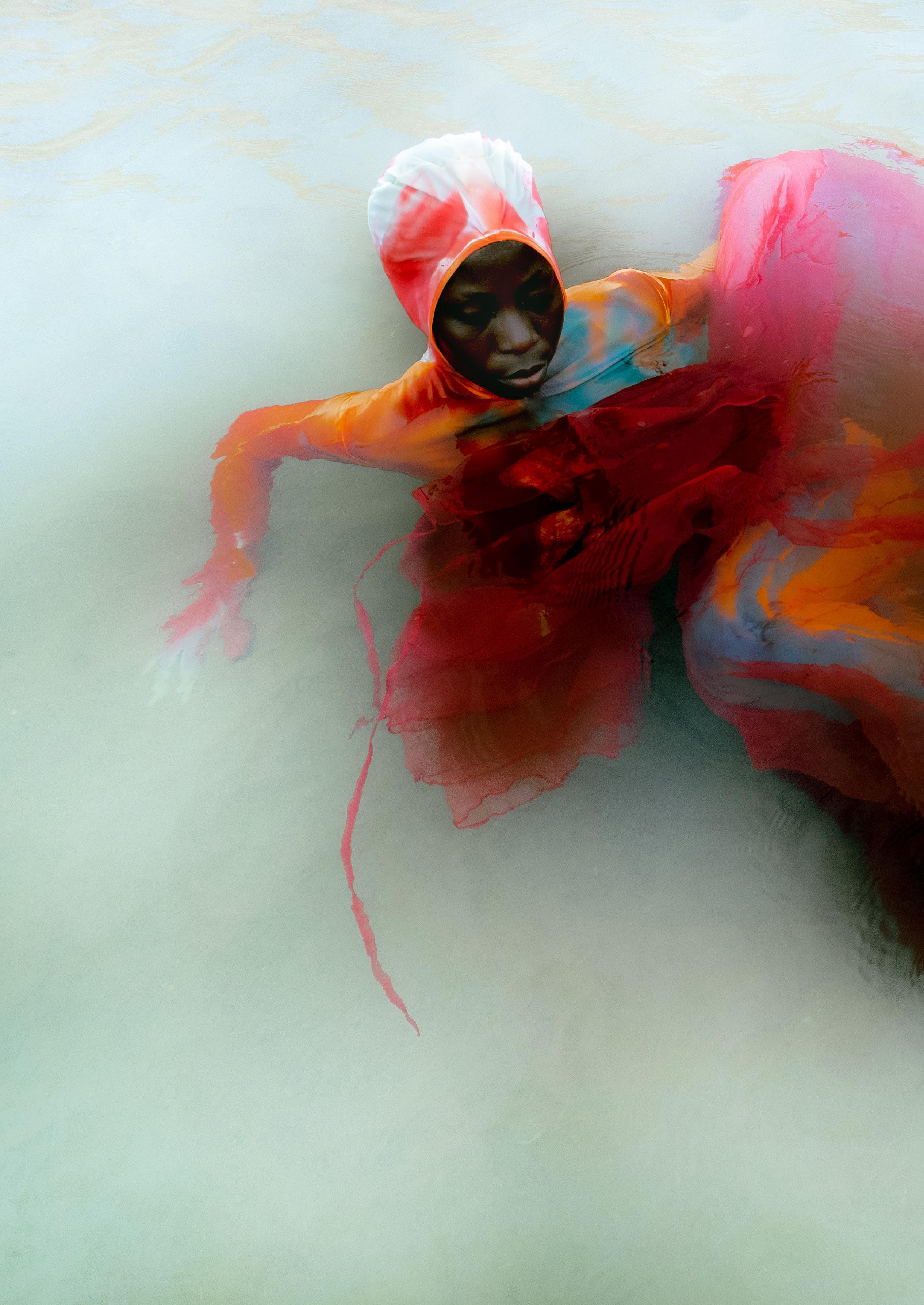
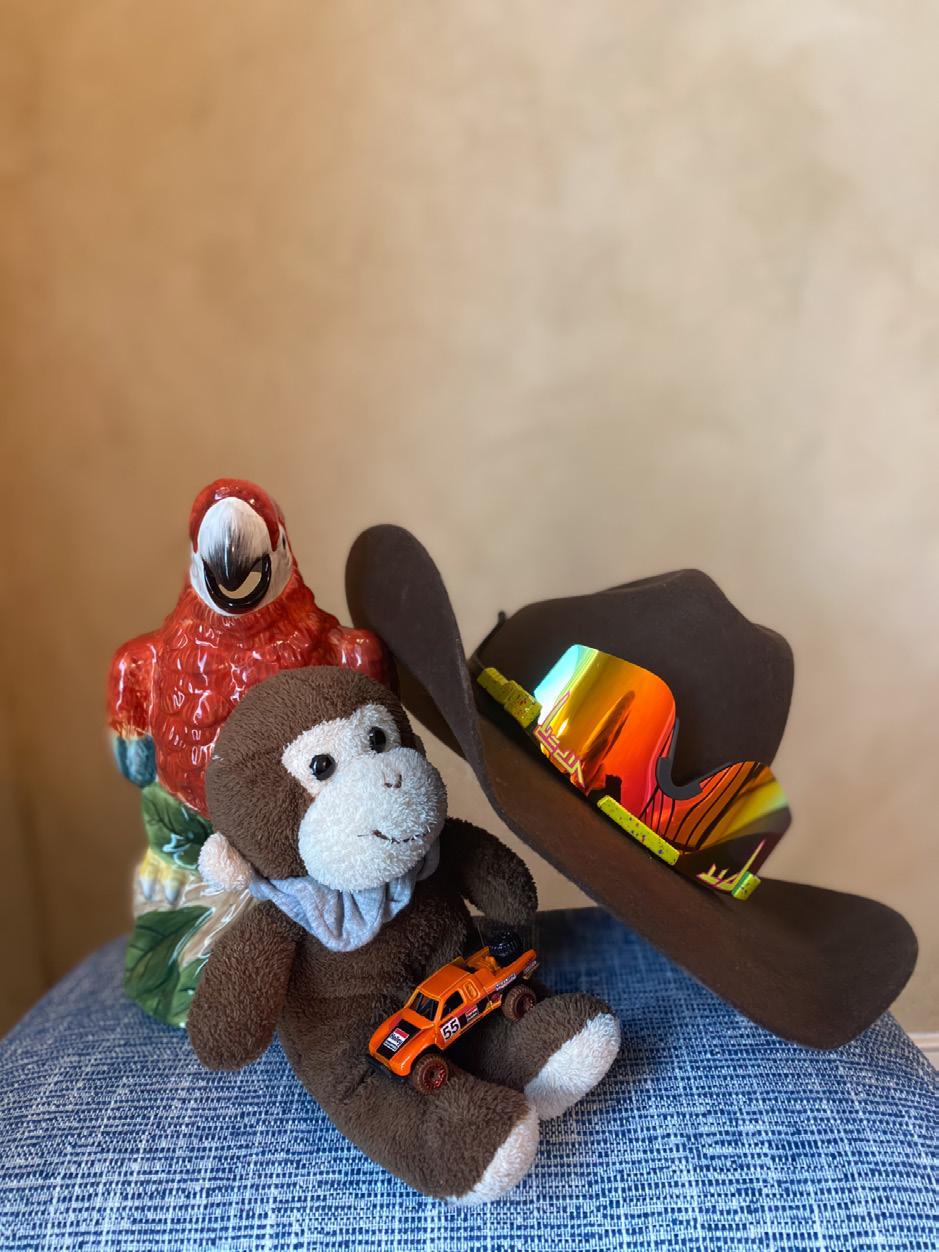
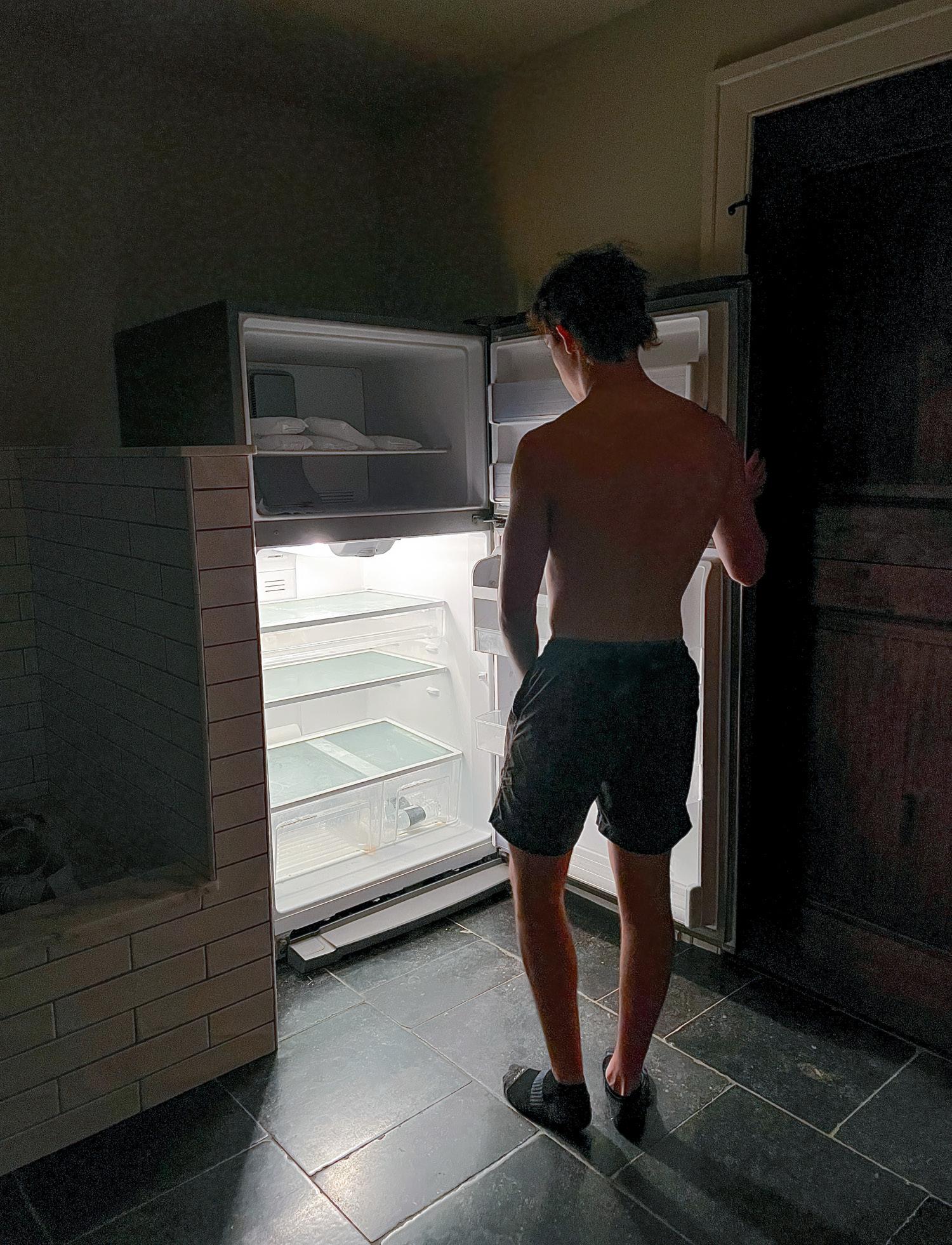
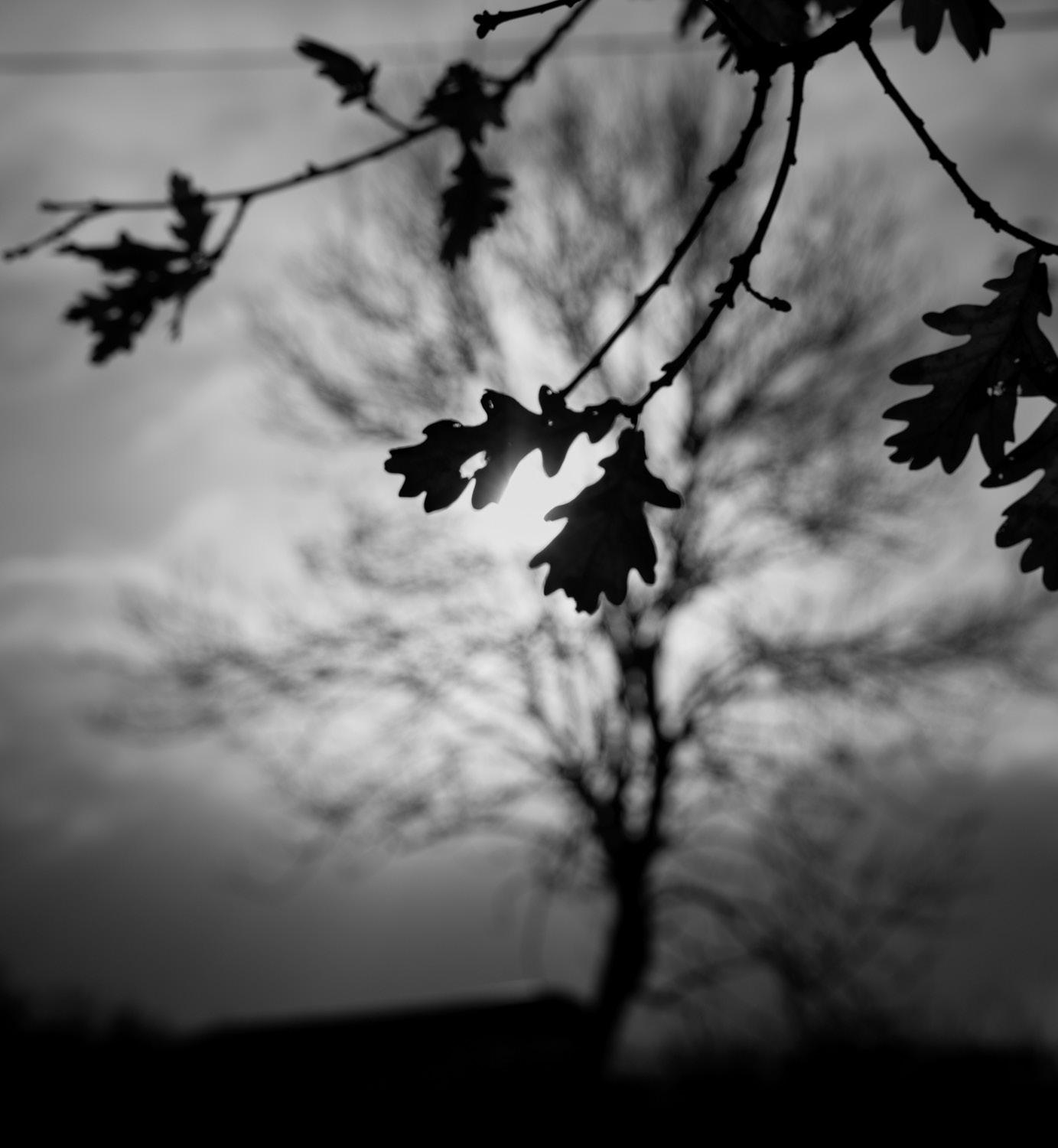
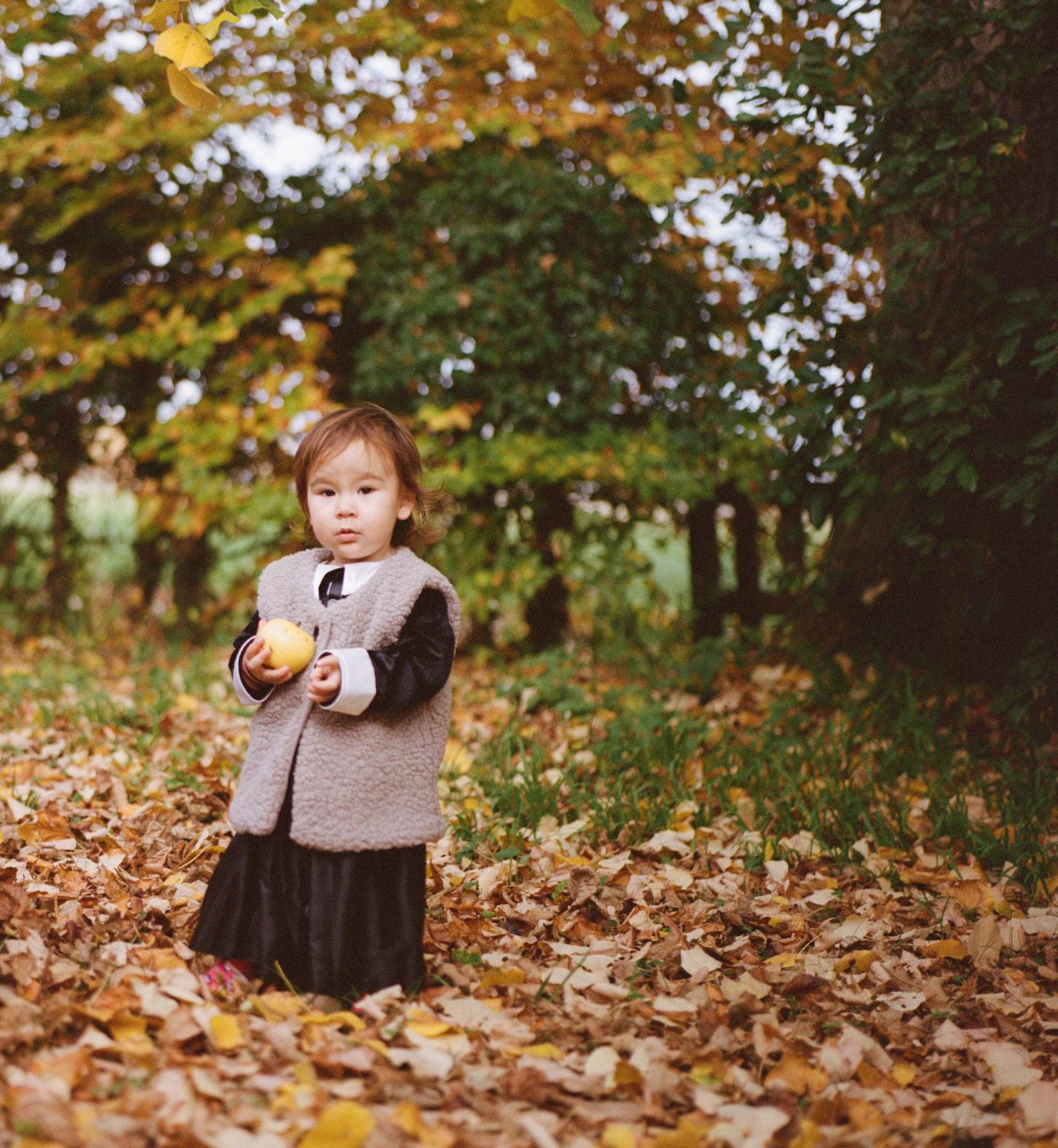
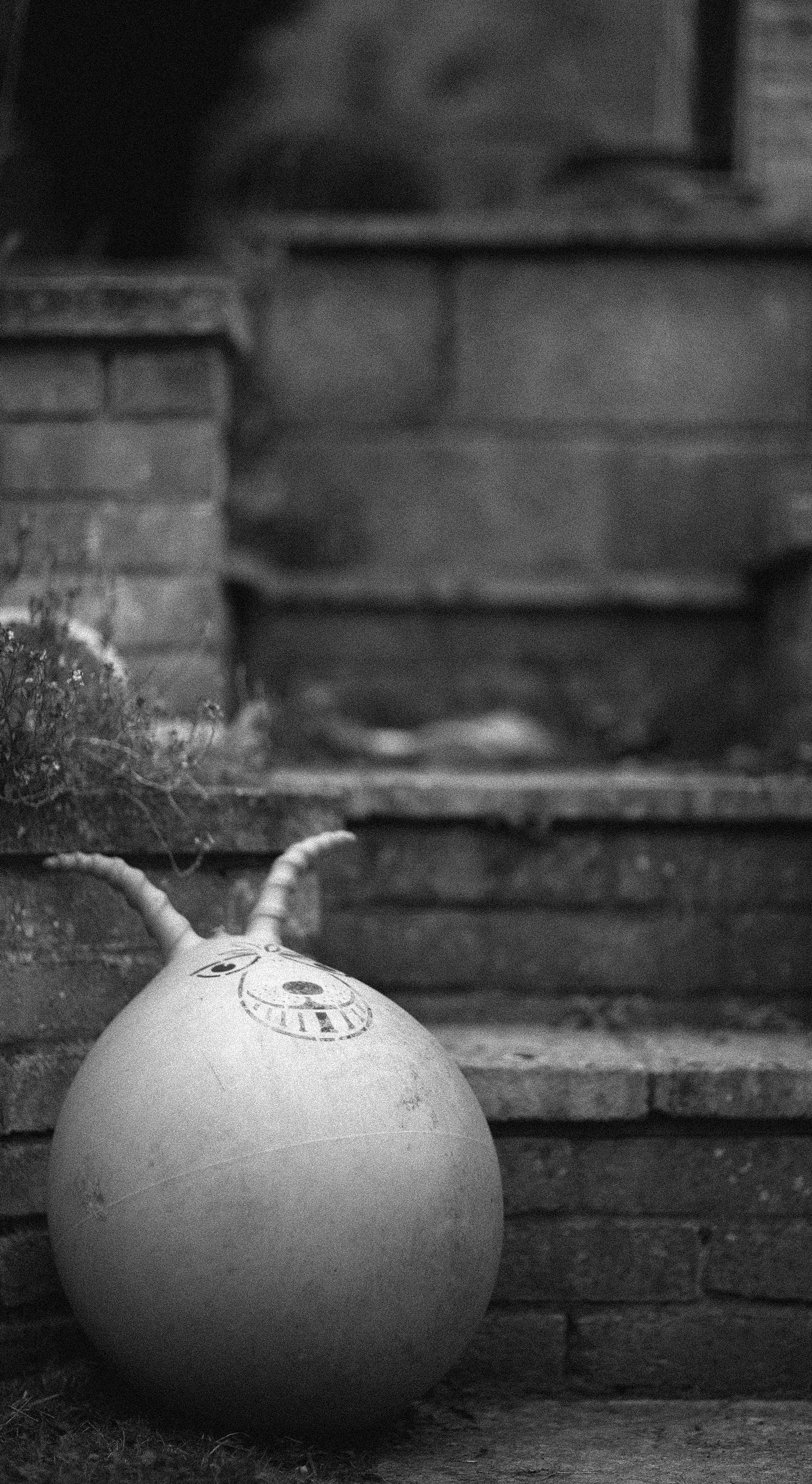
A Bigger Splash
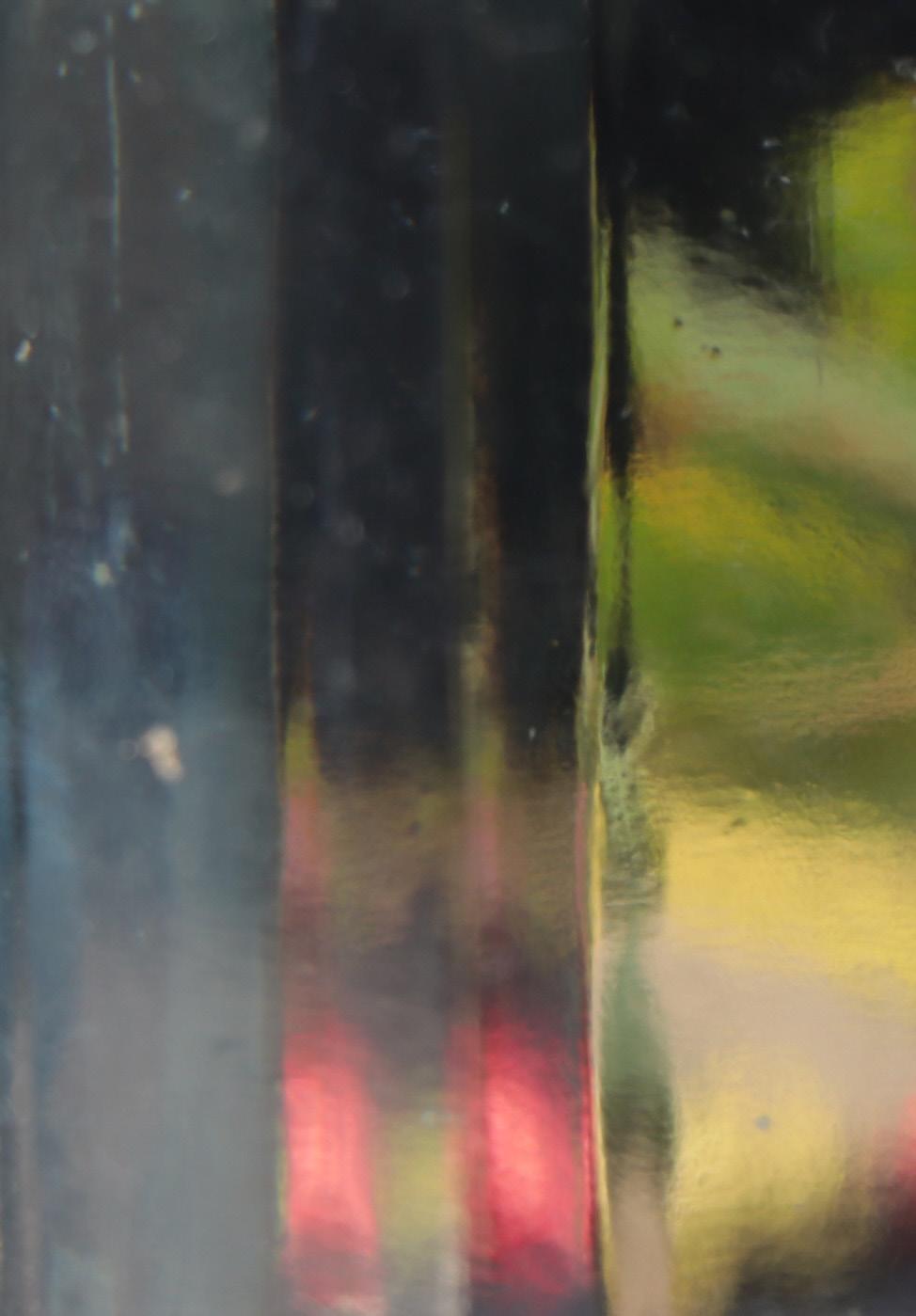
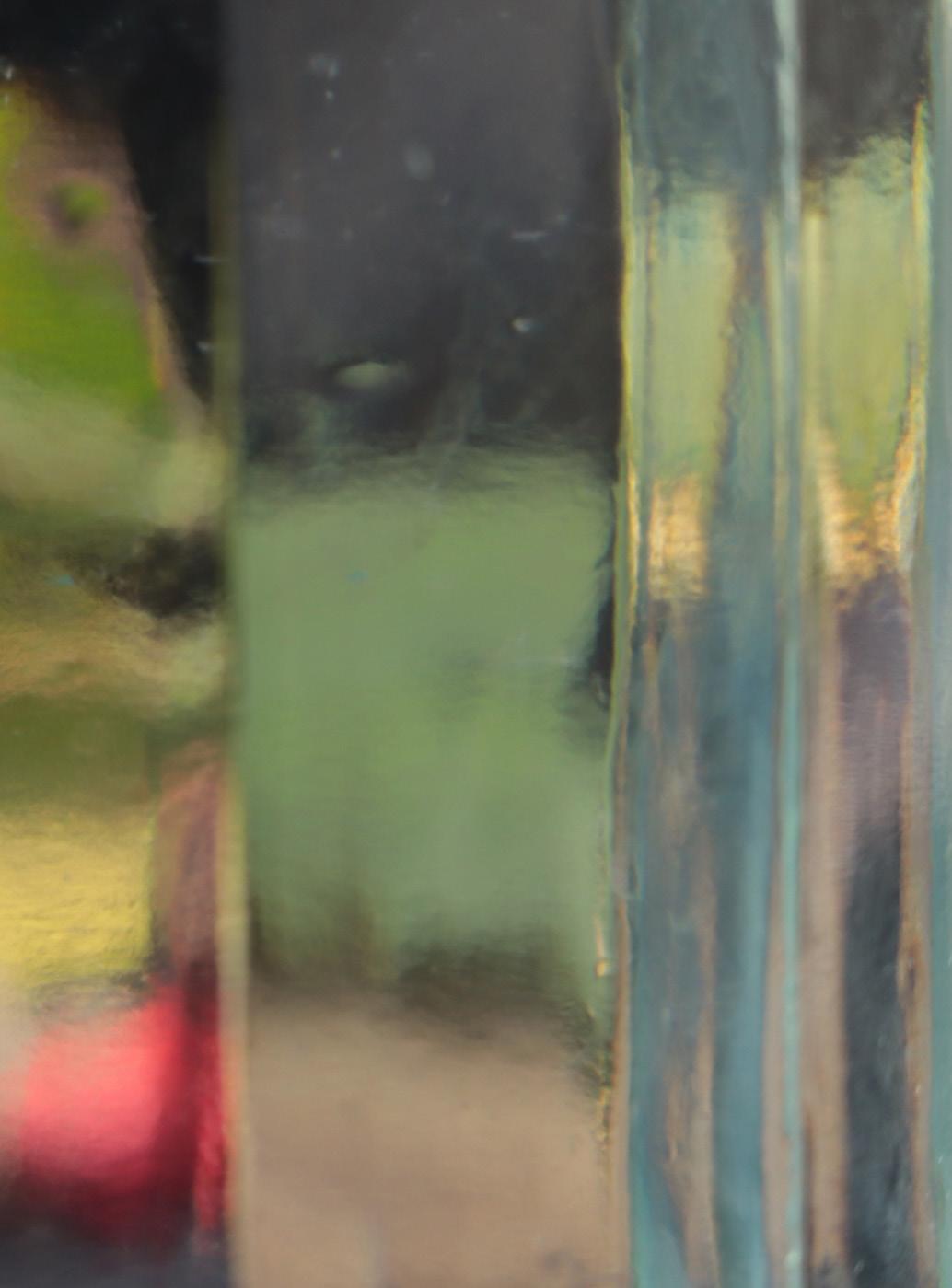
"Our family shared the care for my mother as she reached the end of her life at home in a remote part of Scotland. Between shifts, I took my children to swim in a freezing cold waterfall they’ve known their whole lives. During these stolen moments of exhilaration at one of the hardest but also most special times, we felt in technicolour."
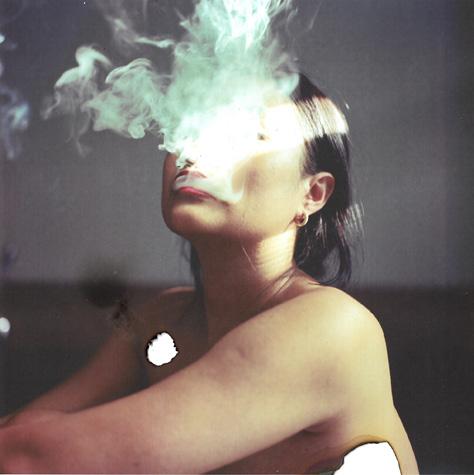
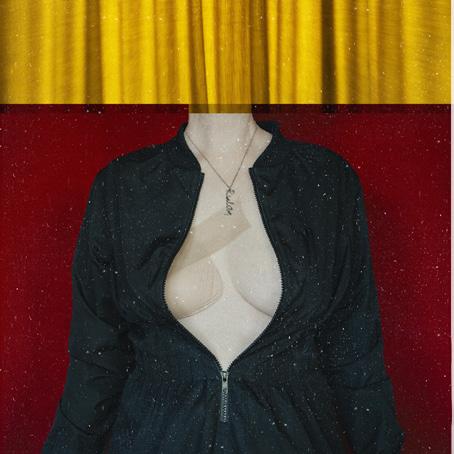
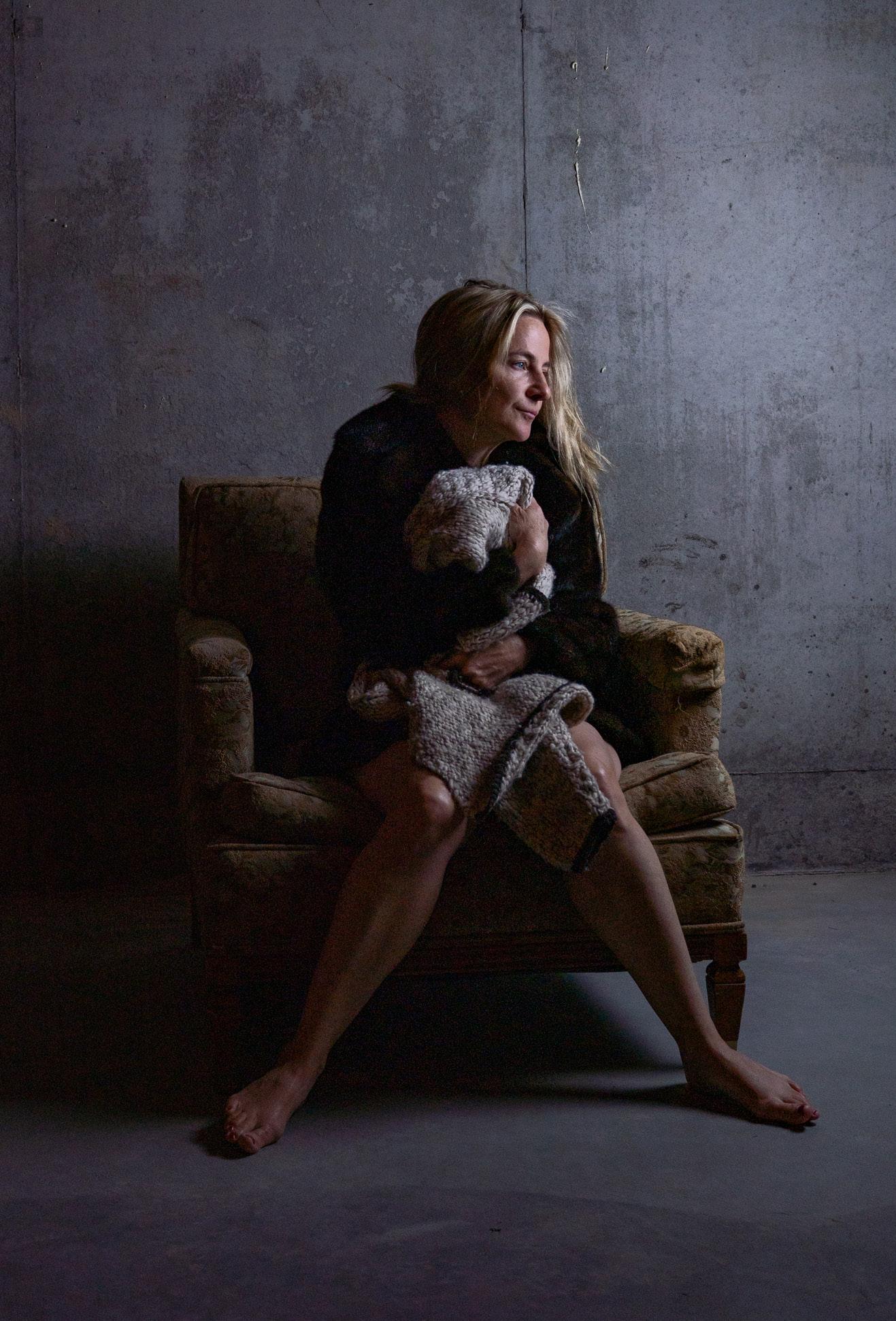
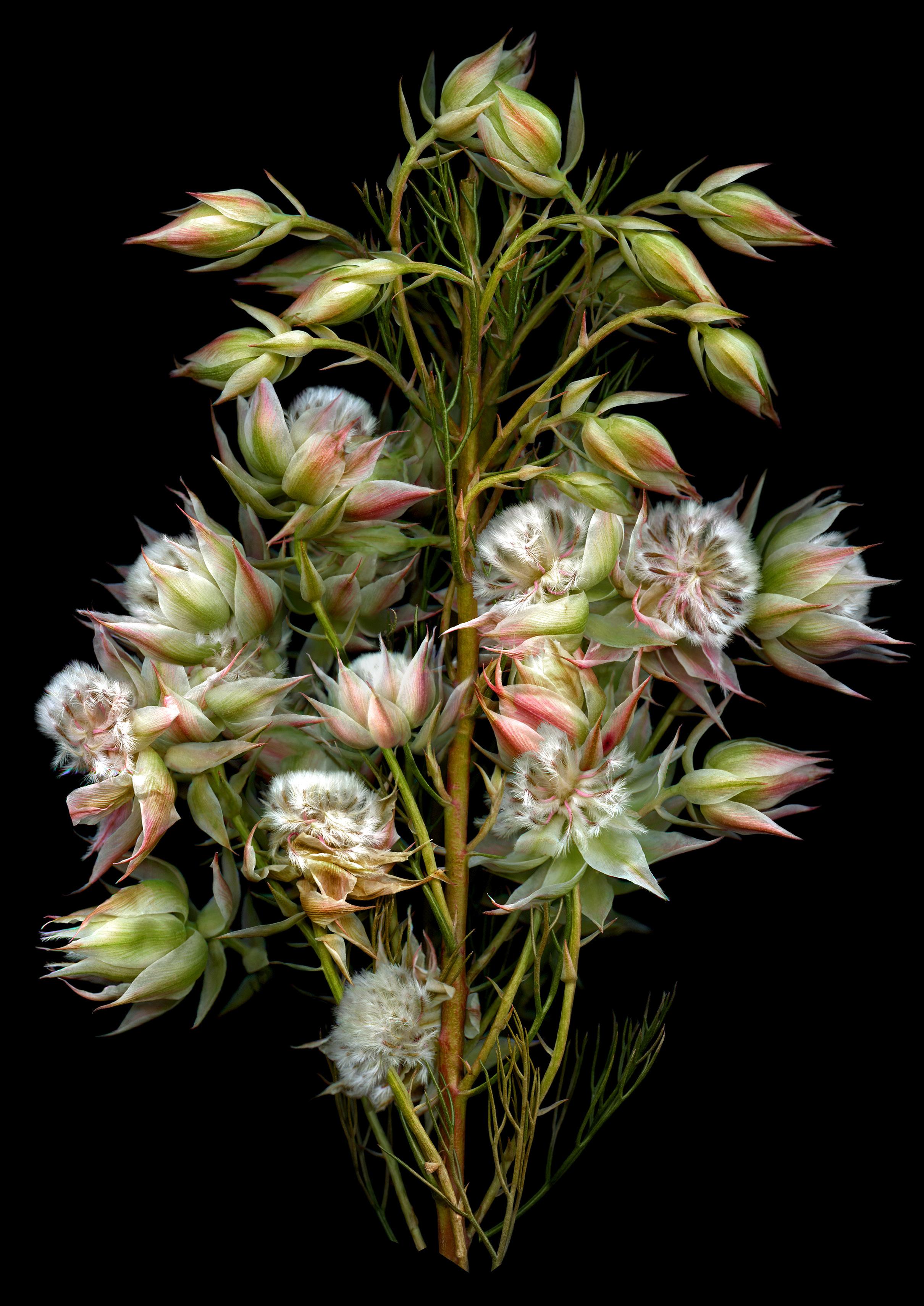
Anne
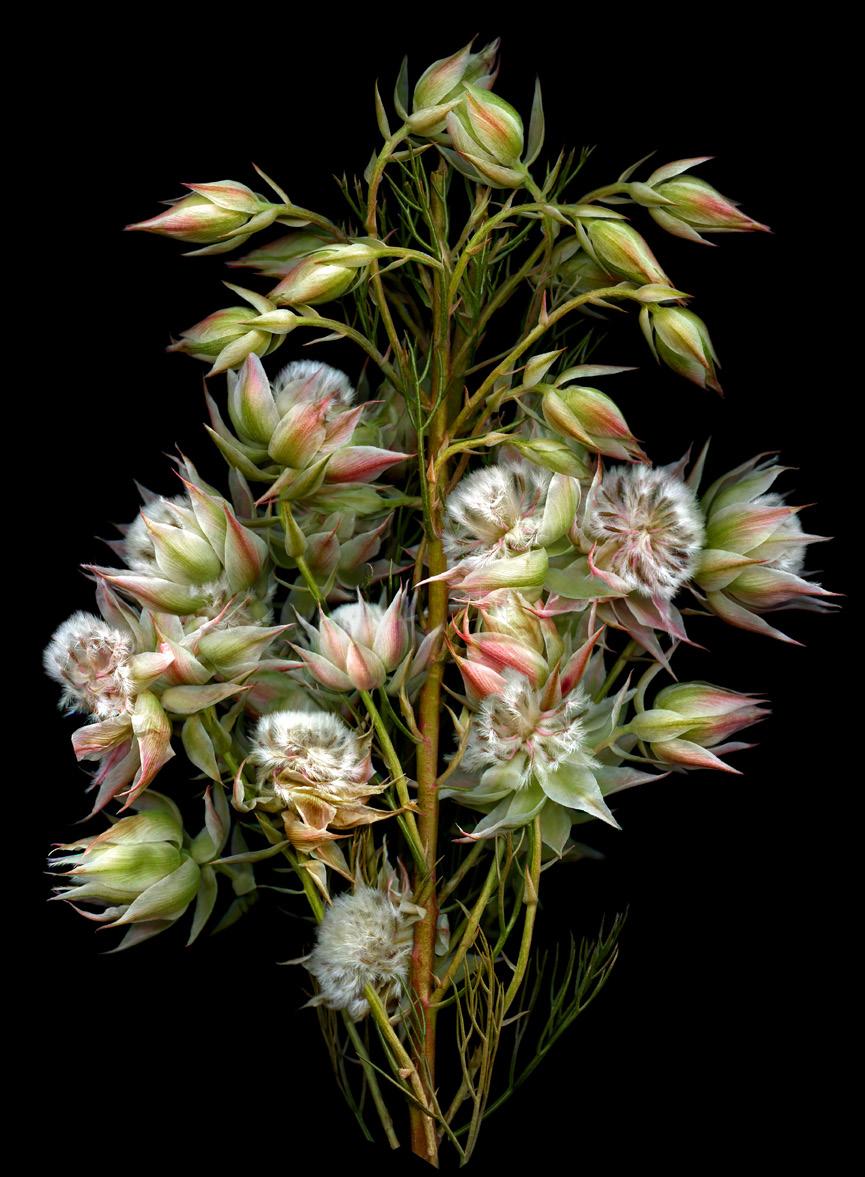
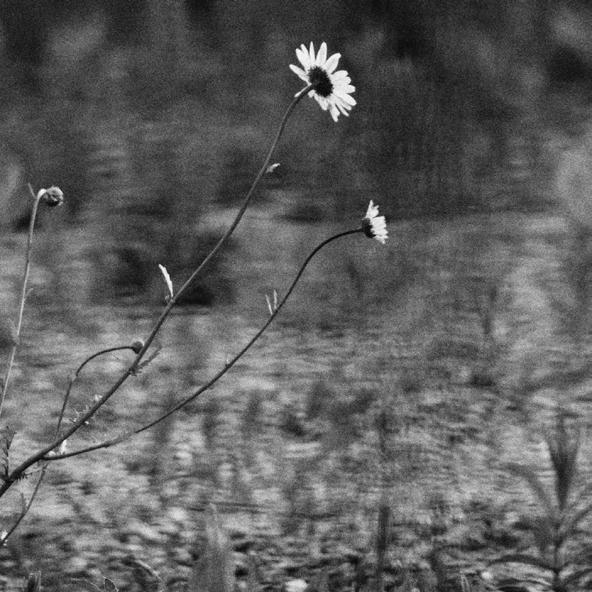
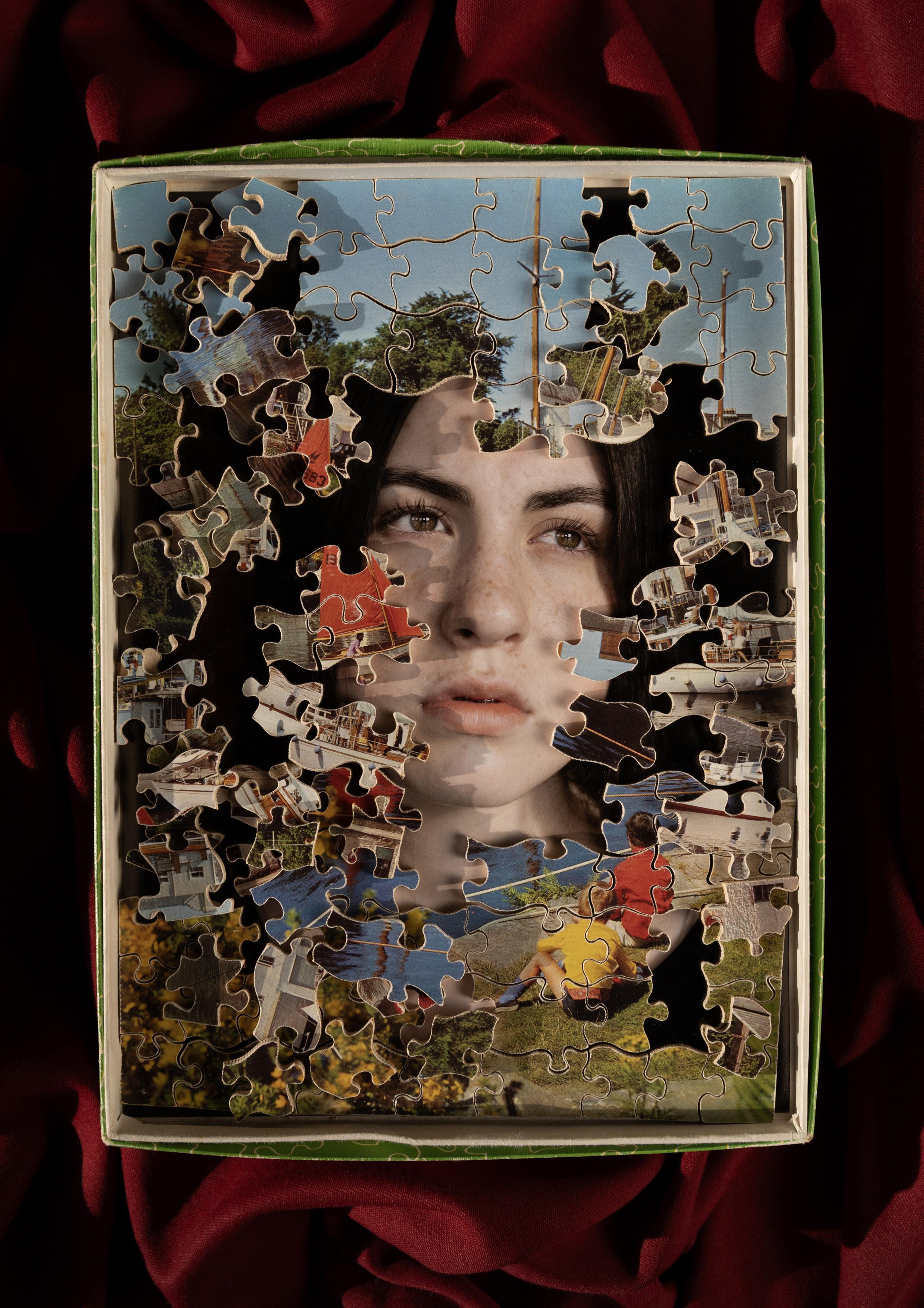
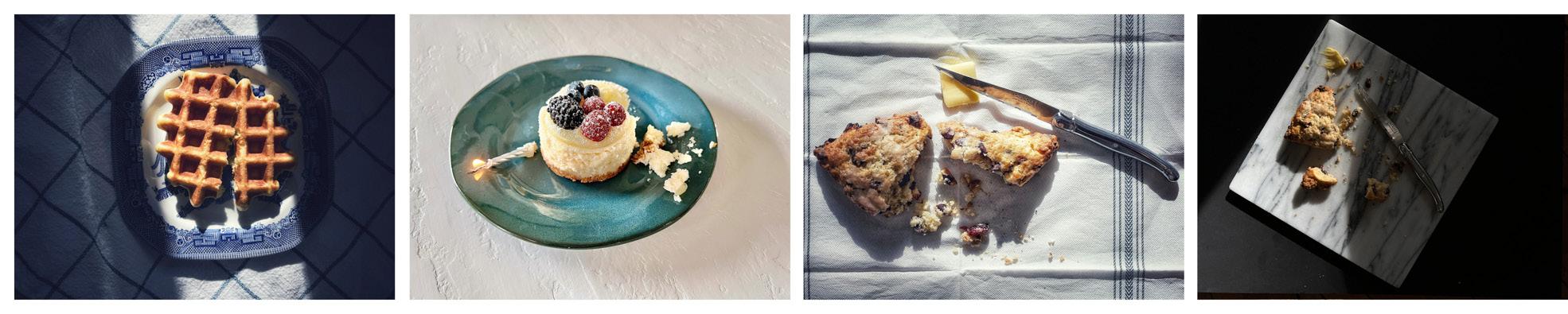
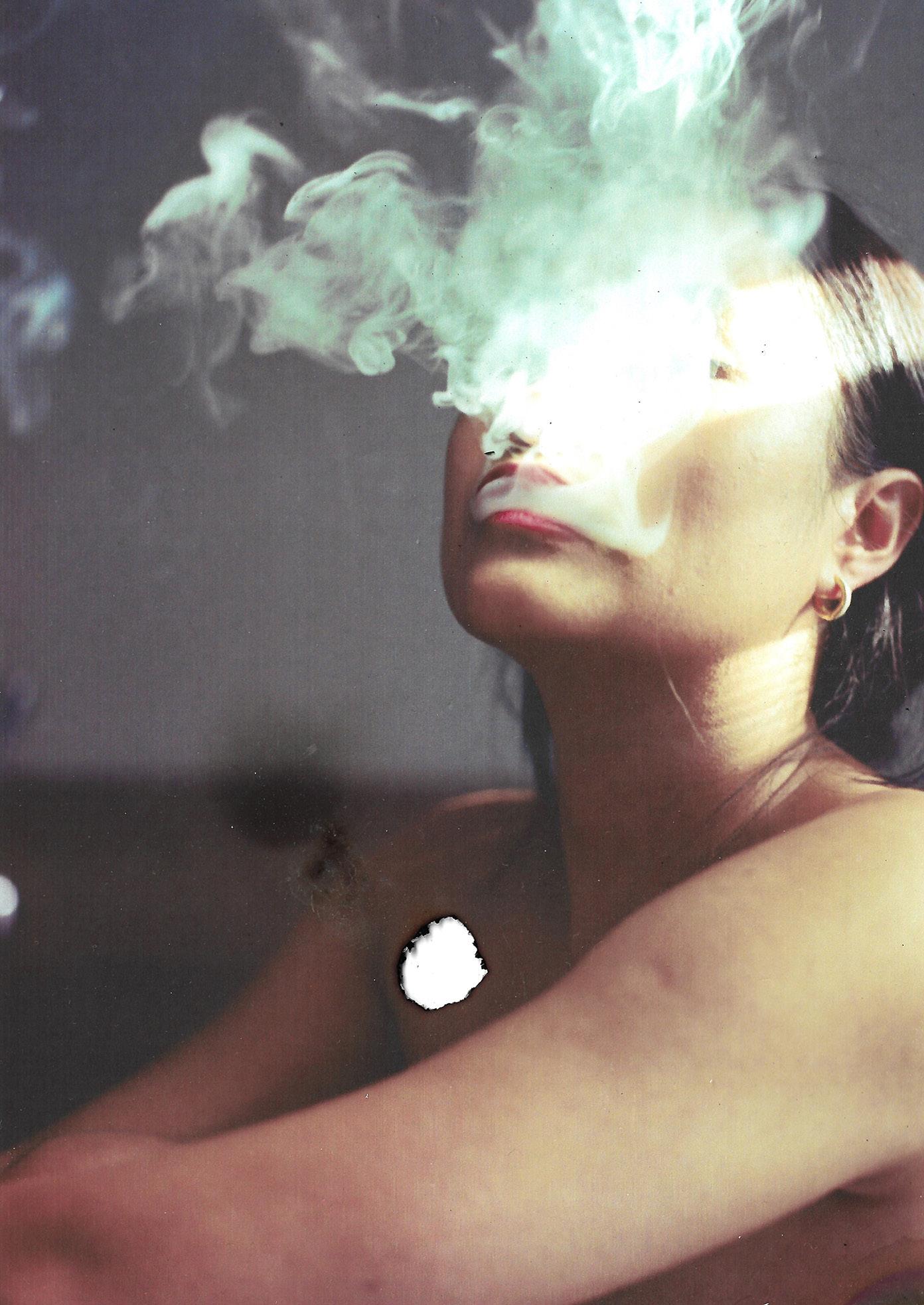
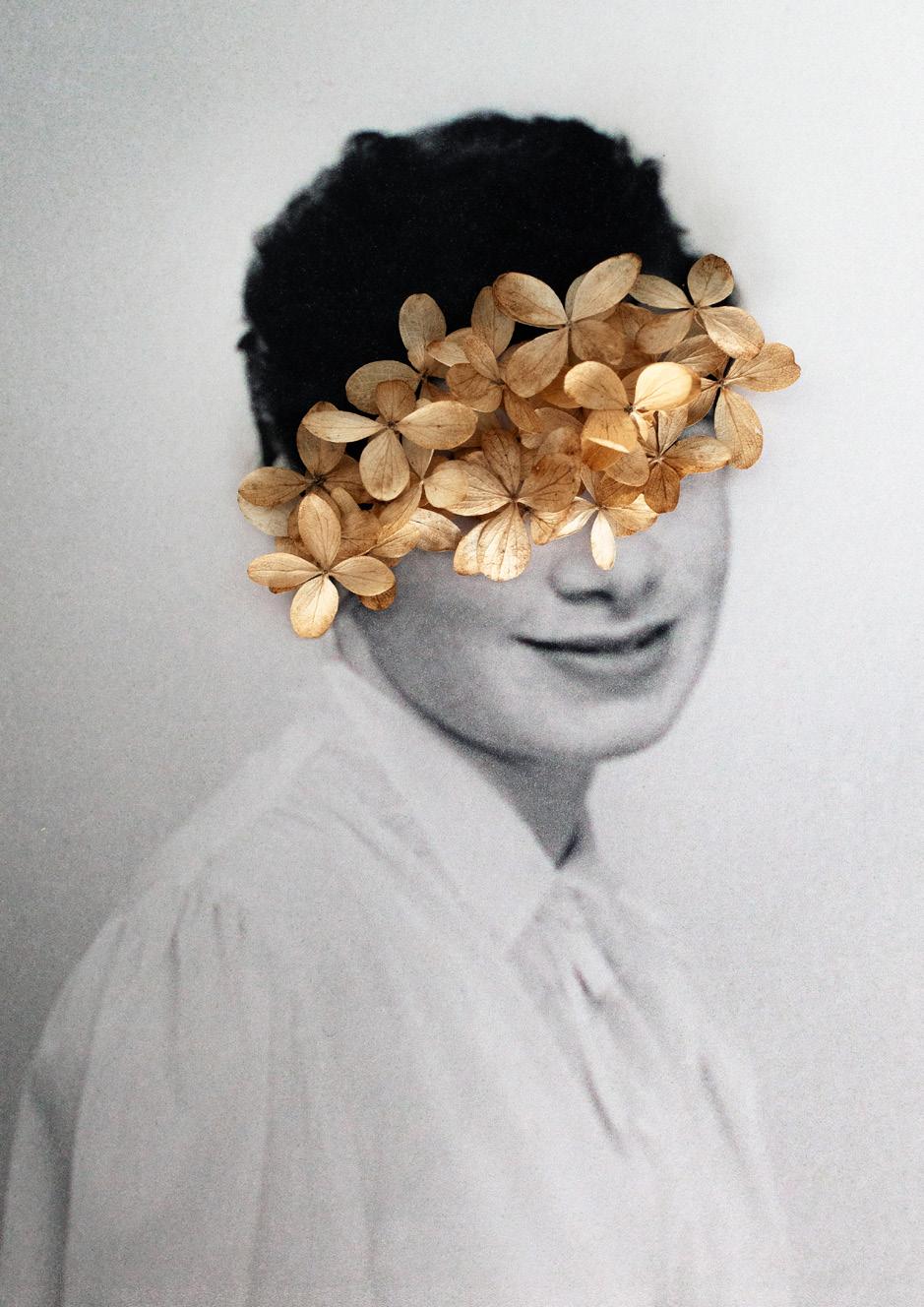
Mason-Hoerter Protea
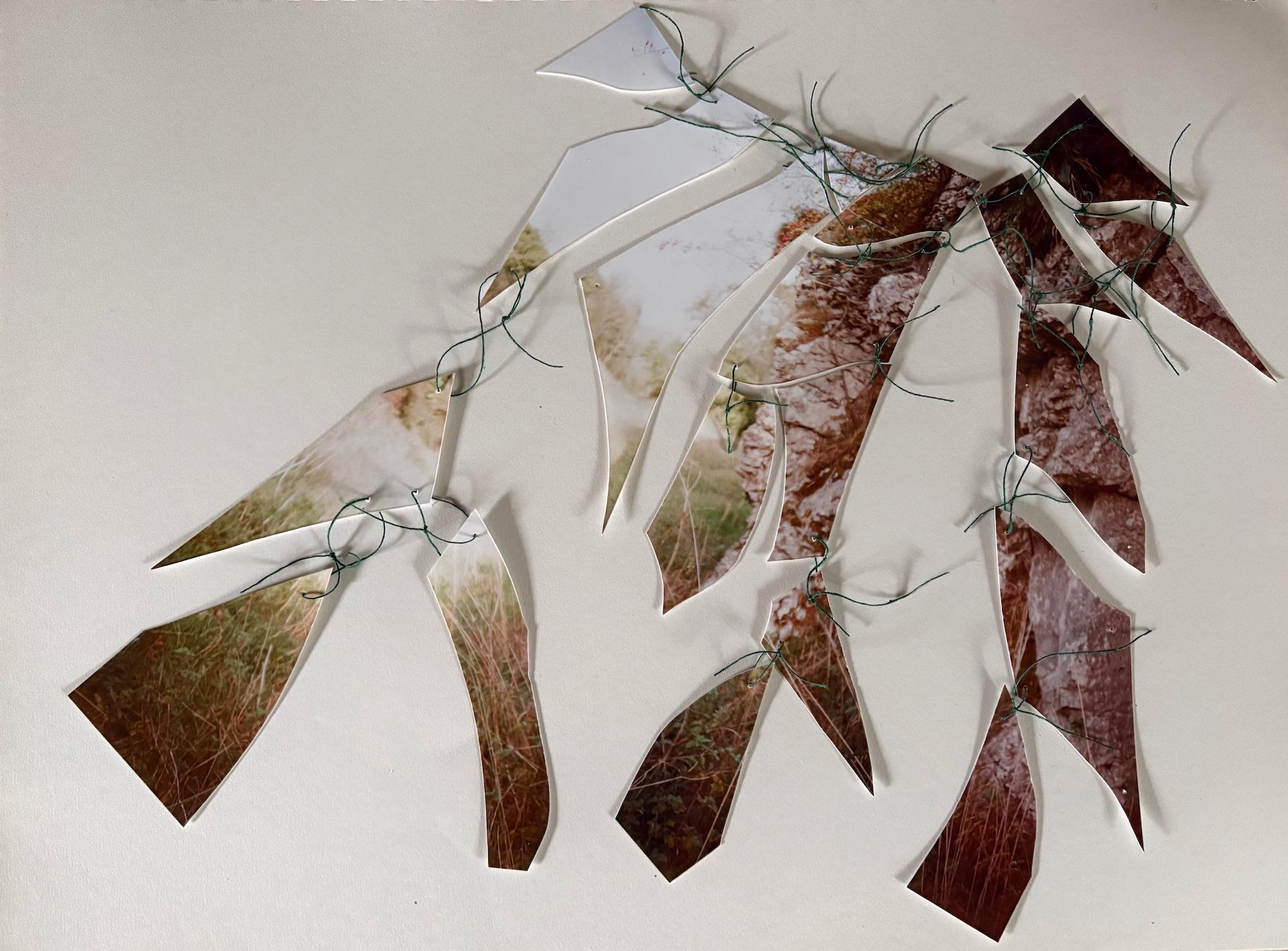
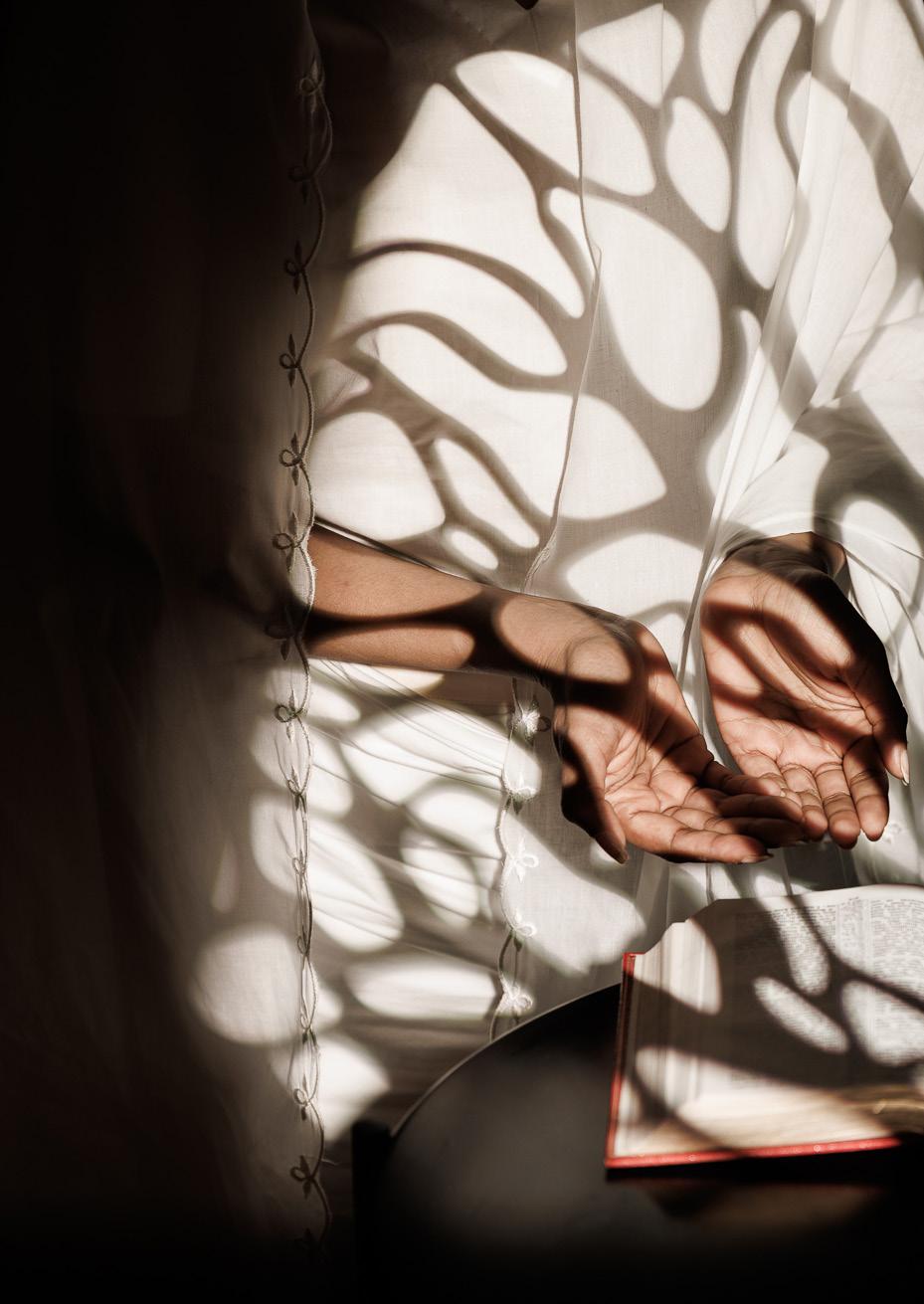
“A continuation of my memory project in which I reassemble photos of parts of a plant. When I sat with this finished image, I was able to escape my issues that have come on with menopause and thus became more positive, focused, breathing better and calm. It was like looking at a plant in a garden. I felt less alone.”
Scan to order your printed copy of WE ARE Magazine from Peecho.
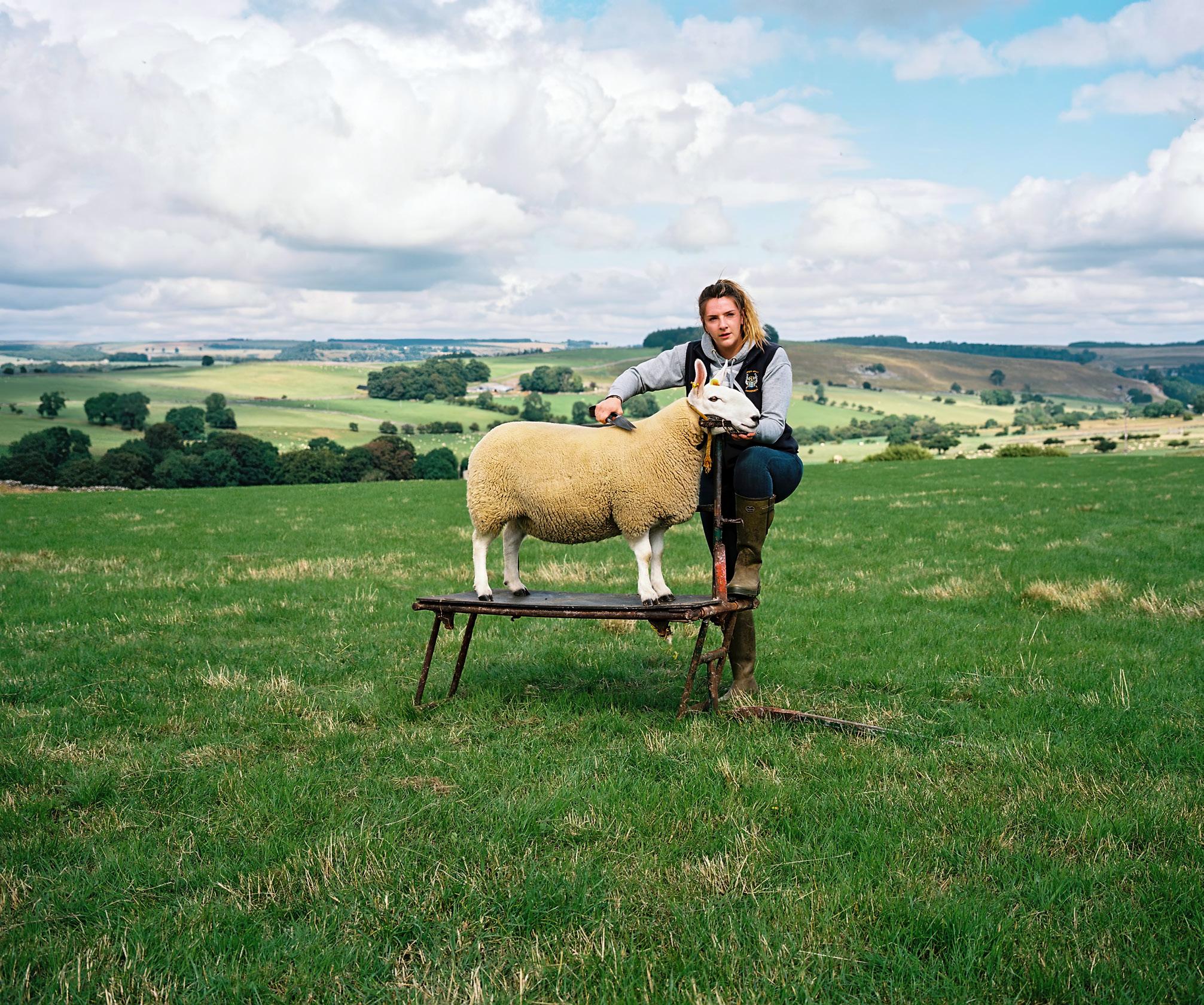
Tessa Sinclair
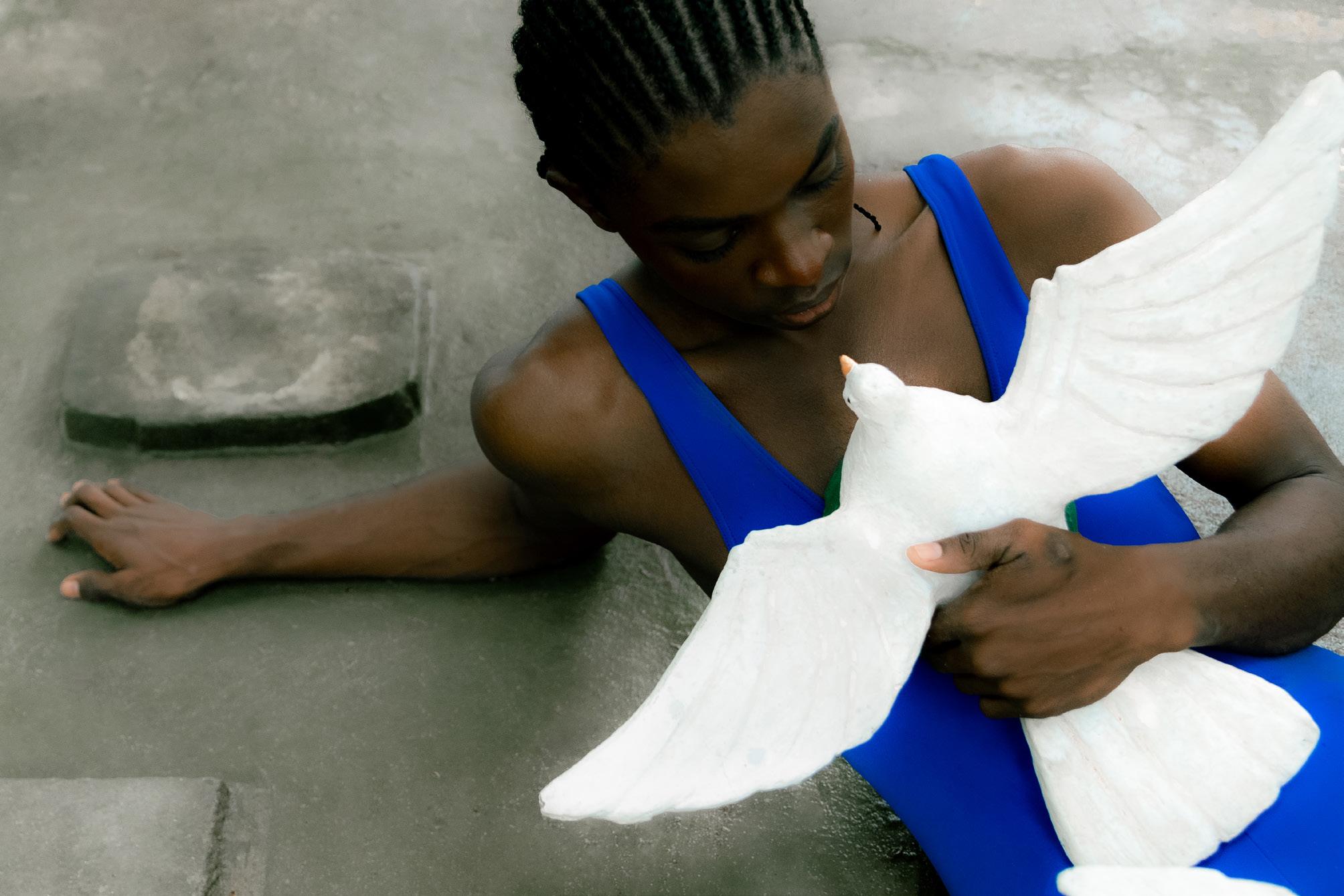
Rahimat Onize Shaibu
Francesca Hummler
Sarah Ketelaars
Chandy
Roey Xinqi Qiu
Annie Green-Armytage
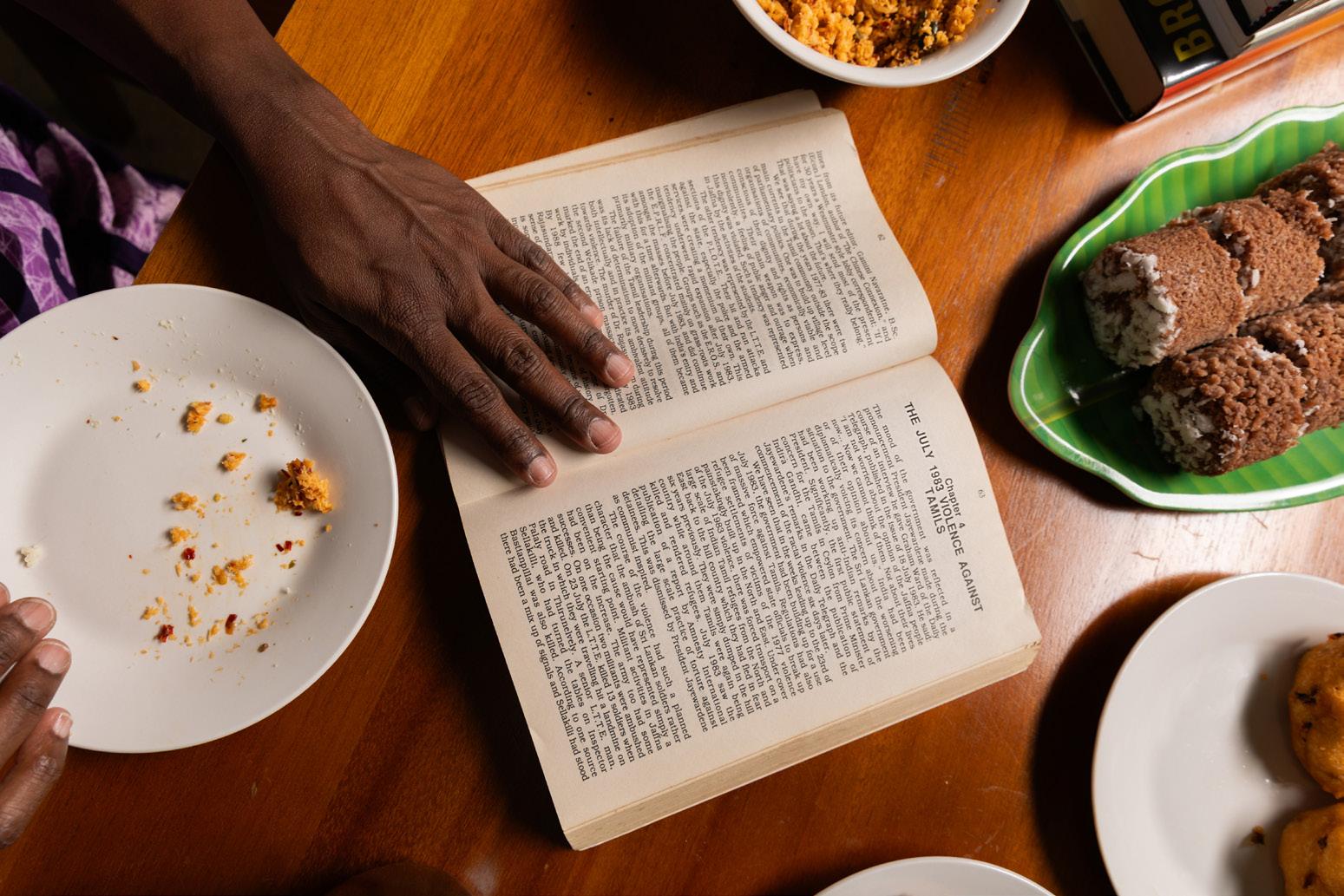
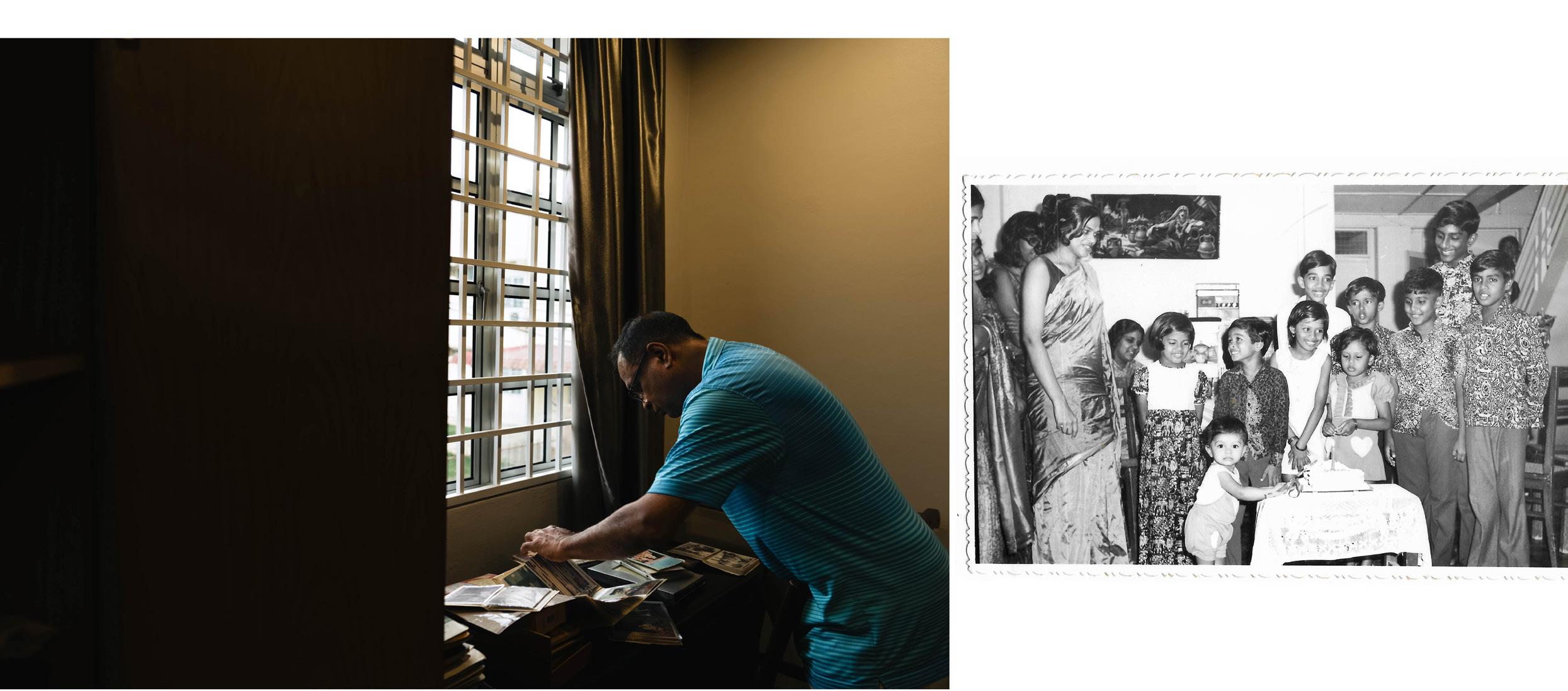
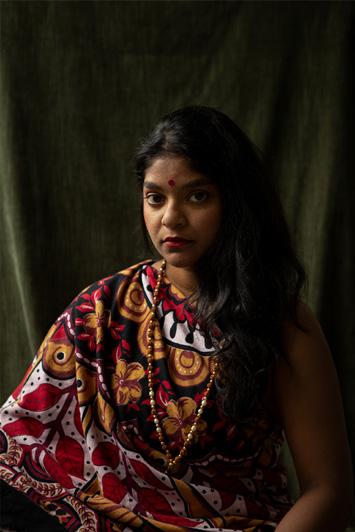
Abhi Chinniah
Clair Robins
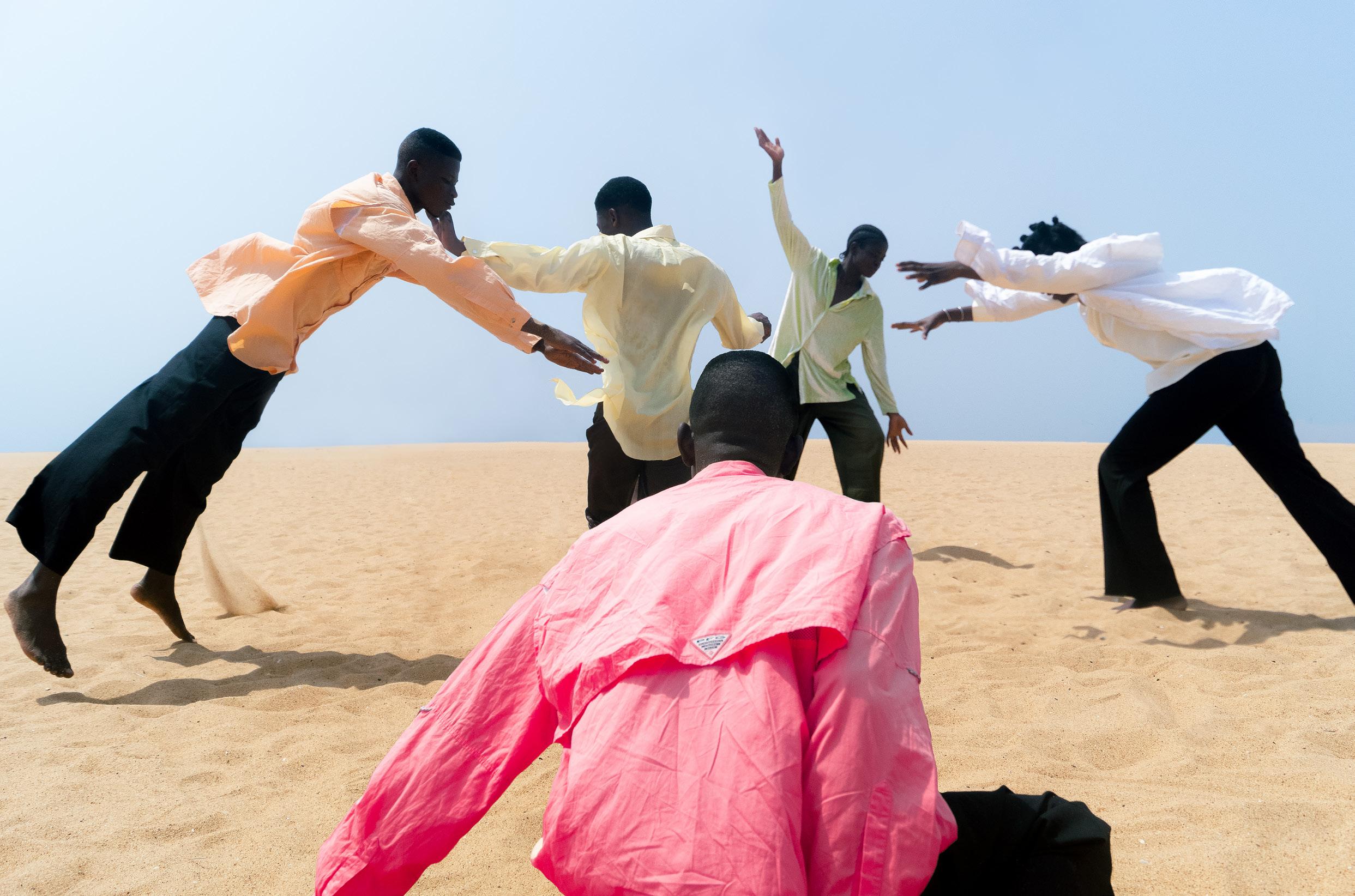
Tejas Earp
Student
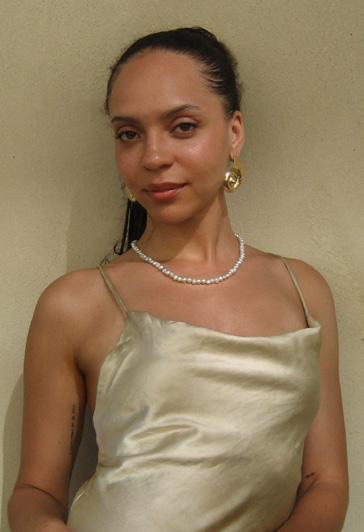
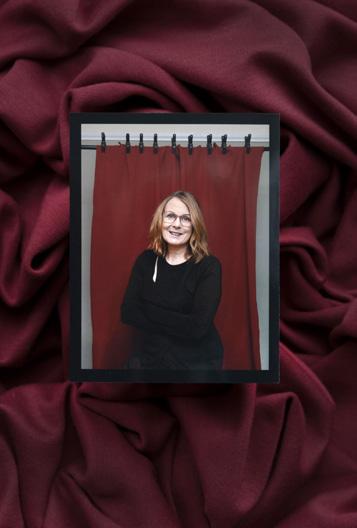
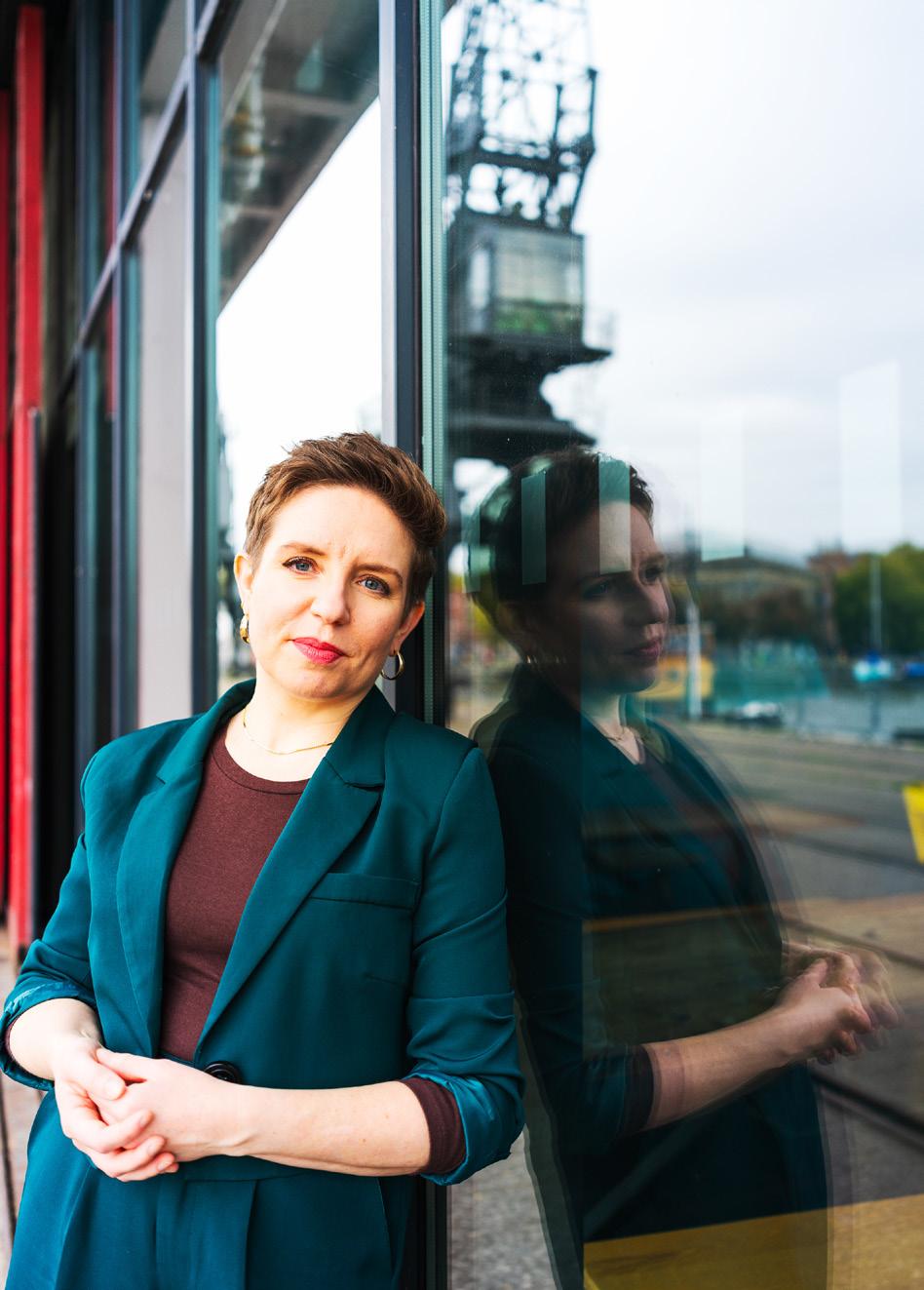
Beatrice Updegraff by Frankie MacEachen
FROM THE EDITOR
Hello!
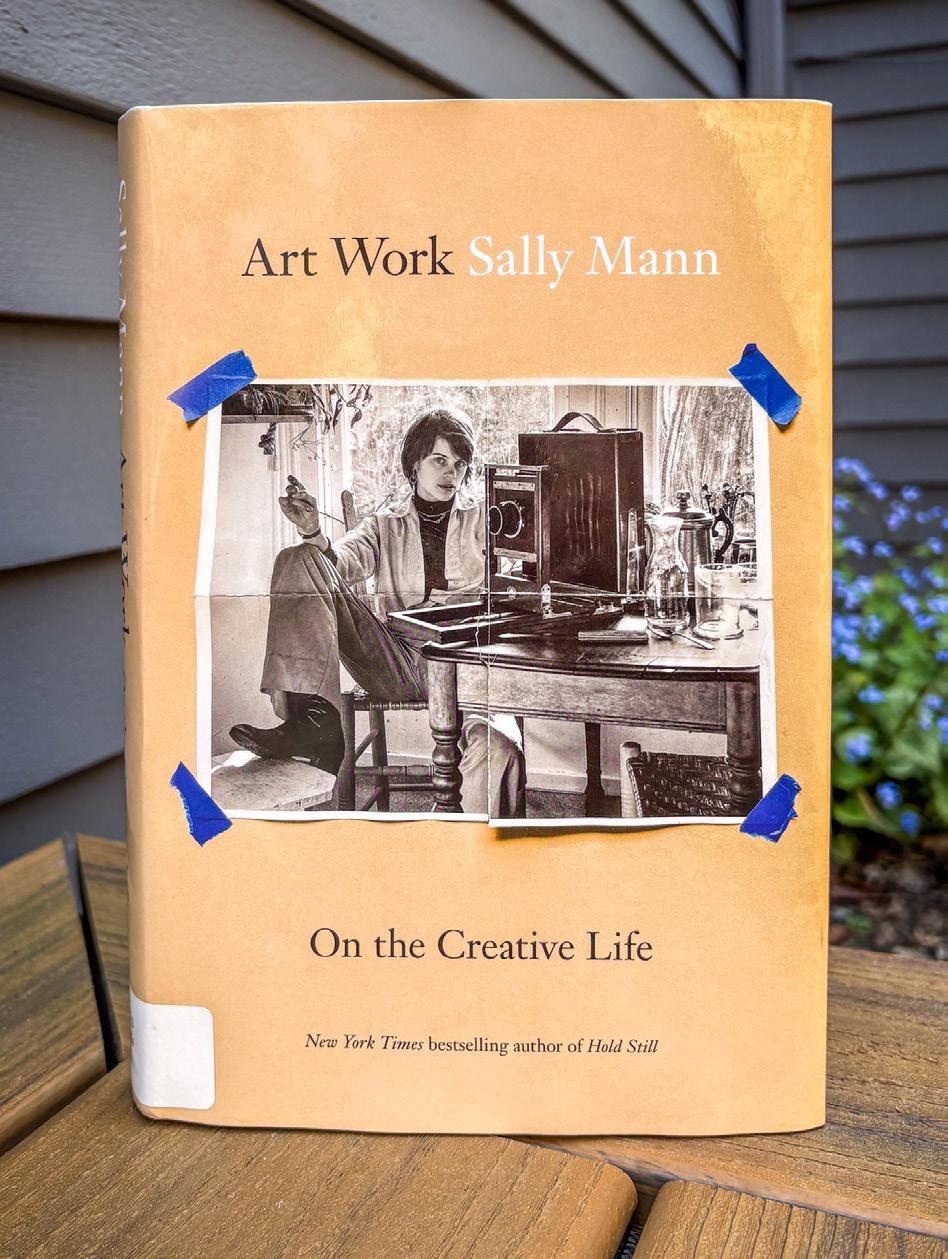
Recently I’ve been reading Art Work by the renowned American photographer and writer, Sally Mann. Her forthright and funny book about the creative life is packed full of insights, including this one:
“Despite outward appearances, most of us have an interior edifice of complex emotions, whose dimensions are unexposed, unexpected, and profound. And some of us are lucky enough to have ways to express that dark geometry, to tell our own unique stories.”
This latest issue of WE ARE Magazine is home to an abundance of photographers telling unique stories that dive deep into past and present realities.
Having reached the end of her extensive project to pay tribute to the 544 psychiatric patients murdered in Latvia by the Nazis, Sarah Ketelaars reflects on the importance of family history, memory, and image-making.
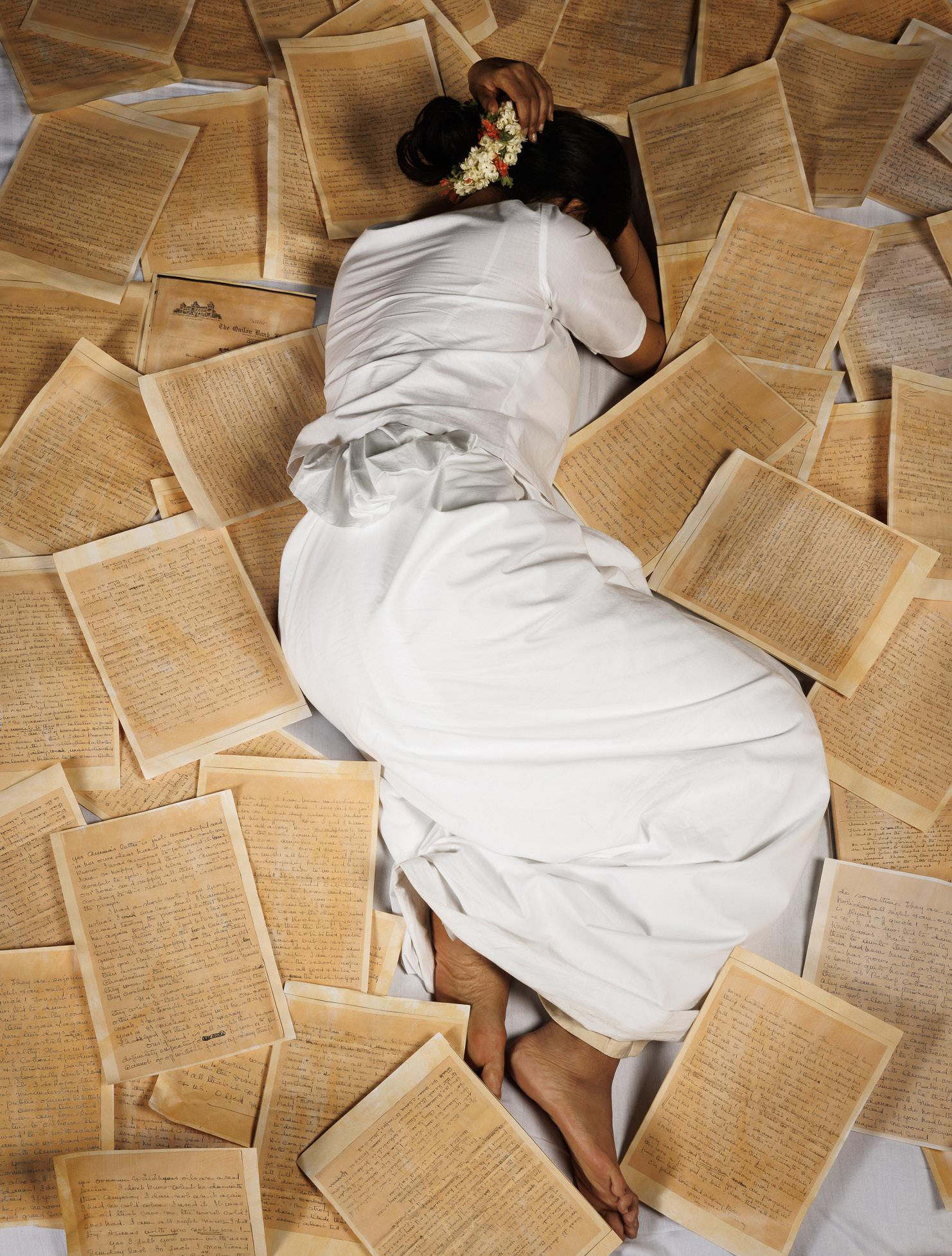
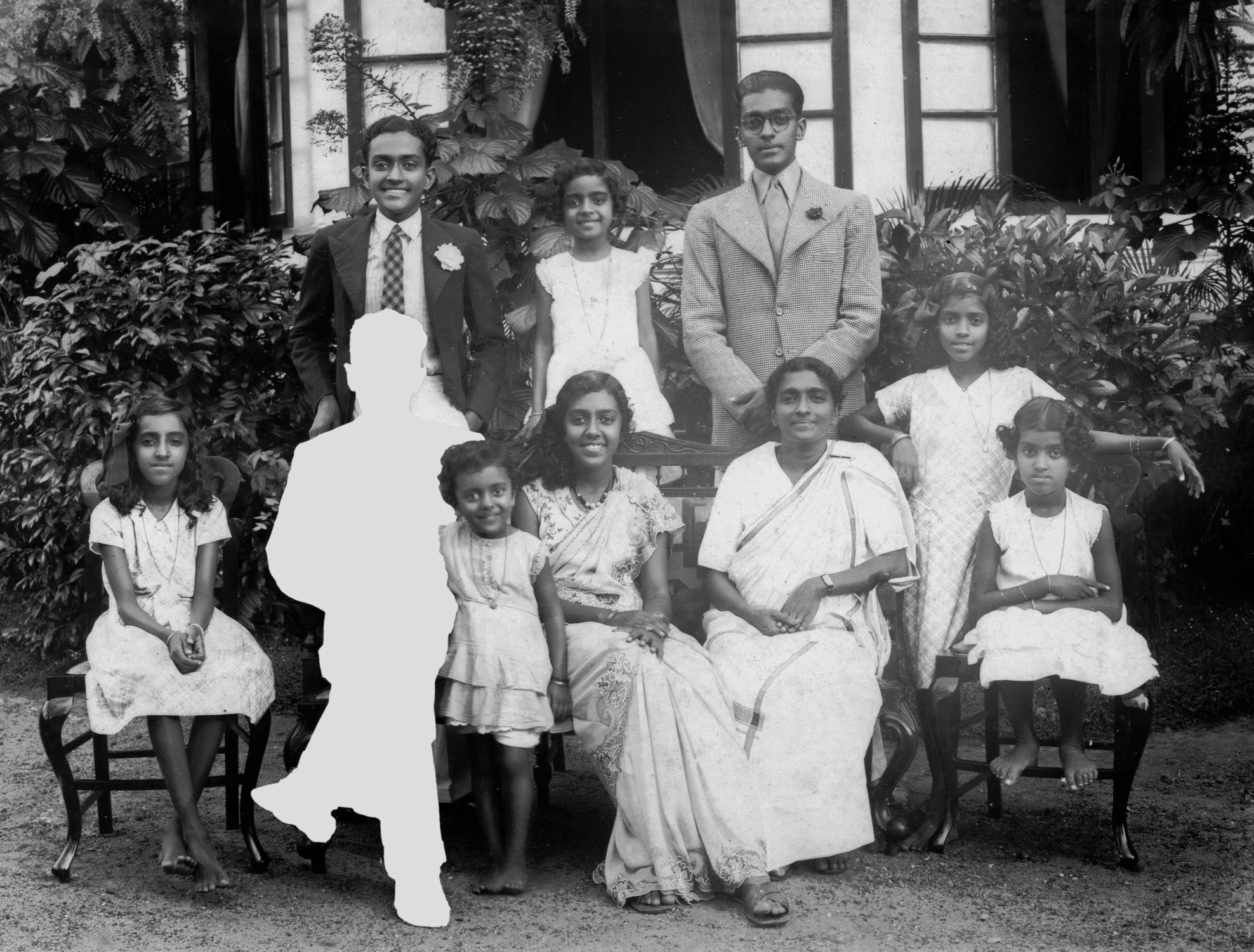
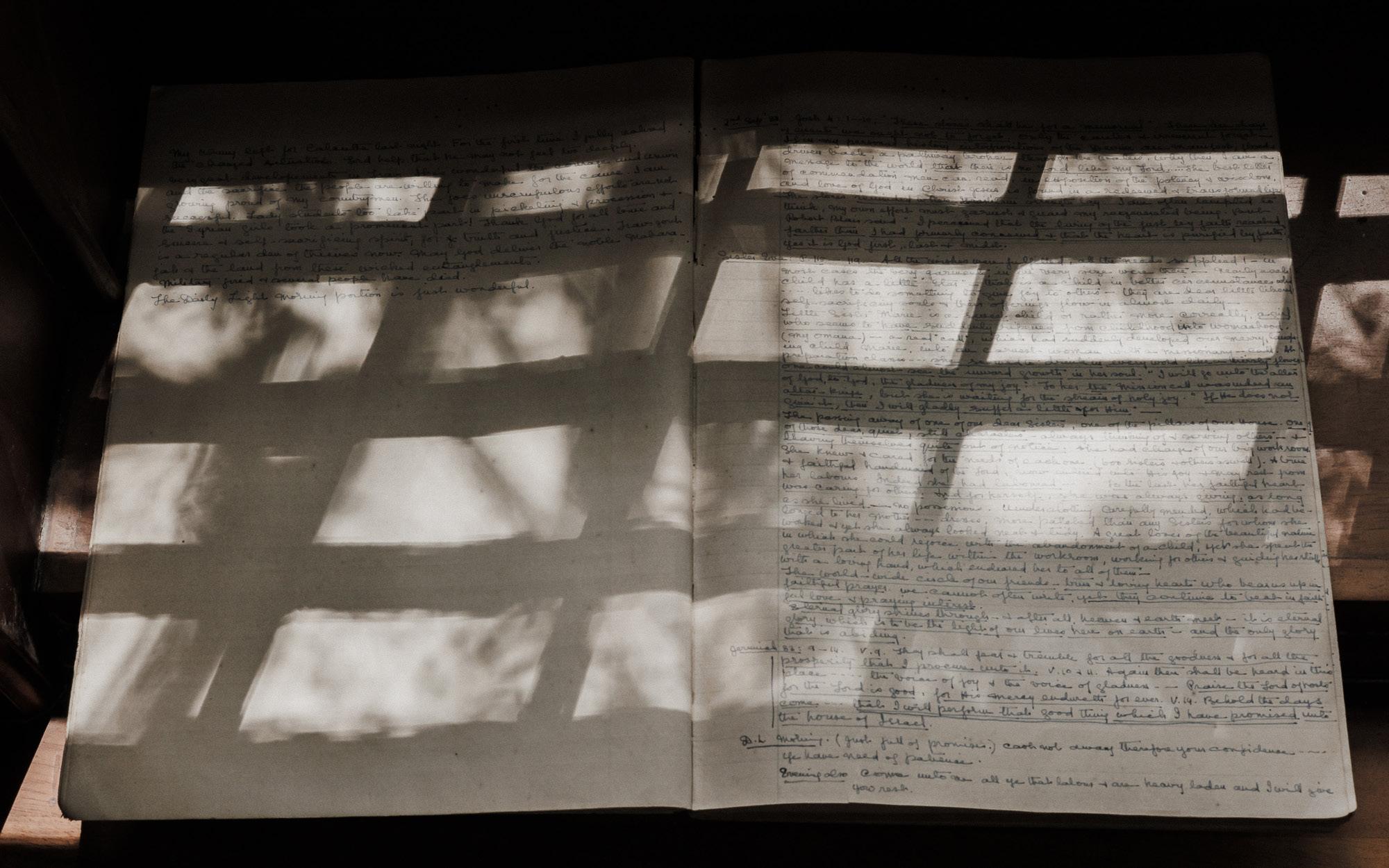
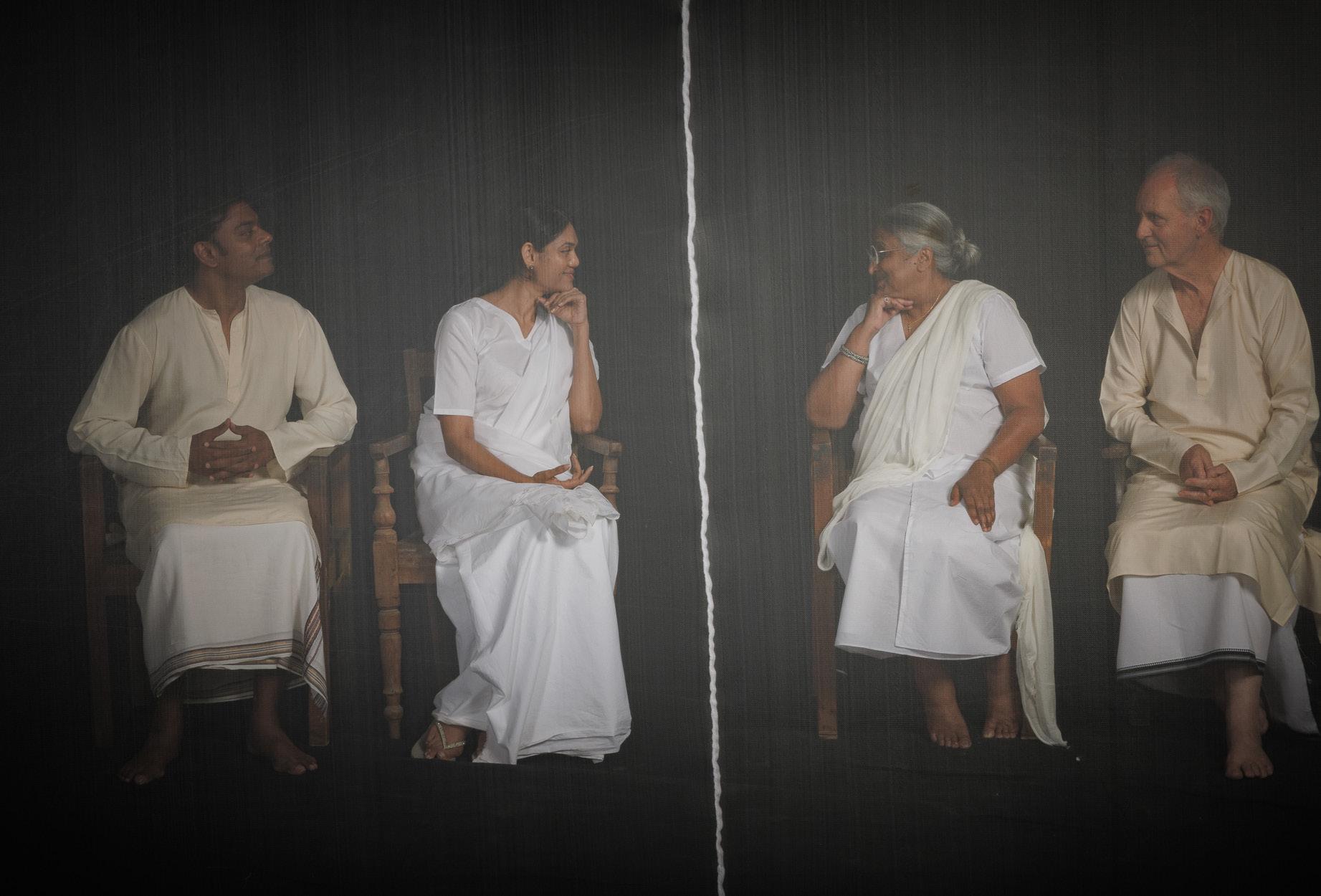
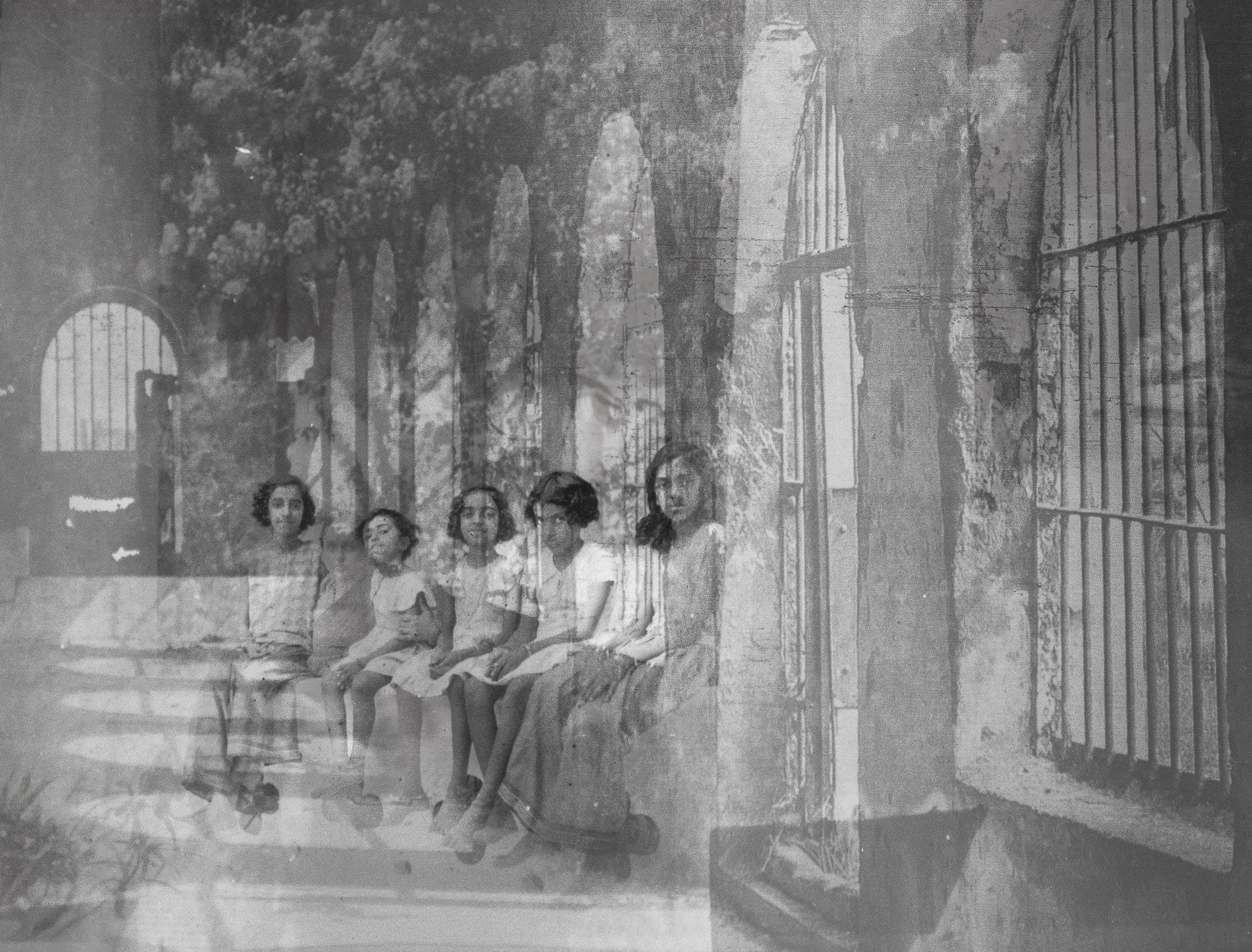
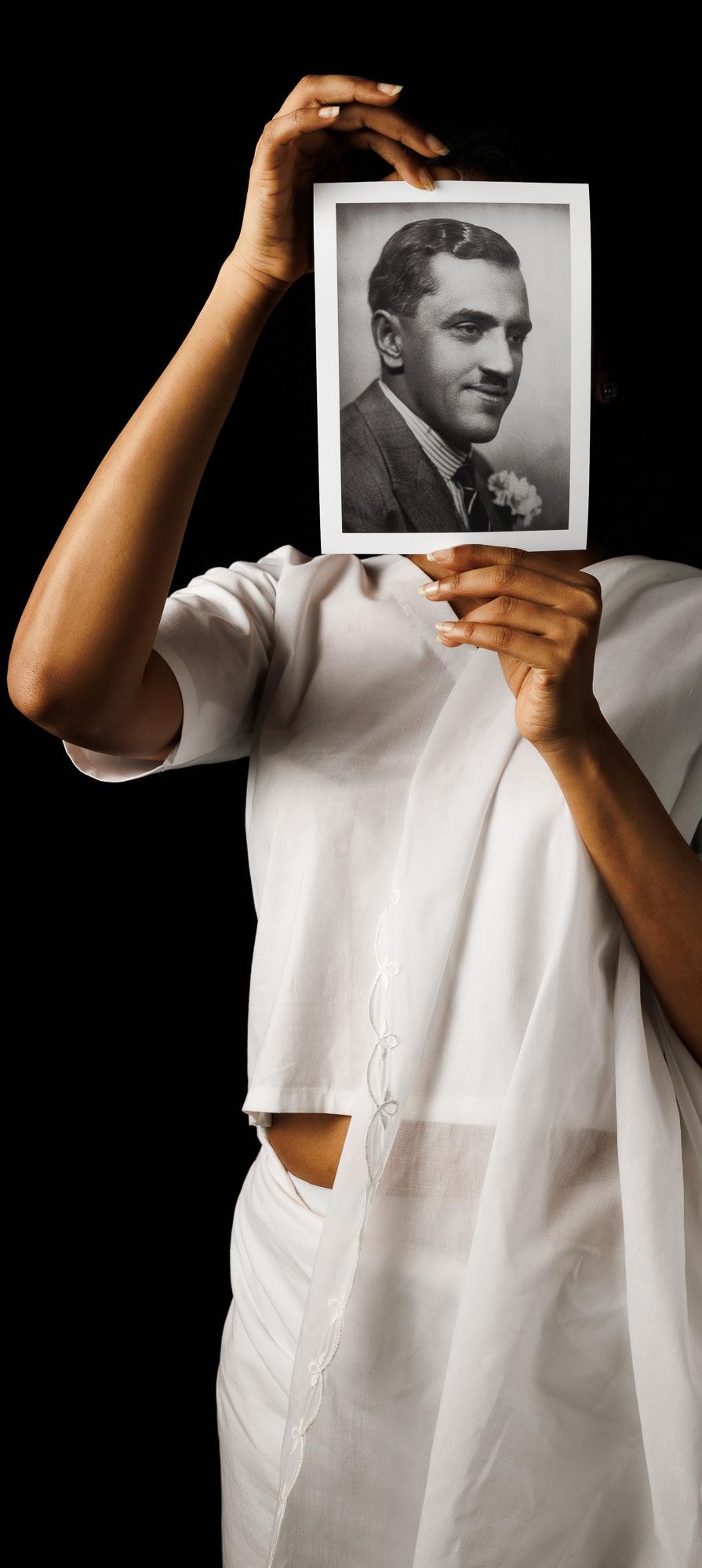
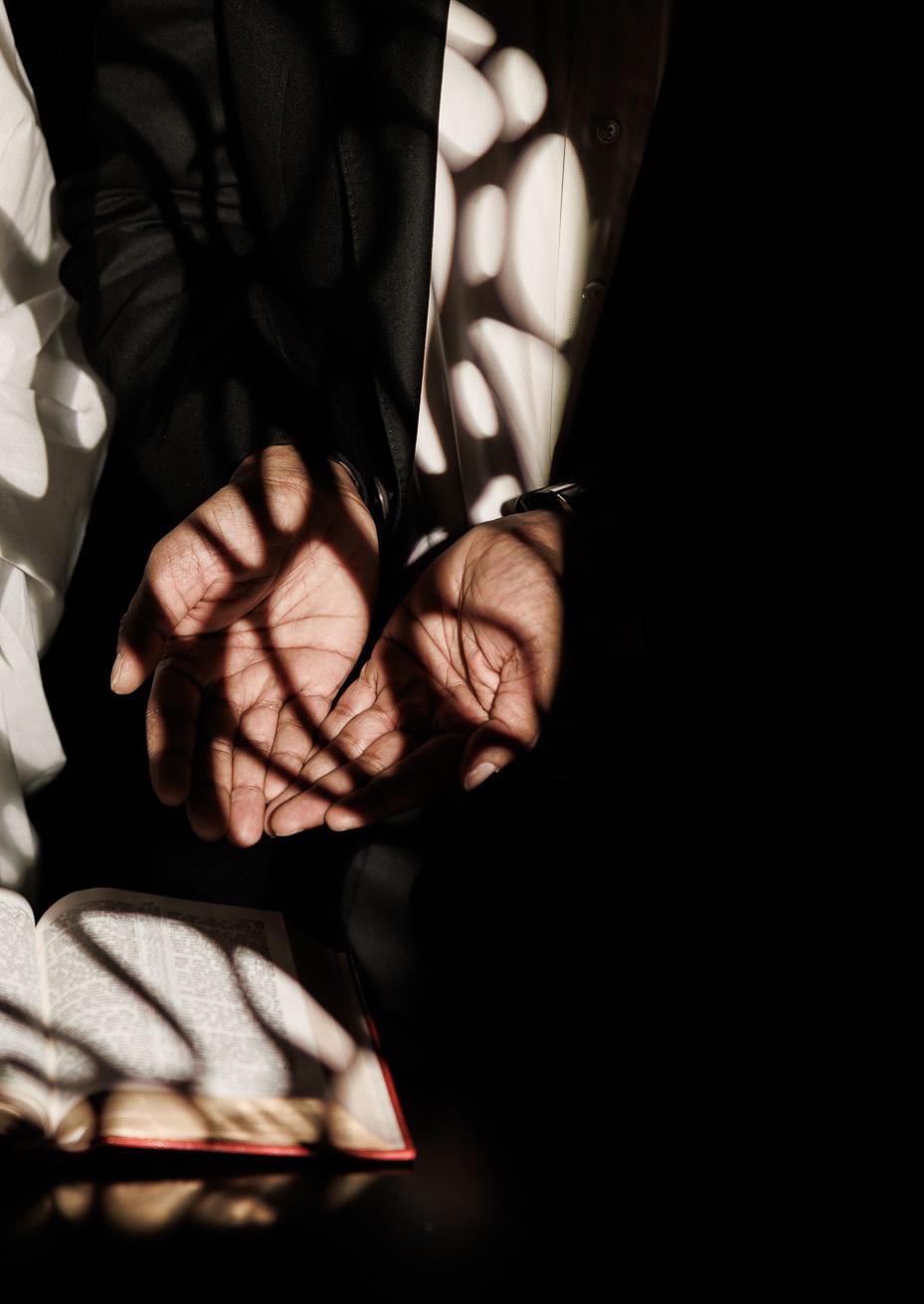
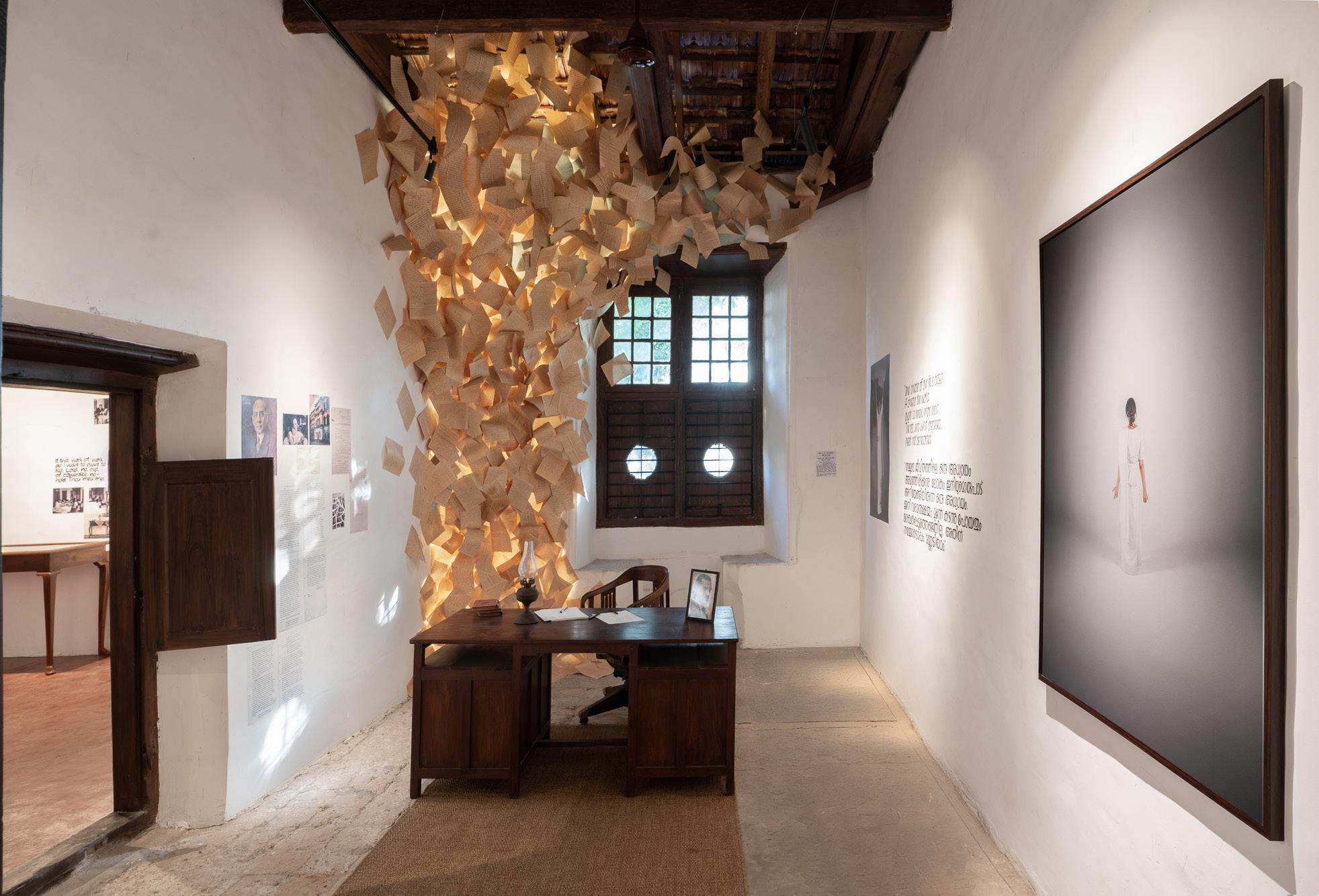
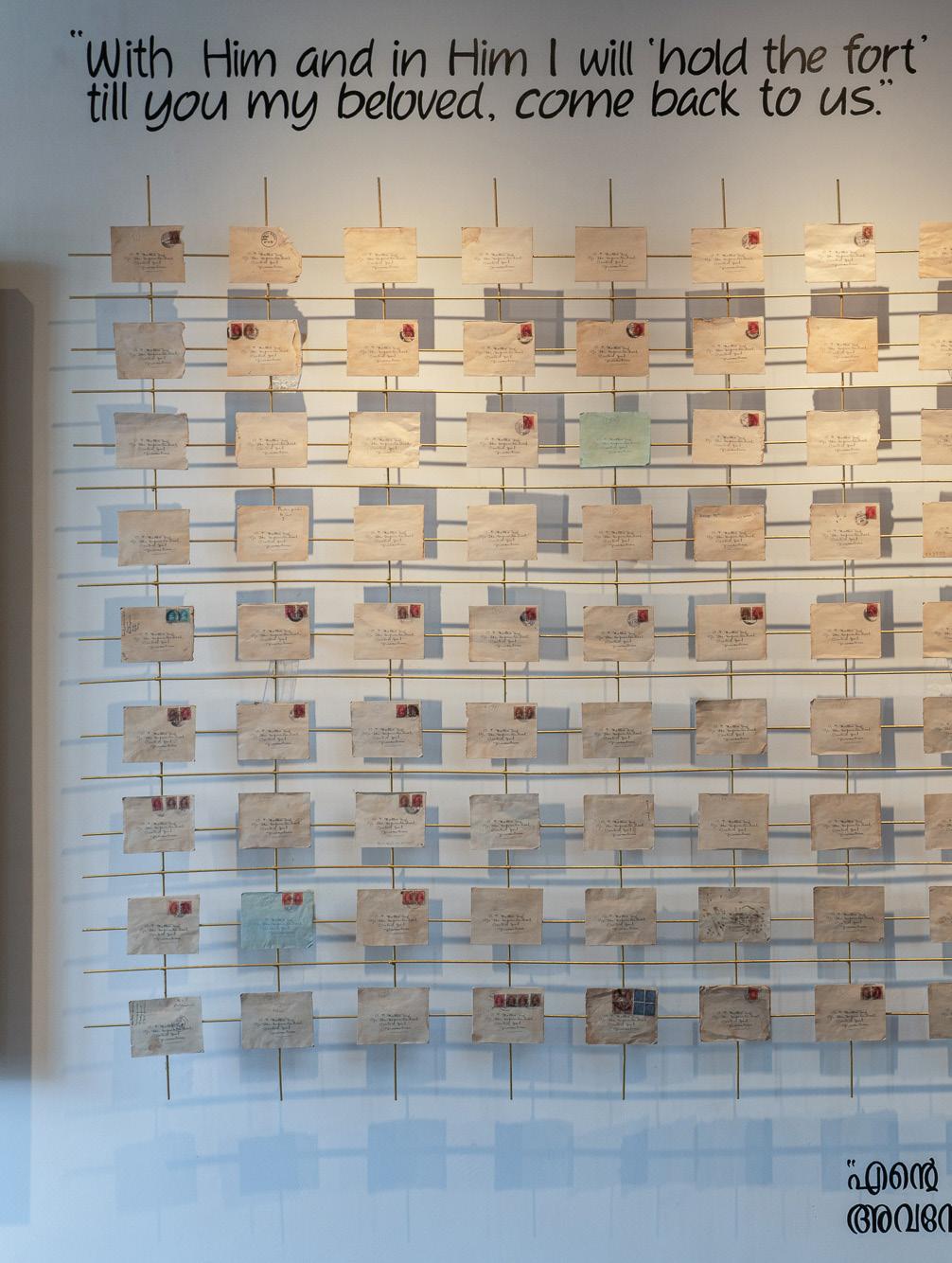
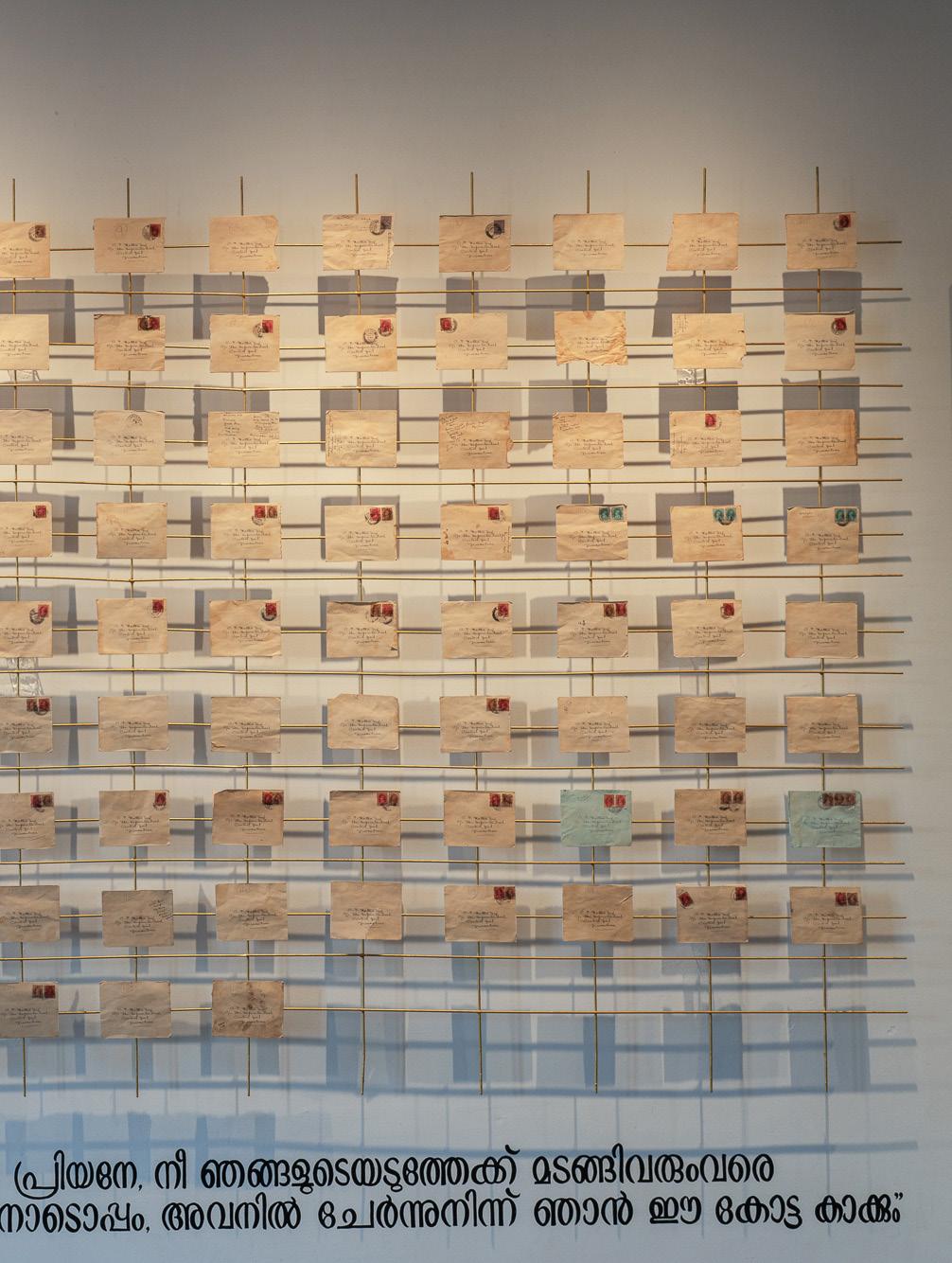
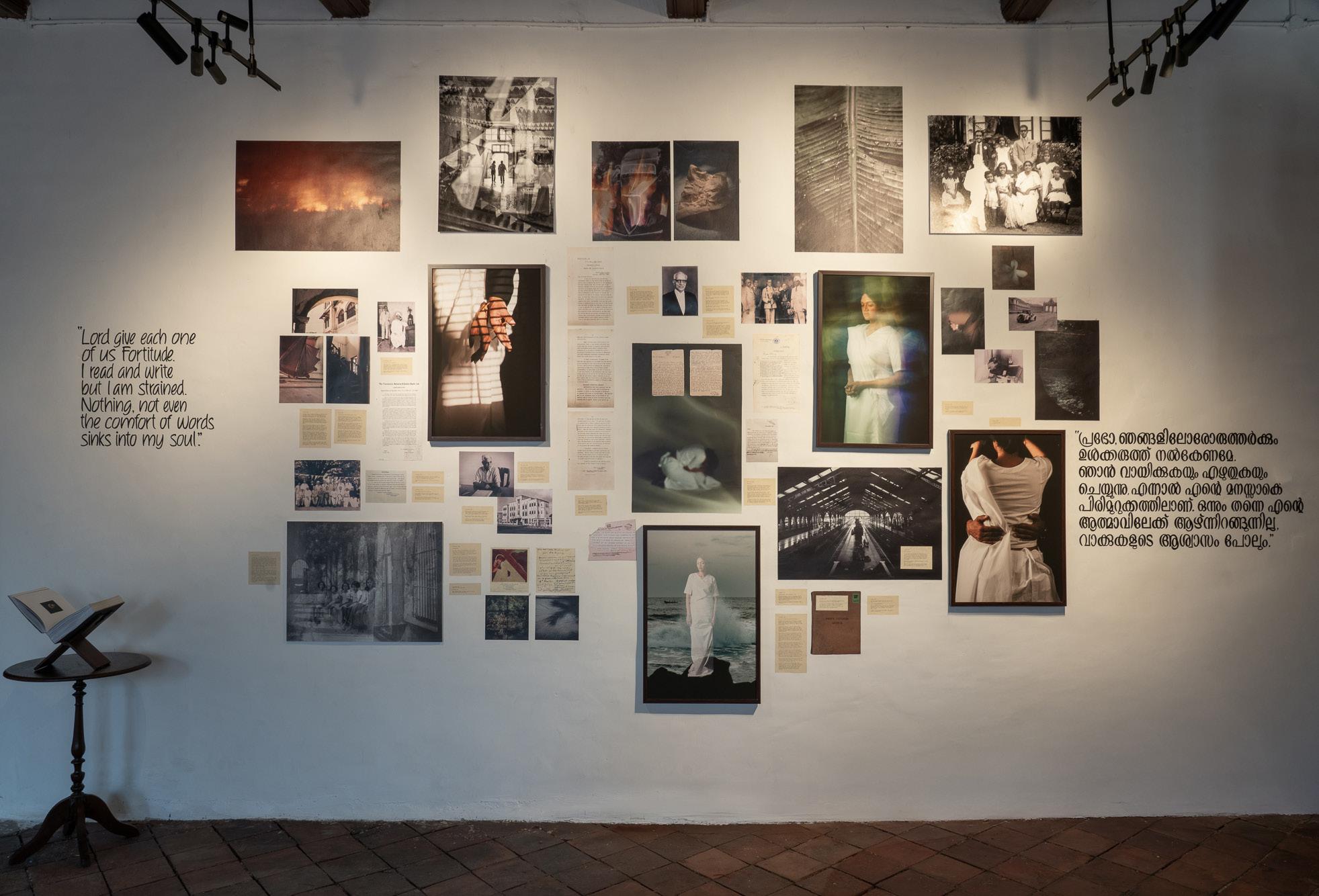
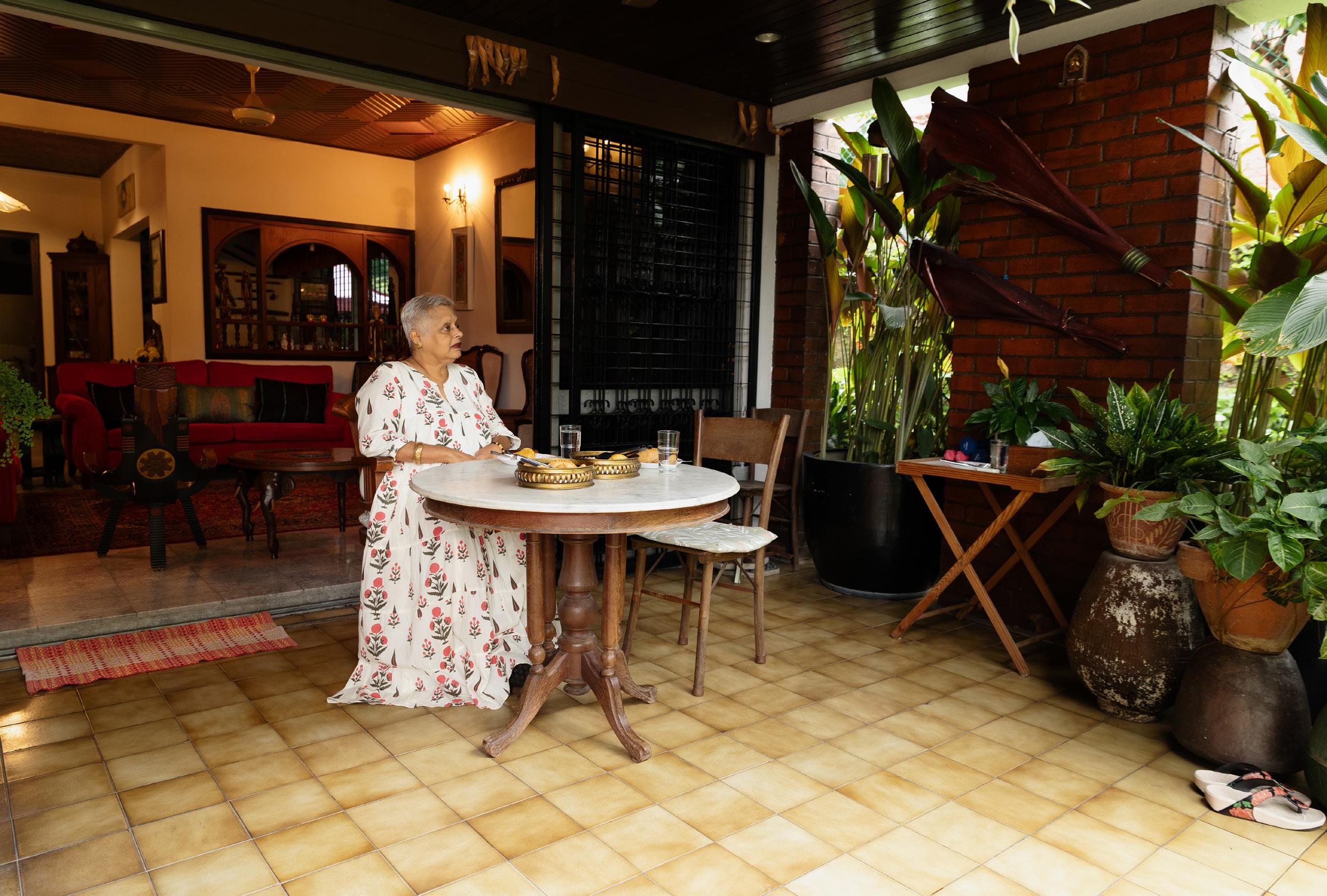
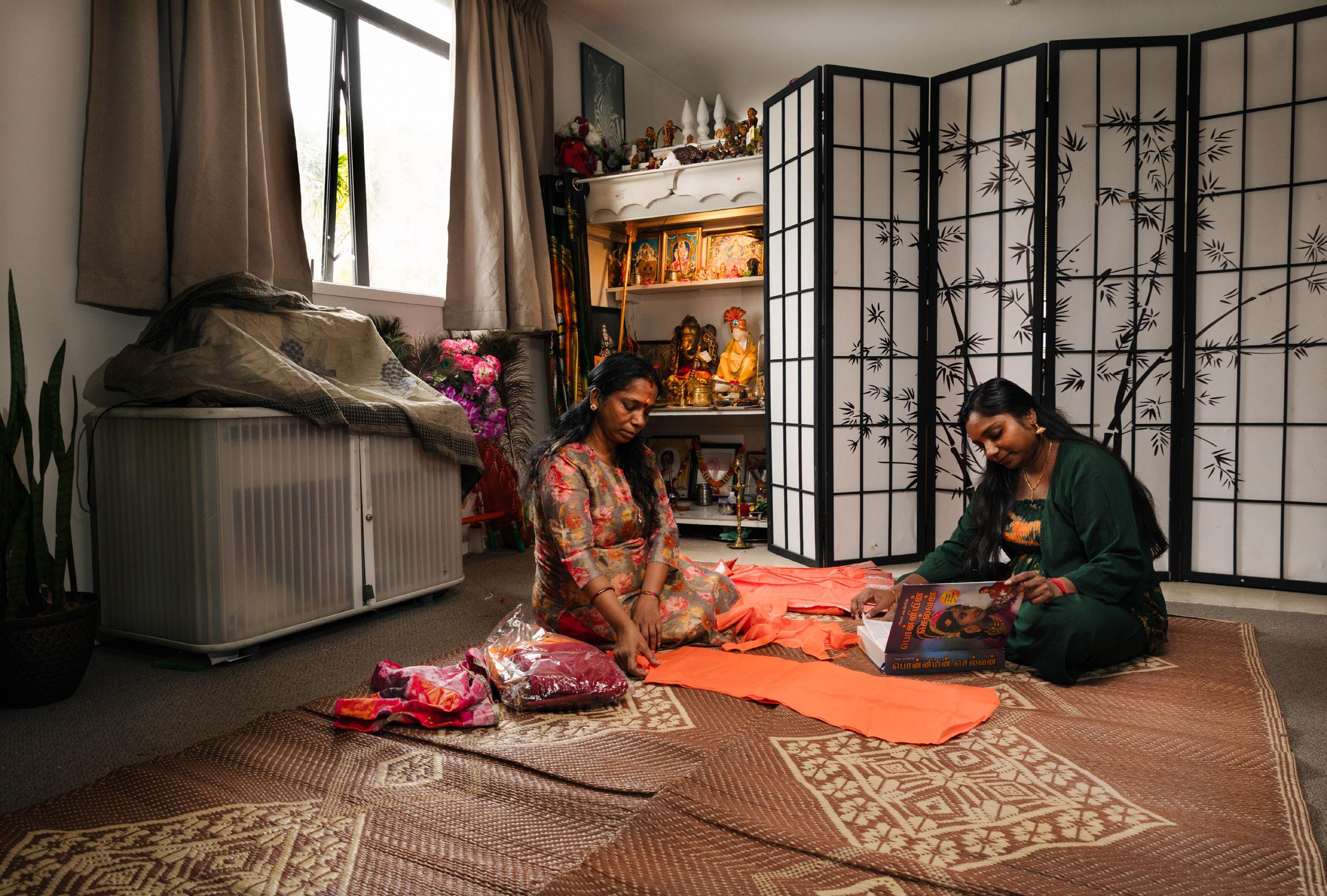
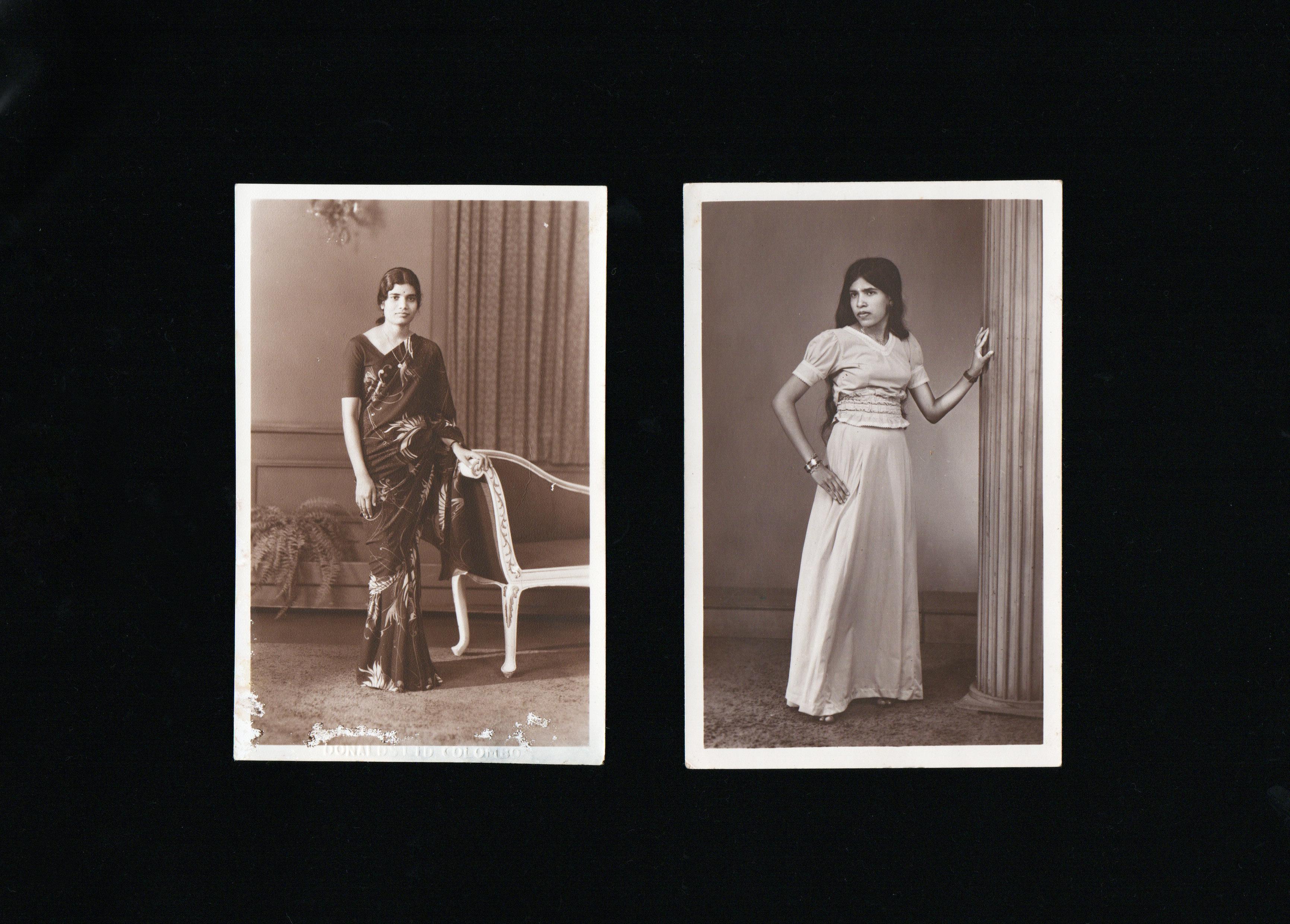
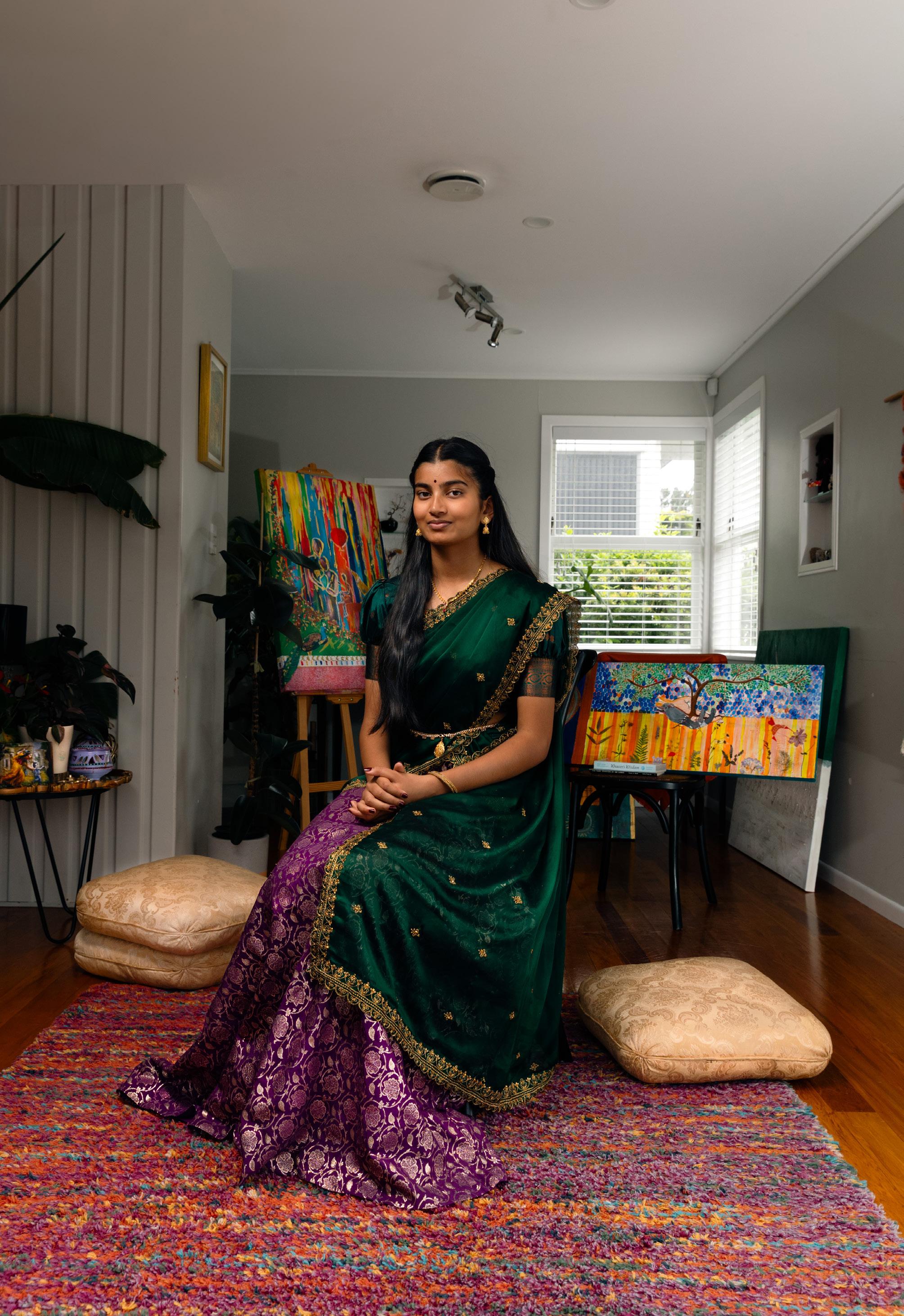
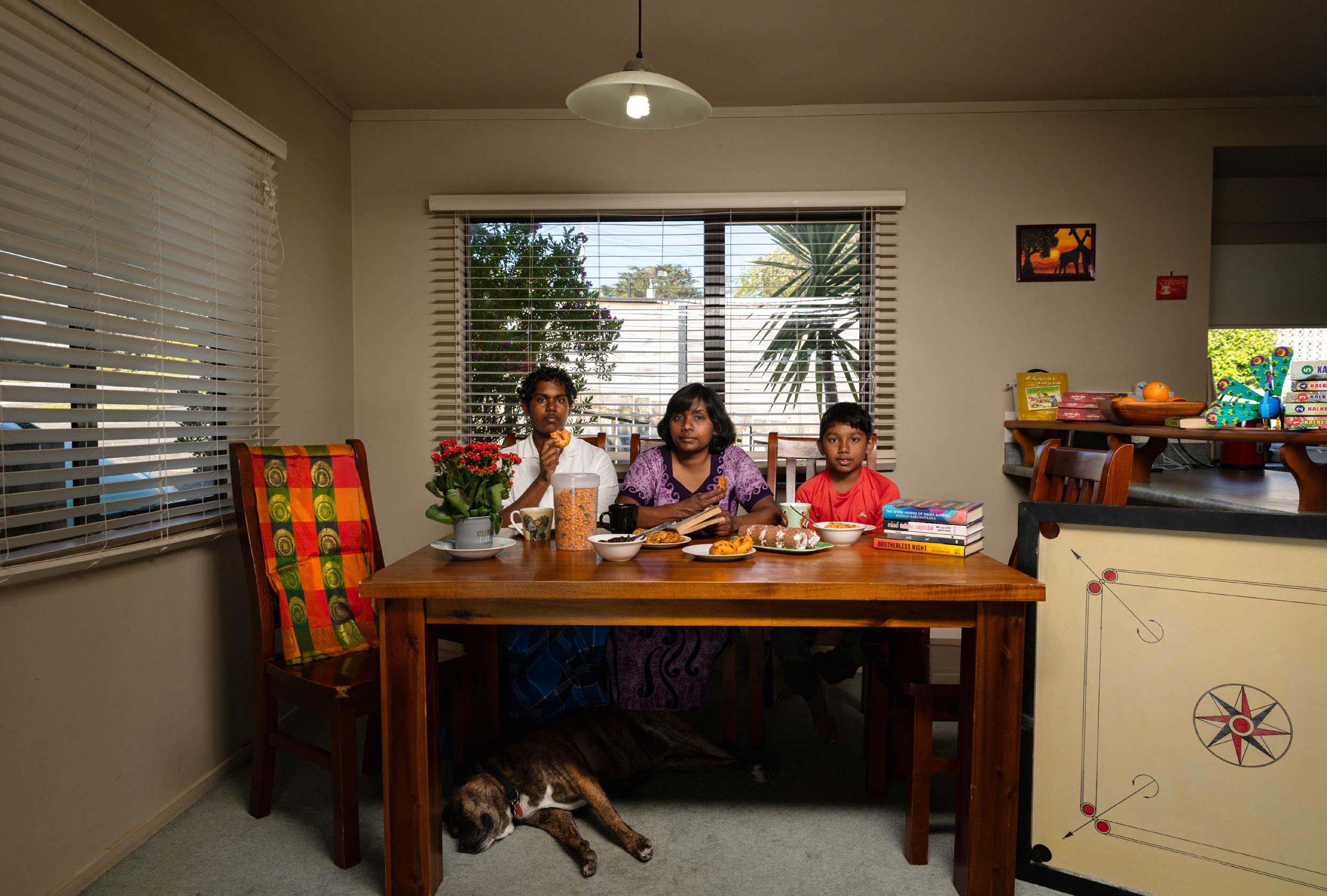
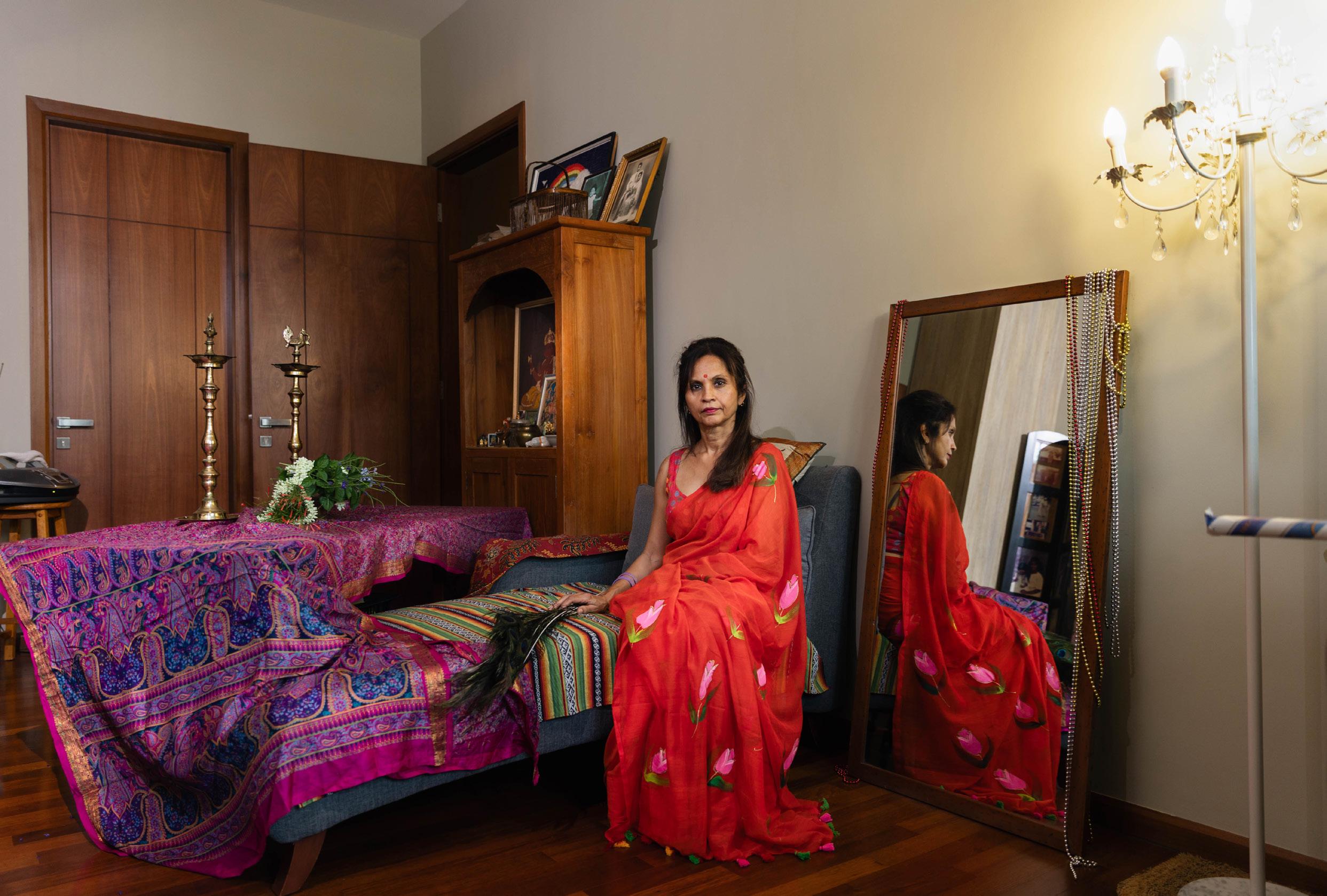
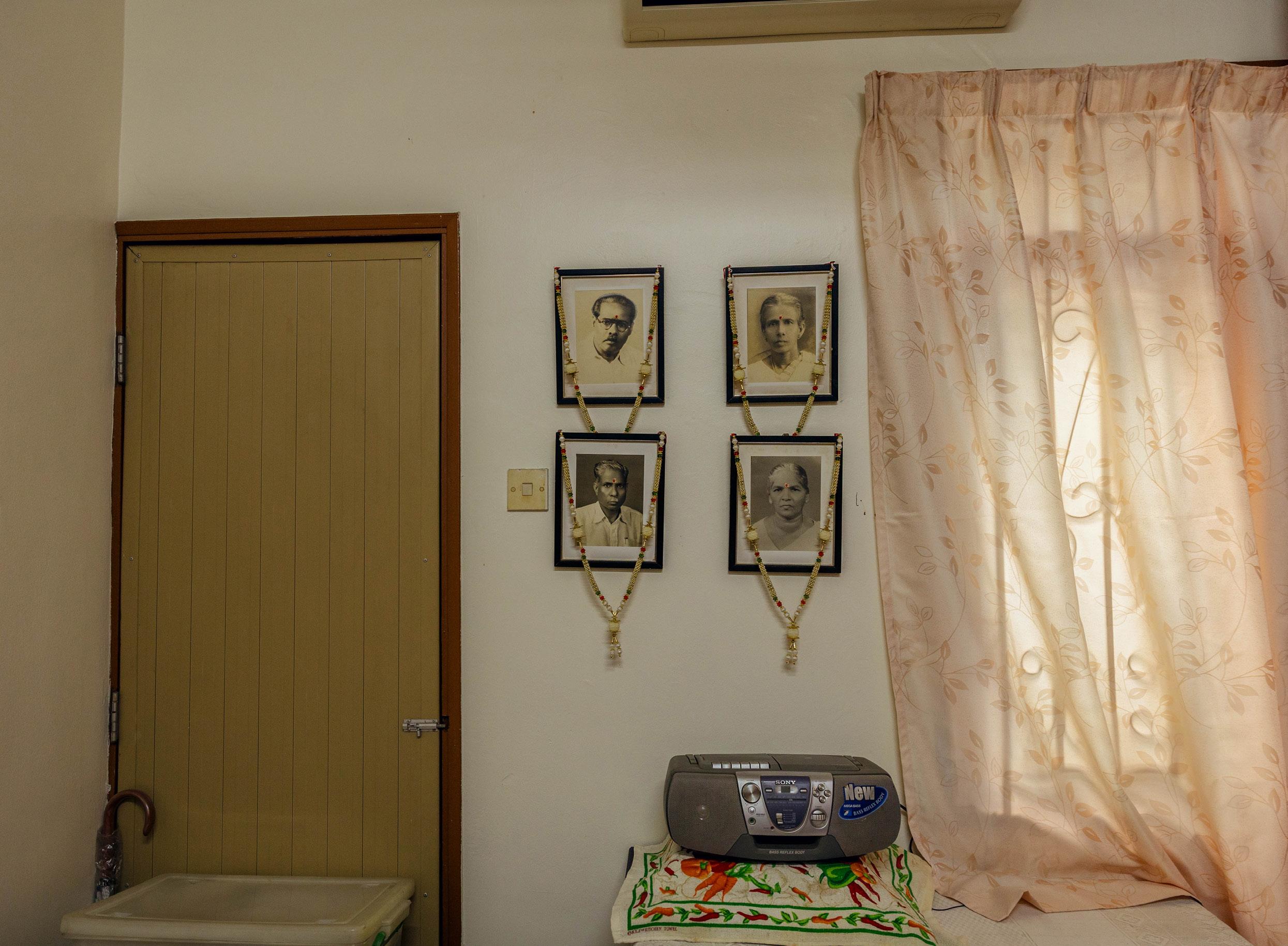
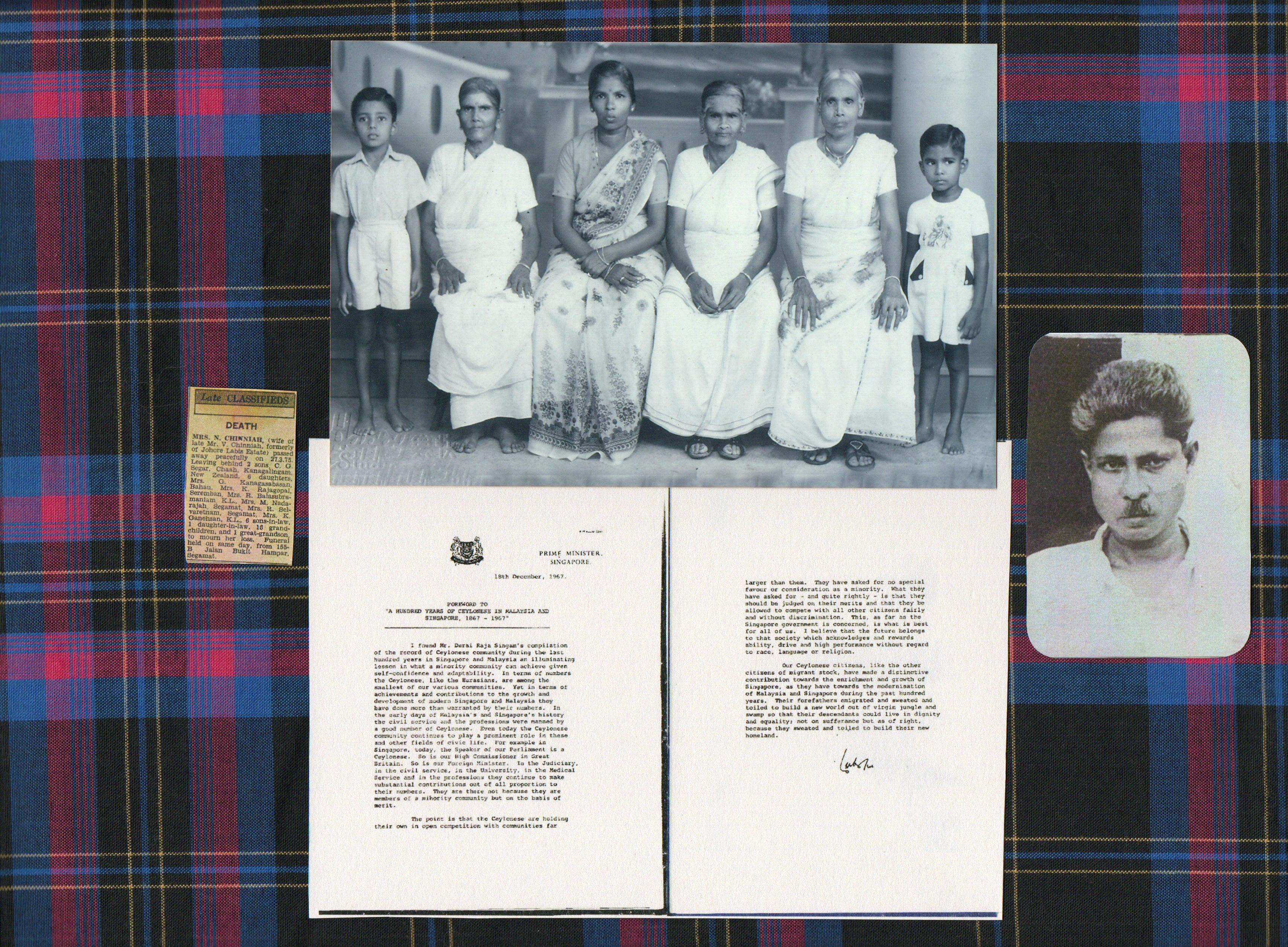
Elsewhere, Sarah Chandy explores the legacy of her great-grandmother-in-law in pre-independence India through her diaries and archives. Abhi Chinniah, a photographer of Jaffna-Tamil descent living in New Zealand, considers the migration of the Sri Lankan Tamil diaspora through her lens.
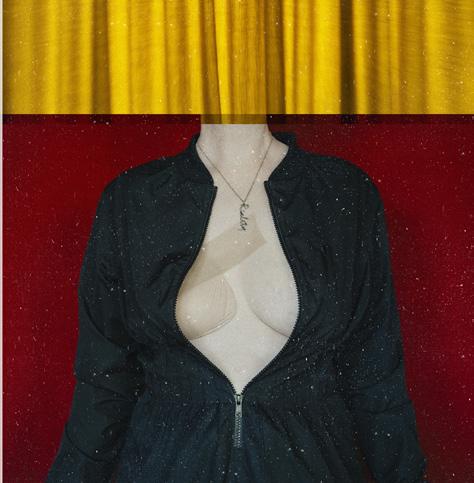
With a focus on individual families, we find parents and children collaborating to make sense of complex relationships and issues. Clair Robins and her daughter spent a year creating images tackling aspects of intimacy, distance, and femininity that define the intricate bond between mother
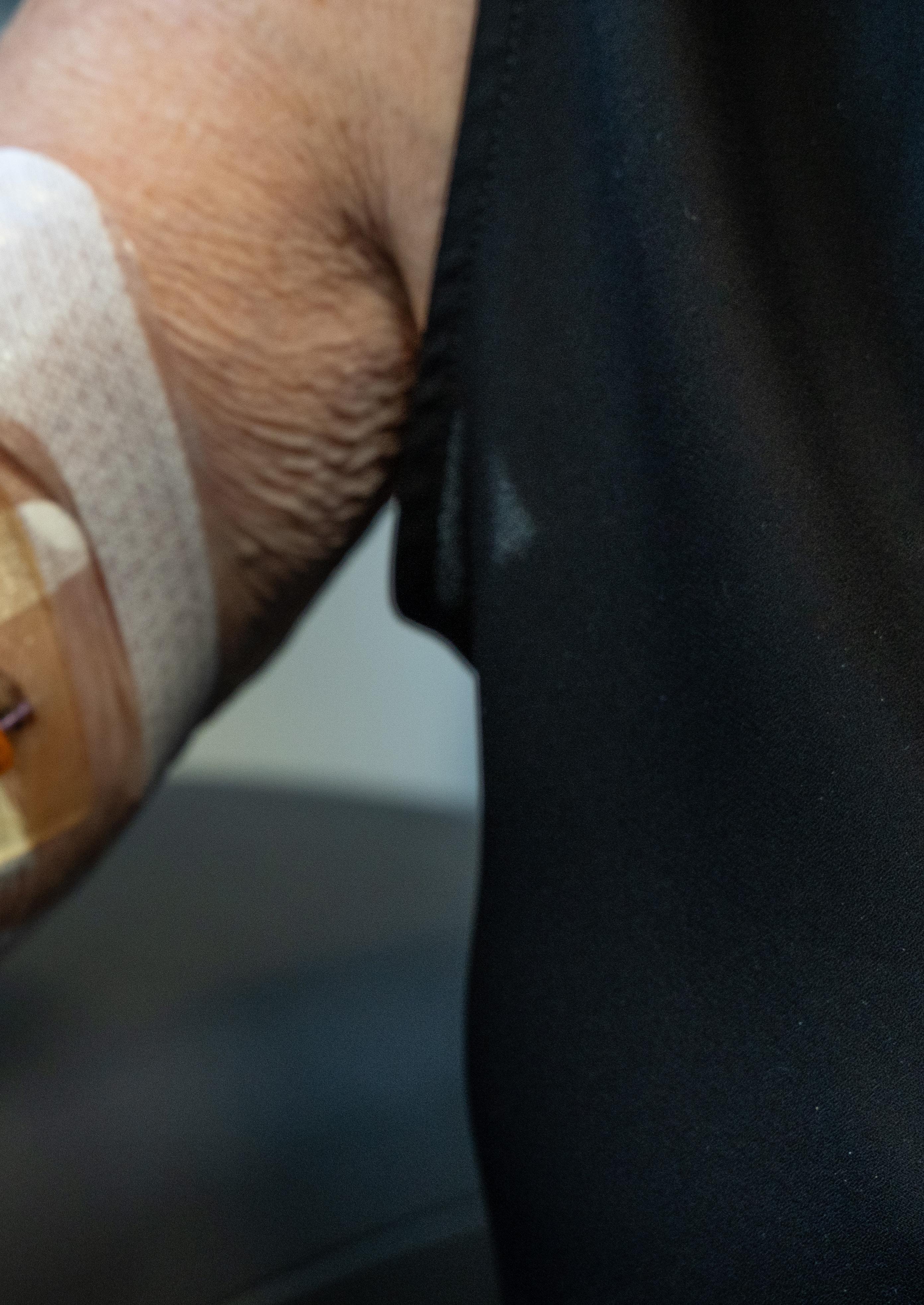
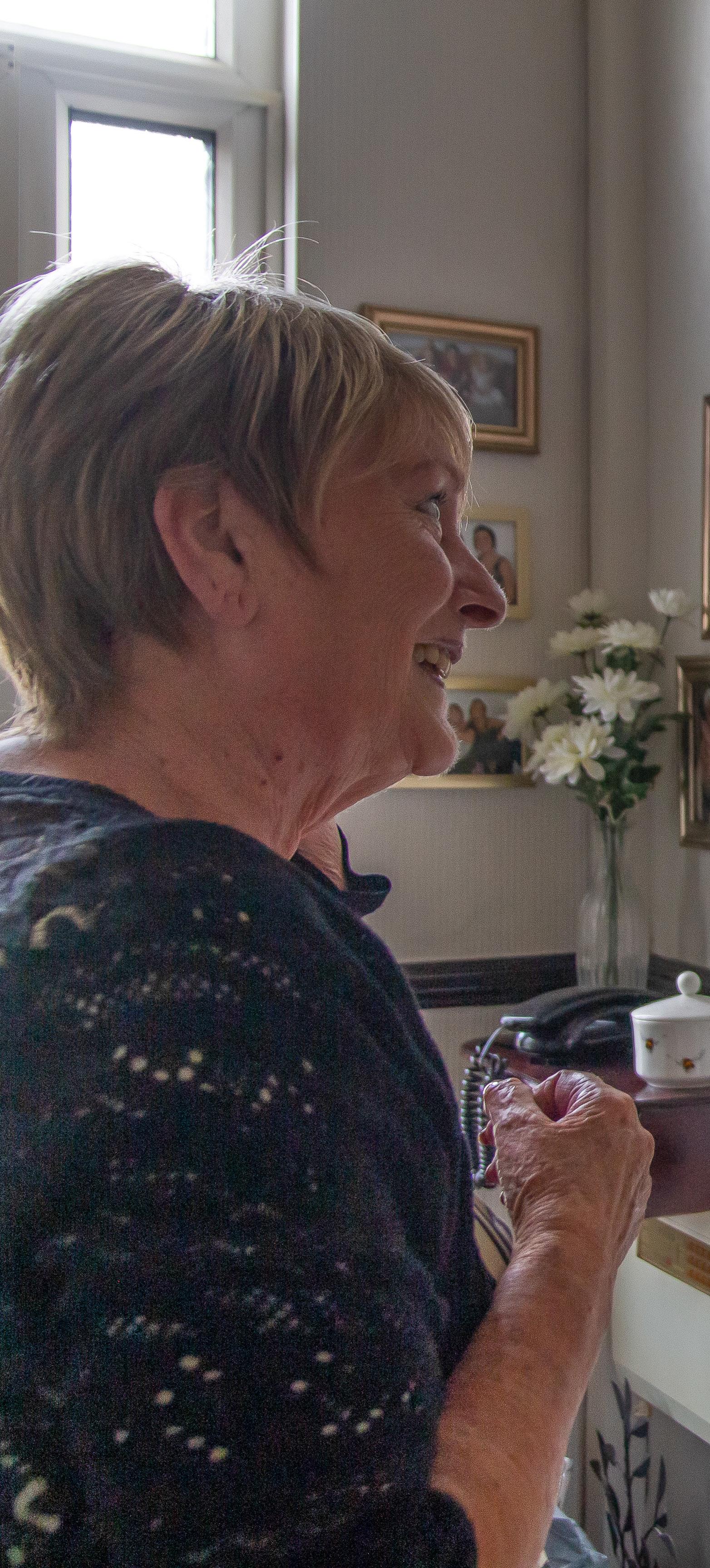
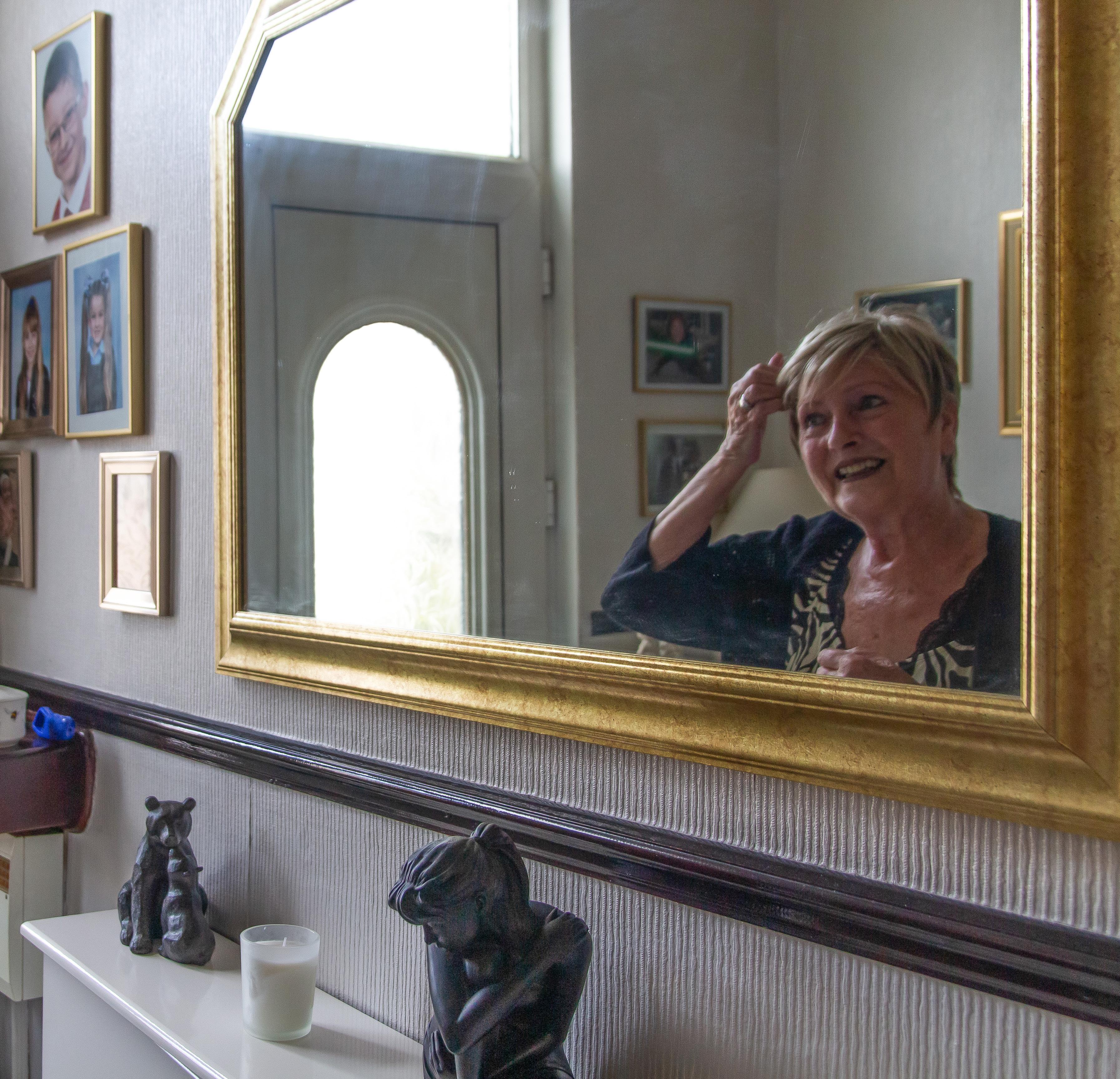
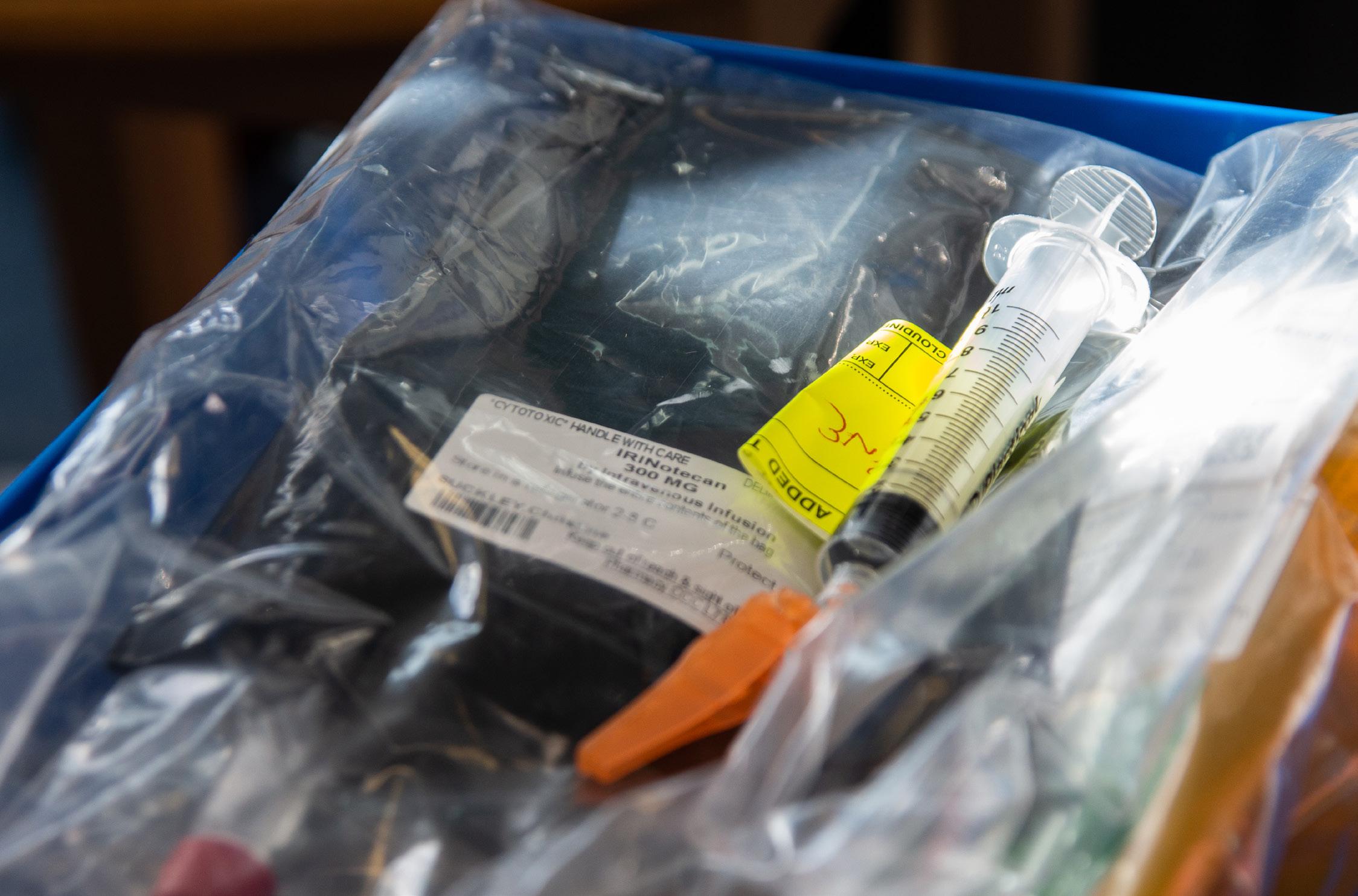
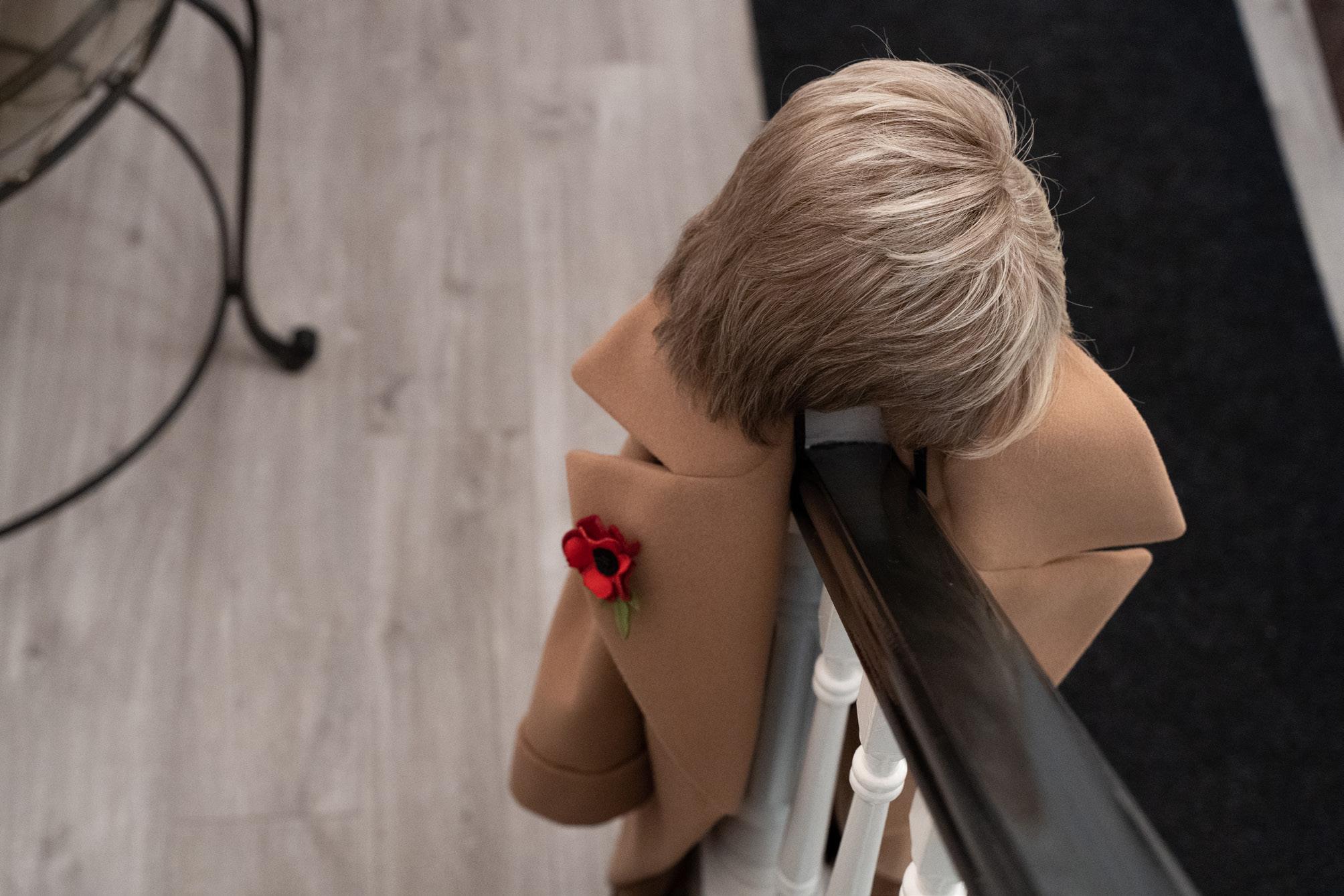
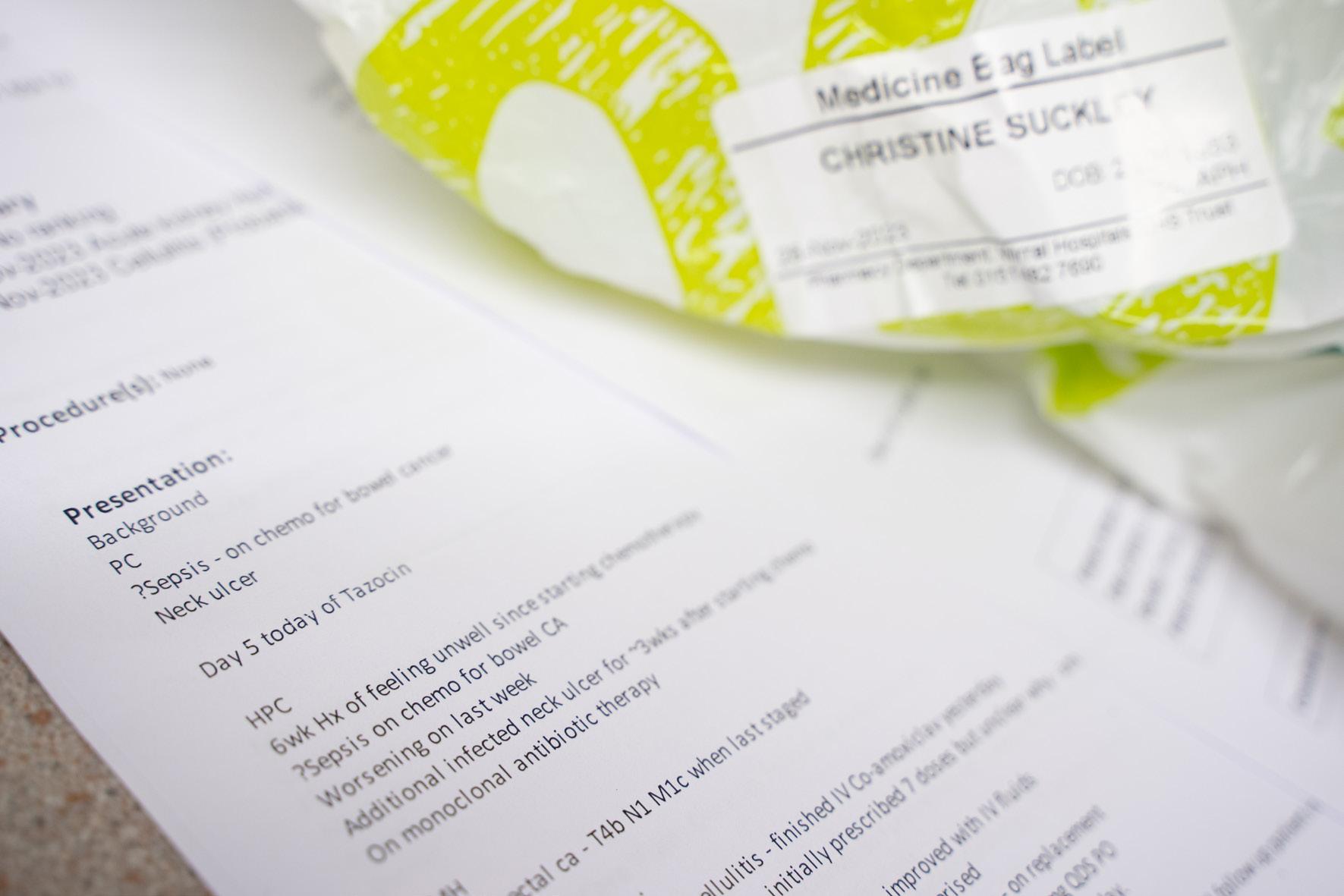
and teenager. Heather Mattera and her son Ben navigated his disordered eating through their own shared photographic project. And in this, Bowel Cancer Awareness Month, Michelle Webster writes movingly about documenting her mother’s journey with the disease.
Art Work by Sally Mann
"And some of us are lucky enough to have ways to express that dark geometry, to tell our own unique stories.”
Sally Mann
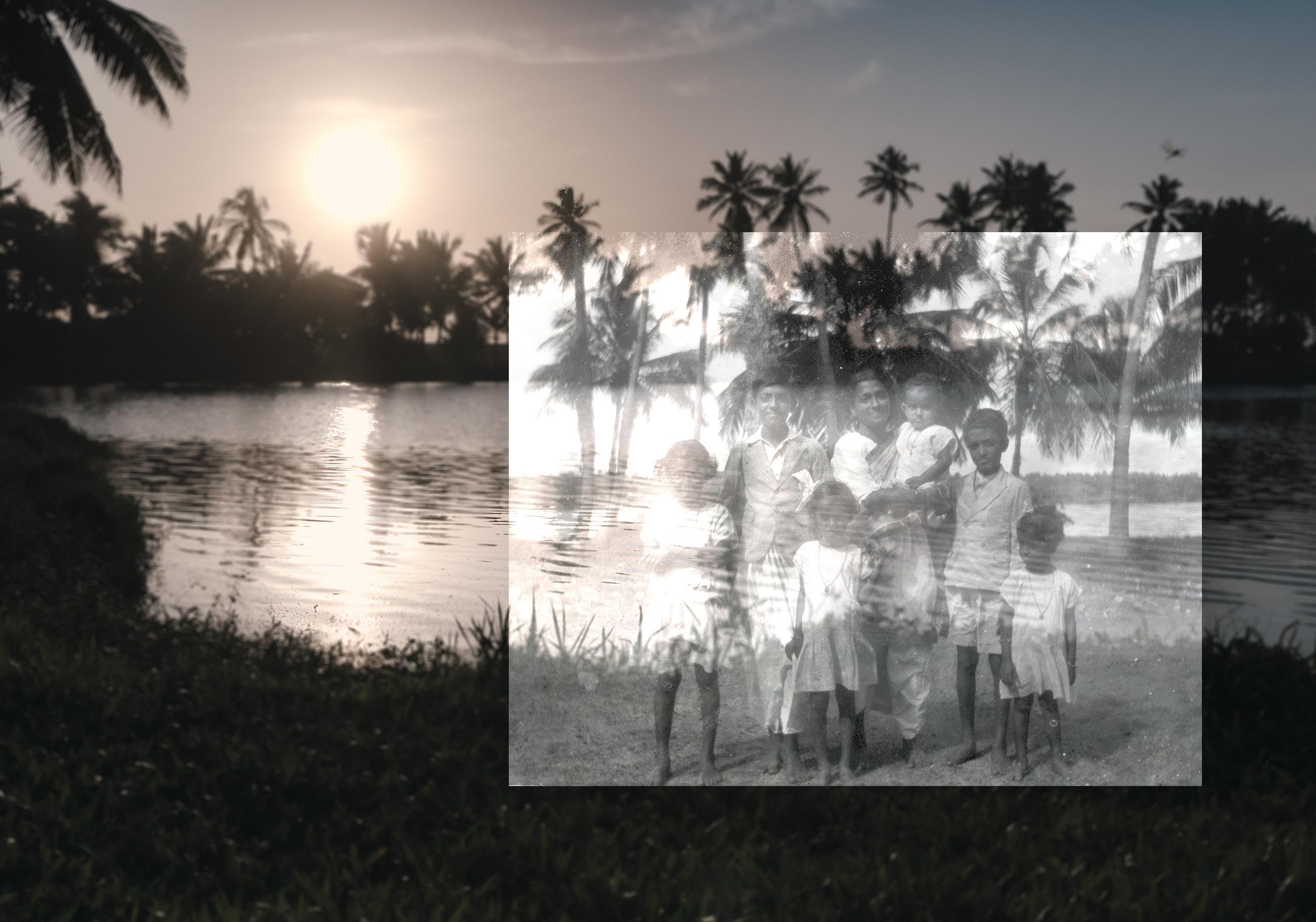
You’ll encounter diverse approaches to photographing the land in this issue. Annie Green-Armytage takes a painterly approach to the North Norfolk saltmarsh, an unusual ecosystem that is at once beautiful and under threat. Tessa Sinclair sought out the remote, uneasy landscapes of Suffolk at a time of family crisis. And in a review of the OCA/RPS psychogeography course, Sarah Skinner recounts how she was able to look deeper — and differently — at familiar terrain.
I’d also like to draw your attention to an important conversation among three photographers — about something we don’t talk about enough, in my opinion — money, or rather the lack of it. Speaking with colleagues Joanne Coates and Delali Ayivi, Francesca Hummler points out that the appearance of success as a photographer often masks considerable financial precarity. She writes: “Visibility cannot sustain a practice, and the economic conditions that make enjoying photography possible must be addressed with the same attention we give the work itself.”
Impact
You can’t fail to have noticed that our growing community is brimming over with talent and energy. Head straight to the Viewfinder section to read about an important milestone for the 40% Project, a highly meaningful initiative spearheaded by our chair, Sue Wright. She has successfully mobilised photographers across the UK to document a historic moment in
political representation, and the collective results are stunning in their impact. In Path to Distinction, you’ll learn about the black and white photography of Jayne Odell, an accomplished FRPS not once but twice over.
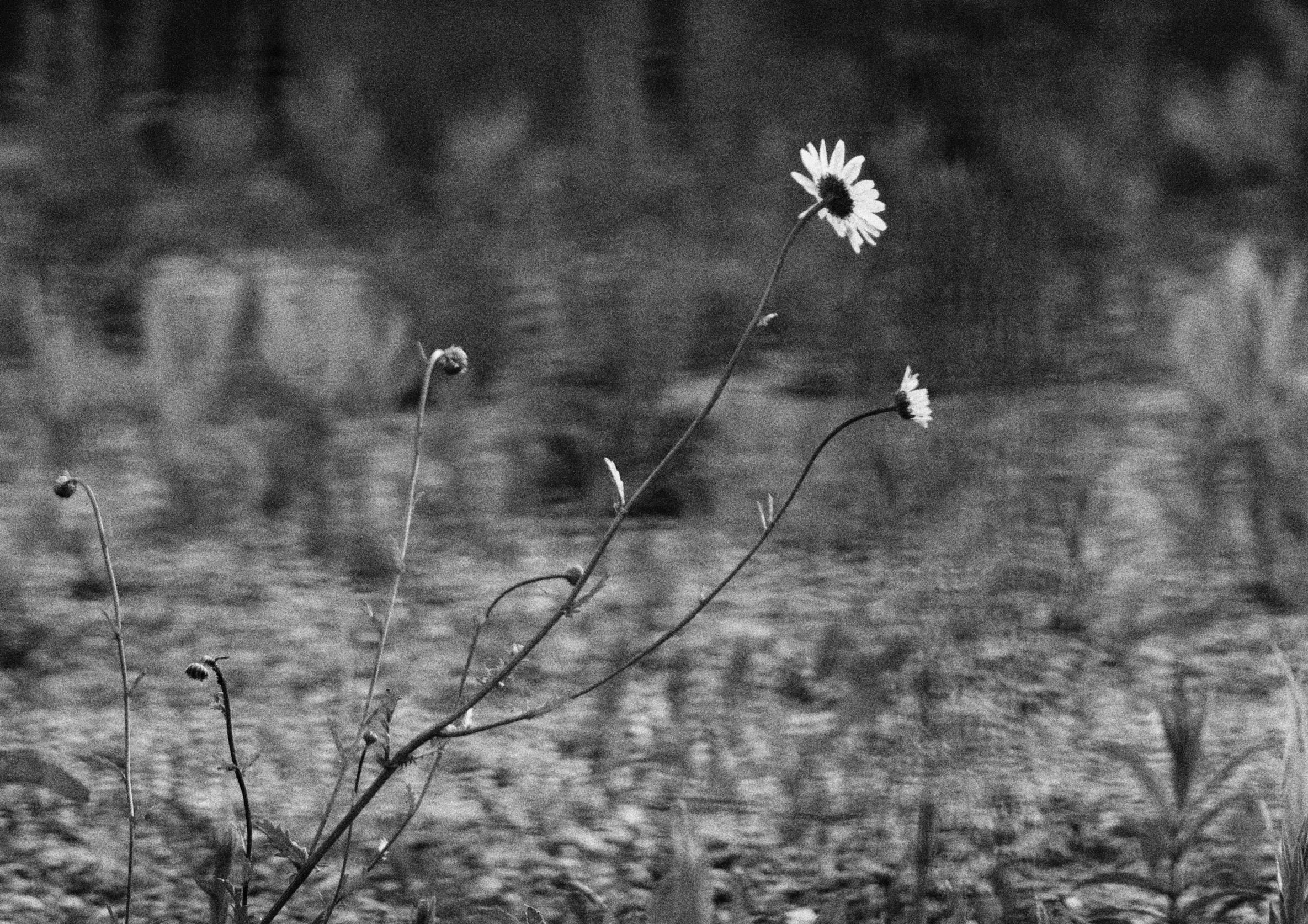
Congratulations to our cover photo winners, Eleanor Church and Anne Mason-Hoerter, as well as to the runners-up. Wishful thinking, perhaps, but I can sense the approach of summer with Eleanor’s refreshing front cover. Anne’s beautiful reconstructed Protea is a continuation of her memory project that she wrote about last issue. She is now seeking to have her images and approach used as a means of mental health support for women in menopause. Anne asks anyone interested to reach out to her
There are many more contributions inside these pages; I wish I had room to mention all of them. It has been my privilege as ever to work with the brilliant authors and our editorial and design team — all of us volunteers — to bring this to life.
Wherever you are in the world, I hope you have a wonderful few months developing your own unique stories.
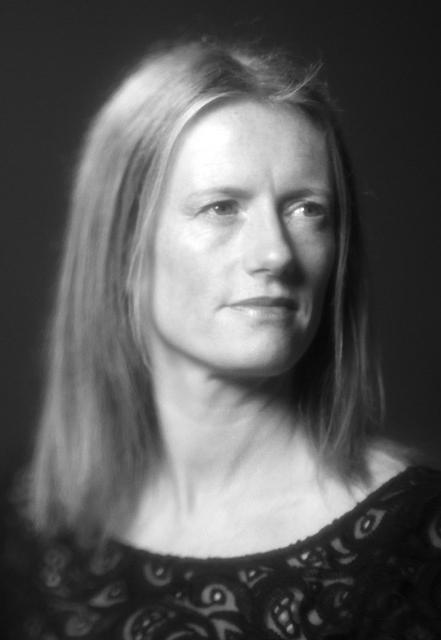
Rachel Nixon Editor, WE ARE Magazine
The 40% Project nears key milestone
With almost all women MPs due to be represented in the 40% Project, plans are underway to broaden the visibility of this important photographic record.
by Sue Wright
“The 40% Project is more than a portrait series — it is a collective effort by photographers across the UK to create a visual record of this historic moment. Together, we are ensuring that this moment, and the women shaping it, are seen.”
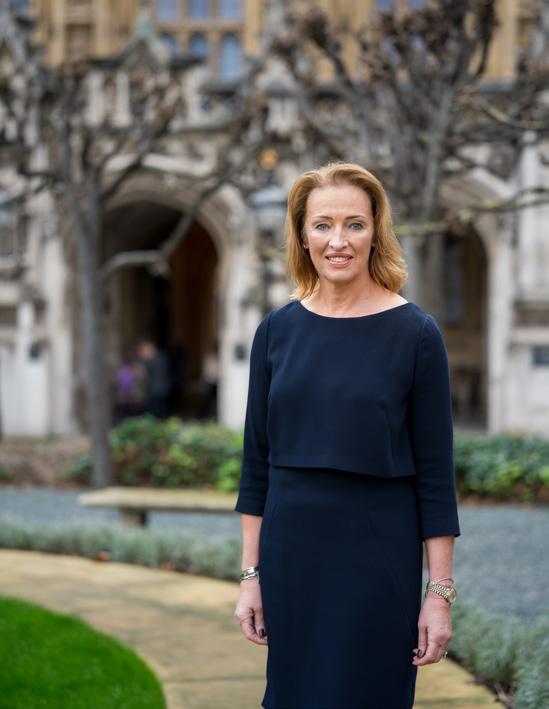
The 40% Project is reaching an important milestone, with portraits of 265 women MPs commissioned as this issue of WE ARE Magazine is published. Women now make up around 40% of the UK Parliament, and the RPS Women in Photography group launched the project to document this historic moment in political representation through portrait photography.
What began as an idea has grown into a remarkable collective effort.
Some 234 portraits have been submitted to the online gallery, and many others are in progress, meaning almost all women MPs are due to be represented in the project. With every new portrait added, the visual record becomes richer and more representative of the diversity of women in Parliament.
Collaboration
There has been an extraordinary response from photographers across the UK, many of them members of the RPS Women in Photography group. Some are experienced portrait photographers, others documentary photographers or students on their photographic journey. Photographers connected with the 209 Women Project and members of Hundred Heroines have also joined the initiative, creating a truly collaborative volunteer effort.
Each portrait session is different. Some photographs are made in Westminster corridors and committee rooms, while others take place in constituencies across the country in community centres, workplaces and landscapes that hold meaning for the MP being photographed.
Wider impact
Plans are now underway to publish a photobook bringing together the portraits from the project.
The book will be published by Image & Reality, led by Colin Wilkinson, founder of Bluecoat Press.
The publication will be funded through a Kickstarter campaign, giving supporters the opportunity to help bring this important photographic record to print. Members of the RPS Women in Photography community can support the campaign by backing it when it launches and sharing it with their networks.
The project has also begun to attract interest from major institutions, including the National Portrait Gallery. If chosen, a selection of portraits would become part of the gallery’s permanent collection.
For most of the history of Parliament, women’s voices were absent from the chamber. Today, their presence is visible, influential and growing. The 40% Project is more than a portrait series — it is a collective effort by photographers across the UK to create a visual record of this historic moment. Together, we are ensuring that this moment, and the women shaping it, are seen.
There’s an art to taking a photobook from concept to print. In this Q&A, writer and editor Miranda Gavin talks to VIKA Books founder Victoria Forrest about technological developments in the rapidly evolving world of fine art publishing and how to achieve the best results when creating a photobook.
Victoria is also an RPS trustee and Women in Photography group member.
“A book allows space — for pacing, silence, and emotional development. Images are not isolated; they speak to each other.”
In the initial stages of consultation with a photographer, what is the first thing you do?
I try to understand the project and what is happening in the photographer’s mind. I listen carefully to what the photographer wants. Initially, I gather images, texts, audio files, reference links, past publications, short films or voice notes.
I read any supplied texts or articles and review an initial edit — usually a relatively tight selection, often around 10 to 20 key images that they feel represent the work. I attempt to position the book in context — not just as a standalone object, but within the wider arc of the photographer’s practice and ambitions — and determine its most authentic voice.
How do you collaborate with a photographer to select, edit and sequence photographs for a book to shape the visual story, particularly if the photographer is attached to some of the photographs?
After the initial stage, I usually have a brief check-in conversation with the photographer and often suggest looking at a wider archive which can vary hugely. I’ve been sent archives of thousands of images. Ideally, I like to see several layers: a tight edit, a wider working edit, and then the broader archive. A great deal of this process is about trust-building.
Once I have the wider archive, I review it independently. I need to look with fresh eyes, without being led. Attachment is a profound part
of photography — an image may carry immense personal meaning because of what happened just before or just outside the frame. That meaning is valid, but I must also assess the image objectively. By working independently first, I can identify images with formal and narrative strength on their own terms and sometimes introduce images that the photographer may have overlooked. Once I have looked independently, I go through the images with the photographer to hear their voice. I'd miss the soul of the work if I didn't do this.
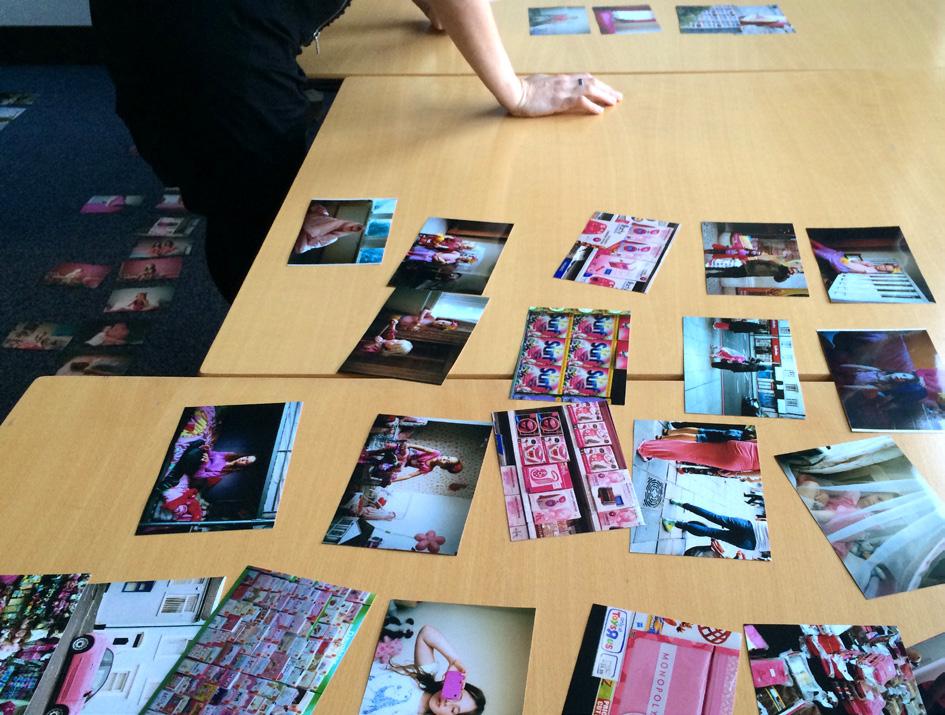
Then, I print the images. Sequencing begins physically. I work with the prints, sorting, stacking, and grouping — sometimes by format, sometimes by tonal relationships, sometimes by theme or emotional register. Sequencing is a slow process. It can take days or weeks. It is less about chronology and more about rhythm, tension, release, and narrative arc.
Editing and sequencing are distinct stages. Editing determines what belongs. Sequencing determines how that tells the story. As I move the prints around, patterns begin to emerge. Sometimes stronger images shift the narrative direction. An edit for press or portfolio review is different from an edit for a book. A book allows space — for pacing, silence, and emotional development. Images are not isolated; they speak to each other.
How do you integrate diverse material — the photographer’s images, archival images, poems, prose — so the photobook is still coherent?
Increasingly, photographers are working across multiple forms of media. Within what might still be called a traditional photobook, there may be essays, captions, transcripts of conversations, diary entries, poems, archival documents, manuals, instructions, background research, and sometimes audio files. All this material must be considered carefully.
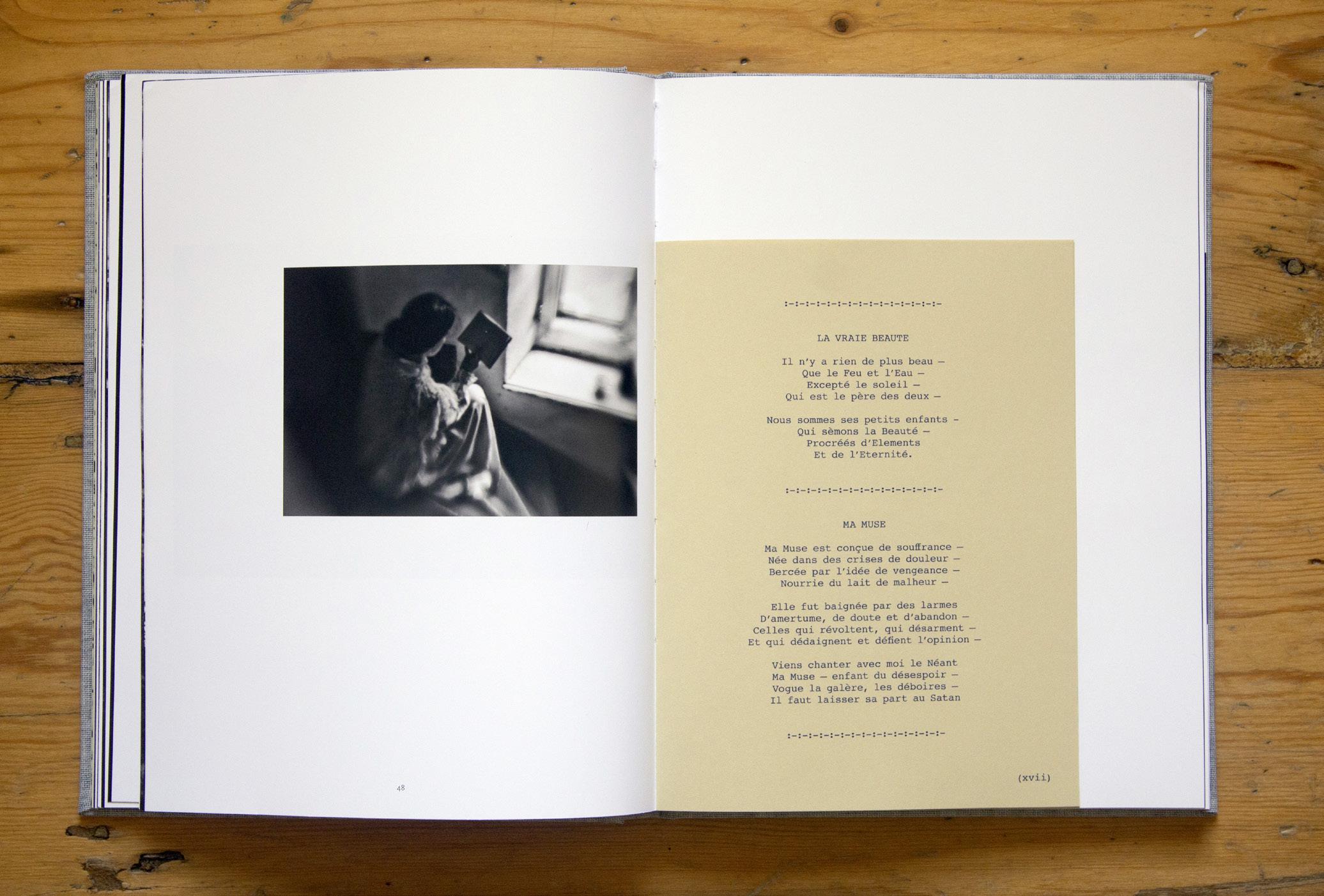
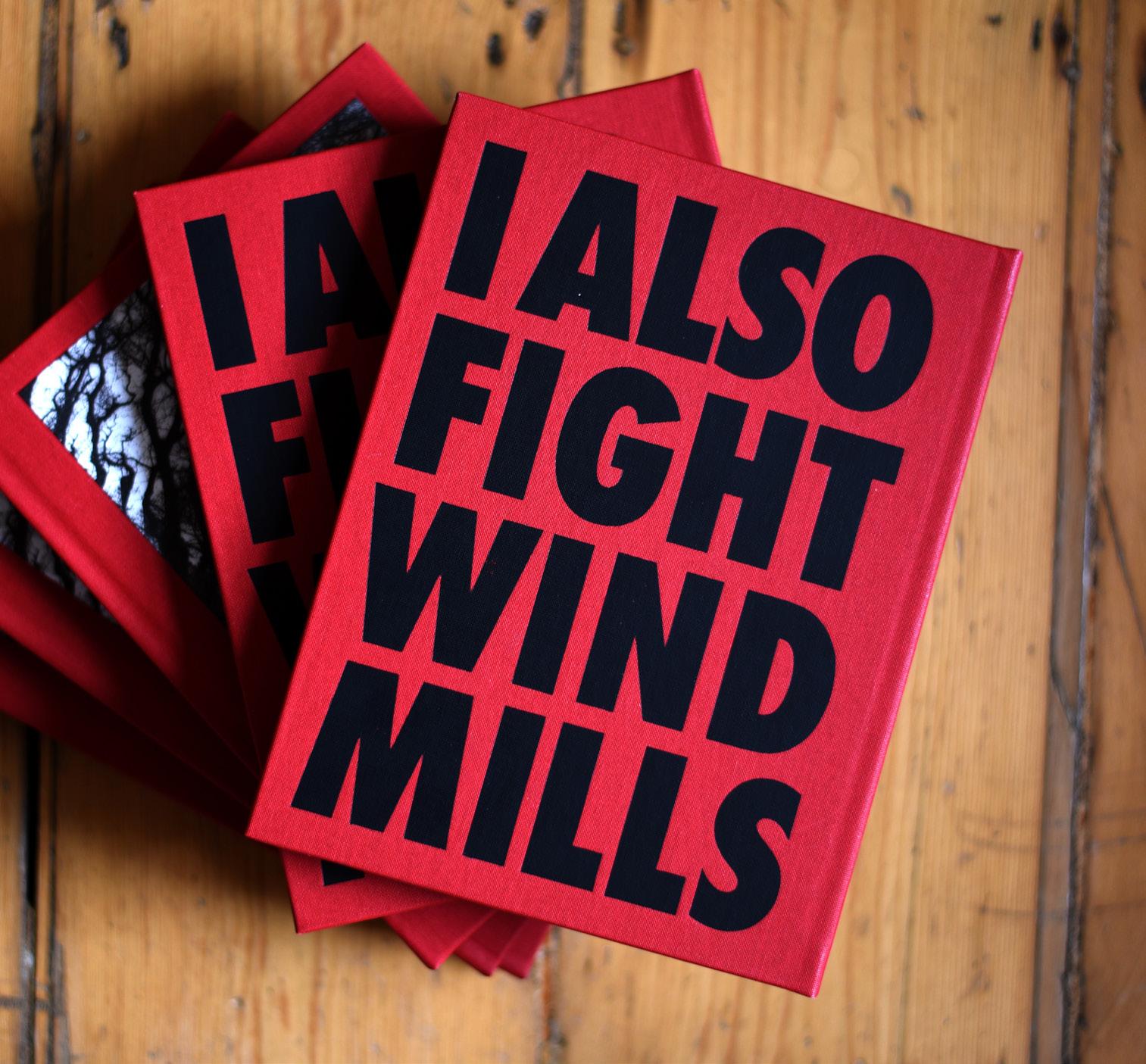
With Ania Ready’s book, I Also Fight Windmills, the archive texts were integral. I typeset them inspired by the visual language of the archives themselves. Typography became a way of honouring the source. The names, fragments, and historical references were interspersed carefully, creating rhythm without overwhelming the photographs.
The key to integrating diverse material is hierarchy. Every element must know its place. A large photographic plate carries the highest authority. Supporting materials — text, transcripts, archival fragments — either contextualise or amplify that authority. They should not compete with plates unless that tension is intended.
Coherence comes from the underlying grid — the structural framework governing typography, margins, placement, and rhythm. The grid is rarely visible, but it holds everything together. It allows contrast while maintaining unity. It ensures that when different voices enter the book, they feel intentional rather than chaotic.
Each book has its own architecture. The photographs form the foundation. Everything else is scaffolding — supporting, clarifying, and expanding what the images already carry.
How do you decide on the key design elements — format, typography, page layout — when creating a photobook?
The first major decision is format. Format is not arbitrary — it is practical, financial, and strategic. Format must be locked early. Changing it midway can be disruptive. Is this a dummy edition produced in small quantities? If so, it needs to suit standard print machines. Is it going straight to press? Which press? Where is it being printed? What are the sheet sizes?
Scale has implications. Larger books allow images to breathe at size, but they increase print costs significantly. Smaller books can allow more pages for the same budget and often result in a stronger spine presence on a shelf. The spine is critical — a book lives spine-out for most of its life.
A thoughtful balance between scale, thickness, and presence is important.
Typography is drawn from the work. Everything is bespoke. The typeface should either harmonise with or intelligently contrast the photography. It should also function impeccably — correct size, line length, character count, and spacing for legibility. I am very particular about typographic clarity. The design should feel effortless, but that effortlessness is constructed.
continued overleaf
FROM LEFT TO RIGHT
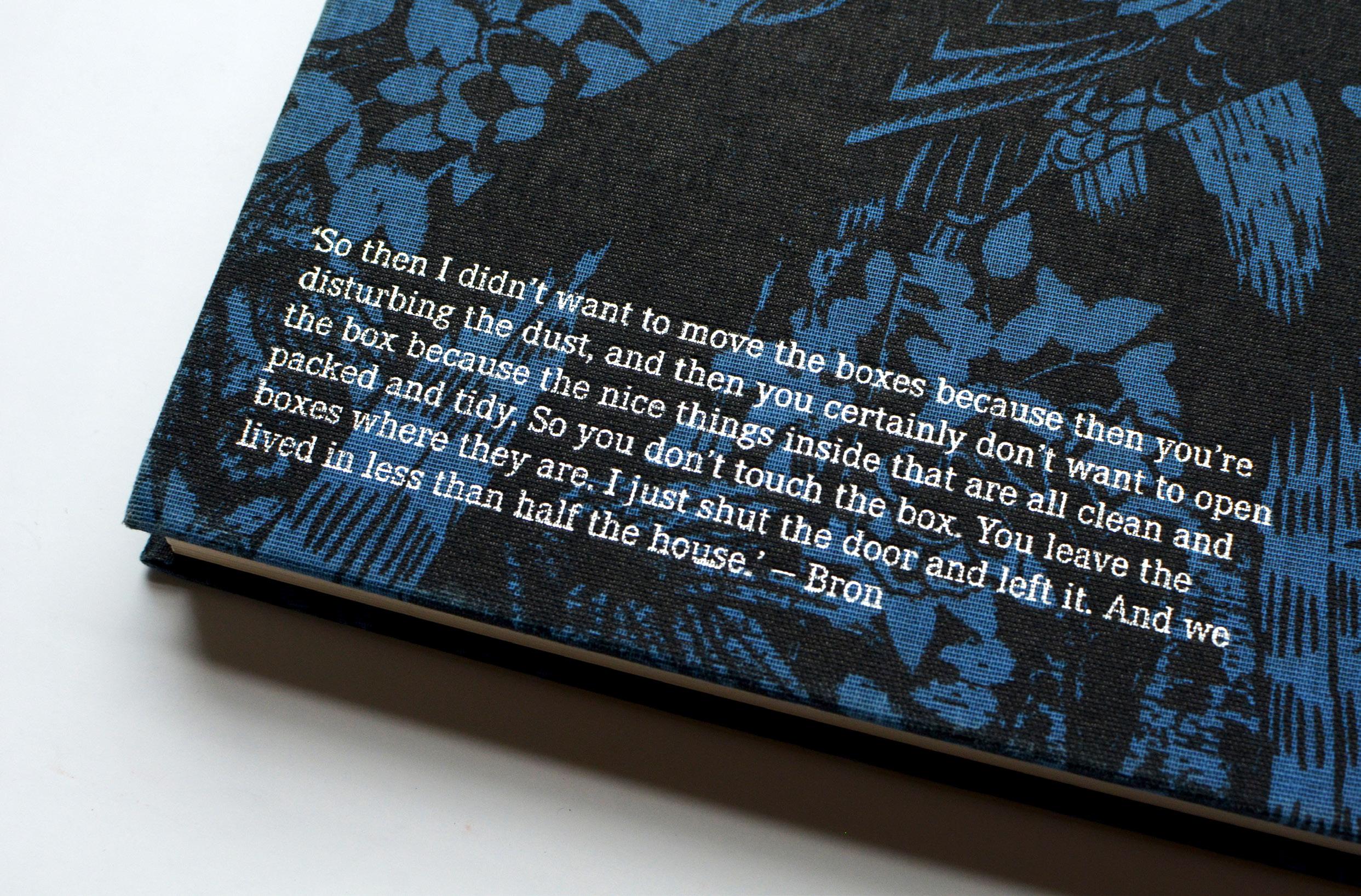
Pages from Ania Ready’s I Also Fight Windmills Cover of the same book
“There is a push-pull dynamic throughout a book — density followed by stillness, intensity followed by breath.”
Page layout is about pacing. Some images function as pivot points — they need scale and space. Others bridge or provide tonal transition. Some sequences demand uninterrupted flow; others benefit from pause. White space is important. It allows the reader to process and reflect. There is a push-pull dynamic throughout a book — density followed by stillness, intensity followed by breath.
Titles sometimes emerge during design. For Kirsty Mackay’s photobook My Favourite Colour Was Yellow, the phrase came from a transcript, and the design was intentionally simple, allowing
the concept and sequencing to carry the weight. Similarly, Ania Ready’s I Also Fight Windmills came from a line spoken by the book’s subject, Sophie Gaudier-Brzeska. For Léonie Hampton’s book, the cover design referenced a tablecloth pattern present within the archive photographs.
I tend to keep graphic intervention restrained unless the imagery demands otherwise. The photography should speak clearly. Not every page needs to work hard. The design builds gradually: early drafts are expansive, later stages reductive. The process is one of distillation.
What are the most important production decisions before going to print?
There are several critical decisions, but one of the most significant — and often the most contested — is reprographics. That is the process of translating an image from screen to printed page. It is highly skilled, technical, and central to the quality of the final book.
I have been working in this field for over 15 years, and I still consider repro to be one of the most specialised aspects of the process. Colour management, ink behaviour, paper tone, press calibration, and duotone or tritone conversions for black and white all influence how an image appears in print. Technology is constantly evolving with new presses, inks, and stocks; there are numerous variables.
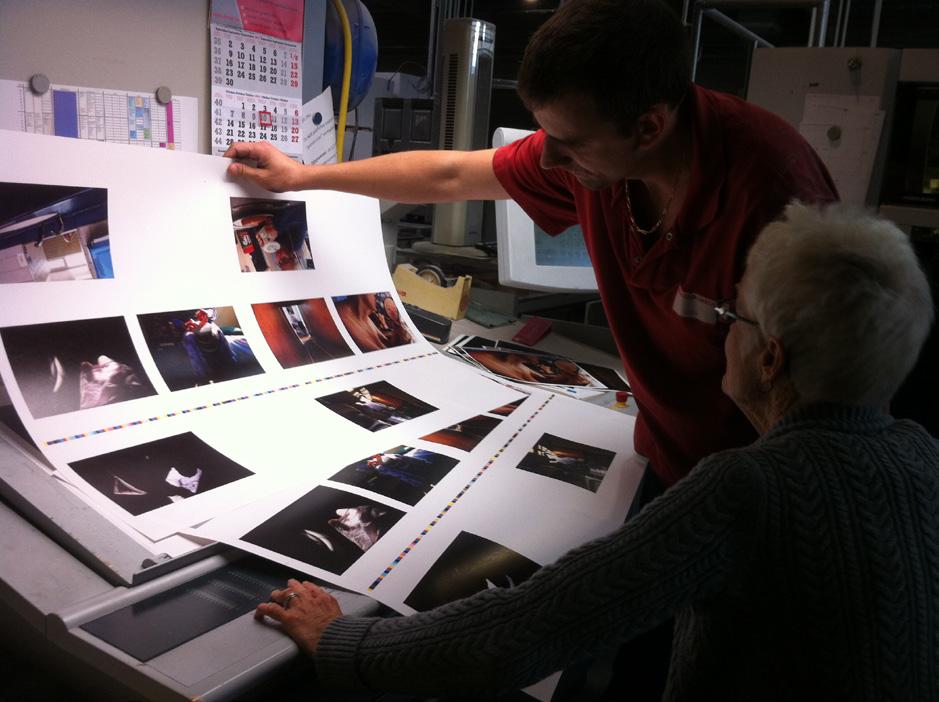
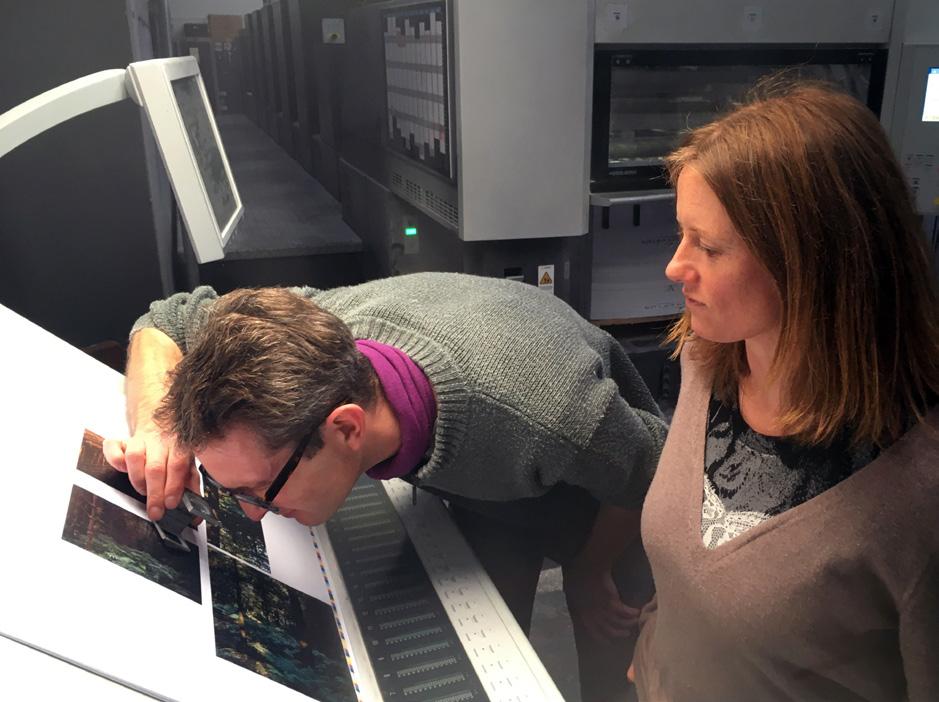
Reprographics is expensive and often the area people try to minimise, yet it makes a profound difference to the finished work. Proofing is critical because once a book is printed, changes are not possible. Colour sign-off, tonal balance, and density must all be carefully checked in advance.
Print method is another major decision, as is understanding the capabilities of the specific press being used. Binding is a further consideration: perfect binding, section sewing, saddle stitch, singer-sewn, hardback casing with endpapers and foil blocking — each option carries financial, aesthetic, and practical implications. Another important decision is whether someone will be “on press” — aside from being a magical moment for a
photographer to see their pages printed for the first time, there is rarely a press pass where an aspect of the print does not benefit from adjustment on those first sheets.
You use immersive technologies, such as augmented reality. How do you use these platforms and what does this mean for photooriented works? Does it create a new or expanded art form?
The role of immersive and creative technologies in photography is constantly evolving. What interests me is not simply what is technologically possible, but how that potential relates to the artist’s intention and to the reality of how people experience images.
The aim with immersive technologies is not spectacle; it is enhancement. A photobook is already an immersive object. It allows nonlinear reading, invites physical interaction and creates intimacy. Digital layers can expand that experience by adding voice, sound, motion, or extended archival material that would not comfortably sit within the printed form.
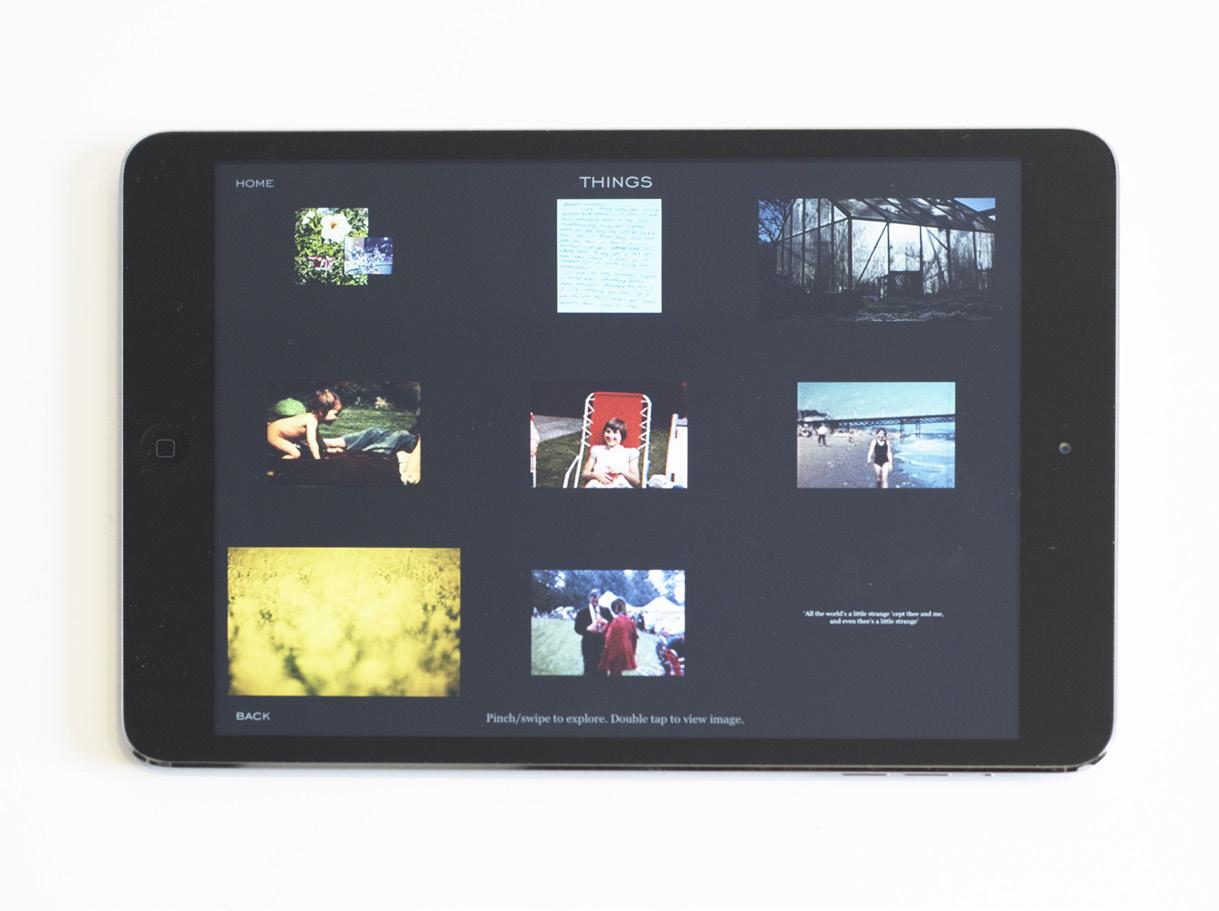
With Léonie Hampton’s In the Shadow of Things, we developed the In the Shadow app through a research grant with the University of Bristol, working alongside academics. The core question was whether the intimacy of a photobook — that close, private encounter with images — could be translated to a screen without losing its emotional depth. The project has stood the test of time, and the design principles developed there are now informing new projects, including Marc Wilson’s A Wounded Landscape, which integrates photography, moving image, Super 8 footage, illustration, archive material, and sound within a unified digital structure alongside the book.
The concept I have been developing through Innovate UK and related research explores what I call “Connected Books” — printed works surrounded by a carefully structured digital ecosystem. That ecosystem might include audio,
video, interviews, podcasts, or an evolving website. The book becomes the enduring physical archive; the digital layer allows expansion, context, and continued dialogue.
I do not see these technologies as replacing the photobook, or as creating an entirely new art form. Rather, they expand the reading experience. The printed book remains the primary object — the thing that endures. Digital layers allow additional voices, processes, and temporal elements to sit around it, enriching the encounter without overwhelming it.
Ask yourself why this work needs to exist as a book. What does the format allow — in terms of intimacy, pacing, and depth — that another format does not? Clarity at the beginning strengthens every decision that follows.
2. EDIT WITH HEART — AND DISTANCE
Personal attachment to images is natural and important. At the same time, consider the reader. What story are you telling? What larger conversation does the work enter? A photobook is a narrative experience, not simply a collection of strong photographs.
3. LET THE PHOTOGRAPHY LEAD THE DESIGN
Sequence first. Design later. Typography, format, and cover decisions are most powerful when they emerge from a resolved edit. The structure should serve the work, not compete with it.
4. PLAN REALISTICALLY — CREATIVELY AND PRACTICALLY
A book involves many moving parts: editing, text preparation, reprographics, proofing, paper, binding, distribution. Supplying clean captions and organised material makes the process smoother for everyone and protects your energy. A photobook is a serious investment — financially and emotionally — so build in time and budget accordingly.
5. THINK OF IT AS A TRIATHLON
There are three distinct stages: creating the work, creating the book, and creating the legacy. Printing is not the finish line. Once the book exists, the final stretch begins — sharing it, placing it, speaking about it, ensuring it finds its audience. Pace yourself so you have the energy to carry it into the world.
About Victoria Forrest
Victoria Forrest is an award-winning graphic designer, founder of VIKA Books and a trustee of the Royal Photographic Society. With a first-class BA from the University of the Arts and an MA from the Royal College of Art, she has spent over 15 years shaping contemporary photobook practice through a distinctive, understated design language and rigorous approach to production. Her work combines the conceptual depth of book arts with high production values and creative technologies, crafting photobooks and connected publications that balance narrative clarity with tactile presence.
VIKA’s projects have been featured by the BBC, The Bookseller and the British Journal of Photography, and recognised through awards including Innovate UK’s Women in Innovation and D&AD Future Impact. As a designer and creative technologist, she advocates for collaborative, thoughtful approaches to authorship and legacy, helping photographers realise work that is meaningful to audiences and enduring in its craft.
vikabooks.com ▪ instagram.com/vikabooks
FAVOURITE PHOTO BOOKS
Haunting scenes of a small town, 19th-century studio portraits, and life-affirming colour — all this and more are part of this issue’s reader recommendations.
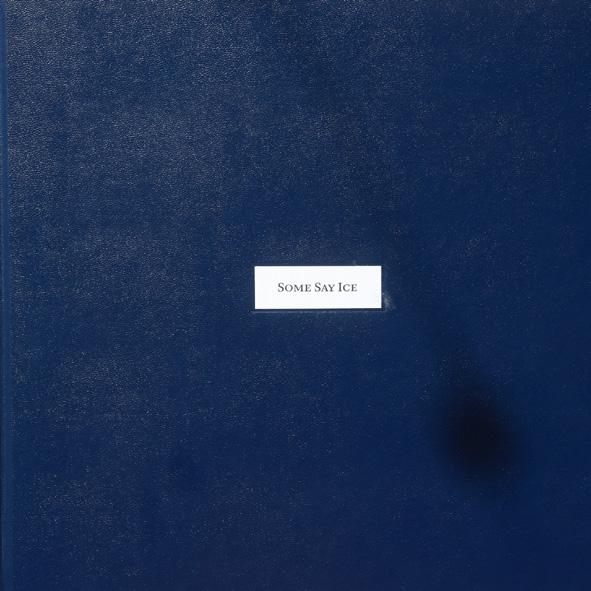
Some Say Ice by Alessandra Sanguinetti
MACK
Some Say Ice by Alessandra Sanguinetti is brilliant because it holds multiple truths at once — document, fiction, and a meditation on mortality — without settling into any one of them.
On the surface, it’s a long-term portrait of Black River Falls, Wisconsin. But Sanguinetti transforms this into something more unsettling and poetic. The images feel suspended outside time: austere black-andwhite scenes where past and present blur into an eerie, timeless sense of place.
What stays is the tone. There’s a deep stillness — faces unreadable, landscapes held, interiors emptied. Nothing is overstated, and because of that, everything carries weight. Emotion sits just beneath the surface, felt rather than shown.
The work is quietly haunted. Drawing on Wisconsin Death Trip, it carries an undercurrent of memory, loss, and disappearance. Photography becomes both evidence and resistance — a way of holding on, even as things slip away.
The sequencing deepens this. Without explanation, the images gather like fragments of a half-remembered story, resisting neat resolution.
For me, this is where its power lies. It expands documentary photography beyond description, into something more fragile and human — an exploration of being alive, shadowed by the knowledge that none of it lasts.
Allie Crewe ARPS ▪ Manchester, UK
Some Say Ice by Alessandra Sanguinetti
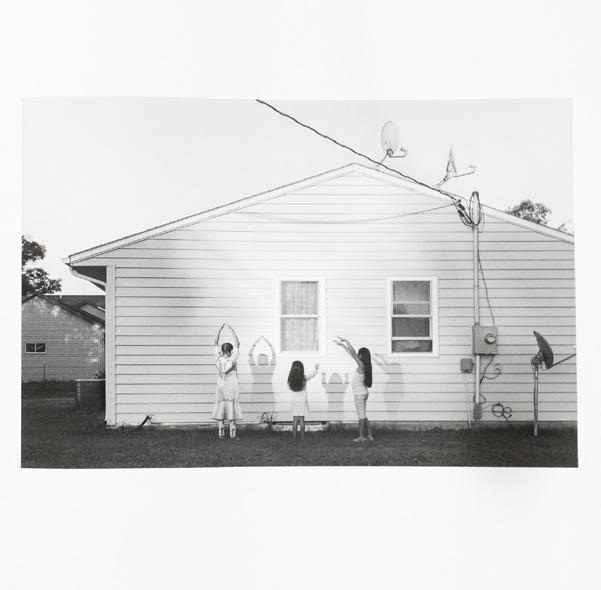
Interior of Some Say Ice by Alessandra Sanguinetti
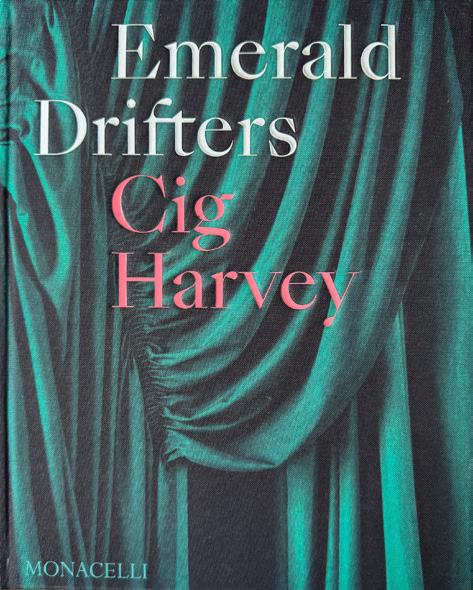
Emerald Drifters by Cig Harvey
Monacelli/Phaidon
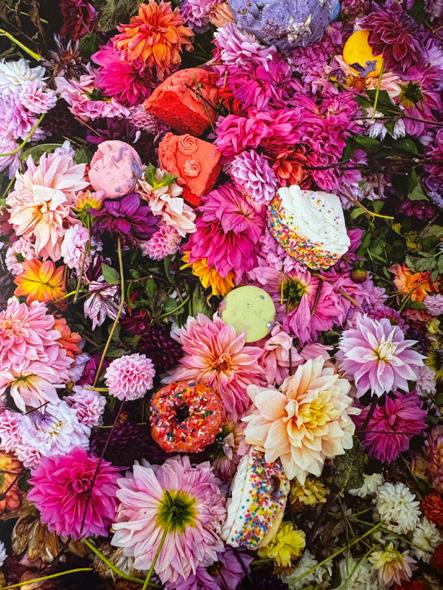
For me this book is rich in colour, and a celebration of it. It illustrated the use of colour in photography I hadn't encountered much before in what I'd typically looked at. There are some photographs in it that may be described as “simple”, but where you are stopped by the colour. For example, one of a heap of royal blue paint pigment on a white sheet, another the forms and folds of red curtains, another the sensuousness of a chocolate cake decorated with blackberries.
In some, she includes people in a way that they feel “folded in” with the colour, and while placed, does not feel other than in harmony with the setting. I turn to it as a luscious affirmation of life, especially on days when the weather or my mood may feel otherwise.
Victoria Robb ▪ London, UK
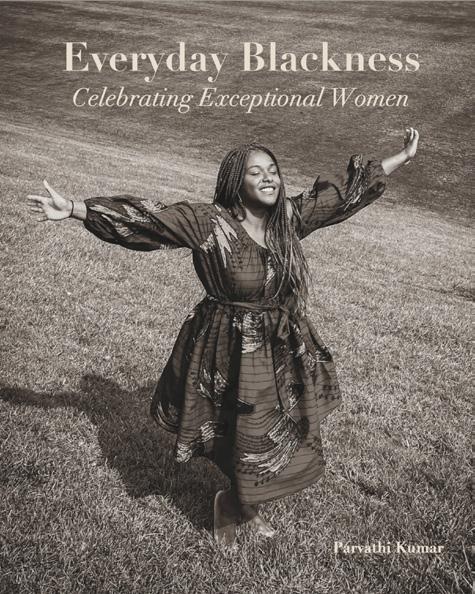
Everyday Blackness: Celebrating Exceptional Women
by Parvathi Kumar
Self-published
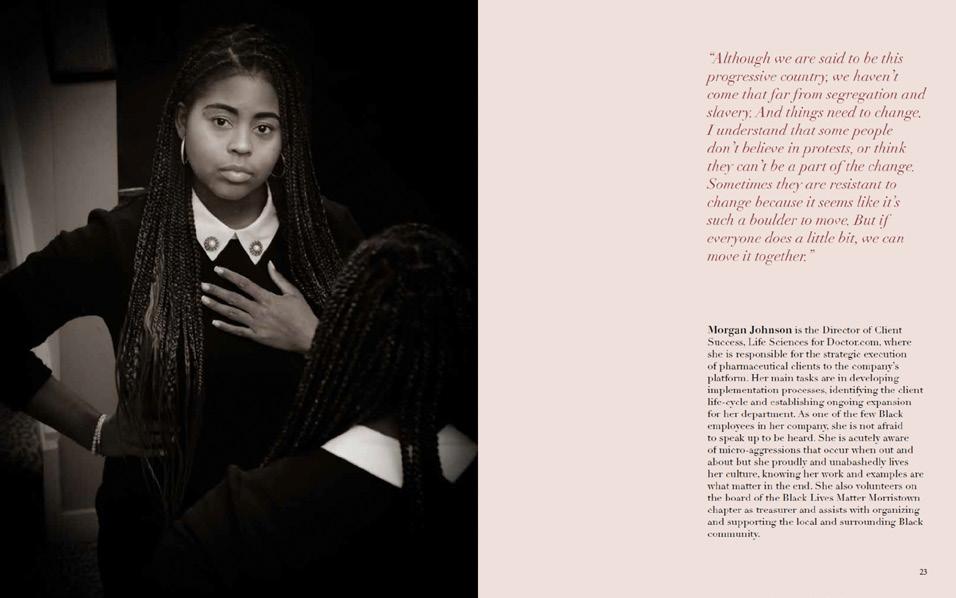
The idea for this book was conceived during the outpouring of support for Black Lives Matter in the aftermath of the George Floyd protests. I choose it for the author's constructive and creative approach to fostering community and building resilience in a time of crisis, and for the elegance and power of its photography.
The book has since been made available in libraries, and its images and subjects celebrated in exhibits, such as during Black History Month. It inspires me for the influential role it has played in the lives of countless women of colour.
continued overleaf
Emerald Drifters by Cig Harvey Interior of Emerald Drifters by Cig Harvey
Naomi Hellman ▪ Taipei, Taiwan
Everyday Blackness: Celebrating Exceptional Women by Parvathi Kumar
Interior of Everyday Blackness: Celebrating Exceptional Women by Parvathi Kumar
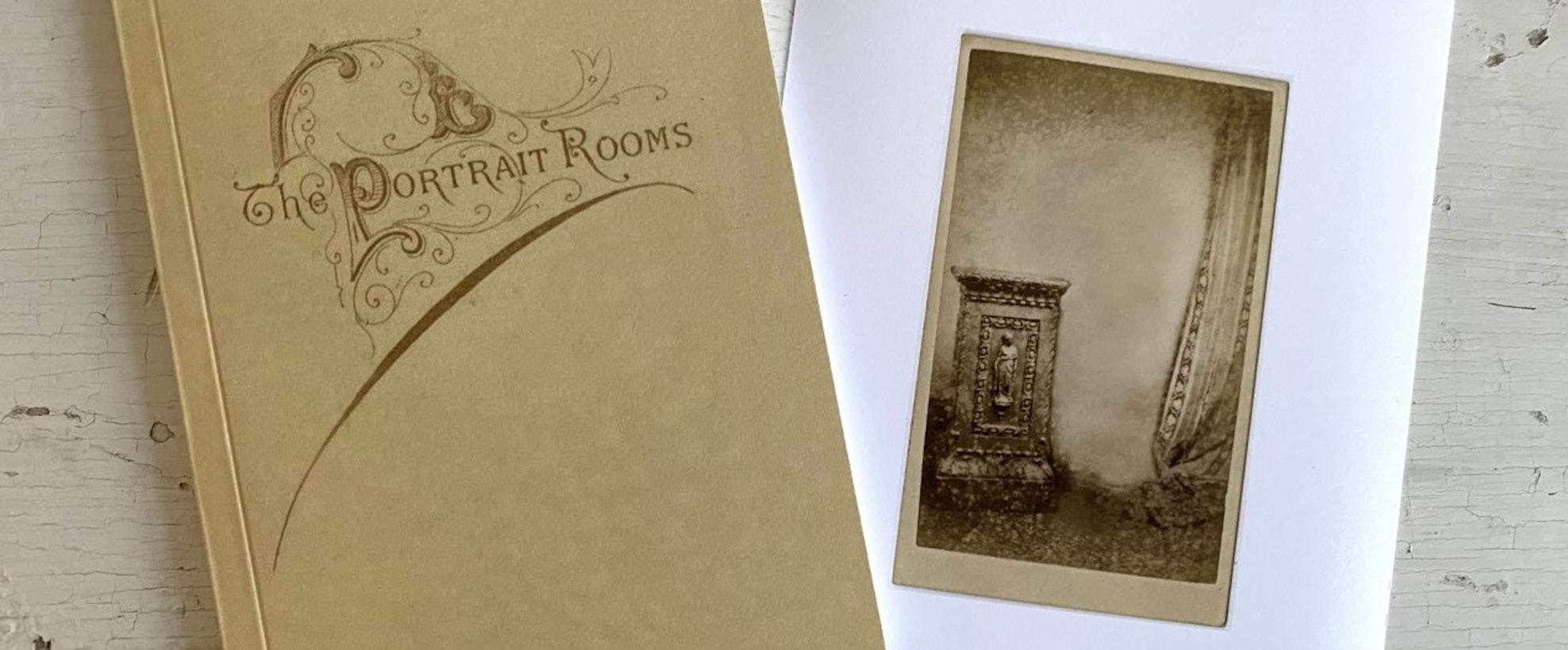
The PORTRAIT ROOMs by Dr Caroline Molloy
bookRoom Press
I chose this book because it is an extraordinary distillation of years of rigorous research into something intimate enough to hold in one hand.
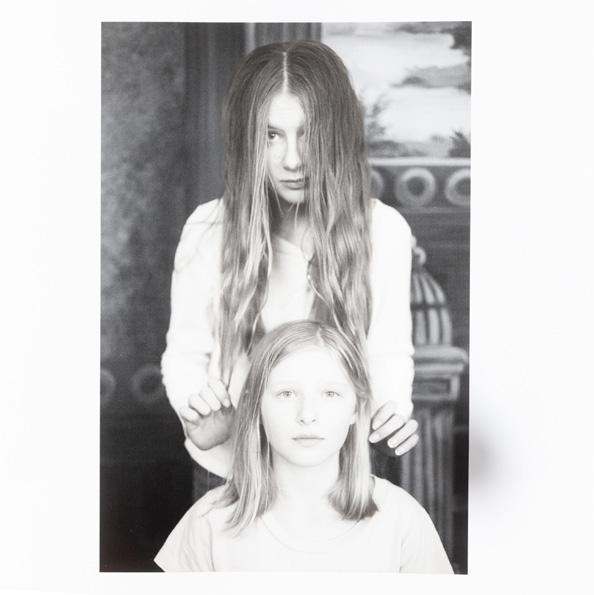
The book gathers many of my own ongoing fascinations, portraiture, cartes de visite, and the 19thcentury studio, threading them together with sophistication and wit. Scattered throughout the book are quotations from Charles Dickens to Walter Benjamin, both wryly irritated by the ubiquitous studio pillar.
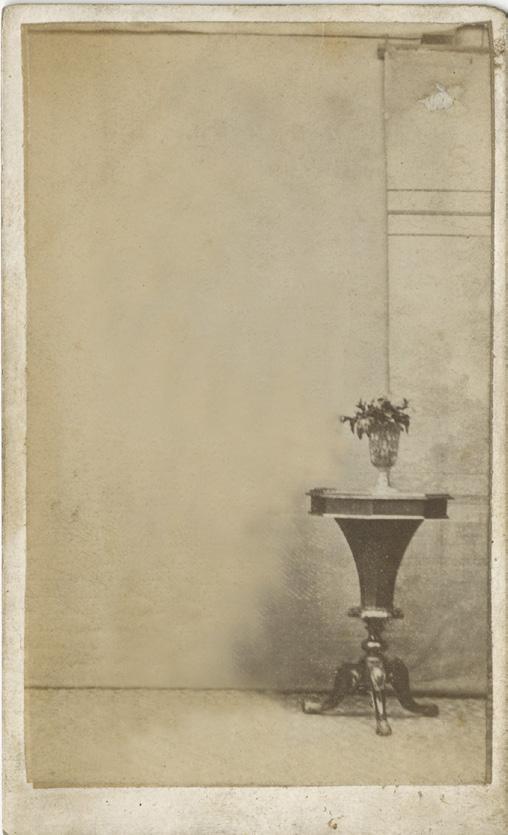
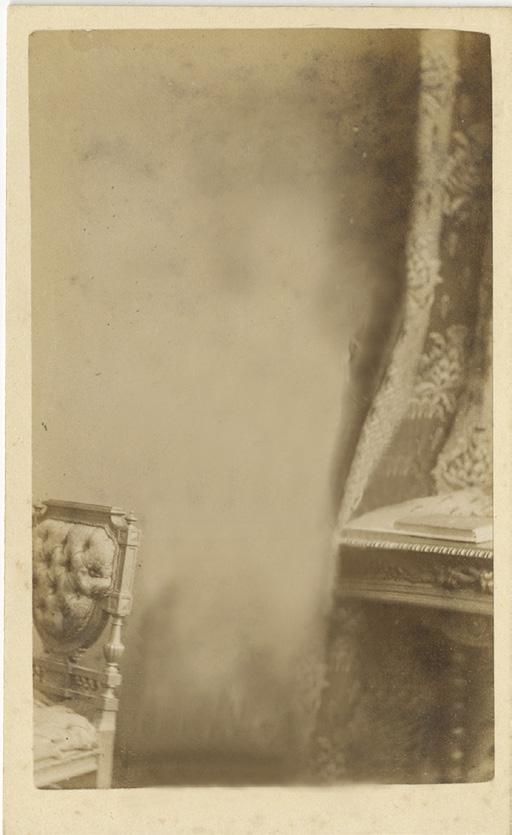
The book’s scale is deliberate, mirroring the cartes de visite it examines — portable, personal, meant to be held close. In the first and final sections, Men in Top Hats and Gestures of Deportment, Molloy isolates codified details, showing how small gestures can articulate socio-cultural aspiration. Central to the book, Studioscapes presents a selection of full cartes de visite, laying the studio bare and exposing every theatrical device. Columns, plinths and painted backdrops become agents of meaning.
What inspires me most is The PORTRAIT ROOMs' precision. It shows that depth does not require excess, and that sustained intellectual labour can culminate in an object that is both rigorous and compelling.
A small treasure, and a reminder that research, carefully refined, can become something quietly transformative.
Georgia Metaxas ▪ London, UK
The PORTRAIT ROOMs by Dr Caroline Molloy
LEFT Interiors of The PORTRAIT ROOMs by Dr Caroline Molloy
Paris Beyrut Mutluluk Hattı: Herkesin Rotası Evine
Çıkıyormuş. Peki
Evimiz Nerede? (Paris-Beirut Happiness Line)
by Dilan Bozyel
Eser Sahibi
Emotions aren’t actually things you can see or photograph.
In my opinion, what makes something a work of art is whether or not it makes you feel something.
The book Paris-Beirut Happiness Line takes you on a journey through different cities via photographs. Through Dilan Bozyel’s photographs capturing moments from daily life, it explores the concept of home.
It’s a photography journey that can evoke a great deal of emotion, showing that even if you change cities, your own home is your own heart, and that sometimes more than one city can be a person’s home.
Interiors of Paris Beyrut Mutluluk Hattı: Herkesin Rotası Evine Çıkıyormuş. Peki Evimiz Nerede? (Paris-Beirut Happiness Line) by Dilan Bozyel
Because she approaches this from a woman’s perspective, she captures these moments with subtle details that only a keen eye can discern. She reflects the emotions behind the simple things — the look in people’s eyes, the movement of a hand or a foot, the flutter of a bird’s wing. That’s why I recommend this book.
Sinem Dönmez ▪ Istanbul, Turkey
Members’ photobook library
We’ve gathered a collection of photobooks created by the talented members of the RPS Women in Photography group. Explore a diverse range of captivating visual stories and artistic expressions in this online library
We would love to see your work if you’ve made your own photobook — it doesn't need to be published or for sale. Please contact wipchair@rps.org to find out more.
A place is not one place
Seeking new ways of looking at familiar territory, the photographer enrols on the OCA/RPS psychogeography course.
Have you ever had a phase when, slowly, then suddenly, you stop taking photographs?
Walking in the landscape and taking photos has always seemed a natural combination to me, but last year I kept leaving my camera at home because “I’ve already photographed that” (though it didn’t seem to matter that I’d “already walked there”). Needing a boost, I decided to sign up for the 10-week OCA/RPS online course “Investigating Place with Psychogeography”
From the introductory reading list, it seemed, to me at least, to be quite hard to pin down what exactly psychogeography was and how to do it. Essentially, geography + psychology = psychogeography = studying the effect of geographical environment on human emotions and behaviour.
A key strategy of psychogeography is the “dérive”, or the “drift”: walking while using defamiliarising and disorientating tactics to experience terrain with fresh eyes. For instance, you might decide always to take a left turn at a fork, or draw a curve on a street map that you then try to follow, or use a map of one place to try to navigate another.
▪
The first exercise on the course is, naturally, a dérive. I decided to visit a village just three miles from home that I only ever drive through. I “drifted” up and down the suburban streets and found plenty to photograph: every garden and doorway presented a still life, a statement of individuality.
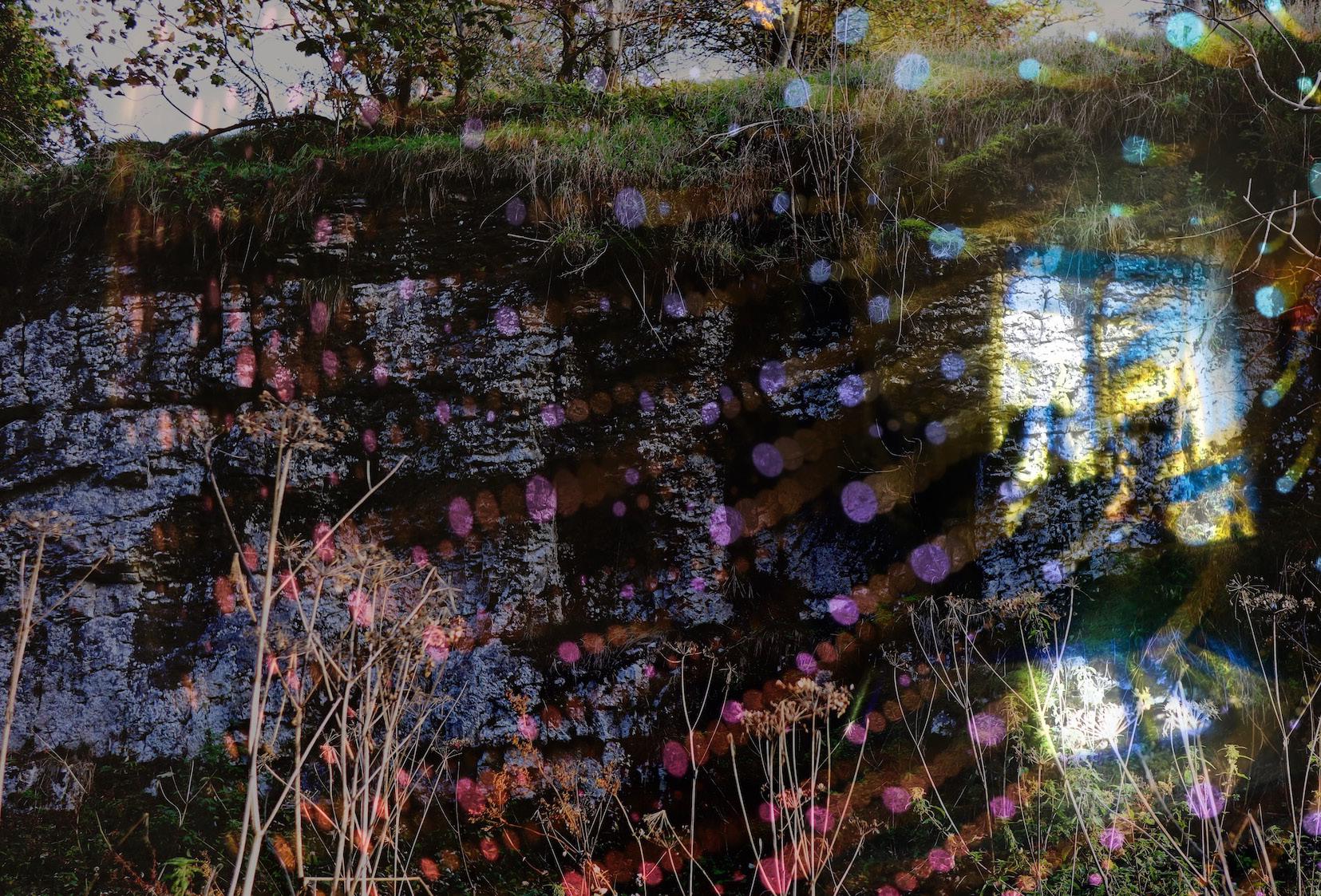
My second dérive took me to Matlock Bath, with its peculiar mix of Georgian architecture, amusement arcades and stunning limestone rockfaces. It’s a place I thought I knew well, but a steep footpath took me to new, high landscape viewpoints before dropping down to the familiar river path. I was taking photographs and feeling exhilarated.
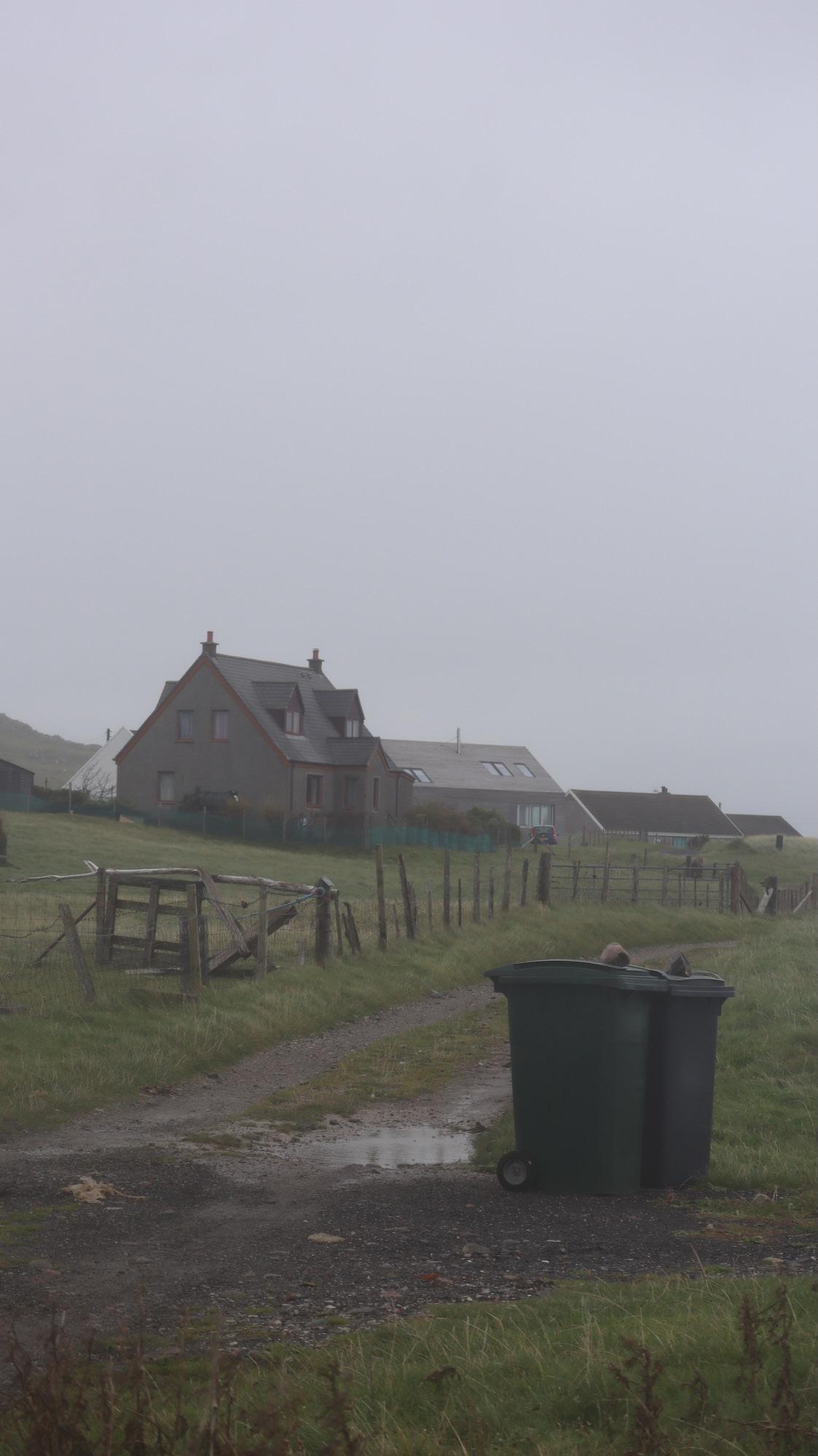
I visited Iona during the course and, in the spirit of the dérive, randomly turned left from the ferry terminal. The coast path soon petered out and I ended up going round in circles on a bleak, boggy
moor in sideways Scottish rain. When I eventually arrived at Iona Abbey (the reason most people make the “pilgrimage” here), the staff were locking up. I suppose it was a “different” experience, especially considering that it was the bold colours of light-filled Scottish Colourist paintings that had lured me here.
The psychogeography course encourages you to connect, explore and experiment far beyond
ABOVE FROM LEFT TO RIGHT
Undergrowth/Overgrown Abstract (Cales
So that was Iona
documenting a place through photography. Writing, poetry, drawing, mapping from memory, thinking about what a map cannot convey — all those sensory elements are a part of it. In fact, midway through the course, I experienced methodology overload! It was then that my tutor offered a really helpful take on psychogeography: it was a way of engaging deeply with place to generate creative outputs.
continued overleaf
Dale)
In addition to this, a colleague lent me Sonia Overall’s Heavy Time: A Psychogeographer’s Pilgrimage, which was the most relatable book I read on “how to do” psychogeography. She emphasised “going with the flow” and “tuning in”; she collected talismans; she experienced “thin places” where reverberations from the past were felt in the present.
All this came together in my final project, which focused on Cales Dale in Derbyshire’s White Peak. To me, it has always felt like a special place.
I already knew that prehistoric people had lived and worked there, sheltered by the limestone. But I had not realised there was an extensive cave system beneath the dale until my research brought up a video of someone enthusiastically making their
way through the dark and the mud. I was conscious now of layers through time, through rock, of portals into other worlds.
The impact of ash dieback was horribly apparent. There were so many fallen trees. Nearby were extensive programmes of felling and the beginnings of mixed-species replanting. I was witnessing a transformation.
The photographs I took were landscapes, inevitably, but I layered some of them. A “talisman”, a small piece of limestone from the dale, became a key component of still-life experiments back at home. A white background created a clinical look. I returned to the subject the following week using a black backdrop. This time I wanted to evoke 17th-
century Dutch still life: “memento mori”. When the backdrop began to smoulder (an unexpected shaft of sun hit the mirror I was using), I kept shooting.
The next issue was how to bring a range of experiments together into a final project.
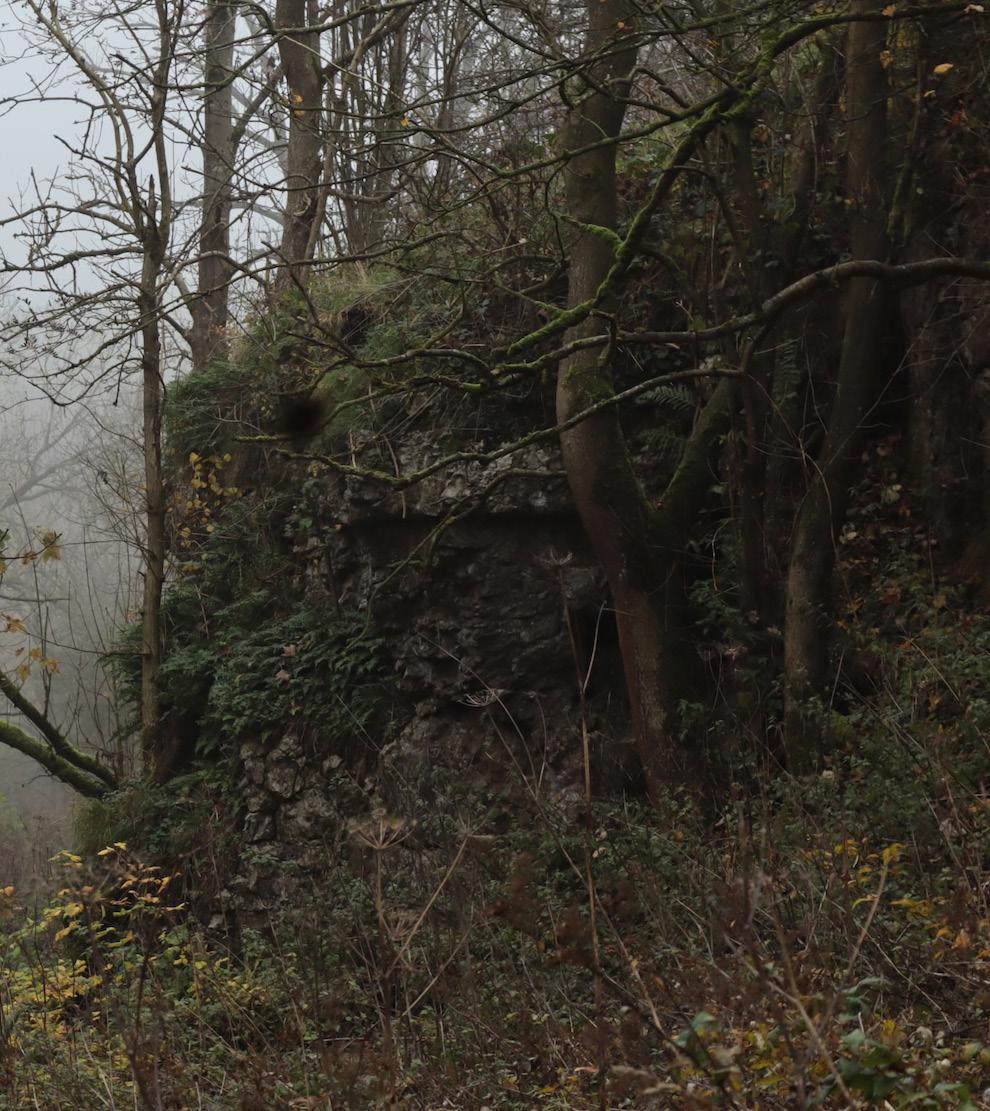
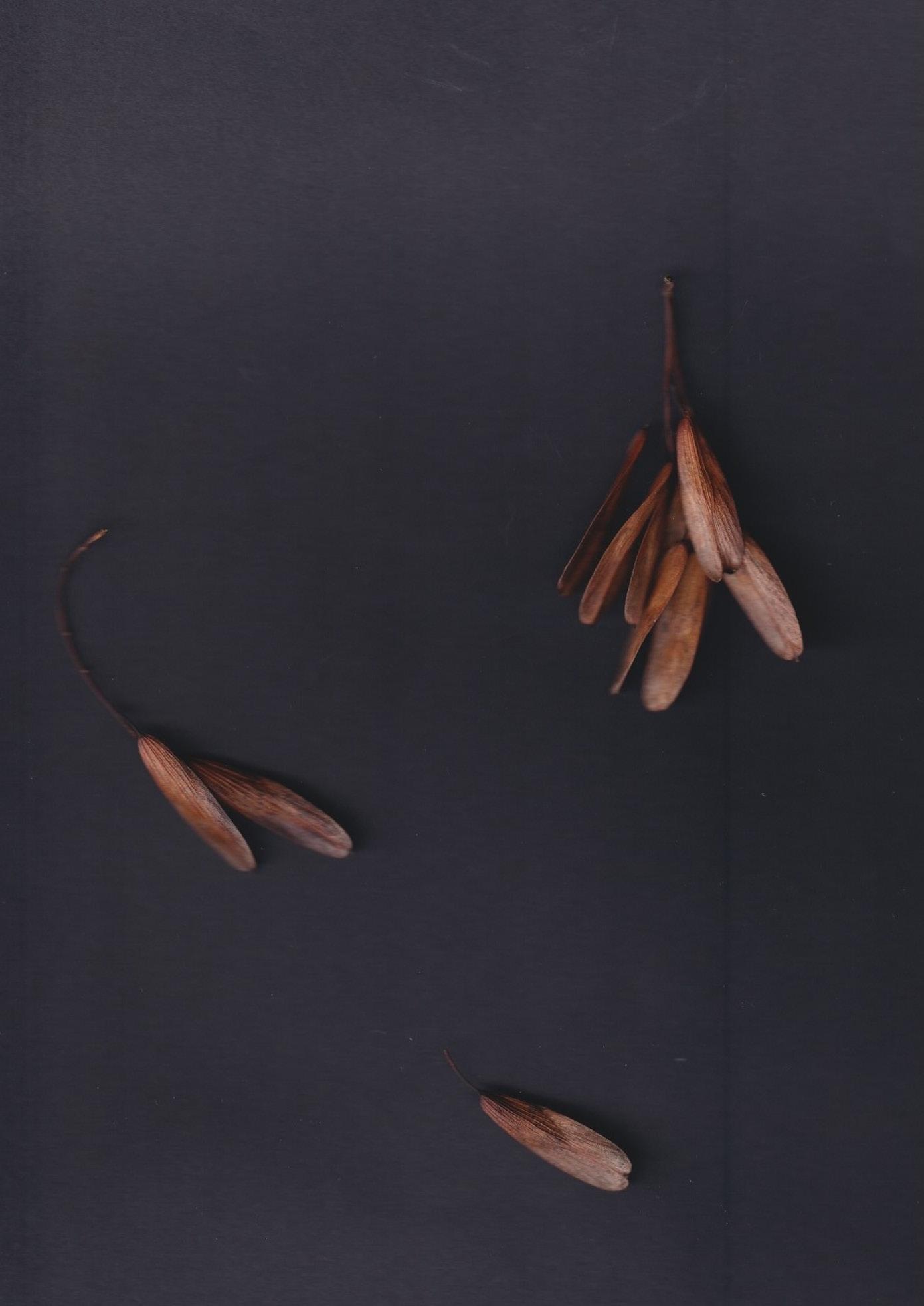
I returned to Cales Dale. It was a misty day; I was alone and feeling apprehensive. I had brought along some prints of my photographs, thinking I might stick them to the limestone “walls”, but it was too steep and slippery to work near the rockface. I sat down perplexed. Then I noticed the dry cow parsley stalks. I tried attaching my prints to them with sellotape; one photo (of ash seed, appropriately) fell into the undergrowth, but the others stayed stuck and wafted gently. It felt an uplifting kind of
conclusion: to hold a very small “exhibition” of my photographs “en plein air” with the dale as subject, backdrop and the only audience.
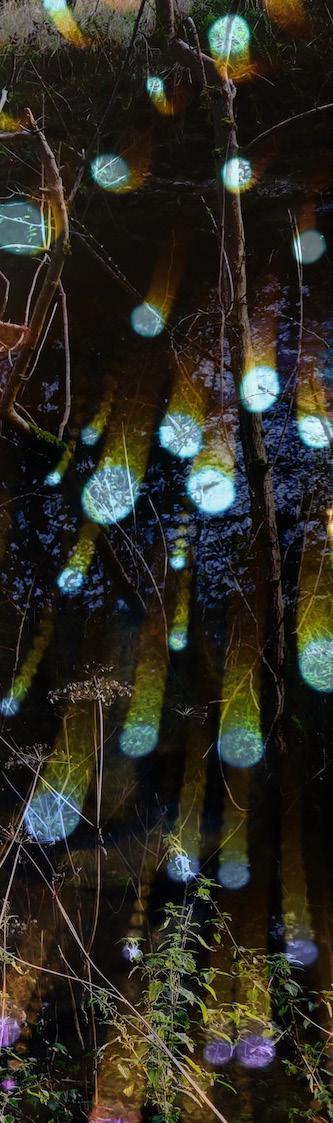
When I downloaded my photographs at home, my views down into the dale had strange little dark blots in places; perhaps they were dust or droplets of moisture? Or perhaps a manifestation of ash dieback? It summed up the strangeness of the day.
I finished the course with a whole list of project ideas, and I definitely take my camera out on walks again. I found focusing on one place while being encouraged to experiment with method and material a really powerful process. My experience with psychogeography has shown me how to look deeper, look differently.
ABOVE FROM LEFT TO RIGHT
Finding Other Worlds (Cales Dale) Reparations (Cales Dale). Photograph and thread.
About Sarah Skinner
Sarah Skinner is an artist using photography as an expressive medium. She lives in Derbyshire, UK, close to the country’s first national park.
She studied art history and worked as a curator of fine art. This included acquiring photographs for public collections (Manchester Art Gallery, Nottingham City Museums and Galleries) with the guidance and support of the Contemporary Art Society Special Collections Scheme.
One of Sarah’s first photographic memories is of realising that the spooky creature on the film drying in the bathroom was in fact her; it was a black and white negative image. Weirdness and the random are what she wants to capture in her photography now, while also, inevitably, finding subjects of both beauty and degradation in the landscape in which she walks.
sarahsphotos.net ▪ instagram.com/sarahsphotosetc
Moving pictures
A powerful series of short films and slideshows reflects the creativity of Women in Photography members.
by Sue Wright
When Images Move marks an exciting new chapter for RPS Women in Photography — an invitation to step beyond the still frame and explore what happens when photographs begin to move, speak, and unfold over time.
Group members were invited to share their work through moving image, sound, and storytelling. This growing collection brings together short films and slideshows that showcase individual photographic practices and personal or documentary-style narratives using stills, video, voice, and music. These works reflect the diversity and creativity of our members, offering fresh and intimate ways to engage with image-making.
Across the collection, there is a rich variety of approaches. Some works build reflective narratives by layering stills with ambient sound or spoken
word, such as Midlife by Natasha Bennett, which weaves together images and recorded voices to explore women’s experiences of ageing.
Others take a more documentary route, combining video and photography to explore identity, belonging, family and place. Maria Falconer FRPS’s How Do You Dance in a War Zone? brings together movement and resilience, while Beatrice Updegraff’s History of Hysteria uses research-led storytelling to examine gender bias in medicine.
Intimate, observational pieces rooted in everyday life sit alongside more experimental work. Sarah Skinner’s Corn Husks Belper transforms a quiet walk into a reflective study, while Jane Robb’s Layered Memories builds a poetic narrative through fragments of travel and time.
Voice is used powerfully in several pieces, adding emotional depth and connection. Lisa Jayne Cramer’s MOTHER is a particularly moving exploration of care and memory, combining analogue stills, video and narration. In contrast, works such as Sinead Le Blond’s Fair Winds and Following Seas are guided by music and pacing, creating sequences that feel both cinematic and grounded.
There are also works that connect personal stories to wider landscapes and histories. Rosalind Lowry’s The Heartbeat of Trees links women’s lives to the land, while Ruth Hanson ARPS’s Between the Walls and the Trees uses experimental
techniques to explore trauma and recovery.
Each piece brings its own voice and perspective, and together the works show how moving image, sound and still photography can open up new ways of telling stories.
Members at all stages of their creative journeys have contributed — from those already working across disciplines to those exploring the moving image for the first time. Importantly, this initiative is about exploration — finding new ways to connect, communicate, and share stories through images, allowing them to evolve and resonate when given time, sound, and space.
Watch the video stories, and if you’re feeling inspired, add your own story to the collection at the link.
Photography taught me that in the quietest, most honest way. It showed me how easily moments slip past — a glance, a laugh, a fleeting expression — here one second, gone the next. Through the lens, I began to understand how precious these fragments of time really are.
We often think the big events define our lives, but it’s the small, unrepeatable moments that truly shape us. The ordinary days. The subtle shifts we barely notice until they’re already memories.
Life flows quickly — faster than we expect, faster than we’re ready for. Photography doesn’t stop time, but it teaches you to see it. To value it. To be present in it. And maybe that’s the point — not to hold on, but to notice. Because once you truly see a moment, you realise it was never small at all.
Irina Godden
Hastings, UK instagram.com/zoompro_ photography
Valuing the small moments, noticing the details, and the importance of patience and empathy. These are just a few of the lessons learned from photography in this issue.
Photography has taught me that we need to not judge someone until we know their story.
Debbie Todd
Durham, UK
debbietodd.co.uk
Photography has taught me to pay attention and appreciate the world around me more. In a fast-moving city like Singapore, it’s easy to get caught up in the busyness of modern life and drift through my daily routine, distracted and mentally elsewhere. Even living overseas, what at first feels new quickly becomes familiar, and then you stop noticing.
Using a camera slowed me down. Walking more intentionally through neighbourhoods and parks, I noticed details I’d overlooked. I saw roots pushing through cracked paint on old buildings; I actually stopped to look at the street art around my apartment; and every time I went out to the coastal park, I saw a pair of kingfishers who must’ve been there all along, but I hadn’t
been looking. (But then I noticed I needed a longer lens!)
Kamsin Kaneko LRPS
Katong, Singapore kamsinkaneko.com
Photography has taught me to look for beauty long before I expect to find it. When a scene falls apart or a plan unravels, something quieter often appears; a shift of light, an imperfect detail, a moment that feels truer than anything I imagined.
Over time, this has taught me acceptance: to let go of the version I thought I needed, and to stay open to what unfolds instead. Not every frame is what I hoped for, yet many become something better — softer, more honest, more alive. Photography reminds me that joy often arrives in the unexpected, and that there is always something worth noticing if I’m willing to see it.
Gosia Matejuk
Newark-on-Trent, UK instagram.com/gosiaunframed
Photography has taught me to appreciate creation more deeply. I believe in God as the creator of everything, and photography has made me slow down and notice the beauty in what He has made, in people, in nature, and in the quiet details we often overlook.
Photography also reminds me that creativity is part of who we are. If we are made by a creator, then creating is something we are meant to do. Photography allows me to honour what already exists while expressing the creativity placed within me.
As someone who is introverted, photography has really helped me to step out of my shell. It has become a bridge between me and the world. It has changed how I see people, how I approach my work, and even how I see myself.
Rahimat Onize Shaibu
Birmingham, UK instagram.com/rahimart_
Architectural photography has taught me to stop, to circle,
and to wait until the light is perfect. Buildings are complex, layered, and ever-changing; no two visits to the same site ever produce the same image. A facade at dawn and the same facade at noon tell two entirely different stories.
Chasing that light has made me more disciplined and observant than I ever thought possible. Beyond that, it has taught me to seek clarity and silence. I consciously aim for a clean frame, stripping away the fleeting and the accidental to let the architecture stand alone as a pure, autonomous form.
In this pursuit of precise, perfect geometry, I find a profound sense of order. It has taught me not just to look, but to truly see — to distill the world to its essence by removing the noise and revealing the soul of the form. This practice has brought a sense of structure to my life, proving that patience is my most essential professional tool.
Svetlana Fadeeva
Doha, Qatar instagram.com/fadeevaphotography
As a documentary photographer from the age of 20, I have travelled to different places, lived with different people, and experienced different religions and cultures. I laughed with some and cried with others. I did not look at them as objects but as people with emotions who experience what they do for a reason.
Throughout this journey, I learned not to judge or label, but to understand and empathise. I noticed that the more empathetic we are, the more human we become. Not to empathise to gain something, but to empathise for the sake of humanity. I understood that non-biased empathy is a marker of civilisation.
Thus, one may encounter a highly civilised person in the middle of a desert or on top of a mountain in an unknown place, and a person of the opposite quality at the top of the highest civilised institutions.
Sarah Jabbari
London, UK visura.co/sjabbari
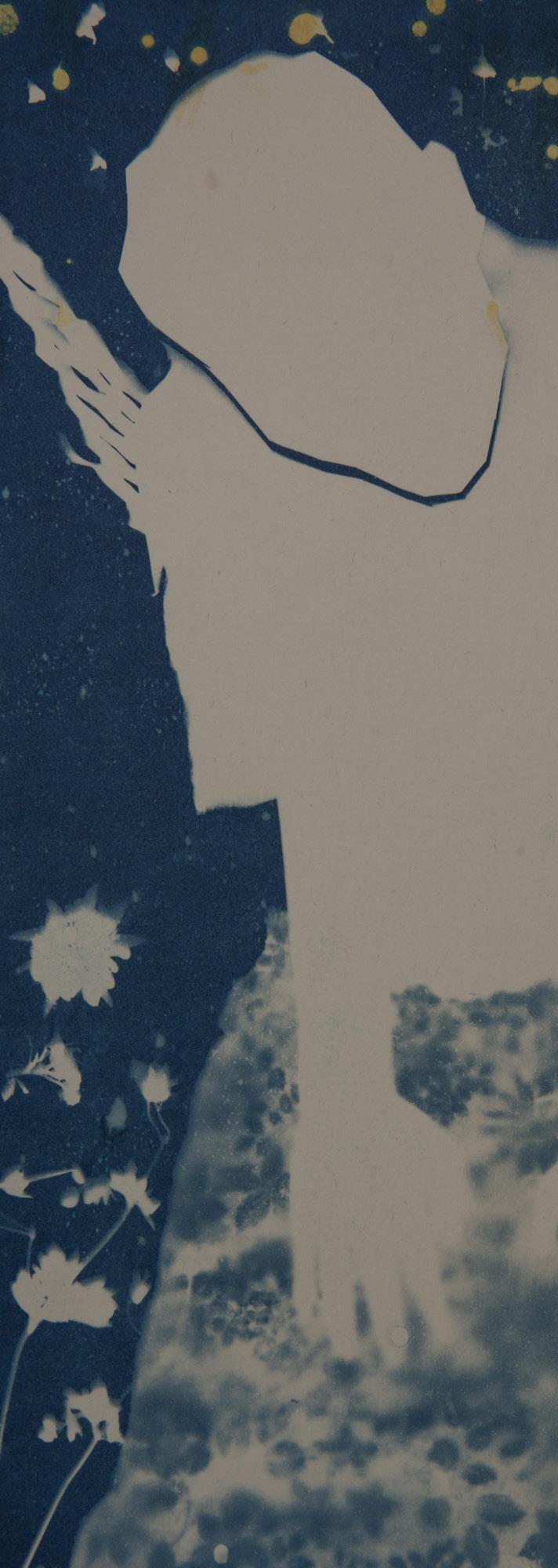
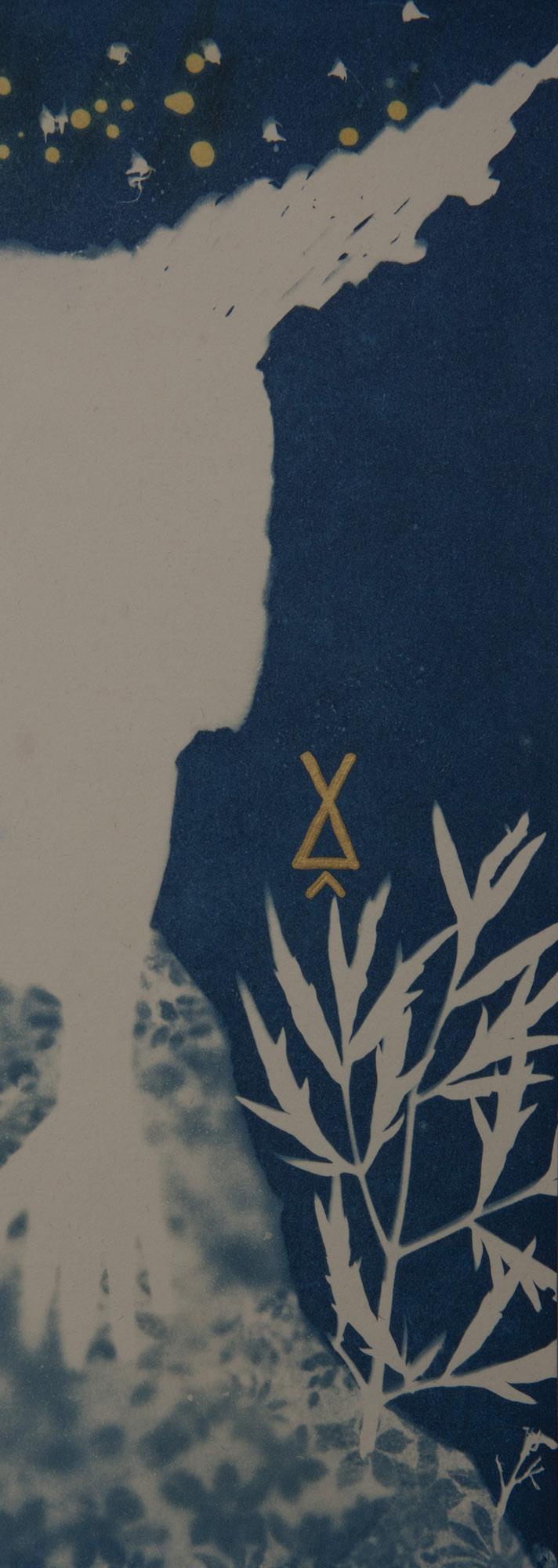
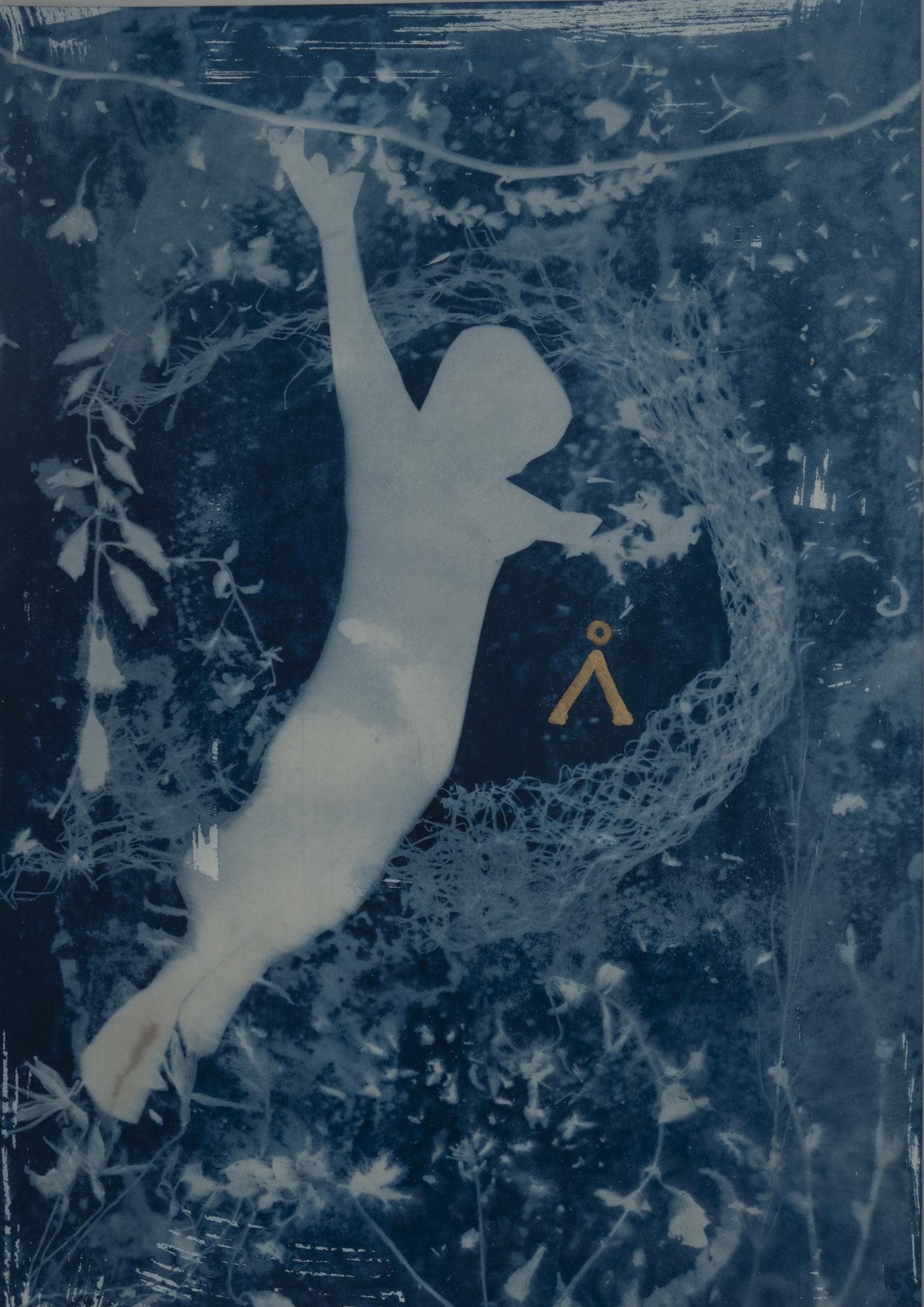
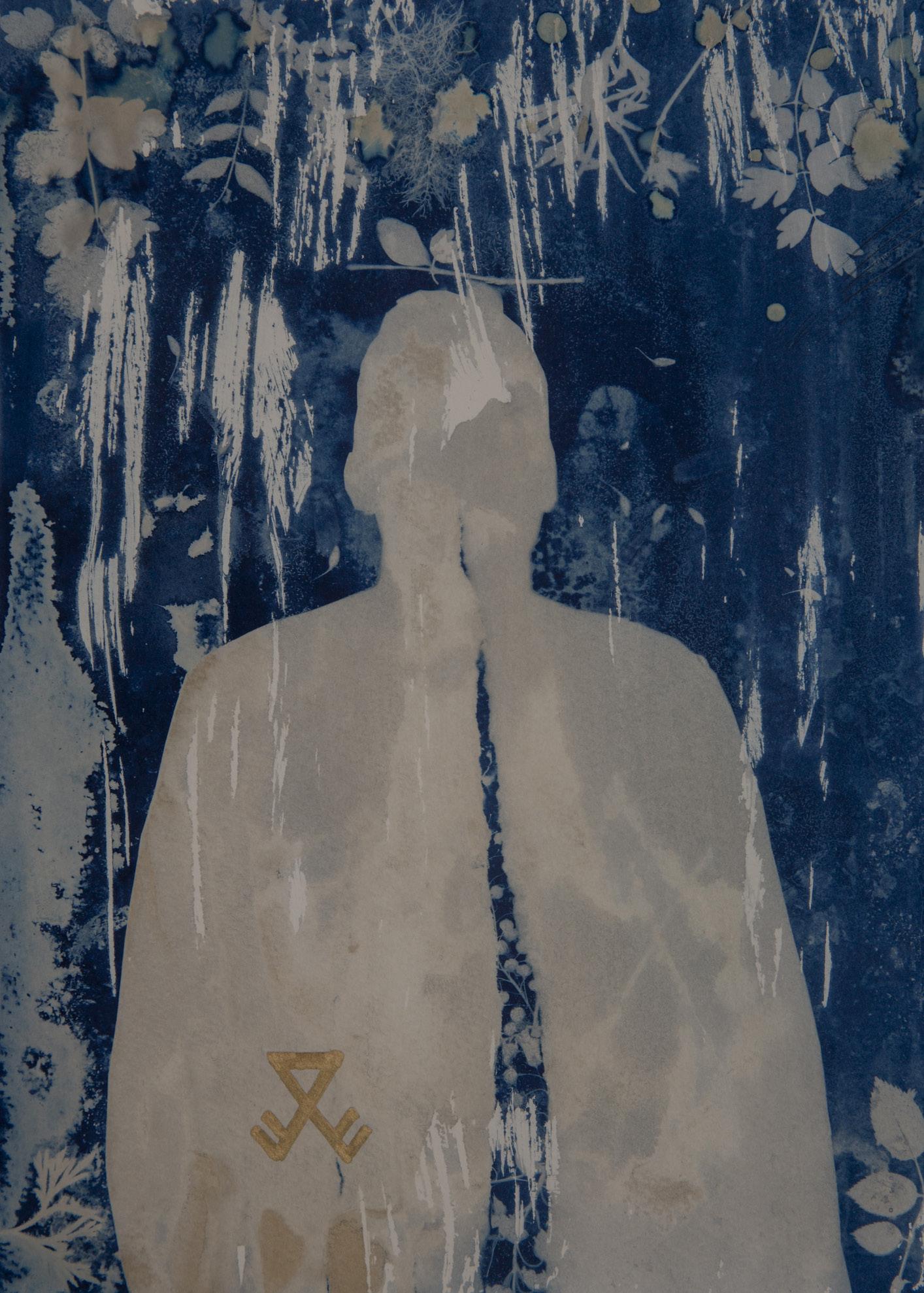
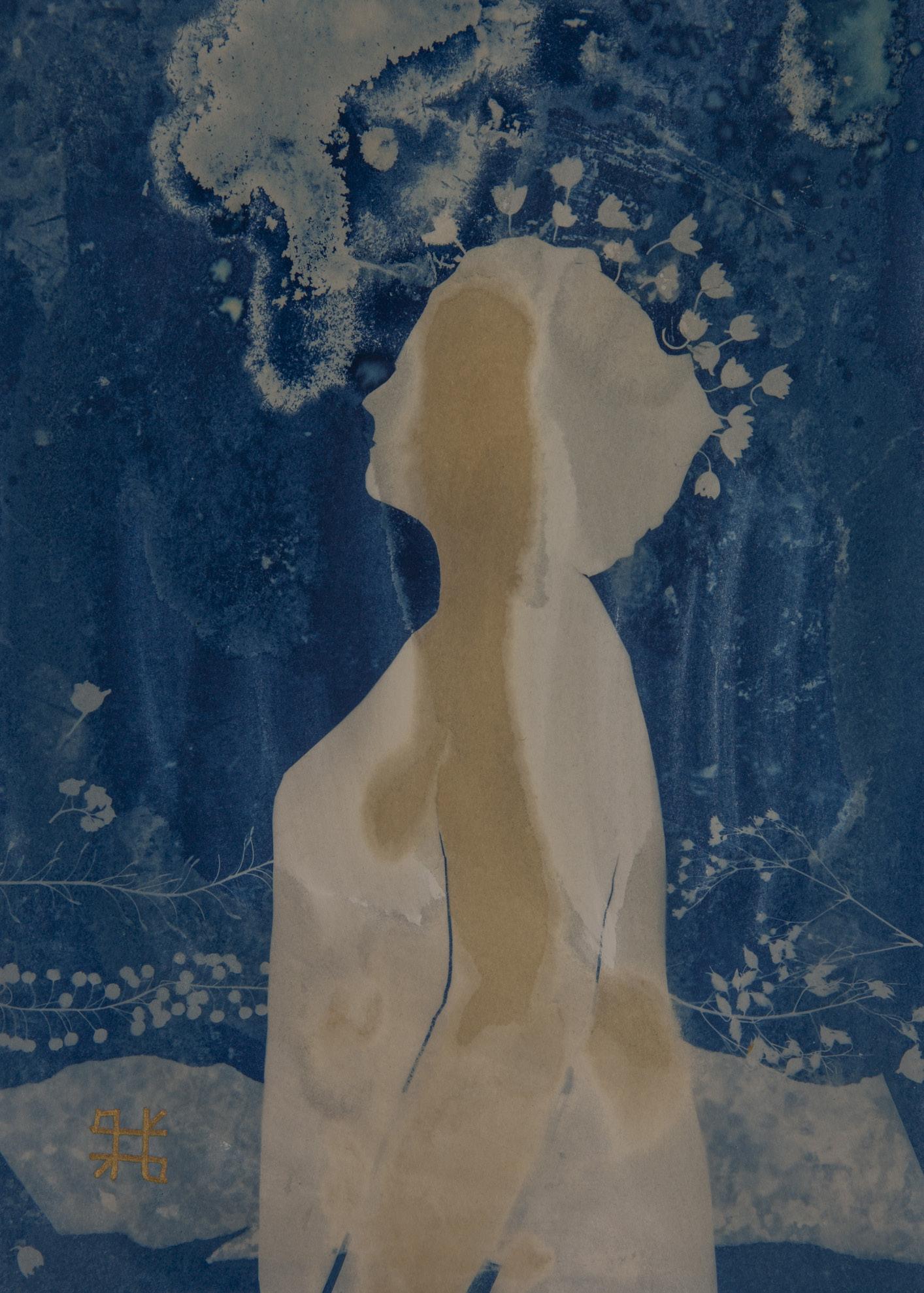
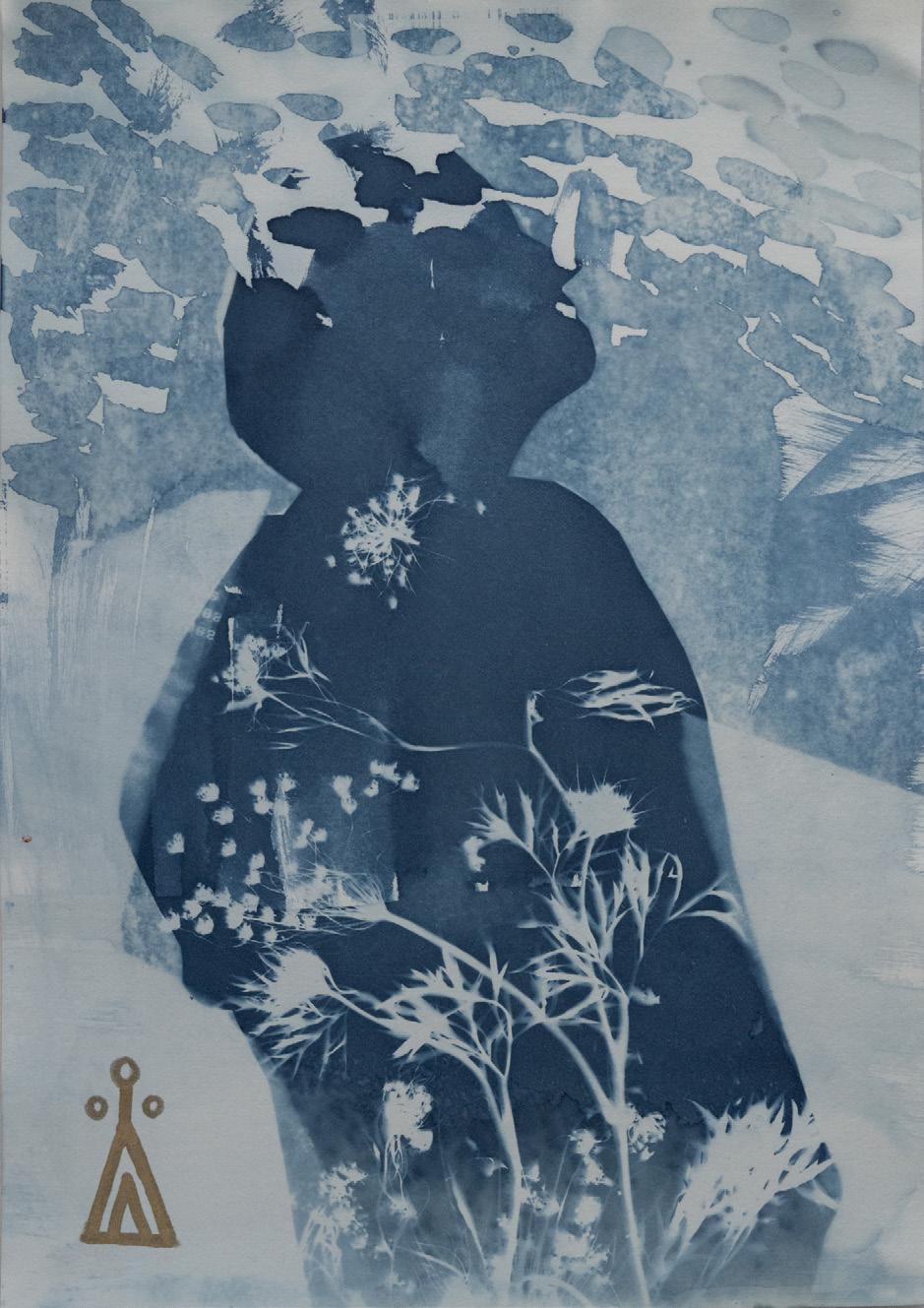
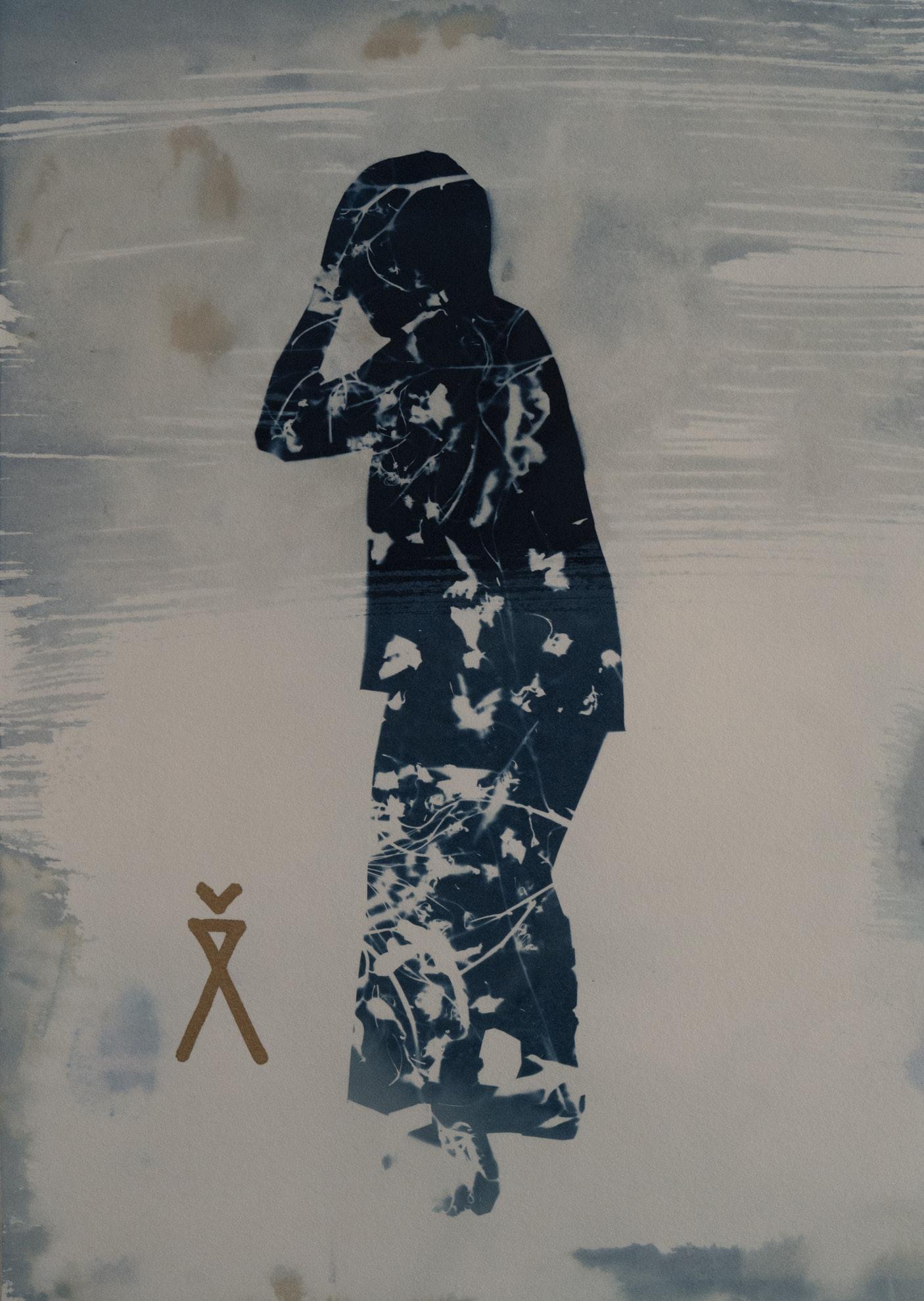
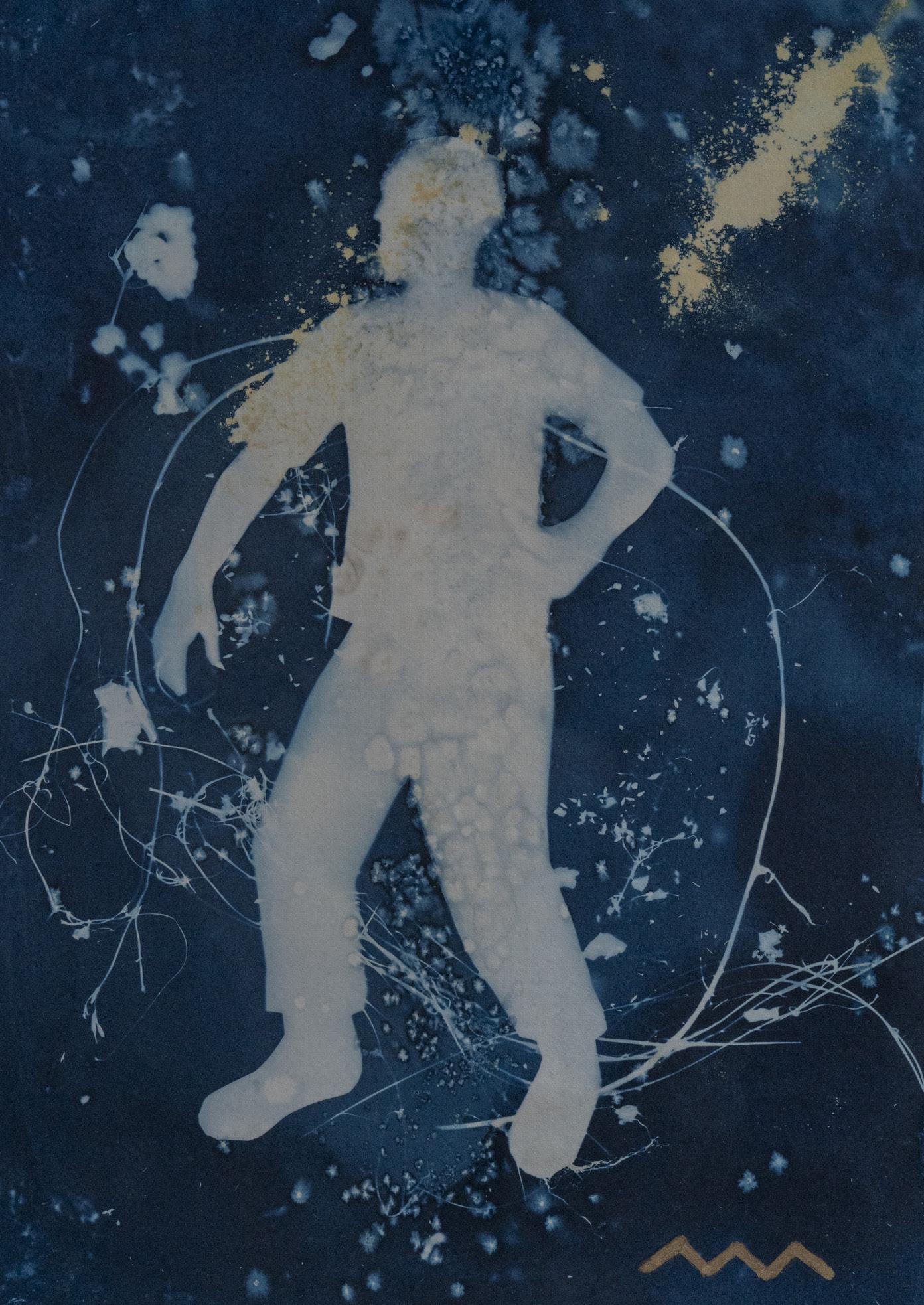
Traced in blue — still present
Working with cyanotypes, a British photographer with Latvian heritage brings into view archival fragments from World War Two and family history. With the project now at an end, she examines what endures through memory and image-making.
by Sarah Ketelaars
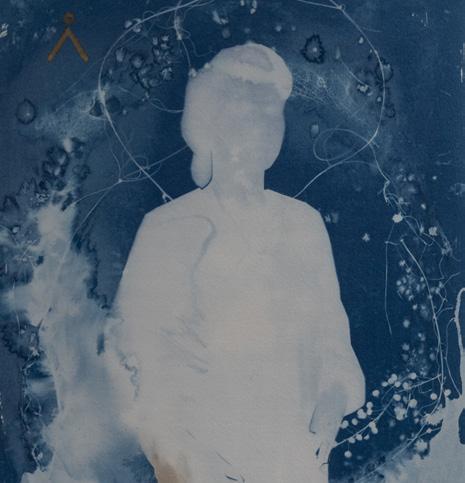
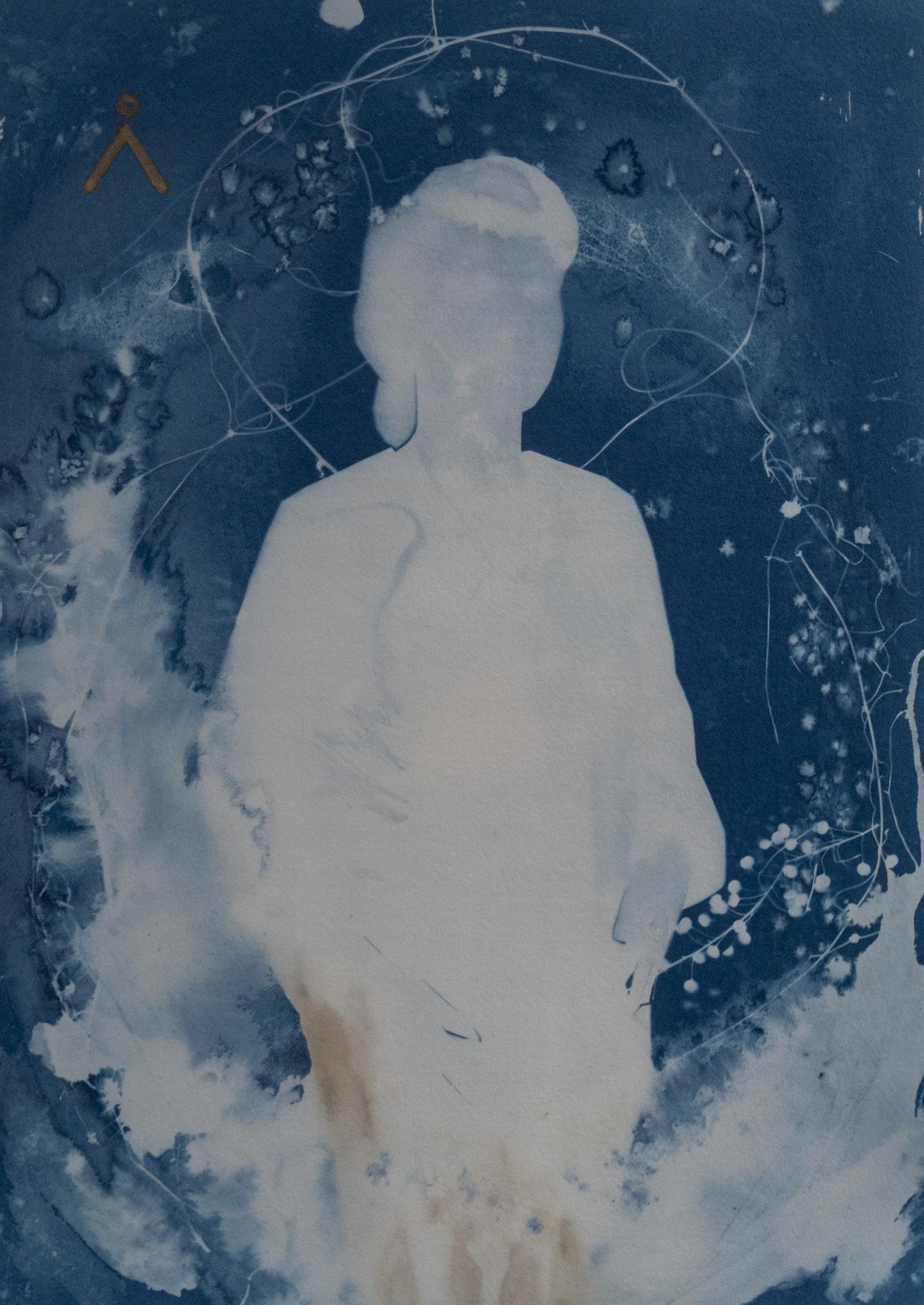
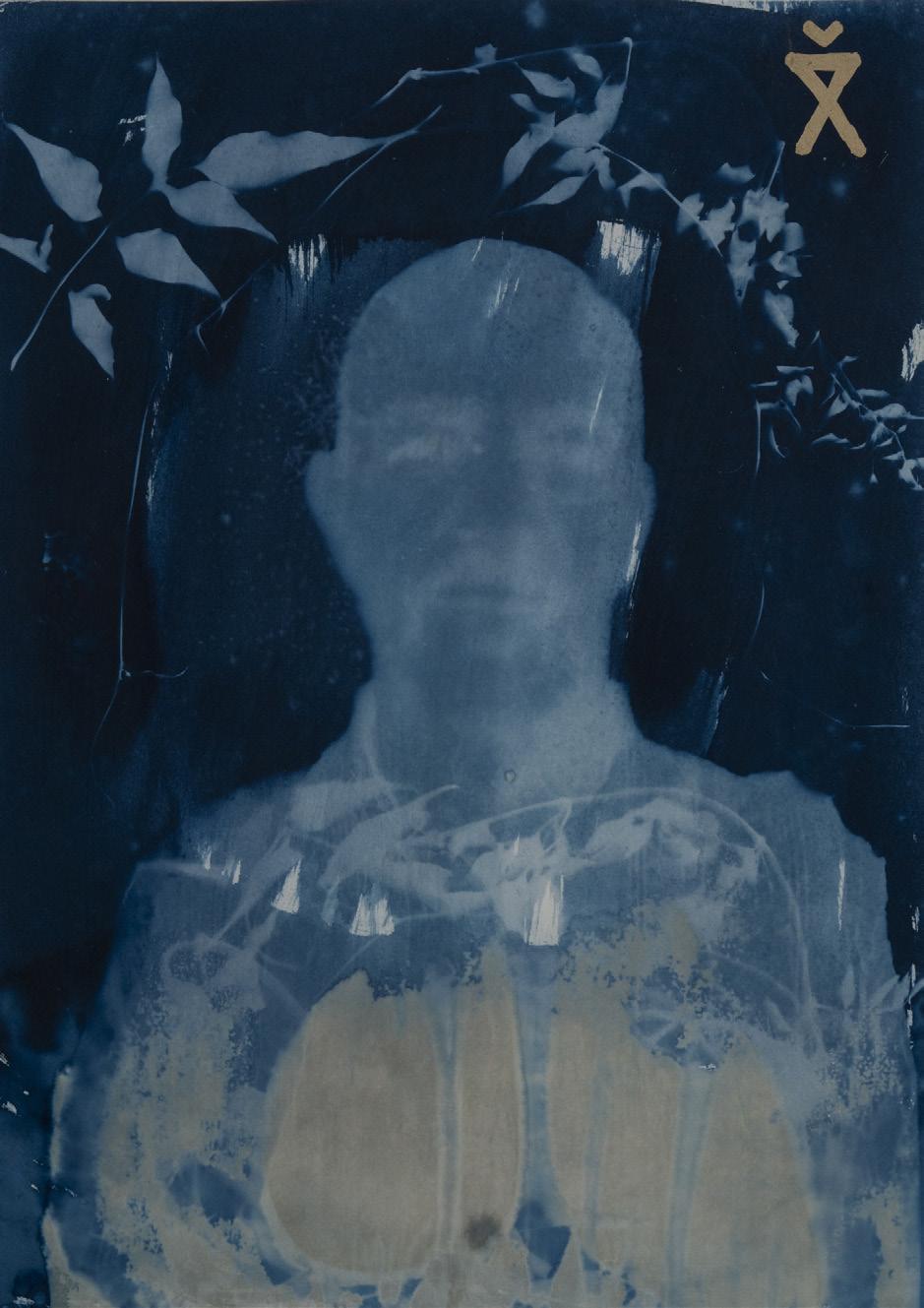
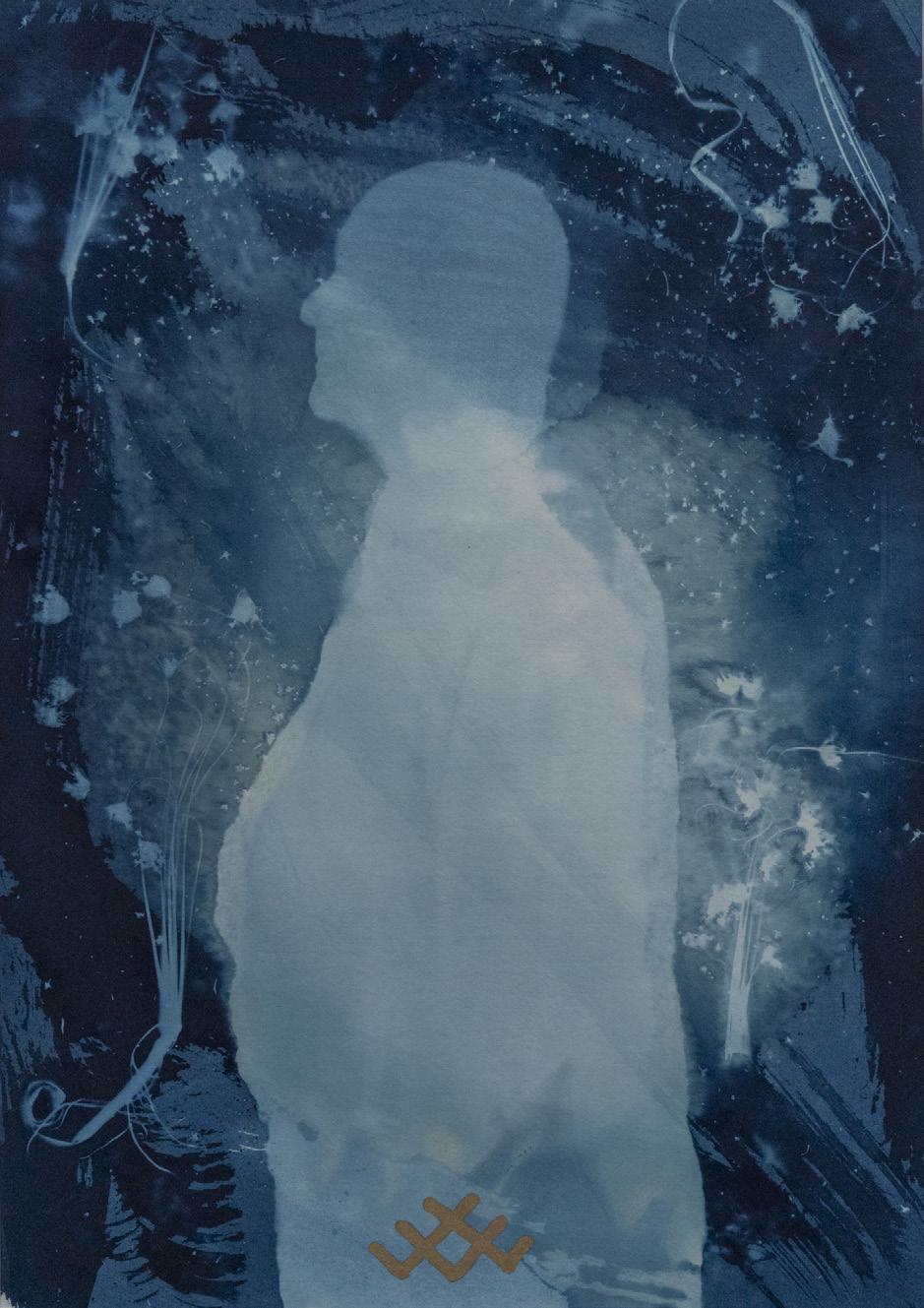
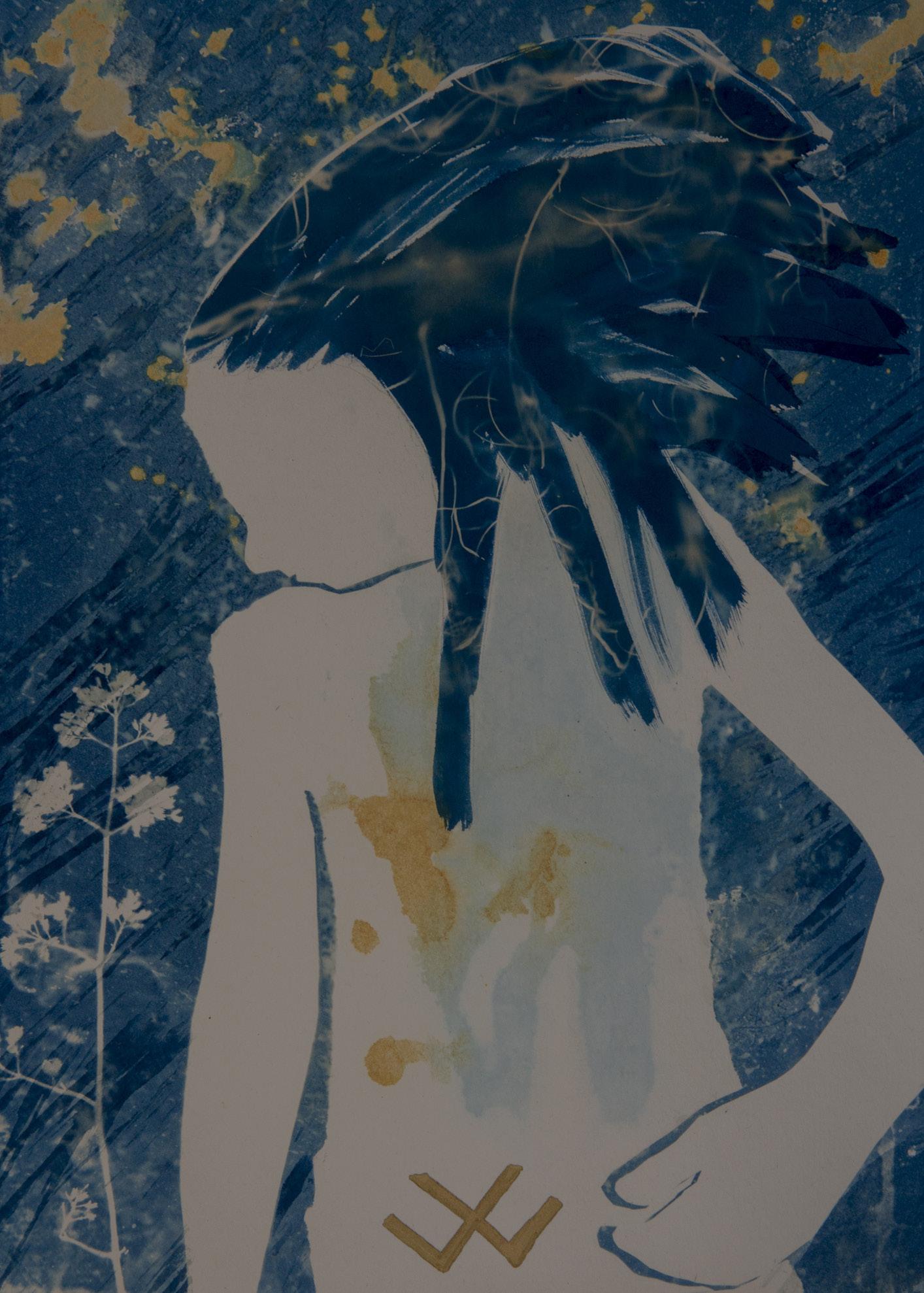
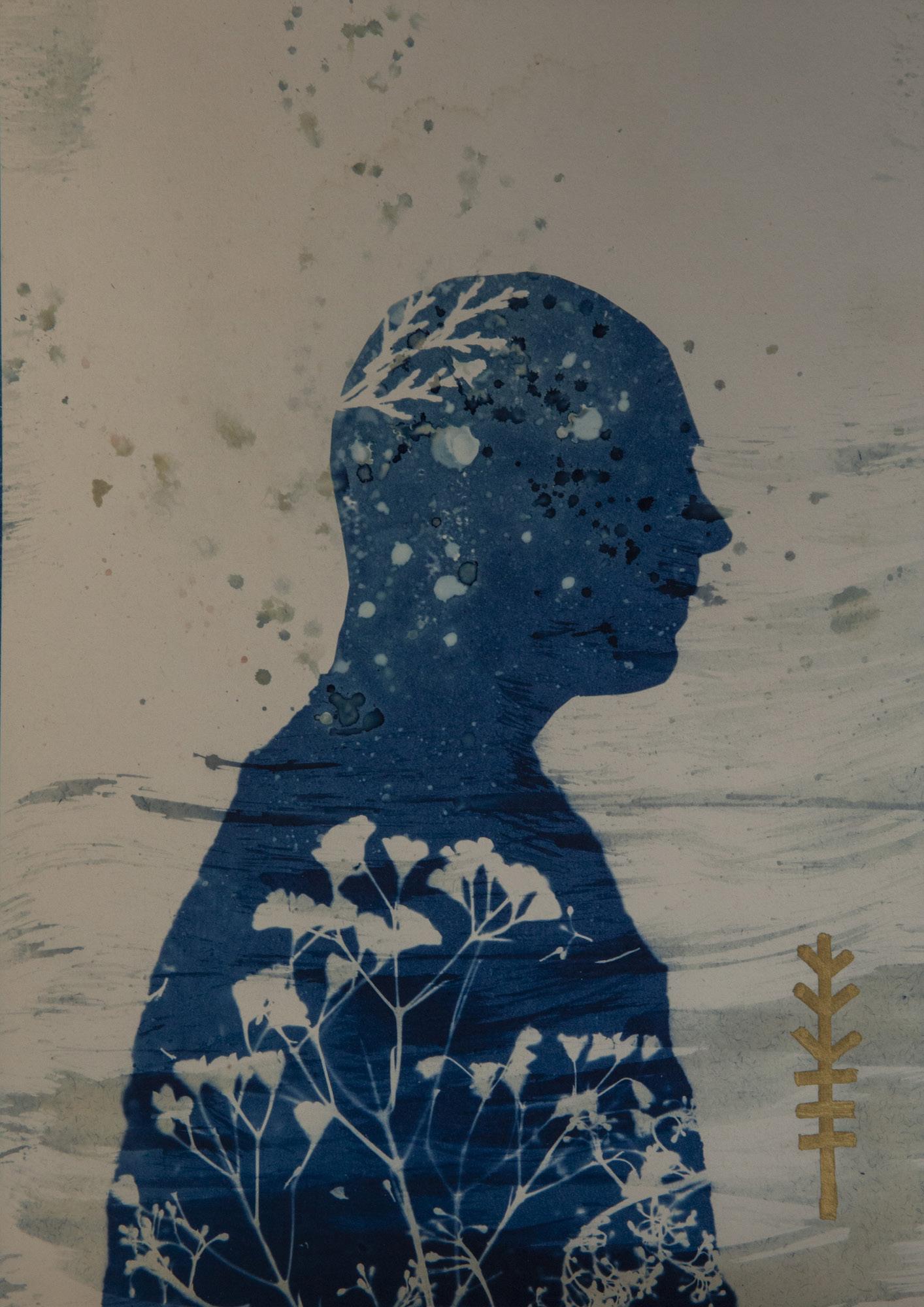
On August 22nd, 1941, the Nazis murdered 544 psychiatric patients in Daugavpils, Latvia: 269 men, 227 women and 48 children, some of them healthy orphans who had been placed in the hospital as a temporary measure. Classed as “useless eaters”, they were seen as using up valuable resources in a newly invaded country and, furthermore, could not be forced to work for the invaders. My grandmother was working at the hospital from which the 544 patients were taken, and I grew up familiar with her refugee story. But I was an adult when she told me about the 544 for the first time, recording her on a now wonky cassette tape and making hasty notes in my journalist’s notepad. She said she would have told me before, but hadn’t wanted to upset me. She spoke of the deep pain of leaving her parents and her homeland (neither of which she would ever see again), of running through a pine forest while being shot at by Russian soldiers, and of emerging from the trees onto a sandy beach, before swimming out to a small boat that would take her to safety. These images were like a film constantly screened, becoming the backdrop to my childhood. The Nazis would go on to murder over 2,000 psychiatric patients and some staff across the country. The killings continued the practices of Aktion T4 — the code name given to the Nazi campaigns of mass murder by involuntary euthanasia, which targeted people with disabilities
LEFT
544/544
484/544
and the mentally ill. This was justified by the Nazis on grounds of eugenics and “racial hygiene”, as well as a cost-cutting exercise.
“At night, I dreamt in blue. I saw curious blue figures twisting and turning, restless and arresting.”
I visited the hospital in Latvia in 2013, and the hospital director confirmed her story. The only official record I could find was a short paragraph in the Nuremberg military trial records, based on the evidence of two Latvian psychiatrists. So far, I have not been able to find a list of their names. Once I knew this story, the urge to share it was intense. As a child at school, I filled composition textbooks with the story of my grandmother’s escape from her homeland, sometimes using up an entire book and having to finish it in a second one. Eventually, the school asked me to stop. They could not afford to keep giving me new books to write in. One teacher advised me to wait until I was grown up and then write her story as a novel. For many years I believed I would do this, but eventually I realised that the best way for me to explore our family history was through image-making.
▪
Over 80 years after the event and more than 30 years after first learning about it, I found myself mixing chemicals, coating paper, cutting out human figures, and layering them with plants, flowers, scrap paper, and salt flakes. The figures I used are from original photographs posed by models. For a couple of years, I entered a world of blue. The work was all-consuming. At night, I dreamt in blue. I saw curious blue figures twisting and turning, restless and arresting. By day, I made cyanotypes, pushing the process as far as I could each time. I never stopped experimenting, tweaking both chemistry and techniques, and making new discoveries until the very last image was made.
As if the shades of Prussian, deep indigo and pale sky blue could somehow speak eloquently
452/544
of the loss, the crime, and the particularity of the individuals who were killed. As if blue could weep and heal simultaneously. Whilst working on this project, The 544, I thought often about the colour blue — the colour of sadness, or my school uniform, much the same. But it is also the colour of “distance and desire” and of memory.
The wet cyanotype process is a forgiving one. It teaches you something new with every image you make. Using a traditional technique seemed fitting when looking at an event from a historical perspective. I enjoyed the fact that I could be so precise, but I also had to let serendipity play its part in the making of every image. There is an element of magic in making cyanotypes. I found the process fluid and spacious, allowing for alchemy; it gave me room to take risks, explore mystery, and enjoy the unexpected gifts of chemistry. Each finished print is a one-off handmade object, just as each figure
depicted was a unique individual. The images are finished with a small, hand-drawn Latvian pagan symbol in gold ink, referring to Latvian culture and adding a spiritual and decorative element. The glint of gold in the hand-drawn symbols seems hopeful to me, like the gold in the Japanese art of Kintsugi, visibly mending the broken, and the gold in Western religious art, which often symbolises the Divine. At times, while making this work I was overwhelmed by a new fact I discovered in my research, and an obscene detail about Nazi history floored me. Do you know what a “kicker” is? I didn’t.
It was someone whose job it was to stand at the edge of a pit dug to bury murder victims and kick in any corpses that had not fallen inside. I saw a photograph of a Latvian kicker in the Holocaust Museum in Houston. I tried to imagine what was going on in his head and asked myself what I would and wouldn’t do if I found myself at the wrong end of the barrel of a gun. How do we face the knowledge of what we, as humans, are capable of? Especially in a world where we only have to turn on the news to hear many examples of present-day brutality and wonder how best to speak out.
continued overleaf
LEFT TO RIGHT 174/544, 99/544, 428/544
At a lecture on intergenerational trauma I attended with a friend, the lecturer explained the biological and chemical process by which trauma is passed on: epigenetics. I was convinced. Then she told the audience that before your mother is even born, half of your genetic information is already there in her eggs, already formed while she is still in the womb. Three generations in one body. My grandmother in a displaced persons’ camp in Germany, my mother, curled in the womb, washed in cortisol, her eggs soaking up the complex inheritance that was the birthright of the generation born in, or after, World War Two. The lecturer even used the word “blueprint”. My friend and I looked at each other and whispered the word “cyanotype!” It sounded like an incantation.
It is impossible for me to look at the images without thinking about how the lives of these people ended. However, the project is primarily intended as a memorial. I wanted the images to hint at more celebratory moments and to remember the lives they lived before they entered the hospital and died. Not knowing anything about their identities, I tried to imagine each one as a unique, precious being, and to give back to each person a little of the character that was stripped from them when they were murdered and reduced by history to a number on a list of nameless victims.
The project is the second part in a trilogy exploring my family history and examining themes of cultural inheritance, identity and intergenerational trauma. I’m now looking forward to working on single images that look at intergenerational trauma and will enjoy the freedom of working at a larger scale after two years confined to A4 paper! For the moment, The 544 are all neatly filed in acidfree archival boxes, stacked up in my studio. Two shows, one here in the UK and one in Riga, Latvia, are in the planning stage. I am working to raise funds to mount the work and to make a book of the cyanotypes to accompany the exhibitions.
▪
After working so intensely for the best part of two years, it is strange to have finished this work. What a privilege and a joy it was to spend a couple of years in the company of the 544. When I found out there was no memorial to them, I knew that whatever my shortcomings as an artist, it seemed that I was all these people had. I felt honoured and humbled to be the one to have made this work. For a long time, I was crippled by fear when approaching this subject matter, unsure whether I was good enough to do it justice and create the memorial these people deserve. Finally, through my research into intergenerational trauma and by facing the weight of my family history, I realised I had no choice but to make the work. The story had chosen me — it wanted to be told and it didn’t mind if I told it.
534/544
The 544 will be on view at the Bethlem Museum of the Mind in November 2026, and will transfer to Latvia in 2027.
About Sarah Ketelaars
Sarah Ketelaars is a British photographer from Brighton, UK. She holds a BA and MA degree in English Literature from Jesus College, Cambridge, an MSc in Social Science from Robert Gordon University in Aberdeen, and a Diploma in Photography from City College, Brighton. She began her career as a journalist, and her images have appeared on book, CD, and magazine covers. Her work has been exhibited nationally and internationally, and she is represented by 35 North Gallery in Brighton.
Sarah was selected as one of the LensCulture Critics’ Choice winners in 2021 and was a finalist with The 544 project in the LensCulture Art Photography Awards in 2024, when she was also a Photolucida Critical Mass finalist. In 2025, she won the Shutter Hub Yearbook Magnum Award and was a Klompching Gallery Fresh Photo Award finalist. This year, she has been shortlisted for the Sony World Photography Award. sarahketelaars.com ▪ instagram.com/sarahketelaars
A delicate balancing act
Following a complex series of health challenges, this photographic artist must juggle a never-ending cycle of medications in search of a “baseline”.
by Lisa Murray
I have never really understood how much my life has been shaped by ill health and near-death experiences until I started piecing it together in story form by creating images.
I’ve published five bodies of work since I began my art practice in 2022, all bound by my struggles with health. For instance, Through My Child’s Eyes lays bare my experience of breast cancer; For Parts Not Working unpacks a case of traumatic memories uncovered following a brain injury; Pieces of Me is an exploration of self-discovery after
I was diagnosed with autism and ADHD (AuDHD); and so it continues. This Too Shall Pass is a culmination of all the work I’ve created to date. All the experimental avenues I’ve previously explored, all the subjects I’ve touched on, and everything I have learned about myself through my diagnoses — it is all represented in some way here. This series illustrates a personal realisation that my life, and my creativity, all pivot from one place — the central nervous system — represented in this work as my baseline.
I have seen many specialists in relation to my migraines over the years. One of them drew a simple illustration of a horizontal line, which he described as a “baseline”. He then added an ever-changing lifeline which travelled above and below that line. He said I get migraines whenever I drop below the base, and that we needed to work on shifting the line as a possible solution. His visual explanation made everything make sense to me, but it would take years before I understood this baseline to be my nervous system, and an AuDHD diagnosis, before I forgave myself for being so slow to recognise it.
Intention and experimentation
When I create images, I often begin with a rigid set of self-imposed rules. Like a puzzle to solve, my project titles need to consist of four words. In addition, each series carries its own set of parameters within which to work, and a formula to apply to each image. I didn’t notice this at first, but it’s a common thread I’ve come to understand the more I make. Part of my creative process with this series was to try to break down this rigid framework, blending
intention with experimentation as much as I could.
Making images helps my brain to process, and as such, I’m only ever driven to create when I’m in the zone. So, this series was made over time — whenever I was juggling medication and struggling to get back to my baseline. Images always appear in my mind’s eye, and I go about translating them into digital form by combining new or archival images. In this case, I scanned objects and layers to add colour and texture, pulling back pixels where it didn’t feel right.
I often arrive at meaning after completing my work; if I learned one thing at art school, it was that it doesn’t matter what you create so long as you can justify it in words. Each of the images was finished with a blank film frame inscribed with the number 10, which led me to research potential meanings of the numbers 1, 0, and 10. I started to read about the binary notion that mirrors how digital systems encode presence and absence: 1 for “On” and 0 for “Off”. As if by fate, it carried the whole intention of this body of work, and I ran with it. I erased two additional works from the mix so that my brain could get a little dopamine hit out of a neat “10”, completing the series.
Lisa Murray’s This Too Shall Pass was named the series winner in the LensCulture Art Photography Awards 2026.
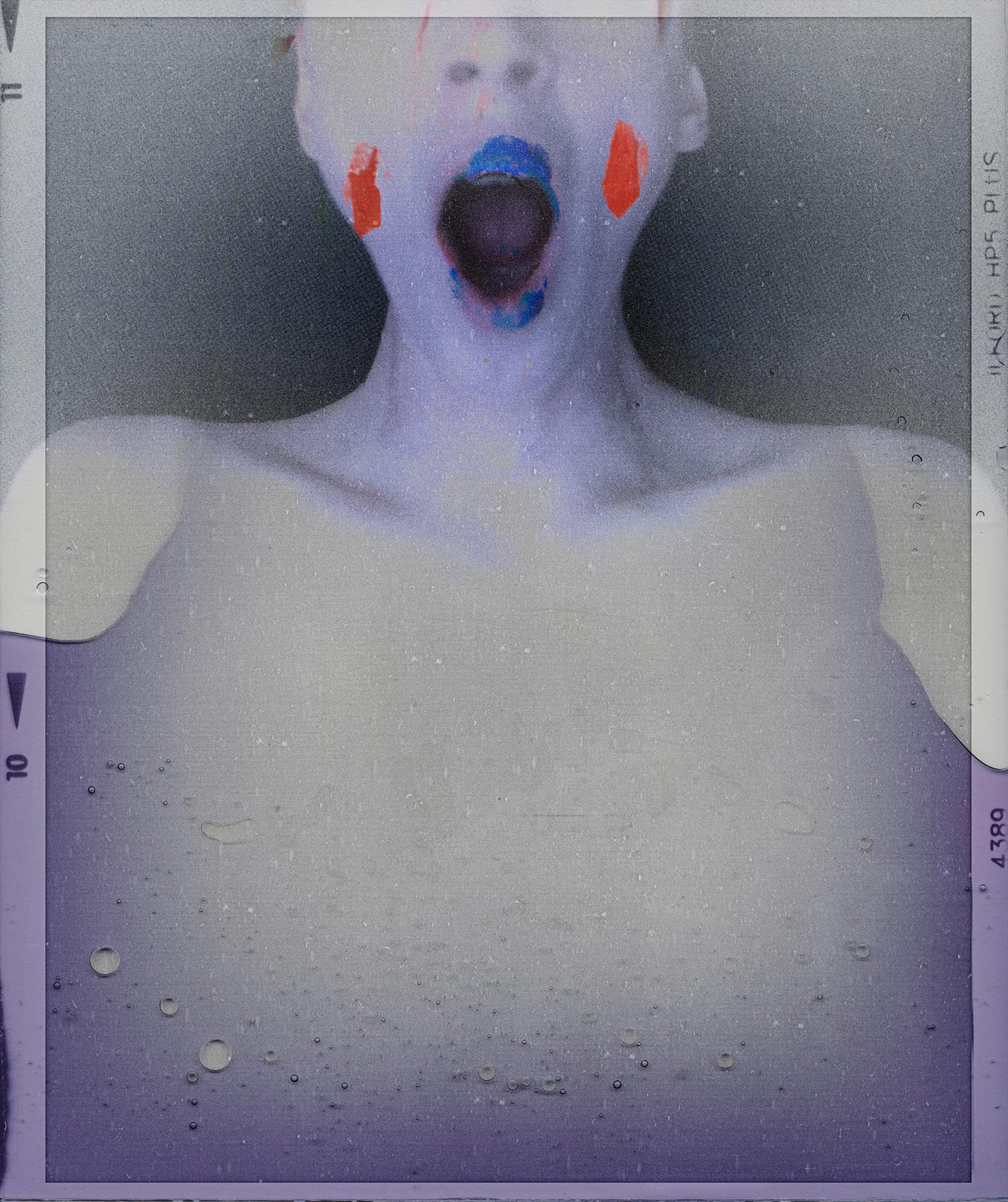
Soluable
Wide
About Lisa Murray
Lisa Murray is a photographic artist, educator, and mother living and working on the unceded land of the Wurundjeri people in Naarm/Melbourne, Australia.
Lisa employs an authentic and innovative approach to photography, exploring the interplay of time, memory, and personal experiences. She uses her own life journey as a lens to navigate and make sense of the world, resulting in a rich and multi-layered artistic expression.
Working within a documentary and conceptual framework, her artistic practice explores themes centred around familial bonds, mortality, neurodivergence, and trauma.
Lisa has exhibited in Australia and internationally in the US, Europe and the UK. Her work has been recognised by LensCulture, the HeadOn Photo Awards, PhotoLucida Critical Mass, Gomma and the Australian Photography Awards. lisamurrayphotos.com ▪ instagram.com/lisamurrayphotos
Fragile world
Where land meets sea on the wild North Norfolk coastline, a rare and little-known ecosystem is under environmental threat. The author explores both its hidden beauty and the jeopardy it faces.
by Annie Green-Armytage
PREVIOUS PAGE
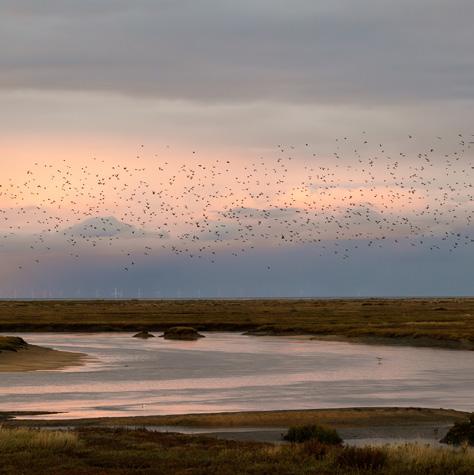
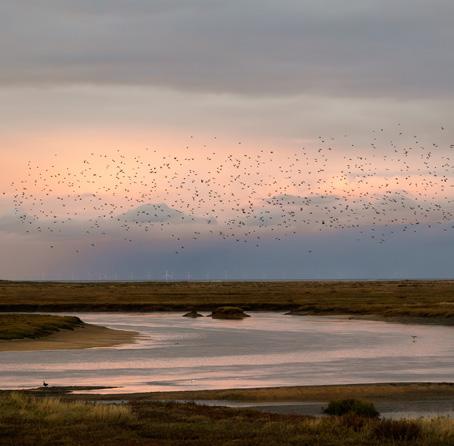
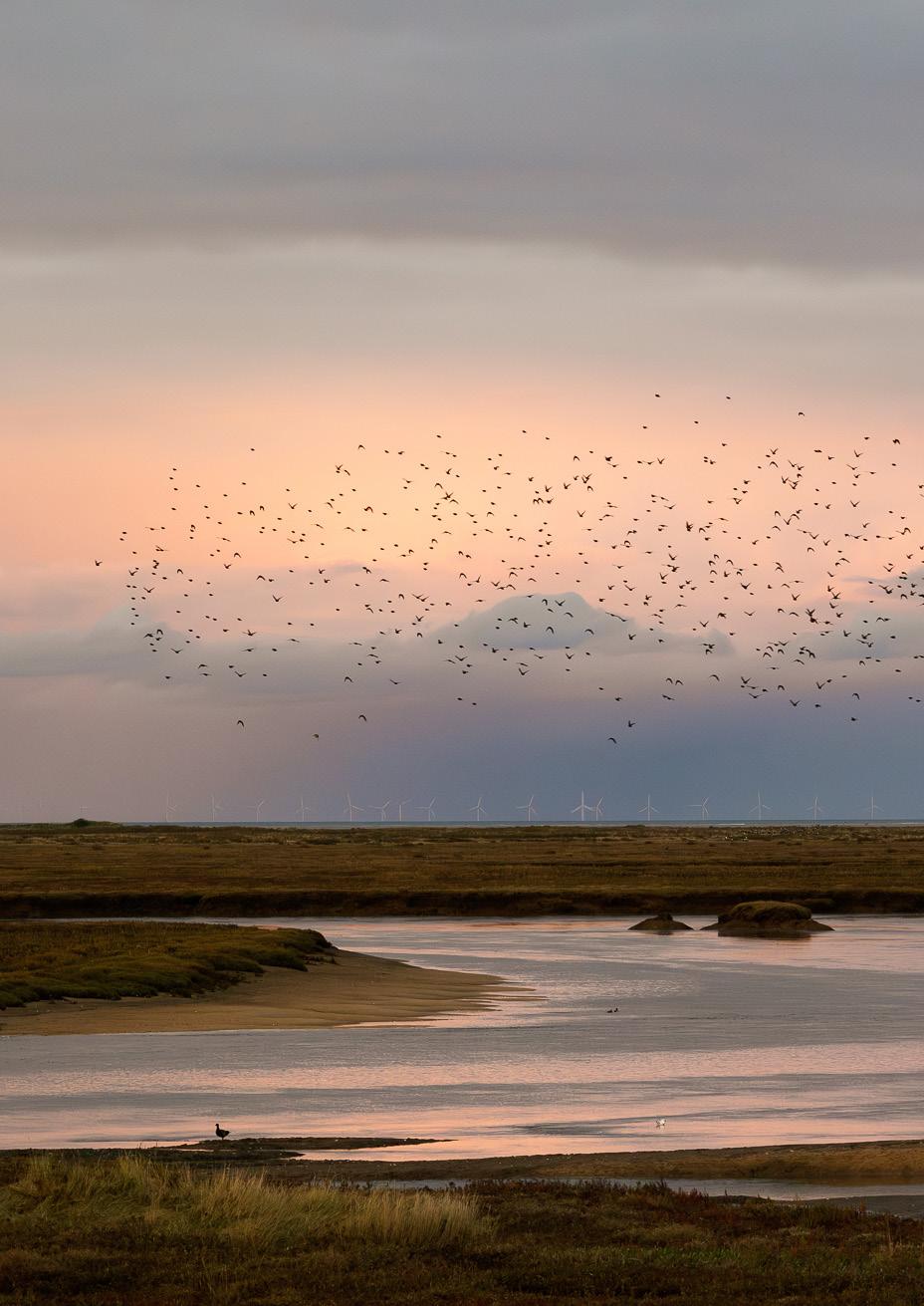
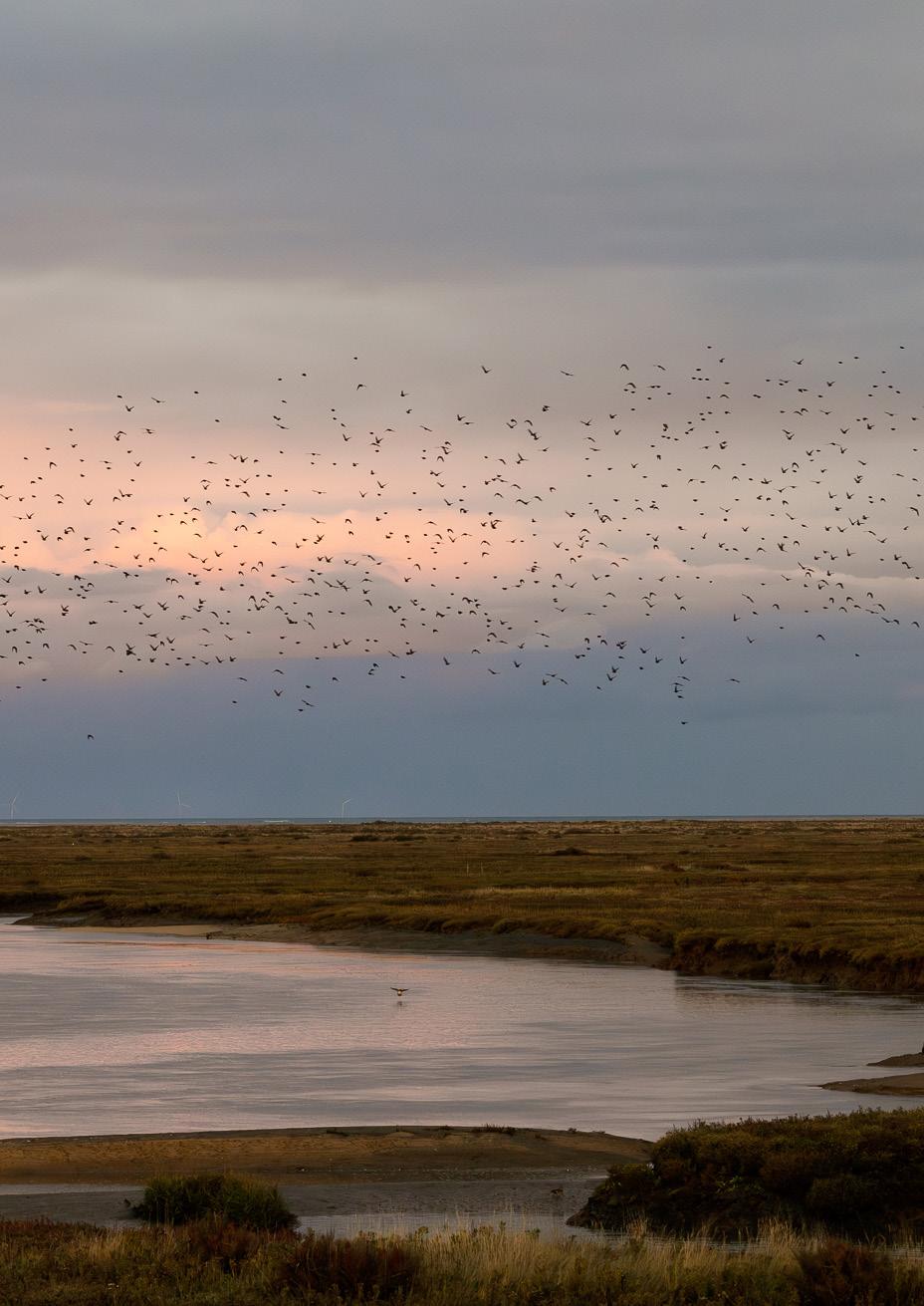
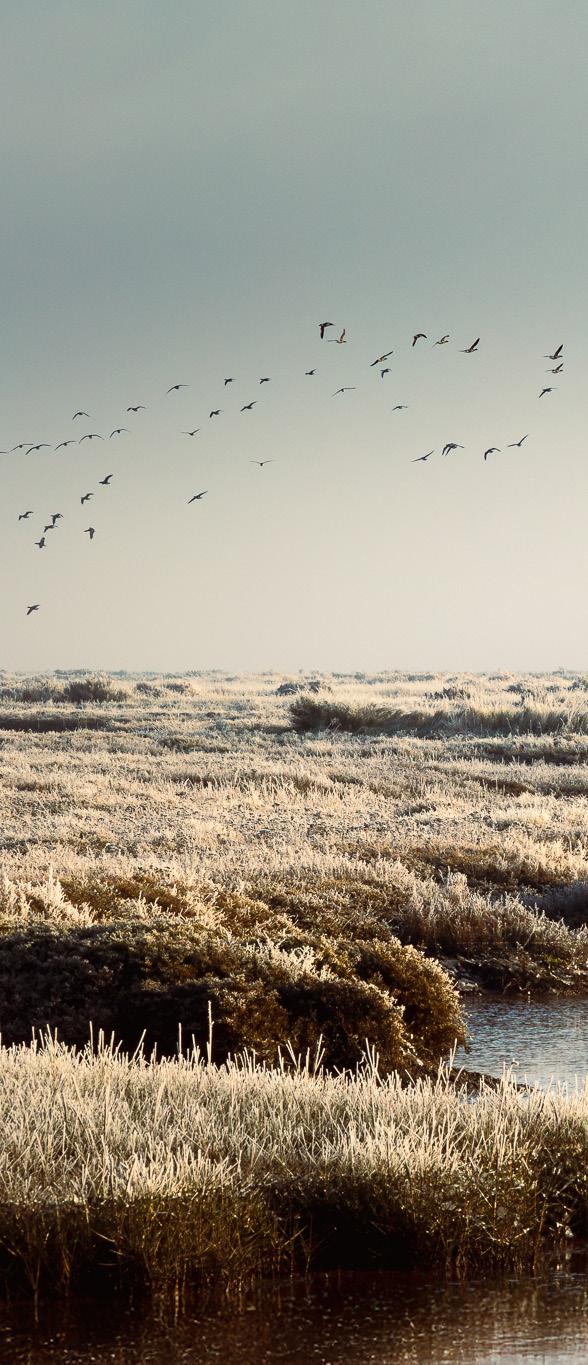
Flying to safe roost
A lone brent goose, Branta bernicla, stands by the shoreline, another flies low over the water, while a flock of smaller birds fly to roost in safety out on the marsh. In the far distance an offshore wind farm, a small but hopeful example of human endeavour to repair the massive damage we are perpetrating on the natural world, and in consequence, to ourselves.
LEFT
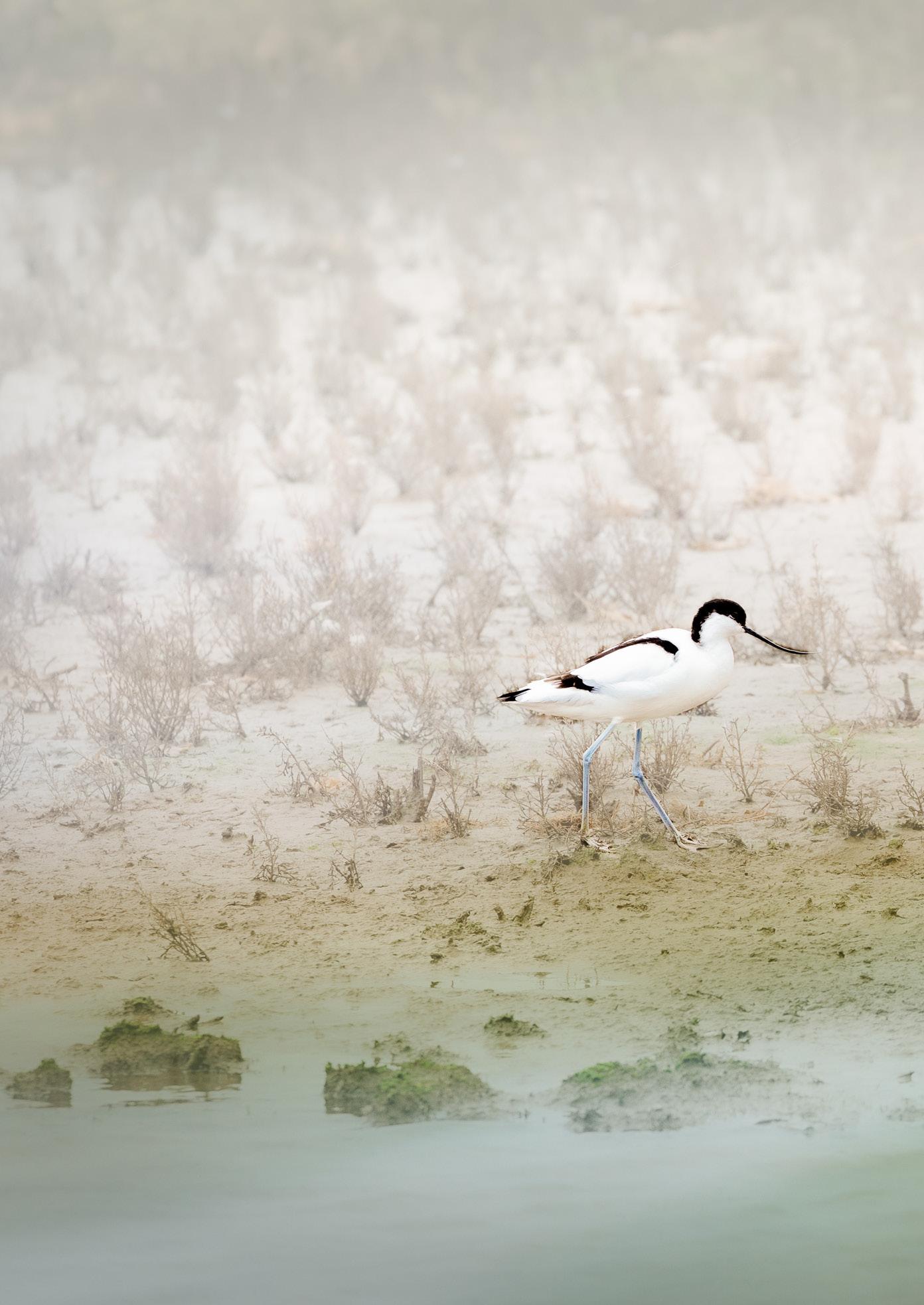
Avocet, Recurvirostra avosetta
The avocet has a conservation status of amber in the UK. It is the iconic emblem of the RSPB, and symbolises bird protection.
I’ve just got back from a walk on the saltmarsh. It’s midwinter, and the low-tide, primeval oozing mud was lapped by the North Sea. The east wind clawed at my sinuses. It was bleak. But then there were clouds of lapwing swirling. Brent geese muttered like grumpy old men as they browsed the seablite. Redshank and curlew searched for food and then rose into the air, calling their haunting marsh song. My heart lifted.
Bitingly cold, grey-brown and featureless — this was certainly my view of the saltmarsh when we bought a home in North Norfolk several years ago. With a long career in garden photography, I was used to colour and form in my plant life, often choreographed with great skill by a gardener with a detailed understanding of their patch of the (semi-) natural world. The saltmarsh was something “other”. There was no one here to design, nurture, or control. And yet. Looking more closely, the tapestry-like layers of plants were arranged perfectly: grey-green purslane, the red flush of samphire, silvery brown seedheads. Herbaceous borders of the natural world.
continued overleaf
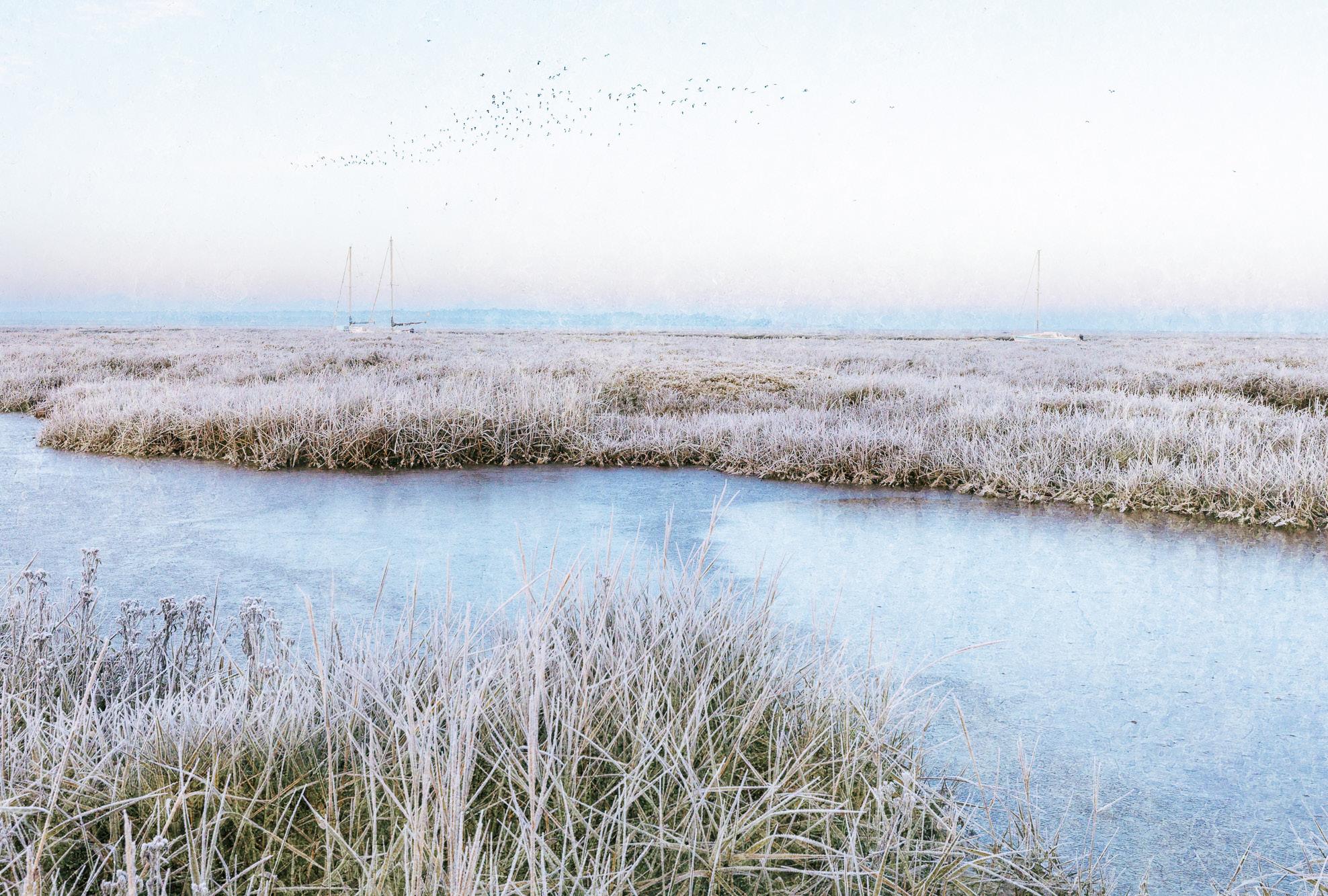
Winter on the saltmarsh (1)
Frost and ice on the saltmarsh with lapwings flying overhead.
I started my professional creative journey making a decent enough living photographing and writing about gardens and plants. I contributed to books, magazines, stock agencies. Then the world moved on. Print media went into terminal decline, and corporations grabbed more and more rights for less and less recompense. Microstock arrived. I could no longer sustain myself.
Thanks to a small grant from the Arts Council, I was able to take time out to regroup. I spent time expanding my post-production techniques — layers, comping, creating textures and brushes — and experimenting in different ways of responding to and making images. I reflected on
my focus on gardens and the increasing human disconnect from nature.
As I explored fine art imagery and created workshops encouraging people to connect with nature through photography, I was awakened to what was happening globally: pollution, massive biodiversity loss, the climate crisis. A realisation of how we extract from nature as if it were solely for human use. A recognition that nonhuman species have as much right as we do to live meaningfully on the planet, and that more-than-human ecosystems — like the saltmarsh — are critical to our shared continued existence. We are part of nature, not apart from it.
“I was awakened to what was happening globally: pollution, massive biodiversity loss, the climate crisis. A realisation of how we extract from nature as if it were solely for human use.”
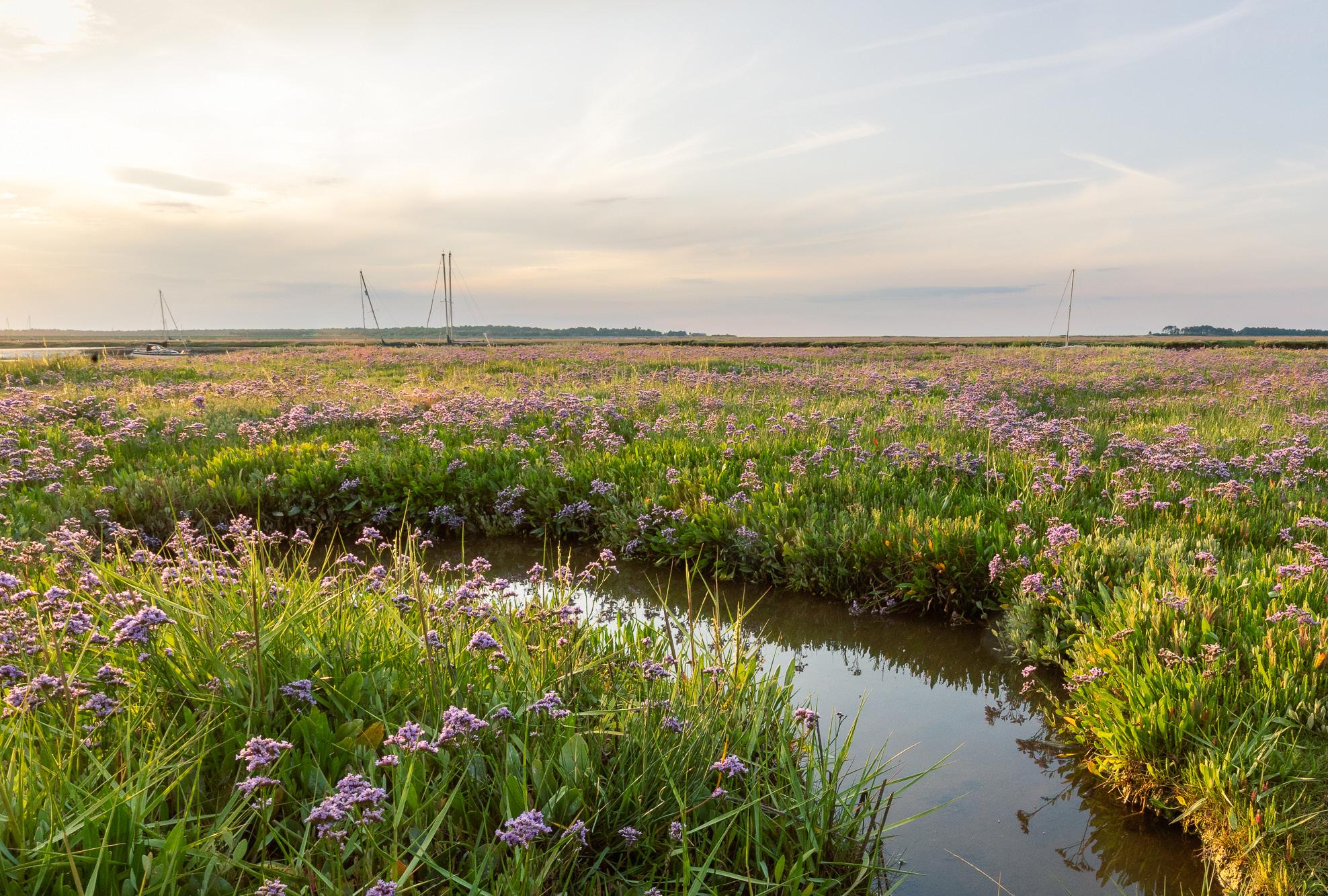
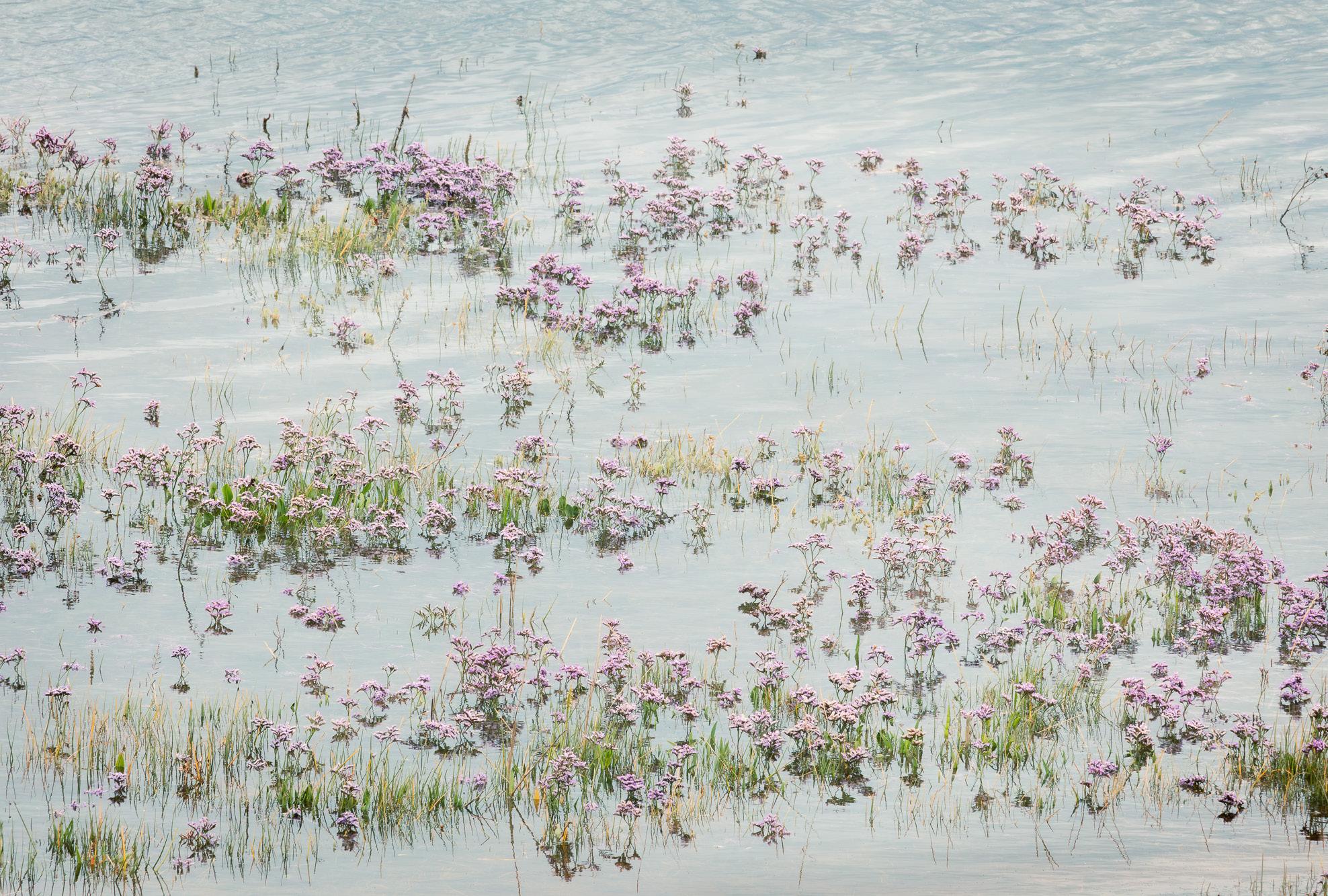
Sea lavender on a summer sunrise
During the pandemic I began to take frequent walks along the local coast path. In the beginning this was a way of caring for my mental health. As time passed I started to notice more, and to walk with my camera. With the turn of the seasons, I watched changes in plant colour and form, and in migrating birds: geese, egrets, arctic terns, and, more recently, the return of the spoonbill — a conservation success.
I learnt more about the intricacy of this ecosystem and what it does for us all. The saltmarsh is a natural sponge city soaking up water and tidal energy, protecting the coastline and human habitation from extreme storms. It is a carbon sink, storing carbon so efficiently that it is sometimes referred to as a blue forest. But it is in decline: since 1860, more than 85% of England’s saltmarshes have been lost, either to rising sea levels or changes in land use.
The saltmarsh is resilient: native plant species have evolved to survive submersion for short periods on exceptionally high tides. Short periods. UK Environment Agency flood predictions have this area of coastline (North Norfolk) regularly underwater at high tide by 2050 due to rising seas and more extreme storms. This potentially spells the end of this important ecosystem.
▪
My work plans evolved: I wanted to increase appreciation of both the hidden beauty of the saltmarsh and also its jeopardy. I started to consider touring an exhibition. As my process unfolded, it increasingly became a case of honouring the nonhuman, more-than-human, life here in the best way I could. This translated into diverse imagery made over time: painterly and textured landscapes capturing spirit of place, complemented by plantscapes which emphasised their independence from human control and demanded to be seen as living tapestries, complex and interwoven. More recently, I have felt a driving urge to document every aspect of this intricate ecosystem, in particular the diverse birdlife, with an intentional focus on locating each species within the context of place.
In autumn 2024 I broke my wrist. It was a severe break, and complications developed, which are likely to be lifelong. I was completely out of action photographically for six months and am, at time of writing, still only able to hold a camera, or manipulate a tripod, for around 90 minutes before
I am in pain. I suddenly had to face the very challenging fact that commissioned work was no longer viable. However, the saltmarsh is close enough to home — most of these images were made only a 10-20 minute walk away — to allow me to continue working in short bursts.
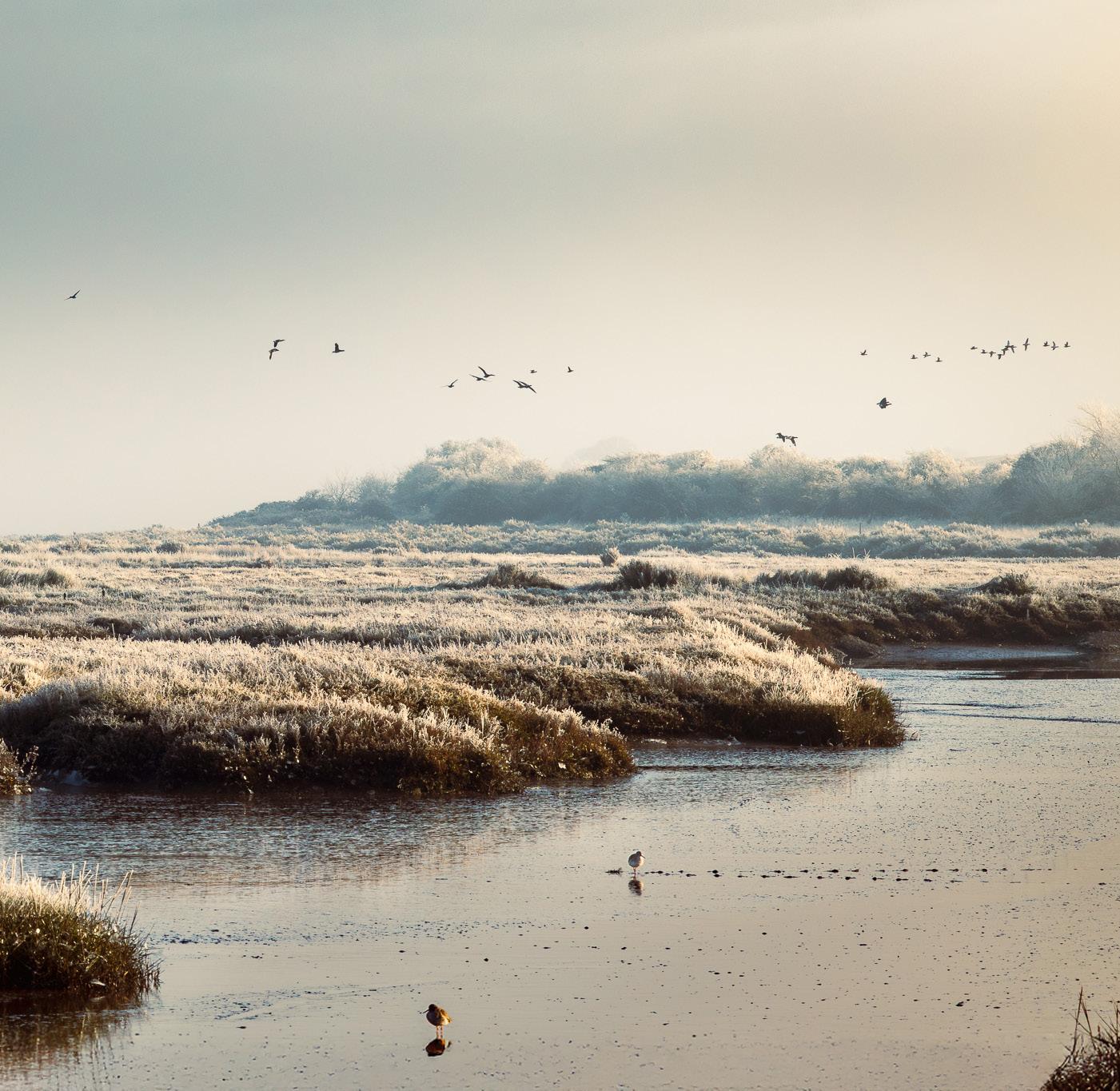
Winter on the saltmarsh (2)
A hard frost on the saltmarsh, with redshanks hunting for food in the creek mud. Brent geese fly overhead. A hard frost on a saltmarsh is currently a rare thing.
continued overleaf
Sea lavender, Limonium vulgare, partially underwater at flood tide.
The project has helped me to move through a sense of loss and regret to acceptance and a determination to make the best of where I am right now. It has been vital to my mental health. I cannot imagine a life without photography; it is part of who I want to be in the world, for as long as I am able. It has given me purpose.
I have been lucky enough to contribute to a local Greenpeace pop-up exhibition, and to have two spaces agreed for solo exhibitions in summer 2026. This positive, creative action gives me hope.
It is easy for me to slide into hopelessness at the state of our world right now. The situation is bleak. But there is still time. There are a lot of us. What we do, however imperfectly, matters. Knowing this, I can face the worst of it, and do what I can: making work, talking to people, educating, encouraging. My relationship to the project has developed from intellectual into emotional: a heart-led response to what is happening in the world, and a celebration of the beyond-money value of the natural world that we are part of and depend upon.
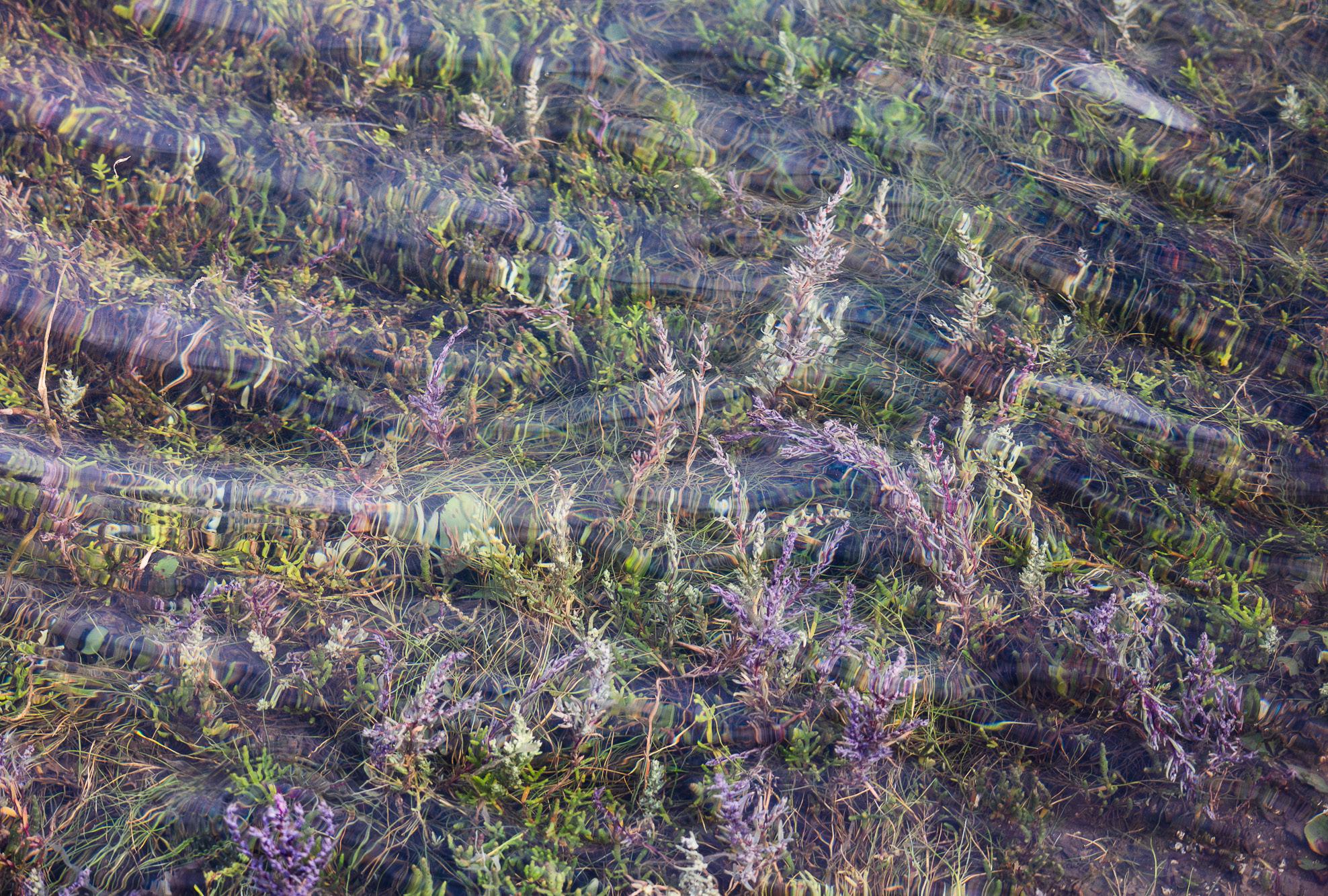
Plants underwater (2)
During a high “marsh tide” overflowing the saltmarsh, the reflection and distortion created by the layer of water add to the complexity of the image, rendering the plant life as a disturbed tapestry.
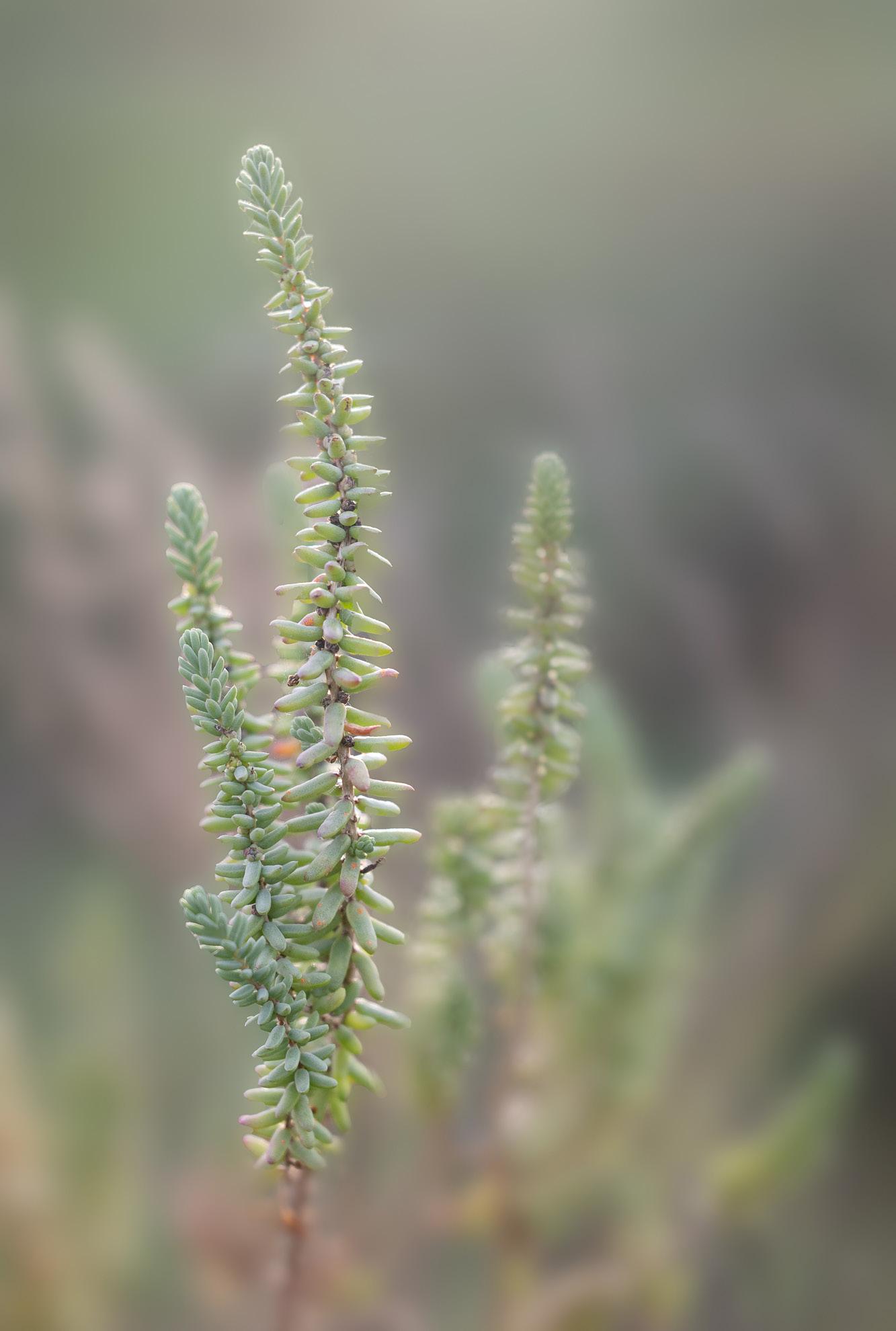
Shrubby seablite, Suaeda vera, in spring
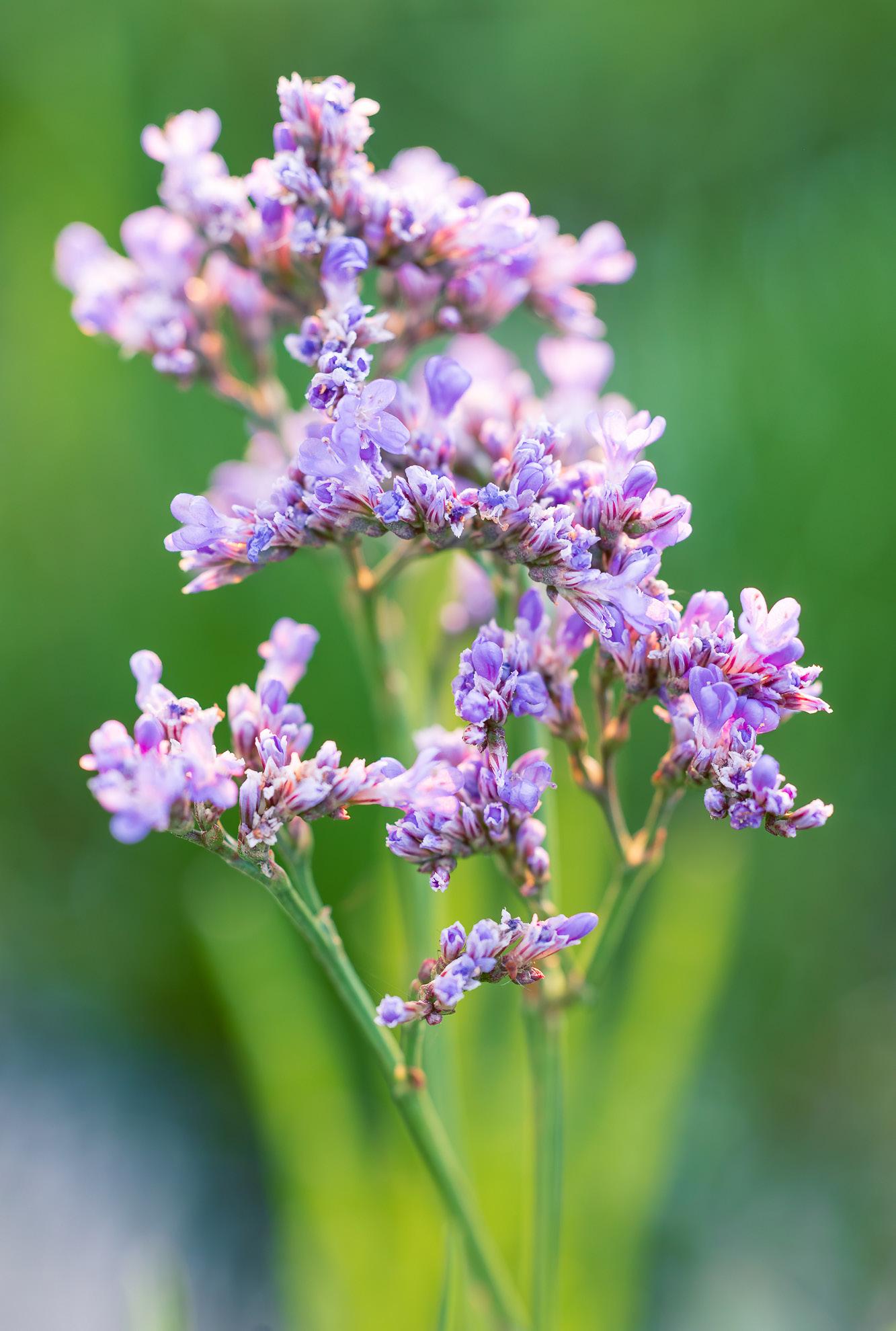
Sea lavender, Limonium vulgare
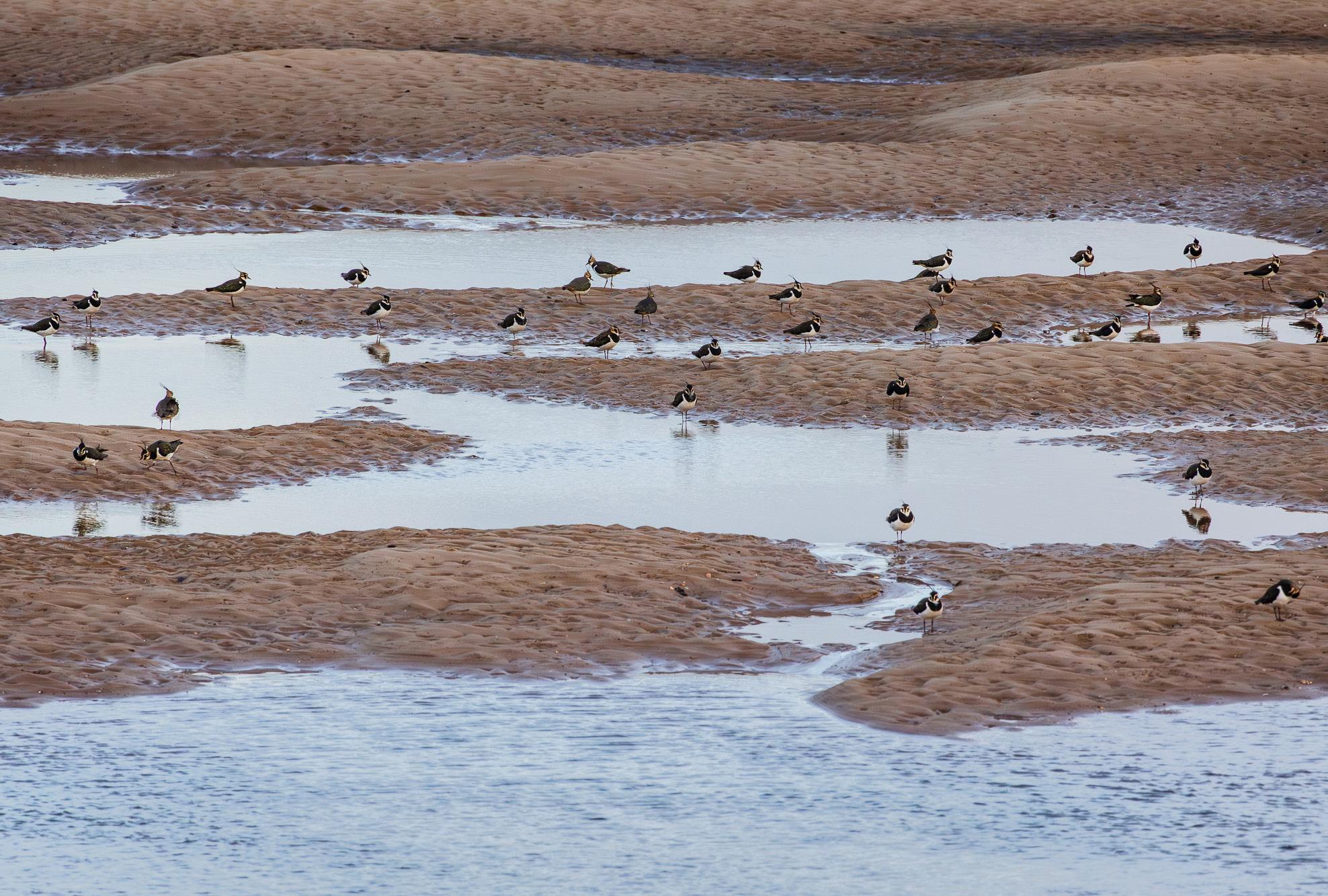
Lapwings, Vanellus vanellus, at dusk
The lapwing is currently on the UK Red List for birds.
When life gets overwhelming, I walk on the saltmarsh. I watch birds flying over, hunting, flocking, roosting. I watch the ever-changing sea roll in and out; the turn of the seasons, with delicate drifts of sea lavender in summer and a brief fiery blaze of
seablite in autumn. In those moments I can let go of anxiety for the future and be in the moment. I can find peace. My hope is that this project will connect others as I have been connected to this beautiful, resilient, fragile, more-than-human ecosystem.
About Annie Green-Armytage
Annie Green-Armytage is an award-winning garden photographer and feature writer of more than 25 years, published regularly in books and magazines worldwide. She is also an accredited counsellor and psychotherapist.
Recently she has shifted emphasis, creating work which makes links between mental health, the natural world, and climate change. She aims to inspire understanding and love for human interconnectedness with nature, and to encourage action to prevent its unnecessary destruction.
Her first solo exhibition, Norfolk Saltmarsh: A Fragile World , is showing at the Norfolk Wildlife Trust Education Centre, Cley-next-the-Sea from 26th June to 9th July 2026 and at The Maltings, Wells-nextthe-Sea, from 11th to 19th July 2026.
Three artists discuss the hidden costs and financial precarity of a career in photography.
by Francesca Hummler, in conversation with Joanne Coates and Delali Ayivi
The longer I work in contemporary photography, the more difficult it becomes to explain what I do or how I sustain myself financially. The misunderstanding tends to surface in unremarkable places. At the dentist, someone leaning over me with instruments in my mouth asks what kind of images I make and begins guessing through the predictable categories. Wildlife? Weddings? Architecture? The answer is none of the above, and yet explaining what I actually produce, and how that production translates into income, feels disproportionately complex. My work exists within a cultural ecosystem rather than a single marketable service, too niche to summarise in a sentence. From the outside, visibility suggests stability. Friends see exhibitions, travel, and publications, and assume momentum equals security. Within the art world, similar assumptions circulate, where visibility is read as proof that one has crossed an invisible threshold into sustainability, as though a certain number of features unlock financial certainty. Artists are either emerging or established, and what happens in between is a black box. Gratitude, while not a tax write-off, is a major part of my economy, and I routinely invest more in my practice than I recoup. Invitations that appear prestigious often
involve unpaid labour or modest honoraria, and I have discovered, sometimes only afterwards, that older or more established colleagues were compensated for roles I accepted without pay, grateful simply to have accommodation covered. As a freelancer based in the United States, my income is classified as “extremely low” by the state of California and assembled from a shifting constellation of teaching, writing, curating, editing, photography, and digital management. I move between roles as a matter of necessity, and while each task contributes to a visible professional presence, the compensation attached to that presence remains irregular. Healthcare is not guaranteed with employment. Administrative obligations, including taxes and insurance, generate a quiet anxiety. I spend a significant portion of my time applying for grants, residencies, and speaking engagements to sustain a practice. In one instance, a request for a fee waiver for a single-image online exhibition redirected me into an additional application process requiring paperwork and a reference letter, a reminder that financial need is met with more labour. The structure demands constant negotiation and, often, a performance of competence even when the numbers do not add up.
When I shared this with Joanne Coates, she responded from a position shaped by class and geography. “At the moment, it doesn’t feel sustainable. I earn a living wage. I work two jobs, and honestly, I can’t do it anymore. This is the most I’ve earned since graduating — that’s £11k with both jobs. So that’s about 80 hours a week.” I have always appreciated Jo’s transparency, entirely consistent with her no-nonsense clarity around economics that I first encountered when we met in Cardiff several years ago. Her calculation resists rhetoric and instead operates as a direct measurement of time against survival, transforming what might appear to be a simple figure into the lived accumulation of hours worked and energy expended.
What Jo emphasises extends beyond the visible cost of exhibitions, materials, and travel and moves towards the intangible. The most challenging part, she says, is not being “seen as difficult when I point
out I’m not being paid a living wage”. This echoes a conversation I had in 2023 with a manager who insisted that I was being paid the London living wage, in a job where I was making two quid under that an hour. In our conversation, confidence emerges as a structural condition rather than a personal trait, shaped by how much risk a person can afford to carry. It is easier to ask for fair pay when you have room to withstand refusal, and easier to negotiate when a missed opportunity does not threaten your housing. For women in particular, the act of requesting basic compensation is frequently reframed as temperament, where firmness becomes “difficult” and clarity is misread as aggression, reinforcing a professional culture in which silence is often safer than advocacy.
Joanne Coates is a visual artist exploring class, rural labour, and structural inequality through photography, installation, and collaborative practice. Rooted in her lived experience within farming communities in the North of England, her work examines how land, power, and access shape rural life, and how histories of labour remain embedded in the landscape.
Her research-led projects, including Daughters of the Soil, focus on gender, labour, and visibility in working-class rural communities. Coates’ work has been widely exhibited across the UK and internationally at institutions such as Baltic Centre for Contemporary Art, MIMA, Belfast Exposed, Jerwood Arts, and Somerset House, as well as major photography festivals.
Her work is held in public collections, including the Government Art Collection and Arts Council Collection. Educated at the London College of Communication, Coates maintains a long-term, collaborative approach grounded in place, contributing to critical conversations around class and representation in contemporary British art. joannecoates.co.uk ▪ instagram.com/joannecoates_
Jo highlights how working-class labour in the arts is frequently glorified, suggesting that anyone can succeed if they work hard enough and believe in their talent. Within that narrative, structural barriers recede into the background, and individual responsibility takes their place. The expectation to be grateful for cultural participation compounds the issue. If you question pay, you risk being framed as uncommitted or ungrateful. Exhaustion becomes a character flaw rather than evidence of imbalance.
As the child of upper-middle-class parents, I recognise elements of this dynamic from a different vantage point. There have been moments when institutions assumed I would manage
because I could move back in with my parents or rely on personal savings if necessary, and that perceived safety net becomes folded into expectations around pay. I am aware that my ability to remain in the art world is sustained, at times, by the knowledge that I could return home if work collapses, even though my parents have never paid my rent. The privilege attached to this form of class-conditioned employability shapes how urgently certain issues, such as months of outstanding invoices, are addressed; when delay is assumed to be absorbable, it becomes permissible. The possibility of fallback then functions as an unspoken justification for undercompensation. Personal biography is used to rationalise structural
overleaf imbalance, and the responsibility to absorb instability rests with the individual.
Jo makes a distinction that clarifies much of this tension. She speaks about the difference between pressure and precarity, explaining that while “many artists experience pressure to produce and remain visible, real financial precarity introduces a fear that continuing in the field may not be possible at all.” She has observed peers from more financially secure backgrounds struggle with overwork and burnout, and she does not dismiss their fatigue. The divergence appears in what follows the collapse. Some can step back and recalibrate, supported by savings or family resources. Others calculate whether staying in the arts is viable.
Delali Ayivi enters our conversation from within fashion and editorial photography, working between London and Lomé and helming multiple cultural economies. Her career includes international publications and the long-term project Togo Yeye. She describes the financial landscape as an ongoing negotiation rather than a linear ascent.
“Being a creative or being a photographer has you in an interesting dance with money, where often career-changing opportunities come packaged as free labour or even with the expectation to make a financial contribution out of your own pocket.” The choreography she outlines is shaped by uneven access to capital and time, where each step
requires evaluating whether exposure will translate into sustainability or simply extend precarity.
She continues, “Our profession is not as straightforward as conducting a good and professional job and being paid accordingly, but it demands a lot of strategic investments of your time and resources.” Strategy implies foresight, yet foresight depends on having the capacity to invest without immediate return. When that capacity varies, the ability to accept opportunity varies as well. A commission that requires travel, unpaid preparation, or personal financial contribution may open doors in the long term, yet it also carries risk.
Delali Ayivi is a Togolese and German photographer. Delali started by photographing her friends and family in Germany, Togo and Malawi. Finding the work of her greatgreat-grandfather, Alex A Acolatse, one of the first Togolese photographers, inspired Delali to document her surroundings with a focus on fashion. Delali is now based between London and Lomé.
In 2019, Delali co-created a project called Togo Yeye. The project aims to create work to document and empower her creative community at home and in the diaspora, through creative vision and direction.
Delali creates images that are a celebration of colour and movement and an ode to her heritage for the likes of Vogue US, British Vogue, Dazed, Nataal, Coach, Puig, PhotoVogue, Vogue Germany, Vogue India, Vogue.com, T-Magazine, Aritzia, Levi’s, and Atmos.
She has been named part of the New Gen 50 by the British Fashion Council, and included as part of the Dazed 100 list, and Forbes’ 30 under 30. Togo Yeye was awarded the PhMuseum New Generation Prize, and her work was exhibited at the National Portrait Gallery as part of the Taylor Wessing Photographic Portrait Prize in 2021. That same year, Delali was one of the recipients of the Foam Talent Prize.
Delali notes that photography has undergone a transformation in which quantity often outweighs duration, and the lifespan of images has shortened. “It is not only about… talent, people want to buy into your story, your motivation, and your value systems.” The demand for narrative intensifies the labour attached to visibility. The photographer must articulate identity, heritage, and perspective in ways that resonate with audiences and clients. For Delali, working between Europe and West Africa, storytelling carries cultural and historical weight. The personal becomes inseparable from the professional. In my work, I witness how much labour
underpins cultural production beyond the image itself. Community management, editorial oversight, programming, correspondence, and mediation require sustained attention and emotional investment. These forms of labour maintain artistic ecosystems, yet they are often invisible within funding structures that prioritise output. As women working across different contexts, all three of us are acutely aware that care work, mentoring, and communication are frequently expected and rarely remunerated at their full value. The expectation to be available, articulate, and responsive becomes part of professional survival.
Across our conversation, what emerges is an insistence on describing how photographic careers are actually sustained, rather than how they appear from the outside. Cultural programming operates within constrained budgets, and funding bodies face limitations. The cumulative effect is that individual artists absorb instability through unpaid labour, personal investment, and strategic compromise. Recently, someone suggested that I should allow projects to “fail” when they cannot be supported adequately. I have begun to decline invitations that require unfunded travel or the like, a decision that is at odds with my child-of-immigrants work ethic and sense of obligation. Jo continues to measure hours against income, recalibrating
what sustainability might mean. Delali navigates commissions with an awareness of both visibility and long-term balance.
The appearance of success often conceals extensive negotiation. Our work circulates publicly, yet the financial architecture beneath it remains uneven and, at times, opaque. Bringing these negotiations into view does not resolve the imbalance; rather, it clarifies the conditions under which contemporary photographic practice is maintained and sharpens our understanding of what cultural visibility currently requires from those who participate in it. Visibility cannot sustain a practice, and the economic conditions that make enjoying photography possible must be addressed with the same attention we give the work itself.
Francesca Hummler (b. 1997) is a German-American visual artist, curator, and researcher working with photography, based in San Diego. She holds a BA in Media Arts and BS in Biochemistry from UC San Diego and an MA in Photography from the Royal College of Art, where she graduated with distinction. Her work explores identity, familial intimacy, and generational trauma, drawing from her experience as the daughter of German immigrants. Influenced by photo-therapy, she uses self-portraiture and collaborative practices to examine healing and the archive.
Hummler has exhibited internationally, including at Paris Photo, Photo Elysée, and the Singapore International Photography Festival. She is a recipient of the Carte Blanche Étudiants and Vonovia Young Talent awards, and her work is held in the Odunpazarı Modern Museum in Turkey. Since 2022, she has worked with Der Greif as a community manager and programme curator and is developing a travelling exhibition on German-American relations for the German Embassy in Washington, DC. In Fall 2026, she will be joining the University of South Dakota as the Visiting Assistant Professor of Art in Photography.
Over the course of a year, a mother and her teenage daughter explore the many subtle shifts and quiet negotiations that shape their bond.
by Clair Robins
With a simple but decisive gesture in April 2024, I embarked on a year-long photographic collaboration with my teenage daughter. I hung a length of rich, red fabric in the front dining room of our home. It would function as a backdrop, but also a signal. It became a permanent reminder that a commitment had been made. For the next 12 months, images would be created here.
Neither of us fully understood what we were agreeing to, only that we were stepping into something that would unfold slowly and demand attention. What began as a shared act of looking evolved into an intimate and, at times, uneasy exploration of love, distance, consent, and the shifting bonds between child, adolescent, and woman. The resulting project, 52 Weeks Stolen & Preserved, is rooted in proximity, but equally shaped by resistance.
At the outset, the project resembled documentation. A record of a year. But as weeks passed, it became clear that something more complex was taking place. The photographs were not simply being made; they were being negotiated. They were “quiet negotiations” of what I (we) could explore, within appropriate boundaries, and how I, as the image maker, could explore them more deeply. Each image carried questions of presence and absence, willingness and refusal. Sometimes the camera was welcomed, other times endured. To my frustration, my daughter could make me wait and that sometimes affected the mood. Through this ongoing exchange, the work shifted into a collaborative space defined by courage, friction, and sensitivity, which I did find tricky. Photographer vs mother: Did I notice her, or did I just want to record the shot?
My practice has always been concerned with capturing the visible while probing the non-visible. These photographs exist both in the immediacy of the moment and as constructed, intuitive responses. They hold the “here and now” while allowing ideas, emotions, and narratives to unfold gradually. I work instinctively, guided by curiosity and by the fluctuating dynamics between us. This project intensified that instinctive approach, as I was constantly responding not only to light and form, but to mood, fatigue, resistance, and just bad timing! Technically, the project was challenging from the beginning. We were entirely at the mercy of unpredictable seasonal light. Depending on the hour, the red fabric shifted dramatically, sometimes flattening into a matte maroon surface, other times erupting into rich, saturated reds with deep, theatrical
shadows. I knew I would have to embrace this instability rather than resist it. Some images failed. Others surprised me. Not all of them were “right” in a conventional sense, which often led to my daughter’s annoyance and my frustration. Our visual maturity and expectations were frequently misaligned. Conflict did surface. Our thresholds for being patient were different. I was ready to shoot; she was often not ready at all — sometimes not even awake. Teenagers, I learned, operate on an entirely different internal clock. I had hoped to work exclusively with natural light, but in hindsight, the use of electronic flash might have offered more flexibility and reduced pressure. Still, the limitations became part of the language of the work. Constancy was not always possible, and once I accepted that, the project gained freedom.
Gap
Some images began with a loose narrative, while others emerged from conversation, or even silence. Certain ideas unravelled and re-emerged weeks later, shaped by changes in our relationship. Looking back, the first image that truly set the tone was Reflections In this photograph, she was comfortable being hidden from the lens. That concealment felt safe, even empowering. As the project progressed, this comfort shifted. Gradually, images became more revealing, though never without hesitation. Not long after, we made Future, an image that feels natural and composed, yet guarded. It holds both openness and self-protection in equal measure.
I quickly realised that the project could not rely solely on portraiture. While some images are formal and staged, others needed to remain ambiguous. I began moving fluidly between portrait, still life, and more experimental, tactile constructions. This
constant flux in approach created space for my daughter to engage on different terms. It also allowed me, as the artist, to introduce ideas in ways that felt less confrontational and more open-ended. We discussed compositions together, though not all suggestions were accepted. Some concepts were dismissed because they did not align with my creative vision, while others emerged unexpectedly. Revision , for example, came from a still life assembled from scraps of paper taken directly from her desk. I suppose in the shot I am echoing what I kept saying, mocking myself, not necessarily her. Sweet Treats was included in the archive despite not being a personal favourite of mine; it references a key moment around her birthday, with family gathered, celebrating with cake. Her perspective mattered the more we shot images, even when it conflicted with my own preference.
Sweet Treats
Reflections
“The camera became a tool of connection and reflection, capturing subtle shifts in our relationship.”
The more I shot, the more I noticed that willingness and resistance coexisted within the viewfinder. Tension, closeness, and distance are sometimes subtle, sometimes unmistakable. These rhythms mirror the realities of motherhood and adolescence. Our relationship changes every day. While the project sits close to the idea of a family album, it deliberately moves beyond it. I wanted the images to be less concerned with how moments looked, and more with how they felt. In this sense, the work reimagines the family archive as both record and negotiation. From a self-critical viewpoint, some are maybe a touch cliched.
Boundaries
The big question that has not yet been completely resolved with some of the photographs is around what is fair to reveal publicly. I am not exploiting my daughter — we did discuss the perils of work being seen by others. There are images she does not like, and in a few instances, I know I could have been a bit more gentle in my approach and observations. After all, I do want this work shared, in a publication, on a gallery wall or travelling around the world. She is aware of how my other work has been shown before, so is not completely in the dark about the potential destination.
Some of my favourite photographs are not hers. But I have included them anyway, aware that these moments cannot be retrieved or remade. With time, I hope she may grow to see them differently. Still, I respect the boundaries she has set, and have held back some photographs, even when I feel they belong in the archive.
The camera became a tool of connection and reflection, capturing subtle shifts in our relationship. We explored intimacy, distance, femininity, and the quiet negotiations that shape the bond between mother and daughter. Often, her input was subtle: a word, a comment, a fleeting idea that seemed insignificant at the time but later became central to an image. The photograph Contained Butterfly is one such example.
Contained Butterfly
The Ones I Wanted
The timing of the project coincided with an especially vulnerable period in my daughter’s life. Not only did she undergo surgery to remove teeth in preparation for braces, but she was in Year 12/13, at the height of GCSE pressure. The final year of school, mocks, revision, friendships hindered and competed constantly with the photography. What sustained her, and many others, was the promise of the prom. It sat on the horizon as a reward, a moment of release. Several images, such as The Prom Dress , had to be made outside my original timeframe. I had to relax my own rules to complete the body of work. I had to slow down and be realistic about light, opportunity and planning. The vision and concept, props and backdrop were there and ready, but we didn’t always align in the moment.
Some photographs were created with very little input from my daughter; others were highly collaborative. The balance shifted week by week. Fleeting moments of hope, sadness, anger, strength, love, and tenderness are explored, discussed, and captured. Vulnerability is placed on display as both risk and celebration. The work offers a quiet, delicate witness to humanity. While deeply personal, it invites broader emotional connection from a feminine perspective, acting as both a step forward and a nod to the past.
As a visual artist, I found myself fuelled by the discipline of a long-term project. It allowed me to blend portraiture, still life, and experimentation while witnessing the beauty and fragility in both of us. This was a project of compromise and emotional discovery. Although framed as a collaboration,
The Prom Dress
it was often driven by me creatively. I could not help but continue formulating ideas once the agreement was made. She was an active partner in some images more than others. When my visual language faltered, I trusted that immersion in the process would lead me forward, even if that meant responding to a single comment or glance.
▪
I did financially reward my daughter for her time, framing it as a pocket-money bonus, along with a much-desired pair of fancy netball shoes. I don’t think she fully realised how much time the project would demand (neither did I) or how these images might one day serve as emotional triggers, pulling memories back into focus.
continued overleaf
So Proud Where Are You?
‘The
light’s about to go’
Perhaps the most challenging aspect was learning patience. Our thresholds for how long an image should take to “make” or “capture” were vastly different. I remain frustrated that some photographs are not allowed to be seen, yet I respect that decision. I admire the shots that are more symbolic and metaphoric, but equally enjoyed the re-imagined works and direct portraits.
In truth, asking for 52 “great” photographs from a single study of this nature may have been unrealistic and somewhat overambitious. But within that ambition lies the heart of the project: an honest record of a year stolen, preserved, held between and now shared. Imperfect in places, engaging and emotional in others.
This body of work represents an area I return to repeatedly and deeply enjoy in my wider practice. Working with symbolism and metaphors and exploring the space between the real and the imagined is a compelling way for me to generate meaning. Narrative, still life, and portraiture offer powerful tools through which to share ideas and communicate experience.
I found myself saying, “Hurry up, the light’s about to go…” countless times during this project. Now my daughter is relieved that it has come to an end, although I suspect part of her misses the random conversations, the exchange of ideas, and her involvement, even if she would never admit it.
About Clair Robins
Robins is a photographic visual artist and FE educator based in Leicester, UK. An obsessive image maker, her practice fluidly overlaps traditional and digital processes, rooted in close observation of the everyday. Through portraiture and carefully constructed still-life photographs, she transforms the seemingly mundane into sites of curiosity, reflection, and meaning. Drawing on nostalgia, memory, and conceptually staged scenarios, Robins creates intimate visual narratives that blur the boundaries between document and fiction. Mundane objects and personal memorabilia are assembled into layered compositions that reflect on identity, habit, and domestic ritual. With warmth and subtle aphoristic humour, her work reveals the emotional, cultural, and psychological charge embedded in ordinary life. clairrobins.com ▪ instagram.com/clairscollections
Written to survive
When this photographer encountered the diaries of her great-grandmother-in-law Eliamma Matthen — written while her husband was imprisoned in pre-independence India — she began a photographic project exploring endurance, archives, and the women who carried the story across generations.
by Sarah Chandy
I am seated at a small desk in front of an open window at the Kerala Council for Historical Research, the afternoon light filtering shadows of palm and papaya. Next to me are stacked 10 unassuming notebooks of varying sizes, their pages brittle, yellowing, corners folding upwards. Within
them, handwriting runs in careful lines recording the ordinary passage of time in extraordinary conditions of uncertainty. The writing does not address a public audience. It does not explain itself. It holds waiting, repetition, attention.
These notebooks belong to Eliamma Matthen, a Syrian-Christian woman whose life was altered by political struggles in the princely state of Travancore, at the southern tip of the Indian peninsula, in the run-up to independence. She wrote daily — often at night or in the first light of morning — while her husband was imprisoned in an act of political persecution, keeping her diaries within the domestic space as a record of events, thoughts, and prayers. Sitting with this material, I am aware of the distance between preservation and care. I did not inherit these writings directly, yet it dawns that I may become responsible for how they are seen.
RIGHT
Letters weigh heavy until written. Eliamma’s great-granddaughter Premala Matthen working during the project. Writing becomes a labour of witness and the legacy of endurance.
A letter written in April 1939 from Eliamma to her jailed husband CP Matthen.
Taken for our offering.
Image from the Matthen family archive, taken in happier times, shows what occurred.
In 1938, Eliamma’s world collapsed when her husband, CP Matthen, was arrested alongside fellow directors of the Travancore National and Quilon Bank. The bank’s affairs were used as the pretext for a show trial during a period of local and colonial repression. Within the princely state – ruled by a Maharaja but operating under British imperial authority – lower-caste Hindus, Christians and Muslims were campaigning for greater representation in government, which was dominated by a small Brahmin elite and administered by the powerful Dewan, CP Ramaswami Aiyar. While across British India a
wider movement for independence gathered strength, the Dewan persuaded British authorities that unrest in Travancore posed a threat to imperial stability in the south, and that the bank was behind it. Matthen was imprisoned without bail, extradited to Travancore, and sentenced to hard labour. Appeals failed.
His absence narrowed Eliamma’s world. Social isolation and material precarity followed for her and her eight children, aged six to 21. Writing took place alongside household labour and prayer, forming a discipline through which days could be kept intact. The diaries accumulated because writing
“Writing functioned as a means of insisting on presence and dignity, rejecting disappearance when silence would have been easier.”
had become essential as a way of holding time, sustaining attention, and enduring privately what otherwise could not be addressed.
Eliamma also wrote letters and petitions to lawyers, church figures, officials, and friends seeking review and clemency when formal avenues were closed. Ultimately, these networks provided access to none other than the Viceroy of India. Writing functioned as a means of insisting on presence and dignity, rejecting disappearance when silence would have been easier.
Midway through the 10 volumes, the writing begins to shift. What had been addressed only to
the page starts to acknowledge a reader beyond it, the possibility that one day the story might be told. In 1942, when her husband is released, Eliamma decides to stop. “One chapter of our life is closed,” she notes. “A chapter the world ought to know more about. The rest, and what preceded, need not be recorded. It can die with us.”
continued overleaf
Pages written under constraint. Light crosses the diary at Kerala Council for Historical Research as it once crossed the cell.
Women as storykeepers
The story lived on, influencing, if not shaping, the decisions of Eliamma’s eight children and later generations. Her papers were scattered between them. Most survived the tropical climate until the youngest daughter, Sheila Matthen, moved them to her home. Before she died she gave them to her nieces, Eliamma Thomas and Mariam Ram, who later deposited them with the Kerala Council of Historical Research in the hope they would be meaningful for future scholarship. There, they have remained largely unopened. Seven years ago, Thankan Eappen — the daughter of Eliamma’s seventh child, Susanna — began a monograph stitching together Travancore’s history, the diaries,
and family photographs carefully digitised by her husband Don Hansen, a genealogist. The photographic work I began was not with a story recovered, but with one already curated.
A new generation grew up listening to the story that crowded out all others, hearing creative retellings and passing them on to their own children. Marianne Hirsch introduced the term “postmemory” to describe the relationship of later generations to traumatic events not directly experienced but nonetheless shaping them. As witnesses to, and inheritors of, the slow violence of British colonial rule, the Matthen family lived a parallel condition: each generation attempting to make sense of
Time divided by a veil.
Those who carry the past, and those who made its preservation possible. Premala and Poulose Matthen, Thankan Eappen and Don Hansen.
Women’s memory carries what the archive cannot. Composite image bringing together a family photograph and the site of imprisonment.
what had been endured, carried forward through repetition rather than record.
Daughters and daughters-in-law held what remained: the domestic, the devotional, the fragmentary. Objects were kept in brown paper envelopes and plastic sleeves, in albums with handwritten annotations, in desk drawers and places set aside. A cross-and-chain made from coconut husk lived with one; a devotional prayer book for children with another; a kavani drape, postcards, and letters elsewhere. They form a counter-archive — scattered, domestic, and sustained by care rather than official authority, in which women kept a woman’s story.
continued overleaf
LEFT TO RIGHT
What is held is felt.
A replica photograph deliberately torn, where fragmentation marks the limits of representation and pain carried through time.
I live but not alive.
Eliamma’s fortitude as she became head of her household, carrying her husband in her mind always.
A shared story
I am a daughter-in-law of this house — the wife of the son of the sixth daughter’s daughter, Mariam. This is my daughter’s ancestral inheritance. I lived in India for 10 years, working as a journalist, marrying into the family, and spending the vulnerable years of new motherhood within the locus of this story. A decade ago, I returned to the place I grew up — London — and shortly after, my husband and I divorced. Culturally, socially, and linguistically, I am a generational inheritor of the oppressor: white, British, and shaped by its systems of thought.
This position fundamentally shaped the work. It could not be only my work. It had to be collaborative, and it had to respect family boundaries. The process required listening rather than authorship, and an acceptance that the story carried different meanings — and sensitivities — for different descendants.
I travelled back repeatedly, listening to elders and relatives I had never met, moving between ancestral homes and sites of significance. Alongside this, I formed a working partnership with Thankan and Don. Together and apart, we undertook further research journeys, allowing the work to develop through conversation, proximity, and shared attention.
My journalistic training and London base allowed me to “study up,” as the anthropologist Laura Nader describes. I filed Freedom of Information requests and worked through British archives, locating correspondence relating to the bank, the trial, and Eliamma’s petitions — including a previously unknown letter in her hand. These materials were offered back to the family, not as proof, but as part of a shared process of understanding.
Only later did the possibility of embodied photographic work emerge. Rather than reenactment, this took the form of grounded transmission
— working with posture, proximity, and gesture. Family members agreed to participate, and gradually, faces entered the images. This shift echoed the one Eliamma herself makes in her writing: from endurance towards address, without abandoning restraint.
Methods of story
For photography, this meant a refusal to resolve the story and the willingness to allow that refusal to remain visible. Eliamma’s writing ends not with vindication or clarity, but with a conscious decision to stop. To impose narrative closure where she did not would be to undo the care with which her story was held.
Rather than settling on a single visual language, I worked with a range of photographic registers: documentary images of place; studio-based performance fragments; family and institutional archives; photographs of objects; and traces of cultural inheritance. These modes sit alongside one another without hierarchy. Together, they resist synthesis, allowing the work to remain open, partial, and layered. This approach reflects both the nature of the material and the labour that sustained it. Women’s lives are rarely linear; care is exercised across multiple registers at once — domestic, devotional, practical, emotional. Allowing visual dissonance was a way of acknowledging that complexity, rather than smoothing it into coherence.
The work asks the viewer to move slowly, to enter and leave the story at different points, and to assemble meaning without being led to a single conclusion. In this sense, storytelling becomes an invitation to attend, to dwell, and to accept uncertainty as part of what endures.
PREVIOUS PAGE
Our times are in thy hands. Biblical reading undertaken as shared labour in a time of injustice. The body shifts under what cannot be held.
Translation and expansion
Eliamma’s writing — and her primary source of resilience — was contained within books: her diaries and the Bible. My original intention was to hold the work within a book, allowing for backand-forth reading, slow time, material weight, and privacy. As part of my MA in Journalism and Documentary Photography at the London College of Communication, I produced a book dummy that replicated the first of the diaries, interleaving photographs with extracts from her writing.
To date, the work, Lilies in the Garden of Tomorrow, has found its fullest expression in an exhibition at the Kochi Muziris Biennale 2025 Shown for four months from December to April 2026, the exhibition allowed the work to expand and the process to deepen beyond the page.
The exhibition space shaped the work’s translation. The former home of a Jewish family became the setting, with the domestic interior functioning not as a marginal site of “women’s work,” but as a place of agency and change. The first room evokes the family dining space as a place of connection; the second reflects the imposition of the show trial on the family psyche and Eliamma’s retreat into prayer; the third marks the activation of her writing, inviting visitors to engage actively by sharing memories and messages within the gallery.
My practice moved into installation and audio, extending the visual language to allow for both testimony and experience. The aim was to highlight the scale and accumulation of Eliamma’s
Installation views, Lilies in the Garden of Tomorrow, Kochi
LEFT - A suspended tower composed of copies of every letter Eliamma Matthen wrote between 1938 and 42, positioned above her husband’s desk. The installation makes visible the accumulation of writing as labour, care, and resistance.
CENTRE - A grid of reconstructed envelopes written by Eliamma Matthen to her husband during his imprisonment. The installation highlights the scale, repetition, and persistence of writing as an act of endurance.
language
conversation: documentary images of place,
writing, and the care with which it was sustained. Headsets provide the intimacy of family voices reading from her private diaries, while Christian psalms and prayers — read by my co-researcher Thankan — sound within the reconstructed prayer room as an acknowledgement of her contribution.
The size of the exhibition space also allowed the work to move beyond the intimacy of the page. The tumult of 1938 — political, financial, and personal — is represented through a full-wall collage, while embodied photographic fragments from the studio are placed against a floor-to-ceiling field of newspaper coverage from the trial years of 1939 and 1940, bringing lived experience into tension with the formal archive.
continued overleaf
Muziris Biennale, 2025.
RIGHT - The range of visual
creates
embodied photo performance, diary extract, formal government and newspaper archive sit side by side. Credit: Faem.in.
Through life’s troubled waters steer them.
What endures
The exhibition drew members of the family from the farthest reaches. These are the lilies to which the title refers, the future that Eliamma could not see, but which she asked for in prayer. Conversations between long-separated branches have brought forth new material. The diaries, objects of faith and endurance, are now objects of intrigue to the newest generations living in Canada, Australia, the Gulf and the UK, seeking to understand their inherited histories.
As Eliamma turned towards an uncertain future in faith, so the work moves forward without resolution. I wonder what Eliamma would make
of it now. It was always her story to tell. She was not a showy person; she did not pursue freedom loudly or in grand gestures. She carried it within her — through pain, through patience, through time.
But she did want her story told. She loved books. I imagine a book now — one that could travel through the family, sit in homes, be argued over, returned to, and lived with. A book through which the values she sustained — of justice, endurance, love — continue to circulate.
Eliamma’s lilies, the children of her children, are returning to the story through attending the exhibition.
Sarah Chandy’s exhibition at the Kochi Biennale was curated by Bakul Patki and produced by Yolk Studios.
About Sarah Chandy
Sarah Chandy is a photographic artist whose work explores representations of women, identity, community and self. Her work is research-led and project-specific, with process playing a central role in amplifying the stories she tells.
Sarah’s first solo exhibition was at the Kochi Muziris Biennale 2025 in India. She has also exhibited in group shows at the Barcelona Biennale (Spain), Photofusion, London (UK), and Free Range (UK). Her work has received honourable mentions in four categories at the Julia Margaret Cameron Awards for female photographers.
Based in the UK but working between London and India, Sarah’s move into photography represents an expansion of storytelling developed over a 20-year career in journalism for organisations including The Hindu newspaper and Springer Nature.
She recently graduated with distinction from the MA Photojournalism and Documentary Photography programme at the London College of Communication (UAL) and trained in professional photography at the London Institute of Photography (LIoP).
Sarah holds an MA in Investigative Journalism from City, University of London, an MSc in Political Theory from the London School of Economics, and a BA (Hons) in History from the University of Cambridge. sarahchandy.com ▪ instagram.com/sarah.chandy_photography
How a mother and her teenage son navigated his eating disorder through a shared photographic project, building trust through presence.
by Heather Mattera
A small green frog appears in our exhibition in Santa Fe.
In 2021, he sat quietly in the corner of my son’s bedroom — not posed, not staged, simply present. Kermit the Frog.
He is not the loudest character in the room. He is not the strongest. He is not the most certain. He is thoughtful. Often unsure. And yet, he keeps showing up.
Kermit sings The Rainbow Connection — a song about longing, about believing something
better might exist, even when you cannot yet see it. When my son Ben and I began making this work, I did not think much about that frog. Looking back, I understand he was not incidental.
He was a companion to a teenage boy trying to reconcile the image in the mirror with the person inside — navigating a culture that equates masculinity with certainty, strength with silence, discipline with worth.
At the time, Ben was affectionately known as “Cowboy Joe”. The nickname was earned. He was an elusive, cowboy-hat-wearing teenager living on the outskirts of Minneapolis. To me, he was my Peanut.
Five years ago, Cowboy Joe struggled with an eating disorder — one that threatened his life. What followed was a journey we took together, one that eventually brought us to steadier ground.
This project did not begin as an exhibition or even a photographic series. It began as homework.
The brief was deceptively simple: create a community mentorship and conclude with a written report and classroom presentation. It was the final requirement standing between Ben and high school graduation.
For a 2022 graduate who had spent half of high school at home on Zoom, with texting as his primary form of communication, this felt insurmountable. It required both voice and vulnerability.
I watched his anxiety grow. As his anxiety rose, so did mine.
So I proposed an alternative: what if his mentorship was photographic? What if I was that mentor?
To this day, I still wonder how much of that idea was for him — and how much of it was for me.
With time running out and the fear of reaching out to a stranger compounding everything else, Ben agreed. We reviewed photography books. We visited museums. We spoke to other photographers. How he ultimately chose to centre his project on body dysmorphia, neither of us fully recalls. What I remember is my shock — and my unmistakable fear.
Fear, and what it teaches
To the outside world, Ben appeared sculpted and healthy. But that same world was feeding him a relentless narrative: discipline, appearance, protein powder. Even his pediatrician assured us he was fine. Despite repeated visits, my concerns were dismissed.
Only after I insisted on bloodwork did the truth emerge. At 18, his kidney and liver function resembled that of a man in his 80s. He was consuming protein supplements in quantities that were damaging his organs. What looked like discipline from the outside was, in reality, distress within.
Fear was my constant companion.
Fear of getting it wrong.
Fear of seeing something a mother could not fix.
Fear of crossing a line I could not uncross.
But sitting with that fear made me more attentive. More deliberate. It required that I slow
down — to create a space where safety, not speed, shaped the work.
In that slowing, I began to understand something essential: the photograph is not the most important thing in the room.
The relationship is.
ABOVE LEFT TO RIGHT Untitled, Shrinking
The frame follows the experience
Technically, the project was simple. An iPhone. A makeshift studio: a wall, thumbtacks, a table, two black sheets.
The harder part was presence.
My role was not to author Ben’s experience, but to act as a conduit for exploration. To do that, I had to resist directing the moment. I had to allow silence. I had to listen not only to what he shared, but to what he withheld.
The first image came by surprise.
We had scheduled time to create. I arrived without knowing what we would do. Ben entered carrying a long-forgotten canvas and, without explanation, began cutting deliberate holes into it.
Every instinct I had as a photographer was to intervene — to refine, to clarify, to shape. Instead, I reminded myself: this was his process.
When he stepped behind the canvas, only fragments of his body were visible through the openings. His hands. A shoulder. A torso. His face remained hidden.
The image felt symbolic. It suggested how he experienced himself — not as a whole, but in parts. Managed. Measured.
In that moment, I understood: the frame would follow his experience, not my aesthetic. The work would move at his pace.
By staying present — without directing, without projecting — I earned something rare. Trust.
Visibility over silence
Throughout the process, I inhabited multiple roles at once: mother, therapist, photographer. These roles did not always agree.
My task was to sit with Ben’s pain without carrying it as my own. To remain steady. To understand that self-care was not separate from caring for him.
We established clear boundaries. His agency was paramount. If timing, safety or care were compromised, we stopped.
This was not work made of him, but with him.
In an era dominated by social media — where images circulate instantly, flattened by algorithms and stripped of context — the responsibility of the photographer increases. When the subject is a teenage boy, when masculinity is made vulnerable, when illness resists familiar narratives, when the body is still forming — the risk sharpens.
But the question was never: will everyone approve?
Ben and I decided together that visibility — despite its risks — was preferable to silence.
The most consequential audience for this work was never the public. It was Ben’s classmates.
The day he was meant to present never came. He arrived ready to speak and be seen. Instead, presentations were cancelled. The work would be submitted on paper. The room would remain silent.
I was crushed. He was disappointed. And yet, something had already shifted.
Through this project, Ben found photography as a language when words fell short. His posture changed. The weight he carried lightened.
Still, I felt an ache at the thought of these images living unseen.
The work evolved.
Parallel archives
When I returned to my own photographic archive, their meaning began to surface. As I placed my images beside his, emotional artefacts emerged — experiences carried by both of us — requiring their own witnessing.
The resulting exhibition brought those parallel experiences into conversation.
What began as a school assignment became something else: a study in masculinity, in maternal fear, in the ethics of looking, and in what happens when the camera becomes a shared space rather than a dividing line.
In creating the exhibition, I found continued benefit in revisiting the work. Each time I re-sequenced the
images, the emotions shifted. It allowed me to gain greater clarity about the project — and about myself. The process continues to feel like a reckoning of sorts.
Closure came through conversation. We reviewed the work together. We named what was difficult. We acknowledged what had shifted. Ending the project was as intentional as beginning it.
Photographers are often expected to hold more than any one person should — to document, to witness, to translate suffering, and then to move on without visible consequence.
But none of us can carry the weight of it alone.
Not the weight of another person’s pain, or of this moment in history.
Not the accumulated trauma of a world that keeps asking us to look harder without offering a place to put what we see.
The answer is not to become stronger or more distant, but more relational.
When the work is truly collaborative, the weight shifts. It is shared, held between people rather than borne by one.
Within relationship — within agency, presence and care — we create the conditions for change on both sides of the camera.
And sometimes, in the corner of the room, a small green frog reminds us that uncertainty does not preclude courage — that showing up, even quietly, is its own kind of strength.
Heather Mattera is an award-winning photographer whose work explores the relationships between self, others, and the natural world. She has exhibited internationally — most recently with Weight of It All at CENTER gallery in Santa Fe, Nomad’s Breath at Geste in Paris, and A Love Letter to Nature at PhotoVogue in Milan.
Informed by her background as a clinical therapist specializing in trauma, Heather’s practice is rooted in connection, healing, and presence, with a focus on how emotional experience is carried and expressed through the body. Her work often centers on themes of visibility, vulnerability, and the unseen weight individuals hold, inviting a more compassionate and nuanced understanding of lived experience.
Drawing at times on the quiet language of the natural world, her images create space for reflection, stillness, and repair. Through her work, Heather continues her lifelong exploration of the intersection between art and healing, illustrating how presence can reconnect us — to ourselves, to one another, and to the world around us.
A series of portraits and archival images exploring the migration and legacy of the Sri Lankan Tamil diaspora through the lens of a photographer of Jaffna-Tamil descent.
by Abhi Chinniah
I am seven, sitting at a cluttered dining table in my maternal grandmother’s (ammamah) kitchen in front of a long white wall filled with photographs. Some are formal black-and-white studio portraits; others are candid shots taken outdoors in unfamiliar lands. I scan the details in each picture as she reheats food in the microwave — puttu and mīṉ (fish curry). Ammamah speaks to my mother in Tamil, a language I recognise but don’t understand. Ping! The microwave beeps and she pulls the containers out, piping hot, the plastic bending.
I am fresh from the country that I thought of as home. I consider myself Kiwi. My father became the first male in his family to migrate to the West, moving to Aotearoa in the early 1970s as a student. After a difficult journey, he returned home to Malaysia in 1998, shortly before I started primary school. Having spent most of my life living in New Zealand, I suddenly find myself in my grandmother’s house in Malaysia, staring at a wall filled with stoic faces that vaguely resemble mine. Who am I, really?
▪
Our story stretches back over a century to Jaffna on the island of Sri Lanka once known as Ceylon. The Ceylon Tamils are one of the
oldest communities with roots in the Northern and Eastern provinces tracing back to around 483 BCE. Under British colonial rule, Tamils were drafted from across the empire to work in places like Malaya and Singapore. My paternal grandfather and maternal great-grandfather were among those who left Jaffna in the early 1900s, taking on administrative roles in oil palm estates, railways and telecommunications industries in Malaya.
My father’s generation grappled with their sense of belonging in the country that their migrant families called home. Embedded in the cultural and economic fabric of Southeast Asia, they maintained ties to Sri Lanka while forging Malaysian or Singaporean identities. Still carrying their ancestral heritage, many remained strongly aware of the conflicts in their land and were upset.
My family’s relationship with Jaffna continued, and my maternal grandmother returned to live there from 1954 to 1956. On my paternal side, trips were peppered throughout the 1970s on. For the Tamils in Sri Lanka, the start of the 26-year civil war profoundly reshaped identity, intensifying political consciousness and triggering new waves of migration and asylum-seeking throughout the 1980s and 1990s, including to countries like New Zealand.
Kanagalingam, 75, is the youngest of eight siblings and a first-generation Malaysian of Sri Lankan Tamil descent. While his eldest sibling was born in British Malaya in 1929, Kanagalingam was born in the Federation of Malaya in 1950 — a distinction that signalled different life paths. To his upper left is a portrait of his late elder brother, who spent his childhood and working life in the British-run palm oil estate where their father worked from 1919 to 1947. Behind Kanagalingam is a photo of his parents. He is the artist's father.
“There is permanence in our connection, no matter where our journeys take us.”
In 2023, I began asking my family questions about our lives in the estates and our connection to Sri Lanka. I was often met with, “Why do you want to know?” or an indignant, “We are Malaysian!” There were model-minority answers, echoes of “things were difficult, we put our heads down and moved forward.” As a child, I remembered my father saying, “When someone asks you who you are, you tell them you’re a Jaffna Tamil.” Or an aunty, seeing me enjoying Sri Lankan food like idiyappam (string hoppers), sothi (coconut milk dish), or odiyal kool (a traditional Tamil seafood soup), saying “Nee oru nalla piḷḷai” (“You are a good child”). Through difficult experiences and a lack of language to process them, meaning was often conveyed indirectly.
As greater comfort emerged in retelling our stories, these exchanges shifted toward my own visual language, photography. For this body of work, Nirantharam (நிரந்தரம் — permanence), I photographed people in their homes, allowing intimate expressions of who they are as Tamils. Sri Lankan Tamils in New Zealand shared how they held on to their culture. For Hindu sitters, altars featured prominently in their living spaces. It was no different from walking into my family home in Malaysia. While there was a sense of a fresh chapter, literature about the conflict was visible in books about the war on shelves and in collections.
The shifts for the Sri Lankan Tamil diaspora who migrated out in the 1990s was palpable. When I spoke with a family I photographed in New Zealand, chatting with their first - generation Kiwi-Tamil children, the tone was lighter. I asked whether they
had been to Sri Lanka. “Yeah, Mum and Dad still have some extended family there,” one of them, Mayura, said with an ease that I found refreshing. As the girls settled onto the floor of a family friend’s home to play Carom, I learned that they attend Tamil language lessons on weekends. Their sense of identity felt less burdened somehow, shaped at a distance from the war.
▪
Throughout my photographic process, I reminded myself to step back from the experiences of my portrait-sitters. I felt entangled in their stories, a feeling deepened by the recent loss of my maternal grandmother and, more recently, my paternal aunt. I was looking at a pivotal generation of my family — now in their late 70s, 80s, and 90s. I questioned why I hadn’t started this project earlier, but I, too, needed to find the language for it.
I was aware of my privilege. My family watched the war from a distance, whereas those in our motherland lived it. There has been minimal recourse for the hundreds of thousands who lost their lives and were displaced. For many, the war and subsequent economic crisis are ongoing. But for some, there is space to acknowledge what they have overcome and pride in who they are. When I look at the project now, I think of us walking our own long, winding paths that converge in who we are and what we carry as Tamil people — united by the same island, ancestry, and resilience. There is permanence in our connection, no matter where our journeys take us.
Gaja
“My father writes fluent Tamil, and my mother is a Carnatic music teacher. Their strong connection to heritage helped me connect with my identity. I learned and performed Carnatic singing music and Bharatanatyam from a young age.”
Gaja sits in her parents’ home in Auckland with a Veena instrument, reflecting her deep generational connection to tradition. The flower bowl in front of her is a Hindu signifier of harmony. In 1999, during the civil war, she took her first flight to New Zealand, where she was granted refugee status. While her journey was not as challenging as that of some Tamils displaced during the war, it was still difficult leaving the country she had called home for 18 years. Her life now centres on her family and the local Tamil community.
continued overleaf
“My Ceylon Tamil identity is meaningful to me because of the sacrifices my ancestors made to keep our heritage alive.”
Uma in her home of 38 years in Kuala Lumpur. Her maternal and paternal grandparents migrated from Tellippalai in Jaffna to Malaya, carrying their traditions with them. Her parents were born and raised in Malaysia, and, for Uma, her roots continue to shape who she is today.
Uma
“I do miss my home country; everyone is there. We are alone here, but this is our home now.”
Pavithira and her mother Jeyagowri left their home in Batticaloa through the United Nations High Commissioner for Refugees (UNCHR) via Malaysia, where they spent four years. In 2014, the New Zealand government granted them refugee status. Arriving in Aotearoa eight months pregnant, Pavithira and her immediate family began their new life in a refugee settlement where they were taught English. They were put into social housing and went on to seek local education.
continued overleaf
Pavithira
(L-R) Mayura’s grandmother and her great-aunt
“Archival imagery gave insight into the lives of earlier Ceylon Tamil generations. Often, we see stories of the Sri Lankan Tamils through a lens of suffering. I studied photographs from before the civil war, removed from the imagery of turmoil” — Abhi Chinniah.
These two portraits from the early 1970s show the popularity of photographic studios in post-colonial Ceylon. There is a female agency in these photographs because the women chose to have them taken and chose their outfits. In migration journeys to the West, traditional clothing is often worn only for special occasions, or as displays of culture.
Mayura
continued overleaf
Mayura, aged 14, is a first-generation New Zealander of Sri Lankan Tamil descent, photographed at her friend’s home in Auckland.
Anna and sons
Anna sits with her two sons in their home in Auckland. Around them are signifiers of their Sri Lankan Tamil identity. She recalls her childhood in Jaffna, and later Colombo, before finally migrating to New Zealand in 1997. Leaving her family home was a forced event: it had been burned down by the Indian Army during the civil war, following an intense clash between militants.
Rathika
“We couldn’t wear a pottu (a symbolic dot on the forehead) as that was a sign that we were Tamil. We were told not to speak Tamil in public.”
Rathika recalls her time in Colombo in 2001 when Jaffna was inaccessible. Photographed in Kuala Lumpur, she made several trips to Sri Lanka between 2001 and 2018 to visit extended family. Each trip made her reflect on her identity.
“I grew up in a Ceylonese Tamil household. I visit our roots and feel a connection to it. For me, however, I identify primarily as being Malaysian Tamil.”
continued overleaf
The Malayan Generation
The pioneering generation of Sri Lankan Tamils in Malaysia continue their influence through their bloodlines. Their images are blessed and prayed to daily, around their frames sit religious Hindu garlands, and on their foreheads are placed blessed Chandanam, also known as sandalwood paste. This is seen as a sacred offering to those who have passed on. These ancestors, who came to Malaysia as migrants in the early 1900s, left an enduring legacy.
Chinniah Archive
FAR RIGHT - The artist’s paternal grandfather, Vythilingam Chinniah.
CENTRE TOP - A group photograph with the artist’s maternal grandmother. The child on the far right is Kanagalingam. The image was taken to mark his grandmother’s visit to Malaya.
FAR LEFT - A newspaper clipping of her death notice.
CENTRE BOTTOM - An excerpt from the book, 100 Years of Ceylonese in Malaysia & Singapore, with a foreword by the then–Singapore Prime Minister Lee Kuan Yew, acknowledging the contributions of the Ceylonese diaspora.
continued overleaf
The Broken Palmyra
Anna with a copy of The Broken Palmyra, a book that belonged to her late father — an inside account of the Tamil crisis in Sri Lanka, written by four authors from the University of Jaffna.
Sri Lanka
• British involvement began in 1796 — reshaping political, social, and economic life — and mostly ended with independence on 4 February, 1948. Under colonial administration, Ceylon Tamils were disproportionately represented in clerical and administrative roles, largely because missionary-led English education had been more accessible in the Northern and Eastern provinces.
• After independence, the Sinhalese majority held political power. Policies such as the 1948 Citizenship Act and the 1956 Sinhala Only Act marginalised Sri Lankan Tamils in the north and east of the island.
• In 1972, Ceylon became a republic and was renamed Sri Lanka.
• In 1983, ethnic tensions erupted into Black July, the start of the Sri Lankan Civil War, which would last until 2009. Ethnic conflict resulted in widespread deaths, militarisation, and land grabs.
• In an August 2025 report, the UN Human Rights Office called for the Sri Lankan government to acknowledge the role of the state, the military and other forces in allegedly committing gross human rights violations and international crimes.
• Other Tamil-speaking minority groups are the Hill Country Tamils and the Sri Lankan Muslim Tamils.
Malaysia
• Malaya, now Malaysia, gained independence in 1957. Migrants from other countries were made citizens, and their children accessed higher education and skilled training. They became fluent in Malay — the official language from 1967 — and absorbed local culture.
• Despite the 13 May, 1969 race riots and ongoing microaggressions, Malaysian portrait-sitters who lived through that era described an everyday life that felt future-focused.
• Racial classifications in Malaysia were consolidated into broader groups — Malay, Chinese, and Indian. Ceylonese Tamils, a term still used in Southeast Asia, make up a small minority and fall under the wider Indian diaspora, which today represents about 6.6% of Malaysia’s population.
What is left?
Suresh is a second-generation Sri Lankan Tamil. He was born and grew up in the Johor Labis palm oil estate where his grandfather and father spent their lives working. His family photos show his life at the estate and include this image from his brother’s first birthday party. Suresh, six years old, looks up at his mother.
About Abhi Chinniah
Abhi Chinniah is a self-taught fine art and documentary photographer whose work explores shifting cultural identities within migrant communities. Born in Christchurch, New Zealand to Sri Lankan Tamil Malaysian parents, Abhi grew up on Malaysia’s East Coast before settling in Auckland.
Her internationally recognised photo essays Light Skin Dark Skin and Melanin Rising examine colourism and the portrayal of dark-skinned identities in mainstream media. The later series, A Migrant’s Path, documents the generational impact of migration on minority communities across New Zealand’s multicultural diasporas. Her most recent body of work, Nirantharam (நிரந்தரம்), explores Sri Lankan Tamil identity through her ancestral lens as a person of Jaffna Tamil descent.
Abhi’s work is held in the permanent collections of the National Library of New Zealand and the Museum of New Zealand Te Papa Tongarewa.
Abhi divides her time between Malaysia and New Zealand. ramiistudio.com ▪ instagram.com/ramiistudio
Of foxes and fear
How photographing wildlife reshaped this psychotherapist’s relationship with fear and deepened her professional practice.
by Alice Sinclair
LEFT
For a brief moment, the fox stopped and sat, calm, curious, unguarded — as if it had chosen to be seen. A little face that says so much.
Just before dusk, the canal changes its tone. The air thickens, the light softens, and the human pace loosens its grip. On the Regent’s Canal towpath, I’ve learned to slow at this hour — to linger. It’s often then that the foxes appear.
▪
One evening, I noticed a group of adolescent foxes tumbling together in the long grass, their bodies loose and unselfconscious, all legs with new and clumsy instinct. They played just beyond the barred fence of the London residence of the Sultan of Oman, utterly indifferent to property lines or status. I stood watching quietly, camera
poised, breath slowed and completely absorbed in their rhythm.
Not long after, security guards arrived for what they described as a “friendly chat”. We stood there — me with my camera, watching the foxes; they with their body cameras, watching me. For a few minutes, time stretched. The oblivious foxes continued their play. It wasn’t long before it became clear the men were there to stay — as long as I was there. So I left.
Walking home, I felt something familiar tighten in my chest. I reflected on other moments in my life, and in the lives of my clients, where the natural flow of attention had been interrupted — often by men, often by power, often by the unspoken message that curiosity itself could be suspect.
Nose lowered, eyes fixed.
Urban foxes have long stirred something in me. They exist in the in-between — neither fully wild nor domesticated. I watch them slip through alleyways, duck beneath fences, and scavenge among the remnants of the day and detritus of human life. Their intelligence is sharp, their adaptability undeniable. They are survivors — little shadows that linger in the margins.
In many ways, photographing foxes was what led me to wildlife photography in the first place.
In lieu of doomscrolling, photography turned my attention towards the natural world. I came to it two years ago on long walks through London’s greener spaces. What began as a way to decompress after the emotional intensity of working as a psychotherapist gradually became something more: a place for my attention to rest beyond the clinic, something tangible to hold, a
way to slow down, notice, and check in with myself. What I didn’t anticipate was how profoundly it would change my relationship with fear.
Fear, for me as for most people, has always been immediate and physical. One early morning, fogged by another night of fractured perimenopausal sleep, I walked towards the bathroom — only to stop dead. A large spider sat motionless in the sink. It wasn’t doing anything. It didn’t need to. Its stillness charged the room.
I live alone, and spiders have long triggered a visceral, body-first panic in me. My reaction bypasses thought entirely — heart racing, breath shallow, muscles primed to escape. I’ve always known, intellectually, that the fear is disproportionate, a relic of something older than reason. But insight has never been enough to override it. My nervous system had already decided: panic stations!
The air carries stories; the fox listens carefully.
ABOVE
Exercising a little curiosity.
“The fear hasn’t disappeared. But my response to it has changed.”
Assessing me with careful eyes — alert and deliberate.
For most of my life, that was my response to fear: flee, dissociate, delegate. Leave the room. Leave the body. Leave the moment. Some might call it dissociation. Others might recognise it as survival intelligence. Either way, it was deeply ingrained.
Photography began to disrupt that pattern — not through bravery, but through curiosity. What surprised me wasn’t courage. It was the way fear softened when I stayed.
Through the lens, the spider was no longer an abstraction — panic, contamination, danger — but a being with structure and presence. Light caught
in its eyes. Its legs articulated like finely engineered joints. Pattern and symmetry emerged where my nervous system had once registered only threat.
The camera had created just enough distance to allow intimacy. Enough containment to stay.
Fear, which had always narrowed my perception, began to open into curiosity. Photography became the bridge.
These days, a large spider lives in my kitchen. I’ve named him Angus. As long as I know where he is, we coexist in a quiet, negotiated truce. The fear hasn’t disappeared. But my response to it has changed.
Aware of my presence but firmly on a mission.
impressed… but in a cuddly way.
Beneath the surface
As a therapist, I spend my weekdays bearing witness to lives shaped by trauma, grief, and adaptation. Photography offered a parallel practice — one that words alone often can’t reach. It provides distance without detachment. When I’m crouched in grass or pressed against a fence, waiting for the flick of a tail or the lift of a wing, I’m not analysing or intervening. I’m observing.
That sustained, embodied attention feels quietly rebellious in a culture that rewards speed, certainty, and avoidance.
When I work with trauma, I see patterns that
echo the foxes. People develop intricate strategies to survive environments that may feel unsafe. They become hyper-attuned, inventive, elusive. These adaptations are often misunderstood or pathologised, yet they feel like expressions of intelligence rather than damage.
Through photography, I’ve come to see survival not as a brokenness, but as evolution.
Animals enter the therapy room symbolically — through dreams, imagery, and spontaneous imagination. When language feels unsafe or insufficient, the psyche often speaks in metaphor. Archetypal
Not
I went to fetch a spare battery, and when I turned back, the young fox was right by my chair. It must have been watching me unseen, until curiosity drew it closer.
animals carry instinct, danger, protection, vitality. They hold meaning that hasn’t yet found words. Even familiar scenes can evoke this. Perhaps watching ducklings trailing in their mothers’ protective wake could stir unspoken grief — grief for care never received, or tenderness learned to be withheld from oneself. In the therapy room, I have witnessed someone connect with a photograph of a lion, strong and resilient. We spoke of these qualities and how, if we can connect to them and feel them from observing a picture, then perhaps they are ready to emerge as buried parts of ourselves. The
images don’t impose these meanings; they create space for us to retrieve parts of ourselves we have perhaps had to bury. They invite us to notice what stirs beneath the surface of what we see.
continued overleaf
A brief pause, a flick of the tongue, and then onward in quiet vigilance.
For me, photography has become less about capturing and more about witnessing. This is different from anthropomorphism, where we attribute human qualities to animals — often as a way to regulate fear or loneliness. Instead, I’m interested in what an encounter evokes.
A fox peering from the shadows with what appears to be a wary gaze doesn’t mean the fox is afraid — but it may reveal something familiar within us. What does it stir? What does it ask us to feel? What pattern might be waiting to be recognised?
This feels particularly important as a woman working with a camera. It isn’t about objectifying or capturing the animal, but about being in relation to it. That experience has taught me something
else, too: that closeness, sensitivity, and embodied presence can deepen the relationship we have with ourselves. The work is less about controlling a narrative and more about allowing meaning to emerge for the viewer. It doesn’t resolve fear. It doesn’t tidy experience into neat conclusions. But it offers something quieter and more enduring: relationship. With animals. With place and even with our own nervous systems.
The natural world around us mirrors our inner worlds. It can tell us everything — if we can sit with it long enough to notice. Picking up a camera and going into nature has bridged those worlds for me, deepening both my clinical work and my relationship with myself.
About Alice Sinclair
Alice is a British-born, London-based UKCP-registered psychotherapist, trained at CCPE in London. She runs a private practice in Little Venice and leads workshops inviting participants to explore their inner archetypal animals.
Her fascination with wildlife began at six, sparked by an animal atlas she received as a gift, and grew into a lifelong curiosity about the connections between humans and animals. That early wonder now informs both her therapy and her photography.
Two years ago, an OM-1 system and 400mm lens expanded her wildlife explorations, from secret urban gardens in London to locations across the UK and Europe.
Alice contributes to her community as a youth-club trustee and as creator and editor of Maida Unveiled, a magazine celebrating local voices and connections. alicesinclairpsychotherapy.co.uk ▪ instagram.com/snappytits_
Love, loss and living with bowel cancer
Often surrounded by silence and stigma, 1 in 2 highlights the reality that half of the UK population will face a cancer diagnosis in their lifetime. Michelle shares her mother’s journey with Stage 4 bowel cancer while calling for open conversations about the early signs and symptoms.
by Michelle Webster
“My instinct was to document my mother’s diagnosis and, to my surprise, hers was to participate.”
My mother was warm, humorous, possessed a stubborn resilience and loved fiercely. She was content in the life she had built and enjoyed her retirement with my father, including regular outings to her favourite coffee shop and doting on her grandchildren. This was before cancer entered our lives.
When she was diagnosed in July 2023, the language around her shifted quickly to appointments, treatment plans and statistics — but at home she was still Mum. She faced Stage 4 bowel cancer (T4b N1 M1C) with immense bravery and determination. She was never defined by her diagnosis and didn’t let it change her outlook on life, that stubborn resilience did not buckle under pressure. That was the person I wanted to photograph.
The project that became 1 in 2 didn’t start as an artistic endeavour, but rather in response to feelings of fear and astonishment towards the unknown journey that faced us. According to Cancer Research UK, nearly 1 in 2 of us will be diagnosed with some form of cancer during our lifetime.
Photography is the language I know best. It allows me to stay present, to look closely and to hold onto moments that felt as though they might otherwise slip away. My instinct was to document my mother’s diagnosis and, to my surprise, hers was to participate.
PREVIOUS PAGE
A gift of love & hope “Your dad bought me it, to mark my first chemo.”
Reflection
“People keep asking if I’ve been losing my hair. When I tell them I’m wearing a wig, they’re shocked. That bucks me up.”
continued overleaf
During appointments, as well as the usual faces we got to know over time, we were always amazed at how many new patients would come through the doors with their own diagnosis and journey ahead of them. The realisation was fundamental in developing 1 in 2 and in the later publication of a photobook.
▪
Bowel cancer is still spoken about in hushed tones, often accompanied by embarrassment or avoidance. My mother, now having to face the consequences of living in that silence, understood the power of visibility and wanted to share her experience. If sharing helped even one single
person seek advice earlier, ask questions or feel less alone, then it would be worthwhile.
Almost 44,000 people are diagnosed and more than 16,800 people die from bowel cancer in the UK every year. This makes it the fourth most common type of cancer in the country. Despite these figures, the number of people dying of bowel cancer has been falling since the 1970s due to earlier diagnosis, better treatment options and the start of the national bowel cancer screening programme.
▪
As the project evolved, I was not only behind the camera, I was the person accompanying my mother
IRINotecan
“I bumped into a friend who had the same cancer, she said she was just like me… Leaving it, leaving it, and leaving it. We both said we just didn’t want to know, even though we knew something was wrong. We were killing ourselves by not seeking help.”
“You
to appointments, consultations and chemotherapy sessions. I became the note-taker, the questionasker, the steady presence in waiting rooms who would later relay the information to the rest of the family. This proximity profoundly shaped my work as I wasn’t stepping in and out of the subject’s life; I was living every aspect with her.
In many ways, this closeness made 1 in 2 possible. I was already there, emotionally and physically, and therefore the camera did not feel intrusive. It felt like an extension of our shared experience. We spoke openly about what should be photographed and what should remain private. Consent was ongoing, not assumed. Some days the camera stayed in my bag, and on others she would simply say: “You should take a photo of this.”
Home treatment
don’t realise how many people are living with cancer.”
Another round
“If it’s doing me well inside, I’ll take it.”
I had always believed we were as close as a mother and daughter could be. She was my best friend and my hero. Yet this period introduced a different depth to our relationship, one forged through vulnerability, fear, humour and unfiltered honesty. Sitting beside her in treatment rooms, witnessing her strength and her exhaustion, shifted our relationship. We were navigating illness together, and the collaborative act of this project became part of how we processed it. I felt, and still feel, privileged that she trusted me to do so.
This intimacy is visible in the images. They are not distant observations of illness, but moments held between us.
▪
Within the book, I included screenshots of messages sent to family members throughout my
mother’s treatment. These updates were often written quickly, in hospital corridors or from car parks, relaying information we were still trying to process ourselves. Including them was a deliberate choice. They reveal how illness radiates beyond the individual, reshaping the emotional landscape of an entire family. Each message carries a different tone — reassurance, uncertainty, guarded optimism — often reflecting how we were all absorbing the experience in our own ways.
At a glance, some of the project’s sequences may appear repetitive. This, too, is intentional. Much of my mother’s treatment followed a cyclical rhythm: appointments, blood tests, chemotherapy, recovery, and then back again. By leaning into visual repetition, the project mirrors the lived reality of the entire process. Cancer is rarely dramatic in a singular moment; it is often relentless in its routine. The repetition invites the observer to feel
LEFT TO RIGHT AND BELOW
Family time “I love the kids being here, it takes the monotony out of the house while I’m sitting here.”
Paper trail “I don’t feel like it’s happening to me, it feels like it’s someone else.”
Blood test and Blood test chat “I don’t let it get me down.”
that rhythm, the persistence, the waiting, the endurance, rather than simply understand it intellectually.
Chemotherapy sessions were lengthy, sometimes lasting most of the day, but my mother refused to let them be defined solely by waiting or discomfort. She had an instinct for connection, and she made friends everywhere she went. She often brought a small picnic with her, including sandwiches, biscuits and small comforts from home. These weren’t just for herself; she would offer them around the treatment room and share with others.
Food became conversation, conversation became laughter. In a space shaped by uncertainty, she created moments of generosity and normality. It was her way of reclaiming the day. Even in treatment, she nurtured others.
continued overleaf
During treatment, my mother became critically unwell with sepsis and was admitted to hospital. The suddenness of it shifted everything, and in those days of uncertainty, I turned my attention to what her absence created.
At home, her chair remained empty. The kitchen table felt too large. The small rituals of daily life paused in quiet suspension. The house she longed to return to, the place she associated with comfort and recovery, held a different kind of presence in her absence. Those images became less about illness and more about waiting. About the space someone occupies even when they are not physically there.
▪
Photographing absence allowed me to honour both her vulnerability and her wishes. It marked a shift in the project, from documenting her treatment to holding space for her.
After her recovery from sepsis, I considered continuing the project, but the dynamic had shifted. The urgency that once propelled the work softened into something more fragile. Some of the later images are quieter and more contemplative. They hold the weight of uncertainty. Ultimately, the project ends at a point of cautious optimism because that was the emotional truth of that chapter. The photographs that followed felt less about making work and more about simply being together and holding on to hope.
▪
Shortly after returning home, her health declined even further, and she sadly passed away in April 2024 – a moment that felt quite sudden. It was after that point that I started my current project, Life in Grayscale, about coping with grief and how the loss of someone so special takes a piece of you with them. I hope to one day share these images alongside 1 in 2
Absence
“I’ve forgotten what I was going to say, they say your memory goes with chemo too.”
“Your
April marks Bowel Cancer Awareness Month, my mother’s birthday and the anniversary of her death. This year, my work continues to evolve. I am currently collaborating with my friend Ruth as she documents her own bowel cancer journey — together we are working on a self-help book intended to support individuals and families facing similar diagnoses. Illustrating and photographing this process feels like a continuation of the same ethos I started with my mother: visibility, compassion, and shared strength.
Ruth is the founder of Network She, a femalefocused business network that provides an online space for women who may be in a similar position, survived a similar situation or are supporting a loved one going through cancer. She also runs a Facebook group, Ruth vs. Billy, where she shares
her journey with strength, grace and humour — she decided to name her tumour Billy, “Billy no mates.”
All of us will be touched by cancer at some point in our lives, either directly or through someone close to us. By sharing my mother’s story, I hope to highlight the importance of speaking openly and detecting the signs and symptoms of bowel cancer. If her journey helps even a single person seek support and obtain an early diagnosis, it will all be worth it.
Without armour
dad has been so good, constantly up and down for me.”
Discharge papers
“I just want to go home now.”
About Michelle Webster
Michelle is a UK-based photographer and visual artist who explores identity, resilience and lived experience through colour, experimentation and narrative storytelling. Her practice spans intimate personal projects and socially engaged collaborations with a focus on connection, authenticity and creative freedom, rejecting rigid conventions to tell stories in an authentic and personal way.
Her work has been exhibited at Open Eye Gallery, Castlefield Gallery, The Atkinson, and as part of the Chester Photography Festival. She has won awards and exhibited her work through the Women in Arts Network. Michelle has also facilitated projects with Open Eye Gallery, working with adults and children to encourage creative expression and confidence through photography.
Alongside her photographic practice, she works across visual media including illustration, books and zines that amplify lived experiences. Grounded in empathy and ethical consideration, Michelle believes tangible formats foster deeper emotional connection in an increasingly digital world.
Using traditional fabrics and hairstyles, this Nigerian-born photographer creates a striking recognition of heritage that travels with her, wherever she is in the world.
by Rahimat Onize Shaibu
Growing up in Nigeria, I was surrounded by native fabrics: Adire, Ankara, and Aso Oke. They were worn at home, to celebrations, to family gatherings, and even by mothers carrying children on their backs. At the time, they felt ordinary. They were part of the rhythm of daily life rather than something to be examined or consciously celebrated.
It wasn’t until I moved to the UK that I began to see them differently. Removed from the familiarity of home, I started to recognise how deeply those fabrics were tied to identity, culture and belonging. What once felt simply familiar became something I longed to hold onto, not just as cloth, but as connection. In that longing, I began to question how memory could be translated into image.
That questioning became the foundation of Roots and Threads: A Portrait of African Identity
The project emerged from a desire to reconnect with what had always been part of me but which I had begun to experience from a distance.
I explore how fabric, hair and gesture can carry memories across borders. Creating this series became an act of reclamation, a way of affirming that my heritage is not something to soften or adapt in order to fit into new spaces. Instead, it is something to honour and centre.
Roots and Threads is both a celebration of African identity and a personal reminder that belonging does not disappear with geography.
In choosing Ankara and Adire fabrics for the series, I returned to what felt most familiar. These are textiles I grew up seeing and wearing, both in formal ceremonies and in everyday life.
Worn widely across the country, Ankara carries bold patterns and vibrant colour combinations that command attention. Adire, traditionally hand-dyed, holds depth and texture, often in indigo tones that feel grounded and reflective.
I did not approach this project as a cultural historian. Instead, I selected fabrics that felt livedin and personal. Within the context of a British landscape, these textiles become more than garments; they are declarations of identity, threads connecting memory to the present moment.
▪
Hair was just as important as fabric within the series. Across many African cultures, hair is deeply expressive, a marker of identity, creativity and pride. For Roots and Threads, I wanted the hair to feel sculptural rather than simply styled. The braided forms rise upwards, looping and circling like crowns or halos. They frame the face and elevate the subject.
In shaping the hair this way, I was thinking about presence. I wanted each woman to appear grounded yet regal, rooted yet elevated. The sculptural braids act almost as architecture, forms that hold memory while signalling strength. Together, fabric and hair speak of heritage without needing explanation.
Beyond the visual language of fabric and hair, I was intentional about the community that shaped this project. From the beginning, I wanted the process to reflect the story being told.
The hairstylist who sculpted the braids, the two designers who created the Adire and Ankara garments, the models who embodied the narrative, my assistant photographer documenting the behind-the-scenes moments, and myself, we are all Black women. It mattered to me that the work was built within a shared cultural understanding rather than simply representing it from a distance.
Each woman brought her own skill, perspective and lived experience. While the images carry my name as photographer and creative director, they hold the labour, creativity and presence of a collective.
This series tells a shared story, not just mine. continued overleaf
“The fabrics, braids, and gestures are not nostalgic references to the past but living expressions of identity carried forward.”
Roots and Threads was photographed in Cannon Hill Park in Birmingham, a setting that contrasts with the environment where these fabrics first formed part of my life. At first, I considered waiting until I returned to Nigeria to create the series. Part of me felt the work belonged there, in the landscape where Ankara and Adire feel most at home. But postponing it would have meant separating the project from my present reality.
Choosing to do the work in the UK became a deliberate decision. Rather than seeing it as a compromise, I saw it as a merging of worlds. I wanted these textiles to exist confidently within a British landscape, not as something nostalgic or distant, but as something present. Acting as a quiet backdrop, the trees and blossoms allowed colour, texture and heritage to stand in conversation with their surroundings.
Within this space, sisterhood became central. In several portraits, the women lean into one another, hands resting gently on shoulders, heads close, bodies aligned. These gestures speak to intimacy, protection and mutual recognition.
As Black women navigate multiple spaces, there is a particular understanding that does not always require words. The closeness within the frame reflects that bond, a reminder that identity is strengthened in community rather than carried alone.
As a Nigerian-born fine art photographer living and working in the UK, much of my wider practice explores identity, womanhood and emotional presence. Living between Nigeria and Britain has sharpened my awareness of what shaped me.
The fabrics, braids, and gestures are not nostalgic references to the past but living expressions of identity carried forward. They are also personal affirmations.
This project became a space where I consciously embraced my skin, my hair, and my presence as a Black woman. In a world where Black beauty is often questioned, softened or reshaped, I wanted this work to stand confidently and without apology. Through this series, I am recognising that home travels with me.
If there is something I hope viewers feel when encountering Roots and Threads, it is recognition.
Recognition of beauty in Black womanhood.
Recognition of intimacy between women.
Recognition that heritage does not dissolve when we change locations.
Like a thread stretched across fabric, identity holds, connecting memory, place and community across borders.
Rahimat Onize Shaibu is a UK-based Nigerian fine art and portrait photographer whose practice centres on conceptual portraiture and self-representation as tools for emotional and cultural storytelling. Drawing from African symbolism, fabric, gesture, and natural elements, she creates bold, carefully constructed images that sit between portraiture and fine art. Her work explores themes of identity, womanhood, spirituality, transformation and the quiet emotional spaces we often carry within.
Rahimat’s work has been exhibited across the UK, Europe, the US and Nigeria, and recognised in exhibitions and awards. She is committed to expanding conversations around African identity, womanhood and emotional storytelling, transforming under-expressed ideas into visual narratives that invite reflection and dialogue.
Shaken by a rupture in her family, the author discovers the power of connection with the landscape in the remote horizons of Suffolk.
by Tessa Sinclair
PREVIOUS PAGE
Some landscapes seem to have a particularly powerful impact on us. At times we feel so attuned to them that it is as though they resonate with our inner state of mind. To be in them is to see things, to understand and resolve them. I am not referring to the sense of calm and relaxation induced by being in nature — an effect compellingly demonstrated through studies measuring the reduction of stress after time spent in nature. I believe there is another kind of connection — one in which there seems to be a dynamic conversation between us and what we see in the landscape. It can feel as though the land becomes a mirror, reflecting our inner state back to us and revealing things we may not yet have acknowledged, even to ourselves.
Hibernation
RIGHT
Low Ebb
“It is profoundly difficult to navigate a world that has fractured in a way you cannot mend.”
The Distance
The Path
I have long believed that there is a deeper, more emotional relationship between us and certain places — one that is almost metaphysical. This idea took on a new significance when I found myself living in a world I had never imagined. Some years ago, an event changed our lives completely. Our much-loved daughter became increasingly anxious, resulting in a breakdown and her admission to hospital. I still find it difficult to forget the phone call from her friend who had taken her there. She was abroad at the time, and it was during lockdown, making it impossible for us to reach her.
▪
In the few conversations we managed to have with her by phone, the tension was palpable — like
a wire stretched to breaking point. Then it broke. She told us she was going to withdraw all contact with her father, her sister and me. It felt as though the ground had fallen away beneath my feet. For a long time, I lived in a state of bewilderment and disbelief. It is profoundly difficult to navigate a world that has fractured in a way you cannot mend. Invisible boundaries had sprung up to divide us, boundaries that I could not see or touch but kept us apart. During that time, with all ties severed, I felt a sense of grief, a grief that was without closure, without any clear sight of what lay ahead. I sought solace in the landscape, walking in a place that I knew well but with no destination. What I found was more than just a refuge from the emotions I was experiencing. I found a space which was to lead me out of the place where I had landed.
We were living in Suffolk, on the east coast where I grew up and to which I had returned. Suffolk is not a place of classic beauty. It is inseparable from the sea — a place of shingle and tides, heathlands and marshes. It lies low, hugging the ground beneath a vast sky. The horizon is wide and open; you can see for miles, and with that comes the sense of being seen in return. There is a sense of uneasiness. Inland from the sound of the waves, there is a certain stillness. Perhaps most importantly, it is a place I know intimately — a landscape threaded with memories of childhood, one which I feel a part of, and which feels a part of me.
After some time, I began to look more closely
at the images I had been making. It was winter, and the images were sombre. They were dark and quiet, often veiled in mist, revealing a sense of sorrow and melancholy. Others suggested suspension — things discarded, hidden, or waiting for something to happen. I noticed that the images of the landscape that called out to me were not an idyllic forest glade or a peaceful riverbank. Instead, they were the uneasy ones, the ones that felt like fragments of a journey: documents of the ordinary, of the overlooked spaces and edges which held my gaze. There was a sadness at the heart of them that mirrored my own state of mind. But I saw something in them, too.
The Discarded
The images that I made were of places that confronted me, gently allowing me to sit with those feelings rather than to resist them. In that space, I could simply rest and be with the feeling of sadness before letting it go. I began to understand the process as therapeutic. It felt as though I was in conversation with the landscape, as if it were asking quiet, metaphorical questions. Perhaps this was what allowed me to begin the journey from a place I found difficult to leave towards acceptance and reconciliation. It has been a journey, but the resonance I feel with this landscape has been invaluable — I had found a place where I could stand still long enough to begin moving again.
continued overleaf
The Dew Tree
About Tessa Sinclair
Tessa Sinclair is a photographer based in London and Suffolk. Her work draws on the wealth of metaphor to be found in landscape to convey not only the complexities of our inner state with which we are in constant dialogue, but also the subtle shades of the world we are experiencing. Tessa’s images portray unremarkable places that have evidence of human presence with a subtlety derived from the way they allow the viewer to spend time in them, finding their way to the heart of them. Her work speaks eloquently of the diminishing wild spaces we need to preserve and of the powerful connection we have to landscape as human beings.
Tessa also makes unique handmade books with Japanese papers and has published two editioned photobooks. Made during Covid, her second book, A Restless Land, was shortlisted for the Charcoal Publishing Prize.
tessasinclair.com
Unveiling the self
This intimate project featuring East Asian-born women living in the UK highlights the gap between external freedom and internalised cultural values.
by Roey Xinqi Qiu
What happens when women are finally alone, without being watched, evaluated, or interpreted? My project Cloudy Weather begins with that simple question. In many East Asian cultural contexts, a woman’s body and behaviour are still measured against a persistent ideal — to be “good”, restrained, and socially acceptable. I wanted to make work about the self that exists underneath that expectation: the version of a woman that is not performing, explaining, or negotiating.
Smoking is an entry point to the project, but it is not the subject. It is a vehicle for something else: breath, emotion, time, and a kind of self-made boundary. It is a temporary screen — soft, drifting, and protective, like a personal weather system. It creates a momentary shelter where feelings can surface without needing to justify themselves.
I am based in London and Shanghai, and moving between these two cities has made me more aware of how differently women are read depending on cultural context. In London, there is generally more room for women to express autonomy. Through appearance, habits, or emotional openness, without those choices being immediately framed as moral failure. Judgement still exists, of course, but it often feels less explicit and less tied to a single socially enforced idea of what a woman “should” be.
As a major city, Shanghai can also feel open, shaped by globalisation and contemporary life. But across East Asia more broadly, especially in smaller cities or more conservative regions, expectations placed on women can become much stricter. Women are more closely measured against ideas of obedience, modesty, and the stereotype of the “good woman”. Behaviours such as smoking, nudity, or simply being emotionally uncontained can be interpreted as improper, shameful, even.
All five women featured in Cloudy Weather were born in East Asia but were living in the UK at the time of the project. What interested me was how physical distance from one’s place of origin does not necessarily remove internalised rules. Several of them had never mentioned to their families that they smoked, not because it defined their daily life, but because it remained culturally “unspeakable”. That gap between external freedom and internal self-censorship became an emotional foundation for the series.
I chose to photograph in the women’s bedrooms because they are among the few spaces where people are usually at their most relaxed and most themselves. The way we exist privately is often completely different from how we behave in social space. A bedroom is where you are more likely to confront the self without masks or defences. It is also where the body can simply exist, without needing to become an image for others.
From the beginning, I was transparent with each sitter that I hoped to photograph in their bedroom. I never approached the session as a formal transaction. When I arrived, the first part was simply being together: I would bring a bottle of wine or some food, and we would talk, share stories, and sit in the space as friends. Only once they felt comfortable, and my presence and the camera became part of the room, did we begin photographing.
“The burn marks feel like a residue of intimacy: something tender, damaged, and real. A private ritual becoming a visible scar.”
For me, the most important part of the process was allowing both myself and the camera to be absorbed into the sitter’s personal space. When the camera stops feeling like an intrusion, the body changes: shoulders drop, breath slows, silence becomes possible. The images are not performances. They are emotional states: zoning out, crying, laughing, going quiet, being halfdressed or fully nude. Not staged for shock, but because vulnerability is sometimes the most truthful language available.
To extend this idea beyond the photograph as a “clean” object, I also physically burned the edges of some prints using cigarette butts. I wanted the act of smoking to leave a trace, not only inside the
frame, but on the photograph itself. The burn marks feel like a residue of intimacy: something tender, damaged, and real. A private ritual becoming a visible scar.
Cloudy Weather is part of my exploration of feminism and how East Asian cultural values shape our identities, bodies, and emotional lives. I am interested in what is hidden, restrained, or covered over, and how people create small private rituals to return to themselves. I see my photographic work as a way to bring these internal experiences into the light, not as stereotypes, but as lived realities. I hope this project can offer recognition within our community, and give greater nuance to how East Asian women are seen and understood.
About Roey Xinqi Qiu
Roey Xinqi Qiu is an independent photographer based in London and Shanghai. Her practice draws on feminism, queer perspectives, and East Asian cultural contexts, using photography to explore intimacy, self-representation, and social norms.
Working primarily with staged and conceptual imagery, Qiu creates quiet yet confrontational works that reflect on how individuals negotiate visibility and desire within everyday life. Her work has been exhibited internationally, including in London, Glasgow, Milan, Vienna, and Shanghai. roeyphotography.com instagram.com/roeyqiu_photo
The last chapter
A funeral photographer reflects on a career spent documenting end-of-life rituals to create memory books. Through images of farewell, she reveals how grief, connection, and time shape the way we remember the dead.
by Rachel Wallace ARPS
Ten years ago, I said my final goodbye to my mother. I designed the coffin and painted it with the flowers and butterflies that my mother loved. My siblings did not want a decorated coffin. They said it would be tacky and requested a “traditional” coffin of oak veneer and mock-brass handles. I cried; they gave in. After that I didn’t dare ask for a funeral photographer. I wish I had.
▪
The Japanese photographer Izima Kaoru asked, “Why can’t a corpse be beautiful?” Eighteen years ago, I asked myself something similar. Attending a friend’s funeral, I saw beauty within the sadness of the ceremony, and I felt there was a need to document it and collect the images in a book, to offer comfort to the bereaved by evoking memories and details of the day. As the anthropologist Jay Ruby has noted, “In order to accommodate the loss of a loved one we need to celebrate their life. Memorialising the deceased with a photograph seems an altogether reasonable means to accomplish that task.” In that spirit, my proposal to create a photographic memory book — an uplifting version of what is often a sad day — could assist the bereaved to talk to other people about the painful subject of death and loss. But how best to start?
The opportunity arrived when I saw a job advert from a video director and producer requesting creative assistance with funerals. I called to offer my services and was asked if I could photograph a funeral and an open coffin in two days’ time. “No” was not an option. At the Chapel of Rest, the video director, videographer, and I worked swiftly and professionally. The videographer turned to me afterwards and commented, “That was my first time filming a body.” “Me too,” I admitted. I took the final photo album of the deceased and the service to the funeral director. He was delighted, saying, “This is phenomenal.” It was his words that gave me the confidence in 2008 to become the first commercial funeral photographer in the UK.
This work requires compassion and composure. I am usually greeted with surprise, curiosity, or
animosity. I then explain that I have been asked to be there by the family and I will be discreet. People do not like their view being obstructed as I take photographs, or having to move for me. Officiants can be tetchy, thinking that I will interrupt the service and be on show like wedding photographers. Funeral directors can be dismissive or unhelpful because I am a woman photographing funerals — both of these were unusual almost 20 years ago in the mostly male-dominated funeral business.
My Mother
“People from all walks and stages of life have commissioned me, and I have documented services for people of all ages and classes — there is no discrimination when it comes to death.”
The Bow
Last Touch
Jazzband
I have to be very sensitive and respectful while I work and, as a result, people have asked where the photographer was on several occasions. Some might think funerals are maudlin or miserable, but I feel that they are heartfelt occasions and marvel at how every service is unique, beautiful and, often, humorous.
People from all walks and stages of life have commissioned me, and I have documented services for people of all ages and classes — there is no discrimination when it comes to death. At a dismal cemetery, the stench of cannabis wafted from waiting mourners. Then came a white, horse-drawn carriage filled with pink flowers and sparkling diamante for the traveller girl who had once drawn a gun on someone. At an EastEnders burial, the funeral director pushed past me to the graveside for a good view, and I nearly fell in while beer cans were emptied into the depths below as a libation. At a church filled with flowers, celebrities gathered and a chamber orchestra played for the child of a tycoon.
My services have been asked for by funeral directors and family members, and I have had repeat business in this work; it may be someone’s father and later their mother, or another person’s son and then their husband. I also had a phone call from someone planning their grandmother’s service before she died, and I asked a friend, whose wedding I photographed, to photograph my funeral in return.
The personalisation of funerals is unendingly imaginative. An open-sided, articulated lorry carried a heartrendingly small coffin on a purple, silk-covered plinth. At a home burial, the coffin didn’t fit into the grave and two men hastily sawed tree roots while the saxophonist nearly fell over amid chicken shit on the ground. I once followed a scruffy pony and cart across sodden fields of flowers after a downpour, and photographed the procession of mourners, walking through wet golden meadows — it was like a scene from a Thomas Hardy novel.
I’m now established and experienced in this work, and occasionally I have asked other photographers to stand in for me, some of whom refuse. I’ve seen how photographs can fulfil what Dennis Klass describes as the need for the “grief-stricken to maintain an ongoing dialogue with the dead,” now understood as beneficial and therapeutic (1996). Nevertheless, there is still not much demand for funeral photography. A few photographers offer it as an add-on, but rarely do they present actual images on their website to show the experience of the service. Since Covid, live streaming has become more common.
I personally deliver the memory books. I feel that part of the healing process is talking through the images with clients, seeing them smile as they
see who was at the service, as they talk about the deceased, or notice details that were overlooked on the day. Rarely do they cry. That is why I wish we had a photographer at my mother’s funeral — to capture those who came and went before we could speak to them, and the funeral procession through the trees, daffodils bursting out from between them. The image I recall is of us, three children holding each other, as we took our last gaze at the glorious, colourful, bright and utterly tasteful coffin containing the body of our dear mother.
A funeral is a tribute to someone’s life, and it offers closure. It fulfils two things — glorification and finality. The Gloria and the Nunc Dimittis, joy and sorrow. In time, the photo memory book becomes part of the deceased’s life. It is the last chapter.
Candlelighting
Hindu Funeral
About Rachel Wallace ARPS
Born in 1963 in the UK, Rachel Wallace studied at Central St Martins and received her MA in Photography Arts from the University of Westminster. Her practice explores the interplay between ourselves, land, and nature, addressing themes of life, death, and decay. Her work, rooted in an instinctive and visceral response to interlinked life cycles, is often described as delicate and poetic.
Her interest in death led her to become a professional funeral photographer before retiring to focus on creative practice. She now works with a variety of techniques to research and interpret life cycles and the natural world. Based in Oxfordshire, she also runs workshops and mentors photographers.
Rachel is an award-winning photographer who exhibits nationally and internationally in solo and group shows. Her work is held in private collections, and she is regularly published as writer and artist. She is an Associate of the Royal Photographic Society (ARPS).
After years of prioritising motherhood and others, Tara finally made the decision to enroll in an MA in Photography – a return to curiosity, personal development, and a path wholly her own. A gentle reminder that growth doesn’t stop once life becomes busy, and that pursuing something meaningful can reshape your future.
by Tara Florence
It’s Tuesday, early evening. The house feels louder than usual. My small coven of daughters is restless.
The 15-year-old is preparing GCSE coursework at the dining room table. My 13-year-old is asking where dinner is, hovering near the oven, feet shuffling on the cold kitchen tiles, as if proximity might speed it up. The toddler is demanding “more Peppa Pig” with increasing authority, her sticky fingers leaving faint smudges on the fridge. Somewhere between the ding of the oven timer and the hum of the dishwasher, I am reviewing notes for tonight’s online lecture.
From the outside, it sounds chaotic. More often than not, it is. But within the chaos is my calm.
At the end of last year, as my youngest approached two and nursery came into view, something shifted. For the first time in a long while, a small pocket of time appeared in my week that did not automatically belong to someone else. I could have filled it with more client work. Instead, I made a different decision. I enrolled in a part-time online MA in Photography at Falmouth University. It wasn’t a dramatic reinvention; it was quieter than that. Underneath it all was a deeper longing: to not just pour energy back into myself, but to reclaim a sense of purpose and identity beyond what others needed from me. So far, it has proven itself to be one of the greatest decisions I’ve made in recent years.
“Returning to study has felt like a small act of permission. Permission to be curious again, permission to expand rather than simply maintain.”
For a long time, formal study in photography lived firmly in the category of “later”. Something more suited to the young, free and single, before school runs, invoices and packed lunches become structural elements of daily life. But life rarely clears space for us — we have to claim it.
The online, part-time format made that possible. My options for lectures are after the baby’s bedtime or first thing in the morning. Reading is done once the dishwasher is on. Initially, I worried that online learning might feel isolating. Thankfully, this was far from the case. Within weeks, I found my feet — a small group of us formed our own support system, sharing drafts, voice notes, doubts and encouragement. The whole cohort is also planning to meet in person this July, exchanging screens for sea air in the Falmouth sun. That sense of community has surprised me as much as the study itself.
My current work is increasingly concerned with what I call the in-between moment – not the birthday cake or the posed portrait, but the seconds before and after. A child half turned away.
A mother paused at the sink, briefly elsewhere in her thoughts. The quiet negotiations that happen around a kitchen table. Moments that appear insignificant but accumulate meaning over time.
Photography, for me, has become a pro-human act, those liminal moments, a mother’s touch, a grandparent’s hug. The MA allows me to examine this impulse critically. Why do I frame what I frame? What narratives am I reinforcing? How does my lived experience shape the images I make? Rather than disrupting my career, these questions are clarifying it, allowing me to define my practice through both research and instinct.
Beyond intellectual growth, this decision carries something more personal: an empowering feeling of prioritising myself after years of prioritising everyone else. Mothers become efficient managers of other people’s needs and diaries. We organise, anticipate and adapt, our own passions and goals drifting to the back of the queue, sometimes never to be revisited. Returning to study has felt like a small act of permission. Permission to be curious again, permission to expand rather than simply maintain.
continued overleaf
Creep
Little Artist
Red String
The Coven
As my daughters grow, I think more and more about legacy. Not in grand terms, but in quieter ones. What does it mean to dedicate your life to imagemaking? When I was a photography fledgling and my eldest daughters were small, I made the intentional decision to be present — what I lovingly referred to as “the big camera” was usually set aside amid our daily lives. Hindsight has proven a worthy teacher — those small moments of motherhood have softened at the edges, those details slipping out of reach. With my youngest, I have tried to do the opposite. Every chocolate smeared grin, every delicate touch, every request for cuddles, is now deemed worthy of the big camera. This body of work — these small,
unrepeatable domestic moments — have become some of my proudest pieces.
I want my daughters to see that creativity is rigorous. That growth does not stop once life becomes busy, and that just a couple of days a week directed toward something meaningful can reshape your future. I imagine, years from now, the three of them sitting together around an old box of prints, fingers tracing the edges, laughter rising as they recognise a familiar kitchen or a favourite, long since gone pet. Perhaps, in that moment, they will see not just their own growing up but the legacy of intention and of a mother’s care demonstrated through imagery.
Peekaboo
“I am not stepping away from my world to become a student, I am studying from within it.”
This is not about escape or a midlife crisis, my life has not paused. Dinner still needs cooking. GCSEs still need revising. The toddler still wants Peppa Pig. But within that same life, there is now space for something that belongs to me. For anyone who has spent years prioritising family, partner and routine, returning to study can feel unattainable or indulgent. My experience so far suggests the opposite. It is achievable, adaptable and deeply worthwhile.
▪
As I finish writing this piece, the toddler sleeping soundly snuggled into my lap, I am grateful that I finally have something that is all mine, something that’s boosted my creativity and given me the coherence of thought to combine my love and skill for photography with my family life. I am not stepping away from my world to become a student, I am studying from within it. And, most importantly, I am learning to put myself first again.
Mother and Daughter
About Tara Florence
Tara is a portrait photographer based in Northamptonshire, UK, and has worked professionally since 2012. Her editorial and portrait work centres on people, storytelling, and capturing authentic moments with sensitivity and honesty. In 2019, she founded Odyssey Retreats, offering international workshops and retreats that help photographers develop their creative voice and confidence in a collaborative setting.
A mother of three, she is pursuing an MA in Photography at Falmouth University, where she is adopting a research-led and critical approach to her practice. Her current work explores memory, presence, and the future of photography.
Tara balances professional commissions, academic study, and motherhood while continuing to evolve her photographic practice.
taraflorence.com instagram.com/tara_florence
by Tejas Earp
“Aging is not lost youth, but a new stage of opportunity and strength” — writer and activist Betty Friedan.
Having documented and curated my family’s images for more than 50 years, I decided to narrow my focus to record my mother’s aging process over five years.
My parents have lived an extraordinary life, migrating from India to Kenya and finally spending their retirement in Goa, where they were born. Since my mother was widowed, she has persistently demonstrated her independence, resilience and ability in her advancing years.
My mother has created her identity in old age through self-reflection, great memory and integration. Her creativity, imagination and willingness to learn have become part of her daily routine, creating projects involving crocheting, sewing and cooking. Sudoku has maintained her mental faculties, and a daily regime of yoga and walking, together with a healthy diet, has brought her to a great age of 94. instagram.com/tejkenya
Contemplation (2020) from A Legacy of Agility and Resilience
Jayne Odell FRPS
Path to Distinction
Interview
by Rachel Nixon
The recipient of two RPS Fellowships, this accomplished black and white photographer shares how she achieved her most recent distinction.
Congratulations on receiving your latest FRPS distinction! Can you tell us about the concept and inspiration behind your submission?
Let me start by sharing my statement of intent for my latest Fellowship distinction, as I think that this is very much a part of this answer.
▪
“Our allotment site is an enriching place where like-minded folk gather to grow fruit, vegetables and flowers. Different characters with their own reason or purpose for taking time to be at one with the earth. Woven together with a shared passion and common intention. A sense of community. A haven of richness for their mental and physical well-being that pivots around the tea shed, where these folk meet, share stories
and bond over a well-earned cup of tea. Over recent years I have photographed this kin, many of whom have become true friends. I’ve built trust and documented the essence of their growing and social activities, shaping a series of both candid and engaged portraits of the allotment holders engrossed in their endeavours and taking time at their plots and sheds. This series depicts some of these moments of wholesome value.”
▪
The portraits I made are part of a wider body of work which organically inspired me to shape my Documentary Fellowship submission. I wanted the panel to give a sense of place and to tell a visual story of the folk who spend their time and moments of quiet there. It was important for me to make the panel as varied as possible — but still
All images on this and previous page from Jayne Odell’s Documentary Fellowship panel, 2025
cohesive, showing many of the tasks and jobs the plot holders carry out as part of the growing season. I wanted to show their characters, the enjoyment they feel, and I also wanted each picture to tell its own story as well as being an integral part of the overall story. The more I engaged with people as I made these photographs, the more emotionally connected I became to the project.
You’re one of a select group of people who now have two Fellowships. How did applying for the first Fellowship (Applied) differ from the second (Documentary)?
The first Fellowship was a five-year project, so took a little longer to reach than my second one.
Part of that was unfamiliar ground, and in some ways, I didn’t fully appreciate the process, standards and requirements for a Fellowship. It’s the very highest level of distinction for a reason! From my Associateship back in 2010, a black and white coastal submission, there was a big gap before my Fellowship application — 10 years in fact. It was always a dream to apply for an F.
continued overleaf
For a few years following the A, I had no idea what that might look like, or indeed where the inspiration would spark from. Life happens, and your path changes – suddenly, I found myself living in a new town, with brand new opportunities to explore and subjects to excite me. That’s what happened when I moved to Newmarket in 2015. Our home backs onto one of the 60 horse racing yards in this very unique town. Slowly, I started photographing this exciting new world. Horses in the landscape, through the changing seasons and in atmospheric conditions. The people working in and around the clockwork of the town. The yards, the saddlers, the farriers. Delving deep into the details and clockwork patterns of daily routines — life behind the stable door. I saw a body of work starting to come together, and it was five years on from that I applied for my first Fellowship titled At the end of our garden — a homage to how the story began.
My second Fellowship in October 2025, titled Where the good things grow, is a project that took a little less time. It in no way made me complacent, though — in fact, the opposite — I was conscious of the standards and expectations of both myself and the RPS.
The images in your latest successful panel are now part of a new book. How did compiling the images for the panel compare with selecting and sequencing images for the book?
Now, that was a tricky one! Narrowing down a project from around 150 images, all of which I’ve become very attached to, to just 20 or 21 for a submission, I found extremely difficult. I had to be strict with myself and remember that the Documentary submission needed to tell a story
— that was its purpose. As much as I had some personal favourites, I wouldn’t allow myself to be emotionally driven to include them; I forced myself to “keep to the brief” and select images that worked as a cohesive series, and that most richly told the visual narrative that the statement of intent supported.
In terms of the book, Where the good things grow – New Cheveley Road Allotments , I could be a little more relaxed. I didn’t want the book to become too repetitive, but it did give me more flexibility to expand on the wider body of images, include more of people carrying out different tasks, and also some “bonus” images of the landscape and details of the allotment site, which wouldn’t have had any context in the Fellowship submission. Presenting the portraits alphabetically in the book meant I didn’t favour one photograph over another. continued overleaf
All images on this page from Jayne Odell’s Documentary Fellowship panel, 2025
From Jayne Odell’s Applied Fellowship panel, 2020
Can you tell us about your artistic journey? How did you first become interested in photography?
My artistic journey in terms of photography properly started around 20 years ago. I did work on some film photography as part of my graphic design qualifications way back in the late 80s — but it was taking snaps when I was on holiday and travelling that started me off. Also, my grandfather was a cinema projectionist, and after tracing my family tree, I’ve found that his father was a professional photographer, so it must be in the blood!
I’ve been a graphic designer now for well over 35 years, and I feel that has helped shape how I photograph, the sense of balance and composition I seek in my work and how I see things. I’m my harshest critic, but I’m at last learning to let go a little bit. My photography started mainly with landscape and coastal work, and a bit of street and city/people, too. I still love landscape and coastal work — and I will partake in that when I have the opportunity — but my journey and the evolution of my work over the years have now brought me to the world of documentary and candid portraiture, which I find exhilarating. It’s been a very organic and steady progression — but this area of work really excites me, and that’s where I am at this moment.
continued overleaf
on
“I’m intrigued by light, contrast, texture and shade — the tonality of a scene in its purest, richest, simplest beauty.”
You say, “To me, the world is best expressed in black and white.” Tell us more about how this approach supports your storytelling.
I’m passionate about black and white; it’s timeless. It strips away all the distraction and leaves you with the purest essence and atmosphere of a scene. It has always worked for my style, independent of the genres I have worked in. I’m intrigued by light, contrast, texture and shade — the tonality of a scene in its purest, richest, simplest beauty.
What role does where you live (Newmarket) play in your work?
Living in Newmarket has massively changed my work and certainly my subject over recent years. It’s been good to me; it’s given me the inspiration for two very different Fellowships that I am incredibly proud of. I’ve met and photographed some wonderful people and witnessed stunningly gorgeous atmospheric conditions which have truly captivated me. It’s been my friend, and it’s helped
All images
this page from Jayne Odell’s Applied Fellowship panel, 2020
shape the photographer I am today. I’m grateful for all the opportunities and moments that living in Newmarket has given me. I’m genuinely so proud of the work I have made and continue to make here.
What other artists are you inspired by?
The greats such as Vivian Maier, Tish Murtha, Lee Miller, Sebastião Salgado, Michael Kenna, Joe Cornish, Shirley Baker, Chris Killip, Martin Parr, Sally Mann, Henri Cartier-Bresson and Bert Hardy have all been huge inspirations to me over time. But, in honesty, it’s the emerging talented photographers that constantly inspire me, and those around me
that I have the pleasure of knowing and working with. Photography is more accessible now than it’s ever been, so there are some very exciting things happening in visual storytelling — it’s a catalyst for creativity.
What have you learned about your work through applying for distinctions?
I have learned to take my time and be proud of my work. I’ve learned to be self-critical but also believe in myself and enjoy the process of distinctions. I’ve also learned that you must let go and believe that you have done enough.
As well as being an FRPS, you are also a distinctions panel assessor. What advice would you give to other female photographers thinking of applying for a distinction?
I would say take your time, stay true to yourself, as well as making sure the criteria are met. Have a One2One, listen, take on board any constructive feedback. It’s worth being patient, and when you submit your panel, you know you have done as much as you can. If something is niggling you, trust your intuition and don’t shortcut it. Keep to what you know and what you do well. Demonstrating your personal style and vision is so important. Also, personal deadlines are key — and I speak from experience. Set yourself a timetable for the various stages of the process, working back from the submission date, or the processes never have an endpoint. It’s worth the time and effort.
What’s your long-term vision for your work?
I’m concentrating my time this year on making more images here on my home turf. 2027 marks 10 years of photographing in Newmarket, so I’ll be launching a new book next spring. It’s going to be a very special and emotive process, so I plan to start curating this body of work and give it the time and dedication it deserves.
My long-term ambition is to keep evolving as a photographer and leave a legacy so that future generations can enjoy my work. The idea that in 100 years people might look back at images I’ve made and find them soul-enriching or help them to visualise this moment in time would fill me with pride and delight.
All images on this page from Jayne Odell’s Applied Fellowship panel, 2020
About Jayne Odell FRPS
By day, I am director of a graphic design company in Suffolk, which I co-founded 25 years ago. Outside of work, photography feeds my creative soul; I live and breathe it. It’s my happy place where I can completely switch off and be part of my surroundings — just me and the camera.
My widely published photography is regularly featured in exhibitions and magazines. I’ve judged and presented talks across the UK. I’m proud to have been awarded two Fellowships from the Royal Photographic Society in Documentary and Applied Photography. Having been funded by the Arts Council to stage Time & Motion: Capturing the Lifeblood of a Racing Yard , an exhibition at the National Horse Racing Museum in Newmarket, my work is now a permanent part of the museum’s collection and archive. Within the Royal Photographic Society, I’m a distinctions panel assessor, a One2One adviser, and a member of the Women in Photography and Documentary groups. jayneodell.com ▪ instagram.com/jayneodellphoto
FOCUS
Beatrice Updegraff
Every person and everything has a story to tell, says this recent graduate in photojournalism and documentary photography.
Interview by Frankie MacEachen
Please tell us a bit about yourself and how you got started in photography.
I moved to Vietnam in 2019 to teach English. Living in Hanoi, I became curious about everything happening around me. I talked to people, mostly through translation apps, trying to understand the place and the people better.
Hanoi felt endlessly interesting, so I decided to buy a camera. The shop owner had just refurbished an old film camera, which he offered to me cheaply, along with a couple of rolls of film.
unless stated.
I photographed around the city and started an Instagram page focused on Hanoi and the everyday scenes. Through that process, I realised I’d found my medium and talking to and photographing people was something I was good at combining. All images
got engaged on a street in the rain.” Finn and Izzy on the South Bank
A
“Just a short back and sides.”
You studied for an MA in Photojournalism & Documentary Photography, graduating in 2024. What inspired you to study photojournalism?
I spent a very difficult lockdown in Vietnam — for months, we weren’t allowed outside with no socialising, teaching in classrooms, or outdoor exercise.
I’d been in Vietnam for just over two years, stuck there because of Covid, and found myself at a real pause — thinking about what I wanted to do with my life.
It never occurred to me that photography could be more than a hobby. I started researching photography courses and found the Photojournalism & Documentary Photography Masters course at University of the Arts London, which was entirely about storytelling through images.
I applied and studied remotely over two years while still living abroad, which was challenging but incredibly rewarding.
The course made me rethink my practice, my approach, and even how I see myself — not just as a photographer, but as an artist. I absolutely loved it.
Can you tell us about your experience as a woman photographer?
At a talk that I attended about women in photography, a statistic was shared that frustrates me: around 70% of photography students and graduates are women, but only about 15% of working photographers are women. I still find myself asking, where do they go? What happens in between?
barber by the lake after lockdown in Tay Ho, Hanoi
I don’t think there’s one simple answer, but I’ve had enough small experiences that make it feel very real. I’ve been at shoots where I’m holding a professional camera, surrounded by male photographers, and someone assumes I’m part of the PR team. Or I’ll tell someone I’m a photographer and end up being talked down to or “mansplained” by people who treat photography as a casual hobby.
It’s not every situation, and it’s not every man, but it’s shaped how determined I feel. I’m very conscious of not wanting to become part of that statistic — of women quietly disappearing from the industry.
You have travelled to India and produced A Thief Has Come, a project seeking to question the efficacy and practicality of collaborative photographic work. How did you achieve that?
As soon as I started studying documentary photography, I became very aware of my own position. I thought, “Oh my God, I’m another white person with a camera.” There’s nothing inherently wrong with photographing another culture, but it comes with a huge responsibility. There’s always the risk of a colonial lens, of othering, and of assuming authority over stories that aren’t yours.
That awareness pushed me to question whether I was the right person to tell the stories of Hanoi.
From there, I became interested in collaborative work. In Vietnam, I worked with the charity Blue Dragon Children’s Foundation, an organisation that works with vulnerable young people and victims of human trafficking. During this project, I taught children and teenagers film photography over a period of four months, documenting their own lives and culminating in an exhibition of their work. It was incredibly rewarding, and I learned a great deal from the process.
In India, I developed a collaborative project which later became A Thief Has Come , with Jaipur Rugs in Rajasthan, working with women weavers. The women documented their rugmaking processes through photography alongside me. Their work is deeply rooted in storytelling —
each rug carries a personal narrative — and that overlap felt important.
Throughout the project, I found myself in a constant ethical loop. Who was this for? Were the participants benefiting meaningfully, or was I ultimately benefitting more — academically, professionally, creatively? I don’t have a neat answer. I ended the project by creating a large photographic rug composed of both my images and theirs, but even now I’m unsure whether the work fully resolves those questions.
“I’m weaving my own story.”
A participant in a collaborative project with Jaipur Rugs at Dhun, Rajasthan
continued overleaf
“There are so many cool things about it that I didn’t know before. Like how to make collage from film photos that look like optical illusions.”
In a way, that uncertainty feels fitting. The project marked the end of my MA and my transition back to the UK after years abroad. It brought together everything I’d been thinking about — authorship, collaboration, power, and responsibility — without pretending those issues can be easily solved.
You facilitate photography courses and workshops in addition to your own practice. Can you tell us more about that?
The main participatory project I’ve worked on was with Blue Dragon in Vietnam. Each week, the
students were given a different theme and asked to document their lives through photographs. At the beginning, almost everyone said the same thing — “I don’t know what to take photos of” — which I’ve noticed consistently when teaching photography.
But people realise there’s a story in everything. Their confidence grows, and their images become more thoughtful and intentional.
Teaching photography becomes a way of teaching people how to look, how to think critically about their surroundings, and how to tell their own stories. That’s what I love most about it.
You consider storytelling to be an important factor in your work. How do you incorporate that into your creative projects, and why is that important to you?
I think my motivation comes from curiosity. I started using photography as a way of understanding my surroundings while living in Hanoi. It became a way of educating myself about where I was and the people around me.
Because of that, I’ve always been more interested in the story rather than the surface. I believe every person has a story, and everything has a story.
When I first started out, I’d post photographs alongside short quotes from the people I photographed — inspired by Brandon Stanton’s Humans of New York . That approach hasn’t changed. I still include a quote at the beginning of a project or series, because I believe someone’s words are just as valuable as the image itself.
“After being together for so long, you learn that romance isn’t in the big gestures but in the love you share every day and the fact that you continue to choose one another.”
Luke and Eve on their way to get married at Wandsworth Town Hall
“Pole was a way for me to heal myself — a way for me to connect with my sexuality.”
a dancer in Hanoi
Blu,
What advice would you give to new photographers thinking about studying photography in further education and then moving on to a professional career?
I believe you regret the things you don’t do more than the things you try. Even in a short amount of time, I’ve already done so much that I wouldn’t have been able to do without my Master's.
I think imposter syndrome plays a huge role, especially for women. There’s that statistic that men tend to apply for jobs they’re underqualified for, while women only apply when they feel completely qualified. I feel that deeply. Even with a Master’s degree in photojournalism and work I’m proud of, I still catch myself thinking, “I’m not a real photographer.”
That’s something I actively push back against. I remind myself I deserve to be here, I’ve worked for this, and I’m good at what I do. I’d say that to any photographer, but especially to women — your place is valid, and you don’t need permission.
I’d also say, “Don’t be afraid to hustle.” Right now, I’m sending a ridiculous number of emails and portfolios. You might send 200 and get one “yes” — but sometimes that is all you need. Being proactive, resilient, and backing yourself, even on the hard days, is everything.
Can you tell us about any other projects you’re working on?
During my MA, I completed a module called Rethink, which asked us to fundamentally reconsider our photographic practice. For that project, I decided not to take any new photographs at all. Instead, I worked with archival material and positioned myself more as an archivist.
The project focused on gender bias within the medical industry. I began by collecting medical scans donated by friends, alongside archival material from the Wellcome Collection and the Museum of the Mind. Through research, interviews, and archival imagery, I traced how contemporary
medical bias continually led back to the historical concept of hysteria — a diagnosis rooted in the idea of the “wandering womb”.
In 2017, I was told to “cheer up” by a doctor while experiencing severe mental health difficulties. As I spoke to more women, it became clear how common experiences of dismissal and disbelief are — often with serious consequences. What was most upsetting was how easy it was to find participants.
The project resulted in a short film, which I’ve felt a strong pull to return to and explore through a different iteration.
I don’t know what the final outcome will be. For now, the focus is on interviewing, archiving, and listening again — allowing the work to evolve organically rather than forcing it into a predefined format.
“Afrique en Cirque.”
A dancer from Kalabanté Productions at the Southbank Centre
continued overleaf
About Beatrice Updegraff
Beatrice Updegraff is a photojournalist and photographic artist. In 2024, she graduated from University of the Arts London with a Master’s in Documentary Photography & Photojournalism. Her work has been exhibited in the UK and internationally and featured by outlets such as BBC News, Cheer Up Luv, Vietnam Times, Du Lịch, and Phụ nữ Mới
Beatrice uses both film and digital photography in her personal work which explores identity, memory and gender. She frequently uses archival images, collaborative practice and alternative processes such as work with textiles.
Beatrice also works as a professional photographer, capturing portraits, performances, weddings and other events. She has recently taken part in the 40% Project with the Royal Photographic Society, for which she photographed MPs Suella Braverman, Lisa Nandy and Lucy Rigby. She currently lives in London with her cat, Porridge. someoneimettoday.com ▪ instagram.com/someoneimettoday
Suella Braverman MP, taken as part of the 40% Project with the RPS
We offer a positive and empowering space and seek to drive awareness of the importance of women photographers past, present, and future.
As a member of the RPS Women in Photography group you’ll be part of our friendly and supportive community of like-minded female and female-identifying photographers.
Our online meet-ups provide a platform for you to share your images, receive respectful feedback on your photography, and engage in meaningful conversations with fellow members. Your unique work and perspective will always be valued in our collaborative space.
You’ll find opportunities to publish your work in WE ARE Magazine and on the RPS Women in Photography website. We encourage students to enter their photography in our regular competitions, which will be seen by wider RPS and photography communities.
The RPS offers discounted membership to students. From there, you’re just a step away from the Women in Photography group.
Find out more: rps.org/groups/women-in-photography