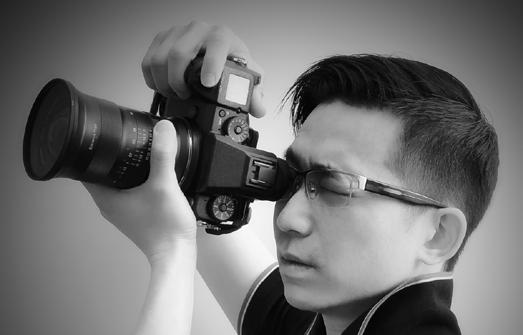
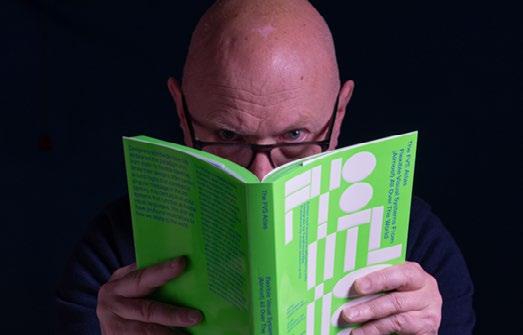
Honorary Secretary: Jacky Lee PFIAP JAPJA E: australiasecretary@rps.org Newsletter Editor: Ian Brown E: australia@rps.org
You can flick through from page to page, or navigate straight to articles by clicking the article button, then return to the contents page by clicking the footer. Page 26
Page
Brown
Williams
From your Secretary
Jacky Lee APS/Pb PFIAP JAPJA Honorary Secretary Australian Chapter
The heart of winter is upon us, and here in the Southern Hemisphere we have found our own warm way to meet it. Across Canberra this month the calendar has filled with Christmas in July. Think mulled wine and long tables, fairy lights against the early dark, and that particular joy of celebrating the season quite out of season. I would love to know how your own State marks the occasion. Whether it is a gathering with friends, a festive market, or simply a quiet evening by the fire, if a frame of yours captures the spirit of Christmas in July, please do send it along. We would be delighted to share it with the Chapter, and perhaps feature it in these very pages.
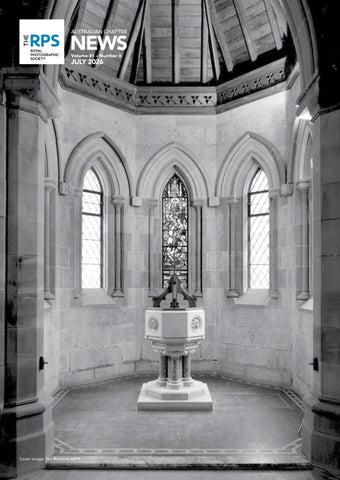
Speaking of these pages, you may notice a small but meaningful change on our cover this month. What began as a newsletter has, over the years, quietly grown from a simple notice board into something far richer, full of member work, stories, opportunities and connection. It felt only right that the name should grow with it, and so from this issue we become the Chapter News. That said, we are far from settled on it, and I would truly love to hear your thoughts. If a name comes to mind that captures what this publication has become, please share it with us. It would mean a great deal to shape it together.
In that same spirit of connection, I am pleased to introduce a new Birthday Corner, beginning this month. As our circle grows, I want us to feel a little closer to one another, and there are few nicer ways than to pause and mark the occasion. So to every member celebrating this month, it is our great pleasure to wish you a very happy birthmonth.
On the Chapter front, our proposed competition continues to take shape. We are still awaiting clearance from Headquarters on the use of the RPS logo, which would allow us to issue an
e-certificate to our winning entries. It is a small detail, but an important one, and we remain hopeful of good news before long.
Connection, as ever, is what makes this Chapter what it is. If you have RPS friends who do not yet belong to any Chapter and would like to join us, it really is as simple as changing the “region” field on the profile page of the RPS portal. From then on, they will receive our monthly news and be part of all we do here.
In the same way, I am still hoping to hear from members willing to serve as State Representatives. If you live in the Northern Territory, Western Australia, South Australia, New South Wales or Tasmania, and would like to help connect RPS friends within your own state, please do get in touch. It is a lovely way to bring our community a little closer together.
As for our circle, our numbers remain steady at 69 members, and I am always glad to welcome new faces among us.
Finally, a word of heartfelt thanks. As part of our 40th anniversary year, we have begun the careful work of digitising all our previous newsletters. My sincere thanks go to Ian for coordinating with Elaine, and to Elaine for so generously lending us the full collection she has kept over the years. Keeping our record matters more than I can easily say. Our plan is to preserve these issues both on the RPS website and with the State Library, as a permanent collection and a piece of our shared history. It is something any member, now or in generations to come, might one day turn to, and I find that deeply meaningful.
Merry Christmas to all of you trading summer for a little winter cheer, especially those of you here in Canberra!
Welcome from the Editor
Ian Brown
Editor, Australian Chapter
Thanks to our contributors this month. As always, there are some excellent images and informative articles.
Seeing all these examples of ICM inspires me to head out and practice for myself. I’m currently working on a series of images, and as it’s so cold outside, I’m happy I can complete it indoors. When it warms up, then I can practice my ICM.
If you are heading out to shoot outdoors, one of my teachers taught me to take fingerless gloves. A pair of cycling gloves would do the trick, or just cut the fingers off some cheaper gloves. Thanks Guy for that piece of advice.
Speaking of the weather, I was out on a bike ride the other day, and the fog was amazing. It was very dangerous to ride in but it looked wonderful. Unfortunately, by the time I rode back home to grab my camera it has started to clear and the sun was coming up and it didn’t look quite so dramatic. Timing is everything.
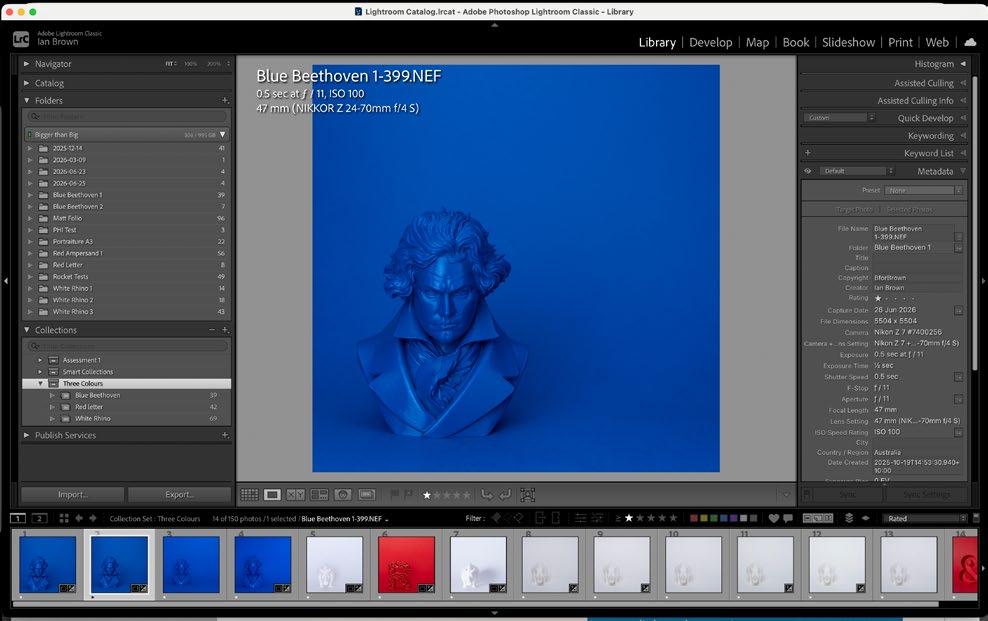
Introduction to Lightroom online tutorials
By the time this issue is broadcast I will have delivered the first of the four Introduction to Lightroom tutorials.
In the first session I covered creating a Catalogue, an overview of the interface, metadata, importing images, and organising images and collections.
In the next session I’ll look at basic exposure editing and colour correction. The second session will be 13 August 7:00-8:30 pm.
Email me at australia@rps.org and I will send you a link to the session.
Specifications for contributors
When sending images for the Newsletter, the only requirement is that they are jpeg or png. Images can be 300 ppi and up to A4. Don’t forget you can also add captions for your images. If you don’t include a caption, we’ll assume you don’t need one.
Email images to australia@rps.org and keep those pixels and captions coming in! For non-image files (e.g. PDFs), under 5 MB is preferred and never 10 MB or more. If your images are too big to email, I have created a Dropbox folder you can upload
your images to. Email me for permission, and I’ll grant access to the folder. I will need to delete your images once I have downloaded them.
Deadline for contributions to the next issue is 31 July 2026.
What’s going on?
Some events run by the Society, just in case you missed it.
DI – Minimalism with Tony Worobiec FRPS – August 2026
8 August 16:00 BST
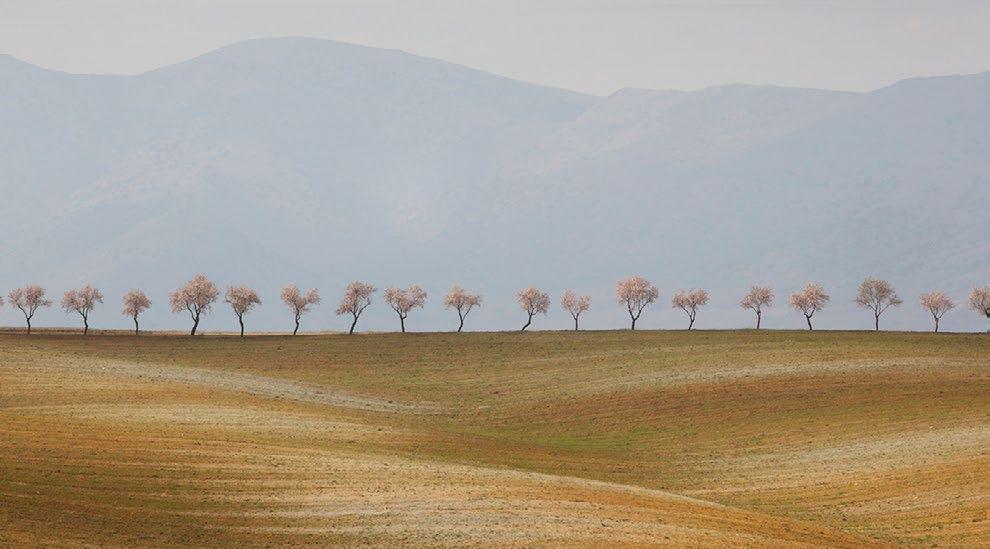
“Minimalism” is a term which has been appropriated from art and encourages the visual artist to remain very specific about the visual elements he/she wishes to explore, and which is the starting point of this presentation. By viewing two or three examples of minimalist painting, it will be easier to understand what it is we are trying to achieve with minimalist photography. Essentially it works on the principle that less is more, therefore we should be encouraged to pare down our visual elements to only those that are truly required to communicate our thoughts and emotions. It involves quite a degree of self-discipline, but once mastered our photographs assume a much greater sense of clarity. Minimalism is not just confined to the content, as you may decide to create an image with a very limited tonal range, or a greatly restricted colour palette. By acquainting ourselves with what other visual artists are prepared to explore, we are in a much better position to develop our own unique way of seeing. To book tickets click here.
Central Region: Tracks of Memory: India, Partition & a Family Archive
22 July 19:00 BST
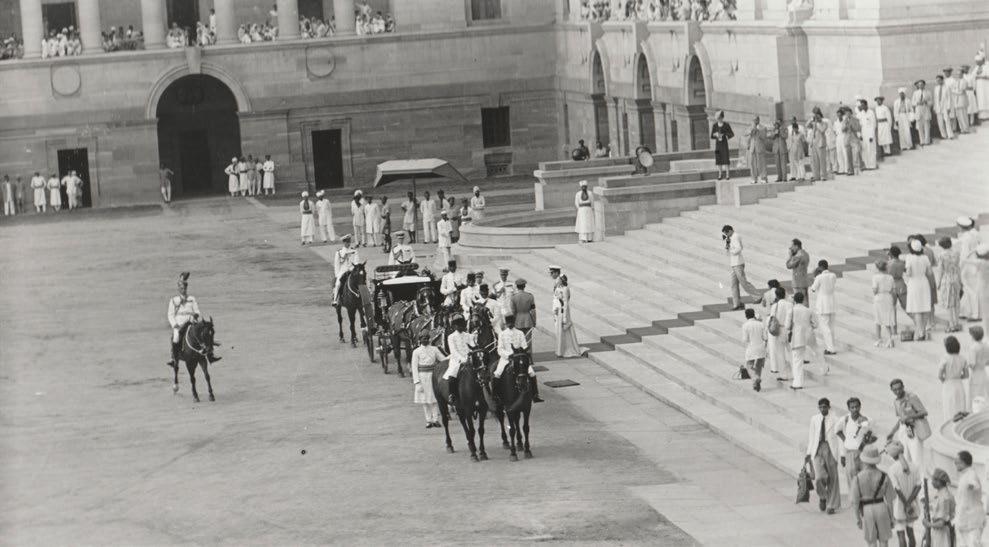
Photographer Jason Scott Tilley joins the RPS Central Region to share a deeply personal body of work made in India, interweaving his own photographic portraits from India taken between 1999 and 2009, with those of his grandfather, the Anglo Indian press photographer Bert Scott, who worked for The Times of India until the Partition in 1947.
In this illustrated conversation, Jo Gane will interview Jason about travelling and working in India, the family stories behind the images, and the ongoing task of editing and preserving boxes of negatives and prints that connect past and present.
Join us for this unique opportunity to hear this story first hand from Jason; if you cannot join the live talk, please sign up to receive the link to watch the recording.
Discover more about Jason Scott Tilley and the large format images displayed at the Herbert Art Gallery in 2014 here. To book tickets click here.
Image credit: Bert Scott – Photo of the Mountbattens leaving Delhi on the 14.08.1947
Vivid memories
Jacky Lee APS/Pb PFIAP JAPJA
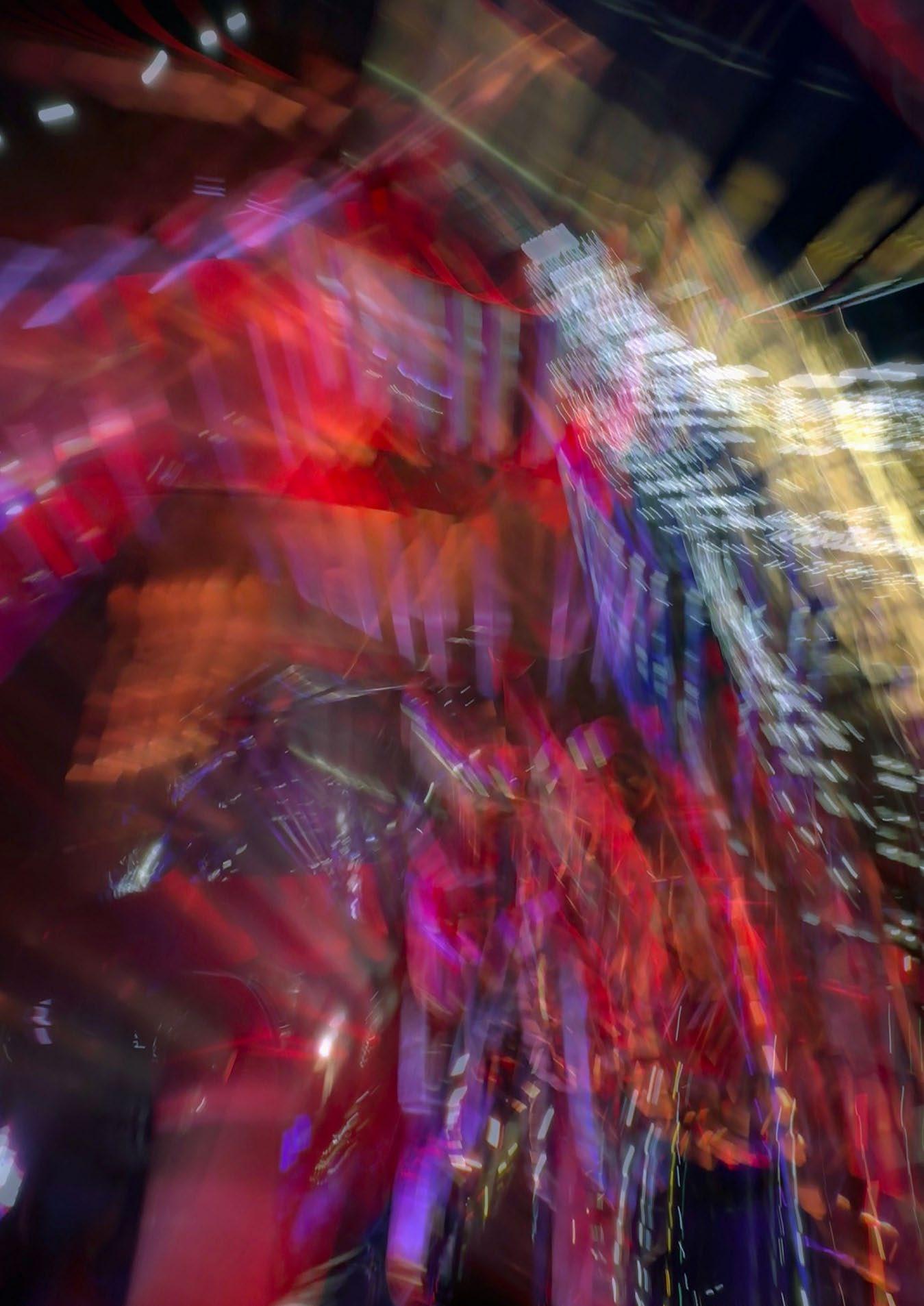
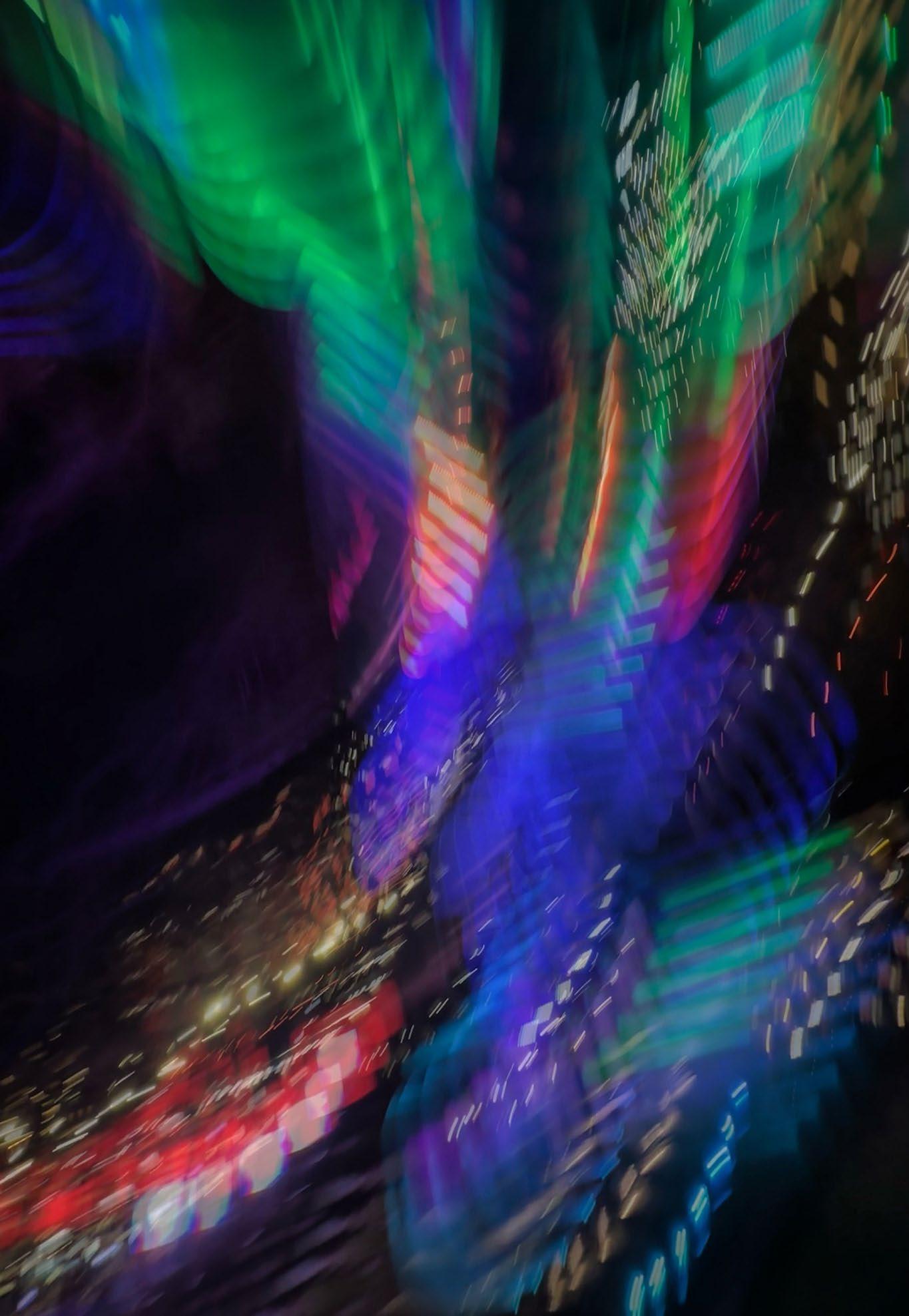
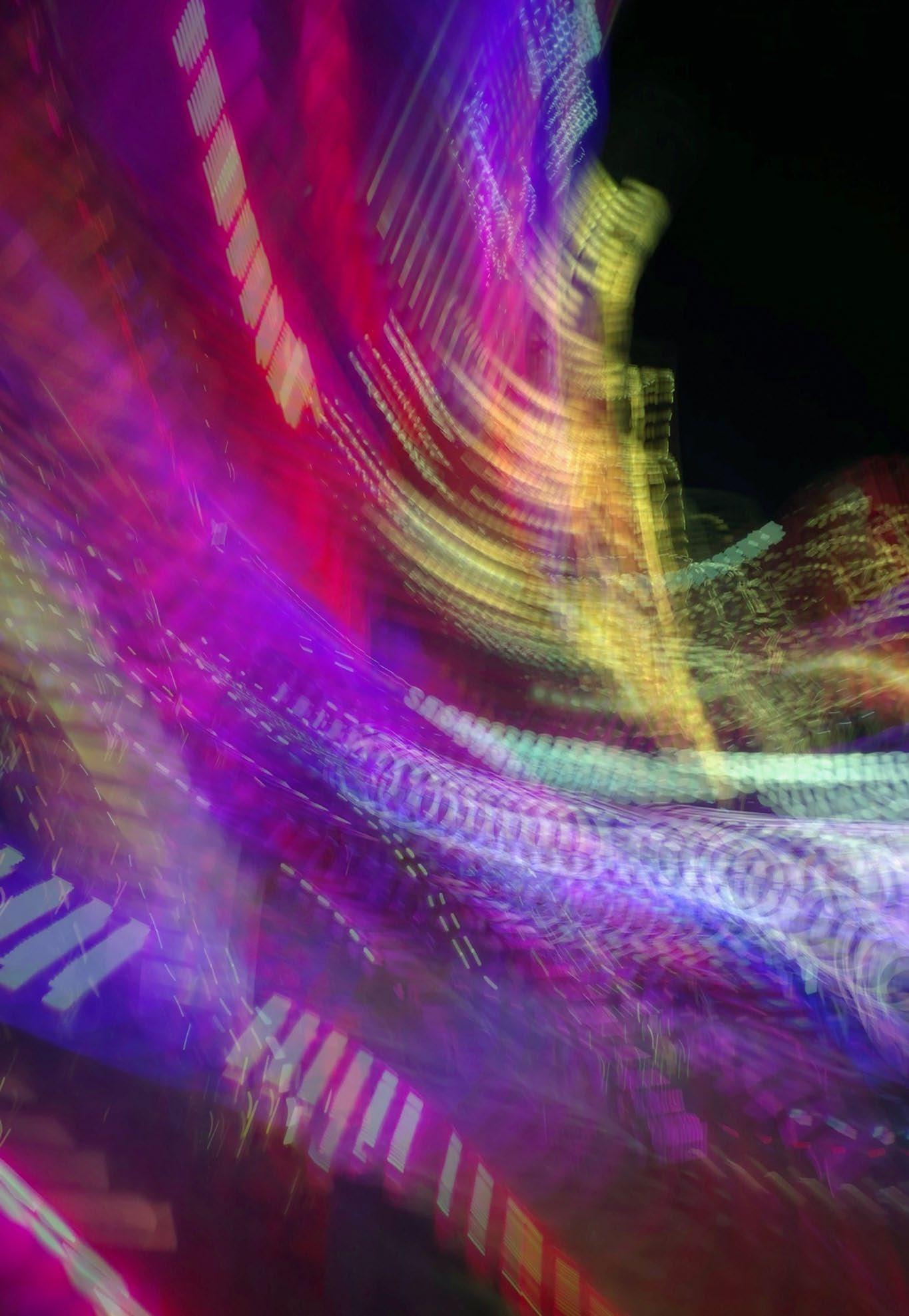
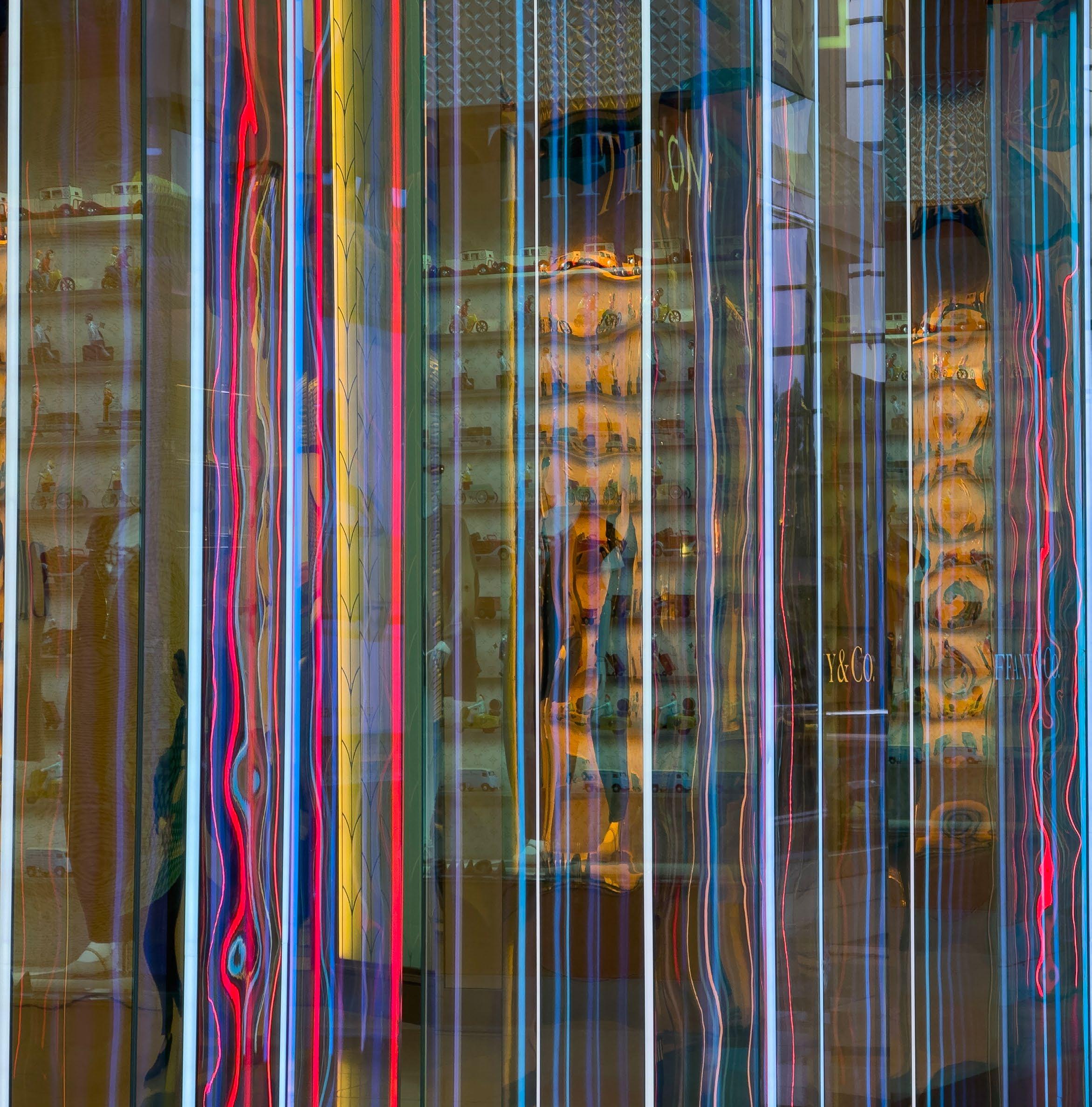
If you have never been to Vivid Sydney, picture this. After dark the whole city centre turns into a giant open air light show. Buildings become canvases, the harbour glows, and crowds drift between glowing installations with their cameras out. For anyone who has not seen it before, especially if you live outside Sydney or outside Australia, it really is a treat. The first time you walk into it, your jaw drops a little.
And then there is the other camp. If you live there, or if you have been every year for a while now, you might quietly think it is a touch boring. I completely understand that feeling, and I do not think there is anything wrong with it. We are simply wired that way. Most of us love to travel,
to see new things, to have new experiences, because it lifts us out of the same daily routine. That craving for novelty is exactly why travel photography exists in the first place. New place, new light, new pictures.
But here is where I start to think a little differently as a visual artist. I cannot always fly somewhere new, and honestly I do not want my photography to depend on that. So the question I keep returning to is this: how do I photograph an ordinary or familiar place in a way that still feels fresh to me? Perhaps a different technique? Or a different way of seeing? That is what keeps me curious, and curiosity is what keeps the work alive. There is a second reason I care about this, and it is a practical one. As a professional photographer, being unique matters enormously. It is not vanity. It is your voice and your signature on the scene. Think about Vivid for a moment. Thousands of people stand in the same spots, point at the same installations, and walk away with almost identical photos. So every time I lift my camera, I ask myself one simple but slightly
uncomfortable question: why me? If anyone standing here could make this exact frame, then what am I actually adding? That question is the best filter I know. It pushes me past the obvious shot and toward something that is genuinely mine.
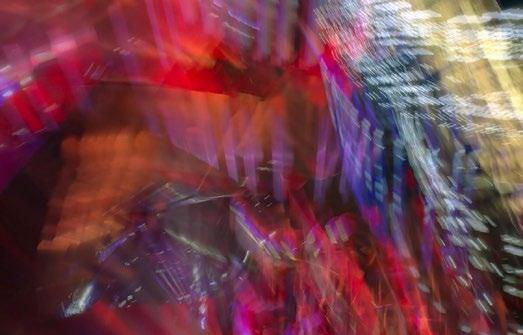
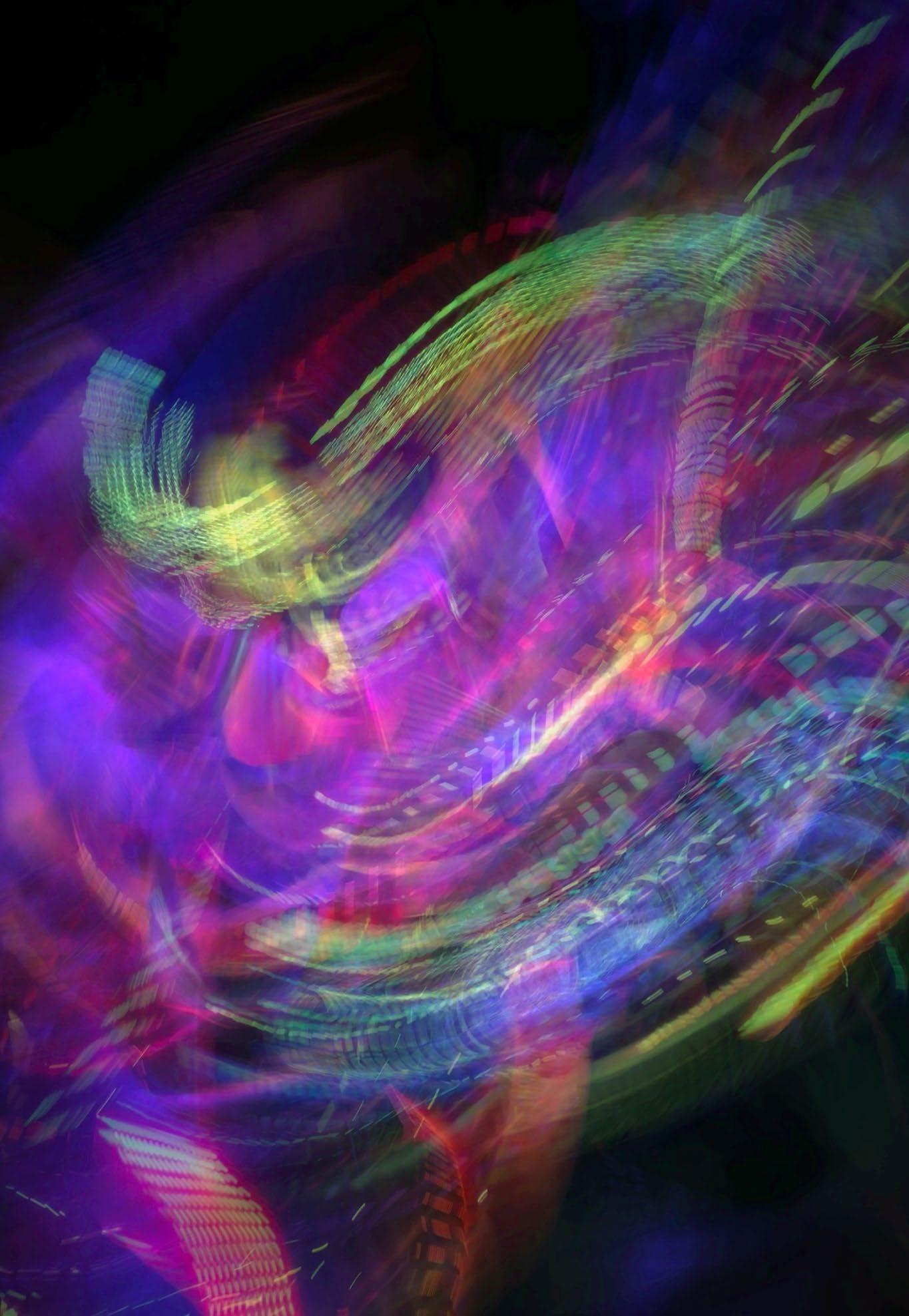
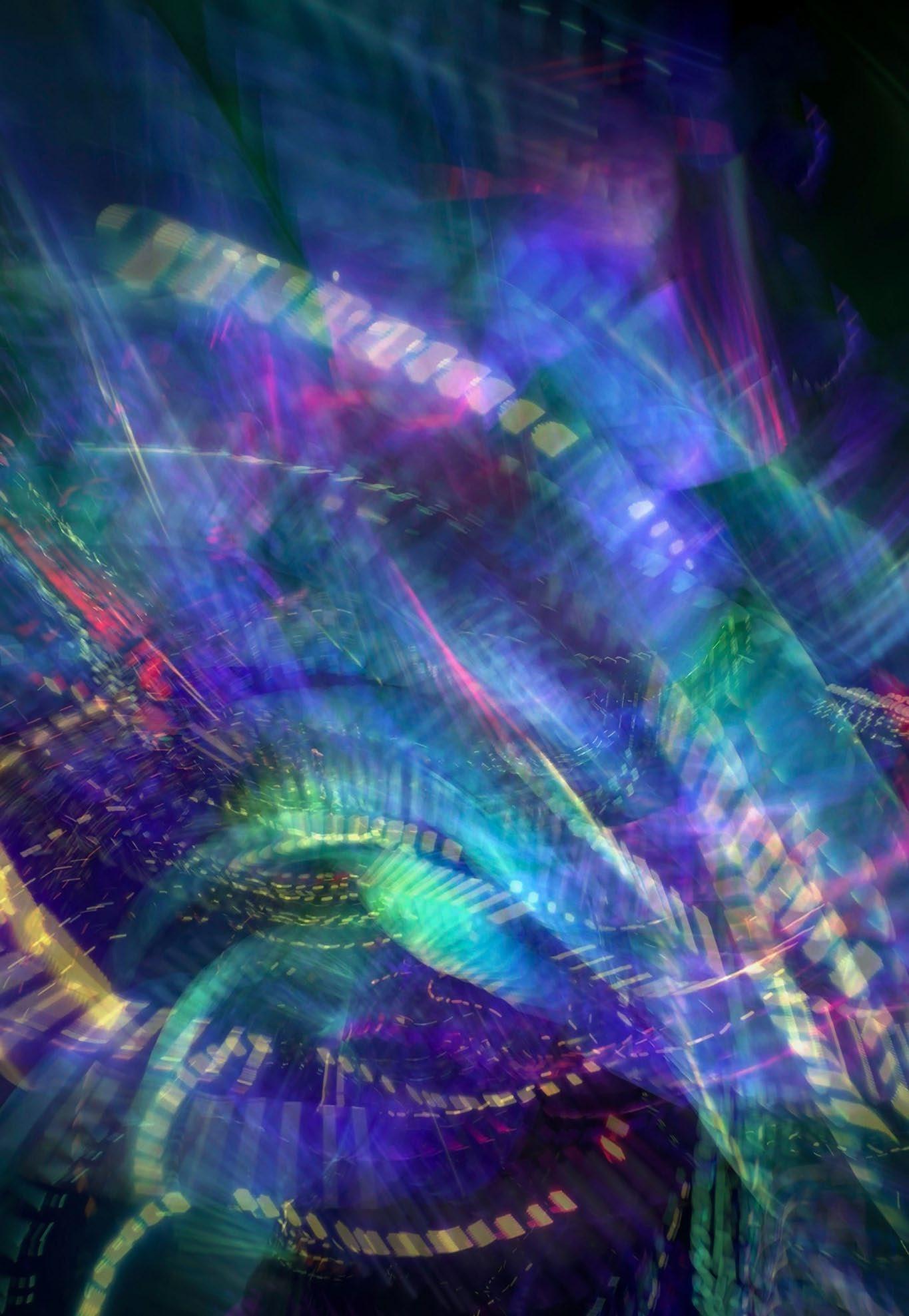
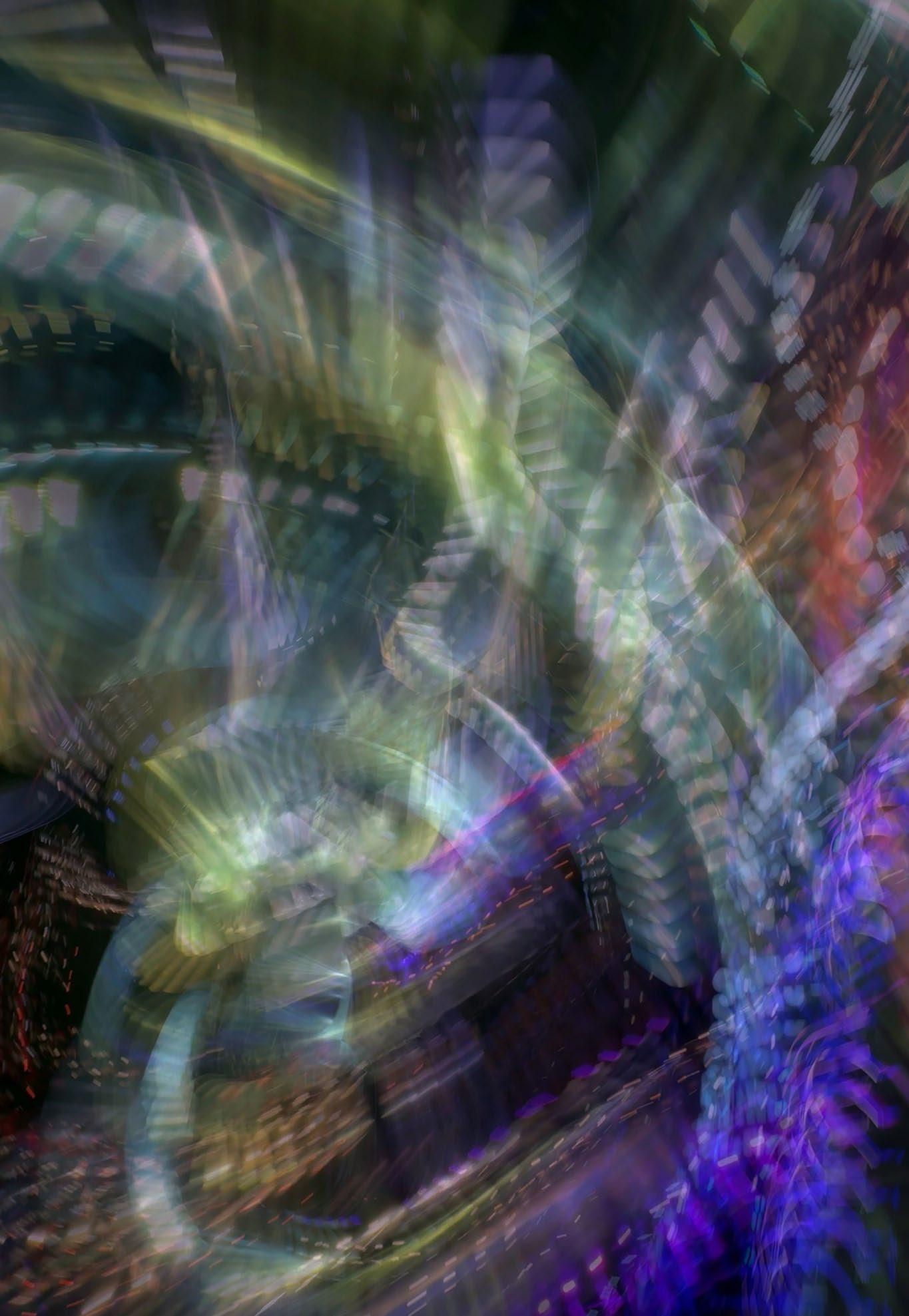
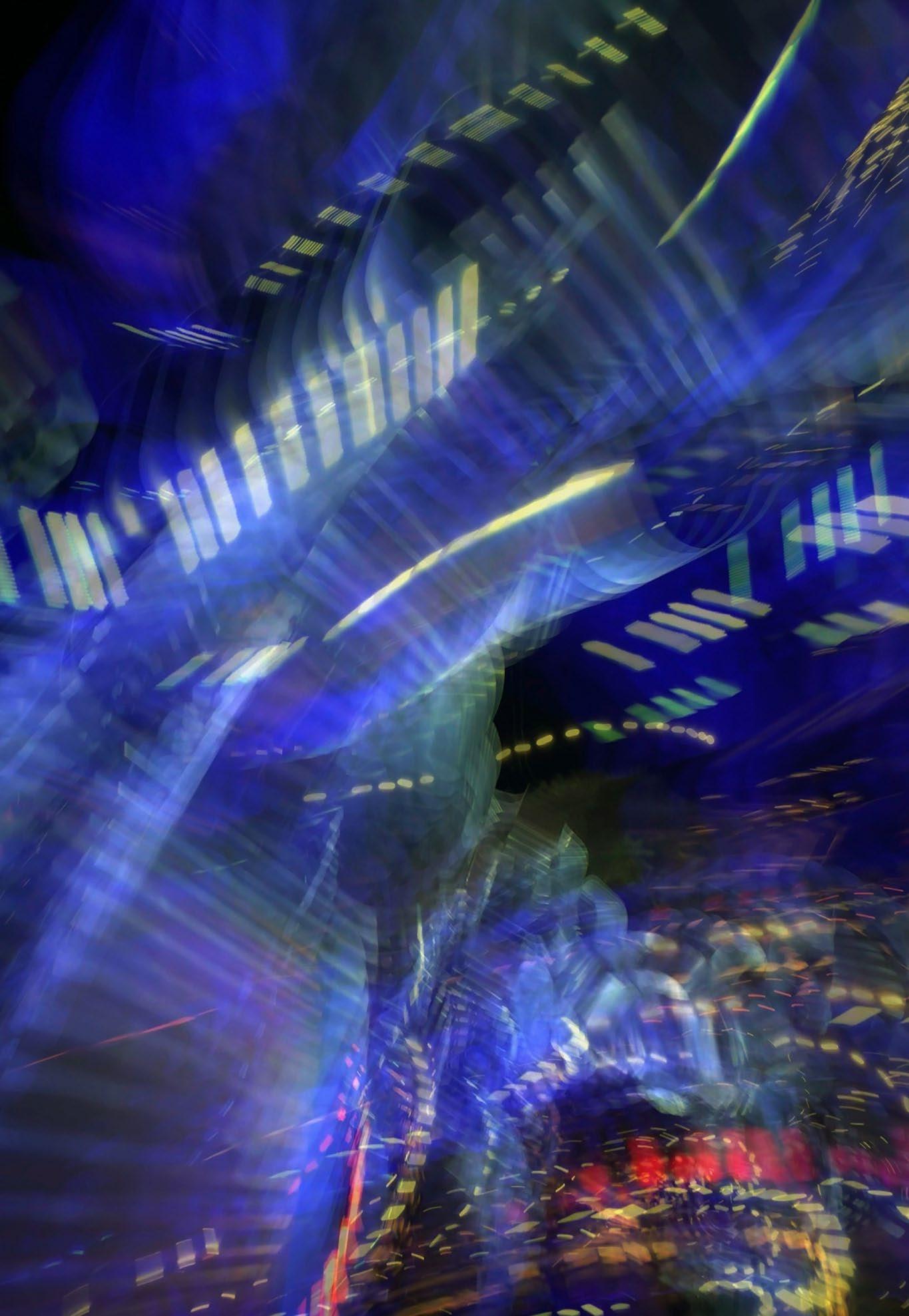
The other thing always on my mind is the theme. The festival is called Vivid for a reason. It is about colour, energy and movement. So rather than documenting each installation cleanly, I wanted to express that idea in my own language. I wanted the photograph to feel like Vivid, not merely to show it.
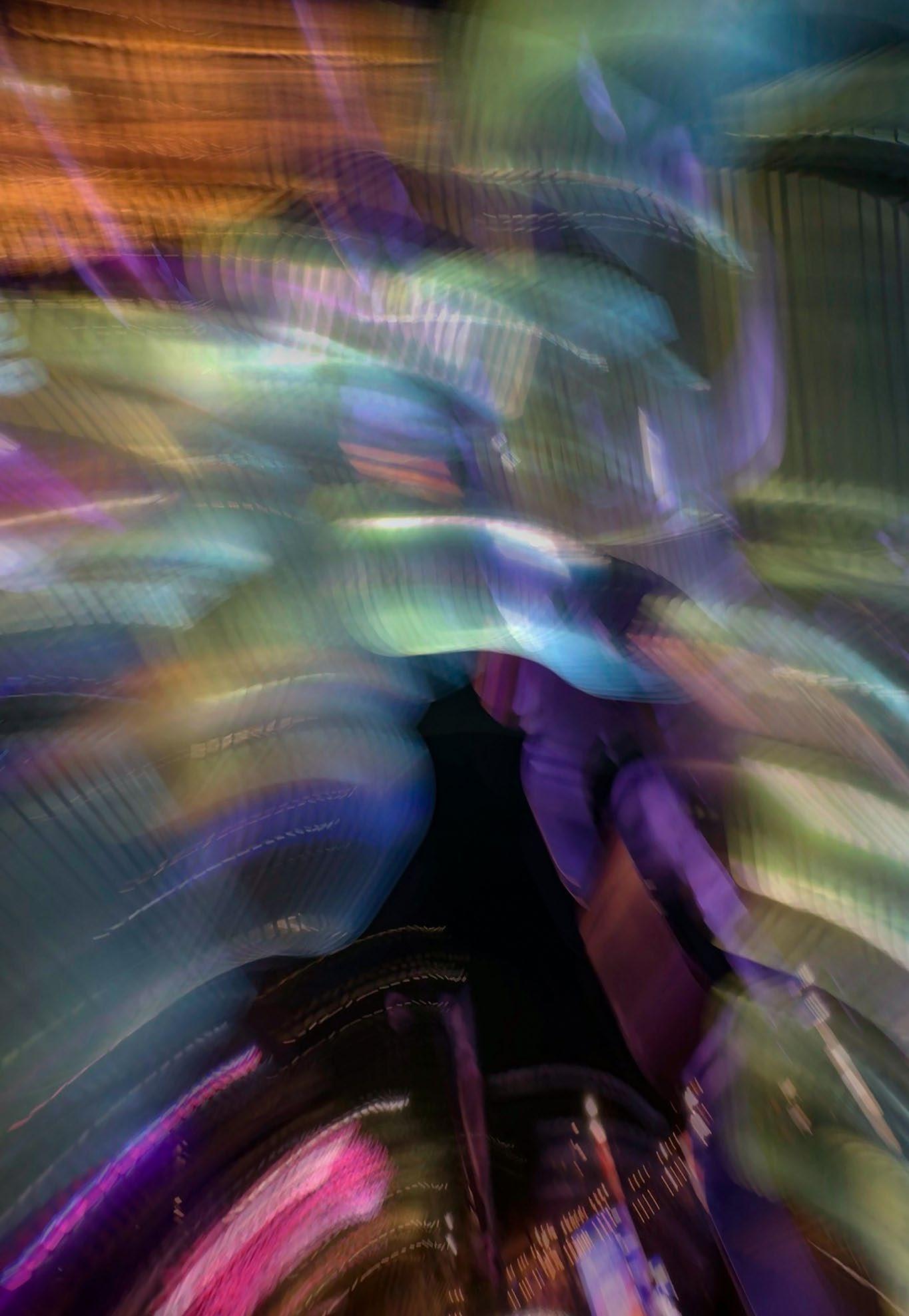
My choice this time surprised even me. I shot the whole night on a phone. Yes, just a phone, no tripod, no fancy lens. The trick is wonderfully simple.
Turn Live Photo on, take the shot, then open it in your photo album and change the effect to Long Exposure. The phone hands you a simulated long exposure, similar in spirit to what a camera produces with a slow shutter. The clever part is what happens underneath. A Live Photo is really a short video, so the phone uses
computational photography to stack and blend all of those frames into one image. The final look depends entirely on how you move the phone, and in which direction, during that brief moment of capture.
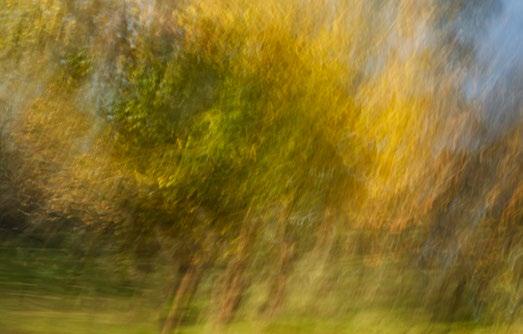
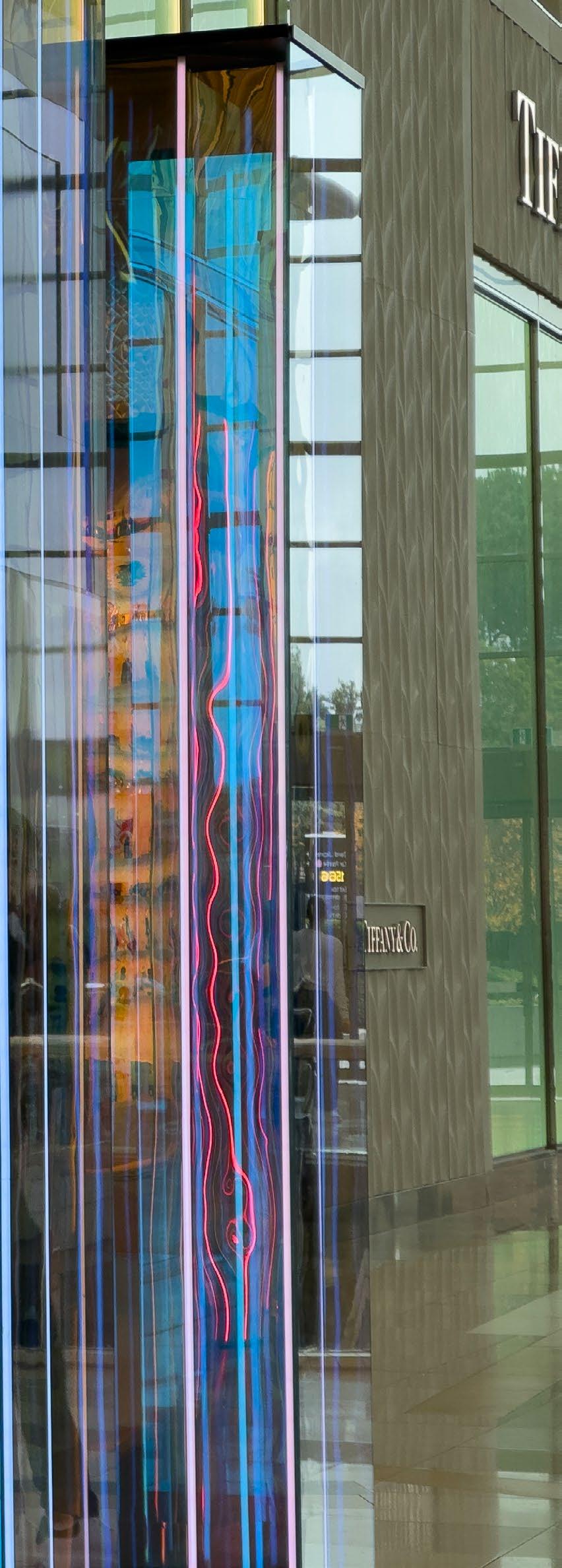
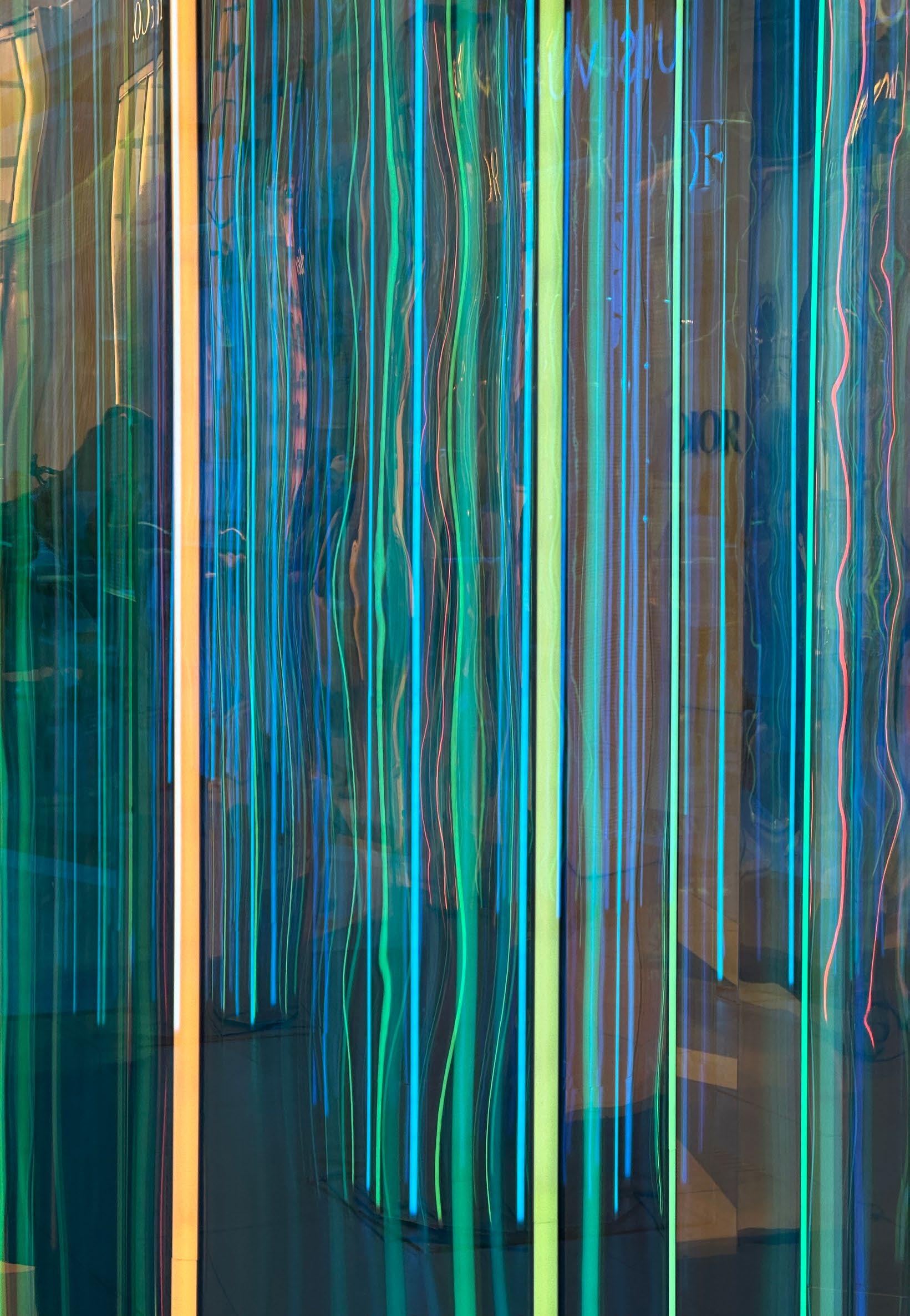
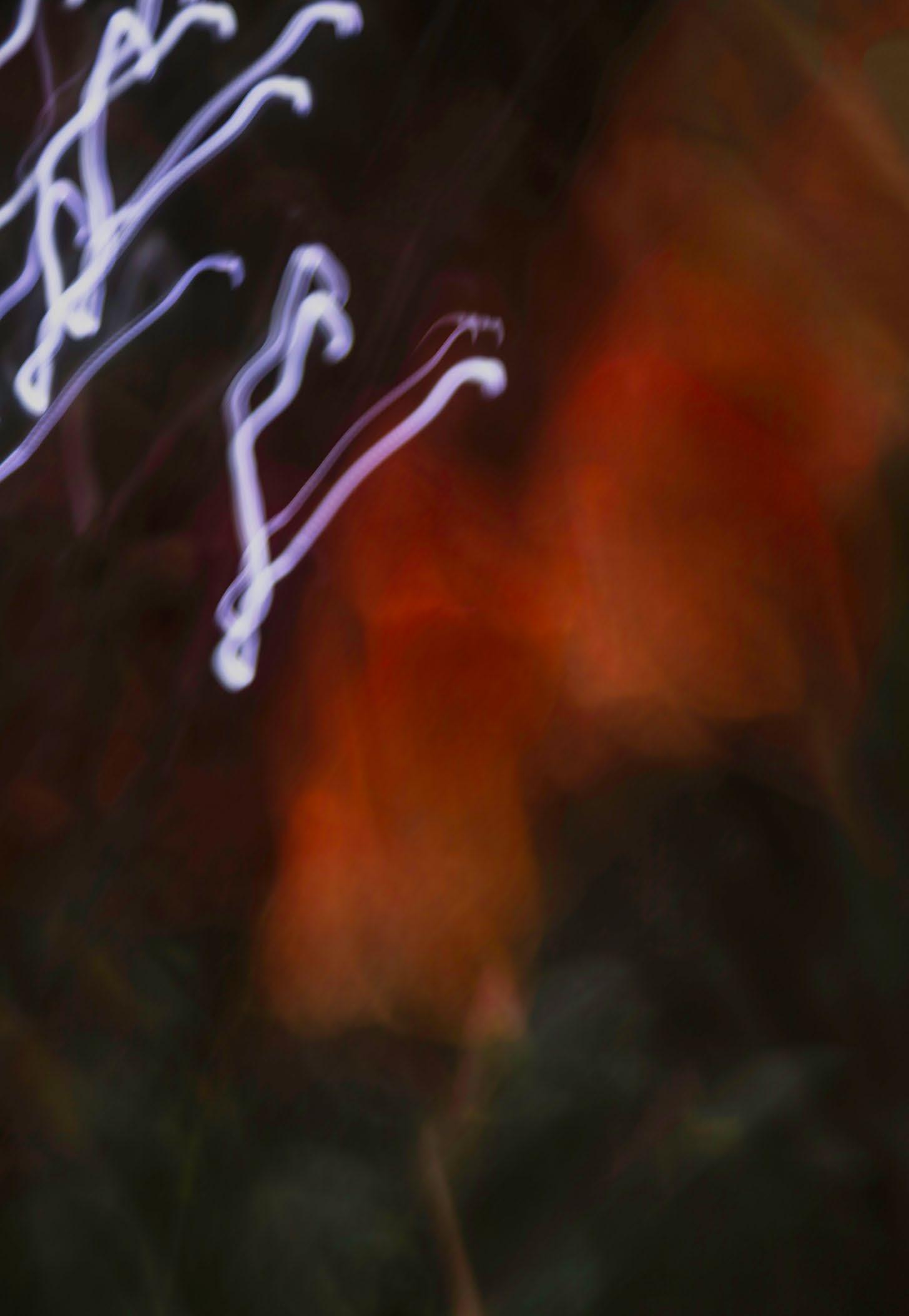
That movement is the whole game. This is Intentional Camera Movement, or ICM, and on a phone it becomes very playful. The results are abstract. The recognisable buildings dissolve, and what remains are the paths of the lights themselves, streaks and ribbons and swirls of pure colour.
What I love is that the technique quietly borrows from several traditions at once. It has a flavour of light painting, except this time I am not controlling the light, I am controlling the phone. It carries a touch of panning, because sometimes you really do need to follow a moving light to keep its trail clean. And it holds the spirit of multiple exposure, since the phone is layering many frames into one. All of that from a device already living in your pocket.
For me, this firmly belongs to impressionistic
art. I am not trying to give you an accurate record of Vivid Sydney. I am offering you my impression of it, the feeling of standing inside all that light and letting it wash over me. Each frame is a small dance between my hand and the glow in front of me. No two are ever the same, and no one else could make them, because they came from my movement, in my moment.
So if Vivid, or any familiar place, has started to feel a little tired to you, I would gently suggest a small experiment. Leave the clean documentary shot to everyone else for one night. Turn on Live Photo, move with intention, and see what your own impression looks like. You might just fall in love with the ordinary all over again.
About the Author
Jacky Lee APS/Pb PFIAP JAPJA
I am a visual artist who simply loves to play and express myself through photography. I serve with APS, APJA, CAPA, IAPP, PSA and RPS, and in 2026 I was fortunate enough to be appointed an Ambassador by the International Association of Art Photographers.
Members of distinction
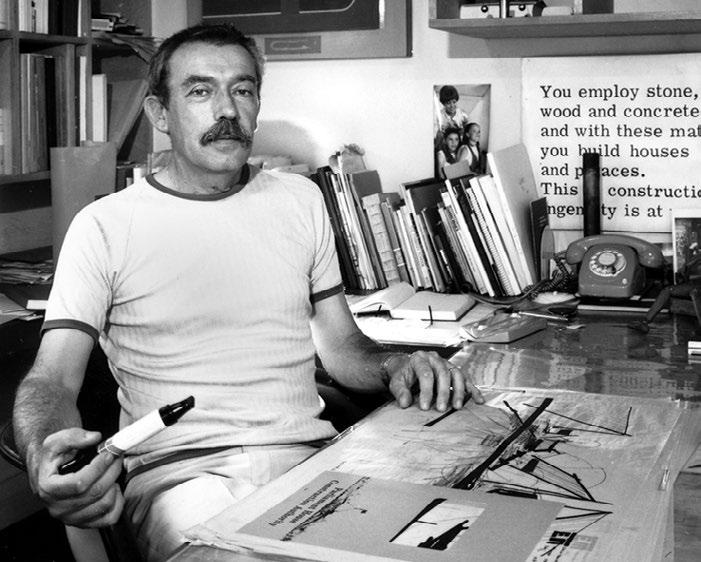
This month we are starting a new series of interviews with members of the Chapter who hold distinctions with the RPS. In this series, our Honorary Secretary Jacky Lee interviews Chapter members on topics like their chosen area of expertise, why they applied for distinctions, their gear and why they are photographers. The first in the series is with Ted Richards ARPS.
Could you tell us a little about how your interest in photography first began?
As with most teenagers of my generation, I was given a Kodak Brownie Box camera. I was fascinated by using the viewfinder to put a frame around a small area of reality although I might not have thought of it in that way at the time.
Over the years, what has photography meant to you personally?
It has been the way I have earned my living for about the last 65 years.
Do you remember what first inspired you to pursue your ARPS at that stage of your life?
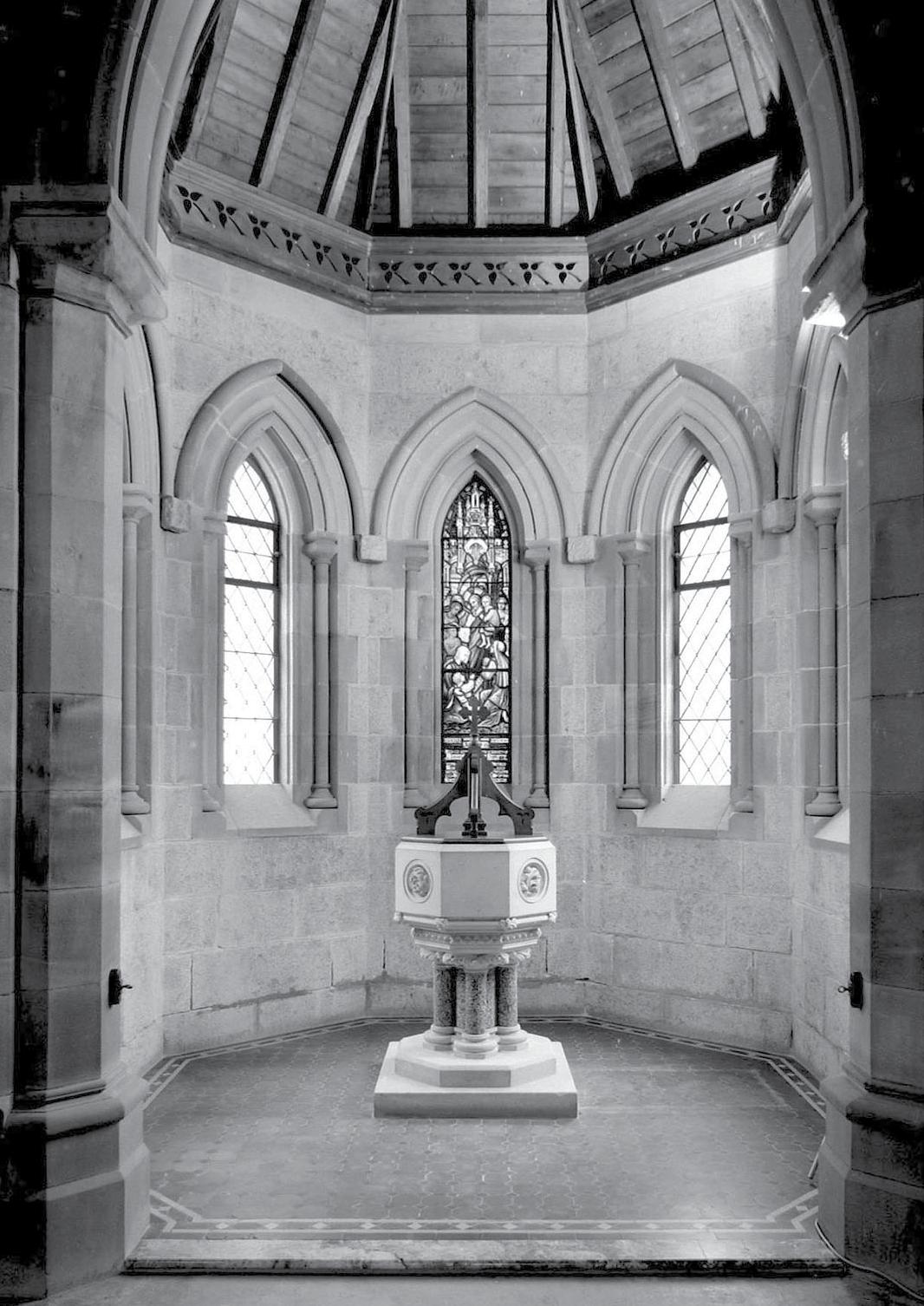
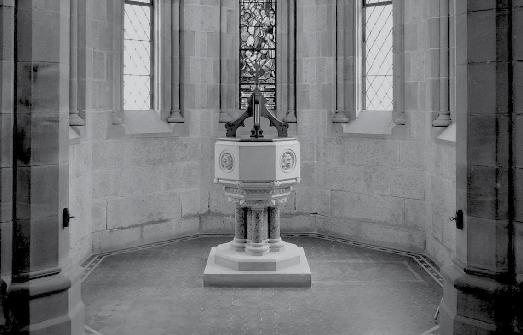
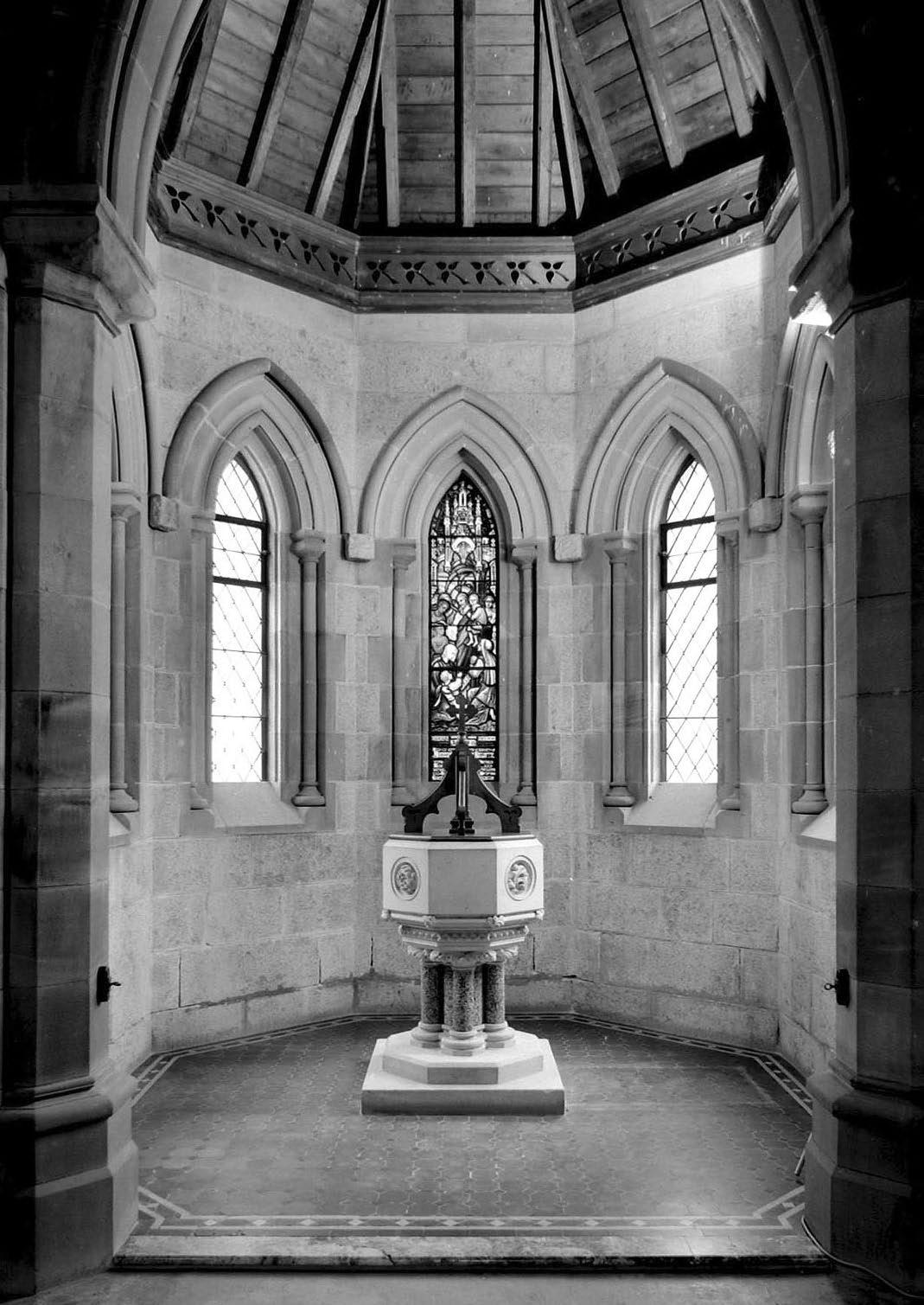
It was one of those things that seemed a good idea at the time. I had been taking photographs of 19th century churches as an interest when I was commissioned to photograph the Blacket churches in Sydney and southern NSW for a book and exhibition to celebrate the 100th anniversary of Edmund Blacket’s death.
Fig. 1: Font, All Saints, Bodalla, NSW, from the Blacket series.
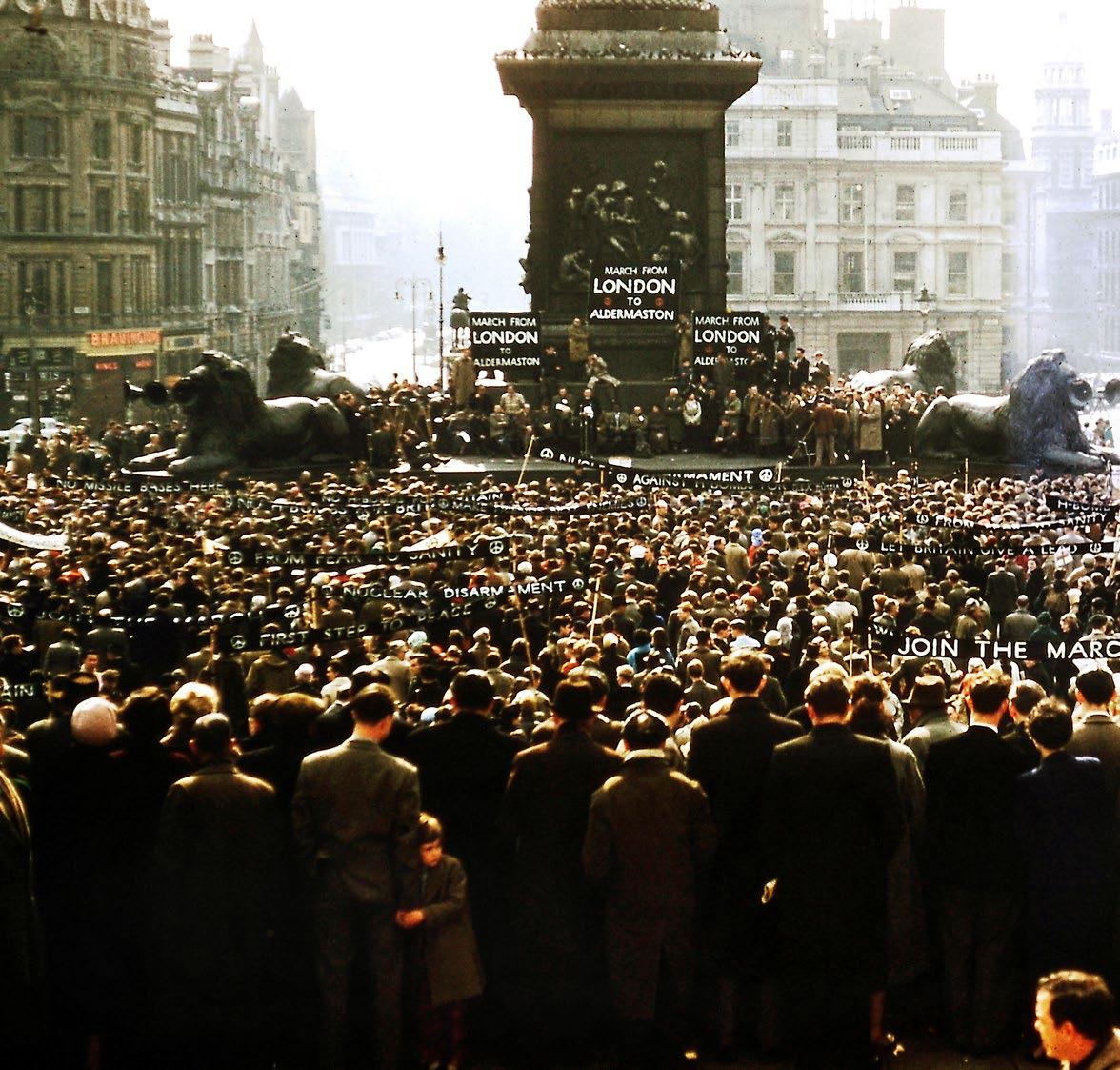
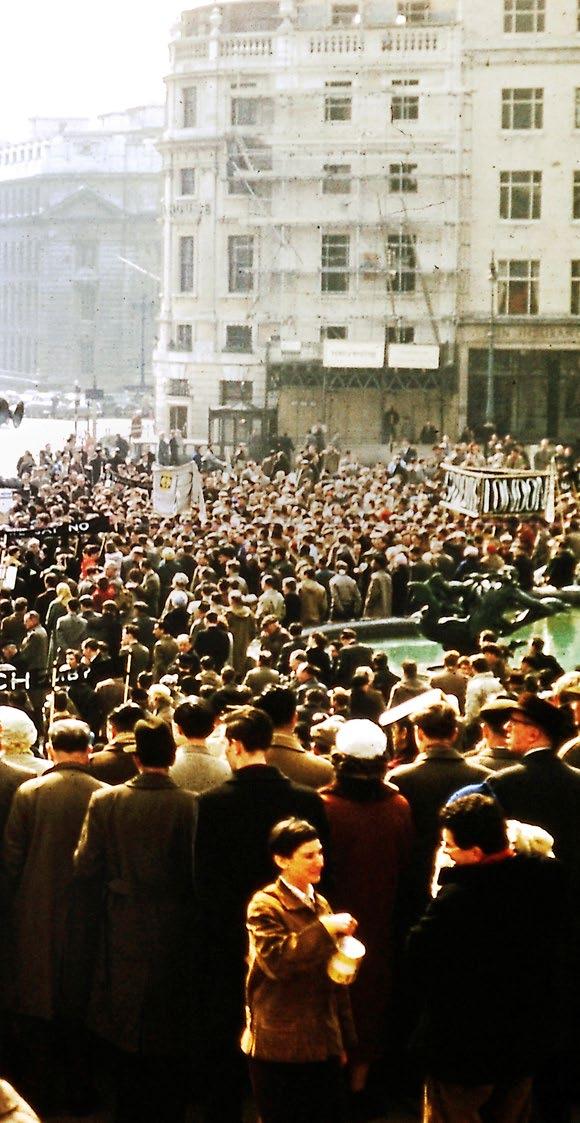
Fig 2: The rally before the first Aldermaston March, London.
By then I had a good collection of architectural photographs and I must have thought it was worth a try. Anyway, it succeeded. [For those who don’t know, Edmund Blacket is the best known of NSW’s colonial architects and his major client was the Anglican church.]
Looking back across your photographic journey, how do you feel your style, interests or way of seeing have changed over time?
I have always been a documentary photographer by nature and by training, and I remain as such. As a working photographer, I concentrated in architectural, building construction and PR photography, but in my early days I spent seven years attached to the National Press Gallery as a photographer for the Melbourne Herald newspaper.
In recent years I have taken a lot of what is termed “street photography” that I enjoy doing as well as exhibiting.
Are there any particular subjects, themes or types of photography that have remained especially meaningful to you?
Many of my street photographs are held in the permanent collections of Australian State and Federal institutions such as the Canberra Museum and Gallery, the State Libraries of both Victoria and NSW, the National Library of Australia and the Museum of Australian Democracy.
I regard my photographs as being meaningful, at least to me, but it seems that they may also be meaningful to the curators of photography in those institutions.
Apart from that, and although not really a portrait photographer, one of my portraits (Enrico Taglietti) is held in the collection of the National Portrait Gallery in Canberra.
One photograph that is particularly meaningful to me, as it is both historic and unique, is held in the collection of the Museum of London.
It is a photograph of the rally in Trafalgar Square in 1958 for the first Aldermaston (Ban the Bomb) march. It is unique because it is the only known colour photograph taken of this event. For those interested, I took it using the original, contrasty, 10 ASA Kodachrome.
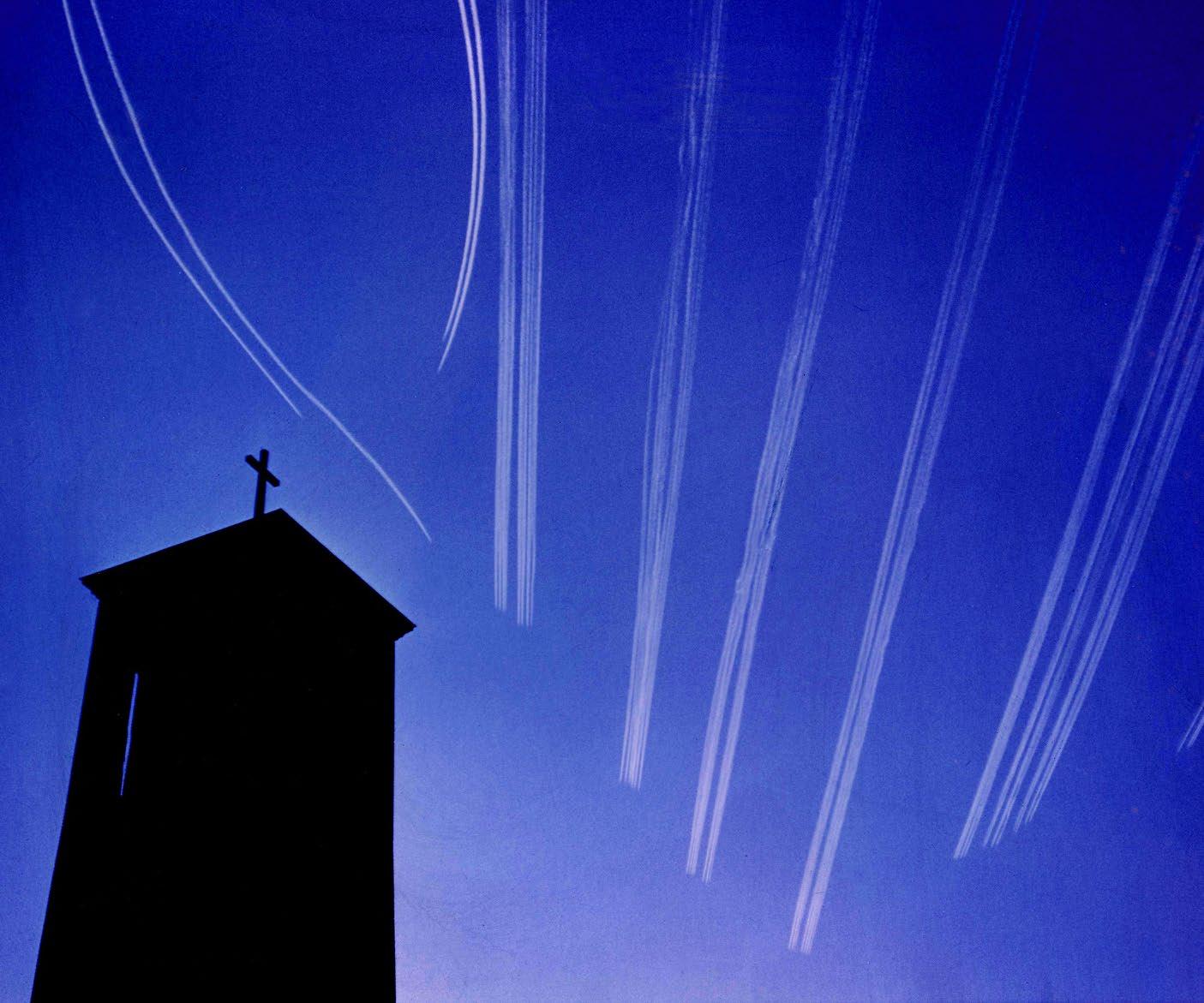
In 1960 I entered a photograph of a fly-past of aircraft in the very posh-sounding "Melbourne
Fig 3 above: ‘Planes’.
International Photographic Salon” where it won first prize in the colour section.
Sixty-five years have passed since that momentous event, and in those 65 years I have never once even been shortlisted in a competition. I gave up entering competitions quite some time ago.
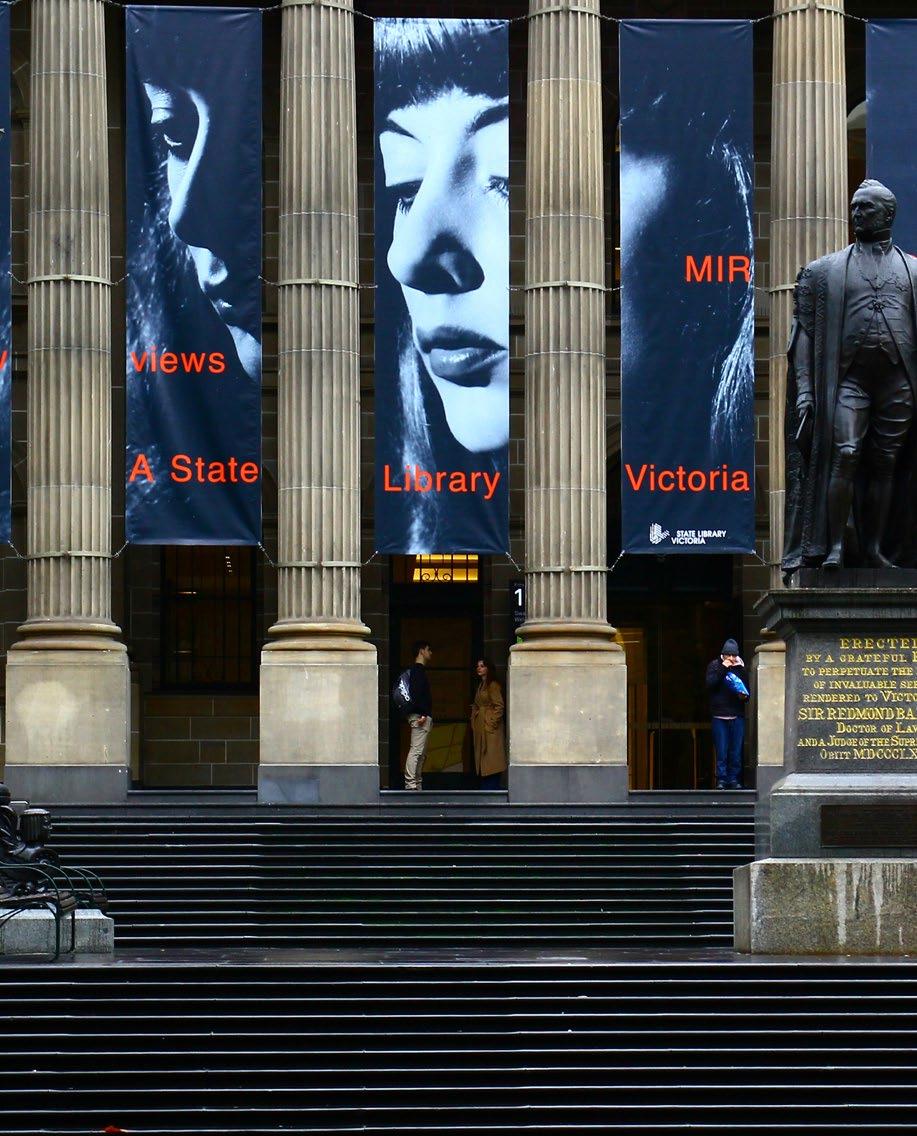
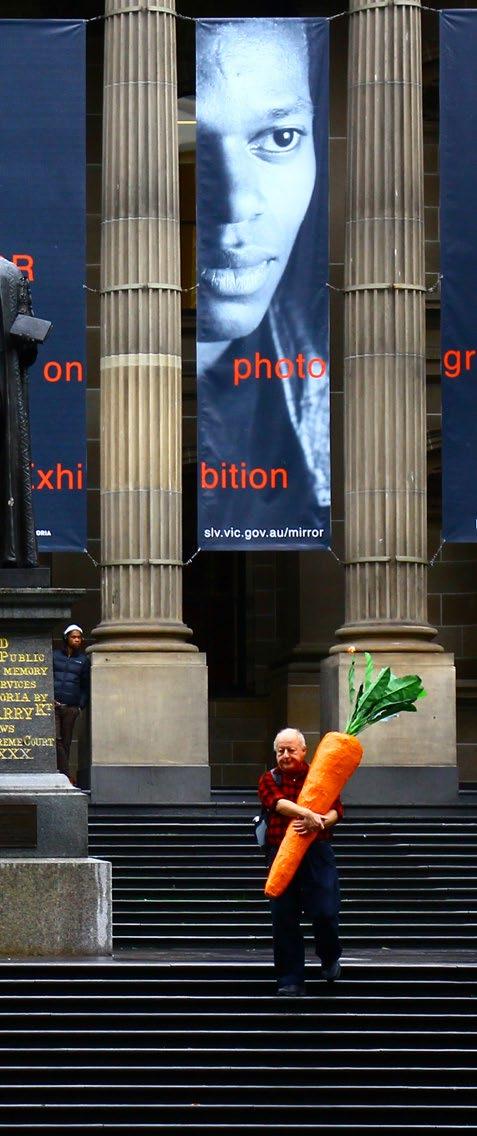
But then, believe it or not, last year, when the Public Record Office (Victoria) called for submissions of photographs for an exhibition to be called Rehearsing the City (to be held at the PROV gallery, opening on 21st May), I took a chance and entered.
Of the several hundred photographs submitted, my Carrot Man was one of the twelve chosen. All of which proves that you should never give up. [You may find out about the Carrot Man on Google].
Photography has changed enormously over the past 50 years. What are some of the biggest changes you have noticed, and how have you felt about them?
The biggest change for me was the advent of digital photography. My entire working life was done using darkroom-based (“wet process”) photography - I never took a digital photograph as a professional.
However, I have coped with the change and still take photographs the same way as I always did, using only a minimum of Photoshop. AI is the next big thing, but I doubt I will make much use of it.
Are there any memorable experiences, lessons or moments in photography that have stayed with you through the years, and what advice or encouragement would you like to share with today’s photographers, especially those who are still developing their own path?
A most memorable experience was the one experienced by most pre-digital photographers when, after developing and fixing my first roll of
film in my mother’s laundry with a blanket pinned over the window, I turned the light on and found images on the film, as promised in the instruction book. I could hardly believe my eyes.
Other suggestions, in no particular order, are: compose in the viewfinder; don’t get bogged down with rules of composition (or any other rules); “come early, stand close”, which means if you have to photograph some important occasion, do just that; avoid using too much ‘post-production’ so as to avoid ‘post-producing’ a photograph to ruination.
Also, look at a lot of photographs, including lists such as the best photographs by Time Magazine or Wikipedia, and read books such as John Szarkowski’s classic Looking at Photographs, plus Photography – The Whole Story; 1001 Photographs You Must See; The Catalogue of the Getty Photograph Collection and many of the other similar books.
On a lighter note, of all the advice I have received over the years, the best is still from a note stuck to the door of a darkroom: “If you are sent out to buy lunch for any of the photographers, make sure you get the money first”.
Finally, never give up. Keep trying and experimenting, even when it's frustrating and tiring.
Fig 4 left: The Carrot Man, Melbourne, May 2023.
From Light to Night – Chadstone Shopping Centre, Melbourne
Gigi Williams FRPS
There were two installations at Chadstone Shopping Centre, recently. Gigi Williams visited them and compiled this story.
Through
the Looking Glass by Dean Norton & Studio John Fish
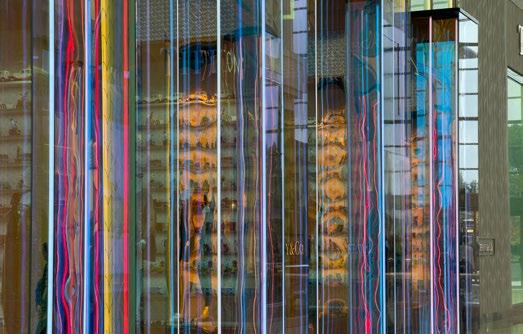
This installation is a large-scale immersive light sculpture and is absolutely beautiful. It comprises 20 columns of dichroic glass with meticulously layered reflective surfaces, resulting in a captivating play of light and reflections. The sculpture responds dynamically, changing colour as people move in and out of it.
Fig.1: Through the Looking Glass by Dean Norton & Studio John Fish.
Fig.2: Through the Looking Glass by Dean Norton & Studio John Fish.
Fig.3: HOME – by Rone
HOME – by Rone
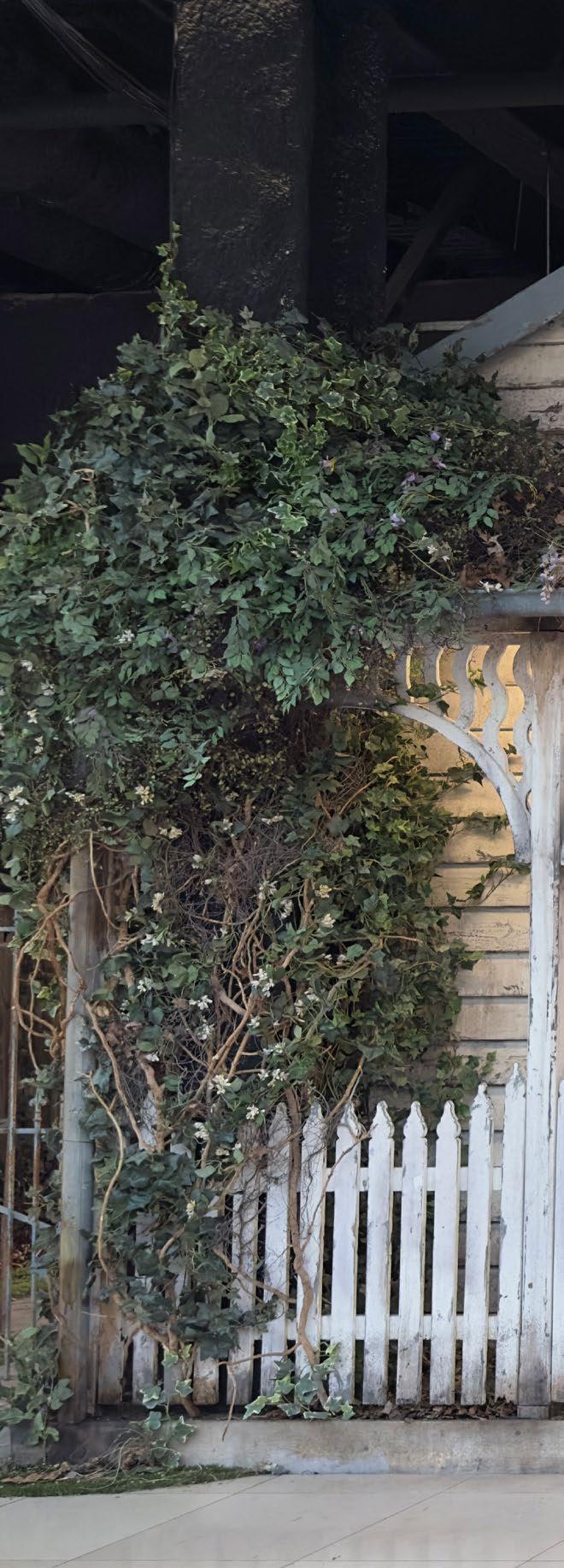
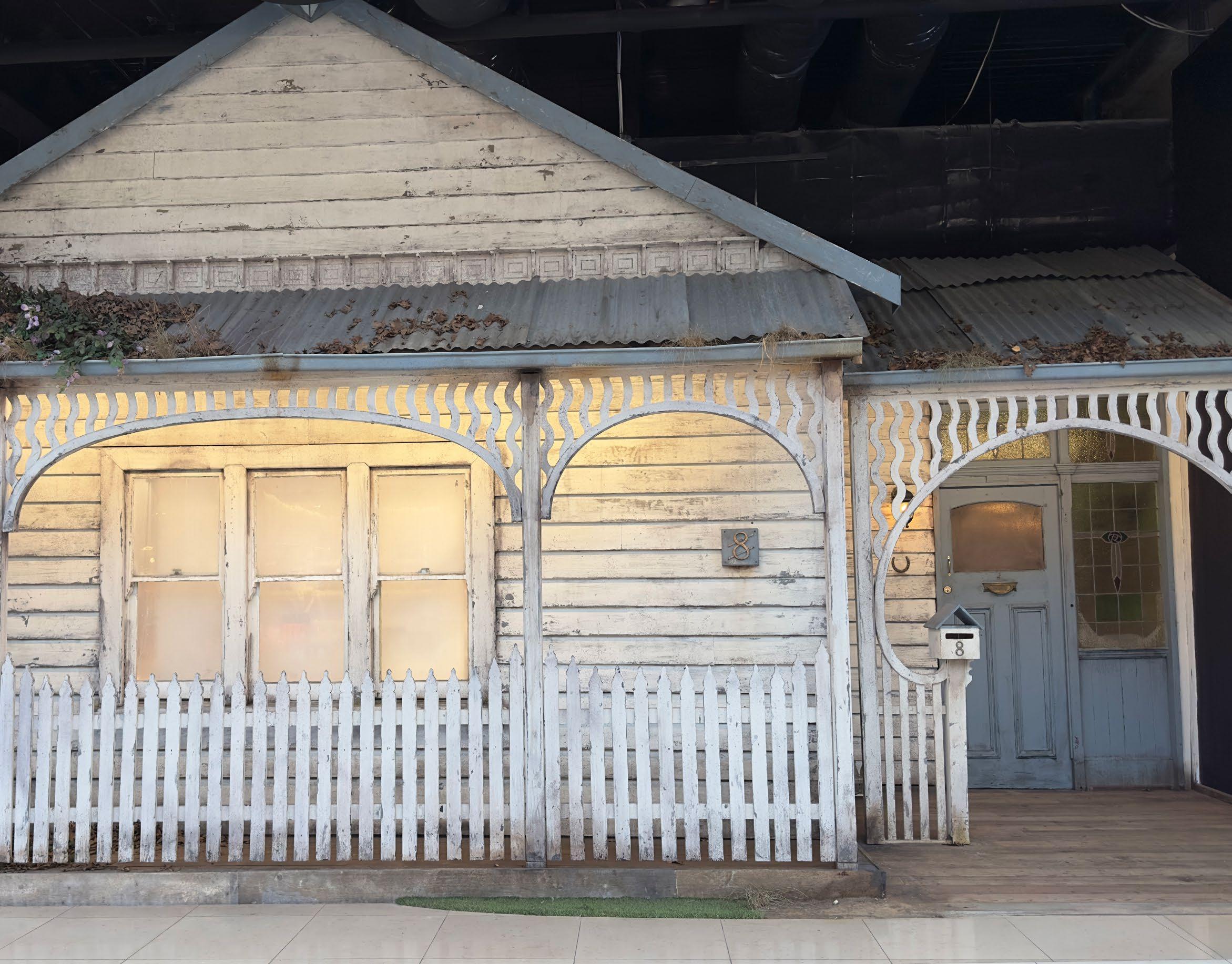
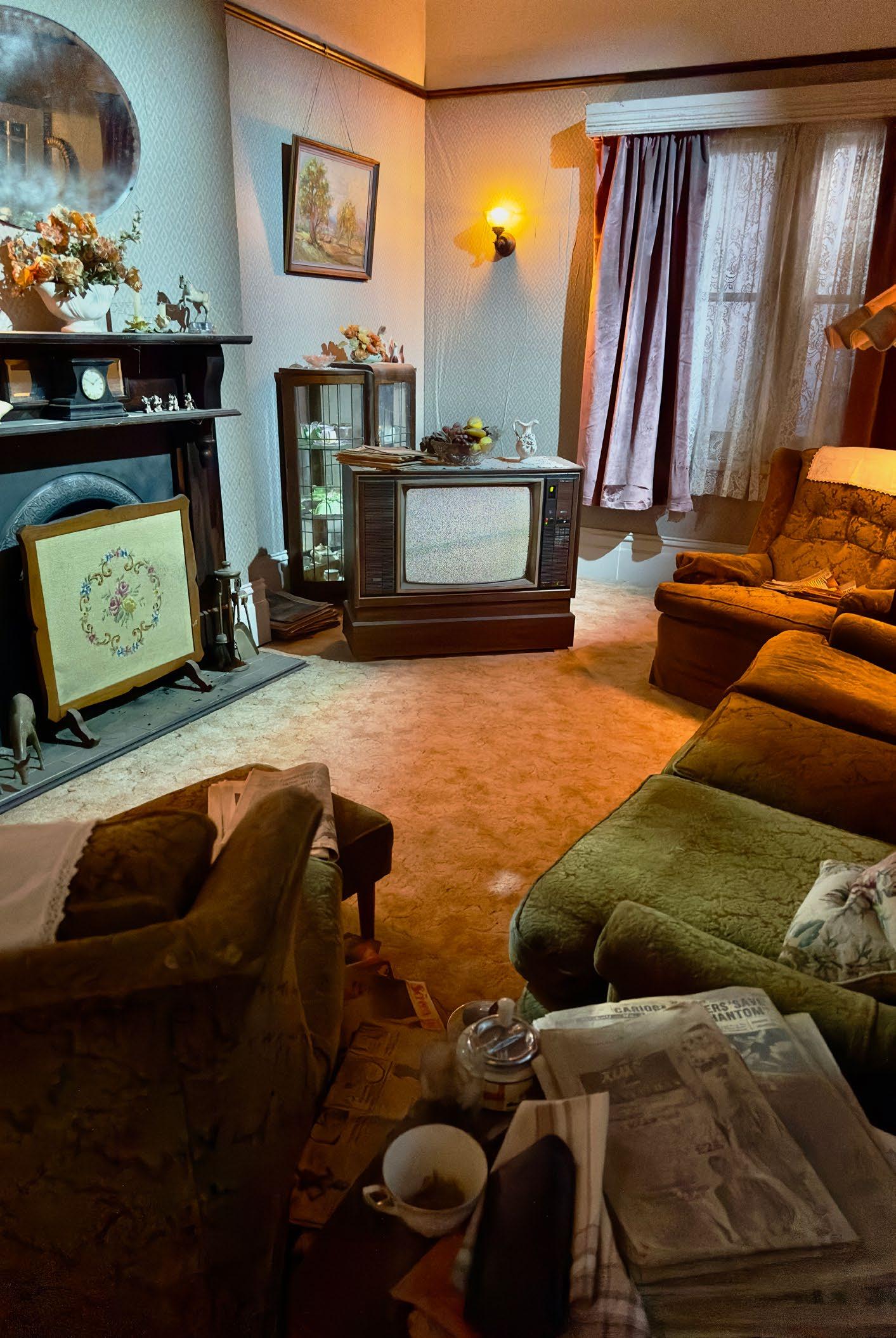
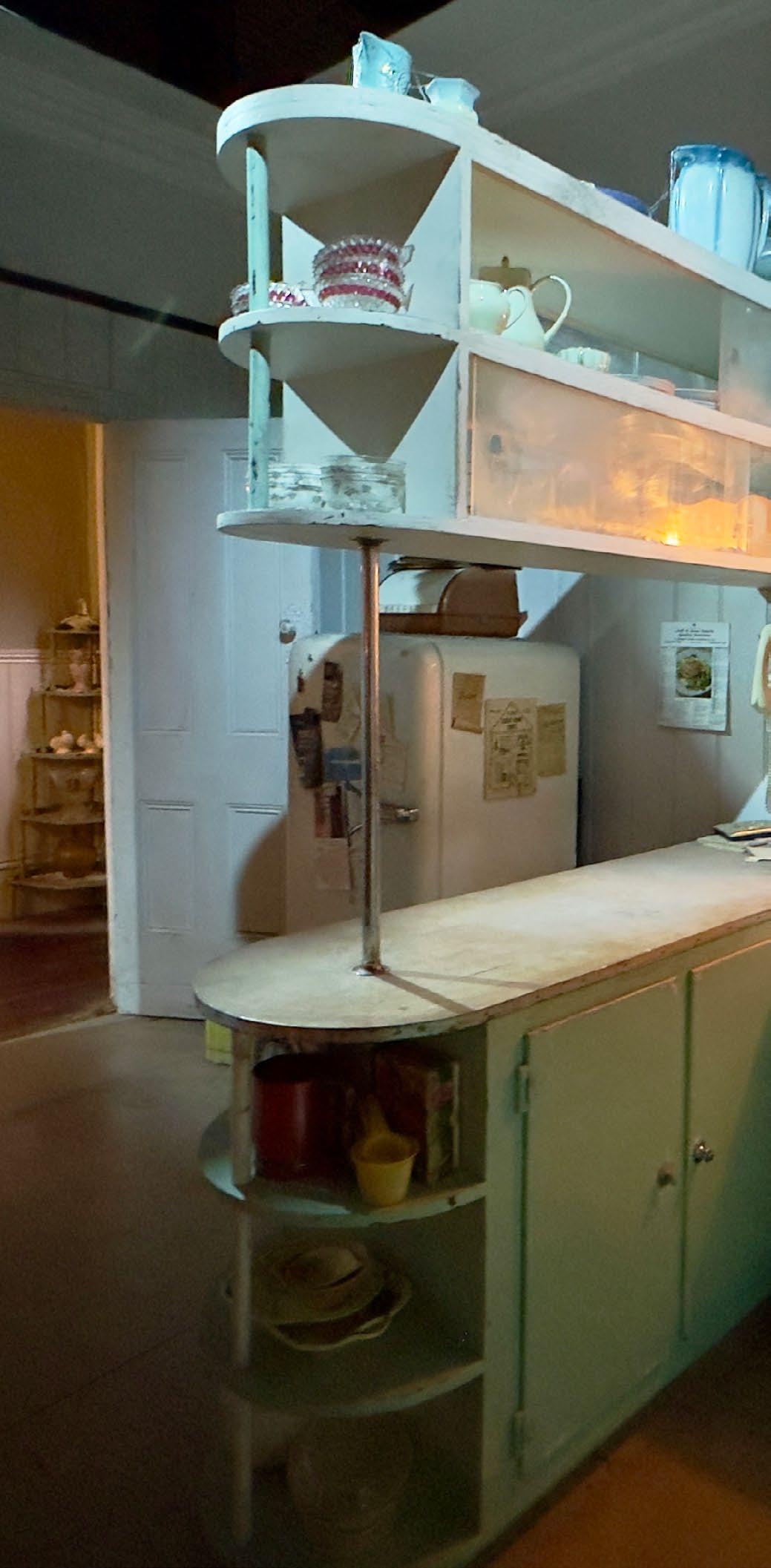
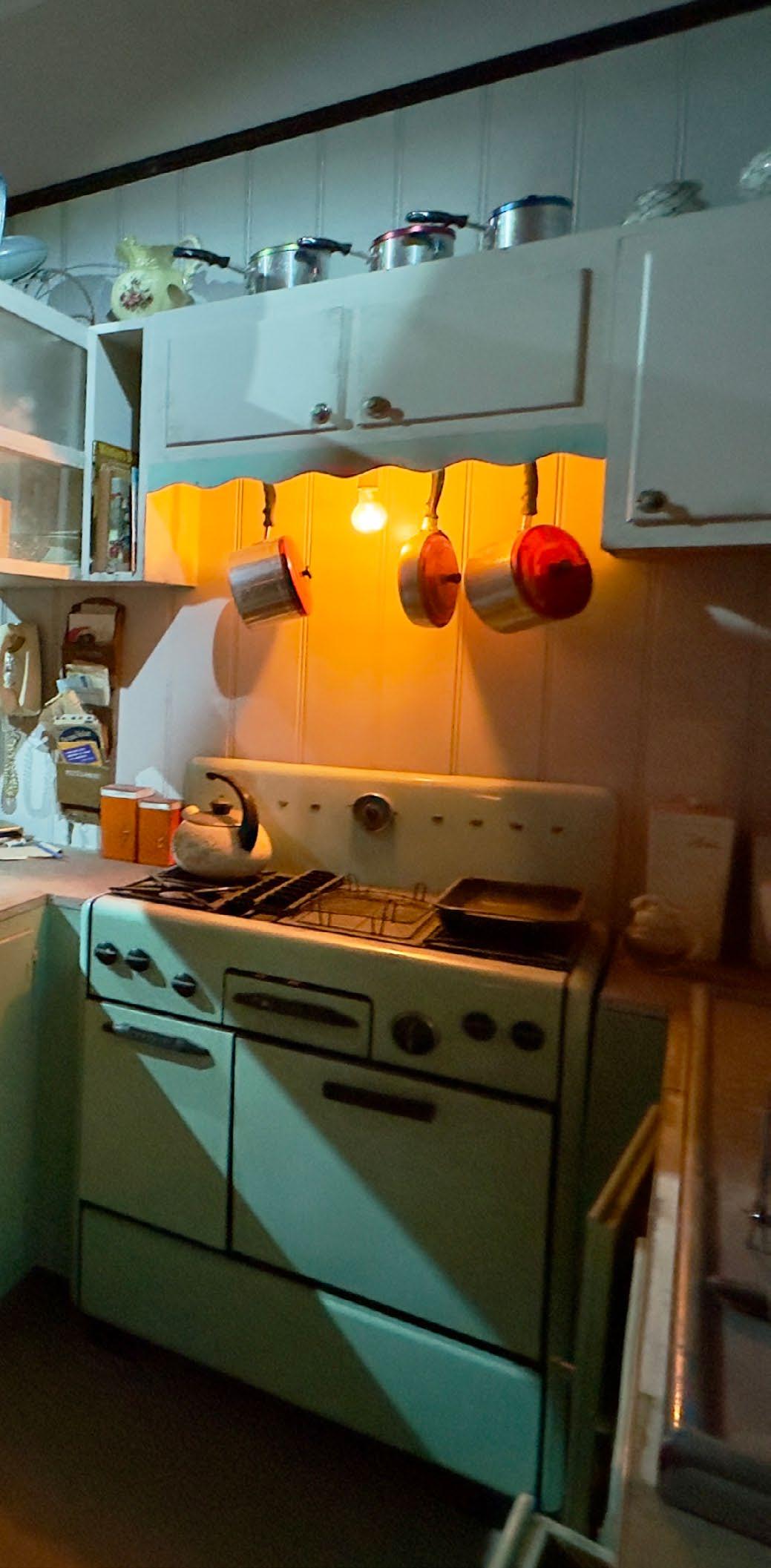
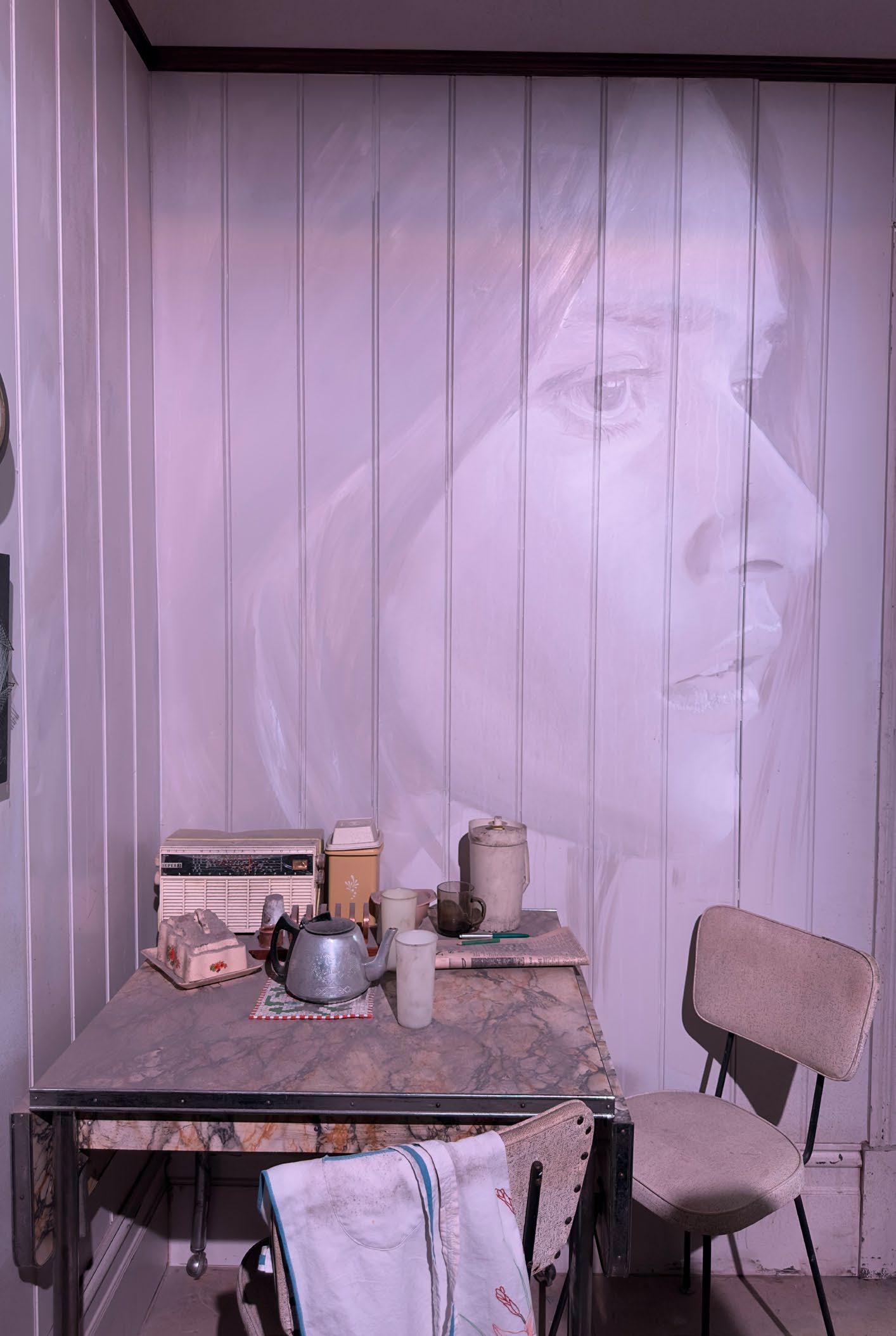
The Australian artist Rone has reconstructed a Chadstone shop front as a nostalgic Australian weatherboard house complete with several rooms and a backyard with a large garden shed, Hills Hoist and a car! Everything is completely constructed and precisely placed, including cobwebs and dust. It is an amazing sight to tour the house with time-worn furniture and décor, especially within the contemporary architecture of the Chadstone Shopping Centre.
Fig.4, 5 & 6: HOME – by Rone
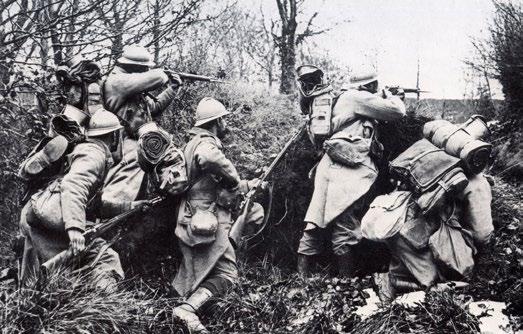
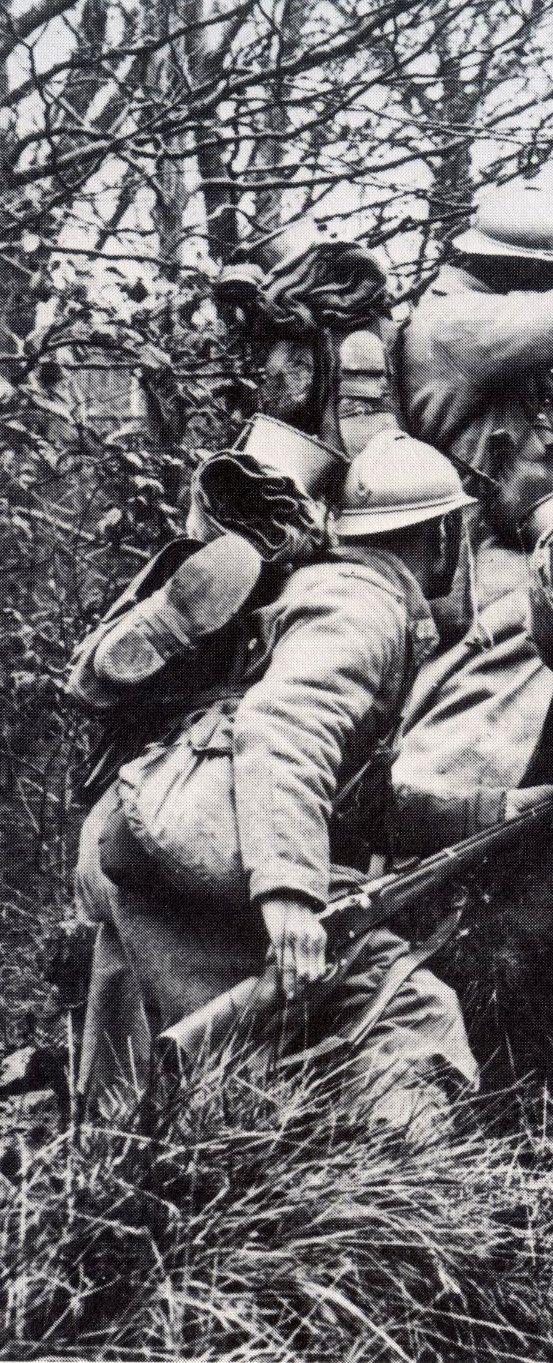
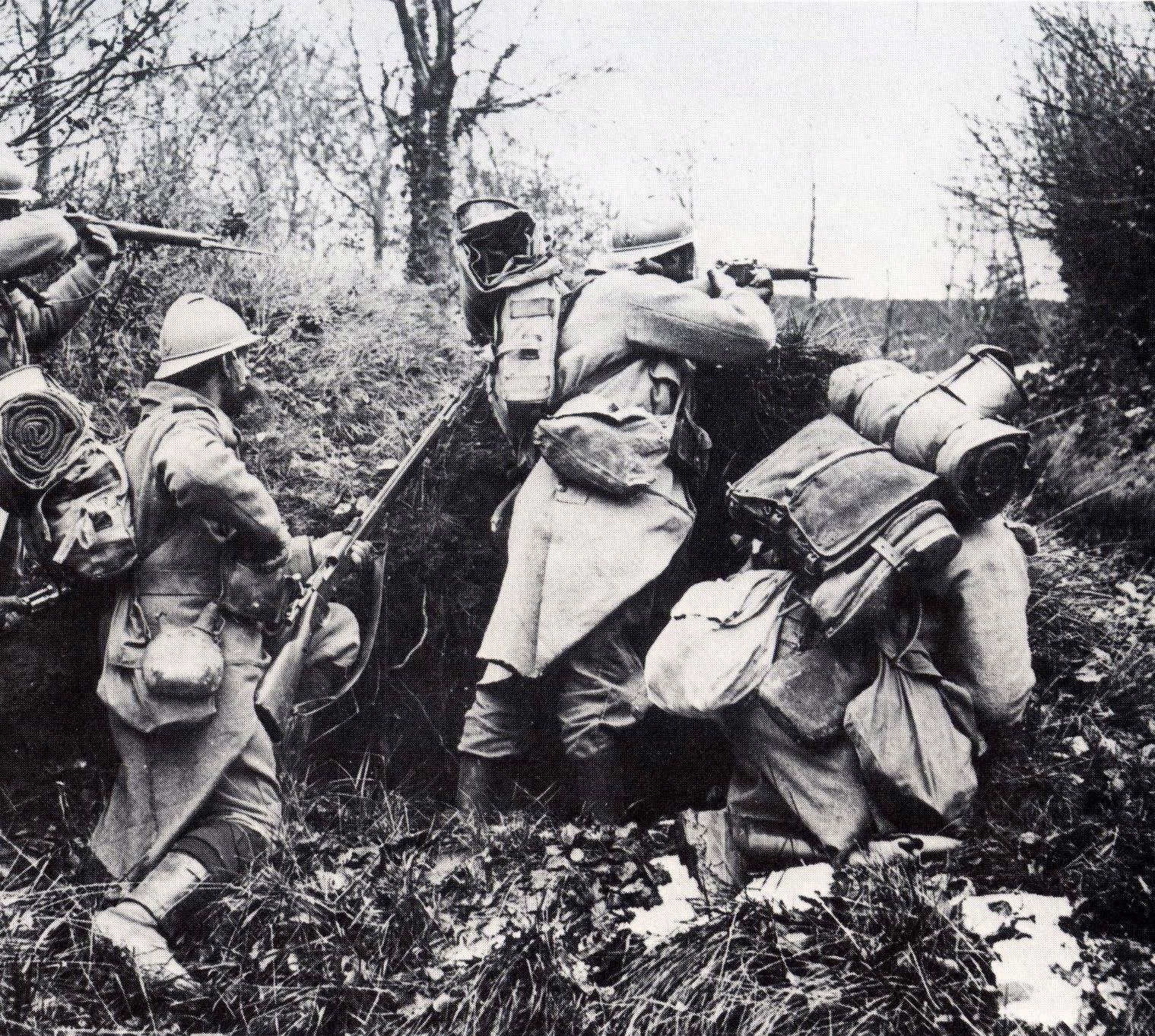
Fig. 1 main: A posed tableau of French infantrymen revealing the new ‘horizon bleu’ uniform that came into service in 1915 to replace the highly conspicuous scarlet and dark blue uniform previously used in battle.
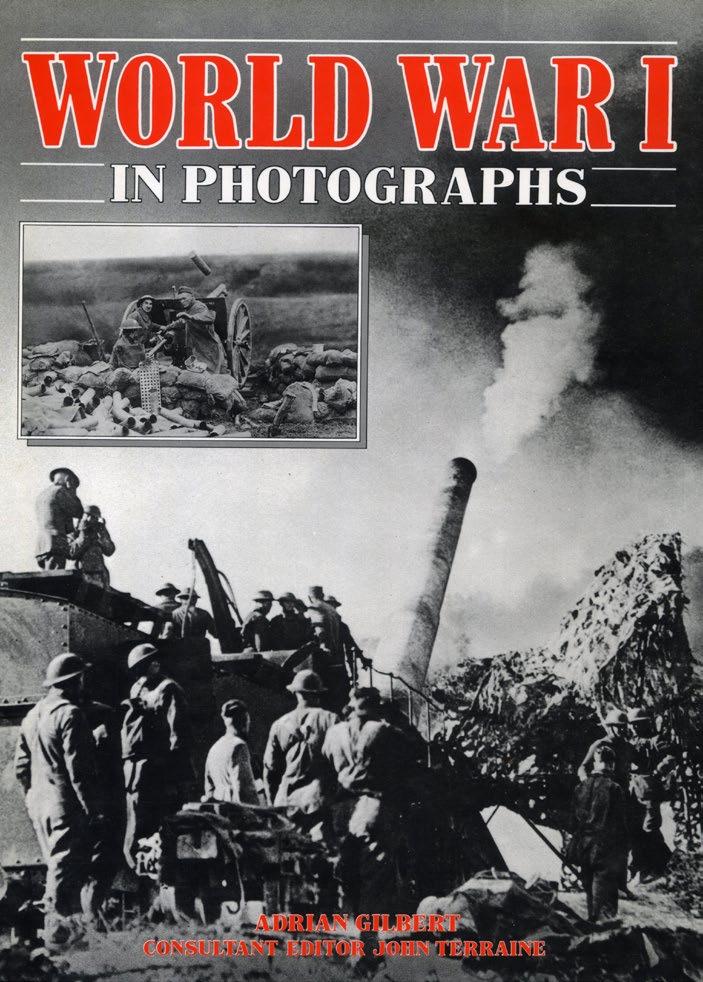
Fig. 2: ‘Front cover of the book World War I in Photographs’ by Adrian Gilbert. Manned by US coastal artillerymen, a 14-inch railway gun fires upon German positions in the Argonne. Inset: The US quick firing 75mm field gun.
Australian photographer John Pollard FRPS died in 2018, leaving behind not just a grieving family and a substantial legacy of photographic work in public and private collections, but also an eclectic collection of books representing his varied interests over his life. In this ongoing column, I hope to stimulate interest and reflection on various aspects of photography based on the perusal of John’s collection of books. In the process, I also aim to periodically shine a light on John’s career and practice.
Dr Robin Williams ASIS FRPS
Pondering Pollard 31:
World War I in Photographs’
by Adrian Gilbert, Ed., John Terraine
Pub. Military Press, New York, 1986 and Orbis Book Publishing Company, London, 1986
In many ways this is not a photographers’ book – the reproduction quality is quite poor and appallingly there is not a single photographer credit on the 550 photographs reproduced; yet in other ways it provides ample evidence of the importance photography had during the “Great” War. I’m not sure why John Pollard would have it
in his collection; perhaps he was inspired by the wealth of art, literature and music which flowed as a result of the trauma of WWI.
Australia’s involvement in the First World War began when Britain and Germany went to war on the 4th August 1914; both Australian Prime Minister Joseph Cook and opposition leader
Andrew Fisher, who were in the midst of an election campaign, pledged immediate support for Britain. The outbreak of war was greeted in Australia, as in many other colonial countries, with great enthusiasm. The first significant Australian action of the war was the Australian Naval and Military Expeditionary Force’s (ANMEF) activity in the Pacific; the ANMEF took possession of German New Guinea and of the neighbouring islands of the Bismarck Archipelago. On the 25 April 1915 members of the Australian Imperial Force (AIF) landed on Gallipoli in Turkey with troops from New Zealand, Britain, and France. The next year Australian forces fought campaigns on the Western Front – the Somme, Bullecourt, Messines, Ypres and so on – and then in the Middle East. The Middle East campaign began in 1916 with Australian
troops taking part in the defence of the Suez Canal and the allied re-conquest of the Sinai Desert. In the following year Australian and other allied troops advanced into Palestine and captured Gaza (sounds eerily familiar, doesn’t it, given that this was dubbed ‘the war to end all wars’). For Australia, the First World War remains the costliest conflict in terms of deaths and casualties. From a population of fewer than five million at the time, over 400,000 men enlisted, of whom more than 60,000 were killed and 156,000 wounded or taken prisoner. Sadly, almost every town in Australia has a War Memorial recording the names of ‘the fallen’ –in many cases whole families and often every able-bodied man in the town.
War photography has played a significant role in shaping historical documentation, providing a
visual narrative of conflicts and their impact on societies. Through powerful images war photographers have influenced public perception, challenged ethical boundaries, and sparked social change. The emotional impact of war photography on viewers can evoke empathy, raise awareness, and provoke critical discussions about the human cost of war. The role of war photography extends beyond documentation to become a powerful catalyst for social change.
The earliest uses of war photography can be traced to the Crimean War and the American Civil War. Each of the World Wars I and II created a significant change in the importance of photography in conflict, and then the Vietnam War’s ‘living room’ impact through televised and photographed images put war
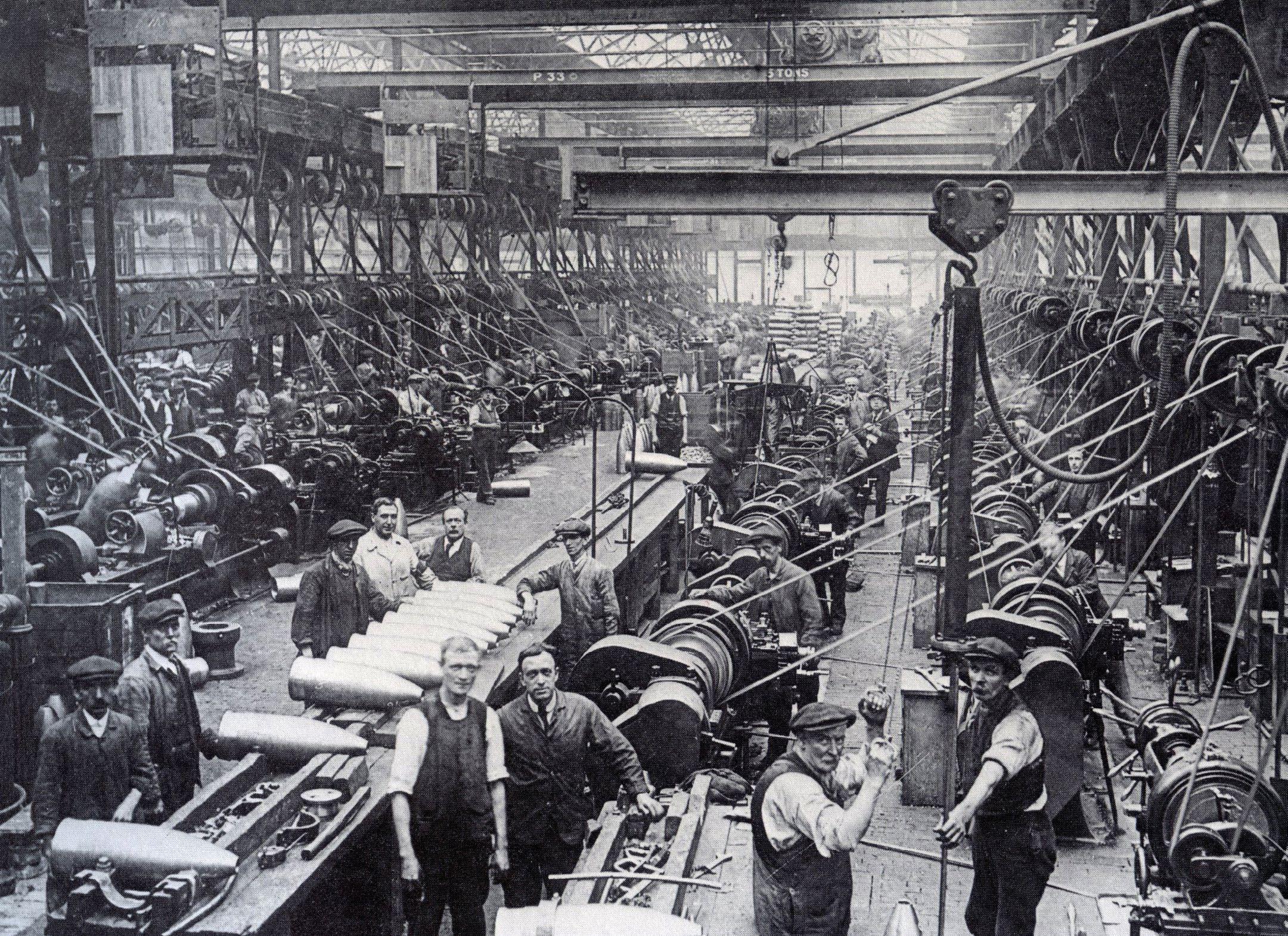
Fig. 3: The interior of a British munitions factory c 1915; manned initially by older men, then by women. During World War I over 170 million shells were fired by Britain at an average cost of £5 each. On the first day of the Battle of Verdun the Germans fired one million shells at the French army.
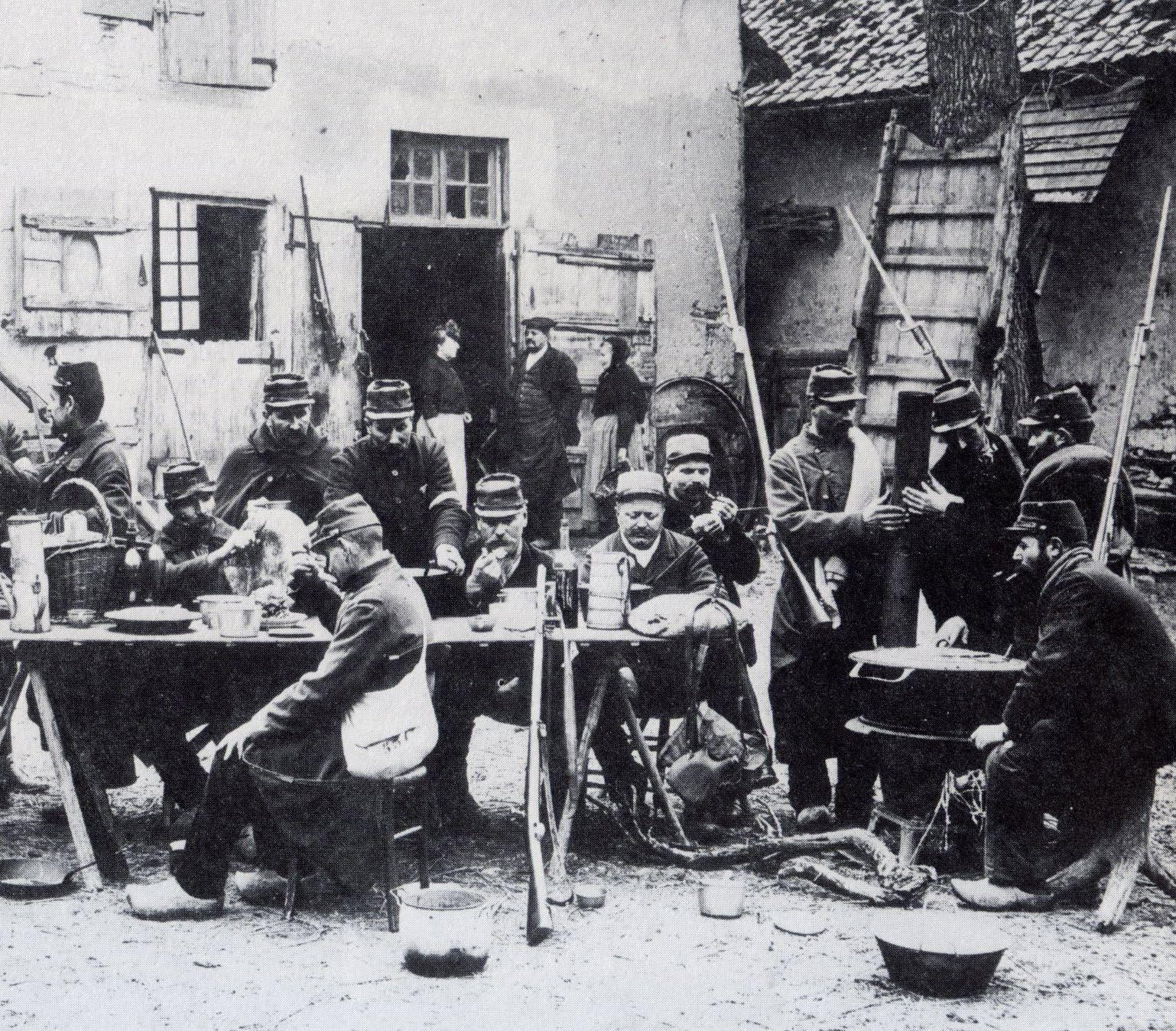
Fig. 4: A meticulously arranged propaganda shot of French troops relaxing after a spell in the trenches. The reality was very different: common complaints included lack of leave/respite, poor food, insanitary conditions and inadequate medical attention.
images in the driving seat of public opinion. The digital age's real-time dissemination of images from conflicts like Iraq, Afghanistan and now Iran has changed forever how we respond to wartime images.
‘War is many things, most of them barbaric. But what disturbs me most about it is its repetitiveness: the same play, just with a new cast. That being said, nothing seems more important to me than documenting the plight of those caught up in it. Right at this very moment, human beings are frenetically killing each other in countries across the world. All we can really do is bear witness; to hold up a mirror to man’s
inhumanity to man in the scant hope that future generations will succeed where we have so conclusively failed.’
Jack Picone, War Photographer, Al Jazeera. 2015.
War photographers in the nineteenth century, technically unable to capture views of actual combat, were restricted to making portraits of the living or taking views of landscapes after events had already taken place there. Roger Fenton’s ‘Valley of the Shadow of Death’, taken in the Crimea on 23 April 1855, and George Barnard’s ‘Scene of General McPherson’s death’, an albumen photograph from 1866, both show us nothing but the debris left after a battle.
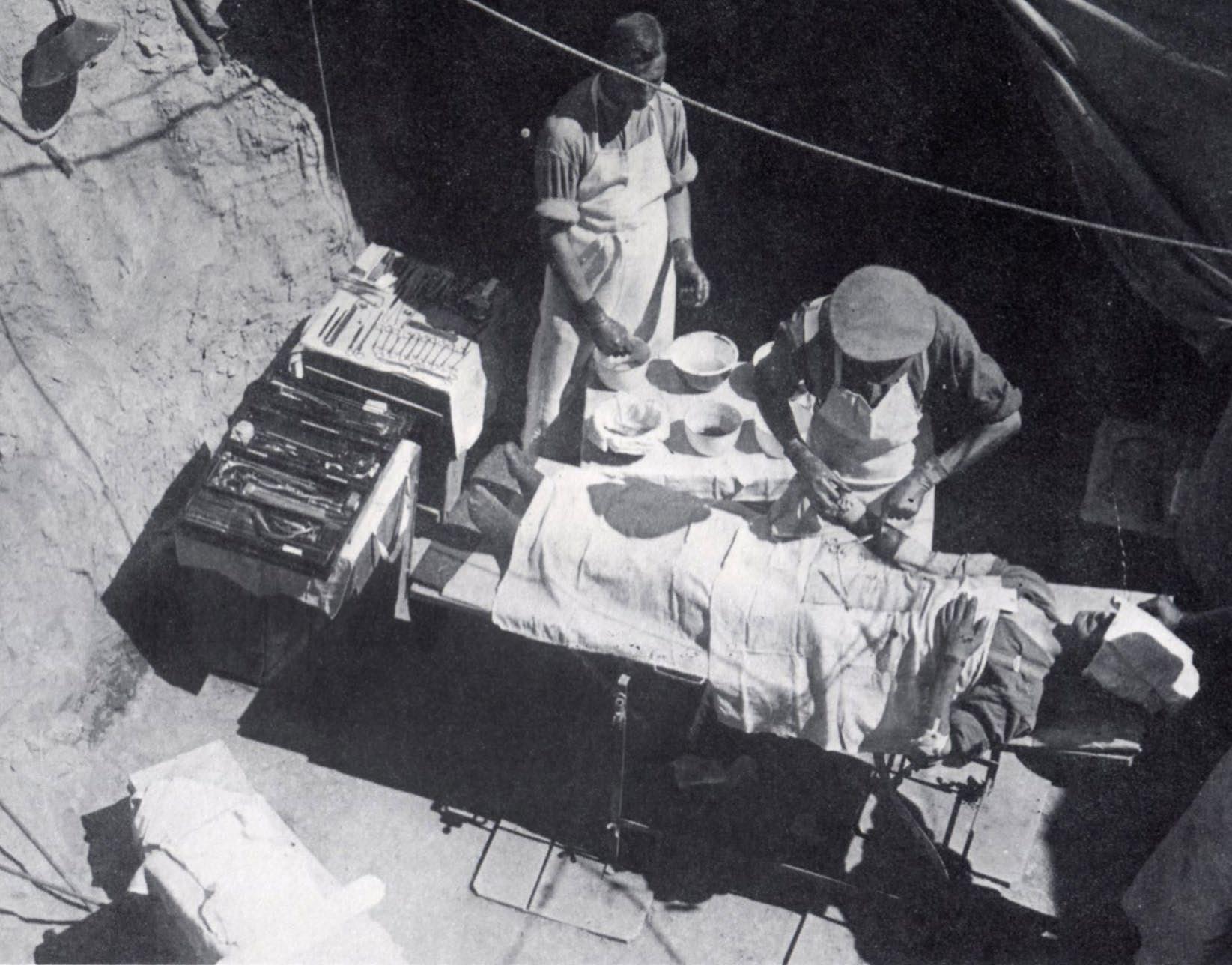
Fig. 5: Surgery to remove bullets in an open-air operating theatre on the edge of the battlefield in Palestine.
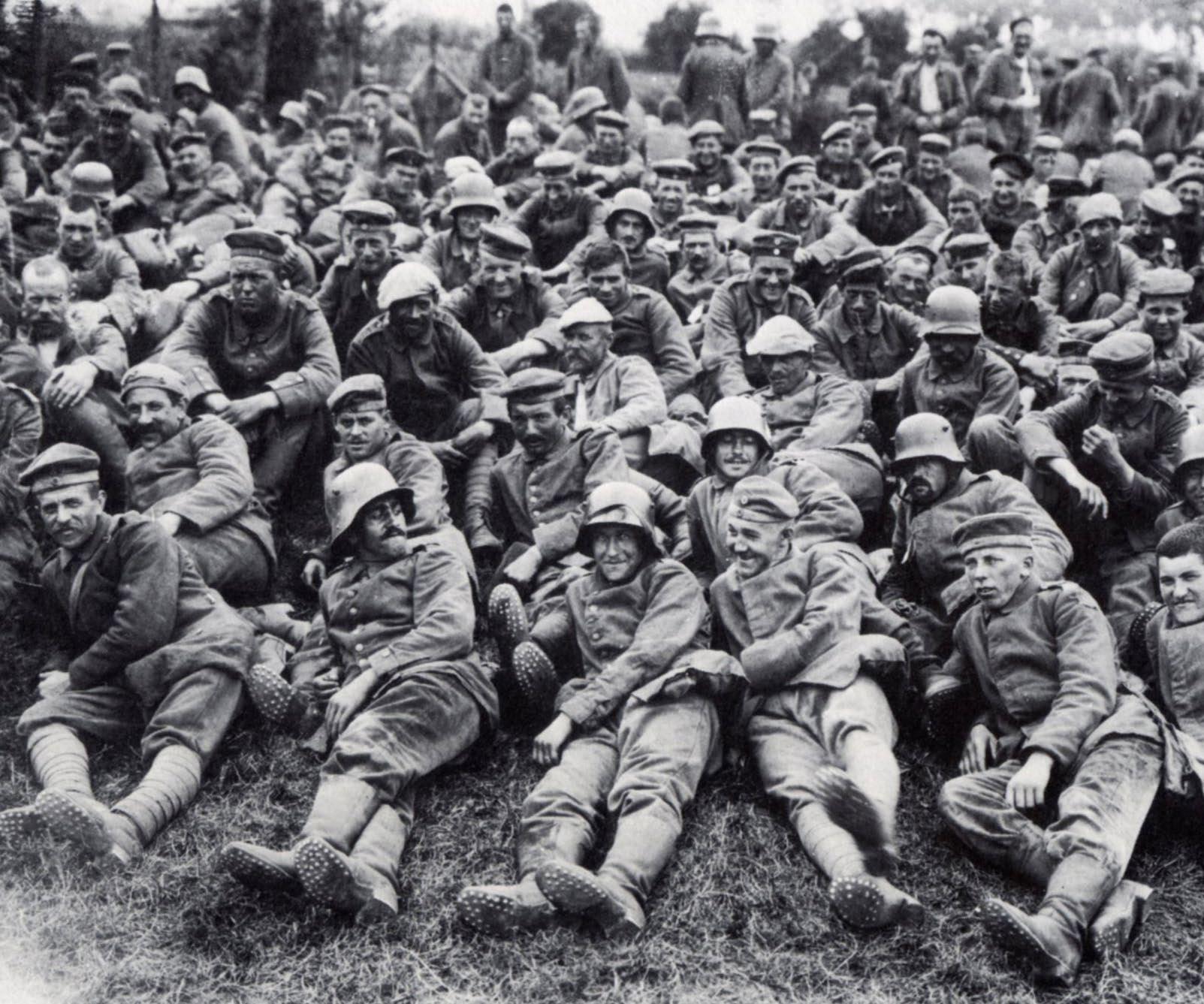
Fig. 6: German prisoners taken during the Battle of Messines Ridge. The British and Australian divisions of the Second Army captured over 7,500 Germans. Why do they look so happy? Was the photographer very amusing or were they happy to be alive?
Arguably no event susceptible to being photographed has received more attention than war. Many groups have been interested in the cameras; precise visual documentation of the people, places and activities of warfare; military officers and decision makers in the field; political decision makers at home; opponents of war seeking visual proof of its horrors and inhumanity; ordinary citizens trying to visualise the places in which armies confronted one another and loved ones who are fighting or have fought; and ex-combatants seeking mementos of their comrades-in-arms, camps and equipment, and the people and landscapes encountered on campaigns far from home. When wars are over, societies seek visual means of commemorating the sights of heroic turning points or tragic loss. Artists fulfilled these needs entirely before 1839. Photography first supplemented, then by the 1860s largely replaced, the artist as visual recorder of the preparations preceding combat,
the fighting itself, and its horrific consequences for humans and their environment.
Even when the bulky and cumbersome equipment needed for daguerreotypes or wet plate photographs narrowly restricted photographers’ movements in the field, photographic entrepreneurs were quick to seize opportunities to act either as independent operators or as official observers of military operations. War photography went through several stages before 1920, corresponding roughly to advances in photographic technology. Before the wet plate process was announced by Frederick Scott Archer in 1851, warfare images –daguerreotypes or calotypes – with their long exposures produce relatively static ‘staged‘ photographs of men in uniform, landscapes and buildings.
World War I generated more photographs than all previous wars put together. They can be roughly categorised under three headings:
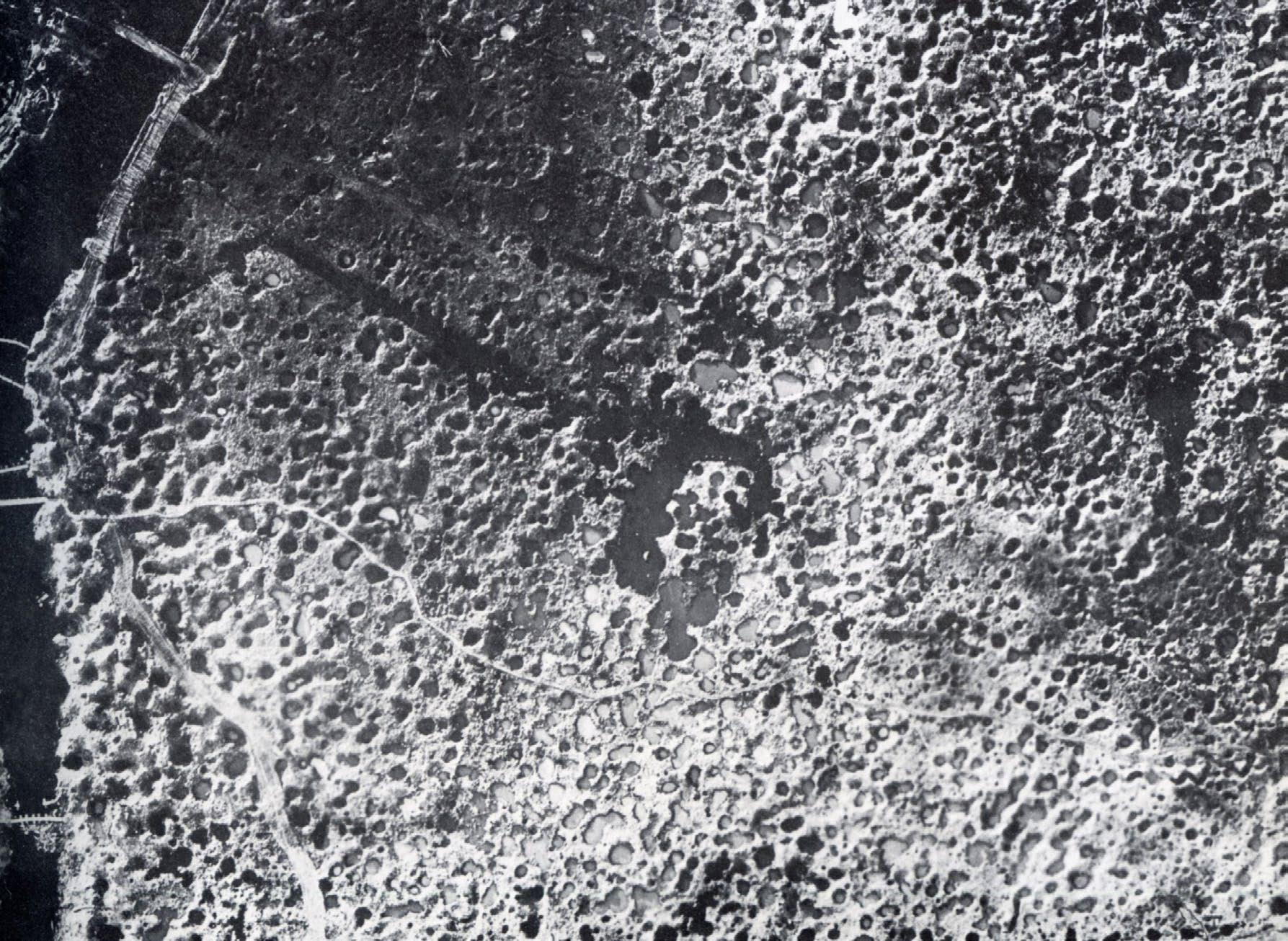
Fig. 7: The negative consequence of the ten-day-long bombardment of the German forces – which saw 65,000 tons of metal thrown at the landscape – was the complete destruction of the natural drainage system. The combination of the bombardment and heavy rainfall led to the quagmire that became iconic with Ypres.
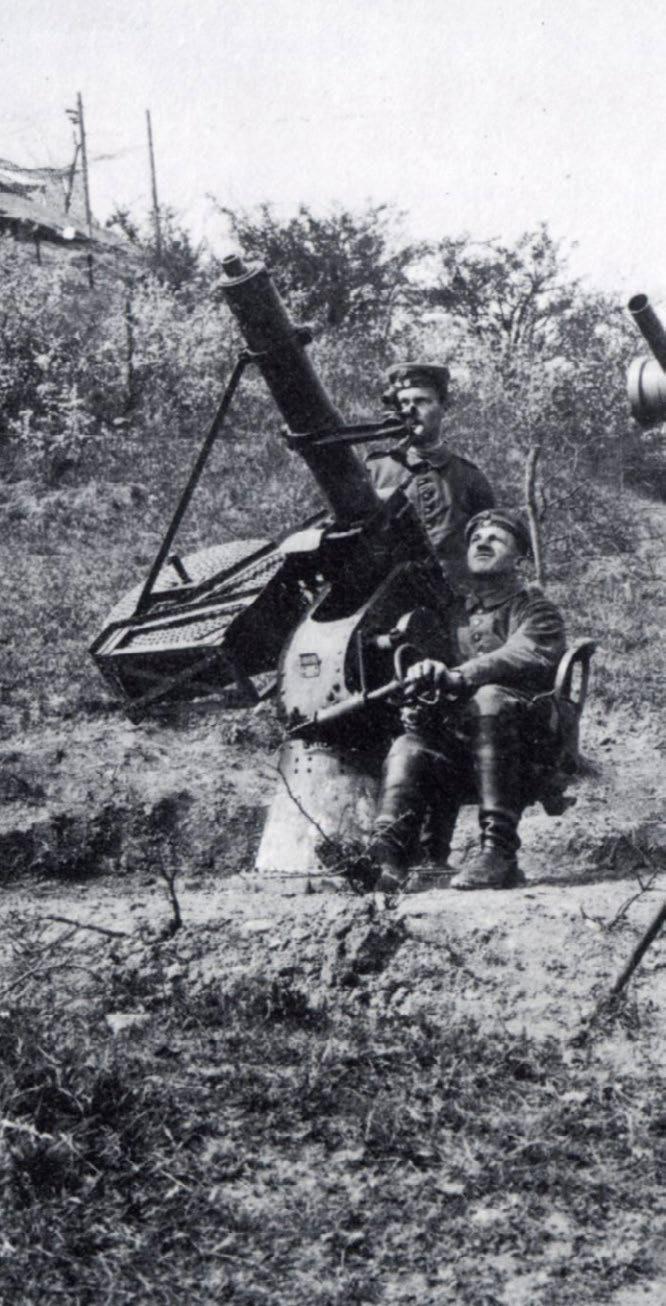
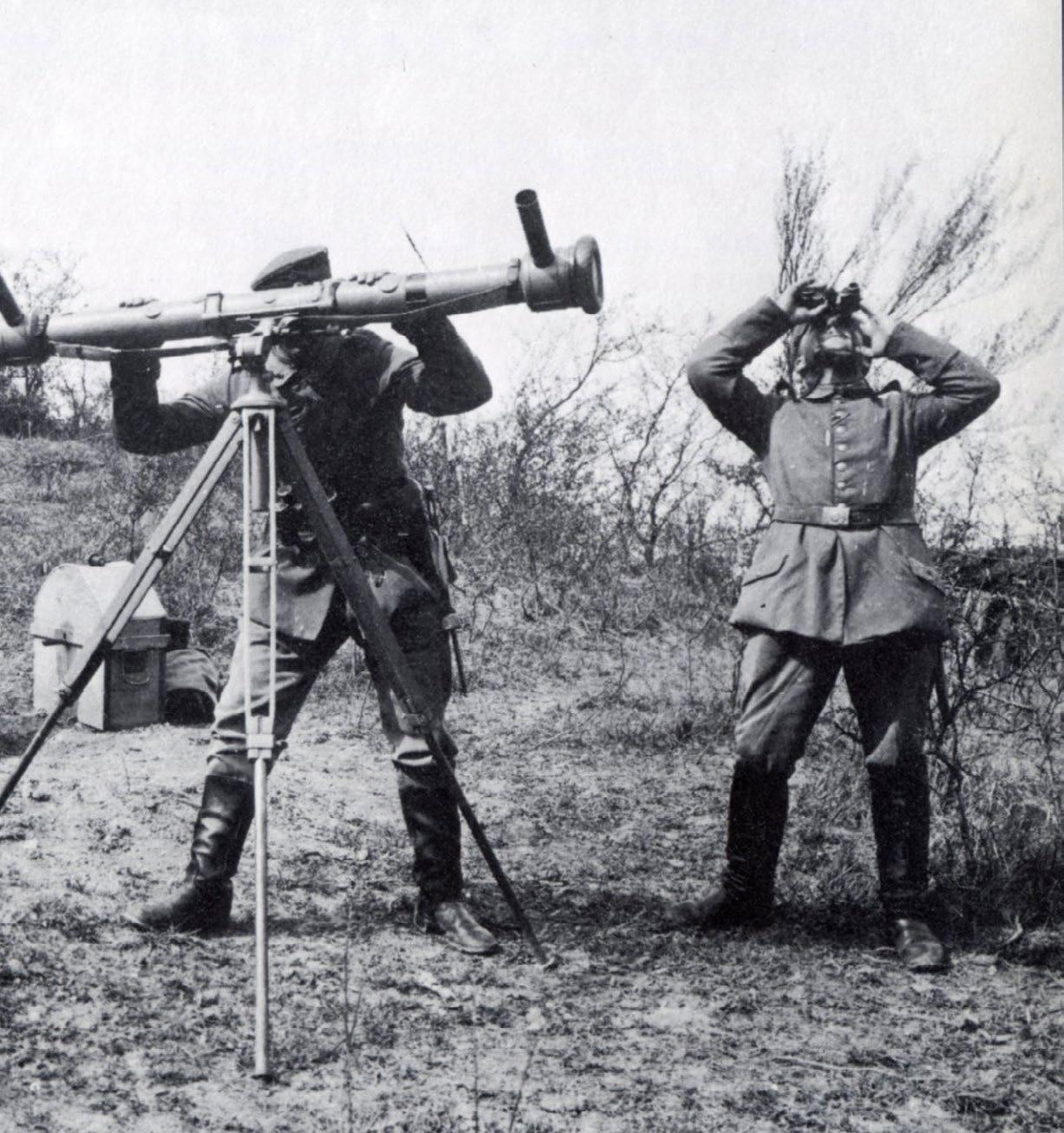
Fig. 8: Airbourne warfare first became a reality in WW I and defence systems to combat aerial bombardment became important. A German stereoscope calculated the range and height of enemy aircraft for the rapid-firing Flak gun to shoot down.
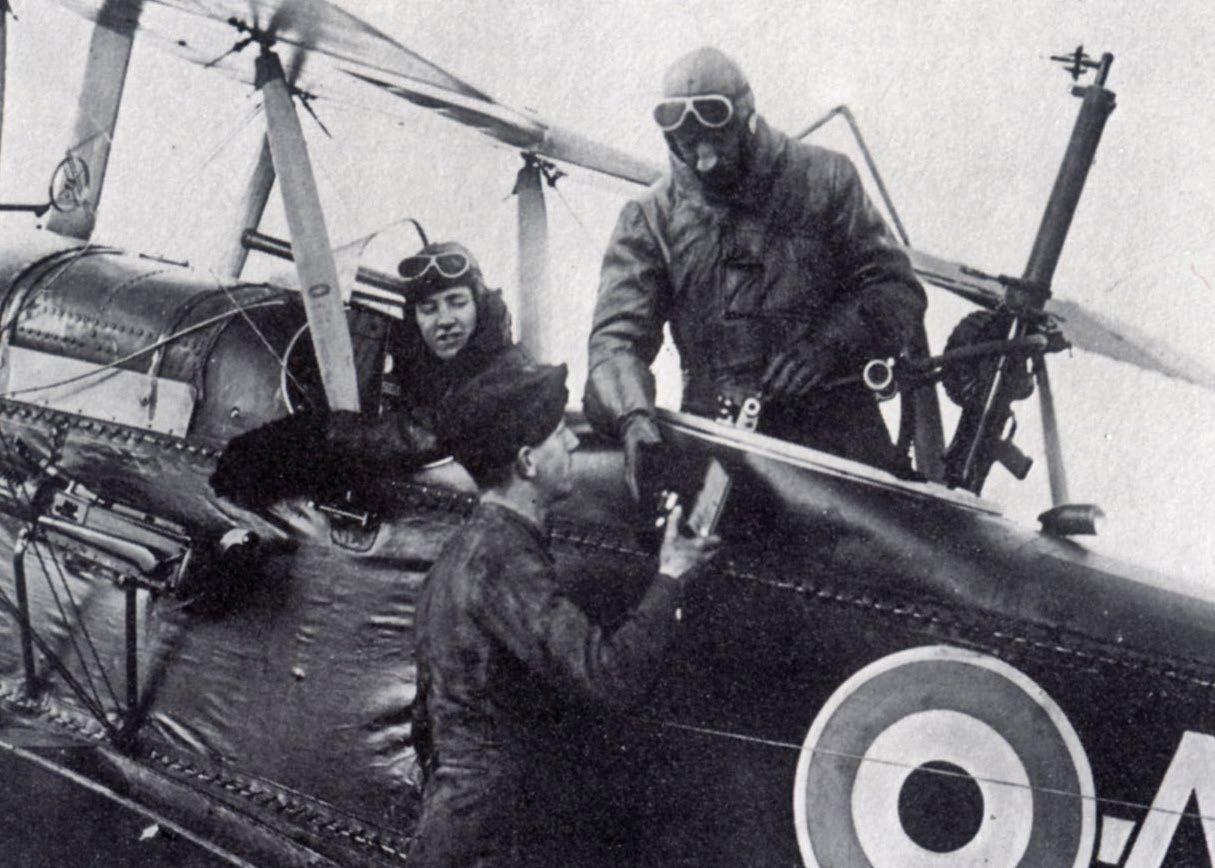
Functional pictures made for operational or administrative purposes; Official, informational, propaganda, or historical photographs; and private images taken by ordinary civilians and service personnel. Functional photographs were quantitatively the most important. One example was the millions of aerial reconnaissance photographs taken by all the battling forces. Another was military medical photography, which recorded the construction and running of hospitals and the transportation, treatment, and rehabilitation of casualties. Another example of functional photography was for identification purposes; in 1915, for example, the German authorities, in former Russian Poland, set out to produce two million identity photographs, using 60 photographers and 250 clerks, who reportedly achieved an output of 30,000 photographs a day.
All the major fighting forces sponsored official photographs of various aspects of the war, many of which survive in institutions like Britain's Imperial War Museum (IWM). Although the organisation of official photography varied from
country to country, the key objectives everywhere were supplying images to the press, producing propaganda for domestic, neutral, allied, and enemy consumption, and creating an historical record, especially important, for example, in distant colonial supporters like Australia and Canada. The Germans took energetic action from the beginning and redoubled their efforts with the creation of the ‘Bild und Filmamt’ (BUFA) in 1916. The French ‘Section Photographique de L’Armée’ was not formed until April 1915, while the British created a succession of bureaucratic bodies beginning with ‘Wellington House’ which continued to evolve until they were absorbed into the Ministry of Information in 1918. Official photographers were generally recruited from the ranks of professionals; nearly half of the British ones, for example, were from the ‘Daily Mirror’ newspaper; were subject to military supervision in the field; and had their work vetted and censored before distribution to the press and other agencies. There were only two official Australian WWI photographers: George Hubert
9: One of the principal roles for aircraft in the first World War was aerial reconnaissance; to establish the position and movements of enemy troops and to monitor the accuracy of allied bombardments. Here we see a ground photo-technician handing a new set of plates to the observer on a RE8 aircraft.
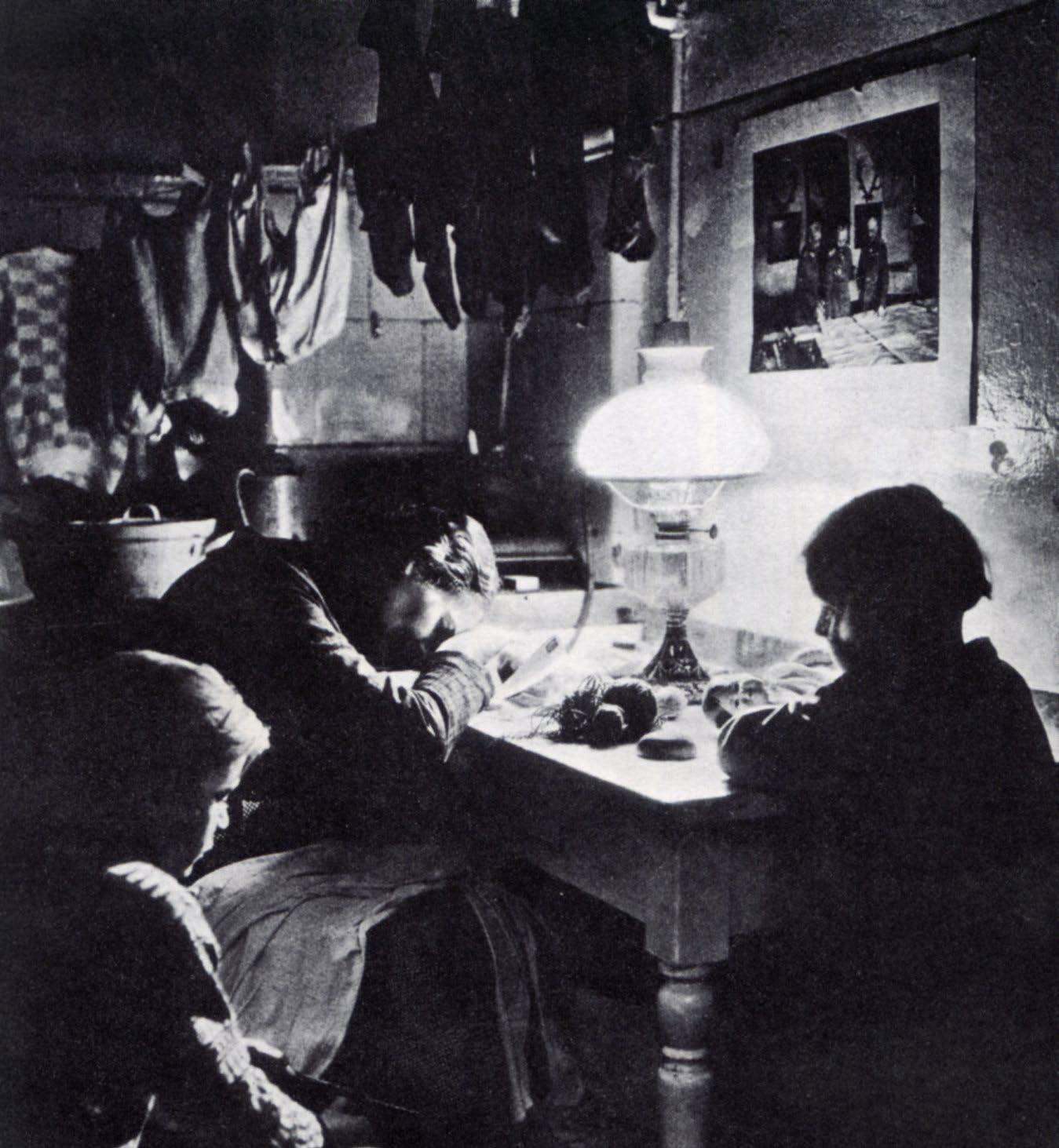
Fig. 10: The realities of war away from the battlefield are revealed in this highly posed photograph of a despairing mother with her children, the newly opened telegram on the table informing her of the death of her husband, while the Directors of the war – the Kaiser flanked by von Hindenburg and Ludendorff – look down from a photograph on the kitchen wall.
Fig.
Wilkins, who worked with an objective reportage style (albeit heavily vetted and edited), and Frank Hurley, who adopted a ‘constructed’ hyper-real approach using composites and retouching (see ‘Pondering Pollard 7 '). Still others modified Wilkins’ output as the basis of artistic ‘Pictorial’ photographs to ‘heroise’ the war.
The illustrated Press of belligerent and neutral countries was awash with photographs throughout the war, and initial demand for pictures nearly overwhelmed the official bodies supplying them. Commercial firms like Underwood and Underwood continued to find war pictures to sell to the public, and countless photographs were issued as postcards. However, none of the wars prior to the Korean and Vietnam conflicts was covered to any significant extent by freelance photojournalists. All major war zones were controlled by the military and all
the photographers working in them, although mostly pressmen, were carefully selected and strictly supervised.
Although many personnel had carried cameras in the Russian, Japanese and Boer Wars, the First World War was the first major conflict in which private photography took place on a large scale. Tens of thousands of portable roll film cameras like the Vest Pocket Kodak were owned and used by servicemen. Despite official prohibitions on both sides, soldiers continued to take pictures, both as souvenirs and, in some cases, to sell. As the war progressed, jaunty images of still smart soldiers with their comrades and pets gave way to pictures of grim faced, shabby veterans, looking more like slaves than soldiers, ruins, devastation and, breaking the ultimate taboo, piles of corpses.
“To represent the war in painting, literature, or photography, one must have experienced it … one must have waded through mud, run beneath showers of shells; one must have heard the screams of the wounded, and witnessed the long rows of hideous corpses … only then it is possible to translate the sufferings, anxieties and failures of men thrown into the terrible ordeal of modern battle.”
Le Rousseur, 1917.
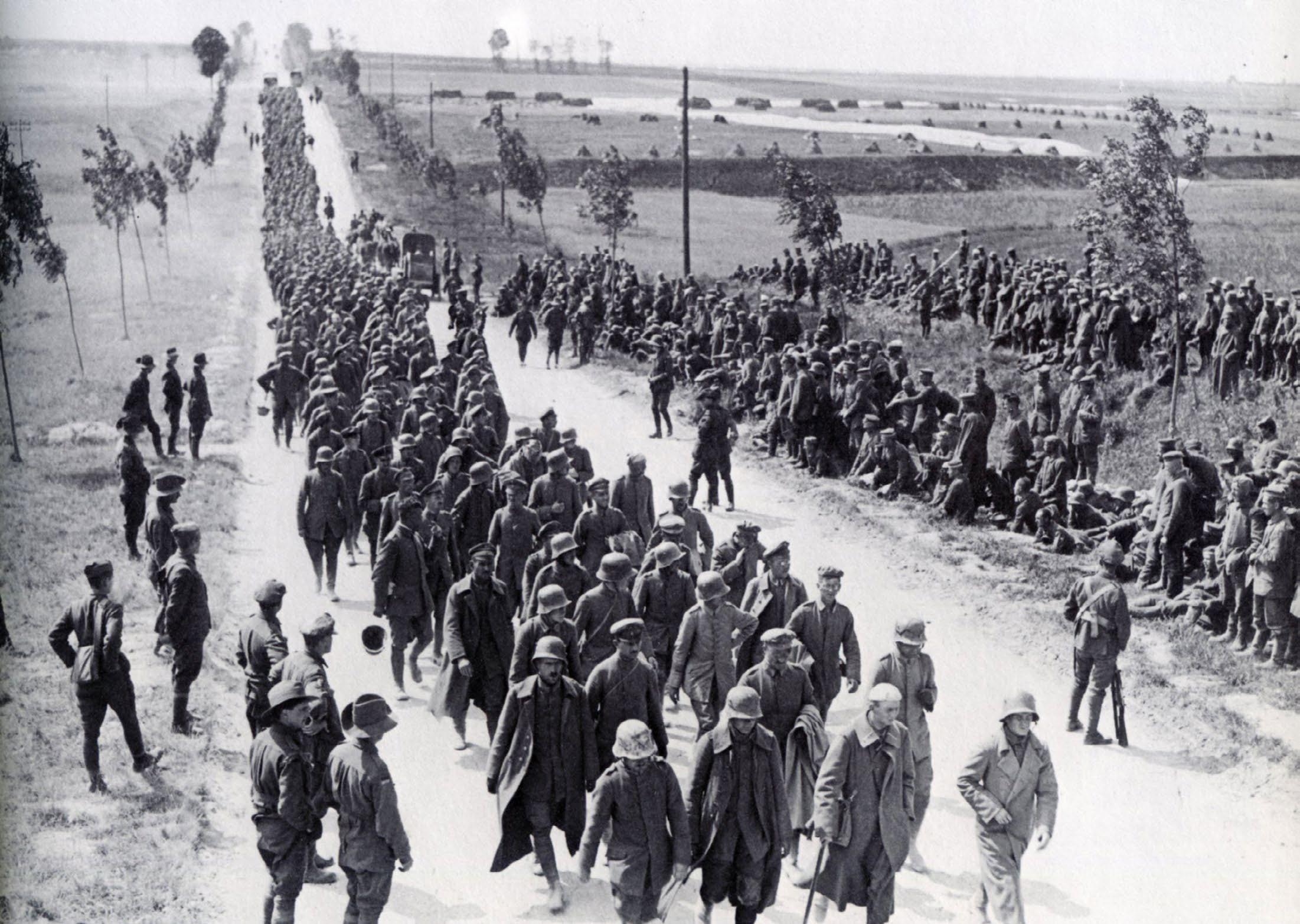
Fig. 11: Australian troops in ‘Slouch Hats’ watch some of the 30,000 German troops captured at Amiens march to their prison camp. The Australian and Canadian Corps were critical elements at the Battle of Amiens which was one of the most important victories of the War. The German Commander Ludendorff called it ‘the blackest battle for the German Army.’
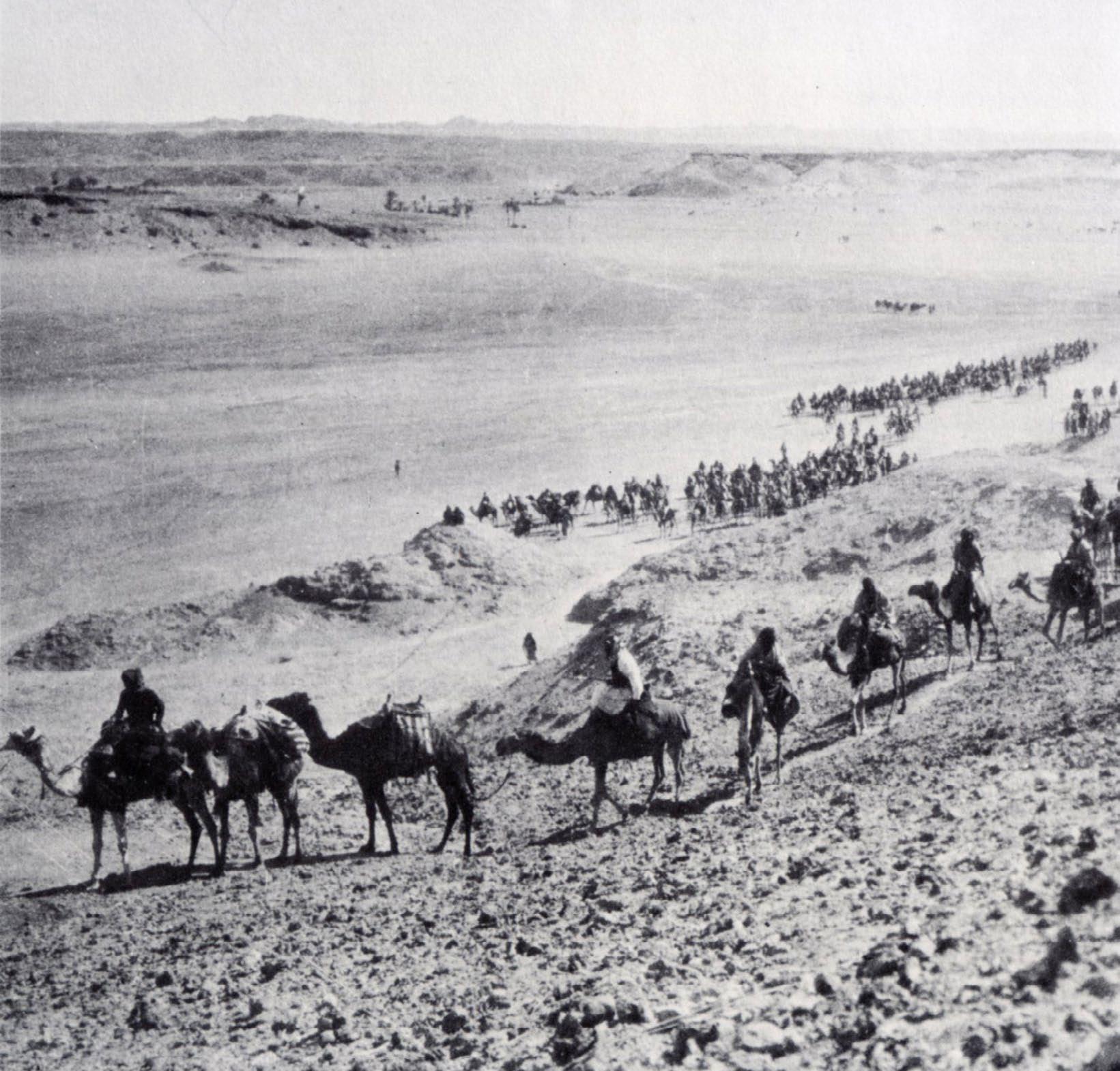
Fig. 12: Colonel T. E. Lawrence was a keen photographer himself and recorded many of his desert adventures during the Arabian conflicts; in this case Faisal’s troops coming out of the desert in January 1917.
My ICM journey
Palli Gajree OAM, Hon.FRPS
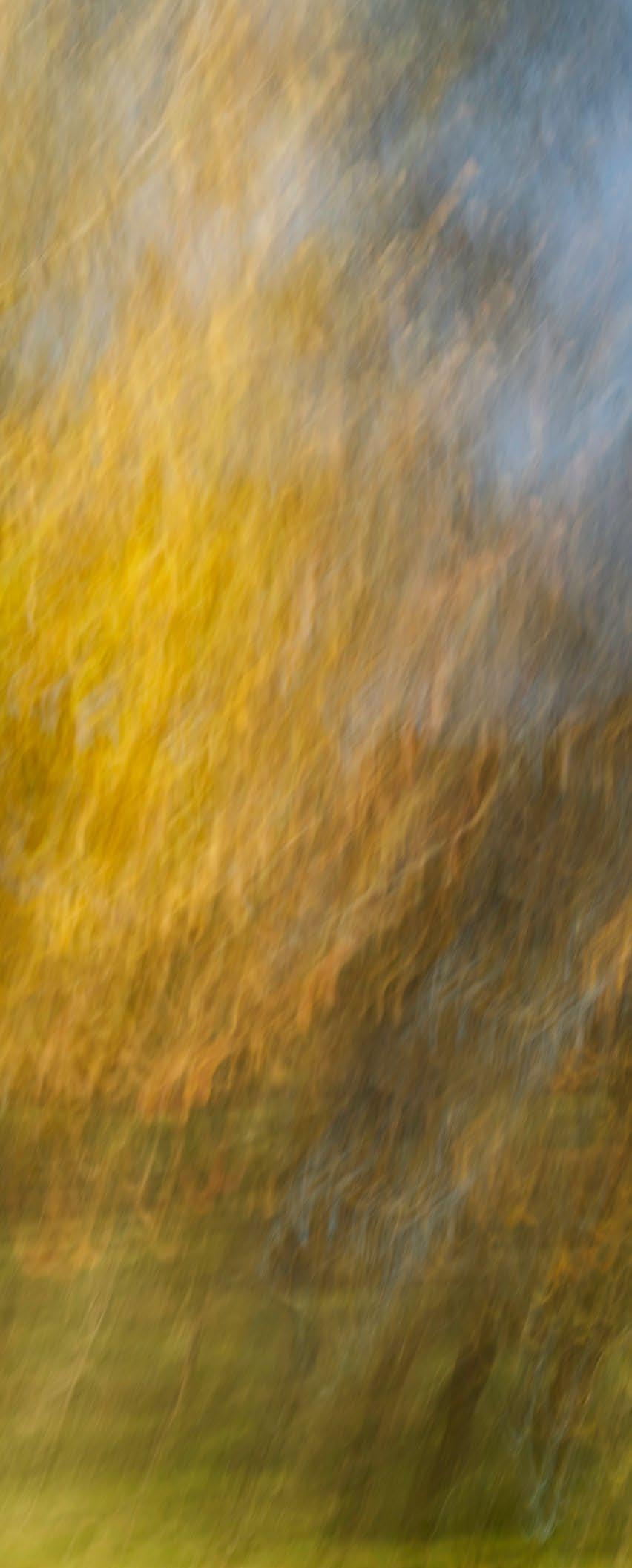
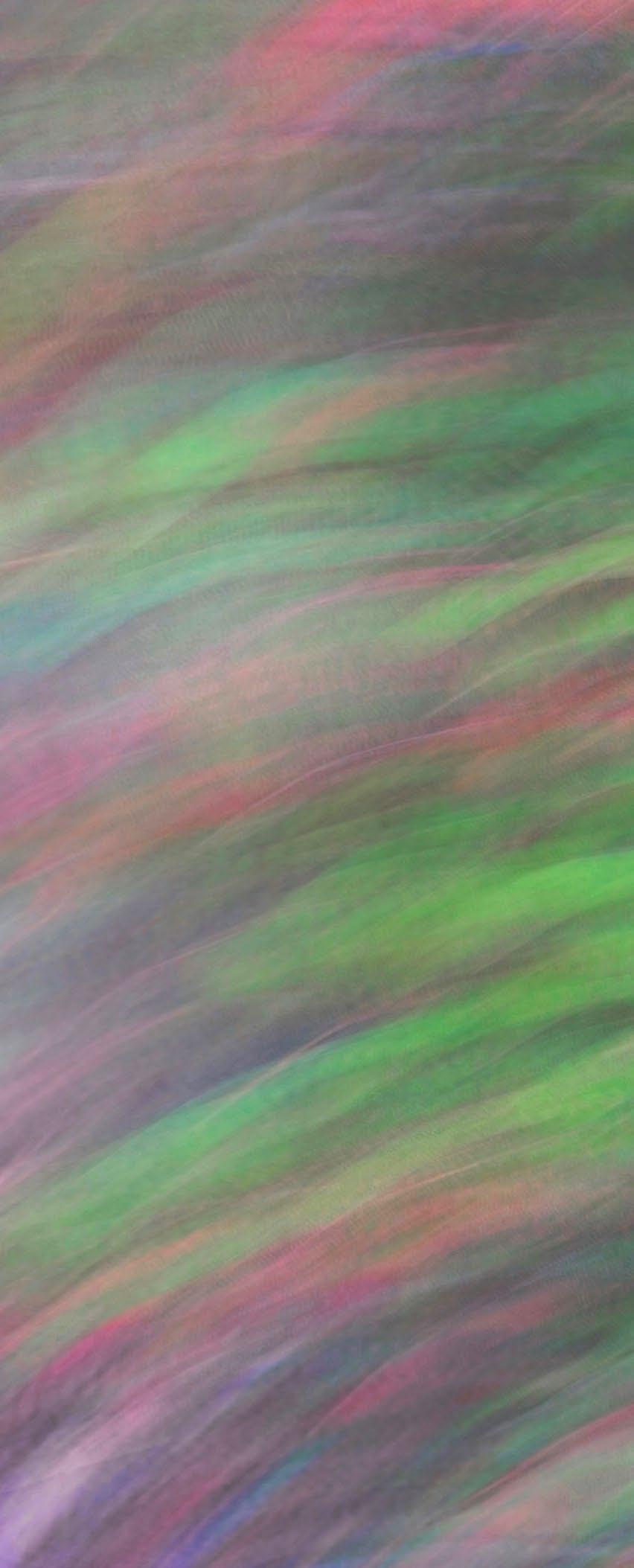
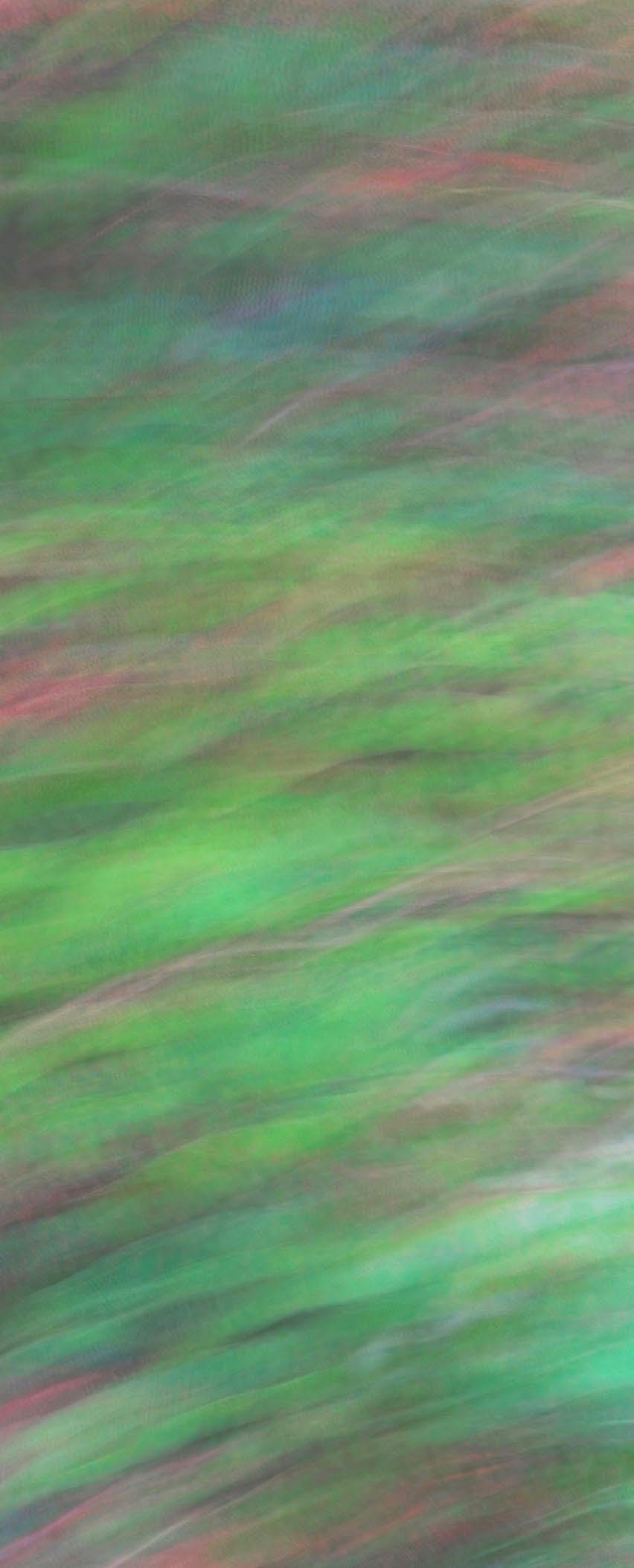
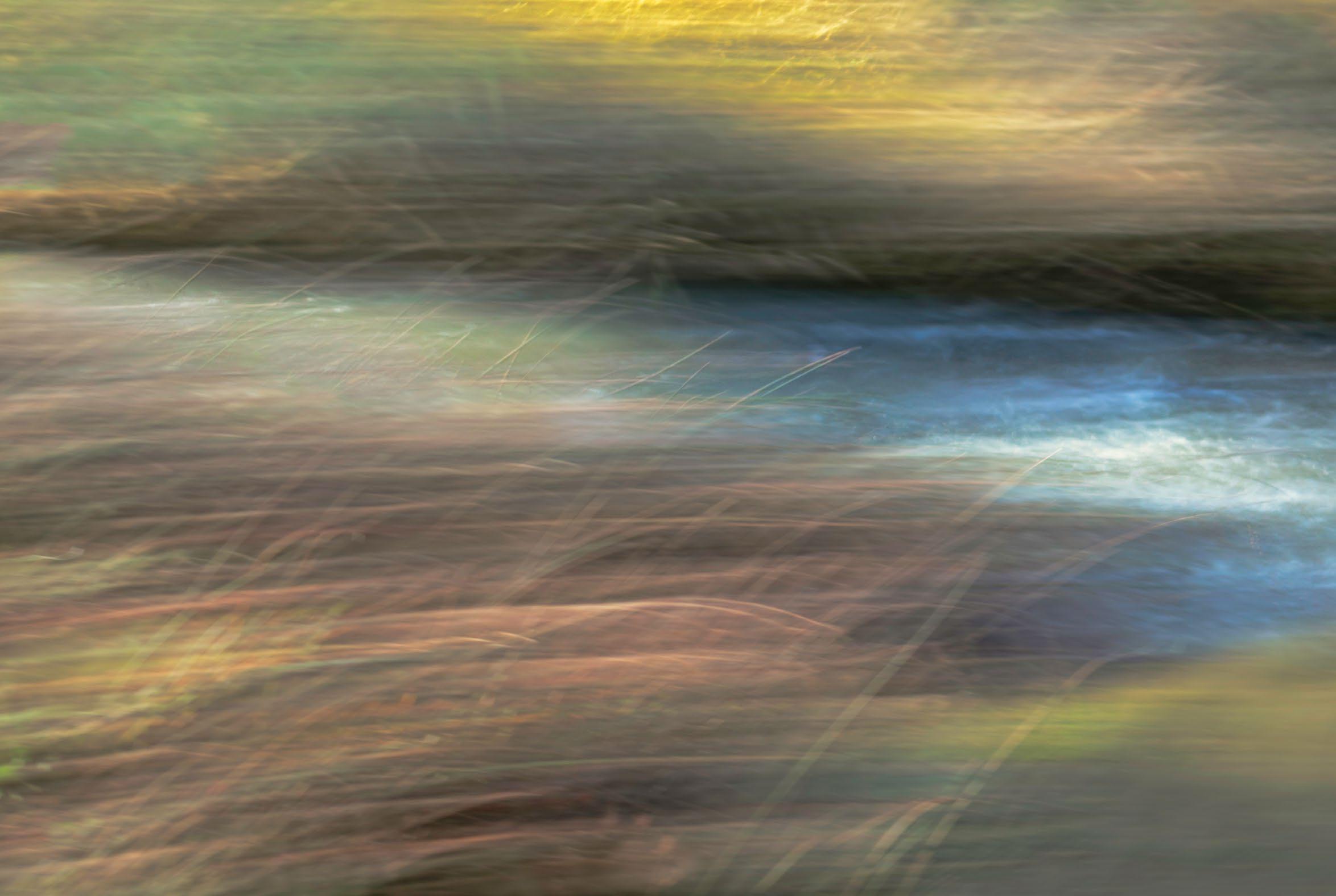
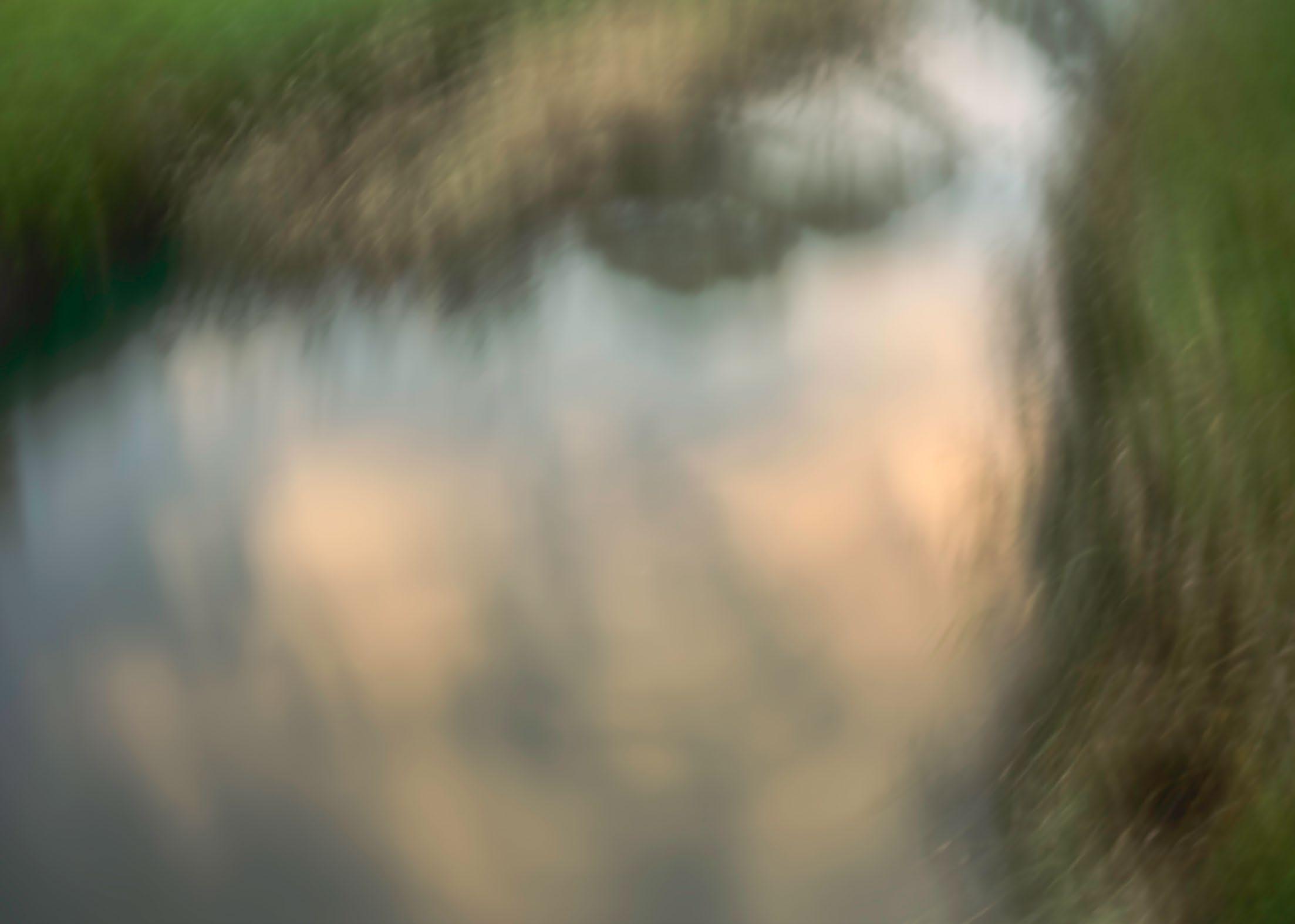
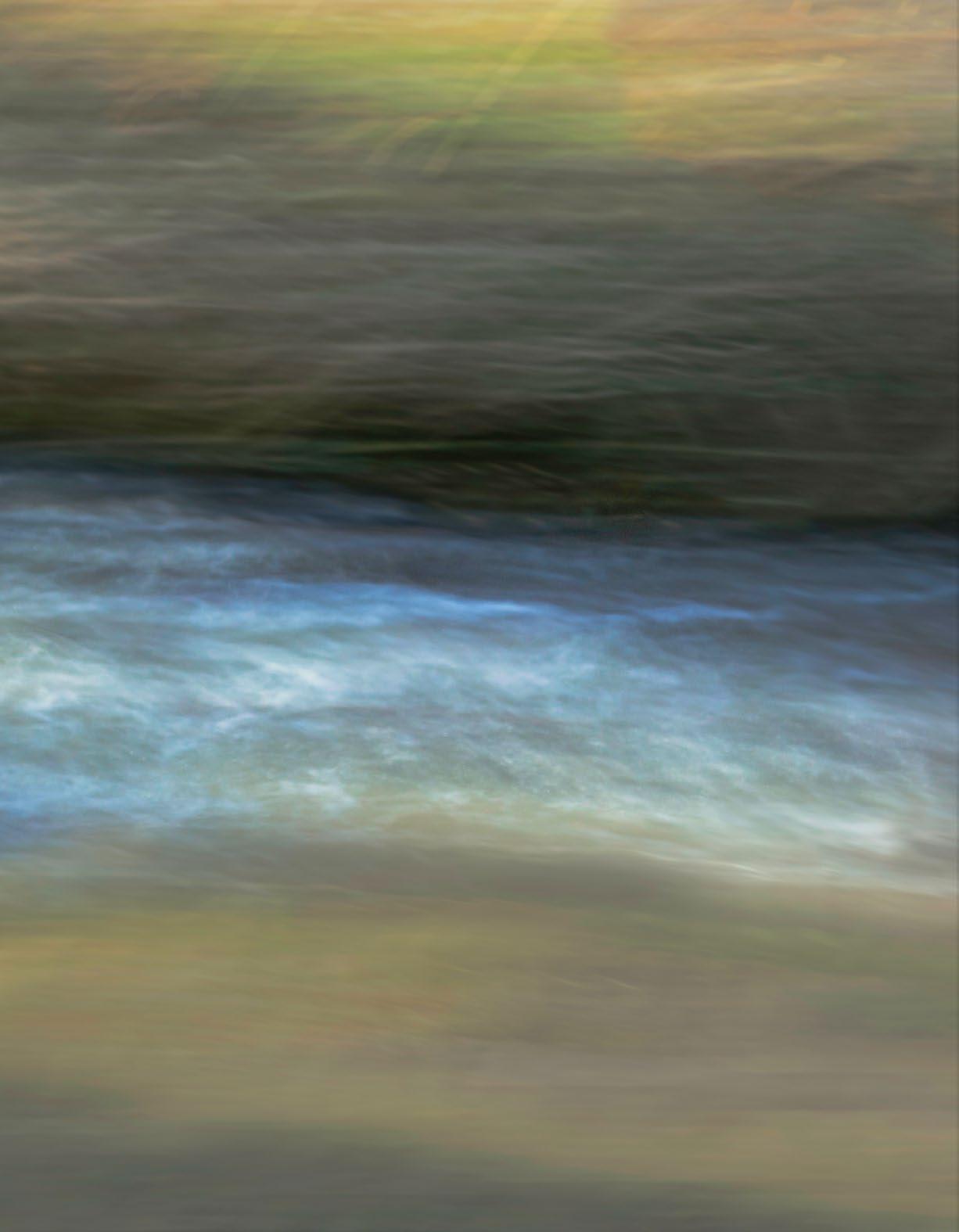
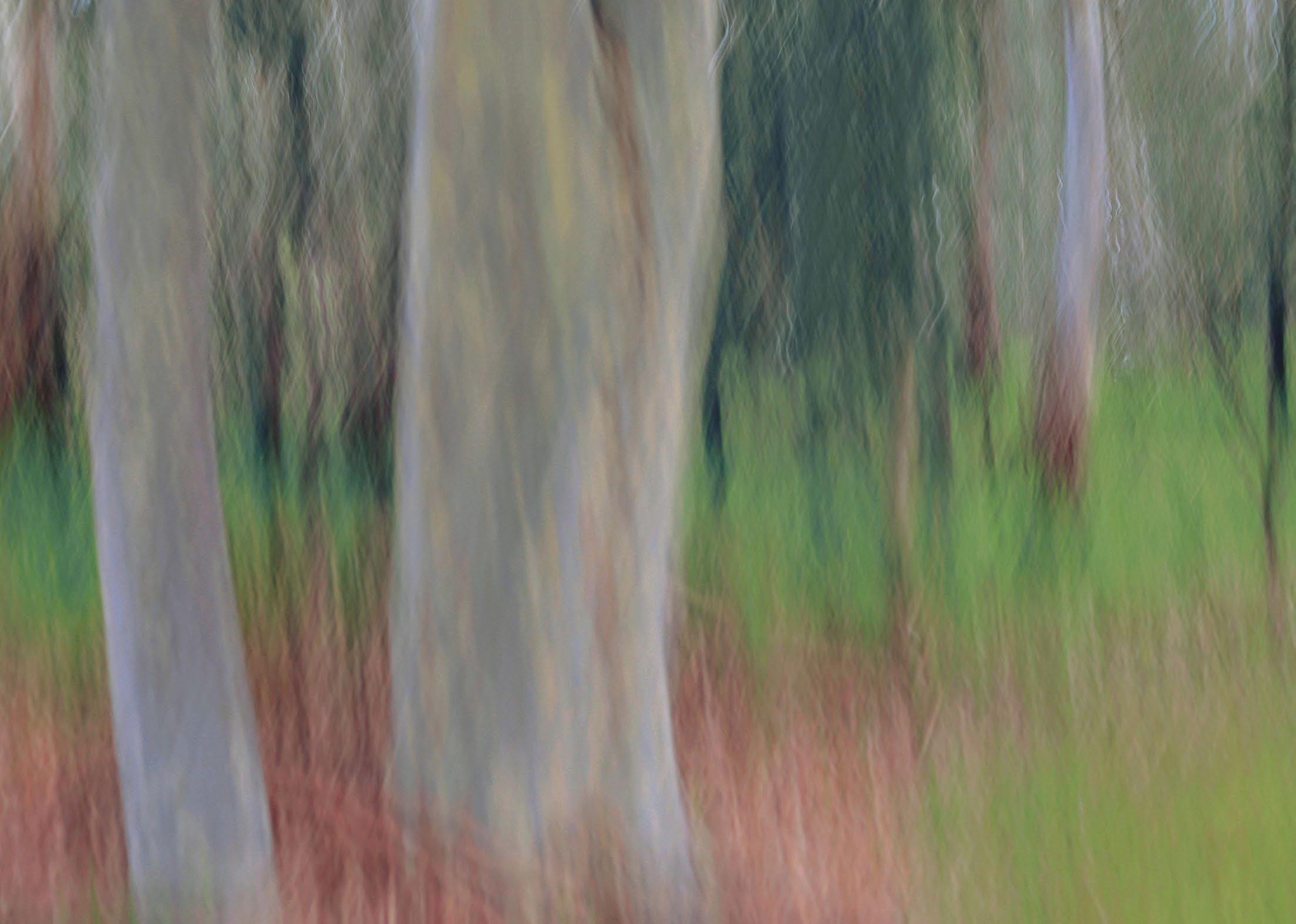
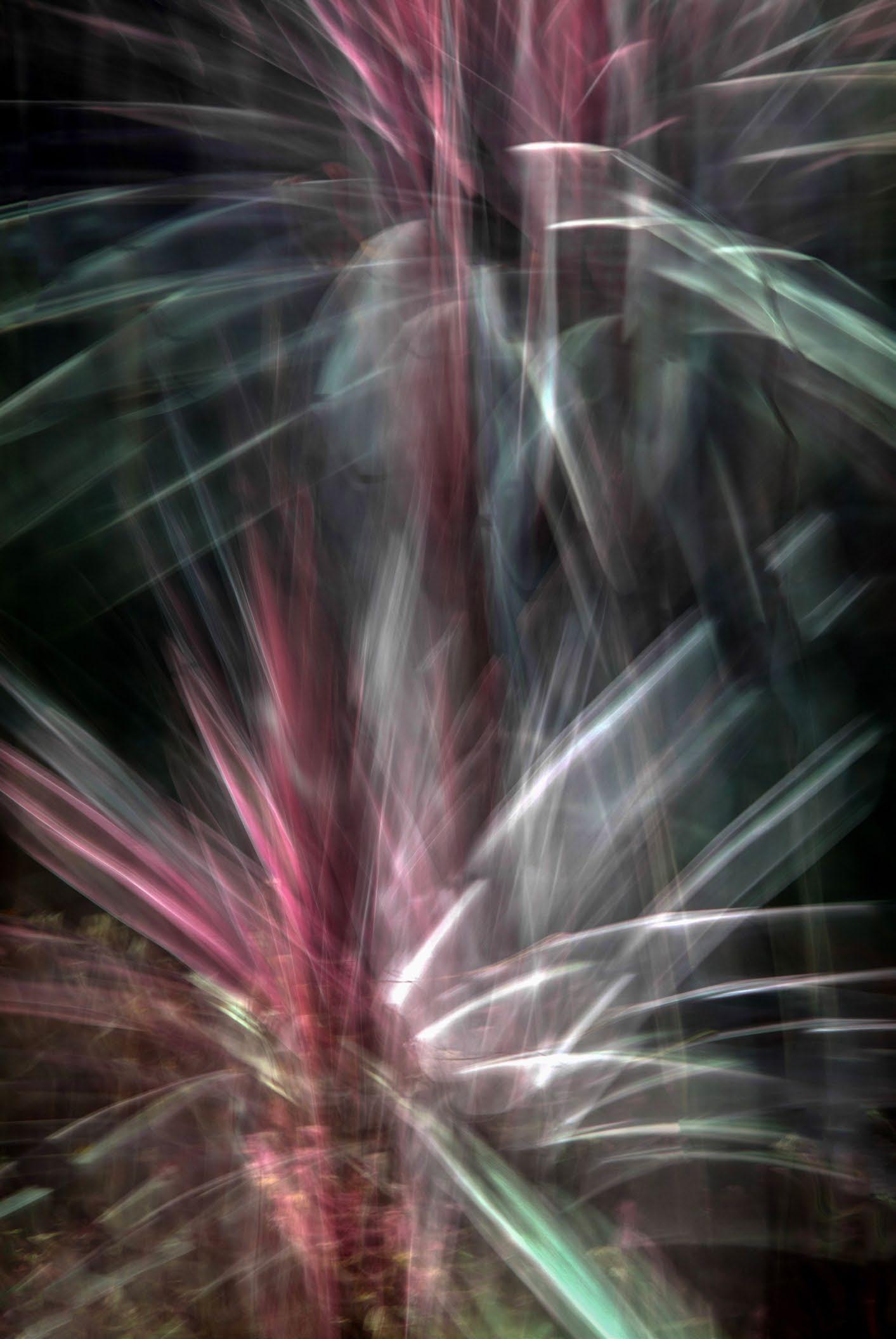
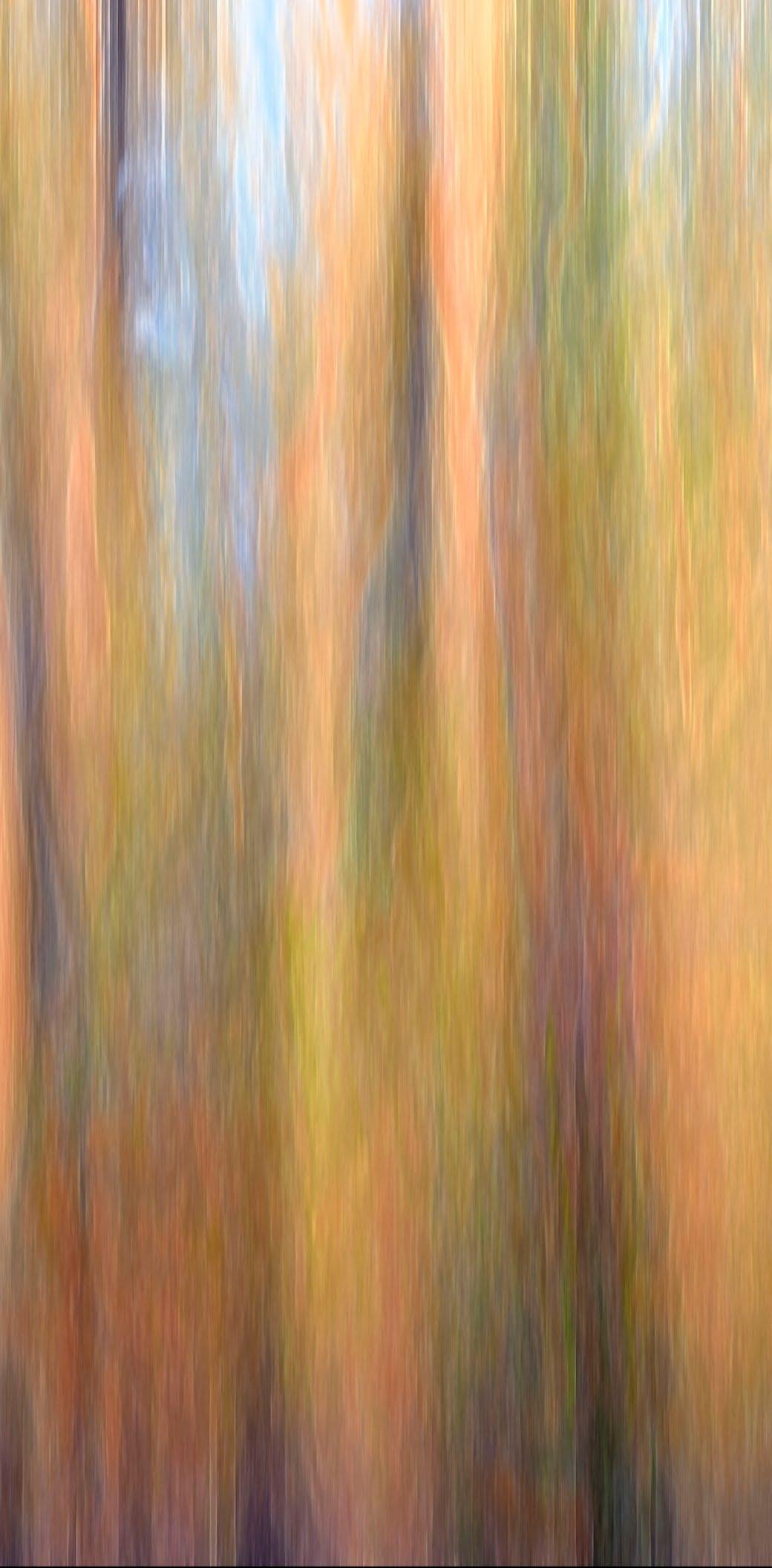
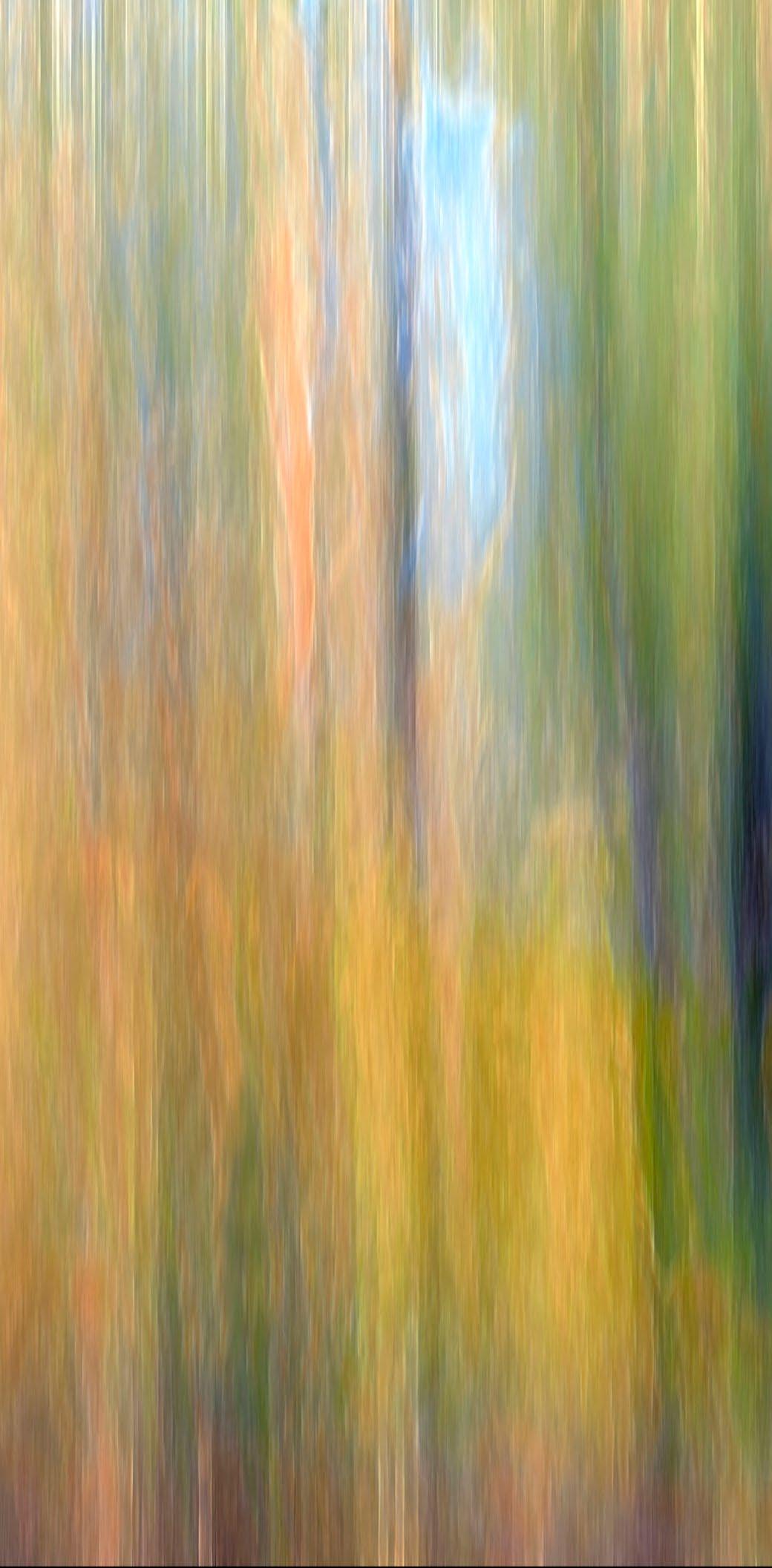
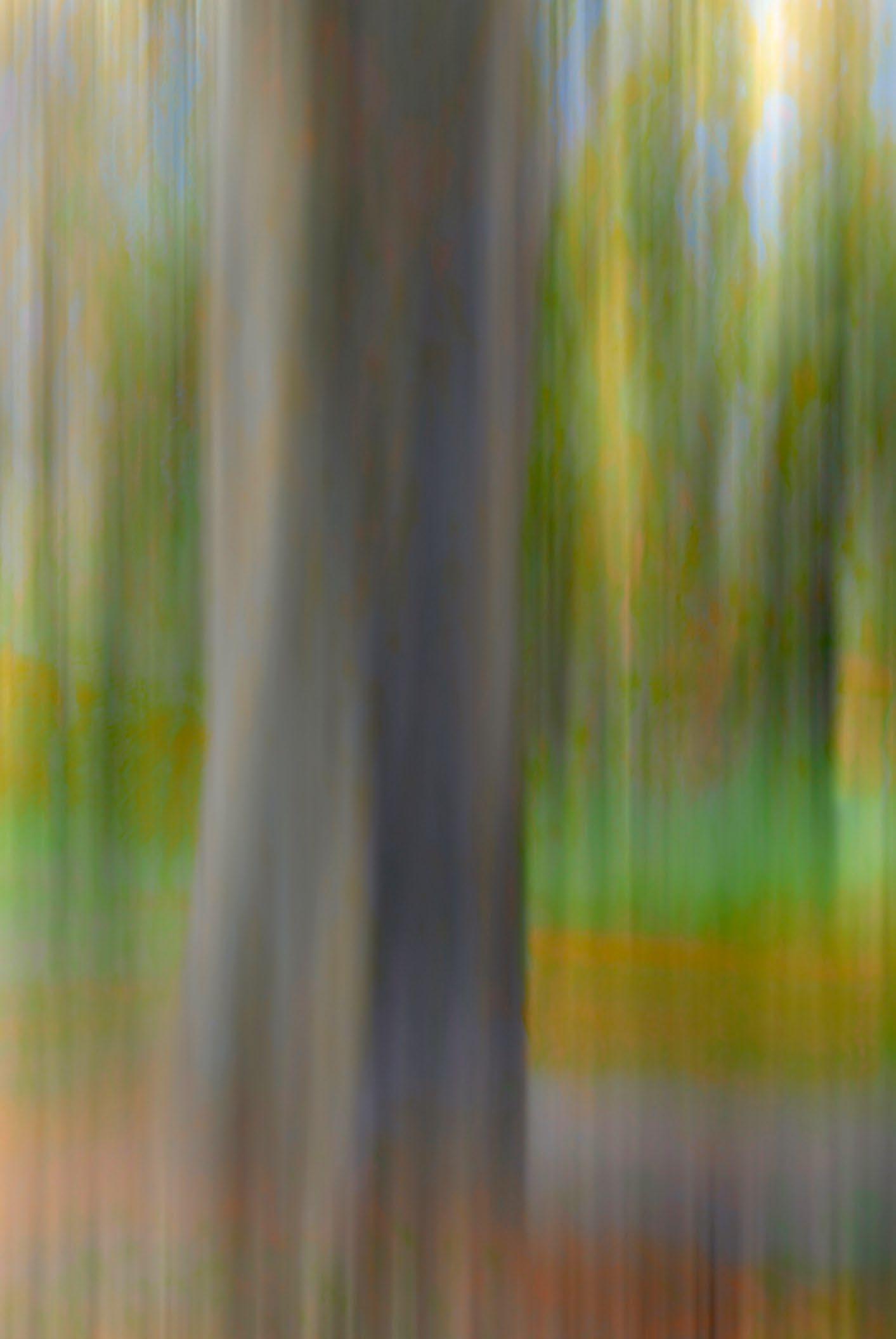
Having read Jacky Lee’s article on ICM in the May 2026 edition of our Chapter’s Newsletter, I set myself the challenge of exploring further into this fascinating area of photography.
My initial attempts were so-so … or to put it in the film era, good for the dust bin!! I soon learnt that it was a kind of hit-and-miss game, as no two images taken simultaneously were going to look alike. Also, it’s not everyone’s cup of tea and you may or may not like the image.
I had a look at several Online videos on the subject, which helped give me a head start. Equally, perseverance paid off.
If you are wanting to venture out to shoot some ICM … which I hope you will, here are a few points worth considering:
1. Composition (most important)
2. Keep ISO at 100 or less
3. Turn off Image Stabiliser
4. Movement, which could be horizontal, vertical, circular, diagonal, etc., etc.
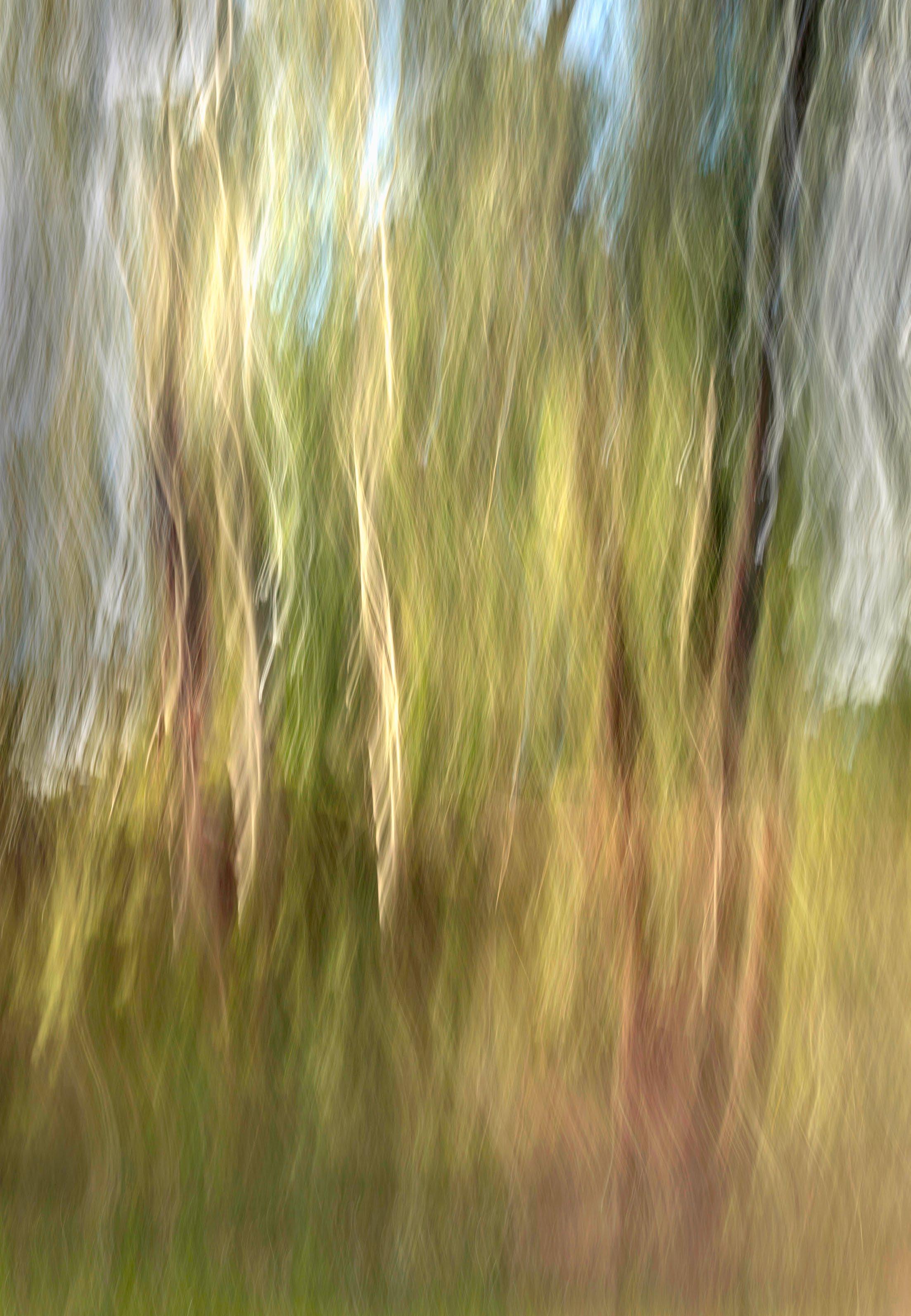
5. When photographing trees, move camera up and down or vice versa. I find it works
better when moving camera from top to bottom. Again, the choice is yours.
6. Any time of the day is suitable for ICM.
7. As a start, set the shutter speed between ¼ sec to 1 sec., using Tv or Shutter Priority (S) mode.
8. A 6-stop variable Neutral Density filter can come in handy.
9. Take heaps of photos as many won’t work. Also, try avoid including the sky when photographing. You’ll soon find out!
10. Keep notes on how you took the photo by way of f/stop, shutter speed and the direction of movement.
11. All my shots were taken handheld as it gave me complete freedom.
Last, but by no means least, have fun experimenting. Let’s see your creations in the next Newsletter.
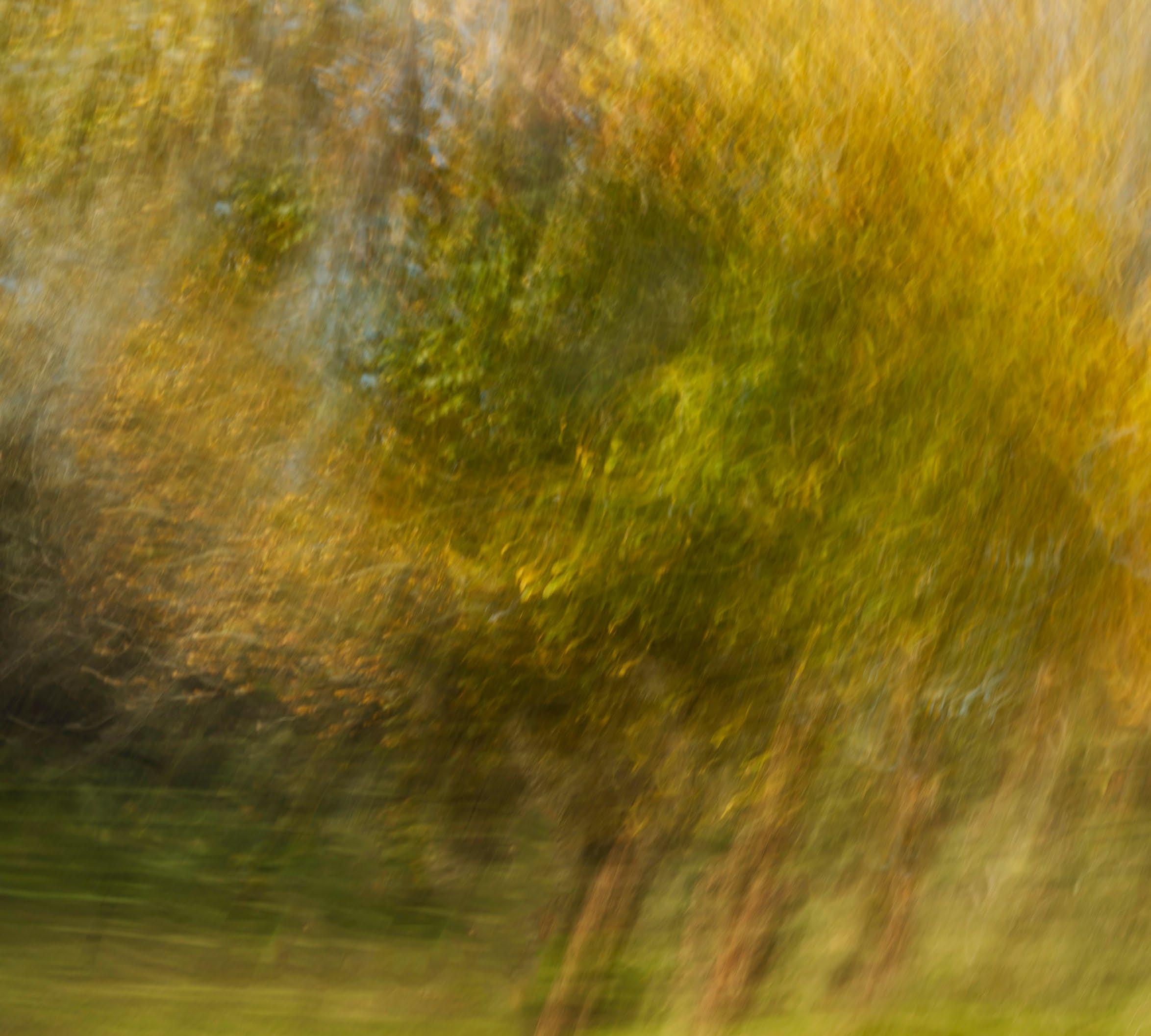
Fig. 2: Autumn scene
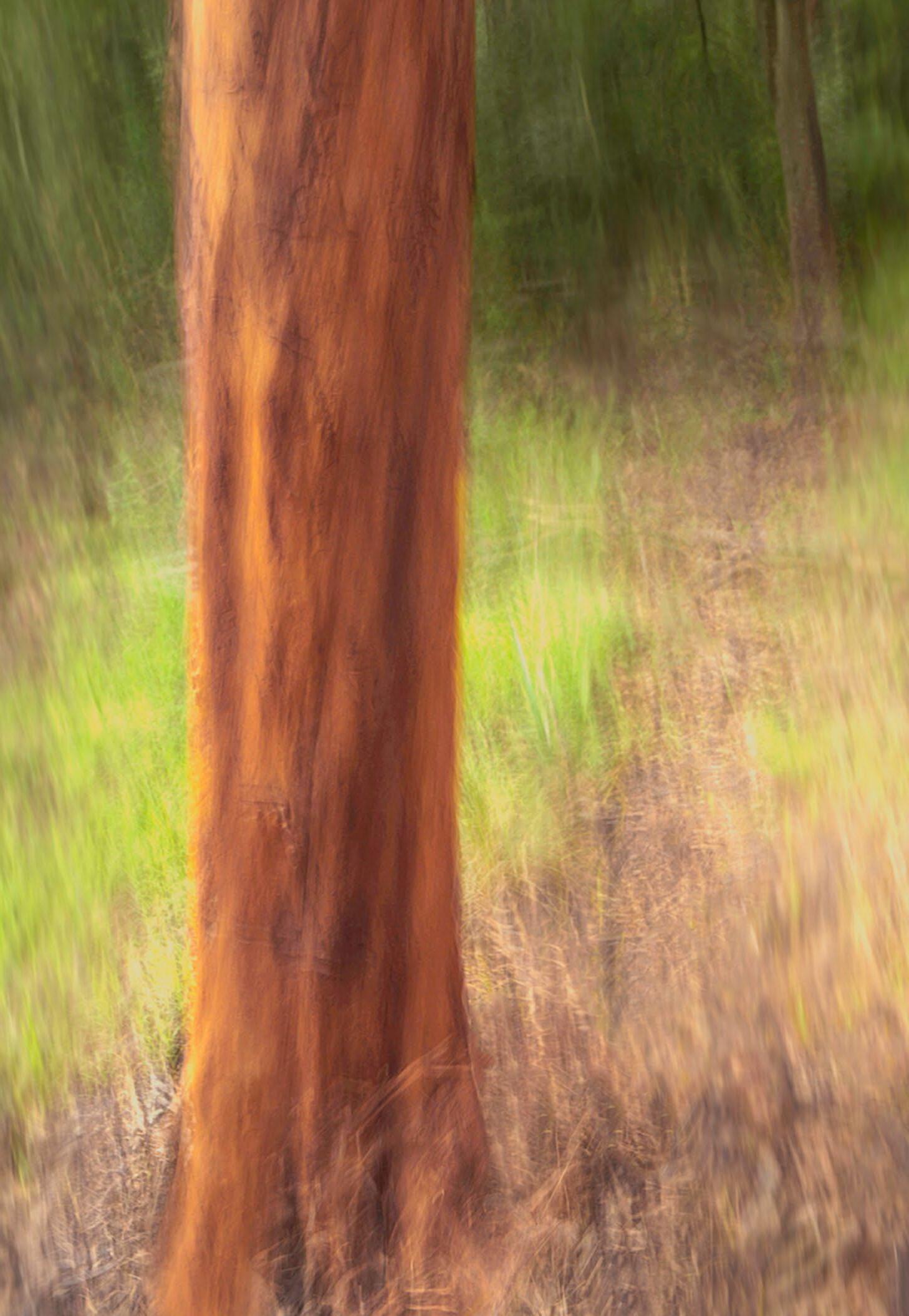
Fig. 3: Red gum
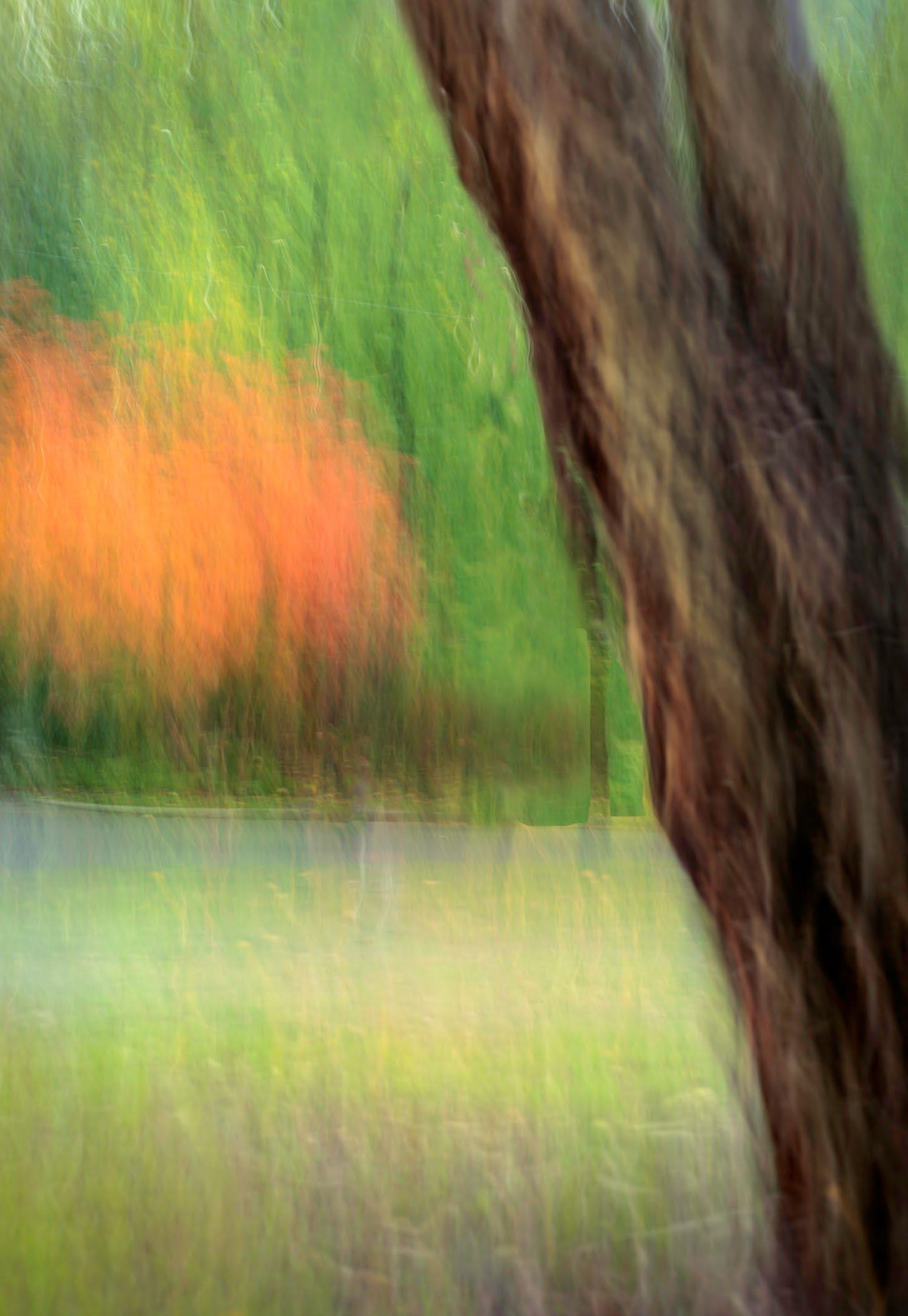
Fig. 4: Abbey Walk, Vermont
Fig. 5: Floating colours – taken with iPhone
Fig. 6: Abstract pattern
Fig. 9 below: Woodlands
Fig. 7 top: Creek
Fig. 8 below left: Circular motion
Fig. 10 top: Swirl
Fig. 11 below left: Rainbow colours
Fig. 12 below: Painterly effect
Spiders of paradise: what the wrong bus stop taught me
Jacky Lee PFIAP JAPJA
Some of the best mornings are the ones that do not go to plan.
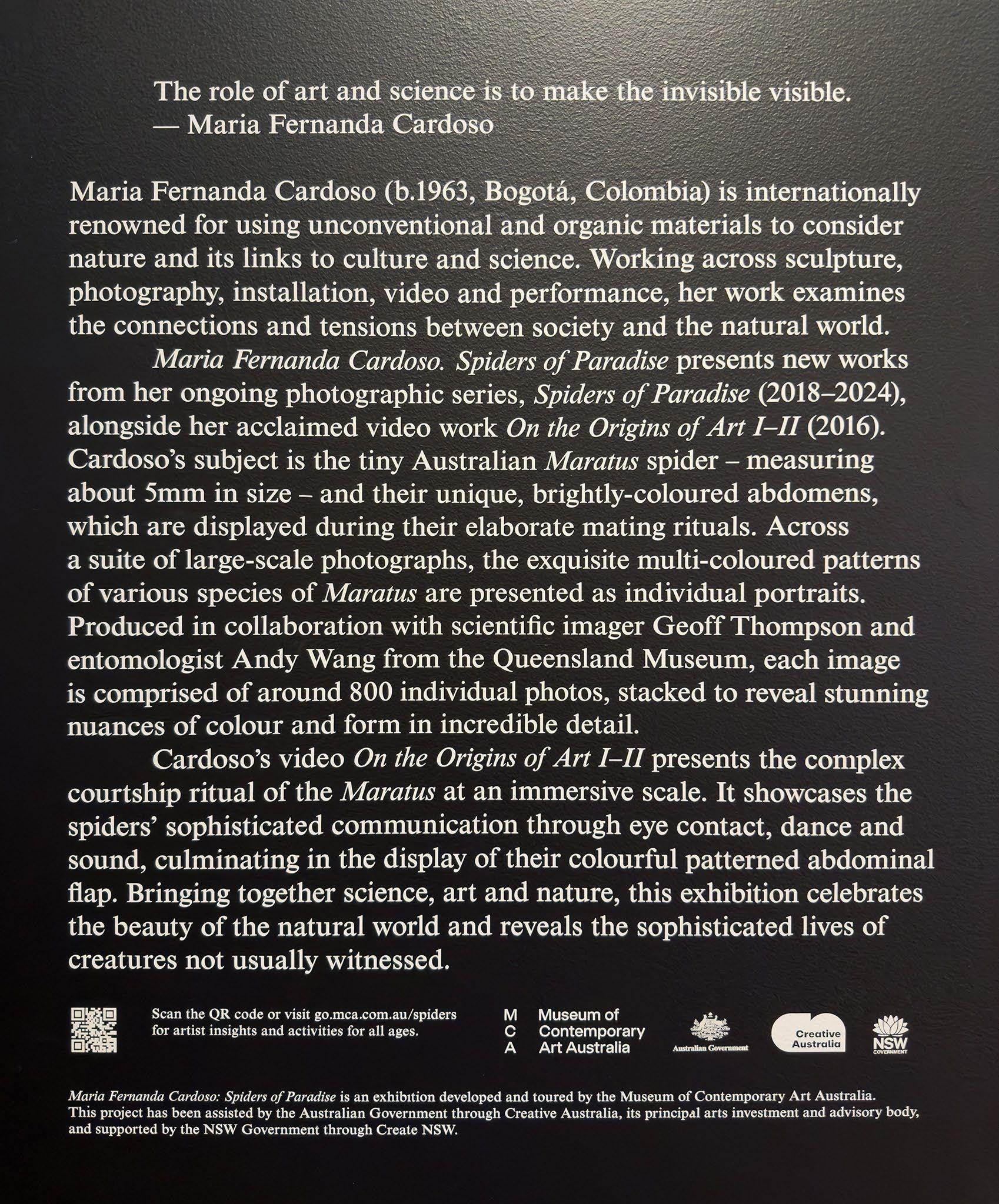
On 15 June 2026 I had coffee and a good long chat with a friend in Civic, then set off for the bus stop to head home. I waited a while before realising I was standing at the wrong stop. The right one was only five minutes away on foot, so I walked over, only to find the next bus was still half an hour off. A little deflated, I looked across the road, and there it was: the Canberra Museum and Gallery. For four years, ever since I moved to Canberra, I had told myself I really must visit CMAG one day. Four years, and I had never once found the moment. That morning, the moment found me. With half an hour to spare and nothing better to do, I crossed the road and walked in.
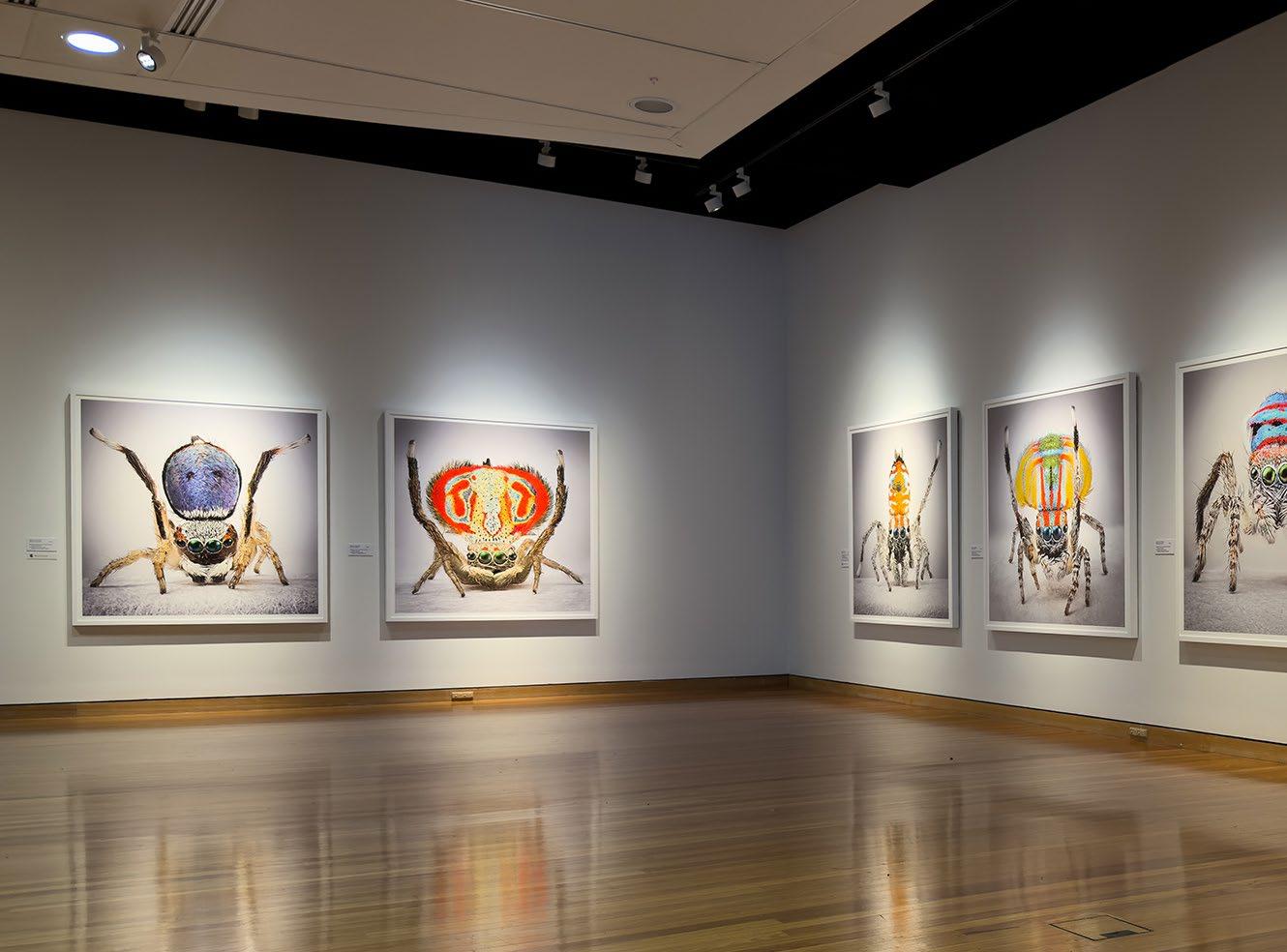
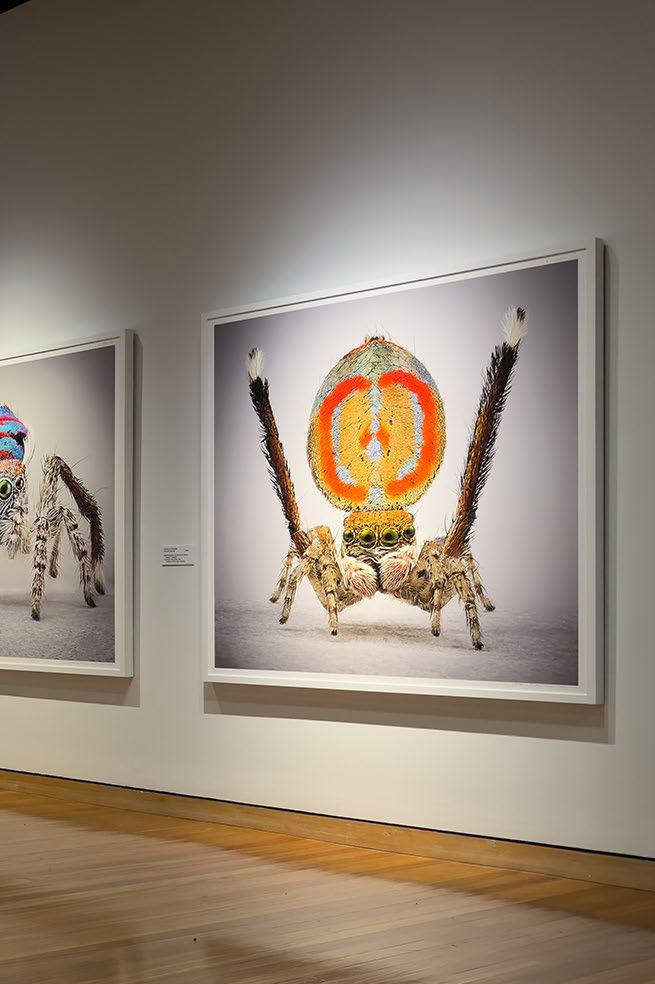
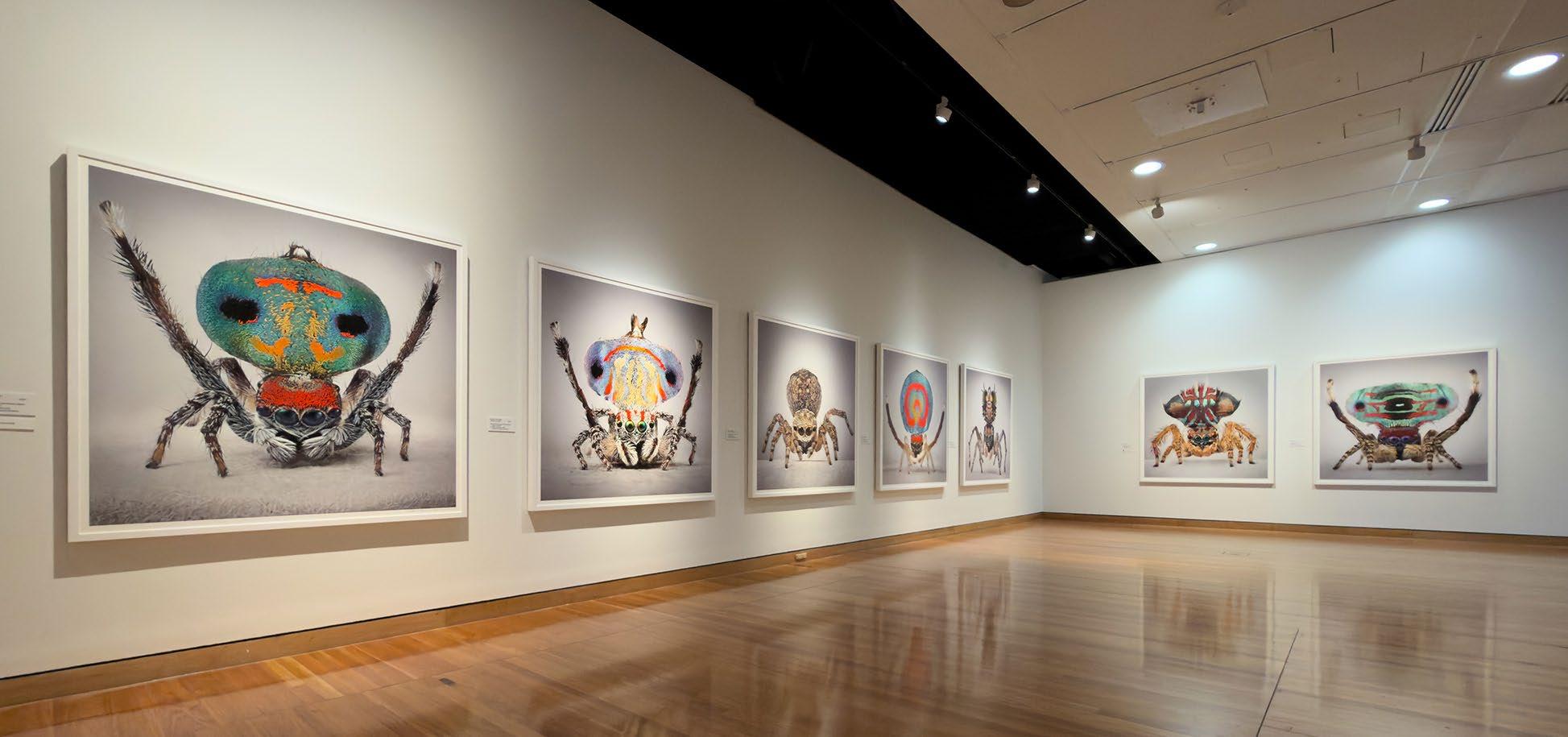
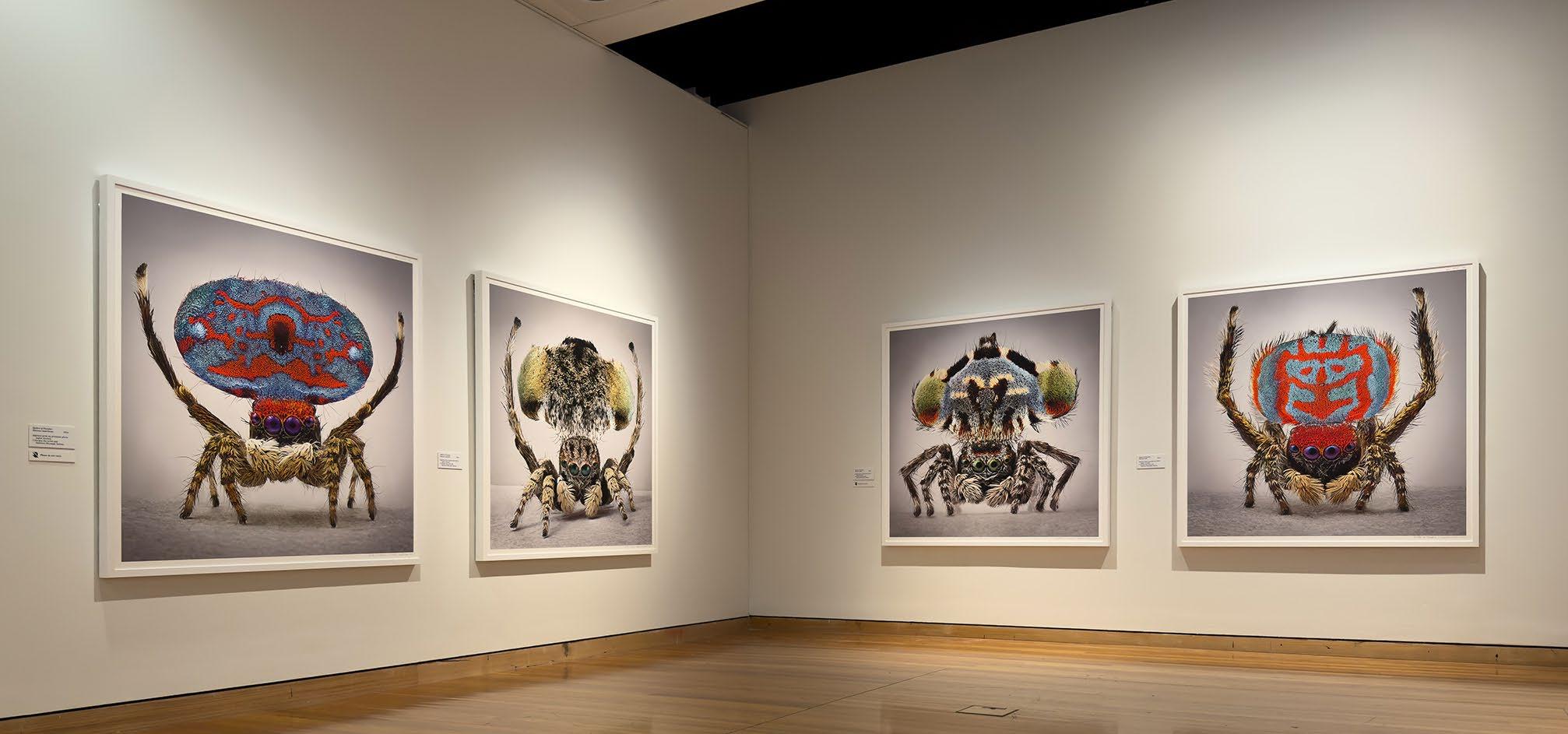
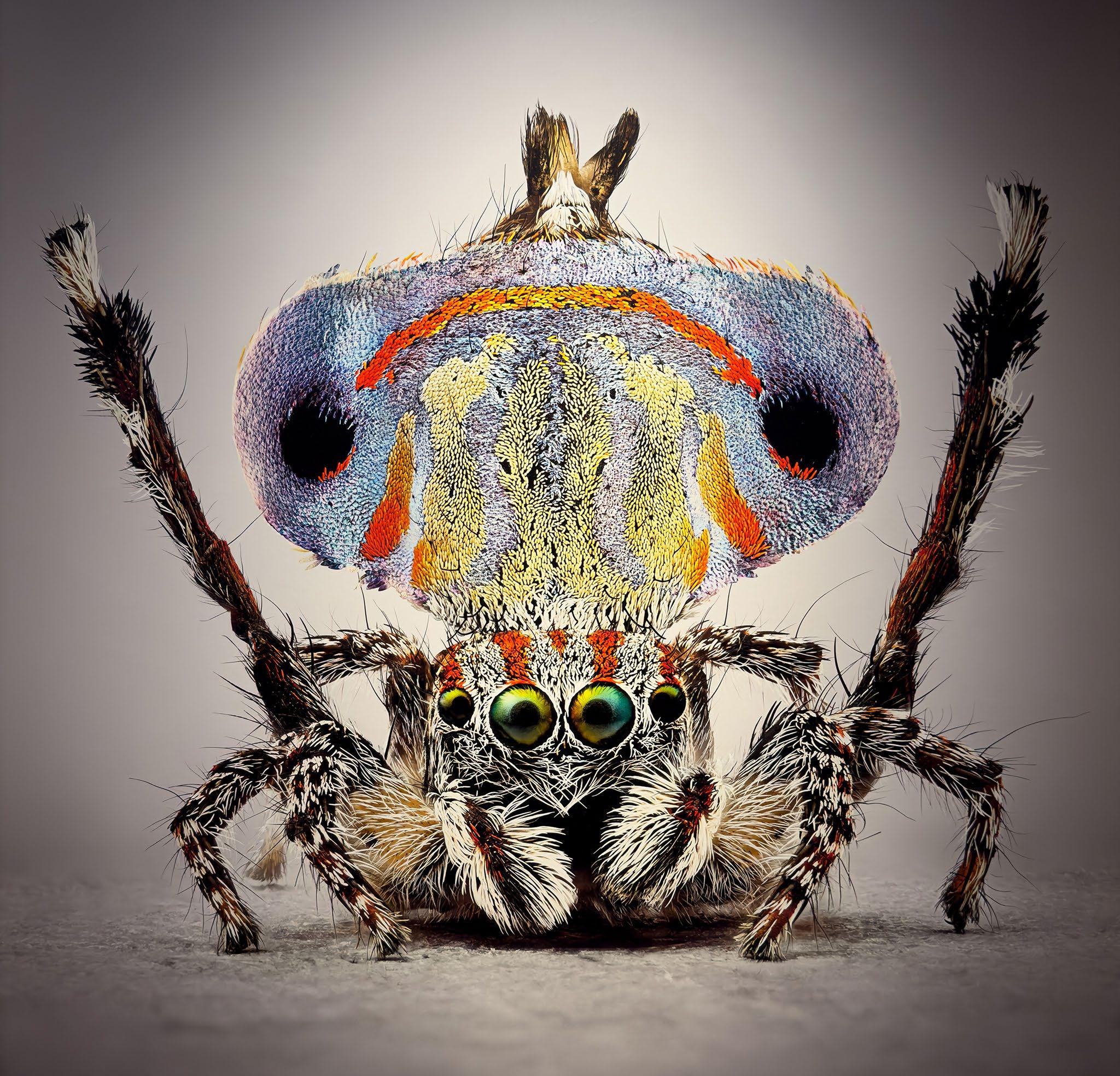
What I walked into was Maria Fernanda Cardoso: Spiders of Paradise, and I have not stopped thinking about it since.
The artist
Maria Fernanda Cardoso is a Colombian-born, Sydney-based artist who has lived and worked in Sydney since 1997. Born in Bogotá in 1963, she
trained in architecture and visual arts in Colombia before earning a Master of Fine Arts in sculpture at Yale, and later a PhD in art and science at the University of Sydney. Across a career of more than three decades she has become known for turning the overlooked corners of the natural world into art, working across sculpture, installation, video, performance and photography.
Her projects have a wonderful way of taking something small and giving it centre stage. One of her most famous, the Cardoso Flea Circus, saw her spend years training live fleas to walk tightropes and pull tiny chariots, a work now held in the Tate collection. She has shown at the Museum of Modern Art in New York and the Centre Pompidou, and represented Colombia at the Venice Biennale in 2003. As a child in Bogotá she was nicknamed la pequeña científica, the little scientist, and that curiosity runs through everything she makes.
The exhibition
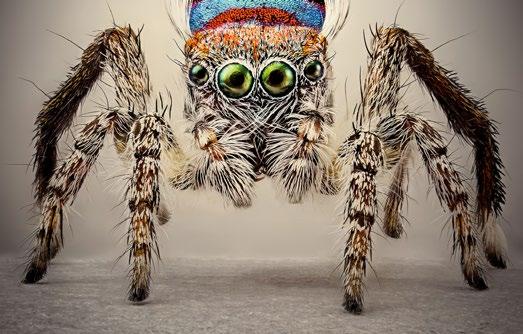
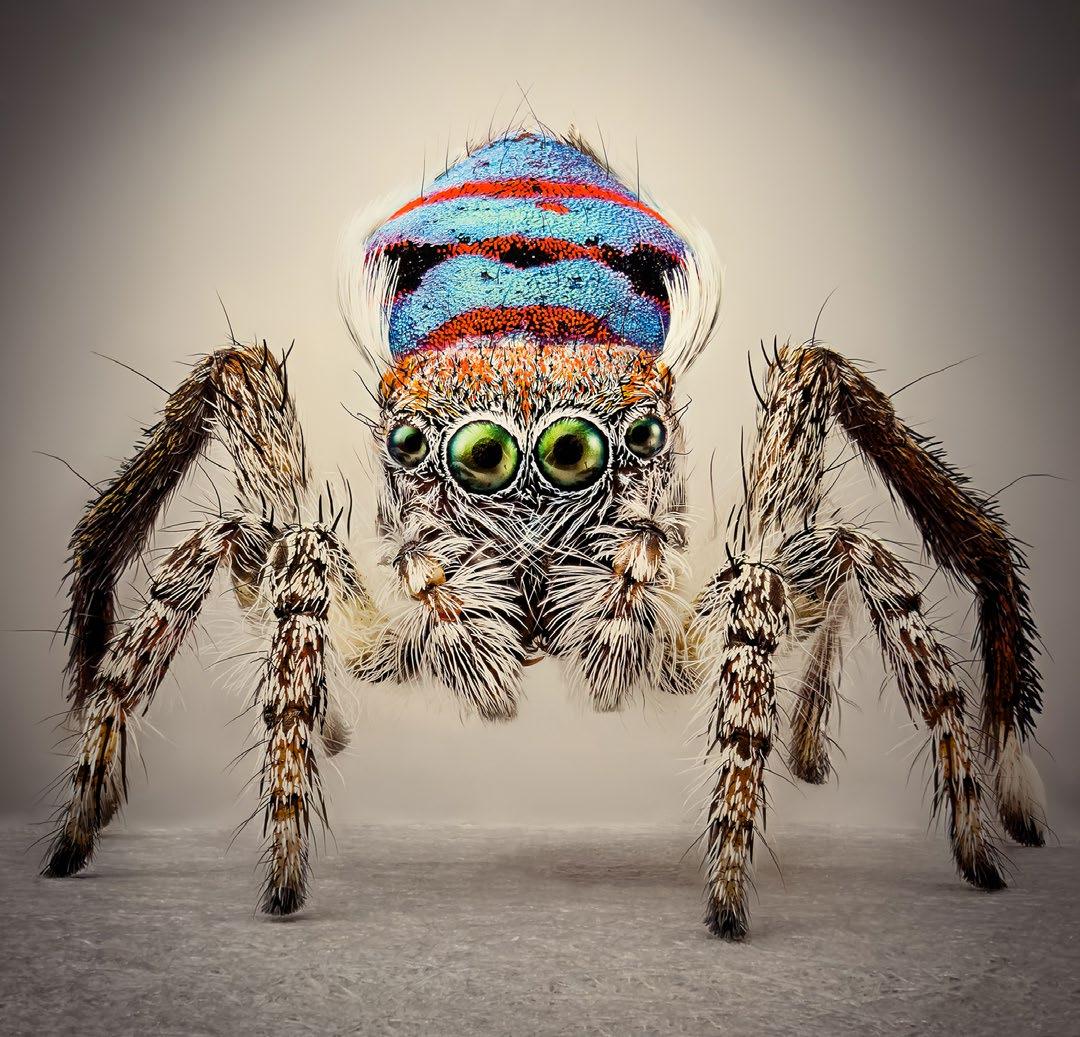
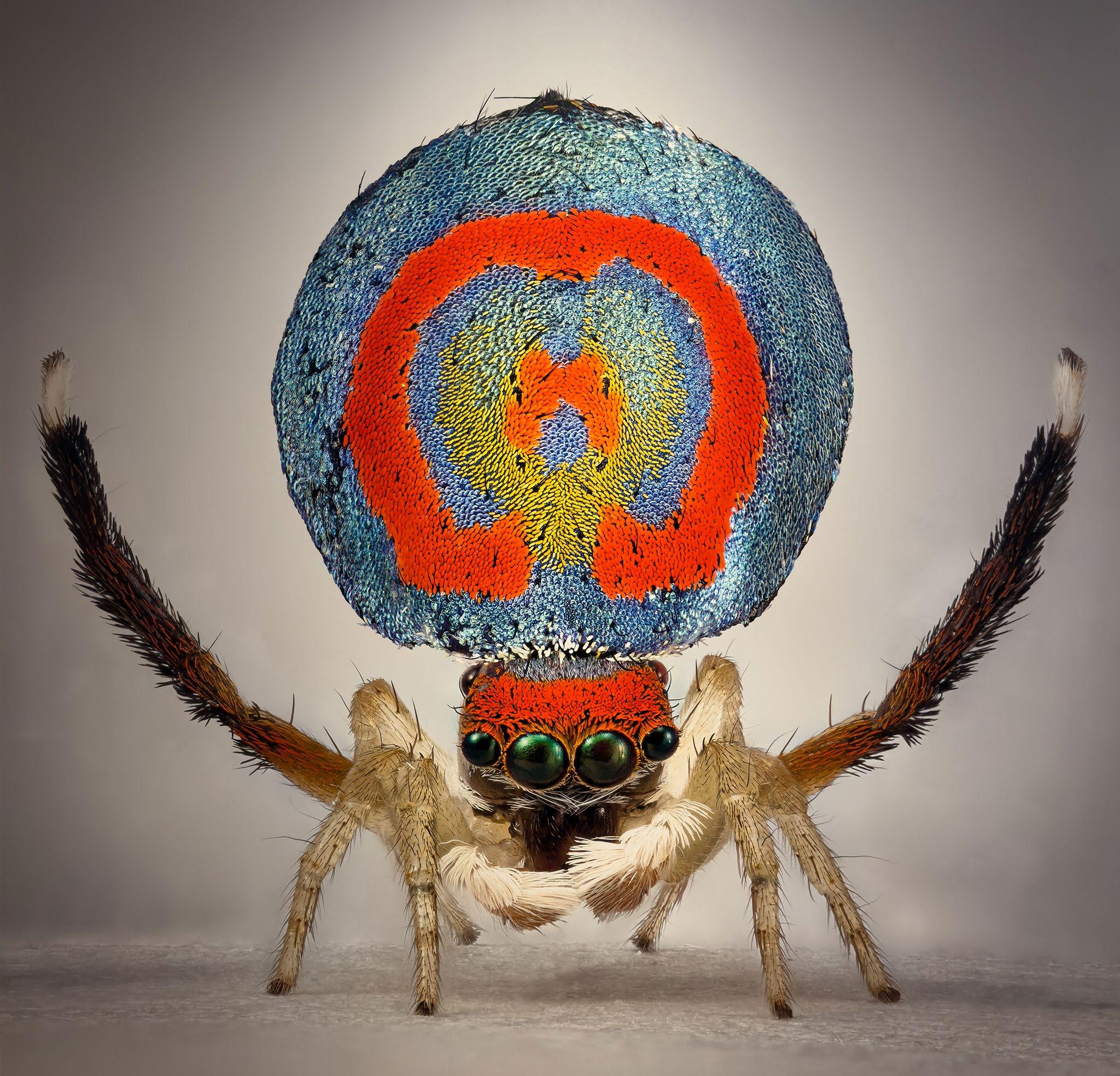
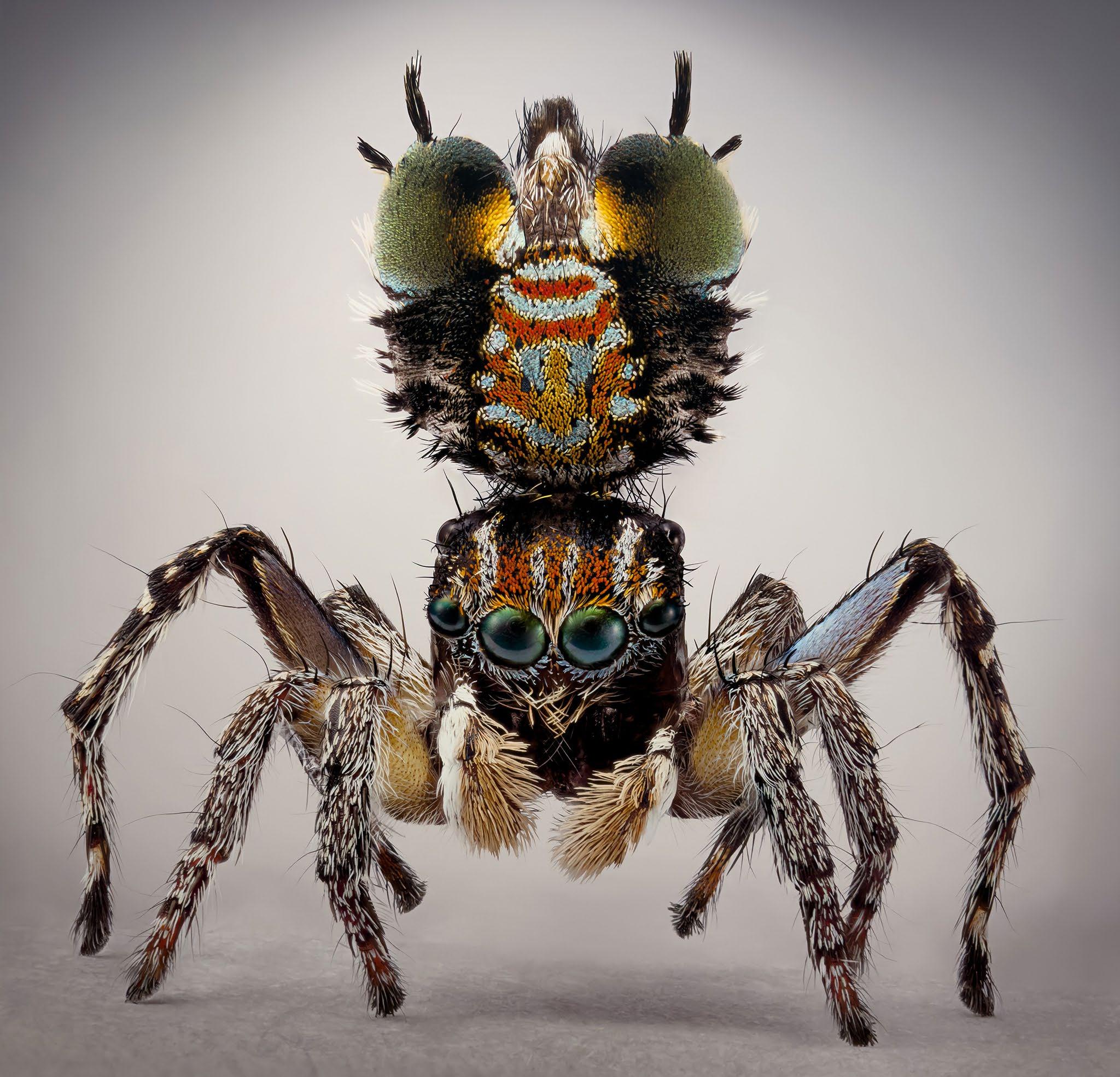
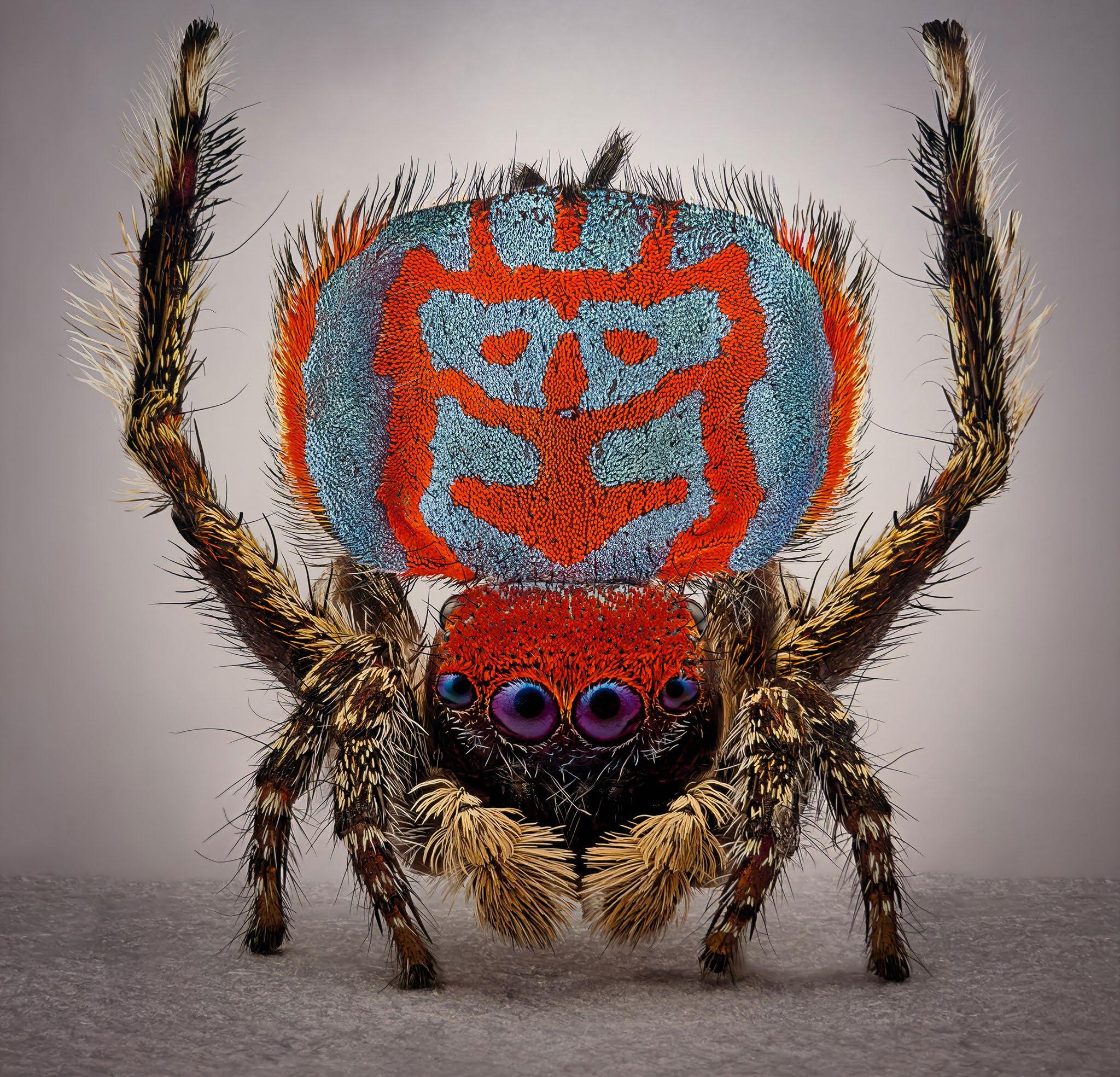
Spiders of Paradise turns that same curiosity onto one of the smallest creatures imaginable. Cardoso's subject is the Australian Maratus, better known as the peacock spider. There are more than a hundred named species in the genus, and they are astonishingly tiny, commonly only a few millimetres long, smaller than a grain of rice. In many species, the males carry vividly patterned, jewel-bright flaps on their abdomens,
which they raise and display in an elaborate courtship dance to win a mate. Cardoso calls them the most colourful, flamboyant, sexy and charming spiders on the planet, and standing in that gallery, I understood exactly what she meant. Here is what stopped me in my tracks. These creatures are barely visible to the naked eye, yet Cardoso has printed their portraits at a large scale, with some images around one-and-a-half metres. The colours are not painted on. They belong to the spider itself, produced through a combination of pigment and structural colour, where microscopic structures interact with light. Enlarged like this, each abdomen reads as an abstract painting that nature composed first.
The photography
For our members, the technique behind these images is as remarkable as the subject. Cardoso worked with scientific imager Geoff Thompson and entomologist Andy Wang from the Queensland Museum, specialists in deep focus microphotography and microscopic specimen preparation. Because a lens can hold only a sliver of such a tiny subject in focus at any one time, each finished portrait is built from more than a thousand individual photographs, each capturing a slightly different plane of focus, then combined into a single, highly detailed image.
Anyone who has tried focus stacking a flower or a beetle in the garden will appreciate the
patience this demands. Now picture doing it at microscopic scale, on a subject measured in millimetres, and you begin to grasp the achievement. Alongside the framed portraits is Cardoso's immersive video On the Origins of Art I-II, first made in 2016 and now co-owned by the Museum of Contemporary Art Australia and Tate. Projected large, it presents the male Maratus in his complex courtship ritual, a sophisticated language of dance and vibration that ends in the display of that brilliant abdomen. Cardoso's quiet argument is that an aesthetic sense is not ours alone. It has been shaped in these creatures through evolution and sexual selection. Beauty, she suggests, is older than humanity.
What I took away
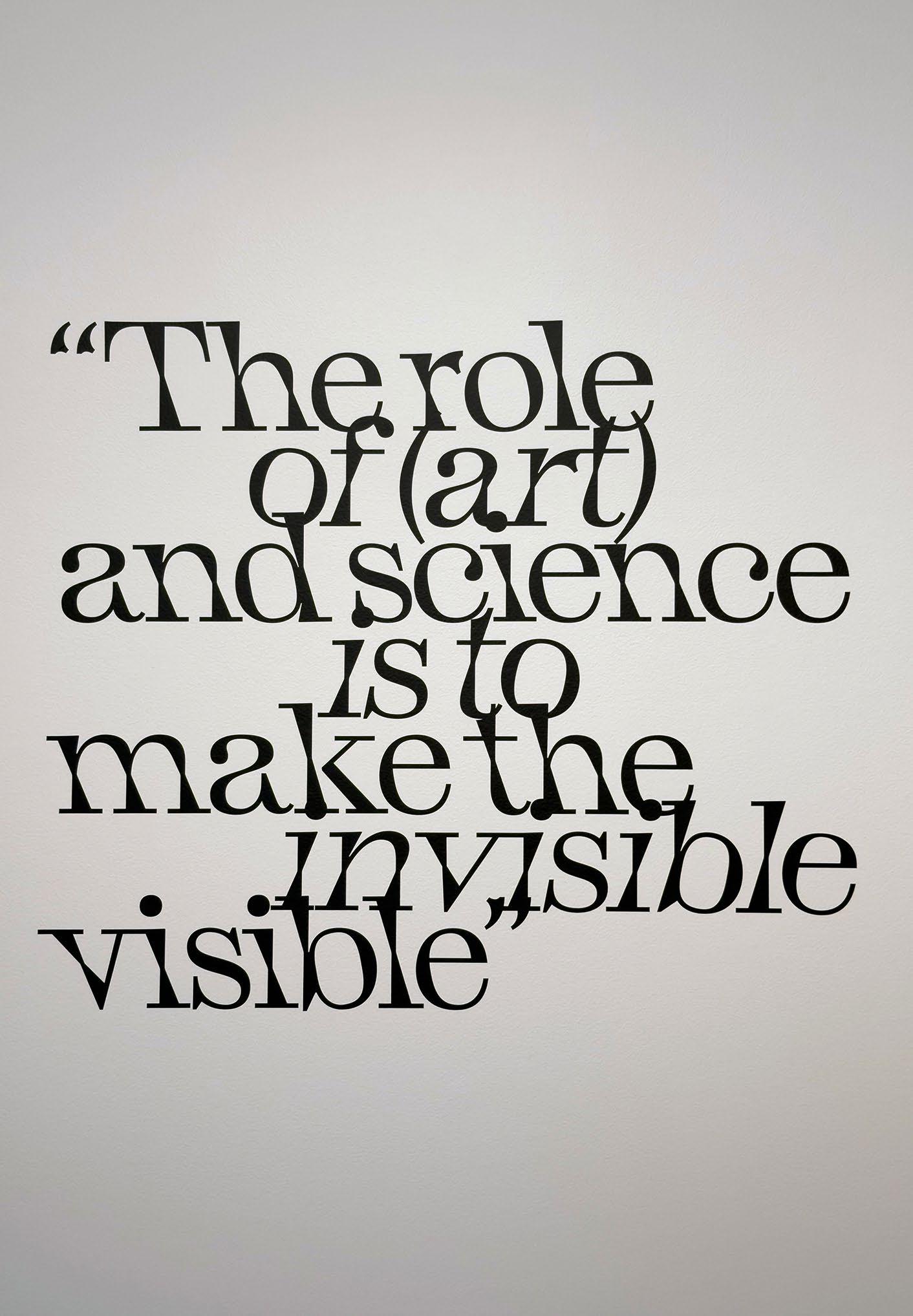
I left genuinely moved, and not only by the spiders. What struck me most was the observation at the heart of the work. To make art from a creature this small, you first have to notice it, to look where almost no one thinks to look, and then to give it the attention it deserves. That, surely, is the whole of photography in a single sentence.
And I could not ignore how I had come to be there. I had not planned this visit. It came from a missed bus, a wrong stop, and thirty minutes I would otherwise have spent staring at my phone. Four years of good intentions had never got me through that door, yet one ordinary morning
gone slightly sideways did. It reminded me that the practice of seeing does not switch off when we put the camera down. If we keep our eyes open and stay a little curious about wherever we happen to be standing, the world has a way of handing us something unexpected. Sometimes it is a peacock spider the size of a grain of rice, made monumental. Sometimes it is simply the nudge to look up and pay attention.
If you go
Maria Fernanda Cardoso: Spiders of Paradise, developed and toured by the Museum of Contemporary Art Australia, is showing at the Canberra Museum and Gallery on the corner of London Circuit and Civic Square until 23 August 2026. Admission is free. If you have been meaning to go for four years, or even four days, do not wait for the perfect moment. Sometimes the wrong bus stop is exactly where you are meant to be.
Celebrating Our Members
This month, we are delighted to send our warmest birthday wishes to Tony Hilton ARPS. Happy birth-month, Tony!
Many of our members will know Tony as someone who has given so much to photography, to the RPS, and especially to the Australian Chapter over many years. Tony joined the RPS in December 1959, and his photographic journey has taken him through scientific and technical photography, non-destructive testing, microscopy, high-speed imaging, teaching, camera collecting, photographic history, and many other fascinating areas of image-making.
Tony’s connection with our Chapter is especially meaningful. In 1984, after a meeting with Sir George and Lady Pollock in Bathampton, Tony helped start what became the RPS Australian Chapter. The first meeting was held at Kodak in Sydney in February 1985, with the support of Tony Healy and many other early members. That beginning has grown into the Chapter community we enjoy today.
Tony is also an author, with books including Bronica: The Definitive Collector’s Guide, Photographic Safari in S. America, and Gone in a Flash Volumes 1 and 2. In 1998, he was awarded the RPS Fenton Medal in recognition of his outstanding service to the Society.
What comes through strongly in Tony’s story is a lifelong curiosity and love of photography in all its forms, from scientific imaging to everyday subjects, from cameras and apparatus to the friendships and communities built around photography.
Happy birth-month again, Tony, and thank you for your wonderful contribution to the RPS and to our Australian Chapter.
Would you like to be included?
We would love to celebrate more of our members in future editions of the e-news. If your birthday month is coming up and you would be happy to be included in our Members’ Birthday Corner, please send us your name, birthday month, and a short note about your photographic interests, journey, or favourite kind of photography. We would be very happy to share your story with fellow members.
RPS Australia Chapter Social Media Launch
We have launced an account on Instagram for the Australian Chapter. This will be a new way for us to connect with new audiences, attract prospective members and share events and news that is outside of the Newsletter cycle.
Instagram will also allow us to present our members' photography. A well-curated social presence demonstrates both the quality of our members' work and the breadth of photographic practice across the Society.
Regularly sharing member images, exhibitions, and activities helps communicate not just what we produce, but who we are as a Chapter of RPS. Importantly, it lowers the barrier to entry. Potential members can follow, observe, and interact before committing, building familiarity and trust.
Setting up an Instagram account is a simple way to stay connected with the photographic community. By following the RPS Australia Chapter page, you’ll see members' work, events, and opportunities, and we can connect with you in return.
What
do we need from you?
We are building a library of images for social media to support specific stories on the channel. We are asking you to submit some photos for the following stories:
1. Photos using backlight as the directional light (say where the photo was taken and why you like it)
2. Photos in monochrome – again, what you like about the photo and where it was taken. Feel free to submit several images for each category. All images will be attributed to the photographer, and we will tag you in your online account.
So, how do you join our page?
Our address is: https://www.instagram.com/ rps_australia_chapter/
1. Create your account
• Download Instagram from your app store or visit the website
• Tap Sign up
• Register using your email address or phone number
• Create a username (this is how others will find you)
• Set a secure password
2. Set up your profile
• Profile photo: a portrait or one of your images
• Name: your real name (recommended for community connection)
• Bio: a short description (e.g. photographer, interests, location)
3. Find and follow our page
• In the search bar, type: rps_australia_chapter
• Or click on the link here
• Tap Follow
• Once you are following the page we will then follow you back
4. Start engaging
You don’t need to post immediately. You can simply:
• Like images
• Leave comments
• Follow other photographers
5. (Optional) Share your own work
If you wish to participate more actively:
• Tap + (Create)
• Upload a photo
• Add a short caption
• Share
This allows others in the community to discover your work.