Honorary Secretary: Jacky Lee PFIAP JAPJA E: australiasecretary@rps.org
Newsletter Editor: Ian Brown E: australia@rps.org
Page 3 From your Secretary – Jacky Lee
Page 10 Is it travel or is it art? – Rob Morgan
Page 28 Echuca through my eyes – Simon Locke
Page 34 Members’ Gallery
Page 4 Welcome from the Editor – Ian Brown
Page 12 Members’ exhibition news – Ted Richards
Page 30 The best camera … – Jacky Lee
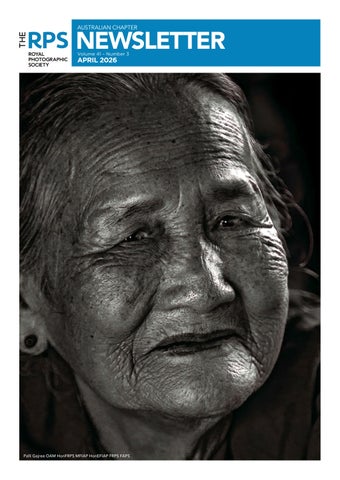
Page 6 My life in photography – Palli Gajree
Page 14
Pondering Pollard – The Golden Age of British Photography
Page 32 Australian Chapter social media launch
Page 36 What’s on in April & May?
From your Secretary
Jacky Lee PFIAP JAPJA
Honorary Secretary Australian Chapter
I hope you all had a restful and enjoyable Easter. Whether you spent it with family, out in the field with a camera, or simply taking a quiet moment to yourself, I hope it brought some renewal.
Easter has always felt like a season of new beginnings to me, and I find that spirit translates naturally into photography. Have you ever had one of those moments where your passion for the craft suddenly reignited — where you picked up your camera and saw the world a little differently than you had before? I would genuinely love to hear those stories. I suspect many of us have had them, and sharing them might just spark something in someone else.
On the Chapter front, there are a few things I am happy to update you on. We have written to RPS Headquarters regarding the possibility of running photography competitions, and we are waiting to hear back with their guidance. More news to follow when we have it. On another exciting note, RPS Headquarters has officially launched the Chartered Photographer designation application pathway. If this is something you have been curious about or would like to pursue, please do let us know. We would be glad to help point you in the right direction.
In the meantime, the image feedback corner is open for submissions. If you would like a thoughtful second pair of eyes on your photographs, please do send them through to me. I hold judging accreditations with APJA and VAPS, and I am involved in photo mentoring through both PSA and RPS, so I hope I can offer something genuinely useful alongside the encouragement.
On a personal note, I am happy to share that in the first quarter of 2026, I received the PFIAP distinction. What made it especially gratifying
was that every Australian photographer in that application round was accepted — a 100% success rate that I think speaks beautifully to the standard of photography coming out of this country. I do not yet have figures for other nations, but congratulations are very much in order for our fellow Australians.
Photography truly is a journey of continual learning and quiet persistence, and I know many of you will have your own meaningful milestones along the way. Whether large or small, I would love to hear about them.
A warm thank you to everyone who responded to our recent call for member contributions and stories. The response was genuinely heartening. And thank you to Emma for her thoughtful feedback and her openness to supporting some of our social media ideas. That kind of enthusiasm makes a real difference.
It is also a pleasure to welcome a new member to our Chapter this month — Professor Emeritus Helen Ennis. Helen is based in Canberra, so it is especially lovely to have a fellow Canberran join our community. With her arrival, our Chapter now counts 67 members. If you know friends or fellow photographers who would enjoy being part of what we are building here, please do encourage them to join us.
As we continue marking the Chapter's 40th anniversary, I hope we keep building something that feels less like an organisation and more like a community of friends who happen to love photography. While we are the Australian Chapter, we warmly welcome RPS members from elsewhere who may not have a local chapter of their own. If you have friends in New Zealand or other regions without a chapter nearby, please do invite them to join us. The more voices, the richer our community becomes.
Thank you for being part of it.
Welcome from the Editor
Ian Brown
Editor, Australian Chapter
Thanks to our contributors this month. We have a full issue this month. As I said last month, the Newsletter relies on members to make it worthwhile, and this month, as always, we have some fascinating images and reading. Enjoy!
Martin Parr film
Late last year, there was a British film festival touring the country. One of the films was about British photographer Martin Parr. I only found out at the end of the festival and didn’t have time to tell you in the Newsletter. I have found another way you can watch it. For those with a VPN, the BBC have the film on their iPlayer. Select the UK as your region and click the link
A trip to The Old Dart
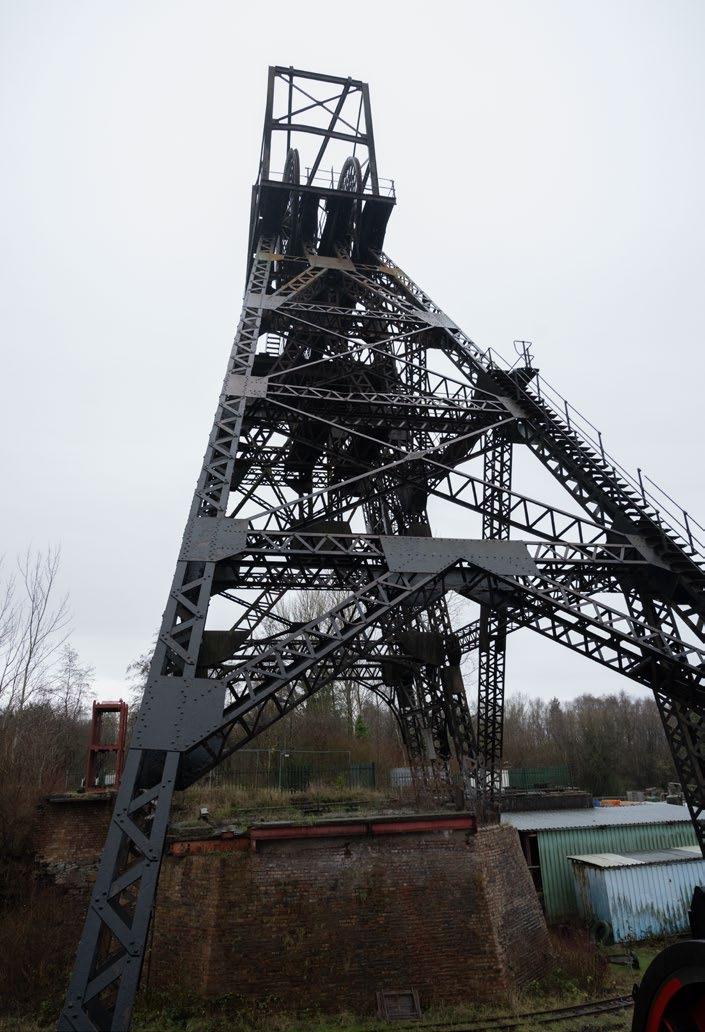
On my trip back to the UK at the end of last year, I decided to visit one of the few remaining coal mines in my hometown. When I told my dad I’d like to visit what is now The Lancashire Mining Museum, he said it was the coal mine where my grandfather had worked for years.
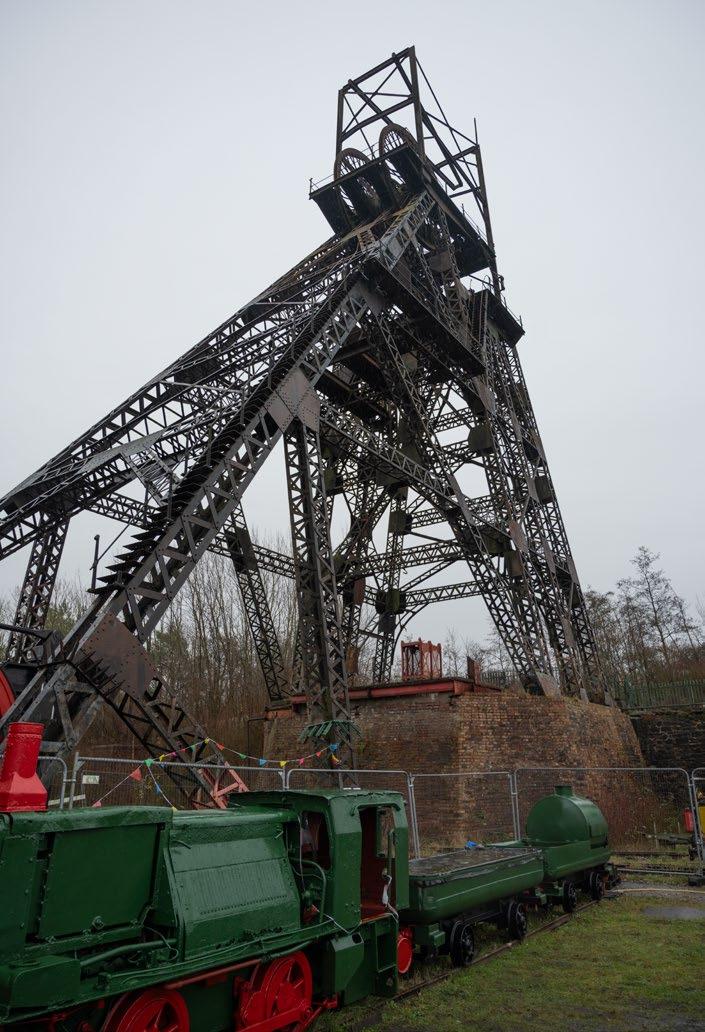
The museum is located on the preserved site of Astley Green Colliery in Greater Manchester. This is where my grandfather worked and is now a significant industrial heritage site that brings the history of the Lancashire coalfield to life. The colliery operated from 1908 until its closure in
Specifications for contributors
When sending images for the Newsletter, the only requirement is that they are jpeg or png. Images can be 300 ppi and up to A4. Don’t forget you can also add captions for your images. If you don’t include a caption, we’ll assume you don’t need one.
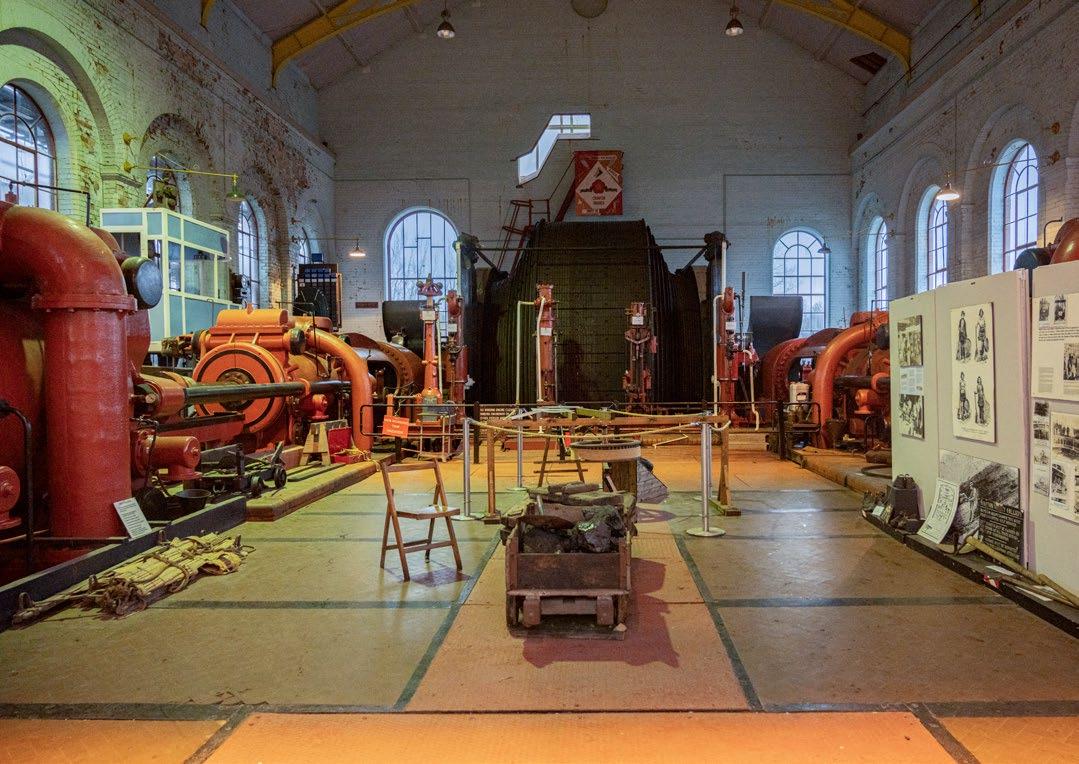
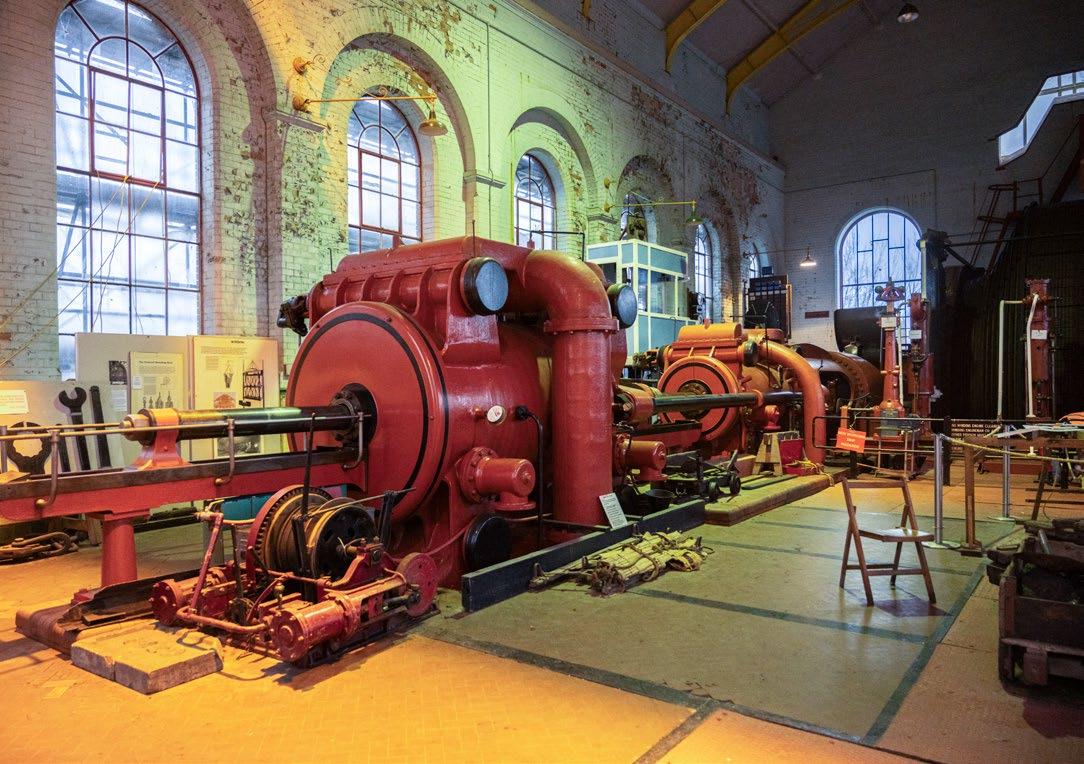
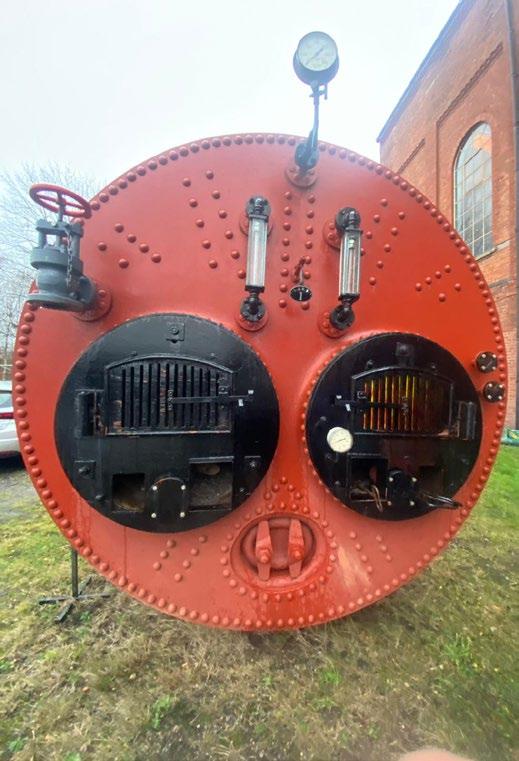
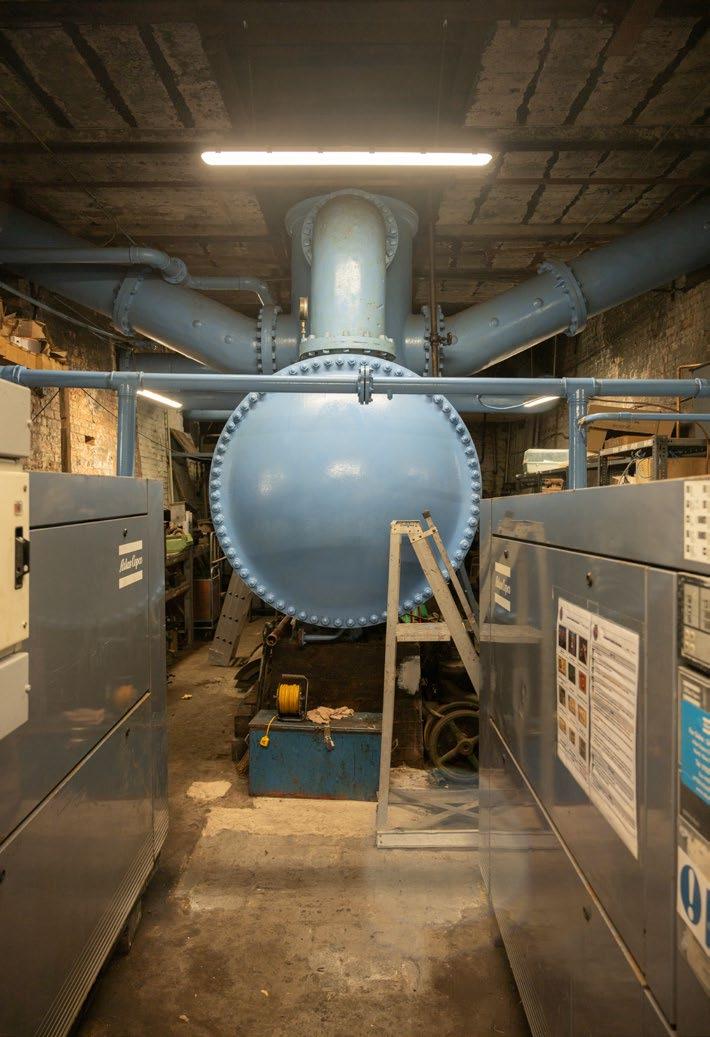
1970. The museum preserves the last surviving headgear and winding house in the region, along with a large collection of mining artefacts and locomotives. At its heart is the impressive 1912 steam winding engine, the largest surviving colliery winding engine of its type in Europe. It was restored by volunteers and now demonstrated in working order. Originally, the engine was one of two steam engines powered by 12 coal boilers each, but now runs on compressed air for only a short time, not all day and night like the steam boilers. It still offers visitors a rare insight into how coal, miners, and materials were raised and lowered in deep shafts.
While I was there, I was given the chance to drive the winding engine. The massive wheel that raised and lowered men and coal for years was under my control. Well, before the compressed air ran out. Imagine a steam engine that runs on rails, and make it ten times bigger, and rather than driving multiple wheels, it drives one giant wheel. That’s what they let me loose on. Unfortunately, I had so much fun driving the engine, I forgot to take more photos.
So, this was not only a chance to operate a piece of local history, but also to drive the very winding engine that took my grandfather to the coalface and brought him back safely every day.
Email images to australia@rps.org and keep those pixels and captions coming in! For non-image files (e.g. PDFs), under 5 MB is preferred and never 10 MB or more. If your images are too big to email, I have created a Dropbox folder you can upload
your images to. Email me for permission, and I’ll grant access to the folder. I will need to delete your images once I have downloaded them.
Deadline for contributions to the next issue is 30 April 2026.
Fig.1 top left: The valve gear and wheel in the winding house. The control room is the blue and white structure on the left.
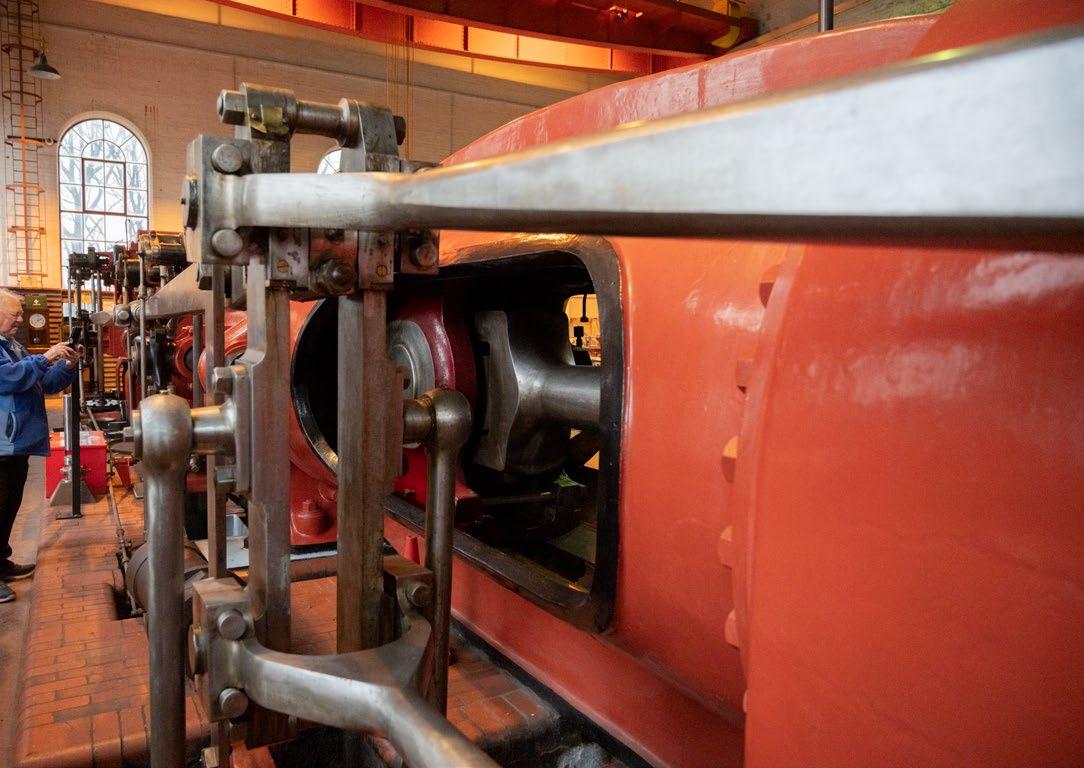
Fig.2 top right: One of the pistons that drive the winding wheel.
Fig.3 centre row left: The valve gear that drives the winding wheel.
Fig.4 centre row centre: One of the original 12 coal fired boilers that drove the steam engine.
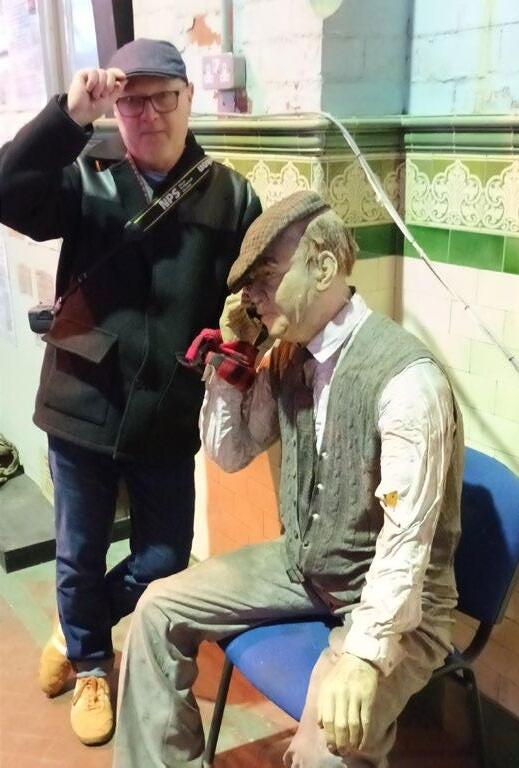
Fig.5 centre row right: Mutual respect between engine drivers. (Image credit Derek Brown).
Fig.6 and 7 above left and centre: The pit headgear that raised the men and coal in the mine shafts.
Fig.8 above right: The air compressor that (sort of) replaced the boilers.
My Life in Photography
Palli Gajree OAM HonFRPS MFIAP HonEFIAP FRPS FAPS
This piece is a continuation of my last article that appeared in the March 2026 edition of the RPS Australian Chapter newsletter.
After the completion of my studies in the UK + three years apprenticeship at the West End portrait studio of the late Walter Bird, FIBP, FRPS, I returned to Kenya (my birth place) and opened my own portrait and commercial studio in Nairobi with some degree of success. I had already earned my Associateships of the Royal Photographic Society (RPS) and the Institute of British Photographers (now BIPP) before returning home.
During this time, I discovered the Nairobi Photographic Society, but membership was
restricted to people of European descent during the colonial era. This led me to seek other avenues far afield and in January 1963, I joined the Photographic Society of Hong Kong (PSHK). This came about at the recommendation of Dr KH Wu, FRPS, FPSA, Hon.EFIAP, with whom I had been corresponding earlier.
Speaking of Dr Wu, not only was he my mentor, but was also the Past President of the PSHK. Later he went on to forming a new Photographic Society under the banner of the Photographic Salon Exhibitors’ Association (PSEA), becoming its Co-founder and President. That was in 1964.
Dr Wu’s exhibition record was truly unique.
He was a 5-Star exhibitor of the Photographic Society of America (PSA) in monochrome prints. This is what was stated in one of earlier issues of the PSA Journal … and I quote: “From 1956 to 1960, Dr Wu had a total of 1181 acceptances and in none of those five years were his acceptances below the 200 mark.”
Shortly afterwards, he achieved another milestone by becoming a 5-Star exhibitor in colour prints … not to mention the countless awards he had won along the way in both monochrome and colour.
Now, let me divulge a bit on the number of photographic societies that were competing against each other … and they are:
“From 1956 to 1960, Dr Wu had a total of 1181 acceptances and in none of those five years were his acceptances below the 200 mark.”
Photographic Society of Hong Kong (PSHK)
The Chinese Photographic Association of Hong Kong (CPA)
The Hong Kong 35mm Photographic Society
The Bridge Slide Club of Hong Long (BSC) and, The Photographic Salon Exhibitors’ Association (PSEA) of Hong Kong
Each of these societies produced a prestigious exhibition catalogue and it was a joy to receive them. Talking to some of the other recipients I was told that they merely entered the exhibitions merely to get a printed copy of their catalogue!
In conclusion, may I add that these societies were awarding their own distinctions by way of Associateships, Fellowships, Honorary
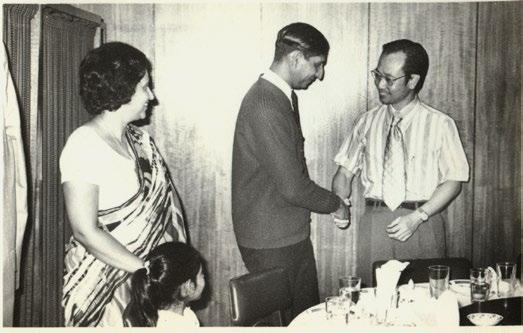
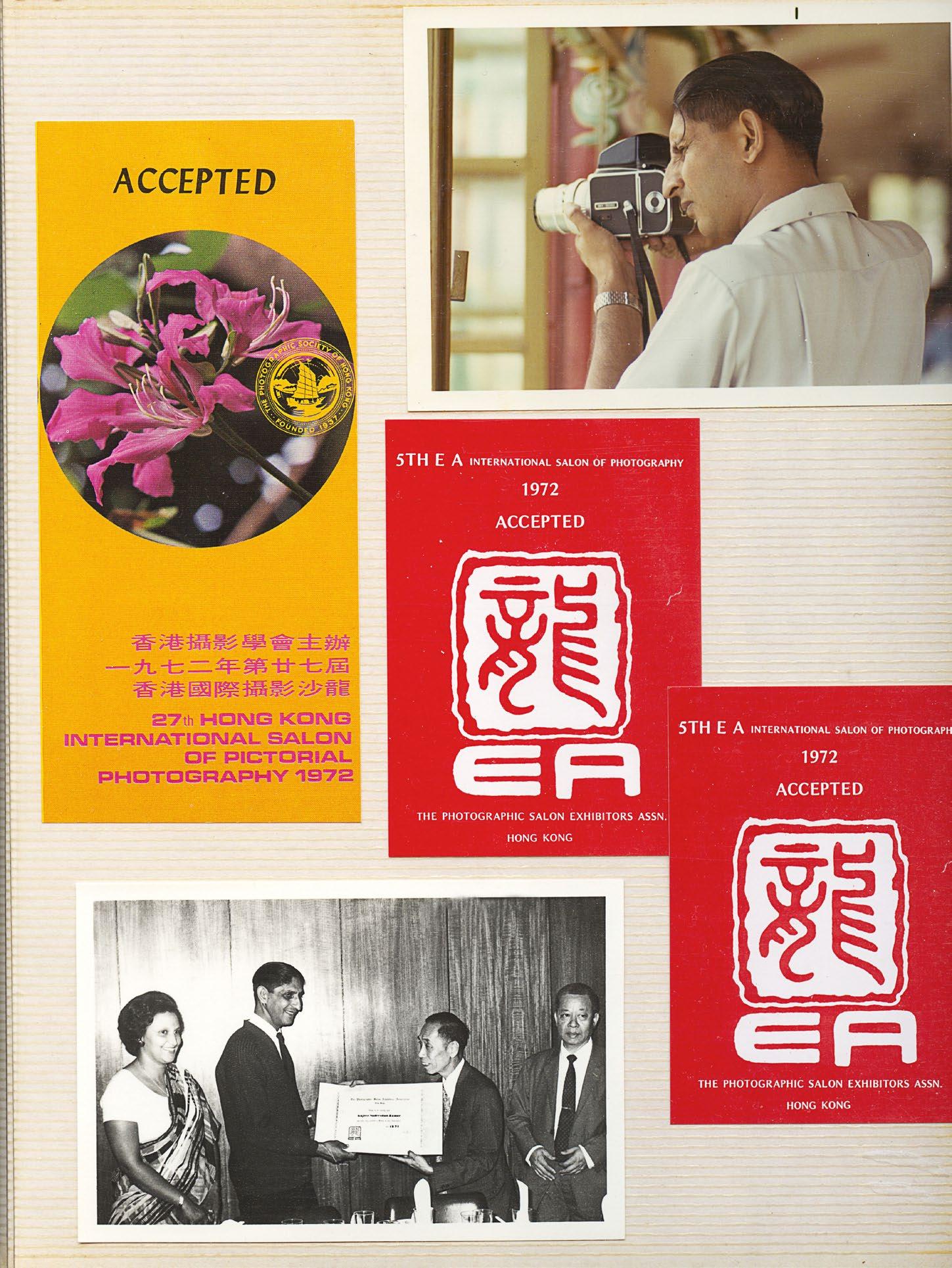
Fig.1 far left: Shashi Gajree, Meera Gajree, Palli Gajree and Dr KH Wu
Fig.2 left: Clippings and keepsakes from the Hong Visit.
Memberships and Honorary Fellowships. Unlike other photographic bodies around the globe these distinctions were rated the same way. In 1963, I was elected Fellow of PSHK (FPSHK) In 1973, elected Honorary Fellow of PSEA (Hon.FPSEA)
Also in 1973, elected Honorary Fellow (Hon.FBSC)
Since I have not exhibited for some time, I am not sure whether the respective honours are available to new members or they have ceased. It will be wise to get up-to-date information online.
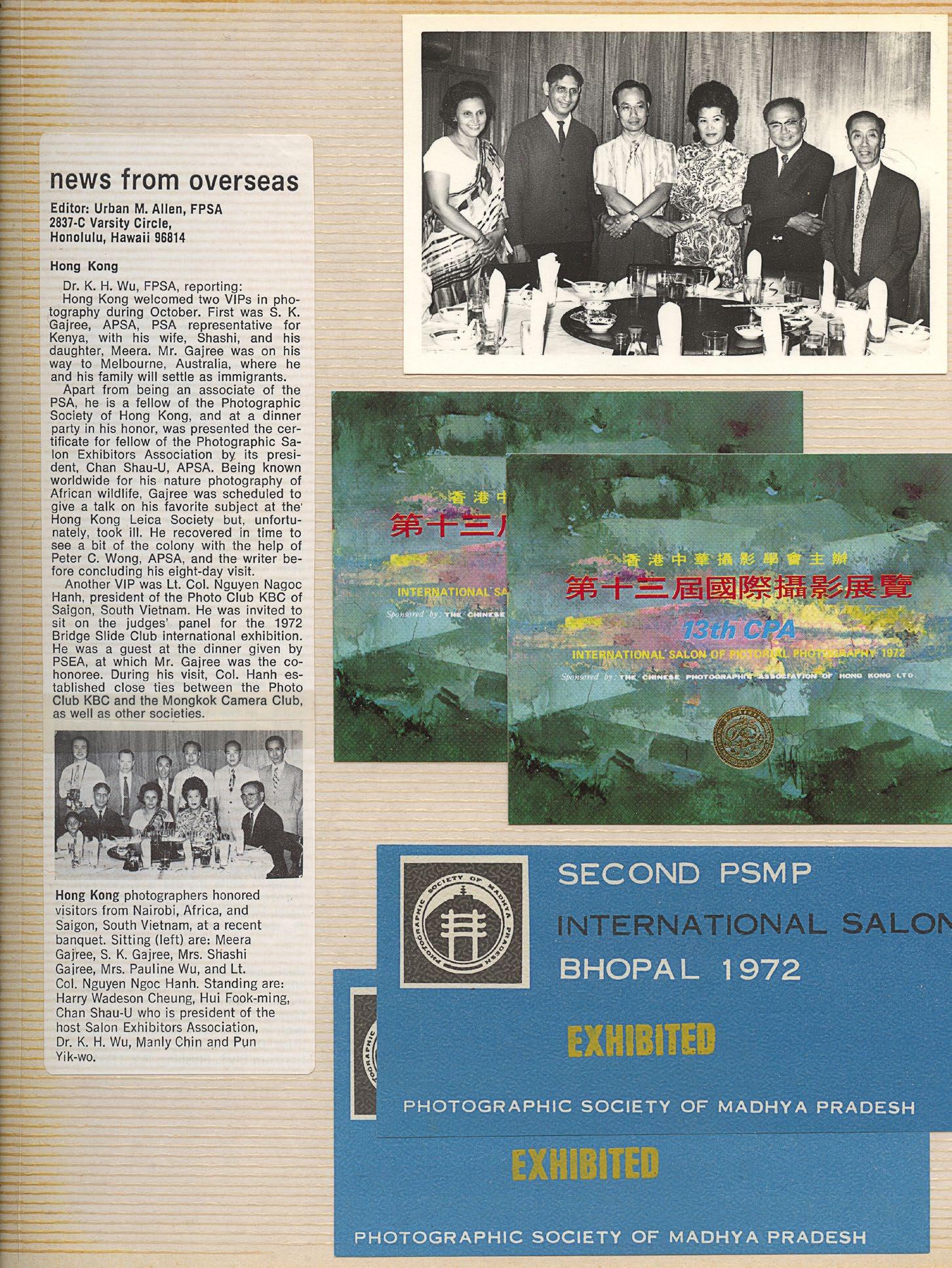
Here is the article from the newspaper clipper in figure 4 (right), in full.
News from Overseas – PSA Journal
Editor: Urban M. Allen, FPSA 2837-C Varsity Circle, Honolulu, Hawaii 96814
Hong Kong
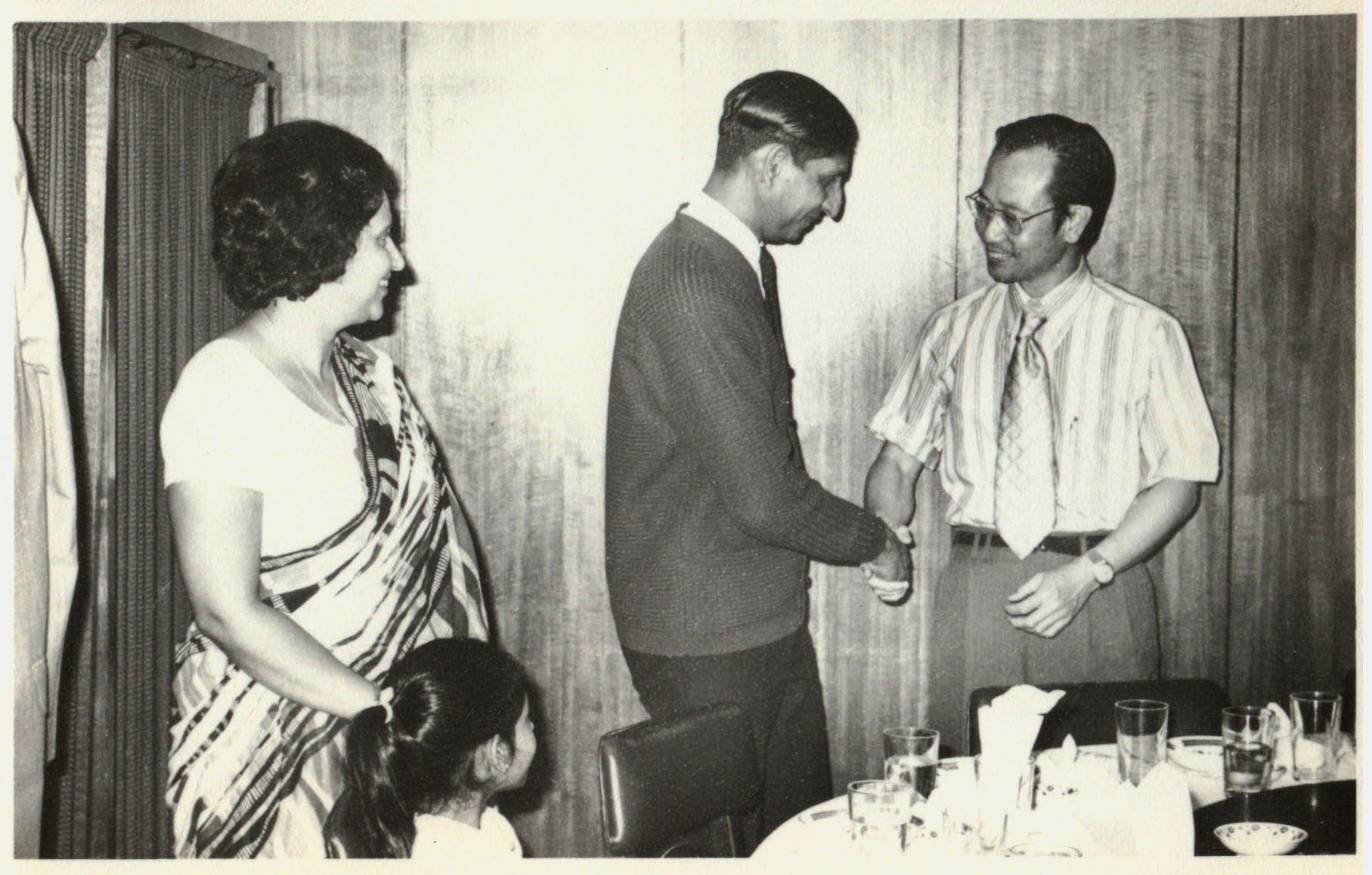
Dr K H Wu, FPSA, reporting: Hong Kong welcomed two VIPs in photography during October. First was S K Gajree, APSA, PSA representative for Kenya, with his wife Shashi, and the daughter, Meera. Mr Gajree was on his way to Melbourne, Australia, where he and his family will settle as immigrants. Apart from being an Associate of the PSA, he is a Fellow of the Photographic Society of Hong Kong, and at a dinner party in his honour, was presented the certificate for Fellow of the Photographic Salon Exhibitors Association by its President, Chan Shau-U, APSA. Being known worldwide for his nature photography of African
Wildlife, Gajree was scheduled to give a talk on his favourite subject at the Hong Kong Leica Society but, unfortunately, took ill. He recovered in time to see a bit of the colony with the help of Peter C Wong, APSA, and the writer before concluding his eight-day visit.
Another VIP was Lt. Col. Nguyen Nagoc Hanh, President of the Photo Club KBC of Saigon, South Vietnam. He was invited to sit on the judges’ panel for the 1972 Bridge Slide Club International Exhibition. He was a guest at the dinner given by PSEA, at which Mr Gajree was the co-honouree. During his visit, Col. Hanh
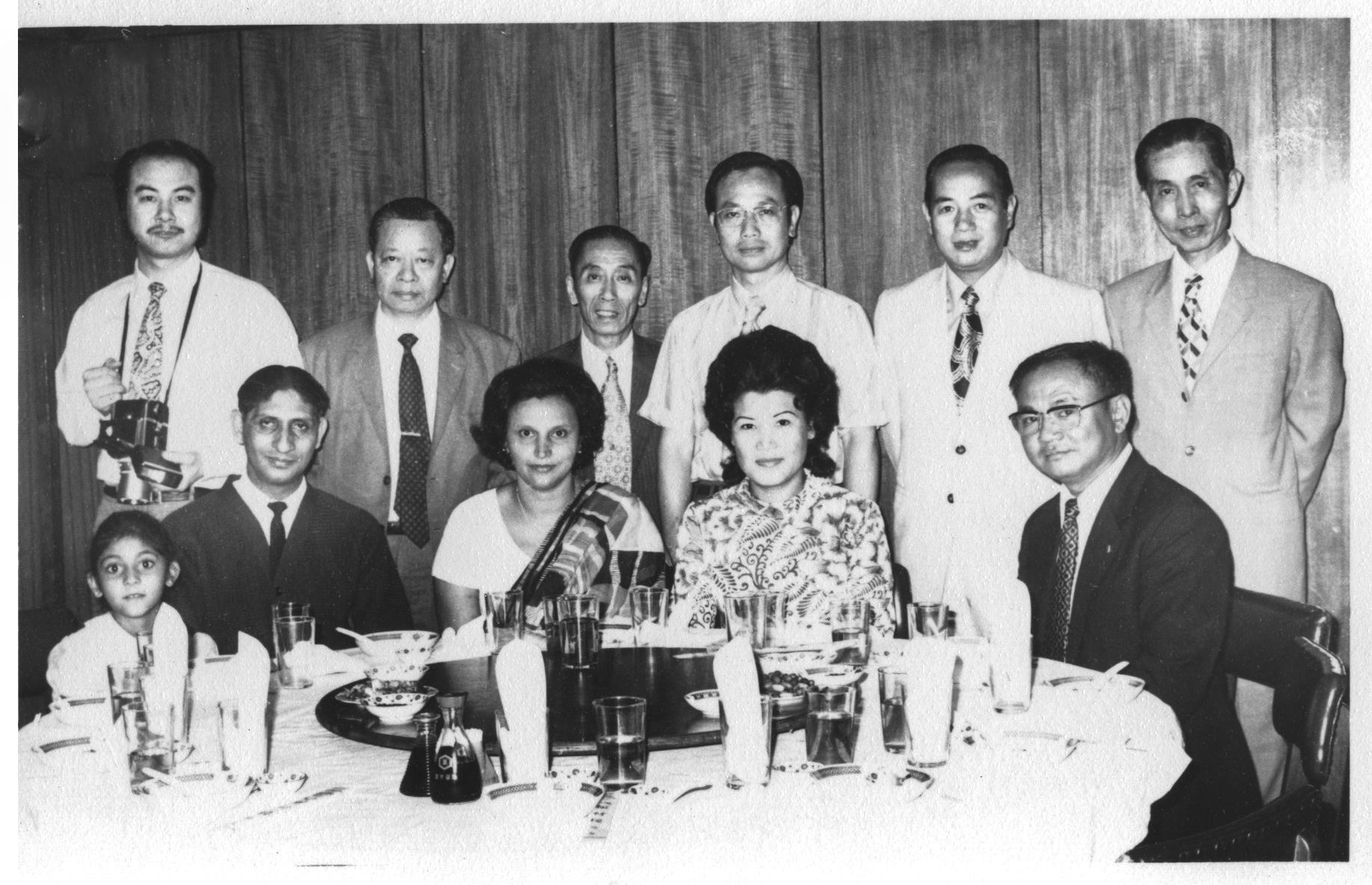
Fig.3 far left: Hong Kong Visit – 1972. Sitting left to right are: Meera Gajree, S K Gajree, Mrs Shashi Gajree, Mrs Pauline Wu, and Lt. Col. Nguyen Ngoc Hanh. Standing are: Harry Wadeson Cheung, Hui Fook-ming, Chan Shau-U who is the President of the host Salon Exhibitors Association, Dr K H Wu, Manly Chin and Pun Yik-wo.
Fig.4 left: More clippings and keepsakes from the Hong Visit.
established close ties between the Photo Club KBC and the Mongkok Camera Club, as well as other Societies.
Hong Kong photographers honoured visitors from Nairobi, Kenya, and Saigon, South Vietnam, at a recent banquet.
Is it travel or is it art?
by Rob Morgan ARPS
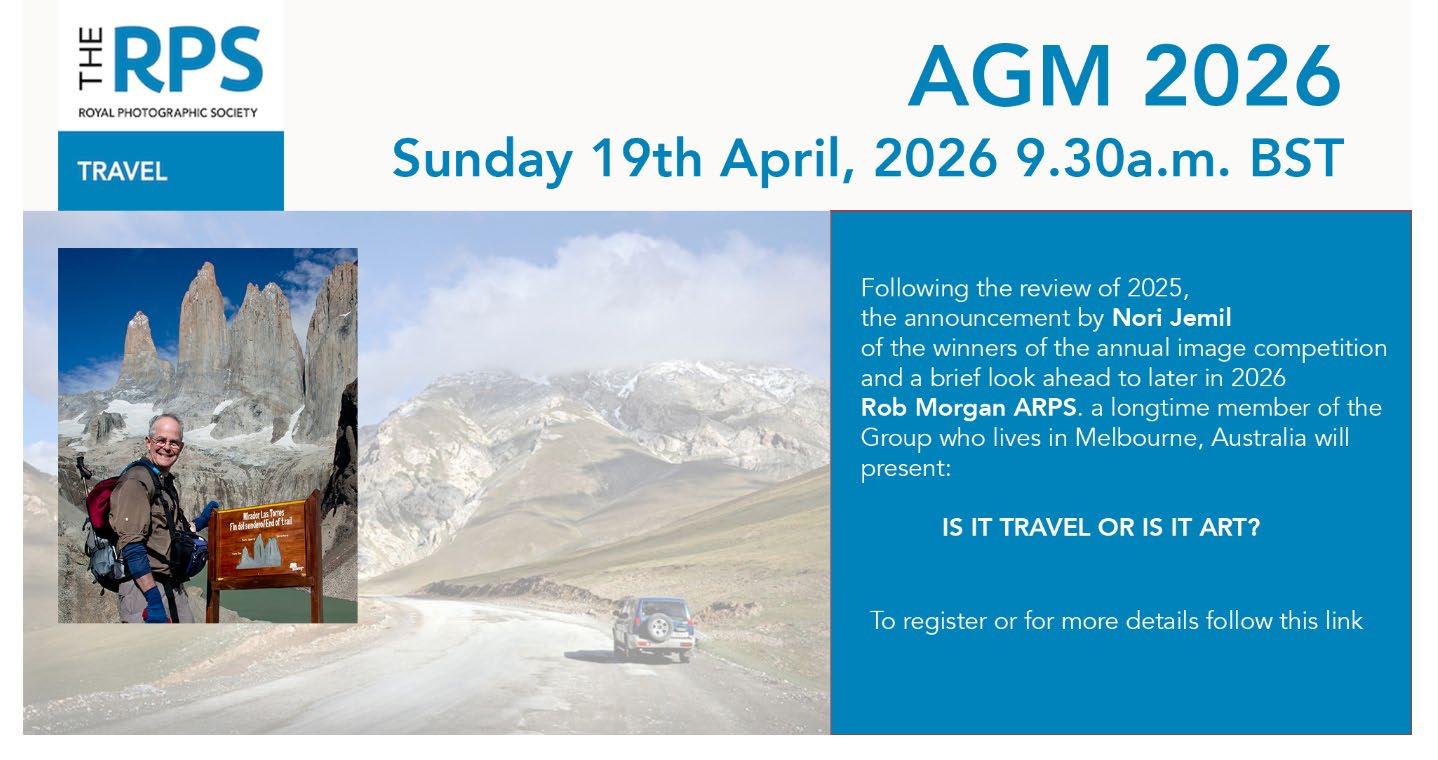
On Sunday 19th April, Australian Chapter member Rob Morgan ARPS is making a presentation to the RPS Travel Group, titled ‘Is it Travel or is it Art?’ Rob is a long time member of the Travel Group. The group’s AGM starts at 9.30 am UK time (or 6.30 pm Australian Eastern
Standard Time) and Rob’s talk will happen after that and the results of an annual travel photo competition.
You can access tickets for the session (which appears to be free to anyone) here.
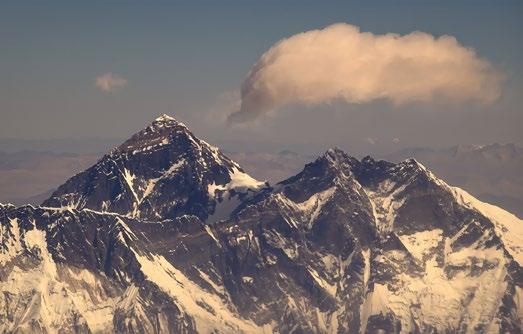
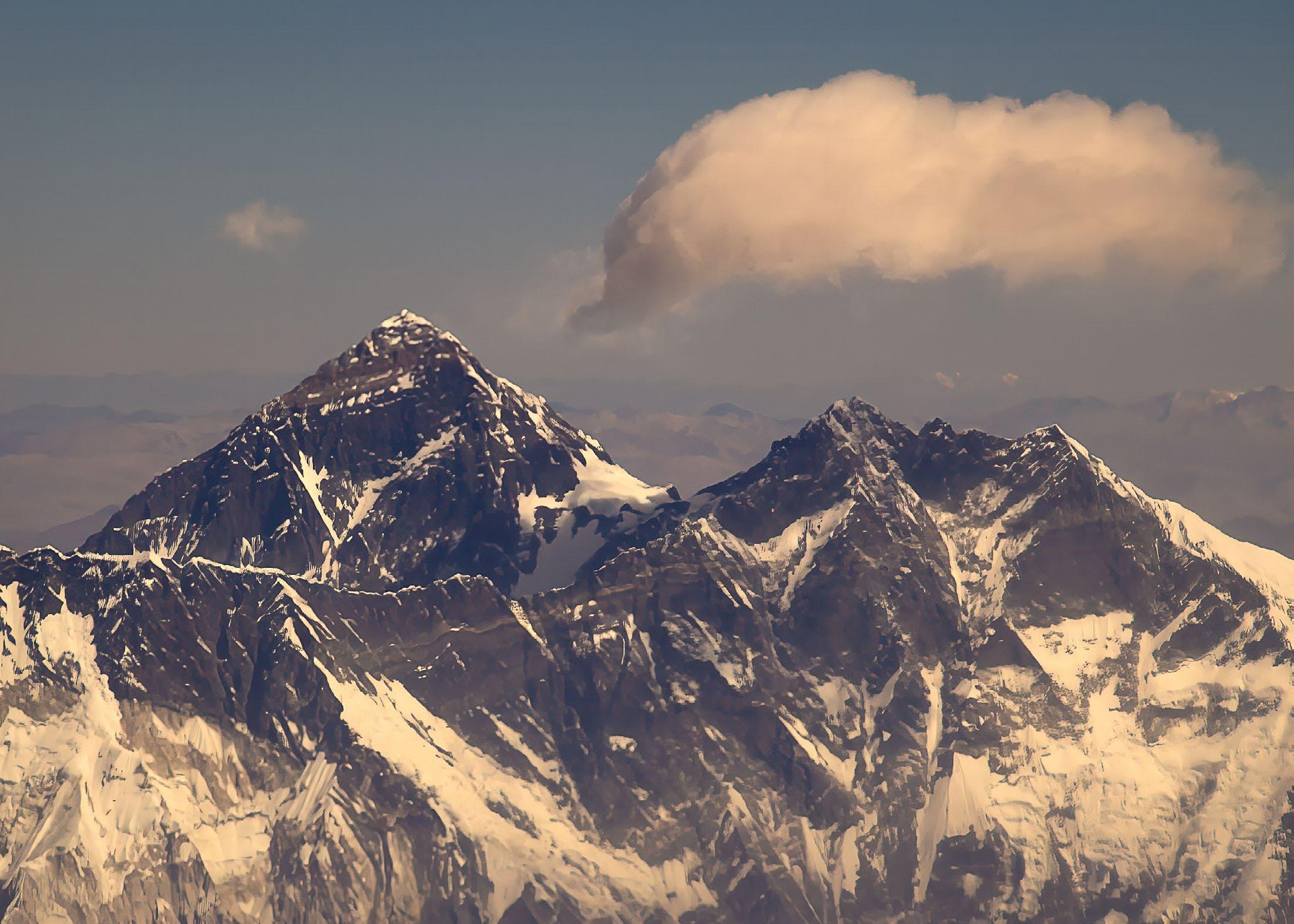
I was in Bhutan recently and returned home via Kathmandu and Delhi. The flight from Paro in Bhutan to Kathmandu goes straight past Mt Everest (aka Sagarmatha in Nepal or Chomolungma in Tibet). It was a glorious sunny day and there were great views from the right side windows. I got the photo here with about a 200 mm focal length. I was intrigued by the thought bubble coming out of Mt Everest and wondered what exactly the mountain was thinking.
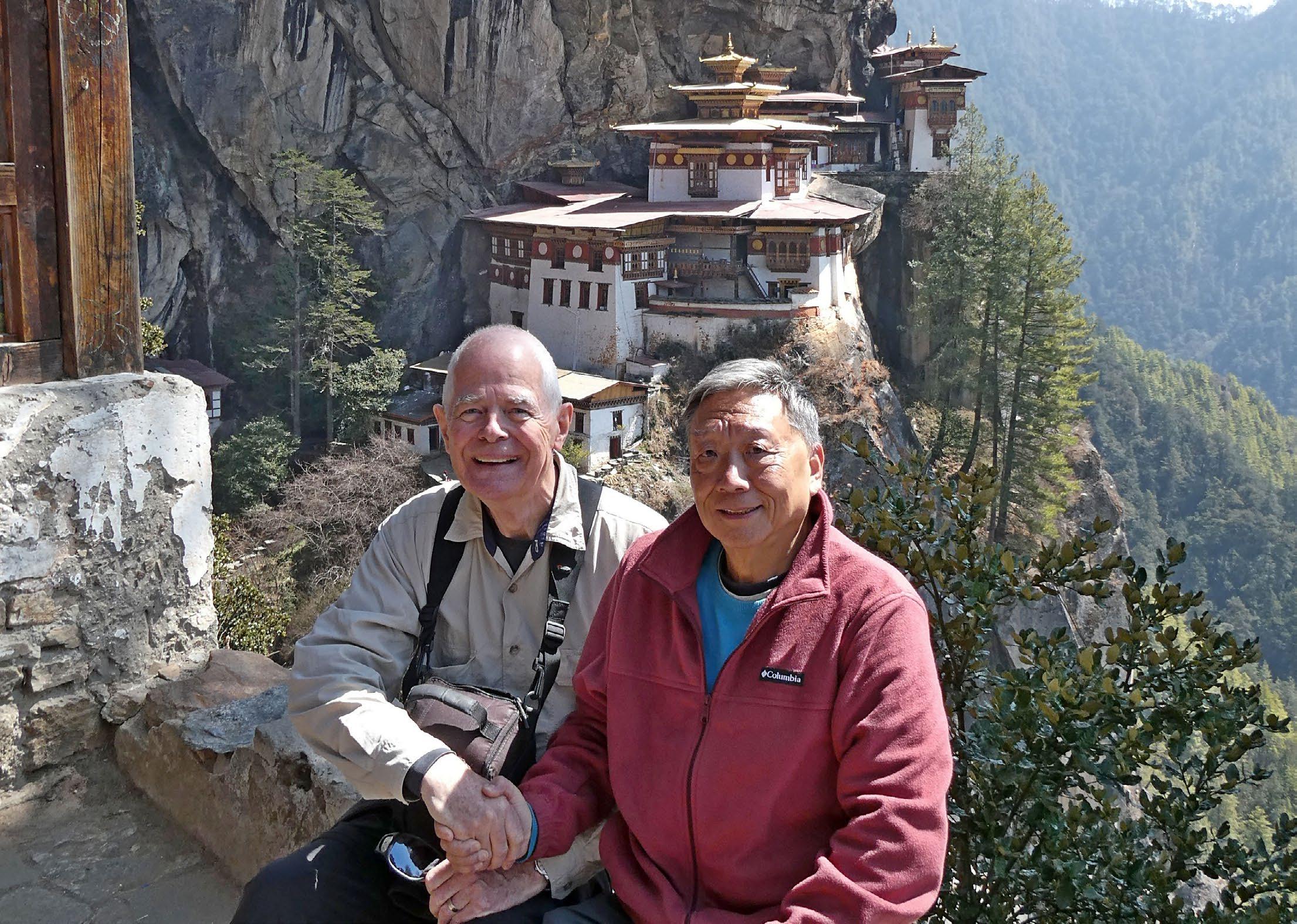
The other image was taken the day before, when I and others in our photography group walked up to the lookout opposite the Tiger’s Nest monastery, near Paro. The walk/climb up to
here involves a rise in elevation of about 520 metres. It took about three hours, but fortunately there is a café at about the two-thirds point where a 10 am coffee was in order. Getting from the lookout to the monastery involves going down hundreds of steps and then going back up hundreds more. I decided the view from the lookout was good enough. There I met this Chinese gentleman, also 75 years old. He had already been to the monastery and back!
Fig.1 right top: Mount Everest
Fig.2 right bottom: Tigers Nest Lookout
Ted Richards’ exhibition
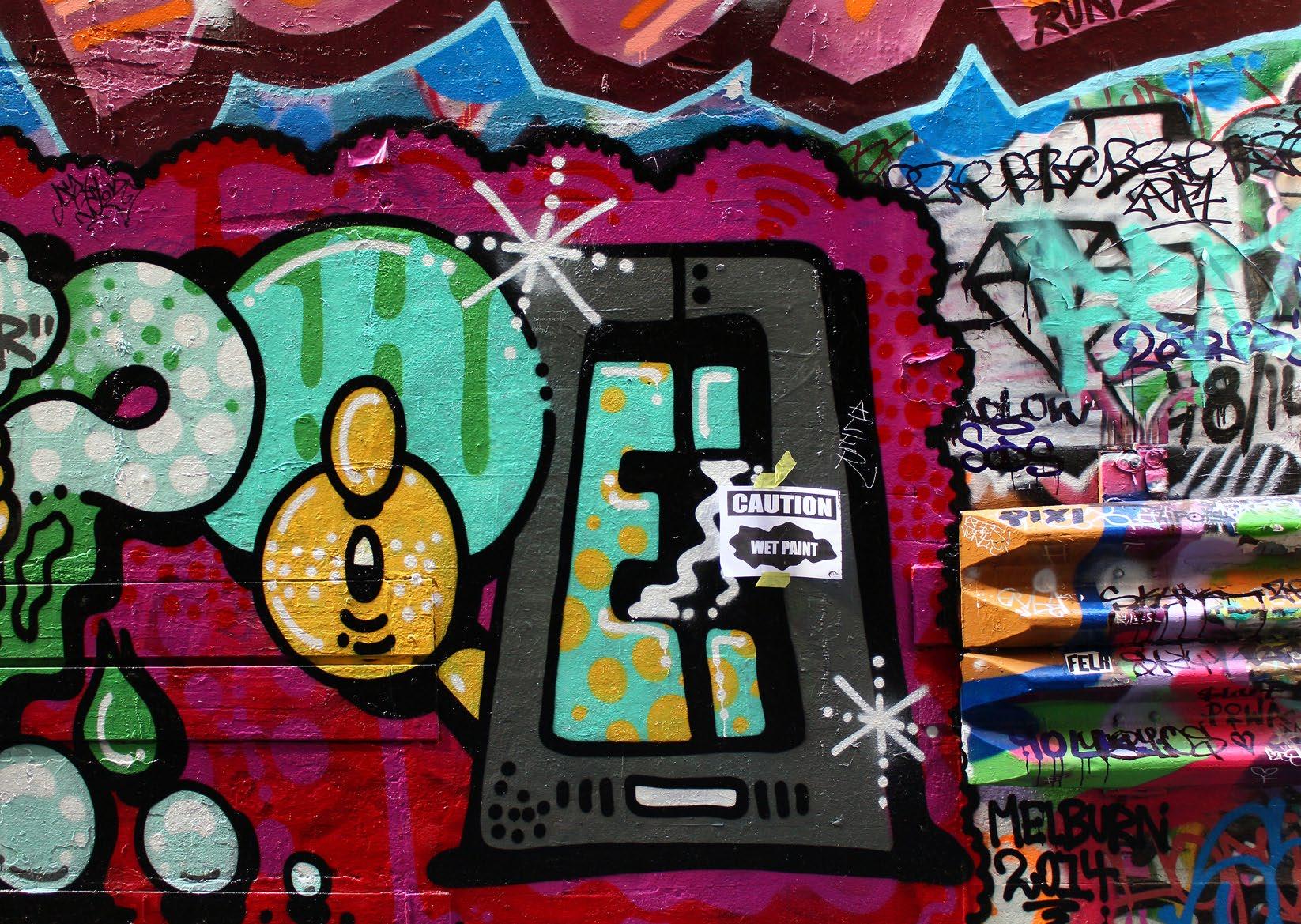
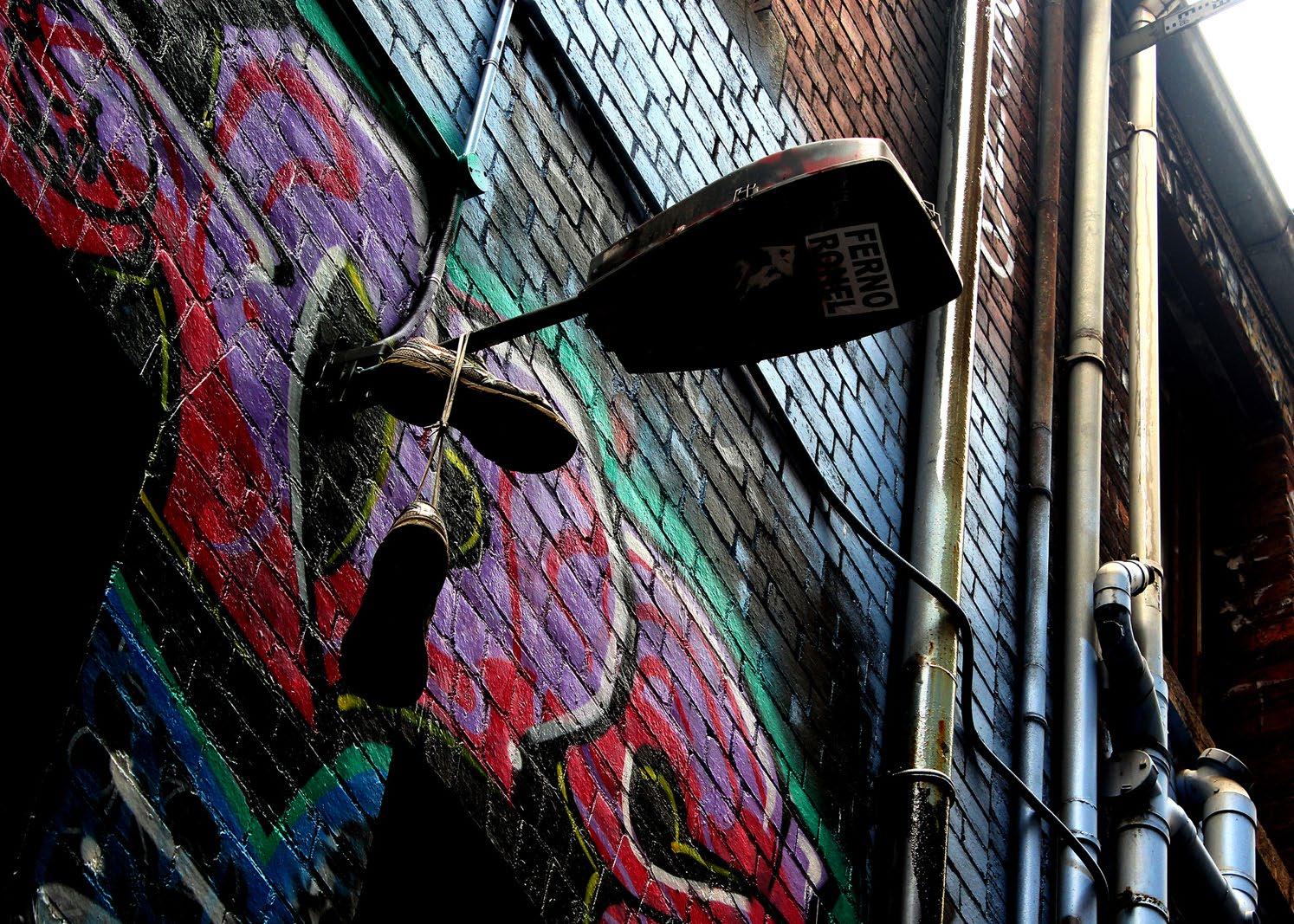
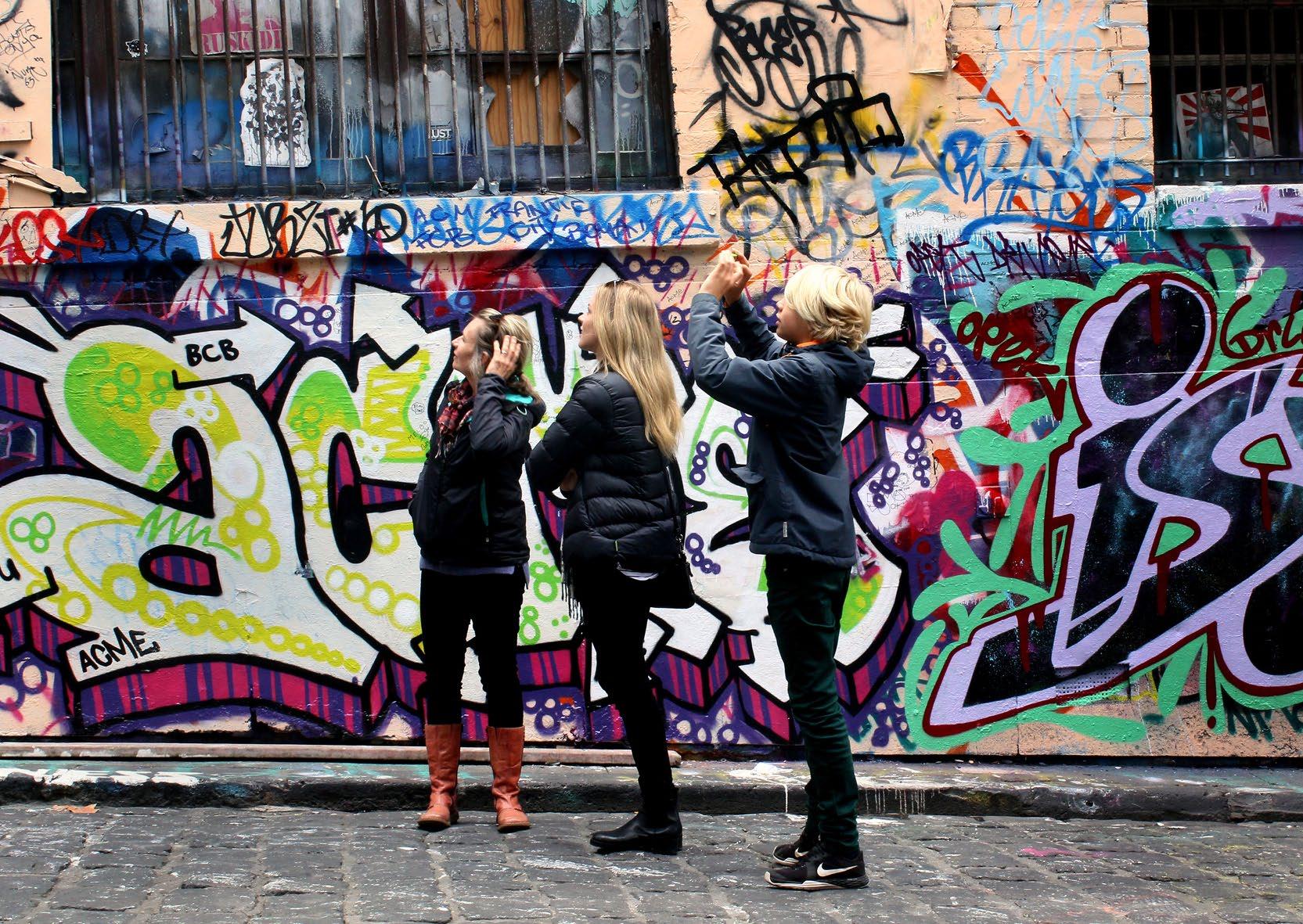
Chapter member Ted Richards has been photographing Melbourne’s lane ways for about 20 years and he has now amassed a few thousand of them. In April Ted’s work will feature in an exhibition at Batemans Bay Library. 26 feature in the exhibition, the examples here are typical of Ted’s work and are examples of this type of photograph, but don’t feature in the exhibition.
If you have the chance the exhibitions is on at Batemans Bay Library (NSW) from 16 April to 7 May. Check out the library’s website here.
Fig.1 below: Union Lane, Sept 2014
Fig.2 right top: Hosier Lane, Aug 2015
Fig.3 right bottom: Hosier Lane, May 2017
Australian photographer John Pollard FRPS died in 2018, leaving behind not just a grieving family and a substantial legacy of photographic work in public and private collections, but also an eclectic collection of books representing his varied interests over his life. In this ongoing column, I hope to
stimulate interest and reflection on various aspects of photography based on the perusal of John’s collection of books. In the process, I also aim to periodically shine a light on John’s career and practice.
Dr Robin Williams ASIS FRPS
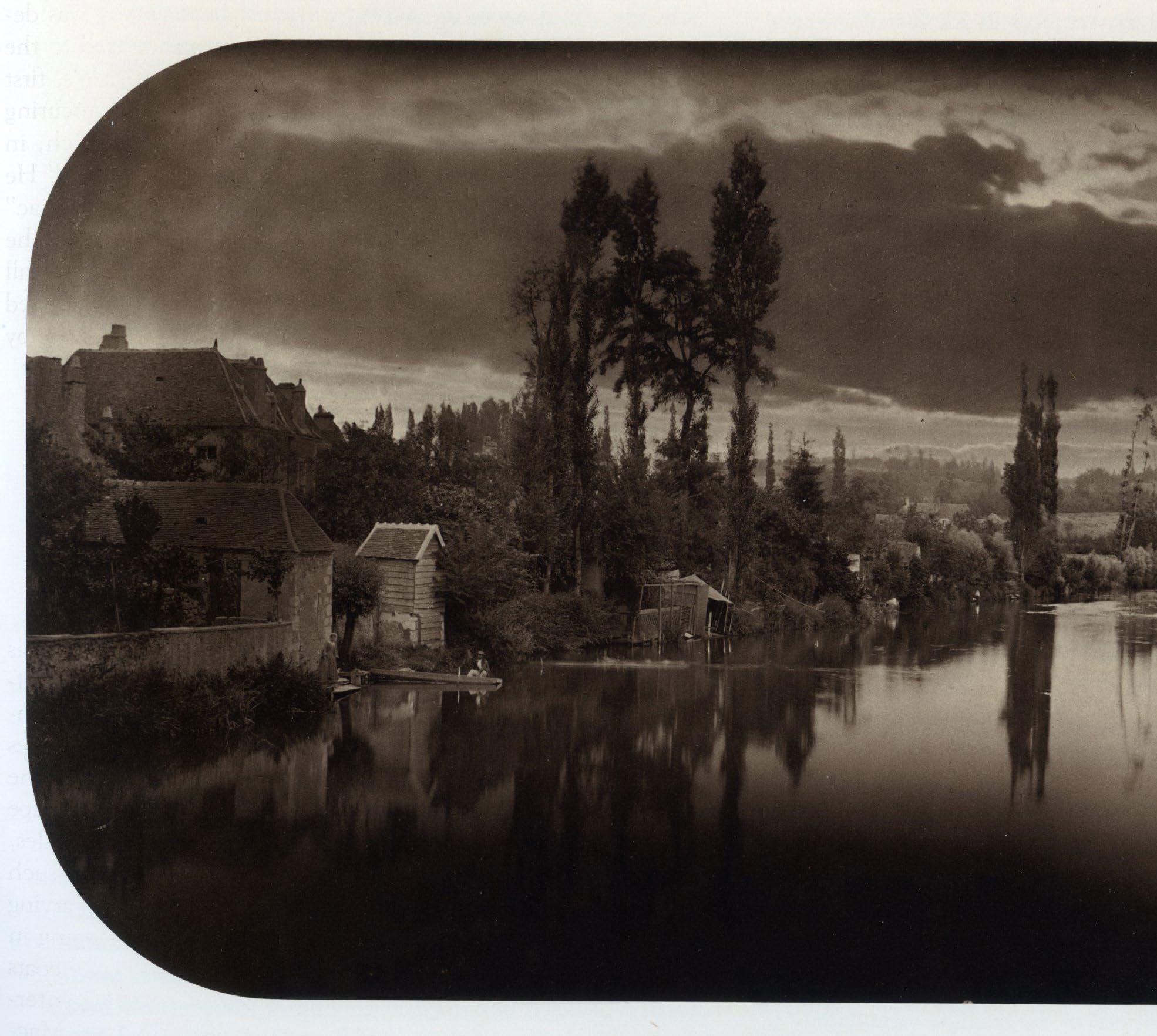
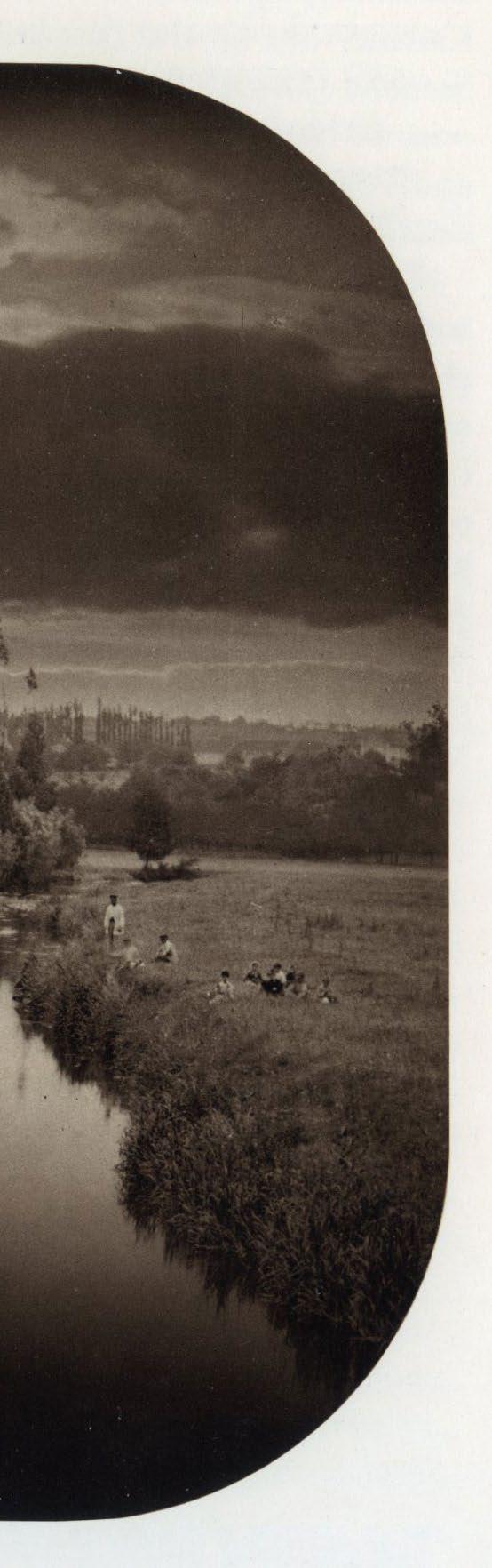
Fig.1 main image: River scene, France, 1858 by Camille Silvey. Gold toned albumen print from two wet collodion negatives. Reported in the Journal of the Photographic Society (now RPS) as being ‘Perhaps the gem of the whole exhibition … the natural beauty of the scene itself, rich in exquisite and varied detail with the broad soft shadows stealing over the whole, produce a picture which for calm, inviting beauty we have not seen equalled.’
Pondering Pollard 28:
‘The
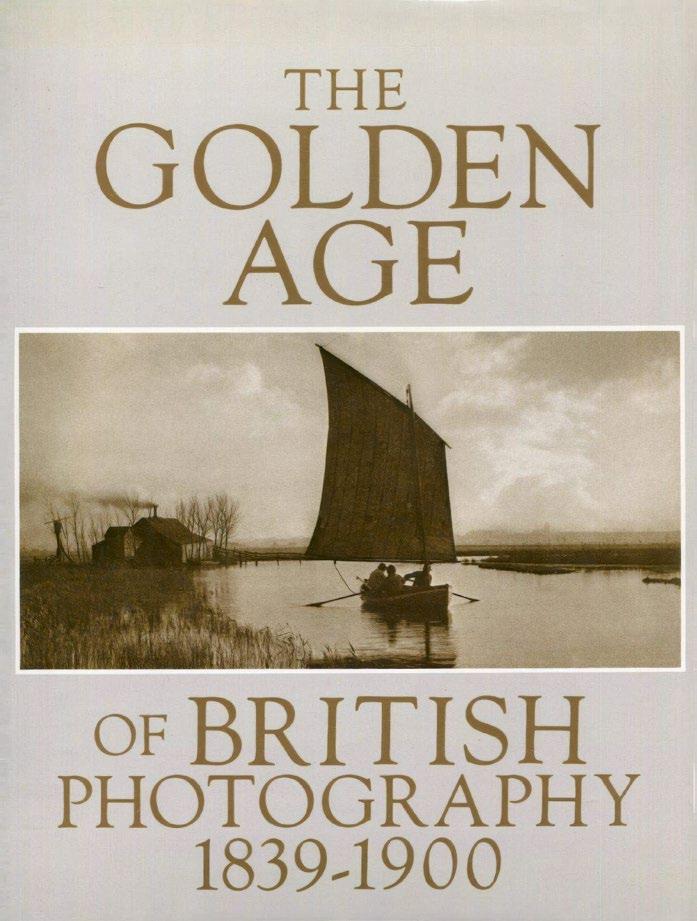
Golden Age of British Photography 1839–1900.’
Edited by Mark Haworth-Booth.
Pub. Aperture Books, USA in partnership with the Victoria & Albert Museum, London. 1984.
I’m not sure really what constitutes a ‘Golden Age’, but if we turn to our wonderful Oxford English Dictionary, we find that it is ‘A time in history marked by great accomplishments, typically characterised by notable advancements in a specific field or culture.’ That being the case, there can be no doubt that the
years between 1839 and 1900 were a time of peak creativity and innovation for photography. ‘The Golden Age of British Photography’ was an exhibition, a catalogue, and in perpetuity, a book – a copy of which was in John Pollard’s library. John was fascinated by the early history of photography and photoreprography.
The original exhibition was directed by Mark HaworthBooth, then Assistant Keeper of Photography, at the Victoria & Albert Museum, London, and Michael E. Hoffman, Director of the Alfred Stieglitz Centre at the Philadelphia Museum of Art. Photographs were selected from the collections of the Victoria & Albert Museum, the
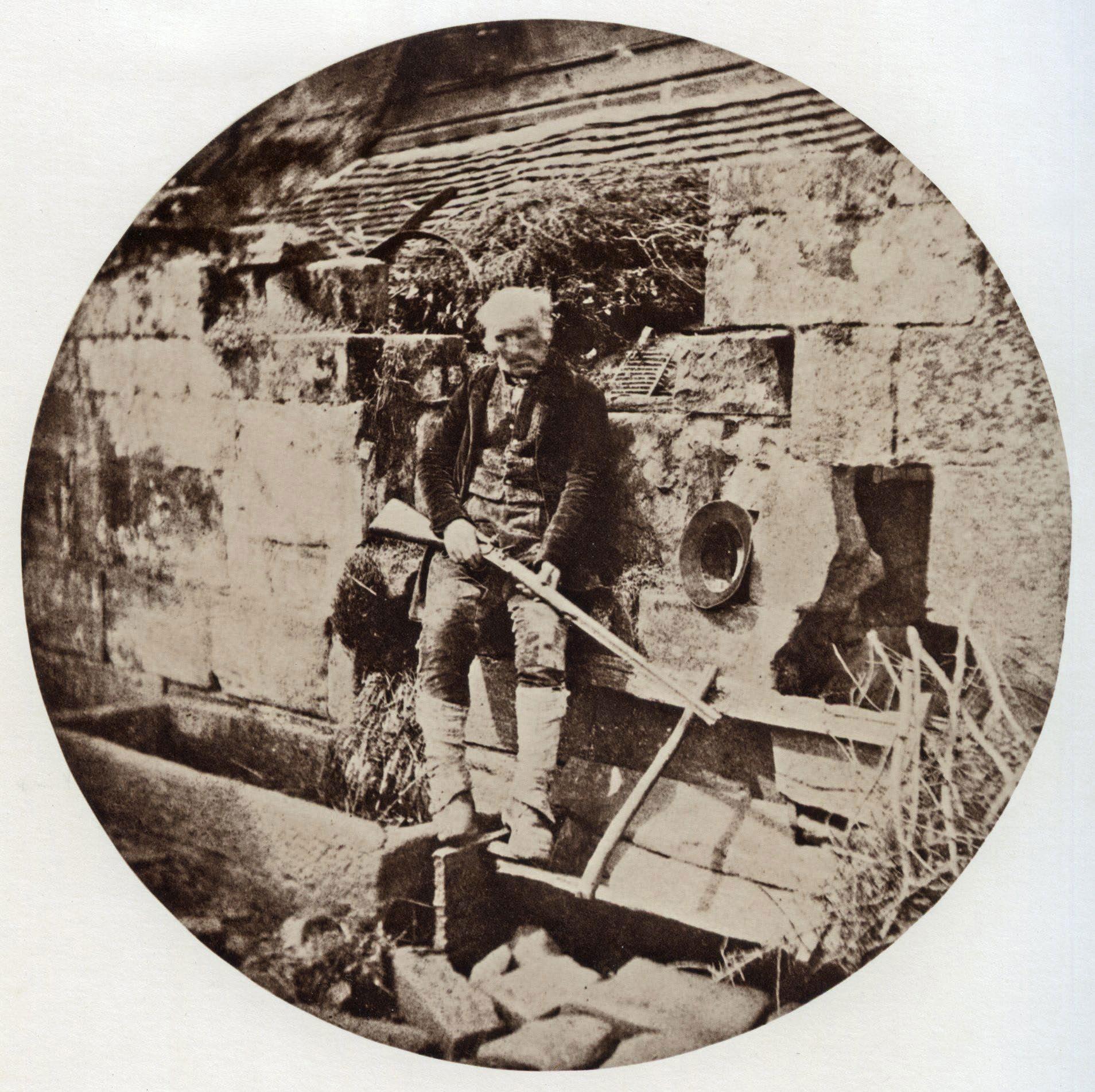
opposite: The Gamekeeper, Lacock Abbey, William Henry Fox Talbot, Calotype, 1845. ‘It is a little bit of Magic realized: of natural magic. You make the powers of nature work for you and no wonder that your work is well and quickly done … but after all what is nature but one great field of wonders past our comprehension.’ W H Fox Talbot.
Philadelphia Museum of Art, the Royal Archives, the Royal Photographic Society, the Science Museum, London, and the Scottish National Portrait Gallery. The exhibition was sent on a major tour, beginning at the Victoria & Albert Museum from June to August 1984, and then to the Philadelphia Museum of Art, the Museum of Fine Arts, Houston, the Minneapolis Institute of Arts, the Pierpont Morgan Library, New York, and ending at the Museum of Fine Arts, Boston in May 1986.
Introduced to the British public in 1839 by its inventor, William Henry Fox Talbot, photography quickly took its place – alongside explorations of new territories, discoveries in science, and expanding horizons in the arts – as an authentic wonder in an age of wonders. ‘The Golden Age of British Photography’ presents photographs that represent the era. The medium’s early history unfolds in over 150 images, from one of photography’s first successes – Fox Talbot’s view of his breakfast table – to Paul Martin's turn-of-the-century
beach scenes, the precursors of modern snapshots.
Uninhibited by notions of what the new invention should be, early photographers experimented with what it could be, covering an astonishing variety of subjects in photography’s first 60 years. They depicted exotic faraway lands and the disappearing rural landscape, British Cathedrals and London slums, the public and private faces of the time, and the newsworthy events that brought the times into view.
Great claims were made for photography by those who invented, improved and fostered it during the nineteenth century. One of the glories of a glorious and inventive age, the medium met four requirements: spontaneity, precision, permanence and the capability of mass production. The idea of photography was inseparable from Victorian Britain’s idea of itself.
“The varied objects to which Photography can address itself, its power of rendering permanent that which appears to be as fleeting as the shadows
Fig.6: Nude in the studio
Fig.2 above: Front cover of the book, The Golden Age of British Photography, 1839–1900’ Inset image by Peter Henry Emerson ‘The Old order and the new’ 1886.
Fig.3
that go across the dial, the power that it possesses of giving fixedness to instantaneous objects, are for the purposes of history a matter of the deepest importance. It is not too much to say that no individual man, no individual substance, no individual matter that is calculated to excite the admiration of those who behold
it, need now perish; but may be rendered immortal by the assistance of Photography.”
Quotation from the Inaugural presidential address given by Sir Frederick Pollock at the Photographic Society of London (now the RPS), 5th April 1855.
Predictably, this wonderful exhibition and book included its
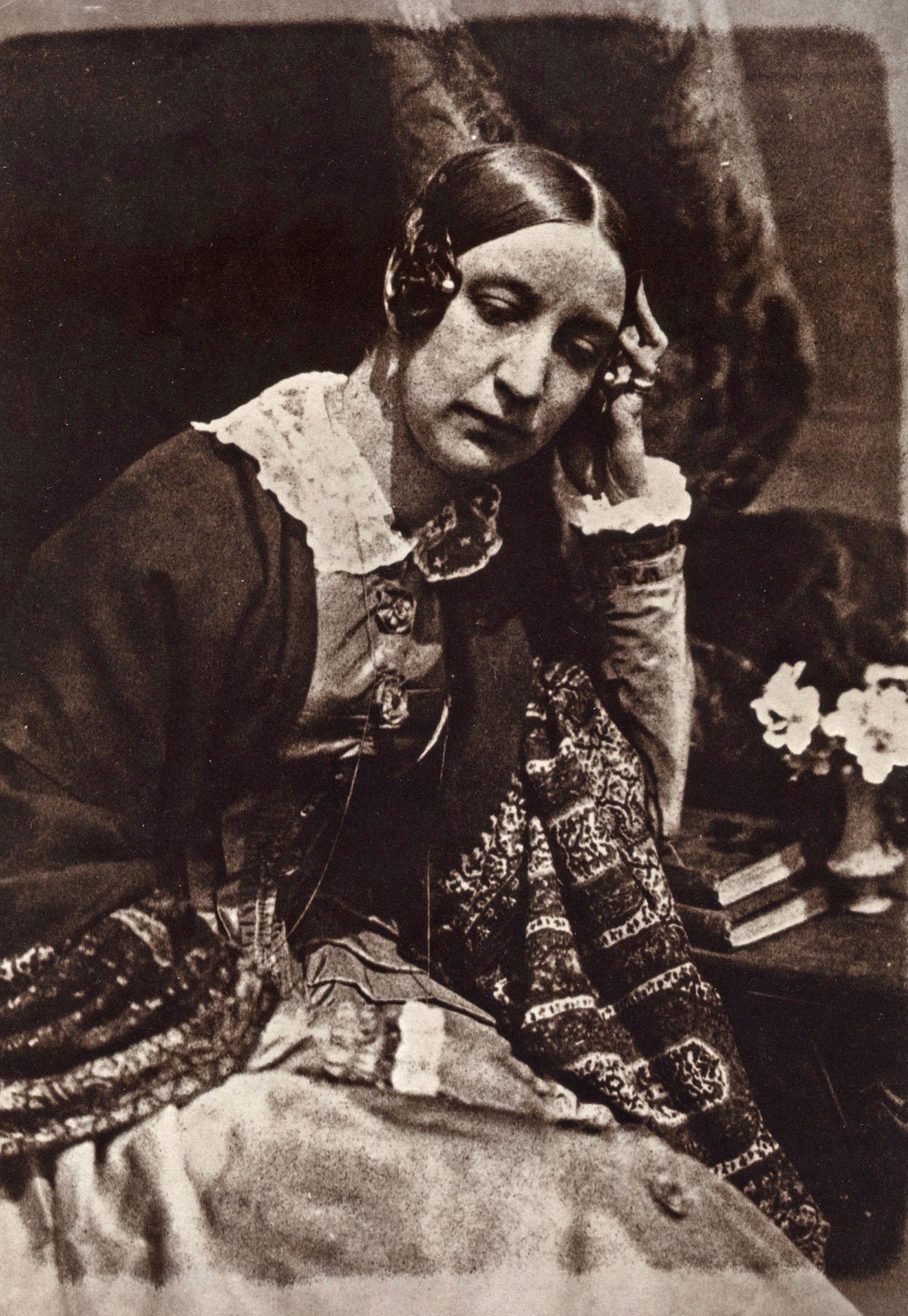
full share of major exhibition ‘goodies’. First, there are substantial selections of work from a long list of ‘canonized’ 19th-century pioneers and masters: among them Henry Fox Talbot, David Octavius Hill and Robert Adamson, who developed an individualistic style of portraiture; Roger Fenton who made portraits of
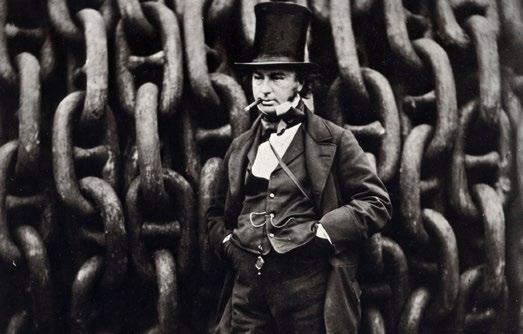
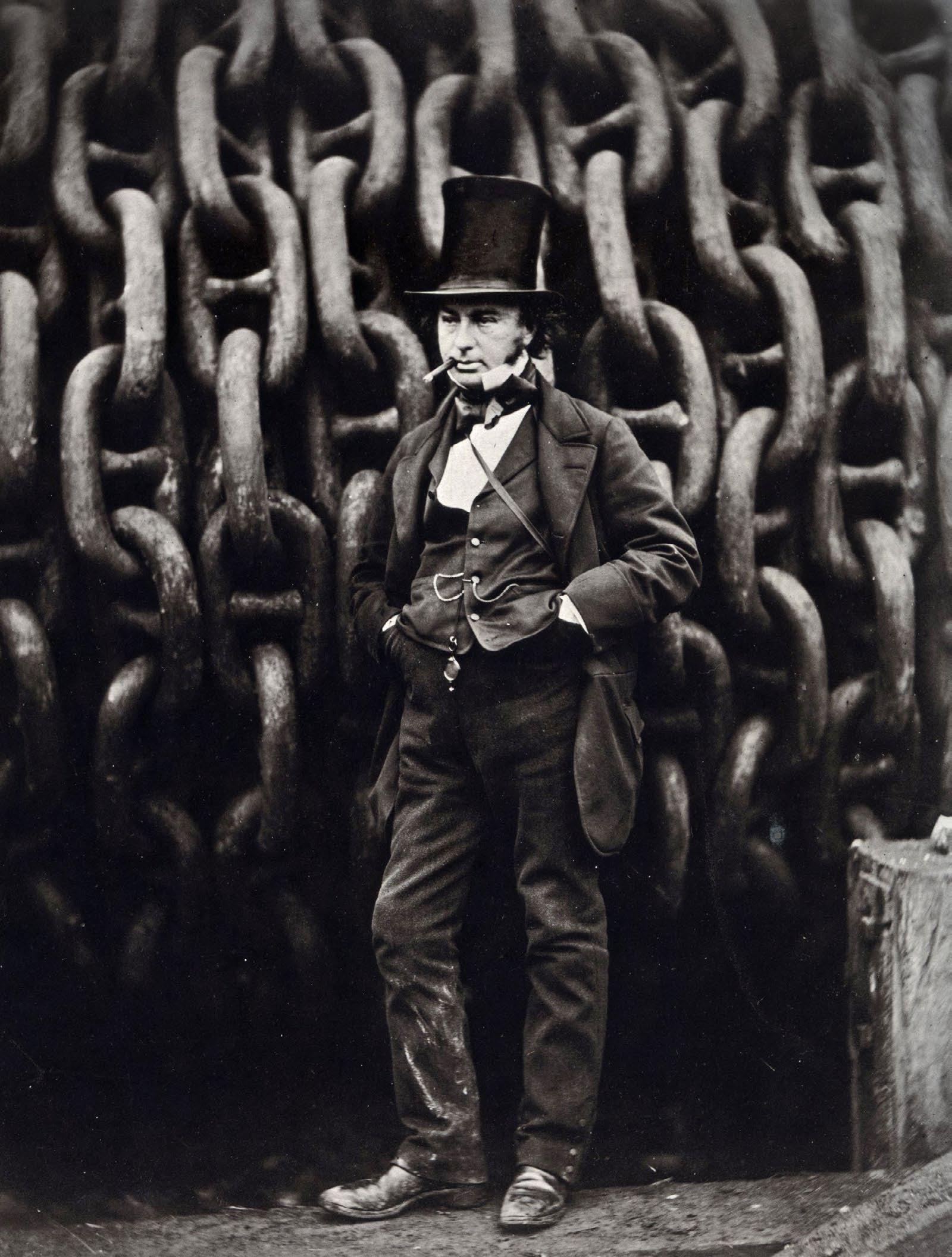
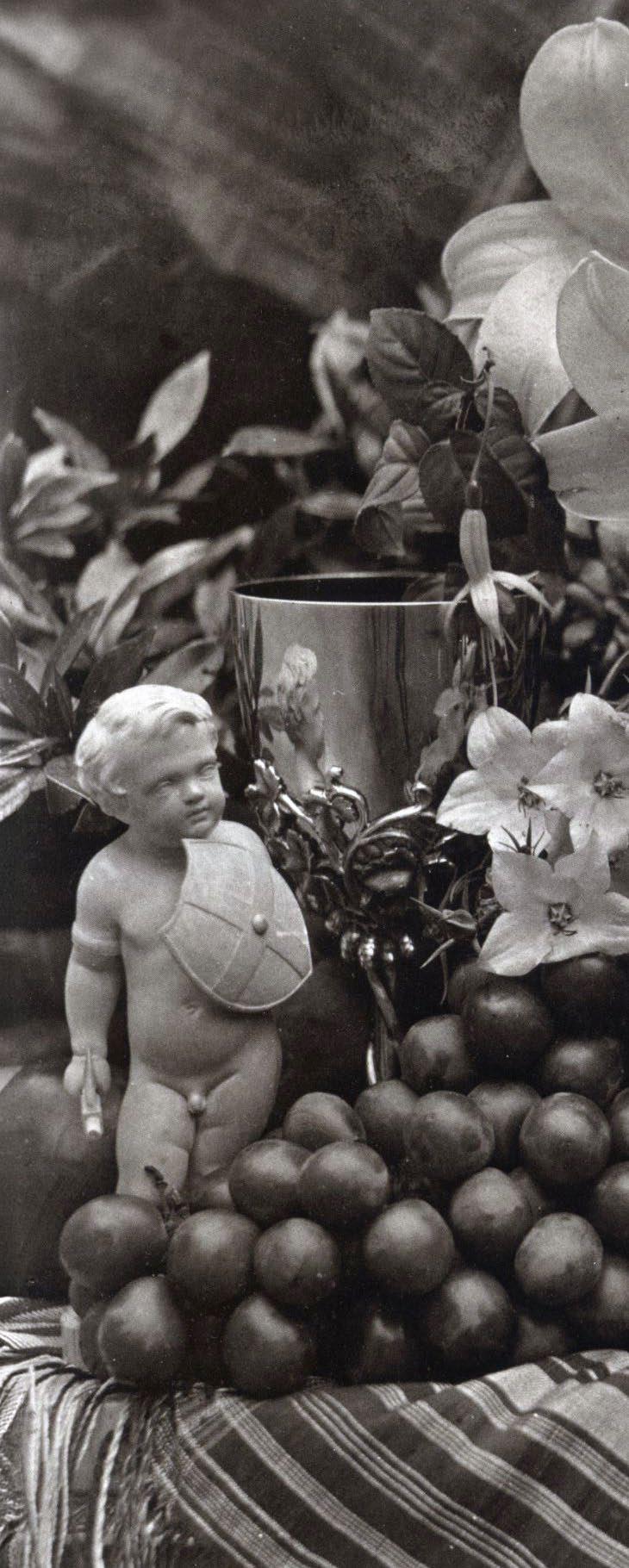
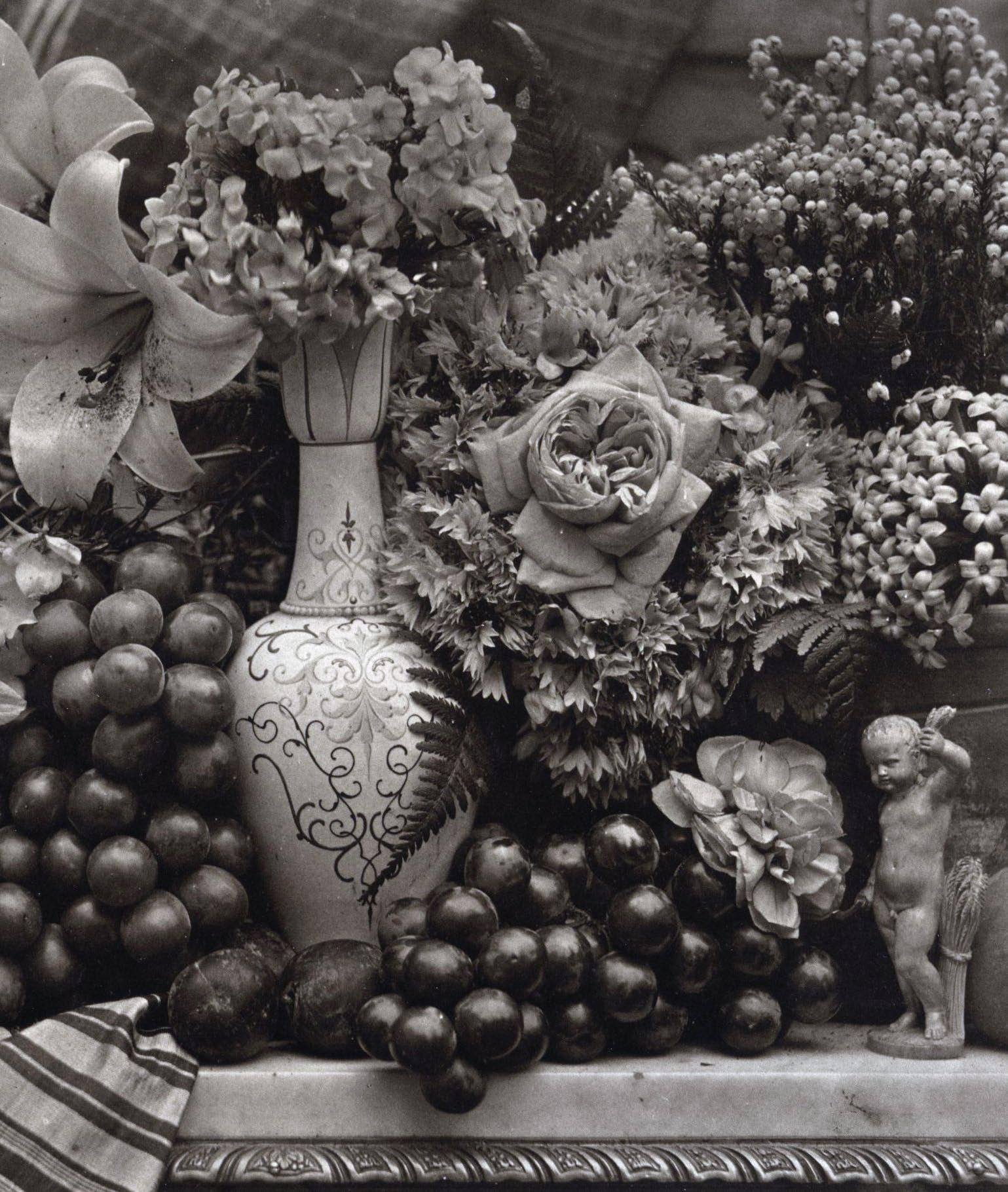
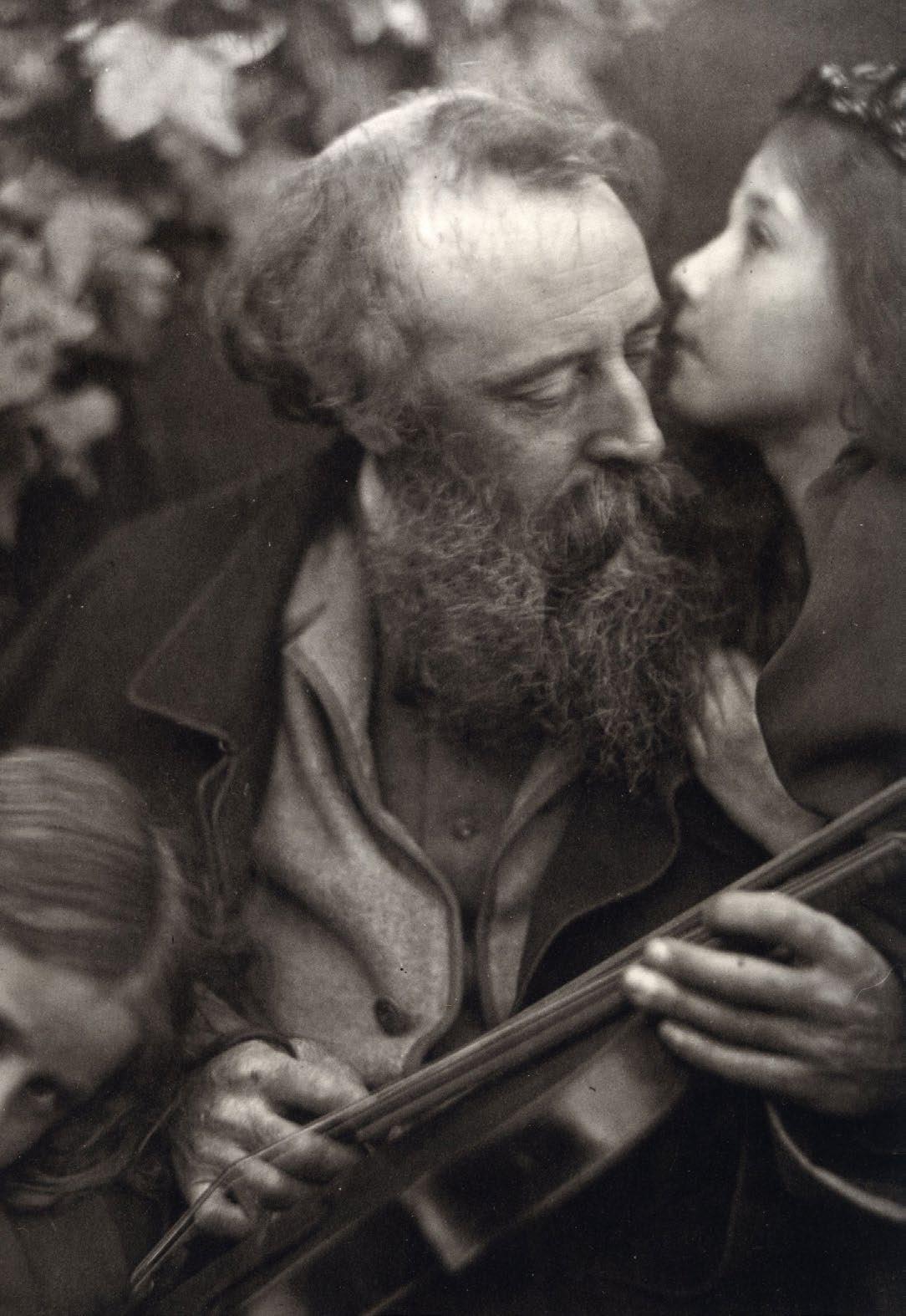
the Royal family, brought back pictures from the battlefields of the Crimean War, and concluded his career with exquisite still lifes of fruit and flowers, Peter Emerson, Julia Margaret Cameron, friend and collaborator of Alfred Lord Tennyson, Frederick Evans, etc. Then there are the famous iconic images: Rejlander’s The Two Ways of Life, 1857, say, or Robert Howlett’s 1857 portrait of Isambard Kingdom Brunel in front of the massive chains of the Great Eastern—this latter image summing up the matterof-fact hubris of the engineers who industrialised Victorian England. Next, there are thought-provoking critical juxtapositions: for example, an extensive selection of
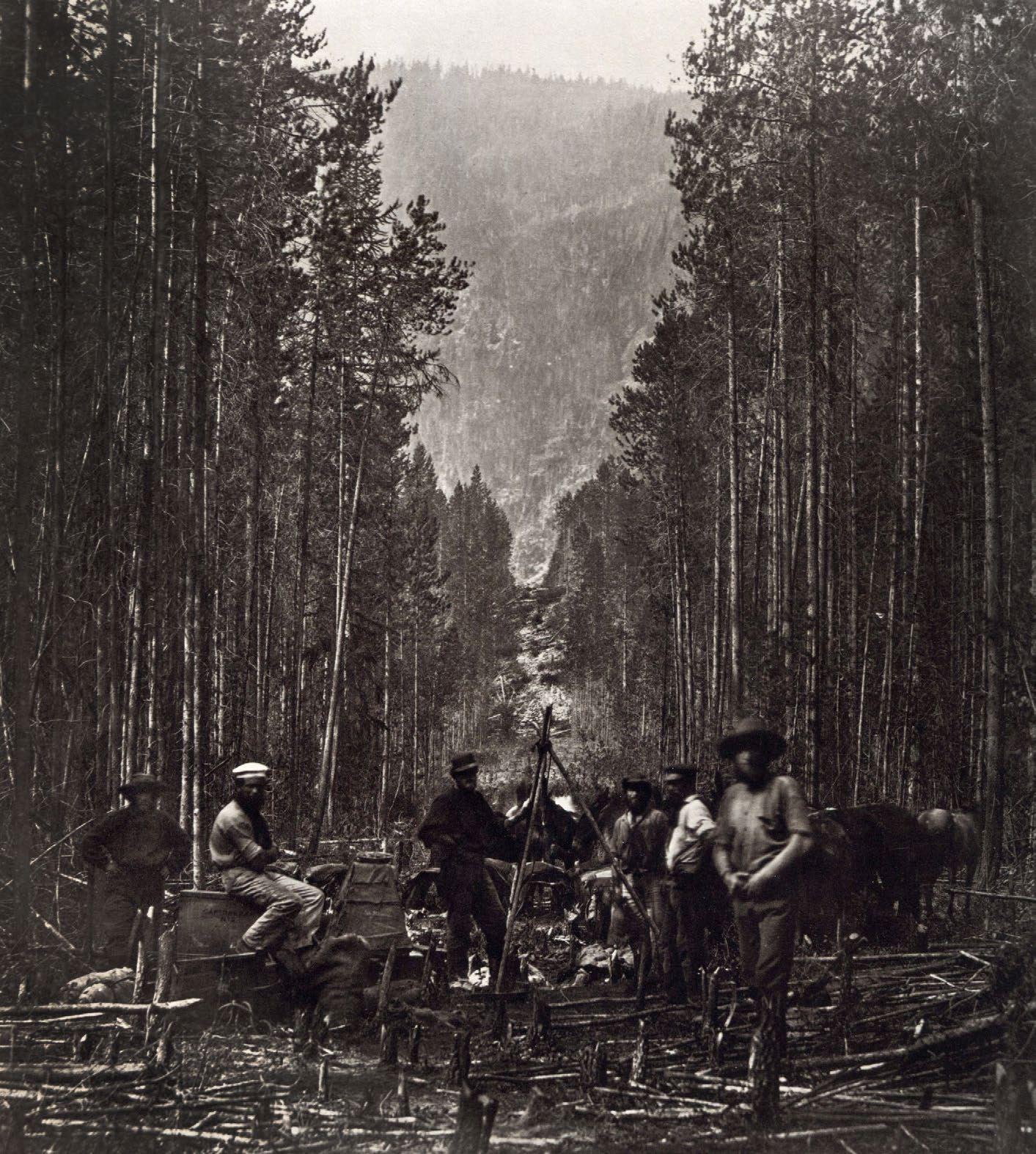
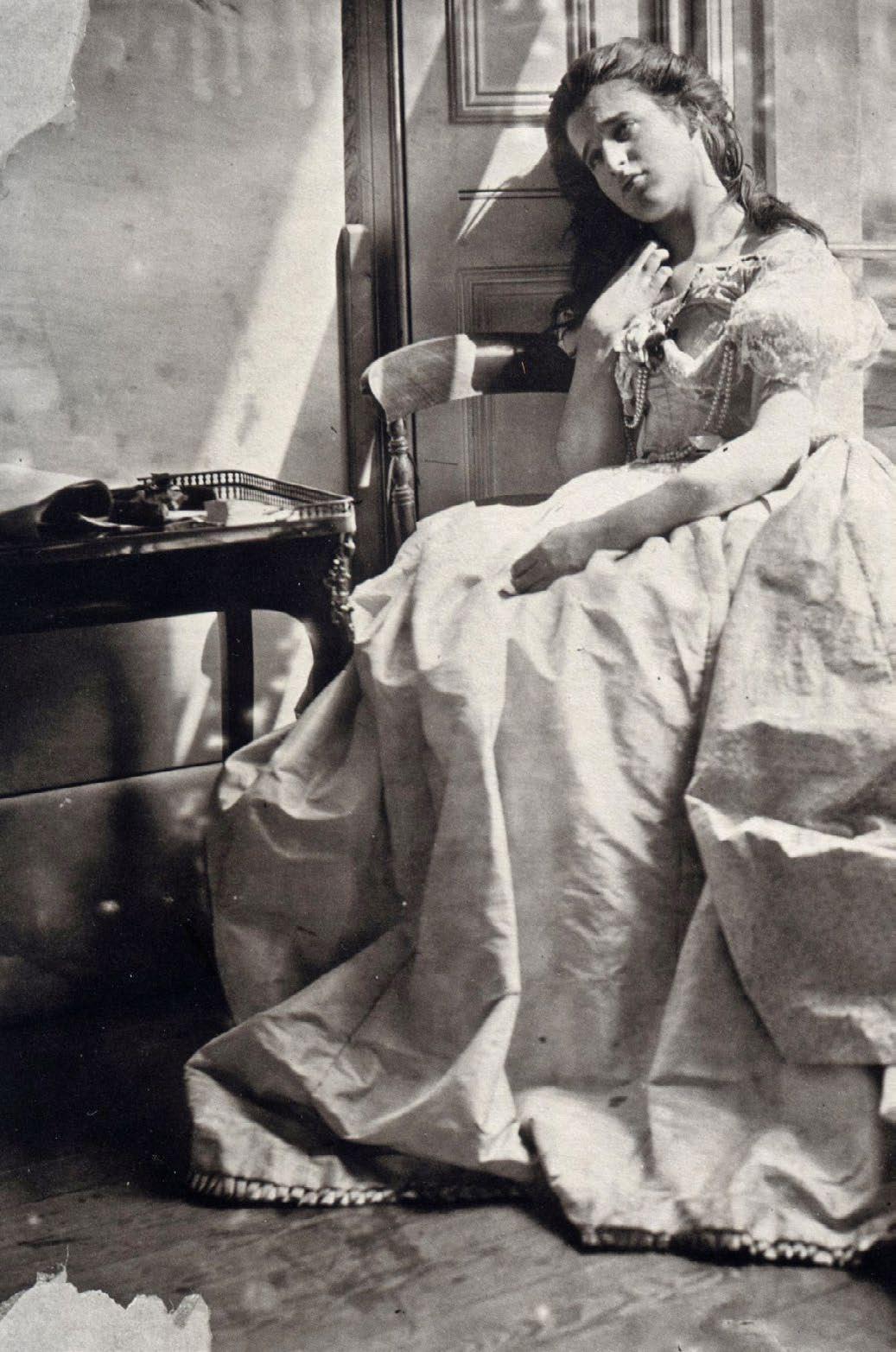
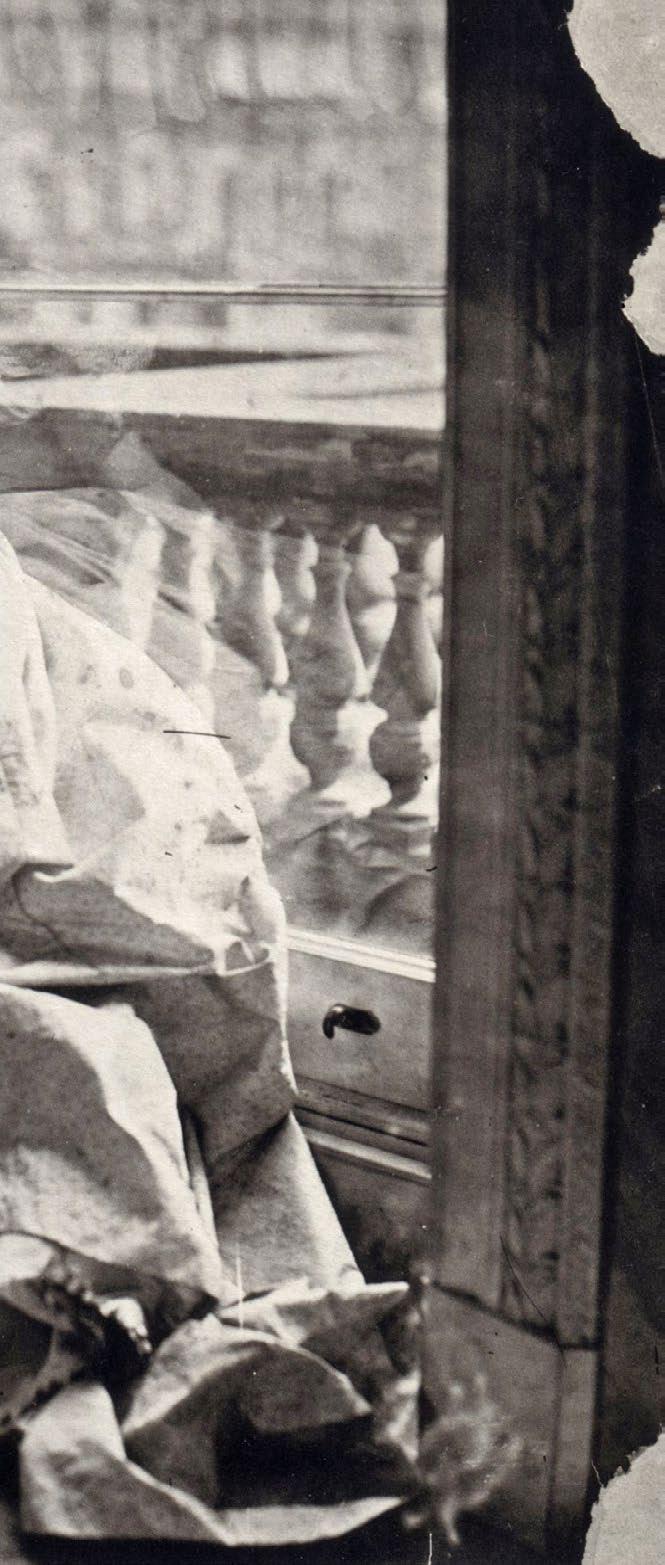
Cameron’s allegorising photographs follows a series of very similar images by her littleknown teacher, David Wilkie Wynfield, which in turn is preceded by over a dozen emotionally overwrought works by Clementina, Viscountess Hawarden, done in an equally romantic mode a decade earlier. And finally, there are virtually unknown photographs that cast light not only on other work in the exhibition, but beyond it. Perhaps the most striking example is a group of photographs taken in 1860 and 1861 by Royal Engineers surveying the Western parts of the border between the U.S. and Canada. These casual images, almost snapshots, of frontier settlements, Indian
Fig.4: Lady Eastlake, Calotype by David Octavious Hill and Robert Adamson, 1843.
villages, and the like, have none of the melodramatic grandeur of the pictures made half a dozen years later by photographers on similar surveys in the United States— underlining just how much those images were shaped by particular assumptions about the land. The story told by all these photographs also
encompasses the history of the Victoria and Albert Museum itself. It was founded in 1856 by Prince Albert, who was an enthusiastic collector of photographs himself, and richly endowed by another collector, the wealthy dilettante Chauncey Hare Townshend, who valued photography for its meticulous observation.
Fig.5 above left: ‘Portrait of Isambard Kingdom Brunel and Launching chains of the Great Western’, Robert Howlett, Albumin print from wet collodion negative, 1857.
Fig.6 above: ‘Fruit and Flowers’, Roger Fenton, Albumen print from wet collodion negative. 1860.
Individual photographs and the idea of photography itself captured the core of Victorian life – yearning for a modern world, symbolised by streamlined machinery, telescopes and the dazzling glass enclosed Crystal Palace built for the Great Exhibition of 1851. Innocent of the dramatic change such innovations would perpetrate on their descendants, early photographers worked in an atmosphere of freshness,
adventure and infinite possibility. They challenged the technical limitations of early daguerreotype and Calotype methods with new processes that yielded images rich in tone and texture.
The earliest masterpieces of any art form possess a special attraction. This is certainly true of the art of photography and especially in Britain, where many of the most crucial steps in its invention and transformation were achieved.
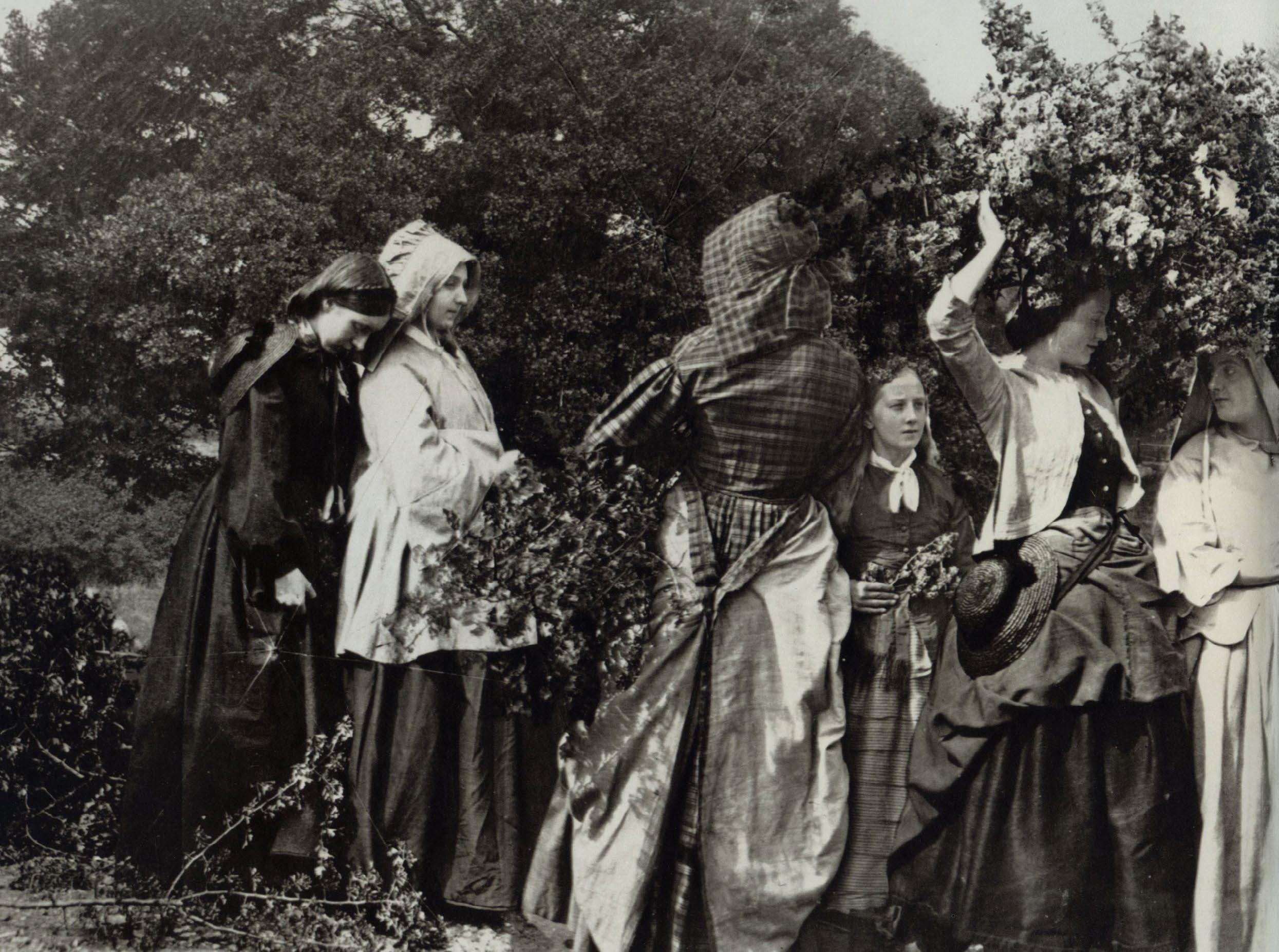
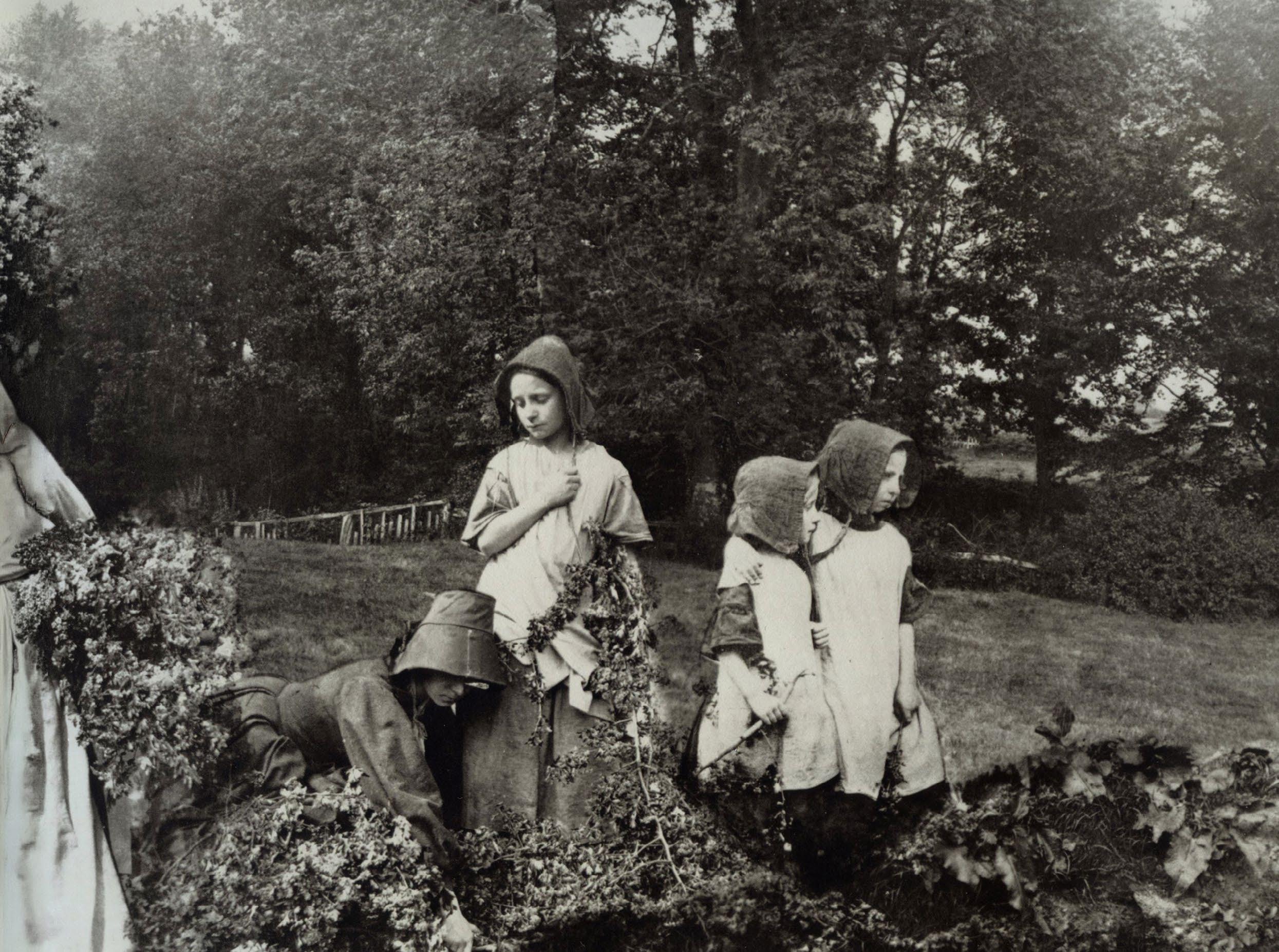
Fig.7: ‘Bringing home the May’, Henry Peach Robinson, 1862. Albumen print montage from several wet collodion negatives.
William Henry Fox Talbot’s image of the latticed window at Lacock Abbey – the first photograph made in Britain –metaphorically admitted the light of a new creative medium of poetic contemplation and purposeful description.
The progress of photography in the 19th century was rapid and far-reaching: it moved almost instantly into all channels of human endeavour. The earliest photographs were spontaneous reflections of nature that belonged to the Romantic consciousness as expressed in the pastoral poetry of William Wordsworth
and the antiquarian novels of Sir Walter Scott. Within 20 years of its invention, photography became the ideal witness of the grand monuments in engineering design erected by the first great industrial power. Photography mirrored the magnitude of Britain's imperial possessions and, by contrast, the private pictorial quests of individuals, not only photographers, both amateur and professional, but also early collectors of the medium. As the century advanced, photography sought to find its identity in relationship with the fine arts and printing crafts
Fig.8 left : ‘Cutting on the Forty-Ninth Parallel, on the right bank of the Mooyie River Looking West’, The Royal Engineers. 1860.
Fig.9 centre: ‘Photographic Study’, Clementina, Lady Hawarden. 1860.
Fig.10 right: ‘Whisper of the Muse’, Julia Margaret Cameron. 1864.
while revolutionising methods of societal self-examination. At its close, the golden age looked forward to the modern era in Paul Martin’s instantaneous snapshots, hinting at the interests and possibilities of the new century. By the end of the Nineteenth century, the brave new world transformed by photography, described by Sir Frederick Pollock, had become a reality. The medium of photography had passed from the hands of aristocratic amateurs and the professional studios into the hands of anyone who wanted to preserve the moments of their life and surroundings.
The photographs in ‘The Golden Age of British Photography’ present
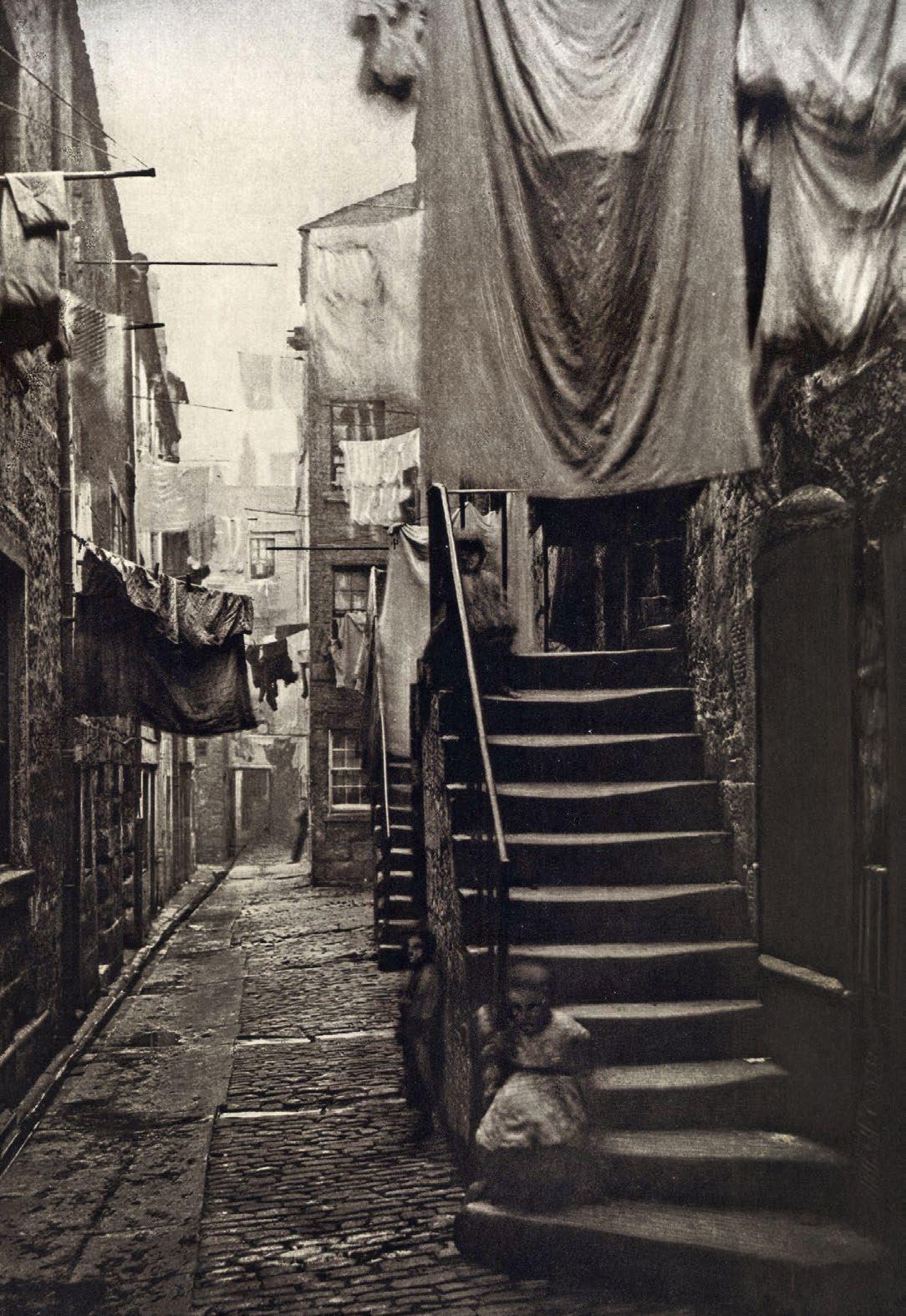
Fig.11 top left: ‘193, High Street’, Thomas Annan. Photogravure. 1868.
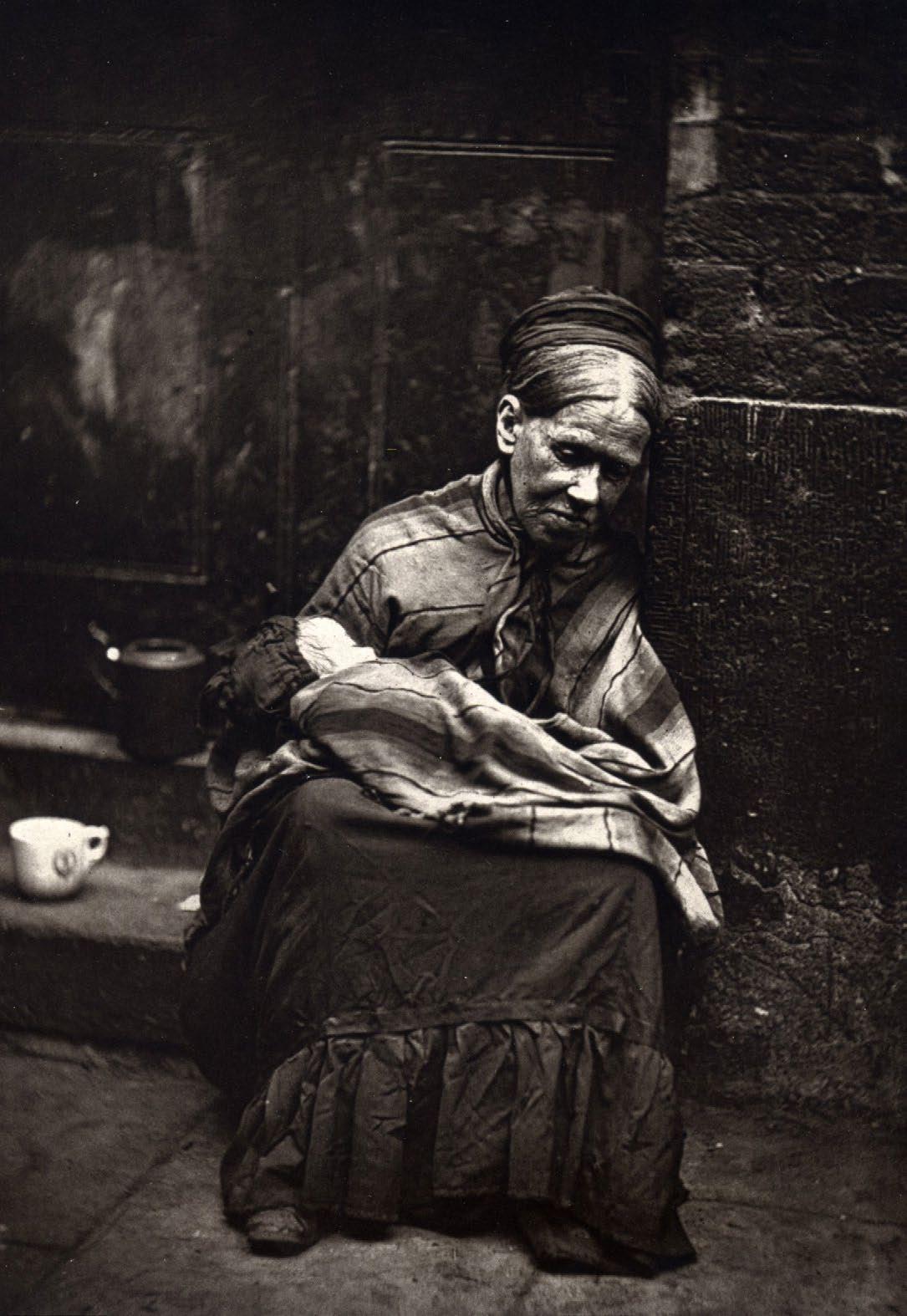
Fig.12 top centre: ‘The Crawlers’, John Thomson. Woodburytype. 1877.
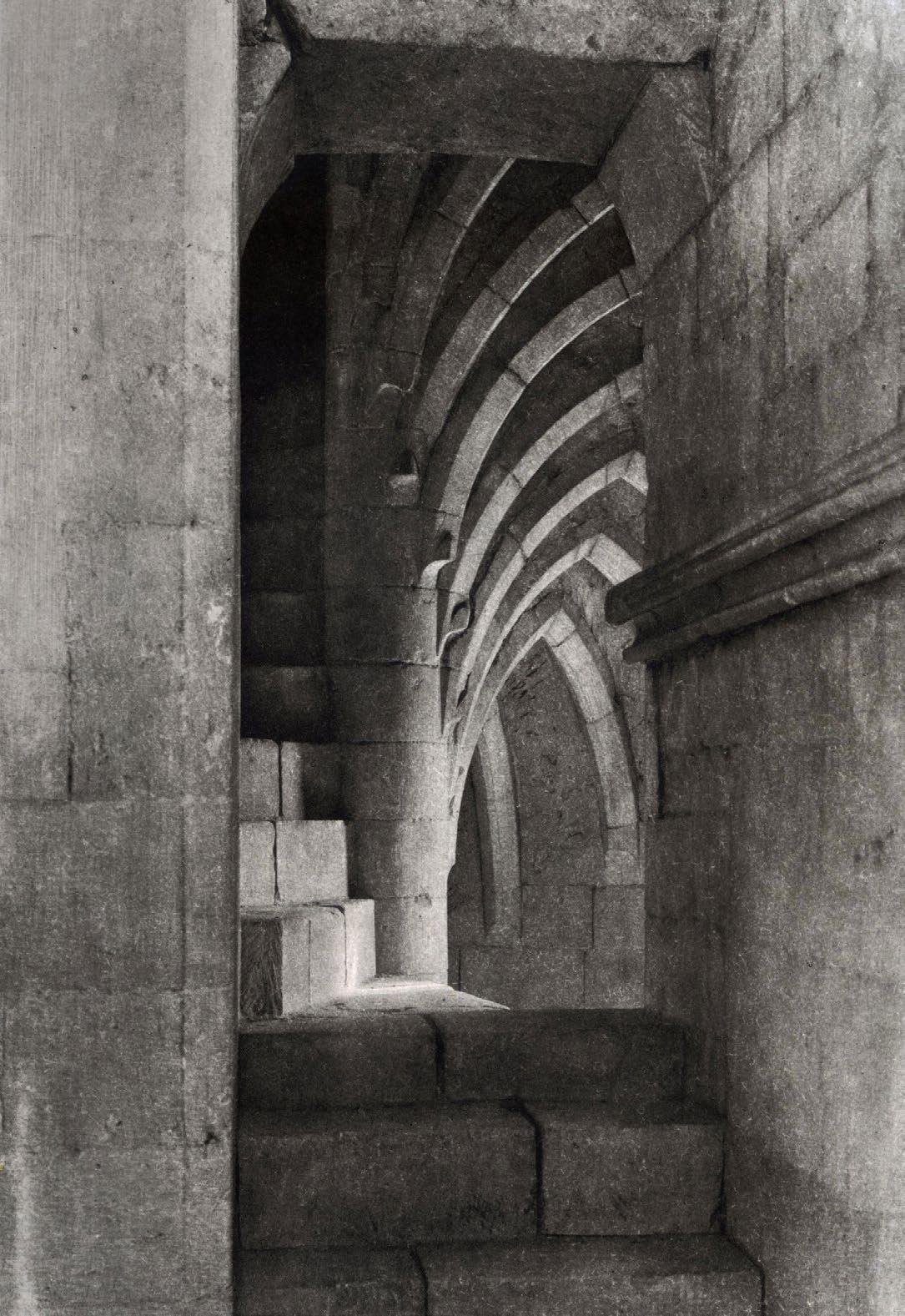
Fig.13 top right: Lincoln Cathedral: Stairway in the Southwest Turret. Platinum Print. 1898.
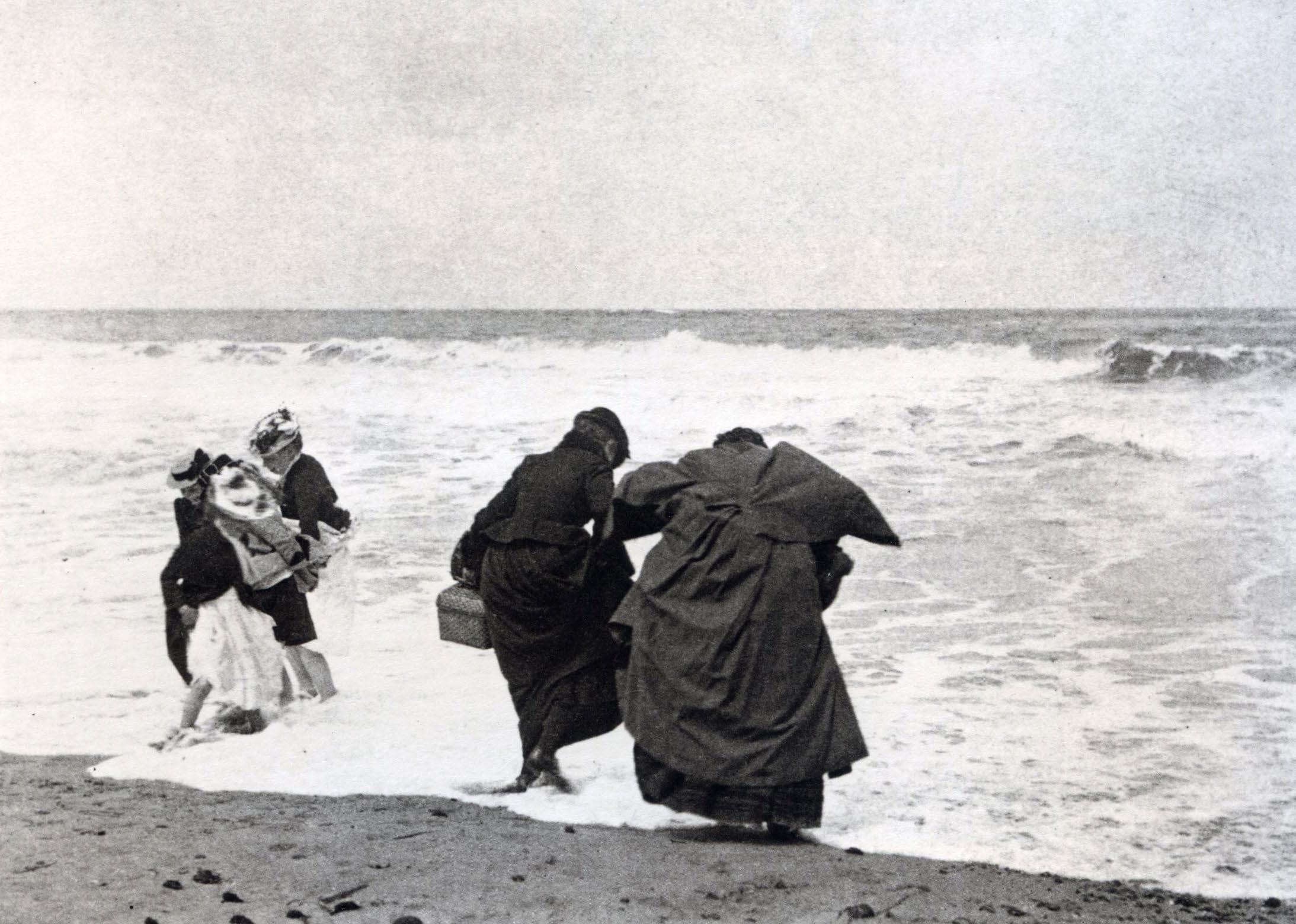
Fig.14 bottom left: ‘Trippers at Cromer’ Paul Martin. Platinum Print. 1892. If this were in saturated colour it could almost be a photograph by Martin Parr.
photography at its most miraculous, its purist, and its most daring – and they show an age that was vanishing before the camera’s lens. I have tried in the limited space available here to give a reasonable flavour of the broad scope of the exhibition and accompanying book.
Photography has always been deeply interwoven with its time and place, and 19th-century British photography is the visual expression of the sensibility that gave it life and nurtured it to maturity. Great photographs both embody and transcend their immediate period. As we enter a new period of photography, with ‘constructed’ photographs a feature of the future of imaging, it is worth
looking back at the Golden Era and its sense of subtlety and variety, sharpened by the awareness and energy of its creators.
Echuca through my eyes
by Simon Locke
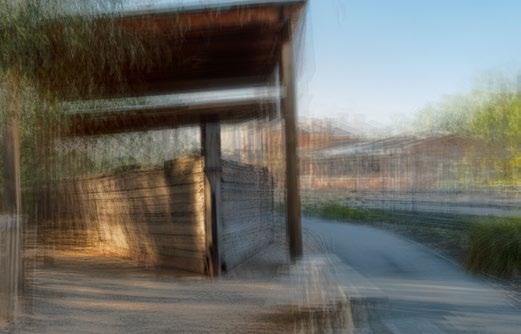
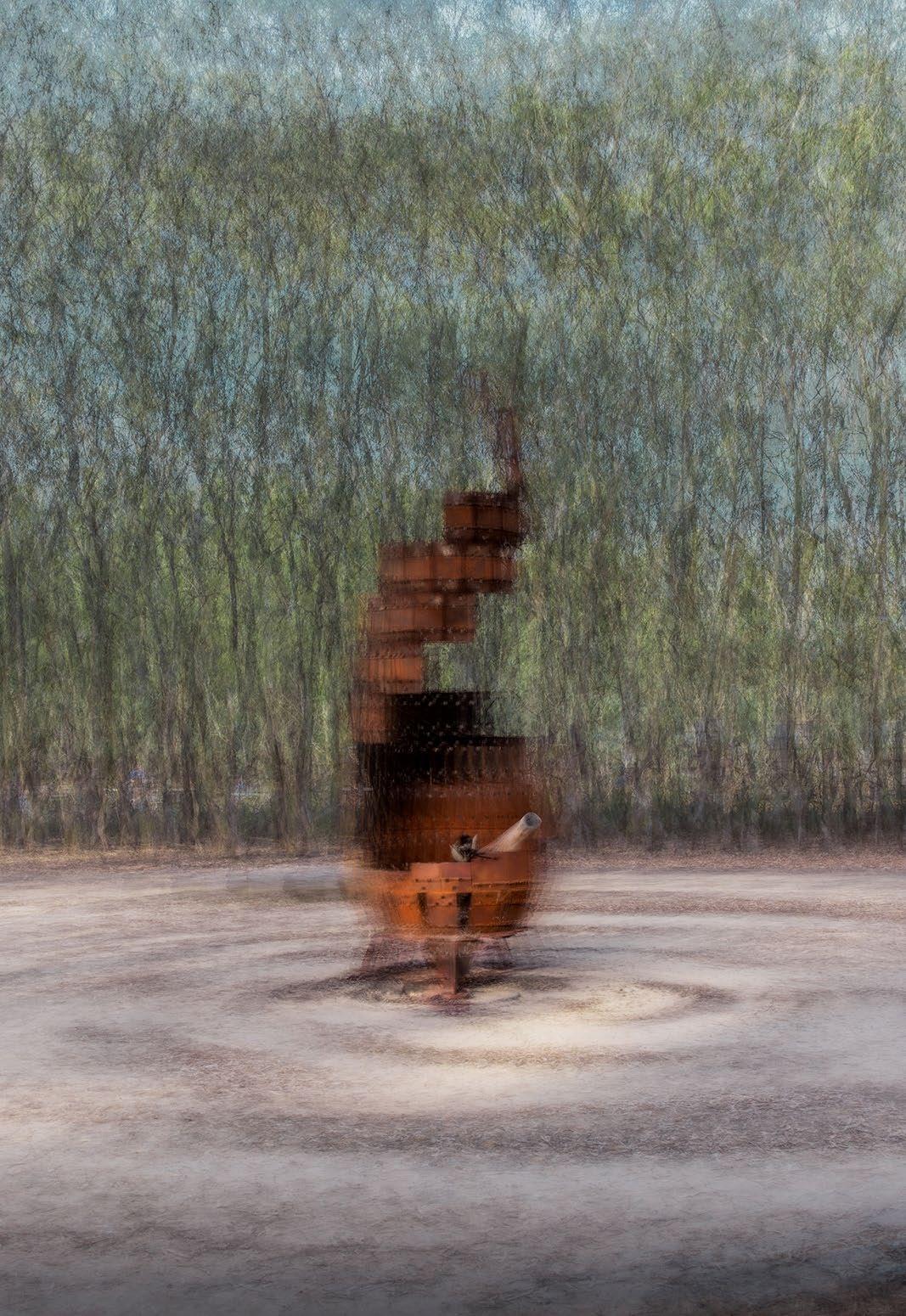
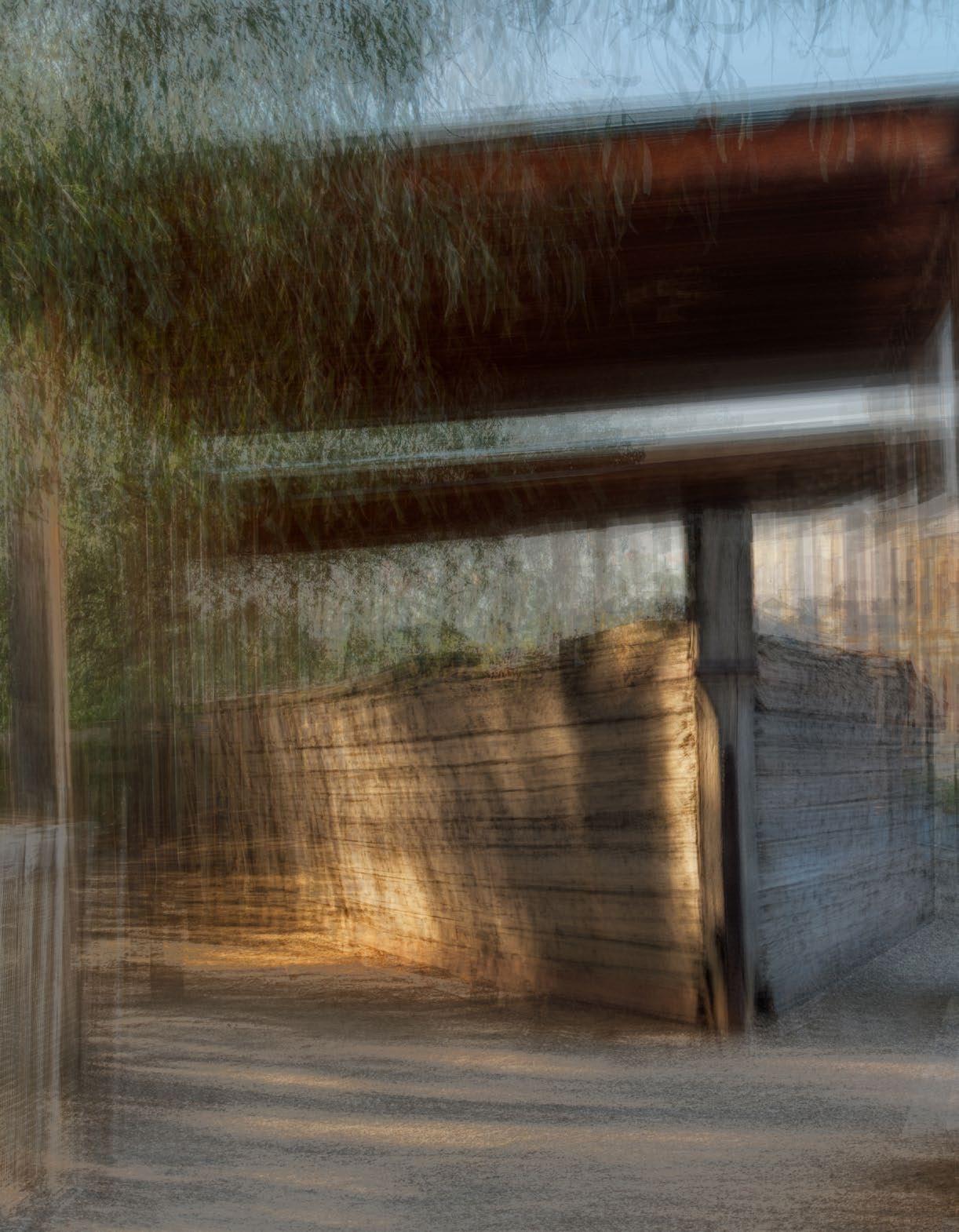
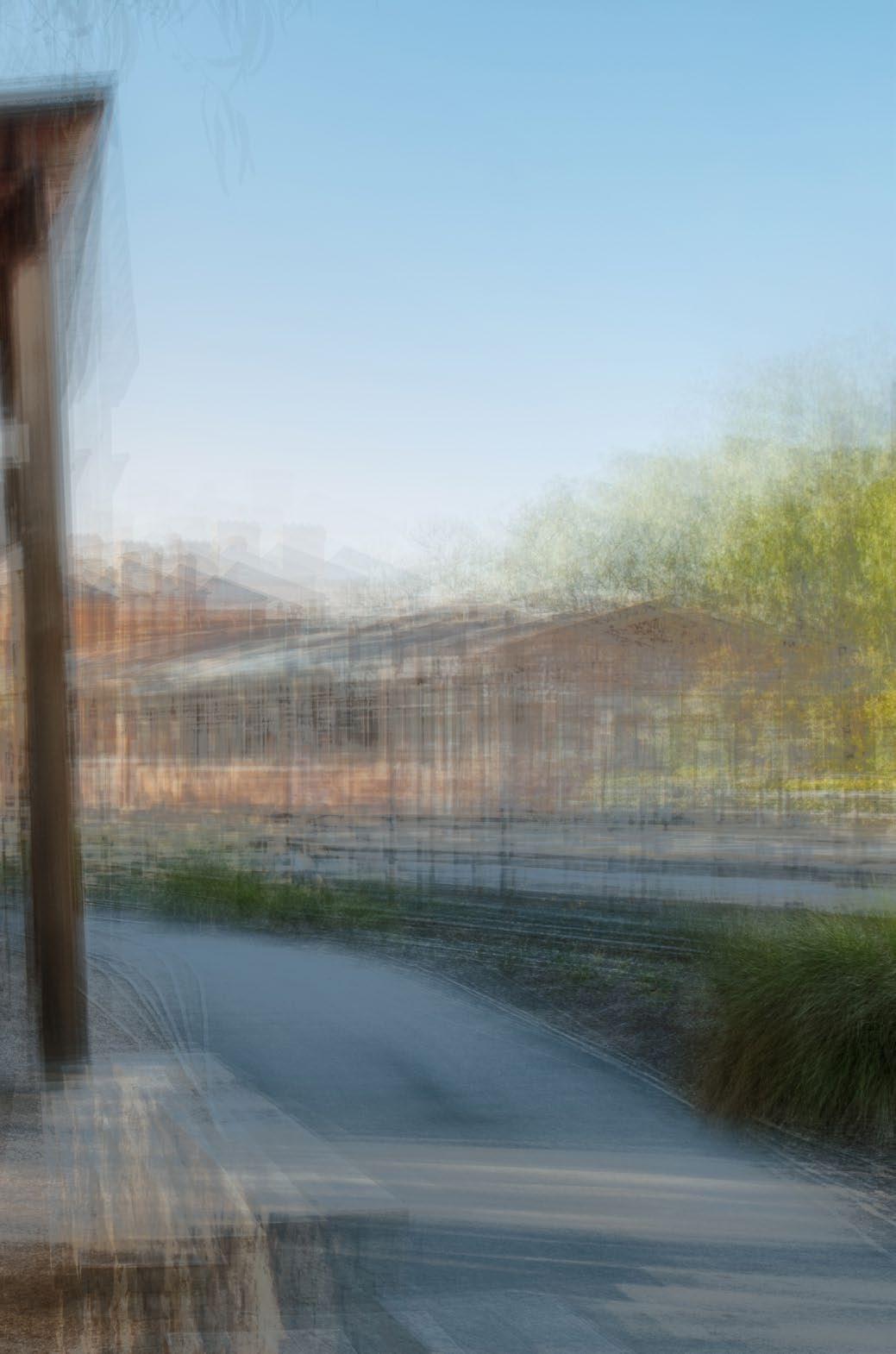
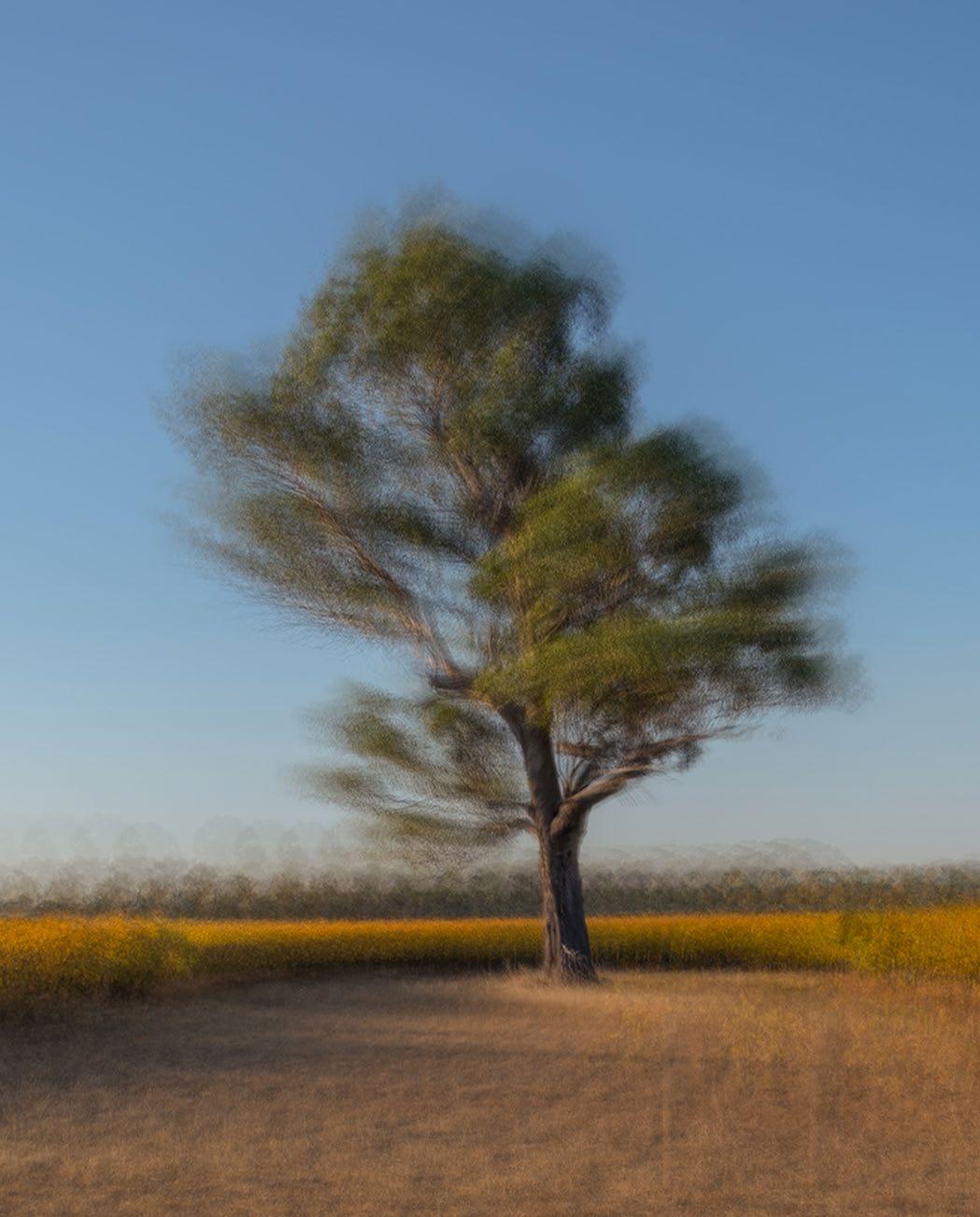
They are part of a project that I am undertaking about various aspects of life in a regional area. My photography explores structures shaped by repeated human use within regional Australian landscapes, particularly along the Murray River. Using multiple exposure, I construct images that allow the underlying structure of boats, river infrastructure, sheds and communal gathering places to emerge gradually through repetition and alignment. The work is guided by a hierarchy of authority, system and environment, and emphasises structural calm and tonal clarity so that these subjects reveal their quiet authority over time.
The best camera is the one in your pocket
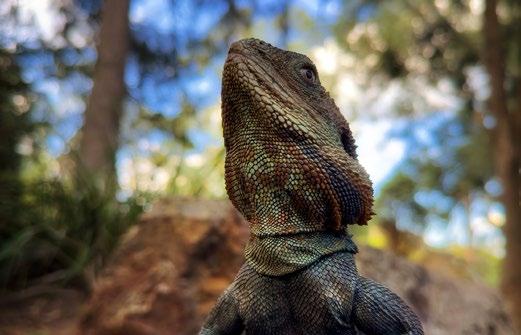
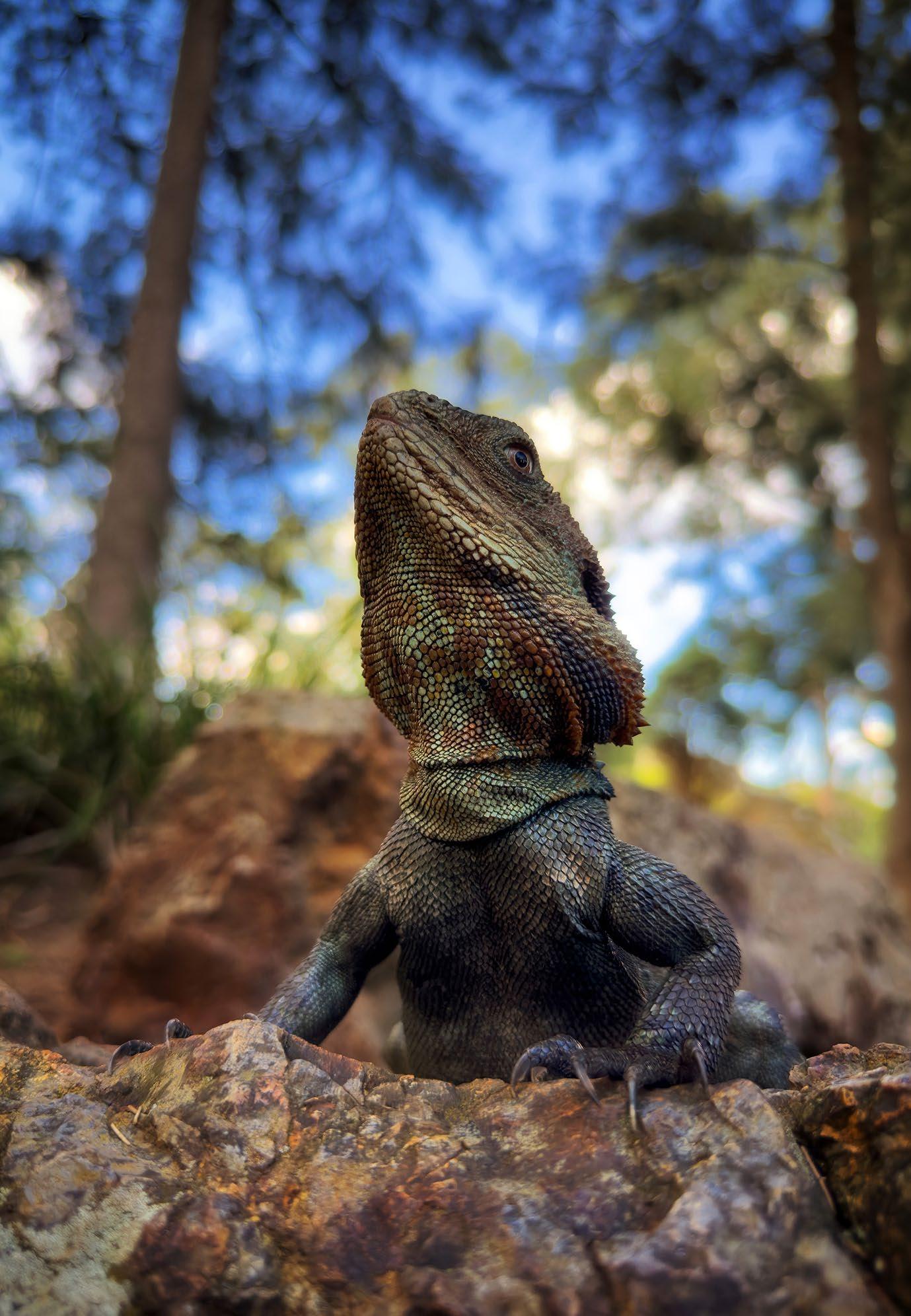
How a phone, a low angle and a little patience created this portrait of a Canberra water dragon Words and photograph by Jacky
Lee
One of the most common questions I hear from people who admire a photograph is: “What camera did you use?” The assumption is that a great image must come from expensive equipment. But the photo you see above — a water dragon perched on a rock like a miniature dinosaur surveying its kingdom — was taken entirely on a phone. No DSLR, no mirrorless body, no telephoto lens. Just a smartphone and a willingness to get low.
If you live in Canberra, you have almost certainly crossed paths with an Australian Water Dragon. They bask along the shores of Lake Burley Griffin, sun themselves on rocks at the National Botanic Gardens and lounge beside suburban creeks as though they own the place, which, in fairness, they probably did long before we arrived. They are also remarkably tolerant of people, which makes them wonderful subjects for photography practice.
The key to this image is proximity. Phone cameras have small sensors and wide-angle lenses, which usually produce deep depth of field, meaning everything from foreground to background appears sharp. That is fine for a landscape, but it rarely makes a portrait feel striking. The trick is to get as close to your subject as the lens will focus. When you do, even a phone can produce that creamy, blurred background. Photographers call it bokeh, which separates the subject from its surroundings and draws the viewer’s eye exactly where you want it.
For this shot, I crouched down to the dragon’s eye level, held the phone steady, and waited. The low angle gives the animal a sense of presence and authority that a top-down snapshot never would. Composition matters far more than megapixels.
A word of care, though. Getting close does not mean getting intrusive. Water dragons may look calm, but they are wild animals in their own habitat. Move slowly, avoid sudden gestures, and never chase or corner them for the sake of a photograph. If the animal shifts away from you, let it go. A respectful distance will still reward you with a good image, and the dragon will remain relaxed enough for you to try again another day.
So next time you spot one of Canberra’s resident reptiles on your morning walk, resist the urge to pull out an excuse about not having the right gear. The best camera is already in your pocket. All you need to add is patience, a low angle and a little respect for the creature in front of you.
Jacky Lee is a Canberra-based photographer whose work explores the natural and built environment, and has been exhibited internationally. He is a photo mentor with the Royal Photographic Society Australian Chapter and a qualified judge with the Australian Photographic Judges Association and the Photographic Society of America.
See more of his work at jackylee.art.
Fig.1 right: Australian Water Dragon, Canberra. Shot on iPhone.
RPS Australia Chapter Social Media Launch
We are busy in the background launching a social media account on Instagram and Facebook for the Australian Chapter. This will be a new way for us to connect with new audiences, attract prospective members and share events and news that is outside of the newsletter cycle.
Instagram will also allow us to present our members' photography. A well-curated social presence demonstrates both the quality of our members' work and the breadth of photographic practice across the Society.
Regularly sharing member images, exhibitions, and activities helps communicate not just what we produce, but who we are as a chapter of RPS. Importantly, it lowers the barrier to entry. Potential members can follow, observe, and interact before committing, building familiarity and trust.
All content will follow the RPS brand guidelines and will tie in with our newsletter content and stories our members are interested in. We can also share your images around curated topics with wider audiences.
Setting up an Instagram account is a simple way to stay connected with the photographic community. By following the RPS Australia Chapter page, you’ll see members' work, events, and opportunities, and we can connect with you in return.
What do we need from you?
We are building a library of images for social media to support specific stories on the channel. We are asking you to submit some photos for the following stories:
1. Photos using backlight as the directional light (say where the photo was taken and why you like it)
2. Photos in monochrome – again, what you like about the photo and where it was taken. Feel free to submit several images for each category. All images will be attributed to the photographer, and we will tag you in your online account.
So, how do you join our page?
Our address is: https://www.instagram.com/ rps_australia_chapter/
1. Create your account
• Download Instagram from your app store or visit the website
• Tap Sign up
• Register using your email address or phone number
• Create a username (this is how others will find you)
• Set a secure password
2. Set up your profile
• Profile photo: a portrait or one of your images
• Name: your real name (recommended for community connection)
• Bio: a short description (e.g. photographer, interests, location)
3. Find and follow our page
• In the search bar, type: rps_australia_chapter
• Or click on the link here
• Tap Follow
• Once you are following the page we will then follow you back
4. Start engaging
You don’t need to post immediately. You can simply:
• Like images
• Leave comments
• Follow other photographers
5. (Optional) Share your own work
If you wish to participate more actively:
• Tap + (Create)
• Upload a photo
• Add a short caption
• Share
This allows others in the community to discover your work.
Members’ Gallery
Palli Gajree OAM HonFRPS MFIAP
HonEFIAP FRPS FAPS
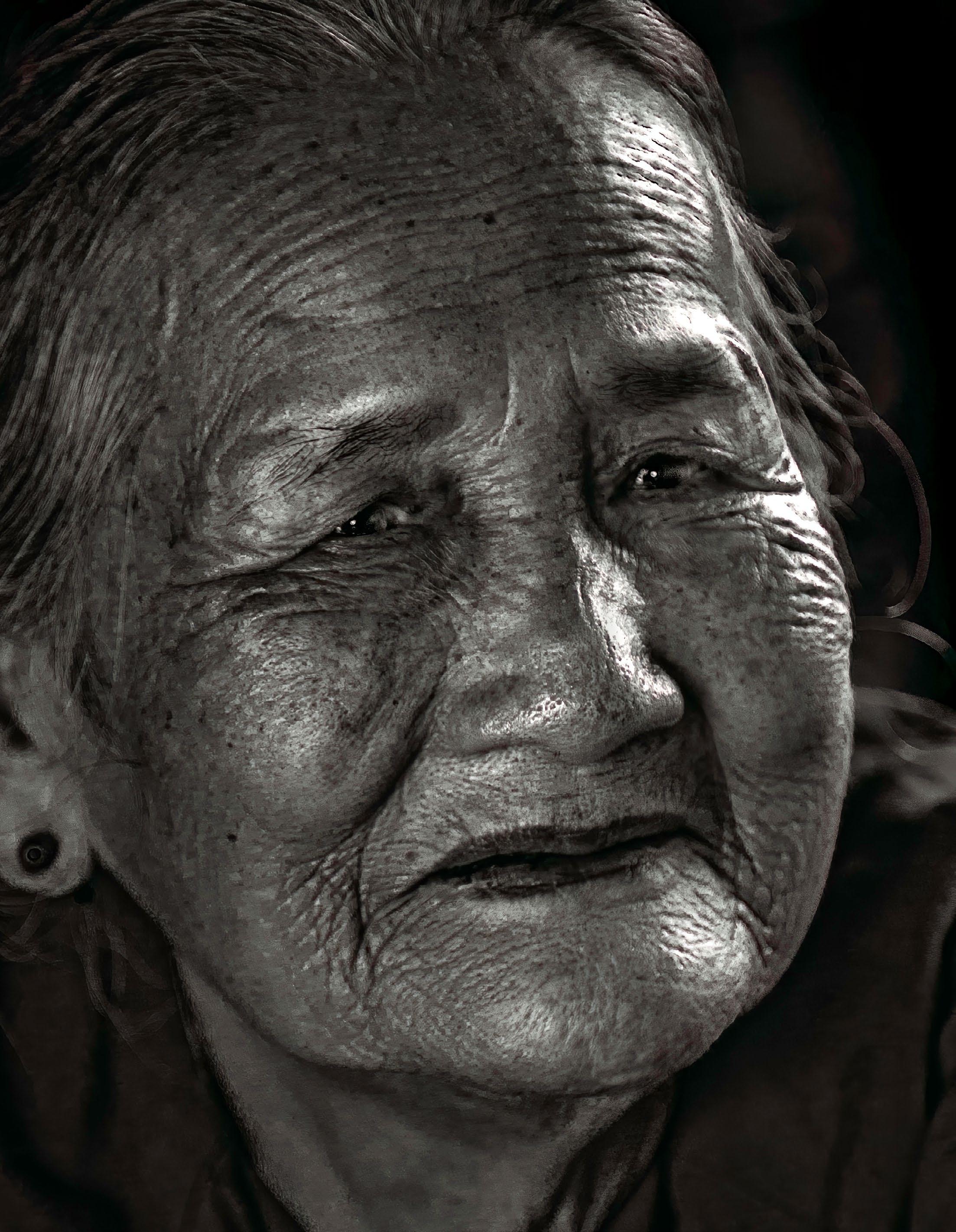
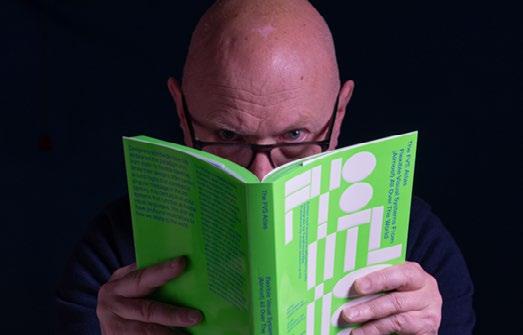
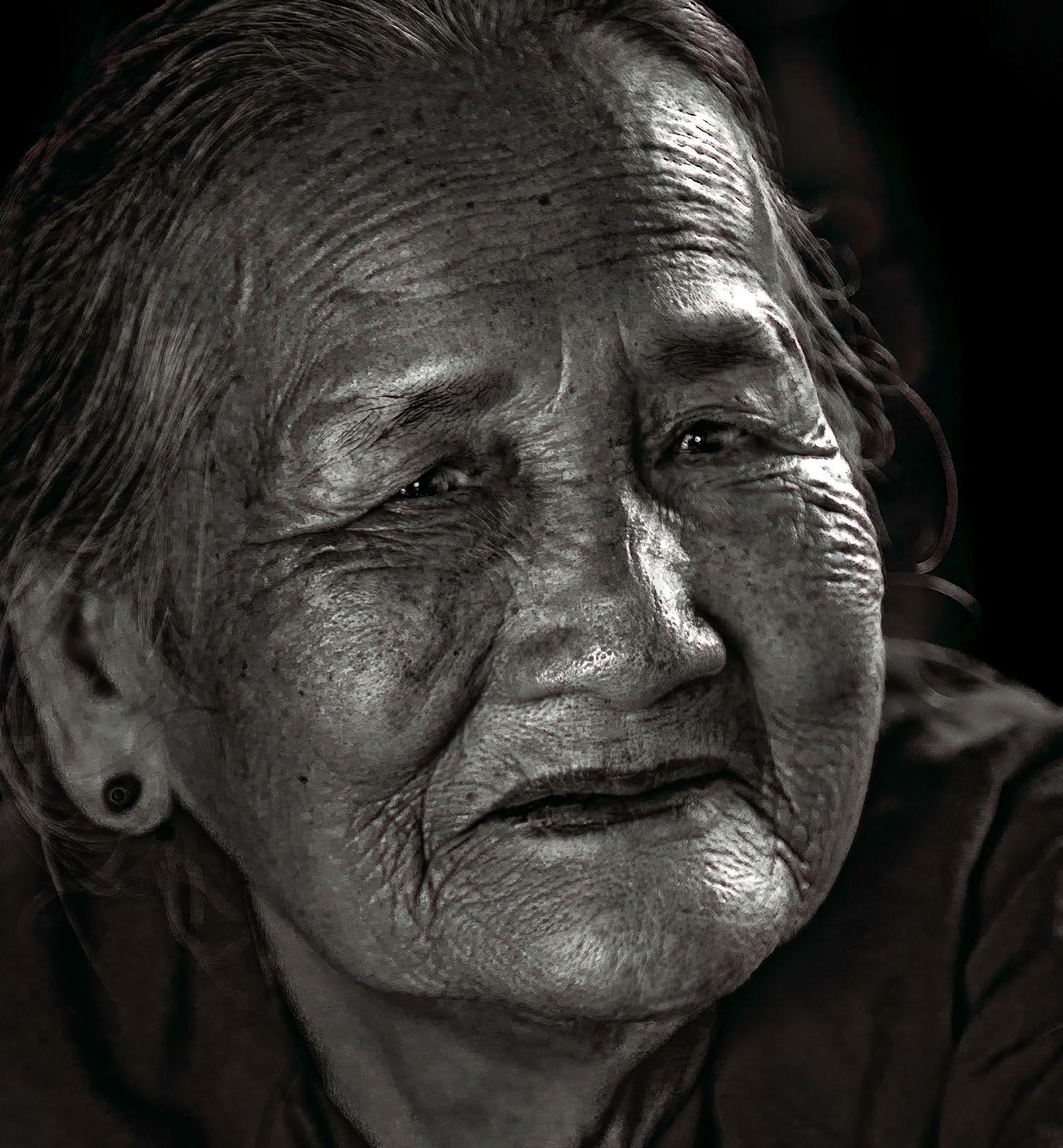
Fig.2: Portrait in low key
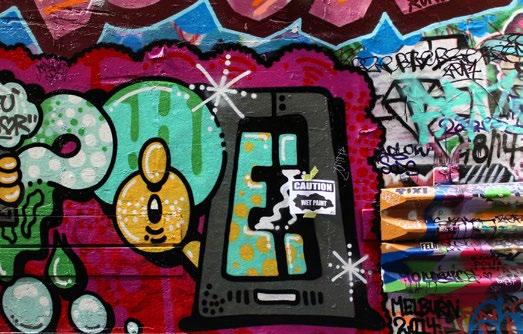
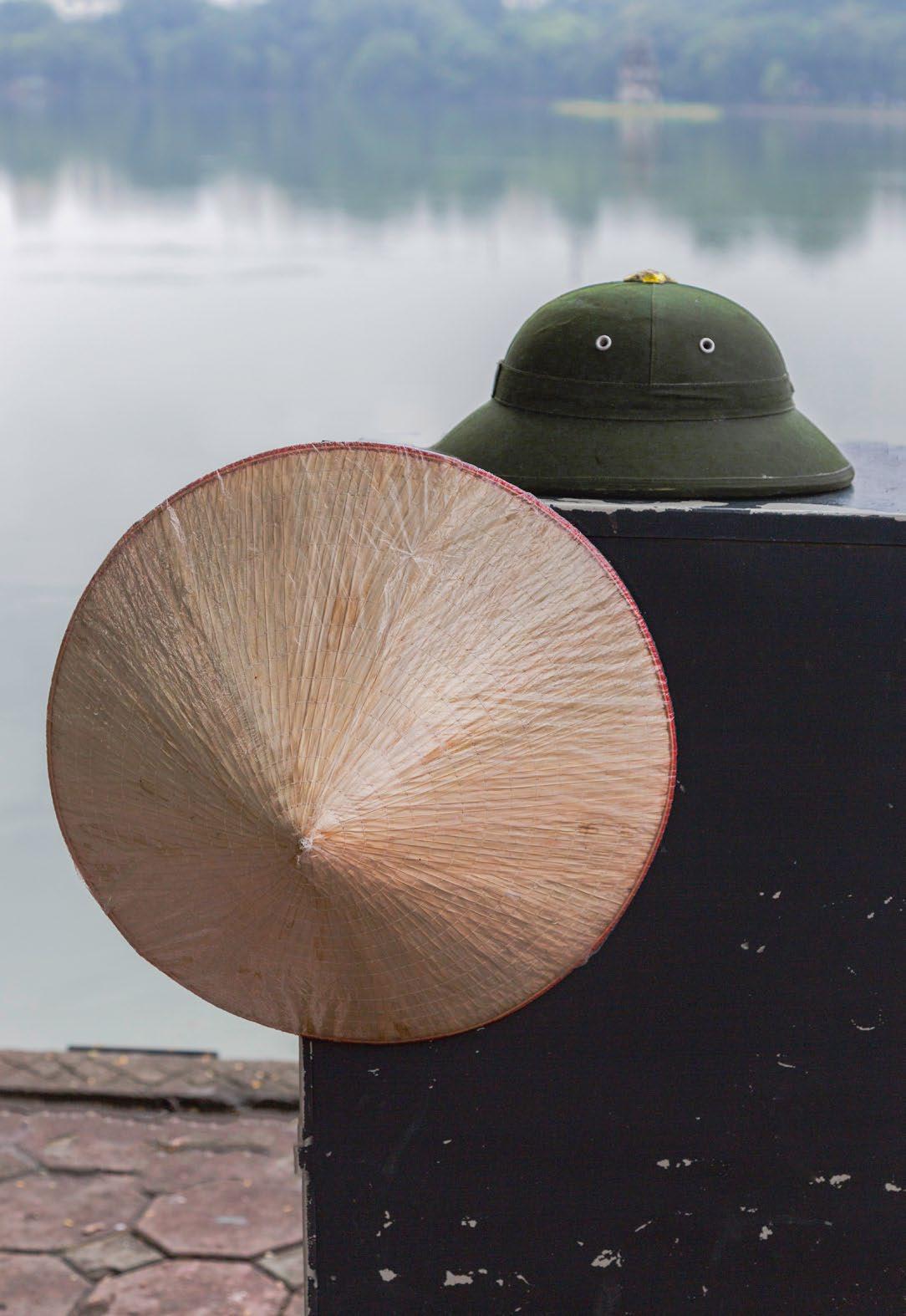
Fig.3: Where East meets West
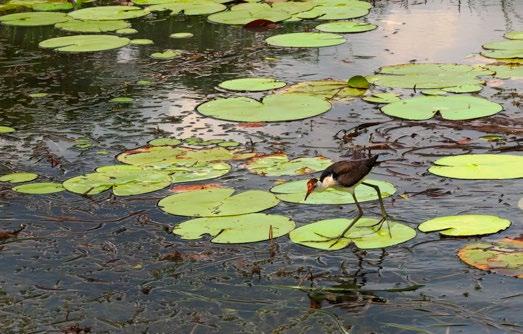
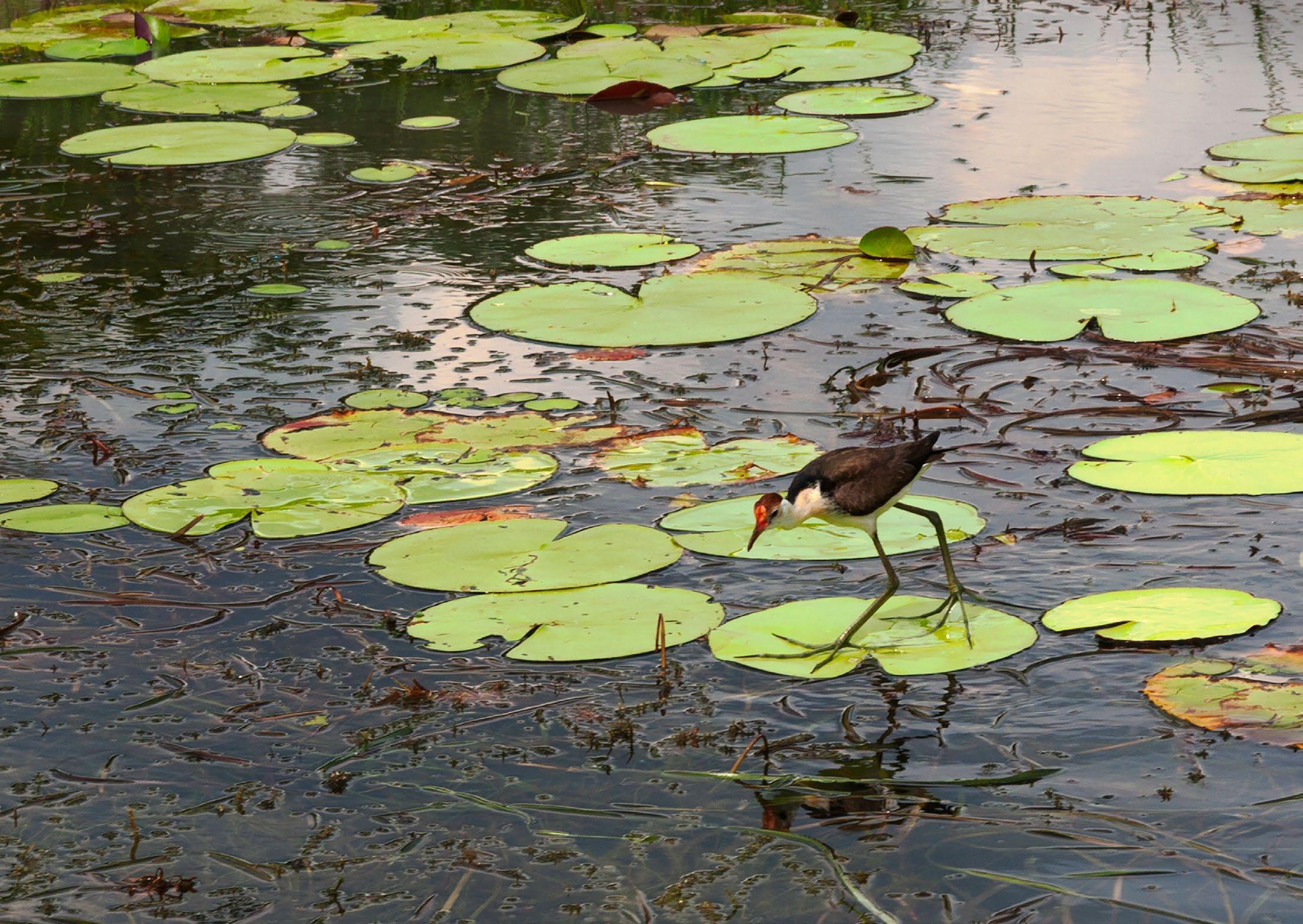
Fig.1: Lily trotter
What’s on in April and May?
Exhibitions
Victoria
Women & Photography (NGV, St Kilda Rd) running until 26 May. Celebrates the wide-ranging photographic practices of more than eighty women artists working between 1900 and 1975.
Familial (Town Hall Gallery, Hawthorn Arts Centre) until 25 April. Brings together six international artists whose work navigates the emotional and psychological terrain of family.
TOPshots (Museum of Australian Photography, Wheelers Hill) until 5 May. An annual celebration of emerging photo-media artists selected from a large pool of entries.
Flowers (Museum of Australian Photography) until 24 May. Photos of flowers from the NGA collection by prominent photographers including Robert Mapplethorpe and four groundbreaking Australian photographers.
Viva Gibb On the street where I live (City Gallery, Melbourne Town Hall) — until 7 Aug. Between the mid-1970s and early 1990s, social documentary photographer Viva Gibb documented the suburbs of North and West Melbourne, where she lived.
Metro Auto Photo (Frankston Arts Centre) — until 2 May. A Centre for Contemporary Photography exhibition curated by Catlin Langford and Metro Auto Photo.
NSW
Ted Richards, Melbourne Laneways (Batemans Bay Library) from 16 April to 7 May.
Close Up (State Library of NSW) — ongoing until Feb 2027. From an archive of more than 200,000 images, Close Up celebrates the historic moments and pivotal people famously captured by the photographer.
Maritime & the Human Form (Ellipsis Gallery, Woolloomooloo) — 15 April – 9 May. An exhibition of fine art photography celebrating the intersection of maritime history and the human form.
Unfinished (Petersham Bowling Club) 9 April (one-night event). A free event to show and see photo-based work in progress or recently completed personal projects, run by photographers for photographers.
World Press Photo
Trent Parke, The Christmas Tree Bucket (National Gallery of Australia, Canberra) until 6 Sept. A tender and darkly humorous photographic series portraying his extended family coming together to celebrate Christmas.
Western Australia
Hayley Millar Baker (Wyndham Art Gallery) 28 March – 2 May. A solo exhibition of moving image and photographic works, including a newlycommissioned body of work.
Competitions
BirdLife Australia Photography Awards: 7 April and 13 July, with an early bird discount deadline of 25 April. Category winners receive a $1,000 cash prize, and the grand prize is a Nikon Z 8 camera valued at $7,449 RRP. Birdlifephotoaward
The Mono Awards (Australian Photography / Capture) — entries open February to May, celebrating black & white photography with a prize pool of A$18,000. Open to photographers worldwide, across People, Places, and Animals categories.
Australian Photographic Society – Australia Cup: entries close 31 May 2026, open to camera club members. Clubs submit 20 images under the theme of "Australiana," celebrating the spirit, identity and visual story of Australia, with 10 club awards and 29 individual photographer awards.
Sony Alpha Awards: open for submissions until 30 June 2026, for Australian and New Zealand residents shooting on Sony Alpha cameras. Capture Awards: entries open from May to mid-September, open to all levels, with more than $20,000 in prizes across six categories including Portrait & People, Landscape & Environment, and Documentary & Street.