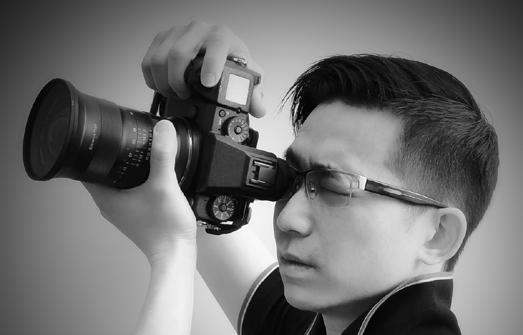
Honorary Secretary: Jacky Lee PFIAP JAPJA E: australiasecretary@rps.org
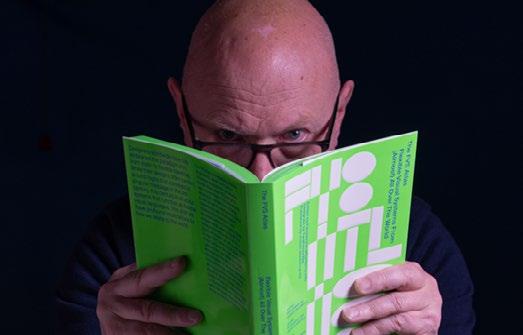
Newsletter Editor: Ian Brown E: australia@rps.org
Page 16 Pondering Pollard 26 – Man Ray
Page 32 RPS Australia – Mentor program UPDATE Page 34 Members’ Gallery Page 4 Welcome from the Editor – Ian Brown
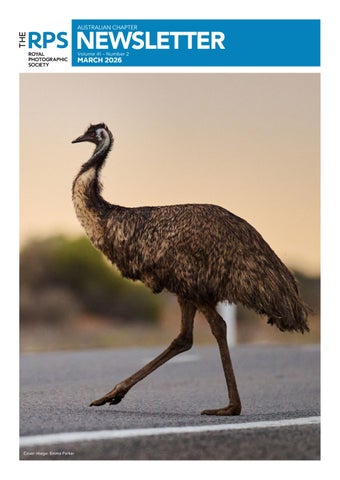
Page 6 Western Australia Wildlife Trip – Emma Parker
Page 28 Celebrating two milestone birthdays
From your Secretary
Jacky Lee PFIAP JAPJA
Honorary Secretary Australian Chapter
I hope you’ve all been well and enjoying the photography, friendship and inspiration that our Chapter continues to bring.
Last month, a few of our committee members got together informally to chat about how we can reach more people and help our Chapter feel even more lively and connected. It was a really positive and encouraging discussion, with lots of ideas about how we might create more opportunities for members to learn, share and take part.
Some of the ideas we discussed included live online tutorials on software skills, short videos with useful tips and shortcuts, monthly photography competitions and perhaps even an image feedback corner where members can share work and receive supportive comments.
We also talked about how wonderful it would be to shine more light on the achievements and experience within our own community. One idea is to feature Members with Distinctions through interviews or online talks, so they can share their work and journey with others. If any of these ideas sound interesting to you, or if you would simply like to help in some way, we would genuinely love to hear from you.
On the social media side, I’m delighted to share that RPS Headquarters has now approved our application for Chapter social media accounts. We hope to launch them soon, and we look forward to using them to share updates, highlight members’ work and help strengthen the sense of connection across our Chapter.
We are also planning something small but meaningful to help us feel more connected as a community. In the near future, you will receive an email asking whether you would like to share your birth month with us, so that we can celebrate our birth-month members together
throughout the year. I hope this will be another simple way for us to feel more connected and to celebrate one another.
This month, I would also like to send very warm birthday wishes to two much-valued members of our community. Neil Anderton ARPS celebrated his 90th birthday in February, and Palli Gajree OAM Hon FRPS will celebrate his 95th birthday later in March. Happy birthday to them both. We are also delighted to include an article this month celebrating their remarkable lives and contributions.
And once again, I’d love to remind everyone that this year is a very special one for us as we celebrate the 40th anniversary of the Australian Chapter. Anniversaries are not only about milestones, but also about people, memories and the small moments that make the journey meaningful. If you have a story, a memory or a photograph from the Chapter’s past, I would really encourage you to share it with us. It would be lovely to build this celebration together.
Welcome from the Editor
Ian Brown
Editor, Australian Chapter
This month, we have a small issue. Thanks to Robin Williams ASIS FRPS for the latest Pondering Pollard, Emma Parker for your article and to Palli Gajree OAM Hon FRPS for his images. The Newsletter is built by members contributing each month. You, individually, don’t have to contribute every month. But if each member contributed at least one article and a couple of images each year, we would have a bumper issue every month. So, please consider contributing something to the Newsletter.
YouTube
Maybe, not many of you know, but the RPS has a YouTube channel. For many years, there wasn’t a lot of activity. However, it seems like it has been more active recently. If you want to check it out, take a look here
Mentor program
Our mentor program is ongoing. I’ve been approached by members looking for mentors, and also mentors volunteering. The only problem is they specialise in different genres and aren’t a perfect fit for each other. So please, let me know if you can be a mentor.
A trip to The Old Dart
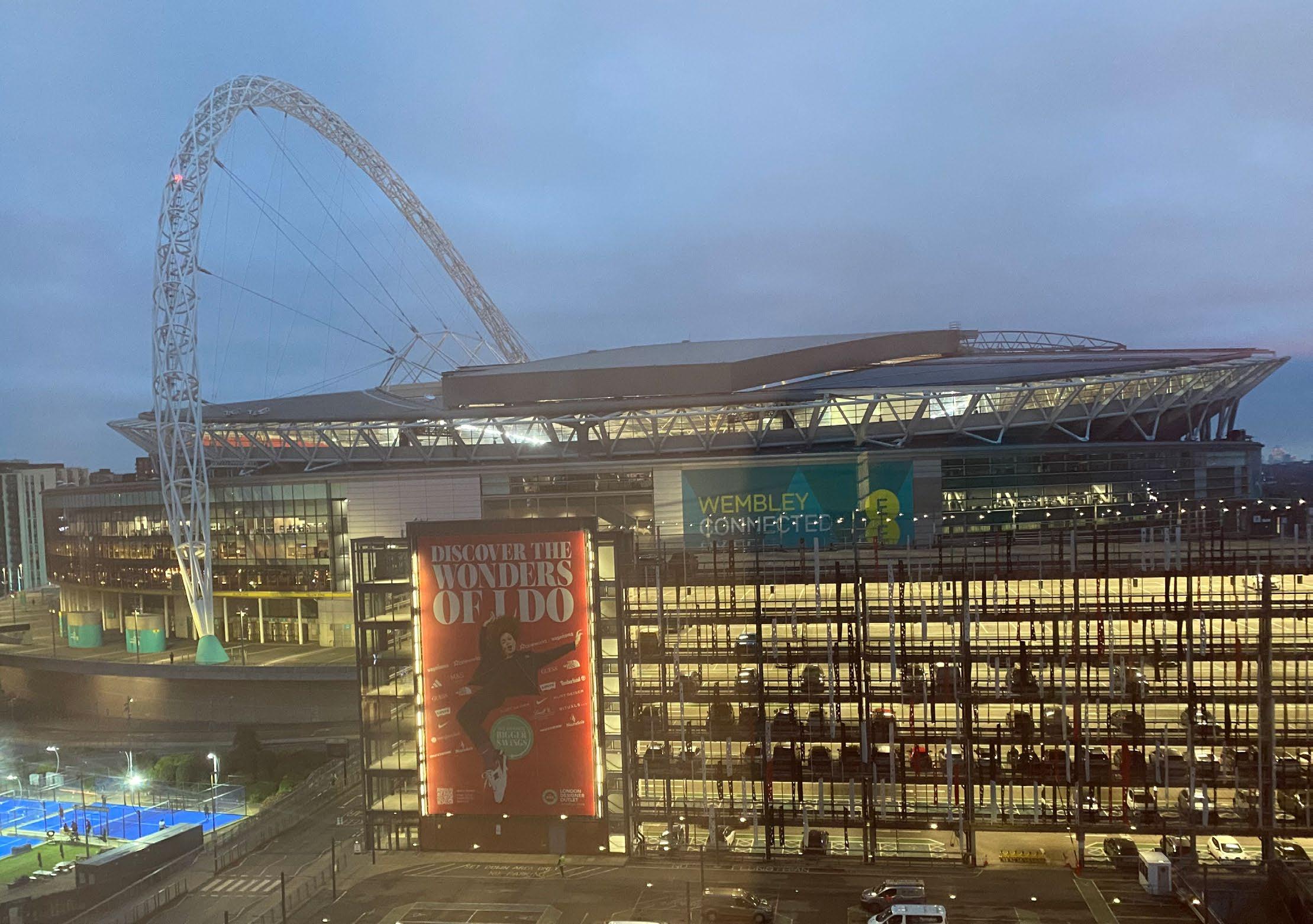
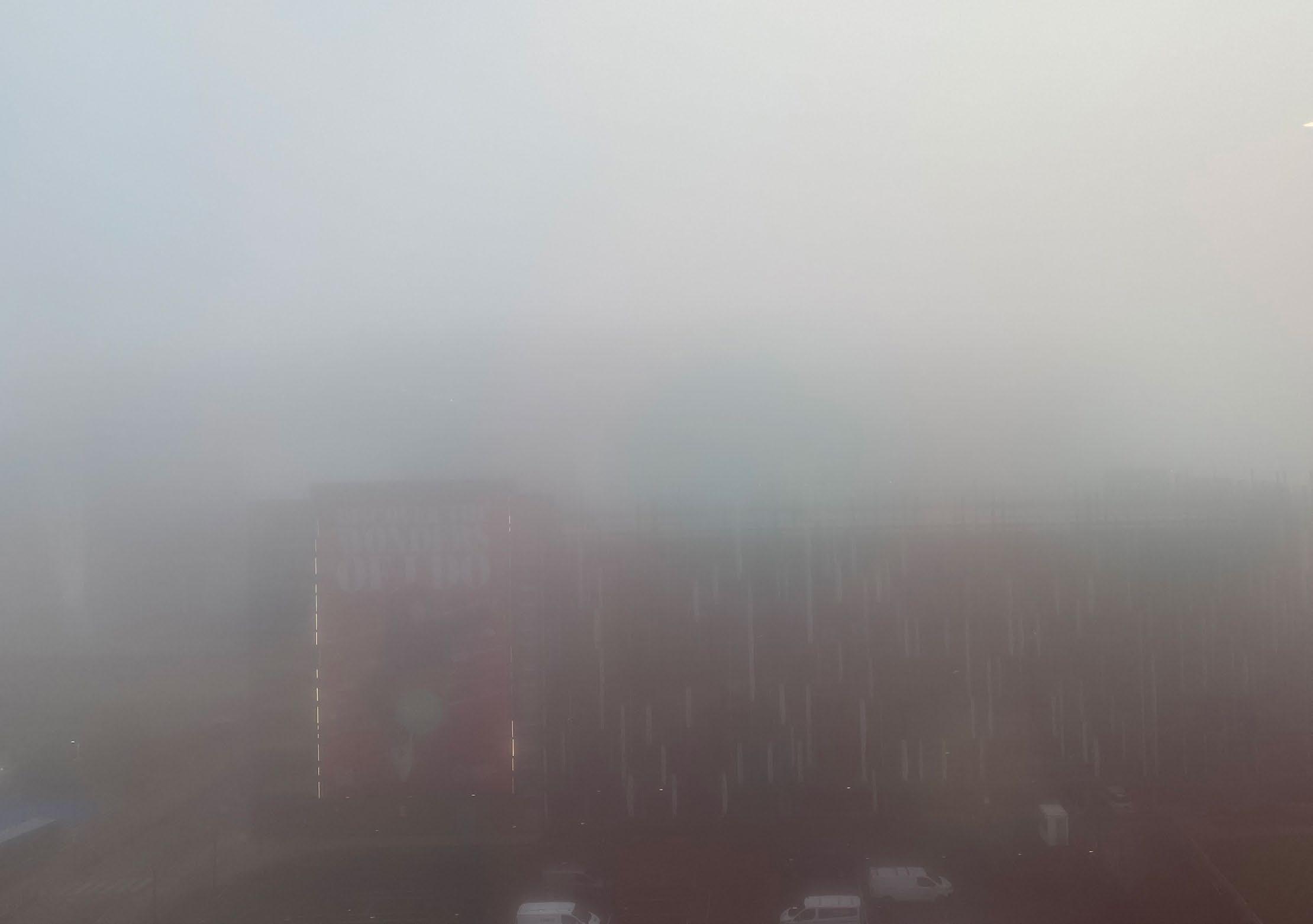
As the old song goes “what a difference a day makes”. The image to the right show Wembley Stadium from my hotel window on the evening I arrived in London. The bottom image is just over 24 hours later and a proper London Pea Souper.
Specifications for contributors
When sending images for the Newsletter, the only requirement is that they are jpeg or png. Images can be 300 ppi and up to A4. Don’t forget you can also add captions for your images. If you don’t include a caption, we’ll assume you don’t need one.
Email images to australia@rps.org and keep those pixels and captions coming in! For non-image files (e.g. PDFs), under 5 MB is preferred and never 10 MB or more. If your images are too big to email, I have created a Dropbox folder you can upload
your images to. Email me for permission, and I’ll grant access to the folder. I will need to delete your images once I have downloaded them.
Deadline for contributions to the next issue is 25 March 2026.
Western Australia Wildlife Photography Trip
Emma Parker
During 2025, I travelled to Western Australia twice, intending to photograph wildlife at two distinct times of year, during the heavy rains and again in the drier winter season. The trips required extensive planning and, as with most journeys within Australia, long periods of driving. For the August 2025 visit, I brought two cameras and a Mavic Pro 4 drone. The purpose of taking the drone was to teach myself aerial photography, a new way of exploring wildlife environments from above.
Trip to Dryandra Woodlands
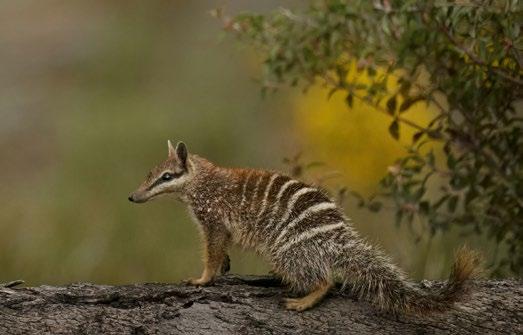
The journey began in Perth. From there, we travelled to Dryandra Woodland and stayed in a cottage approximately 20 minutes’ drive from the park. The days were cold, so the numbats I had come to photograph were active later in the day, as their food source, termites, only surfaced once the soil had warmed.
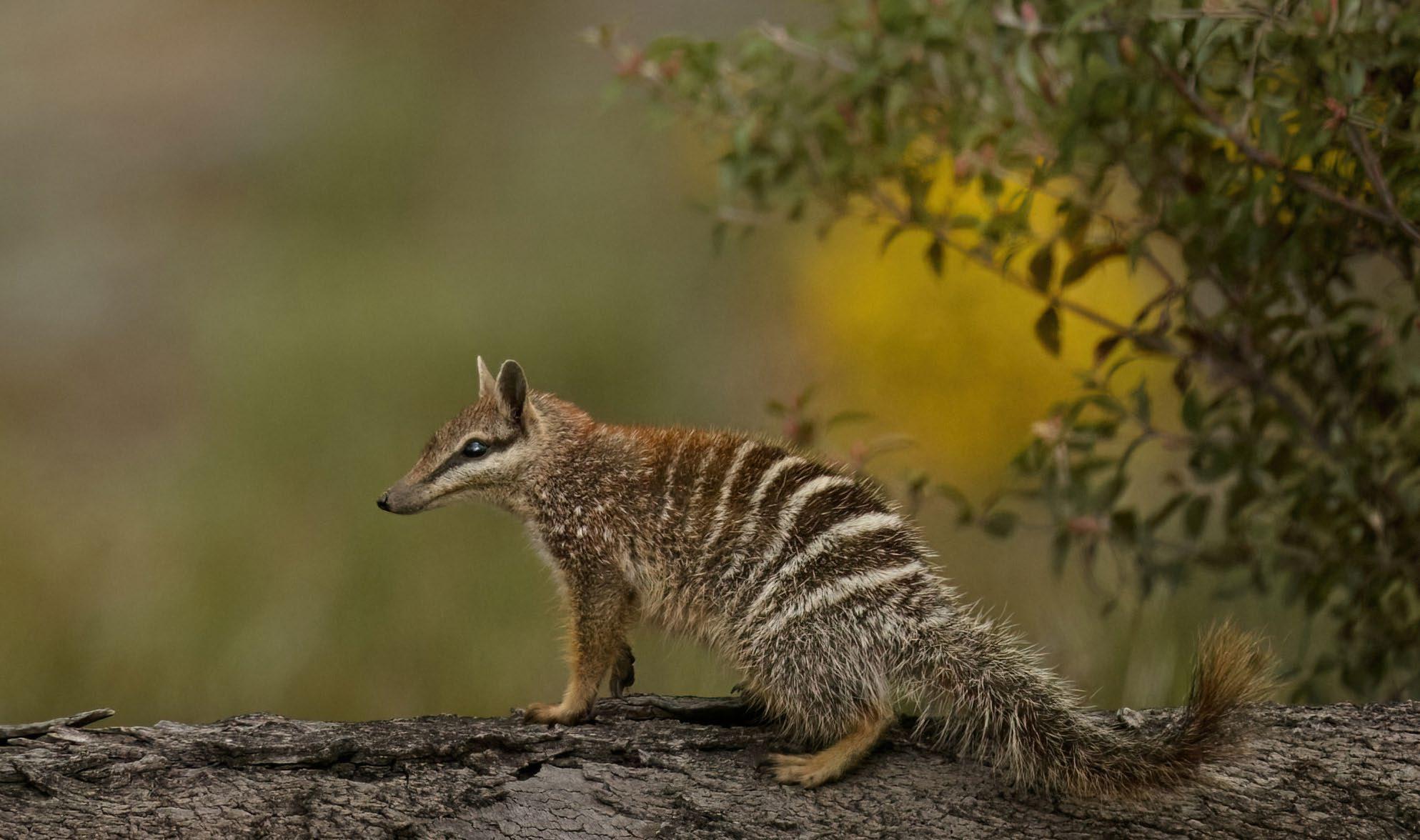
Photographing numbats requires patience. They are small in real life, roughly the size of a small squirrel, and exceptionally fast. Like many animals, they blend seamlessly into their surroundings. They are also best photographed from a vehicle, which serves as a portable hide. After three days in the area, I managed to spot several numbats and capture a number of pleasing images that included elements of their environment.
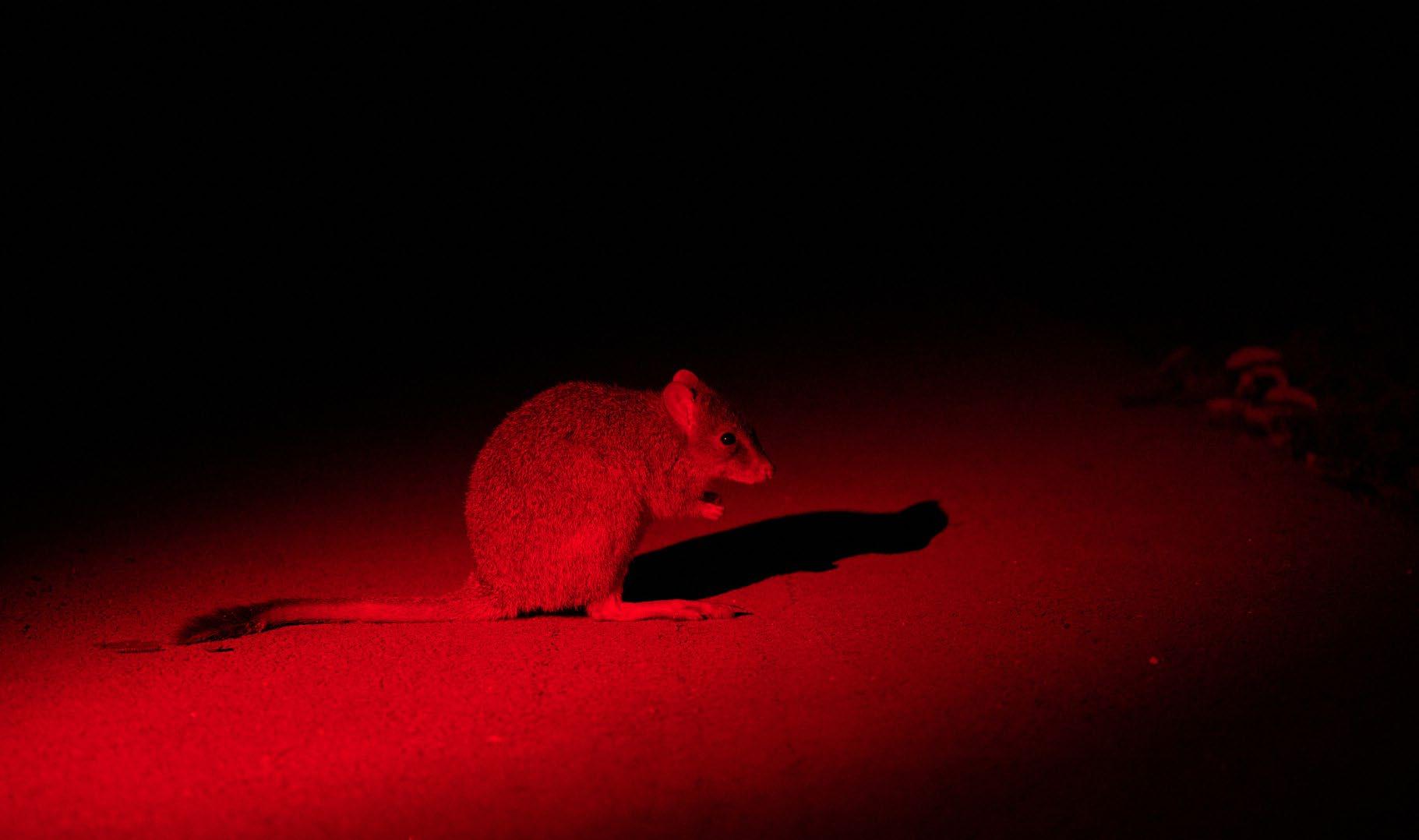
There was also an opportunity to visit Barna Mia, an enclosed area of protected woodland where endangered species have been reintroduced into a predator-free zone. The animals are fed small amounts at certain times of night, which attracts them to areas where guided tours take place. Visitors are provided with red-light torches to observe the wildlife while minimising disturbance.
Fig. 1: Numbat searches for termites at sunrise
Fig. 2: A Woylie leaves the feeding area at Barna Mia Nocturnal experience
Journey through the Canola Fields
The next stage involved travelling north through the Wheatbelt and the expansive canola fields that stretch across Western Australia when heading from Dryandra to Kalbarri, the next destination on the itinerary. Along the way, there were several opportunities to photograph wildlife around the canola fields, as well as to capture broader environmental landscapes.
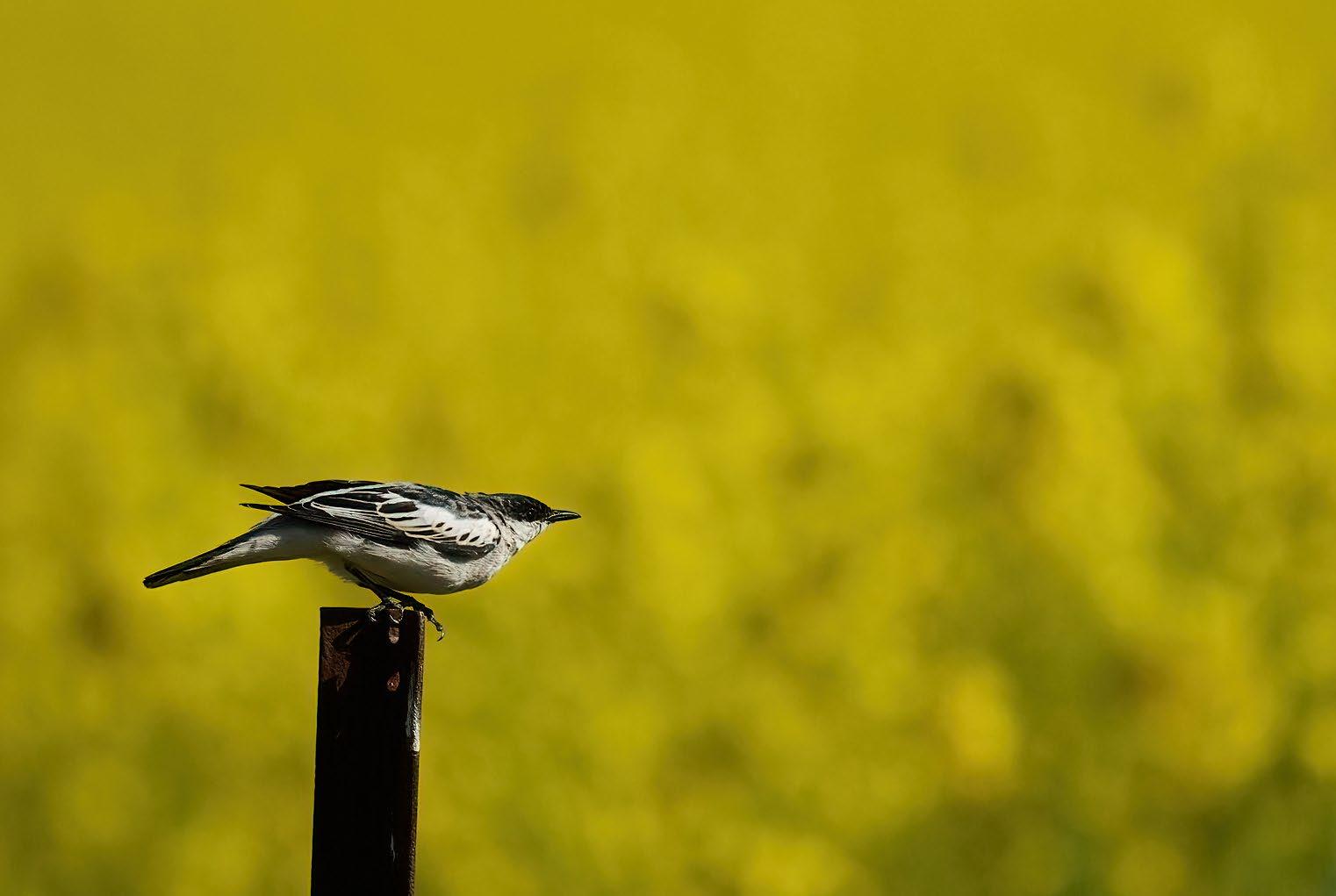
Fig. 3: A white winged triller explores the canola fields for food
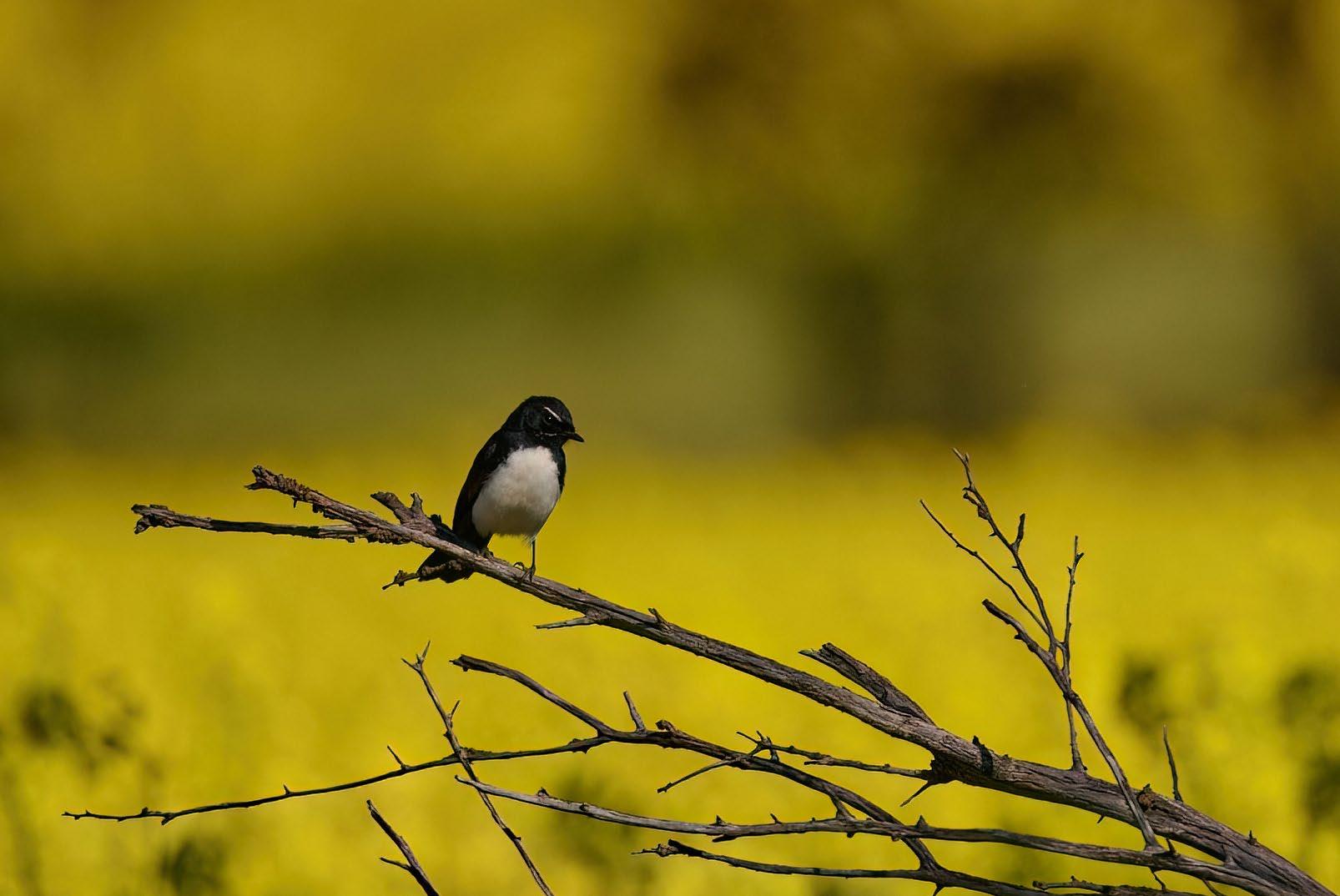
Fig. 4: A wille wagtail pauses in between catching insects
Onto the Pink Lake and Kalbarri
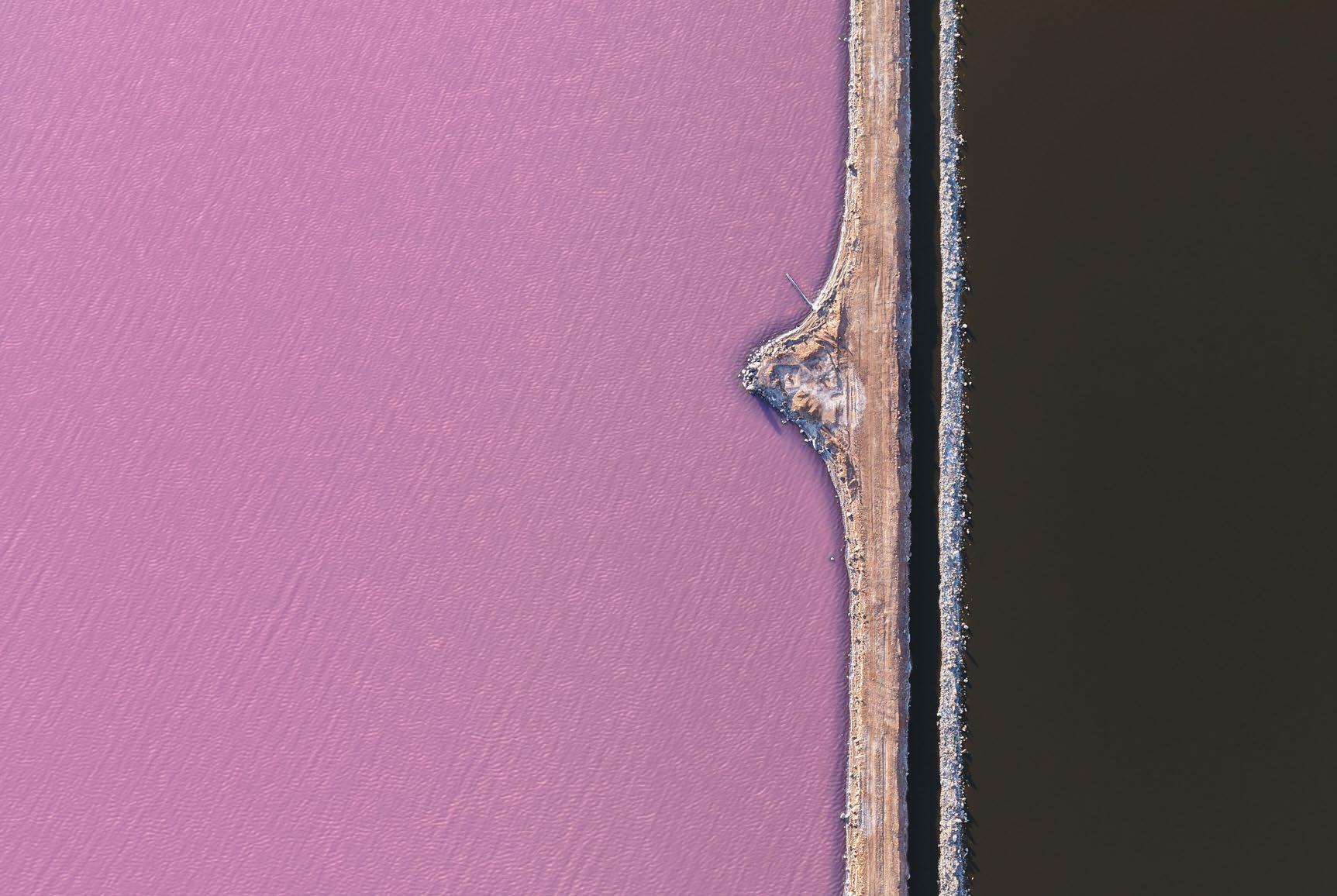
Hutt Lagoon is on the itinerary of most travellers driving north from Perth towards Broome. Its appearance changes throughout the year. On my first visit, in the height of summer, it appeared a soft pink. During the second visit, in drier conditions, the pink tones were significantly stronger and more vivid. I used the drone to photograph the softer edges of the natural lagoon, as well as more dramatic compositions where the salt mine meets the lake.
Fig. 5: Pink Hutt lakes taken from a DJ Mavic drone
Fig. 6: Edge of the pink hutt lake taken with a DJ Mavic Drone
To the mud and red dirt of Broome
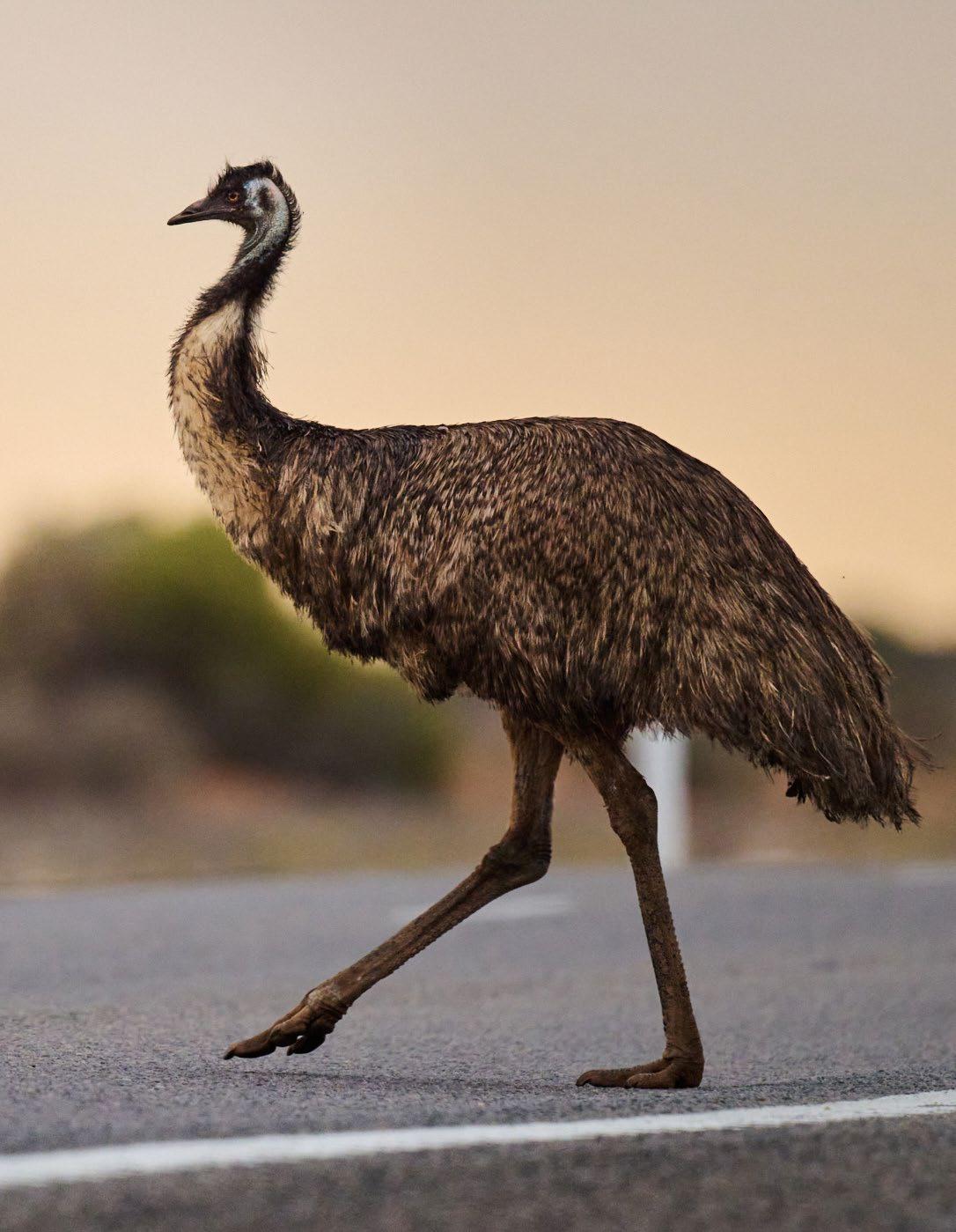
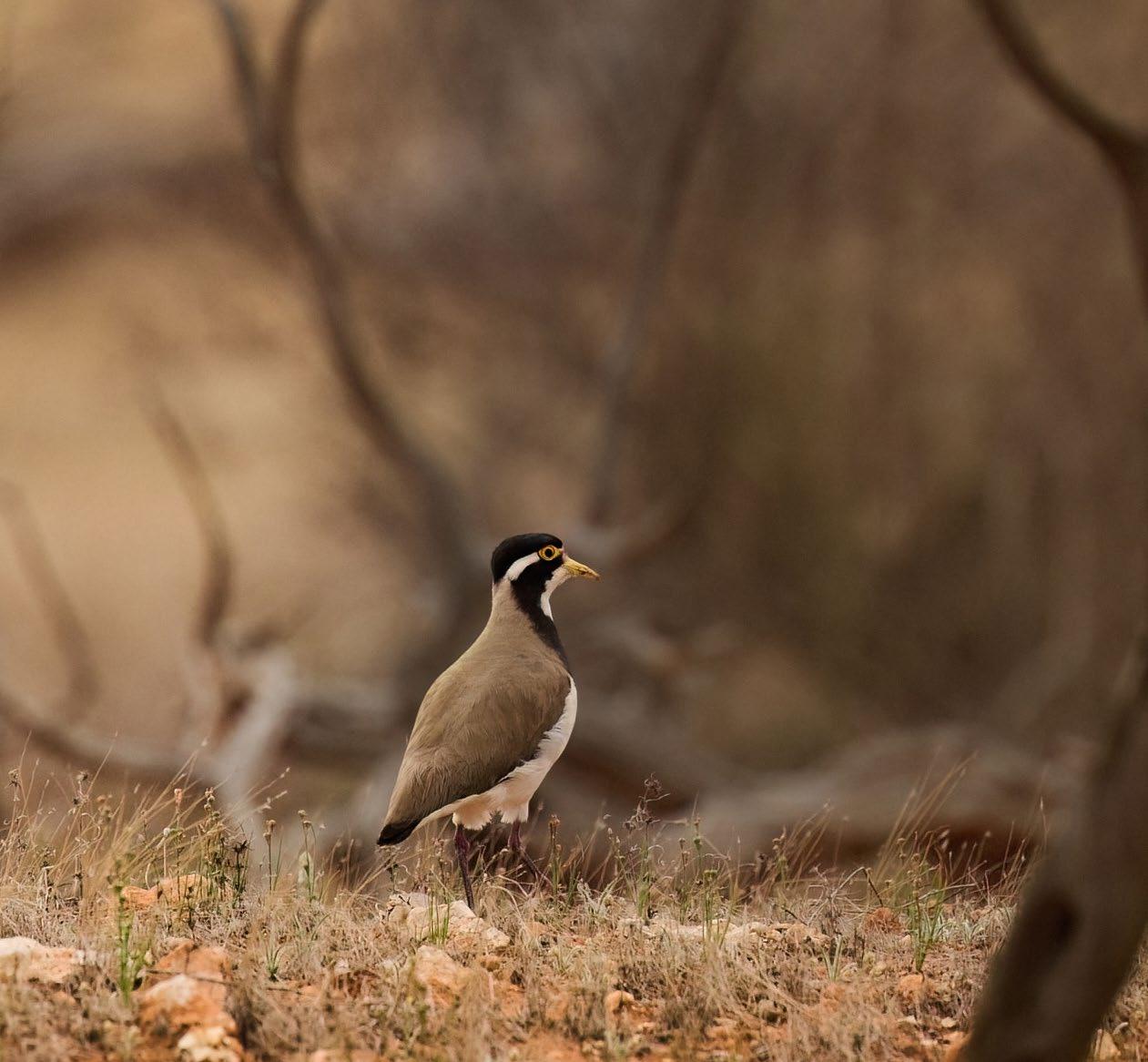
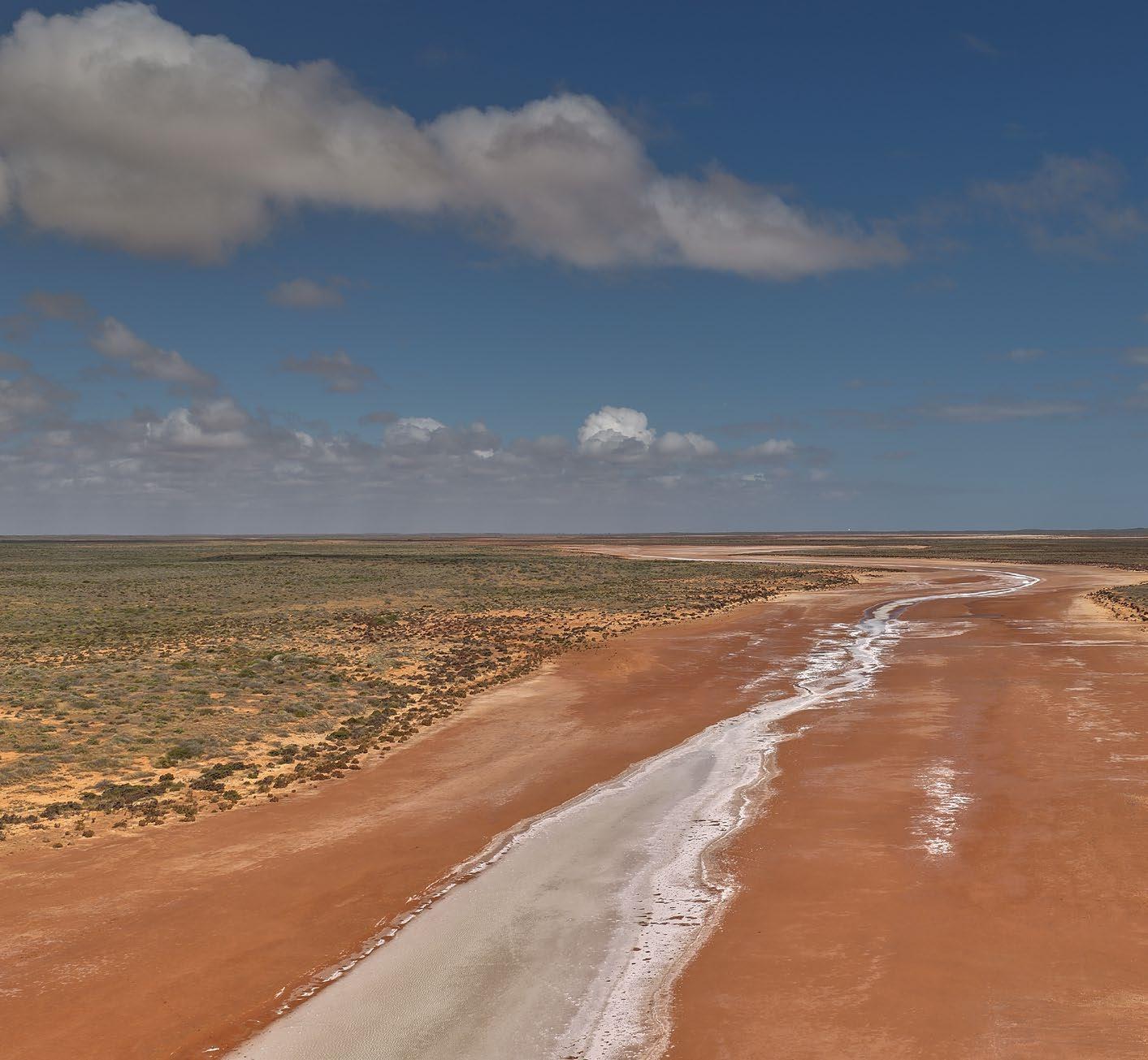
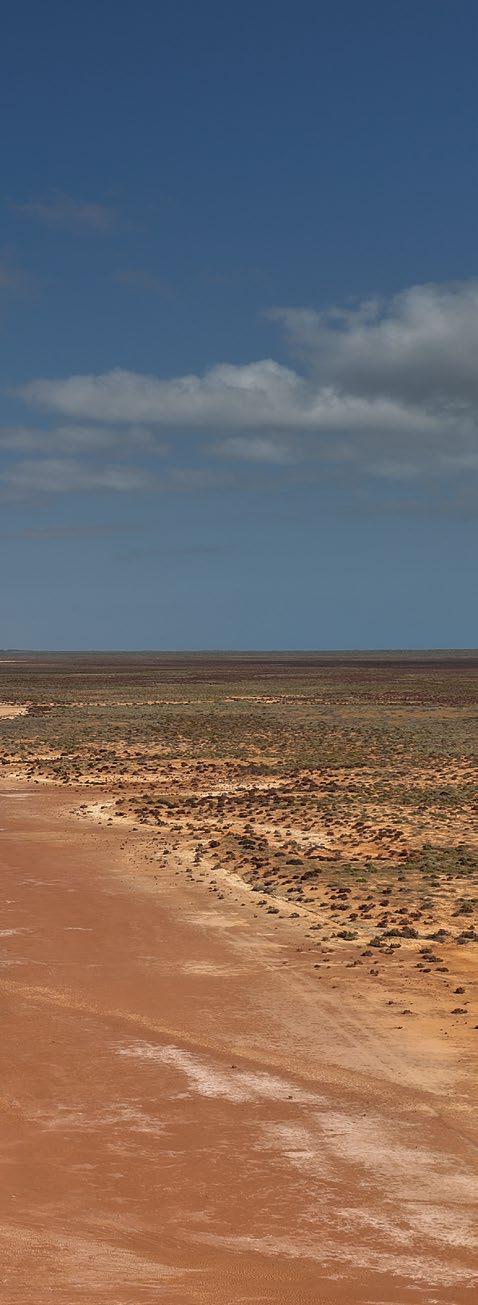
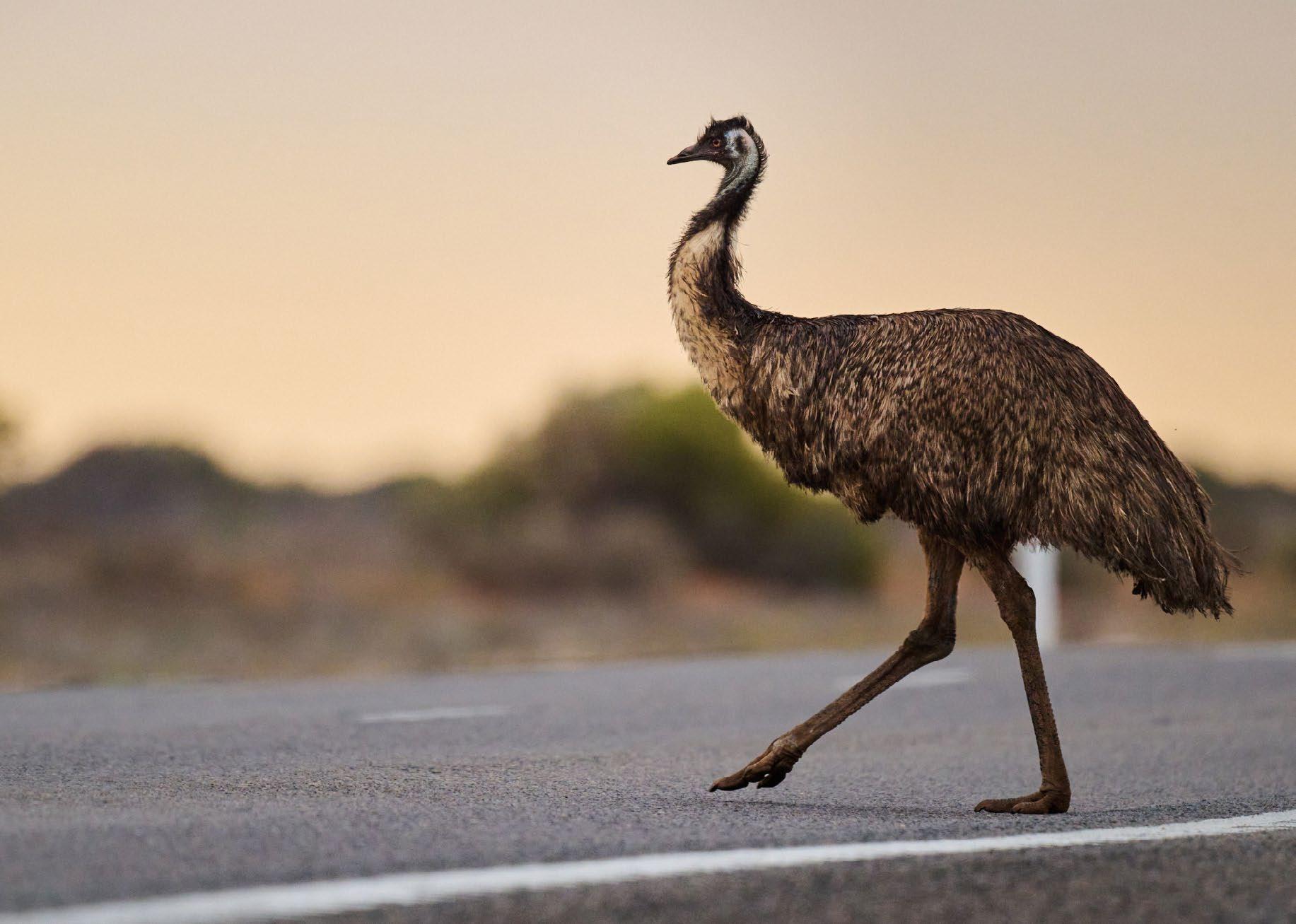
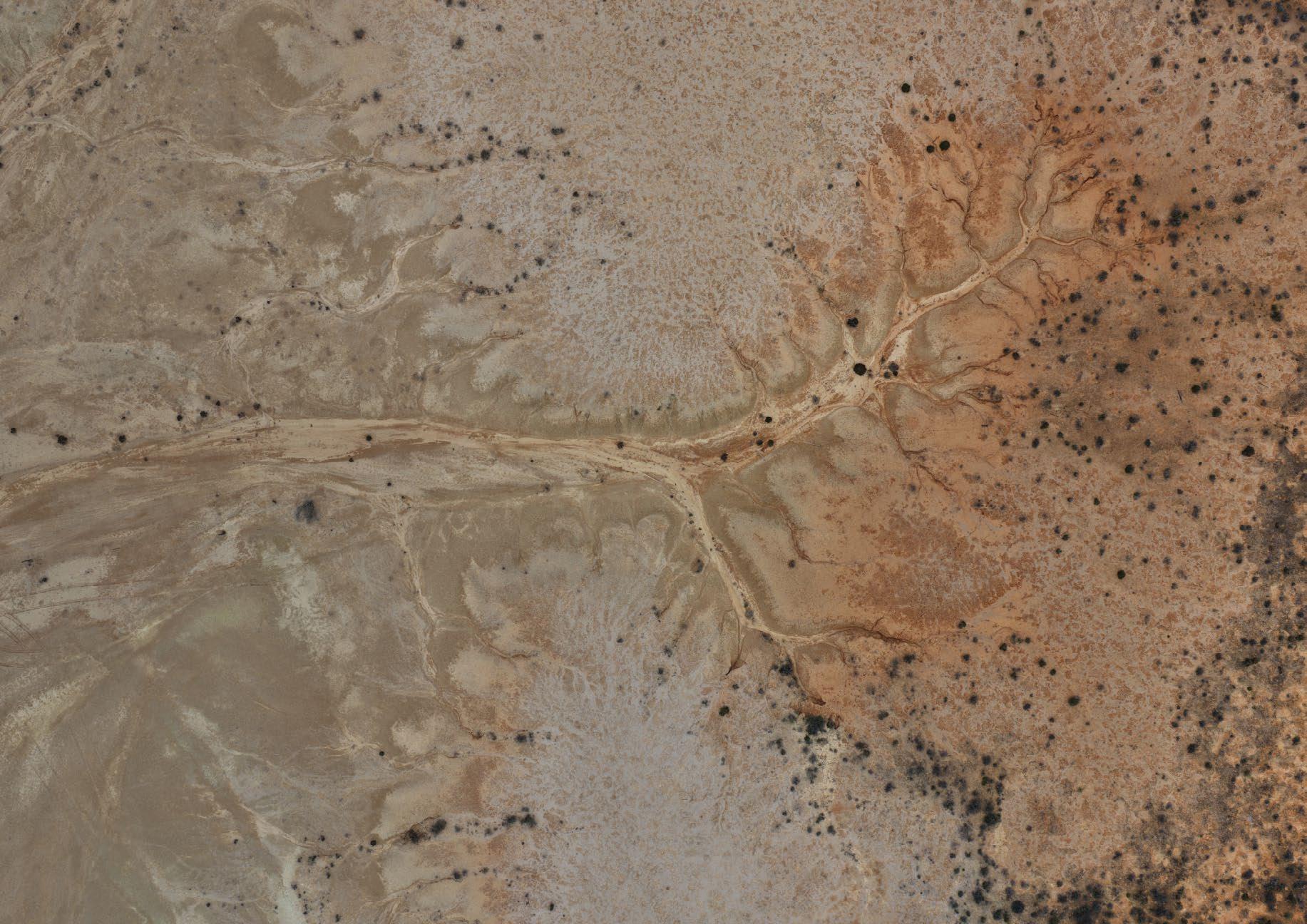
After visiting Kalbarri National Park, I travelled further north into the landscape of red dirt and vast highways, oppressive to some but, to a photographer, a dream. Endless skies and wildlife that reveal themselves along the roadside demand a sharp eye and quick reactions as traffic passes at speed. At times, this meant turning abruptly off the highway to search for a bird of prey, an emu, or a banded lapwing. There were also opportunities to deploy the drone to photograph dry riverbeds from a unique aerial perspective.
Fig. 7: A Banded Lapwing photographed on the roadside on the way to Broome
Fig. 8: A male emu strides across the highway at sunset
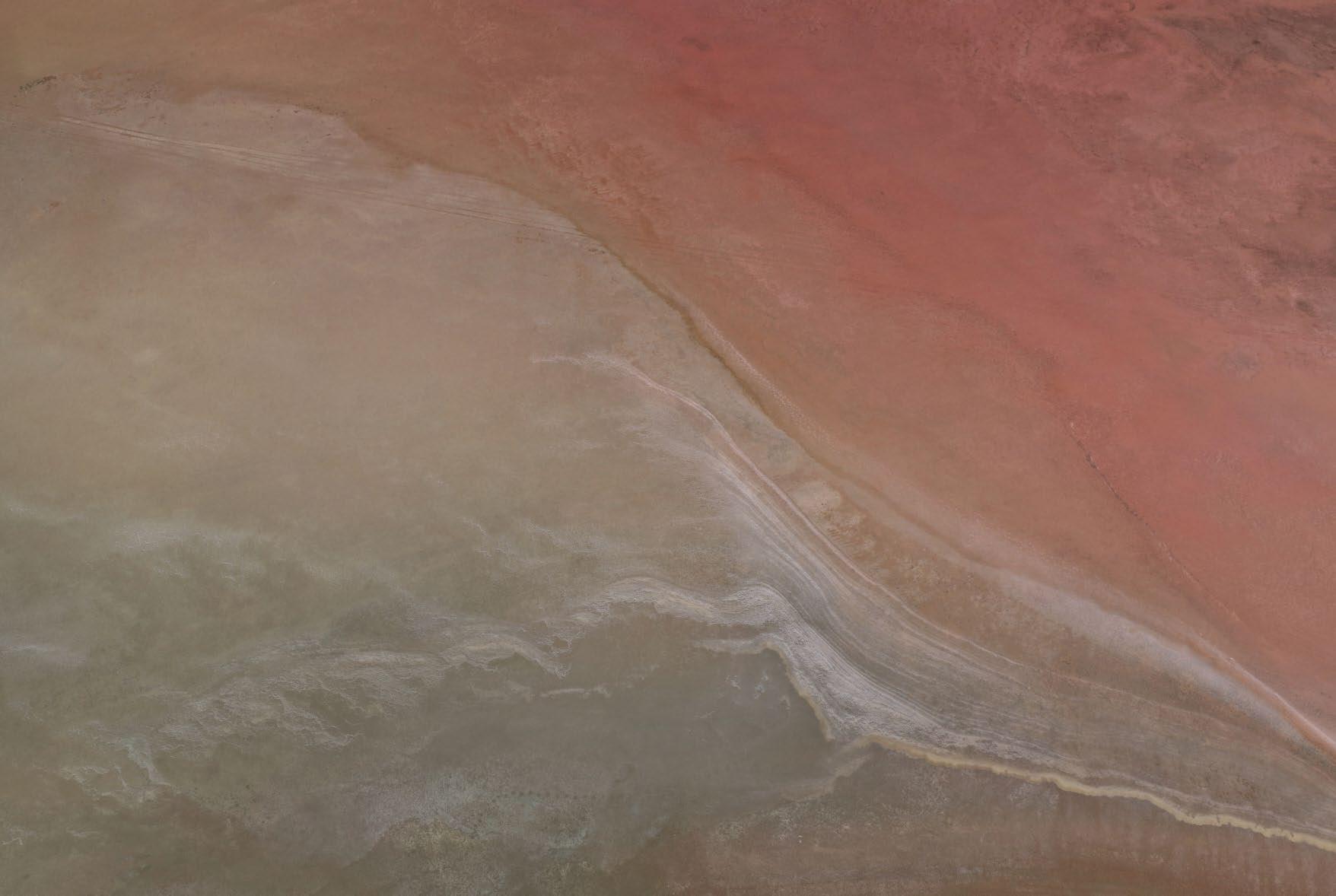
Fig. 9: The edges of a dried river in Carnarvan
Fig. 10: Edges of a river bed in Wooramel
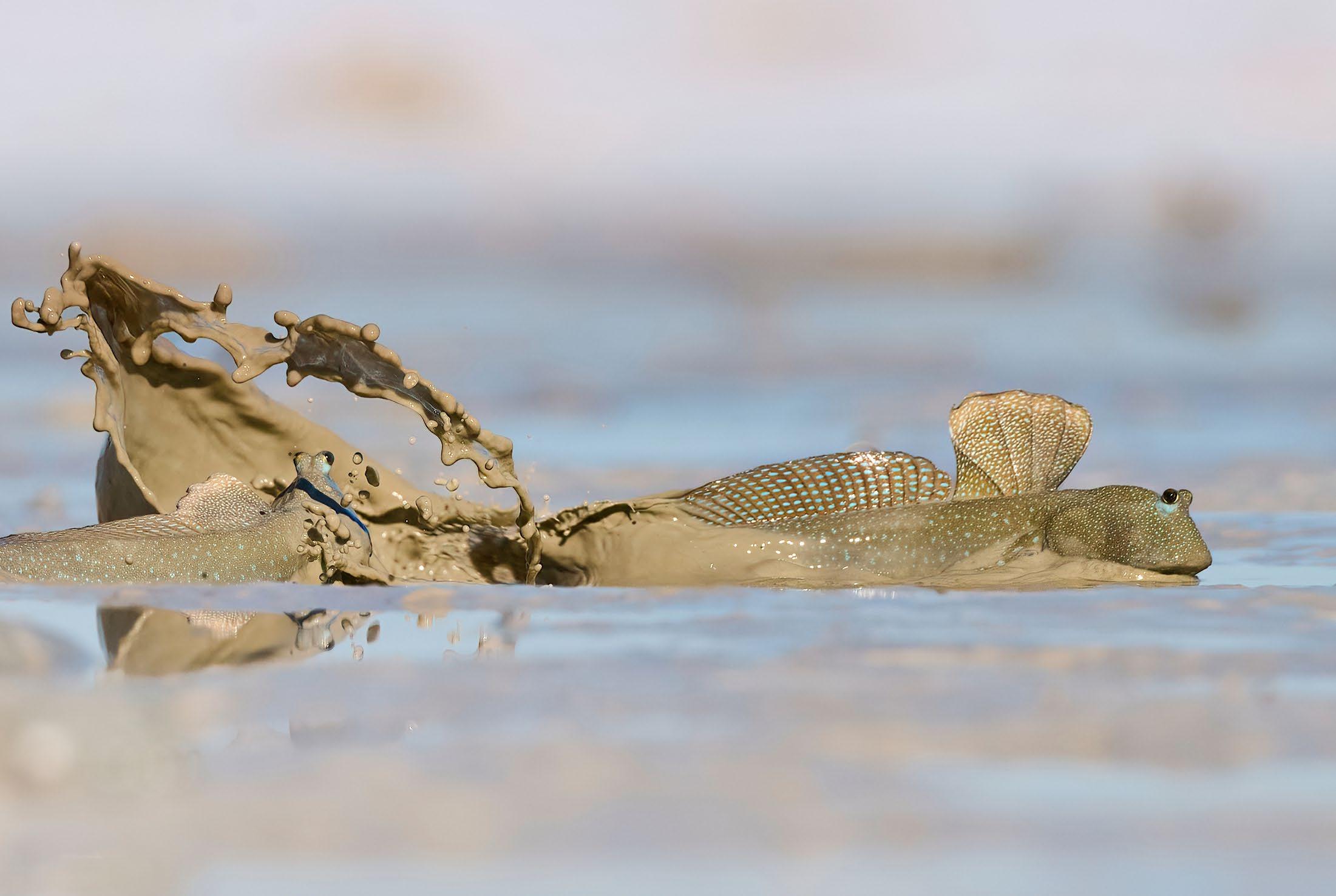
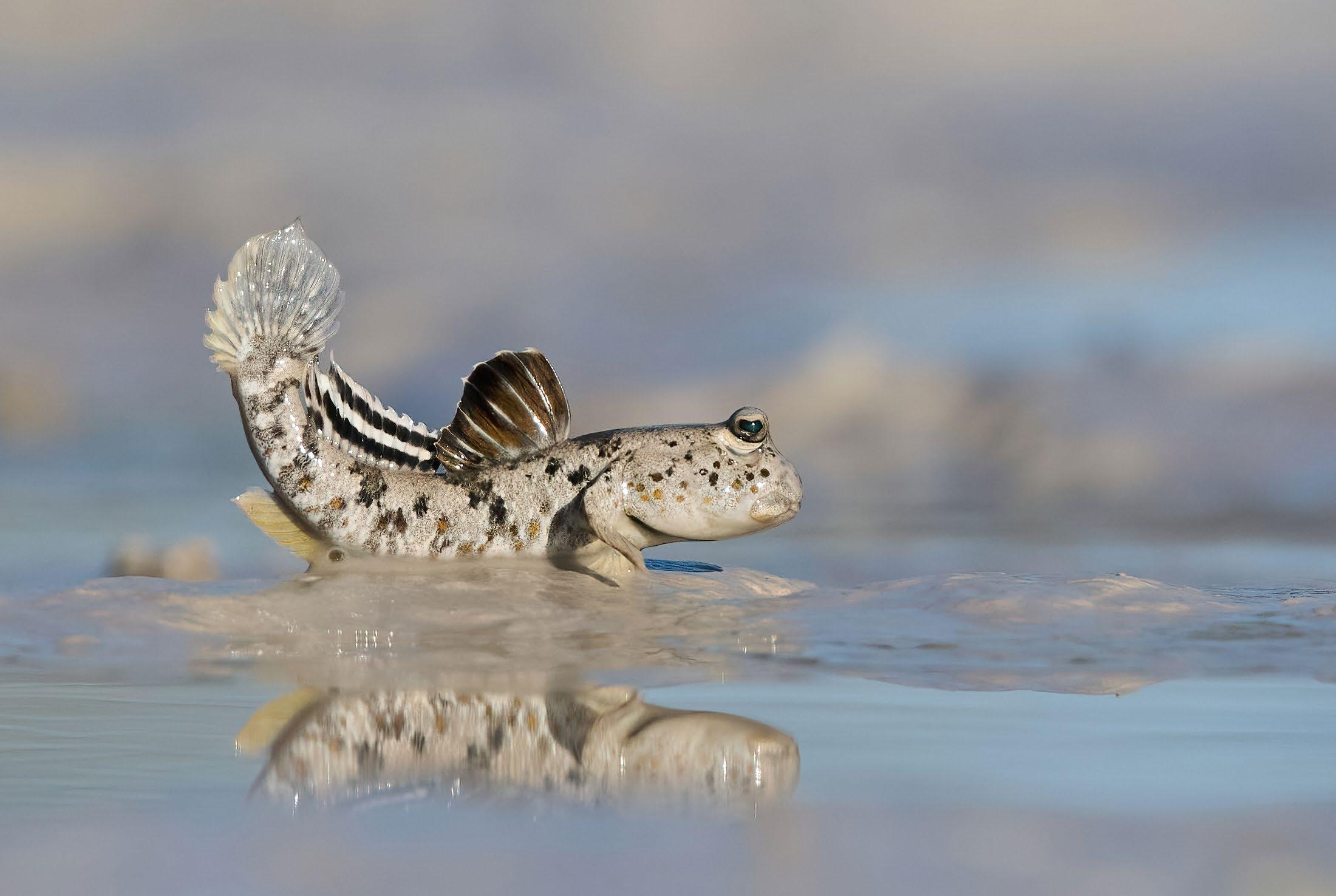
Finally, I arrived at the primary destination around which the trip had been organised, Broome. There, I continued photographing life in the mud, a series I have been developing for the past two years. Several images from this body of work were awarded runner-up in Travel Photographer of the Year 2026. One of those images is featured to the right. I spent five days in the area and plan to return in 2026 to observe and document new behaviours.
Fig. 11: Two blue spotted mud-skippers fight for territory
Fig. 12: A tiny feisty mudskippers show its mating display to impress a mate
Australian photographer John Pollard FRPS died in 2018, leaving behind not just a grieving family and a substantial legacy of photographic work in public and private collections, but also an eclectic collection of books representing his varied interests over his life. In this ongoing column, I hope to stimulate interest and reflection on various aspects of photography based on the perusal of John’s collection of books. In the process, I also aim to periodically shine a light on John’s career and practice.
Dr Robin Williams ASIS FRPS
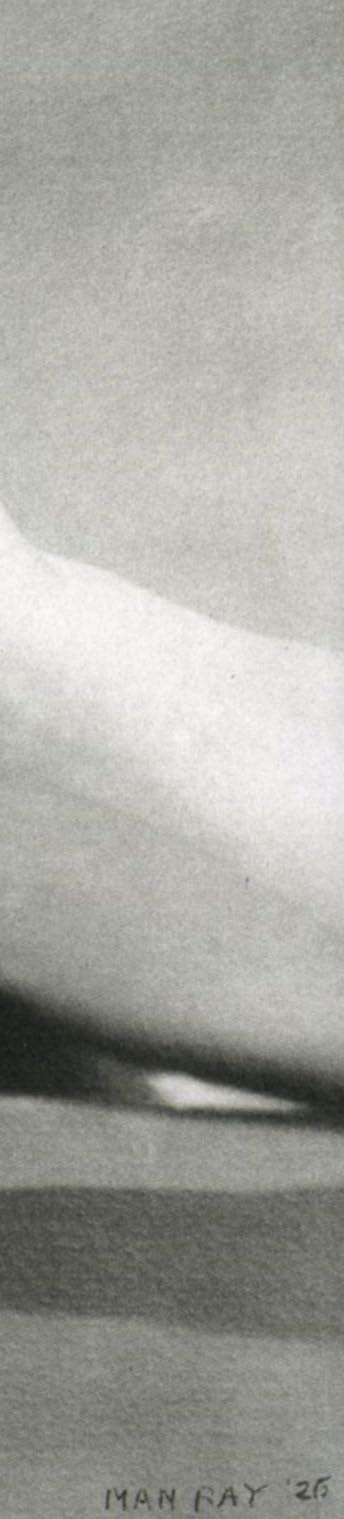
One of the most original and Avantgarde artists of his generation Man Ray – like many artists and writers before him and since – was drawn to Paris, which at the time was seen as the creative epicentre of the world. Except for a short period during the Second World War when he was repatriated to the US, Man Ray spent most of his productive life in Paris. This book from John Pollard’s collection was originally produced as an extended catalogue for the Exhibition of Man Ray’s work at The Centre National d’Art et de Culture Georges Pompidou, Paris, from December 1981 to April 1982.
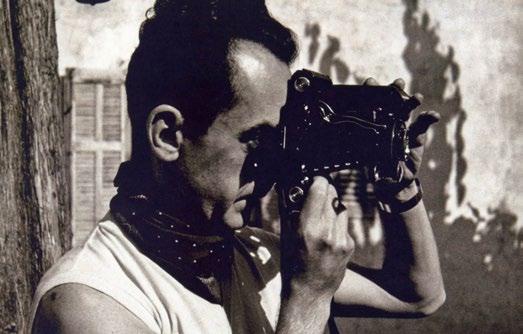
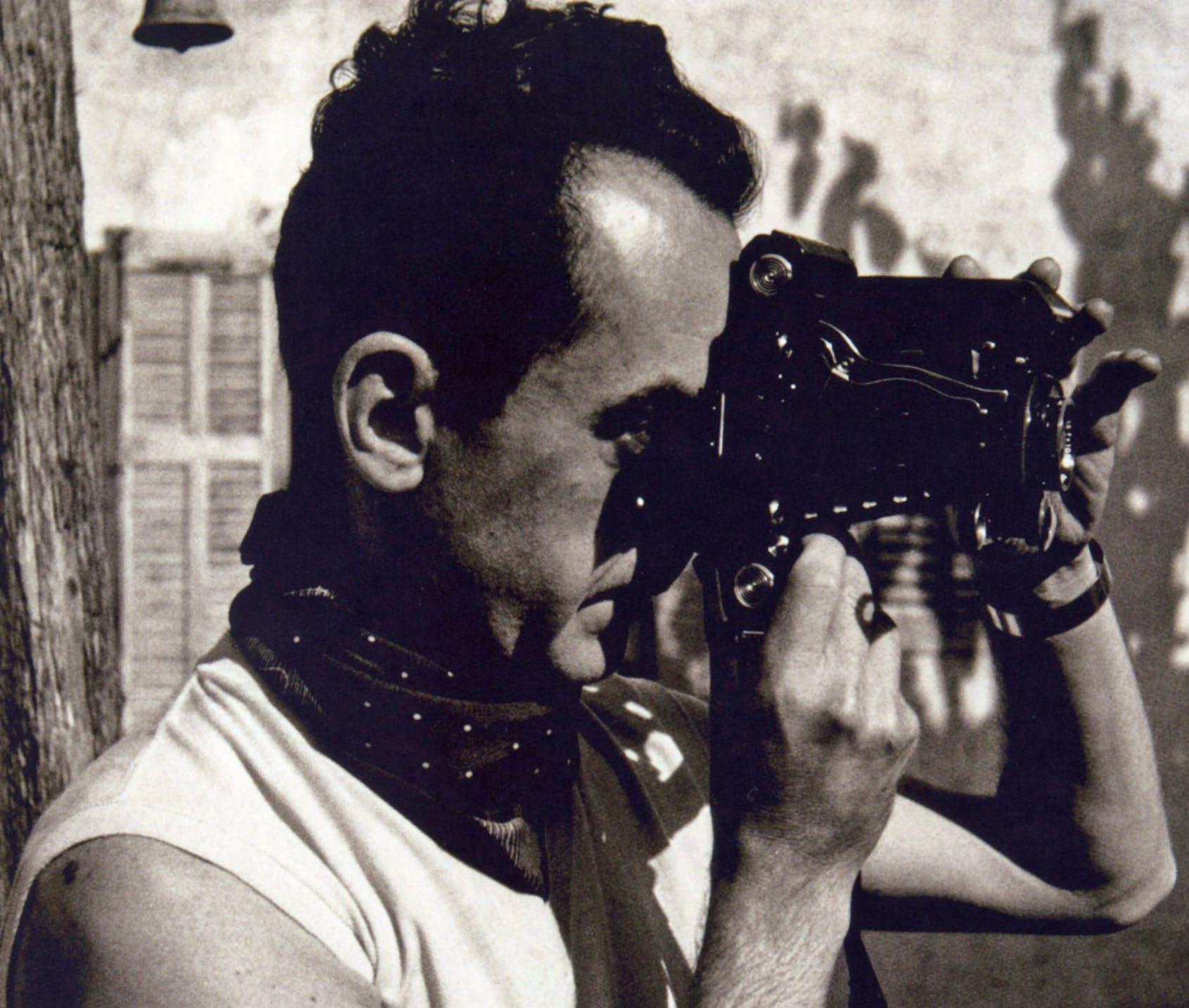
Man Ray, Self-Portrait, Mougins. 1936.
Pondering Pollard 26:
‘Man Ray – Photographs’ With an introduction by Jean-Hubert Martin.
Pub. Thames & Hudson, London, 1982.
It was translated from the French for the Thames and Hudson publication by Carolyn Breakspear. It contains reproductions of 350 of Man Ray’s images, several essays about the photographer and the context in which he operated, along with two short opinion pieces by the artist himself.
Man Ray was a significant contributor to the Dada and Surrealist movements. He produced major works in a variety of media but considered
himself a painter above all. He stated, ‘I paint what cannot be photographed, I photograph the things I don’t want to paint. I would photograph an idea rather than an object and a dream rather than an idea.’ He was a renowned fashion and portrait photographer, but is perhaps best known for his innovative photography, especially for his work with photograms. Born Emmanuel Radnitzky in Philadelphia in 1890 to Russian Jewish immigrants,
he grew up in Brooklyn, where his family’s tailoring work subtly influenced his later artistic motifs. Although he later concealed much of his early life and original name, these formative experiences shaped recurring visual themes in his work. Mannequins, flat irons, sewing machines, needles, pins, threads, swatches of fabric, and other items related to tailoring appear in almost every medium of his work. He studied drafting in high school and developed
Fig.1:
his artistic skills through museum visits and self-directed practice. He was a regular visitor to Alfred Stieglitz's ‘291’ gallery. After declining an architecture scholarship, he worked as a commercial artist while pursuing painting.
His artistic development accelerated after enrolling at the Ferrer School in 1912.
Encounters with European avant garde art, particularly at the 1913 Armory Show, reinforced his interest in Cubism and movement. By the mid 1910s, he was exhibiting paintings and creating proto Dada objects. Photography, which he first used to record his own artworks, soon became a major focus.
Embracing Dada’s anti art ethos,
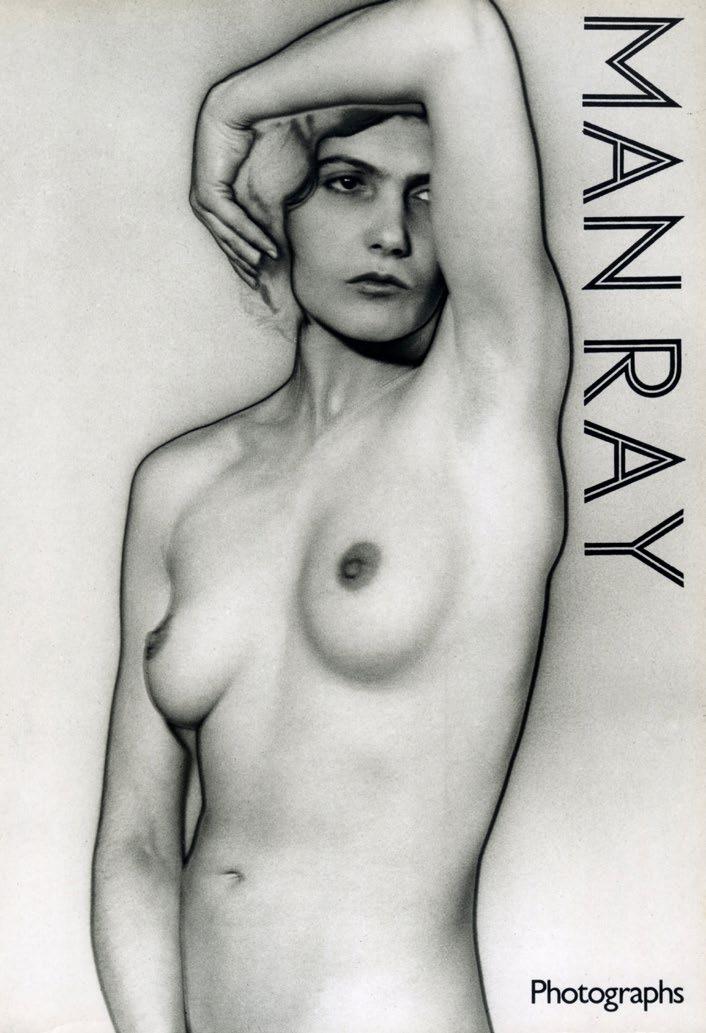
Fig.2: Front cover of the book, ‘Natasha’, 1931, a classic solarized image.
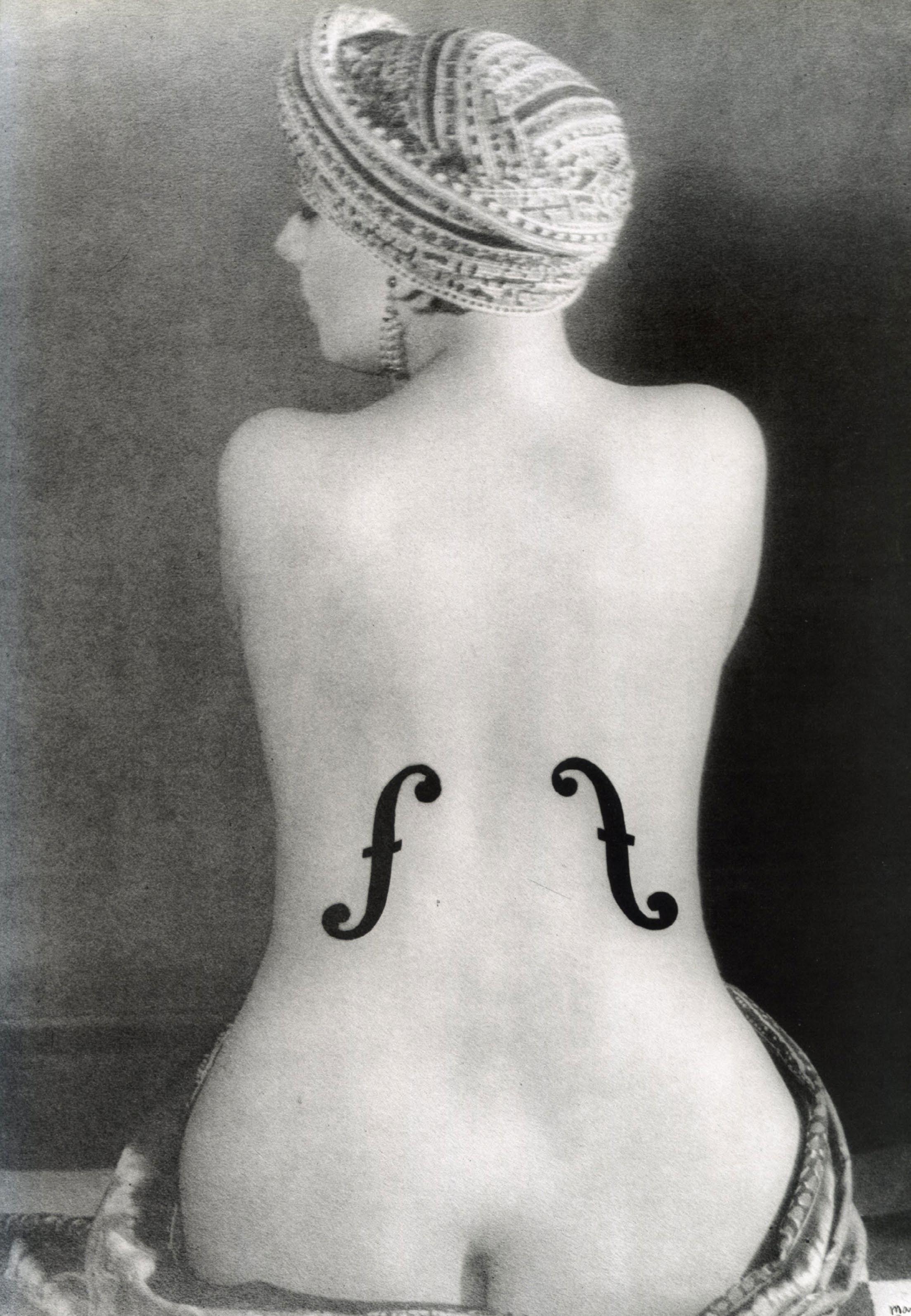
Fig.3: Man Ray’s most famous image: ‘Le Violin d’Ingres’, 1924. Kiki’s pose, seated and wearing an Oriental Turban recalls that of La Grande Baigneuse in the painting by Ingres. In 2022 an original signed print of the work sold for US$12.4 million.
he experimented with unusual materials and mechanical processes. Collaborations with Marcel Duchamp further expanded his interest in kinetic and conceptual art. Along with Duchamp and Katherine Dreier, he co-founded the Société Anonyme, the first American museum of modern art.
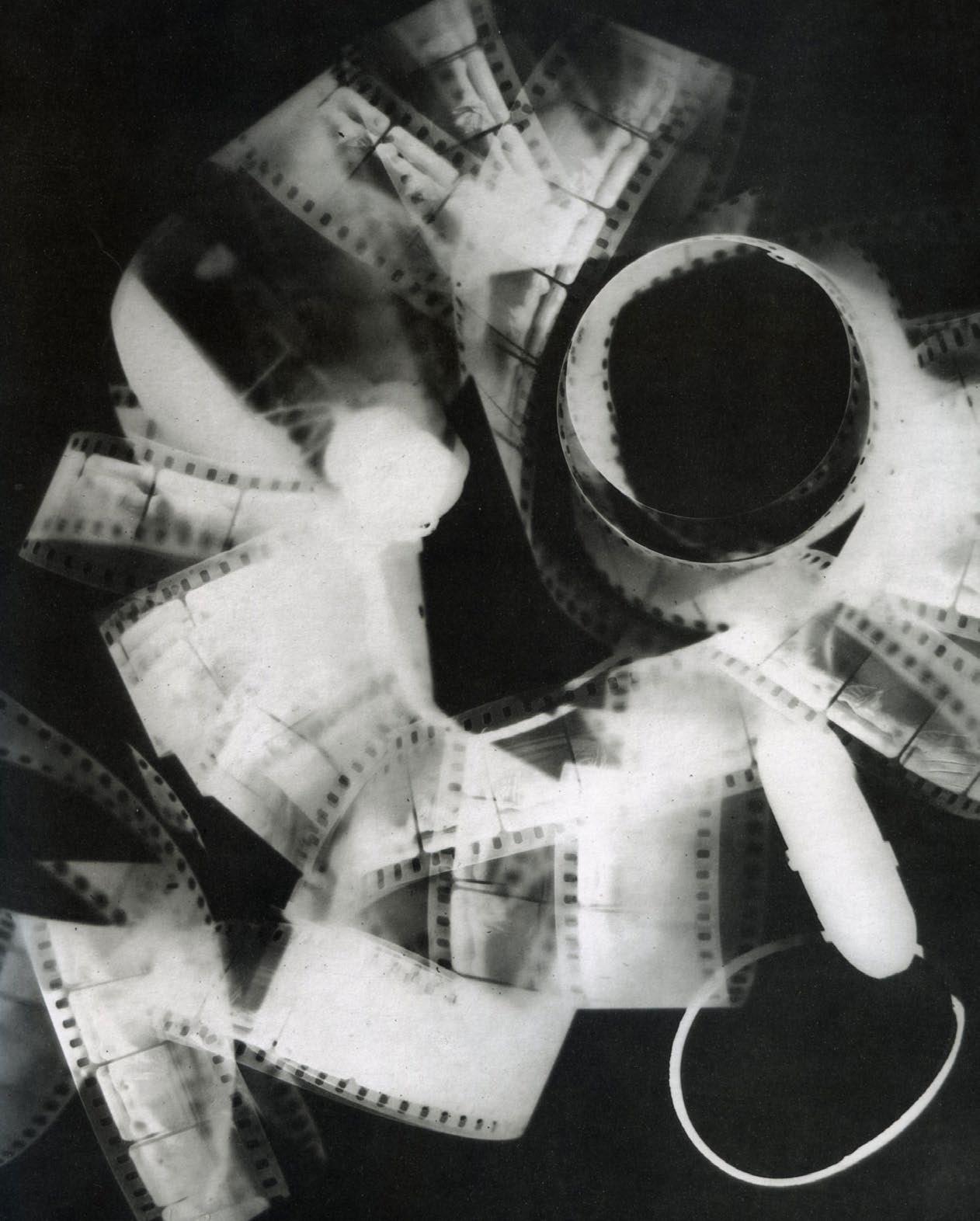
In 1913, Man Ray met his first wife, the Belgian poet Adon Lacroix (Donna Lecoeur). They married in 1914, but separated in 1919, and formally divorced in 1937. In July 1921, Man Ray went to live and work in Paris. He soon settled in the Montparnasse quarter favoured by many artists. His rediscovery of the camera-less photogram, which he called Rayographs, after himself, resulted in many
Fig.6: Nude in the studio
mysterious images hailed as ‘pure Dada creations.’ Shortly after arriving in Paris, he met and fell in love with Kiki de Montparnasse (Alice Prin), an artist's model and celebrity in Parisian bohemian circles. Kiki was Man Ray's companion and muse for most of the 1920s. She was the subject of some of his most famous photographic images and starred in his experimental films ‘Le Retour à la Raison’ and ‘L'Étoile de mer.’
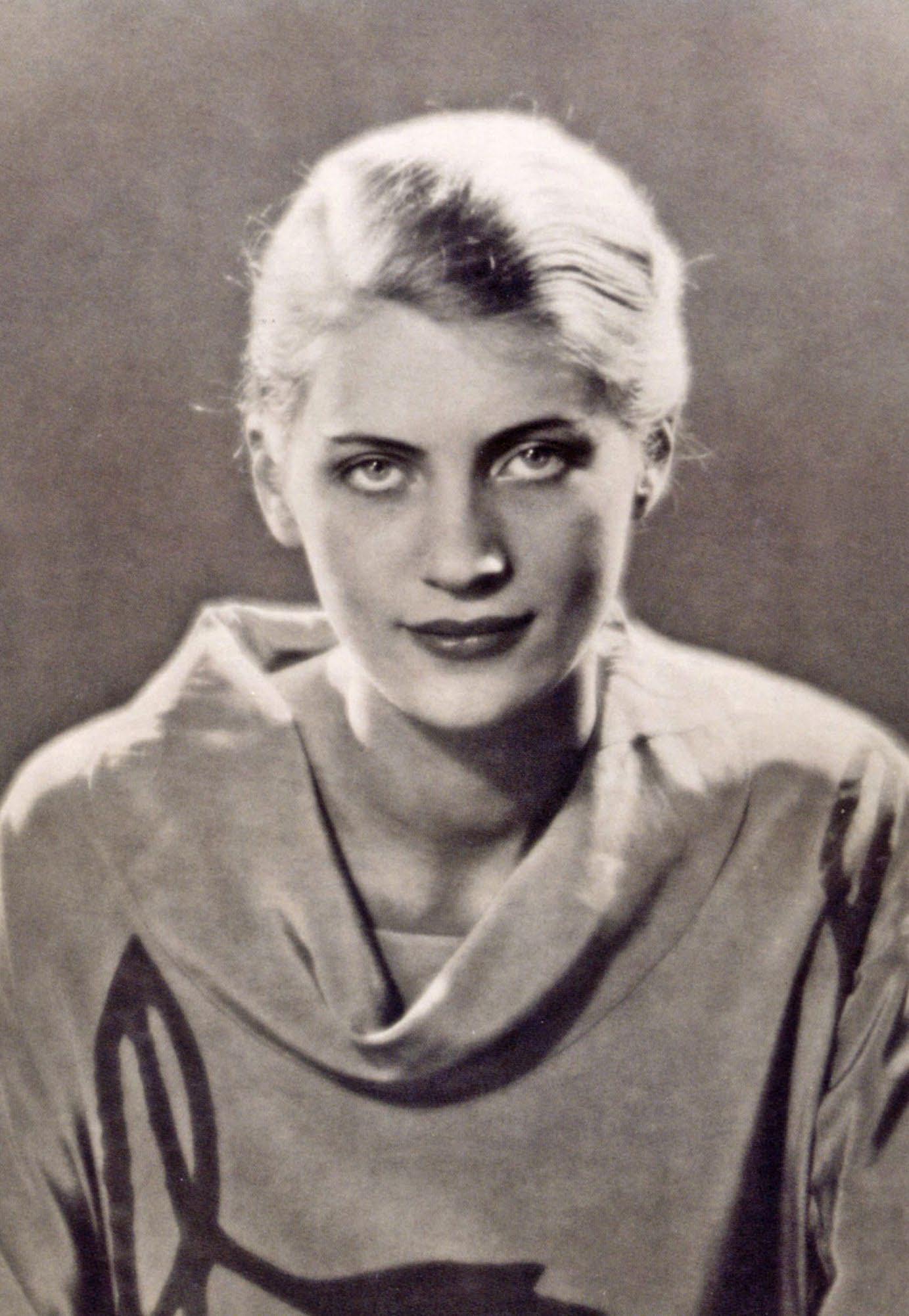
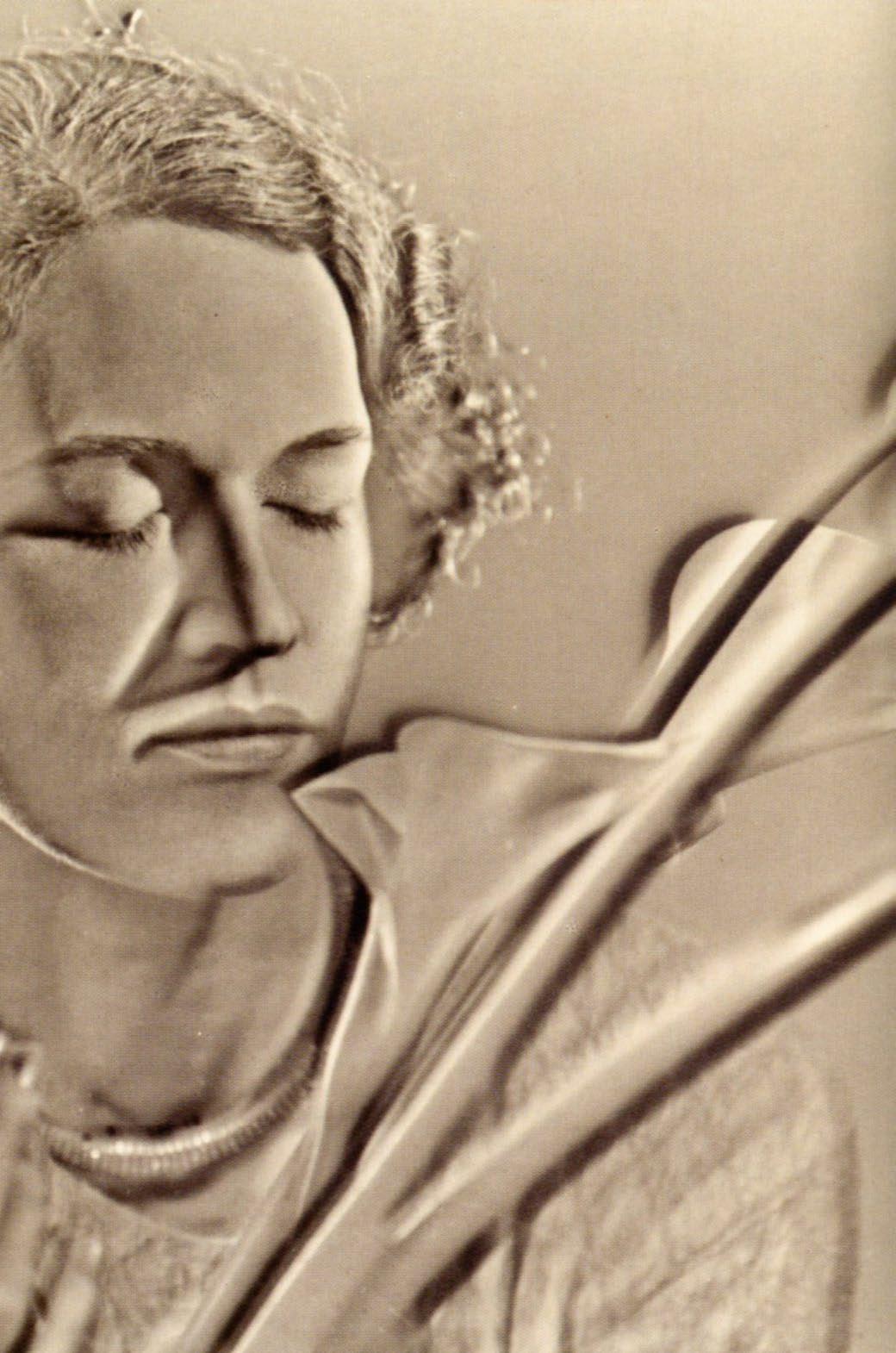
In 1929, he fell in love with the photographer Lee Miller, an affair which would last three and a half years and leave him devastated when she returned to her native US in 1932. Miller, originally a model, had taken up photography in New York under
the guidance of Edward Steichen, who, when she made it known she wanted to go to Paris to study, recommended her to Man Ray. Lee found Man Ray in Paris. ‘Hello, I am Lee Miller, and I am your new student’, she famously said. Lee was not just beautiful but had a good understanding of many aspects of commercial photography; she helped Man Ray raise the standard of his fashion work and thus his income. He frequently got Miller to undertake the fashion and commercial work under his name; something she accepted in return for his patronage within the surrealist world (even in New York, she had been deeply interested in Surrealism). Their relationship was incredibly productive and
innovative. Miller discovered solarisation when she accidentally turned on the white light in the darkroom while the image was still being developed: together they developed the technique, and it became a signature style for Man Ray.
For the two decades between the wars, Man Ray developed a reputation as a portrait photographer with significant members of the art world, such as Pablo Picasso, James Joyce, Gertrude Stein, Jean Cocteau, Salvador Dalí, and Peggy Guggenheim posing for his camera. From late 1934 until August 1940, Man Ray was in a relationship with Adrienne Fidelin. She was a Guadeloupean dancer and
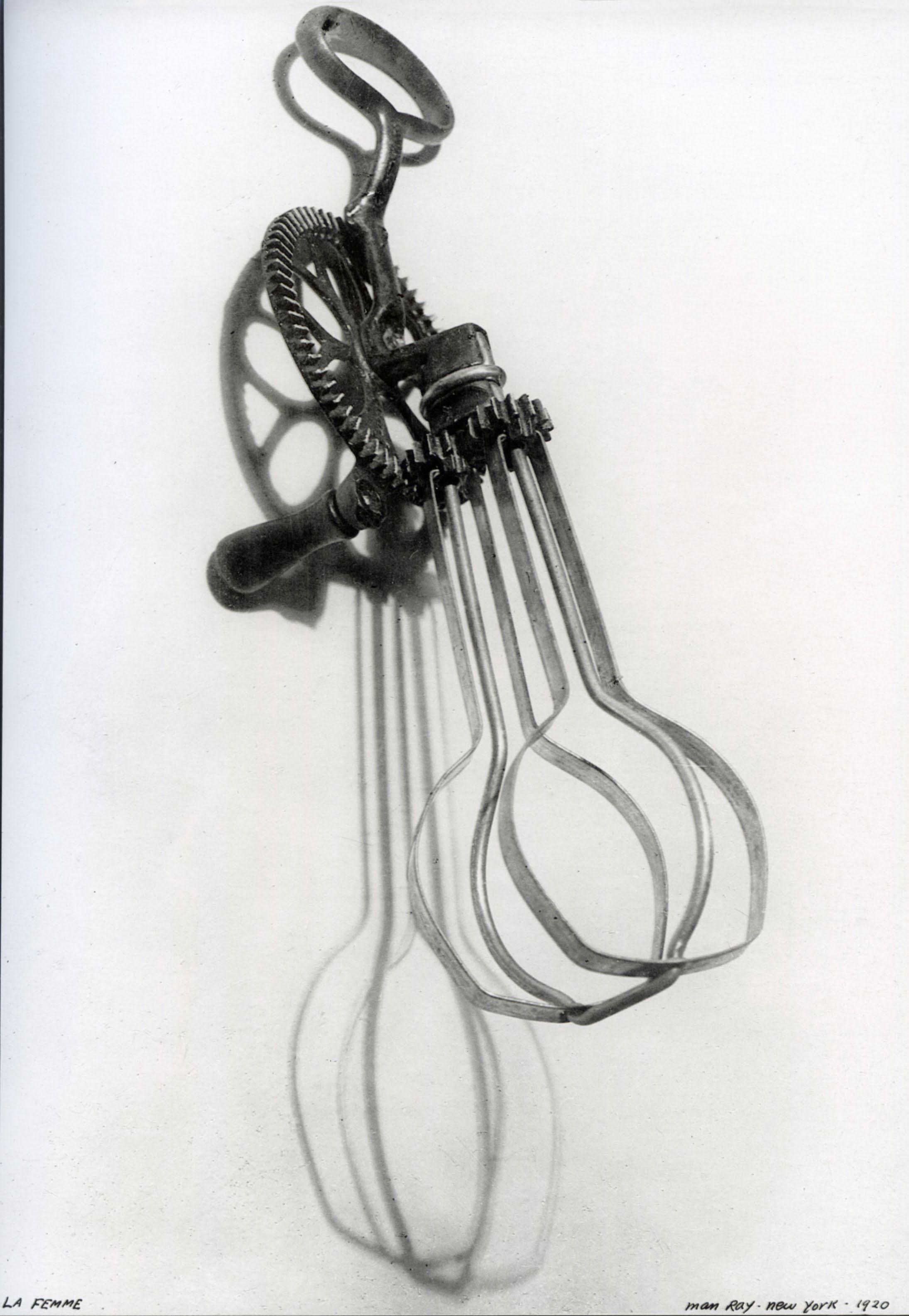
Fig.4: ‘La Femme’, 1924. Man Ray called another version of this photograph of an egg-beater ‘L’Homme.’
model, and she appears in many of his photographs. When Man Ray fled the Nazi occupation of Paris, Adrienne chose to stay behind to care for her family. Unlike the artist's other significant muses, until 2022, Fidelin had largely been written out of his life story.
On his return from Paris to the United States, Man Ray lived in
Los Angeles from 1940 to 1951, where he focused his creative energy on painting. A few days after arriving in Los Angeles, he met Juliet Browner, a firstgeneration American of Romanian-Jewish lineage. She was a trained dancer who studied dance with Martha Graham, and an experienced artist's model. They married in
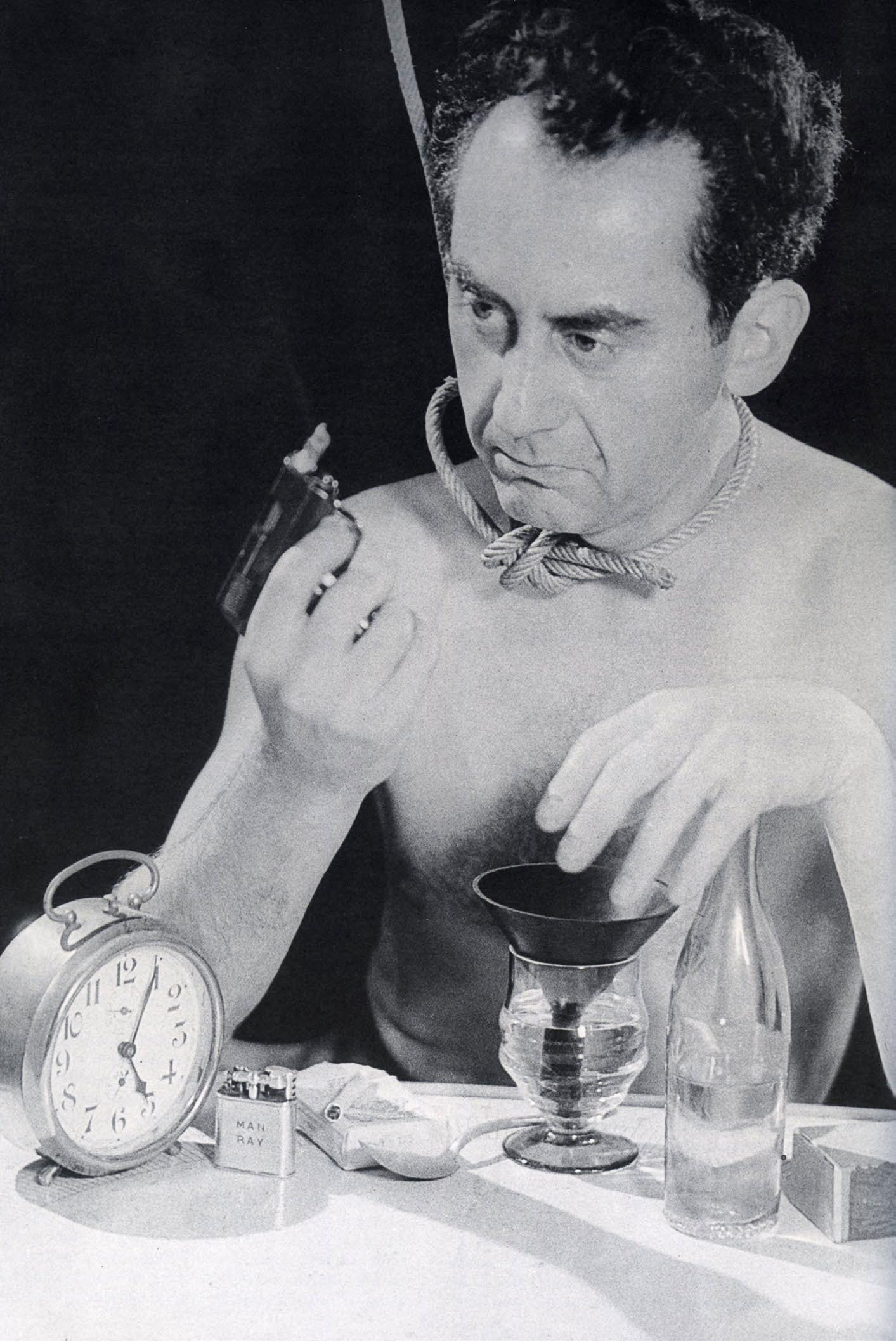
Fig.5: The theme of suicide fascinated the Surrealists and several of the members of the group killed themselves. It was a recurring theme for Man Ray, as in this example ‘self-portrait,’ 1926.
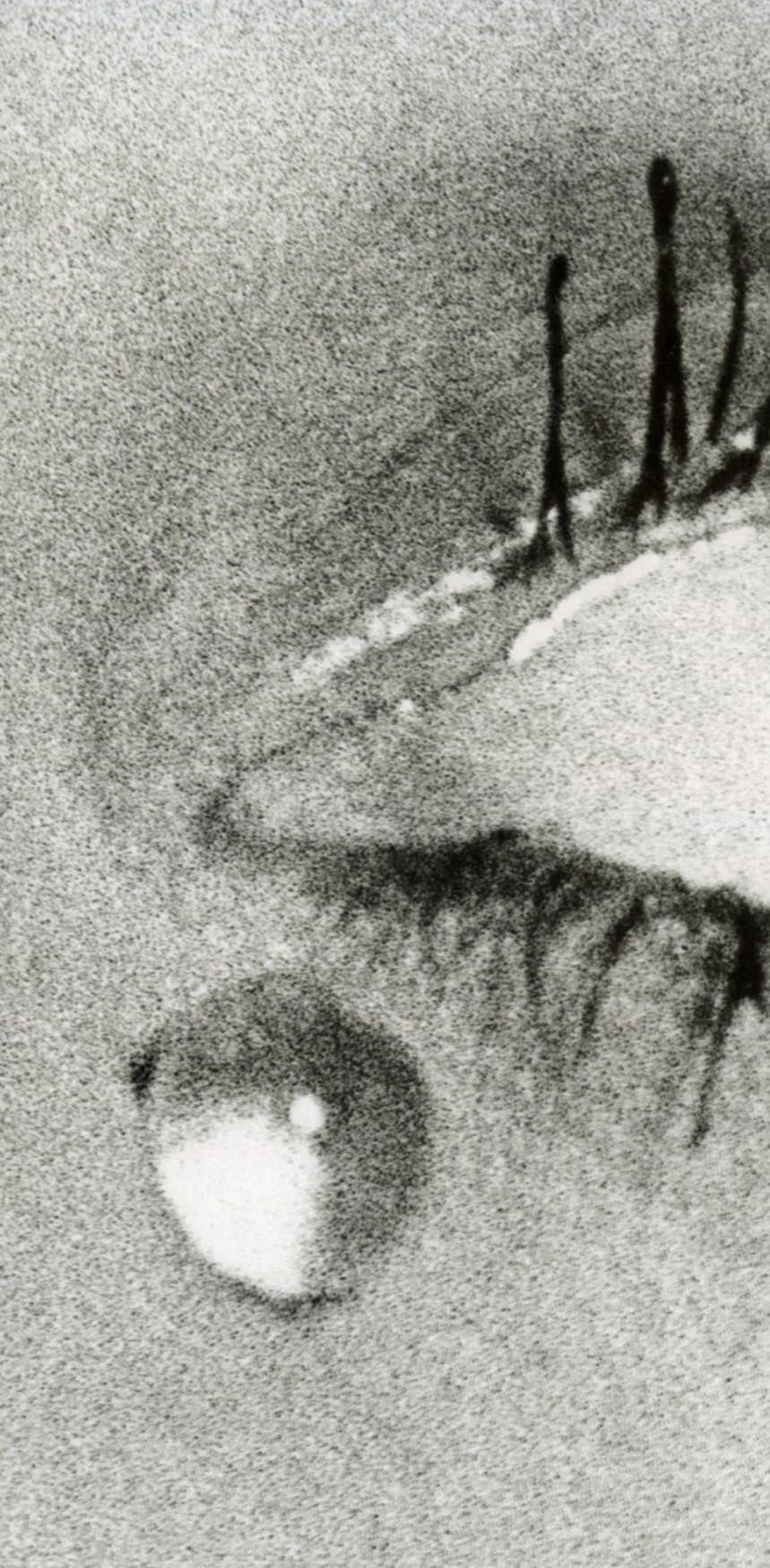
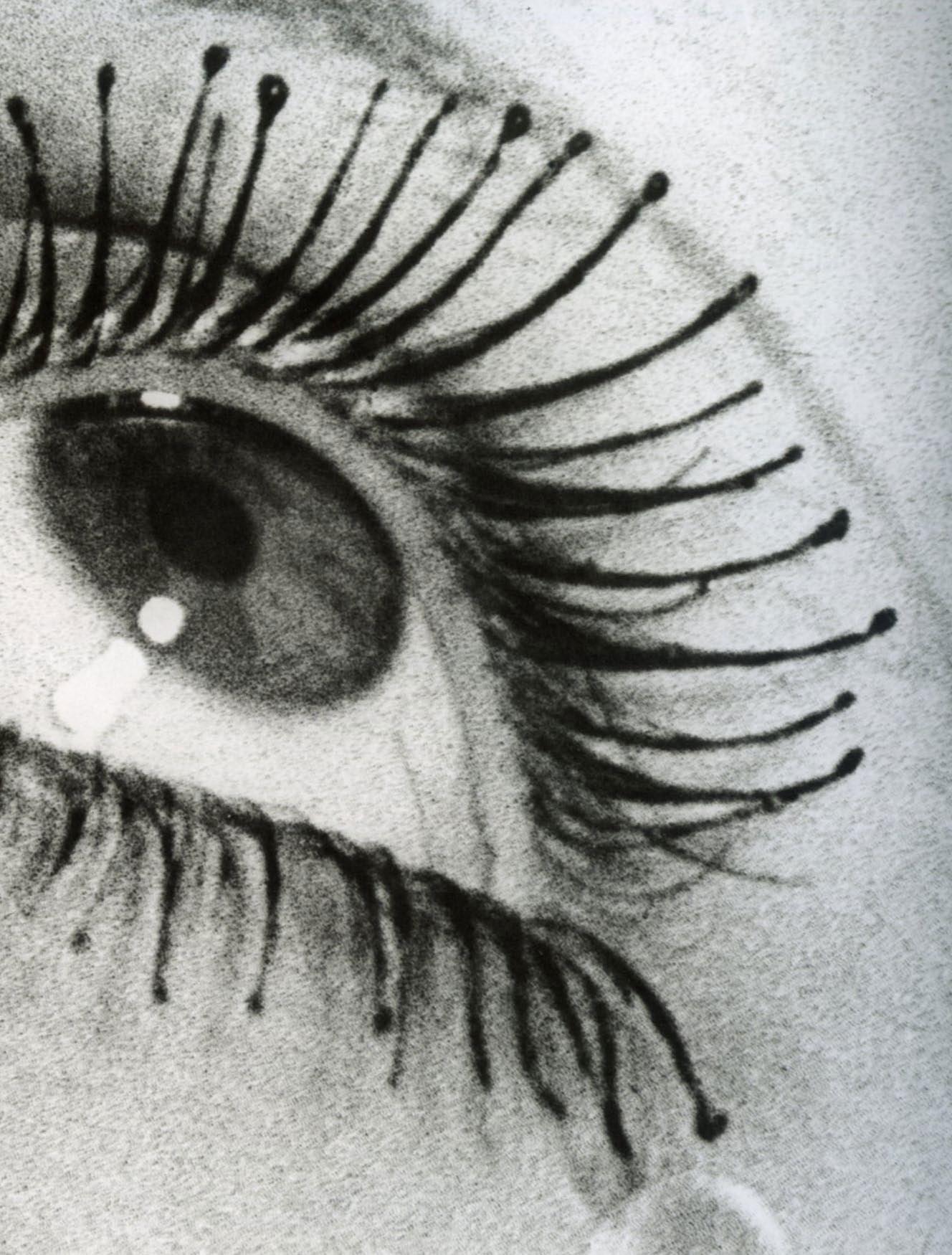
Fig.6: ‘Eye and Tears’, 1932. A dancer’s make-up brought forth ‘glass’ tears that do not express any kind of emotion. This is actually a small detail from a full-length photograph of a cancan dancer –hence the grain. Intimacy and eroticism were key themes in Man Ray’s work.
1946 in a double wedding with their friends Max Ernst and Dorothea Tanning. In 1948, Ray had a solo exhibition of paintings at the Copley Galleries in Beverly Hills.
Man Ray returned to Paris in 1951 and settled with Juliet Browner into a studio in St. Germain-des-Prés, where he
continued his creative practice across various media. During the last quarter century of his life, he returned to a number of his iconic earlier works, recreating them in new form. He also published his autobiography, ‘Self-Portrait’ (republished in 1999). He died in Paris on November 18, 1976, from a lung infection. He was buried in
Montparnasse Cemetery with the epitaph ‘Unconcerned, but not indifferent.’ Juliet, who preserved and donated much of his work, was later buried beside him.
It would be an omission in concluding this article if the life of Max Dupain was not referenced in the context of Man Ray and Modernism. As
I’m sure Australian readers know, Max Dupain was considered the pioneer of modernism in Australian photography, an approach that departed from the sentimentality of soft focused, pictorial imagery to the simplified world of light contrasts, sharp focus, varying angles and creative
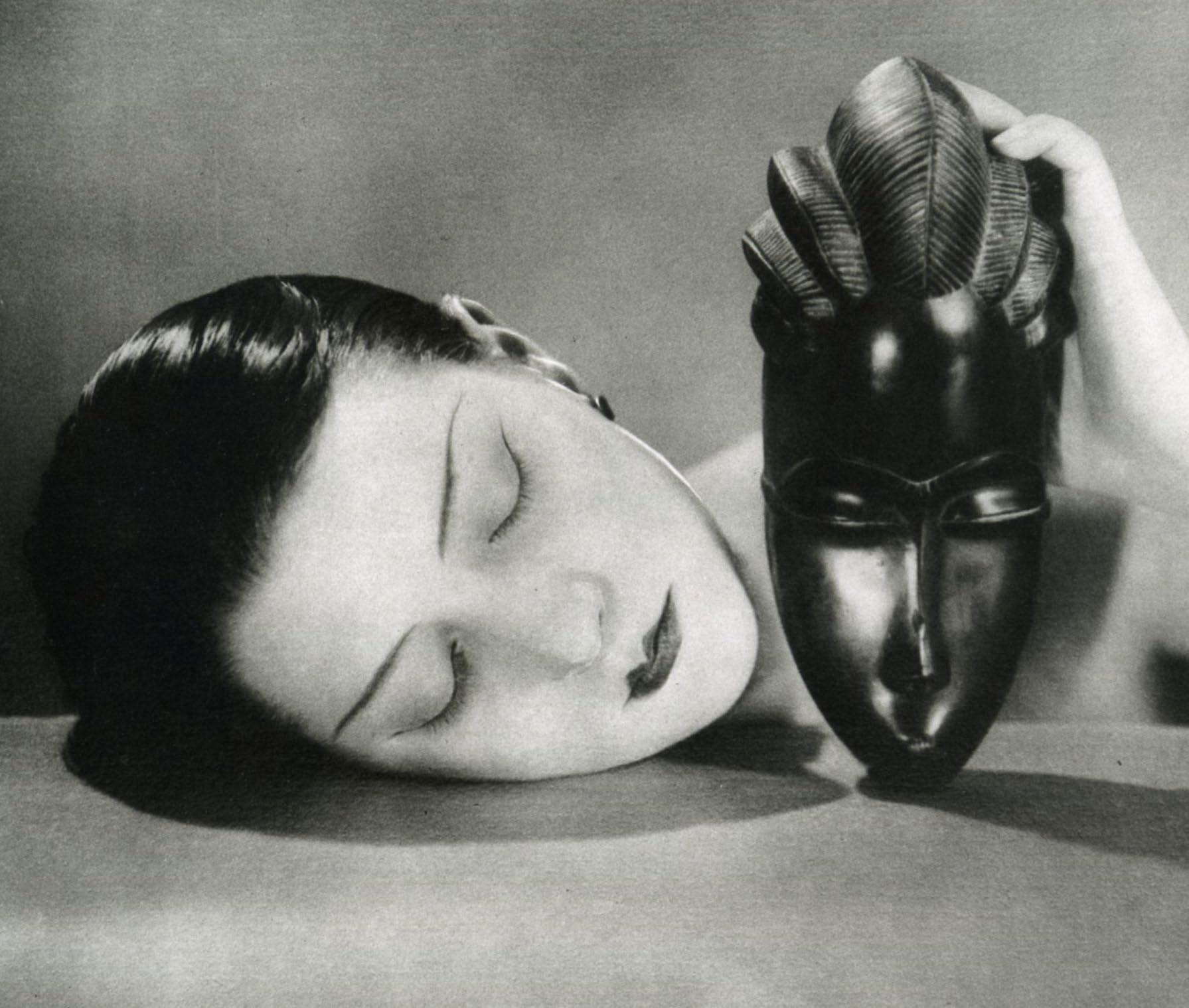
Fig.7: Many of Man Ray’s most revered works were in fact taken for fashion magazines, including this seminal 1926 image ‘Noir et Blanche’. This iconic image first appeared in the May 1926 edition of Vogue with the caption ‘Mother of Pearl Face and Ebony Mask.’
Fig.8: Man Ray’s portrait of Lee Miller, his lover and muse, 1929.
compositions. But while Dupain is best known and celebrated for his iconic images of Australian life, epitomised by the much admired ‘Sunbaker’ (1937), most will be unfamiliar with his highly original experimental/surrealist work in which he trialled a range of modernist techniques and styles. Working contemporaneously with Man Ray during the 1930s, when both artists were at their peak of innovation, there are many similarities in their lives and outputs. Unorthodox, uninhibited and adventurous, they both made pictures that brought fresh insights and alternative perspectives to conventional subjects. They both had incredible female photographers as their muses; in Dupain’s case Olive Cotton. The
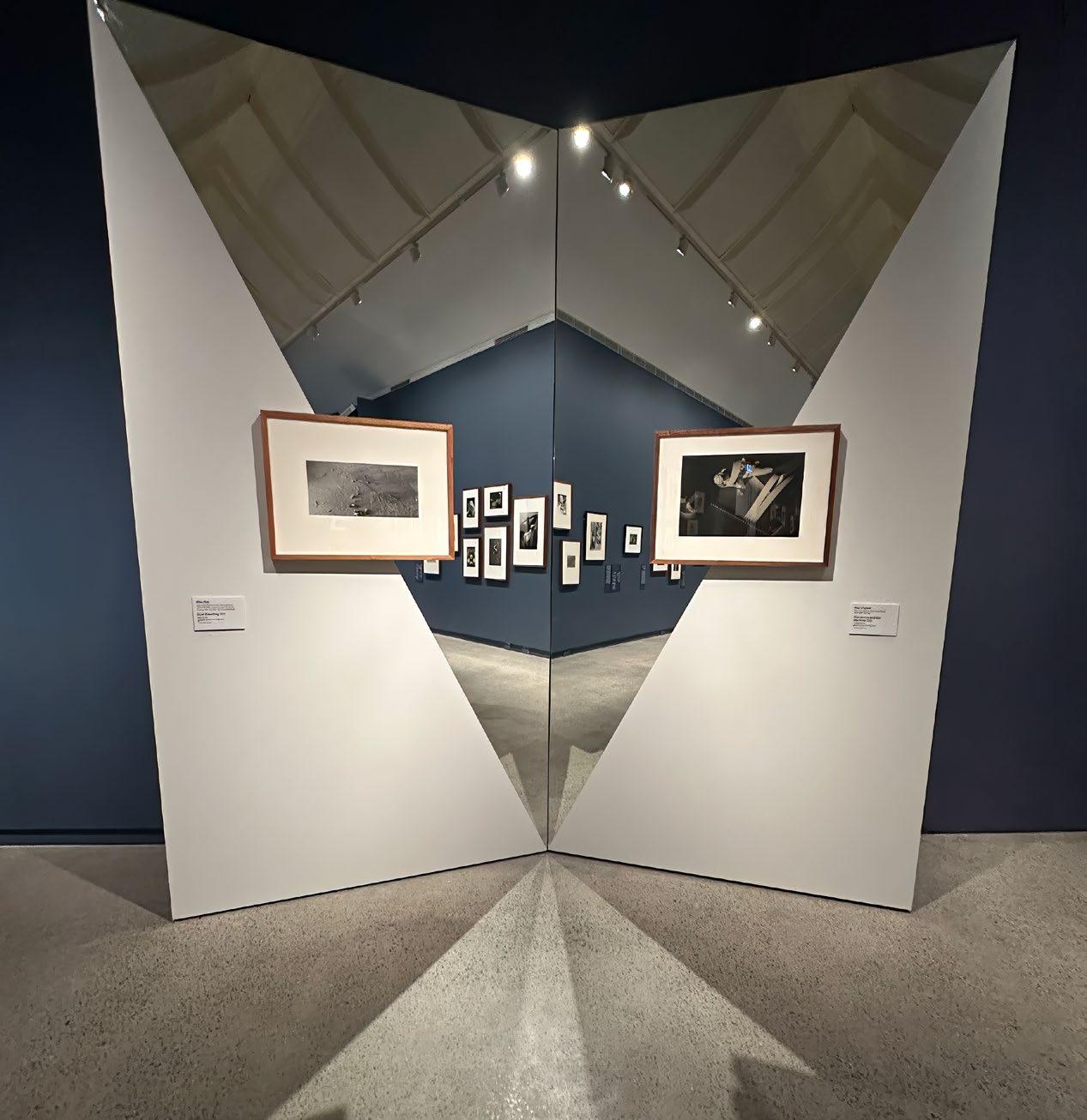
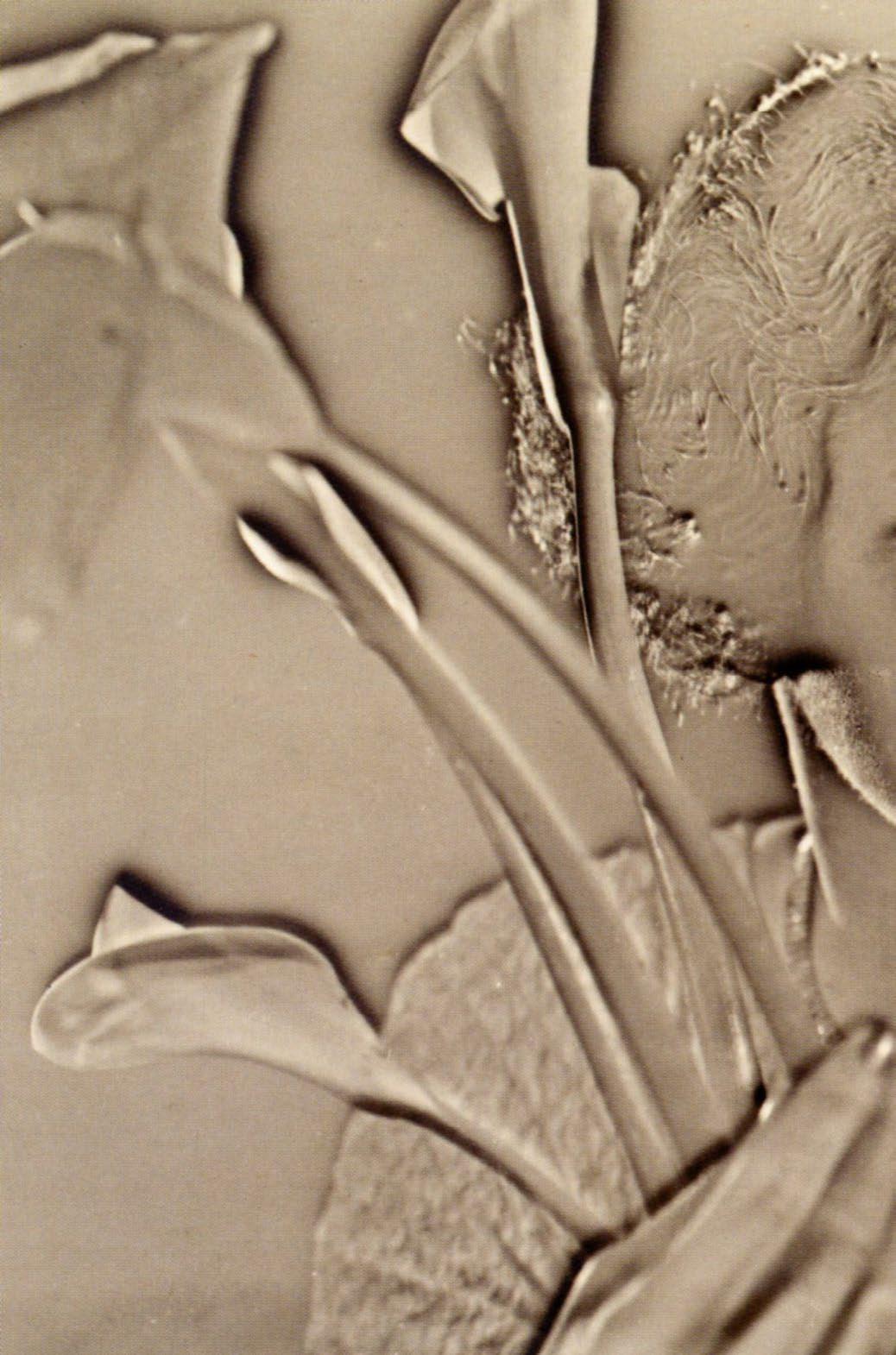
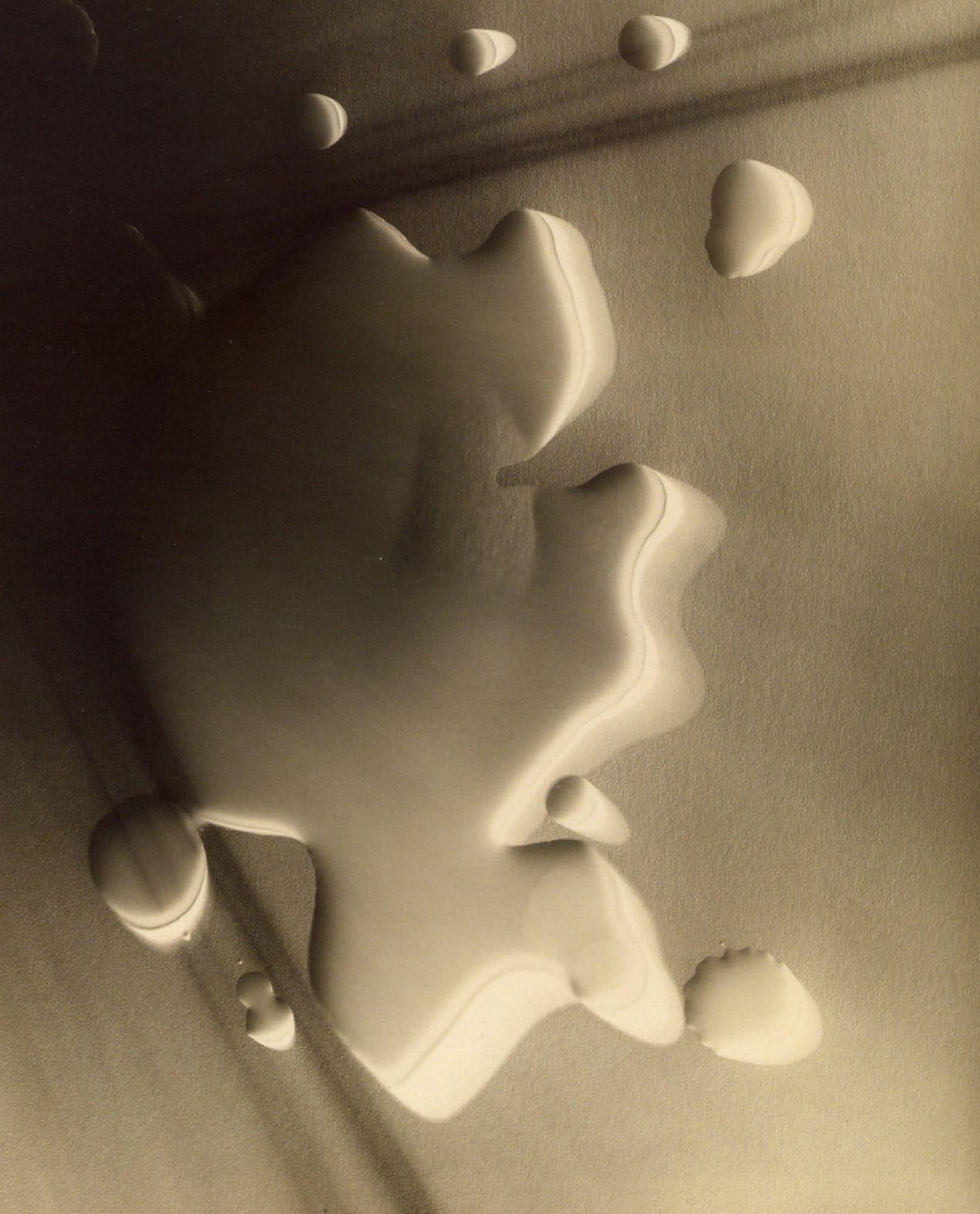
similarities between the work of Man Ray and Max Dupain – the nudes, their fashion work, their Solarizations and Rayographs – were brought into focus in the brilliantly curated and staged exhibition held in late 2025 at the Heide Museum of Modern Art in Melbourne. Although the exhibition is now closed, the exhibition catalogue (which is in every way as excellent as the exhibition) may still be available from the Heide shop – 03 9850 1500.
Fig.9 top left: Rayograph by Man Ray, c1922. Man Ray made his ‘Rayographs’ or photograms without a camera by placing objects directly onto a sheet of photosensitized paper and exposing it to light. Man Ray had photographed everyday objects before, but these unique, visionary Rayographs immediately put the photographer on par with the avant-garde painters of the day.
Fig.10: bottom left Part of the excellent Man Ray – Max Dupain exhibition held recently at the Heide Museum of Modern Art in Melbourne. Image courtesy Gigi Williams.
Fig.11 centre: ‘Hera Roberts’, 1935. An example of Max Dupain’s solarization work.
Fig.12 top right: ‘Rayograph with water’, 1936, Max Dupain.
Celebrating Milestone Birthdays: Two Remarkable Photographers in Our Chapter
Neil Anderton ARPS turns 90 while Palli Gajree OAM HonFRPS approaches 95
The RPS Australian Chapter is home to an extraordinary range of photographic talent, and this season we have a wonderful reason to pause and celebrate. Two of our most respected members are marking truly remarkable birthday milestones: Neil Anderton ARPS celebrated his 90th birthday in February, and Palli Gajree OAM HonFRPS will celebrate his 95th birthday later in March. Both have dedicated decades of their lives to photography, and both continue to inspire us with their passion, their artistry and their generous spirit within our photographic community.
We thought it would be fitting to introduce these two gentlemen more fully to our chapter members, so that those who may not yet know their stories can appreciate just how much photographic history lives within our ranks.
Neil Anderton ARPS AFIAP AAPS A Lifetime with Australian Birdlife
If you have ever seen a breathtaking photograph of a Black-shouldered Kite in flight, a Sacred Kingfisher with a skink in its beak, or a family of Tawny Frogmouths huddled together on a branch, there is a good chance you were looking at the work of Neil Anderton. Based in Victoria, Neil has been photographing Australian wildlife — mostly birds — for well over fifty years, and his images carry the quiet authority of someone who truly knows his subjects.
Neil’s love of photography traces back to the late 1950s, when he attended a photographic exhibition at Melbourne Town Hall. The blackand-white nature prints on display, mostly African animals, left a lasting impression on the young man. It was not until the early 1970s, while working for an airline in Victoria, that he was able to take up serious photography, purchasing a Canon FTB with a 50mm f/1.4 and a 200mm telephoto lens. That modest kit was the beginning of an extraordinary journey.
Over the decades that followed, Neil’s equipment grew to match his ambitions. He worked with a Hasselblad 500 CM and 500 ELM system, producing beautiful 16×20 inch prints. In the digital era, his kit expanded further to include Canon bodies with lenses up to the formidable EF 600mm f/4L IS, and a parallel Nikon system with optics extending to the AF 300mm f/2.8D. This combination of wide-angle environmental work and super-telephoto wildlife capture speaks to a photographer who is always ready for whatever the bush might offer.
Neil’s approach is grounded in patient fieldwork and a deep understanding of animal behaviour. He has described spending time learning the feeding preferences of honeyeaters, tracking the effect of seasons and weather on bird activity, and working a favourite patch just six kilometres from home for opportunistic behavioural shots. He has also travelled many
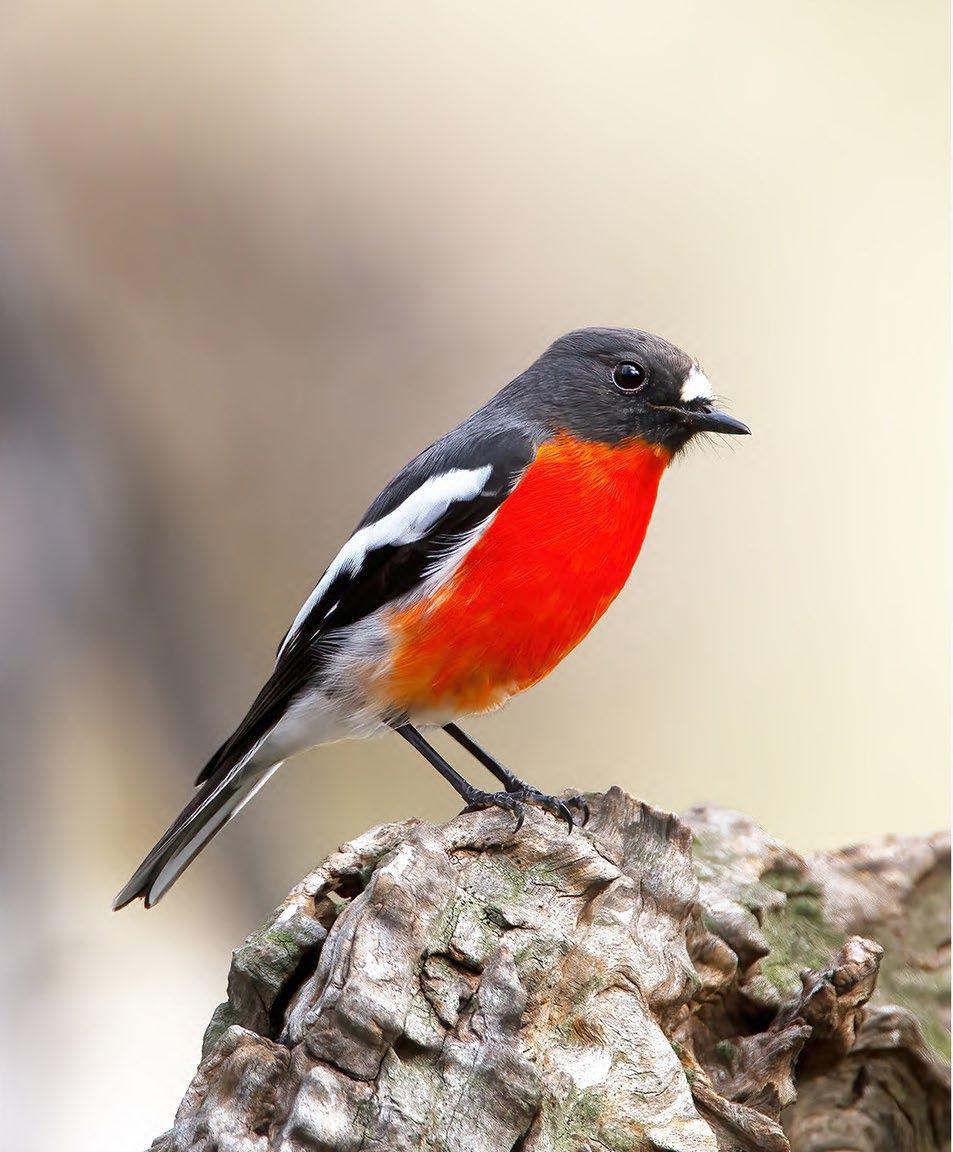
thousands of kilometres across Australia and beyond in pursuit of bird photography, from the Galapágos for Brown Pelicans to the sub-Antarctic for penguins. His image titles tell the story: King Penguins Going Fishing, Kestrel and Mouse, Flame Robin, Rainbow Bird, Regent Bowerbird — each one a small window into the rich avian world he has spent a lifetime observing.
Neil’s work has been recognised by photographic societies both at home and internationally. Neil joined the RPS in 1980 and received his Associate distinction in May 1985. He also received his AFIAP in the same year and his AAPS in 1990. His ARPS status is well documented through RPS publications, and his images have appeared in the RPS International Members’ Windows on the World online exhibition, the RPS Nature Group Annual Exhibition, and APS national and interstate competitions. In 2014, he published a wonderful feature article titled “Australian Bird Life” in the RPS Nature Group’s magazine The Iris, sharing
his methods, his kit, and his love of the craft with an international readership.
Closer to home, Neil is a stalwart of the Essendon Camera Club, where he remains an active competitor and valued member. The club’s regard for him is plain to see: they have named an annual award in his honour — the Neil Anderton Nature Award – Print and DPI — recognising the best nature print and digital image of the year. That is a lovely testament to his standing within the club and the wider Melbourne photographic community.
Happy 90th birthday, Neil! Your dedication to wildlife photography, your willingness to share your knowledge, and your enduring passion for the natural world are an inspiration to all of us in the chapter.
Fig. 1: Flame Robin, male
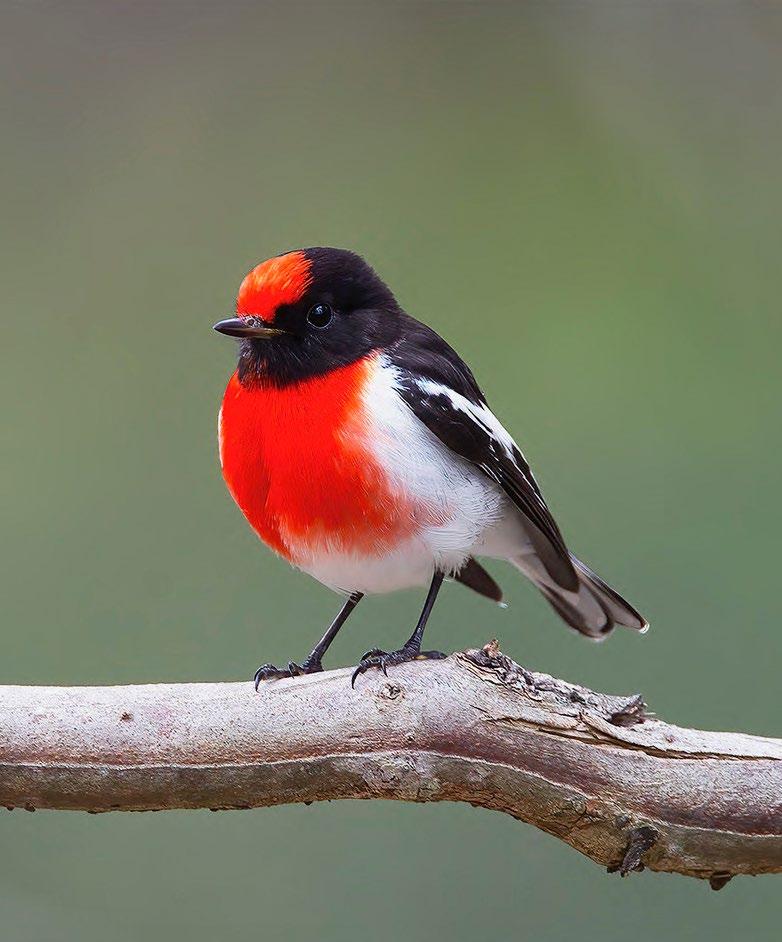
Fig. 2: Red Capped Robin, male
Palli Gajree OAM HonFRPS MFIAP
HonEFIAP FRPS FAPS
From Kenya to Melbourne: A Photographic
Life Spanning Eight Decades
Where does one even begin with Palli Gajree? His photographic life stretches across three continents, eight decades, and an astonishing list of distinctions that few anywhere in the world can match. And yet, anyone who has met Palli knows that behind those letters after his name is a warm, generous and endlessly curious photographer who is still exploring new techniques well into his nineties.
Born and raised in Kenya, Palli first picked up a camera at the age of fifteen — a Kodak 127 folding camera purchased with saved pocket money shortly after the Second World War. By 1951, a Rolleiflex twin-lens camera had sharpened his growing interest in portraiture.
Two years later, he travelled to England to study photography full-time at Manchester College of Technology (now Manchester Metropolitan University), where he passed his final examinations with distinction and received a college prize for excellence.
After graduating, Palli joined the London West End portrait studio of Walter Bird FBIPP FRPS, a highly regarded portraitist and keen salon exhibitor. Palli credits Bird as the primary reason for any later success he had in portraiture. It was during this period that he also took evening classes at the Regent Street Polytechnic (now the University of Westminster) and, in 1954, joined the Royal Photographic Society, so he has been an RPS member for over 70 years. He gained his ARPS in Portraiture in 1956 — remarkably early in his career — and in 1957, a portrait he had made at the Bird studio was accepted and shown at the prestigious London Salon of Photography. That same image was subsequently reproduced in The British Journal Photographic Almanac 1958 and Photograms of the Year 1958, two of the most prominent photographic annuals of their day.
Returning to Nairobi in 1958, Palli established his own portrait and commercial studio before joining the Kenya Government Information Services, where he rose to become Head of the Photographic Section prior to the country’s independence in 1963. In this role he covered everything from press and photojournalism to architectural, industrial, wildlife and landscape photography. By his own account, he was asked to create the official colour portrait of President Jomo Kenyatta for worldwide circulation — a remarkable commission if ever there was one. It was also during this period, after receiving a Hasselblad 500C system, a suprise gift from his wife Shashi, in 1964, that he threw himself into
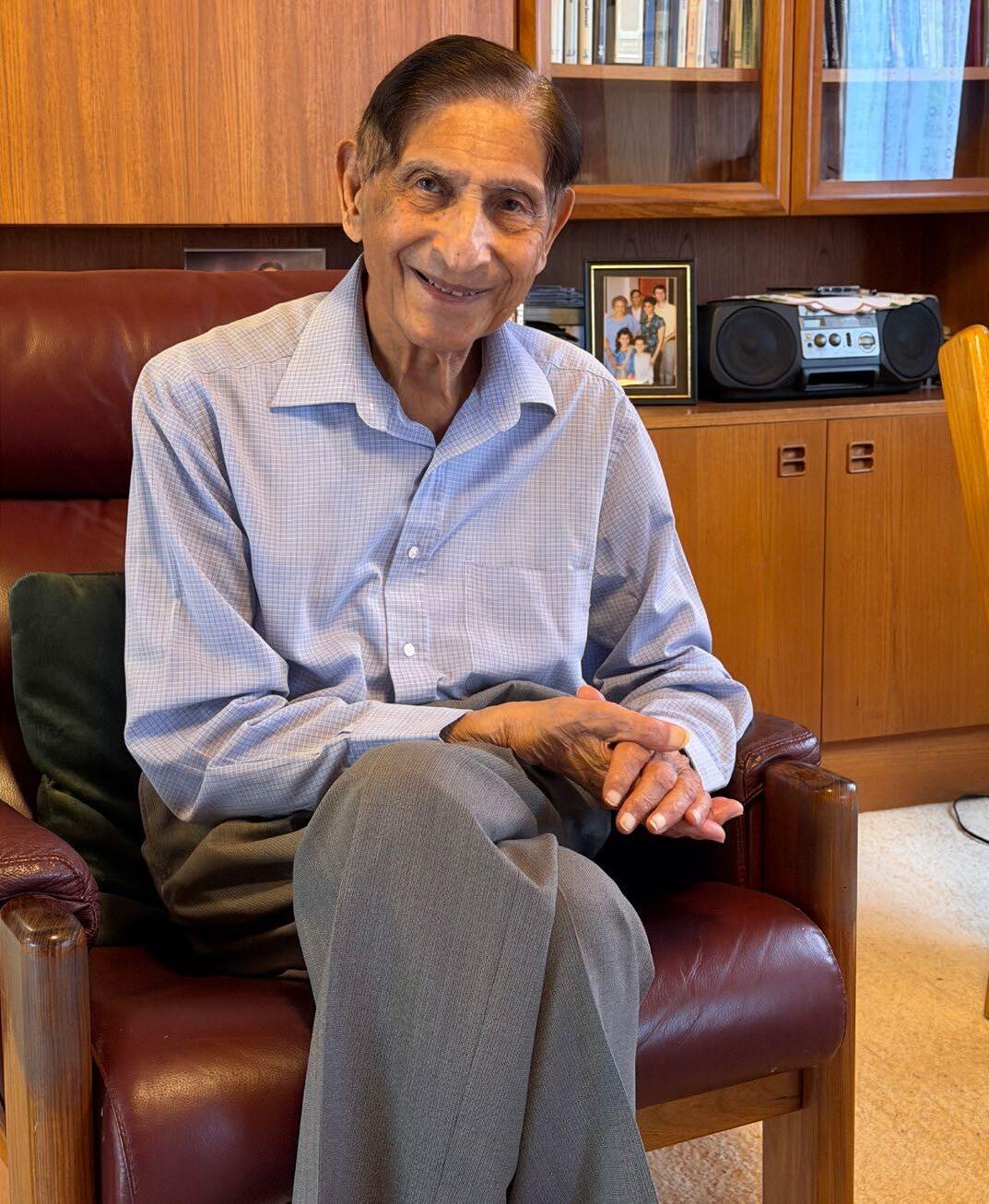
Fig. 1: Pallli photographed recently by Elaine Herbert ARPS
wildlife photography across East Africa’s magnificent national parks and reserves. Those black-and-white African wildlife prints would later earn him his FRPS in 1974.
In 1972, Palli migrated to Australia with his family and settled in Melbourne, where he has remained ever since. The following year, he began teaching photography at Swinburne Institute of Technology (now Swinburne University of Technology), a position he held for some twenty-two years. Palli has spoken warmly about this chapter of his life, noting that some of his students went on to establish successful photographic businesses, including internationally. His influence as an educator has been felt across a generation of Australian photographers.
The honours that have been bestowed upon Palli are truly extraordinary. In 1983, he became the first Australian to receive the MFIAP. He received the ESAPS (Exceptional Service to Photography) from the Australian Photographic Society in 1988. Then, in 1989 — in a remarkable double recognition — he was awarded both the Medal of the Order of Australia (OAM) “for service to photography” and the Honorary Fellowship of the Royal Photographic Society (HonFRPS). In 2002, he added HonEFIAP to his distinctions. And in March 2021, on his 90th birthday, the RPS President and Council presented him with a Commendation in recognition of nearly seventy years of membership and “continued support and commitment” to the Society.
What makes Palli’s story particularly inspiring is that he has never stopped learning. In recent years, he has embraced digital photography wholeheartedly — shooting RAW exclusively, working with Lightroom and Photoshop, and experimenting with creative digital processing
techniques including a “painterly” style using Dynamic Auto Painter. He has also explored infrared photography with a converted Canon 40D and experimented with a Lensbaby Velvet 56 for dreamy macro work in his garden. His images continue to appear in RPS group exhibitions, including the Creative Eye Group Members’ Exhibition and the Digital Imaging Group Print Exhibitions. His work is held in the RPS Permanent Collection, now housed at the Victoria and Albert Museum in London.
Happy 95th birthday, Palli! Your career is a masterclass in what it means to live a photographic life — always curious, always creating, and always giving back to the community that means so much to you.
On behalf of the entire RPS Australian Chapter, we send our warmest congratulations and very best wishes to both Neil and Palli. Between them, they represent over a century of photographic practice, countless images that have delighted audiences around the world and an immeasurable contribution to our photographic community. We are proud and fortunate to count them among our members.
Jacky Lee PFIAP Honorary
Secretary, RPS Australian
Chapter
Royal Photographic Society Australian Chapter – mentoring program
In our Chapter survey at the start of the year, we found that less experienced members wanted to learn from their peers. We also found that more experienced members are happy to share what they know.
How the program works
We are excited to announce the launch of a photography mentoring program, designed to connect experienced photographers with those who are eager to learn, grow, and develop their creative practice.
For mentors
This program will run for a maximum of six months and provide a structured but flexible framework for technical skills, creative development, and networking.
• Each mentoring relationship will include six meetings, each lasting around an hour.
• Meetings can be online or face-to-face if members are in the same city.
• Mentors and mentees will be matched based on their interests, goals, and areas of expertise.
• Both mentors and mentees will have the opportunity to shape their sessions to focus on the areas most important to them.
• Once members are paired, you will set the objectives for your sessions. You will work together to decide a suitable outcome for the mentee.
• Broaden your knowledge of each other’s work and their chosen areas of interest.
• Ideas for your time together could be to set practical exercises, critique existing work, or delve deep into a particular genre of photography.
• Meeting times and frequency will be set by the two of you to suit whatever works best.
We are seeking photographers who are willing to share their knowledge, insights, and experience. This is your chance to give back to the community by guiding emerging photographers, helping them avoid common pitfalls, and inspiring them to take their craft to the next level. You can help keep your mentees on track and check their progress. You can share inspiration and networking ideas and help keep your mentee motivated.
For mentees
Whether you are just starting out or looking to refine specific skills, this is an opportunity to gain personalised guidance from someone with experience. You’ll benefit from practical advice, experienced insight, and creative encouragement tailored to your goals. This program isn’t a training or planning program for RPS distinctions. If you are looking to start your Licentiate journey click here for the official RPS process.
WE HAVE MEMBERS LOOKING FOR MENTORS WHO SPECIALISE IN PORTRAITURE AND EVENT PHOTOGRAPHY. PLEASE REACH OUT IF YOU’D LIKE TO HELP THEM.
How to get involved
If you would like to participate as a mentor or a mentee, please contact the editor with a short outline about yourself, including:
• What you can offer (if you would like to be a mentor).
• What would you like to gain from the program (if you would like to be a mentee)?
We’ll then work to connect mentors and mentees in the best possible way.
Why take part?
• Build stronger connections within the photography community.
• Share and develop valuable skills and knowledge.
• Gain fresh perspectives, creative energy, and new opportunities.
Be part of shaping the next generation of photographers If you’re interested in being a mentor or mentee, please contact the editor via email ian@bforbrown.com.au to register your interest.
Members’ Gallery
Palli Gajree OAM HonFRPS MFIAP
HonEFIAP FRPS FAPS
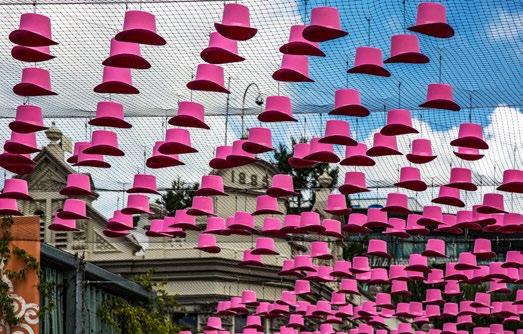
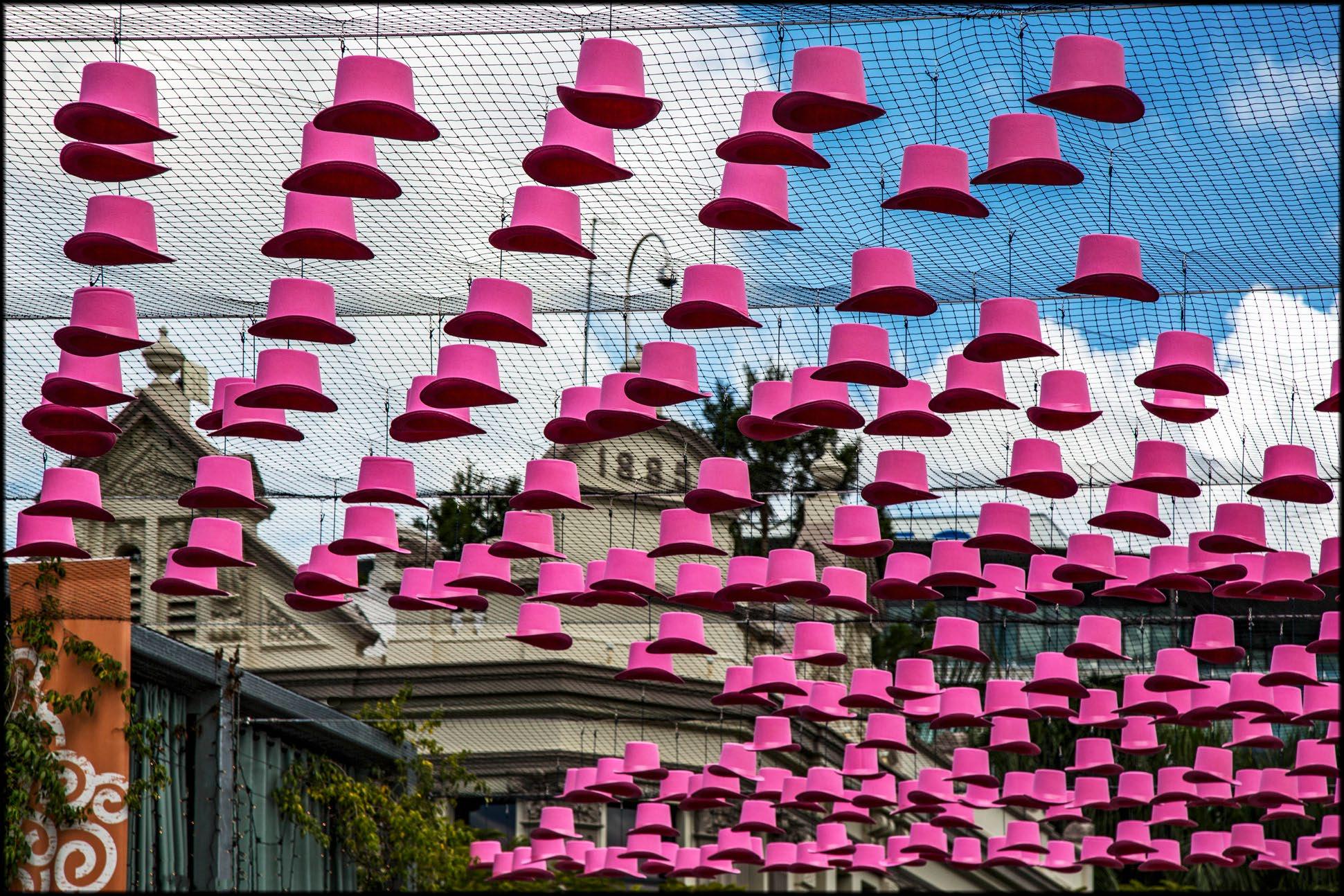
Fig 1: Hats galore
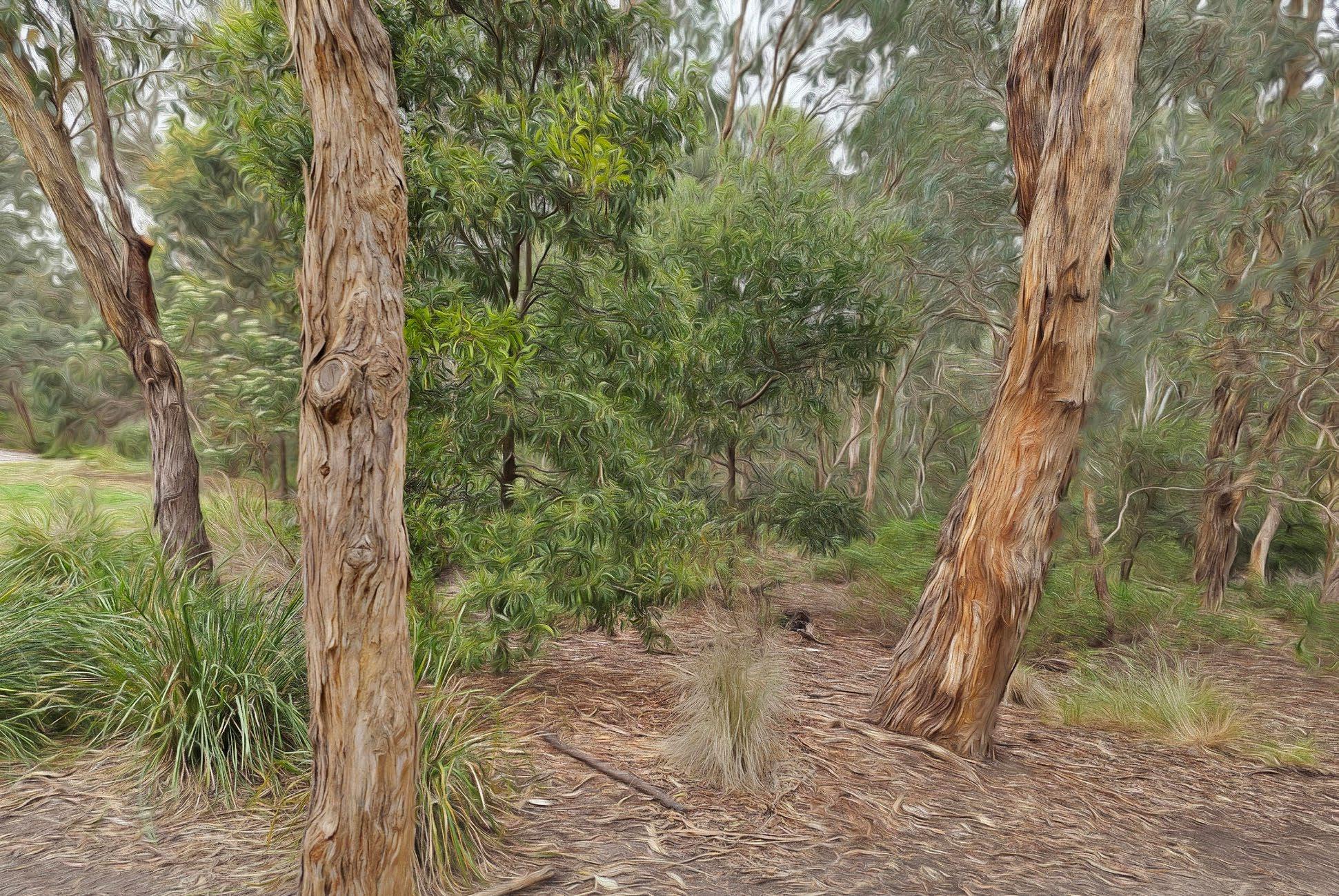
Fig: 2 Painterly effect
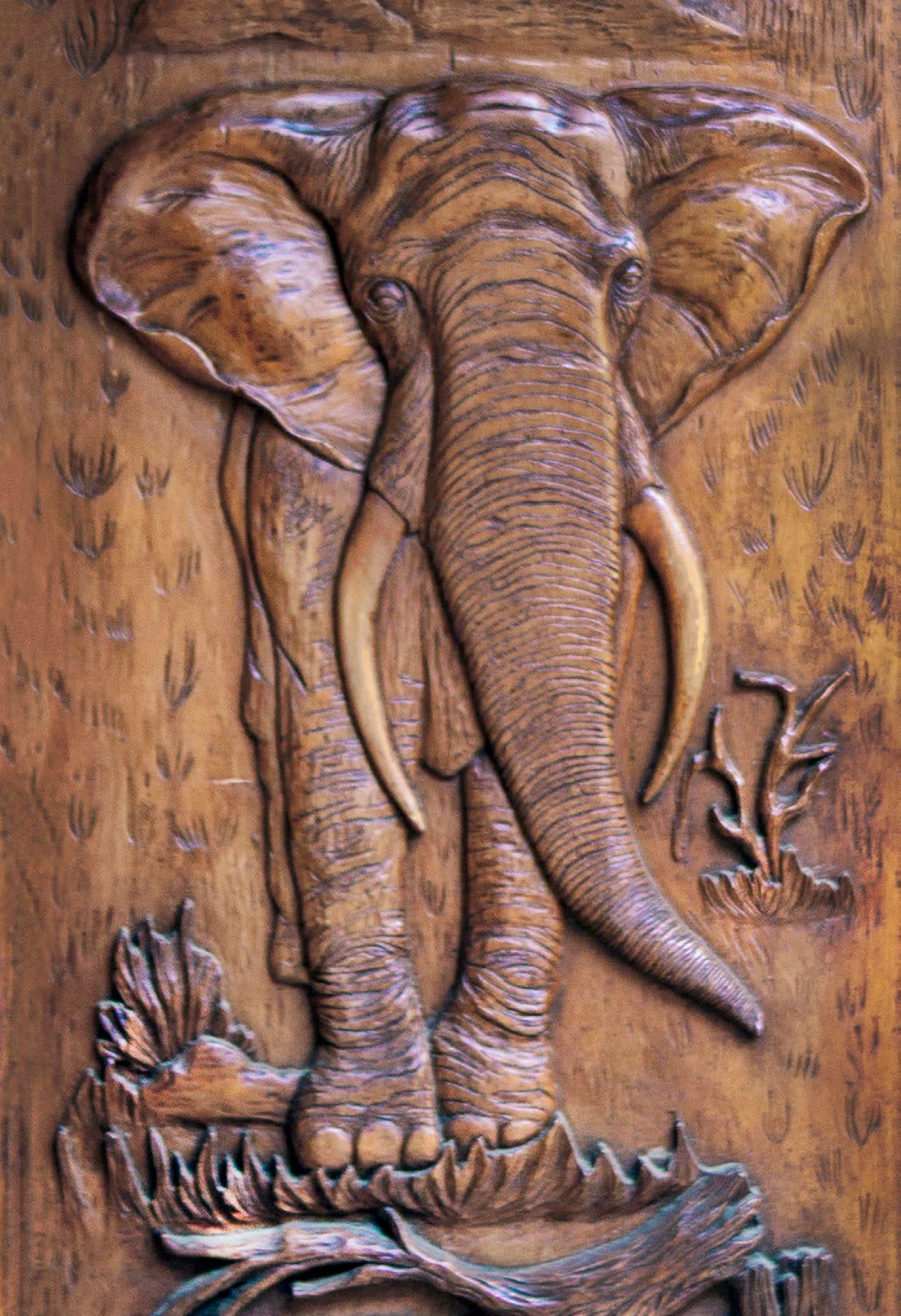
Fig 3: Kruger door carving
What’s on in March and April?
Exhibitions
Melbourne / Victoria
Women Photographers 1900–1975: A Legacy of Light (28 Nov 2025 – 3 May 2026). This major exhibition presents more than 300 works by pioneering women photographers, exploring their influential contributions to twentieth-century photography.
John Gollings: Artist Room (28 Feb – Aug 2026. This display highlights the work of renowned Australian architectural photographer John Gollings, showcasing images that document and reimagine Australia’s built environment.
On the street where I live: Viva Gibb’s portrait of North and West Melbourne. Ongoing photography exhibition exploring urban life and portraiture, running 5 Mar – 7 Aug 2026.
Coded Blooms | Flowers have never been innocent – Photography and lens-based works on flowers and image culture at Museum of Australian Photography, open through 24 May 2026.
Canberra / ACT nanuma by Karlina Mitchell and Mooncake World: Yan Nan Xu & others (16 Apr – 23 May 2026).
South Australia
Riddoch Arts and Cultural Centre. National Photographic Portrait Prize 2025 (touring national portrait competition exhibition) is on until 17 Apr 2026.
Bound in Light photographic portrait series is on until 12 Apr 2026.
Sydney / NSW
Unfinished Business: A photography-related exhibition that brings together voices and imagebased work from 30 Aboriginal and Torres Strait Islander people living with disability. Powerful First
Nations photo-focused artwork on display at the Australian Museum through 19 April 2026.
National Art School Gallery. Searchers: Graffiti and contemporary art – While not exclusively photography-only, this exhibition includes photographic works and visual media exploring the evolution of graffiti and contemporary imagemaking. It runs through 11 April 2026.
Biennale of Sydney: Rememory (14 Mar – 14 Jun 2026) – A major contemporary art festival across several venues including the Art Gallery of NSW and White Bay Power Station. While it’s not exclusively photography, many exhibiting artists use photography, video, and image-based media in their installations and displays.
Online & National Competitions
Mini Theme March. Open – Online photography competition with entries and judging mid-April (15 Apr 2026).
Outback International Photography Exhibition. Online salon with entries around 30 Mar 2026 and judging through April.
Portfolio Awards: Entry season opens early March; work may be viewed and judged into April and beyond.