Journal of the Archaeology and Heritage Special Interest Group
January 2026
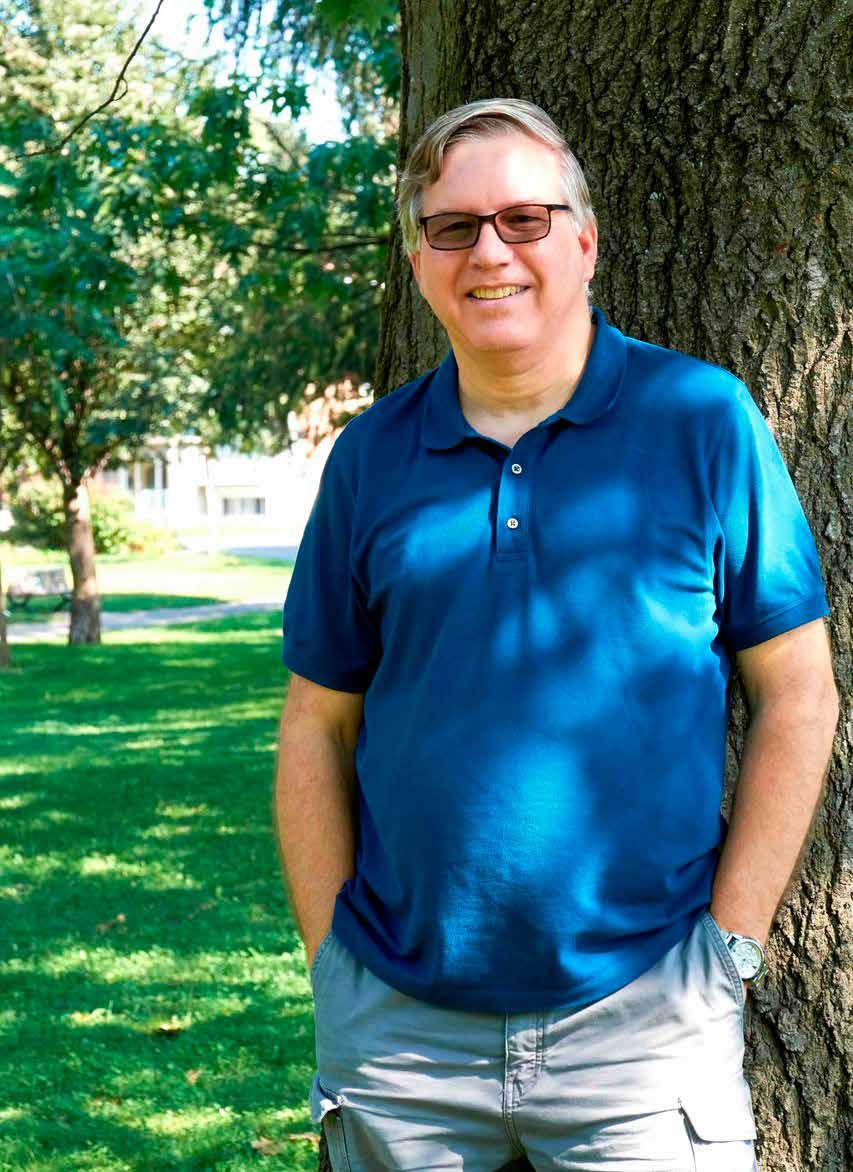
Editor David Bryson FRPS heritage.editor@rps.org
Archaeology & Heritage Group Committee Members
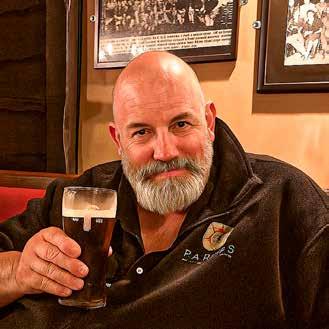
Chair Shaun Parkes MA ARPS LDPS heritagechair@rps.org
Heritage Photography Editor David Bryson FRPS heritage.editor@rps.org
Honorary Secretary Amanda Miller LRPS heritagesec@rps.org
Finance Officer
David Bryson FRPS heritagetreasurer@rps.org
Communications Officer
Natalie E Hough-Benns LRPS heritageweb@rps.org
Military Heritage and Distribution
Shaun Parkes MA ARPS LDPS heritagemilitary@rps.org
International Representative Joseph Durocher
Published by the Archaeology and Heritage Special Interest Group of the Royal Photographic Society, January 2026
Copyright in all text and photographs are held by the credited authors, or as otherwise stated. No part of this publication may be reproduced, transmitted or stored in any form without prior written permission of the Publisher.
Print ISSN 0958-0565
Online ISSN 2632-3346
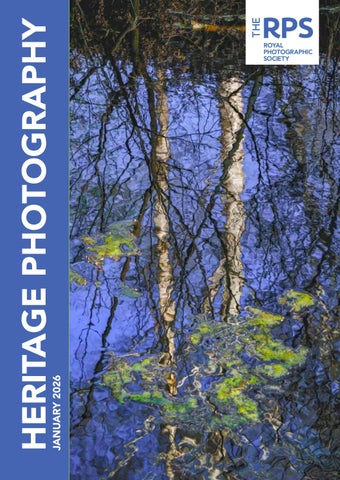
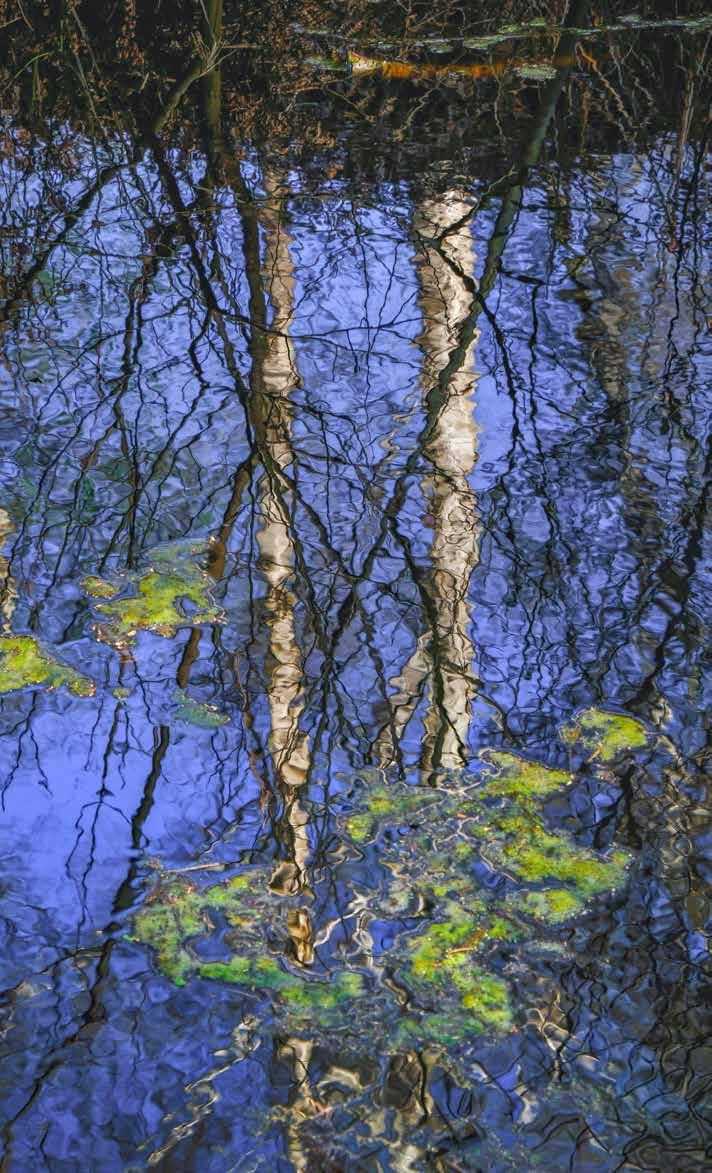
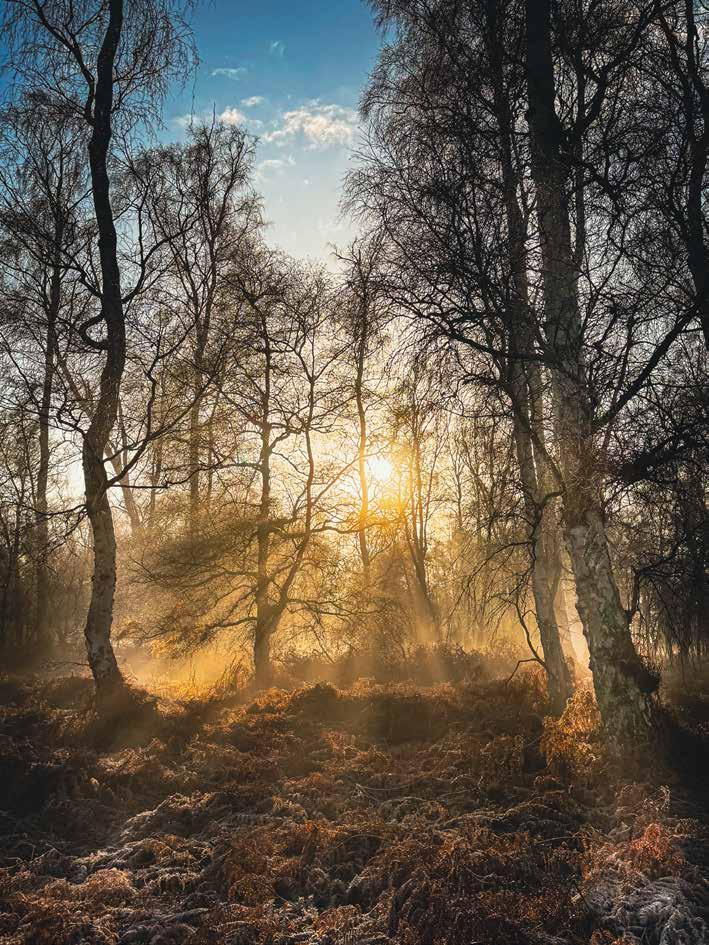
Front cover: Holme Fen
Photograph: Natalie E HoughBenns BA(Hons) LRPS
CONTENTS COMMS
4 Not hearing from us?
NATALIE HOUGH-BENNS BA (HONS) LRPS
EDITORIAL
3 Perspective: The legacy of our natural heritage. DAVID BRYSON FRPS
6 Thoughts from the Chair SHAUN PARKES ARPS
PHOTOGRAPHS
7-8 Facebook Favourites November and December 2025, January 2026.
COMMITTEE MEMBER BIOGRAPHIES
9-10 Shaun Parkes ARPS Chair of the Archaeology and Heritage Special Interest Group
11-12 David Bryson FRPS Finance Officer and Heritage Photography Editor
13-14 Natalie HoughBenns BA (Hons) LRPS Communications Officer 15-16 Joseph Durocher International Representative
FEATURES 16-26 My Chocolate Box Location - Discovering the Village Below Sea Level
NATALIE HOUGH-BENNS (BA (HONS) LRPS
27-59 Horticulture in remembrance
SHAUN PARKES ARPS
60-68 Natural history and heritage: especially from Mallorca.
DAVID BRYSON FRPS
Perspective: The legacy of our natural heritage.
DAVID BRYSON FRPS
Welcome to the January issue of Heritage Photography. The first item in this issue is the communications page a reminder to make sure your e-mail and home address are correct on the RPS site as we regularly download updated information from this to use to communicate with you. Following is the usual editorial from our chair and then the recent facebook winners from our facebook challenges.
In a change from usual and so you can get to know the current committee is a series of biographies as double page spreads. We would welcome such contributions from our members as well if a full sized article seems a little daunting.
Then in this issue with the theme of natural heritage we are not trying to compete with the nature group but aim to recognise the importance of natural heritage; so we have three articles related to this theme first Natalie Hough-Benns’s look at Holme Fen then Shaun Parkes our military specialist and chair looks at the role of horticulture in remembrance and how plants are used to enhance the memorials from the first and second world wars, finally my short piece looking at my take on
Natural Heritage with photographs from my visits to Mallorca with students.
Can I please as usual ask for more submissions for the journal there are plenty of examples of what to submit on the RPS issuu site in our stack at https://issuu.com/royalphotographicsociety/stacks/ e5208ecd8f7d49a7b1a1ef0043524256. If you want feedback on any ideas you have please e-mail me at heritage.editor@rps.org
I do like to have plenty of content in advance to prepare editions so please submit what you can so I can plan future issues. Also please remember there is always a need for great portrait photographs to grace our front covers.
Lichen (Ramalina siliquosa) growing in the splash zone on Inish Boffin island off the coaast of Donegal, Eire. Photograph: David Bryson FRPS
Not hearing from us?
Not getting your digital copies of HERITAGE PHOTOGRAPHY or Newsletters from us? If you aren’t receiving communications from us, its probably because your contact details need updating:
Name / Address
Email Address / Mobile Number
Please update your details via the RPS website to do this.
To access our social media communications channels and get the latest updates and news of events, please contact our Group Comms Officer Natalie Elise HoughBenns at heritageweb@rps.org to provide your Facebook User Name and / or Instagram User Name
If you are having any problems with our Facebook or Instagram channels please contact our Comms Officer Natalie Elise Hough-Benns at heritageweb@rps.org who will be happy to help you.
Thoughts from the Chair
SHAUN PARKES MA ARPS
2026 has started strongly with a new Instagram page. One of our biggest targets this year is to see member engagement increase massively.
We have had two external speaker talks recently, the first for a while, Mat Chacon MA spoke about heritage in conflict, and Tim France MA ARPS spoke about “Psychogeography and Heritage in North London”. A third talk is planned for early Wednesday 4th March, when Distinctions Assessor and photobooks expert Richard Hall MA FRPS will talk about the distinctions process and using photobooks in the application. Lastly for now, on a date yet to be confirmed, guest speaker Liam Moylan MA ARPS will talk to us about the fascinating subject of the “Heritage and contemporary use of peat bogs in Ireland”.
As a committee we are actively seeking out locations for us to organise meetings around the country to encourage opportunities for photography and collaborations. These take some organising so expect to see more information in the second quarter of this year. Please do contact the Group Chair Shaun (heritagechair@rps.org) with suggestions for places to visit, you know what interesting archaeological and heritage sites there are in your areas far better than we do!
Please also support our fantastic journal Heritage Photography. It is a photography journal so you don’t have to write lots of narrative, please contact our Editor David (heritage.editor@rps.org) to discuss ideas and submit articles.
Don’t forget to participate in our Facebook monthly competitions. Winners of the competitions, and contributors to Heritage Photography, receive digital certificates acknowledging the contributions!
This year will see the first annual printed edition of Heritage Photography (HP). Currently it is economically unviable to print more than one
physical edition each year, due to the distribution costs in particular, so we will continue with the digital editions of HP, with an annual printed edition which will bring together competition winners, Distinction successes, and notable articles from HP. Watch out for the annual edition around June.
Lastly for now, there has been much discussion within the RPS management and committees about the new Distinctions frameworks. Dates for distinctions assessments for Associate and Fellowship levels have now been released, and the process is continuing ‘as is’ for now, further updates will be delivered in due course.
It is anticipated that the new framework will be in place either for, or during 2027. We have tried to engage the RPS Distinctions team with a view to getting an A&H specific distinction award as our subject is a specialised area, but the subject was rejected out of hand without any conversation from the RPS. We haven’t accepted this rejection, but the idea is on the back burner for now, to be picked up again later this year with the Distinctions Manager.
Wishing you all “good photography” and hopefully, see you soon!
Shaun Parkes ARPS
November: Remembrance
December: Festivities
Russia, the city of Moscow. On Pushkin Square. Fountain of illuminations. The evening before New Year’s Eve in December.
Photograph: Sergei Shchekotov-Aleksandrov
This from a local church St John the Baptist in Kingston Vale. This a fine, small Victorian church very much in the Victorian Gothic style, where I help them with photography for their website. Photograph: Edmund White
January: New Year’s Resolutions
One of my goals this year is to produce a book of my blacklight photographs. Example is pouring tonic water containing quinine which fluoresces blue into wine glasses. Photograph: David Bryson FRPS
Shaun Parkes MA ARPS
Chair of the Archaeology and Heritage Special Interest Group
Shaun is a retired Senior Operations and Logistics Manager and also a (retired) Chartered Manager and Chartered Fellow (of the Chartered Management Institute). He retired early due to ill-health.
Coming from a Royal Air Force family, his father and maternal grandfather both being regular RAF, he originally intended to join the Royal Marines (RM) as a Commissioned Officer but was prevented from doing so by repetitive leg injuries. Instead he remained as a uniformed instructor in the Royal Air Force Volunteer Reserve / RAF Air Cadets (RAFAC), spending a total of 34 years before retiring as a Squadron Leader in 2018.
Unsurprisingly, with his RAF heritage, his earliest interests in photography were aviation and documenting family life.
His first camera was a Chinon CE-4 35mm SLR. Utilising a Pentax-K mount, there were a variety of lenses available, but he mainly used his Chinon 50mm prime and Vivitar 70-210mm zoom lenses. In c2014 he moved into the digital world, purchasing a Nikon D3200, and broadened his photography
activities to include sports (rugby and parkruns), portraiture, headshots, model fashion and portfolio work, landscapes and wildlife.
He now uses a Nikon D6 (favourite camera), a Z9
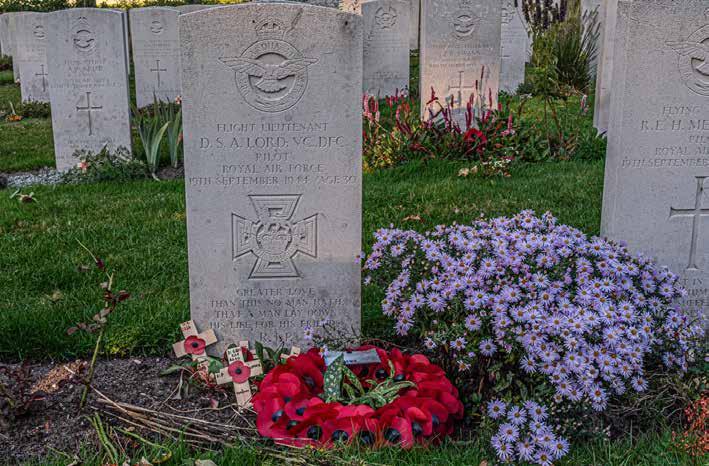
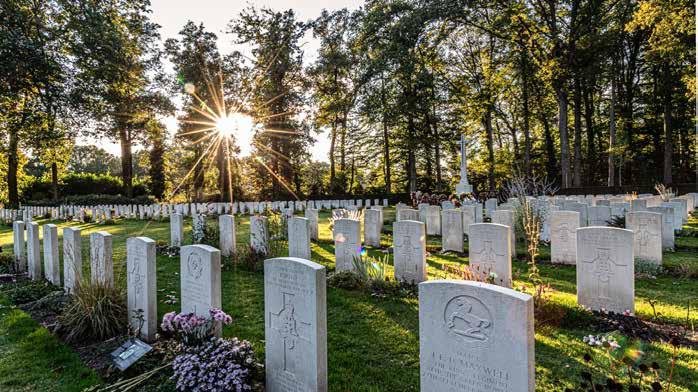
Grave of Flight Lieutenant David Lord VC RAF, Arnhem Oosterbeek Cemetery.
mirrorless, a D810 for studio work, and a D3s for outdoor work in bad weather. He uses a variety of lenses, mainly Nikon 200-500 f5.6, 24-70 f2.8, 80-200 f2.8, and Sigma 50 f1.4 Art, 85mm f1.4 Art and 105 mm f2.8 macro.
His photographic influences are many but are mainly Helmut Newton, Sebastiao Salgado, Ansel Adams, and Don McCullin. Others include Annie Leibowitz, Diane Arbus, Todd Hido, Rankin, Nan Goldin, Dorothea Lange, and contemporary photographers Marc Wilson, Jason Minns, Mike Sapiecha.
He completed a couple of online diplomas in photography around 2014/2015 before completing a Master of Arts degree in photography through Falmouth University in 2025. He holds the distinction of Associate of the Royal Photographic Society and is also a Licentiate of the Disabled Photographers’ Society.
He has been published many times (never counted how many times) in print and in online journals and has had photographs exhibited in over 80 international exhibitions (as of Sept 2025). He is a
Member of the International Association of Press Photographers.
Shaun is passionate about commemoration and remembrance of our War Dead, and his photography-based website https://www. tellthemofus.uk concentrates on this theme.
Shaun is a family man and has been married to the lovely Jo for nearly 20 years. He loves spending time with family, including his daughter, son-in-law and 5 grandchildren, who - of course - have him wrapped around their little fingers! He enjoys researching his family tree, reading, researching military history, rugby, good single malt Scotches and equally excellent Irish whiskey!
Arnhem, Oosterbeek Cemetery.
David Bryson FRPS
Finance Officer and Editor of Heritage Photography
I studied Anatomy at Aberdeen University before completing a PGCert in Education at Aberystwyth University. Then after training as a clinical photographer at University Hospital of Wales, Cardiff I worked at the University of Dundee as a medical photographer and then in the Bromsgrove and Redditch area specialising in personal injury photography. I returned to teaching via the HNC Medical and Technical Photography at Berkshire College of Art & Design before becoming Senior Lecturer in Biological Imaging at the University of Derby in 1995.
I have worked in the School of Art & Design, as programme leader for the BSc in Biological Imaging, BA in Design for Digital Media, FdA in Web Design and Multimedia, FdA Applied Photography and taught on the Masters in Performance Sportswear Design. I started teaching in Forensic Science in 2004 with the Forensic Imaging module then also Techniques in Human Identification which became Forensic Anthropology which I taught for 12 years.
I was a Senior Lecturer Forensic Science in the Department of Biomedical and Forensic Sciences, College of Science and Engineering until my retirement in October 2023 teaching a wide range of topics including anatomy and physiology and I developed online teaching materials for the Apprenticeship for Operating Department Assistants at the University.
My research was very much about osteology, teaching and learning, history of medicine in particular acromegaly and gigantism and the application of photography to science. I have put many of my photographs online at https:// photolibrary.cladonia.co.uk/
When I joined the RPS in 2013 and then the A&H Group I first assisted the editor of Heritage Photography Eric Houlder and gave talks at our annual meetings in Leatherhead. I took over editing Heritage Photography in September 2018.
I submitted materials and achieved the Fellowship of the RPS via the Research Distinction route as
David in his studio at the University of Derby before retirement demonstrating work on the infrared recording of tattoos. Photograph: University of Derby.
I had a wide range of published papers I could submit showing the breadth of my photography I first took an interest in photography whilst at University with a 110 camera before I moved on to a Zenith and then a Canon AE1. Whilst training as a clinical photographer I started out using screw thread Pentax cameras before we moved on to Nikon FM2s. I was fortunate due to my background in anatomy to be able to spend time teaching myself photography whilst my fellow trainees were learning anatomy. I successfully passed my City and Guilds General Photography 744 qualification, the University Hospital of Wales Combined Training Institute Medical Photography Course and Basic Medical Photography Certificate of the Institute of Incorporated Photographers which became the BIPP all in 1981.
As part of my training we had a lot of copying and slidemaking as well as clinical photography and learning black and white printing. I became quite proficient even to using 5”x4” cameras for quite a lot of specialised work.
As well as publishing papers I have together with a colleague co-edited 3 books; Smart clothes and Wearable Technology 2 editions and Textile Led Design for the Active Ageing Population all now published by Elsevier.
David being awarded his Medical Photography Certificate by Princess Margaret with Professor Ralph Marshall at the podium, yes those were the days when I had jet black hair. Photograph: University Hospital of Wales.
Natalie Hough-Benns BA (Hons) LRPS
Communications Officer
My name is Natalie Elise Hough-Benns, and I’m absolutely delighted to introduce myself as the new Comms Officer for The RPS A&H SIG Committee. I’ve been a proud member of The RPS and the SIG since 2022/3, and you might have seen some of my work already, as I love to regularly contribute to Heritage Photography.
I join the committee bringing a bit of experience from my previous life as a Camera Club Secretary in Lancashire. I handled the day-to-day running of the club, organised all our events, and, since Covid, I was in charge of managing all our online talks. Since moving to Cambridgeshire last year, I’ve really deepened my focus on my own photography and my involvement with the RPS.
As a photographer based in the East Midlands, my work is driven by a deep appreciation for natural wonder and historical narrative. This fascination started early; I gained my BA (Hons) in Education,
Culture and Society back in 2010, and more recently, I achieved my LRPS in July 2023.
In terms of gear, I’m a big fan of my Fuji XT5, particularly when I pair it with vintage lenses. It’s the perfect combination that gives me the aesthetic I love without needing a darkroom. My analogue journey started with a Nikon F, followed by a Rollei and a Pentax 1000.
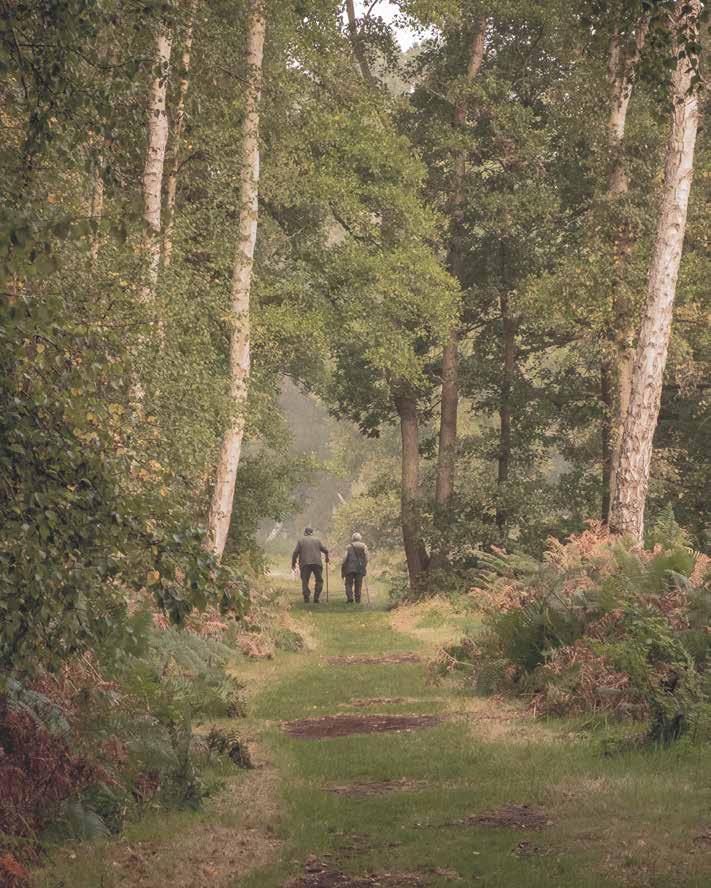
You’ll often find me exploring ancient trails with my husband, capturing the subtle beauty of the woodland around Holme Fen, Rockingham Forest, and Bedford Purlieus. I focus on natural light, textures, and the ever-changing seasons.
I also have a huge love for Heritage Railways. With the Nene Valley Railway on my doorstep, I get to indulge my passion for history and engineering, striving to capture the romance and drama of steam and preserved transport.
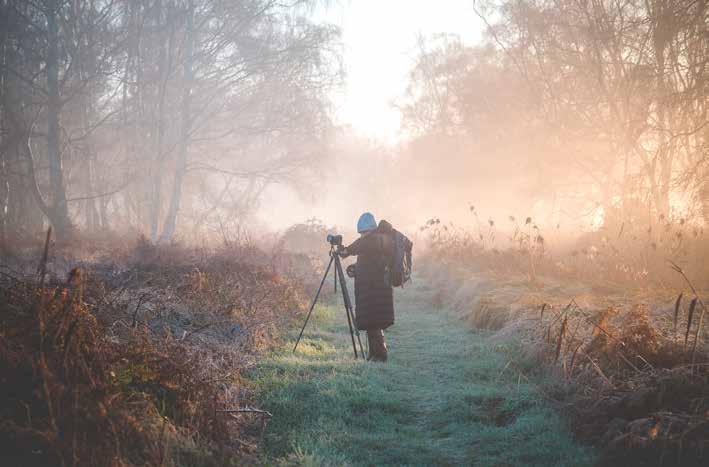
Out in the mists with my trusty camera and tripod at Holme Fen Photograph: Paul Benns
My goal is always to turn those fleeting moments into lasting emotive images.
I’m really excited to use my background to communicate effectively with all our members and look forward to meeting many of you.
I’m also planning to pursue more qualifications in 2026!
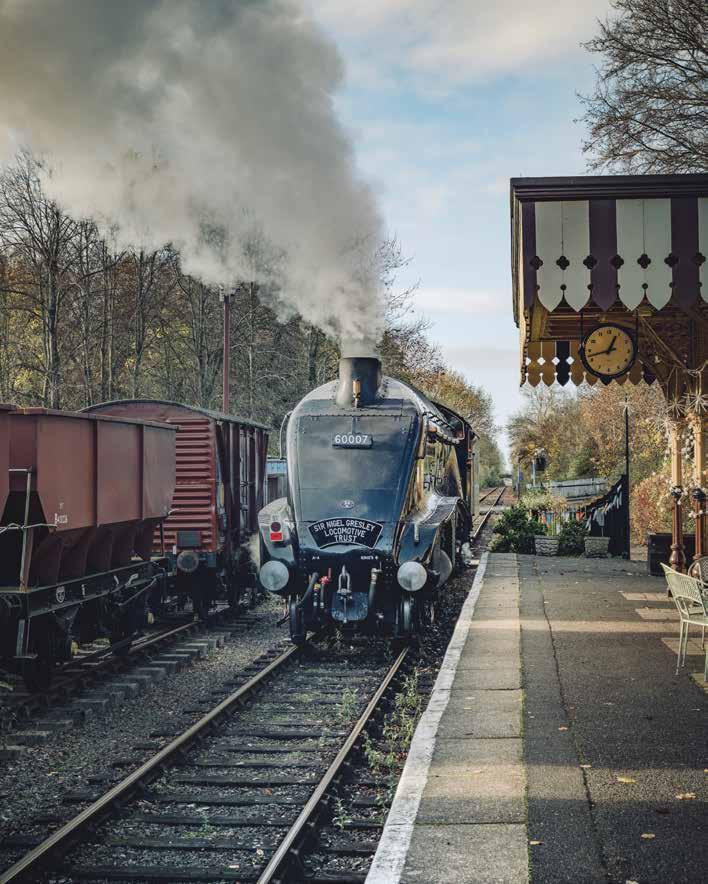
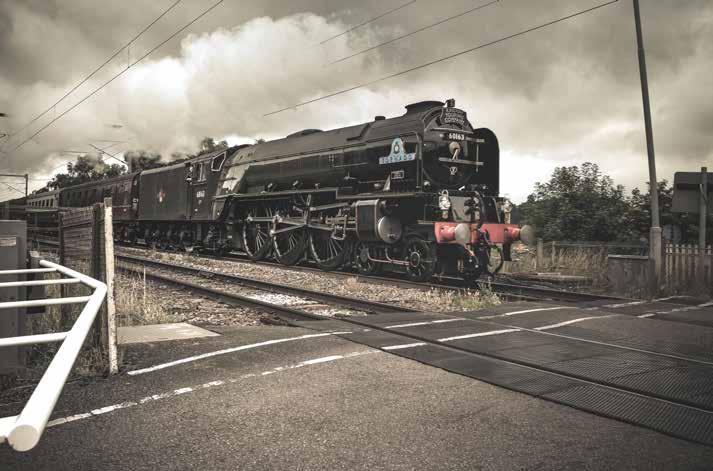
Sir Nigel Gresley at Overton Station (Nene Valley Railway Station)
Joseph Durocher
International Representative
Joseph Durocher is a Canadian fine art photographer based in Montreal, with a strong focus on heritage architecture and the cultural memory embedded in the built environment. His work explores the tensions between preservation and transformation in urban spaces, particularly in 19th-century neighbourhoods shaped by workingclass life, immigration, and industrial history.
With over five decades of photographic experience, beginning with 35mm film in his adolescence. Joseph brings a deep observational sensibility to his practice. He blends analog and digital techniques to create images that are both documentary and poetic, often capturing façades, balconies, staircases, and street details that reflect the layered identity of a place.
His photographic approach is grounded in empathy, historical awareness, and a commitment to cultural responsibility. Through series such as Care and Forgetting, he documents the fragile beauty of
vernacular architecture and the subtle ways in which urban landscapes change or endure.
Josephs’s work has been recognised in international competitions and exhibitions, and he is currently developing a bilingual archive and historical blog focused on Montreal’s architectural heritage (Quebec, Canada). A member of the Royal Photographic Society, he contributes to the Heritage Photography Committee’s mission of fostering thoughtful engagement with the visual history of place. He has taken part in various nonprofit organisations, including being President of an Educational Foundation.
A delicate wooden balcony. The turned spindles and modest trim evoke the quiet dignity of working-class craftsmanship in early Saint-Henri.
Joseph Durocher
My Chocolate Box LocationDiscovering the Village Below Sea Level
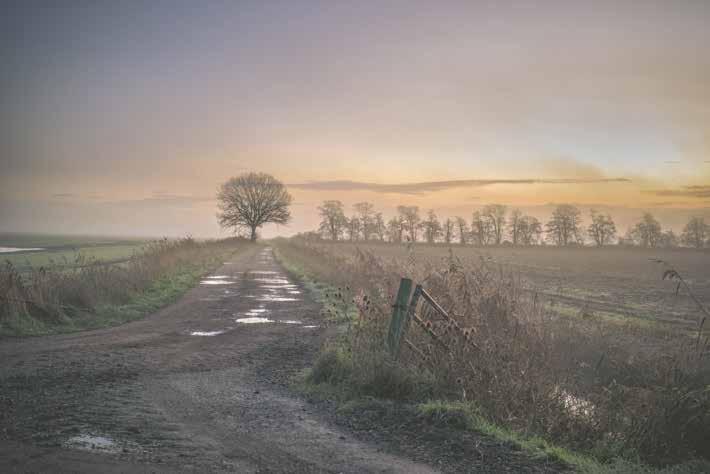
Just over a year ago I fell in love with a new photographic location when I moved to Peterborough, Holme Fen Nature Reserve. Holme Fen is an idyllic setting for any photographers. This beautiful landscape attracts a multitude of mammals, fish, fungi and photographers. I often spot photographers who have come from all over the country to spend a few hours taking in the beauty of Holmes’ woodland and wildlife. NATALIE
HOUGH-BENNS LRPS
The nature reserve stretches across 657 acres and is a Site of Special Scientific Interest. It is also a National Nature Reserve and a Grade 1 Nature Conservation Review Site. It is part of the Great Fen Project which aims to create 3,700 hectares of connected Fenlands including Holme Fen and Woodwalton Fen.
Holme Fen is described by Natural England as the finest example of birch woodland in Lowland Britain (South and East of England). Part of the land was drained in the 19th century and some wetland plants survived. It’s a place I now call home. I can often be found at all hours of the day and night photographing night trains or sunrises. There are not many places that are free from light pollution, but the Great Fen has been awarded the designation of a Dark Sky Discovery Site by the Science and Technology Facilities Council.
There are few towns and villages nearby, which keeps light pollution levels in the area relatively low. It’s flat terrain makes you feel like the sky goes on forever.
My love for mushrooms has been apparent this year. I seem to have spent the most of autumn and winter chasing them. I know some people would say that my photography belongs in the Natural History Special Interest (SIG) but I would argue this point. My love of mushrooms comes from the Heritage side. Where did it all begin? This year I photographed my first Fly Agaric; It is just one variety of mushroom and fungi found at Holme Fen. It is probably our most recognisable species of fungus, with the mushroom’s distinctive red cap and white stalk, it features in countless stories, television shows and even video games!
Mushroom heritage spans millennia, from ancient Chinese Shiitake cultivation and Egyptian “food of the gods” which was believed to offer immortality.
In 2026, the use of mushrooms is immense spanning from ancient traditions to cutting-edge sustainability. Historically, fungi have held a significant place in folklore and spiritual practices, often utilised for their psychoactive properties.
Today, their culinary and agricultural importance is immense; foraging remains a popular pastime for seasonal delicacies, while large-scale farming provides a vital, protein-rich food source. Beyond the kitchen, modern industry has embraced fungi for innovative “myco-materials,” using them to create sustainable packaging, leather alternatives, and even construction materials. Whether valued for their biological complexity or their industrial potential, mushrooms are increasingly recognised as a cornerstone of both heritage and future technology.
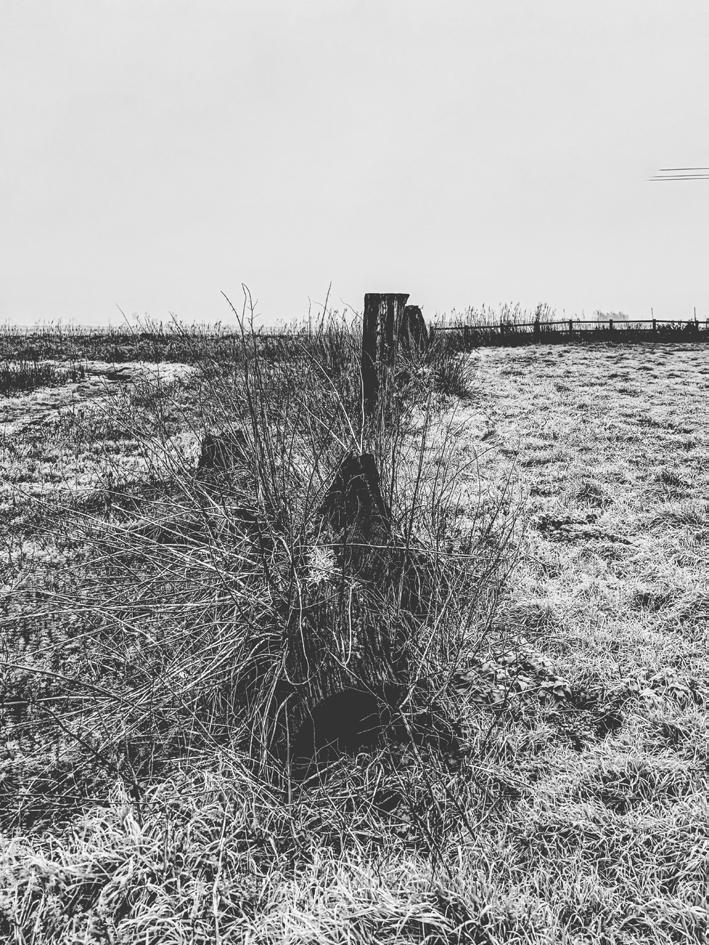
Holme Fen Posts - Erected in 1848 to record the peat shrinking and replaced in 1851 with cast iron columns that you can now see when entering the wood.
Holme Fen has a beautiful managed microclimate that makes all these things possible but it also comes with
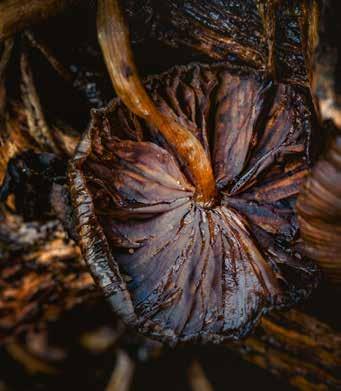
Frozen mushroom
its problems. Unfortunately, a downside to this perfect environment is flooding. The drainage at Holme Fen is a critical issue due to the land being the lowest point in the UK (around 2.75 metres below sea level) and ongoing peat subsidence. The area relies heavily on artificial drainage systems and is the site of a major restoration project that uses water management to mitigate flood risks and reverse environmental damage. Parts of the Fen can also be cut off because of this.
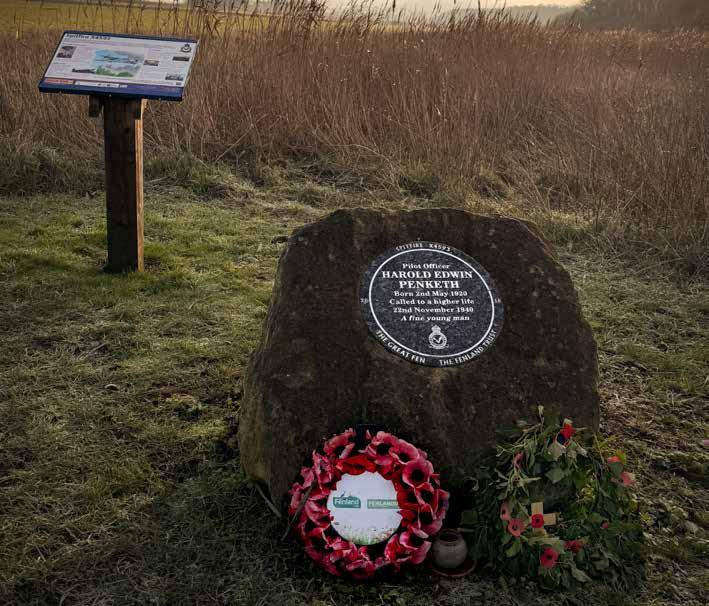
A quiet place for reflection is the Harold Penketh Memorial, it’s the only place I found to sit and contemplate next to an empty field and a parking space. You never lose sight that on the 22 November 1940 a Spitfire flown by Pilot Officer Harold Penketh, crashed into a field at Holme Fen. The crash was witnessed by local people. His body was recovered but the Spitfire remained in-situ. In 2015 Archaeological work to recover the Spitfire was undertaken. A permanent memorial was unveiled near to the crash site in September 2016.
One of my favourite walks in Holme Fen is the charcoal kilns. The charcoal kilns or bins were used to make charcoal for gunpowder during World
The Harold Penketh Memorial (January Sunrise)
Defrosting mushroom
Christmas Sunshine
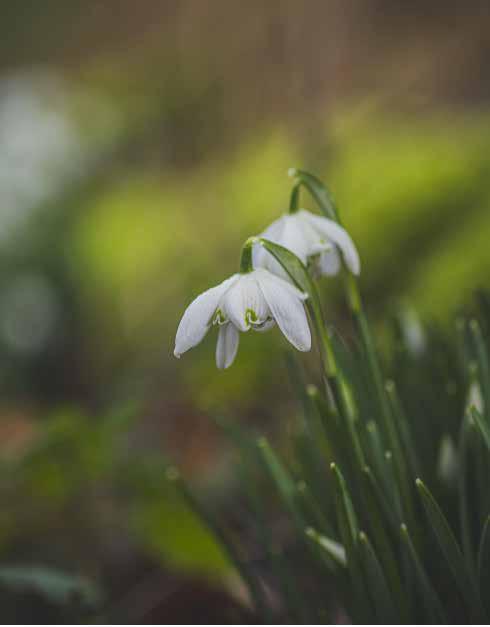
Early snowdrops at Holme Fen. Photograph: Natalie Hough-Benns LRPS
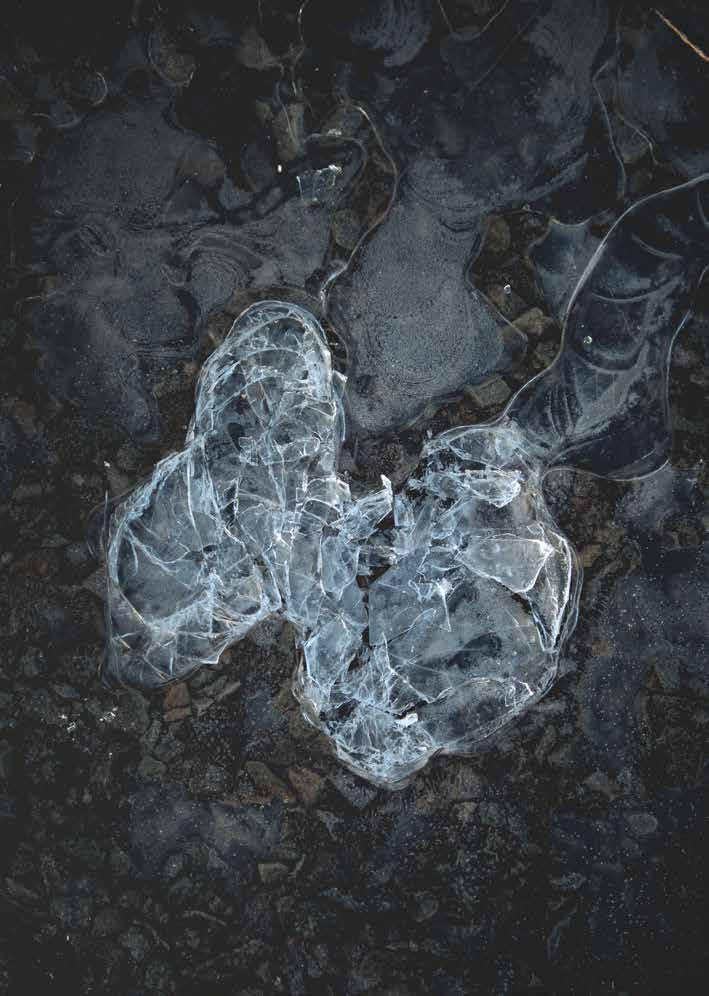
Ice puddle, a celebration for winter macrophotography
Tornado steam engine at Holme
Panoramic view of the fen
Bog oak taken in January 2026 in the mizzle
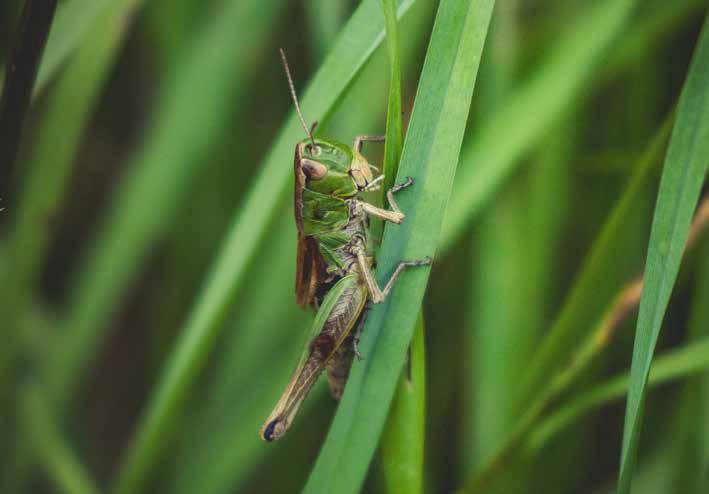
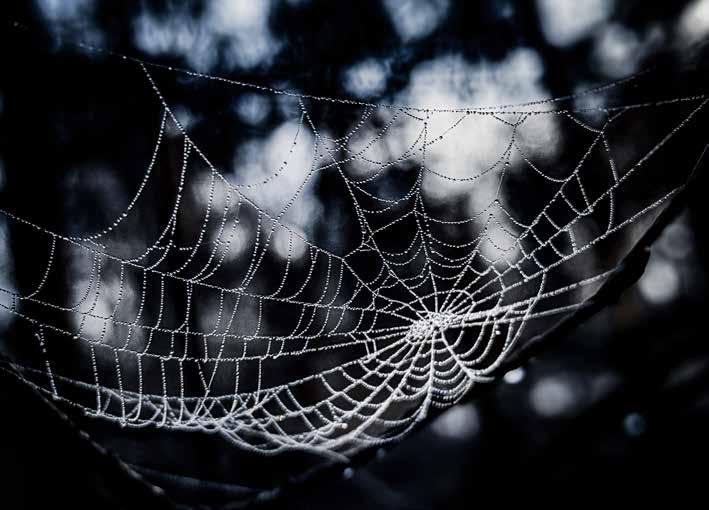
Opportunities for macro photography: top a cricket and below a spider’s web.
War II. These bins are still used. A large part of the wood was cleared, and as the area regrew Nightingales have been attracted to the area and can sometimes be sighted in springtime.
When driving around Holme Fen you can often see piles of black wood. Bog oak from ancient wetland that has been unearthed at Holme Fen. These are an important feature of the fen landscape. Coming from trees that decomposed thousands of years ago and were preserved in peat bogs. They lie beneath the surface, undisturbed in the acidic bog conditions, until the fens began to be drained. Then, as the peat dried out and shrank, the tree trunks became closer to the surface of the soil.
Holme Fen offers a range of photography opportunities, with subjects including woodland scenes silver birch, diverse flora and fauna, and atmospheric weather effects like mist and fog.
Photographic Opportunities
The types of photography available, at Holme Fen include:
Woodland Photography
Holme Fen is known for having the finest silver birch woodland, with paths that provide good leading lines for compositions.
Weather Related Photography
Early morning mist or fog is highly recommended for creating ethereal woodland images. Frost is also an excellent condition, particularly for photographing mosses and lichens like pixie cups (Cladonia pyxidata).
Flora Photography
The reserve is home to over 500 types of fungi, rare mosses and lichens, yellow loosestrife, purple loosestrife, and, a rare pink-and-white subspecies of hedge bindweed, which offer great seasonal shots.
Sunrises, Sunsets and Night Skies
Vast skies unobstructed, 360-degree views.
Marshland/Wildlife Photography
The meres and reed areas ideal for bird photography and photographing images of dragonflies.
Macro and Close-up Photography
The diverse range of mosses, lichens, fungi, and insects like the four-banded longhorn beetle and silver-washed fritillary butterfly provides excellent subjects for macro work.
Steam and Mainline Trains
There is a railway line and a level crossing near the village of Holme, which has a signal box. Its a great opportunity to see a steam / diesel / commuter and freight trains going to London, Cambridge or Peterborough.
Holme Fen is a perfect location for any photographer. The sustainability as photographic location is sadly in decline. The water table is low and this poses a problem for ancient fen species that survive here and rely on the moist peat soil. Holme is shrinking as more peat is lost due to the exposure with the air. I am enjoying documenting Holme Fen for future generations. This is a beautiful place but unless drastic measures are taken, it could be lost if the Great Fen project doesn’t go ahead. I can promise it has something for all tastes. From below sea level to the sky Holme Fen is definitely a National Treasure to me.
Horticulture in Remembrance
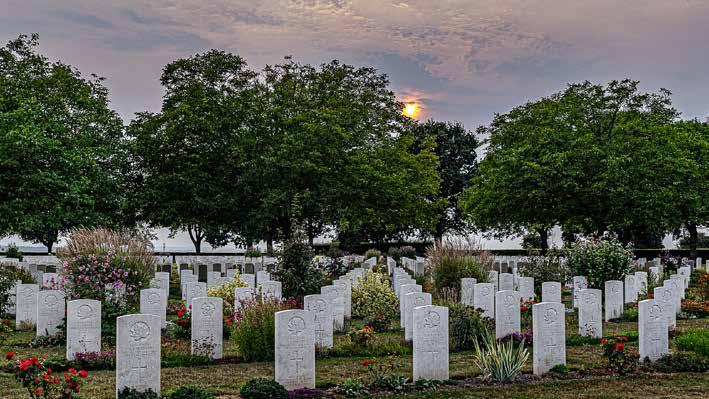
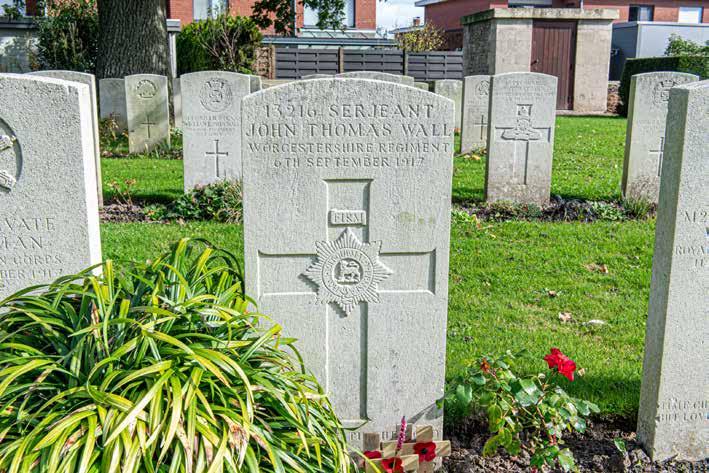
Horticulture is an integral and vitally important part of the Commonwealth War Graves Commission’s work. The CWGC is certainly one of, if not the largest horticultural organisation in the world. Over the past hundred years the image of serried ranks of headstones in highly manicured and ordered grounds has grown to symbolise CWGC cemeteries. From the outset, the International War Graves Commission (IWGC) concept was more of garden cemeteries where equal thought and design was given to horticultural elements as to the ‘built’ elements. (https:// www.cwgc.org/our-work/caring-for-our-sites/horticulture/ ) SHAUN PARKES ARPS
The Commonwealth War Graves Commission (CWGC) employs around 900 gardeners in over 150 countries and territories worldwide. Plant and tree selections are made with sustainability in mind and always being sympathetic to local ecosystems, flora and fauna. Currently the CWGC is engaged in a planting programme to plant 39,000 trees for 2039, recognising the CWGC’s responsibility to capture more carbon and to encourage and develop thriving and diverse natural habitats.
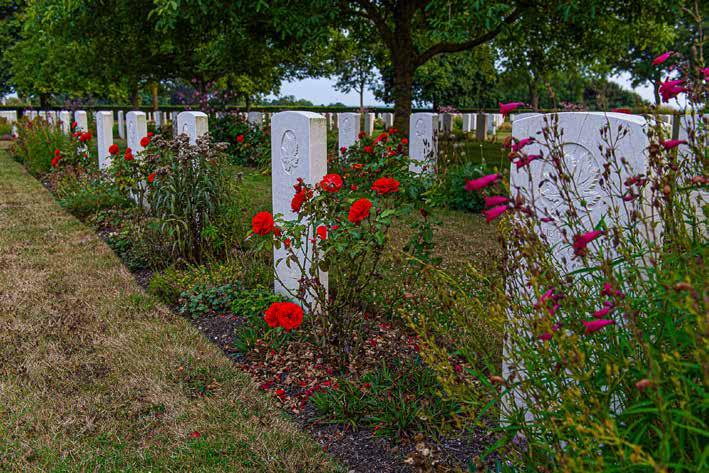
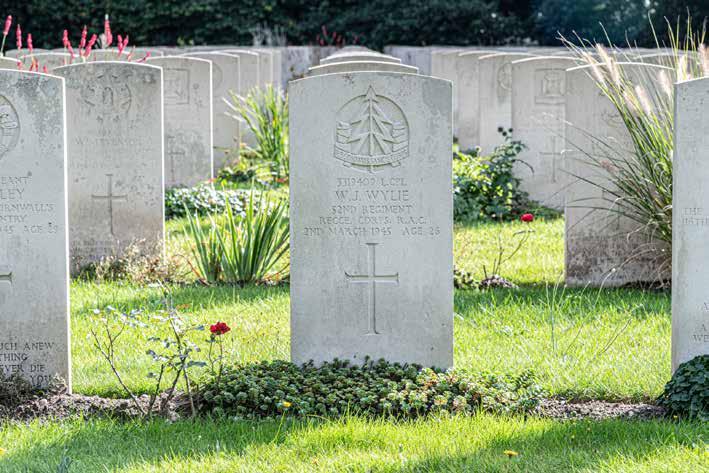
planted with a mixture of floribunda roses and herbaceous perennial plants, low-growing plants being prioritised for areas in front of headstones to avoid obscuring inscriptions. They also prevent ‘splashback’ of soil on to headstones during periods of rain.
Plants are also carefully selected to honour the Fallen; seeds are imported from other territories, such as Canadian maples for Canadian cemeteries or seeds from Nepal to use where there are Gurkha casualties commemorated.
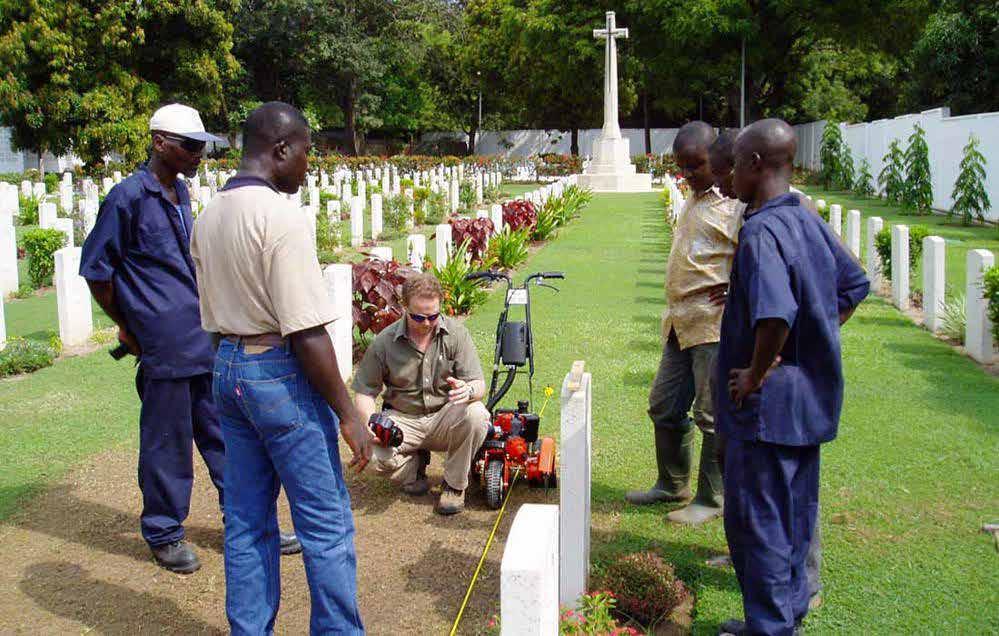
Training session at CWGC Christiansborg War Cemetery, Ghana.
Bretteville-sur-Laize Canadian War Cemetery, Normandy, France
For the most part, those buried at Bretteville-sur-Laize Canadian War Cemetery died during the later stages of the battle of Normandy, the capture of Caen and the thrust southwards - led initially by the 4th Canadian and 1st Polish Armoured Divisions - to close the Falaise Gap. Almost every unit of Canadian 2nd Corps is represented in the cemetery.
The cemetery contains 2,958 Second World War burials, the majority Canadian, and 87 of them unidentified. https://www.cwgc.org/visit-us/find-cemeteries-memorials/cemetery-details/2032600/ bretteville-sur-laize-canadian-war-cemetery/)
Unless otherwise credited, all images 2024 / 2025 Shaun Parkes MA FRPS
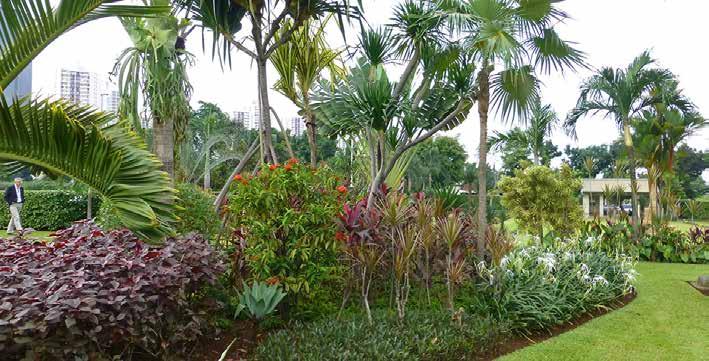
Plantings in Jakarta War Cemetery. Source: CWGC.
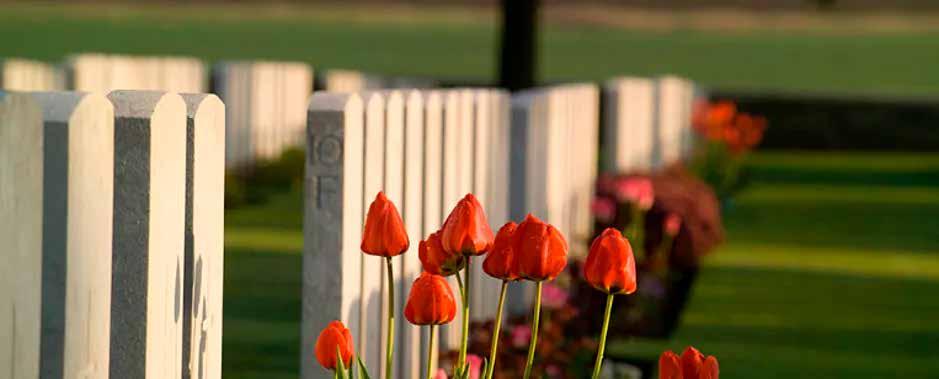
Flowers at Guillemont Road Cemetery, Guillemont, France. Source: CWGC.
Bretteville-sur-Laize Canadian War Cemetery
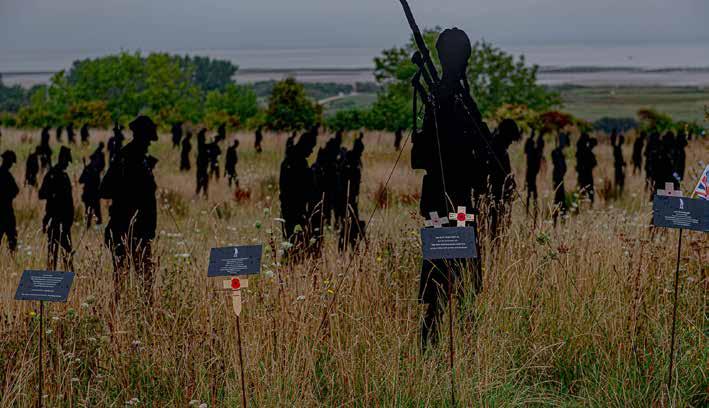
Walking with Giants
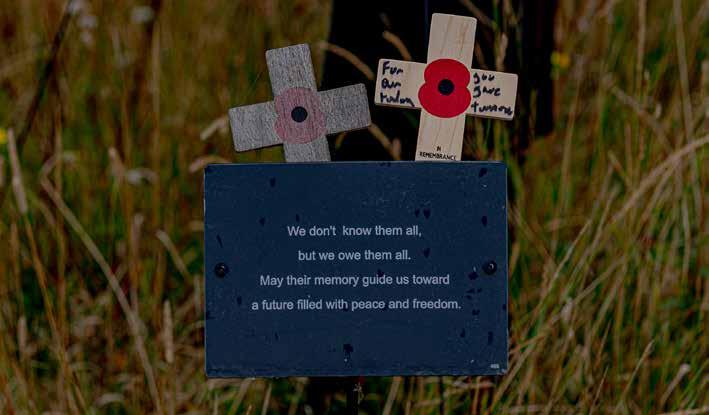
British Normandy War Memorial “Walking with Giants” overlooking Gold Beach, Normandy.
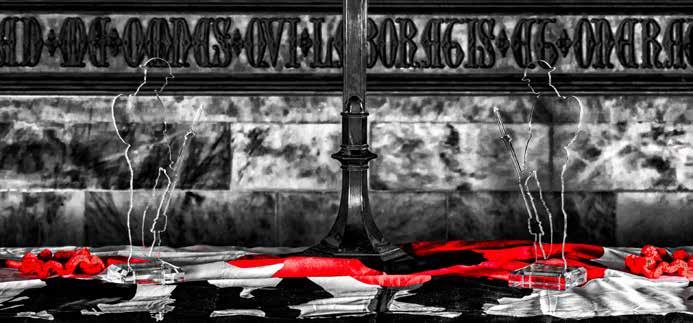
“Walking with Giants” refers to a poignant temporary art installation featuring 1,475 silhouette figures at the British Normandy War Memorial, representing the British servicemen who died on D-Day. Created by the charity Standing with Giants, these life-sized figures, made from upcycled materials by volunteers, symbolize the immense
human cost, bringing a powerful, emotional dimension to the memorial on Gold Beach.
The installation, which has now been moved to the UK south coast, was placed in fields between the War Memorial proper and the land going down to the actual invasion beaches at Gold Beach and the grass land was left to grow naturally.
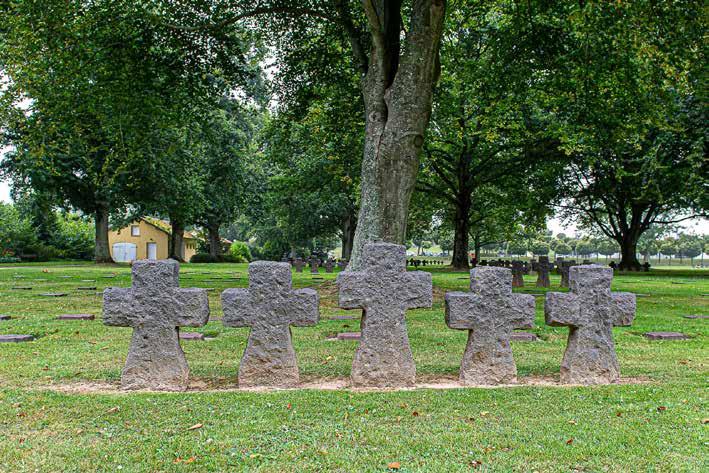
Deutsche Soldatenfriedhof “La Cambe”, Normandy, France
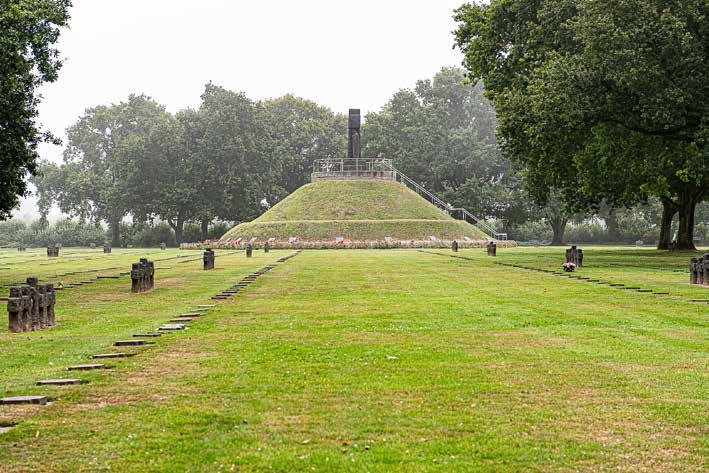
This is the largest German war cemetery in Normandy and contains the remains of over 21,200 German military personnel. After WW2 roughly 12,000 German casualties were moved from around 1,400 field burial sites to be consolidated at La Cambe, which is managed by the German equivalent of the CWGC, the German War Graves Commission (Volksbund Deutsche Kriegsgräberfürsorge). During the consolidation of field burials into La Cambe, efforts were made to identify previously unidentified casualties. German war cemeteries tend to be much more starkly planted than CWGC cemeteries.
The central tumulus and mass grave at La Cambe.
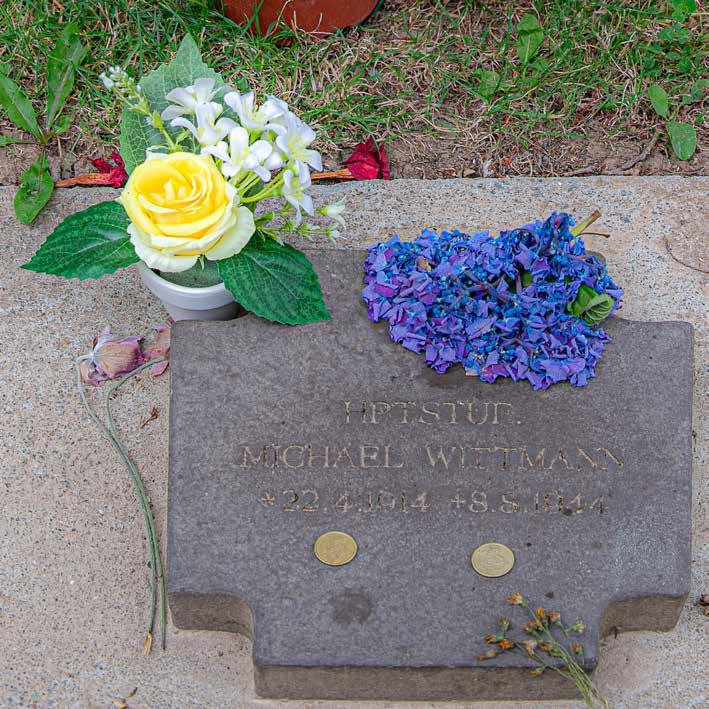
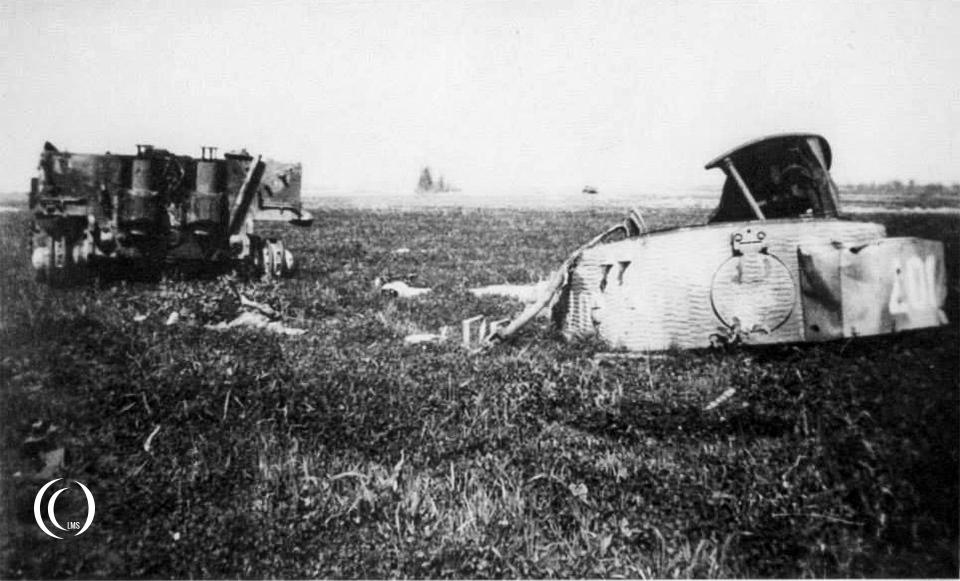
Wittmann was considered one of the most successful tank commanders of all time; estimates vary but he is believed to have scored at least 150 tank kills and over 200 armoured self-propelled artillery gun kills. His most famous feat was perhaps stopping an entire British Armoured Brigade with only 6 Tiger tanks during Operation EPSOM in Normandy. Wittman and his crew were killed on 8th August 1944 near Cinthaux, probably by Sherman Firefly tanks of the 1st Northamptonshire Yeomanry Regiment. Wittmann and his crew were buried near to the wreckage of their tank. He was unidentified at the time as his body was very badly burnt, although British troops recognised that he was a successful officer by the charred medals on his uniform. His body was located and identified in 1983 and reburied at La Cambe, along with his crew, SSUnterscharführer Hein Reimers (driver), SS-Unterscharführer Karl Wagner (gunner), SS-Sturmmann Rudolf (Rudi) Hirschel (radio operator), and SS-Sturmmann Günther Weber (loader).
Grave of renowned and respected tank commander SS-Hauptsturmführer (Captain) Michael Wittman.
wreck of
from https://www.landmarkscout.com/grave-of-ss-hauptsturmfuhrer-michael-wittmann-la-cambe-normandy-france/
The
Michael Wittmann’s Tiger Tank 007 near Daumesnil France. Photo taken by French civilian Serge Varin in 1945
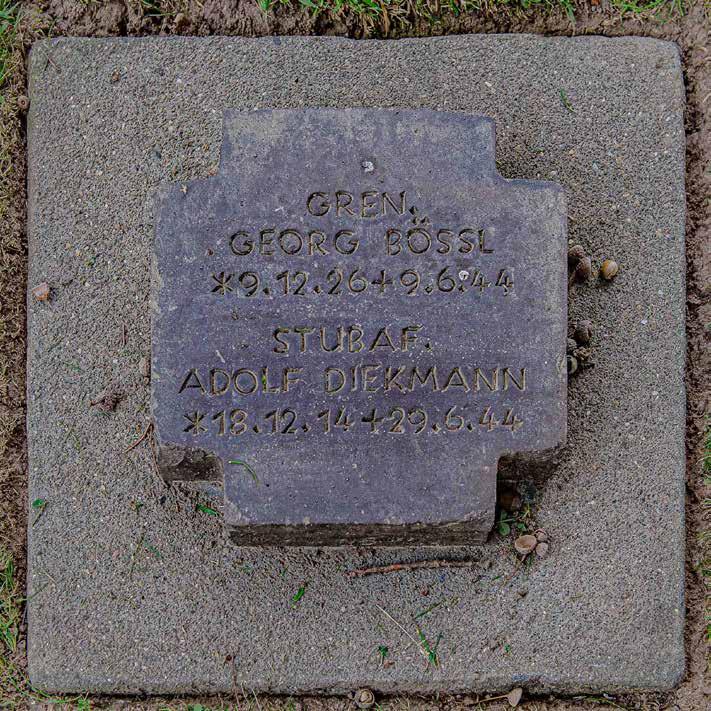
Most headstones at La Cambe commemorate two graves. Another headstone at La Cambe marks the resting place of SS Untersturmbannführer (SS Major) Adolf Diekman. Diekman was infamous as the commander of the SS unit that carried out one of the most notorious atrocities in France, when on 10th June 1944 he ordered his unit to massacre every single person in the village of Oradour-sur-Glane in retaliation for the kidnap and murder of one of SS colleagues.
Diekman was informed that he was to be court-martialled at some point, but he was killed in combat in Normandy before he could be brought to trial. Some thought that he chose ‘suicide by combat’ as he stopped wearing his helmet, rather than face the court martial.
Verrieres, La Vienne, France: OPERATION BULBASKET
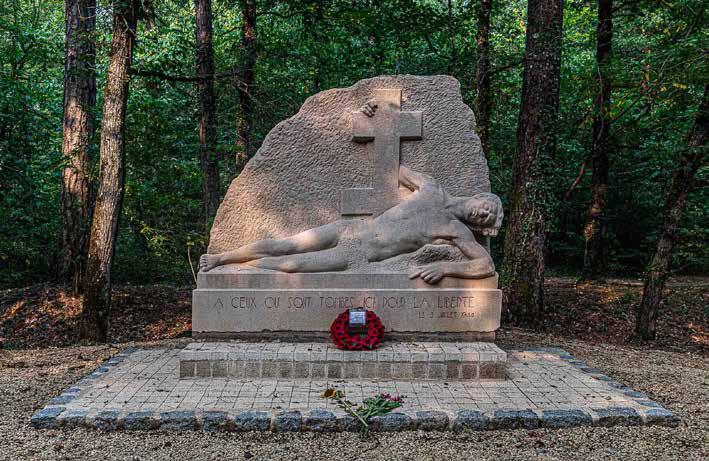
Operation BULBASKET was mounted by A Troop, B Squadron 1st SAS Regiment in June 1944. The aim was to delay or prevent the 2nd SS Panzer Division “Das Reich” from reinforcing the German defences in Normandy immediately after the invasion on 6th June 1944. The 2nd SS Panzer Division included troops commanded by SS Untersturmbannführer Adolf Diekman who became infamous for the murder of 642 French men, women and children at Oradoursur-Glane.
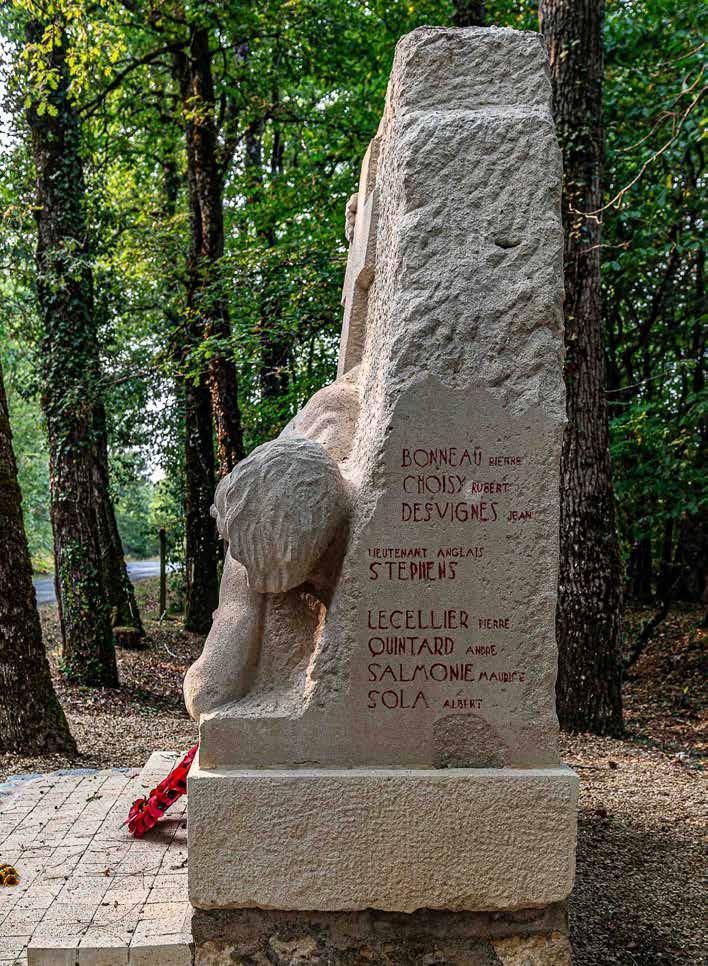
Most of the SAS troops were killed or captured on 3rd July 1944 when the SS attacked the SAS camp in the woods at the Foret de Verrières. One Officer Lieutenant Tomos Stephens and 7 French Resistance fighters were captured then executed in the raid. Most of the SAS troops were captured later in the day whilst trying to escape from the woods. Those captured were subsequently executed by the Germans in the forest at St Sauvant on 7th July.
Monument in the forest at La Couarde where the bodies of Lt Sephens and the 7 Maquisards were found. The memorial is inscribed “To those who fell here for freedom”.
Side view of the monument at La Couarde detailing the names of those whose bodies were found there.
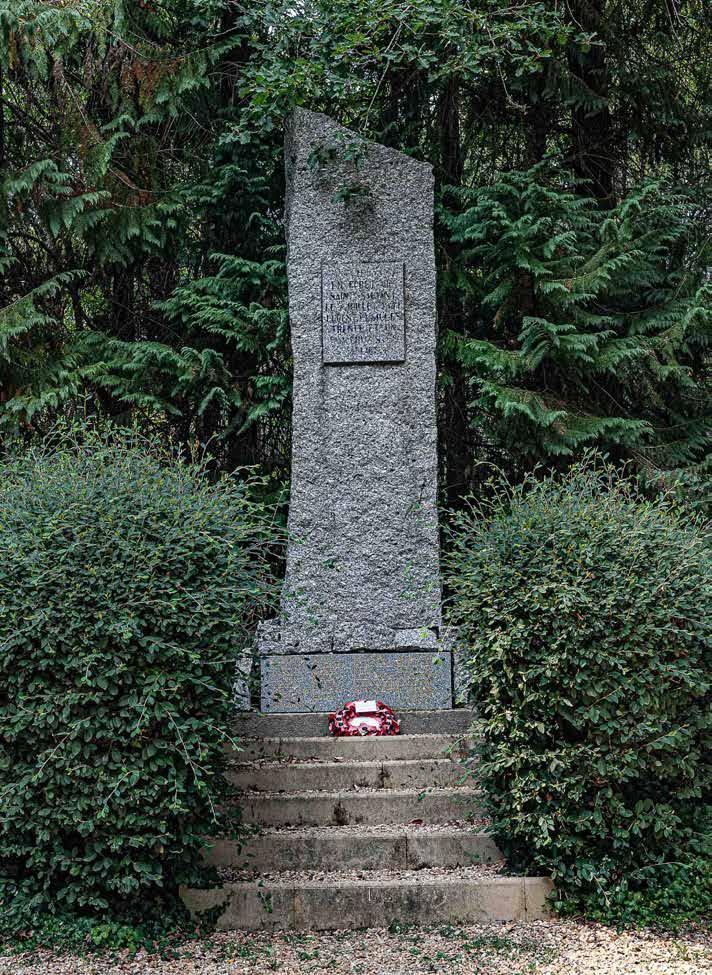
Monument at St Sauvant marking the precise location where the bodies of the 30 executed SAS men were found on the track in the woods. Again there are no extra plantings emphasising the sinister fate that the men met here.
Arnhem Oosterbeek, Holland.
Most of the graves here are from the famous Battle of Arnhem 17-24 September 1944. The local Dutch population remain utterly grateful for the sacrifices of the British, Polish and American troops during the airborne Operation MARKET GARDEN, and tend the graves and conduct memorial services including lighting candles on the graves.
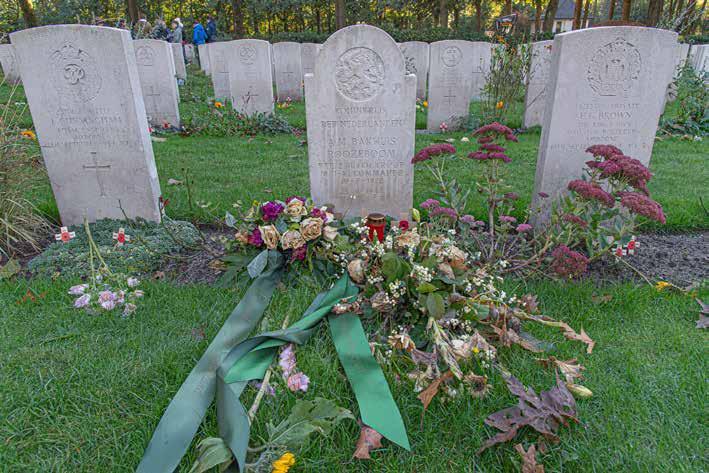
Grave of August Marie Bakhuis Roozeboom of No 2 (Dutch) Troop, 10 (Inter-Allied) Commando, attached British 1st Airborne Division. Killed in action and initially buried in a field grave. Reinterred at Arnhem Oosterbeek Cemetery, he was eventually identified and given full military honours. Celebrated as a Dutch national war hero, with flowers and decorated wreaths.
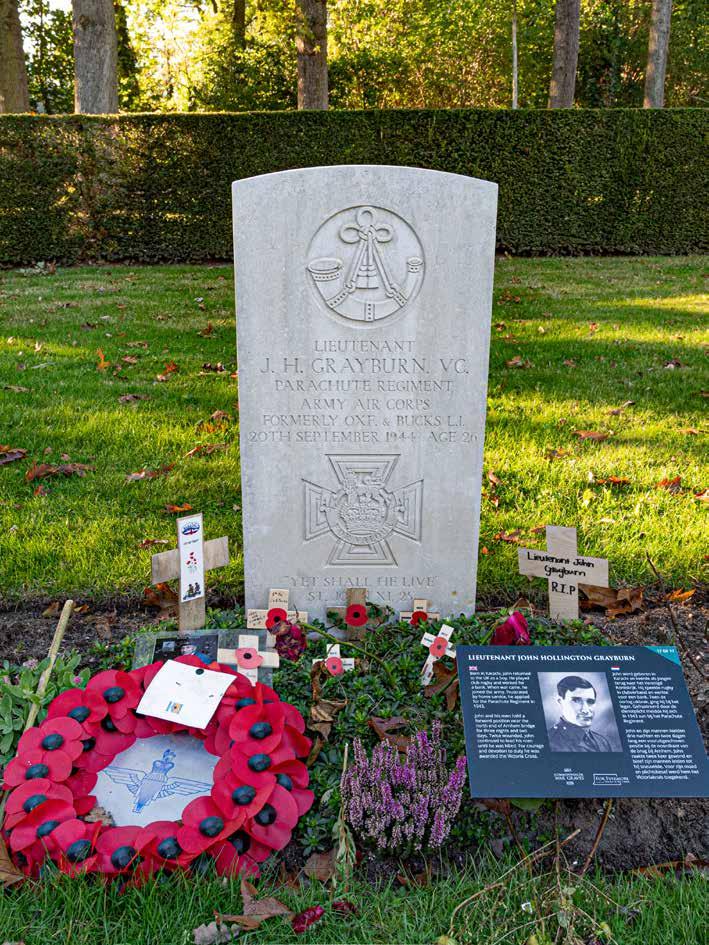
Grave of Lieutenant John Grayburn VC. Grayburn won the VC for heroism at Arnhem and his grave is one of the most famous graves at Arnhem, and the CWGC have the standard low plantings to avoid obscuring his headstone and the information plaque there.
Commemorative wreaths at Arnhem in October 2024, 2 weeks after the 80th anniversary commemorations of the airborne operation.
October 2024, dusk approaching at Arnhem. Surrounded by trees and with thousands of plantings, the cemetery is serene and dignified as befits the heroes buried there.
Nijmegen Jonkerbos
Nijmegen was one of the other locations involved in Op MARKET GARDEN, and was the target of American paratroopers of the 82nd (“All American”) Airborne Division. The Division was so named as it had soldiers from every state in the USA when it was first constituted. Op MARKET GARDEN was intended to seize bridges across all the major waterways in Holland by laying a ‘carpet’ of airborne troops to capture the bridges quickly across which the British XXX Corps could advance quickly all the way to Arnhem and thence the German border, theoretically shortening the war by several months. Jonkerbos Cemetery contains the graves of (mainly) British and Commonwealth troops killed during the period September 1944 to February 1945. In common with US policy, American casualties were moved to consolidated US cemeteries or returned to the families in the USA.
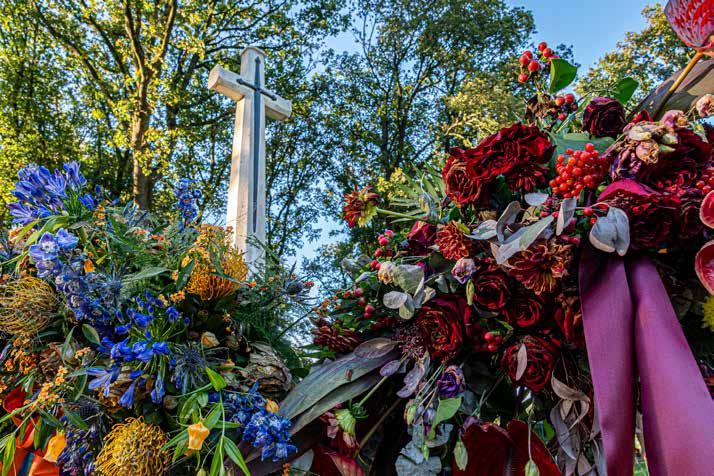
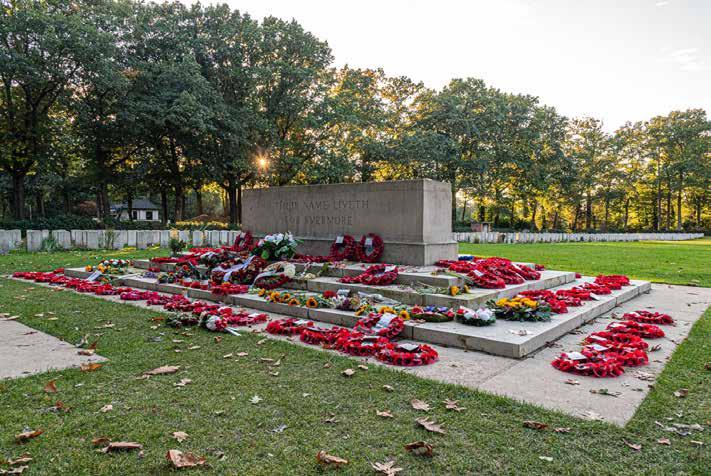
The Stone of Remembrance at Arnhem in October 2024, 2 weeks after the 80th anniversary commemorations of the airborne operation. Whilst not plantings per se, the multiple wreaths provide a colourful display and visual indication of the esteem in which the Fallen are held.
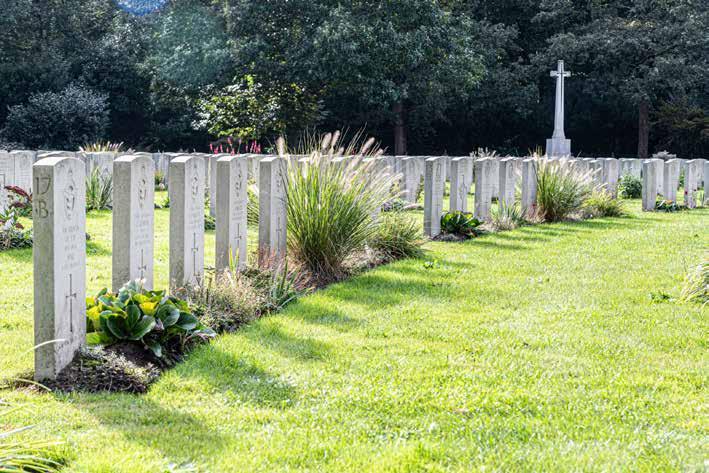
Jonkerbos follows the common planting plan of low plants by the graves and taller ones between the headstones.
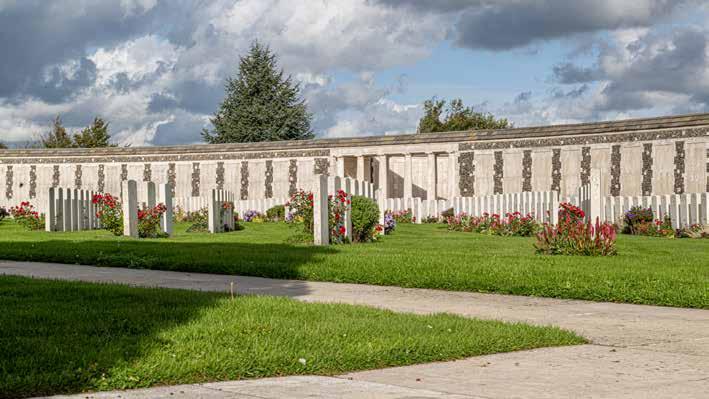
Tyne Cot is one of the most visually impactful CWGC Cemeteries as it is bordered by the Tyne Cot Memorial. With over 3000 graves, the cemetery has abundant plantings of flowers and has immaculately tended lawns but is dwarfed by the memorial to the c35,000 UK and New Zealander soldiers killed in the (almost continual) fighting in the Ypres Salient during WW1.
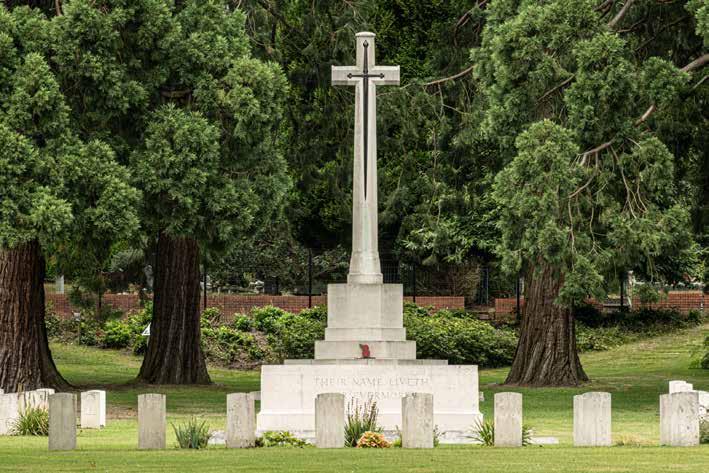
Reichswald Forest War Cemetery, Kleve, Germany.
Reichswald Forest War Cemetery was created after the Second World War when burials were brought in from all over western Germany and is the largest Commonwealth cemetery in the country.
Some of those members of the land forces buried there died in the advance through Reichswald Forest in February 1945. Others died crossing the Rhine, among them members of the airborne forces whose bodies were brought from Hamminkeln, where landings were made by the 6th Airborne Division from bases in England.
Some of the airmen buried in the cemetery lost their lives in supporting the advance into Germany, but most died earlier in the war in the intensive air attacks over Germany. Their graves were brought in from cemeteries and isolated sites in the surrounding area.
There are now 7,594 Commonwealth servicemen of the Second World War buried or commemorated in the cemetery. 176 of the burials are unidentified. There are also 78 war graves of other nationalities, most of them Polish.
Special Memorials to 9 airmen are located at the East boundary wall, near Plot 10. Further Special Memorials to 7 airmen are located within Plot 31, near the Cross of Sacrifice. The cemetery was designed by Philip Hepworth.
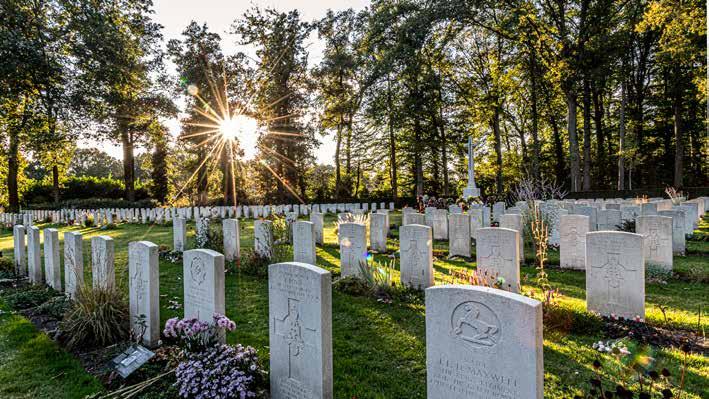
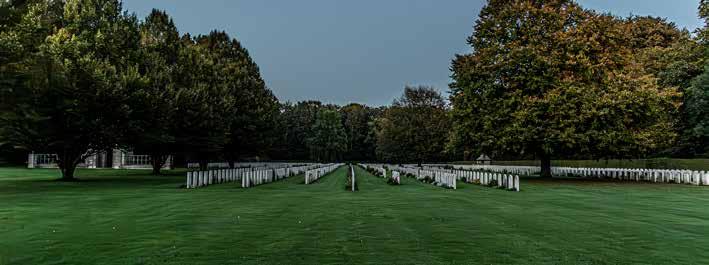
A panoramic view of the eastern half of the cemetery photographed at dusk, again hinting at the sheer size and the number of graves.
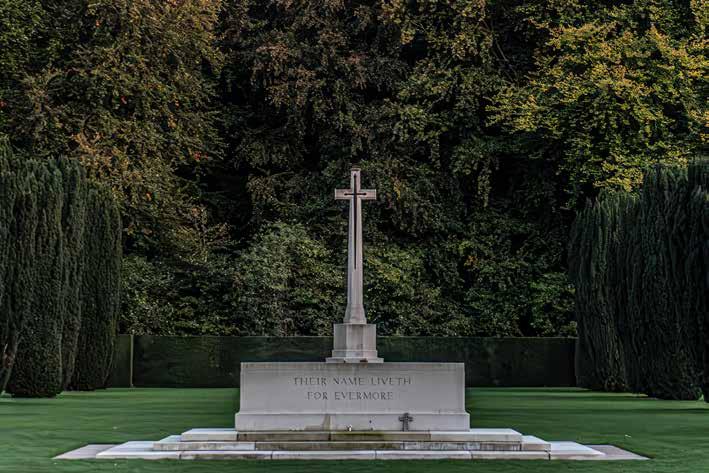
The Stone of Remembrance, designed by Sir Edwin Lutyens, in front of the Cross of Sacrifice, designed by Sir Reginald Blomfield. Set in open ground with woods behind, these monuments emphasise the size of the cemetery which in turn gives an idea of the huge number of burials in the cemetery.
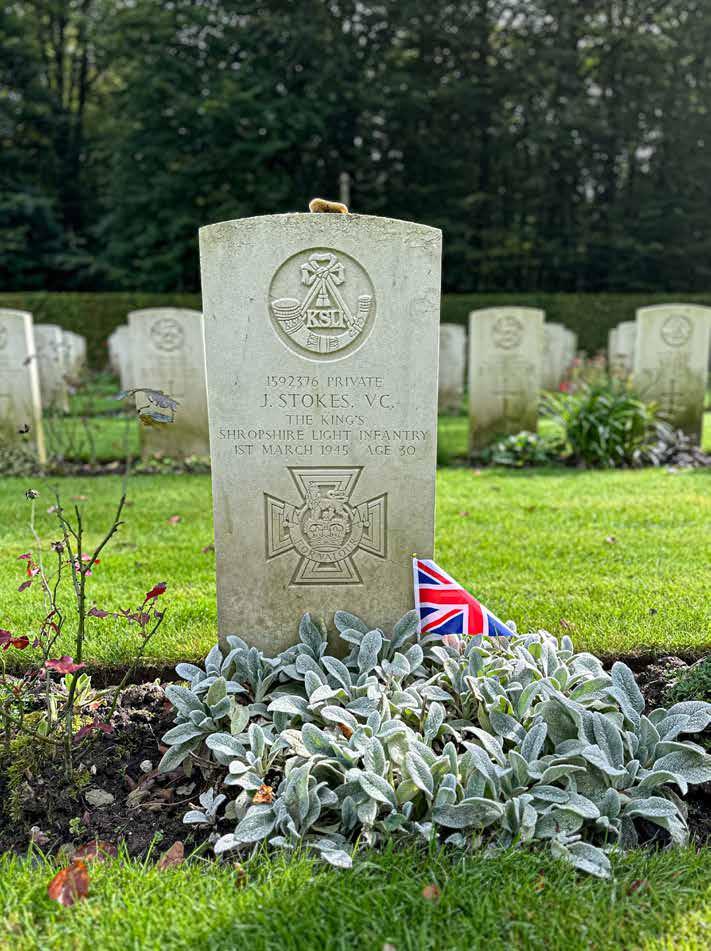
Grave of Private James Stokes VC of the Kings Shropshire Light Infantry. The low height plantings help limit the growth of weeds without obscuring the detail of the memorial.
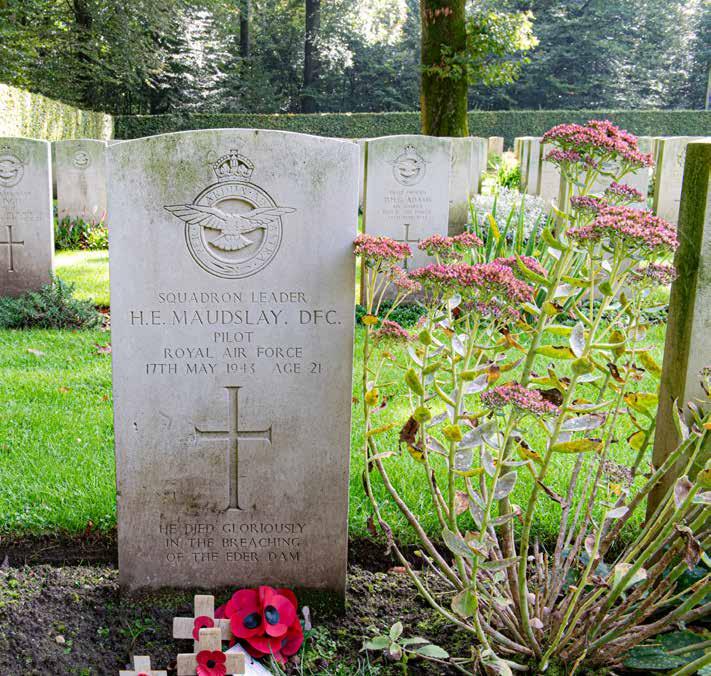
Grave of Squadron Leader Henry Maudeslay DFC, of No 617 Sqn RAF, who became famous as the Dambusters; Sqn Ldr Maudeslay was the pilot of one of the Lancaster bombers lost on the raid. Of the 19 Lancasters that took off to participate in the mission, 8 were lost with the loss of 53 aircrew killed. 4 crews from the Dambusters raid are buried in the Reichswald. Most of the graves have low plantings by the graves and some taller plantings between the graves.
Ranville Churchyard (Pegasus Bridge)
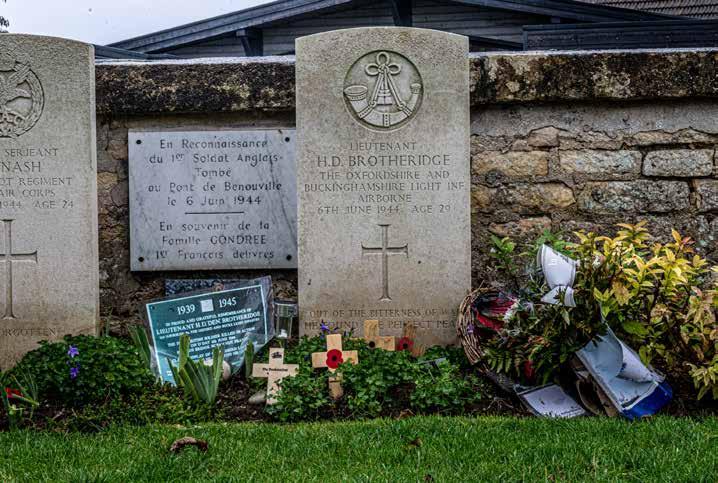
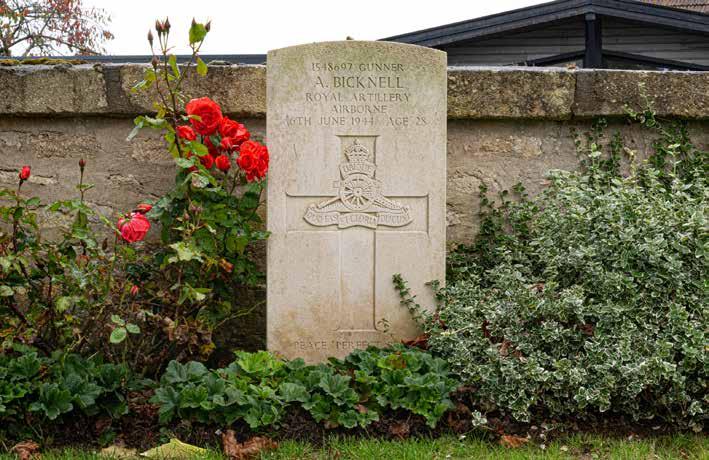
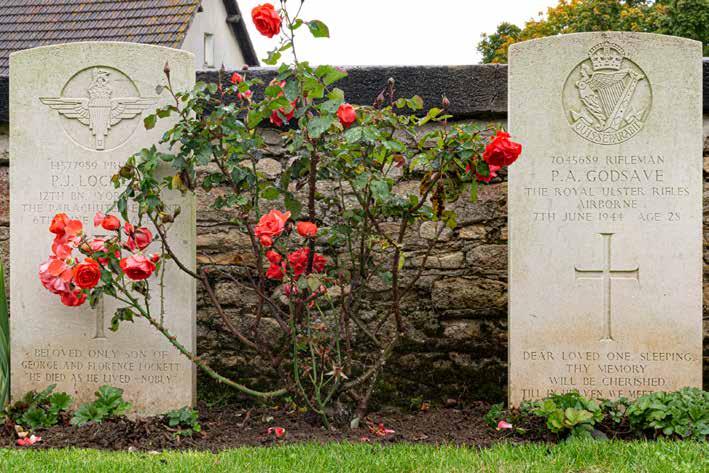
Ranville Churchyard contains the graves of some of the troops killed during the famous ‘Pegasus Bridge’ operation on the night of D-Day 5/6 June 1944. Ther are a variety of plantings including roses and other plants. There are also some graves of French Commandos from No 10 (Inter-Allied) Commando who were attached to No 4 Commando for D-Day.
Poperinghe New Military Cemetery, Belgium.
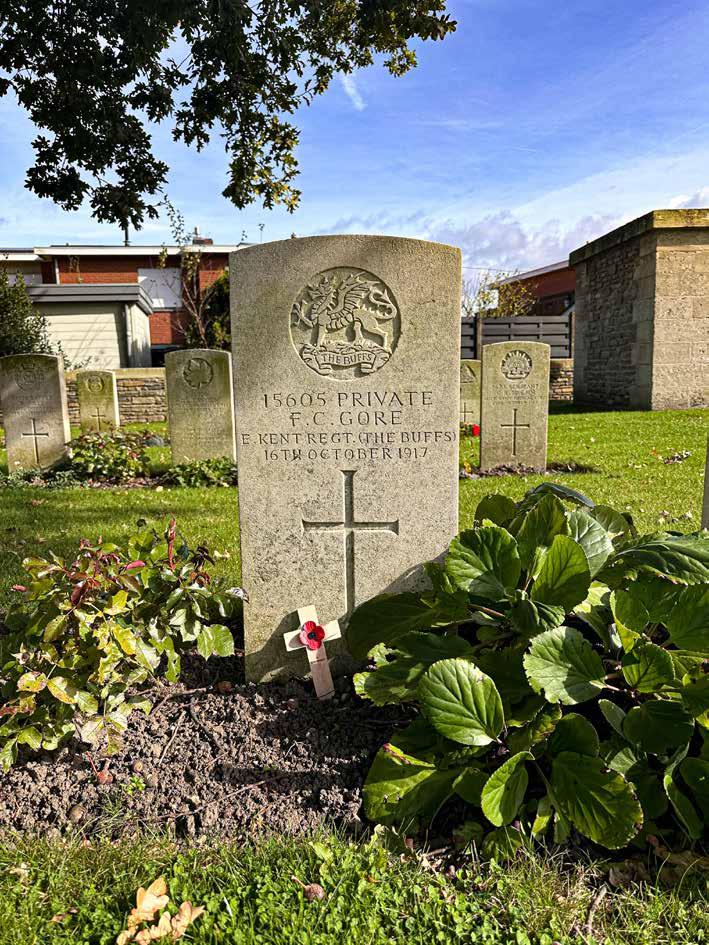
Poperinghe is located 10 kms west of Ieper (formerly Ypres) in Belgium. All military cemeteries are, by their very nature, places for sadness and reflection at youthful lives prematurely cut short, but Poperinghe is one of a few locations where the sadness is hugely increased due to the deliberate manner of some of the deaths, being carried out by their own forces; as Poperinghe was one of the court martial centres where soldiers accused of cowardice and desertion were tried and convicted. 17 of the graves in Poperinghe are of allied soldiers executed by firing squad, “Shot at Dawn”. Despite the ignorance then of PTSD and mental health illness due to sustained combat fatigue, some of those ‘Shot at Dawn’ were actually assessed by military doctors to have been mentally unwell, but their executions were confirmed by British High Command to deter other soldiers from deserting.
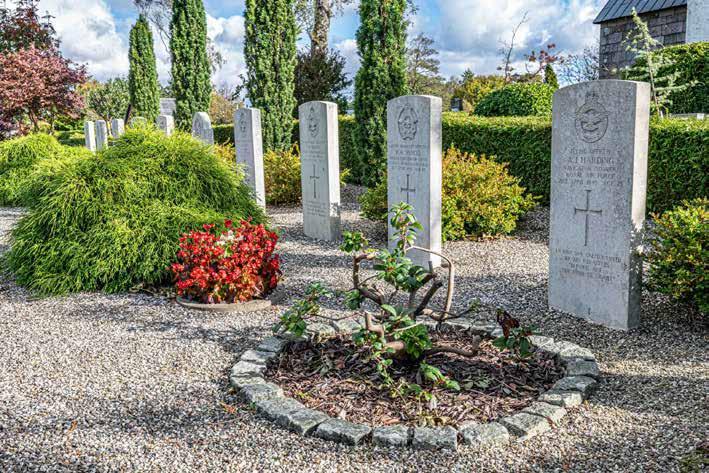
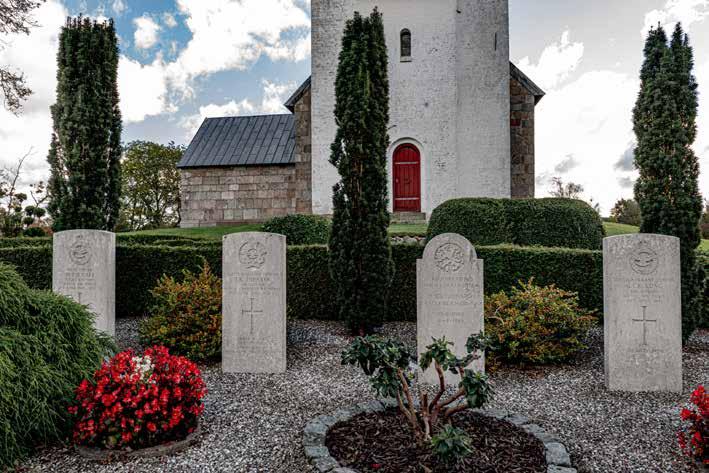
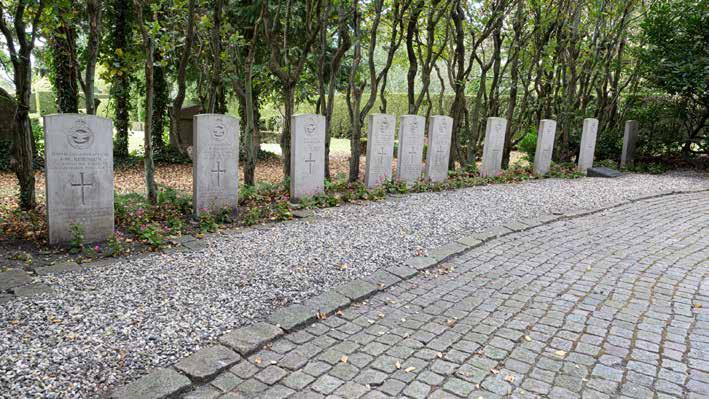
Aarestrup, Denmark
This civil cemetery contains the braves of 11 airman killed when their Liberator bomber crashed near the town of Aarestrup in Denmark. The crew of this RAF aircraft was unusual in that it comprised several different nationalities, and was commanded by a Dutch Navy Lieutenant Commander. It is in a very well-tended cemetery with very neatly -manicured plantings showing the respect with which the graves are tended.
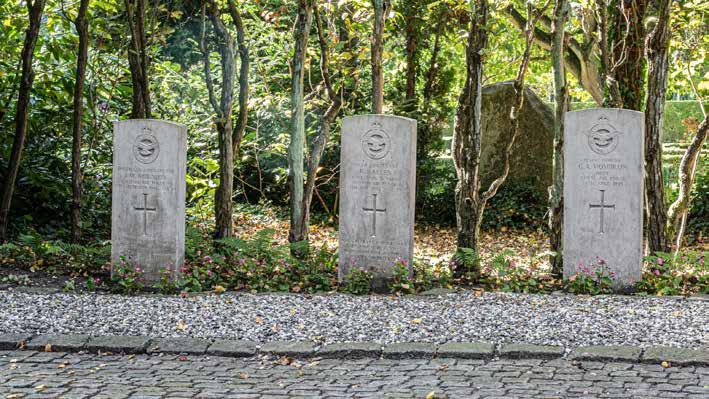
Aarhus Vestre, Denmark
There are several graves, mainly RAF, in this civilian cemetery. The graves are in a group around the edge of the cemetery area, and inside a wooded area with some very low plantings around the headstones. The background of trees can give a stark, harsh backdrop, perhaps emphasising the sense of loss and finality.
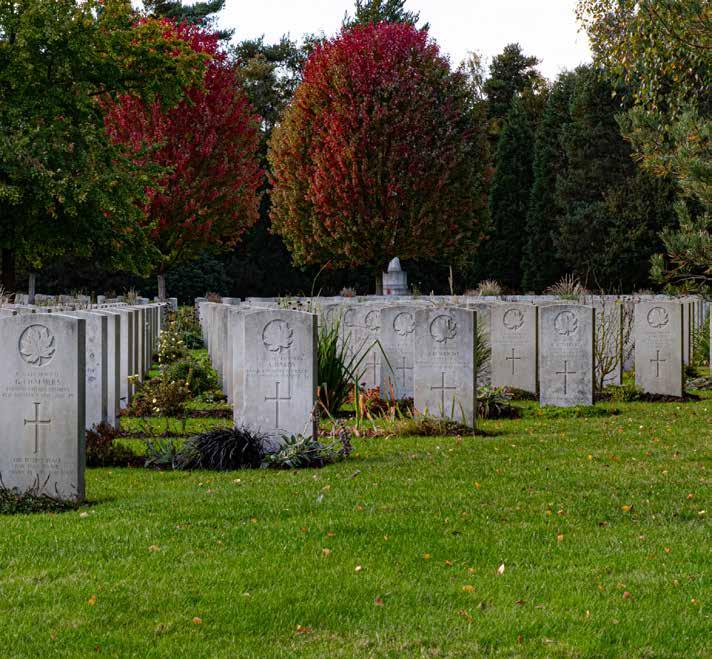
Brookwood Cemeteries, Brookwood, Surrey, England.
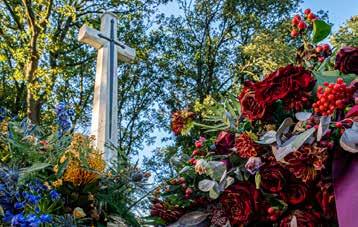
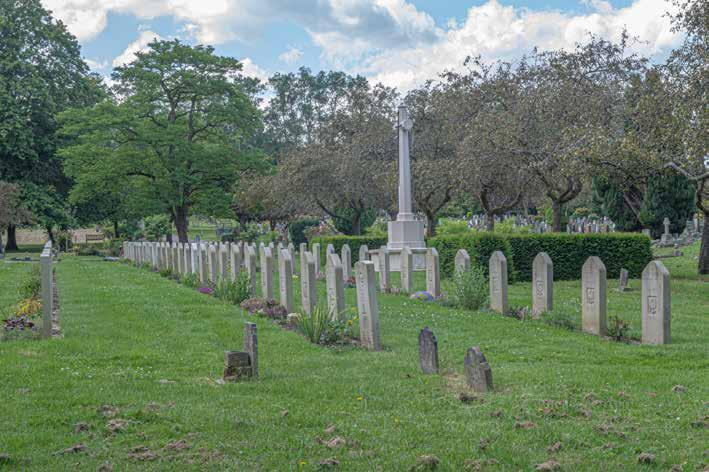
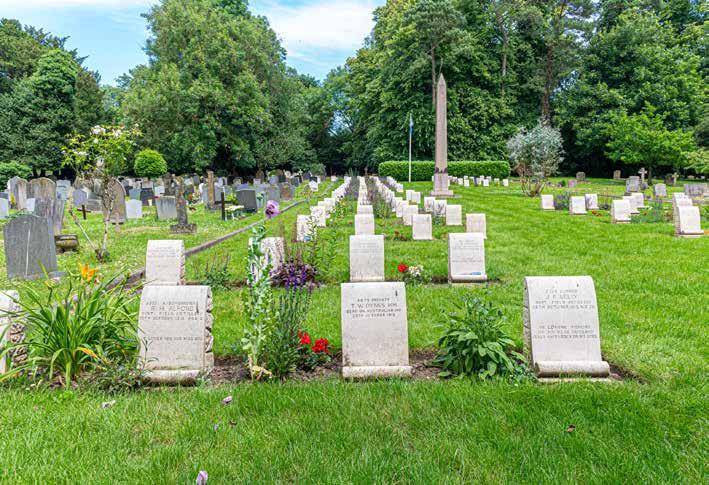
The Brookwood Military Cemeteries contain many plots; RAF, ANZAC, American, Polish, Free French, Belgian and several others. There are a variety of plantings throughout the cemeteries all suggesting the continuation of life, the cemetery is very colourful during the Autumn when various trees turn various shades of red, orange and gold.
Canadian Maples in the Canadian cemetery at Brookwood.
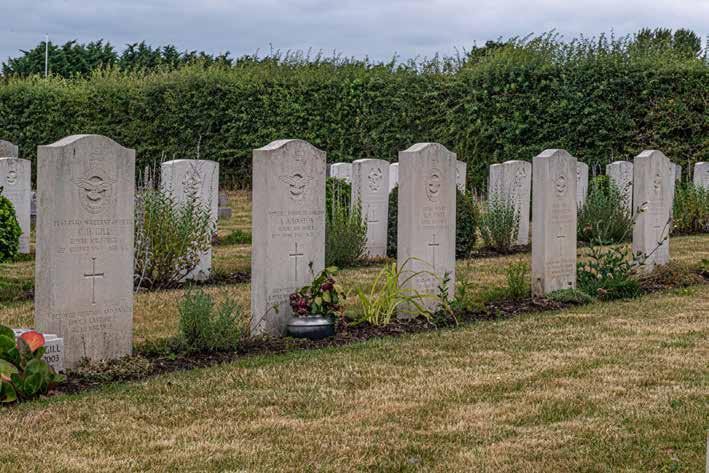
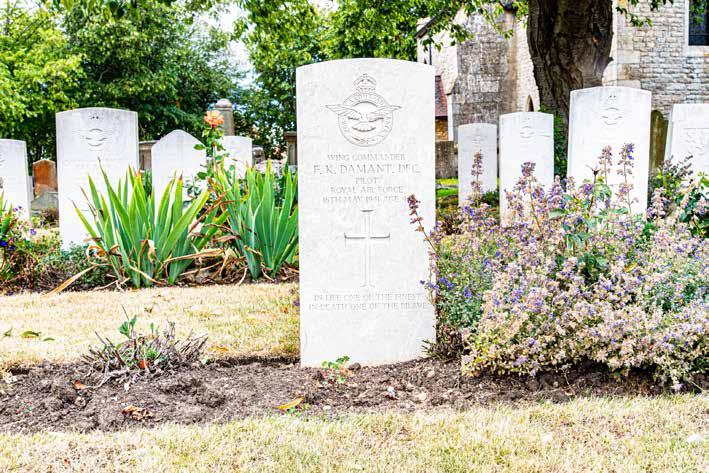
Coningsby Cemetery, Dogdyke Road near RAF Coningsby, Lincolnshire.
Northwood
Harefield
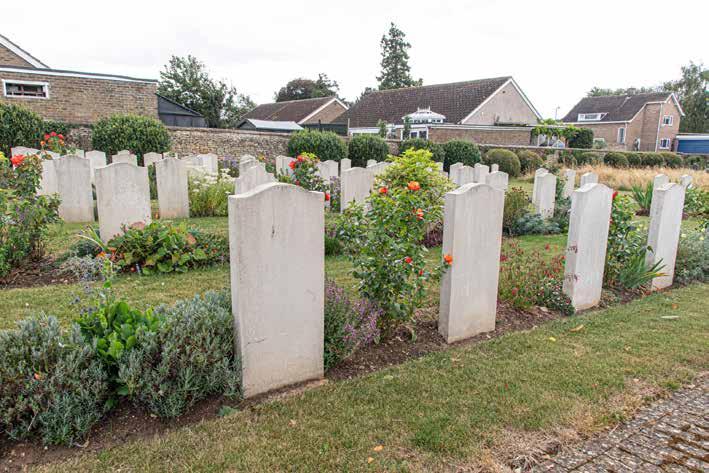
St Andrews Parish Church, Cranwell, Lincs
Natural history and heritage: especially from Mallorca
Natural heritage is an important part of heritage and is not just about photographing animals and birds or individual species it is as much about people and places and their relationship with the natural world.
DAVID BRYSON FRPS
“Given that a broad definition of natural history could be "anything plant or animal or derived from plants or animals", then much of what we include in "heritage" (eg wooden items, bone tools, illuminated manuscripts on vellum) are already drawn from natural history. I think there is a well-established link and certainly scope for new material.” Edmund White
Natural history and heritage are intertwined concepts, where natural heritage refers to natural features of scientific or aesthetic value, and natural history is the study of organisms and their environments. Together, they highlight our connection to the natural world through collections, conservation efforts, and the preservation of natural sites, like those managed by organizations such as English Heritage. This integrated approach is crucial for understanding and protecting the legacy of both the natural and built environments for future generations.
The UK boasts several UNESCO Natural Heritage Sites, including the Jurassic Coast, the geological marvel of the Giant’s Causeway, the remote islands of St Kilda, the unique peatlands of The Flow Country, the striking Heart of Neolithic Orkney, and the picturesque English Lake District, all recognized for their exceptional natural beauty, biodiversity, or geological significance.
The one I have visited while supporting students on the Biological Imaging programme I used to lead is in Mallorca.
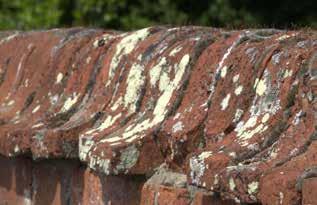
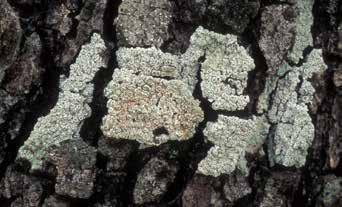
Mallorca’s UNESCO World Heritage site is the Serra de Tramuntana, a stunning mountain range along the northwest coast recognized in 2011 for its cultural landscape shaped by centuries of humannature interaction, featuring unique terraced farming, water management systems, dry stone walls, and picturesque villages like Valldemossa and Deià, offering a contrast to the island’s beachfocused tourism. This area showcases a rich blend of natural beauty and cultural heritage, with ancient olive groves, olive mills, and historic fincas. Natural heritage is also historical in nature and I can never resist photographing lichens which often take many years or even centuries to grow they have even been used in what is called lichenometry for measuring the age of rocks.
Lichens decorating a wall at Calke Abbey, Derbyshire Lichen Pertusaria pertusa growing on a tree in Mallorca
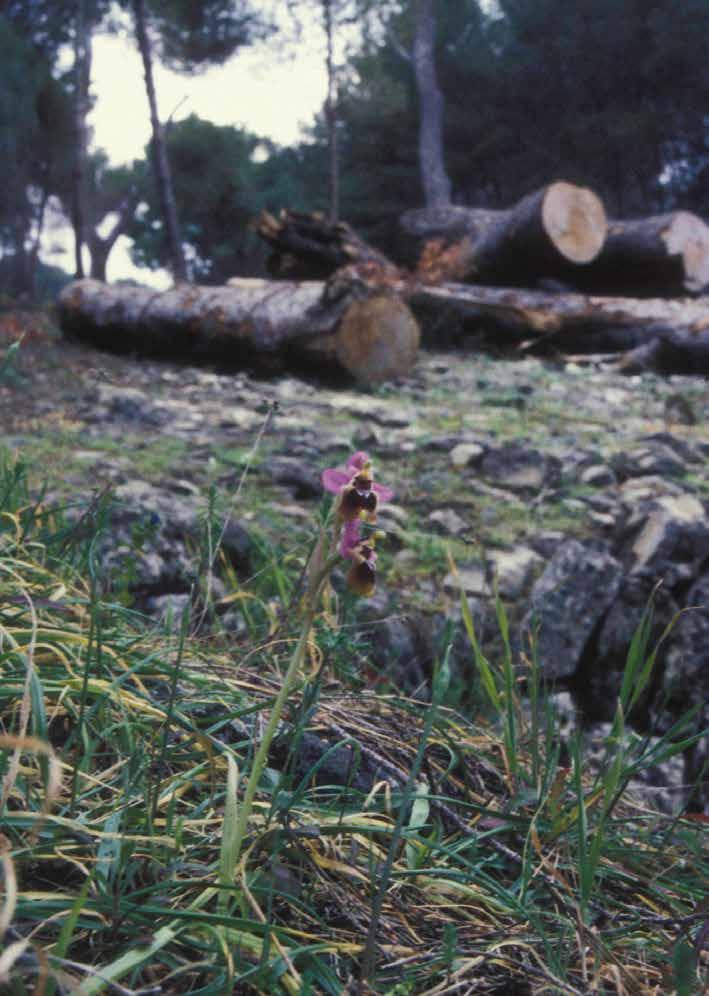
Close relationship between nature a Sawfly orchid (Ophrys tenthredinifera) and man’s actions in felling trees for development Cala San Vincente, Mallorca.
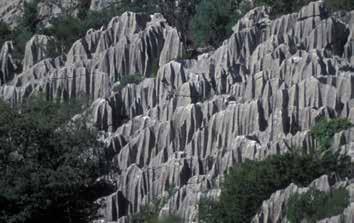
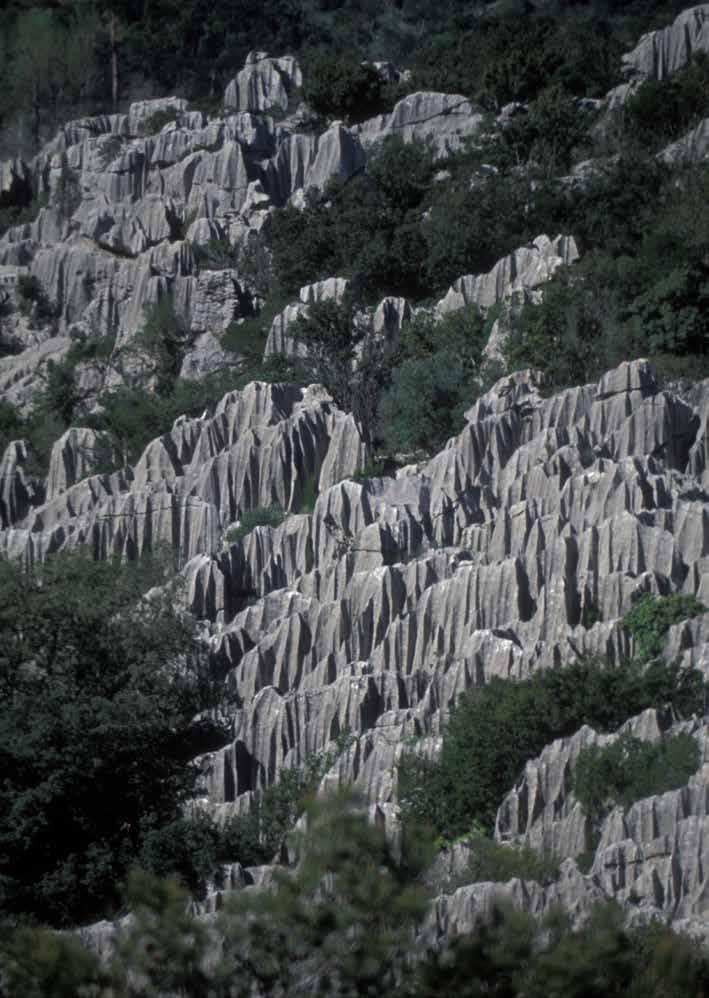
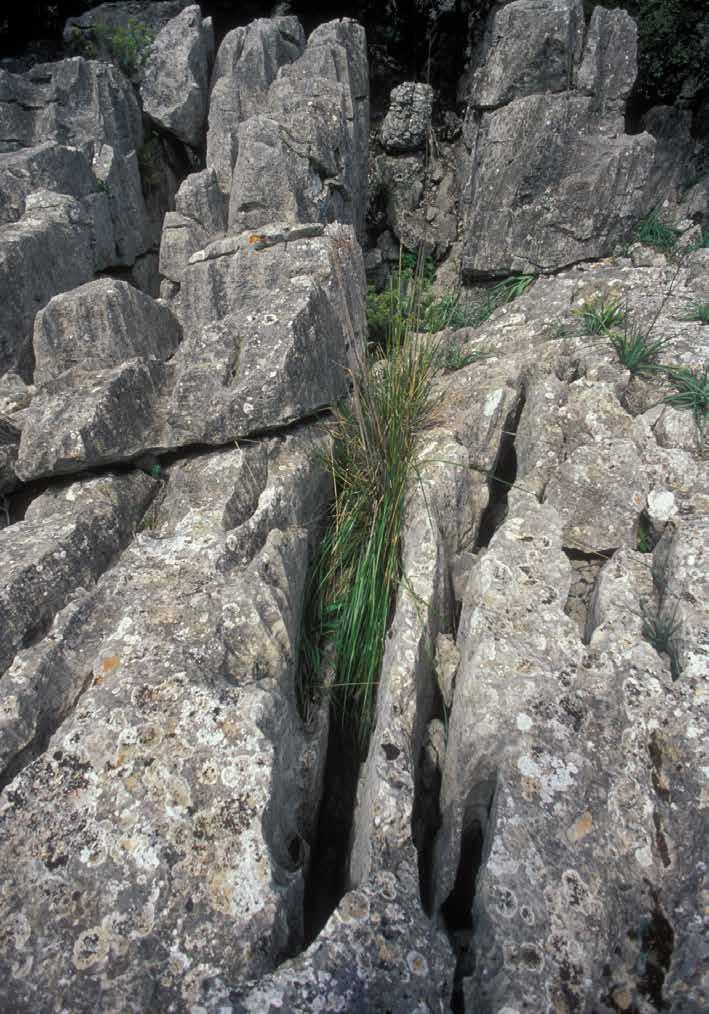
Limestone grykes in close proximity to an olive grove in the Serra de Tramunta, Mallorca.
Weathered limestone of the Serra de Tramunta, Mallorca.
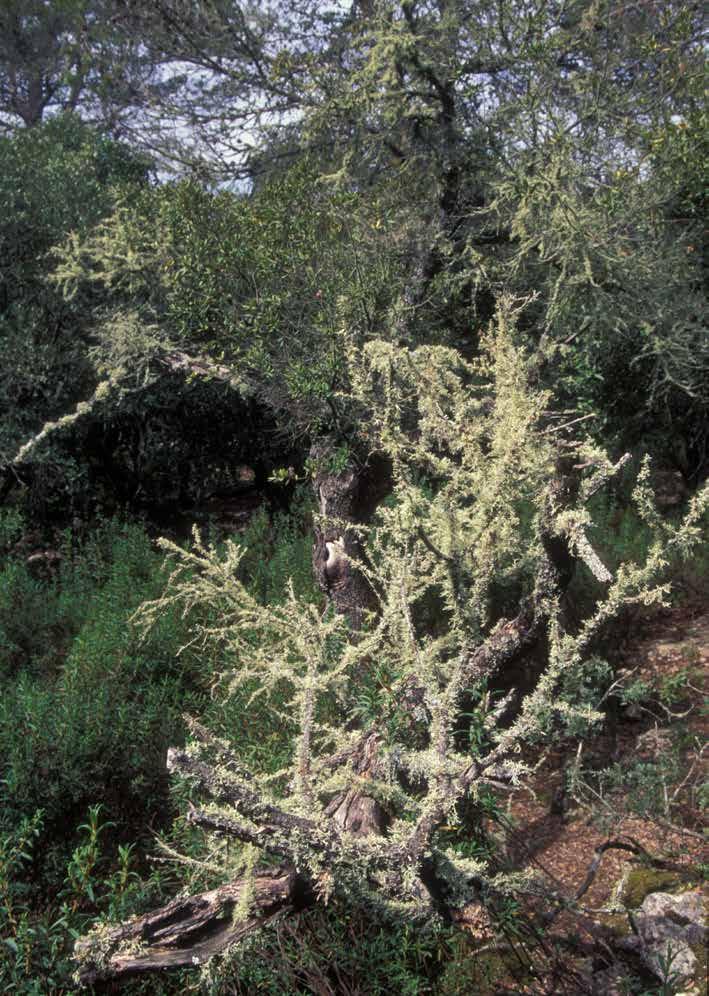
A lichen covered tree, evidence of unpolluted air in the lower slopes of the Serra de Tramunta, Mallorca.
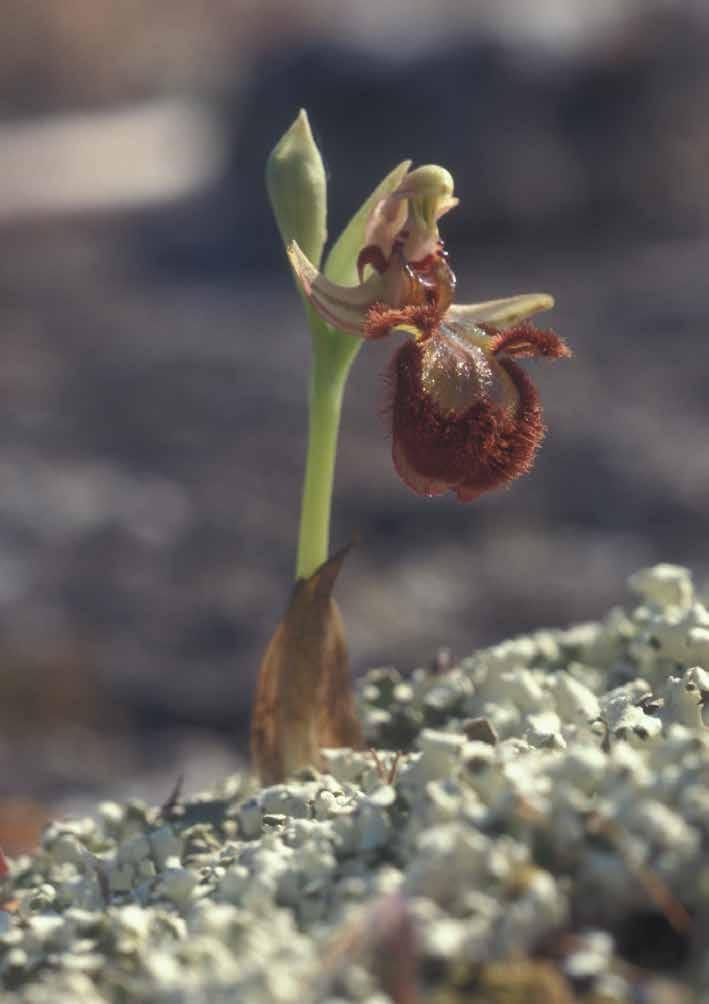
An orchid growing out of a bed of lichen Cladonia gracilis, S’Albufereta, Near Porto Pollenca, Mallorca.
Endemic Cyclamen balaericum growing in a crack in the limestone near the Serra de Tramuntana
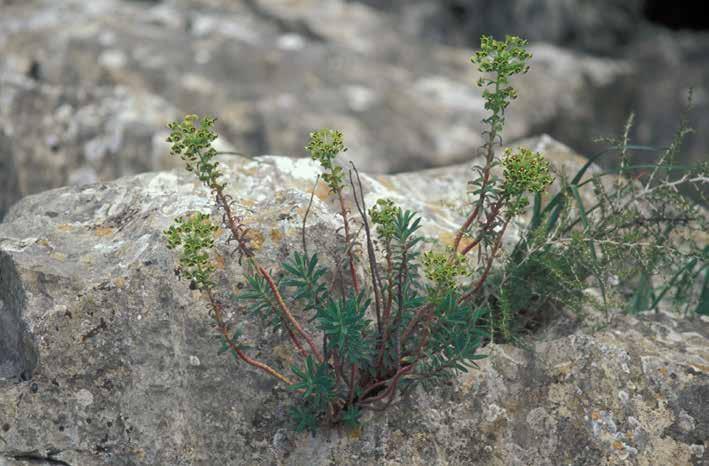
Euphorbia characias (Mediterranean Spurge): A common, large, and striking shrub often found in mountain areas and clearings, characterized by tall stems and yellow-green bracts.
A gryke (the deep, eroded fissures in limestone pavement) something we more commonly associate with the north of England, particularly in the Yorkshire Dales and Cumbria.
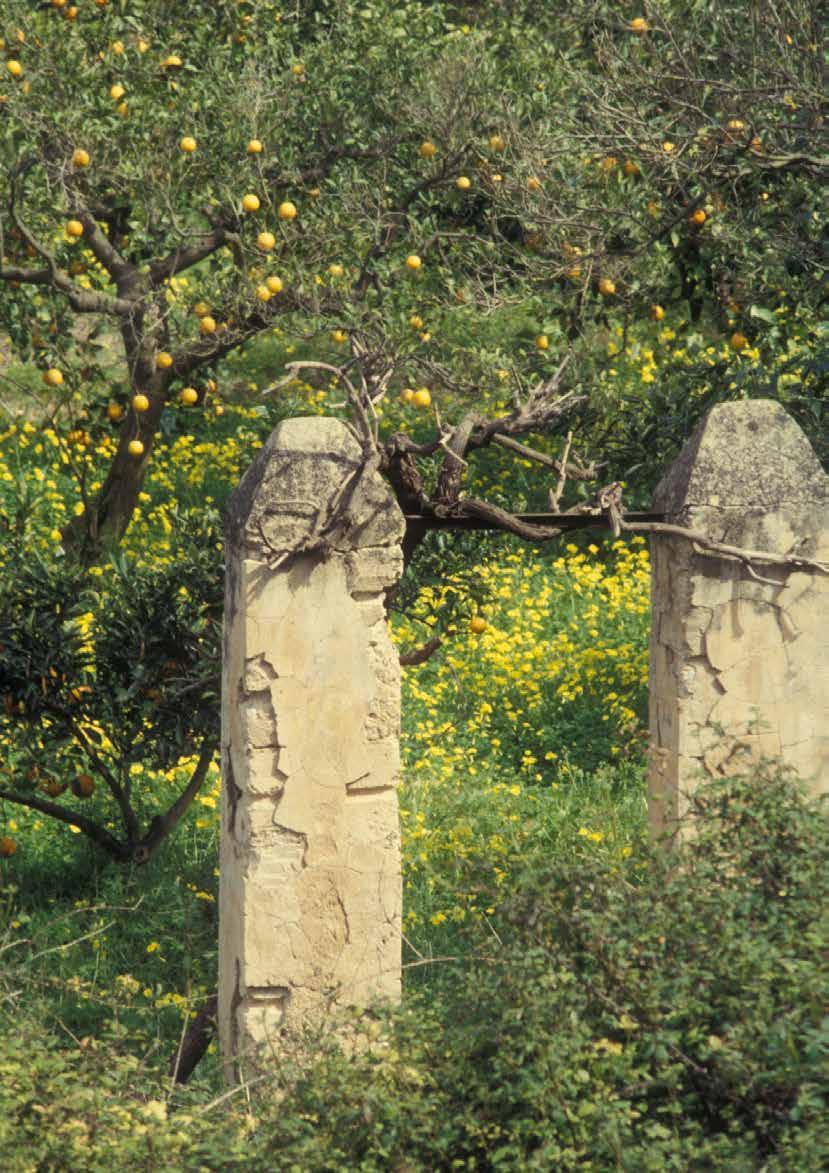
Orange grove and old entrance to a finca on the road to Soller from Porto Pollenca.