2026–2027
UPPER SCHOOL | GRADES 9–12
VISION
Developing People the World Needs
VALUES
Think Deeply | Learn for Life | Welcome Everyone Live with Purpose | Relationships Matter
2026–2027
UPPER SCHOOL | GRADES 9–12
Think Deeply | Learn for Life | Welcome Everyone Live with Purpose | Relationships Matter
Students take required courses, along with additional coursework in academics and the arts, throughout their years of high school in order to be engaged and productive members of this vibrant learning community. Through an intentional course registration process each year, and with the support of their advisors and counselors, students are encouraged to go deep into areas of interest, challenge themselves through their coursework, and expand their learning and interests by trying additional disciplines that may be new to them. Students take courses beyond the graduation requirements as detailed below.
A diploma from Rowland Hall indicates the successful completion of four years of a planned high school experience. A credit is equal to one yearlong course or two semester-long courses. Some disciplines may require a yearlong course to fulfill a graduation requirement.
English: 4 credits
History and Social Sciences: 3 credits
Sciences: 3 credits
Mathematics: 3 credits
World Languages: 2 credits in sequence within one language (three years recommended)
Visual Arts, Performing Arts, and Media Arts: 1.5 credits
Ethics: 0.5 credit
Health Education: 0.5 credit
Physical Education: Four seasons (athletics) or three semesters (personal fitness, dance, external athlete, and/ or Rowmark), equivalent to 1.5 credits
Additional Coursework*: 2 credits minimum Authentic Learning and Innovation**: 0.5 credit (beginning with class of 2028)
Minimum Total Credits: 21.5***
*Additional coursework is defined as any courses taken that exceed the minimum requirement in a particular discipline.
**Authentic Learning and Innovation (ALI) coursework includes courses in aviation, business and entrepreneurship, computer science and robotics, media and design, and speech and debate, and/or an independent project or study through the ALI Project Lab (grade 12 only). See page 41 for additional details.
***Rowland Hall students take a full-time course load of no fewer than six courses per semester, and no more than seven courses per semester, to maintain good academic standing. Rowmark student-athletes take a maximum of six courses in the first semester and five courses in the second semester.
Students should be aware of requirements specific to the institutions they are interested in applying to, including NCAA and state institutions such as the public California university and college system (which, as an example, has a specific fine art requirement of 1 credit in the same fine art). Most Rowland Hall courses are NCAA-approved; the list can be found by searching for Rowland Hall in the NCAA High School Portal.
Students hoping to gain admission to selective colleges and universities are advised that the graduation requirements for the Rowland Hall diploma are a framework on which to build a complete transcript. These requirements do not in themselves necessarily meet the recommended course suggestions of more selective colleges.
While all colleges maintain some flexibility in preparation requirements, applicants to selective colleges will ordinarily be competing against students who have minimally taken the following:
• Four years of English
• Four years of mathematics
• Three to four years of sciences
• Three to four years of at least one world language
• Three to four years of history and social sciences
Additionally, competitive colleges will expect Rowland Hall students to take advantage of our broad Advanced Placement and Advanced Research offerings (details below).
Students who wish to participate in NCAA athletics at the Division I or II levels should be aware of the eligibility requirements. All NCAA ski programs are Division I, even when other athletic programs at the college or university may be Division III. The best place to find up-to-date information on eligibility requirements is at ncaa.org.
All students are urged to collaborate with their advisors, teachers, administrators, and, beginning in their junior year, college counselors to undertake the programs that most align with their interests and goals.
Rowland Hall offers advanced, Advanced Placement, and Advanced Research courses in several disciplines.
• Advanced designates either accelerated coursework in an academic discipline or a class that requires significant prior coursework and experience.
• Advanced Placement (AP) classes are college-level courses and follow the curriculum published by the
College Board. These courses culminate in the AP exam in May (or portfolio for AP art students).
• Advanced Research (AR) courses are designed to engage students beyond AP curricula, with an opportunity to learn college-level research skills in a particular discipline, develop an original thesis, and conduct work under the guidance of an expert in a particular field. Some AR courses offer the opportunity to present at a conference, publish original work, and/or collaborate with a university professor.
Admission to any course with an advanced designation is made on the basis of departmental and/or teacher recommendation and an assessment of the student’s overall course load. Some classes may require prerequisite coursework, a minimum grade threshold, and/ or a placement exam.
Rowland Hall recommends that 10th graders take no more than two courses with advanced or AP designation; 11th graders may take up to three courses with the AP or AR designation, and 12th graders may take up to four courses with the AP or AR designation. Any student hoping to take more than the recommended number must engage in the course petition process; see Course Registration Process for details.
Students should be aware that courses designated as advanced, AP, and AR carry increased homework requirements. All students enrolled in AP courses are required to take the AP exam. AR courses may require a public component to the coursework, such as presenting at a conference, participating in a competition, or publishing original research.
In the rare instance that a student takes an AP course but not the AP exam for reasons approved by the school, they must complete a comparable assessment of their work in the course. Failure to take the AP exam as scheduled (and without administrative approval) or failure to put in a good-faith effort on the test may result in removal of the AP designation from the second-semester transcript. The student will be required to notify colleges of this situation.
Registration for coursework at a university, an online school, or another high school must be approved by the head of the Upper School. The criteria are usually that the course is not available at Rowland Hall, is not a required Rowland Hall course, does not conflict with a student’s Rowland Hall class schedule, and that the student’s level of maturity would likely allow them to do the work successfully alongside their school work. Any cost incurred must be assumed by the student. A course taken from another institution does not appear on the Rowland Hall transcript; the student will need to request a transcript from that institution.
To receive credit for a course taken outside the Rowland Hall curriculum, the student must submit an outline of the course to the head of the Upper School for approval before the course begins. Credits are not accepted retroactively.
Rowland Hall is exploring a partnership with One Schoolhouse, an online academic program tailored for independent schools that runs synchronously with our school year. As this program is still in the pilot phase, students may only take a course through One Schoolhouse in consultation with the assistant head of the Upper School and to fill a particular need that cannot be met by the at-school curriculum. One Schoolhouse courses do appear on the Rowland Hall transcript.
The course registration process begins in late winter and runs through the spring. Students are introduced to new courses, identify areas of interest, and develop a course plan for the following school year while also maintaining a “Four-Year Plan” digital worksheet with the assistance of their advisors and teachers. The plan may also be reviewed by the learning specialist, head and assistant head of the Upper School, and college counselors (grades 11–12). Parents and caregivers have a chance to review the proposed course plan during student-led conferences in the spring.
Students can engage in the course petition process to request entry into courses they may not have been recommended for and/or to petition to take more than the recommended number of advanced courses (see Advanced Coursework on page 5 for specifics).
If a student needs to make a schedule change within four weeks of the beginning of the semester, the grade from the original course will transfer to the new course. The teacher, along with the department chair and dean of academics, will determine the appropriate grade based on time spent in the original course prior to the change. (Examples: AP English Literature and Composition to English IV; French II to French I; AP Biology to Human Anatomy and Physiology.)
If a student drops a class and enters a new class in another discipline where carrying over the grade does not make sense, the student can only receive a P or F (pass or fail). (Example: A student drops AP Physics and decides to take AP Computer Science Principles on October 17. The student’s transcript will not include AP Physics but will show a P or an F in AP Computer Science Principles for the first-semester grade.)
If a student needs to make a schedule change more than four weeks into the semester and is dropping a course, the dropped course will appear on the transcript as “withdraw pass,” “withdraw fail,” or “withdraw.” Grades will transfer if the student moves a level, based on the same scenario outlined under Course Changes with Grade Impact.
The timeline described above applies to new semesterlong courses added or dropped in the second semester.
Changes to yearlong classes may only be made in consultation with the dean of academics. If a student needs to make a schedule change for the second semester in a yearlong course, their first-semester course and grade will appear on the transcript and they will start the new course in January.
See the Upper School Handbook for additional information related to Rowland Hall’s academic and cocurricular program and school life.
Rowland Hall’s Upper School English program prepares students to be people the world needs who:
• Understand themselves and their world more clearly
• Read and write fluently
• Communicate ideas in multiple rhetorical formats
• Conduct independent research
• Summarize and synthesize information
Students gain confidence in their ability to read critically by asking questions about a wide variety of texts— fictional and nonfictional, historical and contemporary, canonical and non-canonical. As a department, we focus on process as well as product; students practice skills sequentially as they move through the curriculum. At each level, they are encouraged to reflect upon their work and to set goals specific to their improvement.
No prerequisite Students enhance their reading and writing skills by studying canonical and contemporary works of world, British, and American literature. Through these works, with their varied voices and perspectives, we examine thematic questions common to people of different languages, historical periods, and cultures. Students practice skills of literary analysis in close reading exercises, critical essays, and assessments, and practice critical-thinking skills in small-group and whole-class discussions. Students also learn to identify grammatical features of sentences and sentence structures, and they practice punctuation skills that will help them become better editors of their own writing in the Upper School and beyond. Additionally, the class reinforces research skills in writing and in public-speaking tasks.
Four years (4.0 credits) required
No prerequisite
Students explore the literature of Britain and the postcolonial diaspora, with the basic assumption that British literature is inherently diverse and exciting. By reading contemporary postcolonial and canonical British voices, students will consider cross-cultural encounters and discuss how literature defines and highlights differences between people and cultures, and provides understanding across different perspectives. Students will discuss ideas and texts in large and small groups, with the goal of understanding new perspectives. Students will write in many registers, both creative and academic. They will be encouraged to experiment formally while also receiving a solid foundation in structured analytical writing that will prepare them for AP English classes in their junior and senior years, if they choose to take them. With a firm emphasis on developing an effective writing process, the course empowers students to choose topics and structures, identify their purpose, develop their voice, and solve writing problems through drafting and revision.
No prerequisite
Students explore ways in which American writers— fiction and nonfiction—have engaged with their immediate community and used their work to shape our society. Throughout the year, students expand their knowledge so that they can participate in this world of ideas and explore the subtleties of these texts. As students sharpen their ability to ask questions and draw inferences, they see how language is a powerful tool. By drafting and editing their own writing, students refine their critical-thinking skills and produce polished essays—creative and analytical.
Prerequisite: B or higher in English II and departmental recommendation Students in AP English and Composition learn to read critically and to analyze the rhetorical and stylistic devices at work in a wide variety of challenging texts, including creative, persuasive, and expository essays. Specific to this AP course, students examine how writers use the nuances of language as a tool to craft their message for a particular audience and to achieve their desired purpose. Students also practice research skills through reading, annotating, and synthesizing essays on a range of historical and contemporary issues. In addition to formal analysis, students work on developing their own voice, structuring an argument, and crafting personal narratives that speak to important transformational moments in their lives.
No prerequisite
English IV prepares seniors to write across the curriculum, with an emphasis on literary analysis, personal narrative, professional writing, and rhetoric. Through studying short literary works (essays, short stories, and poems), students hone their analytical skills on a variety of texts by a wide range of authors. Through a long-term, collaborative, interdisciplinary professional writing project, they develop their abilities to work in groups, persuade audiences through their writing, and support arguments using library research. And through creative assignments, they exercise their imaginative self-expression and love of language.
Prerequisites: B or higher in English III or AP English Language and Composition, and departmental recommendation
This course challenges seniors to engage with contemporary and historical texts on personal, creative, rhetorical, and theoretical levels. Students will recognize that they build persuasive interpretations by asking complex questions of texts. Thus, they explore their speculations through student-led class discussions, individual presentations, research tasks, team teaching, informal discussion posts, timed writings, and formal analytical essays. Students will develop fluency in reading fiction, drama, and poetry as they develop confidence in their ability to articulate compelling analyses and express their insights with precision and subtlety.
(SEMESTER-LENGTH COURSE)
No prerequisite
In this course, students explore various forms of poetry, fiction, nonfiction, or drama. Through an extensive series of exercises and visits by guest writers, students hone their craft and find pleasure and insight into the creative process. In this class, students produce the school’s
literary magazine, Tesserae, a consistent winner of the National Council of Teachers of English’s Recognizing Excellence in Art and Literary Magazines award, for which over 400 schools compete. Tesserae has also won the literary arts magazine Pacemaker Award from the National Scholastic Press Association “in recognition of general excellence and outstanding achievement by a high school magazine in a national competition.” Students may take this course over consecutive semesters and/or multiple times. This course is cross-listed with Visual Arts, Performing Arts, and Media Arts and can be taken for arts, ALI, or additional coursework credit.
(SEMESTER-LENGTH COURSE)
Prerequisites: Completion of an AP history course and/or AP English Language and Composition, and departmental recommendation; open to students in grades 11–12
This course is cross-listed with History and Social Sciences; see that section for the course description.
Rowland Hall’s Upper School history and social sciences program prepares students to be people the world needs who:
• Craft and dissect compelling narratives about the past and present
• Explore the complexity, nuances, and contradictions of the past and present
• Offer sophisticated questions that lead to compelling projects
• Think critically about historical and contemporary sources
• Develop strong reading and research skills
• Write persuasive, evidence-based arguments
• Understand themselves and the world around them more fully through their studies
No prerequisite
Students are introduced to the discipline of history by exploring major global religions and examining how faith traditions have interacted with political power. Studying traditions such as Hinduism, Buddhism, Confucianism, Judaism, Christianity, Islam, and Indigenous religions, students consider the political, intellectual, social, and economic forces that shaped and were shaped by religion. Students learn how historians access, construct, and analyze the past by examining primary sources and evaluating secondary source arguments. In the fall, students develop skills in critical reading, listening, notetaking, discussion, and persuasive writing, applying these habits to the historical content of this course and to other classes. In the spring, students build on these skills as they explore a specialized topic about the global past.
(SPRING)
Prerequisite: Successful completion of Historical Foundations I
This course explores how culture and ideology shaped modern societies in the 19th and 20th centuries. Students examine how ideas about identity, belief, and modernity developed and were challenged across different regions of the world. Through comparative study, students analyze political, religious, and cultural change in a global context. Topics may include nationalism and mass politics, the role of religion and secularism in public life, the cultural impact of imperialism, and the effects of global wars and revolutions on art and literature. A central focus of the course is how “the East” was represented in Western and global culture, and how those representations influenced power, policy, and lived experience. Students work with a range of primary sources, including visual and literary materials, to strengthen skills in historical analysis, interpretation, and argumentation.
(SPRING)
Prerequisite: Successful completion of Historical Foundations I
This course examines the expansion of empires and the resistance movements that emerged during the 19th and 20th centuries. Through case studies from multiple regions, students explore how colonial rule reshaped political systems, economies, and cultures, and how individuals and communities challenged imperial power. Topics include European colonialism in Latin America and South Asia, the rise of nationalist and
independence movements, and Japan’s transformation into a modern nation-state and imperial power. The course also considers the collapse of empires and the challenges faced by newly independent nations, including decolonization, reconstruction, and statebuilding. Students analyze primary sources from diverse perspectives—such as political documents, personal narratives, and visual materials—to develop skills in contextualization, comparison, and evidence-based historical argument.
(SPRING)
Prerequisite: Successful completion of Historical Foundations I
This course investigates how modern global systems— including industry, trade, technology, politics, and ideology—shaped societies and generated new forms of conflict in the 19th and 20th centuries. Students examine how industrialization, imperial competition, and expanding global connections transformed relationships among nations and peoples. Topics may include industrial capitalism, imperial rivalries, World War I, World War II, and the Cold War, with attention to proxy wars, ideology, and propaganda. The course also explores the lasting consequences of modern conflict, such as decolonization, migration, environmental impact, and the development of international organizations. Through close analysis of primary sources, students build skills in historical thinking, comparison, and argumentation while connecting local experiences to larger global systems.
No prerequisite
Europe and the Atlantic World is a survey of the roots and development of civilization on the European continent, as well as its interactions with the world. We explore the values, systems of trade and economic development, and political change that created the European modern world. The course’s primary goals are to develop (a) an understanding of some of the principal themes in European history, (b) the ability to analyze historical evidence and historical interpretation, and (c) an ability to express historical understanding in writing. To accomplish these goals, students will critically read, evaluate, and discuss their textbook, primary sources, and academic articles that help scholars make sense of the European past. In terms of critical thinking and writing, students will apply the comparative method, assess change over time, and synthesize multiple primary sources into persuasive evidence-based arguments.
Prerequisites: B or higher in Historical Foundations, and departmental recommendation
AP European History covers the period from approximately 1350 through the Cold War era and prepares students for both a university-level European history course and for success on the AP European History exam. The course’s primary goals are to develop (a) an understanding of principal themes in modern European history, (b) the ability to analyze historical evidence and historical interpretation, and (c) an ability to express historical understanding in writing. Students will critically read, evaluate, and discuss their textbook, primary sources, and intellectual and cultural developments of the European past. In terms of critical thinking and writing, students will apply the comparative method, assess change over time, and synthesize multiple primary sources into persuasive evidence-
based arguments. Students will practice these writing skills on document-based questions, long essays, and short-answer questions. In the course of mastering the temporal history of the European past, students will also explore different historical approaches, assess divergent interpretations of the past, and develop methods of researching and evaluating historical evidence.
No prerequisite
This course examines the history of North America and the United States, but does so in a manner that will be different from some of your prior history classes. Rather than advancing a survey-style narrative from the pre-Columbian Indigenous past through the foundation of the British colonies and into the late-20th century United States, this course will not attempt to cover every detail of the American past; instead, we’ll work to uncover what historians do and how they interrogate and reconstruct the past. Narratively, the course begins with major questions about our contemporary moment and uses those as jumping-off points to work backwards and explore earlier eras. The structure and sequence of the course will develop organically over the course of the year, based in part on student interests. In examining the American past, the course will use a variety of methods, from traditional lectures to student-led discussions to case studies to extended research projects.
Prerequisites: B or higher in prior history coursework and departmental recommendation
AP United States History seeks to prepare students for university-level courses in United States history and for success on the AP United States History exam. In pursuit of that goal, the course requires students to master the temporal, social, cultural, economic, and political histories of pre-Columbian Indigenous peoples, the
British North American colonies, and the United States. Students will grapple with historical concepts such as contingency, agency, and positivism as analytic tools. In addition, students will learn to integrate competing narratives grounded in race, class, gender, region, party, religion, and immigrant status. Chronologically, the course begins before the advent of European contact with the Americas and ends in the last decade of the 20th century. The course employs a textbook, monographs by scholars in the field, primary source materials, art, and material culture to convey not only the intellectual concepts of the past but also the lived experience of each period.
(FALL)
No prerequisite; open to students in grades 10–12
This course explores the history and lasting political impact of the Supreme Court through the lens of landmark decisions and constitutional legal principles. The Supreme Court may be the most important institution in American politics and has been at the center of social change throughout history. As conflicts over religion, speech, police powers, and racial equality surfaced and boiled over, it was the Supreme Court that determined the new social “order” (sometimes on a 5-4 decision). In addition to unpacking different interpretations of the constitution, students will gain a greater understanding of their own rights in a historical context and how to exercise them. As a blended history and political science course, students will read and write extensively to prepare for our in-class student-led discussions. During the semester, students will also work on a variety of projects including collaboratively building a timeline about the history of a specific civil liberty, writing a research paper in the form of an amicus curiae brief, and participating in a mock trial. This class is perfect for anyone who’s interested in law school, politics, history, or social justice.
No prerequisite
This course is cross-listed with Authentic Learning and Innovation and may be taken for ALI or history credit. See the Speech and Debate section under Authentic Learning and Innovation for the course description.
Prerequisite: Departmental recommendation; open to students in grades 10–12
AP Art History welcomes students into the global art world, where they’ll engage with its forms and content as they research, discuss, read, and write about art, artists, art making, and responses to and interpretations of art. By investigating specific course content of 250 works of art characterized by diverse artistic traditions from prehistory to the present, students develop indepth, holistic understanding of the history of art from a global perspective. Students learn and apply skills of visual, contextual, and comparative analysis to engage with a variety of art forms, developing understanding of individual works and interconnections across history. AP Art History is the equivalent of a two-semester introductory college or university art history survey course.
No prerequisite; open to students in grades 10–12
This course offers an in-depth exploration of developmental processes during childhood focusing on key theories, research methods, and practical applications. Students examine the interplay of intellectual, social, emotional, and physical development, while considering the role of context and culture. Topics include prenatal influences, cognitive growth, emotional regulation, and social relationships. The
course emphasizes understanding the connections between developmental theories, research findings, and their real-world implications, including social policy impacts on child well-being. Through lectures, readings, discussions, and interactive assignments, students develop critical-thinking skills and a deeper appreciation of the complexities of child and adolescent growth. Assessments include quizzes, participation in discussions, and assignments that encourage active engagement with course materials. By the end of the course, students will have a comprehensive understanding of the factors shaping child development and the tools to apply this knowledge effectively.
(SPRING)
No prerequisite; open to students in grades 10–12
This course offers a broad overview of the various domains of adolescent development. The primary goal of this course is to gain in-depth knowledge and understanding of the theories and research findings associated with this period of human development. This goal will be achieved through reading and interactive lectures, whole-class and small-group discussions and activities, individual writing assignments and tests, and use of technology and media. A secondary, but equally valuable, goal of this course is to provide training and practice in academic inquiry skills including critical thinking, creative thinking, questioning, constructing and making arguments, academic writing, oral expression, and research. Assessments include quizzes, participation in discussions, and assignments that encourage active engagement with course materials. By the end of the course, students will have a comprehensive understanding of the factors shaping development and the tools to apply this knowledge effectively.
No prerequisite; open to students in grade 12 only AP Psychology provides students with a broad overview of the diverse field of psychology. The course explores psychological facts, principles, and theories within each of the major subfields of psychology, including, but not limited to, research methodology and statistics, biological bases of behavior, learning, cognition, memory, development, personality theory, and abnormal behavior.
(SEMESTER-LENGTH COURSE)
Prerequisite: Completion of an AP history course and/or AP English Language and Composition, and departmental recommendation; open to students in grades 11–12
This Advanced Research course offers students the opportunity to engage in the craft of history and conduct work similar to that of professional historians—creating their own projects, developing unique arguments, and presenting that scholarship to authentic audiences. Students will explore historical case studies that examine the methods and ethics of the discipline and further prepare them to undertake a major research paper. For that assignment, students will develop a research topic, formulate a focused question, conduct primary research in available archives, and write a publishable-length (approximately 20–25 pages) original research paper, which they will submit to a peer-reviewed scholarly journal. In working toward the final draft, students will complete smaller assignments. In addition to consulting primary and secondary sources, students will learn about digital tools for research management as well as how to conduct archival research and navigate university libraries. While students will choose their own research project with the approval of the instructor, they will also engage with the research of their classmates in class meetings and workshops. Students will read the drafts of others' work and provide comments and suggestions. This course is cross-listed with English.
Rowland Hall’s Upper School sciences program prepares students to be people the world needs who:
• Are critical thinkers, flexible problem-solvers, and responsible citizens
• Are confident in evaluating evidence
• Can ask questions, conduct experiments, and analyze data
• Can apply their knowledge to novel situations
The Science Department offers core courses in physics, chemistry, and biology that highlight fundamental physical and biological concepts. Integrated Science coursework is foundational and leads to diverse options, including advanced pathways across several fields of scientific study. In all classes, students focus on both the content and the practices of science. Through faculty support and discussions, students craft science paths to pursue the topics in which they are most
interested and invested, including opportunities for advanced research in biology and chemistry.
No prerequisite for Integrated Science I; successful completion of Integrated Science I is a prerequisite for Integrated Science II
This two-year course sequence covers fundamental physical and biological concepts, providing the foundation necessary to choose from a range of more advanced options in the junior and senior years.
This course of study includes a survey of Newtonian mechanics and helps students understand how the universe works on a macro level. Topics of study include interactions of matter, energy, velocity, acceleration, force, energy, momentum, and light. Topics will be approached from both conceptual and mathematical ADDITIONAL
perspectives. Chemical concepts and techniques are also introduced to help students understand how the universe works on a micro level. Topics of study include the nature of matter, atomic theory, chemical bonding, chemical reactions, and states of matter. Most topics are approached from both qualitative and quantitative angles. Finally, biological concepts are introduced through the study of evolution, which is central to both our understanding of biology and to our ability to think, see, and probe the world as biologists. Core topics are shared biochemistry, types of cells and cell division, common ancestry, heredity, natural selection, and speciation. We will also study energy transfer with cellular respiration and photosynthesis, and examine examples of homeostasis in human physiology.
Students learn this material through laboratory experiments, demonstrations, simulations, and lectures, and conduct lab investigations in which they collect, analyze, and use data to support scientific claims. Labs are an integral part of this curriculum, which is aligned with Next Generation Science Standards, including elements of three-dimensional learning: science and engineering practices, disciplinary core ideas, and crosscutting concepts. Students select from a series of applied scientific lab experiences for the final stretch of the Integrated Science progression.
(SEMESTER-LENGTH COURSE)
Prerequisites: Successful completion of Integrated Science I and the first semester of Integrated Science II Scientists today can manipulate the biological world like never before. It’s common to modify the activity and regulation of existing genes or to engineer entirely new pathways in a variety of organisms. Thanks to molecular biotechnology, hundreds of therapeutic agents, diagnostic tests, and vaccines are now available, with many more in the pipeline. Scientists have also
genetically modified plants and animals to improve crop yields and enhance desired traits, and are manipulating microorganisms to achieve bioremediation and largescale production of useful metabolites. This course will open the door to the highly innovative world of biotechnology as both a scientific and economic venture. By deconstructing a genetically modified organism, or GMO, students will learn about how key technical advances such as polymerase chain reaction (PCR), cloning, and genomic editing have galvanized this field in the past decades and made possible the stunning array of applications we see today. Students will also learn how science interacts with society and about ethical considerations, regulatory aspects, and intellectual property/patents in relation to biotechnology.
(SEMESTER-LENGTH COURSE)
Prerequisite: Successful completion of Integrated Science I This course studies Earth's climate past, present, and predicted future. We conduct research on the effect of temperature on living systems, such as lilacs, insects, and aquatic ecosystems, and share findings with citizen science projects such as the National Phenology Network and GLOBE. Using living systems and examples from our own region, we study the carbon cycle and biogeochemical processes that determine the carbon balance in the biosphere, ocean, and atmosphere. We use chemistry and physics to evaluate the properties of carbon dioxide and other greenhouse gasses. Once students understand how human activities and natural processes impact Earth's climate, we examine how climate change affects different parts of the world, including the Great Basin, Arctic, island nations, and coastal states. We work with local groups to better understand climate science, policy options, and policy debates so students are prepared to engage with climate questions we will face for the foreseeable future.
(SEMESTER-LENGTH COURSE)
Successful completion of Integrated Science I and the first semester of Integrated Science II
Students will master core principles of mechanics, energy, and momentum as they apply to circular and rotational motion; electricity, magnetism, and electromagnetic induction; and geometric optics and light. Algebra and trigonometry will be used extensively to solve increasingly complex, multi-step problems, with the goal of developing systematic, analytic thinkers. Students will also gain hands-on experience with experimentation setup, data collection and interpretation, and written and oral presentation of results. Emphasis will be placed on understanding tabular and graphical data, and converting between the two forms.
(SEMESTER-LENGTH COURSE)
Prerequisites: Successful completion of Integrated Science I and the first semester of Integrated Science II
John F. Kennedy once said, “We are tied to the ocean, and when we go back to the sea … we are going back from whence we came.” Did you ever wonder what happens beneath the waves of the sea, or how the sea influences your life, wherever you live? In Marine Science we will study the physical and biological systems of the ocean. We will answer questions such as: How do plate tectonics create the ocean basins? How does the moon influence the tides? What is the Gulf Stream? What do sponges and anemones reveal about the evolution of animal life? Why should we protect sharks? Have we saved the whales? We can maintain a marine aquarium and dissect a variety of marine specimens in order to discover the ocean in our landlocked state.
(SEMESTER-LENGTH COURSE)
Prerequisites: Successful completion of Integrated Science I and the first semester of Integrated Science II Because birds are the most visible of all wildlife, they make a great entry point for better understanding our landscapes and environment. In this course, students will learn how to identify birds in our region. They will learn to recognize birds by sight and sound, and gain an understanding of where they live, how they survive, and how bird conservation improves the lives of other living things, including people. Of particular interest will be birds of Great Salt Lake and how to protect them, and other urgent conservation concerns, such as sage grouse. We will use Sibley's Field Guide to Birds and materials from the Cornell Lab of Ornithology. Field trips could include Great Salt Lake, local canyons, and Bryce Canyon National Park. If it is true that, as Aldo Leopold said, “we can only be ethical in relation to something we can see, understand, feel, love, or otherwise have faith in,” then this class will inspire you to be a steward of our shared environment.
Prerequisites: Successful completion of Integrated Science I and Integrated Math II This lab-based course will focus on the principles that are fundamental to the various fields of engineering. Students will be introduced to the engineering design cycle and will use this process on problem-based explorations. The first-semester course will cover topics across civil, mining, and chemical engineering. The course is differentiated into multiple semesters-long course arcs covering each topic.
well as material sciences. The course is differentiated into multiple semesters-long course arcs covering each topic.
Students may take Engineering I and Engineering II over consecutive semesters to earn a full-year credit in engineering.
(SPRING)
Prerequisites: Successful completion of Integrated Science I and Integrated Math II
This lab-based course will focus on the principles fundamental to the various fields of engineering. Students will be introduced to the engineering design cycle and will use this process on problem-based explorations. The second-semester course will cover topics across mechanical and electrical engineering, as
Prerequisites: Successful completion of Integrated Science I and II
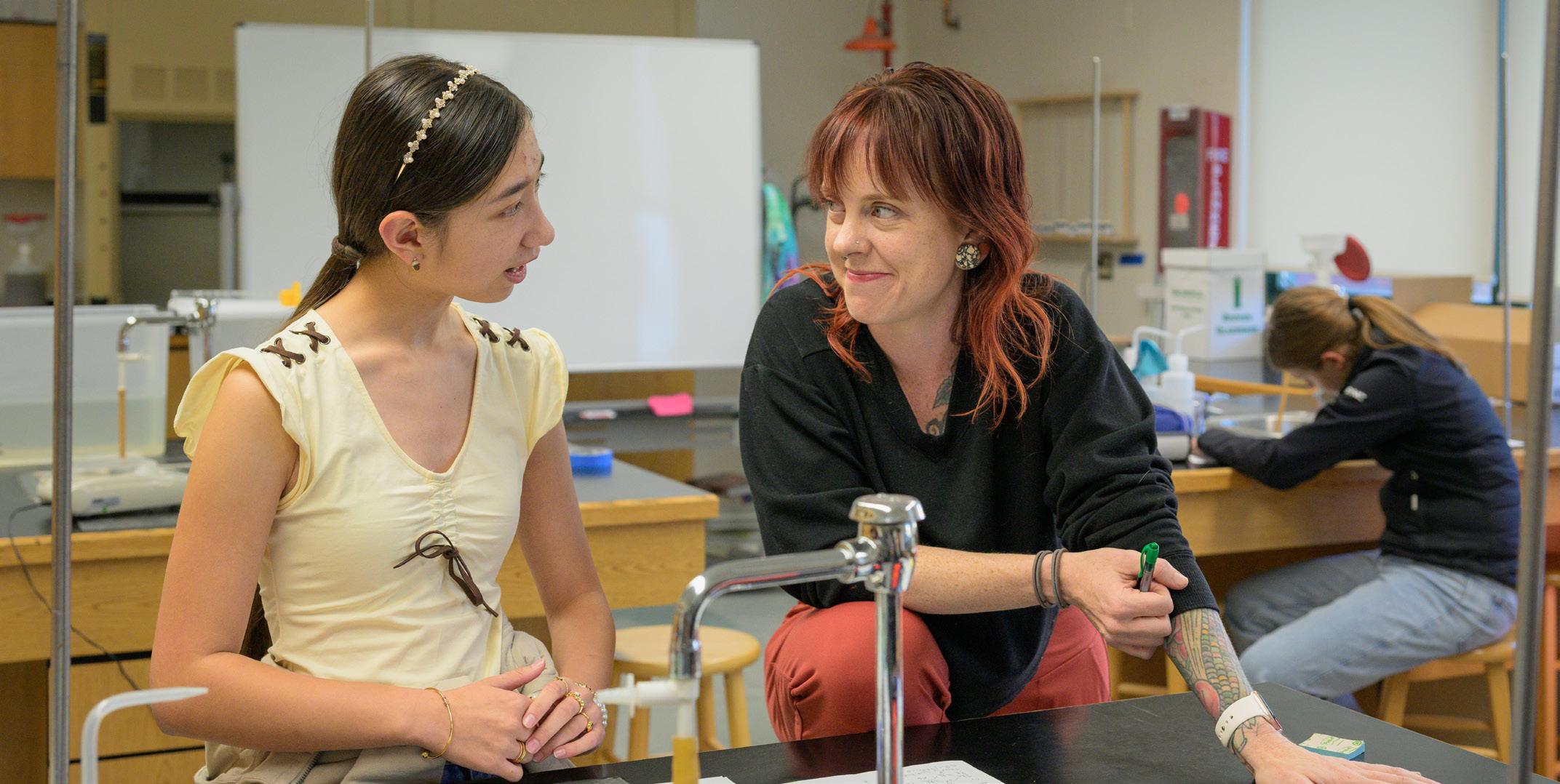
In this yearlong, lab-based course, students will explore the biologic relationship between the structure and functions of the human body. Students will learn the names and locations of organs within the human body and understand the function of each individually and as part of a system. Weekly laboratory sessions will focus on hands-on gross dissection of fetal pig, microscopic observation of different tissue types, and inquiry-based activities testing physiology. The organ systems taught will include circulatory, pulmonary, renal, gastrointestinal, reproductive, endocrine, hematologic/immunologic/ musculoskeletal, and nervous.
Prerequisites: Successful completion of Integrated Science I and II
Biology is a way to inquire into, see, and know the living world. By diving into areas such as foundational biochemistry, cell biology, molecular biology, genetics, physiology, ecology, and evolution, this course crystallizes the value of understanding nature at various levels of organization. We will develop an appreciation of recurring themes amidst the diversity and complexity of living things, the connection between Earth’s history and the history of life on Earth, bidirectional interactions between biotic and abiotic factors, exchange of matter and energy flow, and emergent properties. Additionally, we will appreciate biology as an intrinsically interdisciplinary form of human knowledge. Students will engage in independent and guided projects, and connect principles and concepts to authentic experiences and clinical/environmental challenges at the community and global levels. Learning will be facilitated through diverse media and rich classroom discourses, lectures, videos, model building, demonstrations, and experiments. Students will develop the ability to define problems, collaborate to synthesize pertinent information, design experiments/clinical trials, gather and analyze data, use logic and reasoning to draw conclusions, and communicate this process orally and in writing.
Prerequisites: Successful completion of Integrated Science I and II
AP Chemistry is an advanced, lab-based course that provides an in-depth exploration of general chemistry concepts equivalent to a first-year college chemistry course. Through hands-on experiments and the use of modern instrumentation, students will collect, analyze, and interpret data to investigate chemical phenomena. The course emphasizes connecting theoretical concepts to real-world applications by engaging with scientific
literature and current research. Topics include energy transformations, reaction kinetics, equilibrium, acidbase chemistry, and thermodynamics. Students will refine critical-thinking and problem-solving skills while collaborating in labs and discussions. Strong math skills and a solid foundation in prior chemistry coursework are essential for success in this rigorous and rewarding course.
Prerequisites: Must be enrolled in Precalculus or a higher mathematics course and have successfully completed Integrated Science I and II
AP Physics is a laboratory-based physics course that focuses on key concepts of fluid dynamics, thermodynamics, electrostatics and circuits, magnetism and induction, optics, and modern physics. Through inquiry-based learning and laboratory activities, students will build on their understanding of physics and the scientific process. This course will provide a venue to use advanced mathematical skills in problem-solving and project-building. AP Physics requires students to be very comfortable with algebra, trigonometry, and the basic concepts of precalculus. AP Physics is explicitly designed to prepare students for the AP Physics 2 exam and will follow the prescribed curriculum from the College Board.
Prerequisite: Successful completion of AP Biology
This course provides students an opportunity to experience the research and communication process in the biological and biomedical arena, develop broadly transferable skills, and experience the thrills, disappointments, and detours of doing science. By extending classroom learning; developing analytical, quantitative, and critical-thinking skills; collaborating with researchers; and elevating their ability to think creatively and communicate accurately, this course places students at the frontiers of research. Students will identify, locate,
and dig into primary scientific literature, familiarizing themselves with burning questions, research methods, and experimental, biostatistical, and in silico analyses. They will research a topic with a goal to submit a paper/manuscript for peer review. They will learn about ethical obligations to human research participants and animal research subjects, and about standards that guide interactions among individuals in a collaborative scientific community. Students should have strong critical reading and scientific writing skills, and deep factual/conceptual knowledge of content covered in AP Biology, as they will assimilate high-level research articles, interpret data, derive insights, apply learning toward real-world problems, and discern future directions for inquiry.
Prerequisite: Successful completion of AP Chemistry
This immersive interdisciplinary course is designed to engage students in scientific exploration with a focus on sustainability. Students will work to address challenges faced by communities and industries seeking to implement viable solutions that contribute to a more sustainable future. Throughout the course, students will delve into cutting-edge research on a specific topic aimed at advancing sustainable solutions. Students will connect with leaders in academia, industry, and advocacy to explore collaborative opportunities aimed at advancing sustainable practices. They will gain laboratory experience, honing their practical skills, conducting experiments, and applying theoretical knowledge to real-world scenarios. Students will acquire proficiency in reading scientific literature, analyzing data to deduce results and implications, and effectively communicating scientific findings both orally and in written form throughout their journey. Furthermore, students will gain firsthand experience in the research process as well as experience the successes, failures, and unexpected tangents it involves.
Prerequisite: Successful completion of AP Chemistry and/or AP Physics
Advanced Research Physics is an interdisciplinary course that empowers students to spearhead original scientific inquiries in their chosen field of interest. By partnering with professional mentors from academia and industry, students engage in high-level collaboration involving physical experimentation or computational modeling. The course emphasizes the mastery of the scientific method from hypothesis development to data analysis, culminating in formal scientific presentations. This course is designed for self-motivated learners with a strong foundation in advanced chemistry, physics, and mathematics.
Rowland Hall’s Upper School mathematics program prepares students to be people the world needs who:
• Are fluent in modeling real-world phenomena numerically, algebraically, graphically, and verbally
• Can communicate their thinking clearly and logically
• Use technology to illustrate their ideas and deepen their mathematical understanding
• Engage in authentic work to quantify genuine problems encountered in our communities
• Are quantitatively literate
• Are informed and responsible global citizens
Math courses aim to support students as they grow into mathematicians, matching their goals and ambitions. Through conversations with their teachers and advisor, each student will develop their personal journey through one of the pathways we offer.
Prerequisites: Successful completion of eighth-grade math and departmental recommendation In ninth grade, the study of linear relationships stems naturally from data investigations and can be used to model a variety of relationships in the world around us. Lines are the building blocks of geometry, and studies of transformations can be used to explain many of the algebraic properties of lines. The study of math literacy leads seamlessly to the proficiency of simplifying expressions and solving equations. Students will explore the different ways of graphically and numerically representing a system of equations, and their applications in the real world. Investigation of algebraic relationships in different representations allows students to develop their conceptual fluency. Learners are also introduced to exponential functions, including contextual examples. Successful completion of Integrated Math I prepares students for Integrated Math II the following year.
Three years (3.0 credits) required
Prerequisite: Successful completion of Integrated Math I or departmental recommendation
In this course, students will engage with geometry, trigonometry, and algebra in multiple representations to deepen their mathematical and conceptual fluency. Students continue building their function repertoire by digging more deeply into polynomial functions and their application to real-world phenomena. Students will become confident in their understanding of quadratic functions, and utilize parabolas to visualize situations and make predictions. Students will also extend the topics of geometry to trigonometric applications. Through the modeling of natural and social phenomena, students will develop an intuitive understanding of inverse functions and begin to develop ideas of statistical inference and probability. Successful completion of Integrated Math II prepares students for Integrated Math III or Precalculus the following year.
Prerequisite: Successful completion of Integrated Math II or departmental recommendation
Integrated Math III reinforces and extends the study of functions begun in Integrated Math I and II. Students will continue to develop fluency with linear, exponential, and trigonometric relationships using numerical, graphical, and algebraic representations. In addition, Integrated Math III introduces topics in computer science and statistics. Toward that end, much of our study of functions is done in the context of real data and regression modeling. Students will also learn some basic programming concepts in support of studying probability through the simulation of chance events. Successful completion of Integrated Math III prepares students for AP Computer Science Principles and AP Statistics the following year.
Prerequisite: Successful completion of Integrated Math III or Precalculus
Data science is an interdisciplinary field that combines ideas from data analysis, computer science, and mathematics to extract meaning from data. This course will focus on practical application of data analysis so that students develop concrete and applicable skills through handson activities. Students will use technology to find and communicate meaning in data, and to think critically about arguments based on data. In this course, students will collect data relevant to them (transportation, recycling, water, neighborhood stress/chill maps, daily habits, etc.). Students will learn how to use spreadsheets and other technology to access data, create meaningful visual representations, construct predictive models, and ultimately assess the significance of their findings using simulation.
Prerequisites: Placement test and departmental recommendation
This course is designed for ninth-grade students who intend to complete AP Calculus BC as juniors. This is a rigorous and accelerated course in which the material from a traditional Algebra II course and select precalculus topics are covered in greater depth and sophistication. Students begin the year studying arithmetic and geometric sequences and recursive systems. They then use linear functions to model approximately linear datasets and use technology to learn about linear regression and linear programming. Quadratic, polynomial, root, exponential, logarithmic, and trigonometric functions are covered from both algebraic and modeling perspectives. This course includes a rigorous development of mechanics and solution techniques, along with a greater focus on theory and analysis. Advanced Algebra students should enjoy doing mathematics and showing creativity in problemsolving. They should be comfortable reasoning abstractly and wrestling with challenging problems. Successful
completion of Advanced Algebra prepares students for Advanced Precalculus the following year.
Prerequisites: Successful completion of Integrated Math II and departmental recommendation
Precalculus emphasizes the study of functions and their applications. The year begins with modeling linear and quadratic phenomena, followed by a unit extending trigonometry and trigonometric functions from the previous year, as well as practice with combining and operating with rational expressions. Students will spend the majority of the second semester on polynomial, rational, exponential, and logarithmic functions. Themes of limits, rates of change, and optimization are woven into the curriculum throughout the year. The goal of Precalculus is to develop a deep conceptual understanding and procedural fluency in these topics. Students will be asked not only to perform calculations accurately but also to explain why the procedures they perform yield the desired results. Reasoning and justification are necessary ingredients of this course. The course focuses on encouraging students to become competent and confident problemsolvers. Group activities give students the opportunity to work cooperatively as they think, talk, and write about mathematics. Successful completion of Precalculus prepares students for Calculus, AP Calculus AB, or AP Statistics the following year.
Prerequisites: B or higher in Advanced Algebra and departmental recommendation
This is a rigorous, accelerated course designed for 10thgrade students who intend to go directly to AP Calculus BC in 11th grade. Students will be expected to work cooperatively as they embrace challenging concepts and articulate their observations. Students will study
relations and functions, modeled with accompanying graphs and situations, including exponential, logarithmic, trigonometric, and parametric functions as well as their inverses. The course integrates the analysis of functions and their behavior with the ideas of calculus through the lens of change. Calculus topics such as differentiation and integration, and their applications, will be studied in depth. Students will use technology as an aid to visualization and understanding of the ideas under consideration. Students will not take an AP exam for this course; the AP Calculus BC exam will be taken at the end of the following year.
Prerequisites: Successful completion of Integrated Math III or Precalculus, and departmental recommendation In AP Statistics, students learn about the major concepts and tools for collecting, analyzing, and drawing conclusions from data. Per the College Board, AP Statistics is equivalent to a one-semester, introductory, non-calculus-based college course in statistics. The course is centered around three broad themes: producing, exploring, and summarizing data; introductory probability theory; and statistical estimation and inference. Throughout the course, students will work with real data, and significant emphasis is placed on interpreting and critiquing numerical results within the context of the dataset. Writing is a significant component of the course (almost more than computation—we leave much of that to the machines), and students will learn to use language both accurately and precisely when communicating the results of their analyses. At the end of the course, students will be able to communicate quantitative information, generate useful data from well-designed experiments and well-drawn samples, and use this data to draw inferences about larger populations.
Prerequisites: Successful completion of Precalculus and departmental recommendation
This course provides students a hands-on, exploratory introduction to calculus. The majority of the time will be spent exploring the major ideas of calculus: continuity, limiting processes, rates of change (derivatives), and area under the curve (integration) through interactive applets and applied problems. Students will focus on conceptual understanding rather than technical manipulation. The goal is for each student to notice that the ideas of calculus arise naturally and to clearly state those ideas. Students will collect evidence for why these results are reasonable. Finally, students will know what to do with these results; they should be able to apply them, whether in science or mathematics itself. At the same time, students will continue to build their proficiency with the families of functions and trigonometric concepts they have encountered in their Precalculus class. They will also continue to develop a deeper understanding of algebraic principles, which will ensure they are prepared for the
challenge of college coursework. Using mathematical software, both graphing and algebraic, will be an integral part of the course.
Prerequisites: Grade of B or higher in Precalculus and departmental recommendation
AP Calculus AB develops students' understanding of the concepts of calculus, and of its methods and applications. The course emphasizes a multi-representational approach to calculus, with concepts, results, and problems expressed graphically, numerically, analytically, and verbally. AP Calculus AB requires students to implement all mathematical concepts covered in previous high school classes. Competency in geometry formulas and rational, radical, polynomial, exponential, logarithmic, and trigonometric functions is expected. The first month is dedicated to limit theory, leading to differentiation and integration and their basic formulas. Topics include definition of the derivative using limits, fundamental
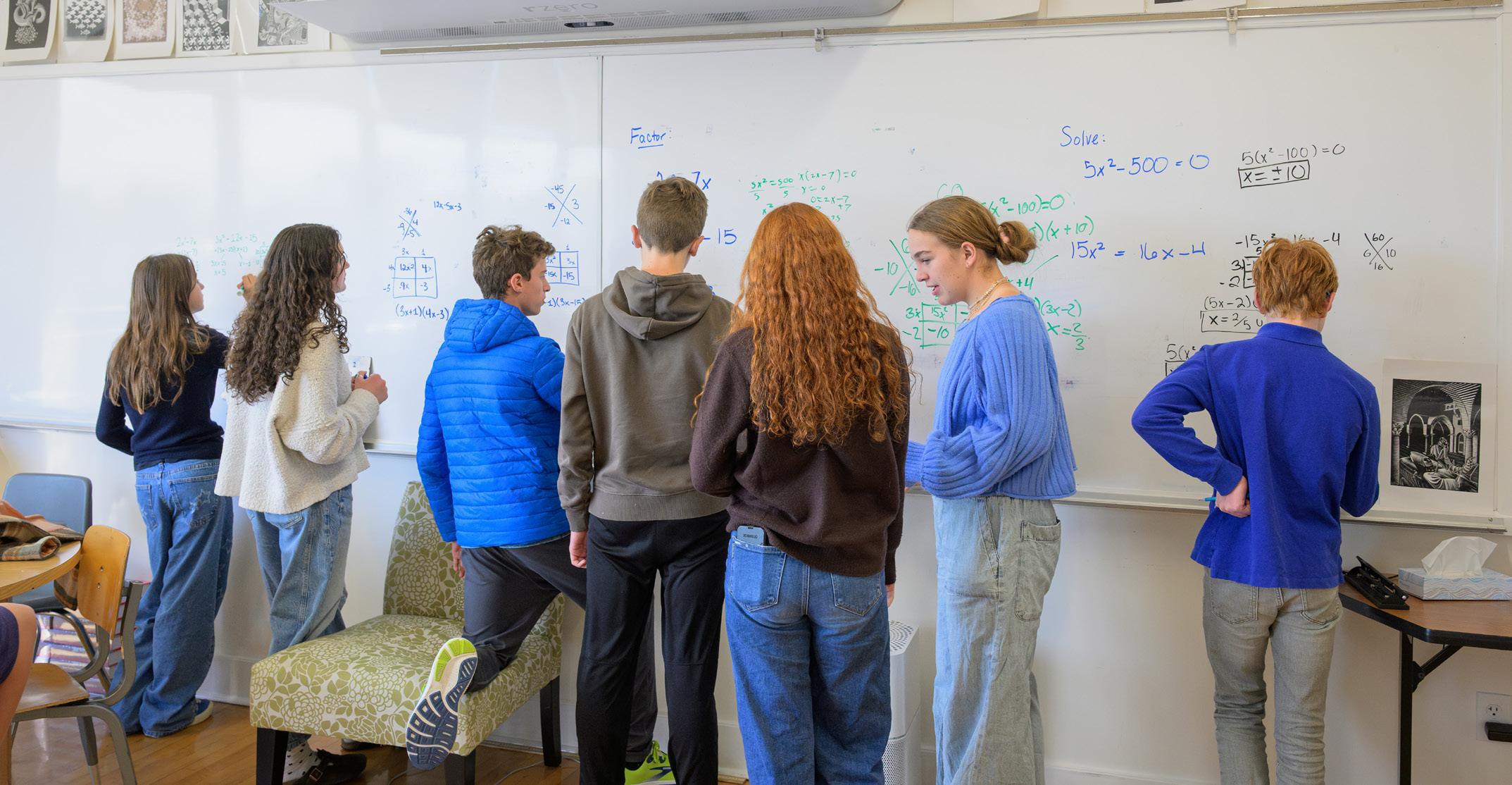
differentiation formulas, tangent lines, rates of change, related rates, and applying calculus to principles of physics. Advanced techniques of differentiation and integration are studied, followed by the calculus of exponential growth, logarithms, and differential equations. Volumes of revolution is the concluding topic and a highlight of the year. A graphing calculator is required to enhance concept connections and support solutions; an approved calculator is required for the AP exam. Preparation for the AP exam is a main class objective.
Prerequisites: 3 or higher on the AP Calculus AB exam, or B or higher in Advanced Precalculus, and departmental recommendation
This rigorous, challenging course provides the equivalent to two semesters of college calculus. Preparation for the AP Calculus BC exam is the primary focus of this course; as a result, students will spend the majority of time grappling with difficult problems in a cooperative setting where they have meaningful mathematical conversations with classmates and present at the board. A graphing calculator is required to enhance concept connections and to support solutions. In addition, an approved calculator is required for the AP exam. Demonstrations in class will be performed with the TI-84. This course builds upon and extends the topics in AP Calculus AB. Topics include limits, the definition of the derivative, the Fundamental Theorem of Calculus, and several techniques of integration. Differential and integral calculus will be applied to related rates, optimization, and motion (linear and curvilinear) problems. In addition, solving differential equations, finding area and volume, and analyzing parametric, polar, and vector-valued functions are introduced. Finally, students explore numerical methods of approximation including Newton’s method, Riemann sums, trapezoidal approximations, Euler’s method, and Taylor series.
Rowland Hall’s Upper School world languages program prepares students to be people the world needs who:
• Communicate effectively in the target language of their choice in order to engage in a variety of situations and interactions
• Connect with other disciplines and acquire information and diverse perspectives in order to use their target language in academic, social, and career-related situations
• Use their target language to investigate, explain, and reflect on the concept of culture through comparisons of the cultures studied and of their own
• Interact and communicate with cultural competence in order to participate beyond the classroom in local multilingual communities and around the world
The ability to communicate clearly with respect and cultural understanding in more than one language is an essential element of global competence in the 21st century; therefore, helping students reach a high level of cultural and communicative competence in the target language is a fundamental goal. Students will become skilled and thoughtful communicators in their target language and will be able to apply their language abilities and cultural knowledge to successfully interact with others as empathic and well-informed world citizens.
No prerequisite
This beginning Chinese course is intended for students with no prior knowledge of any Chinese dialect or written Chinese. The course will introduce the Chinese Pinyin Romanization system (tones, rules of phonetic spelling, and pronunciation) and Chinese characters (creation and evolution, stroke order, structure, the writing system, and
calligraphic techniques). Reading and writing skills are introduced and students develop basic skills in listening, speaking, reading, and writing.
Prerequisites: Requires successful completion of Chinese I and/or departmental recommendation Students continue to develop and master the essential linguistic skills required for listening, speaking, reading, and writing. The course focuses on learning basic grammar and vocabulary elements by studying language in authentic contexts using simplified Chinese characters and Pinyin. Oral/aural drills, role-playing skits, group activities, conversation, multimedia resources, and realia are used to reinforce the individual and collaborative effort. Students also develop an introductory understanding of the history and culture of China.
Prerequisites: Requires successful completion of Chinese II and/or departmental recommendation Students will further develop the four essential linguistic skills of listening, speaking, reading, and writing by expanding the grammatical structures and vocabulary studied in Chinese I and II. The ongoing mastery of vocabulary and grammar introduced at each level is essential for future success in Chinese. Oral/aural drills, oral presentations, role-playing skits, questionand-answer practice, conversation, compositions, group activities, multimedia resources, and realia are utilized to reinforce grammar concepts and sentence structure. Individual and collaborative efforts are essential factors for the development of proficiency. Students also continue to explore the history and culture of China.
Two years (2.0 credits) required in sequence within one language
Prerequisites: Requires successful completion of Chinese III and/or departmental recommendation
This advanced course will further develop the four essential linguistic skills of listening, speaking, reading, and writing for students. We will emphasize grammatical structures while expanding previously studied vocabulary. The topics will move to more abstract subject matter. In addition to spoken style, more written style expressions are gradually introduced at this level. Chinese history and culture are also integrated.
Prerequisites: Requires successful completion of Chinese IV and/or departmental recommendation
The goals of AP Chinese Language and Culture are to help students reach the second-year college level of proficiency and to succeed across the three communicative modes (interpretive, interpersonal, and presentational) on the AP exam. In addition to communication, the course also addresses the other four goals of “Standards for Foreign Language Learning: Preparing for the 21st Century”: cultural competence, connections to other school disciplines, comparisons between Chinese language and culture and those of learners, and the use of the language within the broader communities beyond the traditional school environment.
No prerequisite
French I is designed to give students an understanding of basic sentence structure, including elementary negations as they fit into usage with the three basic first-year verb tenses: present, past, and future. The three verb groups will be taught extensively, as will a wide variety of irregular verbs. How to form questions with the above tenses will
be included. Vocabulary will include everyday nouns from a variety of situational settings, including numbers, family, clothing, countries and nationalities, sports, places in town, food, household items, and transportation. Students will also learn adjective agreement and placement. By the second semester, the course will be taught almost entirely in French and students will be required to use only French in the classroom.
Prerequisites: Successful completion of French I and/or departmental recommendation
All classes of French II are in the target language. French I or Middle School French material is reviewed for the first quarter, after which the following tenses are introduced and practiced: past, imperfect, and future tenses, and conditional mood. In conjunction with all of these tenses, direct and indirect pronouns and simple relative pronouns are studied, and adverbs are added as well. A great deal of oral practice through dialogues, skits, and games emphasizes the use of these tenses. Vocabulary builds throughout the year; examples are professions, food, studies, body and illnesses, and the environment.
Prerequisites: Successful completion of French II and/or departmental recommendation
A review and reinforcement of French II takes place during the first part of the year. Students will learn to use comparatives and superlatives and past tenses of previously studied tenses. The subjunctive and the gerund are studied in the second semester. Students will learn useful words for essay writing and will also hone their essay writing skills in the target language. The study of vocabulary will take a more holistic approach by building an understanding of the origins of words, the meanings of prefixes, cognates and false cognates, synonyms and antonyms, the nominalization of verbs or adjectives, and
the different spoken French around the world. Students will read the French version of The Little Prince and will work on longer pieces of writing with the book.
Prerequisites: Successful completion of French III and/or departmental recommendation French IV is composed of two one-year revolving courses so that students may choose to take two years of literature without rereading anything. Essay writing and discussions are principal components of the course. Students will also prepare for the AP French Language and Culture exam. Students study the following works, either in part or in whole: “La Chanson de Roland,” La Fontaine’s fables, La Belle et la Bête by Jeanne-Marie LePrince de Beaumont, Les Contes by Charles Perrault, and La Peste by Albert Camus.
Prerequisites: Successful completion of French IV and/or departmental recommendation
AP French Language and Culture is equivalent to an intermediate level college course in French. Students cultivate their understanding of French language and culture by applying interpersonal, interpretive, and presentational modes of communication in real-life situations as they explore concepts related to family and community, personal and public identity, beauty and aesthetics, science and technology, contemporary life, and global challenges.
No prerequisite
In Spanish I, focus is on the systematic development of the four basic language skills: listening for comprehension, speaking, reading, and writing to reinforce the structure of the language. The goal is to move students toward communicative competence. These four language skills are presented within the context of everyday life and the Spanish-speaking world (including the United States) and its culture. The classroom format for level I includes the following: interactive activities, oral question-andanswer segments, short dialogues, and skits. Students are expected to speak in Spanish during the class period with infrequent exceptions as of the spring of level I. The grammatical structures for simple present and past are covered, along with basic vocabulary and idioms. All grammar will be sequenced throughout the language levels. Mastery of this material is essential for progression to the next language level.
Prerequisites: Successful completion of Spanish I and/or departmental recommendation
In Spanish II, focus continues to include the four language skills (listening for comprehension, speaking, reading, and writing), with an increased emphasis on more complex grammatical structures. This course includes a review of the simple present and past, as well as progression to the imperfect past, the future and conditional, and the compound structures of present perfect and past perfect. Grammar is used as a tool to achieve communicative competence. In addition to similar teaching techniques (interactive activities, question-and-answer segments, and so forth), students at level II have the opportunity to increase their language learning through participation in conversation topics and projects. At this level, students are expected to speak in Spanish during class with infrequent exceptions.
Prerequisites: Successful completion of Spanish II and/or departmental recommendation
A primary goal of Spanish III is to build and enhance students’ communicative and cultural competence. The course, therefore, emphasizes daily communication through the four key language skills: listening, speaking, reading, and writing. Special focus is placed on applying the language in real-world, practical contexts while comparing students’ own cultures with those of the Spanish-speaking world. Key topics often revolve around daily life and may include food and culture, hobbies, health, clothing and shopping, travel and vacations, and family. Students will expand their speaking and writing abilities, gaining the skills needed to talk about themselves and express their opinions on societal issues. In addition, the course introduces more advanced grammatical structures and vocabulary, while reinforcing concepts learned in previous Spanish classes. To create an immersive learning environment, the class is conducted entirely in Spanish.
Prerequisites: Successful completion of Spanish III and/ or departmental recommendation
Spanish IV is an advanced course designed to prepare students for AP Spanish Language and Culture or midto upper-level university Spanish classes. The course is conducted entirely in Spanish, with a strong emphasis on reading, writing, and dynamic class discussions. Through the exploration of Spanish and Latin American culture, fiction, history, and current events, students will be encouraged to move beyond surface-level understanding and engage deeply with the rich and diverse cultures of the Spanish-speaking world. Key topics may include the Spanish Civil War, exploring poverty through literature, the cultural significance of La Virgen de Guadalupe in Mexican society, the benefits and pitfalls of technology, and Catalonia’s relationship with the rest of Spain. The
curriculum also incorporates advanced grammar and idiomatic expressions, equipping students with the linguistic tools to express themselves more clearly, accurately, and confidently in Spanish.
Prerequisites: Successful completion of Spanish IV and/ or departmental recommendation AP Spanish Language and Culture is designed to mirror an advanced-level college course in Spanish. Students deepen their understanding of the Spanish language and culture by engaging in interpersonal, interpretive, and presentational modes of communication. The course explores a wide range of themes that may include family and communities, personal and public identities, beauty and aesthetics, science and technology, contemporary life, and global challenges. Throughout the year, students develop a greater appreciation and understanding of the diverse traditions, histories, and cultures of the Spanish-speaking world. They read, interpret, analyze, and discuss current events, short fiction, and a variety of authentic materials. These include podcasts, audiovisual sources, news websites like BBC Mundo and EL PAÍS, Américas magazine, and sections from Andrés Oppenheimer’s ¡Basta de Historias! In addition, students refine their writing skills by practicing various formats, such as formal emails and argumentative essays. The course is conducted entirely in Spanish.
Prerequisite: Students must have functional, conversational oral proficiency, usually developed by speaking Spanish at home
This course is designed to further develop and improve the overall Spanish linguistic skills that students already possess through authentic texts, discussions, and writing. Students will also explore and expand their understanding of the Hispanic world and its presence in the United States through literature, history, geography, and cultural units. This course encourages students to continue the study of their native language and fosters interest in all academics. Students participate in learning activities that emphasize meaningful communication, fluency, critical-thinking skills, cultural awareness, and positive self-image. This course is designed to create bilingual, biliterate, and bicultural students.
Rowland Hall’s Upper School visual arts, performing arts, and media arts program prepares students to be people the world needs who:
• Use art to respond to and affect the world around them
• Develop compassion that spirals out of the school and into the world
• Know how to collaborate creatively and effectively with others
• Use authentic learning experiences to find and cultivate their creative voice
• Understand that curiosity, imagination, vulnerability, and failure are catalysts for growth
The Visual Arts, Performing Arts, and Media Arts Department fosters an inclusive school environment
grounded in trust, wherein students honor and respect themselves, their community, and the spaces they inhabit.
(SEMESTER-LENGTH COURSE)
No prerequisite
The goal of this introductory Studio Art class is to provide an understanding of and experience in a variety of art media and techniques. Studio Art offers opportunities for students to learn and explore drawing, painting, printmaking, assemblage, sculpture, 2D design, 3D design, and color theory through a variety of units. Each class creates a challenging and positive environment that places concepts, materials, tools, and understanding in the hands of each student. Art historical perspectives are continually reinforced, as are conceptual issues presented through contemporary art. Collaboration with other disciplines is welcomed when appropriate.
Prerequisites: Successful completion of two semesters of Studio Art or equivalent experience, and/or training in an approved program; departmental recommendation required; portfolio review strongly suggested; open to students in grades 11–12
Advanced Studio Art provides a challenging yearlong opportunity to explore concepts and techniques in the visual arts. Students are introduced to a range of art-making media in a structured environment and challenged to find individual solutions to projects that meet the criteria of well-rendered, well-conceived, thoughtful artistic study and practice. The resulting artworks demonstrate a year of technical and conceptual achievement, and, in some cases, provide the individual artist a foundation on which to pursue more self-guided discovery in AP Studio Art.
Prerequisites: Successful completion of Advanced Studio Art and departmental recommendation with portfolio review; open to students in grade 12
AP Studio Art is offered to art students who are thinking about careers in visual art and the pursuit of visual art at the university level. Students pursue individual solutions to projects that require a growing level of creativity and confidence. The goals of this one year of AP Studio Art are twofold: 1) to prepare motivated students for one of the AP Arts exams (AP 2D Art and Design, or AP Drawing) and submission of a comprehensive portfolio of work in May, and 2) to provide the serious student of art a rich and rewarding experience that delivers a better understanding of the demands made by strenuous studio practice and consistent creative thought.
(SEMESTER-LENGTH COURSE)
No prerequisite
This course provides an introduction to the principles, techniques, and expressive possibilities of sculpture, inviting students to tap into their creativity. Students learn fundamental sculptural concepts, gain experience with materials, and hone processes. From traditional mediums, such as clay and wood, to contemporary materials, including found objects and recycled items, participants will experiment with a variety of forms, encouraging a diverse, inclusive approach to sculptural expression. Engaging in hands-on projects will guide students through the basics of form, volume, and texture, fostering an understanding of spatial relationships. Emphasis will be placed on developing a sculptural vocabulary and cultivating the ability to communicate ideas through 3D art. In addition to practical skills, this course aims to instill a deeper appreciation for the historical and cultural significance of sculpture. Students will explore the works of renowned sculptors and gain insights into the evolution of sculptural practices across different artistic movements, eras, and continents.
No prerequisite
Ceramics provides an inclusive space where students of all levels come together to learn and mentor one another. Skills in coil building, slab building, wheel turning, and individualized aesthetic building through compositional projects are primary. Ceramic arts will be showcased as part of the Larimer Center gallery during the first semester. Upper School students may take this course over consecutive semesters and/or multiple times.
(SPRING)
No prerequisite
Students will author material solutions to real design issues, gaining valuable experience imagining, planning, and creating, and build a deeper understanding of design principles that serve as the building blocks of more sophisticated tasks. In the 2D design segment, students delve into foundations of composition, color theory, and graphic representation, and explore infographics to make data and/or statistical information easier to understand. Through hands-on projects, participants refine skills and come away inspired to perhaps study design further. Transitioning seamlessly into the 3D design component, students translate 2D concepts into tangible, spatial forms. The pre-architecture unit captures the thrill of thinking independently, designing with purpose, and rendering models based on plans and elevations. Embracing simple modeling techniques, participants gain proficiency in expressing architectural ideas through the manipulation of space, scale, form, and function. By the end of the course, participants will have developed a series of works showcasing proficiency in 2D and 3D design while exploring basic architectural principles.
(SEMESTER-LENGTH COURSE)
No prerequisite
Choir is open to any student with a love of singing. In preparation for a variety of performances for the community, singers will develop healthy vocal technique, strong notational skills, and ensemble responsiveness. Students choose and arrange repertoire, perform on instruments, and take leadership roles in the ensemble, based on interest and ability. Repertoire ranges from classical choral music to contemporary a cappella, in a variety of styles. Performances over the course of the
school year may include music department concerts, assemblies, collaborative visual arts concerts, regional festivals and competitions, and other opportunities in the local community. This course takes place before the school day on Tuesdays and Thursdays. Upper School students may take this course over consecutive semesters and/or multiple times.
(SEMESTER-LENGTH COURSE)
No prerequisite
Unlock your creative potential and dive into the world of digital music production with this comprehensive course focused on Ableton Live and the Ableton Push controller. Whether you're a beginner or an experienced producer looking to expand your skills, this course will guide you through every step of the process, from creating beats and melodies to layering harmonies and producing tracks. Upper School students may take this course over consecutive semesters and/or multiple times.
(SEMESTER-LENGTH COURSE)
No prerequisite
This course is for students who have an interest in learning to play the guitar. No previous musical training is needed. In addition to learning basic chords, Beginning Guitar students will learn fundamental strumming and picking techniques. The curriculum also includes instruction on reading guitar tabs as well as some basic theory and music literacy skills. Upper School students may take this course twice.
Prerequisite: Departmental recommendation Jazz Band students develop their musicianship through practicing, studying, and performing a wide variety of
jazz, funk, and rock music. In addition to improving their music literacy and instrumental technique, members of this class learn music vocabulary and compositional strategies for improvising melodies in a variety of musical styles. As members of an ensemble, Jazz Band students nurture their listening skills and learn to perform supportively and symbiotically with the other members of the band. Students participate in at least one concert at the end of each term and also perform at various functions in and outside of the Rowland Hall community throughout the year. Jazz Band students are asked to practice at least 150 minutes a week outside of class and are strongly encouraged to study their instruments privately with an experienced professional. Upper School students may take this course over consecutive semesters and/or multiple times.
Prerequisite: Departmental recommendation Chamber Orchestra is a yearlong course open to students of all skill levels, including those interested in learning to play string instruments. This course provides an opportunity to develop musical independence, enhance communication and expression, and improve both instrumental technique and music theory knowledge. Students will perform a diverse repertoire, including classical, folk, and popular music, in both large ensemble settings and smaller groups such as trios, quartets, and other chamber ensembles. Throughout the school year, students will participate in a variety of performances, including music department concerts, school assemblies, visual arts events, solo and ensemble festivals, and additional performances both on and off campus. While enrolled, students are encouraged to pursue private lessons to further refine their skills. All necessary materials and instruments will be provided. Upper School students may take this course over consecutive semesters and/or multiple times.
Prerequisite: Audition required Advanced Chamber Ensemble (ACE) is a yearlong music course designed for advanced students with highly developed instrumental skills. Participants should be proficient in performing concertos, sonatas, and études at an advanced level. The course focuses on refining ensemble skills, musicality, phrasing, and intonation. Throughout the year, students will engage in three to four performances, including participation in competitions and the collaborative Collage performance in the spring. The repertoire will encompass a wide range of musical genres, providing diverse and challenging performance opportunities. While the course emphasizes high-level performance, expectations are balanced with consideration for students’ academic workloads. Rehearsals are flexible and arranged by students in coordination with the faculty coach. Upper School students are expected to enroll in this course for consecutive semesters.
Prerequisite: Departmental recommendation Note: This course is offered online AP Music Theory is a yearlong course open to students who have a grasp of reading musical notation, usually through the study of an instrument. Students develop foundational skills in written and aural identification and analysis of music, with the goal to understand the most common harmonic and rhythmic patterns of classical, jazz, and popular music. Students will demonstrate mastery of each musical concept with dictation, score analysis, and short composition exercises. During the second semester, students will prepare for the AP Music Theory exam, with continued practice in dictation, sight singing, and score analysis. As the year progresses, class time will focus more on arranging, orchestration, and composing in a variety of styles. Through collaborative composing and feedback processes, students will develop personal voice,
expression, and technique as composers. At the end of the year, students will give a concert featuring their original compositions to the school community.
(BEGINNING, INTERMEDIATE, AND ADVANCED)
Prerequisite: Departmental recommendation
All three Dance Ensembles courses cover the same curriculum on a spiraling continuum; as the student develops, the depth of the curriculum does as well. Each course is a full year and dancers must audition each year for placement. Students study dance techniques in depth. Emphasis is placed on both proficiency and fluidity in a variety of genres including contemporary, modern, ballet, and breakdancing. All students collaboratively create one large-scale, high-quality production each year that is thematically unified. Students will also have other opportunities to present work and perform in other settings throughout the year. Students will experience
improvisational exploration and research; daily practice of technical skills and anatomical practices; exploration of compositional structure and dance making; explorations of personal and collective artistic voice through writing, movement, research, and dialogue; and the study of production elements and design of stage spaces.
(SEMESTER-LENGTH COURSE)
No prerequisite
This course covers forms including freestyle hip-hop, breaking, and house. Students will be expected to participate in public performances. Grounded in the historical context of hip-hop culture, the class teaches diverse movement styles while engaging students in conversations about race, form origins, and social issues. Traditionally, the genres of dance that have been deemed viable for higher education are ballet and modern. Over time, this tradition has shifted into one that recognizes
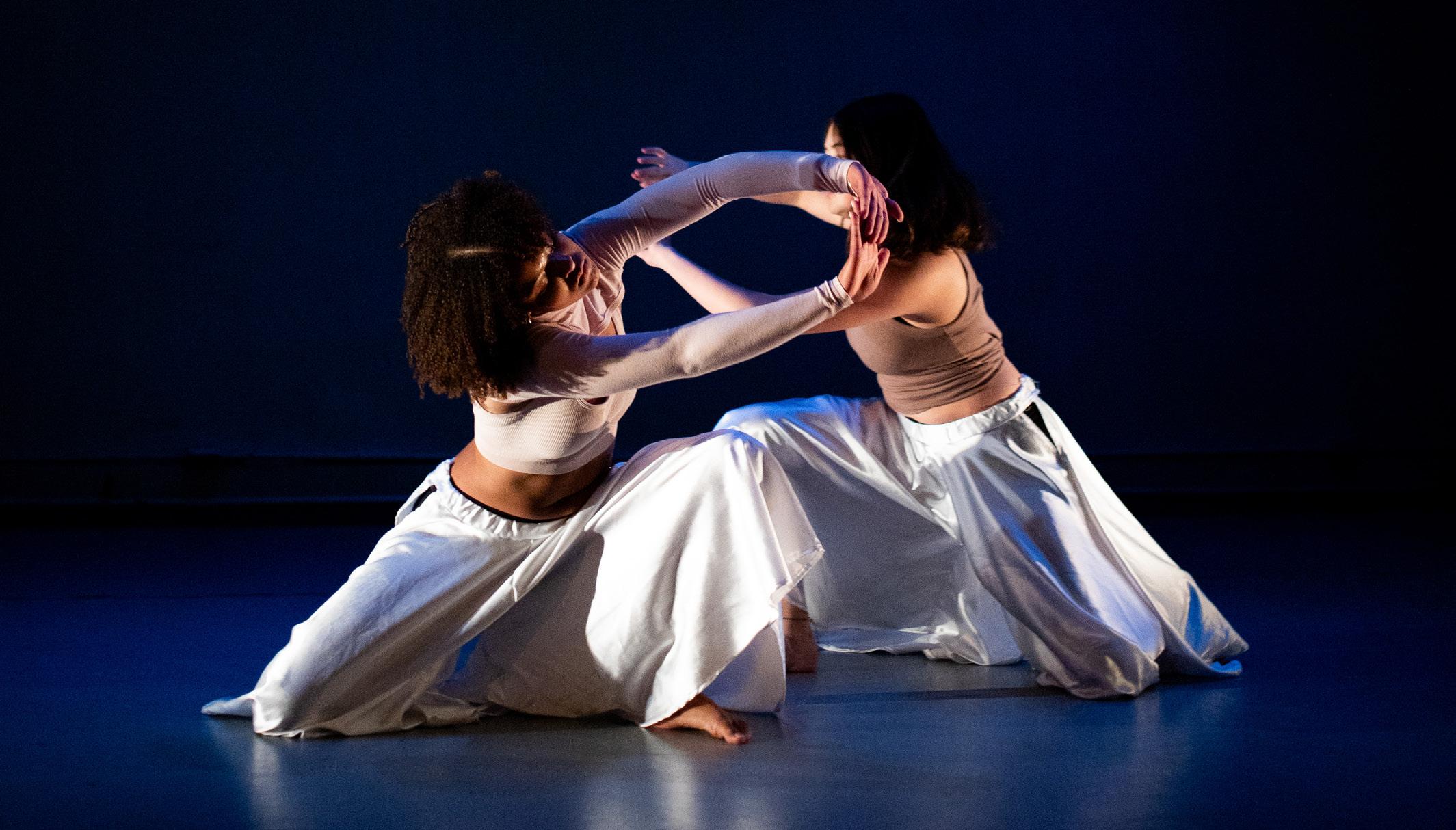
the impact of dance hailing from the African diaspora and Latin America. Consequently, we are now seeing different forms of dance in higher education, including hip-hop and its root forms. Class learning outcomes are literacy in different hip-hop styles, basic knowledge of the cultural significance of hip-hop, and a vocabulary tool kit that allows students to engage in discourse about dance. Upper School students may take this course over consecutive semesters and/or multiple times.
(SEMESTER-LENGTH COURSE)
No prerequisite
Students will be introduced to practical skills in Technical Theatre, including understanding tools and their functions, set and prop construction, soundboard operation, and light board operation and programming. They will learn to serve on a running crew for a show and can expect to be involved in various productions throughout the semester. Students will learn critical theatre safety protocol and how technology in the theatre has evolved, and will be presented with new technologies they will encounter in college. Advanced or repeat students will be expected to take on roles as mentors and crew leads. Juniors and seniors who are interested in continuing a technical theatre education at university will be given the opportunity to assemble a portfolio of their work. Upper School students may take this course over consecutive semesters and/or multiple times.
(FALL, AFTER SCHOOL)
No prerequisite
Open to all actors, Theatre Production occurs after school, outside of the regular class period rotation. The production may be either a musical or a straight play. Students who decide to be a part of the production will be expected to be at rehearsals Tuesdays through
Thursdays from 3 to 5 pm, unless otherwise noted. This course is open to both experienced and non-experienced actors. There will also be technical needs such as prop building, set construction, costume design/construction, stage management, and sound and light board operation, so students interested in being involved are encouraged to sign up as well. Upper School students may take this course over consecutive semesters and/or multiple times.
No prerequisite
This course focuses on acting techniques and plays that center social and political issues. Through various exercises, scene work, monologue work, and performance, students will learn how theatre can be used as a mirror to society, and potentially a catalyst to inspire change. There is no prerequisite for this class and students who have no prior acting experience are encouraged to enroll. Topics, genres, and practitioners will change each fall, so students are encouraged and welcome to take this course multiple times.
No prerequisite
Theatre Workshop offers students a unique opportunity to collaborate with educational and professional artists in Salt Lake City. This course may take on several forms, depending upon which local artist is available in the spring. Past classes have collaborated with faculty and students at the University of Utah and professional local playwrights. The focus of this course will be the development of new work, both written and performed. This course offers a very unique window for students who are interested in pursuing theatre in college and/ or professionally. Upper School students may take this course multiple times, and are encouraged to do so.
(SEMESTER-LENGTH COURSE)
No prerequisite
This course emphasizes hands-on, project-based learning through individual and collaborative filmmaking. Students will engage in the complete production process, from concept development to final edits, focusing on refining their technical and storytelling abilities.
(SEMESTER-LENGTH COURSE)
Prerequisite: Successful completion of Documentary Filmmaking I or instructor approval
Through a series of individual and group projects, students will explore diverse documentary styles and formats, deepening their understanding of narrative structure, audience engagement, and ethical filmmaking practices. This course encourages creative risk-taking and personal expression, equipping students to tackle more complex stories and challenges as emerging documentary filmmakers.
(SEMESTER-LENGTH COURSE)
Prerequisite: Successful completion of Documentary Filmmaking I or instructor approval; open to students in grades 10–12
This course delves into the art and technique of postproduction, guiding students through the essential skills of video editing, motion graphics, and audio mixing. Using the Adobe Creative Suite, students explore industry-standard tools such as Premiere Pro, After Effects, and Audition to craft polished, compelling narratives. Emphasizing storytelling through meticulous editing, students will learn to enhance visual and auditory elements, create seamless transitions, and integrate graphics to elevate their documentary projects. Collaborative and individual projects will challenge
students to refine their technical expertise and develop their unique creative voices in post-production.
(SEMESTER-LENGTH COURSE)
Prerequisite: Successful completion of Documentary Filmmaking II or instructor approval; open to students in grades 10–12
Building on the foundational skills developed in previous filmmaking classes, this course immerses students in the art of cinematography for documentary storytelling. Through hands-on practice and advanced techniques, students will explore composition, lighting, camera movement, and lens selection to create visually compelling narratives. Emphasizing both technical proficiency and creative expression, the course will challenge students to develop a distinct visual style while mastering professional equipment. Students will collaborate on projects that hone their ability to tell powerful stories through the lens, elevating their understanding of how cinematography shapes the emotional and thematic depth of a documentary.
No prerequisite
This course explores podcasting as a contemporary form of storytelling and inquiry situated at the intersection of journalism, media studies, creative writing, and sound design. Students examine how audio narratives shape public discourse, convey complex ideas, and foster meaningful connections with audiences. Through critical listening, discussion, and hands-on production, students analyze a range of podcast forms, including narrative nonfiction, interview-based journalism, investigative reporting, and experimental audio. The course emphasizes research, ethical interviewing, script development, and the expressive use of sound. Students engage with questions of representation, authorship, and
audience responsibility while learning technical skills in field recording, editing, and audio mixing. Drawing on interdisciplinary perspectives from the humanities and social sciences, students develop a critical framework for evaluating audio media and the practical skills necessary to produce original work. By the end of the course, students will create polished podcast projects that demonstrate thoughtful storytelling, technical proficiency, and intellectual engagement with real-world topics.
(SEMESTER-LENGTH COURSE)
No prerequisite
This course is cross-listed with Authentic Learning and Innovation and may be taken for ALI or arts credit. See the Media and Design section under Authentic Learning and Innovation for the course description.
(SEMESTER-LENGTH COURSE)
No prerequisite
This course is cross-listed with Authentic Learning and Innovation and may be taken for ALI or arts credit. See the Media and Design section under Authentic Learning and Innovation for the course description.
(SEMESTER-LENGTH COURSE)
No prerequisite
This course is cross-listed with English and Authentic Learning and Innovation, and can be taken for arts, ALI, or additional coursework credit. See English for the course description.
Rowland Hall’s Upper School Ethics class prepares students to be people the world needs who:
• Practice recognizing different perspectives and value positions
• Reflect on the core values that shape their own ethical decision-making
• Test current issues through different ethical lenses
• Discuss contentious topics with open-mindedness, active listening, and civility
(SEMESTER-LENGTH COURSE)
Required for graduation; open to students in grades 11–12 This required course fulfills the graduation requirement for ethics and must be taken during the junior or senior year. This course asks students to reflect upon their own developing code of ethics as they explore frameworks articulated by ancient, modern, and contemporary thinkers. Students will practice Deliberate Dialogue around current issues to build fluency with moral reasoning and vocabularies of ethical deliberation. These discussions will center on questions such as, “What is a just society?” and, “What are my obligations to others?” Students make their voices heard by writing pieces aimed for audiences beyond the classroom.
Rowland Hall’s Upper School health education program prepares students to be people the world needs who:
• Take personal responsibility around risk reduction
• Understand how health themes apply to choices that can alter the course of their life, as well as the lives of those around them
• Learn with an eye toward gaining a deeper understanding of personal responsibility in making strong, self-empowered decisions regarding their own health and the health of those around them
The Wellness course provides students with a foundation of information on which to make life decisions, filtered through the lens of values provided by individual families. Information provided is research-based and reflects current best practices, and discussion is open. Questions are encouraged and entertained insofar as they are appropriate to the direction of the class, fit
the maturity level of the students, and aid in dispelling common myths, stereotypes, or misinformation.
(SEMESTER-LENGTH COURSE)
Required for students in grade 10
This course covers positive self-esteem, physiology of stress, stress management, depression and suicide, coping strategies, principles of exercise and fitness, the importance of sleep, gender roles, abstinence, sexual respect, contraception, healthy and abusive relationships, sexually transmitted diseases, and drugs and their effects on individuals as well as impact on family and society. A key strand that flows through all topics is the importance of one’s personal responsibility for one’s own choices and actions. The essential question is: What choices do I make when I am in charge of myself?
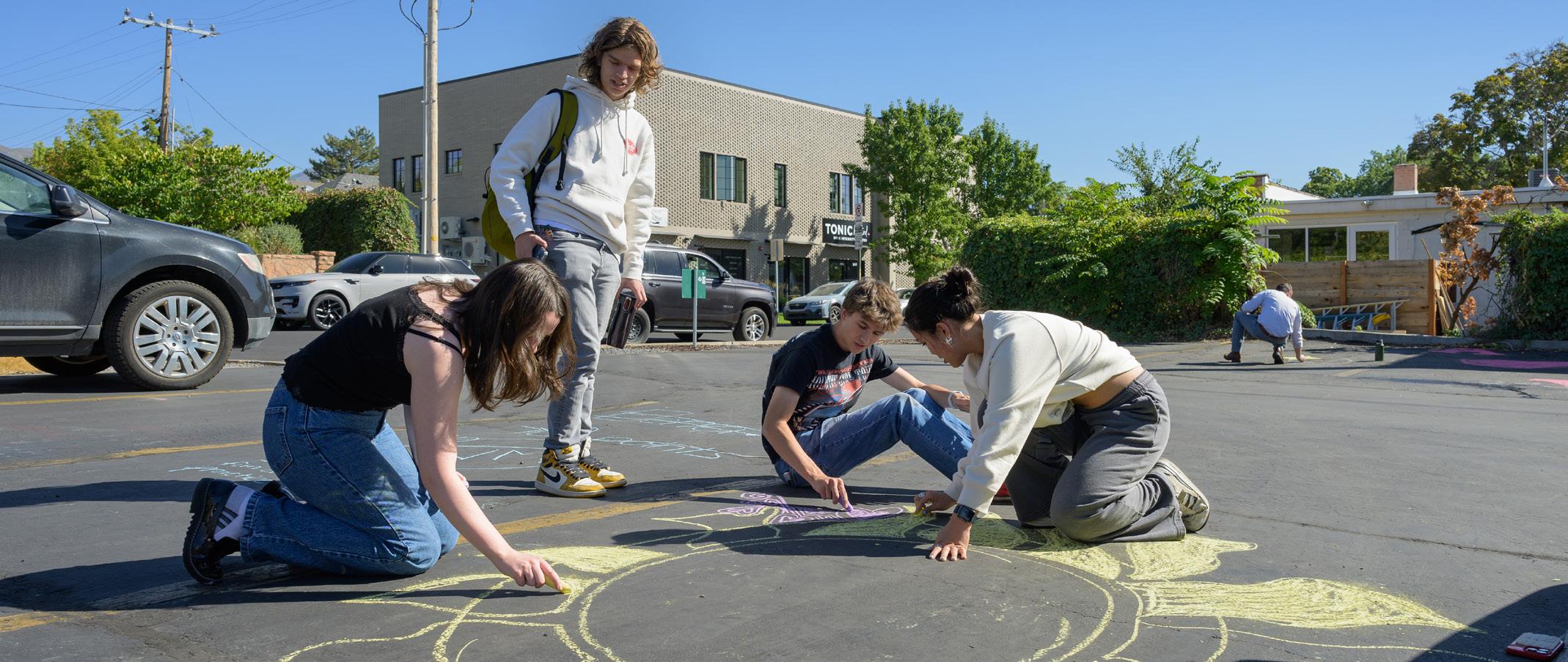
Rowland Hall’s Upper School Authentic Learning and Innovation (ALI) program prepares students to be people the world needs who:
• Exercise agency, purpose, and curiosity in their learning
• Identify meaningful problems and design thoughtful, creative solutions
• Apply interdisciplinary knowledge to real-world contexts
• Collaborate effectively and communicate clearly
• Take intellectual risks and learn through iteration and reflection
• Pursue deep, sustained inquiry guided by expert mentorship
The ALI program offers students opportunities to engage in research- and project-based learning that extends beyond traditional disciplinary boundaries. Signature offerings include aviation, business and entrepreneurship, computer science and robotics, media arts, and speech and debate. For students seeking greater independence and depth, the ALI Project Lab provides seniors the opportunity to pursue independent or collaborative projects grounded in their interests, with guidance from a faculty mentor.
Research- and project-based pathways are also available through Advanced Research courses in biology, chemistry, physics, computer science, and the humanities. Together, these offerings encourage students to go deep, take ownership of their learning, and develop the skills, habits of mind, and sense of purpose needed to thrive in an ever-changing world.
All students, beginning with the class of 2028, are required to complete at least 0.5 credit from the ALI offerings.
A student may design their own independent project outside the curriculum by working through a rigorous application process. If approved, the work will be overseen by the ALI project lab coordinator and may also be sponsored by a Rowland Hall faculty member in a related field. Projects are presented to the community at an end-of-year event. Any costs incurred are assumed by the student. This option is open to seniors in good academic standing and may replace one course.
On occasion, a student may need to take a regularly scheduled course or part of a course independently. Any such study should be arranged in consultation with the teacher and must be approved by the teacher, department chair, and head of the Upper School. Students may also propose an independent study course to explore a study/ topic not offered at Rowland Hall. A proposal must be submitted and approved. The student will be accountable to a sponsoring faculty member.
The Upper School is partnering with One Schoolhouse, an accredited online independent school that prioritizes connection, collaboration, and community. Courses are taught by expert teachers and attended by students worldwide. Enrollment in a One Schoolhouse class is overseen by the assistant head of the Upper School and handled on a case-by-case basis. Students can take One Schoolhouse courses under specific circumstances
(such as a schedule conflict), for advanced work beyond our curriculum, or as Rowmark student-athletes.
Rowland Hall’s Upper School aviation program prepares students to be people the world needs who:
• Become curious and passionate about a multidisciplinary industry
• Build their critical-thinking and problem-solving skills by engaging with concepts and challenges across diverse disciplines
• Cultivate leadership and collaboration skills through highly collaborative endeavors
• Connect with industry partnerships showcasing the variety of opportunities aviation has to offer
• Are empowered to become innovators, problemsolvers, and global citizens
(SEMESTER-LENGTH COURSE)
No prerequisite
This multidisciplinary science course emphasizes the safe operation of private and commercial aircraft, including the use of unmanned aerial systems (UAS) in drones. In this course, students will focus on the procedures and knowledge that aviation professionals routinely use to operate aircraft, including aeronautical decision-making, meteorology, aeromedical factors, flight physiology, the study of aircraft and engine operation and limitations, instrumentation, federal aviation regulations, flight information publications, and radio communications. Students will take part in several aviation-centric field trips and utilize in-class X-Plane 11 simulators to gain hands-on experience with both fixed-wing and unmanned aerial vehicle (UAV) systems. Students will also learn to operate both Holy Stone and DJI drones over the course of this offering.
(SEMESTER-LENGTH COURSE)
No prerequisite; open to students in grades 10–12
This beginner-friendly course is designed to prepare students to take the FAA Part 107 Certification for US Commercial Drone Pilots exam. This course introduces the principles of drone technology, including basic flight mechanics, drone pilotage, safety protocols, and UAS ethical considerations. Students will explore how UAS are transforming industries such as agriculture, photography, emergency response, and environmental science. This is a multi-disciplinary course that involves UAV flight simulation using RealFlight software, crew resources management principles, and hands-on operation of several Holystone and DJI Mini 4K and DJI Mini 2 SE drones. Additional topics will include drone terminology, history and application, airspace regulation, meteorology, aerodynamics, flight physiology, and drone composition. Students will learn to operate small drones safely, develop flight plans, and understand regulations governing UAS use. The course also emphasizes critical thinking and problem-solving skills as students tackle real-world challenges using drones.
Rowland Hall’s Upper School business and entrepreneurship program prepares students to be people the world needs who:
• Think ethically, strategically, and responsibly to solve complex problems in a changing world
• Innovate and transform ideas into impactful products, businesses, and solutions
• Manage resources wisely and build long-term stability, and are financially literate
• Communicate and collaborate to lead teams, influence others, and foster inclusive cultures
• Create value for their communities, economies, and society at large through ideas and actions
Coursework in business and entrepreneurship introduces students to the basics of the world of business and finance, both practical and theoretical, while also offering a platform for learning foundational skills of entrepreneurship and innovation.
(SEMESTER-LENGTH COURSE)
No prerequisite; open to students in grades 9–11
This course is an introduction to the fundamental principles of business, entrepreneurship, and economics. The curriculum blends knowledge with practical applications, helping students gain a foundational understanding of how industries operate, make decisions, and interact with the global economy. Through realworld case studies, hands-on projects, guest speakers, and group work, students will learn the basics of marketing, finance, operations, business ethics, human resources, and management while developing criticalthinking, communication, and problem-solving skills. As a final project, students will work in teams to create a comprehensive business plan for a hypothetical start-up, incorporating marketing, finance, and operations.
(SEMESTER-LENGTH COURSE)
No prerequisite; open to students in grades 9–11
This course provides students with a comprehensive introduction to marketing and consumer behavior principles, focusing on how businesses create strategies to connect with consumers and deliver value. Key topics include target marketing, branding, engagement strategies, and driving consumer traffic and conversions.
Through a combination of theoretical learning and hands-on projects, students will gain practical experience in market research, advertising, consumer psychology, digital marketing, and addressing ethical issues in marketing. This course prepares students to understand and apply the core marketing concepts in today’s dynamic and digital marketplace. As a final project, students will create a complete marketing plan for a new product or service, incorporating everything they’ve learned in the course.
(SEMESTER-LENGTH COURSE)
No prerequisite; open to students in grades 10–12
AP Business with Personal Finance is a yearlong high school business and personal finance course that aligns closely with a college-level introduction to business course. Students explore the business disciplines of entrepreneurship, marketing, finance, accounting, and management through real-world business applications, case studies, and project-based learning. In addition, students learn and apply all the National Standards for Personal Financial Education created by the Council for Economic Education and the Jump$tart Coalition for Personal Financial Literacy.
(SEMESTER-LENGTH COURSE)
Prerequisite: Successful completion of a business course or teacher approval; open to students in grades 11–12 This project-based course prepares students with the knowledge, skills, and mindset necessary to launch and manage a social or innovative business. Students will learn how to ideate, validate, iterate, and scale entrepreneurial ventures, focusing on solving societal problems or disrupting markets with creative solutions.
Through hands-on experience, students will move from conceptualizing an idea to developing a full-fledged business plan and/or product prototype. The course emphasizes sustainable business practices, ethical decision-making, and creating social value while exploring entrepreneurship challenges and rewards. Students will present their business ideas and plans to a panel of judges; the pitch will include product research, financial projections, and social impact.
Rowland Hall’s Upper School computer science and robotics program prepares students to be people the world needs who:
• Learn design, logical reasoning, and problemsolving skills applicable beyond the classroom
• Engage in problem-solving using abstraction and algorithmic thinking
• Utilize the design process effectively
• Foster a growth mindset and learn from failures
• Focus on a process-oriented curriculum
• Harness technology for innovation, designing technical solutions in various fields, including science, math, social studies, the arts, and literacy
• Achieve proficiency and literacy in hardware and software
• Develop skills in computer programming (coding) and physical computing (engineering and robotics)
• Excel in data analysis, design, digital citizenship, and computational thinking
• Integrate and use AI appropriately to benefit computational thinking
The goal of computer science and robotics education is to equip students not only with technical skills but also with a broad perspective that enables them to apply their
knowledge, creatively and ethically, in solving real-world problems. This holistic approach ensures that graduates are not just proficient in technology but also thoughtful innovators and responsible digital citizens.
(SEMESTER-LENGTH COURSE)
No prerequisite
This semester-long course provides a hands-on introduction to integrating programming, robotics, engineering, and design principles. Students will explore fundamental computational concepts through engaging projects that leverage tools such as Java, Processing, Python, micro:bits, and VEX Robotics. Students will engage in design thinking, problemsolving, and collaborative engineering challenges. Coursework includes programming basics, physical computing, and an introduction to 3D design and fabrication. Students will conclude the semester by applying their skills to create innovative projects that address real-world problems. This course emphasizes the iterative design process and teamwork, preparing students to succeed in future STEM courses.
No prerequisite
AP Computer Science Principles offers a multidisciplinary approach to teaching the underlying principles of computation. The course will introduce students to creative aspects of programming, using abstractions and algorithms, working with large datasets, understanding the internet and issues of cybersecurity, and the impacts of computing that affect different populations. AP Computer Science Principles will give students the opportunity to use
current technologies such as Android app development and processing (Java) programming language to solve problems and create meaningful computational artifacts. Together, these aspects of the course make up a rigorous and rich curriculum that aims to broaden participation in computer science.
Prerequisite: Successful completion of AP Computer Science Principles or departmental recommendation AP Computer Science A is equivalent to a firstsemester, college-level course in computer science. The course introduces students to computer science with fundamental topics that include problem-solving, design strategies and methodologies, organization of data (data structures), approaches to processing data (algorithms), analysis of potential solutions, and the ethical and social implications of computing. The course emphasizes both object-oriented and imperative
problem-solving and design using Java language. These techniques represent proven approaches for developing solutions that can scale up from small, simple problems to large, complex problems. The AP Computer Science A course curriculum is compatible with many Computer Science I courses at colleges and universities.
Prerequisite: Successful completion of AP Computer Science A or departmental recommendation; open to students in grades 11–12 This course is designed for students who have demonstrated a clear academic plan or pursued previously approved coursework in computer science. In this student-driven, interdisciplinary course, students are encouraged to extend learning beyond the traditional secondary school curriculum, aligning

with our school’s strategic priorities. Research proposals or external course applications must be submitted and approved in the spring for the subsequent fall semester; early application is crucial. Proposals should detail logistics, mentoring arrangements, and envisaged outcomes. A significant course emphasis is on creating work with real-world impact. Students are encouraged to aim for their work to be published, to collaborate with external organizations, or to produce work of exemplary standard. Regular peer reviews and end-of-semester presentations to a broader audience are integral to this course, promoting a community of shared learning and achievement. The course can be one or two semesters, depending on proposal scope.
No prerequisite
The after-school robotics teams offer students the opportunity to dive deep into the world of robotics while developing key skills in engineering, programming, marketing, fundraising, and teamwork. Students will work in small teams to design, build, and program robots to compete in local and national robotics FIRST Tech Challenge competitions. Through hands-on projects, students will explore topics such as mechanical design, electronics, coding, and problem-solving. The course emphasizes collaboration, creativity, and critical thinking as students push the boundaries of what their robots can do. Whether you’re a beginner or have previous experience, the robotics program provides an inclusive and supportive environment to grow and showcase your talents.
(SEMESTER-LENGTH COURSE)
No prerequisite
This student-run course focuses on the production of the school’s official online newspaper, The Gazette. Students research, write, photograph, edit, and publish articles that reflect and investigate issues, events, and perspectives within the school community. Through hands-on practice in journalism and digital media, students develop skills in interviewing, ethical reporting, editorial writing, layout design, and meeting publication deadlines. Emphasis is placed on collaboration, audience awareness, responsible storytelling, and thoughtful engagement with diverse viewpoints. Students may enroll in consecutive semesters and/or take the course multiple times, with opportunities for increasing leadership responsibility. This course is cross-listed with Visual Arts, Performing Arts, and Media Arts and may be taken for ALI or arts credit.
(SEMESTER-LENGTH COURSE)
No prerequisite
This student-run course focuses on the planning and production of the annual school yearbook. Students collaborate to design, write, photograph, edit, and publish a comprehensive visual and written record of the academic year. Students develop skills in visual storytelling, layout design, branding, copywriting, photography, and project management. Emphasis is placed on organization, accuracy, collaboration, and meeting production deadlines while thoughtfully representing the life of the school community. Students may enroll in consecutive semesters and/or take the course multiple times, with opportunities for increasing leadership responsibility. This course is cross-listed with Visual Arts, Performing Arts, and Media Arts and may be taken for ALI or arts credit.
(SEMESTER-LENGTH COURSE )
No prerequisite
This course is cross-listed with English and Visual Arts, Performing Arts, and Media Arts, and can be taken for arts, ALI, or additional coursework credit. See English for the course description.
(SEMESTER-LENGTH COURSE )
No prerequisite
This course is cross-listed with Visual Arts, Performing Arts, and Media Arts, and can be taken for ALI or arts credit. See the Visual Arts, Performing Arts, and Media Arts section for the course description.
(SEMESTER-LENGTH COURSE )
Prerequisite: Successful completion of Documentary Filmmaking I or instructor approval
This course is cross-listed with Visual Arts, Performing Arts, and Media Arts, and can be taken for ALI or arts credit. See the Visual Arts, Performing Arts, and Media Arts section for the course description.
(SEMESTER-LENGTH COURSE )
Prerequisite: Successful completion of Documentary Filmmaking I or instructor approval; open to students in grades 10–12
This course is cross-listed with Visual Arts, Performing Arts, and Media Arts, and can be taken for ALI or arts credit. See the Visual Arts, Performing Arts, and Media Arts section for the course description.
(SEMESTER-LENGTH COURSE )
Prerequisite: Successful completion of Documentary Filmmaking II or instructor approval; open to students in grades 10–12
This course is cross-listed with Visual Arts, Performing Arts, and Media Arts, and can be taken for ALI or arts credit. See the Visual Arts, Performing Arts, and Media Arts section for the course description.
No prerequisite
This course is cross-listed with Visual Arts, Performing Arts, and Media Arts, and can be taken for ALI or arts credit. See the Visual Arts, Performing Arts, and Media Arts section for the course description.
Rowland Hall’s Upper School speech and debate program prepares students to be people the world needs who:
• Communicate confidently and comfortably in public-speaking situations
• Think critically about complex social, political, and ethical controversies
• Develop strong reading and research skills
• Craft evidence-based arguments and write persuasively
• Appreciate, listen to, and empathize with the perspectives of others
• Collaborate with others while practicing leadership skills on a team
The goal of speech and debate education at Rowland Hall is to equip students with portable skills and critical concepts that enable them to communicate their stories and research to wider audiences. The program offers
many different competitive opportunities and real-world activities that give students choice in pursuing the style and commitment level that work for their learning goals.
No prerequisite
This is the core course for students interested in learning about official high school debate formats and competing for the debate team. This course reviews the basics of debate and public speaking and introduces advanced forms of argumentation, including topicality, counterplans, disadvantages, weighing mechanisms, and frameworks. Students will research both sides of the official national topics, but will have opportunities to explore additional controversies and subjects. In addition to practicing constructive, rebuttal, and crossexamination strategies, students will develop a variety of tactical skills, including evidence comparison, costbenefit analysis, note-taking, audience adaptation, and more. While debate is competitive, students will never be graded on wins or losses, and the class collaborates to create and prepare cases against other schools. The course is offered in the fall semester, but students will have opportunities to attend additional tournaments in the spring. Upper School students may take this course multiple times; students should re-enroll in this course every year if they want to compete for the team.
(SPRING)
No prerequisite
This course focuses on the art or study of public discussion, legal discourse, and/or debate, and is designed for students who want an applied approach to argumentation and public speaking, as opposed to a competitive one. Applications include Mock Trial, Model United Nations, Student Congress, TEDx presentations, and more. After completing this course, students will have a set of portable skills they can use in a variety of experiences throughout the curriculum at Rowland Hall. Students will develop critical-thinking and collaboration skills as they craft speeches and research topics for group-wide simulations and real-world activities. Finally, students will be expected to participate in events beyond the classroom and will have opportunities to partner with different professional organizations, which will help them hone their advocacy skills in formal settings. Upper School students may take this course multiple times and can choose to specialize in different applications.
Prerequisites: See course description
This yearlong or semester-length after-school course is designed for the most ambitious students who have goals of being nationally competitive debaters and exceptional researchers. Prerequisites include completing three semesters of debate (one of which can be Competition Debate in Middle School), attending an approved summer debate camp, and receiving the debate coach’s recommendation. Students will complete individual research projects on the official national debate topics, attend regular after-school practice sessions, serve in team leadership positions, and compete at a variety of rigorous tournaments throughout the year. Upper School students may take this course over consecutive semesters and/or multiple times.
Rowland Hall’s Upper School physical education (PE) program ensures every student achieves and maintains a fitness level appropriate to them. Fit for life is our goal and informs our program options.
Upper School students are required to earn the equivalent of four athletics seasons or three semesters (or a combination thereof) of PE credits during grades 9–12. Options for fulfilling PE credits include:
• four seasons of participation on one or more Rowland Hall interscholastic athletics teams; OR
• three semesters of Rowland Hall personal fitness options and/or Rowland Hall dance courses; OR
• fulfilling expectations of the external athlete program for three or more semesters; OR
• a combination of the above three options, details to be determined in consultation with the assistant head of Upper School; OR
• training and racing with Rowmark Ski Academy for at least two seasons.
Rowland Hall, a member of Region 17 of the Utah High School Activities Association (UHSAA), competes at the 2A (and, in some sports, 3A) division. Rowland Hall offers a range of UHSAA-sanctioned sports and activities and adheres to UHSAA rules and regulations. The school also offers boys Ultimate Frisbee as a nonUHSAA competitive sport in the spring.
See the Athletic Handbook for a list of all athletic activities offered.
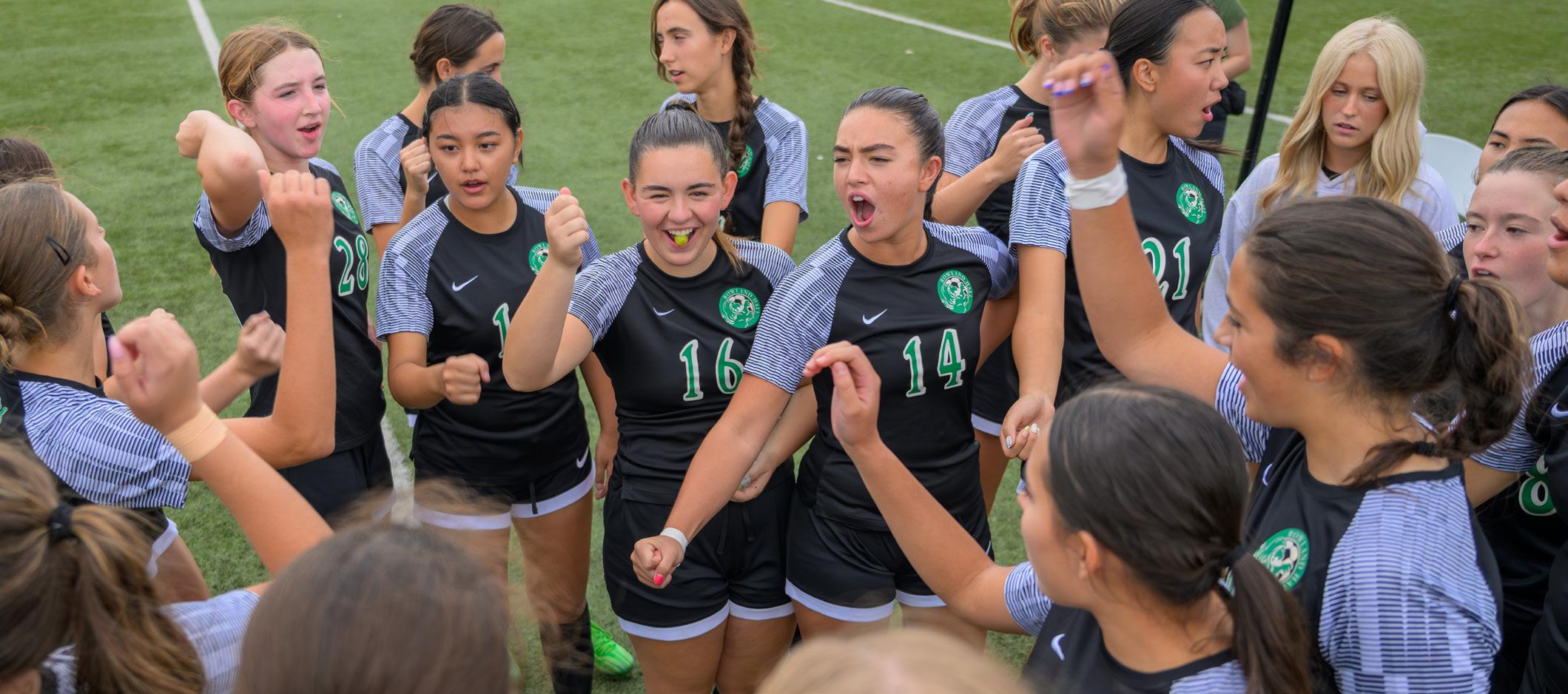
Students have two options for earning personal fitness credit: participating in school-designed activities for a total of 25 hours per semester (for semester credit), or fulfilling expectations for the external athlete program for a total of 40 hours per semester (for semester credit). Details on school-designated activities are provided below; please see the External Athlete Program section for those guidelines.
(CAN VARY BY SCHOOL YEAR)
Students track their hours, for a minimum of 25 hours, with the assistance of the personal fitness teacher. The options detailed below can be mixed and matched to achieve this total.
• Pickup Ultimate Frisbee (fall and winter)
• Friday hikes (winter and spring)
• Strength and conditioning (fall, winter, spring, and summer)
• After-school fitness training for spring sports (winter)
• Personal training for a self-selected event, such as a 5K or fun run (fall, winter, and spring)
• For ninth graders only : Monday walks (fall)
Students may fulfill PE credits through Rowland Hall dance courses. Please review the Upper School Dance Ensembles course description under Fine Arts, Performing Arts, and Media Arts for more information.
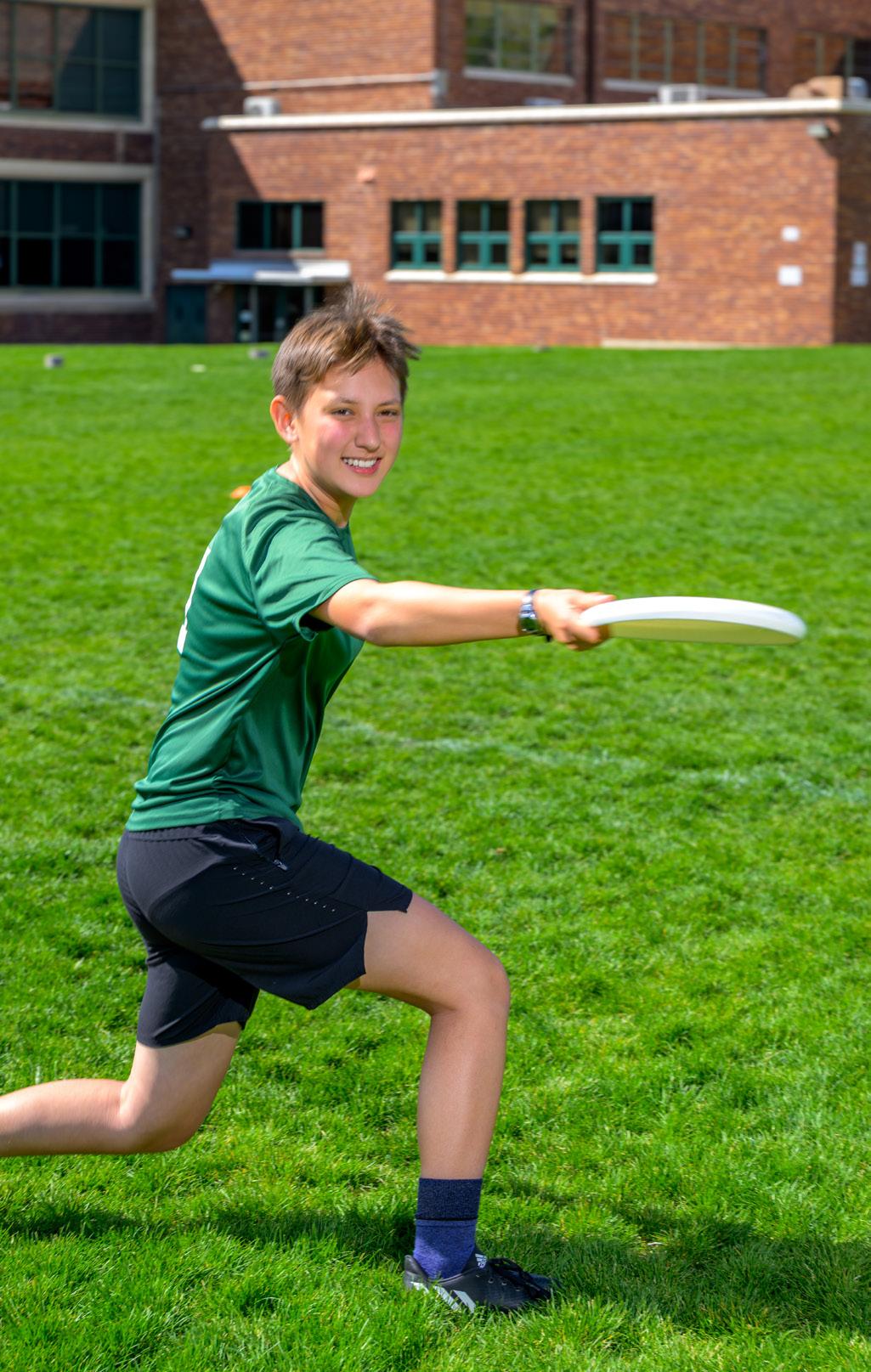
The external athlete program was established so Upper School students who compete at a high level in a specific sport or dance outside of school can pursue their rigorous training schedules without sacrificing academic studies at Rowland Hall. Students who qualify for this program are released from the physical education graduation requirement during the season(s) for which they are active and have been approved. They may also be released from school at prearranged times to train with their outside program or coach.
All applications for external athlete credit must be submitted to the assistant head of the Upper School who will consult with the Athletic Department to make a decision.
Guidelines are as follows:
• The student is involved in an out-of-school athletic activity weekly at a high level, including a culminating event or competition(s). The activity is not one currently offered at Rowland Hall.
• The student will meet the minimum time requirement of 40 hours during the designated semester.
• The student will be supervised by a coach or instructor willing to complete the necessary documentation, such as attendance sheets, assessments, or a course description.
If the program requires an amended course schedule, akin to the Rowmark schedule, the assistant head of the Upper School and registrar will work with the student to facilitate this adjustment.
Rowmark Ski Academy is the only external athlete program for which the coaches are members of the Rowland Hall staff. Students are admitted into the Academy through the Admission Department and participate in the Rowmark program year-round. See the Rowmark Handbook for additional information.
Non-participation in the physical education program due to medical reasons requires a written statement from an attending physician detailing the issue, the activity limitations it creates, and a specific time period during which non-participation is suggested. Such medical exemptions should be submitted to the student’s coach and the assistant head of the Upper School.
Students who wish to participate in NCAA athletics at the Division I and II levels should be aware of the requirements for eligibility. All NCAA ski programs are Division I, even when all other athletic programs at the college or university may be Division III. The best place to find up-to-date information on eligibility requirements is at ncaa.org.
To ensure that our students are curious, inspired, and active citizens of the world, Rowland Hall encourages student travel and experiential learning in a number of ways, including through the Upper School’s Interim program. Interim provides local, regional, national, and international learning experiences outside of the classroom. This values-aligned, weeklong program offers experiences that promote self-reliance, deep thinking, problem-solving, responsibility, and collaboration, as well as an opportunity to build relationships outside the traditional school setting. Interim takes advantage of the Mountain West’s unique landscapes, rich natural resources, and diverse cultures and communities while also providing purposeful engagement in national and international travel.
Benefits of Interim include:
• The opportunity for students to be immersed in their language of study and/or a new culture or region
• Experiential learning in an academic area such as the sciences, history, or the arts
• Outdoor adventures where students challenge themselves physically and learn about the natural world and their relationship to it
• A chance to recognize a community’s needs and assets through partnership and relationship building
• The opportunity to learn and practice new skills, and to exercise organizational and leadership skills in new settings
• The enjoyment of meeting and getting to know students, teachers, and staff outside of one’s grade and peer group
Rowland Hall offers a robust summer internship program that allows students in grades 10–12 to explore careers through practical experiences. Our program exposes students to a variety of workplaces and is made possible by community partners, many of whom are passionate about involving students in their projects and research, instead of expecting them to simply observe. Internship partners vary from year to year, and new opportunities are regularly added based on student interests.
Internship participants spend at least one summer month working with their assigned professionals. During their internships, students:
• Learn new skills
• Gather information about fields of interest
• Apply classroom learning to real-world tasks
• Conquer workplace dilemmas
• Exercise initiative, self-advocacy, and relationshipbuilding in professional settings
(FALL)
Required for all ninth-grade students during the first semester of ninth grade
First Year Experience introduces academic skills that are essential for active and effective learning. Following a self-assessment of students’ current strengths and areas for growth, strategies are introduced that aim at how students collect, organize, use, and evaluate new information to create habits for deep and lasting learning. In this course, students:
• Practice digital organization to increase efficiency
• Learn tools and strategies for writing essays
• Learn to use the library’s resources
• Discover the importance of identity and character development, personal responsibility, selfawareness, and motivation
• Cultivate and maintain strong relationships with peers and teachers
• Learn about ethics, the Upper School’s Honor Code, and their digital footprint
A variety of community members facilitate lessons so that students get to know faculty, administration,
and counselors in the Upper School. The course also incorporates a study hall block at least once a week. This course is not graded.
(FALL: GRADE 12; SPRING: GRADE 11)
College Planning Class (CPC) is a weekly course designed to empower and guide students through the intricate college application process. With each class, students delve into crucial components of the process, laying the groundwork for informed decision-making and fostering personal and academic successes. The core of CPC lies in the fundamental question: Why do you want to go to college?
CPC offers students a variety of opportunities to explore their identities and aspirations while thinking about future paths. Through a comprehensive curriculum, students engage in:
• Personal and academic inventory assessments
• Introspective and reflective assignments
• Research and list-building
• Essay and application workshops
• Standardized test planning
• College visits
• Interview preparation
This student-centered approach ensures that students receive the most up-to-date and pertinent information.
Name:
Grade 9:
❏ English I
Grade 10:
❏ English II
Grade 11:
❏ English III
English (4 credits required)
❏ AP English Language and Composition**
Grade 12:
❏ English IV
❏ AP English Literature and Composition**
Half (0.5) Credit Additional Coursework:
❏ Creative Writing / Literary Magazine (Fall & Spring/ counts toward Arts Credit Requirement)
❏ AR Humanities** (Gr. 11-12)
Chinese:
World Languages (2 credits required, 3 recommended)
❏ Chinese I
❏ Chinese II
❏ Chinese III**
❏ Chinese IV**
❏ AP Chinese Language and Culture**
French:
❏ French I
❏ French II
❏ French III**
❏ French IV**
❏ AP French Language and Culture**
Spanish:
❏ Spanish I
❏ Spanish II
❏ Spanish III**
❏ Spanish IV**
❏ AP Spanish Language and Culture**
❏ Spanish for Spanish Speakers
Other Required Coursework
❏ First-Year Experience (Gr. 9)
❏ Wellness: Healthy Lifestyles and Adolescent Issues (Gr. 10)
❏ Ethics (Gr. 11-12)
History and Social Sciences (3 credits required)
Grade 9:
❏ Historical Foundations I (Fall)
❏ Historical Foundations II (Spring) Rank in Order of Interest: ______ Culture, Ideology, and Modern Society ______ Colonialism, Resistance, and Independence ______ Global Systems and Modern Conflict
Grade 10:
❏ Europe and the Atlantic World
❏ AP European History**
Grade 11:
❏ US History
❏ AP US History**
Half (0.5) & One (1) Credit Additional Coursework: (Gr 10-12)
❏ Pol Sci: The Supreme Court (Fall)
❏ Child Development* (Fall, Gr. 10-12)
❏ Adolescent Development* (Spring, Gr. 10-12)
❏ AP Art History
❏ AP Psychology (Gr. 12)
❏ AR Humanities** (Gr. 11-12)
Visual, Performing, Media Arts (1.5 credits required)
One (1) Credit Courses:
❏ Advanced Studio Art** (Gr. 11-12)
❏ AP Studio Art**
❏ Chamber Orchestra
❏ Advanced Chamber Ensemble**
❏ Jazz Band
❏ Lincoln Street Choir
❏ AP Music Theory**
❏ Upper School Dance Ensembles: (Beginning, Intermediate, Advanced)
Half (0.5) Credit Courses (Can be taken multiple times):
❏ Ceramics
❏ Integrated Design Studio
❏ Sculpture Foundations
❏ Studio Art
❏ Beginning Guitar
❏ Digital Music
❏ Hip Hop
❏ Acting Techniques: Social Theatre (Fall)
❏ Technical Theatre
❏ Theatre Production (Fall, AS)
❏ Theatre Workshop (Spring)
❏ Documentary Filmmaking I (Fall or Spring)
❏ Documentary Filmmaking II** (Fall or Spring)
❏ Cinematography** (Fall)
❏ Advanced Post-Production** (Spring)
❏ Podcasting *
Physical Education (1.5 credit required)
❏ Personal Fitness (Ultimate Frisbee, Hiking, Conditioning, Training, Yoga)
❏ External Athlete Program
❏ Rowmark Ski Academy
❏ Athletics (see Page 2)
Media
❏ Creative Writing / Literary Magazine (Fall & Spring; counts toward Arts Req.)
❏ Publications: Newspaper
❏ Publications: Yearbook (Fall & Spring; both Newspaper and Yearbook count toward Arts Req.)
*New course ** Require prerequisites and/or departmental approval AS - After School
Math: (3 credits required, 4 recommended)
Core Courses:
❏ Integrated Math I
❏ Integrated Math II
❏ Integrated Math III
❏ Advanced Algebra**
❏ Precalculus**
❏ Advanced Precalculus**
❏ Data Science
❏ AP Statistics**
❏ Calculus**
❏ AP Calculus AB**
❏ AP Calculus BC**
Science: (3 credits required, 4 recommended)
Grade 9:
❏ Integrated Science I
Grade 10:
❏ Integrated Science II (Fall)
❏ Integrated Science II: Applied Lab (Spring)
Rank in Order of Interest: Biotechnology
Climate Science
Electricity and Magnetism
Marine Science
One (1) Credit Additional Coursework: (Gr 11-12)
❏ AP Biology**
❏ AP Chemistry**
❏ AP Physics**
❏ Engineering (I + II)
❏ Human Anatomy and Physiology
❏ AR Biology**
❏ AR Chemistry**
❏ AR Physics**
Half (0 5) Credit Additional Coursework: (Gr 10-12)
❏ Engineering I: Civil, Mining, and Chemical (Fall)
❏ Engineering II: Mechanical, Electrical, and Materials (Spring)
❏ Ornithology (Spring)
❏ Climate Science (Spring)
Authentic Learning and Innovation
Media (see Media Arts, Publications, and Creative Writing on Page 1) Directed Study**
Aviation
Half (0 5) Credit Additional Coursework:
❏ Aviation Operations
❏ Unmanned Aerial Systems Operations
Fall Team Offerings (Aug-Oct)
❏ Girls Soccer
❏ Girls Tennis
❏ Girls Volleyball
❏ Boys Golf
❏ Cross Country Swim Team
Business
One (1) Credit Courses:
❏ AP Business and Personal Finance * (Gr 10-12)
Half (0 5) Credit Additional Coursework:
❏ Principles of Business
❏ Principles of Marketing
❏ Entrepreneurship and Design Thinking
Computer Science / Robotics
One (1) Credit Courses:
❏ AP Computer Science Principles
❏ AP Computer Science A**
❏ AR Computational Science** (Gr 11-12)
Half (0 5) Credit Courses:
❏ Computer Science I: Foundations in Computer Science and Innovation (Fall or Spring)
❏ Robotics Teams (AS)
Winter Team Offerings (Nov-Feb)
❏ Boys Basketball
❏ Girls Basketball
❏ Swim Team
Debate
One (1) Credit Courses:
❏ Advanced Debate**
Half (0.5) Credit Additional Coursework:
❏ Debate (Fall)
❏ Mock Trial/Model UN (Spring)
❏ Independent Debate
Spring Team Offerings (Mar-May)
❏ Boys Tennis
❏ Girls Golf
❏ Girls Softball
❏ Boys Soccer
❏ Track and Field
❏ Ultimate Frisbee

Read about student accomplishments in Rowland Hall Stories , Rowland Hall’s digital magazine.
ROWLAND HALL UPPER SCHOOL
843 Lincoln Street, Salt Lake City, Utah 801-355-7494 rowlandhall.org