Fri 17 April 2026 • 18.00
Fri 17 April 2026 • 18.00
conductor Yannick Nézet-Séguin
Siegfried Clay Hilley
Mime Ya-Chung Huang
Wanderer Brian Mulligan
Alberich Samuel Youn Brünnhilde Rebecca Nash
Erda Wiebke Lehmkuhl
Fafner Soloman Howard Waldvogel Julie Roset
Richard Wagner 1813–1883
Siegfried Zweiter Tag des Bühnenfestspiels
Der Ring des Nibelungen [1856-1871] (concert version)
Intermission after Act 1 and Act 2
Concert ends at around 22:45
Most recent performance by our orchestra:
Jun 1999, conductor Hartmut Haenchen (DNO production)
Dutch and English title texts: Janneke van der Meulen
Cover: Photo Vadim Sadovski (Unsplash)
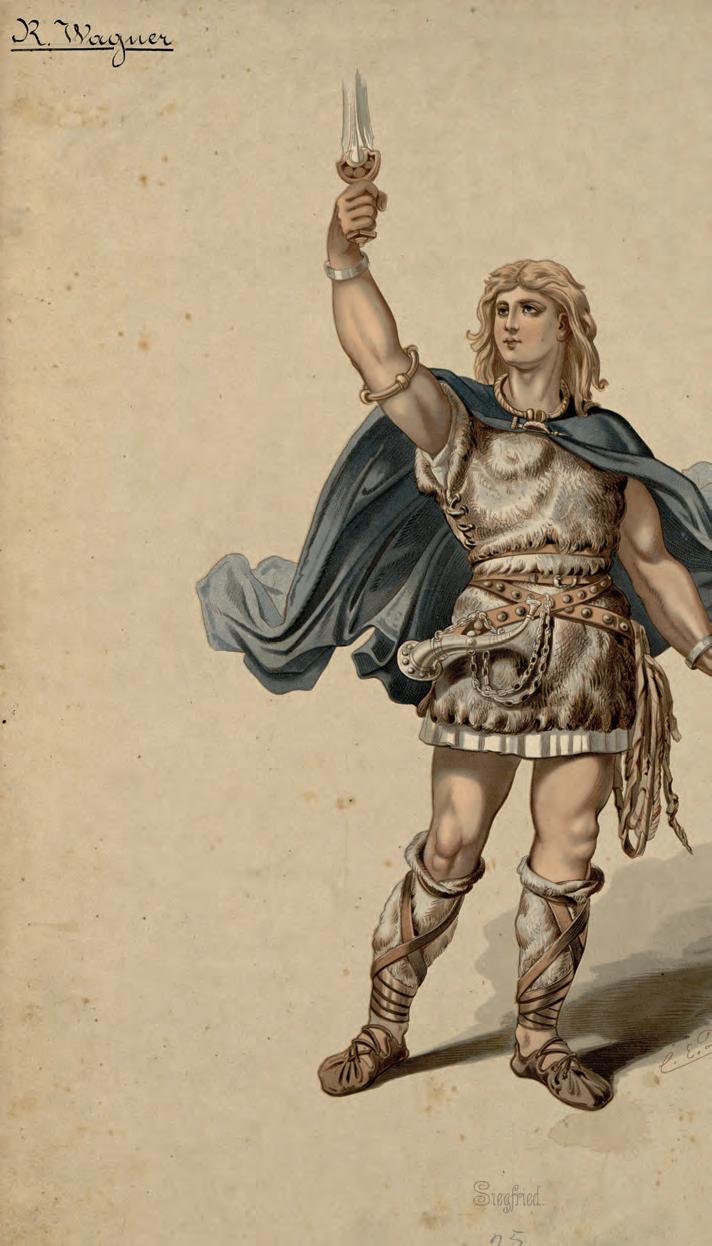
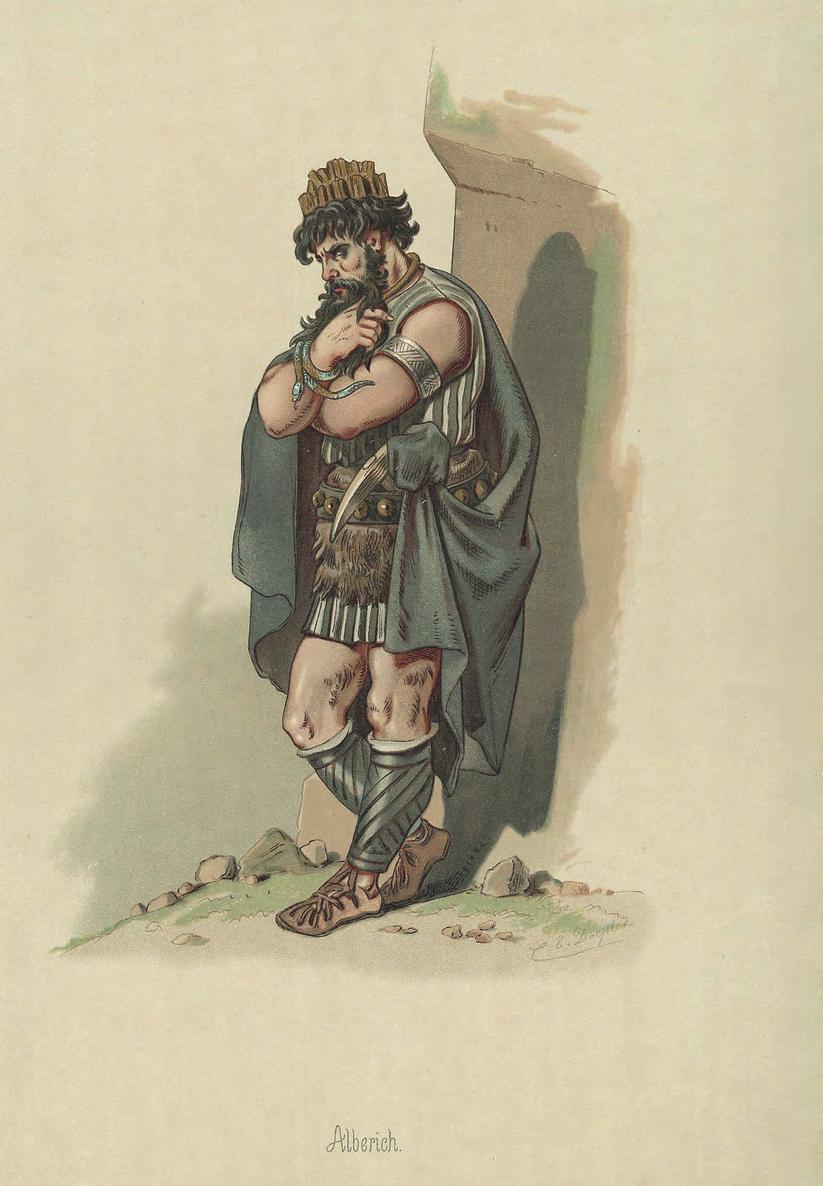
Siegfried. Costume design for Der Ring des Nibelungen (1876) by Carl Emil Doepler. Coll. Archivio Ricordi

I - In his smithy in the forest, the Nibelung Mime raises the superstrong Siegfried as his foster son. Mime is unable to reforge the broken sword Nothung, the weapon of Siegfried’s father. He hopes to use Siegfried to gain possession of the Nibelung treasure guarded by the dragon Fafner.
Under pressure from Siegfried, Mime reveals that Sieglinde gave birth to Siegfried, after which she died. Siegfried demands that Mime reforge Nothung.
Wotan, dressed as the Wanderer, plays a game of questions and answers with Mime, who thereby discovers that only a man without fear can reforge the sword.
Mime lures Siegfried to Fafner. Siegfried, who knows no fear, sets about reforging Nothung whilst Mime prepares a poisoned drink to kill Siegfried.
II - Alberich still longs for his Ring and his hoard of gold, which are guarded by Fafner. The Wanderer rouses the dragon so that Alberich can warn him of Siegfried. Fafner is unimpressed. The Wanderer departs and Alberich hides himself.
Siegfried shakes off Mime: he is lost in thought about his mother and wants to talk to the birds. With his horn, he awakens Fafner, whom he then mortally wounds. Fafner warns of the curse that rests upon the Ring.
After having tasted Fafner’s blood, Siegfried understands the birds. One of these alerts him of the Tarn Helmet and the Ring, and of the treacherous Mime, whose thoughts Siegfried now can read. Mime pays for this with his life. Then the bird tells of Brünnhilde, who sleeps on a rock surrounded by fire.
III - At Brünnhilde’s rock, Wotan/Wanderer awakens the wise primordial mother Erda. She senses that the deeds of men cloud her wisdom. Wotan, no longer fearing his end, banishes her for ever. Siegfried appears. The Wanderer challenges him by blocking his path with his spear, but Siegfried smashes it to pieces with Nothung. He walks through the fire and, after briefly fearing her, awakens the sleeping Brünnhilde. She comes to terms with her new status as a mortal woman and Siegfried’s beloved.
Following a prologue (Das Rheingold) and an evening’s performance (Die Walküre), a new character bursts onto the scene in Richard Wagner’s Der Ring des Nibelungen: Siegfried, heralded in Die Walküre as ‘the noblest hero in the world’, threatens the dwarf Mime with a bear because he wants a sword.
Siegfried is restless, considers himself too handsome to be Mime’s son, and fears nothing, not even the roaring dragon Fafner. Only the music of nature calms him, leading him to reflect on his parents and to wonder what a woman actually looks like. He also realises that reed instruments are not his thing and that he is more drawn to the louder brass.
Richard Wagner initially wrote the libretto for Siegfried as a prologue to his Götterdämmerung, a grand opéra drawing on a wealth of Northern European texts. Consequently, the figures in Götterdämmerung – with familiar literary names such as Siegfried, Brünnhilde, Gunther and Hagen –became original and complex characters, but it turned out that more than one opera was needed to bring everything together. So, prior to Siegfried came Die Walküre, and before that, Das Rheingold.
From these we know that the Nibelung Alberich appropriated the Rhinegold by cursing love. He had his brother Mime forge
a magic helmet from it: the Tarnhelm. He himself fashioned the Ring from the gold, which, depending on who you ask, grants power over the Nibelungs, the whole world or the entire universe. Those who do nothing with the Ring seem not to feel its power. Wotan forcibly takes the Ring from Alberich, whereupon Alberich curses the treasure and its bearers. When Wotan hands over the gold hoard and the Ring to the giants Fasolt and Fafner, Fafner kills Fasolt and, in the guise of a dragon, lies down with his treasure in a cave in a forest.
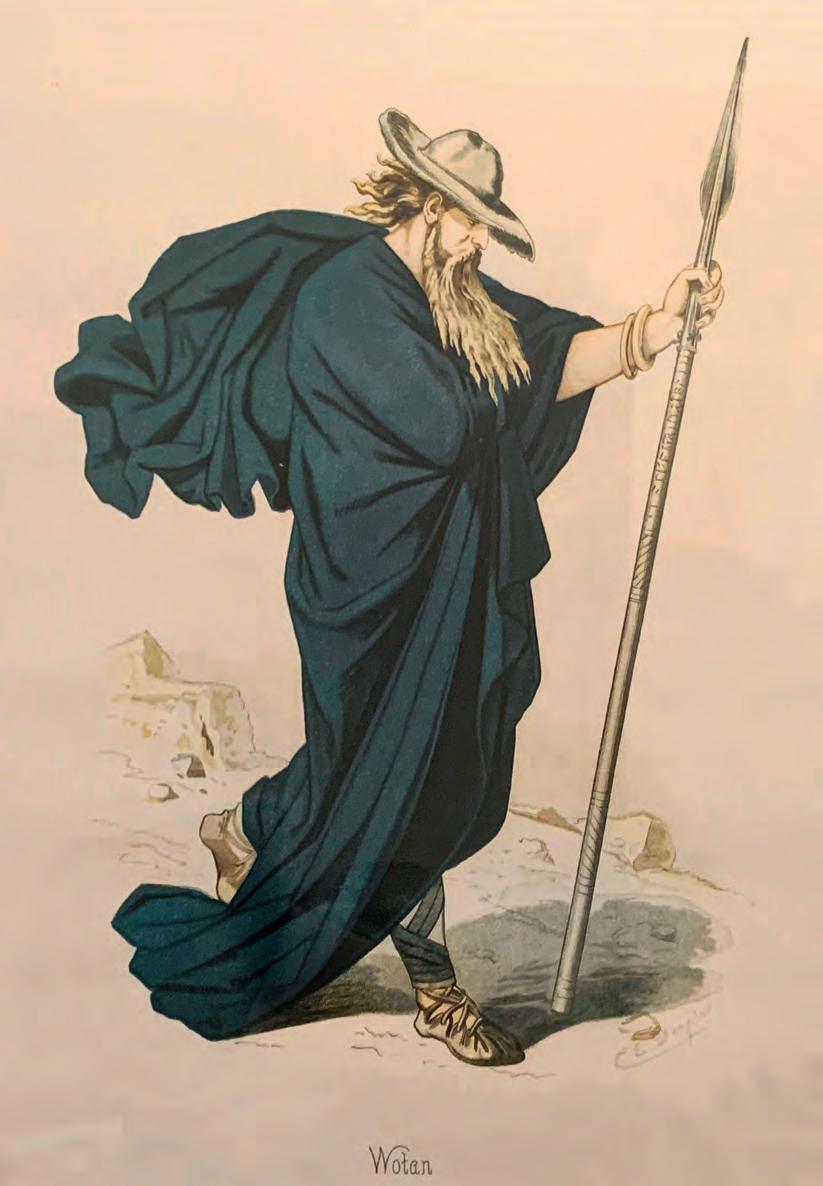
Wotan’s own power is based on his spear, carved from the World-Ash, upon which he has inscribed his treaties with other inhabitants of the world. To Siegmund, his son by an earthly woman, he bestows the sword Nothung, with which Siegmund also wins the love of his twin sister Sieglinde and must set out to save the world from destruction. Fricka, Wotan’s lawful wife, demands, however, that her husband cease to aid the offspring he has fathered with
others. Wotan therefore smashes Nothung to pieces with his spear. Furthermore, he puts the Valkyrie Brünnhilde, his daughter by the primordial mother Erda, to sleep on a rock surrounded by fire, because she comes to the aid of Siegmund and Sieglinde.
In Die Walküre, Siegfried’s father Siegmund was a hero cast out by his people, whose sombre outlook on life tempered the storm scenes in that opera. He, too, was searching for his family. Siegfried knows no people and brings chaos and disruption through singing, mocking, hammering, killing, hacking and kissing. Siegfried is an opera about a new generation. The downfall of the characters from the previous operas begins: Mime and Fafner meet their deaths; the primordial mother Erda and the supreme god Wotan, whose spear is shattered by a blow from Siegfried’s sword Nothung, withdraw for ever. Only Wotan’s daughter Brünnhilde reinvents herself, musically as well: from Siegfried’s divine aunt, she becomes his jubilant lover.
As befits the younger generation, Siegfried has little respect for the old world order. Supreme god Wotan, albeit disguised as a wanderer, is told to keep his mouth shut if he cannot help Siegfried after all. Siegfried’s world begins with himself. When Fafner warns the dragon of a curse, Siegfried merely wishes to reveal his name. And although a little bird points him towards Brünnhilde, a sleeping woman on a rock, Siegfried is still startled, when he cuts open her armour, to find that she is not a man. Frightened, he calls out for his mother.
Wotan, having come to terms with his impending demise, has pinned his hopes on the new generation. Because of his oath to Fricka, he is forbidden to intervene in the reforging of the sword Nothung. Wotan must engage in a lengthy question-and-answer
session with Mime, so that the dwarf may discover who is capable of reforging the sword. Richard Wagner skilfully treats us to a bit of backstory and a number of beautiful, instantly recognisable melodies, his leitmotifs: including that of the giants, so that in the second act we can hear from the rhythmic figure of the timpani that the dragon in the cave is indeed the giant Fafner.
Singing, mocking, hammering, killing, hacking and kissing, Siegfried
causes a commotion and wreaks havoc
Wagner structured the musical composition of Der Ring des Nibelungen in chronological order: he began by composing Das Rheingold and Die Walküre. In 1856 he set to work to complete the composition of Siegfried, but in August 1857 he interrupted his work. He left Siegfried sitting under the cooling tree in the second act for twelve years and would not complete the work before the years 1869–1871. We hear this in the third act: the more experienced opera composer has given his Erda and Wotan extra colour and depth in their respective final scenes. He has also forgotten that his Siegfried has already sung heroically for two acts, and bathes the awakening Brünnhilde in glorious sunrise music: however free and enterprising Siegfried may feel, everything he does so far has happened exactly as Brünnhilde intended and foreseen in Die Walküre.
We seem to be heading towards a happy ending, but from that old order, the Nibelung Alberich still roams unscathed and plots his revenge. With the dawn of her love life, Brünnhilde rightly foresees the end of the gods: ‘Götterdämm’rung, dunkle herauf!’
Hein van Eekert
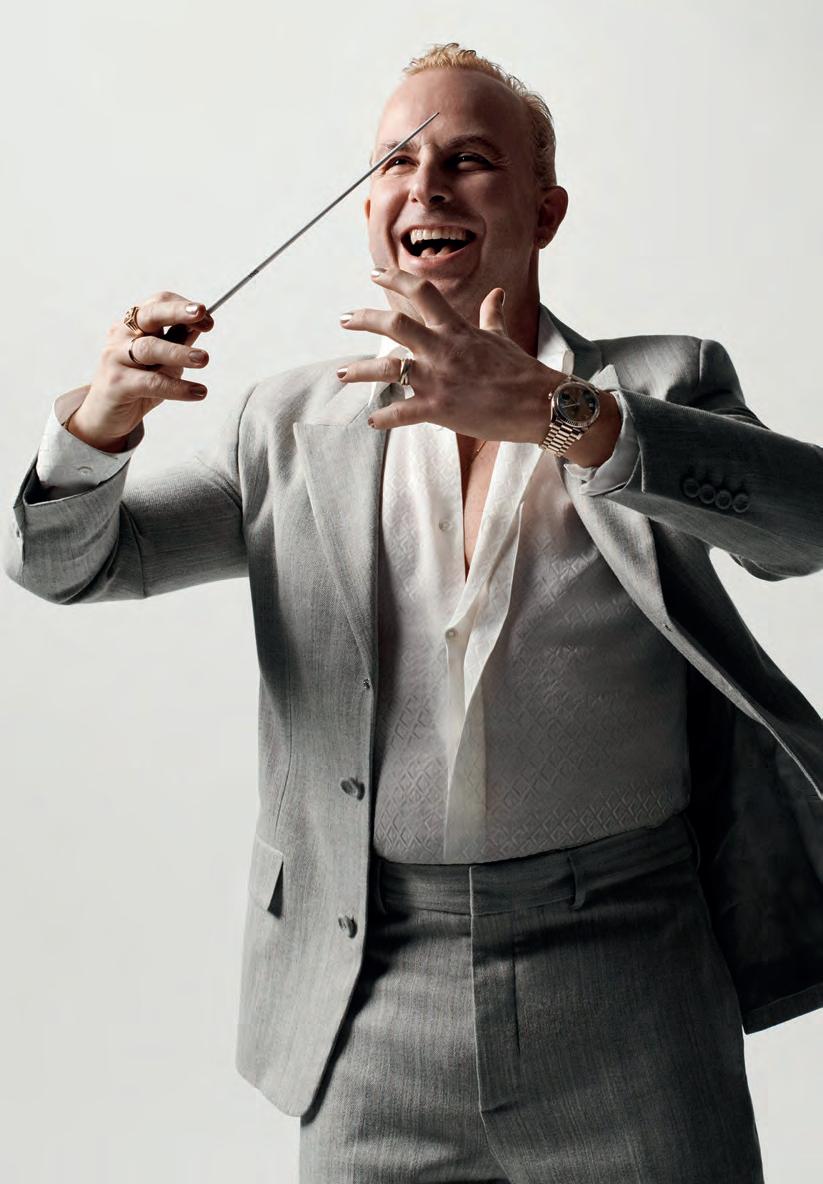
Born: Montreal, Canada
Current position: music director Metropolitan Opera New York, Philadelphia Orchestra, Orchestre Métropolitain of Montreal; honorary conductor Rotterdam Philharmonic (music director 2008–2018), honorary member Chamber Orchestra of Europe
Education: Conservatoire de musique du Québec in Montréal; conducting with Carlo Maria Giulini Awards: Royal Philharmonic Society Award (2008); Canada’s National Arts Centre Award (2010); Prix Denise-Pelletier (2011); Companion of the Order of Canada (2012); Officer of the Order of Québec (2015); Cultuurpenning Rotterdam (2018) Breakthrough: 2004, debut Orchestre du Capitole de Toulouse Guest conductor: Berlin Philharmonic, Bavarian Radio Symphony, Vienna Philharmonic, London Philharmonic Orchestra, Salzburg Festival Debut Rotterdam Philharmonic: 2005
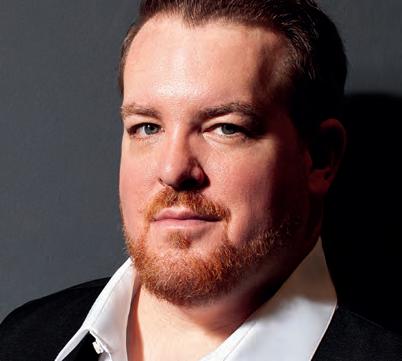
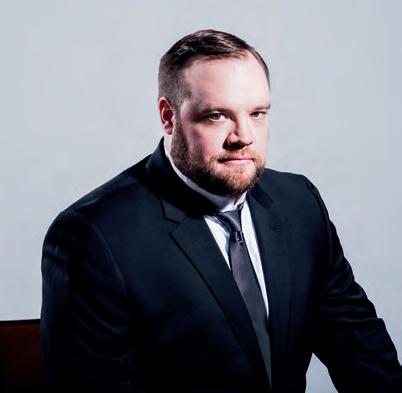
Born: Athens GA, USA
Education: Georgia State University, Manhattan School of Music, Boston University Opera Institute
Opera: Metropolitan Opera New York, Bayreuther Festspiele, Deutsche Oper Berlin, Wiener Staatsoper, Salzburger Festspiele, Edinburgh International Festival, Royal Opera House Covent Garden, Dutch National Opera Debut Rotterdam Philharmonic: 2026
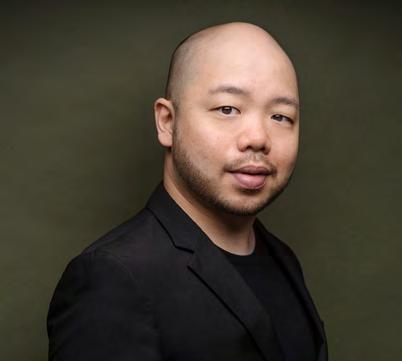
Born: Taipei, Taiwan
Education: Soochow University Taipei, Universität der Künste Berlin
Opera: Bayreuther Festspiele, Bayerische Staatsoper, Deutsche Oper Berlin, Staatsoper Hamburg, Theater an der Wien, Royal Opera House Covent Garden, Edinburgh International Festival, Norwegian National Opera, Royal Danish Opera, Dutch Nationale Opera Debut Rotterdam Philharmonic: 2026
Born: Endicott NY, USA
Education: Juilliard School of Music, New York
Awards: George London Award, Winner
International Hans Gabor Belvedere Vocal Competition
Opera: Metropolitan Opera, Wiener Staatsoper, Opernhaus Zürich, Lyric Opera of Chicago, San Francisco Opera, Dutch National Opera
Debut Rotterdam Philharmonic: 2024
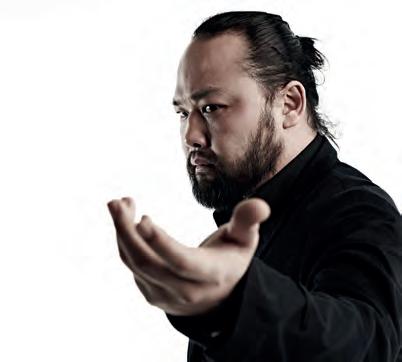
Born: Seoul, South Korea
Education: Giuseppe Verdi Conservatory Milan; Musikhochschule Cologne
Awards: Offenbach Award Freunde der Kölner Oper (2005)
Opera: Oper Köln, Bayreuther Festspiele, Deutsche Oper Berlin, Semperoper Dresden, Wiener Staatsoper, Teatro alla Scala, Teatro
La Fenice, Lyric Opera of Chicago, Edinburgh International Festival
Debut Rotterdam Philharmonic: 2022
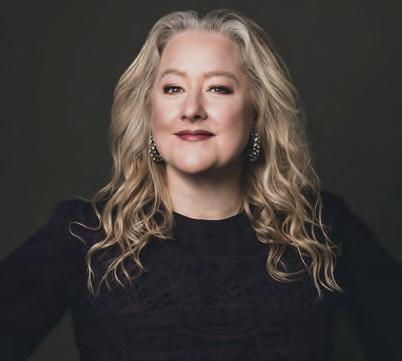
Born: Melbourne, Australia
Education: Monash University Melbourne, Royal College of Music London
Prijzen: Herald Sun Aria, Australian Singing Competition, Inaugural Dame Joan Sutherland Singing Award
Opera: Metropolitan Opera New York, San Francisco Opera, Boston Lyric Opera, Wiener Staatsoper, Royal Swedish Opera Debut Rotterdam Philharmonic: 2026
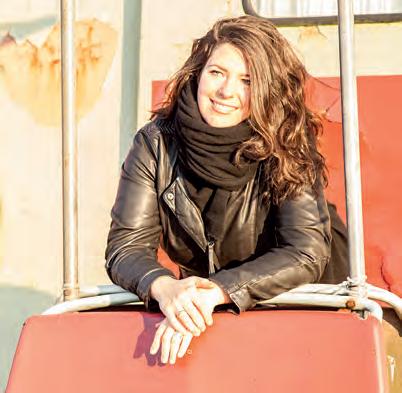
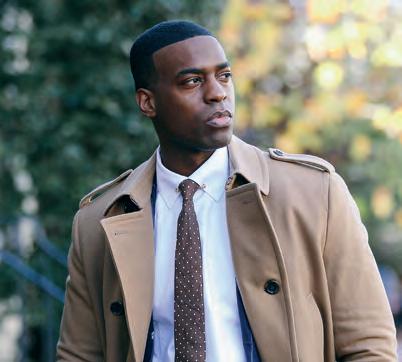
Born: Washington DC, USA
Education: Manhattan School of Music; Morgan State University
Awards: Washington Performing Arts
Ambassador of the Arts Award 2021
Opera: Metropolitan Opera New York, Lyric
Opera of Chicago, Staatsoper Hamburg, Opéra
national de Bordeaux, Royal Opera House
Covent Garden
Debut Rotterdam Philharmonic: 2024
Born: Oldenburg, Germany
Education: Hochschule für Musik und Theater
Hamburg
Breakthrough: 2012, Salzburg Festival with Nikolaus Harnoncourt
Subsequently: solo-appearances with Berliner Philharmoniker, Cleveland Orchestra, Royal Concertgebouw Orchestra; opera at Bayerische Staatsoper, Opéra de Paris, Royal Opera House
Covent Garden, Wiener Staatsoper
Debut Rotterdam Philharmonic: 2022
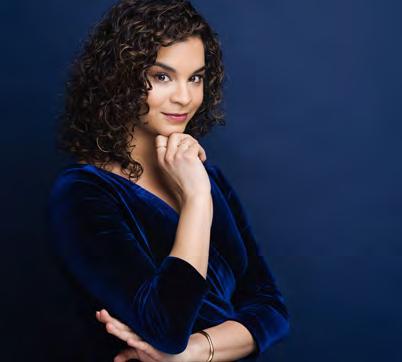
Born: Avignon, France
Education: Conservatoire du Grand Avignon, Haute École de Musique de Genève, Juilliard School of Music
Awards: Metropolitan Opera Laffont Competition 2022, Operalia 2023
Opera: Metropolitan Opera New York, Salzburger Festspiele, Edinburgh International Festival, Festival d’Aix-en-Provence, Opéra National de Paris
Debut Rotterdam Philharmonic: 2026
Thu 23 April 2026 • 20.15
conductor Yannick Nézet-Séguin
piano Jan Lisiecki
Wagner Siegfried Idyll
Mendelssohn Piano Concerto No. 1
Schumann Symphony No. 3 ‘Rhenish’
Sun 10 May 2026 • 14.15
conductor Andris Poga
cello Nicolas Altstaedt
Prokofiev Sinfonia concertante
Prokofiev L’amour des trois oranges: Suite
Shostakovich Symphony No. 1
Commemoration Concert
Thu 14 May 2026 • 20.15
violin Marieke Blankestijn
cello Emanuele Silvestri
clarinet Julien Hervé
piano Hannes Minnaar
Shostakovich Piano Trio No. 1
Messiaen Quatuor pour la fin du temps
Fri 15 May 2026 • 20.15
conductor Jukka-Pekka Saraste
Van Dun L’appel du vide (World Première)
Bruckner Symphony No. 5
Music for Breakfast 5
Sun 17 May 2026 • 10.30
Dudok aan de Maas musicians and programme: rpho.nl/en
Thu 21 May 2026 • 20.15
Fri 22 May 2026 • 20.15
conductor Lahav Shani
piano Daniil Trifonov
Schönberg Verklärte Nacht
Brahms Piano Concerto No. 2
Chief Conductor
Lahav Shani
Honorary Conductor
Yannick Nézet-Séguin
Principal Guest Conductor
Tarmo Peltokoski
First Violin
Marieke Blankestijn, Concert Master
Vlad Stanculeasa,
Concert Master
Quirine Scheffers
Hed Yaron Meyerson
Saskia Otto
Rachel Browne
Maria Dingjan
Marie-José Schrijner
Noëmi Bodden
Petra Visser
Sophia Torrenga
Hadewijch Hofland
Annerien Stuker
Alexandra van Beveren
Marie Duquesnoy
Second Violin
Charlotte Potgieter
Frank de Groot
Laurens van Vliet
Elina Staphorsius
Jun Yi Dou
Bob Bruyn
Eefje Habraken
Maija Reinikainen
Babette van den Berg
Melanie Broers
Tobias Staub
Sarah Decamps
Robin Veldman
Viola
Anne Huser
Roman Spitzer
Galahad Samson
José Moura Nunes
Kerstin Bonk
Janine Baller
Veronika Lénártová
Rosalinde Kluck
León van den Berg
Olfje van der Klein
Jan Navarro
Cello
Emanuele Silvestri
Gustaw Bafeltowski
Joanna Pachucka
Daniel Petrovitsch
Mario Rio
Eelco Beinema
Carla Schrijner
Pepijn Meeuws
Yi-Ting Fang
Killian White
Paul Stavridis
Double Bass
Matthew Midgley
Ying Lai Green
Jonathan Focquaert
Arjen Leendertz
Ricardo Neto
Javier Clemen Martínez
Marta Fossas Mallorqui
Mario Fernández
Flute
Juliette Hurel
Joséphine Olech
Manon Gayet
Flute/Piccolo
Beatriz Baião
Oboe
Karel Schoofs
Anja van der Maten
Oboe/Cor Anglais
Ron Tijhuis
Clarinet
Julien Hervé
Bruno Bonansea
Alberto Sánchez García
Clarinet/
Bass Clarinet
Romke-Jan Wijmenga
Bassoon
Pieter Nuytten
Lola Descours
Marianne Prommel
Horn
David Fernández Alonso
Felipe Freitas
Wendy Leliveld
Richard Speetjens
Laurens Otto
Pierre Buizer
Trumpet
Alex Elia
Adrián Martínez
Simon Wierenga
Giovanni Giardinella
Trombone
Pierre Volders
Alexander Verbeek
Remko de Jager
Bass trombone
Rommert Groenhof
Tuba
Martijn van Rijswijk
Timpani/ Percussion
Danny van de Wal
Ronald Ent
Martijn Boom
Jesús Iberti Rubira
Harp
Albane Baron