
Thu 2 April 2026 • 19.30 Fri 3 April 2026 • 19.30 Sat 4 April 2026 • 19.30 St Matthew Passion Thu 2 April 2026 • 19.30 Fri 3 April 2026 • 19.30 Sat 4 April 2026 • 19.30
Thu 2 April 2026 • 19.30 Fri 3 April 2026 • 19.30 Sat 4 April 2026 • 19.30 St Matthew Passion Thu 2 April 2026 • 19.30 Fri 3 April 2026 • 19.30 Sat 4 April 2026 • 19.30
conductor Leonardo García Alarcón soprano Sophie Junker alto Wiebke Lehmkuhl tenor (Evangelist) Moritz Kallenberg tenor (arias) Mark Milhofer bass (Vox Christi) Andreas Wolf bass (arias) Tomáš Král choir Laurens Collegium children’s choir Singers from the National Boys’ Choir and National Children’s Choir, prepared by Irene Verburg
Johann Sebastian Bach 1685-1750 St Matthew Passion, BWV 244 [1727, revision 1736 and 1742]
Passion unseres Herrn Jesu Christi nach dem Evangelisten Matthäus
Text: Christian Friedrich Henrici, named Picander
There is an interval after the first part
Concert ends at about 22.45
Most recent performance by our orchestra: April 2025, conductor Jonathan Cohen
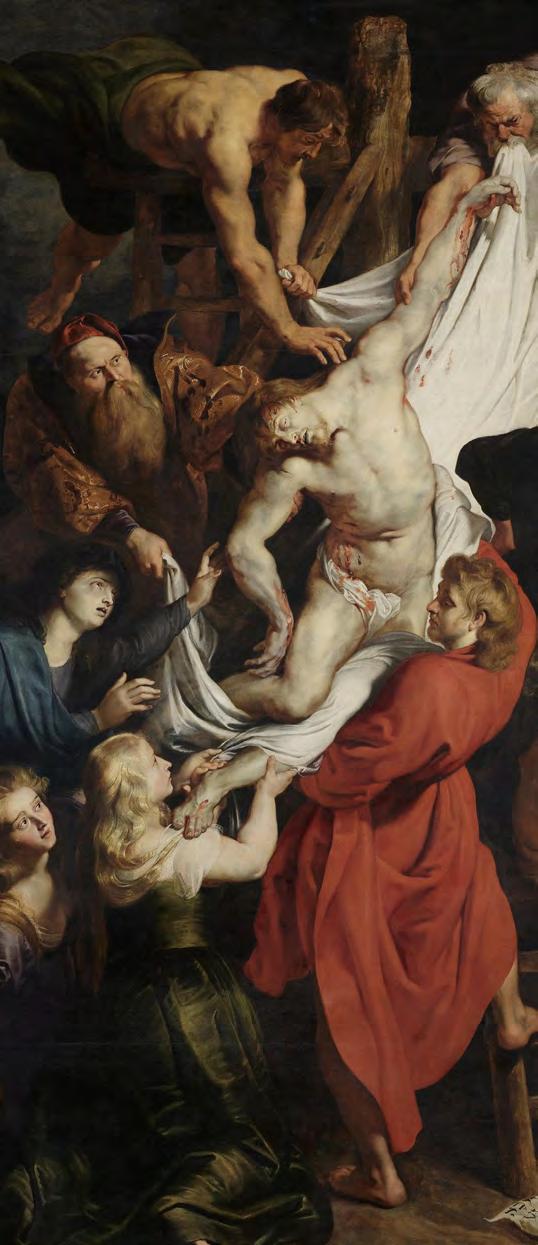
For many of us, Johann Sebastian Bach is one of the greatest composers, and his St Matthew Passion perhaps his most significant masterpiece. But would it ever have been written if in 1722 Georg Philipp Telemann had not been awarded a pay rise?
This was the year in which Johann Kuhnau, the Thomascantor in Leipzig, died, and the city council appointed Telemann as his successor. Telemann at first agreed to the appointment, but ultimately withdrew when his employer in Hamburg increased his salary. And it was not until a further candidate was also unavailable that the choice finally fell on Bach...
It was an onerous job with many responsibilities. Bach’s tasks not only included revealing the secrets of music to a couple of dozen choirboys, but also, for example, explaining the grammar of the Latin language. And each Sunday and religious holiday the Thomascantor was required to perform a suitable cantata in one of his four churches in Leipzig. To this end, Bach composed a huge quantity of church music during the first few years of his appointment.
For Good Friday that meant the composition of a dramatic Passion. The performance of Kuhnau’s St Mark’s Passion in 1721 launched an annual tradition in Leipzig whereby the story of Christ’s Passion would be presented in music and text alternately in the St Thomas Church and the St Nicholas Church. The first time that such an event fell to the responsibility of Bach
was in 1724, in a performance of his St John’s Passion, which he had already composed before his appointment in Leipzig. Bach also presented the Passion as told in the other three Gospels, although it is unclear how much of the music for these he had composed himself. His obituary even speaks of five Passions, of which one was written for a double choir.
The reference to the Passion for double choir can only mean the St Matthew Passion, of which a complete score, written in an elegant hand by Bach himself, has survived to this day. This hand-written copy dates from 1736, although a first version of the St Matthew Passion had already been performed in 1727 or 1729.
The use of a double choir distinguishes this work from other Passions by Bach himself and his contemporaries, and is a direct result of the interior of the St Thomas Church at that time. The two choirs, each with their own soloists, orchestra and organ, were positioned on a gallery on two sides, allowing a flow of questions and responses back and forth, as in the opening chorus, to optimum effect. In addition, on an opposite gallery the ripieno trebles sang out the choral melody ‘O Lamm Gottes unschuldig’ (‘O Lamb of God, innocent’) over the tops of both other choirs. Nowadays the innocents are often sung by a boys’ choir; at that time all parts were sung by men and boys.
The splitting of the work into two (unequal) halves was necessary to allow time for the sermon. The Passion was, after all, intended to be part of a church service. Although it might seem logical to make an interval between Chapters 26 and 27 of the Gospel of Matthew, Bach chose an earlier point in time. The end of the first part follows the arrest of Jesus, the moment when he is left all alone – ‘Da
verließen ihn alle Jünger und fliehen’ (‘Then all the Disciples left him and fled’). Just before this point Judas had betrayed Jesus, a moment described with the sound of thunder and lightning from both sides of the church.
An even more significant act of betrayal turns out to be Peter’s denial of Christ. In the Bible it is this event that concludes Chapter 26. Bach makes this into an emotional climax, especially through the aria for alto that follows: ‘Erbarme dich’ (‘Have mercy’). The central positioning of this aria, and its relationship with the announcement of the denial in the first part, is explained by our compatriot and Matthew Passion expert Kees van Houten in an article well worth reading by the cruciform shape that underpins the work: the two moments in the Passion form the intersection between the upright and horizontal parts of the cross.
Bach found another way to centrally place the aria ‘Aus Liebe will mein Heiland sterben’ (‘Out of love my Saviour wants to die’), by inserting it between the two appeals for Christ to be crucified. This text, as with the text of the other arias, is written by Picander, an amateur poet who earned his daily bread as a postman in Leipzig, and who here found the words to capture the essence of the story of the Passion. The instrumentation creates a very particular sound, partly through the combination of a flute solo accompanied by two cors anglais but also due to the absence of any real bass part.
The basso continuo, the continuous bass line, is one of the building blocks of Baroque music. The part may be played by various bass instruments, such as a cello, double bass and bassoon, in combination with a keyboard: organ or harpsichord. In this Passion they form the sombre base line to the recitatives of the Evangelist, but they are also rarely absent from
the orchestral passages. Bach creates a similar effect in the appeal by Jesus: ‘Eli, Eli, lama sabacthani’ (‘My God, my God, why hast Thou forsaken me?’). The role of Christ is supported all the way through by the string section of the first orchestra, giving the text a great dignity, a kind of halo effect. The absence of the strings in this passage is very illuminating. Following the moment of death, which passes almost unnoticed, comes a trembling of the earth and all the drama of the declamation of the Evangelist and the basso continuo.
With the limited means at his disposal, it must have been quite a task for Bach to organise such an extended ensemble of sufficient quality. Many arias are accompanied by beautiful but complicated instrumental solos that often live longer in the memory than the sung melodies. For the oboe parts, that also appear frequently in his cantatas, Bach could rely on virtuoso Johann Caspar Gleditsch. Bach would also have had intensive contact with instrument maker Johann Heinrich Eichentopf, who developed and improved several other types of oboe, such as the oboe da caccia (later known as the cor anglais) and the oboe d’amore (pitched lower than the oboe but higher than the cor anglais).
It is probable that had Bach not been appointed as Thomascantor, he would nevertheless have taken a position elsewhere as a church musician and still composed a work such as the St Matthew Passion. However, the opportunity provided for a double choir by the St Thomas Church, and the instrumentation of the score tightly bind the work with the city of Leipzig. With a debt of gratitude to another deserving composer of Passions: Georg Philipp Telemann.
Eelco Beinema
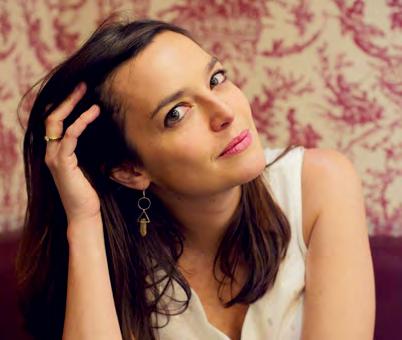
Born: Dison, Belgium
Education: Institut Supérieur de Musique et de Pédagogie, Guilhall School of Music and Drama
Breakthrough: 2010, winning the London Handel Competition
Solo appearances: The English Concert, Bach Collegium Japan, Handel Consort, Concerto Copenhagen
Opera: English National Opera, Wigmore Hall, Copenhagen Opera Festival, Innsbrucker Festwochen der Alten Musik
Debut Rotterdam Philharmonic: 2026
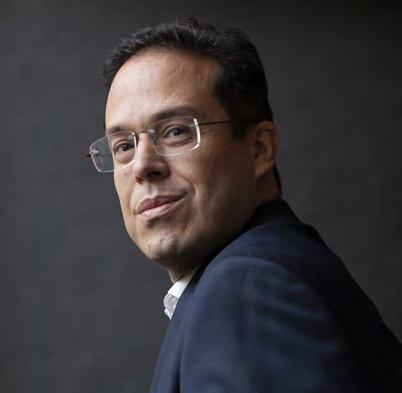
Born: La Plata, Argentina
Current position: Artistic Director Cappella
Mediterranea and Choeur de chambre de Namur
Education: Piano at the Universidad de La Plata, Theory of Music and Harpsichord with Christiane Jaccottet in Geneva
Breakthrough: 2005, founding Cappella Mediterranea
Subsequently: Opéra national de Paris, Berliner Staatsoper, Festival d’Aix-en-Provence, Concertgebouw Amsterdam
Debut Rotterdam Philharmonic: 2026
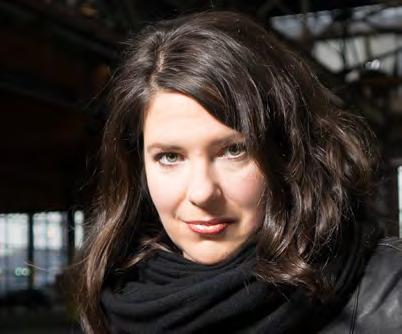
Born: Oldenburg, Germany
Education: Hochschule für Musik und Theater
Hamburg
Breakthrough: 2012, performing at the Salzburg Festival under Nikolaus Harnoncourt
Subsequently: solo appearances with Berlin Philharmonic, Cleveland Orchestra, Bavarian Radio Symphony Orchestra, Royal Concertgebouw Orchestra; opera at Bavarian State Opera, Paris Opera, Royal Opera House Covent Garden, Vienna State Opera
Debut Rotterdam Philharmonic: 2022
Born: Reutlingen, Germany
Education: Musikhochschule Freiburg, Conservatorio Luigi Cherubini in Florence, masterclasses with Brigitte Fassbaender, René Jacobs, Margaret Honing and Claudio Desderi
Breakthrough: 2016, as laureate of the Bundeswettbewerb Gesang Berlin
Subsequently: solo appearances with Berlin
Philharmonic, Staatskapelle Berlin, Orchestra La Verdi Milano; opera with Staatsoper Stuttgart, Leipzig Opera, Staatsoperette Dresden
Debut Rotterdam Philharmonic: 2026
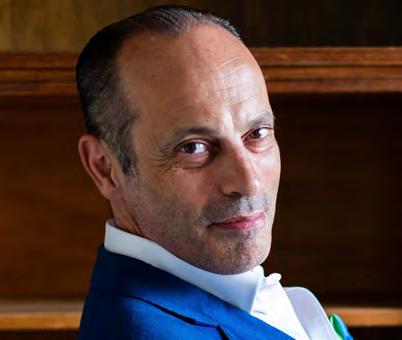
Born: England
Education: Choral Scholar at Magdalen College, Oxford; further studies at the Guildhall School of Music, London, and with Renata Scotto and Leyla Gencer at the Italian Opera Studio Milan
Solo appearances: Royal Opera House
Covent Garden, English National Opera, Staatsoper Berlin, Opera Stuttgart, Nationale Reisopera; in concert at BBC Proms, Aldeburgh Festival, Wigmore Hall
Debut Rotterdam Philharmonic: 2026
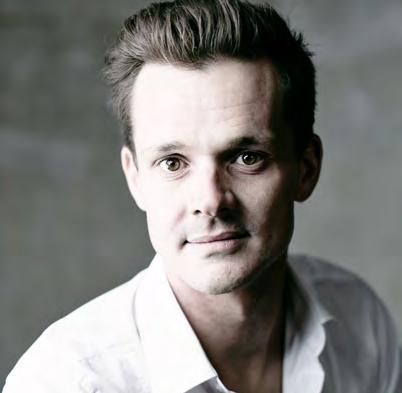
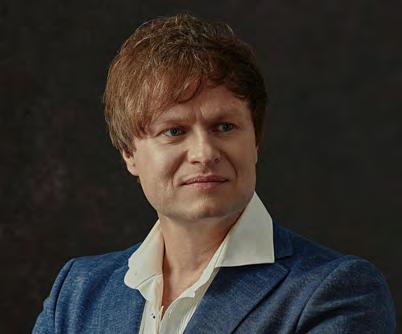
Born: Wernigerode, Germany
Education: Detmold University of Music with Heiner Eckels, masterclasses with Dietrich Fischer-Dieskau, Christoph Prégardien, and Thomas Quasthoff
Breakthrough: 2007, opera debut Festival d’Aix-en-Provence
Subsequently: opera at Semperoper Dresden, La Monnaie Brussels, Bayerische Staatsoper, Grand Théâtre de Genève, Opéra de Paris, Bregenzer Festspiele, Innsbrucher Festwochen, Wiener Festwochen
Debut Rotterdam Philharmonic: 2026
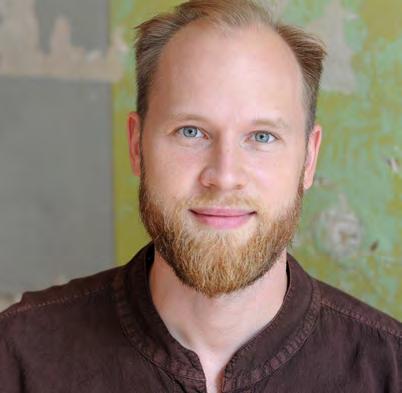
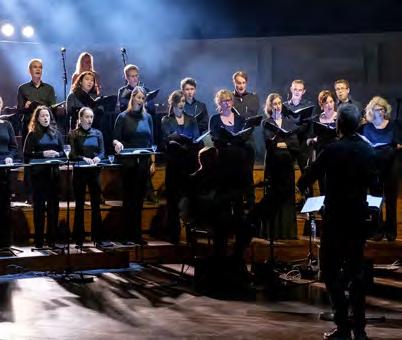
Founded: 2002 by Barend Schuurman
Present conductor: Wiecher Mandemaker
Repertoire: music for chamber choir from all period styles
Co-operations: Royal Concertgebouw Orchestra, Orchestra of the Eighteenth Century, Residentie Orkest with conductors such as Frans Brüggen, Marcus Creed, Stéphane Denève, Yannick Nézet-Séguin, Lahav Shani, and Jaap van Zweden, projects with Laurens Organist Hayo Boerema
Debut Rotterdam Philharmonic: 2011
Born: Brno, Czech Republic
Education: Voice at the Janáček Academy Brno with Adriana Hlavsová; Early Music with Ivan Kusjner; masterclasses with Howard Crook, Peter Schreier
Breakthrough: 2005, as founder of Collegium 1704
Subsequenty: solo appearances with Collegium Vocale Ghent, La Venexiana and Holland
Baroque, at Prague Spring Festival, Salzburger Festspiele, Early Music Festival Utrecht, Dutch
National Opera
Debut Rotterdam Philharmonic: 2026
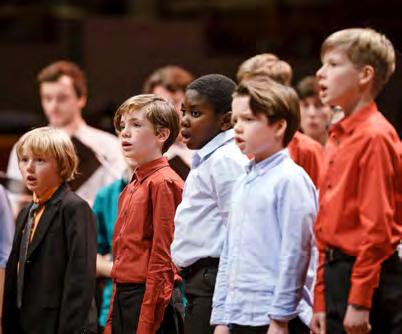
Founded: 1989, as National Children’s Choir
Consisting of: National Children’s Choir and National Boys’ Choir (for singers aged 10 to 15), National Women’s Youth Choir and National Mixed Youth Choir (age 16-29)
Artistic Direction: Irene Verburg and László Nemes
Co-operations: Berlin Philharmonic, Royal Concertgebouw Orchestra, Netherlands Radio Philharmonic, Budapest Festival Orchestra
Debut Rotterdam Philharmonic: 1999
Proms: The Four Seasons Recomposed
Fri 10 April 2026 • 20.30
violin/leader William Hagen
Richter The Four Seasons
Music for Breakfast 4
Sun 12 April 2026 • 10.30
Trattoria Sophia musicians and programme: rpho.nl/en
Fri 17 April 2026 • 18.00
conductor Yannick Nézet-Séguin
Wagner Siegfried (concert version)
Thu 23 April 2026 • 20.15
conductor Yannick Nézet-Séguin
piano Jan Lisiecki
Wagner Siegfried Idyll Mendelssohn Piano Concerto No. 1
Schumann Symphony No. 3 ‘Rhenish’
Sun 10 May 2026 • 14.15
conductor Andris Poga
cello Nicolas Altstaedt
Prokofiev Sinfonia concertante
Prokofiev L’amour des trois oranges: Suite
Shostakovich Symphony No. 1
Commemoration Concert
Thu 14 May 2026 • 20.15
violin Marieke Blankestijn
cello Emanuele Silvestri
clarinet Julien Hervé
piano Hannes Minnaar
Shostakovich Piano Trio No. 1
Messiaen Quatuor pour la fin du temps
Chief Conductor
Lahav Shani
Honorary Conductor
Yannick Nézet-Séguin
Principal Guest Conductor
Tarmo Peltokoski
First Violin
Marieke Blankestijn, Concert Master
Vlad Stanculeasa, Concert Master
Quirine Scheffers
Hed Yaron Meyerson
Saskia Otto
Rachel Browne
Maria Dingjan
Marie-José Schrijner
Noëmi Bodden
Petra Visser
Sophia Torrenga
Hadewijch Hofland
Annerien Stuker
Alexandra van Beveren
Marie Duquesnoy
Second Violin
Charlotte Potgieter
Frank de Groot
Laurens van Vliet
Elina Staphorsius
Jun Yi Dou
Bob Bruyn
Eefje Habraken
Maija Reinikainen
Babette van den Berg
Melanie Broers
Tobias Staub
Sarah Decamps
Robin Veldman
Viola
Anne Huser
Roman Spitzer
Galahad Samson
José Moura Nunes
Kerstin Bonk
Janine Baller
Veronika Lénártová
Rosalinde Kluck
León van den Berg
Olfje van der Klein
Jan Navarro
Cello
Emanuele Silvestri
Gustaw Bafeltowski
Joanna Pachucka
Daniel Petrovitsch
Mario Rio
Eelco Beinema
Carla Schrijner
Pepijn Meeuws
Yi-Ting Fang
Killian White
Paul Stavridis
Double Bass
Matthew Midgley
Ying Lai Green
Jonathan Focquaert
Arjen Leendertz
Ricardo Neto
Javier Clemen Martínez
Marta Fossas Mallorqui
Mario Fernández
Flute
Juliette Hurel
Joséphine Olech
Manon Gayet
Flute/Piccolo
Beatriz Baião
Oboe
Karel Schoofs
Anja van der Maten
Oboe/Cor Anglais
Ron Tijhuis
Clarinet
Julien Hervé
Bruno Bonansea
Alberto Sánchez García
Clarinet/
Bass Clarinet
Romke-Jan Wijmenga
Bassoon
Pieter Nuytten
Lola Descours
Marianne Prommel
Horn
David Fernández Alonso
Felipe Freitas
Wendy Leliveld
Richard Speetjens
Laurens Otto
Pierre Buizer
Trumpet
Alex Elia
Adrián Martínez
Simon Wierenga
Giovanni Giardinella
Trombone
Pierre Volders
Alexander Verbeek
Remko de Jager
Bass trombone
Rommert Groenhof
Tuba
Martijn van Rijswijk
Timpani/ Percussion
Danny van de Wal
Ronald Ent
Martijn Boom
Jesús Iberti Rubira
Harp
Albane Baron