
JUNE 2026 / 2 QUARTER ND


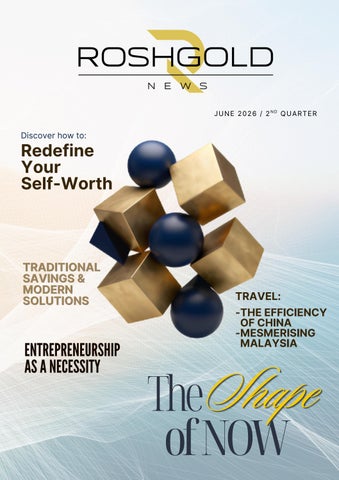
JUNE 2026 / 2 QUARTER ND
We welcome you to another bumper edition of Roshgold News. An early winter has not been a deterrent to painstakingly putting together a collection of stories to warm our hearts and souls. There is something for every taste!
Our lead article by Shaakira Rahiman is apt for the times and the season She makes a persuasive case for positivity and self-reflection And so does the online business story and the predicament of the leading football club, Tottenham Hotspur, present timely lessons for our readers that define the shape of business today and the threats posed by fluid macroeconomic conditions The times reinforce the need for everyone to understand the importance of saving and investing for such difficult circumstances Aadilah Sallie makes a strong case with her thought-provoking treatise on saving and investing
Will entrepreneurship shape futures as employment in the formal sector tanks? There are meaningful contributions for our readers to ponder upon Is Entrepreneurship an option? Can we encourage an entrepreneurial mindset? We were encouraged to receive submissions from three suitably qualified contributors who made telling pronouncements on the topic, thank you It gives us hope for the thought leadership shaping the understanding of the threats posed by this reality
What this also brings to the fore and showcases is the potential offered by our writing pool. There is creativity, storytelling and excellent thought leadership on matters pertaining to Roshgold stakeholders. A new generation of thinkers articulating and expressing in a time of uncertainty, upheaval and most importantly radical technological change. We encourage our Roshgold members and our readers to put finger to the keyboard and share their expertise and knowledge with our unique community. Contact our magazine team (marketing@roshgold.co.za) to add you to our mailing list, get you onboard and viola, you can get your opinion published.
Happy reading! Give us feedback on the articles and most importantly, let the debate be stimulated Your opinion and input matters to us
B COM C A (S A ) EDITOR


byShaakiraRahiman by Shaakira Rahiman

There is a particular kind of shift that does not announce itself. Nor does it arrive with fanfare or with a dramatic turning point you can reflect on later and say, “There, that was it!”
It normally arrives quietly, in the pause between one version of yourself and the next. One day you realise the questions have changed. You reflect, no longer asking, “What more can I do?” Instead you are asking something somewhat different: “What actually matters now?”
We move through life engrossed, with our heads down and our hands full: showing up, holding things together, being strong because there was simply no alternative Ambition becomes armour Busyness becomes identity and somewhere in the making of it all, a quieter, more essential question gets deferred: what do I actually believe I deserve? The book “Worthy” by Jamie Kern Lima cracked something open for me One line stopped me in my reading tracks and refused to let me go: “You don’t become what you want, you become what you believe you’re worthy of ”
I sat with that for a long time It is not about capability, is it? Most of us are extraordinarily capable It is about what we have subconsciously decided, often without realizing that we are allowed to receive
Along the way, gradually and almost imperceptibly, we begin measuring our worth against things that were never designed or meant to hold it: How much we achieve, how well we manage the chaos, how others see us on an ordinary Tuesday
Research shows that low self-esteem is far more common than we think In one peerreview study, nearly one in five adolescents were found to struggle with it (Nguyen et al , 2019) But this isn’t limited to a specific age or place A global study spanning fifty-three countries found that while many people report moderate levels of self-esteem, a significant proportion in every culture quietly experience low self-worth
We were handed a measuring stick early on and were embedded with it, to keep checking ourselves against it. The problem is that the stick keeps moving.
When your sense of value is tethered to outcomes and approval, stability becomes impossible Every setback issues a subtle verdict Every rest feels like it must be earned first Worth that depends on conditions is fragile by design, not because you are fragile, but because external things were never meant to be the foundation of something so internal
Self-worth, when it is genuinely inhabited, does not look the way we imagine it. It is rarely loud. It does not always stride into a room. More often, it shows up in the ordinary, unglamorous moments: saying no without composing a lengthy justification in your head, walking away from something that does not sit right in your gut even when it looks impressive on paper, choosing not to react to every provocation that crosses your path, and perhaps most revolutionary of all: resting without first submitting a case for why you have earned it
A thought you can observe is a thought that no longer owns you.
As we move through our seasons of life, the identity-testing of our 20s, the relentless juggle of our 30s, the alignment-seeking of our 40s (where I have recently found myself), and the meaning-focused clarity that often follows, what self-worth looks like shifts But its absence leaves the same hollow in every decade of our life’s journey And when it is genuinely rooted within you rather than borrowed externally, a degree of acceptance arises, and something settles You become less reactive and steadier The noise does not disappear; it simply loses its power to destabilize you . Neuroscience offers us something genuinely hopeful here Neuroplasticity, the brain’s capacity to rewire itself based on repeated thought patterns, tells us that the inner critic we have been cohabiting with is not a permanent resident It is a habit And habits, with patience and intention, can be changed.
The voice that has been quietly insisting you are too much or not enough? It is not the truth about you It is simply a well-worn groove One that can be retooled and remodeled.
This is built, as most meaningful things are, in the accumulation of small choices: honouring your own commitments, setting limits as an act of care for yourself, limiting the hours spent in comparing, measuring your life against someone else’s highlight reel, and speaking to yourself with at least the same generosity you would extend to someone you love These are not indulgences They are the architecture of a life lived from solid ground.
When the spiral begins, and it will (because that is the nature of being human), try this. It asks nothing of you but two minutes and a willingness to pause:
Stop. Just stop. Breathe in for 4 counts. Out for 6.
Ask: “What am I actually thinking right now?”
Name it: “I am having the thought that ” Watch it pass. You are not the thought. You are the one observing it
By Bilal Kathrada IT Varsity Bilal IT


But Sixty60 is not just about brand awareness; the numbers are staggering. Take a look:


-According to the CEO, Pieter Engelbrecht, in the second half of 2025, Sixty60’s sales grew 35% from R8.8 billion to R11.9 billion. Let that number sink in: nearly R12 billion in app-based sales.
-Sixty60 now contributes to over 10% of Shoprite Group’s total revenue
-Sixty60 created over 18 000 jobs
-And finally, here’s the real kicker: in the second half of 2025, the tips paid out to Sixty60 drivers amounted to R160 million. Let me say it more clearly: ONE HUNDRED AND SIXTY MILLION RAND in tips.
Can you imagine, 5 years ago, mum and even grandma, using an app on their phones to purchase groceries? This was unimaginable then, and I am still in denial when I see my 70+ mum expertly and dexterously placing orders on an app, and then confidently announcing “it will be here in 35 minutes.”
Mind boggling.
THE FUTURE OF BUSINESS IN SA
There is a fundamental message here for South African businesses: South Africa is ready to shift from shopping in-store, to shopping online. Not just the young ones, the tech-savvy ones; even nanima is cranking online buying.
And if your business is not succeeding with online sales, you are not doing it right
It’s not the market, it’s not the tech, it’s not the economy; it’s that you don’t know how to win at this game.
Maybe you’ve hired a digital marketing “expert” or are paying a small fortune in retainers to an “expert” agency. Maybe you are happy
Your current business is the caterpillar Online is the butterfly
Your market is shifting, and if you don’t shift with it, you are going to be left beh Clueless “Experts”.
Whether you are running a multi-million rand business or a tiny home-based samoosa factory, you don’t need “digital marketing” and “graphic design” and “AI” - you need to understand the online sales machine:
PRODUCT –> LEAD GENERATION –> LEAD NURTURING -> CLOSING

-Understand your product and your target, -then create messaging to generate interest, -look after each lead like gold, convincing them to buy, -and then, if you do it right, you will tap into the R130 billion online market.
This takes time, effort and an investment in knowledge to perfect; but once the machine comes to life, it becomes self-perpetuating
By AADILAH SALLIE
In days gone by, our forefathers lived simple lives on modest incomes Whatever they managed to save was carefully tucked away under their beds (Phala-Phala style) That may seem old-fashioned, but that small act brought immense peace of mind and comfort
Their savings were close, accessible, secure, and ready for any unexpected need It was a system rooted in discipline, simplicity and trust
Record-BreakingQuarter:Salford&co.
Today, we are fortunate to have far more advanced and secure ways to save and grow our wealth. Modern financial solutions, particularly those aligned with Islamic Shariah principles, offer not just safekeeping but also growth, flexibility, and long-term value enhancement
AnnouncesOutstandingFinancialResults
Roshgold represents a modern version of that “bottom of the bed”- a trusted place to store and build your savings With Roshgold, you invest your money knowing it is secure, accessible, and working for you over the long term It is designed as a long-term investment and offers the flexibility to cash out by selling when needed A word of caution: it is not a vehicle for short-term housing, as funds are allocated to long-term assets, and Roshgold should not be considered a financial savings institution
It offers flexibility and that flexibility matters more than we often realize.
Salford & Co. is thrilled to announce a record-breaking quarter, showcasing remarkable financial results that surpass all previous achievements The company reported a 30% increase in revenue, driven by a surge in demand for its innovative products and services This impressive growth has been attributed to strategic investments in technology and a customer-centric approach that has resonated well with consumers The company ' s net income also saw a substantial rise, reflecting efficient operational managementandcostoptimizationstrategies.
Recently, during the unexpected military flare-up in the Middle East, the importance of accessible savings became very real A Roshgold shareholder spent years investing for a long-awaited Umrah journey When the time finally came, they withdrew funds to cover their travel costs However, just a day before departure, their flight was unexpectedly canceled New arrangements had to be made urgently at an additional cost Because they had built up an accessible nest egg, they were able to manage the situation without stress or delay

“Do not save what is left after spending, but spend what is left after saving.”
“Small amounts saved consistently today can become security and freedom tomorrow.”
“The best time to start investing was yesterday. The second-best time is today.”
Today, the need to spend is always present and often overwhelming From daily living costs to unforeseen emergencies, financial pressure is a reality for many This is why building a habit of saving no matter how small is essential.
A simple monthly debit order, even as little as R300 or R500, can grow into a meaningful financial cushion over time The key is consistency. It’s not about how much you start with, it’s about starting At Roshgold, we have seen this materialize for many of our shareholders
Even more importantly, this mindset should be instilled from a young age Encouraging children to learn about money, save, understand its value, and invest in their future lays the foundation for lifelong financial stability. It is also the beginning of wealth creation. A mindset required for almost everyone
“Financial discipline is not built overnight it is shaped through small, consistent habits over time ”
The earlier we begin, the greater the benefit Time allows money to grow and discipline to take root By starting young, we are not just saving money, we are building security, independence, and peace of mind.
In many ways, the principle remains unchanged from generations past Whether under a bed or through a modern investment platform, the goal is the same: to be prepared, to be secure, and to face the future with confidence
Today, we have tools to help us achieve it
by Juwairyyah Abdool Wabh
For as long as I can remember, visiting Disneyland has been one of my biggest dreams. So, when my husband and I finally booked our trip to China, it felt like more than just a holiday; it was something deeply personal, something I had carried with me for years.
While I expected the magic of Disneyland to be the highlight of my journey, what impressed me most was something far less imagined: the quiet, almost invisible efficiency of everyday life in China.

Some travel destinations are known for their culture and history, while others are visited for their innovations China, however, offers something more compelling, a place where the true impression lies not only in what you see, but in how effortlessly everything works.
What becomes immediately apparent is a system built around efficiency Daily life is structured to minimize friction, where payments, transport, and communication function seamlessly
China operates independently of platforms like Google, relying instead on its own fast and highly efficient applications Everyday activities from purchasing goods to giving charity are completed through a simple QR code scan. I experienced this in a way I’ll never forget. When a beggar approached me, I instinctively reached into my bag to get cash, only for him to quickly present a QR code for me to scan
Within seconds, the transaction was complete It was surprising but also quickly revealing ease extends into every corner of daily life Mobile payment platforms such as Alipay create a “touch and go” experience, making cash unnecessary
In many ways, the mobile phone has become essential to the point that carrying more than one device is not uncommon
Transport is where this efficiency becomes more evident and impressive. Despite constant crowds, there is a strong sense of order. Trains are punctual, queues move quickly, and systems remain predictable and flowing.
China’s bullet trains, reaching speeds of up to 350 km/h, operate with exceptional precision. On a journey from Shanghai to Beijing, the movement felt almost imperceptibly smooth. It challenged my sense of speed entirely
At one point, I noticed the man seated next to me take out a flask and a small teacup He poured the tea right to the brim with ease I found myself watching him closely, almost expecting a slight ripple or spill at that speed, but nothing happened The surface of the tea remained perfect and still, as if we were not moving at all
It was a quiet, almost surreal moment Not because of the tea itself, but because it captured something much larger- the level of control and refinement behind the motion. It is not just the speed that stands out, but the precision that makes such speed feel effortless.
Technology in China is not presented as an extra feature It is embedded in daily living From robotic cleaners operating public spaces to interactive machines that respond with human-like motion and behavior Innovation becomes part of the environment rather than something apart from it
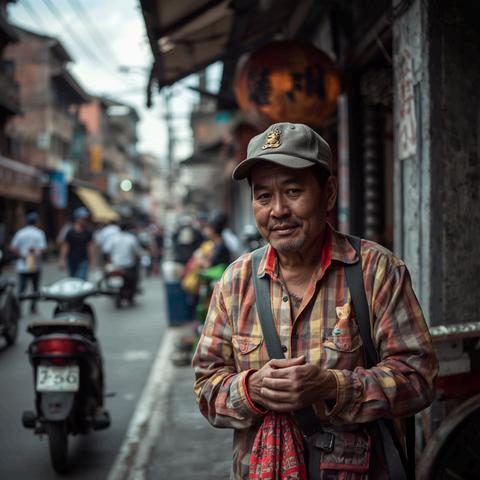
One of my most unexpected and heartwarming moments came from something as simple as a greeting. I walked past a robot boy and, half playfully, said hello. To my surprise, he lit up with excitement and came running toward me. Guided by his father, he reached out to shake my hand, then leaned in for a hug before posing proudly for a picture It was a small moment, but one that felt strangely human
These advancements do not complicate life; they simplify it, and, like this little moment, they add warmth and a touch of humanity


"What impressed me most was something far less imagined:
The quiet, almost invisible efficiency of everyday life."
What truly sustains this level of efficiency is discipline Cleanliness is consistently maintained, public behavior is structured, and even simple actions like crossing the road follow clear rules
In cities that are always active, there is no sense of chaos. Instead, there is flow.
Large-scale spaces such as the iconic Nanjing Road in Shanghai reflect this clearly. Vast, modern, and continuously active, these environments remain organised and easy to navigate Even at night, cities stay brightly lit, reinforcing both safety and functionality

Challenges such as language barriers do exist, with limited English spoken in many areas Yet even this is navigated through technology, reinforcing a key idea: systems are designed to adapt.
Ultimately, China’s strength lies not just in its advancement, but in how deeply convenience is built into everyday life Efficiency is not an added benefit; it is a core foundation




The contemporary economic landscape, exacerbated by South Africa’s unsettling unemployment rate of 31%, compels adapting and recalibrating Unemployment, coupled with rising costs presently attributed to geopolitical factors, extends beyond macroeconomic issues. It is a crisis that pervades society at every level, particularly impacting graduates who seek industry-based opportunities
The traditional notion of warranted employability, often premised in a linear career trajectory, is overshadowed by an acceptance to evolve into necessity-based entrepreneurship


This paradigm shift needs to be accepted by graduates and people seeking to migrate into the entrepreneurial sphere The migration to entrepreneurship is no longer a choice; instead, it is deemed mandatory
Exploring the uncharted entrepreneurial realm can be paradoxically daunting and stimulating, specifically for someone with no previous experience. According to the Global Entrepreneurship Monitor (GEM), Total Early-stage Entrepreneurial Activity (TEA) remains volatile in South Africa, attributed to structural and economic factors.
Notwithstanding that early-stage entrepreneurship presents its own set of challenges, strategies can be employed when one ventures into early-stage entrepreneurship
As a necessity-based entrepreneur, it is imperative to be cognisant of the distinction between idea and opportunity. Every idea does not necessarily correlate to an operational business opportunity An idea, which can sometimes be in frontunfounded, represents a notion, whereas an opportunity represents a concrete concept endorsed by exploration, planning and viability analysis The latter is the nucleus of ideation in entrepreneurship
Before maximising any opportunity, necessity-based entrepreneurship demands a cognitive shift Prepare yourself psychologically and emotionally for a journey rather than a destination Managing emotion is a contributory factor to entrepreneurial accomplishment. Developing a high level of emotional intelligence is an acquired skill that can be enhanced over time Once a positive attitude surpasses fear, the ideation phase presents itself as less complex for a prospective entrepreneur.

During the ideation phase, an aspiring entrepreneur can adopt one of two strategies. You may opt to adopt a systematic planning approach (the traditional phased-based approach to entrepreneurship), or the effectuationbased approach The phased-based approach is the conventional linear process that encompasses establishing an idea, writing a business plan, implementing the idea and managing the venture
Once you recognise your USP, the period between ideation and implementation should be reinforced through methodical operational planning This is an often-overlooked aspect of nascent entrepreneurship. The more meticulous you are, the simpler the transition to entrepreneurship becomes
·Identify the strategic positioning of your venture. The focal strategy should determine whether the business aims to competitively differentiate or position itself as a low-cost provider
·Establish systems and processes to enhance your offering. Consider communication standardisation, pricing mechanisms and marketing strategy
·Prioritise customer engagement. A new venture is built on the quality of customer relationships. Selling is an art that needs continual improvement.
·Professionalise the venture through branding. A confluence of business and personal branding will resonate with customers Ultimately, your personal brand serves as the brand ambassador for your business brand
·Leverage the power of networking and collaborating with other entrepreneurs.
·Accentuate the significance of symbiotic relationships.
·Leadership development is non-negotiable. Enhance your emotional intelligence skills, cultivate a leadership style that reverberates your values and use it to frame your purpose
·Promote ethical practice. Transparency is an intangible advantage that creates an ethical business footprint Focus on profitability without compromising the social and environmental impact. Reputation is solidified through these sustainability pillars.
·Find a mentor who can guide and support your journey.
Despite challenges in the entrepreneurial sphere, an emerging economy presents a multitude of opportunities Conforming to traditional methods can be restrictive Do not limit your ideas to conservative fields New opportunities present themselves in non-traditional sectors such the green or circular economy, knowledge-based products and the gig economy. Above all, remain resilient through failure. Ultimately, resilience builds character.
For a long time, I believed entrepreneurship was a choice reserved for certain types of people the bold risk-takers, the naturally innovative, or those chasing wealth and independence
When I was growing up, success was framed differently: study hard, secure a stable job, and remain in that position for as long as possible. Stability was presented as the goal. Entrepreneurship felt like an unpredictable alternative

Over time, however, my understanding changed It was not ambition alone that shifted my perspective, but rather observation and lived experience I began noticing how fragile ideas of stability could be Businesses and industries evolve, companies' performance ebbs and flows, and opportunities that once felt permanent can disappear. Witnessing these realities coerced me to reconsider what security really meant
Highly capable individuals educated, hardworking, and experienced suddenly needing to reinvent themselves It was not because they lacked competence, but because the systems they depended on were no longer reliable Watching people adapt under pressure was eyeopening. Some turned their skill sets into new income streams, while others discovered opportunities hidden within challenges they had once viewed as setbacks
These moments taught me an important lesson: stability needs to be assessed and increasingly created and maintained for ourselves.

Highly capable individuals educated, hardworking, and experienced suddenly needing to reinvent themselves It was not because they lacked competence, but because the systems they depended on were no longer reliable Watching people adapt under pressure was eye-opening Some turned their skill sets into new income streams, while others discovered opportunities hidden within challenges they had once viewed as setbacks.
Manytalentedpeoplestrugglenotbecausetheylackability,butb processesandsystemsIhaveencounteredpeoplewithexception services,andstrongworkethicswhoremaininvisiblesimplybeca howtopositionthemselvesorcommunicatetheirvalueeffectively successisnotonlyabouthavingagoodproductorservicebutals structure,package,andgeneraterevenue
Themoderneconomyrewardsadaptabilityfarmorethanpredicta abletopivot,innovate,andrespondtochangeareoftentheones sustainableEntrepreneurshipteachesexactlytheseskills
Atthesametime,entrepreneurshipisoftenmisunderstoodSocia packageitasglamorous flexibleschedules,financialfreedom,an Therealityisfarlesspolished.Entrepreneurshipdemandsconsiste willingnesstoregularlyfaceuncertaintyItrequiresmakingdecisio learningfromfailure,andmaintainingmomentumevenwhenprog Inmyownjourney,Ihavelearnedthatentrepreneurshipisdeeply notonlyyourpracticalabilities,butalsoyourmindsetItexposes failure,rejection,anduncertainty,andthenasksyoutokeepmovin uncomfortable,butalsoincrediblytransformative.
Whatstandsoutmosttomeisthatentrepreneurshipisnolonger ownersItisvisibleineverydayproblem-solvingTheteacherwho resourcestofillgapsineducationisthinkingentrepreneuriallyTh identifiesinefficienciesandimprovessystemsisdemonstratingen Thefreelancermanagingmultipleprojectsandincomestreamsis entrepreneurshipdaily
Thisbroaderunderstandingmattersbecauseitmakesentrepreneu notaboutfittingaparticularmoldorhavingagroundbreakingide takingownershipofyourskills,youropportunities,andyourabilit Lookingback,Inolongerseeentrepreneurshipassomethingrese hasbecomeapracticalresponsetotherealitiesofmodernlifeIn rapidchange,economicuncertainty,andevolvingdefinitionsofw thinkingofferssomethingessential:agency Entrepreneurshipisnotsimplyaboutstartingbusinesses.Itisabo remainrelevant,adaptable,andintentionalinanunpredictablewo becominglessofanoptionandmoreofanecessity
Inthatsense,entrepreneurshipisnotjustaprofessionalpursuit i resilienceAndperhapsthatisitsgreatestvalueofall
Ayesha Bayat C.A. (S.A.)
Not everyone is cut out to be an entrepreneur.
And that's okay.

So why are we pushing entrepreneurship into schools? Because the goal was never to turn every young person into a founder. It's about equipping them with skills they'll use no matter the path they choose.
Entrepreneurship education teaches: - critical thinking - confident communication - time management - taking initiative - grit - leadership. These are not entrepreneur only skills
They are life skills. Workplace skills. Leadership skills.
The reality is we’re preparing young people for a world that is changing faster than traditional education systems can keep up Jobs are evolving Career paths are non-linear. Stability looks different. The employee who can spot opportunities, propose solutions, and take ownership will go further The manager who can pivot when plans fall apart?
That's entrepreneurial resilience. The graduate who can articulate their value and negotiate their worth? That's entrepreneurial confidence
Entrepreneurship education doesn't just prepare someone to start a business. It prepares them to navigate complexity, create opportunities, and add value; whether they're in a corporate role, building something on the side, or leading a team.
Maybe the real question isn't ‘Should everyone become an entrepreneur?’ But rather… ‘How do we equip everyone to think like one?’
What do you think?
Spread the entrepreneurial thinking and mindset!

In our last edition, Roshgold News brought you insights into first-time home owners with ARM Attorneys. In this issue, we unpack an equally important aspect of the home ownership journey: the hidden costs of buying a home.
Understanding these costs upfront can help you plan better and avoid unexpected financial strain.

By Attorney Abdur Rehman Mahomed By Attorney Mahomed
Buying a home is one of the most exciting milestones in life but for many first time buyers, it also comes with unexpected financial surprises While most people focus on the purchase price and the bond repayment, the real cost of becoming a homeowner includes a range of additional expenses that can easily catch buyers off guard
Understanding these hidden costs upfront can make the difference between a smooth, stress free transfer and a financial shock. Here’s what every first time buyer should know.
province.Whiletheseareusuallytheseller’sresponsibility,anyrepairs obtainthecertificatesmaybenegotiatedorshared
Buyersshouldbeawarethatolderhomesoftenrequiremoreworkto complianceinspections.
Oncetheexcitementofsigningtheofferwearsoff,realitysetsinasb facethepracticalcostsofmoving.Thesecanincludepayingforamov replacinglocksorinstallingsecurityupgrades,tacklingpaintingormin arrangingcleaningorgardenservicestogetthepropertyreadyforoc Evenawellmaintainedhomeusuallyneedsafewtouchupsbeforeyo theseexpensescanaddupquickly.
Yourfirstmonthofhomeownershipcomeswithitsownsetofmunicip communityexpenses,includingratesandtaxes,whichareusuallypay advance,sectionaltitleleviesifyou’rebuyinginacomplex,andutility waterandelectricityaccounts.Theseupfrontpaymentscaneasilyadd thousandrandtoyourmovingmonth,soit’simportantforbuyerstof theirinitialbudget.

If the transfer process is delayed whether due to bond approval issues, outstanding compliance matters, or municipal backlogs buyers may find themselves facing additional expenses such as extended rental payments, storage costs, and extra interest on the bond These unforeseen costs can add up quickly, so planning for the possibility of delays is an important way to avoid unnecessary financial strain.
Buying a home is a major investment, and understanding the full financial picture is essential. First time buyers who budget for these hidden costs are far better prepared for the journey to homeownership With the right guidance and a clear understanding of the process, the dream of owning a home becomes far more achievable and far less stressful
AR Mahomed
on 011 025 1437 or visit their offices for a consultation.
English footballing giants, Tottenham Hotspur, are fighting the relegation chop from the English Premier League at the end of the 2026 league season. Languishing near the bottom, this powerhouse stands to implode financially if they are relegated.
Despite:
One of the highest revenues in world football
A global brand
A state of the art stadium
Repeated high value talent acquisition
Multiple leadership changes, the club now faces existential risk.
If Tottenham Hotspur are relegated, they stand to lose:
£200–£260m in revenue
Core squad players (at cut prices)
Long climb back to the Premier League and the prospect of European football
Global commercial standing
Valuation stability
Fromabusinessperspective,therearelessonsforustolearnfromifthismaterializes.
1. Leadership Instability (Strategic Whiplash)
Tottenham appointed three managers in a single season, culminating in the late hiring of Roberto De Zerbi under extreme pressure
Business Parallel
Yahoo (2007–2012): Seven CEOs in five years; no coherent execution
WeWork (pre IPO): Leadership theatrics over governance
Lesson
Frequent leadership changes destroy institutional memory, confuse teams, and signal panic rather than strategy
Best practice: Change leaders only when the strategy changes, not when results lag briefly
2. Talent ≠ Cohesion
Spurs’ squad remains filled with internationals, yet:
Extended winless streaks (13 league games)
Visible lack of confidence
Poor execution under pressure
Business Parallel
General Electric (2015–2018): World class executives, but broken coordination
Uber (early years): Talent concentration without cultural alignment
Lesson
High performers cannot compensate for unclear systems, incentives, and accountability
Best practice: Invest as much in operating models as in talent acquisition
3. Short‑Term Firefighting over Long‑Term Design
Tottenham repeatedly reacted to calls of; Sack manager, appoint “problem solver” and reset again
This mirrors reactive crisis management rather than strategy
Business Parallel
Nokia (smartphone era): Incremental fixes instead of platform shift
Blockbuster: Adjusted pricing but ignored business model change
Lesson
Organizations die by managing symptoms while ignoring structural causes
Best practice: Pause execution to reassess core assumptions
4. Overconfidence Built on Past Success
Tottenham’s recent European success created a false sense of resilience, delaying decisive action.
Business Parallel
Kodak: Invented digital photography, failed to act
BlackBerry: Trusted brand loyalty over customer behavior
Lesson
Past success is often the biggest risk factor for future decline
Best practice: Treat success as temporary evidence, not permanent advantage
5. Environmental Pressure: Why Decline Happens Faster Today
Lorem ipsum dolor sit amet, consectetur adipiscing elit. Integer dignissim velit leo, eu tincidunt elit tincidunt vitae.
The Premier League mirrors today’s economy of narrow margins, faster feedback loops and high competitive parity.
Pellentesque vestibulum nulla vel porta interdum In faucibus aliquam varius
Similarly, businesses now face volatile demand, shorter product lifecycles, talent mobility, instant reputational damage.
Praesent rhoncus lobortis neque, eget viverraeroscom
Lesson
The cost of delay has never been higher
6. How Businesses Can Avoid “Relegation.”
Early Warning Systems
Spurs ignored:
Declining performance trends
Player morale signals
Repeated late game collapses
Lesson
Track leading indicators, not just results.
Whether Spur survives the big drop or not, the business lessons illustrate that risk should be assessed on an ongoing basis, and even big successful businesses are vulnerable
By Keshni Nana, MTech Fashion Keshni MTech Fashion
The Fashion Design process can be considered an iterative process, a continuous cycle until finesse and perfection are reached The initial stage of this process usually involves research for inspiration, ideation and conceptualization, designing, sourcing, and experimenting
According to the Slow Fashion Movement (2026), the global Fashion industry produces over 100 billion garments per year
According to the United Nations Environment Program, 92 million tonnes of textile waste are produced each year. This includes unsold items which have already gone through discounted and clearance sales; production scraps which include fabric test pieces, off-cuts, samples, and inferior products generated from the construction process; and finally, unwanted clothing – returned items, items that no longer fit you, are too worn, out of season, or items that you just do not like any longer Apparently, you are only wearing a garment seven to 10 times before discarding it (yes, that is a side-eye from me!), thereby contributing to 37 kilograms of textile waste per person every year (Earth Org, 2023)
Post-consumption of such unwanted clothing accounts for a shocking 50 percent of the 92 million tonnes above
Of course, you’ve heard of Zara, Shein, Temu… And chances are you quite enjoy shopping from these brands – perhaps due to a wider range of options, a quick turnover of the latest styles, affordability, and access. These brands, to name a few, are considered (ultra) fast Fashion brands, and, apart from yourself, contribute largely to textile waste due to their accelerated consumption cycles (satiating your love of Fashion)
According to Earth Org, fast fashion produces twice as many clothes as in 2000, with 60 percent of 150 million garments produced being discarded after a few years.
The secondary stage of the Fashion Design process is production. This involves patternmaking, draping, prototyping, and production. As with the process of iteration, some components need to be inspected, scrutinized, adapted, and reconstructed for a better outcome.


By Hawa Patel
Twenty years ago, our first trip to Malaysia was filled with anticipation and discovery I was expecting, and the journey felt long yet rewarding Kuala Lumpur dazzled us with its skyline, and Penang offered a cultural retreat after our stopover in Singapore A memorable highlight was a pregnant lady being upgraded to business class on the flight back to Kuala Lumpur from Penang, a gesture of kindness then and that made the trip unforgettable.
Fast forward two decades, Sameera had grown into a beautiful young lady, and Riyaz and myself traveling with her and her sibling brought a new dimension to our Malaysian adventure. This time, we added a stopover in Hong Kong before returning to Malaysia, eager to experience the country anew.
Kuala Lumpur remains a vibrant metropolis, its skyline dominated by the iconic Petronas Twin Towers. The city has grown into a hub of malls, branded stores, and entertainment, making shopping with teenagers an exciting experience Bukit Bintang, the main shopping and entertainment district, offered delicious street food at Jalan Alor, while TAPAK Urban Street Dining near the Twin Towers provided a lively atmosphere with food trucks and local vibes.
Cultural highlights included revisiting Masjid Negara and the Islamic Arts Museum Malaysia, both located in the serene Perdana Botanical Garden area These sites, rich in Islamic heritage, felt just as inspiring the second time around Malaysia has the most beautiful mosques which include the largest mosque in Malaysia the Blue Mosque, the Crystal Mosque and Pink Mosque both found in Purtajaya. The Pink Mosque is at the edge of the lake and has a stunning view.
Sunway Lagoon in Malaysia is renowned for its extensive man-made water features, most notably the Surf Beach, which is considered one of the world's largest man-made surf beaches which has a setting similar to Sun City Valley of the Waves A day worth setting aside with seven different adventures to experience including Water Park, Amusement Park, Wildlife Park, XPark, Sunway Lost Lagoon, Scream Park, and Captain Quack Land




Penang, especially George Town, is a treasure trove of culture, history, and culinary wonders Known worldwide for its street food Penang offers walkable streets, bustling markets, temples, and diverse cultural experiences. However, during our visit, the beaches were less inviting due to huge jellyfish, making swimming difficult For those who prefer heritage, street life, and food over beach activities, Penang is the ideal destination.
Langkawi, by contrast, is a paradise for water lovers With pristine beaches, clear waters, and lush nature, it offers relaxation, adventure and exploring the undersea world Our family enjoyed jet skiing, swimming, and exploring the scenic landscapes. Highlights included the Skybridge cable car, mangrove tours, and island hopping, all of which showcased Langkawi’s natural beauty
Langkawi’s laid-back vibe, cleaner waters, and whiter sands provided a soothing escape from the busyness of everyday life It is an island of romance, relaxation, and water sports, perfect for families seeking tranquillity and adventure. Masjid Hanaan is picturesque along the drive to the cableway. The Langkawi Cable Car, also known as Langkawi sky cab is a spectacular attraction to Langkawi Island The combo express card includes:
o the glass floor sky cab express cable car, o Skydome,
o Syrex and o 3D Art Museum
We had booked for the island hopping in Langkawi so did not see the need to do the mangrove I was glad that hubby decided to experience the Kilil Karst Geoforest – Mangrove Forest tour that offers numerous activities for you to choose from, including kayaking around the forest!


The tour will lead you through a complete journey, from discovering the magical forest in its splendour and its hidden wildlife, to eagle watching, and lovely seafood at the fish farm. It was a spectacular experience eagle watching the white bellied sea eagle’s feast We stopped at the Floating Fish farm to view feeding of big groupers, seabass, mantis, prawns, horseshoe crabs and stingrays Imagine visiting the Bat Cave (Gua Kelawar) ; where we saw spectacular stalagmites and stalactites.

A must-do experience is the sea tour where you can sail out from the river to the open seas of the Andaman Sea. Our most thrilling experience from all our destinations was taking a group quad biking tour into the unknown. In Langkawi we did a twist of an adventurous experience by jet skiing into the sea A twist to the adrenalin rush
Island hopping is very different from experiencing the Mangrove that takes you out to the different islands that include:
o Pulau Dayang Bunting (Pregnant Maiden Island)
o Pulau Singa Besar (Big Lion Island – eagle feeding)
o Pulau beras Basah (Wet Rice Island)
Penang: Best for heritage, culture, and street food enthusiasts Ideal for those who enjoy walkable areas, temples, and bustling markets
Langkawi: Perfect for nature lovers, beachgoers, and water sports enthusiasts. Offers scenic viewpoints, island hopping, and a relaxed atmosphere

Malaysia, whether through the cultural richness of Penang or the natural beauty of Langkawi, offers diverse experiences for travellers Revisiting the country after twenty years allowed us to see how both the destinations and our family had grown Penang and Langkawi each hold their charm, but for our water-loving family, Langkawi was the clear favourite. Malaysia remains a destination that blends heritage, modernity, and natural splendour— making every visit a story worth telling.
When you visit Malaysia, follow on traveldiarieswithH on Instagram for places to eat and explore.

By Suraiya Vaizie; Ahmed al Kadi Hospital Suraiya Vaizie;
Healthcare today is undergoing a quiet but profound transformation. No longer defined solely by clinical outcomes, it is increasingly measured by experience, trust, and human connection.
Patients are no longer passive recipients of care; they are informed, emotionally aware, and highly attuned to how they are treated at every stage of their healthcare journey.
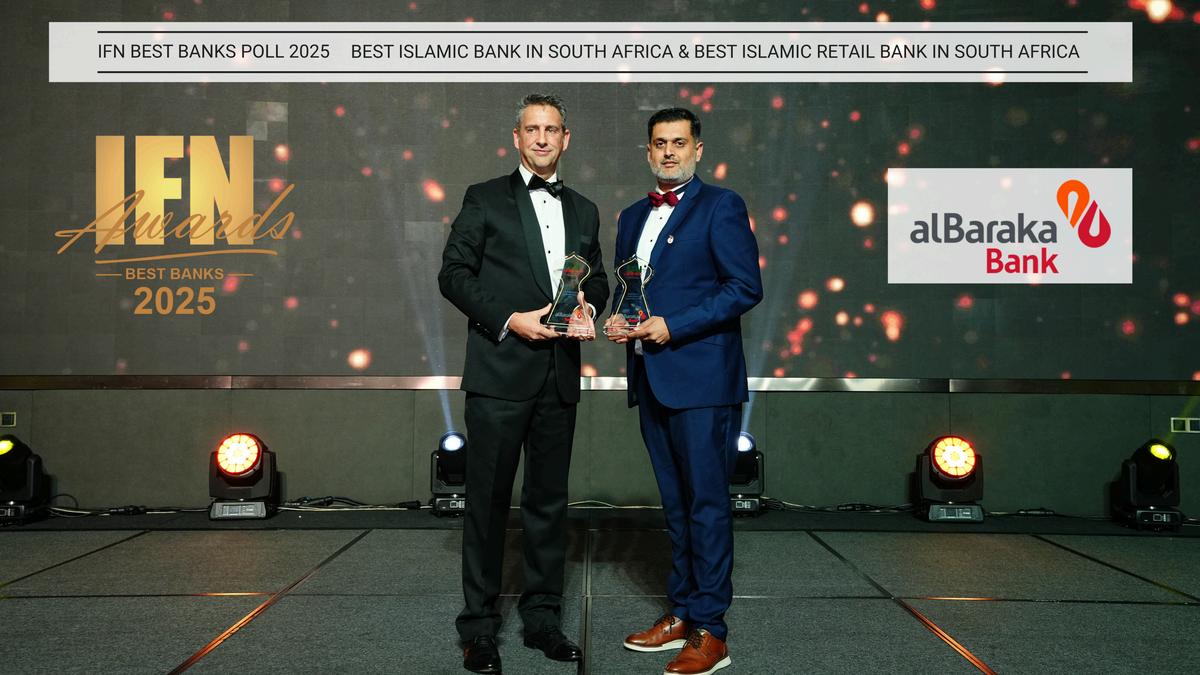
Kudos and congratulations to Team Albaraka on earning international recognition!
South Africa’s very own fully fledged Islamic bank, Al Baraka Bank South Africa, continues to ical finance while delivering competitive, customer-focused and Marketing, accepted two awards on behalf of the bank at 2025, presented in Kuala Lumpur recently or Best Islamic Bank and Best Islamic Retail Bank in South
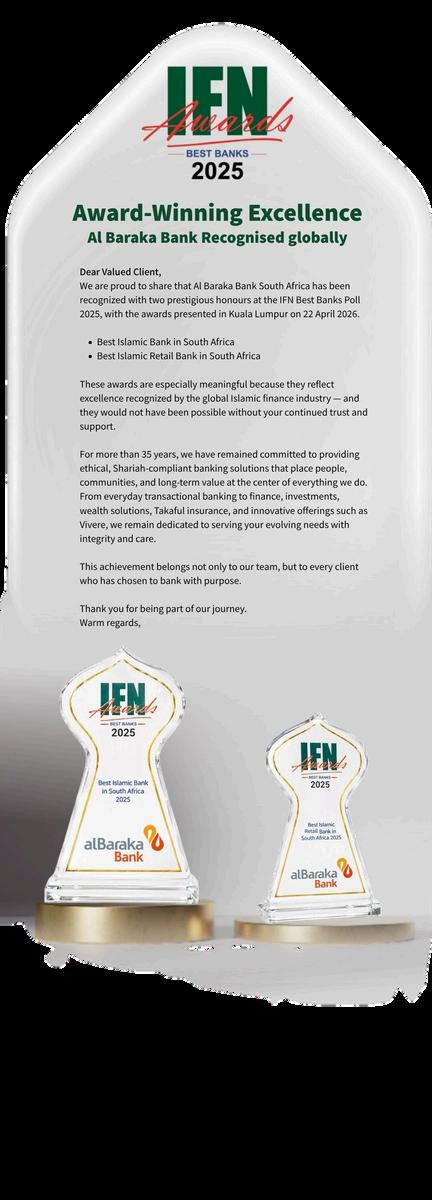
ank, paid tribute to the Bank’s team and said:
aningful It affirms our ability to remain resilient, relevant, and e to the principles of Shariah-compliant banking. We are dustry and grateful for the trust our clients continue to place
ng Nasir Seedat reaffirmed, “When you bank with purpose mmitted to real people and real communities excellence ds belong to our clients, our staff, and every stakeholder who
The dual accolade highlighted Al Baraka Bank South Africa’s continued success in combining values-driven banking with innovation, accessibility, and service excellence.
The Roshgold family is proud to be associated with Albaraka Bank South Africa and our prayers for greater success in the years to come.
In a world flooded with WhatsApp texts, emails, data, presentations, and communication, people do not and cannot keep up and remember what we say.
Reviewedby HarounPochee
Philipp Humm tackles this in his book, Storytelling for Business: How to Tell Stories that Connect, Captivate, and Convince.
His solution is refreshingly simple stop over-explaining and start telling better stories.
As Humm puts it, “Stories make ideas stick where facts alone fail ”
One of the book’s biggest strengths is its positioning of storytelling not as a creative or artistic talent but as a practical, learnable business skill
Humm challenges a common misconception early on:
The CART structure is summarized as follows:
Context – Set the scene
Adversity – Introduce a challenge Resolution – Show what happened Takeaway – Deliver the lesson
This 4-step formula is one of the book’s biggest strengths. It removes the intimidation of storytelling and replaces it with something you can apply immediately
Humm reinforces this with a key insight:
“Every great story has a moment of tension without it, there’s no reason to listen ”
Humm emphasizes simplicity throughout:
“A simple story beats a complex explanation every time ”
And that philosophy shows in the way the book is written clear, structured, and free from unnecessary fluff
Storytelling for Business succeeds because it does one thing exceptionally well: it simplifies communication without dumbing it down
It’s a book that respects your time and gives you tools you can use the same day you read it.
As Humm reminds us:
“If people don’t remember your message, it doesn’t matter how good it was ”
And in today’s business world, that might be the most important lesson of all.
The Book is recommended for anyone whose success depends on influencing others This would typically apply to leaders, sales professionals, and many home-based entrepreneurs.
It is very practical and easy to apply, and has clear frameworks you can use immediately. I also liked the strong focus on real-world business situations.
The book simplifies communication without dumbing it down
As Humm reminds us:
“If people don’t remember your message, it doesn’t matter how good it was.”
And in today’s business world, that might be the most important lesson of all
ReviewedbyMohammedCajee
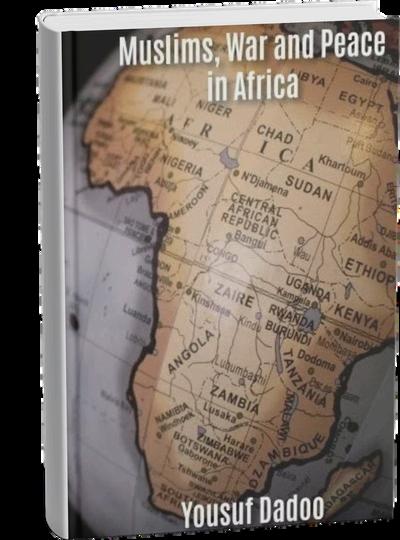
The relevance of this book is ascribed to the fact that a synopsis spanning the entire continent in which Muslims comprise about half the population is lacking, and secondly, an enlightened appraisal of Muslims in Southern Africa is overdue.
One of its primary objectives is to stimulate debate in the religious fraternities, academic institutions, and society in general by unwrapping the modern-day “Islamic” terror threat
The work is lucid, coherent, and pioneering It presents an insider’s perspective relating to Muslims in Africa
Incidentally, it is often overlooked how Muslims from one of its regions have influenced the thinking and conduct in another region. For example, eminent thinkers in the Egyptian “Muslim Brotherhood” influenced some South Africans in the second half of the twentieth century
Also, among late migrants to South Africa have been Muslims from West Africa who belong to the Tijaniyyah sufi order that began in Algeria Unfortunately, the scope of this publication did not permit presentation of such details.
This book is available for a free perusal and download from https://sites.google.com/view/mwpinafrica/h ome
Print copies are not available
A cursory glance is now made to reveal key themes of this book.
Chapter One examines concepts tied to violence like terrorism, extremism, radicalization, and fundamentalism. Social activism and religious activism are also clarified.
Chapter Two probes concepts from Islam, like Jihad
Chapter Three examines challenges Muslims encounter as individuals and societies wherever they live It discusses issues like loyalty and patriotism within the broad concept of citizenship
Chapter Four evaluates the role of religion for fermenting violence. The central question is whether the Qur’an and Sunnah promote violence or not.
The first four chapters contain instruments by which people with scanty knowledge measure Islam and Muslims
Chapter Five introduces the African scenario by presenting a bird’s eye view of the advent and spread of Islam in Africa in order to appraise the role of Muslims in the remaining chapters
Chapter Six scrutinises social activism and covers social engagement in different socioeconomic problems for entrenching justice and equality on this continent.
Chapter Seven examines political activism and the forms that it takes The entire chapter is devoted to distinguishing between beneficial and harmful forms of political activism

We are compiling the August-November 2026 edition of Roshgold News and we are inviting you to contribute.
This issue’s theme, Roots & Reach explores the stories behind the businesses, families and communities that have built something lasting: where they started, what shaped them and where they are headed next. We want the kind of writing that our readers, investors, entrepreneurs and community members can learn from and apply to their own lives and businesses

We want to hear from members and community voices who have a real story to share. For example:
- A business owner who started from nothing and how their upbringing or community shaped the way they lead and make decisions today
·- An investor or professional who made a financial decision guided by values and what they learnt from it
- A family elder or community leader with a lesson in legacy, how they built something that outlasted them or what they wish they had done differently
·- Someone who relocated: locally or internationally and rebuilt their professional or financial life from scratch
- A young professional navigating ambition, faith and the expectations of family and finding their footing
·The values your parents or grandparents gave you
· Faith as a compass in modern life
· Culture, tradition and what's worth preserving
·Women's Month: Celebrating Strength, Leadership and Contribution

· Building generational wealth the right way
· What Shariah-compliant investing taught you about money and purpose
· Leaving something behind that lasts
· Financial lessons you wish someone had shared earlier.
·Moving abroad without losing yourself
Coming home and what changed while you were away
·Raising children with roots in a foreign land
·The places that made you who you are
·Mentors who changed the course of your life
·Building a career or business from humble beginnings
·When ambition and values pulled in different directions
·Redefining success on your own terms
·The holiday that reminded you who you were before the hustle
·Family traditions around food, travel and celebration: How you are keeping them alive
·The sport, hobby or pastime that has been in your family for generations
·Places you have travelled to that connected you back to your roots
Every community has stories that almost weren't told.
This is your invitation to tell yours.
Help us document Roots & Reach with honesty, warmth and the kind of wisdom that only comes from living a full life.
We look forward to reading your work.