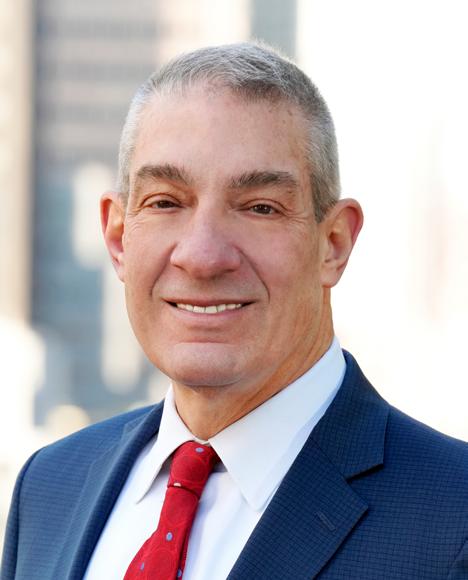
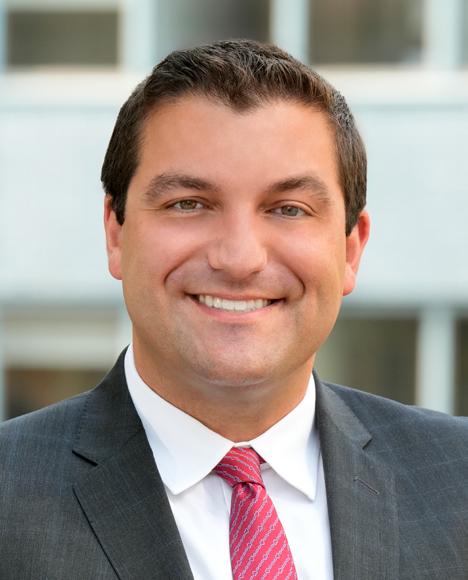
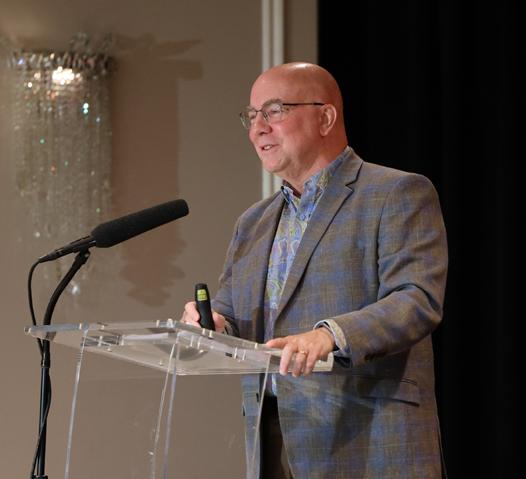
“It is my privilege to present our first quarterly newsletter of 2026. This new year brings with it a new administration and new challenges, but also many new opportunities. We look forward to working closely with you towards another year of success, drawing on our 50 years of experience as New York City’s preeminent real estate law firm.
We are especially proud of the numerous industry recognitions that we earned last year, including Crain’s, Best Lawyers, Best Law Firms, and Super Lawyers, as the firm continued to grow. Our focus over the past year has led to forming three new practice groups—Commercial Litigation, Hospitality, and Adjacent Access—which has attracted several accomplished attorneys to join the firm, adding depth of experience to our expanding capabilities.
We hope you enjoy this edition of the newsletter and appreciate your continued trust in R&E. Here’s to a successful and exciting 2026!
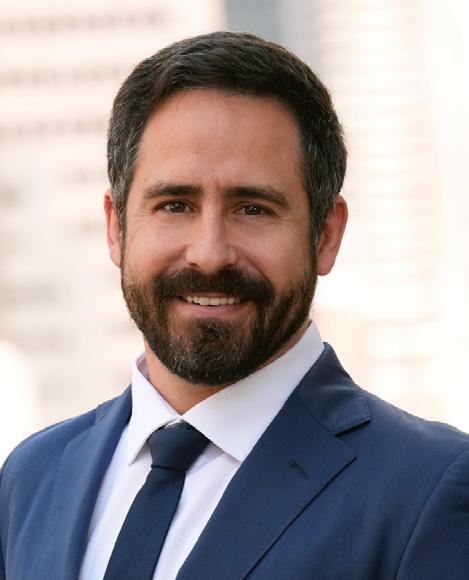
A. Pensabene Member
Michael
Contents
Pinnacle– A Blueprint for the Future of Rent Limited Housing Bankruptcies in New York City
Read the article by R&E Member Andrew R. Gottesman on the Pinnacle Group–affiliated Broadway Realty bankruptcy, a landmark case that sets a new blueprint for selling large rent-regulated housing portfolios under Chapter 11 in a post-TPA, high-interestrate market.
Rosenberg & Estis Blog
Rosenberg & Estis, P.C.’s blog section continues to serve as a platform which provides crucial and timely updates to our valued clients and industry colleagues.
Podcast: Inside R&E
Inside R&E is a podcast hosted by R&E attorneys who discuss current issues facing developers, owners and operators in the industry.
Recent Publications
Published works by R&E attorneys, featured in the New York Law Journal
Press Releases
Throughout the last quarter, R&E attorneys have had a number of remarkable achievements, including significant victories, successful closings, recognition by Best Lawyers and several key hires.
Recent Events
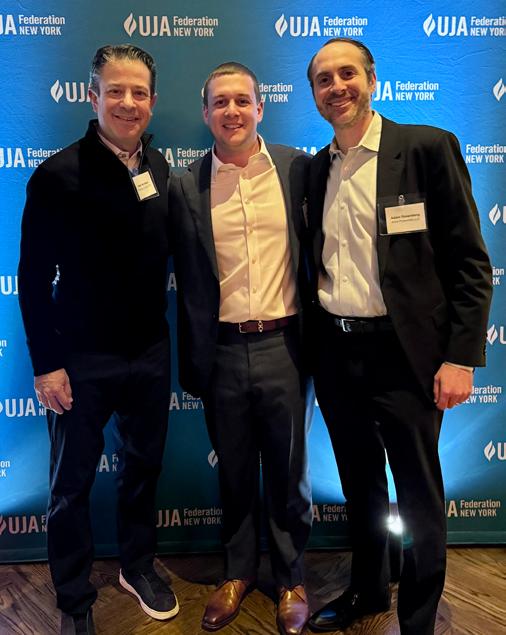
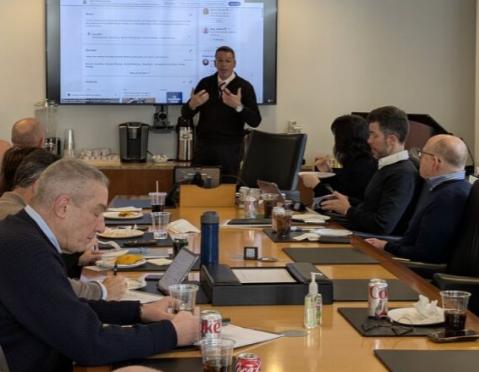
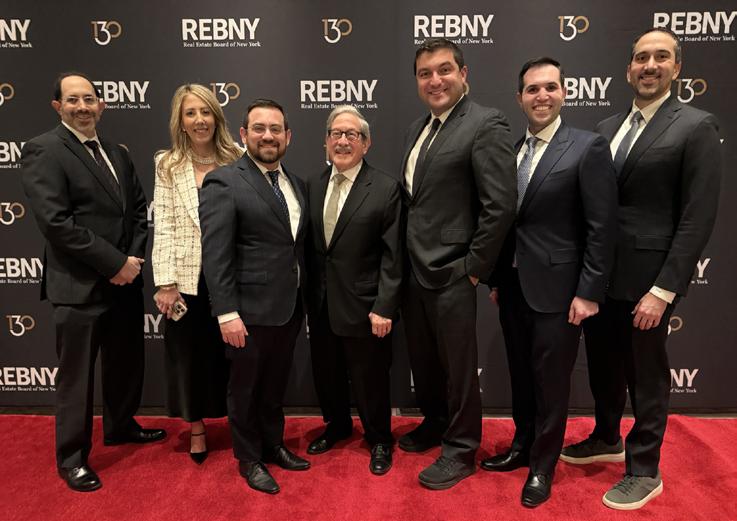
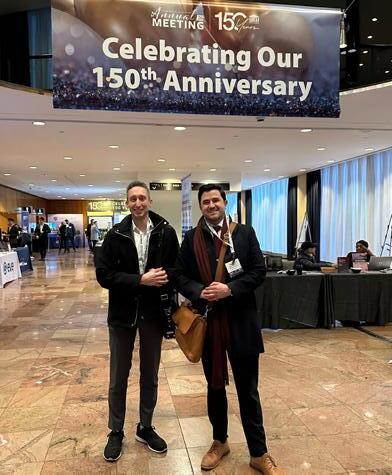
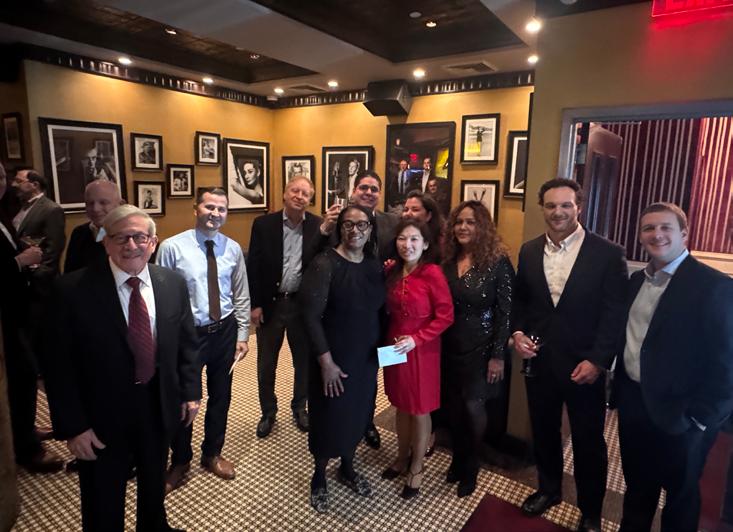
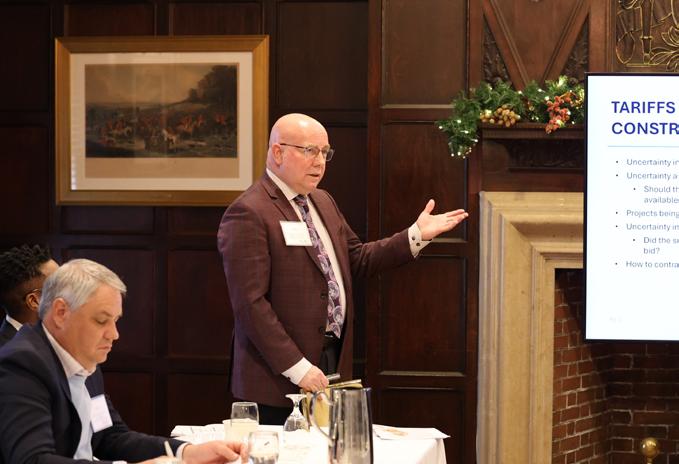
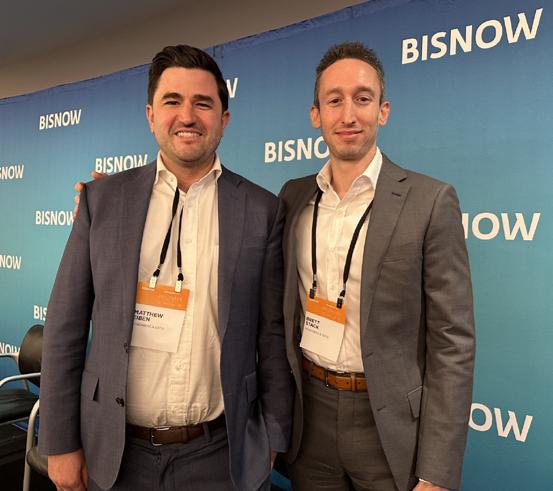
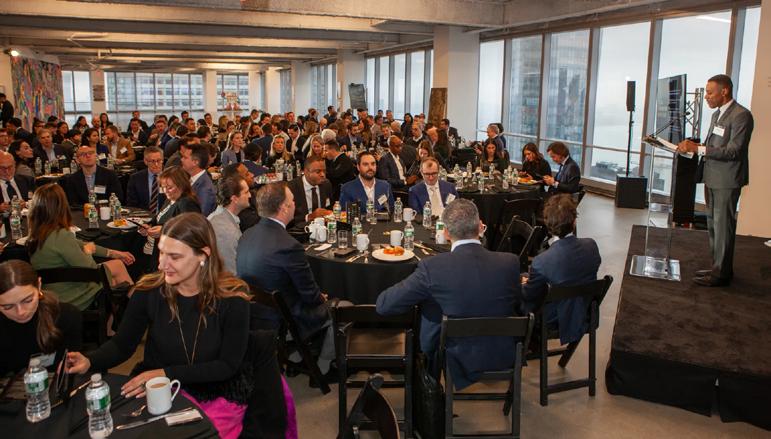
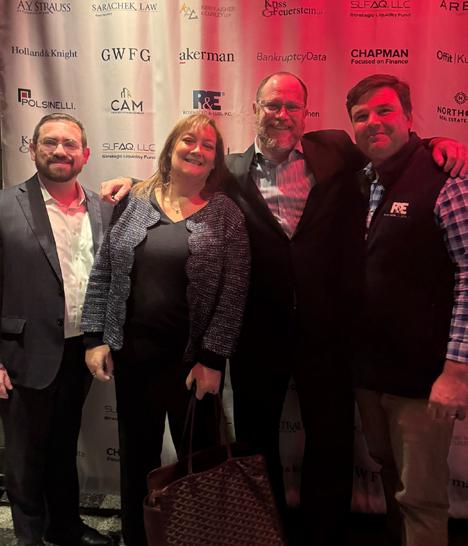
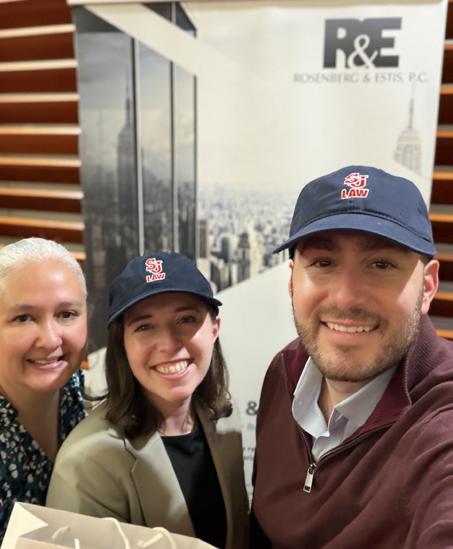
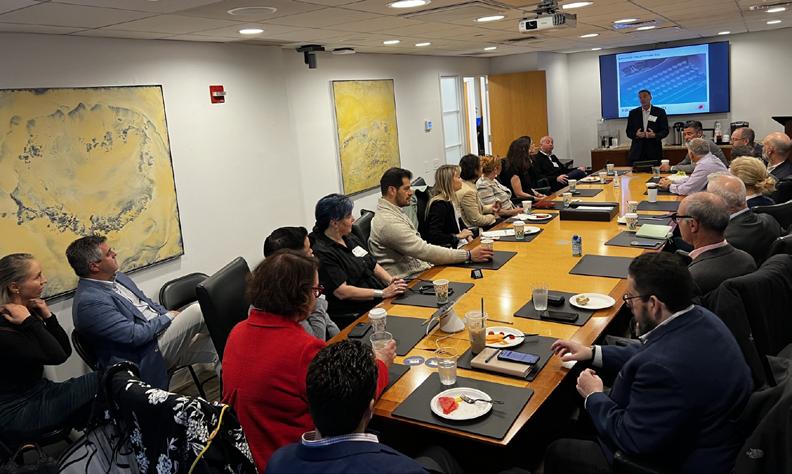
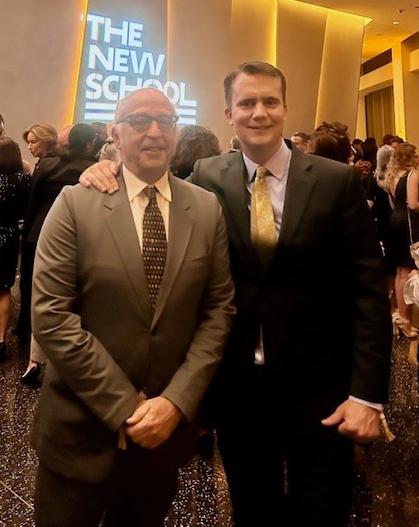
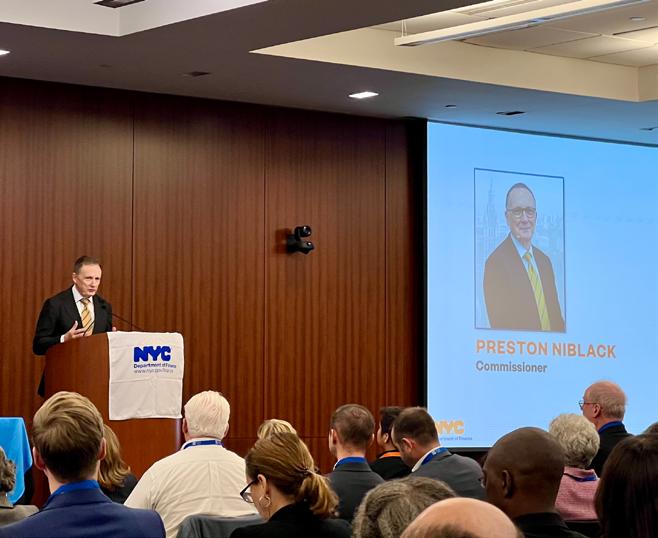
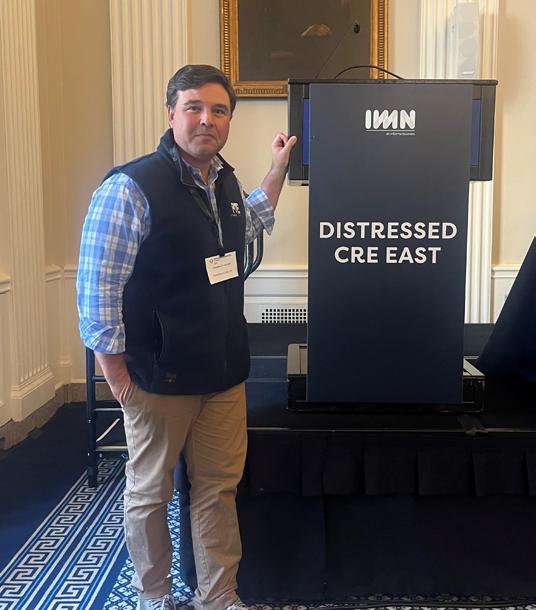
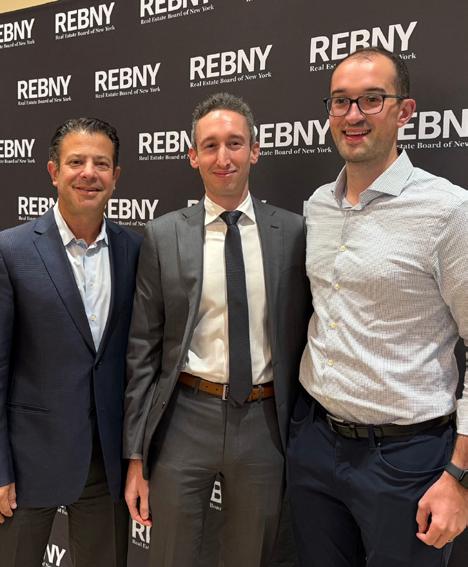
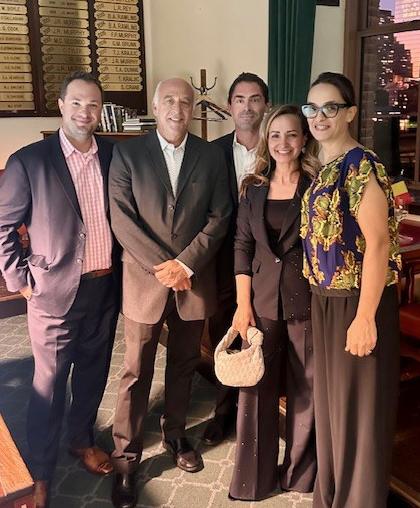
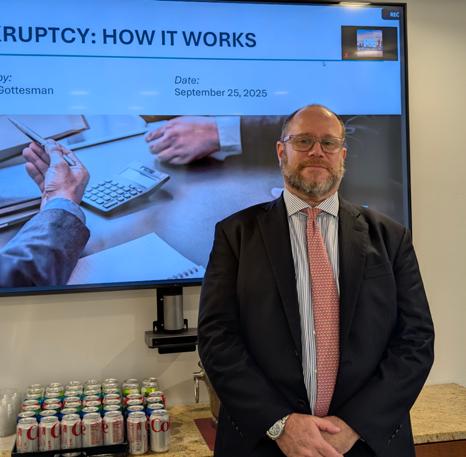
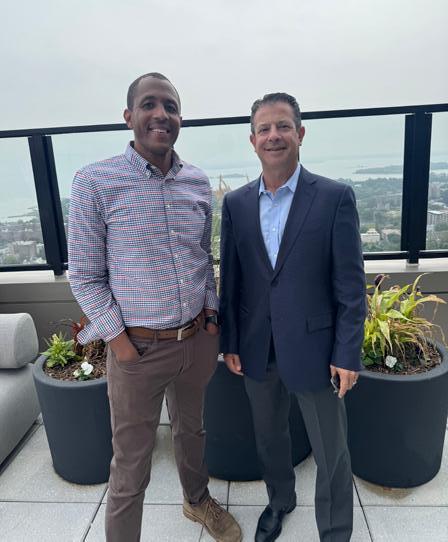
As New York City’s premier real estate law firm, R&E attorneys were featured as expert speakers on in-person panels and webinars. They also took an active role in key industry events, celebrated client victories, and supported the Winter Wishes program— making it a highly successful quarter.
Pinnacle– A Blueprint for the Future of Rent Limited Housing Bankruptcies in New York City
January 28, 2026
By Andrew R. Gottesman
Andrew R. Gottesman Member
1
As many real estate professionals understood, the Housing Stability and Tenant Protection Act of 2019 (the “TPA) was bound to affect the New York City housing market. If nothing else, specific business models would have to change to survive. Some businesses would not be able to either pivot or secure meaningful concessions from their lenders to save their portfolio. In the absence of other options, protection under the Bankruptcy Code was always available. However, the contours of a case on a scale necessary to either save or liquidate a firm holding significant rent-limited housing stock were never tested.
While there have been smaller cases that addressed some of the relevant issues, the bankruptcy of Broadway Realty I Co., LLC, and its eighty-one (81) affiliated debtors represents the largest-scale testing ground for applying some of the most basic tenets of bankruptcy jurisprudence in this context1. Importantly, the case and the January 19, 2026 decision by US Bankruptcy Judge David Jones (approving the Debtors’ sale motion and confirming their Plan of Liquidation) may serve as a blueprint for how similar multifamily portfolios may navigate financial distress in a high-interest-rate environment. As set forth below, neither addresses some of the hardest issues that may arise with a slightly different set of facts. The Debtors and the purchaser did well to avoid potentially intractable issues, which may not be easily avoided in future cases.
The Debtors filed for protection under Chapter 11 of the Bankruptcy Code in May 2025. The Debtors were mostly real property holding siloed companies
affiliated with Joel Weiner’s Pinnacle Group. The eighty-two (82) separate cases are being jointly administered in the Southern District of New York Bankruptcy Court under case number 25-11050. The debtors collectively owned approximately 5,200 residential units across 93 properties in four of New York City’s boroughs: Manhattan, Brooklyn, the Bronx, and Queens. Substantially all the Debtors’ tenants are entitled to statutory rent protection. The portfolio properties were encumbered by approximately $564 million of aggregate mortgage debt, all with Flagstar Bank N.A.
The Debtors cited a combination of rising interest rates, rising inflation, lower rent collection, and the inability to convert rent-protected units to higher rents or condominiums after the 2019 TPA’s enactment, resulting in reduced revenue and the inability to service their debt as the basis for the filings. According to the Debtors’ firstday filings, the shortfall in debt service led Flagstar to seek foreclosure and the appointment of a receiver over twentyone (21) properties in the portfolio and forced the Debtors to file a defensive chapter 11 filing to preserve their enterprise value.
After seeking to implement various alternatives, the Debtors sought approval of a sale process culminating in a liquidation. October 1st, the court entered an order approving a standard procedure that allowed the Debtors to solicit bids for the sale and/or refinance of the properties. Bidding was allowed on individual properties, on the entire portfolio, or in any combination. The order also allowed the Debtors to provide bid protection to “stalking horse” bidders and conduct one or
more public auctions. Binding bids were due by December 12, 2025. A copy of the order may be found here
The Debtors retained Estadil Secured L.L.C. as their exclusive real estate advisor to run a marketing process for the Debtors’ portfolio. Among other things, Estadil testified that it distributed teasers to over 14,000 potential buyers, sent over 100,000 emails to market participants, and worked with other brokers to create a robust, competitive auction. Eventually, 144 confidentiality agreements were signed by interested buyers who were given access to a dedicated data room. The healthy response to the marketing effort led the Debtors, in consultation with Flagstar, to extend the sale deadlines. On December 22, 2025, the Debtors announced the selection of Summit Gold Inc., an entity owned and operated by Zohar Levy, as a stalking horse bidder for the property portfolio. Summit’s stalking horse bid was $451,300,000.
The Debtors held an auction on January 8, 2026, having received four (4) qualified offers for the entire portfolio and two (2) bids for individual assets. Only one party submitted a bid to compete with Summit’s bid at the January 8th auction. However, that bid had contingencies that made it less desirable than Summit’s. Summit was ultimately announced as the highest and best bid for the Debtor’s portfolio, and the Debtors sought court approval of a transaction with them. Approval of the Sale was combined with and sought through confirmation of the Debtor’s Second Amended Plan of Liquidation.
Several parties objected to confirmation and the sale to Summit, including New York City’s Corporation Counsel, the New York Attorney General’s Office, and certain tenant advocacy groups. The crux of these objections is that they allege, among other things, that Summit failed to provide
sufficient information to show that it has the wherewithal and ability to rectify the existing violations at the buildings.
According to the City and other objectors, the Plan should not be confirmed because it was not feasible as required under Section 1129(a)(11) of the Bankruptcy Code. They argued that Summit did not prove it would be able to correct the thousands of outstanding Housing Maintenance Code (“HMC”) violations on the Properties, and the outstanding water, sewer, and taxes charges owed, and remain financially viable. See Restated Supplemental Objection To Confirmation Of Plan And To Sale Of Properties; USBC SDNY 25-11050 Doc. No 950. The Court disregarded objections to plan confirmation on feasibility grounds, given that these Debtors were liquidating. Thus, whether they or a successor entity would be subject to a subsequent reorganization or liquidation was not relevant. The Court noted that feasibility in a liquidation is established by demonstrating the debtor’s ability to satisfy the Plan’s conditions precedent and having sufficient funds to pay the costs required under the Plan. Judge Jones quoted former Judge Peck is noting that “… there is no requirement that such payments will be guaranteed.” In re Finlay Enters., No. 09-14873 (JMP), 2010 Bankr. LEXIS 5592, at *155-156 (Bankr. S.D.N.Y. May 18, 2010). Decision and Order at pages 20-21.
The most relevant and substantive objection raised by the City was whether the Debtors, as parties to over 5,200 leases with tenants, or Summitt had an obligation to cure the HMC violations to have cured defaults under those leases as required by Section 365(b)(1) of the Bankruptcy Code for their assumption and ultimate assignment to Summit. The City argued that the HMC violations may result in a default under any number of leases based on a breach of the warranty of habitability and that default
must be cured, or the tenants must be assured it will be promptly cured, before any leases are assigned to Summitt. Specifically, the arguments considered by the Court included whether the Debtors’ HMC violations and failure to pay other costs constitute defaults that must be cured under the leases that were intended to be assumed and assigned to Summit and, if so, what constitutes sufficient cure. After a day-long hearing on January 15, 2025, the Court issued a written decision on January 19, 2026. A copy of the decision may be found here2
Initially, the Court punted on whether the HMC violations and failure to pay water and sewer charges were defaults under the leases at all. Even though the City is not party to any of the leases and has no consent right, and only has rights as a potential claimant, the Court noted that “None of the parties provided a legal showing as to whether housing violations constitute “defaults” under the applicable leases. Nonetheless, the Court’s working assumption for purposes of its decision was that some number of “defaults” exist in the form of breaches of a warranty of habitability or similar lease terms or implied provisions.” Decision and Order at pages 11 -12.
If the Court were so inclined, it could have required the objectors to show that there were actual defaults under the leases. This would involve more than a simple analysis of the actual lease provisions at issue. It would require a review of the relevant state law of implied covenants in each lease.3 Evaluating each of 5,000 or more leases or proving a breach of the warranty of habitability on an individual basis is a high hurdle for parties seeking to block the assignment of any lease portfolio. Thus, the Court’s assumption of breaches needing cure under Section 365(b)(1) appears to be more of a recognition of the significant impact this portfolio has on available housing in New York than a strict application of the law. While the Court’s approach is fair, it provides fodder for both objectors and supporters of similar sales. Importantly, it calls into question the wisdom of any potential appeal. There is no guarantee that an appellate court will not require such an analysis, leaving the result as a significant unknown.
Next, the Court addressed what was needed to cure the asserted lease defaults. Bankruptcy Code section 365(b) (1) requires that, as parties to the leases being assigned
2 Bench Decision And Order Confirming The Second Amended Joint Chapter 11 Liquidation Plan Of Broadway Realty I Co., LLC And Its Debtor Affiliates, 25-11050 (DSJ) ECF No. 982 (U.S.B.C. S.D.N.Y. 1/19/2026), hereinafter referred to as “Decision and Order.”
3 In short the Real Property Law codifies the implied warranty of habitability and says “… in every written or oral lease or rental agreement for residential premises the landlord or lessor shall be deemed to covenant and warrant that the premises so leased or rented and all areas used in connection therewith in common with other tenants or residents are fit for human habitation and for the uses reasonably intended by the parties and that the occupants of such premises shall not be subjected to any conditions which would be dangerous, hazardous or detrimental to their life, health or safety. N.Y. Real Prop. Law § 235-b (McKinney). Violations of a housing code or sanitary regulation are not the exclusive determinants of whether there has been a breach. Park W. Mgmt. Corp. v. Mitchell, 47 N.Y.2d 316, 328, 391 N.E.2d 1288, 1294 (1979). In order to prove a claim for breach of the warranty of habitability, plaintiffs must show the extent of the breach, the manner in which it affected the health, welfare, or safety of the tenants, and the measures taken by the landlord to alleviate the violation. See Diamond v. New York City Hous. Auth., 179 A.D.3d 525, 527, 118 N.Y.S.3d 77, 80 (2020).
to Summit, the Debtors either cure “defaults” or provide “adequate assurance” that defaults will be “promptly cured” to be assumed. 11 U.S.C. § 365(b)(1). The leases may be assigned only after they are cured. The Court cited relevant caselaw for the proposition that “adequate assurance,” as used in the Bankruptcy Code, is a flexible concept to be determined on a case-by-case basis. Decision and Order at pg 13. Assurances must be adequate but need not be ironclad guarantees. Whether assurances of a prompt cure are adequate invokes a standard judged on a factual, commercial basis, not a legal one. Id. There was significant evidence presented on this question and cross-examination of multiple witnesses at the approval hearing. The objectors failed to provide evidence to rebut the evidence presented in support of the transaction and the Plan.
Ultimately, the Court found Mr. Levy’s testimony credible and the capital improvement plan for the portfolio adequate to assure the Court that Summit will cure defaults. In this instance, that meant committing to spend $30 million to “resolve existing violations, repair and enhance building conditions, support ongoing compliance requirements [in the near term], and invest in long-term maintenance, with the goal of improving the buildings and their responsiveness to residents and implementing a stable, preventive maintenance model.” Declaration Of Zohar Levy On Behalf Of Summit Gold Inc. In Support Of (I) Purchaser’s Selection As Successful Bidder At Auction, And (II) Entry Of An Order Confirming The Debtors’ First Amended Joint Chapter 11 Plan And Granting Related Relief , 25-11050 (DSJ) ECF No. 968 (U.S.B.C. S.D.N.Y. 1/13/2026). Summit also committed to a specific action plan that addresses the most serious violations within sixty (60) days of closing and all violations within eight (8) months of closing.
Although Summit was purchasing the properties subject to financing from the Debtors’ existing lenders, the restructured debt load on the portfolio would reduce the amounts owed by over $275 million, thereby reducing debt service and freeing up considerable cash flow to fund this action plan and more. Id.
Finding this assurance adequate to show that the leases would be cured and that, as a practical matter, there was a commitment and funding to repair tenant housing was the basis of the Court’s decision.
This case provides a test of the interaction between Bankruptcy Law and rent-regulated housing code requirements. However, it does not tackle some of the hardest questions presented in a situation like this. Summit’s plan to address violations at the properties they purchase was key to approval and helpful to the community, but that may not translate for all buyers with the highest and best bid at this kind of auction. It depends on who bids what, and many open questions remain. For example, are there actual defaults under the relevant leases that must be cured, or are those issues illusory? What about a situation where lenders are not so forgiving and refuse to reduce debt and/or debt service? What would a court do in a situation where the buyer simply cannot afford such a sweeping and fast-moving remediation plan?
The answer to many of these questions lies in the
differences between the priorities of the state and city codes and those of the Bankruptcy Code. Ultimately, the Bankruptcy Court’s main consideration is the company’s creditors and stakeholders. The Bankruptcy Code is tailored to solutions that address concerns of those groups. As Judge Jones’ decision makes clear, the strictures of the Bankruptcy Code must take precedence over the desire for certainty in a transaction to be approved by the Bankruptcy Court, even where the objections are cogent and compelling. Although the City and its agencies may be substantial claimants, that is all they are. They have no real enforcement power or standing to object in this situation. The forward-looking enforcement of City and State housing regulations, including remediation of violations, is the province of the City and State, not the Bankruptcy Court. As a result, demanding (as the City did) absolute guarantees dealing with those concerns is insufficient to block a transaction like the one at issue. Every Bankruptcy Judge will do what they can to ensure the public interest is protected, but there may be instances where their hands are tied.
As a practical matter, blocking a sale by demanding assurances and guarantees to which they are not entitled under the Bankruptcy Code is likely to do more harm than good. The failure in the City’s arguments, and those of others, is that they fail to address one simple question: “What if?” The answer to that question portends a far worse disaster than that which they may portray a sale to be. Foreclosure certainly does not address the systemic maintenance issues facing much of the city’s low-income housing stock. In fact, foreclosure probably makes the situation worse because most banks have no wish to hold this property. Banks are typically not committed to curing violations and will sell those buildings to the first available buyer to mitigate as much loss as possible. That sale will not be subject to the same review and evidentiary standard as required under Sections 363 and 365 of the Bankruptcy Code. Unlike in the present case, there will likely be no public pronouncements of support on a record in which the City may find some comfort or base a contempt charge. The City would likely be required to commence a special proceeding under CPLR Article 78 to have any sale following a foreclosure reviewed by a court. This adds cost and delay to a system and a budget already heavily taxed, without adding any certainty.
So, what can an owner in the Debtors’ situation, or a purchaser bidding at an auction like this, do to ensure the best outcome? Debtors should ensure they run a robust, extensive marketing process for any proposed sale. There are several qualified, professional, and truly excellent professionals who work in this area. One or more of these should be hired to help design and execute a process that any court would view as doing the most to maximize the value of a return for the Debtors’ portfolio. Diligence on any proposed purchase is equally important. The more easily a purchaser can adequately assure a court of the ability to perform (close and cure), the smoother the approval will be, even in the face of objections. It is equally important to conduct a portfolio-wide lease review. This will help determine whether HMC’s other code violations are, in fact, defaults under the relevant leases that require cure in the first place. Finally, it likely behooves a debtor in this scenario to garner support from as many stakeholders as possible before seeking approval.
Buyers should be prepared to provide financial information and generally have a plan to adequately assure a court that lease defaults requiring a cure under Section 365 will be cured. This information will be tested rigorously, and anyone providing it should expect to be thoroughly cross-examined. Buyers must also be able to show that any transaction is the product of an arm’s length negotiation between unaffiliated entities to benefit from a good faith finding under Section 363(m) of the Bankruptcy Code4
Importantly, a sale and liquidation are not the only course of action for a company holding this type of real property. It may be possible to reorganize using available vehicles to restructure the company’s balance sheet along with its capital and corporate structures. In that scenario, there are additional considerations. For example, the automatic stay does not prevent a municipality from exercising its police and regulatory power. 11 U.S.C. § 362(b)(4). Thus, agencies may continue to seek a judgment against a corporate debtor in this situation, even after filing for protection. The effect of such a judgment is meaningful because it could implicate a substantial continuing burden on a reorganized company. Section 523(a)(7) holds as non-dischargeable fines and owed to governmental units that are not compensation for actual pecuniary loss. 11 U.S.C. § 523(a)(7). Administrative imposition of fines does not affect their nondischargeability. Section 523(a) (7) contains no requirement that fines be imposed by a court; if applicable state or municipal laws authorize an administrative agency to impose fines that meet the statutory criteria, such fines are nondischargeable (In re Gallagher, 71 B.R. 138 (1987))[3]. However, 523(a)(7) only applies to individuals by definition and therefore does not apply to corporate debtors in Chapter 11 cases. Penalties payable to governmental units remain nondischargeable in corporate bankruptcies under other provisions, such as Section 523(a)(2)(A) for fraud-based penalties (In re MyLife. com Inc., 651 B.R. 30 (2023)); In re Fusion Connect, Inc., 634 B.R. 22 (S.D.N.Y. 2021). This provision may be used to imply non-dischargeability in a corporate Chapter 11 case if a judgment is worded to impose a sanction for fraud or deception; however, the discharge exception is generally inapplicable to corporate debtors in Chapter 11. In re Exide Techs., 613 B.R. 79, 86–87 (D. Del. 2020).
There remains more than one strategy to address defaults by companies that hold property with rent-restricted leases. Finding the right path takes foresight, a keen understanding of the rules, and creativity.
4 Section 363(m) of the Bankruptcy Code protects good faith purchasers by guaranteeing that a sale will not be voided even if an approval decision is reversed on appeal. See 11 U.S.C. §363(m). It allows closing to effectively moot an appeal insofar as the transfer of property is concerned. “[G]ood faith is shown by the integrity of [purchaser’s] conduct during the course of the sale proceedings ... [and] is lost by fraud, collusion between the purchaser [and] the trustee, or an attempt to take grossly unfair advantage of other bidders.” In re Kaspar, No. 22-10382, 2024 WL 4797909, at *6 (Bankr. S.D.N.Y. Nov. 14, 2024), aff’d, No. 24-CV-9314 (JMF), 2025 WL 1784812 (S.D.N.Y. June 27, 2025) (citation omitted). Insiders are held to a higher standard concerning their actions.
ROSENBERG & ESTIS BLOG
Rosenberg & Estis, P.C.’s blog section continues to serve as a platform which provides crucial and timely updates to our valued clients and industry colleagues.
Daniel M. Bernstein Member, Head of Tax Incentives & Affordable Housing Department
ICAP Rule Amendments & RACE for Space Rules: What Property Owners and Businesses Need to Know
Property owners, developers, lenders, and relocating businesses should promptly evaluate how these rules impact both existing and future projects.
NYC Extends Deadline for Augmented CityFHEPS at Historic Rent Levels
Projects that meet specific eligibility criteria will now have additional time to submit their subsidy packages at historic Augmented CityFHEPS rent levels, rather than the lower rent standards introduced in Spring 2025.
Navigating NYC’s Evolving Development Landscape: Updated Resources on New Tax Incentives and Zoning Reforms
To help owners, developers, lenders, and stakeholders understand this new landscape, our firm’s Tax Incentives & Affordable Housing practice pages have been fully updated with detailed, practical information on these programs and policy shifts.
To read more, visit the Tax Incentives & Affordable Housing Blog on the Rosenberg & Estis website.
Benjamin M. Williams Member, Head of Property Tax Department
NYC Property Tax Assessed Values for 2026/27
Citywide market value reached $1.659 trillion (up 5.4% over last year), and taxable value rose to $325.8 billion (up 5.6%). DOF also reported $11.8 billion of new market value added due to construction activity.
J-51 Updates for January 2026
(1) Governor Hochul will propose an overhauled J-51 incentive that can better support capital repairs for New York City’s rent-stabilized housing stock, including streamlining the process. (2) The four-year J-51-R extender bill moved to Senate committee. (3) HPD is launching an online J-51-R portal.
NYC’s Childcare Center Property Tax Abatement Is Back – With Bigger Benefits and More Time to Apply
For projects taking their first year of abatement in the 2025/26 tax year or later (tax years beginning on or after July 1, 2025), the maximum benefit is now much larger, and owners have an extra two years to apply.
To read more, visit the NYC Property Tax Blog on the Rosenberg & Estis website.
PODCAST: INSIDE R&E
Inside R&E is a podcast hosted by R&E attorneys who discuss current issues facing developers, owners and operators in the industry.
Inside R&E is the perfect way to keep yourself up-to-date on the New York real estate industry. Inside R&E is available to stream on all major platforms including Apple Podcasts, Spotify, Amazon Music and Google Podcasts. Listen and subscribe wherever you get your podcast.
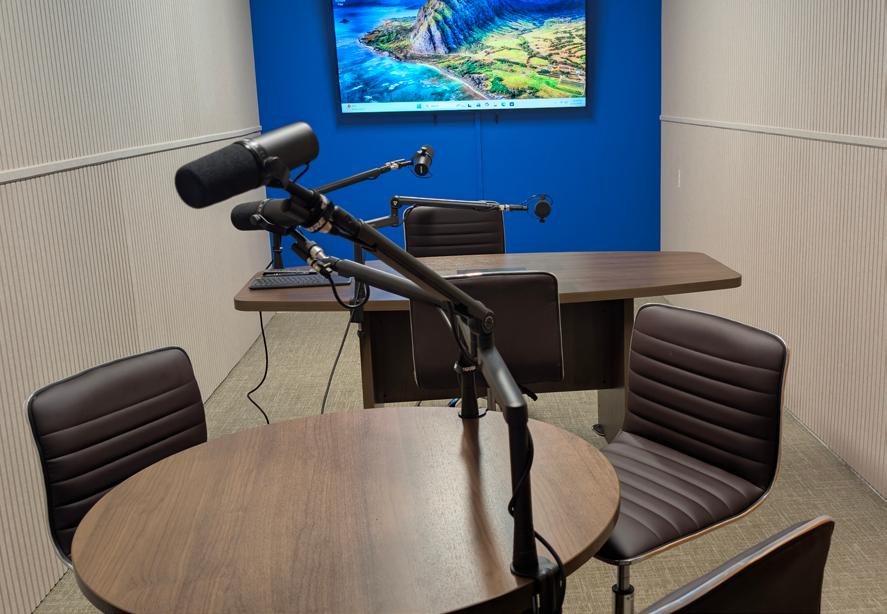
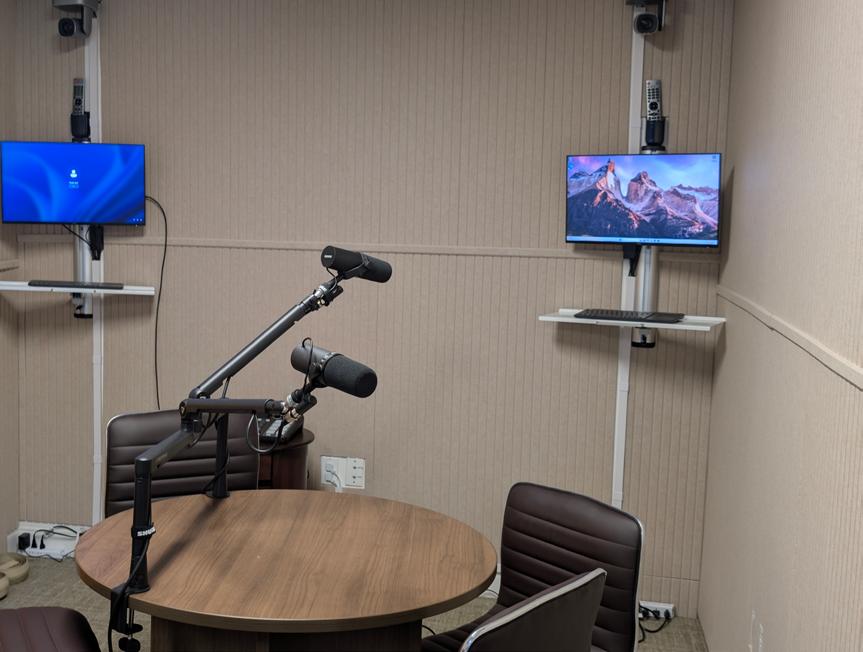
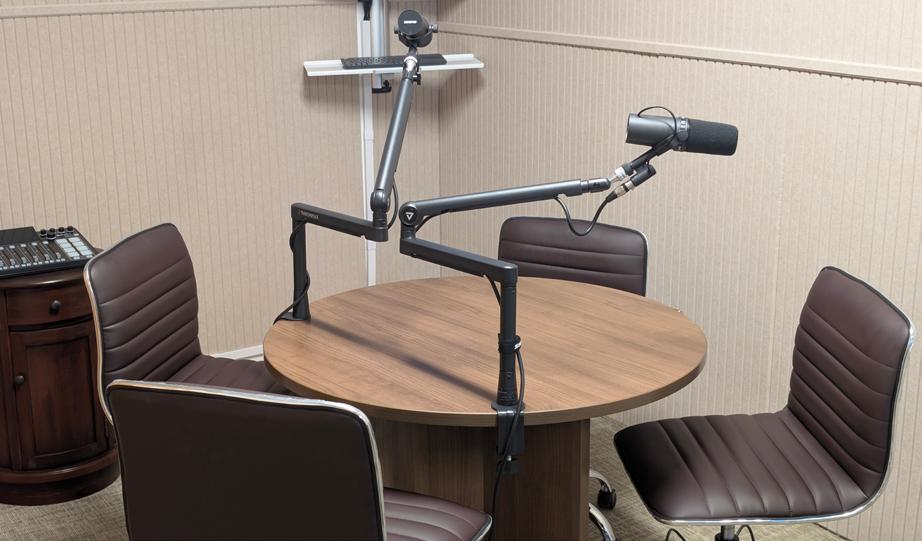
EXCITING UPDATE: R&E’S PODCAST ROOM
We are pleased to share that after months of preparation, R&E has launched its own fully equipped, in-house podcast room. The firm now has a dedicated studio designed to support in-person and remote podcasts, webinars, and other virtual recordings. Featuring professional-grade audio and video capabilities, the space is built to ensure seamless, highquality content production whether participants are recording on site or joining remotely.
As we put the finishing touches on the room, we encourage our attorneys and clients to take full advantage of this new resource by hosting more in-person conversations. We look forward to producing even more engaging, polished content using this exciting new platform.
To listen to previously recorded podcasts, please visit the Podcasts page, under “Media” on the Rosenberg & Estis, P.C. website, or go to the Rosenberg & Estis, P.C. YouTube channel (@rosenbergestis).
RECENT PUBLICATIONS
The ‘Fraud Exception’ to the Statute of Limitations for Rent Overcharge Claims: Returning to Ambiguity
New York Law Journal– February 4, 2025
By Gary M. Rosenberg and Ethan R. Cohen
This article discusses recent important updates by the Court of Appeals to the application of the so-called “fraud exception” to the statute of limitations and four-year lookback rule for rent overcharge claims relating to conduct occurring prior to the Legislature’s enactment of the Housing Stability and Tenant Protection Act of 2019 (the “HSTPA”).
“Pre-HSTPA” rent overcharge claims, concerning conduct occurring prior to June 14, 2019 (often more than a decade prior), continue to be litigated in dozens (and perhaps hundreds) of actions and class actions throughout New York City. Certainty and clarification regarding the proper application of the “fraud exception” is critical to building owners, especially those who purchase buildings and perform due diligence in reliance upon the consistent and predictable application of the law, such as the pre-HSTPA statute of limitations, which bars stale rent overcharge claims for decades-old, non-fraudulent conduct.
However, many such owners, who purchased buildings justifiably believing that the statute of limitations for rent overcharge claims has expired for non-fraudulent conduct, are facing claims that could subject them to millions of dollars of liability and drastic rent reductions for past conduct of prior owners.
At the time of purchase, that conduct did not constitute fraud as a matter of law . As such, tenants could have brought timely claims concerning such conduct. However, according to some courts applying the “fraud exception,” these claims might still result in a finding of a “fraudulent scheme,” even without fraud.
Two recent cases heard by the Court
of Appeals are continuing to alter the already-fluid landscape in this area of the law. Namely, the Court of Appeals decided Burrows v. 75-25 153rd St., LLC, 44 NY3d 74 (2025) in March 2025 and heard oral argument in Aras v. B-U Realty Corp. , just last month on January 7, 2026, but has not yet issued a decision in that case.
In our August 2023 and February 2024 articles, entitled “The ‘Fraud Exception’ Requires Fraud” and “Retroactively Redefining ‘Fraud’: the Chapter Amendments,” we discussed how the Court of Appeals seemingly held in Matter of Regina Metro Co., LLC v. New York State Div. of Hous. & Community Renewal (35 NY3d 332 [2020]) that establishing “fraud” for purposes of establishing the “fraud exception” to pre-HSTPA law is no different than any other context.
The court explained that: “Fraud consists of “evidence [of] a representation of material fact, falsity, scienter, reliance and injury.” After the Court of Appeals decided Regina, New York State Civil, Supreme, and Appellate Courts began to consistently apply this common-law fraud standard to assess the fraud exception to the pre-HSTPA statute of limitations and lookback rule. This standard finally provided courts with a bright-line rule for applying the fraud exception—simply, the fraud exception required fraud and, without fraud, the statute of limitations barred stale claims.
However, we also explained that, in 2023 and 2024, the Legislature enacted law (the “Clarifying Law”) to retroactively “define clearly” the standard for establishing the fraud exception to pre-HSTPA law, stating that the Court of Appeals and other courts were wrong by applying a common-law fraud standard to
Gary M. Rosenberg Member
Ethan R. Cohen Member
the fraud exception (notwithstanding that the fraud exception is a judicially established doctrine, which the Legislature never codified).
The Clarifying Law requires a tenant to first “properly raise” a “colorable claim that an owner has engaged in a fraudulent scheme to deregulate a unit,” without defining same. Then, if such a colorable claim is “properly raised,” the Clarifying Law directs courts to review “the totality of the circumstances” to determine whether a landlord “knowingly engaged” in a “fraudulent scheme to deregulate,” again without definition of same.
The Clarifying Law states, however, that “there need not be a finding that all of the elements of common law fraud, including evidence of a misrepresentation of material fact, falsity, scienter, reliance and injury, were satisfied.”
The Clarifying Law does not define a “fraudulent scheme to deregulate,” nor provide guidance as to what needs to be established to meet the fraud exception. Rather, it provides that the “totality of the circumstances” must merely “ indicate ” that a “fraudulent scheme to deregulate” a unit was “knowingly” committed, but that all the elements of fraud need not be established. This purportedly “clearly defined” standard for establishing the “fraud exception” under pre-HSTPA law is ambiguous and imprecise, returning the law to a state of uncertainty and inconsistency.
Now, the most significant update in this arena is that, in Burrows v. 75-25 153rd St., LLC , 44 NY3d 74 [2025]), the Court of Appeals recently “clarified” that, under its jurisprudence, including Regina , “for the fraud exception to apply, a plaintiff need not demonstrate each element of common-law fraud, including reliance.” As explained in Burrows :
A footnote…in Regina described the elements of common-law fraud (id. at 356 n 7), and that footnote
has been interpreted by some courts, including the Appellate Division below, to impose a requirement that tenants demonstrate all elements of a commonlaw fraud cause of action to avail themselves of the fraud exception to the lookback rule…
(44 NY3d at 82 [citations omitted]).
The Court of Appeals clarified that “[t]here is no such requirement,” confirming that:
The Regina footnote was intended only to highlight the difference between a standard Roberts claim, where deregulation was done in good faith, and those in which “tenants came forward with evidence of fraud” (Regina, 35 NY3d at 356). It was not meant to alter the showing required to invoke the fraud exception. Indeed, ‘Regina’ reaffirms our traditional approach to the fraud exception…(id. at 82-83 [emphasis supplied]).
In Burrows , the Court of Appeals considered whether the fraud exception required the elements of common-law fraud in the context of a motion to dismiss. The court held:
Given the narrow purpose and scope of the fraud exception, there is no basis for imposing the pleading requirements of a common-law fraud claim. Instead, we require plaintiffs to put forth “sufficient indicia of fraud” or a “colorable claim” of a fraudulent scheme…
( id. at 83).
Given the procedural posture of Burrows , the Court of Appeals only addressed the burden to invoke the exception in the first instance to overcome a motion to dismiss and inquire beyond the four-year period as to whether fraud occurred, holding:
We hold today that reasonable reliance is not a required element for the fraud exception to apply.
But, as has long been required, to invoke the fraud exception, a plaintiff must allege sufficient indicia of fraud, or a colorable claim of a fraudulent scheme to evade the protections of the rent stabilization laws, to withstand a motion to dismiss on statute of limitations grounds. Such allegations must include more than an assertion that a tenant was overcharged—a mere allegation of a high rent increase is insufficient for the fraud exception to apply (see Matter of Boyd v. New York State Div. of Hous. & Community Renewal, 23 NY3d 999 [2014]; Grimm, 15 NY3d at 367). We address only the reliance issue here. On remittal the Appellate Division should apply our established standard—assessing whether plaintiffs’ complaint alleges sufficient indicia of fraud or a colorable claim of a fraudulent scheme “to remove tenants’ apartment from the protections of rent stabilization”…—in considering whether the fraud exception applies.
( id . at 84).
After this initial burden, however, the Court of Appeals has held that tenants still have a burden to establish fraud, although it now again remains unclear what “fraud” actually means in this context, if anything. Namely, in Regina , the Court of Appeals held that after the exception is invoked to look beyond four years, the court must still “ascertain whether fraud occurred,” holding:
The rule that emerges from our precedent is that, under the prior law, review of rental history outside the four-year lookback period was permitted only in the limited category of cases where the tenant produced evidence of a fraudulent scheme to deregulate and, even then, solely to ascertain whether fraud occurred.
In fraud cases , this Court sanctioned use of the default formula to set the base date rent. Otherwise, for overcharge calculation purposes, the base date rent was the rent actually charged on the base date (four years prior to initiation of the claim) and overcharges were to be calculated by adding the rent increases legally available to the owner under the RSL during the four-year recovery period. (Regina, 25 NY3d at 355-356 [emphasis supplied]).
Thus, in Burrows, the Court of Appeals clarified what is required “to invoke the fraud exception…to withstand a motion to dismiss,” holding that the elements of common-law fraud were not required, but did not reach the issue of what burden a tenant must ultimately meet to establish “that fraud occurred” to use the default formula for the calculation of their rents.
In Burrows , the Clarifying Law had been enacted after the Appellate Division decision below and before briefing to the Court of Appeals, but the Court of Appeals did not reach the impact or applicability of the Clarifying Law, holding instead that: “Given our holding that a showing on each element of common-law fraud is not a requirement for invocation of the fraud exception, we need not address to what extent this legislation [the Clarifying Law] differs from our common-law rule, and, if there is any difference, the impact or applicability of that legislation” (44 NY3d at 84, n 1).
However, the judges of the Court of Appeals seemingly questioned the propriety of the Legislature purporting to retroactively “clarify” or correct the judiciallyestablished common-law at oral argument.
Perhaps, the Court of Appeals did not need to reach the propriety or applicability of the Clarifying Law
because the initial burden to invoke the exception in the Clarifying Law remained unchanged, requiring that “a colorable claim that an owner has engaged in a fraudulent scheme to deregulate a unit [to be] properly raised,” in line with this Court’s jurisprudence in Burrows that “to invoke the fraud exception, a plaintiff must allege sufficient indicia of fraud, or a colorable claim of a fraudulent scheme…to withstand a motion to dismiss on statute of limitations grounds.”
However, in Aras v. B-U Realty Corp ., recently heard by the Court of Appeals on Jan. 7, 2026, the Court of Appeals is considering a case where the application of fraud exception arose in the context of a motion for summary judgment, not a motion to dismiss. Therefore, in its impending decision in Aras , there is a chance that the Court of Appeals will reach the propriety, impact, and applicability of the Clarifying Law, but this has yet to be seen.
It is therefore yet to be decided by the Court of Appeals whether the Legislature has the province to retroactively tell the Court of Appeals what it meant when the Court established the fraud exception or to retroactively modify the standard for applying the fraud exception.
The “fraud exception” is a judicially-established, limited common-law exception to the Legislature’s pre-HSTPA statutory scheme for rent overcharge claims. The Legislature codified a categorical four-year statute of limitations, lookback rule, and method for determining a tenant’s legal regulated rent from the rent actually charged on the base date four-years before the
complaint—without codifying any exception for fraud.
The Court of Appeals fashioned a limited commonlaw “fraud-exception” to the Legislature’s framework, recognizing that same cannot apply where a landlord’s fraudulent scheme to deregulate an apartment tainted the reliability of the rent actually charged on the base date , but cautioned that an illegal rent or increase alone does not suffice to meet the fraud exception. For 20 years, the Legislature never codified the fraudexception prior to entirely eliminating the pre-HSTPA statutory scheme in June 2019, but has now purported to retroactively codify what it says the Court of Appeals meant when its judicially established the exception.
While the Legislature is free to codify its own rules and exceptions prospectively, the Legislature generally cannot tell the Court of Appeals how to interpret its cases, nor determine, with retroactive effect, that the Court of Appeals did not mean something in a particular way.
As explained in Regina , starting in 2005, the Court of Appeals “recognized a limited common-law exception to the otherwise-categorical evidentiary” rules codified by the Legislature, known as the “fraud exception.” This exception was first recognized by the court in Thornton v. Baron , 5 NY3d 175, 180 (2005), and then “elaborated upon” by this Court in Matter of Grimm v. State of N.Y. Div. of Hous. & Community Renewal Off. of Rent Admin. , 15 NY3d 358, 366 [2010]), and reiterated and applied in Matter of Boyd v. New York State Div. of Hous. & Community Renewal , (23 NY3d 999 [2014]), Conason v.
Megan Holding, LLC (25 NY3d 1 [2015], Regina (35 NY3d 332 [2020], Casey v. Whitehouse Estates, Inc. (39 NY3d 1104, 1106 [2023]), and Burrows v. 75-25 153rd St., LLC (44 NY3d 74, 80 [2025]).
A review of these cases provides guidance as to the “traditional approach to the fraud exception” that the Court of Appeals has now reaffirmed in Burrows
In the first case in which the fraud exception arose, Thornton , the owner engaged in an egregious , fraudulent scheme to remove apartments from stabilization by conspiring with tenants, who shared in the illegal profits, by falsely agreeing the apartment was not being used as a primary residence …to rent at market rates and then sublease at even higher rates…For overcharge calculation purposes, the Court acknowledged the preclusive effect of the fouryear lookback rule, deeming the last regulated rent charged before that period to be “of no relevance”… We held that the legal rent should be based on a “default formula,” otherwise reserved for cases where there are no reliable rent records.
( Regina , 35 NY3d at 354-355 [emphasis supplied]).
In Burrows , this Court of Appeals explained that in Thornton , (i) the conduct at issue was “an attempt to circumvent the Rent Stabilization Law” which is a “violation of the public policy of New York,” (ii) the Legislature’s pre-HSTPA rules’ purpose was “to alleviate
the burden on honest landlords to retain rent records indefinitely…[but] not to immunize dishonest ones from compliance with the law” and that the fraud exception was meant to “ensure that ‘no wrongdoer may benefit at the expense of the public’” ( Thornton , 5 NY3d at 182).
Thus, initially, the fraud exception applied to a dishonest wrongdoer that consciously “attempted” to circumvent the RSL via an “ egregious , fraudulent scheme” ( Burrows , 44 NY3d at 81).
In Matter of Grimm , the Court of Appeals “elaborated” on the fraud exception, holding:
an increase in the rent alone will not be sufficient to establish a “colorable claim of fraud,” and a mere allegation of fraud alone, without more, will not be sufficient…to inquire further. What is required is evidence of a landlord’s fraudulent deregulation scheme to remove an apartment from the protections of rent stabilization. As in Thornton, the rental history may be examined for the limited purpose of determining whether a fraudulent scheme to destabilize the apartment tainted the reliability of the rent on the base date.
(15 NY3d at 367 [emphasis supplied]).
In Regina , the Court of Appeals restated this standard with approval, explaining that the fraud exception was invoked “where a tenant had made a ‘colorable claim of fraud’ by identifying ‘substantial indicia,’ i.e., ‘evidence,’ of ‘a landlord’s fraudulent deregulation scheme to remove
an apartment from the protections of rent stabilization,’ that apartment’s ‘rental history may be examined for the limited purpose of determining whether a fraudulent scheme to destabilize the apartment tainted the reliability of the rent on the base date’.
(35 NY3d at 355 [emphasis supplied]).
In Matter of Boyd , where the petitioner filed her overcharge complaint more than four years after the owner registered an increased rent, and the petitioner alleged an illegal rent increase based on false improvements (IAIs), the Court of Appeals reversed the Appellate Division’s finding that the tenant set forth sufficient indicia of fraud, and held: “Tenant failed to set forth sufficient indicia of fraud to warrant consideration of the rental history beyond the four-year statutory period” (23 NY3d 999, 1000 [2014]). This holding confirmed the rule that an illegal rent or improper increase in the rent alone will not be sufficient to establish a “colorable claim of fraud,” and a mere allegation of fraud alone, without more, will not be sufficient.
In Conason , “[the Court of Appeals] confirmed this procedure” and applied the fraud exception to the statute of limitations ( Regina , 35 NY3d 355, citing Conason, 25 NY3d at 9, 16-17). In Conason , prior to the base date, the landlord “‘created an entirely fictitious tenant’” in “connection with a stratagem devised…to remove tenants’ apartment from the protections of rent stabilization” (25 NY3d at 16).
The Court of Appeals “concluded” that “whatever the minimum scope of the inquiry that must be made by the courts or DHCR to resolve an overcharge claim where
fraud has been alleged and there exist substantial indicia of fraud on the record, and whatever minimum quantum of evidence is required for a tenant to establish fraud sufficient to taint the reliability of the rent on the base date (see Grimm…) , these thresholds have been crossed here” ( id. at 18), and “the lawful rent on the base date must be determined by using the default formula” ( id. at 6). This holding confirmed that fraud must taint the reliability of the base date rent.
In Regina , this court again reiterated that pointing to the “illegality” of a past registered rent, conduct, or deregulation alone is not enough to raise a colorable claim of fraud to invoke the fraud exception, because every rent overcharge case involves an allegedly “illegal” rent or deregulation, stating:
In every overcharge case, the rent charged was, by definition, illegally inflated–otherwise there would be no overcharge. Prior to the HSTPA, nothing in the rent stabilization scheme suggested that where an unrecoverable overcharge occurred before the base date, thus resulting in a higher base date rent, the four-year lookback rule operated differently. To the contrary, the limitations provisions–in order to promote repose–precluded consideration of overcharges prior to the recovery period (former RSL § 26–516[a][2]; former CPLR 213-a), and it is clear from ‘Boyd’ that the use of a potentially inflated base date rent, flowing from an overcharge predating the limitations and lookback period, was proper in the absence of fraud.
( Regina , 35 NY3d at 360, citing Matter of Boyd , 23 NY3d 999 [emphasis supplied]).
The Court of Appeals further explained that just because a prior registration/rent/conduct is “revealed…to be illegal does not mean that tenants must be able to recover a certain measure of monetary damages for associated rent increases despite their failure to seek recovery within the limitations and lookback periods” ( id. ). Thus, again, illegality was not enough.
Otherwise, a tenant would advance a colorable claim of fraud in every rent overcharge case by alleging an illegal past rent, the foundation of every overcharge claim, such that the exception would swallow all rules because it would be met in every case (see Regina , 35 NY3d at 359 [“an exception predicated on the fact that the base date rent was higher than what would have been permitted under the RSL…would swallow the fouryear lookback rule”]).
Based on this review, it could be said that the fraud exception has three principal steps, and one general rule:
(1) to invoke the exception and overcome a motion to dismiss, and inquire beyond the four-year lookback or statute of limitations, a tenant must establish “a colorable claim of fraud by identifying substantial indicia, i.e ., ‘evidence,’ of ‘a landlord’s fraudulent deregulation scheme to remove an apartment from the protections of rent stabilization”;
(2) if the exception is invoked, the court then reviews the complete rent history “to ascertain whether fraud occurred,” “for the limited purpose of determining
whether a fraudulent scheme to destabilize the apartment tainted the reliability of the rent on the base date”; and
(3) if review of the rental history reveals that a fraudulent scheme to destabilize the apartment tainted the reliability of the rent on the base date, the default formula should be used to calculate the legal regulated rent and any resulting overcharge, but otherwise the base date rent controls.
(4) Invoking the “fraud exception” requires more than an allegation of “illegality” or an “illegal rent,” “an increase in the rent alone will not be sufficient to establish a colorable claim of fraud,” and a mere allegation of fraud or illegality alone will not be sufficient.
The Court of Appeal’s stated rationale for recognizing the common-law fraud exception is that the categorial four-year rules codified by the Legislature should not be used where the landlord’s purposeful fraudulent scheme to deregulate “tainted the reliability of the rent on the base date,” which determines the claim. Only fraudulent actions that occur before the base date can affect or taint the actual rent charged on the base date rent. This was expressly confirmed by the Court of Appeals in Casey v. Whitehouse Estates, Inc ., 39 NY3d 1104, 1106 (2023), where the Court of Appeals held: “In fraud cases, because the reliability of the base date rent has been tainted, ‘this Court sanctioned use of the default formula to set the base date rent” ( id., citing see Matter of Grimm, 15 NY3d 358, 367 [2010] [emphasis supplied]).
As to post-base date misconduct, the fraud exception does not apply because it relies on existing RSL penalties that increase overcharge awards and deprive landlords of post-base date lawful rent adjustments.
Specifically, if a landlord’s post-base date conduct results in overcharges, former RSL § 26-516(a) mandates the Court shall assess “a penalty equal to three times the amount of such overcharge” unless the landlord proves the overcharge was not willful. That is the penalty that the Legislature deemed appropriate, rather than deviating from the categorical rules.
In turn, the Clarifying Law does not comport with the Court of Appeals’ reaffirmed jurisprudence. First, the Clarifying Law does not provide that the required determination is whether a fraudulent scheme to destabilize the apartment tainted the reliability of the rent on the base date. Instead, it broadens the exception to any fraudulent scheme to deregulate a unit at any time, notwithstanding whether it taints the reliability of the base date rent.
Second, the Clarifying Law weakens the burden of proof on the tenant from “substantial indicia, i.e ., evidence” establishing a fraudulent scheme to deregulate to only require a finding that the totality of the circumstances “ indicate ” such a fraudulent scheme was committed.
Third, the Clarifying Law does not express the general rule consistently announced by the Court of Appeals as part of the fraud exception’s principles, in Grimm, Boyd, Regina , and Burrows , that an illegal rent, deregulation, or increase alone will not be sufficient to establish the exception.
Finally, the Clarifying Law does not provide what happens if a Court determines that the owner knowingly engaged in a fraudulent scheme to deregulate a unit. It only says that the Court shall make a determination, without providing any effect to that determination, and thereby leaving the categorial pre-HSTPA statute of limitations and four-year lookback rule fully intact.
Thus, if a jurist were to only review the pre-HSTPA statutory scheme and the Clarifying Law’s codified “fraud exception,” the pre-HSTPA categorical four-year lookback rule, statute of limitations, and methodology for calculating the legal rent remain unchanged and still apply, even if the Court determines that the owner knowingly engaged in a fraudulent scheme to deregulate.
Given the uncertainty and ambiguity that has returned to this area of the law, the industry will continue to look to the Court of Appeals, particularly in its impending decision in Aras v. B-U Realty Corp ., for guidance and clarity as to which standard applies, and what burden must be met to establish that standard.
New York City Property Taxes of Condominiums: Suffixes, Square Footage and Common Interests
New York Law Journal– December 16, 2025
By Gary M. Rosenberg and Benjamin M. Williams
Ask a New York City condominium owner how their property taxes are calculated and you’ll usually hear about their purchase price or their apartment’s “price per square foot.” Neither of those drives the assessment.
For condominiums, the Department of Finance (DOF) starts by deciding what the property is in its system (building class, tax class and suffix), how big it is (gross, not net, square footage), and how much income it would generate as a rental. DOF then values each residential and commercial “suffix” as if it were its own stand - alone income-producing property and only at the end uses an allocation to decide each unit’s share of the tax burden.
This article walks through those steps and then highlights where things go wrong: inflated gross-up factors, incomparable suffixes, misallocations, and the impossibility of correcting unfair allocations.
I. DOF’s Building Classes, Tax Classes and Suffixes
Every tax lot in New York City has a two-character building classification code that reflects use. Condominium unit codes start with “R,” with the second character describing the particular use. Common condo building classes are:
• R4 – individually owned residential condo unit in an elevator building;
• RK – retail;
• RB – office;
• RG – indoor parking (garage);
• RS – non-business storage condo unit;
• R9 – co-op within a condominium (“condop”);
• RR – condo unit that itself contains rental apartments.
Tax class then follows:
• Class 2 for residential properties (with more than three units) [R4, R9, RR];
• Class 4 for commercial properties (including most retail, office, garage and storage condo units) [RK, RB, RG, RS];
• Class 2C for condos with four to ten units.
Within a condominium, DOF adds a less-obvious layer: suffixes. Suffixes group similar-use units.
• Residential units are grouped into suffixes R1, R2, R3, etc.
• Commercial units are grouped into suffixes C1, C2, C3, C4, etc.
A mixed-use condo might look like:
• Ground-floor stores: building class RK, suffix C1, tax class 4;
• Second-floor offices: RB, suffix C2, tax class 4;
• Basement garage: RG, suffix C3, tax class 4;
• Cellar storage units: RS, suffix C4, tax class 4;
• Apartments: R4 units in suffix R1 , tax class 2.
For valuation purposes, the key point is: Each suffix is treated as its own hypothetical income - producing property . DOF doesn’t value each apartment separately and then add them up. It values the entire residential suffix as one asset and later apportions that value among the apartments.
If the units in a suffix are dissimilar (e.g., prime corner retail unit vs. basement retail), we may ask DOF to split them into separate suffixes so each can be valued independently.
II. How Big Is the Suffix? Net vs. Gross Square Footage
Condominium declarations usually
Gary M. Rosenberg Member
Benjamin M. Williams Member
talk about net square footage—often measured from inside the walls. Buyers compare units’ price per square foot on that net basis.
DOF, however, values income-producing property based on gross building area: measured from outside wall to outside wall ; and including hallways, stairs, elevator cores, and mechanical rooms.
In a residential example, assume a condo’s declaration totals 50,000 net square feet for the apartments, but the floor plans and DOB filings show a gross building area of 60,000 square feet including common spaces.
To reconcile those, DOF “grosses up” the net areas by 20% (50,000 × 1.2 = 60,000). On the January 15th Notice of Property Value (NOPV), you’ll often see each unit’s net area, but DOF’s valuation is based on the suffix’s gross area.
That matters for individual condo units in building class R4 because DOF essentially estimates the suffix’s gross income per square foot and multiplies it by the gross area of the suffix. If the suffix gross area is overstated, such as through an inflated gross-up factor, the estimated gross income—and therefore assessed value—will be too high. A retail unit could be over-assessed where its grossed-up area includes condo common areas that it doesn’t even have access to, like a lobby or elevator. Correcting an inflated gross square footage figure can reduce assessed value for every unit in the suffix.
III. How DOF Values Each Suffix: Income and Cap Rates
The legal basis is Real Property Law §339 - y and Real Property Tax Law §581. Co-ops and condos are not valued by unit sale prices. They are valued as if the building were a rental property , and then that building - level value is allocated among units. The aggregate of the unit assessments cannot exceed what the property would be worth if it were assessed as a single (non-condo) rental building.
For each suffix, DOF’s process is:
1. Estimate income. DOF uses Real Property Income & Expense (RPIE) filings and comparable rental properties—similar use, size, age and location—and estimates potential gross income less vacancy and collection loss and gets to an effective gross income for the suffix.
2. Estimate expenses. DOF uses RPIEs and applies typical operating expense ratios (management, maintenance, utilities, insurance) and subtracts those from income to arrive at a pre-tax net operating income (NOI).
3. Apply a capitalization rate. For each building category (yet another DOF variable), DOF selects a base cap rate . It adds an effective tax rate (45% assessment ratio times tax rate) to get an overall “loaded” cap rate. Suffix-level “market value” is NOI divided by the overall cap rate. For tax classes 2 and 4, the assessed value (AV) is 45% of market value.
IV. Allocation: From Suffix to Individual Units
Everything up to now answers “how big is the pie?” The next question is “how is that pie sliced among units?”
For New York City condos, the splitting is driven primarily by common interest percentages (CIPs) from the declaration:
• Each unit has a stated percentage interest in the condominium’s common elements;
• CIPs determine common charges and voting power; and
• In practice, they are the template DOF uses to allocate suffix-level values among units.
DOF’s Allocation Methods: Pre-2008 vs. Newer Condos
To determine how much of the suffix’s market value to allocate to a unit, DOF has historically used one of three approaches:
1. The percentage for the unit from the condominium declaration, as amended.
2. Information from the developer about the original offering prices for all units and allocating based on the ratio of the unit’s offering price to the total.
3. The unit’s market value on the 2007/2008 final assessment roll, divided by the total market value for all units in the building for that year.
DOF has further stated: “Since January 1, 2008, Finance has allocated the market value for condominium units based solely on the percentages in the condominium declaration for all new condominium developments.”
So, for post-2007 condos, allocation tends to follow the CIP schedule in the recorded declaration very closely. For older condos, allocation factors may still reflect original offering prices or legacy 2007/2008 market-value splits that do not match the current CIP schedule.
The NYC Office of the Taxpayer Advocate (OTA) has noted that for condos created since 2007, allocation factors were generally taken from the condo plan, while earlier buildings were left with grandfathered, sometimes inequitable, allocation factors that owners may not discover for “years or even decades.”
Relative CIP Inside a Suffix
From a tax perspective, what matters for a unit is not just its CIP in the entire building, but its share of the suffix it sits in.
Example: all residential units together have 80% of the building’s CIPs; a particular apartment has a 1% CIP.
Assuming DOF puts all apartments in residential suffix R1, that unit’s relative residential share is: 1% ÷ 80% = 1.25%. Once DOF values suffix R1, the unit is likely to be allocated 1.25% of R1’s assessed value.
The critical point is that CIP decisions at the offering-plan stage directly drive long-term tax allocations.
V. Protesting the Numbers: Group Applications
Once DOF has: valued each suffix using income and a loaded cap rate; and allocated suffix - level values to units using allocation factors tied to CIPs, owners can
still challenge the resulting assessments at the Tax Commission.
For residential condos, it rarely makes sense for individual owners to file separately. Instead, the board of managers typically authorizes one application that covers all apartments. This authorization is often in a by-law or power-of-attorney.
In 2024, the Tax Commission received 3,944 applications for tax class 2 condominiums covering 184,959 condo tax lots—an average of about 47 units per application
When the Tax Commission makes a reduction offer, it is usually: an offer to reduce the total assessed value for the protested group of units; if accepted, each unit’s assessed value is reduced proportionally based on its existing allocation factor. The relative allocations between units don’t change.
VI. Where Things Go Wrong: Conversions and Misallocation
Often, the process works. But there are situations where allocation becomes skewed and unfixable.
Changed Use: Commercial to Residential
A problem arises when a commercial condo unit is converted to residential.
Imagine a first - floor professional office that was: a commercial condo, building class RB , in a commercial suffix. Years later, the owner converts it to a dwelling unit. After DOB approves the alteration, DOF: changes its building class to R4; and moves it into the residential suffix R1 with the other apartments.
DOF must then adjust the allocation factors within suffix R1. We have seen buildings where a converted unit which should be allocated 5% of the residential suffix ends up with 20% of R1’s assessed value, leaving the remaining 95% of the residential CIPs to pay only 80% of the tax. From the converted unit’s perspective, that is an unfair, four-to-one misallocation. From the other owners’ perspective, it is a quiet windfall.
Why Not Reallocate?
DOF has a “condominium reallocation affidavit” procedure that allows a board to ask DOF to realign allocations with the declaration. But the form requires a unit-owner resolution “approved by all the owners of the condominium units that would be the subject of the reallocation.”
Because allocation is a zero-sum game, reducing one unit’s allocation necessarily increases others’. In a building where 95% of the units would see their taxes rise to correct an unfair allocation, unanimous consent is unattainable.
The Office of the Taxpayer Advocate has documented several allocation issues and has recommended that DOF audit condo allocations and seek legislative authority to correct “patent inequities,” particularly in pre-2007 buildings, but those recommendations have not been adopted.
Meanwhile, in many misallocated buildings:
• the over - allocated unit pursues individual Tax Commission challenges each year and gets relief;
• the under-allocated units remain under-assessed and don’t get further reductions; and
• the total assessed value of the suffix can end up lower than it would have been under a fair allocation, reducing City tax revenue while locking in inequities among owners.
Conclusion
New York City condominium property taxes are not a function of sale price or “price per square foot.” Most importantly, the condominium is first assessed as a rental building not individual units that are for sale. By law, the sale prices of condominiums do not affect the value of the building’s assessment. The division of the building’s value is the product of four main drivers:
1. How DOF classifies and groups the property: building class and the suffixes that DOF treats as separate rental properties.
2. How big DOF thinks those suffixes are , based on gross square footage.
3. How DOF values each suffix using rental income, expenses and a capitalization rate, independent of condo sale prices.
4. How the resulting suffix-level assessed values are allocated among units, i.e. using common interest percentages.
For most condos, those mechanics are invisible but reasonably consistent. For some—especially older condos, conversions, and buildings with dramatic CIP disparities—the combination of suffix - level valuation and rigid allocation can produce outliers: units whose taxes are wildly out of proportion to their income or to their neighbors.
Boards and managing agents who understand these levers can look past the surface of the tax bill and see what is really driving it: the suffix assignment, the gross area, the income model, and the unit’s share of the suffix.
Four Pillars of Remedies for the Mortgage Loan in Default
New
York Law Journal– December 2, 2025
By David A. Fries (Co-Author)
David A. Fries Member
Introduction
The commercial real estate mortgage loan is in default. The defaults are material. Discussions have occurred among lender, borrower and their representatives. There’s been a forbearance agreement, or several. The loan has been “extended,” pretending time will be the panacea. “Extend and pretend” has failed.
There’s no deal. Borrower cannot cure its defaults or right the ship. There is no further basis to modify the loan, to right-size the debt to the value of the collateral, to salvage the lenderborrower relationship or to effect repayment of the loan in a manner acceptable to lender.
Bankruptcy triggers full recourse against a creditworthy, solvent guarantor. So bankruptcy is not likely, or even an option.
The lender has remedies.
This article describes those remedies under New York law. (This article deals only with commercial real estate loans, not residential or consumer. This article also does not deal with mezzanine or “dual collateral”— mortgage and equity pledge—loans.)
The Remedies
Acceleration
The defaults are monetary, such as maturity, non-payment of debt service, real estate taxes or insurance premiums. The lender has served a notice of default with reservation of the right to accelerate the debt without actually doing so. Borrower has not cured. Lender has the contractual right (every commercial mortgage loan so provides) to accelerate and demand the immediate repayment in full of entire outstanding indebtedness.
This is an incredibly powerful first remedy.
The hypothetical loan is $50 million.
The term is five years. Three months’ interest is past due. That amount is $500,000. Based on the default, the lender can elect to “bring forward the entire debt” to today, accelerate the maturity date to today, and demand payment in full—not just of the interest arrears but of the entire loan balance.
For commercial real estate loans governed by New York law, the lender has no obligation whatsoever to accept a post-acceleration cure of the defaults, or otherwise to de-accelerate or reinstate the loan on its original terms following such acceleration. Of course, the lender may make a business, or policy, decision to accept a cure, but the lender has no obligation to do so.
A $50 million loan; $500,00 of past due interest—in the wave of a contractual wand, the full $50,500,000 is now due (not to mention late fees, default interest, attorneys’ fees and any other amounts which may constitute the “debt”).
A powerful first remedy indeed.
As such, lender be wary and wise: The notice, the acceleration of the debt, must be “clear, overt and unequivocal.”
Simply put, the lender should say: “Borrower is in default under the loan documents in that borrower has failed to make the monthly installments of principal and interest [since x date], which failure constitutes an Event of Default pursuant to [Section]. By virtue of such Event of Default, which has not been cured, lender hereby accelerates and demands payment in full of the outstanding principal balance of the [Note], together with accrued interest thereon [at the contract and default rates] and all other sums due and payable under the loan documents.”
The lender may, or may not, choose to specify those other sums (such as late charges or protective advances).
So, here’s the “Hot Tip”:Clear, overt and
unequivocal means precisely that. The notice should not waffle or provide optionality or room for doubt. The lender should not say in paragraph one that the entire debt is accelerated and immediately due, and in paragraph two backtrack to permit the borrower thirty days within which to cure the default.
The lender can always agree, later, to permit cure, to reinstate the loan, or to enter into a substantive loan modification or restructure.
But the lender should not do so, or invite that opportunity, in the acceleration notice. The acceleration of debt— that powerful first remedy—should not be vitiated or compromised one scintilla within the four corners of the acceleration notice. Leave compromise, or a deal, for another day, another writing.
In that vein, here’s Hot Tip No. 2:The lender should reject a post acceleration tender of the arrears in the absence of a separate written agreement memorializing the cure or the loan reinstatement.
If the entire debt, say $50 million,is immediately due and borrower tenders only $500,000 representing the interest arrears, borrower did not do so for the privilege of still immediately owing a princely $49.5 million.
Borrower did so to undo the acceleration, restore its loan and rekindle the good graces of the lender. The lender can always reinstate; but if the lender wants both that first remedy (acceleration) and $500,000, the lender enters perilous turf. Defenses and lender liability lurk.
“Equity abhors forfeiture”; mortgage foreclosure is an equitable remedy. Courts of equity will not look kindly upon lenders that (i) accelerate, (ii) accept a post-acceleration tender (albeit partial), and then (iii)
unabashedly foreclose, applying the tender in reduction of the accelerated debt.
Economically painful and counterintuitive though it seems, the prudent, remedy-focused lender either: (i) accepts the cure and reinstates or modifies the loan or (ii) rejects the tender, keeps the acceleration in full force and effect and pursues its other remedies. Remember: Equity Abhors Forfeiture. Noisy, sympathetic affirmative defenses attract judicial sympathy, scrutiny and delay.
Mortgage Foreclosure
This is a statutory remedy governed in New York by Article 13 of the Real Property Actions and Proceedings Law (RPAPL). Mortgage foreclosure in New York is judicial and requires the court’s intervention and supervision every step of the way.
The process is complex and picayune. The myriad niceties, nuances, vagaries and exceptions are outside the scope of this overview of remedies.
Here’s the (ordinary) process in a step-by-step nutshell:
(a) The lender serves and files a summons and verified complaint, naming as parties defendant: (i) the obligor on the mortgage note; (ii) any guarantors of (any portion of) the debt, contingent or otherwise, (iii) the mortgagor (the owner of the mortgaged property), (iv) any subordinate lienors such as subordinate mortgagees, mechanic’s lienors, judgment creditors, (v) any parties (such as tenants or occupants) having an interest in the property the lender elects to foreclose and has the right to foreclose (large, prominent, anchor tenants usually obtain agreements—SNDA’s—from the lender not to disturb, or extinguish, their tenancies in the event of a foreclosure
of the mortgage); (vi) various municipalities; and (vii) “John Does” (interested parties that may be identified later). (The city of New York and state of New York, as well as agencies holding liens, are also named as parties defendant to the extent they have liens that are subordinate—real estate taxes are not subordinate though).
(b) The complaint is a work of art. The lender evaluates whether or not to extinguish market, or above-market, tenants. The lender determines the scope of guarantor recourse, especially as respects a guarantor’s liability under the non-recourse carve-out guaranty which may not yet have ripened, but assuredly might down the road. The lender recites and establishes the debt; its perfected security interest; priority; and the defaults. This is a lengthy, meticulous process.
(c) The lender files a notice of pendency of the foreclosure action concurrently with filing the complaint. This is a terrific, valuable “sub-remedy” available under Civil Practice Law and Rules (CPLR) Article 65 in any action in which “the judgment demanded would affect the title to, or the possession, use or enjoyment of, real property [except landlord-tenant proceedings].” Mortgage foreclosure qualifies. See RPAPL 1331.
(d) The notice of pendency is constructive notice to a purchaser or to anyone who acquires an interest in or lien upon the mortgaged property subsequent to the filing by the lender of the notice of pendency. Any such subsequent interested party is bound by the judgment of foreclosure “as if” named as a party defendant. There is no need for the lender to name that interested party, supplement the summons, substitute that party as a John
Doe, or amend the complaint to bring that interested party into the action.
(e) The borrower and any named guarantors have the opportunity to defend their liability for the debt and the foreclosure of the asset. The nature, extent and creativity of the “lender-liability-type” affirmative defenses and counterclaims fill the casebooks and will not be described here. The courts in New York are, by now, all-toofamiliar with every borrower delaying tactic and feigned defense. The sophisticated judges have seen and heard them all, and opined (sometimes colorfully, sometimes emphatically) on most.
(f) Lender liability claims are an art form as well. They are sauteed in risk in today’s modern, sophisticated commercial real estate debt structures. Such defenses and counterclaims, especially if asserted with intent to delay and without genuine factual or legal basis, or in bad faith, may trigger full or partial guarantor recourse under the non-recourse carve-out guaranty. So, borrower/ guarantor proceed gingerly and with uber-caution,there’s a fine line not to cross.
(g) If defenses are raised, the lender will look to bypass discovery (and its attendant costs and delays) and move for summary judgment on the law. The lender will assert there are no facts in dispute—the maturity date either passed or it did not. A portrait of that substantive motion and the borrower’s myriad tactics and tales is outside the scope of this bullet-point overview.
(h) If defendants do not contest, the action is an “uncontested foreclosure” that is easier to prosecute,
but not that easy to finish with alacrity or predictability. A referee (not the receiver) is appointed by the court to compute the indebtedness. There may be a hearing; usually there is not. The referee looks for evidentiary proof of ownership of the loan (referees like to see all of the original notes in the lender’s possession and that the chain of title is intact) and of the calculations. There may or may not be a challenge, even if the borrower does not contest its default or the lender’s right to foreclose.
(i) The referee submits a report of computations, the report is confirmed, a judgment of foreclosure is submitted to the court and, if satisfactory, the judgment of foreclosure is entered (RPAPL §1351). The judgment is called a “judgment of foreclosure and sale.” This is important –“and sale” mandates a foreclosure sale, an auction, which is conducted by the same referee who calculated the indebtedness. (We have dealt with lenders that want a judgment of foreclosure but not a sale of the collateral: “We don’t want to own the property.” No dice. Absent a sale of the loan, or some procedural trickery, it is too late for that.)
(j) All of this is statutory. It takes time. That timeframe is unpredictable and annoying, especially to lenders more familiar with “non-judicial foreclosure” available in many other jurisdictions. “How long does an uncontested foreclosure take in New York” is the more-than-afew decades old often repeated refrain laced with exasperation and resentment. The answer depends on the vagaries, whims and congestions of the judicial calendar; the lender’s record-keeping; the referee’s requirements and availability (the referee’s fee is a mere pittance); and a dosage of luck. Not less than nine months, start to finish, is probably the most optimistic answer for an uncontested foreclosure. Horror stories do abound. So, too, do successful ones – a parting of the seas sublime remedy when that judgment is entered lickety-split.
(k) The auction is duly advertised in accordance with straight-forward, time-honored and largely inflexible statutory requirements. (RPAPL §231) Notice of the sale is served on all defendants that have appeared.
(l) The borrower has an “equity of redemption.” Thus, at any time prior to the conduct of the auction, the borrower has the right to “redeem,” or retain, the property by repaying the indebtedness in full, no questions asked. That equity of redemption sunsets with the fall of the gavel at the auction. By this stage, redemption or payment in full rarely if ever occurs. A substantive workout deal, yes; a discounted repayment, a possibility; a bankruptcy, maybe. Payment in full – that’s not happening.
(m) Terms of sale are prepared and read aloud at the auction by the referee. Ten percent down; no financing or other contingencies; no due diligence; no “seller representations or warranties”; closing in thirty days. Courthouse auction tales of drama, intrigue, woe and the lender’s mis-steps are legendary and up to the minute. Some are newsworthy. Customarily, the rotunda barren of bona fide attendees, the lender “credit-bids” an amount to enable the lender to become the successful bidder. The lender has a credit up to the judgment amount and needs to provide no cash up to that amount. If the lender is the successful bidder, it will take title in the name of a nominee. That is permissible. Sometimes the lender will
secure a transferee of the bid or “flip the bid” either before or after the auction. Sometimes the lender will finance that acquisition.
(n) Occasionally, an arm’s-length third party bidder unrelated to the borrower or the lender wins the auction and, then and there, deposits 10 percent in good funds with the referee. There are no negotiations; no give and take; no stories, pleas or compromises. The referee is an officer of the court, not a seller or buyer.
(o)The closing of the sale and the delivery of the referee’s deed evidencing the conveyance (RPAPL §1353) generally occurs thirty days after the auction, sometimes earlier, if the parties agree. Title passes “as-is where-is” pursuant to the terms of the foreclosure judgment. Transfer taxes are paid. The quantum of New York City and New York state transfer taxes, and the measurement criteria of those calculations, are outside the scope of this article. Suffice it to say, for a multi-million dollar commercial mortgage foreclosure, transfer taxes play a pivotal part. The referee will file a report of the sale. That report will be confirmed by the court (RPAPL §1355).
A mortgage foreclosure, now complete, spread across a landscape replete with scores of permutations, roadblocks, adventures, fits and starts, is the lender’s remedy of finality. This remedy—bargained for up front; powerful; sacrosanct; judicial—converts collateral for a defaulted debt into either cash repayment or ownership.
Receivership
In New York, by statute (Real Property Law §254(10) and RPAPL §1325), well-settled case law, and the typical mortgage or loan agreement, the lender-mortgagee is entitled in an action for foreclosure to the appointment of a receiver without notice (ex parte) and without regard to the adequacy (or not) of the collateral for the repayment of the mortgage debt.
This is a powerful, lender-friendly, remedy. It separates the defaulting borrower, its principals and its management company (whether affiliated or third party) from the property (the lender’s collateral) and the cash generated by the property. The receiver is an officer of the court, selected by the judge from an approved (“Part 36”; 22 NYCRR §36) list of qualified court approved receivers. The receivership order (usually prepared by the lender’s counsel) is fulsome; the receiver’s duties, powers and control over the property are both instantaneous (once the receiver posts a routinely obtained receiver’s surety bond) and almighty.
Unlike in many other jurisdictions, the lender in New York is not required to establish malfeasance, mismanagement, misappropriation, fraud, waste or diversion of revenue or “just cause” for the appointment of a receiver. Only default and acceleration.
The receiver takes possession and control of the property, the leases, the tenant security deposits and the books and records of the defaulting borrower and its management company. The receiver, with the court’s consent, appoints a new property manager; the receiver preserves the asset, makes necessary repairs and capital improvements, executes new leases, and has the power, indeed the edict, to evict the tenants that do not pay rent, and to recover
rent arrears. The action to recover back rent takes place not in landlord-tenant court but in front of the judge who appointed the receiver in the foreclosure action.
Most crucially the receiver collects the rent and revenue and deprives the borrower of that cash and access to that cash, as well as the tempting opportunity to divert that cash to another property, another need, or personal use.
The borrower is out of possession, out of control. Out of the money. A powerful remedy for sure. When wielded deftly, the lender can obtain an order appointing the receiver in New York even before the borrower has been served with the complaint. A troika supports the ex parte nature of this remedy and this right: The statutes, the parties’ contract, the caselaw.
Notably, the receiver in New York state court foreclosures merely “manages and preserves” the asset, its revenue and value. The receiver does not have the power to sell the mortgaged property. Contrast federal law (Rule 66 of the Federal Rules of Civil Procedure; 28 U.S.C. §3103, et seq.; 28 U.S.C. §754), where the receiver may sell the property with court approval. A discussion of federal receivership, and foreclosure in federal court (which requires complete diversity jurisdiction), is outside the scope of this article.
Deficiency Judgment Against Guarantor
The foreclosure judgment establishes liability for and the amount of the debt. If warranted, and if pled in the complaint and demonstrated to the court, the judgment itself specifies the guarantor’s liability for the “guarantied” obligations,” however expansive they may contractually be, as well as the quantum due to the lender from the guarantor.
New York’s occasionally scary and oft-misunderstood election of remedies rules (RPAPL 1301) are thoughtfully designed to avoid multiplicity of litigation, judicial economy and inadvertent lender windfalls. The lender elects either to foreclose the mortgage or to seek recovery against the obligor on the note and/or the guarantor on the guaranty. With limited exceptions the lender cannot do both, in separate lawsuits, at the same time.
An explication of these rules, and exceptions, is outside the scope of this article. For our purposes, the lender, having underwritten the loan on the strength of income producing collateral which cannot be moved or secreted, has “elected” to foreclose its mortgage first. That foreclosure has taken place, as described above.
Also, for our purposes, the guarantor has been named in the foreclosure action in anticipation of recovery against the guarantor for the deficiency after auction. The ceiling of that deficiency depends on the scope of recourse under the guaranty. The height of that ceiling is reduced as described below.
Statutorily, as “part two” of the extant foreclosure action, the lender seeks to enter a deficiency judgment against the guarantor. As noted, liability under the guaranty has already been established and court-ordered within the confines—contested or not—of the foreclosure action. The judgment of foreclosure has a crisp decretal paragraph to that effect.
Application for and entry of the deficiency judgment against the guarantor is governed by RPAPL 1371. This statute provides the following crystal clear rule: the guarantor’s liability (as already established by the court) is reduced dollar-for-dollar by the higher of: (i) the amount of the successful bid at the foreclosure auction; or (ii) the fair market value of the mortgaged property. This fair market value is set as of the date of the auction or “such nearest earlier date as there shall have been any market value thereof” (RPAPL §1371(2)).
This determination is made by the court in “deficiency judgment proceedings” at which often dueling and widely disparate appraisals of fair market value are submitted, challenged, cross-examined and ultimately ruled upon by the court.
The application for entry of a deficiency judgment must be made swiftly, within 90 days of consummation of the sale by delivery of the referee’s deed. The lender seeking to enforce the guaranty must be cognizant of, essentially, a ninety-day enforcement statute of limitations. Failure to move the court timely for that deficiency judgment forever discharges and releases the guarantor’s liability.
Here’s a “Hot Tip” to a lender unfamiliar with the deficiency rules: If there is guarantor recourse, and if the mortgaged property is worth less than the indebtedness (overwhelmingly likely), the lender should not “bid the debt” at the auction. Some lenders, holding a $50 million judgment, want (or instruct their counsel) to bid $50 million. even if the property is worth $30 million. “Bid the debt,” they say. “I’m worried the sale will be set aside.” “Well, then, you’ve lost your deficiency claim under New York law” is the response. (And the sale will not be set aside even if you credit bid a nominal amount.) If there is no guarantor recourse, or no wherewithal to pay, whatsoever, then it does not matter. If, however, there is any guarantor liability, or recovery to be had, it will be gone.
Deficiency judgment proceedings, and rules, apply to guaranties, and to recourse, of all varieties, direct or contingent: full payment; partial principal; debt service and carry (subject to heavily negotiated “tender” release, tail or cap, provisions); non-recourse carve-outs (“bad acts”) for full debt (i.e., bankruptcy, unauthorized transfer of the property, interference with remedies) or actual losses (willful misconduct, fraud, diversion of cash flow, failure to pay real estate taxes or insurance premiums, among many others) suffered by the lender.
Real estate guaranty enforcement, guarantor liability, defenses, credits and offsets and the latest judicial pronouncements regarding guarantor liability are rich and robust topics onto themselves, not amplified here. Hot Tip to the lender: Guard scrupulously the lender’s “beeline to its collateral.” Seek (and obtain) recourse for acts by the guarantor that interfere with or interrupt that beeline. Bankruptcy does; so do others. Hot Tip to guarantor: Read the guaranty line by line both before taking out a pen at loan origination and before asserting defenses to the foreclosure, post-default.
The takeaway is that the guaranty is the secured lender’s elixir in a struggling real estate valuation and refinancing market. Asset values have been crushed. Deficiencies have proliferated. It is valuation-based as respects a
distressed asset. Real estate will right-size and slowly recover. That’s historically ordained. Until that day, the deficiency judgment is yet another valuable toolbox remedy as the lender looks to recoup its loss.
Conclusion
Commercial real estate (all asset classes, actually, including those maligned yesterday and today) is a coveted, enduring, and prideful investment, even as we have passed these last few years through historically unsettling and unforeseen times and events. Both that investment, and its financing, can be safeguarded, strengthened and right-sized under the most challenging economic circumstances through a creative and collaborative loan workout.
The workout, especially one that right-sizes the asset and the debt (see, Richard S. Fries, “Primer on Commercial Real Estate Loan Workouts and Right-Sizing, Part I,” New York Law Journal, May 2, 2024 and “Primer on Commercial Real Estate Loan Workouts and Right-Sizing, Part II,” New
York Law Journal, May 9, 2024), is the pathway of choice for lender, borrower, guarantor, investor and tenant alike.
The workout that works is effective and joyous.
But when there is no viable workout at hand, the lender has immensely powerful remedies. Four Pillars’ worth.
Gary M. Rosenberg Member
Ethan R. Cohen Member
Liability on Lockdown: Can Landlords Bring Takings Claims Over COVID Eviction
Moratoriums?
New York Law Journal– December 2, 2025
By Gary M. Rosenberg and Ethan R. Cohen
In 2020, during the COVID-19 pandemic, the U.S. Congress instituted a 120-day moratorium on commencing eviction proceedings for nonpayment of rent as to certain properties receiving federal assistance. The Centers for Disease Control and Prevention (CDC) then issued an order forbidding landlords from evicting any covered person from any residential property in any State with documented cases of COVID-19, which lasted from until Oct. 3, 2021 (and was stayed by the United States Supreme Court on Aug. 26, 2021).
In New York, the New York Legislature responded to the evolving crisis by passing legislation giving the Governor the power to temporarily suspend statutes or regulations. The Governor then used this power to issue Executive Orders halting residential and commercial evictions in New York. This eviction moratorium was extended several times and codified in the Tenant Safe Harbor Act and others, which extended the eviction moratorium of residential tenants for nearly two years, from March 7, 2020 until Jan. 15, 2022.
Now, the question of whether COVID19 eviction moratoriums across the country—preventing landlords from evicting residential tenants from their properties even for the non-payment of all rent—result in a valid Constitutional Takings claim against the government, has finally reached the Supreme Court of the United States. And…(drumroll please), they have declined to hear the case, leaving the Circuits split on the issue, against a well-reasoned dissent by two justices.
On June 30, 2025, the Supreme Court denied a petition for a writ of certiorari to examine whether the Los Angeles eviction moratorium that “effectively precluded residential evictions,” even
for the non-payment of rent, stated a claim against the City claiming that the moratorium effects a per se physical taking in violation of the Taking Clause’s prohibition of government taking “private property…for public use, without just compensation” (GHP Mgt. Corp. v City of Los Angeles, California, 145 S Ct 2615 [2025]).
The majority opinion was just nine words (“The petition for a writ of certiorari is denied”), but was followed by the dissent of Justice Clarence Thomas and Justice Neil Gorsuch, who respectfully but poignantly argued that: “This case meets all of our usual criteria for granting certiorari, and it does not contain any impediments that would hamper our review. The Court nevertheless denies certiorari, leaving in place confusion on a significant issue, and leaving petitioners without a chance to obtain the relief to which they are likely entitled” ( id. at 2617 [dissent]).
In dissent, the justices explained that the question before the court is the subject of a “Circuit split,” that was expressly acknowledged by the U.S. Court of Appeals for the Ninth Circuit in the opinion below. Namely, the dissenting justices explained that, “The Eighth and Federal Circuits have held that a bar on evictions for the nonpayment of rent qualifies as a physical taking, while the Ninth Circuit has held that it does not,” citing the comparison of Darby Development Co. v. United States, 112 F4th 1017, 1034–1035 (CA Fed. 2024), and Heights Apartments, LLC v. Walz, 30 F4th 720, 733 (CA8 2022) with the case before them, 2024 WL 2795190, *1 (CA9, May 31, 2024) (id. at 2616).
The dissenting justices detailed how the “Circuit split stems from confusion about how to reconcile” two Supreme Court precedents, concluding that
“Because we created this confusion, we have an obligation to fix it” (id. at 2616).
Going further, the justices revealed that “there is good reason to think that the Nine Circuit erred” in dismissing the takings claim, and argued that the court’s obligation to clarify the confusion is “particularly strong here” because “[u]nder our Takings Clause doctrine more generally, an eviction moratorium would plainly seem to interfere with a landlord’s right to exclude” (id. at 2616-2617).
Justices Thomas and Gorsuch further argued that this issue will only continue to reoccur, and that it is wise to clarify the case law sooner “rather than in the heat of the next national emergency” (id. at 2617), noting that some jurisdictions have already issued eviction moratoriums for other emergencies.
The Circuit split derives from courts interpreting and reconciling the Supreme Court’s decisions in Yee v City of Escondido, Cal (112 S Ct 1522 [1992]) and Cedar Point Nursery v Hassid, (141 S Ct 2063 [2021]). The Ninth Circuit, relying on Yee as controlling, held that the Los Angeles eviction moratorium did not “effect a taking” because landlords had already “opened their property to occupation by tenants” (2024 WL 2795190, *1).
The Yee court held that a statute which allowed mobile home park owners to evict tenants from their homes only on certain grounds, after an onerous delay, and set rent below market did not effect a physical taking, reasoning that “[t]he government effects a physical taking only where it requires the landowner to submit to the physical occupation of his land,” whereas the landlords in Yee had voluntarily rented their property to mobile home owners, so the statue at issue only regulated the use of their land and the landlord-tenant relationship (112 S Ct 1522).
In contrast, in 2022 and 2024, the Eighth and Federal Circuit, respectively, relied on the Supreme Court’s more recent decision in Cedar Point Nursery, in which the court held that a law requiring agricultural employers to allow union organizers onto their property constituted a physical taking because it appropriated the property owners’ right to exclude for the enjoyment of third parties (141 S Ct 2063).
The Eight and Federal Circuit persuasively reasoned that “at a fundamental level, we cannot reconcile how forcing property owners to occasionally let union organizers on their property infringes their right to exclude, while forcing them to house non-rent-paying tenants (by removing their ability to evict) would not” (Darby, 112 F4th at 1035; accord, Heights Apartments, 30 F4th at 733).
Justices Thomas and Gorsuch agreed that Cedar Point controlled and that an outright eviction moratorium “would plainly seem to interfere with a landlord’s right to exclude,” while also citing a 2021 per curiam opinion in which the Supreme Court held that “preventing [landlords] from evicting tenants who breach their leases intrudes on one of the most fundamental elements of property ownership—the right to exclude” ( Alabama Assn. of Realtors v. Department of Health and Human Servs., 141 S Ct 2485 [2021]).
Notably, the court in Darby distinguished Yee in part
because “nonpayment of rent” expressly remained a permissible basis to terminate a tenancy under the statute at issue, which limited the grounds on which the landlord could evict and was effectively a “rent-control ordinance,” not “an outright prohibition on evictions for non-payment of rent” (112 F4th at 1035).
In New York, the Circuit Court has not directly addressed this issue, but landlords brought an action in 2020 against the Governor of the State of New York in the Southern District of New York (SDNY) alleging that Governor Andrew Cuomo’s Executive Order 202.28 violated landlords’ rights under the Takings Clause, among other constitutional claims, in part because it prohibited landlords from commencing eviction proceedings for nonpayment of rent pursuant to Article 7 of the Real Property Actions and Proceedings Law and Article 7 of the Real Property Law if those tenants faced financial hardship due to the COVID19 pandemic (Elmsford Apt. Assoc. v Cuomo, 469 F Supp 3d 148 [SDNY 2020]), citing N.Y. Comp. Codes R. & Regs. tit. 9, §8.202.28 [2020]).
On summary judgment, the SDNY held that the executive order at issue did not constitute a physical or regulatory taking of the landlords’ property under the U.S. Constitution’s Fifth Amendment Takings Clause, and dismissed the action.
The SDNY relied heavily on Yee, finding that “Government action that does not entail a physical occupation but merely affects the use and value of private property, does not result in a physical taking of property” (id.).
However, a claim in the Second Circuit may still be viable for New York landlords, for several reasons, despite the Supreme Court’s recent denial of a certiorari to decide the Circuit split. Indeed, landlords appealed the SDNY decision in Elmsford Apt. Assoc. to the Second Circuit, but the Second Circuit dismissed the appeal as moot under Article III’s case-or-controversy requirement because the subject Executive Order only lasted 60 days, the state Legislature had since enacted different eviction moratorium provisions, and most significantly, “at oral argument plaintiffs apparently abandoned their claim for nominal damages, which might otherwise have prevented their appeal from being mooted” (36 Apt. Assoc., LLC v Cuomo, 860 Fed Appx 215, 216 [2d Cir 2021]). Thus, the only remaining claim was for an injunction of a statue that expired.
Moreover, the SDNY’s dismissal of the takings claim occurred in 2020, but the Supreme Court decided Cedar Point (and Alabama Assn. of Realtors) in 2021, changing the lay of the land for takings claims, and certainly affecting the reasoning of Justice Thomas, Justice Gorsuch, the Eighth Circuit, and Federal Circuit on these issues.
Perhaps it was actually fruitful for New York landlords that the Second Circuit dismissed the challenge as moot in July 2021, giving the Second Circuit time and reason to consider Cedar Point (decided less than a month prior on June 23, 2021), Darby, and Heights Apartments when the merits of these claims reach the Second Circuit again, particularly after the Eighth and Federal Circuits persuasively relied upon Cedar Point in 2024.
These claims are very well ripe for actions by landlords in
New York and are distinguishable from the constitutional takings claims previously rejected by the Second Department concerning the Housing Stability and Tenant Protection Act of 2019 (HSTPA), which the court held merely regulated the landlord-tenant relationship, citing Yee, (see Community Hous. Improvement Program v City of New York, and 74 Pinehurst LLC v New York 59 F4th 557, 562 [2d Cir 2023]).
The Second Circuit has not addressed the blanket prohibition of evictions, including for the non-payment of rent, which Justices Thomas and Gorsuch found “would plainly seem to interfere with a landlord’s right to exclude.”
For now, with Supreme Court denying certiorari despite an acknowledged Circuit Split and staunch dissent, New York landlords will have to appeal to the Second Circuit relying on Cedar Point, Darby, and Heights Apartments or hope that another claim is heard by the Supreme Court and the split is resolved in their favor.
Gary M. Rosenberg Member
Benjamin
Z. Koblentz Member
Local Law 126: A Wake-Up Call for Garage Owners in New York City
New York Law Journal– September 30, 2025
By Gary M. Rosenberg and Benjamin Z. Koblentz
Local Law 126 (LL-126), passed by the New York City Counsel in 2021 and promulgated by the New York City Department of Buildings (DOB) as 1 RCNY §103-13, sets forth stringent regulations governing the inspection of parking structures throughout New York City by establishing a Periodic Inspection of Parking Structures (PIPS) program that commenced in January 2022.
Although LL-126 may serve as a helpful safety measure, unique circumstances affecting parking structures across the five boroughs means that owners must still proactively ensure the maintenance and integrity of these structures to protect their investments and further safeguard against possible liability.
LL-126: The Basics
LL-126 defines a “parking structure” as “[a] building or space used for the parking or storage of motor vehicles, other than an automotive service station, automotive repair shop, or private garage as defined in chapter 2 of the New York City building code” (see https://www.nyc.gov/assets/buildings/ local_laws/int_no_2261-A-2021.pdf, pg. 230). Beginning Jan. 1, 2022, owners of parking structures in New York City are required to hire a New York State Licensed Professional Engineer, who is also a Qualified Parking Structure Inspector (QPSI), to inspect their parking structures and file a full condition assessment report with the DOB every six years.
The QPSI condition assessment report must classify a parking structure into one of three categories, determining the next steps, if any, an owner must take:
• “Safe”: Condition of parking structure is deemed safe, and no further action is required;
• “Safe with Repairs and/or Engineering Monitoring (SREM)”: Condition of parking structure
is deemed safe at time of QPSI inspection, but at risk of developing unsafe condition(s) within the next six years. QPSI must recommend repairs or maintenance within a specific timeframe, inspect the parking structure within two years of the condition assessment report and file an amended report with the DOB; and
• “Unsafe”: Condition of parking structure is deemed unsafe to persons or property. Repairs must be completed within ninety days of the condition assessment report. Within two weeks of an owner correcting any unsafe condition(s), the QPSI must inspect the parking structure and file an amended report with the DOB, upgrading the parking structure to “SREM” or “Safe” (see generally https://www. nyc.gov/assets/buildings/rules/1_ RCNY_103-13.pdf, pgs. 2, 8).
LL-126 also established staggered filing deadlines depending on where in New York City a parking structure is located. Owners of parking structures fall into one of three sub-cycles consisting of two-year windows: (i) Sub-Cycle 1A (Manhattan Community Districts 1-7, consisting of the Upper West Side to 110th Street and 59th Street south) must file initial condition assessment reports between Jan. 1, 2022 and Dec. 31, 2023, (ii) Sub-Cycle 1B (all remaining Manhattan Community Districts and all Brooklyn Community Districts) must file initial condition assessment reports between Jan. 1, 2024 and Dec. 31, 2025, and (iii) Sub-Cycle 1C (all Bronx, Queens and Staten Island Community Districts) must file initial condition assessment reports between Jan. 1, 2026 and Dec. 31, 2027.
The civil penalties for noncompliance with LL-126 include $1,000 per month (late filing of condition assessment report), $5,000 per year (failure to
file condition assessment report, in addition to monthly penalties for late filing), $1,000 per month (failure to correct unsafe conditions) and a $2,000 one-time penalty (failure to correct SREM conditions) (see 1 RCNY §103-13, CHAPTER 100, p9)
Subchapter C Maintenance of Buildings
Effective Nov. 23, 2023, the DOB implemented additional parking structure inspection requirements pursuant to 1 RCNY §103-13. In addition to the condition assessment reports an owner must file every six years depending on a parking structure’s designated sub-cycle, §10316 required owners of parking structures falling within Sub-Cycle 1B and Sub-Cycle 1C to have an initial observation of the parking structure performed by a QPSI and file those results with the DOB by Aug. 1, 2024 (unless owners of parking structures in Sub-Cyle 1B had already filed a condition assessment report pursuant to § 103-13).
Lack of Compliance with LL-126
As of September 2025, many owners of parking structures in New York City have failed to file initial condition assessment reports despite the possibility of incurring civil penalties for violating LL-126 requirements. Further, those condition assessment reports that were filed indicate that large numbers of parking structures have been designated as “SREM” or “Unsafe.”
There are 939 parking structures that fall within Sub-Cycle 1A (all of which should have filed an initial condition assessment report by December 31, 2023), and 2,297 parking structures that fall within Sub-Cycle 1B (with an
upcoming filing deadline of December 31, 2025). Of these combined 3,236 parking structures (i) 1,897 have failed to file an initial condition assessment report, (ii) 548 are classified as “SREM,” and (iii) 235 are classified as “Unsafe.”
Of the 2,738 parking structures that fall within Sub-Cycle 1C (with an initial condition assessment report deadline of December 31, 2027), only 52 have met the LL-126 reporting requirement.
The lack of diligent compliance with LL-126 is unsurprising given the unique issues affecting New York City parking structures, the lack of regular repair and maintenance performed on these structures and the tremendous remedial costs that must be incurred when structural issues remain unaddressed over time.
Unique Issues Affecting NYC Parking Structures
Many of New York City’s parking garages are housed in extremely old buildings, sometimes exceeding 100 years in age. These older buildings were often constructed using lightweight and cost-effective cinder concrete, which is made from cement mixed with cinder aggregate. Cinder concrete is particularly porous and vulnerable to water and salt, which are regularly brought into parking structures by vehicles in New York City. Water and salt causes corrosion and expansion of the metal reinforcements within cinder concrete, resulting in concrete spalling (or crumbling).
In addition to salt, variable weather conditions in New York City can also cause significant corrosion and rusting of steel beams and columns, which are often embedded in
concrete, making it difficult to identify such issues when they arise. The strength and load-bearing capacity of these structural members can decrease over time without adequate inspection, maintenance and repair, sometimes resulting in catastrophic consequences.
Despite these risks, diligent waterproofing and/or adding protective layers to parking structures can often prevent structural issues from arising, particularly when applied early and often. These prophylactic measures, which can eliminate the need for costly repairs in the future, should be applied to the exterior and interior of parking structures, which are susceptible to elements brought into garages by vehicles. Regular maintenance will help ensure the integrity of parking structures before they become dangerous and prohibitively expensive to maintain. Owners must ensure that their garage leases specifically require that the operator maintain a proper protective coating on the surface of the garage to prevent the deterioration of the concrete.
These structural issues are exacerbated by the profits historically generated by parking garages in New York City, which incentivize owners or operators, who may lease the garages, to park as many vehicles as possible inside, often through the installation of lifts to greatly increase a garage’s capacity. The resulting load may exceed the legal capacity of the parking structure, worsen existing structural defects or create new structural issues, particularly in multistory parking structures above the ground floor. Moreover, the weight of modern vehicles, which is significantly greater than the weight of vehicles produced when many of New York City’s older parking
structures were built, further adds stress to the structure’s load-bearing capacity.
These issues should be considered by owners of parking structures, who must be extremely diligent about conducting regular maintenance and repairs or ensuring that tenant-operators comply with maintenance and repair obligations specifically set forth in their leases.
Owners Must Assert Their Rights Early and Often
Many parking structures in New York City are leased by owners to garage operators, who are often special purpose entities responsible for maintenance and repair obligations pursuant to the terms of a lease. The risks associated with parking structures means that an owner may be left with tremendous expenses if an insolvent garage operator determines that cost prohibitive maintenance and repairs do not weigh on the side of the expenditure, particularly where the garage has fallen into disrepair over time.
Even though LL-126 may serve as a helpful warning to parking structure owners, the associated expensesincluding costs to hire a QPSI, filing fees, maintenance and repair obligations if a parking structure is designated as “SREM” or “Unsafe,” and potential civil penalties - may be overly burdensome for garage operators who are otherwise obligated to bear such costs pursuant to a lease.
It is therefore critical that any lease between an owner and operator not only include stringent maintenance and repair obligations for the operator (including to the parking structure itself), but also that owners enforce these obligations against operators early and often. Proactive
enforcement of these lease obligations can prevent parking structures from falling into disrepair and avoid the risk that insolvent operators will simply walk away from the premises, leaving owners without any recourse and exponential costs to repair critical structural issues.
These risks are particularly prevalent in lower Manhattan, where the profits historically generated by parking garages have been significantly reduced by New York City’s Central Business District Tolling Program, also known as congestion pricing. According to the Metropolitan Transportation Authority, since Jan. 5, 2025, when congestion pricing went into effect, there have been approximately 60,000 fewer vehicles entering the congestion relief zone south of 60th Street on a daily basis. This substantial reduction in vehicle traffic has resulted in less demand for parking garages, lower profits and a reduced incentive for operators to maintain and repair parking structures in that area.
Insurance Considerations for Owners
Undetected and/or unrepaired structural issues may ultimately escalate into serious hazards, including the possibility of structural collapse. In densely populated New York City, the ramifications of a structural collapse can be particularly severe, including the possibility of injury or death, property damage to vehicles and nearby buildings, costs to demolish and clear debris from the collapsed structure, and costs to repair, replace or rebuild the collapsed structure.
It is therefore critical that owners of parking structures ensure that adequate insurance policies are in place to protect against such a catastrophe. If the parking structure is leased to an operator, the lease should require the operator to obtain adequate insurance policies, naming the owner (or lessor) as an additional insured.
General liability policies, subject to enumerated exceptions, may indemnify an owner and defray an owner’s attorney fees where the owner is named as a defendant in, inter alia, personal injury actions, wrongful death actions, and subrogation actions brought by insurers of damaged or destroyed vehicles and neighboring property owners who have suffered property damage.
Robust general liability policies with umbrella and/or excess coverage help protect owners against such costs. If the parking structure is leased, an operator may obtain the minimum general liability coverage permissible under the lease. Owners should therefore ensure that the minimum coverage requirements set forth in the lease are adequate.
Owners of leased parking structures may further protect themselves by ensuring that they—or landlord entities, which are often special purpose entities affiliated with owners—obtain separate general liability coverage to safeguard against potential liability.
A robust commercial property insurance policy should contain coverage in an amount sufficient to repair, replace or rebuild the parking structure in the event of a collapse. Owners should consult insurance professionals and, if the parking structure is leased to an operator, ensure that the operator’s property insurance policy contains location base coverage sufficient to repair, replace or rebuild the parking structure where the cause of the collapse and/or resulting
damage is not excluded or subject to noncompliance with a specified protective safeguard endorsement.
Further, any lease between an owner and operator should contain a carefully tailored provision requiring the operator to repair, replace or rebuild a parking structure that has collapsed at its sole cost and expense, whether or not the operator’s property insurance proceeds cover such costs. These lease provisions should be broad enough to include a parking structure that has collapsed due to an operator’s failure to comply with maintenance and repair obligations set forth in the lease. Even if a parking structure lease contains such obligations, a special purpose operator may be unable to cover costs to repair, replace or rebuild in the event of a collapse, which should further incentivize owners to enforce maintenance and repair obligations early and often.
Property insurance policies should also cover costs imposed by New York City agencies, such as the Department of Housing Preservation and Development, for demolition and debris removal, which can be exceedingly high. In the event that a parking structure is leased to an operator, it is imperative that the lease include the operator’s obligation to pay, whether as “additional rent” or otherwise, any and all governmental charges and impositions associated with the premises.
Property insurance policies may also include coverage for loss of business income and extra expense to cover any lost profits and continuing expenses, including rent payable under a lease while an operator’s garage is closed. Requiring an operator to obtain a property insurance policy with this coverage part can be critical, particularly in the case of an operator that is a special purpose entity without adequate capital to meet its payment obligations to the owner or landlord of a parking structure.
Conclusion
While LL-126 serves as a warning to parking structure owners in New York City, its enforcement provisions do not adequately safeguard their investments. Owners across the five boroughs must therefore be particularly assiduous in maintaining and repairing their parking structures, including through the enforcement of strict lease provisions governing the insurance, maintenance and repair obligations of tenant-operators.
PRESS RELEASES
Throughout the last quarter, R&E attorneys have had a number of remarkable achievements, including significant victories, successful closings, recognition by Best Lawyers and several key hires.
Steven M. Lutt Joins Rosenberg & Estis, P.C., as a Member in the Transactions Group
Featuring Steven M. Lutt
January 6, 2026: Rosenberg & Estis, P.C., one of New York City’s pre-eminent real estate law firms, announced today that Steven M. Lutt has joined the firm as a Member in the Transactions Group, and will lead its Hospitality Group.
Mr. Lutt brings deep experience representing owners, developers and private equity clients in all facets of the transactional practice and joins R&E at a time when it has prioritized strengthening its transactional bench with attorneys who combine sophisticated dealmaking experience, sector expertise and a demonstrated ability to deliver commercially pragmatic solutions.
Mr. Lutt will collaborate with Members who currently practice in Hospitality, including, but not limited to, Eric S. Orenstein, Sean M. Garahan, Spencer J. Romoff, Michael A. Pensabene and Jolie E. Meer, who support major owners and operators in the hospitality sector by navigating complex transactional, operational and financing matters.
The R&E Hospitality Group has recently completed notable transactions, including the $145 million refinancing of the iconic Hôtel Barrière Fouquet in Manhattan’s Tribeca neighborhood; the acquisition and financing of the W South Beach in Miami; and the acquisition, development and leasing of the Fairmont Century Plaza in Los Angeles, inclusive of its retail and food and beverage program.
“Steven has all of the attributes to strengthen our ability to deliver seamless, high-value counsel on complex domestic and international real estate and M&A matters,” said Michael E. Lefkowitz, Managing Member of Rosenberg & Estis and a leader of the firm’s Transactions Group. “His combination of sophisticated transactional experience, particularly in hospitality and cross-border matters, and his long record of representing owners, sponsors and private equity
investors, makes him an ideal addition to our firm.”
Lutt has spent his 35-year career building a reputation as a trusted advisor to owners, developers and private equity investors on complex real estate and cross-border M&A transactions, particularly in hospitality, energy and sophisticated financing, recapitalization and joint-venture matters. Notable matters include representing one of the world’s largest integrated energy and chemical companies with respect to all real estate aspects of its $2.65 billion equity purchase of a global products/ chemical business and being part of the team that arranged the $2 billion transaction transferring ownership of 245 Park Ave. in New York City to one of Manhattan’s largest commercial landlords. In the hospitality space, Lutt recently represented a private foreign buyer in its $54 million acquisition of an internationally branded hotel located in New York City.
“I am thrilled to join Rosenberg & Estis at a time when the firm’s deep New York practice and market-leading transactional capabilities are in high demand,” said Lutt. “R&E’s singular focus on real estate and its full-service platform provide an exceptional home to serve sophisticated owners, operators and investors. I look forward to working with the Transactions Group to deliver practical, commercially minded solutions for our clients.”
Lutt joins Rosenberg & Estis from White & Case LLP, where he served as a Partner in the firm’s Real Estate and M&A practice. Before that, he held senior roles at several New York firms, negotiating a wide array of real estate, M&A and corporate transactions.
He is admitted to practice in New York and Connecticut and he received his J.D., magna cum laude, from Brooklyn Law School and his B.S. in Business Administration from the State University of New York at Albany.
Appellate Division overturns prior ruling and orders review of OATH adjudication
Featuring Alex M. Estis
December 18, 2025: Rosenberg & Estis, P.C., one of New York City’s preeminent real estate law firms, has achieved a successful Appellate Division ruling overturning an administrative court decision and remanding the original matter for review.
Alex M. Estis, Member of the firm’s Litigation Department, represented the appellant, a large property owner in Manhattan, in an Article 78 proceeding case before the New York State Supreme Court, in New York County, challenging the denial of motions to restore violations which had been granted on default to the calendar of the Office of Administrative Trials and Hearings (OATH).
The Supreme Court ruled that, even though neither party raised the issue, the Article 78 petition was barred by res judicata because the claims had already been litigated in a prior case, which involved different violations issued to the client with respect to different facts and circumstances. The Supreme Court further denied Estis’ client the opportunity to reargue that issue, even though it had never been argued or briefed by the parties.
The case arose because Rosenberg & Estis’ client did not appear at scheduled hearings at OATH with respect to certain summonses. After the penalties were fully paid, the owner asked OATH to reopen the cases and allow the underlying violations to be heard on their merits. OATH refused based on the above reasoning, as well as its position that payment of the summons constitutes an admission of the violation and, consequently, a waiver of the right to a hearing.
The Appellate Division agreed with Rosenberg & Estis, P.C. that the Supreme Court erred because the prior litigation involved different
violations and different issues, so the claims had not previously been raised and res judicata did not apply and remanded the violations back to OATH for further proceedings.
In addition, the Appellate Division found that Supreme Court erred in acting sua sponte, by raising res judicata on its own initiative, notwithstanding that neither party argued it, holding that res judicata must be raised by one of the parties, not by the court on its own, unless there are extreme circumstances. If further held that if the Supreme Court wishes to raise the issue of res judicata sua sponte, it must give the parties a fair chance to address the issue.
“This decision underscores the importance of rigorous administrative review and the accurate application of the law,” said Estis. “For buildingowners it means default judgments may not be final simply because payment was received by Oath. There may still be an opportunity for review.
“This case further highlights Rosenberg & Estis, P.C.’s advocacy for the position that a court cannot deny an Article 78 Petition on the grounds of res judicata without affording the parties due process. We are pleased that the Court recognized this and gave our client its right to defend against the violations on their merits at OATH.”
The ruling represents a pivotal procedural correction, making clear that under OATH’s rules, paying a default-penalty does not automatically deprive an owner to the right to a hearing and gives owners — especially those who defaulted because they missed hearings — a chance to be heard, even if they have already paid a penalty.
Alex M. Estis Member
Rosenberg & Estis, P.C. Named in 2026 Edition of Best Law Firms®
Rigorous evaluation ranks U.S. firms on responsiveness, integrity and cost-effectiveness
November 6, 2025: Rosenberg & Estis, P.C., currently celebrating its 50th year as one of New York City’s pre-eminent real estate law firms, has been named in the 2026 Edition of Best Law Firms® as a Tier 2 national firm in Real Estate Law and a Tier 1 firm in New York City for Real Estate Law.
Based on a rigorous evaluation process that includes client feedback, peer reviews, and analysis of company data, the ranking is considered a mark of distinction that recognizes professional excellence, client service, and reputation within the legal community. The annual results provide a data-driven assessment of achievement across the American legal landscape.
Firms are assessed on criteria such as expertise, responsiveness, integrity, and cost-effectiveness, as well as the quality of their client relationships. Only companies with consistently elevated performance scores across their categories earn a ranking.
“We’re honored to be recognized in the 2026 edition of Best Law Firms,” said Michael Lefkowitz, Managing Member of R&E. “The ranking reflects the trust our clients place in us and the dedication of our team to deliver exceptional results. It’s gratifying to see our commitment to excellence, integrity and collaboration acknowledged by our peers and the broader legal community.”
Since its inception in 2010, the Best Law Firms rankings have served as a comprehensive guide for individuals and businesses seeking reputable legal representation across the country. A firm becomes eligible by having at least one lawyer recognized in the latest published edition of The Best Lawyers in America® for a specific practice area.
Members Luise A. Barrack and Deborah E. Riegel are perennial honorees and were recognized in the 2026 edition of The Best Lawyers in America. Attorneys Stephen Millington, Nick DiLorenzo and Zina Lyakhovetsky were ranked among Best Lawyers: Ones to Watch in America.
RECENT EVENTS
As New York City’s premier real estate law firm, R&E attorneys were featured as expert speakers on in-person panels and webinars. They also took an active role in key industry events, celebrated client victories, and supported the Winter Wishes program— making it a highly successful quarter.
02.04.2026 New York State BarAdmittance
Congratulations to R&E Juris Doctor Alex J. Pillarella on being admitted to the New York State Bar! This is an incredible achievement and a proud milestone marking the culmination of hard work, dedication, and perseverance. We are excited to see all that Alex will accomplish in this next chapter of his legal career.
02.03.2026 2026 UJA REX Premiere
R&E Members Adam R. Sanders and Justin Weitzman were proud to attend the 2026 UJA REX Premiere, photographed alongside UJAFederation of New York Chair and REX Steering Committee member, Adam Rosenberg.
UJA’s REX Premiere is the signature event of the year, bringing together young professionals across Real Estate, Construction, Hospitality, Design, and related industries for an evening of connection and purpose.
Photographed above (Left to Right) are Adam Sanders, Justin Weitzman and Adam Rosenberg.
01.29.2026
Attorney Lunch: The Power of LinkedIn
Dave Lorenzo, Founder of Exit Success Lab, led an engaging lunch presentation for R&E attorneys on “The Power of LinkedIn”, offering strategies to strengthen their LinkedIn presence and turn the platform’s tools into real business opportunities.
01.22.2026
130th REBNY Annual Gala
R&E attorneys were proud to be part of an unforgettable evening honoring the visionaries who continue to move NYC forward. Held at the iconic Waldorf Astoria New York, the 2026 REBNY Annual Gala marked a remarkable milestone—130 years of REBNY and its enduring impact on New York City’s real estate industry.
Photographed above (Left to Right) are Daniel M. Bernstein, Cori A. Rosen, Zachary J. Rothken, Norman Flitt, Alex M. Estis, David J. Rosenberg and Devin P. Kosar.
R&E Member Cori A. Rosen and Associate Amanda Katz (Photographed Right to Left) attended GirlGang’s Tenth Anniversary celebration— marking a decade of community, connection, and empowerment among women professionals.
The milestone event took place on Tuesday, January 20, 2026, at The Gansevoort in New York City and brought together longtime members and new faces to celebrate GirlGang’s continued impact and growth.
01.13.2026 NYSBA Real Property Law Section Executive Committee Annual Meeting and Dinner
R&E Member Benjamin M. Williams attended the NYSBA Real Property Law Section Executive Committee Annual Meeting Dinner at Park Avenue Kitchen by David Burke. Photographed above (Left to Right) is Ben with Christopher Byrnes, co-chair of the Tax Certiorari and Condemnation Committee. The Real Property Law Section Annual Meeting brings together practitioners from across New York to connect, learn, and explore the latest trends in real estate law.
01.13.2026-01.16.2026
New York State Bar Association’s Cooperative and Condominium Annual
Meeting
R&E Counsels Brett M. Stack and Matthew E. Eiben (Photographed Left to Right) attended the New York State Bar Association’s Cooperative and Condominium Annual Meeting, held January 13–16, 2026, at the New York Hilton Midtown.
Matthew Eiben also served as a panelist, presenting a “Case Law Update” and sharing insights on recent developments impacting cooperative and condominium law.
The NYSBA Annual Meeting is the premier legal event of the year, bringing together attorneys from across New York and beyond for education, collaboration, and professional exchange.
01.13.2026
Sutton Place Chabad’s New York City Strong Gala
R&E Member Alex Estis and Norman Flitt (Photographed Left to Right) attended Sutton Place Chabad’s New York City Strong Gala at The Harmonie Club in New York City. The evening honored Michael Hershman, CEO of the Soloviev Group, with the Builders Award.
Congratulations to Michael Hershman on this well-deserved recognition. Rosenberg & Estis is proud to support Michael and our continued partnership with the Soloviev Group, and to celebrate an evening recognizing leadership, resilience, and lasting impact in New York City.
Best Practices
R&E Member Charles R. Pierce, Jr. presented a Lorman webinar on mastering progressive design-build projects. The session covered traditional design-bid-build, design-build, and progressive design-build systems, exploring when each is appropriate, best practices for implementation, and key contractual considerations.
12.18.2025
R&E’s Annual Holiday Party
The firm’s annual Holiday Party at Empire Steak House was a wonderful success! We truly value these special events and the lasting memories they create. Thank you to all who joined us! 12.22.2025
12.16.2025
In-House CLE: “Good Cause Eviction”
R&E Member Deborah E. Riegel presented a CLE on “Good Cause Eviction,” addressing the scope of covered units and exemptions, reasonable rent standards, permissible grounds for eviction, mandatory notice requirements, and emerging Housing Court case law interpreting nonpayment proceedings, timing and pleading defects, voucher issues, and the ‘small landlord’ exemption.
12.16.2025
Jewish Lawyers Guild Chanukah Celebration
Rosenberg & Estis was pleased to attend the Jewish Lawyers Guild’s Annual Chanukah Party and Installation at the Museum of Jewish Heritage. R&E Counsel, Ariel S. Bresky joined R&E Members, Bradley S. Silverbush, Luise A. Barrack, and Alex M. Estis (Photographed Left to Right) for an evening celebrating tradition, community, and service within the legal profession. The Guild’s year-round programming, philanthropic initiatives, and longstanding commitment to education and remembrance continue to make a meaningful impact on both the legal and Jewish communities.
12.12.2025
Winter Wishes
Thank you to all who made this year’s Winter Wishes program a success! Your generosity brought gifts and joy to 55 children.
We’re proud to celebrate our tenth year partnering with New York Cares to brighten the holidays for children in our community. Thank you for making a difference!
12.11.2025
BOMA Codes & Regulations Committee meeting
R&E Member Benjamin M. Williams was invited to be a guest speaker at the BOMA Codes & Regulations Committee meeting. Ben was invited by R&E Members Cori A. Rosen and Adam R. Sanders, who are also BOMA Members, and spoke on the latest property tax updates.
12.11.2025
In-House CLE: “Law Office Management: Issues/Strategies for New Associates”
R&E Members Bradley S. Silverbush presented an informative in-house CLE, geared toward young attorneys. Drawing from his own experience, he shared useful tips and practical insight on how law firms operate and how to successfully navigate the legal environment.
12.11.2025
Virtual CLE: National Academy of Continuing Legal Education: “An Introduction to Federal Court Procedure”
R&E Member Alexander H. Shapiro gave a virtual CLE for the National Academy of Continuing Legal Education. This CLE course provided an overview of federal court procedural law and practice, including jurisdiction, procedural rules, and the initiation of civil cases. It also covered motion practice, helping attorneys navigate filings, address procedural challenges, and avoid common pitfalls. It was ideal for litigators who practiced—or planned to practice—in federal court.
12.10.2025
Metro New York Chapter of the Appraisal Institute’s seminar - Artificial Intelligence for Appraisers
R&E Member Benjamin M. Williams attended Metro New York Chapter of the Appraisal Institute’s seminar on “Artificial Intelligence for Appraisers,” providing attendees with practical insights on AI tools and their growing role in the appraisal profession.
12.05.2025
BOMA New York Holiday Luncheon
The BOMA Holiday Luncheon brought members together for a festive celebration at the Ziegfeld Ballroom, including R&E Members Cori A. Rosen and Adam R. Sanders. The event also featured the presentation of the Civic Betterment Award, the awarding of scholarships to the Class of 2025, and the installation of Officers and Directors.
12.04.2025
Gotham Organization holiday party
R&E Members Luise A. Barrack and Justin Weitzman proudly attended Gotham’s Annual Holiday Party at the Ivory Peacock. It was a wonderful evening that celebrated both the past and the future.
12.04.2025
2025 North American Construction Law Symposium VII
R&E Member Chip Pierce was proud to speak at the 2025 CLSA North American Construction Law Symposium (NACLS VII) at the Harvard Club in New York City. Thank you to everyone who attended, to our fellow presenters for their insightful and engaging sessions, and to CLSA President Lisa Colon and Saul Ewing LLP for their generous sponsorship.
This year’s symposium brought together leading construction attorneys for a full day of advanced learning, peer-to-peer discussion, and practical strategies shaping the future of construction law. We were honored to take part in such an exceptional program.actions and shared creative strategies for resolving these matters while representing clients.
12.03.2025
Bisnow New York Condos Conference
R&E Counsel Matthew E. Eiben and Brett M. Stack (Photographed Left to Right) attended the Bisnow New York Condos Conference at the Marriott Marquis in Manhattan. This event was a great opportunity to gain insight into the evolving New York condominium market and its impact on cooperative and condominium law.
R&E was honored to be a Finalist for Commercial Observer’s Breakthrough Awards: Office Transaction of the Year and Law Firm of the Year. The firm was nominated in the newly introduced category, “Office Transaction of the Year,” in recognition of its transactions team’s work restructuring a legacy $500 million credit facility on behalf of The Durst Organization.
11.19.2025
Distressed Real Estate Holiday Event
R&E was proud to sponsor the 2025 Distressed Real Estate Holiday Party at the Magic Hour Rooftop Bar & Lounge at the Moxy NYC Times Square. Special thanks to Greg Corbin and Northgate Real Estate Group for coordinating such a spectacular event.
Photographed above (Left to Right) are R&E Members Zachary J. Rothken, Deborah E. Riegel, Andrew R. Gottesman and Christopher A. Gorman.
11.19.2025 BOMA Annual Leadership Breakfast 2025
R&E Members Cori A. Rosen and Adam R. Sanders were proud to attend BOMA New York’s 2025 Annual Leadership Breakfast at the iconic Club 101. This year’s program explored The Executive Leadership Path in CRE — a forward-thinking discussion on the strategies, challenges, and opportunities that shape the industry’s future leaders.
We’re always inspired by the CRE community’s dedication to innovation, growth, and excellence.
11.18.2025 The Met Real Estate Council Benefit
R&E Members Zachary J. Rothken, Richard L. Sussman and Cori A. Rosen (Photographed Left to Right) had the distinct honor and privilege of attending the 2025 Met Real Estate Council Benefit Gala last night.
What a great evening honoring our valued clients TDC’s Chairman, Jeff Levine and his wife Ambassador Randi Levine and having the opportunity to catch up with other firm clients and friends, including MET Chairman Daniel Brodsky.
11.12.2025 New York Apartment Association (NYAA)’s Annual Cocktail Party
R&E Member Zachary J. Rothken attended The New York Apartment Association’s Annual Cocktail Party at The Tribeca Rooftop.
What a remarkable evening of great company, cocktails, and conversation with leaders across real estate, housing, and policy!
11.11.2025
In-House CLE: “Foreclosures”
R&E Member Christopher A. Gorman presented an in-house CLE on “Foreclosures,” during which he discussed the process of defending foreclosure actions and shared creative strategies for resolving these matters while representing clients.
11.06.2025
Trimont Technical Training: Deal Makers (Brokers, Onsite Operations and Legal) and Breaker’s (Trip Hazards for NYC Multifamily)
R&E Members Christopher A. Gorman and Zachary J. Rothken (Photographed Left to Right) were pleased to be invited as panelists to address representatives of a firm client, one of the nation’s largest loan servicers, on distress in the New York City multifamily asset class. Chris and Zach shared their expertise as legal specialists, offering insights on Rent Stabilization, Foreclosures and Due Diligence on New York City multifamily properties.
11.05.2025
ABI International North American Insolvency Symposium
R&E Member Andrew R. Gottesman attended the American Bankruptcy Institute’s International North American Insolvency Symposium, hosted at the Manhattan offices of Skadden, Arps, Slate, Meagher & Flom LLP. The annual symposium brings together leading practitioners and scholars from across the globe to explore today’s most pressing cross-border insolvency issues and landmark cases.
Photographed above is Andrew with Kathlene Burke, Of Counsel at Maples Group.
10.30.2025
1L Diversity Fellowships Fair at St. John’s University School of Law
R&E Counsel Laura A. Raheb, Associate JP Amato, and Legal Recruiting Manager Lina M. Vasco attended the 1L Diversity Fellowships Fair at St. John’s University School of Law. The event welcomed first-year law students to connect with legal employers and organizations that offer 1L diversity, inclusion, and opportunity fellowships.
10.30.2025
The Black Institute’s 15th Annual Gala
R&E Members Jeanine Floyd, Gary M. Rosenberg, and Bradley S. Silverbush, together with Counsel Stephen A. Millington, attended The Black Institute’s 15th Annual Gala Celebration, “Honoring the Past and Looking Toward the Future.” The event paid tribute to the inspiring legacy of Founder and Board Chair Bertha Lewis and brought together community leaders for an evening of celebration, reflection, and commitment to progress. Photographed above (Left to Right) is Bradley Silverbush, Bertha Lewis and Gary Rosenberg.
10.30.2025
Attorney Networking Breakfast
R&E hosted an Attorney Networking Breakfast organized by Dave Lorenzo. Attorneys from Dave’s network joined us for a morning of connection and professional development. The event featured a Q&A session with R&E Managing Member Michael Lefkowitz and Guest Speaker Lauren Hauptman, who shared insights on the art of perfecting attorney bios.
10.29.2025
Crain’s | REBNY: The Future of New York City Real Estate: Two Critical Conversations
R&E Members Deborah E. Riegel and Cori A. Rosen attended the Crain’s | REBNY: The Future of New York City Real Estate: Two Critical Conversations event, held at 180 Central Park South in New York City. The event explored key challenges and emerging opportunities influencing the future of New York City’s real estate market.
10.27.2025
Annual Red Mass for the Legal Profession
R&E Associates Michael J. Fortugno and Olivia D. Morri attended the Annual Red Mass for the Legal Profession, celebrated by Cardinal Dolan at St. Patrick’s Cathedral.
10.26.2025 CNYC’s 45th Annual Housing Conference
R&E Member Benjamin M. Williams presented on “Mitigating Capital Costs: J-51 R, Incentives, Grants, Abatements” at the Council of New York Cooperatives & Condominium (CNYC)’s 45th Housing Conference, alongside Derick Kowalczyk from Willdan. The panel was a success, and was attended by 30 registrants.
10.21.2025
The New School 2025 City Visionary Awards
R&E Members Richard L. Sussman and Brett B. Theis attended The New School 2025 City Visionary Awards at the One World Trade Center. This year’s honorees— The Durst Family, Robert Glasper, and Eugene M. Lang—were recognized for their high-impact efforts to create a more equitable, sustainable, and joyful New York City.
10.21.2025
TaxRAPP 2025
R&E Member Benjamin M. Williams attended The New York City Department of Finance’s Tax Representatives and Practitioners Program (TaxRAPP), an informative session highlighting key updates and insights on property taxes, exemptions, business and excise taxes, and payment plans.
10.16.2025 IMN Distressed CRE East Conference
R&E Member Christopher A. Gorman attended the IMN Distressed CRE East Conference at The Union League Club in New York City. The event was an excellent forum for connecting with key decisionmakers and gaining valuable insights to support our CRE portfolio.
10.16.2025
Seventh Annual St. Jude Spirit of Hope
R&E Member Lori Anker-Nott and her daughter attended the Commercial and Residential Real Estate and Construction Industries’ seventh annual St. Jude Spirit of Hope networking and charity event. This annual event celebrates community and compassion, with all proceeds benefiting St. Jude Children’s Research Hospital, where families never receive a bill for care, travel, housing, or food.
10.16.2025
REBNY Next Generation “From Office to Home: Commercial to Residential Conversions”
R&E Member Adam R. Sanders, Counsel Brett Stack and Associate Matthew LoBello (Photographed Left to Right) attended the REBNY Next Generation “Office to Home: Commercial to Residential Conversions” event at SoMA, 25 Water Street. Formerly an office tower, SoMA has been transformed into a dynamic residential community featuring more than 100,000 square feet of amenity space. The discussion examined how policy, financing, and design are driving new housing opportunities across New York City.
10.16.2025
YMCA of Greater New York’s Women Leadership Luncheon
R&E Member Luise A. Barrack attended YMCA of Greater New York’s Women Leadership Luncheon at the Robert Restaurant in the Museum of Arts and Design, featuring a conversation between Top Chef host Kristen Kish and YMCA President and CEO Sharon Greenberger.
10.15.2025
50th Annual PAL
Superstar Dinner Honoring Michael Hershman
The Police Athletic League’s 50th Annual Superstar Dinner was a night to remember! R&E Members Gary M. Rosenberg, Alex M. Estis, and Norman Flitt, and Counsel Laura Raheb, and Ariel Bresky attended the milestone event honoring Michael Hershman. We’re proud to support PAL and its incredible mission to help New York City’s kids learn, grow, and thrive!
Photographed above (Left to Right) are Ariel Bresky, Laura Raheb and Alex Estis.
10.15.2025
10th Anniversary of the America Hotel Owners Charitable Association Inc. (AHOCA)
R&E Members Lisa S. Lim and Benjamin M. Williams attended the 10th Annual Gala of the America Owners Hotel Charitable Association. The Gala had over 300 members in attendance at the United Nations venue.
10.15.2025
HUD Committee Meeting
R&E and HUD Committee Member Daniel M. Bernstein (Photographed Right) hosted the monthly meeting of the NYC Bar Association’s Housing & Urban Development (HUD) Committee at the firm. Law Clerk D’Shandi Coombs also attended the meeting and will be joining the HUD Committee.
10.10.2025 Member Retreat
The Board of Directors of Rosenberg & Estis, P.C. thanks everyone who joined us for the 2025 Member Retreat in Miami. It was an energizing and productive few days—filled with collaboration, great discussions, and a shared vision for the future of R&E.
We’re grateful for your time, insights, and commitment—and look forward to building on the momentum from this retreat and to our continued growth and success together!
10.10.2025
St. John’s Law 2025 Pro Bono Working Lunch
R&E Associate Ashley F. Williams attended the St. John’s Law 2025 Pro Bono Working Lunch. It was especially eventful as St. John’s celebrated the Law School’s 100th anniversary.
10.08.2025
Bisnow New York Power Women Cocktail and Award Ceremony
R&E Member Lisa Lim and Associates Amanda (Gerstman) Katz and Jenna Corcoran attended the Bisnow NY Power Women Cocktail & Award Ceremony. Amidst challenges in development, financing, legal, leasing, design + build, small businesses and other verticals, women across the city continued to overcome new challenges as navigators, innovators, and mentors.
Congratulations to all the honorees and attendees who continue to make an impact across the industry!
10.08.2025 IR Global Get-Together
R&E Member Richard Sussman had the pleasure of connecting with fellow IR Global Members this week at the iconic New York Athletic Club.
Special thanks to Stephen Bell for hosting a fantastic evening of cocktails & conversation while in town!
Photographed above (Left to Right) are Ryan Colley, Richard Sussman, Stephen Bell, Rachida el-Johari and Silvia Palomba.
Park Avenue Armory Sound Wave Gala
R&E Member Michael A. Pensabene attended the Park Avenue Armory annual gala, celebrating the premiere of Georg Freiedrich Haas’s 11,000 Strings. The evening featured performances by 50 pianists and the renowned Klangforum Wien chamber orchestra.
10.05.2025
R&E Members Michael E. Lefkowitz and Deborah E. Riegel attended the Friends of James Beard Benefit: Sunday Supper NYC at Chelsea Market. Now in its 16th year, this family-style feast raises funds and awareness for the James Beard Foundation and the Jamestown Charitable Foundation. The evening showcased an outstanding lineup of culinary talent, including Marjorie Meek-Bradley, Sherry Cordoso, and Nick Anderer.
09.25.2025
In-House CLE: “Bankruptcy: How it Works”
R&E Member Andrew R. Gottesman presented a CLE on “Bankruptcy - How It Works”. Drawing on his extensive experience in bankruptcy law, Andrew guided attendees through key topics including the different types of bankruptcy filings, the rights and obligations of debtors and creditors, and recent developments in bankruptcy litigation. The session also included real-world examples and practical tips for attorneys handling bankruptcyrelated matters.
09.24.2025 Ceremonial Ribbon Cutting Ceremony for The Leaf
R&E Member Adam R. Sanders and Counsel Stephen A. Millington (Photographed Right to Left) were proud to attend the ribbon cutting ceremony for The Leaf, a new apartment community in New Rochelle, NY. They were invited by client, BRP Companies. It was a wonderful and meaningful opportunity to celebrate a development built with such dedication and vision. Congratulations to all involved on this outstanding achievement!
09.17.2025 – 09.19.2025
T he Construction Lawyers Society of America’s 2025 International Conference & Induction of Fellows
R&E Member Chip Pierce attended and presented at the CLSA’s 2025 International Conference & Induction of Fellows, where he delivered a session titled “Structural Failure – A Guide to Navigating Building Collapses.”
Chip’s presentation explored the legal and technical challenges associated with structural failures, covering topics such as common causes of collapse, liability issues, investigation protocols, and best practices for legal professionals handling these complex cases.