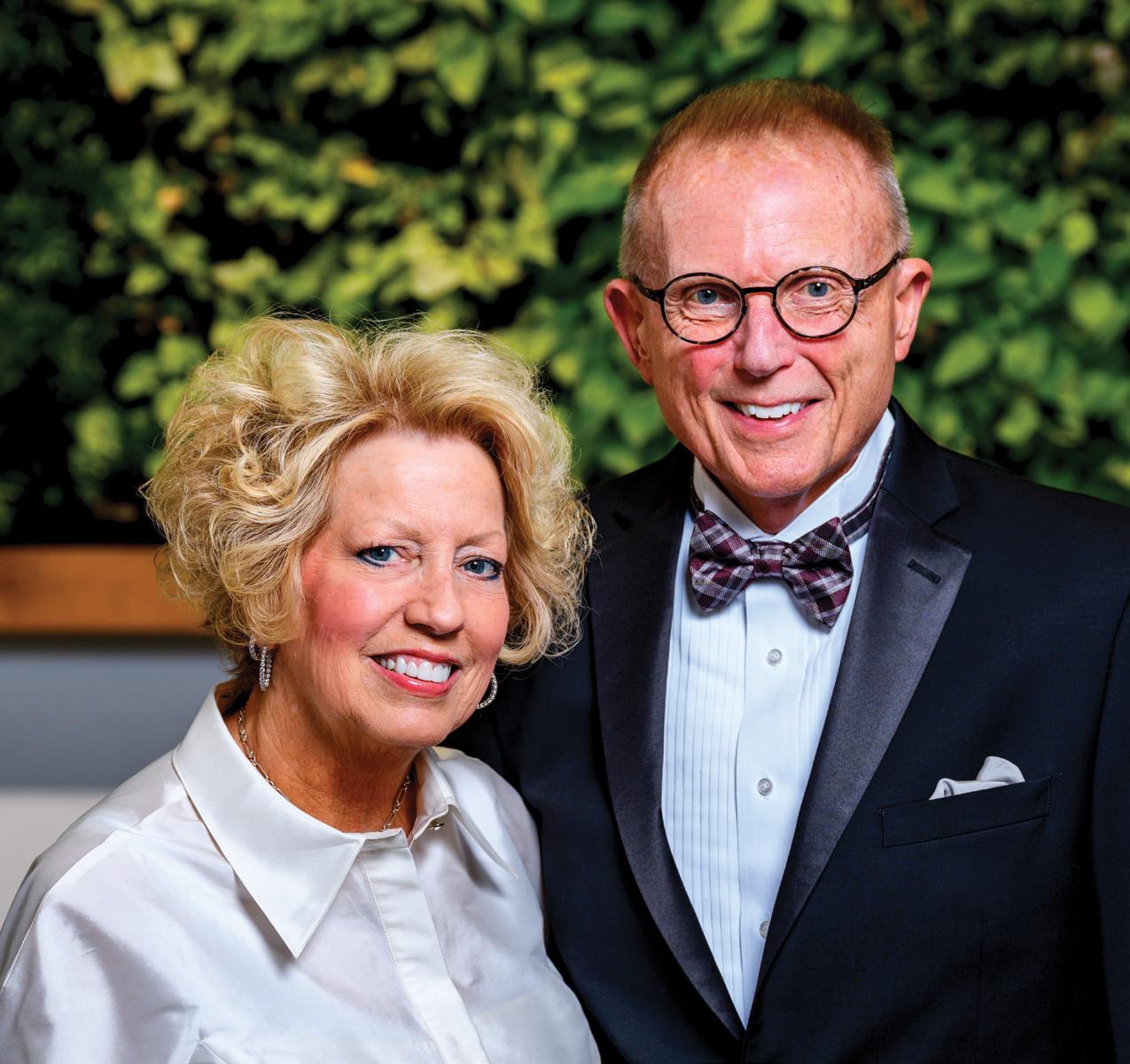
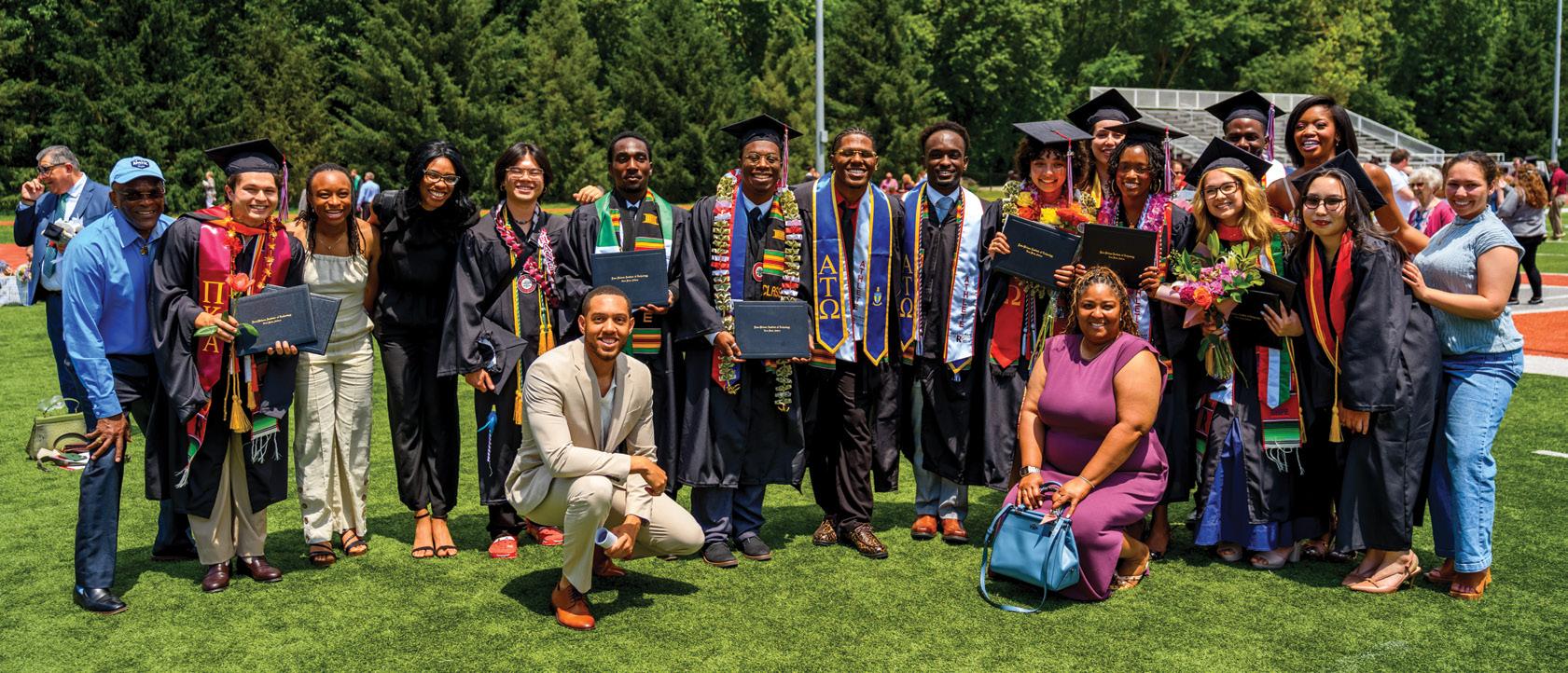
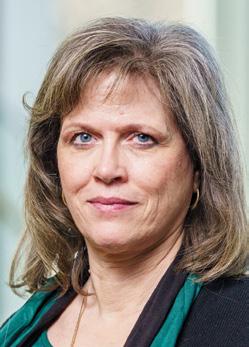
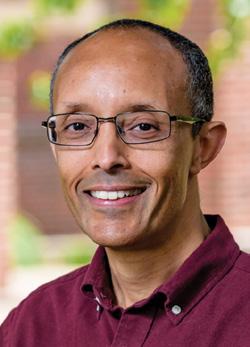
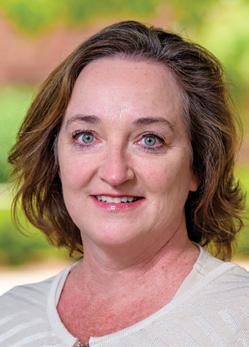
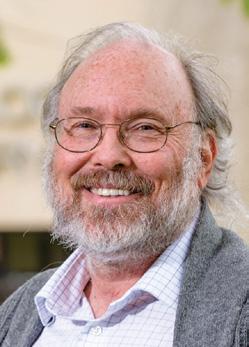
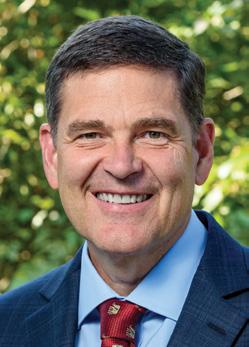
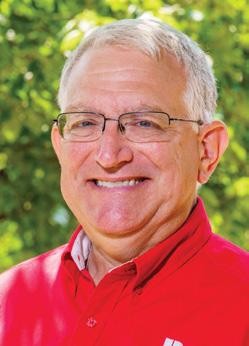
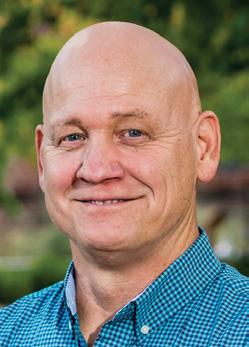
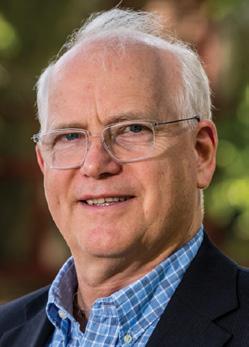
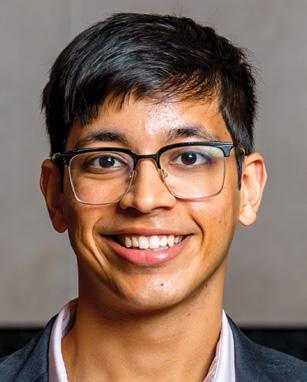
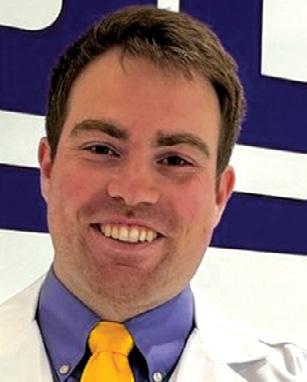
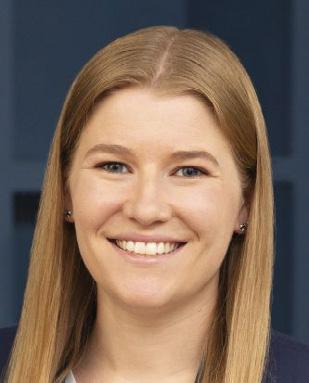
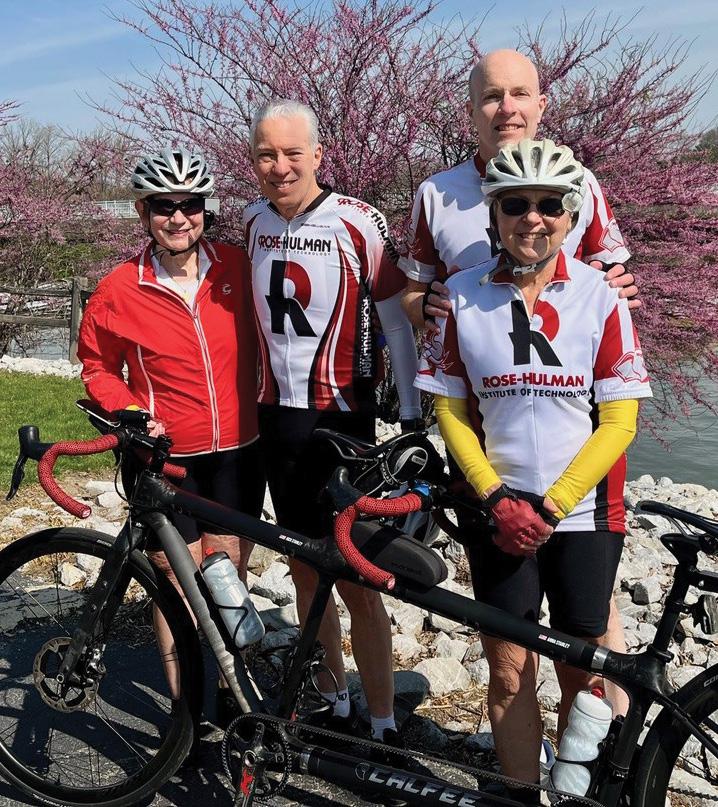
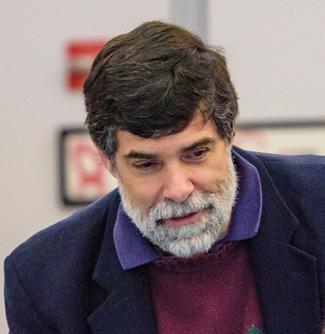
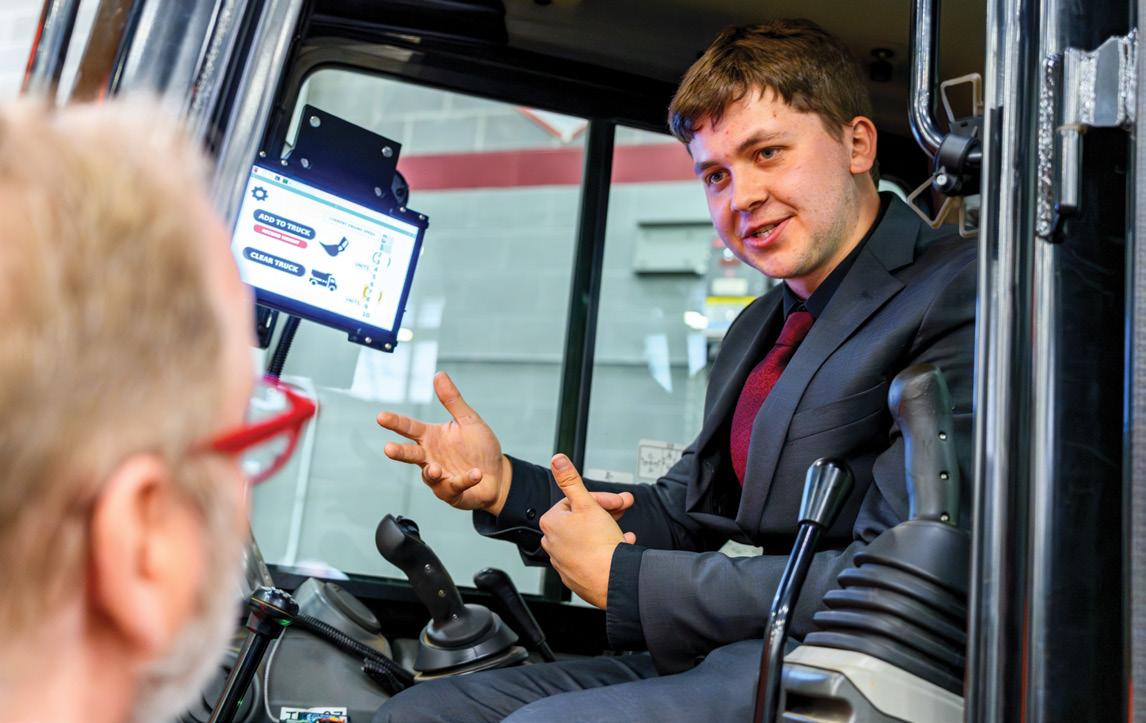
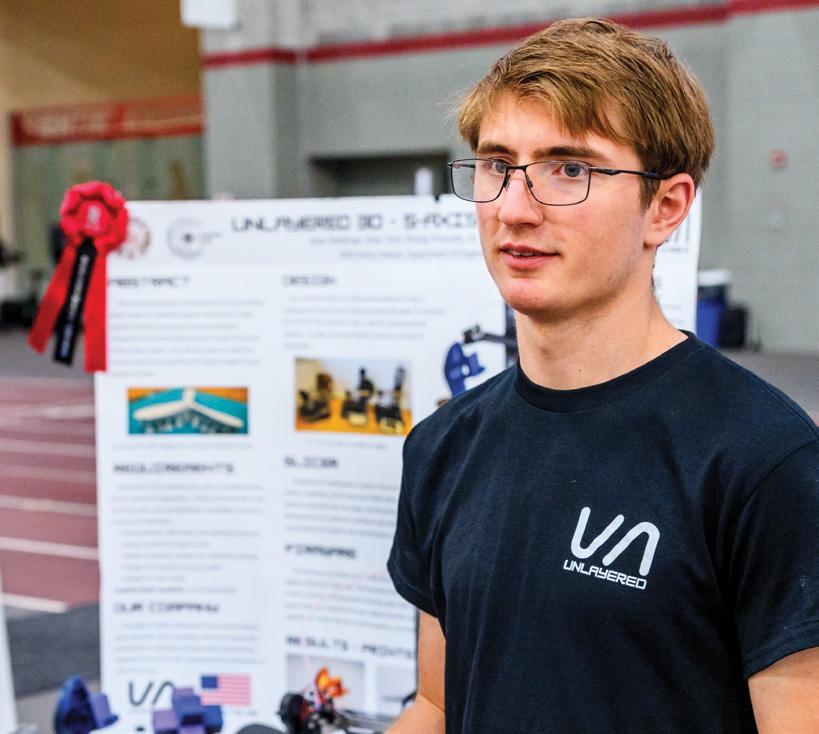
The Rose-Hulman Alumni Association honored a distinguished group of alumni, faculty, staff, and a student during the 2026 Alumni Awards on April 25, recognizing professional achievement, innovation, leadership, and meaningful service to communities and the Institute. This year’s recipients reflect a shared commitment to impact. From advances in healthcare and aerospace to infrastructure, artificial intelligence, education, and student success, the honorees demonstrate the many ways the Rose-Hulman community turns knowledge into action.
Career Achievement Awards
Alumni Recognized for Advancing Impact, Innovation, and Service
Recognizing alumni whose professional accomplishments bring distinction to themselves, credit to the Institute, and benefit to their communities.
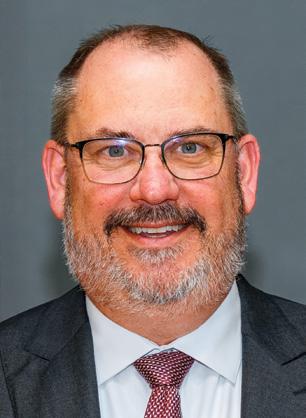
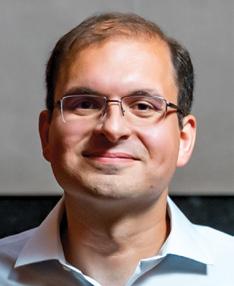
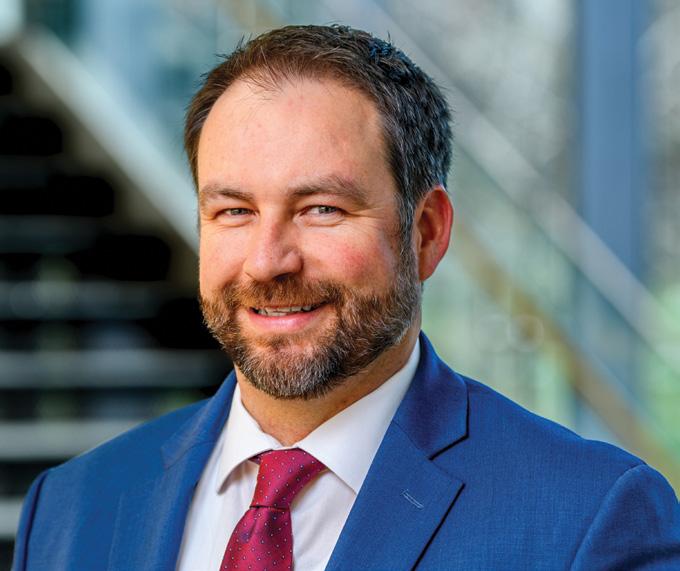
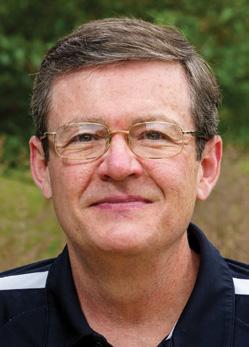
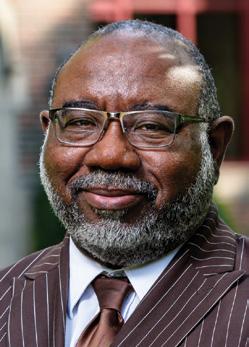
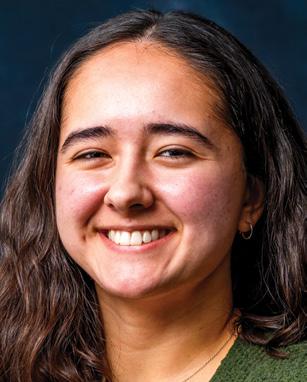
Cash Canfield
Civil Engineering, 1994
Honor Alumni Award
The Institute’s highest alumni award, recognizing exceptional alumni achievement in any field and service to society.
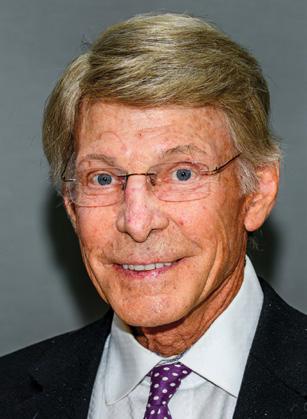
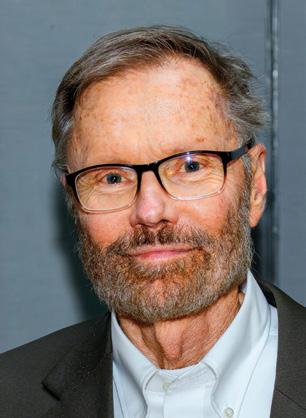
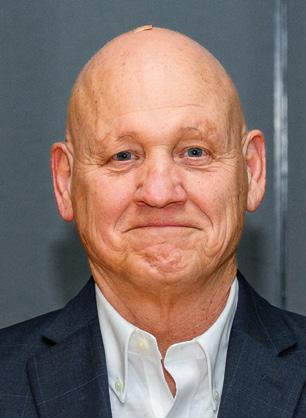
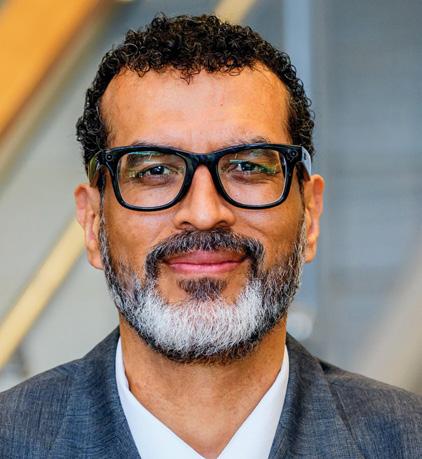
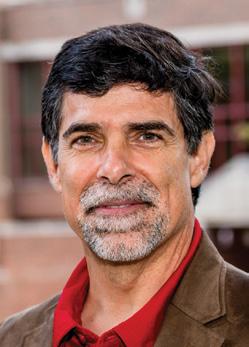
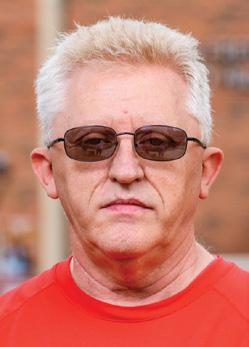
Jeffrey Brugos
Electrical Engineering, 1966
Brugos built a distinguished career in consulting and technology leadership, including 27 years with PricewaterhouseCoopers where he led a global consulting practice of 2,000 professionals. He later served as a vice president at Oracle. Brugos has remained deeply committed to Rose-Hulman, supporting scholarships and contributing to campus through philanthropy, including the donation of the “Aspirations” sculpture in Root Quad.
Canfield is president of American Structurepoint, where he has played a key role in expanding the firm into a nationally recognized engineering and architecture organization. Over nearly three decades, he has contributed to major transportation projects and industry standards, while also supporting Rose-Hulman through advisory board service and through a scholarship for civil engineering students.
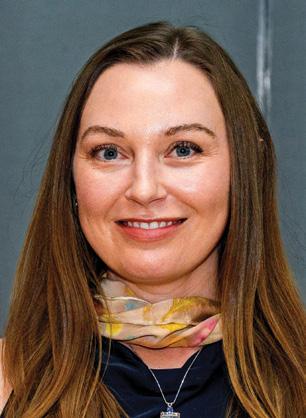
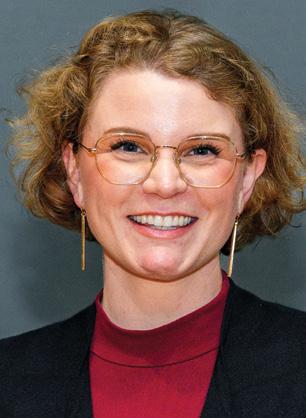
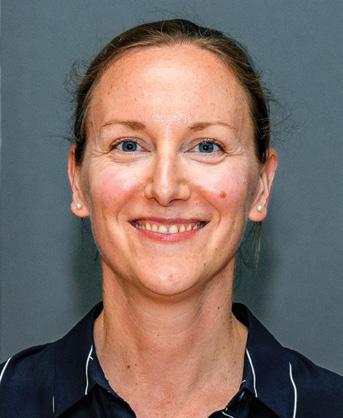
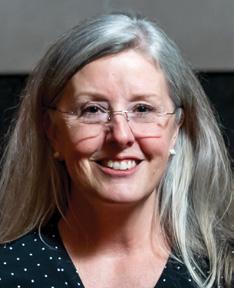
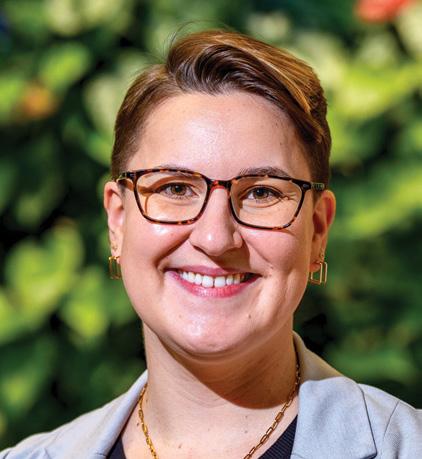
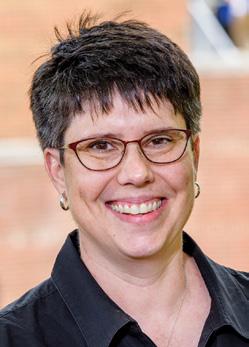
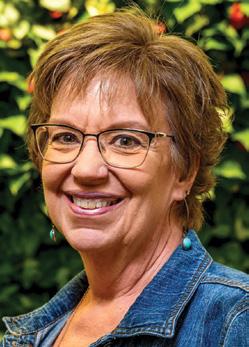
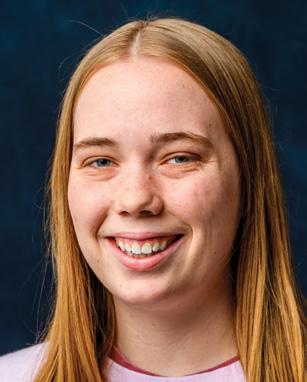
Dr. Christina Chrisman
Biomedical Engineering, 2007
Chrisman is a neurologist and neuromuscular specialist serving as Director of Neuromuscular Medicine and EMG at University of Arizona Medical Center-Phoenix and Banner Neuroscience Institute and a faculty member at the University of Arizona. Her work focuses on complex neuromuscular disorders, and she is widely recognized for her excellence in teaching and research, including national presentations and publications.
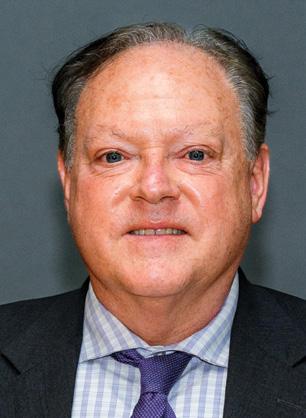
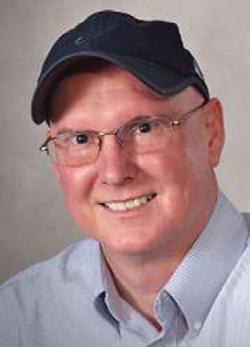
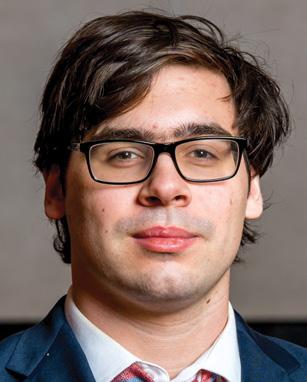
Scott M. Simmonds, JD
Mechanical Engineering, 1991
Simmonds transitioned from a manufacturing engineering career into law and is now a partner at Barnes & Thornburg LLP, where he leads a large intellectual property practice.
A registered patent attorney, he has been recognized nationally for his legal expertise and has contributed to healthcare leadership through board service at Decatur County Memorial Hospital.
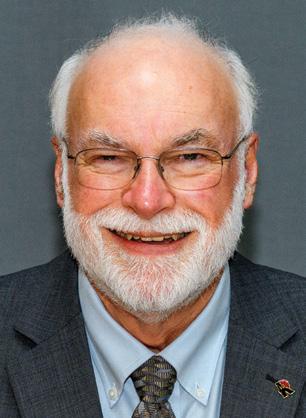
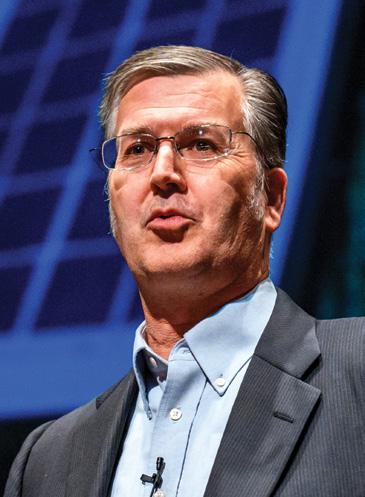
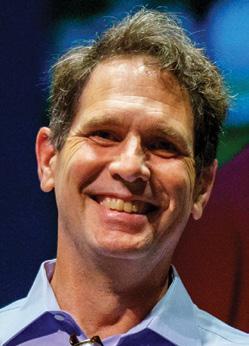
Daniel L. Dvorak, PhD
Electrical Engineering, 1972
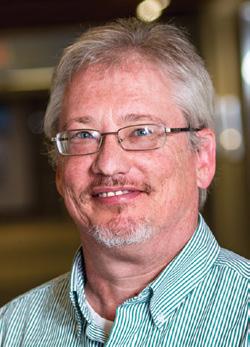
Dvorak has had a pioneering career in artificial intelligence and software systems, including work at NASA’s Jet Propulsion Laboratory developing autonomous systems for deep-space missions. His contributions span machine learning, software architecture, and national advisory roles, supported by numerous patents, publications, and professional recognitions.
Distinguished
Young
Alumni Award
Recognizing alumni who have achieved significant success within 10 years of graduation through career achievement, service, and dedication to Rose-Hulman.
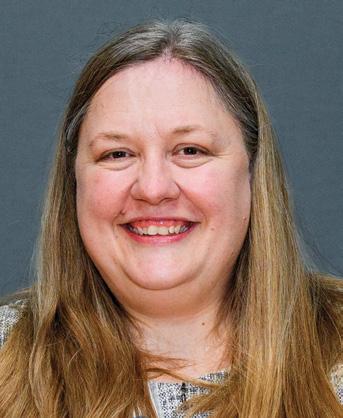
Dr. Abigail Etters
Biochemistry, 2016
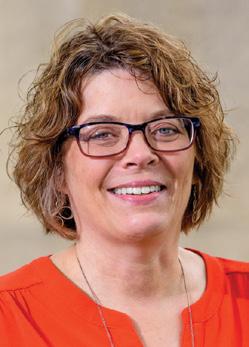
Etters is a physician and hospitalist leader who has rapidly advanced into medical leadership roles, including assistant medical director and future medical director within Vituity hospital systems. Her work during the COVID-19 pandemic and continued contributions to patient care, medical education, and community health reflect a strong commitment to service early in her career.
Alumni Impact Award
Recognizing alumni who make significant contributions of time and talent through mentorship, engagement, and advancing STEM and student success.
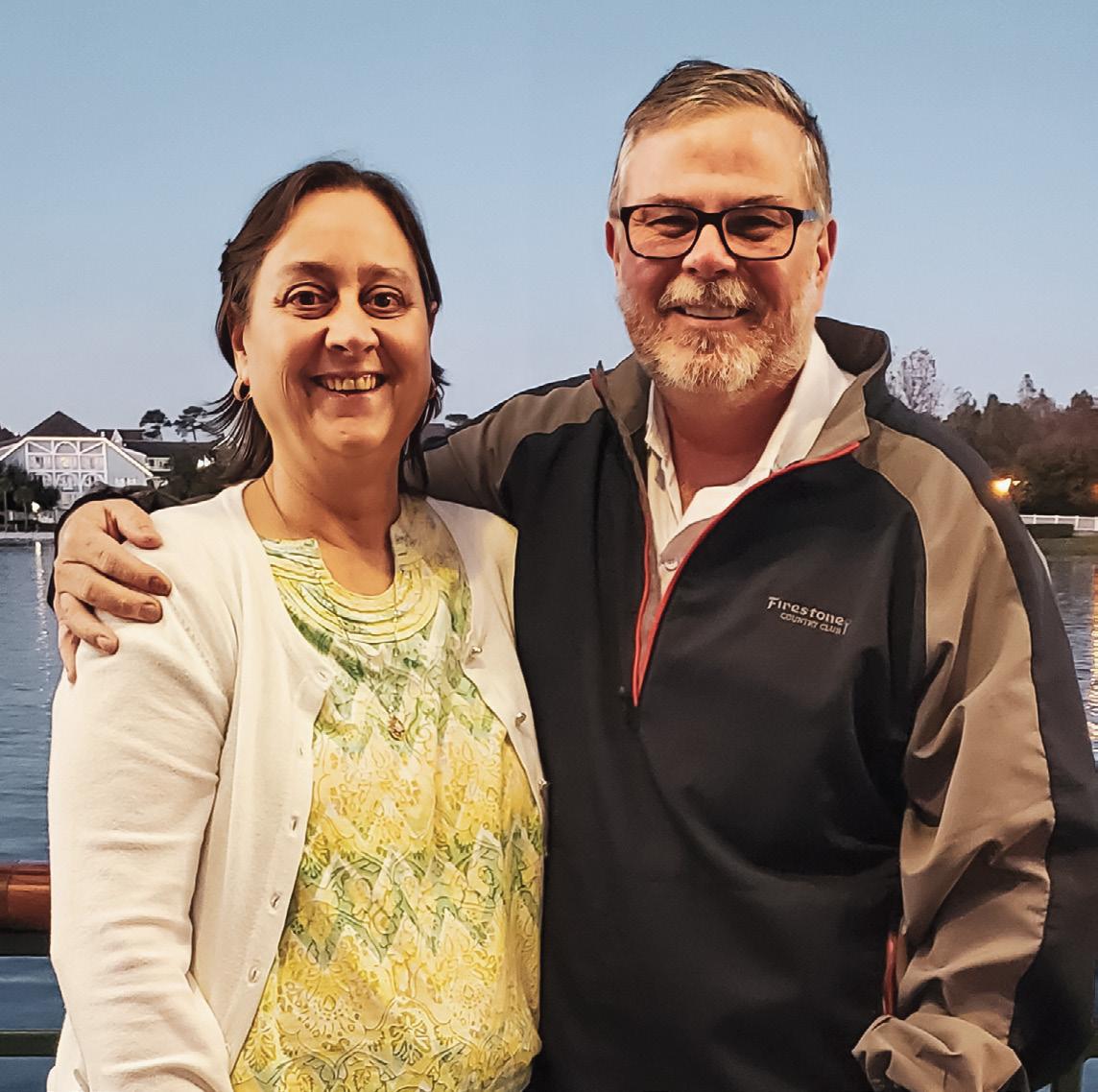
David Price
Electrical Engineering, 1986
Price has demonstrated a lifelong commitment to Rose-Hulman through alumni leadership, mentorship, and philanthropy, including founding a regional alumni group and mentoring Rose-Hulman students until his most recent mentee graduated in 2025. Professionally, he has held global engineering leadership roles with Honeywell Aerospace and GE Aerospace and remains deeply engaged in STEM outreach through FIRST Robotics programs.
Robert E. Shaw, Jr.
Civil Engineering, 1975
Shaw has had a lasting influence on the structural steel industry, including founding the Steel Structures Technology Center and contributing to major national and international standards. He is also widely recognized for developing the ASCE/AISC Steel Bridge Competition, which now engages hundreds of student teams annually, including Rose-Hulman participants.
Collegian Rose Award
Recognizing alumni employees whose work strengthens the Institute and fosters lifelong relationships with Rose-Hulman.
Ed Wheeler, PhD
Electrical Engineering, 1982
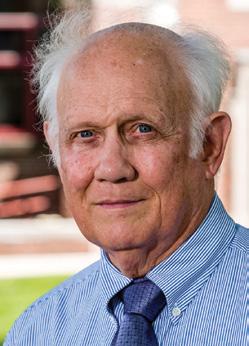
Wheeler is a longtime Rose-Hulman faculty member and leader in electrical and computer engineering, known for engaging students in hands-on research in electromagnetics and collaborative industry projects. Over his career, he has authored more than 50 publications, mentored dozens of students into advanced study and research careers, and earned numerous honors, including endowed chair recognition and the Board of Trustees Outstanding Scholar Award.
Rachel M. Romas Award
Recognizing an outstanding student demonstrating excellence in academics, character, and commitment to the Institute.
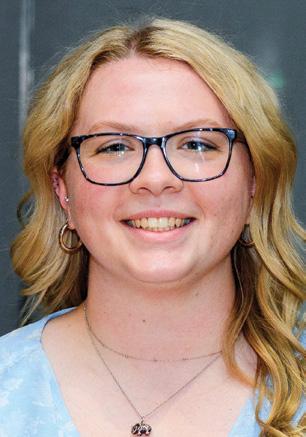
Lauren Rexing
Mechanical Engineering, 2024
Engineering Management, 2026
Rexing is a graduate assistant in Student Affairs and Career Services who has been deeply involved in residence life and student leadership throughout her time at Rose-Hulman. Her commitment to supporting fellow students, combined with internships in engineering and a career in technical sales, highlights her well-rounded contributions and future promise.
Honorary Alumnus Award
Recognizing one faculty and one staff member for outstanding service, professional achievement, and dedication to the Institute.
Eva Andrijcic, PhD
Associate Professor of Engineering Management
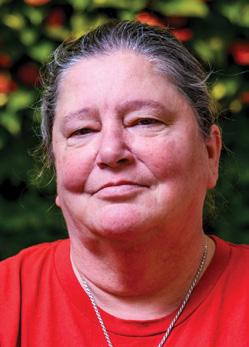
Pam Pahnke
Human Resources
Benefits Manager
PUBLICATION CREDITS
Vice President of Communications and Marketing: Santhana Naidu
Vice President of Institutional Advancement: Steven P. Brady
Alumni Association President: Amanda Stapleton, Class of 2006
Office of Alumni Relations: Carrie Bose, Associate Director of Alumni Relations and Special Events; Carmen Dean, Alumni Relations Coordinator; Holly Kowalski, Administrative Assistant; and Charlie Ricker, Director of Alumni Relations
Office of Communications and Marketing: Bryan Cantwell, Photographer; Hyung-Jung Chang, Graphic Designer; Kimmie Collins, Communications Coordinator; David Essex, Multimedia Producer; Ashlan Fortner, Marketing Manager; Shaun Hussey, Email and Web Communications Manager; Paul Shepherd, Chief Director; Steve Voltmer, Web Developer; and Majel Wells, Communications and Marketing Operations Manager
Executive Editor: Paul Shepherd
Cover & Page Design: Chris Denison
Contributors: Tim All, PhD; Sylvia Carlisle, PhD; and John McSweeney, PhD, Associate Professors of Mathematics; Kristopher Ligget, Special Collections and Archives Associate Librarian
Photo and Video Contributors: Alpha Tau Omega, Luci Battershell (CPE, 2027), Owen Chaffin (ENGD, 2027), Citizens Energy Group, Rufus Cochran III (CPE, 2011), Katie Collins (CPE, 2025), Kevin Cotellesso (ME, 2026), Will Fair, Mackenzie Gearhart (ME, 2022), Thomas Gormley (ME, 2027), Will Hartman (ME, 2027), Stevie Irvine (BE, 2028), Kevin Liu (ME, 2027), Greg Muse (CHE, 1982), National Havoc Robotics League, Jennifer Pint (ME, 2009), Jim Reppell, Muaaz Shareef (ME, 2028), Agnay Srivastava (CS, 2026), Sydney Supp (ME, 2019), Austin Vesich (SE, 2026), Matthew Welmers (BSCHEM, 2014; MSCHEM, 2016), and Trey Wurtz (BSCE, 2021; MSCE, 2022)
Class Notes/Alumni News Contact:
Send alumni news and address updates to alumnirelations@rhit.edu
Echoes is published by:
Rose-Hulman Institute of Technology
5500 Wabash Ave., Terre Haute, IN 47803
Echoes Contact: echoes@rhit.edu
Digital copies of this and past issues are available at rhit.edu/echoes
It is the policy of Rose-Hulman Institute of Technology to admit students on the basis of their academic ability. Rose-Hulman Institute of Technology does not discriminate based on race, religion, color, national origin, sex, age, citizenship status, disability, veteran status, or sexual orientation.
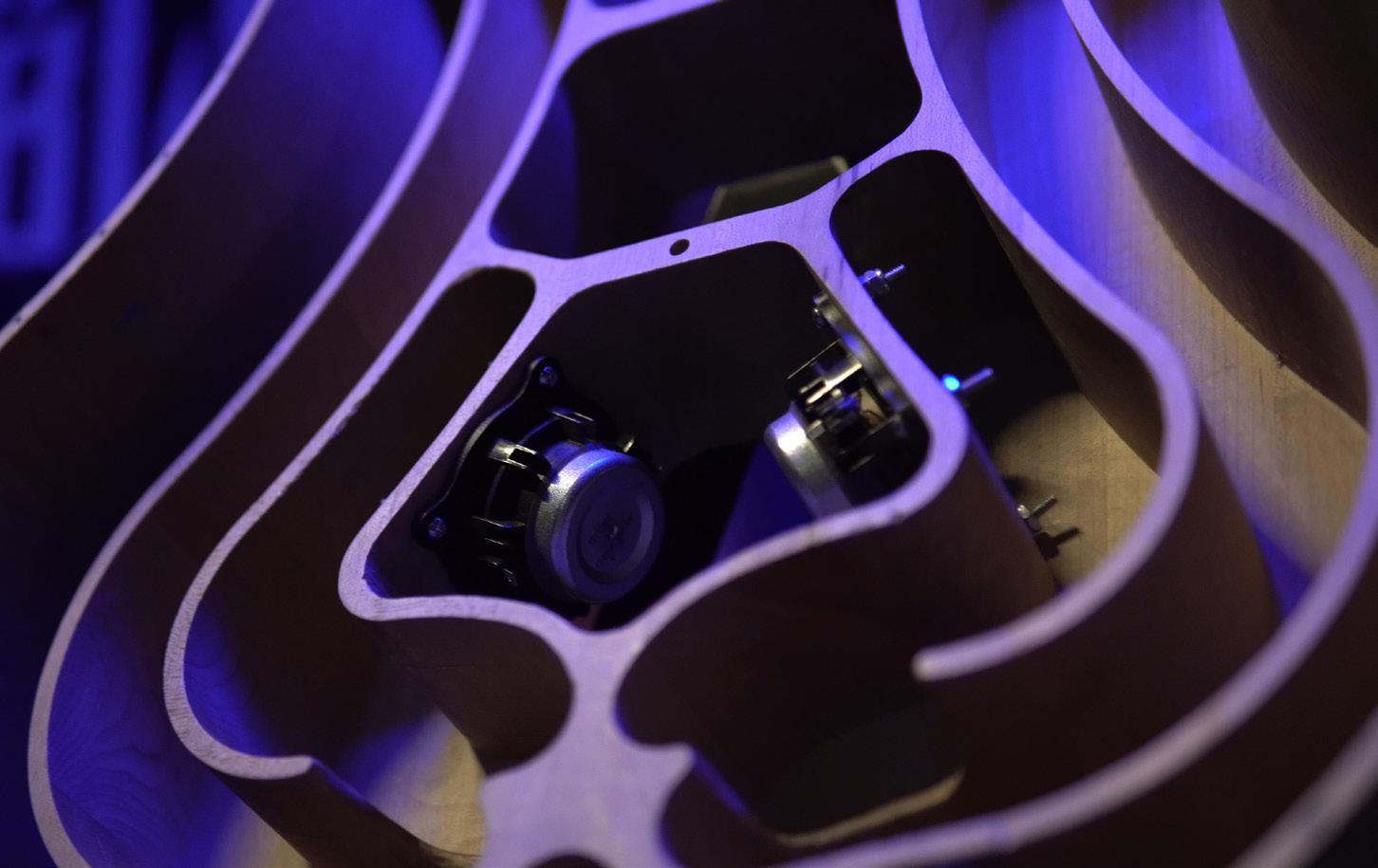
The Double Chamber Guitar
THE FOLDED HORN GUITAR Designed By Joseph Katzenberger (MSEMGT, 2010)
As another academic year comes to a close, I find myself reflecting on a season defined not only by accomplishments, but by momentum— momentum created by, faculty, staff, alumni, and friends who continue to shape Rose-Hulman’s future.
That spirit was especially evident during Commencement this spring, when we celebrated the achievements of the Class of 2026. This year’s graduating class represented 37 states and 17 countries, with 30 percent of our graduates
BY ROBERT A. COONS , PRESIDENT coons@rhit.edu
hailing from Indiana. Among them were 60 students completing our Rose Squared program, earning both a bachelor’s degree and a master’s degree in engineering management in four years, and hundreds more beginning the next chapter of their journeys in industry, graduate school, military service, and entrepreneurship. Altogether, Rose-Hulman awarded 557 degrees this year.
What continues to impress me most about our graduates is not simply their academic achievement—but the ways they have embraced curiosity, collaboration, and a willingness to tackle difficult challenges. Whether designing advanced battery systems, conducting undergraduate research, launching startup ventures, competing nationally in analytics and engineering competitions, or mentoring younger students, this class exemplified the mindset we strive to cultivate at Rose-Hulman.
That mindset of curiosity, collaboration, and hard work is reflected throughout this issue of Echoes
You will read about students helping shape the future of mobility through competitions such as Battery Workforce Challenge and EcoCAR, researchers exploring human-robot interaction and quantum science, and student entrepreneurs earning opportunities once thought unimaginable
“ What continues to impress me most about our graduates is not simply their academic achievement but the ways they have embraced curiosity, collaboration, and a willingness to tackle difficult challenges.”
—including acceptance into Y Combinator, one of the nation’s premier startup accelerators. You will also read about the continued progress of Innovation Grove, a transformational project designed to strengthen the connections between education, innovation, entrepreneurship, and community impact for generations to come.
Collectively, these stories illustrate something important: innovation at Rose-Hulman is not confined to a single building, laboratory, classroom, or discipline. It is part of a culture that encourages students to think boldly, work collaboratively, and pursue ideas with purpose.
I was reminded of those same values earlier this year when Tammy and I attended our annual Military Ball. The evening celebrated the leadership, discipline, and service embodied by our ROTC cadets and alumni. Guest of honor Admiral
Richard Correll (CHE, 1986), commander of the U.S. Strategic Command, shared meaningful conversations with our cadets about leadership and service. Moments like these serve as powerful reminders that the impact of a Rose-Hulman education extends well beyond career success. It shapes character, strengthens communities, and prepares graduates to lead in meaningful ways.
As we celebrate another graduating class and look ahead to welcoming a talented new group of first-year students later this summer, I remain deeply optimistic about the future of this institution and the people who make it so special.
For more than 150 years, Rose-Hulman has prepared students to solve problems, improve lives, and contribute meaningfully to the world around them. That mission continues today— strengthened by the creativity, determination, and ambition of the next generation of alumni innovators, discoverers, and entrepreneurs who are already beginning to leave their mark. n
Building the Next Generation of Innovators Discoverers Entrepreneurs
From cutting-edge research and electric vehicle design to startup accelerators and Innovation Grove, Rose-Hulman is creating new opportunities for students to shape what comes next.
STORY BY PAUL SHEPHERD
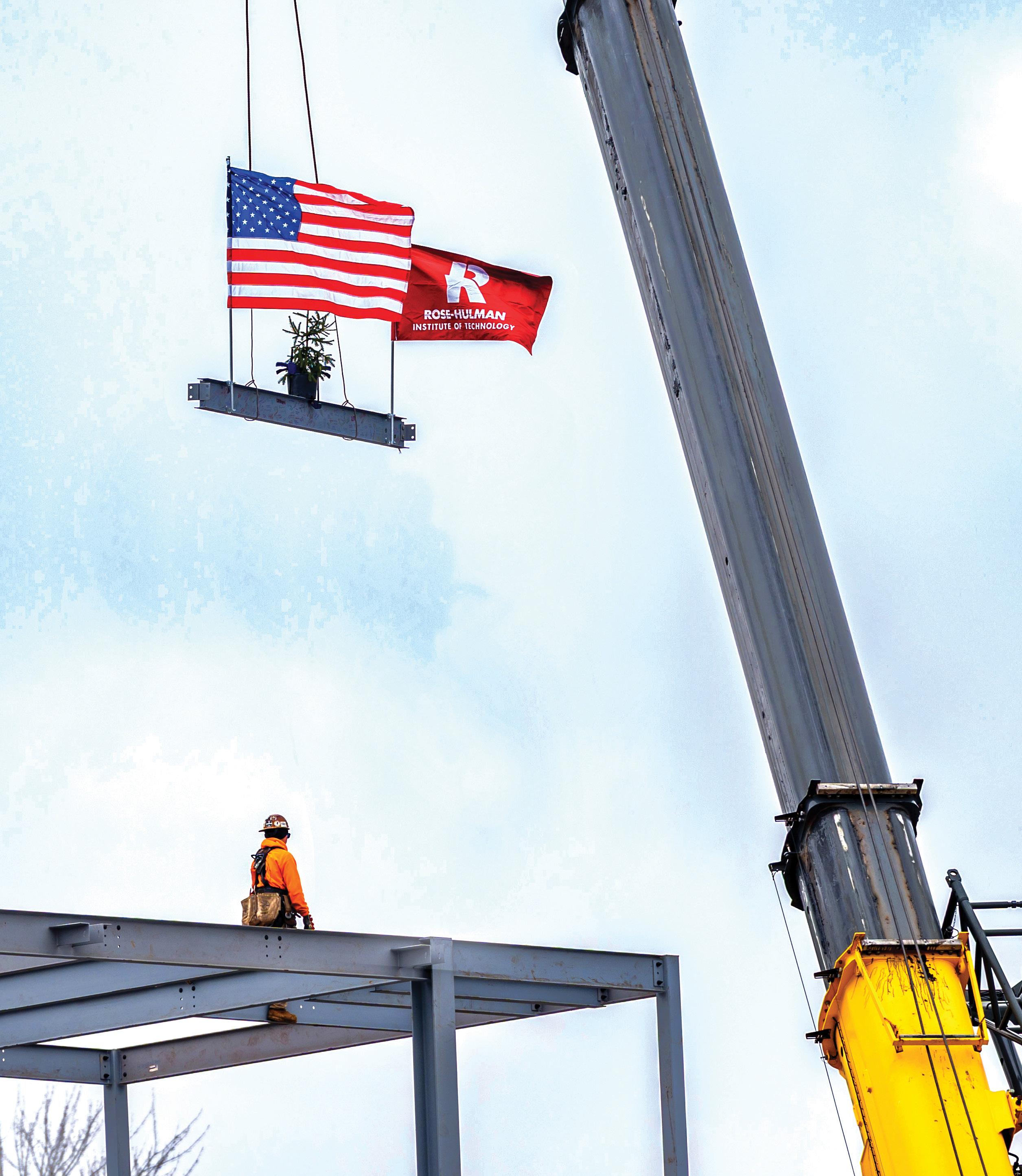
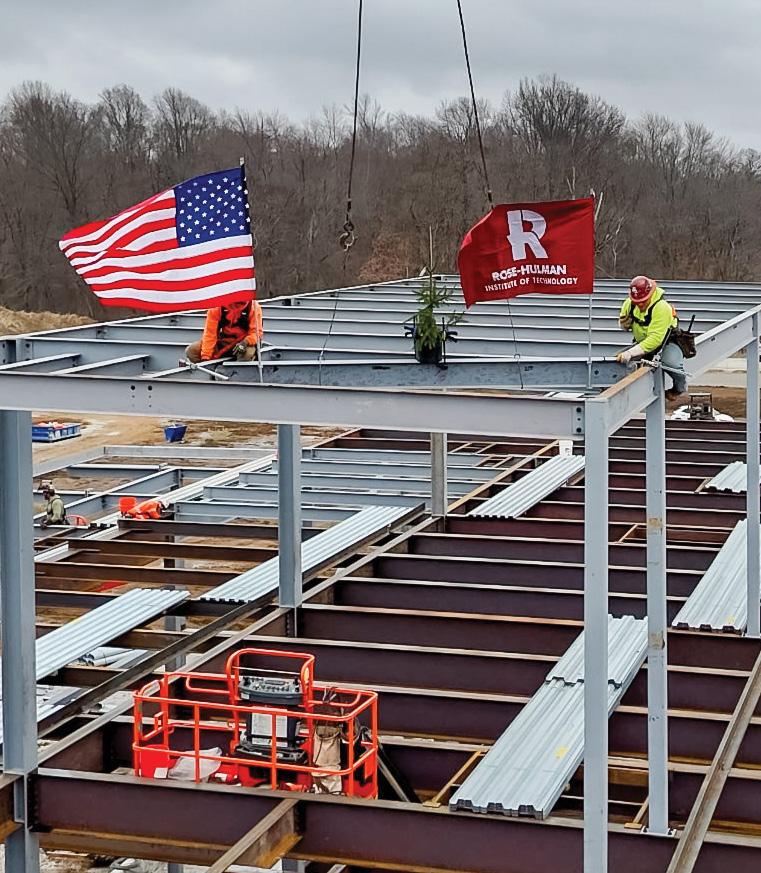
steel beam stretched skyward against a cold February sky as construction crews guided it into place atop the future home of Rose-Hulman Ventures. Covered in colorful signatures from students, faculty, and staff, the beam carried an American flag, a Rose-Hulman flag, and an evergreen tree—a traditional symbol of prosperity and safe completion.
As the beam settled into position, marking the highest point of the first building in Innovation Grove, it represented more than a construction milestone. It reflected a broader transformation taking shape across campus.
Rose-Hulman is not only building new facilities. It is intentionally building a culture—one designed to cultivate the next generation of innovators, discoverers, and entrepreneurs.
That vision sits at the center of the Institute’s Advancing by Design strategic plan, which calls on Rose-Hulman to “instill a mindset of innovation, discovery, and entrepreneurship” throughout the student experience. The strategy extends beyond launching new
programs or constructing new buildings. It is about creating an ecosystem where students are encouraged to experiment boldly, pursue ambitious ideas, and apply their knowledge to real-world challenges from their very first days on campus.
“Bringing Ventures to the campus—and anchoring Innovation Grove—amplifies the potential for future impact,” says President Robert A. Coons. “It strengthens the connection between academic discovery, entrepreneurial thinking, and community engagement.”
That mindset increasingly can be seen everywhere across campus.
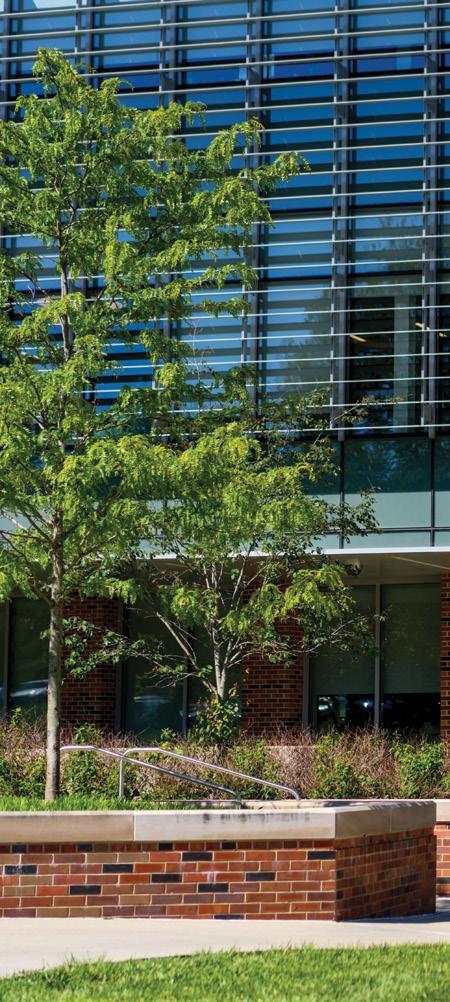
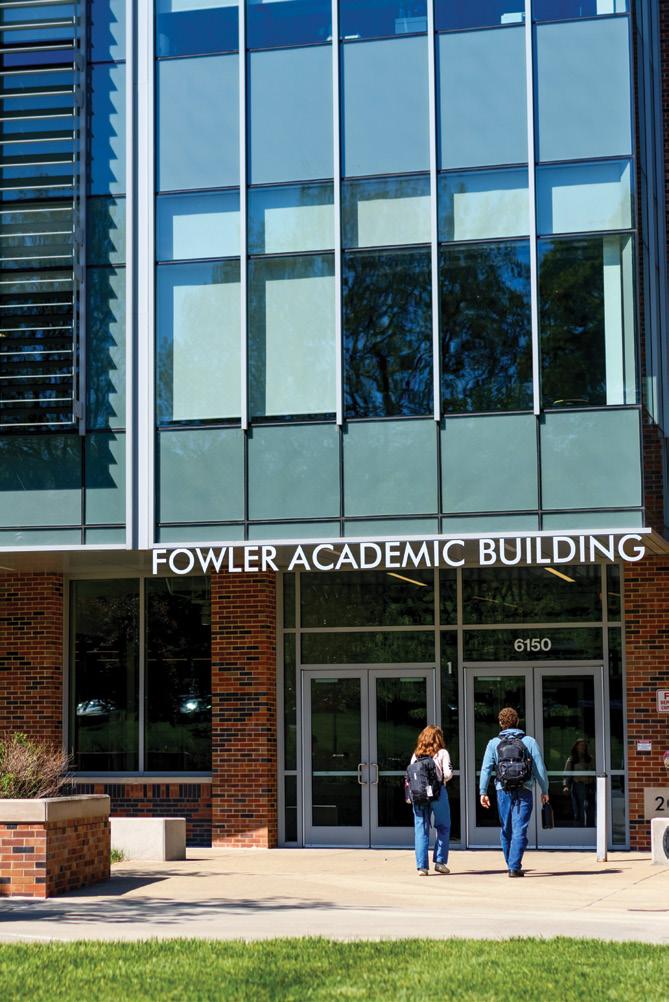
It is visible inside the state-of-the-art Fowler Academic Building, which opened in 2021 with collaborative studios, innovation spaces, and
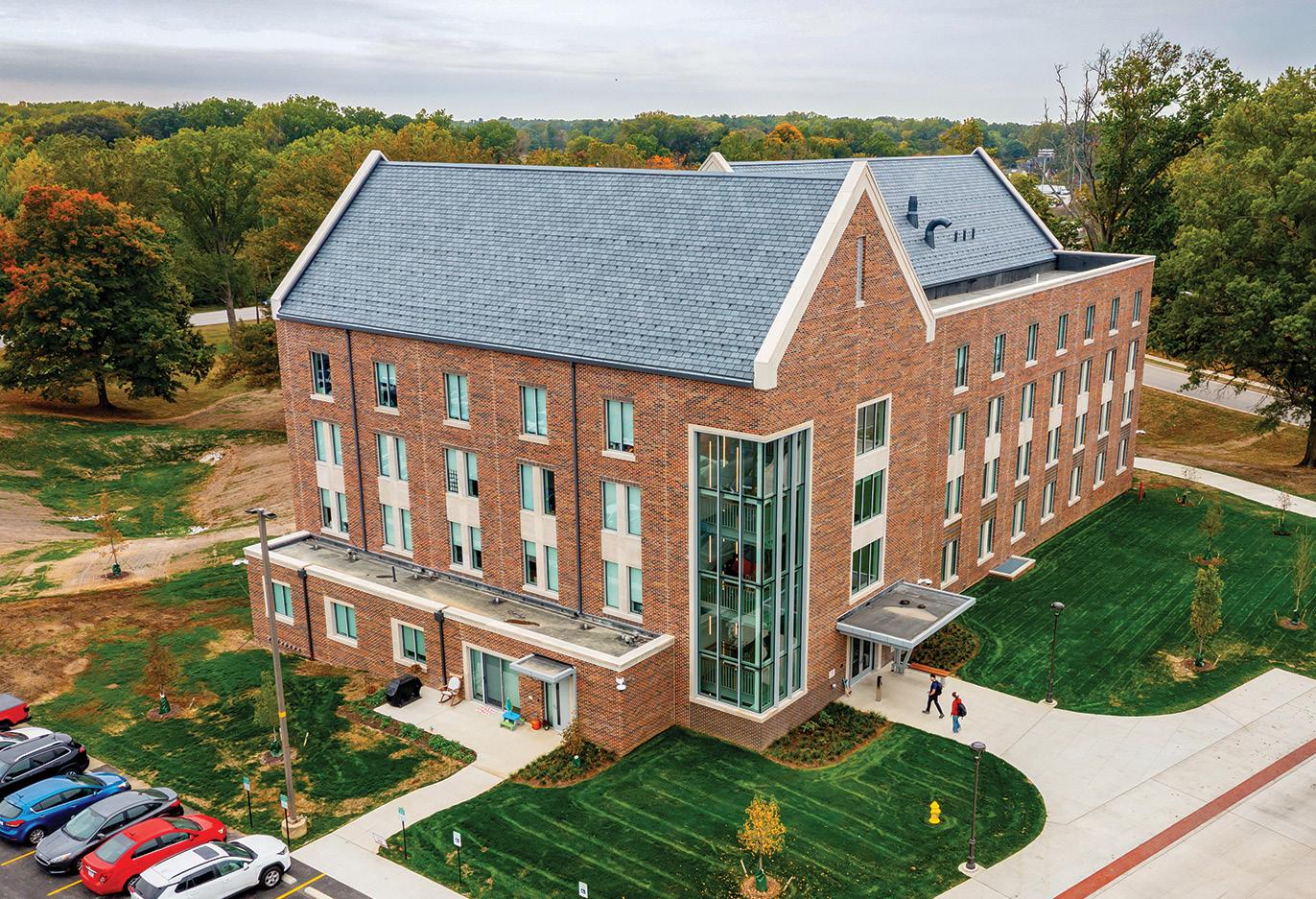
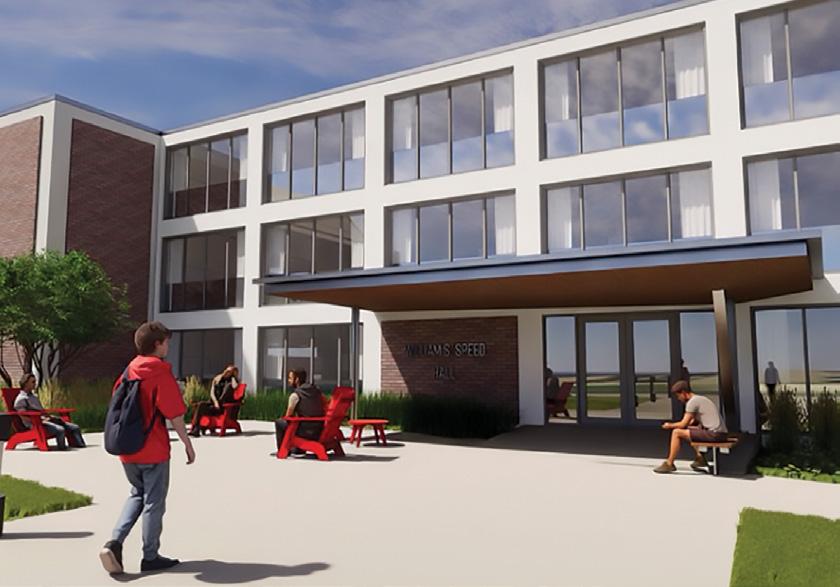
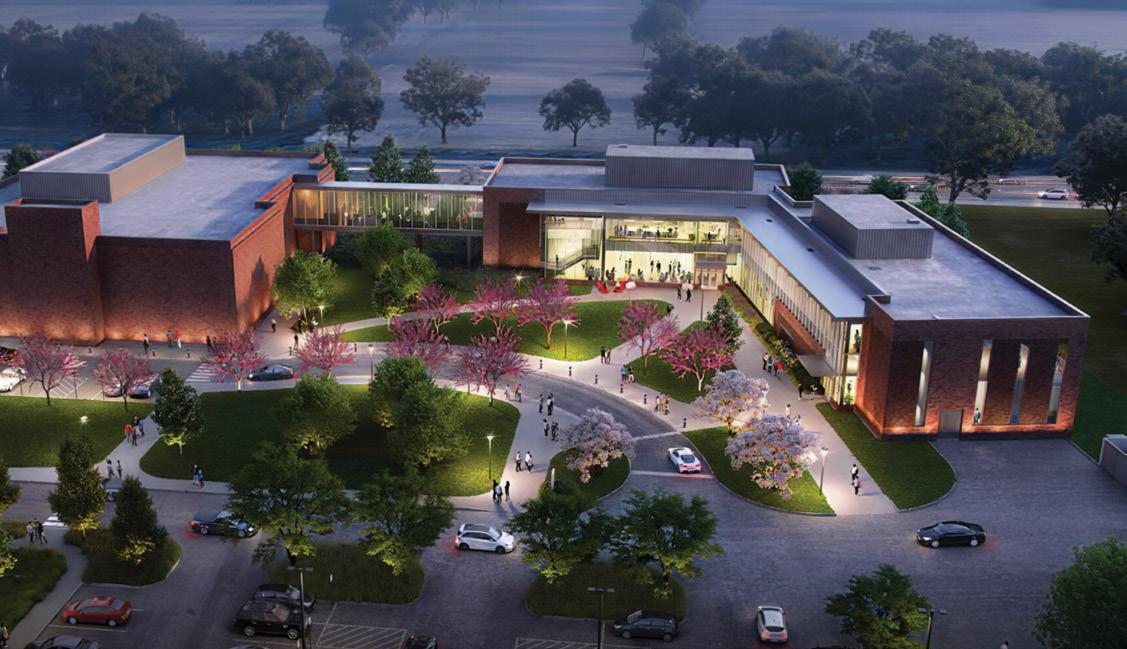
flexible classrooms designed for interdisciplinary learning. It is taking shape inside MRH— affectionately known by students as “Hall TBA”—the Institute’s newest residence hall designed to support community and collaboration. It is evident in the ongoing renovation of Speed Hall, set to reopen in Fall 2026, and perhaps most visibly in Innovation Grove, the $102 million district rising at the corner of State Road 42 and State Road 46 that will connect education, entrepreneurship, healthcare, and regional economic development in entirely new ways.
Together, these spaces reflect an evolving vision for how future generations of students will learn, create, and lead.
Speed Hall
New Residence Hall
Innovation Grove
Innovation:
DESIGNING THE TECHNOLOGIES OF TOMORROW
or decades, Rose-Hulman students have learned by doing. Increasingly, they are learning by building technologies connected to some of society’s most pressing future challenges.
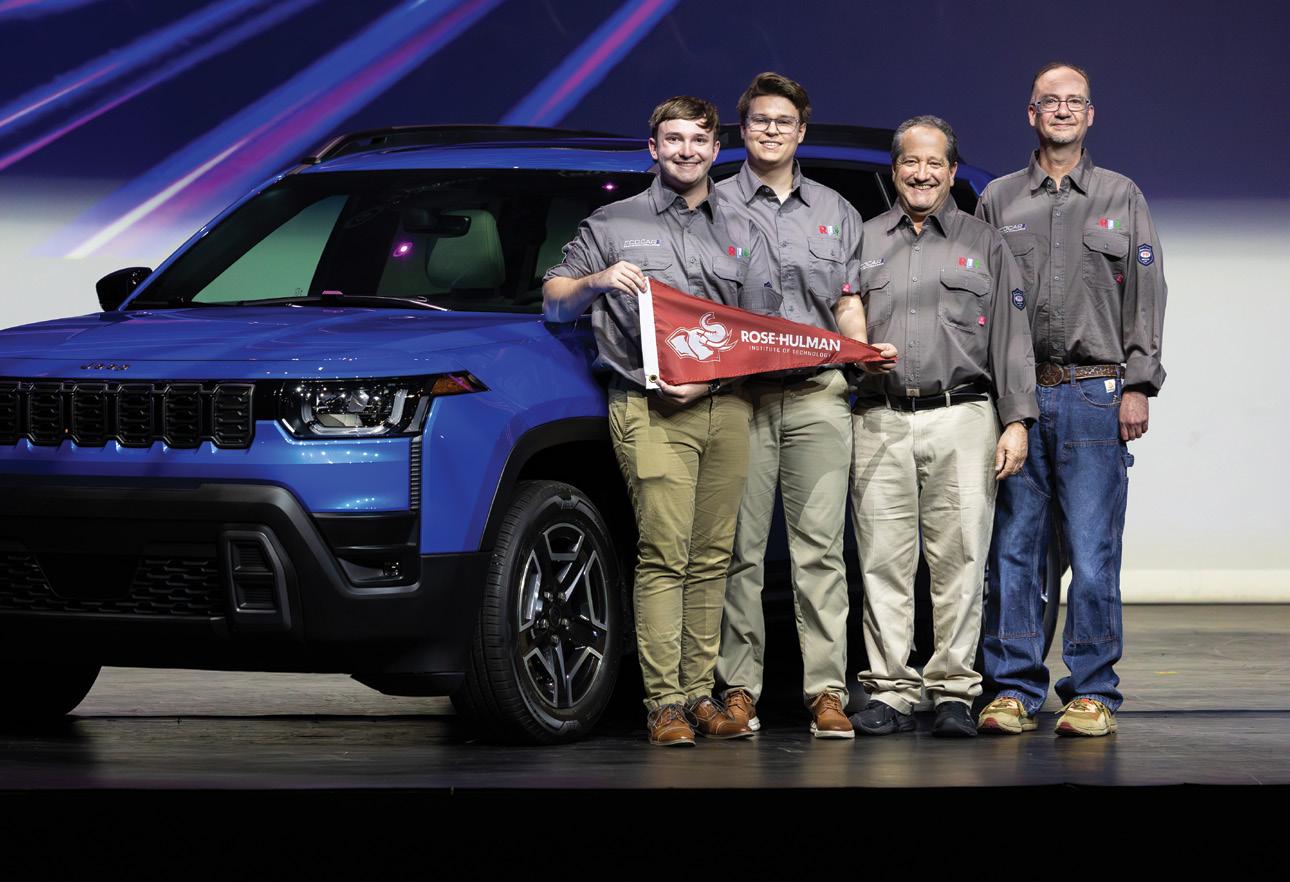
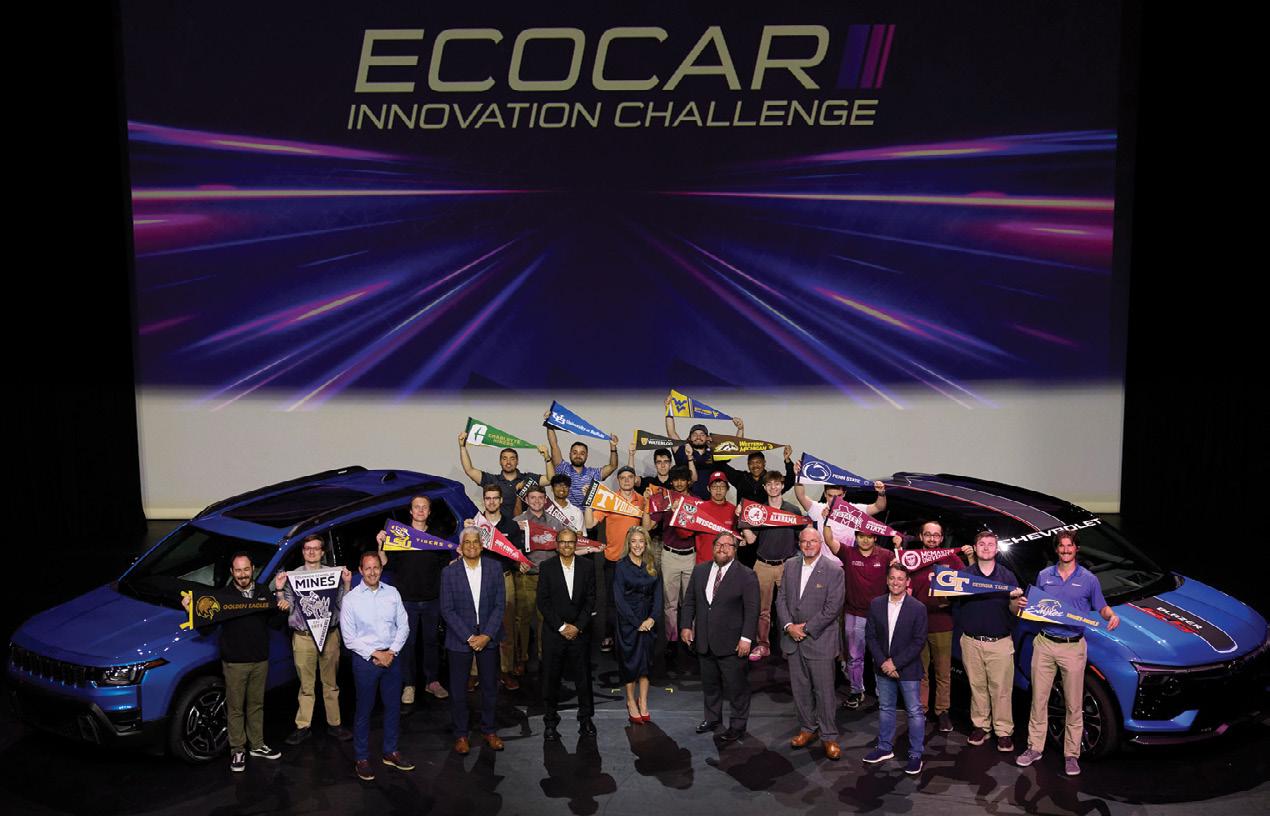
This spring, Rose-Hulman was selected as one of only 20 universities across North America to participate in the EcoCAR Innovation Challenge, a premier four-year collegiate automotive engineering competition sponsored by the U.S. Department of Energy and industry leaders including General Motors and Stellantis.
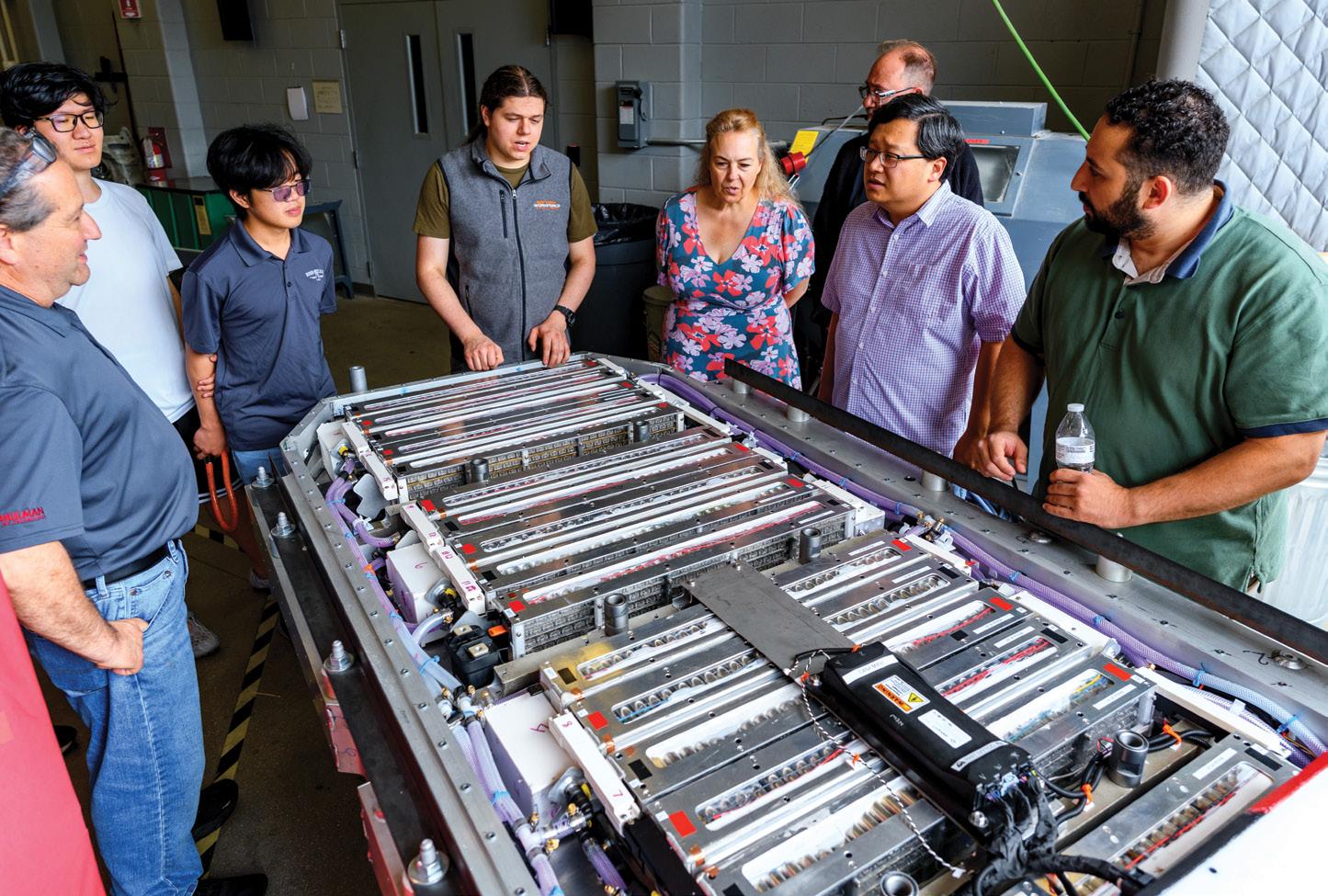
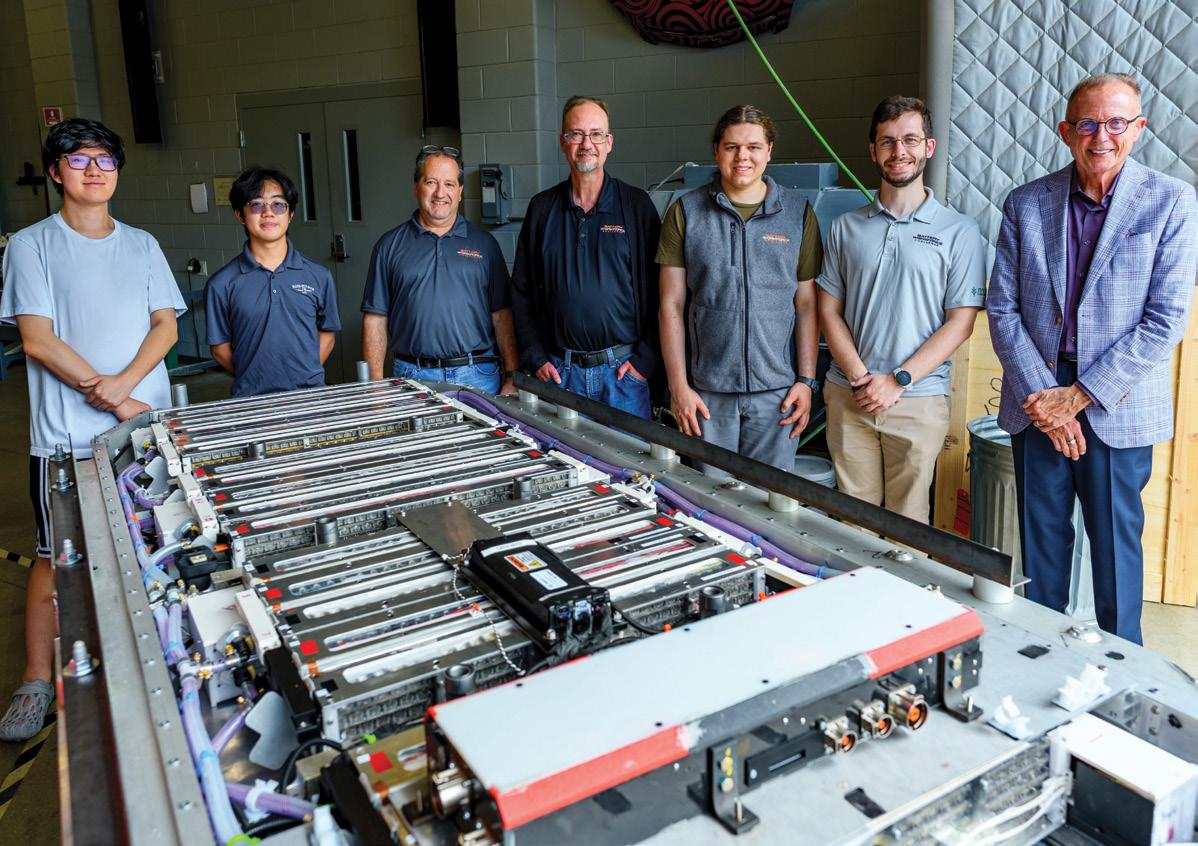
The competition continues Rose-Hulman’s growing national presence in advanced vehicle technology competitions. Earlier this year, a Rose-Hulman and Ivy Tech Community College team finished among the top three teams in North America in the Battery Workforce Challenge, a three-year electric vehicle battery competition sponsored by Stellantis and the Department of Energy. Competing largely against
graduate-level programs, Rose-Hulman’s primarily undergraduate team designed, integrated, and tested advanced battery systems while earning national recognition for its software and systems engineering work. (Read more about both on Page 25.)
Those experiences mirror the direction of the broader automotive industry—and the interests of students themselves.
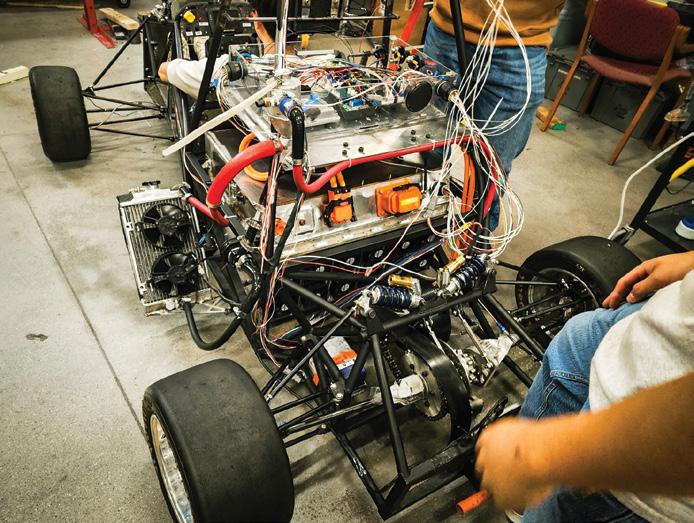
Inside the Branam and Kremer Innovation Centers, members of Rose-Hulman’s Grand Prix Engineering team have spent the past two years undertaking one of the most ambitious transitions in the organization’s history: building the program’s first electric Formula SAE race car.
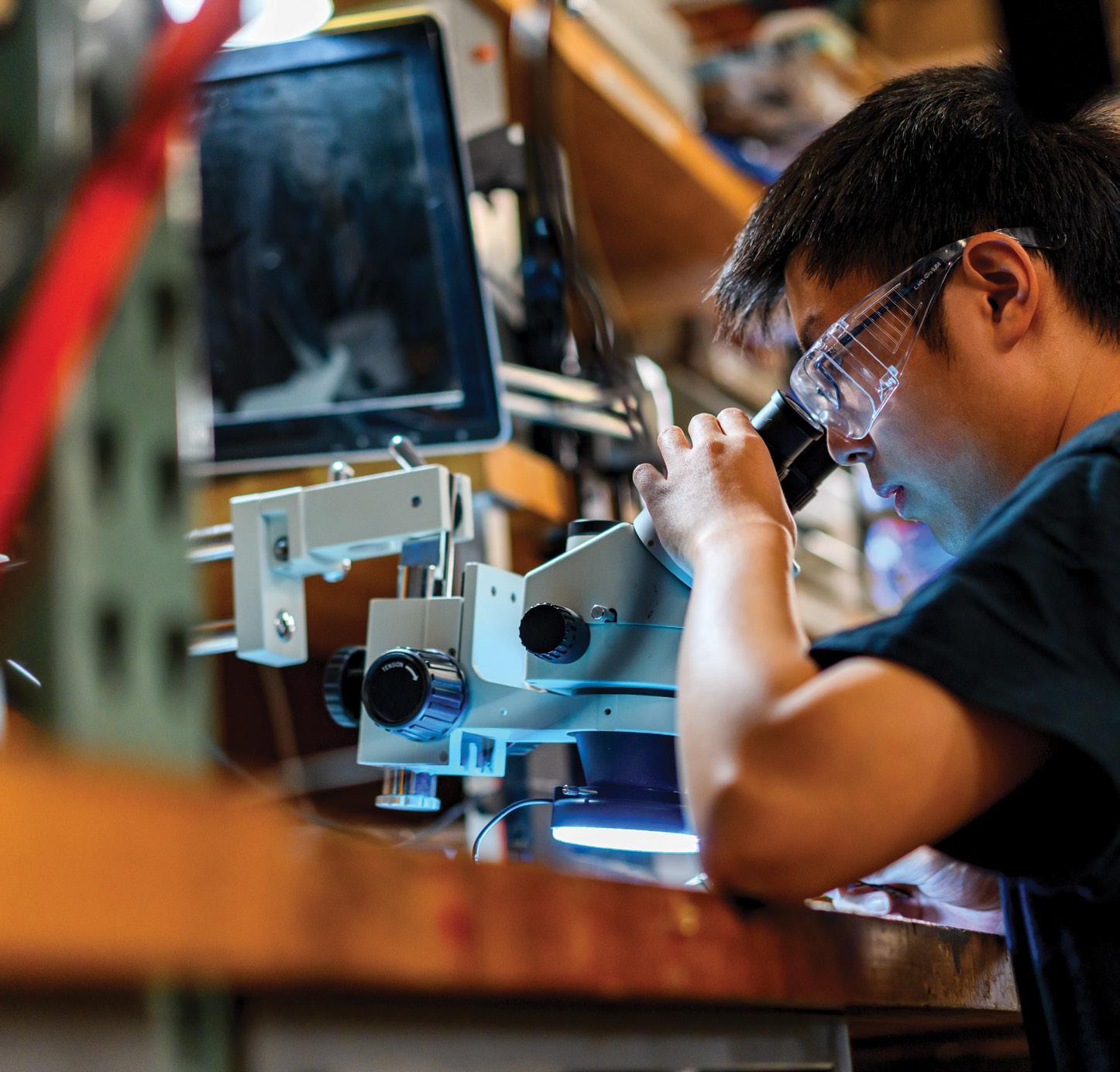
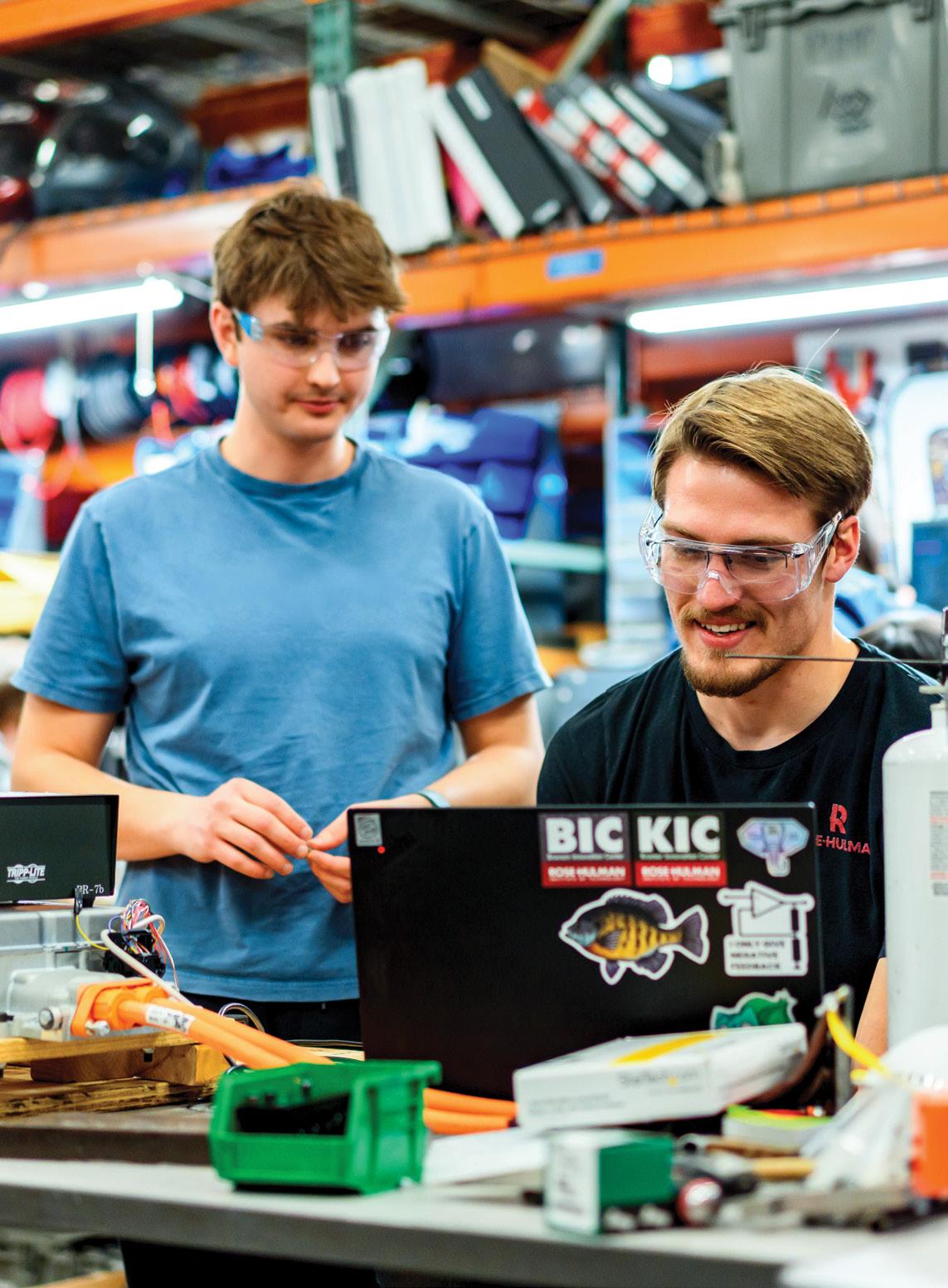
Students are driving innovation in electric vehicle design through competition teams including Rose Grand Prix Engineering, Battery Workforce Challenge, and the EcoCAR Innovation Challenge.
“It's a whole new ballgame,” says senior mechanical engineering major Alex Spitzer, president of Rose GPE. “Last year, we didn't get the car finished. But we took what we learned in that process and are using it to build our first electric car.”
The transition has expanded the team beyond its traditional mechanical engineering roots to include students specializing in electrical engineering and computer engineering as they tackle high-voltage systems, controls, and battery integration.
That same spirit of technological adaptation is reshaping academics across campus.
Rose-Hulman recently launched a standalone major in Artificial Intelligence designed to prepare students not only to build next-generation AI systems, but to apply them responsibly and ethically. Complementing the major is a multidisciplinary AI minor open to students across campus.
The changes reflect a larger institutional effort to evolve rapidly alongside emerging industries and technologies. (See related story on Page 30.)
“Higher education cannot afford to move at the pace it once did,” Coons says. “When industry and student needs transform in real time, our academic structures have to be flexible enough—and bold enough— to transform with them.”
Across campus, opportunities for hands-on experience, including in the Branam and Kremer Innovation Centers, complement reimagined classroom curricula.
Discovery: ADVANCING
KNOWLEDGE, RESEARCH, AND POSSIBILITY
nnovation at Rose-Hulman is not limited to engineering prototypes and startup ideas. It also thrives through discovery—in laboratories, research collaborations, advanced computing, and the pursuit of new knowledge.
This year, junior computer science major William Valentine became the 18th Rose-Hulman student since 2004 to earn the prestigious Goldwater Scholarship, one of the nation’s top honors for undergraduate researchers in science, engineering, and mathematics.
Valentine’s research focuses on human-robot interaction, particularly how socially assistive robots can better support older adults living with dementia or cognitive
impairment. Already the author of seven conference papers as an undergraduate, Valentine hopes his work can help preserve meaningful human connection for vulnerable populations.
“When I was a kid, I remember visiting my grandparents and finding out they didn’t recognize me,” Valentine says. “That’s why I want to spend my career creating robots that help people like my grandparents—older adults living with cognitive impairments who deserve to maintain a connection with the people they love.”
His work reflects Rose-Hulman’s growing emphasis on undergraduate research opportunities that place students at the forefront of emerging disciplines.
Discovery at Rose-Hulman is also advanced through faculty scholarship that creates meaningful opportunities for undergraduate involvement. This year, Associate Professor of Chemical Engineering Irene Reizman, PhD, earned national recognition for her leadership in undergraduate STEM research, work that has helped expand hands-on discovery opportunities for students across disciplines. Through efforts such as the Rose Research Fellows program, Reizman has helped connect students with ambitious research
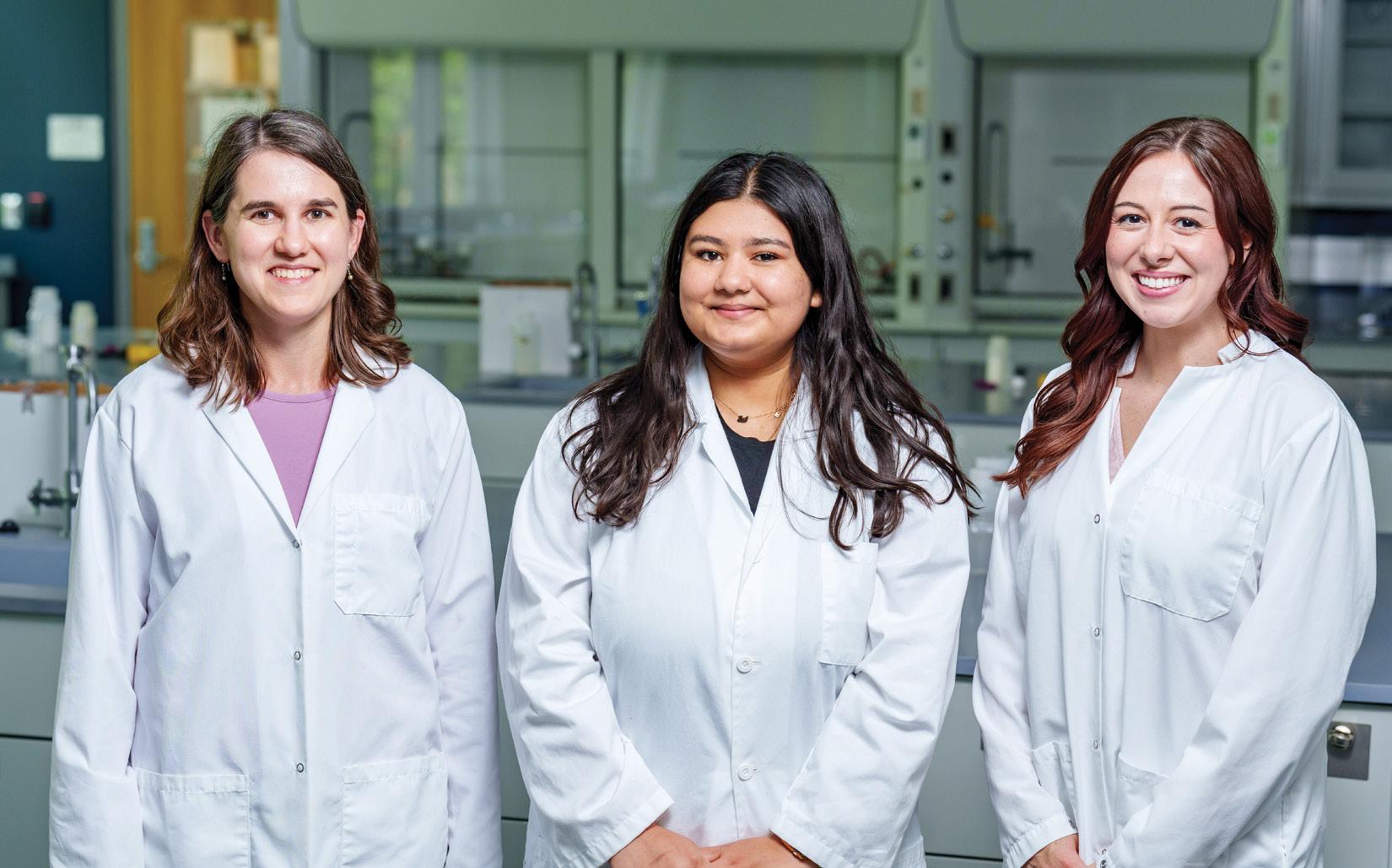
Associate Professor of Chemical Engineering Irene Reizman, PhD, (left) is just one example of Rose-Hulman faculty expanding hands-on discovery opportunities for students across disciplines.
Discovery increasingly also means understanding and interpreting data.
experiences spanning fields from sustainable chemistry and biotechnology to computing and materials science—reinforcing a culture where students are not simply learning established knowledge, but contributing to the creation of new knowledge alongside faculty mentors.
That commitment also shaped the launch of the Institute’s new Quantum Science, Computing & Engineering certificate, which prepares students for one of technology’s fastest-growing fields. Designed to be interdisciplinary, the certificate introduces students from engineering, mathematics, computer science, and physics backgrounds to quantum systems, computing, and engineering applications.
“We want this to be campus wide,” says Professor Maarij Syed, PhD. “The quantum workforce needs to be very diverse.”
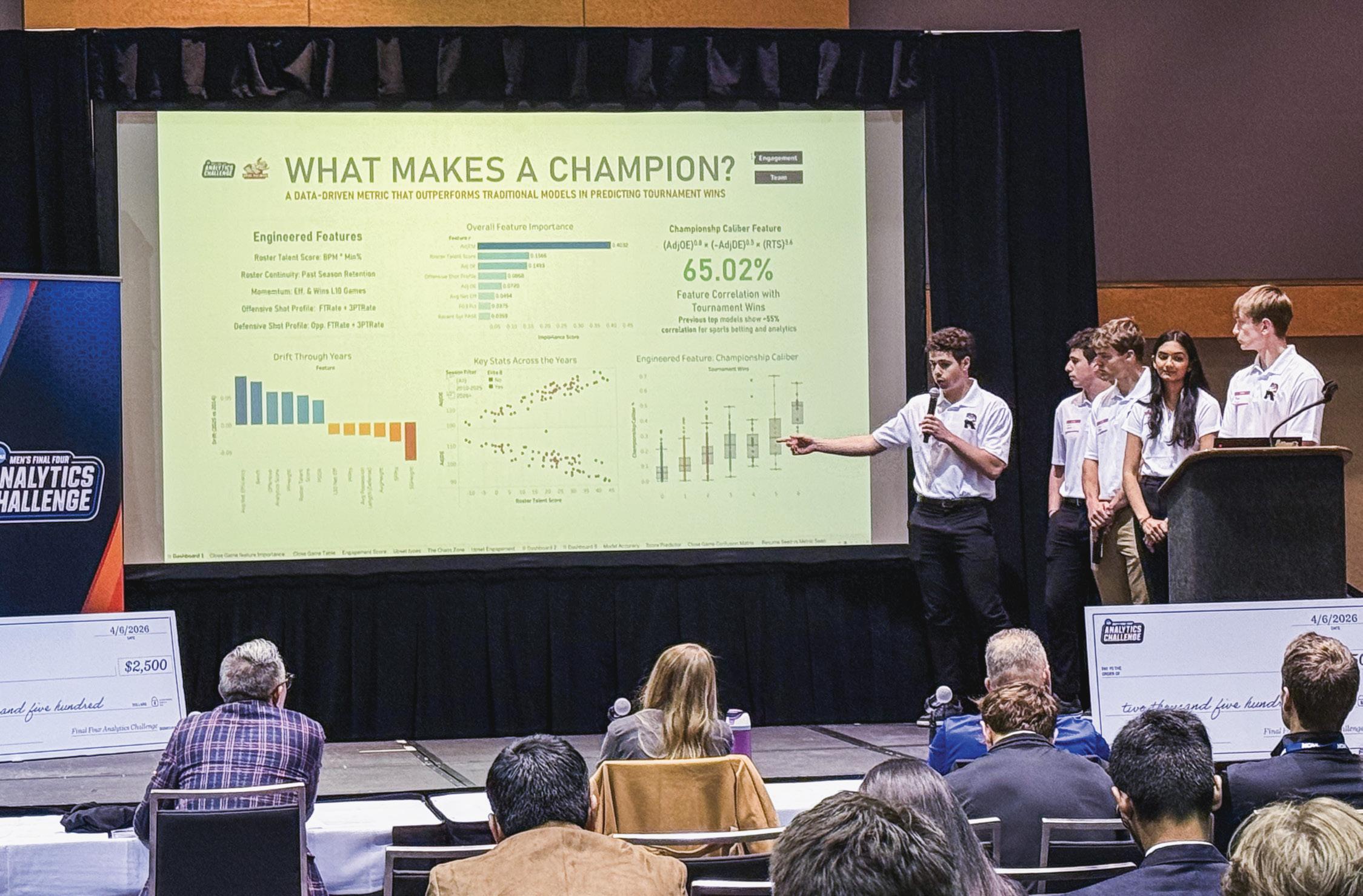
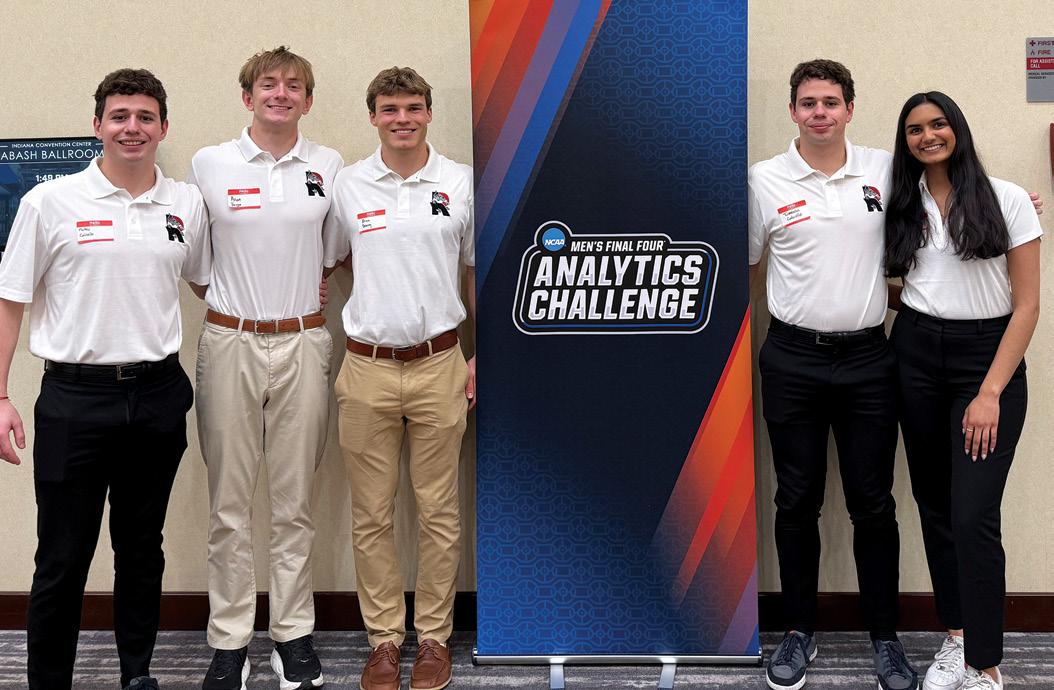
Earlier this year, a team of Rose-Hulman students calling themselves the “Data Miners” captured the undergraduate title in the NCAA Men’s Final Four Analytics Challenge, outperforming 157 teams from 15 universities.
Using machine learning and predictive modeling, the students analyzed NCAA tournament data to identify characteristics of championship-caliber teams and predict close games and potential upsets.
“This was a new way to combine what we learn— machine learning, data science—with an actual business case,” says senior computer science major Matteo Calviello. “It’s something that can create real value for an organization.”
Experiences like these increasingly define the Rose-Hulman student experience: opportunities where technical expertise, research, creativity, and collaboration intersect in ways extending far beyond traditional classroom boundaries.
Through opportunities such as the NCAA Men's Final Four Analytics Challenge and Rose Research Fellows, students create new knowledge alongside faculty mentors.
Entrepreneurship:
TURNING IDEAS INTO IMPACT
f Innovation Grove represents the physical foundation of Rose-Hulman’s entrepreneurial future, the students and alumni already building companies represent its momentum.
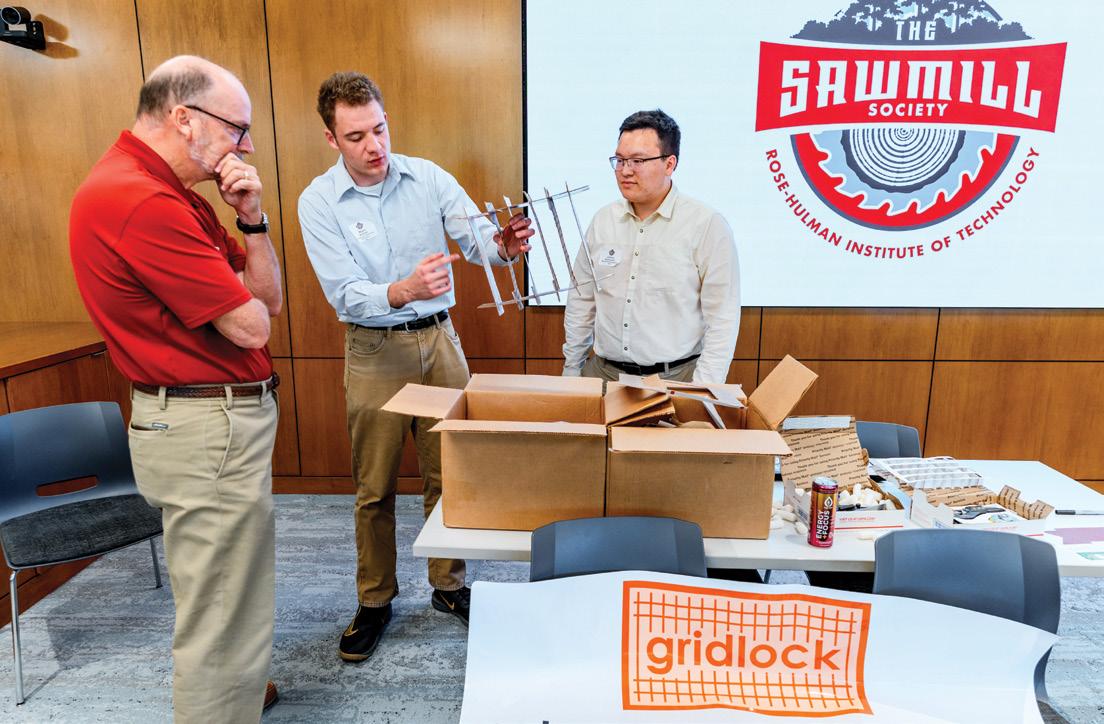
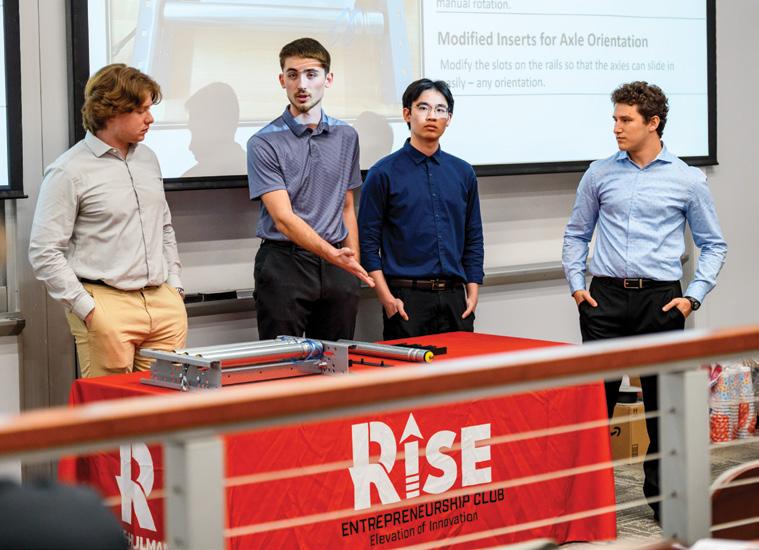
That momentum was on full display this spring during Sawmill Society Weekend, where student founders pitched startup concepts, alumni investors offered mentorship, and entrepreneurial conversations stretched across classrooms, conference tables, and networking sessions.
Hosted alongside Alumni Awards Weekend, the event highlighted the rapidly growing entrepreneurial ecosystem emerging at Rose-Hulman through
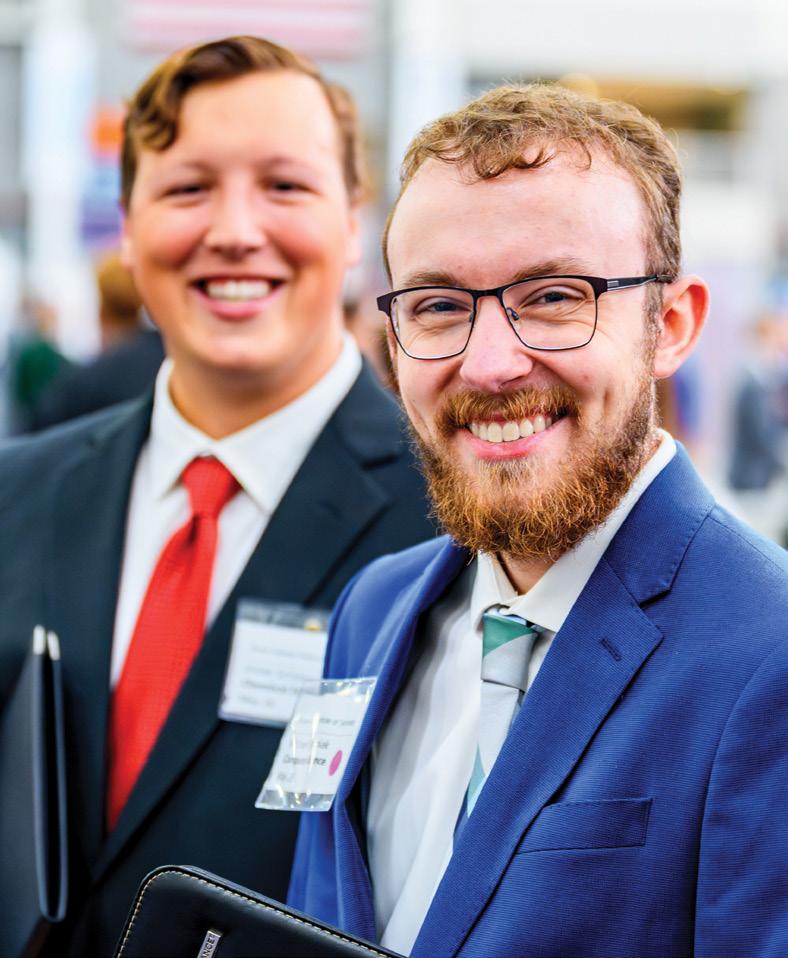
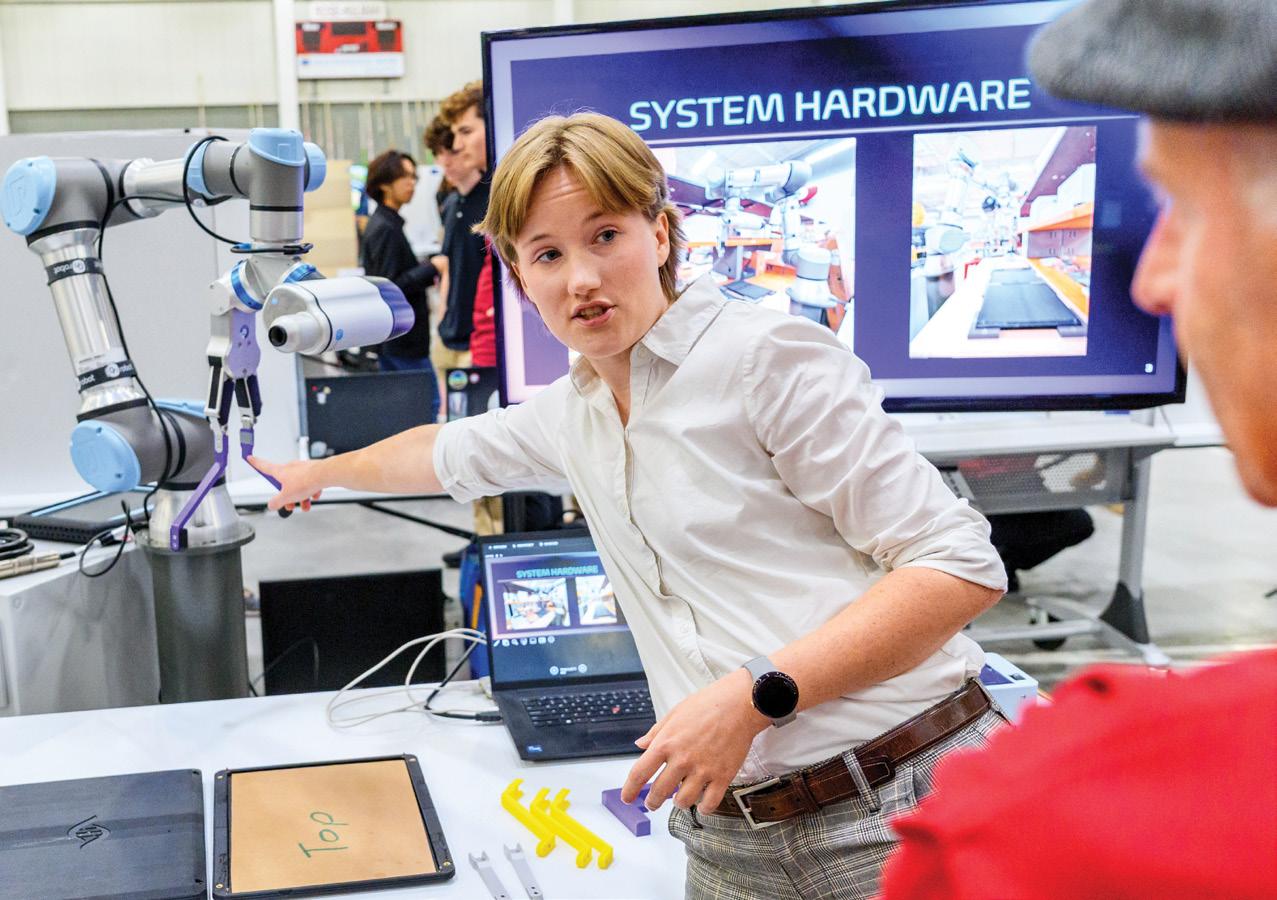
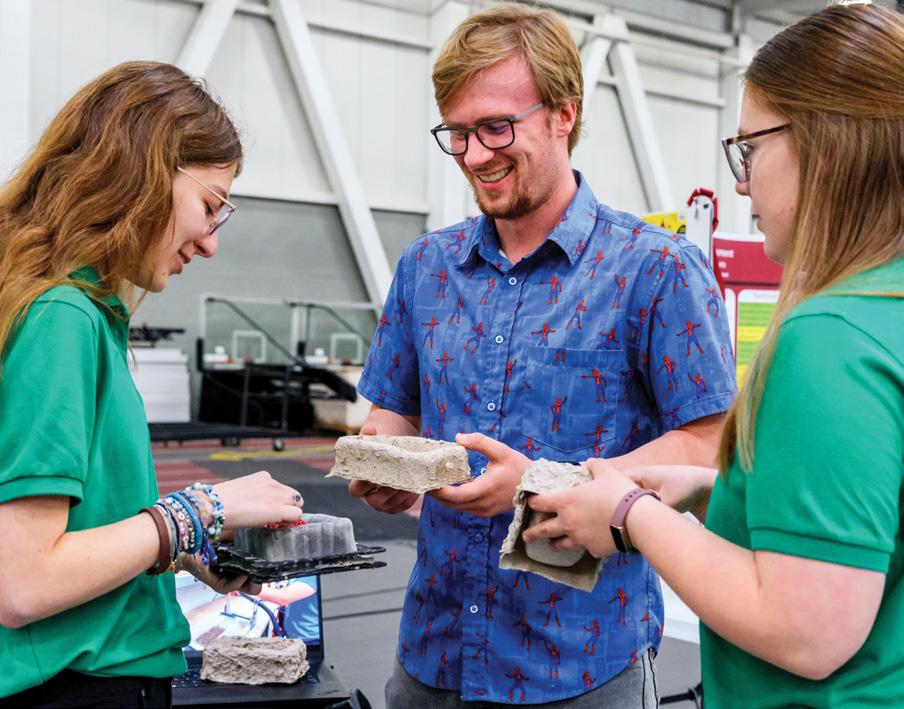
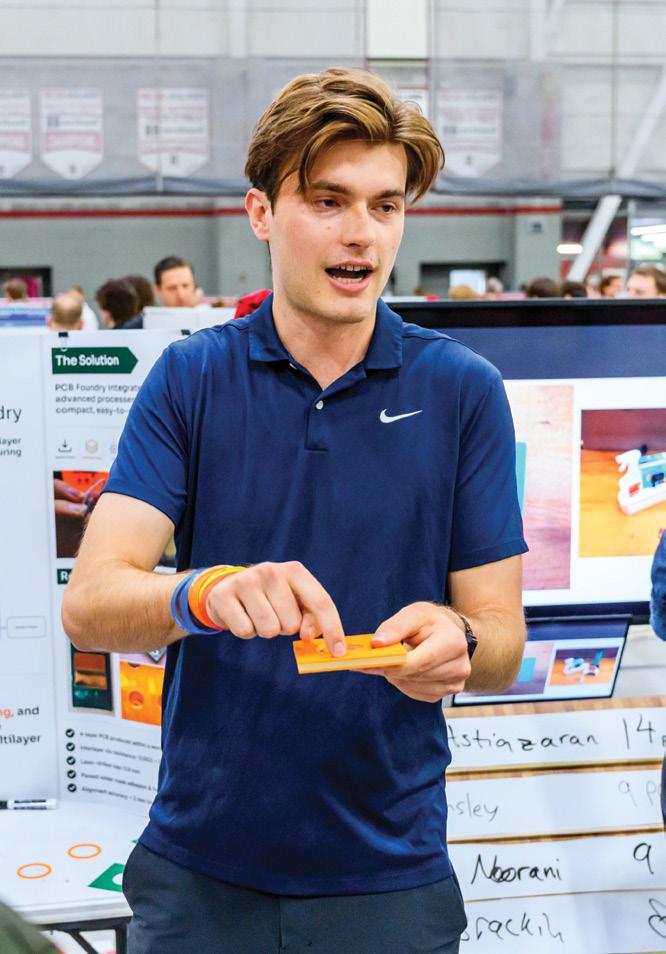
Entrepreneurship grows at Rose-Hulman, where events such as Engineerathon and Sawmill Society Weekend connect enterprising student founders with successful alumni mentors and investors.
programs such as RISE, Rose Angels, Engineerathon, and the Noblitt Entrepreneurship Program.
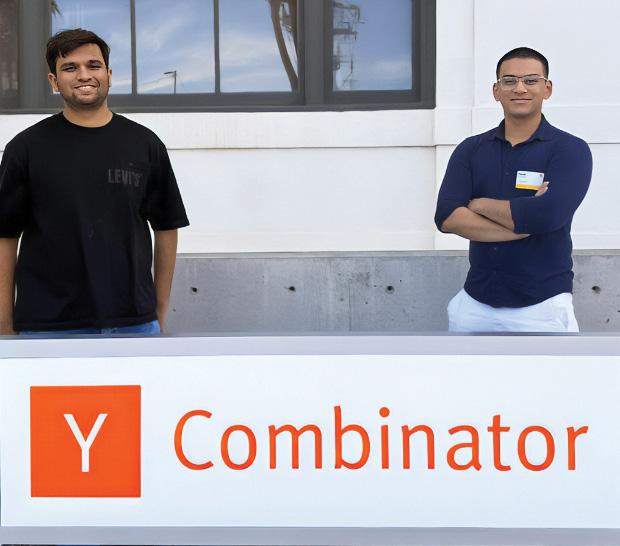
One of the most visible examples of entrepreneurial success came from Tsenta, the AI-powered startup created by computer science students Agnay Srivastava and Pulkit Gupta .
Frustrated by the repetitive and time-consuming nature of job applications, the pair developed a platform that automates and streamlines portions of the application process while still allowing users to customize and control submissions. Their work earned acceptance into Y Combinator—the influential Silicon Valley startup accelerator behind companies such as Airbnb, DoorDash, and Reddit— along with $500,000 in funding.
“It's
an amazing opportunity to enter the San Francisco startup ecosystem, learn from founders who have built impactful companies, and accelerate Tsenta by learning directly from their experiences,” Gupta says.
For Srivastava, the experience also reinforced the entrepreneurial confidence he developed at Rose-Hulman.
“One great thing that Rose-Hulman does is it makes you unafraid of diving deep into the technical details,” he says.
Srivastava Gupta
That entrepreneurial mindset often begins long before graduation.
During this year’s Engineerathon competition, more than 100 students spent 48 intense hours brainstorming, prototyping, coding, fabricating, and pitching solutions to real-world problems supplied by companies and startup founders.
Throughout Fowler Academic Building and the Innovation Centers, classrooms filled with sticky notes, CAD models, half-built prototypes, energy drinks, and students working through the night to transform ideas into functioning solutions.
“Entrepreneurship isn’t just about building a business or selling a product,” says junior engineering design major Deven Wells , president of the Rose Innovative Student Entrepreneurs (RISE) club. “It’s about making sure what you’re building actually solves a real problem for your users.”
The entrepreneurial ecosystem students now experience also increasingly includes direct mentorship from alumni founders.
During Sawmill Society Weekend, 1993 mechanical engineering alumnus Joe Ritz received the Tom Mason Innovation Award recognizing his groundbreaking work developing advanced Nitinol-based medical devices through companies including Blaze Biotech, RMR Ortho, and Chorus Cardiothoracic Technologies.
Ritz credits Rose-Hulman—and even a sideline football conversation with former President Samuel Hulbert— with helping shape the trajectory of his career.
“He asked me why I wasn’t taking his courses in biomaterials,” Ritz recalls. “I signed up and then immediately knew that my career would be as an engineer in medical devices.”
Today, Ritz helps mentor student entrepreneurs through the same ecosystem that helped inspire him decades earlier. That ecosystem continues expanding.
This year, Rose-Hulman appointed Victor Padilla-Taylor as its inaugural Noblitt Entrepreneurship Director and Professor of Practice in Engineering Management. Previously a founding director at Yale University’s Tsai Center for Innovative Thinking, Padilla-Taylor now helps coordinate and expand entrepreneurial opportunities throughout campus.
At the same time, student leaders recently announced plans for a new Entrepreneurship Lounge in Blumberg Hall—another sign that entrepreneurship is progressively becoming embedded in the fabric of campus life itself.
More than 150 years ago, Chauncey Rose founded a sawmill before helping establish the technical school that would later bear his name. Today, Rose-Hulman students continue building on that spirit—designing electric vehicles, launching startups, advancing quantum science, training AI systems, and solving problems not yet imagined.
And more and more they are doing so in spaces intentionally designed to help those ambitions grow.
As the signed steel beam settled into place atop Innovation Grove earlier this year, it symbolized more than the completion of a building phase. It represented a future still under construction—one being shaped every day by students learning not simply how to succeed in the world they inherit, but how to create the one that comes next. n
Rose-Hulman students today are designing electric vehicles, launching startups, advancing quantum science, training AI systems, and solving problems not yet imagined.
ADVANCING by
THE ROSE-HULMAN STRATEGIC PLAN
Progressing Rose-Hulman’s Strategic Plan
With goals to be bold, be visionary, and build upon our excellence in STEM education, Rose-Hulman and the Advancing by Design strategic plan chart the course for meeting the evolving needs of the shifting higher education landscape. Since the plan’s launch in 2024, faculty, staff, and students have made significant progress toward the 20 action items supporting four core themes.
Infusing
Sustainability into Rose-Hulman Education and Culture
Initiatives seek to increase both the breadth and depth of sustainability in Rose-Hulman curricula, including faculty professional development through the Sustainability Teaching Network and paid student research through the Summer Sustainability Scholars Program.
Prepare
recognizing exposure to, engagement with, and immersion in cultures.
Increase the Affordability and Value of a Rose-Hulman Education
Through programmatic structure and campus opportunities, Rose-Hulman seeks to increase the value and return on investment of a Rose-Hulman education, including through proposed housing opportunities for upper-level students and increased opportunities for prospective students. (Read about Admitted Student Weekend on Page 19).
Instill a Mindset of Innovation, Discovery, and Entrepreneurship
Society
Students to be Leaders in a Global and Complex
Rose-Hulman is implementing a comprehensive internationalization strategic framework to integrate global initiatives throughout campus, providing a more robust experience than study abroad alone. The strategic action team completed a campus-wide internationalization survey and plans to implement a credential
Innovation is at the heart of Rose-Hulman, including at the 2026 Rose Show (See Page 46). Construction is well underway at Innovation Grove, including preparations for the 5-megawatt solar farm and the new home of Rose-Hulman Ventures (Read more in the cover story on Page 6).
View the full plan at rhit.edu/strategicplan.
Rose-Hulman Graduates Encouraged to Lead with Character, Innovation
STORY BY KIMMIE COLLINS
PHOTOS BY BRYAN CANTWELL
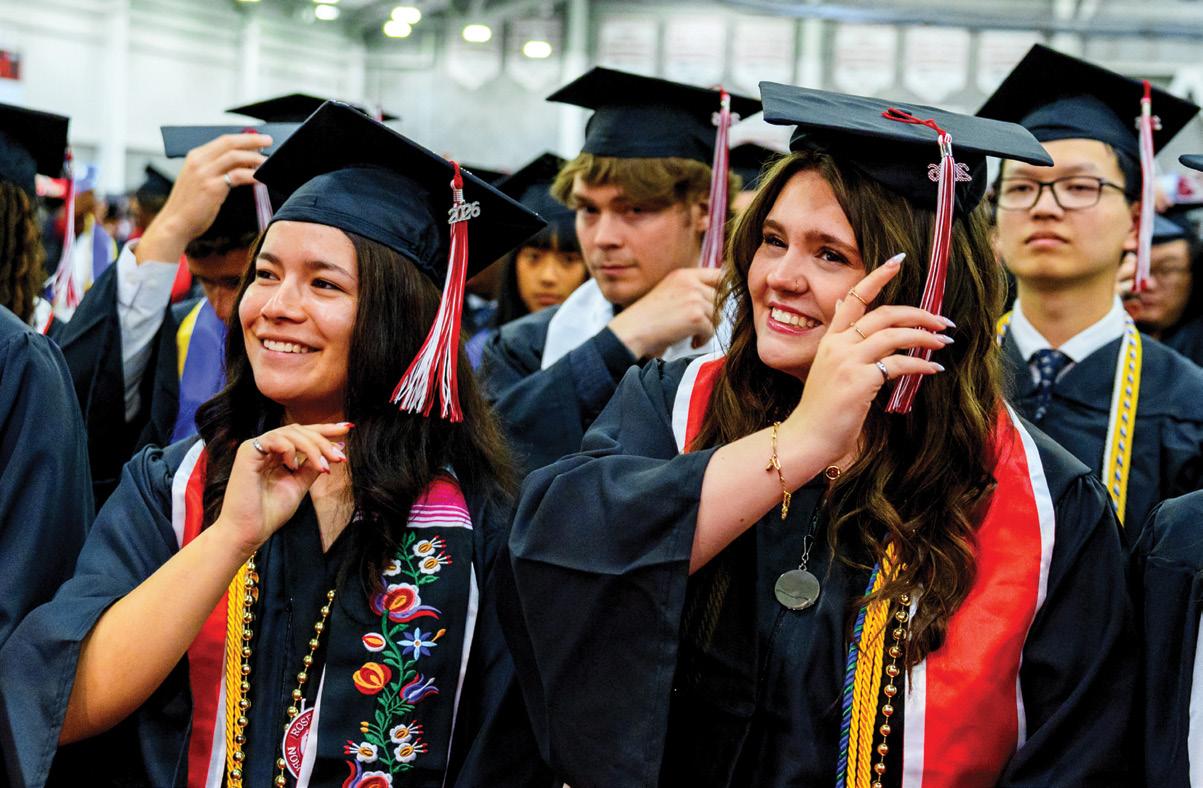
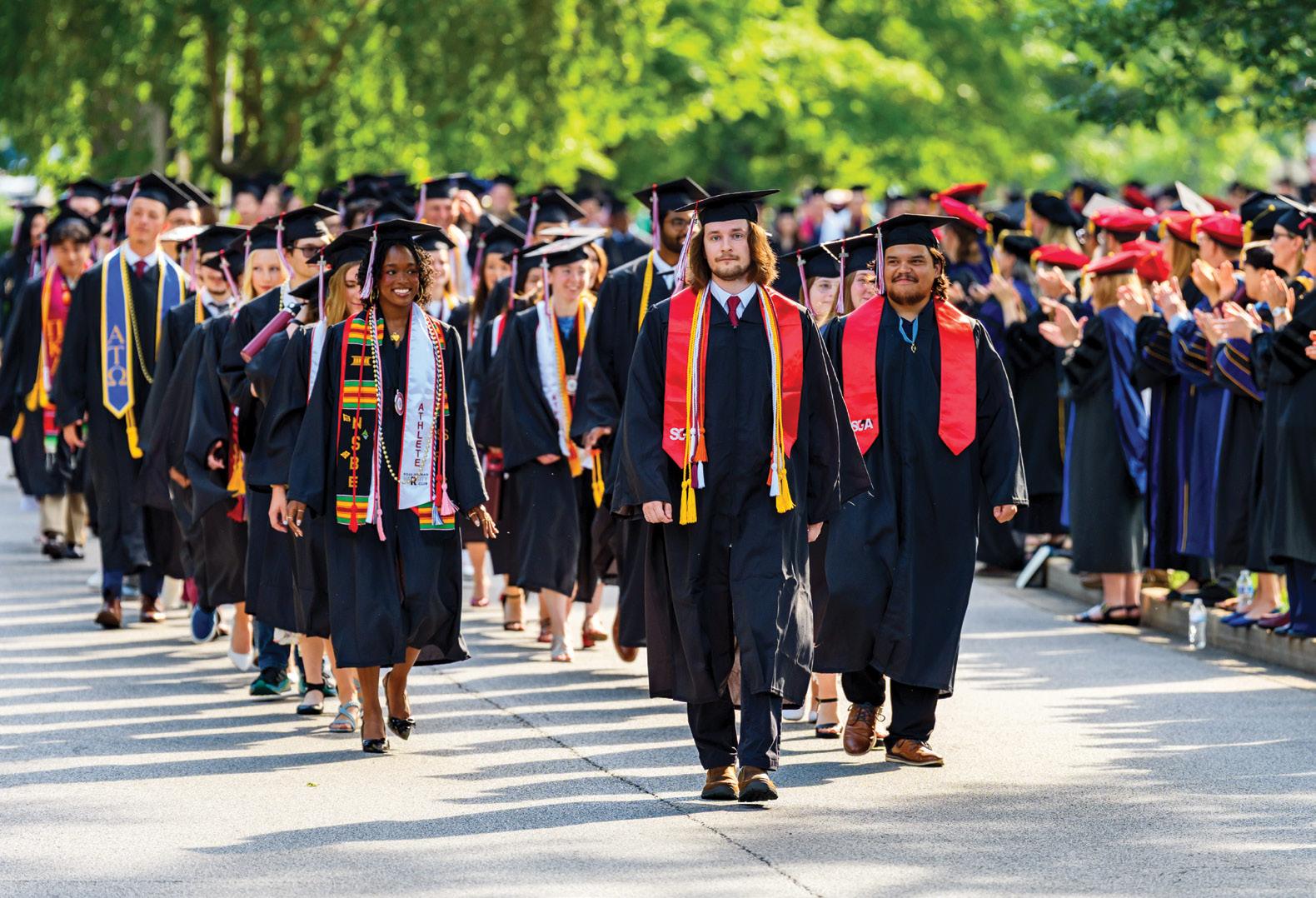
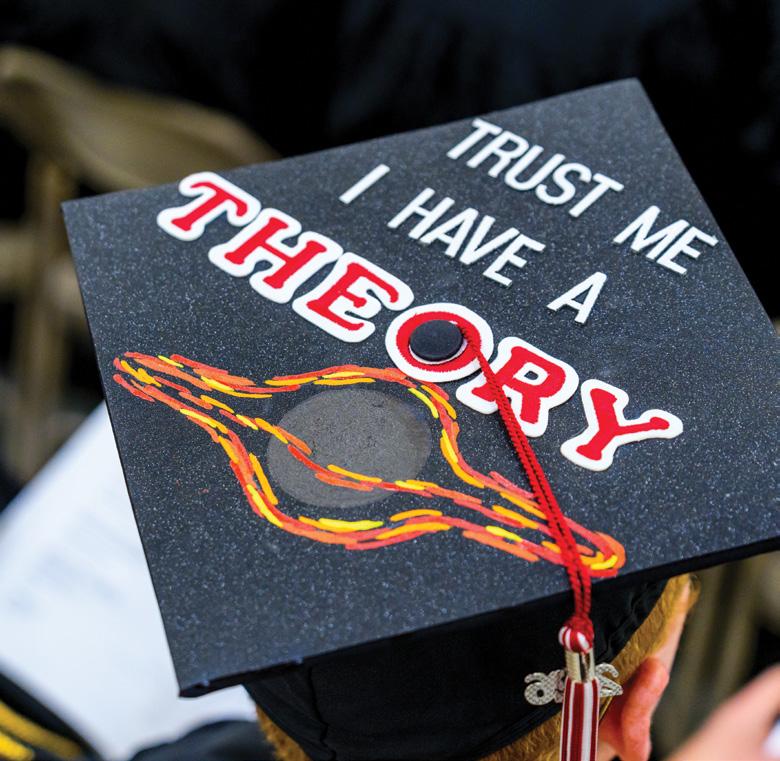
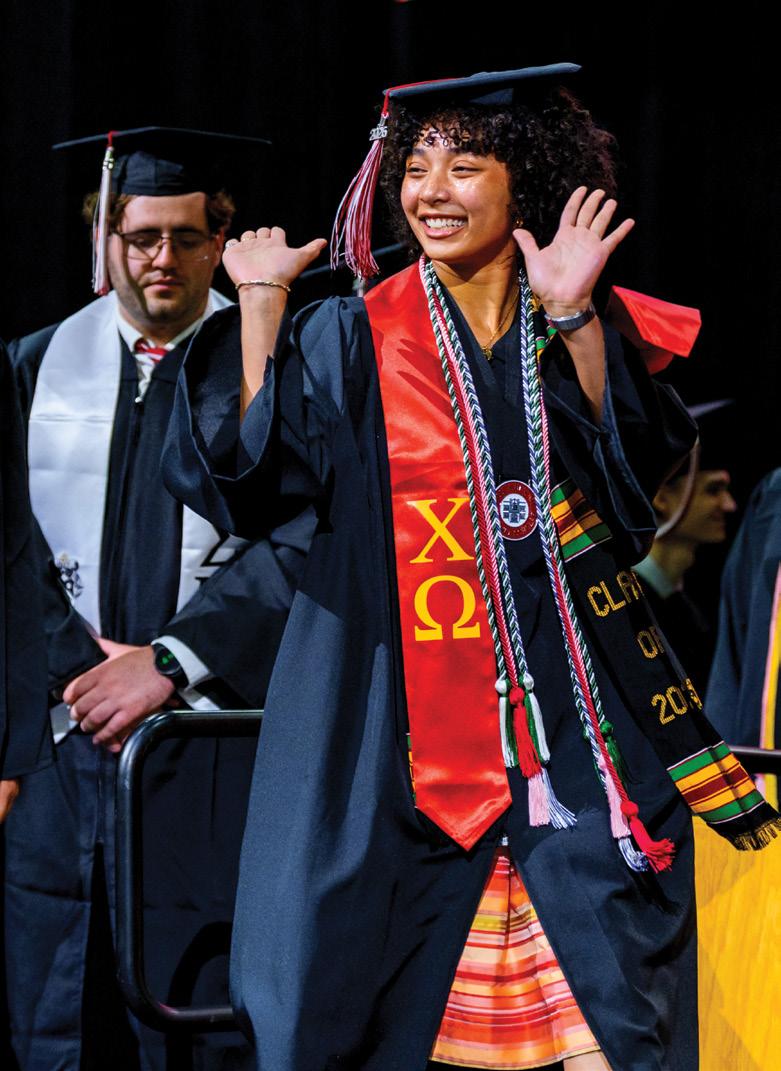
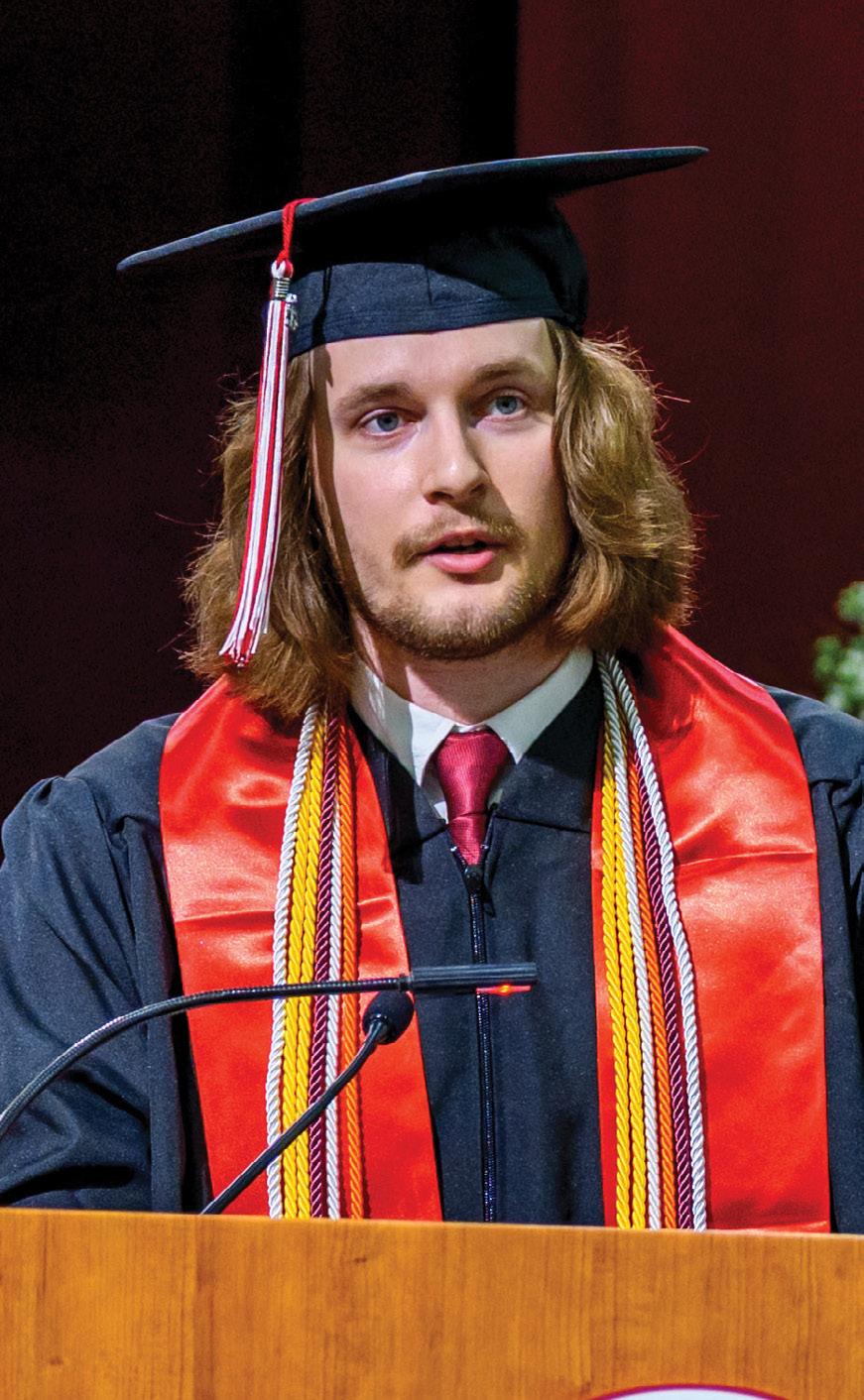
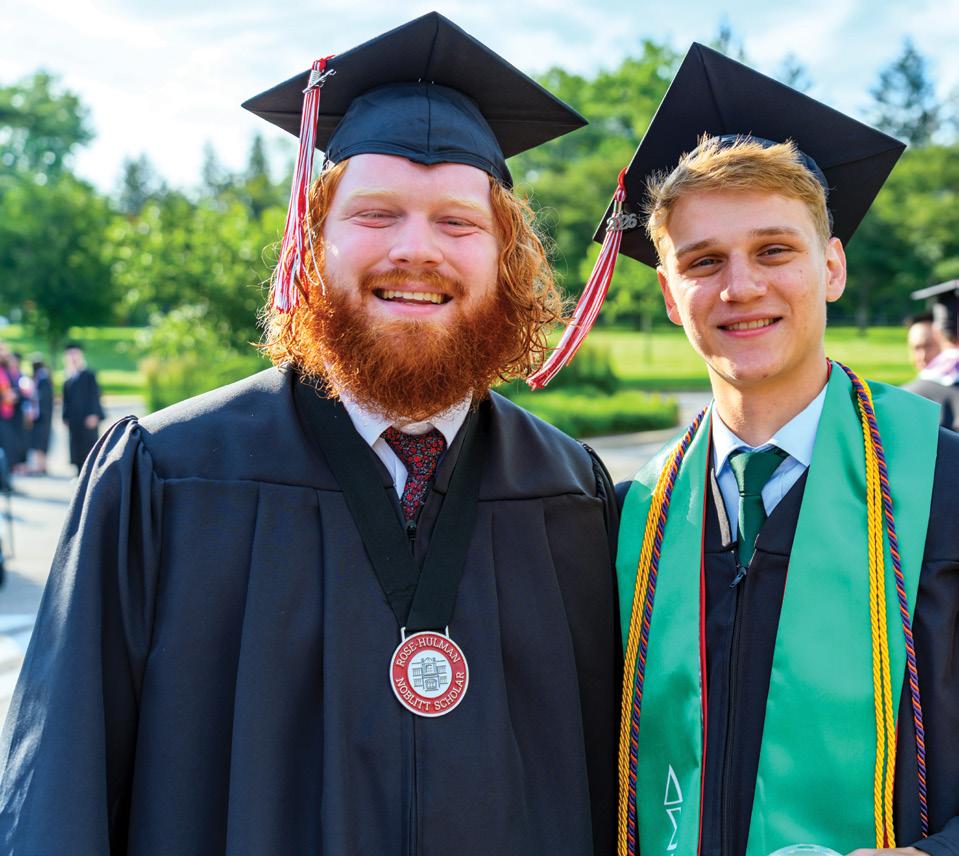
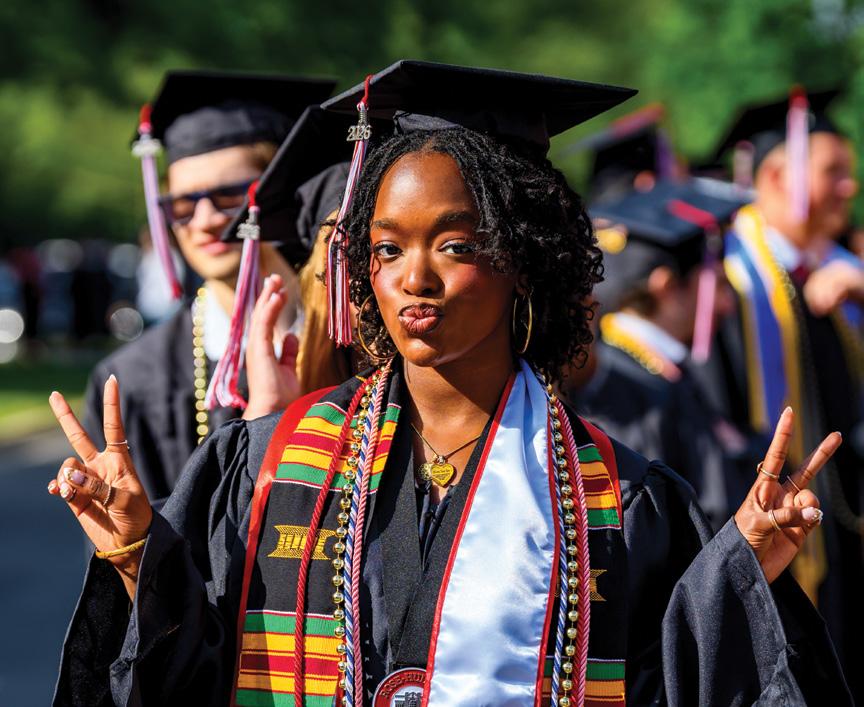
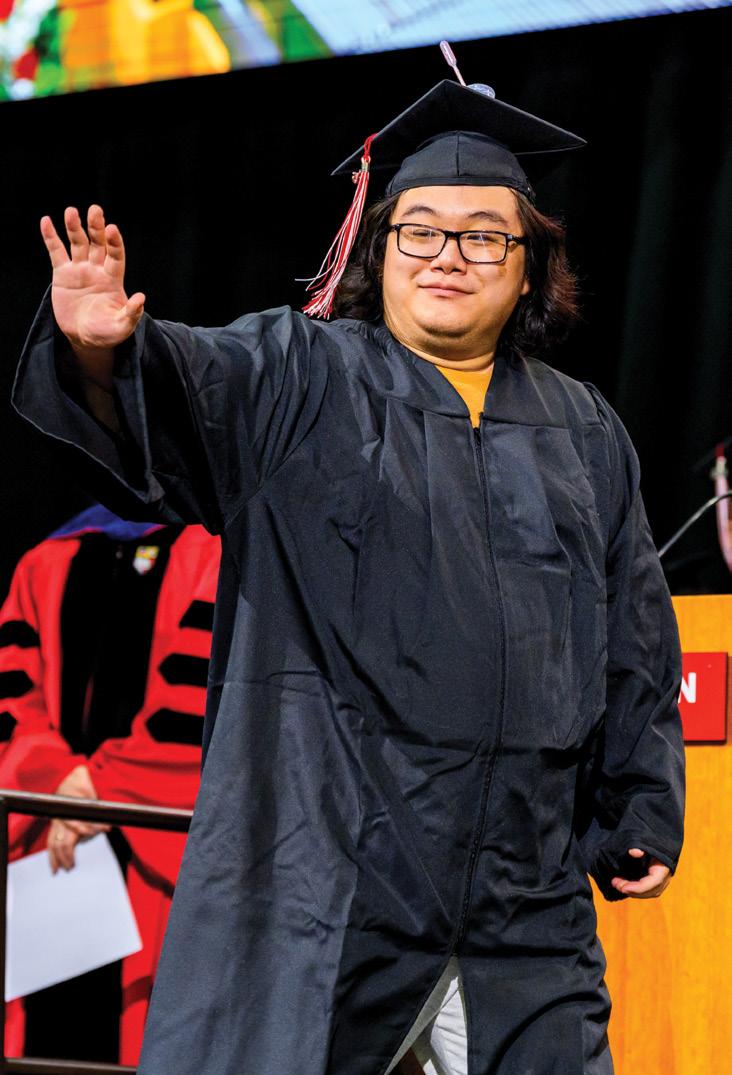
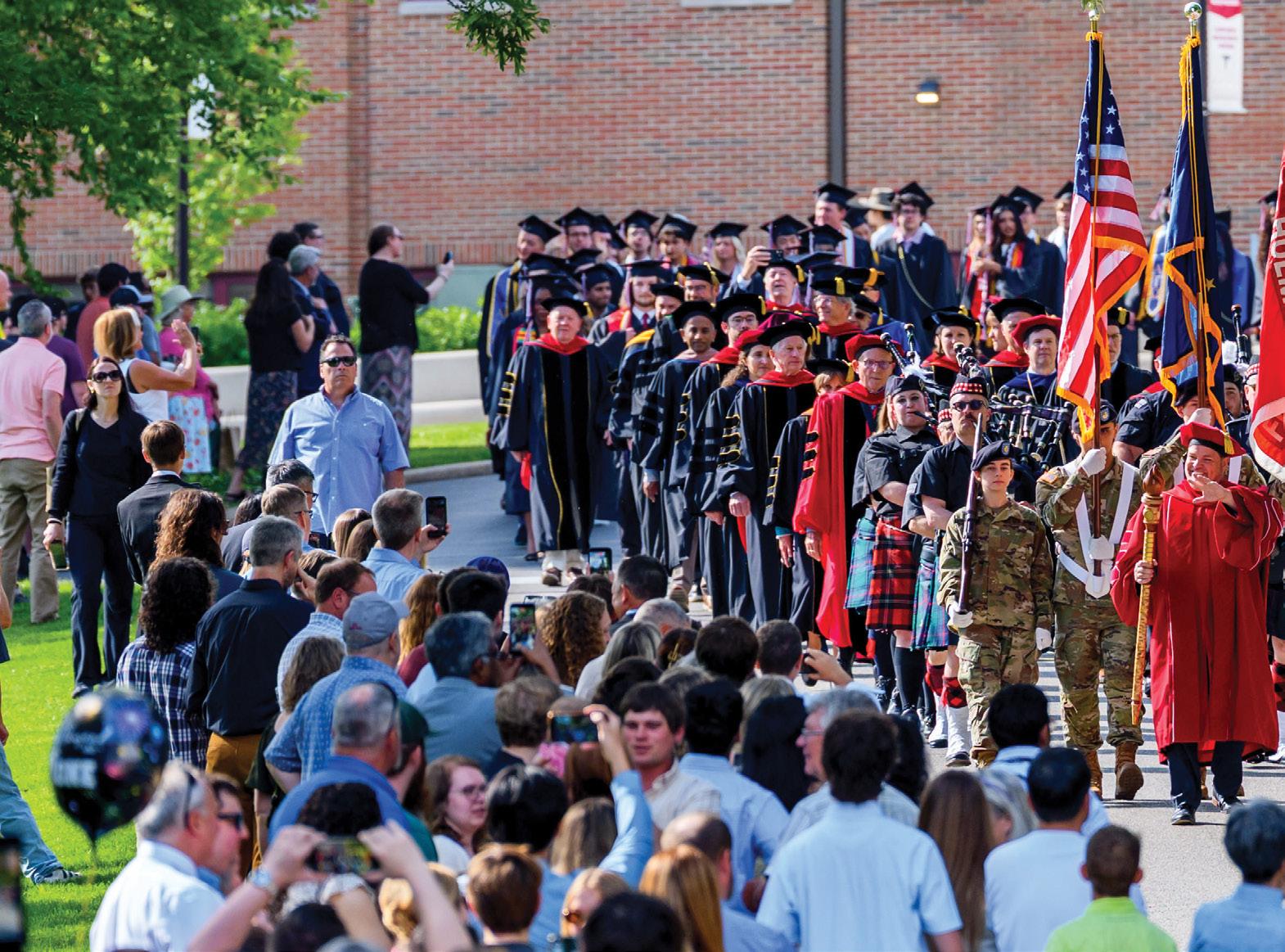
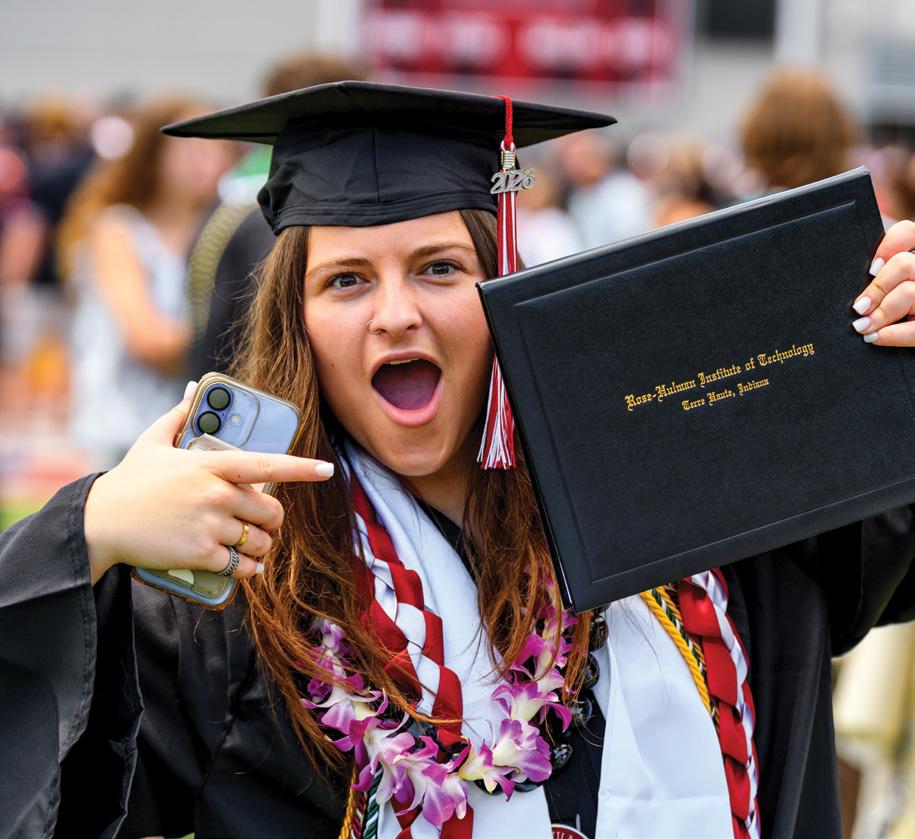
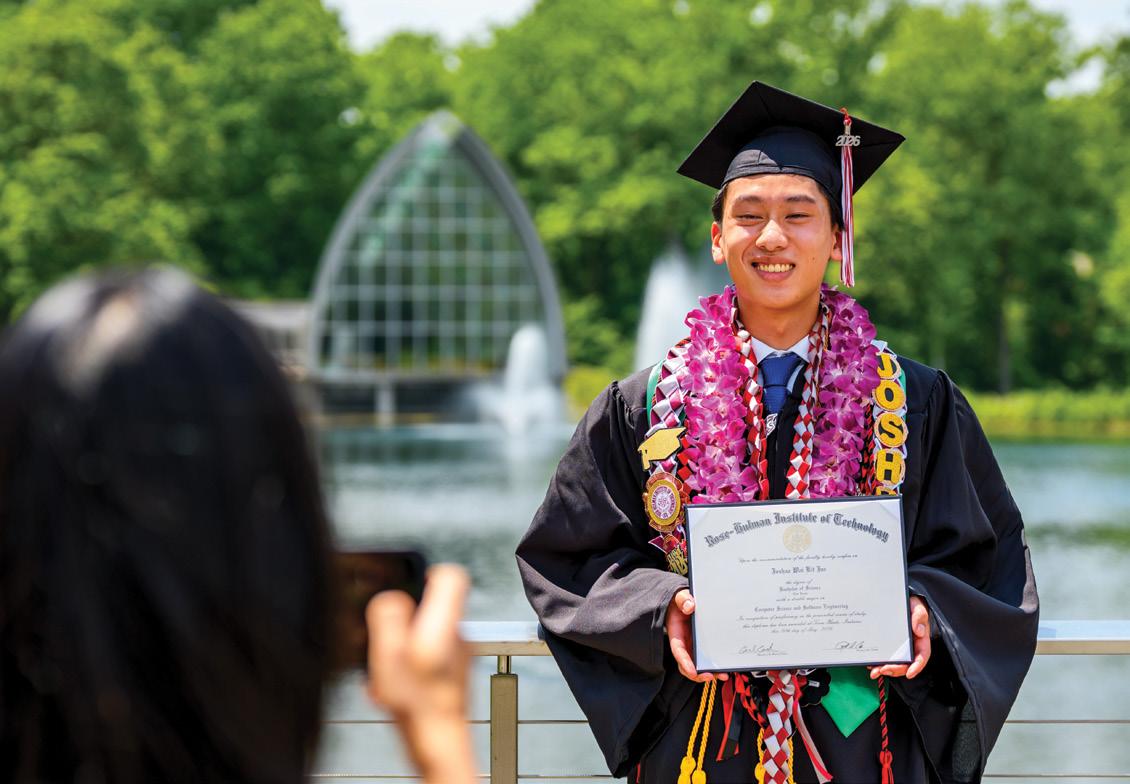
Members of Rose-Hulman Institute of Technology’s Class of 2026 were encouraged to embrace change, lead with integrity, and use their talents to make a positive impact on the world while receiving bachelor’s and master’s degrees during the Institute’s 148th Commencement on Saturday, May 30.
This year’s graduates join a global network of Rose-Hulman alumni whose innovations and leadership have helped shape industries, launch companies, advance scientific discovery, and improve lives around the world. During the ceremony, President Robert A. Coons reminded graduates that the rapid pace of technological change presents both challenges and opportunities——and that their Rose-Hulman education has prepared them to meet both.
Speaker Jeff Harmening Encourages Graduates to Embrace Uncertainty
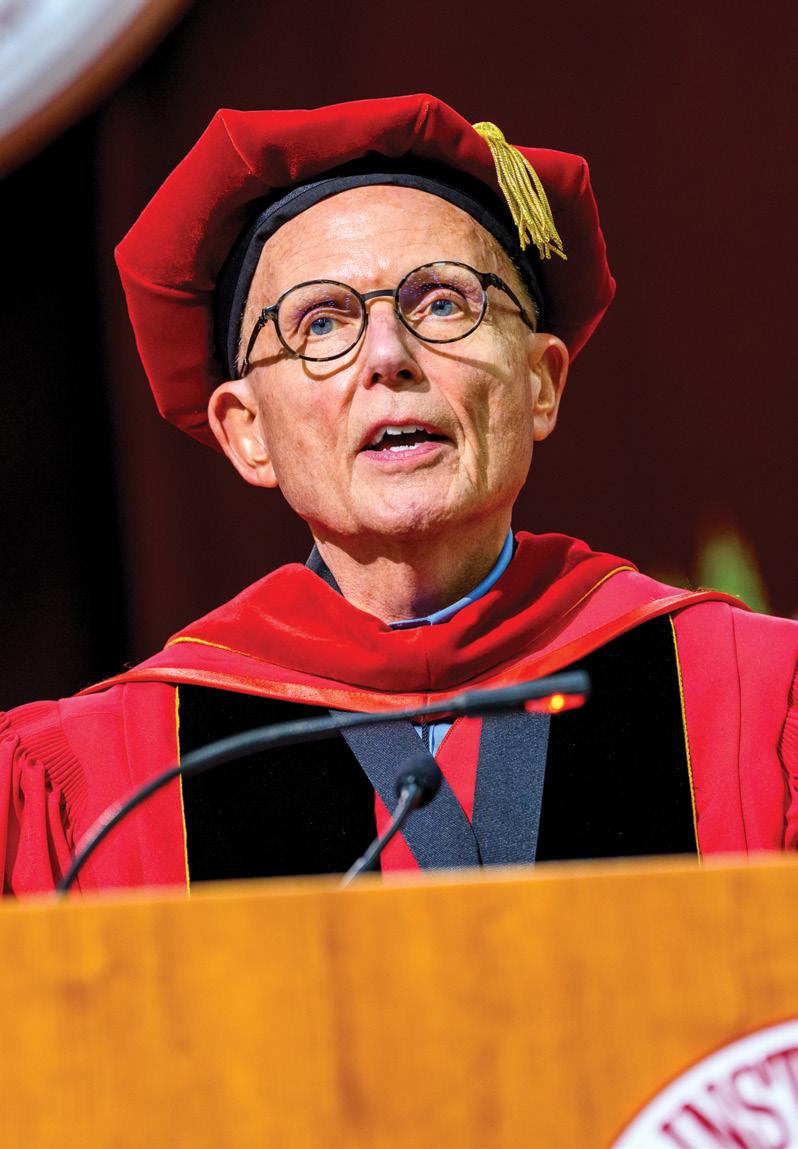
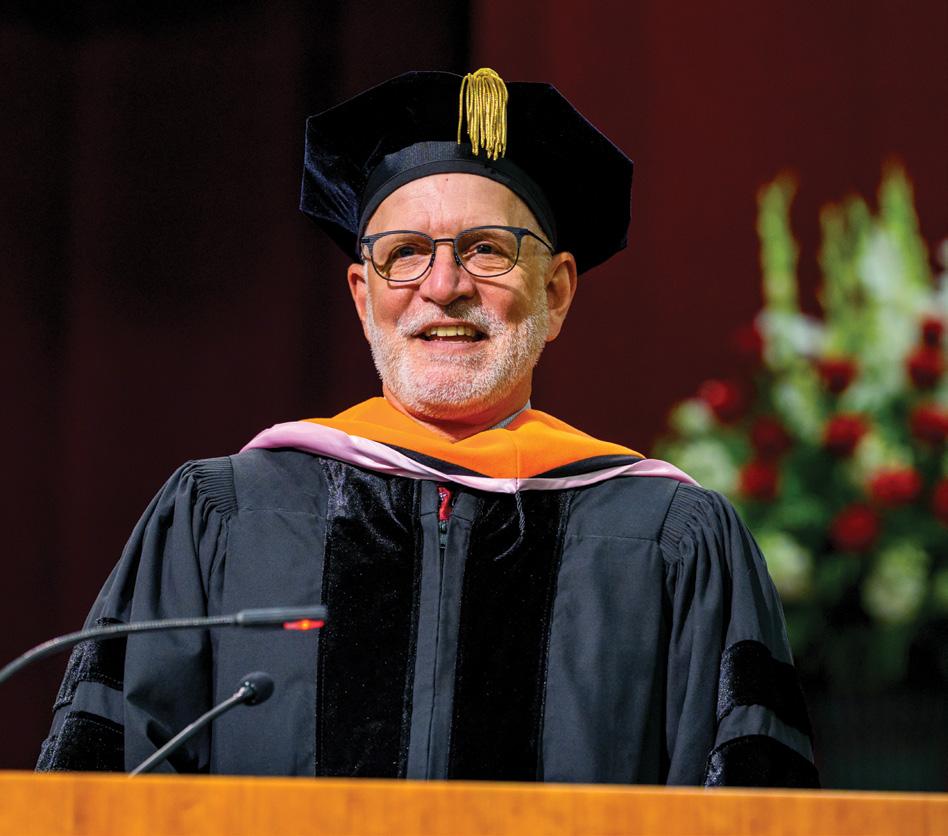
Commencement speaker Jeff Harmening , chairman and chief executive officer of General Mills, returned to Terre Haute to share lessons on leadership, empathy, resilience, and character with graduates. Harmening also received an honorary Doctor of Engineering degree from Rose-Hulman.
“When these periods of disruption arrive, when no one has a map, that can be scary,” Harmening says. “But it can also be liberating. Because it means no one is unqualified. It also means you can make a positive difference.”
Throughout his address, Harmening returned to a message he learned from his father and longtime Associate Professor and Registrar, Lou Harmening , during his years at Rose-Hulman: never confuse what you do with who you are.
The Class of 2026
557 | Number of Bachelor of Science and master’s degrees awarded
106 | Number of women receiving degrees (21%)
56% | Percentage of undergraduates graduating with academic honors
66 | Number of first-generation graduates receiving bachelor’s and master’s degrees (13%)
37 | States represented among graduates
17 | Countries represented among graduates
30% | Percentage of graduates who are Indiana residents
Relive the Class of 2026’s Commencement Day at rhit.edu/26gradvideo
Student Awards
John T. Royse Award
Most outstanding graduate, based upon academics, student leadership, activities, and campus citizenship
Rebecca Testa | Bachelor of Science in Electrical Engineering and Master of Science in Electrical & Computer Engineering
Herman A. Moench Senior Commendation
Commendable influence on the Rose community
Chong-Yi (Charlie) Su | Bachelor of Science in Electrical Engineering and Physics
Heminway Gold Medal
Highest academic achievement
Tommaso Calviello | Biomedical engineering and data science & artificial intelligence
Andrew Cameron | Chemical engineering
Kevin Cotellesso | Mechanical engineering
Cynthia Gallegos Rodriguez | Computer engineering
McKenna Gumerson | Chemical engineering and data science & artificial intelligence
Jared Kagay | Bachelor of Science in computer science and Master of Engineering Management
Edward Kang | Bachelor of Science in computer science and Master of Science in engineering management
Lauren Marquardt | Electrical engineering
Connor O’Connell | Biomedical engineering
Cale Royer | Mechanical engineering
Chong-Yi (Charlie) Su | Electrical engineering and physics
Rebecca Testa | Bachelor of Science in electrical engineering and Master of Electrical and Computer Engineering
Faculty/Staff Awards
Board of Trustees’ Outstanding Scholar
Irene Reizman, PhD
Associate Professor of Chemical Engineering
Dean’s Outstanding Teacher
Amir Danesh-Yazdi, PhD
Associate Professor of Mechanical Engineering
President’s Outstanding Service
Tracy Crosby Events Manager
Federal Data Highlights Rose-Hulman Graduates’ Early Career Success
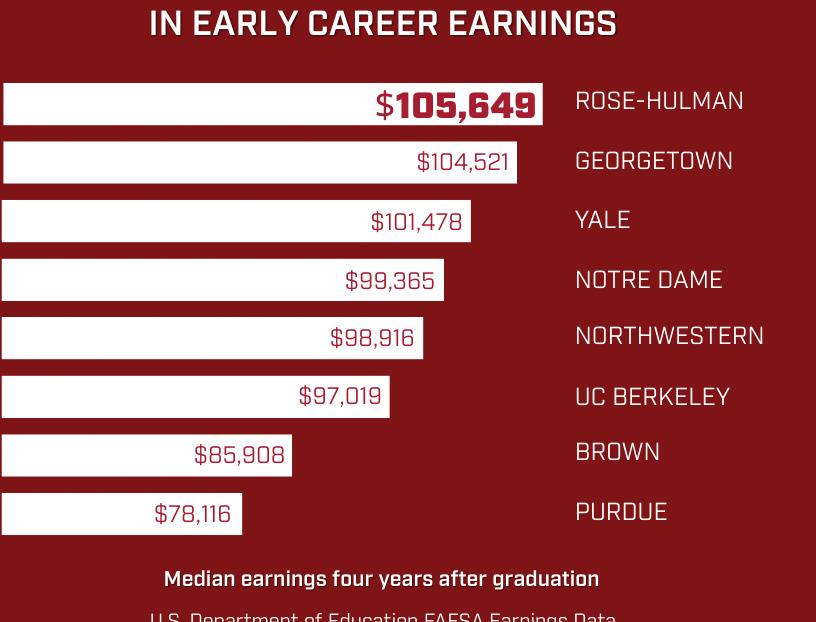
New federal earnings data released through the U.S. Department of Education’s FAFSA and College Scorecard platforms placed Rose-Hulman graduates at the top among all Indiana colleges and universities for early-career earnings. According to the new indicator, Rose-Hulman alumni earn a median salary of $105,649 just four years after graduation.
The data also positioned Rose-Hulman among the nation’s top-performing institutions for early-career earnings, with graduates reporting higher median earnings than peers from several nationally recognized and Ivy League universities. NPR highlighted Rose-Hulman’s top standing in Indiana as part of its reporting on the newly released federal data initiative.
“These results reflect what Rose-Hulman has prioritized for generations——preparing graduates for success immediately after graduation and throughout their careers,” says President Robert A. Coons
The strong outcomes align with Rose-Hulman’s longstanding placement success and recent national return-on-investment rankings, reinforcing the Institute’s focus on preparing graduates for impactful STEM careers and advanced study opportunities.
Read the 2025 President’s Report ELEVATING EXCELLENCE
In a year defined by momentum and possibility, the “Elevating Excellence” edition takes a look back at a memorable year and explores what’s ahead.
Explore the report at bit.ly/rhit-25report
Class of 2025 Sets New Marks in Placement and Starting Salaries
Rose-Hulman’s Class of 2025 once again demonstrated the Institute’s strong career outcomes and return on investment, achieving a 95% placement rate within six months of graduation while reporting record-setting salary figures. With 100% of graduates reporting their post-graduation status, Rose-Hulman remains among the few colleges nationally to calculate placement outcomes for the entire graduating class rather than survey respondents alone.
Graduates reported an average starting salary of $82,005, while the highest accepted offer reached a record $205,000. Members of the class accepted opportunities in 37 states, Washington, D.C., and internationally in Germany, India, and Japan. Graduates also secured positions with 231 employers and were accepted into 50 graduate schools nationwide.
Several academic programs achieved perfect placement rates, including biochemistry, biology, chemistry, civil engineering, computer engineering, engineering design, NanoEngineering, and software engineering. Additional majors posting exceptional placement rates included chemical engineering (98%), biomedical engineering (97%), and mechanical engineering (96%). Six programs—chemical engineering, computer engineering, computer science, mathematics, mechanical engineering, and software engineering— reported high starting salaries ranging from $107,000 to $205,000.
Students Bring Holiday Joy Through Bikes for Tykes
More than 240 Rose-Hulman students representing 37 campus organizations came together in December for the 27th annual CASY Bikes for Tykes project, assembling and inspecting more than 230 bicycles for children across 19 local schools. The Sports & Recreation Center transformed into a lively makerspace as students applied their engineering mindsets and teamwork skills to help deliver some holiday magic to area families.
From fraternities and sororities to athletic teams and professional societies, volunteers worked side-by-side tightening bolts, adjusting brakes, and testing gears before the bicycles reached their future riders. “It’s great to give back to all of the students and kids who live around Terre Haute and do a good thing for the community using our skills as engineers,” says William Geoghegan (ME, 2026).
RHIT GRADS AMONG TOP IN NATION IN EARLY CAREER EARNINGS
Median earnings four years after graduation
U.S. Department of Education FAFSA Earnings Data
Greg King Joins Enrollment Leadership Team
Greg King joined Rose-Hulman in December as vice president of enrollment management, bringing more than 17 years of senior enrollment leadership experience in both private and public higher education. As a member of President Robert A. Coons’ administrative Cabinet, King provides strategic leadership for student recruitment, financial aid, and enrollment strategy.
Prior to joining Rose-Hulman, King served as a principal consultant for Higher Ed Enrollment Solutions. He previously served as dean of admissions at Illinois Wesleyan University and held leadership roles at Concord University, Glenville State University, and King University.
Victor Padilla-Taylor Named Inaugural Noblitt Entrepreneurship Director
Rose-Hulman named Victor Padilla-Taylor as its inaugural Noblitt Entrepreneurship Director and Professor of Practice in Engineering Management, further strengthening the Institute’s growing focus on innovation and entrepreneurship. Padilla-Taylor joined the college in May and is helping to lead efforts to expand Rose-Hulman’s entrepreneurial ecosystem in collaboration with faculty, students, alumni, Rose-Hulman Ventures, and industry partners.
Most recently, Padilla-Taylor served as a founding director of Yale University’s Tsai Center for Innovative Thinking (Tsai CITY), where he helped support more than 200 student ventures annually. A chemical engineer by training with master’s degrees in business administration and leadership, he brings experience spanning entrepreneurship education, deep-tech venture mentoring, partnership development, and strategic fundraising.
Katie Lugar Joins as Director of Noblitt Scholars Program
Katie Lugar, DHSc, joined Rose-Hulman in December as director of the Noblitt Scholars Program, where she will help oversee the continued development and growth of one of the Institute’s signature leadership programs.
Lugar came to Rose-Hulman from Indiana State University, where she served as director of multicultural services and programs and led numerous student success and leadership initiatives. A licensed social worker and community leader, she also serves as founding board president of the Pride Center of Terre Haute.
Admitted Student Weekend Builds Momentum for Incoming Class
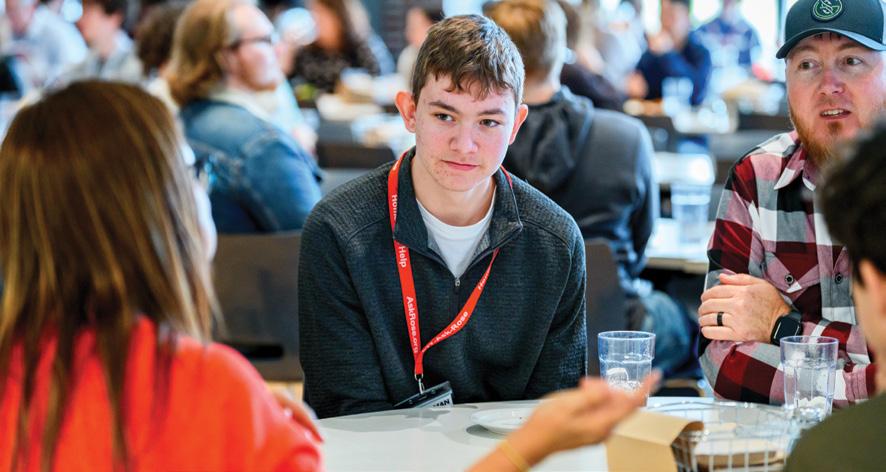
Rose-Hulman welcomed nearly 200 prospective students and their families to campus in March for its inaugural Admitted Student Weekend, a reimagined visit experience designed to help admitted students envision themselves as future Fightin’ Engineers.
The expanded event combined academic showcases, student life programming, faculty interactions, residence hall experiences, and campus traditions into a high-energy weekend focused on connection and community. Prospective students had opportunities to engage directly with faculty, current students, and staff while exploring everything from hands-on STEM experiences and competition teams to Greek life, entrepreneurship initiatives, and undergraduate research opportunities.
The weekend also highlighted many of the Institute’s newest academic and strategic initiatives, including Innovation Grove, the Noblitt Entrepreneurship Program, and programs in Artificial Intelligence, Engineering Design, and NanoEngineering. Student ambassadors, faculty presenters, and campus partners worked collaboratively to showcase Rose-Hulman’s distinctive blend of rigorous academics, experiential learning, and close-knit campus culture.
The event helped generate strong enthusiasm among admitted students as the Institute continues building another talented incoming class. Campus leaders viewed the inaugural weekend as an important evolution in Rose-Hulman’s recruitment strategy——creating a more immersive and personalized experience for students making one of the most significant decisions of their educational journey.
Clean Energy Minor Expands Sustainability Education
Rose-Hulman recently introduced a new multidisciplinary clean energy minor designed to help students better understand the technical, economic, and policy challenges shaping the future of energy. Led by Associate Professor of Mechanical Engineering Ben Mertz (ME, 2005), PhD, the program prepares students to apply their engineering expertise toward renewable energy adoption, sustainability, and the evolving demands of the energy industry.
The first course in the program, Introduction to Renewable Energy, brought together students from majors including mechanical engineering, chemical engineering, electrical engineering, and engineering design. “We are really trying to wrestle with the challenges and opportunities centered around creating a more sustainable energy future,” Mertz says. Students in the program will learn from faculty across multiple disciplines while exploring emerging technologies and sustainability-focused solutions.
New Mechanical Engineering Courses Address Industry Demand
Two new mechanical engineering courses debuted this year to help students prepare for evolving industry opportunities in metallurgy and sustainable building systems.
Advanced Metallurgy, developed by Assistant Professor of Mechanical Engineering Eduardo Vitral, PhD, gives students additional background in materials science and metallurgy—— an area seeing increasing workforce demand as experienced metallurgical engineers retire nationwide. Industry partners including Steel Dynamics and Harrison Steel Castings have expressed interest in recruiting students with these specialized skills.
Meanwhile, Assistant Professor of Mechanical Engineering Saba Zakeri Shahvari, PhD, launched a new course in Sustainable Buildings and HVAC Systems focused on modern heating, ventilation, air conditioning, and energy efficiency systems. The course includes guest lecturers, hands-on learning experiences, and potential facility tours designed to expose students to real-world HVAC technologies and career pathways.
New Quantum Certificate Prepares Students for Emerging Workforce
Rose-Hulman has launched a new Quantum Science, Computing & Engineering (QSCE) certificate program designed to prepare students for the rapidly emerging quantum workforce.
The interdisciplinary undergraduate certificate introduces students from a variety of STEM disciplines to the foundations of quantum science, quantum computing, and quantum engineering through a combination of core courses and electives. Professor of Physics, Optical Engineering, and NanoEngineering Maarij Syed, PhD, says the program is intentionally designed to be accessible to students from multiple engineering and science backgrounds—not solely physics majors.
First-year biomedical engineering students gained early hands-on design experience this fall by creating fracture fixation devices for replica broken bones as part of BE 118: Design Thinking and
Developed by Assistant Professor of Biology and Biomedical Nicole Ramo, PhD, the project introduced students to CAD modeling, SolidWorks, patient-specific design, and 3D printing while challenging them to think like engineers solving real clinical problems. Students researched existing medical devices before designing and printing their own fixation systems for simulated
“From that project, I learned how to do research and create something that could be used in a real-life situation,” says biomedical engineering major Marlee . The course also emphasized design thinking, ethics, teamwork, and iterative problem solving early in students’ Rose-Hulman experience.
Mertz
Syed
Vitral
Big Ideas, Bold Stories, and Lessons in Leadership
From Olympic resilience and speculative fiction to Disney innovation and creative problem solving, recent campus speakers challenged Rose-Hulman students to think differently about leadership, perseverance, and the power of pursuing big ideas.
OLYMPIC LESSONS IN RESILIENCE: LOLO JONES VISITS CAMPUS
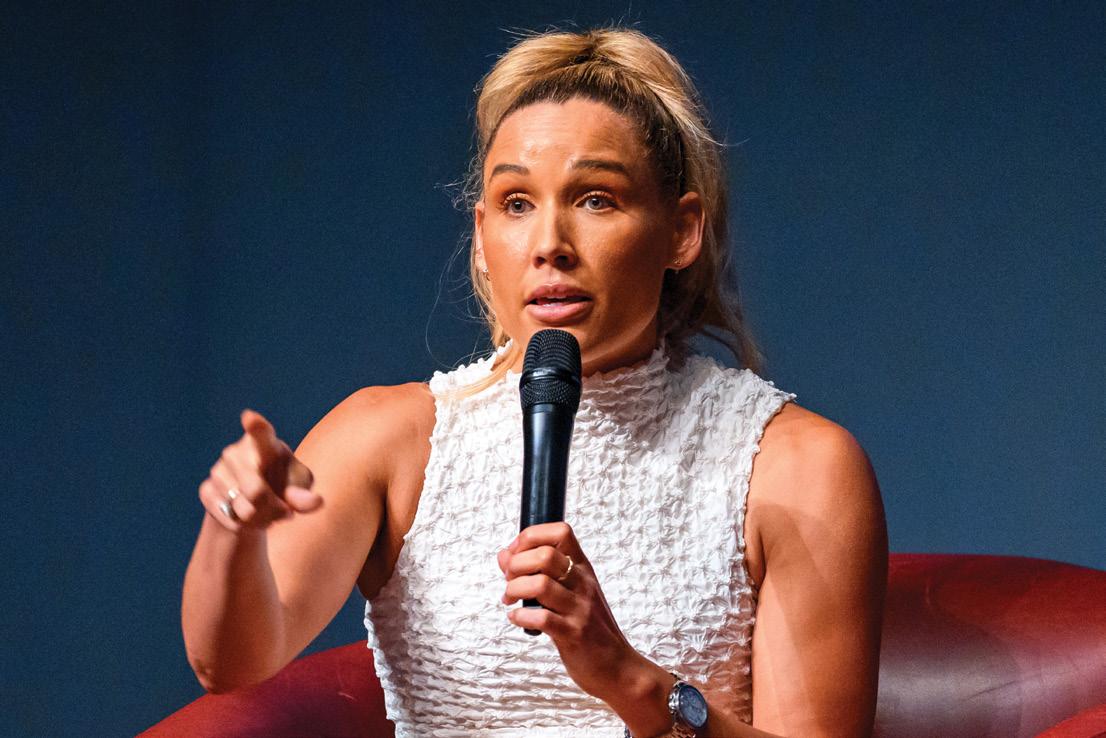
Three-time U.S. Olympian Lolo Jones brought lessons in grit, growth, and mental toughness to Hatfield Hall in April as part of the Swearingen Leadership Series.
Created by John (CHE, 1981) and Anne Swearingen, the series also welcomed back Microsoft executive Kate Maxwell in January for a return talk on leadership.
Watch a video interview with Lolo Jones at bit.ly/rhit-lolojones
CREATIVITY MEETS STEM WITH MICHELLE MCGILL-VARGAS
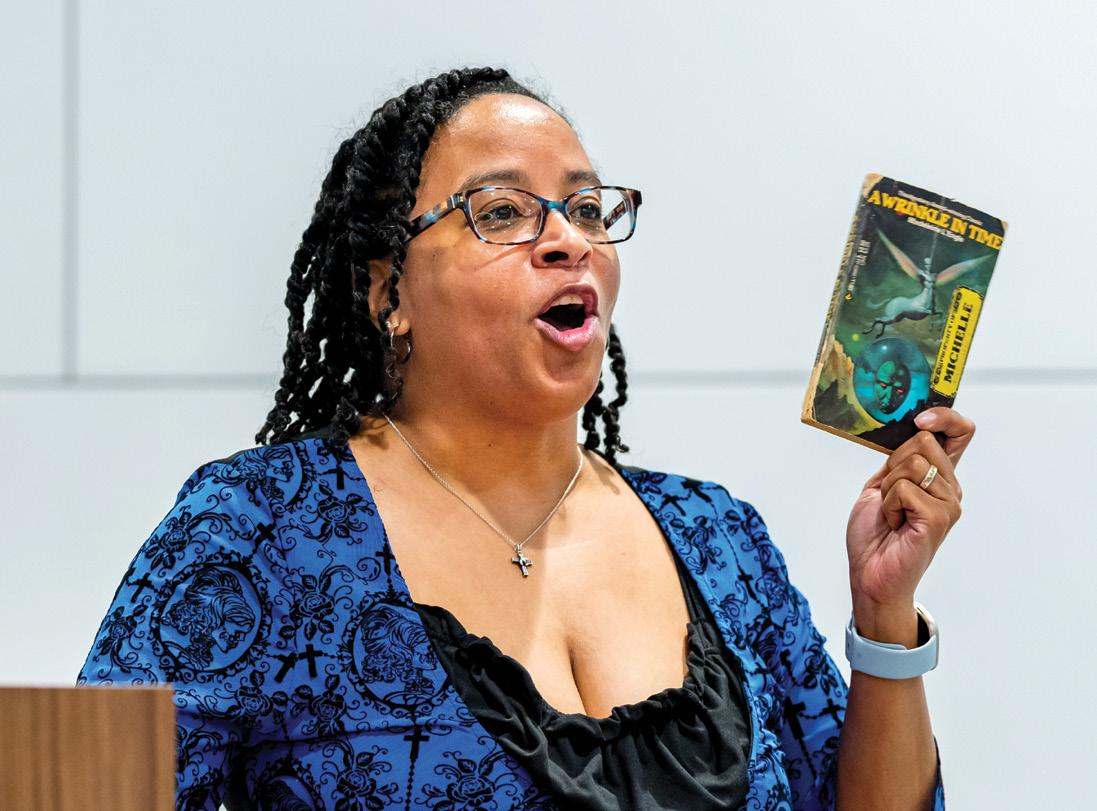
Indiana author Michelle McGill-Vargas challenged students to connect creativity and technical thinking during Spring Convocation, arguing that speculative fiction and STEM innovation share a common starting point: asking “What if?”
Reading from her debut novel ”American Ghoul,“ McGill-Vargas drew parallels between world-building, the scientific method, and STEM education.
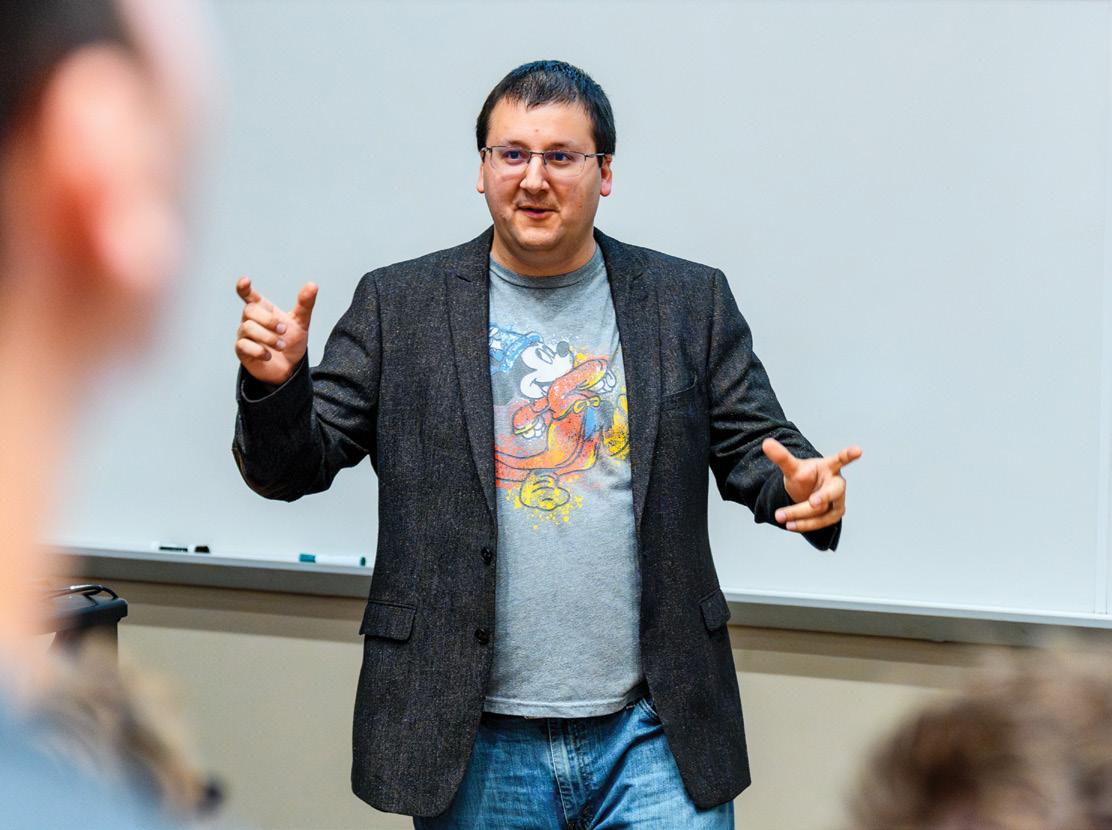
DISNEY IMAGINEER ANDY MILLUZZI RETURNS TO INSPIRE STUDENTS
Alumnus Andy Milluzzi (CPE, 2012) returned to campus in March to share how a Rose education helped prepare the Walt Disney Imagineering Ride Control Systems Engineering Principal to contribute innovations to Hollywood Studios attractions such as Star Wars: Rise of the Resistance and Mickey & Minnie’s Runaway Railway.
Speaking to IEEE students and members of the new Theme Park Engineering and Design team, Milluzzi discussed engineering in environments where problems rarely have clear-cut solutions. He highlighted innovations ranging from trackless ride systems to Disney’s “Cheetah Ball” enrichment device for zoo animals and encouraged students to dream boldly. “The only dream that’s not worth having is the one you won’t pursue,” he told students.
Campus Welcomes Future STEM Leaders
From hands-on engineering activities and mathematics competitions to youth recreation programs, Rose-Hulman continued creating opportunities this year to inspire the next generation of innovators and problem-solvers through a variety of community-focused STEM events.
STEM JUBILEE RETURNS
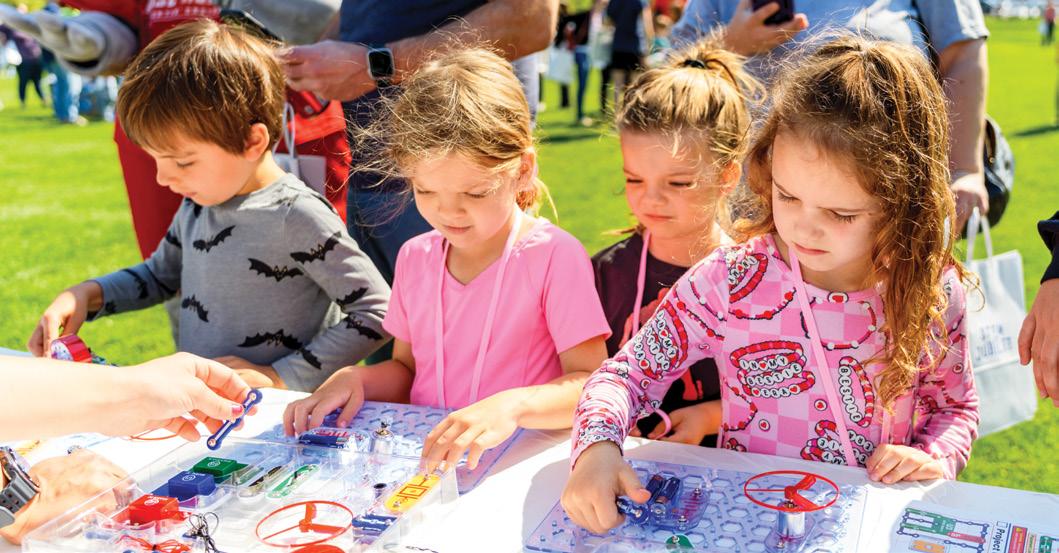
The second annual STEM Jubilee transformed the campus bonfire field into a giant hands-on STEM playground in April as 235 K-8 students explored science, technology, engineering, and mathematics alongside 144 Rose-Hulman student volunteers representing 14 campus organizations. Presented by the Noblitt Scholars Program, the event featured 35 interactive booths ranging from bottle rockets and circuitry to chemistry demonstrations and prosthetic hand activities.
Student organizers emphasized making STEM approachable, creative, and fun for younger learners while helping families engage together through hands-on discovery. This year’s event also introduced take-home STEM kits and a new sensory space designed to create a more inclusive experience for participants.
SONIA MATH DAY CELEBRATES CREATIVITY IN MATHEMATICS
Rose-Hulman once again hosted Sonia Math Day, welcoming mathematically curious high school students to campus for a day focused on the creativity and problem-solving power of mathematics. Led by faculty and students from the Department of Mathematics and the Association for Women in Mathematics, the event explored this year’s theme, “How It’s Done,” through puzzles, graph theory games, algorithms, and mathematical art activities.
The annual event honors the legacy of pioneering mathematician Sonia Kovalevsky while encouraging students to see mathematics as a collaborative and innovative discipline connected to real-world discovery.
INDIANA’S TOP “MATHLETES” COMPETE AT ROSE
More than 130 middle school students from across Indiana competed in March at Rose-Hulman during the 2026 Indiana MATHCOUNTS State Competition. Hosted in partnership with the Indiana Society of Professional Engineers, the competition brought together students from 34 schools to tackle challenging written rounds and fast-paced head-to-head countdown competitions.
The annual event reflects Rose-Hulman’s continued commitment to supporting STEM achievement and cultivating future generations of problem-solvers, discoverers, and innovators.
RECFEST ENCOURAGES ACTIVE LEARNING
Rose-Hulman student-athletes helped combine recreation and STEM exploration during the campus’ RecFest event in March. Hosted by the Student Athlete Advisory Committee, the event welcomed local students in grades 2-5 for an afternoon featuring basketball, soccer, football, softball, pickleball, STEM activities, and mentorship from Fightin’ Engineer student-athletes.
Designed to promote active lifestyles, teamwork, and curiosity, the event created another opportunity for Rose-Hulman students to engage with young learners both on and off the playing field.
Faculty Research and Outreach Efforts Earn National Recognition and Global Impact
Professor of Chemistry and Biochemistry
Amy Lane, PhD, recently received multiple nationally competitive honors supporting undergraduate research in medicinal chemistry and sustainable synthesis. Lane earned the Audrey S. Bingel Fellowship from the American Society of Pharmacognosy along with the 2026 Organic Syntheses PUI Summer Research Grant and the Wayland E. Noland Undergraduate Research Award. Together, the awards will help support Rose-Hulman undergraduate researchers working on projects involving environmentally sustainable chemical methods and nature-inspired compounds with potential applications in medicine and biotechnology.
ATO’s Carmine’s Convoy Surpasses
$100,000 for NICU Families
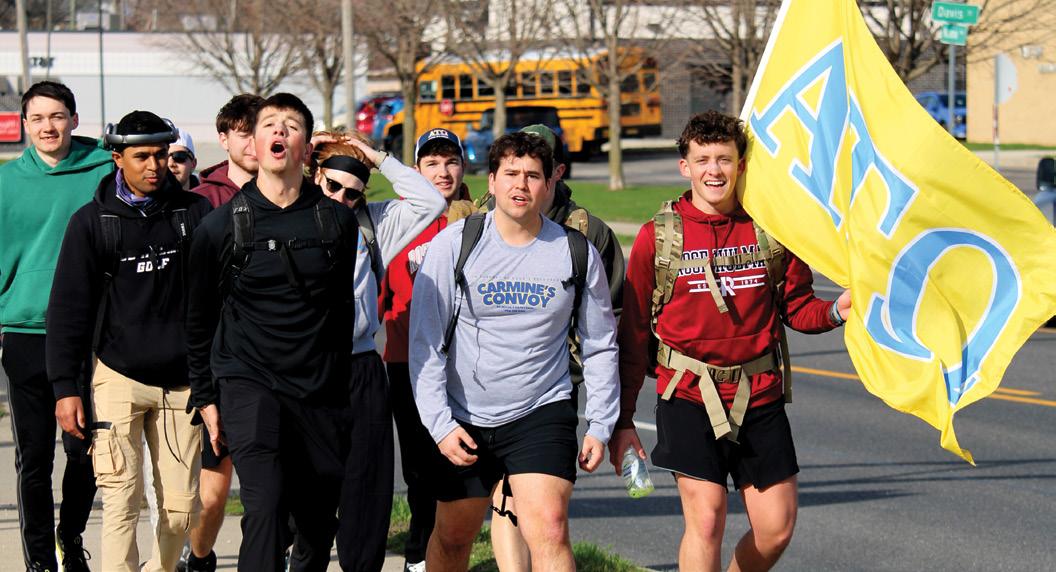
Rose-Hulman’s Alpha Tau Omega chapter took philanthropy the distance this spring, raising more than $105,000 for Rook’s Resources through the second annual Carmine’s Convoy. During the event, fraternity members walked 66 miles between Rose-Hulman and Riley Hospital for Children, far exceeding their fundraising goal while supporting care kits and meals for families with children in neonatal intensive care units.
A team of Rose-Hulman faculty received a $25,000 STEMxcelerator grant to support the Crossroads STEM Kit Exchange, a civic engagement initiative designed to bring hands-on STEM learning opportunities to local youth. Led by Alfred R. Schmidt Endowed Chair for Excellence in Teaching and Associate Professor of Civil and Environmental Engineering Jenny Mueller, PhD, the project will connect Rose-Hulman students, industry partners, and community organizations to create educational STEM kits and activities for students in grades 3-5 throughout Terre Haute.
Wayne Tarrant, PhD, Endowed Chair for Innovation in Science, Engineering, and Mathematics Education and associate professor of mathematics, continued building international partnerships across East Africa focused on STEM education, healthcare systems, and technology access. Tarrant’s collaborations with universities and organizations in Kenya and Rwanda include work related to economic modeling, health systems, educational exchanges, and computer access initiatives. In May, he was also awarded a Fulbright Specialist Program award to continue collaborative work at Strathmore University in Kenya focused on mathematics education and international knowledge exchange.
The cause carries special meaning for the chapter. Rook’s Resources was founded by Rose-Hulman alumnus Thomas Reives (BSME, 2008; MSEMGT, 2010) and his wife, Shecara, following their family’s NICU journey. Proceeds from this year’s effort will help expand the nonprofit’s impact to Union Health in Terre Haute.
Greek Games Crown New Champion, Support Community Causes
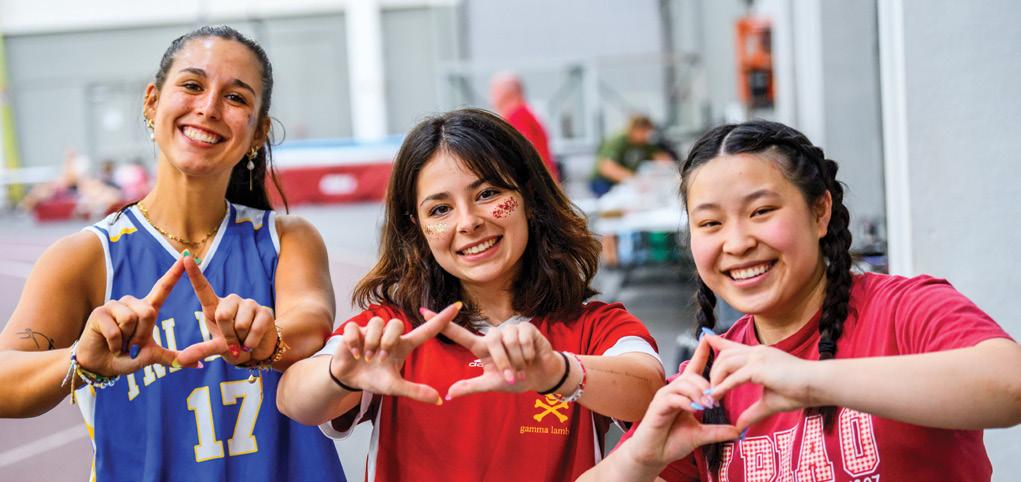
Rose-Hulman’s 2026 Greek Games brought fraternities and sororities together for a week of friendly competition, campus spirit, and philanthropy. Fiji claimed the overall title—the first new champion since the event’s revival—followed by Triangle and Tri Delta.
Beyond competitions ranging from spikeball and relay races to cornhole and kickball, the event also generated community impact, raising more than $1,200 for the United Way of the Wabash Valley through fundraising efforts connected to the Rose-Hulman Day of Service. Organizers praised participating chapters for combining teamwork, enthusiasm, and service throughout the week.
Lane
Mueller
Tarrant
Student Achievements Highlight Research, Leadership, and Applied Learning
GOLDWATER SCHOLAR ADVANCES HUMAN-ROBOT RESEARCH
Junior computer science major William Valentine has been named a 2026 Goldwater Scholar, one of the nation’s most prestigious honors for undergraduates pursuing research careers in science, engineering, and mathematics. Valentine, whose research focuses on human-robot interaction and socially assistive robots for older adults and individuals with cognitive impairments, has already compiled an impressive undergraduate research record that includes seven conference papers and multiple presentations.
Valentine becomes the 18th Rose-Hulman student to earn Goldwater distinction since 2004, underscoring the Institute’s strong tradition of undergraduate research excellence. “I love doing research and receiving this scholarship means I get to keep doing what I love,” Valentine says.
OTHER STUDENT NEWS
Larsen Morehouse (SE, 2026) was selected as a 2026 Orr Fellow and will join Old National Bank’s operations development program after graduation. A campus leader in Residence Life, AskRose, and student organizations, Morehouse plans to continue blending technology, leadership, and her passion for helping people.
Sophomore electrical engineering major Daniel Jones earned a Realizing the Dream scholarship recognizing outstanding achievement among first-generation Indiana college students. Jones credits the Rose-Hulman community and strong academic habits for helping him succeed while staying active in Pi Kappa Alpha, Rover, and club volleyball.
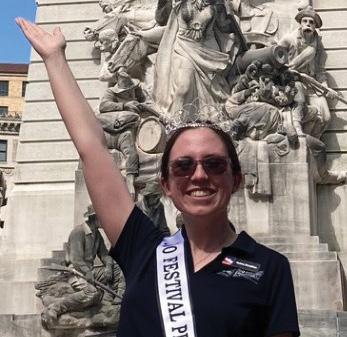
Senior computer science major Helena Donaldson was selected as a 2026 500 Festival Princess, serving as an ambassador for Indiana’s signature racing celebration while promoting community engagement, STEM outreach, and leadership. Following graduation, she will begin a career as an embedded software engineer with Boeing.
A Rose-Hulman senior capstone team earned Best Newcomer Award honors at the Aerospace Propulsion Outreach Program jet engine competition hosted by the Air Force Research Laboratory. The team ——which included mechanical engineering majors Max Wilking , Kolby Cockett-Nagamine, Owen Wiesler, Andrew Leonard, and Tim Swicord ——designed and integrated a compact heat exchanger modification for a hobby jet engine during Rose-Hulman’s first appearance at the national competition.
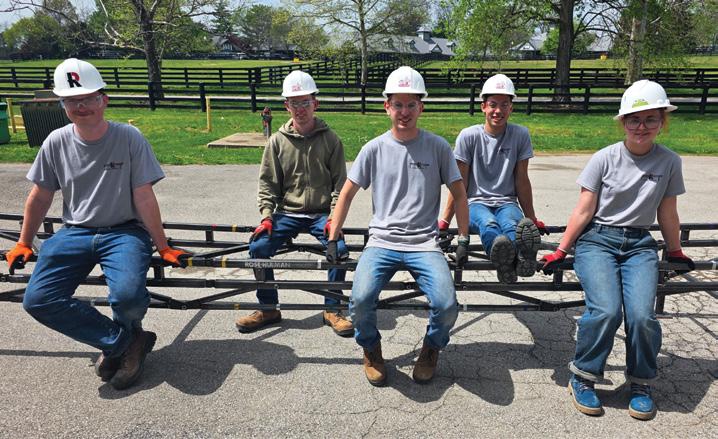
The ASCE student chapter team of David Chan, Lyndsey Barnett, Chris Lynn, Lukas Lambert, and Colby Belzer captured first place in the Steel Bridge Competition at the Indiana-Kentucky Student Symposium for the second consecutive year, earning a return trip to nationals while collecting multiple category awards.
Rose-Hulman’s Society of Physics Students (SPS) chapter received national recognition as a 2024–25 Outstanding Chapter Award winner, earning a Notable Chapter distinction. The award recognized the chapter’s conference participation, outreach activities, professional development programming, and growing campus community.
Valentine
Morehouse
Jones
Donaldson
Data Science Team Wins NCAA Final Four Analytics Challenge
A Rose-Hulman student team captured the undergraduate title in the 2026 NCAA Men’s Final Four Analytics Challenge, outperforming 157 teams from 15 schools. The “Data Miners”—— Brian Beasley, Matteo Calviello, Preksha Sarda, Tommaso Calviello, and Aron Varga ——used data science and machine learning to analyze team performance, tournament outcomes, and fan engagement, ultimately presenting a winning solution during Final Four weekend in Indianapolis.
Guided by faculty advisors Olga Scrivner, PhD, and Ian Ludden (CPE/MA, 2016), PhD, the team developed predictive models identifying traits of championship-caliber teams and tools for forecasting close games and potential upsets.
Rose-Hulman Selected for EcoCAR Innovation Challenge
Rose-Hulman was recently selected as one of just 20 North American universities to compete in the four-year EcoCAR Innovation Challenge, a premier advanced vehicle competition led by the U.S. Department of Energy and industry partners including General Motors, Stellantis, and MathWorks.
Building on the Institute’s strong history in national vehicle technology competitions, students will design and integrate advanced propulsion and battery systems while operating as a mock automotive startup and working alongside industry mentors.
Battery Workforce Challenge Team Finishes Among North America’s Best
Rose-Hulman students, partnering with Ivy Tech Community College, tied for third place overall in the prestigious three-year Battery Workforce Challenge sponsored by Stellantis and the U.S. Department of Energy. Competing against 11 university partnerships across North America, the largely undergraduate Rose-Hulman team distinguished itself in electric vehicle battery design, integration, testing, and manufacturing strategy. The Ohio State University and Columbus State Community College team earned first-place honors.
The RHIT team’s final-year performance included earning the competition’s “Over the HIL” software award for its battery system testing platform and successfully completing required control system evaluations on the first attempt.
A Fond Farewell
This academic year, Rose-Hulman says thank you to a remarkable group of faculty and staff whose collective service spans more than 550 years of teaching, leadership, mentorship, innovation, and dedication to students. Across classrooms, laboratories, residence halls, offices, and campus programs, these individuals helped shape generations of students and contributed immeasurably to the culture of excellence that defines Rose-Hulman.
Their careers reflect countless lessons taught, problems solved, students mentored, colleagues supported, and traditions strengthened. While each retirement marks the close of a professional chapter, the impact of their work will continue to be felt through the people, programs, and communities they helped build.
FACULTY RETIREES
RETIREES
Jerome
Luanne
Yosi
CREATED BY PROFESSOR
The Winter 2025 Bailey Challenge inspired an impressive response, with 106 solvers representing 45 alumni classes spanning 1958 through 2025, along with family, friends, former and current faculty, and current and prospective students. As we continue alternating issues with problems submitted by Herb Bailey’s son, Mark Bailey (CHE, 1976), who returns for each winter edition, this summer’s challenges once again come from Associate Professors of Mathematics Tim All, PhD, Sylvia Carlisle, PhD, and John McSweeney, PhD. But this issue also introduces a new variable into the equation.
Over the years, alumni and friends have sent in challenges of their own, often accompanied by notes insisting, “I think this one will stump them.” So, for the first time, we are featuring a reader-submitted problem, courtesy of Jay Slupesky (EE, 1979). Consider it a small experiment in crowdsourced curiosity.
SUMMER PROBLEM 1
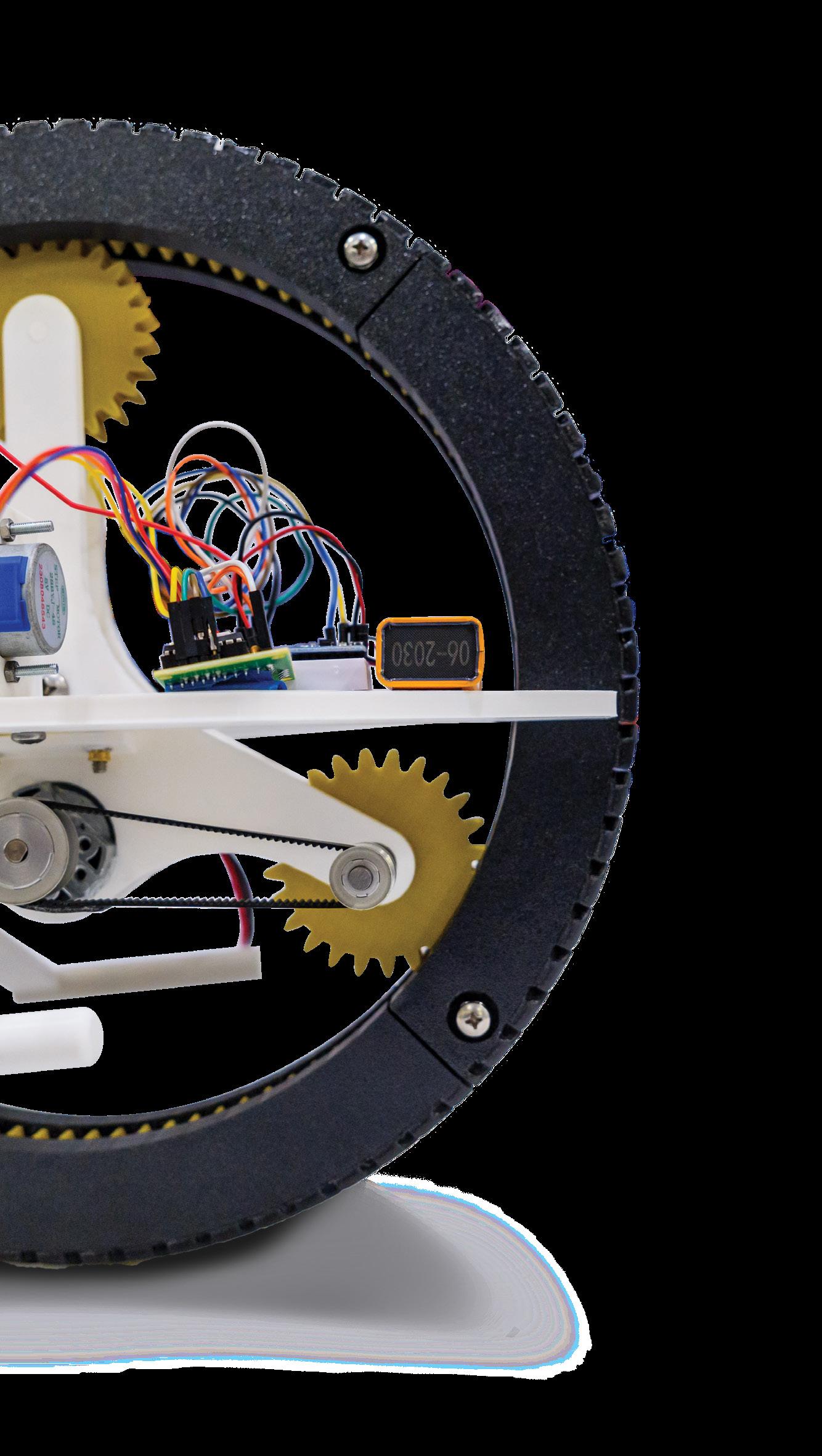
The decimal time system splits the day into 10 equal-length “decimal-hours,” and splits each decimal-hour into 10 equal-length “decimal-minutes.” Consider a circular analog clock that shows decimal time in addition to standard time. In addition to the usual markings, and hour hand and minute hand, it has the numbers 0 through 9 written at evenly spaced intervals around the outside. It has a decimal-hour hand that completes one full circle per day starting from 0 at the top of the clock and returning there after exactly 10 decimal-hours (1 standard day) have passed. It also has a decimal-minute hand that shows the decimal-minute. How many times in a day, besides the obvious ones at midnight and noon, do these decimal-minute and standard minute hands overlap?
SUMMER BONUS PROBLEM
Submitted by Jay Slupesky (EE, 1979)
A rectangle is partitioned into eight squares, as shown. The area of the shaded square is 1. What is the area of the entire rectangle?
SUMMER PROBLEM 2
During bar trivia at Sonka’s Irish Pub, there’s a question with 9 possible correct answers. You get 1 point for your first correct answer, 2 points for your second correct answer, and so on, up to 9 points for your 9th correct answer; but if you put any wrong answers at all, you get 0 points. So, for example, if you get 3 correct answers and leave 6 blanks you get 1 + 2 + 3 = 6 points, but 6 correct answers with 1 wrong and 2 blanks gets you 0 points.
You’ve determined your nine (semi-)educated guesses, and ranked in order of confidence, you figure these are the probabilities that each one is correct: 99%, 85%, 75%, 71%, 67%, 65%, 51%, 42%, 1%. How many answers should you put down to maximize the average number of points that you’ll score?
WINTER PROBLEM 1
SOLUTION From Vince Roczniak (ME, 2006)
For this one, I just set up a system of 4 equations and 4 unknowns:
N1*N2 = 51
N3-N4 = 18
N1+N3 = 23
N2*N4 = 99
Solving this system yields:
WINTER PROBLEM 2
SOLUTION From Mike Walden (EE, 1986)
I let each side of the square equal 2*x and drew a line from M, through the center of the circle, bisecting BC and continuing to a point E on the circle. The intersection point is F. The triangles MFC and BFE are congruent due to angles that subtend the same arc of the circle. Since the triangles are congruent, the ratio of the sides are equal, so MF/BF = CF/EF
EF is given as 1. BF and CF are x and MF is 2x, the length of the side of the square. Solving gives x = 2. So the area of the square is (2x)^2, or 16.
Have a challenge you would like to share? Send it our way and it may appear in a future issue. Knowing this audience, we suspect there is no shortage of elegant proofs, devious twists, or delightfully overengineered puzzles waiting in the wings. We cannot promise every submission will make the cut, but we can promise they will all be reviewed——with the toughest contenders ultimately selected by our faculty contributors and Mark Bailey himself. 1
WINTER PROBLEM 1 SOLUTION From Tim Pruitt (PH, 1978)
The sum of the numbers 1 through 37 is 703. Look for two numbers, A and B, such that A X B = 703 - (A + B). Given the minimum and maximum values for A + B, 3 and 73, the product of A X B is between 630 and 700. Starting at the maximum values for A and B, the product of the two numbers equals the sum of the remaining 35 numbers when A = 31 and B = 21. The difference of the two numbers for this solution is 10.
Send your solution to BaileyChallenge@rhit.edu or to: Paul Shepherd, CM 14, Rose-Hulman Institute of Technology, 5500 Wabash Ave., Terre Haute, IN 47803. Alumni should include their class year. Congratulations to the following solvers of the winter problems:
ALUMNI: C. Ambuehl, 1958; B. Perkins, 1960; B. Lovell, 1963; J. Boyer, 1965; B. Radecki, 1965; B. Plenge, 1968; R. Dutton, 1969; D. Jordan, 1971; R. LaCosse, 1971; W. Pelz, 1971; S. Sample, 1971; G. Houghton, 1972; R. Kominiarek, 1973; M. Marinko, 1973; J. Zumar, 1973; T. Rathz, 1974; D. Willman, 1974; M. Clodfelder, 1975; B. Hunt, 1976; S. Bryant, 1976; J. Schroeder, 1976; T. Pruitt, 1978; P. Hahn, 1979; J. Obergfell, 1979; R. Priem, 1979; J. Slupesky, 1979; J. Koechling, 1980; R. Joyner, 1980; S. Stroder, 1980; P. Gunn, 1981; S. Nolan, 1981; R. Roll, 1981; M. Taylor, 1982; D. Batta, 1983; B. Downs, 1983; T. Endress, 1983; S. Hall, 1983; E. Klages, 1983; J. Marum, 1983; M. Walden, 1986; B. Wright, 1986; K. Barnes, 1987; D. Johnson, 1987; M. Lancaster, 1987; M. Nigrovic, 1987; J. Viray, 1987; L. Cox, 1989; J. Eiler, 1989; J. Jachim, 1989; T. Rademacher, 1989; F. Yager, 1989; E. Cegielski, 1990; B. Burger, 1991; R. Hochstetler, 1991; J. Zamora, 1991; K. Koziol, 1992; R. Antonini, 1993; W. Haas, 1993; A. Weber, 1993; R. Mohr, 1996; T. Westbrook, 1996; A. Heap, 1997; M. Pilcher, 1998; G. Pool, 1999; E. (Mahler) Behrens, 2000; K. Beto, 2000; C. Elgin, 2000; B. Monacelli, 2000; D. Helms, 2002; J. Somann, 2004; S. Tourville, 2005; R. Lane, 2006; B. Woodard, 2006; V. Roczniak, 2006; T. Wojtysiak, 2006; M. Boyer, 2007; C. Husk, 2007; B. Shover, 2008; B. Hulette, 2011; M. Rooney, 2011; B. Lackey, 2013; O. Abdel-Rahman, 2014; R. Collins, 2017; M. Peterson, 2018; S. Bednarski, 2019; R. Oberlitner, 2020; A. Wolfe, 2022; J. Ansari, 2023; C. Boutell, 2023; N. Hannum, 2025. FRIENDS/STUDENTS: B. Black, D. Bremmer, H. Cao, J. Cao, T. Cutaia, A. Danesh-Yazdi, L. Gainter, S. Hahn, L. Kulbago, T. Kulbago, J. Marks, E. Robertson, J. Robertson, R. Stern; R. Templeton; J. Walsh.
THE POWER OF GIVING BACK
The Power of Investing in What Comes Next
Scholarships that open doors. Industry partnerships that bring cutting-edge technology into the classroom. Thousands of alumni and friends rallying together in support of today’s students.
Across campus, philanthropy continues to shape the Rose-Hulman experience in meaningful and lasting ways—— helping ensure students have access to transformative educational opportunities while positioning the Institute to meet the evolving demands of STEM education.
Beth and Greg Muse
A Scholarship Honoring Partnership and Perseverance
For Greg Muse (CHE, 1982), Rose-Hulman helped launch a career built on resilience, problem-solving, and opportunity. Now, he and his wife, Beth, are helping future students build their own paths forward through a $2 million endowed scholarship fund.
The Elizabeth A. Muse Scholarship Endowment Fund will provide long-term scholarship support for students pursuing rigorous STEM degrees at Rose-Hulman. Greg, CEO of PennEnergy Resources, credits the Institute with helping shape both his professional success and his approach to leadership and collaboration.
“Rose-Hulman challenged me academically and personally, and it gave me the foundation to build a meaningful career,” Muse says. “But none of that journey would have been possible without Beth.”
The scholarship also reflects the couple’s belief in expanding access to a Rose-Hulman education and investing in future generations of engineers and innovators.
Advancing Hands-On Learning
Philanthropy also continues strengthening the Institute’s hallmark hands-on learning environment.
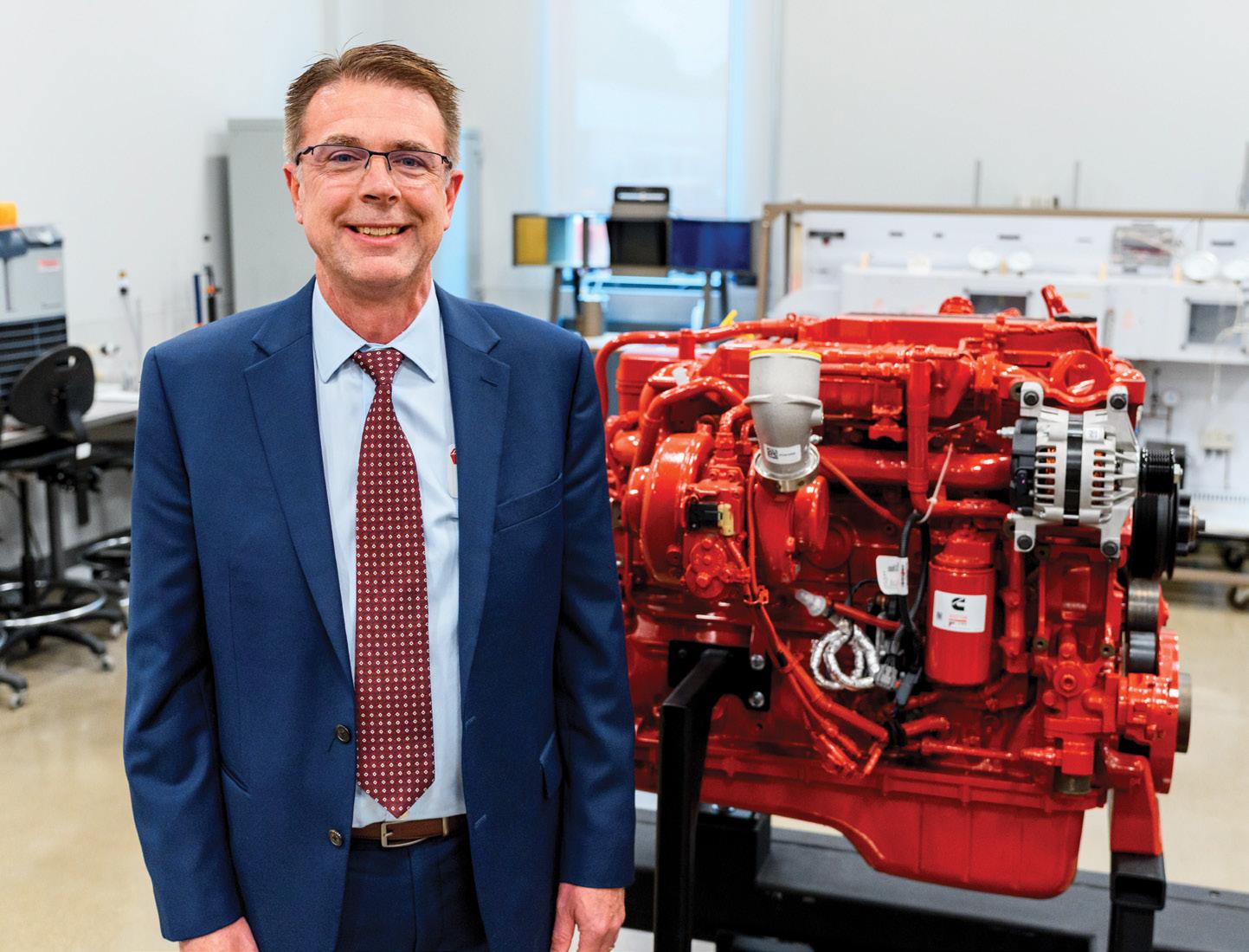
This spring, Cummins Inc. donated a Cummins ISB 6.7L engine to Rose-Hulman’s mechanical engineering program, giving students direct experience working with the kinds of systems they will encounter in industry.
Students in the Internal Combustion Engines course will use the engine for diagnostics, teardown, and rebuild exercises involving modern fuel systems, air handling, and engine technologies.
The effort was led in part by Brett Fathauer (ME, 1991), longtime Cummins executive and chair of Rose-Hulman’s Mechanical Engineering Advisory Board.
“Experiences like this——where students can take apart, analyze, and rebuild real-world systems——are central to how we prepare graduates to contribute on day one,” says President Coons.
A Community United Through Giving
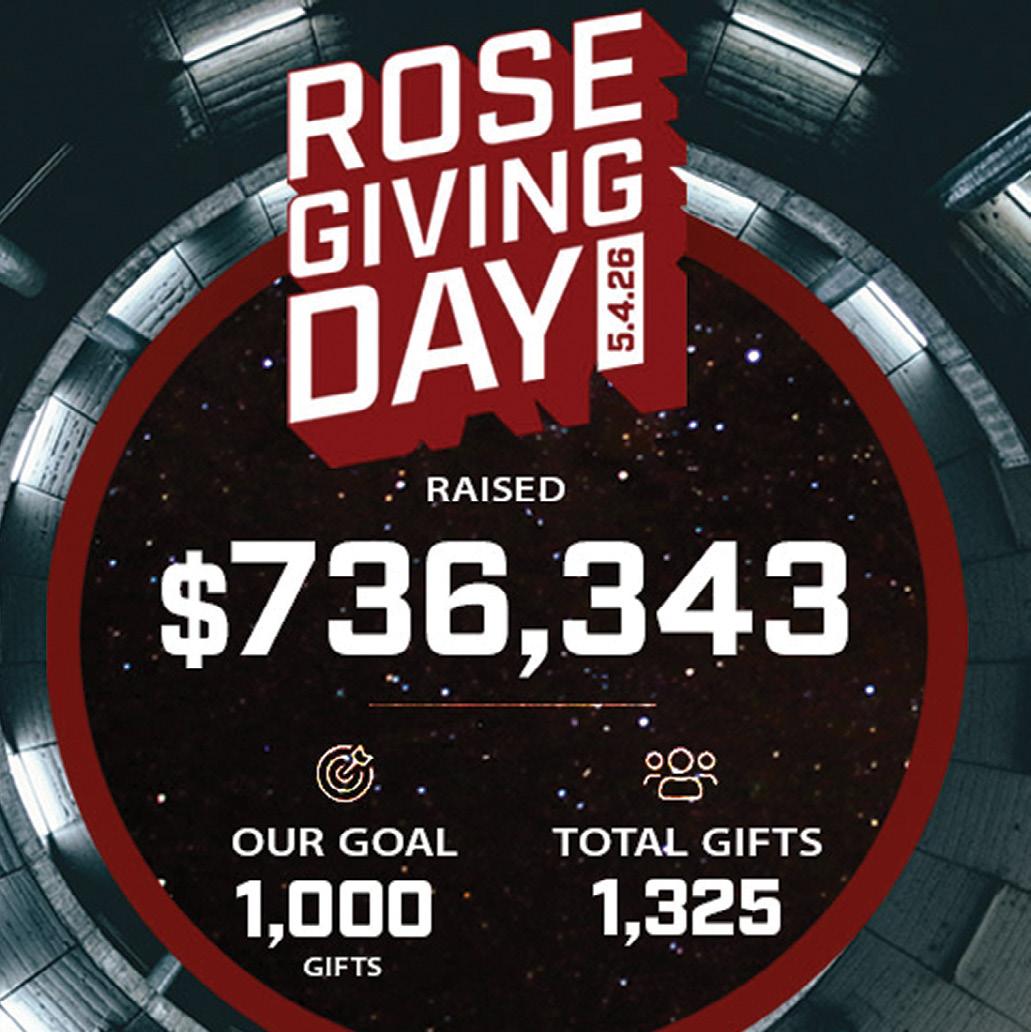
That force of the RHIT community was on full display during Rose Giving Day 2026. Held May 4——“May the Fourth”——the annual campaign generated a record-breaking 1,325 gifts totaling $736,343 in support for scholarships, academic programs, athletics, competition teams, Greek life, and other student initiatives.
This year’s campaign surpassed its ambitious goal of 1,000 gifts while eclipsing last year’s fundraising total, reflecting the continued generosity and pride of the Rose-Hulman community.
Participation challenges from alumni and friends—including Trustee Cindy Kalkomey and her husband, Kurt; Jane and John Jacobi (ME, 1969); Trustee Tom Dinkel (ME, 1972) and his wife Susie; Susan and Dave Hoecker (ME, 1969); Rob Hochstetler (EE, 1991), Chris Lippelt (CHE/ECON, 2016), Craig Pohlman (CS, 2000), and President Rob Coons—helped build momentum throughout the day while supporting scholarships, academics, athletics, competition teams, and student organizations across campus.
Together, these gifts—large and small—help ensure Rose-Hulman students continue to learn, discover, innovate, and lead. n
To learn more about supporting Rose-Hulman students and programs, visit rhit.edu/give
Fathauer
Reimagining STEM Education for What Comes Next
NanoEngineering
Engineering
DESIGN
Artificial Intelligence
s conversations around the value of higher education continue nationwide, Rose-Hulman is responding in a characteristically hands-on way: by redesigning academic programs around emerging industries, evolving technologies, and the realities students will face after graduation.
Rather than making incremental changes, the Institute has rapidly launched new majors, reimagined existing programs, and expanded experiential learning opportunities designed to prepare students for a fast-changing, AI-driven economy. The approach reflects a broader institutional focus on innovation, discovery, and entrepreneurship highlighted throughout this issue’s cover story (see Page 6).
Among the most visible changes has been the launch of three new majors since 2020: Engineering Design, NanoEngineering, and Artificial Intelligence.
Engineering Design was created for students interested in moving ideas from concept to reality through interdisciplinary, human-centered problem solving. The program blends mechanical, electrical, software, and systems thinking with rapid prototyping and iterative design—preparing students for industries where traditional engineering boundaries increasingly overlap.
NanoEngineering places students in cleanroom and device-characterization labs typically associated with graduate-level research institutions. Students gain hands-on experience with nanofabrication tools while working alongside faculty on projects involving semiconductors, photonics, and next-generation energy materials.
The new Artificial Intelligence major is designed to give students a deep understanding of both modern and classical AI while preparing them to help develop the next generation of intelligent systems, apply AI responsibly to solve complex real-world problems, and advance safeguards that promote safe and ethical use.
Rose-Hulman also has substantially redesigned its computing curriculum. A reimagined Computer Science major now offers two pathways—Developer and Researcher—along with specializations in AI, cybersecurity, and data science.
“Rose-Hulman is committed to staying ahead of the curve in STEM education,” says President Robert A. Coons. “We are giving students the flexibility to shape their education around emerging technologies and real-world applications. This is more than a curriculum update—it’s an investment in the next generation of technology leaders.”
That responsiveness is shaped in part through close collaboration with industry partners and advisory boards that help faculty identify changing workforce demands. Employers say the difference is noticeable.
“A lot of it is the collaborative, project-based work,” says Kyle Pinches (CPE, 1999), director of talent acquisition and onboarding at SEP. “That’s not something every school does. Here, it happens often, and it mirrors how we work as teams.”
Rose-Hulman also continues to accelerate pathways to advanced education through Rose Squared (R2), which allows qualifying students to earn both a bachelor’s and master’s degree in four years at no additional tuition cost. A record 13 percent of the most recent graduating class completed a master’s degree through the program.
The academic evolution extends beyond coursework. Through its Advancing by Design strategic plan, Innovation Grove development, and the newly launched Noblitt Entrepreneurship Program, Rose-Hulman is continuing to connect classroom learning with real-world innovation, entrepreneurship, and industry collaboration.
The result is an educational model designed not simply to react to change—but to help shape what comes next. n
Read more about how RHIT is innovating its curriculum at bit.ly/rhit-reimagine
Rose Alumnus and Senior Design Team Create Assistive Device for the Visually Impaired
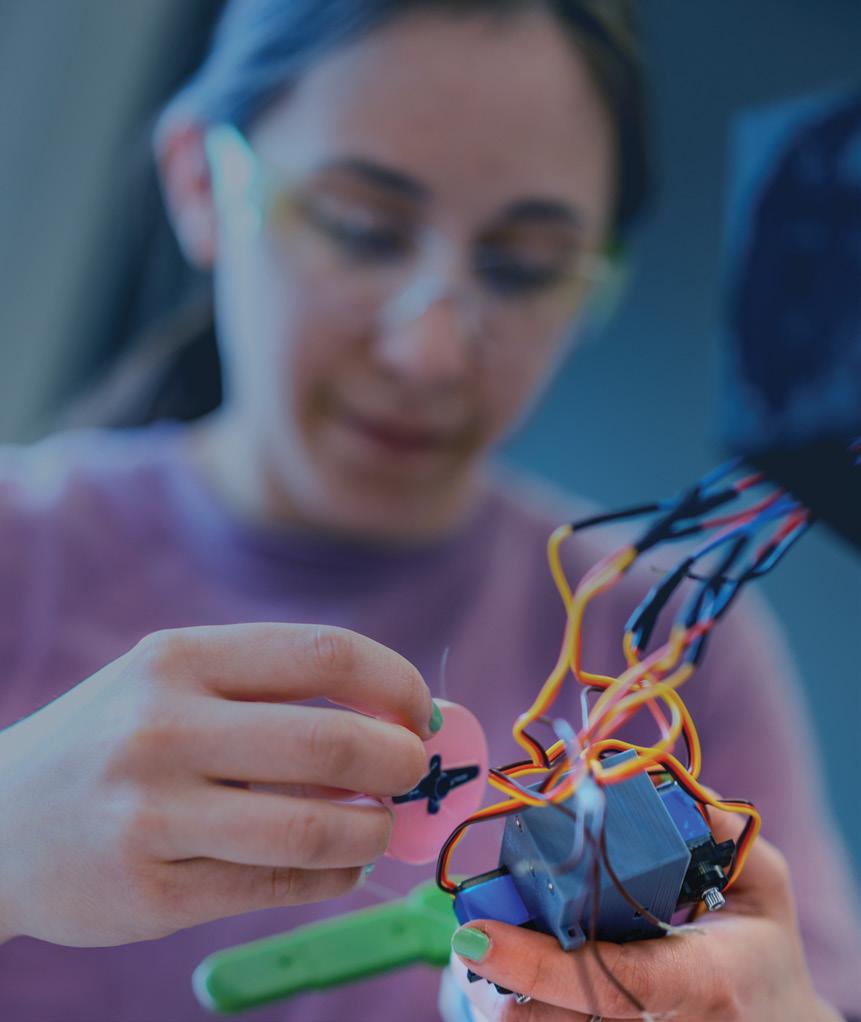
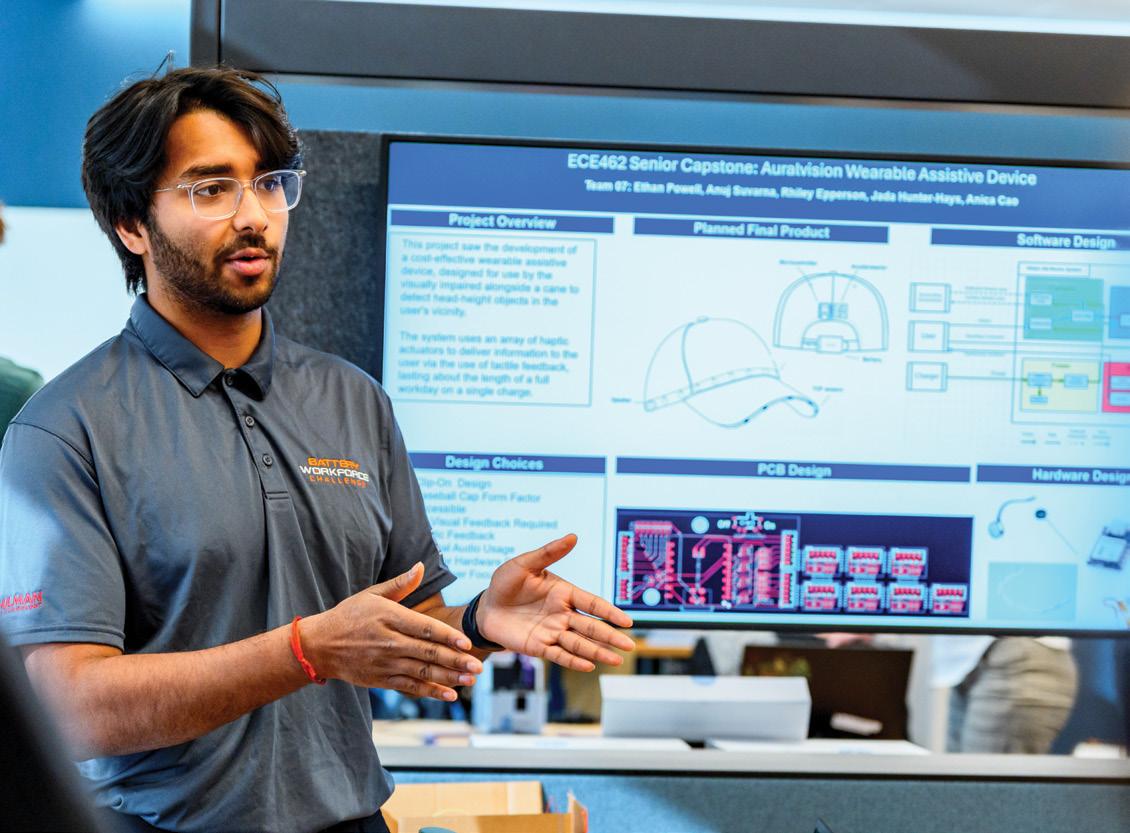
Ateam of five Rose-Hulman students tackled a challenge with life-changing potential: helping people who are blind or visually impaired detect obstacles their canes and guide dogs cannot. As their senior design project, the students worked with alumnus John Marum (EE/MA, 1983) to develop an affordable and wearable assistive device using time-of-flight sensors—a form of LiDAR— and haptic feedback.
The idea for a wearable assisted sight device came from Marum, founder of the non-profit company AuralVision.org, based out of Oakland, California. Marum was inspired after seeing how the sensors were being used in airport bathrooms to measure the amount of paper towels left in a dispenser, and how that battery-operated technology made it so custodians did not have to continually check dispensers to know when to refill the paper towels.
STORY BY LEAH SINGER
“I began to think about how it would be possible to use that same sensor to measure distance to objects and relate that distance to someone who can’t see, and then alert them to objects in front of them,” Marum says.
Marum wanted to build a device that was low in cost, battery operated, and would not require a smartphone connection, paid data plan, or internet connection. He put together a proof of concept and—upon remembering his own senior design experience at Rose—reached out to Rose-Hulman to put the concept to work. The project found a home within ECE 460, a multi-disciplinary, multi-quarter class.
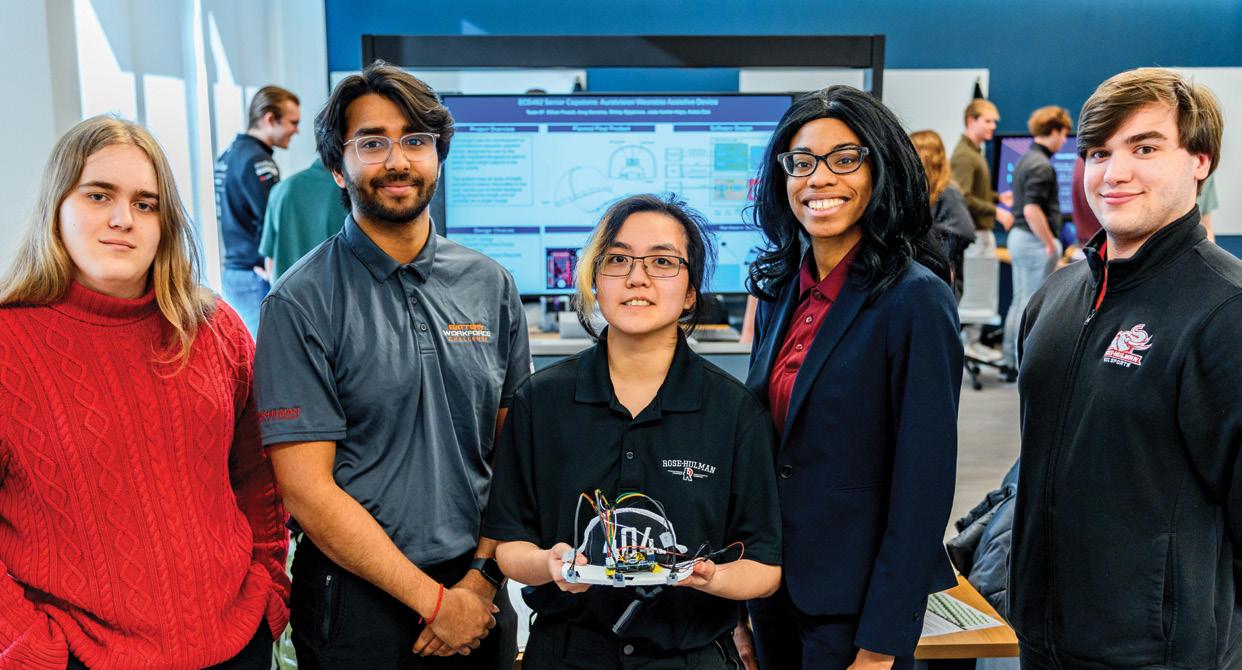
Seniors Anuj Suvarna (BSCPE/MSEMGT), Anica Cao (EE), Rhiley Epperson (CPE), Jada Hunter-Hays (CPE), and Ethan Powell (CPE) began work on the project in fall 2025. The students made modifications to the initial concept that Marum appreciates.
“When I originally received feedback from my two blind beta testers, they suggested it would be more convenient to simply put a hat on when walking outside,” Marum says. “I sent that feedback to the team, and they wrote a proposal to create a hat version of the device with haptic feedback that would include sensors that rest on the forehead and vibrate to indicate distance and direction of detected objects.”
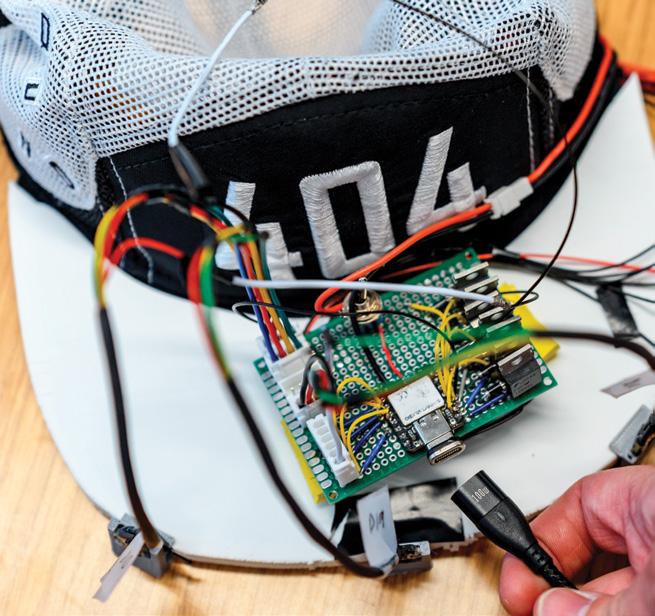
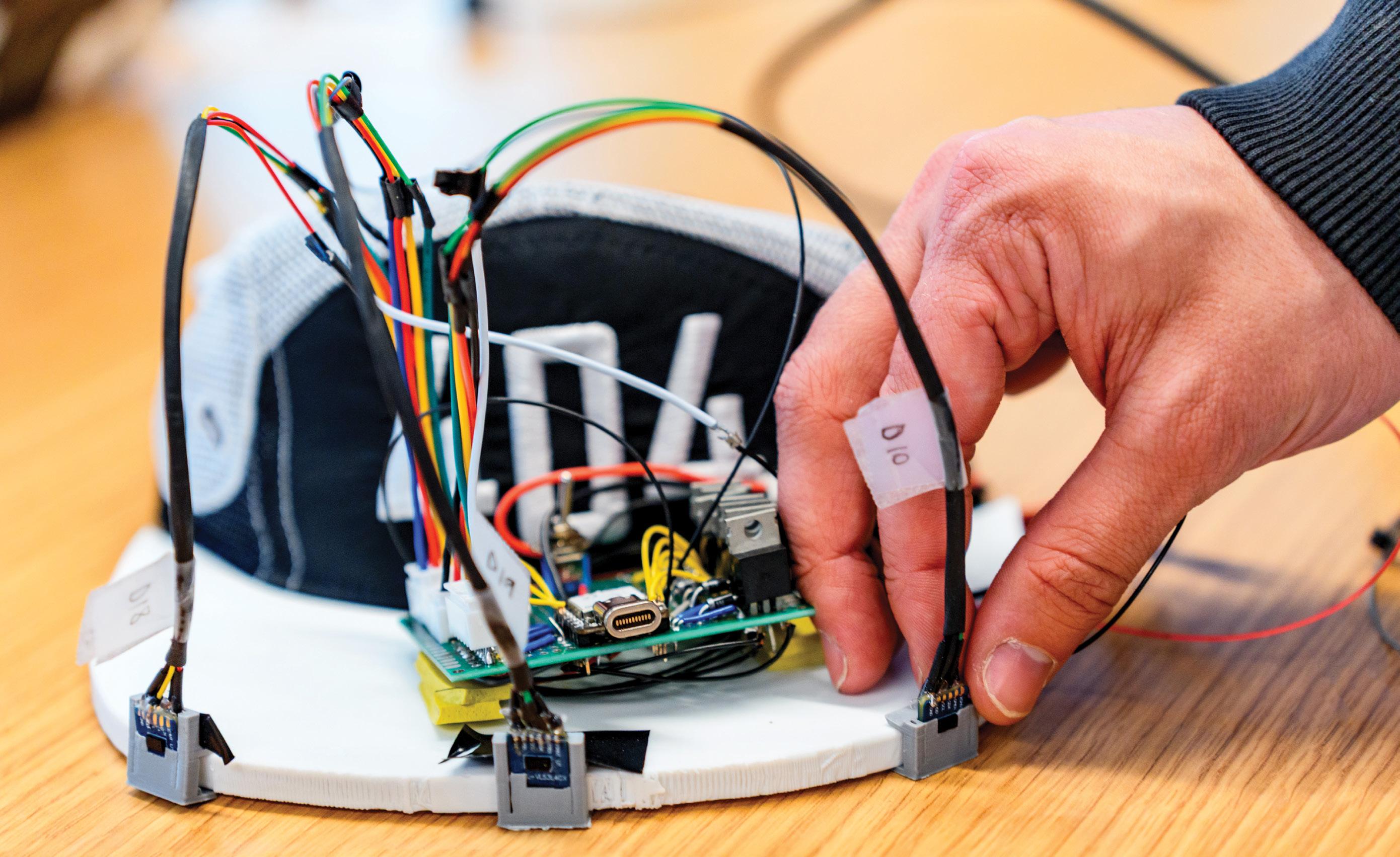
The result was a baseball hat with the time-of-flight sensors built on a strip that easily clips onto the hat’s rim and the haptic feedback sensors vibrate inside the hat. Their device uses a battery system that is built into the chip and lasts approximately 12 hours. The system is mobile, can be used anywhere, and is completely self-contained. It also does not require software updates or WiFi to work.
Through the process of user feedback, the team learned how to think beyond their own ideas and limitations to create a product that will serve a larger community, including conducting a focus group with visually impaired residents at a Terre Haute assisted living community. The individuals, ages 70 to 99, provided helpful feedback such as whether the haptic vibrations may be distracting to some users.
“We definitely learned we need to think outside our age range when designing products like this,” says Powell. “Our generation has grown up with an oversaturation of information. So having something constantly buzzing with multiple sensors around the head is normal to us. But for a more elderly user, that may cause confusion or headaches. The next iteration of this project could be to design around that feedback and give other options, for example changing the type of vibration pattern.”
All five seniors graduated after the winter quarter. However, the project will continue through Marum and the ECE 460 course. The team left recommendations for the next cohort of students to continue refining the device. Marum will work with that team, and he hopes other Rose-Hulman alumni with similar needs may want to get involved in this project to hopefully bring it production and market in the future. n
Read more about the project at bit.ly/rhit-sight.
The student team designed time-of-flight sensors that clip onto the rim of a hat to help individuals with sight impairments detect objects around them.
Jenn Pint Launches New Horizons of Space Exploration as Analog Astronaut
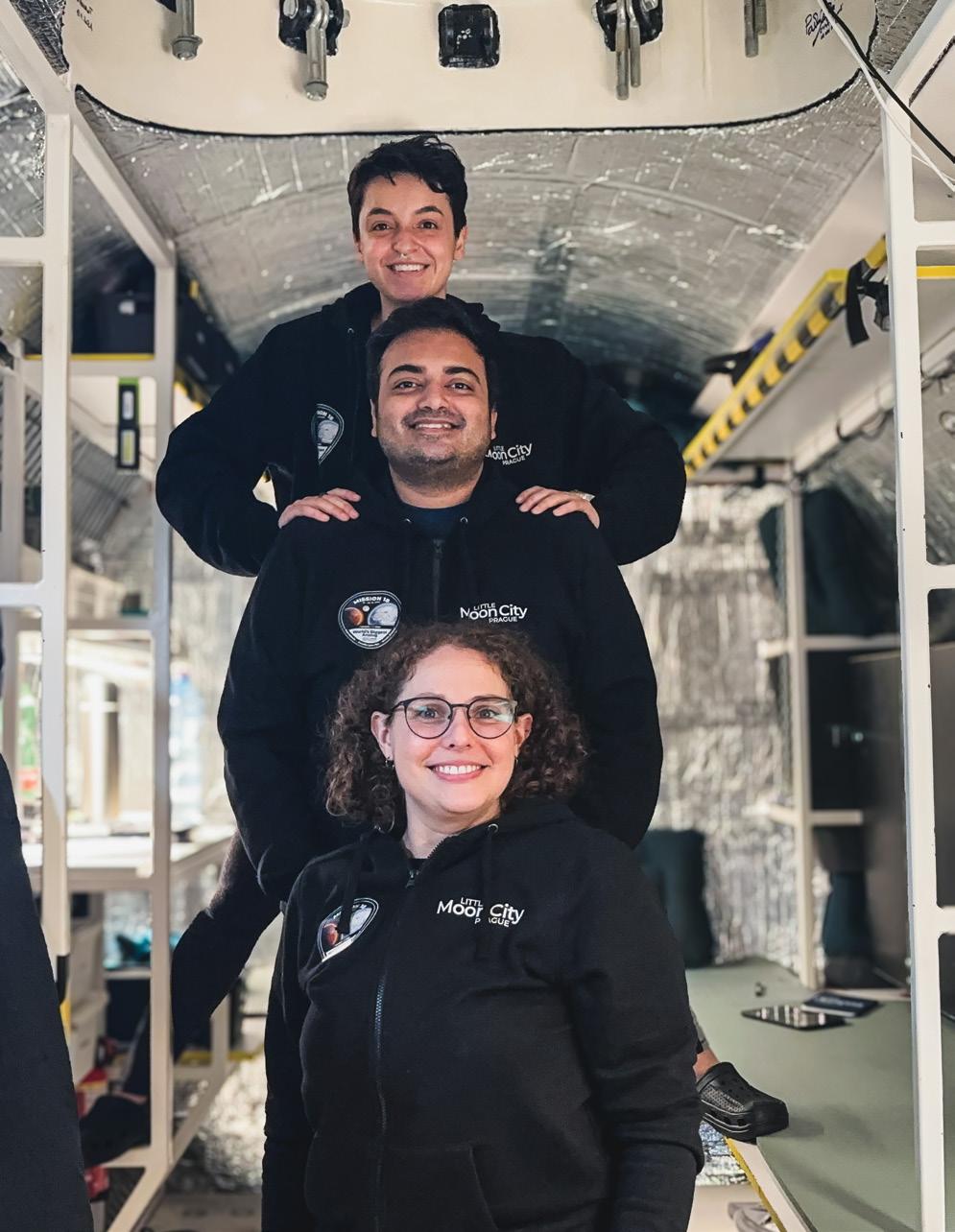
With her head tilted to the sky, Jenn Pint (ME, 2009) set her sights on the final frontier. She never imagined she would contribute to the advancement of space research without ever leaving Earth.
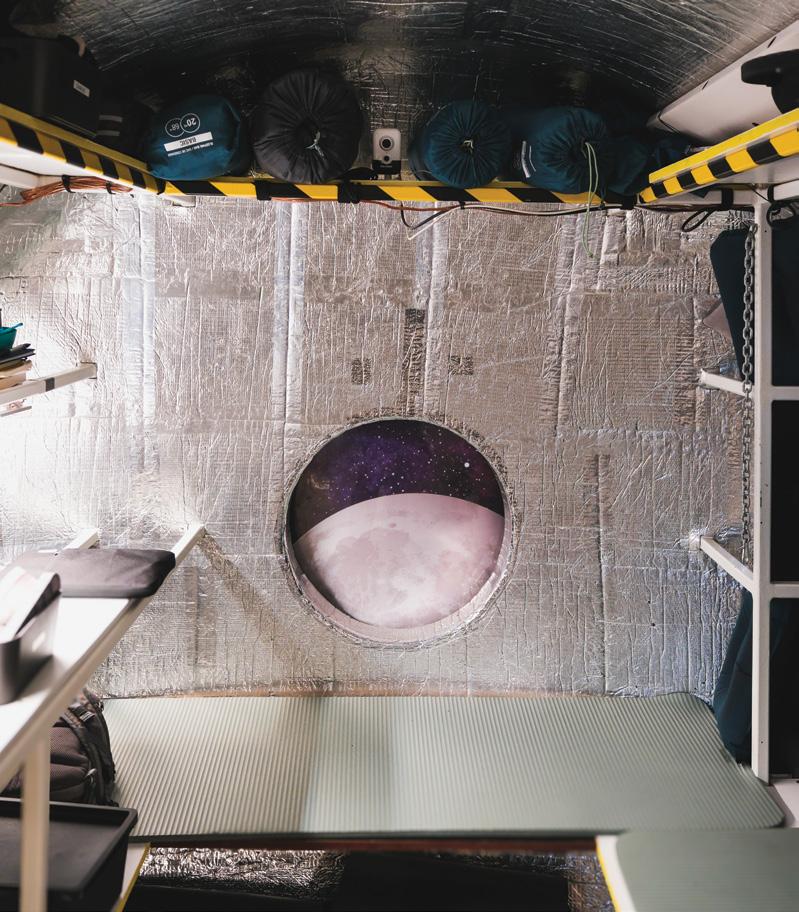
Pint completed an analog astronaut mission through the World’s Biggest Analog, a global research project to explore elements of space travel that are too unknown to examine in space. For two weeks, experts gathered at 16 sites, in environments analogous— “analog”—to those encountered in space travel.
“In those analogs, you can do research on the effects of isolation in confined and extreme environments, you can test procedures, you can test equipment,” Pint explains.
Pint’s mission at Hydronaut in “Little Moon City” in Prague, Czech Republic, simulated a vessel to the moon. The habitat’s porthole faced Earth at one end and the moon at the other, with no other windows or external stimuli.
“It really had high fidelity as far as actually feeling like you could be in space,” she says. Pint’s crew of three had 90 square feet of space to share—less than
Pint
STORY BY KIMMIE COLLINS
half the size of a residence hall room in Speed Hall. Their little community explored aspects integral to life beyond Earth’s atmosphere, including nurturing plants within Hydronaut. The team collected data on exercise routines for astronauts, the output of which will fly on a European space mission.
She says, “Growing up, we always thought you had to be an engineer or an astronaut to get to space or to really have a big hand in it. Space is for everyone. We need everybody to get humanity into space, to get us to tomorrow and beyond.”
The skills Pint built at Rose-Hulman helped her launch to new horizons, and she expresses excitement for impacting a new era of exploration, including April’s successful Artemis II mission to the moon’s far side.
“Rose taught us to be open and be aware, and be thinking about what you’re doing, why you’re doing it, and how we can always make it better. That’s exactly what we’re doing in analog, and that’s what we are doing in space exploration,” Pint says. “It’s not just about getting to another planetary path and putting a human’s footprints there. The things we learn in space come back home to Earth to make our home better.” n
Jenn Pint performed scientific research in a simulated spaceflight mission to advance space travel without ever leaving Earth.
Alumni at the Helm of Completion of Historic DigIndy Project
STORY BY LEAH SINGER
For 14 years, Citizens Energy Group has been working to construct 28 miles of underground tunnels to transport wastewater in Indianapolis. The DigIndy Tunnel System project began with the goal of nearly eliminating combined sewer overflows (CSO) into area waterways, including Indianapolis’ White River. In October 2025, that vision was realized when the last two tunnels—Fall Creek and Pleasant Run—were completed. The construction of DigIndy set three world records and included several Rose-Hulman alumni working on it throughout the years. At the helm was Jeffrey Harrison (EE, 1989), president and chief executive officer of Citizens.
The impetus for the DigIndy project was the city’s CSO problem. When rain events come through the community, stormwater flows into a combined sewer system designed to carry both sanitary sewage and
HARRISON
rainwater in a single system. When the system becomes overwhelmed, untreated wastewater can flow into local waterways. These discharges are part of a national problem of sewer overflows occurring in 700 cities across the country. Under the Clean Water Act, which stipulates that water and rivers need to be swimmable and fishable, and driven by federal and state requirements, a plan to address the CSO in city waterways was created.
Citizens acquired Indianapolis’ water and wastewater assets in 2011. Harrison was involved in the DigIndy project from its initial stages. He served on the team that developed the request for proposal (RFP) and procurement strategy, along with other early elements of the project, laying the groundwork for the project’s realization. “This was a substantial engineering project and Indy needed a solution that could work for generations, not just for a short time,” says Harrison. “From the start, our goal was to protect customers while protecting the long-term environment. It was not just checking a box; it was about changing our relationship with our rivers.”
Harrison says his time at Rose-Hulman shaped who he is today: a service-oriented engineer committed to improving the community. That philosophy played a role in his shaping of the DigIndy project.
“This is a transformational project,” he says. “It is the largest action anyone can take to clean up our waterways and we’re already seeing measurable improvements in water quality. We have already prevented nearly eight billion gallons of wastewater that would have gone into our rivers and streams … Rose-Hulman teaches discipline and problem-solving, innovation and creativity and that has certainly played a significant role for me in my entire career.”
Harrison, who is also a member of the Rose-Hulman Board of Trustees, is proud the DigIndy project has not only set world records in construction but also came in under budget and finished ahead of schedule. The original budget for the project was $2.4 billion and it came in under budget by $400 million.
DigIndy’s tunneling contractor, the Shea-Kiewit Joint Venture, set three world records for hard rock mining production for a 20-foot diameter tunnel boring machine: most mining footage in one day (409.8 feet), most mining footage in one week (1,690 feet), and most mining footage in one month (5,755 feet).
As reported in the Spring 2019 Echoes, several Rose alumni played engineering roles during the lifetime of the DigIndy project. For Harrison, that’s not a surprise given what Rose instills in engineering students and that DigIndy represents the kind of difficult and meaningful work engineers aspire to achieve. (Editor’s note: Read the original article at rhit.edu/digindy.)
“Rose-Hulman is a premiere source for intellect, and we have a number of Rose graduates on our staff,” says Harrison. “This project benefited from Rose engineers, as well as other trained engineers, who think analytically, collaboratively, and practically. That value engineering is part of what helped us stay $400 million under budget.”
Alumni who were among the project engineers included Jessica Bastin (CE, 2001) who managed the DigIndy planning and design work between 2015 and 2019. Chelsie Wilgenbusch (CE, 2016) was an intern at Citizens in 2016. Following her internship, Wilgenbusch went into consulting and worked on the tunnel program in various roles and has since returned to Citizens as an engineer. Maceo Lewis (CE, 2001) is with Black & Veatch and served as their project manager for an extensive amount of DigIndy work. He is now serving on another Citizens project. Derek Davidson (CE, 2007) is preconstruction manager at FA Wilhelm and was very involved with DigIndy for many years.
The DigIndy project now moves into a maintenance, operations and monitoring phase. Citizens is focusing on resilience-driven infrastructure to prepare central Indiana for growth. It is working on another significant engineering project: providing 25 million gallons of water per day to Lebanon Utilities. That project will span six years and over $500 million. n
INNOVATION IN COMPETITION
Innovators see obstacles as opportunities and competitions as creations, and this past academic year, the Branam and Kremer Innovation Center competition teams tinkered with technological advances to represent Rose-Hulman at local, national, and world championships.
ASCE Steel Bridge
Steel Bridge won first place at the IndianaKentucky Student Symposium for the second year. The team was recognized for Lightness (2nd place), Construction Speed (2nd place), Construction Economy (2nd place), and Cost Estimation (1st place).
FIRST Robotics Team Area 5188 Mentors
Rose-Hulman students mentored the FIRST Robotics Competition team 5188, and 55% of their high school mentees were new to the team. The team earned the Autonomous Award and was named an alliance captain at its district event.
Make It Happen
Make It Happen aims to “solve real problems for real people,” and built several community projects, including an electric dolly book bin to help Vigo County Public Library employees.
MakerLab
MakerLab reinvented itself this year with new equipment, including revamped 3D printing abilities, a designated textile area, and the addition of an Axiom Iconic 8 CNC router.
For the latest competition team results, visit rhit.edu/news
Robotics — Combat
Combat Robotics placed second in the 30-pound robot class at the National Havoc Robotics League (NHRL) competition, qualifying for the NHRL Pro League and NHRL Championships.
Robotics —
MATE/ RoseVG Robotics
MATE/RoseVG Robotics developed an entirely new Remotely Operated Vehicle (ROV), featuring a fully symmetric ROV frame, differential gripper systems, advanced flight control systems, and a profiling float.
Robotics —
Robomaster/RHIT Thornbots
Robomaster upgraded their three nondestructive robots, building a taller bot with expanded hoppers, in advance of their spring scrimmage and summer competition.
Rocketry —
High Power Rocketry
High Power Rocketry helps students achieve their National Association of Rocketry Level 1 certification and advance to Level 2 rocket designs. The team built community partnerships to expand certification launches.
Rocketry —
NASA University Student Launch Initiative (USLI)
The USLI team builds a rocket with a scientific payload determined by NASA. The team placed 10th at their launch at NASA Marshall Space Flight Center in Huntsville, Alabama.
Rocketry —
Rose Propulsion Laboratory
Rose Propulsion Laboratory develops liquid rocket engines and completed the first hot fire engine test by Rose-Hulman students.
Rose Aerial Systems
Rose Aerial Systems (formerly Design/Build/ Fly) transitioned to competitive aerial robotics. The team designed a VTOL quad-plane for the Student Unmanned Aerial Systems competition in September.
RoseGPE
Rose Grand Prix Engineering built their first electric car to compete in Formula SAE EV in June, manufacturing nearly every component on campus.
Team Rose Motorsports
Team Rose Motorsports rebuilt the transmission of their 1988 BMW325is and installed a new engine, transaxle, and ECU in their 1974 Porsche 914 and raced their 1984 Foxbody Mustang through a partnership with VP Racing Fuels.
VEXU Robotics
In their first full season, VEXU Robotics competed in three local tournaments and qualified for the World Championships, where they beat teams from around the world, including Purdue University.
Alumni News
Rose-Hulman Alumni Selected for NSF Graduate Research Fellowship
Six recent Rose-Hulman alumni were selected for the competitive National Science Foundation Graduate Research Fellowship Program from a nationally competitive pool of over 14,000 applicants. One of the nation’s most prestigious fellowships, the program provides financial support for graduate students who have demonstrated potential for significant achievements in research. Rose-Hulman alumni and their graduate studies selected for the fellowship include:
Sarah Shibuya (BE/BCMB, 2025): Life Sciences —— Developmental Biology at University of Notre Dame
Benjamin Lyons (PH/MA, 2025): Mathematical Sciences —— Analysis at University of Texas at Austin
Lisa Sebastian (NE, 2025):
Engineering —— Electrical and Electronic Engineering at North Carolina State University
Connor Lane (MA, 2025): Mathematical Sciences —— Algebra, Number Theory, and Combinatorics at University of California, Santa Barbara
Ishaan Mishra (PH, 2025): Engineering —— Aeronautical and Aerospace Engineering at Stanford University
Olivia Davis (CS/MA, 2024): Bioinformatics and Bio-inspired Computing at University of Illinois Urbana-Champaign
70s
Dennis J. Paustenbach (CHE, 1974) received the Herbert E. Stokinger Award recognizing his significant contributions in industrial and environmental toxicology. Paustenbach presented the Stokinger Lecture at the ACGIH 2025 Award Winner Recognition & Virtual Annual Meeting.
80s
Frederick Cartwright (ME, 1980) has received the Polaris Award from Terre Haute North Vigo High School for significant personal, professional, and civic achievements. Cartwright retired as president and CEO of Conexus Indiana.
Brad Kitchens (ME, 1982) retired December 31, 2025, from his role as president and chief executive officer of ScottMadden after more than three decades of service to the company.
Neil J. Brown (CHE, 1985), P.E., has been promoted to senior vice president at WSP, USA. With over 30 years of experience with the company, Brown’s career has included remediating complex soil and groundwater contamination and directing critical design and construction phases for multibillion dollar electrical infrastructure upgrades in New York City.
Ken Roberts (ME, 1988) has been named president of the Board of Directors for the Asphalt Roofing Manufacturers Association (ARMA). Roberts is the president of Atlas Roofing Corporation.
Jeffrey Harrison (EE, 1989) has been elected chairman of the Indy Chamber Board of Directors in Indianapolis, Indiana. Harrison is the president and CEO of Citizens Energy Group, one of Indiana’s largest utility providers, and serves on the Rose-Hulman Board of Trustees.
90s
Barry Schneider (ME, 1990) has been elected chair of the Steel Manufacturers Association 2026-2028 Executive Committee. Schneider is the president and chief operating officer of Steel Dynamics, Inc. Schneider was also awarded the 2025 Steel Executive of the Year honor by the Association of Metals Processors and Distributors.
Alan Manche (EE, 1991) has been appointed to the National Fire Protection Association Standards Council for a three-year term. Manche is the vice president of external affairs at Schneider Electric.
Don Potter (CE, 1994) has been named vice president and central regional manager of Shook Construction. Potter oversees offices in Indianapolis, Kokomo, and Richmond, Indiana.
Kevin Unger (EE, 1996) has been promoted to senior vice president of business development, strategy, and international operations of SRC Inc.
Shawn Wischmeier (CHE, 1996) has been named a 2026 Power100 Allocator by Blueprint Capital Advisors, an honor recognizing leading institutional investors for stewarding capital on behalf of millions of beneficiaries worldwide. Wischmeier is the chief investment officer at Margaret A. Cargill Philanthropies.
00s
Matthew Lecher (ME, 2003) and Alison (Burgess) Lecher (CHE, 2003) celebrated their 20th wedding anniversary on April 22, 2026. They reside in Cincinnati, Ohio, with their children Neil, Eloise, and Josephine.
Danny Teixeira (MSEMGT, 2008) has been named president and CEO of Rohrer Corporation, a leading consumer packaging designer and manufacturer.
Whitney Zimmerman (EE, 2009) has been named McKinsey & Company’s first Distinguished Expert of Strategy, a partner-level role representing its highest recognition of expertise.
10s
Kate Bomar (BSBE, 2010; MSBE, 2013) joined Union Health in Terre Haute as a physician assistant in the women’s and children’s services line, specializing in obstetrics and gynecology.
Naveen Chandrasekaran (MSEGMT, 2010) has been appointed associate director of global supply chain at GSK, a global biopharma leader.
Andrew Bomar (BSME, 2011; MSME, 2013) joined Union Health in Terre Haute as part of the obstetrics and gynecology team.
Greg Laudick (ME/ECON, 2012), the vice president of strategic planning at Emerson, has joined the Great Rivers Greenway Foundation Board, which strives to make the St. Louis region a more vibrant place to live, work, and play by developing a regional network of greenways.
Gary Ulrich (BIO, 2017) recently completed his second medical mission trip to Kapsowar, Kenya, where he worked in orthopedics at AIC Kapsowar Mission Hospital for six weeks in August 2025. Ulrich, a 2022 graduate of the Indiana University School of Medicine, recently started an orthopedic surgery residency at Louisiana State University.
20s
Alexa Myers (MA/ECON, 2020) was named a Rising Star of the Profession for Technology and Digital Consulting by Conexus Magazine. The Rising Stars of the Profession award recognizes emerging leaders who are making an impact across the consulting industry. Myers works as a senior manager of data science at Resultant, a tech and data consultancy, where her work has helped to create one of the most innovative workforce tools in the country. Alexa was also a 2023 TechPoint Tech 25 Award Nominee and a 2020 Indy Hackers Rising Star of the Year.
Grace Beach (BE, 2021) is a first-year associate focusing on intellectual property matters, including patent and trademark litigation and patent prosecution, in Banner Witcoff’s Chicago office.
Ruth Hammond (ME, 2023) has been named a 25 Under 25 recipient by the National Society of Black Engineers during the national convention. Hammond is a doctoral student at Florida International University studying computer science.
Rose-Hulman Alumni Host 2025 Midwest Tandem Rally
Rick Stanley (ME, 1978) and his wife, Anna, along with John Calhoun (EE, 1978) and his wife, Madelyn Zalon, played leading roles in hosting one of the nation’s premier tandem cycling events, the 2025 Midwest Tandem Rally (MTR) in Westfield, Indiana, after more than two years of planning.
This year’s event drew 210 tandem teams from 23 states, bringing hundreds of riders to Hamilton County for four days of cycling and community. Routes ranged from short, family-friendly rides to a 68-mile challenge, showcasing central Indiana’s scenic landscapes. The event generated an economic impact of nearly half a million dollars for Hamilton County and the city of Westfield.
The Stanleys and Calhouns also share a unique Rose-Hulman connection. Both Rick and John lived in BSB Hall their first year. When Rick became a member of Alpha Tau Omega and John joined Triangle, they became next-door neighbors for an additional couple of years. Yet with John pursuing electrical engineering and Rick mechanical engineering, they do not recall ever meeting on campus.
At a cycling event three decades later, John noticed Rick’s Rose-Hulman license plate. Within minutes, the two realized they were not only alumni but also classmates. That chance encounter led to a friendship built on cycling and, ultimately, co-hosting this year’s successful rally.
Weddings
Chaz Childs (BIO, 2017) married Maddy Jaeger (OE, 2020) on September 22, 2024, in Littleton, Colorado. They live in Westminster, Colorado, where Chaz is a scientist with Eli Lilly and Company, and Maddy is an optical engineer with Anduril Industries.
Drew Gearhart (CHE, 2022) and Mackenzie (Beasley) Gearhart (ME, 2022) were married on September 27, 2025. Drew is a solutions support engineer and Mackenzie is an industrial engineer, both at Endress+Hauser. Alumni in the wedding party included officiant Tatiana Andrade (CHE, 2023), Lara Peters (CHE, 2022), Ashley Parker (BE, 2024), Griffin Altmix (ME, 2022), Evan Baker (ME, 2022), Nicholas Barr (ME, 2022), and Andrew White (CS, 2021).
Jennifer Taylor (MA/ECON, 1999) and Austin Templin (ME, 2006) were married on September 27, 2025, in Speedway, Indiana, where they live and work.
Jennifer is a partner at Ernst & Young, and Austin is a senior engineer of defense product integration, calibration, and validation at Allison Transmission.
Rosebuds
Lauren (London) Roetker (CHE, 2019) and husband Jack Roetker (ME, 2018) had their first child, Josie, on September 10, 2025. The family resides in Indianapolis, Indiana, where Lauren is a recruiting manager and Jack is an associate director of engineering, both at Eli Lilly and Company.
Derek (Archer) Bricker (BE, 2012) and husband Justin Bricker welcomed their first son, Archer John Bricker, on October 11, 2025. Derek is an assistant professor of neurology at the Vanderbilt University Medical Center.
Leah (Markowitz) Ackley (CHE, 2015) and husband Dustin welcomed their second child, Henry, on May 20, 2025. The family lives in Midland, Michigan, where Leah is an improvement engineer for Trinseo.
Clark Harris (ME, 2017) and wife, Shannon, welcomed their firstborn child, Bridget Noelle, on October 7, 2025. The family resides in Indianapolis, Indiana, where Clark is a device product steward with Eli Lilly & Company.
Celeste Kline Huster (BE, 2015) and John Huster (ME, 2014) welcomed their third child, daughter Anne Elise Huster, on November 3, 2025. The family lives in Blaine, Minnesota, where John is the president at Sofos Robotics.
Heather Demor (ME, 2012) and husband Jordan Oja (BE, 2012) welcomed their third child, Laura Oja, on December 22, 2025, in Akron, Ohio. Heather is an inside sales engineer with Ketchum & Walton, and Jordan is a senior design engineer for MuReva, a start-up biotech company.
Rosemary (Yost) Dolesh (CHE, 2015) and Clay Dolesh (ME, 2016) welcomed their first daughter and third child, Joanna Rose, on January 30, 2026, and she is already adored by her two older brothers, Otto and Benedict. The family lives in Franklin, Ohio, where Clay is an advanced manufacturing engineering manager with American Battery Solutions.
Ben Klick (CE, 2016) and his wife, Emily, welcomed their third Rosebud, Micah, on March 31, 2026. Ben is currently a construction manager for Vantage Data Centers based in Port Washington, Wisconsin.
Daniel Hedman (ME, 2003) and wife, Beth, welcomed twin boys, John and Timothy, on December 23, 2025.
Scott McLaughlin (ME, 1981) and wife Ellen welcomed their granddaughter, Thia Michelle Gadbois on February 14, 2026. McLaughlin retired in 2025 after 17 years at McLaughlin & Associates, Inc.
In Memoriam
Herbert Gatewood (CHE, 1953), 96, died February 26, 2026. Gatewood served two years in the United States Army before a distinguished legal career that included work with the United States Patent Office, corporate settings, and private practice. He had a deep passion for photography, especially of wildlife and lighthouses.
Edward Day Hatcher (CE, 1958) died January 22, 2026, in Morris, Illinois. A sergeant in the United States Army, Hatcher also served as a highway engineer with the state of Illinois for 37 years.
Robert Newby (ME, 1958), 95, of Terre Haute died April 16, 2026. Newby retired from Indiana State University as the director of buildings and grounds and received a Bronze Star for his Army service during the Korean War.
Bill Weil (EE, 1958) died November 3, 2025, in Golden, Colorado. He spent 24 years with Coors Brewing Company, where he played a pivotal role in developing the aluminum can manufacturing process that revolutionized the industry. He later founded Computrol, Inc.
Elwood Paschall “Woody” Stroupe (CHE, 1960) died January 10, 2026. Stroupe played both football and basketball for the Fightin’ Engineers, earning the first Academic AllAmerican award in Institute history. He was inducted into the Athletics Hall of Fame in 2011 and had a long career in the nuclear industry.
Stephen Dee Burton (MA, 1961), 86, of The Villages, Florida, died November 24, 2025. His career included co-founding Concord Computing, a leader in POS systems, before retiring to establish his own consulting company.
Paul Davisson (ME, 1962), 85, of Jupiter, Florida, died December 2, 2025. Davisson was an aeronautical engineer at Pratt and Whitney for more than 30 years and was instrumental in putting many of the military planes into flight.
Jay Phillip Conniff (ME, 1963), 84, died April 11, 2026, in Aiken, South Carolina. Conniff was a respected consulting engineer and an avid player of both golf and bridge.
Daryle Ebert Riegle (EE, 1963), 84, died April 22, 2026. Riegle spent a 40-year tenure as a professor at Vincennes University in the Division of Science, Math, and Engineering.
Bohner left lasting impact on students, helped shape software engineering program.
Shawn Bohner, PhD, professor emeritus of computer science and software engineering, passed away June 9, 2026. A member of the faculty from 2008-2025, he served as director of the Software Engineering program for 13 years, playing a vital role in course development, ABET accreditation, and the start of the software engineering master’s program.
Robert “Bob” Barnett (ME, 1965) died May 8, 2026, at his home in Downers Grove, Illinois. He was owner of Barnett Bates Corp., a manufacturing plant in Joliet, Illinois.
Larry Ivan Michael (CE, 1966), 81, died March 3, 2026, in Columbus, Indiana. Michael worked at Cummins Engine for 26 years before working at Osram Sylvania and Hell Lighting and ultimately forming his own consulting business.
Curtis Gidding (CHEM, 1967) died December 20, 2025. Gidding, a passionate stamp collector, built a career in agriculture, working in the animal feed and chemical industries in roles spanning sales, marketing, product management, and business development.
Charles “Chuck” E. Risch (ME, 1967), 81, died March 6, 2026. He retired after three decades of service to the Ford Motor Company, and, in retirement, contributed expertise as an alternative fuels researcher with Argonne National Laboratory.
Joel Roberts (CE, 1968), 79, died December 16, 2025. While at Rose-Hulman, Roberts was an active member of the golf team and ATO fraternity. He retired after 20 years as the Jay County Superior Court Judge.
Franklin Ray McCarty (ME, 1969), 78, died December 6, 2025, in Terre Haute, Indiana. He obtained many patents for his various Indiana employers and loved skiing, snorkeling, and white-water rafting.
Fred Oriean Clayton (CE, 1970), 82, died November 17, 2025. Clayton, a Carmel, Indiana, resident, was a member of the Rose-Hulman Civil Engineering Department Advisory Board, established the Fred O. and Kathleeen E. Clayton Scholarship, and served as an alumni representative to the Rose-Hulman Board of Trustees.
Kenneth L. Simpson (CE, 1971), 77, died April 4, 2026, at his home surrounded by family. He served as senior class president while at Rose-Hulman, and, in his career, founded the firm Engineer Associates in 1990 and worked as a consulting engineer for over 35 years.
Joel Beasley (CE, 1972) died March 22, 2026 in Bloomington, Indiana. Beasley spent 40 years
working for the Terre Haute Gas Corporation (later Indiana Gas Company/Vectren Energy/ CenterPoint Energy).
Thomas Rathz (PH, 1974) died February 7, 2026. in Huntsville, Alabama. He worked at NASA and as a contractor employee for 35 years, including as a research scientist at the University of Alabama in Huntsville. Rathz served as a science advisor on a Skylab experiment and was the lead investigator into the deterioration of the thermal protection materials on Spacelab.
Todd James Thompson (ME, 1974), 73, died April 24, 2026. Thompson served a distinguished career with Boeing in St. Louis, Missouri, and after his 2021 retirement, he continued to consult for Boeing and became more involved with community work.
David A. Schroer (MA/CS, 1976), 71, of Stamford, Connecticut, died on March 31, 2026. Well-versed in computer systems and programming, he worked with computers his entire career in roles such as software engineer and program designer.
Michael Paul Pelham (CE, 1978) died February 8, 2026. He spent six years of his career in Saudi Arabia before working as a county highway engineer for Johnson County, Indiana, and retired from the Indiana Department of Transportation.
Mike Foster (CE, 1983) died March 3, 2026, in Evansville, Indiana. He retired as a civil engineer, was an active member of Holy Redeemer Catholic Church, and a Fourth Degree member and past Grand Knight of the Knights of Columbus.
Frank Joseph Meyer (CHE, 1984), 67, died February 25, 2026, at his home in Cincinnati, Ohio. He worked for more than 30 years as a senior project manager and senior validation consultant in the pharmaceutical and medical device industries.
John Weis (CHE, 1985), 63, of Glen Ellyn, Illinois, died at his home on March 31, 2026. A member of Triangle fraternity, Weis spent his entire professional career with FM (Factory Mutual Insurance Company).
Thanh Nguyen (EE, 1987) died April 20, 2026. He spent 30 years as a dedicated computer
specialist at various organizations and schools in the Chicagoland area, including the University of Illinois at Chicago and Marillac St. Vincent Family Services.
Christopher Morton (CS, 1994) died December 2, 2025. He worked as an EDI at Press Ganey Associates, Inc. and was deeply dedicated to his family.
Bradley Keith Butler (CE, 1997), 53, died in his home on March 5, 2026. An avid rock climber and hiker, he had worked as a design control engineer at Cook Group Incorporated.
Justin L. Gerretse (ME, 2010) died January 26, 2026, in Aurora, Illinois. An avid Chicago Cubs fan, he enjoyed woodworking, traveling, snowboarding, and fishing.
Cole Aaron Jacobs (EE, 2012), 35, died December 3, 2025. Jacobs worked for Border States Electric Supply as an applications engineer and loved bowling, fishing, tennis, golf, and his dog, Sophie.
Jonas Troyer (BE, 2012), 39, died January 29, 2026. Troyer assisted with maintenance on the family farmstead. A dedicated cat owner, Troyer also enjoyed woodworking and tending to sunflowers.
FACULTY/STAFF/FRIENDS
Frank Acker, 88, died December 24, 2025, in Terre Haute, Indiana. Acker joined Rose-Hulman in September 1985 as a faculty member in Electrical Engineering and retired in 2001. Wanda Eaton, 89, died February 26, 2026, in Indianapolis. Hired in 1966, Eaton spent parts of four decades as a member of the housekeeping staff.
Scott Keller, 63, died January 20, 2026. Keller worked as the Rose-Hulman director of athletic training and had served studentathletes for over 22 years.
Brij Khorana, 86, died November 9, 2025, in Greenville, South Carolina. Khorana joined Rose-Hulman in September of 1977 as a faculty member in the then-named Physics and Optical Engineering Department. He was later named department head and retired as executive vice president and chief operating officer for RoseHulman Ventures, which he helped found.
IGNITES INNOVATION
IGNITES INNOVATION 2026 ROSE SHOW
IInnovation unfurled throughout Rose-Hulman, cascading a sense of immense awe over visitors to the 2026 Rose Show—the “collegiate World’s Fair.” Nearly 130 student teams showcased their projects, the culmination of countless hours of testing and ideation.
This year, entrepreneurship bloomed. Several teams built products to launch their own startups. Alex Stedman, Philip Pounds, and Alex Yim of Unlayered 3D earned the William A. Kline Innovation Award —— the Rose Show’s top honor ——and developed a novel approach to 3D printing, using a multi-axis nozzle to print projects without supports. Meanwhile, Adam Jirovec, Davis Rubel, Owen Clowney, and Aaron Nadharajan built a carbon-fiber, electric motorcycle as a more lightweight, nimble alternative vehicle.
Every project represented months of careful research and design, with hundreds of hours invested in calculations, code, or CAD files to resolve manufacturing bottlenecks experienced both by themselves and their clients.
Frustrated by the time required to produce custom printed circuit boards (PCBs), DJ Bernard, Prabhat Vadlamani, Django Wardlow, and Colin Young designed a benchtop manufacturing process to fabricate 4-layer PCBs in a matter of hours. PCBs power technology, including Rose Show solutions such as a robotic arm
Student projects, including a robotic arm, a multiaxis 3D printer, and mobile apps, stunned and amazed Rose Show visitors.
for Two Six Technologies. The arm and its custom manufacturing jig accomplish key tasks, including PCB positioning, collaboratively allowing humans to work safely in tandem with technology.
PCBs also powered the excavator payload estimation system, a loading aid to help excavator operators fill haul trucks using inclinometers, hydraulic pressure transducers, and a calibrated predictive model.
The impact of some projects extends far beyond the Rose Show, pioneering new intellectual property. Ryan Beerheide, Jared Doeden, Andrew Frush, and Ethan Newman worked with Milwaukee Tool, which is filing a patent for their design.
Other projects inspire prospective innovators. They created education stations for local students as well as training simulations for healthcare professionals at Union Health.
Much like the actual World’s Fair or other attractions, Rose Show visitors could even take home a souvenir: a pressed penny created by a mechanical engineering team’s machine. Some projects were less tangible, though no less tremendous. Civil engineering teams developed plans for infrastructure both local and global, including a revitalization proposal for Terre Haute’s riverfront district. Computer science students created virtual reality environments, as well as tools to develop modifications for the Nintendo Switch.
Each Rose Show project highlights the possibilities of a Rose-Hulman education and emphasizes the impact of students and graduates on their communities. From cutting-edge startups to more accessible or sustainable solutions, the successes of each team underscore the innovation at the heart of Rose-Hulman. n
ROSE SHOW
The Sweetest Flower that Grows
BY KIMMIE COLLINS
ROSES ARE RED. VIOLETS ARE BLUE. THESE ALUMNI LOVES ARE FOREVER TRUE.
Trey and Karen (Folz) Wurtz
Cole and Sydney (Black) Supp
Once upon a time, in a mechanical engineering course, two study partners blossomed into life partners. Cole (ME, 2019) and Sydney (Black) Supp (ME, 2019) spent many late nights studying together and planning for their roles in Residence Life. When they got married in July 2023, they knew there was only one person they wanted to officiate their wedding: Vice President of Student Affairs and Dean of Students Erik Hayes (BSME 1997; MSME, 2001). They now live happily ever after in Dayton, Ohio, with their dog, Azula.
Once upon a time, in the lobby of BSB Hall, Trey (BSCE, 2021; MSCE, 2022) and Karen (Folz) Wurtz (CHE/BCMB, 2021) found free time—and each other— during Orientation. Some of their favorite Rose-Hulman memories included cheering for each other on the track and the basketball court, and one of those games became particularly special when Trey proposed during his basketball Senior Night. They live happily ever after in Indianapolis with their Great Dane, Stanley.
Drew and Mackenzie (Beasley) Gearhart
Once upon a time, zooming around Terre Haute on a motorcycle, Drew (CHE, 2022) and Mackenzie (Beasley) Gearhart (ME, 2022) felt their relationship blossom. Drew proposed at the homecoming bonfire in 2023—a fitting alumni memory so candid that their friend did not have enough time to capture clear photographs. Married in 2025, they now live happily ever after in the Indianapolis area.
Matthew and Matt (Mercer) Welmers
Once upon a time, 14 students named Matthew moved into the same floor of Speed Hall, and two of them, Matthew (BSCHEM, 2014; MSCHEM, 2016) and Matt (Mercer) Welmers (CS/SE/MA, 2014) fell in love. As students, some of their favorite memories were chatting on the swing by Speed Hall, and, when they married on campus in 2022, they celebrated where their story began. They live happily ever after in West Chicago, with their cat, Shadow.
Rufus and Rachel (Romines) Cochran
Once upon a time, the power of music—or at least, its volume—brought Rufus (CPE, 2011) and Rachel (Romines) Cochran (EE, 2011) together, after Rufus apologized for disturbing Rachel with his campus concerts. Now, they have cofounded Indiana Sciences and FIRST Robotics Competition team 6721 to promote STEM education. They live happily ever after in Indianapolis with their young daughter. n
This summer, alumni will once again receive application fee waiver codes to share with prospective students. Watch your email in late July for your code, which allows students to apply without paying the $65 application fee.
Help us discover the next generation of Fightin' Engineers. Students who aren't ready to apply can learn more and join our mailing list at rhit.edu/RFI