Portfolio
Rose Chan
Hi there! I’m a second-year architecture design student drawn to design that emerges from its context—its site, culture, environment, and inhabitants. I believe meaningful design is rooted in a deep understanding of place and the people it serves. I’m committed to exploring sustainable, thoughtful, and expressive forms of architecture through continual learning and experimentation.
Name
Birthdate
Rose (Hei Man) Chan March 31, 2006
Email chanheimanrose@gmail.com
Phone +1 647 615 7673
Education
https://www.linkedin.com/in/chanheimanrose/
University of British Columbia
Bachelor of Design in Architecture, Landscape Architecture, and Urbanism
GPA: 85.1%
York Mills Collegiate Institute
GPA: 94%
Experience
CAPACITY Design Competition
UBC Design Competition based on Granville Island
Design Trainee
Aedas Ltd., Hong Kong
Design in Architecture Year Representative
Design Undergraduate Society, UBC
Achievements and Certifications
"Environmental Justice in a Therapeutic City" Infographic Selected for Publication on the DTES Research Access Portal, University of British Columbia
Certificate of Academic High Distinction, YMCI
Skillset
AutoCAD Rhinoceros Grasshopper
Photoshop
InDesign
Confident
Confident
Beginner
Confident
Confident
Revit Intermediate
2024-2028 2020-2024
February 2026- Present
May 2025 - June 2025
September 2024 - May 2025
Language English Cantonese Mandarin
2021, 2022, 2023, 2024 April 2025
Confident Intermediate Intermediate
Brief Overview
Terrapolis, an investigation of movements of human and environmental synthesis
Team Site
Date Executed
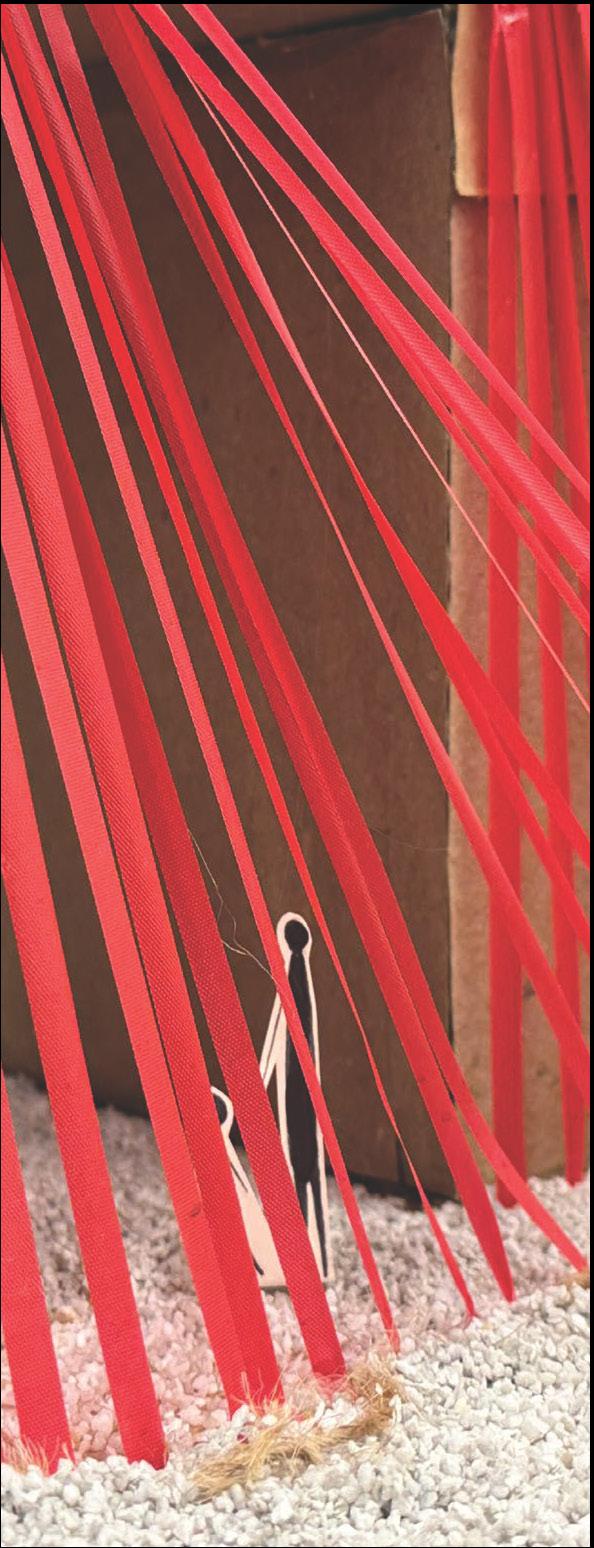
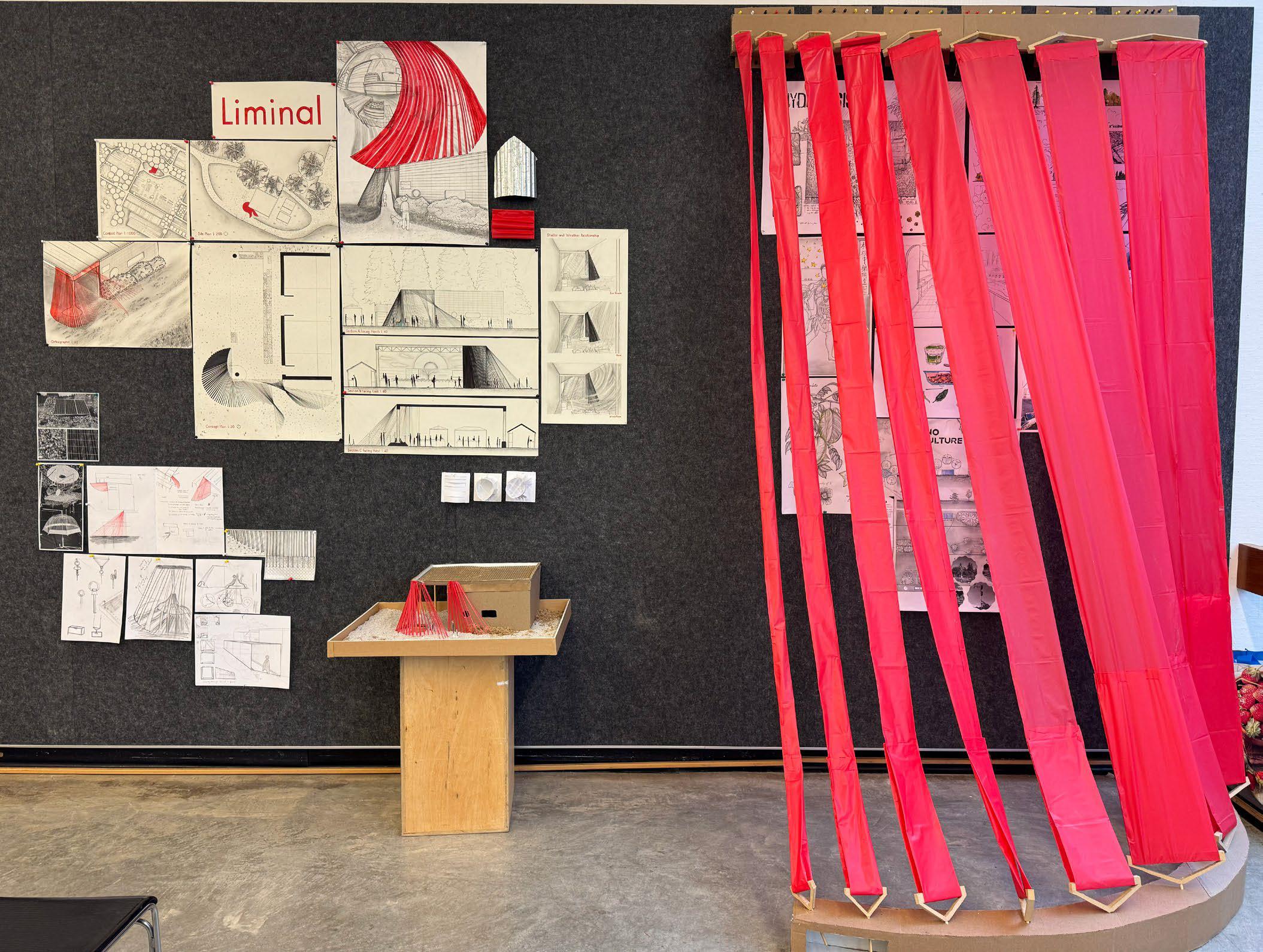
What is the meaning of shelter? Is it the physical protection from climate that draws us in, or the psychological comfort of containment and safety? Liminal explores the threshold between the openness of the farm and the enclosure of the farmers market, creating a space for both circulation and dwelling. Through gradients, shifting densities, and colour transitions, the installation reexamines how shelter is perceived, felt, and experienced.
Kristina Remiz
Harvest Hut, UBC Farm, Vancouver
December 2025
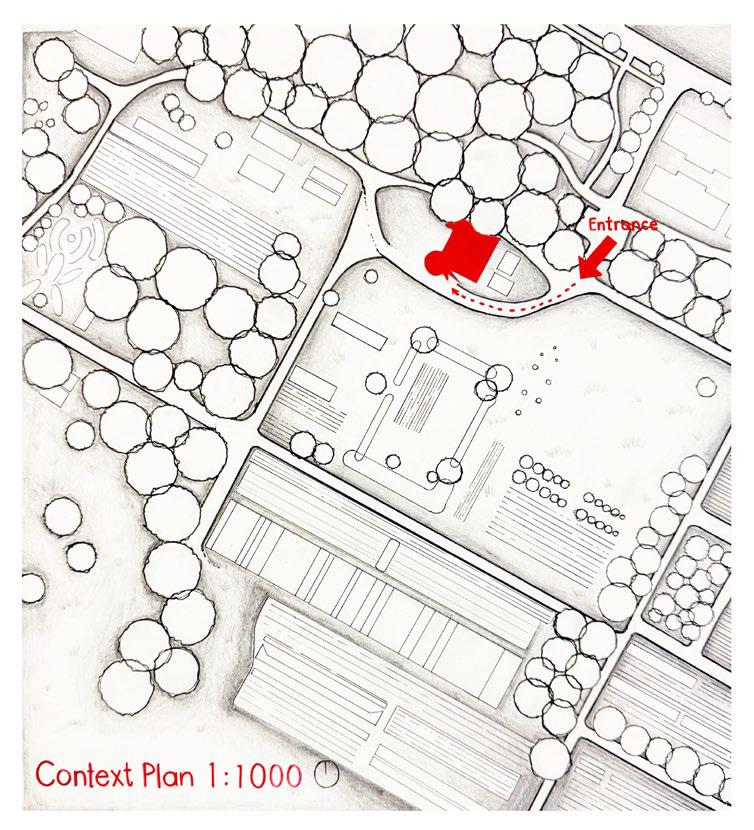
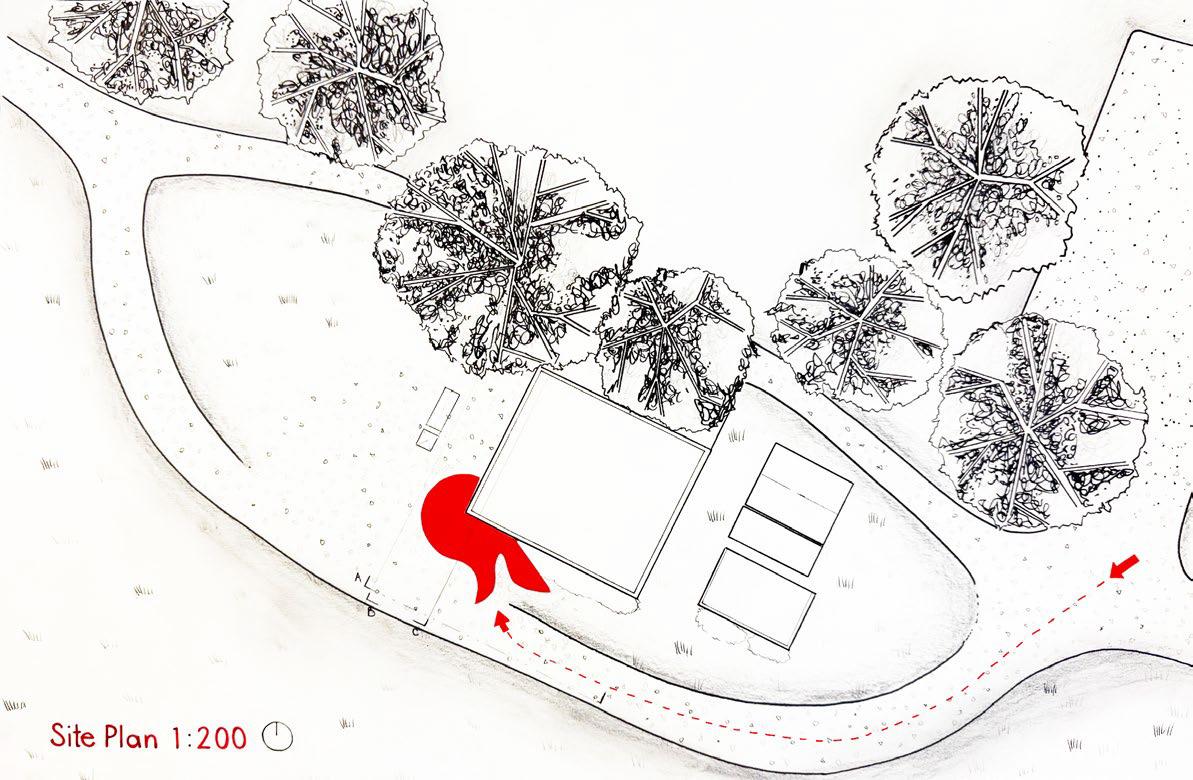
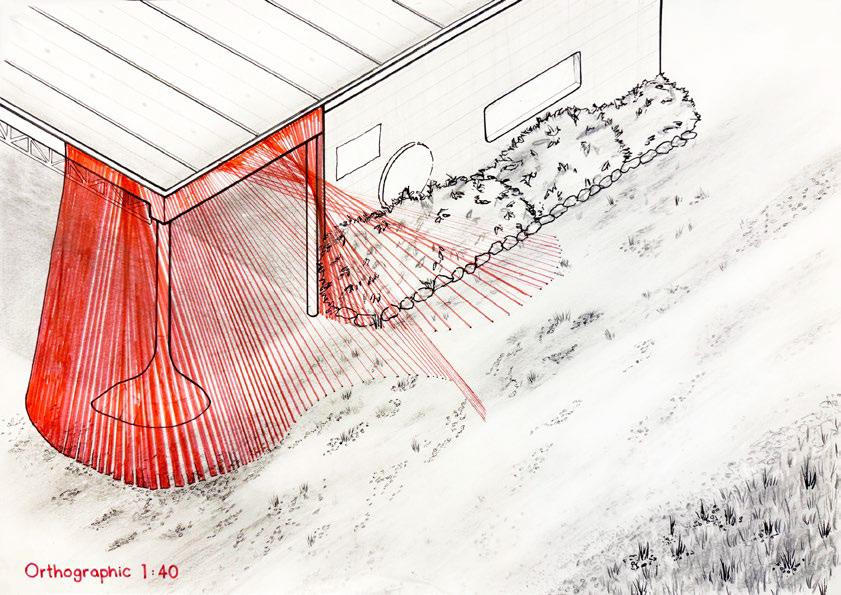
The Harvest Hut is the only sheltered structure on the farm, located approximately 100 metres west of the UBC Farm entrance. The site functions primarily as a weekend market where visitors purchase fresh produce. On weekdays, it is used almost exclusively by farm workers for preparing produce, resulting in limited public activity and no designated seating or gathering space. The ground surface is loose gravel, with a nearby tent used for washing produce and a metal roof structure covering the market area.
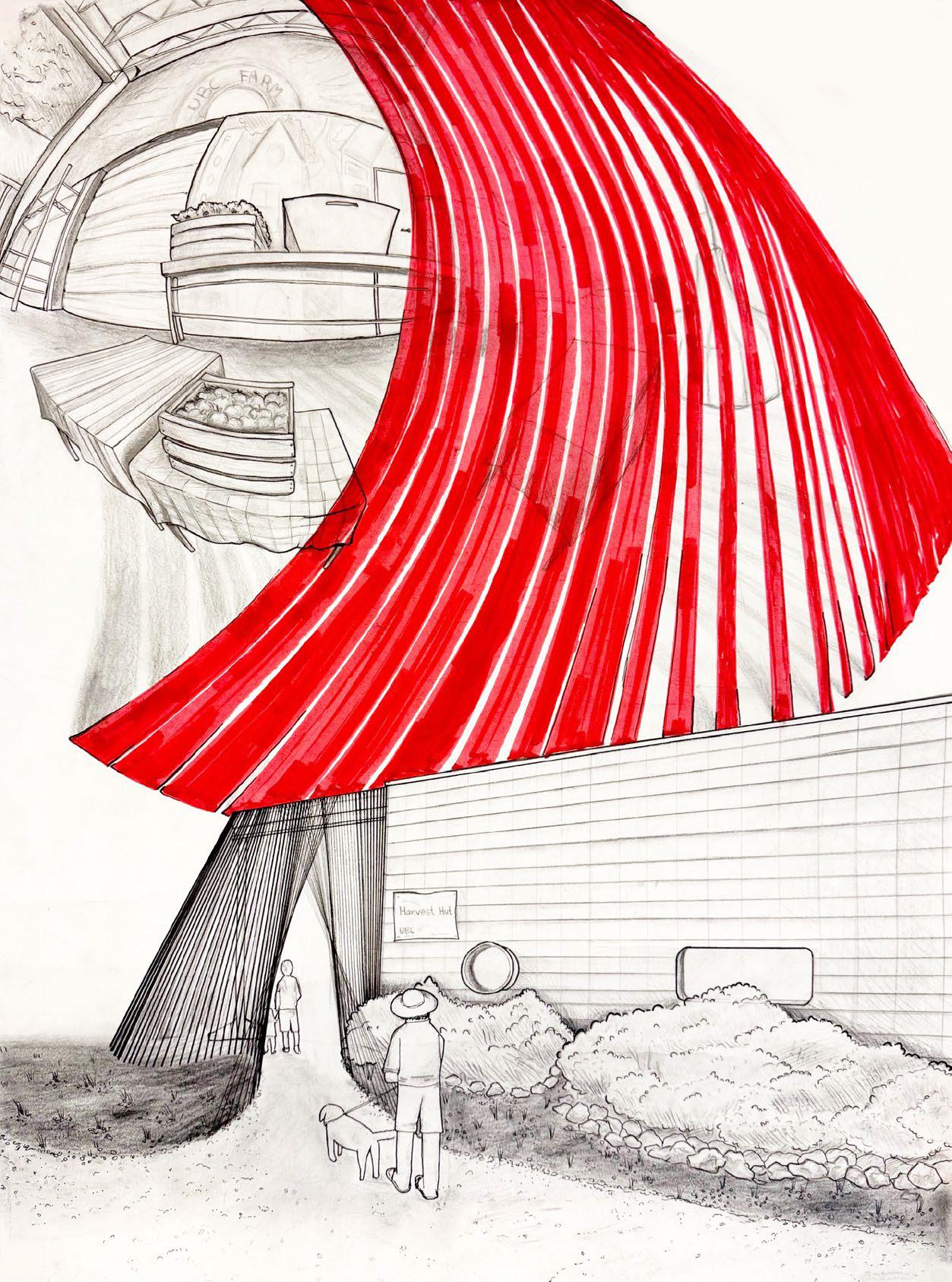
The design intent of Liminal is to create a transitional experience between the open farm and the enclosed Harvest Hut. Positioned to face the main entrance, the installation guides visitors into the hut, enhances its role as a social and functional space, and introduces seating and areas for rest.
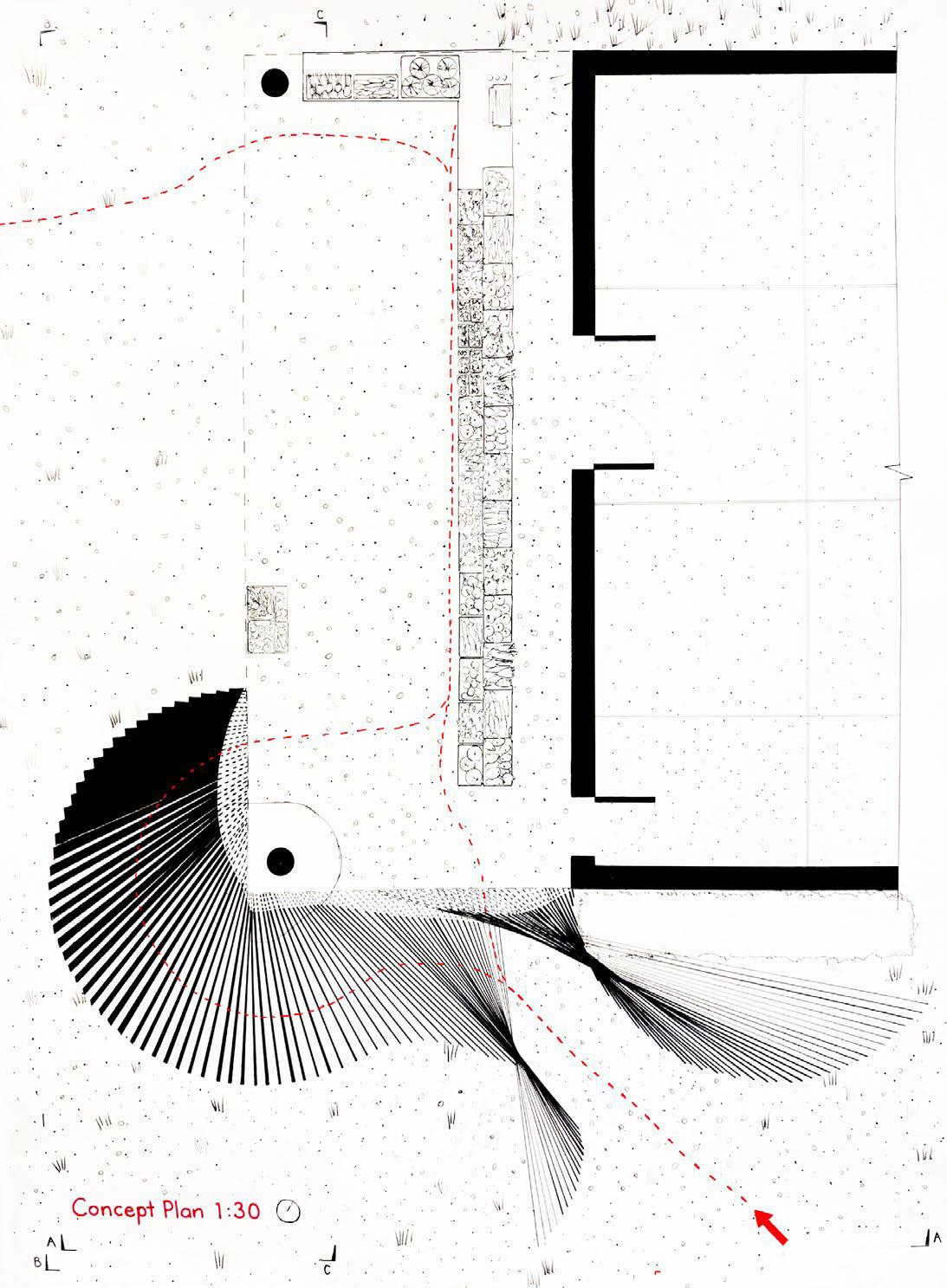
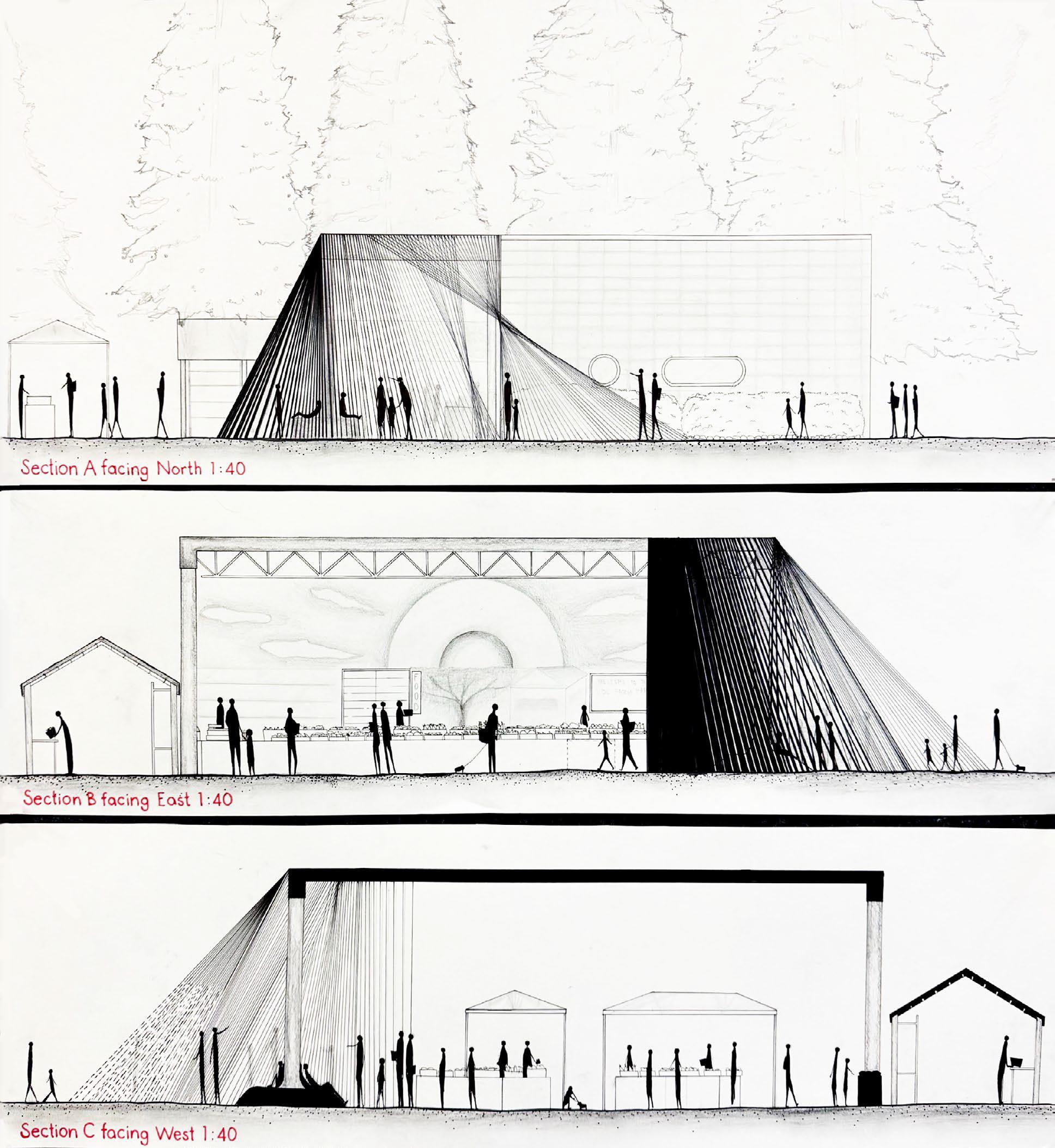
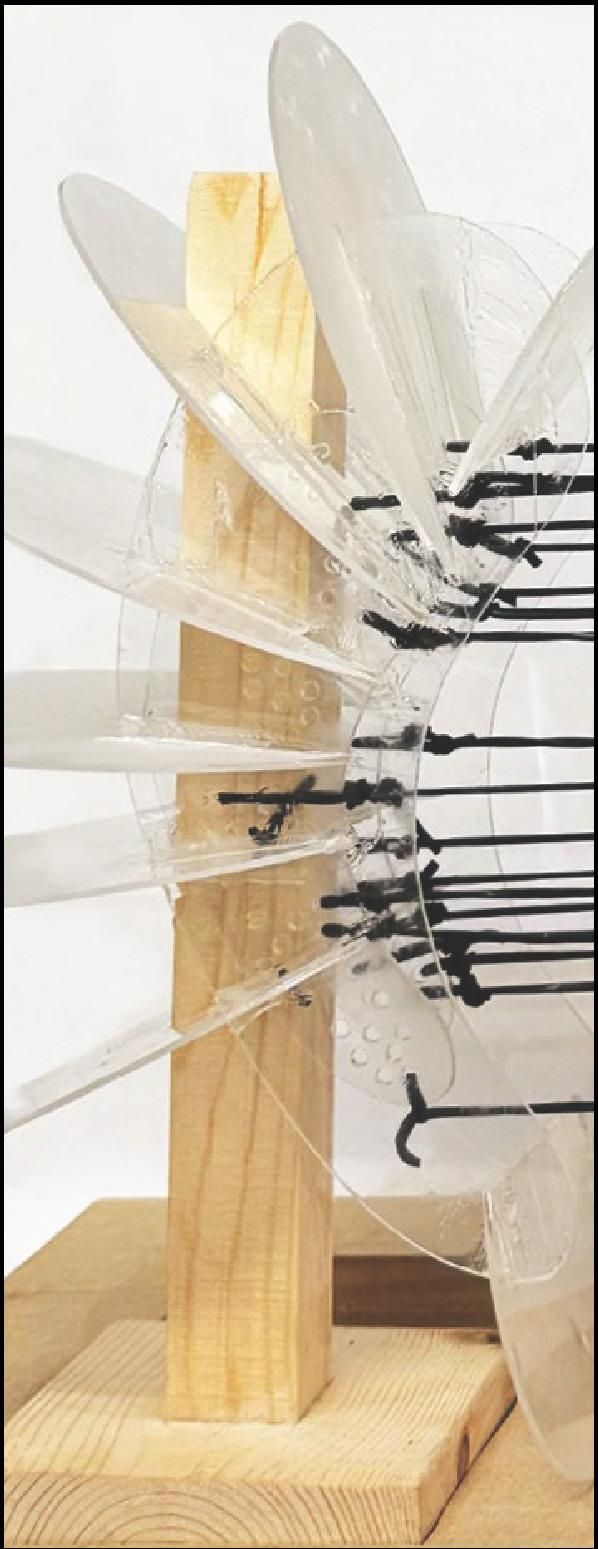
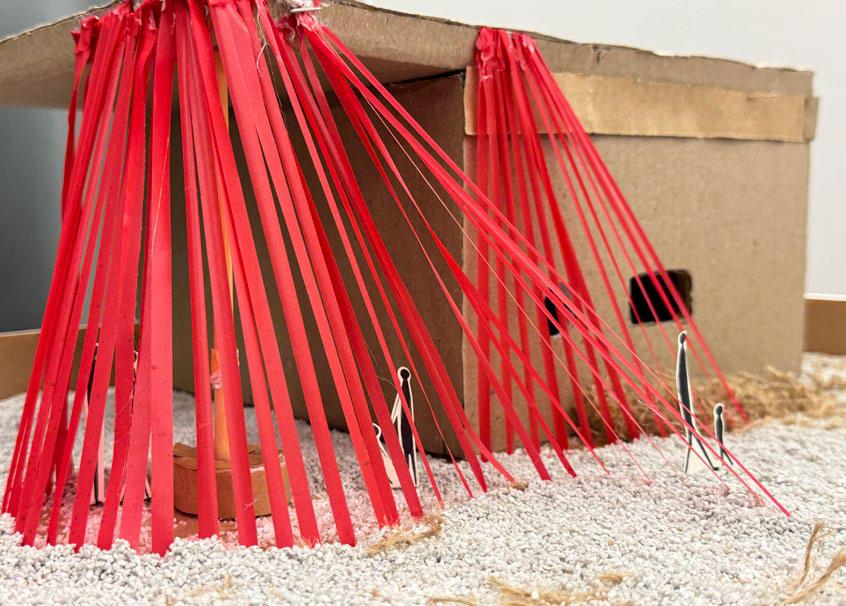
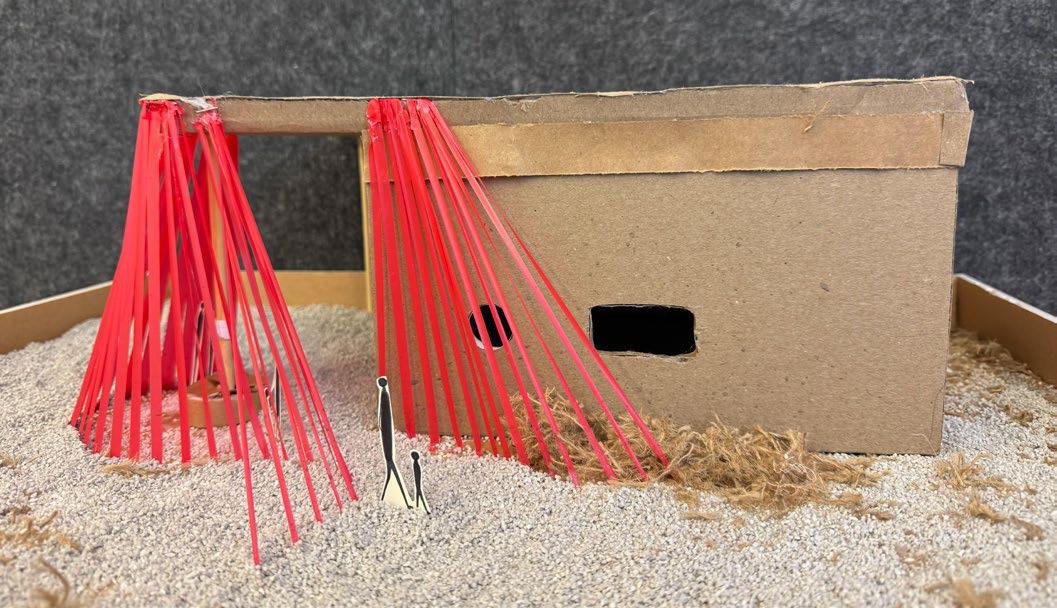
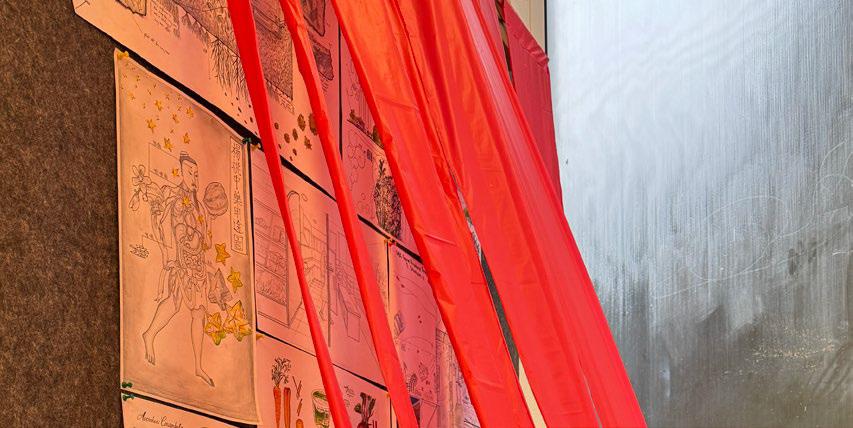
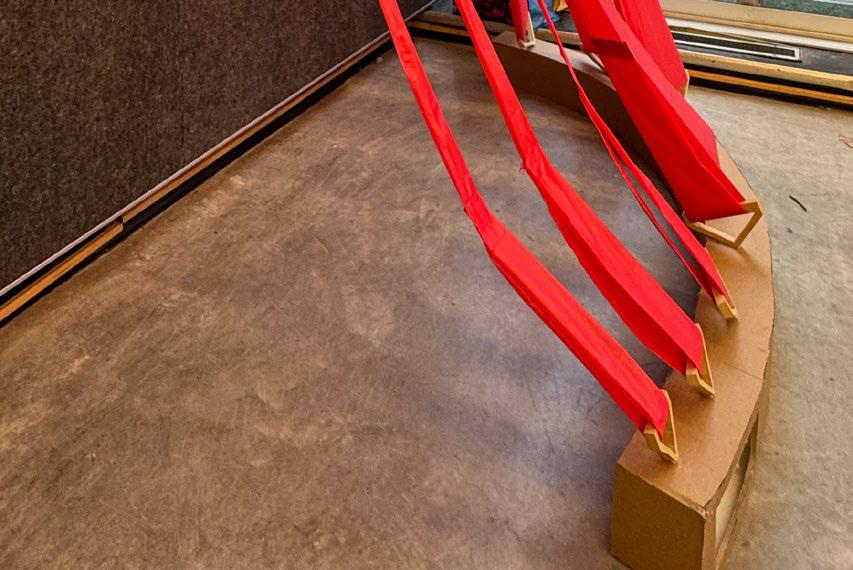
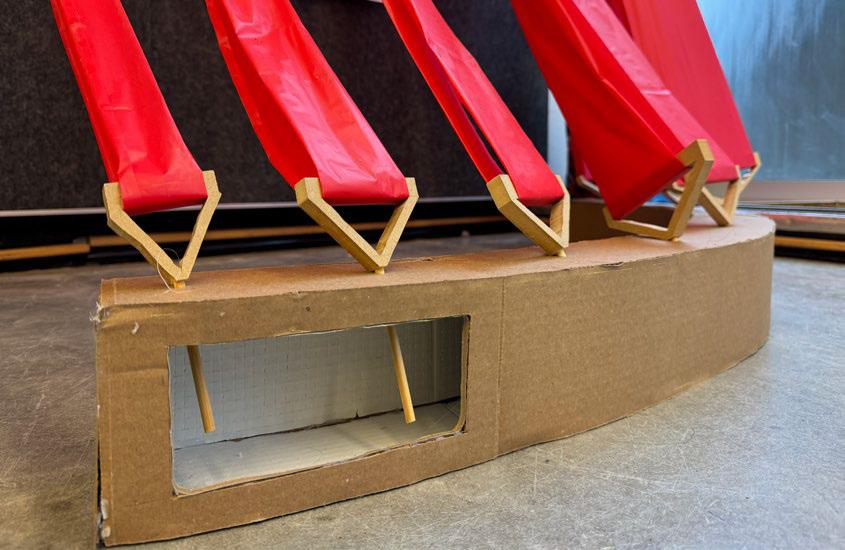
Liminal consists of 120 red strands made from tent fabric. Each strand is anchored at the top of the shelter and connected at the base to a small turning panel, allowing it to rotate in response to environmental forces. The strands form a continuous gradient—beginning thin and widely spaced at the entrance and becoming progressively denser and thicker deeper inside the installation. This shifting density articulates the transition from openness to enclosure.
Red carries ambiguous meanings. It can evoke danger, urgency, or blood, yet it is equally associated with warmth, vitality, and love. Liminal embraces this ambiguity by allowing visitors to form their own interpretations rather than prescribing a fixed meaning. The red fabric becomes an emotional and atmospheric layer, open to multiple readings.
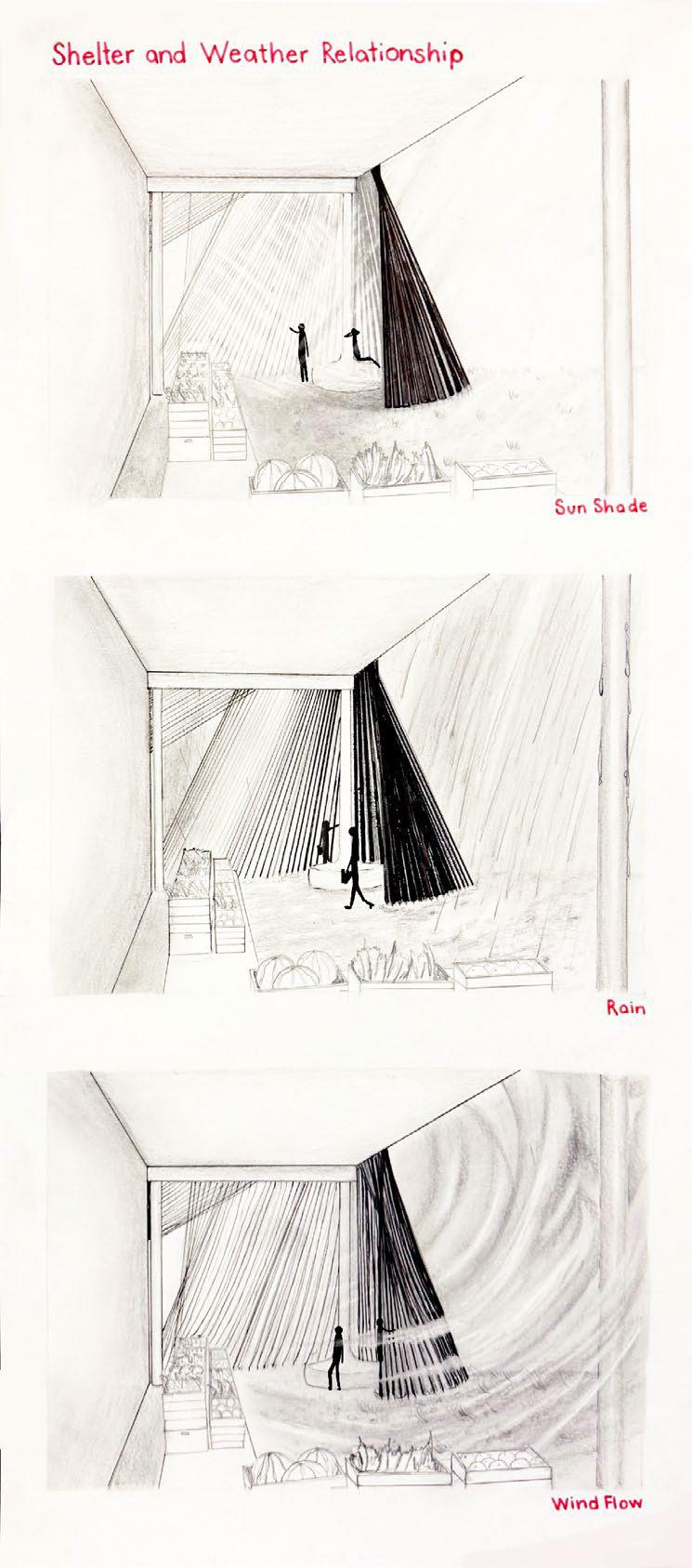
Sunlight penetrates through the tent fabric, with the red material diffusing the light to create soft, atmospheric shadows that evoke the feeling of shelter. As the gradient tightens, the interplay of sunlight and red fabric becomes progressively denser, reinforcing the sense of moving toward a more protected space.
Liminal provides partial rain protection. At the entrance, gaps allow rain to pass through, while deeper inside, the increasingly dense canopy offers greater shelter. Rainwater travels along the tent fabric, dripping through openings where the material remains thin and channeling off surfaces where the structure is more dense.
As wind moves through the installation, each fabric strand responds dynamically. The small rotating connectors at the bottom of each strand allow them to spin and sway. This gentle rotation animates the structure, making the gradient of fabric not only visual but kinetic.

Brief Overview Team Site
Date Executed
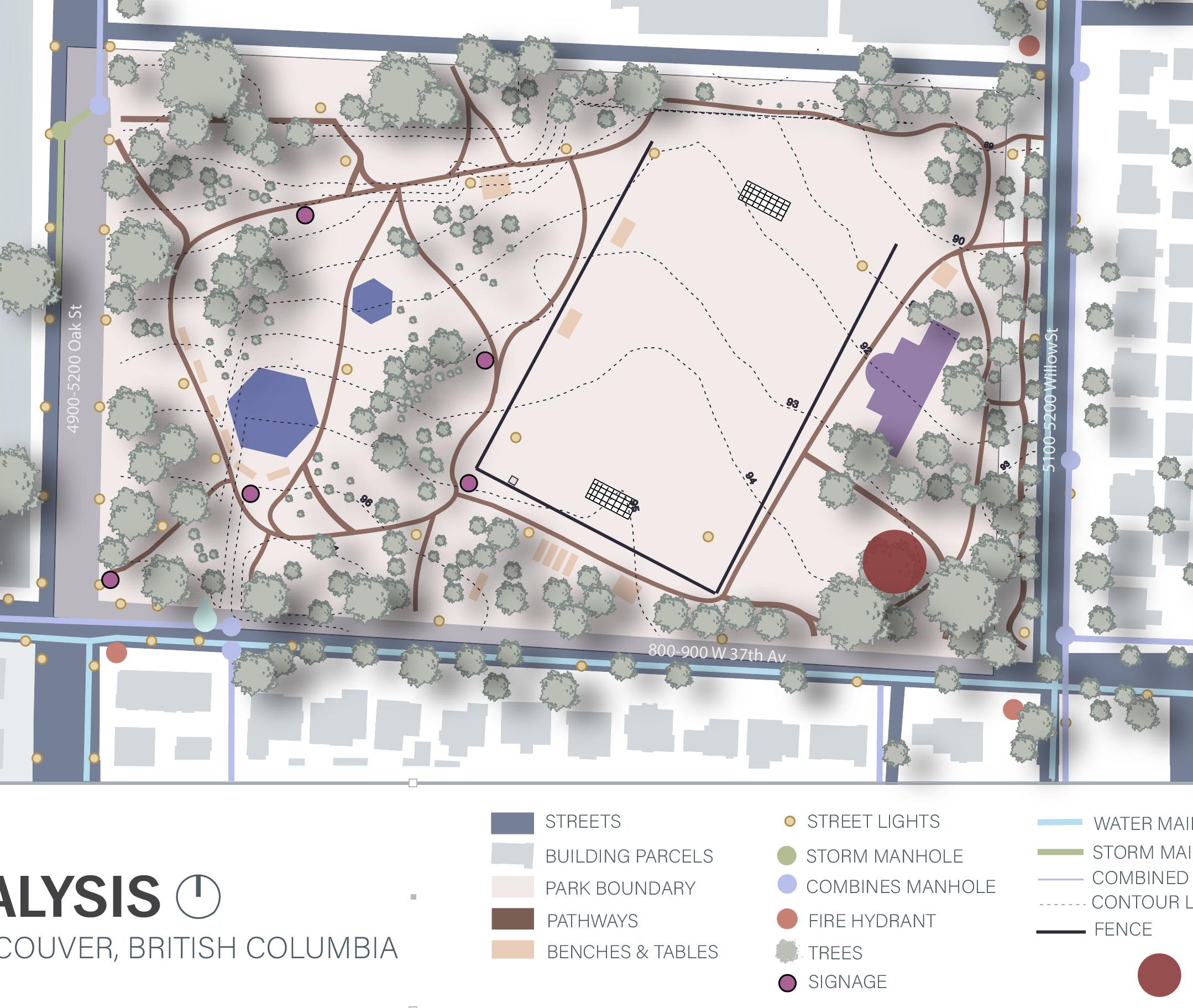
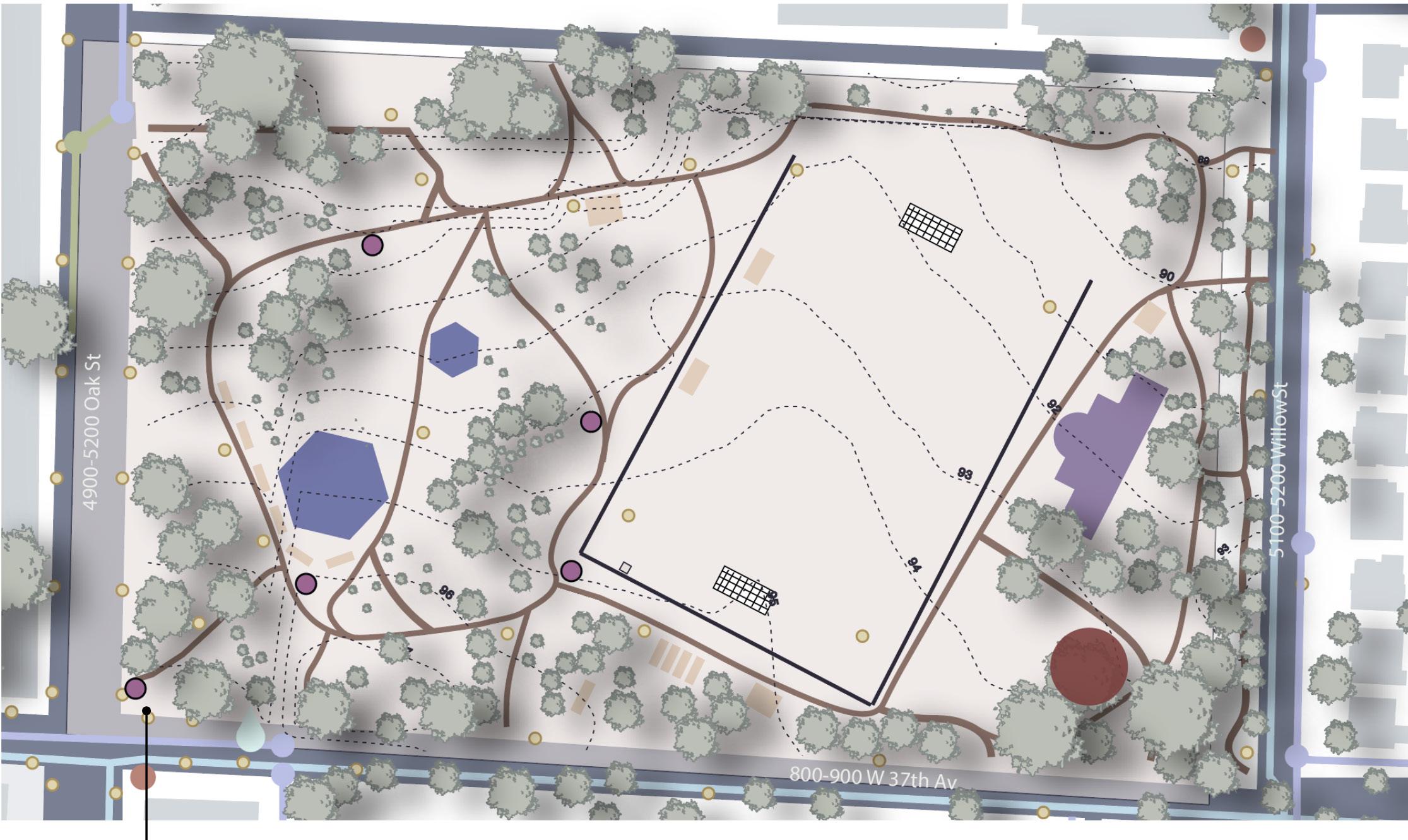
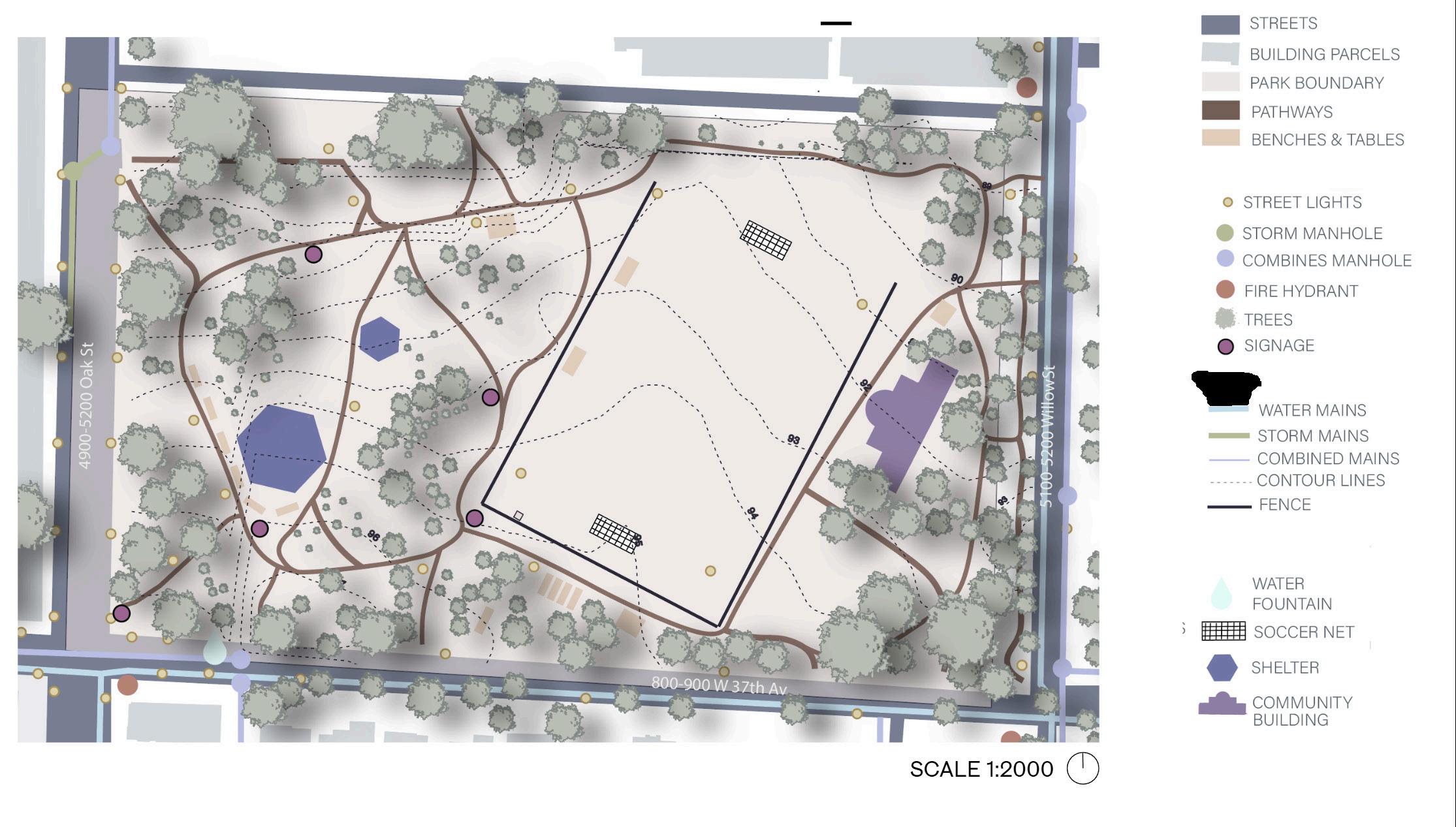
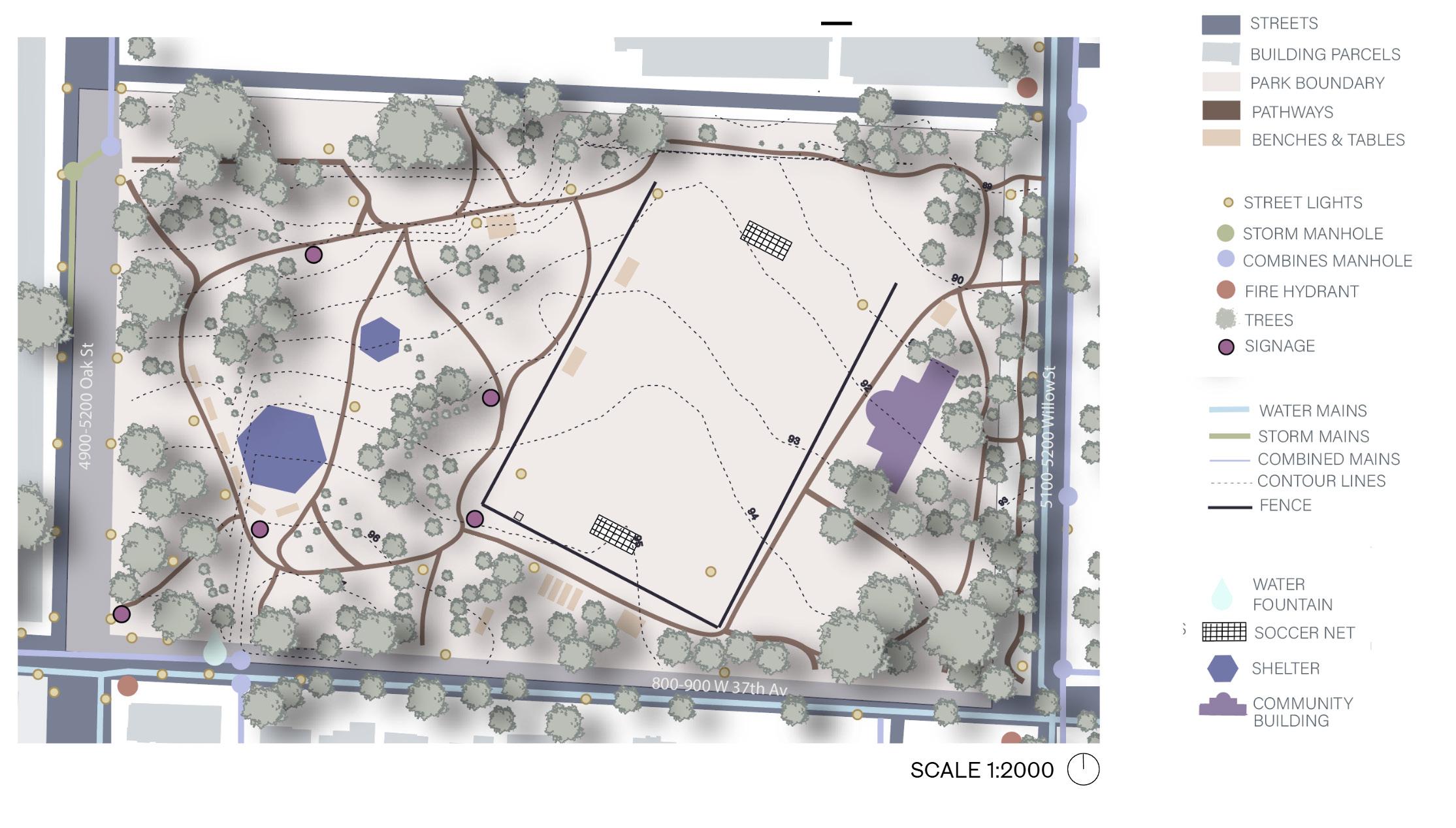
Imagining a better park
Following a thorough analysis of Oak Meadows Park, this proposal introduces interventions focused on circulation, accessibility, cultural expression, ecological restoration, sustainability, and social engagement within the park.
Stephen Antonios, Mehran Rahman, Spencer Sun
Oak Meadows Park, Vancouver, BC
November 2025
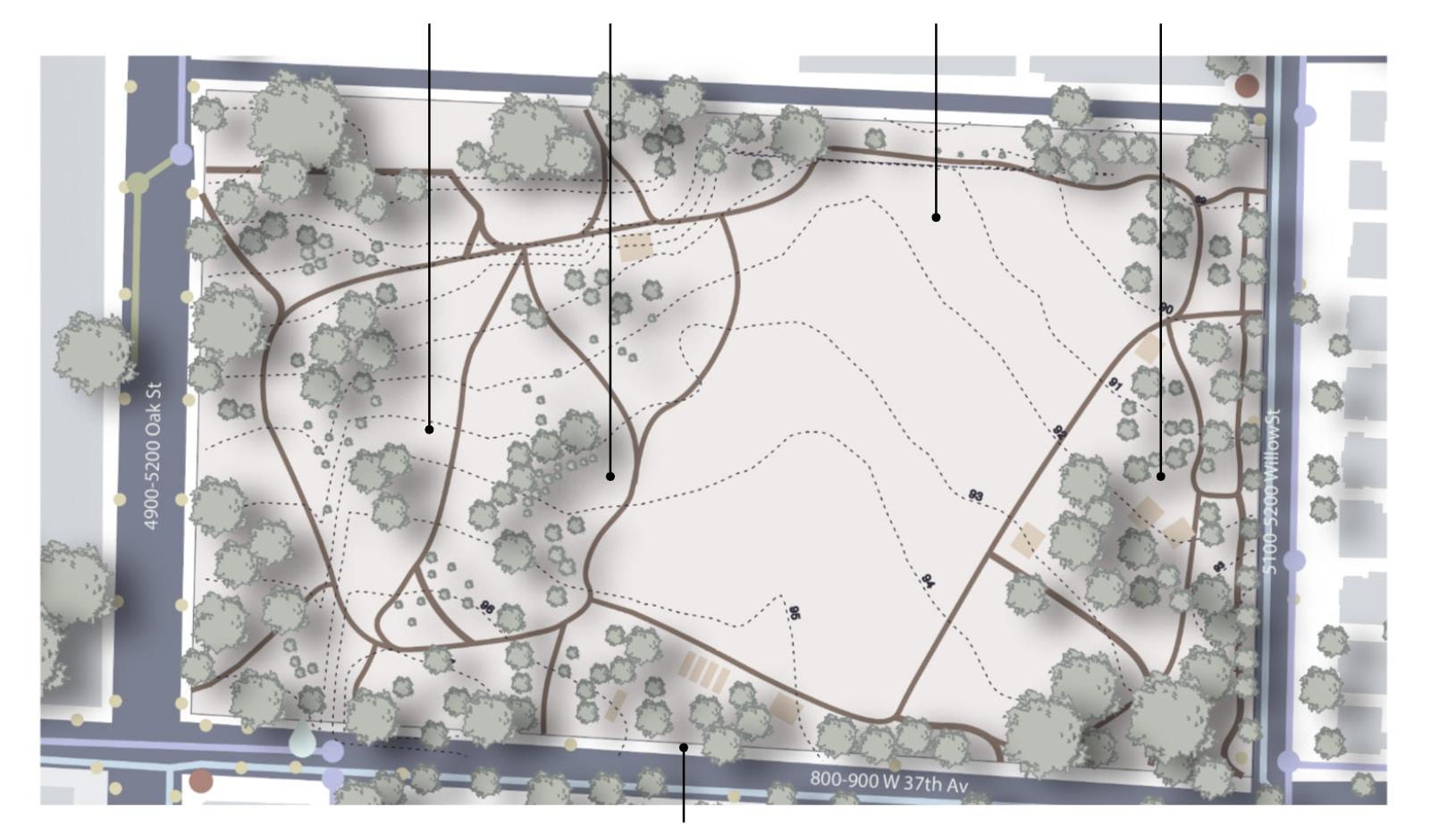
About the Site
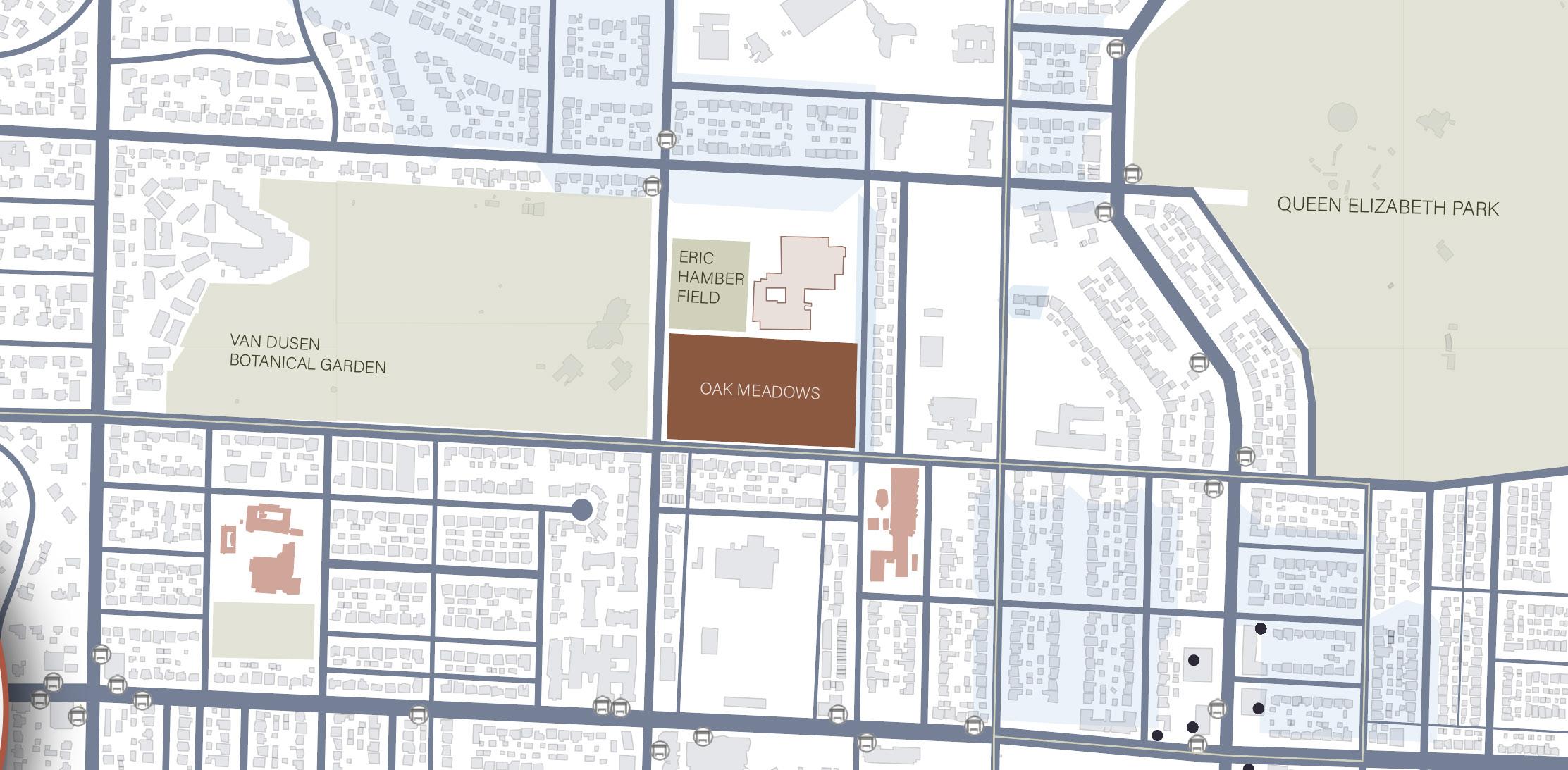
Oak Meadows is located in Vancouver’s Shaughnessy neighborhood along a prominent arterial road, surrounded by two public schools and four public parks within a ten-minute walking radius.
Oak Meadows includes nature preservation meadows, an off-leash dog area, an unused soccer field, and a small playground. Despite these amenities, the park remains underutilized, indicating a disconnect between program and public engagement.
The proposal responds to identified park demographics by improving accessibility and mobility, strengthening site activation, and implementing strategically zoned programming to increase public engagement and usability.
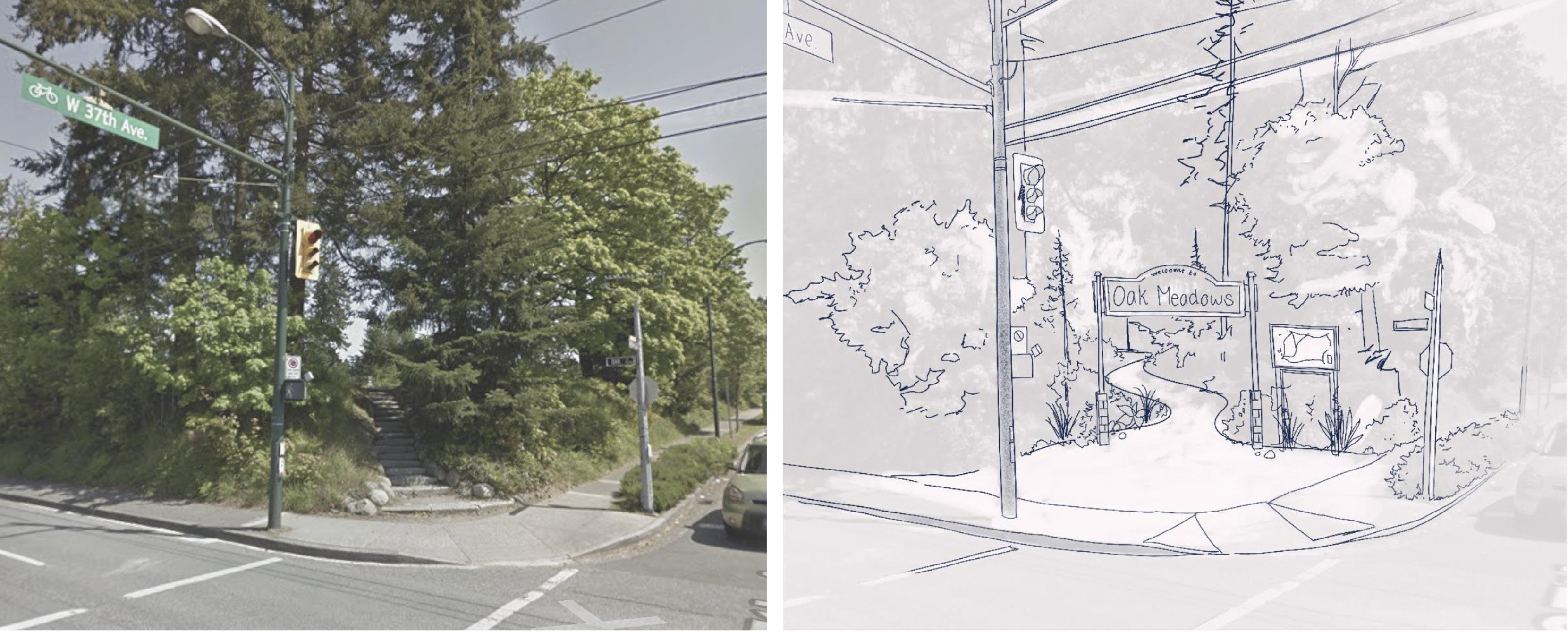
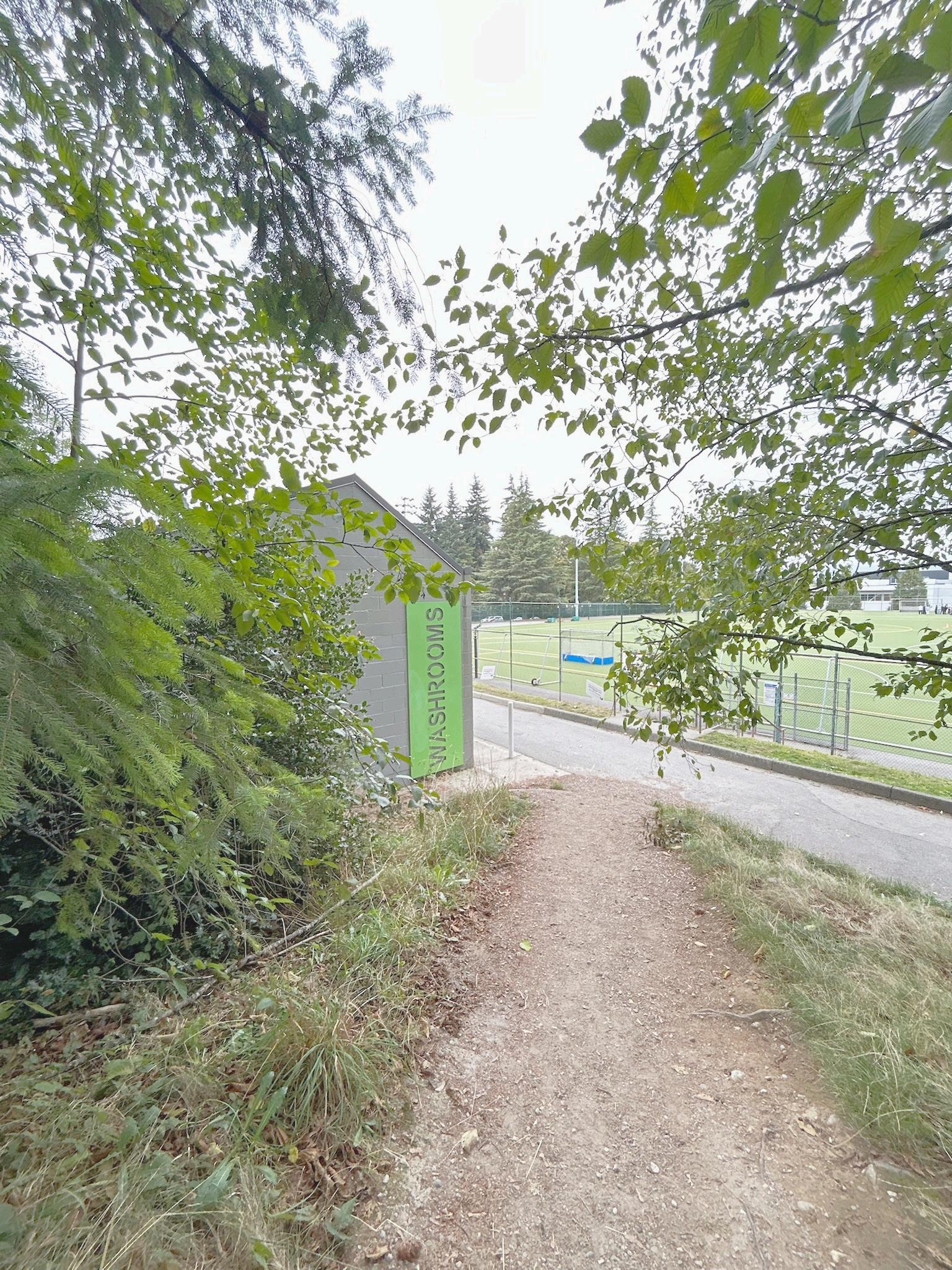
Leveraging the site’s frontage along a major arterial road, the design proposes repositioning the primary entrance to this edge to enhance visibility, strengthen circulation, and encourage greater public activation.
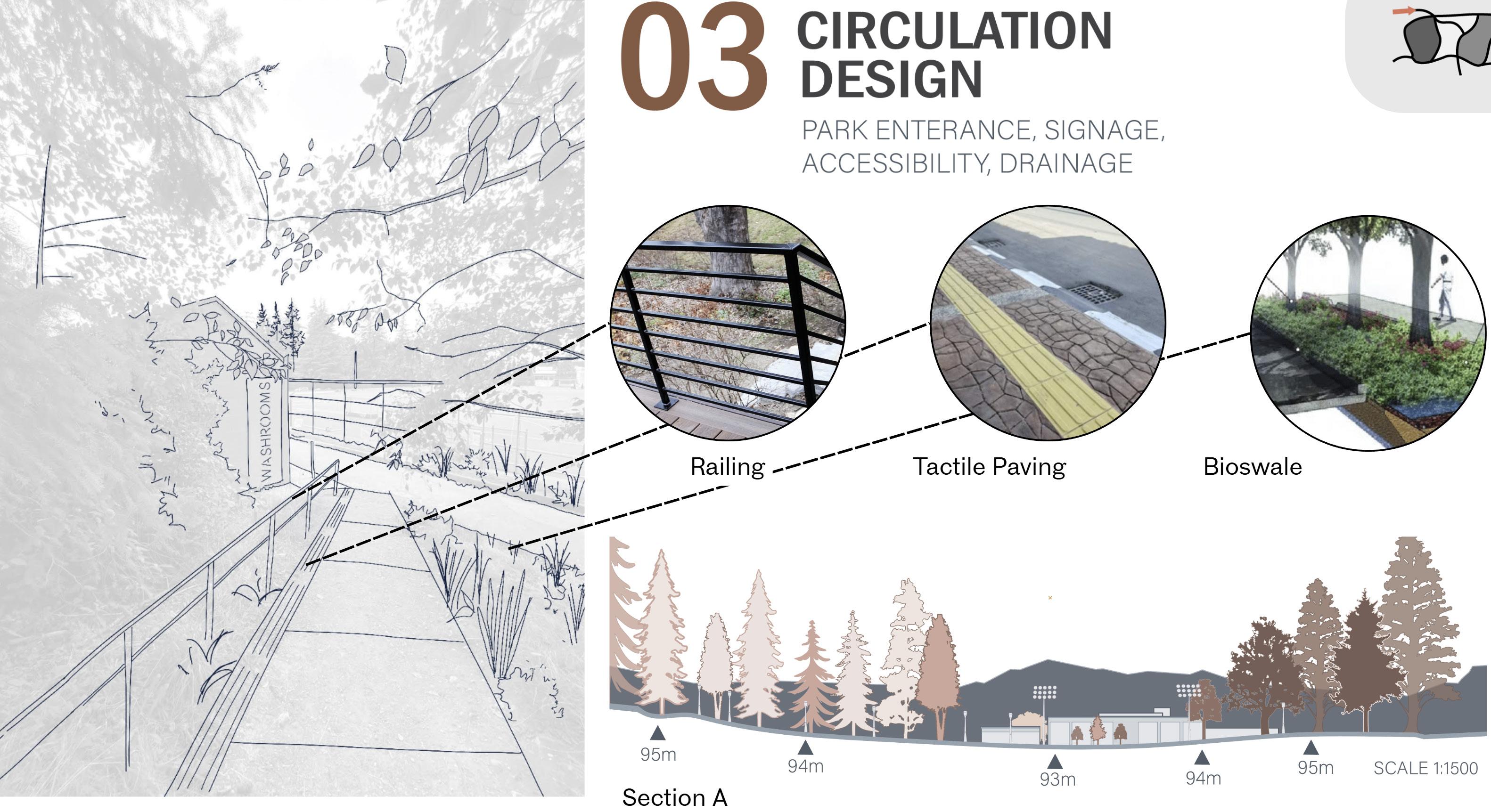
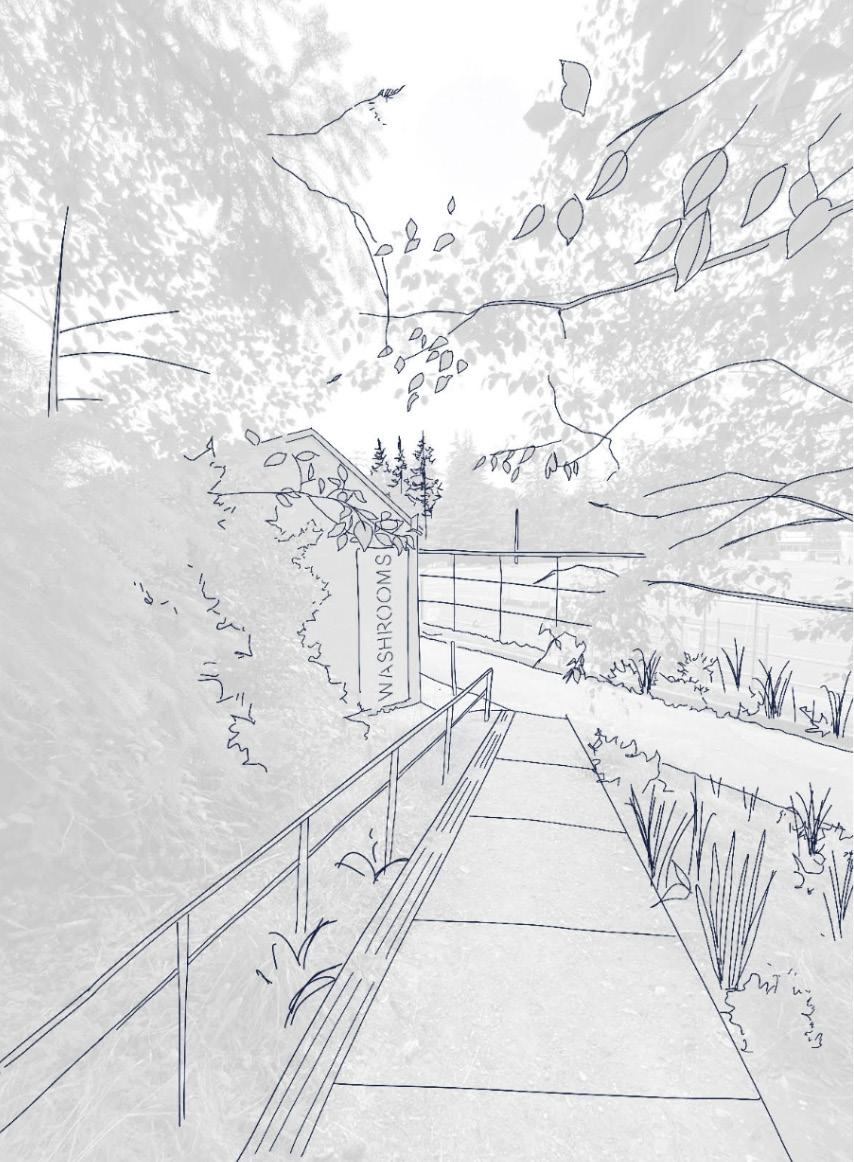
To enhance accessibility, railings and tactile paving are proposed at key entries and along sloped pathways.
Rainwater Management
Bioswales are introduced in high water-flow areas to support stormwater management and ecological sustainability.
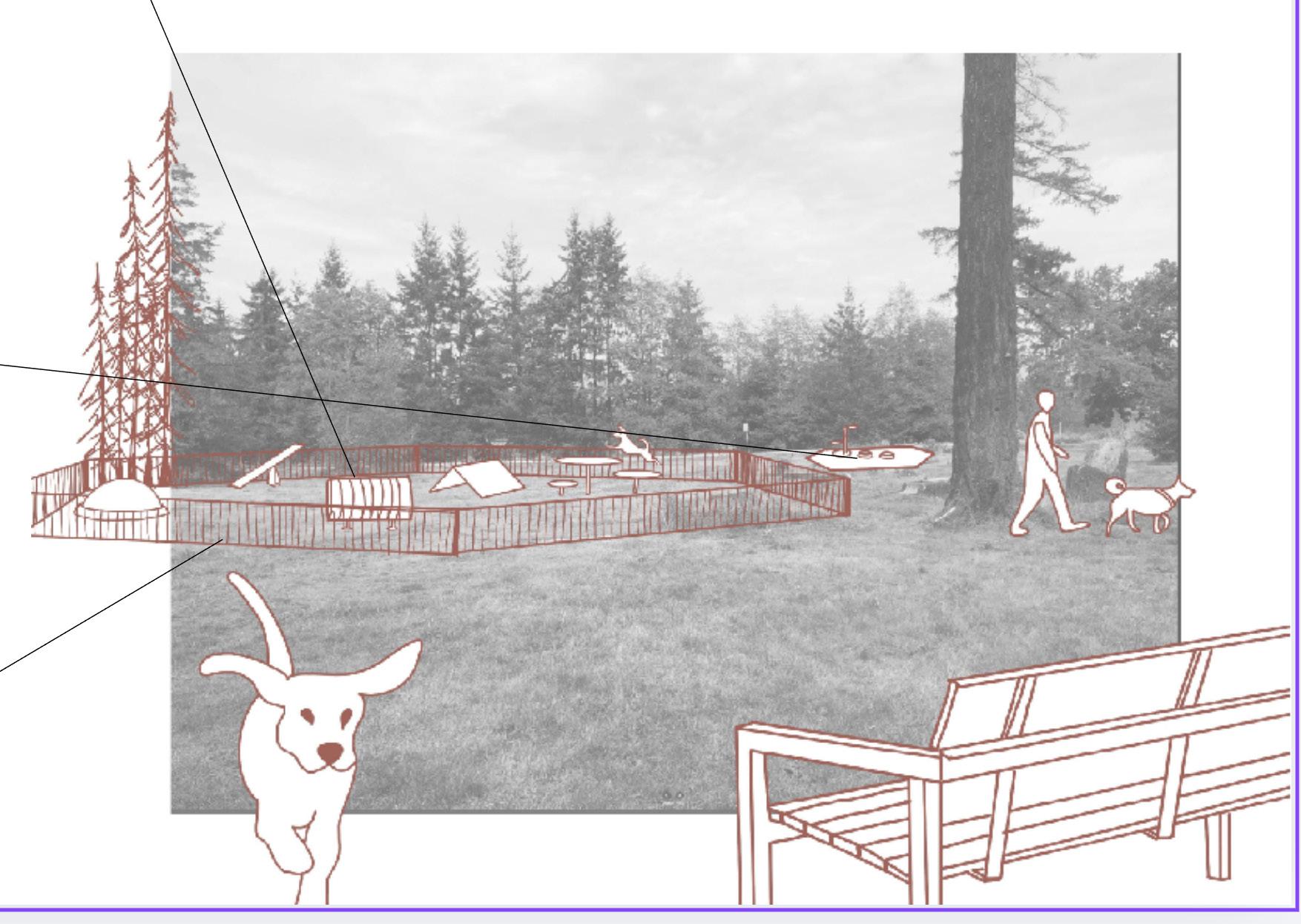
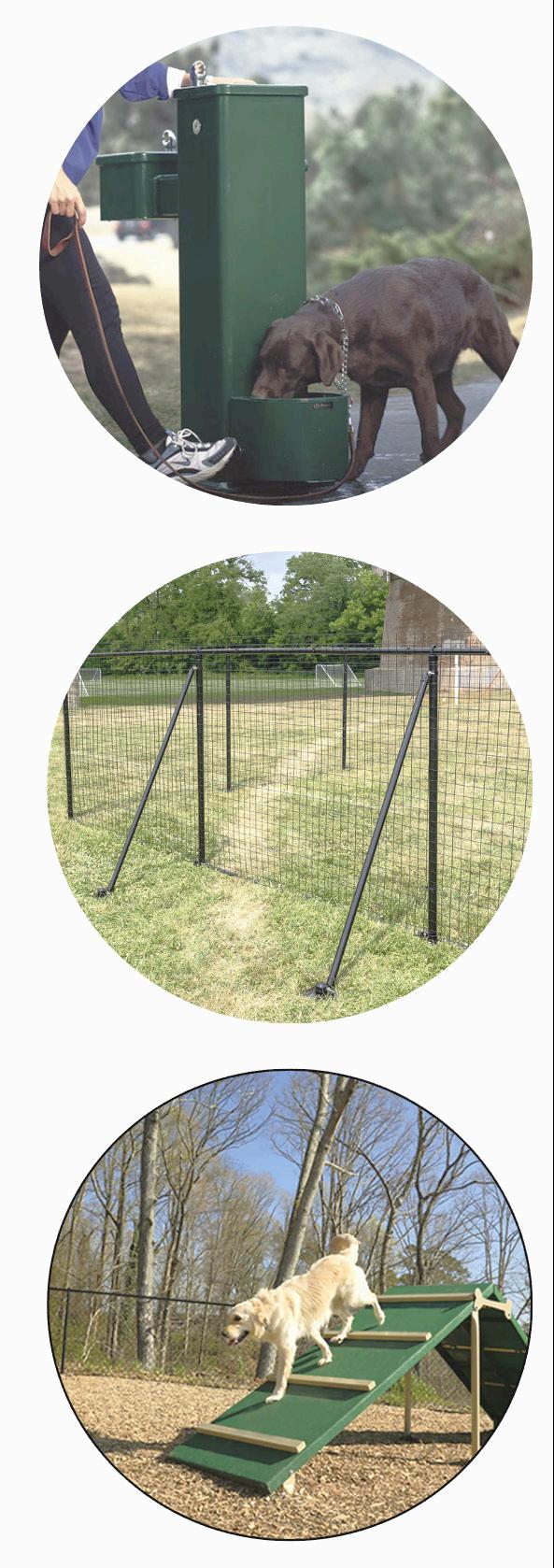
To create a safer and more inclusive off-leash environment for a range of dog owners, a designated fenced area is proposed to allow dogs to roam freely while ensuring their safety. Additional amenities, including seating and a dual human-and-dog water fountain, are introduced to support comfort and convenience for both pets and their owners.
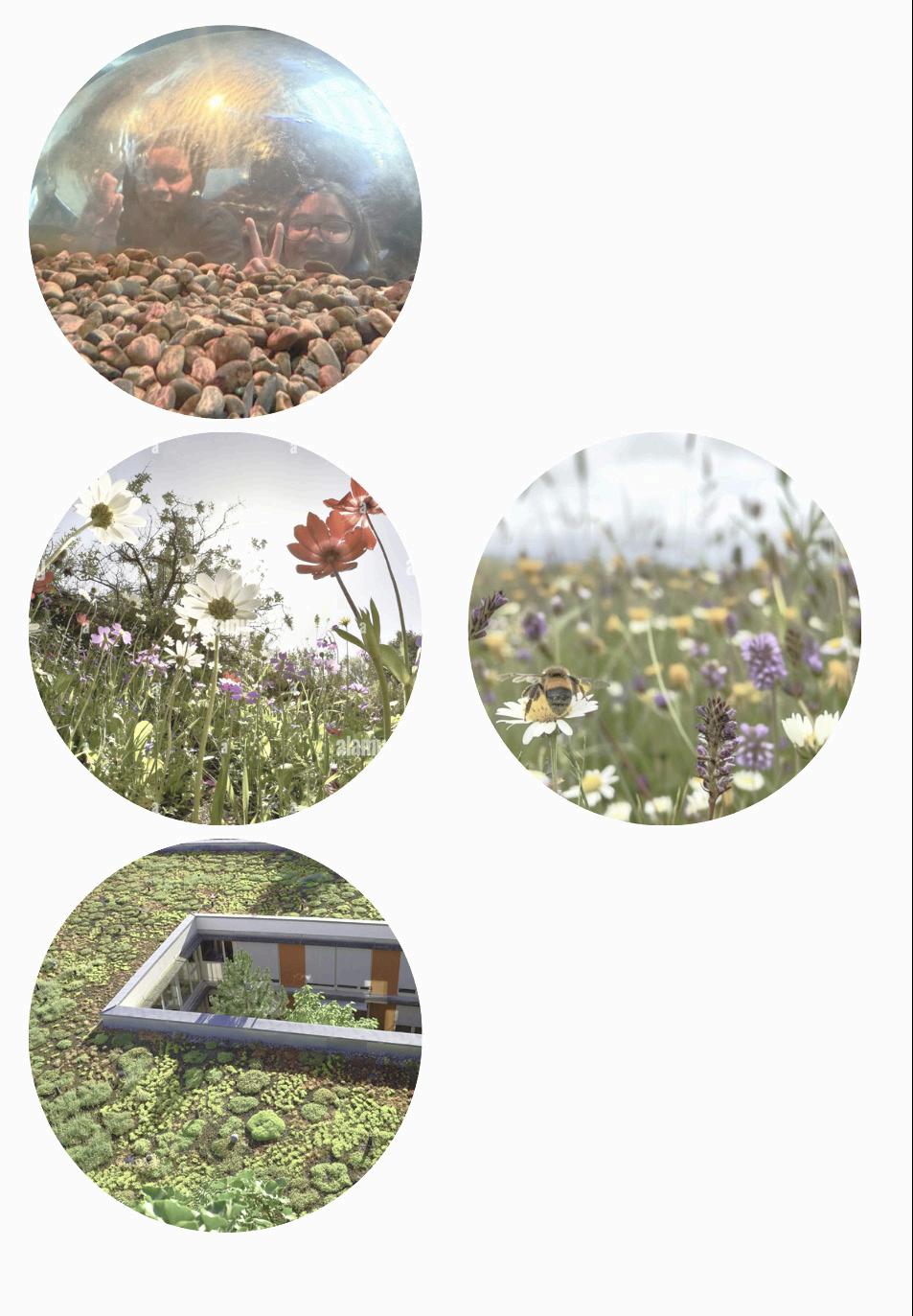
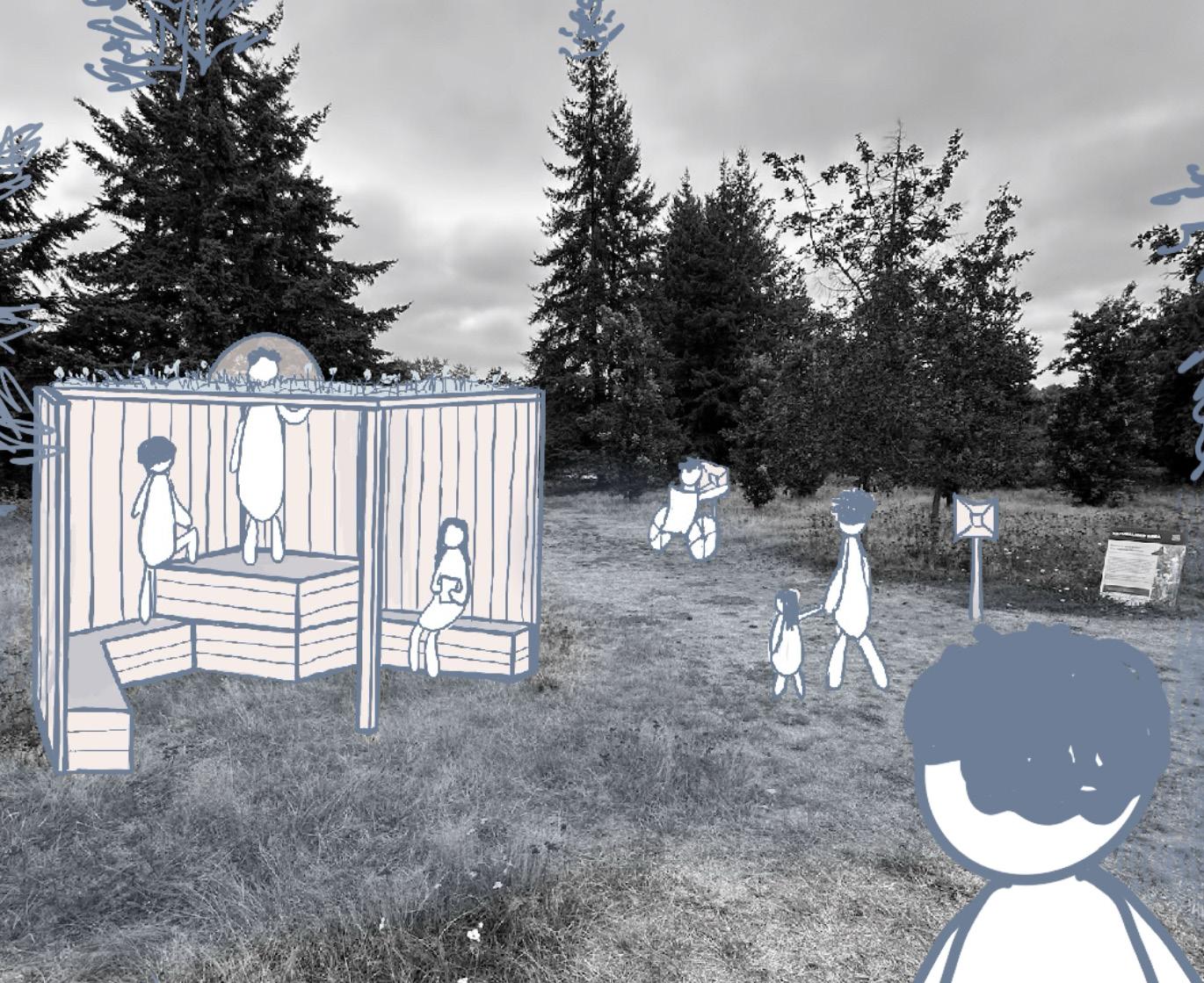
This shelter enables environmental education and observation without disrupting preservation areas. A viewing dome offers an alternative perspective of the green roof, which functions as ecological infrastructure. Peep holes at varied heights ensure inclusivity for users of all ages and abilities.
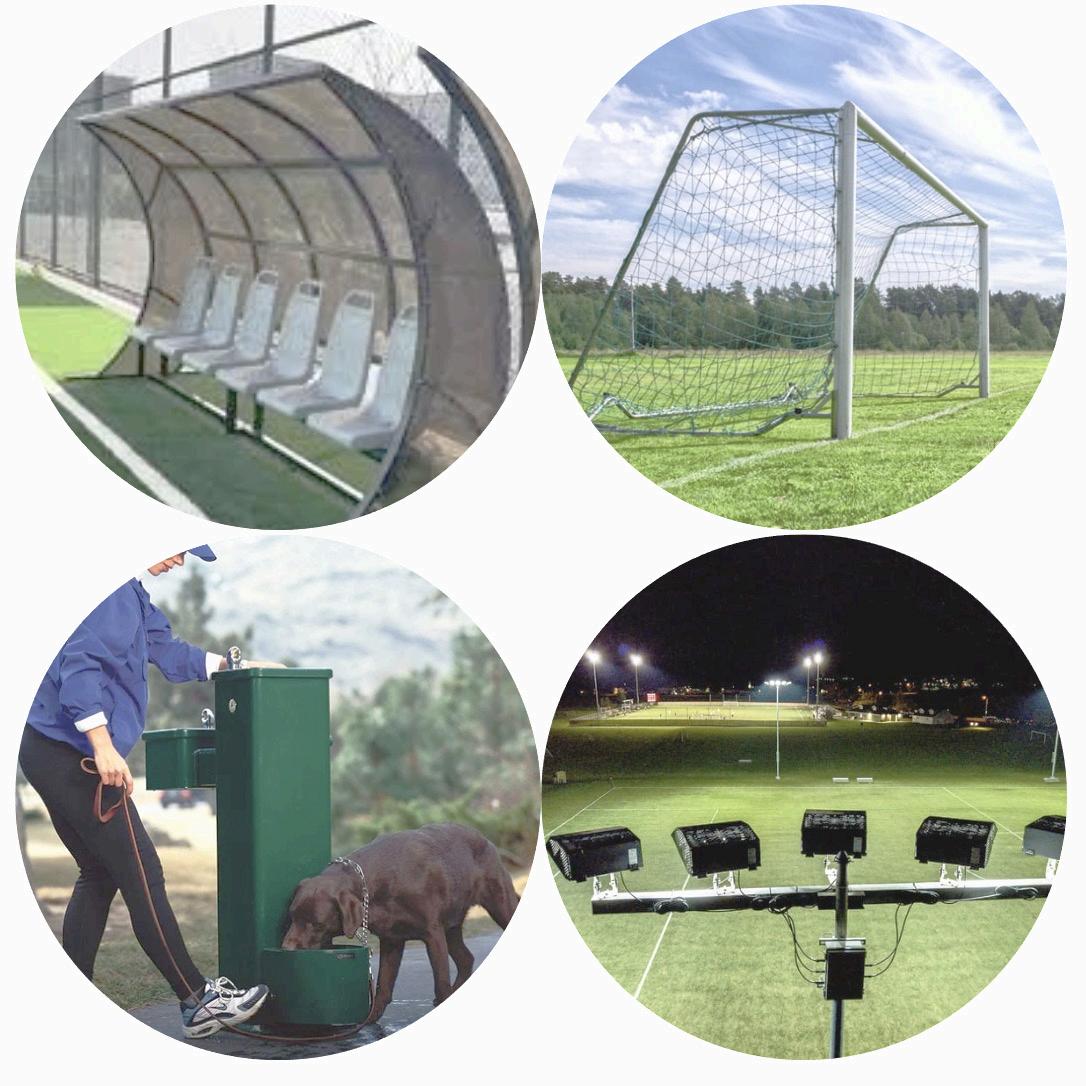
Soccer Field
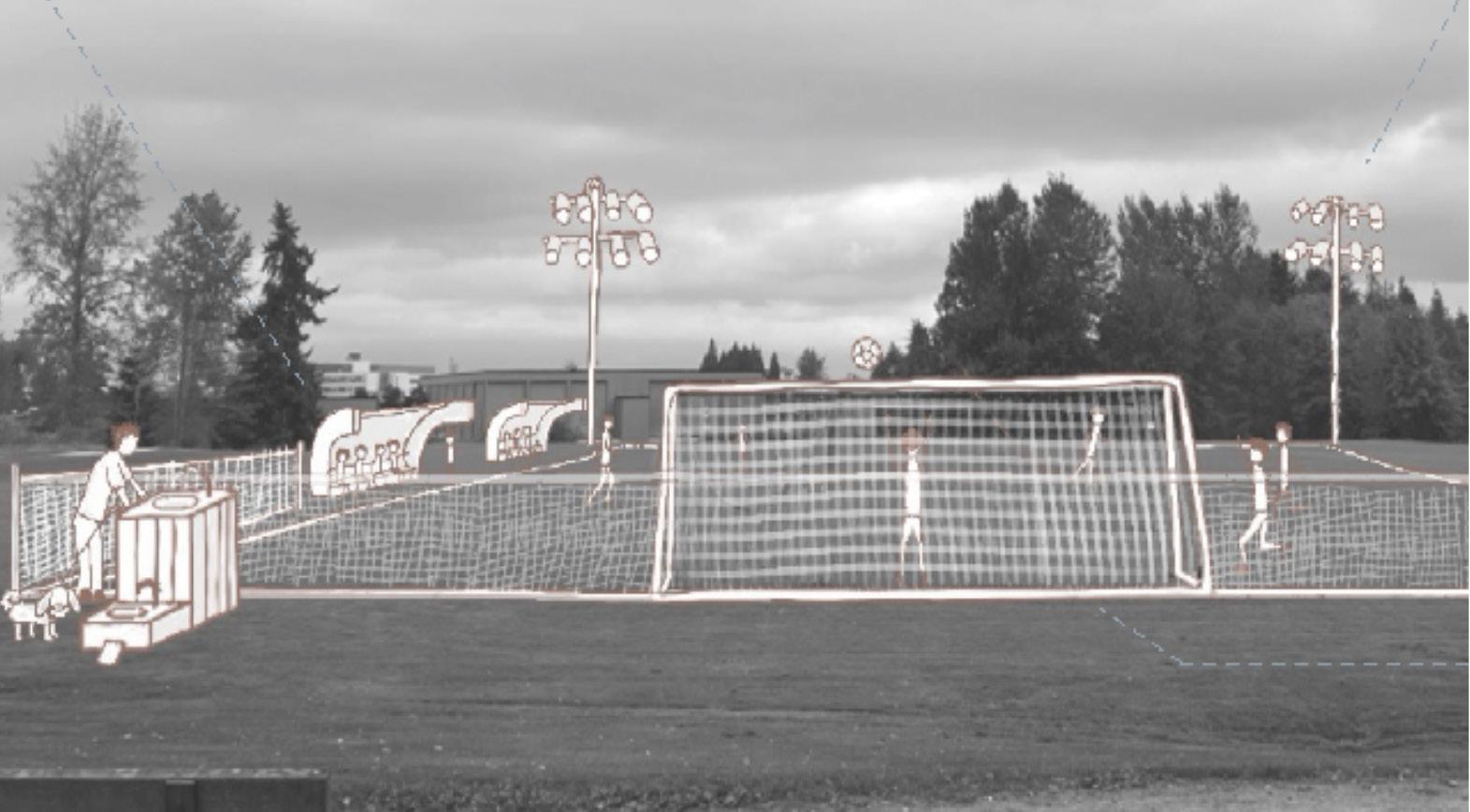
The soccer field is revitalized with new nets, team benches, and lighting to support play throughout the day and evening.
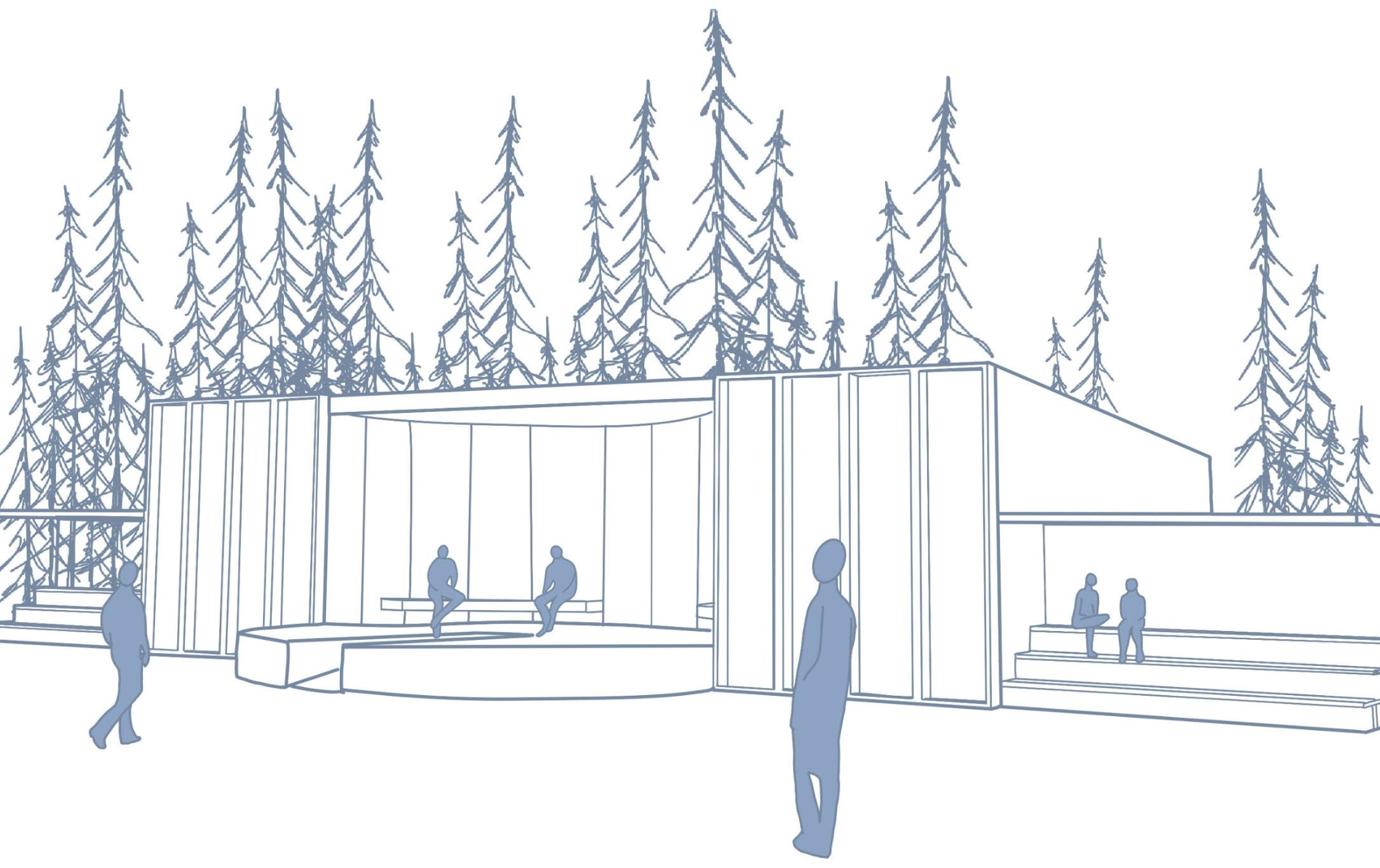
A multi-use shelter provides weather protection, spectator space, and essential amenities such as storage and washrooms. Its green roof enhances sustainability by supporting ecological performance and stormwater management.
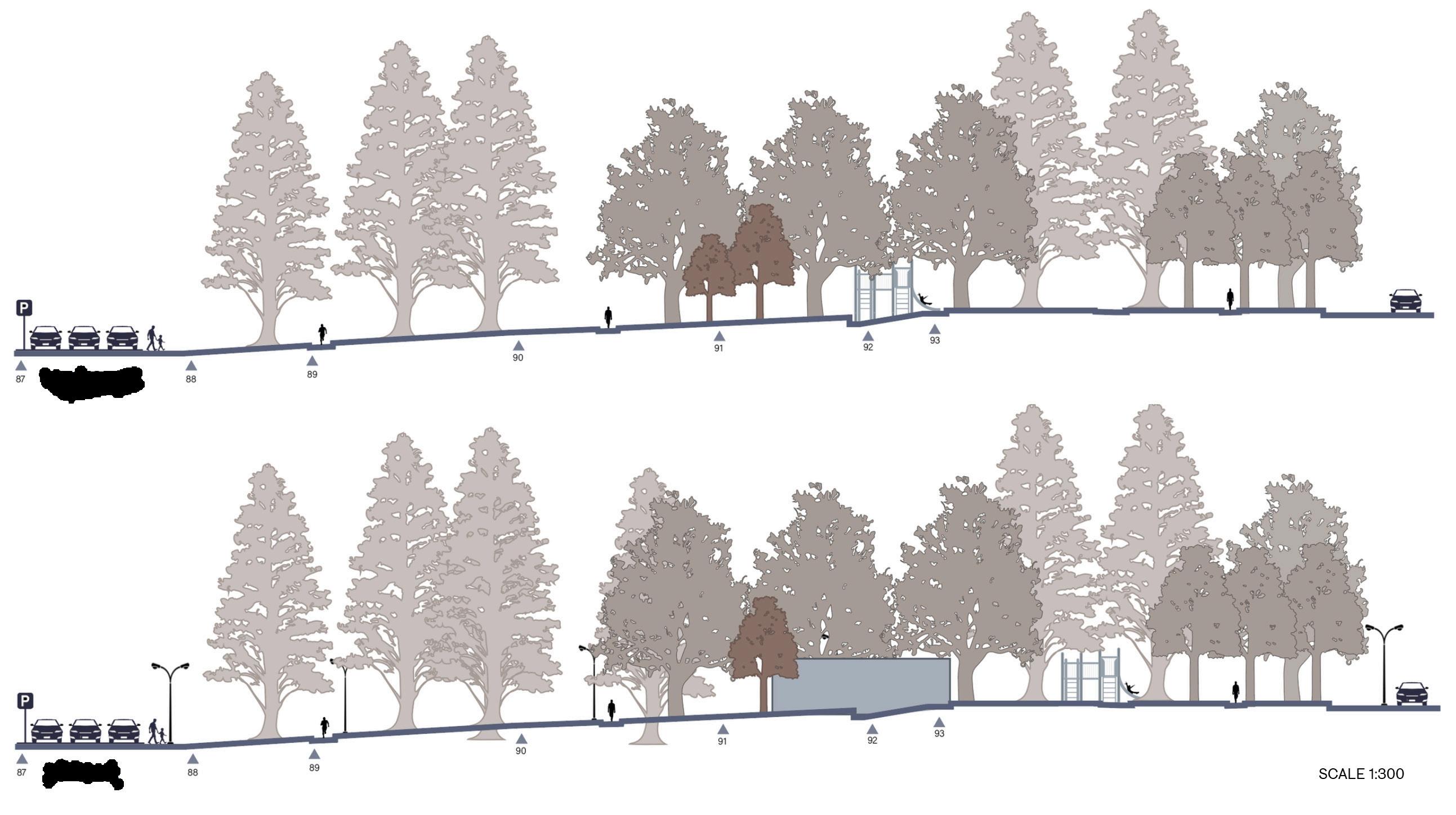
To increase visibility and safety, the playground is relocated to the park’s outer edge, improving sight lines from surrounding areas. The former playground site is repurposed as a spectator zone connected to the community building, supporting soccer games and other activities.
Synthesis
soccer net shelters/gazebos
water fountain community building playground
Oak Meadows Park excels in ecological value and diverse amenities, yet it struggles to encourage visitors to stay due to limited shelter, signage, and human-centered visibility. By studying existing stormwater flows, green roofs and bioswales are placed where they can collect and manage rainwater sustainably. Integrating multi-use shelters—each tailored to its specific program—alongside these environmentally responsive strategies creates inviting spaces that enhance comfort, usability, and long-term engagement with the park.
Brief Overview Team
Date Executed
A study of the movement and pushing the limits of abstraction
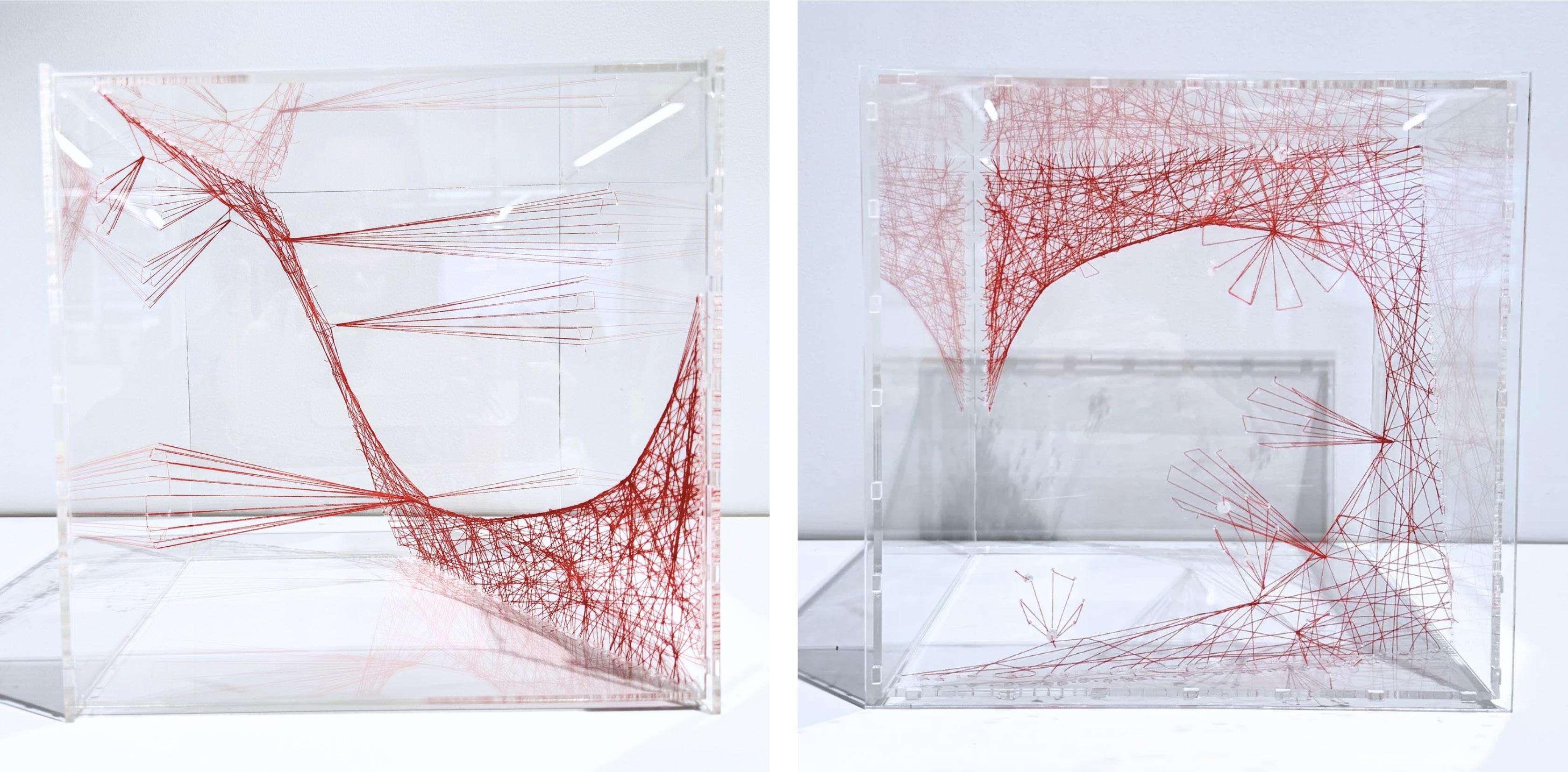
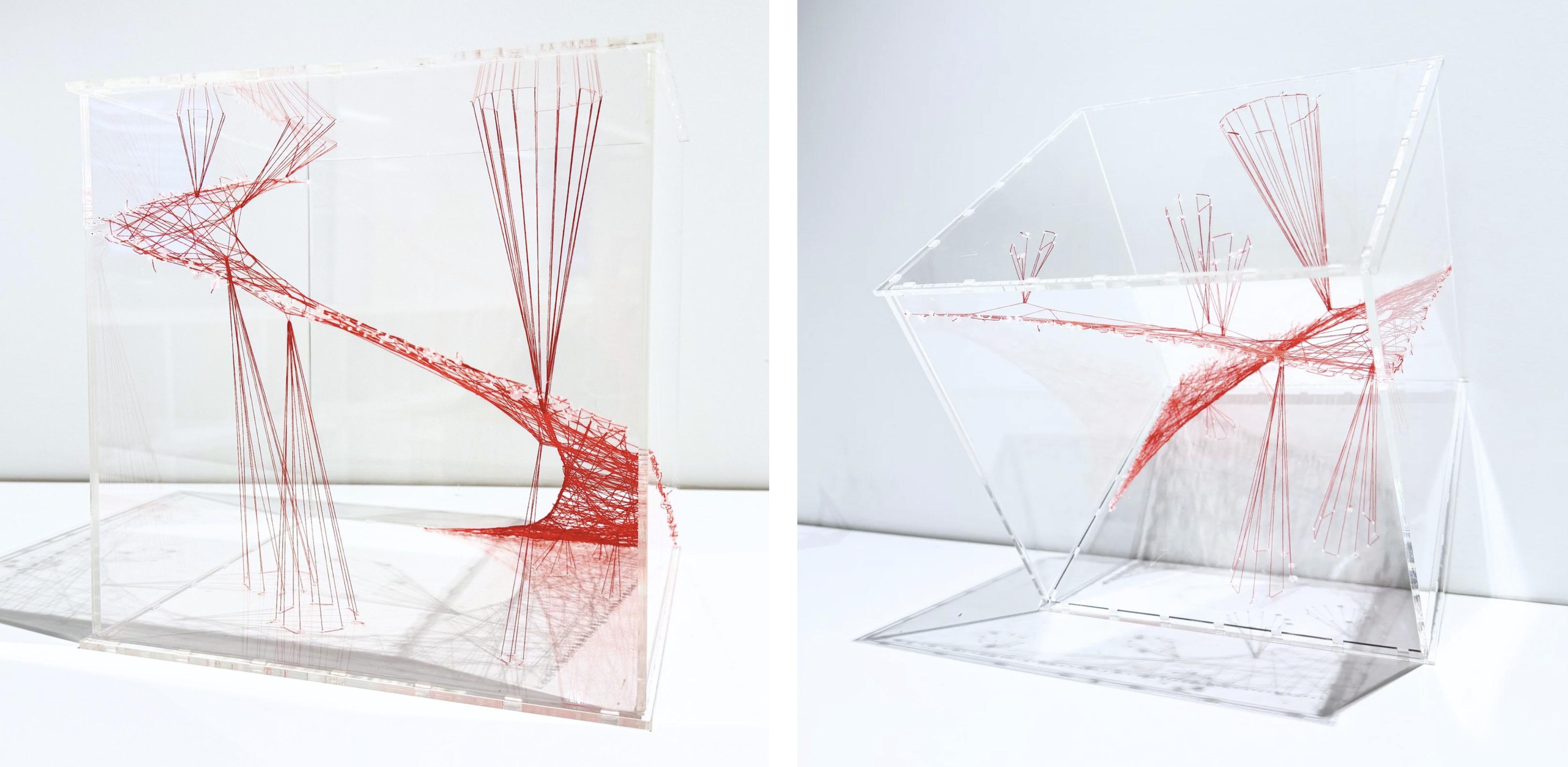
This project explores the movement of push through series of abstractions, first beginning with a physical apparatus, to diagrams and lastly a string model. Through exploring the movement of push, this series visualizes the concept of pushing under conditions of encroachment.
Felix Lo, Juna Ibrahim, Mehran Rahman (for Apparatus and Group Diagram)
November 2025
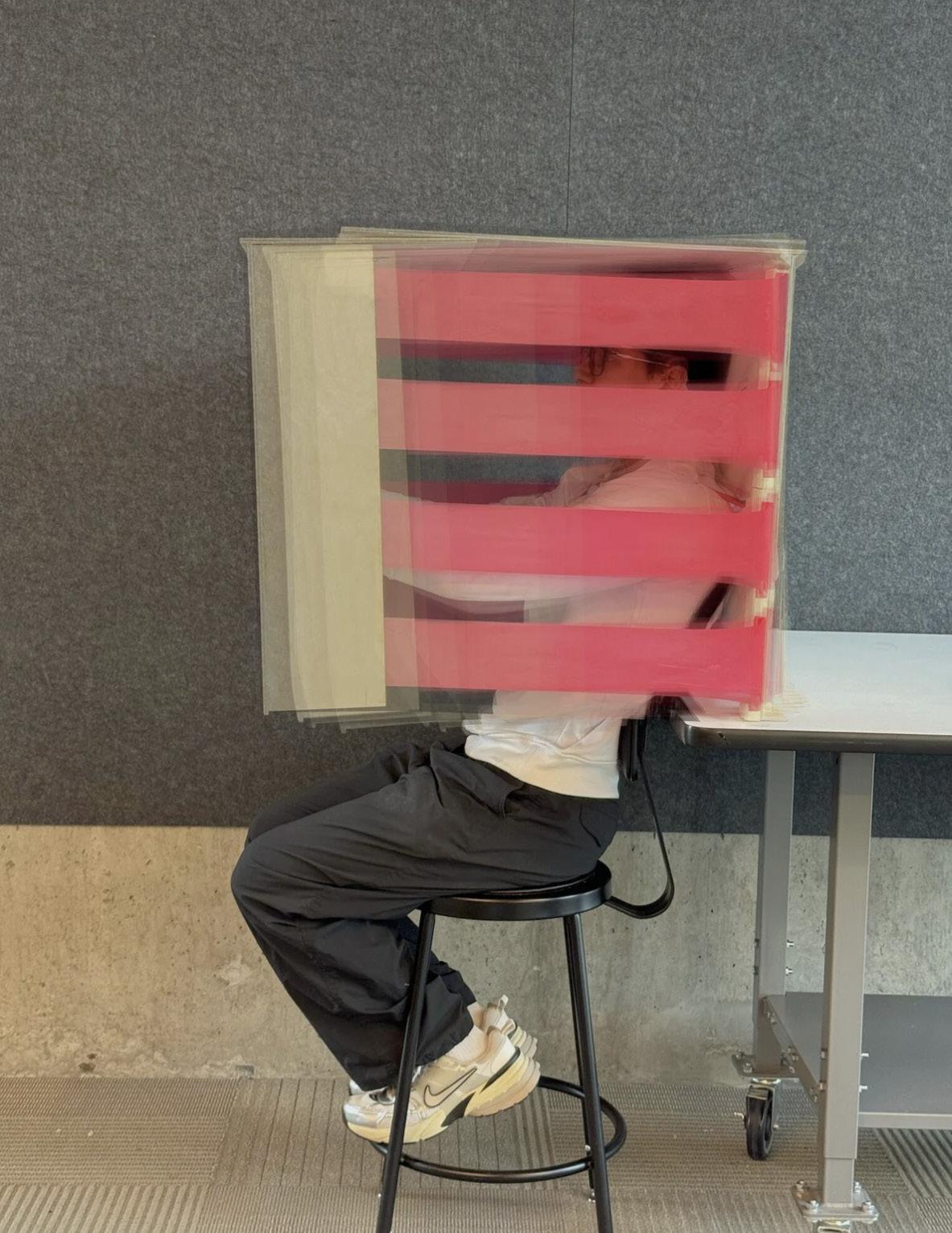
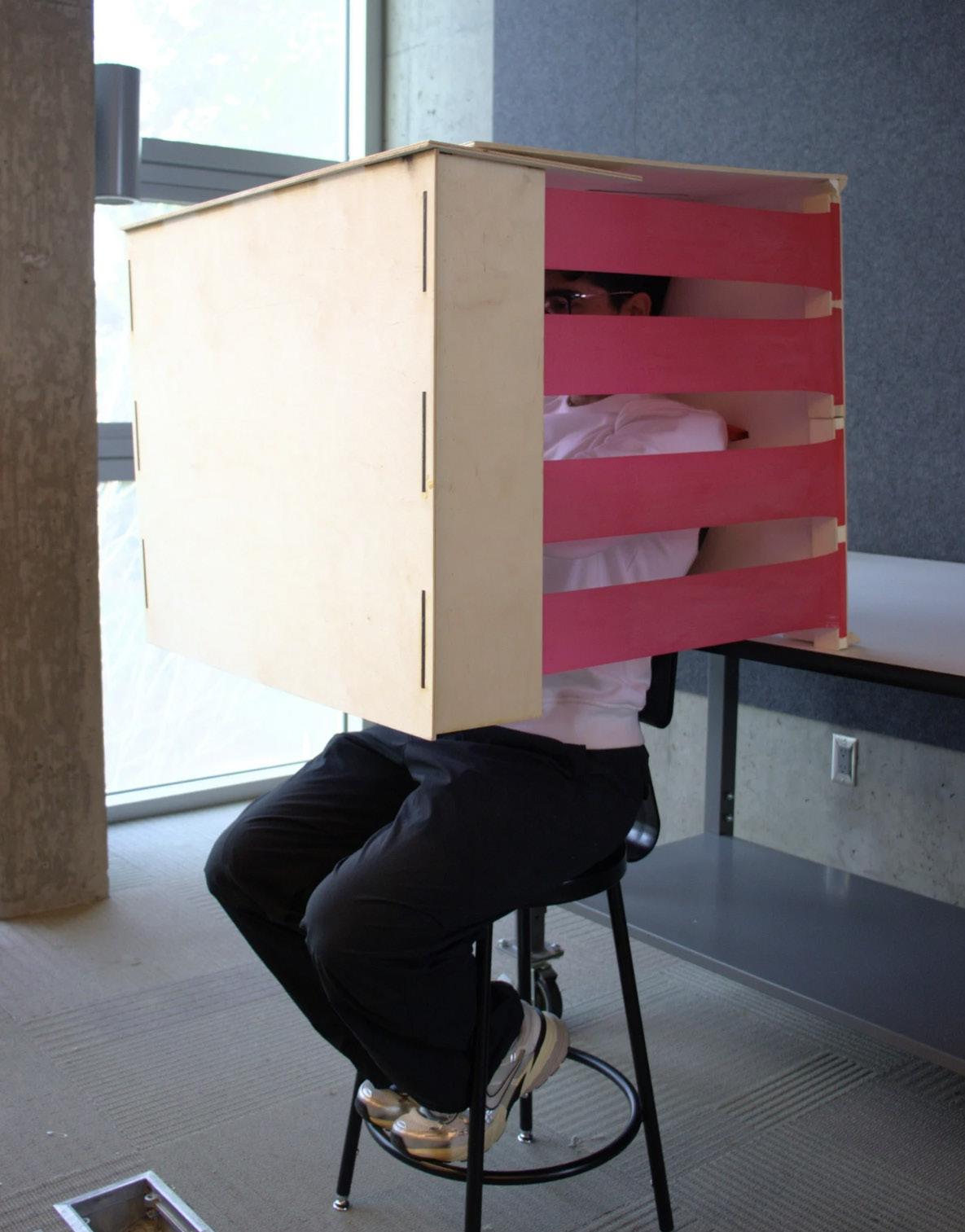
The apparatus speculates on one's pursuit of control under conditions of encroachment. It is worn by strapping the user into the box-like apparatus that extends over the head and upper body, with the enclosure supported against the back. Constrained by movement, the only action the apparatus allows is to push forward; each push stretches the enclosure, causing the interior to brighten momentarily as light is let into the apparatus.
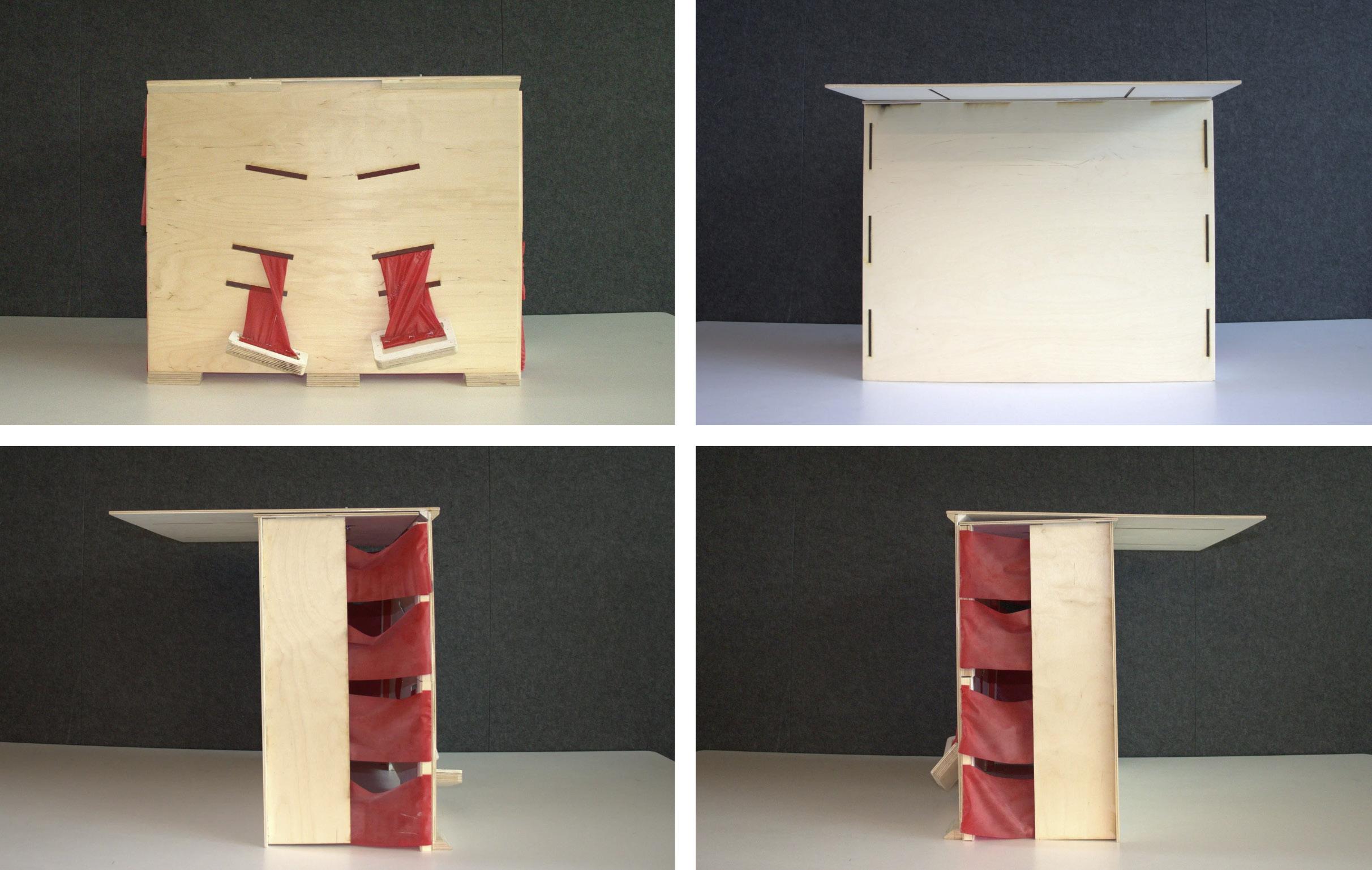
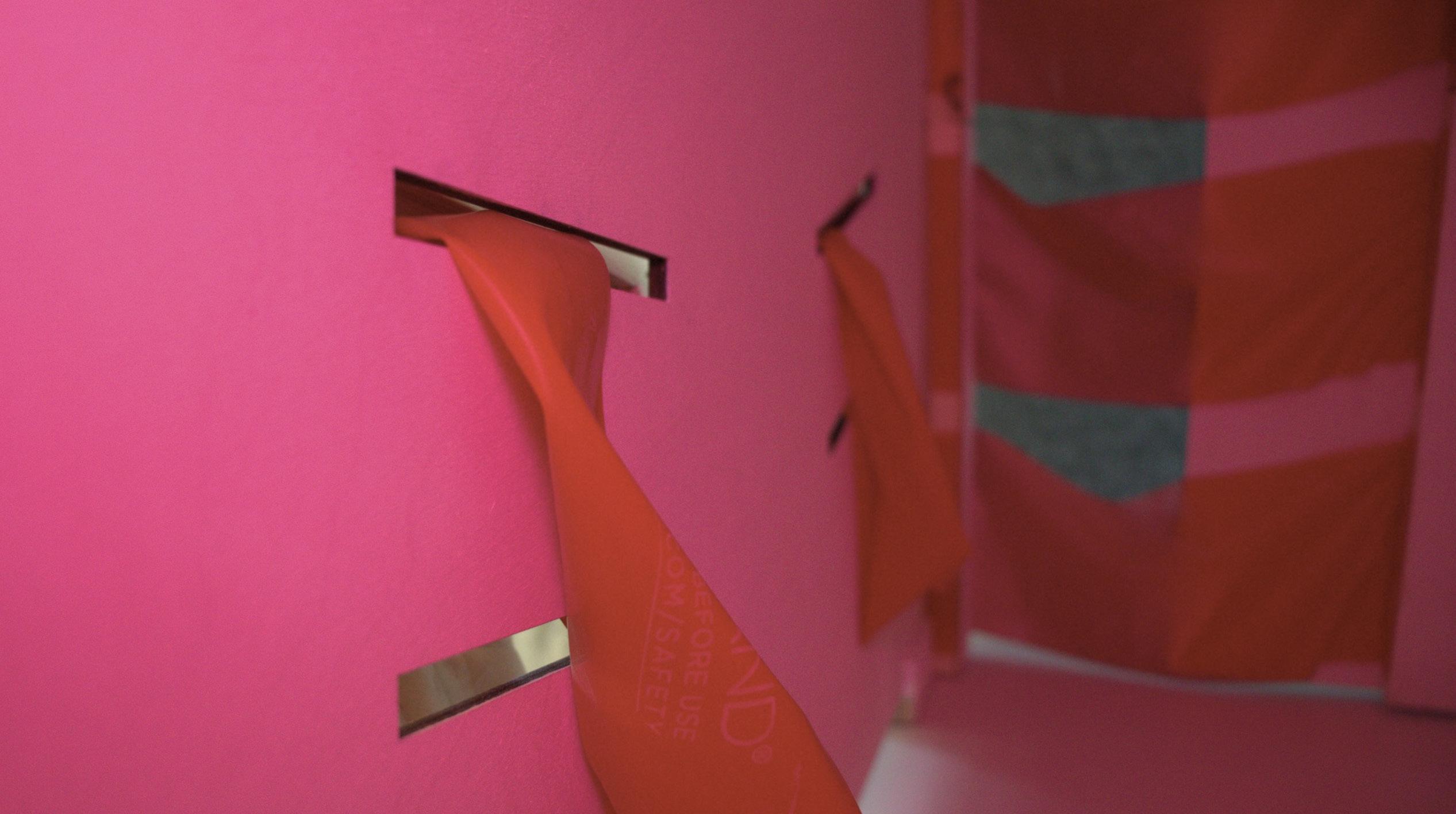
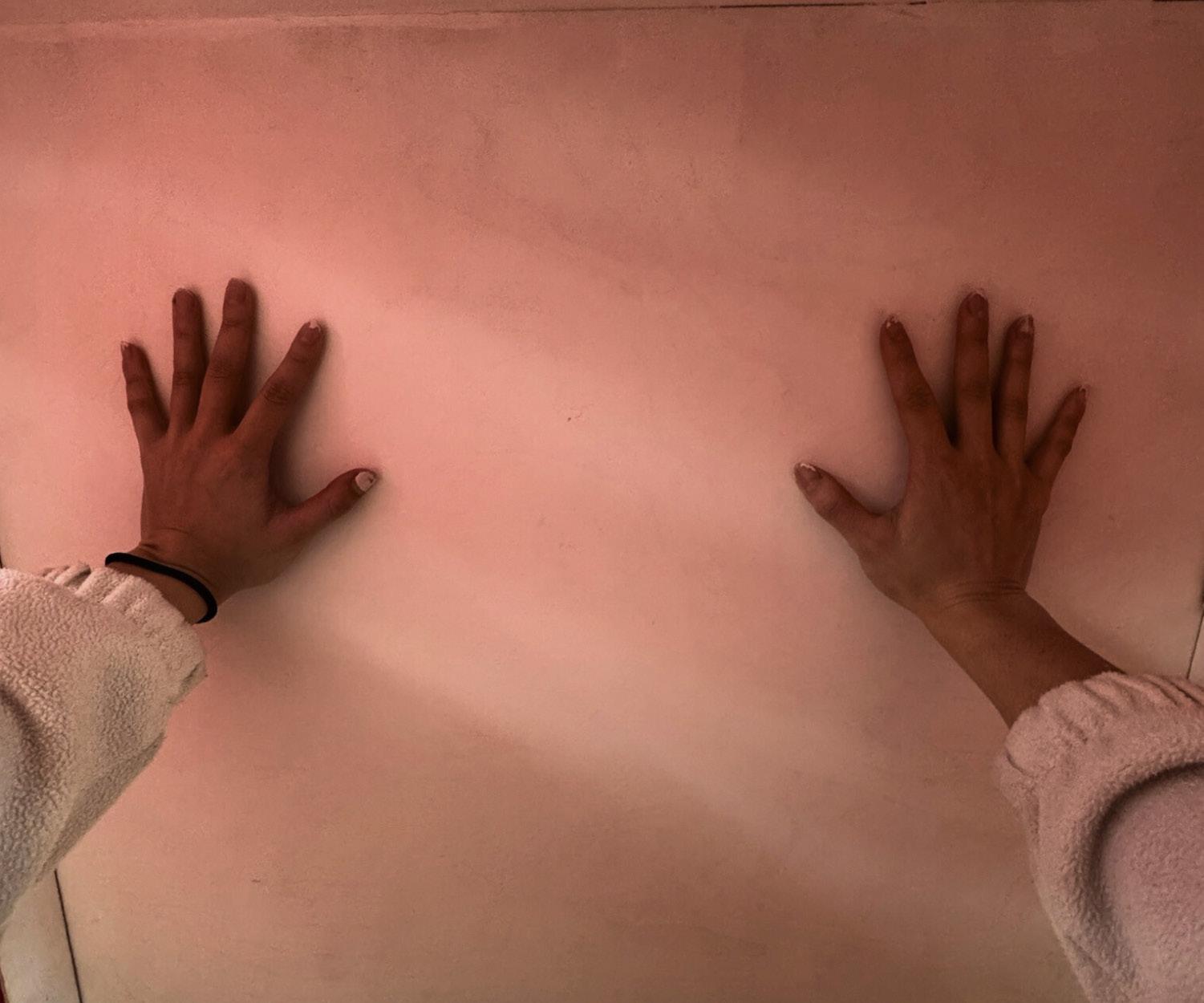
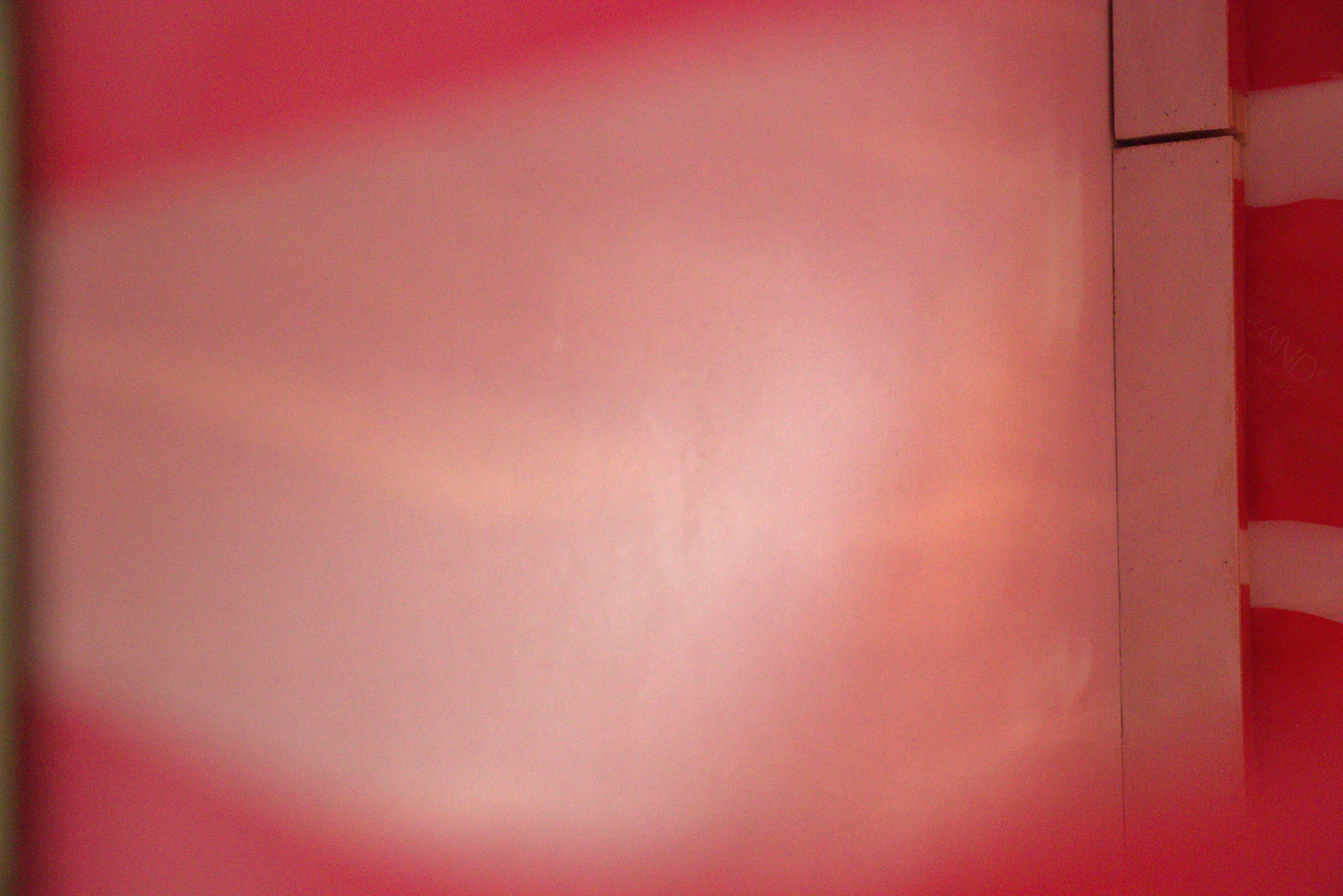
Pushing is a universal movement to assert control over their space and to relieve pressure. The apparatus incentives this movement by putting our bodies in a spatially restricting position through being strapped and seated. This isolates pushing as the only possible action; hence, the apparatus focuses attention on this movement alone.
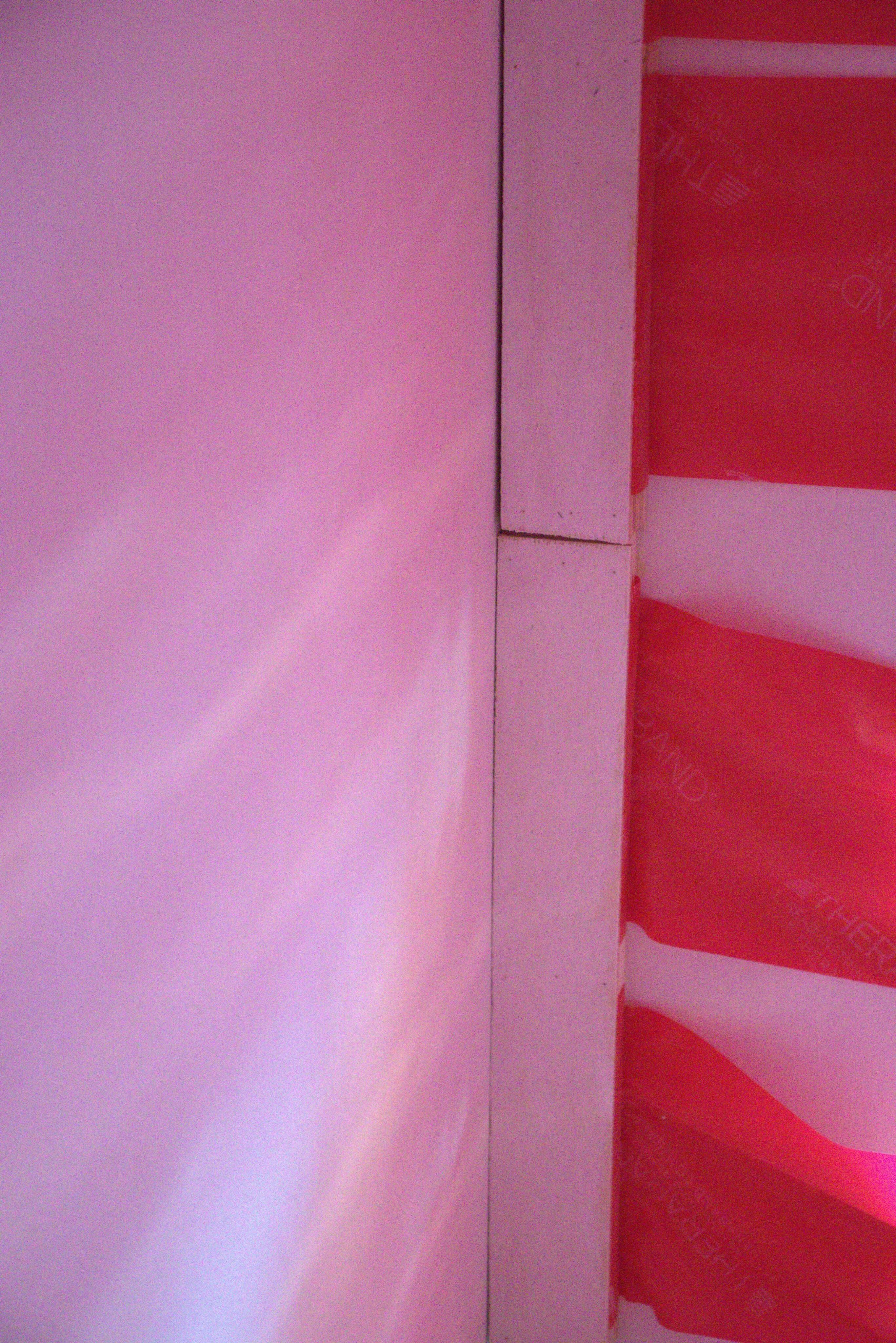
Light is used as a symbol of control: it increases one’s visibility to generate a sense of security over their surroundings. In line with this symbolism, light reflects off the white inner surface of the apparatus and diffuses through the resistance bands, creating shifting patterns that change with every push. Even the smallest motion transforms the light. In this way, light becomes an exact visual trace of movement, allowing us to observe how each moment of force unfolds over time.
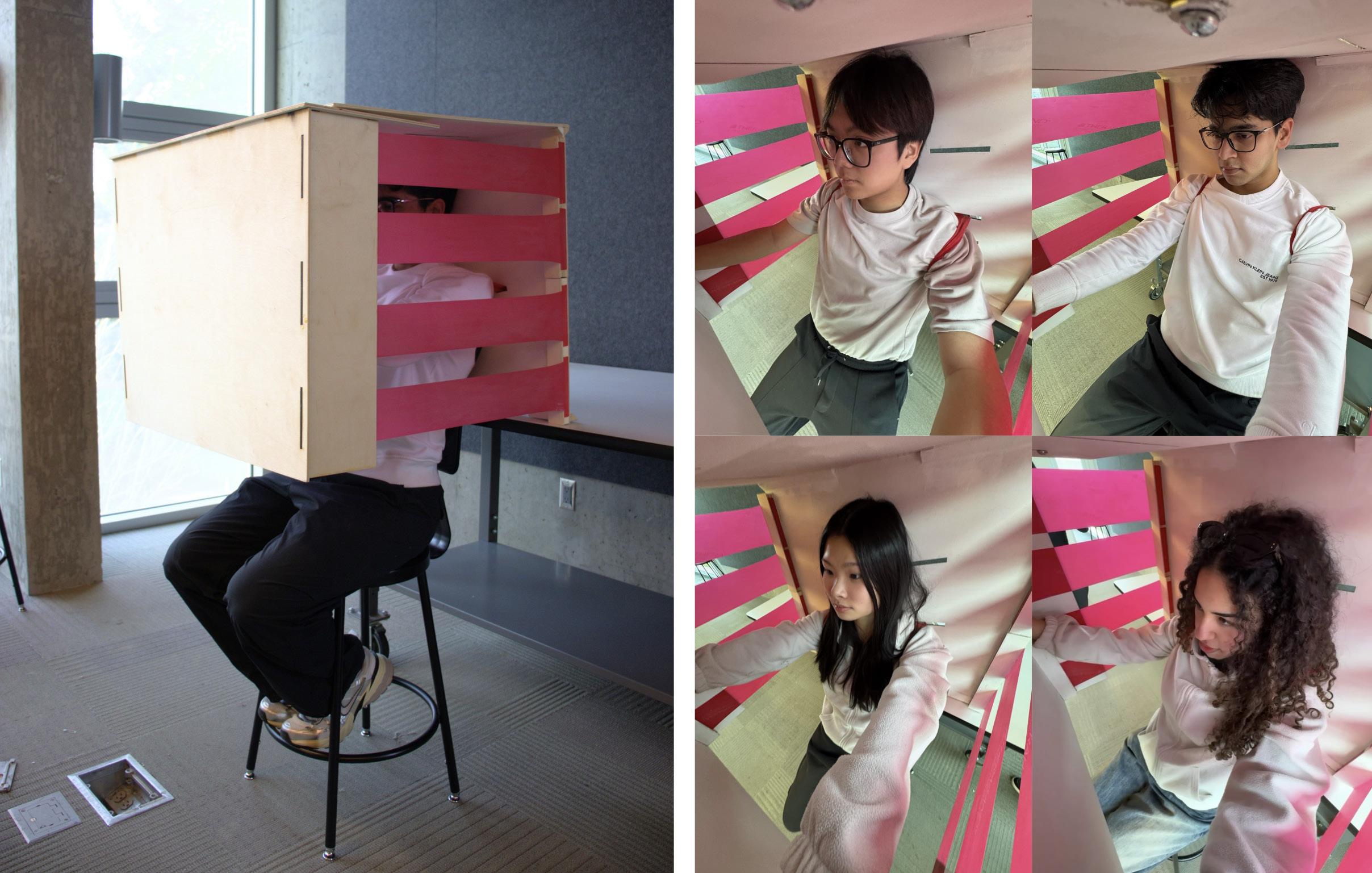

This diagram shows the light-diffusion patterns produced by four pressure levels from each group member.
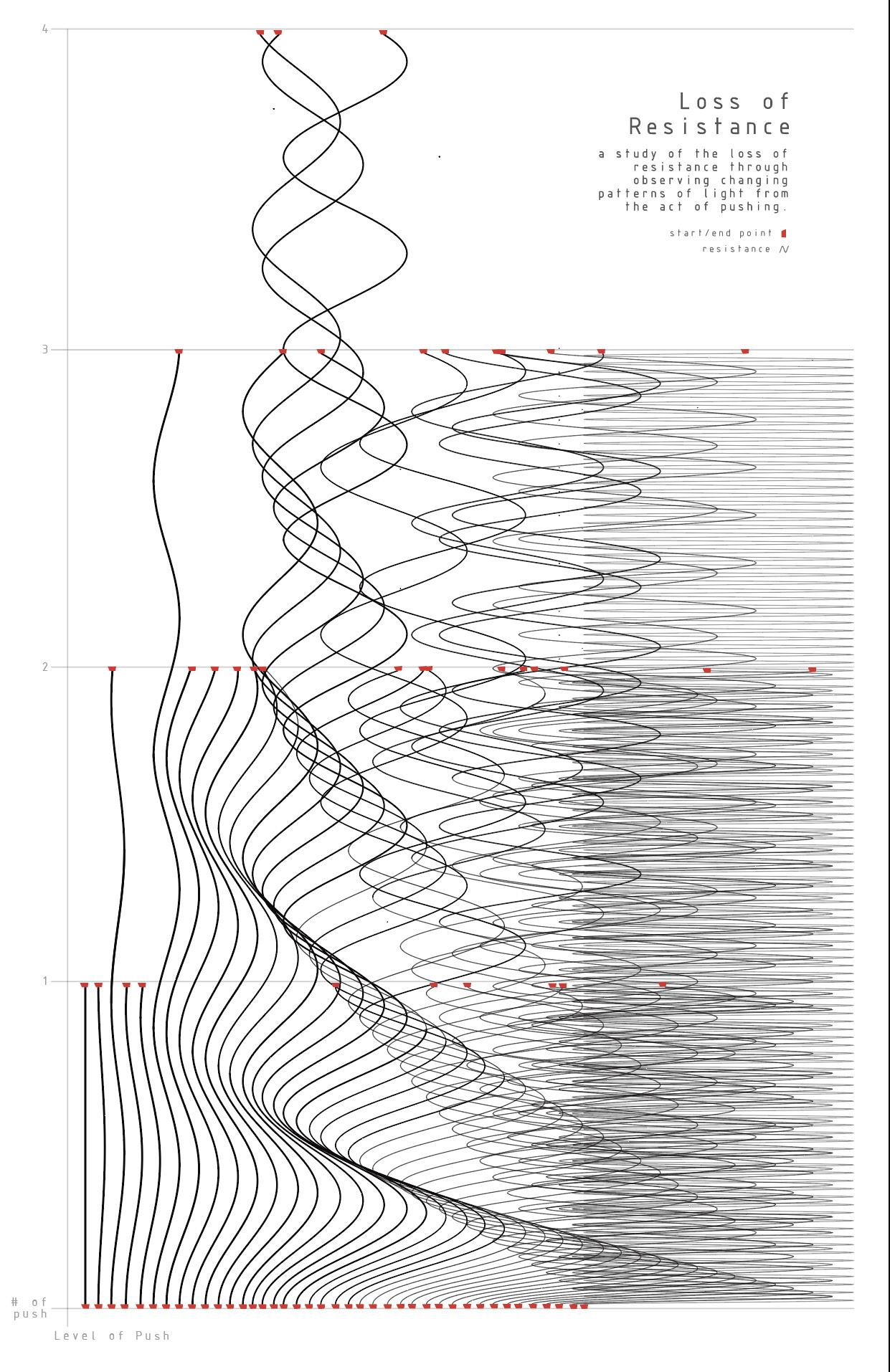
Loss of Resistance (further abstraction of group diagram)
Inspired by the diagram above, the string model expresses loss of resistance through variations in string density across a three dimensional space.
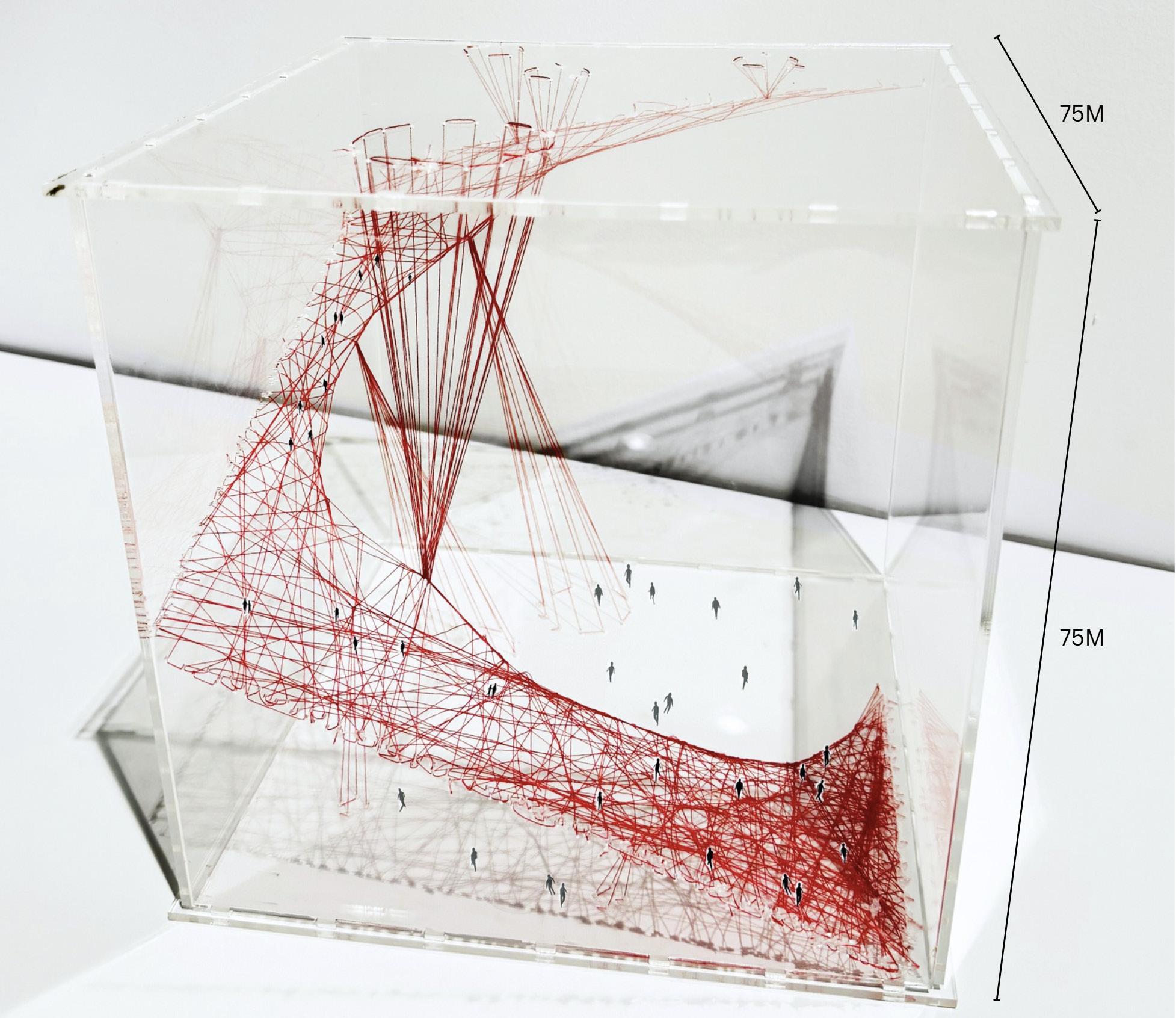
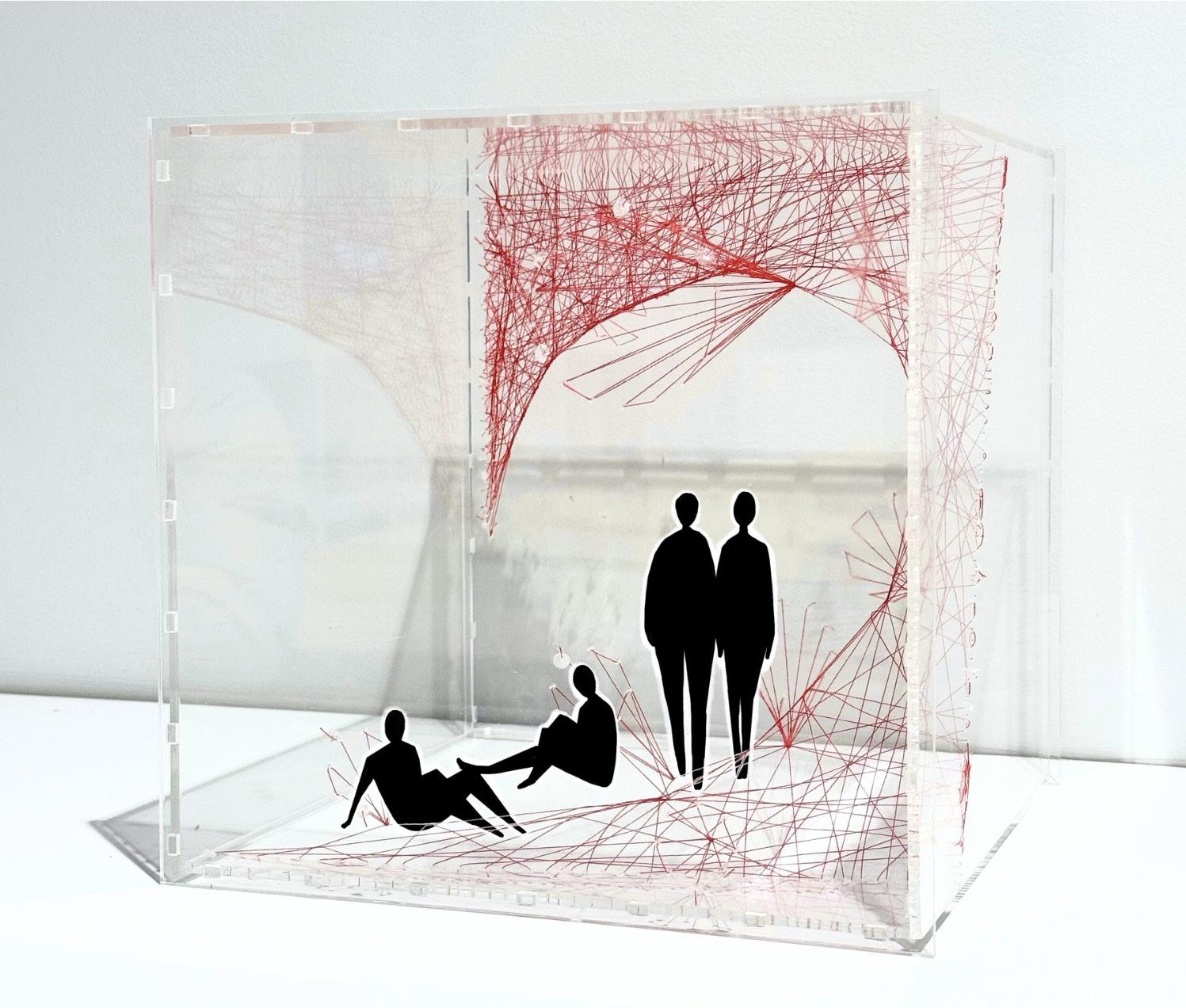
as a Pavilion
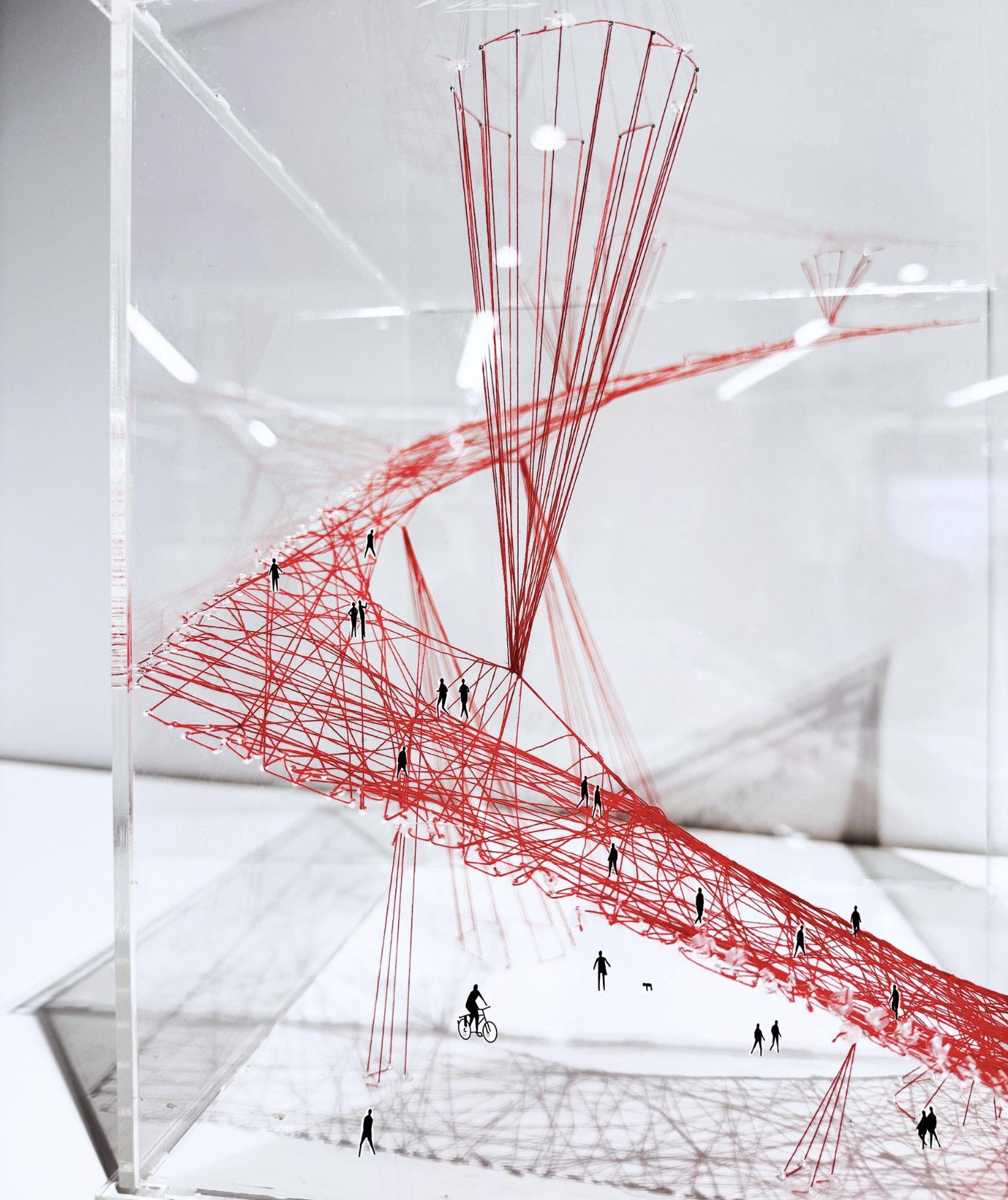
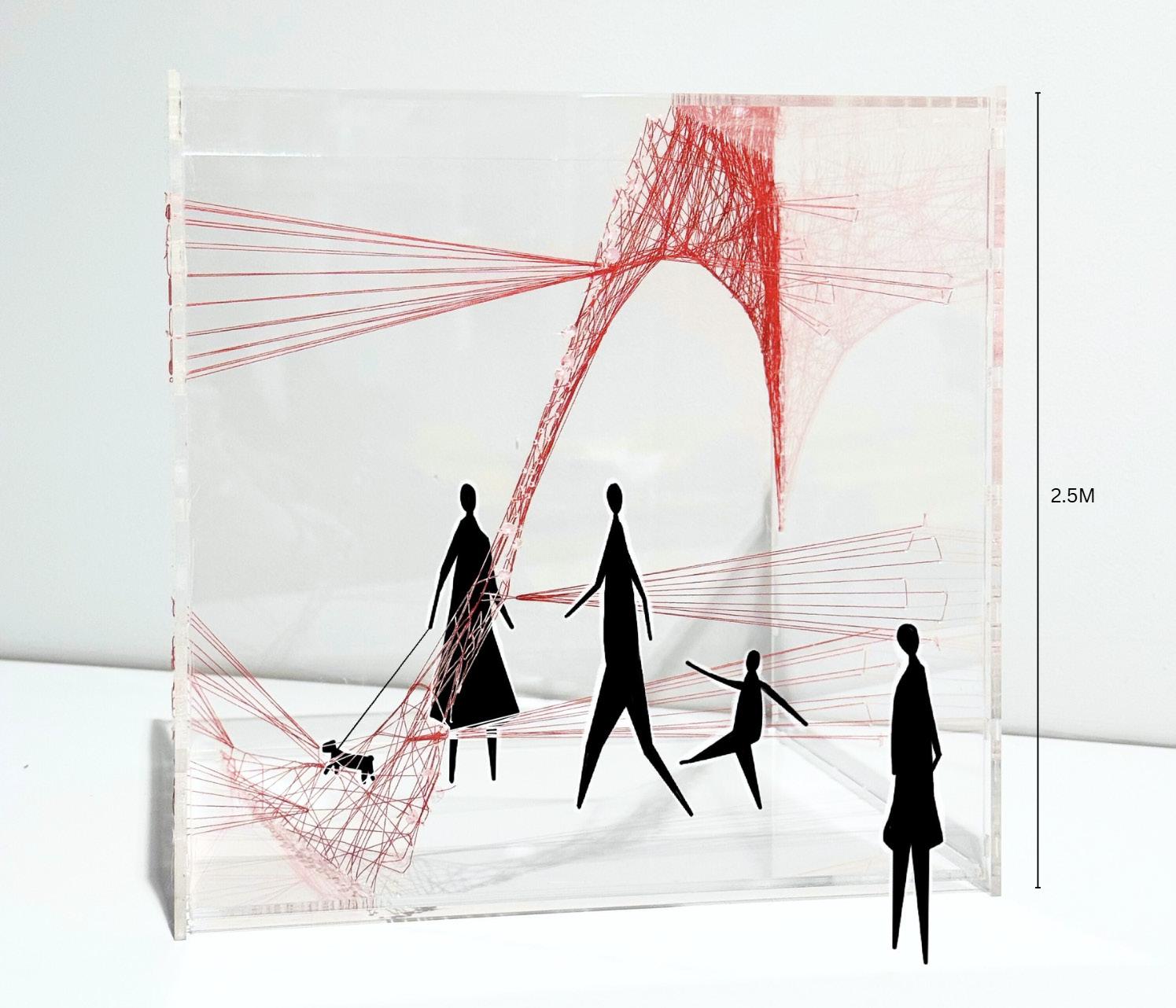
An urban-scale pavilion functioning as a maze, with each string imagined as a pathway.
Pavilion where seating platforms at varying heights to accommodate different comfort levels.
The abstraction of form.
Brief Overview Team
Date Executed
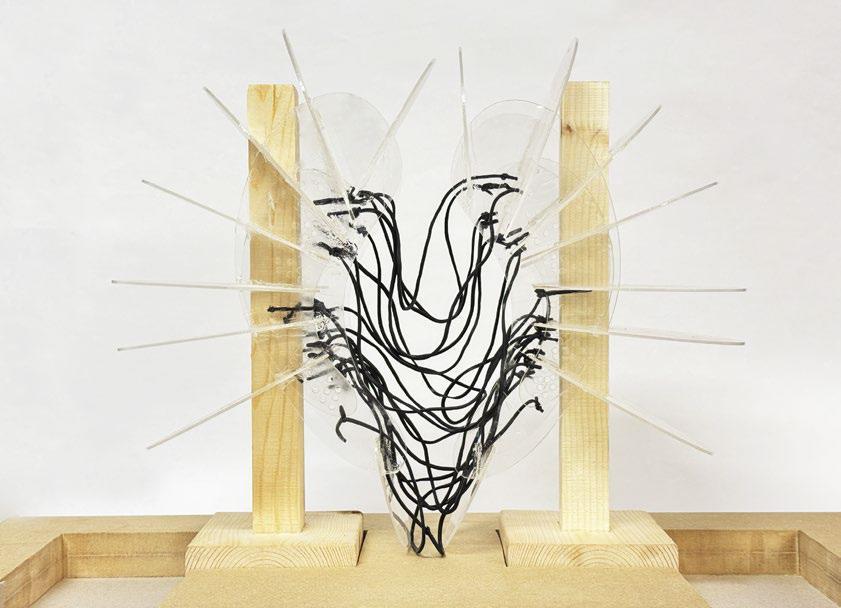
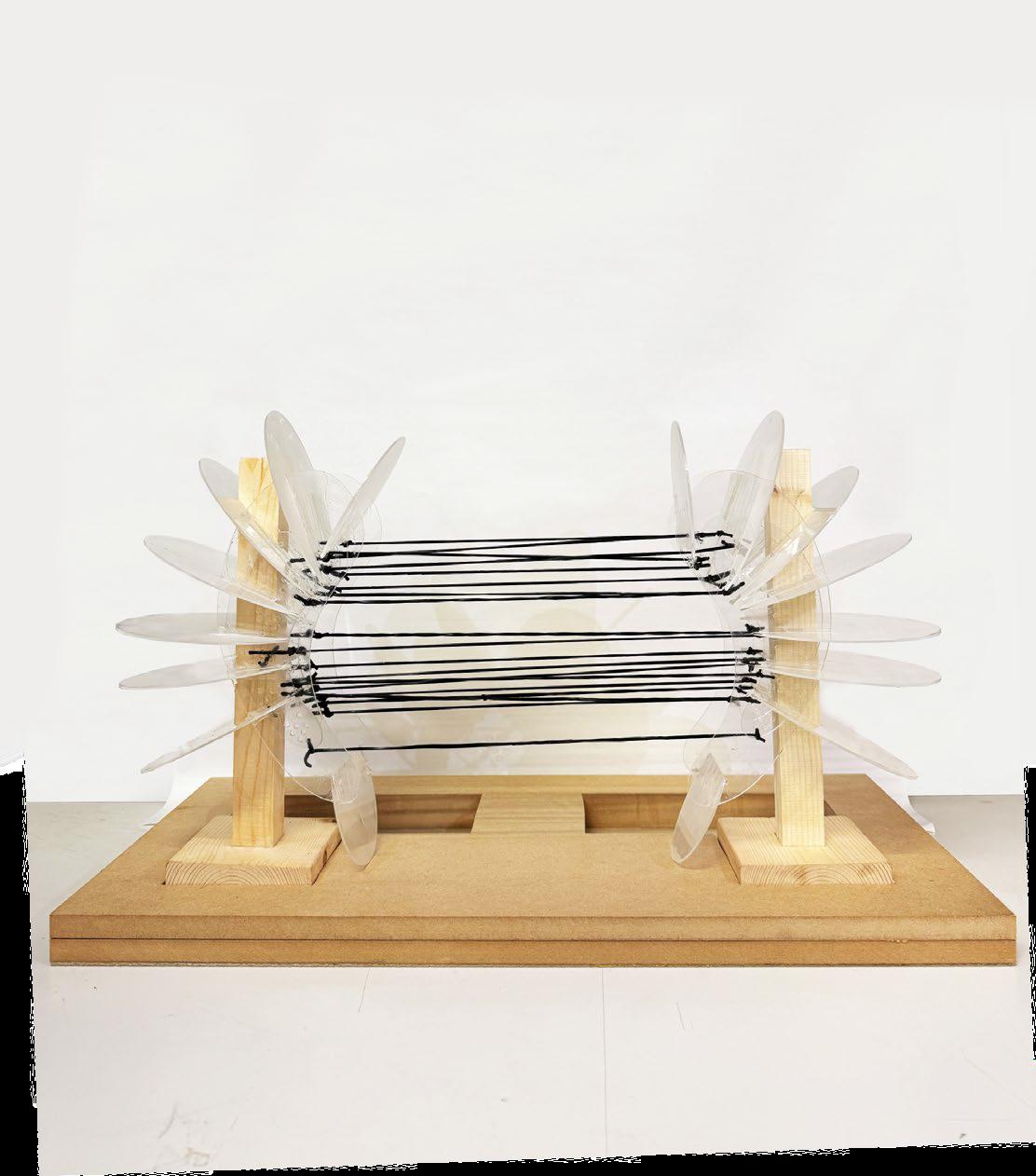
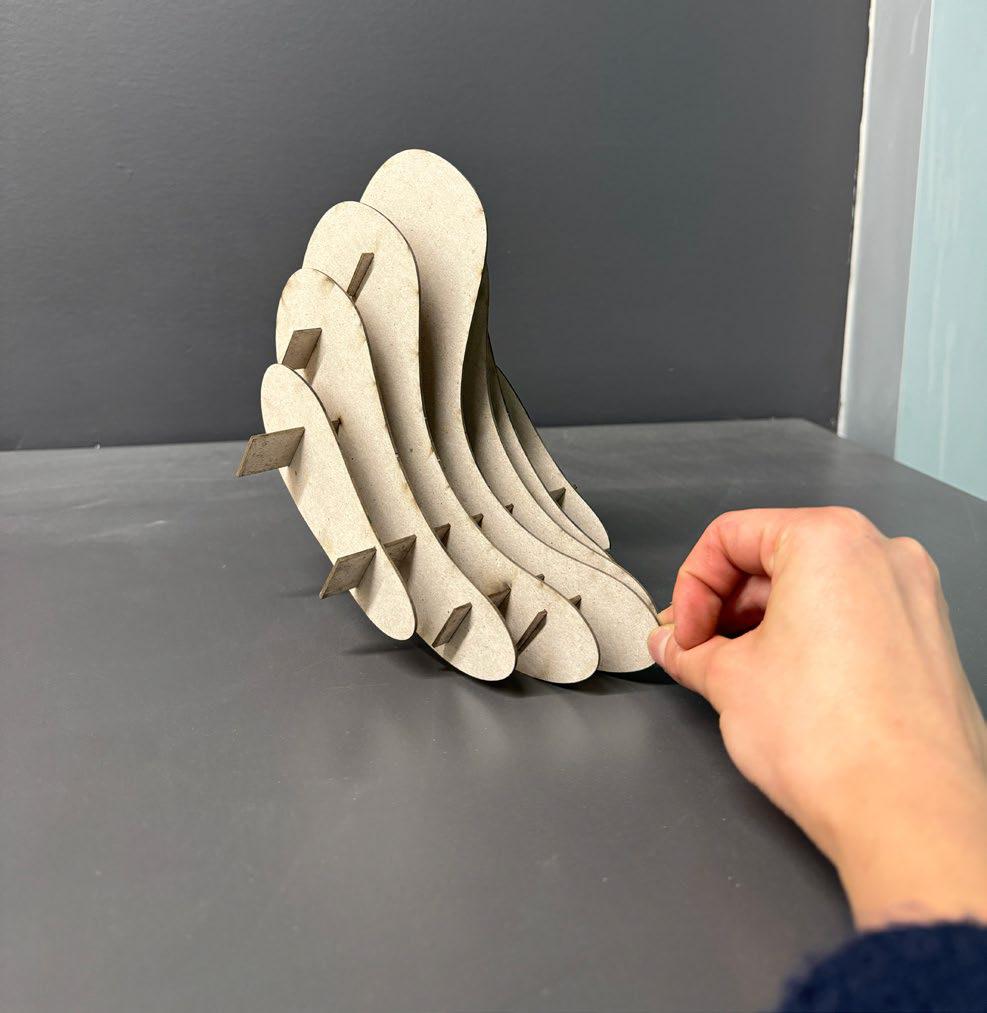
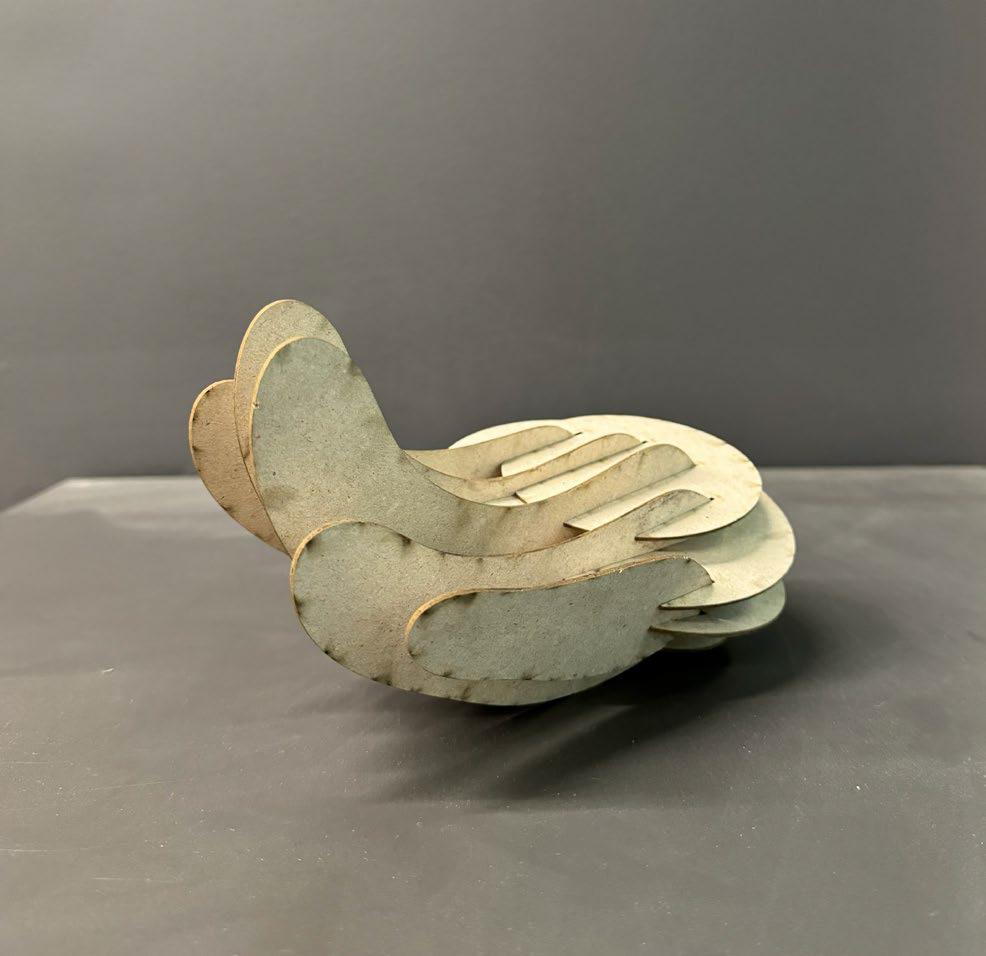
Tension explores the relationship between connection and separation through a pair of modular forms that can be joined or pulled apart. The project investigates how two elements, even when designed to detach, retain an inherent pull toward one another.
Spencer Sun, Zoe Aguillar
December 2025
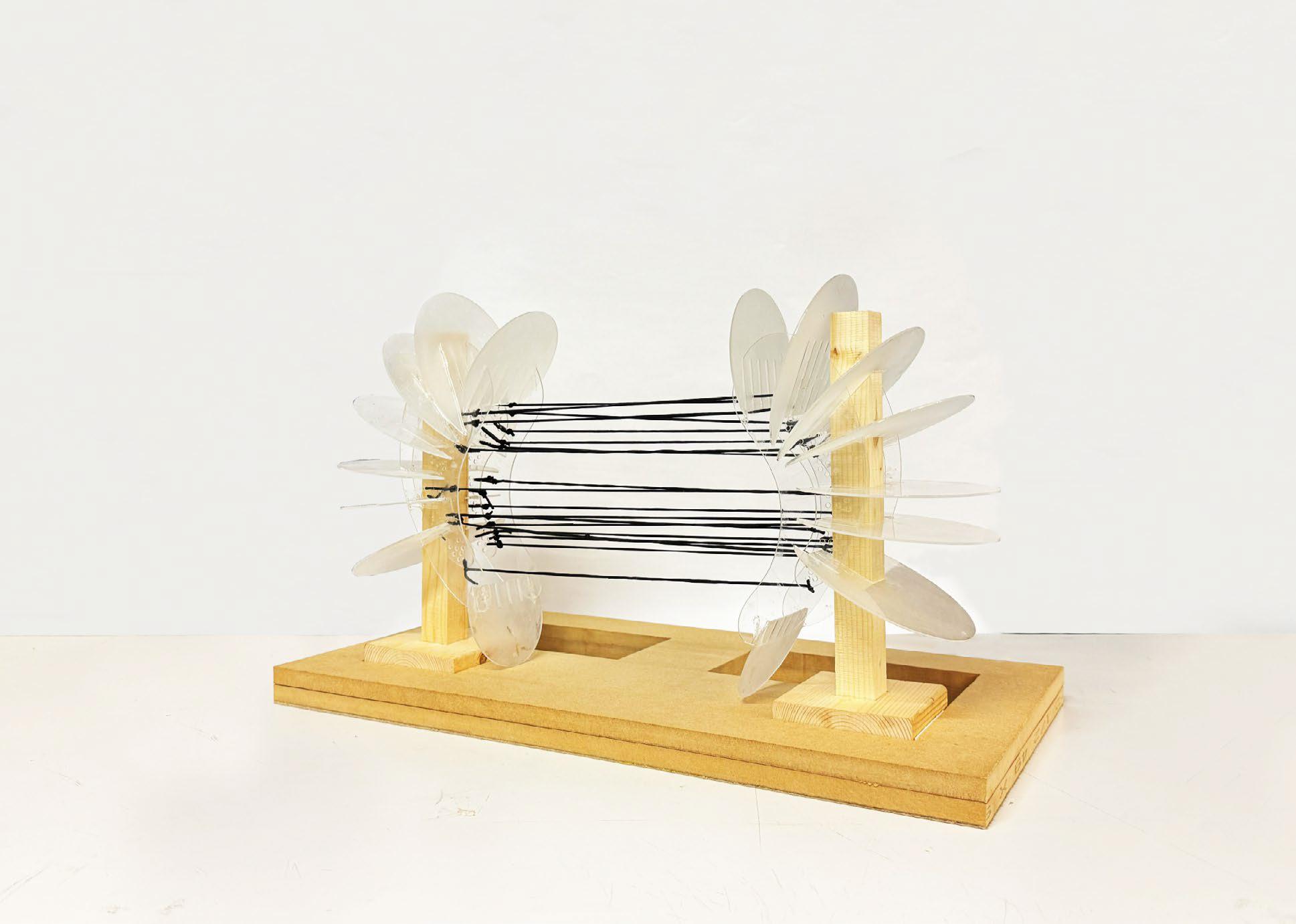
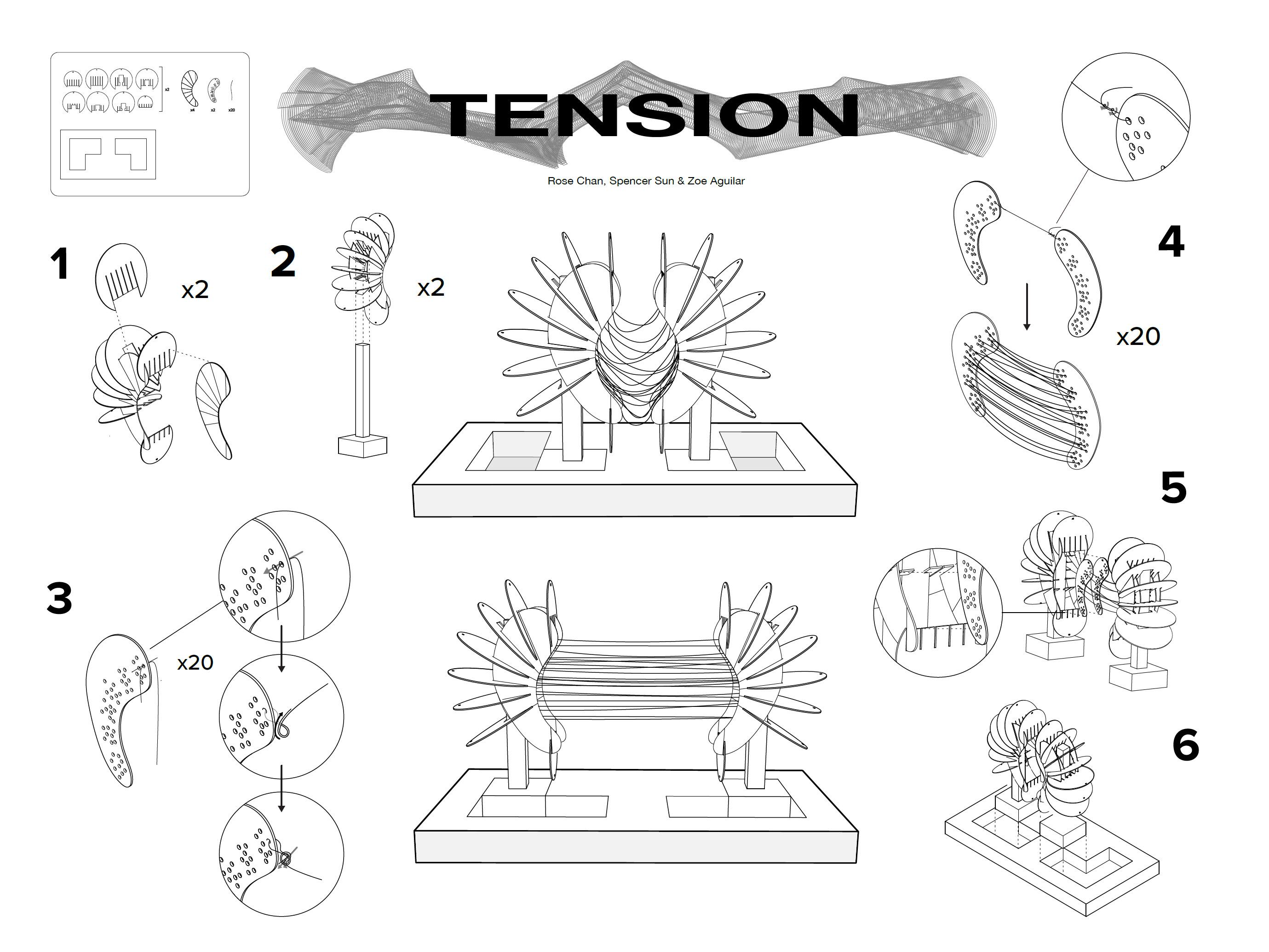
Instruction Manual 24x36”
The instruction manual narrates the construction process in an abstract, IKEA-like format, simplifying each step so that anyone can understand how the structure is assembled.
The clear exterior contrasted with the bold black elastics highlights the normally unseen tension between the two pieces, as the bands reveal the force that intensifies when the elements are pulled apart.
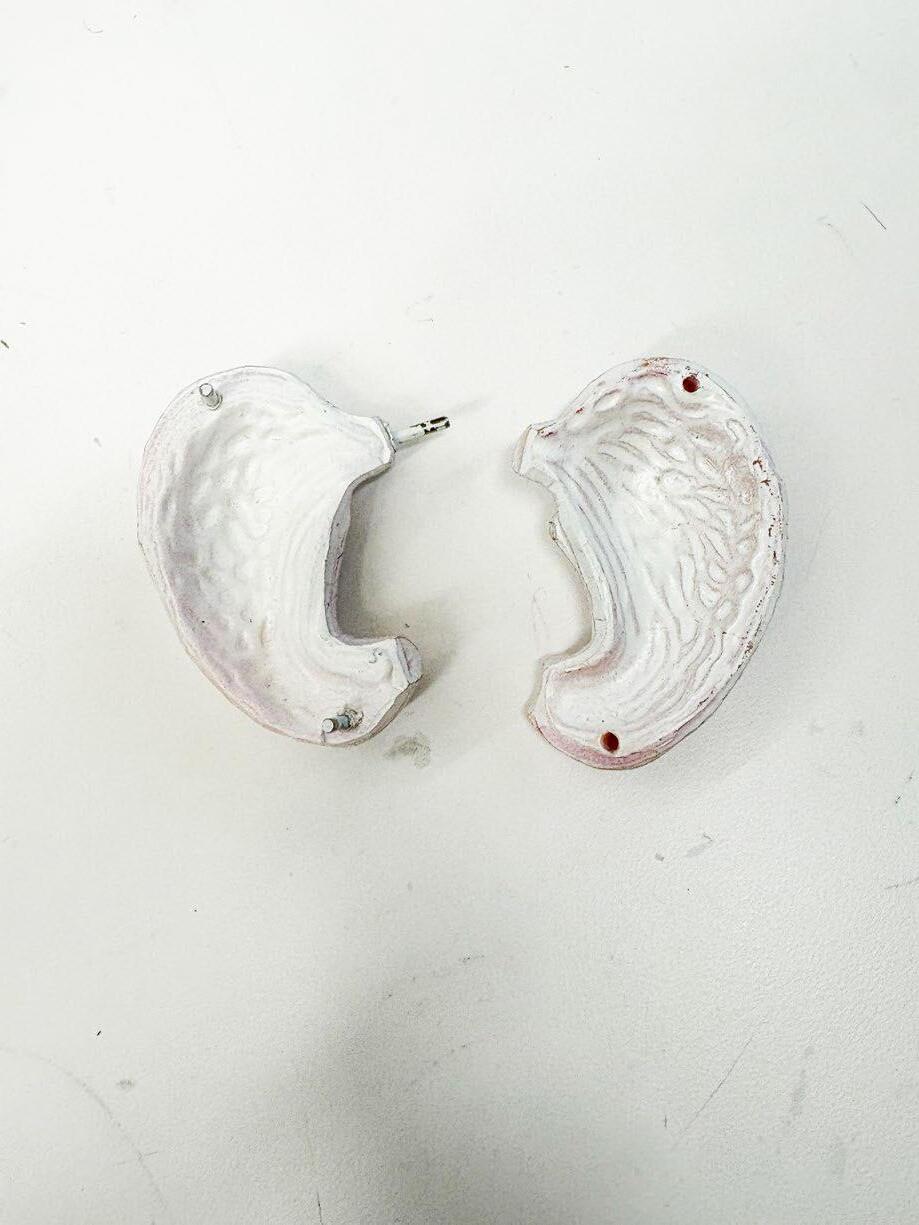
Reference Object (inside)
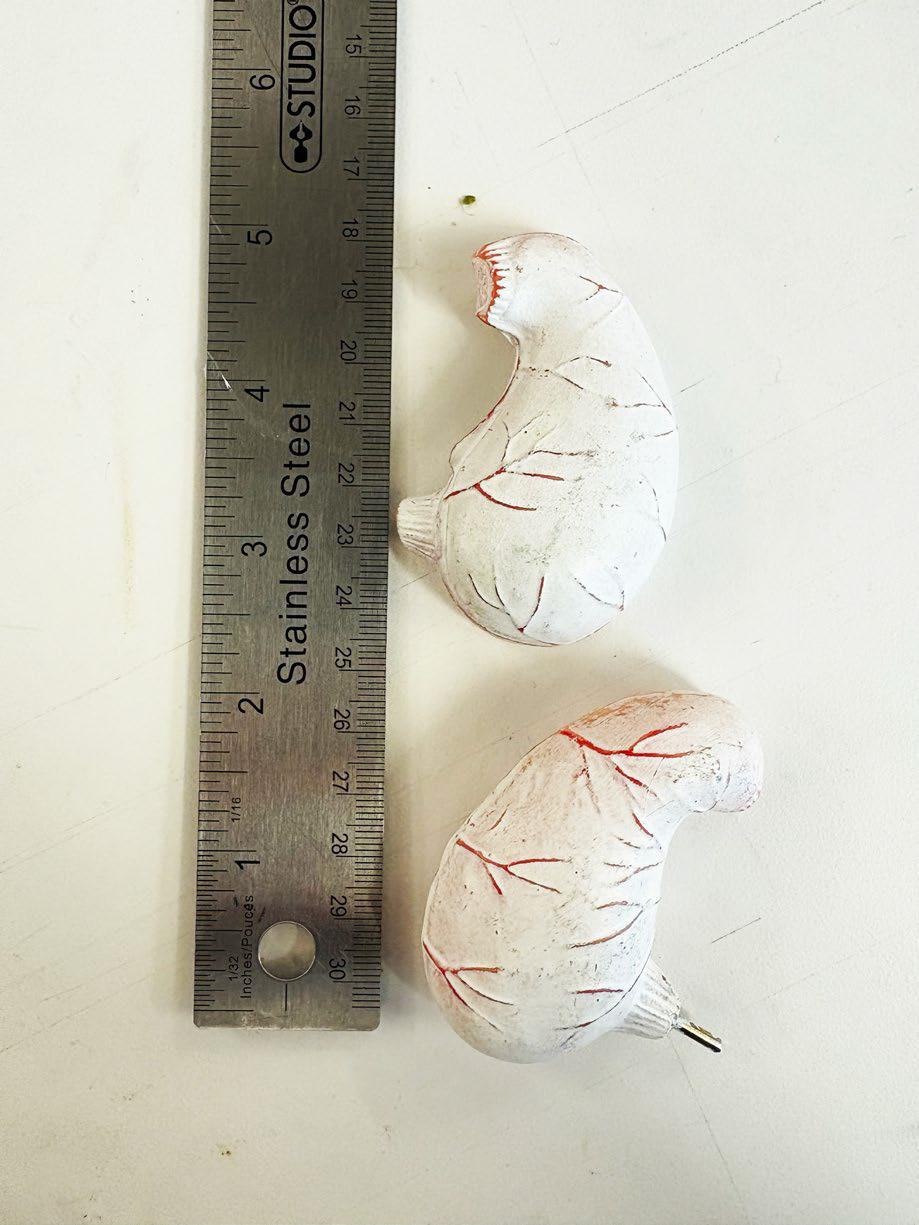
Reference Object (outside)
Brief Overview
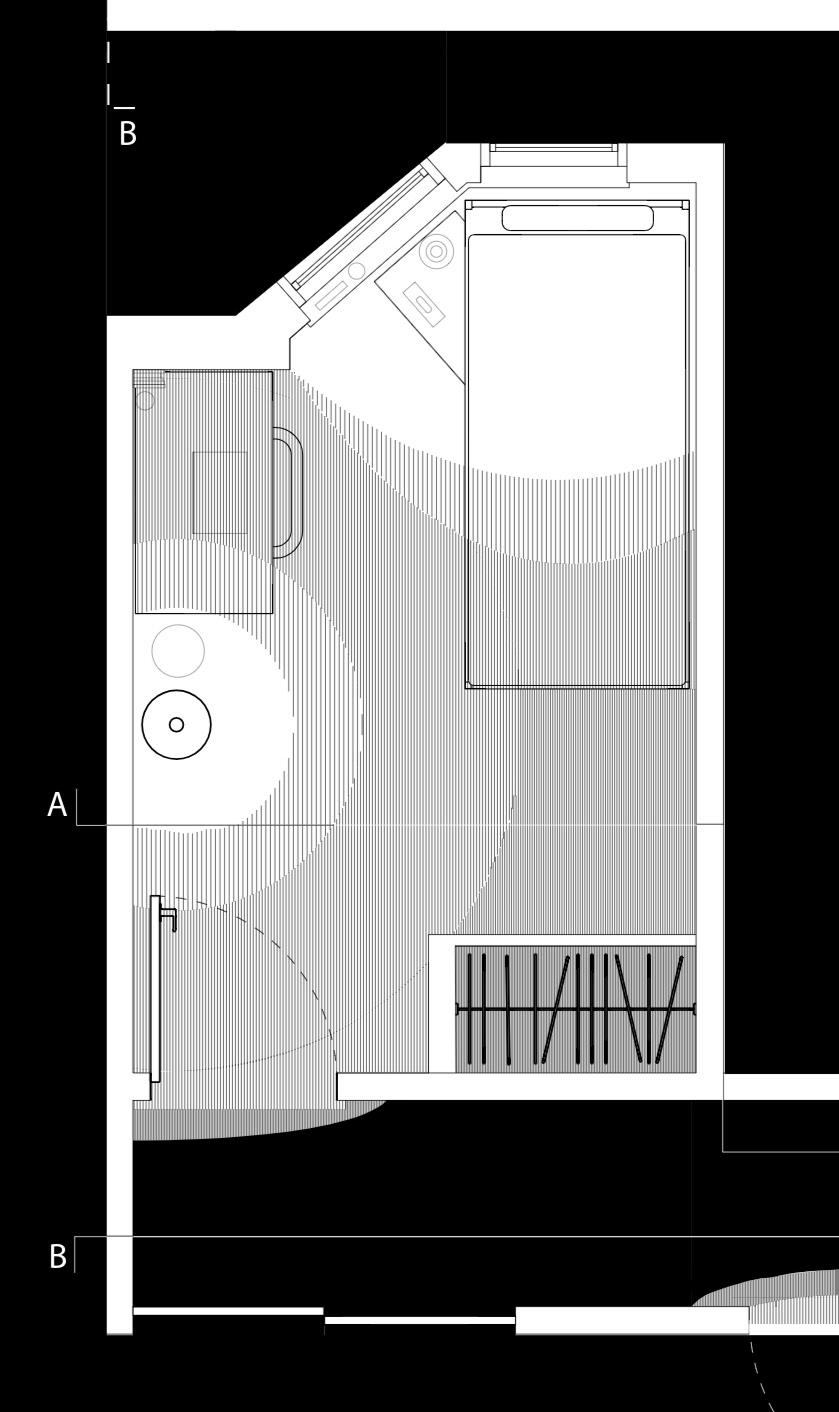
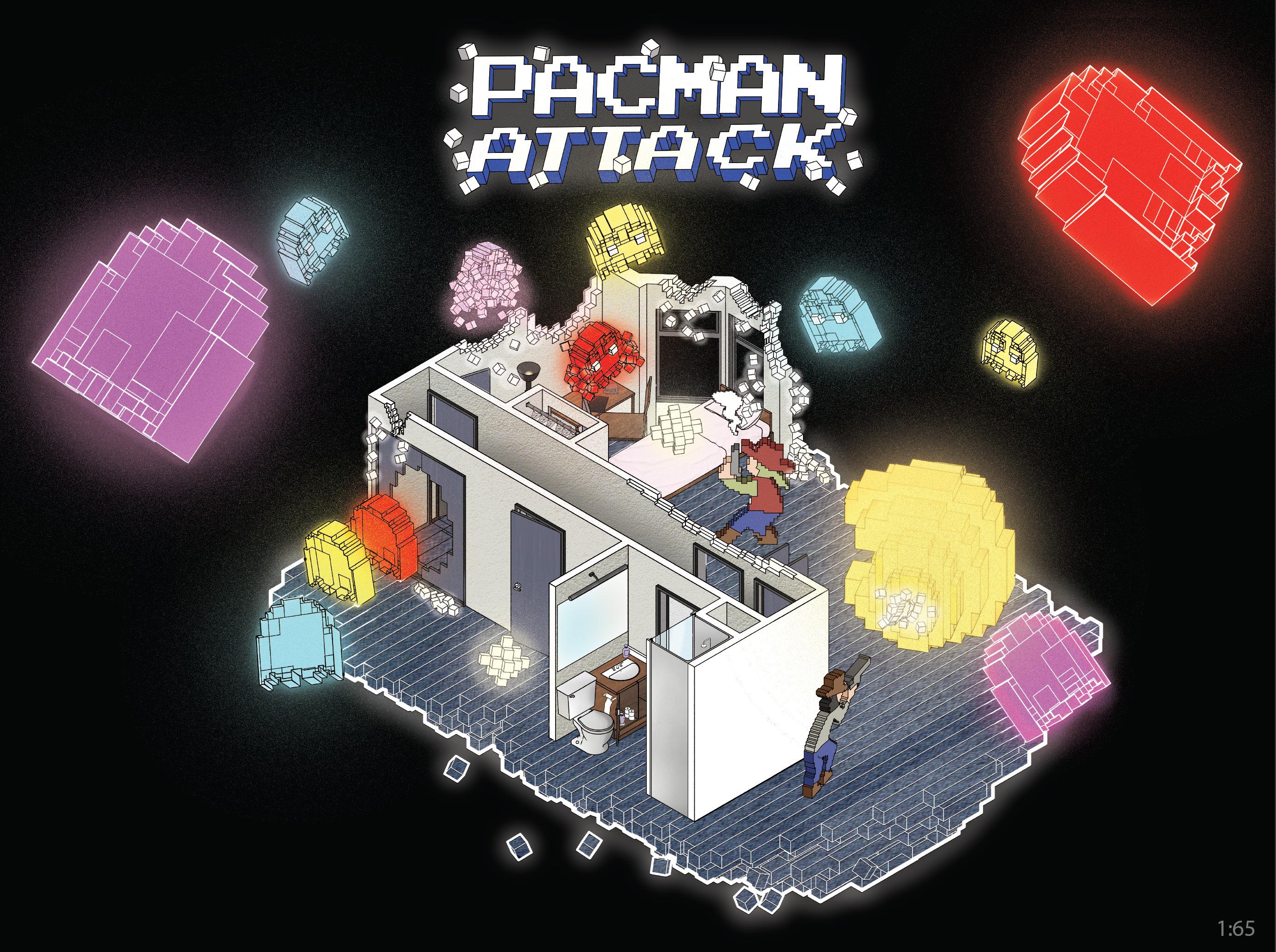
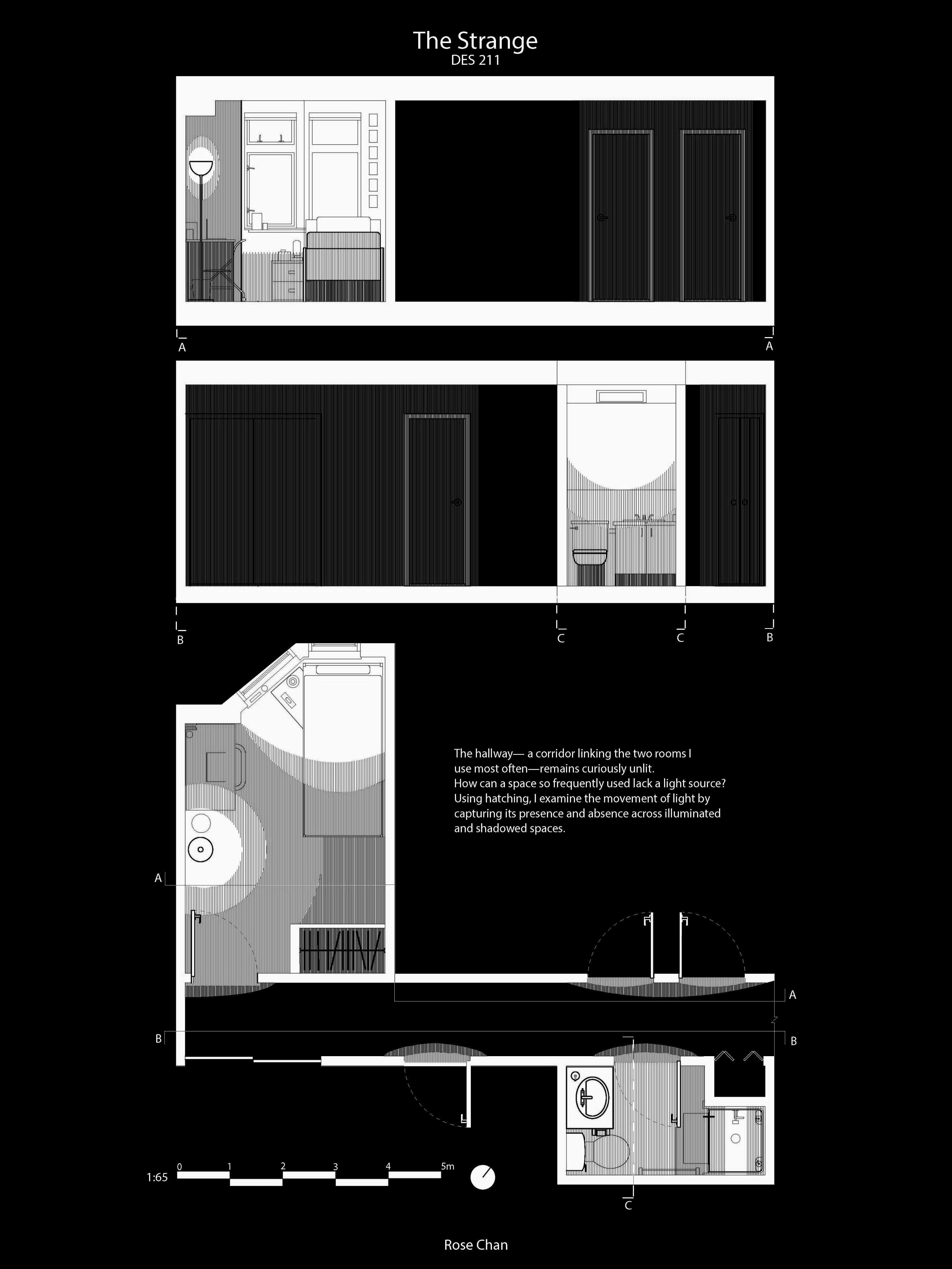
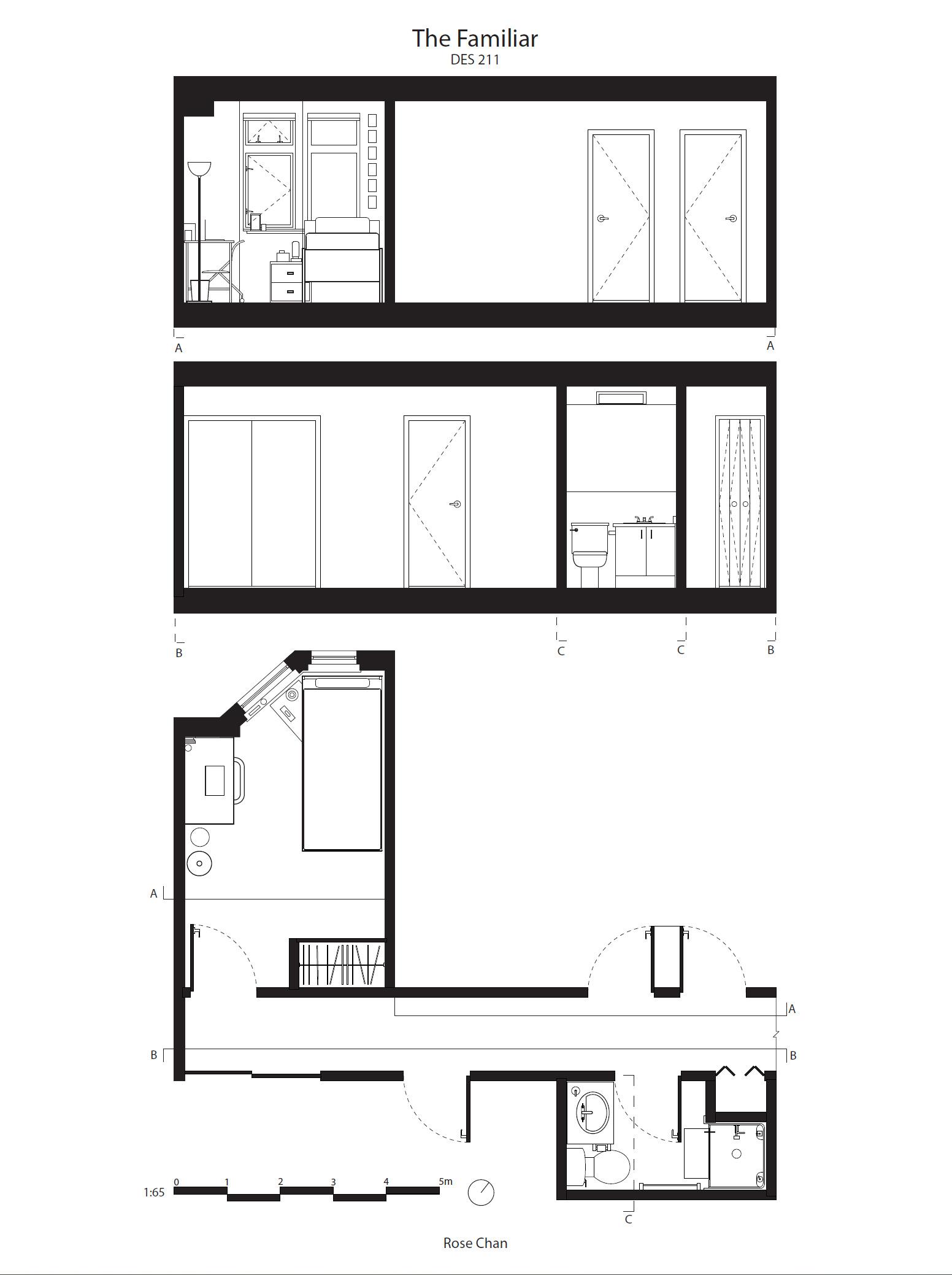
Exploring the unusual in a usual space-- the home.
Medium
Date Executed
There is typically nothing unusual in a usual space. By closely examining the place most familiar to me, this project challenges traditional drawing conventions by uncovering what is typically overlooked. Through mapping the unfamiliar within the familiar, the work gradually transitions into an imaginative space—blurring the line between observation and invention.
Rhino, Illustrator, Photoshop
December 2025
A fun project inspired by Pixels (2015).
Brief Overview
After watching Pixels (2015), I imagined what it would look like if my own home were under attack. This playful drawing blends the familiar spatial qualities of the home with an imaginative, game-like invasion, exploring how ordinary spaces transform under extraordinary scenarios.
18x24 Inches
Rhino, Photoshop, Illustrator
Date Executed
November 2025
Brief Overview
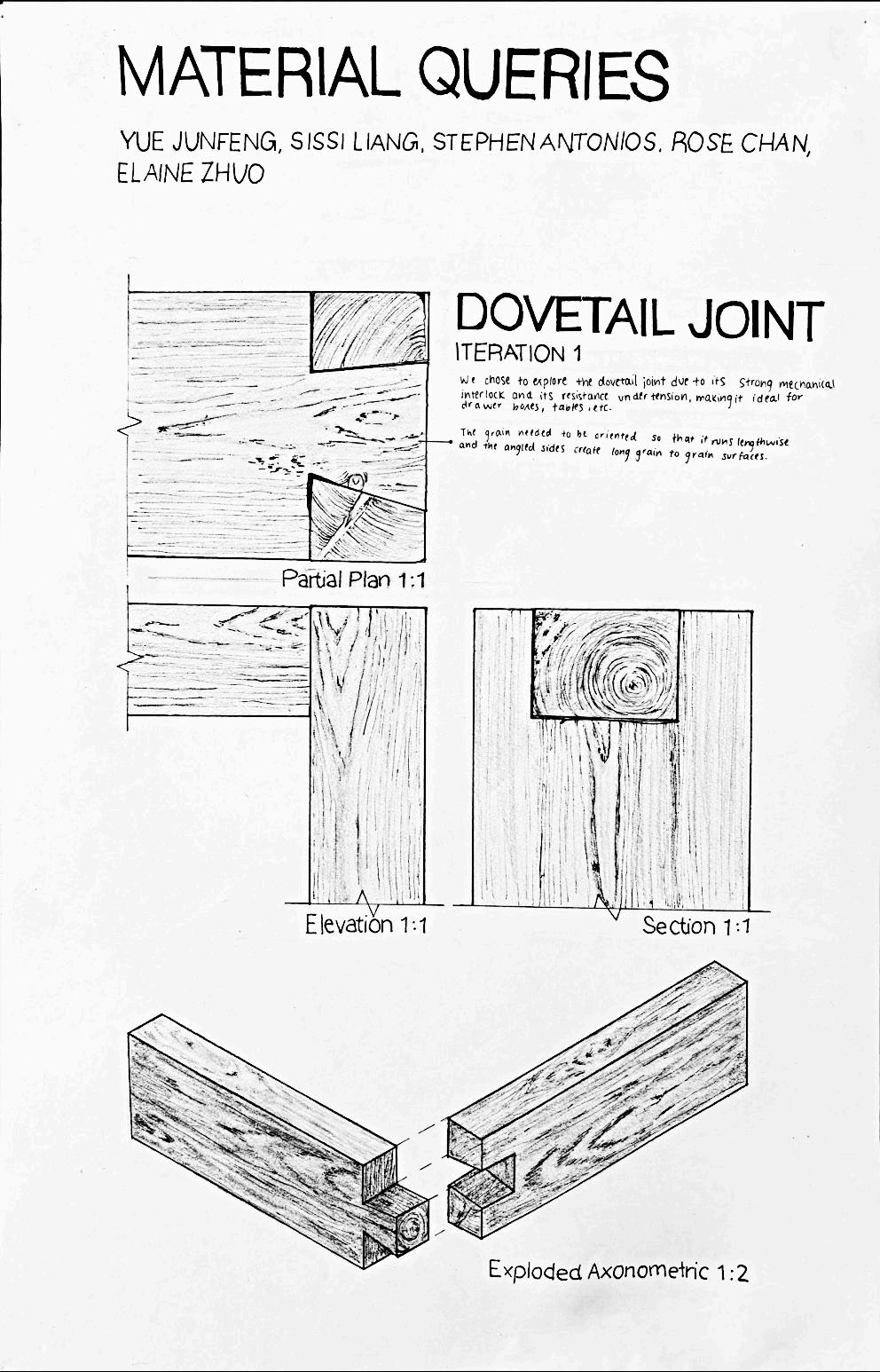
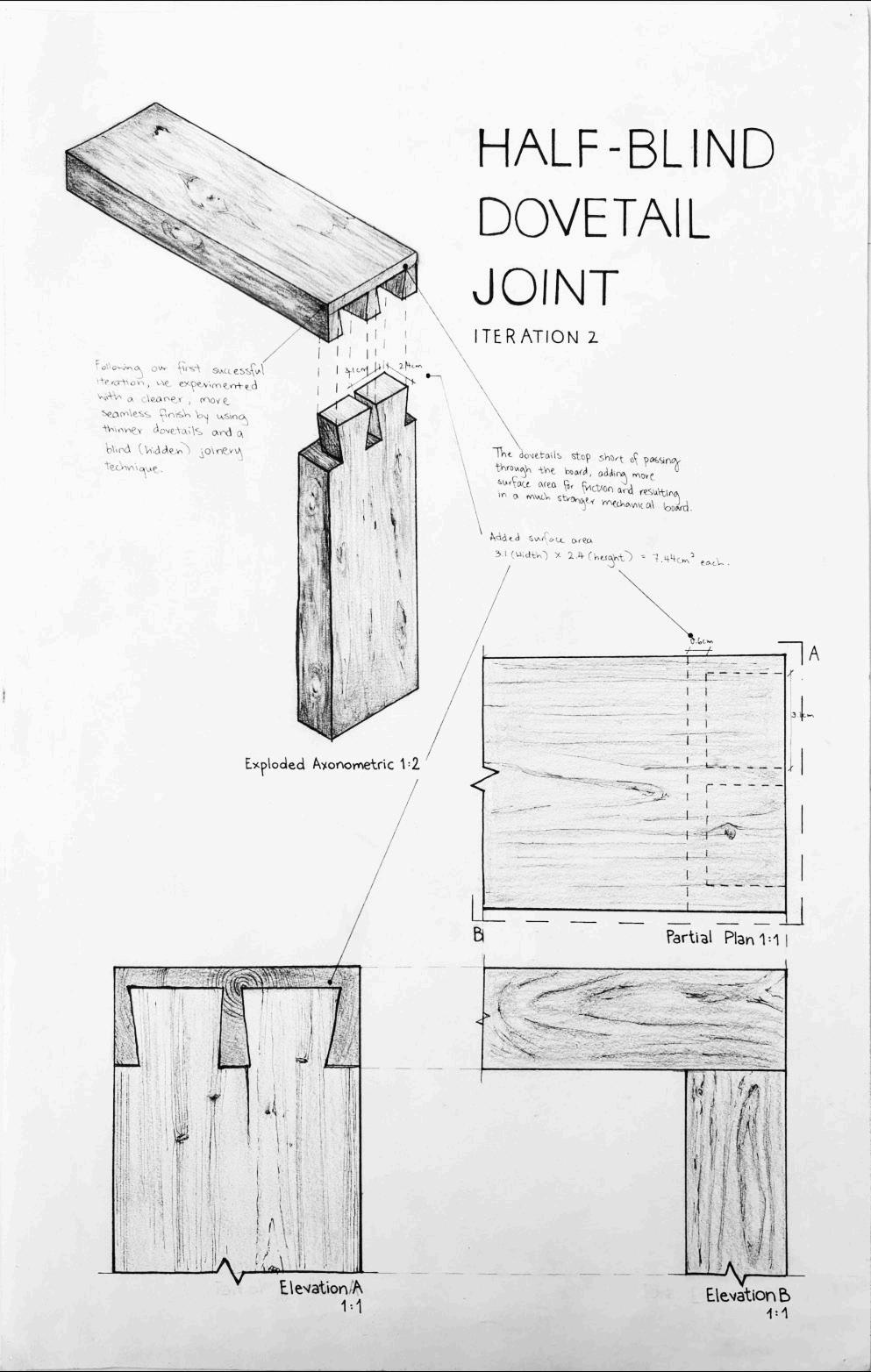
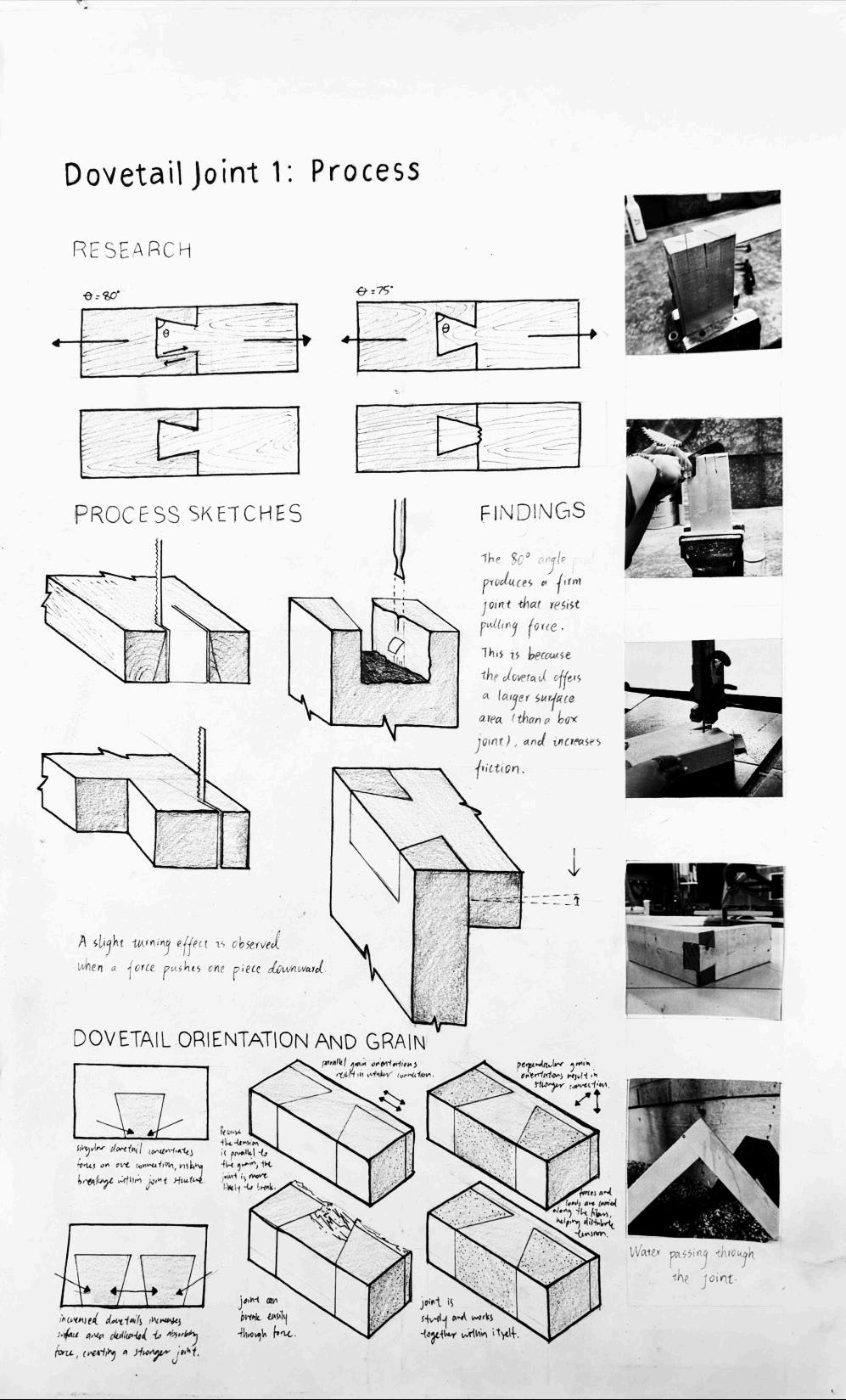
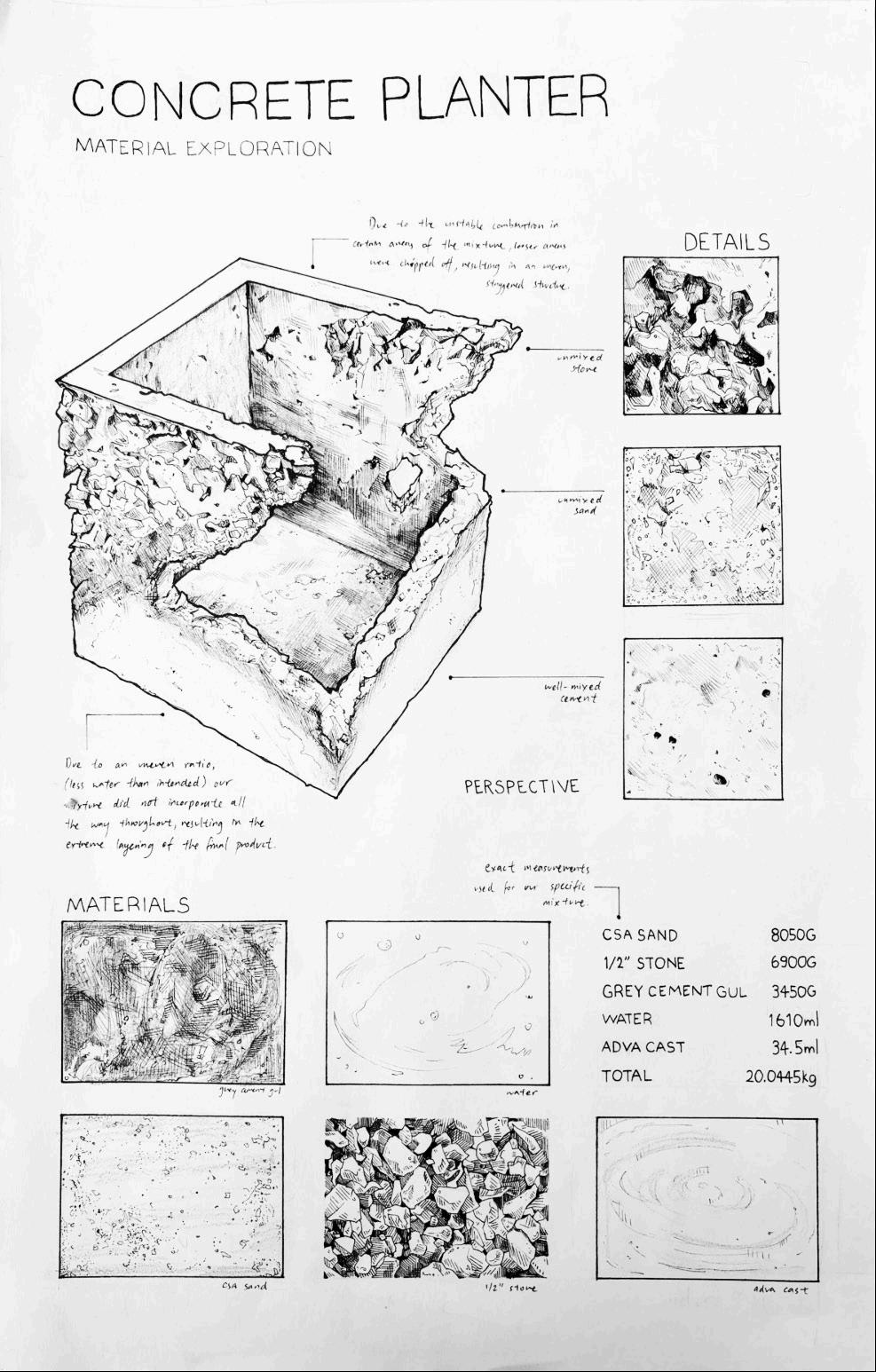
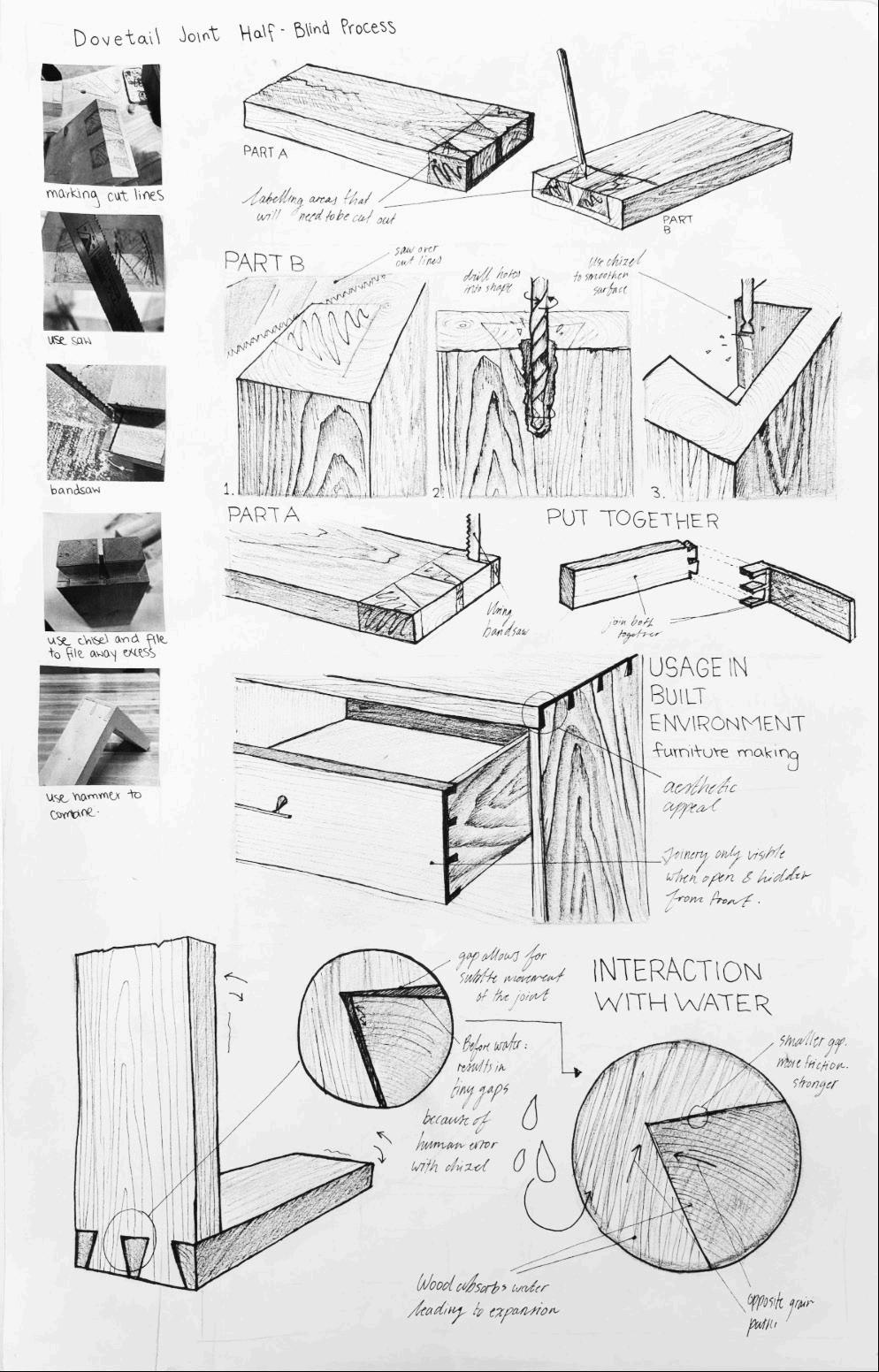
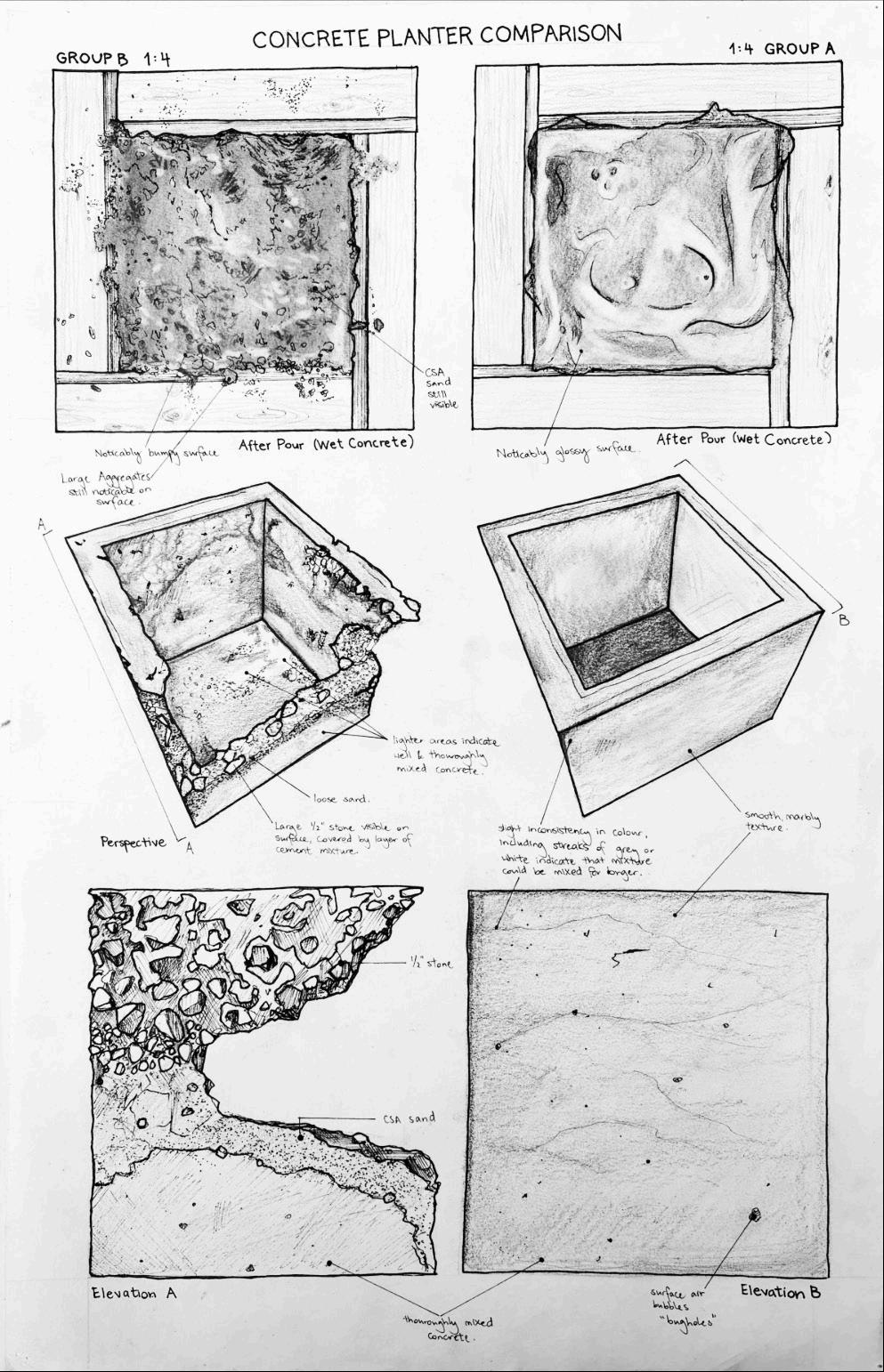
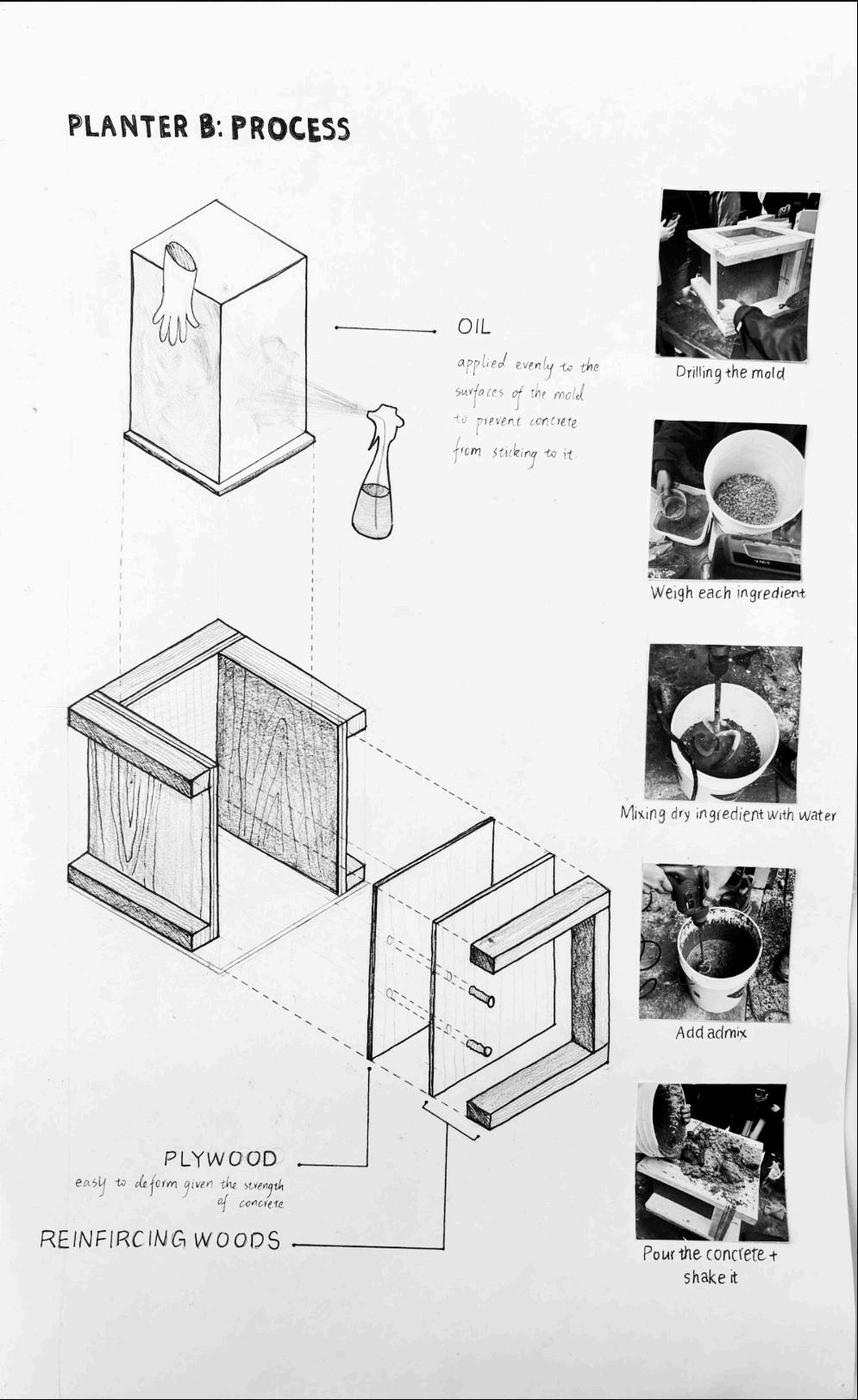
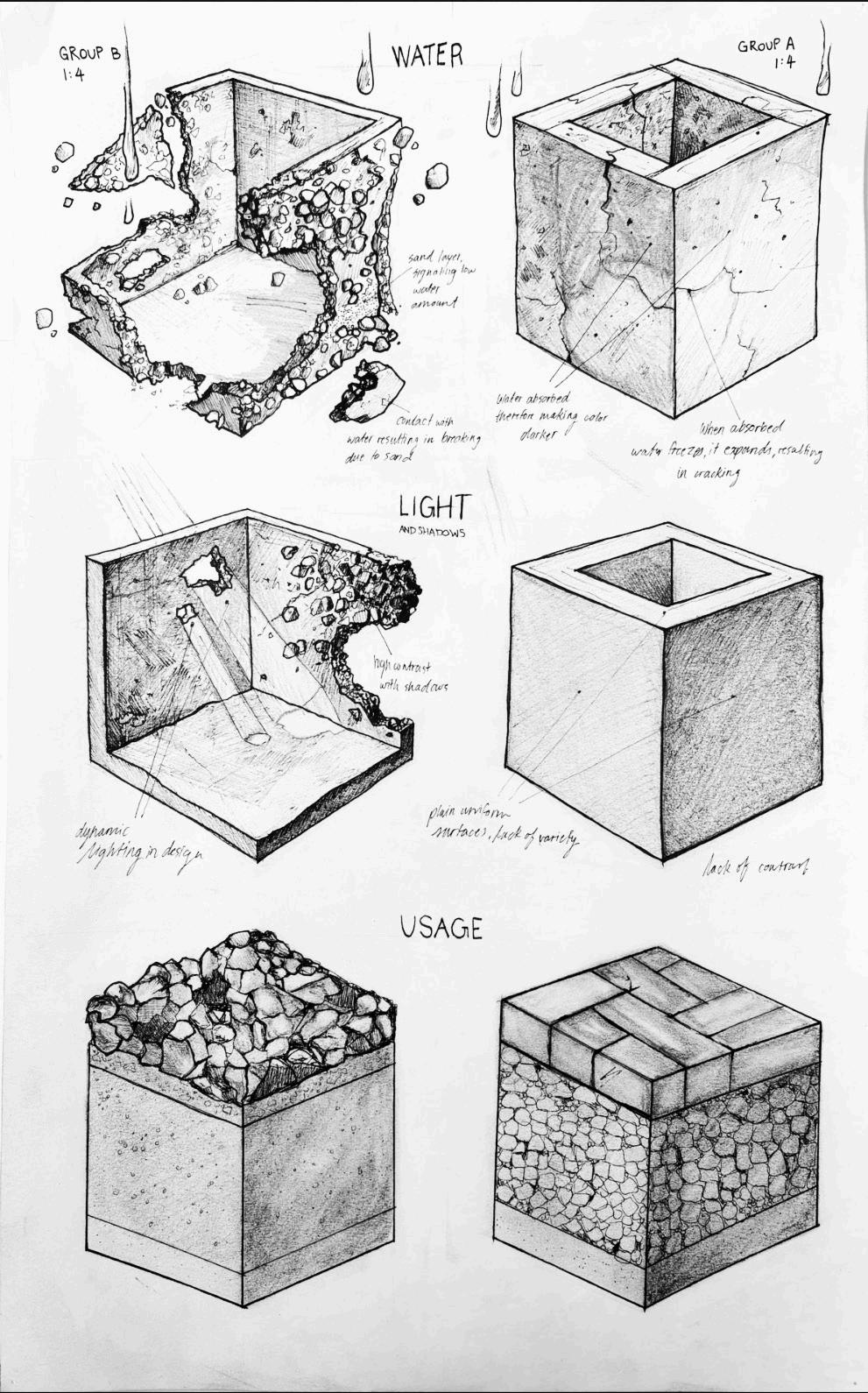
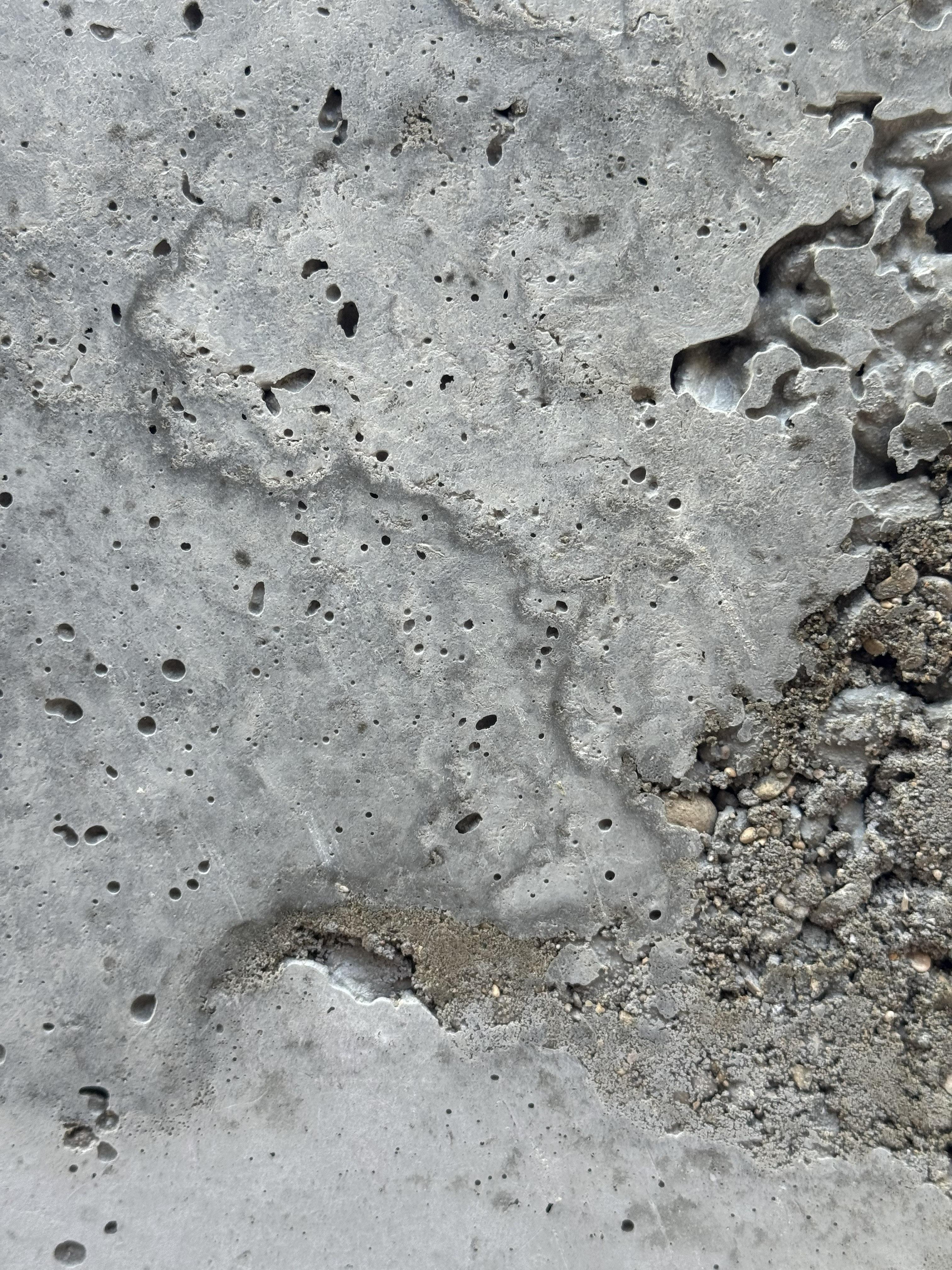
In this exploration of wooden joints, my team and I examined what contributes to structural strength through multiple iterations, considering friction, surface area, and environmental forces. In the concrete component of the study, we experimented with the mixture to create exposed aggregate concrete and documented our findings through sketches on the sheet.
Team
Date Executed
January 2026