


03 - 04 RETURN AS A STARTING POIN
05 - 10 THE SILENT HEROISM OF SUPER MONDA
11 - 14 RETUR
15 - 22 MORE THAN POSTCARD
23 - 62 EMERGING ARTIST
General Director and Creative Direction: Pabla Pastene.
Editorial Direction: Carlos Muñoz.
Graphic Design: Felipe Salazar.
Editorial Design & Layout: Javiera Villagra.
Contributors and Authors: Javiera Valderrama, Aymarita Chambe Cherie Quidel Nuñez, Sofia Troncoso, Ángel Barra, Vicente González, Fernanda Leiva, Aranza Rivas rosatostudioagency@gmail.co
Rosato Studio & Agenc @rosatostudioagenc rosatostudioagency.framer.a
Returning to reality isn't always a shock; sometimes it's an invitation. An opportunity to look at ourselves more honestly and ask what we want to hold on to and what we need to transform. In this issue, we explore the idea that returning to the city, to work, to the search, or to ourselves can also be a new starting point.
This edition is born in that moment of the year when everything seems to restart. Calendars fill up, public transport reclaims its frantic pulse, and emails arrive earlier than expected. But amid that collective noise, a necessary crack appears: the possibility of redrawing our boundaries, of reclaiming refuge, and of insisting, even when the setting isn't perfect
Multiple forms of "returning" coexist here: that of the person who faces urban exhaustion while guarding their own inner square meter; that of the person who persists in the job search without giving up, even as the world moves at a different rhythm; that of the person who returns from a trip or exile transformed —not into an epic version, but into one more aware of their own skin; and also those who turn grief into words, confinement into a novel, and the image into a story that endures.
In these pages lives raw emotion and that honesty that makes us uncomfortable but sets us free. We celebrate the voices of emerging artists who write from the flesh and the senses, transforming darkness into symbol. This journal exists thanks to a team that researches, listens, and builds with depth; voices that transform conversations into pages that beat.
At ROSATO, we believe communication becomes art not only when it portrays reality, but when it reinterprets it. When it finds beauty in the everyday and transforms uncertainty into movement.
Returning to reality, then, is not resignation. It is choosing how to inhabit it. It is deciding to create, even there. Because as long as we are capable of feeling and building meaning, there will always be a way to start again
Pabla Pastene Founder & Creative Director
Rosato Studio & Agency — Where communication becomes art
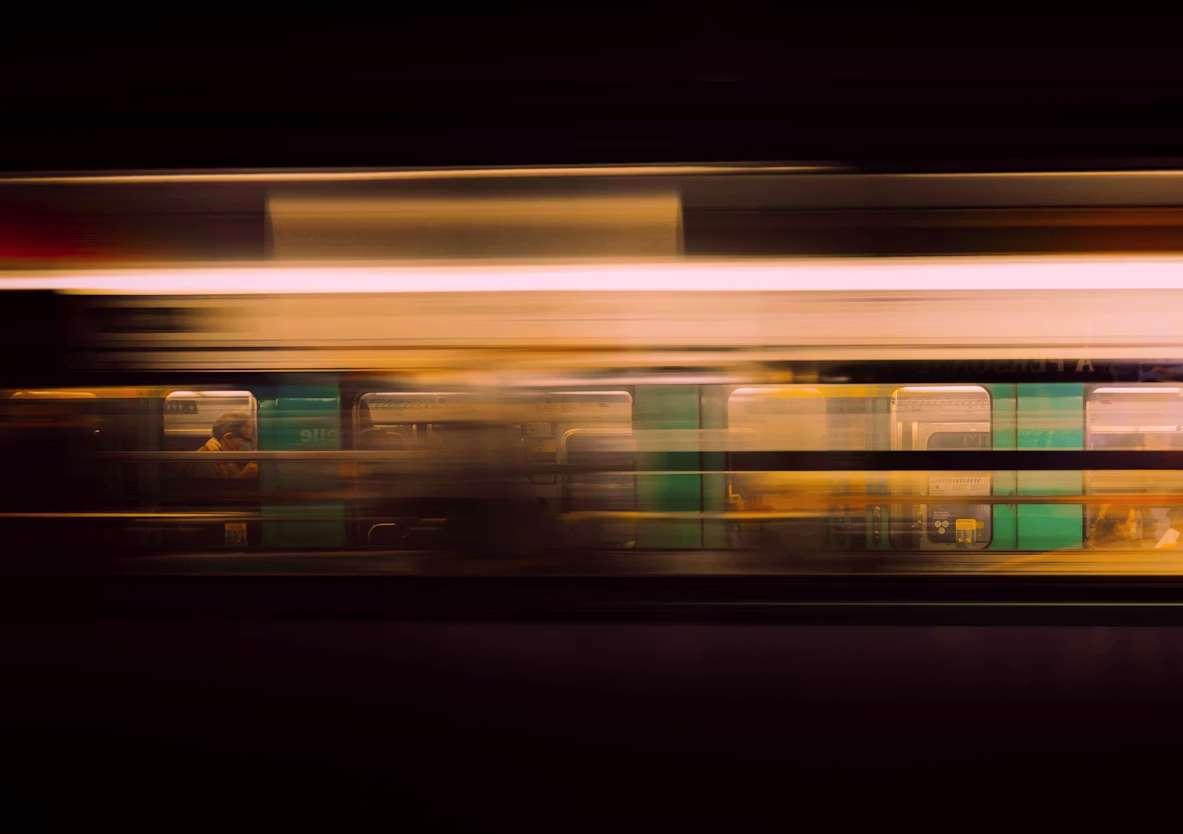
March tests our resilience, but the real exhaustion comes when the boundary between the city and our private lives disappears. Why protecting our inner square meter from outside noise is the greatest challenge of this year
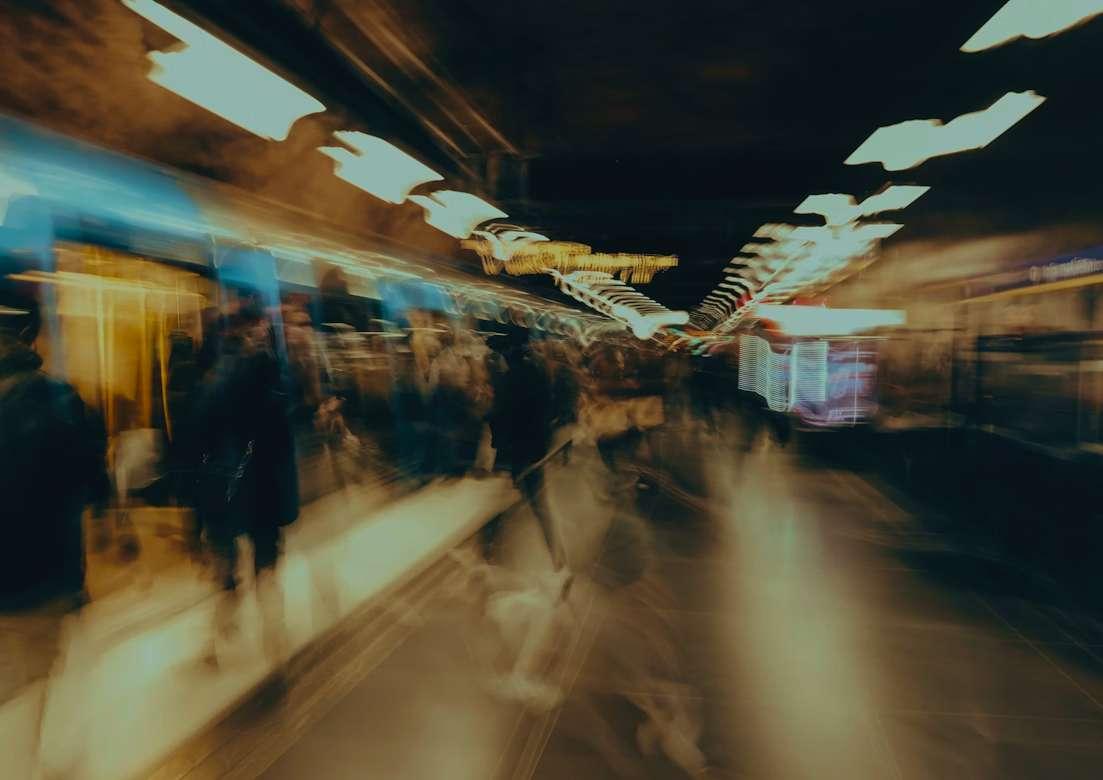
Baquedano Station.
7:00 in the morning on the first Monday of March. The platform of Line 1 is a compact mass of bodies each dealing with their own logistical shipwreck. Some mentally go over how much the school supply list has gone up; others calculate whether they can pay the car registration fee before payday. Everyone pushes to gain a square centimeter on the car that will take them to the office or university. They get on to go to work, but deep down, all that morning odyssey has one real objective: for seven in the evening to arrive, to be able to return, turn the key in the lock, and leave the world on the outside
Super Monday is often described as a civic or productive milestone. But the reality in those train cars has nothing of a perfect machine; it is pure survival. There is a silent pride in being able to pay for the school uniform or in securing the month's groceries, but that effort today runs up against a wall of chronic exhaustion.
To understand this fatigue, there is no need to look at corporate productivity spreadsheets—just look at the street. In The Fall of Public Man, sociologist Richard Sennett explains how modern life erased the boundary that separated the intimate from the public. In the past, public space was the place of transit and friction, while private space was an untouchable refuge. Today, Sennett warns, both spheres have deteriorated by mixing.
The city has become an ecosystem of constant friction—buses that don't come, hostile streets, and an inflation that makes the twenty-thousand-peso bill go as far as a ten-thousand one—and that same hostility has pierced the walls of our homes
Faced with a dysfunctional exterior, the home should be the natural buffer. The place where the noise of the Alameda and the anxiety of payday are silenced. But the greatest drama of our time—where Sennett's thesis becomes palpable— is that this border has collapsed.
Modern life demands a state of perpetual alert that no longer stays in the office or the metro station. It enters the home as urgent emails at nine at night glowing on a phone screen. It enters in the Sunday anguish of sorting out schedules to figure out who picks up the kids when grandparents can't help or the daycare closes early. It enters in the impossibility of having a quiet dinner, because the city's exhaustion occupies all the space at the table.
The home loses its quality as a refuge and becomes a mere waiting room before going back out to battle the next day
That is why March's fatigue cuts so deep. Surviving Super Monday doesn't mean waiting for magical solutions from the authorities of the moment, nor romanticizing the city's inefficiency as a necessary evil.
The true resistance today lies in rebuilding the border we lost. In recovering sovereignty over our time and redrawing the boundaries of our intimacy. The greatest act of rebellion at the start of this year is to do our work, demand that the public environment stop being an obstacle, and, at the end of the day, have enough freedom and tranquility to close the front door, slide the bolt, and decide that, from that point inward, the outside world and its urgencies no longer have permission to enter
Carlos Muñoz Silva Editorial Director, Rosato
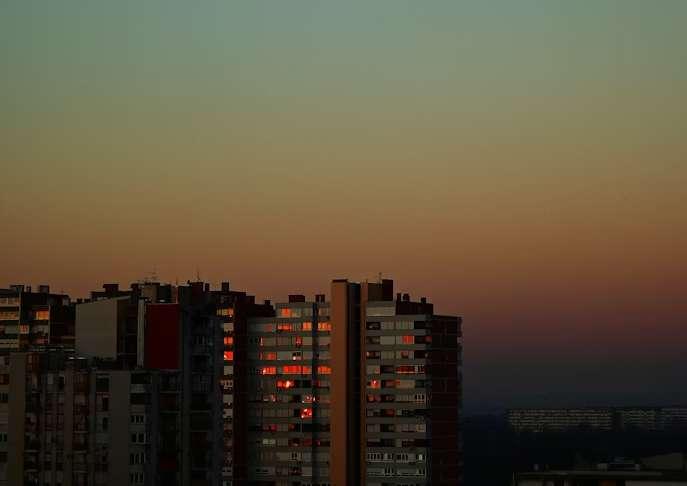
The afternoon of the last day of February arrives and thousands must return to their reality: school, work, or university.
Tl The month of March arrives with the same punctuality as a debt collector. The new backpacks appear, the office lights turn on, and emails announce the boss's return. There is a collective energy of restart, as if the entire country had gone on vacation.
But there are many of us who also wake up early, but have nowhere to go. Because "returning to reality" assumes there was a prior trip or an escape. You had to have left—and we didn't go anywhere.
Unemployment is like a windowless room. The days pass without distinguishing one from another. Whether it's January or March, the ritual is the same: screen on, job portals open, update the résumé, and apply without rest, thinking that this time will be different
People talk about the morning traffic, meetings, or exasperating coworkers, and I listen. I try to invent small occupations so the conversation doesn't turn its focus on my emptiness—which is also that of others.
There is an inherent, silent shame that is not dramatic. It lives in breakfast, when after eating there is nothing to do. It is there at lunch, when no one needs you at a specific place. It is an absurd guilt that appears if you want to rest because— what does someone who doesn't work rest from?
In March, the world sets itself in motion and one discovers one is still exactly where they were. Life becomes a conveyor belt moving beneath everyone else's feet, but mine are still stuck to the ground.
In the absence of employment, all that remains is persistence. A stubborn way of continuing to get up so as not to lose one's sanity, even if the situation doesn't change.
Perhaps returning doesn't mean returning to a building—it simply means not giving up. And that counts too
Javiera Valderrama Contributing Writer at Rosato
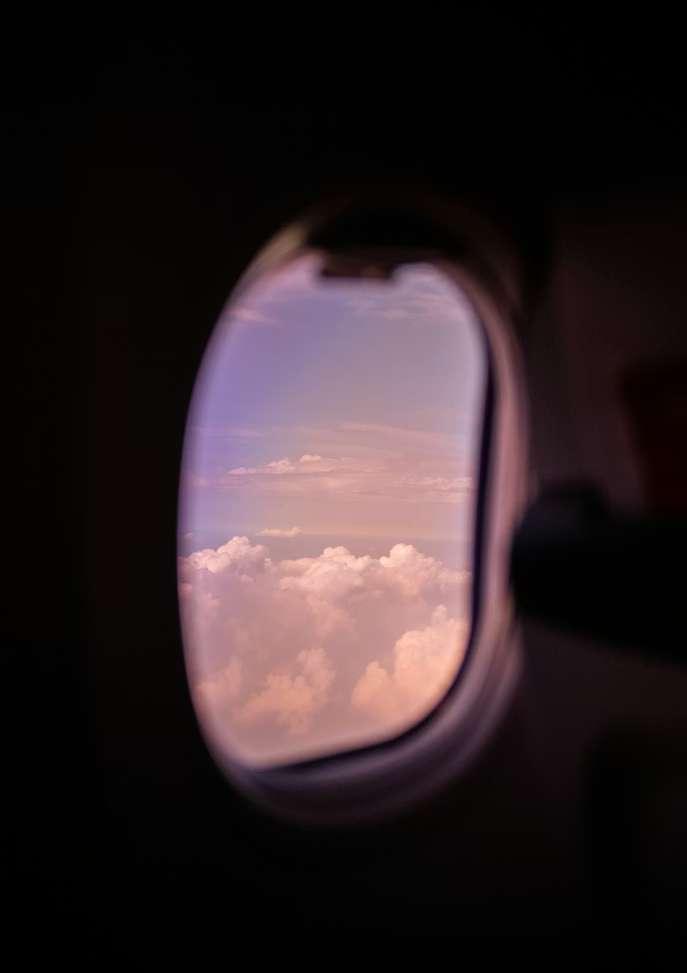
TiThey say that when someone goes to live abroad, life changes. They say that whoever returns is not the same person who left. They also say it will be the best experience of your life. They say it as if it were an inevitable sequence: departure, transformation, and glorious return. As if the journey were a straight line toward a more luminous version of oneself.
But they don't talk about the small, almost invisible tears that can fall in the middle of any afternoon. They don't mention that constant nostalgia that makes no distinction between good days and difficult days. They don't say that it's possible not to want to leave and, at the same time, to want to return with an intensity that hurts.
It sounds like a contradiction. And it is.
And it's that, during that time, you inhabit a territory that is not your own, you walk through streets you don't know, and you hear accents that don't know how to pronounce your name. In that foreign setting, nostalgia is not an isolated episode, but a persistent emotion that takes up permanent residence. A soft, firm presence that installs itself beside you like a patient shadow.
In a small room, on a bench in the city center, in a quiet park, or amid the noise of public transit, the evocation of past times is inevitable—and brushing words like someone who needs to fix something before it falls apart is not just an escape; it is giving shape to the overflow happening inside. It's not about narrating an adventure, but simply understanding what one feels "Time clings to me and refuses to pass. It sits beside me as if it too were waiting for something. I look at it, I push it with words, but it stays there, motionless, breathing with me
That fragment emerged from me inevitably when I felt time was moving slowly. From the confused sensation that there was still much ahead—not desperation, but more of an awareness of being in the middle of something important and not yet knowing how to face it.
The experience was not perfect, because none are. There were moments of doubt, of fatigue, and of missing the familiar. There were afternoons when the contradiction became evident. Wanting to be there and, at the same time, feeling there is no place for me. But in the end, nostalgia did not annul what was lived— it gave it depth. Because although this text began in shadow, the bad does not take away the good, and the good does not take away the bad.
The shared laughter in small kitchens, the improvised conversations in mixed languages, the connections formed in minutes—these were containment. They were the reasons time gave itself to stay with me
"I
cry out gratitude for every corner I inhabited, for every smile I received and for all that was built and crumbled within me
That gratitude recognizes that each emotion—joy and loneliness alike—forms part of the same process. That what crumbled made space for something more authentic. And that what was built was not always visible from the outside, but transformed from within.
With time, my perception changed. What seemed stopped began to flow, and what seemed heavy became light. The days passed and even accelerated, as if in mockery.
In the return from that journey, an epic version of myself didn't necessarily emerge, nor a spectacular transformation. Nor did an immediate tranquility appear. Rather, I felt something more human and personal: I (re)knew myself. I understood that all experiences are different and felt that each one shaped a different version of me—not better, not worse, just different.
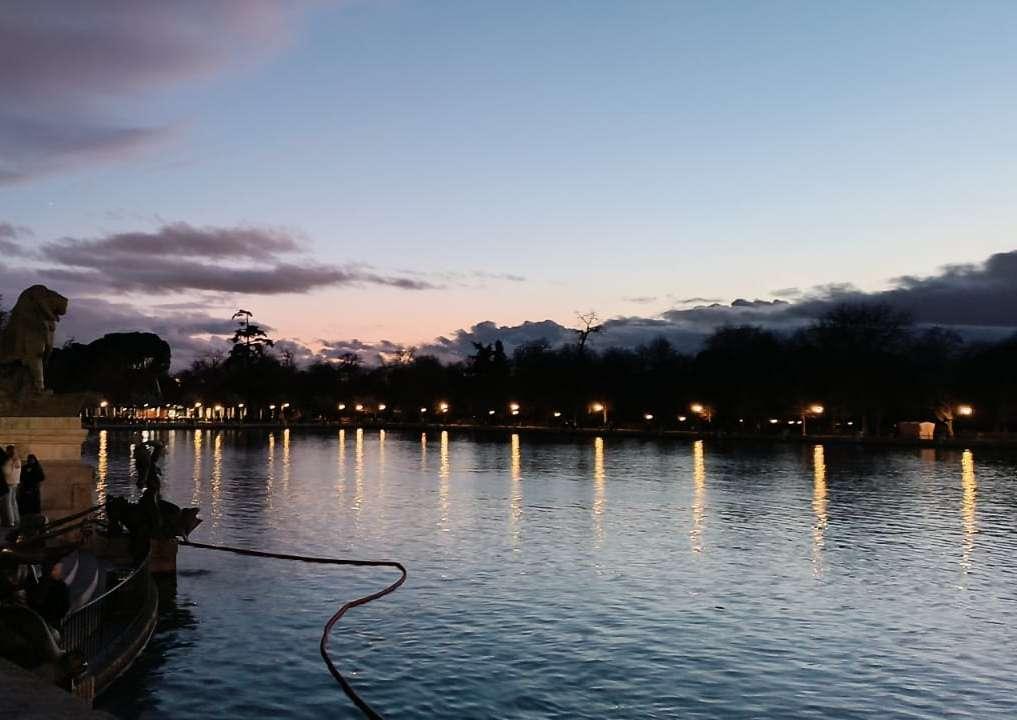
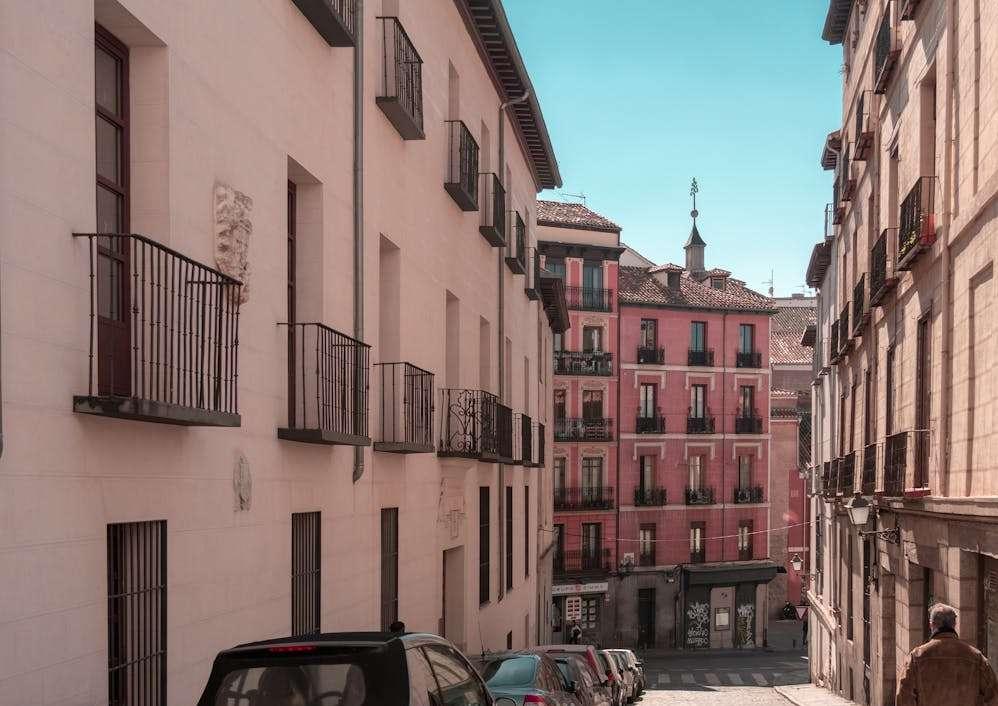
Although I often wondered why my life in Madrid wasn't like a movie, nor did I see everything through the eyes of a magazine, I realized I wouldn't change anything, because every second spent there was as intense as a catharsis of the soul that exploded when I least expected it. But it was also liberating, like someone discovering the world and being surprised by the most common corners of existence, yet when observed sensitively, filling me with an emotion that has little rational basis.
Little by little I accepted that not everything has to be perfect to be profoundly valuable. Because what matters is that everything was real. Too real. It was intimate and beautiful. And that is enough
In the end, I realized that time was not clinging to me, nor drowning me, nor holding me back. Time, simply, was accompanying me
"That honest time that clung to me, that sat beside me, frozen just like me, passed and continued without much notice. It was not clinging, not drowning, it was accompanying me, whispering the opportunity to join it and make it mine, to understand that it was leaving like every moment I lived and that it was not coming back
Today that city no longer feels like something I must resist, but like the place that held me when everything was shaking. That makes everything more gentle, allows me to look back without tension, and understand that beauty, sometimes, reveals itself afterward.
In the end, the postcards were not just the great constructions of the Old World; they were also the capacity to see myself as more capable and more sensitive, to know those people who owed me nothing, but who, present, took small pieces of the trembling and transformed them into something much more beautiful and necessary
Aymarita Chambe Contributing Writer at Rosato
New voices of Chilean creation emerge with an artistic sensibility that deserves to be recognized. make visible those processes, open space for intimate conversations, and accompany trajectories alongside others that are already advancing with a firm step within the cultural scene
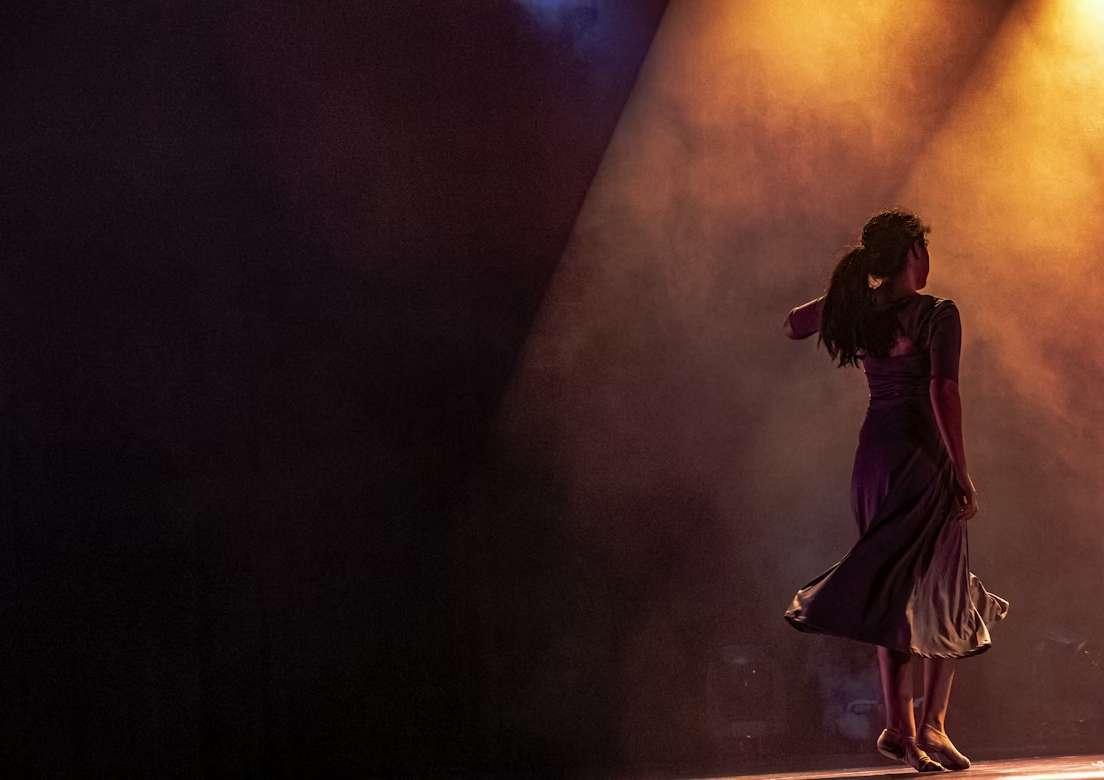
recognized. This section is born to trajectories that are just beginning,
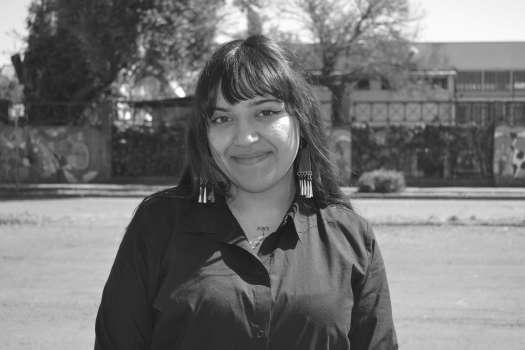
At just 25 years old, Cherie is consolidating herself as one of the most singular emerging voices in Chilean literature. After publications such as Mujer Araña (2023) and Carmencita (2024), in 2025 she won the Roberto Bolaño Prize with Amutui Lafken, a poetry collection of intense emotional weight, which she is still working on, confirming her sensitive and fully expanding identity
Writing from th Fles
Hhere is something Cherie said almost as soon as the conversation began, but which contains everything: "I'm Cherie Quidel Núñez. I always add my mother's last name." In that minimal but meaningful decision, a stance already appears. Writing, in her case, is not just producing literature—it is feeling, observing; it is body and lineage. It is an identity that is born innate within her.
In 2023 she published her first poetry collection, "Mujer Araña," almost on impulse, in the midst of a deep depression and after returning from Argentina. She saw a call for submissions on social media, gathered scattered poems, and sent them without much hope. A few months later she was already launching her first book. "It was very fast," she says. As if things, when they must happen, simply align themselves.
But that book doesn't feel entirely hers. She describes it as experimental and without a clear thread. A testing of the field and a necessary beginning for identifying her own capabilities
With "Carmencita," published in 2024, something fell into order. The text was firmer and more conscious. If her first book was exploration, here is a voice that knows where it's going.
This novel immerses us in an intimate portrait of a family, stripping that space of any idealization. There is no perfect environment—there are tensions and silences. But at the same time, there is strength, love, and the emergence of a protective feeling born among three sisters who only have each other.
When in 2025 Cherie won the Roberto Bolaño Prize, she didn't see it coming. In fact, she almost didn't find out—she had changed her phone number after a theft and the Ministry couldn't reach her. It was she who called the institution out of anxiety. Then, from the other end of the line, a voice announced she had obtained first place.
"It was a random day. I was in my living room watching a movie. It was incredible," she recalls.
In that moment she thought: "Ah, okay, I'm good." Not from arrogance, but from confirmation. As if she needed an external signal to confirm something that had already been growing inside
GRIEF as a
The work with which she won the prize, Amutui Lafken, began to be built in 2021 following her father's death. Since then she writes in dialogue with that absence and others that have marked her. It is not a book about death as an abstract concept, but about death known up close. From childhood, with classmates who passed away, early funerals and inevitable farewells, she began to understand the concept of the wake as an everyday landscape. In her poetry, death is not merely a thematic resource; it is inhabited territory.
This poetry collection was not written all at once. It has been created over years, in a slow but fluid way. "There are days when I want to write about that, other days I don't," she says. She doesn't believe in obligatory discipline. She writes when she wants to. When something in the world—a loss, a gesture, or a phrase from someone else— activates that impulse to write.
Because for Cherie, anything can become a trigger—an image, a feeling, or even something she doesn't know
When asked which part of her speaks when she writes, she chooses not to separate mind from emotion: "It's the head, but also the stomach. It's the whole body. The soul." She also writes about what she hears, what she lives, and what she doesn't live either. Even about what she disagrees with and what she argues.
Her writing she defines as uncomfortable, carnal, passionate. She uses the word flesh as someone who wants to strip the body of romanticism and return it to what is real. Her style of literature is undoubtedly strong, it can be painful but profoundly felt.
When beginning a narrative work, she thinks about the ending before everything else. She needs to know where she's going in order to build the path. In poetry something similar occurs—she defines a final poem that waits, ready, for the other texts to find their way to it. When the conversation and internal journey reach that closure, her creation speaks to her and tells her the book is finished
And when a text doesn't advance, she lets it rest, lives her life, returns, erases what no longer makes sense to her, and rewrites what's necessary. She trusts that the impulse will return to nourish everything that's missing. She's not one to force things, but rather to let them take their own course.
Currently, she is working on a novel about the mother-daughter relationship. About the moment the mother stops being a woman and so does the daughter—both trapped in roles that redefine them. The relationship she writes is turbulent. Though, she says, hers is not. She's interested in exploring what she hasn't lived, but described through her own feelings.
And there another reflection appears that marks her discourse. Female authors, she says, are required to have everything come from personal experience. To write from the intimate self, from their own ordeal. While men can write from a dog, from anything, and it's considered universal and accepted. She doesn't accept that limit, as she feels she can write from her own grief, but also from others' conflicts
When asked about an achievement she'd like to reach, she answers with humor: "Win the Nobel. The third for Chile." But she immediately dismantles the idea. She's not someone who writes thinking about prizes—"it would be a guaranteed disappointment," she says
What truly motivates her is something else: that people pirate her books. "That they reach the most peripheral periphery... That people who don't read, who don't like it, or who aren't interested, can be called and give a little attention to what I can offer. At the end of the day, reaching an audience that wasn't the target is wonderful because it means it's something that goes beyond."
She doesn't dream of public recognition or coveted awards. She talks about touching those who weren't expecting to be touched— marking with her words those people who weren't even expecting her
Aymarita Chambe Interview writin
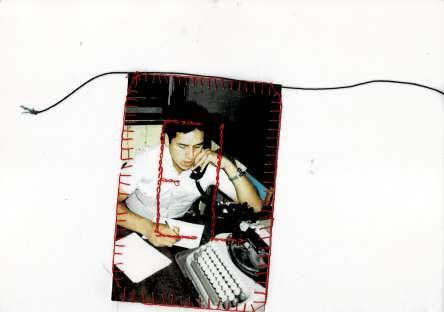
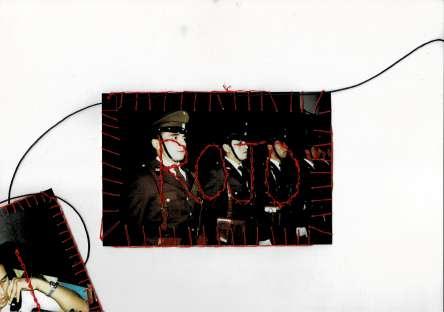
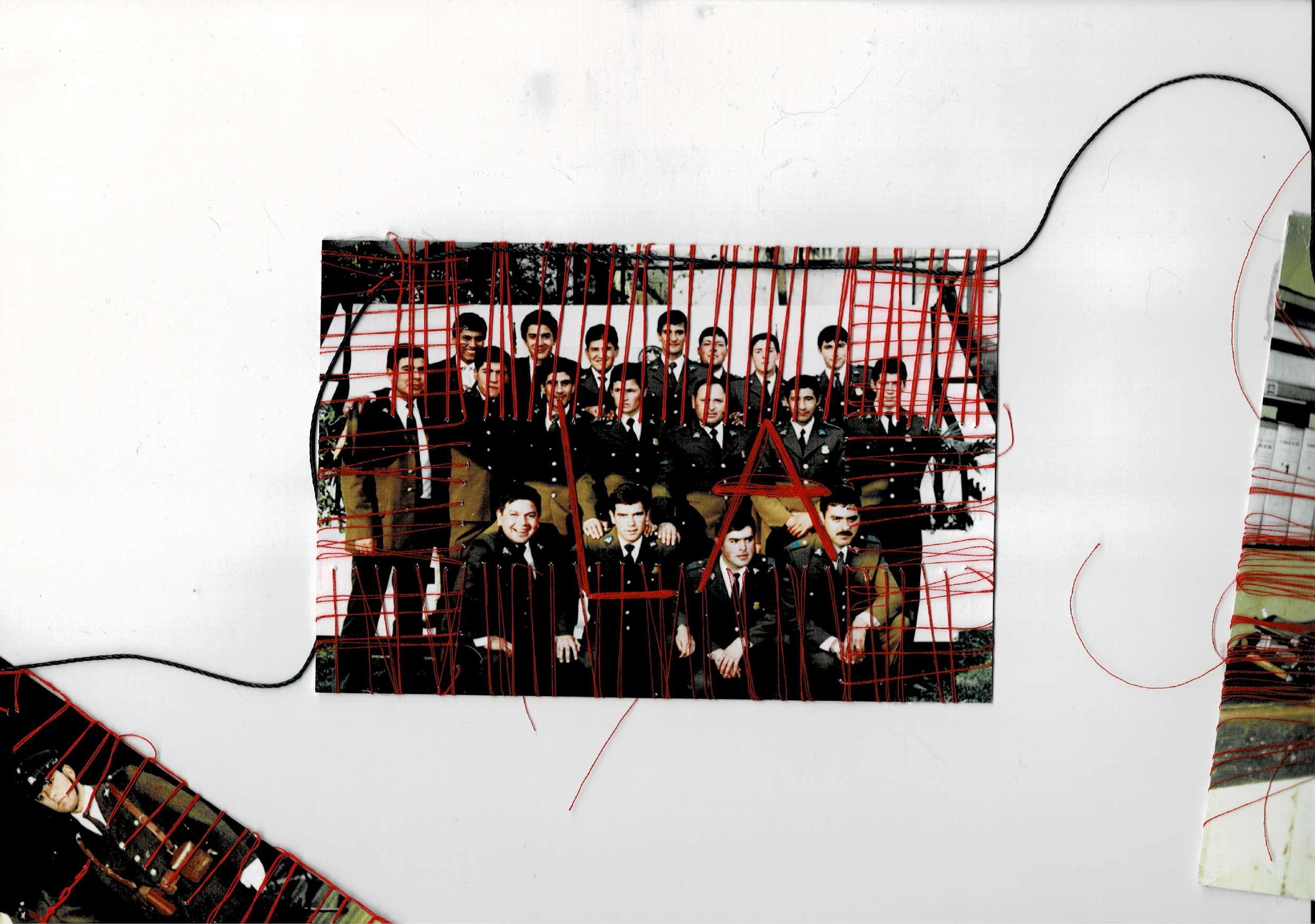
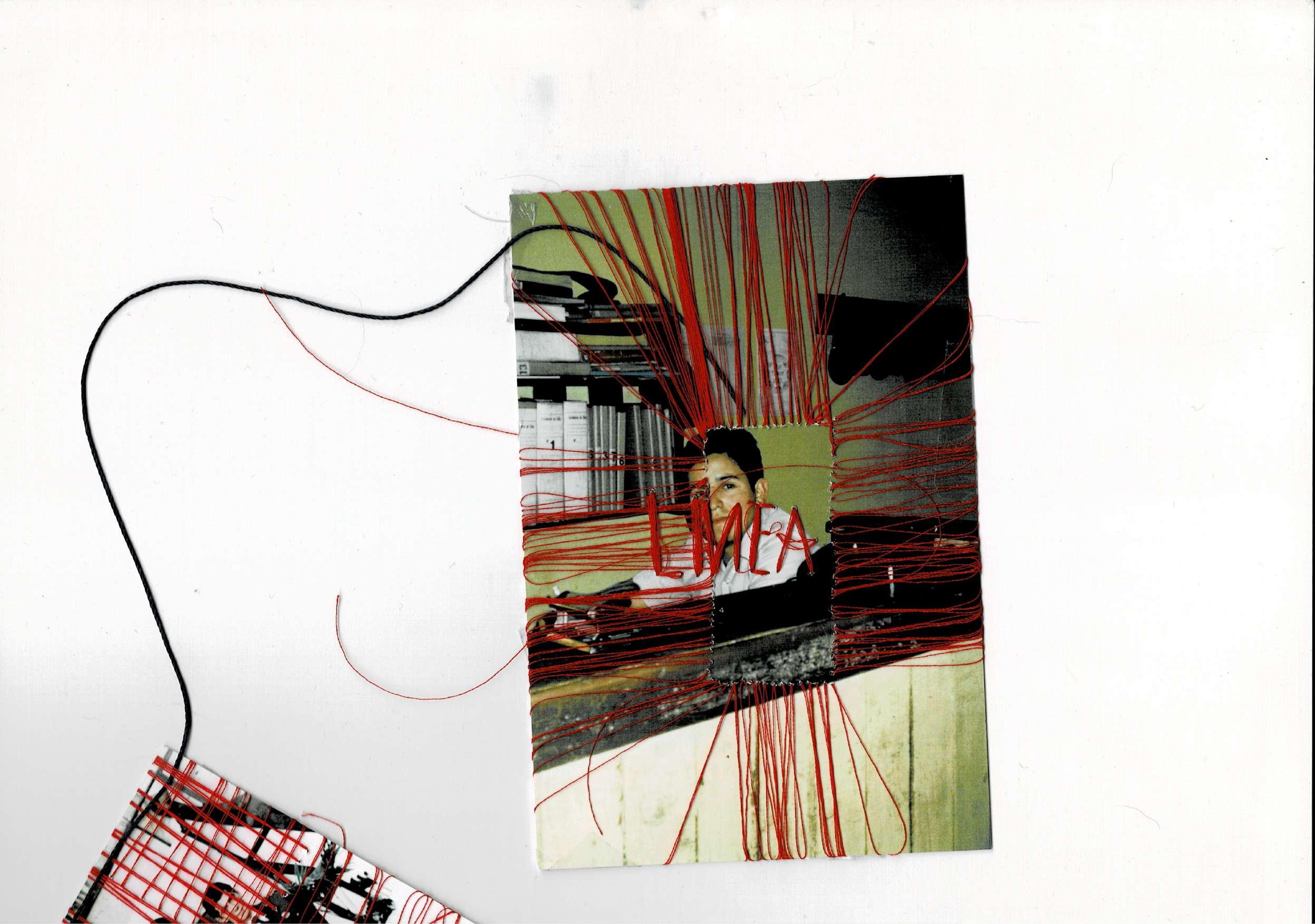
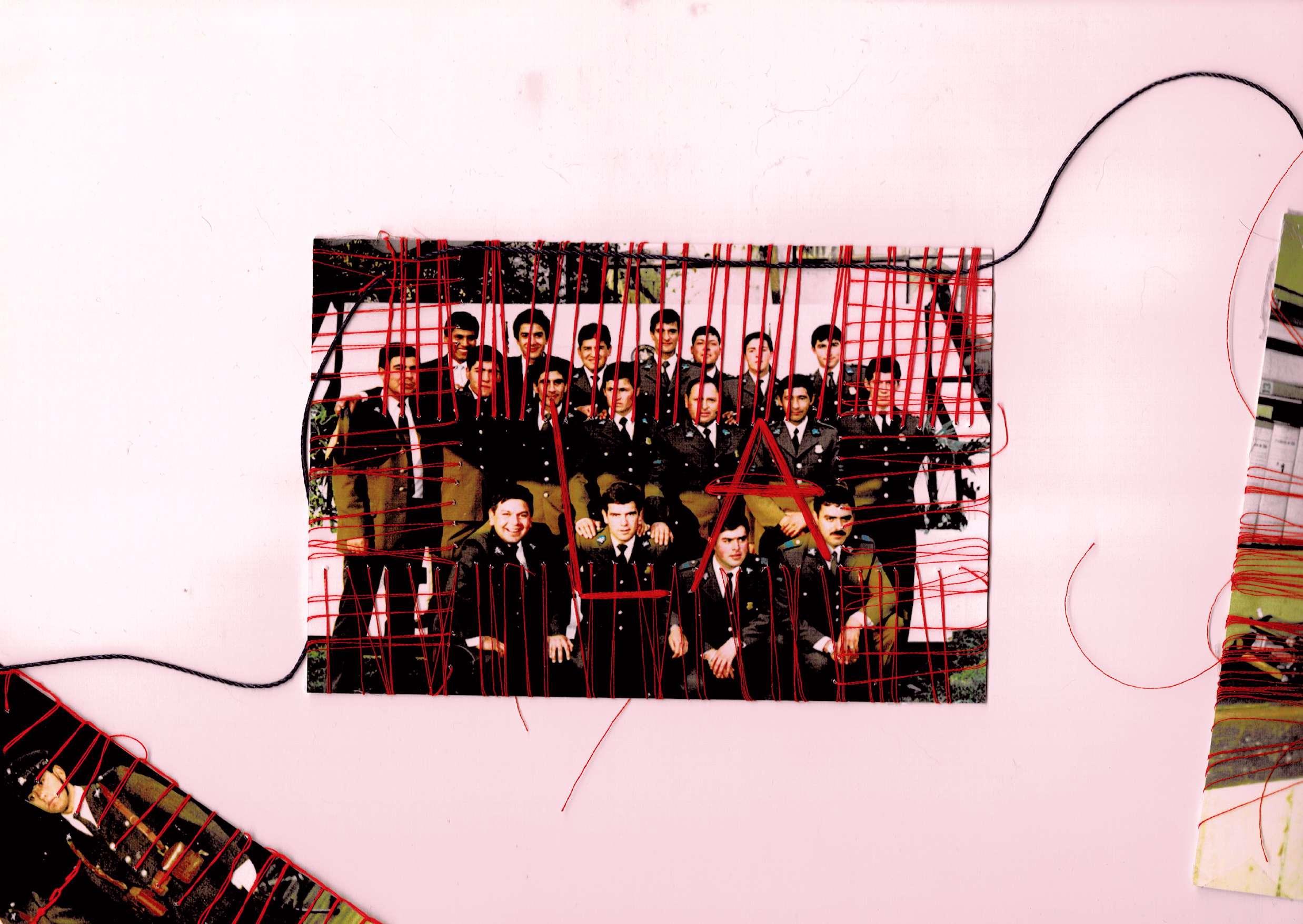
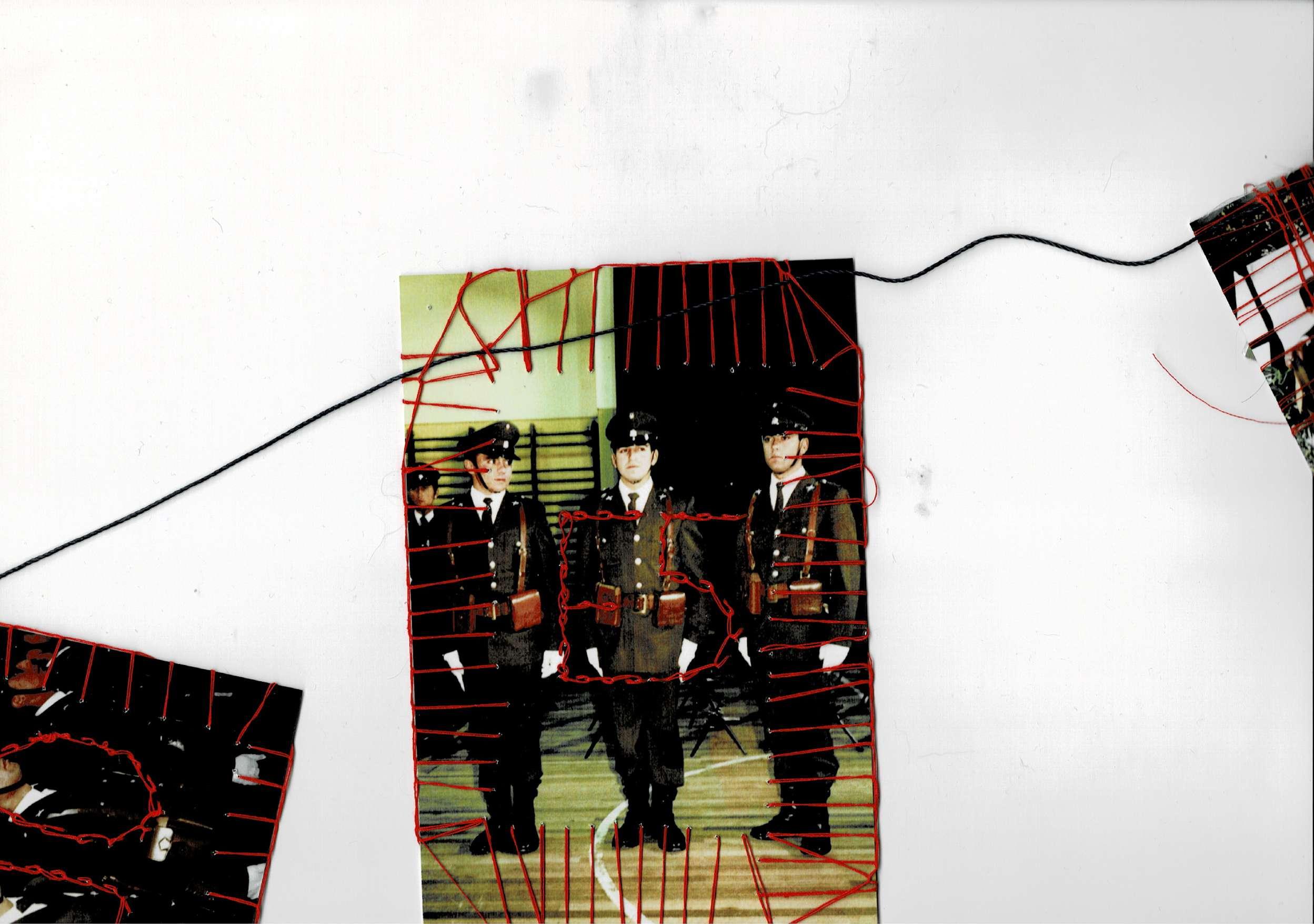
Being a minimal and charged gesture, an unadorned but insistent stitch. Red appears as a line, a wound, a boundary, and a testimony. While the edges close the image, the word also shrinks and persists. Its tidiness changes; its care is overflowing. In these pieces, the thread passes through, destroys, and reassembles memory.
The dialogue exists between inheritance in weaving, the burlap sack, and the craft of the working-class woman. To embroider is the exercise of the hands; to write belongs to their movement. Thus the counter-archive is formed, contained in the intimate and the historical. Without grandiloquence, its right side and wrong side seek perspective, effect, and endurance
Cherie Quidel Núñez Write
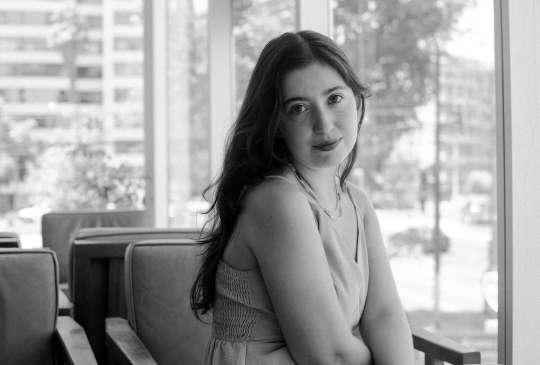
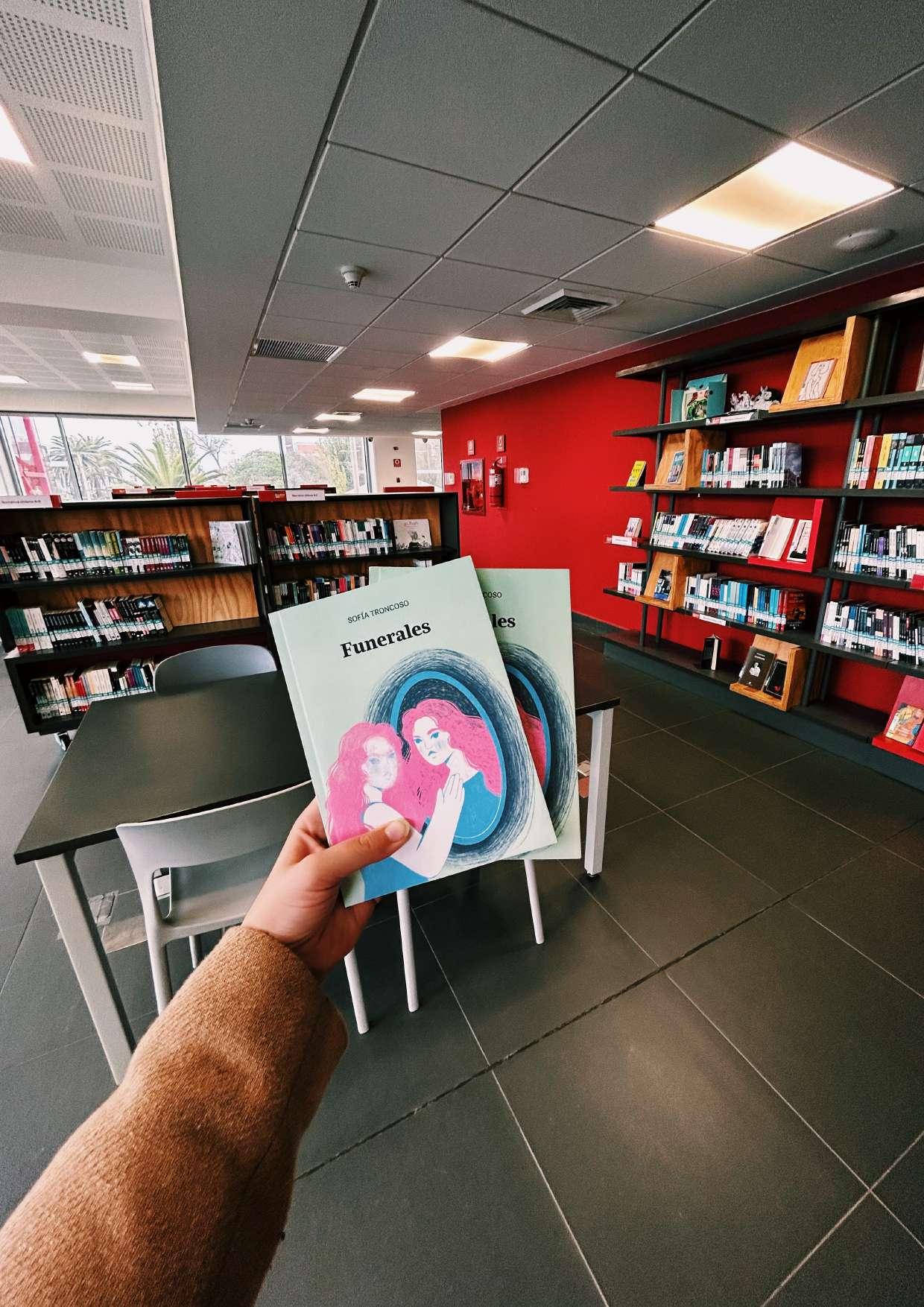
At 28 years old, Sofía Troncoso, with a soft voice, speaks with a contagious serenity, like someone who is already following a fixed path. A writer of novels and winner of the Roberto Bolaño Prize in 2022 for Funerales, she has built her career not from spectacle but from persistence. Today she declares with impressive certainty
"I don't want to be a young promise... I want to be a constant voice
Although she has written short stories, poems, and has "played a little with painting," Sofía always returns to the long format. There is something in the length that allows her to breathe better and expand emotions without rushing them. "I feel the larger format suits me much better," she explains. For her, different disciplines dialogue with each other, they complement each other, but the novel, without a doubt, offers her the necessary space to sustain an intensity that doesn't fit in short formats.
When asked about the exact moment she decided to devote herself to writing, she hesitates. There is no defined scene she thinks of. "It has always been in me... Since I can remember, it has been my thing," she answers. However, she places 2019 as a consolidation point—it was then that she began writing complete novels in a more serious and dedicated way. She recognized her potential as a real possibility. "It seems like this is very good and it seems like I have talent for it," she recalls thinking
The novel with which she won the Ministry of Culture's recognition, Funerales, was written in 2021, even before she knew the prize existed. "It started first as a short story," but then took a natural course and extended to 120 pages. The text began from a phrase that kept running through her head: "I won't go to the funeral, I won't go to the funeral." That repetition kept opening a narrative space until it became a complete work.
The final work narrates the experience of a woman who, in an attempt to deny the pain of loss, escapes her own name and identity and becomes a dissociated entity that slips away from the world while her sister holds her up and tries to get her to face the reality of death and the suffering it entails
When a text blocks up, her response isn't insistence. "You have to know how to let go," she notes. She is capable of leaving a story on pause and picking it up months later or transforming it completely. She doesn't plan the endings of her works too much either. "Generally the text tells me."
Sometimes a story closes naturally; other times, her own emotional exhaustion asks for it. With Funerales, for example, she finished exhausted and recognizes she couldn't continue—not because the novel was already perfect but because her own energy had been consumed.
That intimate commitment to emotionality also runs through the themes that appear in her work. Over time, and often thanks to others' perspectives, Sofía has identified a series of persistent atmospheres in her writing: scarcity, confinement, unresolved emotional patterns, and overwhelm. "For some reason my texts always start enclosed, and that generates the oppressiveness of always being between four walls." She also notes that her characters tend to be "neurotic"—"people who have an issue there that they can't resolve. Sofía usually writes at home, ideally in silence. She needs to isolate herself to sustain the emotional continuity her writing demands. "I try to express an emotion very strongly and sustained," she explains. She doesn't work in brief fragments, but writes for an hour or sometimes more, maintaining that intensity without interruption
When asked which part of her speaks when she writes, her answer is clear: "The most honest Sofía." There are even texts that would embarrass her if someone who has known her since childhood read them, precisely because of that emotional nakedness. And what's more, she doesn't fear tackling taboo subjects, like death, because although it can be uncomfortable, it's the only thing she recognizes as true.
Regarding the relationship between personal experience and fiction, she seeks a middle ground. She can write about a father-son relationship without having been either, but using emotions that do belong to her. "I try to talk about external events, but with my own senses... To find that middle point of necessary ambiguity for writing fiction," she explains
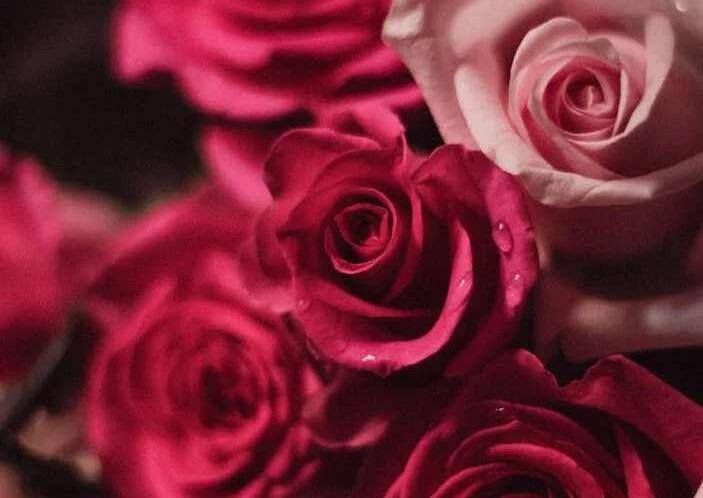
Although she doesn't like to be categorized—because that would mean being pigeonholed—she chooses three words that attempt to define her writing: Red, conscious, and affective. Red for its intensity, because, she says, "although roses are red for everyone, I see them more red than you," evidencing "that dramatism that exalts reality."
When she received the Roberto Bolaño Prize, it was a moment of personal reaffirmation, as if "a great entity told her: keep doing what you're doing." She also feels that "as a writer you don't have the notion that your work is worth a lot until it's recognized," so the award was not only a success but the push she needed at that moment to keep believing in herself
In her future projections there is a clear idea: to stop being a "young promise" and become a constant voice. "I don't want to be a new voice, because new voices fade very quickly; I want to solidify myself on the literary map," she reflects. She aspires to be a reference not only in Chile, and not for an isolated book, but for the way she approaches the world.
She also questions the obsession with molds and replicable routines. "Maximum creativity is trying new things," she maintains. She, at least, constantly changes her writing routine and distrusts manuals that promise universal formulas. She defends the idea that each creative process is singular.
In an era that pushes toward extreme specialization, she defends multiplicity. She believes there is greater richness in being multidimensional than in mastering a single territory. She doesn't fear experimenting, even if that means not being a "master" of anything
Aymarita Chambe Interview writin
I remember the trip to the saltpeter mines. Sebastián running through the desert with Trinidad. I took a photo of them with the new camera; I burned my shoulders because I was wearing a tank top and hadn't put on enough sunscreen; we listened to Bacilos on the way back. I remember that year, that month, that day. And when they told me, and when I had to tell the others, when we went to the wake but not the funeral. Sometimes the memory drips, but it doesn't dampen. It evaporates before touching the ground. I burn my hands picking up the metal camera. Sebastián always comes back, but doesn't stay. When we went to the saltpeter mines, I asked everyone for silence, so we could listen to there being no sound. Barely a faint hum
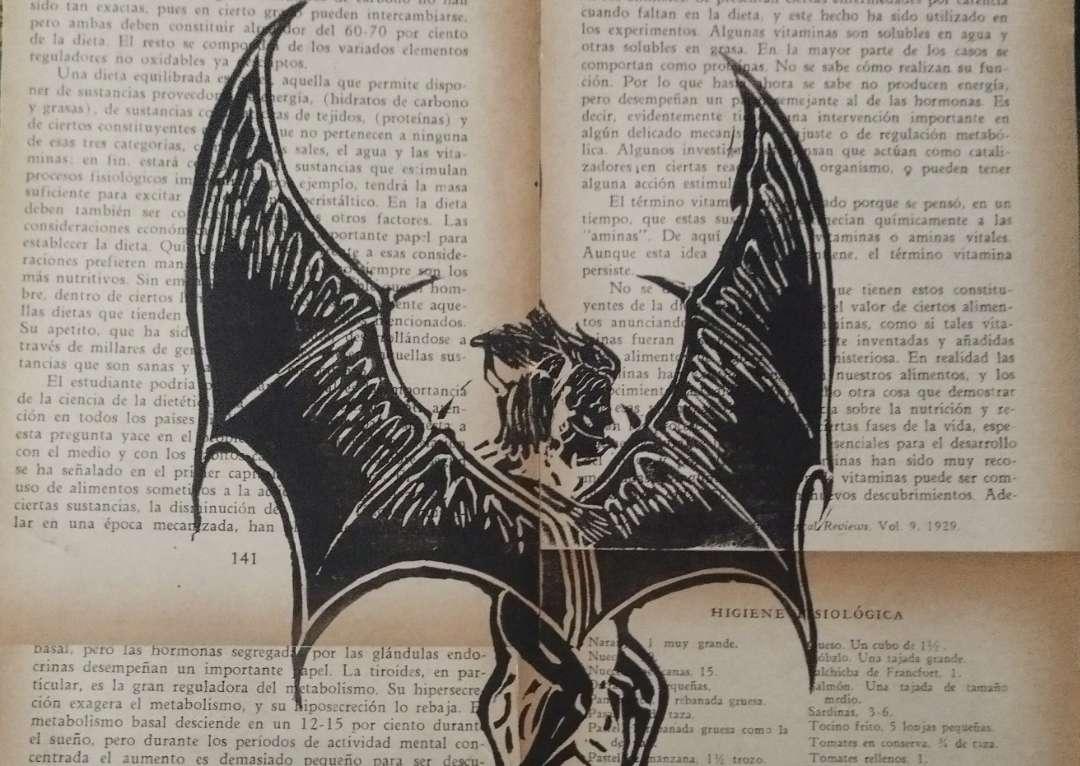
Visual art entered Ángel's life without much planning. He is 24 years old, just finished studying English Literature, and although his academic path goes through literature, his artistic work today passes more through illustration and printmaking. "The art I dedicate myself to is not specifically what I'm studying," he says, as if that distance were also part of his identity.
He learned in a very innate way—his family has always been connected to art. One day during the pandemic, he obtained the materials and from there began to experiment with xylography and linocut. "I was very self-taught, very amateurish, I never went to a course," he recounts. What followed was slow but constant: first, a university fair where he barely had five prints, then exhibitions in galleries and collectives
Ángel Barr Illustrator and Printmake
His prints are rarely just images. Ángel talks about them as small narratives: "I like for the prints to tell a certain story," he explains. Not necessarily an explicit story, but clues within the scene—an object in a corner, a symbol, or an element that suggests something larger.
Literature also appears very naturally in his creations. "Many of my prints have to do with literature... mainly with classics," he says. In his catalog one can find Frankenstein, Dracula, Kafka, and Alice in Wonderland—not as literal illustrations but as atmospheres. He also frequently draws on the mythological, the medieval, figures that seem from another time: jesters, tarot cards, magical creatures
In his creative process there is no scheme, but a way of being attentive. Ángel observes his surroundings a great deal: the architecture of downtown Santiago, objects that appear in the street, or images that cross his path while traveling on the metro. When something catches his attention, he notes it down. Sometimes it's a figure, other times a texture, an atmosphere, or an idea he doesn't entirely understand but keeps as a reference for later.
He says that many times he starts drawing without knowing quite where he's going: "It's a process like throwing yourself into the water—I don't know where I'll end up." He sketches, tries, lets elements appear that transform the illustration into a visual story. He realizes a print is finished through a very specific feeling: stopping feeling the need to add things. "There's a point where it's done... what needs to be communicated is there," he says. Then he can begin to carve, print, and repeat
Naming his style takes him a few seconds. He thinks aloud and finally chooses three words: "Gothic, dark, and iconographic." The gothic has to do with emotion, with literature, with that feeling of unease. The dark appears in the tones and in the atmosphere. The iconographic, in the intention of constructing images that endure.
"I like to draw attention... for someone to see it and say 'this is different,'" he explains. He doesn't seek immediate impact, but that sensation that there is something uncommon but attractive
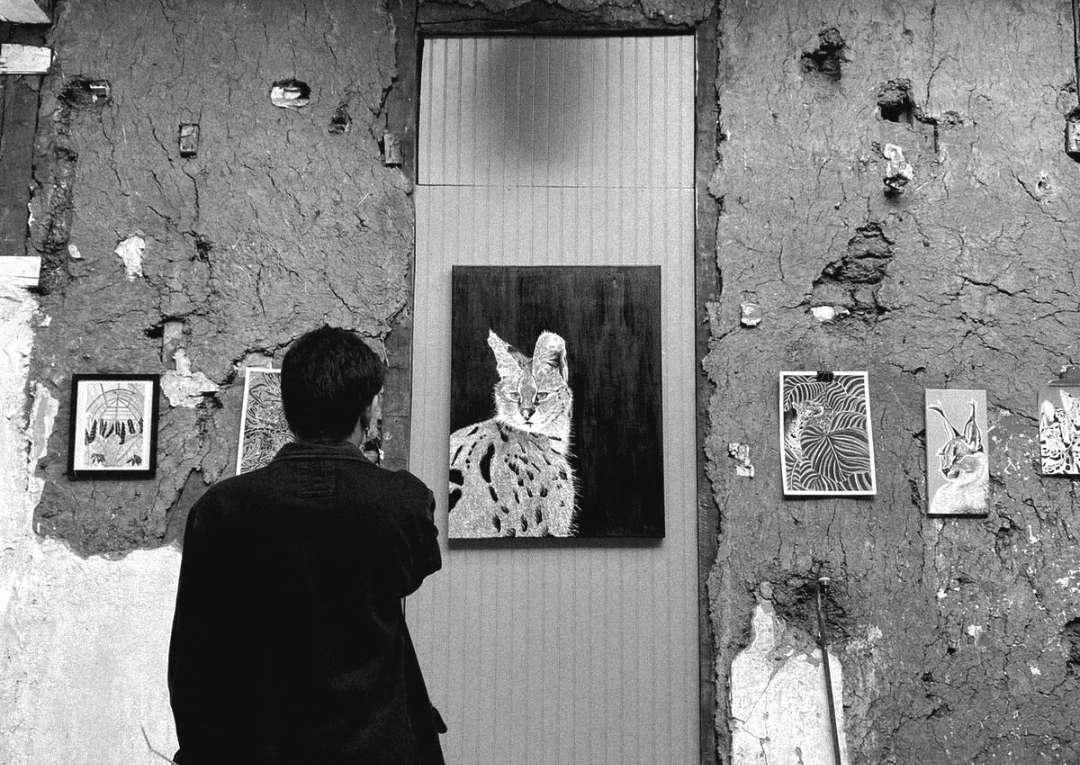
Ángel has also been writing for a while. Poems, haikus, brief stories that appear almost as a parallel gesture to his visual work, but that occupy a very different place. While the print is made to be shown, writing is born from a more personal space.
"My poems were like for me, a very solitary experience," he explains. He didn't think of them for publishing or sharing, but as a way of ordering what he felt—of leaving something on paper without the pressure of anyone seeing it. He speaks of writing as a release, a place where he can say things that in daily life he fails to name. He even acknowledges that rereading those texts causes him embarrassment: "It embarrasses me for others to read it... I wouldn't know if I want to share that with others
That difference marks a clear boundary between his creations. With prints there is openness, but with poems the doubt appears—the feeling that that material belongs to a more internal space. Ángel doesn't present this as a contradiction, but as two different ways of communicating. He says that many times art allows him to express what he cannot (or doesn't want to) say directly: "The part that speaks is the one that can't speak in day-to-day life."
Although he himself imagines some crossings between those two worlds: prints that dialogue with poems, illustrations that accompany texts, or books where both things exist together. He doesn't see them as exclusive paths, but as complements.
Ángel is at that point where everything still seems in motion. He continues learning techniques, trying materials, and imagining a workshop of his own. His prints function as a way of showing himself to the world, while writing remains as a more sheltered space that will gradually be revealed
Aymarita Chambe Interview writin
Poem: XIV
Perhaps in secret and without knowing it, we share the same silence come here and let us forget our before today more than ever I want to find you without you tomorrow will always taste bitter to me because when time passes and I am no longer young I will paint these streets and these nights with the color of memory I will dress them again and again in the outfit worn by the sunset I long to share and so I will present them to the future by then cynicism will be the worst answer when faced with it it makes me taste an insipid present and I understand that I myself denied my past for not having known you, for not having found you I will drown these days and these years wherever I go, like someone who never expected anything, with the horror of consolation I will drink the last drop, and remain thirsty
Ángel Barra Autho
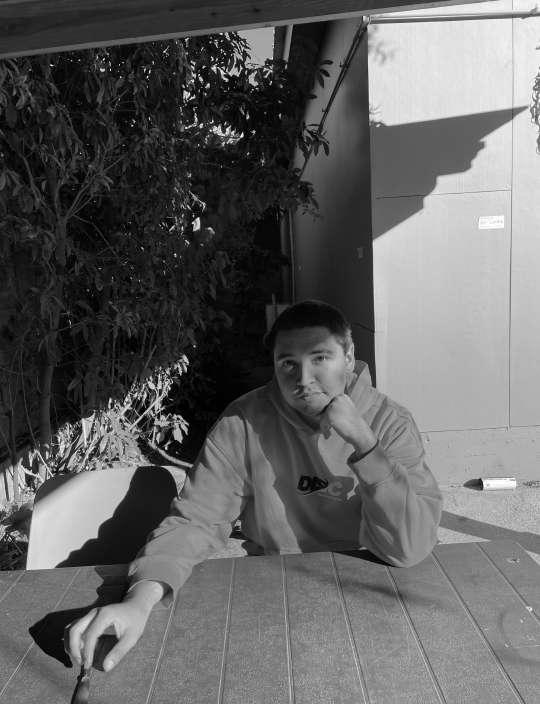
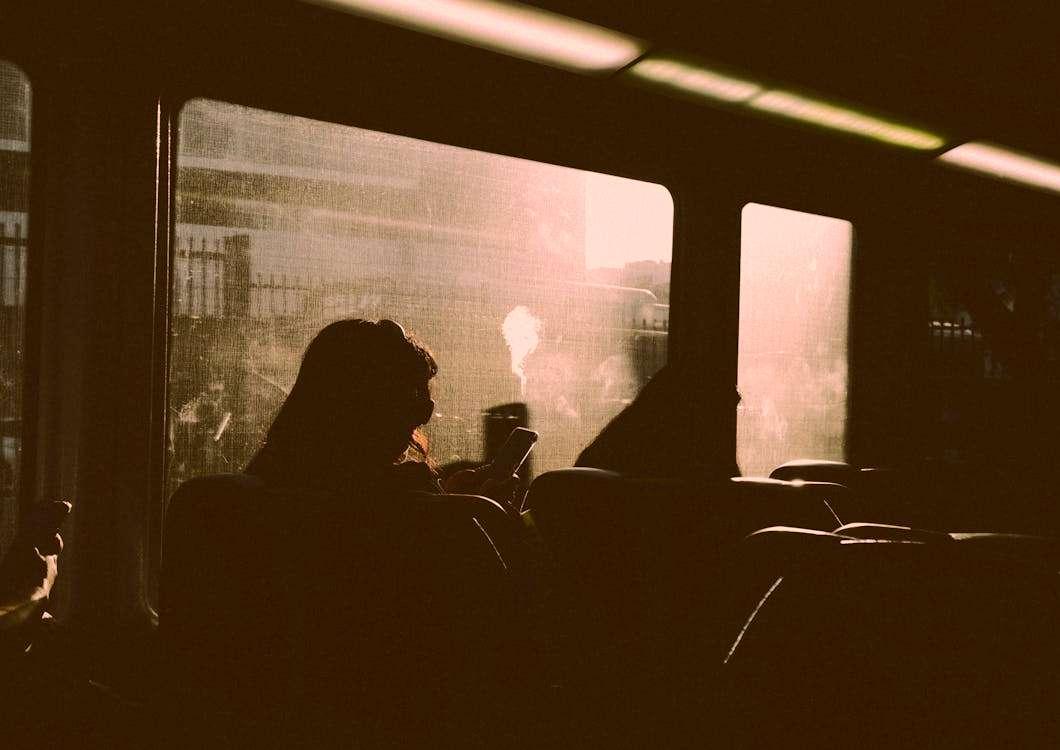
Vicente is a young writer from Viña del Mar who, little by little, is showing himself to the world. When I asked him to introduce himself, he hesitated. It wasn't a very long silence, but long enough for the question to weigh more than usual. He tried saying aloud: "Do I write poems? Poems? Or do I just write?"—as if trying to convince himself of something. Finally he said: "My name is Vicente González Pérez, I'm 22 years old, and I write poetry." That hesitation stayed floating as an early clue to his essence. Calling oneself a poet is not a simple gesture; there is a sense of responsibility in that word that he doesn't yet fully assume
For him, writing doesn't appear as a closed identity, but as a territory under exploration—something that comes and goes, that settles in for long stretches and then, in smaller moments, dissolves. It depends on mood, fatigue, and the space he has between work, studies, and daily life. When he thinks about the idea of devoting himself entirely to writing, he hesitates again: "Yes, no, it comes over me, it leaves, and then it comes back." But, he emphasizes, it always comes back
He believes he writes to live and that the opposite would make no sense. His starting point is usually something that moves him: "Something that stirred me inside and that I need to let go of." It isn't necessarily an intense emotion— sometimes a minimal scene is enough, like a conversation with a friend, the people on the bus, or other everyday situations.
For him, "truly good works make you feel something—it can be disgust, hatred, emotion, happiness, or sadness, but they always make you feel something." And that is what he seeks with his texts—he doesn't need the reader to experience the same thing, only for something to happen
Vicente says he needs calm to write, though his calm doesn't resemble others'. He can be surrounded by noise and still find an internal space where words appear. In fact, one of his favorite places to write is the bus. "I love traveling by bus... many things happen and it's a very tranquil place," he explains, because there he can observe without the pressure of participating.
In recent times, several of his texts are born precisely there—trying to look at that everyday space from another angle and pausing on the details no one notices: the scrawlings on the seats, the phrases no one reads, and the minimal moments that tend to go unnoticed.
People often tell him he has an eye for looking at things everyone sees in a different way. An observation that accompanies him and also challenges him to pause more, to turn those images over, and not let them pass
He's not one who forces himself to write ten pages a day, but he does jot down ideas, keep diaries, record images, and note every feeling from which he thinks he can write. When a text doesn't advance and he gets stuck, he doesn't insist. "I leave it. I wait for time to pass and then I pick it up again." Or sometimes he returns and likes none of it, but there are one or two lines he loves, and those are enough for him to start another work.
Knowing a poem is finished has nothing to do with an external rule or any formula he manages, but with a feeling. "Like when the pieces fit in the puzzle"—if the text makes him feel what he was looking for at the beginning, then it's going well; if not, he stops
Everyday, light, and emotiona
Choosing just three words from a vast vocabulary that could define his writing was something he also paused on—not because he didn't know what to say, but because he wanted to consider all the alternatives. Finally he said: everyday, light, and emotional.
Everyday, because his texts are born from common scenes, from what is there and tends to be overlooked. Light—not in the sense of simple, but accessible—because he doesn't seek to create complex literature but rather one that anyone can read, that someone with a free moment can enjoy. And emotional, because his starting point is always what he feels: "I feel that mine is born from and goes toward emotions.
There is a dimension that appears with more force when he talks about his future: territory. His writing is profoundly tied to Viña del Mar—not as a postcard, but as his everyday life. He was born, grew up, and continues living there, and that closeness filters into the way he writes.
He's interested in expanding the image of his city. In making it more complex. The beach and the downtown area exist, he recognizes, but they don't exhaust the story. That's why he insists on looking toward the hills, the heritage, and the spaces that don't always enter into the official narrative. "Everyone says Viña is upscale or that Viña is beach, but most people live in the hills," he comments, pointing to that distance between the established image and real life
When he talks about projection, he doesn't mention prizes—but rather a firmer, more lasting dream: "I would like to be recognized as a writer from Viña." For his work to dialogue with the place where he lives and for that place to recognize him in return. "It matters more to me to be recognized in Viña than elsewhere," he adds.
Though he doesn't ask that people read him—at least not exclusively. He asks that people read. "It doesn't matter whether they read me or not, but that they read and try to read as much as they can," he explains. Because through reading you learn not only about the world, but about yourself. In the end, Vicente is a voice that doesn't seek to impose itself, but to remain and find its own place
Aymarita
Chambe Interview writin
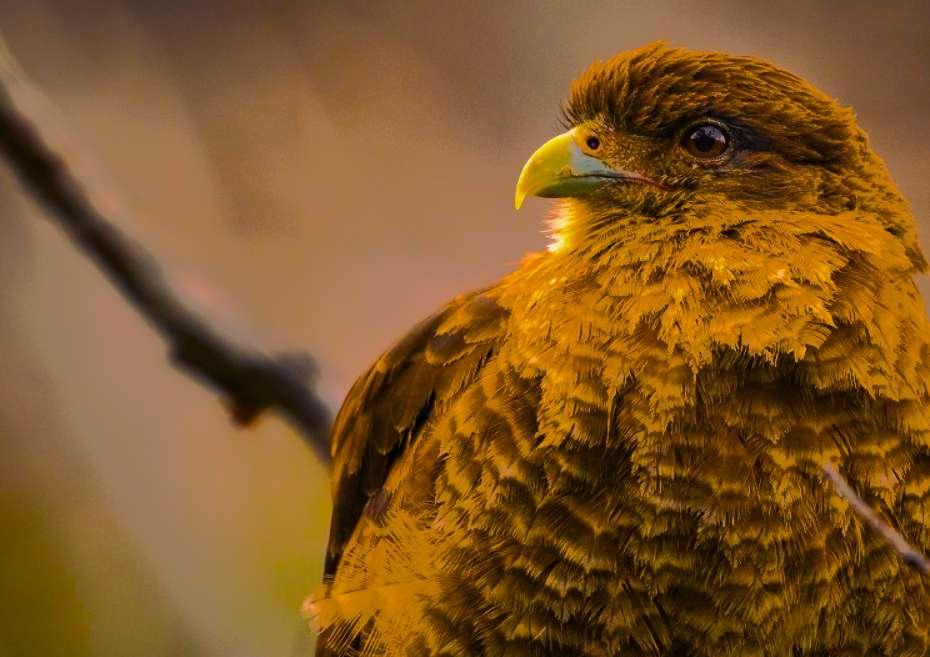
Tiuque (Chilean Kestrel)
I watch your distant eyes, celestial, hidden behind the social bush, among arm-branches, among head-fruits.
Your brown plumage flutters caressing the transparent leaves of winter, your eyes come and go in search of your prey, some rodent, some something amid the cold.
People see you and mistake you, as they mistake me for one more of them. But I am not like them, I am more like you, a something that no one knows what it is, but there it is, living, being free with its wings outstretched caressing the southern winds, the austral currents, which are colder than ever, but that doesn't matter to you. What matters to you is eating as what matters to me is being happy.
Vicente González Pérez Autho
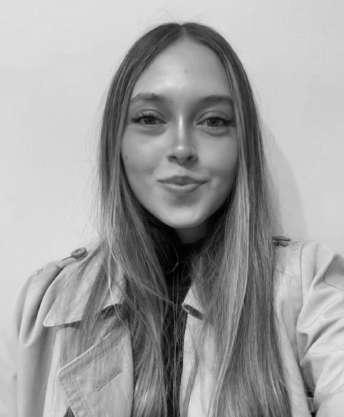
Fernanda Leiva, at just 22 years old, doesn't talk about photography as a future project or a distant destination, but as something that has always been there, accompanying her life silently: "I have always had it as part of my everyday life... I adopt it as an extension of myself," she says.
She doesn't yet call herself a professional photographer, but the desire exists. Not as something urgent, but as something that is in her destiny.
Her relationship with the image begins before she could name it as a vocation. She was six or seven years old when she first picked up an analog camera that belonged to her father, and what enchanted her was not only the power to capture time, but the sound of the shutter and the ritual involved in taking a photo: the manual focus, the aperture, the sensation of creating something from scratch.
From then on, she never let go. She inherited cameras and began her own path— first self-taught, then with workshops and courses. Although today she works mainly with digital equipment, there is something about the analog reflex that remains her most intimate place. "It has an art that a point and shoot doesn't have —giving the exposure, your own effect and luminosity to the image.

If there is something that runs through her work, it is emotion. More specifically, love in its multiple forms —not only romantic love, but love as intensity, as obsession, as devotion toward things.
Her projects usually arise from cinema, music, or theater. Not as literal references, but from what those works make her feel. She usually extracts concepts, sensations, or atmospheres as inspiration and then conducts brief prior research to capture exactly everything it generates in he
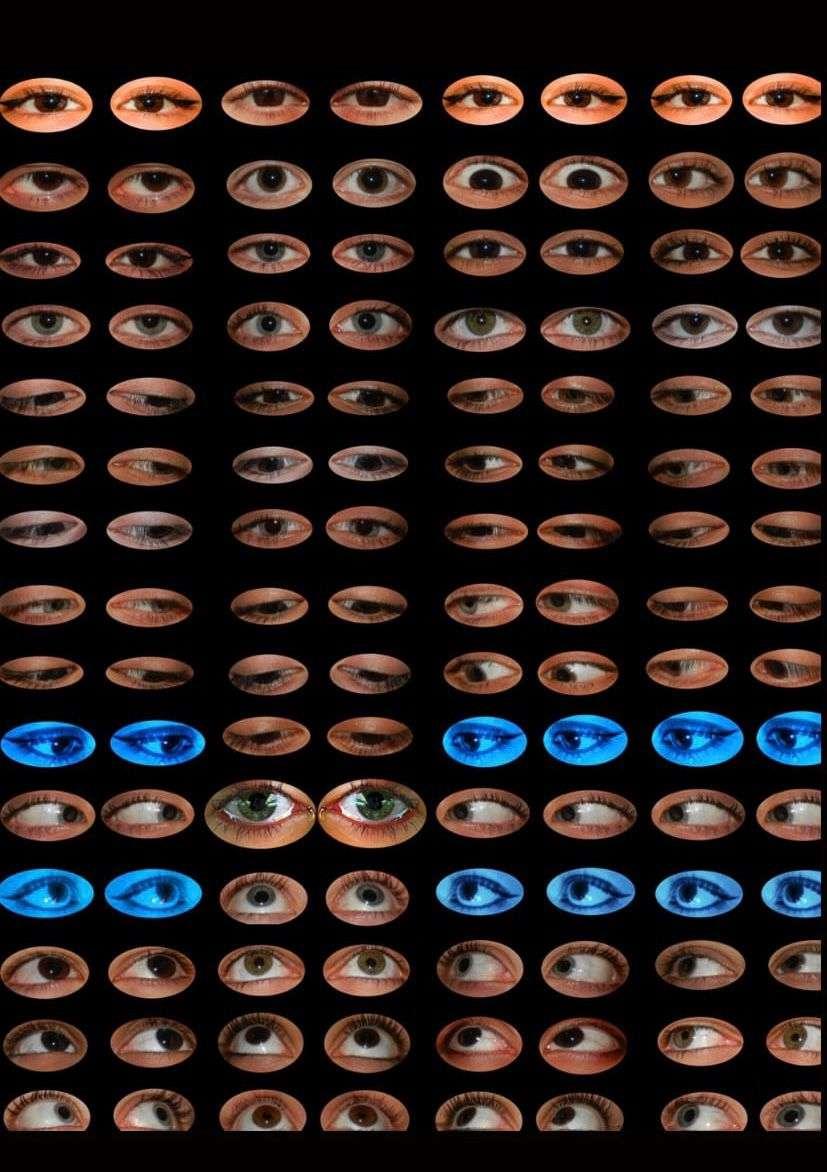
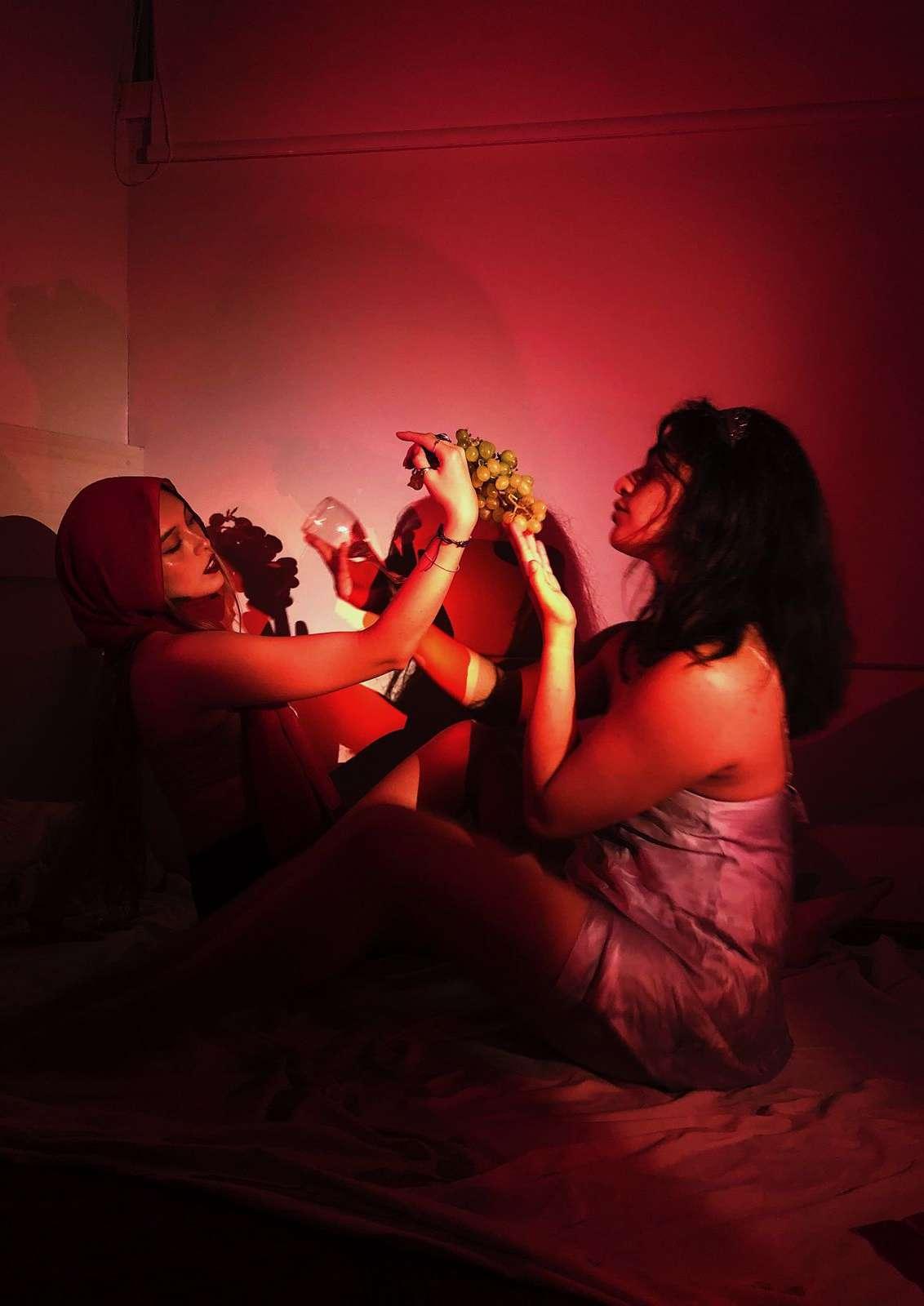
That logic became especially visible in Devoción Inmersiva (Immersive Devotion), her second photographic collection presented to the public, inspired by the film I Origins and developed over nine months. The project arose from her fascination with the human iris. What followed was a slow process of sketches, doubts, and persistence. Fernanda began photographing the eyes of people she didn't know, in dark, closed spaces, while asking them a simple question: "Have you ever been in love?" As they spoke, she observed the changes in the pupil— that minimal gesture that seemed to respond to emotion before light.
From those encounters came images that led her to understand the iris as an emotional archive. "I became rooted in the desire to keep exploring the world that people carry within them," she explains. The final montage united fragments of those gazes to construct, from her interpretation, three ideas that repeat in her work: love, sadness, and devotion. Finally, that project also helped her affirm her most intimate fascination: "the eyes, each tiny and immense iris.
If there are three words that can define her, she has them clear: "Intense, obsessive, and transmutant." Intense, because it's a word that characterizes not only her work but herself: "I'm someone who can feel a lot of joy, then a lot of sadness... And I try for that same intensity to be reflected in the photography."
Obsessive, because she believes "obsession beats talent"—a phrase that became a vital principle. She likes what she does and likes to deliver something she can be proud of. And transmutant, because no idea ends the same way it begins. "My main idea has never ended the way I wanted it to end, but it ends better."
Creative block isn't foreign to her either. But when it happens, she doesn't discard the idea—she modifies and rewrites it. "The last thing I do is throw away the idea." She learned that abandoning that intuition can be a greater loss than persisting with it
When asked where she creates from, she doesn't hesitate and says "the heart." She doesn't say it as a pretty cliché phrase, but as a concrete way of explaining her process. For Fernanda, photography is born from emotion and afterward organized with the head. "Without the heart that composes me, nothing would be the way I want it to be," she says, trying to explain why each project becomes so personal.
Her idea of success also distances itself from the public. She doesn't talk about fame or any specific award, but thinks toward the future and the possibility of publishing a book that brings together all her work. Not to be recognized, but to leave a record. "To leave a small piece of myself on the earthly plane," she explains. Because in the end, what she seeks is simply to create, to exist, and to remain through her photos
Aymarita Chambe Interview writin
Aranza has a soft, calm voice; she thinks before answering and makes pauses that also run through her work. Her photography doesn't seem made for immediacy—it is built slowly, with layers, as if each image needs time to exist
She trained first in advertising photography and then completed the professional degree, moving between fashion, gastronomy, and editorial sessions. But it is in her authorial work that her language becomes most recognizable— creating projects that feel deeply intimate, reflecting the wounds of her own life
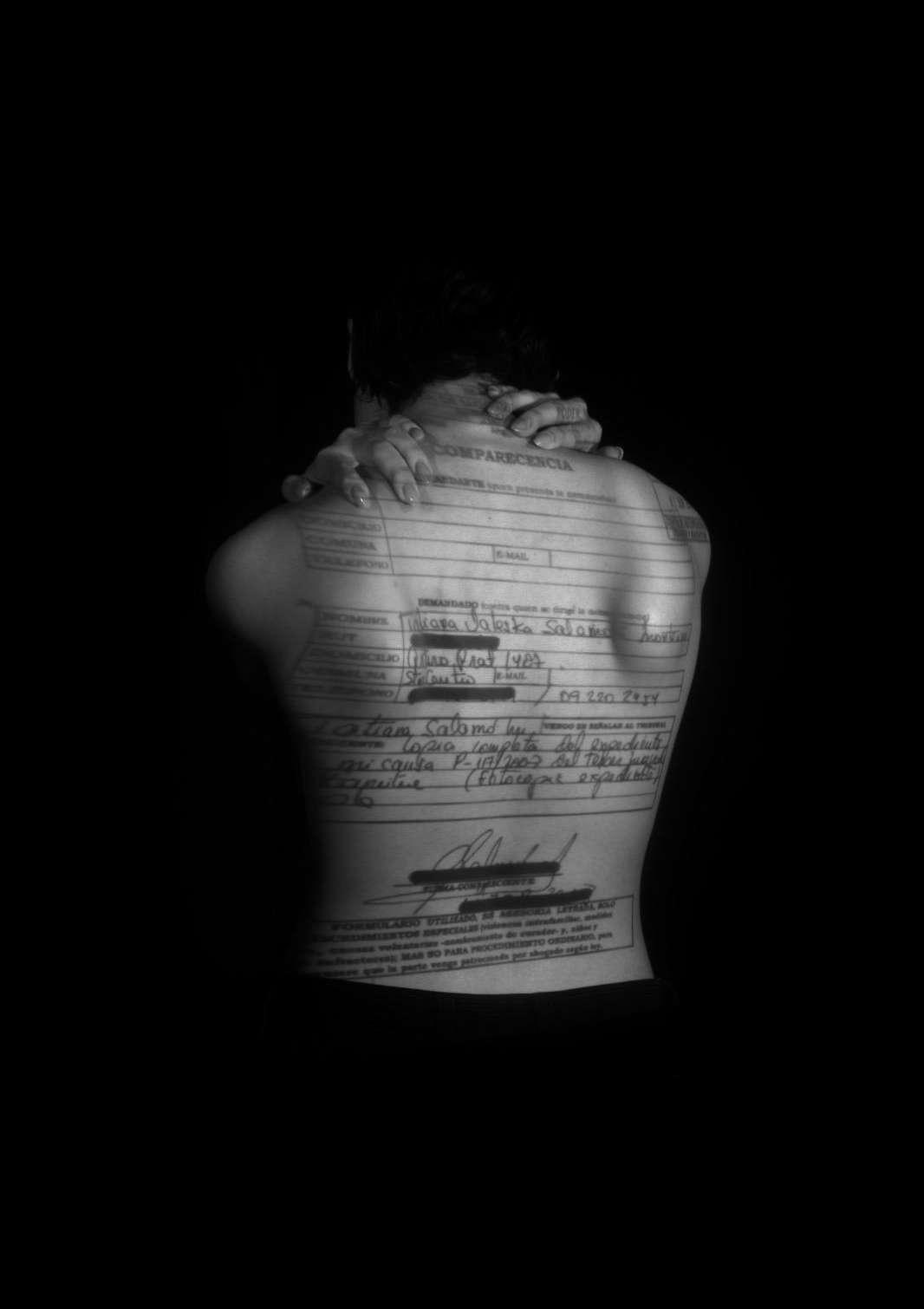
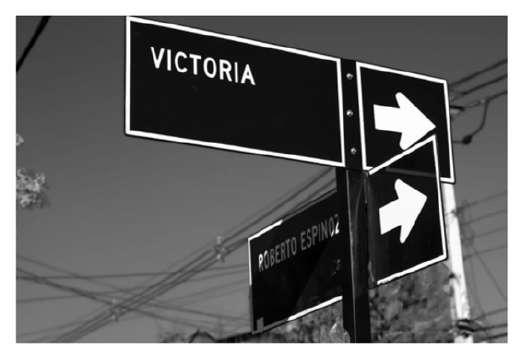
Two of her published photobooks, "Despojo" and "Victoria," arise from the same personal period marked by the overwhelm and emotional burden that a lawsuit and economic precarity represented. Each, from different margins but preserving that sensitive backdrop. The final results condensed years of visual records
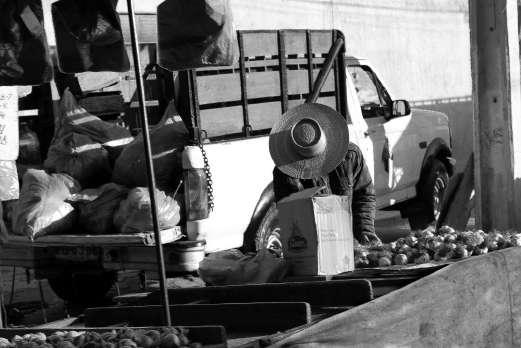
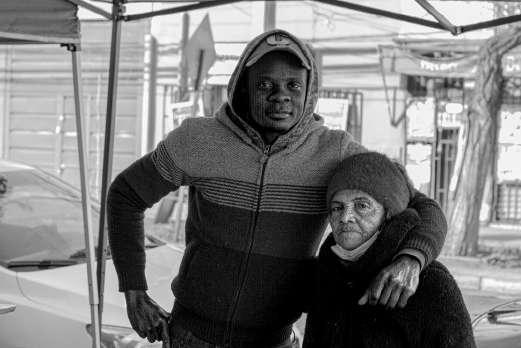
Victoria captured her process of integrating into a market community she came to out of necessity—an experience she defines as difficult but very welcoming. She wanted to capture those scenes as a way of belonging to a place she knew to be transitory
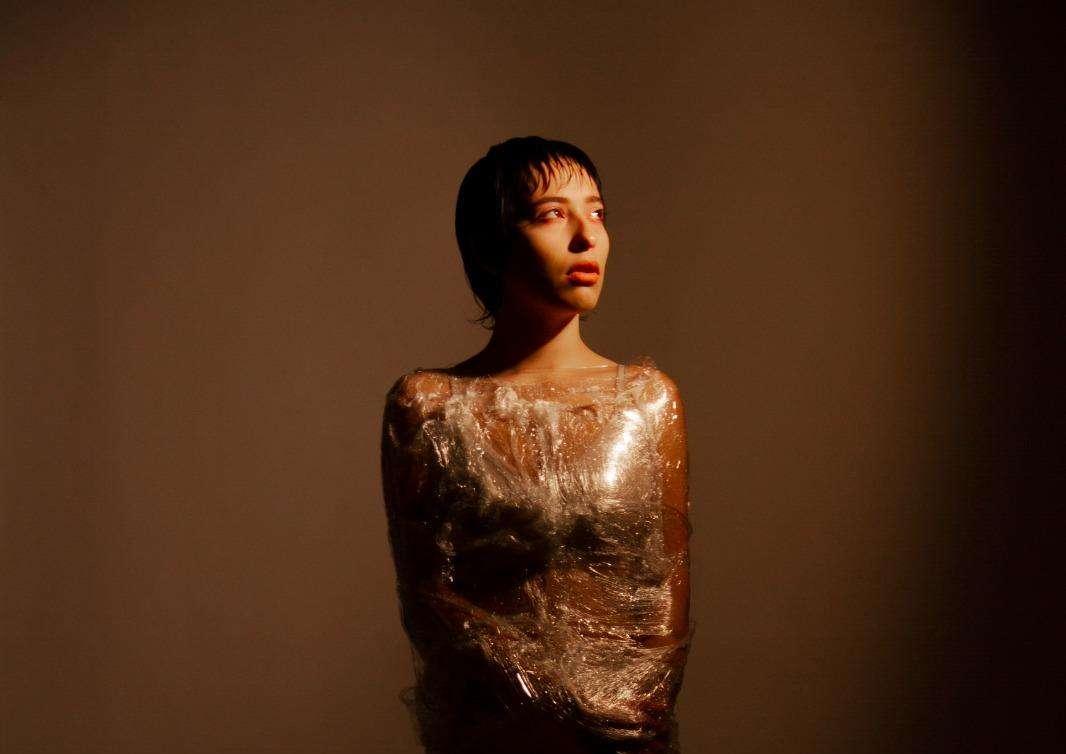
Despojo, on the other hand, moves toward the most intimate. This authorial collection functions as a visual letter—one that was never delivered—where photography is mixed with writing and staged settings to speak of bonds, courtrooms, and emotional claustrophobia. She wasn't seeking to bring closure to anything, but to understand and express everything that had been felt
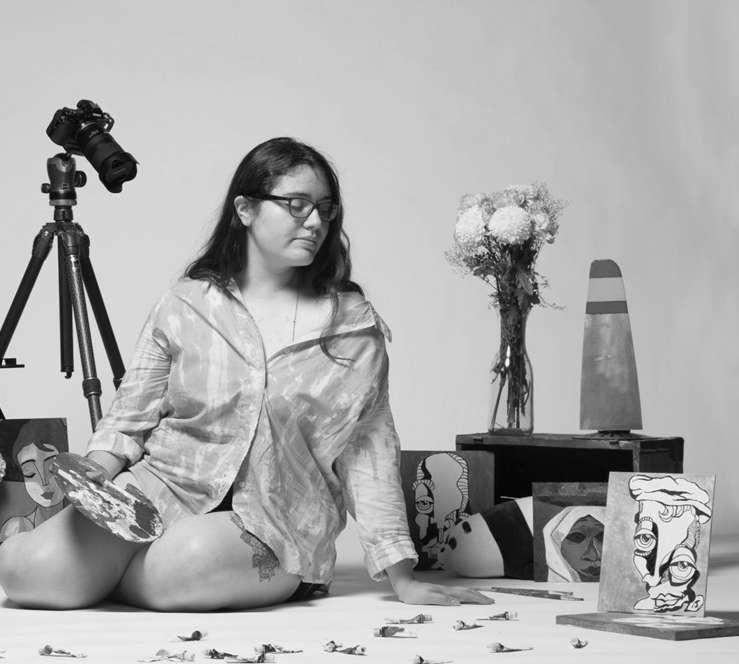
Her first encounter with photography came through her grandfather, who being a photographer, taught her how to load the film, to use the shutter, and to capture time in a single shot. Although her initial interest was more in painting, over the years these two languages met and she began experimenting with intervened photos—a practice she maintains today when she brushes over her printed images.
The decision to dedicate herself to art was not quick. She took a year to work and think it over. "When you decide to fully commit, you have to be aware that there are costs," she says, though that phrase doesn't sound like a warning but like acceptance. She expresses that "innocently, I thought of art as enjoyment, as pleasure, not in a professional way," but that time has proven her right to have made a good decision
For Aranza, the creative process is not separate from the emotional. She researches references, reviews theory, but also understands creation as part of a process of personal elaboration. Her projects arise when something needs to be named and sustained over time.
That approach reaches its clearest point in Memorias de Tribunales, una resistencia a la discordia (Memories of Courtrooms, a Resistance to Discord)—the project she feels most proud of. It is an extensive thesis photobook built from years of experiences linked to family courts and a childhood traversed by legal proceedings. It isn't a direct documentary record but rather performative staged settings where the body, framing, and materiality translate sensations such as overwhelm, surveillance, or claustrophobia
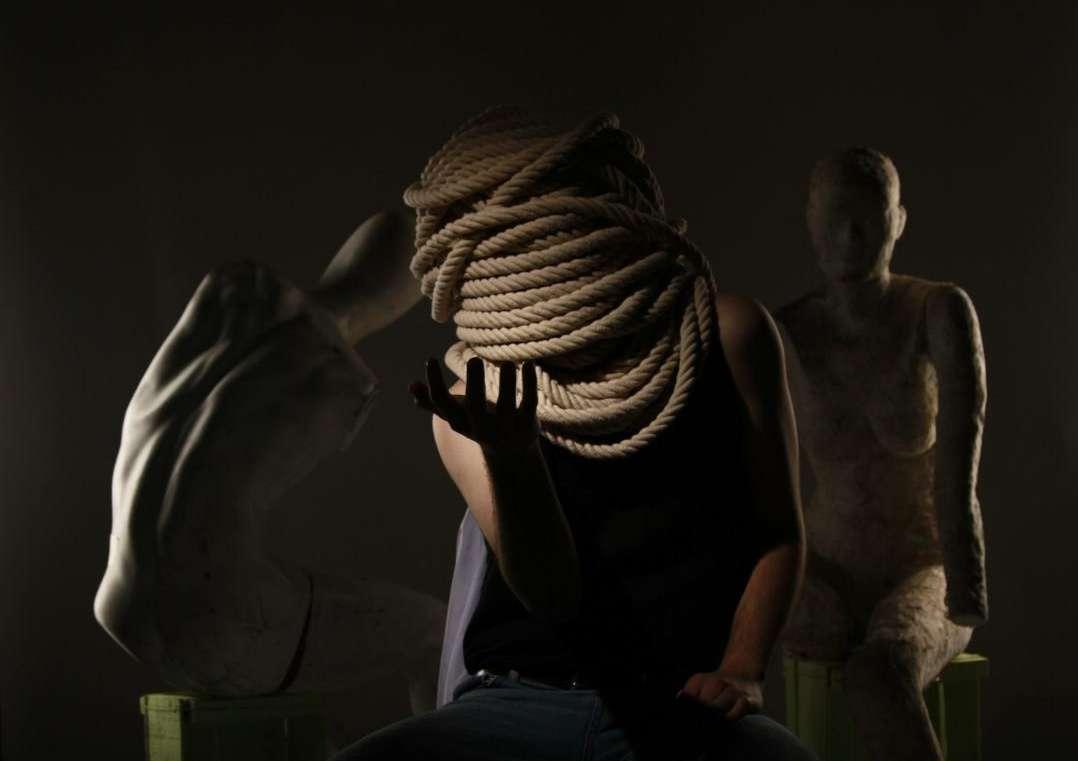
She explains that there she "gave her maximum," because it involved researching, planning, and controlling each visual element so the narrative would be clear. The book articulates photography, art direction, and editorial design to transform a prolonged experience into a visual story.
That same material then branched into subsequent works such as Despojo—shorter versions that rewrite the original core. An idea that responds largely to Aranza's belief that "a project is never truly finished," because it can return, be rearranged, and narrated in another way
If she had to define her visual language—though it's difficult—she would do so with three words: "slow, intimate, and creative." Slow, because she respects processes and creates at her own rhythm, resisting speed. Intimate, "because I speak of what I see and what I experience," she notes, capturing experiences that only she truly knows. And creative, due to her permanent search for elements, materials, and techniques that contribute to her creations.
These terms speak not only of her work but also of herself. Despite having already exhibited, published, and circulated in cultural spaces, she doesn't place the meaning of her work there. She is interested in another form of recognition: "I would like people to see me as a calm and sensitive person," she says. Not as a fragile trait, but as a way of being
Her photography tries to offer that same place—a space where what is difficult can be looked at without stridency. In that gesture of working slowly, returning to what has been lived, and allowing images to change, her profile becomes clear. She's not trying to produce images, but to express what timidity doesn't want to
Aymarita Chambe Interview writin
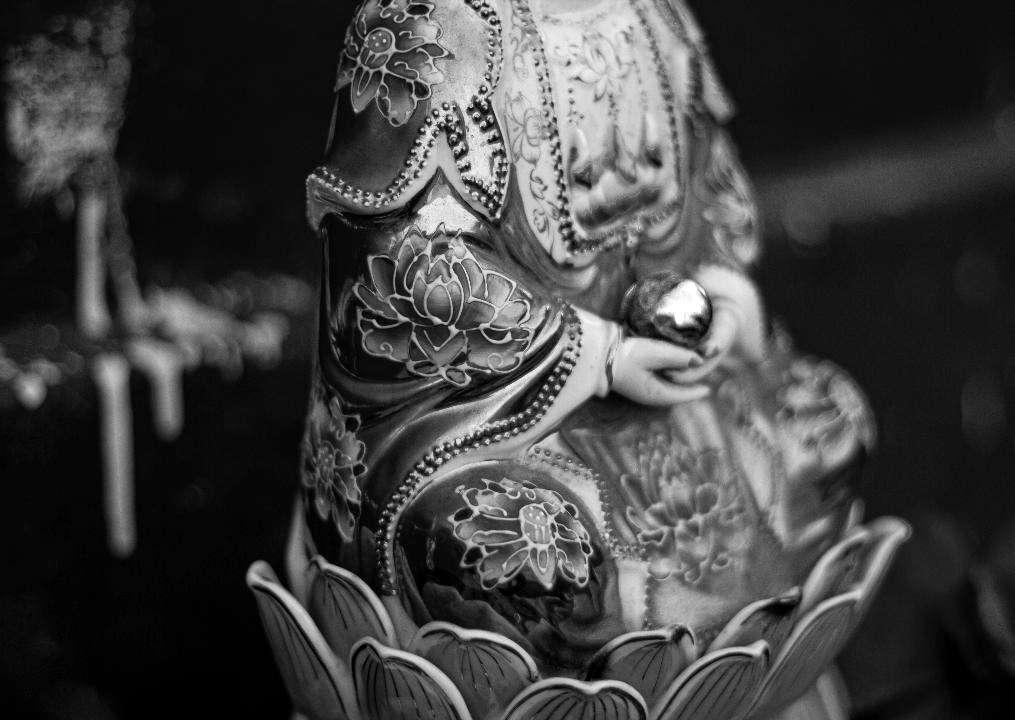
A work that commemorates and immortalizes the local market vendors of the Victoria area.
Those I met and with whom I worked out of necessity to finance a lawsuit my father initiated.
(...) As a result of our connection and mutual affection, I left a record and a trace of our history, of their existence, and of the camaraderie we shared for two and a half years.
I am deeply grateful to everyone who appears in this book.
—Aranz
A project that addresses all the psychological effects left by the courts. A grief in the face of the absence of affection and empathy. A letter that expresses what it was like to encounter the violence of my father, and what it was like to live with it while also caring for my mother.
— Aranz