ROOFING
A Publication of FRSA – Florida’s Association of Roofing Professionals
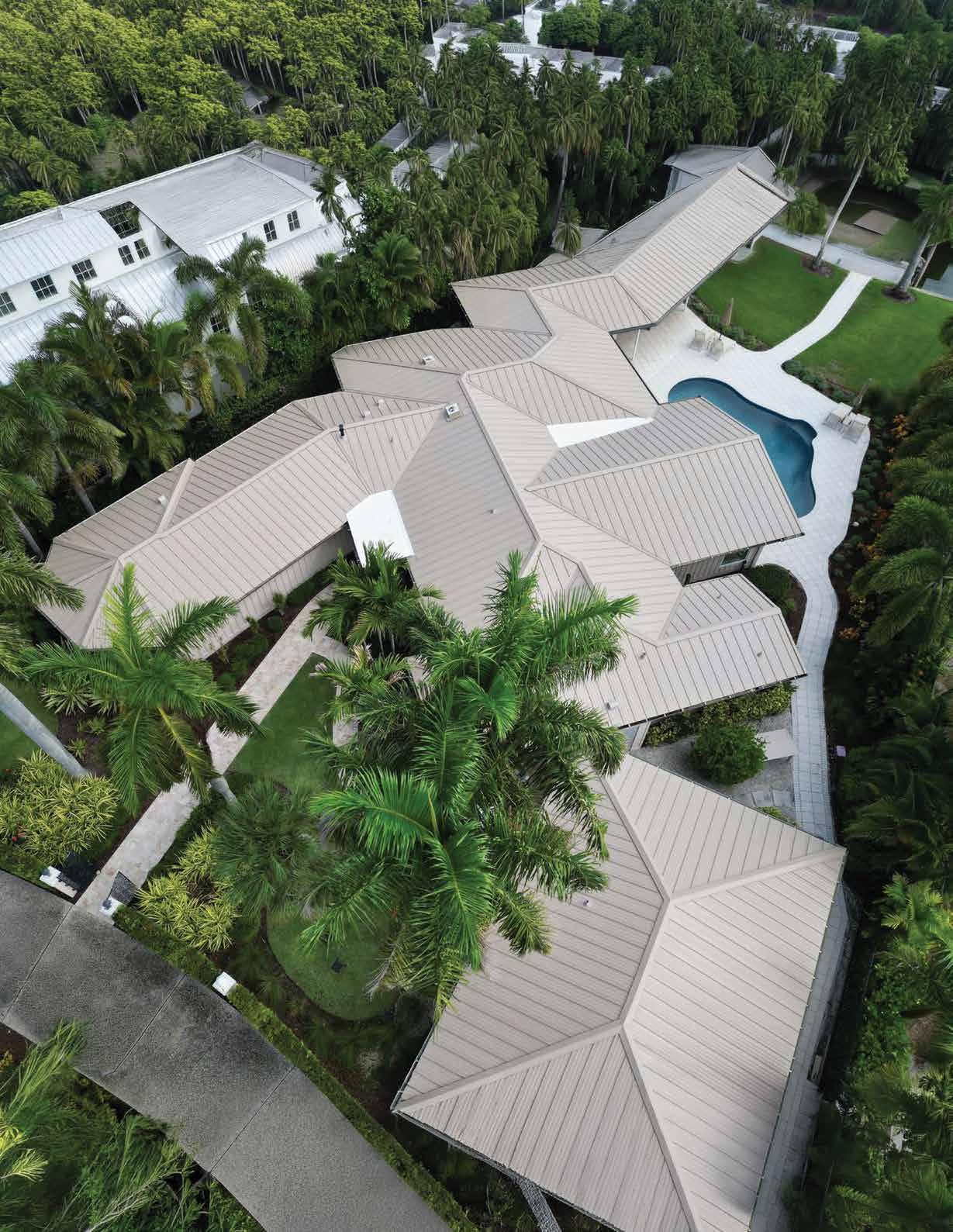
S.T.A.R. Awards Participant
Tri County Metals
Lido Key Residence
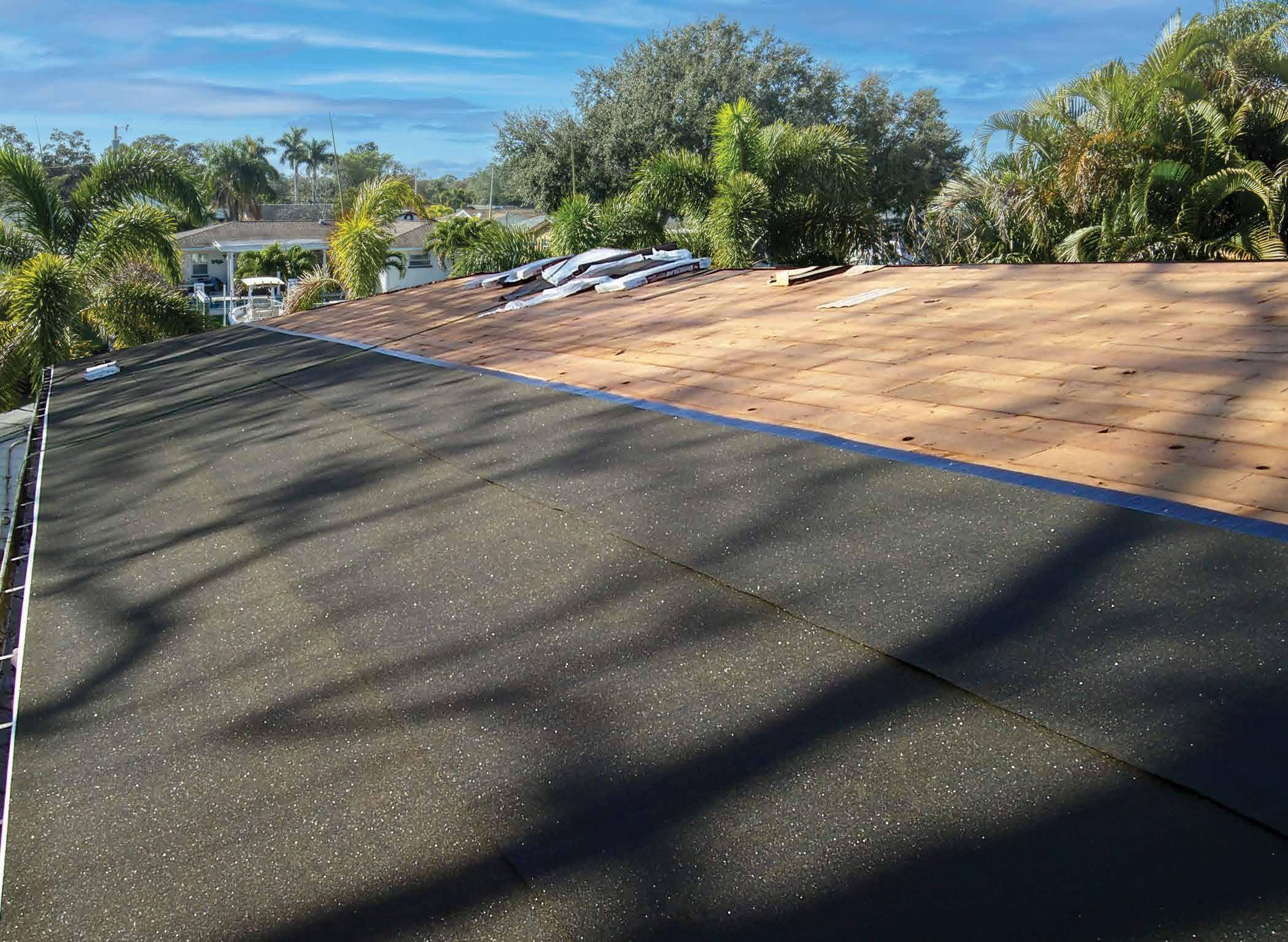
S.T.A.R. Awards Participant
Tri County Metals
Lido Key Residence
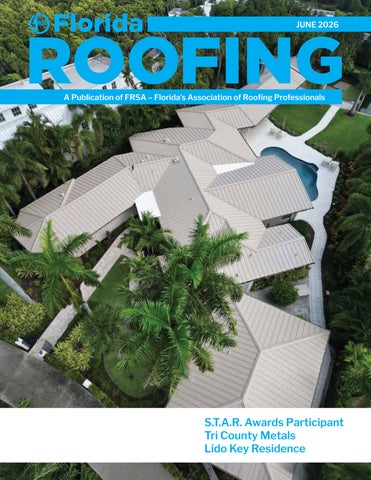
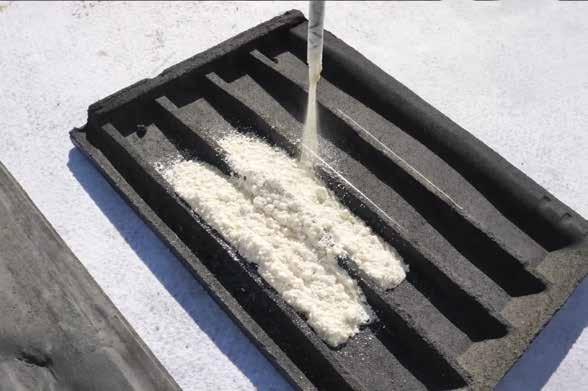
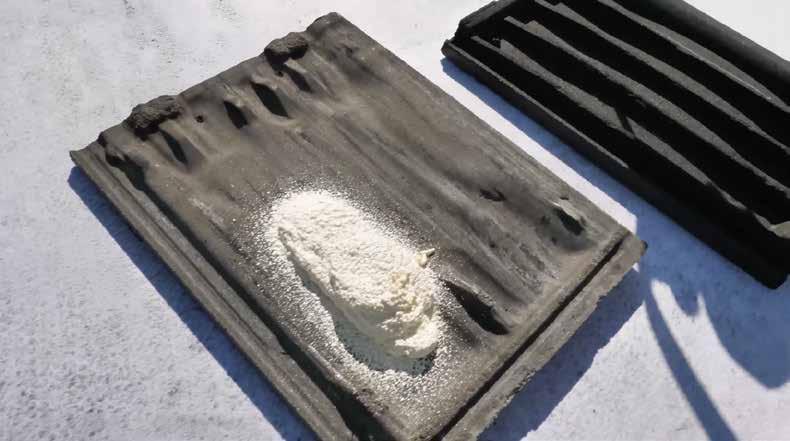
MFM introduces IB-3™ StormStopper Plus, designed specifically for the Florida roofing market. Stop storm damage in its tracks and offer your customers a qualified FORTIFIED PROGRAM product for years of worry-free service. This 50-mil, self-adhering roofing underlayment features a granulated surface and a non-removable selvedge edge for a secure seal on overlaps for whole roof protection.
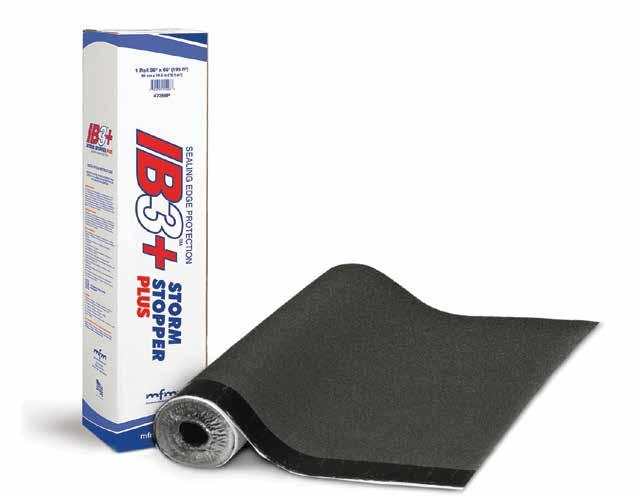
IB-3 StormStopper Plus meets ASTM D 1970 and Florida Building Code FL# 41919.1.
Cover: Tri County Metals S.T.A.R. Awards project
FRSA-Florida Roofing Magazine Contacts:
For advertising inquiries, contact: Skip Heymann at: skip@floridaroof.com (800) 767-3772 ext. 127
All feedback and reprint permission requests (please include your full name and address) contact: Lisa Pate, Editor, at: lisapate@floridaroof.com (800) 767-3772 ext. 157
Florida Roofing Magazine PO Box 4850 Winter Park, FL 32793-4850
View media kit at: www.floridaroof.com/ florida-roofing-magazine/ #FRSA #roofingprotects



FRSA President Tibor Torok, Bob Hilson & Co. Inc.
This month, we’re highlighting roofing material recycling and lightning safety – both critical to our industry. As landfills grow and raw materials become more expensive, recycling is the smart path forward for our businesses and the planet. Reroofing generates enormous waste each year and the rising cost of disposing of roofing materials can be reduced through recycling. While this will be a major shift for contractors, I encourage all of us to adopt recycling as another tool to deliver the best roofing solutions (see page 24).
Because we live in the lightning capital of the world, protecting our employees and property must be a priority. Every year multiple people are struck by lightning and I’m sure almost every contractor has witnessed lightning damage to roofing systems. We all need to be aware of the dangers and how to prevent catastrophes (see page 32).
This is my last article for the magazine as FRSA's President. It has been an honor and a privilege and also a source of pride and joy for me to lead the premier regional roofing association in the nation. I believe if you truly want to be a professional in any field, you should be a member of the associated professional organization. FRSA membership enhances your company's credibility in the eyes of your customers as well as your peers. The wealth of knowledge available to us through membership is unmatched. You have direct access to some of the best roofing contractors anywhere who will help you resolve issues you encounter in the field. I encourage you to reach out to FRSA's Technical Services as needed at 407-671-3772 ext. 169.
FRSA has local chapters throughout the state. These affiliates focus on items at the local level,
provide educational content, share information from FRSA, organize charity projects and serve their communities. During and after COVID, some of our affiliates struggled to continue operating. One of my goals this year was to get these affiliates back up and running. I’m pleased to announce that this year, three affiliates – the West Coast Roofing Contractors Association, North Central Florida Roofing and Sheet Metal Contractors Association and Central Florida Roofing and Sheet Metal Contractors Association have relaunched, with two more affiliates set to relaunch later this year.
Being a part of a professional organization expands your industry knowledge, offers engagement with like-minded individuals and lends support in a non-competitive environment. Invest in yourself and your future by actively participating in FRSA at the state and local level. In the days and years ahead, I look forward to working side-by-side with you as we continue to strengthen the roofing industry in Florida.
Kind regards,

Tibor Torok FRSA President slrcbhc@msn.com






Contact Amber at 800-767-3772 ext. 111 or amber@floridaroof.com for more info or to contribute.
QXO Inc., announced it has entered into a definitive agreement to acquire TopBuild Corp., Daytona Beach, for about $17 billion. The transaction is expected to significantly expand QXO’s scale and capabilities across the building products value chain.
TopBuild is the largest distributor and installer of insulation and related building products in North America. The agreement will combine QXO’s position in roofing, waterproofing, lumber-related building materials and associated products with TopBuild’s insulation capabilities. The acquisition is expected to close during the third quarter of 2026.
Following the acquisition of TopBuild, QXO will have about 28,000 employees, 1,150 locations across all 50 U.S. states and seven Canadian provinces and a fleet of more than 10,000 vehicles.
“Over the past 11 months, we’ve built QXO into a market leader through more than $13 billion of acquisitions, closing on Beacon in 2025 and Kodiak,” said Brad Jacobs, Chairman and CEO of QXO. “TopBuild will be our most significant acquisition yet, making QXO the second largest publicly traded building products distributor in North America.
Low-slope roofing manufacturer MuleHide has promoted Matt Bost to Regional Director – Southeast. Matt had served as the company’s Territory Manager for West Central and Southwest Florida since joining MuleHide in 2022.
In his new role, Bost heads the region encompassing Alabama, Florida, Mississippi and part of Georgia. He is responsible for achieving regional sales goals and leads the region’s team of territory managers, who are the company’s primary points of contact with contractors, property managers, specifiers and roofing materials distributors.
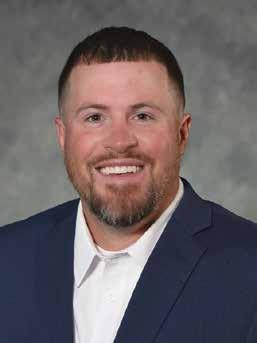
Bost has more than 15 years of experience in the roofing industry. He came to MuleHide from TRUFAST, where he was Regional Manager for Florida after serving as Southeast Warehouse Manager and District Manager for the Carolina territory.
“Matt has been an exceptional partner to our customers and distributor partners in his territory and to his MuleHide colleagues throughout the region and beyond,” said MuleHide Managing Director Dan Williams. “They have all benefited from his experience and deep knowledge of low-slope commercial roofing. We look forward to having him build on that success as Regional Director.”
Following an extensive national search, Central States Inc. is excited to announce Kurt Weaver as the incoming Chief Executive Officer for the enterprise business, including Central States Manufacturing, Central States Building Works and Elevate Structures.
The appointment comes more than two years after current CEO Jim Sliker was elected Chairman of the Board for Central States Inc., which will enable him to fully transition into his position leading the Board of Directors. Sliker will work closely with Weaver throughout 2026 to support his onboarding and ensure a smooth transition.
Weaver will begin building relationships with the employeeowners, customers and suppliers upon his arrival at the Tontitown, AR location.
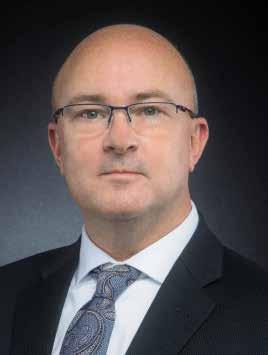
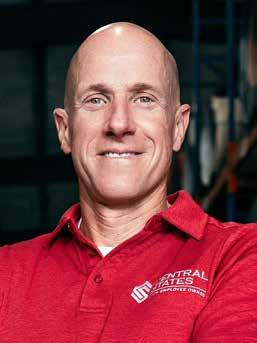
“Following a comprehensive and rigorous search process, the board is confident that Kurt is the right leader to guide Central States into its next phase of growth,” said Christopher Harrison, Lead Director on the Central States Board. “His track record of scaling businesses, operational depth and alignment with our values make him a strong fit for our employee-owned culture.”
FRM








































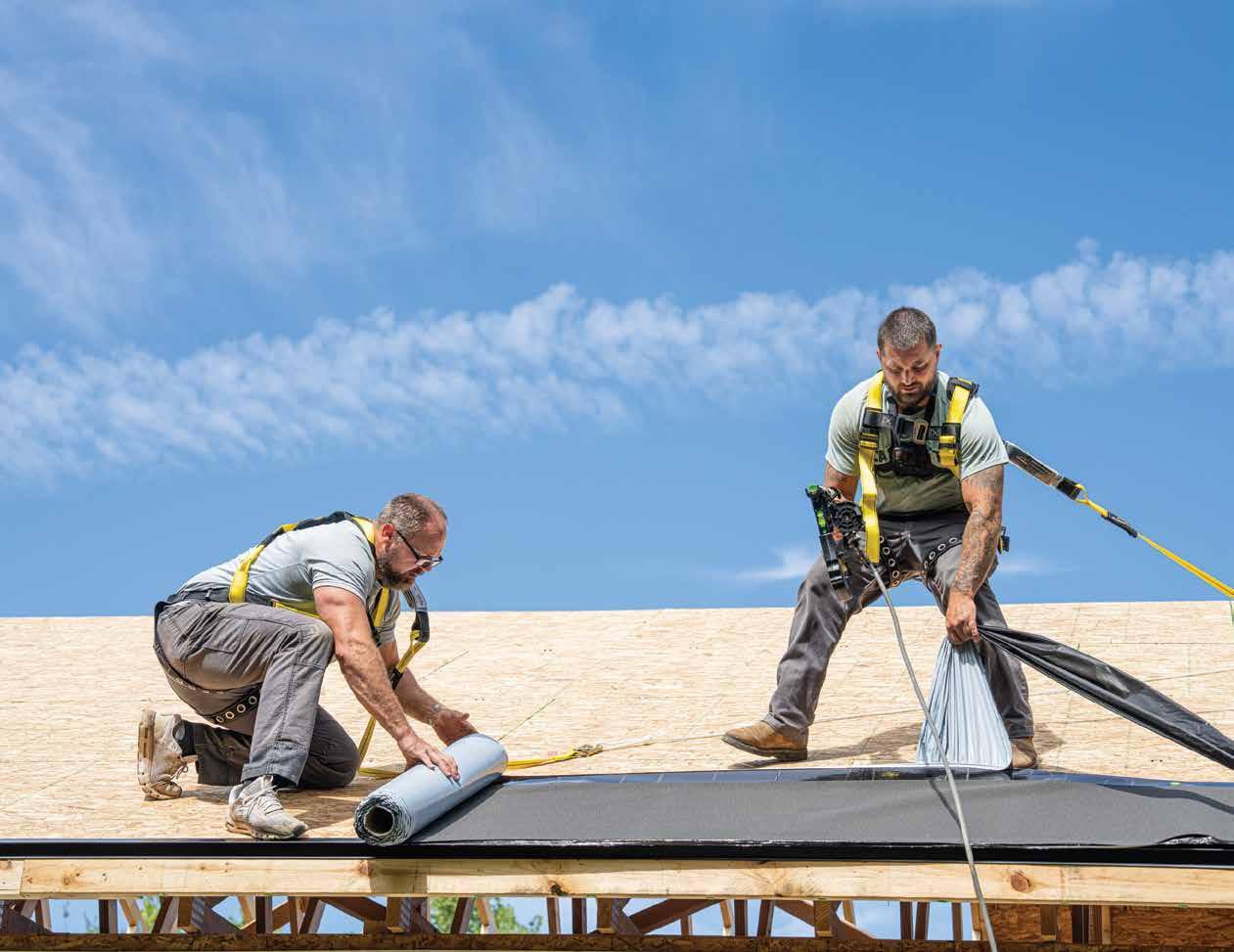
EXOSTK is STINGER’s next-level peel-and-stick underlayment. No nails. No staples. Just a rocksolid bond that stands up to the elements and keeps crews moving.
Come see it for yourself. Visit us at booth 329
Florida Roofing & Sheet Metal Expo
EXOSTK es el revestimiento autoadhesivo de próxima generación de STINGER®. Sin clavos. Sin grapas. Solo una unión firme como roca que resiste los elementos y mantiene a los equipos en movimiento.
Ven a verlo tú mismo. Visítanos en el stand 329
Florida Roofing & Sheet Metal Expo.
Trent Cotney, Partner, Adams & Reese, LLP and FRSA General Counsel
A roof failure is never just a construction problem. For a roofing contractor, it can become a business, legal and a public relations problem almost immediately. In the current environment, owners, tenants, consultants and even bystanders often document events in real time. A leak, blow-off, collapse allegation or poststorm failure can appear on social media before the contractor has even arrived on site. Once that happens, the issue stops living only in the contract file. It starts affecting customer confidence and future work.

Roofing contractors usually focus first on the field response and they should. Safety, temporary dry-in, protection of the building, preservation of evidence and investigation all come first. But many companies make a costly mistake in the first 24 hours. They treat the matter only as an operations issue and fail to manage the message. That can create lasting damage even when the contractor ultimately proves that the roof system was not defective, that the loss was caused by others or that the event resulted from conditions outside the contractor’s scope.
The first rule is simple: respond quickly but do not speculate. When a failure is reported, the contractor should acknowledge the issue, mobilize the right personnel and communicate concern without making admissions. Too many well-intentioned statements create problems later. A superintendent may say, “We will take care of everything,” or a salesperson may say, “This should never have happened.” Those statements may calm an owner in the moment but they can later be characterized as admissions of fault or promises that exceed the contract. The better approach is disciplined communication. Confirm that the company is investigating, taking the issue seriously and working to protect the property while facts are gathered.
At the same time, the contractor should control the internal chain of communication. One person should coordinate messaging. That may be the owner, operations manager, risk manager or legal counsel, depending on the size of the company. Without a point person, different employees will provide different accounts and inconsistency is what fuels mistrust. Customers become concerned when the project manager says one thing, the field foreman says another and the office gives a third explanation. A unified response shows professionalism and helps prevent unnecessary escalation.
Documentation is critical. The company should collect photographs, weather information, delivery records, daily reports, inspection logs, manufacturer communications, subcontractor scope information and any prior notices involving the area at issue. It should also preserve text messages, emails and voice
messages related to the event. In a reputation-driven dispute, facts matter twice. They matter in the legal analysis and they matter in the public narrative. A contractor with organized documentation can explain what happened with confidence. A contractor without it is often forced into defensive, reactive statements that make the situation worse.
Another common mistake is ignoring the customerfacing side of the event. Owners and property managers often care as much about responsiveness as they do about technical fault. Even when the contractor has a strong defense, silence can look like indifference. This does not mean admitting liability. It means communicating with professionalism. The customer should know who is handling the matter, what immediate steps are being taken, when they should expect updates and what information is still being evaluated. In many cases, regular concise updates reduce anger and prevent the owner from turning to social media, trade associations or competing contractors for answers.
Social media now changes the risk profile of roof failures. A single video of water pouring into a building can circulate widely, especially if the building is a school, hospital, church, condominium or public facility. Competitors may quietly amplify the story. Plaintiffs’ lawyers may see it. Reporters may call. Even if the post is misleading or incomplete, the visual impact can be severe. Roofing contractors should therefore have a basic crisis-response plan before an event occurs. The plan should identify who speaks for the company, who monitors online activity and when legal counsel should become involved. Companies do not need a full public relations department to do this well. They need discipline, speed and recognition that public silence can allow someone else to define the story.
The contract also matters more than many contractors realize. A well-drafted agreement can help frame the response and limit damage. Notice provisions, warranty limitations, exclusions for acts of God, temporary repair obligations, investigation rights and dispute resolution clauses all shape how the issue unfolds. If the contract clearly distinguishes between warranty service, emergency response and excluded conditions, the contractor is in a stronger position to act decisively without creating confusion. If the contract is vague, the parties may end up fighting publicly over who must pay for dry-in, interior protection or consultant fees before the technical cause is even known.
Manufacturers, consultants and subcontractors can add another layer of complexity. The contractor should resist the urge to assign blame too early but it should also bring the right parties into the investigation quickly. Delay can create spoliation concerns and increase suspicion. A measured response often works best: preserve the site, document conditions, notify potentially involved parties and conduct the investigation in an orderly way.
Internally, contractors should train employees on what not to say. Casual statements are dangerous. Field personnel should never argue with building occupants, speculate about cause, criticize the owner online or post jobsite commentary on personal social media. That sort of conduct can turn a manageable dispute into a reputational event. Training should be simple and direct. Report facts internally. Do not assign blame. Do not post. Route all external questions to the designated company contact. In a crisis, clarity beats complexity.
There is also a long-term lesson in every roof failure. Once the immediate event is stabilized, management should conduct a post-incident review. Was the scope clear? Were preexisting conditions documented? Did the company use the right details and products? Were weather conditions tracked well enough? Did the closeout package preserve key evidence? Did the customer know what maintenance obligations remained after completion? Reputational crises often expose not only field issues but also sales, contract and documentation weaknesses. Contractors that learn from those events usually emerge stronger.
In the end, a roof failure does not automatically become a reputation crisis. It becomes one when the contractor appears disorganized, defensive, slow or careless with communication. By contrast, a contractor that responds promptly, documents thoroughly, communicates carefully and manages the public narrative can often preserve trust even in a difficult situation. In roofing, reputation is built one project at a time but it can be tested in a single afternoon. The companies that prepare for that reality before a problem occurs are the ones best positioned to protect both the project and the brand.
FRM
The information contained in this article is for general educational information only. This information does not constitute legal advice, is not intended to constitute legal advice, nor should it be relied upon as legal advice for your specific factual pattern or situation.
Trent Cotney is a Partner and Construction Team Leader at the law firm of Adams & Reese, LLP and FRSA General Counsel. You can reach him at 866-303-5868 or by email at trent.cotney@arlaw.com.
Adams & Reese is a full-service law firm dedicated to serving the roofing industry. FRSA members can contact Trent Cotney to discuss and identify legal issues and to ask general questions through access to specialized counsel. They offer free advice (up to 15 minutes) for members. If additional legal work is required, members will receive discounted rates. This is a pro bono benefit provided to FRSA members only. Contact Trent at 866-303-5868.
Chris Dawson,
Attorney, GrayRobinson and FRSA Legislative Counsel
The 2026 Regular Session of the Florida Legislature ended in March, but it closed without completing the one task the Legislature is constitutionally required to finish each year: passage of a state budget.
With all tallies counted, the Legislature’s official statistics show 1,896 total measures filed in the regular session, including 1,691 general bills, 67 local bills, 30 joint resolutions, 6 concurrent resolutions, 97 one-chamber resolutions and 5 memorials. Of those, 237 measures passed both chambers, including 192 general bills and 44 local bills.
■ Total measures filed: 1,896
■ General bills filed: 1,691
■ Measures passed both chambers: 237
■ General bills passed both chambers: 192 (11.4%)
As of the writing of this report, Governor DeSantis has not vetoed a bill from the 2026 legislative session.
Guiding Principles for 2026 Advocacy and Outcomes
Protect Roofing Licensure and Continuing Education
Successfully defeated HB 607 Industries and Professional Activities by Rep. Taylor Yarkosky (R – Clermont). The sponsor, who carried the bill on behalf of House leadership, committed to kill his bill for the year after meeting with FRSA. He intends to bring back a pared down version of the bill next year that focuses on streamlining continuing education requirements.
Prevent Insurance-Driven Forced Reroofs; Protect Existing Consumer Protections
Successfully defeated HB 815 by Rep. Michael Gottlieb (D – Davie) and SB 808 by Sen. Corey Simon (R – Tallahassee) Roofing Requirements for Property Insurance. The bill would have promoted roof coatings as a requirement for property owners to enjoy insurance consumer protections. Sen. Simon has asked FRSA to re-write the bill to expand protections for him to run in 2027.
Prevent Discrimination Among Roof Covering Types in the Florida Statutes
Continued efforts across multiple bills to prevent preferential language in statute for specific roof covering types and instead make sure that all Florida Building Code approved coatings are available for consumers.
Push for Predictability in Workers’ Comp Rates and Curb Bad Actors
Advocated on behalf of HB 1243 by Rep. Bill Conerly
(R – Lakewood Ranch) and SB 618 by Sen. Keith Truenow (R – Tavares) Workers’ compensation insurance to increase flexibility for carriers to better price rates to risk in the market. The legislation moved in both the House and the Senate but did not pass this year.
Advocate for Workforce Development Initiatives and Promotion of the Trades to Students
Advocated for multiple bills that seek to expand trade programs and promote student involvement in handson learning opportunities.
Protect Business Interests of the Florida Roofer Advocated for free market principles that drive competition and fairness in the market while keeping regulatory burdens at a minimum.
Senate Bill 290 – Department of Agriculture and Consumer Services
Sen. Keith Truenow (R – Tavares) and Rep. Danny Alvarez (R – Riverview) Approved by the Governor on March 23, 2026
Dubbed as the Florida Farm Bill, the bill enacts a wide range of reforms to support Florida’s agricultural community and consumers. Among the broad range of initiatives, the bill 1. protects farmers and agricultural freedom; 2. strengthens Florida agriculture; 3. preserves land and rural communities; 4. enhances environmental and water protections; and 5. protects consumers and ensures public safety.
The Farm Bill also includes a consumer protection and public safety focus to support agriculture. The bill criminalizes cheating on commercial driver license (CDL) exams to improve roadway safety; strengthens enforcement against unwanted commercial solicitation to protect homeowner privacy and bans signal jamming devices that can disrupt law enforcement and emergency communications.
The FDACS bill (or “Farm Bill”) is in this report due to the language relating to prompt pay from GCs to Subs and Suppliers. The language below was negotiated by many in the construction industry including FRSA, ABC and FHBA and with the assistance of Sen. Trumbull.









Section 19. Section 489.1295, Florida Statutes, is created to read:
489.1295 Prohibition against nonpayment.
(1) A licensed contractor must compensate a subcontractor or supplier, unless there is a bona fide dispute regarding the amount due, if any, for services, labor, or materials:
(a) Within 45 days after receiving payment for the services performed or materials supplied by the subcontractor or supplier; or
(b) In accordance with the terms of the contract for such services, labor or materials.
(2) A licensed contractor who knowingly or willfully violates this section is subject to disciplinary proceedings as provided in s. 489.129.
Sen. McClain (R – Ocala) and Rep. Borrero (R – Doral)
Approved by the Governor on March 27, 2026
The bill revises land use and development regulations by limiting development permit fees (establishing a “direct and reasonable indirect costs” standard for how much is appropriate), revising standards for application denials and expanding allowances for certain housing types. The bill requires permit fees to reflect actual processing costs, restricts denials of certain residential applications based on incompatibility, requires local governments to allow offsite constructed homes
5,500
1,332,902
12-Month Digital Impressions
Contact skip@floridaroof.com for advertising info
where permitted and includes additional provisions related to school agreements, large destination resort approvals (allows large resorts like Miami Beach’s Fontainebleau Hotel to bypass Historic Board and other zoning approvals) and compost facility regulations.
Sen. Avila (R – Hialeah Gardens) and Rep. Griffitts (R – Panama City)
The bill establishes new regulations for large scale data center developments, with a focus on transparency, infrastructure planning and resource protection. The measure also requires local governments to account for high-energy “large load” users in their comprehensive plans to better plan for longterm impacts.
To address utility concerns, the bill directs the Public Service Commission to develop special electric tariffs so large data centers cover the full cost of their energy use, preventing those costs from being shifted to other ratepayers. The bill also eliminates an extra 12-month confidentiality protection for data centers and introduces stricter water use standards, requiring detailed reporting, conservation plans, public hearings and the use of reclaimed water for large scale data centers seeking permits.
Sen. Burgess (R – Zephyrhills) and Rep. Partington (R – Daytona Beach)
The bill requires counties and municipalities in Florida that allow code inspectors to wear body cameras to establish formal policies and oversight governing their use. It defines a “body camera” as a portable electronic recording device worn by a code inspector that captures audio and video during official duties and defines a “code inspector” as a county or municipal employee responsible for enforcing local codes. Local governments that permit the use of body cameras must create policies addressing proper use, maintenance, storage and data management, including guidelines for when cameras may be used and which inspectors are authorized to wear them. The policies must also ensure that inspectors are allowed to record encounters with members of the public while performing official duties.
The bill also requires local governments to provide training for personnel who use, maintain, store or manage body camera equipment and the data collected from it. Recorded audio and video must be retained in accordance with public records retention requirements and governments must periodically review their body camera programs to ensure compliance with their policies. Additionally, the bill exempts body camera recordings made by code inspectors from the restrictions in Florida’s wiretapping and communications privacy law, allowing inspectors to record
encounters without obtaining consent from every individual involved. A related measure, SB 506 (see below), creates a public records exemption for these recordings.
Sen. Burton (R – Winter Haven) and Rep. Stark (R – St. Cloud)
The bill proposes new provisions for mobile homeowners in local housing assistance, allowing local governments to, under the State Housing Initiative Partnership Program, provide six months of rent subsidies for lot rentals for mobile homeowners and requires local governments to include such funding in their local housing assistance plans. The bill also includes mobile homeowners in housing funding criteria and removes limits on funding for manufactured housing.
Sen. Mayfield (R – Melbourne) and Rep. Melo (R – Naples)
The bill amends s. 471.033, F.S., to provide an escalating fine schedule for second or subsequent violations of engaging in the unlicensed practice of engineering, up to $25,000.
Sen. Nick DiCeglie (R – St. Petersburg) and Reps. Trabulsy (R – Fort Pierce) and Overdorf (R – Stuart)
The bill creates a uniform application system, streamlines permit procedures and exempts certain minor projects from permit requirements. The bill directs the Florida Building Commission to adopt (by July 1, 2027) uniform commercial and residential building permit applications for statewide use. Among other administrative changes, the bill requires electronic delivery of permits, reduces restrictions on private providers and limits local governments from requiring additional documentation. The bill exempts certain projects valued at less than $7,500 on single-family residential properties, including the installation of temporary residential hurricane and flood protection systems. More specifically, it:
■ Extends the expiration of single-family dwelling building permits to one year or until the next Florida Building Code edition, whichever is later, and allows local governments to grant further extensions.
■ Requires the Department of Management Services to maintain state term contracts for building code inspection services.
■ Authorizes individuals holding valid out-of-state licenses to serve in certain inspecting or plans review roles during declared emergencies under specified conditions.
■ Provides an exemption to permit requirements for work on single-family homes with a construction cost of $7,500 or less. The bill clarifies that any
electrical, plumbing, structural (roofing included), mechanical or gas work performed on property containing a single-family dwelling requires a permit regardless of the cost.
■ Prohibits local governments from denying permits for certified residential manufactured buildings and clarifies that such units must be taxed as mobile homes if placed on mobile home lots.
■ Creates new guidelines ensuring that offsiteconstructed residential dwellings are permitted in single-family zoning districts and are not treated more restrictively than site-built homes.
■ Directs the Florida Building Commission to adopt uniform commercial and residential building permit applications statewide by July 1, 2027.
■ Prohibits charging fees for inspections in excess of actual costs, requires permit fee reductions for those using private inspectors and exempts certain low value or temporary projects from permit requirements.
■ Revises private provider procedures to streamline plan reviews and inspections, limit local governments’ ability to add requirements and mandate reduced or zero permit fees where private providers handle inspections.
■ Prohibits homeowners’ associations from requiring proof of a government building permit before conducting their own review of a proposed residential improvement.
Sen. Leek (R – St. Augustine) and Rep. Fabricio (R – Miami Lakes)
Expand and clarify requirements for protected cell captive insurance companies by updating definitions, adjusting capital thresholds and establishing detailed procedures for their formation and operation.
■ Adds “protected cell captive insurance company” to the definition of captive insurance company and clarifies that a special purpose captive insurance company is one that does not meet any other captive definition.
■ Specifies that protected cell captive insurers may only insure the risks of their protected cell participants.
■ Revises minimum capital, net asset and surplus requirements to include specified dollar thresholds for protected cell captive insurance companies.
■ Adds comprehensive rules for establishing, managing and merging protected cells, including maintaining separate accounting of assets and liabilities, requiring office approval for participant contracts and limiting cross-liability between cells.
■ Details procedures for converting, disaffiliating and merging individual protected cells, with assets and liabilities appropriately transferred, along with preserving the cell formation date.
House Bill 927 – Local Land Planning and Development
Sen. Massullo (R – Inverness) and Rep. Sapp (R – Palatka)
The bill requires counties and cities of a certain size to create and implement a program by January 1, 2027 for the use of qualified, pre-approved private professionals from a local government-maintained registry to perform a pre-application review of permit applications, plan reviews and plat approvals before submission to the local government for final approval. The mechanics of this review as supplementing the local government’s staff resources are to be determined by the governing body.
If an applicant chooses to use this process, the county must, within five days of a pre-application certification, confirm receipt, verify completeness and notify the applicant of completion or deficiencies. The county must then process the complete or deemed-complete application for final action and approve, approve with conditions or deny the application within 45 days. Failure to take final action within 10 days following notice by the applicant results in the application’s automatic approval. Approvals are made through administrative review, without a public hearing or other review.
Each local government must establish and maintain a registry of at least four qualified contractors or two qualified contractor firms free of conflict of interest with the local government, either individually or through agreement with another local government.
House Bill 1134 – Official Actions of Local Government
Sen. Yarborough (R – Jacksonville) and Rep. Black (R – Jacksonville)
This bill prohibits counties and municipalities in Florida from funding, promoting or taking official actions related to Diversity, Equity and Inclusion (DEI) programs or policies. In effect, it eliminates DEI initiatives at the local government level and prevents local governments from creating or supporting such programs in the future. Under the bill, counties and cities may not create, enforce, fund or promote ordinances, policies, programs or regulations related to DEI and any existing local DEI programs or policies would become void.
The bill also restricts how public funds may be used in connection with DEI. Local governments would be prohibited from using public funds to establish or maintain DEI offices, employ DEI officers or contract with individuals or organizations to administer DEI initiatives. In addition, public funds could not be used by employees, contractors, vendors, volunteers or agents of a local government to promote DEI activities.
Beginning January 1, 2027, individuals or entities seeking a county or municipal contract or grant must certify that they do not require employees to participate in DEI training or materials funded with public money.
Sen. Rodriguez (R – Doral) and Rep. Redondo (R – Miami) The bill directs the Florida Building Commission to amend the Florida Building Code and the State Fire Marshal to amend the Florida Fire Prevention Code to, by January 1, 2027, include safety design standards for office surgery suites that must be alternative standards to ambulatory health care occupancies and must allow physicians to provide specified services or treatment for up to six patients simultaneously on an outpatient basis.
Sen. DiCeglie (R – St. Petersburg) and Rep. Benarroch (R – Naples)
■ Enhances transparency and accountability in local government finances through expanded budget posting requirements, mandatory reduction exercises and stricter impact fee regulations.
■ Requires counties and municipalities to post tentative budgets online at least five days before public hearings and final budgets must remain posted for at least five years (increased from two).
■ Mandates a budget workshop for both county and municipal governments to explore a 10 percent reduction exercise, with documentation posted online.
■ Obliges counties and municipalities to publish quarterly compensation summaries for all funded employees and to publish annual budget development calendars, detailing key budget deadlines.
■ Updates procedures for county budget amendments, including a five-day notice on proposed changes and extending the required online posting of adopted amendments to five years.
■ Creates new definitions of impact fee and planbased methodology for concurrency and outlines allowable alternative transportation planning options, including explicit use of impact fees.
■ Implements stricter rules on adopting or increasing impact fees, including using a plan-based methodology, limiting the use of data older than four years and capping fee increases beyond certain levels without demonstrating extraordinary circumstances.
■ Establishes refunds or credits for impact fee overpayments, with specific timelines for local governments, school districts and special districts to respond.

Senate Bill 1434 – Infill Redevelopment
Sen. Calatayud (R – Miami) and Rep. Borrero (R – Miami Lakes)
Facilitate the redevelopment of environmentally impacted parcels in large counties by requiring local governments to permit certain residential uses and streamline development approvals. Specifically, the bill:
■ Names the new section the Infill Redevelopment Act and provides legislative findings about housing shortages and the need to remediate urban parcels.
■ Defines key terms such as environmentally impacted land, designated agricultural land, qualifying parcel and recreational facilities.
■ Requires local governments to allow residential development on qualifying parcels, subject to density limits not exceeding the average of adjacent residential districts or 25 units per acre, whichever is lower.
■ Mandates administrative approval of subdivision applications for qualifying parcels and restricts local governments from using subdivision processes to reduce allowable density or intensity.
■ Requires a 20-foot buffer between new development and existing single-family homes or townhouses on all sides, preserving the buffer area as open space or passive recreation.
■ Establishes requirements for qualifying parcels containing former recreational facilities, including demonstrating the facilities were not in operation for at least 12 months, paying double certain impact fees and offering adjacent owners the option to purchase the parcel or a portion of it for recreational use.
■ Mandates administrative approval for development applications meeting these criteria, while still allowing local governments to impose generally applicable architectural design regulations that do not lower authorized density or intensity.
■ Preempts local governments from adopting or enforcing new restrictions on development of qualifying parcels and calls for a liberal interpretation to fulfill the act’s objectives.
Senate Bill 1614 – Enforcement of the Florida Building Code
Sen. Leek (R – St. Augustine) and Rep. Tramont (R – Port Orange)
■ Revise the manner in which local governments must spend excess building permit fee revenues under the Florida Building Code.
■ Removes the option for using surplus funds to construct or house a building code enforcement agency.
■ Maintains allowable uses of surplus funds for fee rebates, technology upgrades or training programs.
■ Authorizes owners, builders or associations with valid building permits to bring a civil action against a local government that is not complying with the revised requirements.
The Legislature still has much work to do in 2026 prior to election season. In particular, it is expected that the House and Senate will convene in multiple special sessions this year. Topics on the agenda may include:
■ Congressional Redistricting
■ FY 2026-2027 State Budget
■ Property Tax Reform: the Legislature must act to place a constitutional amendment on the 2026 November ballot
■ Revisit Executive Priorities? (Regulation of artificial intelligence, vaccine mandates, etc.)
Election Season on the Horizon
Candidate qualifying for local, state and federal offices is just around the corner. Florida is poised to have a very substantial election with Congressional midterms in the news and a variety of statewide offices on the ballot, including the office of Governor. Critical election dates are:
■ June 8-12, 2026 – Qualifying for statewide candidates (Governor, Attorney General, Commissioner of Agriculture and Chief Financial Officer) and for legislative seats (half of the Florida Senate and all seats in the Florida House of Representatives).
■ August 18, 2026 – Primary Election
■ November 3, 2026 – General Election
Chris Dawson is an Attorney and professional Lobbyist for GrayRobinson’s Orlando office and is licensed to practice law in both Florida and Alabama. He primarily focuses on lobbying and government relations for public and private sector clients at the executive and legislative levels of state government. He is credentialed as a Designated Professional Lobbyist by the Florida Association of Professional Lobbyists. Chris also holds two degrees in Civil Engineering and has experience in construction litigation and design professional malpractice defense.


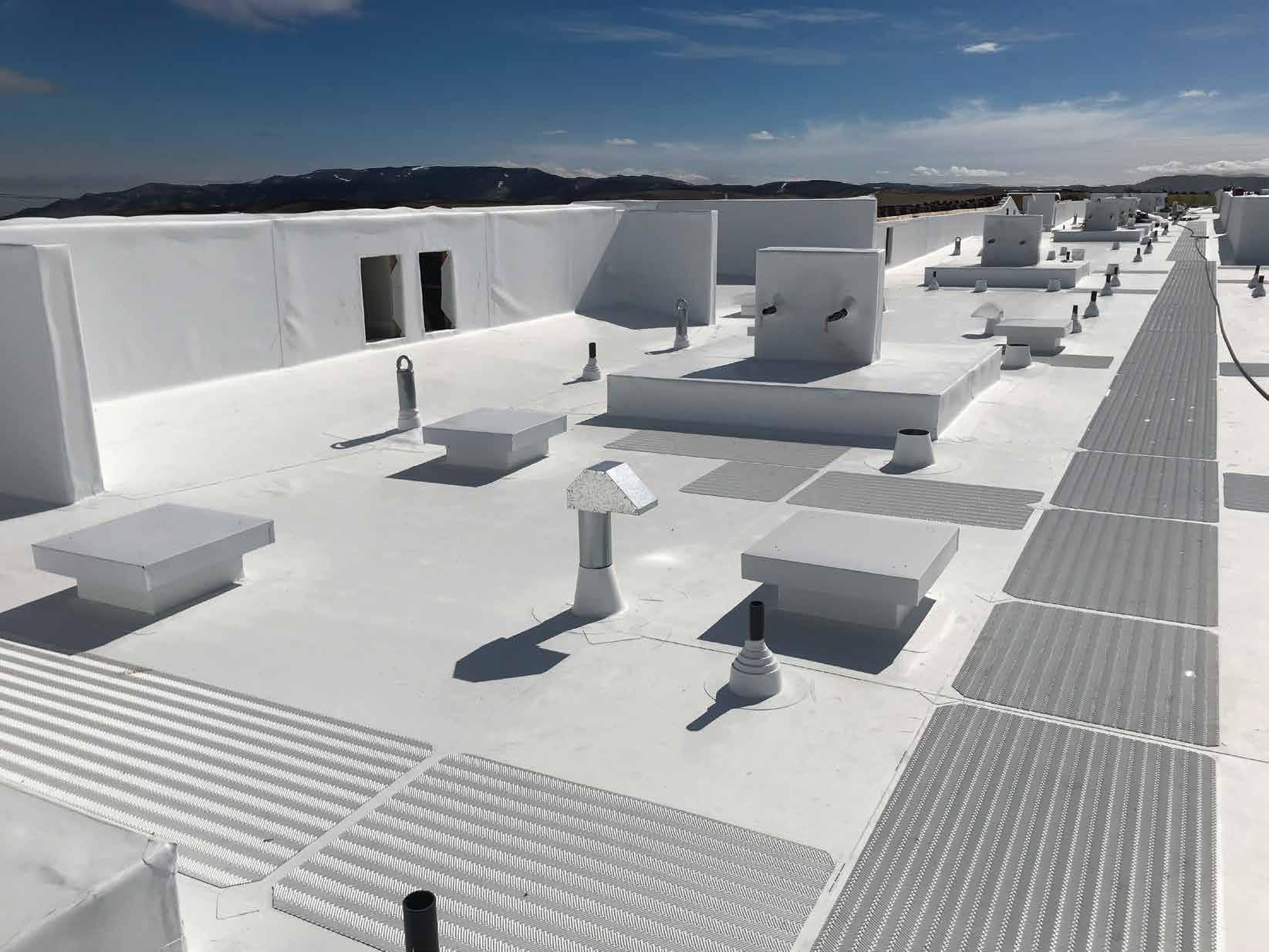






The S.T.A.R. Awards – the Spotlight Trophy for the Advancement of Roofing – is an awards program designed by FRSA to recognize members’ unique and outstanding projects. A panel of four judges evaluates and selects three recipients from each category.
This year there were 36 submissions for placement in one of four categories: Community Service, Craftsmanship in Roofing, Low-Slope and Steep-Slope. The judges – Joe Williams, RRC, AIA, A/R/C Associates Inc., Orlando; Mike Silvers, CPRC, Silvers Systems Inc. and FRSA Technical Director, St. Petersburg; Manny Oyola, Jr., MOJR Consulting Inc. and FRSA Technical Advisor, Boca Raton and Gary Register, Register Roofing & Sheet Metal, Jacksonville – spent a day reviewing the submitted projects.
Judging criteria included aesthetics, special circumstances, unique project design, complexity of the project, workmanship, teamwork, testimonials and creative problem solving. The judges evaluated before, in-progress and completed photos and videos to assist in the judging process.
Below are the top 12 projects by category in random order. First, second and third place will be announced at FRSA’s Convention on Thursday, June 11. The Shining STAR Award – the “Best of the Best” – the project the judges selected as the overall top project will also be revealed at that time.
Jenkins Roofing Tampa, Inc., Boy Scout Hut, Tampa, Community Service
When Boy Scout Troop 4 needed a new permanent facility to hold meetings and events, Jenkins Roofing of Tampa stepped up to the challenge. The opportunity came through a long-time partner of Jenkins Roofing and Troop Leader for the Boy Scouts of Troop 4. With a strong history of supporting children’s charities and youth initiatives, the connection was immediate and the owner of Jenkins Roofing got to work securing fabrications, labor and donated materials while overseeing the planning and execution of the installation.
to Florida Specialty Roofing Services to bid on the project. Seeing what a great organization they were and the impact they had on children suffering from terminal illnesses, Florida Specialty Roofing Services worked with their partners to fully donate the roof. The project itself was very unique given the incredibly unique architecture that needed to be integrated with flashing. It required full safety and supervision as the facility stayed open for business.

Charles “Dan” Jackson, a Vietnam War veteran, was without power for 15 weeks in the aftermath of Hurricane Milton after a tree impacted his home and damaged his electrical box. Upon hearing about Mr. Jackson’s situation through the Angel Foundation, the Quality Roofing team did not hesitate to donate and install a brandnew roof on the vet’s home. Thanks to the team – and the support of the other volunteers who donated their time, effort and supplies – Mr. Jackson can move forward in safety and comfort.
Florida Specialty Roofing Services, Give Kids the World Village, Kissimmee, Community Service
Give Kids the World Village was suffering from an aging and failing artificial shake roof on their flagship building, The Castle of Miracles. They reached out
The Talanian Residence project involved the installation of a premium metal roofing system engineered specifically for South Florida’s demanding coastal environment. The multi-level, 45-foot-tall single-family home required a complete roof replacement capable of withstanding salt-air exposure, wind uplift pressures and intense UV radiation, while also enhancing the architectural character of the property. This project exemplifies best practices in coastal residential metal roofing. The use of .032 aluminum panels, a mechanical lock standing seam profile, fire-resistant underlayment and code-engineered fastening patterns demonstrates a comprehensive approach to durability and performance.

Originally constructed in 1908 and known as the “Hutchinson House,” the property currently serves as the offices for Matt Law. The building changed hands many times and was used for a variety of purposes, including a hospital and a fraternity. Despite its state of disrepair, it was designated as a historical landmark in 1977. Quality Roofing, Inc. custom cut “fish scale” pattern slate and integrated them to match the original building design. High-quality copper trim and standing seam dormers enhance the exterior. Extensive structural support repairs were imperative to accommodate the copper internal gutter system and to preserve the decorative trim details.
Christ Sanctified Church was a 30,210 square foot roof replacement project in Orlando. The church reached out to Collis Roofing because of numerous repairs that continued to create significant leaks on an aging foam and tile roof. Each copper penny panel of the new standing seam roof was fabricated onsite. Whether walking up, driving by or flying over, everyone can see, enjoy and take pride in the skill and craftsmanship – from their metal fabricators to an unparalleled installation that is built for ultimate beauty and lasting workmanship.

The Panorama Tower roof replacement and waterproofing project involved full replacement of the existing roof system and installation of a comprehensive waterproofing system on an 880-foot, 85-plus story, occupied residential high-rise located in the high velocity hurricane zone. Due to building height, wind exposure and continuous occupancy, the roof system was designed to meet the uplift requirements of 21 separate roof areas at multiple elevations. The complex and dangerous nature of the project required careful managing and planning, which PSI demonstrated by completing the project without a lost-time incident.
Located along the Atlantic coastline in Jacksonville Beach, the Seascape Condominiums roof replacement was a complex project that required careful coordination, strict safety protocols and attention to resident considerations. Despite challenges including a 90-foot roof elevation without parapet walls, limited roof access, coastal wind exposure and mechanical equipment coordination, Register Roofing & Sheet Metal successfully delivered a high-quality roofing system while the property remained fully occupied. The completed roofing assembly provides the building with a durable, energy-efficient system designed to withstand Florida’s demanding coastal environment and provides long-term protection for the property and its residents.
As one of the tallest structures in Tampa, with a total of 264 air conditioning units located across the roof and a functioning gas line that extended the length of the building, the SkyPoint project presented a unique situation. Reaching a height of 414 feet, all materials and debris were transported using multiple hoist systems, while the elevators were reserved for the crew to use. Ground-level safety measures, including lane closures and overhead protection for pedestrians, were implemented throughout the duration of work. Despite these challenges, the crew was successful in removing the existing roof and restoring the building with a durable, high-performance solution.
The Nadler Residence project involved the installation of a steep-slope Tesla solar roof system across a luxury coastal property on Boca Grande Island. The project included reroofing the main residence, guest house and a detached garage. The primary roof sections consist of 6:12 steep-slope roof planes, forming multiple intersecting hips, ridges and valleys across the main structure. Installation required careful layout of photovoltaic and non-photovoltaic metal Tesla roof tiles to maintain a consistent architectural appearance while positioning solar generating tiles in the most effective areas of the roof system.
Continued on page 31
John Kenney, CPRC, CEO, Cotney Consulting Group
Most roofing contractors build their businesses around production work: new construction, reroofs and large replacements. When volume is strong and backlog is deep, that model works well. Crews stay busy. Revenue grows. Confidence rises. But every experienced contractor knows one constant that never changes: the market cycle.
Insurance carriers tighten guidelines. Interest rates shift. Lending slows. Owners defer capital projects. Material pricing moves unexpectedly. Backlogs that once felt secure begin to thin. When that happens, contractors who rely solely on production volume feel the pressure first.
The companies that remain steady during those periods are rarely the ones chasing the most square footage. They are the ones who built stability into their model long before the market softened. Most often, that stability comes from a disciplined, well-structured service and maintenance division.
Service is not a side offering. It is not something you do only when production slows. When structured correctly, it becomes the financial shock absorber of the entire company.
A production-only model is inherently volatile. Large jobs create significant billing spikes. Cash flow fluctuates between heavy inflow and heavy payroll weeks. Labor utilization fluctuates with project starts and completions. When the backlog is strong, these swings are manageable. When backlog contracts, they become dangerous.
A service division changes that rhythm. Instead of relying exclusively on project-based revenue, the company develops recurring work: leak response, preventative maintenance, minor repairs, inspection programs, warranty follow-up and small capital improvements. Individually, these jobs are modest but, collectively, they create predictable monthly revenue.
Service work smooths cash flow and it fills schedule gaps between major projects. It provides consistent labor hours, keeping skilled technicians engaged rather than leading them to look elsewhere for steadier work. It keeps trucks moving even when large contracts are delayed.
More importantly, service builds customer proximity. Production contractors may see a client once every fifteen or twenty years during a reroof cycle. Service contractors see them regularly. They inspect roofs
annually. They respond when issues arise. They maintain a presence.
That presence changes the relationship dynamic. You are no longer just the contractor who shows up for a large replacement. You become the ongoing asset manager for the roof. When capital projects eventually return, who will the owner call first?
There is also a margin component that many contractors underestimate. Properly priced service work can produce strong gross margins. It requires disciplined dispatching, clear scope control and efficient technician routing but, when structured correctly, service revenue does not carry the same overhead burden as large production projects.
Production jobs demand extensive estimating time, project management coordination, submittals, staging logistics and often lengthy billing cycles. Service jobs are smaller, faster and billed more frequently. That speed improves cash flow.
Of course, service is not automatically profitable. Many contractors fail at service because they treat it informally. They allow production crews to handle repairs inconsistently. They underprice leak calls to “keep customers happy.” They fail to track technician labor with the same discipline they apply to production crews. When service is managed casually, it becomes chaotic.
A true service division requires structure. It requires a dedicated manager and technicians trained specifically in diagnostic and repair work, which is very different from installation. It requires dispatch discipline and route planning. It requires pricing that reflects urgency, expertise and overhead. Most importantly, it requires a commitment to leadership. Service cannot be viewed as secondary to production. If leadership treats it as a filler activity, the team will, too.
One overlooked advantage of service work is its role in talent development. Many roofing companies struggle to identify and train future field leaders but service provides exposure. Technicians diagnose a range of roof conditions, interact directly with building
owners and develop critical thinking about roof systems. That experience builds judgment. Judgment builds leadership potential.
The service also provides early warning. Contractors with active maintenance portfolios see roof conditions evolve. They identify system deterioration, flashing fatigue and drainage issues before they become emergency failures. That insight positions the company for future capital conversations.
In an uncertain economic climate, intelligence is leverage. Market corrections do not announce themselves in advance. They arrive gradually. Bid volume softens. Competition intensifies. Margins compress. Contractors who are entirely dependent on large projects feel those shifts immediately. Contractors with balanced models absorb them more calmly.
The goal is not to replace production. Production will always drive the majority of revenue in most roofing companies. The goal is balance. Balance between large, episodic revenue and smaller, recurring revenue. Balance between installation crews and service technicians. Balance between reactive bidding and proactive client relationships.
It strengthens company valuation. Buyers and private equity groups consistently favor companies with diversified revenue streams. Recurring service contracts signal stability. Predictable cash flow reduces perceived risk. Even contractors not actively pursuing acquisition benefit from that structural strength.
Perhaps the most important point is timing. Contractors should not build service divisions after a downturn begins. By then, the market will already be crowded with competitors attempting the same
pivot. Service infrastructure takes time to mature. Technician training, client acquisition, pricing calibration and dispatch optimization do not happen overnight. The contractors who benefit most from the service are those who invest before they feel the pressure.
Roofing will always be cyclical. Weather patterns shift. Insurance markets adjust. Economic forces move in waves. Contractors cannot control those variables. They can control how exposed they are to them. A service division is not simply an additional revenue line. It is a stabilizing force. It keeps trucks moving. It keeps technicians engaged. It keeps clients connected. It keeps cash flowing.
And when the next market correction arrives, as it inevitably will, the companies with disciplined service operations will not panic. They will adjust. That confidence is not luck. It is structured.
John Kenney, CPRC is CEO of Cotney Consulting Group, Plant City. He has decades of experience on commercial roofing projects, providing a unique understanding of what it takes to succeed in roofing – on the roof, in the office and at scale. John saw the need to provide contractors with strategic guidance built on real-world field knowledge. Cotney Consulting offers COO on Demand, online training, technology solutions, business advisory consulting, collections, contracts, Castagra estimating training, safety and OSHA training. John partners with FRSA to provide educational seminars. For more information, contact John at jkenney@cotneyconsulting.com or 813-851-4173.
Mike Silvers, CPRC, Owner, Silvers Systems Inc. and FRSA Technical Director
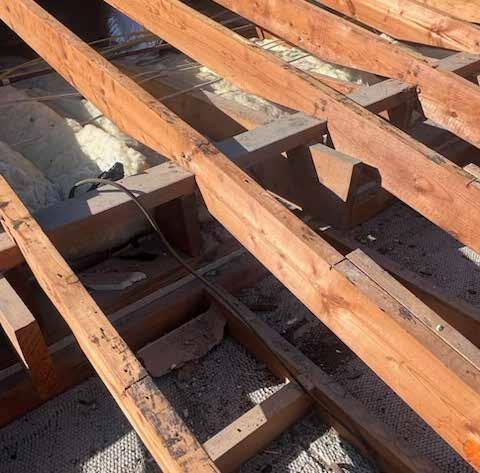
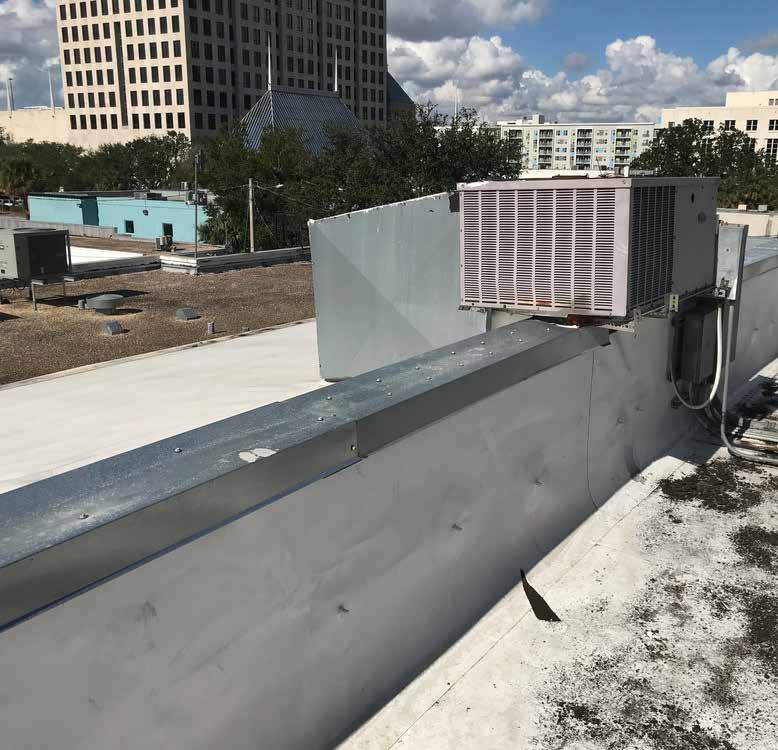
Occassionally, I hear from one of our long-time contractor members about the rapid pace of changes in our industry and why they don’t like a particular change that has been made in the code or other regulations. I understand, change is hard. Interestingly, those few that are most upset with a particular change are in an age group commonly referred to as “boomers.” Before anyone is offended by my use of this overused term, please understand that I am one, though I prefer to think of myself as mid-century modern. Younger folks may still be bothered by some of these changes but are more open to change overall. They have grown up in a world that changes at the speed of light and have learned to expect it. As a seasoned construction veteran, I understand why many others like me are overwhelmed but then I reflect on my own experiences and remind myself of just how much our industry has changed in the 60 years that I’ve been involved.
As an example, one of my earliest jobs (late 60s and early 70s) was maintaining the wide variety of equipment used to perform commercial roofing. Every good roofer had kettles for heating bitumen (asphalt or coal tar). To heat them, we used kerosene tanks bolted to the side of these heating vessels. Yes, they occasionally caught fire. Kerosene tanks are not naturally pressurized like those containing liquid petroleum gas (LPG) but still need to feed the combustible liquid to the burners. This was accomplished by a pump inserted into the tank powered by a manually operated “T” handle to pressurize the tank (picture a large bicycle tire pump) until a siphon was established by preheating coils in the burners. The seals used at the end of the pump piston were made from leather. Hot bitumen was transported to the roof in buckets by rope hoists often attached to the top of a ladder, leaving the hoist operator on the ground, almost directly under open containers of hot bitumen. On the roof, asphalt was most often applied with mops and pouring cans. They were used to install three, four and five plies of organic felt and often surfaced with aggregate or coating.
Technology quickly brought improvements to these systems. LPG fueled burners, pumper kettles and asphalt dispensers took the place of the old equipment. Reinforcing membranes changed from organic to fiberglass and polyester. Cap sheets became more prominent with many not requiring hot asphalt to apply. Eventually single-ply membranes became the prominent low-slope system with – in many cases –robots performing much of the seam sealing. This is an example of a just few of the many changes in just
low-slope roof systems. I could use similar examples for any type of roof system.
So, why is it that those who have been doing this work for so long and have witnessed and adapted to so many past changes are having difficulty understanding that change continues to occur? If we can reflect with an open mind, some of it comes down to “I’ve been doing it this way for a long time and it worked, why do I have to change now?” That is often the sentiment expressed but is it realistic?
The forces influencing change in the roofing industries are numerous and varied. Materials, technology, workforce, insurance, safety, laws and building codes are just a few factors that impact change. The building commission will make changes with each cycle and the legislature will meet and pass laws that lead to new regulations with each session. Both will be influenced by a host of stakeholders. It is imperative that FRSA remains vigilant by being involved in these processes to influence the eventual outcome. We must be proactive. This is being accomplished through the efforts of our volunteer members, legislative counsels, legal counsel and FRSA staff.
The technical services staff are deeply involved in the development of roofing-related changes in the building code. We also assist with technical issues that arise during the legislative session. With all the attention on construction, codes and resiliency, this has been a continually active area. Through our collective efforts, we have and will continue to have a significant impact on these developments but there are many competing interests that are trying to do the same. We will prevail in moving our positions forward on most of the issues but we don’t win them all. I can assure you that it’s not for lack of trying.
One thing we can’t do is stop change from occurring. To quote the Greek philosopher Heraclitus, who lived 2,500 years ago, “There is nothing permanent in life except change.” So, if we understand that change is constant, how can we help overcome our resistance to change and make it less troubling? Most importantly, we can let those affected by the changes know about them before they go into effect. FRSA is committed to keeping our members aware of changes that can have an impact on their companies and our trade. We do this by sharing knowledge through personal discussions, reports to committees and subcommittees, magazine articles and seminars. Hopefully, through these communications we can help people prepare for these inevitable changes and thereby help them adjust.
Continued on page 39
Wednesday, June 10 | Friday, June 12
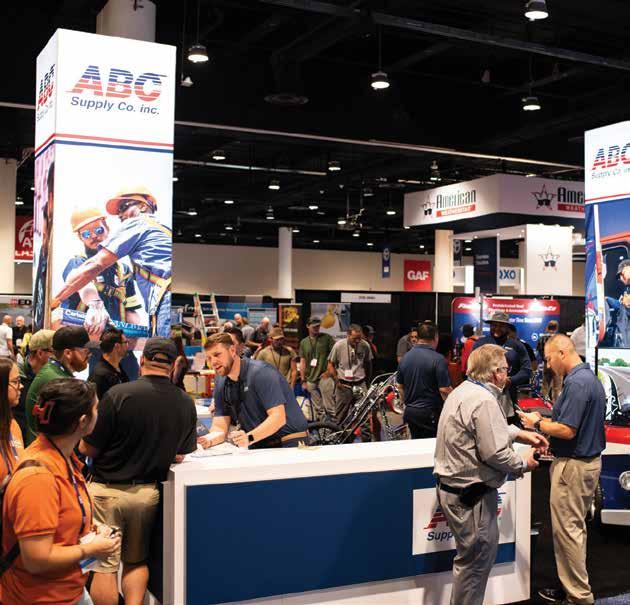
The 2026 Expo is sold out offering the latest products and services to the industry.

Check out items onsite at the Expo and bid from anywhere! Visit www.floridaroof.com/items to register and bid online.
Looking to donate? Visit www.floridaroof.com/donate.
Bidding starts on June 5 at 8:00 am and concludes on June 12 at 2:00 pm.
All proceeds benefit the industry through the FRSA Educational & Research Foundation.


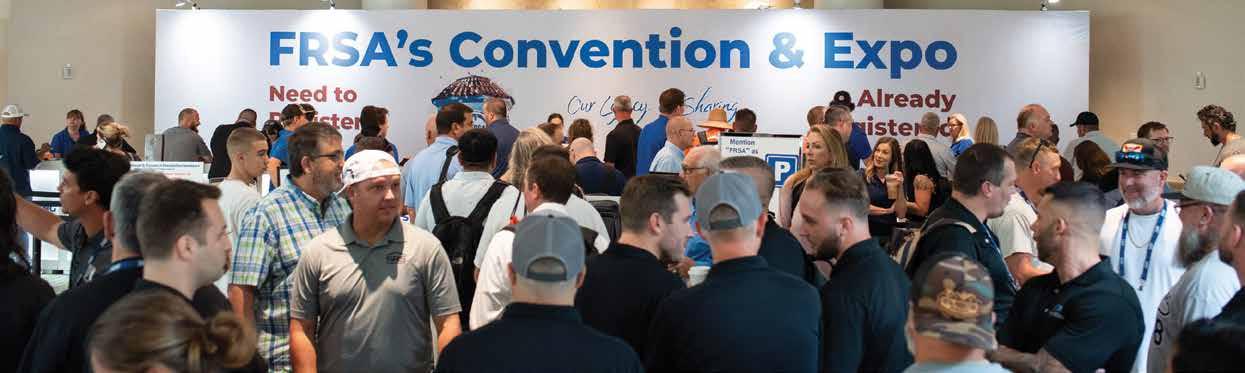
FRSA’s Expo is free for roofing contractors. For all non-exhibiting manufacturers, suppliers and distributors, there is a $295 per person fee to attend the Expo and a $995 per person fee for industry service providers.
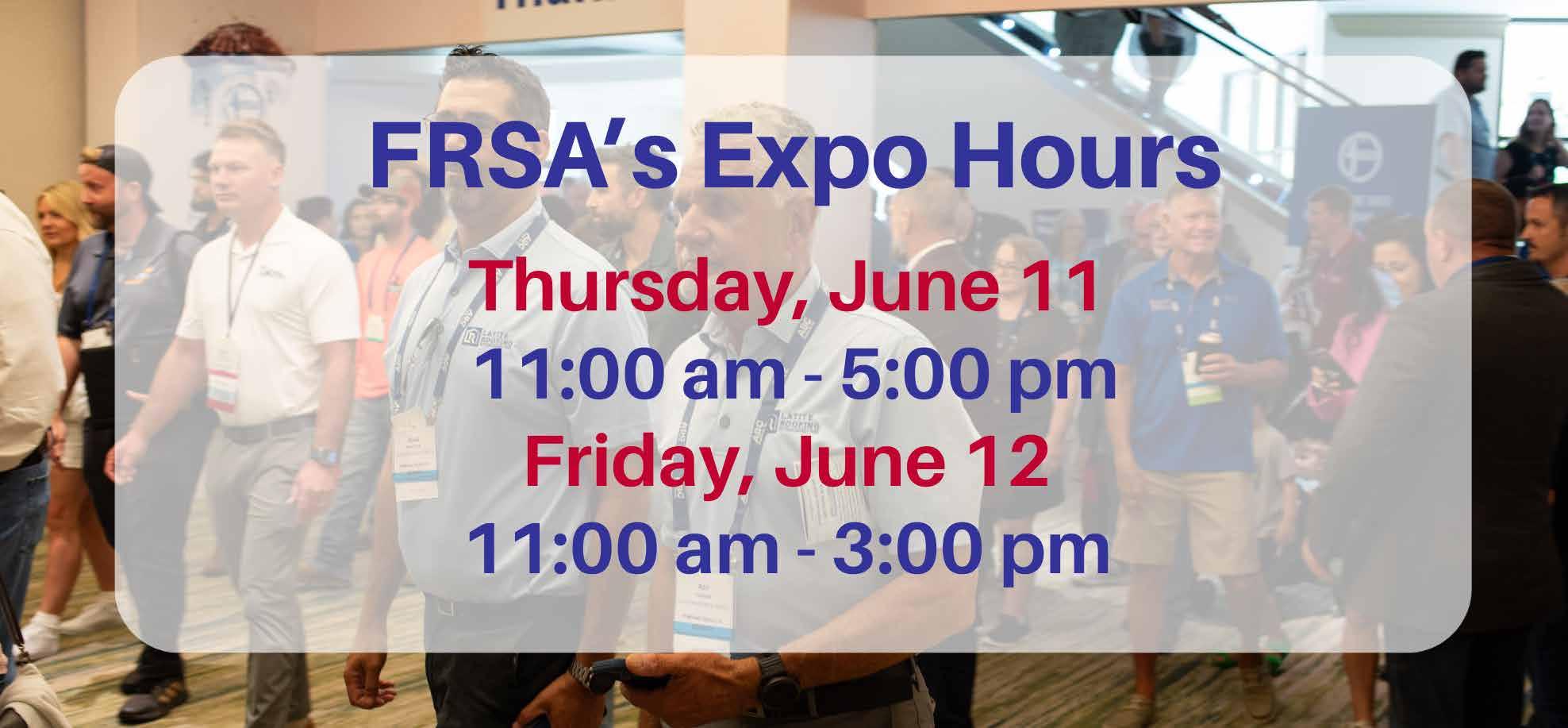
Thursday, June 11 | 11:00 am – 2:00 pm sponsored by Mid-Atlantic Roofing Supply
Friday, June 12 | 11:00 am – 2:00 pm sponsored by GAF
Stop by the Lounge area for a cold beer, compliments of our sponsors.
sponsored by PAC-CLAD | Petersen & USG Securock
Thursday, June 11 | 11:00 am – 2:00 pm
Friday, June 12 | 11:00 am – 2:00 pm
Hungry? Grab a bite to eat at the Food Court located on the Expo floor, compliments of our lunch sponsors.
Thursday, June 11 | 11:00 am – 5:00 pm Friday, June 12 | 10:00 am – 3:00 pm




Golf

Wednesday, June 10
Tenoroc Shooting Range, Lakeland | 10:00 am – 1:00 pm
The tournament is comprised of several stations with a variety of shooting levels. Range fees, ammunition, lunch and prizes are included in the ticket price. Each participant must provide their own gun or arrange gun rental ahead of time.
Registrations will be limited to 75 participants.
$135 FOR REGISTRATIONS RECEIVED BY MAY 1
$175 FOR REGISTRATIONS RECEIVED AFTER MAY 1
sponsored by Acrisure & MetalMax
Falcon’s Fire Golf Club, Kissimmee | 8:00 am – 1:00 pm
Falcon’s Fire Golf Club is recognized both regionally and nationally as one of the finest public golf courses in Orlando. Check-in begins at 7:00 am, and the tournament begins at 8:00 am. Registration includes green fees, cart, range balls, refreshments, continental breakfast, lunch and prizes. Teams are 4-person scramble format and individual registrants will be paired. This tournament sells out quickly, so register early.
Registrations will be limited to 128 players on a first-come, first-served basis.
$225 FOR REGISTRATIONS RECEIVED BY MAY 1
$275 FOR REGISTRATIONS RECEIVED AFTER MAY 1




Wednesday, June 10 | 1:00 pm – 3:00 pm
This year we are offering fun for the whole family! Join us for popsicles on Wednesday afternoon followed by some familyfriendly competition. Enjoy an indoor 9-hole mini golf course and our first ever “Brick Lab” event where each family will work together to build their own custom racecar with Legos and then compete against other families on an indoor track. Children will also have the opportunity to build their own mini figure to take home. Children must be accompanied by an adult at all times – this is a family team event.


Wednesday, June 10 | 3:30 pm – 5:30 pm
In this engaging round-robin format, attendees will chat about leadership, building industry relationships and other topics that apply to professional women in the roofing industry. It’s a great way to meet others that face the same challenges as you. Cost is $25 – register at www.floridaroof.com/NWIR
Thursday, June 11 | 8:00 am – 11:00 am
Join us for this FREE event, available on a first-come, first-served basis. Space is limited – register at www.floridaroof.com/para-latinos
Thursday, June 11 | 6:00 pm – 10:00 pm
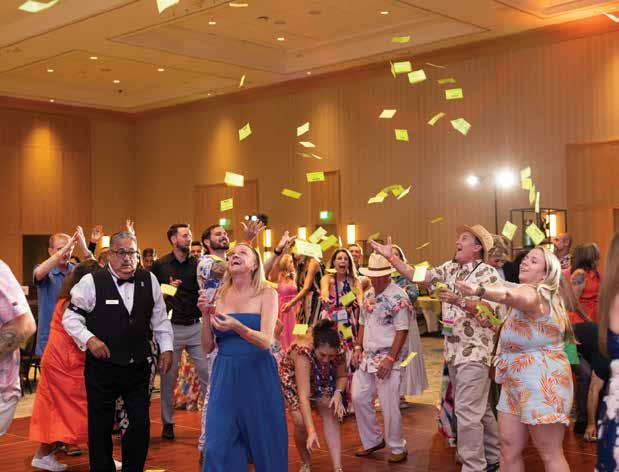
Join us for the Jimmy Buffett Casino Party, an entertaining night of casino games, food stations, open bars, dancing and prizes. Casual Jimmy Buffett-inspired tropical attire is encouraged. We’ll kick off the evening with the FRSA Officer installation and the Campanella Award in an abbreviated presentation, leaving plenty of time for gambling, dancing and socializing.
Wednesday, June 10 | 5:30 pm – 7:00 pm sponsored by Adams & Reese LLP
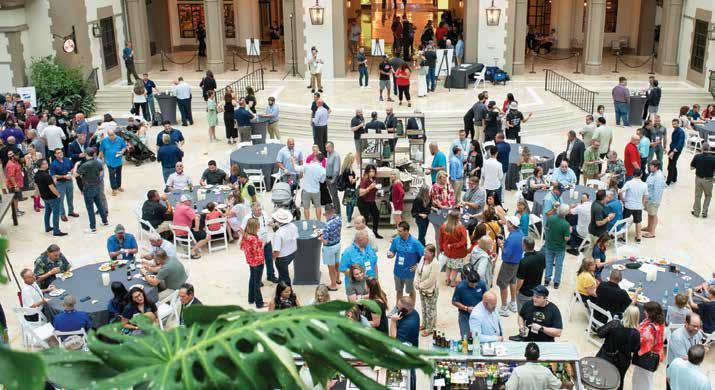
Join us as we kick off FRSA’s 104th Convention. Food stations and an open bar at this FREE event create the perfect opportunity to network with industry peers.
Thursday, June 11 | 11:15 am – 1:00 pm sponsored by Millennium Metals Inc. Elections for FRSA Officers and Directors will be held, Life and Honorary Memberships bestowed along with





sponsored by Certified Roofing Specialists Inc.

Thursday, June 11 | 9:00 am – 11:00 am
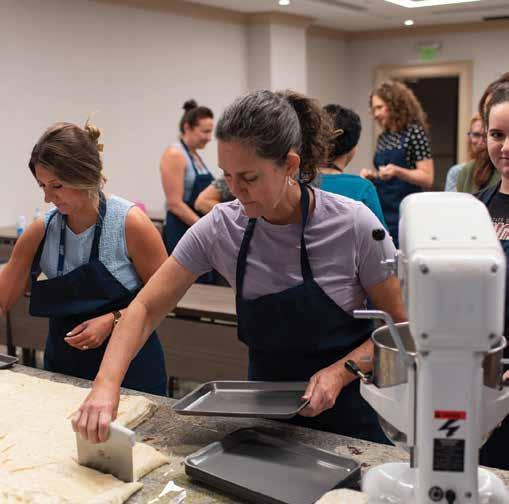
Explore your creativity with textured painting. Described as “fun and freeing,” this workshop requires no previous art experience. Supplies, morning beverages and muffins are included in the ticket price.
Wednesday, June 10 | 5:30 pm – 9:00 pm
Kids will enjoy an evening of delicious fun, beginning by making their own pizzas. Afterward, they will embark on an adventure to explore and find alligators and other Florida wildlife during a scavenger hunt. They’ll end the night with a stroll to Cold Stone Creamery for ice cream.
Thursday, June 11 | 9:00 am – 3:00 pm
Ready for some real fun? Here’s your ticket to competitive arcade-style games, followed by lunch at Wreckers. The kids will end the afternoon with games and a few creative projects. Ticket includes activities, supplies and lunch.
Thursday, June 11 | 5:30 pm – 10:00 pm
Friday, June 12 | 9:00 am – 11:00 am
Our favorite Gaylord chef is back by popular demand. In this hands-on workshop, he will guide you through the steps for making your own chocolate dough, tempering chocolate, shaping a rose and sculpting and decorating your edible masterpiece. Beverages and breakfast pastries are included in the ticket price.


Climb inside one of two giant game trucks packed with large screen TVs, the latest game consoles and a huge variety of games including Mario Kart, Minecraft, Fortnite and other popular video games. Ticket price includes dinner, two hours of unlimited game play and bounce house access.
Friday, June 12 | 9:00 am – 2:00 pm
Hop on board The Art Bus for a morning of cool projects and games, followed by lunch at Wreckers. Ticket price includes activities and lunch.




Wednesday
6:00 am – 5:00 pm | FRSA Registration Desk Open
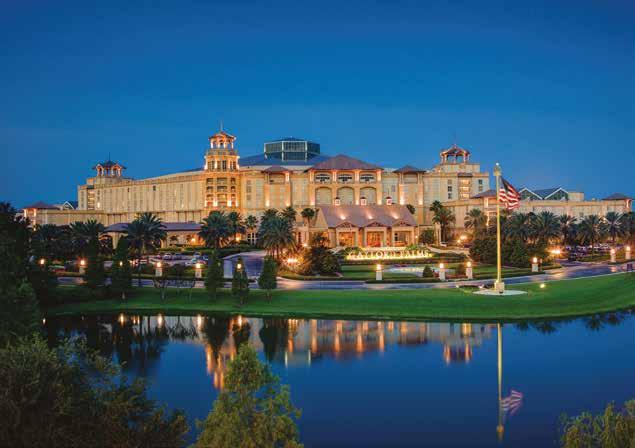
Gaylord Palms Convention Center
8:00 am – 9:00 am | SEMINAR #1: Building an OSHA Inspection SOP
Thursday | June 11
6:00 am – 5:00 pm | FRSA Registration Desk Open
Gaylord Palms Convention Center
7:00 am – 8:00 am | SEMINAR #11: Workers’ Comp Coverage and PEOs
Trent Cotney – 1.0 Hour WPS CILB-0615383
8:00 am – 10:00 am | SEMINAR #2: FBC 9th Ed (2026) Roofing Related
Changes / Mike Silvers, CPRC – 2.0 Hours G CILB-pending
8:00 am – 1:00 pm | Golf Tournament / Falcon’s Fire Golf Course, Kissimmee - sponsored by Acrisure & MetalMax
8:00 am – 2:00 pm | SEMINAR #3: CCN’s Contractor Bootcamp – Primal Selling System / Dave MacLean – 6.0 Hours – No CE credit
9:15 am – 10:15 am | SEMINAR #4: OSHA Heat Illness Prevention
Kyle Rea – 1.0 Hour WPS CILB-0615386
9:15 am – 10:15 am | SEMINAR #5: Estimating for Small Business
John Kenney, CPRC – 1.0 Hour G CILB-0614772
9:15 am – 10:15 am | SEMINAR #6: FBC Requirements for Underlayments
Greg Keeler – 1.0 Hour G CILB-0613850
10:00 am – 1:00 pm | Clay Shooting Tournament Tenoroc Shooting Range, Lakeland
10:15 am – 12:15 pm | SEMINAR #7: Advanced FBC 8th Ed (2023) Metal
Roofing / Bo Copeland – 2.0 Hours ADV CILB-0615138
12:30 pm – 1:30 pm | SEMINAR #8: Workers’ Comp Coverage and PEOs
Alexis Ayala – 1.0 Hour WC CILB-0613082
12:30 pm – 1:30 pm | SEMINAR #9: Roofing Legal, Labor and Policy Trends
Trent Cotney – 1.0 Hour L&R CILB-0615388
12:30 pm – 2:30 pm | SEMINAR #10: Roof-to-Wall Connections for Roofing
Contractors / Mike Silvers, CPRC and Cody Thomas
2.0 Hours G CILB-0615399
1:00 pm – 3:00 pm | Family Fun Event
3:30 pm – 5:30 pm | NWIR Table Talks Session
5:00 pm – 5:30 pm | VIP President’s Reception / Emerald Plaza Atrium
5:30 pm – 7:00 pm | Welcome Reception / Emerald Plaza Atrium sponsored by Adams & Reese LLP
5:30 pm – 9:00 pm | KIDS’ PROGRAM: Pizza-Making and Scavenger Hunt sponsored by Certified Roofing Specialists Inc.
Alexis Ayala – 1.0 Hour WC CILB-0613082
7:00 am – 8:00 am | SEMINAR #12: Artificial Intelligence in Roofing
Trent Cotney – 1.0 Hour G CILB-0615382
7:00 am – 8:00 am | SEMINAR #13: Estimating for Small Business
John Kenney, CPRC – 1.0 Hour G CILB-0614772
8:00 am – 11:00 am | SEMINAR #14: ARCHITECT & BUILDING OFFICIALS PROGRAM
FBC 9th Ed (2026) Roofing Related Changes / Mike Silvers, CPRC 2.0 Hours G CILB-pending
FBC Requirements for Underlayments / Greg Keeler
1.0 Hour G CILB-0613850
8:00 am – 11:00 am | SRS Building Products & CertainTeed Spanish Session
8:15 am – 9:15 am | SEMINAR #15: Fall Protection: What Employers Need to Know / Kevin Lindley – 1.0 Hour WPS CILB-0614483
8:15 am – 9:15 am | SEMINAR #16: ICE Raids and I-9 Audit Defense
Trent Cotney and Ben Briggs – 1.0 Hour L&R CILB-0615385
8:15 am – 9:15 am | SEMINAR #17: Your Competitor is Using AI. Are You? Gary Cohen – 1.0 Hour – No CE credit
8:15 am – 10:15 am | SEMINAR #18: Advanced FBC 8th Ed (2023) Metal Roofing / Bo Copeland – 2.0 Hours ADV CILB-0615138
9:00 am – 11:00 am | LADIES' PROGRAM: Textured Painting Workshop
9:00 am – 3:00 pm | KIDS' PROGRAM: Arcade Blitz sponsored by Certified Roofing Specialists Inc.
9:30 am – 10:30 am | SEMINAR #19: Attracting and Retaining Top Employees / Marci LaRouech – 1.0 Hour – No CE credit
9:30 am – 10:30 am | SEMINAR #20: Documenting a Roofing Project Chad Westbrook – 1.0 Hour G CILB-0615078
9:30 am – 10:30 am | SEMINAR #21: SkillsUSA: Build a Workforce Pipeline Tim Stephens – 1.0 Hour – No CE credit
11:00 am – 2:00 pm | Lunch in the Expo Hall sponsored by PAC-CLAD | Petersen and USG Securock
11:00 am – 5:00 pm | FRSA EXPO




(Thursday Continued)
11:00 am – 5:00 pm | Foundation Auction
11:15 am – 1:00 pm | Business Lunch sponsored by Millennium Metals Inc.
5:30 pm – 10:00 pm | KIDS' PROGRAM: Extreme Video Game Night sponsored by Certified Roofing Specialists Inc.
6:00 pm – 10:00 pm | Jimmy Buffett Casino Party
Friday | June 12
6:00 am – 3:00 pm | FRSA Registration Desk Open
Gaylord Palms Convention Center
7:00 am – 8:00 am | SEMINAR #22: Wind Mitigation Methods
Mike Silvers, CPRC – 1.0 Hour WMM CILB-0609669
7:00 am – 8:00 am | SEMINAR #23: Roofing Legal, Labor and Policy Trends
Trent Cotney – 1.0 Hour L&R CILB-0615388
7:00 am – 8:00 am | SEMINAR #24: Documenting a Roofing Project
Chad Westbrook – 1.0 Hour G CILB-0615078
8:00 am – 9:30 am | Exhibitor Meeting
Booth Selection for the 2027 Expo - current exhibitors only
8:15 am – 9:15 am | SEMINAR #25: ICE Raids and I-9 Audit Defense
Trent Cotney and Ben Briggs – 1.0 Hour L&R CILB-0615385
8:15 am – 9:15 am | SEMINAR #26: FOREMEN & SUPERINTENDENT PROGRAM
Hazard Recognition / Jim Brauner – 1.0 Hour WPS CILB-0614724
8:15 am – 10:15 am | SEMINAR #27: Roof-to-Wall Connections for Roofing Contractors / Mike Silvers, CPRC and Cody Thomas
2.0 Hours G CILB-0615399
9:00 am – 11:00 am | LADIES' PROGRAM: Chocolate Rose Culinary Experience
9:00 am – 2:00 pm | KIDS' PROGRAM: The Art Bus sponsored by Certified Roofing Specialists Inc.
10:00 am – 2:00 pm | Foundation Auction
10:00 am – 3:00 pm | FRSA EXPO
11:00 am – 2:00 pm | Lunch in the Expo Hall sponsored by PAC-CLAD | Petersen and USG Securoc

The FRSA Registration Desk, Expo and Foundation Auction will be located on Level One of the Convention Center, Halls A-E.
See the onsite Convention Program or check FRSA’s App for live updates and room assignments.


Wednesday | June 10
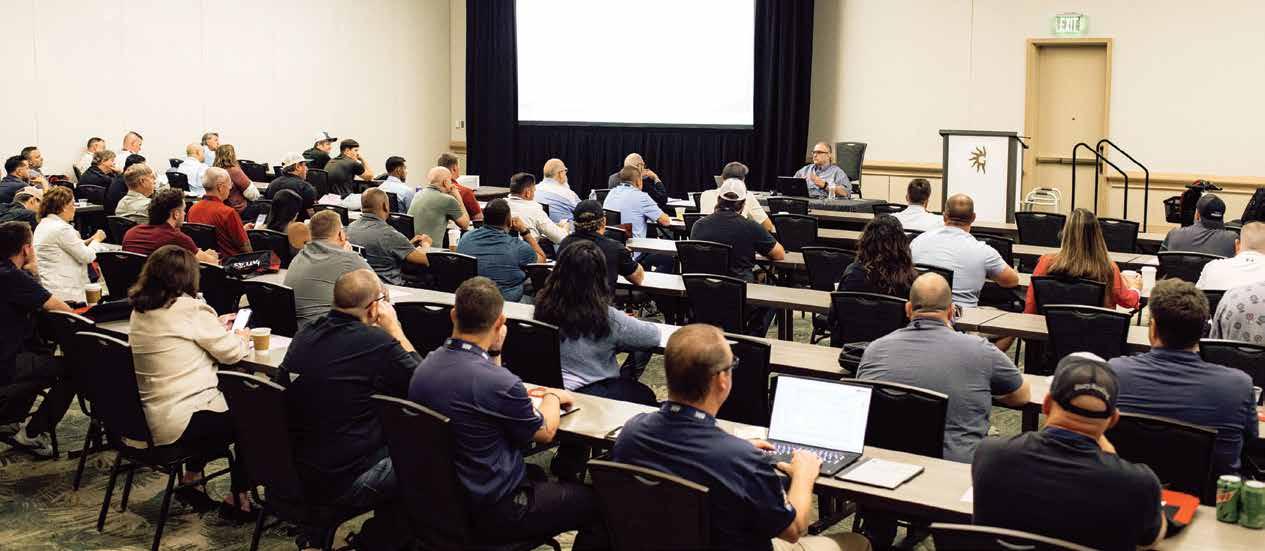
SEMINAR #1 | 8:00 AM – 9:00 AM
Building an OSHA Inspection SOP / Trent Cotney
Every contractor needs an OSHA response plan before the inspector arrives. Learn to create a legally defensible Standard Operating Procedure for inspections from initial site entry to post-citation strategy. The result? A repeatable, defensible SOP that minimizes downtime, citations and reputational damage. 1.0 Hour WPS CILB-0615383
SEMINAR #2 | 8:00 AM – 10:00 AM
FBC 9th Ed (2026) Roofing Related Changes
Mike Silvers, CPRC
The 2026 Florida Building Code 9th Edition goes live at the end of 2026. Attendees will learn about roofing-related changes in the new code compared to the current 2023 FBC. We’ll also look at FBC Building, Chapter 15, FBC Residential, Chapter 9 and FBC Existing Building, Chapter 7. | 2.0 Hours G CILB-pending
SEMINAR #3 | 8:00 AM – 2:00 PM
CCN’s Contractor Bootcamp – Primal Selling System / Dave MacLean
Transform your sales team with an ethical, neuroscience-based approach to roofing sales. This bootcamp provides a systematic method to connect with a prospect's “brain buying center,” closing deals at profitable prices without gimmicks or highpressure tactics. | 6.0 Hours – No CE credit
SEMINAR #4 | 9:15 AM – 10:15 AM
OSHA Heat Illness Prevention / Kyle Rea
Gain a practical understanding of OSHA’s Heat Illness Prevention Standard and the agency’s current enforcement under the General Duty Clause. Participants will learn to identify and document risk factors, respond to inspections and integrate heat-prevention protocols into jobsite safety and subcontractor management. | 1.0 Hour WPS CILB-0615386
SEMINAR #5 | 9:15 AM – 10:15 AM Estimating for Small Business / John Kenney, CPRC
How do you reliably produce accurate estimates? In this seminar, which includes residential projects, you will discover how to identify improper estimating, evaluate strengths and weaknesses of your estimating team and improve the quality of your bids. Receive actionable items to make immediate improvements. 1.0 Hour G CILB-0614772
SEMINAR #6 | 9:15 AM – 10:15 AM
FBC Requirements for Underlayments / Greg Keeler
Learn Florida Building Code requirements for underlayments and become familiar with the changes to the FBC that apply primarily to mechanically fastened underlayments. Review requirements for self-adhering underlayments, focusing on underlayments used in roof tile assemblies. | 1.0 Hour G CILB-0613850

Wednesday | June 10 (continued)
SEMINAR #7 | 10:15 AM – 12:15 PM
Advanced FBC 8th Ed (2023) Metal Roofing
Bo Copeland
Review metal roofing materials and coatings before discussing portions of the Florida Building Code, Building Chapter 15, that pertain to metal roofing. Code topics include definitions, weather protection, fire classification, uplift requirements and more. Warranties, best practices and installation issues are also covered.
2.0 Hours ADV CILB-0615138
SEMINAR #8 | 12:30 PM – 1:30 PM
Workers’ Comp Coverage and PEOs / Alexis Ayala
Understand workers’ comp employer responsibilities, plan benefits, direct and indirect costs, how to calculate premiums, premium mods and credits as well as what to expect during an audit. You will also investigate dangers that arise from using professional employment organizations to provide labor for your projects. | 1.0 Hour WC CILB-0613082
SEMINAR #9 | 12:30 PM – 1:30 PM
Roofing Legal, Labor and Policy Trends / Trent
Cotney
Examine the forces reshaping construction and roofing from federal rulemaking and labor shortages to litigation trends and insurance volatility. Receive a policy-level overview of pending OSHA, immigration and tax initiatives and actionable insight into how they directly affect contractor operations.
1.0 Hour L&R CILB-0615388
SEMINAR #10 | 12:30 PM – 2:30 PM
Roof-to-Wall Connections for Roofing Contractors
Mike Silvers, CPRC and Cody Thomas
Roofing contractors are now permitted to evaluate and retro-fit roof-to-wall connections as part of a reroof. Understand when mitigation requirements apply, Florida Building Code requirements (that differ from insurance mitigation requirements), navigating the uniform mitigation verification inspection form and evaluating and retro-fitting roof-to-wall connections.
2.0 Hours G CILB-0615399
Thursday | June 11
SEMINAR #11 | 7:00 AM – 8:00 AM
Workers’ Comp Coverage and PEOs / Alexis Ayala
Understand workers’ comp employer responsibilities, plan benefits, direct and indirect costs, how to calculate premiums, premium mods and credits as well as what to expect during an audit. You will also investigate dangers that arise from using professional employment organizations to provide labor for your projects. | 1.0 Hour WC CILB-0613082
SEMINAR #12 | 7:00 AM – 8:00 AM
Artificial Intelligence in Roofing / Trent Cotney
AI is transforming how roofing contractors estimate, inspect and manage projects but every technological advantage carries legal risk. Explore how artificial intelligence intersects with intellectual property, data privacy and contract liability, with practical applications. | 1.0 Hour G CILB-0615382
SEMINAR #13 | 7:00 AM – 8:00 AM
Estimating for Small Business / John Kenney, CPRC
How do you reliably produce accurate estimates? In this seminar, which includes residential projects, you will discover how to identify improper estimating, evaluate strengths and weaknesses of your estimating team and improve the quality of your bids. Receive actionable items to make immediate improvements. 1.0 Hour G CILB-0614772
SEMINAR #14 | 8:00 AM – 11:00 AM
Mike Silvers, CPRC
The 2026 Florida Building Code 9th Edition goes live at the end of 2026. Attendees will learn about roofing-related changes in the new code compared to the current 2023 FBC. We’ll also look at FBC Building, Chapter 15, FBC Residential, Chapter 9 and FBC Existing Building, Chapter 7. | 2.0 Hours G CILB-pending
Thursday | June 11 (continued)
SEMINAR #14 (CONTINUED) | 8:00 AM – 11:00 AM
ARCHITECT & BUILDING OFFICIALS PROGRAM
FBC Requirements for Underlayments / Greg Keeler
Learn Florida Building Code requirements for underlayments and become familiar with the changes to the FBC that apply primarily to mechanically fastened underlayments. Review requirements for self-adhering underlayments, focusing on underlayments used in roof tile assemblies. | 1.0 Hour G CILB-0613850
SEMINAR #15 | 8:15 AM – 9:15 AM Fall Protection: What Employers Need to Know
Kevin Lindley
Employee jobsite fall hazard education is a primary responsibility for roofing contractors. Identify potential hazards and methods of reducing or eliminating them through site engineering, PPE and administrative procedures. Proper training documentation, OSHA reporting and responding to misconduct will also be discussed.
1.0 Hour WPS CILB-0614483
SEMINAR #16 | 8:15 AM – 9:15 AM ICE Raids and I-9 Audit Defense
Trent Cotney and Ben Briggs
With enforcement resurging, employers must be ready for unannounced ICE inspections and I-9 audits. Review current DHS enforcement climate, your rights during investigations and key steps to prevent liability. Real-world examples illustrate how preparation can prevent panic and protect the company and workforce. | 1.0 Hour L&R CILB-0615385
SEMINAR #17 | 8:15 AM – 9:15 AM Your Competitor is Using AI. Are You? / Gary Cohen
Contractors gaining an edge right now aren’t working harder –they’re working smarter with AI. See AI demonstrations: writing proposals, creating marketing content, analyzing business data and more – all tailored to roofing contractors. You’ll leave with an understanding of what’s possible and where to start.
1.0 Hour – No CE credit
SEMINAR #18 | 8:15 AM – 10:15 AM
Advanced FBC 8th Ed (2023) Metal
Bo Copeland
Review metal roofing materials and coatings before discussing portions of the Florida Building Code, Building Chapter 15, that pertain to metal roofing. Code topics include definitions, weather protection, fire classification, uplift requirements and more. Warranties, best practices and installation issues are also covered. 2.0 Hours ADV CILB-0615138
SEMINAR #19 | 9:30 AM – 10:30 AM
Attracting and Retaining Top Employees
Marci LaRouech
This seminar gives roofing companies practical steps to stand out as employers of choice. Attendees will learn how to define and communicate what makes their company a great place to work, strengthen their online presence and design job postings that attract the right people. The session also covers simple ways to reinforce culture inside the organization so employees stay engaged and committed. Participants will leave with clear, actionable strategies they can use right away to improve recruiting and retention. | 1.0 Hour – No CE credit


Thursday | June 11 (continued)
SEMINAR #20 | 9:30 AM – 10:30 AM
Documenting a Roofing Project / Chad Westbrook
Today, technicians are expected not only to be professional roofers but also photographers who can correctly document projects to prevent future concerns and legal issues. Review the evolution of photo and video documentation and discover industry best practices on how to document your project.
1.0 Hour G CILB-0615078
SEMINAR #21 | 9:30 AM – 10:30 AM
SkillsUSA: Build a Workforce Pipeline / Tim Stephens
Having trouble finding skilled labor? Join this panel discussion led by Tim Stephens, Architectural Sheet Metal Inc., to become familiar with how to engage with local schools, provide student training and develop a new employee pipeline. You’ll hear success stories and learn to tap into this emerging personnel source.
1.0 Hour – No CE credit
Friday | June 12
SEMINAR #22 | 7:00 AM – 8:00 AM
Wind Mitigation Methods / Mike Silvers, CPRC
Review Florida statutes and building code requirements for wind mitigation, including reroofing, water barriers, deck fastening, roof-to-wall connections, gable end bracing, opening protection and more. This seminar will walk you through important aspects of these topics as well as discuss new code changes for 2026.
1.0 Hour WMM CILB-0609669
SEMINAR #23 | 7:00 AM – 8:00 AM
Roofing Legal, Labor and Policy Trends / Trent Cotney
Examine the forces reshaping construction and roofing from federal rulemaking and labor shortages to litigation trends and insurance volatility. Receive a policy-level overview of pending OSHA, immigration and tax initiatives and actionable insight into how they directly affect contractor operations.
1.0 Hour L&R CILB-0615388
SEMINAR #24 | 7:00 AM – 8:00 AM
Documenting a Roofing Project / Chad Westbrook
Today, technicians are expected not only to be professional roofers but also photographers who can correctly document projects to prevent future concerns and legal issues. Review the evolution of photo and video documentation and discover industry best practices on how to document your project.
1.0 Hour G CILB-0615078
SEMINAR #25 | 8:15 AM – 9:15 AM
ICE Raids and I-9 Audit Defense
Trent Cotney and Ben Briggs
With enforcement resurging, employers must be ready for unannounced ICE inspections and I-9 audits. Review current DHS enforcement climate, your rights during investigations and key steps to prevent liability. Real-world examples illustrate how preparation can prevent panic and protect the company and workforce. | 1.0 Hour L&R CILB-0615385
SEMINAR #26 | 8:15 AM – 9:15 AM
FOREMEN & SUPERINTENDENT PROGRAM
Hazard Recognition / Jim Brauner
Identify, analyze and control jobsite hazards. Attendees will understand the requirements of OSHA’s Hazard Communication Program and review common hazardous materials including asbestos, lead and mercury. | 1.0 Hour WPS CILB-0614724
SEMINAR #27 | 8:15 AM – 10:15 AM
Mike Silvers, CPRC and Cody Thomas
Roofing contractors are now permitted to evaluate and retro-fit roof-to-wall connections as part of a reroof. Understand when mitigation requirements apply, Florida Building Code requirements (that differ from insurance mitigation requirements), navigating the uniform mitigation verification inspection form and evaluating and retro-fitting roof-to-wall connections.
2.0 Hours G CILB-0615399

Register for FRSA’s Convention & Expo online. Sign up with a unique email address, add the events you would like to attend and check out using a credit card.
As always, FRSA's Expo is FREE for roofing contractors. Each representative of non-exhibiting manufacturers, distributors and suppliers will be charged a $295 fee and service providers will be charged a $995 fee.
A badge is required to enter the Expo and an expedited line is available at the Registration Desk for those who register in advance!
FRSA's Convention & Expo is an educational and networking event for the roofing and sheet metal industries. As we continue to face an ever-changing work environment, FRSA brings you the most relevant and up-to-date seminars on topics that affect your business.
FRSA's Educational & Research Foundation, CILB Provider #0000910 (select courses), is offering a total of 30 hours of continuing education (CE) credit and 9 hours of seminars without CE credit. All courses are designed specifically for contractors. Our goal is to provide you with the educational tools you need to make your business successful.




Individual Seminars $50 per hour
FRSA Members receive a 20% discount at checkout if registered by May 1.
CCN’s Contractor Bootcamp - Primal Selling System
FRSA Member
$325 by 5/1/26 | $350 after FRSA Non-member $375 by 5/1/26 | $400 after
Social Event Tickets
Thursday | Textured Painting Workshop
| Chocolate Rose Culinary Experience
Kids’ Program
Wednesday | Pizza-Making and Scavenger Hunt
Thursday | Arcade Blitz
Thursday | Extreme Video Game Night
Friday | The Art Bus
Sports Tournament Pricing
Clay Shooting Tournament

Event tickets may be purchased in advance or at the FRSA Registration Desk during the Convention & Expo if available. See the Schedule beginning on page 6 for FRSA Registration Desk hours. Tickets will be collected at the door for each event, including all educational seminars.
by 5/1/26 | $275 after
by 5/1/26 | $175 after Golf Tournament


Members receive a 20% discount on seminars at checkout if registered by May 1.
The Host Hotel is the Gaylord Palms Resort located at 6000 W. Osceola Parkway in Kissimmee, Florida is sold out. FRSA has an additional room block available at Delta Hotels by Marriott Orlando Celebration, located less than one mile from Gaylord Palms Resort. The room rate is $118++ and includes parking and resort fees. Please visit www.floridaroof.com/deltahotel to make a reservation.
Seminars and all social events are business casual. Please remember to wear comfortable shoes. Meeting room temperatures vary, so you may want to bring a sweater or jacket. Casino Party – Casual Jimmy Buffettinspired tropical attire is encouraged. Be sure to use our hashtag!


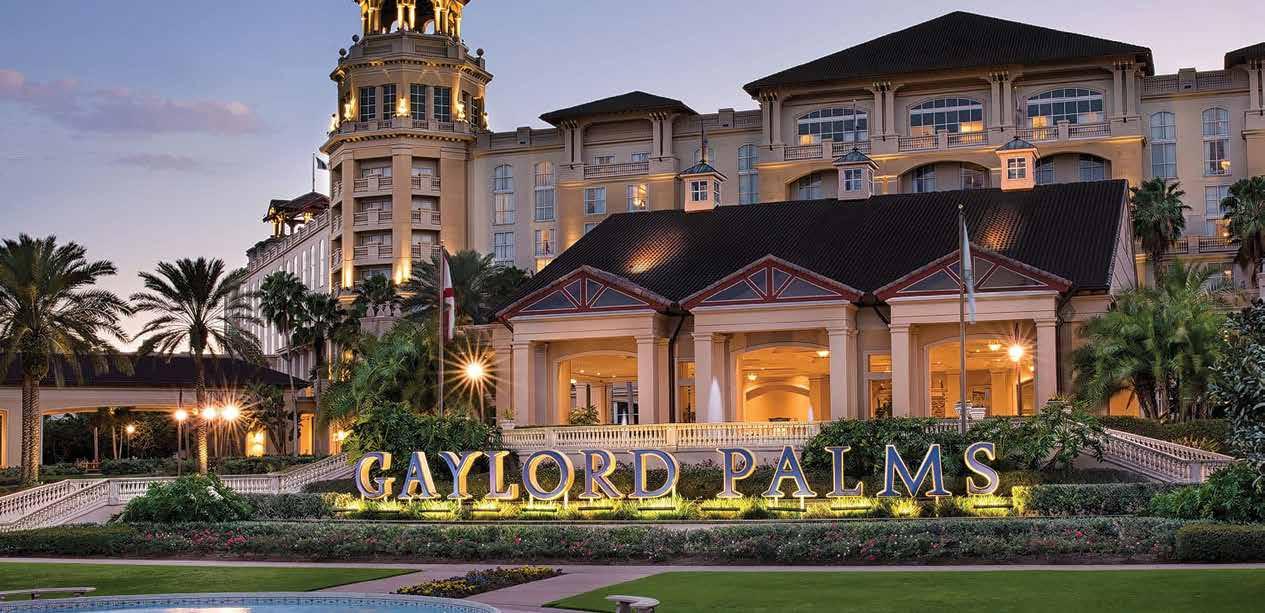




D.I. Roof Seamers
Kennedy Skylights and Solar
SRS Building Products
SunSmart Engineering
Duro-Last
IB Roof Systems
itel, a Nearmap Company
PAC-CLAD | Petersen Roof Hugger

Northeast Florida Roofing & S/M Contractors Association (NEFRSA)
Polk County Roofing Contractors Association (PCRCA)
Roofing Contractors
Association of South Florida (RCASF)















Asphalt Roofing Manufacturers Association
In an era of increasing environmental awareness and evolving regulations, roofing contractors are at the forefront of crucial changes in the construction industry. While the primary focus often remains on delivering high-quality, durable roofs, there’s a growing need to consider the lifecycle of materials, particularly materials like asphalt roofing, which may be recycled in areas where recycling companies operate. Recycling asphalt roofing debris isn’t just an eco-friendly practice; it’s a strategic move that can offer numerous benefits to your business, the industry and the planet.
The volume of construction and demolition (C&D) waste generated annually is large and roofing materials contribute to this stream. Landfilling these materials occupies valuable space and represents a lost opportunity to reclaim valuable resources. For roofing contractors, getting involved in recycling is a step towards responsible material stewardship. It’s an acknowledgment that the “easy” disposal route isn’t always the best for long-term sustainability or business viability.
Beyond environmental ethics, there are practical considerations that underscore the importance of recycling. Regulatory initiatives are constantly shifting, with increasing attention on the embodied carbon content of building materials, stimulated by “buy clean” legislation. This means that future regulations may restrict the types of roof coverings that can be used based on their environmental footprint. By proactively embracing recycling, contractors can ensure their future choices remain viable and compliant with evolving regulations.
Consumers are becoming more environmentally conscious. Offering recycling as an option for their old roofing materials can be a significant differentiator, enhancing your company’s reputation and attracting a market segment that prioritizes sustainability. It demonstrates a commitment to more than just the bottom line, fostering customer trust and loyalty.
The good news is that the end-use options for recycled asphalt shingles (RAS) are steadily increasing, making recycling more practical and economically viable. No longer is it simply about reducing landfill waste; it’s about transforming waste into valuable resources.
One of the most common and established enduses for recycled asphalt shingles is paving. Processed RAS can be incorporated into asphalt pavement mixes as substitutes for aggregate and, with proper asphalt mixture design, a partial replacement for asphalt cement. This not only diverts waste from landfills but also conserves natural resources and can reduce the cost of road construction. The quality and performance of pavement containing RAS have been extensively studied. Recent advancements in pavement mixture design are expected to lead to future growth in the use of RAS.
Another significant application is the reuse of RAS in new asphalt roofing products. Some manufacturers are integrating a percentage of recycled materials back into their production processes, creating a closed-loop system that exemplifies circular economy principles. This innovation reduces the demand for new raw materials and minimizes the environmental impact associated with manufacturing.
Beyond these primary applications, RAS is used for dust suppression on unpaved roads, in road base stabilization and in other construction applications. Its binding properties help RAS to function in these alternative uses. As research and development continue, it’s expected that even more innovative uses for recycled asphalt roofing will emerge, further solidifying its value as a renewable resource.
The asphalt roofing industry is actively working to support and expand recycling. Many manufacturers are initiating programs and partnerships aimed at increasing the diversion of roofing waste from landfills. This includes manufacturer initiatives to explore new recycling technologies, development of best practices and facilitating the collection and processing of roofing debris.
The Asphalt Roofing Manufacturers Association (ARMA) issued the following statement in 2022: “The industry aspires to reduce landfill disposal of asphalt-based roofing materials to 50 percent by 2035 and to approach 0 percent by 2050. To accomplish these goals, ARMA will foster and promote responsible, economically feasible and sustainable circular economy options to recycle asphalt-based roofing materials and enhance the long-term viability of asphalt roofing as the preferred roofing material.”
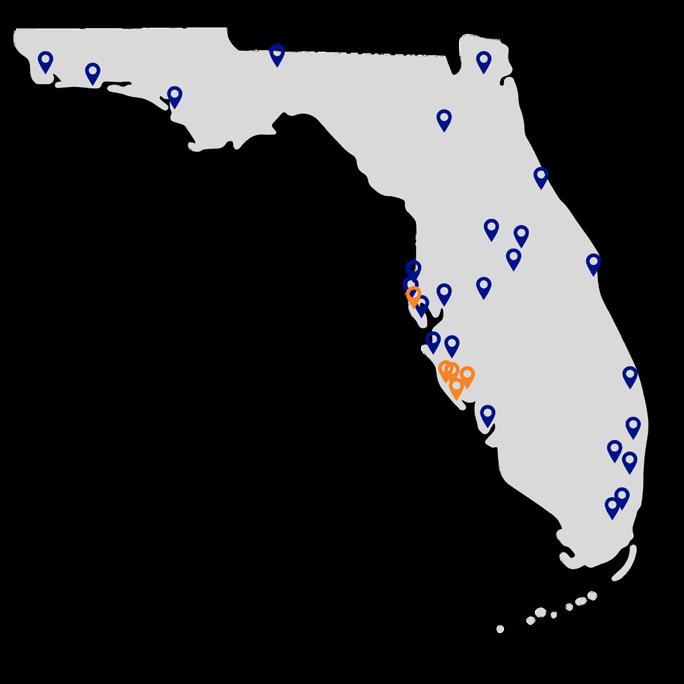
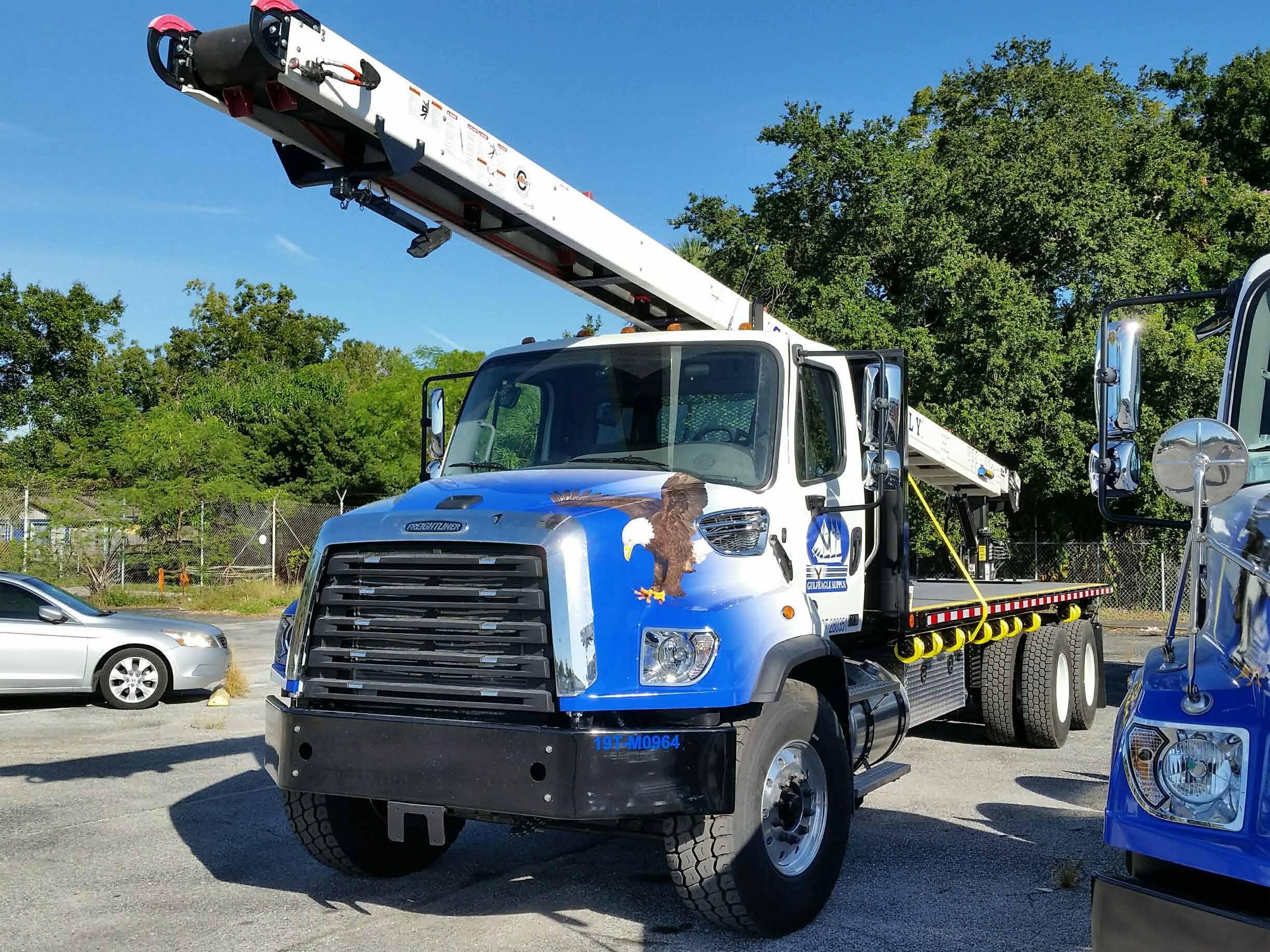

ARMA supports these efforts through education and collaboration. A key education event is the biennial Virtual Asphalt Roofing Recycling Forum, which provides an opportunity to come together every other year and learn about progress in the roofing industry and academia. This past year’s forum was a collaborative success. Information about the event is available on ARMA’s website, www.asphaltroofing.org
While much of the historical focus has been on recycling asphalt shingles due to their widespread use, the industry is now bringing attention to the opportunity to recycle low-slope asphalt roofing materials, such as modified bitumen and built-up roofing. The characteristics of these roofing materials suggest an opportunity worth exploring. Recycling low-slope asphalt roofing presents different challenges than recycling asphalt shingles but ongoing research and

technological advancements are paving the way for their successful reclamation and reuse. This broader focus underscores a comprehensive commitment to material stewardship across all segments of asphalt roofing.
Getting involved in asphalt roofing recycling is easier than ever. The first step is to identify local recycling facilities that accept roofing debris. A great resource is the Construction & Demolition Recycling Association’s (CDRA) website, www.shinglerecycling.org. A recent search showed four recyclers listed in Florida, offering convenient drop-off sites in several locations.
Once you’ve identified a recycler, the next step is to properly prepare a roofing job for recycling. This typically involves separating roofing debris from other construction waste. The CDRA provides excellent guidance on thisable for free at www.floridaroof.com/
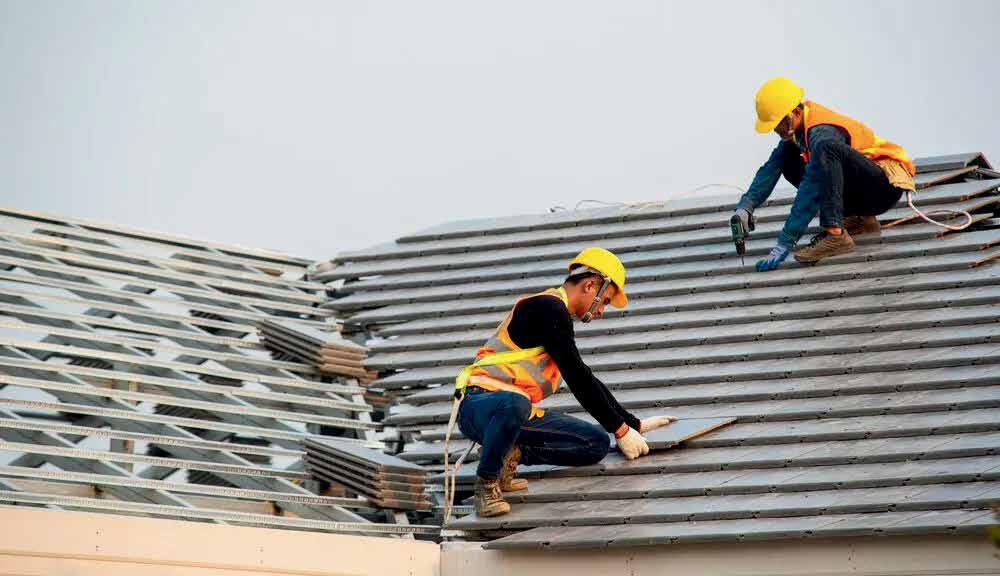

offer practical advice on how to tearoff and sort materials effectively to ensure they meet the recycler’s specifications, prevent contamination and
Finally, don’t forget the importance of communicating the recycling optioners and building owners are eager to choices. By explaining that you offer recycling services for their old roof, you can differentiate your business, sustainability and potentially secure customers. This conversation can be your proposals or discussing it during the initial consultation. These small efforts can yield significant returns in terms of customer satisfaction and
By embracing asphalt roofing recycling, contractors can play a vital role in building a more sustainable future FRM
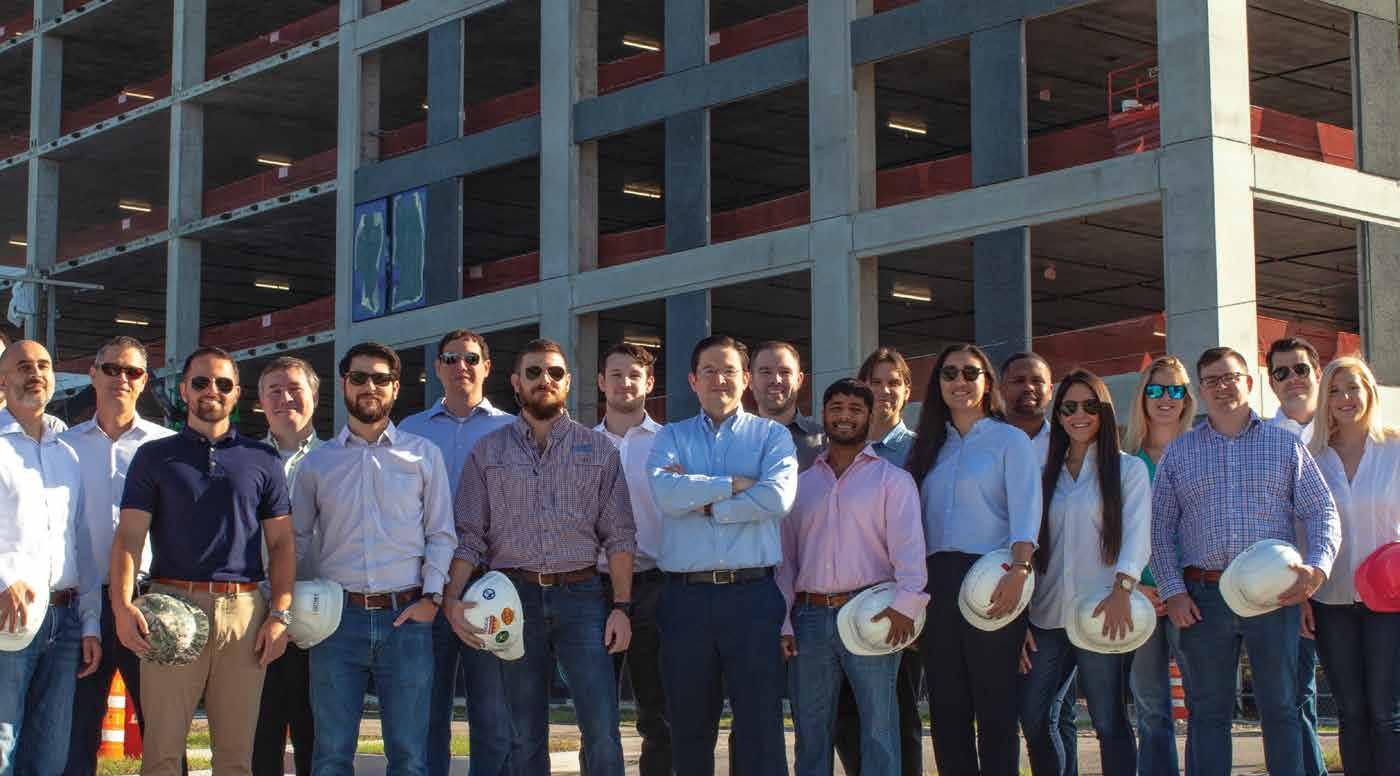
Seay HR
Many managers make daily decisions that carry legal consequences, sometimes without realizing it. While employment laws like the Family and Medical Leave Act (FMLA), Americans with Disabilities Act (ADA), Pregnant Workers Fairness Act (PWFA) and Pregnancy Discrimination Act (PDA) are foundational to workplace compliance, most managers receive little to no training on how these laws actually work or how they intersect.
This knowledge gap creates real risk. Some managers mistakenly assume that if their organization is not covered by the FMLA due to size, they are “off the hook” and can inadvertently end up overlooking their obligations under the ADA and other anti-discrimination laws. When managers lack this fundamental understanding, well-intentioned decisions can quickly turn into costly compliance failures.

In this article, we share a practical overview of these laws to help managers handle leave requests effectively and avoid common compliance pitfalls.
One of the keys to effective HR compliance is recognizing that employment laws do not operate in isolation but rather should be viewed as a connected framework of employee protections. A single employee issue may involve several overlapping laws, which then require managers to navigate employee protections carefully to remain compliant. Two points to keep in mind when more than one employment law applies:
1. The most protective standard governs
2. Employees may choose between available options
In some cases, medical conditions, pregnancy and disabilities occur at the same time. For example,
an employee experiencing pregnancy-related hypertension may need time off for frequent prenatal appointments (FMLA), temporary restrictions on standing or lifting that require adjusted duties or scheduling (ADA/PWFA) and the same access to light-duty work provided to other employees with comparable medical restrictions (PDA).
When multiple laws apply at the same time, employers must evaluate the situation under each applicable law. Compliance errors can occur when managers fail to provide relevant coverage under each employment law.
Although their protections overlap, each law serves a distinct purpose.
The FMLA provides eligible employees with jobprotected unpaid leave for specified family and medical reasons for up to 12 weeks. Its primary function is to protect employees from losing their jobs while they take time away from work. Employers with 50-plus employees must comply.





Made with 26-gauge steel and engineered to endure extreme weather, ProVia Metal Roofi ng systems are approved for use in High Velocity Hurricane Zones (HVHZ) , so you know they’re tough. The multipoint attachment systems and interlocking panels on our Shake, Slate, and Barrel Tile profi les are tested and certifi ed to resist wind uplift and wind-driven rain. The panels have a Class 4 Impact Rating, and the GalvaTec™ fi nish exceeds ASTM performance standards. Partner with ProVia for metal roofi ng systems built to withstand hurricane-force wind, rain, and hail. Learn more at provia.com/roofi ng-hvhz
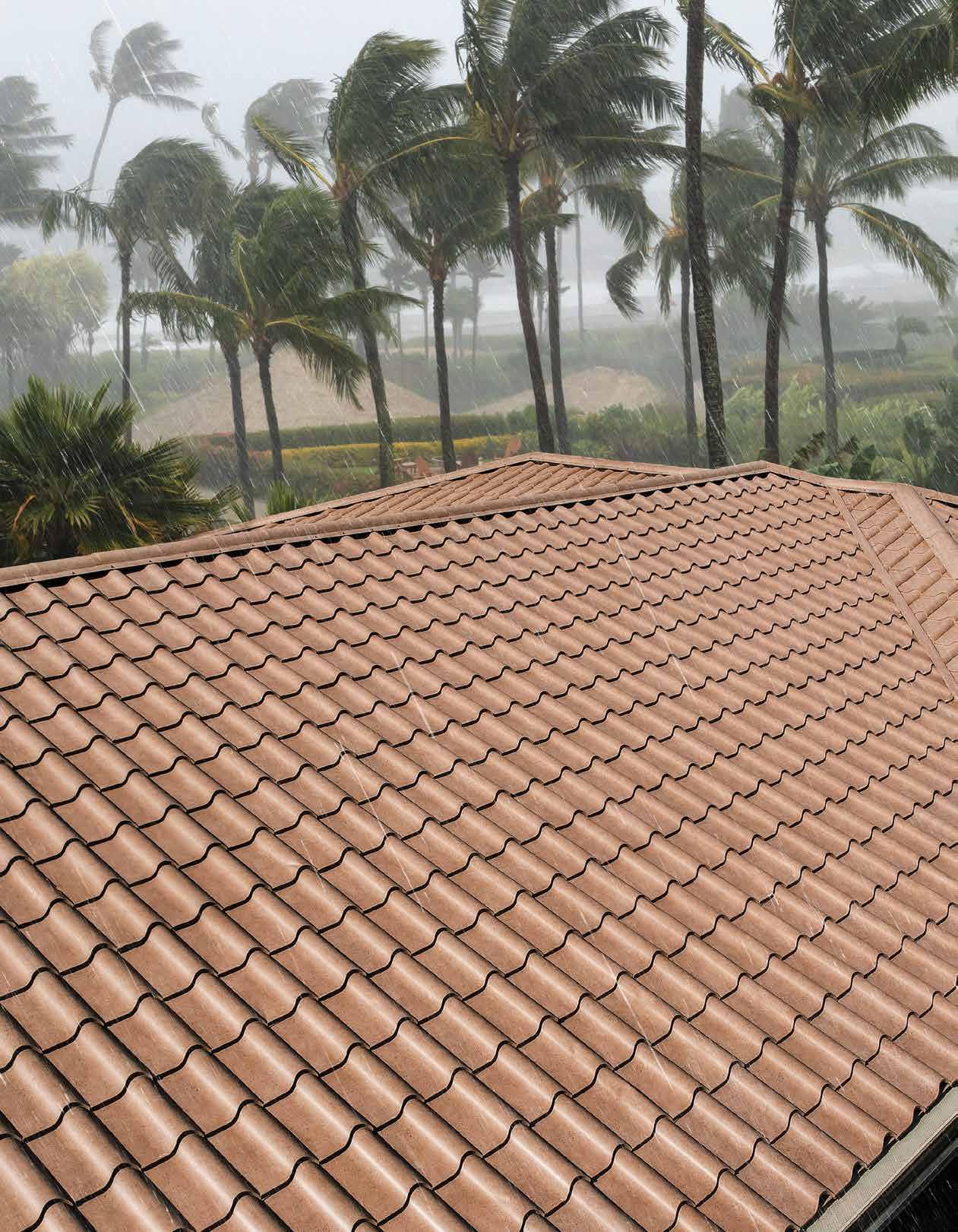


The ADA prohibits discrimination based on disability and requires employers to provide reasonable accommodations that allow employees to perform essential job functions. Accommodations may include modified work schedules, special equipment, job restructuring or leave when necessary.
The PWFA requires employers with 15 or more employees to provide reasonable accommodations for known pregnancy-related limitations unless doing so causes undue hardship to the employer. The purpose of the law is to help pregnant employees remain at work.
The PDA prohibits discrimination based on pregnancy, childbirth or related medical conditions and requires employers with 15 or more employees to treat pregnant employees the same as other employees who have a similar ability or inability to work. While the PDA does not create an independent accommodation obligation, it reinforces equal access to accommodations, light-duty and benefits already offered to other
■ PWFA and ADA: Both prioritize keeping employees working by providing reasonable accommodations. Leave is considered only after other options are explored.
■ FMLA: Guarantees leave when eligibility and qualifying conditions are met, regardless of available accommodations.
■ PDA: Requires equal treatment for pregnant workers. If accommodations or light-duty are available to other employees with similar limitations, they must also be available to pregnant employees.
A frequent point of confusion for HR managers is determining when it is appropriate to grant leave or to provide an accommodation. While the FMLA guarantees the right to take leave, the ADA and PWFA focus on keeping employees working through reasonable accommodations.
To avoid violations, employers must always apply the provision that provides the greatest benefit or protection to the employee. For instance, when an employee is eligible for FMLA leave and also seeks an accommodation under the ADA, she may decide which option to use. If she elects to take FMLA leave, the

employer is required to approve it. Likewise, if a state law provides more medical leave than the FMLA, an eligible employee is entitled to the longer leave period. This overlap also affects how long leave may last and what happens when an employee returns to work. When employees qualify for protections under the FMLA, ADA, PWFA and PDA, the 12 weeks provided by the FMLA are often a starting point rather than a hard stop. HR managers are required to have thorough FMLA compliance training to learn how to manage extended leaves and navigate the particular reinstatement requirements of each law.
■ Apply the most protective standard when laws overlap.
■ Train managers on coordinated FMLA, ADA, PWFA and PDA obligations.
■ Document thoroughly, communicate clearly and treat employees consistently. When handled correctly, these laws are meant to work collaboratively together to protect employees while reducing employer risk.
Seay HR provides a broad range of HR services designed to support your business’ growth and ensure compliance with all state and federal employer
S.T.A.R. Awards, continued from page 19
Sutter Roofing Company of Florida, Salt Warehouse, Palmetto, Steep-Slope
regulations. Our primary goal is to make sure that your business is compliant with all employment regulations to eliminate any financial exposure in these areas.
FRM
This article is for informational purposes only and does not constitute legal or professional advice. Seay HR makes no representations or warranties, express or implied, regarding the accuracy, completeness or applicability of the information contained herein. Seay HR disclaims all liability for any actions taken or not taken based on the information in this article. Readers are solely responsible for their own interpretation and use of this information.
FRSA partners with Seay HR to offer FRSA members HR information. This resource is available to provide answers to your HR, personnel management and employment-related questions including topics such as payroll, leave of absence, discrimination, discipline, workers’ comp and disabilities. Sometimes a simple question can turn into a complicated and costly concern if not handled properly. When you have a question and need an accurate and concise answer, contact Seay HR by phone or email and identify yourself as an FRSA member. Email admin@seay.us or phone 888-245-6272. There is no fee for a 15-minute consultation. Discounted fees apply for in-depth consultations.
The Salt Warehouse project in Palmetto, totaling 73,942 square feet, showcased Sutter Roofing’s expertise in tackling complex and high-risk installations. With steep 12:12 slopes and multiple roof sections, the project demanded advanced safety measures, including rappelling systems and specialized scaffolding. The team executed a full tear-off and installed a variety of high-performance solutions to ensure a seamless transition between elevations. Every detail was handled with precision. The result is a durable, high-performing roofing system that reflects exceptional innovation and unwavering commitment to safety.
The Gulla Residence project was a new home construction for which Complete Roofing Solutions recommended installing a Ludowici matte white tile. A distinguishing feature of this project was the level of craftsmanship demonstrated during installation. Each tile was meticulously hand-cut on the ground before being installed to exacting standards. All hips and ridges were finished with mitered cuts to ensure a clean and professional appearance. This meticulous approach resulted in a striking, high-end finish that elevated both the aesthetic and overall quality of the home’s roofing system.
S.T.A.R. Awards Project Deadline for Next Year is Monday, March 15, 2027
FRM
FRSA Staff
If you've lived in Florida long, you probably already know that Florida has traditionally been known as the "lightning capital" of the world. As a state, Oklahoma now has more strikes, however, Florida still has the highest density – an average of 300 strikes per square mile – and, tragically, far outweighs the other states in lightning fatalities. Of 196 lightning-related fatalities in the U.S. over the last ten years, Florida accounts for 51 – more than a quarter – of the deaths (www.floridaroof.com/lightningstrikes).
Working in the Florida roofing industry means laboring in a "perfect storm" of lightning hazards: high elevation, proximity to metal (flashing, tools) and the afternoon thunderstorms that brew throughout the summer.
Like other aspects of a roofing business, lightning safety shouldn't be so much about trusting your gut to avoid a "one-in-a-million" strike as it is about a systematic approach to providing a safe working environment for yourself and your crews.
Lightning occurs when electric charges from the atmosphere and the ground come together. These two forces seek the path of least resistance, which often means a roof peak or a ladder. In general, working at height significantly increases a person's chances of being struck by lightning, even when he is not on a ladder or holding a metal tool, which is all the more reason to exercise extreme caution when confronted with lightning activity in the area.
Most of us who grew up in Florida learned how to estimate how close lightning activity was by counting how much time passed between a lightning flash and the sound of thunder. While this method may often help recognize when activity is headed your way, it has its shortcomings. What if, for instance, the first strike from a storm is the one where your project is? Instead of merely detecting lightning activity, there has been a move toward predicting it. Electronic field monitors sense the buildup of electrical energy in the atmosphere and provide warnings to affected areas before the first strike ever occurs. Apps like "Lightning Pro" provide push notifications about lightning activity in the area based on distance parameters you set.
There is not a specific "lightning standard," however, OSHA uses its General Duty Clause to regulate lightning safety on the jobsite. Also, other OSHA
regulations, like those for scaffolding (1926.451) and cranes/hoists (1926.1431) explicitly prohibit work during high winds or storms. As with everything OSHA related, you should have a lightning action plan and daily documentation of each location's adherence to the plan.
Phrases like "lightning could strike" tend to reinforce the idea that the chances of actually being struck by lightning is rare, something akin to winning the lottery (unfortunately, the odds favor getting struck by lightning over winning the lottery). On the jobsite, this can translate into a tough-it-out mentality. While such a mentality can be useful for pushing through a particularly hard section of a roof install, it won't do anything to stop the devastating consequences of a lightning strike. Leaders need to communicate this and establish a culture of lightning safety. Giving crew members stop work authority when they feel their hair stand on end or hear the sound of thunder provides reassurance that you have crew safety topmost in your concerns. A robust, well documented and communicated lightning safety plan is the mark of a professional business, not a lack of strength or bravado.
If you do not have some form of predictive warning system available on the jobsite, the "30-second rule" states that if you hear thunder within 30 seconds of seeing lightning, you should seek shelter. Workers should:
■ Stop work: including all roofing, scaffolding and ladder activities
■ Unplug tools: if it can be accomplished safely, quickly unplug electrical equipment to prevent damage from power surges
■ Clear the roof: get everyone off the roof and onto the ground immediately (do not wait for rain to start)
■ Remove metal gear: once on the ground and if it is safe to do so, workers should remove metal tool belts, safety harnesses and hard hats to avoid severe burns if a strike occurs in the area
An enclosed, completed building is the primary shelter during a lightning storm. Buildings with unfinished windows and doors or that lack plumbing or electrical wiring are not sufficiently grounded and pose a hazard. Continued on page 35





•
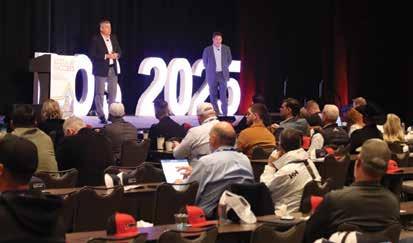
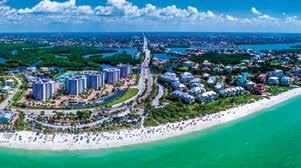


Tim Stephens, Vice President, Architectural Sheet Metal
If we were playing Jeopardy and the answer was “The biggest challenge facing roofing contractors,” the correct question would be: “What is workforce?”
Recruiting, training and retaining a sustainable workforce has been an ever-present challenge for decades. It’s not unique to roofing – it affects all trades across the construction industry.
Take a moment to consider what your company currently does to overcome this challenge and how much it costs you in both time and money. How does it stifle your business growth and limit opportunities for your team? Now reverse that thinking: imagine how your business could grow and what new opportunities it could create with access to a reliable pipeline of eager, motivated employees looking for a rewarding career.
The Good News? That Pipeline Already Exists It exists in high schools and trade schools across the state and the country. The name of this opportunity is SkillsUSA, an organization founded in the 1960s to advance career and technical education (CTE). SkillsUSA centers on hands-on competitions in specific trades, where students train and compete at regional, state and national levels. Each year, more than 400,000 students and teachers participate nationwide. These are young people already interested in the trades, yet many have never been exposed to the excellent career opportunities our industry offers.
Even Better News:
In 2022, NRCA and the Roofing Alliance sponsored the creation of a Commercial Roofing competition within SkillsUSA. It has since been adopted as an approved contest in over 22 states, including Florida in 2024. This means any high school or trade school in the state can now train students and have them compete in commercial roofing.
The Best News? We Know This Works Florida already has a proven track record of success that any contractor can duplicate. Students in both high school and post-secondary divisions have competed after receiving training and mentorship. In 2024, Florida students earned silver medals at the national competition and the post-secondary winner now works for a roofing company in Tampa. In 2025, Florida teams took gold in the high school division and silver in post-secondary. The post-secondary student is now employed by a roofing company in Orlando and the high school student has a job offer waiting for him upon graduation.
In 2026, the state competition was held in April, with nationals scheduled for June. The state post-secondary winner already has a job offer from his mentoring contractor to begin work in May.
In the coming months, FRSA will work hand-in-hand with SkillsUSA to identify schools interested in participating in the Commercial Roofing competition. This will allow contractors to partner directly with teachers and students as mentors – training them for competition while introducing them to the roofing industry. These connections enable contractors to build rapport, identify talent and provide meaningful mentorship that can inspire students to pursue a career in roofing.
A dedicated session at FRSA's Convention & Expo will walk contractors through the steps to get involved. This panel discussion will feature representatives from SkillsUSA, CTE instructors and successful contractors who will share practical information and resources on how to launch this program in your organization in time for the upcoming school year.
While the competition is an excellent door-opener, the real opportunity lies in the long-term relationship you can build with the school.
In late 2024, my company faced a unique challenge on a military base project. We needed to roll-form over 100 panels, each well over 100 feet long. The job required many hands – all of whom had to pass a strict military background check. I reached out to the trade school instructor I had been mentoring and asked if any of his students might be interested in working a few days on the site. They jumped at the opportunity. Even the school principal asked if her adult son could join the group.
Within 72 hours, we had eight individuals signed up, background checks completed, badges issued and the team onsite rolling panels. By the end of the week, we offered the principal’s son a full-time position and he has been an excellent addition to our team.
Our goal this year is to pair at least five contractors with schools and bring a competitor to the 2027 state competition. By 2028, we aim to double that number, allowing the program to grow exponentially across Florida. This effort will lead to more students being
hired and will truly help expand the roofing workforce in our state.
If you’re tired of the same recruitment struggles and are willing to invest the effort to build these connections, partnering with SkillsUSA is an incredibly effective way to develop a sustainable employment pipeline.
FRM
Tim Stephens is the Vice President of Architectural Sheet Metal, Inc., Orlando, and serves on the NRCA Board of Directors. He recently worked with NRCA to develop and implement the Commercial Roofing competition for SkillsUSA, providing a pathway for roofing contractors to reach students and teachers involved with construction education.
Lightning Safety, continued from page 32
If a completed building is not available in the area, then a metal-topped vehicle is an option for shelter. The windows should be rolled up and you should avoid contact with the metal frame of the vehicle. If you get caught outside with no shelter, do not lie flat on the ground. Instead, crouch low on the balls of your feet with your head tucked and hands over your ears to minimize ground contact.
Following lightning activity in the area, workers should stay sheltered for 30 minutes after the last sound of thunder. Statistics show that many strikes occur on the back end of a storm.
In the event that people are struck by lightning, call 9-1-1 immediately. If the storm is still active and it is possible, strike victims should be moved to a sheltered
area to avoid being struck again. Victims do not hold an electrical charge in their bodies after being struck and are safe to treat immediately.
Lightning strikes can often cause cardiac arrest. Check the victim's breathing and pulse. If he or she is not breathing or does not have a pulse, start CPR immediately. If there is an AED onsite, it should be used as soon as possible.
Entry and exit burn wounds should be covered with dry, sterile dressings and you should check for possible broken bones.
Finally, if multiple people are struck, anyone who is not breathing or lacks a pulse should be treated first. People who are conscious and moving are in less danger of dying.
Gary A. Cohen, Executive Vice President, Certified Contractors Network (CCN)
You built your roofing company from nothing. You learned the trade, won the jobs, solved the problems and kept the trucks moving. Your name is on the door, your reputation is on every roof and your phone rings more than anyone else’s. That feels like success. In a lot of ways, it is.
But here is the question worth sitting with: what happens to your company when you are not there?
If the honest answer is that things slow down, decisions get delayed or problems go unsolved until you show up, you are not running a business. You are the business. And that is the trap.
No one builds this trap on purpose. It forms over years, one small decision at a time. A customer calls with a complaint and you handle it yourself because you know you can resolve it faster than anyone else. A crew needs a call made on a difficult job and you drive out because it is easier than explaining it over the phone. An estimate needs to go out and you touch it yourself because you want it to be right.
Every one of those decisions makes sense in the moment. The problem is what they add up to over time. Your team learns that you will step in. Your customers learn to call you directly. Your systems never fully develop because you are always available to bypass them. And you end up running harder and harder just to keep up with a company that cannot function without you.
The trap is comfortable, too. Being needed feels like being valuable. Being the one with all the answers feels like leadership. But there is a significant difference between being valuable and being a bottleneck.
The financial cost is real. A business that depends entirely on its owner has limited scale, limited sale value and limited ability to survive any disruption, whether that is an injury, a family emergency or simply wanting to take a two-week vacation without your phone ringing every day.
The personal cost is just as significant. Ownerdependent businesses are exhausting. You are always on. You can never fully step away. The growth you want keeps getting pushed back because you are too busy doing today’s work to build tomorrow’s company. Your team pays a price too. When every decision flows through you, your people do not develop. They stop thinking independently because they have
learned that you will override them anyway. The best employees, the ones with initiative and capability, tend to leave companies where there is no room to grow.
Getting out of the trap is not about working less. It is about working differently. The goal is to build a company that runs on systems and processes, not on your personal availability.
Start by identifying the decisions that only you are making. Write them down over the course of two weeks. Every time someone calls you with a question, every time you step in to handle something, every time the answer lives only in your head, make a note of it. What you will find is a list of gaps: places where your company does not have a clear process, a trained person or an established standard.
That list is your roadmap. Each item represents something that needs to be documented, delegated or both.
A lot of owners resist building processes because it feels slow or overly formal. The reality is that documentation is what allows your company to scale without you being the limiting factor. How do you handle a warranty call? How does an estimator present a proposal? What are the standards for a completed job walkthrough? If the answers exist only in your head, your company is one bad day away from a serious problem.
Documenting your processes does not have to be complicated. Start with the ten things that come up most often. Write down exactly how you want them handled. Then train your team on those standards and hold them to it. Over time, you build a playbook that runs your company whether you are in the office or not.
Many owners struggle with delegation because they have been let down before. Someone did not handle a situation the way you would have, a customer was
unhappy and you decided it was easier to just do it yourself. That logic keeps you trapped.
Real delegation is not throwing tasks at people and hoping for the best. It is pairing clear expectations with the right training, giving people the authority to act and then holding them accountable to outcomes. It requires patience. It requires some tolerance for things not being done exactly the way you would do them. But the result is a team that can actually run your company.
This does not mean you disappear. It means you shift from doing the work to leading the people who do the work. It means your time goes toward growth, strategy and the decisions that genuinely require your judgment, not toward every problem that walks through the door.
The contractors who build the most successful roofing businesses are not the best at climbing a roof. They are the best at building a team, creating systems and getting out of the way long enough for their company to grow.
If your business cannot function without you, that is not a compliment. It is a ceiling. The only way through it is to start building a company that does not need you to answer every call.
At CCN, we work with contractors who are actively building owner-independent businesses. The ones who get there fastest share one thing in common: they decided to stop being the answer to every question. If that resonates with you, it might be time to take a closer look at how your business is really structured.
FRM
Gary A. Cohen is Executive Vice President of Certified Contractors Network (CCN), the leading comprehensive training, coaching and networking membership organization in North America. Gary is also a 30-year veteran of the home improvement industry, spent 11 years at the Robert H. Smith School of Business at the University of Maryland as a Professor of Business and served four years as Associate Dean of the Business School. Gary has been a certified leadership coach for the past 18 years. He can be reached at gary@contractors.net.


Kevin Lindley, Loss Control Consultant, FRSA-SIF dba BrightFund
As rising temperatures and more frequent heat waves increase the risk of occupational heat-related illness, OSHA has moved to formalize protections with a proposed Heat Injury and Illness Prevention rule. The
proposal seeks to create a consistent, national framework for preventing heat-related injury and death in both outdoor and indoor workplaces by requiring employers to implement specific preventive measures, training, acclimation, monitoring and recordkeeping.
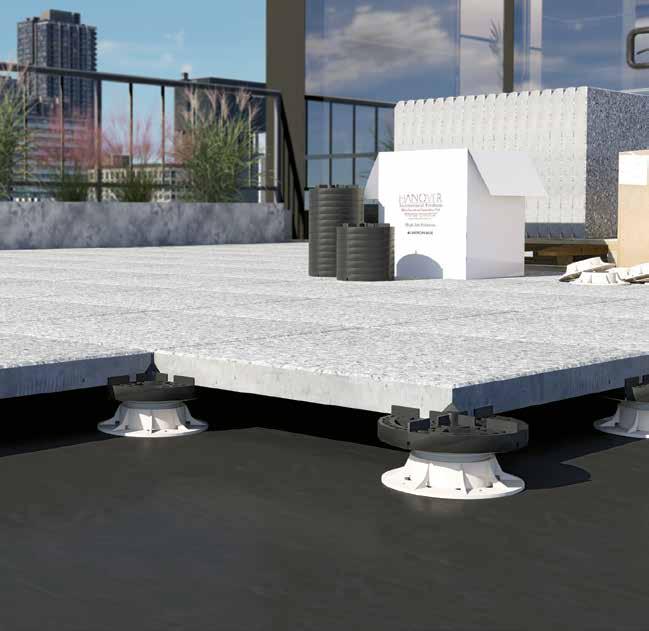

The proposed rule is aimed at reducing heat-related illnesses (heat cramps, heat exhaustion, heat stroke) and fatalities across industries where workers are exposed to high ambient heat, radiant heat or hot processes, such as we experience frequently in Florida. It builds on OSHA’s long-standing obligation under Section 5(a)(1) of the Occupational Safety and Health Act (the General Duty Clause) to provide workplaces free from recognized hazards likely to cause death or serious physical harm and it complements existing provisions in OSHA standards such as 29 CFR 1910 (General Industry) and 29 CFR 1926 (Construction).

•
•


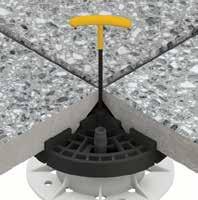
The Notice of Proposed Rulemaking (NPRM) outlines several employer responsibilities intended to prevent heat illness and death. These include requirements to assess heat hazards, develop and implement a written heat plan and monitor environmental and physiological indicators when specified conditions exist. In addition, you must provide access to water, shade or cooling and medical evaluation and treatment when needed. Employers would be required to train workers and supervisors on heat hazards and prevention, implement acclimatization plans for new or returning workers exposed to heat and maintain records of heatrelated incidents and response actions.

The proposal also contemplates site-specific or task-specific controls, such as engineering measures
(ventilation, process enclosures, shielding), administrative controls (work-rest schedules, job rotation) and personal protective equipment when necessary. Where feasible, employers would be expected to use objective metrics – such as wet bulb globe temperature (WBGT) or other validated heat indices – to guide protective measures, while also recognizing the role of alternative, validated exposure assessment approaches.
The proposed rule does not replace the General Industry and Construction frameworks but would add a focused heat-specific standard that dovetails with existing OSHA requirements. It references foundational obligations such as the General Duty Clause and aligns with existing medical and first-aid requirements found in 29 CFR 1910.151 and 29 CFR 1926.50. The proposal also draws on scientific guidance and consensus standards. For example, NIOSH and ACGIH guidance on heat stress and the use of WBGT to define exposure assessment, control measures and acclimatization practices.
The proposed rule emphasizes worker education (recognition of heat illness symptoms, first aid, hydration, acclimatization), supervisor training to detect early signs and intervene and employer obligations to ensure timely medical evaluation and treatment. It would require employers to keep certain records such as incident reports, a heat injury and illness prevention plan and potential exposure and monitoring records to enable enforcement and help identify where additional preventive measures are needed. Initial and high heat trigger points have been established and are clearly stated within the proposed standard, which require employers to take additional precautions to ensure employees are working in a safe manor.
The OSHA proposed heat standard was published on August 30, 2024, and is in the Federal Register, 2024. The public comment period closed in January 2025, with public hearings held June and July 2025, with post-hearing comments concluding in October 2025. The OSHA Special Emphasis Program (NEP) was extended through April 8, 2026. The House of Representatives introduced the Heat Workforce Standards Act of 2025 on November 20, 2025, which would repeal the standard set in motion by the Biden Administration.
OSHA has yet to issue a final heat standard. The proposed federal Heat Injury and Illness Prevention rule (the NPRM published October 30, 2024) remains in the rulemaking docket while OSHA reviews comments and post-hearing submissions.
If finalized, impacts on employers and workers will create legally enforceable obligations for employers to proactively manage heat hazards. Many employers will need to adopt or expand heat prevention programs, invest in environmental monitoring, update training and medical response protocols and document controls
and incidents. For workers, the rule aims to increase protections through predictable access to water, cooling, acclimatization procedures, training and rapid medical aid when needed.
Existing enforcement tools – citations under the new standard or, where applicable, citations based on the General Duty Clause – would be used to address noncompliance.
OSHA’s proposed heat rule represents a significant step toward consistent, enforceable protections for workers exposed to high-heat conditions in both indoor and outdoor settings. Employers should monitor the rulemaking docket for final requirements and begin evaluating current heat-prevention practices –assessing whether acclimatization strategies, training and medical response capabilities meet the likely expectations of a forthcoming standard.
FRM
SIF/BrightFund provides its members with access to safety consultants who offer training to team members. Not a member of BrightFund? Contact Alexis Ayala at 800-767-3772 ext. 206 or by email at alexis@brightfund.com for more information.
Changes, continued from page 22
Clearly, I’ve been around a while but not long enough to have been there for Heraclitus. But I was around to hear this from a philosopher and poet of my era through his song. The words will always be applicable to the never-ending tides of change: "You better start swimming or you’ll sink like a stone, for the times they are a-changin” – Bob Dylan, 1964.
FRM
Mike Silvers, CPRC is Owner of Silvers Systems Inc. and is consulting with FRSA as Director of Technical Services. Mike is an FRSA Past President, Life Member and Campanella Award recipient and brings over 50 years of industry knowledge and experience to FRSA’s team.

During FRSA’s Convention & Expo, we’re offering 30 hours of continuing education seminars that feature the best-of-the-best industry instructors. Our seminars cover a wide variety of topics taught by instructors who possess strong insight into the code and its application. They provide real-world examples
FRSA-SIF/BrightFund
Alexis has over 11 years of insurance industry experience, having spent the last eight years exclusively in workers’ compensation. Along with her underwriting duties at SIF/BrightFund, she is responsible for the Premium Audit Department and issues with the state rating organization (NCCI).
With more than 40 years of experience in the industry, Jim understands the importance of education. He owns Brauner Safety Services offering OSHA 10/30, CERTA Torch and a full range of safety training. Jim is a Campanella Award recipient and FRSA Honorary Member.
Adams & Reese LLP
Ben works for Adams & Reese and represents clients in all aspects of labor and employment law, including wage and hour, discrimination and retaliation claims, drafting employment contracts, restrictive covenants and more. Ben has been recognized by Florida Super Lawyers for his work.
and can respond to specific questions that you face in your day-to-day operations. We’re also offering nine hours of non-CE seminars that focus on business operations, sales, management and HR and are taught by experts in these fields.
Certified
Network
Gary is Vice President at Certified Contractors Network (CCN), helping small and mid-sized contractors develop a plan to increase the size and profitability of their business. He is a seasoned business executive and certified professional coach.
Hogtown Roofing
Bo is the owner of Hogtown Roofing. He spent many years behind the scenes building companies before making his own way with a mission to make the roofing industry better than it has ever been. He holds a roofing contractor’s license and a Bachelor of Science degree from UF.
Adams & Reese LLP
Trent, a Campanella Award recipient and FRSA Honorary Member, is an Adams & Reese Partner and National Construction Practice Leader. Known throughout the roofing community, he serves as FRSA’s and NRCA’s General Counsel. He routinely represents contractors.
Greg Keeler
Owens Corning
Greg is the Technical Services Leader for Owens Corning Roofing and Asphalt with decades of experience in architecture and as a building official. He serves on or chairs several ASTM D08 task groups and is a member of FRSA’s Codes Committee and Codes Subcommittee.
John Kenney, CPRC
Cotney Consulting Group
John is CEO of Cotney Consulting Group with decades of commercial roofing experience. With his unique understanding of what it takes to succeed – on the roof, in the office and at scale – John saw the need to provide contractors with strategic guidance built on real-world knowledge.
Marci LaRouech
Seay HR
With a passion for empowering businesses, Marci leads Seay HR where her extensive experience as an executive leader has fueled success across diverse organizations. She fosters exceptional client relationships, drives innovation, develops leaders and optimizes operations.
Kevin Lindley
FRSA-SIF/BrightFund
Kevin Lindley is part of the SIF/BrightFund safety team with over 20 years of experience in the roofing industry, focused primarily on safety compliance. Kevin has a Bachelor of Architectural Design degree from the University of Central Florida. He is an authorized CERTA program trainer.
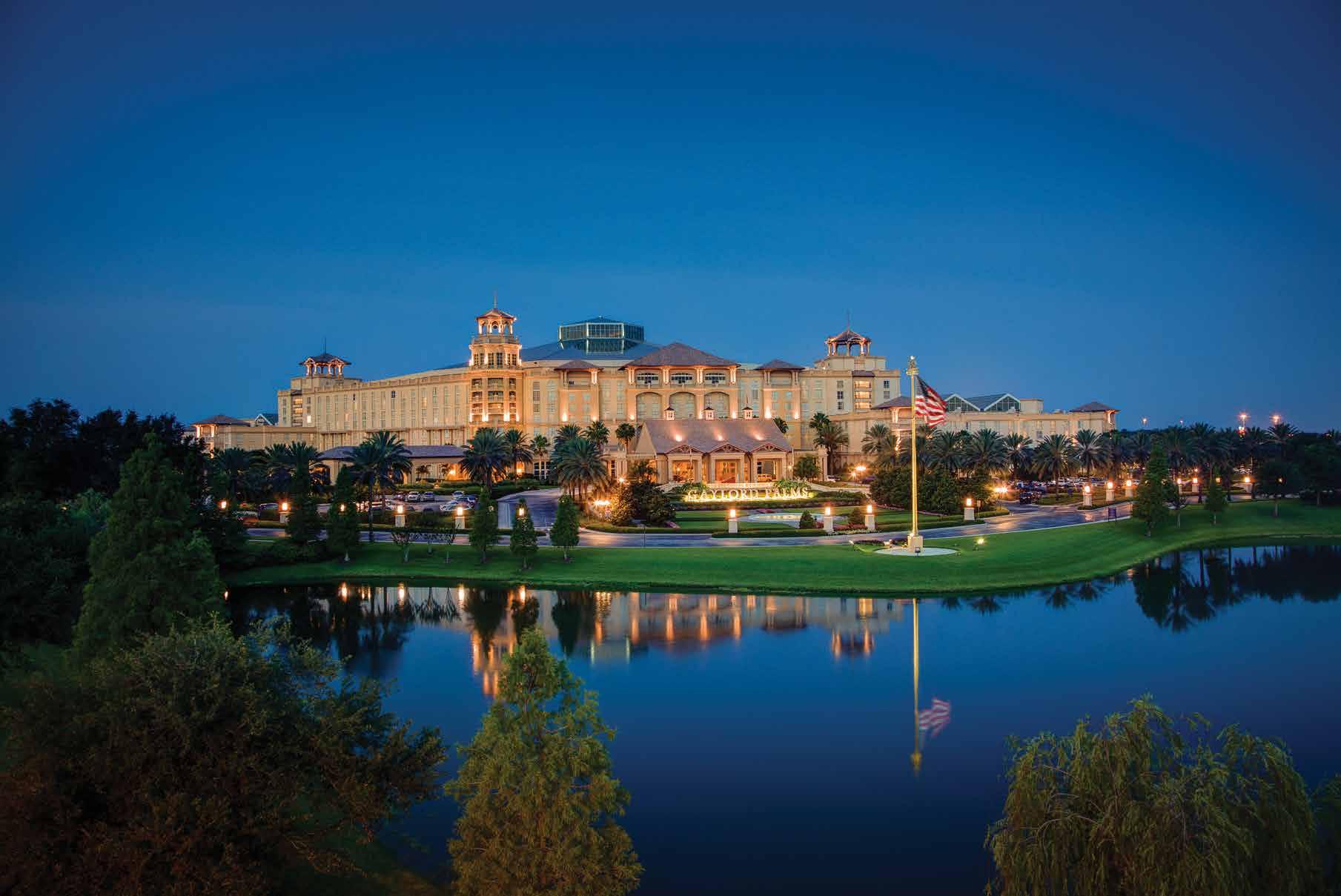
Dave MacLean
Certified Contractors Network
Dave is Vice President of Growth at CCN. With nearly two decades of boots-onthe-roof experience and boardroom leadership, Dave brings a rare blend of frontline credibility and insight to every stage. He is known for cutting through theory to deliver practical, actionable insights.
Kyle Rea
Tim Stephens
Architectural Sheet Metal
Tim is the Vice President of Architectural Sheet Metal, Inc. and serves as a NRCA Director. He worked with NRCA to develop and implement the Commercial Roofing competition for SkillsUSA, providing a pathway for roofing contractors to reach students and teachers with construction education.
Adams & Reese LLP
5,500
Kyle is a Florida native. Growing up, his family ran their own business as electrical and general contractors. Kyle utilizes his diverse background and courtroom experience, as well as an appreciation for the construction industry, to better represent his clients.
Manufacturers, Distributors & Service Providers Building Officials Other Audience Breakdown
Mike Silvers, CPRC
FRSA Technical Director
Roofing & Sheet Metal Contractors (4,404)
Mike is the owner of Silvers Systems, Inc. and a licensed roofing contractor with more than 50 years of industry knowledge and experience. He is known throughout the industry as the code expert. Mike is an FRSA Past President, Life Member and Campanella Award recipient.
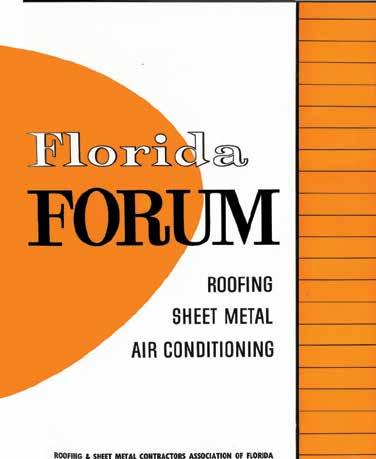
Cody Thomas Florida Retrofits
Cody is a certified building contractor and owner of Florida Retrofits, specializing in hurricane mitigation and structural reinforcement. After helping build one of Florida’s largest home inspection operations, he launched Florida Retrofits to address critical structural vulnerabilities in Florida homes.
Chad Westbrook Service Alignment
Chad, owner of Service Alignment, is a sales and service expert dedicated to building sustainable, scalable sales and service teams. Encouraging companies to challenge the status quo, he has contributed to millions of dollars in commercial sales and revenue year-over-year.
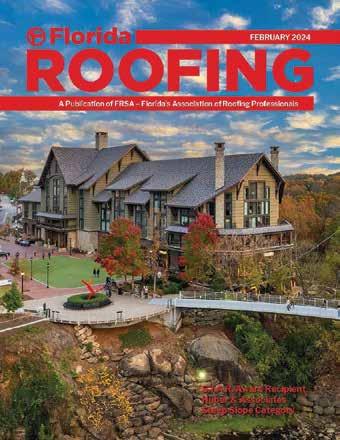
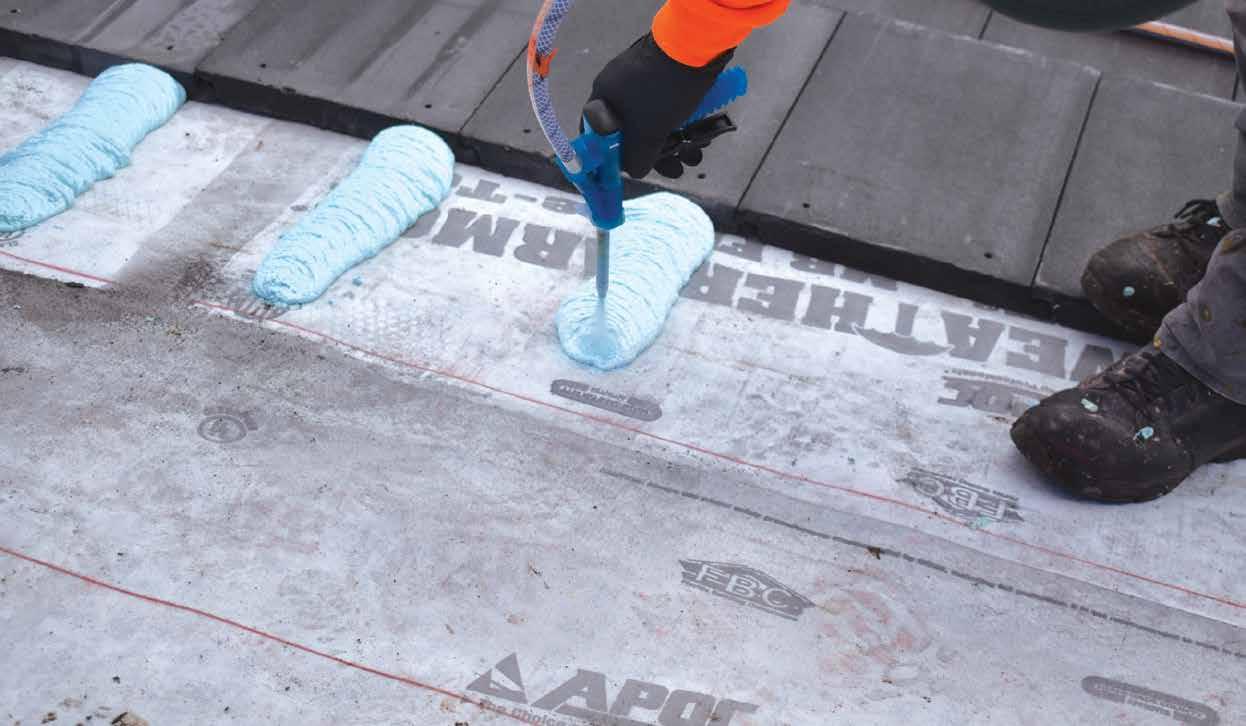
• 34+ Locations Across Florida
• Proudly Stocking the Top Brands You Need
• Experts in Residential, Commercial, Metal, and Tile Roofing
At QXO, we’re not just here to help you build more — we’re here to empower your vision, fuel your ambition, and create a lasting impact. Together, we shape the future, one bold step at a time. Visit QXO.com to find a