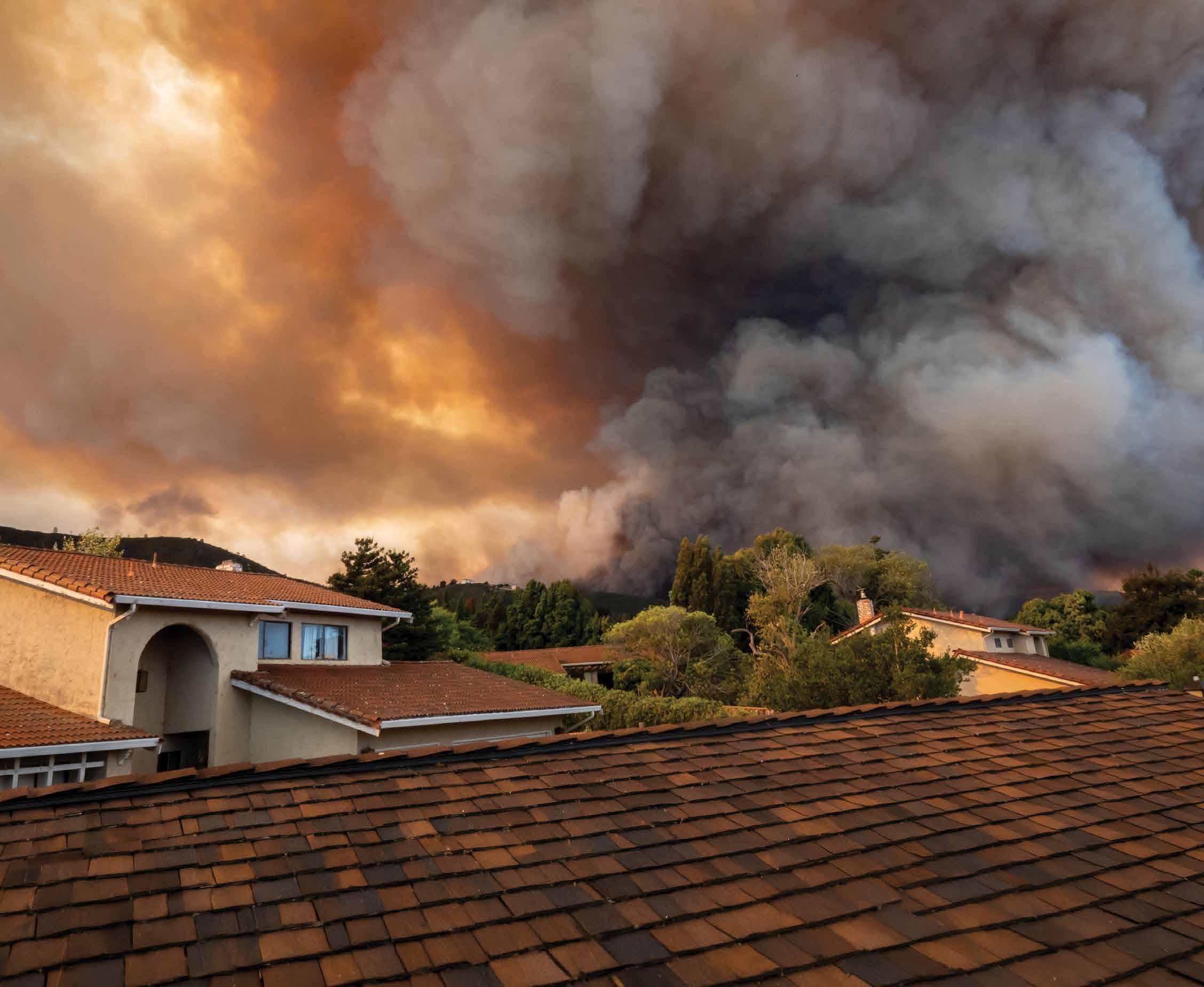
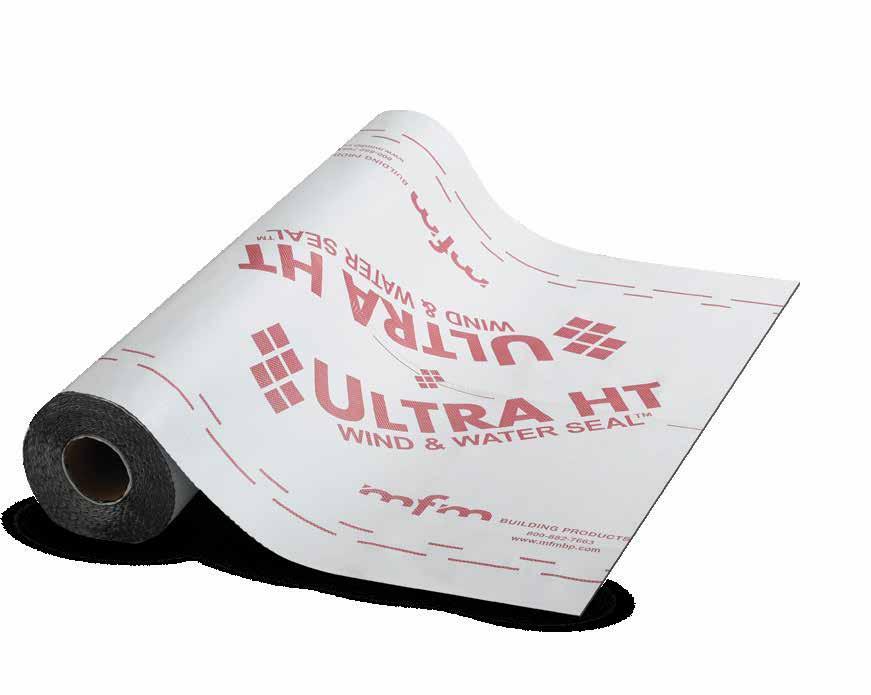
Engineered for demanding environments, Ultra HT® provides full-roof protection against extreme heat, wind-driven rain, ice, snow—and fire. Its certified fire resistance creates a critical barrier that helps prevent fire spread and penetration beneath the roofing system. Fire-resistant underlayment you can spec with confidence.
Ultra HT ®: Tested. Certified. Fire-Resistant protection for the whole roof.
• UL® CLASSIFIED CLASS A
• ASTM E108/ICC-ES AC188 CLASS A
• WUI LISTED 8180-2433:0001
Failure isn’t an option. Choose the underlayment that goes the extra mile. Contractors trust it. Specs demand it. Visit mfmbp.com for a free sample or call 800.882.7663 today.
All feedback and reprint permission requests (please include your full name and address) contact: Lisa Pate, Editor, at: lisapate@floridaroof.com (800) 767-3772 ext. 157
Florida Roofing Magazine PO Box 4850, Winter Park, FL 32793-4850
View media kit at: www.floridaroof.com/florida-roofing-magazine/ #FRSA #roofingprotects
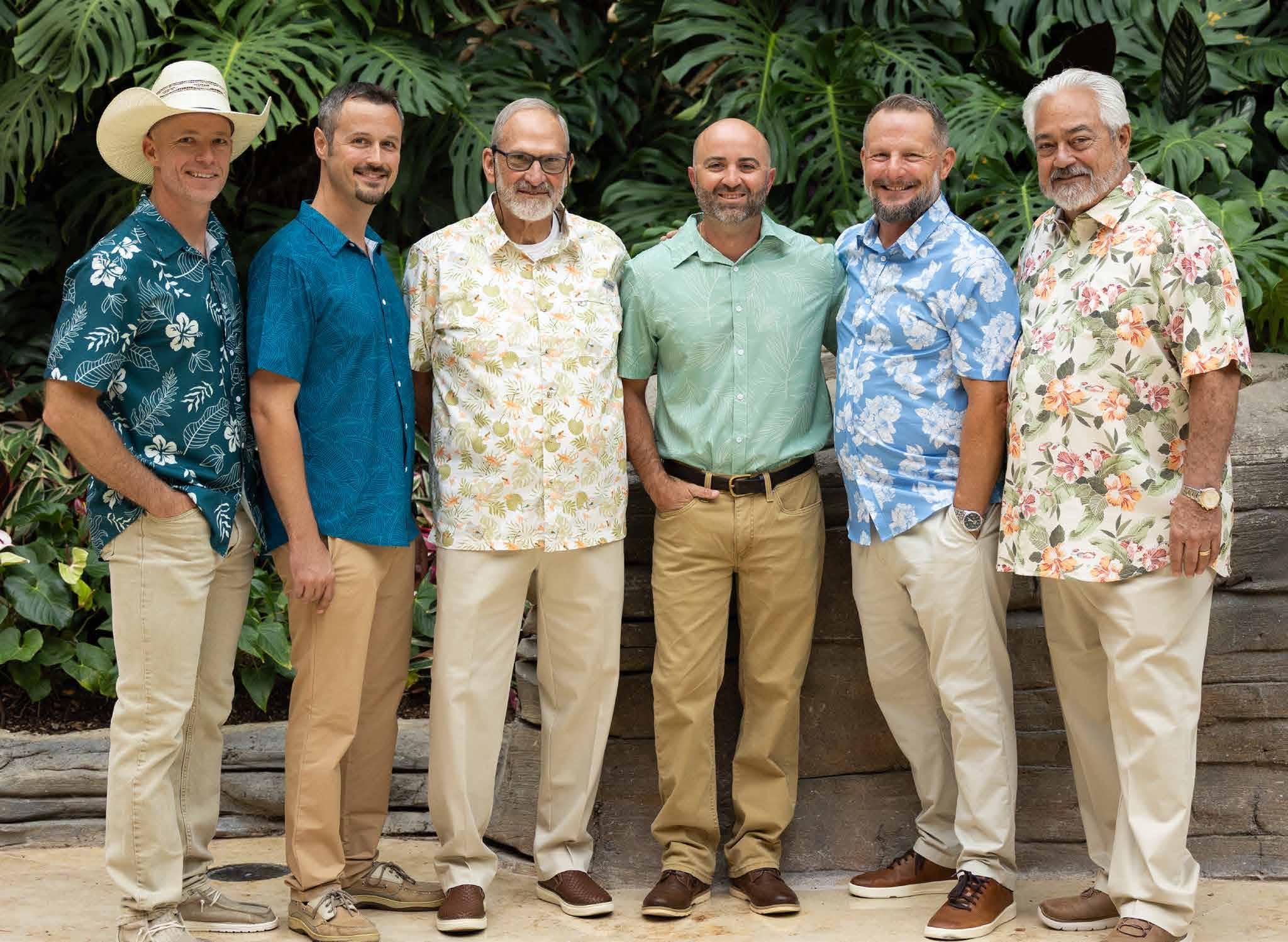
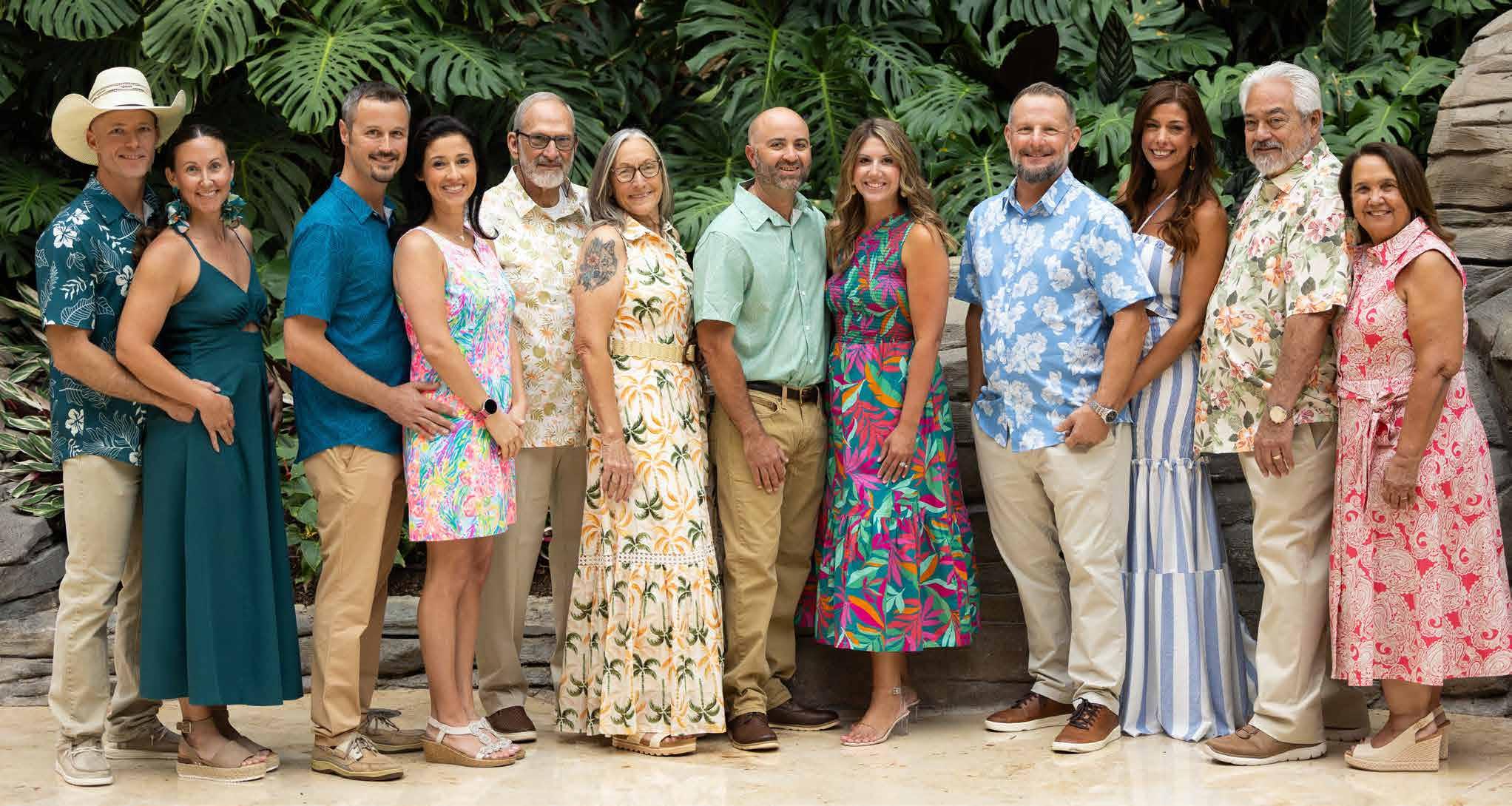
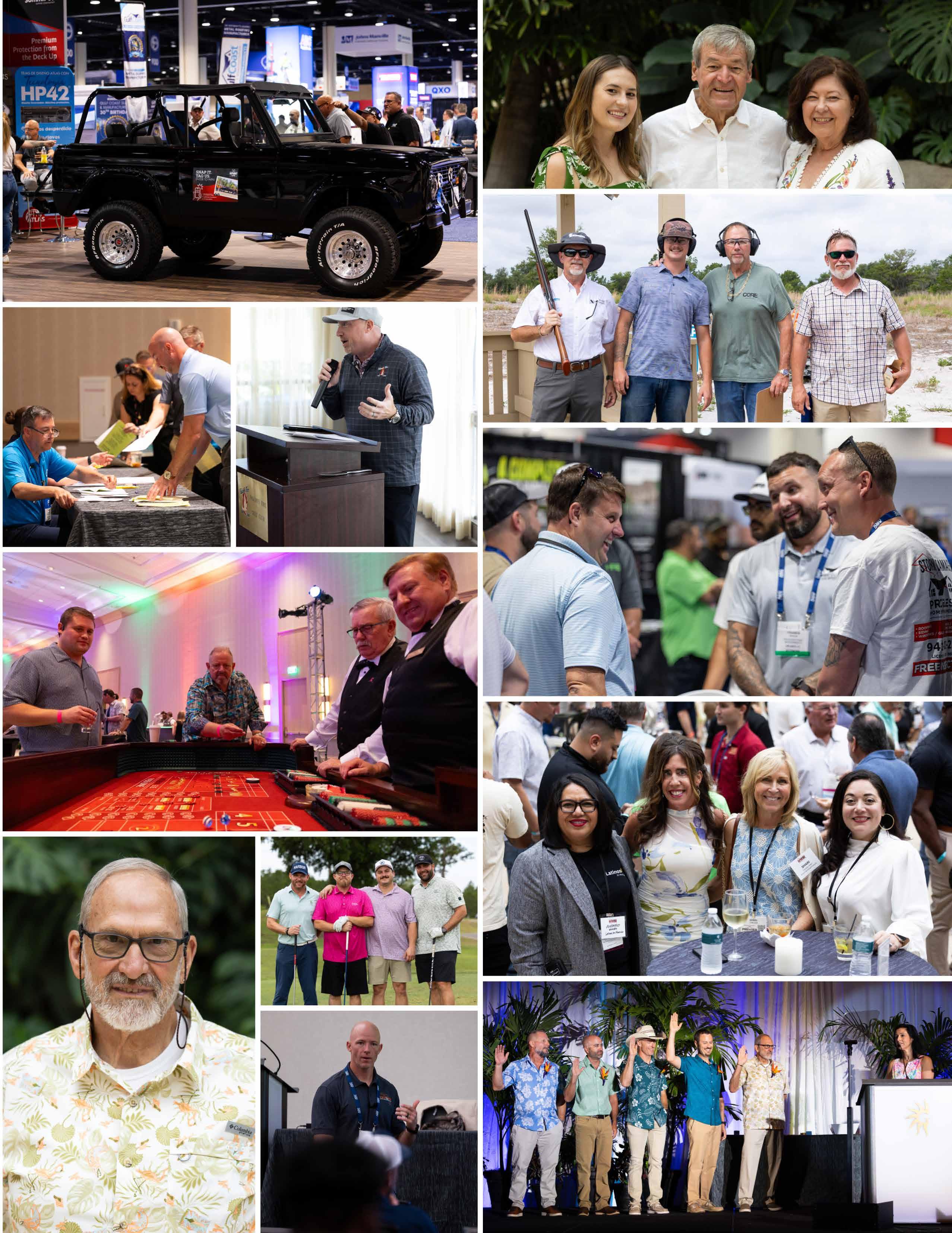
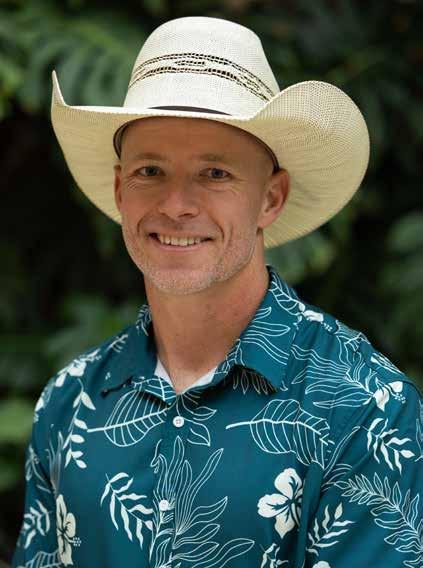
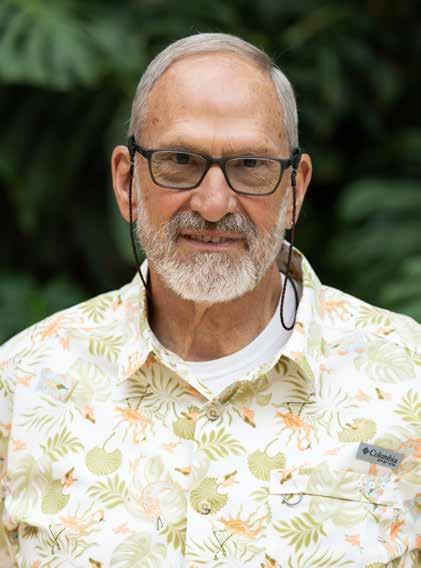
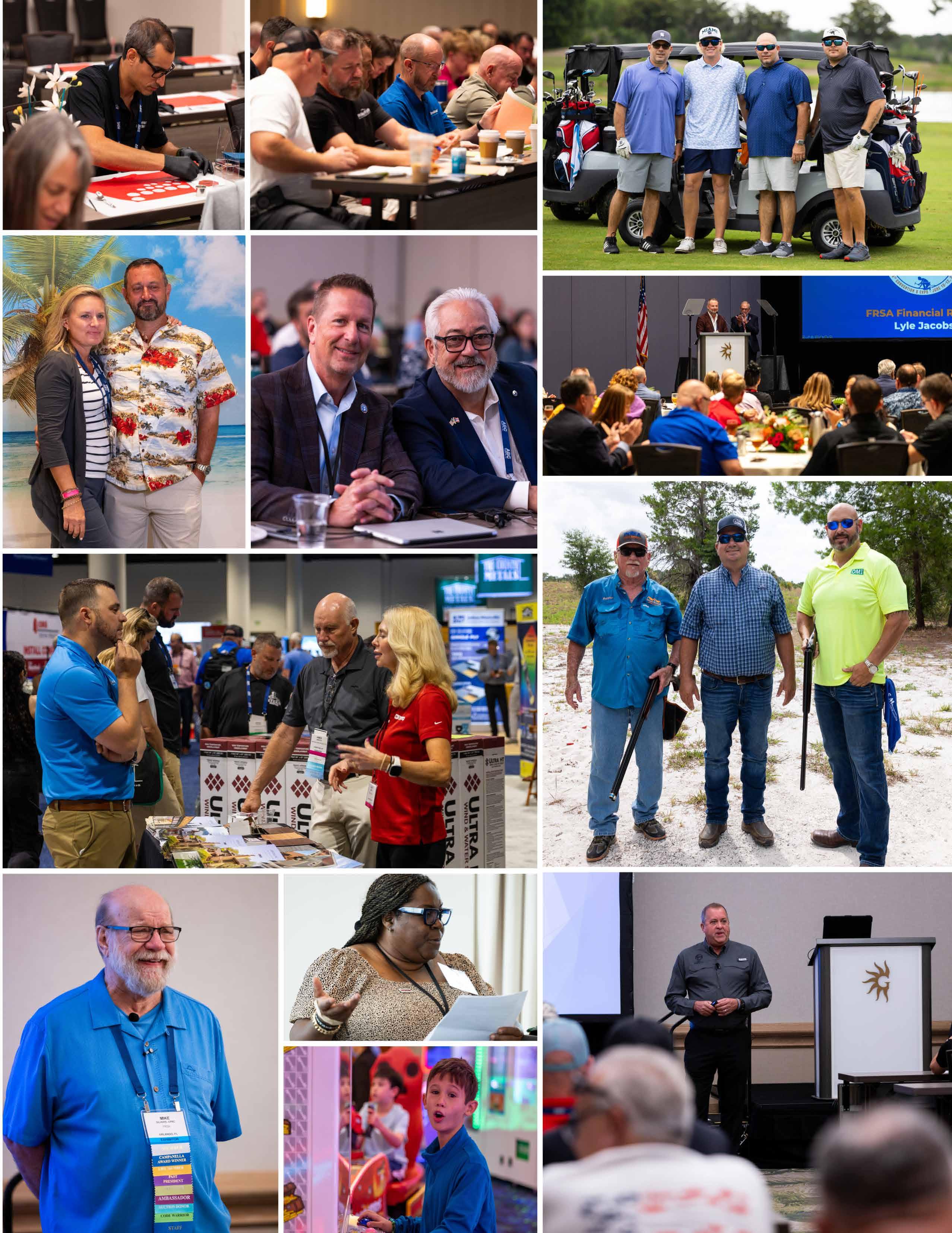
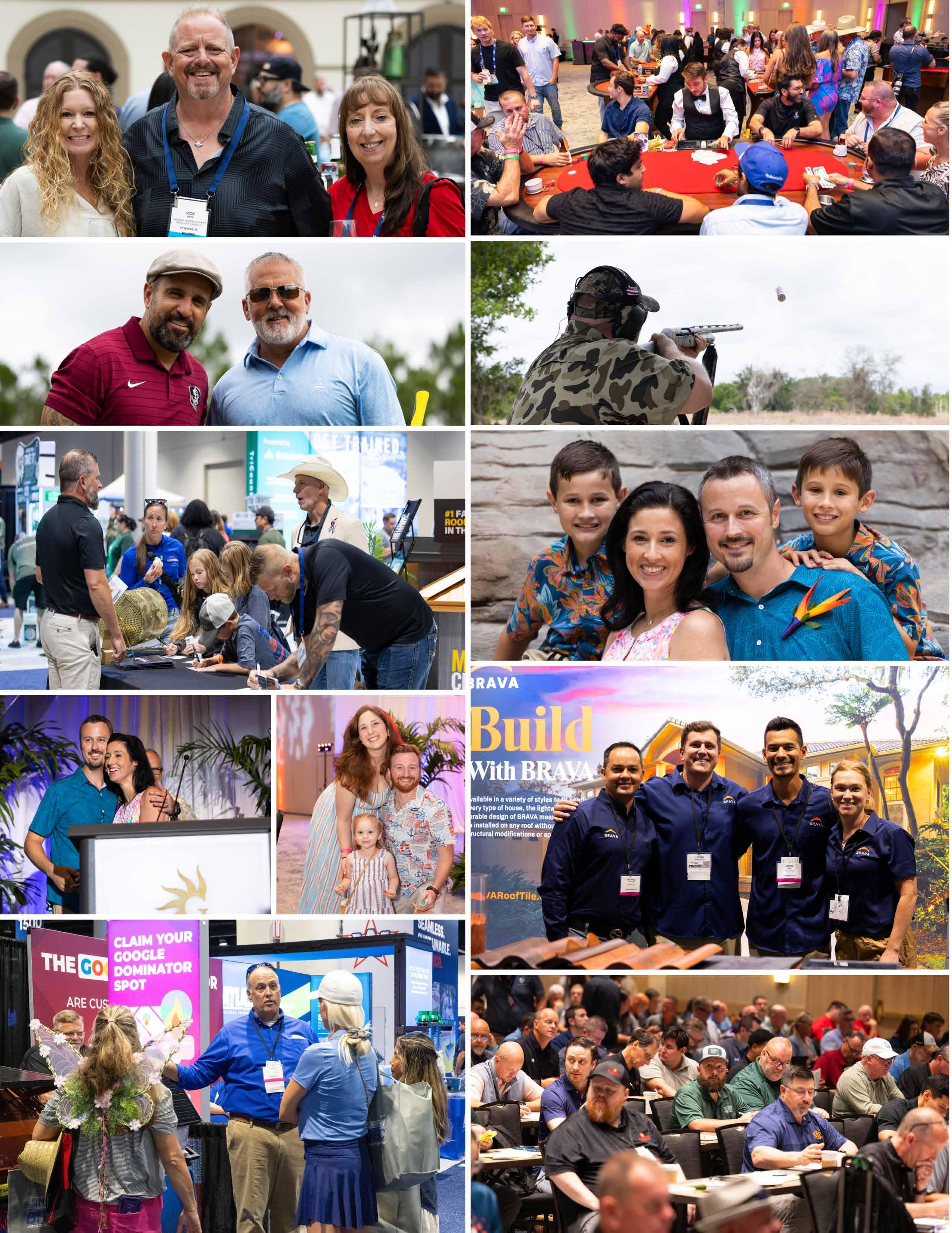
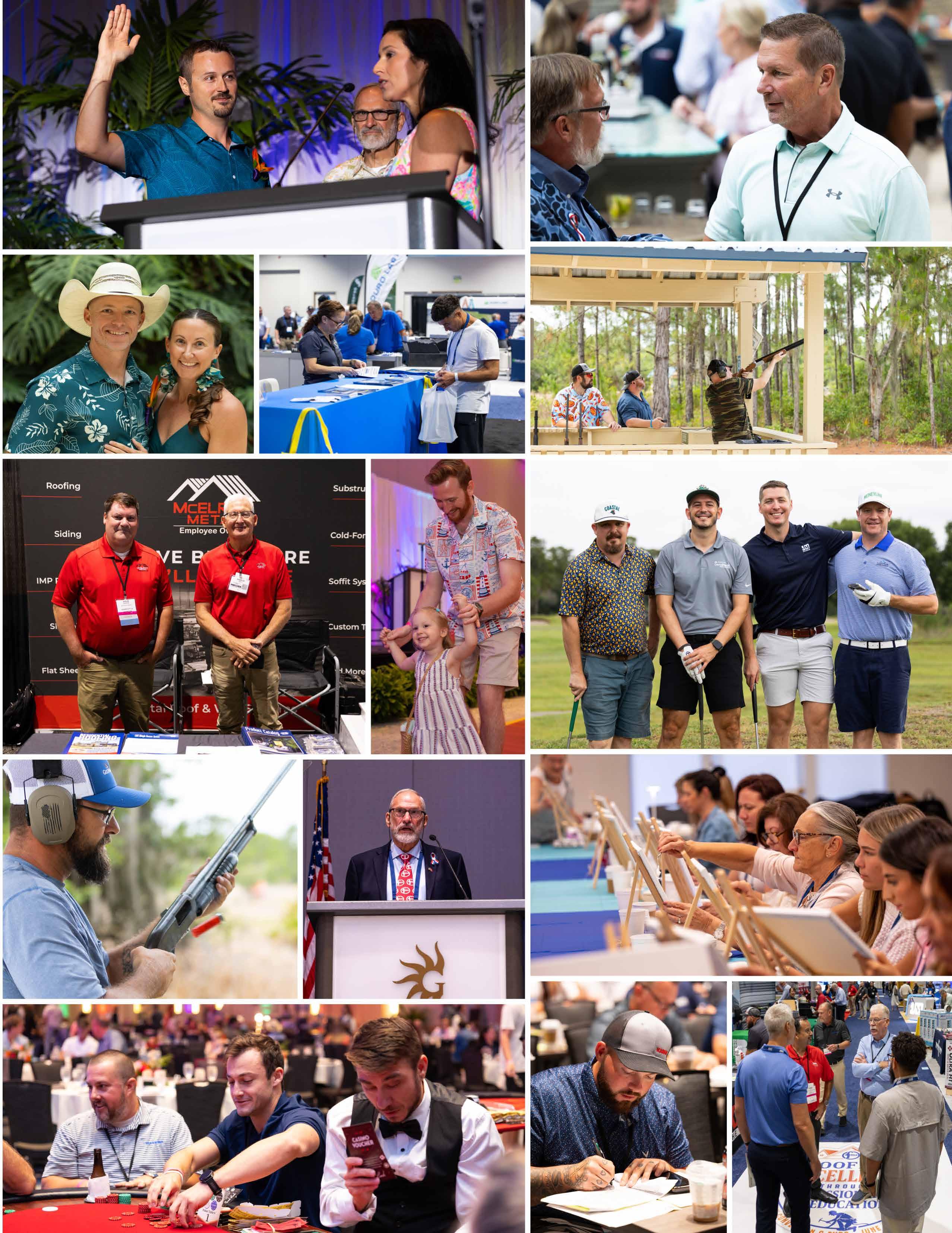
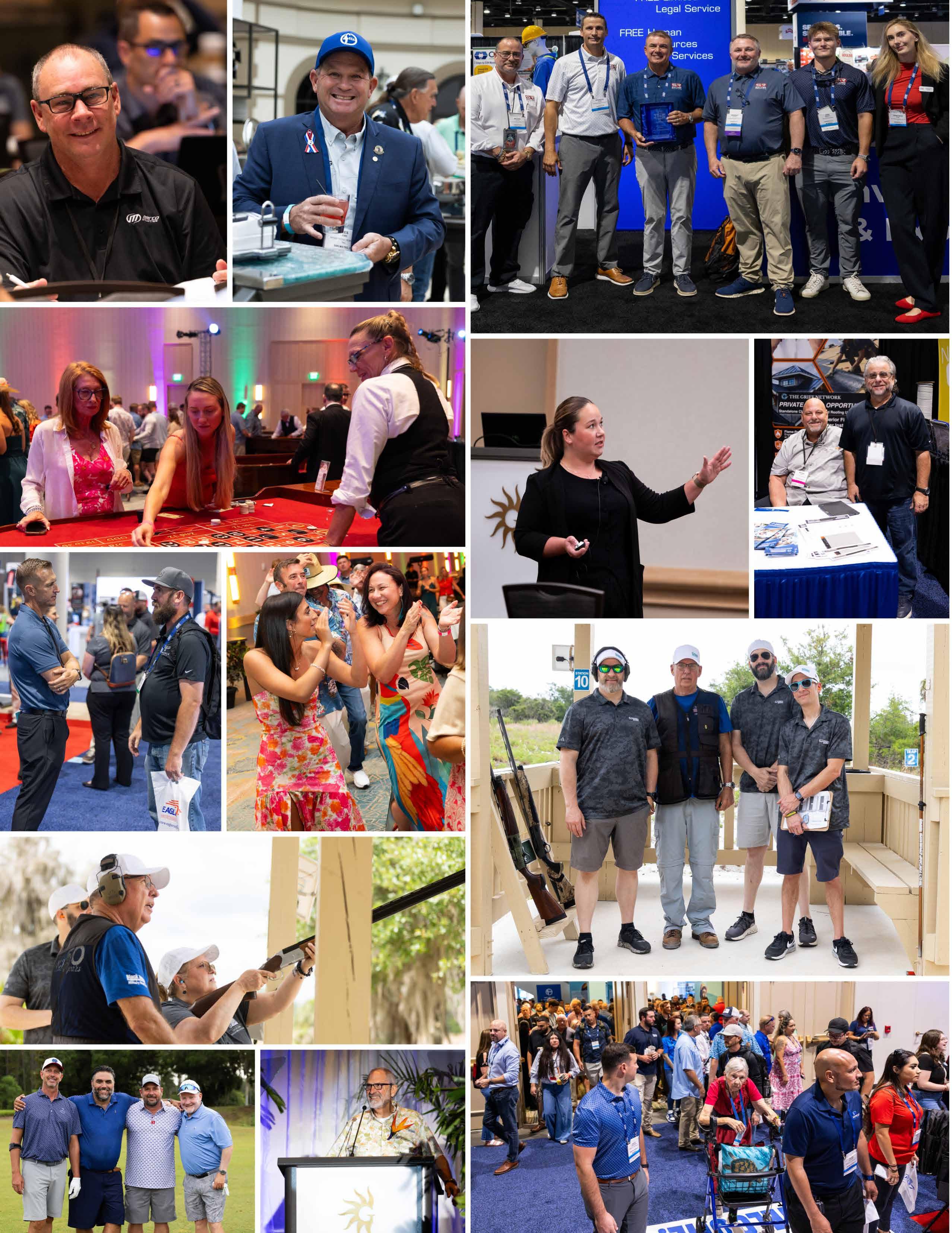
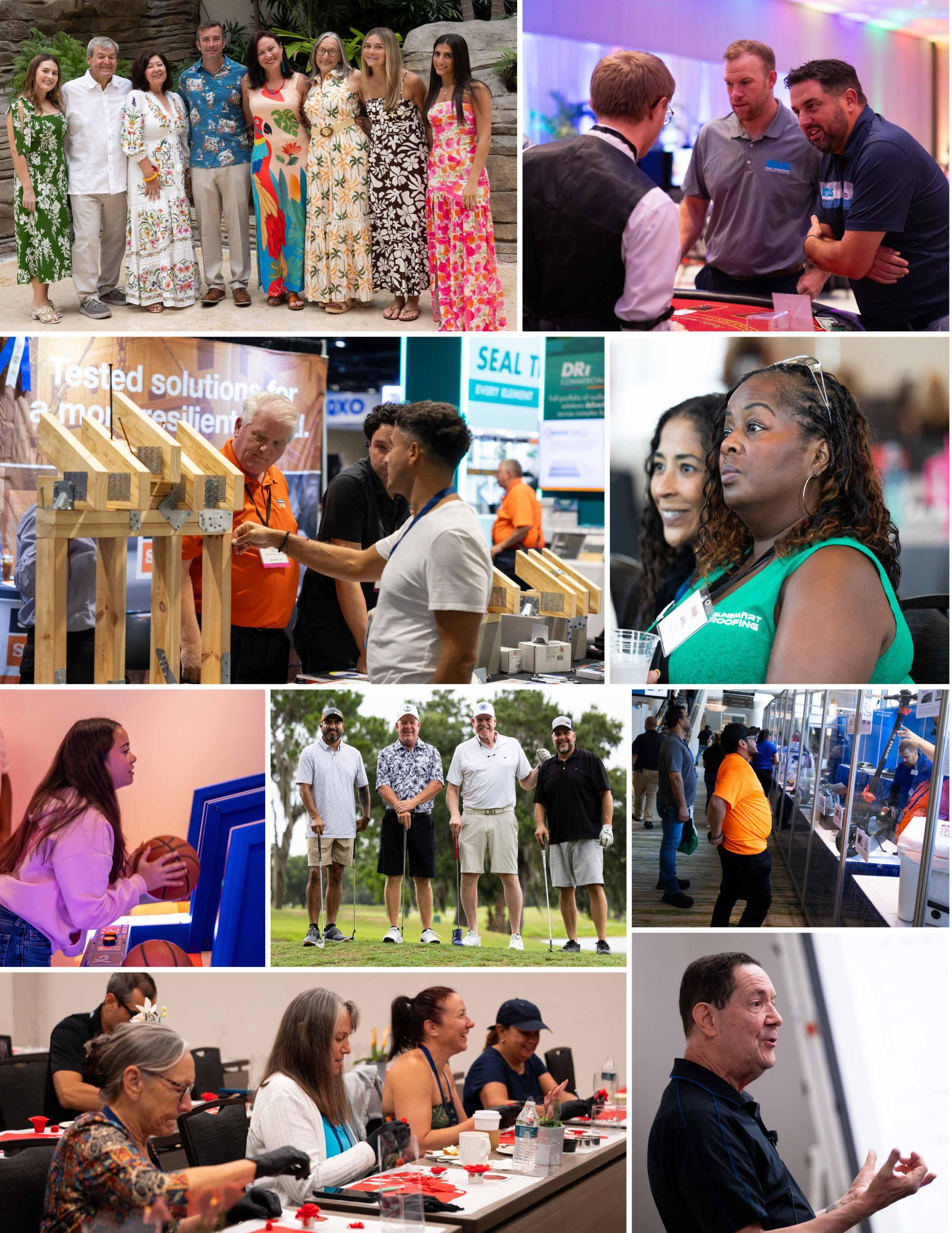
FRSA Executive Committee and their better halves.
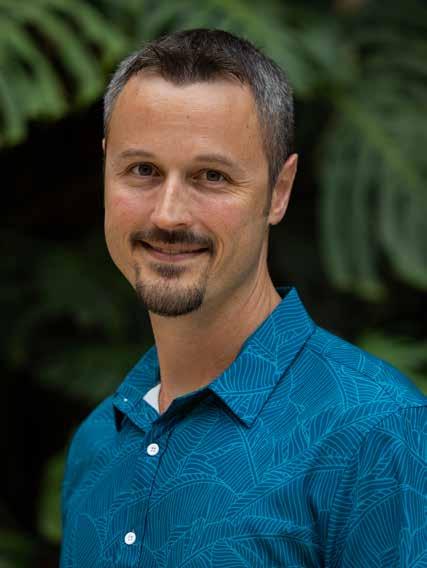
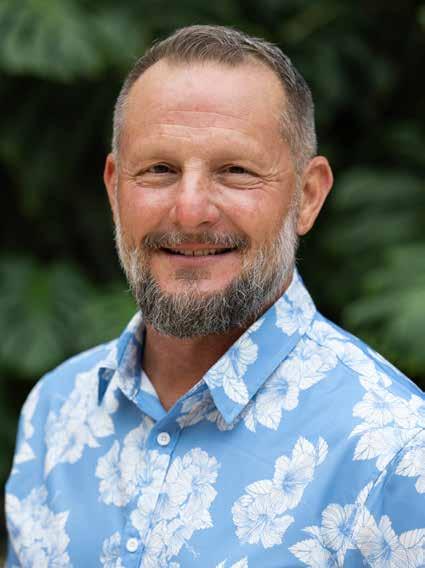
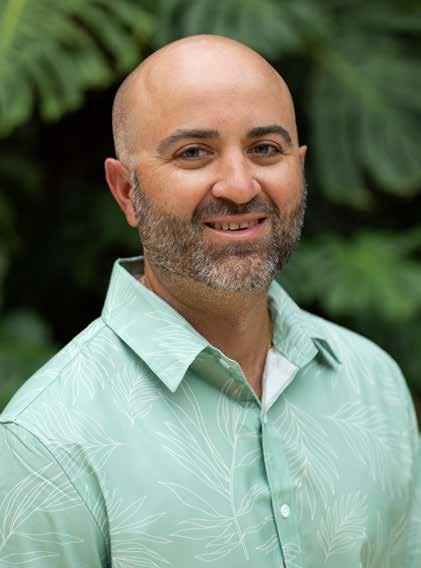
2026-2027 FRSA Executive Committee
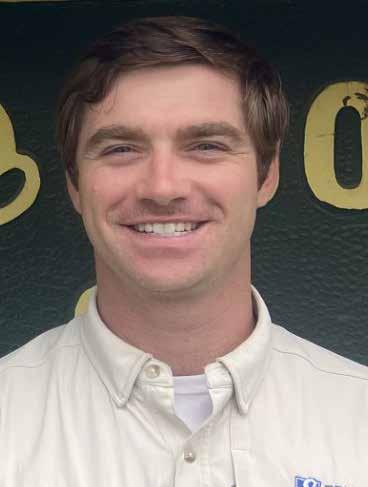
Matthew Leonard | President
Matthew Leonard is a second-generation state-certified roofing contractor and owner of Architectural Sheet Metal, Inc. (ASM), Orlando and is proud to uphold the 33-year legacy established by his father.
Throughout his career, Matthew’s wife, Megan, has been his most significant partner and supporter, playing an essential role in every milestone of his professional journey. Her influence allows Matthew to balance the rigors of leadership with his most important job: being a father. A dedicated coach and Scouting leader for his two sons, he spends time mentoring youth, fueled by a desire to provide for his family and give back to the community. Matthew is an advocate for the workforce, holding high admiration for every individual in the roofing trade. He is focused on ensuring that field installers receive the recognition they deserve, consistently reminding his peers that the strength of the industry lies in the hands of those installing the roofs every day.
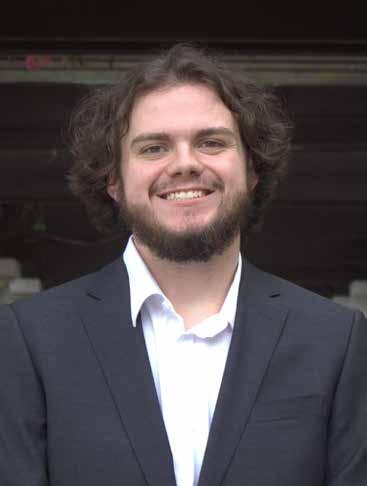
Steven James, II, CPRC | President Elect
Steve James is a state-certified roofing contractor and owner of James Roofing Services, St. Petersburg. He has been involved in FRSA since he was a child and participated in the Kids’ Program. His father used to work with Mike Silvers, CPRC, FRSA’s Technical Director. Steve recently served as chair of the Young Professionals Counsel and serves on the Codes Subcommittee, Convention, Government Affairs and Codes Committees. He also serves on the Pinellas County Construction and Licensing Board as the roofing representative. Steve has been married to his wife, Alexandra, for eleven years and they have two beautiful daughters, Audrey and Emerson. He enjoys being with his family and is an avid outdoorsman.
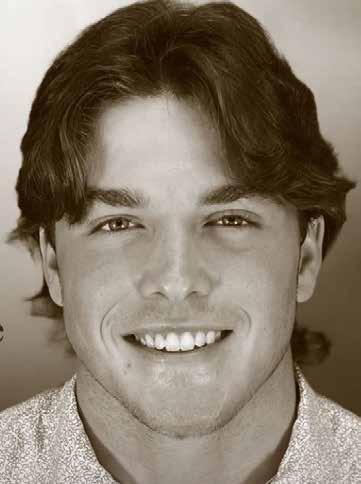
Lyle Jacobs | Vice President
Lyle Jacobs is a second-generation roofing professional with more than 35 years of experience in South Florida’s residential and commercial roofing industry. Specializing in tile roofing, technical sales, operations and high-wind roofing systems, he currently serves as Technical Sales Manager for Crown Roof Tiles. Lyle has held leadership roles with FRSA’s Affiliate, the Roofing Contractors Association of South Florida (RCASF), including serving as past President. Known for his leadership, technical knowledge and commitment to advancing roofing industry standards, he remains passionate about education, workforce development and the future of the roofing industry.
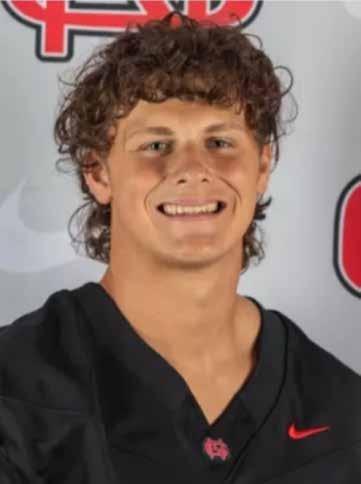
Bo Copeland | Secretary Treasurer
Bo Copeland is a state-certified roofing and building contractor and owner of Hogtown Roofing and Construction, Archer. He is dedicated to advancing professionalism and excellence within the roofing industry. With experience in residential and commercial roofing, metal roofing manufacturing and contractor education, he is passionate about raising industry standards and supporting the next generation of roofing professionals. As the newest Executive Committee member, Bo looks forward to applying and growing his skillset of leadership, industry knowledge and industry recruitment to strengthen Florida’s roofing community for generations to come.
Tibor Torok | Immediate Past President
Tibor Torok is a Florida native, born in Miami Beach. He is a state-certified roofing contractor with over 43 years’ experience and is the majority stockholder in Bob Hilson & Company. He used his GI bill, earned as a Marine Corps veteran, to attend the University of Texas at Arlington. Tibor and Toni have been married for 24 years. They have one daughter, Rebecca, and a son Christopher, granddaughters, Emma and Chloe, grandson, Anthony (currently a US Marine stationed in Japan), and a great granddaughter Aurelia. Tibor believes FRSA and its membership of professionals elevate roofing for the public’s benefit. He is past President of FRSA’s Affiliate, the Roofing Contractors Association of South Florida. His hobbies include boating, watersports, shooting, walking in the woods and traveling.
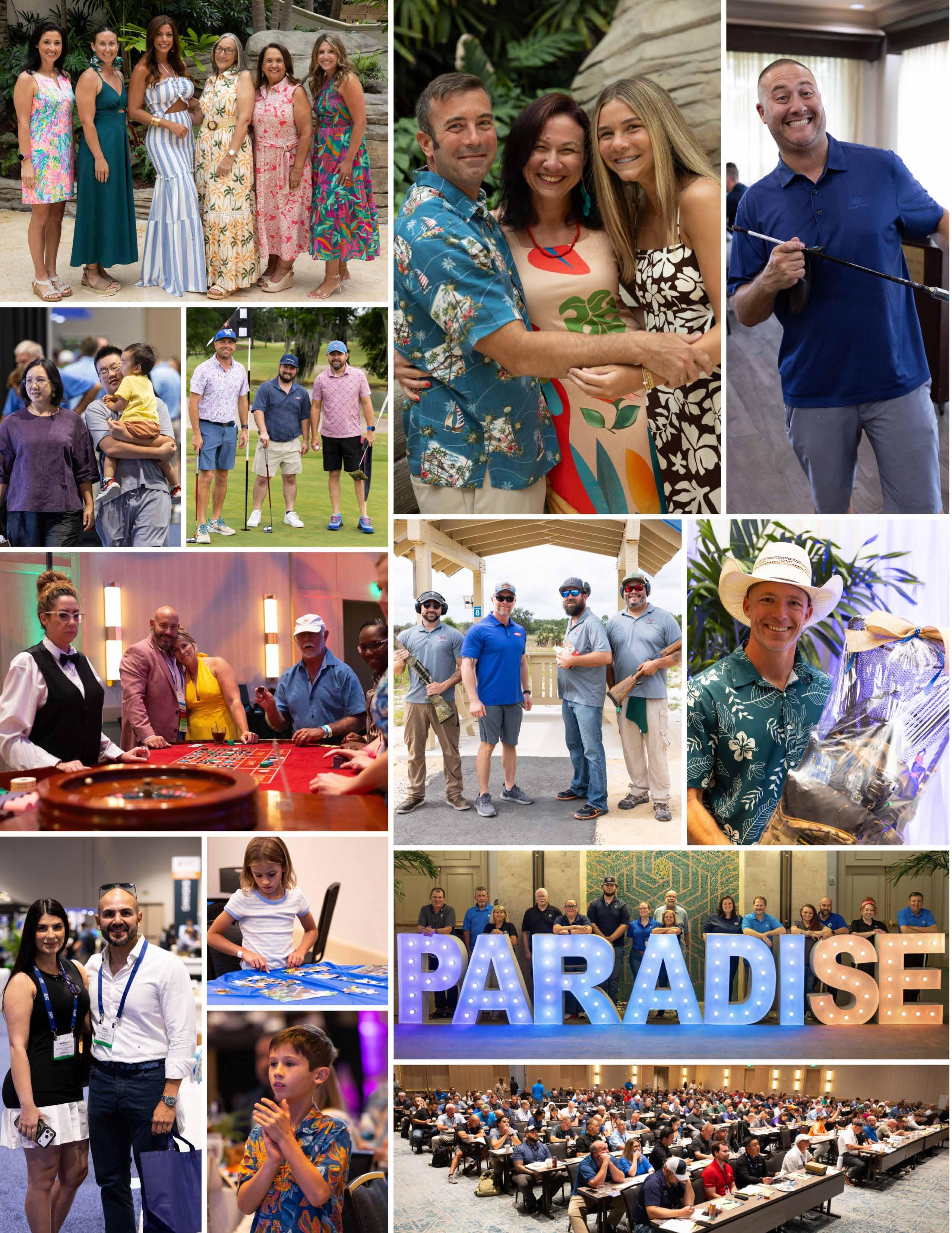
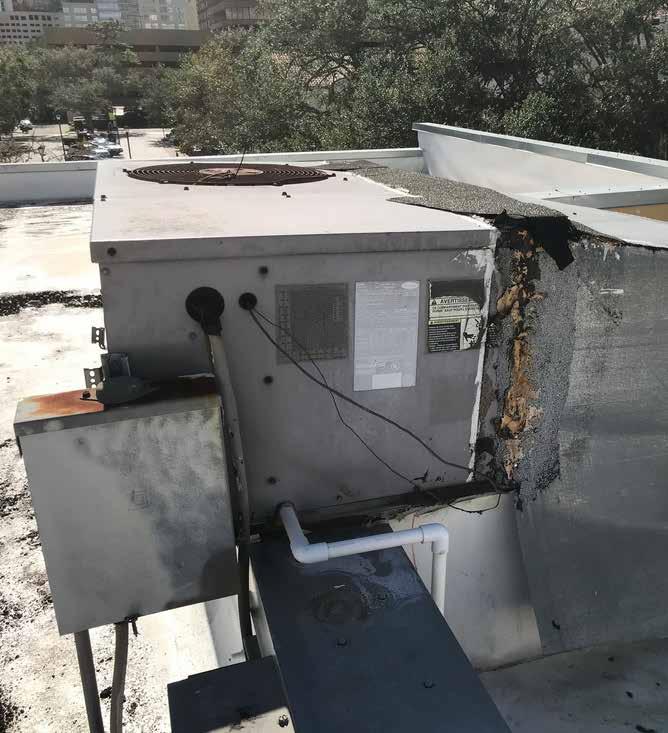
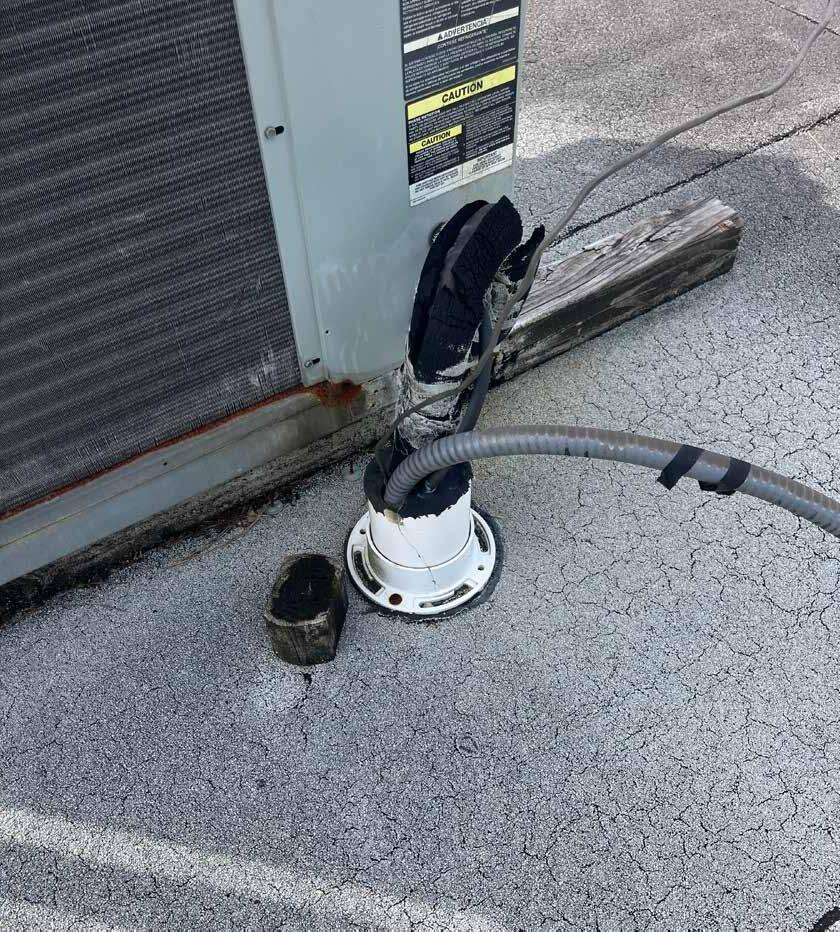
What's Wrong With These Pictures?
Industry Updates
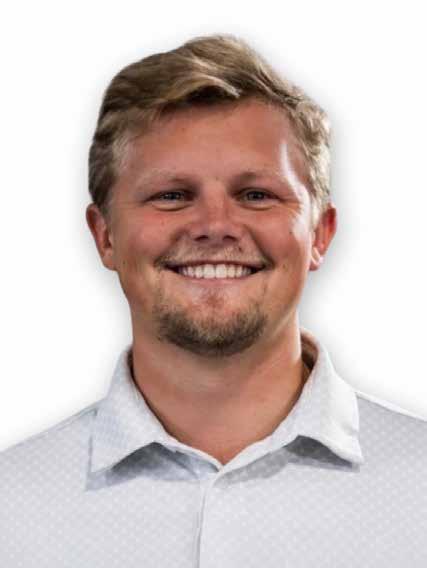
Brendan Britsch Joins MuleHide as Territory Manager
Low-slope roofing manufacturer MuleHide has hired Brendan Britsch as Territory Manager for West Central and Southwest Florida as the company’s lead contact with customers in the territory, which includes Tampa, Bradenton, Clearwater, Sarasota, Fort Myers, Lakeland and the surrounding communities. His responsibilities include helping ensure that projects are completed efficiently and according to specification, working with contractors and ABC Supply branch teams to develop the best solutions to meet property owners’ roofing needs and to provide ongoing product, technical and sales training for contractors and ABC Supply associates.
Britsch comes to MuleHide from TRUFAST, where he was a Technical Sales representative for more than five years. He has a Bachelor of Business Administration degree in Marketing from the University of Cincinnati.
Florida
Print Circulation
5,500 Industry Professionals
1,332,902 Industry-focused 12-Month Digital Impressions
Contact skip@floridaroof.com for advertising info
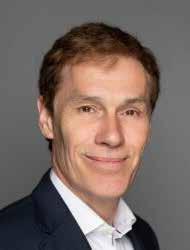
Gaco Welcomes New President Gaco and Enverge, two leading brands within the Amrize Building Envelope business, announce the appointment of Konrad Wernthaler as President of Gaco and Enverge. In this role, Wernthaler will oversee the strategic direction, operational execution and commercial growth of both business units, serving a broad spectrum of commercial and residential markets across the roofing, waterproofing, sealants, adhesives and insulation industries.
Wernthaler brings more than three decades of proven executive experience across the specialty chemicals and construction materials sectors. His technical expertise and commercial acumen uniquely equip him to strategically lead the business units and solidify the industry-leading positions of both the Gaco and Enverge brands.
“I am excited to join Amrize and lead Gaco and Enverge. We have well-positioned brands, highperforming products and, above all, an excellent team. This sets us up for a great future,” said Wernthaler.
Kevin Page, Vice President of Commercial for Gaco and Enverge, added, “Our commercial and field teams are highly energized by this appointment. As we continue to invest in driving world-class performance for both Gaco and Enverge, under Konrad’s leadership we are now even better positioned to deliver for our customers.”
Throughout his career, Wernthaler has held a succession of senior leadership roles spanning research and development, marketing, operational excellence and general management. Most recently, he served as Chief Executive Officer of Mallard Creek Polymers, a manufacturer of custom emulsion polymers, where he successfully drove significant growth and product portfolio transformation.
"We are thrilled to welcome Konrad to the Amrize Building Envelope leadership team,” said Jake Gosa, President of Amrize Building Envelope. “His comprehensive understanding of the construction materials sector and proven ability to transform product portfolios will be invaluable as we continue to scale the Gaco and Enverge brands to drive long-term value.”
FRM
Recent Immigration Rulings: What Roofing Contractors Need to Know
Trent Cotney, Partner, Adams & Reese, LLP and FRSA General Counsel
The United States Supreme Court recently issued two immigration decisions that should get the attention of roofing contractors. Although neither case was written specifically for the construction industry, both decisions affect the legal environment in which contractors hire, staff, schedule and manage labor. For an industry already dealing with workforce shortages, aggressive immigration enforcement and increased scrutiny of employment practices, these rulings are more than political headlines.
In Mullin v. Doe, the Court addressed Temporary Protected Status, commonly known as TPS. TPS allows certain foreign nationals from designated countries affected by war, natural disaster or other extraordinary conditions to live and work lawfully in the United States for a limited period. The case involved the federal government’s termination of TPS designations for Haiti and Syria. Although the immediate impact falls on Haitian and Syrian TPS holders, the Court’s interpretation of the TPS statute is broader.
Reshaping
The Court held that the TPS statute bars judicial review of certain challenges to the Secretary of Homeland Security’s TPS designation, termination or extension determinations, substantially limiting the ability of affected individuals to challenge those decisions in court.
For roofing contractors, the key issue is employment authorization. Many TPS beneficiaries have worked lawfully in the United States for years. Some hold employment authorization documents or EADs, that have been automatically extended by federal notice. If a TPS designation ends or if an EAD extension expires, a worker who was
Contractors cannot knowingly continue to employ an unauthorized worker but they also cannot overreact in a way that creates discrimination exposure.
In Mullin v. Al Otro Lado, the Court addressed whether individuals stopped at or near the U.S.-Mexico border have legally arrived in the United States for purposes of applying for asylum. The Court held that a person does not arrive in the United States until the person physically crosses the border. The decision supports the federal government’s ability to use metering or turnback practices at ports of entry when border conditions warrant, because individuals who remain physically in Mexico have not yet “arrived in the United States” under the Immigration and Nationality Act.
A tighter asylum system and broader executive control over TPS may reduce the pool of workauthorized labor. Roofing contractors may see greater uncertainty among employees, subcontractor crews and labor brokers. Some workers may need updated documents. Others may be confused about whether they remain authorized to work. Project managers may face labor disruptions with little notice.
Contractors should take several practical steps now. First, conduct an internal I-9 audit. Confirm that Form I-9s are complete, properly stored and supported by acceptable documents at the time of hire. Employers should not demand specific documents. The employee chooses which acceptable documents to present from the federal Lists of Acceptable Documents. If the company uses E-Verify, confirm that it uses the system consistently and only where permitted or required.
Second, create a reverification calendar. Employers must reverify employees with temporary work authorization before the authorization expires. This is especially important for EADs tied to TPS, asylum or parole-based categories. Assign one responsible person to track expirations, automatic extensions and federal notices. Do not wait until a crew leaves for a project to discover that a key foreman or installer needs reverification.
Third, train supervisors not to make immigrationstatus assumptions. A supervisor should not remove someone from a job, ask for extra papers or make comments based on accent, language, ethnicity or perceived national origin. Immigration compliance belongs with HR, ownership or trained administrative personnel. Field supervisors should report documentation concerns through a defined process.
Fourth, review subcontractor agreements. Roofing contractors should require subcontractors and labor providers to comply with I-9, E-Verify where applicable, wage-and-hour, workers’ compensation and immigration laws. Contracts should include indemnity language, audit rights, flow-down obligations and a right to remove non-compliant personnel from the
project. Prime contractors should also avoid controlling a subcontractor’s employees in a way that creates unintended joint-employer issues.
Fifth, plan for labor disruption. Immigration changes can affect manpower, production rates and project sequencing. Contractors should review schedule clauses, delay notice provisions, force majeure language, manpower commitments and liquidated damages exposure. A contractor that waits until labor disappears from the jobsite will have a much harder time preserving contractual rights.
Finally, communicate carefully. Contractors should not provide immigration legal advice to employees unless they are qualified to do so. However, they can direct employees to official government resources or independent immigration counsel. The best approach is neutral, consistent and documented compliance.
These Supreme Court rulings do not require roofing contractors to panic. They do require contractors to become more disciplined. The winning strategy is not speculation about federal policy. It is clean paperwork, consistent reverification, careful subcontractor management, supervisor training and early legal review when work authorization questions arise.
FRM
Disclaimer: This article is for general informational purposes only and does not constitute legal advice. Contractors should consult with legal counsel regarding the laws, contract requirements and safety obligations that apply to their specific projects and jurisdictions.
Trent Cotney is a Partner and Construction Team Leader at Adams & Reese, LLP and is also FRSA's General Counsel. You can reach him at 813-227-5501 or trent.cotney@arlaw.com.
Free Legal Helpline for FRSA Members
Adams & Reese is a full-service law firm dedicated to serving the roofing industry. FRSA members can contact Trent Cotney to discuss and identify legal issues and to ask general questions through access to specialized counsel. They offer free advice (up to 15 minutes) for members. If additional legal work is required, members will receive discounted rates. This is a pro bono benefit provided to FRSA members only. Contact Trent at 813-227-5501.
Lacking Challengers, Several Florida Legislators Skip Elections
Kylee Bo, Government Affairs Advisor, GrayRobinson
The qualifying deadline for the Florida Senate and the Florida House of Representatives concluded on June 12, 2026. Several incumbents were automatically reelected after no candidates qualified to challenge them in either the primary or general election.
Florida Senate
■ Senator Clay Yaroborough (Republican, District 4 – Duval, Nassau)
Florida House of Representatives
■ Jason Shoaf (Republican, District 7 – Dixie, Franklin, Gulf, Hamilton, Jefferson, Lafayette, Leon, Liberty, Suwannee, Taylor, Wakulla)
■ Gallop Franklin (Democrat, District 8 – Gadsden, Leon)
■ Incoming Speaker of the House Sam Garrison (Republican, District 11 – Clay)
■ Kiyan Michael (Republican, District 16 – Duval)
■ Bruce Antone (Democrat, District 41 – Orange)
■ Rita Harris (Democrat, District 44 – Orange)
■ Mike Giallombardo (Republican, District 79 – Lee)
■ Incoming House Democratic Leader Christine Hunschofsky (Democrat, District 95 – Broward)
■ Dan Daley (Democrat, District 96 – Broward)
■ Lisa Dunkley (Democrat, District 97 – Broward)
■ Daryl Campbell (Democrat, District 99 – Broward)
■ Felicia Robinson (Democrat, District 104 –Broward, Miami-Dade)
■ Marie Woodson (Democrat, District 105 –Broward, Miami-Dade)
■ Wallace Aristide (Democrat, District 107 – Miami-Dade)
■ Tom Fabricio (Republican, District 110 – Miami-Dade)
■ David Borrero (Republican, District 111 – Miami-Dade)
■ Alex Rizo (Republican, District 112 – Miami-Dade)
■ Demi Busatta (Republican, District 114 – Miami-Dade)
■ Jim Mooney (Republican, District 120 – MiamiDade, Monroe)
One of the developing stories following qualifying is the status of two-term incumbent Representative Paula Stark, who represents House District 47, covering portions of Orange and Osceola Counties. Stark was disqualified from qualifying due to issues related to her Form 6 financial disclosure submission. She subsequently filed a lawsuit seeking reinstatement on the ballot; however, on July 9, Leon County Circuit Court Judge Joshua Hawkes rejected her challenge. On July 17, Stark retained Anthony Sabatini to lead her legal efforts challenging the decision. If the ruling stands, the District 47 seat would automatically shift to the Democrats, as Stark was the only Republican candidate in the race. Because no Republican candidate appears on the ballot, the August 18 Democratic Primary for House District 47 will be open to voters of all party affiliations. The election for the House District 47 seat will be contested between Jorge Figueroa and Anthony Nieves.
Florida’s primary election will be held on August 18, 2026, and the general election will take place on November 3, 2026. FRM
Kylee Bo, GrayRobinson, is a Government Affairs Advisor specializing in policy and appropriations at both the Florida Capitol and local levels. Based in Orlando, she offers clients strategic insights, summaries of state and local hearings and tailored government affairs updates and reports. Kylee works to strengthen relationships with elected officials across the state and represents GrayRobinson at key board meetings. She also delivers educational briefings to select groups, including college students pursuing careers in the legislative field.
The Overhead Trap: Why Revenue Growth Doesn’t Always Create Profit
John Kenney, CPRC, CEO, Cotney Consulting Group
One of the biggest misconceptions in the roofing industry is that a larger company is automatically a stronger company. I’ve learned over the years that the two don’t always go together. Some of the healthiest contractors I’ve worked with weren’t necessarily the biggest and some of the fastest-growing companies were quietly creating problems they didn’t realize existed.
Growth has a way of changing the way we look at a business. When the backlog is full, the phones keep ringing and crews are booked weeks or months in advance, it’s easy to assume the company is heading in the right direction. Revenue becomes the scoreboard. If sales are increasing, most owners naturally believe the business is becoming more successful.
Revenue certainly matters. Without work, there isn’t a business to manage. But after spending more than four decades estimating projects, running operations and consulting with roofing contractors across North America, I’ve come to appreciate that revenue tells only part of the story.
The more important question is whether the business is becoming more profitable as it grows. Unfortunately, that isn’t always the case. Some of the most financially stressed companies I’ve encountered were also experiencing some of their strongest sales years, which seems, at first glance, difficult to understand. How can a company be busier than ever while struggling to maintain profitability or cash flow?
The answer is almost always found beneath the revenue. As companies grow, overhead begins to grow with them. That isn’t necessarily a problem. Expansion requires investment. More projects require additional supervision. More customers create more administrative work. Larger operations often require better technology, additional warehouse space, stronger safety programs and expanded accounting support. These investments are often necessary. The danger comes when overhead begins to grow faster than the systems needed to support it.
One of the patterns I’ve seen repeatedly is that contractors rarely make one large decision that suddenly creates an overhead problem. Instead, they make dozens of smaller decisions over several years. Each one seems reasonable on its own.
The company hires another project manager because everyone is overloaded. A second estimator comes aboard to help keep proposals moving. Office staff increases to support purchasing, billing and customer service. New trucks are added to the
fleet. Software subscriptions multiply. Before long, the company has built an entirely different organization than the one that existed only a few years earlier. Every one of these decisions may have been justified. Collectively, however, they create a business that now requires substantially more revenue just to maintain the same level of profitability, catching many contractors by surprise.
One issue I frequently discuss with clients is something I call organizational creep. It rarely happens intentionally. In fact, it usually develops during periods of success. The company becomes busier, so additional people are hired. As more people come on board, communication becomes more complicated. More meetings are scheduled. More approvals become necessary. Layers of management begin forming that never existed before. Eventually, owners start spending more time managing the organization than managing the business.
I’ve seen companies where project managers spend half their day searching for information that should have been available from the beginning. Estimators answer questions that should have been resolved during project turnover. Accounting personnel spend valuable time correcting paperwork instead of processing it. None of those activities generate revenue but they all increase overhead. Adding people to inefficient processes rarely creates efficiency. More often, it simply creates larger inefficient processes.
The same principle applies to technology. Today’s roofing contractors have access to remarkable software platforms that improve estimating, project management, accounting, customer communication and field reporting. Used correctly, these tools can significantly improve operational efficiency. Used incorrectly, they simply become another monthly expense.
I’ve walked into companies using multiple software platforms that performed nearly identical functions because no one had stopped to evaluate the entire workflow. Employees entered the same information into different systems. Reports were generated but
rarely reviewed. Technology should simplify operations, not complicate them.
Growth also changes the way overhead is recovered, although many contractors don’t recognize it. Every estimate your company produces carries more than labor, material and equipment costs. It also carries a portion of the company’s overhead. Office salaries, insurance, vehicles, software, facilities and every other indirect expense must ultimately be recovered through the work you sell.
As overhead increases, every estimate must recover a larger share of those costs before the project contributes a dollar of profit. That is one reason accurate estimating becomes even more critical as companies grow. If estimating fails to recover overhead properly, increased sales simply create more work without producing the financial return necessary to support the larger organization.
Estimating, operations and accounting are far more connected than many contractors realize. They should never operate as independent departments. Every estimate establishes expectations. Field production determines whether those expectations are achieved. Job costing measures the outcome. Accounting records the financial impact. Leadership then uses that information to improve the next estimate.
When any part of that process breaks down, profitability becomes more difficult to maintain. That is one of the reasons I encourage contractors to view job costing as much more than an accounting function. It is one of the most valuable management tools available. Every completed project tells a story. It reveals whether labor assumptions were realistic, whether production rates matched expectations and whether overhead recovery was sufficient. Companies that consistently review these lessons become stronger estimators and stronger operators. Too many contractors review financial statements only after the month has closed. By then, opportunities to correct course have often passed.
One of the questions I ask during nearly every consulting engagement is surprisingly simple. “How do you know your overhead is being
recovered?” The answer usually starts with confidence but after a few more questions the conversation changes. Contractors know what their annual overhead is. They know what they spend on insurance, salaries, rent and vehicles. What many don’t know is whether every project is carrying its fair share of those costs. That distinction matters.
I’ve reviewed estimates where labor and material costs were calculated with impressive accuracy, yet the company still struggled financially because overhead recovery was based on assumptions that were no longer valid. As organizations grow, overhead rarely stays proportional. Additional management, expanded office staff, larger facilities and higher operating costs
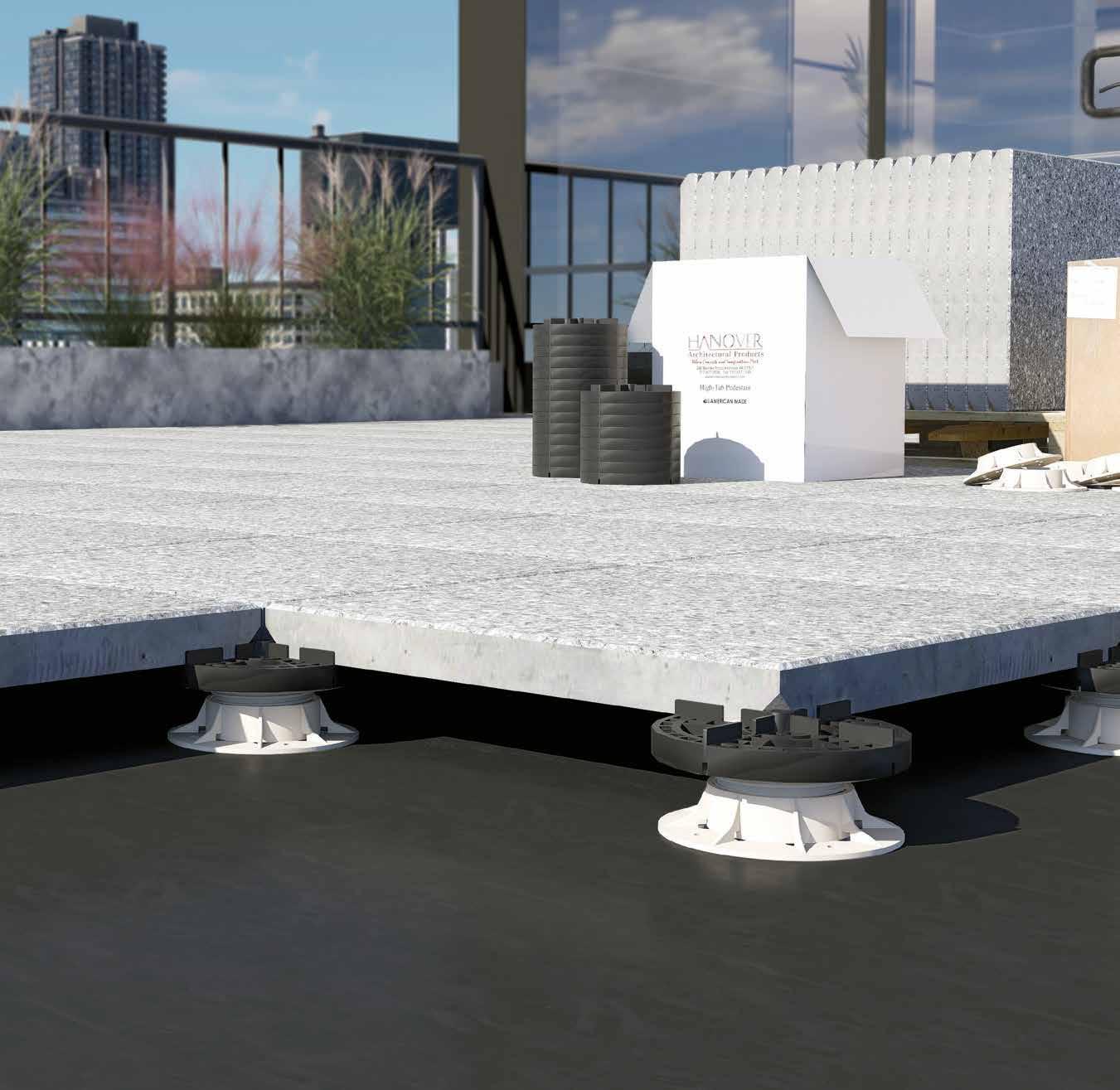
CONCEALED PAVER LOCKING SYSTEM FOR HIGH-WIND CONDITIONS
NEW PAVERLOC™ SYSTEM
•
wind
• Withstands winds up to 250 mph
• Patented, user-friendly design is simple
• Quick installation - no specialized tools required
• Easy paver removal for roof repairs
• Paver strength is not compromised or altered
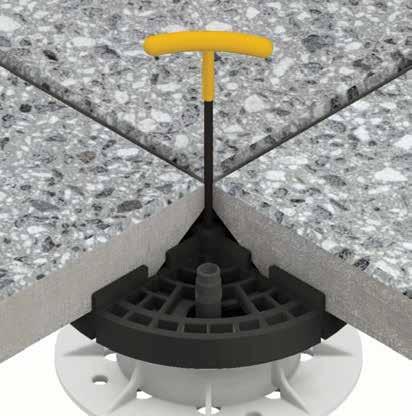
Hanover’s NEW PaverLoc™ System features a concealed locking mechanism that delivers a smooth, continuous paver surface appearance.
Provides
uplift resistance of -165 psf with no factor of safety
Scan to see the NEW system in action!
TAP. SET. TURN.
Miami Dade County approval pending
all change the equation. If estimating isn’t adjusted to reflect those changes, every successful project may still be leaving money behind.
This is where job costing becomes one of the most valuable management tools in the company. Too often it is viewed as an accounting exercise completed after the project is over. In reality, job costing is one of the most effective ways to improve future performance. It connects the estimate to field production and then ties both back to the financial results.
Think about what happens when that information is actually used. An estimator develops production rates based on experience and historical data. The project manager executes the work. The field records labor hours and production quantities. Accounting closes the job and measures the financial outcome. Leadership reviews the results and identifies where assumptions were correct and where they were not. This process creates something far more valuable than a financial report. It creates knowledge.
Companies that consistently learn from completed projects gradually improve every part of the organization. Their estimates become more accurate. Their project managers understand where labor is being gained or lost. Field leaders develop better appreciation for production expectations. Owners make decisions based on facts instead of assumptions.
I’ve often said that estimating doesn’t end when the proposal is submitted. It ends when the job is complete and the results have been analyzed. Everything in between becomes part of the company’s cost history and ultimately influences the next estimate.
The opposite is equally true. When departments operate independently, overhead quietly becomes more difficult to control. Estimating focuses on winning work. Operations focus on completing projects. Accounting focuses on closing the books. Everyone works hard but few people step back to evaluate how the entire system is performing. That separation creates blind spots.
One department may solve a problem while unintentionally creating additional work for another. Project managers develop spreadsheets because information isn’t readily available. Accounting spends hours correcting coding errors that originated in the field. Estimators answer questions that should have been resolved during the turnover meeting. None of those activities appear on an estimate, yet every one of them increases overhead.
I’ve seen this pattern enough times to know that growth never fixes operational problems. It magnifies them.
Poor communication doesn’t improve because a company becomes larger. Weak project handoffs don’t suddenly become stronger. Inconsistent documentation doesn’t become more organized. Every weakness simply affects more projects, people and customers.
That is why I encourage contractors to strengthen their systems before they accelerate their growth. A well-designed process can support additional volume. A weak process simply creates additional frustration. Owners should periodically step back and look at their business from a different perspective. If you were starting your company today with the knowledge you have now, would you build it the same way? Would every position still exist? Would every software platform still be in place? Would every report still be generated? More importantly, does every overhead expense contribute measurable value to the organization?
These aren’t accounting questions, they’re leadership questions.
After more than forty-five years in this industry, I’ve come to believe that overhead isn’t something to be feared. It is simply the cost of building an organization capable of serving customers well. The objective isn’t to operate with the lowest overhead possible. The objective is to ensure every dollar invested strengthens the company and supports profitable growth.
The contractors who consistently perform well over the long term aren’t necessarily the ones generating the highest annual revenue. More often, they are the ones who understand exactly how their business operates. They know where money is being made, where it is being spent and whether their systems are keeping pace with their growth.
Every owner wants to build a larger company. There is nothing wrong with that goal; just remember that revenue and profitability rarely grow at the same pace. One can increase rapidly while the other quietly stands still. I’ve watched that happen many times over the course of my career.
Companies that avoid the overhead trap don’t do anything extraordinary. They ask better questions. They review their numbers more carefully. They challenge assumptions before they become habits. Most importantly, they never allow growth to get ahead of the organization they’ve worked so hard to build. Revenue creates opportunity. Disciplined leadership determines whether that opportunity becomes lasting success.
John Kenney, CPRC is CEO of Cotney Consulting Group, Plant City. He has decades of experience on commercial roofing projects, providing a unique understanding of what it takes to succeed in roofing – on the roof, in the office and at scale. John saw the need to provide contractors with strategic guidance built on real-world field knowledge. Cotney Consulting offers COO on Demand, online training, technology solutions, business advisory consulting, collections, contracts, Castagra estimating training, safety and OSHA training. John partners with FRSA to provide educational seminars. For more information, contact John at jkenney@cotneyconsulting.com or 813-851-4173.
FRM
Confidence Under Metal
Reliable protection for the roof deck backed by 20+ years of trust in the market.
CHOOSE TITANIUM®
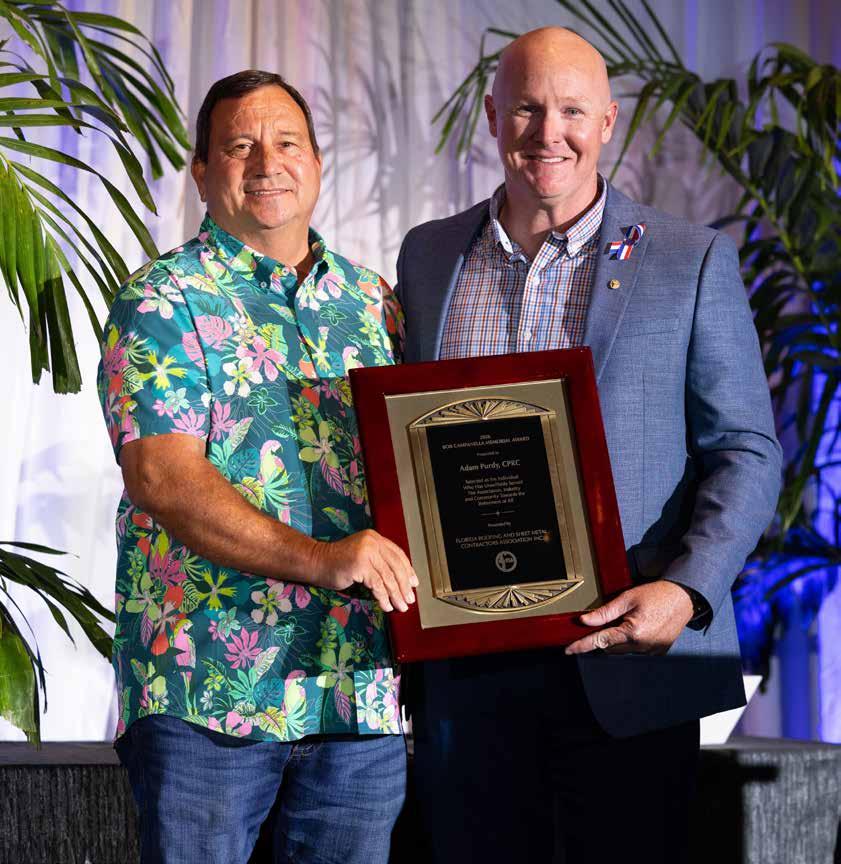
Adam Purdy, CPRC Honored With Campanella Award
FRSA’s highest honor is the Bob Campanella Memorial Award, which is presented each year to the FRSA member who is deemed most worthy of recognition for service to his or her community, the Association and the industry. The award was initiated in 1965 by the St. Petersburg Roofing and Sheet Metal Contractors’ Association as a memorial tribute to the late Bob Campanella, owner of Ace Roofing Company, St. Petersburg.
The award was presented during the Casino Party held at the Convention. The 2025 Campanella Award recipient, Charlie Kennedy, Gainesville Roofing & Co. Inc., had the honor of leading the presentation.
For those who are not familiar with our Campanella Award tradition, here are a few details: suggestions are taken from the membership and submitted to a committee of the five previous Campanella Award recipients, who select the winner each year. We don’t announce the name of the chosen recipient at the beginning of the presentation – instead we provide details about them and their service to the industry. You’ll also notice members in the audience trying to figure out who we’re talking about and the best part is when it dawns on the recipient that we’re speaking about them.
Adam is a dynamic individual – you know the type of person that everyone likes and enjoys being around. He radiates positive energy, has an upbeat personality, always has a smile on his face and is naturally funny. When he was younger, Adam was a hard worker and spent summers in the roofing industry at the company he now owns. It wasn’t always an easy job working his way to the top, but the journey was worth it. Luckily, Adam had a good mentor and support system through his uncles: Rick Edwards and FRSA Past President, Life Member and Campanella Award recipient, Bob Purdy, CPRC. Part of that mentoring process was being involved with FRSA, serving on committees and volunteering when needed.
Adam grew up in Slidell, Louisiana and is the middle of three children. His Cajun heritage was instilled in him by his grandfather, who he called Apple. "Grandfather" in Cajun is "Pear" but, as I mentioned, Adam has a great sense of humor. Apple taught him many things – how to hunt and shoot guns, how to fix motors and how to drive johnboats to go fishing and crabbing. It was during these years that he developed his love for the outdoors.
He was a chubby, freckled faced kid who enjoyed spending his summer breaks with his uncle’s family in Pensacola. He was an avid swimmer and learned to
surf with his cousins. By the age of 14, he received his scuba diving certification. He was also class president in high school and one of those easy-going people that everyone wanted to be friends with.
Swimming was his true passion. I’ve heard that he swam across Pensacola Bay – a three-mile trip. He still swims three days a week and even participates in senior competitions.
That passion for swimming earned him a scholarship to Washataw Baptist University in Arkansas where he majored in Business. He remained competitive all through college and went with a group of Christian surfers to Costa Rica.
While at college, he met the love of his life, although she had to introduce herself to him three times before he remembered her. They have been married for 21 years and have five beautiful children – George, Lincoln, Vail, Via and Lizzie. They always knew that they wanted four children and had planned to have a few of their own and adopt others. But God had other plans for them and they ended up adopting first. When their first child was seven years old, they became pregnant with a set of twins and a few years later had another child. A couple years ago, they adopted again, completing their family. I hear the joke is that he drives a large van the size of a school bus, toting his family around.
After completing college, he worked for a year in his uncle’s roofing company. He then left and moved
Charlie Kennedy and Adam Purdy, CPRC
to Arkansas to work for his father-in-law. After living in Arkansas for a year, Adam and Tracy decided to move back to Florida where they felt they needed to be. He went to work with his uncle’s company, Edwards Roofing Company Inc. and worked his way up, becoming an estimator and project manager. After about 10 years, Adam was ready to take over the business and in 2015, bought the family business from his uncles. He is now the fourth-generation owner of a roofing company that is celebrating its 96th year in business.
Adam has served as the chair for the Governmental Affairs Committee, the Educational Foundation and
the Self Insurers Fund. He is also an Endowment Governor. He was FRSA President in 2020, when his theme was "One Roof" and he is one of only 42 members to hold the designation of Certified Professional Roofing Contractor.
FRSA congratulates Adam Purdy, CPRC as the 2026 Campanella Award recipient!
FRM
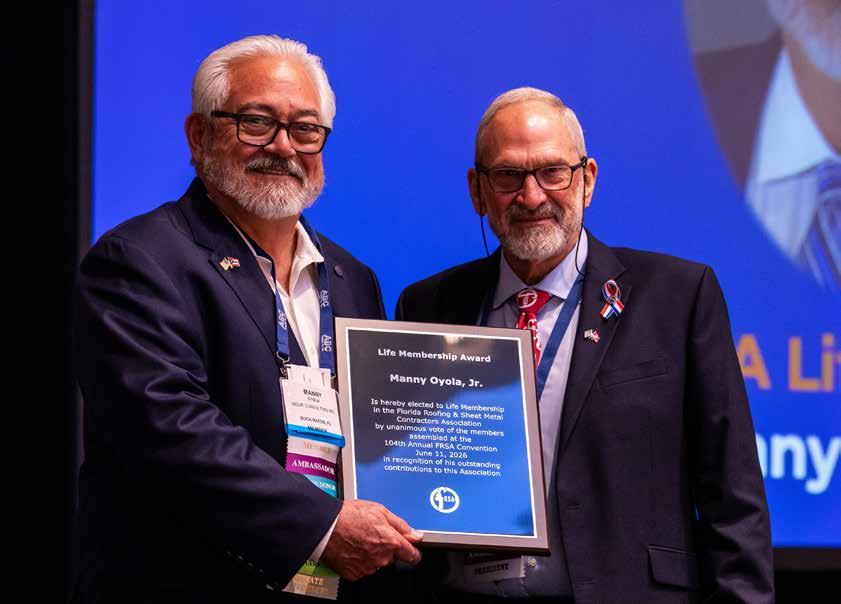
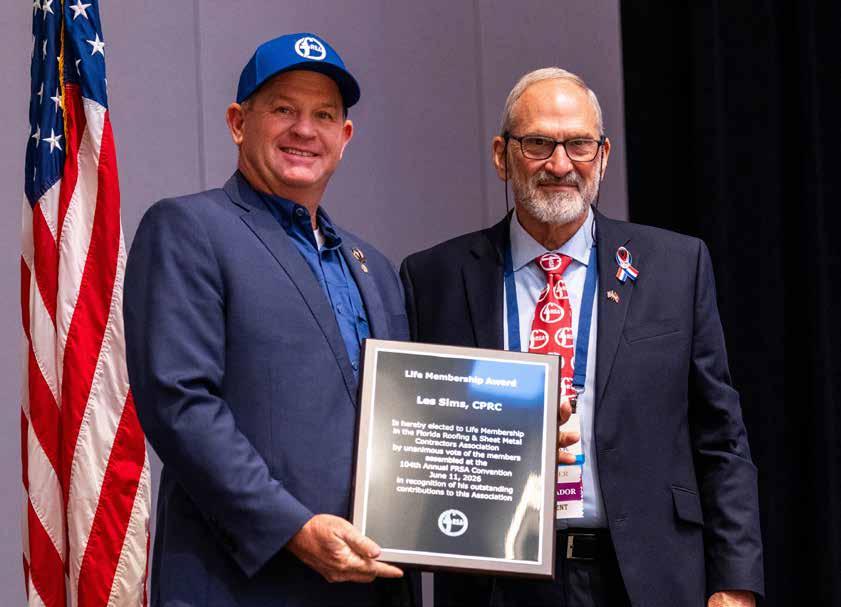
Oyola and Sims Receive Life Membership
Each year, the FRSA Nominating Committee, which is made up of the past five active Presidents, selects FRSA members in good standing for Life and Honorary Membership. To qualify for Life Membership, a person must have been an FRSA President and a member in good standing for 25 years.
Manny Oyola started his roofing career in the family business in New York, where he was working with his father, cousins and uncles. He relocated to Florida and in 1982 became a licensed registered roofing contractor and started his own company in South Florida. At the time, he was the youngest licensed registered roofer in Broward County.
In 2007, Manny went to work for Eagle Roofing Products as the Technical Manager Eastern Region Florida and retired last year after 44 years in the industry. He now consults with FRSA as Technical Advisor and seminar instructor and is owner of MOJR Consulting. Manny serves on FRSA’s Codes Subcommittee, Governmental Affairs, Codes, Advisory and Convention Committees, Worker Training Subcommittee, is a Trustee for the Educational Foundation and is a member of the FRSA Board of Directors.
He is an FRSA Honorary Member and has received the Bieler “Enthusiasm Gets it Done Award” and the Earl Blank Memorial Heart Award. As FRSA President in 2025, his theme was “Our Legacy of Sharing Roofing Knowledge.”
Les Sims, CPRC began working for Armstrong Roofing Incorporated, Palatka, after returning home from the military in 2000. He met a young lady whose father owned the company and hired him as a laborer. As positions opened up, he climbed the ladder and eventually became owner and President. Les is a state licensed certified roofing contractor.
Since beginning at Armstrong Roofing, Les has been active on FRSA’s committees. He has served as chair of the Educational Foundation Endowment Board of Governors, is a Trustee for the Foundation, is a member of the Governmental Affairs and Advisory Committees and is on the FRSA Board of Directors. Les also serves as a Trustee for BrightFund. He was FRSA President in 2024 and his theme was “Roofing is Our Heritage, Quality is our Tradition.”
FRSA congratulates Manny Oyola and Les Sims, CPRC on receiving Life Membership!
FRM
Manny Oyola, Jr. and Tibor Torok
Les Sims, CPRC and Tibor Torok
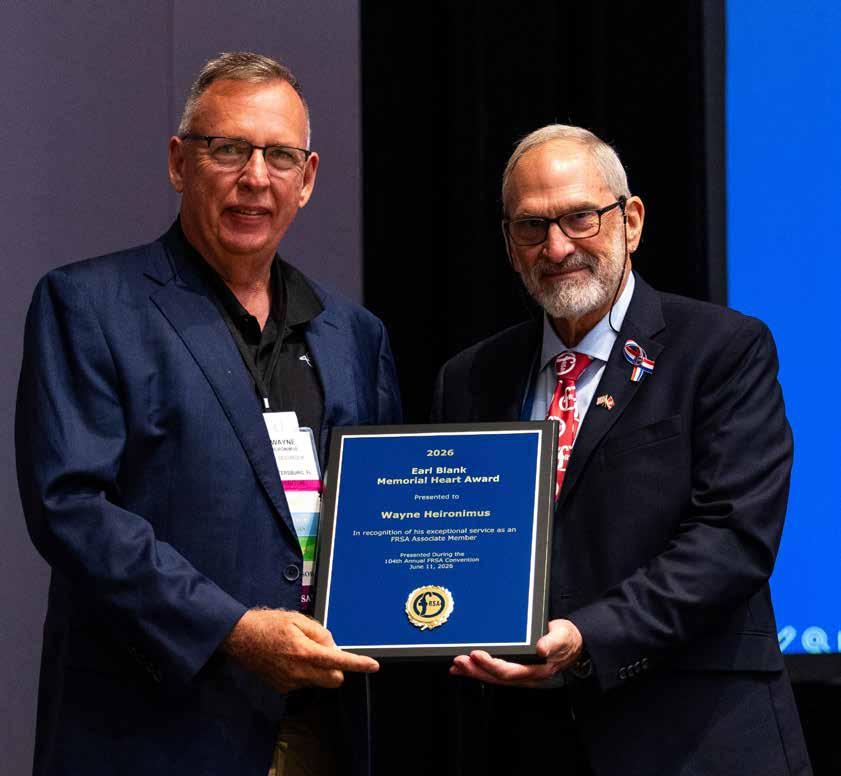
Wayne Heironimus Receives Heart Award
FRSA has a rich history of members who have gone above and beyond to establish and build the heritage and success we share today. A few of those members have awards named after them, including Earl Blank, former owner of B & F Supply, Daytona Beach. Earl came from one of FRSA’s founding families, served tirelessly for the industry and established himself as a leader, volunteering countless hours for the betterment of all.
The Earl Blank Memorial Heart Award is presented annually to an FRSA Associate member who exemplifies the traits of Mr. Blank and his work in the industry: dedication and respect for his customers and competitors alike.
Wayne Heironimus is an individual who follows in those same footsteps. He serves on FRSA’s Membership and Governmental Affairs Committees, Affiliate Council and the Worker Training Subcommittee, where he worked on the new worker training manual – Introduction to Roofing Technology.
His positive energy and good humor flow into the committees that he serves on. Wayne has been instrumental in re-engaging his local Affiliate and shares successful ideas with the Affiliate Council and other members to re-engage their chapters. He’s the driving force behind the West Coast Roofing Contractors
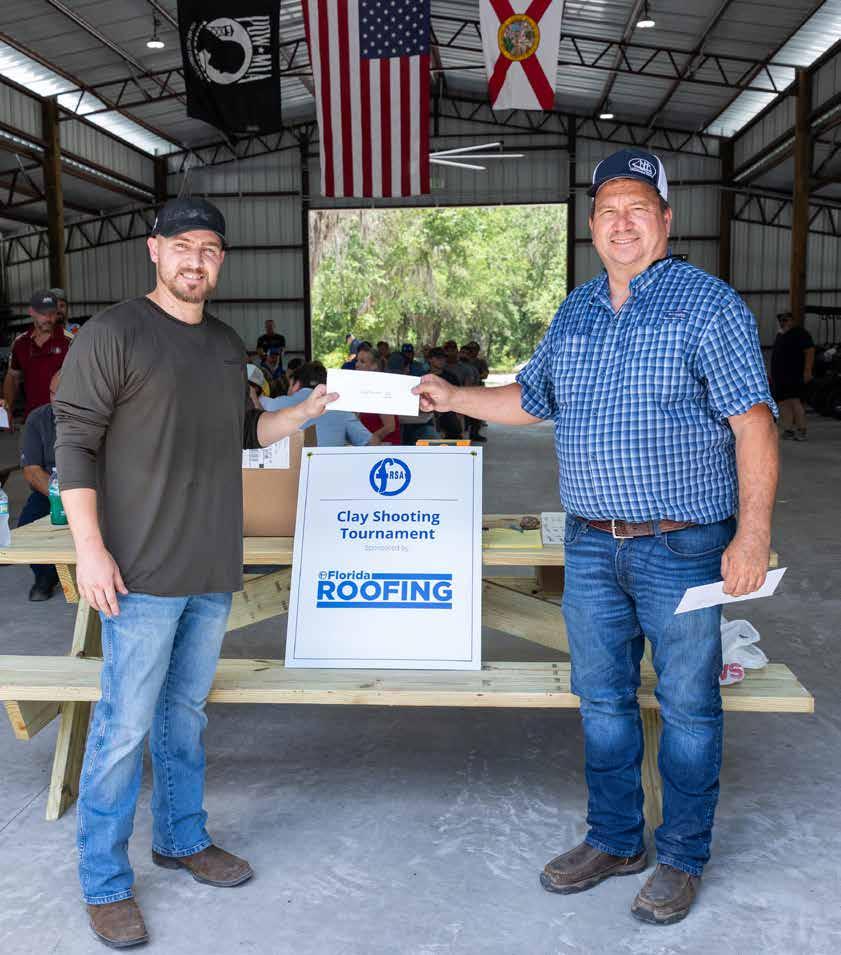
Association (WCRCA) Clay Shooting Tournament benefiting the Black Dagger Military Hunt Club.
For all that he has achieved, FRSA congratulates Wayne Heironimus, Delta Rep Group, St. Petersburg, as the 2026 Earl Blank Memorial Heart Award recipient!
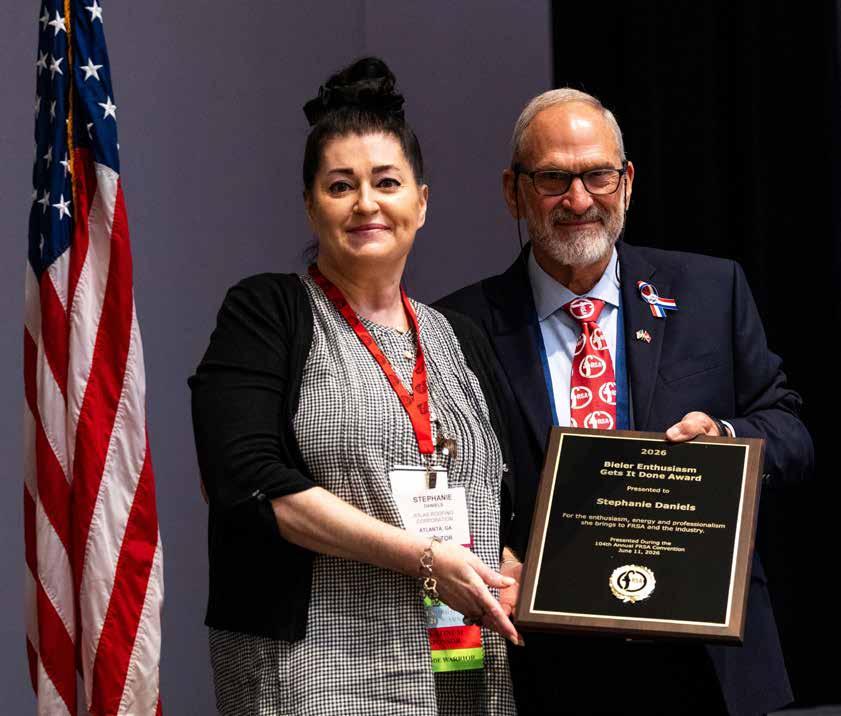
Stephanie Daniels Bieler Enthusiasm Award Recipient
Bill Bieler was an extremely enthusiastic and active member of FRSA during the 1990s. His brand of enthusiasm was one you couldn’t miss – always volunteering to lead whenever needed. In fact, Bill is the reason we have an Auction, which originally served to raise funds for FRSA’s Political Action Committee.
Stephanie Daniels shares that same contagious enthusiasm. In 2012, FRSA started the S.T.A.R. Awards, the Spotlight Trophy for the Advancement of Roofing, and she stepped up to help establish the categories and qualifications for each. Stephanie went on to serve as emcee and presenter for the S.T.A.R. Awards for many years.
She has chaired and served on many FRSA committees, including the Convention, Codes and Governmental Affairs Committees and the Codes Subcommittee. Her industry knowledge and professionalism have served us well. In addition, Stephanie’s insight and experience as an exhibitor have assisted the Convention Committee and staff in planning future Conventions, for which we are grateful.
In 2014, Stephanie earned the Earl Blank Memorial Service Heart Award.
For her continued support and leadership, Stephanie Daniels was awarded the 2026 Bieler "Enthusiasm Gets it Done" Award. FRSA congratulates Stephanie Daniels, Atlas Roofing Corporation!
Wayne Heironimus and Tibor Torok
Stephanie Daniels and Tibor Torok
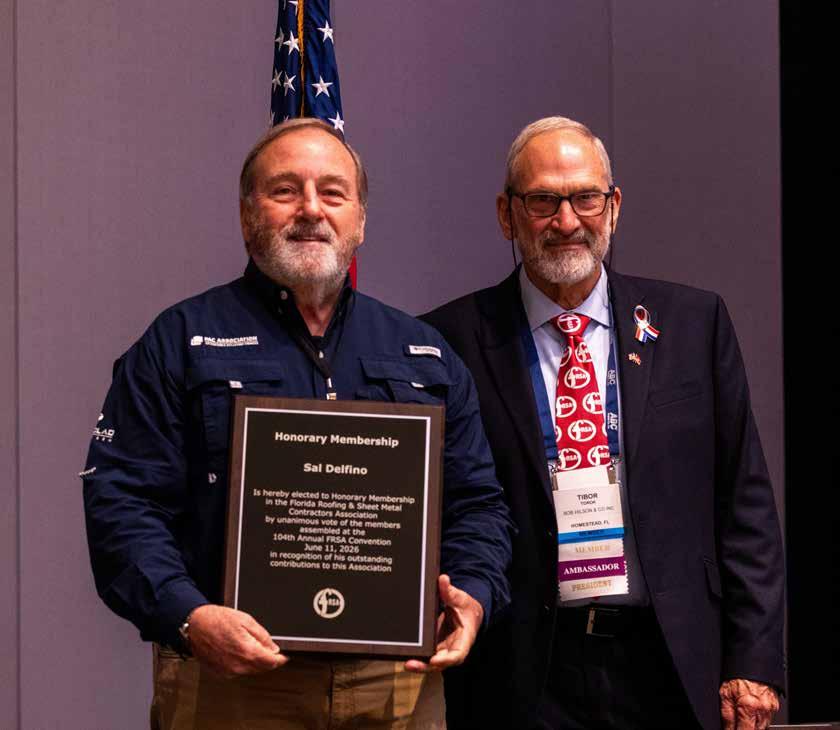
Sal Delfino Awarded Honorary Membership
Honorary members are recognized for their significant contributions to FRSA and the industry and are selected by FRSA’s Nominating Committee based on suggestions from the membership.
This year’s recipient is Sal Delfino, a long-time member and industry advocate. He has been involved as an FRSA ambassador over the years in a quiet, effective manner. Sal is truly one of our most valuable players behind the scenes and is always ready to volunteer.
Professionally, he has led an interesting life in the roofing industry. Sal started working construction with his father in New York as a young man and then moved to Florida and built his own metal roofing company from the ground up. He sold that business and he now reps for one of the industry’s largest metal manufacturers.
Sal currently serves on several FRSA committees including Codes, Codes Subcommittee, Governmental Affairs and Convention and also serves as a Director on the FRSA Board. He is a faithful attendee of Florida Building Commission and Roofing TAC meetings and is a state licensed certified roofing and general contractor.
Sal has earned the “Enthusiasm Gets it Done Award” and the Charlie Raymond Membership Award several times.
the
that
brings to all FRSA functions and the positive approach he exhibits in all his interactions with the Association and the industry, FRSA congratulates Sal Delfino, PAC-CLAD | Petersen Aluminum Corp., on his Honorary Membership!
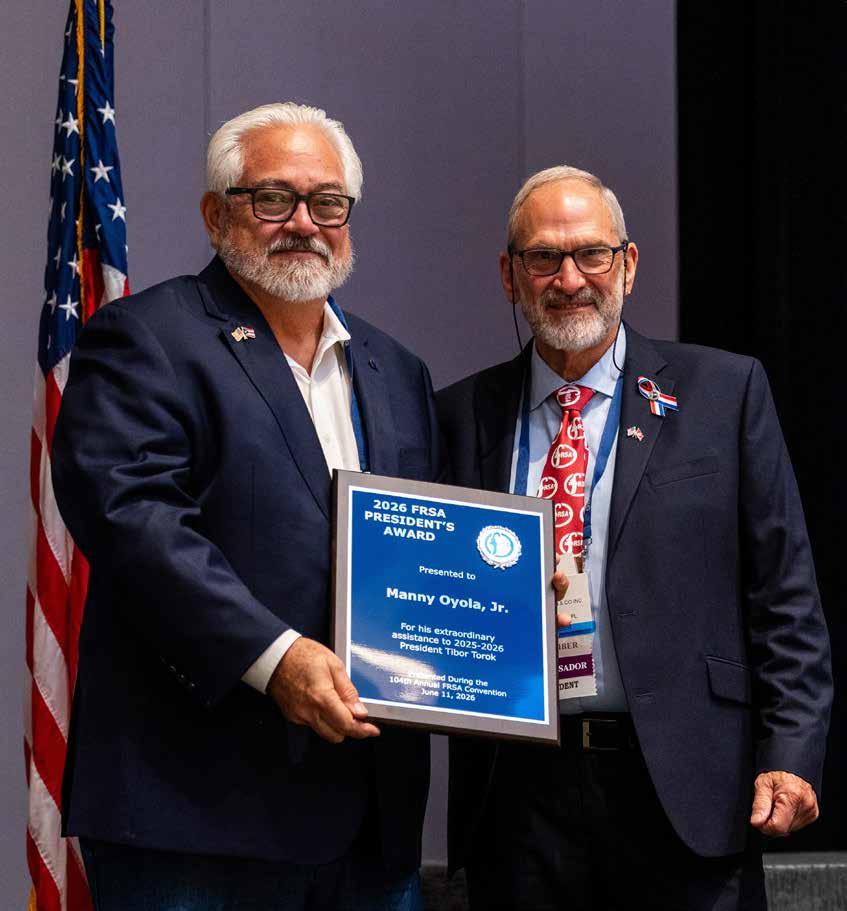
Manny Oyola Receives President’s Award
The President’s Award was created so the FRSA President could recognize someone special who has assisted them during their term.
When asked why he selected Manny for the award, FRSA President Tibor Torok commented, “From the time I came on the Executive Committee, Manny Oyola has been there whenever I’ve had a question or wanted to bounce an idea off someone. He’s supported me and my ideas over the past five years. I’m thankful for his support and friendship.”
Torok continued, “When you’re elected to the Executive Committee, you come on the committee with what you think you know about FRSA. As you move through the chairs during your five-year commitment, you learn so much more about the organization and the industry and all the moving parts that come together. You connect with incredible people who understand the process and offer insight and support. That’s what makes this organization so successful –members sharing their experiences and knowledge and working for the betterment of the industry. Manny is one of those people.”
FRM
For
dedication
he
FRM
Sal Delfino and Tibor Torok
Manny Oyola, Jr. and Tibor Torok
Foundation Auction Raises More Than $36,000 to Benefit the Industry
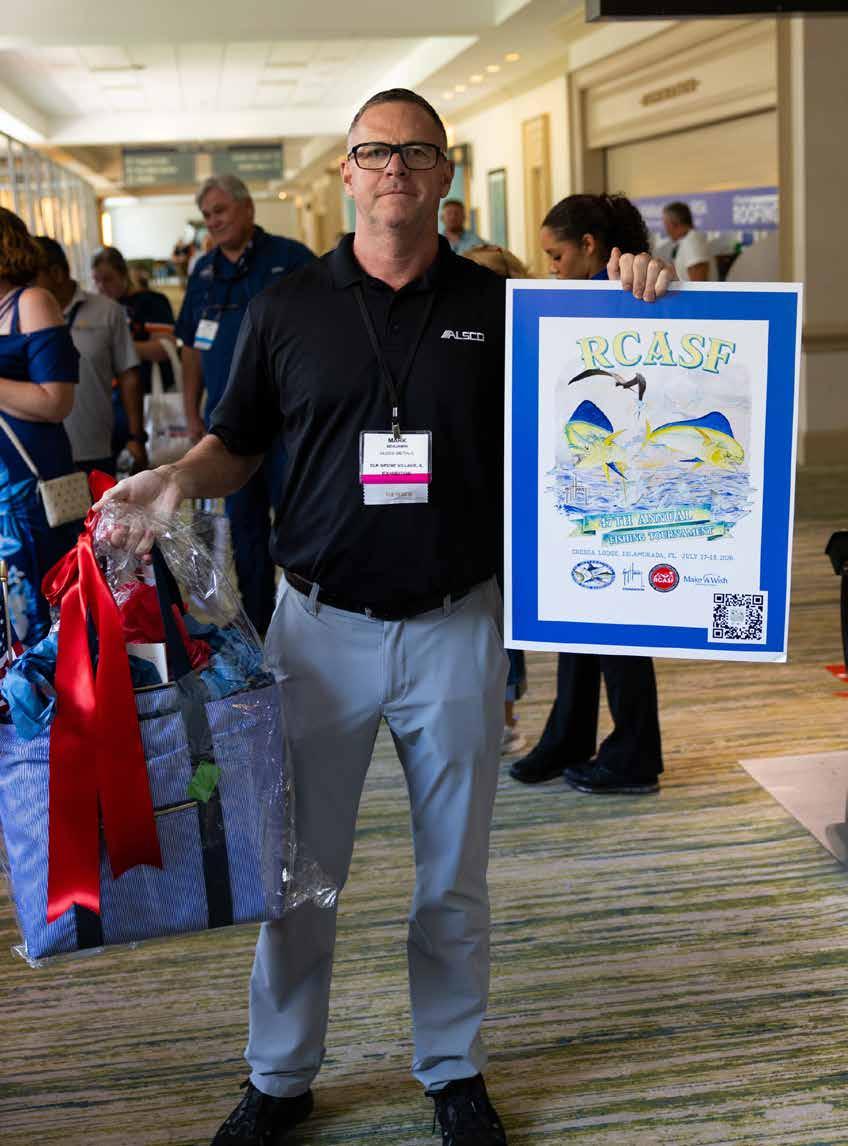
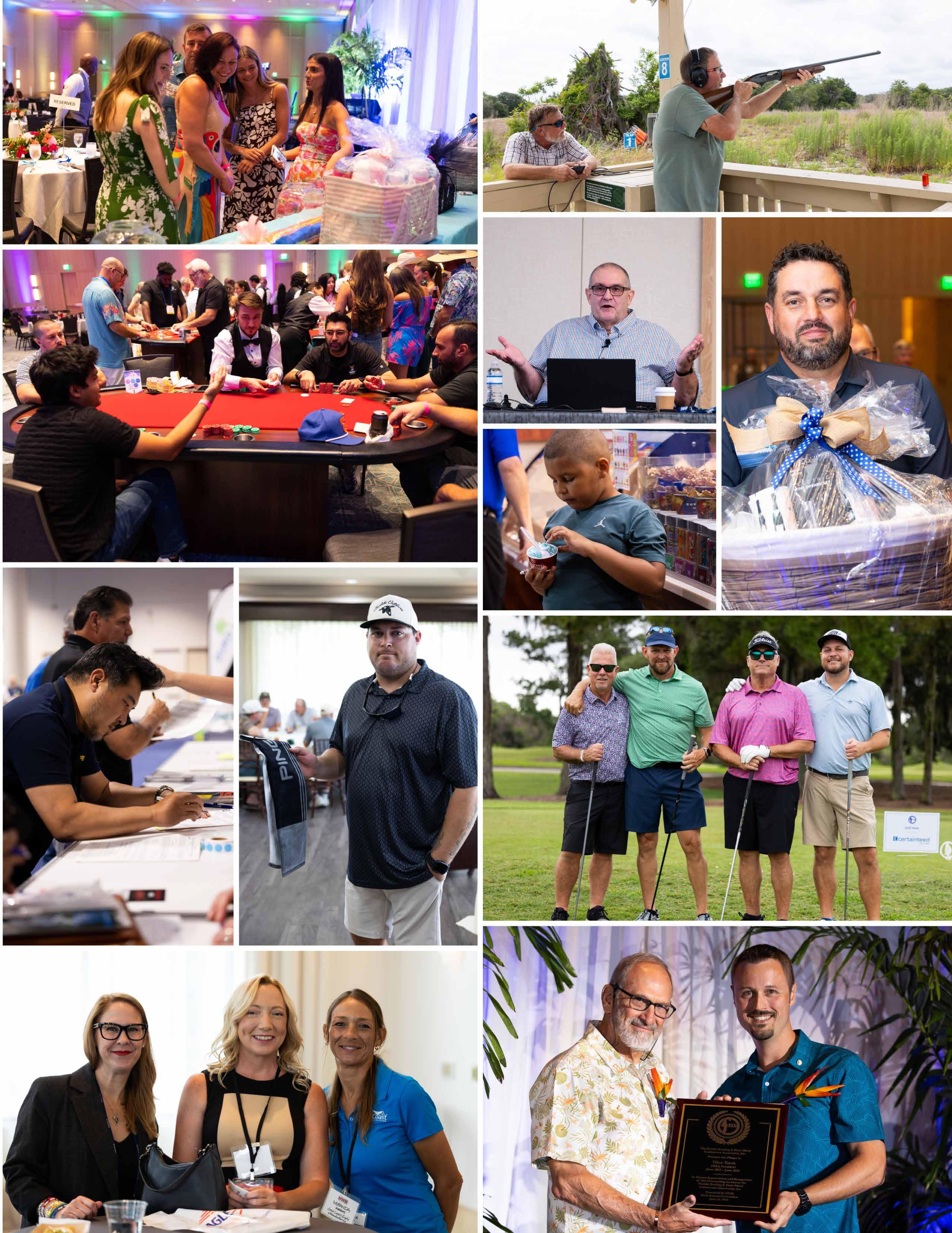
From Eagle Roofing Products’ pallet of Eagle Armor underlayment to RCASF’s fishing tournament registrations and hotel stay, the rock-and-roll-themed whiskey basket honoring the Allman Brothers and the Zavair AR-10 hunting rifle, this year’s Foundation Auction featured a wide variety of unique items and great bargains on industry products and services donated by members and exhibitors. Thanks to the donors and
1905 Family of Restaurants
All Points Tile & Slate
Benihana
Bok Tower Gardens
Brevard Zoo
BrightFund
Butterfly World
Carlisle SynTec Systems
Celebration Golf Club
CentiMark Corp.
CertainTeed LLC
Certified Contractors
Network
Chipotle
Clearwater Threshers
Cleary Inspection Service
Wesley Cone
Cooper’s Hawk Winery & Restaurants
Costco Wholesale
Trent Cotney
Crayola Experience
CRS Commercial Roofing Supply
Drexel Metals
Duro-Last
Eagle Roofing Products
George Ebersold
Estimating Edge
Elevate
FG Building Products
Florida Everblades
Florida Roofing Magazine
Foxtail Coffee Co.
Frost Museum of Science
FRSA Ladies’ Committee
Gaco
GAF
Gainesville Roofing Inc.
Gibraltar Building Products
gorjana
Gulfeagle Supply
Guy Harvey Resort
St. Augustine
Island H2O Water Park
Jacksonville Icemen
Jacksonville Jumbo
Shrimp
K1 Speed
KARNAK Corp.
Kennedy Skylights and Solar Ventilation
Kennedy Space Center
Visitors Complex
Lion Country Safari
Marlow’s Tavern
METALCON
MFM Building Products
Mission Resort & Club
Naples Zoo at Caribbean Gardens
Ocean Breezes Design
OMG Roofing Products
Orlando Family Stage
Orlando Science Center
Orlando Shakes
Orlando Solar Bears
Owens Corning
Manny Oyola, Jr.
PAC-CLAD | Petersen
Progressive Materials
RCASF
Rodizio Grill
Roof-A-Cide
Roofers Coffee Shop
San Sebastian Winery
Sherwin Williams
Shoot Straight
Mike Silvers, CPRC
SOPREMA
St. Augustine Alligator Farms
attendees who bid on those items, the Auction raised more than $36,000 for the Foundation.
The Auction is the yearly fundraiser for the Foundation and supports scholarships, industry research and seminars. FRSA relies heavily on generous donors who make it all possible. Many thanks to the following donors:
Sun-Tek Skylights
TAMKO Building Products
Tarco
The Greystone Lodge on the River
The Tropics Boat Tours
Tijuana Flats
Topgolf
Toronto Blue Jays
Total Wine & More
TRUFAST
Urban Air Adventure Park
Verea Clay Roof Tile
Versico Roofing Systems
Walt Disney World Golf
Wheeling-Nippon Steel
WonderWorks Orlando
ZooTampa at Lowry Park
A Roofing Perspective on the New FBC Corrosion Resistance Requirements
Mike Silvers, CPRC, Owner, Silvers Systems Inc. and FRSA Technical Director
As promised, I’m back with another update in a series of Florida Building Code (FBC) 9th Edition (2026) roofing-related code change articles. The new code will go into effect on December 31, 2026. As you’re reading this article, please note that new code language is underscored.
Among the most discussed code changes is one dealing with the corrosion resistance of fasteners used on structures that are within 3,000 feet of the “coastal shoreline,” which also has additional requirements when the structure is within 300 feet of the same line. We will discuss the location of this “coastal shoreline” a little later.
The change we’ll focus on here was made to Building, Chapter 17 – Special Inspections and Test, which created a new Section 1711 Corrosion Resistance-Saltwater Environments. The same information was added to Residential, Chapter 3 – Building Planning by creating Section R332. We will refer to the sections from Building here. Much of the change is covered in the referenced Table 1711.1 and its footnotes, as well as several related code sections that describe the different levels of corrosion resistance required.
To assist in explaining these changes, we have recreated the table below and then created three additional tables using color coding to help track the requirements. In the first three tables we added
highlighting to the Exposure Descriptions in the columns on the left. We also color-coded the level of corrosion resistance required in red or green text. See Table 1711.1 below.
The code sections that bring 1711 into Chapter 15 – Roof Assemblies and Roof Top Structure are in Section 1505 Materials in the following locations:
■ 1506.5 Nails
■ 1506.6 Screws
■ 1506.7 Clips
“Connectors and Metal Plates” are not referenced, so that column should not apply to roofing fasteners but may apply to roof-to-wall connectors.
Table 2 (page 40) indicates the “exposure” definition in the footnotes from Table 1711.1 that correlates to each of the Exposure Categories.
The column on the right side of Table 3 (page 40) correlates to each roof covering type in Chapter 15 and which fasteners are appropriate for the Exposure Description.
We applied an appropriate analysis to assign specific fasteners in each of the appropriate exposures, which included reviewing not only the new code language but also the ICC 600 Document that the FBC changes were based upon (shown in the inset on page 44). They are also color-coded in the same manner as the other tables. The standard adds some additional
TABLE 1711.1
CORROSION RESISTANCE OF FASTENERS AND CONNECTORS
BUILDING LOCATION
Less than or equal to 300 feet from coastal shoreline
Exposure Description
Exterior-Partially Sheltered and Exterior-Open Exposed
Unconditioned Interior-Vented Enclosed
Unconditioned Interior-Unvented Enclosed
Screws, bolts, lag screws (including nuts and washers), nails and glulam rivets
Stainless Steel in accordance with Section 1711.1.1.1
Galvanized in accordance with Section 1711.1.1.2
Galvanized in accordance with Section 1711.1.1.2
Connectors and Metal Plates
Stainless Steel in accordance with Section 1711.1.2.1
Enhanced Galvanized in accordance with Section 1711.1.2.2
Standard Galvanized in accordance with Section 1711.1.2.3
Greater than 300 feet and up to 3000 feet from coastal shoreline
Screws, bolts, lag screws (including nuts and washers), nails and glulam rivets
Galvanized in accordance with Section 1711.1.1.2
Galvanized in accordance with Section 1711.1.1.2
Galvanized in accordance with Section 1711.1.1.2
Connectors and Metal Plates
Enhanced Galvanized in accordance with Section 1711.1.2.2
Enhanced Galvanized in accordance with Section 1711.1.2.2
Standard Galvanized in accordance with Section 1711.1.2.3
information on how to apply the exposure description. So how did we apply them?
Referencing Table 3, Exterior-Partially Sheltered and Exterior-Open Exposed (yellow), we looked primarily at the term exposed. Exposed means not concealed, displayed for viewing. Clearly, fasteners in through fastened metal panels and trim or other visible roof fasteners fit this description. Some examples of additional types of fasteners where this exposure would apply are exposed fasteners in coping, metal edge, counter flashing and vents.
For Unconditioned Interior-Vented Enclosed (green), we looked at fasteners that are inside a part of the building (the roof covering), that also vent to the
Exposure Description
Exterior-Partially Sheltered and Exterior-Open Exposed
Unconditioned
Interior-Vented Enclosed
Unconditioned
Interior-Unvented Enclosed
Exposure Description
Exterior-Partially Sheltered and Exterior-Open Exposed
Unconditioned
Interior-Vented Enclosed
Unconditioned
Interior-Unvented Enclosed
outside environment. So, fasteners that are under the roof covering but not encapsulated within moisture impervious roof membrane (referred to as "Sealed Overlay" in Table 3), such as concealed screws for metal panels and fasteners for attaching tile, clearly fit here. Shingle nails also fit this exposure category but the degree of corrosion resistance required is more complex and we’ll address this later.
For Unconditioned Interior-Unvented Enclosed (lavender), we looked at locations that are inside the building under the roof covering but are unvented and incapsulated within two layers of material with the upper being an exterior facing moisture impervious membrane.
TABLE 2
Exposure Definitions From Table 1711.1 Footnotes
Exterior-Partially Sheltered: Locations are areas where fasteners and connectors are exposed to salt air but not exposed to fresh rainwater to remove accumulated salt.
Exterior-Open Exposed: Locations are areas where fasteners and connectors are exposed to salt air, but also exposed to rainwater to allow rinsing of the accumulated salt, and also more likely to dry after rain
Unconditioned Interior-Vented Enclosed: Locations are those where fasteners and connectors inside a part of the building that also has vents to the outside environment that would allow salt air to enter
Unconditioned Interior-Unvented Enclosed: Locations are those that are inside the building, but not in the conditioned space
TABLE 3
Exposure Appropriate Roof Covering and Roof System Fasteners
Metal Panel Fasteners – Through Fastened Other Exposed Fasteners
Underlayment (Without Sealed Overlay)
Asphalt Shingle Nails
Clay and Concrete Tile Fasteners
Metal Panel Fasteners and Clips
Metal Shingle Fasteners
Slate Fasteners
Wood Shake and Shingle Fasteners
Photovoltaic Module and Shingle Fasteners
Roof-To-Wall Connectors in Unsealed Attics and Concealed Spaces with Vents
Underlayment (with Sealed Overlay)
Clay and Concrete Tile Anchor Sheet and Backnailing
Built-Up Fasteners
Modified Bitumen Fasteners
Single Ply Fasteners
Roof-To-Wall Connectors in Sealed Attics and Concealed Spaces without Vents
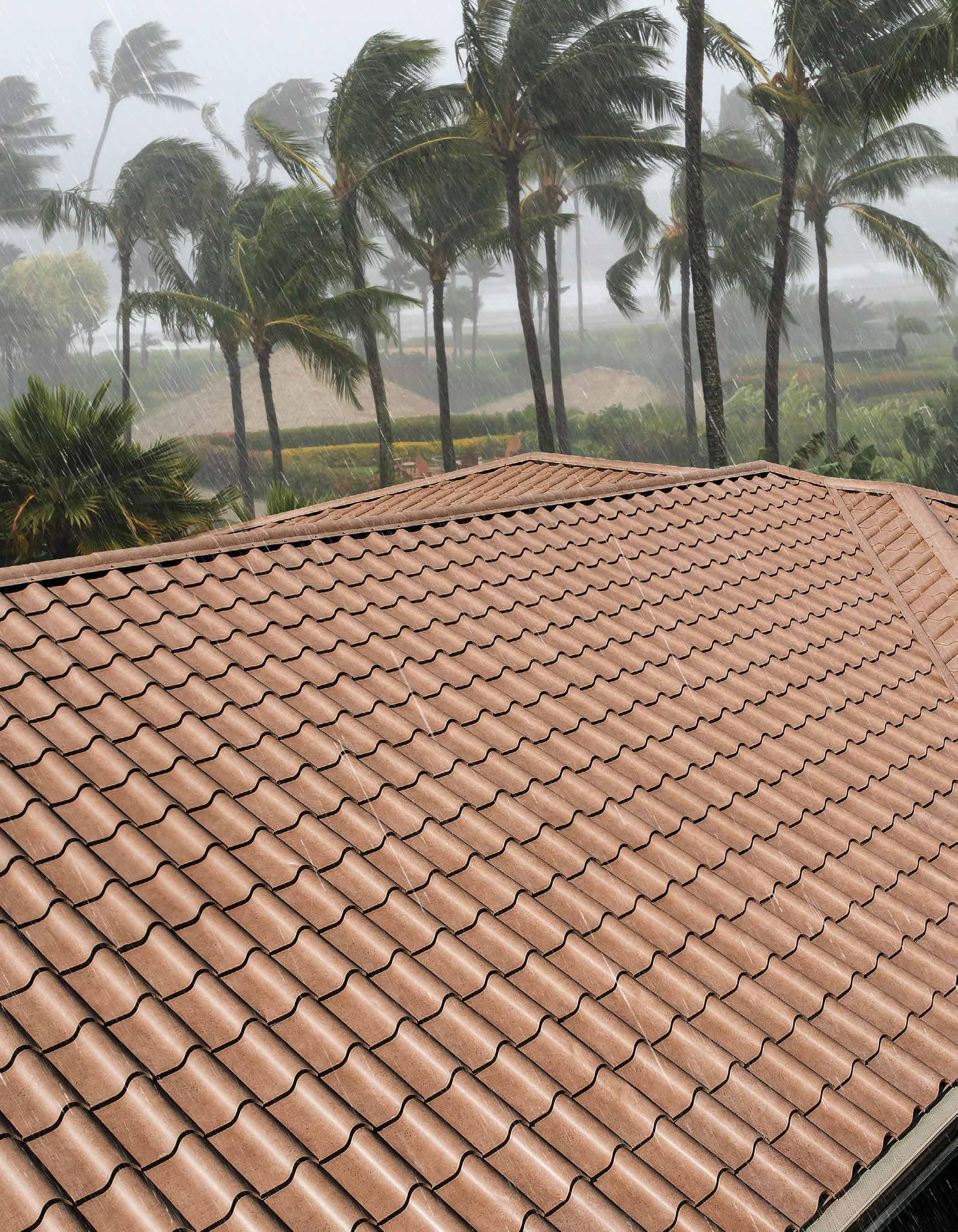
When a hurricane is on the radar, it’s already too late to prepare your roof. Protect your home before the storm with the attachment system trusted throughout Florida.
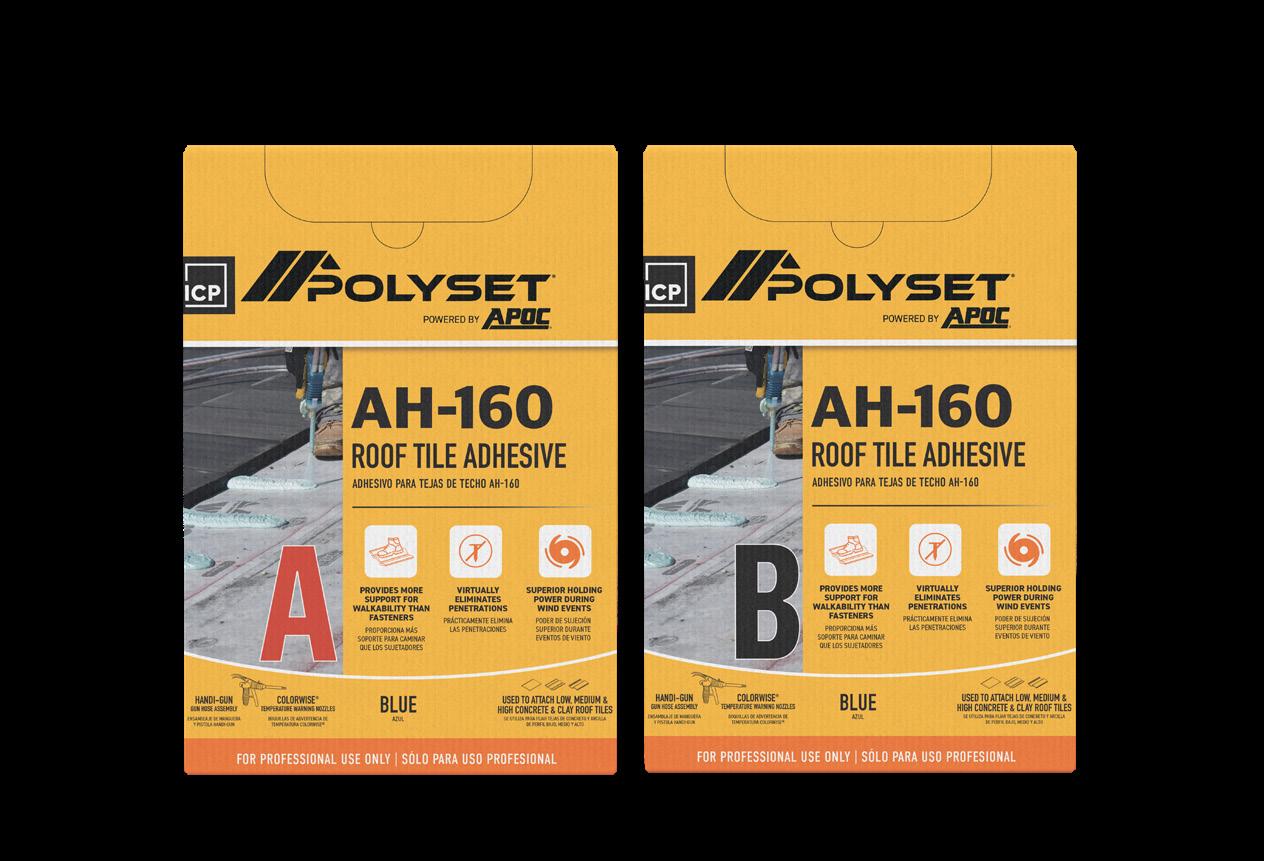
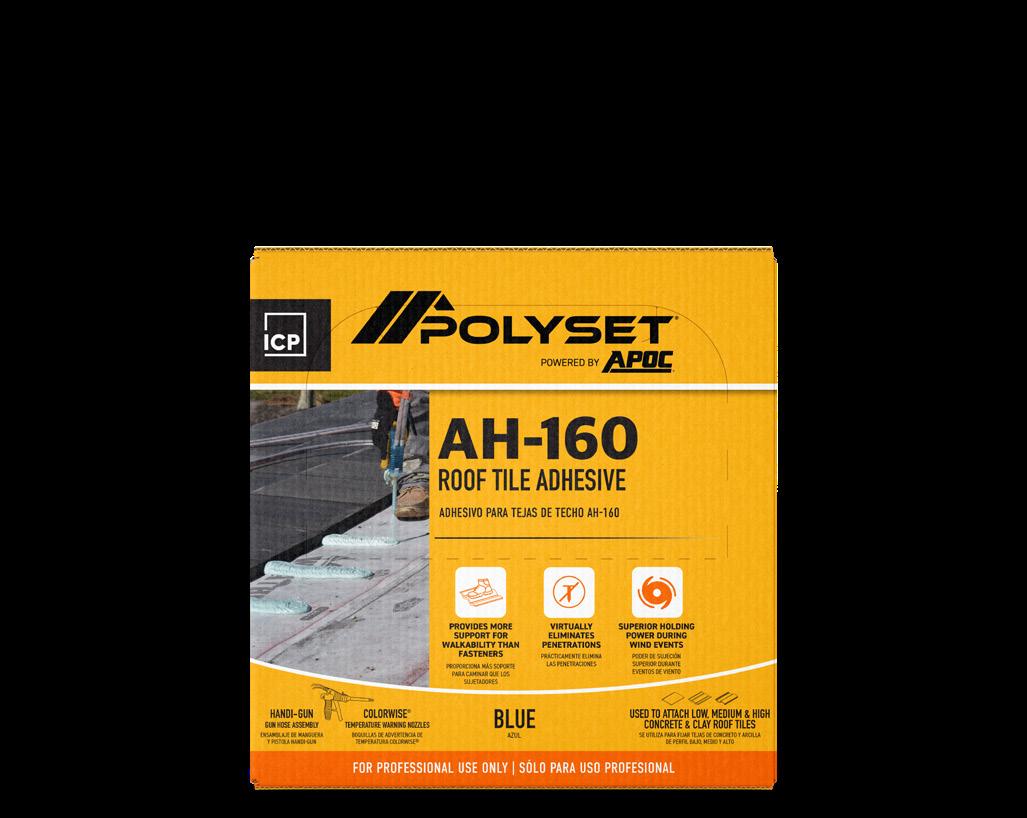
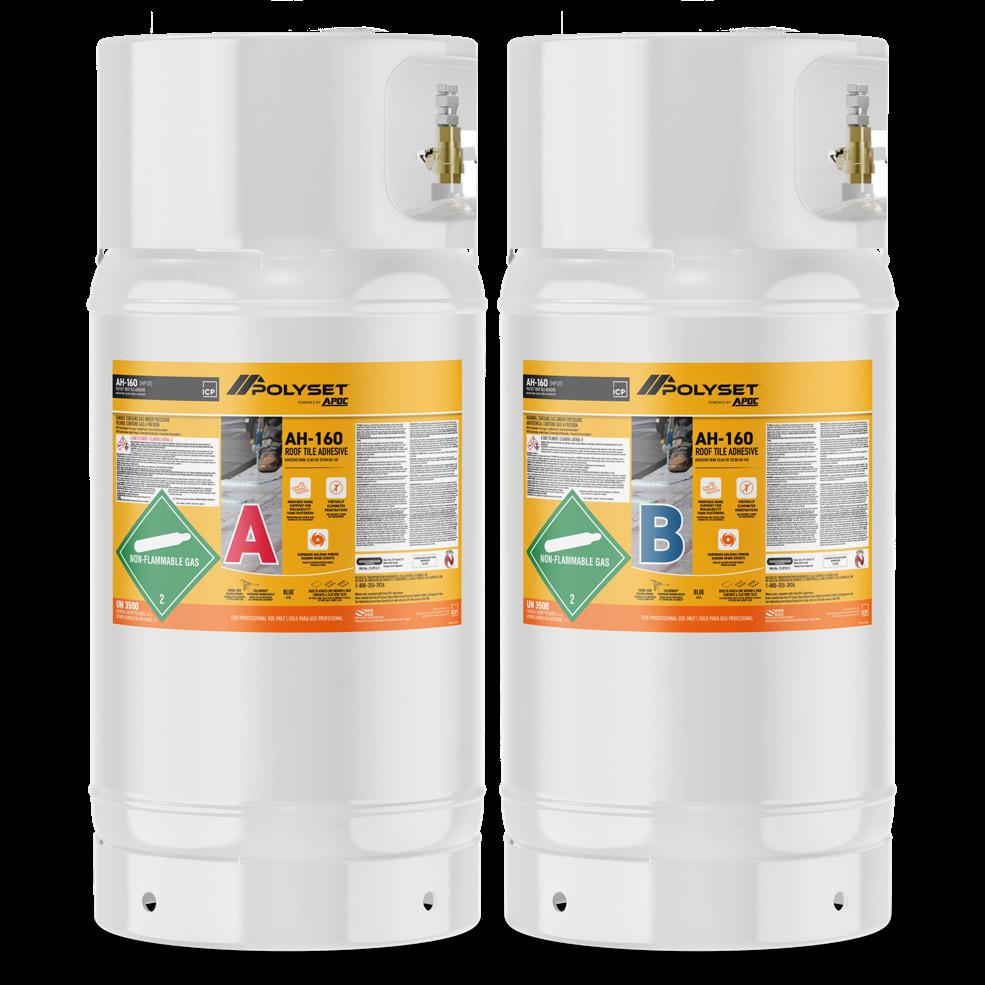
APOC® POLYSET® AH-160 ROOF TILE ADHESIVE
Designed for Florida’s toughest weather, AH-160 delivers:
Superior holding power compared to nails, screws, mortar, and wire tie systems
Virtually eliminates roof deck penetrations that can lead to leaks
Helps prevent tile damage and chattering in high winds
Provides added support beneath every tile
Florida Building Code Approved and Miami-Dade Approved
www.apoc.com | www.icpgroup.com info@icpgroup.com
From: Table 1711.1 Corrosion Resistance of Fasteners and Connectors
Screws, bolts, lag screws (including nuts and washers), nails and glulam rivets
Stainless Steel in accordance with Section 1711.1.1.1
Galvanized in accordance with Section 1711.1.1.2
Corrosion Resistance Requirements From: 1711.1.1.1 and 1711.1.1.2
1711.1.1 Screws, bolts and nails. Screws, bolts and nails shall be corrosion resistant by composition (stainless steel or nonferrous metal) or by coating or galvanization as specified in this section and Table 1711.1.
1711.1.1.1 Stainless steel. Where required by Table 1711.1 fasteners shall be manufactured from ASTM A240 Type 304, Type A305 or Type 316 stainless steel.
1711.1.1.2 Galvanized. Where required by Table 1711.1, fasteners shall be in accordance with the following:
1. For fasteners with diameters greater than 3/8 inch (9.5 mm), the minimum corrosion resistance shall comply with or be equivalent to ASTM A153, Class C.
2. For fasteners with diameters 3/8 inch (9.5 mm) and less, the minimum corrosion resistance shall comply with or be equivalent to one of the following methods:
2.1. ASTM A153, Class D.
2.2. ASTM A641, Class 3S.
2.3. Corrosion resistance exhibiting not more than 5 percent red rust after 1,000 hours of exposure in accordance with ASTM B117.
2.4. Corrosion resistance exhibiting not more the 5 percent red rust after 280 hours of exposure for nails, 1000 hours of exposure for roof tile fasteners or 360 hours of exposure for other carbon steel fasteners in accordance with ASTM G85, Annex 5.
Table 4 (above) links the two types of fasteners described (in red and green text) to the corrosionresistance requirements. The color of the text correlates with the colored text in Table 1711.1 on page 38. Note: A code modification through the glitch cycle may add “or Type 410” to the types of acceptable stainless steel.
These new code sections do not address nonferrous (e.g. copper, bronze, aluminum) or plastic fasteners, which are often referenced in the code, referenced standards, product approvals or in manufacturers installation instructions. The changes do create a minimum standard for ferrous fasteners used on structurers that fit the requirement’s parameters. What becomes clear in looking at this information is that the FBC’s existing corrosion resistance requirements for roofing fasteners are very robust and these new requirements will only change the fasteners needed in very few situations, primarily when buildings are in extremely close proximity to coastal saltwater locations. When your project is in these locations, in order to comply, make sure your selected fastener meets the appropriate requirements in 1711.1.1.1 or 1711.1.1.2; not every roofing fastener will.
Many galvanized shingle fasteners that are available to contractors for use beyond the 3,000-foot line may not meet these requirements. Until you can establish which specific fasteners comply, I suggest
that your purchase order for these projects clearly reflect that the galvanized fasteners comply with one of the methods shown in 1711.1.1.2, specifically parts 2.1 through 2.4. If not, then use stainless steel fasteners complying with 1711.1.1.1.
When reference standards like the FRSA-TRI Florida High Wind Concrete and Clay Tile Installation Manual 7th Edition have more specific and stringent requirements such as “fasteners shall be corrosion resistant meeting a minimum ASTM A641 Class 1 and/or corrosion resistance equal (according to ASTM B117)” those will apply. Similarly, when the code contains a more specific and stringent requirement like this one from a High Velocity Hurricane Zone RAS, it will still apply:
ROOFING APPLICATION STANDARD (RAS) No. 120-20
MORTAR AND ADHESIVE SET TILE APPLICATION
PART II—MATERIALS
2.01 Fasteners:
A. Tile Fasteners:
1. All roof tile nails or fasteners, except those made of copper, monel, aluminum, or stainless steel, shall be tested for corrosion in compliance with TAS 114 Appendix E, Section 2 (ASTM G85), for salt spray for 1000 hours. Tile fasteners used within 1,500 feet landward of the reach of the mean high tide shall be copper, monel, aluminum, or stainless steel.”
The information contained in this article is provided as a reference for those who are attempting to understand these new requirements. It was compiled with input from many industry stakeholders including the code modification proponent. The final decision on how these requirements will be interpreted will, of course, be made by the building official having jurisdiction based on the project’s location. The requirements may also be the subject of possible non-binding and/ or binding interpretations as well as the subject of possible declaratory statements. One declaratory statement that may already be under consideration asks the following question: When considering the application of Section 1711 within 0-3000 feet of a “…saltwater coastline, or other areas subject to salt corrosion,” does this mean the 0-3000 feet distance include distances from saltwater and brackish inland rivers and canals which originate from the coastline? As some of you know, we have been asking for a way
ICC 600-2026
Standard for Residential Construction in High-Wind Regions
American National Standard
Commentary:
to define this and similar lines referenced in the code for some time. If the code expects us to measure from something like a “coastal shoreline,” shouldn’t the code define where it is?
This is an evolving issue so please continue to read this column for updates. Despite some of the complexities that come with these changes, one should keep in mind that they were meant to address a real issue: the corrosion of important critical structural components in our coastal environment. If properly implemented, this can be accomplished without the degree of disruption that some are concerned about.
FRM
Mike Silvers, CPRC is Owner of Silvers Systems Inc. and is consulting with FRSA as Director of Technical Services. Mike is an FRSA Past President, Life Member and Campanella Award recipient and brings over 50 years of industry knowledge and experience to FRSA’s team.
Fasteners and connectors can corrode and lose load-carrying capacity where installed in corrosive environments or where installed in contact with corrosive materials. Salt spray from breaking waves and onshore winds significantly accelerates the rate of corrosion of metal connectors and fasteners. Corrosion resistance of fasteners and connectors can be increased by either using a corrosion-resistant material, such as stainless steel, or by applying a coating, which is usually galvanizing, but can also be a proprietary coating. Specific provisions are given in Table 504.3(1) for structures within 3,000 feet of a coastal shoreline. In other areas subject to salt corrosion, the requirements of Table 504.3(1) are applicable where similar salt corrosion hazard exists.
In some areas, based on climatic conditions, enhancement of corrosion protection beyond that required by Table 504.3(1) may be appropriate in areas between 300 and 3,000 feet of the shoreline. Further, corrosion of metal fasteners and connectors is not always limited to areas within 3,000 feet of the coastal shoreline. Research and field observations have shown that metal fasteners and connectors in some areas are subjected to increased rates of corrosion due to environmental, climatic or industrial conditions beyond just salt air. In these areas, materials with enhanced corrosion performance should be considered and may be required at the direction of the local building department.
Within a structure, different exposures can have different susceptibility to corrosion. These installation exposures are shown in Table 504.3(1). The installation exposures are broken down by their exposure to salt spray and their exposure to freshwater rain, which can rinse salt spray off the steel and reduce corrosion rates.
Exterior-Partially Sheltered exposures are areas where the steel is exposed to salt spray, but not exposed to fresh rainwater to remove accumulated salt. Examples of partially sheltered exterior exposures are open, under-house storage; parking areas below piling-, column- or post-supported buildings; and areas under roof overhangs, decks, screened-in porches and walkways.
Exterior-Open Exposed locations are areas where steel is exposed to salt spray, but also exposed to rainwater to allow rinsing of the accumulated salt, and also more likely to dry after rain. Examples of this exposure include exterior walls and some deck connections.
Unconditioned Interior-Vented Enclosed locations are those where the steel is inside a part of the building that also has vents to the outside environment that would allow salt spray to enter. Examples of interior vented enclosed exposures are ventilated attics, and rafter and floor cavities if vents are installed.
Unconditioned Interior-Unvented Enclosed locations are those that are inside the building, but not in the conditioned space. Examples of interior unvented enclosed exposures are enclosed areas such as wall cavities in exterior walls, enclosures surrounded by breakaway walls under elevated buildings and floor framing cavities created when finishes are installed on the underside of floor joists.
Due to the many variables present in coastal environments, the exact life span of steel fasteners and connectors cannot be easily predicted, so some program of routine inspection should be performed, with replacement of corroded elements if necessary. Further, enhanced corrosion resistance should be considered for fasteners and connectors that cannot be easily inspected or readily replaced in the future.
Made with 26-gauge steel and engineered to endure extreme weather, ProVia Metal Roofi ng systems are approved for use in High Velocity Hurricane Zones (HVHZ) , so you know they’re tough. The multipoint attachment systems and interlocking panels on our Shake, Slate, and Barrel Tile profi les are tested and certifi ed to resist wind uplift and wind-driven rain. The panels have a Class 4 Impact Rating, and the GalvaTec™ fi nish exceeds ASTM performance standards. Partner with ProVia for metal roofi ng systems built to withstand hurricane-force wind, rain, and hail. Learn more at provia.com/roofi ng-hvhz
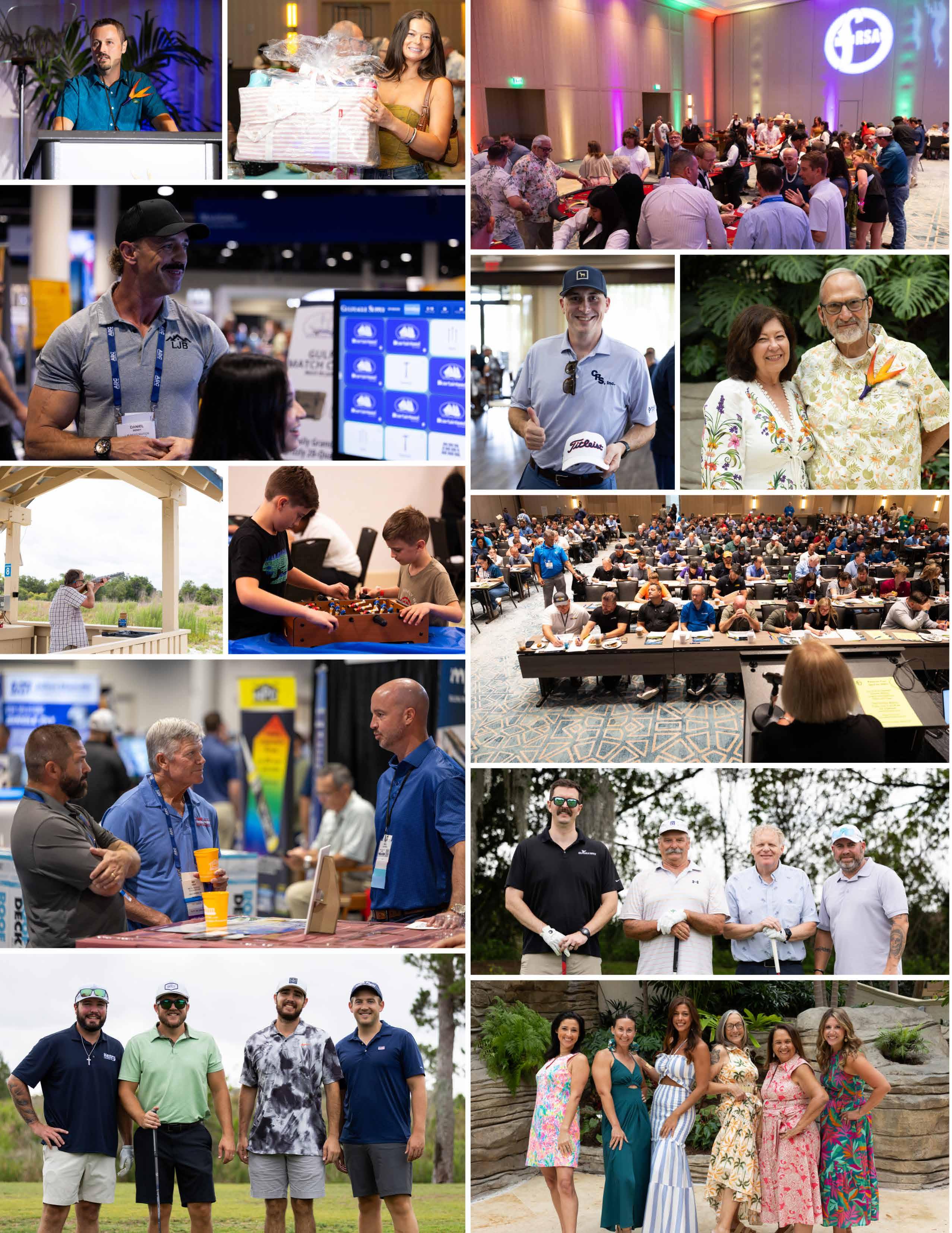
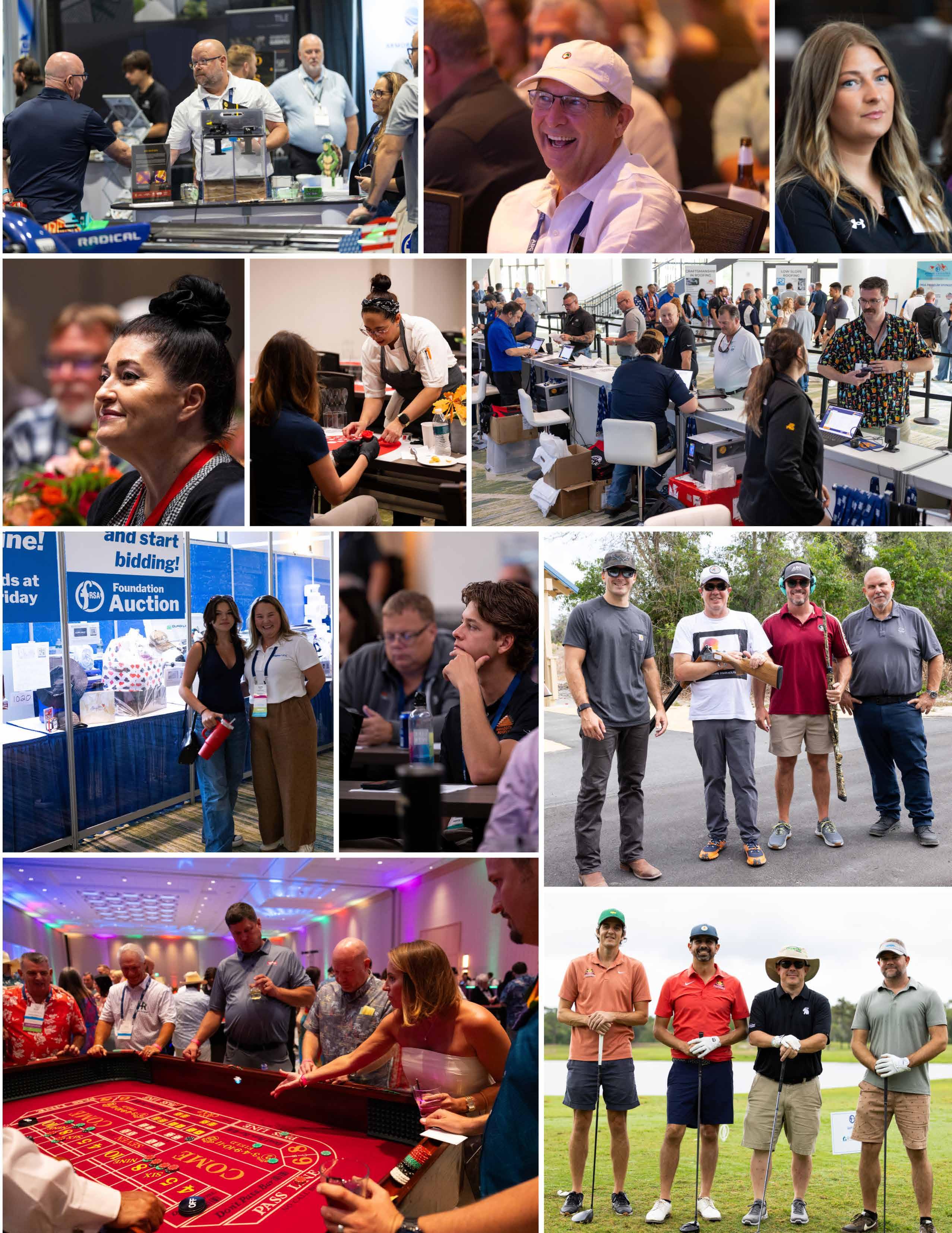
Convention Tournament Winners
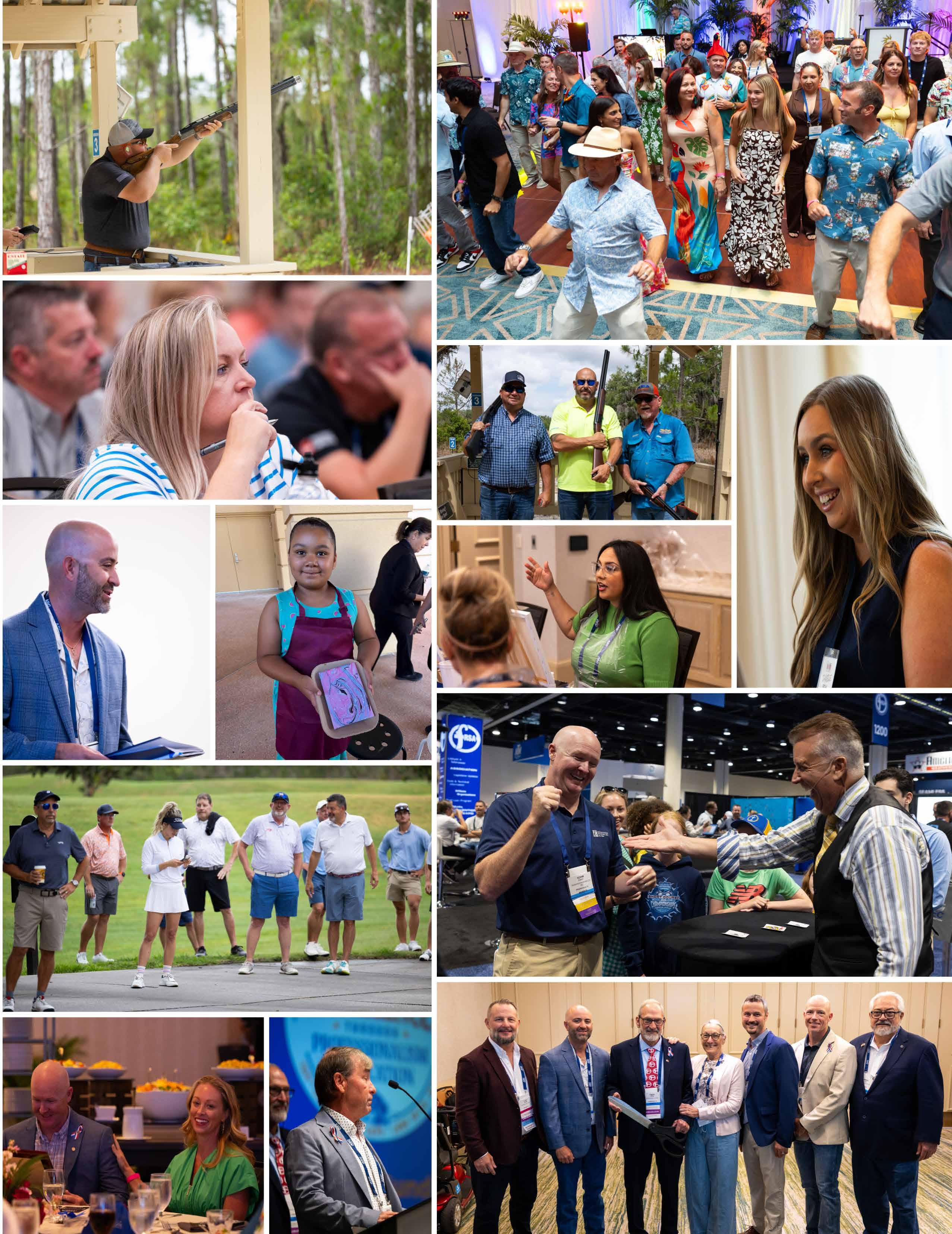
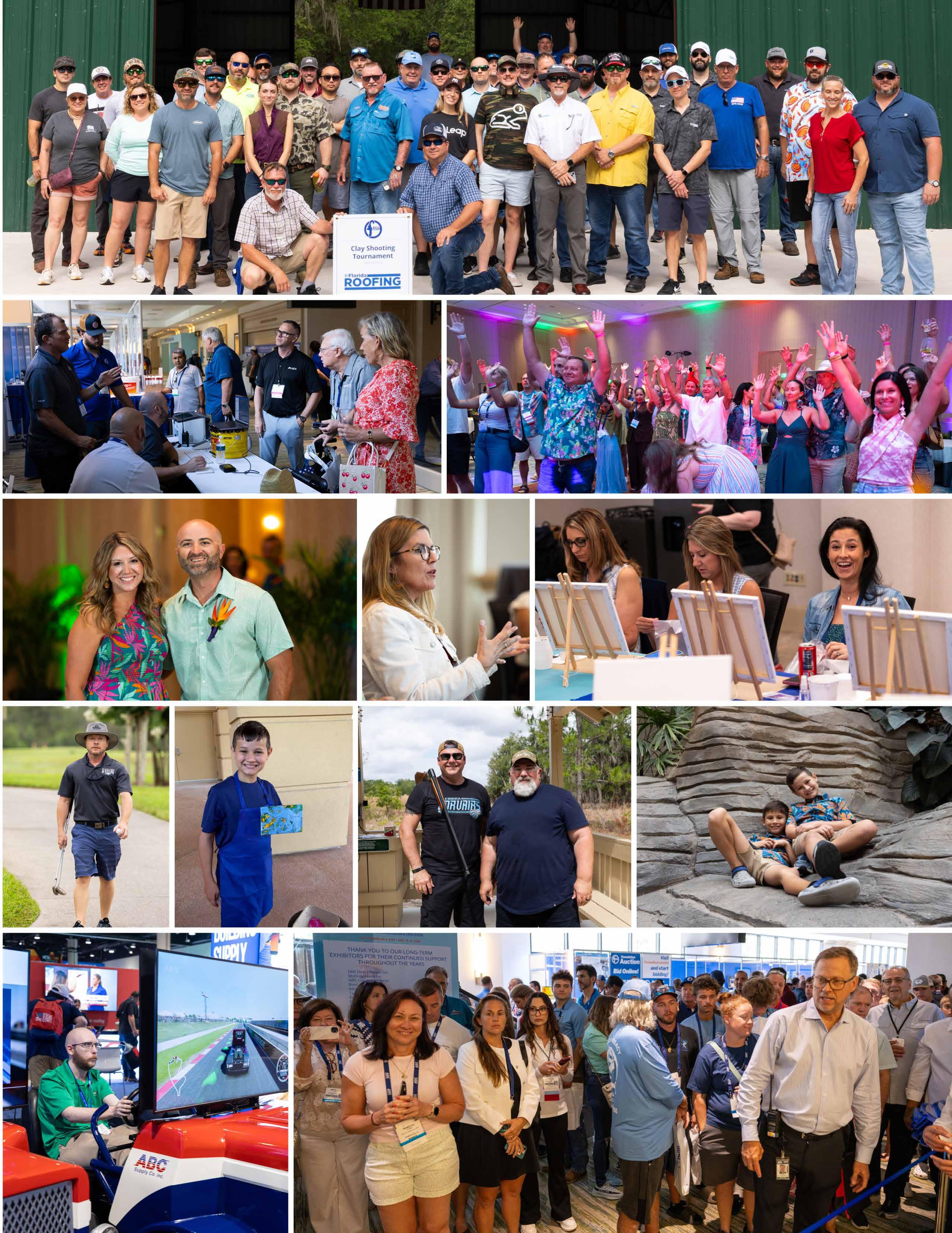
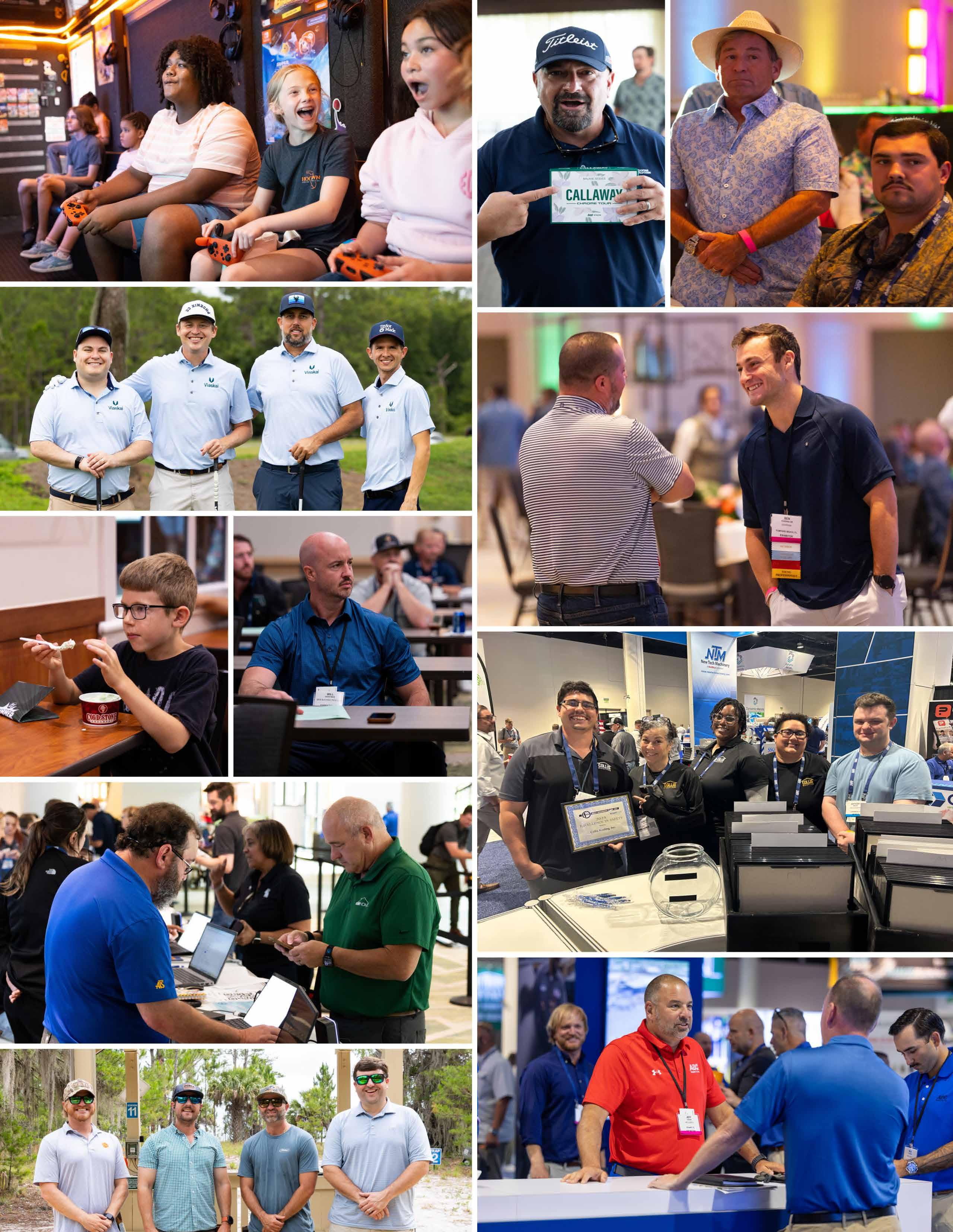
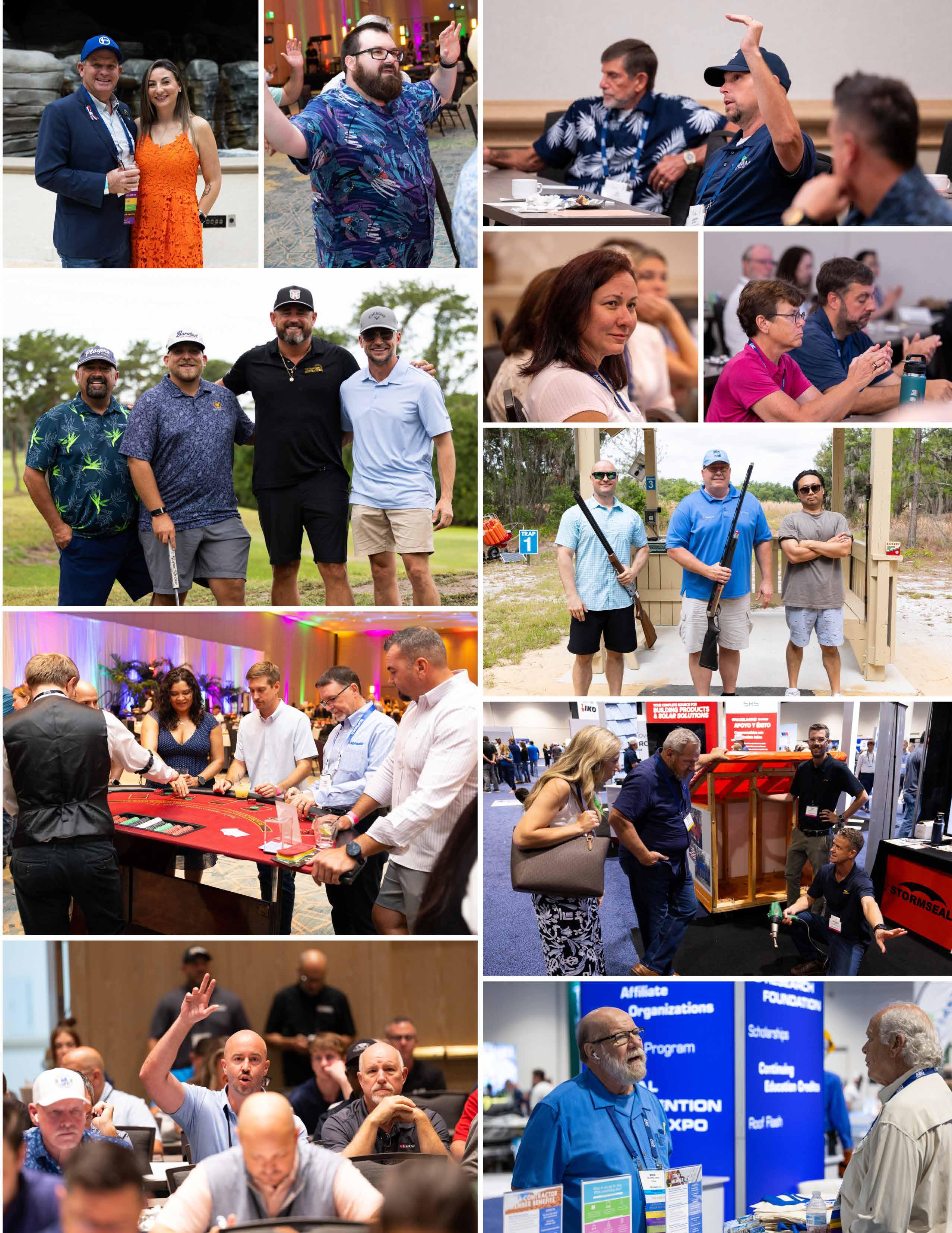
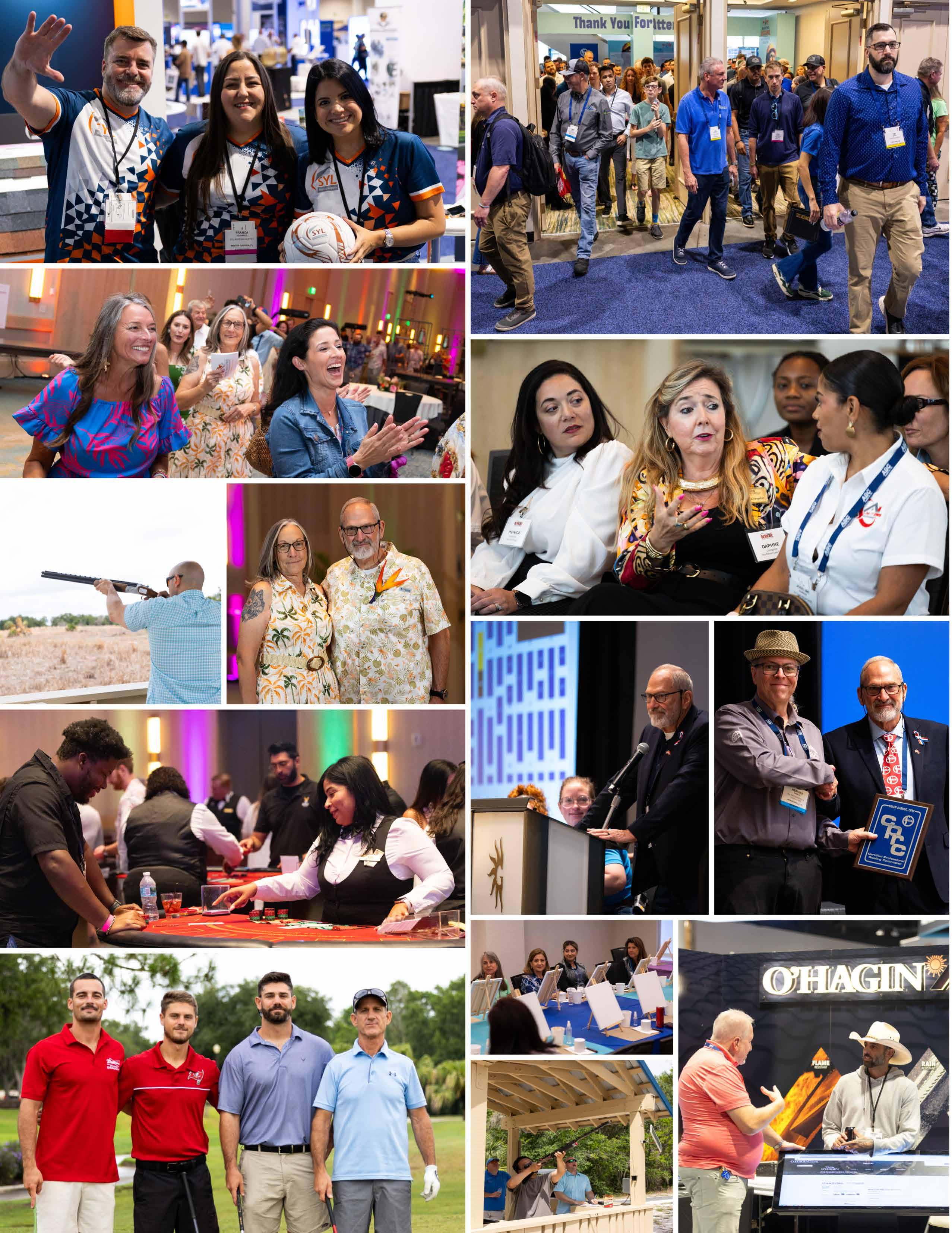
Each year, during FRSA’s Annual Convention, sports tournaments are held the first day. This year, there were two tournaments – golf and clay shooting.
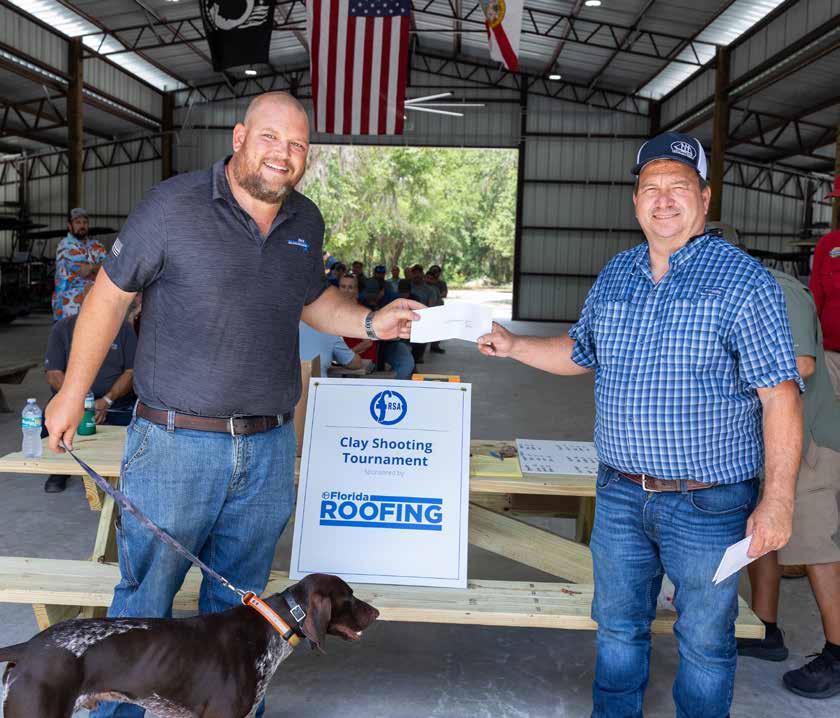
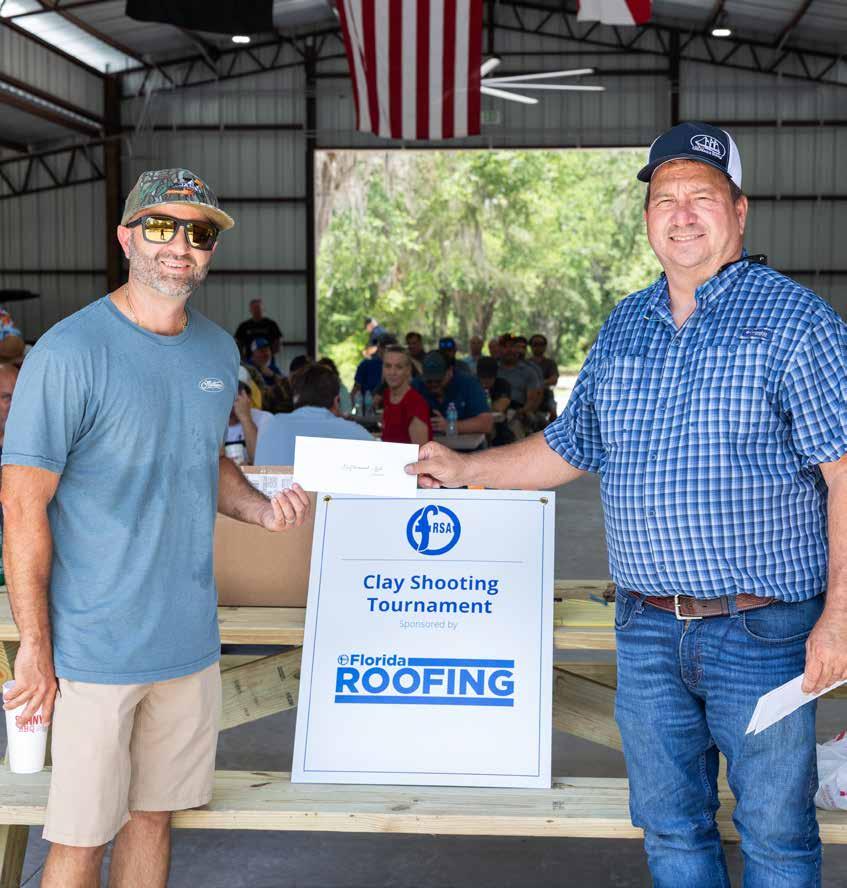
Clay Shooting Tournament
The clay shooting tournament, sponsored by Florida Roofing magazine, was held at Tenoroc Shooting Range in Lakeland and hosted 45 people.
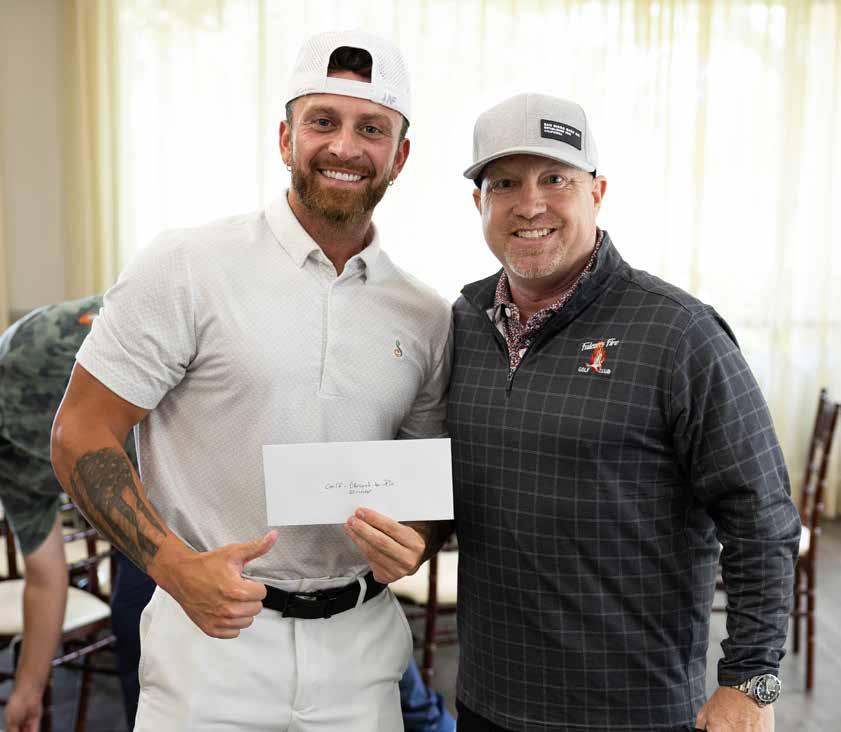
Tournament winners: First Place – Chris Beall
Golf Tournament
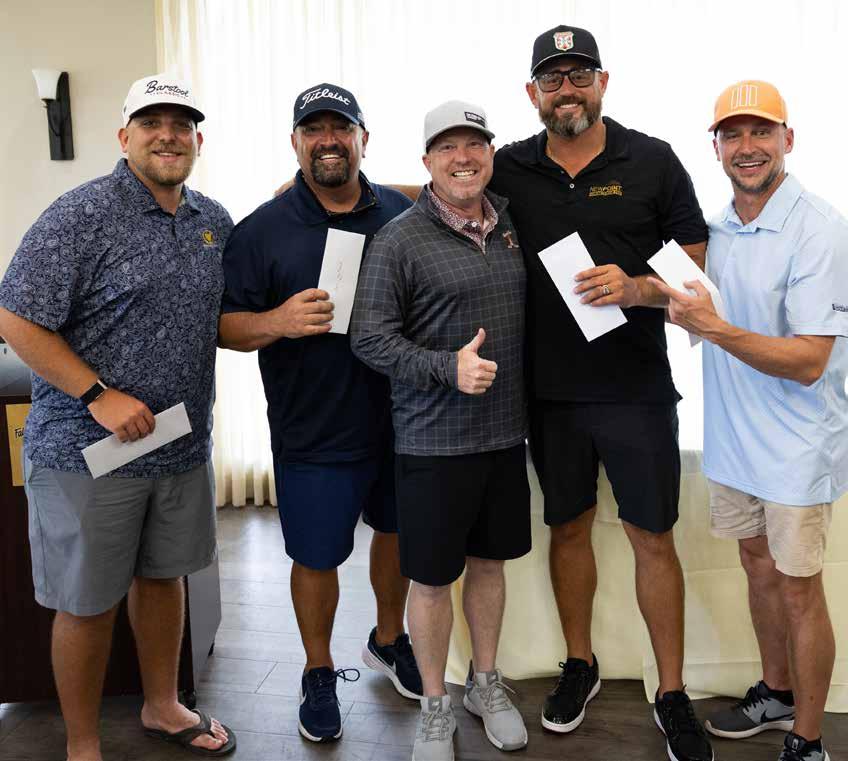
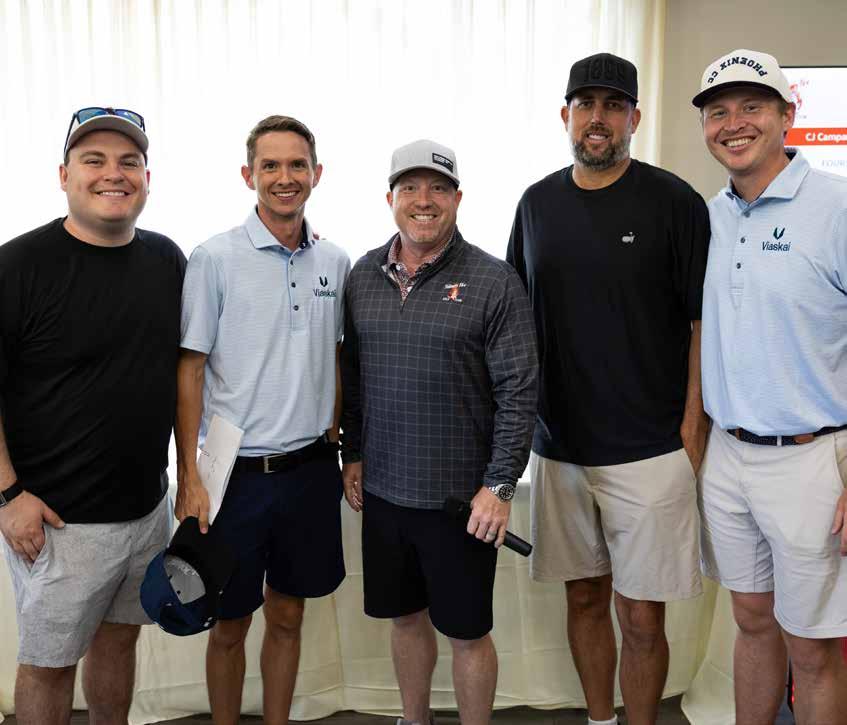
The golf tournament, held at Falcon’s Fire Golf Club, was sponsored by Acrisure and MetalMax Inc., and hosted 128 golfers.
Tournament winners: First Place Team
CJ Campanelli Hayden Abrams
Matthew Wimberly Bob Goral
Second Place – Steve James
Third Place – Rob DeHaan
Second Place Team
Jarrett Foote
Ryan Richardson
Anthony Ciaccio
Jordan Milkie
Closest-to-the-Pin winner sponsored by IKO Industries
Gabe Jones
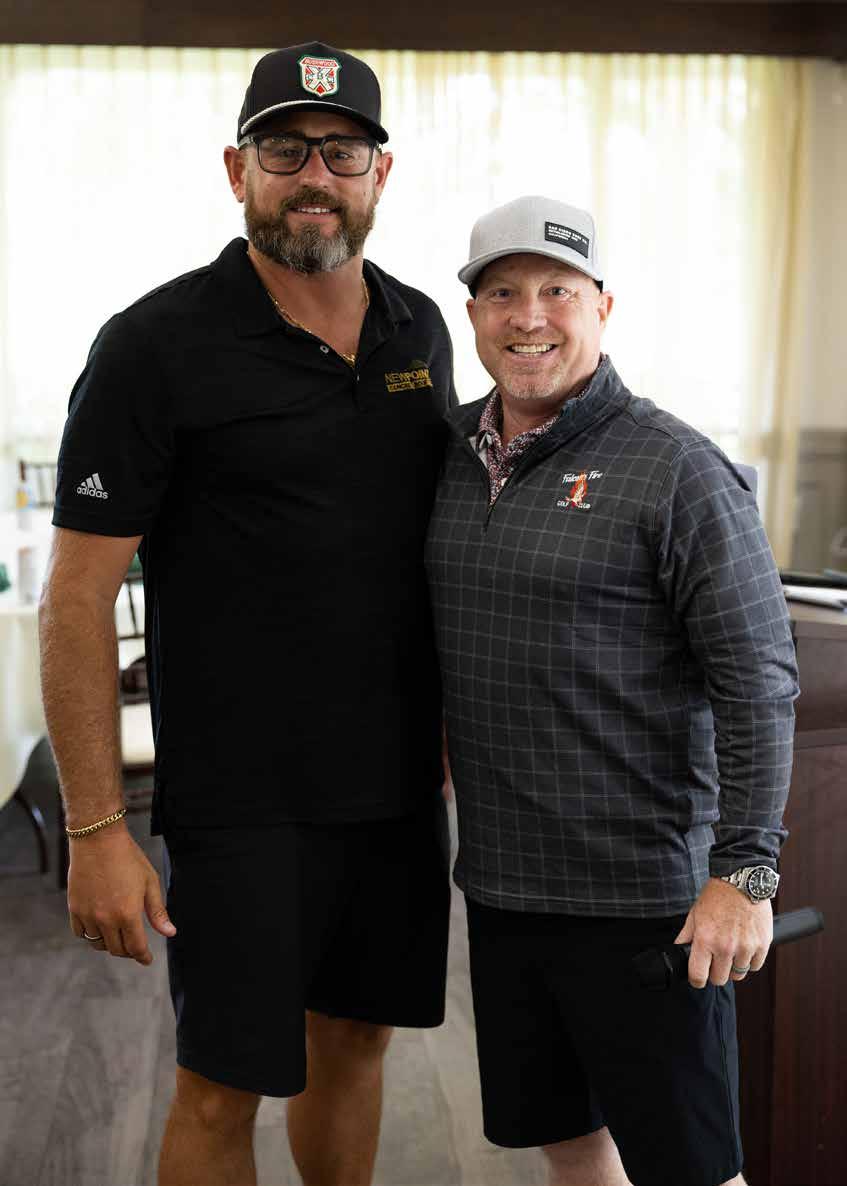
Longest Drive winner sponsored by PAC-CLAD | Petersen
CJ Campanelli Congratulations
Diversification vs. Domination: Should You Niche Down or Branch Out?
Gary A. Cohen, Executive Vice President, Certified Contractors Network (CCN)
At some point in the life of most roofing companies, a growth question emerges that feels deceptively simple: should you keep doing what you are doing but better and bigger or should you expand into new services and markets to reduce your dependence on any single revenue stream?
It is a legitimate strategic question and there is no universal right answer. But there is a wrong way to approach it and that is making the decision based on opportunity alone without honestly assessing your operational readiness.
The Case for Domination
Domination means committing fully to becoming the best roofing company in your market. Not a roofing and siding company, not a roofing and solar company. A roofing company that is so good at what it does that customers do not consider anyone else.
This is a more powerful growth strategy than it gets credit for. Companies that dominate a niche build deeper expertise, tighter systems, more efficient operations and stronger brand recognition than companies trying to cover multiple trades. Your estimating gets faster. Your crews are more efficient. Your material relationships get stronger. Your reputation compounds.
Geographic domination is one of the most underused strategies in residential roofing. Instead of being a decent option across a broad region, consider what it would mean to be the undisputed leader in a defined market area. The contractors who own their zip codes generate more referrals, spend less on marketing per job and close at higher rates than those chasing work across a wide territory.
Before you look outward to new services, ask honestly: have you actually dominated your core market? If the answer is no, that is likely the higher-return investment.
The Case for Diversification
There are real reasons to diversify and not all of them are about chasing revenue. Roofing is a weatherdependent, storm-driven, seasonally variable business. An active hurricane or hailstorm season can inflate your revenue numbers for two years and then disappear entirely. If your entire business model depends on a single service category in a single geography, you carry more risk than your financials may reflect.
Diversification done well can smooth revenue cycles, increase average transaction size and deepen
your relationship with existing customers. Adding gutters, insulation or attic ventilation to a roofing company is a natural adjacency. These are services your customers already need, your crews are already on the property and the sales motion is not dramatically different from what you already do.
Commercial roofing is another path many residential contractors consider. The project sizes are larger, the relationships are longer-term and the competitive dynamics are different from the residential storm-chasing environment. Commercial also requires different bonding, different insurance, different estimating systems and in many cases, a fundamentally different sales approach. The contractors who succeed in commercial installation typically treat it as a new business, not just an extension of their existing one.
The Question You Have to Answer First
Before you decide whether to niche down or branch out, you need to answer one foundational question: is your current operation actually ready to scale?
Diversification amplifies what is already working in your business but it also amplifies what is not working. If your current operation has inconsistent quality, unclear job costing, high employee turnover or an owner who is still doing too much personally, adding a new service line or a new market is not going to fix those problems. It is going to create new versions of them.
Run your current business through an honest assessment before expanding. Look at your gross margins by job type. Look at your crew efficiency metrics. Look at your close rates and your average review score. Look at whether your team can execute consistently without you in the middle of everything. If those numbers are strong, you have a foundation worth building on. If they are not, that is where your growth investment belongs.
Red Flags That Say You Are Not Ready
There are specific warning signs that suggest a contractor is reaching for diversification too soon.
■ You do not have a clear picture of your gross margin by job type.
■ Your best people are already stretched thin on current work.
■ You are still the primary estimator, primary sales closer or primary problem-solver in your business.
■ Your customer satisfaction scores are inconsistent.
■ You are considering expansion because business is slow, not because capacity is full.
That last point deserves special attention. Diversifying into a slow market is a common mistake. If demand for your core service is soft, adding new services rarely solves the underlying problem. It usually dilutes your focus and drains the capital you need to weather the slow period.
Making the Decision Strategically
The best growth decisions are made from a position of data, not anxiety. If you are running at or near capacity in your core service, you have strong margins, your team is performing consistently and you have systems that do not depend entirely on you, you are in a position to evaluate expansion thoughtfully.
Define what problem you are solving with the expansion. Are you reducing seasonality? Increasing
wallet share with existing customers? Entering a higher-margin segment? The clearer your strategic rationale, the better your execution will be.
If the data tells you that your core business is not yet optimized, make the decision to dominate before you diversify. The contractors who build the most durable companies are the ones who go deep before they go wide.
Either path can work. The one that fails is the one you choose without a clear-eyed look at where you actually are.
At CCN, we work with roofing contractors at every stage of growth, from those just beginning to systemize their operations to multi-division companies navigating complex expansion decisions. The contractors who grow most successfully are the ones who make strategic decisions with clear data and clear intentions, not just gut instinct.
Gary Cohen is Executive Vice President of Certified Contractors Network (CCN), a membership organization dedicated to helping independent home improvement contractors build more profitable, professionally run businesses. CCN provides training, coaching and business development resources to contractors across North America. To learn more, visit www.contractorsnetwork.com.
FRM
FRSA Educational Foundation Awards $65,000 in Scholarships
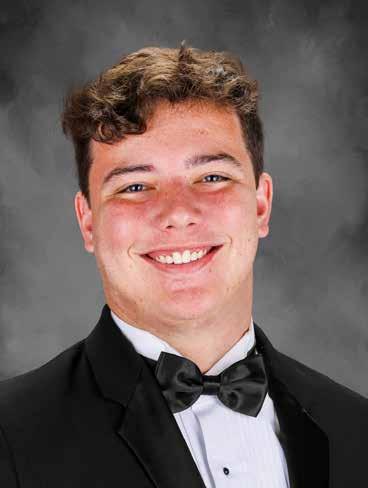
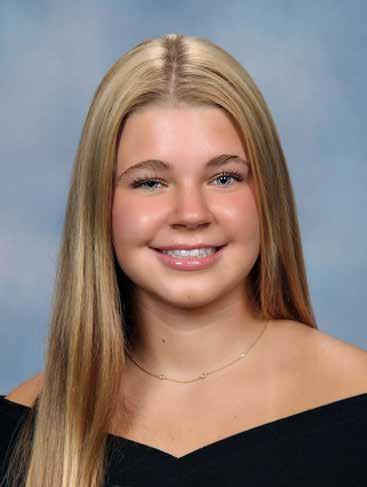
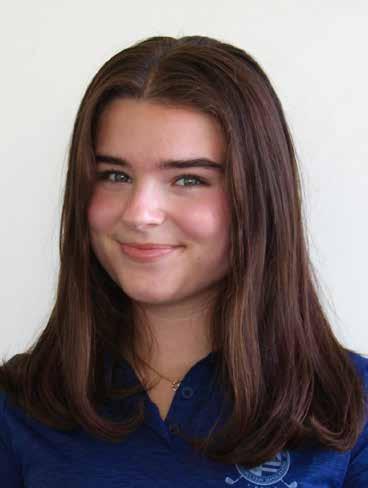
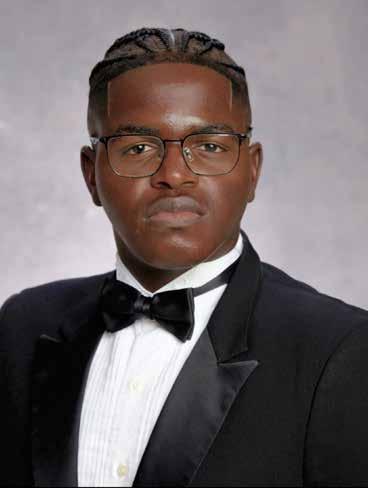
FRSA’s Educational and Research Foundation awarded $65,000 in industry scholarships to 28 students this year thanks to the many generous people who contributed. Named scholarships originating from either Endowment earnings or Foundation donations designated for scholarships were awarded to 12 of this year’s recipients. Congratulations to the 2026
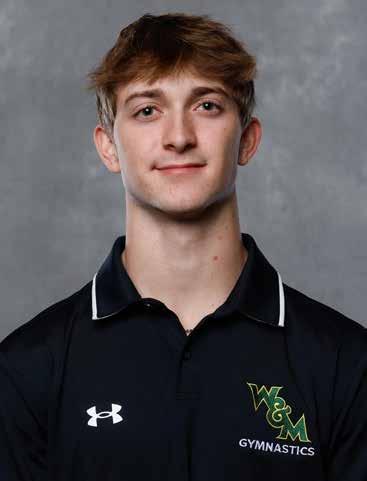
Brayden Bates
Brayden graduated summa cum laude from Lake Minneola High School and attends William and Mary where he studies engineering. He is an avid gymnast, practicing five hours a day and competes at the college level in NCAA gymnastic meets. Brayden volunteers at Habitat for Humanity.
Jack Belcher
Jack graduated from Forest High School and is currently attending Georgia Southern University where he is pursuing a degree in finance. He is the Founder and President of the Young Men of Forest Club. In his free time, Jack enjoys playing soccer and volunteering as a group leader at a youth soccer camp.
Nathan Denman
Nathan graduated from Pace High School and will be attending Pensacola State College. He aspires to become an aerospace engineer. He loves to spend time with his siblings and volunteers in the NAHS club at his school.
scholarship recipients and thank you to the donors who make these significant awards possible.
Hannah Garrett
Hannah attends Florida State University and works remotely at Garrett Roofing in their marketing and social media department. She is a certified medical assistant and volunteers at Tallahassee Memorial Hospital weekly.
Hope Garret
E. H. Engelmeier Family Scholarship Hope attends the University of South Florida and is pursuing a degree in business administration. She currently works as a veterinary technician while planning to one day take over her family’s roofing and construction company.
Kayla Hellein
Trent Cotney Scholarship
Kayla is a full-time student at the University of Central Florida, where she is majoring in engineering with the goal of becoming an architectural engineer. She is also a member of both the National Beta Club and the National Honor Society.
FRM
Camryn Johnson
James Harrison Jenkins Memorial Scholarship
Camryn is a graduate of Spruce Creek High School and is currently pursuing a degree in business administration at Daytona State College. She enjoys playing flag football and volunteers with her local Pop Warner football team.
Makena Johnson
Makena graduated summa cum laude from Spruce Creek High School and is currently pursuing a degree in business at Florida State University. She is involved in student government, participating in community service initiatives such as Holiday Basket Brigades, beach cleanups and blood drives.
Owen Johnson
Bob & Elaine Purdy Scholarship
Owen attends Florida State University and is majoring in business, pursuing a career in professional sales. He dreams of becoming a top sales performer in the fields of tech, construction or insurance.
Grant Kemp
Steve Steele Memorial Scholarship
Grant graduated Pensacola Catholic High School and is enrolled in Florida International University majoring in construction management. He currently works as the Lead Project Manager and Estimator at Edwards Roofing.
Sarah Kemp
Sarah graduated from Gulf Breeze High School and now attends Samford University, where she studies nursing and plans to eventually obtain her Nurse Practitioner license. She volunteers at Gulf Breeze Hospital, plays lacrosse and the guitar and enjoys fishing and boating.
Kathleen Kennedy
Adam & Tracy Purdy Scholarship
Kathleen graduated from Mount Dora High School and attends Seminole State College where she studies architecture. She has earned a place on the President’s List every semester, reflecting on her commitment to academic excellence.
Daniella Masso
Mason E. Liftig Scholarship
Daniella graduated from Florida Atlantic University High School and now studies environmental engineering at the University of Florida. She works as an undergraduate researcher and aspires to integrate advanced renewable energy systems into building designs.
Mitchell McBride
Mitchell graduated from Riverview High School and is currently attending the University of South Florida, where he is majoring in mechanical engineering. He aspires to pass the Fundamentals of Engineering Exam and earn his SOLIDWORKS certification.
Christian Murray
Matt & Jackie Criswell Scholarship
Christian graduated as a National Honor Society and Beta Club Member from Christ Church Academy and attends North Greenville University where he is majoring in business management. He volunteers his time at multiple charities.
Connor Murray
BrightFund Scholarship
Connor graduated from Christ Church Academy and is currently attending North Greenville University, where he plans to pursue a master’s and doctoral degree in psychology. A dedicated football player, he served as varsity defensive captain for four years.
Kaiya Parent
Kaiya graduated from The King’s Academy and is currently pursuing a degree in kinesiology at the University of Alabama, where she is a member of the Phi Eta Sigma Honor Society. Outside of school, Kaiya enjoys the outdoors, fishing, boating and time with her family.
Daniel Patricio Bowen/Hilson/Turner Scholarship
Daniel is pursuing a degree in engineering at Valencia College. He works full-time at Orlando Roofing and plans to obtain both his roofing contractor and general contractor licenses after graduation.
Brice Pugh
Brice graduated from Palm Beach Central High School and will be attending Louisiana State University, where he plans to pursue a degree in music education. He enjoys music and plays a variety of instruments. In his free time, he also enjoys reading and camping.
Reese Rauktis
Reese graduated from Edgewater High School and is currently pursuing a bachelor’s degree in public relations at Florida State University. Outside of school, she volunteers with Blessings in a Backpack and the Eagle Market, where she helps provide resources to students in need.
Rylee Rauktis
Rylee graduated from Edgewater High School and is currently pursuing a degree in construction management at the University of Florida. She aspires to open her own general contracting firm and help clients turn their dream homes into reality.
Ri’Chard Rose
Ri’Chard graduated from Evans High School and is currently pursuing a degree in construction engineering at Jackson State University. Passionate about both music and construction, he enjoys creating things from scratch and bringing his ideas to life.
Ashley Rountree
Austin Ebersold Memorial Scholarship
Ashley graduated from Jupiter Community High School and is currently pursuing a degree in business finance at Florida State University. When she is not working, she serves as the Director of her local Little Smiles club.
Kaitlynn Schwartz
Kaitlynn graduated from Florida Southwestern Collegiate High School and will be pursuing a degree in marketing. Dance has been a major part of her life since the age of three and she volunteers at the Fine Arts Academy where she helps the next generation of dancers.
Jonathan Shelton
Jonathan graduated from Spanish River Community High School and is currently pursuing a degree in mechanical engineering at the University of Central Florida. He has dedicated over 400 hours to volunteering at Brighthouse Day Camp, Vaughn Sports Academy and other organizations.
Henry Swenson
Henry attends Rollins College where he is pursuing a dual major in chemistry and Asian studies. In his spare time, he enjoys researching and learning about linguistics, chemistry, physics and histo ry. He volunteers at his local AdventHealth, assisting with patient transport.
Hayden Taylor
Hayden graduated from Apopka High School and is currently attending the University of Central Florida, where she intends to major in exceptional student education. After completing her undergraduate studies, she plans to pursue a master’s degree in pediatric occupational therapy.
Alexandra Vance SWFRCA Scholarship
Alexandra graduated from River Bluff High School and now studies political science at the University of South Carolina. She currently works in Civil Services in Enforcement and volunteers at the Ronald McDonald House where she helps with fundraising.
For more information about opportunities to support FRSA’s Foundation, contact Joshua Smith, Foundation Director, at 800-767-3772 ext. 123 or by email at joshua@floridaroof.com.
Lightning Safety in the Workplace
Jorge Castanon, Safety Rep, FRSA-SIF
Lightning is one of nature’s most powerful and unpredictable hazards. It often occurs with little warning and the risks are frequently underestimated. Each year, workers are injured or killed as a result of lightning strikes on jobsites.
When thunder roars, it is time to take immediate action. Weather conditions can change rapidly, making it essential to monitor forecasts and onsite conditions throughout the workday. If you can hear thunder, lightning is close enough to pose a danger.
You do not need to see lightning to be at risk. Lightning can strike up to 10 miles away from a storm. For this reason, lightning safety is a critical responsibility on every jobsite.
The first step in protecting workers is to establish a comprehensive lightning safety plan. Supervisors and safety personnel should review weather forecasts daily and continuously monitor changing conditions throughout the day.
While working outdoors, remain alert to signs of approaching storms, including darkening clouds, increasing wind speeds and sudden drops in temperature. These can all indicate that severe weather is developing. Weather applications and lightning detection systems should be used to receive real-time updates and alerts.
If a storm is approaching, be prepared to stop work and move all personnel to a safe location. When lightning is present in the area, all outdoor activities should cease immediately. Workers should seek shelter in a fully enclosed building or a hard-topped vehicle. Open shelters, tents and partially enclosed structures do not provide adequate protection from lightning.
Stay away from scaffolding, ladders, metal tools and heavy equipment during a lightning event. At the first sound of thunder, stop work and seek shelter. Do not resume outdoor activities until at least 30 minutes have passed since the last clap of thunder.
If a person is struck by lightning, call 9-1-1 immediately and provide
first aid as soon as it is safe to do so. Prompt emergency response can save a life.
Lightning safety is more than common sense – it is a lifesaving practice. Protecting your health and safety must always remain a top priority. Do not wait until it is too late. Stay alert, follow established safety procedures and take every thunderstorm seriously.
FRM
Interested in obtaining workers’ comp insurance? Members of FRSA-SIF/BrightFund have access to Safety Reps who visit jobsites and conduct safety training and toolbox talks for crews. Please contact Alexis at BrightFund by phone at 800-767-3772 ext. 206 or by email at alexis@brightfund.com.
Convention by the Numbers
New Members
14 Signed up onsite
49 Signed up before Convention
Foundation Auction
Auction funds raised
$36,400
Highest grossing item
$4,800
STAR Awards
40 Submissions
12 S.T.A.R. Award Recipients
One Shining Star Congratulations Quality Roofing Inc.
Number of items 103
Average bids per item 6
Seminars
Support FRSA’s Charity of Choice
Support FRSA’s Charity of Choice
Total raised for the Charity of Choice $12,606
Team FRSA
Total number of bids 549
PATCHES is a place where children with complex medical needs are given culturally sensitive, compassionate care. By providing best practice interventions, our nurses and therapists help each child reach maximum health so they can develop, thrive and grow.
15 Staff and family members
PATCHES is a place where children with complex medical needs are given culturally sensitive, compassionate care. By providing best practice interventions, our nurses and therapists help each child reach maximum health so they can develop, thrive and grow.
Sports Tournaments
173 Participants
PATCHES offers families of seriously ill children daily care 12 hours a day, 5 days a week, from birth to 21 years old, regardless of ability to pay or insurance coverage.
PATCHES offers families of seriously ill children daily care 12 hours a day, 5 days a week, from birth to 21 years old, regardless of ability to pay or insurance coverage.
27 Educational seminars
19 Speakers
30 CE credits offered
1,519 Free seminars given to FRSA Members
1,607 Seminar attendees
Scholarships
Number of recipients 28
Total awarded $65,000
Social Media Engagement
LinkedIn
2,275 followers
19.6k impressions
Facebook
2,400 followers
1,972 interactions
29.0k impressions
Instagram
1,973 followers 10.3k impressions
To support this worthy cause, visit www.floridaroof.com/charity
To support this worthy cause, visit www.floridaroof.com/charity
Ed Foundation $5K Raffle Winner Sal Delfino
3,049 Total hotel room nights
4,869 Convention & Expo Registrations
573 Booths sold
250 Exhibiting Companies
95 Event Sponsors
134,140 sq ft of exhibit space
2027 Expo Hall 80% Sold
581 Booths
178,500 sq ft of exhibit space Largest Expo Ever!
REGENCY
DECEMBER
7-9, 2026
At Best of Success, you’ll gain direct access to industry leaders who openly share their experiences, lessons learned, and strategies for success. to help you tackle today’s biggest business challenges.
Why Attend?
• Learn practical tactics you can apply immediately
• Build valuable relationships with fellow contractors
• Discover solutions for workforce, leadership, and operational challenges
• Gain confidence from a community that understands your business what works, everyone leaves stronger. This is where roofing professionals come to learn, connect, and grow.
Reserve Your Seat
• 34+ Locations Across Florida
• Proudly Stocking the Top Brands You Need
• Experts in Residential, Commercial, Metal, and Tile Roofing
At QXO, we’re not just here to help you build more — we’re here to empower your vision, fuel your ambition, and create a lasting impact. Together, we shape the future, one bold step at a time. Visit QXO.com to find a