A Publication of FRSA – Florida’s Association of Roofing Professionals
S.T.A.R. Awards Recipient
Precision Exteriors LLC
Craftsmanship in Roofing
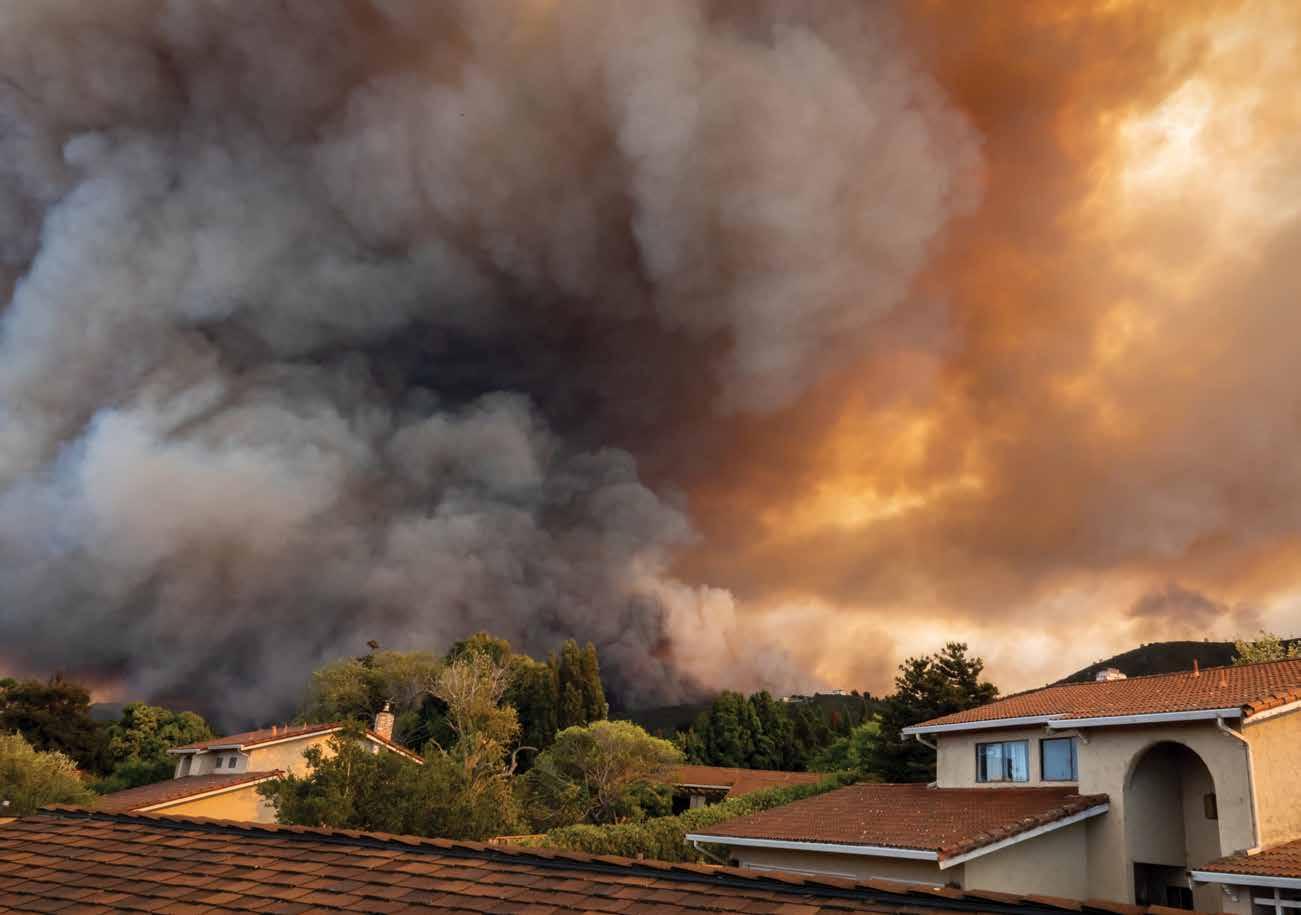
Fire-resistant underlayment you can spec with confidence.
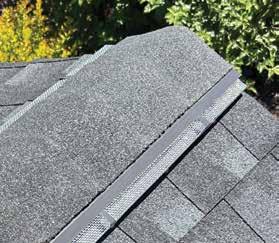
Engineered for demanding environments, Ultra HT® provides full-roof protection against extreme heat, wind-driven rain, ice, snow—and fire. Its certified fire resistance creates a critical barrier that helps prevent fire spread and penetration beneath the roofing system.
Ultra HT®: Tested. Certified. Fire-Resistant protection for the whole roof.
• UL® CLASSIFIED CLASS A
• ASTM E108/ICC-ES AC188 CLASS A
When failure isn’t an option, choose the underlayment that goes the extra mile. Contractors trust it. Specs demand it.
For advertising inquiries, contact: Skip Heymann at:
(800) 767-3772 ext.
All feedback and reprint permission requests (please include your full name and address) contact: Lisa Pate, Editor, at: lisapate@floridaroof.com (800) 767-3772 ext. 157
Florida Roofing Magazine PO Box 4850
Winter Park, FL 32793-4850
View media kit at: www.floridaroof.com/ florida-roofing-magazine/ #FRSA #roofingprotects
Leadership Qualities: What it Takes to Run a Business in Florida
FRSA President Tibor Torok, Bob Hilson & Co. Inc.
Roofing leadership in Florida requires a blend of technical expertise, regulatory awareness and people-centered management that few other states demand. Between hurricanes, extreme heat, strict building codes and a competitive market, Florida roofing companies succeed only when their leaders can build resilient teams and deliver consistent quality under pressure. Strong leadership is the difference between a crew that simply installs roofs and a company that thrives year after year.
The Florida Environment and Its Impact on Leadership
Navigating Florida’s Climate Challenges Florida’s climate shapes every aspect of roofing work. Leaders must prepare crews for:
■ Intense heat and humidity, which affect worker safety and productivity.
■ Sudden storms that disrupt schedules and require rapid decision-making.
■ Hurricane-grade installation standards, especially for shingles, metal and tile.
Leadership means planning around weather, protecting crews from heat stress and ensuring every installation meets wind-resistance requirements.
Mastering Hurricane‑Driven Building Codes
Florida has some of the strictest roofing codes in the country. Leaders must stay current on:
■ Miami-Dade NOA requirements.
■ Underlayment and fastening standards.
■ Secondary water barrier rules.
■ Insurance-driven documentation.
A leader who understands code changes can train crews properly, avoid costly callbacks and build a reputation for reliability.
Building High‑Performing Roofing Teams in Florida
Recruiting and Retaining Skilled Labor
Florida’s roofing labor market is competitive. Effective leaders focus on:
■ Providing year-round training on new materi als and code updates
Retention is especially important in Florida, where demand spikes after storms and experienced crews are in high demand.
Training for Specialized Roofing Systems
Florida uses a wider range of roofing systems than many states, including:
■ Tile (concrete and clay)
■ Metal (standing seam, 5V, stone
■ Modified bitumen and TPO for flat roofs
■ High-wind architectural shingles
Leaders must ensure crews can install each system to Florida standards, not just manufacturer specs.
Leadership
on
the Jobsite
Communication That Keeps Projects Moving Florida roofing projects involve homeowners, HOAs, inspectors and insurance adjusters. Leaders must communicate:
■ Daily jobsite goals
■ Weather-related schedule changes
■ Inspection timelines
■ Customer expectations
Clear communication reduces conflict and keeps projects on track despite Florida’s unpredictable conditions.
Safety as a Daily Discipline
Heat, heights and storms make roofing in Florida especially hazardous. Strong leaders:
■ Enforce hydration and shade breaks
■ Train crews on fall protection
■ Monitor weather alerts
■ Model safe behavior
A safety-driven culture protects workers and strengthens team loyalty.
Business Leadership in the Roofing Market
Managing Post‑Storm Surges
After hurricanes or tropical storms, roofing companies face:
■ Massive demand
■ Material shortages
■ Insurance complexities
■ Customer stress and urgency
Leaders must balance speed with quality, avoid overbooking and maintain ethical standards during high-pressure periods.
Delivering a Trust‑Centered Customer Experience
Florida homeowners often deal with insurance claims, roof replacements and storm repairs. Leadership includes:
Trust is a competitive advantage in a market where homeowners are cautious about contractors.
The Future of Roofing
Leadership in Florida
Embracing Technology and Modern Tools
Florida roofing companies increasingly rely on:
■ Drones for inspections
■ Digital estimating platforms
■ High-wind-rated materials
■ Solar-ready roofing systems
Leaders who adopt new tools attract younger workers and improve efficiency.
Building Sustainable, Resilient Teams
The next generation of Florida roofing leaders will need to:
■ Blend traditional craftsmanship with modern building science
■ Develop strong communication and customer-service skills
■ Adapt quickly to code changes and climate realities
■ Build teams that can handle both routine work and post-storm surges
Leadership in Florida roofing is ultimately about resilience – of people, systems and structures.
Kind regards,
Tibor Torok FRSA President slrcbhc@msn.com
to see the NEW system in action!
TAP. SET. TURN.
PATCHES is a place where children with complex medical needs are given culturally sensitive, compassionate care. By providing best practice interventions, our nurses and therapists help each child reach maximum health so they can develop, thrive and grow.
PATCHES is a place where children with complex medical needs are given culturally sensitive, compassionate care. By providing best practice interventions, our nurses and therapists help each child reach maximum health so they can develop, thrive and grow.
Industry Updates
Jim Brauner Conducts 600th CERTA Training Session
Jim Brauner, Brauner Safety Services, St. Cloud, has completed his 600th CERTA Train-the-Trainer course. CERTA is NRCA’s torch-applied safety certification program where roofing professionals receive classroom instruction coupled with hands-on torching and best safety practices. Brauner started as an FRSA CERTA instructor in 2004.
QXO to Acquire Kodiak for $2.25 Billion
QXO Inc. has agreed to acquire Kodiak Building Partners from Court Square Capital Partners for about $2.25 billion in cash and stock.
The transaction is targeted to close early in the second quarter of 2026, subject to customary conditions and is expected to be highly accretive to 2026 earnings, with gross margins above QXO’s core business, according to a company spokesman.
Kodiak generated approximately $2.4 billion in revenue in 2025. The company distributes lumber, trusses, windows and doors, construction supplies, waterproofing and roofing products through 110 locations in 26 states, employs about 5,500 people and serves more than 10,000 customers.
“The acquisition of Kodiak is highly complementary to our existing business,” said Brad Jacobs, QXO’s Chairman and CEO. “We expect the integration to accelerate margin expansion through scaled procurement, network optimization, AI-powered inventory management and other technology-enabled operating efficiencies.”
The company said 16 of Kodiak’s top 20 vendors overlap with its legacy Beacon operations, which it expects will support procurement and pricing synergies.
Industry analysts said the deal could have significant implications for roofing distribution.
DMI Direct Metals, LLC Acquires Lakeside Construction Fasteners
DMI Direct Metals, LLC announced the strategic acquisition of Lakeside Construction Fasteners (LCF). This
union brings together two powerhouses in the metal construction and industrial fastener markets to create a premier national distribution and manufacturing group.
A core pillar of the acquisition is the continuity of the leadership that built LCF into an industry leader providing alternative fasteners-foam solutions. Eric Velliquette will continue in his role as President and Co-founder of Lakeside Construction Fasteners.
Working alongside Andrew Mullen, CEO of DMI Direct Metals, Velliquette will continue to lead the LCF team, ensuring that the innovation, product integrity and personal service that Lakeside is known for remain at the forefront of the company’s mission.
“I am excited to lead Lakeside Construction Fasteners into this next chapter alongside Andrew and the DMI team,” stated Velliquette. “This partnership provides the capital and resources necessary to accelerate our growth while staying true to the values and quality that our customers have trusted for years.”
Following the recent restructuring of Direct Metals Inc. into DMI Direct Metals, LLC, this acquisition represents the first step in an aggressive growth strategy supported by new investment partners and internal leadership.
Duro‑Last Appoints Greg Hudson Vice President of Commercial Excellence
Duro-Last, a member of the Amrize family of brands and a leading manufacturer of customfabricated single-ply roofing systems, appointed Greg Hudson as Vice President of Commercial Excellence, strengthening leadership across its commercial operations and reinforcing the brand’s commitment to sustainable growth.
In this role, Hudson will lead commercial strategy and market initiatives across all Duro-Last brands: EXCEPTIONAL Metals, Protect-All Flooring, Plastatech and TIP-TOP Screw Manufacturing. He will focus on improving coordination, enhancing customer experience and expanding opportunities in strategic markets, helping contractors and customers access more integrated, high-performing solutions.
Hudson brings more than 20 years of experience in the building design and construction industry, most
recently serving in senior commercial leadership roles at Georgia-Pacific Gypsum. There, he led growth initiatives, strengthened market connections and collaborated with architects, contractors, consultants and industry organizations to deliver value-driven solutions.
“Greg combines deep industry knowledge with a collaborative approach that aligns perfectly with our culture,” said Darren Schulz, President of Duro-Last. “His leadership will strengthen our contractor relationships, drive alignment across all Duro-Last brands and support our long-term growth strategy while advancing our continued commitment to innovation in commercial roofing solutions.”
“I am honored to join Duro-Last, a company recognized for its contractor-first approach and commitment to quality,” Hudson stated. “I look forward to working with the team to strengthen market execution, support our partners and deliver solutions that make a meaningful difference for customers and the
together two strong, values-aligned organizations while preserving the people, service and relationships that matter most.”
Merino said customers and vendors “can expect the same team, commitment to quality and focus on service now supported by the long-term strength and resources of McElroy Metal.”
McElroy Metal, founded in 1963 and headquartered in Bossier City, LA, is an employee-owned manufacturer of metal roofing, siding and related building products. The company operates 14 manufacturing facilities across the U.S.
Lancaster, PA-based Fabral, founded in 1967, supplies metal roofing and wall systems nationwide.
Industry analyst Lilli Tillman Smith of Principia said the acquisition is a “meaningful move in the metal roofing space,” noting both companies have long histories and strong reputations. She noted contractors and distributors could benefit from broader product availability and geographic reach.
Tariff Uncertainty and What Roofing Contractors Should Do
Trent Cotney, Partner, Adams & Reese, LLP and FRSA General Counsel
The recent judicial curtailment of tariff actions issued under the International Emergency Economic Powers Act (IEEPA) has created a temporary sense of relief across segments of the construction supply chain. For roofing contractors in Florida, however, relief should not be mistaken for stability. The legal landscape surrounding executive trade authority remains fluid and the removal or suspension of tariffs under one mechanism does not eliminate the possibility of new or restructured trade actions under another. In this environment, uncertainty remains the defining feature of material pricing.
Over the past several years, roofing contractors have navigated unprecedented volatility in steel, aluminum, fasteners, insulation components, adhesives and imported accessories. Many of these fluctuations were tied directly or indirectly to federal tariff policy. When IEEPA-based tariffs are reduced or invalidated, suppliers may adjust pricing downward. Yet just as quickly, alternative trade authorities such as Section 232 of the Trade Expansion Act, Section 301 of the Trade Act of 1974 or traditional anti-dumping and countervailing duty proceedings can be deployed to reimpose cost pressures. The result is not a linear pricing trend but a cycle of acceleration, retrenchment and renewed escalation.
For contractors operating in a competitive bid environment, especially in Florida’s private and public markets, the risk is not merely margin compression. It is contractual exposure. A fixed-price contract executed in a temporary lull may become unprofitable overnight if new tariffs are imposed or supply chain disruptions re-emerge. Courts will enforce what the contract says, not what market conditions later justify. Absent a well-drafted price escalation or price acceleration provision, the contractor absorbs the risk.
Many roofing contracts still rely on generic force majeure language, which is typically insufficient. A force majeure clause is a contract provision that excuses or delays performance when unforeseen events beyond the parties’ control prevent a party from fulfilling its contractual obligations such as war and natural disasters. Force majeure clauses are traditionally interpreted narrowly and often require impossibility, not increased cost. A tariff-driven material spike rarely renders performance impossible; it makes performance more expensive. Without specific language allocating that risk, the contractor bears it.
Florida contractors should therefore consider incorporating a targeted price escalation provision that addresses governmental actions, including tariffs, duties, trade restrictions and import limitations. The provision should also address timing, specifically the period between bid or proposal submission and material procurement. That window is where exposure frequently arises.
A properly structured clause does three things. First, it clearly identifies the triggering events. Second, it establishes a transparent mechanism for calculating the adjustment. Third, it preserves the contractor’s right to suspend or terminate work if the parties cannot agree on a price modification.
In the past, I have provided a more generic price acceleration clause. Below is a more specific version addressing government action and tariffs.
Price Escalation and Governmental Action
Contractor’s pricing is based upon material, equipment, and labor costs in effect as of the date of this Agreement. In the event of any increase in the cost of materials, equipment or components arising from governmental action, including but not limited to the imposition, modification or reinstatement of tariffs, duties, trade restrictions, import limitations or similar regulatory measures occurring after the date of this Agreement, Contractor shall be entitled to an equitable adjustment in the Contract Price. Such adjustment shall be limited to the documented increase in Contractor’s actual cost and shall be supported by supplier invoices or written verification. If the parties are unable to agree upon the amount of such adjustment within a reasonable time, Contractor may suspend performance until the adjustment is resolved without penalty or default.
These provisions promote transparency and allocate risk in a predictable manner when tariffs or other trade measures affect material pricing. By clearly identifying how cost increases will be handled, the contract
establishes expectations before a dispute arises. Most owners recognize that international trade policy, customs enforcement and federal tariff decisions fall outside a contractor’s control. When the contract addresses those variables directly, it reduces ambiguity, limits after-the-fact arguments over responsibility and supports a more stable working relationship throughout the project. Public projects present additional complexity. Contractors must review statutory limitations on price adjustments and ensure compliance with public procurement rules. In Florida, change order procedures and notice requirements must be strictly followed. The absence of timely written notice can waive otherwise valid claims. Accordingly, any escalation clause should be harmonized with the contract’s claims procedure.
Equally important is proposal and bid strategy. Contractors should shorten bid validity periods where possible. On commercial projects, a 30-day acceptance window carries less exposure than a 90-day window. In residential, a proposal should not remain open longer than 10 days; otherwise, you are just giving your customer an opportunity to shop your price. Where suppliers will not lock pricing, contractors should expressly condition their proposals on material price confirmation at the time of award.
The broader lesson from the IEEPA tariff developments is this: federal trade policy can change quickly and sometimes unpredictably. Judicial decisions may invalidate one approach while leaving others available. Contractors should not attempt to predict political outcomes. They should allocate risk contractually.
The roofing industry has demonstrated resilience through hurricanes, labor shortages, pandemic disruptions and regulatory shifts. Tariff volatility is another risk variable. The difference between surviving and thriving in that environment often lies in disciplined contract drafting. Now is the appropriate time for Florida roofing contractors to review their standard contract forms, subcontract templates and proposal terms. FRSA members can access Trent's additional contract language through the "member login" section of FRSA's website.
FrM
The information contained in this article is for general educational information only. This information does not constitute legal advice, is not intended to constitute legal advice, nor should it be relied upon as legal advice for your specific factual pattern or situation.
Trent Cotney is a Partner and Construction Team Leader at the law firm of Adams
& Reese, LLP and FRSA General Counsel. You can reach him at 866-303-5868 or by email at trent.cotney@arlaw.com.
Free Legal Helpline for FRSA Members
Adams & Reese is a full-service law firm dedicated to serving the roofing industry. FRSA members can contact Trent Cotney to discuss and identify legal issues and to ask general questions through access to specialized counsel. They offer free advice (up to 15 minutes) for members. If additional legal work is required, members will receive discounted rates. This is a pro bono benefit provided to FRSA members only. Contact Trent at 866-303-5868.
Legislative Update: The Final Stretch
Kylee Anzueto, Government Affairs Advisor, GrayRobinson
As the legislative session enters its final stretch, lawmakers are facing mounting pressure to resolve major policy and budget questions before the deadline.
Budget negotiations remain unsettled, with the House and Senate still divided over spending levels and tax policy changes that could have significant implications for businesses and state revenue.
The session's closing week has also brought increasingly intense debate in both chambers. Several controversial proposals have sparked lengthy discussions on the House and Senate floors, with lawmakers spending hours debating policy changes related to education, local government authority, labor organizations and public safety. These extended debates reflect the high stakes surrounding many of the measures still moving through the process.
At the same time, multiple bills are approaching their final stages. Proposals affecting higher education enrollment policies, public-sector liability limits and housing development rules are advancing through the final legislative steps, while other measures – particularly in health care and emerging technology – are facing significant political hurdles that could determine whether they pass this year.
The final week will be defined by floor debates, last-minute negotiations and strategic decisions about
Florida
ROOFING
Print Circulation
5,500 Industry Professionals
1,332,902
Industry-focused 12-Month Digital Impressions
Contact skip@floridaroof.com for advertising info
which proposals ultimately make it across the finish line.
Budget and Taxes
Florida Chamber Warns Lawmakers Against Tax Code “Decoupling” Lawmakers are moving to decouple Florida’s corporate tax code from Trump’s federal tax cuts, despite objections from the Florida Chamber of Commerce. Business groups argue the move would strip companies of major federal benefits and create extra bookkeeping burdens but legislative leaders say the state can’t risk losing $1.5 – $3.5 billion in revenue. The decoupling language is included in both chambers’ tax packages, alongside the House’s $251 million in proposed tax breaks such as a firearm-accessory exemption, a long hunting/fishing/camping holiday, a propane-tank fix and shifting the back-to-school holiday to July 20 – August 20.
Time is Running Out on Budget Talks as Session Deadline Nears
Lawmakers are heading into the final week of session with no budget deal and no formal conferencing underway, raising real doubts about finishing by March 13. House Speaker Daniel Perez says negotiations have stalled, citing a “fundamental disagreement” over spending levels: the House wants to spend less, while the Senate wants to spend more. The chambers’ plans are about $1.4 billion apart ($113.6B House vs. $115B Senate) and key allocations in education, health care and criminal justice remain unresolved.
A budget agreement must be reached by March 10 to meet the 72-hour cooling-off period required for an on-time adjournment. No decision has been made about extending session or calling a later special session, though lawmakers are already scheduled to return the week of April 20 for congressional redistricting. Last year’s session stretched past 100 days due to a similar impasse and the 2026–2027 fiscal year begins July 1.
Labor and Employment Law
Senate Narrowly Advances Public Union Vote Bill Legislation to tighten public-sector union certification rules is heading to the Senate floor after SB 1296 passed the Senate Fiscal Policy Committee on a 10 to
8 vote. The bill would make it harder for teachers and other non-public-safety unions to organize or stay certified; while police, fire and corrections unions are exempt. An amendment softened the original proposal: unions would now need 25 percent turnout and 60 percent support in certain units rather than a majority of all eligible employees.
Supporters say too few members participate in union votes; opponents argue the bill unfairly targets teachers and divides workers. Two Republicans joined Democrats in voting no and even supporters acknowledged the bill still needs work. A House companion, HB 995, is awaiting floor action.
Education
Teacher Mentor Program Advances to Senate Floor
Legislation to create a new teacher training and mentorship program for struggling public and charter schools is heading to the full Senate after SB 182 won unanimous approval in the Senate Fiscal Policy Committee. The bill, by Sen. Shevrin Jones, would place experienced or retired teachers in D- and F-rated schools to mentor newer educators. The House companion, HB 157, has stalled after its final committee postponed consideration but the House could still take up the Senate bill or fold its language into another measure as session negotiations continue.
Measure to Cap Out of State Student Enrollment Passes House
The House passed HB 1279 on an 84 to 25 vote, advancing a broad higher-education measure centered on capping out-of-state enrollment at Florida’s most selective public universities. The bill would limit first-year out-of-state students to 5 percent at UF, FSU, FIU, UCF and USF – reserving 95 percent of seats for Florida residents based on a three-year average and would also restrict international student enrollment and require U.S. citizenship or lawful residency to receive state financial aid. Supporters frame the bill as prioritizing Florida students, though the cap is expected to cost affected universities about $34 million annually. Institutions that violate the cap would lose preeminent university funding beginning in 2030. The measure also allows colleges and universities to seek accreditation beyond traditional regional accreditors and prohibits graduation requirements that include coursework deemed to distort historical events or promote identity-based theories. HB 1279 now heads to the Senate for consideration.
Student Special Services Plan Bill Passes House
The House unanimously passed HB 615, which requires schools to provide timely evaluations, notifications and orientations for students who qualify for or receive individual education programs. Sponsor Rep. Debra Tendrich said federal timelines aren’t being
enforced consistently, leaving families frustrated. The bill applies to public and charter schools, not private schools and was shaped by parent and student testimony. Its Senate companion has not been heard in any of its committees.
Bill Seeks to Boost School Debate
The Senate unanimously passed SB 1062, a bill to strengthen school speech and debate programs and create a Florida Speech and Debate Hall of Fame. Sponsor Sen. Jason Brodeur said debate is a key civic skill. The measure now heads to the House.
Campus Political Activity Bill Passes House, Travels to Senate
The House passed HB 725 on an 81 to 30 party-line vote, sending a bill to the Senate that would regulate political activity on public college and university campuses. Sponsor Rep. Peggy Gossett-Seidman said the goal is to ensure students and employees are informed about existing state and federal rules tied to institutions’ tax-exempt status.
The bill would require schools to explain the Campus Free Expression Act at orientation and on their websites and direct university and college trustees to notify employees about permissible and prohibited political activities before primary elections. Opponents argued it expands executive authority, leaves unclear penalties and could create confusion over what counts as restricted political activity, such as whether campaigning while wearing school-branded clothing violates the law. The Senate companion has not been heard in committee.
Health Care
Perez:
House Won’t Take Up “Medical Freedom”
Vaccine Bill
A “medical freedom” bill (SB 1756) to broaden vaccine exemptions is advancing in the Senate but House Speaker Daniel Perez said the House will not take it up, effectively stopping the proposal for the session. The House version never received a committee hearing.
The measure, backed by Governor Ron DeSantis and Surgeon General Joseph Ladapo, would keep existing school vaccine requirements in place but add a new conscience-based exemption for parents. It would also allow behind-the-counter sales of ivermectin with pharmacist consultation. These debates are unfolding as measles cases rise sharply in Florida, with 107 confirmed, according to the CDC. The Senate bill (SB 1756) is still moving but without House action, it is unlikely to pass this year.
House OKs Discounted Medical Marijuana Cards for Veterans
House members unanimously passed HB 887, which would cut medical marijuana ID card fees for honorably discharged veterans from $75 to $15. Supporters
say it would improve access for veterans who rely on medical cannabis. Florida has more than 932,000 cardholders and the bill would require the state to start tracking how many are veterans. Its future is uncertain because the Senate companion never received a hearing.
House Passes Sweeping Health Care Overhaul Tied to Federal Law
The House passed HB 693 in a 79 to 30 vote, updating state law to align with federal Medicaid, CHIP and SNAP changes and tightening SNAP documentation rules. The bill also expands scope-of-practice by lifting limits on physician-assistant supervision, broadening dental delegation, joining interstate licensure compacts and allowing all APRN specialties to practice independently. It adds new insurance transparency requirements and earlier plans to end certificate-of-need rules for certain facilities were removed in committee. With Democrats opposed and one Republican voting no, the bill now heads to the Senate.
Local Government
Local DEI Spending Bill Awaiting House Floor Consideration
The Senate passed SB 1134 on a 25 to 11 vote, advancing a proposal to ban local governments from funding, promoting or taking official actions related to DEI. Sponsor Sen. Clay Yarborough argued DEI programs have been misused, while Democrats warned the bill is overly broad and could trigger frivolous lawsuits because it creates a new cause of action for people who claim discrimination tied to DEI policies.
The bill includes carve-outs allowing support for certain nonprofits, single-sex youth or homeless programs, holidays and specific memorials such as the Pulse nightclub memorial. Democrats raised concerns about impacts on events like Pride parades and cultural festivals, saying the measure could have wide unintended consequences. Republican Sen. Alexis Calatayud joined Democrats in opposition.
House Advances Bill Curtailing Local Zoning Powers
The House approved HB 399 on a 71 to 38 vote, advancing a measure that would significantly curb local authority over zoning, development regulations and land-use decisions. The bill requires cities and counties beginning in 2027 to base development application fees on actual review costs, mandates administrative approval of certain variances for large destination resorts and bars local governments from denying projects based on subjective factors like “community character.” It also caps voting thresholds for future land-use plan amendments at a simple majority, overriding stricter, voter-approved supermajority rules and expands where certain manufactured homes can be placed in single-family zones. The legislation directs a
state study on potentially removing urban development boundaries, including Miami-Dade’s long-standing line protecting the Everglades. Supporters argue the bill reduces barriers to housing production, while opponents warn it weakens environmental safeguards and undermines local decision-making. Amendments to preserve local supermajority requirements and to replace the bill with hurricane-related language were rejected. HB 399 now moves to the Senate, where a similar measure, SB 208, awaits floor consideration.
Senate Set to Vote on Higher Sovereign Immunity Caps
The Senate Rules Committee advanced SB 1366, a proposal to raise Florida’s sovereign immunity caps for negligence claims against state and local governments from the current $200,000 per claimant and $300,000 per incident to $350,000 and $500,000, respectively. Sponsor Sen. Jason Brodeur noted that the House is considering even higher limits – $500,000 and $1 million – and said the final numbers remain subject to negotiation as the session nears its close. Several Panhandle school superintendents warned that higher liability caps could sharply increase insurance costs for small, rural districts already facing tight budgets, especially if lawmakers also pursue property tax cuts. Liberty County Superintendent Kyle Peddie told lawmakers that raising the caps could make insurance unaffordable for the state’s poorest counties. The bill now heads to the Senate floor.
House Expands Live Local Act, Over Local Objections
The House approved HB 1389, a major expansion of the Live Local Act, aimed at speeding up affordable housing construction by further limiting local zoning authority. The bill passed 76 to 29, with most Democrats and a few Republicans opposed.
It would require local governments to allow apartment and mixed-use projects in many commercial and industrial zones when 40 percent of units are affordable for 30 years and it restricts local control over building height and design. It also mandates streamlined approval of accessory dwelling units in single-family neighborhoods if they’re rented at affordable rates. Additional provisions strengthen fair housing protections, prevent cities from rejecting projects based on financing sources and expand liability for housing discrimination. A state office would also study new strategies to boost affordable housing, including tiny homes.
Supporters say stronger preemptions are needed because some localities still resist new housing, while opponents argue the bill further erodes home rule. This would be the most sweeping revision to the Live Local Act since its passage in 2023. The measure now heads to the Senate.
Criminal Justice, Law Enforcement and Public Safety
House Passes Domestic Terrorism Designation Measure
The House passed HB 1471 on an 81 to 26 partyline vote, advancing a measure that would let the Governor, Cabinet and the state’s Chief of Domestic Security create a Florida-specific list of domestic or foreign terrorist organizations. The bill bars state and local agencies, as well as public schools and colleges, from using state funds to support or accept support from any group placed on the list. Students in higher education who promote listed organizations would face loss of financial aid, expulsion and out-of-state tuition charges. The legislation also includes language clarifying that no “religious law or foreign law,” including Sharia law, can be applied in Florida if it conflicts with federal or state constitutional rights. Opponents argued the proposal lacks due-process protections, risks viewpoint discrimination and duplicates existing legal requirements that courts apply U.S. and Florida law. The Senate companion, sponsored by Sen. Erin Grall, was pulled from its final committee stop and placed directly on the Senate’s Special-Order Calendar for floor consideration.
Transportation Catch All Transportation Measure Advances
The House passed HB 543, a broad transportation package that updates traffic-signal timing rules, strengthens school-zone speed enforcement, protects seaport cargo space and expands regulations for digital drivers licenses. Debate focused on a provision allowing vehicles with disabled parking permits and mobility equipment to legally use more than one parking space, which some lawmakers said doesn’t resolve broader disability-parking concerns. Rep. Kelly Skidmore cast the lone no vote, citing objections from disability advocates.
The bill also lets local governments set lower speed limits in business or residential areas, authorizes golf cart crossings at signalized intersections with local approval and clarifies car exhaust noise limits. It now heads to the Senate, where a similar measure (SB 1080) is already on the Special-Order calendar.
Technology
AI Bill of Rights Passes Senate
The Senate overwhelmingly passed SB 482, Sen. Tom Leek’s “AI Bill of Rights,” which would set guardrails on how Floridians, especially children, interact with AI chatbots. The bill would ban companion chatbots from talking with minors without parental consent, require bots to remind users they’re not human and outline a set of consumer rights around AI use. Governor Ron DeSantis has made these protections a priority.
Despite the strong 35 to 2 Senate vote, the measure is expected to stall. House Speaker Daniel Perez reiterated that both he and President Donald Trump oppose state-level AI regulation, arguing that AI policy should be handled federally. The House companion bill never received a hearing, signaling the chamber’s lack of interest.
Leek acknowledged the bill may not advance but said AI’s rapid evolution means lawmakers will be grappling with these issues for years.
Agriculture
USDA OKs Disaster Declaration After Freeze Causes $3.1B in Crop Damage
U.S. Agriculture Secretary Brooke Rollins has approved a federal disaster declaration for Florida after last month’s freeze, opening the door for federal relief for farmers hit by more than $3.1 billion in agricultural losses. The declaration follows requests from Agriculture Commissioner Wilton Simpson and Florida’s congressional delegation.
The freeze devastated a wide range of crops, with the heaviest losses in sugarcane ($1.15B) and citrus ($674.7M). Significant damage also hit strawberries, sweet corn, greenhouse and nursery products, tomatoes, bell peppers and other commodities.
Last year, the USDA provided $675.9 million in hurricane-related aid to Florida producers through a block grant. The new declaration does not yet include funding amounts but formally starts the process of securing federal assistance.
FrM
Kylee Anzueto, GrayRobinson, is a Government Affairs Advisor specializing in policy and appropriations at both the Florida Capitol and local levels. Based in Orlando, she offers clients strategic insights, summaries of state and local hearings and tailored government affairs updates and reports. Kylee works diligently to strengthen relationships with elected officials across the state and represents GrayRobinson at key board meetings. She also delivers educational briefings to select groups, including college students pursuing careers in the legislative field.
Roofing Project Slippage: The Critical Gap Between Estimating and Field Execution
John Kenney, CPRC, CEO, Cotney Consulting Group
Roofing projects rarely collapse dramatically. They slip. Profit does not usually disappear in a single catastrophic moment. It erodes quietly: a few extra labor hours here, a sequencing adjustment there, a minor clarification that never quite gets resolved. By the time someone recognizes that the job is off track, the margin has already thinned and recovery options are limited.
Most contractors assume that if the installation quality is solid and the crew works hard, the job will be fine. That assumption overlooks where the slippage begins on many projects. The trouble often starts in the space between what was estimated and what is actually executed in the field. It is not a dramatic failure of competence. It is a gap and when that gap is not managed carefully, it widens.
Estimating is built on assumptions. Every takeoff, production rate, labor factor and contingency allowance reflects a professional judgment about how the job should unfold. In the office, those assumptions are reasonable. They are built on experience, cost history and similar projects. But once the crew mobilizes, real-world conditions immediately test those assumptions. Access is tighter than expected. Existing conditions vary from the drawings. Weather windows compress. Other trades shift the schedule. The production rate that looked achievable on paper suddenly becomes overly optimistic.
The problem is not that the estimate was careless. The problem is that assumptions are rarely stresstested once the job begins. Too often, the estimate becomes a static document while the project environment remains dynamic. When field conditions shift, production expectations do not and slippage begins.
Another common source of slippage is a lack of clarity in scope. Estimators believe they have clearly defined what is included and field leaders believe they understand what was sold, yet subtle gaps often remain. Clarifications discussed verbally during bid review may never make it into the job packet. Special conditions might be mentioned in passing but not documented thoroughly. When those gray areas arise during installation, the field must decide. Sometimes that decision favors the schedule and sometimes it favors customer satisfaction but rarely does it favor the margin.
This is not a communication failure in the dramatic sense. It is usually a small omission. But small omissions compound. When the field installs more than estimated without a formal change order
documentation, profit quietly absorbs the difference. When a detail is done a certain way because “that is how we normally do it,” even though it was not included in the scope, the budget takes the hit. No single event appears significant but, collectively, they are.
Project managers often find themselves reacting to slippage instead of preventing it. They carry a heavy load with multiple active jobs, constant client communication, supplier coordination, billing oversight and internal reporting. In that environment, production visibility can be delayed. Labor costs might be reviewed weekly instead of daily. Field reports may confirm that work is progressing but fail to reflect whether it is progressing efficiently. By the time a variance becomes obvious on a cost report, the window for correction has closed.
Field rhythm plays a larger role than many contractors realize. A roofing project has a cadence. Tear-off, substrate prep, dry-in, membrane installation, flashing details: each phase depends on controlled sequencing. When that rhythm is disrupted, productivity drops. If the tear-off gets too far ahead, crews begin working overtime to cover the exposed areas. If materials are delivered without regard to sequence, installers spend more time moving product than installing it. When schedules compress under external pressure, crews push harder and safety and quality suffer. This is not a skills issue; it is a planning and coordination issue.
Communication friction adds another layer. Information moves through several hands before reaching the installer. Sales transfers scope to estimating and estimating transfers intent to operations. Operations transfers direction to the project manager. The project manager communicates with the foreman, who guides the crew. At each step, the original intent can erode. The message does not change entirely but its sharp edges soften. What began as specific instruction becomes a general understanding. That general understanding becomes an assumption. Assumptions, once again, cost money.
Owners and general contractors introduce their own pressures. Mid-project modifications, schedule
Continued on page 27
Can the Building Code Work Without Permits and Inspections?
Mike Silvers, CPRC, Owner, Silvers Systems Inc. and FRSA Technical Director
One doesn’t have to look very far to see the many ways that the Florida Building Code (FBC) has been heralded as responsible for large improvements in the storm resistance of Florida structures. It is at the heart of control over ever-increasing property insurance premiums. Its provisions have helped keep thousands in their homes and places of business post hurricane.
Implementing all the changes since the FBC’s inception has been an enormous task for the construction industry as a whole and the roofing industry in particular. For those who are unfamiliar, the code changes every three years (a triennial cycle). With each new edition, many modifications are submitted to the Florida Building Commission for consideration. Many of these modifications are made in an effort to improve the resiliency of our structures. Florida Statutes prohibit any weakening of the code's windresistance provisions. So, with each new edition, the code can only get stronger in terms of wind-resistance. It has and the trend is likely to continue.
Producing a stronger code, however, is just words without the code’s requirements being properly applied when building, altering or repairing a structure. Through contractor licensure, permitting, inspections and training, Florida has done a good job of accomplishing this. Many conscientious contractors follow the code because they have an interest in doing things the right way regardless of enforcement. FRSA is fortunate that most of our members take this approach. However, we know there are many who present themselves as legitimate contractors but don’t hold themselves to this standard. The reality of failing an inspection that could result in a new roof being replaced, at the contractor’s expense, is a big part of getting this type of contractor to pay any attention to the code’s requirements and the quality of his or her work.
Losing the ability to pull permits in a jurisdiction due to previous poor work or other non-compliance can also be an incentive. If there isn’t any permitting or code enforcement – or fear of it – then only the conscientious contractors will comply. Eventually, it will leave only those, as mom use to say, “with larceny in their hearts” with a huge cost advantage, due to noncompliance of code provisions and thereby eventually driving someone following the rules out of business, leaving only the unscrupulous.
Make no mistake, a well-functioning building department is not only critical to maintaining the advances accomplished through the code but also in trying to maintain a somewhat level playing field for
all contractors. Without permitting, who will confirm licensure? Building officials are a major part of the improvements that have been made.
So, why am I addressing this now? Unfortunately, there are some well-intentioned movements that could upset the balance of regulation and implementation that have made our work in the code so successful. A lot of new mandates have been and are being handed to Florida’s building departments. Think no further than the milestone inspections programs implemented after the Surfside building collapse. Or new requirements to issue permits in shorter time frames than previously required. Many of these are good improvements and can be helpful but, as we all know, it is hard to do more with less.
Can permit fees alone support our local building departments? There are now calls for a statewide uniform building permit form that, while admirable, will require reconfiguring most building departments permitting computer software as well as significant staff training. Funding for local government appears to be undergoing significant changes. As these changes are made, we need to keep in mind that funding our building departments is critical if we want to continue the implementation of the many important code provisions that so many have touted.
At the time of this writing, Florida’s legislature is in session. A bill SB 1234/ HB 803 has gotten legs and will probably have been passed and possibly adopted by the time you’re reading this. The bill has a lot of things that are very developer friendly, which, for the most part, we support but this language may present some challenges not only for licensed contractors but for building departments as well. The portion that most concerns me is below. On its surface, this may appear helpful but stick with me after reading the section below.
CS/CS/HB 803, 2026
(g) 1. A local government that issues building permits may not require an owner of a single-family dwelling or the owner’s contractor to obtain a building permit to perform any work that is valued at less than $7,500 on the owner’s property. However, a local government may require a building permit for any electrical, plumbing, structural, mechanical or gas work performed on property containing a single-family dwelling regardless of the value of the work. A construction project may not be divided into more than one project for the purpose of evading the requirements of this section.
2. For any work performed by a person other than the property owner under the exemption in subparagraph 1. the person performing the work must file a notice of permit exemption with the local enforcement agency that includes the name and license number of the person or entity hired to perform the work, the scope of the work performed, the property address at which the work was performed and the value of such work as proof that such work complies with subparagraph 1 A notice of permit exemption must be filed within 30 days after the date the work begins. A notice is not required for work performed personally by the property owner. A local government has no legal duty to the owner, contractor or successors or assigns.
So, if adopted, no permit or inspections can be required for most work on a single-family dwelling where the value is less than $7,500. Why do I foresee the price for smaller residential reroofs will become $7,499? This price may be sufficient for reroofs on small homes but could easily be used to exempt larger projects. Do we think it is above those who want to skirt the permitting and code requirements by using this exemption as a hack on larger projects by hiding additional payments or costs hidden from view? What can the building department do when seeing a reroof being performed and when requesting a permit, those doing the work just say: "It’s less than $7,500, go away, permits and inspections aren’t required."
Building departments aren’t supposed to require contracts or job costs to establish permit fees, which is something we agree with. But with this new permit exemption, how can they confirm the price? If they do see a contract, the previously described deception could easily make it irrelevant. This will be a gift for those who wish to work without proper licensure. How does the bill address this? A contractor is supposed to file a permit exemption within 30 days after the date the work begins. Yes, that’s right, after work begins. Why would I be skeptical that filing the exemption would actually occur?
We attempted to have reroofing added to the type of work that would still need a permit but were told that roofing was already included in the “electrical, plumbing, structural, mechanical or gas work” language. I was perplexed but was told that the legislature was assured that roofing was structural. That struck me as odd because for decades, before the renailing of sheathing language was added to the definition of a roofing contractor, we were consistently told roofing contractors couldn’t do any structural work but now, somehow, all roofing is structural. The same applied to roof-to-wall connections when that was added. Opponents argued that it was structural, which it is but was specifically limited when it was added to our scope to allow it to be done by roofing contractors. So now, it will have to be determined if roof coverings and systems are in fact structural.
That decision could have far reaching consequences no matter which way it falls. Something tells me that many building officials will not see roof coverings as structural, so they may decide that they do not require permits and inspections on these jobs. You are supposed to be licensed to do this exempted work but without permits and inspections who will check? Hopefully, we will eventually get it added in future sessions. By making that simple change, repairs of less than $7,500 would be allowed under the exemption, while full reroofs (a term that covers roof replacement and recovering defined in the code) would still require a permit.
Our legislative team does a great job for us but this one got rolling like a boulder heading downhill: tough to stop or reason with. We will continue to monitor this development and try to apply a measure of reason to its interpretation. This may lead to some detrimental unintended consequences.
Note: “those with larceny in their hearts” refers to individuals harboring a deep-seated inclination toward dishonesty, greed and the theft of other people's property or wellbeing. Mom, the original AI (Actual Intelligence), was pretty wise!
Mike Silvers, CPRC is Owner of Silvers Systems Inc. and is consulting with FRSA as Director of Technical Services. Mike is an FRSA Past President, Life Member and Campanella Award recipient and brings over 50 years of industry knowledge and experience to FRSA’s team.
Tile Changes in the 2026 Ninth Edition Florida Building Code
Manny Oyola, Jr., Owner, MOJR Consulting and FRSA Technical Advisory
As the industry pushes toward the final adoption of the 2026 Florida Building Code Ninth Edition, effective date December 31, 2026, roofing professionals and others from across the state have spent many long hours reviewing detailed revisions with the collective mission to make the nation’s toughest building code even stronger.
This cycle brings targeted restructuring and new clarifications across key sections, including Chapter 15 of the Florida Building Code – Building; Chapter 9 of the Florida Building Code – Residential and Chapter 7 of the Florida Building Code – Existing Building. Below, code language appears in blue with new language underlined, some deleted language is shown in red and stricken through and my comments are in black. The code sections shown are for FBC Building. Similar sections exist in other code volumes. The changes discussed here represent only a portion of the new code changes and may be subject to change.
Stability in the Standards
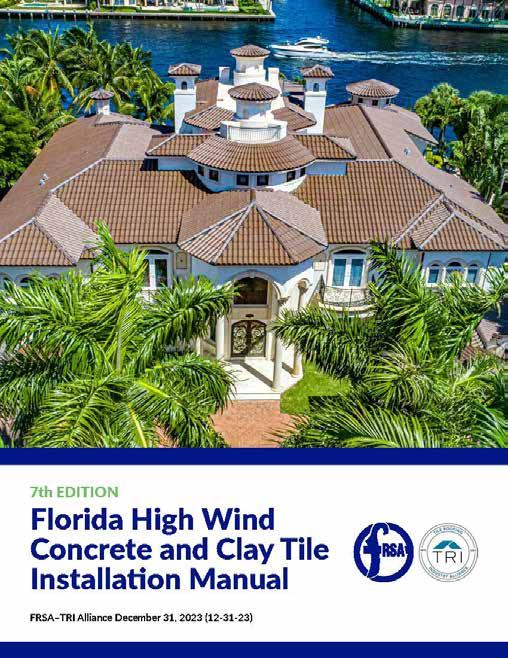
The wind load provisions of the code are in a reference standard titled: Minimum Design Loads and Associated Criteria for Buildings and Other Structures ASCE/SEI 7-22 (ASCE 7), which will remain unchanged for this edition of the FBC. As a result, the FRSA-TRI Florida High Wind Concrete and Clay Roof Tile Installation Manual will see no revisions to its tables or other content during this code cycle. For contractors and designers, that continuity provides welcome predictability in a regulatory environment often defined by change.
Miami Dade’s HVHZ Tile Changes
Meanwhile, staff in Miami-Dade County have been busy making updates to RAS 118, 119, 120, 127 and related TAS protocols that reflect significant changes by removing many of the prescriptive methods and inserting performance-based standards. These changes strengthen and better align the High Velocity Hurricane Zone (HVHZ) requirements for tile with those in the FRSA-TRI manual.
Corrosion Resistance: A Coastal Imperative
In a state surrounded by saltwater, corrosion should never be an afterthought. Significant corrosion resistance requirements have been added by referencing extensive new language in Section 1711 in the FBC Building.
2026 Florida Building Code, Building, Ninth Edition
Chapter 15 Roof Assemblies and Rooftop Structures
Section 1506 Materials
1506.5 Nails. Nails shall be corrosion-resistant nails conforming to ASTM F1667 or an equal corrosion resistance by coating, electro galvanization, mechanical galvanization, hot dipped galvanization, stainless steel, nonferrous metal and alloys or other suitable corrosion-resistant material, or corrosion resistance shall be demonstrated in accordance with TAS 114, Appendix E. In areas within 3,000 feet (914 m) of a saltwater coastline, nails shall comply with Section 1711
1506.6 Screws. Wood screws conform to ANSI/ASME B18.6.1. Screws shall be corrosion resistant by coating, galvanization, stainless steel, nonferrous metal or other suitable corrosion-resistant material. The corrosion resistance shall be demonstrated through one of the following methods:
1. Corrosion resistance equivalent to ASTM A641, Class 1;
2. Corrosion resistance in accordance with TAS114, Appendix E; or
3. Corrosion-resistant coating exhibiting not more than 5 percent red rust after 1000 hours exposure in accordance with ASTM B117.
In areas within 300 feet (91.4 m) of a saltwater coastline, screws shall comply with Section 1711
Section 1517 High Velocity Hurricane Zones – Materials
1517.5.1.1 Fasteners and connectors exposed to saltwater environments. Fasteners and connectors in areas within 3,000 feet (914 m) of a saltwater coastline shall comply with Section 1711
The message is clear: Florida’s coastal environment demands metal components that remain functional as long as the roof systems that they secure.
Flashing and Drip Edge
For steep-slope roofs (2:12 and above), drip edge installation at eaves and gables is now firmly reinforced in both residential and building code sections for all roof covering types. The tile section changes are limited to those shown below.
Section 1507 Requirements for Roof Coverings
1507.3.9 Flashing. At the juncture of the roof Interruptions, terminations and penetrations of the roof system vertical surfaces, flashing and/or counterflashing shall be provided installed in accordance with the manufacturer’s installation instructions or the recommendations of the FRSA/TRI Florida High Wind Concrete and Clay Roof Tile Installation Manual, Seventh Edition where the basic wind speed, Vasd, is determined in accordance with Section 1609.3.1.
1507.3.9.1 Drip edge. Drip edge shall be installed at eaves and gables of steep slope roofs (2:12 and above) Drip edge shall be applied according to the FRSA/TRI Florida High Wind Concrete and Clay Roof Tile Installation Manual, Seventh Edition.
Section 1517 High Velocity Hurricane Zones – Materials
1517.6.2.3 Drip edge. Drip edge shall be installed at eaves and gables of steep slope roofs (2:12 and above) Drip edge shall be installed over the underlayment Self-adhering underlayment complying with ASTM D1970 is permitted to be installed over a primed drip edge flange
The changes shown above do not change tile installations but simply refer to the manual. The refinements made in many other steep-slope roof systems eliminate ambiguity and reinforce edge protection, one of the most vulnerable points during high-wind events.
Underlayment: Tested, Approved, Documented
For discontinuous roof tile systems, underlayment installation must strictly follow both Product Approval and manufacturer instructions.
Section 1523 High Velocity Hurricane Zone – Testing
1523.6.5.2.1 Underlayment. All underlayments used in discontinuous roof tile systems shall be tested in compliance with TAS 110 Physical Property Requirements TAS 103 and TAS 104, unless otherwise specifically listed in the applicable RAS. Uplift resistance of the tile underlayment shall be tested in compliance with FM 4474 or UL 1897. The uplift resistance shall be included in the Product Approval
This emphasis on testing and documentation underscores a broader industry shift: performance must be measurable, not assumed.
2026 Florida Building Code, Test Protocols for the High‑Velocity Hurricane Zone
Ninth Edition
Roofing Application Standard (RAS) and Testing Application Standard (TAS)
Roofing Application Standards No. 118, 119 and 120
A. Tile Fasteners
2. All roof tile fasteners shall be of sufficient length to penetrate through the roof sheathing or not less than 3/4 in. into the roof sheathing even when battens are used
3.01 Underlayment Applications
All underlayment systems shall be tested and have Product Approval for use as a roof tile underlayment, Product Approval to include uplift resistance values. Installation of underlayment system shall be in accordance with the Product Approval and the underlayment manufacturer’s installation instructions
The following language and many other sections of these RAS have been deleted:
No roof material shall be fully or partially adhered (not to include mechanically attached) directly to a nailable deck
The 2026 HVHZ test protocols expand the use of structured tables for determining the required underlayment resistance to uplift.
Roofing Application Standard (RAS) No. 127 20
Procedure for Determining the Moment of Resistance, and the Minimum Characteristic Resistance Load, and the Uplift Resistance of Tile Underlayment to Install a Tile Roof System on A Building of a Specified Roof Slope and Height Using Allowable Stress Design (ASD) in Accordance with ASCE 7
1. Scope. This standard covers the procedure for determining the Moment of Resistance (Mr) and Minimum Characteristic Resistance Load (F’) to install a tile system on buildings of a specified roof slope and height. Compliance with the requirements and procedures herein specified, where the design wind uplift pressures (Pasd) have been determined based on Tables 1-3 or Tables 4-6, Tables 7-9 or Tables 10-12 of this standard, as applicable, do not require additional signed and sealed engineering design calculation. The roof tile underlayment must meet the applicable design wind uplift pressures. All other calculations must be prepared, signed and sealed by a professional engineer or registered architect.
Tables 1-3 are applicable to a wind speed of 175 mph, risk category II buildings with gable roofs, and Exposure Category C
Tables 4-6 are applicable to a wind speed of 175 mph, risk category II buildings with gable roofs, and Exposure Category D
Tables 7-9 are applicable to a wind speed of 175 mph, for Risk Category II buildings with hip roofs, and Exposure Category C.
Tables 10-12 are applicable to a wind speed of 175 mph, for Risk Category II buildings with hip roofs, and Exposure Category D.
However, roof tile underlayment must still meet design uplift pressures as shown in the product approval and any calculations beyond the scope of the standard must be prepared and sealed by a licensed professional engineer or registered architect. This approach balances efficiency with accountability, streamlining compliance without sacrificing structural rigor.
The Bigger Picture
The 2026 Florida Building Code tile roofing updates are not about dramatic reinvention. They are about refinement – aligning standards, strengthening corrosion requirements, clarifying installation practices and reinforcing Florida’s leadership in wind-resistant construction.
For an industry shaped by hurricanes and coastal exposure, that steady commitment to improvement ensures one thing remains constant: Florida continues to set the bar for roofing resilience nationwide.
FrM
Manny Oyola, Jr., is Owner of MOJR Consulting, Boca Raton and is working with FRSA as a Technical Advisory. He previously worked for Eagle Roofing Products as Technical Manager Eastern Region and has been a Florida licensed roofing contractor since 1982. Manny is also an instructor, who has worked with FRSA, offering training for many years. He is an FRSA Past President and Honorary Member.
Project Slippage, continued from page 18
acceleration or access constraints require adaptation. Strong contractors handle change professionally but adaptation without recalibrating cost expectations creates an imbalance. When crews adjust effort without formal alignment of scope and compensation, drift accelerates.
Contractors that avoid this pattern do not rely solely on hope or effort. They build mechanisms that keep the estimate connected to the field. Pre-job meetings are not ceremonial: they are detailed alignment sessions. Production expectations are discussed openly with field leadership. Assumptions are reviewed against site realities early, not halfway through the job. Labor hours are evaluated frequently enough to allow adjustment, not as a post-mortem explanation.
These companies also create visibility into daily production without overwhelming the field with paperwork. They know what square footage should be installed under normal conditions. They understand how access constraints affect output. When conditions change, they recalculate expectations rather than pretending the original numbers still apply. That discipline prevents small variances from becoming large losses.
Perhaps most importantly, they treat the middle of the job as the most critical phase for profit protection. Many contractors focus heavily on winning the bid and closing the job. The quiet middle period receives less structured attention. Yet that is where margin is won or lost. It is where production either confirms the estimate or challenges it. It is where sequencing either supports efficiency or undermines it and where communication either stays clear or gradually blurs.
Slippage is subtle. It rarely announces itself. It shows up as minor schedule compression, small scope clarifications, incremental labor creep and a
few additional material needs. By the time the project is nearing completion, the final numbers tell the story and the lesson can feel expensive.
Roofing remains a field-driven business. No spreadsheet can install a membrane and no dashboard can set a termination bar. Discipline between estimating and execution determines whether the work performed reflects the price. When that connection is maintained, profit follows. When it weakens, projects begin to slip.
The strongest contractors understand that margin is not protected at the end of the job. It is protected in the daily alignment between expectation and execution. It is guarded by clear scope definition, frequent labor review, deliberate sequencing and direct communication. Projects do not fail suddenly. They slip quietly and companies that recognize slippage early are the ones that stay firmly on course.
FrM
John Kenney, CPRC is CEO of Cotney Consulting Group, Plant City. He has decades of experience on commercial roofing projects, providing a unique understanding of what it takes to succeed in roofing – on the roof, in the office and at scale. John saw the need to provide contractors with strategic guidance built on real-world field knowledge. Cotney Consulting offers COO on Demand, online training, technology solutions, business advisory consulting, collections, contracts, Castagra estimating training, safety and OSHA training. John partners with FRSA to provide educational seminars. For more information, contact John at jkenney@cotneyconsulting.com or 813-851-4173.
E-Verify: What Employers Need to Know
SeayHR
The E-Verify system has become a critical tool for employers across the U.S. to verify the legal work eligibility of new hires. As immigration laws and employment regulations continue to evolve, more states and industries are requiring businesses to use E-Verify as part of their hiring process. Understanding how the system works, its legal implications and the steps required to stay compliant can help employers avoid legal pitfalls and ensure they are hiring eligible employees.
What is E Verify?
E-Verify is a web-based system operated by the U.S. Department of Homeland Security (DHS) that allows employers to verify the employment eligibility of their employees. It compares the information provided by the employee on their I-9 Employment Eligibility Verification form against records available to the DHS and the Social Security Administration (SSA).
This system helps employers confirm that their employees are legally authorized to work in the U.S., whether they are U.S. citizens, permanent residents or foreign nationals with work visas. While it is a voluntary program for most employers, some states and industries may require its use.
How to Register for E‑Verify
Employers can sign up for the program online and access additional resources on the E-Verify website, www.e-verify.gov/employers.
Is E‑Verify Required by Federal
Law?
No. Participation in E-Verify is voluntary for most employers as a supplement to Form I-9, though employers who fit certain criteria in some states may be required to use it. E-Verify is mandatory for all employers with Federal contracts or subcontracts that contain the Federal Acquisition Regulation (FAR) E-Verify clause.
What Florida Employers Need to Know About E‑Verify
Understanding the E-Verify system and the legal obligations under Section 448.095 of the Florida Statutes is crucial for avoiding costly penalties and maintaining proper workforce management.
Since 2021, Florida law has required every public agency, contractor and subcontractor to use the E-Verify system to authenticate the work status of recent hires. On May 10, 2023, Governor Ron DeSantis enacted SB 1718, now codified as Section 448.095 of the Florida Statutes, adding additional regulations for private employers. The law mandates that private employers in Florida with 25 or more employees performing services in Florida must use E-Verify to confirm the employment eligibility of all new hires. This legislation is part of an effort to address illegal immigration within the state.
Employees hired before July 1, 2023, remain subject to all Form I-9 requirements, however, their information does not need to be entered into the E-Verify system. Independent contractors are not subject to the requirements of Section 448.095.
Enforcement of Section 448.095
If an employer fails to comply with the E-Verify requirements under Section 448.095, the Florida Department of Economic Opportunity (DEO) will issue notification and the employer will have 30 days to address the issue. Should an employer commit three violations within 24 months, they may face fines of $1,000 per day. Additional civil and criminal penalties, including the suspension or revocation of state licenses, permits and registrations, may also be enforced based on the specific circumstances.
Impact on Florida Businesses
The new E-Verify requirements place added administrative burdens on employers. The law’s extension to private businesses with 25 or more employees forces thousands of companies to modify their usual hiring processes. With significant penalties for noncompliance, employers must ensure that internal stakeholders are fully aware of the new obligations. Businesses engaged in government contracts need to be especially cautious, because they are required to use E-Verify regardless of the number of employees they employ.
SeayHR can help you put together a process to utilize E-Verify or you can utilize them to complete the verification process for your employees on your behalf. Compliance and policy updates are just the beginning. SeayHR provides a broad range of HR services designed to support your business’s growth and ensure ongoing adherence to legal standards.
Free HR Helpline for FRSA Members
FRSA partners with SeayHR to offer FRSA members HR information. This resource is available to provide answers to your HR, personnel management and employment-related questions including topics such as payroll, leave of absence, discrimination, discipline, workers’ comp and disabilities. Sometimes a simple question can turn into a complicated and costly concern if it is not handled properly. When you have a question and need an accurate and concise answer, contact SeayHR by phone or email and identify yourself as an FRSA member. Email admin@seay.us or phone 888-245-6272. There is no fee for a 15-minute consultation. Discounted fees apply for in-depth consultations.
What's Wrong With These Pictures?
The Recruitment and Retention Playbook: How to Build a Team That Stays, Grows and Performs
Gary A. Cohen, Executive Vice President, Certified Contractors Network (CCN)
Ask any roofing contractor what keeps them up at night and the answer is almost always the same. It is not finding leads. It is not closing sales. It is finding and keeping good people. Labor challenges have become the defining issue for roofing companies across Florida and the contractors who figure out how to attract top talent and hold onto it are the ones pulling away from the competition.
The good news is that this is a solvable problem. The bad news is that most roofing companies are still trying to solve a 2026 hiring challenge with 1995 thinking. Posting a job on Craigslist, offering a modest hourly rate and hoping for the best is no longer a viable strategy. The workforce has changed. People have options. And the companies willing to invest in their people are the ones winning the talent war.
Why Good People Leave
Before you can fix a retention problem, you need to understand why it exists. In our experience, working with roofing contractors across the country, the most common reasons employees leave has very little to do with money. Yes, of course, compensation matters. However, most people walk out the door because they feel invisible, unappreciated or stuck.
They leave because no one ever told them what a career path looked like inside the company. They leave because the owner makes every single decision and there is no room for them to feel empowered and grow into leadership. They leave because communication is poor, expectations are unclear and praise is rare. They leave because Friday afternoon feels the same as the first day they started, with no sense that anything has changed or that they matter to the business.
Understanding this is the first and most important step. People do not quit companies. They quit managers, they quit cultures and they quit environments where they cannot see a future for themselves.
Building a Recruitment Strategy that Works
Effective recruitment starts long before you post a job opening. It starts with your reputation as an employer. In a local market, word travels fast. If your crews talk about your company as a great place to work, you will have a pipeline of candidates before you ever need to advertise. If they grumble about chaos, disrespect and broken promises, your pipeline dries up.
The best roofing companies treat recruitment the same way they treat sales. They build awareness, they develop a compelling message and they follow a consistent process. Start by defining what makes your company a great place to work. Is it your culture? Your training? Your growth opportunities? Your pay structure? Get clear on your value proposition as an employer and communicate it consistently across your website, your social media and in every conversation you have with potential hires.
When posting jobs, be specific about what the role looks like on a day-to-day basis, what the growth path is and what someone can realistically expect to earn within their first year and beyond. Vague job postings attract vague candidates. Specific, honest, compelling postings attract people who are genuinely excited about the opportunity.
Also consider your sources. The best hire you will ever make often comes from a referral. Build a formal employee referral program that rewards your team for bringing in quality candidates. When your own people become your recruiters, it changes the whole dynamic. They only refer people they believe in, which immediately raises the quality of your candidate pool.
Onboarding is Not Optional
You recruited the right person. Now the real work begins. One of the most overlooked areas for roofing companies is onboarding. Many contractors treat it as an afterthought, handing a new hire a branded shirt and pointing them toward the crew. This is a costly mistake.
Research consistently shows that employees who go through a structured onboarding process are significantly more likely to stay with a company longterm. Your first 90 days with a new hire set the tone for the entire employment relationship. Use that time intentionally. Walk them through your company values, your processes and your expectations. Introduce them to the team in a meaningful way. Assign them a mentor
or buddy who can answer questions and help them feel connected.
Check in with new hires regularly during those first three months. Ask how they are feeling, what questions they have and whether they feel supported. Small investments in attention during the onboarding phase pay enormous dividends in long-term retention.
Creating a Culture Worth Staying For
Culture is one of those words that gets overused but the concept behind it is real and it matters. Culture is simply the collection of daily behaviors, expectations and standards that define what it feels like to work at your company. And here is the thing about culture, you either build it intentionally or it builds itself accidentally. Most of the time, accidental cultures are not ones that attract and retain great people.
To build a culture worth staying for, start with communication. Hold regular team meetings where people know what is going on in the business. Share wins. Acknowledge hard work publicly and specifically. Create rituals around recognition. Celebrate milestones. Make your team feel like insiders rather than just labor. Invest in development. Send people to training. Pay for certifications. Give your high performers a path toward leadership roles. When people see that you are investing in their growth, they invest back in the company.
The Compensation Conversation
None of this is to say that money does not matter. It absolutely does. Compensation is most effective when it is paired with all the other elements described here. A great culture with poor pay will still lose people over time. Poor culture with great pay will keep people in their seats but rarely produce their best work. Review your pay structures annually. Make sure your wages are competitive for your market. Consider
performance-based incentives that allow top performers to earn more based on the value they create. When compensation is tied to outcomes, it aligns the interests of the individual with the interests of the business and that alignment is a powerful motivator.
The Bottom Line
Recruitment and retention are not HR problems. They are business strategy problems. The companies that win in today’s labor market are the ones that treat their people as their most valuable asset, not just on paper but in practice every single day.
Build a culture people want to be part of. Onboard new hires with intention. Develop them over time. Recognize them consistently. Pay them fairly. Do these things well and you will spend far less time hiring and far more time growing.
Gary A. Cohen is Executive Vice President of Certified Contractors Network (CCN), the leading comprehensive training, coaching and networking membership organization in North America. Gary is also a 30-year veteran of the home improvement industry, spent 11 years at the Robert H. Smith School of Business at the University of Maryland as a Professor of Business and served 4 years as Associate Dean of the business school. Gary has been a certified leadership coach for the past 18 years. He can be reached at gary@contractors.net.
30+ Years of Success –
The system that’s trained thousands of contractors to sell more, sell bigger, and sell better
Handle any Objection
Learn to sell value, not price
every time
Experience Modification Rating
Jorge Castanon, FRSA-SIF Safety Rep
You've heard of experience modification rating but what is it and why does it matter? How does it work? And how can it impact your bottom line? The EMR, also known as the experience mod or e-mod, is a numerical representation of an employer’s past workers’ compensation claims experience in comparison to other employers of similar size in the same industry. It is essentially a measure of an employer’s safety record and risk profile in reference to their workers’ compensation insurance coverage. It is an important aspect that plays a significant role in determining the cost of workers’ compensation insurance. In Florida, the EMR is calculated based on a formula developed by the National Council on Compensation Insurance (NCCI). The calculation of the EMR involves comparing the actual losses (incurred claims) of an employer to the expected losses for businesses of similar size and industry. The equation, when written out, looks like:
(Actual losses ÷ Expected losses) = EMR
This formula determines the ratio between the expected losses in an industry and the actual losses an organization incurs. It also considers the frequency and severity of those losses.
Actual losses refer to the total losses incurred or claims paid by the insurance company on behalf of the employer. They include both the medical expenses and indemnity benefits (wage replacement) provided to injured employees. Actual losses represent the real financial impact of work-related injuries and illnesses on the employer. Expected losses represent the average losses anticipated for a company of similar size and industry classification. These losses are determined based on historical data and statistical analysis provided by NCCI. The expected losses act as a benchmark against which an employer’s actual losses are compared. The resulting value provides insight into the employer’s claims experience in relation to its peers. A value of 1.0 is considered the industry average, meaning that an employer has an average claims experience compared to its peers. If the EMR is greater than 1.0, it indicates a higher-than-average claims experience, resulting in higher insurance premiums. Conversely, an EMR that is less than 1.0 signifies a lower-than-average claims experience and may lead to reduced insurance premiums.
Several factors influence an employer’s EMR, including the number and cost of previous claims, industry classification, payroll and the size of the employer’s operations. Here are some key considerations:
Claims history: The EMR heavily relies on an employer’s past claims history. A single severe claim can have a more substantial impact on the EMR than several smaller claims. Implementing effective safety and risk management practices can help prevent injuries and reduce claims, positively influencing the EMR.
Payroll: The size of an employer’s payroll is a significant factor in EMR calculation. A larger payroll typically indicates a higher exposure to potential claims. Consequently, employers with larger payrolls tend to have higher EMRs.
Industry classification: Different industries have varying levels of risk and exposure to work-related injuries. The EMR considers the employer’s industry classification to ensure fair comparisons within the same sector.
Comparisons to peers: The EMR is calculated by comparing an employer’s claims experience to that of similar-sized businesses in the same industry. It allows for a more accurate assessment of risk and provides a fair basis for determining premiums.
Understanding the EMR is essential for employers as it directly affects the cost of workers’ compensation insurance premiums. A higher EMR translates to higher insurance premiums, which can significantly impact an employer’s bottom line, whereas a lower EMR can result in cost savings on insurance premiums. This also plays a role in the financial impact. The higher the workers’ compensation premium from a higher EMR, the more strain on an employer’s financial resources.
The EMR allows employers to have better control over their workers’ compensation costs. By implementing effective risk management strategies, such as safety programs, claims management practices and return-to-work initiatives, employers can improve their claims experience, resulting in a lower EMR and potential cost savings on insurance premiums.
A lower EMR can give employers a competitive edge. When bidding for contracts or competing in the marketplace, a better claims experience reflected in a lower EMR can demonstrate commitment to workplace safety and risk management. It can enhance an employer’s reputation, improve relationships with clients and potentially lead to more favorable business opportunities.
Moreover, an employer’s EMR can affect its risk perception. Insurers evaluate an employer’s EMR when assessing risk. A higher EMR may be interpreted as a higher risk profile, potentially impacting an employer’s ability to secure favorable insurance coverage or negotiate competitive premiums.
When Does the EMR Change?
The EMR can change annually or over a specific time period, depending on the jurisdiction and the policies of the rating bureaus or insurance companies involved. A change in an EMR does not happen right away. The calculations are based on a three-year rolling average, excluding the most recently completed year. Consequently, each incident impacts insurance premiums for a duration of three years before it no longer influences the EMR.
Throughout this three-year period, the claim amount may be updated to reflect the current expenses related to insurance. As a result, prices tied to an earlier accident can potentially rise during the three years that the incident contributes to EMR calculations. The following are reasons an EMR may change: Annual review: In many jurisdictions, the EMR is reviewed and recalculated on an annual basis. Typically, the EMR is updated using the most recent three years of claims data and as each year’s data becomes available, the EMR can change accordingly.
Claims experience: The EMR is heavily influenced by an employer’s claims experience. If an employer has a significant increase or decrease in the frequency or severity of claims, it can lead to a change in the EMR. For example, a sudden surge in claims in a particular year may result in a higher EMR, while effectively managing and reducing claims can lead to a lower EMR in subsequent years.
Industry changes: Changes in industry classification or reclassification can impact the EMR. If an employer’s industry classification changes, it may be assessed against different peers, which can alter the expected losses used in the EMR calculation. This reclassification can result in a change in the EMR.
Payroll changes: The size of an employer’s payroll can affect the EMR. If there are significant changes in payroll from one year to another, it can impact the EMR calculation. A larger payroll generally indicates a higher exposure to potential claims, which can influence the EMR.
Mergers or acquisitions: In cases where an employer undergoes a merger or acquisition, there may be changes in the EMR. The claims experience and data of the merged or acquired company are combined with that of the acquiring company, which can result in adjustments to the EMR.
Controlling an EMR
Employers can positively influence their EMR by:
■ Implementing robust safety programs
■ Promoting a culture of workplace safety
■ Actively managing claims
■ Reviewing loss and payroll data to ensure it is accurate
■ Managing outstanding reserves and focusing on efficiently resolving open claims
■ Reporting claims to the carrier immediately
■ Providing light-duty options for injured employees
■ Implementing proper training programs
■ Maintaining a safe work environment
■ Promoting early return-to-work initiatives
By implementing these risk management strategies and continuously monitoring and evaluating their effectiveness, employers can improve their safety records, reduce the frequency and severity of claims and, ultimately, lower their EMR. A lower EMR translates into reduced workers’ compensation insurance premiums, leading to significant cost savings for the organization.
Conclusion
Understanding the factors influencing EMR calculations and implementing effective risk management strategies are key to improving an employer’s safety record and reducing claims. By prioritizing safety, actively managing claims and engaging employees, employers can positively impact their EMR and create a safer and more cost-effective work environment. FrM
Interested in obtaining workers’ comp insurance? Members of FRSA-SIF/BrightFund have access to Safety Reps who visit jobsites and conduct safety training and toolbox talks for crews. Please contact Alexis at BrightFund by phone at 800-767-3772 ext. 206 or by email at alexis@brightfund.com.
THE STEEP-SLOPE DUO YOU CAN COUNT ON.
APOC delivers a full-system solution built for performance, speed, and safety. Pair Weather-Armor® FT³ underlayment with APOC Polyset AH-160 adhesive for a codecompliant roofing system that installs fast and holds strong — no mechanical fasteners needed.
FT³: Fleece-top underlayment with superior grip for safe, easy tile installation.
AH-160: Fast-setting polyurethane foam adhesive for strong, reliable tile bonding.
When used together, APOC FT³ underlayment and AH-160 roof tile adhesive streamline installation, reduce labor, and deliver long-term durability.
www.apoc.com | www.icpgroup.com info@icpgroup.com
• 34+ Locations Across Florida
• Proudly Stocking the Top Brands You Need
• Experts in Residential, Commercial, Metal, and Tile Roofing
At QXO, we’re not just here to help you build more — we’re here to empower your vision, fuel your ambition, and create a lasting impact. Together, we shape the future, one bold step at a time. Visit QXO.com to find a