Ron Mandos Magazine
Words by Ron
Reflections by our founder Ron Mandos on 2025 and the year ahead.
Barbara Bos from Museum Voorlinden about collaborating with emerging artists from Best of Graduates
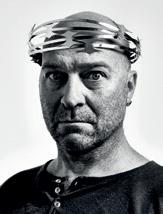
Kendell Geers reflects on Tender Fury, its origins, his work, and the dialogue shaping the exhibition.
An outline of exhibitions and projects planned for the coming year.
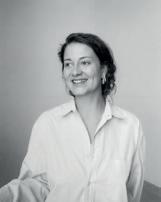
Pip Greenaway discusses her recent work and artistic process ahead of her upcoming exhibition.
A selection of ten moments that marked the year 2025. An
Dear Reader,
The first edition of Ron Mandos Magazine marks a new chapter. For the first time, we bring together, across both print and digital, a curated selection of the projects, exhibitions, conversations, and moments that shaped our year. It is a space to document, revisit, and share memories with our community.
This magazine is not a complete archive, but a snapshot of past and future journeys: artists we’ve worked closely with, ideas that shaped us, and moments that continue to resonate.
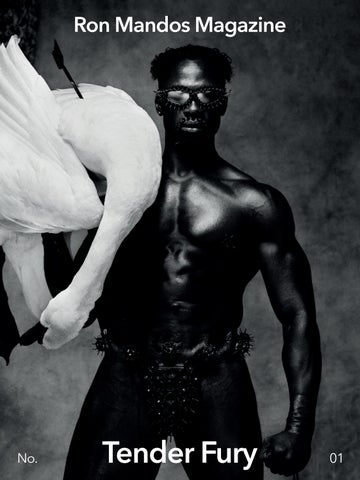
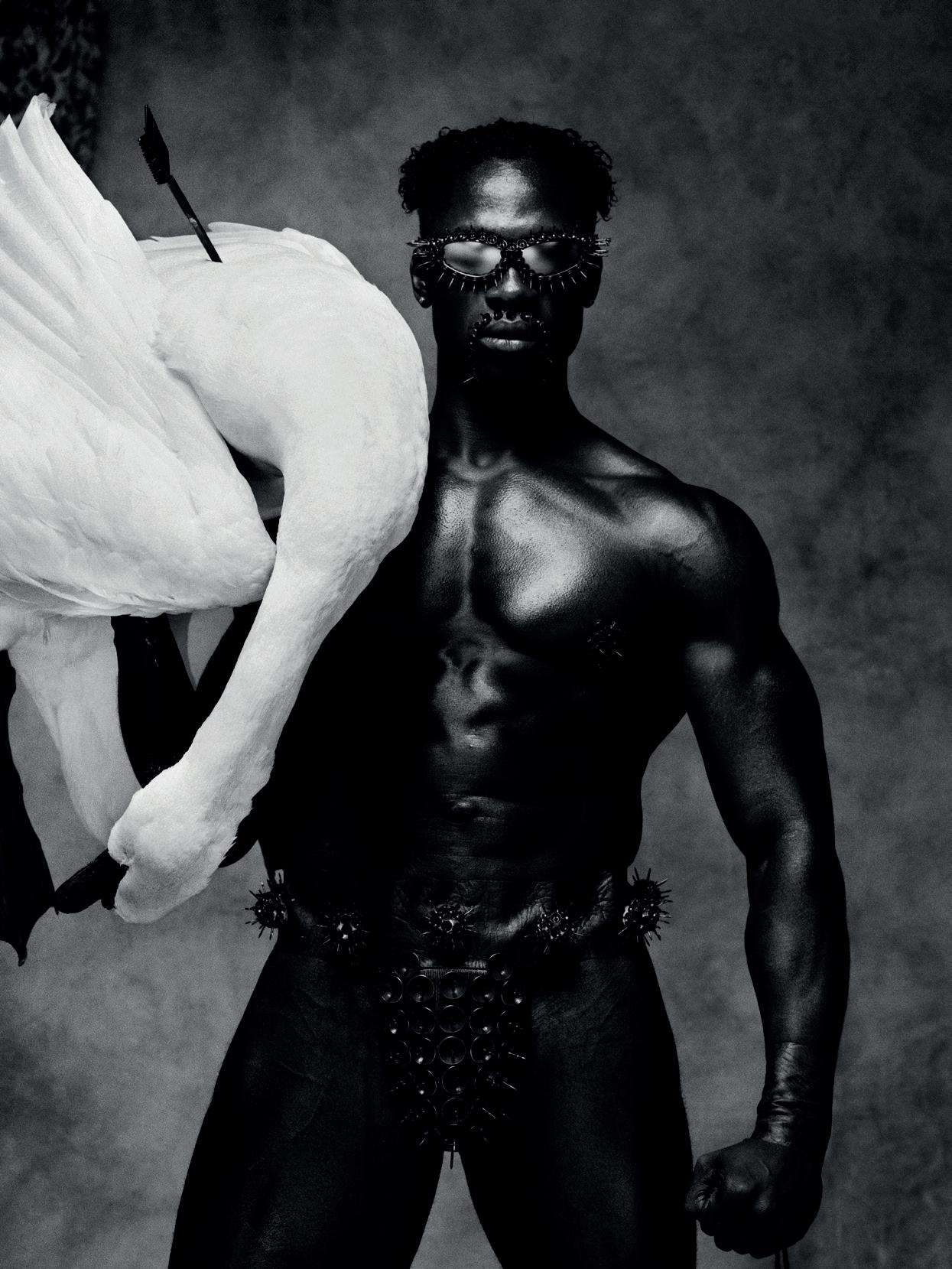
The title Tender Fury looks both backward and forward. It holds the intensity of 2025 and the anticipation of 2026. Its name comes from the exhibition curated by Kendell Geers in dialogue with Erwin Olaf. Two artists who embody key values in our work: boldness and vulnerability, urgency and precision, tenderness and resistance.
These tensions are not contradictions; they coexist. They mirror what the gallery stands for: challenging convention, staying close to the edge, exploring new directions, and working with intention, distinctiveness, and commitment.
This first edition marks the start of a tradition. A shared space to reflect on what has been and imagine what comes next.
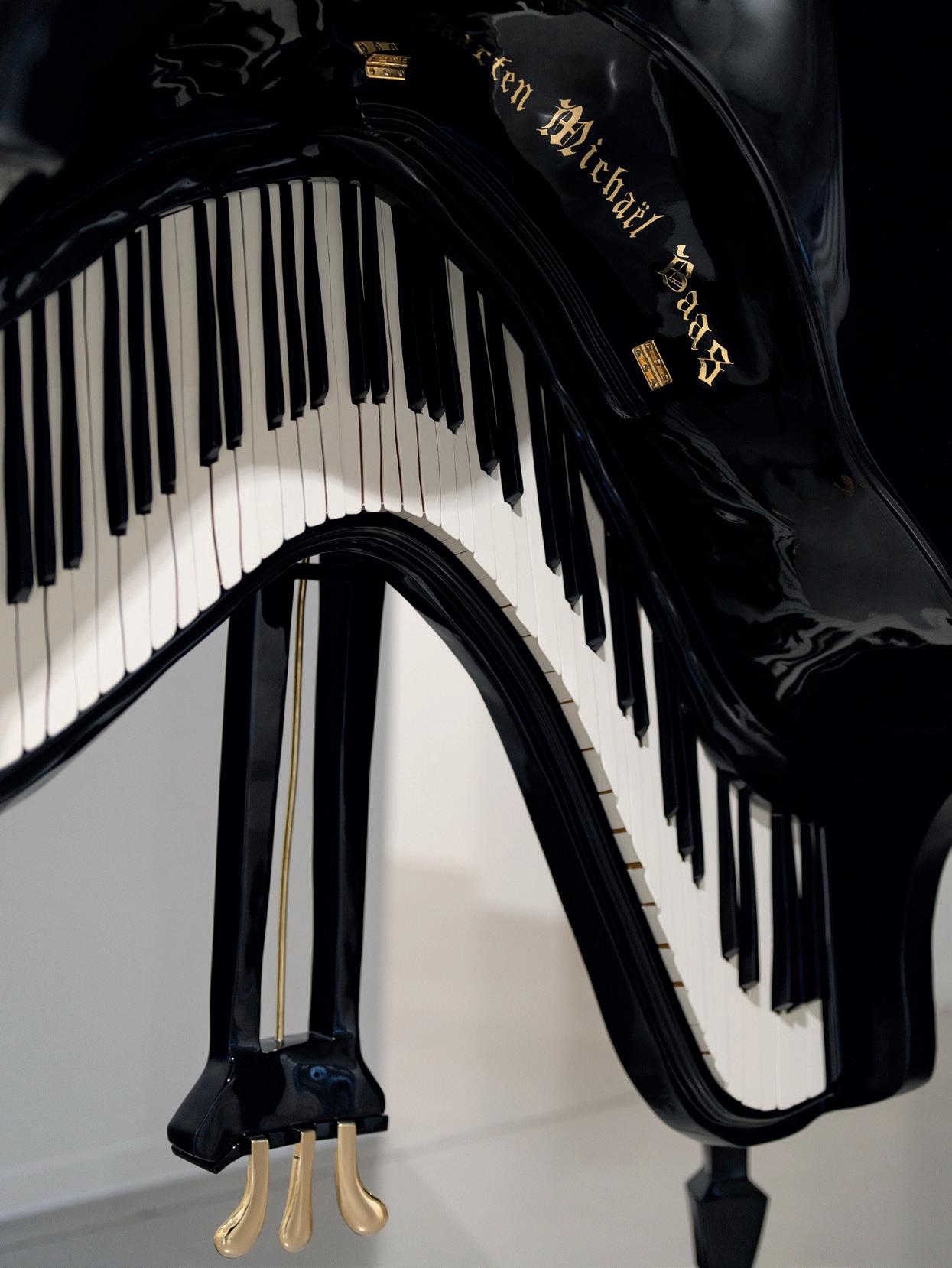
Installation view, Maarten Baas, Crescendo! Photo by Jonathan de Waart, Artwork description on page 86.
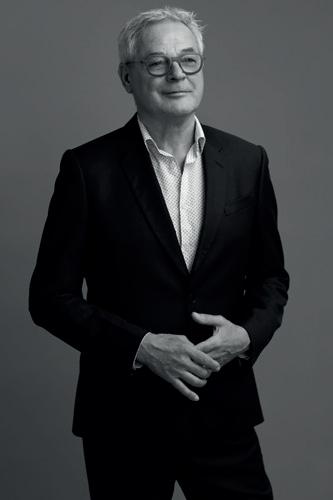
WORDS BY RON
2025 was a remarkable year. It was not always easy, but I look back with pride on the program we presented. It was the year following our major twentieth Twenty-Fifth anniversary in 2024, when I promised to add another 25 great years. I believe we made a convincing start on that promise this year.
Reflections
by our founder Ron Mandos on 2025 and the year ahead.
We began 2025 strongly with Maarten Baas’s first solo exhibition in Amsterdam—an important moment, not only because it was his first presentation with us, but also because the exhibition focused entirely on his visual art. In the gallery window, two collapsed pianos slowly revolved, and further inside stood an entire symphony orchestra, formed by 65 spheres. In the spring, exhibitions by Koen van den Broek and Anthony Goicolea followed, with both artists taking new steps in their painting practices. In the back galleries, we presented work by Anselm Reyle and Shen Wei, introducing their work to a Dutch audience.
The summer brought Best of Graduates 2025, once again confirming how essential it is to continue making space for young artists. This year, we organized the exhibition for the eighteenth time. I am proud of how this platform, together with my Young Blood Foundation, continues to evolve. It feels like an honour to be supported in this by Museum Voorlinden, which annually awards the Young Blood Award. This year, the other prizes were presented by Amsterdam’s Alderman for Culture, Touria Meliani: the Photo Talent Award, the RM Residence at Brutus Award, and the Public Prize. In September, the team travelled to New York for our 15th participation in the Armory Show. Given the turbulence in the international art market, this was an exciting moment, but fortunately we concluded the fair very successfully. Back in Amsterdam, we opened a new exhibition by Jacco Olivier, and a group exhibition focused on photography, featuring, among others, Kevin Osepa, with whom we began working earlier this year. I am especially pleased that he won the Prix de Rome 2025. We closed the year with Nowhere but the Night, an exhibition that holds deep personal meaning for me. Celebrating the life and legacy of Erwin Olaf, carefully curated by London-based curator Gemma Rolls-Bentley, felt both like an honour and a responsibility. Erwin’s activism has always deeply inspired me, especially his unwavering fight for freedom. That the Stedelijk Museum Amsterdam finally devoted a major exhibition to him was profoundly moving.
“Erwin’s activism has always deeply inspired me, especially his unwavering fight for freedom. That the Stedelijk Museum Amsterdam finally devoted a major exhibition to him was profoundly moving.”
Beyond the gallery, 2025 was also a year of significant milestones. Our first participation in Paris Photo, held in the magnificent Grand Palais in Paris—a venue I had dreamed of joining since the very beginning of my career—and Art Basel Unlimited, where Atelier Van Lieshout presented one hundred meters of sculpture as a long march toward a better world. Both fairs felt like a validation of years of hard work. At the same time, it was inspiring to see our artists open major solo exhibitions around the world: Hans Op de Beeck at KMSKA in Antwerp to Brigitte Kowanz at the Albertina in Vienna, Bouke de Vries at the Princessehof in Leeuwarden, Mounir Eddib at Z33 in Hasselt, Tomáš Libertíny at Museum Kranenburgh in Bergen, Marcos Kueh at esea contemporary in Manchester and many more institutional exhibitions from many of our artists. Finally, there was Isaac Julien’s new installation for Palazzo Te in Mantua, created to mark the institution’s 500th anniversary. Each of these moments stood out as a highlight.
December also brought stillness. The loss of Hans van Manen affected me deeply. He was a legend in both the world of dance and the visual arts. As a mentor to Erwin Olaf, he was immensely important. I like to imagine Hans and Erwin now, somewhere on a cloud, a glass
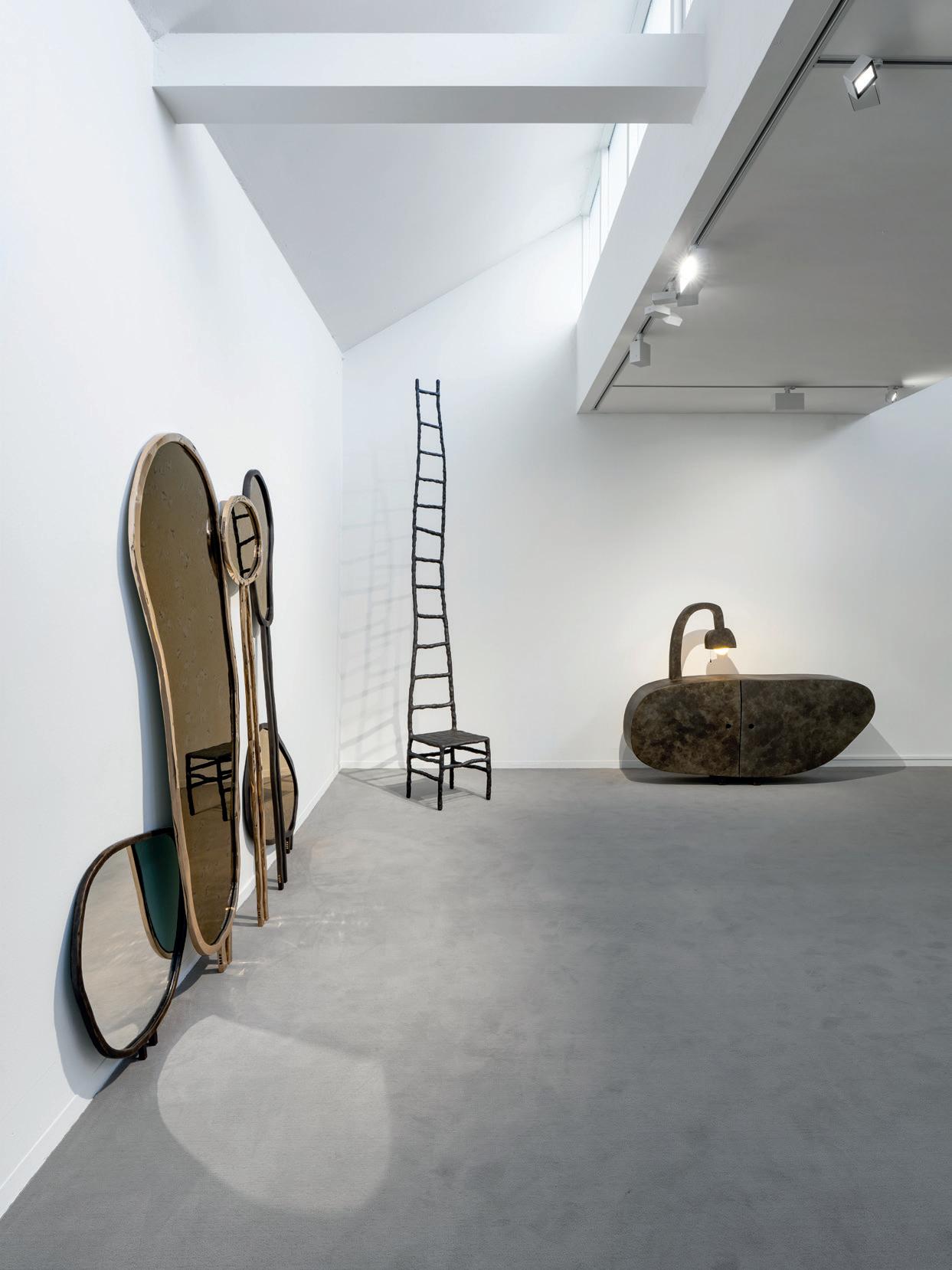
Installation view, Maarten Baas, Crescendo! Photo by Jonathan de Waart, Artwork description on page 86.
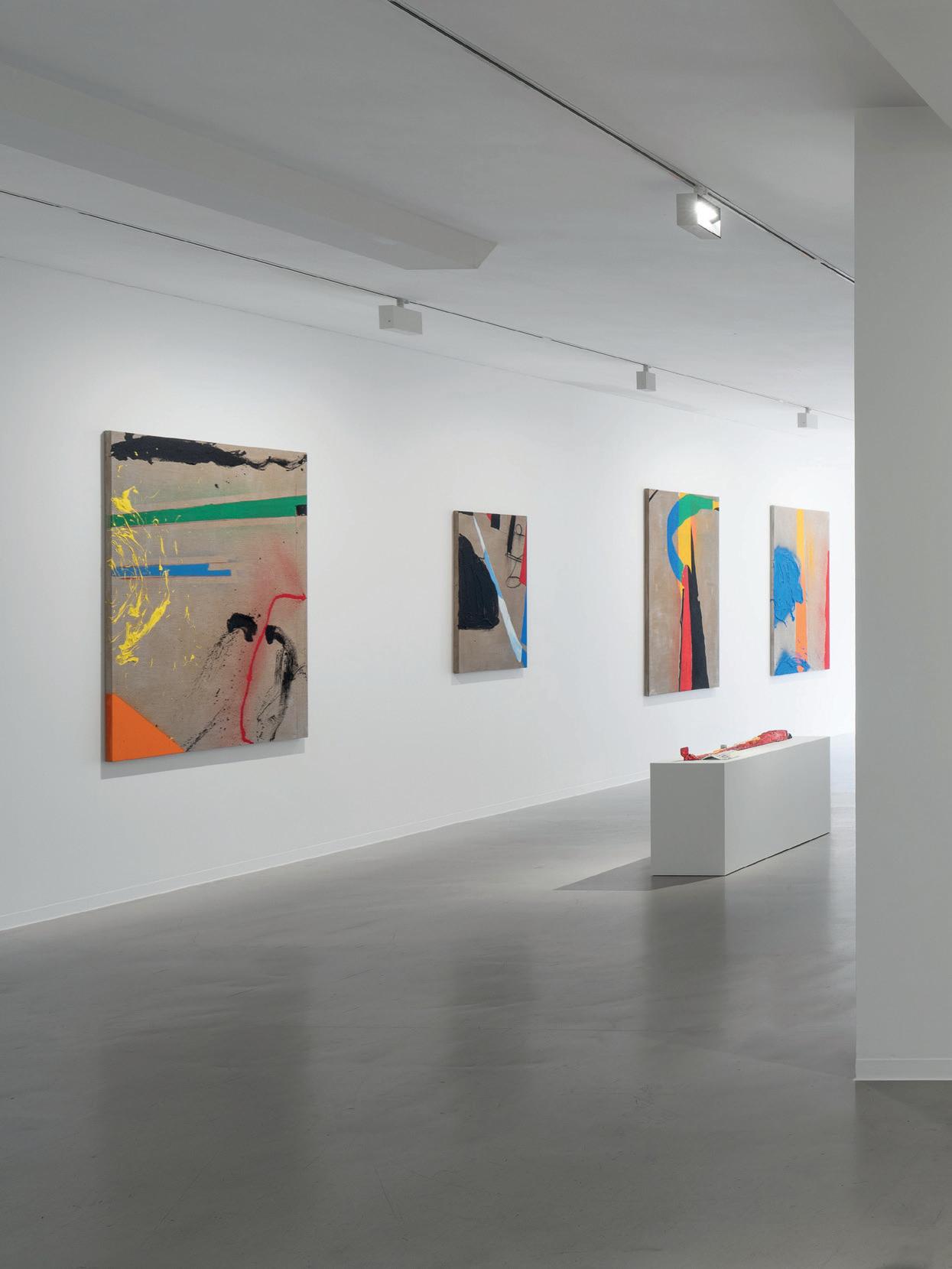
Installation view, Koen van den Broek, Gravity, Photo by Jonathan de Waart, Artwork description on page 86.
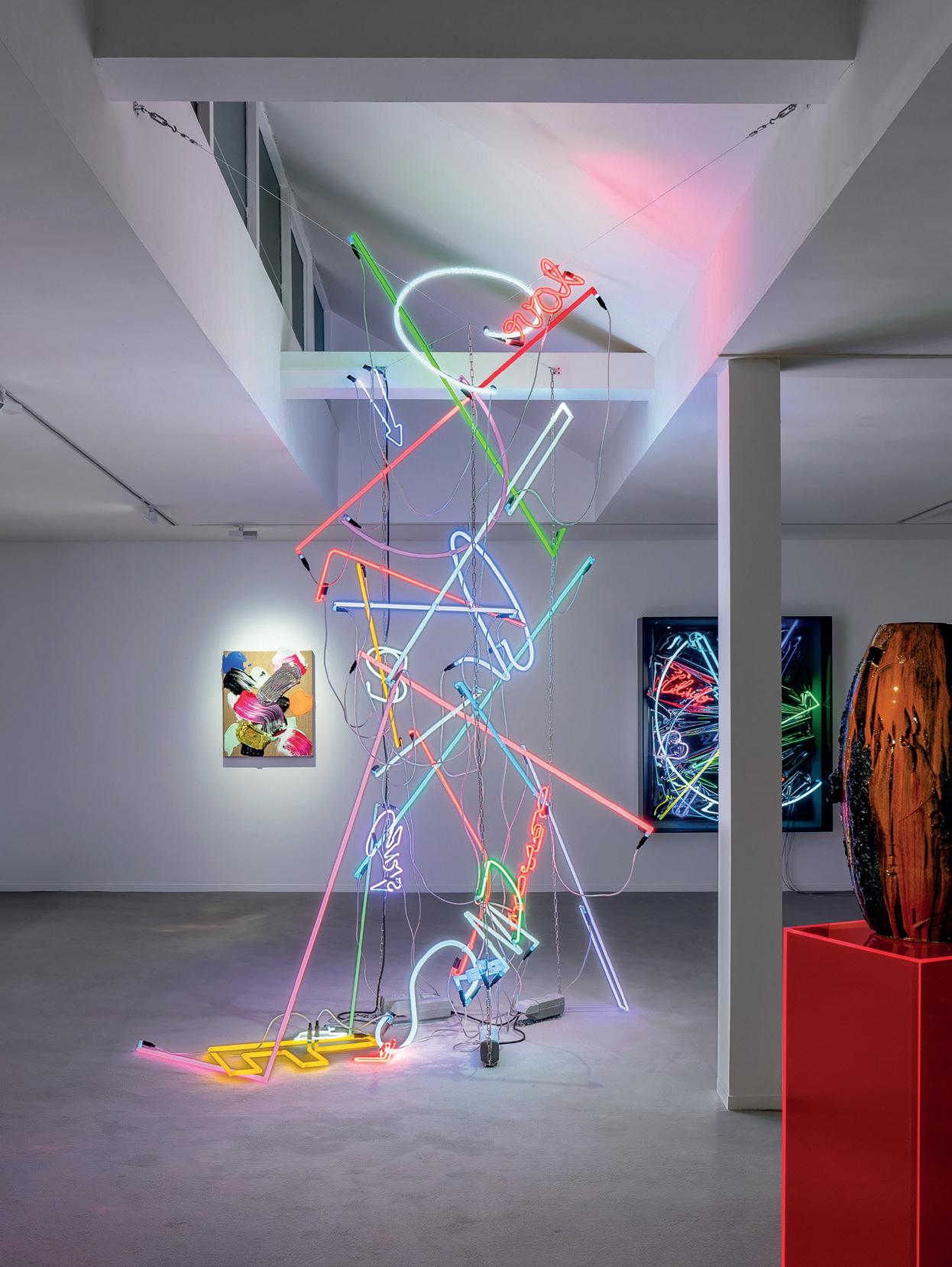
Installation view, Anselm Reyle, Babylon Fading, Photo by Jonathan de Waart, Artwork description on page 83.
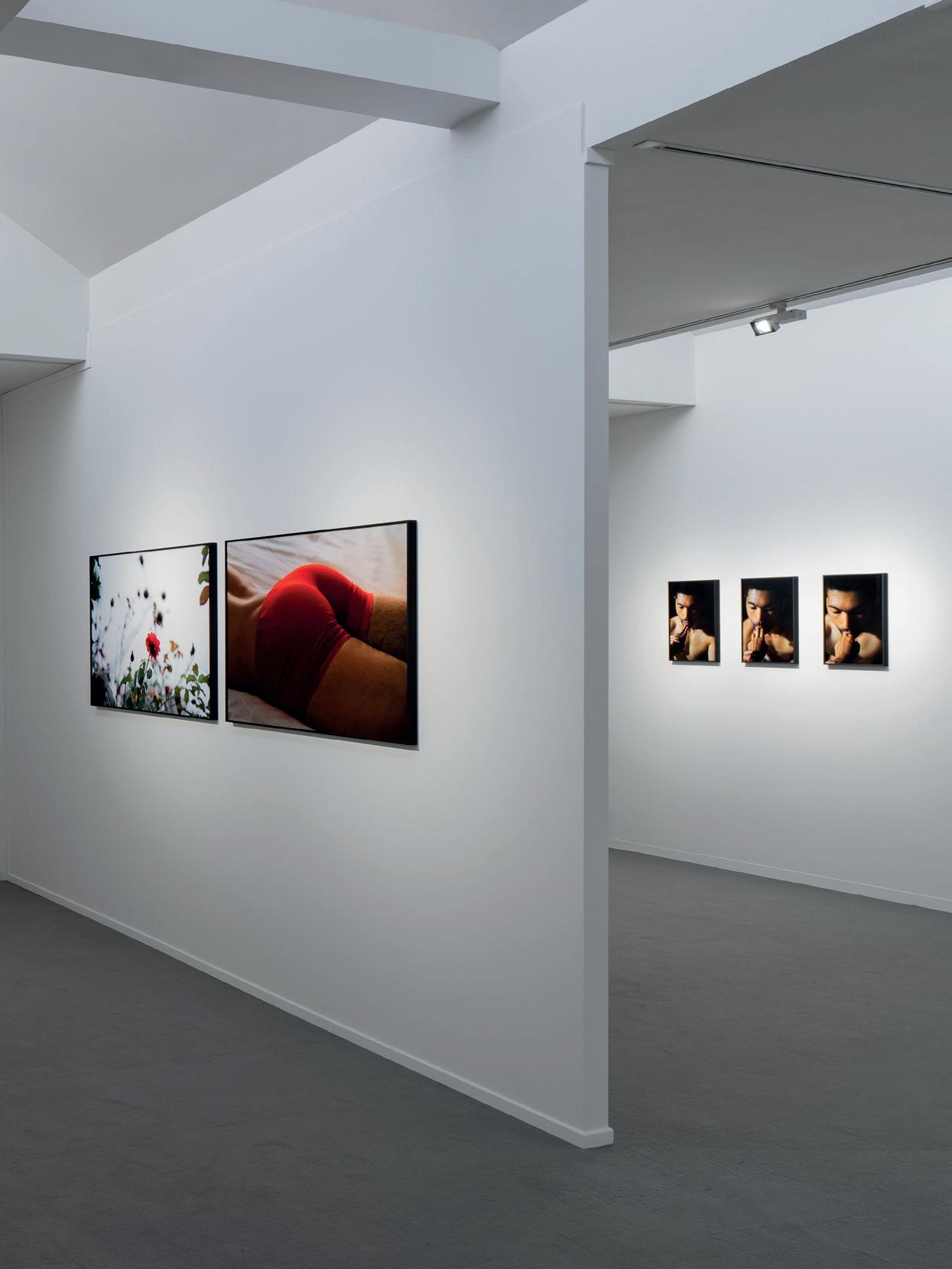
Installation view, Shen Wei, A Season Particular, Photo by Jonathan de Waart, Artwork description on page 87.
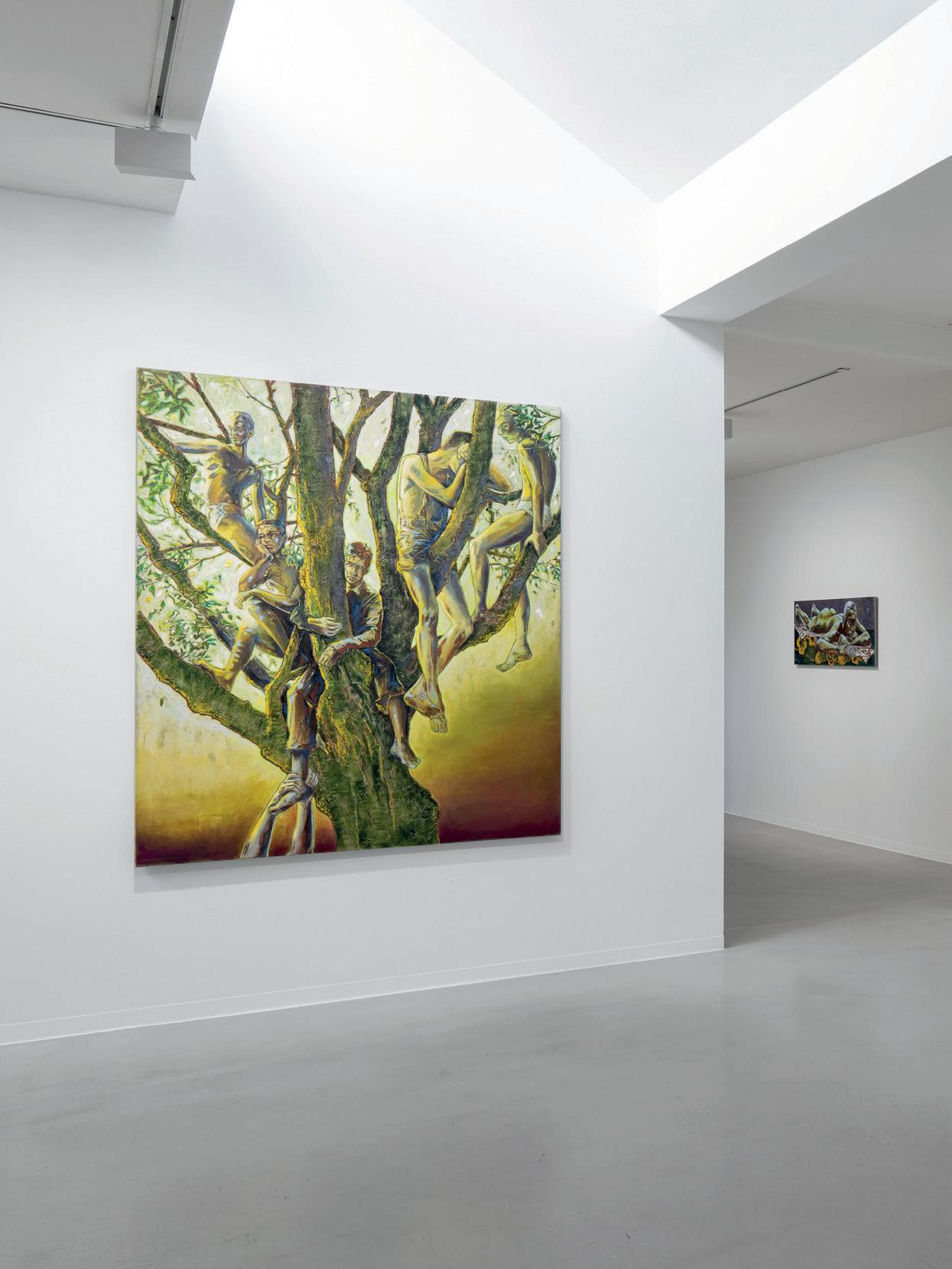
Installation view, Anthony Goicolea, It Won’t Always Be the Same Again,
Photo by Jonathan de Waart, Artwork description on page 83.
of white wine in hand, a cigarette between their fingers, talking and laughing about their shared past. That image brings me comfort. With that thought, I look ahead to 2026. In March, we will participate for the first time in TEFAF Maastricht, where the work of Hans van Manen will once again hold a special place. We will also show photographic work by Erwin Olaf and by Isaac Julien from his series All That Changes You: Metamorphosis, as well as sculptural work by Hans Op de Beeck.
In the gallery, our 2026 program will continue with Erwin Olaf, whose work will remain on view at the Stedelijk Museum Amsterdam through March. For the new exhibition Tender Fury, we have invited the South African artist and activist Kendell Geers to make a personal selection from Erwin’s oeuvre, in dialogue with his own work. This exhibition promises to be a powerful and historic presentation, bringing vulnerability and urgency together. In April, we will open two new exhibitions by Atelier Van Lieshout and Mounir Eddib. Both artists will realize special installations in the gallery. For Mounir, this will be his first solo exhibition with us. I met him during Best of Graduates 2024, and I am deeply impressed by his talent and drive. In June, a new presentation by Katinka Lampe will follow. She continues to develop as a painter and promises to surprise once again. Alongside her exhibition, we will also present a large-scale video installation by Pip Greenaway, who participated in the Best of Graduates 2025 exhibition at Galerie Ron Mandos, where she received the Lakeside Collection Award and an artist-in-residence with the Lakeside Collection at Depot Boijmans Van Beuningen in Rotterdam. She is another talent to watch closely. In the summer, we will once again present a new edition of Best of Graduates. I am already looking forward to visiting art academies across the Netherlands and seeing how much imagination continues to emerge year after year. It remains one of the exhibitions that gives me the most energy.
“I am already looking forward to visiting art academies across the Netherlands and seeing how much imagination continues to emerge year after year. It remains one of the exhibitions that gives me the most energy.“
I am proud to share that in 2026 we will also begin new collaborations. In September, we will open an exhibition by the South African artist Zanele Muholi, who will celebrate with us the twentieth anniversary of their groundbreaking series Faces and Phases. This exhibition will not only look back but also look forward—once again underscoring how art can contribute to emancipation. In addition, we will begin a new collaboration with Folkert de Jong, an exceptional sculptor who has played a defining role in the Dutch art scene for decades. His work is raw and uncompromising, and I greatly look forward to seeing what he will create. This will be preceded by a presentation of his work in my hometown of Rotterdam, in the sculpture park at Art Rotterdam.
Looking ahead in this way, what I feel above all is responsibility: to the artists I have worked with for many years; to young artists finding their way; to the legacy of iconic artists who have shaped us; and to the trust that collectors, institutions, and artists place in us. But above all, I feel love for the profession itself— for looking, discovering, sharing, and continuing to believe in the power of art. With that conviction, I look forward to 2026.
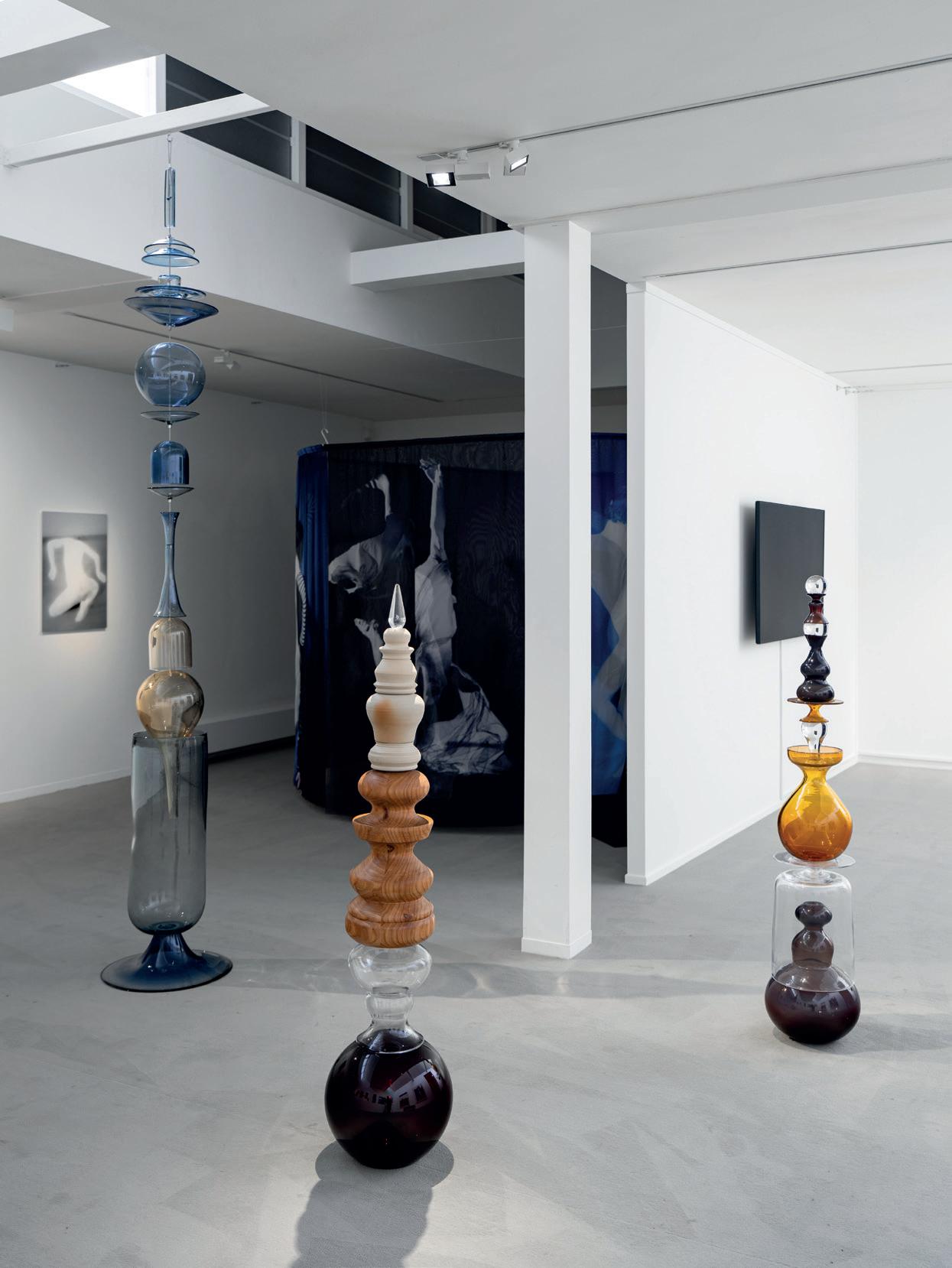
Installation view, Best of Graduates 2025, Photo by Jonathan de Waart.
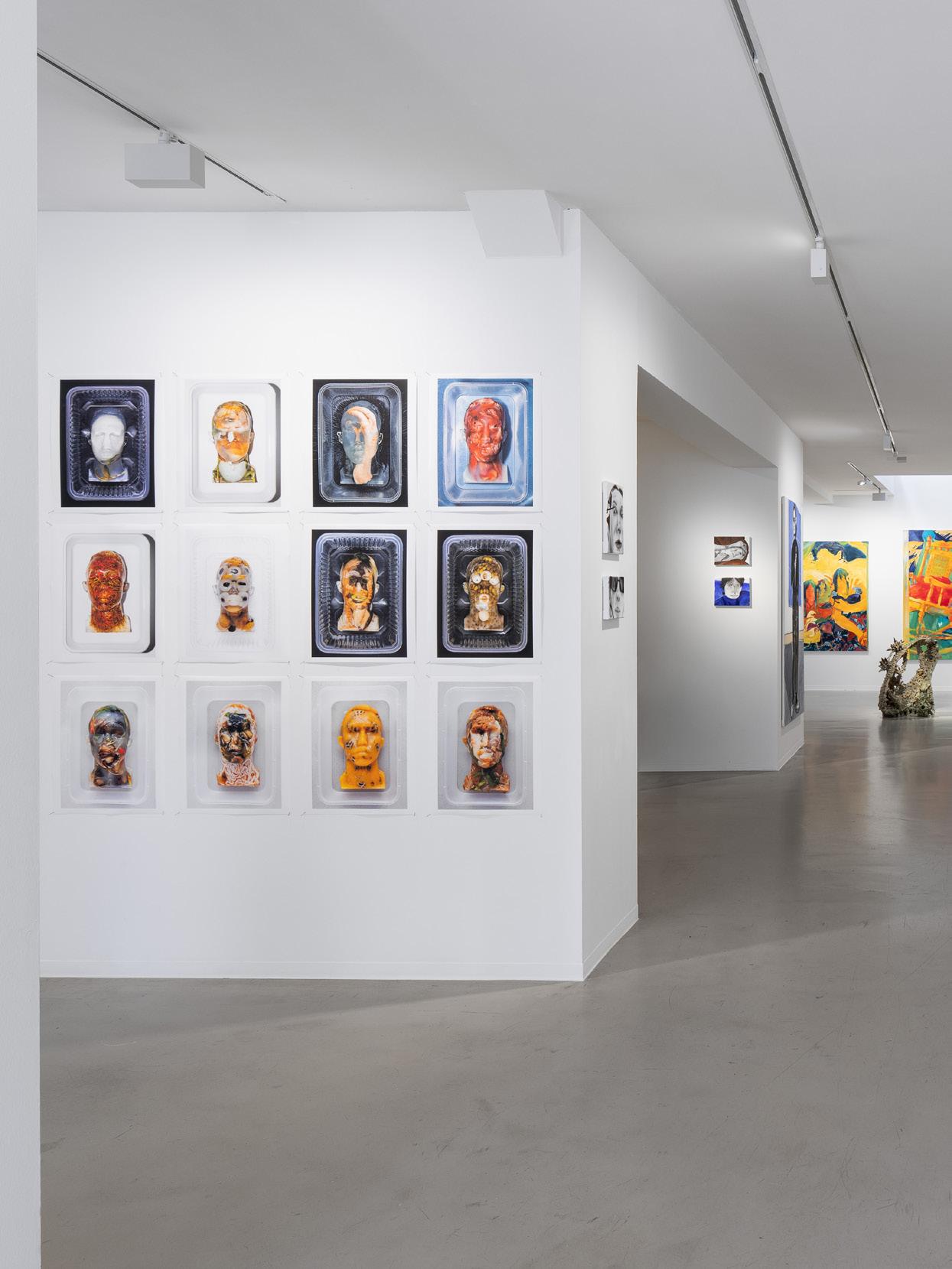
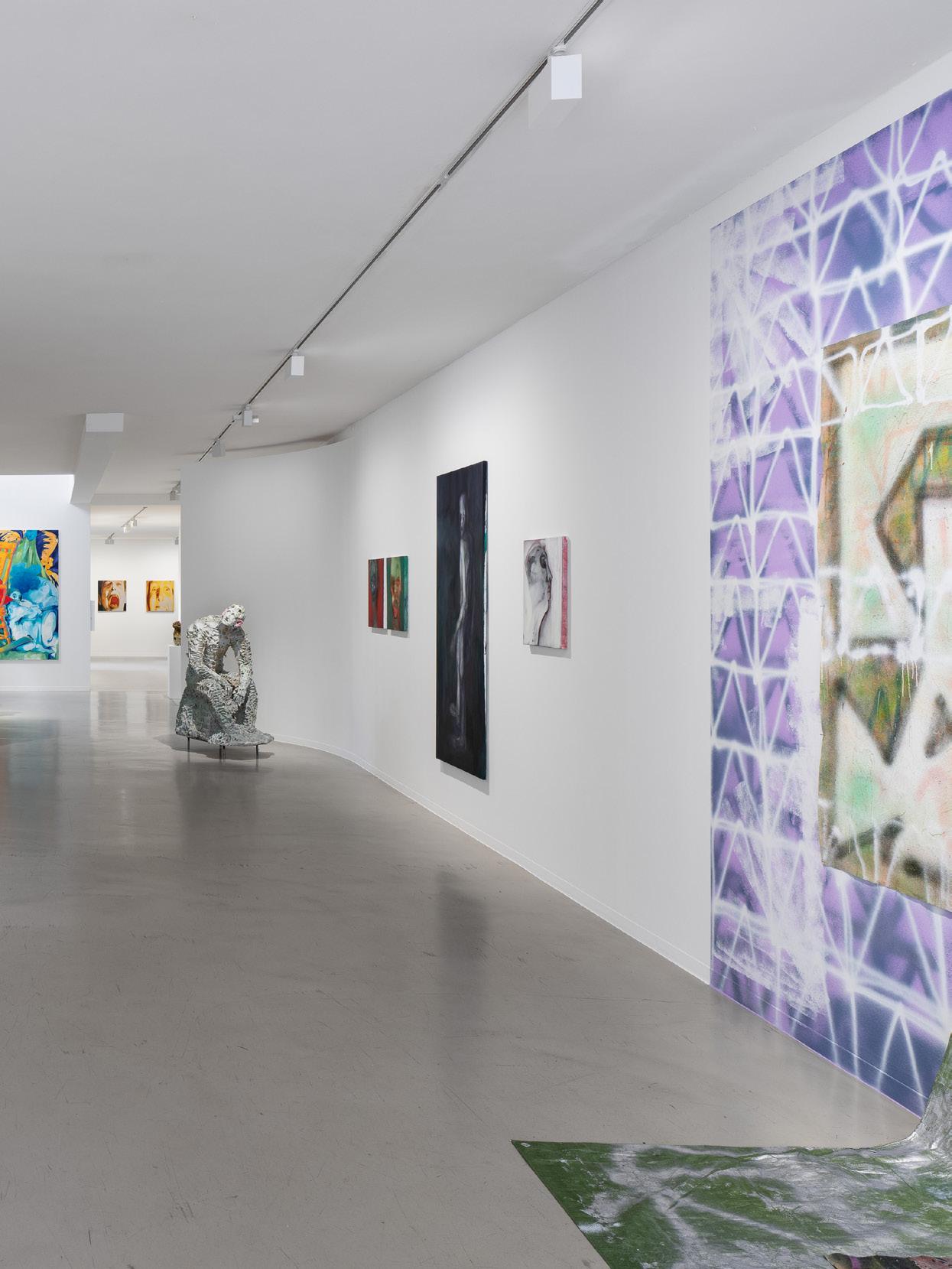
Installation view, Best of Graduates 2025, Photo by Jonathan de Waart.
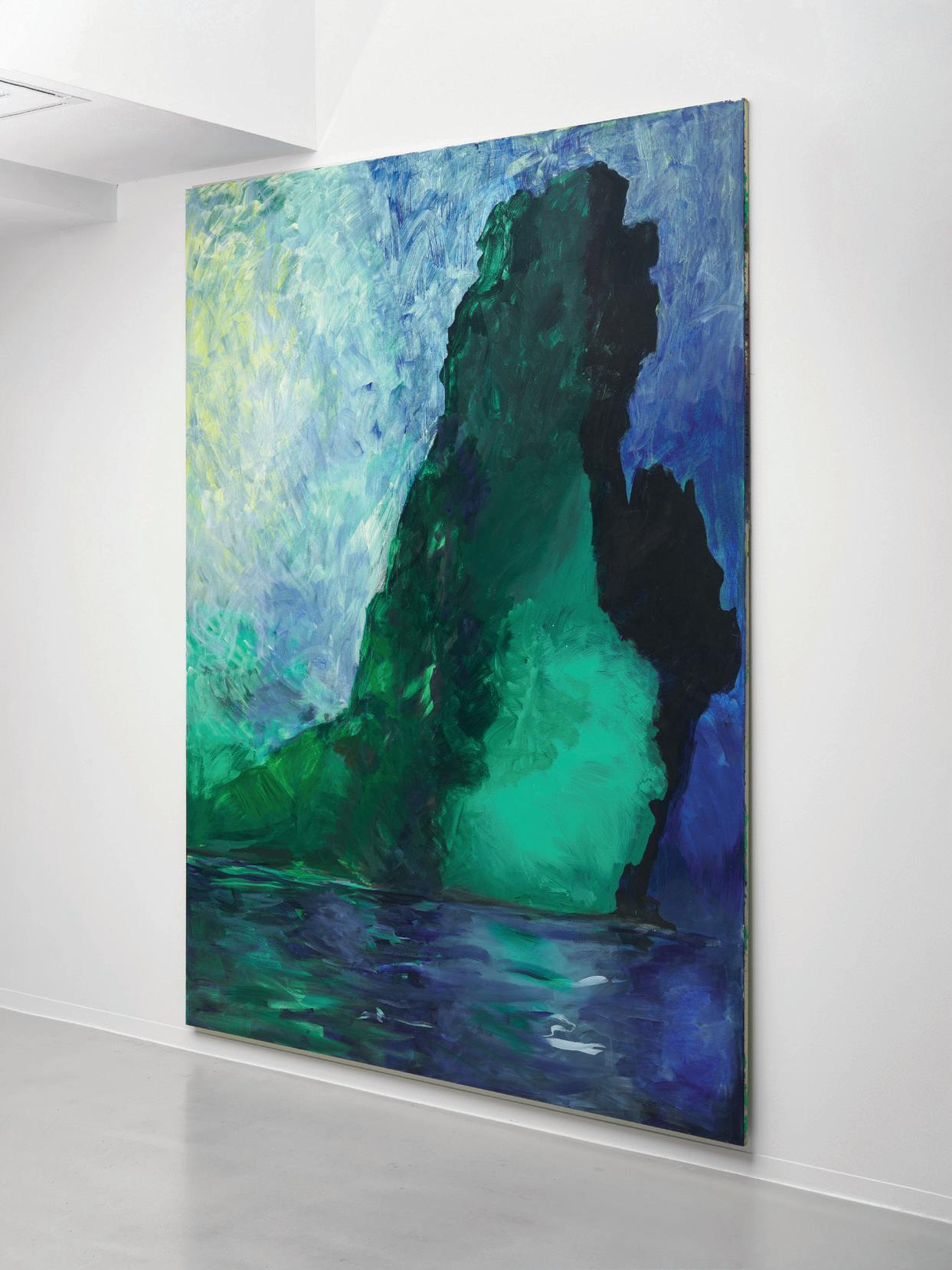
Jacco Olivier, Point Nemo I, 2025, Photo by Jonathan de Waart, Artwork description on page 85.
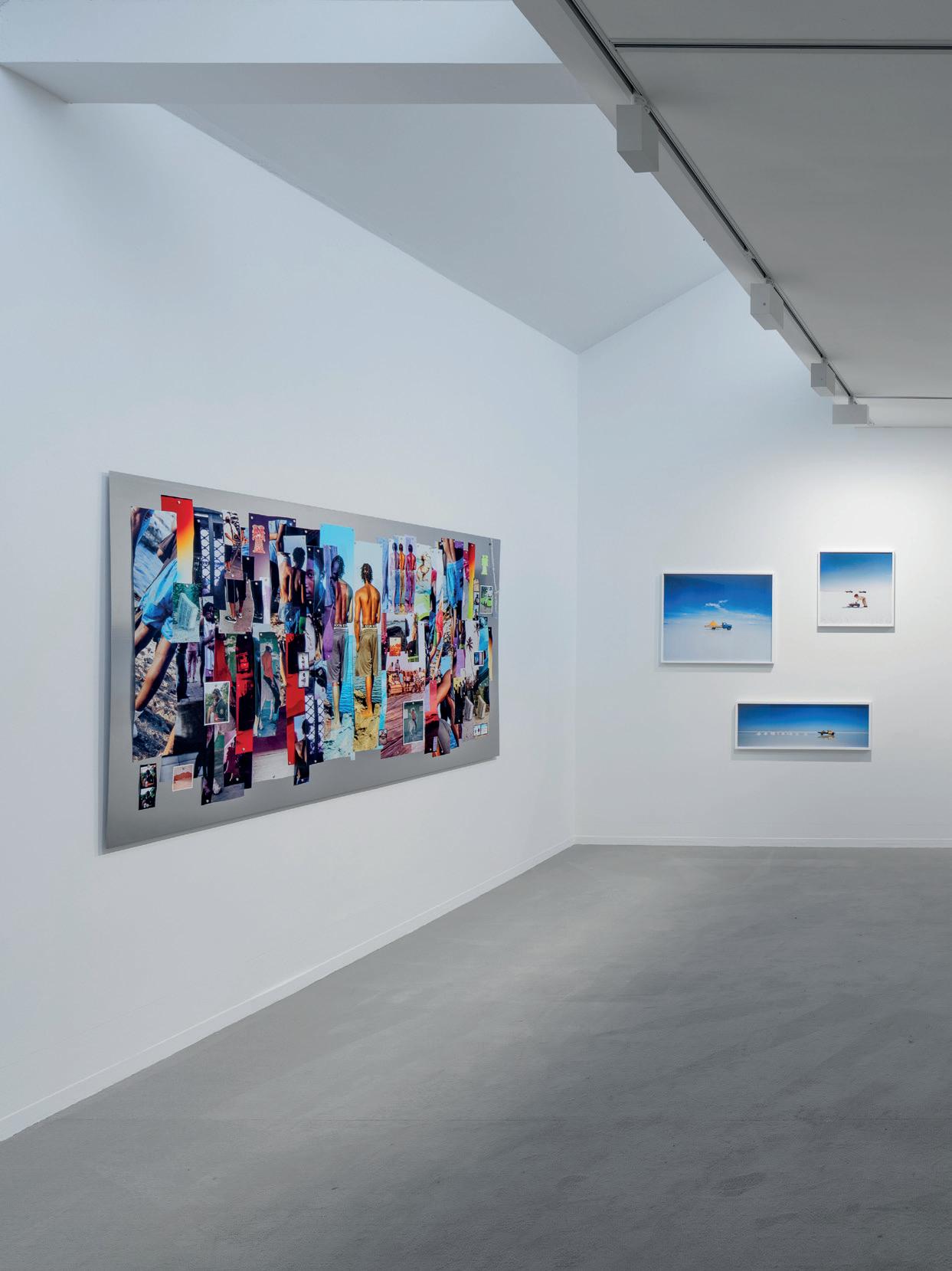
Installation view, Four Photographers Unseen, Photo by Jonathan de Waart, Artwork description on page 87.
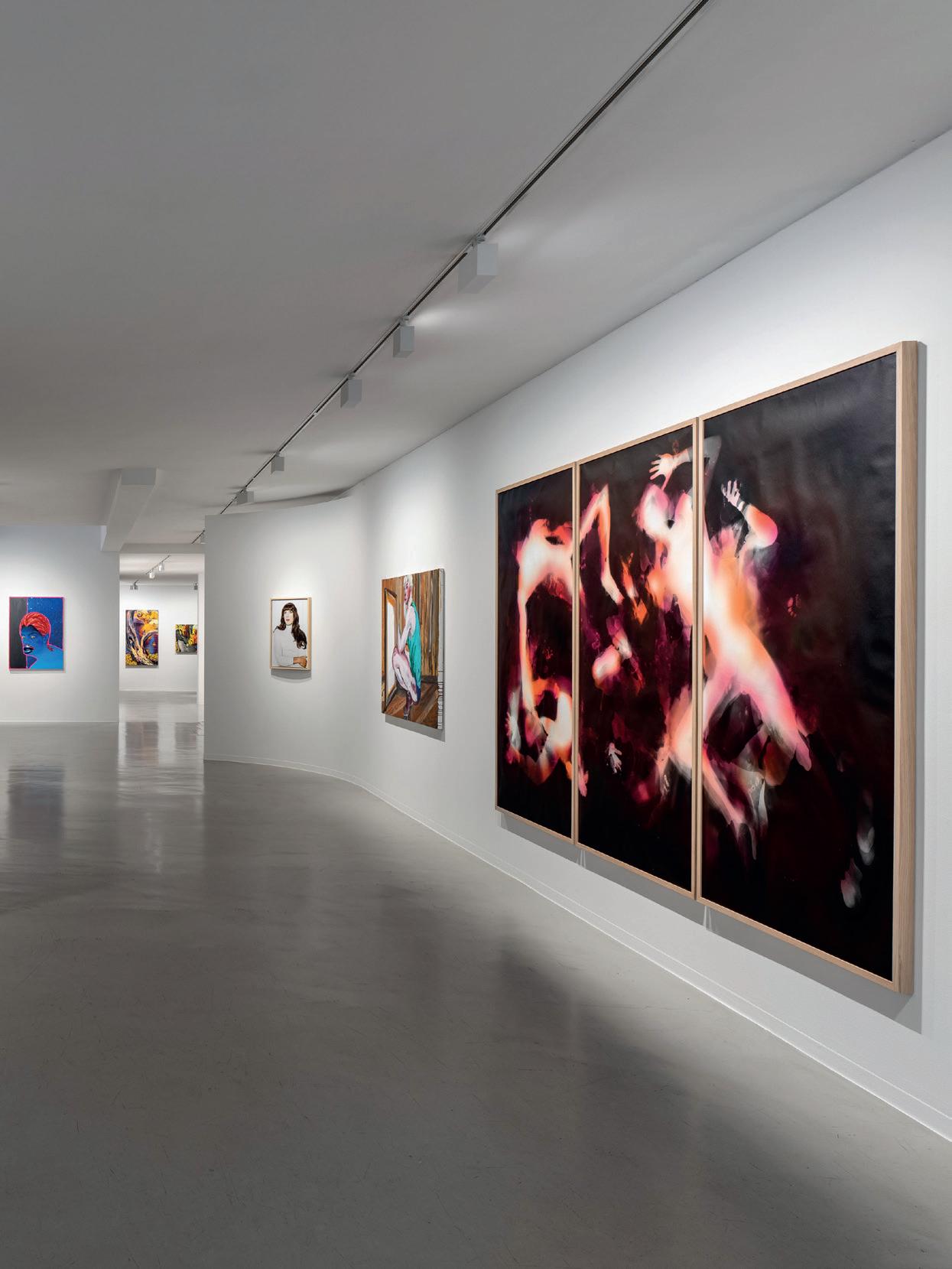
Installation view, Nowhere but the Night, Photo by Jonathan de Waart, Artwork description on page 87.
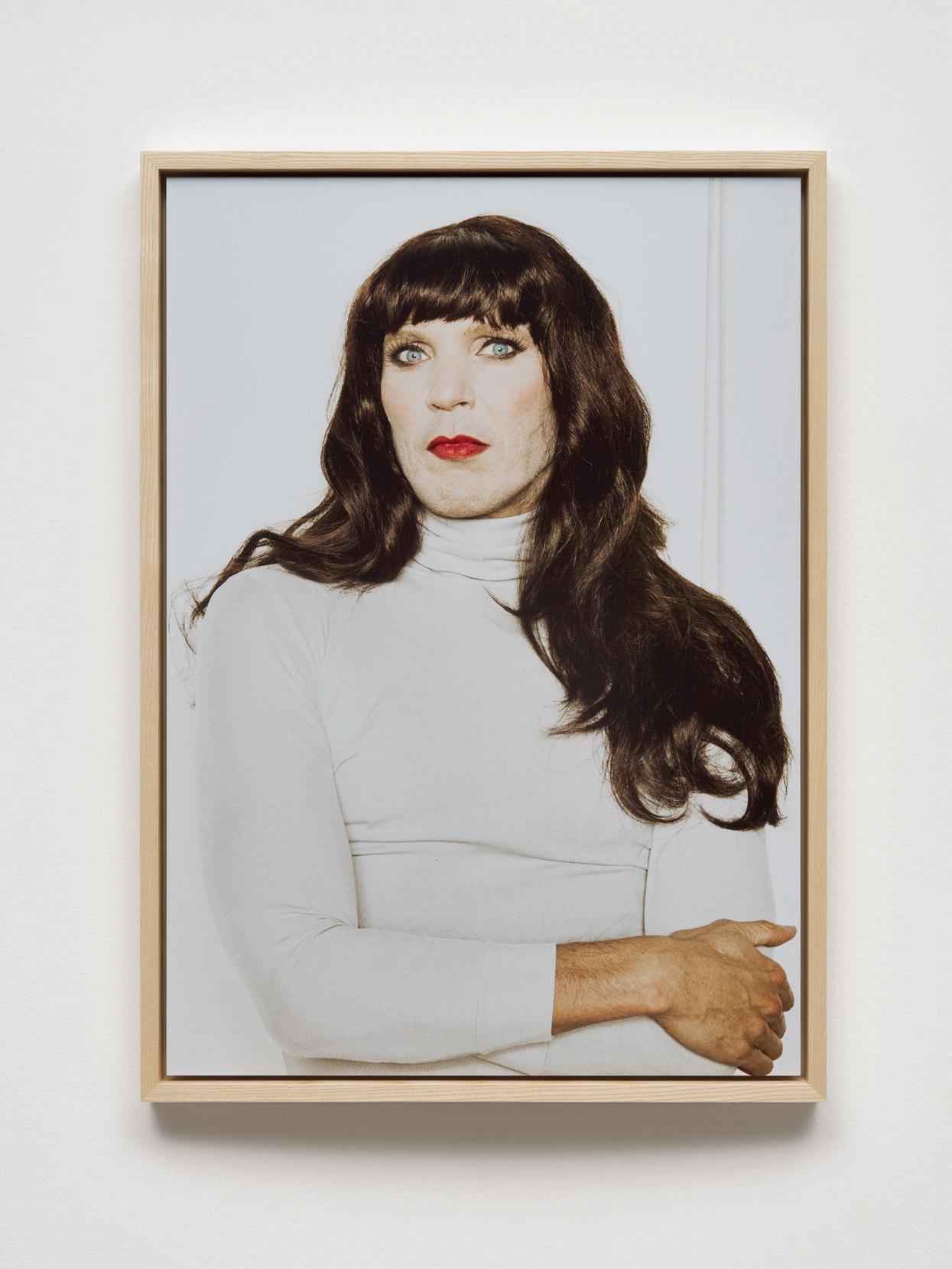
Erwin Olaf Self-Portrait Andy Warhol, Self-Portrait, No 3 - 48 Years Old, 2007, Photo by Jonathan de Waart, Artwork description on page 84.
From Studio to Museum
Text by Lars Been and Barbara Bos
Each year, when we begin our visits to the Dutch art academies, I am reminded why Best of Graduates remains one of the most vital projects we undertake at Galerie Ron Mandos. Together with Ron Mandos and Radek Vana (head curator of Best of Graduates since the very beginning), we travel across the country — from Groningen to Maastricht, from The Hague to Arnhem — stepping into the art academies, moving from studios to makeshift presentation rooms where young artists unveil their projects. You can feel the urgency, the doubt, the ambition, and the imagination in every space. These are intense days. We meet artists at a fragile yet powerful moment: just before they leave the protective structure of the academy and step into the vast, often unpredictable professional field.
The Netherlands is rich in artistic talent, supported by strong art academies that encourage experimentation, critical reflection, and autonomous practices. Yet various studies show that the period immediately following graduation remains one of the most vulnerable phases in an artist’s development. The cultural landscape offers inspiration, but sustained opportunities, professional networks, and institutional support are not always easily accessible.
It is precisely this gap that Best of Graduates and the Young Blood Foundation aim to address. Visibility alone is not enough. What emerging artists need at this stage is trust — tangible, structural trust — that allows them to continue building their practice.
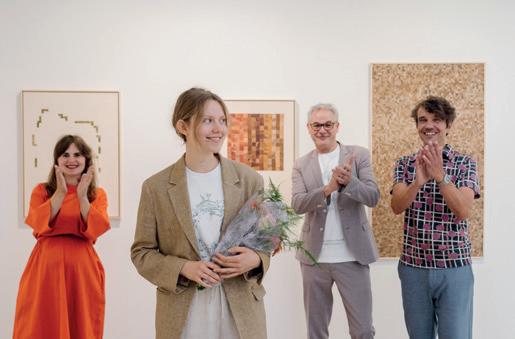
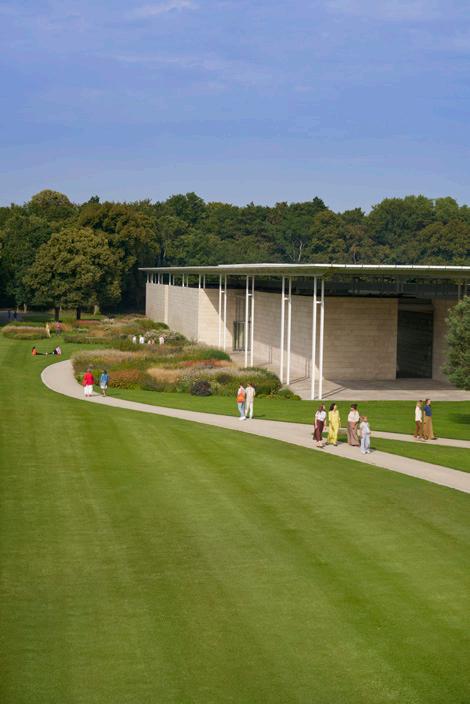
Since 2019, we have been honored to build a meaningful collaboration with Museum Voorlinden, rooted in a shared belief that emerging artists deserve more than applause; they deserve opportunity. From the beginning of this partnership, the winner of the Ron Mandos Young Blood Award has had their work donated by the Young Blood Foundation to the museum’s permanent collection. This donation is not merely symbolic recognition. It places a young voice into dialogue with established names and embeds their work within a respected institutional context at the outset of their career.
But what makes this collaboration so valuable is not only the placement of the work in the permanent collection. It is the openness with which Museum Voorlinden embraces new perspectives and treats emerging practices with genuine seriousness. Each year, artists from Best of Graduates are welcomed at the museum and invited into conversation with Barbara Bos, head of exhibitions. For many of them, this encounter marks an important moment of recognition. It demonstrates that institutions can engage with young artists not from a distance, but through dialogue.
Lars Been is curator at Galerie Ron Mandos. Barbara Bos is curator and head of exhibitions at Museum Voorlinden.
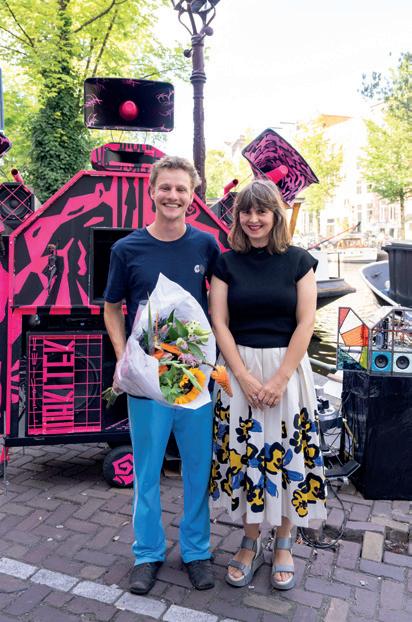
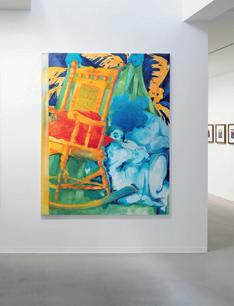
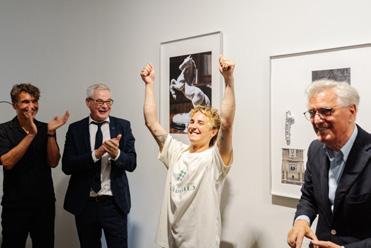
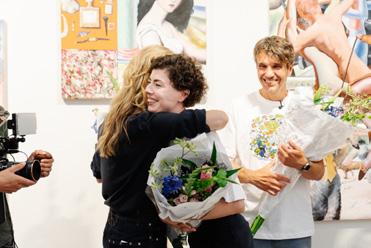
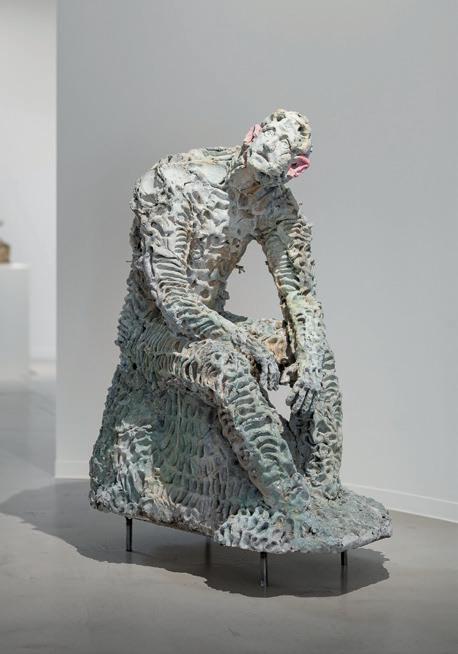
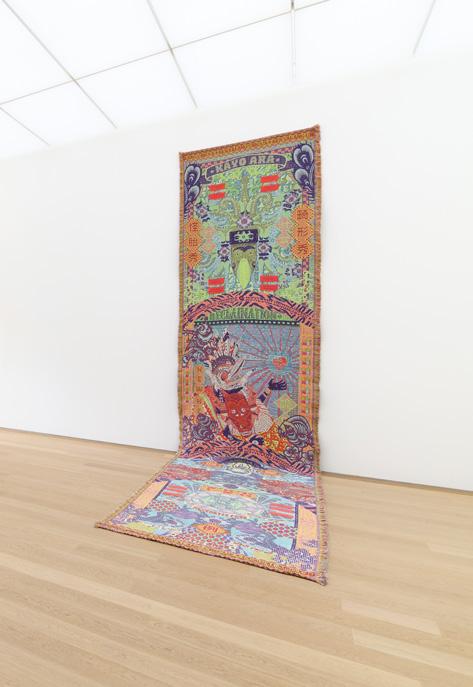
Work by (L–R, T–B): Anthony Chiou, Lukas Vonk. People (L-R, T-B): Mees de Rozario & Barbara Bos (2025); Barbara Bos, Milah van Zuilen, Ron Mandos & Radek Vana (2021);
Suzanne Swarts, Katarzyna Baldyga, Radek Vana (2024); Radek Vana, Ron Mandos, Matias Salgado, Joop van Caldenborgh (2023)
Last year, Barbara also presented the Ron Mandos Young Blood Award during a full opening ceremony, articulating with clarity why this bridge between a young practice and an established institution truly matters. We are grateful that she shares her reflections and experiences here:
“The Best of Graduates exhibition is one of my favorite moments of the year, as it celebrates and welcomes new voices to the art world. Since 2008, this initiative has united young artists from different art academies. The show is an invitation to bring people together, from inside and outside the art world. During the summer months, Galerie Ron Mandos transforms into a place of discovery; a laboratory where we can hear, see, and listen to new perspectives on the art world and our world. I see the exhibition as a moment in time to reflect on art and culture as living things.
The Young Blood Award builds a bridge between a new kid on the block and an institution. For Voorlinden, it is a great honor to be given the confidence and support of the Young Blood Foundation to become a stepping stone in a young career and to welcome these talents into the museum’s collection. The 2025 edition was once again full of talented artists, each with their own ideas, dreams, and visions for the world.
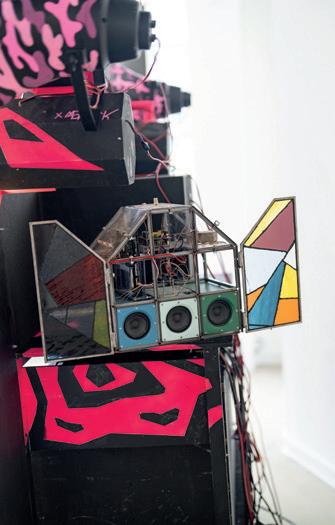
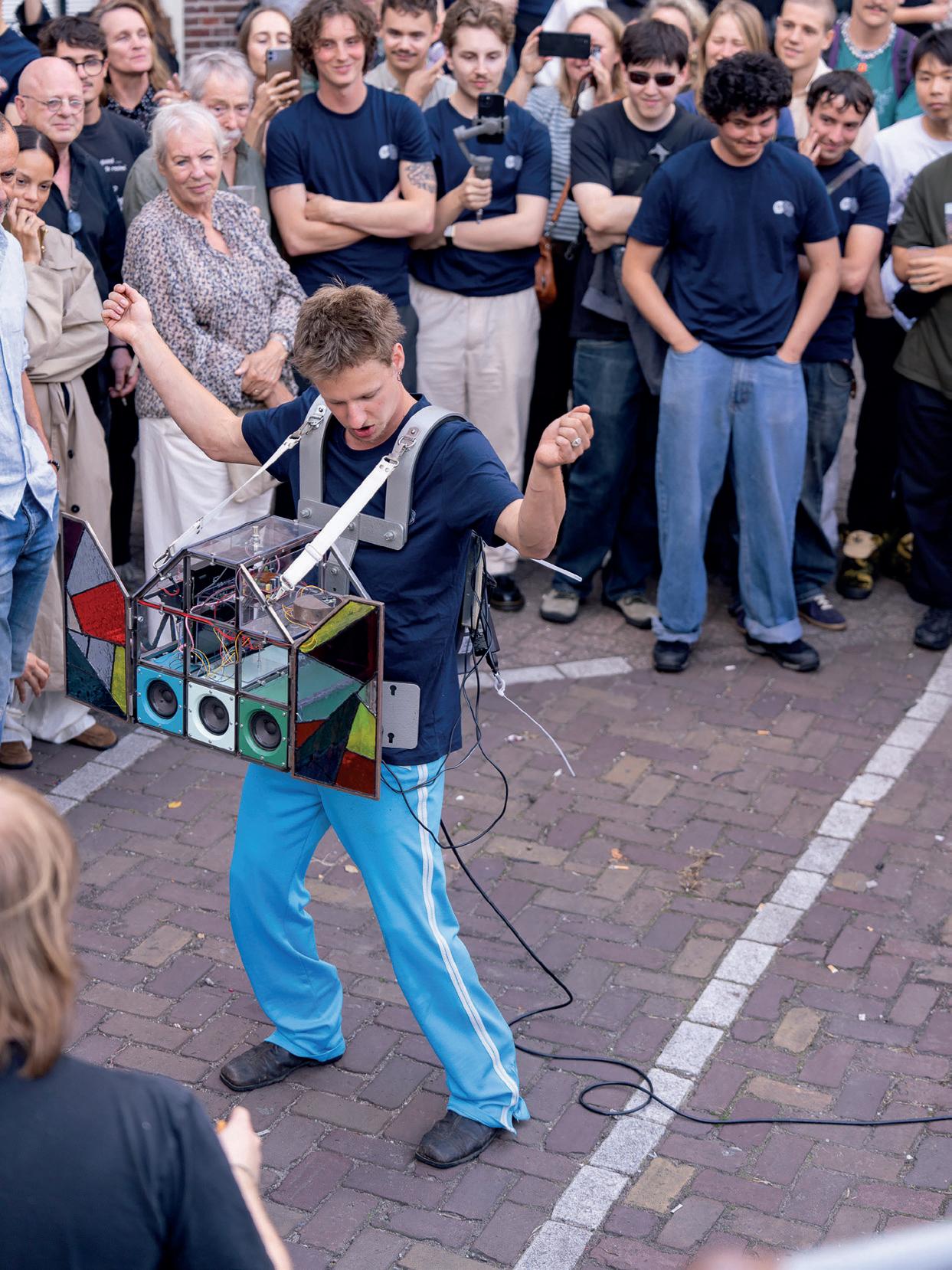
And we need new voices and images to visualize our shared future. The winner of the Young Blood Award 2025, Mees de Rozario, offers us exactly this with his Rave Organs. De Rozario brilliantly brings together different disciplines and media. He graduated in 2025 from ArtEZ University of the Arts in Arnhem and creates sculptural sound installations and videos that combine storytelling, performance, protest, and sound. With his Rave Organs, he effortlessly weaves together criticism and storytelling with humor. He packages his sharp and critical view — on society, public space, and our obsession with efficiency — as a playful protest. His practice is driven by curiosity and play; his do-it-yourself machines and sound installations are loud, mobile, and
participatory. With his work, he reactivates the past, questions the present, and invites us to imagine a shared future.
In Rozario’s Rave Organs, he reinterprets the traditional Dutch organ through the lens of rave and sound system culture. One is seen as cultural heritage and the other as disruptive noise; his hybrid sound machines explore who is allowed to be heard and how sound claims space. His works challenge norms and simultaneously create joy and disruption. As Mees himself says: ‘The only good system is a sound system.’”
We want to thank Barbara Bos and Museum Voorlinden for their sustained support. Their commitment exemplifies how institutions and individuals can create a lasting impact at a crucial stage in an artist’s development.
At the same time, we wish to underscore the vital role of visionary patrons and entrepreneurial partners within the Dutch cultural landscape. Figures such as Joop van Caldenborgh, founder of Museum Voorlinden, demonstrate how private initiative can meaningfully enrich the public sphere.
Likewise, Joop van den Ende’s enduring dedication to artists in the Netherlands continues to generate opportunities that strengthen the field as a whole. Through the generous and substantial funding of the VandenEnde Foundation, we are able to sustain and further develop our commitment to emerging artists through the Ron Mandos Young Blood Foundation.
Our gratitude also extends to Ali Keles, founder of the Lakeside Collection, who selects an artist from Best of Graduates and offers a residency at Depot Boijmans Van Beuningen, and to Brutus, where the Young Blood Foundation has established its own residency program. It is remarkable that we can count on such engaged collaborators to help emerging artists take their first professional steps with confidence and continuity.
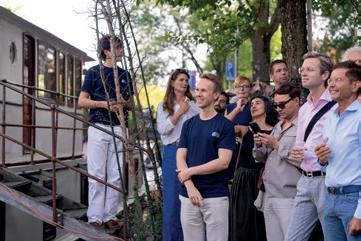
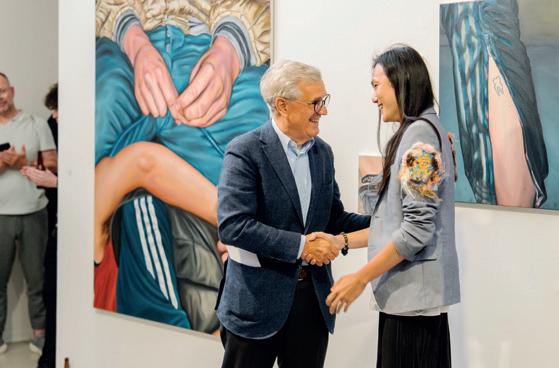
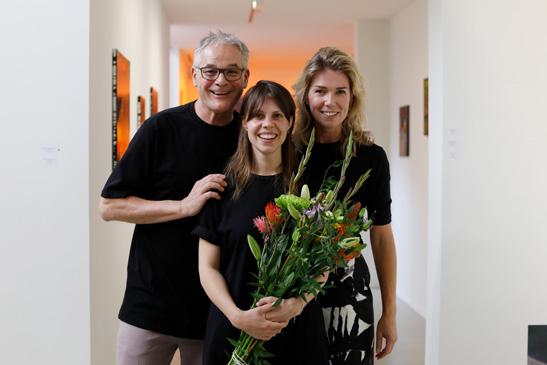
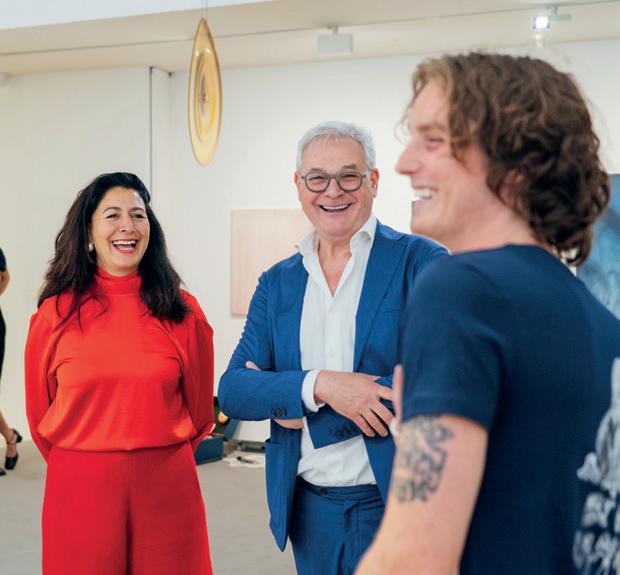
Work by (L–R, T–B): Marcos Kush at Museum Voorlinden, Mees de Rozario. People (L-R, T-B): Touria Meliani, Ron Mandos & Mats Mingus (2025); Lars Been (2025); Ron Mandos, Stephanie Rizaj, Suzanne Swarts (2019); Joop van Caldenborgh & Marcos Kueh (2022);
TENDER FURY
Frank Stella’s infamous declaration from 1966, “what you see is what you see” sets a narrow direction that focuses only on the retinal qualities of a work of art. It reduces art to a purely ornamental expression that appears to claim no deeper meaning or value beyond immediate appearance. Within this logic, art becomes little more than a reflection of what lies directly in front of us, conceived purely as visual folly.
Artist Kendell Geers in conversation with Antonina Staszczak
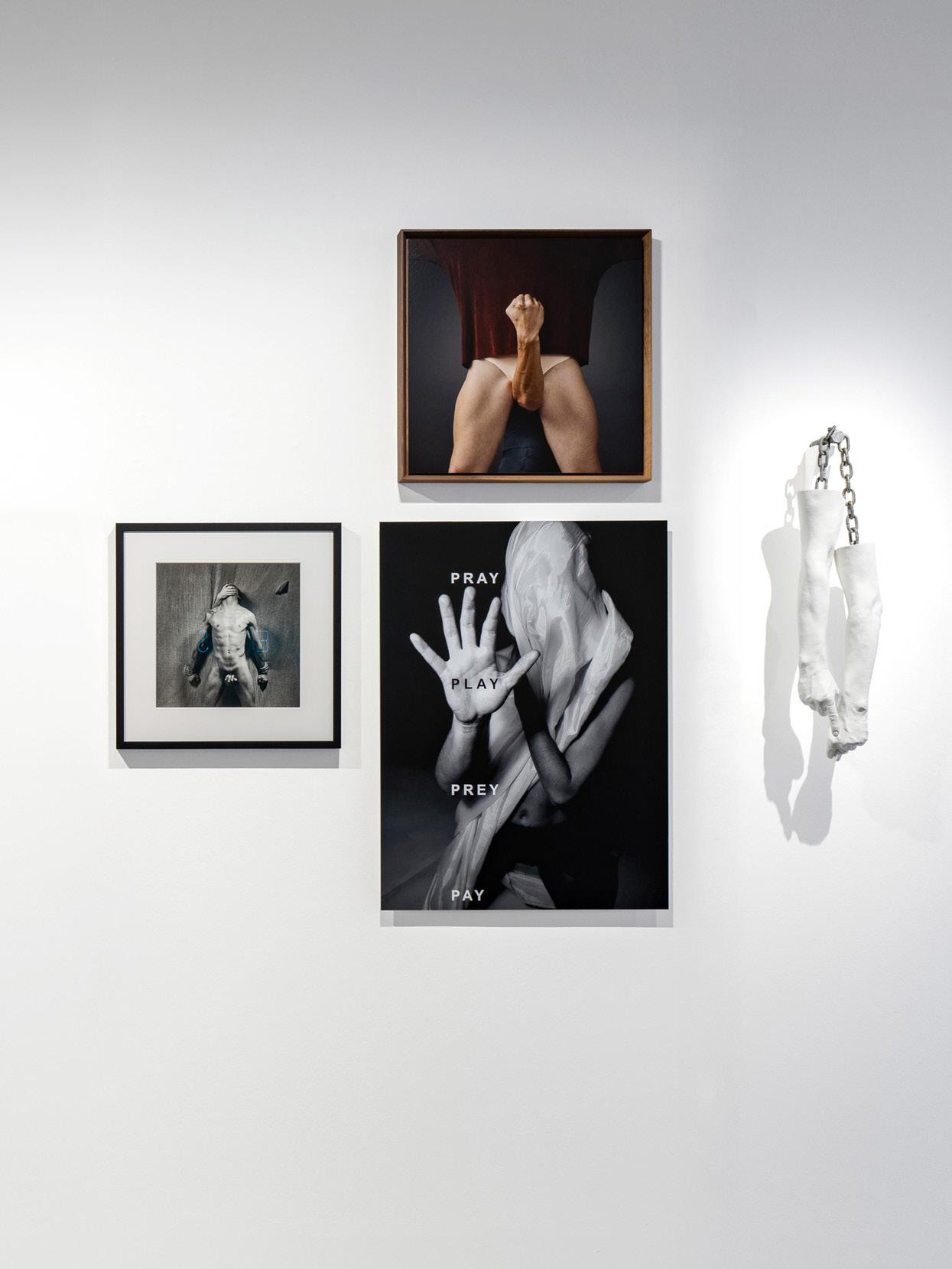
The first exhibition of 2026 at Galerie Ron Mandos brings together two highly influential artists, Kendell Geers and Erwin Olaf. Their works are presented in dialogue, forming a conversation that unfolds across the gallery. Yet, to understand what this conversation is truly about the viewer must engage with the broader context and the layered intertextuality embedded in their practice. Tender Fury rejects the idea that “what you see is what you see”; instead, it demands attention and critical engagement to reveal what lies beneath the surface.
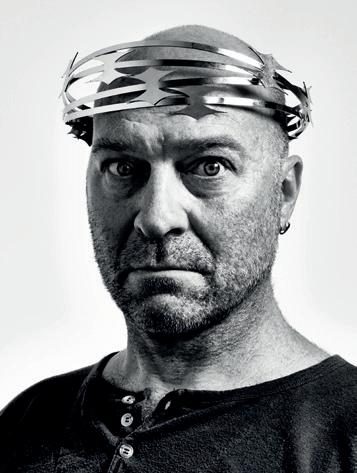
Kendell Geers is a South African artist and activist, born into a working-class Afrikaans family during the height of Apartheid. From an early age, he found himself confronting a Crime Against Humanity, fighting on the front lines of protest and political resistance. Shaped by these formative experiences as a revolutionary, Geers developed a psycho-social-political practice in which ethics and aesthetics are understood as two sides of the same coin, constantly spinning across the tables of history. European by descent and African by birth, Geers’s work embodies the contradictions of his identity. He occupies multiple positions at once: animist and mystic, shaman and alchemist, punk and poet. “The reason why I’m so happy to be doing this exhibition is because for many years now, I’ve been struggling with a lot of problems that are symptomatic of my identity and cannot be separated from my discourse and positioning as an artist in the world”, says Geers. “I have suffered from self-censorship in the sense that there are a lot of works I choose not show because they become problematic in the wrong context. So, the opportunity to exhibit with somebody like Erwin Olaf, who was also both an activist and artist sensitive to pressing questions of political struggle, gives me courage and strength to speak about difficult subjects. I recently did an exhibition with Ilke Cop focussing on the female body from an uncompromisingly Feminist position which helped me to understand the urgency of not taking the easy path of surrendering to self-censorship.”
“So, the opportunity to exhibit with somebody like Erwin Olaf, who was also both an activist and artist sensitive to pressing questions of political struggle, gives me courage and strength to speak about difficult subjects.”
For the exhibition, presented under the curious title Tender Fury, Geers curated a selection of works by Erwin Olaf in direct conversation with his own. “What I tried to highlight in Erwin’s work was a one-to-one pairing of works that is a dialogue between two different artists from different cultures and identities, using different techniques, both dealing with similar complex and charged subjects. And how did each of us deal with the same question differently and what’s the similarity?”.
To understand the selection of works and their pairings, it is essential to first unpack the title of the exhibition. When asked about the two seemingly contradictory words: Tender and Fury, Geers explains that they are not opposites, but coexisting forces like the Taoist ying and yang. Reflecting on Erwin Olaf’s work and his long history as both an artist and an activist, Geers points to the tension that runs through Olaf’s practice. “What struck me most when I looked at the exhibition of Erwin Olaf at the Stedelijk, was how he balanced his political fury with the tenderness and intimacy of his art. The questions of LGBTQ+ and in particular the pressing questions about the AIDS epidemic haunt a lot of his work with the rage of an
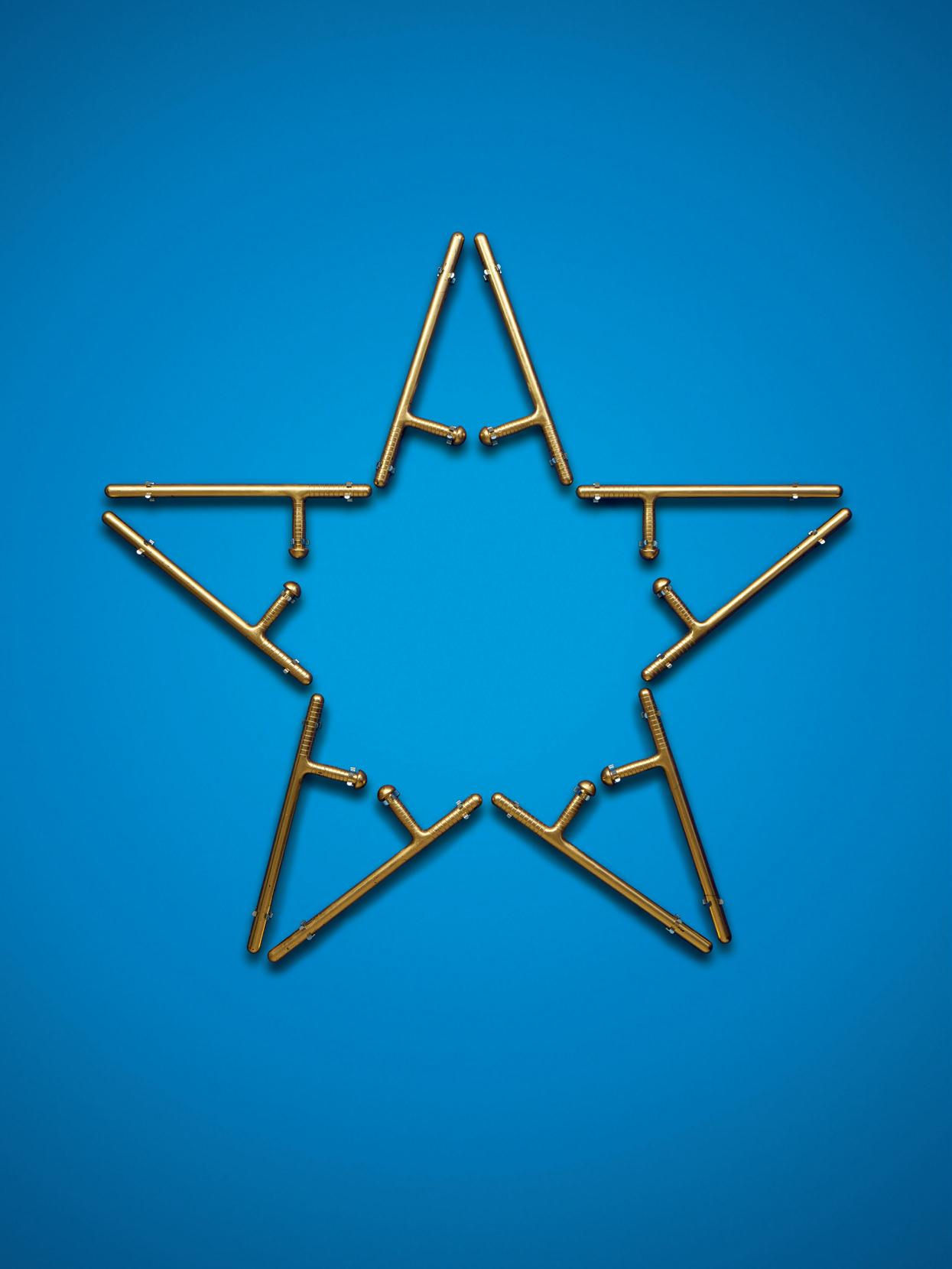
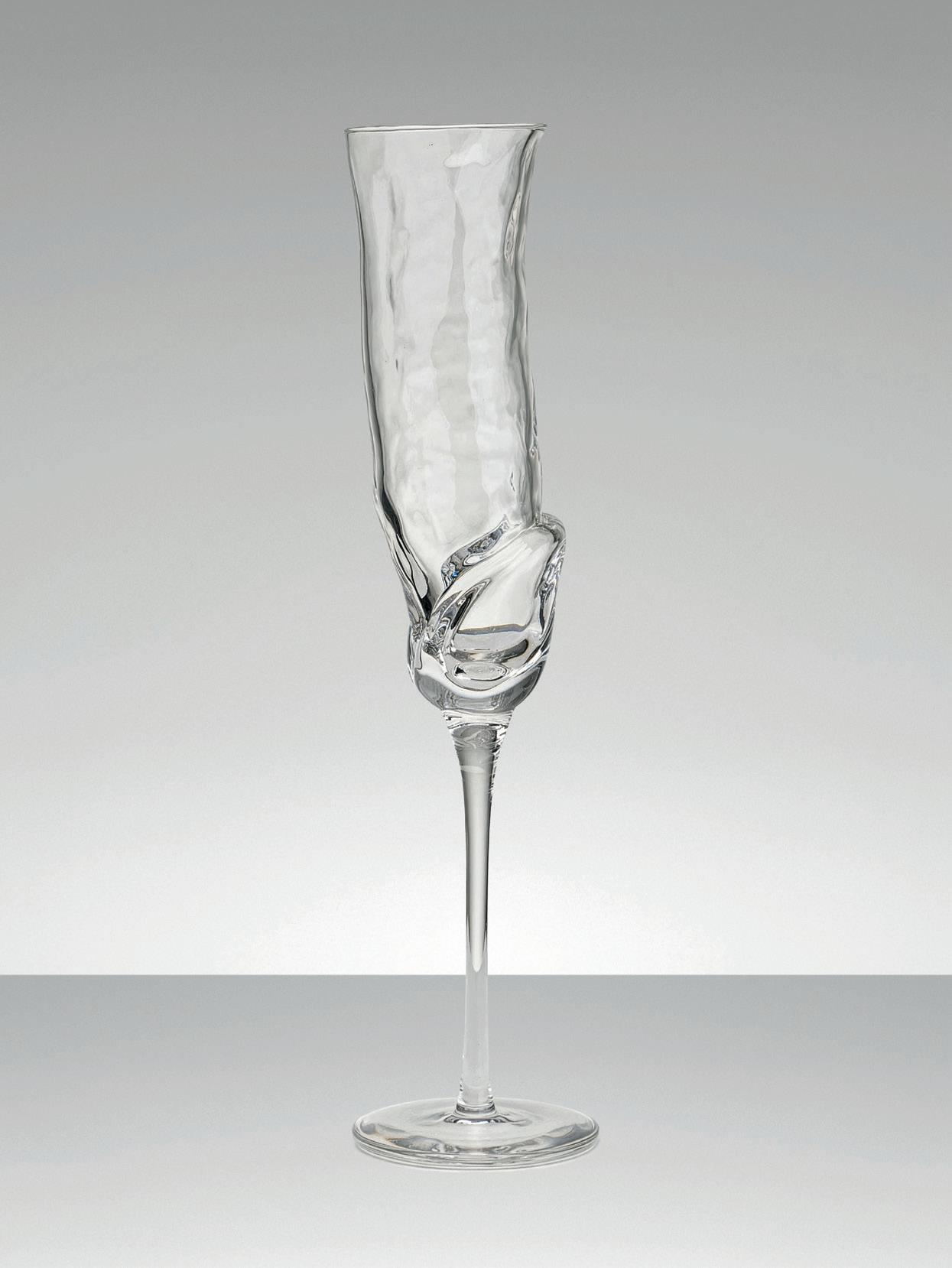
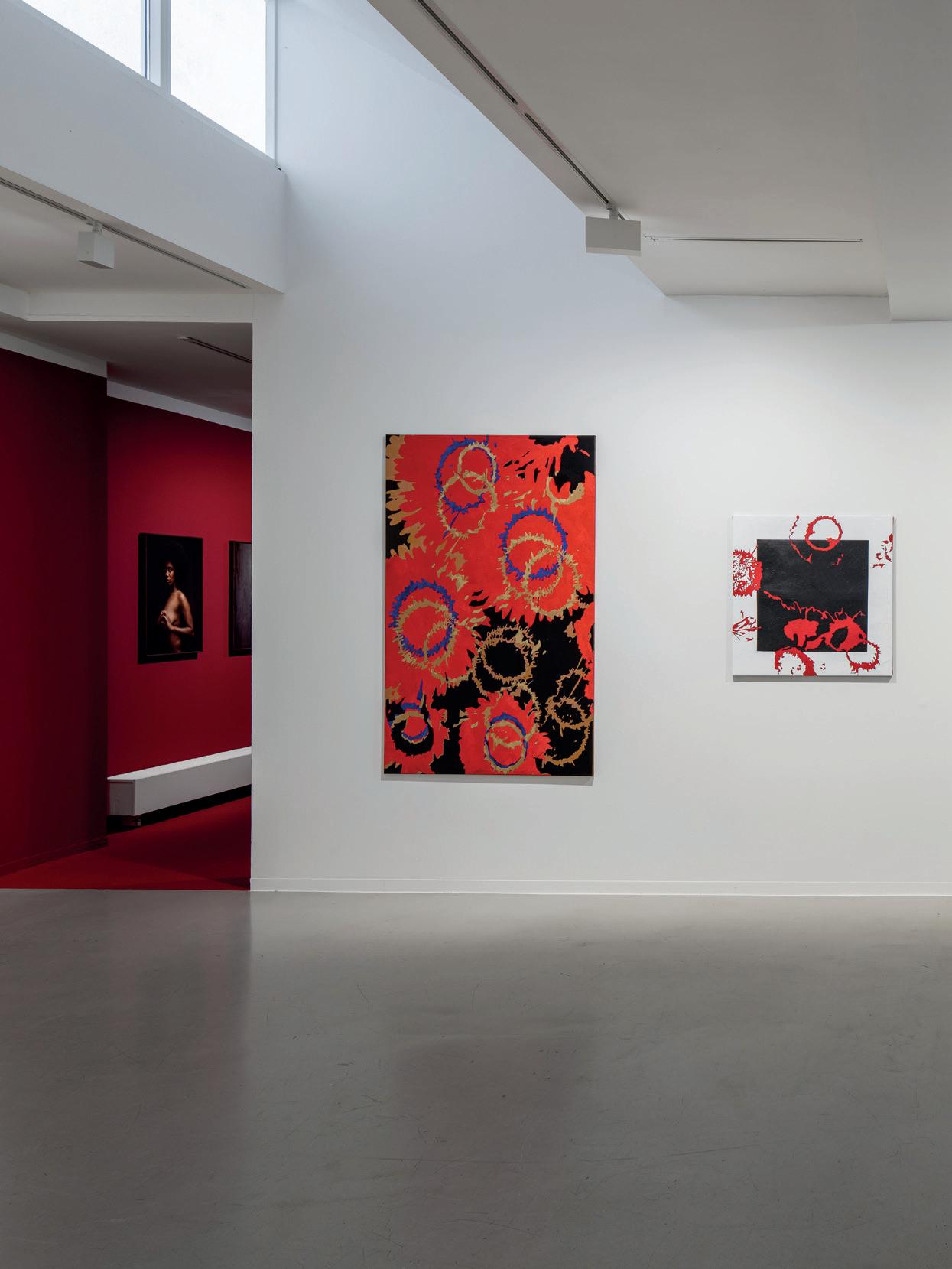
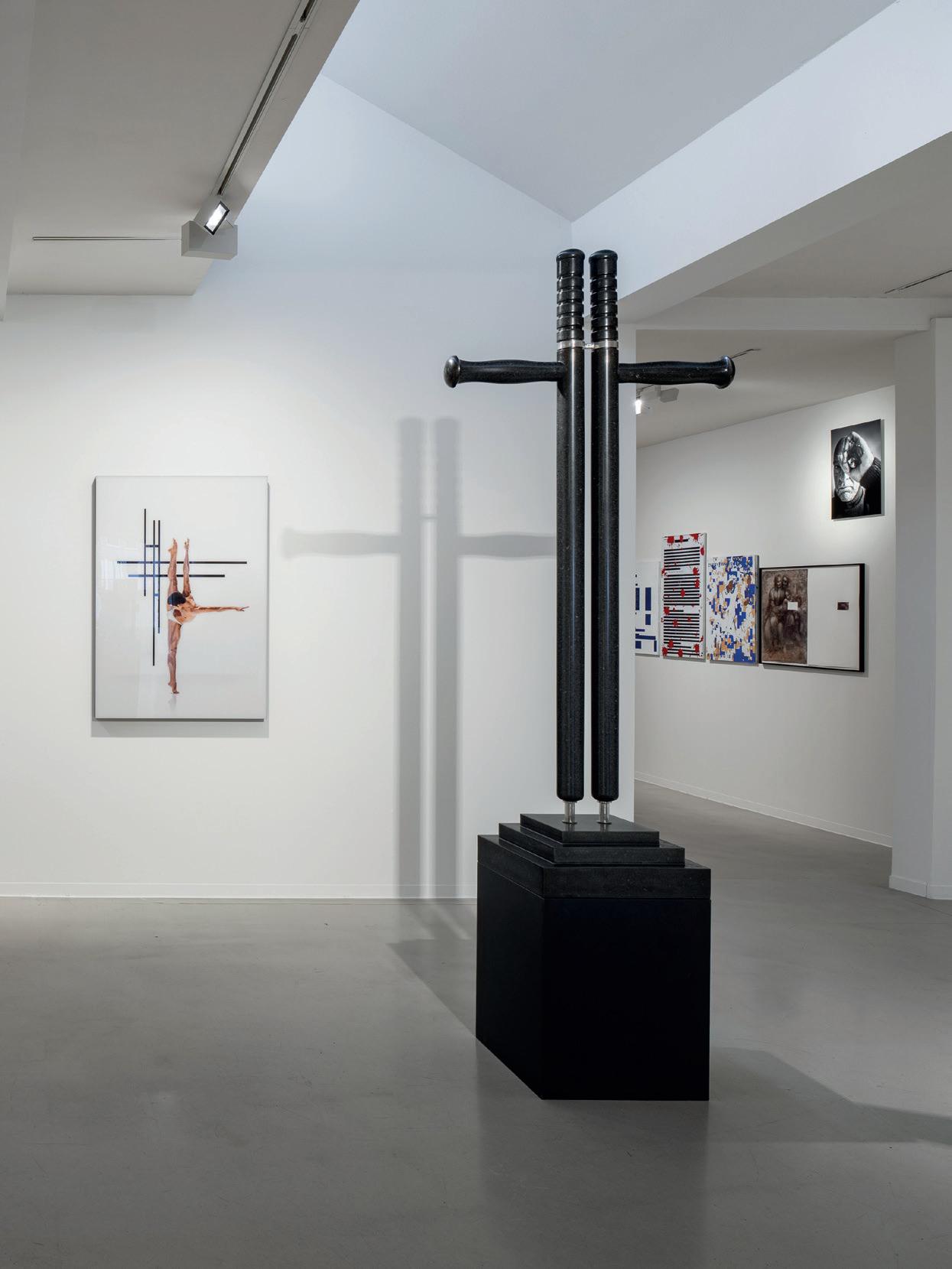
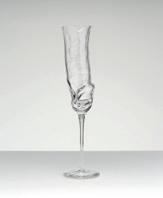
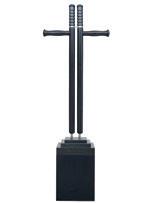
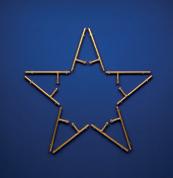
Page 20: Kendell Geers, T.W. Batons (Pentagram), 1994, Photo by Jonathan de Waart, Artwork description on page 85. Page 22-23: Installations views, Kendell Geers and Erwin Olaf, Tender Fury, Photo by Jonathan de Waart, Full artwork details on page 8485. Right: Kendell Geers, Kocktail Glass, 2019, Artwork description on page 85.
“I have always been trapped on the border between self-love and self-loathing, terrorised by the struggle to negotiate those two spaces”
activist whose friends and lovers were dying or being persecuted. That is a rage screaming out for recognition, respect, a voice to be seen, and to be heard. He channels that same sense of emergency into the tenderness of his art photography, where the lovers and friends have the space and freedom to be lovers and friends”.
For Geers, this balance between tenderness and fury resonates deeply with his own practice. “I saw this idea of tenderness and fury as something that has always been a haunting presence in my own work. I have always been trapped on the border between self-love and self-loathing, terrorised by the struggle to negotiate those two spaces. As a white South African man, there’s a lot of self-loathing. But at the same time, the only way to deal with the toxic masculinity that defines my white South African, working-class culture is through self-love. The internal struggle between tenderness and fury can also be understood as the fever that is necessary in healing from cultural trauma”.
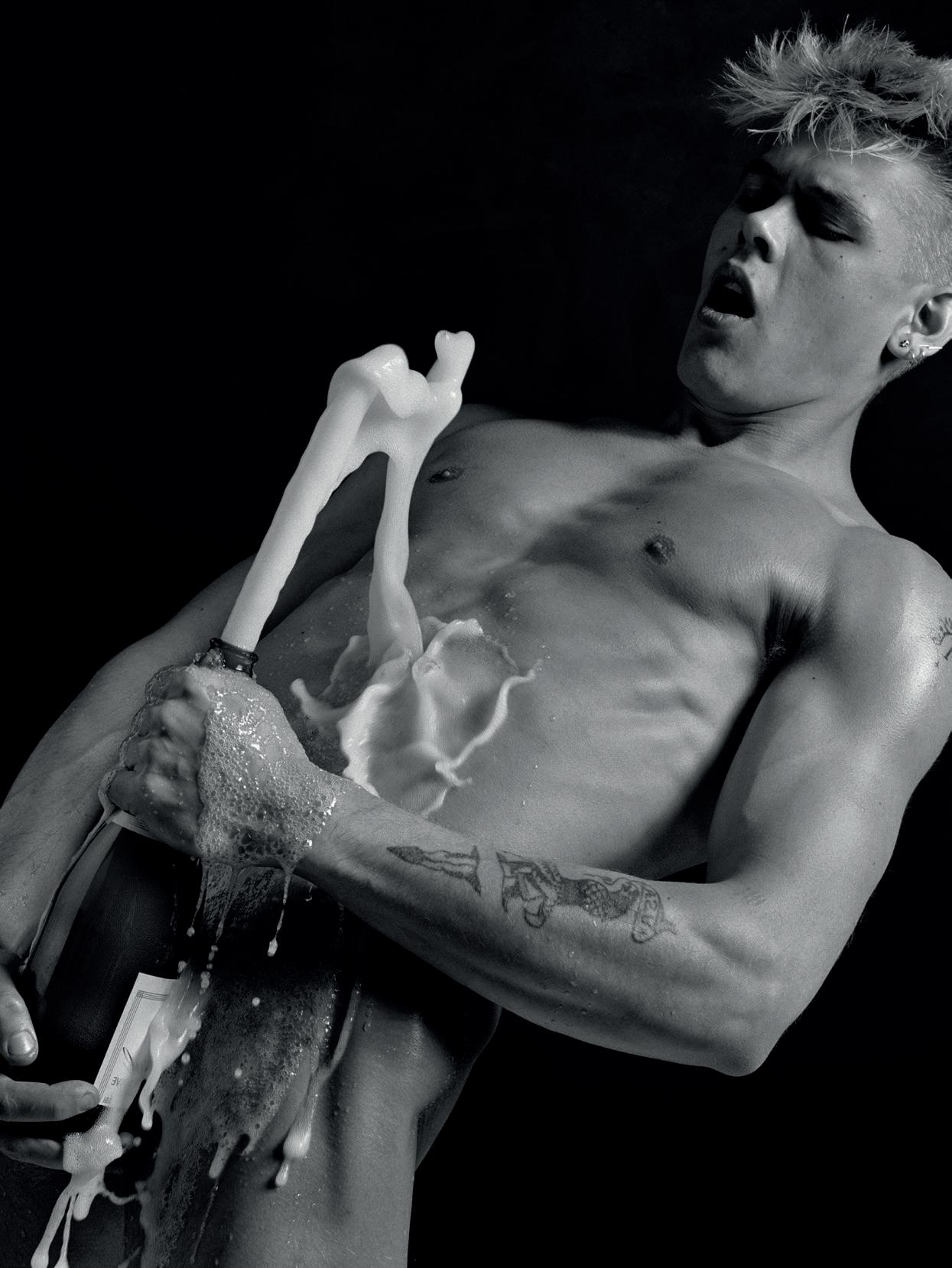
This ongoing dialogue between tenderness and fury helps explain many of the pairings presented in the exhibition. One particular example is Erwin Olaf’s photograph Joy (1985) from his well-known Squares series, shown alongside Geers’s Kocktail (2004), a crystal champagne glass cast from his own erection. Erwin Olaf’s Squares (1983–1993) marks a formative period in which the artist used the nude body as a site for negotiating sexuality but also power. Created in the studio but deeply rooted in Amsterdam’s queer subculture of the 1980s, the photographs reject idealized or passive representations of the body in favour of images charged with vulnerability and authenticity. Geers describes the relationship between the two works as follows: “In Joy, the guy’s opening a bottle of champagne that is literally bursting from his loins. And it’s obviously got a phallic, erotic kind of resonance. As a work of art, I cast my erection into a champagne glass for an exhibition about the Dionysiac that in many ways is making the same reflection about ecstasy and erotic celebration.” He continues by reflecting on the difficulty of exhibiting the work in isolation. “For many years I was afraid to show my champagne glass because it is undeniable a male erection. The erect penis has unfortunately become a horrendous weapon of abu-
Left: Erwin Olaf, Squares, Joy, 1985, Artwork description on page 84.
sive power responsible for so much rape and gender-based violence. Kocktail was obviously a reference to the classic champagne glass rumoured to have been cast of the breast of either Marie-Antoinette or Madame de Pompadour and a sex positive celebration of our flesh and desire. It also invites men to hold another man’s phallus in their hands, put it to their lips, and consider the power dynamics of the phallus. On the other hand, I feel extremely uncomfortable with the subject knowing that 60,000 women are raped every year by vile erections in South Africa. Exhibiting Kocktail in the context of Erwin Olaf opens the discussion to both the tenderness and the rage I feel towards my erection.”
“I shift the signifier by repurposing objects of fascism with a subtle implicit eroticism that speaks about the weaponization of masculine sexuality”
Themes of power, sexuality, bodily violence, and beauty recur throughout Tender Fury These seemingly opposing forces intersect and collide, creating a visual language that confronts violence as a consequence of repressed sexuality. Another unexpected pairing that embodies this tension is Geers’s police batons shown alongside Erwin Olaf’s Introdans. Memory plays a crucial role in Geers’s work, which is rooted in personal experience. As he explains, “It’s very important for me that I never speak on behalf of somebody else. I think it’s very problematic when a man tries to speak on behalf of a woman or when white people speak on behalf of black people, because by doing that, you remove the voice of the person. Regardless of how well-intentioned you are, you are erasing somebody’s voice.”
The batons, Geers notes, are not abstract symbols but objects tied directly to his own history. “A lot of my work is about memory. As a young activist and revolutionary, I was literally marked and bruised by the police batons beating me on my skull and across my back as O tried running away from the Apartheid security forces. So, when I exhibit police batons, they are not random or neutral objects so much as the scars of my personal trauma. It was also not simply policemen who were beating me. My uncles and cousins were policemen and I was the unforgivable blood traitor to the family. The racism and moral education of my childhood was taught by both the school AND the church. Putting two batons together, you get the sign of a cross. So, we speak about the collusion there between church and state. How do we become what we become? It’s through faith and through fear. The batons speak exactly about faith and force. Did we create our faith from our fears or did our fears create our faith? Placing two objects together, side by side is a classic conceptual art practice except for the fact that the objects are not only weapons but also traumatic memories. Sometimes people accuse me of aestheticizing violence, but I am really violating aesthetics. “
At the same time, Geers foregrounds the sexual charge embedded in these objects. “It’s obvious that those objects are very phallic. They quite literally look like a penis. As a student I tried to understand how good people like my own family could become monsters? How does the state transform good Christians into fascists? I remember reading Wilhelm Reich who proposed that fascism is emboldened through the repression of sexuality. When we repress male sexuality, that’s how we create cold blooded soldiers and the oppression of a police state. There is a direct emotional connection between the suppression of sexuality and violence.” Through this process of ‘détournement’ [hijacking], Geers explains, “I shift the signifier by repurposing objects of fascism with a subtle implicit eroticism that speaks about the weaponization of masculine sexuality”.
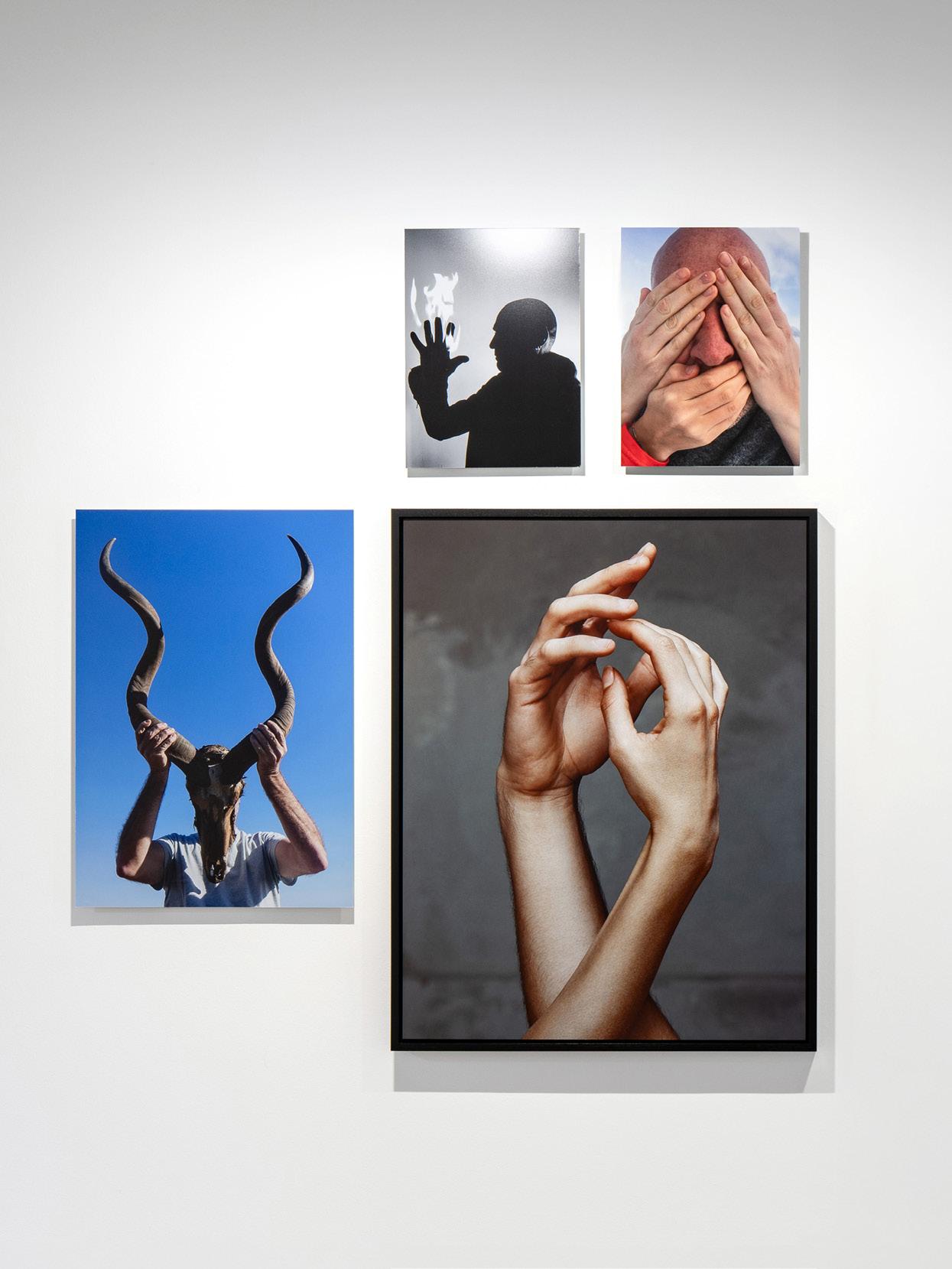
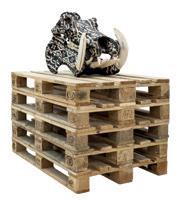
Right: Kendell Geers, TYPHONIC BEAST I, 2007, Photo by Jonathan de Waart, Full artwork details on page 86. Page 30-31: Installations views, Kendell Geers and Erwin Olaf, Tender Fury, Photo by Jonathan de Waart, Full artwork details on page 84-85
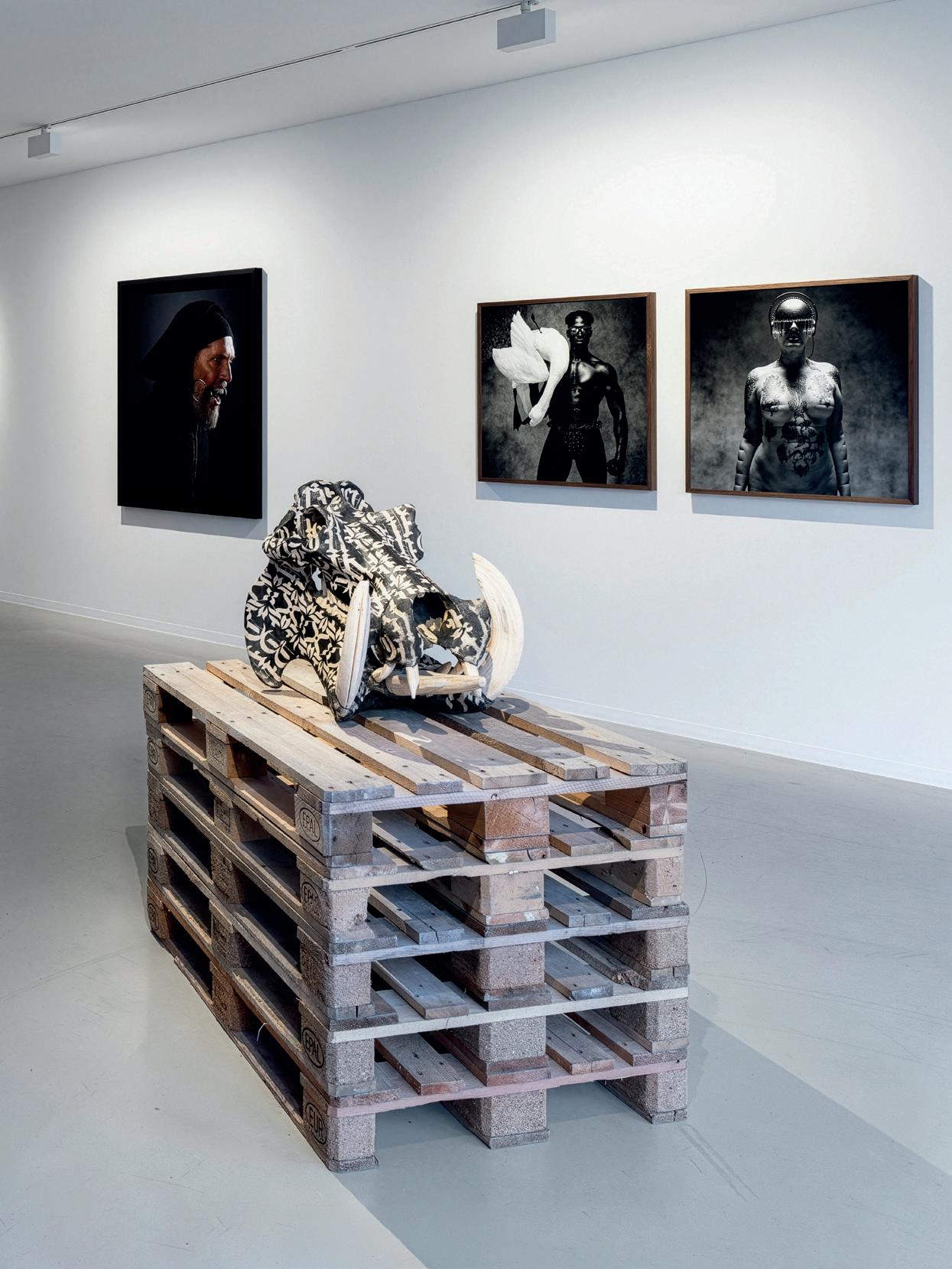
Many of the works presented in the exhibition are historic pieces by both Erwin Olaf and Kendell Geers. Drawn from different moments in their careers and previously shown in diverse exhibition contexts, these works carry layered histories that shape the exhibition’s overall meaning. Their past lives are integral to how the works resonate in Tender Fury.
Geers explains that this temporal complexity has often affected how his work is received, particularly because he has refused to become a luxury branded artist. “I refuse to make the same work of art over and over again, in slightly different colours and different sizes. I’m constantly researching and exploring the psychology and emotions of art. My work is an exploration of signs and symbols and defiantly not about the image or the colour or the shapes and forms. The works explore the psychology of how power, culture, language and history embed themselves invisibly within the object or image”.
This approach, he notes, also aligns him closely with Erwin Olaf. “Olaf’s work shifted and changed through time. And it is the dialogue between his work and my work through different time frames that make this exhibition interesting.” Geers intentionally selected what he describes as the more difficult works by both artists: “The works which are more confrontational, and disturbing are actually the most generous. We get bored with a work of art that consoles us and tells us what we want to hear. On the other hand, we grow emotionally and spiritually as well as politically with art that challenges us. In this way I distrust beauty, decoration and ornament.”
Kendell Geers and Erwin Olaf are both powerful voices, each with a distinct vision and artistic language. Their work functions as a statement, one that confronts violence, discrimination, and the abuse of power. Neither artist shies away from difficult subjects, and both allow anger, to surface in their work. Yet, to fully grasp the conversation unfolding between them, and to appreciate the dialogue they invite the viewer into, it is essential to understand the context and intertextual layers that shape both their practices.
Returning to Frank Stella’s statement that “what you see is what you see,” Geers finds the statement almost offensive, as it contradicts what art can and should do. As he explains, “What you see is exactly what’s not important. What you don’t perceive with your eyes is haunting and says more about your unconscious, true self than what you do see. That’s really what my work has always been about and why it’s been misunderstood for so long. My struggle as an artist has been to find a voice that is relevant to my experience of reality. In the past my work did not make sense because the art world detached itself from anything except itself. What you see is a language and a habit. Wittgenstein said that the limits of our language define the limits of our world. With that idea in mind, the phonetic overlaps between ‘All Eyes / All Lies / Allies’ is a linguistic portrait of this horrific and unsustainable moment in time. It’s time to start talking about the work of art in more than visual terms and to do so with the courage to exorcise the market in order to resurrect the powerful spirit of art —the world’s oldest true profession.”
Tender Fury is on view at Galerie Ron Mandos from Saturday, January 24, 2026 till April 5, 2026
2
Program
This years program takes us on a wild ride of different artists and genres and allong the way we are also are part of several major art fairs around the world.
0 2 6
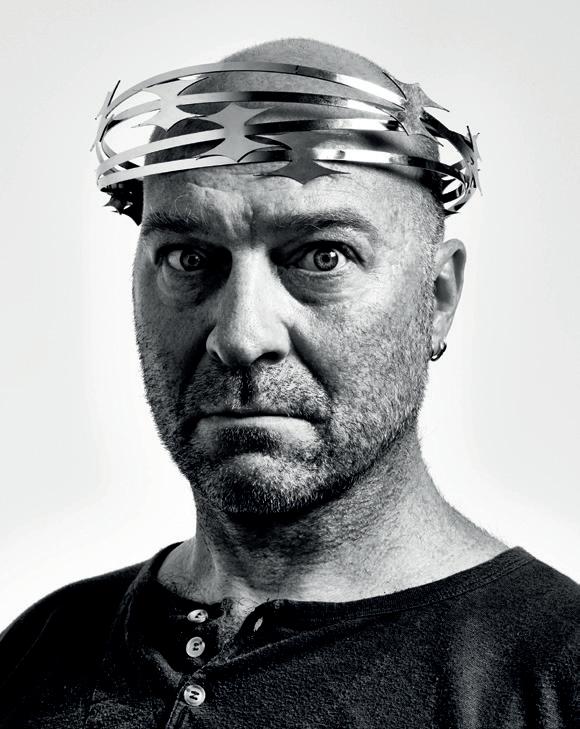
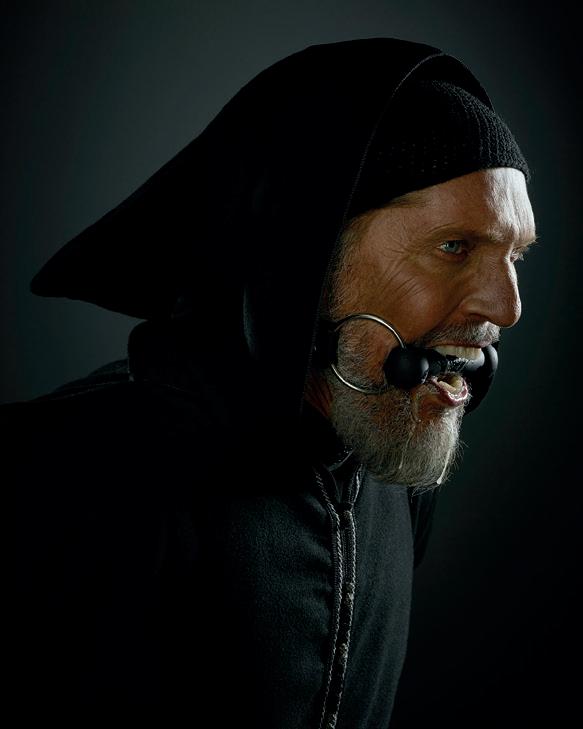
Kendell Geers & Erwin Olaf
January 24 – April 5
A joint exhibition bringing together works by Geers and Olaf, exploring power, identity, and representation across photography, installation, and mixed media.
Atelier Van Lieshout & Mounir Eddib
April 18 - May 24
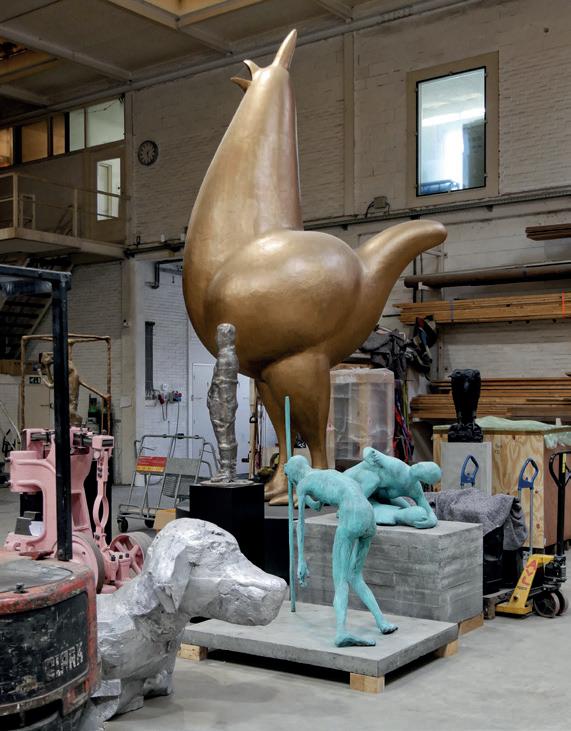
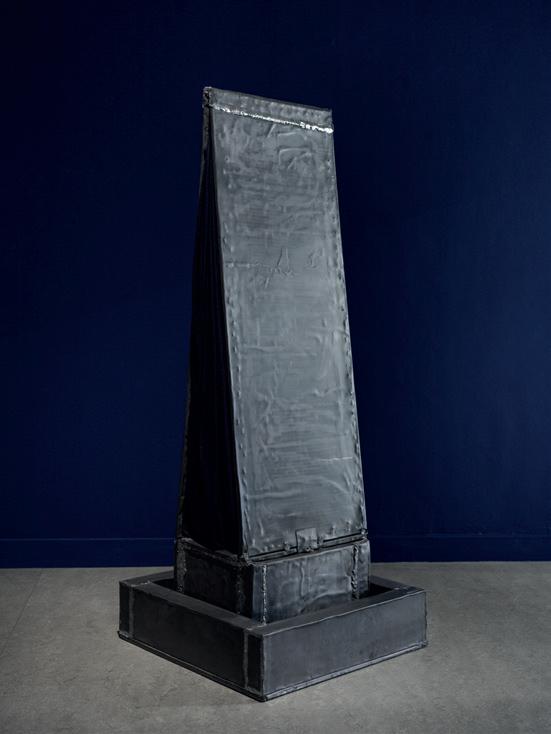
Two parallel exhibitions: Atelier Van Lieshout shows sculptural and functional works examining systems, self-sufficiency, and social structures, while Mounir Eddib presents paintings and mixed-media works rooted in memory, migration, ritual, and Genk’s post-industrial landscape.
Atelier van Lieshout, photograph by Tamara Cieremans
Katinka Lampe & Pip Greenaway
June 6 - July12
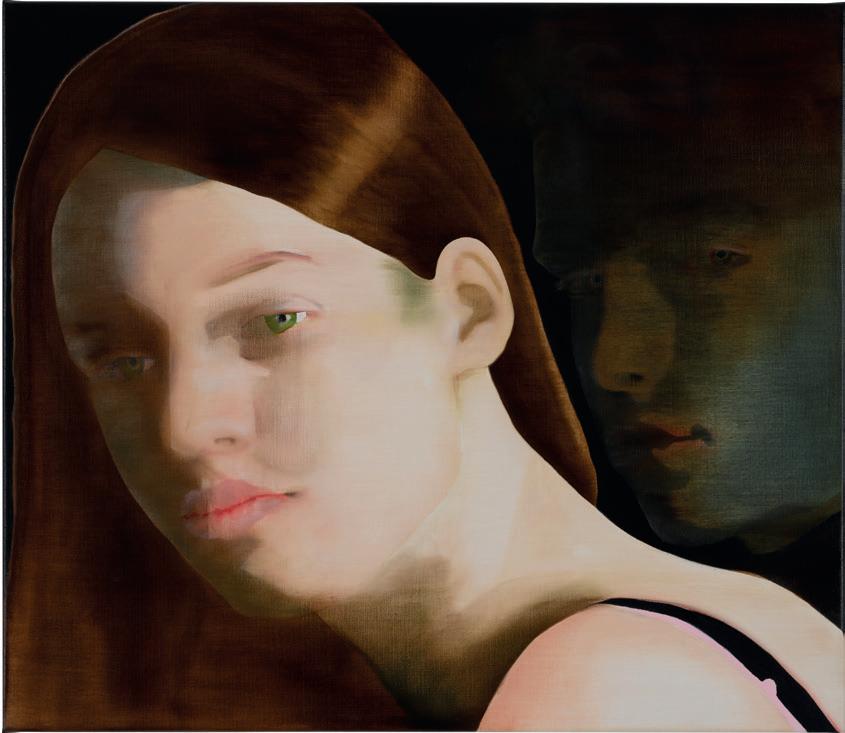
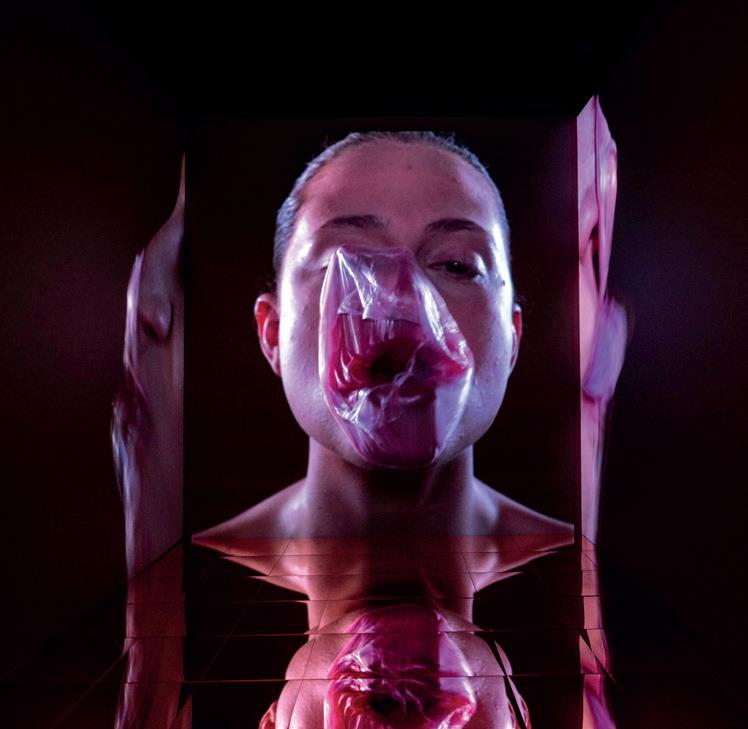
Two strong female voices. Katinka Lampe presents expressive figurative paintings exploring identity, while Pip Greenaway, a Best of Graduates alumna, works primarily with video, reflecting on consumption and visual culture.
Best of Graduates
July 24 – August 30
A yearly highlight of our program. Best of Graduates presents recent academy graduates and is developed with the Ron Mandos Young Blood Foundation, together with partners supporting emerging artists.
Mees de Rozario, winner of the Ron Mandos Young Blood Award 2025, photograph by Almicheal Fraay
Zanele Muholi
September 12 – November 15
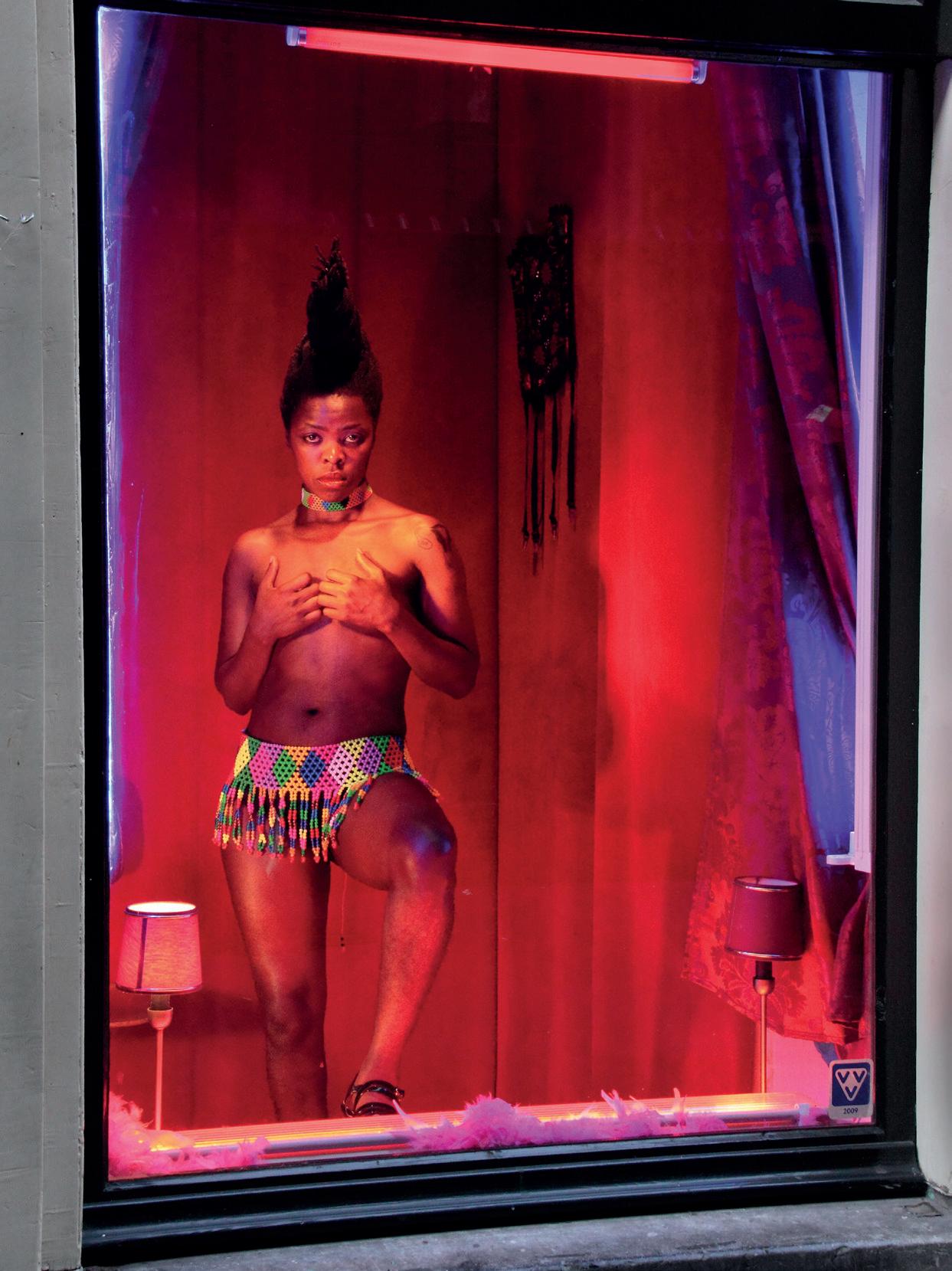
A major solo presentation by Zanele Muholi, one of the most acclaimed visual activists working today. Muholi’s photography and video document and celebrate Black LGBTQIA+ lives, addressing race, gender, visibility, and identity with global reach and deep social meaning.
Folkert de Jong
November 28, 2026 – January 10, 2027
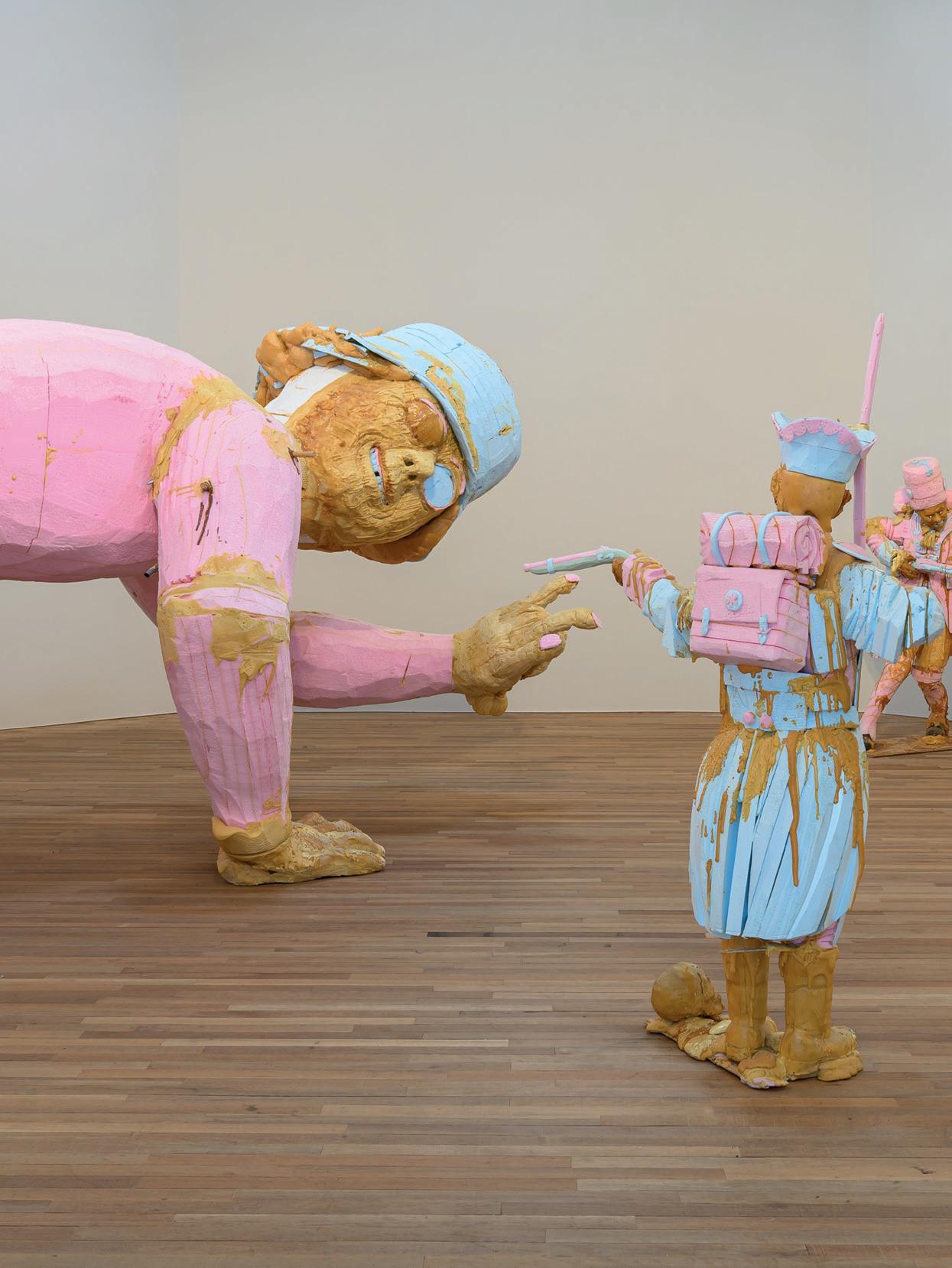
A solo exhibition by Folkert de Jong, a Dutch artist whose large-scale figurative sculptures and installations use industrial materials. This show marks his first presentation with Galerie Ron Mandos and introduces his powerful work to our program.
Folkert de Jong, “The Shooting…”, 2006. Collectie Bonnefanten Museum Maastricht. Foto Peter Cox
Art Fairs
Aside from our exhibitions we are also bringing our artworks to several major artfairs around the world.
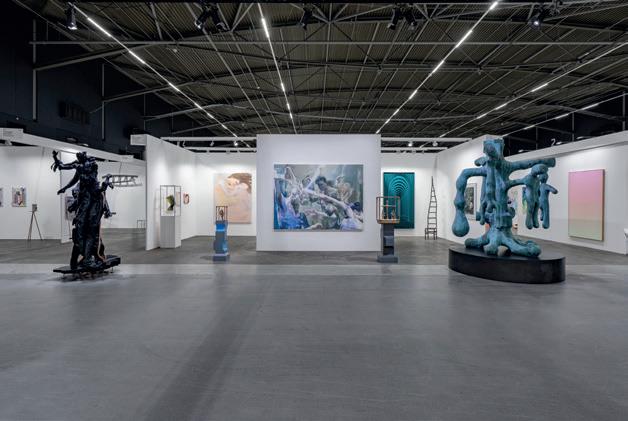
March 12-19
TEFAF Maastricht
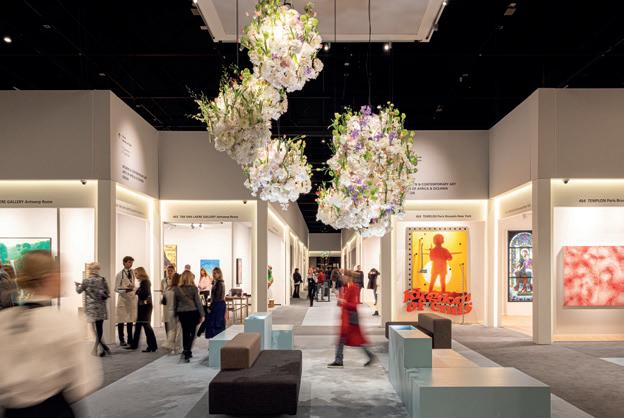
Galerie Ron Mandos participates in TEFAF Maastricht for the first time, presenting works by Isaac Julien, Erwin Olaf, Hans van Manen, Hans Op de Beeck, and Robert Mapplethorpe.
March 25 - 29
A special presentation at Art Rotterdam, the gallery’s home fair, reflecting our roots in the city and its long-standing role in shaping our program.
Photograph by Loraine Bodewe
Photograph by Jonathan de Waart
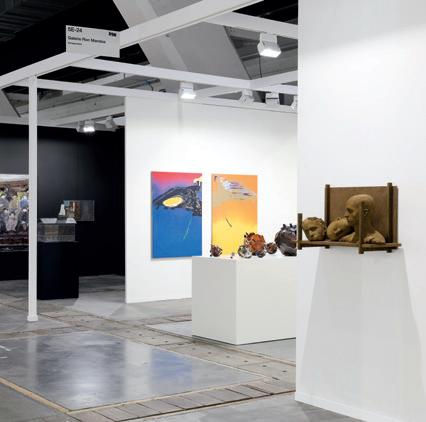
April 23 - 26
Art Brussels
Galerie Ron Mandos at Art Brussels, a key fair for us given our close ties to the Belgian art community, with many artists, collectors, and long-standing relationships based there.
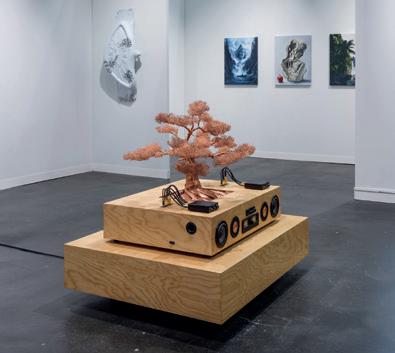
September 24 - 27
The Armory Show
Galerie Ron Mandos returns to The Armory Show in New York, a key moment in our year that connects the gallery with collectors, curators, and artists in the city where many of our community are based, reinforcing long-standing ties with the NYC art scene.
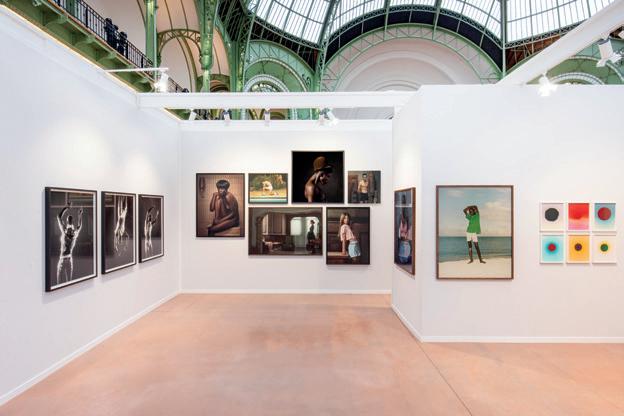
November 12-15
Paris
For the second year, Galerie Ron Mandos participates in Paris Photo, strengthening our commitment to photography and deepening connections with European collectors and institutions.
Photograph by Ben Van den Berghe
Photograph by Silvia Ros
Photo
Photograph by Gabriele Abbruzzese
TOO
MUCH TO SWALLOW
What does it mean to be an artist? For Pip Greenaway, it’s much like being a fish. “For a long time, I didn’t know what art was because I was completely surrounded by it, almost like a fish in the water, and the fish doesn’t know what water is. So, I also never knew I wanted to be an artist”.
Best of Graduates 2025 artist Pip Greenaway in conversation with Antonina Staszczak
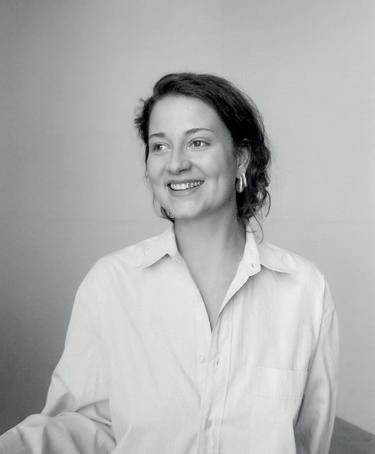
Pip Greenaway is an Amsterdam-based artist and a graduate of the Royal Academy of Arts in The Hague. Her graduation project, Prologue, TOO MUCH TO SWALLOW (2025), was presented at the Best of Graduates 2025 exhibition at Galerie Ron Mandos, where she received the Lakeside Collection Award. She is currently an artist-in-residence with the Lakeside Collection at Depot Boijmans Van Beuningen in Rotterdam. Pip is scheduled to present an exhibition at Galerie Ron Mandos between June and July, together with Katinka Lampe. In anticipation of this upcoming exhibition, this conversation offers a closer look into Pip’s artistic practice and background, opening space for her to reflect on her work in her own words.
“But by being surrounded by art, you experience everything that you really love: aesthetics, sounds, mass, colour, and not only do you want to look at it but want to produce it yourself”, Pip continues. Her artistic interest lies primarily in installation art. When asked why she chose this particular medium, Pip responds: “It really is the way to immerse yourself completely in a space and curate that space from sound, smell, touch in every single angle.” She goes on to explain the importance of all the facets of the space surrounding her: “I think it’s just also the way I always have thought, for example, if I used to go to a concert and somebody smelled a specific way, or the floor was very dirty, that completely influenced my memory of the concert”. As an artist, Pip wants to make the audience uncomfortable by defamiliarizing them with the space they find themselves in. A tip she learned from her professors at the Art Academy in The Hague was to be site-specific, to work with the space instead of fighting against it: “Really allow the space to create your work. With installations, it is one of the most fun tactics”. Although Pip points out that the medium has its own challenges, including financial ones, for her, it remains the most truthful form of expression. “It’s not just about a canvas or about a sculpture that you bring in. You bring a whole new world”
Growing up in an artistic household, Pip reflects on her relationship with her parents and the ways they both shaped her perspective and practice. Her father, Peter Greenaway, a director and screenwriter, collaborated
closely throughout his career with her mother, Saskia Boddeke, who is not only a key partner in his creative practice but also an artist in her own right, working across documentary, installation, opera, and other forms. She notes that many aspects of her childhood, which felt entirely normal to her, might appear unusual to an outside observer. “I always thought it was normal that you would go to the beach and make sculptures or find random stuff and start categorising them alphabetically. But that’s just what I always did with my dad”. She continues: “My dad is such a specific person with a specific way of thinking. Thank God I also loved art, because that’s his only way of communicating. Wherever he would go, I would just follow, into a world of his imagination, full of aesthetics and art history”. Rather than distancing herself, she explains that she absorbed many of his ways of thinking into her own practice. “His way of grotesque thinking, provoking with thoughts but at the same time aesthetizing mundane reality, those are the elements that are relevant in my practice”, Pip explains. She also reflects on how many conversations with her father unconsciously found their way into her work. When she began creating her own art, she would later share the finished projects with him, often discovering unexpected parallels between their approaches: “It was quite interesting how it grew separately and then in a way we could come back together again”.
“It’s not just about a canvas or about a sculpture that you bring in. You bring a whole new world”
When asked about her inspirations, Pip mentions two names: Mika Rottenberg and Janis Rafa, two artists who, like her, work with multi-channel film installations. She goes on to explain her strong interest in art history and exploring the practices of other artists. She also points to Roman-Catholic churches as spaces that both fascinate and inspire her. “I think they are the first versions of installation art. You enter a church and every single thing is thought about, smell or even touch. So, I think those were the first inspiration for me, how a space like that could just swallow you”.
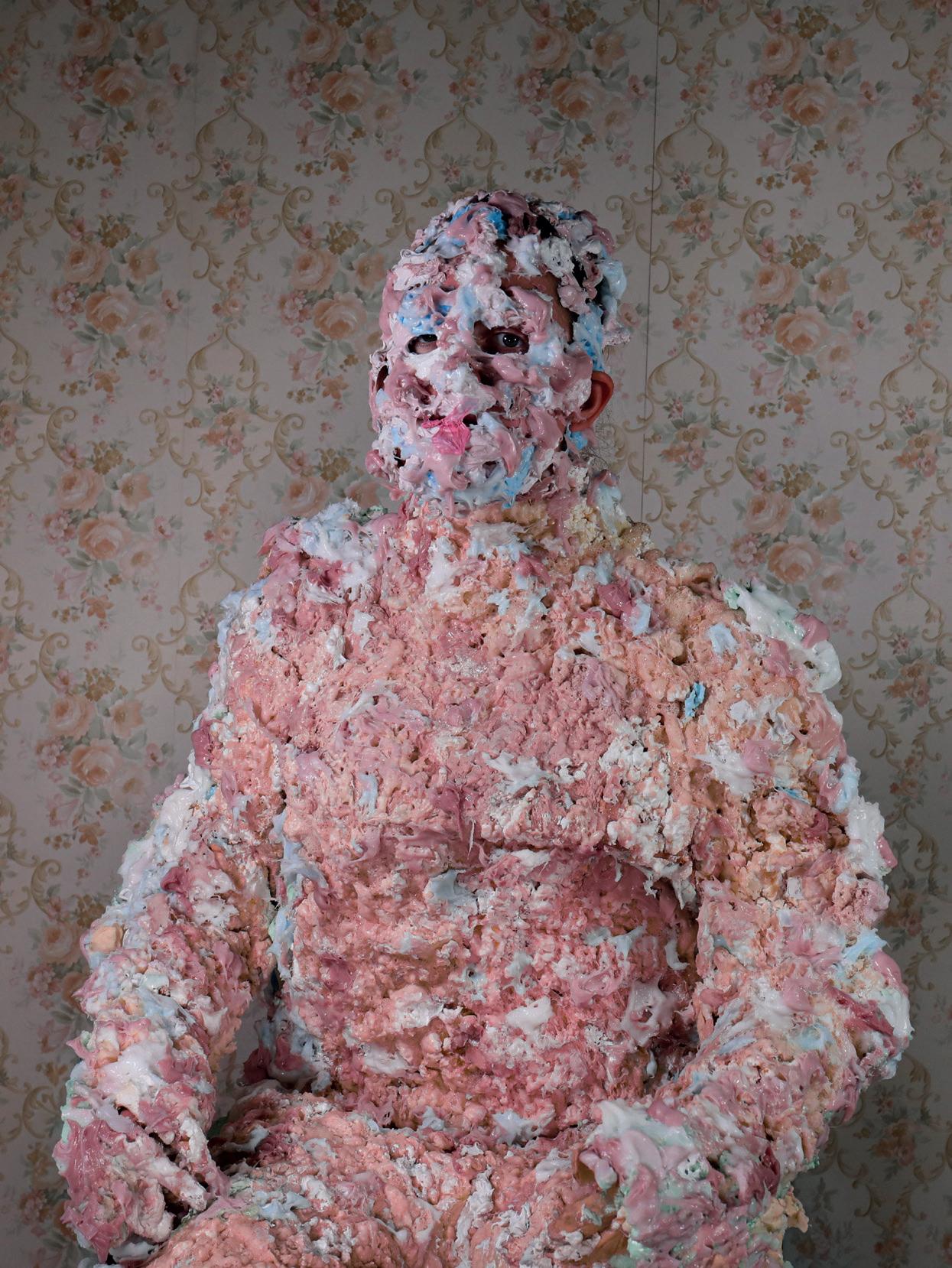
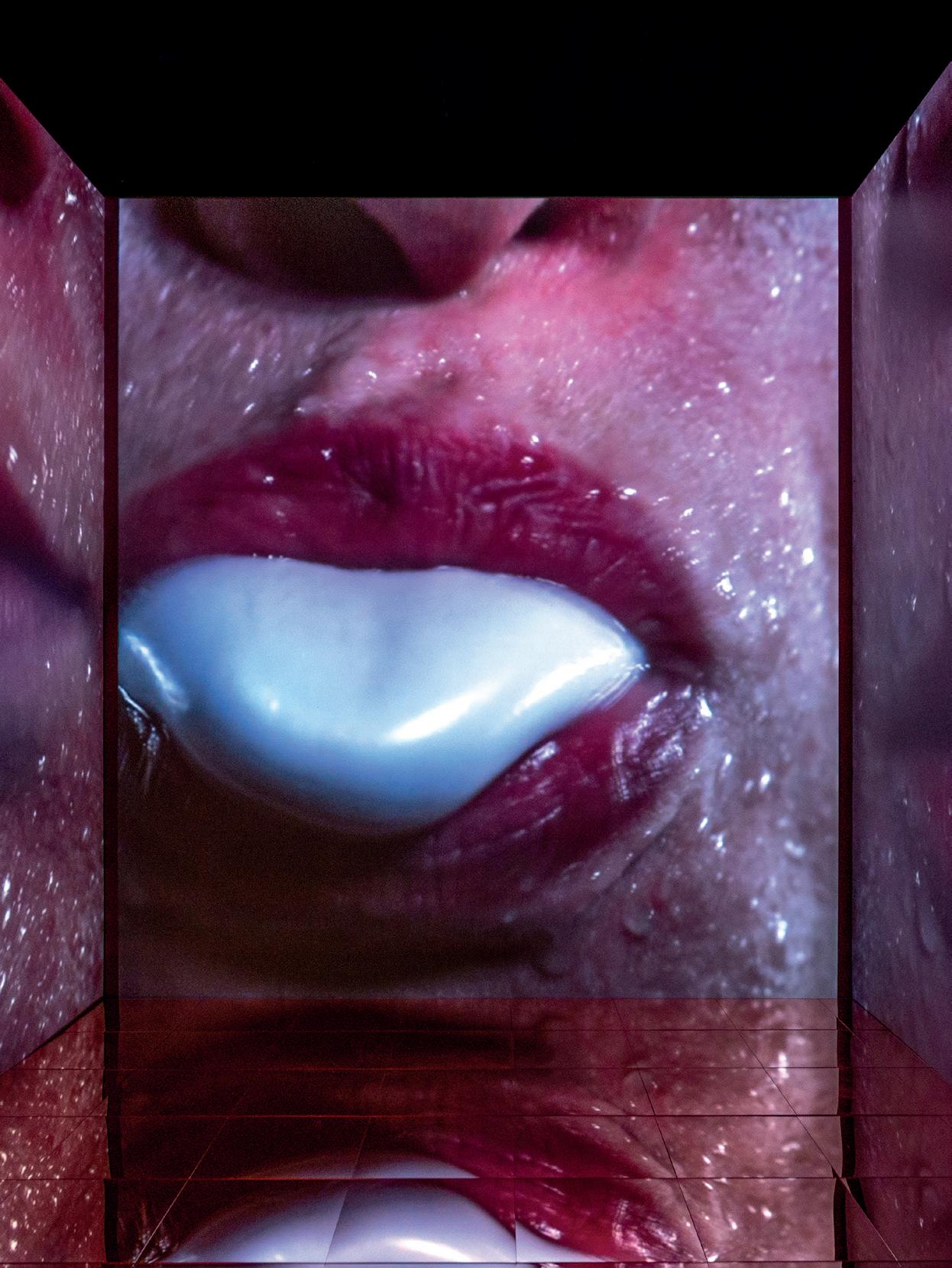
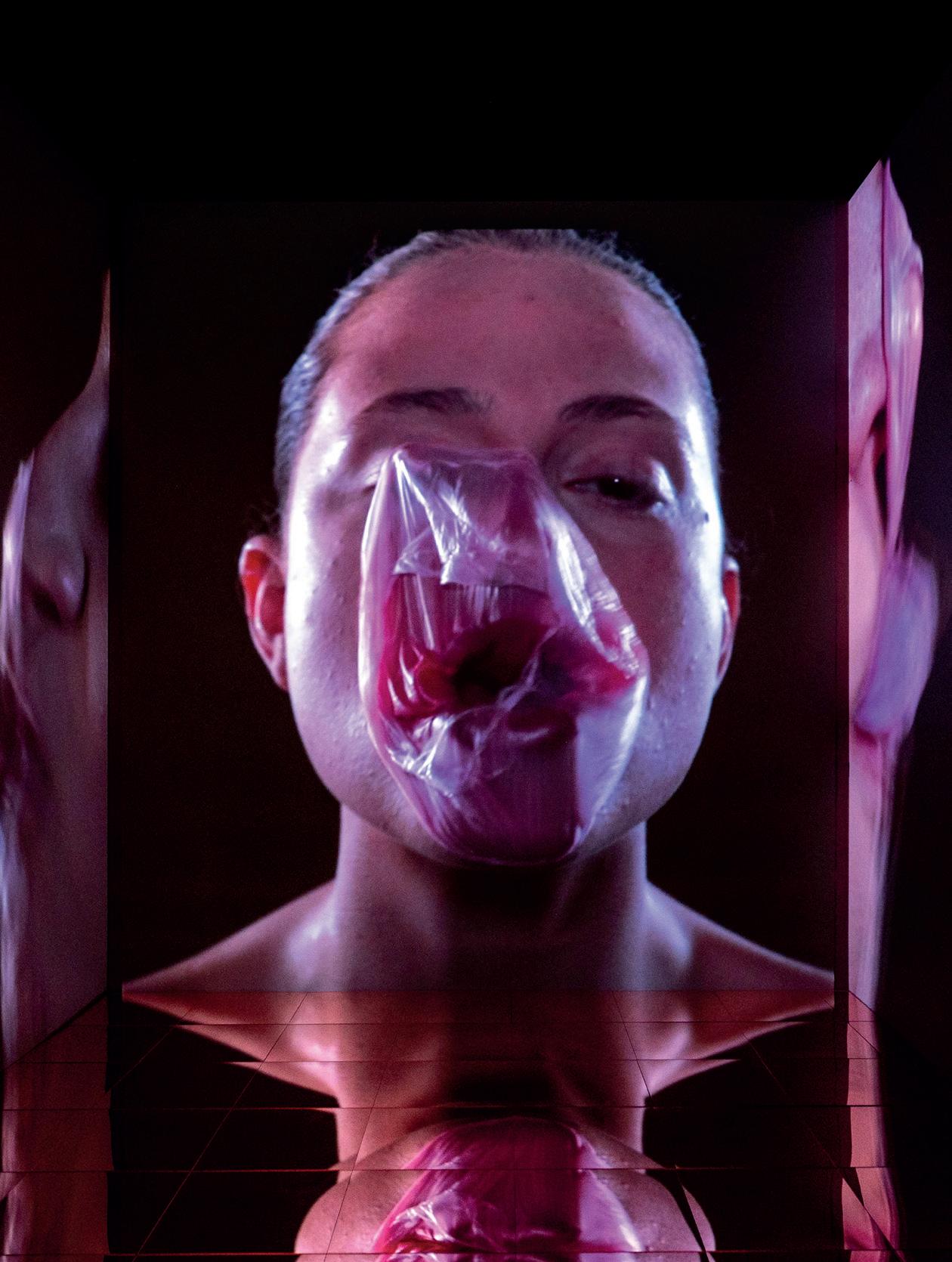
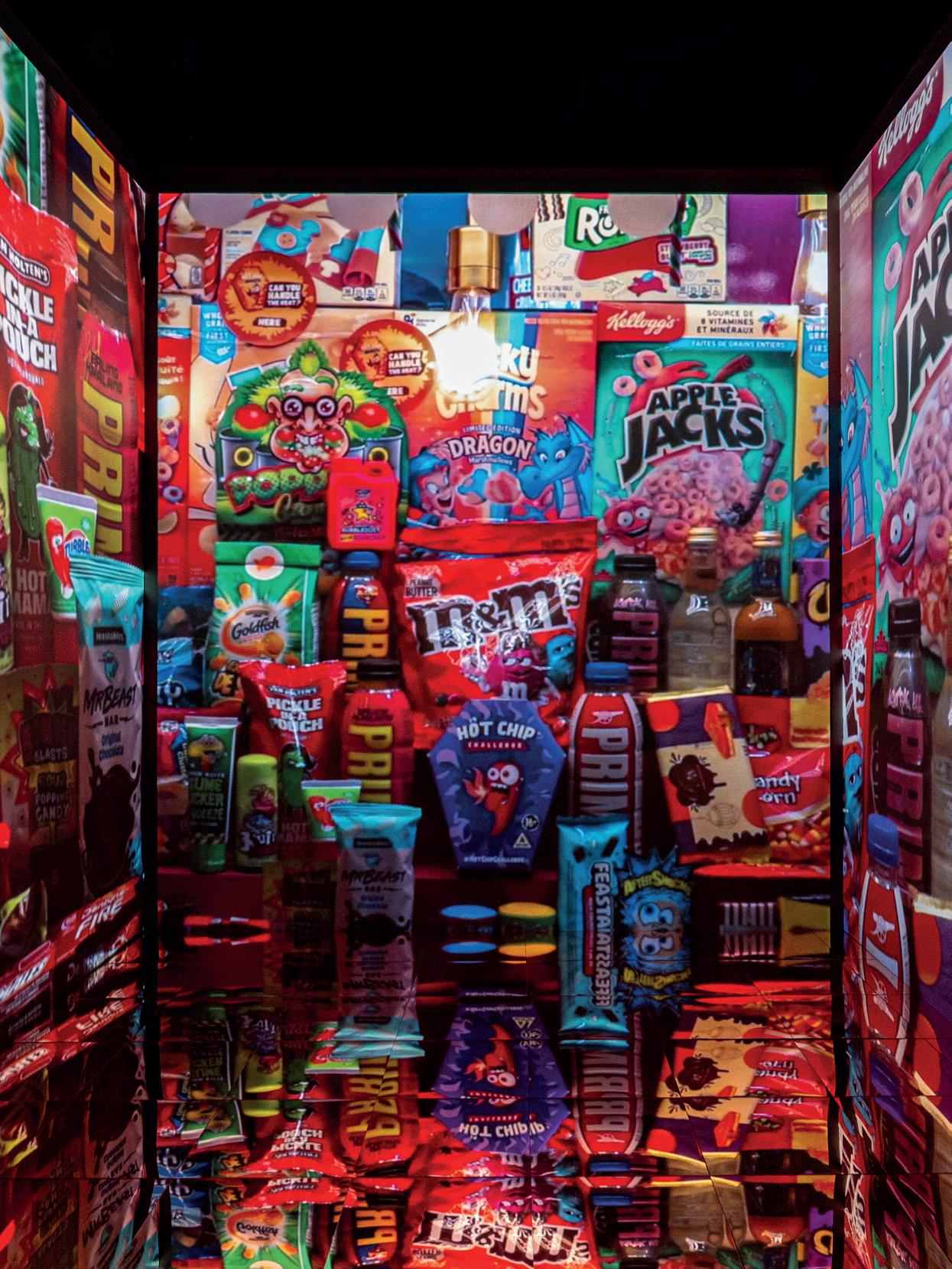
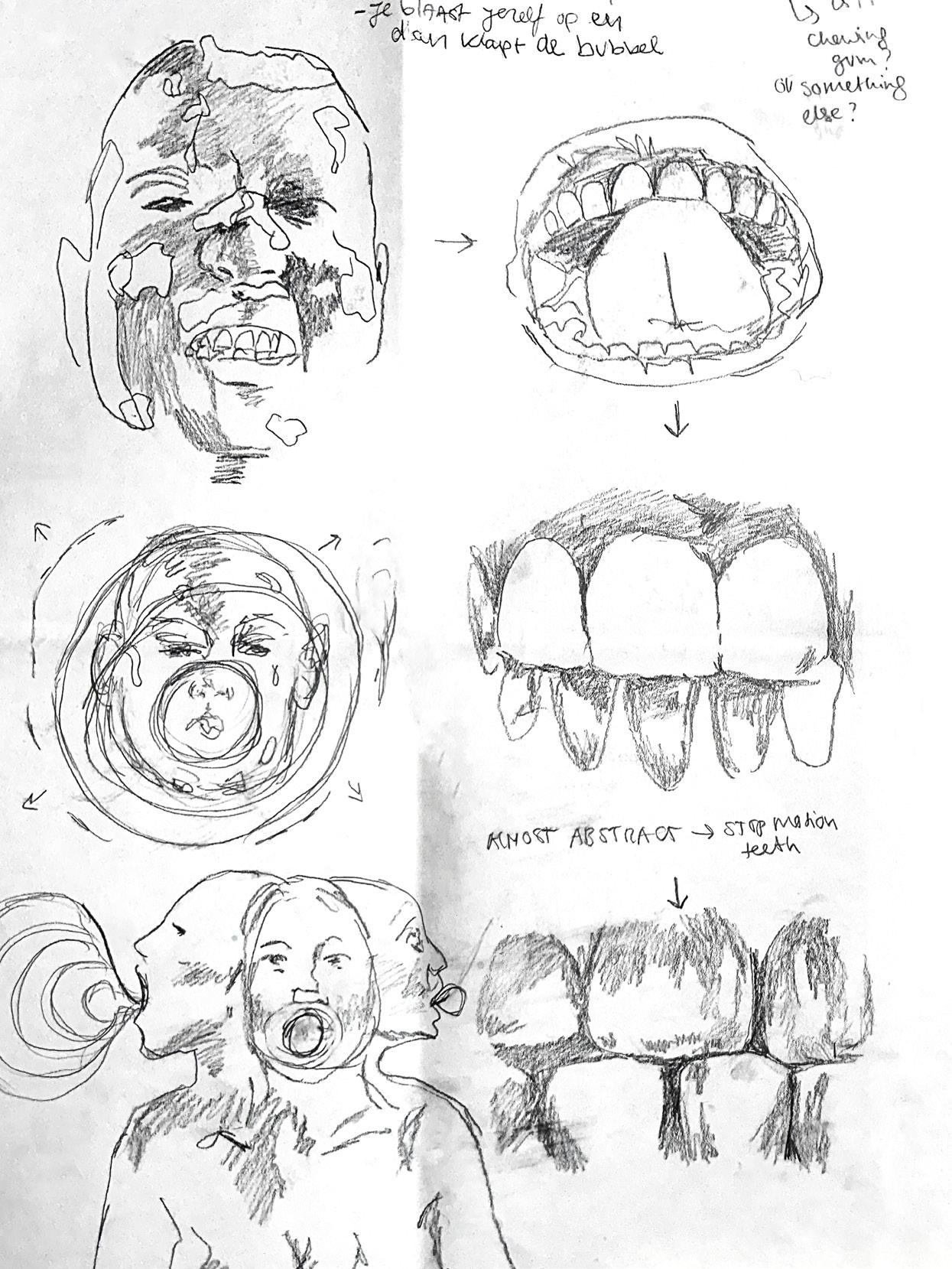
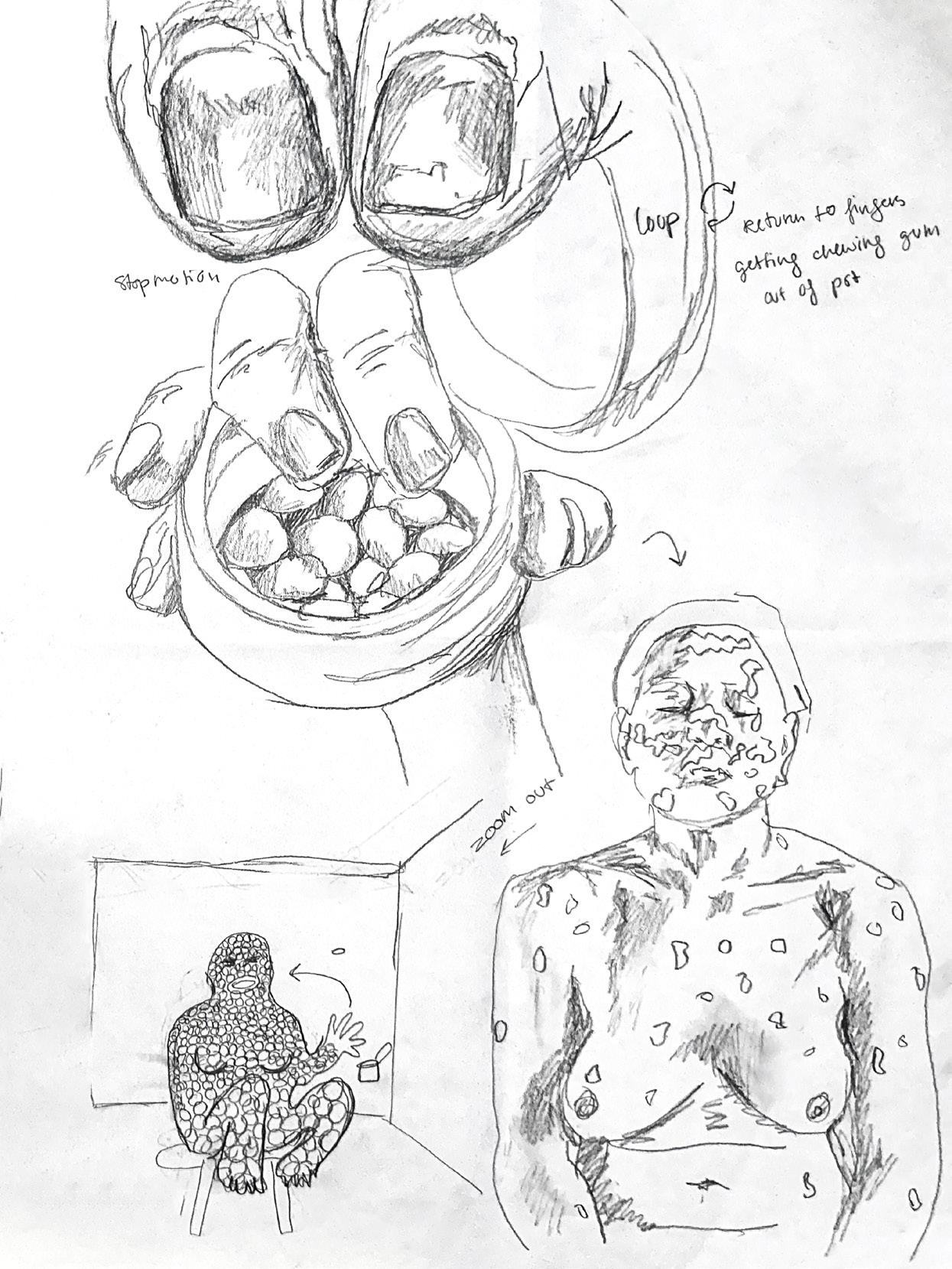
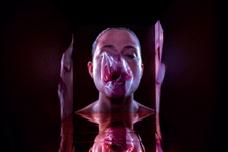
Pip Greenaway’s graduation project, TOO MUCH TO SWALLOW, is an architectural installation consisting of three screens. The work reconstructs a store interior, where a three-channel video displays illusory shop windows filmed along shopping streets across Europe. Interwoven through these images is a single figure, compulsively chewing gum until she gradually transforms into the very product she consumes. “I always really enjoyed the metaphor of chewing gum. I obsessively
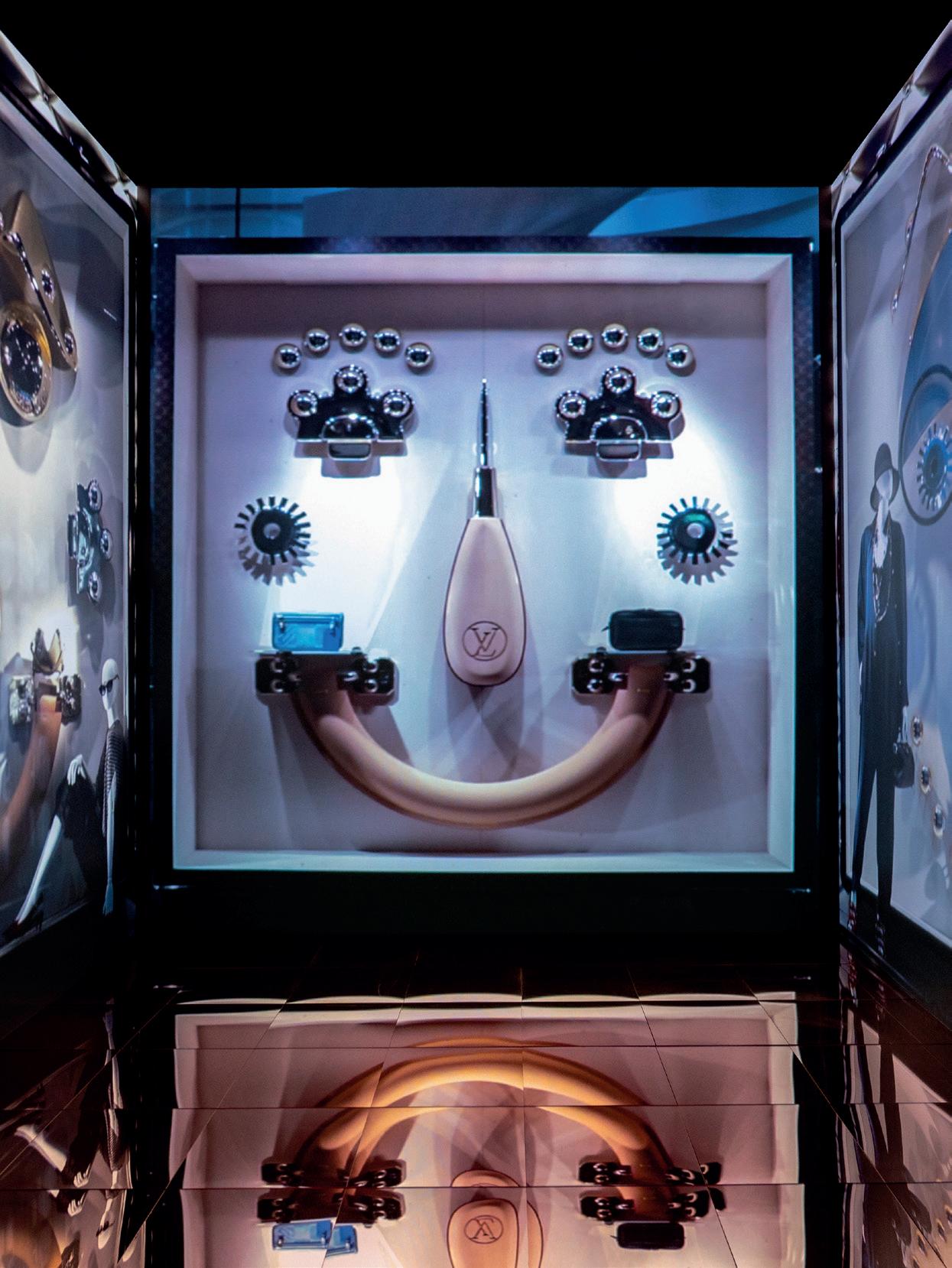
chewed gum when I was younger, because you chew something, it tastes good for a minute, and then after a minute, it really becomes actually quite disgusting, but you just keep chewing, and then eventually you spit it out, you don’t consume it” Pip says. She connects the act of chewing gum to patterns of overconsumption in contemporary society: “It’s the same thing; we use it as long as it tastes good and then we throw it away”. For the installation, Pip visited five cities, London, Paris, Berlin, The Hague, and Amsterdam, filming shop fronts that she compares to the Cabinets of Curiosity created by Joseph Cornell. These wooden boxes, as Pip describes them, contained miniature worlds that absorbed anyone who stepped inside them. She characterises the shop fronts in a similar way, calling them “Sort of seductive, beautiful theatrical place where products are sold.” In capitalist society, beauty becomes a tool for consumption, for selling. Alongside this, Pip positions herself within the work as a figure who chews gum to the point of becoming the product itself, transforming into what she calls the chewing monster.
“I obsessively chewed gum when I was younger, because you chew something, it tastes good for a minute, and then after a minute, it really becomes actually quite disgusting, but you just keep chewing, and then eventually you spit it out, you don’t consume it”
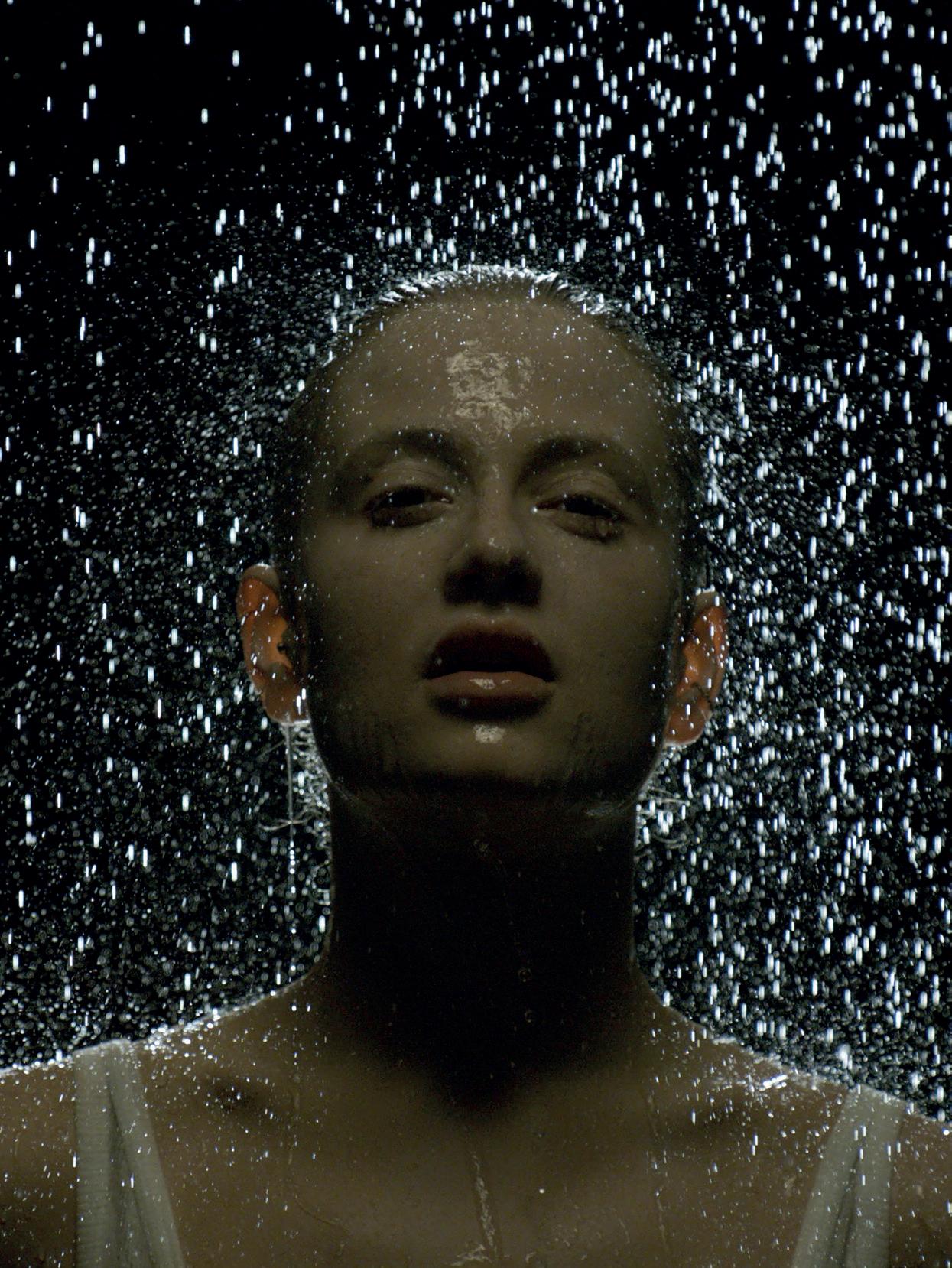
Pip also explains how she created a soundscape for the installation based on ASMR— autonomous sensory meridian response—a term used to describe a tingling, static-like, or goosebumps sensation triggered by specific audio or visual stimuli. “Some people could really not enter the space because of misophonia, and some people get really aggressive, but that was also sort of the point. It’s seductive and very unnerving at the same time, almost like a push and pull”. Upon entering the installation, visitors were invited to take a piece of gum and stick it to the wall, filling the space with the smell of chewing gum. “So it was a complete overkill, but I love that” Pip adds. When asked why she chose to film herself for the installation, she responds: “This project is personal. If you keep criticizing something or if you’re self- aware it doesn’t solve the problem. I think we all know we buy too much, including myself, but I think because I put myself in there, it makes it extra vulnerable because I also don’t know how to deal with the overconsumption. I’m not trying to solve a problem here; I’m asking a question”.
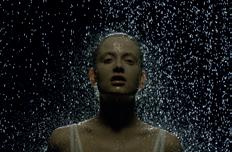
At the Best of Graduates 2025 exhibition Pip Greenaway presented Prelude, a work that functions as both an introduction and a counterpoint to TOO MUCH TO SWALLOW. Shown as a standalone piece in that context, Prelude consists of a single-shot, 4K slow-motion video loop lasting two hours, in which Pip stands motionless while ice-cold rain is continuously poured over her body. Referencing the visual language of perfume advertising, where water is often used as a symbol of seduction and luxury, Pip deliberately stretches this aesthetic to the point of discomfort. Although her posture remains elegant and composed, the physical strain gradually becomes visible: her breathing falters, her eyes struggle to stay open, and the seductive imagery begins to crack. Carefully choreographed lighting and the cinematic beauty of the footage continue to lure the viewer in, even as the situation becomes increasingly uneasy. As Pip explains, Prelude is meant to “Elongate that feeling until it becomes uncomfortable,” foregrounding the tension between desire and endurance. The work acts as a conceptual threshold to the chewing-gum figure in TOO MUCH TO SWALLOW, who appears drenched and
glossy, as if emerging from a world saturated with perfume and excess. Through Prelude, Pip reflects on her ambivalent position toward consumer culture. Simultaneously critiquing the perfume industry and capitalism, while admitting a desire to be part of it, “to smell great, to want a new bag”
Pip Greenaway’s installations are immersive works that exist alongside everyday reality. They also ask something of the audience, inviting reflection as much as sensory engagement. “One of the things about good art is that it can slap you in the face”, Pip says. As an artist, she explains that she does not set out with a specific effect in mind for her audience. Instead, she focuses on creating something that feels true to her. “When I enter this space, I want it to be how I imagined it, the world I created that you could access for like an hour and then you can leave it again”. After winning the Lakeside Collection Award at the Best of Graduates 2025 exhibition, Pip began a residency at Depot Boijmans Van Beuningen, where she is currently working on new projects. One of these installations will incorporate her extensive collection of lost Photo Booth photographs, gathered over many years, and explore the idea of an imaginary family through a multi-channel video installation.
Pip Greenaway will present an exhibition at Ron Mandos Gallery in June 2026 alongside Katinka Lampe.
Page 60,61: Pip Greenaway’s sketches for TOO MUCH TO SWALLOW Page 62: Pip Greenaway | KABK 2025, Prologue-Too Much To Swallow, 2025, Full artwork description on page 86.
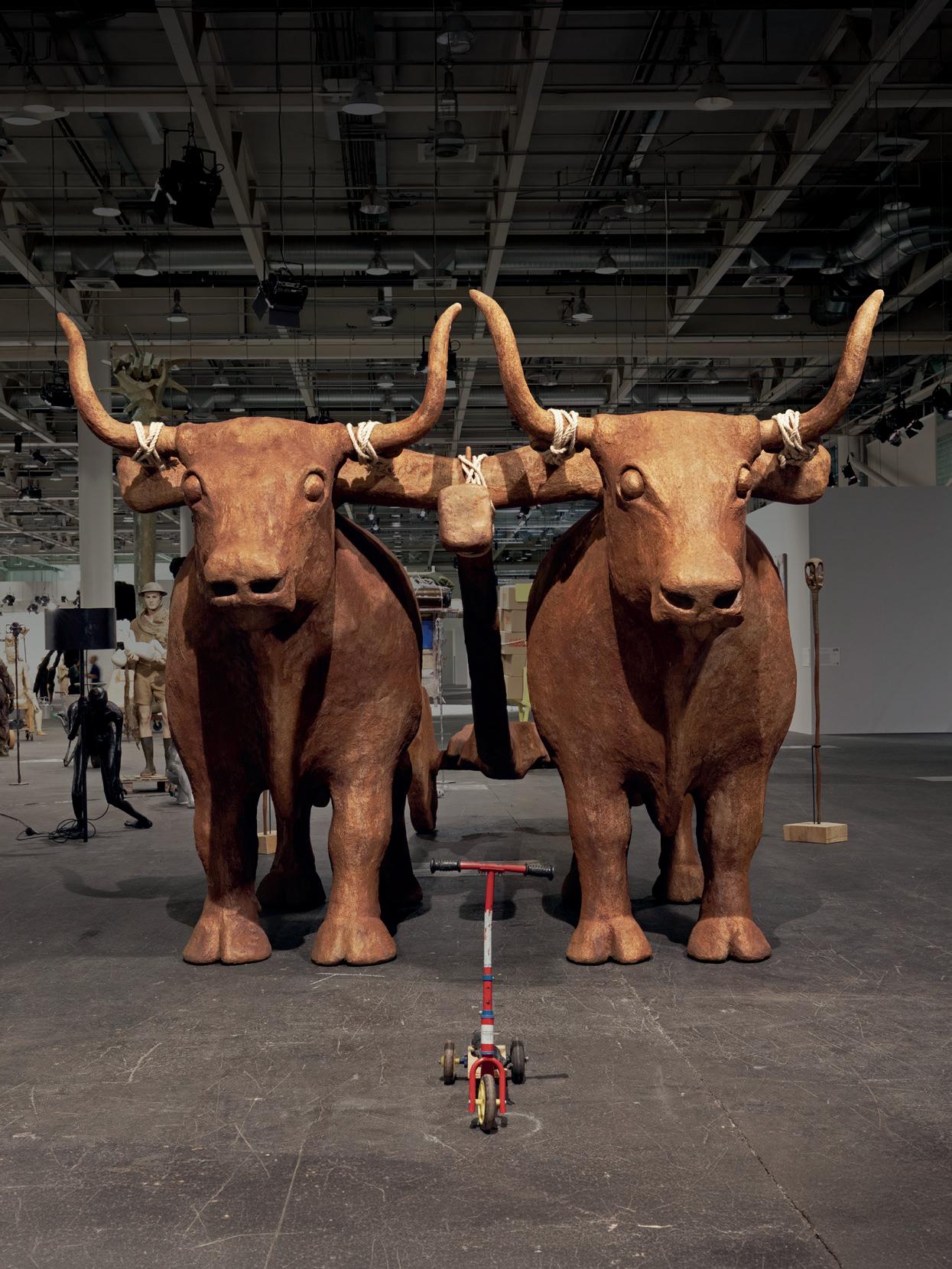
Atelier Van Lieshout, The Voyage at Art Basel Unlimited 2025. Photo by Carmen Alber
Ten Moments
From a year rich in exhibitions and artistic milestones, we present ten highlights that defined our program and resonated across the international art scene.
1. Atelier van Lieshout
The Voyage at Art Basel Unlimited 2025 Nocturnal Journey at KMSKA
At Art Basel Unlimited 2025, The Voyage – A March to Utopia by Atelier Van Lieshout unfolded as one of the fair’s most expansive installations, stretching nearly 100 metres across the Unlimited hall. Comprising more than 160 sculptural elements, the procession combined machines, vehicles, and symbolic forms into a continuous narrative on survival, control, and collective aspiration. The project was realised in collaboration with Galerie Krinzinger (Vienna), OMR (Mexico City), Jousse Entreprise (Paris), and Galerie Ron Mandos.
2. Hans Op de Beeck
From March to August 2025, Hans Op de Beeck presented Nocturnal Journey at the Royal Museum of Fine Arts Antwerp (KMSKA), his largest solo show in Belgium. The immersive exhibition led visitors through a dreamlike nocturnal landscape of monochrome sculptures, sound, and film, blurring reality and imagination while echoing art-historical themes of memory, transience, and beauty. The work invited viewers into a poetic world shaped by timeless human experience. More than 250.000 people visited Nocturnal Journey, making it the most visited exhibition by a contemporary artist in Belgium ever.
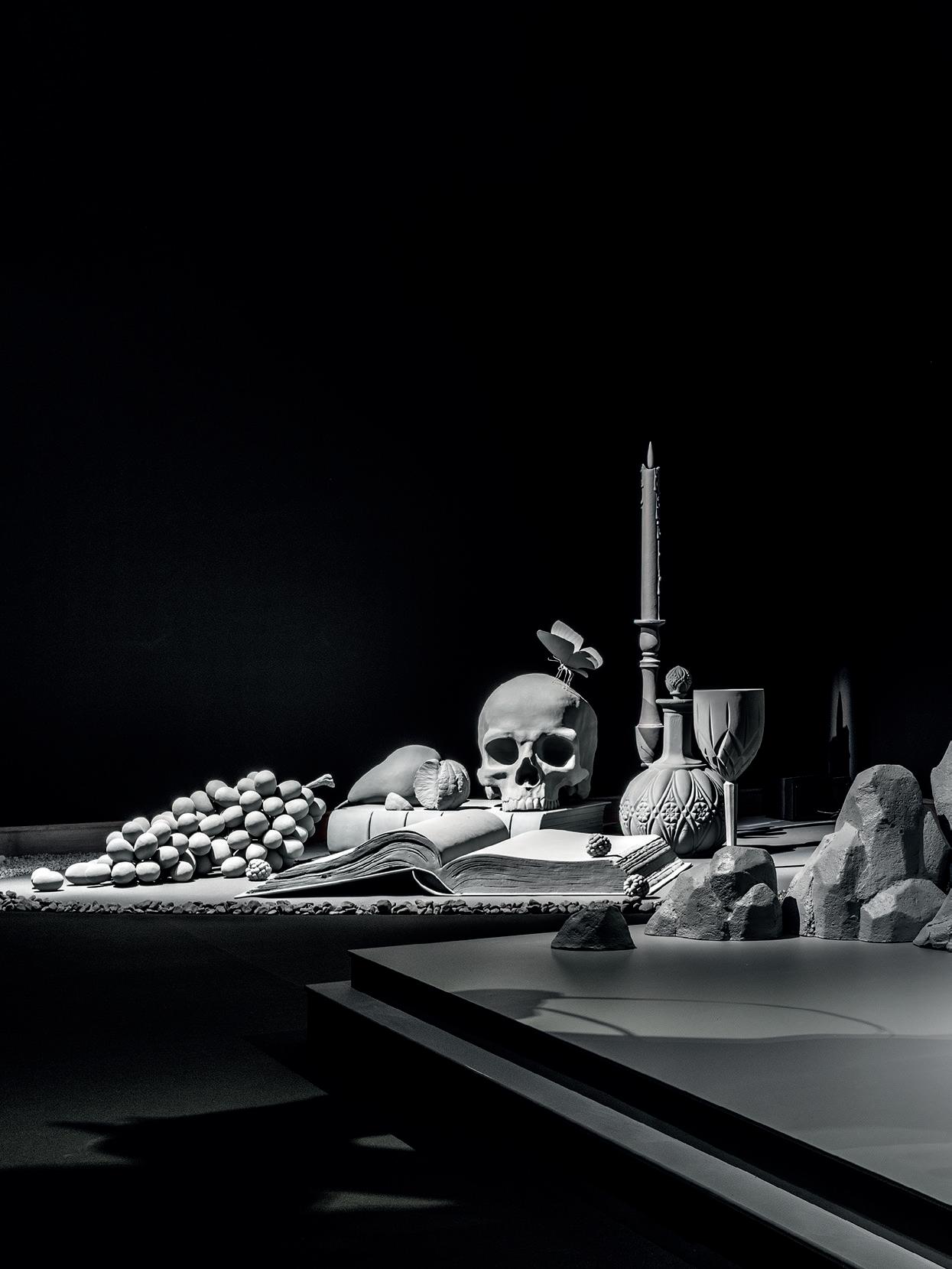
Hans Op de Beeck, Nocturnal Journey at KMSKA, Antwerp.
Photo by Dominique Provost
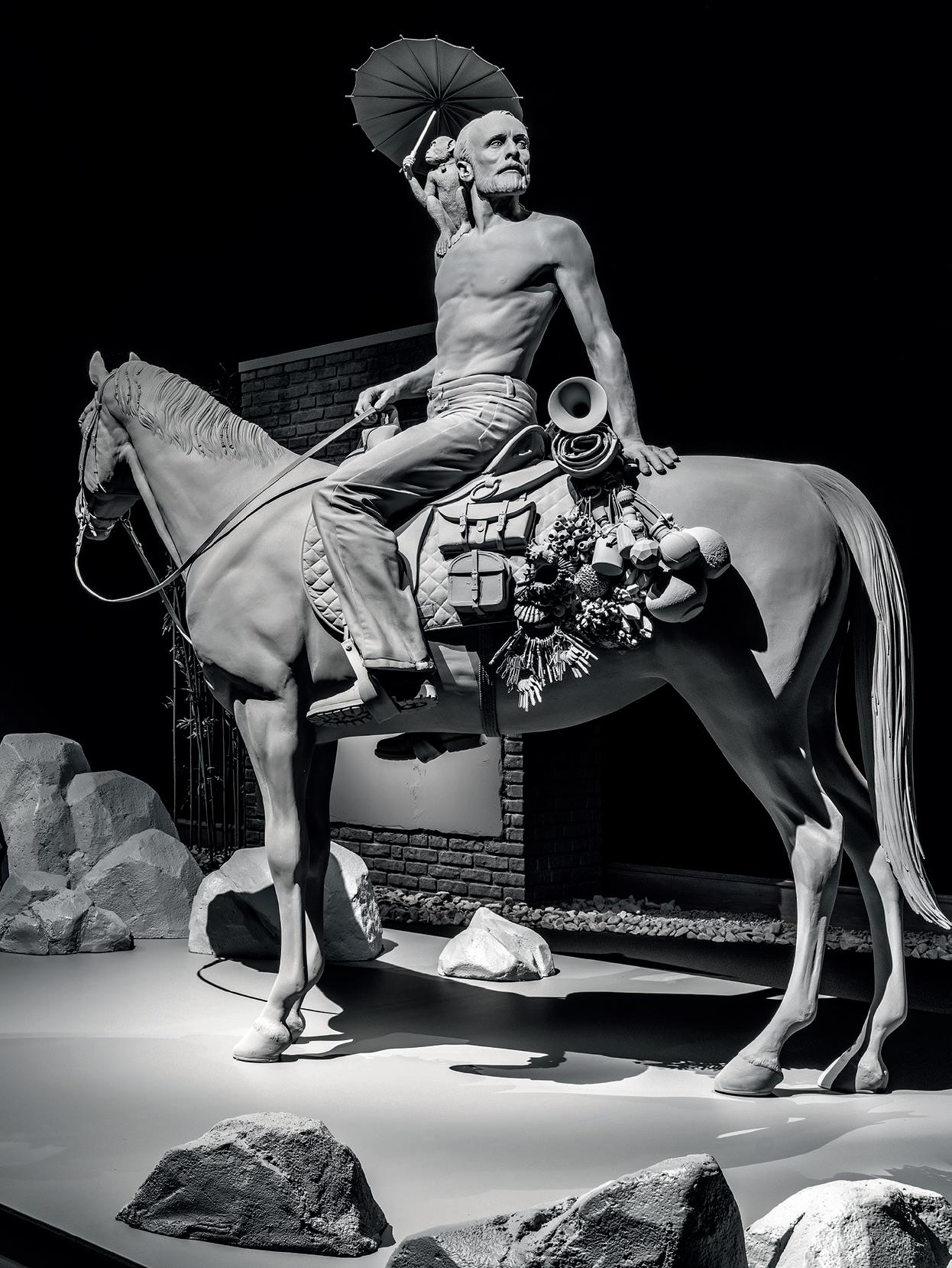
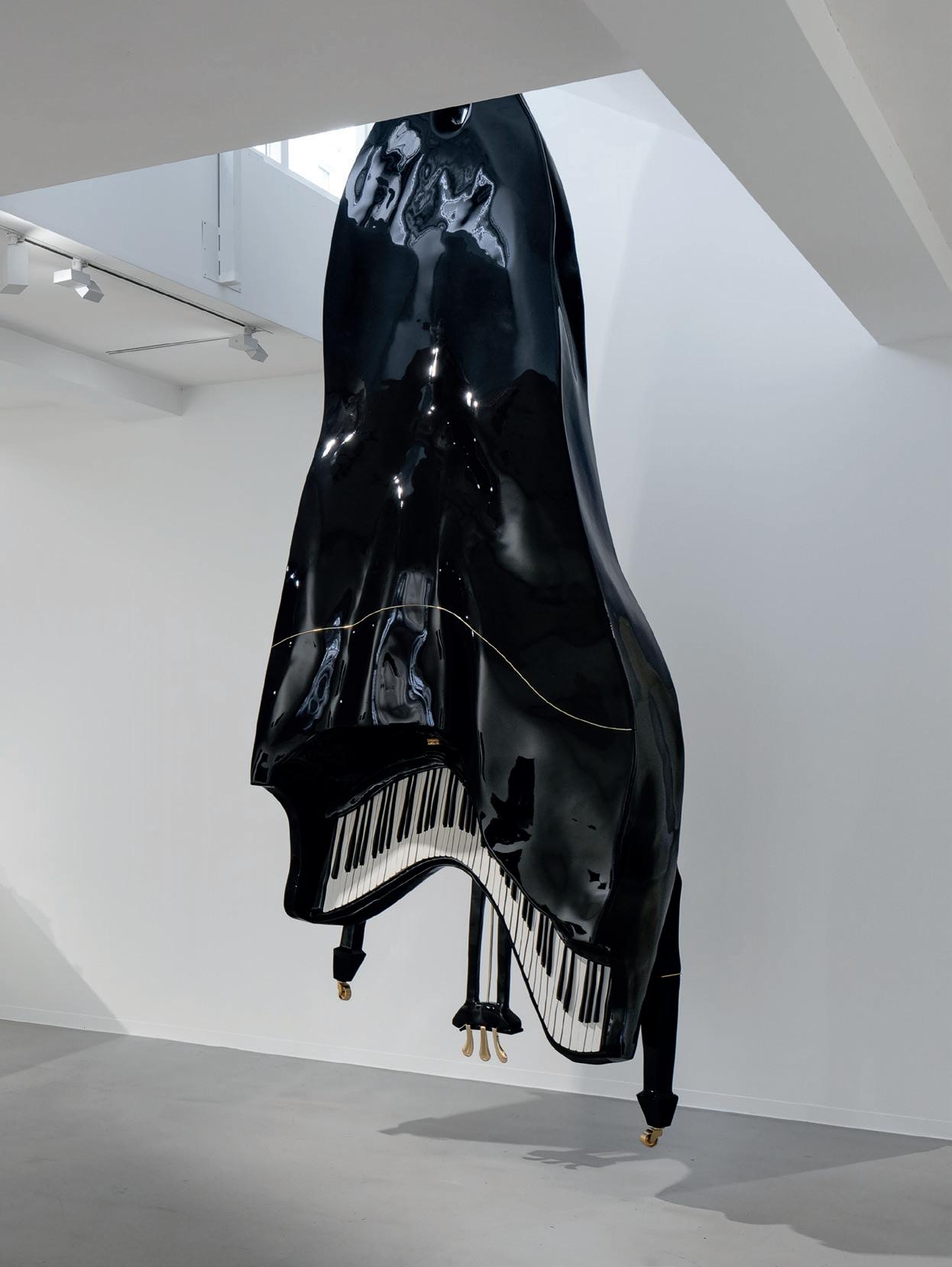
Maarten Baas, Crescendo! at Galerie Ron Mandos, Amsterdam. Photo by Jonathan de Waart
3. Maarten Baas
With Crescendo!, Maarten Baas presented his first solo exhibition in Amsterdam, marking his debut in the fine-art context. Using altered musical instruments (flattened, suspended, or compressed) the exhibition explored the tension between artistic ambition and practical limits. Works such as hanging pianos, compacted brass instruments, and Variations in E Minor, an orchestra reduced to 56 spherical forms, reflecting on the value of art, the pressure of economic limits, and how artistic ideas are shaped, reduced, or distorted by the conditions under which they must exist.
4.
Paris Photo 2025
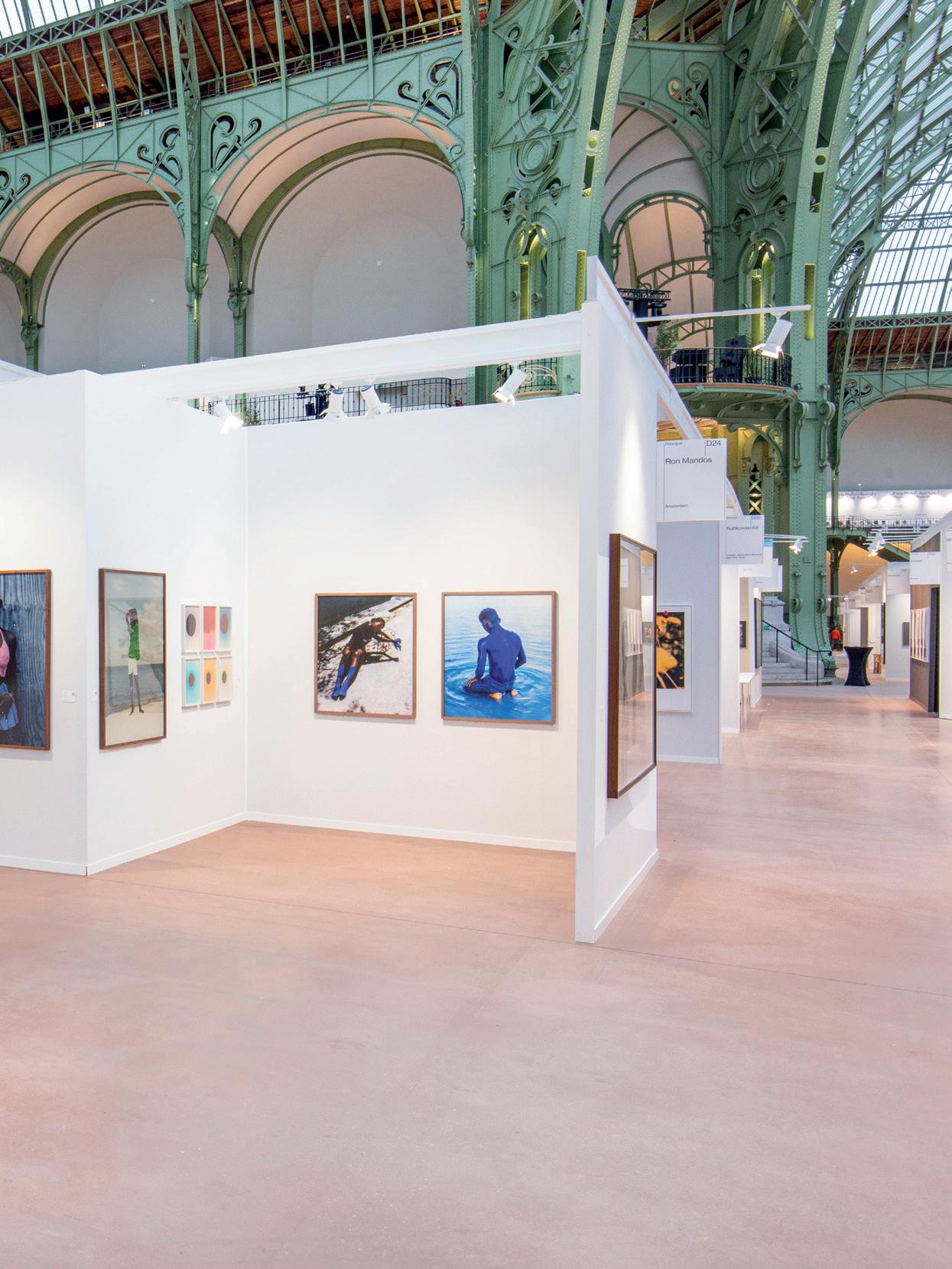
In November 2025, Galerie Ron Mandos participated in Paris Photo for the first time, held at the Grand Palais in Paris. The presentation brought together works by Isaac Julien, whose photographic and cinematic works explore history, desire, and Black cultural memory; Erwin Olaf, known for his staged portraits; Kevin Osepa, whose image-based practice draws on Afro-Caribbean spirituality and colonial histories; and Gilleam Trapenberg, whose photography examines identity and everyday life in the Caribbean beyond touristic clichés. Together, the works formed a concentrated reflection on intimacy, history, and postcolonial experience within the context of one of the world’s leading photography fairs.
5.
Best of Graduates 2025
Crescendo! First Participation Final Awards Ceremony
Best of Graduates 2025 brought together a diverse group of recent academy graduates, presenting new voices across sculpture, photography, video, and installation. During the opening, Mees de Rozario was honored with the Ron Mandos Young Blood Award for his sculptural sound works and performance-oriented machines. As part of the award, Mees de Rozario will present a performance of his ongoing Rozario’s Rave Organs series at Museum Voorlinden. He will also receive a commission for a new artwork for the museum, made possible by the Ron Mandos Young Blood Foundation. During this evening, further awards were presented: Jip Schalkx received the RM Photo Talent Award, Mats Mingus the RM Residency Award at BRUTUS, Đăng-Vũ Đăng the RM Public Choice Award, and Pip Greenaway the Lakeside Collection Award, including a residency at Depot Boijmans Van Beuningen. The ceremony celebrated not only the artists, but also the institutions and partners supporting their practices.
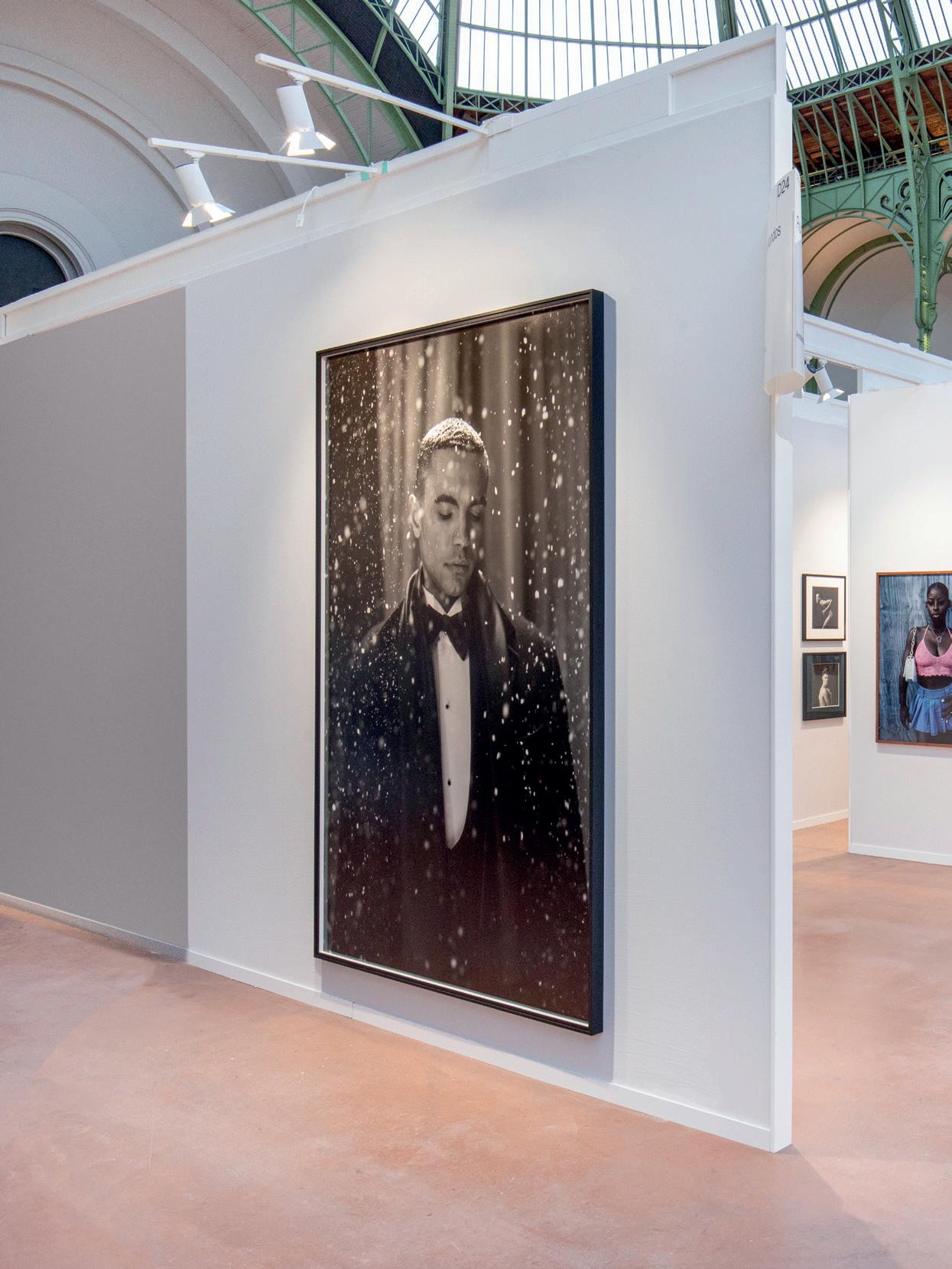
Booth Galerie Ron Mandos at Paris Photo 2025. Photo by Gabriele Abbruzzese
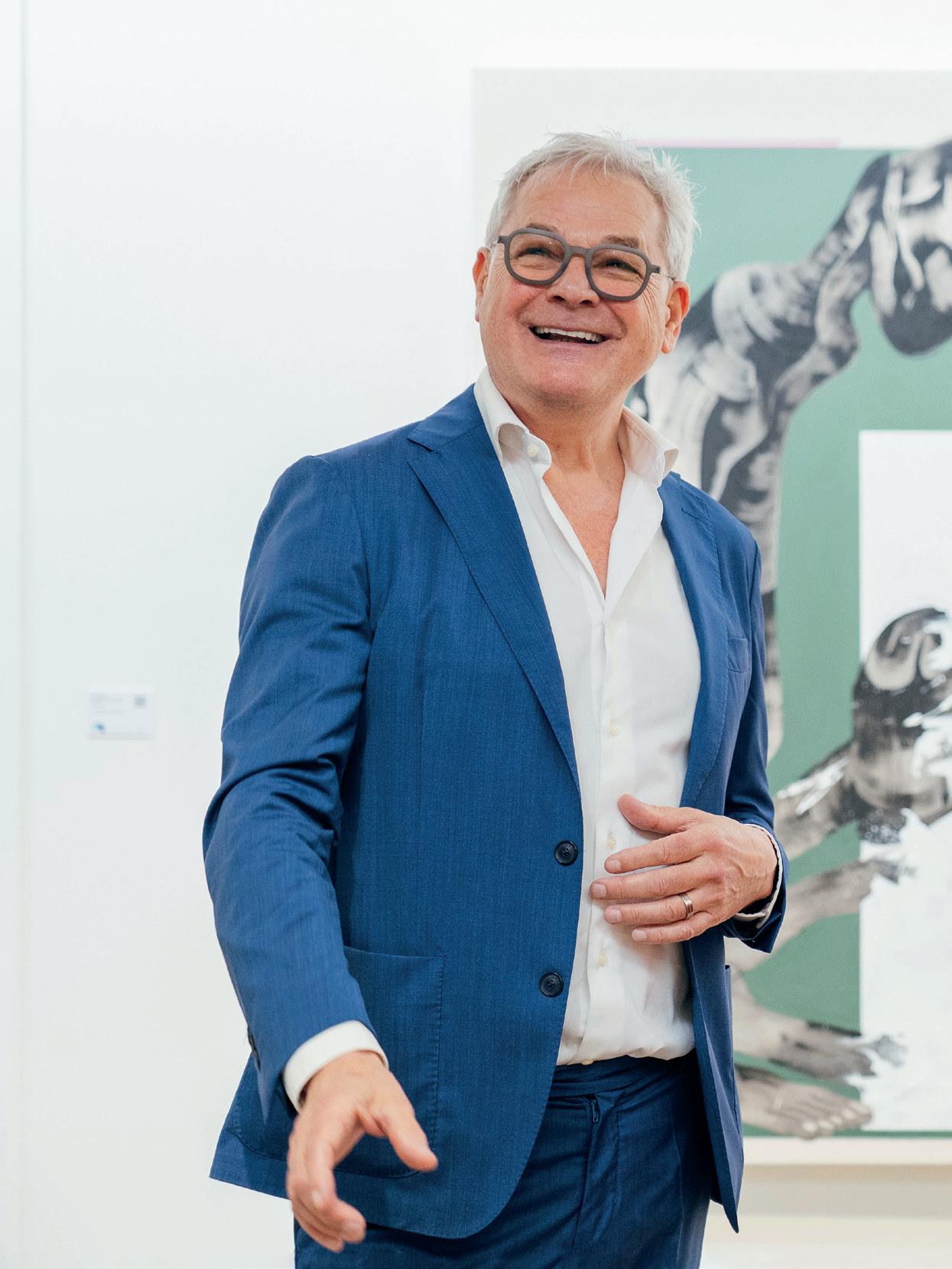
Ron Mandos and Touria Meliani, Final Awards Ceremony of Best of Graduates 2025. Photo by Almicheal Fraay
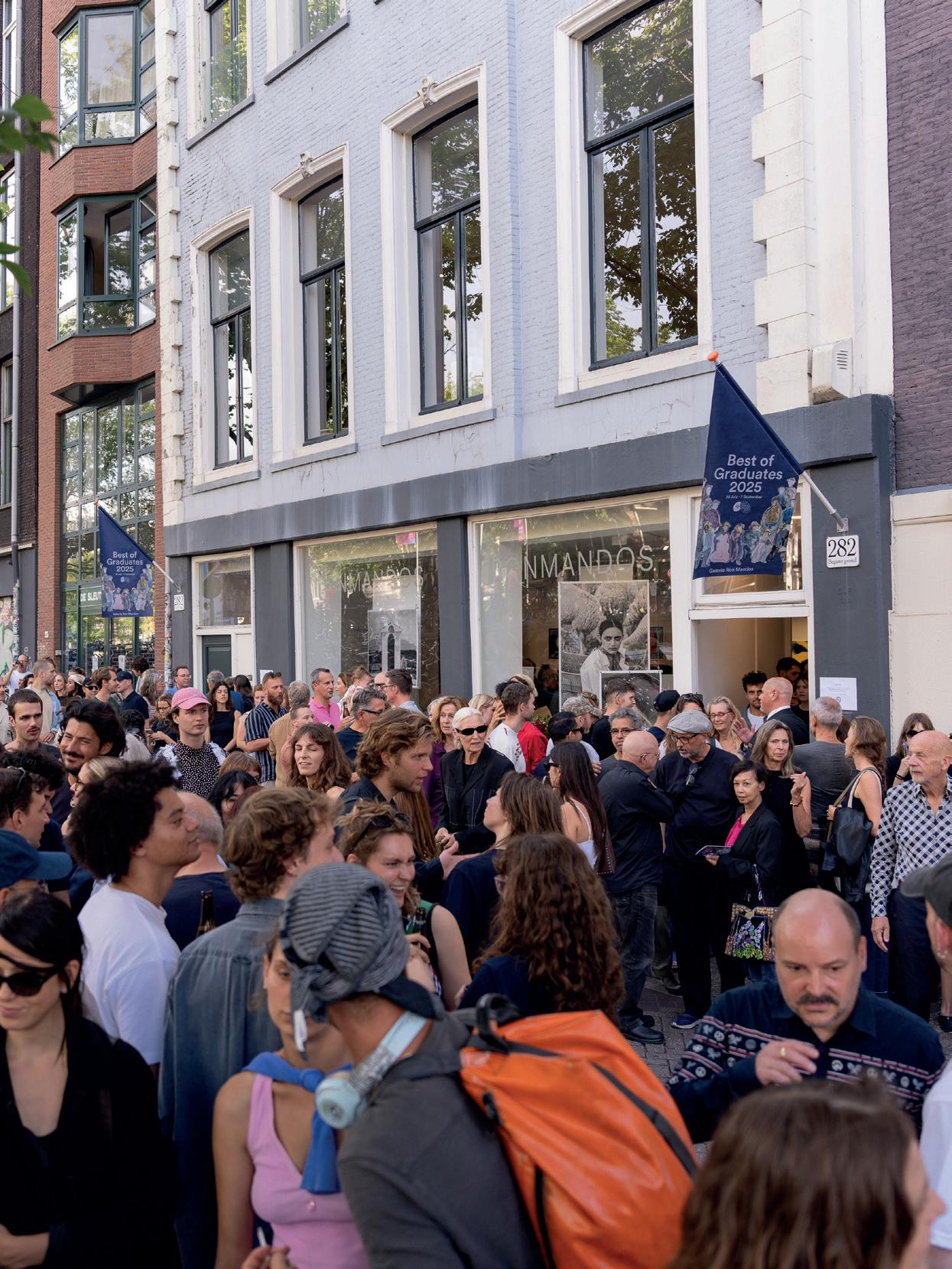
Galerie Ron Mandos, Best of Graduates 2025
Photograph by Almicheal Fraay
6. Isaac Julien
Pallazo Te, Mantua Italy
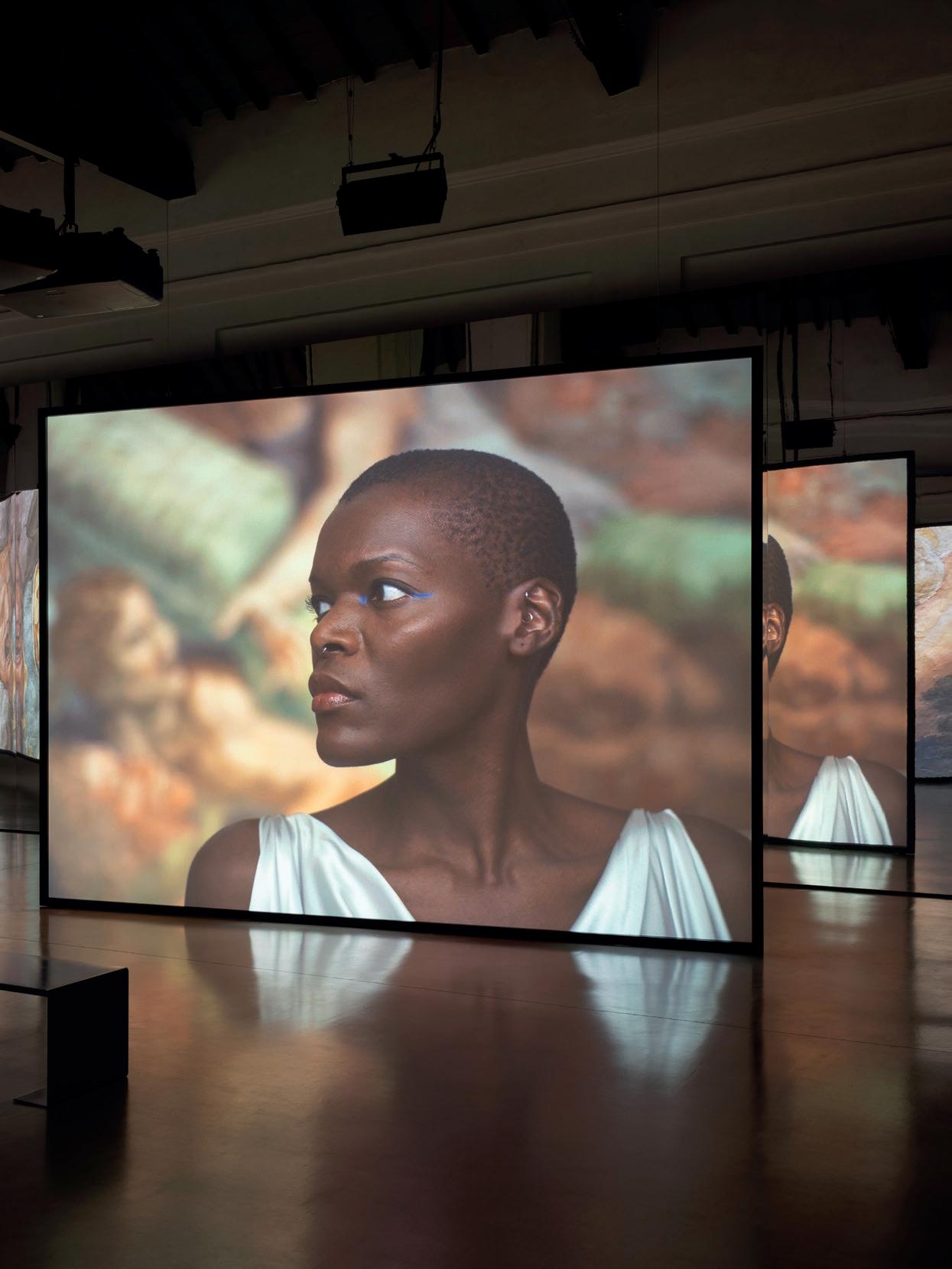
On the occasion of its 500th anniversary, Palazzo Te Foundation hosted the world premiere of All That Changes You. Metamorphosis (2025), a multi-screen film installation by artist and filmmaker Isaac Julien. Shot at Palazzo Te and starring Sheila Atim and Gwendoline Christie, the film reimagines Giulio Romano’s Renaissance masterpiece through themes of metamorphosis, philosophy, anthropology, and ecology. Moving from the Palazzo’s frescoed interiors to Charles Jencks’s Cosmic House in London and the Redwood forests of California, it unfolds as a journey across time and space. Developed in collaboration with Stefano Baia Curioni, Lorenzo Giusti, Isaac Julien and Mark Nash, the project offers a “more than human” perspective, drawing on recent philosophical and literary ideas to challenge dominant narratives and reimagine the future.
7.
Tomáš Libertíny
Kranenburgh
With his solo exhibition For Eternity, Tomáš Libertíny crowned his nearly twenty-year collaboration with nature, and more specifically, with honeybees! Through experimentation and research, the artist has become increasingly skilled at enticing his bees into co-creating ingenious honeycomb sculptures. His timeless visual language draws inspiration from art history, architecture, and nature. Whether Libertíny sets his bee colonies to work on a Greek amphora, the bust of Nefertiti, or a simple conical shape, each object celebrates what has existed for eternity and always will: the infinite cycle of creation, the wax, and its makers. For Eternity was Libertíny’s first solo museum exhibition in the Netherlands.
8. Bouke de Vries Museum
Keramiekmuseum Princessehof
In July 2025, the Princessehof National Museum of Ceramics in Leeuwarden opened UNBROKEN, a major retrospective dedicated to the internationally renowned artist Bouke de Vries.This exhibition offered a distinctive view of De Vries’ practice, in which broken ceramics are transformed into surprising and thought-provoking works of art. Trained originally as a ceramics restorer, the Utrecht-born, London-based artist draws on his deep technical expertise to explore themes of fragility, impermanence, sustainability, and the power of repair. The museum has also released a book together with the exhibitionm which marked the first mayor publication of Bouke’s art.
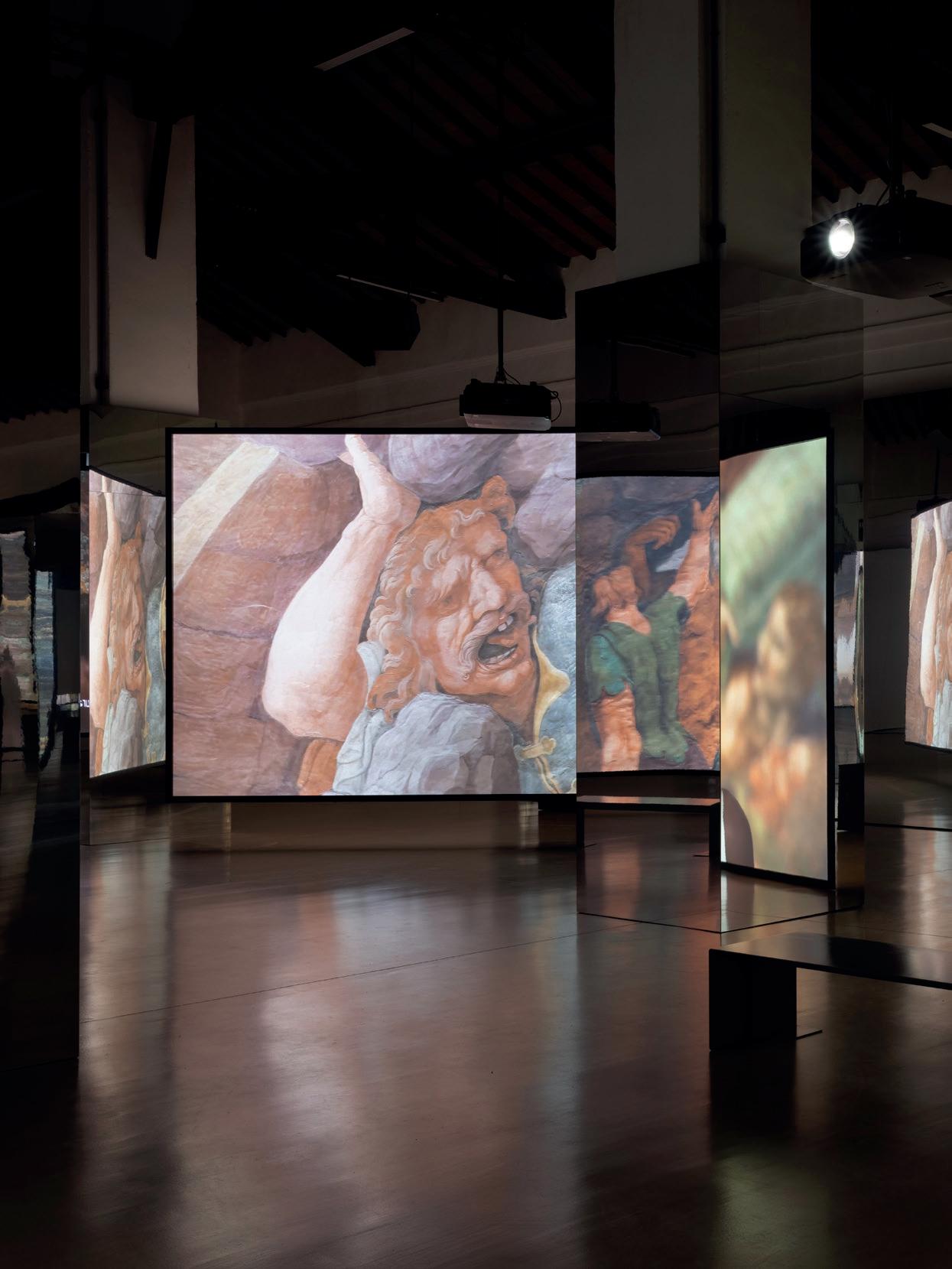
Isaac Julien, All That Changes You (Metamorphosis) at Pallazo Te, Mantua, Italy. Photo by Andrea Rossetti
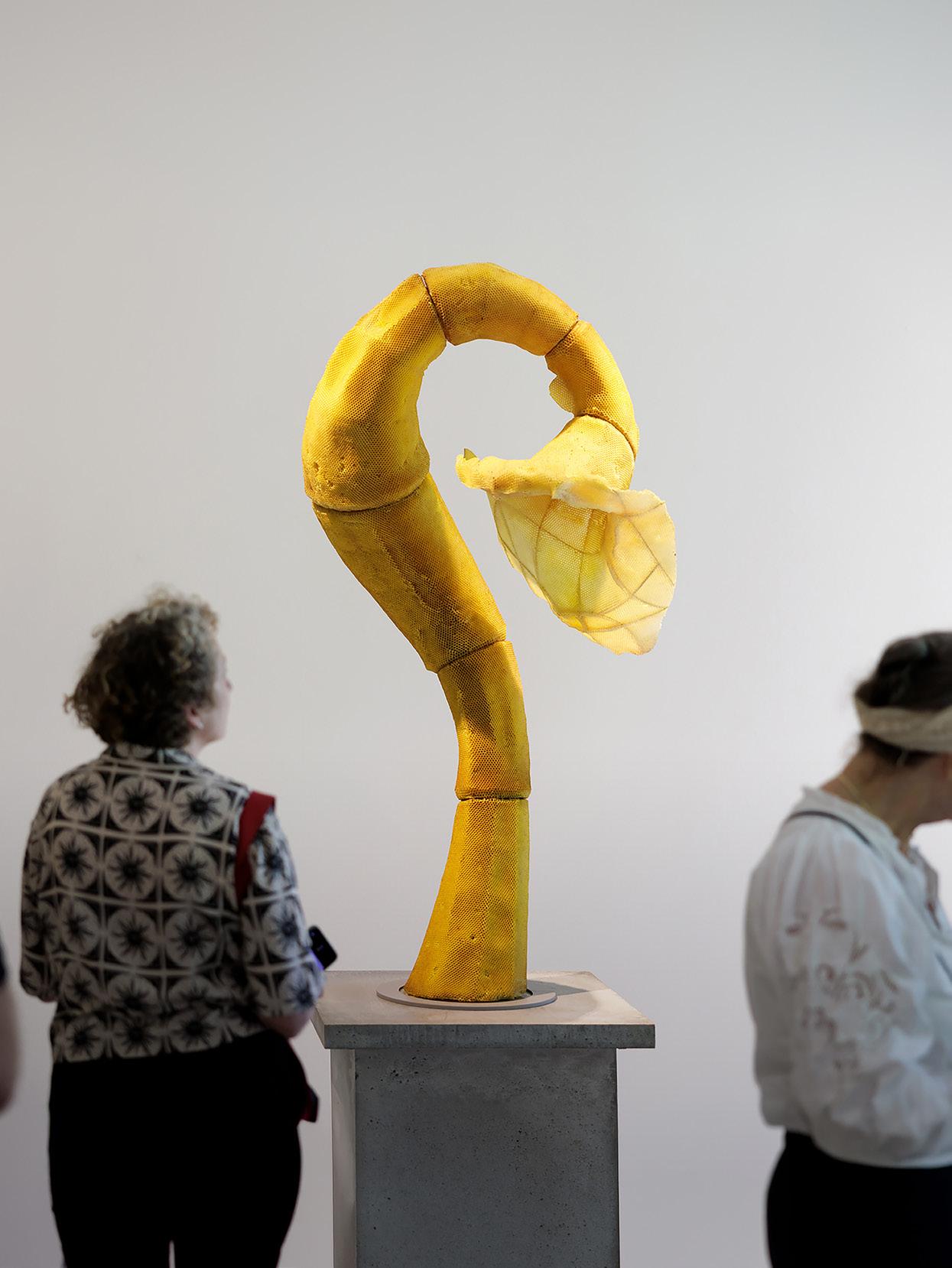
Tomáš Libertíny, For Eternity at Museum Kranenburgh, Bergen, Netherlands. Photo by Aad Hoogendoorn
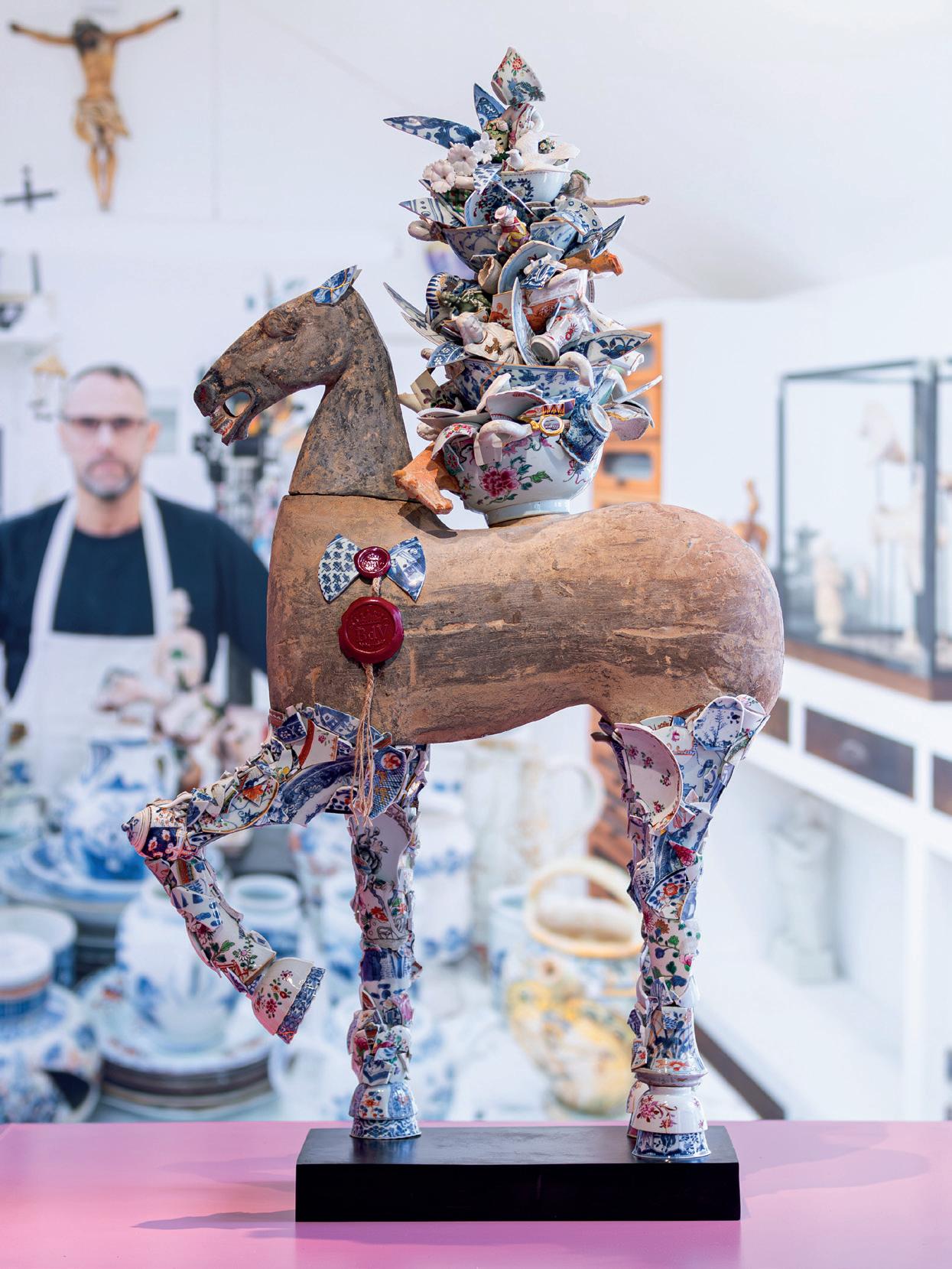
Bouke de Vries, UNBROKEN at Keramiekmuseum Princessehof. Photo by Aron Weidenaar
9.
Kevin Osepa
Kevin Osepa was the laureate of Prix de Rome award 2025. The Prix de Rome is an incentive award for visual artists from the Netherlands and the Caribbean part of the Kingdom, aimed at supporting artistic development and innovation, organised and financed by the Mondriaan Fund. For the Prix de Rome Visual Arts 2025, Fiona Lutjenhuis, Kevin Osepa, Thierry Oussou, and Buhlebezwe Siwani were nominated and commissioned to produce new work, shown at the Stedelijk Museum Amsterdam from 29 November 2025 to 15 March 2026.
Based on this work, the jury awarded Kevin Osepa the prize for his layered, practice that moves beyond colonial histories, giving space to suppressed knowledge and alternative narratives. As the winner, Osepa received a €60,000 cash award, presented by State Secretary of Education, Culture and Science Koen Becking.
10.
Erwin Olaf
Prix de Rome 2025 winner Stedelijk Museum
The Stedelijk Museum has opened a large retrospective of Erwin Olaf’s work. Organized and curated by Charles Landvreugd in collaboration with Studio Erwin Olaf, this is the first exhibition of Olaf’s work in the Netherlands since his unexpected passing two years ago. In addition to showcasing iconic series from Olaf’s oeuvre, the retrospective features never-before-seen works by the multimedia artist, spanning both early and recent periods. Among them is the remarkable Self-Portrait with Lungs (2023), which has not yet been exhibited in a museum, along with pieces created during his illness. The exhibition also highlights the raw, underground edge of Olaf’s work, reflecting his engagement with subversive and activist themes for which he was widely known.
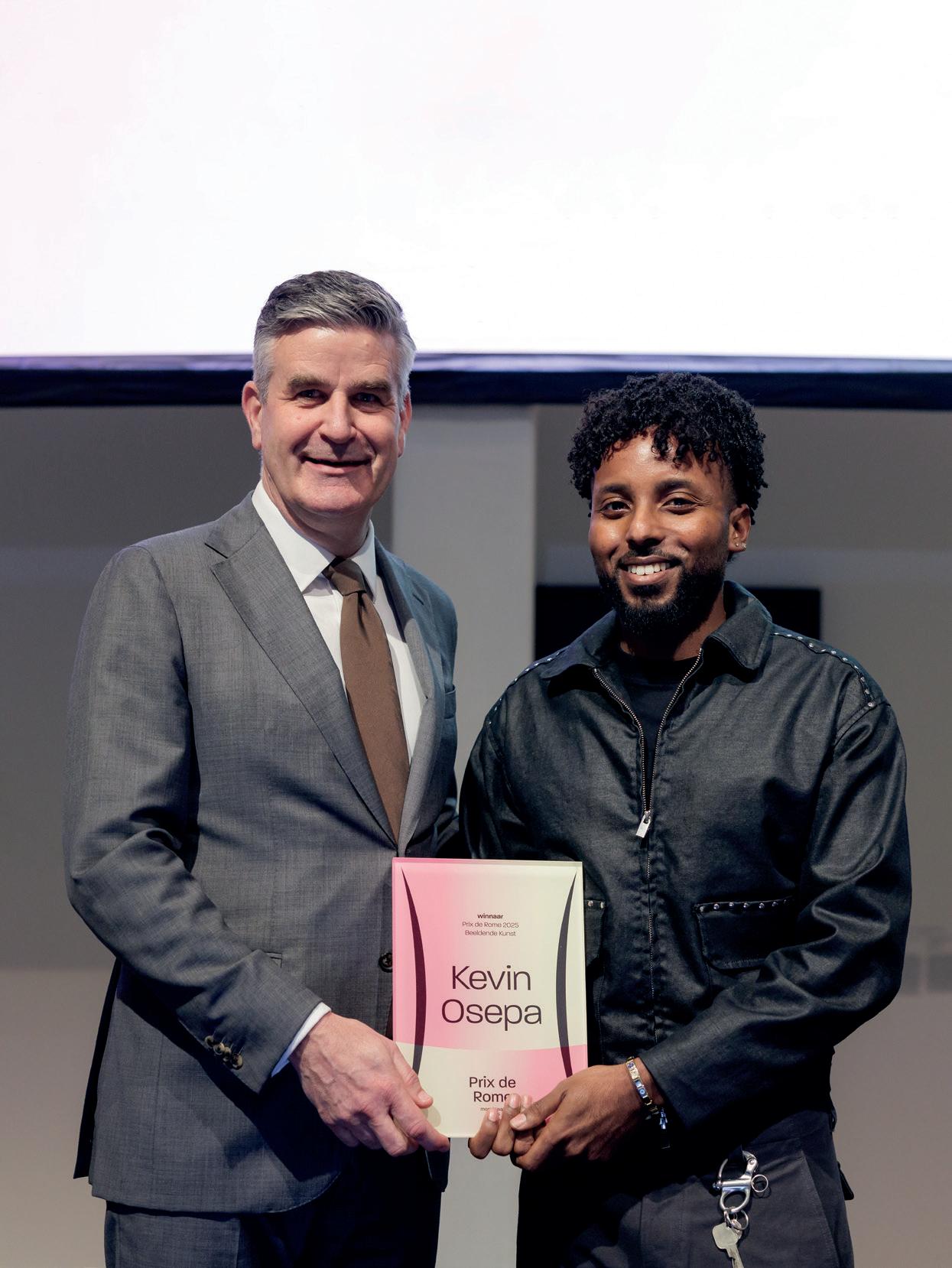
State Secretary Koen Becking (Education, Culture and Science) and Prix de Rome 2025 winner Kevin Osepa. Photo by Aad Hoogendoorn.
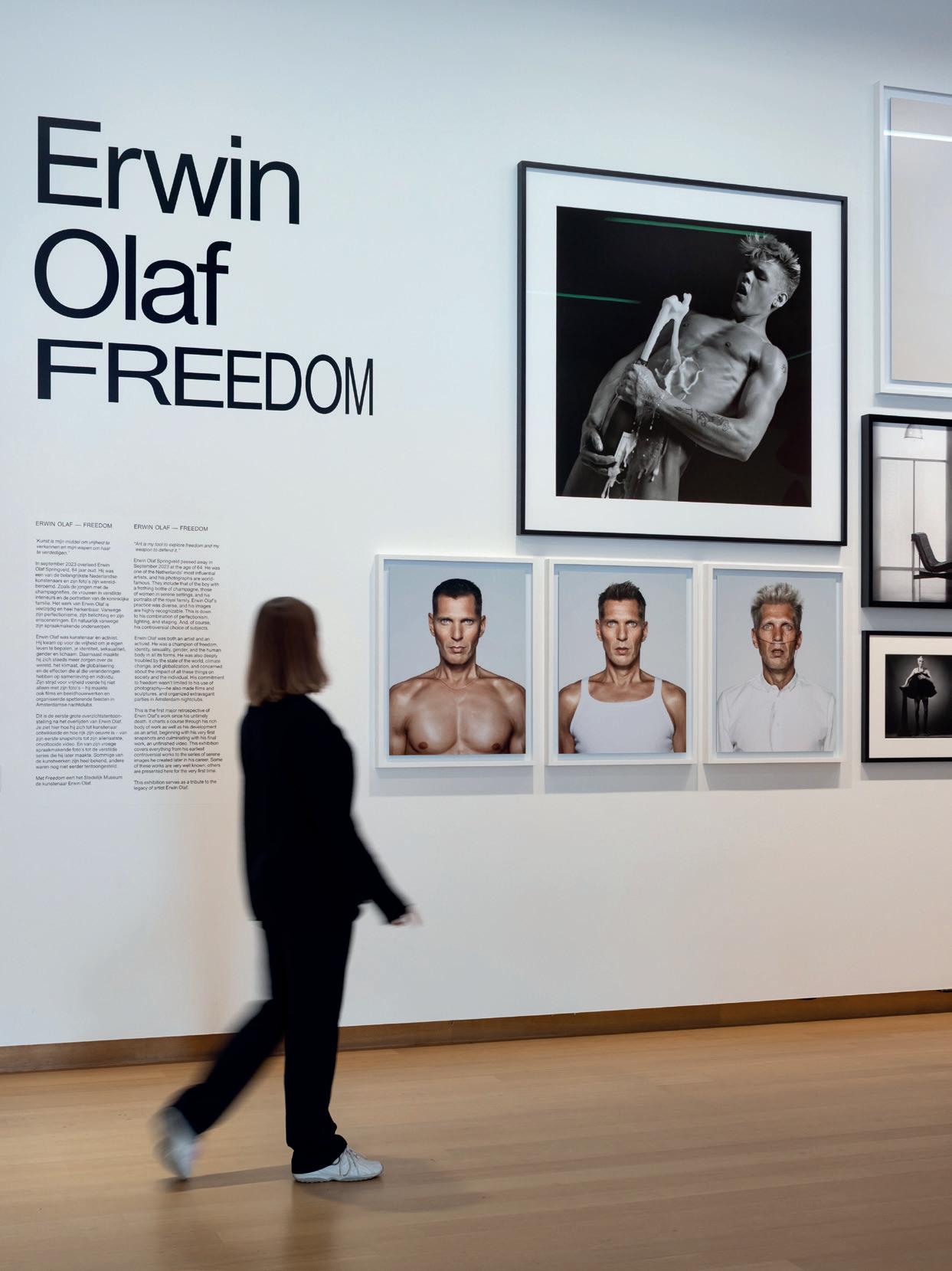
Erwin Olaf, Freedom at the Stedelijk Museum Amsterdam. Photo by Peter Tijhuis
Art in Focus
This year’s program spans a wide range of artists and genres, alongside our participation in major international art fairs.
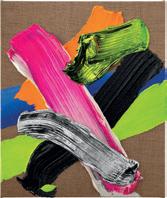
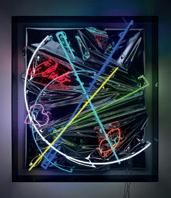
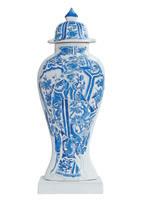
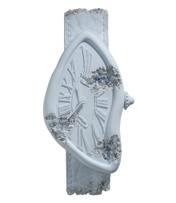
Anselm Reyle
(18688)
Anselm Reyle
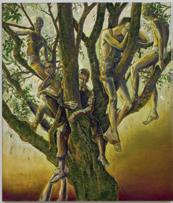
Anthony Goicolea Canopy
Anthony Goicolea
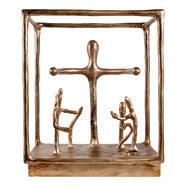
Atelier Van Lieshout Maria’s
Atelier
Lieshout
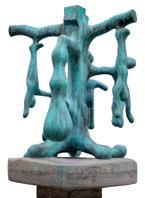
Atelier Van Lieshout Tree Of
(pedestal)
Atelier Van Lieshout Le Cri (2025)
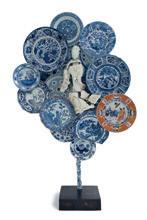
Bouke de Vries Guan Yin with Pronk plate
Bouke de Vries
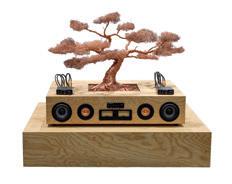
Daniel Arsham Juniper Sound #1
Daniel Arsham
Calcite
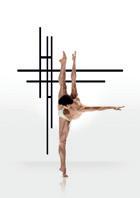
Erwin Olaf Ballet, Introdans - Lijnrecht
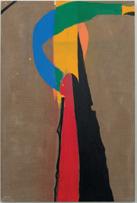
Archival print on Hahnemuhle PhotoRag Baryta 120 x 85 cm, 2028
Page 29
Page 20
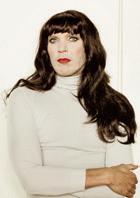
Erwin Olaf
Self-Portrait Andy Warhol, Self-Portrait, No 3 - 48 Years Old
Fuji Crystal Archive Digital Paper
77 x 54,5 cm, 2007
Edition of 10 plus 2 artist’s proofs (#2/10)
Page 21
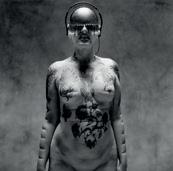
Archival Print on Canson Platine FibreRag
85 x 85 cm, 1996.
€ 950 incl. 21% VAT
Edition of 5 plus 2 artist’s proofs (#1/5)
Page 31
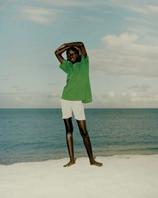
Edition of 5 plus 2 artist’s proofs (#5/5)
Page 73
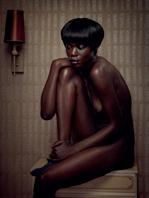
Hotel - Winston Salem, Sarah Portrait
Archival Print on Canson Platine FibreRag 133 x 100 cm, 2010
Page 53
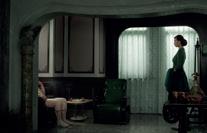
Erwin Olaf
Shanghai, Du Mansion - The Parting
Fine Art Print 100 x 156 cm, 2017
Edition of 10 plus 2 artist’s proofs (#4/10)
Page 53
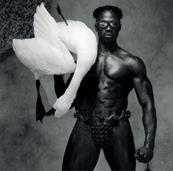
Erwin Olaf
Wagner Parsifal I
Archival Print on Canson Platine FibreRag 85 x 85 cm, 1996. Frame: € 950 incl. 21% VAT
Edition of 5 plus 2 artist’s proofs (#4/5) Cover, Page 31
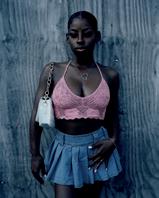
Fine
x 100 cm,
Edition of 5 plus 2 artist’s proofs (#1/5)
Page 73
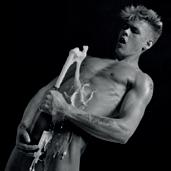
MP - Gelatine Silver Bromide print on baryta paper 37,5 x 37,5 cm, 1985
Page 26
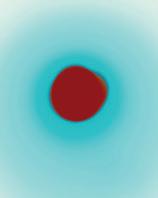
Gilleam Trapenberg 098 (New Suns)
Fine art inkjet print on Baryta paper 39 x 31,5 cm, 2020
Edition of 5 plus 2 artist’s proofs (#1/5)
Page 71
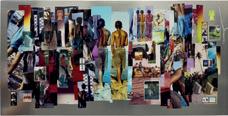
Trapenberg Tropicana
Metal, photo paper, post stamps, polaroid
Page 19
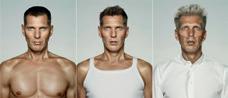
I Wish, I Am, I Will Be
Archival Print on Canson Platine FibreRag 100 x 78 cm each, 2029
Edition of 5 plus 2 artist’s proofs (AP 1/2)
Page 84
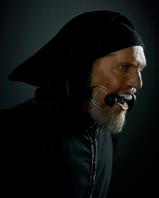
Erwin Olaf Tamed & Anger - Anger
Fuji Chrystal Archive paper 125 x 100 cm, 2015
Edition of 10 plus 2 artist’s proofs (#1/10)
Page 31, 40
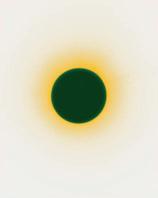
Edition of 5 plus 2 artist’s
Page 71
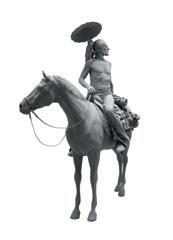
Page 69
Erwin Olaf
Erwin Olaf
Erwin Olaf Squares, Joy
Erwin Olaf Wagner Kundry
Frame:
Gilleam Trapenberg Amelia
Fine art inkjet print, frame: walnut wood frame, finished with danish oil, with museum glass 125 x 100 cm, 2023
Gilleam
photo, neodymium magnets, car air fresheners, rosary 125 x 250 x 3 cm, 2024
Hans Op de Beeck The Horseman Polyester, steel, polyamide, brass, coating, bronze 215 x 92 x 243 cm, 2019
Edition of 3 plus 2 artist’s proofs
Gilleam Trapenberg 113 (New Suns)
Fine art inkjet print on Baryta paper 39 x 31,5 cm, 2020
proofs (#5/5)
Gilleam Trapenberg Shaenety
art inkjet print on Baryta paper 125
2024
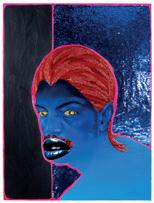
Devan Shimoyama Self Portrait as Mystique Oil, colored pencil, sequins, glitter, Flashe, collage, jewelry and acrylic on canvas stretched over panel 121,9 x 91,4 cm, 2022
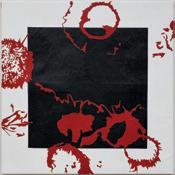
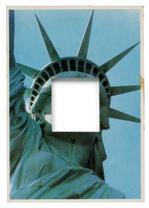
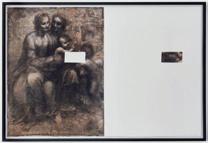
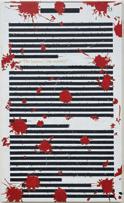
Isaac Julien Trussed II
on Ilford Gold Fibre Gloss
Jacco Olivier
Jacco Olivier Point Nemo I
Katinka
Katinka
Kendell Geers Militia Dei XV
Marble
Kendell Geers Heart of Darkness
Kendell Geers
Kendell Geers
fin du monde
Kendell
Kendell Geers
Fleurs du Mal 3143
Kendell Geers
Kendell
Page
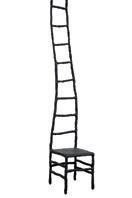
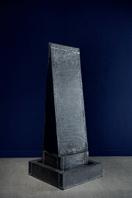
Maarten Baas The Empty Chair
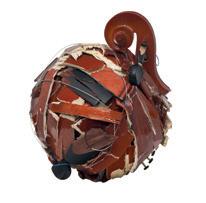
Maarten Baas Variations in E Minor (Viola #1)
Wood and strings (a combination of spruce wood, maple wood, ebony wood, hardwood) Ø 18 cm, 2024
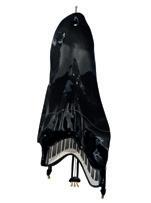
Maarten Baas Crescendo! (Piano)
Mounir Eddib Higher sphere
Levi van Veluw Transcendence
Pip Greenaway Too Much to Swallow
Pip Greenaway Prologue-Too Much To Swallow
Kendell Geers T.W. Batons (Pentagram) Police batons with Gold Leaf 152 x 160 cm, 1994
22
Kendell Geers TYPHONIC BEAST I Spray Painted on Hippopotamus skull 77 x 55 x 45 cm, 2007
Page 31
Koen van den Broek Multicolor Traffic paint and tar on linen 165 x 110 cm, 2025
Page 10
Koen van den Broek Solar Eclipse Oil and traffic paint on linen 150 x 100 cm, 2025
10
Koen van den Broek Sunny Side Up Oil and traffic paint on linen
10
Koen van den Broek Tar On Gas Oil, tar and traffic paint on linen 105 x 70 cm, 2025 Page 10
Kevin Osepa
Irene Blousá Pigment print on Hahnemühle Photo Rag Baryta, Walnut frame with Artglass 100 x 80 cm, 2025
Edition of 10 plus 2 artist’s proofs (#3/10)
Page 73
Kendell Geers SacredScarredScared C-print 60 x 40 cm, 2014
Edition of 5 plus 2 artist’s proofs (#5/5)
Page 23, 40
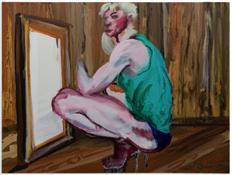
Rainer Fetting Drag (Ilko)
Acrylic on canvas
120 x 160 cm, 2016
Page 20
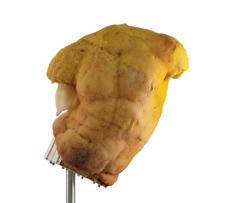
Tomáš Libertíny Contrapposto (Torso Gaddi)
natural beeswax honeycomb (made by bees), polyamid, stainless steel
224 x 88 x 40, 2024-2025 Height 84 cm (torso only)
Page 80
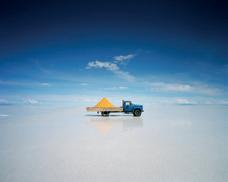
Hooft Graafland Blue Truck
C-Type Print
60 x 75 cm, 2010 Edition of 12 (#1/12)
Page 19
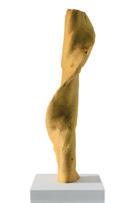
Tomáš Libertíny Endless Column Natural beeswax, wood, acrylic
230 x 40 x 40 cm, 2017
Page 80
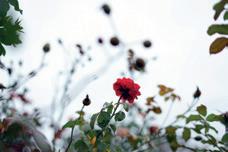
Wei Rose 9686
Archival Pigment Print
76,2 x 114,3 cm, 2021
Edition of 5 plus 2 artist’s proofs (#1/5)
Page 12
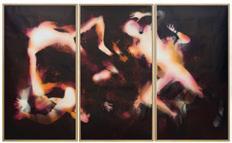
Viðar Logi Vortex: The Orgy Series 3 Painted Photogram
200 x 300 cm (Tryptich) each 203 x 110,5 cm (Framed), 2025
Page 20
76,2
Edition of 5 plus 2 artist’s proofs (#1/5)
Page 12
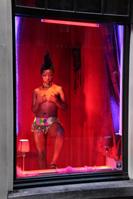
107 x 72 x 9 cm, 2009 - 2023
Edition of 8 plus 2 artist’s proofs (#1/8)
Page 48
Scarlett
Shen
Shen Wei Untitled L2255
Archival Pigment Print
x 114,3 cm, 2019
Zanele Muholi
Being (T)here, Amsterdam IV (Revised) Lightbox
Ron Mandos Magazine
Tender Fury Issue 01 — Spring 2026
Published by
Galerie Ron Mandos, Amsterdam
Editor in Chief
Lars Been
Managing Editors
Francisco Andrada, Koen Sipkes, Antonina Staszczak
Art Direction & Design
Niels Van Haaften
Contributors
Ron Mandos, Kendell Geers, Pip Greenaway, Barbara Bos and Lars Been.
Photography by Jonathan de Waart
Printed by Flyeralarm B.V.
Printed on offset white 120gsm and 250 gsm paper and set in Avenir Next regular and bold
All artworks and texts remain the property of their respective copyright holders.
Special thanks to the artists, lenders, and partners who made this issue possible as well as the Ron Mandos Team: Sheila Verdegaal, Lars Been, Paul Geerlings, Guusje Cosijn, Yana van Limpt, Alexine Whitlock-Rodenhuis, Sander Poons, Francisco Andrada, Koen Sipkes and Antonina Staszczak
© 2026 Galerie Ron Mandos.
Visit www.ronmandos-youngbloodfoundation.org