


In the face of uncertainty and changing economic tides, Greater Rochester Chamber of Commerce will never stop fighting for our members and for our community. We worked hard to secure significant wins in last year’s budget and legislative session and will continue to do the same this year. Our team takes pride in championing key initiatives as the voice of business for our region and forming connections that turn possibility into progress, and accelerate opportunity and action.
2026 is set to be an inflection point for our state. Greater Rochester Chamber will remain vigilant in our work to advocate for our members and address the key issues the business community is facing. From energy availability and housing to childcare and the regulatory environment, we are working with elected leaders and community partners to address all kinds of issues. No issue is too big or too small for us to assist with.
This type of work we do is not possible without participation and partnership. We work with our members to determine priorities, to share your stories, and to enact change. We work directly with decision-makers in Albany through meetings, memoranda, letters, phone calls, and dedicated advocacy days. The importance of collaboration and showing up cannot be overstated. By participating in our efforts, our members advance their own agendas and strengthen the voice of the entire region. We are proud to convene and connect to make progress happen.
Thank you to our elected officials and their staff for always taking the time to meet with us, listen to our members’ concerns, and work with us to find meaningful solutions. Our delegation’s alignment and support of our efforts is a transformative for our community, and we appreciate their continued support.
For questions regarding our advocacy or to discuss public policy issues, please contact me at RDuffy@GreaterRochesterChamber.com.
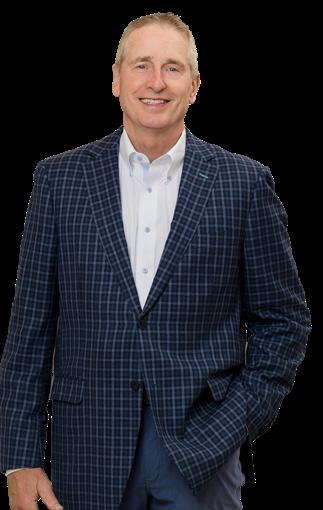
I look forward to the work before us and the challenges we will face. While we never promise results, we do promise 100% effort to support our members and the entire Greater Rochester region.
Robert J. Duffy President & CEO Greater Rochester Chamber
More than Greater Rochester Chamber represents:
1,300+
Member Organizations
145,000 Employees
All Industries and Business Sizes
We’ve helped businesses save big. We managed government oversight.
• Greater Rochester Chamber’s extensive advocacy efforts helped secure $8 billion in New York State funding to pay off our outstanding Unemployment Insurance, saving every business in NYS - including yours - $400 per employee on average.
• Fought back against the 21st Century Antitrust Act, which would have cut $20 billion in GDP and over 58,000 jobs in year one (A335/A2015)
• Blocked a $2–3 billion hit from the Packaging Reduction & Recycling Infrastructure Act (S1464/A1749)
• Fought back the NY HEAT Act, shielding HVAC and construction firms from burdensome regulation (S2016/ A4592)
• Prevented the costly expansion of prevailing wage laws for off-site custom fabrication (A6708/S6378)
• Prevented the costly expansion of prevailing wage laws for off-site custom fabrication (A6708/S6378)
• Stopped NYS from expanding short-term disability benefits by 600% (S172/A84)
• Supported alignment of staff-to-child ratios in childcare programs across NYS, expanding access to reliable and affordable childcare (S278/A612)
• Fought against the Food Safety and Chemical Disclosure Act, keeping supply chains intact for agtech businesses (S1239/A1556)
• Blocked the TEMP Act, protecting businesses against disruptive and unrealistic regulations on working conditions (S3412/A3527)
• Mitigated risks to the economic and healthcare stability of our region resulting from an expanded wrongful death statute (S4423/A6063)
We promoted local investment.
• Supported the New York Land-Home Property Act, promoting investment in cost-effective, scalable housing options (A7512/S7120)
In the FY26 New York State budget, Governor Kathy Hochul utilized $8 billion from the State’s general reserves fund to pay off the outstanding federal Unemployment Trust Fund debt and restore solvency to the fund.
Greater Rochester Chamber is proud to have played a key role in securing this win on behalf of our members for businesses, labor, and New York State. To learn more, scan the QR code to the right or visit GreaterRochesterChamber.com/UI
Continued development and growth are imperative for us to achieve the goals we all have set out for the Finger Lakes region. Greater Rochester Chamber will work tirelessly to continue the momentum we feel for Rochester. We will continue to support programs at the federal, state, and local levels that seek to get shovels into the ground to achieve our economic development goals. This will include:
1. Prioritizing the Finger Lakes Regional Economic Development Council priorities: (1) Equity and Sustainability; (2) Industry Growth; (3) Built Environment; (4) Workforce Development; and (5) Quality of Life.
2. Continued investment into the NY SMART I-Corridor as New York State continues attracting semiconductor fabricators and high-tech manufacturers.
3. Modernizing SEQR, Land Use Regulations, and permitting to accelerate sustainable development
4. Funding FAST NY with an increase of an additional $100 million and align state agencies with the goals of FAST NY to make site development and construction easier, all while helping developers expediently meet regulatory requirements.
5. Funding RESTORE NY with an annual appropriation of $100 million to help support adaptive reuse projects across NYS.
6. Continued funding of the POWER UP program, currently slated for $300 million over three years, to create power-ready sites for advanced manufacturing and other development.
7. Supporting policies and programs that expedite the construction of new, desperately needed housing projects and expand the capacity of our housing stock.
8. Supporting the MOVE-IN NY program and continued exploration of innovative emerging factory-built and modular construction technologies.
9. Supporting carbon-reduction infrastructure investments and policies that are implemented carefully and thoughtfully, so as to not stifle economic growth or place unnecessary costs on our businesses and members.
10. Lending support to policies that will decrease crime, deter re-offenders, and instill confidence in the business community that the Finger Lakes Region is ripe for investment.
11. Supporting reinvestment for the Regional Economic Development Council Initiative, the Downtown Revitalization Initiative, and the NY Forward initiative.
12. Promoting the growth, creation, and promotion of MWBEs and empowering regional offices to streamline the certification process.
13. Supporting the New York/Canada economic corridor.
14. Supporting policies that reduce the amount of time it takes for NY to deliver on grants.
15. Continued funding for GREEN Chips incentives to grow the NYS semiconductor manufacturing industry.
New York State is seen as uncompetitive for business due to high taxes and mandates. While certain reforms have eased the burden, much more remains to be done. Greater Rochester Chamber:
1. Supports reinstating the Governor’s Office of Regulatory Reform (GORR) or Appoint a Regulatory Czar
2. Supports leveraging Empire AI to review state laws and regulation for redundancy or contradiction
3. Supports expanding tax reforms for New York’s manufacturers to allow for job creation.
4. Supports reducing tax rates for small businesses.
5. Supports recommendations made in the Blueprint for New York - Creating a Roadmap for Change, published September 2025
We cannot achieve the growth potential that we all want for our region without a reliable pipeline of qualified and skilled workers to fill jobs. Greater Rochester Chamber will continue to advocate for funding to bolster education, improve coordination, and ensure targeted investment in talent management. We will additionally continue to advocate to eliminate barriers to workforce advancement, by working to address the childcare crisis, and mitigate the effects of the benefits cliff. Childcare costs are too high, there are too few spots for those who need it most, and employees are unable to advance in their career without losing subsidies and being worse off financially. Working collaboratively with our partners to address these issues will be a priority of ours.
We will continue to work alongside our partners to ensure we are setting our workforce up for success by:
1. Supporting additional investments in the one-stop career center system managed by local workforce development boards.
2. Supporting policies that will address the cost of delivering quality childcare and expand childcare capacity.
3. Supporting the disbursement of already-authorized workforce development funding to close the gap in preparing individuals for jobs in high-need sectors.
4. Strengthening the secondary education-to-employment workforce pipeline needed to train aspiring professionals for jobs in high-need sectors.
5. Supporting authorizing New York to join the Nurse Licensure and Interstate Medical Licensure compacts.
6. Supporting making private, not-for-profit higher education institutions and their students, as well as all academic medical centers in NYS, eligible for workforce recruiting programs.
7. Supporting the newest COEs, the Center of Excellence in RNA Research & Therapeutics (CERRT) and the Eastern NY Satellite for the Cornell Ag Center of Excellence be funded again at $250,000 each. For the other 29 CATs and COEs, we ask that each Center be funded again at $1 million.
8. Supporting efforts to connect Greater Rochester’s disabled community to gainful employment.
9. Supporting restoring the FY 24-25 cut to Bundy Aid by increasing aid from $16.3 million to $35.1 million and reinstating eligibility for all private, not-for-profit colleges and universities.
10. Supporting additional investment for TAP, HECap, STEP, CSTEP, and STEAM funding.
11. Supporting further investment in P-TECH.
12. Supporting the Finger Lakes region as a test site for new workforce development projects.
13. Supporting the reduction in New York State child labor policies that limit opportunities for high school students to learn and grow.
14. Supporting professional licensing for immigrants.
15. Supporting continued funding for the Laboratory for Laser Energetics at a $1 million level
16. Supporting $75 million for the Innovation Venture Competition Program to ensure that Luminate NY receives $5 million annually to continue the accelerator competition.
17. Supporting programs to reduce food insecurity across New York State and strengthen our region’s food banks and social safety nets.
Hospitals: Our regional hospital systems play a vital role in healthcare delivery for Upstate New York residents as our largest private employers. Inadequate reimbursement under Medicaid and Medicare, healthcare cuts by the State (e.g., the 340B program), rising labor and supply costs, and an inability to discharge patients into nursing/rehab beds in the community are straining financial stability.
The Finger Lakes region has the fewest hospital beds per 1,000 population in New York State and among the lowest in the nation. Greater Rochester Chamber:
1. Supports an increase the overall Medicaid rate for dentistry care at EIOH to at least $300 per visit and increase the rate for all six academic dental centers.
2. Supports $20 million in capital support to EIOH to support restoration, construction, and expansion of clinical space.
3. Supports releasing the dollars promised to Greater Rochester hospitals to help with the loss of the 340B drug benefit program that were enacted in the 2023-24 Enacted Budget.
4. Supports legislation that seeks to reduce health insurance premium costs for business owners.
5. Supports inclusion of the 340B Anti-discrimination Act in the FY26-27 budget as outlined by A.6222 (Paulin)/S.1913 (Rivera).
6. Urges NYS to continue its commitment to fund URMC for three years to offset losses from the transition of the 340B program.
7. Supporting considering flexibilities within pharmacy regulations, including the ability to operate mobile pharmacies in NYS.
8. Supports expanding the existing Safety Net Transformation Program by at least $1.5 billion in FY 2027 with at least $500 million dedicated to operating support. We ask for the preservation of $300 million in operating support allocated in the FY 2026 enacted state budget funded by MCO tax revenues.
9. Supports incorporating the 10% outpatient rate increase for hospitals into managed care premiums.
10. Supports a line item of $250,000 for Mt. Hope Family Center, as well as continue support for the Community Optional Preventive Services (COPS) Program at $12.125 million.
11. Supports expanding the existing Safety Net Transformation Program by at least $1.5 billion in FY 2027 with at least $500 million dedicated to operating support. We ask for the preservation of $300 million in operating support allocated in the FY 2026 enacted state budget funded by MCO tax revenues.
12. Supports increasing investment in critical healthcare workforce programs, including raising support for the Nurses Across New York Program from $3M to $6M, maintaining the Doctors Across New York Program at $15M, and creating a new Dentists Across NY Program at $6M.
13. Supports reducing the taxes, surcharges, and assessments imposed on employers and individuals who purchase health insurance (including the premium tax and HCRA).
Upstate New York’s non-profit nursing homes are at a critical juncture, with 75% of residents dependent on Medicaid. Years of budget cuts and stagnant Medicaid rates have severely impacted their ability to provide quality care while remaining financially viable. Greater Rochester Chamber:
1. Supports no new cuts to nursing homes and preserved funding from HMO tax (SFY 25–26 ($445M) and SFY 26–27 ($385M).
2. Supports CINERGY legislation (A.8738/S.8222 of 2025).
3. Supports DOH rebasing nursing home rates to reflect actual cost of care and close the $1.6 billion gap.
4. Supports the authorization of certified medication assistants to administer routine, pre-filled or prepackaged medications in nursing homes A.1272 (Clark).
5. Urges NYS to consider regulatory flexibility for not-for-profit long term care/ nursing homes, including reconsidering how a staffing shortage area is defined, amending NYCRR Title 10, Section 415.32 to only require a HERDS survey in emergent situations as defined by the Commissioner of Health, and amending the nursing home staffing ratio law to account for workforce shortages, acuity, and other factors such as facilities located in rural areas.
Growing the Finger Lakes regional economy requires investment in transportation, energy, technology, and infrastructure. Sustainable business practices are also critical for corporate social responsibility. Greater Rochester Chamber:
1. Supports expanding the electric vehicle industry, including making New York a green hydrogen hub, and expanding New York State funded electric charging infrastructure.
2. Advocates for increased funding for public transit programs to support job growth.
3. Supports investment in operating support, capital assistance, and surface transportation design/repair across Upstate New York.
4. Advocates for members impacted by the ACT Rule, which would unfairly penalize vehicle manufacturers and dealers. Subsequently support investments that bolster electric vehicle charging infrastructure throughout New York State.
5. Supports extending the MCTD supplemental vehicle registration fee to all upstate counties beginning in the FY 2026-27 state budget.
6. Supports an increase in STOA appropriations for non-MTA systems by at least 15% per year for the next three years.
7. Supports more rapid rail service between the Buffalo-Rochester-Syracuse corridor to address workforce challenges and connect the corridor with major economic centers in New York City and Toronto.
Energy capacity is the linchpin to regional economic development in Upstate New York. Course correction is needed–and needed now–to ensure that our community can meet its economic and community goals. Greater Rochester Chamber supports Governor Hochul’s and NYSERDA’s ‘all-of-the-above’ approach to energy, codified in the 2025 State Energy Plan, that utilizes natural gas, hydro, solar, wind, and other forms of energy while we work towards a clean energy future. Greater Rochester Chamber:
1. Supports continued funding for the NY POWER UP program, including housing
2. Supports additional funding for Pro Housing Communities
3. Supports exploration of bonding to underwrite needed infrastructure investments
4. Supports exploration of investments in geothermal power generation, a highly reliable and renewable energy stream currently underutilized
5. Supports the NY ASAP Act (S6570/A8758)
6. Supports Public/private partnerships to expand reliable broadband and cellular service across New York State, ensuring providers do not bear the full cost.


We are there for member companies on individual matters that require support and assistance. As a member, your urgent issues becomes our urgent issue. If it matters to you, it matters to us. We aid in company-specific legislative, regulatory, and funding issues at the regional, state, and federal levels including, but not limited to:
• Navigating the processes to obtain permits/certifications/variances
• Assisting with navigating government agency processes
• Immigration/Visas
• MWBE Certification
• Letters of Support
• Letters of Introduction
If your business is experiencing any issues, please reach out to Kevin.Donahue@GreaterRochesterChamber.com We will put our hard-earned relationships to work for you and your business.