280 State Street Rochester, New York 14614 feedback@rochester-citynews.com phone (585) 244-3329 roccitymag.com
PUBLISHER
Rochester Area Media Partners LLC, Chris Hastings, chairman
FOUNDERS
Bill and Mary Anna Towler
EXECUTIVE DIRECTOR
Ryan Williamson
EDITORIAL
Editor-in-chief: Leah Stacy
Arts reporter: Patrick Hosken
Multimedia reporter: Roberto F. Lagares
Contributors: Austin Albanese, Sydney Burrows, Vanessa Cheeks, Brendan Dabkowski, Noelle C. Evans, Jon Heath, Johanna Lester, Stephen Lewis, Justin Murphy, Louis Ressel, Rafael Rodriguez, Matt Rogers, Mona Seghatoleslami, Carver Snyder, Racquel Stephen, Maria Stojanova-Montoya, Abby Rose Sugnet, Katherine Varga, Veronica Volk, Wren Werner
CREATIVE
Art director: Jacob Walsh
ADVERTISING
David White ads@roccitymag.com 585-730-2666
CITY is available free of charge. Additional copies of the current issue may be purchased by calling 585-784-3503. CITY may be distributed only by authorized distributors. No person may, without prior written permission of CITY, take more than one copy of each monthly issue.
CITY (ISSN 1551-3262) is published monthly 12 times per year by Rochester Area Media Partners, a subsidiary of WXXI Public Broadcasting. Periodical postage paid at Rochester, NY (USPS 022-138). Address changes: CITY, 280 State Street, Rochester, NY 14614. Member of the Association of Alternative Newsmedia and the New York Press Association. Copyright by Rochester Area Media Partners LLC, 2026 - all rights reserved. No part of this publication may be reproduced or transmitted in any form or by any means, electronic or mechanical, photocopying, recording or by any information storage retrieval system without permission of the copyright owner.

EDITOR'S LETTER
BY LEAH STACY LEAH@ROCCITYMAG.COM
Film and TV production company East
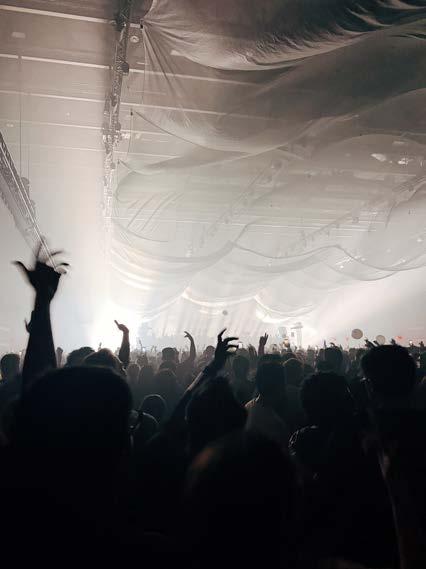
End Studios has four massive, brand new soundstage facilities in Sunnyside, Queens. On a frosty night in January, I stood in line with several hundred shivering souls while we waited to see the DJ fred again.. play. Entering the cavernous space was an experience in itself: Dutch artist Boris Acket suspended gossamer-like white fabric from the ceiling, designed to “breathe” with the music.
I was in New York that weekend for a reset after a holiday season of overworking and illness. As I stood there and stared up at the rippling fabric, it reminded me of sails. It felt as though the entire soundstage could become airborne and float away through the night sky, second star to the right and straight on ‘til morning like that scene from the animated Disney “Peter Pan” I loved so much as a child.
“I hope you get the peace you need,” blared, as fred again.. spoke over the music: “I hope you take the peace you need, my friends.”
I often travel to reset, but also to work. July was one such month, filled with road travel to teach in Syracuse and air travel for back-to-back magazine and cocktail conferences. My preferred location is roaming. Being out in the world, more than in a cubicle, gives any creative person perspective and experience that makes them better at what they do, in all ways. And I find that even if I am traveling for work, it’s still a chance to refresh. To let some old code be rewritten.
As we put together the annual Rochester 10 issue, it was fascinating to read about the backgrounds of the folks in the 2026 cohort. Some natives to Rochester, some transplants, some living in several places, all with one link: they always come back home, because that’s where they want their work to be felt most.
I resonate strongly.
A dear old friend called to share good news this week. As we chatted, he was adamant that, even with the chaos and darkness in the world, good things are happening all around us — and maybe more than ever, because we need those things more than ever.
A text he sent put it best:
“All the winds are shifting right now in a really positive direction. If we're not hoisting sails we're missing it.”
Aye, aye.
To hoisting sails and taking peace, L
Join us to celebrate the Rochester 10 from 5-8 p.m. on Wednesday, 8/19 at Radio Social, 20 Carlson Rd. Meet this year’s cohort, chat with our team, grab a copy of the mag and snack on some hummus. Free with RSVP.


By Matt Rogers
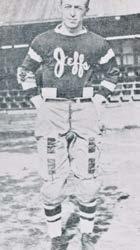
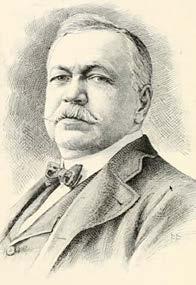
Born in Fairport, Lyons was an avid athlete who played semi-pro football for one of the many city teams in his teens. He was a player/manager by his early 20s, and at his most involved, he served as manager, owner, photographer, doctor, counselor, financier, game booker, agent, scout and groundskeeper. By 1920, he traveled to Canton, Ohio to represent Rochester in talks to form a professional league for football teams. His team was the Rochester Jeffersons, and they became charter members of the National Football League (active 1920-1925). When the team folded, Lyons served as honorary historian for the league until his death in 1976.
Even with the continued rise in features about Rochester and its many contributions to the local, national and international, it can still feel like there’s only two notable Rochesterians — or three, if you think a little more on it. It cannot be overstated how impactful the contributions of Frederick Douglass, Susan B. Anthony and George Eastman were; that said, they’re not the only people who lived and left their mark here.
Continuing the series started in last year’s August issue, here are 10 (more) historical Rochesterians who don’t always get the recognition they deserve.
born Roy Rudolph Van Graafeiland
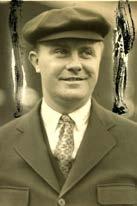
During the immortal game three of the 1932 World Series, when Yankees legend Babe Ruth allegedly pointed towards the center field bleachers of Wrigley Field calling his intention to hit a home run, a Rochesterian was crouched behind him serving as home plate umpire. Roy Van Graflan worked for the American League 1927-1933. He then retired to his hometown and served as head coach of the most successful professional sports team in New York history, let alone the nation: the Rochester Filarets, a professional independent women’s basketball team. Active from the 1930s to the 1950s, they achieved a staggering 211 consecutive winning streak between 1940-1944, with 523 wins and 12 losses over 11 years.
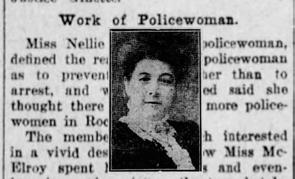
A devoutly religious woman, Nellie McElroy served as a missionary for the Monroe County Christian Endeavor for most of her life — until she switched careers. On September 23, 1913, McElroy became the first female police officer in New York State history, serving with the Rochester Police Department for 23 years. As a police matron, she was part beat officer, part social worker and mentored many at-risk women and parolees with patience and understanding, strongly believing in rehabilitation over punishment. She found work and resources for men and women struggling to survive, and was lauded for her focus on keeping families together and women out of the wrong side of the courtroom.
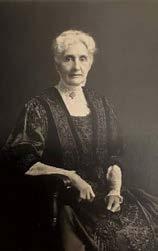
Born into wealth, Perkins was the daughter of wool magnate Aaron Erickson. With her husband, Gilman Hill Perkins, she founded the Rochester School for the Deaf on February 3, 1876. The school served as a new resource for children affected by hearing loss, motivated by the couple’s early challenges of finding tutors and education for their young daughter Carolyn, whom they discovered was deaf at the age of 2. Ms. Perkins would also go on to re-found the Rochester Historical Society in 1888, which had been previously suspended during the Civil War.
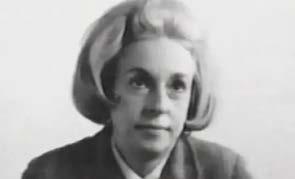
University of Rochester graduate Anne Keefe started her trailblazing broadcast career in 1946 for WHAM radio, moving to broadcast news with WROC in 1957. She was praised for her interview style and equal approach to men and women, maintaining a long career in news and media for over 50 years. She moved to St. Louis in 1976 and served as the first female interviewer for KMOX, then fully retired in 1998 and spent the rest of her life back in Rochester.
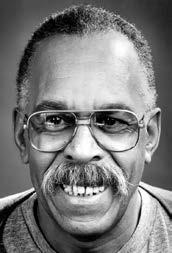
A lifelong resident of the Third Ward (Corn Hill), Bobby Johnson worked in factories, post offices, counseling and teaching positions. These humble trajectories cloaked a prolific writing and performance career that spanned the majority of his life, coining him as the “Bard of Clarissa Street” as Johnson published five books and gave performances across New York State. His prose continues to be preserved in local organizations like Clarissa Uprooted, Writers & Books and the Memorial Art Gallery.
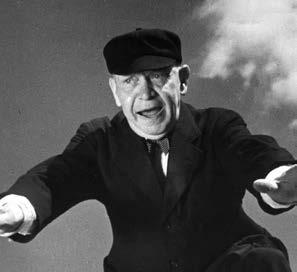
born William Klimm
Born in the Dutchtown neighborhood to German parents, Bill originally pursued a professional baseball career before an arm injury ended that dream. He bounced around the northeast working various jobs until reading an article about baseball umpiring brought him back into America’s Pastime. Klem joined the National League as umpire in 1905, and worked for 37 seasons. He still holds the records for umpiring 18 World Series games and ejecting 279 players throughout his career. He was inducted into the Baseball Hall of Fame in 1953, one of the first two umpires inducted.
8. Charles Roscoe “Ross” Barnes (1850-1915)
Born in nearby Mount Morris, Barnes moved to Rockford, Illinois to begin a dominating career in the fledgling game of base ball (then spelled with a space). On May 2, 1876, playing shortstop for the Chicago White-Stockings, Barnes made history as the first player to hit a true home run (known then as a clean home run) in the National League. He is the only player in major league history to have a batting average of at least .400 in four seasons, and is one of only four players (along with Babe Ruth, Rickey Henderson and Aaron Judge) to lead his league in runs, with at least 30 more runs more than the next closest player of that league.
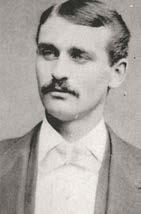
Thomas was enrolled in the Rochester public school district until 1862, when his father’s business failed and he entered the workforce to help support his family. He began an apprenticeship under local architect Merwin Austin, studied at the University of Rochester and entered into business for himself in 1868. One of Thomas’ bestknown local buildings was Sibley Hall at UR, which is credited as the first fire-proof building in Rochester. But as it was not credited as wrecking ball-proof, it was demolished in 1968. Thomas was appointed New York State architect under then-governer John Alden Dix in 1874, and became the most prolific architect of public and semi-public buildings in American history at the time, designing hundreds of churches, dozens of state prisons and municipal buildings across the state and American east coast.
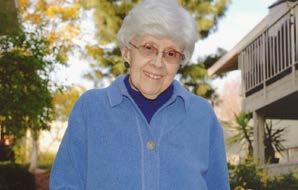
Brown was born in Rochester, yet lived in multiple towns around New York State as her minister father moved from one congregation to another. She showed artistic interest and talent at an early age, and was supported by her family in that endeavor. Brown wrote and illustrated her first children’s book in 1946 while working as a librarian for the New York Public Library, and went on to write and illustrate over 30 more children’s books. During the course of her illustrious career, she won three Caldecott Medals as writer, six Caldecott Medals as an illustrator and numerous other awards for her writing style, character design and creative illustrations. She is one of only two authors to win three Caldecott Medals.

BY CITY STAFF
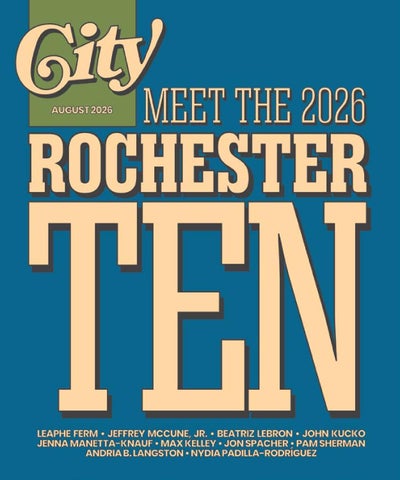
The word ‘scene’ is used to describe many things: a location; part of a film or play; in popular culture, the overall vibe or energy of a place. For this year’s Rochester 10 cohort, scene is a throughline.
In the following pages, you’ll meet folks you have perhaps heard of in passing more than seeing them around the community. Maybe it will provide a face to a name. This is a cohort not chosen based on their visibility, but for the visibility they bring to others and to the region as a whole, letting Rochester and beyond steal the scene. As in past years, they were chosen through nominations from both staff and contributors.
Read on to meet the 2026 Rochester 10 — those behind-the-scenes, and setting the scene.
Have a nomination for the 2027 cohort?
Email leah@roccitymag.com for future consideration.
Photos by Rafael Rodriguez
Art direction and design by Jacob Walsh
Profiles by Austin Albanese, Sydney Burrows, Brendan Dabkowski, Jon Heath, Patrick Hosken, Justin Murphy, Leah Stacy, Maria StojanovaMontoya, Katherine Varga and Veronica Volk.

Age: 29
Hometown: Morristown, NJ
Current Residence: Rochester
Occupation: Musician, artist, caregiver
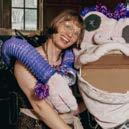
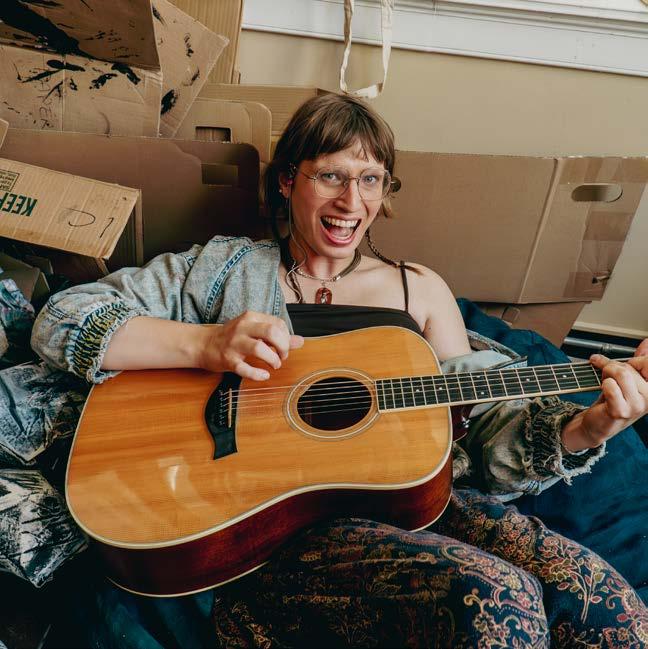
Aworld where souls turn into stuffed animals so they can be protected against the Very Bad Normal Man and his terrible contract. A campy puppet folk opera at the crossroads of psychedelic rock and twee. A handmade cardboard set with a mind of its own named Best Evil Transportation System (or B.E.T.Sy for short). Welcome to the mind of Leaphe Ferm, creator of the indie folk-rock band and puppet ensemble Garden of Evil Doers.
Though Ferm is the lead guitarist, vocalist and songwriter, they’re quick to point out their loosely scripted musical puppet shows are never a solo act. Every show is made possible through artistic collaborators including puppet-makers and musicians, friends and volunteers.
“Even if it’s an audience of 10 people in one house, we’re all evil doers in this moment together,” they said.
Born in New Jersey, Ferm moved upstate to study engineering at the Rochester Institute of Technology and stayed for the indie music scene. One of their earliest Rochester memories is seeing the band Kitchen in a bookstore basement and thinking “Wow, people can just make things.”
Ferm’s realization that the music they love comes from “people just making things” grew into a sense that those people could be collaborators and friends. They can even be strangers one invites to play in their home. Ferm is now fully involved in the world of DIY (Do It Yourself) music. Garden of Evil Doers records locally with Raincoated Records, producing cassette tapes with liner notes printed by Rathaus Press. Their albums, including the inaugural “Mrs. Magpie’s Garden of Evil-Doers,” are available on Bandcamp and Spotify, although the old school tapes are more in line with the band’s anti-AI, anti-capitalist ethos.
Ferm also plays drums, keyboards, guitar, violin and vocals for several other local bands, including Georgie, Starbby and their first love, Kitchen.
When planning a DIY tour, Ferm and their collaborators start by reaching out to contacts across the country, or researching venues and connecting with other bands that have performed in those spaces. They’ve played in living rooms and backyards and bars everywhere from Buffalo to Albuquerque to Seattle, sometimes driving for 10-hour stretches between gigs. During the last Kitchen tour, they played 23 shows in 26 days.
“You post somewhere and kind of take a leap of faith,” they said. “It feels very normal to me now.”
Ferm also performs locally at a variety of venues including Bar Bad Ending, Bookeater, Flying Squirrel and Muck Duck as well as parks, homes and
BY KATHERINE VARGA
backyards. In keeping with DIY values, Ferm helps both local and touring bands connect with venues, often volunteering to work projections or sound support.
“They always show up to support other people’s visions, even if they’re not playing,” said Claire McClusky, founder of the experimental folk band Georgie, with whom Ferm sings and plays guitar.
To be clear, there’s nothing malicious in the garden’s evil doing. The name is a tongue-in-cheek nod to the idea that queer and trans people, including nonbinary people like Ferm, are inherently untrustworthy or “evil.” Ferm sees the queer community and DIY scene as antidotes to the world’s fear and propaganda. They’re always heartened by people they meet on tour who cook, offer places to stay (once it was a cabin in the woods) and cheer on the music.
“It’s like, wow, people are nice actually,” Ferm said. “It’s a reciprocity thing, but it’s also out of the goodness of their hearts.”
Ferm has been a staple of the Rochester DIY scene since 2020. Prior to that, they lived in Baltimore and New York City looking for work, and spent six months in Seattle helping their aunt care for her business partner, an uncle figure to Ferm, while he was on hospice.
Their aunt hadn’t expected Ferm to come.
“She kept telling me, ‘Hey, it’s not really chill here, we’re in the middle of doing this whole thing,’ — this whole thing being dying,” said Ferm. “So I got there and it really was not chill.”
But Ferm found they had a knack for the hands-on care of tending to somebody near death. They balanced the emotional toll of the work with creation. The background of their song “Mists” samples their uncle’s death rattle, a painless gargle when water gets in the back of the throat.
“(The caregiving) definitely informs my art, and the art helps me balance my sanity,” said Ferm.
They now work the night shifts at Isaiah House, a nonprofit on East Avenue that provides hospice care at no cost. Sometimes they’ll bring their guitar and or play the House’s piano for people in their final days.
During the day, Ferm also does community habilitation work through Starbridge with people who have developmental disabilities. They enjoy bringing people with an interest in creativity to their art studio.
For Ferm, the thread between the sobering Isaiah House caretaking work and the whimsical indie DIY music scene is simple.
“(I’m) trying to make a world where care is free and abundant.”
gardenofevildoers.bandcamp.com
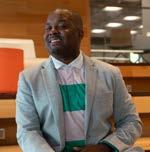
Rye old fashioned with extra cherries — a spirit-forward drink that balances spice and sweet, the perfect preamble for great storytelling. That’s Jeffrey McCune’s drink order, and it mirrors the heart of his work.
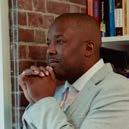
Growing up in Chicago, McCune was a theater kid who loved math. He continued his studies in communication and performance, pursuing a career as a professional speaker before being drawn back into theater and academia. Currently, McCune is fostering a legacy that combines rhetoric and culture to curate spaces in which the voices of underserved communities can be heard and celebrated.
McCune arrived in the Rochester area five years ago, after accepting a position at the University of Rochester to design and execute a standalone Black Studies Department in conjunction with the Frederick Douglass Institute. The project required building a sustainable program of academic heft and rigor as well as the recruitment and development of staff. For the university, it would serve “as a dynamic center for the interdisciplinary study of Black life, thought, culture, politics, health and expressive practices across the Black diaspora.”
Since McCune began, the university has received a Mellon Foundation grant of $3 million to further the efforts. While other institutions are pulling back from such efforts, McCune is able to push forward and grow Black culture at the university. The development of this framework also includes working with the community, so given his background, McCune connected with the local arts scene to develop partnerships with Geva Theatre, The Avenue Blackbox Theatre and the Flower City Noir Collective, to name a few.
McCune also teaches courses in both the Black Studies and English departments that focus on Black culture, identity, and politics. He challenges his students to engage in disobedient reading in order to develop critical reading skills that assist how to read the world.
“These transgressive reading practices require a reorientation of sorts where we commit to seeking new knowledge,” said McCune. “I want readers to engage in an ideological gaze that intentionally attempts to read more than is evident and available within common knowledge.”
He believes live theater is another such platform.
“I’ve always been interested in the things that others think of as nonsense,” he said. “Nonsense is where the gems are because nothing is nonsensical especially when it comes to those who have been largely misunderstood. Seeking opportunities to make sense of what others think of as nonsensical and theater is one of those spaces that gives 'nonsense' a stage and a voice.”
BY MARIA STOJANOVA-MONTOYA
Through a partnership with Geva Theatre, McCune has found a stage for these voices, an opportunity to curate a more informed public outside the expertise of university professors.
“The dialogue with the art and community is where we get a real opportunity to know the text and know life, and know life through the text,” he said.
In addition to working as a dramaturg on past and upcoming performances, McCune has contributed to the post-show talkback series at Geva with previous productions of “Furlough’s Paradise,” “Baron Vaughn: Cycle Breaker” and will participate in the upcoming “Topdog/Underdog” and “Purpose.”
Geva’s artistic director, Elizabeth Williamson, said McCune’s involvement has elevated talkback opportunities particularly through his ability to connect so easily with students.
“He brings a breadth of knowledge and expertise that is extraordinary, and we’ve been thrilled to get to work with him,” she said.”
Williamson is especially looking forward to McCune’s work with Geva’s artist-in-residence, Jeffrey L. Page, adding that McCune is collaborating closely with Page on the development of a new musical about Frederick Douglass.
But first up is “Topdog/Underdog,” which runs October 13 - November 22.
“It’s a real complex performance of brotherhood, influenced by important historical Black shifts and reflecting purpose, beauty of family, laughter and comradery,” said McCune.
“Purpose,” which runs in April 2027, will give even more perspective on Black family dynamics by shifting the impact of the social and cultural world by which their stories are entangled. McCune hopes both shows will “touch the audiences in ways that are at once universally human and yet so specific and complex.”
After five years of service to the Frederick Douglass Institute project, McCune recognized a natural opportunity to step down as the chair this year. In passing the baton, he will focus on more strategic creative endeavors and believes the program is well positioned, with his scaffolding in place, to continue growing.
“It’s in the right hands to develop our community … and promote the importance of Rochester artist scholars as stakeholders,” said McCune.
Aside from being inspired by many Rochester-area artists, McCune loves the heart of Harold Washington and Jesse Jackson Jr.; the minds of James Baldwin and Toni Morrison; and the witness of Reverend Otis Moss III and Howard Thurman. He hopes to leave a legacy that shows the good, important work there is to do “requires both heart and mind and you don’t have to leave either at the door.” sas.rochester.edu/eng/people/faculty/mccune-jeffrey/index.html
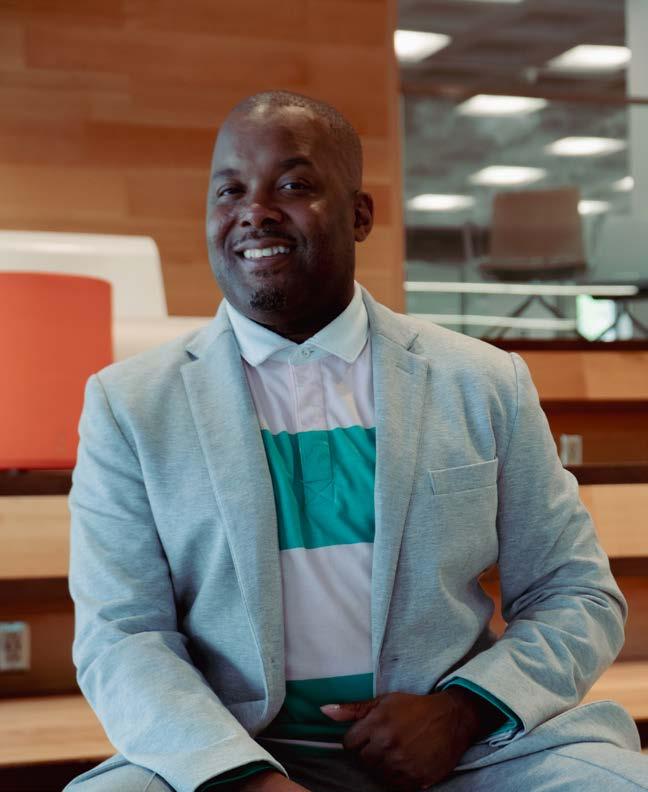
Age: 48
Hometown: Chicago
Current Residence: Rochester
Occupation: Frederick Douglass professor and founding chair of the Department of Black Studies at the University of Rochester
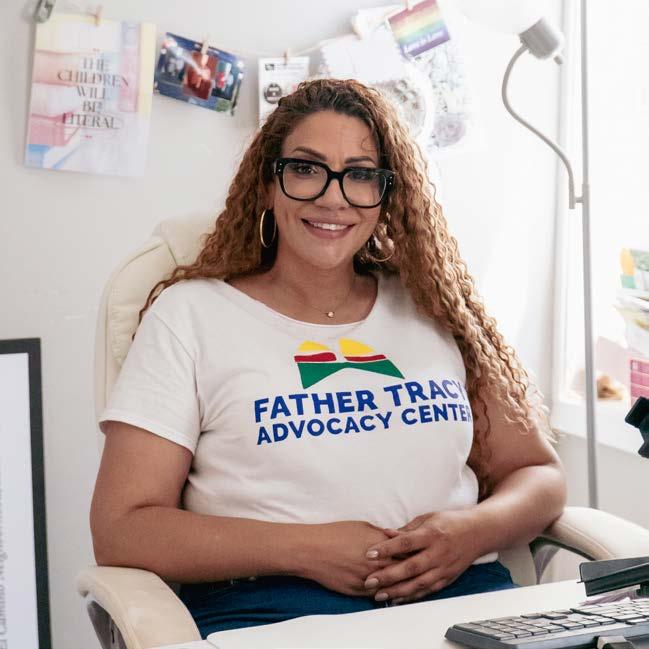
Age: 45
Hometown: The Bronx
Current residence: Rochester
Occupation: Executive director, Father Tracy Advocacy Center
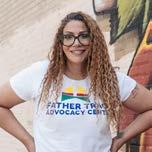
Shortly after 10:30 on a weekday morning, people are already gathered outside the Father Tracy Advocacy Center at 821 N. Clinton Ave. By the end of a typical day, about 200 people will have passed through the building. A woman waiting near the entrance points a first-time visitor toward the correct door. To many people passing along North Clinton Avenue, the gathering outside might look like loitering.
Beatriz LeBron interprets something different.
“I see community every day,” she said.
Long before she became a self-described “gap filler,” LeBron knew what it meant to need help.
Born in the Bronx, LeBron grew up during the crack and heroin epidemics in a family deeply affected by addiction. After a suicide attempt as a teenager, her older sister brought her to Rochester.
“I credit my life to my sister intervening,” LeBron said.
She arrived in Rochester as a young mother with a 2-year-old daughter, uncertain of what came next. After a brief return to the Bronx, she came back to Rochester carrying two garbage bags and determined to build a life. She had never imagined college was within reach until a professor encouraged her to apply to Monroe Community College and helped her complete the application. There, involvement in student organizations helped her build both community and confidence before launching a nonprofit career that has now spanned more than two decades.
LeBron spent years raising two children, putting herself through college and often working two jobs at once. Those experiences continue to shape how she leads the Father Tracy Advocacy Center, where she has served as executive director for the past threeand-a-half years.
“If I can’t fully change some of these larger complex systems, what can I do to fill that gap until people can be connected?” she said.
That philosophy is visible throughout the Center.
Inside on that weekday morning, staffers move from person to person, often greeting individuals by name. Some people are filling out paperwork. Others are seeking medical care, grabbing a cup of coffee or catching up with staff about the neighborhood. English and Spanish intermingle throughout the lobby. Near the entrance sits a repurposed payphone.
The repurposed payphone in the lobby, installed through the Good
BY AUSTIN ALBANESE
Phone Project, now serves as a digital voicemail system for people without reliable phone service. Coffee is free, as is lunch. Outside, a solar-powered bench offers Wi-Fi and a place to charge a phone. Behind the building, tomatoes, collard greens, cilantro and garlic grow in a community garden. Together, these things provide the kind of ordinary that becomes extraordinary when they’re no longer readily available.
To LeBron, they are ways of building relationships. When she arrived at the Center, one of the first things she did was remove the plexiglass barrier that separated staff from visitors.
“We’re not a government entity, and we put people first here,” she said. “I will always put people above anything else.”
LeBron credits much of that philosophy to the Center’s namesake, Father Laurence Tracy, the “Barrio Priest” who studied Spanish in Puerto Rico and spent nearly five decades advocating for Rochester’s Latino community. A founder of Ibero-American Action League and the Rochester City School District’s bilingual council, Tracy made love, dignity and respect central to his ministry. Those values continue to guide the Center today.
“It starts with respecting that individual where they’re at,” LeBron said. “We just focus on building the relationship and building community with them.”
For Hector Rosario, a community health worker at the Center, those principles changed the course of his own life. Long before he began greeting visitors at the Center, Rosario was one of the familiar faces in the neighborhood himself.
“(Beatriz) offered me a job,” he said, adding that act of trust meant LeBron had seen something in him.
Three years later, Rosario helps offer others the welcome and respect he found at the Center.
“When (Beatriz) says she’s going to help you, she’s going to help you, and she ain’t going to stop helping you until it gets done,” he said.
LeBron knows the Center cannot solve every problem that arrives at its doors. The work depends on a network of medical providers, treatment programs and community organizations that can respond to challenges beyond the Center’s reach. Even so, much remains unresolved.
Still, LeBron points to the people who continue to return.
“I see hope in the fact that people do show up every day,” she said. “They may not get it right today, but they’re still going to show up and keep trying.” fathertracycenter.org
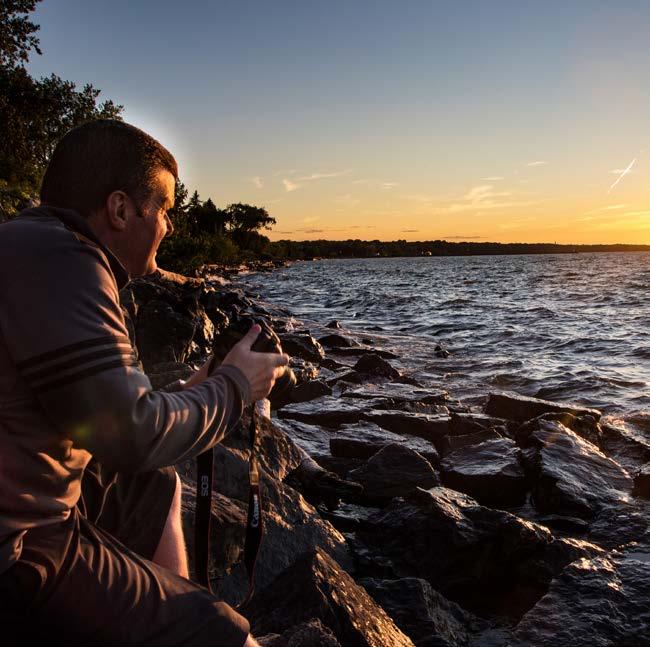
Age: 61
Hometown: Binghamton
Current residence: Penfield
Occupation: Digital content creator
During a recent MRI, John Kucko laid inside a tube with a cylinder resting inches above his face. Physically, he remained still for about 30 minutes while the machine captured images of his brain.
But mentally, he took a trip to the Adirondacks.
“I just closed my eyes and started thinking about Lake Placid,” Kucko said. “It was really snowing good, which I love.”
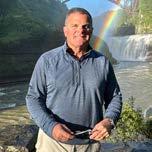
It’s a trick he’s used before to deal with stress, sometimes substituting the “spellbinding views” of Watkins Glen’s gorge in autumn. It only makes sense that Kucko’s mind brims with the same beautiful vistas he shares regularly on his Facebook page, John Kucko Digital, to an audience around the world.
Rochesterians know him from his 32 years as a local broadcaster, covering sports — including 19 Super Bowls — and eventually anchoring alongside his daughter Natalie on WROC-TV.
When he stepped away in 2023, Kucko’s focus turned to his digital page, where scenic videos of waterfalls around New York State mingle with bits of local history and bright springtime blooms. It’s all captured with a reporter’s curious eye and knack for colorful details.
“My big stress in life prior to this was what waterfall am I going to go to? What babbling brook am I going to listen to this day?” Kucko said.
The stressors are different now. He’s lately endured a lot of medical imaging and care.
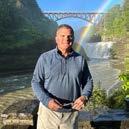
On May 26, while visiting Letchworth State Park, Kucko photographed a majestic and vibrant rainbow cresting Upper Falls. Shortly after, as he drove back toward Rochester on Interstate 390, he suffered a seizure and a brain hemorrhage, causing him to crash his Ford Bronco. He luckily survived, but doctors soon discovered a brain tumor and operated to remove it.
Some cancer remained in the surrounding area. Thus a long road unspooled ahead — six weeks of radiation and chemotherapy, which he began in July.
Yet somehow, just four days after the accident, Kucko attended the wedding of his daughter Caroline. That kind of unyielding resolve has set the tone for Kucko’s journey.
It’s in every update he offers on his Facebook page, even the ones where he confesses being exhausted and having to scale back his early morning walks. (In mid-July, he was still getting in two or three miles a day — more than many folks without brain cancer.)
“I’m going to push it hard. I’m going to work very hard to get better, and then I’ll be hopefully back to doing what I normally do,” he said, crediting the support of his wife, Charla. “You’ve got to have your limitations. It’s something I’m not real good at. But I’m learning quickly.”
BY PATRICK HOSKEN
Before his diagnosis, Kucko would spend a day bounding from Watkins Glen to Ithaca and back to Penfield, capturing covered bridges, railroad arches and restored barns. He began posting “60 Seconds of Serenity,” perhaps his signature nature video series, during COVID; he’s since shared more than 2,500 peaceful clips.
Now, though, laying on his stomach to shoot the water in Pultneyville wipes him out, though it won’t stop him from posting the dozens of beautiful landscapes, hydrangeas and lighthouse scenes he’s captured over the years.
His audience has come to expect those, after all. But they’re also along for his latest journey, in which Kucko chronicles himself and his health.
“This will be different,” Kucko wrote on his Facebook page in early July. “I will be bringing you with me on this odyssey, an unforeseen set of circumstances that have put me and my family into this moment.”
One of those circumstances was the highly unusual, science fiction-sounding surgery itself. Doctors opened Kucko’s skull and brought him out of anesthesia in the middle of the procedure in order to test his speech.
“I was a little groggy, yes, because part of the head was open,” Kucko said. “But I was cogent enough to talk with the surgeon, and he could pinpoint exactly what he could take out and what he couldn’t touch.”
This kind of borderline-miraculous medical intervention requires a dedicated team. One researcher Kucko shouted out by name is Dr. Frank Garcea, the director of the Language and Skilled Action Laboratory at the University of Rochester Medical Center.
Garcea’s work maps the brain and focuses on its ability to pick up and use objects and retrieve memory, as well as speak about a person’s own experiences and understand others’ speech.
Part of this research requires talking to patients in the middle of their brain surgeries.
“There’s a delicate dance between the neurosurgery team and the anesthesia team,” Garcea said, likening the procedure to a symphony. “But what you can observe in real time are changes in a person’s ability to speak.”
There’s a concern Kucko may lose his speech altogether down the line. But doctors initially worried he’d lose it for a few weeks after the surgery — and that didn’t happen. Kucko was talking just after he woke up.
There’s that resolve again. It seems to be embedded in everything he does.
“Statistics suggest I have a year to two — some get lucky, most don’t,” Kucko wrote as he began treatment.
“To this unexpected illness I say: ‘you don’t know me, and you’re about to get a load of aggressiveness from me that I’m going to hammer you hard with.’ This may be unpleasant — but I will give it everything I have.” facebook.com/JohnKuckoDigital
On a blustery night in December, the winds from a winter storm scattered Jenna Manetta-Knauf’s igloos across downtown Rochester.
One was in the middle of the ice rink. Another was halfway down Court Street. Some of the domes had splintered into pieces – metal frames and clear plastic panels strewn about Martin Luther King Jr. Memorial Park.
Roc Holiday Village was scheduled to open in just a few hours. Manetta-Knauf had no time to panic.
“The clock was ticking to get them back together,” she said.
For most people, the scene would be a disaster. For Manetta-Knauf, it was just another problem to solve.
Manetta-Knauf has been one of the people behind Rochester’s biggest gatherings for years. She is the co-owner of Roc Holiday Village, which launched in 2018, and has helped coordinate logistics for the Rochester International Jazz Festival since 2005. As the owner of Bella Events Group, she works throughout the year helping produce dozens more events in Rochester.
“I find a lot of joy in creating spaces where people realize that this is a really great city to live in,” she said.
Manetta-Knauf grew up on the westside, but so much of her work focuses on helping people enjoy themselves downtown, just like she did as a kid — especially during the holidays.
“We’d go see Santa. We’d walk up Magic Mountain,” she said. “I just have very fond memories of that.”
Those memories were the spark for Roc Holiday Village and many more gatherings. Manetta-Knauf strives to produce experiences that people remember — from an instagrammable photo box at Rochester’s inaugural Flower Fest to goat yoga at the Downtown Definitely series.
And she does it all from behind the scenes.
“She doesn’t need to be recognized,” said Bri Carpenter, Manetta-Knauf’s second-in-command. “She wants people to remember the way they felt.”
Carpenter said the work is rarely glamorous. Setting up for Roc Holiday Village, for example, always seems to happen in the driving November rain.
“Or we’re 10 hours into an insane day and we have to go clean a restroom trailer because it’s flooding,” Carpenter said.
Or, a festival’s signature igloos scattered in pieces just hours before the first booking.
But by the time the festival opened, all 10 igloos were put back together and placed, its guests none-the-wiser.
In the 10 years they’ve worked together, Carpenter said the thing
BY VERONICA VOLK
she admires most is Manetta-Knauf’s enduring calm.
“The world could be burning down around us and she’d just be like, ‘OK, we’re going to figure this out,’” said Carpenter.
And there can be a lot. Vendor cancellations, Canadian wildfire smoke. And in Rochester, the weather.
Such was the case during this year’s Rochester Pride Festival, when severe storms forced organizers to cancel early. Afterward, the decision was criticized on social media.
“When you’re running an event, it’s just a series of punches to the face,” said Joe Alessi, the city’s manager of special events,
He has worked with Manetta-Knauf for years, and calls her the “consummate events person,” not just because she can see some of those punches coming, but because she can roll with the ones that land.
“It’s her ability to persevere, adapt, figure out situations,” he said.
Manetta-Knauf herself is more self-deferential. There are, of course, moments when she has to fake it a little.
“I kind of fudge it in front of the team, like, ‘We’re gonna make this happen!’” she said. “But inside, I have no idea how this is gonna happen.”
She moves forward in spite of this. Away from work, life demanded the same of her. A divorce and, later, a stroke changed her relationship with stress and her perception of control.
And it reaffirmed her belief that everything happens for a reason.
“I’ve always had faith that there’s a path that was already created for me,” she said. “As long as I don’t resist the path ... It’s going to be OK.”
For many Rochesterians, the rhythm of the year is marked not just by seasons, but by events: Jazz Fest in the summer, Roc Holiday Village in the winter and countless other gatherings in between celebrating music, food, art and community.
The people attending them don’t see the planning or the fixing. They don’t see Manetta-Knauf’s emergency kit: big, black plastic totes full of extension cords, zip ties and Band-Aids. They may not even see Manetta-Knauf herself, moving barricades or coordinating with vendors.
They see the lights, hear the live music, take photos with Santa. Hopefully, they will remember how it felt.
And for Manetta-Knauf, that is the point. The ultimate goal is to bring people together and give them a new appreciation for Rochester.
“I actually look at it as a responsibility,” she said. “I love the city, and I think there’s so much that we have to offer.” bellaeventsgroup.com
Age: 49
Hometown: Greece
Current residence: Greece
Occupation: Owner of Bella Events Group
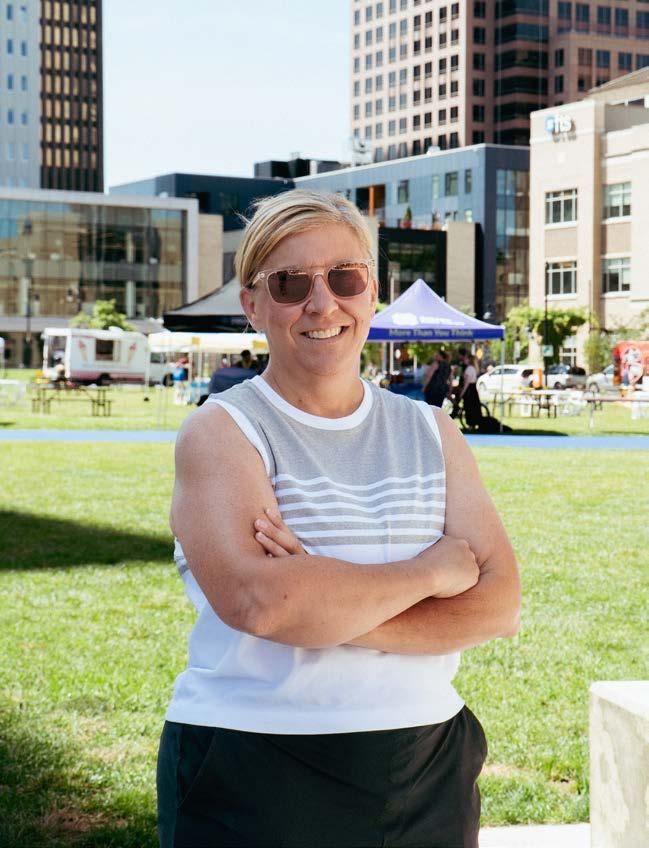
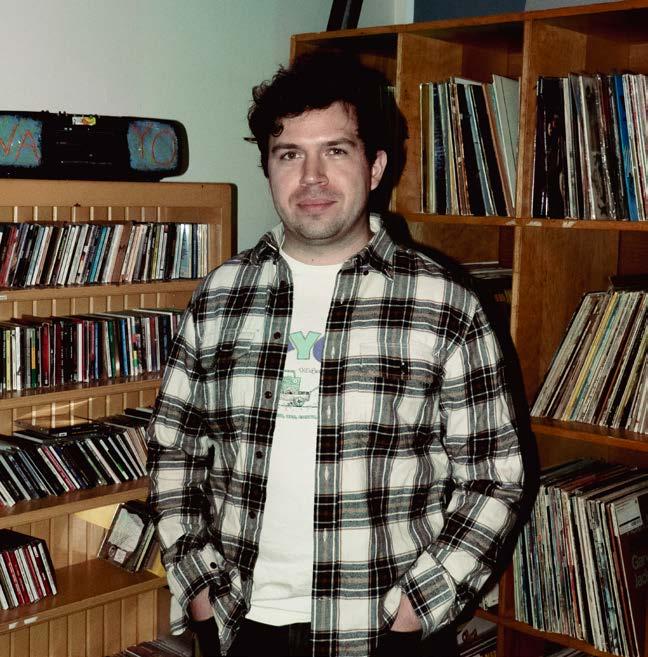
Age: 32
Hometown: Webster
Current residence: Rochester
Occupation: Software engineer at Applied Materials; station manager at WAYO 104.3 FM
Long before Max Kelley helped establish one of Rochester’s most beloved community institutions, he was sitting beside his Italian grandfather, listening to voices travel across an ocean through an old Grundig shortwave radio tuned to broadcasts from Italy.
Fascinated by the mysterious sounds drifting through the speaker, Kelley claimed the radio for himself, slowly turning the dial and discovering conversations between amateur operators in far-flung places.
“It was just people shooting the shit,” Kelley said. “And that’s how I discovered radio.”
What began as childhood curiosity became a lifelong calling. Kelley grew up in Webster, where his love of radio continued through the Webster schools amateur radio club. At home, he built amateur radio equipment capable of reaching across the globe with little more than a wire stretched through the backyard. Later, after studying at Monroe Community College and Rochester Institute of Technology, he joined WITR, maintaining the station’s studios and servers while learning the mechanics behind broadcasting. What he didn’t realize was that every step was preparing him for the role that would define his impact on Rochester.
In 2015, former WITR DJ Mike Yates was preparing to launch a new volunteer-run community station called WAYO 104.3 FM. He turned to Kelley for help designing the studio, assuming the young engineer could offer technical advice.
“When WAYO had reached the point where we had an FCC license and things were becoming increasingly concrete, I reached out to Max,” Yates said. “One meeting led to another, and he quickly became an indispensable part of the station.”
Kelley initially expected to build the station and move on. Instead, he found himself helping create something much bigger. As DJs arrived for training and new shows multiplied, WAYO evolved from an ambitious idea into a living, breathing community hub.
“Before we knew it, WAYO was blossoming,” Kelley said. “I thought, ‘Well, I guess I can’t leave now. This is our station.’”
When Yates stepped away in 2018, Kelley naturally assumed the role of station manager, a position he still holds in 2026 as WAYO celebrates its 10th year on the air. It’s a volunteer position, though the workload suggests otherwise.
By day, Kelley works as a software engineer for Applied Materials. By night, he’s often the Bug Jar’s sound engineer, mixing bands from the booth. Somewhere between those jobs, he oversees a radio station with more than
BY JON HEATH
90 locally produced programs airing around the clock. One day he might be recruiting substitute DJs or answering emails. Another day might involve coordinating events or troubleshooting unexpected problems.
Yates has watched Kelley tackle every challenge imaginable.
“Max is practical, creative, enthusiastic and approachable — all evidenced by his ability to steward the shaggy, beautiful beast WAYO,” Yates said. “He has poured in endless hours, doing whatever needs to be done, from climbing a tower to attaching an antenna to taking out the trash.”
But Kelley is quick to redirect attention away from himself and back to Rochester, which he believes is the real reason WAYO has flourished.
“I can probably count on a single hand, or maybe two hands, the number of stations across the country that have as many diverse shows as WAYO does,” Kelley said. “I don’t know what the special sauce is, but so many people are interested in arts and culture, and it seems like Rochester has the right combination of factors to make pursuing those possible.”
Kelley has helped cultivate a creative ecosystem off the air, too. Each year he partners with artist Scar Markham and Russ Torregiano of Needle Drop Records to organize the Second Chance Art and Record Fair at Radio Social, raising money for the station while giving artists and collectors an opportunity to sell their work.
“Max has been fueling Rochester music behind the scenes for many years and, in some ways, is its unsung hero,” Markham said. “Celebrating the fundraiser in conjunction with 10 wonderful years of WAYO is something that couldn’t happen without Max, as he continues to uplift this entire music community.”
Kelley believes the station’s greatest reward is knowing the community continues to embrace it. And in a city celebrated for its arts community, he has become one of the people making sure everyone has a chance to be heard.
“I think listening to different perspectives is cool,” he continued. “We’re taking a magnifying glass and passing it over the city, zooming in on the conversations of our neighbors.”
For someone who has spent decades fascinated by voices traveling through the air, it’s a fitting philosophy. Today, those voices belong not to distant strangers across the Atlantic, but to Rochester itself.
“Radio’s kind of weird,” Kelley said. “You can’t really know how many people are actually listening. So, it’s validating how much support that we get, and that’s allowed us to not only survive, but thrive for the last 10 years, and hopefully for many more to come.” wayofm.org
Jon Spacher doesn’t come across as someone eager to be the face of anything. Gregarious but understated, he’s more at ease talking about Fee Brothers than his own role spearheading it all.
But as CEO of the esteemed Rochester cocktail ingredient company founded in 1864, Spacher deserves a sliver of limelight. Some 30 years back, he studied astrophysics — a field focused on the universe’s vast scale — before pivoting to business. Early fascinations sometimes have a way of coming down to earth. Spacher’s work now centers on a smaller universe, but scale remains a big concern: how to keep a 162-year-old family business growing while staying true to its roots.
Since 2021, the year that Jon and his brother, Benn, bought the business from their aunt Ellen Fee after her brother and former CEO Joe Fee’s death, they’ve worked to scale Fee Brothers without treating growth as the be-all and end-all. Keeping the Fee name on their bottles is important, sure, but more than that Jon Spacher has a people-first attitude and wants employees to be able to share in the organization’s success.
“In the past six years, we’ve gone from 12 employees to 50,” Spacher said. “We’ve created one of the most robust employee benefits packages out there. One of the things I’m most proud of is that we’ve also developed a profit-sharing plan. When Fee Brothers makes money, our employees make money.”
The plan has paid out every year since its inception.
More than knowledge of markets and business savvy, which Spacher clearly has, his Fee Brothers elevator pitch will make listeners want to stock their bar cart with specialized Fee syrups and bitters on the spot.
On a quick factory walk-through, Spacher shakes hands, shares nicknames that signal genuine regard for employees and even points out his 20-something son tending to a piece of machinery on the factory floor. Call them workers or employees, but here, Spacher hopes the staff is something more.
“What I really love about this job is [that] we get to create opportunities,” he said. “We do well, we get to hire more employees and then help those employees grow and take care of their families.”
That people-first outlook, however, works only if the business keeps giving it room — as well as the funds — to grow. For Fee Brothers, Spacher said, that means developing, marketing and selling products that set the company apart rather than trying to compete on price alone.
One example of a new standout product is the fat washes, Fee’s three-
BY BRENDAN DABKOWSKI
part line of water-soluble cocktail flavorings. A quick mixology lesson, courtesy of Spacher: to add a savory profile to a cocktail, bartenders can fat-wash spirits (add a liquid to a room-temperature spirit) for anywhere from a few hours to several days. To save time and effort, Fee Brothers created a “dashable fat wash” (in bacon, brown butter or roasted duck flavors) that punches up a drink’s mouthfeel almost instantly. These fat washes debuted June 1, coinciding with the 13th annual Rochester Cocktail Revival.
What makes this new product line significant? In cocktail terms, these fat washes are akin to something like a bartender cheat code, but in the best possible way: you get the same effect, a delightful zip while sipping, with almost zero prep time or the need to clean up a big mess.
“It does the same exact thing in about two seconds that would have previously taken someone 24 to 48 hours,” Spacher said. “So instead of having this overnight process, it’s just dash-dash.”
It’s this kind of efficiency that allows Fee Brothers to make its mark and stay competitive. With Spacher, however, the thinking quickly moves to how the product can help not only those who buy it but also the people who manufacture, label, market and distribute it — Fee’s employees, most of whom are members of the Rochester community.
Although he shirks the spotlight, Spacher is heavily involved in the Rochester area community. He lives downtown; serves on several boards, councils and committees; volunteers with Big Brothers Big Sisters of Greater Rochester; and sits on the School of Business’s Family Business Steering Committee at St. John Fisher University, where he used to adjunct.
This connection to education is fitting, as Fee Brothers CFO Dan Welch describes Spacher as “a lifelong learner,” someone who closely watches trends and understands how craft cocktail product development can be tailored to changing needs across the industry.
“He respects what it took to get here and doesn’t take it lightly,” Welch said. “His attitude is one of keeping intact the good things of the past but also taking the brand to a new level.”
Still, Spacher doesn’t have his sights set on any far-off marker of external success (unlike his Uncle Joe, perhaps, who wanted Fee Brothers in Antarctica). The company. has weathered Prohibition, COVID-19 and more — emerging stronger than ever.
“We are already at the top of the mountain,” said Spacher. “We have already crossed the finish line. Life is already good. Now that we’re here, the fun begins.”
feebrothers.com
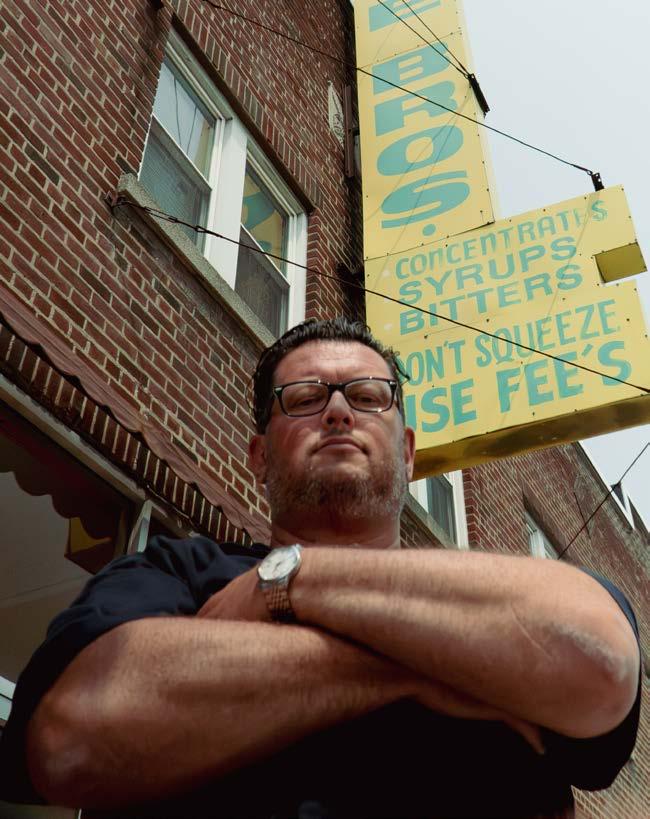
Age: 50
Hometown: Rochester
Current residence: Rochester
Occupation: CEO and co-owner, Fee Brothers
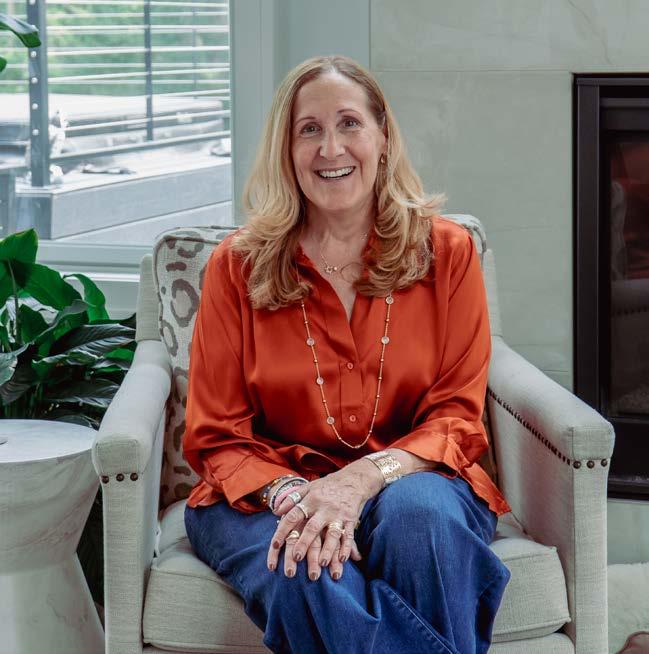
Age: 64
Hometown: Staten Island
Current residence: Pittsford
Occupation: President and founder of The ShermanEDGE; author
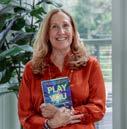
Before Pam Sherman wrote two books, she was traveling the world building a coaching business based on her experiences. Before that, she landed a syndicated newspaper column by making an editor’s wife laugh in a dressing room. Before that, she was an award-winning stage actor in Washington, D.C. for 17 years. And before any of the curtain calls, she was a lawyer.
Sherman was born in Staten Island to an OB/GYN father who delivered 5,000 babies and a Freudian psychoanalyst mother.
“That's probably why I'm funny,” she said. “If I had a headache at dinner, my father said, ‘take two aspirin,’ and my mother said, ‘who are you mad at?’”
She met Neil Sherman — whom she always refers to by his full name, in third person — during a semester abroad in London and then married him 42 years ago. From there, the entrepreneurial couple began a journey that took them from the D.C. area to Rochester. Geneva, to be exact, where Neil grew up. Home came knocking in the form of redeveloping the Seneca Army Depot, 10,587 acres once used as munitions storage and a disposal facility by the U.S. Army.
With their three-year-old daughter in tow, the Shermans uprooted a 17-year life in D.C. and moved to “a cornfield in the middle of nowhere.”
That cornfield was actually Pittsford, and Sherman soon found herself meeting the locals. One of them was Meg Mundy, the cofounder of Rochester Fashion Week, and during a shopping event Mundy hosted, Sherman befriended a woman named Lara Liu in the dressing room.
Liu pitched Sherman on meeting her husband, Mark, then editor of the “Democrat and Chronicle’s” glossy monthly publication, “Rochester Magazine.” Sherman’s many past lives at that point didn’t include ‘writer’ in the traditional sense. But why let that stop her?
“I told Mark I'd like to write about the surprise that happened to me when I moved to a cornfield, and I cried for a long time, but I kept meeting people who were irreverent and funny and laughed about the weather,” she said. “I'd love to write about how, even if you move to a cornfield, your horizons can be widened beyond what you can imagine.”
She got the gig. Her “Suburban Outlaw” column was eventually syndicated, running in 53 Gannett newspapers across the United States.
“I pulled into Cincinnati once, and there was my column,” said Sherman. “Super cool, and It all started in ‘Rochester Magazine.’”
Sherman’s first book, “The Suburban Outlaw: Tales from the Edge” was a compilation of best-loved Gannett columns, published in 2009, about five years into the column. Her second
BY LEAH STACY
book, “Play You, the Role of a Lifetime: Bridge the Believability Gap to Boost Your Confidence, Connection, and Impact” was published in April 2026, culminating eight years of work.
Those years were punctuated with stints on the road, playing newspaper columnist and humorist Erma Bombeck in the hit one-woman play “Erma Bombeck: At Wit's End” in cities around the U.S. for seven years.
The acting was relevant to the book; it’s the core of what she teaches with her business The ShermanEDGE, which offers consulting and workshops around, chiefly, embracing your everyday life by playing the leading role. It was an idea born from both necessity (she and Neil had two children to send to college) and guidance from a lawyer friend.
“Mitch Nusbaum at Woods Oviatt who said to me, ‘No, no. You don't want to be a lawyer again,’” she said. “Then he said, ‘But could you help my lawyers do what you do? The way you talk to people and find out their stories and engage them?’”
Another early supporter of The ShermanEDGE was Sharon Napier, founder and CEO of creative ad agency Partners + Napier. The two met through a mutual friend, and Napier first recommended Sherman as a consultant for clients at Kodak. Sherman then contributed to The Napier Experience, a fall program at Rochester Institute of Technology that selects 20 School of Individualized Study students to learn from industry leaders, build their personal brand and find inspiration as they design an individualized degree.
“Anytime you work with Pam, she's just so inspiring, she has this sort of magnetism,” said Napier. “She makes you write your own story. She makes you really think about who you are.”
There’s all the work, of course, and then there’s Sherman the friend, mother, wife, nonprofit board president and fundraiser auctioneer — a person many in Rochester now know and love as her tenure here begins to outnumber the years spent in D.C.
“She's a natural connector,” said Napier. “She is interested in you when she's talking to you, and she always follows through with what she says she's going to do. Huge, you know? But I can also call her and say, ‘I really need to get a glass of wine,’ and we can talk shorthand.”
It’s an understatement to call Sherman’s resume ‘long,’ and presumptive to think she is anywhere near finished adding to thelist — as long as there’s impact in what she does.
“The first thing you learn as an actor is that it's not about you. It's about the other person. It's about the audience, it's about the journey,” she said. “And so the throughline for me is: it's not about me.
thepamsherman.com
BY JUSTIN MURPHY
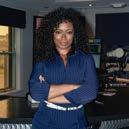
Andria Langston freely admits that she does not know how to relax.
Perhaps it’s because she is the only child of the only child of Andrew and Gloria Langston, who came to Rochester 52 years ago with next to nothing and proceeded to build a radio dynasty. Whatever the reason, it explains why she is pursuing full-bore two separate and ambitious careers. And that, in turn, explains why she wakes up very early in the morning.
Early, as in 4 a.m. She goes first to the gym, where she hits her 10,000 step count before the sun is up, and then to work at WDKX-FM, the radio station she co-owns along with her father, Andre.
At the radio station, Langston oversees national sales as well as the digital team. She manages the smartphone app that she helped introduce during the COVID-19 pandemic and, lately, finds ways to integrate artificial intelligence into the jobs of the station’s 26 employees.
When she steps out of the office, it is often to field a call from her manager or to audition via Zoom for a film or television role. Acting is her other career. When she lands a part, as has been happening regularly in recent years, she travels with her laptop and fulfills her radio station duties on breaks from the set. One of her recent roles was the lead in “Peripheral,” which won the award for best narrative feature film at the American Black Film Festival in 2024.
Langston recently finished filming a television series yet to be announced. She is currently writing an original show based on a three-generation radio family like her own. On a vacation this summer, she finished writing the first draft of a novel.
“I don’t think anyone in this family can sit still,” she said.
Langston cannot remember whether her father decided to start her early in the family business or whether she pestered him until he gave in. In any case, she began operating the soundboard at WDKX at age 5. She moved on to advertising, sales and billing before she was technically old enough to work.
“She was a little different from an average kid,” said Atu, a longtime DJ at the station. “She’d always be asking: ‘what’s that do?’”
That early experience and her last name might have merited a favored role when she turned 15 and finally began a formal internship. Instead, her father handed her a mop and bucket. It was a tangible reminder of her grandfather’s saying: “No job too big, no job too small, Andrew A. does them all.”
Andrew and Gloria Langston first brought WDKX to the air in 1974, making it one of the first independent Blackowned radio stations in the country. Twenty-two years later their son, Andre Marcel Langston, assumed day-to-day control. For the last decade, WDKX has been at or near the top of the Rochester radio market according to Nielsen figures, a distinction usually held by stations belonging to national conglomerates.
The Langstons and their staff attribute their success to their close ties with the community. Those now include connections with students at Andrew Langston Middle School on Fernwood Park; in 2017 Langston also co-founded the Andrew Langston Center of Educational Excellence, a 501(c)3 that provides a mentorship and educational scholarship program to youth in the city school district.
“We have a small family, but also there’s this shared family with so many other people,” Langston said. “This station has raised generations of people.”
Her grandfather ran a funeral home and sold insurance, among other side jobs, in the radio station’s early years. His granddaughter sees herself in the same tradition, following multiple career paths simultaneously. Langston said she foresees no conflict between an acting career and her anticipated succession to leadership of the radio station.
“People don’t ask Jay-Z that when he runs all his businesses simultaneously,” she said. “A lot of men do that and people don’t question whether they can handle it. … I’ll always be able to juggle a lot of things.”
Langston has a master’s degree in communications management and business and as such, takes a more systematic approach to the job than her father, Andre.
“He says, ‘I’ll figure it out when I get there,’” Atu said. “She says, ‘Let’s talk through every step along the way.’”
In terms of vision for the station and its place in the city, though, Langston considers herself as the caretaker of a legacy and community trust. She called it “a huge weight and a huge blessing” — and if leading the radio station while also following her creative pursuits requires setting her alarm clock a few hours earlier, she sees the lost sleep as a worthwhile sacrifice.
“It’s about something bigger than just me; I’ve always understood that,” she said. “Whatever I can do to help this community and especially the next generation, that’s what I’m going to do.” wdkx.com
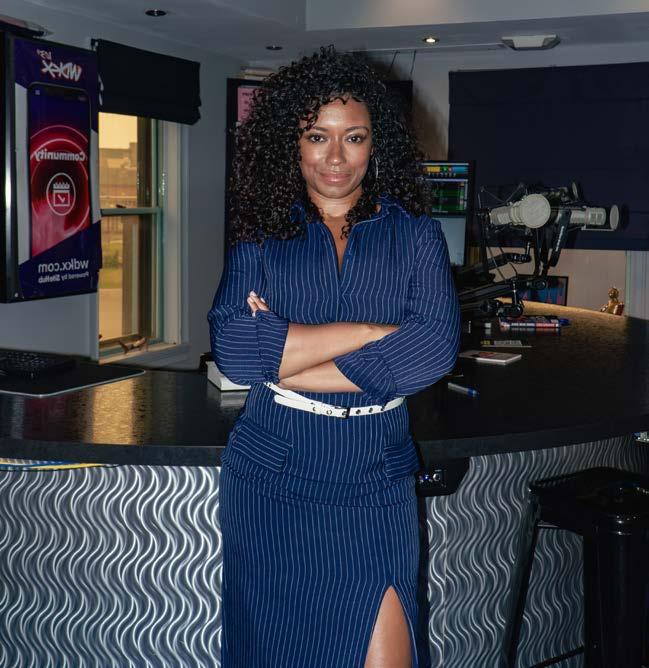
Age: 35
Hometown: Rochester
Current residence: Rochester & Washington, D.C.
Occupation: Co-owner and COO, WDKX Media; actor, writer and producer
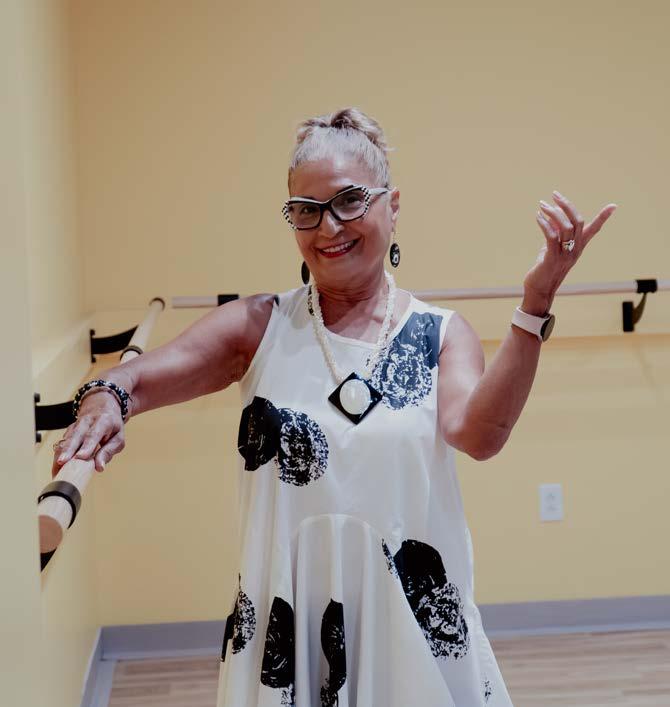
Age: 73
Hometown: Rochester
Current Residence: Rochester
Occupation: Artistic director and founder of Borinquen Dance Theatre
BY SYDNEY BURROWS
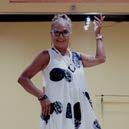
Nydia Padilla-Rodríguez loves dance: from salsa to tap to Garth Fagan technique, she has a passion for all styles and appreciates how movement celebrates culture. But what Padilla-Rodríguez loves even more than dance is people. Her company, Borinquen Dance Theatre, is rooted in Puerto Rican culture and folk dance, but its largest impact is functioning as a safe space for local youth.
When Borinquen — named for the historical Taíno name for the island of Puerto Rico — first opened in 1981, it was for adult dancers only. Padilla-Rodríguez, who was working at United Way, was alarmed by data showing Puerto Rican high school students were failing at a high rate.
“I noticed young people are starving for structure, for consistency, to be around people who believe in them,” said Padilla-Rodríguez. “I wanted to use the arts as a vehicle to learn discipline, confidence and value.”
Recognizing the need for a place where children could connect and create, she pitched a youth-focused program to Hochstein School of Music. Borinquen Dance Theatre called Hochstein home for almost 41 years before moving to its current space on East Avenue.
“So many children have come through her doors,” said Borinquen Dance Theatre assistant artistic director Jayme Bermudez. “It’s not only the dance, but the cultural relevance and importance for our young people. It’s somewhere you can come and sweat and breathe and live.”
Today, company members are required to maintain school attendance and a GPA of 2.5. Many scholarships are available, and students can earn a stipend by learning a repertoire of at least six dances. The structure reinforces work ethic and financial literacy while fostering the sense of belonging and creativity that define a dance studio.
“There’s nothing else like it in the area,” said Damaris Santos, an alumna and current teacher at Borinquen. “Nydia gives a different amount of care and support than you see elsewhere. She’s always fighting for the kids to have the best — the best costumes, time in the studio and support from home.”
Padilla-Rodríguez has also spent 45 years fighting for social change and greater visibility for Puerto Rican culture. She has introduced young people and audiences alike to authentic portrayals of Puerto Rican stories — something she felt was missing from mainstream media.
Santos, who first joined Borinquen when she was 10, said the company
fostered immense pride in her Puerto Rican heritage.
“I had this realization that people had to suffer in order for me to participate in these traditions,” she said. “Using dance, Nydia is paying homage to those who came before us and giving Puerto Ricans back that power to tell their own stories properly.”
Borniquen uses Puerto Rican folkloric choreography infused with other dance styles to tell those stories. The costuming, music and movement reflect the many influences that shape Puerto Rican culture.
Inspired by Padilla-Rodríguez, Santos now creates original choreography for Borinquen’s dancers. Her 10-yearold daughter also attends classes, continuing a new generation’s connection to the company and its culture.
Through Borinquen Dance Theatre, Padilla-Rodríguez has introduced generations of students and audiences to Puerto Rican history and culture. It’s a mission Bermudez will carry forward when he eventually succeeds her as artistic director.
“The low-income, underrepresented community areas often don’t have access to anything cultural,” he said. “As Puerto Ricans, we have so many ties to the American story, and we’re trying to excavate that and give younger generations an insight into that.”
Padilla-Rodríguez asked Bermudez to help ensure Borinquen’s legacy continues — and for him, that mission is deeply personal.
“Dance was my saving grace,” Bermudez said, referencing a troubled time in his youth. “And I want to offer that safe space for other young people, to develop them in a way that they have a foot to stand on as community members.”
Part of that work includes “Raíces en Movimiento/Roots in Movement,” a series of free performances, workshops, cultural celebrations and youth leadership opportunities made possible through a City of Rochester ArtsBloom grant.
This November, Borinquen Dance Theater will celebrate 45 years with a gala at Arbor Loft. The evening will honor Padilla-Rodríguez's contributions to Rochester’s dance community while offering a glimpse of the company’s next generation.
Padilla-Rodríguez sums up the last half-century with one word: “gratitude.”
“Dance isn’t just performing,” she said. “It helps young people discover their value and embrace their culture. If they can carry those lessons into their families and communities, then my life’s work has been worthwhile.” borinquendancetheatre.org


Full calendar of events online at roccitymag.com
MONDAY, AUGUST 3

Darien Lake Amphitheater, darienlakeamp.com
While Aussie pop band 5SOS initially seemed more like One Direction, the boy band-adjacent quartet aged nicely into a kind of foil for The 1975. Instead of edgelord experimentation, though, 5SOS has earnestly flirted with Eurodance and even nu-metal through their catalog. In other words, they’re chameleonic, they’re survivors and they put on a hell of a live show. 8 p.m. With support from The Band Camino. PATRICK HOSKEN
TUESDAY, AUGUST 4
FILM
Dryden Theatre, eastman.org/events
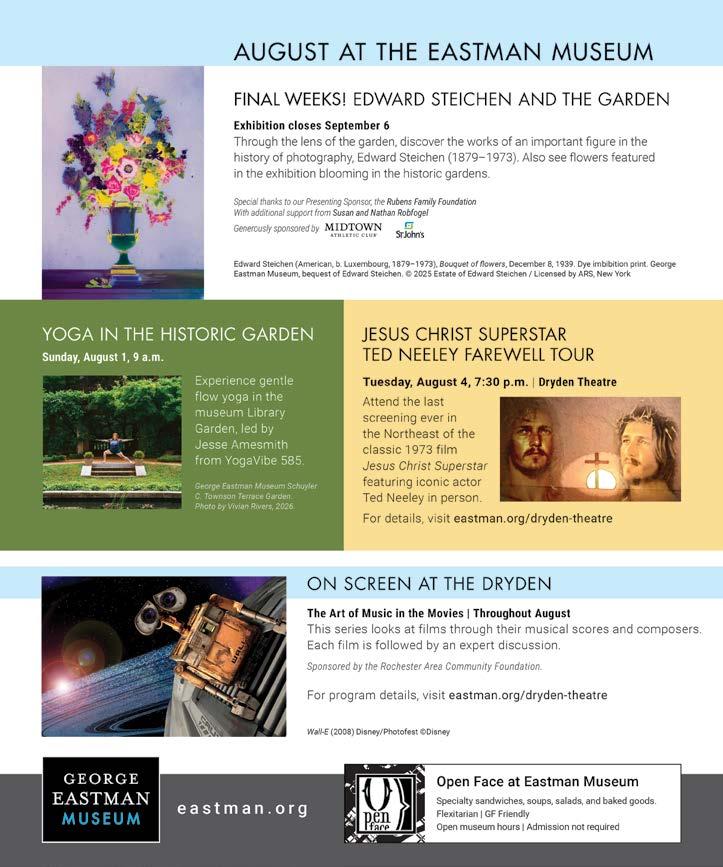
Ted Neeley, who portrayed Jesus Christ in the 1973 film version of the “my savior is a rock star” musical, has reportedly played the role of JC more than 5,000 times since then, thanks to the touring show. He will be on site for this special screening of a remastered version of the film. It’s being billed as part of his farewell tour — catch Neeley now or never again — so get there by 7:30 p.m. $30, but members pay $25. PH
WEDNESDAY, AUGUST 5
LITERATURE
Writers & Books, wab.org
Editor Kathy Curto’s new anthology examines what exactly it means to wait: why we do it, what we do it for and so on. Local teacher and writer Jessica Pavia, whose work is featured in the collection, joins Curto for this in-person discussion (also presented via Zoom) with readings, an audience Q&A as well as book signings. So, what are you waiting for? 7 p.m. PH

Steam Engine Association, nysteamengineassociation.com
There have been 65 years of steam at this festival featuring antique steampowered vehicles. Events include tractor pulls, sawmill demonstrations, live music, food and a worthwhile flea market. The Pageant of Steam runs from 8 a.m. to 8 p.m. each day at 3349 Gehan Rd. in Canandaigua. General admission for adults is $10, kids under 12 are free. PH
THURSDAY, AUGUST 6

MUSIC
Dr. Martin Luther King Jr. Park, rochesterevents.com/partyinthepark You might be asking yourself: how can Smash Mouth tour after the 2023 death of its singer Steve Harwell and the departure of its chief songwriter Greg Camp? Well, the “All Star” champions have made it work. It’s true there’s only one remaining original member left (bassist Paul De Lisle). But the songs still sound good enough to fill Party in the Park for this 5 p.m. show. With support from Sophistafunk. Tickets $10. PH
FRIDAY, AUGUST 7
Spencerport Fireman’s Field, rochestergerman.org
Billed as Monroe County’s longest running cultural festival, this celebration of all things black, red and yellow features German food, German beer, German dancing and German music. You’ve had a glizzy and a brewski at a Red Wings game; now slip into some lederhosen and come have the real thing. 5 p.m. kickoff. PH
SATURDAY, AUGUST 8
ARTISANworks, facebook.com/ rochesterblackartscouncil
Artist Aaron Calvin works in pyrography, the craft of woodburning to create stunning and stark renderings via hand and flame. His show “Elevated Places” showcases his method that blends the old practice with the new concepts his work tackles, in this show presented by the Rochester Black Arts Council. 12-4 p.m. PH
1649 West Ave., facebook.com/middlesexmusicfest
Located just an hour south of Rochester, this one-day festival predates both Grassroots and Great Blue Heron and is 40th year of highlighting the best local talent around. A no-frills, back-to-basics vibe is what has kept it one of the area’s greatest treasures as it serves up folk, bluegrass, zydeco and oldfashioned rock and roll. Performances from Eastern Boys in Western Shirts, Mustard Tigers, Bobby Henrie with Tyler Westcott, Aaron Lipp and Yarms and more. PH

SUNDAY, AUGUST 9
RIT Panara Theatre, fingerlakesopera.org Mozart really put in work with this one. One of the composer’s bestknown operas comes to life thanks to Finger Lakes Opera, with first-timers Ashley Emerson and Wm. Clay Thompson and returning favorites Jonathan Michie and Joseph Barron. 2 p.m. performance. Tickets $68-$96.
PH
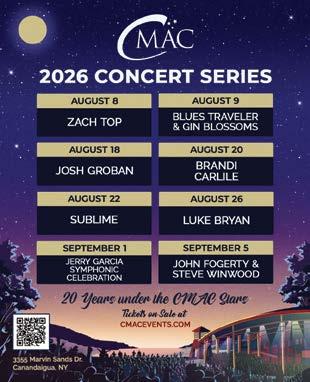
CMAC, cmacevents.com
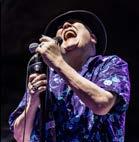
The dream of the ‘90s is alive in Canandaigua. Thirty years ago, turning on the car radio would yield three inescapable ditties within the hour: “Run Around,” “Hey Jealousy” and “Two Princes.” The three bands responsible for those immortal hits are on the same bill in 2026, and their combined bodies of work yields one pop-rock banger after another. The hook really always does bring you back. Doors at 4:30 p.m., music at 6. Tickets $45+. PH
MONDAY, AUGUST 10
The Little Theatre, thelittle.org Every M. Night Shyamalan films hits different now as a parent. But “Signs,” the director’s subdued alien tale that followed up “The Sixth Sense,” is a particular gut punch. It’s a meditation on the gnawing anxiety about keeping your kids safe, but it’s somehow also sweet and tender — and there’s little martian guys, for the scares. Great film, imo. (And Joaquin rules in it.)
Screening’s at 7:30 p.m. PH
TUESDAY, AUGUST 11
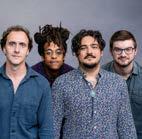
Buckland Park, brightonny.gov/388/ Bands-at-Buckland-Concert-Series Indie Americana band Public Water Supply performs this free 6:30-8 p.m. show at the Buckland pavilion on Westfall Road as part of the 2026 Bands at Buckland summer concert series. NOELLE EVANS
WEDNESDAY, AUGUST 12
Rochester Museum & Science Center, rmsc.org
Calling all space cadets and science nerds. Clouds or none, astronomy experts will be on site to guide visitors through the experience of a partial eclipse, with hands-on activities at the ready. Eclipse glasses available for free. 11 a.m. to 3 p.m., eclipse maximum is at 1:43pm. Free. NE
THURSDAY, AUGUST 13
COMMUNITY
Memorial Art Gallery, mag.rochester.edu
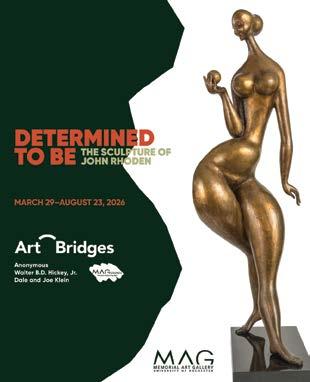
To celebrate the last week of the exhibit “Determined to Be: The Sculpture of John Rhoden,” the MAG throws this party inside the exhibit and out on the sculpture garden grounds, with interactive workshops, dance performances, guided tours, community wellness fair, food and music. 4-8 p.m. Free. NE
FRIDAY, AUGUST 14

Rochester Public Market, cityofrochester.gov
It’s reggae night at the Public Market. Giant Panda performs along with special guests iGNiTE! Reggae Band as part of the Bands on the Bricks series. 5:30 to 10 p.m. Free. NE
SATURDAY, AUGUST 15
MUSIC
Perinton’s Center Park West, hoochenanny.com
At this point, MMJ is simply too big to fail. A country-tinged, mildly spaced-out jam band with strong indie-rock roots checks just about every box for live summer music. Guster, meanwhile, takes a different approach: human-scale songs delivered with maximum energy that lose none of their sweetness. In other words, great pairing! Hoochenanny’s lineup is quite strong this year. But this show is a can’t miss. PH
South Avenue, swpc.org
A signature celebration in one of Rochester’s most vibrant districts, this fest transforms South Avenue into a lively, pedestrian-only corridor filled with music, art and community energy. Featuring more than 70 local vendors, live buskers and culturally diverse dance companies, the celebration emphasizes the creativity and spirit of Monroe County. Free and inclusive, 11 a.m. to 5 p.m. PH
SUNDAY, AUGUST 16
LITERATURE
Various locations, rochesterbookcrawl.com
This celebration of all things indie book shops runs through August 23 at locations throughout Rochester and Western New York. From trusted city spots like The Unreliable Narrator to Brockport institution Lift Bridge Book Shop and suburban staples like Bookends, the venues are numerous. Make your own route, grab a booklet at your favorite shop and be entered into a prize drawing. PH
MONDAY, AUGUST 17
MUSIC
Darien Lake Amphitheater, darienlakeamp.com
Almost a decade ago, I became an instant Kehlani fan upon hearing their song “Undercover,” which interpolated Akon’s banger “Don’t Matter.” In that time, the R&B singer has become one of the most reliable talents in the genre, with this year’s self-titled LP reaching a new high watermark. The collaborations are stunning (Missy Elliott, Usher, Cardi B) but with Kehlani, it’s always been about the voice. The concert begins at 6:30 p.m. $56+. PH
CONTINUED ON PAGE 38




TUESDAY, AUGUST 18
MuCCC, muccc.org/events/ sankofa-2026
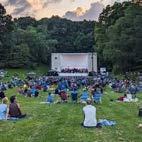
This year, before every show of this six-day festival, pull up a chair and join the open table. “The stage is yours, the stories are ours and the table is open to all,” goes the tagline to the pre-show “Gems of Black Theater” discussions before the one-acts begin. Offerings include Deja Cotton’s “Paradise Passing,” “The Legend of Double Axe Max and the Shadow People: Exodus” by Karen D. Culley, a jazz and poetry night and more. Table talks at 6:30 p.m., shows follow at 7:30. Individual show information available online. PH
St. Monica Church, stmonicaofrochester.org
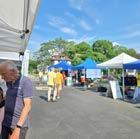
Featuring SNAP/EBT eligible items, fresh produce, free bike repair, live music and family friendly activities, this local favorite happens weekly on Tuesdays at 831 Genesee St., in the parking lot of the St. Monica Church from 4-7 p.m. Through October 6. NE
WEDNESDAY, AUGUST 19
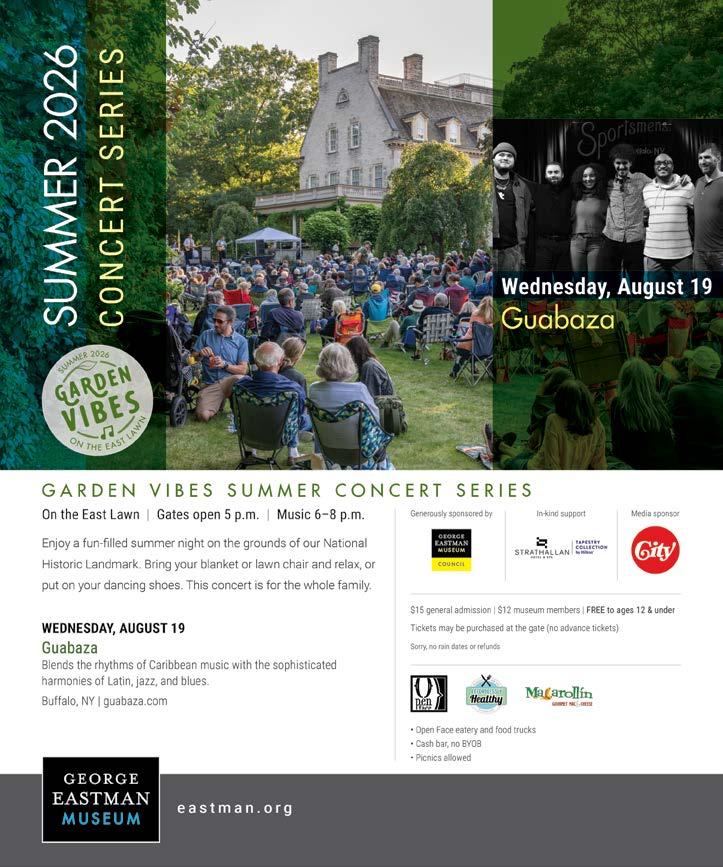
Eastman Museum Gardens, eastman. org/garden-vibes
Blossoms, meet bold melodies. The Garden Vibes series at the Eastman Museum is a great opportunity to stop and smell the flowers while hearing some mellifluous tunes. This edition finds the Buffalo ensemble Guabaza blending Caribbean rhythms, touches of jazz and Latin music and more. Cash bar on site. 6 p.m. music. $12$15. PH
THURSDAY, AUGUST 20
CMAC, cmacevents.com
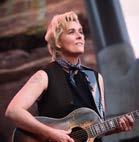
Death, taxes and Brandi Carlile — you know what I mean? At this point, she’s a national treasure, instrumental in the late-era career of Joni Mitchell, trusted BFF of Elton John and Grammys-friendly singer-songwriter all her own (and with supergroup The Highwomen). She returns to CMAC for her Human Tour, with special guests I’m With Her (the trio of Aiofe O’Donovan, Sarah Jarosz and Sara Watkins). 7 p.m. Tickets $53+. PH
FRIDAY, AUGUST 21
Rochester Public Market, flourcitybrewersfest.com
The New York State Brewers Association brings this sudsy celebration to the Rochester Public Market. If you like your beer to be local, the offerings here seem infinite at what organizers call the longestrunning craft beer festival in New York State. Sample your preferred
brews and munch on food from 5-9 p.m. VIP tickets $85, GA tickets $55 and $10 for designated drivers. PH
SATURDAY, AUGUST 22
MUSIC
Point of the Bluff, concertsatpob.com
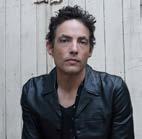
“One Headlight.” Man, that’s a song. Karaoke staple, key piece of ‘90s alternative rock and frankly just one great song on a good album. Jakob Dylan’s Wallflowers are keen to play the band’s 1996 debut, “Bringing Down the Horse,” in full on this tour, along with Tom Petty’s 1982 LP “Long After Dark.” That’s a cool thing to do. It’s also why the music begins at 3:30 p.m. Tickets $55+. PH
MUSIC
Various locations, joedaytour.com
Joe Tunis has run the experimental, always surprising label Carbon Records since 1994. In addition to his long-running WAYO-FM show and regular presence at record fairs, Tunis makes a variety of music, including this annual day of popup improvisational gigs at Record Archive, Cobbs Hill Reservoir, the Court Street Bridge and more. Follow along beginning at 10 a.m. PH
SUNDAY, AUGUST 23
FESTIVAL
Parcel 5, rocvegfestny.org
A full day of plant-powered celebration at Parcel 5 showcases the best in vegan food, ethical living and sustainable practices. The free outdoor festival runs 10 a.m. to 5 p.m. and features a lively mix of food and retail vendors, engaging speakers, cooking demos, live music, family friendly activities, community resources and more. PH
MONDAY, AUGUST 24
TRIVIA
Lovin’ Cup, lovincup.com
Free quiz every Monday 7 p.m., with a bar tab and other prizes for winners, along with bonus questions all night. NE
TUESDAY, AUGUST 25
MUSIC
Abilene Bar & Lounge, abilenebarandlounge.com
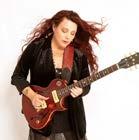
Blues singer Carolyn Wonderland and “musical ambassador of the Austin, Texas sound” Shelley King anchor this prototypically rootsy, soulful and masterful night of music at downtown’s favorite honky-tonk. Doors at 6 p.m., music at 7:30. Tickets $30 advance, $35 day of show. PH
WEDNESDAY, AUGUST 26
THURSDAY, AUGUST 27
throughout its history. Clay Jenkins, real time while doing the impossible:



MONDAY, AUGUST 31
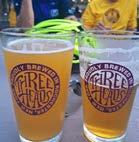
Three Heads Brewing, linktr.ee/wnybrc
The Western New York Bike Racing Club organizes this cycling jaunt every Monday at Three Heads on Atlantic Avenue, 6-8 p.m. Get out there before the weather turns. PH
TUESDAY, SEPTEMBER 1
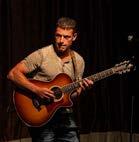
Lovin’ Cup, lovincup.com
Songwriters, poets, storytellers and comedians are all welcome at this celebration of creative expression, every Tuesday from 7-9:30 p.m. Piano included, otherwise bring your own instrument. Signup starts at 6:30 p.m.
NE
WEDNESDAY, SEPTEMBER 2
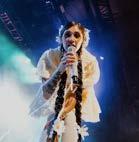
Artpark, artpark.net
As a singer-songwriter, Sierra Ferrell is one to watch. Add in her flair for fiddle and a penchant for guitar playing and she becomes the right kind of performer to light up the beautiful Artpark stage in Lewiston, only an hour and a half from Rochester. When the talent is at Ferrell’s level, the trek is totally worth it. With The Brudi Brothers. 7 p.m. show. Tickets start at $42.50 (lawn) and $57 (pavilion). PH
THURSDAY, SEPTEMBER 3
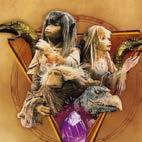
“The
The Little Theatre, thelittle.org
Some people are simply Jim Henson people. I never was, but I can see myself becoming one later in life. Maybe I should start with “The Dark Crystal,” the puppet-led fantasy Henson codirected with Frank Oz (best known as Yoda and several “Sesame Street” characters) from 1982. The Little calls it a “no-human-all-puppet classic,” and who am I to argue? Catch you there for the 7 p.m. screening. PH
CONTINUED ON PAGE 42
FRIDAY, SEPTEMBER 4
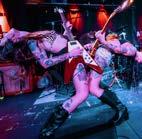
The Bug Jar, bugjar.com No, this is not a Fleetwood Mac tribute band (look to The Seven Wonders for that). The Rumours are, in fact, a garage rock group from Iowa, and they’ll come to town to play appropriately at The Bug Jar with, also appropriately, local support acts Flower Kitty and The Grinders. 9 p.m. gig. $17.70+. PH
SATURDAY, SEPTEMBER 5
FESTIVAL
I-Square, clcartsevents.com
The fourth annual edition of this fest boasts seven bands playing live from 11 a.m. to 8 p.m. More than 80 local artists and vendors will be there along with neighborhood businesses, who help shepherd the event. Find the stage next to I-Square and the House of Guitars. PH
SUNDAY, SEPTEMBER 6
WORSHIP
Gospel in the Plaza
International Plaza, cityofrochester.gov From 1-5 p.m., the square on North Clinton becomes a haven for “uplifting gospel music, praise performances and inspirational messages in a welcoming, faith-centered setting.” PH






“MOONLIGHT
“Moonlight Passes On” is Rochesterbased Attic Abasement’s first record in about 10 years. Helmed by the prolific Mike Rheinheimer, AA is an acoustic guitar-driven indie rock, raucous collective with a good number of releases under its belt within 20plus years of existence.
This new one consists of short, but somehow slow-building, under-the-radar blips that’ll turn your grimace into a grin after repeated listens let them seep under your skin. On the surface, it’s fun, lo-fi stuff that doesn’t take itself too seriously. Give it a few spins, and you’ll see the record is a study in disappearing delights — moonlight, youth, friendships, even life.
All the same, these 11 tracks also feel like walking around a house, drinking a beer from the bottle (not a can), and decoupling everyday objects from their intended uses. While Rheinheimer’s lyrics don’t always pay the rent poetically, they are so worth sitting with. Beneath oft-awkward wordplay and Issac Brocky warbling is a restless intelligence — served up with a smirk—that puts him in conversation with late middle-(r) age(r) voices like Kozelek, Malkmus and Callahan. Good art often does not assault you; sometimes it just spills you back out into the sunlight seeing things differently. That’s the strength here. It’s the lyrics, man.
To wit, “Plyer Sky”: Dying man / Turning on a fan / I’m a pile of sand / Now you understand. Lines like this thrill because they tap in to the same lackadaisical lo-fi genius exuded by Canadian singersongwriter Hayden. On “Bruised Water Moon,” a pedal steel guitar creates an effect of otherworldliness. “Moonlight Passes On” may take some time to stick to your guts, but it’s a deceptively smart exploration of ephemerality. See also “Glad to Recede.” We all gotta go.
— BRENDAN DABKOWSKI
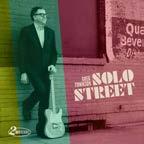
BY GREG TOWNSON
Homegrown favorite Greg Townson released his first collection of solo guitar instrumentals, “Solo Street,” in late May. The 10-song record showcases sweet fingerpicking and clean, articulate fretwork. It’s about dynamics, not gymnastics, and illustrates the work of a practiced craftsman.
Townson is usually recognized for his work with Rochester’s Hi-Risers, his collaborations with Nick Lowe or as a masked marauder of tasteful twang with Los Straitjackets. On “Solo Street,” his guitar does the work of a full band, producing memorable melodies and luminous licks in an intimate, airy fashion.
His songs cover quirky pop-abilly, cinematic ragtime and bluesy vignettes and, together, tell the tale of a strut down “Solo Street.” The story comes to life with “Flower City,” a fragrant ode to home, and continues through the R&B dance of “Topsy-Turvy” and the hip jittering of “Space Mosquito.” Townson’s plucky picking and the organic decay of reverb leave enjoyable artifacts throughout the up-close recording.
The sweet mindfulness of the title song contrasts with the rhythmic bite of “Step Aside,” while “Old San Juan” takes us away from “Solo Street” on a folk-inflected riff and the closing “Bumper Car” conjures the faded image of a postcard carnival.
Townson’s attention to phrasing and touch is meticulous throughout “Solo Street.” There is no sleight of hand or hiding behind a wall of superfluous effects. It’s skin to strings, pickup to amplifier. Using vintage guitars and analog attitude, Townson embraces his catalog, old and new, on “Solo Street.” It’s a record rich with poetic instrumentation that evokes both time and place.
— STEPHEN LEWIS
BY SEUNGYOUNG HONG AND PAUL MEYERS
What happens when two great minds do, in fact, think alike? Apparently, they make an album of inspired and captivating jazz songs. “North Country Blue” is a new nine-track album from Seungyoung Hong and Paul Meyers. With Hong on bass and Meyers on guitar, they explore some wildly imaginative interplay between their instruments but still deliver accessible arrangements and melodies for everyone to appreciate.
What strikes initially is Hong’s ability to be so percussive with his bass that I actually end up forgetting that there aren’t drums driving these songs. Starting with the first track — perhaps the most recognizable jazz standard “Almost Like Being in Love” — Hong showcases a rhythm and dynamic range that pulls you in to listen closer. Simultaneously, Hong’s playing lays a foundation for Meyers to explore all possible melodies that would make Frederick Loewe envious that he played it so conservatively when writing the number for “Brigadoon” back in 1947.
The track listing goes on, with “All The Things You Are” and “Nocturne” painting stunning sonic soundscapes that play with your ear’s cognition of dissonance, meter and key changes. It’s absolutely worth noting that although there are plenty of melodic liberties being taken, they are remarkably tasteful and elegant. This is to be expected from two jazz lifers who couldn’t have taken their passion for the genre any more seriously — Hong holds a Doctor of Musical Arts from Eastman School of Music and Meyers a master’s in jazz guitar from the Manhattan School of Music.
“North Country Blue” is not only a beautifully executed jazz album ripe for deep focused listening, it is also a musical history lesson filled with references and inside riffs, traded back and forth between two master musicians and educators whose love of the genre radiates throughout the album.
— WREN WERNER
MICHAEL BURRITT,
Blue makes Michael Burritt think “of hope and good things.”
He has assigned that color to a few of his pieces, including one just recorded by the Eastman Percussion Ensemble: “Blue Soul.” Burritt takes on a journey through overlapping musical worlds, over about nine minutes of music.
There’s lots going on rhythmically, but it often coalesces into a sort of melodic shimmer of pop harmonies. The music never lets you linger in one place for too long, with bright high bells pulling in one direction followed by a turn both sudden and seamless into a space of low resonance. As the harmonica sounds, the last notes convey — transcendence? Peace? Farewell?
If this single whets your appetite for more melodic percussion, check out “Viñao” with the Eastman Percussion Ensemble and Burritt joining forces with Chicago’s Third Coast Percussion.
Here you get Burritt performing alongside his current and former students in music by London-based composer Alejandro Viñao, who started out in Argentina and spent time at the music research center IRCAM in Paris. He treats these instruments very differently than Burritt, following different threads.
It’s a treat to hear Burritt play the showy “Khan Variations,” a solo that he helped commission with other percussionists that has become a contest favorite. The album also includes tributes to experimental composer Conlon Nancarrow and Burritt himself in a set of variations.
The heart of the album is the piece “Water,” a suite in three movements evoking tides, rivers and wild rain.
Now, it’s something else to hear percussion instruments live, so mark your calendar for the Eastman Percussion Ensemble’s concert this fall, October 27 at Kodak Hall at Eastman Theatre.
— MONA SEGHATOLESLAMI
& CARVER SNYDER
BY ABBY ROSE SUGNET
Intricately designed, handcarved tiles click against acrylic racks as four women spanning three generations rack their tiles, uncovering the 13 they have to work with. Once everyone has racked their tiles, they select three they want to pass and the Charleston (or tile swapping) begins. Between each tile exchange, the women forget which round they’re on as they get wrapped up in conversation about their week. A single round of mahjong can be played in as little as 10 minutes, but many mahjong players prefer hourslong games, free of screens and any sense of rush.
Mahjong is a tile-based game that began in China centuries ago and later became a popular tradition amongst older JewishAmerican women — but in the last few years, mahjong has exploded far beyond that demographic.
“We’re slower to get on trend up here,” said Nicki Johnston, founder of Hidden Tile
Mahjong, a local small business that hosts mahjong events on the east side of the city. “The South has been booming with it for years. That being said, it has been around our area forever and we just didn’t know.”
Johnston regularly meets people who’ve known of older women in their family playing for decades.
“The American Mahjong League has been going strong for nearly 90 years,” she said. “(But)
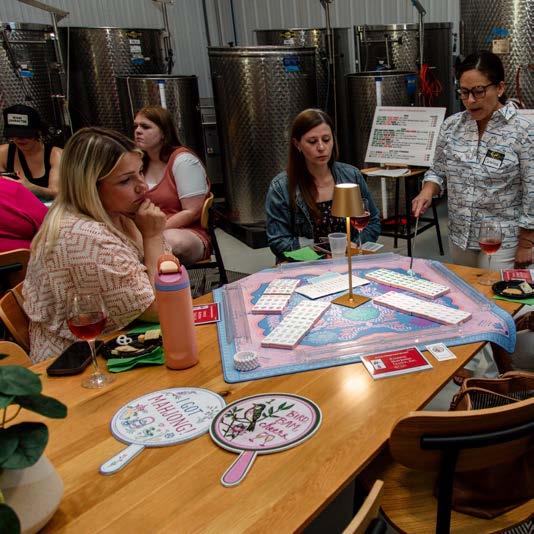
Mahjong's quiet rise through social circles.
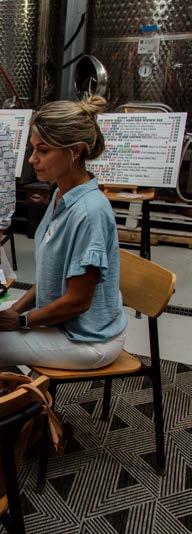
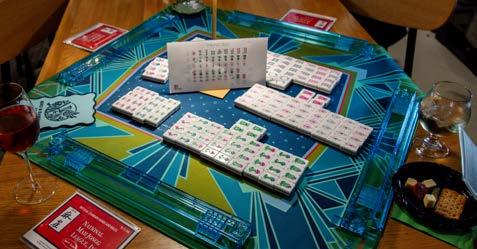
for most of us, especially our generation, if we didn’t grow up with that around, it’s brand new.”
Johnston is a retired air traffic controller and stay-at-home mom who learned how to play last fall after seeing a group of women playing on a cruise. After struggling to find someone to learn from at home, she fell in love with the game, got certified in teaching and started her business by January. She now regularly hosts Mahjong 101 classes, multi-session private lessons, open play events for the community, a summer league and a variety of other events.
Bird & Bamboo Social, based in Pittsford, took off just as quickly. Cofounder Liz Cooper learned to play mahjong while visiting friends in Cincinnati last summer, then returned home and encouraged her neighbors to learn and play with her.
“We loved it so much that after a period of time, we decided to spread the love of mahjong,” she said. In April, Cooper and two of her neighbors, Carolina Hale and Shannon Lenahan, launched Bird & Bamboo Social. They
now host events weekly, from 101 classes to open play events at local restaurants and wineries across the greater Rochester area. While they always have wine or cocktails available, the trio also encounters many attendees who are looking for an activity that doesn’t revolve around drinking.
“It’s a game, it’s fun, it’s connection, but there’s also a lot of information about how good it is for your brain — the positive effects on aging, the benefits in terms of your working memory and flexibility and pattern recognition,” said
Cooper. “So it offers benefits in the social area, the mental area and the self-care area, and I think it’s hard to find a hobby that does all of those things.”
Hidden Tile Mahjong and Bird & Bamboo Social are just two of many options for learning mahjong in the greater Rochester area. Though the two businesses began out of a need for more resources, accessibility is emerging rapidly to meet the demand of a growing number of younger people who want to learn the game. Local libraries, parks and recreation centers and community centers offer options for mahjong players of all levels.
“It’s a way to build community, unwind and give yourself a little self love,” said Johnston. “And it’s a great way to meet new people — you literally have a seat at the table.”
Abby Rose Sugnet is a local marketer, photographer and mahjong player with a bachelor’s degree in magazine journalism. This is her debut contribution to CITY.
BY RACQUEL STEPHEN RSTEPHEN@WXXI.ORG
Along Mill Street in the High Falls district sits a new jazz and R&B lounge that the owners describe as mature, classy and comfortable. Nightcap Blues was the vision of Tyrone Reaves, Harold Drumgoole and Rick Caesar, three men who work in manufacturing with a love for good vibes and good people.
“We wanted to have a place that looked nice, a place that the community would be proud of,” Reaves said. He and Drumgoole have had a long-term business rapport. So it was natural for the two to partner up again on this particular venture.
“We like to go out, and we like to enjoy ourselves,” Drumgoole said. “We wanted something nice where we can invite others to come down and have the same experience.”
That experience is shaped by a dimly lit space coupled with black furniture and fixings. The bar is toward the back of the room, leaving plenty of space for party goers to enjoy the venue’s split personality.
Half of the space is designed to accommodate live shows with a small stage facing roughly a dozen four-top tables. And the other half mimics a cigar lounge with couches and flat screens on the wall.
“I’m not a decorator, but I can definitely make sure that things go together,” Caesar said.
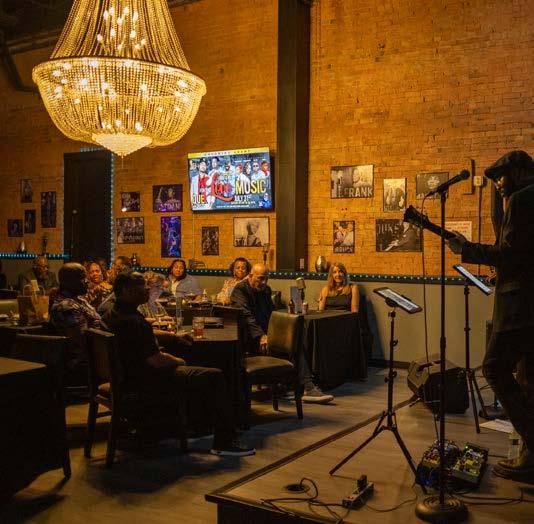
A new night club on Mill Street aims to be modern, fresh and trendy.
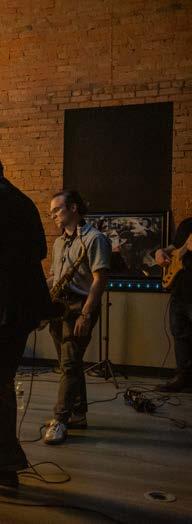
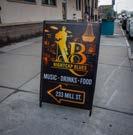
Caesar has been an engineer for roughly 20 years. He said his career has fostered attention to detail. As the youngest of the trio, Caesar is also tasked with keeping things modern, fresh and trendy — from the decor to the events.
“We were looking for a toneddown effect, and I think black is almost the best color for that,” Caesar said.
The venue’s interior is only matched by its surroundings.
“We love this High Falls area. We think it’s a classy area,” Drumgoole said.
The district immediately sets the tone for the club’s ambience. High Falls is known for its historical infrastructure and chic essence, which confirms the vibes before you even make it to the entrance.
The owners are adamant about “catering to a mature crowd.” They plan to program events like live music, comedy shows, open mics, karaoke and mixers, to name a few. The music will also reflect the environment with more jazz and R&B on the playlist.
“You could walk in here with your adult children, with your mom or your dad and still have a good time and enjoy the atmosphere,” Reaves said.
LaKesha Breedlove celebrated her birthday with a group of friends at the jazz spot on a Monday night when the venue does karaoke. It was her first time in the establishment since a soft opening in June.
“I truly enjoyed myself,” Breedlove said. “It was a vibe from entry to exit.”
Breedlove, who also has personal relationships with
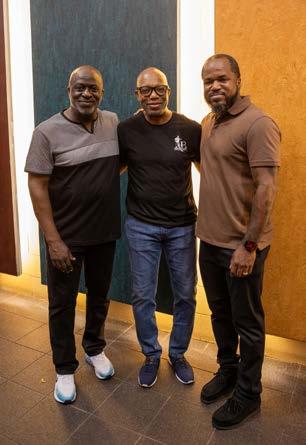
the owners, said the staff was welcoming and that established a mood for an enjoyable evening.
“I was excited to be there, not only to support, but to have an experience,” Breedlove said. “And that’s exactly what you get when you step inside Nightcap!”
Nightcap Blues comes at a time when millennials and older adults are craving social experiences and locales where they feel like they belong. For some who attend, the location is nostalgic. Many recall the days when the event space was once the home of popular nightclub Tribeca.
But the owners are bent on making the jazz spot a place for all to love.
“We love the vibe. We love the energy. We love being here. That’s what I hope the community will say about us,” Drumgoole said.
The owners are just asking the community to be patient with them as they continue to grow in this business venture. Drumgoole assures that they’re all in the business of accommodating the needs of the people. instagram.com/nightcapblues
Racquel Stephen is WXXI’s health, equity and community reporter and producer.

BY JOHANNA LESTER
While the annual Rochester 10 celebrates notable, groundbreaking and interesting work being done by those in and around our community, here we have a different list: nine of the most memorable movie performances given by Rochester natives, plus one more that’s a bit of a cheat (but we’ll get to that). As with the Rochester 10, you’ll find greatness and accolades aplenty. Unlike the Rochester 10, you’ll find tyrants, criminals and at least one sociopath.
It seems only right to start with an outsized (sorry) role drawn (sorry, again) from decades of dramatic work: John Lithgow as Lord Farquaad in “Shrek.” Voicing a nearly literal short king (he is the ruler of Duloc, after all), Lithgow — who was born in Rochester in 1945 — never hesitates to chew every bit of digital scenery he’s given, savoring every morsel of that pop-culture-inflected dialogue. While not a very good movie, “Shrek” hugely benefits from Lithgow’s delight in portraying pomposity, giving a master class in animated overcompensation.
Perhaps the complete opposite of Lithgow in “Shrek” is Lithgow in “Interstellar,” Christopher Nolan’s love letter to space and time and, well, love. Lithgow is Donald, father-in-law to Matthew McConaughey’s Cooper. He’s only in a few short scenes, but Lithgow makes them count, grounding the plot and offering ballast
and stability to the film’s time on earth before the inevitable chaos of the cosmos. Few actors deliver sad face as well as Lithgow.
As with Lithgow, choosing lasting performances by Fairport’s own Philip Seymour Hoffman is both a gift and a curse. We’re spoiled for choice in a too-short career that still finds ways to excite and provoke. In Anthony Minghella’s “The Talented Mr. Ripley,” Hoffman’s Freddie Miles is the worst kind of person for Matt Damon’s titular con artist to meet: a snob who can sniff out an imposter with the skill of a seasoned antiquities dealer. It’s hard to be insufferable and still draw sympathy from an audience; Hoffman had a knack for that.
He also made the most of being the actual villain. J.J. Abrams’ “Mission: Impossible III” is not the apex of the series, but it was a reset after the first two installments. Hoffman plays Owen Davian, likely the best villain in the run of the Mission movies and a murderous thorn in the side of Ethan Hunt (Tom Cruise). Sorry for this spoiler of a 20-year-old film, but he kills Hunt’s protégé, played by Keri Russell. (Hadn’t we already endured enough after her “Felicity” haircut?) The movie also includes the best bit of practical sleightof-hand that the franchise pulled off, and it’s solely due to the commitment of Cruise and Hoffman.
School of the Arts graduate Taye (Scott, if you’re in the know) Diggs was a stealth player in late '90s/early 2000s dramedies. “The Best Man” is an undersung ensemble piece, anchored by Diggs as Harper Stewart, an author
who has written a bestseller based on the interpersonal relationships of his tight-knit friend group. Even when he’s potentially on the morally grey side of the line, Diggs cannot help but be charming. It’s also not accidental that his best roles involve him playing a friend. He has an innate trustworthiness that can’t be tamed — a trait that serves him well in “Brown Sugar” opposite Sanaa Lathan. They’re best friends, but also more than that. It makes complete sense that someone from our neck of the woods would feel relatable and desirable as the boy next door.
Born and raised here (also a 1964 graduate of the University of Rochester), Robert Forster’s best performance was also one that reignited his career and earned his sole Academy Award nomination. In Quentin Tarantino’s “Jackie Brown,” Forster plays bail bondsman Max Cherry and his chemistry with Pam Grier’s Jackie is electric, which makes the movie’s resolution so heartbreaking. You could make a case that “Jackie Brown” is Tarantino at the top of his game — and so much of that is due to how deeply Forster embodies this role. This is a crime film, sure, and everyone is operating on varying levels of duplicity. But Forster, above all, knows that you have to feel the stakes in order to make them count.
There’s a clip from 2014’s “The Skeleton Twins” that makes its way around the internet from time to time: Bill Hader and Kristen Wiig lip-syncing and doing choreography to Starship’s “Nothing’s Gonna Stop Us Now.” They’re both in the throes of
separate life crises, but they have that natural sibling gift for knowing how to pull each other out of despair — part guilt, part genuinely wanting to be part of something. Wiig, who was born in Canandaigua and ultimately graduated from Brighton High School, is adept at playing (and creating) characters who feel as though they could dissolve into tears at any moment as easily as they could crack a joke. She’s in that zone here, as well as in “Bridesmaids,” the 2011 blockbuster hit she cowrote with Annie Mumolo. Come to “Bridesmaids” for the bridal shop (and subsequent street) scene and stay for a truly moving ode to friendships old and new.
Finally, here’s my cheat: Rochester’s own Abby Wambach (Our Lady of Mercy graduate, World Cup champion, gold medal Olympian, etc.) was a producer of the Academy Awardnominated film “Come See Me in the Good Light,” a 2025 documentary on poet and activist Andrea Gibson, who died from cancer that same year. It’s a gutting, gorgeous tribute to Gibson, never shying away from how complicated lives can be, especially in the middle of a terminal illness. It will wreck you. Your sinuses may never recover. It will be worth it, because in the end it puts you back together. (But seriously, bring tissues.)
Johanna Lester is a pop culture critic who mainlines movies, TV and the best cookies Rochester has to offer. She’ll also hold that grudge on your behalf. Follow her @theauntjojo.

The Revelry will close after 13 years in business, and another concept (with different ownership) is already underway for the University Avenue space (Rev BBQ, the smaller fast-casual concept in the adjacent plaza, will stay open. Ristorante Lucano also recently announced it will reopen under new ownership (and remain in the same location). And Good Luck celebrates both 18 years in business and a forthcoming cookbook led by chef and co-owner Dan Martello this month. A new walk-up ice cream window, Chill, has opened on Main Street near Parcel 5, serving up classic, dairy-free and even protein-packed options. In part of the former Spot Coffee space on East Avenue, an upscale concept — Echelon Lounge — is currently being built out. And a Dominican-inspired BBQ spot, Phoenix Barbecue, has opened in The Commissary, a food startup incubator inside the Sibley Building.
The New York State Brewers Association once again brings the sudsy Flower City Brewers Fest to the Rochester Public Market. If you like your beer local, the offerings here seem infinite at what organizers call the longest-running craft beer festival in New York State. Sample your preferred brews, munch on food and maybe even get a flash tattoo from 5-9 p.m. flourcitybrewersfest.com
Tickets for Foodlink’s Festival of Food, now in its 21st year, are on sale. The multi-vendor food and drink experience will take place on September 14 in the Rochester Public Market and is the biggest annual fundraiser for the region’s largest food bank, which serves 10 counties. General admission tickets are $85; VIP passes are $115. For a sneak peek before the fest, Foodlink will pop up at Lento in Village Gate from 4-7 p.m. on Thursday, August 12. foodlinkny.org
The seventh annual Barry’s Irish Festival will take place Aug. 21-22 at the Webster Fireman’s Field in August rather than September this year; the two-day fest is produced by Jess and Danny Barry, owners of Barry’s Old School Irish pub on the Eagle Vale campus in Fairport and producers of Barry’s Irish Cream Liqueur. Open to all ages; tickets start at $19.98. Rain or shine.
The third annual Rochester Tiki Week — operated by the crew behind Jack’s Extra Fancy and Easy Sailor — returns again this year, featuring rum-soaked cocktail events across multiple bars, “all for the love of tiki.” The culminating event is a Swizzle Contest at Marge’s Lakeside Inn, which will take place at just before sundown on Sunday, August 30. More at instagram.com/ rochestertikiweek.


The Rochester Public Market’s monthly Food Truck Rodeo series takes place the last Wednesday of every month through October; Aug. 26 will feature food, beer and live music from classic rock band Earthtones 5-9 p.m. The Rochester International Plaza, 828 N. Clinton Ave., will hold monthly happy hours featuring local food and bev specials and live music 5-9 p.m. the last Thursday of each month. The Coop, 23 Somerton St., an outdoor space in the Park Avenue neighborhood, will host a slew of events this summer — past pop-ups include an affogato bar and an ice cream-fueled daytime dance party for the whole family.




Dear Maggie,
My friends and I are about to book a late summer vacation. I’m excited, but also frustrated. Last year we did something similar and were supposed to split it evenly — with everyone chipping in for food, drinks and extras. The issue was that I ended up putting the deposit on my credit card and a few people didn’t contribute to some of the food costs or pay me back the full amount.
This year, I was asked to put it on my card again. I want to have fun with my friends, but I also can’t afford to cover the expense. How do I say ‘yes I want to go,’ but that I don’t want to be on the hook financially?
Sincerely,
Footing The Bill
Dear Footing The Bill,
You say it just like that.
There are times when you can let the full cost of something go. When I go out to dinner with friends, we either split the check evenly or, if I cover that meal, the next one is on them. A coffee here, a drink there — it all comes out in the wash.
But for something like a vacation that requires a large deposit on a credit card, you better Venmo me before my credit card statement hits the mailbox (and no, I have not gone paperless yet).
The problem here is not that they asked you to put it on your card, it’s that they’ve already shown they’re unreliable when it comes to paying you back. As the great Maya Angelou said, “When someone shows you who they are, believe them.” Your friends have shown that paying back what they owe is not a priority.
You don’t have to shut them down or pull out every receipt from last year. Just be honest.
Try something like “I’m excited to go, but I can’t put it on my card again unless I get everyone’s payment up front.” Or simply
say you can’t float the expense and suggest someone else take on the charge this time around. (Just make sure you have your share at the ready.) Any reasonable person will understand — and if they don’t, then maybe you don’t want to go on vacation with these people after all.
Most importantly, don’t let the fear of an awkward conversation push you into a difficult financial situation. One of the first rules of lending money to friends or family is never give what you can’t afford to lose. In close relationships, you should always assume there’s a chance you may never see loaned money again.
If losing it would put you in a bind, be honest, upfront and don’t spend it. Vacations are supposed to be relaxing, not leave you checking your bank account every time you tap your card. The hardest part is saying no. After that, you’ll quickly find out whether your friends want your company — or your credit limit.
XOXO, Maggie


BY S.J. AUSTIN & J. REYNOLDS
Member of the latchkey kid generation, familiarly
55. “_____ am America” (Langston Hughes)
56. Heavyweight champ with a face tattoo
58. One serve point away from winning in tennis
59. Volcano that is a homophone of an insurance agency 60. Inventor Tesla
62. Where “three men” are in a nursery song
65. Ushers 67. Postscript to a novel 69. Lamp residents 71. Gasteyer or de Armas
72. Opposite of NNW
73. ** Funds for a trip to a city in the Rockies?
76. Farm collective, for short
79. 9-Down, e.g.
81. Charts again
82. Computer snags
84. 1982 comedy featuring Dustin Hoffman in a sequin dress
87. Impervious (to)
89. Withdraw from a nation
90. Tater 91. Huck Finn vessel 93. Assistants 95. Rely (on)
96. Financial org. once deemed “too big to fail”
97. Celestial ring 98. Fancy dance
100. People who barely get by?
102. Prepare leftovers
104. Green sci.
106. _____ wand (one of the Deathly Hallows)
108. Ultra wide shoe spec
109. Word before Cong or Minh
111. Spits bars
113. Slalom paths
115. Slashed conjunction
118. Reappearance above water, as for a submarine
121. Still in it
125. ** Funds dispensed seven times a week?
127. ** What a bully might steal… or a hint to the ends of the answers to each starred clue
130. Patron saint of Norway
131. Clear a blackboard
132. Toxic gas with a pungent odor
133. Souvenir from a swordfight
134. Surname (and weather event) in “The Wizard of Oz”
135. Went steady
136. Eldest son of Don Corleone
137. Strong and healthy
1. 5th Avenue retailer
2. Calculation in geometry or calculus
3. Cannellini alternative
4. Shot prediction in HORSE
5. Birth mo. for Michael Jordan and Ed Sheeran
6. Stephen of “The Crying Game”
7. Los Angeles neighborhood featured in a 1992 caveman flick
8. Priory of _____ (group in “The Da Vinci Code”)
9. Body art made from powdered leaves
10. “Close, but no cigar” 11. King in “The Tempest”
12. Blend 13. _____ an era
14. Emeritus: Abbr.
15. Actress who is one Oscar win shy of tying Hepburn for the most ever
16. Blow
17. Elderly
18. Rubik’s Cubes and Lego bricks, for two
24. Who can hear you scream in space
26. 1972 Bill Withers hit that is not an offer to help
29. Sports team’s wear, informally
32. The carrying of a boat between navigable waters
33. Adjective for a small spider
36. Comes down
37. Skirts shaped like a letter
38. Policy at an open bar, maybe 39. ** Funds for a Girl Scout sale?
41. _____ Deion (former NFL nickname)
43. Nonverbal assent
45. ** Funds for an actor in the background of a movie scene?
46. Largest monthly expense in many personal budgets
47. Epochs
49. Saw, e.g.
51. “A famous German waltz god” for Wolfgang Amadeus Mozart
53. 1986 Nobel Peace Prize winner
57. A terrible hockey goalie, metaphorically
58. “…and carry _____ stick”
59. Long, long, long time
61. Miners’ finds
63. Curfew, perhaps
64. Anomalous
66. Social stratum
68. Fantastical
70. Vandalized, as a house on Halloween
74. Send off
75. Groups of cells with a common structure
77. Subdue, medically
78. In _____ (so to speak)
80. Thus far, in a spreadsheet
83. 251, to Maximus
84. Imperial title derived from “caesar”
85. Early Ron Howard TV role
86. Furious
88. Longest river in the world
92. Enemy
94. They justify the means
97. Hirsute
98. Kenneled
99. Swiss mountain range
101. Fantasize
103. Develop gradually
105. Line in origami
107. Musician who added “Ono” as a middle name in 1969
110. Earth, in sci-fi
112. Grain storage structures
114. Move with a splashing sound
115. What you can be as sick as or work like
116. Leonine Disney queen
117. Irish Spring competitor
119. Flesh on a bone
120. Anise-flavored liqueur
122. Machu Picchu builder
123. _____ parm
124. Brontë heroine
126. The bottom of a sea or lake
128. Don Lemon’s network
129. Psst!