NEW FEATURE : Stars in cars
Interesting Canadians and the vehicles they love

Automotive trends
Cars
App attack!
The
and greatest auto and trucking apps ya just gotta have!
BUILT DIFFERENT


NEW FEATURE : Stars in cars
Interesting Canadians and the vehicles they love
Automotive trends
Cars
App attack!
The
and greatest auto and trucking apps ya just gotta have!
BUILT DIFFERENT
CARLYLE Tools have been crafted to exceed the quality and standards that are demanded by today’s automotive technicians. From hand tools that grip like a beast to power tools that strike with predator-like precision, every piece of equipment carries the instincts of our Sabertooth spirit. This isn’t just an upgrade – it’s a complete transformation that proves our tools are BUILT DIFFERENT, just like those who use them.

Page 4 Editor’s letter
A year of new beginnings - Your editor reflects on the year that was, the year that’s yet to be...
PUBLISHER
Robert Alfers
rob@autoatlantic.com
EDITOR
Carter Hammett carter@autoatlantic.com
IT MANAGER
Tyler Graves tyler@autoatlantic.com
ART DIRECTOR
Nicole Shadbolt
ADVERTISING REPRESENTATIVE
Jay Bhagat jay@autoatlantic.com
CONTRIBUTORS
Carter Hammett
Kirk Mathieson
Sana Fatemi
Rohit Narayan Sholingur
Angela Altass
Zachary Perlmutter
Kristen Lipscombe
IMAGES VIA Unsplash FreePik
Auto & Trucking Atlantic is published digitally by Robert Alfers. For advertising rates or information regarding Auto & Trucking Atlantic, please contact us at: rob@autoatlantic.com
Tel: 902.452.0345
Mail: 608 - 56 Jacob Lane Bedford, NS B3M 0H5, Canada
Page 7 Contributors this issue ..next issue you could...
Page 19 Women and wheels
A heartfelt tribute to trucking trailblazer and newly published author Ellen Voie. By Sana Fatemi
Page 28 Electric avenue
In light of recent trade earthquakes, Canada is forging new relations with international partners that have the potential to change the EV landscape writes contributor Kirk Mathieson
Page 30 News of the weird
Introducing the nine strangest motoring awards you’ve probably never heard of!
Page 34 Motor matters
A road map to cleaner transit options are among the bits and pieces collected here.
Page 38 The Atlantic road report
New Brunswick and the feds sign a major environmental cooperation agreement/.
Page 41 Stars in cars
N.F.-born singer Joanne Powell kicks off this new column about interesting and creative Canadians and the vehicles they love. By Carter Hammett
Page 8 Trucking 2026: What lies ahead?
Putting a damper on “Driver Inc.” and other objects further down the road. By Jeremy Woolward
Page 12 Trends on the horizon
Rohit Narayan Sholingur surveys the automotive landscape and identifies five big trends to expect in the coming months.
Page 14 App attack 2026
What do Clutch, Curvature and Trucker Path all have in common? They’re among the best of an all-star line up of very cool apps to look for in the coming year!
Page 16 Green automotive trends in 2026
Whether it’s the circular economy, sustainable interiors or e-fuels the future looks decidedly green, writes Carter Hammett

Page 22 WOW customers with car wash dryers and vacuums
Say it ain’t so! Angela Altass takes a deeper dive into dryer drives.
Page 24 FIX Network announces global partnership with TGR F1 team gentlepersons....start your engines.
Page 26 Piriformis Syndrome in trucking that pain your butt is trying to tell you something, writes Sana Fatemi
Page 32 Smiles by the miles
The NAPA Auto Parts shop in Cornerbrook N.F. has kept ‘em coming back for the past quarter century. Kristen Lipscombe explains why.








Toronto writer Carter Hammett has been the editor of Auto and Trucking Atlantic for the past 17 years. His writing has appeared in the Toronto Sun, Ottawa Citizen and Convenience and Carwash Canada among many other publications. View his work at: https://authory.com/CarterHammett
Writer and editor with a deep love for storytelling and the literary world. With experience in both writing and editing across various publications, she enjoys shaping narratives, refining language, and bringing ideas to life on the page.

Angela Altass is a writer/editor based in Oshawa O.N. . Her work can be seen in Convenience and Car Wash Canada and Grocery Business, among many other publications. Angela Altass

Jeremy Woolward
Employed as a fleet safety & human resource manager for a commercial motor carrier in Calgary, Alberta.
An emerging writer with a focus on storytelling that connects culture, society, film, media and technology. He brings a fresh perspective shaped by curiosity and a keen eye for detail.

Kristen is a freelance journalist and communications specialist with more than 20 years of experience locally, provincially, nationally and even internationally. She believes that everyone has a story and loves helping others tell them. She’s a writer at heart.
Zachary Perlmutter
Zachary is a blogger and writer who graduated university with a double-major in humanities and English at York University in 2014. He’s currently in the process of working on a novel, and he enjoys sharing his thoughts on obscure trivia in various subjects.

Kirk Mathieson
Brampton, O.N.-based writer first started with ATA as an editorial intern and has since become an ongoing contributor.
By Jeremy Woolward
Our pundit turns a sharp eye to the trucking industry overall; what was and what might be.
The first area of disruption that I’m expecting to see continue certainly involves our neighbour to the south. The United States continues to be a big question mark for almost anything these days. Often we ask “What will President Trump do next?” The first part of 2025 involved the rhetoric of Canada being the cause of America’s woes, and while this narrative persists and the talk of becoming the 51st State certainly endures in some parts of the continent, the bigger disruption will be what becomes of CUSMA, Trump’s own trade deal that replaced NAFTA. As reported by the CBC on December 5th, there’s different trains of thought that suggest that the White House might keep the plan, kill it altogether, or renegotiate it, but each of those thoughts all end with a common theme: whatever is done, it will be done to strengthen the hands of the United States, especially given 2026 being a midterm year and other political influences continue to distract and attempt to derail Donald Trump’s legislative agenda. The CBC article also suggests that Canada best be ready to deal with the threat of reduced sovereignty to maintain economic relations with the United States or be ready to deal with separate trade agreements the Americans make with and Canada.1
While Canada has been working to expand and diversify its trade relations with other parts of the world, this is a risk to trucking because as much as trade deals and economic diversity
with the European Union sound more idealistic, there’s the Atlantic Ocean to contend with and no direct access to those markets via anything but planes or ships. Losing a viable partner in the United States in trucking would be a significant and volatile disruption that the Canadian economy is likely not yet ready to weather. Moves have been made to reduce trade barriers between provincial jurisdictions, but until we have true free trade between provinces, we all need a common partner to work with. That partner, for better or for worse, is our friends south of the 49th Parallel. Expect to watch this situation unfold over the coming months. July 1st, 2026 is the deadline to renew CUSMA, and all signatories have six months to announce their intention to withdraw or to renew. I’d expect to see a lot of bravado in January, but February 1st will be the day to watch and see what transpires next.
Related to the first area of disruption, another involves climate policies, fuel emissions, and emerging technologies. One of the first things Trump did upon being sworn into office earlier this year was withdraw the U.S. from the Paris Climate Accords, and instead pivoted to further develop the their dependence on fossil fuels, all under the guise of being able to sustain their own energy production, ending reliance on foreign sources. One of his infamous quotes, “Drill, Baby, Drill”, has led to further growth in oil and gas, and this has a more significant impact on
the types of systems being built into trucks nowadays, with engine OEMs doing what they can to comply with the standards of the day, and avoiding the problems of doing something contrary to the whims of the current administration. However, this does present a problem for Canada where these same OEMs are manufacturing trucks for Canada, but our approach to climate change has been different to that of our neighbours to the South. Our biggest disruption came in 2015 with both the election of the Alberta New Democrats (NDP) and the 2015 election of Justin Trudeau.
One of the major promises made by the Alberta NDP was the establishment of a climate leadership plan, which addressed the issue of climate change, and proposed means to reduce it, including the possibility of adopting a carbon levy that targeted both largeand- smaller emitters and the population at large, but with the population also receiving a rebate. This levy became known as the infamous “carbon tax” that spawned political debate and vitriol that persists to this day. Under the Alberta CLP, revenues generated by the levy would be reinvested into alternative energy, ultimately ending Alberta’s reliance on fossil fuels. The goal was a 30% influx of renewable energy in the market by 2030. The funds from the levy would also be used to educate and transition workers out of fossil fuel industries into suitable roles in the renewable energy market. This leader-
I hope this past holiday was both good and invigorating for everyone reading this. I also hope that the coming year will be rewarding and fulfilling. I know that 2025 was a year full of ups and downs for everyone involved in trucking, and while I know that we would all hope that after this roller coaster of a year as it pertains to tariffs, policy shifts, and economics, we long for a bit of stability. I’d suggest that we’re probably not quite finished with them yet. In fact, they’re likely to persist. While nothing said here would be an Armageddon- level catastrophe, it would be hubris to think one could just bury their head in the sand and hope the disruptions pass them by. They won’t. Nonetheless, how one responds and reacts will help determine how well they’ll weather what might come to pass. 1 (U.S. businesses
ship plan was also the foundation of the federal government’s climate change policy, as well as the justification the Trudeau government used to support the expansion of the TransMountain Pipeline in British Columbia. However, with the election of the United Conservatives in 2019, the Alberta CLP soon fell apart, and while the Trudeau government held onto their version of it and the levy, which became a carbon tax with little to show for it, the federal climate policy recently experienced its own death knell of sorts when Prime Minister Mark Carney declared it “too regulatory” with minimal results.
In another transition away from the Trudeau era climate plan, Alberta recently signed a memorandum of understanding (MOU) with Ottawa, committing to a pipeline to the northern B.C. Coast, allowing product extracted from the Alberta oilsands to reach ports in Northern B.C. and then travel to markets in Asia and elsewhere. While this MOU requires Alberta to do more work in consultation with Indigenous populations and perform environmental assessments, it’s already been met with opposition from Indigenous nations along the route, and the resignation of Steven Gilebeault, who was Environment Minister under Justin Trudeau and Mark Carney. Gilebeault resigned in protest, voicing his opposition to the MOU and an about face to policies he helped shape in the later years of the Trudeau government. Elsewhere, the Carney government has more- or- less reverted their position in support of the AB carbon capture and storage plan of 2007 that also targeted large emitters of CO2, essentially undoing the last decade of environmental policies.
The preamble aside, what does this have to do with trucking? Going back to the engine OEMs, they’re left wondering how best to bring their products to market. Do they invest in combustion engines, or do they move towards alternative fuel sources like electric or hydrogen? What will provide the greatest return on investments and what will make their products accessible to the public? There’s been much conversation in this area about what the
next evolution in engine and fuel types, and while electric power is still present, there are signs that it is not sustainable in northern climates, despite statements to the contrary. When EV charging stations are being removed from markets because there’s no confidence in their longevity, the focus then shifts towards clean fuels like hydrogen and others, but the drawback is price. Like any new technology at the forefront of its life, it’s expensive. A hydrogen- powered vehicle today would be like someone owning or even renting a VCR in the late 80s when their old Betamax was reliable and in service.
Add to the fact that, at least in the U.S., the position of the White House has been to remove incentives or credits from companies producing alternative energies or delivery mechanisms for alternative energies. Manufacturers are going to be looking at what works as opposed to what’s effective. Regardless of which government is in power, the fact remains that fossil fuels are non-renewable resources and eventually, this transition is going to need a jolt in the arm, but will it be a jolt that one’s expecting, or one that’s required out of necessity? The opportunity is for industry to decide which route they want to take and then lobby government to enact policy to support what they want to do. Industry is the workhorse and instead of the cart leading the horse, this horse needs to lead the cart in
North America, and ideally, sooner rather than later.
Another area of disruption impacting trucking will be the question of what industry looks like moving forward. One of the highlights of the 2025 Fall federal budget is a big investment into shutting down the cancer that is “Driver Inc”, or also known as an intentional and knowing misclassification of drivers by predator motor carriers who, desiring to lessen their tax obligations, shift the costs of remittances, taxes, and the like onto workers hired as contractors, but for all intents and purposes, are workers. While the federal government’s language on Driver Inc remains focused solely on the Reporting Fees for Services (RFS) as

indicated in their press release CRA strengthens compliance in trucking sector by lifting the moratorium on T4A penalties - Canada.ca, the reality is that Driver Inc has become more pervasive and moved beyond just revenue.
Driver Inc targets immigrants or lowerincome Canadians looking to make a living for themselves. Predator carriers or contractors, knowing how the system works and the loopholes that exist, advertise to prospective victims the opportunity to work as owner-operators without the need to buy their own vehicle, earn a good income, but fail to mention that they will be responsible for submitting their own remittances, filing their own CPP, EI, and other relevant deductions. The big red flag, not owning their own truck and instead driving a vehicle provided by the predator carrier, also requires the operator to cover the costs of the repair, maintenance, and compliance requirements. The predator carrier gets to rake in the revenues but ignores their responsibility to report. Then, when something goes awry, the predator carrier absconds their accountability when they can say they’ve hired these drivers as “contractors”, and then officials go after the drivers when the accountability ought to remain with the predator carrier.
From a safety and compliance standpoint, ending Driver Inc is a good thing and long overdue. Bad players get shut down and removed from the roads while those unsuspecting victims of the scam get a chance then to work as a true contractor, knowing all that they are required to do, or at the very least, can find a motor carrier that understands and values their responsibilities on the road. Because motor carriers in Canada are required under provincial legislation and the 16 standards of the National Safety Code to adopt a safety culture that includes a compliance program, a training program, maintenance requirements as well as monitoring of driver hours of service, those who do their job effectively and efficiently will be able to benefit from this and be able to show customers the true cost of doing business.
Removing Driver Inc players removes those who have long undercut the industry by lowering the true cost of operating and forcing responsible players to lower their margins just to stay competitive. Remaining compliant does come with a cost and when good players attempt to raise rates to stay competitive and keep their margins going, they’re met with hesitation, resentment, and unsuspecting customers finding the cheapest player hoping they’ll be able to deliver the same thing and being told they will by carriers who are lying through their teeth.
However, like everything, even the federal government’s attempt to squash the efforts of Driver Inc have been met with opposition from industry players, predominantly from the Canada Truck Operators Association (CTOA). The CTOA supports the Driver Inc model and has employed a lawyer to defend their model and challenge the legal issues arising from Driver Inc debates. More can be read about why the CTOA does not support the federal government’s decision here (CTOA lawyer defends Driver Inc. model - Truck News) but one can rest assured that this debate is not going anywhere, and is only made more complicated when the head of the CTOA also has close ties to the Carney Government, raising more questions than answers. (A Mark Carney Ally Moves To Shield “Driver Inc.” Operators As Ottawa Faces Growing Pressure)
The other issue that becomes indirectly tied with Driver Inc is again related to issues south of the border and the proposed legislation in Texas that would potentially remove up to 130 000 nondomiciled commercial driver licenses from American highways, causing a significant disruption to cross-border freight delivery. This push, another part of the “American First” attitude adopted since re-electing Trump, is designed to remove bad players from American highways, which, given some of the incidents seen on the road as of late, would make sense. Some incidents include the horrendous crash in Florida where an operator of a commercial ve -
hicle performed an illegal U-Turn which resulted in the deaths of three people. The incident also raised red flags about how States were properly enforcing the laws, with the hardest hit being California, a state frequently targeted by Republicans as being one of the most fervent opponents to the White House. (Stockton truck driver pleads not guilty to deadly Florida crash)
The takeaway is that if this is happening in the U.S. the question is whether the United States could ban Canadian drivers who fail to meet the benchmark for safety on American highways. The short answer is that they can, and with enough motivation, would. Add that traditionally, Driver Inc operators are not the most carefully vetted or scrutinized operators on the road, this leads to unethical and predatory carriers potentially shutting our compliant drivers out of work in the U.S. and this would essentially cripple our economy and benefit only the Americans. While the debate rages on about Driver Inc here, the reality is that the stakes are more than just driver misclassification. It could become a death knell to our industry where only the strongest survive.
This is not a definitive “this will happen,” but rather, a projection of what could be. It’s a take based on available evidence and trends, coupled with a bit of lived experience. The only takeaway I can leave readers with is that the time to prepare for what could come is now. Become informed, become active in the discussions, and ultimately, decide what it is you want for trucking in 2026, and then go out and make it happen as best you can. Like Scrooge being visited by Christmas Future, our future is not yet written in stone, and I hope to be terribly wrong with all these possibilities except the one where industry, not government, leads the way. I don’t want to see more disruption, and I sure as heck do not want to see our industry cut off at the knee. I work in this industry, and I value what it does for my family and I.
But I’m also keenly aware that if we do not do what we can to protect it, it can be taken away quickly and easily.
Over 500,000 vehicle parts and products in inventory, all ready for delivery: that’s over 500,000 good reasons to make us your number one partner. napacanada.com
By Rohit Narayan Sholingur
Whether it’s semi-autonomous driving or building a better battery, Canada is positioned as a world leader in sustainable, connected manufacturing and changes are coming down the pipeline fast!
Canada’s auto scene looks nothing like it did a few years ago, and it’s changing fast. By the end of 2026, cars here aren’t just getting us where we need to but they’re transforming into smarter, cleaner, and more connected machines than most people expect. Picture electric vehicles zipping down every block. Hybrids and partially autonomous cars pull up at charging stations, juiced up with long-range batteries, running on software that updates overnight. Even the way we build cars gets cleaner every year.
But it’s not just about showing off the latest gadget. Canadians want cars that make life easier ; fun to drive; simple to use and gentler on the environment. The government is pushing things along with real incentives, smarter regulations, and serious investments. Suddenly, electric and semi-autonomous cars aren’t just a bold idea: they’re becoming the norm. Auto manufacturers feel the pressure too. They’re racing to launch new models people actually want to drive, built for daily life, not just showroom floors. Regardless of whether you live in a big city like Toronto or a small New Brunswick town, your driving experience will be completely different - cleaner, safer, and far more technological.
So, grab a double-double, fasten your seatbelts and let’s get moving and take a look at five trends that will revolutionise the way Canadians drive, charge, and cruise in 2026 and beyond.
1. Electric vehicles: mainstream now
It is no longer a niche anymore. According to Transport Canada, the federal government has set interim goals
of 20% by 2026 and 60% by 2030 for all new light-duty cars to be zeroemission by 2035. Automakers are responding by increasing the number of EV cars available.
In Canada, 2026 will witness exciting models like the Chevrolet Blazer EV, 2026 Nissan LEAF, the Cadillac LYRIQ, and Toyota’s bZ-series electric SUVs. Experts forecast that sales of EVs could reach 15–20% of new car sales by 2026, a major growth from around six percent in 2024.
Rebates still provide some help, but things have shifted. The federal government’s incentives for Zero-Emission Vehicles (iZEV) program for lightduty EVs is currently on hold, but the incentives for the Medium and HeavyDuty Zero Emission Vehicles (iMHZEV) program still supports medium- andheavy-duty vehicles until March 2026. Rebates differ by province. Québec’s ‘Roulez Vert’ continues with smaller rebates. Atlantic provinces like Nova Scotia and Newfoundland & Labrador have smaller programs depending on the type of vehicle used. Despite these differences, better battery ranges, EVs that work in winter, and more charging stations make EVs a useful option for drivers in Canada.
What’s actually driving this shift is attitude. More and more Canadians are ready to go electric because they can actually see EVs that meet their budget and lifestyle. Whether family SUVs or city runabouts, the options are growing fast. With better battery ranges and winter-driving capability, the barriers that once discouraged EVs are falling one by one. For further trend info about EVs, be sure to check our Electric Avenue column elsewhere in this issue.
Autonomous tech is slowly making its way onto Canadian roads. Transport Canada’s Safety Framework for Connected and Automated Vehicles 2.0 provides a framework for testing and operating autonomous vehicles safely. Already, companies like Magna and Gatik are piloting autonomous delivery trucks in Toronto and other cities to see how these trucks work in real-world conditions.
Level 2 and Level 3 automated vehicles will probably hit the roads in Canada by the end of 2026. Level 2 systems, such as adaptive cruise control with lane centering, regulate speed and steering, but drivers still need to pay attention. In some circumstances, Level 3 enables the vehicle to drive itself, allowing the driver to temporarily divert their attention. Improvements such as these should increase safety and lessen stress for Canadian drivers particularly in urban areas.
Beyond convenience, this technology potentially makes roads safer. In the view of most Canadian transportation experts, most accidents are caused by human error, and so the introduction of automation diminishes those hazards. Partial hands-free driving on mapped roads is already available on some Canadian luxury cars. As more manufacturers employ similar technologies, semi-autonomous driving could be as routine as Bluetooth or backup cameras.
Right now, batteries are undergoing a significant change. Compared to the

outdated lithium-ion batteries, solidstate batteries offer superior safety, range, and charging speed. These are more than just catchphrases. In the midst of things, Canadian producers and researchers are testing these batteries and trying to improve the practicality and dependability of EVs.
Thanks to government funding, it is now possible to find high-speed charging facilities in numerous locations, such as highway service areas and even within residential areas. Those who drive electric vehicles are now able to rapidly recharge their EVs and resume their journey avoiding extensive waiting periods. As a result of improved batteries combined with accelerated charging, the concern regarding your vehicle’s energy depletion is gradually becoming less of an issue. At last, EVs seem like a viable, practical option for day-to-day living.
One of the most hopeful developments is the research that Canadian tech companies and universities are pursuing regarding second-life application and recycling of batteries. Instead of ending up as waste, retired EV batteries can be utilized for energy storage or utilized as feedstock to produce new products. These technologies are not only preventing waste but rendering EV ownership long-term sustainable in character and continuing Canada’s green pace.
Cars are not just metal and motors now—they’re becoming increasingly computers on wheels. Software-defined cars utilize advanced software to control everything from navigation
to safety and entertainment. Toyota Canada’s Arene platform, for instance, forms the basis for their advanced driver-assist capabilities and connectivity and over-the-air updates that keep your car getting better even after you buy it.
What’s nice about this? Vehicles can actually get better as time goes on. Think of fresh features, a boost in performance , and even getting a headsup about upkeep before you even need to visit the shop. Software will be a standard feature in most new vehicles by 2026, providing Canadian motorists with more convenience and control than ever.
The rise of software-based systems also turns your car into a part of your digital life. Synchronization with your phone, voice assistants, and even home appliances will become second nature like never before. Automakers are no longer racing on horsepower anymore—but on user experience. Expect more personalization, app integration, and AI-based features that turn your car into an extension of you.
Sustainability isn’t only what the vehicles are constructed from—it’s how they’re built as well. Canada’s Electric Vehicle Availability Standard (EVAS) is working to increase the number of zero-emission vehicles on roads and put pressure on manufacturers to go green. Natural Resources Canada reports car makers are cutting carbon emissions while building cars, recycling materials, and manufacturing batteries domestically to minimize their footprint.
It’s a circle-of-life approach: from production, right through recycling, every
step is more environmentally friendly. And that’s simply good news for the world – and for Canada’s status as a world leader in sustainable car manufacturing.
In fact, Canadian factories are leading the way in sustainable innovation. Automaker giants such as GM, Ford, and Stellantis are investing billions to retrofit factories for EV production using renewable power. Certain factories are even hoping to achieve carbon neutrality by the end of the decade. In 2026, “Made in Canada” will no longer mean just quality—it’ll mean sustainability too.
So, what does all this mean if you’re driving in Canada? By 2026 and beyond , hopping into your car won’t feel like it used to. Cars are going electric, picking up some brains, and leaving a lighter footprint on the planet. Picture this: you’re heading to work in the morning, but your car’s the one dealing with the bumper-to-bumper mess. You just sit back and let the tech handle it. Charging up? It’s way simpler now, with more places to plug in and better options all around. And all those annoying trips to the mechanic? Forget them. Your car updates itself while you sleep. Even behind the scenes, things are different. From the way they build cars to how they take them apart; everything is cleaner and greener. Canada’s right on the verge of something huge here, and that is the chance to lead the way in car innovation. So, come 2026 and beyond, our highways won’t just be about getting from A- to- B. They’ll be about driving that’s cleaner, smarter, and let’s be honest, a whole lot more enjoyable.
By Carter Hammett
Welcome to 2026, and our annual roundup of some of the best apps we hope you haven’t heard of! With a special emphasis on Canada this year, we are pretty sure there’s at least some that will be new to you!
Let’s take something as a given shall we? Whilst surveying the app landscape for the latest and greatest apps to share, the usual suspects–Waze, Plug Share, Google Maps, Gas Buddy–continue to make their presence felt. And while these are certainly among the best apps, that offer the best services for drivers and industry folks alike, I find these sometimes are promoted at the expense of the some of the lesser-known apps that provide services that are often just as good. That said, the key needs–obtaining directions, vehicle health and finding gas/charging stations are still prominent in most drivers’ priority matrix.
Among the key trends for the new year that you can expect are Integration: More apps do and will integrate directly with Android Auto and Apple CarPlay thus making them part of the vehicle’s interface. Apps will also be more datadriven, leveraging real-time data enabling drivers to make better and more informed decisions for effective route planning and better planning for charging and fuelling.
This year, we’re approaching things a little differently. We’ve decided to offer a little space to shed light on some great apps that have maybe yet to receive their due recognition. So, in no particular order, we present the 10 best automotive and trucking apps for 2026.

One of the most popular trucking apps available today, Trucker Path wins accolades from truckers across the country. This tool offers just about everything a trucker would want in an app, including listing over 7000 truck stops in both Canada and the U.S.; weigh station and scale information, advanced search for addresses, parking availability and an online forum for truckers to communicate with each other. No wonder this app wins raves.


Enables drivers to track mileage, fuel expenses and other variables for comprehensive car care for both personal use and fleet management. More info at https://www.drivvo.com/en
This handy management tool helps you maintain your vehicle, making sure you stay on top of all the maintenance tasks while keeping expenses on track..
Once the car’s details have been entered, Drivvo will compile reminders for tasks like refueling and maintenance, track expenses on running costs, keep a record of your car’s service history, and monitor fuel efficiency. It’s everything you need to keep your vehicle running and your bank account in cheque (see what we did there?)

Is a charging management app that lets users find public stations in their area and gives them control over their charging session. Drivers can:
• Monitor their current charge session in real time.
• Search for and find charging stations based on location, station ID, availability, charging level provided, and accessibility.
• Favourite spots that are home to their commonly used charging stations.
• Receive notifications as soon as their EV is finished charging.
• View a detailed report of charging sessions, including information on the cost and the amount of energy provided.
• Conduct secure payments.
The EV Connect Canada app is userfriendly and has helped numerous drivers find charging stations on the EV Connect Canada network.

A professional trucking app, claims to offer the best in fleet management software. It offers GPS Tracking, AI dash cams, ELD compliance and more. Worth checking out at gomotive.com

Canadian weather can change in a flash, affecting road conditions and visibility. Developed by Environment Canada, WeatherCAN offers real-time weather updates, severe storm warnings, and road condition alerts. Having this app helps truckers plan safer routes and avoid hazardous driving conditions.

Is a free app for EV drivers to plan trips, taking into account the location of charging stations along the way. Users can enter their EV’s make and model, battery capacity, and desired charging levels to generate a route that optimizes driving range while minimizing charging time. Factors taken into consideration when generating a route include weather, elevation, and traffic conditions. Drivers can also customize various options, including specifying charging station types, adding waypoints, or adjusting charging settings. Once a route is generated, ABRP provides data insights into charging costs, average energy consumption (e.g., km/ kWh), charging times, and the total energy used by the EV during the trip.
A Better Routeplanner is a helpful app for EV drivers travelling long distances. It helps alleviate range anxiety and helps by generating routes that maximize battery efficiency. The app also provides accurate estimates of travel and charging times.

This is a wildly innovative app that helps driving enthusiasts with finding a “fun” road to drive on. App founder Adam Franco created Curvature which adds up curved segments on each road while calculating total time spent cornering as a measure of how bendy and exhilarating a road might be. The app draws from OpenStreetMap, performs calculations and identifies roads it considers to be the most interesting, minus unpaved ones, to keep that smart phone on wheels intact.
Note to Canadian twisty road lovers: Curvature is available in Canada, but through a web-based map and downloadable KML files. To access, visit roadcurvature.com/map for a worldwide interactive map.


We at ATA take mental health seriously and do our part in promoting positive mental health to all drivers, but with a special emphasis on trucking. These two apps, approved by the Mental Health Commission of Canada, are two of the latest self-management apps available for long nights on the road.
Joypop focuses on well-being and stress management. It offers features like mood scales, breathing exercises and games, along with sleep and crisis support to promote well-being by targeting emotional regulation.
Meanwhile, Mindwell offers evidencebased training validated by academic research, fortified by a Mindwell 24/7 coach to help diverse populations increase resilience, engagement and well-being while saving time and money on absenteeism and burnout.

Is an ongoing source of consternation for many drivers, especially in urban areas like Toronto. This app can make that whole process much easier and less stressful through its enormous database of parking spaces. The app contains data on over 70 million parking spots in over 15, 000 cities globally.
And finally…

With the price of virtually everything apparently spiralling out of control, a used car may be the answer for some drivers. Clutch positions itself as Canada’s largest online used car retailer. Users can buy and sell, obtain financing, calculate the value of a car and chat with a pro. The prices of the advertised cars ain’t bad either.
So there you have it. Another year, another roundup. Hopefully one or more of these apps have caught your eye and you’ll give it a try. We’re always on the look out for new and interesting and/or useful apps, so if you happen to come across one, please share! We’d love to help our readers out!
By Carter Hammett

With unprecedented growth across multiple industries, the automotive sector is blooming with robust change and innovative advances. A key driver of these trends is consumer expectation coupled with legal sustainability guidelines that have automakers balancing competition with accountability.
Make no mistake about it: the global vehicle industry is in the midst of its own kind of Renaissance and 2026 promises to be a year that echos throughout the sector.
Taking a look at the big picture, the automotive industry is enjoying unprecedented growth, innovation and creativity while balancing these variables against consumer expectations, corporate responsibility and sustainable practices. Indeed www.startusinsights.com states the worldwide vehicular circular economy projected to reach 398.3 billion by 2034, with a CAGR at 10.7% and automakers are scrambling to incorporate factory redesign, recycling practices and supply chain variables into their sustainability targets. Five of the key green automotive trends we can expect to hear a lot more about include:
Put simply, sustainable manufacturing reduces dependency on fossil fuels, lowers emissions, and enables manufacturers to meet compliance requirements while reducing their environmental footprint. Cleaner, leaner and greener production methodologies greatly decrease operating costs and
free resources for reinvestment in new technologies.
Among some of the more intriguing projects are Michelin’s road-approved car tire containing 45% recycled materials. Meanwhile, over in Europe, Renault rebuilds previously used vehicle parts, including engines, at its Choisyle-Roi plant, which greatly reduces the need for new material.

Less “sexy” perhaps, but nonethless remarkable are the advances being made in sustainable Interiors, which includes everything from recycled fishing nets, plant-based leathers–including grape and pineapple–and even ag -
ricultural waste like soy and sugarcane which have found new life in seats, trims and carpets.
Some notable examples include the Polestar 2: which incorporates recycled PET bottles, reclaimed fishing nets for carpets, and cork. No less impressive is the Jeep Compass Upland which includes bio-vinyl and ocean plastics in its interiors while the Volvo EX30 incorporates recycled denim fibers, plastics and flax into its designs,
Closer to home, one solid example of sustainable materials used in auto manufacturing is Canda’s own Project Arrow EV prototype, which uses 97% Canadian materials, including kenaf, hemp and flax as well as cornstarchbased plastics in its design.
Another green trend gaining traction are the principles of Circular Economy, which looks at the entire system of reconfiguring the life cycle of of the whole car, literally from concept to disposal, while reducing waste and keeping materials in use. This pushes the old linear model of buy-use-disposereplace with the four R’s: reuse, repair, refurbish and recycle. Examples of this

innovative approach to manufacturing include, using recycled materials, designing vehicles with disassembly in mind and establishing closed-loop systems for components like batteries.
One particularly Canadian example of this framework is the network of Auto Recyclers who are particularly adept at reusing autoparts like bumpers, transmissions and even engines which supply “cores” for new products while decreasing waste and reusing metals and plastics.
Another good example of the circular model for Renault’s new Scénic ETech, which uses 24% recycled materials (bottles, scrap aluminum) making the car an astonishing 90% recyclable which not only uses less materials but also creates closed loops. , while also focusing on eco-design, life extension, and battery circularity, aligning with goals to use less virgin resources and create closed loops.
Another key area where innovation is producing some interesting results is in the hydrogen and E-fuels sector. These developments have become particularly important in terms of travelling long distances and being used for heavy transport, which is good news for Canada’s trucking industry. Hydrogen powers Fuel Cell Electric Vehicles (FCEVs) like the Hyundai Nexo, which
converts hydrogen into electricity, emitting only water.
On the other hand, E-fuels are drop-in replacements for internal combustion engines thus reducing CO2 emissions with carbon-neutral production. Examples include E-diesel and E-methanol. FCEVs using hydrogen include the Toyota Mirai which generates electricity for motors and refuel swiftly like gas-powered vehicles.
In Canada, the western provinces have become leaders in fuel efficiency and hydrogen use across a variety of motive sectors including Vancouver’s Ballard Power which has become a serious contender in the production of fuel cell tech used in heavy equipment like forklifts buses and trains. CP Rail is currently testing hydrogen-powered trains for moving cargo in Alberta with production facilities in both Calgary and Edmonton.
Finally, Environmental, social and governance (ESG) reporting becomes a key business pillar, driving transparency and sustainability initiatives. For the uninitiated, ESG promotes ethical business practices, transparency, compliance with governmental and legal guidelines while minimizing legal issues since sustainability regulations are closely linked to regional laws, es-
pecially those around human rights, labour laws and data protection.
ESG ratings are making a dent in this process due to their ability to shine light on new methods of entering the competitive race. Numerous online databases have sifted through and ranked companies based on their sustainability and green economic outcomes. Canadian players that have scored relatively well include Magna, Linamar, Lion Electric as well as Canadian Tire. Uniting this leadership are commitments to renewable energy, leading in green tech and ethical sourcing.
One area where Canadian policymakers appear to excel in is partnership building. Given the instability of the current political landscape, it behooves us to reach out beyond traditional trading partnerships and foster new forms of collaboration and interdependency with previously untapped sources. This includes regional ESG SMEs. Assessing the effectiveness of green collaboration will also help investors who aren’t convinced of current trends, on the benefits of ecologically sound business development.
The coming year promises to be one rich in innovation; ripe and robust in competition. With its strong emphasis on green leadership and EV policies Canada stands poised to claim its rightful place as a leader in international green innovation and sustainability.







UAP keeps Canada moving since 1926

By Sana Fatemi
After decades in the trucking industry and through a variety of roles, Ellen Voie continues to break stereotypes and open doors for women entering the trucking field.
When Ellen Voie began working in the trucking industry in the late 1970s, women were rarely visible in the sector, particularly in operational or leadership roles.
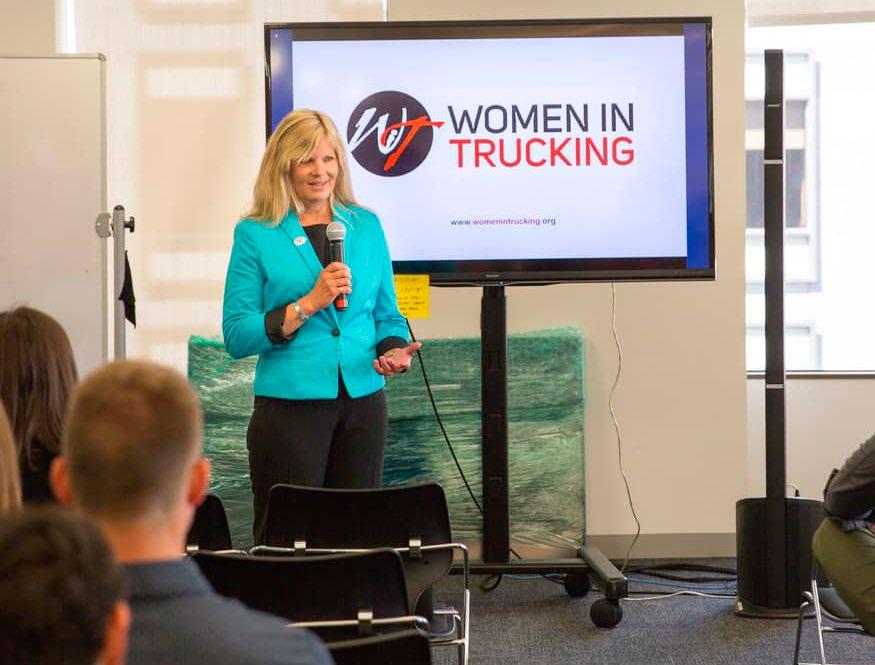
Now, more than four decades later, Voie is best known for her immense impact on women in trucking. Voie is the founder of the Women in Trucking Association (WIT), an organization she launched in 2007 to promote the employment of women in the trucking industry. The organization addresses workplace and safety barriers and measures industry progress on gender inclusion.
Voie’s influence spans advocacy, recruitment, policy advising and industry education. This summer, she published a book, From Dispatcher to Disruptor: One Woman’s Journey to Drive Gender Diversity in the Trucking Industry, reflecting on her career and the changes she has witnessed in transportation; a milestone that comes after decades spent shaping how the industry understands gender, safety and opportunity.
Voie has said her interest in transportation began with a willingness to pursue skills traditionally discouraged for girls. She took shop class, auto mechanics and welding courses, often repeating the message she would later become known for: girls can do anything.
She entered the trucking sector in 1978 at a steel-fabricating plant in Wisconsin, where she drafted material-handling equipment before transferring into the company’s traffic department, according to North America Outlook.
As traffic manager, Voie coordinated shipments, managed a small fleet of trucks and oversaw the movement of raw and finished materials. The role offered early exposure to freight logistics and the operational challenges facing carriers.
She later worked as a dispatcher for a grain-hauling carrier before co-owning a small trucking fleet, according to the Insurance Risk Management Institute. After starting a family, Voie spent sev-
eral years as a freelance transportation consultant, licensing and permitting trucks for carriers across Wisconsin.
Those roles provided her with a broad perspective on the industry, spanning from office work to hands-on operations. They helped shape her understanding of the structural challenges facing both drivers and carriers.
Building perspective before advocacy
Before Voie founded WIT, she held several leadership roles that expanded her perspective on workforce development and industry culture.
From 2000- to- 2006, she served as executive director of Trucker Buddy International, a mentoring program that paired professional drivers with elementary-school students as pen pals. According to the Women in Trucking Association, under her leadership, the program expanded internationally.
Voie later joined Schneider National as manager of retention and recruiting programs, where she developed
initiatives to encourage non-traditional groups, including women, to consider trucking careers. She also worked on reducing driver turnover by addressing dissatisfaction related to communication, workplace culture and job expectations, the association reports.
In that role, Voie oversaw newsletters, audio magazines, and a driver-focused website with tools that provided her with insights into driver concerns and the importance of communication in retention efforts.
Together, those experiences positioned her as someone with a systemlevel view of trucking’s workforce challenges.
Voie founded the WIT in March 2007. The association’s mission is to promote the employment of women in the trucking industry, remove barriers to success and recognize women’s accomplishments across the sector.
The association acquired approximately 500 members in its first year, a figure cited by the Mid-America Trucking Show as evidence of early demand for industry-wide advocacy. Membership later expanded to include both individual and corporate members, including carriers, suppliers and manufacturers.
Voie obtained her Class A driver’s license in 2008. This move was intended to strengthen her advocacy by grounding it in firsthand driving experience, as per the association.
Under her leadership, WIT developed programs and tools aimed at turning advocacy into measurable change.
Throughout her career, Voie has consistently maintained that women in trucking face challenges that extend beyond recruitment slogans. She has emphasized that statements such as “we hire the best person” are insufficient without addressing the practical barriers women encounter on the job,
including truck design, training practices, uniforms, facilities, and personal safety.
Drawing on feedback from women drivers, Voie has encouraged the industry to address issues that have long been treated as individual rather than systemic problems. Research published under her leadership examined gender bias, harassment, and samegender training policies, according to Trucking Dive, providing data to support experiences that many women drivers had reported as ignored.
Voie has also advocated for safer working conditions at truck stops, pressing operators to improve lighting and security after women reported concerns about overnight parking and rest areas. She further encouraged truck manufacturers to consider cab ergonomics that accommodate a wider range of body types and to include safety features such as panic buttons, Overdrive magazine reported.
By framing inclusion as a matter of safety, retention and operational efficiency, Voie helped shift industry conversations away from optics and toward accountability.
Voie has long maintained that improving conditions for women drivers must be paired with changing how trucking is perceived, particularly by young girls.
To that end, she supported outreach initiatives aimed at promoting trucking as a viable and respectable career choice from an early age. One initiative involved the launch of a 13-inch truckdriver doll named Clare, designed to challenge stereotypes about who belongs behind the wheel, according to MOTOR magazine.
Voie also backed partnerships with organizations such as Girl Scouts of the USA, which led to the creation of a supply chain patch and “Trucks are for girls” events beginning in 2014. Over 1,500 girls earned the patch through these programs, MOTOR reported.
She has stated that expanding the talent pool involves reaching future workers before assumptions about gender and work become ingrained.
One of Voie’s most lasting contributions to the industry was her insistence that progress be measured, not merely discussed.
Under her leadership, the WIT Index was developed as an annual benchmark that tracks the percentage of women in transportation roles, including drivers, leadership, and support positions. According to Material Handling Wholesaler, the index provided companies with data to assess their own performance on gender inclusion.
Industry analysts have noted that the index helped normalize the idea that diversity metrics belong alongside traditional performance indicators, shifting conversations from intention to evidence.
Voie also recognized that isolation was a recurring theme among women drivers, particularly those working longhaul routes or in male-dominated fleets.
She supported the development of conferences, awards, and mentorship programs aimed at bringing women together across roles and regions. Events like the annual Accelerate! Conference and Expo offer spaces for networking, professional growth, and recognition, helping women drivers and industry professionals connect beyond their individual workplaces.
Advocates say those efforts helped validate women’s experiences and created informal support networks that extended beyond formal programming.
Voie’s advocacy extends beyond industry forums into national policy discussions. She has served on the Federal
Motor Carrier Safety Administration’s Motor Carrier Safety Advisory Committee and previously on the U.S. Department of Transportation’s Entry-Level Driver Training Advisory Committee, according to International Newsroom.
In those roles, she raised concerns about safety standards, training quality, and workforce equity, bringing the perspectives of women drivers into regulatory conversations that had historically lacked them.
Voie’s work has gained recognition through numerous industry and public honours. Most recently, in 2023, Navistar presented Voie with the Nettie Fowler Champion of Change Award, recognizing her sustained commitment
to advancing women in transportation, WIT says.
She often emphasizes that trucking is “all about people, not freight, trucks or customers,” a philosophy highlighted in industry publications including MOTOR. Supporters argue that focusing on people, especially those who have been historically marginalized, has helped turn advocacy into tangible change.
Although Voie is no longer involved in the day-to-day leadership of WIT, her influence remains visible across the industry. She continues to speak, write and host the Women in Trucking Show on SiriusXM’s Road Dog Trucking channel, where discussions often centre on safety, career pathways and lived experience.
Many of the initiatives she championed continue to operate, reflecting an approach that embedded change into industry structures rather than tying it solely to her leadership.
Voie’s career demonstrates how sustained advocacy can reshape an industry from within. By elevating women’s experiences, insisting on data and pushing for practical solutions, she has helped redefine how trucking approaches safety, recruitment and workplace culture.
As the industry continues to face labour shortages and retention issues, the concerns Voie raised and the changes she helped promote remain important. Her influence is not just in opening doors for women truckers, but also in ensuring those doors lead to safer and fairer workplaces.
By Angela Altass
“Customers want a clean, dry car every time, and they want it in an environment that is attractive and feels safe,” notes Kraig Snyder, national sales and marketing manager, J.E. Adams Industries Ltd.
Compatibility with various payment methods, including QR codes, are important for vacuum offerings, while, for dryers, it’s the amount of air, positioning of bags, and efficiency that are key features,” says Snyder.
“For vacuums, great suction, the right payment methods, sturdy and reliable structures and working with a company with excellent customer service are essential,” says Snyder.
“Using our dryers provides high air volume with positioning to optimize the drying process while minimizing energy consumption. Our silencer package helps to keep the noise level down without sacrificing performance.”
In February 2025, J.E. Adams acquired the assets of Proto-Vest, a carwash equipment manufacturer specializing in high-efficiency dryers, conveyor systems, tunnel equipment, brushes, and other cleaning components.
“We purchased Proto-Vest and are going through it piece by piece to make it the best version yet,” says Snyder. “We are improving perfor-
mance while not increasing energy consumption and we are combining some offerings to reduce the number of systems required to produce dry cars. With vacuums, we continue to extend our offerings with regard to different cashless systems. We continue to offer our stanchions with either a central vac powered system or our tried-and-true vacuums mounted to a pole. These are available as vacuum only or vacuum with air. Both are excellent Dryers and vacuums are important components of the carwash experience, providing the finishing touches to customer satisfaction.”
It comes down to what they want on site, what will be more economical for
up-front installation, and lastly, which way will be more efficient to operate over the years.”
The self-serve vacuum is a place where the carwash customer interacts directly with the equipment and if they regularly encounter poor performance or broken equipment, they will leave the site with unmet needs and a negative experience, notes Adam Thompson, sales representative, Eurovac Inc.
“A strong performing vacuum conveys a message of quality to customers,” says Thompson. “Reliability and serviceability are important factors to consider. Are spare parts readily available? Can the unit be repaired on site? These are important questions to ask when making equipment decisions.”
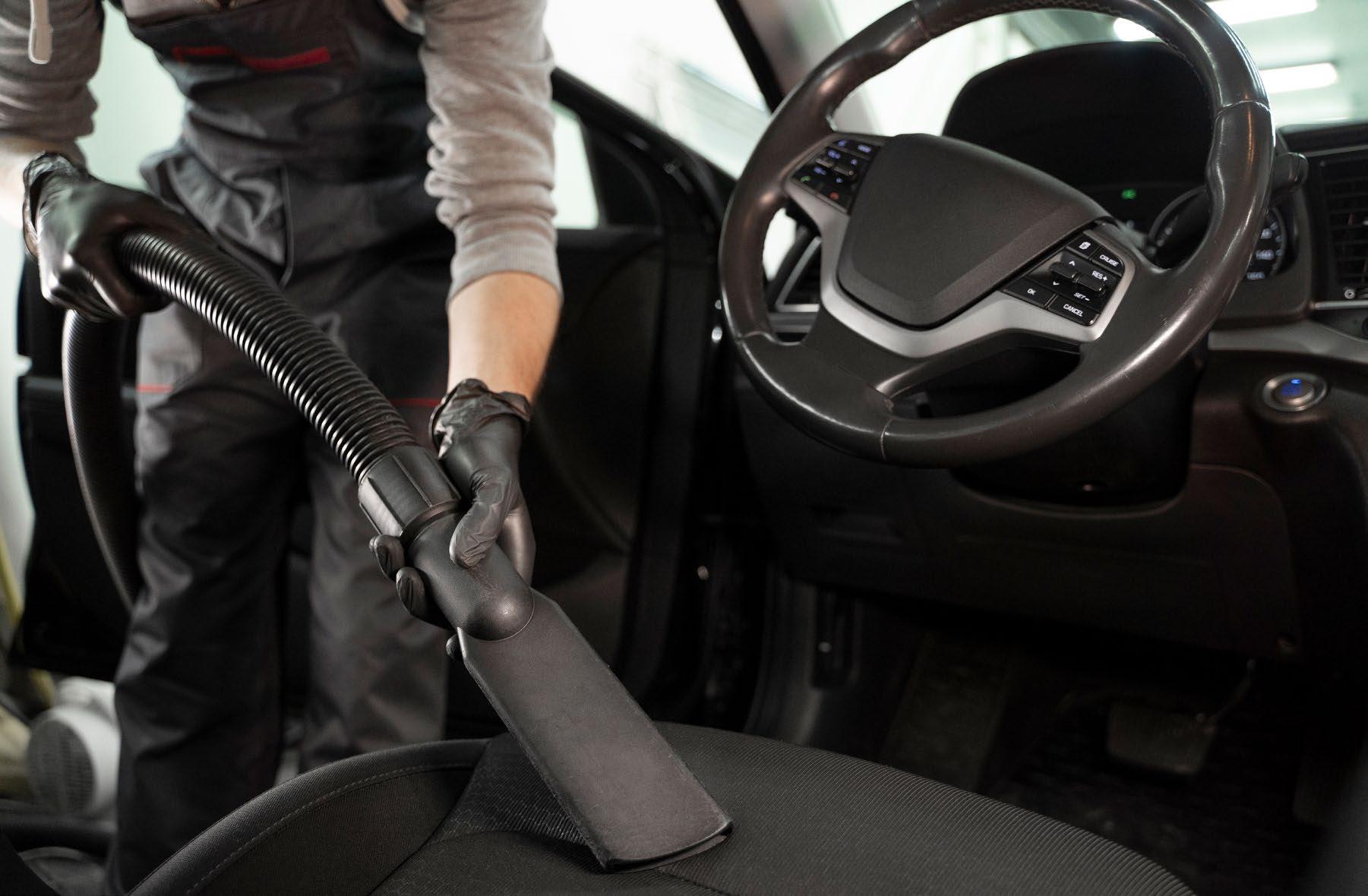
producers, replacing one larger producer, offers the same performance at a lower consumption rate.”
For high volume sites, pre-separation before the vacuum pipe is essential, says Thompson.
The move away from traditional stand alone vacuums to central systems continues, says Thompson.
“More Canadian operators are adopting the free vac model that has been popular in the U.S. for years,” says Thompson. “One of our most recent improvements is the aluminum canopy. Traditionally, carwash canopies have been cloth. The painted perforated aluminum can be painted in the same eye-catching colours as the traditional cloth but offers increased strength and durability through harsh Canadian winters.”
Energy savings are important consider ations when it comes to vacuums, states Thompson.
“This is not a new trend but is still one of the top concerns for operators,” he says. “Variable frequency drives (VFDs), an advanced electrical control system, draws only enough electricity to meet user demand. Dual, smaller
“Pre-separators remove large debris and water from the air before it enters the pipe, preventing clogs that would cause the vacuums to shut down,” says Thompson. “Slide gates are another smart option. They allow you to shut off one vacuum for service without having to shut down the entire central system.” With a wet, caustic environment, carwash facilities and equipment are high maintenance, notes Cheryl Ehmen, chief executive manager, Aerodry Systems.
“We continue to be proactive in the utilization of stainless steel and other materials coupled with thoughtful design to mitigate detrimental effects,” says Ehmen. “Dryers are relatively removed from direct chemical contact that causes extreme coating and deterioration.”
Dryers are the most visible component at the exit door of the carwash bay and can effectively be used as marketing, says Ehmen.
“For this reason, the dryers need to be clean and shiny for the customers to perceive their cars to also have those qualities,”notes Ehmen. “Additionally, many customers look to a carwash to soothe their senses as opposed to increasing their agitation with extreme sound.”
Aerodry Systems is field testing a prototype of a back blaster, designed to focus on drying the back of vehicles.
“For many years, operators have inquired about improving the dry on vehicle rear and bumper areas,” says Ehmen. “Additionally, mirrors have been a concern. Currently, we are field testing a prototype of a back blaster with impressive results. Aerodry is now conducting further testing on placement of the back blaster to refine the results. At Aerodry, we combine proven technology with experience to provide superior drying systems that ensure efficiency, reliability, and lasting customer satisfaction.”
Providing a quality carwash service from start to finish includes drying and vacuum experiences that have satisfied and happy customers driving away in clean, dry vehicles.

A collaboration grounded in precision, discipline, and the people who bring these principles to life.
Fix Network recently announced a new multiyear partnership with the TGR Haas F1 Team ahead of the 2026 FIA Formula 1 World Championship season. The collaboration reflects a natural alignment in the principles that guide both organizations: disciplined preparation, uncompromising standards, and a belief that performance is built by people who take pride in their work.
Fix Network operates one of the world’s largest and most diverse networks in collision, glass, mechanical, and restoration services. Across every brand and service line, thousands of skilled professionals uphold a consistent approach to quality and dependability. These same values underpin elite motorsport, where precision, process, and teamwork define success.
As the VF26 makes its debut, Fix Network branding will appear on the car and on team apparel, including that of drivers Esteban Ocon and Ollie Bearman. For Fix Network’s franchisees and teams, this association offers a global stage that reflects the pride, professionalism, and skilled approach they bring to customers every day.
Ayao Komatsu, Team Principal of TGR Haas F1 Team, commented, “Fix Network brings a strong operational mindset and a commitment to high standards that align naturally with our team. Their focus on quality and continuous improvement mirrors the principles that guide our work in Formula 1. We are pleased to welcome them with the 2026 season.”
Steve Leal, President & CEO of Fix Network, shared, “Our network is built on people who take pride in doing things right – every repair, every service, every day. That pride drives the standards and reliability our customers and communities count on. It’s the same commitment to precision and performance we see in the TGR Haas F1 Team, making this collaboration a natural fit and giving Fix Network a global stage to champion the principles we live by.”
For Fix Network, this alliance reinforces its commitment to innovation, operational excellence, and consistent execution across its family of brands. For the TGR Haas F1 Team, it brings a global organization known for reliability, craftsmanship, and the strength of locally owned expertise.
Throughout the 2026 season, Fix Network and the TGR Haas F1 Team will highlight shared values and celebrate key milestones with fans, partners, and the Fix Network community.

Fix Network is a global leader in repair and restoration services for vehicles, homes, and businesses, supporting a growing family of locally owned and operated brands in collision repair, mechanical services, glass care, and property restoration. Our portfolio includes Fix Auto Collision, Fix Auto Service, NOVUS® Glass, ProColor Collision, Speedy Auto Service, Speedy Glass USA, SRP Products, NOVUS® Polish, and Fix Nation Restoration. With over 2,000 points of service worldwide, Fix Network is trusted by customers and industry partners for its commitment to quality, safety, and service excellence. Rooted in entrepreneurship and innovation, we empower independent business owners to succeed with world-class support, advanced technologies, and leading-edge training. Headquartered in Canada, Fix Network continues to expand globally as the premier provider of aftermarket solutions for vehicles and property. In the United States, Mondofix Inc. has granted an exclusive license to 79411 USA LLC for the Fix Auto Collision brand. For more information, visit www.fixnetwork.com

TGR Haas F1 Team has been a stalwart of the FIA Formula 1 World Championship over the past decade following a memorable points-scoring debut for the American owned squad at the 2016 Australian Grand Prix. Now with over 200 grand prix starts to its credit, TGR Haas F1 Team prides itself on being an ambitious challenger within Formula 1 backed by technical partnerships with Scuderia Ferrari and Toyota GAZOO Racing – further underlining its on-going commitment to excellence and advancement within the sport. Founded by industrialist Gene Haas – owner of Haas Automation, the largest CNC machine tool builder in North America with over 80 worldwide outlets – TGR Haas F1 Team is headquartered in Kannapolis, North Carolina in the United States with additional operations in Banbury, England and Maranello, Italy. Domestically Gene Haas is a mainstay of the American motorsport scene having started his own NASCAR team in 2002. A 2008 partnership with champion driver Tony Stewart led to the renamed StewartHaas Racing becoming a powerhouse operation winning two NASCAR Cup titles and two NASCAR Xfinity championships. Haas’s personal dedication to NASCAR continues with his current ownership of Haas Factory Team – running in both the Cup and Xfinity series. Info – www.haasf1team.com
By Sana Fatemi
For many truck drivers, pain comes with the territory. Long hours behind the wheel, tight delivery windows, and limited opportunities to move mean aches and stiffness are often brushed off as part of the job. Lower back pain, in particular, is widespread among commercial drivers, with occupational health studies consistently identifying prolonged sitting as a significant risk factor for musculoskeletal injury. (Canadian Centre for Occupational Health and Safety).
But for many truckers, ongoing lower back, hip, or leg pain may not stem from the spine at all. Instead, it could be caused by a lesser-known condition called piriformis syndrome, a treatable but often overlooked source of nerve pain that can gradually worsen over time.
Often mistaken for sciatica, piriformis syndrome is increasingly recognized by clinicians as a potential issue among workers who sit for extended periods, according to the Cleveland Clinic. For truck drivers, the combination of prolonged sitting, repetitive movement, and physical labour creates a perfect storm.
The piriformis is a small muscle situated deep in the buttocks, extending from the sacrum at the base of the spine to the top of the femur. Its main function is to stabilize the hip and aid with leg rotation, particularly during walking and shifting movements. (Mayo Clinic )
The sciatic nerve, the largest nerve in the body, passes very close to the piriformis muscle. In some individuals, it runs directly beneath it. When the piriformis becomes tight, inflamed, or overused, it can compress or irritate the sciatic nerve, resulting in pain that closely resembles traditional sciatica, according to the Mayo Clinic and the Cleveland Clinic
According to a review published in the Journal of the American Academy of Orthopaedic Surgeons, because the symptoms of Piriformis often mimic those caused by disc problems in the lower spine, they are frequently mis-
diagnosed or dismissed, particularly in workers who expect back pain as part of their occupation.
Truck driving imposes sustained and specific demands on the body, particularly the hips, lower back, and legs. Several risk factors make drivers especially susceptible to piriformis syndrome.
Prolonged sitting, often for eight to twelve hours a day, keeps the hips in a flexed position, which can shorten and tighten deep hip muscles over time, according to the Canadian Centre for Occupational Health and Safety. Limited hip movement, combined with poorly adjusted seats or inadequate lumbar support, further increases strain on the pelvis and surrounding muscles.
Drivers also perform physically demanding tasks, such as lifting tarps, chains, and cargo. Repetitive actions like climbing in and out of the cab, often favouring one side of the body, can cause muscle imbalance, physiotherapists observe.
Postural habits also influence discomfort. Sitting on a thick wallet in a back pocket, sometimes referred to as “wallet sciatica,” can tilt the pelvis and increase pressure on the sciatic nerve, according to Harvard Health Publishing
Whole-body vibration from the truck itself introduces an additional risk. Studies published in Occupational and Environmental Medicine have linked longterm exposure to vehicle vibration with higher rates of lower back and soft-tissue injuries among professional drivers.
Piriformis syndrome not only causes discomfort but can also hinder a driver’s ability to work safely and efficiently.
Drivers with untreated symptoms may struggle to sit comfortably for extended periods, leading to frequent position changes, increased fatigue, and reduced focus. Pain can flare when getting out of the cab after a long haul, making routine movements even more difficult. Sleep is often affected as well. Pain in the hip or leg can persist in the sleeper berth, leading to poor rest and slower recovery between shifts. Factors that Transport Canada has associated with increased crash risk.
Over time, the condition can interfere with basic job tasks such as backing up, checking blind spots, climbing stairs, changing tires, or maintaining balance on uneven ground. Some drivers reduce mileage or miss work entirely due to pain, affecting income and longterm job sustainability.
untreated, piriformis syndrome can become chronic, leading to ongoing nerve irritation and increased sensitivity.
Many drivers assume the pain is “just lower back pain” or a flare-up of sciatica, a misconception clinicians say is common among workers who sit for long hours, including truck drivers, according to the Cleveland Clinic. Others notice discomfort worsening during long drives but easing slightly after time off, reinforcing the belief that it’s temporary, a pattern frequently noted
Common warning signs include:
• Pain that worsens the longer you sit
• Needing to shift positions frequently while driving
• Pain after loading, unloading, or climbing out of the cab
• Tingling or numbness down one leg
• Weakness or discomfort when pressing pedals
When these symptoms become frequent or progressively worse, they should not be ignored, healthcare professionals warn.
Proper diagnosis is essential, as treatment differs from that of spinal disc injuries, according to Mayo Clinic.
Healthcare providers usually start by ruling out lumbar disc problems or spinal nerve compression. Physical exams may include specific tests like the FAIR test (flexion, adduction, internal rotation), the Pace test, or direct palpation of the piriformis muscle to reproduce symptoms, according to the Cleveland Clinic.
Imaging such as MRI may be used in some cases, primarily to exclude other causes rather than to confirm piriformis syndrome itself, clinicians say, as noted by the Journal of the American Academy of Orthopaedic Surgeons.
Prevention focuses on reducing prolonged strain and improving mobility, even in small ways.
In the cab:
• Adjust seat height so hips sit slightly higher than knees
• Ensure proper lumbar support
• Avoid sitting on wallets or bulky items
• Consider an ergonomic or memoryfoam seat cushion
Ergonomics specialists note that proper seat positioning can significantly re -
duce strain on the hips and lower back during long-haul driving.
On the road:
• Take short movement breaks every one to two hours
• Walk around the truck during stops
• Perform simple stretches such as hip flexor, hamstring, and figure-4 stretches
Even brief movement breaks can significantly reduce muscle tightness, according to guidance from physiotherapy and occupational health organizations.
• Strengthen the glutes and hip stabilizers
• Maintain hydration to support muscle health
• Use heat packs while parked to relax tight muscles, or alternate heat and cold if inflammation is present
Healthcare providers say consistent strengthening and mobility routines play a key role in preventing recurring nerve compression.
When piriformis syndrome does occur, treatment is often effective, clinicians say.
Physical therapy is the most common approach, focusing on stretching, strengthening, and reducing muscle tension. Trig-
ger-point therapy, massage, and foam rolling are frequently used according to physiotherapy treatment guidelines.
Anti-inflammatory medications may help in the short term if prescribed. Some drivers also benefit from chiropractic or osteopathic care, particularly when pelvic alignment contributes to symptoms, musculoskeletal specialists note.
In more severe cases, corticosteroid or Botox injections may be considered to reduce muscle spasm and nerve compression. Surgical intervention is rare and typically reserved for cases that do not respond to conservative treatment, according to guidance from the Mayo Clinic and the Cleveland Clinic
Piriformis syndrome is a common but frequently overlooked condition in the trucking industry. The good news is that it is highly treatable and often preventable.
Recognizing symptoms early and making small adjustments to posture, mobility, and cab ergonomics can prevent long-term pain and missed work. For drivers whose livelihoods depend on remaining behind the wheel, addressing hip and nerve pain promptly is not just about comfort, it’s about career longevity.
Sometimes, the smallest adjustments make the biggest difference.

Our round up of national electric vehicle news collected from around the web.
By Kirk Mathieson

After years of being overly dependent on traditional partners, Canada is forging new relationships, both internally and externally to produce innovative partnerships that are driving the future of auto manufacturing.
Alot has changed since the first Model T rolled off Henry Ford’s Detroit-based assembly line back in 1908, introducing an iconic vehicle that forever altered North America’s automotive and manufacturing landscapes and put affordable transportation within reach for millions of American drivers. The “Tin Lizzy” ceased production in 1927 to make way for more advanced models, but its impact continued to be felt throughout the 20th century and helped lay the foundations for the modern era.
Fast forward to 2026, where we confront a world with artificial intelligence, self-driving vehicles and a rapidly changing global economy. As Canada continues to make the transition to electric mobility, strategic partnerships will continue to play a key role in the move towards a greener future. New technology brings new challenges along with new opportunities.
Here’s some positive news from the front lines.
One issue related to EV design is finding ways to reduce their overall carbon footprint by using safer materials. A company from Hamilton has taken the
lead on this approach by developing a switched reluctance motor (SRM) that is magnet-free. In October 2025, they received a grant from the Honda corporation through its global open innovation program, Honda Xcelerator Ventures.
According to Manabu Ozawa, Honda’s Managing Executive Officer, “Enedym has an innovative switched reluctance motor technology that does not require any rare earth materials. Most electric propulsion motors today use permanent magnets made from rare earth metals, which are expensive and environmentally challenging. Enedym motors do not use any permanent magnets, and Honda has high hopes for its potential.”
Research and development into new technologies is expected to accelerate as EVs become more popular and more charging stations are built to meet consumer demand for clean transportation.
“At Enedym, we have redefined what swtiched reluctance motors can do. Through proprietary motor configurations, cutting edge control strategies, and comprehensive design optimization, we have overcome the traditional limitations of SRMs,” Dr. Ali Emadi, the founder and president of Enedym, said in a recent press release. “We are very pleased that Honda sees the potential of our motor technology. We are
excited to deepen our partnership with Honda and welcome them as our strategic investor.”
Canadian battery recycling program to expand thanks to new partnership
The average ICE passenger vehicle emits between 10-and-20 kilograms of CO2 per 100 km, or about 4.5 metric tonnes per year. Multiplied over millions of vehicles, this becomes a much bigger number – and problem.
The advantage of EVs is their potential to eliminate fossil fuel reliance in the auto sector; however, their life cycle impact poses its own set of challenges. The main component of an EV – a lithium-ion battery weighing up to 500 kg – requires excavating minerals like manganese and cobalt using energyheavy processes that are harmful to the environment. Moreover, despite rigorous policies around recycling that exist in most areas, some battery components still end up in landfills.
A Canadian tech innovation firm wants to change that. Lithion Technologies Inc., a Montreal- based company specializing in battery recycling, recently signed a deal with Nissan to expand their efforts to recover critical minerals from end-of-life EV batteries. Lithion’s

hydrometallurgical recycling process enables the recovery of up to 95% of battery materials and 98% of critical minerals, allowing these materials to be reused and potentially reducing dependence on costly resource extraction.
Lithion’s new plant located in SaintBruno-de-Montarville, Que., currently processes up to 10,000 tonnes of batteries per year, a figure that’s expected to double when the facility is running at full capacity in 2026.
“We are thrilled to team with Nissan and to support its vision on circularity of strategic and critical minerals from EVs,” said Yves Noël, Vice President and Chief Business Development Officer at Lithion Technologies Inc. “The strategic partnership with Nissan Canada and its dealer network is another great example of collaborations needed to realize the quest for clean, safe and efficient circularity of EV batteries.”
In an industry where tariffs and kneejerk responses seem to rule these days, unpredictability has become the new normal. The good news is that
Sources:
Model T: https://en.wikipedia.org/wiki/Ford_Model_T
it has enabled Canadian companies, overly-dependent on our neighbours to the south for far too long, to forge new partnerships and to reassess how business is done. And it appears that
these new partnerships will be the key driver as we enter a new year and new beginnings.

Emissions: https://www.epa.gov/greenvehicles/greenhouse-gas-emissions-typical-passenger-vehicle
Battery: https://en.wikipedia.org/wiki/Electric_vehicle_battery
Enedym Grant: https://enedym.com/enedym-inc-secures-investment-from-honda-motor-co-ltd/
Recycling program: https://electricautonomy.ca/ev-supply-chain/recycling/2025-06-28/ev-battery-recovery-program-goes-nationwide/ https://canada.nissannews.com/en-CA/releases/nissan-canada-inc-and-lithion-technologies-to-advance-ev-battery-recycling-and-circular-economy-through-new-partnership#

Bits and pieces of the strange, bizarre and sometimes inexplicable gathered from around the web so you don’t have to! Yer welcome!
The legendary Wienermobile needs you. Oscar Mayer is on the hunt for its next crop of “Hotdoggers.” If you don’t know, that’s the term for the team members assigned to trek the iconic hot dog-shaped vehicle around the country.
Your mission, should you fit the requirements of Oscar Mayer, is to shuttle the Wienermobile around the country. Next year marks 90 years of the hot dog-on-wheels touring our nation, with this crop of new drivers being the 39th class of Hotdoggers.
Source: https://www.motor1.com/news/781561/you-can-drive-the-wienermobile
Simon Kidston seems to live a pretty wonderful life. The British car collector and dealer owns and drives some of the greatest vehicles ever built. It’s in his blood. His uncle was one of the Bentley Boys, while his father was a pilot, race car driver, and an officer in the Royal Navy. Simon has been around interesting vehicles his whole life.
Kidston’s collection, as a whole, is truly remarkable. The 1977 Lamborghini Countach LP400 Periscopio, however, is undoubtedly a highlight. An LP400 Countach lacks the wild aero that would arrive just a few years later, and so it presents as something closer to the original prototype.
Source: https://www.motor1.com/news/780769/haunted-lamborghini-countach-drives-itself
The annual Oblivion Car & Culture Show provided something special this year in addition to the usual outstanding collection of cars from the 80s and 90s. The event, which took place August 12 at Country Heritage Park in Milton, began in mid-afternoon and ended in twilight with iconic 80s and 90s images, such as Wayne Campbell of Wayne’s World, and music shown on a screen to create an outdoor Drive-In Theatre motif.
So what does it take to become a Hotdogger? Oscar Mayer wants fresh college graduates. The pay isn’t much—the salary is just $35,600. But you also get a weekly allowance of $150, 100 percent coverage of your hotel expenses, full health benefits, and up to 18 days of paid time off.
Oh yeah, and you also get to drive the freaking Wienermobile around the country! The gig lasts for one full year and allows you to tour the “hot dog highways” of America.
It appears, however, that Kidston’s Countach might also be a bit haunted. The car was parked outside a large residence in Scotland when it apparently started up and moved under its own power in the middle of the night. Kidston confirms no one was at the wheel. He has security footage backing up his claims, as well.
Thankfully, the Countach came to a rest in a bush against a wall of the house. Had the car veered more toward the passenger side, it would’ve smashed the nose. A bit more to the left, and it may have gone down a hill into a river.
Organizer Justin Sookraj and his team curated more than 250 vehicles, and also had indoor displays, vendors, food merchants and arcade games. There were also appearances by actors from the Canadian TV show Degrassi High.
Prizes were awarded in different categories from the collection of cars. Prizes were also given out to people who dressed up in 80s and 90s themes.
Source: https://www.thecarmagazine.com/2025/09/04/oblivion-car-show-2025-a-joyride-back-in-time





Presented by Parking Review magazine, the British Parking Awards “recognise the leading examples of car park management, enforcement, design and teamwork”. The 2024 award for Best New Car Park went to... Blackpool Central multistorey.
At the 2024 Forecourt Trader Awards, MFG St Clears service station in Carmarthenshire took the top gong as the UK’s Forecourt Trader of the Year. Come on now, don’t try and tell yourself you haven’t got a favourite fuel station.
Brought to you by the folks behind the 24 Hours of Lemons endurance race, this aims to lower the tone of the stuffy Monterey Car Week. Worst of Show in 2024 went to a brown, fur covered Lincoln with a horse mannequin on the roof.
Every year, responses to Zapmap’s annual EV charging survey are used to create a league table of charging networks across the UK. In 2024 the ‘large’ networks table was topped by Tesla for the first time.
The Caravan Club’s Towcar of the Year competition put 28 contenders to the test in 2024, with the Porsche Cayenne E-Hybrid coming out as the overall champion having already triumphed in the hotly contested ‘Caravan weight over 1,700kg’ category.


The competition concludes with a National Final during which competitors must pretend they work for the fictitious Middle Walk Bus Company and then simulate a normal day, complete a theory test, before the winner is announced at a gala dinner.
The Bodyshop Awards 2024 crowned “the best and brightest in the UK accident repair industry” with separate awards for small, medium and large bodyshops, plus a number of gongs for technicians and apprentices.
An award so prestigious the announcement of the 2024 winner made national news. Both BBC News and the Daily Mail reported on Swindon’s bonkers Magic Roundabout being crowned by the UK Roundabout Appreciation Society.
The one they all want to win. The overall winner at the Loo of the Year Awards is presented with the ‘Golden Loo Seat Trophy’. There was a motoring triumph at the 2023 awards, with campsite and caravan park Hillcroft Park taking the top gong.
By Kristen Lipscombe
For the owner of the NAPA Auto Parts nestled in tiny Corner Brook, N.L. – population just over 19,000 – it’s hard to believe that his store has had its doors open for just over 25 years now.
Jack-of-all-trades Craig Jackson and staff started warmly welcoming customers from in and around the small west coast Newfoundland town into the NAPA associate shop, registered as CRJ Automotive, Ltd. back in September 2000.
“The first anniversary of the store was the 9-11 attack,” Craig said of the heavy atmosphere that long hung over the store’s annual birthday. “So, we never celebrated anything for this store for an anniversary until our 10th anniversary in 2011.”
“And we really don’t celebrate it all,” out of respect for all of those impacted by the historical tragedy – and Newfoundland’s unique role in helping out stranded passengers in the midst of chaos – but it was time to do something spe -
cial for the NAPA Auto Parts associate shop’s 25thanniversary.
And that celebration included an incredible car show with the obligatory free barbecue on site at 37 Maple Valley Road back on Sept. 13, all day long for anybody who stopped by, along with free giveaways such as NAPA swag, including a coat marking the company’s 100th anniversary, along with other fun prizes.
“We had 27 old cars in the parking lot,” said Craig, while isn’t a mechanic by trade has been an avid automobile enthusiast his entire life. “Right back to the 1931 Ford Model A Roadster; that was the oldest car here.”
“I knew every car coming at me by the headlights going to the highway at night, I could tell you what they were,” Craig recalled of growing up loving vehicles, explaining the NAPA model of business combined with his joy for the road just works for him professionally.
“I come in every day, and I’m happy coming through the door.”

He was only 29 years old when he started up shop a quarter of a century ago.
“I have a business background and have always been interested in cars, and my father had his home wholesale business at the time, and one of his suppliers was talking to him and said there’s a great opportunity in Corner Brook, for the size of the town, that doesn’t have a NAPA store, and he put us in contact with NAPA franchising,” Craig said.
“Within six months, we were rockin’ and rollin’ and ready to go.”
“I’m proud that we’re still here,” said Craig, whose wife Stacy Jackson has helped out since the start, at first full-time and now part-time, primarily working the front counter, although he jokes, she “didn’t even know how to pump gas” when the store first got its start. “Now she can run circles around most people.”
“Meanwhile, I’m usually in the back –they hide me away,” Stacy’s husband said with a chuckle.
It’s that fun and friendly atmosphere that help make the NAPA Auto Parts location in Corner Brook a unique place to walk into and spend any amount of time – for both customers and employees alike.
“I think it’s the light atmosphere here,” Craig said of his eight-employee outfit. “Everybody gets along very well.”
It’s such a relaxed atmosphere in fact, that employee Colin Park ended up marrying Craig’s sister, teacher Danica Jackson-Park some 17 years ago. It’s been a match made in NAPA Newfoundland heaven.
Employee Dwayne Ellsworth, who “does a little bit of everything” from driving to sales, likes his work at the NAPA Auto Parts Corner Brook loca-
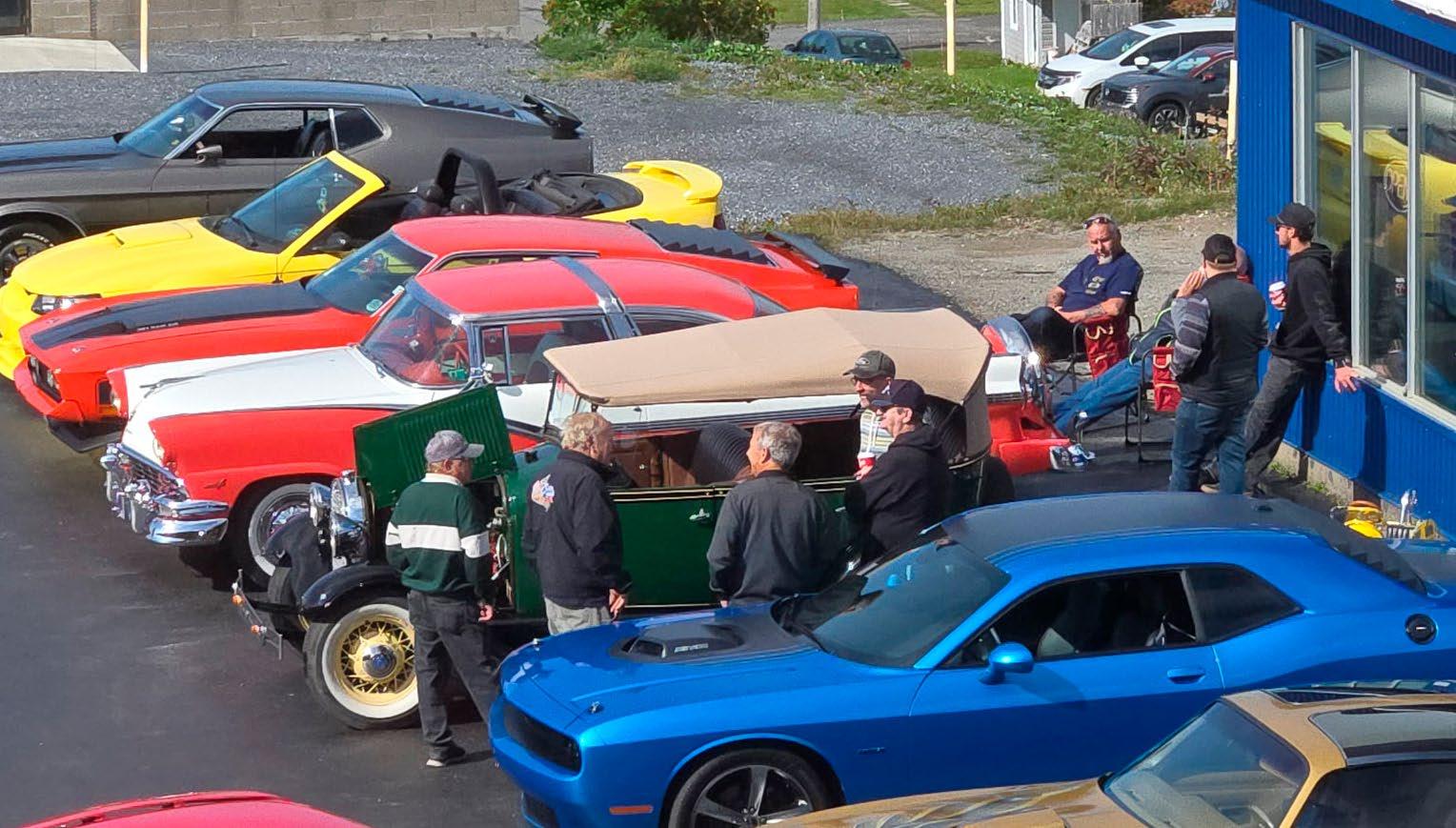
tion so much that he’s stayed in his job for 23 years – so pretty much the store’s entire existence.
“Pretty well everyone gets along,” Dwayne agreed, adding with typical Newfoundland joking sarcasm that “once in a blue moon somebody can probably piss you off.”
“It’s a family atmosphere,” said Dwayne, who grew up in Corner Brook along with Craig.
And when it comes to clients, the Cor-
ner Brook NAPA Auto Pro location’s business philosophy is to ensure “every customer leaves happy.”
“Regardless, if someone is upset because something is broken, we will always fix it to the best of our ability; if we make the mistake, we’ve got to fix it,” Craig said. “We don’t leave them stuck.”
“Whether it’s a $1,000- or a $100-part, what’s that going to cost the store in the long run?”

Happy customers are return customers, he said.
“I stand behind what we sell here,” Craig said, adding he’s also loyal to the blue and yellow NAPA colours, or in other words, the strength of the highly respected cross-border brand.
“If they buy it from me and they break down on the road, NAPA’s got a North American warranty policy,” he explained.
“If you buy it in Corner Brook, Newfoundland, and you break down somewhere in Florida, you can get your part replaced.
To me, that means the customers are well looked after,” Craig said. “I do believe in the NAPA brand.”
At the end of each workday, Craig wants to ensure every employee and client enters and leaves in good spirits.
“If the customer leaves with a smile on their face; they’re coming back.
Go to www.napacanada.com for more.
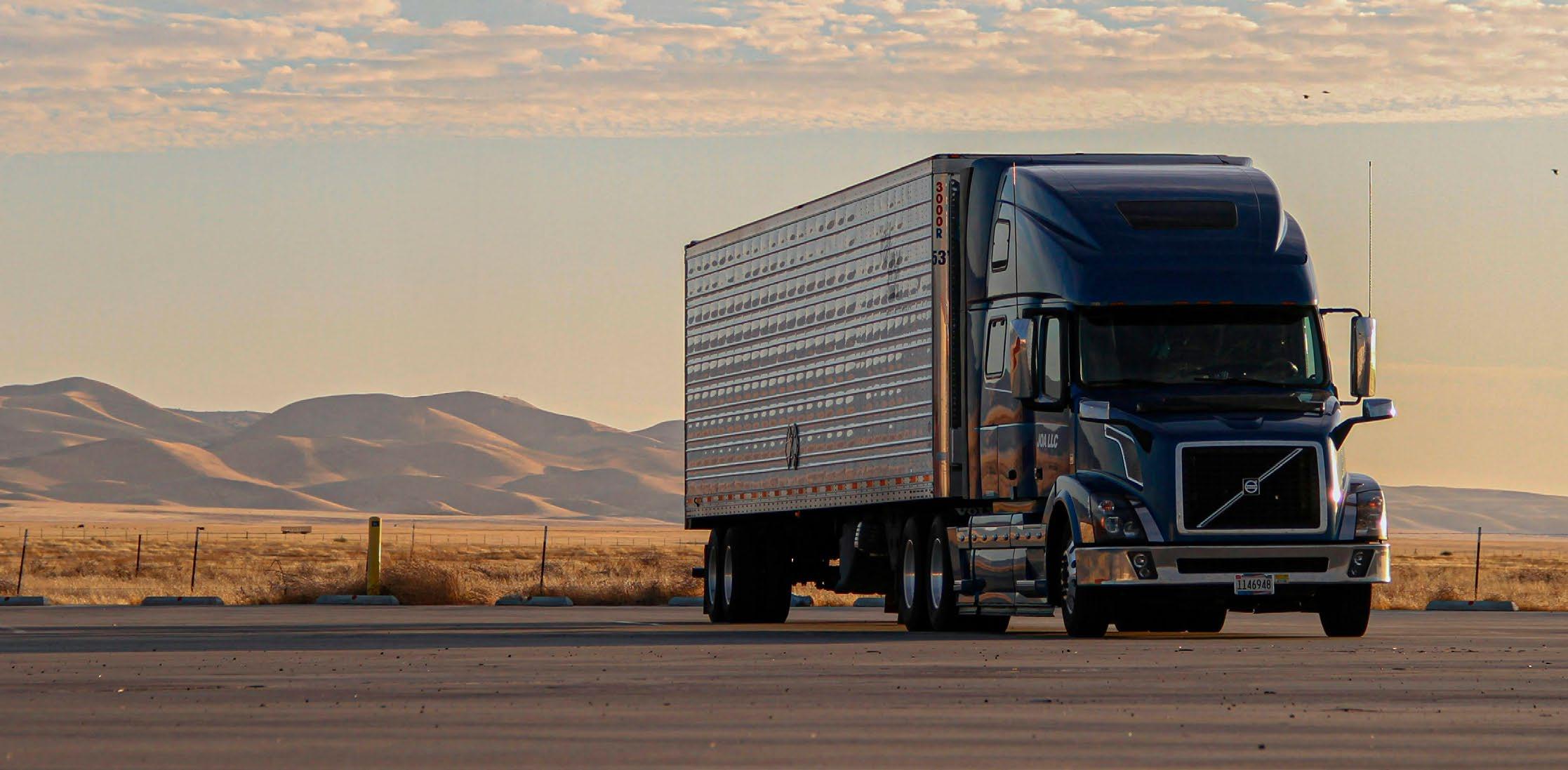
Compliant carriers ‘can’t survive’ competing vs fraud trucking: Trucknews Poll
Industry professionals say fraud seems to be everywhere in trucking — it is widely seen as systemic, normalized, and insufficiently enforced, according to respondent’s to Trucknews. com’s latest Pulse Reader Survey.
About 76% said they are extremely concerned about fraudulent practices in the industry, while another 16% said they are moderately concerned. Just 2% indicated no concerns at all.
When asked whether they have personally experienced or directly witnessed fraud, more than half (52%) said they’ve experienced it multiple times, while another 14% said they had experienced it once.
One reader wrote, “Fraud in the industry today is rampant and the bodies responsible for safety and anti-fraud have been asleep at the wheel for many years. Enforcement, enforcement, enforcement!”
Another one said, “Our whole industry is full of fraud, most of it right under everyone’s nose.”
Eighty-four percent of respondents highlighted fraudulent or improperly obtained licences as the biggest problem facing the industry right now. Fraudulent safety inspections and fake safety decals followed closely at 77%.
It is not that surprising that other common issues included employee misclassification, also known as Driver Inc., followed by questionable practices at some of the testing facilities, cargo theft and more.
Employee misclassification was one of the prevailing topics of the readers’ comments. One, for example, shared that it is very difficult for them to hire company drivers in the GTA, “because nine out of 10 applicants ask to be paid as ‘Driver Inc.’”
Another respondent echoed, “More than 50% of the driver applicants that come into our operation request to be paid as incorporated drivers. These drivers aspire to circumvent the income tax system in Canada and therefore cheat the system that depends on everyone’s fair and equitable contribution.”
“Driver Inc. is undercutting rates. Happens daily. Becoming difficult as a
carrier to watch the inactivity from the federal government,” one of the respondents complained.
Other than Driver Inc., readers pointed out various fraud and theft having direct financial impacts on their businesses, including cargo theft, equipment theft, and organized scams.
Others described large-scale schemes they believe involve organized crime. “Organized crime took us for close to $100,000,” one respondent wrote, adding that the group had targeted multiple shippers while falsely claiming to work on behalf of a major energy company. They called for stronger carrier vetting, licensing and insurance requirements for brokers, and a national registry to flag fraudulent operators.
As the Federal Standing Committee on Transport, Infrastructure and Communities (TRAN) continues to examine Driver Inc, trucking regulatory and oversight bodies, including the U.S. Govern-
ment, continue to notice the growing trend of Canadian fleet owners engaging in behaviour that jeopardizes highway safety and potential connections to illegal cross-border smuggling.
Interviewed by La Presse, U.S. diplomats who have been following the TRAN hearings, stated their concerns over truck safety, forced labour, unfair competition, and potential criminal activity conducted by cross-border carriers:
“Solving the tax issue does not resolve the problems related to driver training… We are concerned that when they perform cross-border work these drivers endanger the safety of American citizens on the roads…This also does not solve the problem of the vulnerability of these workers, nor that of the over-indebtedness in which they are trapped, and does not entirely remedy the fact that the process offered by these trucking companies are unfair…If they (drivers) are being forced to work, our concern is what else are they being forced to participate in?”
The Canadian Trucking Alliance (CTA) has for years sounded the alarm on these issues and wants to explore with Canadian and U.S. officials how current cross-border security programs can be redeveloped or potentially look at creating new programs that would ensure cross border fleets are safe, secure and labour compliant, and have no ties to criminal organizers/activity.
“After 9/11, cross-border trucking changed with the development of security programs focused on potential terrorist activity and support of these activities involving the trucking and trade industries,” said Stephen Laskowski, president and CEO, CTA.
“We believe it’s time that industry and both governments work to explore programs that would screen all crossborder carriers and drivers to ensure they are safe and compliant and do not endanger Canadian and U.S. citizens on our roadways.”
“Truck safety enforcement and training,
which is a complicated jurisdictional issue in Canada, can be led by the federal government but also shared authorities/enforcement lies with the provinces, which is an issue that is being dealt with,” says Laskowski.
Transport Canada and the Deputy Ministers of Transportation began a process to look at how to improve truck safety. CTA is expecting related announcements dealing with a potential national approach in the first quarter of 2026.
“We hope this response will assist in resolving the lawlessness and truck safety crisis in Canada.”
On December 19, the Honourable Marc Miller, Minister of Canadian Identity and Culture and Minister responsible for Official Languages on behalf of the Honourable Gregor Robertson, Minister of Housing and Infrastructure and Minister responsible for Pacific Economic Development Canada, Josipa Petrunic, President and CEO of the Canadian Urban Transit Research & Innovation Consortium (CUTRIC), and Marie Lapointe, President and General Manager for the Association de l’industrie électrique du Québec (AIEQ) announced a joint investment of over $1.2 million to support a study, data analysis and performance assessments on the use of battery electric buses by tran-
sit agencies throughout Canada. The resources and tools acquired through this study will provide valuable insight and practical advice to transit agencies seeking to implement cleaner transit options Study topics include: battery degradation, charger efficiency and diesel to electric powertrain conversion efficiency. Through research and data sharing, this investment supports the transition to cleaner transportation, reducing greenhouse gas emissions and providing communities.
”This project is a prime example of how strong collaboration towards a common goal can lead to innovation and growth in our communities. By supporting comprehensive planning today, we’re laying the groundwork for future
Now faster than ever! With improved vehicle throughput, superior cleaning and more e cient drying. The Laserwash® 360 Plus delivers pro ts to your bottom line. Reduce wash times by 30-60 seconds per car with the latest high pressure rinse and multi-function application passes to increase your daily wash volume.
projects that will create jobs, grow the economy, and protect our environment for generations to come,”
said The Honourable Gregor Robertson, Minister of Housing and Infrastructure and Minister responsible for Pacific Economic Development Canada.
• The Government of Canada is contributing $990,246 to this project through the Zero Emission Transit Fund (ZETF), and CUTRIC membership is contributing $247,562.
• To date, 9 Canadian transit agencies/ municipalities have agreed to share their valuable knowledge and findings into this dataset, which will help to inform other agencies and cities looking to begin a similar process for transitioning to zero emission transit in their communities. Additional agencies are expected to join as the project continues.
• The ZETF helps communities transition to zero emission transit and school buses to reduce greenhouse gas emissions.
• The ZETF is part of the Canada Public Transit Fund, which will provide an average of $3 billion annually on a permanent basis to respond to local transit needs by enhancing integrated planning, improving access to public transit and active transportation, and supporting the development of more affordable, sustainable, and inclusive communities.
• Through an agreement with CUTRIC, the Government of Canada is investing $10 million through the ZETF over five years to help transit bus operators to complete planning work and increase their level of readiness to transition to zero emissions bus fleets.
Less than a third of Canadians support the federal zeroemissions vehicle (ZEV) sales mandate
A new poll on attitudes towards ZEVs found that less than one third of Canadians (31%) support the federal ZEV mandate. Nearly half of Canadians (46%) want the ZEV mandate to be eliminated or made less strict.
The federal ZEV mandate dictates an annual sales ratio of ZEVs to internal combustion engine vehicles in Canada. The mandate requires that ZEVs make up a minimum of 20% of new light duty vehicle sales in 2026, 60% in 2030, and 100% in 2035. ZEVs include Plug-in Hybrids (PHEVs), Battery Electric Vehicles (BEVs), and Fuel Cell Electric Vehicles (FCEVs).
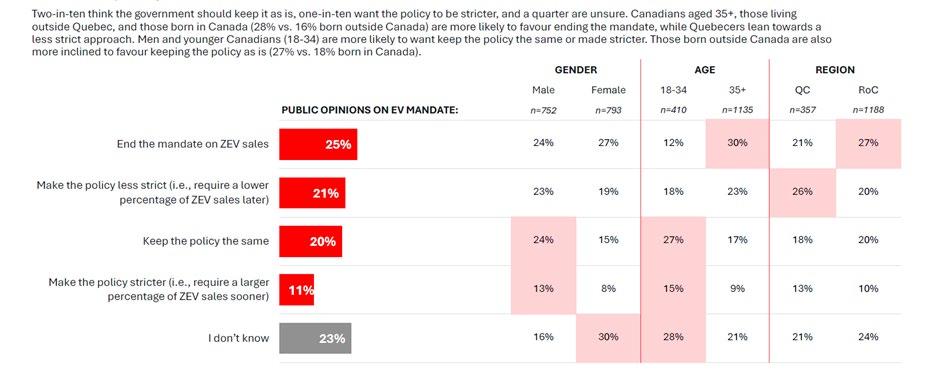
ZEV sales in Canada accounted for 10.2% of total new motor vehicle sales in September, a 43.3% decline from the same month the previous year.
The federal government introduced the ZEV mandate, know as the Electric Vehicle Availability Standard, to “improve the availability of new electric vehicles across the country”. According to the poll, a lack of ZEV availability at dealers is a non-issue for Canadians with only 11% of respondents citing this as a top barrier to adoption.
The poll finds that concerns around vehicle affordability, limited driving ranges and a lack of public charging infrastructure are the main barriers to ZEV adoption in Canada. These findings are consistent with polling results from 2021, underlining the lack of progress that has been achieved on addressing the key barriers to adoption.
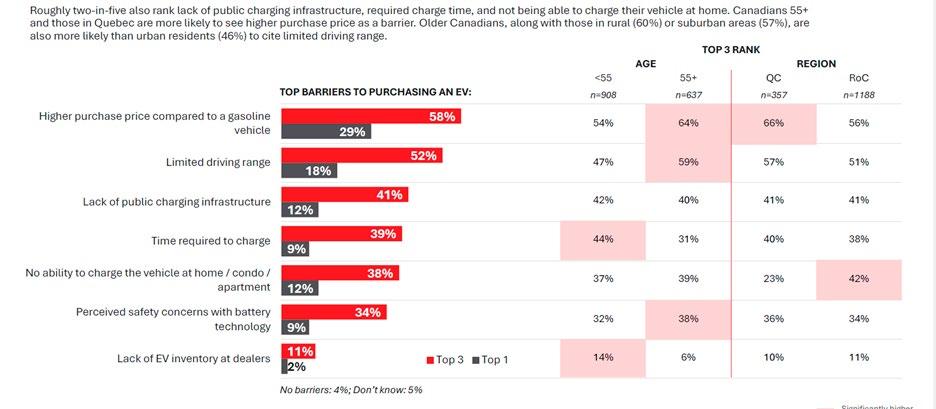
The survey was conducted by Leger for the CVMA, GAC, and CADA. The findings are based on an online survey of over 1,500 Canadians completed between November 21-24, 2025.
“Canadians want support to transition to electric vehicles, not unrealistic government mandates that can’t be met,” says Brian Kingston, President & CEO, Canadian Vehicle Manufacturers’ Association.






































































































Automotive-related content gathered from around the Maritime provinces so you don’t have to!

(RFP) was issued for a public-private partnership (P3) model covering design, construction, financing, and maintenance. That RFP has now been cancelled. Instead, qualified companies will be invited to bid on separate contracts that will be awarded progressively, similar to other projects under the annual provincial Roads Plan. This approach will create more opportunities for local contractors to compete for this significant road work.
By using more traditional construction methods, government will fund the work as construction progresses.
The $306 million highway twinning project is a 50-50 cost-shared initiative with the Government of Canada under the Investing in Canada Infrastructure Program. The TCH is part of the
traffic capacity, improve safety by sep arating opposing lanes, and strengthen year-round transportation links. It will also enhance reliability, support rural communities and improve climate resilience.
Planning for the various phases of the project will begin in the new year, with construction anticipated to start in 2026. The new government is committed to investing in key infrastructure priorities, including health care, education, municipal projects and roads.
“By taking the traditional procurement approach and dividing the work into multiple contracts, there will be more opportunities for local contractors. Our government is committed to responsible investment and long-term planning that prioritizes people today while securing the province’s future,” said the
“We’re proud to work with the federal government to create a strong and coordinated approach on major projects in New Brunswick,” said Premier Susan Holt. “Our province already has a strong, evidence-based environmental impact assessment process, and Ottawa’s recognition of that strength allows us to create more efficiency without compromising the environmental protections New Brunswickers expect.”
The agreement implements the “one project, one review” approach, when possible, for all major projects in New Brunswick that require federal and provincial assessments. This is expected to result in faster project approvals and improved efficiency by reducing duplication. Federal responsibilities will continue to be addressed through federal agencies’ participation in New
Brunswick’s environmental impact assessment technical review committee.
“Major projects move forward best when all orders of government work together,” said federal Internal Trade Minister Dominic LeBlanc, who is also president of the King’s Privy Council for Canada and minister responsible for Canada-U.S. Trade, Intergovernmental Affairs and One Canadian Economy. “This co-operation agreement between our two governments will drive real progress – create good jobs, strengthen local industries and build long-term economic growth for communities across the province.”
LeBlanc spoke on behalf of federal Environment, Climate Change and Nature Minister Julie Dabrusin.
The agreement acknowledges the importance of meaningful consultation and collaboration with Indigenous Peoples throughout the assessment process. It commits each government to share expertise, capacity and best practices. It also promotes co-ordinated communication, permitting and sharing of information throughout the assessment process.
“New Brunswick’s environmental impact assessment process is sciencebased and guided by an expert review committee, including local, provincial and federal agencies, which ensures all questions and feedback are addressed before final decisions are made,” said Environment and Climate Change Minister Gilles LePage. “It was important to us that the integrity of process remained strong.”
Indigenous groups, the public, industry and other stakeholders contributed feedback that helped shape the agreement.
160 projects advancing under Nova Scotia’s new highway plan
The Nova Scotia government will be spending an estimated $465 million in
2026-27 on highways, bridges and ferries as part of the new five-year highway improvement plan that prioritizes highway twinning, congestion relief and infrastructure renewal.
Public Works Minister Fred Tilley outlined the plan recently. It includes over 160 highway improvement projects scheduled across the province for the next year.
“Since taking office, this government has invested roughly $2.5 billion in fiveyear plans,” Tilley said in a media briefing. “In the ’26-’27 plan, we will invest about $465 million in annual road work and major projects across the province.”
According to the Department of Public Works, the plan supports the province’s transportation network of 23,000 kilometres of roads and highways and about 4,100 bridges.
“This work connects us with our families, our products, and the rest of the world,” Tilley said. “And with more than 160 highway projects planned for the next year, we’re going to be very busy.”
About $267.5 million will be put aside for planned work such as asphalt and resurfacing, gravel roads, bridge projects and highway design. Asphalt and resurfacing account for about $161 million, while roughly $60 million is marked for bridge replacement and rehabilitation. The gravel road program will get about $27.5 million.
The rest of the funding with be allocated toward major construction projects. Tilley highlighted a couple where construction is going forward like the twinning projects on highways 104, 103 and 107, the Seal Island bridge rehabilitation project and Cambridge interchange.
The capital spending total overall is about $35 million lower than the two previous years. Tilley said it is largely tied to the province’s scaling back spending on gravel roads after several years with higher amounts.
“When we look at this budget, the biggest amount there would be about $27.5 million in the gravel road program,”
Islanders show strong support for
More than 1,700 Islanders completed a survey earlier this year that will help shape Pathways to Highway Safety, a new 10year strategy for safer roads in PEI.
Impaired and distracted driving, such as driving under the influence of drugs or alcohol and texting while driving, were identified as top concerns.
“As our roads become busier, we have an opportunity to lead the way in road safety. Our goal is to ensure everyone feels safe on our roads. Whether it be a shared commitment to responsible driving, stronger partnerships, or improved infrastructure, safer roads are everyone’s responsibility,” said Minister of Transportation and Infrastructure Ernie Hudson.
— Minister of Transportation and Infrastructure Ernie Hudson
Other key themes raised by survey participants included:
• Ongoing concerns about aggressive driving and speeding
• A need for safer roads and transportation options
• Support for measures to reduce speeding
• Interest in more education and awareness about road safety
• Social media and radio as the preferred ways to receive information
The full What We Heard report is available at Pathways to Highway Safety. Islanders and stakeholders are encouraged to review the findings and stay involved. Public engagement on draft recommendations will begin in 2026, with the final strategy to be released later that year.
From 2021 -to -2024, PEI gained 9,000 new licensed drivers. While overall collisions have decreased, distracted driving, speeding, and impaired driving remain serious issues. PEI enforces strict penalties for impaired driving because even one incident is too many.
Auto and Trucking Atlantic — the region’s trusted voice for over 30 years — is on the hunt for a dynamic, commission-based Advertising Sales Representative who can steer new partnerships and accelerate business growth.
Do you have the drive to close deals, the charm to build long-term relationships, and a passion for the automotive or trucking world? We want to hear from you!
What you’ll do:
• Connect with businesses and advertisers to build meaningful relationships.
• Sell advertising space in digital editions of our respected publication along with other occasional publishing projects.
• Work independently, manage your own territory, and reap the rewards of your success.
What you bring:
• Experience in magazine or media sales is a strong asset.
• Stellar communication and negotiation skills.
• A good understanding of — or keen interest in — the automotive and trucking industries.
• Entrepreneurial energy and a self-starter attitude.
Join a brand that’s been at the heart of Atlantic Canada’s vehicle scene — from aftermarket news to environmental shifts and community events. Help us keep readers and businesses moving forward!
To apply, send your resume and a brief note about what drives you to: rob@autoatlantic.com
If you love cars, trucks, and everything that moves, we want your words! From major auto shows and industry innovations to profiles of the people driving change, this is your chance to share stories that keep readers in gear.
What we’re looking for:
• A flair for idea generation and storytelling.
• Comfort covering events, interviewing industry leaders, and writing features.
• Strong writing, editing, and time management skills.
• Genuine enthusiasm for the automotive and trucking sectors.
If you’ve got the discipline, drive, and writing chops to match, we’d love to see what you can do!
Send us your details and three writing samples to carter@autoatlantic.com

A new column celebrating interesting and creative Canadians and the vehicles they love.
By Carter Hammett
It’s the final song of the night. For the past two hours she’s strutted, shimmied and sashayed her way across the tiny stage pouring heart and soul into a range of jazz, blues and pop standards along with a sprinkling of originals that have the audience swaying and singing along. It’s crowded here at The Epochal Imp in Toronto’s east end but it’s safe to say Joanne Powell has brought the house down.
The evening’s final number, Put a Little Love in Your Heart, has people up on their feet cheering this Toronto mainstay on. With her final bow, she leaves the stage, triumphant, an air of goodwill and good cheer behind her.
A musical mainstay since the late 1970’s, the Carbonear N.F.-born native began finding her voice singing at weddings before moving to Toronto in 1981. A plethora of performances in various guises have followed. She’s criss-crossed the country in an Annie Lennox tribute playing to appreciative audiences in colleges and universities near and far. She’s dived into jazz standards with Lush Life and brought audiences to their feet with her group JoJo. And although her career’s taken her to far-flung places like Portugal and Dubai, Powell prefers to keep it real and keep it close to home these days.

And getting her to her gigs is her beloved 2013 turquoise Honda CR-V, known variously as “Serenity” or “The Godmobile.” She loves the fact she sits high and can see over other cars, which creates a sense of safety.
Powell chuckles as she recalls a longstanding fear of driving on Toronto’s 400-series highways. “I started driving late, in my 40s,” she says reflectively.
“I’d been losing gigs because of a need to travel and I’d failed my driving test several times after ADHD got the better of me. One day the stars just hit me and I was feeling stupid after so many failures.”
Soon after getting her driver’s licence, Powell bought the Godmobile in 2016 and it’s been getting her where she’s needed to go ever since. Now in its sixth generation, The CR-V is one of the best selling vehicles in its category. The venerable vehicle offers one of the largest cargo volumes in its class, with about 39 cubic feet behind the rear seat and up to 76 cubic feet when folded down. It’s hard to believe the first
iteration even had a folding picnic table in its cab.
That space has come in handy for lugging equipment like pianos, sound systems and fellow musicians from gig-to-gig.
Furthermore, the Godmobile, also acts as a kind of studio where she can practice her vocals and harmonies. “With ADHD I have trouble focusing on the work I need to do so that’s why I’m in the vehicle,” she says.
These days Powell focuses on songwriting and injecting more original material into her shows. With ongoing gigs and a planned EP (working title: Songs in the Key of L-O-V-E) set for release in September 2026, she shows no sign of slowing down either. I’ve been gifted the chance to hear a preview of the EP and there’s a stunning gospelstyled number called “Lay Your Head Down” that’ll bring tears to your eyes.
As her Facebook page says, “Music is Life. Life is Music.”
You can find Joanne’s music on bandcamp, spotify and here: youtube. com/%40joannepowellsings888



































Scan or visit hunter.com/hawkeye-xl







Hunter’s HawkEye® XL commercial aligner handles everything from Class 8 to Kias

Durable, three-dimensional XL targets
Ultra-long-range, high-defi nition cameras
Measure in a single rolling compensation
Align on the fl oor or lift, in any bay