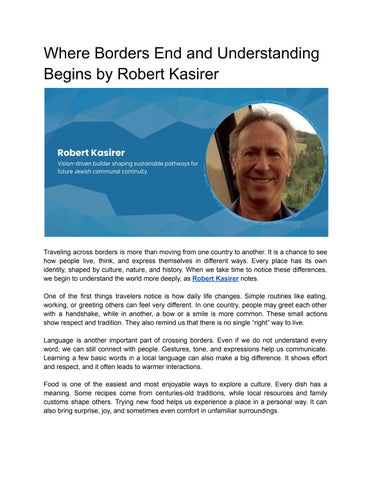
Where Borders End and Understanding Begins by Robert Kasirer
Traveling across borders is more than moving from one country to another. It is a chance to see how people live, think, and express themselves in different ways. Every place has its own identity, shaped by culture, nature, and history. When we take time to notice these differences, we begin to understand the world more deeply, as Robert Kasirer notes. One of the first things travelers notice is how daily life changes. Simple routines like eating, working, or greeting others can feel very different. In one country, people may greet each other with a handshake, while in another, a bow or a smile is more common. These small actions show respect and tradition. They also remind us that there is no single “right” way to live. Language is another important part of crossing borders. Even if we do not understand every word, we can still connect with people. Gestures, tone, and expressions help us communicate. Learning a few basic words in a local language can also make a big difference. It shows effort and respect, and it often leads to warmer interactions. Food is one of the easiest and most enjoyable ways to explore a culture. Every dish has a meaning. Some recipes come from centuries-old traditions, while local resources and family customs shape others. Trying new food helps us experience a place in a personal way. It can also bring surprise, joy, and sometimes even comfort in unfamiliar surroundings.