February 2026






















February 2026
Volume 2, Issue 6
STAFF
PUBLISHER/EDITOR
Amy Thurman
amy@roanmountainmagazine.com
ASSISTANT EDITOR
Ericka Hughes
GUN TALK WITH JON
Captain Jon Strydom
NEWS FROM THE ROAN
CeCe Studer
HIGHLANDER HIGHLIGHTS
Cloudland High School Yearbook Staff
THE GRACE PLACE
Reverend Hunter Greene
SHORT STORY AUTHOR
Diana Tolley
THE LAST WORD
Noah Blair
STAFF PHOTOGRAPHER
Faith Lynn
ADVERTISING DIRECTOR
Susie Phillips susie@roanmountainmagazine.com
SOCIAL MEDIA MANAGER
Colleen Gainey
DISTRIBUTION MANAGER
Jay Rich
CONTRIBUTORS
Nick Sluder
Color Effects Photography
Copyright © 2026
All content herein is copyright protected and may not be reproduced in whole or part without express written permission.
Roan Mountain Magazine is published monthly and can be found at multiple locations throughout the Roan Mountain area, free to readers. For print subscriptions, please contact us for info. (423) 440-9012

Read the Digital Version at: RoanMountainMagazine.com
Visit us on Facebook: https://bit.ly/RMM_Facebook
Roan Mountain Magazine is printed by the Elizabethton Star
Editor's Letter
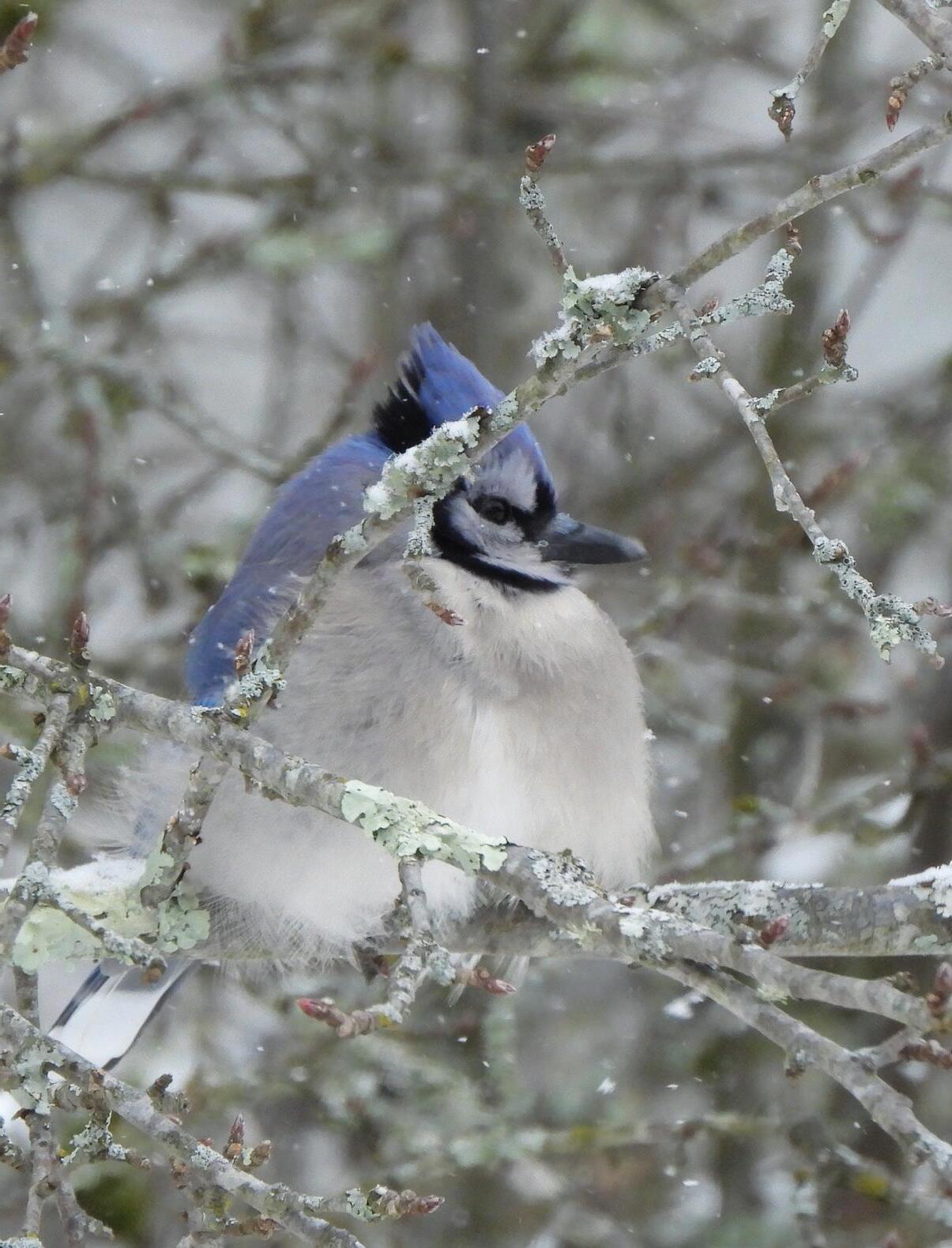
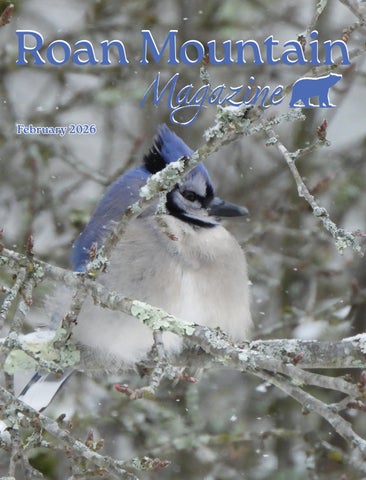
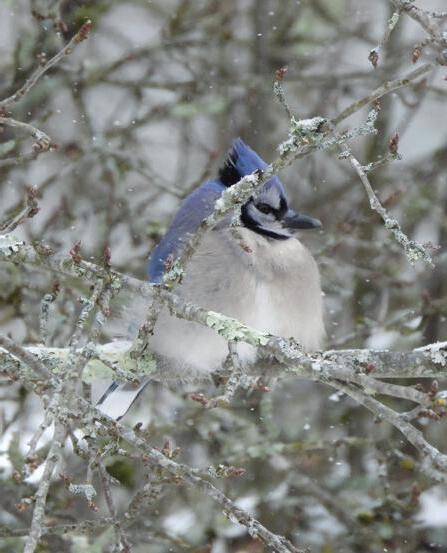
February 2026 ABOUT THE COVER: A colorful blue jay with his feathers fluffed up against the winter cold! Photo by Nick Sluder, Color Effects Photography
Letters to the Editor: We would love to hear from you! Questions, comments, ideas, or whatever you’d like to share, please send to Amy: amy@roanmountainmagazine.com
www.roanmountainmagazine.com
Gun Talk with Jon
Taste of the Roan - Mardi Gras Salad
Highlander Highlights
News from the Roan
The Explosive Motor - A feature by Ericka Hughes
Winter Fun Ideas
A Message from the Clark Family
Planning your garden with Garden Planners
The Grace Place
Valentine Ponderings - A short story by Diana Tolley
Fun and Games!
Lessons in Life & Landscaping
The Last Word






Speaking on behalf of the whole staff, we love it when we hear that y’all love this magazine! The emails, messages on Facebook, phone calls, and when we see you in the village while out running errands or getting a bite to eat and you tell us how much you enjoy it. Hearing that you appreciate what we put together for you each month is so rewarding! It always brightens my day!
Thank you all for your support and encouragement. Truly.
We have a lot of great ideas for content this year. More “memory lane” features with stories from our community elders, more “man on the street” articles where we go out and ask a question then publish everyone’s responses. We’re planning an essay contest for Grandparent’s month, and we have a list of other potential features and articles that we hope to include in upcoming issues. We’d like to start a featured artist series, do some articles about local wildlife, and provide some articles that share useful information like how to can vegetables, fishing tips, or how to save seeds at the end of the growing season, as examples. We do need your help though. To make this a true community magazine, in both spirit and content, we need your creativity. This magazine isn’t just an entertaining read every month, it’s also an archive of this community – the events, lives and stories we share together. All of us. And while we do currently have great writers and photographers who contribute regularly, there are a lot of creative people in our community and your work would make the magazine even more special.
Writers You don’t have to be a college grad with a creative writing degree (I don’t have one), but surely we have some folks in this community who enjoy writing creatively and would be interested in giving it a try? I realize it’s scary to share what you’ve written with an audience – honestly, that’s the hardest part of writing. It isn’t remembering not to end a sentence with a preposition or deciding between ‘that’ and ‘who’ (and I’ll fix all that stuff anyway), or even the research or getting the facts right; the hardest part is sending what you’ve written to another human and letting them read it. Worse yet, letting all of your family and friends read it when the magazine comes out. But the flip side of that fear is the joy you’ll feel when others appreciate it.
So if you write and would like to be part of the magazine, please do reach out to me. Please. We need you.
Photographers In the same vein, you don’t have to have an expensive professional camera and extensive training. If you take good pictures and enjoy doing so, then get in touch. I might call you and say, “I need a picture of a bear, do you have one?” or “Can you go take pictures of the tree lighting?”
Illustrators This one is at the top of my wish list! I
would love to be able to include hand-drawn, painted, or even digitally created artwork with articles. It could be as simple as a line drawing of an old barn, or as complex as a watercolor of two kids walking along a streambank. You wouldn’t have to do all the art for every issue. Don’t draw people? No problem. Only draw landscapes? No problem. I would love to have a few folks who I can call and say, “Hey, can you do a bear standing in the snow?” or “Hey, can you do a front porch with a couple rocking chairs on it?” If you enjoy drawing or painting and can turn around small sketches quickly, please get in touch.
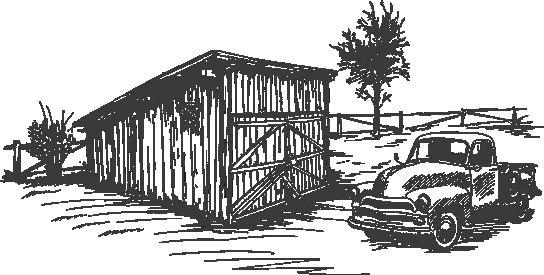
I subscribe to a service that allows me to use work like this created by artists all over the world, but I'd rather have YOUR work!
Advertisers All of this – the articles, artwork, printing the magazine each moth – relies on advertising. Without our advertisers none of this would happen. If you own a business, please talk with Susie about advertising with us, or let her know if you know of a business that would be a good fit. The rates are highly competitive, there are a number of benefits, and you’ll be helping us provide the magazine to our community each month. Email susie@ roanmountainmagazine.com.
We hope you enjoy the issue! Thank you reading and for your encouragement and support!
See you ‘round the Roan!
Amy Campbell Clark Editor amy@roanmountainmagazine.com






Lifelong hunters who spend countless dawns in the misty hollers of Northeast Tennessee get a deep appreciation for the white-tailed deer that roam these Appalachian ridges. Sometimes it almost seems like there are too many - like on the roads at night. But rewind to the 1940s and the story was one of heartbreak for folks who depended on deer to feed their families. Back then, deer weren't just scarce— they were on the brink of local extirpation, wiped out from overhunting, habitat destruction, and unchecked market hunting that had plagued the region since the late 1800s. In places like Sullivan, Washington, and Carter counties, where you cut your teeth on squirrel hunts as a kid, spotting a buck was rarer than striking gold in these mountains. Statewide, the deer herd hovered around a measly 2,000 animals, mostly clinging to isolated pockets in the east. Northeast Tennessee had a few holdouts in rugged terrain, but for hunters, it meant empty woods and closed seasons. No bugling calls echoing through the oaks, no fresh tracks in the frost—just stories from old-timers about the glory days when deer were plentiful enough to feed families through winter.
The causes? Unregulated hunting hit hard. Settlers and market hunters had decimated populations by the early 1900s, shipping hides and meat by the trainload. Timber clear-cutting for farms and industry stripped away cover and forage, turning prime habitat into barren fields. By the 1930s, the Tennessee Game and Fish Commission (predecessor to today's TWRA) recognized the crisis and started feeble restoration attempts with pen-reared deer, but those early efforts flopped.
It wasn't until the 1940s that serious work began, importing wild stock from states like Wisconsin, Michigan, and Virginia. From 1940 onward, over 9,000 deer were released across Tennessee, including targeted stockings in Northeast counties to rebuild those remnant groups. As a hunter, imagine the frustration: no legal seasons until 1949, when the first post-restoration hunt yielded just 113 deer statewide. Bag limits? One if you were lucky. Gear was basic— iron-sighted rifles, no fancy scents or trail cams. Hunting was subsistence, not sport, and failure meant empty freezers.
By Captain Jon Strydom (aka African Jon)
support lower densities. TWRA estimates suggest the region's herd is part of that 900,000, but with slower growth; far eastern counties like Johnson and Unicoi still lag below optimal levels due to fragmented forests and higher predation from bears and coyotes.
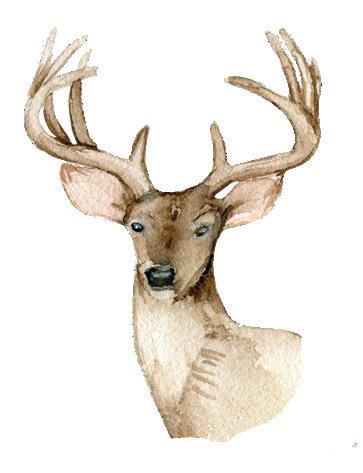
Harvest data tells the tale: In the 2024-25 season, statewide kills topped 168,000, with 59% bucks. But Northeast counties aren't cracking the top 10—Giles and Sumner in the west dominate with thousands each, while Sullivan might see 500-800 harvested annually, Washington around 600-700. That's progress, but it means you work harder here for success. From my stand, the difference is night and day. In the 40s, a hunter might trek miles without a sign, risking poaching fines for a meal. Now, archery opens in September, muzzleloader in November, and gun season runs through January, with liberal bag limits—up to three antlered bucks plus antlerless in units like ours (Unit A). My neighbor tagged a mature 8-pointer in Greene County that would've been mythical back then. Tools like food plots, mineral licks, and public lands like Cherokee National Forest make it accessible, though overcrowding on WMAs can be a gripe. Challenges persist: Chronic Wasting Disease has hit nearby states and is popping up in Tennessee as well, prompting TWRA's testing and restrictions. But overall, the boom means ethical harvests, family traditions, and economic boosts from hunting tourism.
Fast-forward to today, and it's a hunter's paradise by comparison. Tennessee's white-tailed deer population has exploded to around 900,000 statewide, a testament to decades of smart management, habitat improvements, and hunter-funded conservation through licenses and Pittman-Robertson taxes. In Northeast Tennessee, though, the rebound hasn't been uniform. Eastern habitats—steep, rocky, and less fertile than the farmlands of Middle and West Tennessee—
As hunters, we learn from the past. The 1940s extirpation was a wake-up call—overharvest without science spells doom. Today's abundance demands balance: selective doe takes to control numbers, habitat work via prescribed burns, and youth hunts to pass the torch. In Northeast Tennessee, deer aren't exploding like in the Delta, but they're back, vital, and worth every cold morning. If those 40s hunters could see us now, they'd tip their caps. We've turned scarcity into sustainability, one ethical shot at a time.




Mardi Gras is a celebration of abundance leading up to the start of Lent. The traditional New Orleans Mardi Gras colors of purple, green and yellow are represented in this salad, making it not only tasty, but pretty too!
If some of the ingredients sound a little odd, the flavor combination is fantastic, and you can't beat the colors!
Salad (for two):
1 cup buttercrunch lettuce
1 cup spring salad mix (or baby spinach)
1 cup asparagus, chopped, lightly steamed, then chilled
1 cup sugar snap peas, raw, ends clipped off, then chopped
½ cup red onion, diced (more or less to taste)
1 cup red cabbage, julienned (cut into small fine strips)
1 yellow bell pepper, seeded and diced
½ cup cottage cheese (optional)
Make it a meal with 2 servings of grilled or blackened shrimp or chicken
Note: Could also add yellow tomato.
Cajun Dressing:
¼ cup plain, non-fat Greek yogurt
¼ cup mayo (I use olive oil mayo)
Juice from one lemon
1 tbsp red wine vinegar (can substitute apple cider vinegar if you don’t have red on hand)
Healthy dash of Creole seasoning
½ tsp fresh dill, chopped
Submitted by Amy Thurman

DIRECTIONS
• Make dressing: stir dressing ingredients together and refrigerate well ahead of time so flavors blend.
• Layer half of the salad greens in each bowl or plate.
• Then sprinkle half of asparagus and sugar snap peas into each bowl
• Next sprinkle half of the diced onion on each, then the julienned cabbage.
• Then sprinkle half of the yellow pepper (and/or yellow tomato) on each.
• Top each bowl with a dollop of cottage cheese, if desired. I love the creaminess it adds!
• Serve the dressing and shrimp or chicken on the side so the salad’s colors aren't hidden in the initial presentation.
Pair with a loaf of warm, French bread and room temperature butter to round out the meal.
PLEASE share your family recipes with us!
And if you have a photo of the prepared dish, send that along too!
amy@roanmountainmagazine.com




By Cloudland High School Yearbook Staff
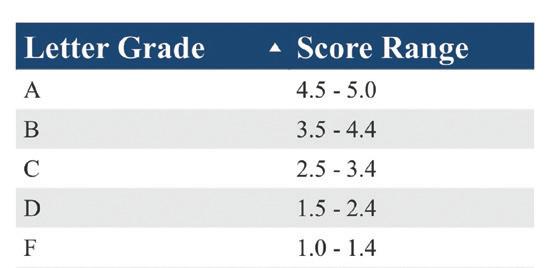
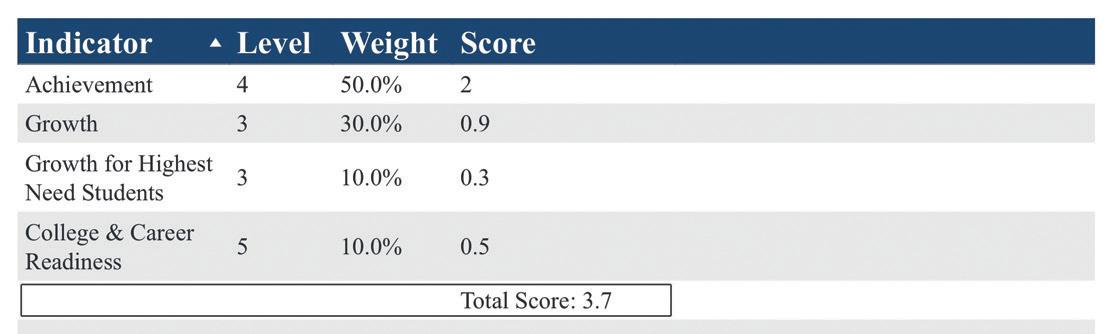
Cloudland High School is thrilled to maintain their letter grade score of a 'B,' despite many challenges in the 24-25 school year. As many know, Hurricane Helene posed many challenges for students in the Roan Mountain area as well as much of Carter County. Some students lost homes, personal belongings, and even family members in the devastating flood waters. Not to mention over 40 days of school were missed to allow the area to recuperate enough to make school a possibility. Even with all the challenges faced, Cloudland High School was able to maintain their high rating. CHS showed specific excellence in both academic achievement and College and Career Readiness. The resilience of our teachers and students speaks volumes. When we could have just chalked it up to a 'bad year,' we went to work to make sure we made the most of our days academically. It is notable that Cloudland High School is the only 'B' rated high school in the Carter County system, and equivalent in excellence to neighboring city school, Elizabethton High School. It is an amazing time to be a Highlander!
Estate Planning Adoptions


Dr. Heather Larson Behrmann, Esq. (757) 903-4410
www.behrmannlaw.com
Roan Mountain (above the pharmacy)


Faith-Based Peer Support Recovery and Resources Center
Can you help?
Current Needs:
† Operating funds
† Volunteers
† Telehealth provider
† Kerosene/Propane
† Towels
† Blankets
† Microwaveable food
† Coffee
† Toilet paper
† Cots/air mattresses
† Hair beard trimming
† Cleaning products

•
•
• Stimulates
•


In the aftermath of Hurricane Helene, the Doe River drainage saw enough flood rise (10.7 feet) to clock a flow rate over 20,000 cubic feet per second (CFS) in the city of Elizabethton. Our communities came together to help families impacted by the floods, remove trash and debris from waterways, and restore our waterways to their normal flow paths.
However, a secondary impact from the floods has been the introduction of non-native invasive plant seeds deposited with silt on scoured rivers and streambanks as the flood waters receded. These invasive plants now are aggressively established as monocultures which are displacing the native plant communities that once provided important habitat along our waterways.
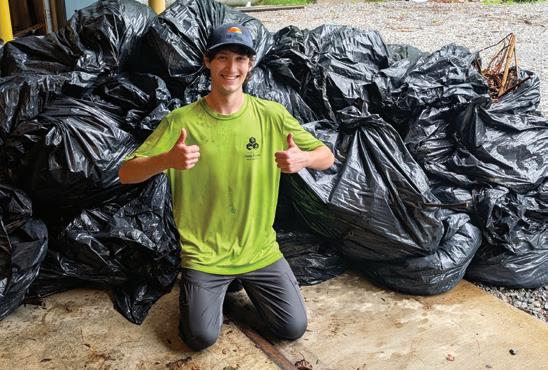
Roan Mountain State Park offered the first ever seasonal resource management technician position during the summer season of 2025 to fight back against these invasive plants and work to restore the native plant communities along the Doe River along Tennessee Highway 143. Roan Mountain native and student at Lees-McRae College, Colby Reed, spent his summer months removing Japanese knotweed, multiflora rose, Chinese privet, and tree of Heaven from the Doe River while also preparing work sites for the regrowth of native plant communities. Roan Mountain honors the work of Colby as he worked from May through October to rid of invasive plants across 65 acres of shoreline and fields throughout Roan Mountain State Park, aided in the repair and reroute of over 12 miles of hiking trail, and aided with major events including the Fall-O-Dendron Festival.
Roan Mountain State Park will be offering two seasonal resource management technician positions in 2026. Applications will open in March, with positions beginning in May. These two seasonal jobs will alternate between working to improve the park trails and working on natural resource projects. Such projects include seeding native plants along the Doe River and tributaries, rerouting dilapidated sections of trail, sawyer work, treatment of invasive plant species, improving the monarch waystation fields at the Miller Farmstead, and caring for the park education wildlife ambassadors – our owls and snakes.
Please be sure to check out our park website and our Facebook page for more information about upcoming positions and park events at https://tnstateparks.com/ parks.
A special thank you is extended to this month’s guest contributor, Ranger Philip Hylen of Roan Mountain State Park.
By CeCe Studer
Roan Mountain State Park

By Ericka Hughes
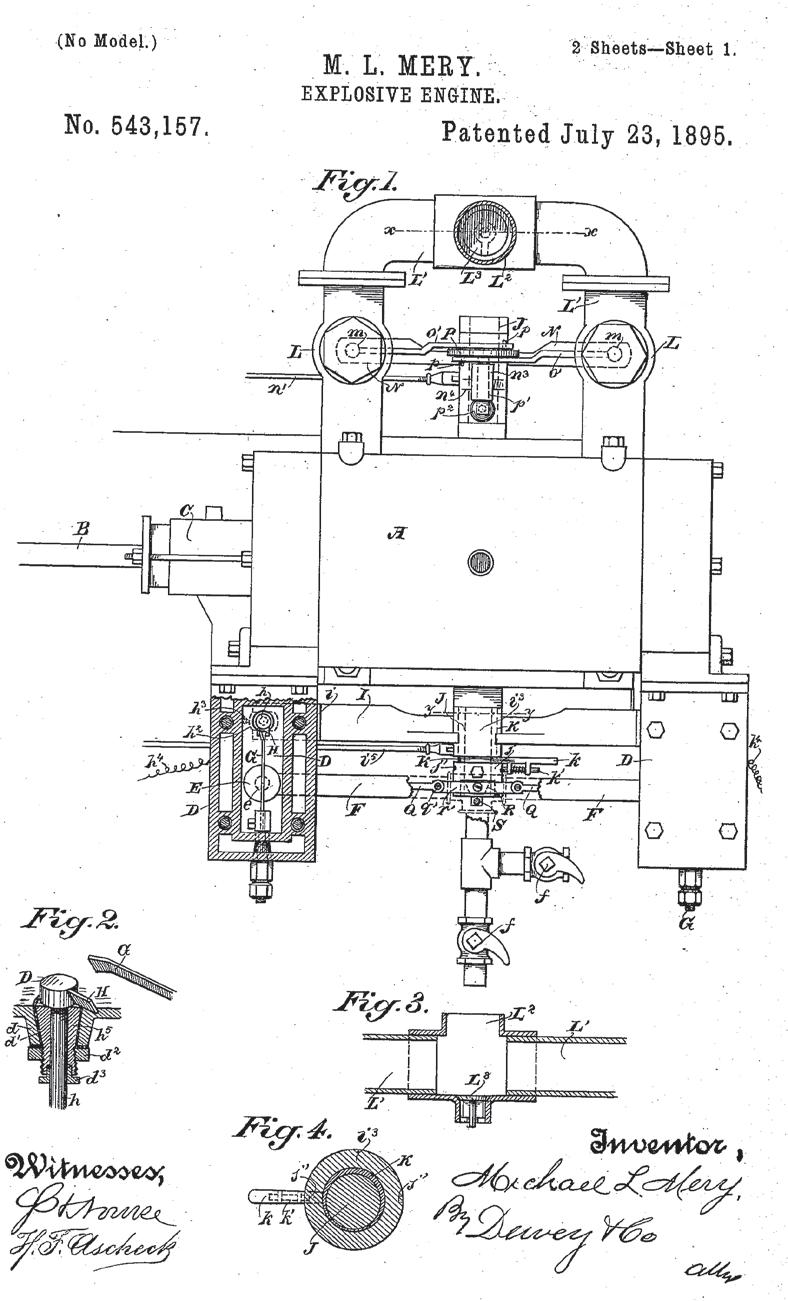
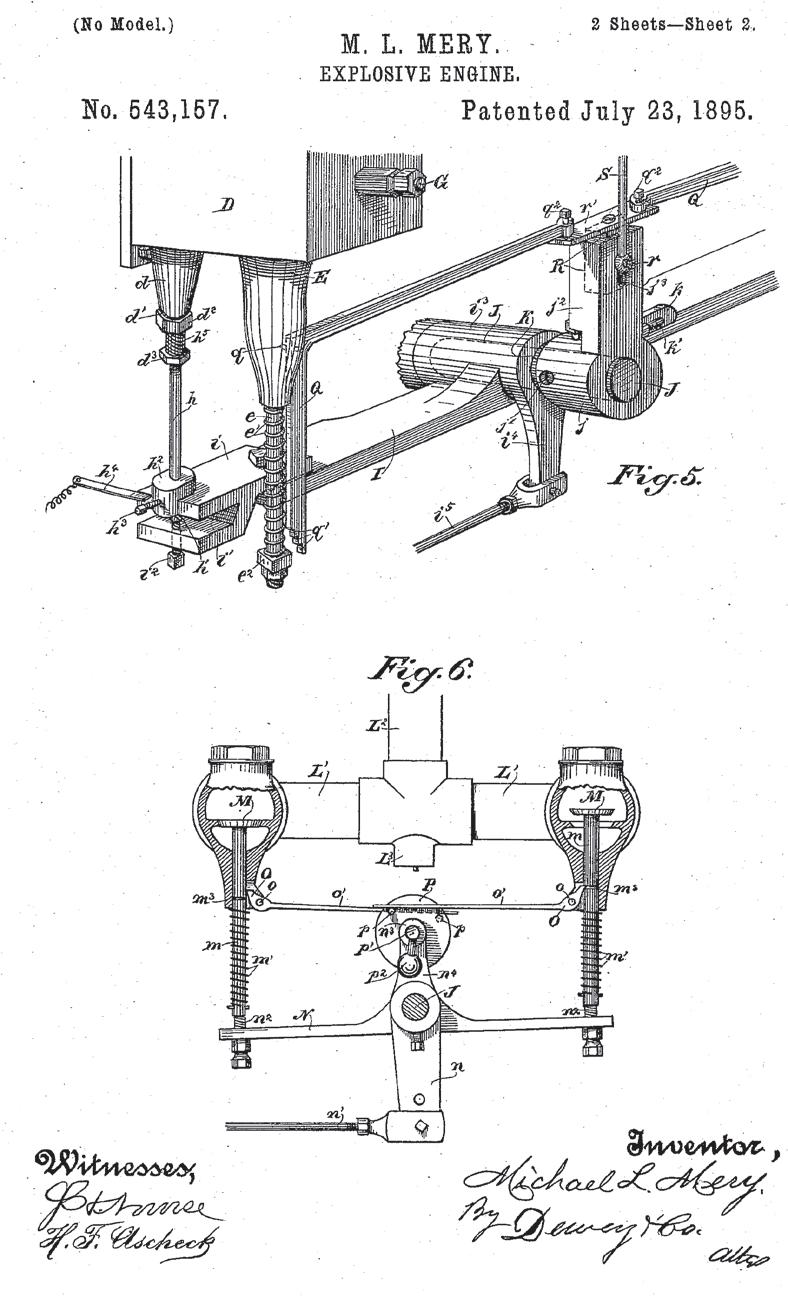
This February marks 131 years since Michael Lawrence Mery’s work in 1895, and that number alone carries weight. One hundred and thirty-one years is long enough for an idea to stop being “new” and start becoming part of the background—woven so tightly into daily life that people forget where it began.
That’s exactly what happened with Mery’s explosive engine and the hit-and-miss governing that grew out of it.
In February 1895, Mery patented an engine that didn’t insist on constant motion. Instead of firing endlessly like a steam engine, his design used controlled explosions—power delivered only when it was needed. From that came hitand-miss governing, where the engine could coast quietly when the load was light and fire again when the work demanded it. No waste. No rush. Just enough.
That kind of thinking fits naturally into the history of a small farming town like Roan Mountain.
Mountain farming has never been about excess. Fields are smaller. The terrain is steeper. Work comes in bursts—pumping water from a spring, cutting wood, grinding feed, running a small piece of equipment for an hour and then shutting it down. Engines based on Mery’s ideas made their way into places like
this because they matched the pace of life here.
They didn’t need constant attention. They didn’t burn fuel just to stay alive. You could set one near a barn or along a creek, hear it hit, then rest, and know it was doing its job. That sound—pop… pop… silence… pop—became part of rural life, as familiar as boots on a porch or a screen door closing behind you.
Over the years, those engines helped farmers in Roan Mountain do the work that had to be done, without demanding more than the land or the people could give. They pumped water uphill, powered feed grinders, ran saws, and kept small operations moving forward. When something broke, it could be fixed with basic tools and know-how. That mattered in a place where waiting on outside help wasn’t always an option.
There’s a deep nostalgia tied to that era, but it isn’t sentimental for the sake of it. It’s earned. These machines stood through long winters, early mornings, and generations of use. They weren’t flashy. They were honest.
Michael Lawrence Mery may not have known towns like Roan Mountain by name, but his work reached them all the same. His explosive engine—and the hitand-miss governing that came with it—became part of the quiet infrastructure of rural America. They helped small farming communities hold on a little longer, work a little smarter, and stay rooted to the land.
One hundred and thirty-one years later, that legacy still resonates. Not because of speed or power, but because Mery understood something farmers always have:
Sometimes the most reliable kind of progress knows when to work, and when to wait!




















By Amy Campbell Clark
For many of us, the inclination to hibernate is strong during these cold, snowy winter months! But even though we’re in the “off season” for our community, there’s still plenty to do, both locally and in the surrounding areas.
And don’t forget, our social media guru, Colleen Gainey, posts a list of organized events for the coming week every Sunday on our Facebook page (https://bit.ly/RMM_Facebook).
Explore Beech Mountain Even if you don’t ski or snowboard, there’s a lot to do in this little mountain community just over the state line. Tubing sessions, the 5,506’ bar at the top of the mountain (serves food as well as drinks) and other restaurants, shopping, and live events. Take a look at the Beech Mountain Resort website to learn more.
Hike to the Bald Yes, it’s cold. Yes, it’s likely windy. But for the hardier among us, the views when you get to the top are well worth it! Carver’s Gap is so pretty this time of year, and if the Rhododendron gardens are open, that’s another worthwhile visit – it's stunning on a snowy day.
Explore RMSP Tour Miller Farmstead (or just enjoy the amazing view from the lookout), get your weatherproof boots on and enjoy a hike on one of the many trails (from easy to challenging), or visit their website and register for an upcoming event (there’s a night hike on February 27).
Explore a section of the Blue Ridge Parkway This amazing road is both fun to drive and has countless photo opportunities from scenic overlooks. Take pictures, get lunch at some little roadside diner, explore shops or stops along the way, and pick up a map so when you get home you can plan your next road trip.
Try your hand at nature photography There’s so much to get great pictures of this time of year – birds and other wildlife, snow-covered vistas, ice formations, you name it. You don’t have to have a fancy camera to get frameable photos – most smart phones will take decent pictures. And who knows, we may want to publish a couple in upcoming photo spreads or want to use one on the cover! Always feel free to send your photos to amy@roanmountainmagazine.com.
Go sledding If any of you have seen Tom Niziol's sledding videos on Facebook, you might recall how
much fun that was when you were a kid. I know I did! Get yourself a sled and get out there with the next snowfall!
Venture Out to Nearby Destinations Spend an afternoon exploring downtown Kingsport (record store, general store, antique shops, and more), visit Boone or Blowing Rock in North Carolina, explore historic Jonesborough, Bay Mountain Park and Planetarium, Bluff City Dinosaur Park, Catawba Science Center in Hickory, or any of the other interesting things to do a short drive away. Check road conditions and open hours before leaving.
Attend a community theater play There are community theaters in Banner Elk, Bristol, Abingdon, and Mountain City. Closer to home the Bonnie Kate Theater in Elizabethton has both live plays and runs classic films, too. Search online for each theater and see what they have lined up. Tickets are usually fairly affordable.
Plan your garden Figure out what you’ll plant, where you’ll plant it and where you’ll get the seeds or plants. You can do this on paper, or use an online garden planning tool – See the article on page 22 for more about this great resource.
Learn a new craft There’s no better time than winter for learning some new creative endeavor. You might try quilting, knitting or crochet, pottery, painting, wood carving, wood burning, whittling, wreath-making, jewelry-making, leather-working, or so many others. You can usually find instructional videos on YouTube, or ask on the Let’s Talk Roan Mountain Facebook page to see if anyone locally is offering lessons.
Try new recipes Very little feels more cozy on a cold winter day than something yummy roasting or simmering. Go through your cookbooks, look online, or swap cookbooks with a friend to find new recipes. Then invite friends or family over to share.
Read a real book Many of us use tablets or other devices these days, and there are certainly benefits, such as the backlighting and different font sizes. But there's something about holding a book in your hands and turning the pages. Don't have many books? Go to the library in Elizabethton and get yourself a library card!
Whatever you choose to do, enjoy it!












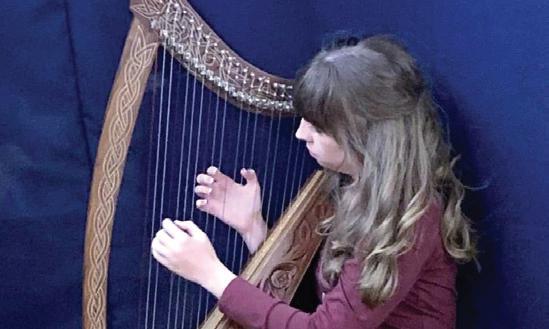
The passing of a beloved member of our Roan Mountain community leaves a deep sadness and a profound sense of loss among her family, friends and all who were blessed to know her.
Desirae Clark was a proud graduate of the Cloudland High School graduating class of 2016 where she made a lasting mark as a drum major, an accomplished horn player, and class Valedictorian.
Beyond her musical achievements, Desirae also enjoyed painting (some of her art is pictured, bottom right). She was known as an excellent student with a genuine desire to grow, learn and excel. She continued her education at Lincoln Memorial University, carrying with her the same integrity and determination that defined her at Cloudland Elementary and High School. Education was important to her.
Her passing has been an immeasurable loss. While Desirae’s time was far too short, her impact will continue to be felt through the lives she touched in music halls, classrooms, and among the friends who will never forget her light.
As her family and friends mourn this heartbreaking loss, they also celebrate a life marked by talent, kindness and quiet strength.
Desirae’s parents, Jerry and Jenny Clark, would like to thank their family and friends, and the Roan Mountain community for the love and kindness shown to them through this difficult time. “Roan Mountain, thank you for the roots you planted in our daughter.”



By Amy Campbell Clark
If you’re ready for spring and itching to get your fingers in the dirt to start growing vegetables, herbs or flowers, you can placate that itch by planning your gardens now.
This can be done on paper, of course, but there are a number of online garden planners that offer multiple useful benefits, for a relatively low cost. I’ve used both the Old Farmer’s Almanac planner, and Botanical Interests planner – they’re nearly identical, each costs around $50 for the first year, and less than $40 annually to renew. Each includes a 7-day free trial.
There are multiple benefits to using one of these applications. Though I can't list them all, here are the ones I find most useful.
Crop rotation We all know it’s important to move things around in your garden each year because different plants draw different nutrients from the soil. But some vegetables deplete the soil in the same ways - for example, you don’t want to plant tomatoes where you had peppers the previous year, or vice versa (I had no idea until I started using the planner). The planner alerts you to all the “no plant zones” for each vegetable so you can make sure you’re giving your plants the best spots to thrive. I often struggle to remember what I put where in recent years, so this helps.
Companion planting This is grouping plants together that benefit each other, either by deterring common pests, providing important nutrients, or even providing needed shade. For example, planting the “three sisters” together (corn, squash and pole beans). Corn provides structure for the beans to grow on, beans add nitrogen to the soil that’s good for corn and squash, and squash provides ground cover to deter weeds. Another example is planting basil and tomatoes together – basil deters several common tomato pests.
The garden planners provide a list of companion plants for each vegetable. There are also a number of good articles on companion planting on the Old Farmer's Almanac website.
Instant chat with experts Both planners have an online chat window in which you can ask questions of gardening experts – real human beings – and get instant answers. Not sure if a variety of lettuce you like will grow well here? Ask them and you’ll have an
answer in minutes, and in most cases, if the answer is no, they’ll recommend alternatives. They’re also available to help if you have questions about the planner itself and will tell you in clear terms how to do what you’re trying to do.
Moving things around You can lay out your whole garden, but then what if you decide you want to plant something else? You can add or remove plants, move them to different parts of your garden, add in hardscape items such as fencing, trellises or planters, and more. When you’ve gotten it exactly as you want it, you can print it out and take it out to the garden with you to help you remember what you want to put where. And, if you forget to mark a row or section with what you planted there, just refer to your planner.
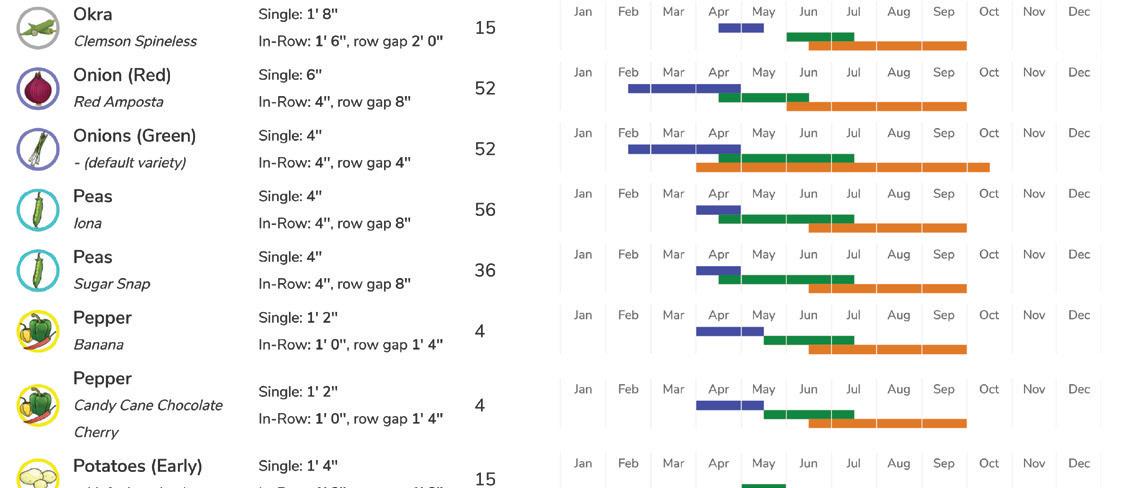
Planting information When you select your varieties, you can click on the plant and a window will open that tells you the best planting dates, how far apart to plant, and has space for you to add your own notes. You’ll know how many plants you can fit in any give space without overcrowding, and this also prevents over-buying, which I’m prone to doing. There’s a printable plant list that shows planting times for each (as well as when to sow indoors and outdoors) so you can look at it and see what you need to purchase in March, April, May, etc. And it’s based on your zip code and average first/last frost dates. You'll also get reminders, again based on your zipcode, for when it's time to plant late summer/fall crops.
Hundreds of options There are extensive varieties for each vegetable, herb and flower, but if you find your favorite variety is not listed, you can edit the variety after you’ve added it to your garden. You can also send a request to the garden expert to have it included in their standard plants list.
It might also give you ideas for other varieties to try! Not just for vegetables There are options for fruits and nuts, annual flowers, perennials, herbs, and more. You can create as many “gardens” as you want – I have one for my big vegetable garden, one for the flower bed in front of the house (which I plant with herbs, cherry tomatoes and hot peppers instead of flowers) and one for a pollinator garden I’d like to plant this summer. As long as you renew your subscription each year, all the information is saved.
How to use it You’ll want to measure your garden so you can get accurate plant counts. It’s also a good idea to recreate a rough estimate of your garden from last year so it can alert you areas to avoid planting various things. Then you’ll use that to create a new
“follow on” plan for this year. You can flip back and forth between the plans if you forget varieties or want to see notes from last year.
There’s a quick tutorial with each planner that shows you how to get started, how to use various features, and there’s an “Undo” button in case you make a mistake.
Overall, I’ve found the garden planner a very beneficial tool. And let’s face it, it’s just fun on a dreary winter day to plan your garden and think about spring. If you do go with one of these options and have trouble getting started or have other questions about it, I’m happy to help.
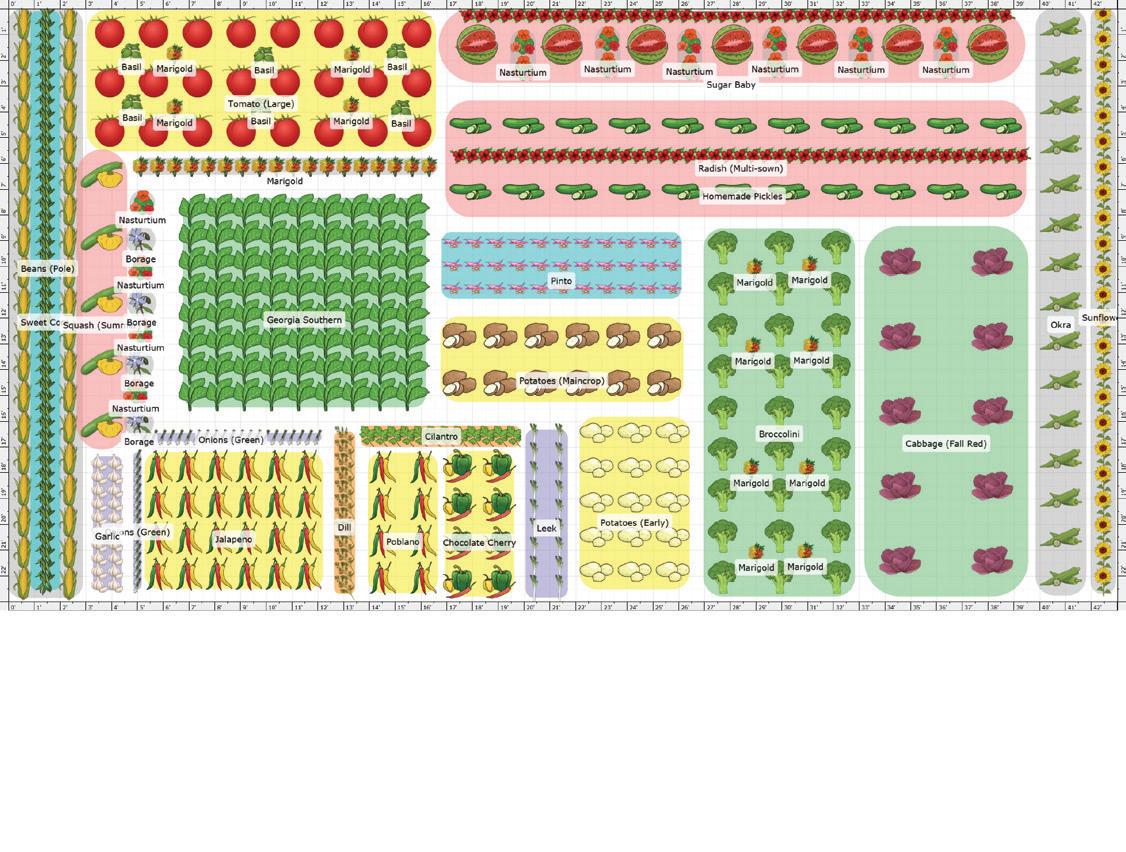
Above: A first draft of what I have planned for my garden this summer. I forgot the peas, but I probably don't need 40 green been plants anyway! The color around each plant indicates how much the plant will have spread at maturity. Below: A section of my plant list with start times, spacing, and quantity, which also serves as a shopping list. Any screen in the planner can be printed.
By Reverend Hunter Greene
Welp … it’s time for the “February Scaries.”
We’ve journeyed just enough for the polish of another new year to wear off a bit, and if you’re like me, the best of intentions and all those life-changing resolutions have already been derailed and filed away for next year. Personally, the worst part is not necessarily dealing with the feelings of failure but having to deal with the fears of what the remainder of the year might bring, especially once the sober reality sets in. It’s usually at this point in the year, as winter is winding down, that my mind begins to race and worry: what if this year is worse than last year? What if things don’t change? What if things change too much? What if I let down the people I love? What if finances are tight? What if… What if…What if…
I’m sure some folks fight this sort of anxiety all year round. Lord knows I certainly struggle with it. But I do think it feels heavier this time of year. It could be that the colder and darker winter months demand a slower pace and more reflection. It could be the anxious anticipation of making something of life as it goes
by day-by-day, month-by-month, and year-by-year. Regardless, the “February Scaries” have my attention –which often means they have my joy as well.
I do think we have to be careful with how much power we give worry and anxiety to dictate our lives. More often than not, worry shows up not as a single thought but as a kind of logic that colors every experience we have, good or bad. The trouble here is that, over time, we become conditioned and trained to worry and fret over everything. It’s a slippery slope of sorts that moves our rational worrying about survival and bills and family into a trivial worrying that becomes consumed with our looks, possessions, popularity, or any number of non-important matters.
One lovely aspect of Jesus’ teaching on worrying is that he seems to understand and empathize with our tendency to worry about both rational and trivial things, both survival and vanity. Yet, rather than condemning his listeners for their inability to trust God for their daily bread, he simply reminds them that God already knows their every need … and want. In this way, Jesus is revealing God’s nature to be loving, compassionate, and relational. Further, he shows us God is one who sees and cares about every inch of our lives – whether our troubles seem big or small.
When Jesus says, “do not worry” it’s not a command so much as it is an invitation. It is an invitation to seek God’s kingdom and his “dikaiosyne” – which can mean “righteousness” but also “what is right” or “justice.” But what does right-eousness or justice have to do with resisting the urge to worry? At its core, I think this word, and really the entirety of God’s Kingdom, serves as an antidote to worry because seeking the priorities of God means that we are in right relationship (i.e. dikaiosyne) with God and have internalized God’s priorities as our own. In such a relationship, we begin to see our worries (both rational and trivial) through the eyes of God – which is to say that we begin to see
Please pray for:
• Peace for the Clark family.
• Richard Shell in this difficult time
• Jay and his sons
• Norbert
Thank you God, for prayers answered for Larry Hickscancer-free!
Send your prayer requests to Hunter!
our worry’s proper, and inferior, place in our lives. Simply, seeking first the Kingdom of God brings clarity for a mind overwhelmed by worry.
I think Jesus tells us to let “today’s troubles [be] enough for today” because he knows the present is all we really have when we are seeking the Kingdom of God. Our worries are merely the product of our minds getting caught up in projecting and fantasizing about scenarios that haven’t even happened yet, and perhaps won’t at all. However, those who live in the present are equipped to receive the fruits of the Kingdom, specifically peace, joy, and patience to name a few. Those who trust God in every step have discovered that the Kingdom of God is no 401k or insurance plan to buy now and enjoy later. On the contrary, God’s Kingdom is a way of life – a life lived in right relationship with God and God’s desires – that multiplies and grows as we walk it in the here and now.
The “February Scaries” are always the result of me getting ahead of myself – and God for that matter. But perhaps we can take comfort knowing that this year will be what it will be. The good. The bad. The average. The extraordinary. No more. No less. Just the way it is. Yet, Jesus’ invitation to experience the troubles of today and tomorrow with God’s love and peace in sight is still on the table. We can choose to see our lives through the negativity of the news cycle and social media feeds, sprinting through life trying to outrun our deepest fears. Or we can choose to see our lives through the eyes of the God who feeds the fowl of the air from his hands and clothes the lilies of the field with his glory. “Are you not of more value than they?”
“Therefore I tell you, do not worry about your life, what you will eat or what you will drink, or about your body, what you will wear. Is not life more than food and the body more than clothing? Look at the birds of the air: they neither sow nor reap nor gather into barns, and yet your heavenly Father feeds them. Are you not of more value than they? ... Therefore do not worry, saying, ‘What will we eat?’ or ‘What will we drink?’ or ‘What will we wear?’
For it is the gentiles who seek all these things, and indeed your heavenly Father knows that you need all these things. But seek first the kingdom of God and his righteousness, and all these things will be given to you as well. “So do not worry about tomorrow, for tomorrow will bring worries of its own. Today’s trouble is enough for today.
Please send all general inquiries, church information, upcoming church events, and special prayer requests to Hunter at hillbillytheology@gmail.com.
Check out Hunter's Hillbilly Theology site: hillbillytheology.com/ (Linktree: https://linktr.ee/hillbillytheology )
A
by Diana Tolley
Delmar Hughes laid on his belly next to his best friend, Jake, in the loft of his grandpa’s old barn, contemplating the particulars of life. It was February, and the snow had been a steady friend since Christmas. Drifts of it covered the ground as far as the eye could see and icicles were hanging everywhere. He the snow because if it got deep enough, Mama wouldn’t send him to school. Jake’s granny didn’t send him either and, after much beggin’ and pleadin’ from her grandson, had let him come down the holler to visit for a spell. When he got there, they headed straight for their favorite winter place, the barn – a warm, lazy day paradise for the fourteen-year-old boys.
They’d had some good times over the years, spending many days in that old barn; swinging from a rope tied to the rafters, yelling like pirates in the stories they’d read about in class, or fought off bandits, using sticks for swords. And they’d shared secrets and stories no one else would ever know.
But on this particular day, the boys were just looking out at the world through the hay mow window. The air crackled with cold and every now and then you could hear a tree branch givin’ way to the heavy snow. Their breath made steamy clouds in front of them but they never paid any attention to the cold. It was fun just to be out of school, doing whatever suited them.
“Hey, Jake, look up yonder,” Delmar said, pointing to the tree line. Two does and a buck eased out of the underbrush, the two females busied themselves nosing through the snow, looking for food, while the big male kept a close eye out for any danger.
“Yep, that’s a big ‘un, alright,” Jake replied with his chin laying on his folded hands. “I reckon he’s a lucky feller to have himself two girlfriends.”
Delmar snorted. “Pfft. Them ain’t girlfriends, they’re his wives. Some animals are allowed to have more than one. And he ain’t lucky. He’s pro’lly pretty wore out havin’ to look out for both of them all the time. Females are a lot of work.”
Jake just turned his head and rolled his eyes at his buddy. “How would you know, Delmar? You ain’t never had a girlfriend in your life, let alone a wife. With the exception of MaryBeth Collins in first grade, who just made googly eyes at you once and you swore you was

gonna marry her.” Laughing at the memory, Jake rolled over holding his middle until it earned him an elbow in the ribs. “I was too young to know what that meant,” Delmar replied defensively.

Jake reached over and grabbed a straw to chew on, then voiced a question that had bothered him for a while.
“Del, do you think we’re at an age that we should actually have girlfriends?”
Delmar turned his head and raised an eyebrow at his friend’s faraway look. “Maybe,” he said. “I’ve been thinkin’ about that very thing. Mama was sixteen when her and Daddy got married. Of course Daddy was seventeen, but that don’t leave us a whole lotta time to find us a forever person.”
Jake shook his head in agreement. ”Any girl struck your fancy lately?” he asked.
Del was quiet for a few minutes and then sighed. “Maybe. Do you remember that cousin of Jenny Mathes’ that came to visit from Johnson City last summer?” He thought of the pretty girl with long blonde hair and the biggest blue eyes he’d ever seen. She’d been shy but real nice when Jenny’s parents had brought her to church for a few weeks. She’d smiled his way one Sunday, but before he could smile back, Jenny had gotten her attention. Senna Jane had been her name; a pretty name, for a pretty girl. He sighed again.
Jake chuckled at the goofy look on his friend’s face. Then he had a terrible thought. He raised up on one elbow and grabbed Del’s shoulder. “Delmar! She’s a city girl. You can’t get hitched up with a city girl! She’d never live up here and the next thing ya know, you’d be movin’ to Johnson City and becoming a … a city slicker!” Jake said, with a horrified look on his face. “Why, you and me would almost never get to see each other. And you’d start talkin’ all flooshy and such. That’d be awful! She might even want you to wear a suit or something!”
Delmar stared at Jake, as he realized the full extent of what his friend was saying. He’d feel awful about leaving Jake, and Mama and Daddy. Who would work the land when daddy got too old? His three sisters would probably have husbands and be off on their own. But then, maybe one of them would be stayin’ at
the home place. The more he thought of it, the easier it became to imagine. There wouldn’t be no suit days, he’d tell her up front. Then he had another thought.
“But, Jake, if you married Jenny, then we’d be actual kin and we’d still get to see each other and take part in family gatherings and such.”
Jake laid back down on his belly, his forehead wrinkled in thought.
“Jenny Mathes. Hmmm.” Jake pictured the fiery redhead from church in his head. She was short but, man alive, that girl could hold her own. They’d seen her punch Freddy Winters in the nose one time for teasing her little brother over his red hair. Then Jenny had dared Freddy to say something about HER hair. Which he hadn’t. Jenny’s eyes had shot green flames that could’ve singed the hair off a monkey.
Grinning, Jake reckoned marrying Jenny one day would sure be interesting. She was awful pretty, especially when she got riled and was mad enough to bite nails.
“Yeah,” he said. “I hadn’t really noticed but she might just make a real good wife one day. The only thing is, how do I let her know I would be up for courtin’ her? Neither one of us know anything about stuff like that.”
Del inhaled real deep and stuck a hay straw in the corner of his mouth as he thought about it. How did a feller let a gal know that he was interested in her? He could ask his daddy, he reckoned, but that could be a might embarrassing. His mama probably knew all about stuff like that so he might just have to consult with her on the matter.
But God had given him and Jake brains and they were old enough to use them. They should come up with an idea on their own. The boys laid there and watched the snow, contemplating their dilemma.
“Hey, you know what’s comin’ up in a couple weeks?” Delmar asked. “Valentine’s Day. You should think about makin’ Jenny a valentine, or givin’ her something that means a lot to you. So she’ll know you have feelings for her.”
Shaking his head quickly, Jake didn’t cotton to that idea at all. “Delmar, I don’t know if I have feelings for Jenny or not. She’s pretty, and she’s fiery. She’s even got the best fish numbers up in this holler. But I ain’t givin’ her my slingshot that Paw made me when I was younger.” He huffed in disgust at the thought of it. After a few silent minutes, he bit his lip. “She could probably use it good; maybe even better than me, if she practiced a bit. But I don’t know if that’s something she’d even like.”
Del shrugged his shoulders at their sad lack of experience in the matter. “I don’t think girls go for slingshots and such, Jake. I was thinkin’ more along the lines of making her a paper card that says, ‘Be My Valentine’, or maybe givin’ her some flowers. But seein’ as how there ain’t no flowers to pick this time of year, it’s either a card … or your slingshot.”
Both boys looked woeful at the thought. Women sure were funny creatures. Jake’s granny always said a woman thinks with her heart, while a man don’t think a-tall. Granny was wrong. Men had deep thoughts; they just didn’t always go along with how a woman wanted them to. Least that was his papaw’s take on things.
Jake turned to Delmar. “Hey, how you gonna give Jenny’s cousin anything, with her livin’ so far away? She won’t be around til Spring. Valentine’s Day won’t work for you. What are you gonna do?”
Del chewed his straw and watched two birds huddled together in one of the old oak trees by the creek. Those two sparrows depended on each other for warmth, food and companionship. Come springtime, there’d be baby birds to hatch and raise. That seemed to be the way of life, the way he understood it. Finding just the right partner could mean the difference between a good life and a not so good one.
If that Senna Jane from the city spent next summer up in the mountains with her cousin, Delmar reckoned he’d see if she was interested. In the meantime, he could make her a valentine card and send it to her by mail-post. Mama would help him get it sent off soon, and maybe that’d pave the way before her next visit.
With a clear plan in mind, he explained it to Jake, who nodded in agreement.
“Now, I guess we better go up to the house and hunt us some paper,” Del said.
He stood and brushed away the dusty bits of hay from his coat, Jake rose as well. “I get it,” he said, taking his cap off and beating it on his pant-legs. “But courtin’ seems like an awful lot of work. A body oughta be able to just pick one and go ask if she’d like to be your girl. All this lovey-dovey stuff is for the birds.”
“Yeah, well, you don’t wanna miss out on a good thing, Jake,” Delmar said as he climbed down the ladder. “You have to strike when the feelin’ hits ya. If you wait, could be some other feller will beat you to the punch. And with Jenny, you better be on your toes.”
Jake followed him down the ladder with a put-upon sigh. “I guess you’re right, Del. I don’t wanna be like ole’ man Jenkins, livin’ up there on the ridge with just his chickens.”
As the two boys made their way to the house, they were quiet, their minds on what to say and dreading the part about putting feelings to paper. Being fourteen sure had a lot of responsibility attached to it. One minute, a feller was just a boy fishin’ on the creek bank; the next, he was a man tryin’ to find a wife. Delmar grinned as he led the way home. Jake was already tryin’ to put words together in his head that wouldn’t make Jenny Mathes wanna punch him. He liked her right fine, but she still wasn’t gettin’ his sling shot. He might let her borrow it. Yeah. He could do that. And with a grin of his own, followed his friend inside to make his first ever Valentine.
(For kids of ALL ages!)

Abe Lincoln
Amethyst
Aquarius
Ash Wednesday
Bouquet
Candy Hearts
Chocolate
Cupid
February
Full Snow Moon
Groundhog Day
Icicles
Lent
Love
Mardi Gras
Orion
Pisces
President's Day
Shadow
Snowplow
Snowstorm
Super Bowl
Valentine
Violet
Washington
Winter


Help Cupid get through the heart!
See how many words can you make from the letters in: St. Valentine's Day
Searching for your soulmate? Check out this humorous "how to guide" on the Old Farmer's Almanac: www.almanac.com/ways-to-find-love

February teaches a hard lesson that many people don’t want to hear: Not every season is for action. The ground is cold. The beds are quiet. Tools hang where you left them in November. To an untrained eye, it looks like nothing is happening—but that’s a mistake. February isn’t empty. It’s restrained. In landscaping, forcing work in frozen soil does more harm than good. You tear roots, you compact soil, you break tools. The smartest move is to wait—not because you’re lazy, but because you respect timing. Anyone can dig when it’s easy. Knowing when not to dig takes experience.
Life works the same way. Waiting gets confused with quitting because both look still from the outside. But they are nothing alike. Quitting walks away. Waiting stays put, paying attention, preparing.
In February, roots are still alive beneath the surface. Microbes keep working. Perennials store energy they’ll need later. Everything important is happening where you can’t see it. That’s the part most people miss. In life, there are seasons when pushing harder
Stillness isn’t failure.
Nothing showing doesn’t mean nothing’s happening. Forcing the season causes damage.

By Ericka Hughes
doesn’t move things forward—it just wears you out. You don’t quit the job, the plan, or yourself. You sharpen instead of swinging. You repair instead of replacing. You hold your ground.
This kind of waiting takes discipline. It’s easier to quit loudly than to wait quietly. Quitting gives immediate relief. Waiting asks for patience, and patience doesn’t get applause. But February doesn’t care about applause. It cares about survival.
Every good landscaper knows that spring rewards the ones who respected winter. The same goes for life. If you can stand a little cold, tolerate the stillness, and keep your hands ready without forcing the work—you’ll be ahead when the ground finally softens.
Waiting without quitting isn't a weakness. It’s restraint.
And restraint is strength that knows its season.
Cold ground and rushed decisions both break what they touch. Preparation is real work.
Sharpening tools and steadying yourself count. Restraint takes more strength than quitting. Anyone can walk away. Staying ready is harder. What you protect now is what grows later. Survival comes before success.
By Noah Blair
Itry to keep my column lighthearted and fun for all readers; I hope that as you read the magazine and come to my column, it offers a happy conclusion to the wonderful work my fellow writers have poured into this publication. I hope that you all have learned something, laughed at a funny story, or even closed the magazine looking forward to the next edition. For this month's column, I’m going to take a more serious approach due to an experience I had recently in our small town.
The encounter started in an unassuming way – I was at the supermarket picking up a few items for dinner that evening. As I walked into the store, I noticed a young woman sitting in her car. We briefly made eye contact as I passed through the doors and something about her got my attention. Her eyes, a piercing green, held more pain and hurt than anyone’s should. As I gathered my items I couldn’t help but wonder what her story was.
I quickly checked out and headed out to the parking lot and luckily, she was still sitting there in her car. After putting my groceries in the car, I walked over to her vehicle and knocked on the window. She half rolled down her window and greeted me cautiously. I explained that I’d noticed her on my way into the store and thought I would ask if she needed anything. She was clearly taken aback by my question and asked me what I meant. I explained that I’d seen the weight she was carrying, just at a glance, and wanted to offer any help I could.
This young lady looked up at me and began to explain that she was checking her bank account, hoping she’d have enough money to get something to eat that night but didn’t have it, that she had a grandmother who was more like her mother, who was sick and dying in the hospital. She explained that a few poor choices and worse influences in her life had led her down a path she’d never intended to take.
So, there she was, in a car barely running, with no money, and her grandmother – who was her only
positive influence – sick and passing away in a hospital she couldn’t afford to get to.
The easy solution was to give her some money and a few encouraging words and call it good. However, God puts us in these situations not do the minimum and walk away, but to truly take the opportunity to show others the abundant life available to all of us through Jesus. As much as this young woman needed money for food and gas, she needed someone to tell her there’s someone who can take your shame and pain away and offer you peace and joy in their place.
I walked her through my favorite scriptures in the Bible, in John 18 and John 21. Peter denies Jesus in his ultimate time of need, three times in John 18. Then in John 21 Peter sees Jesus walking on the shore and does something incredible. Many of us hide or run away from our guilt and certainly Peter carried a lot of shame from abandoning Jesus that night. But instead of hiding in the bottom of the boat, the Bible says he ripped his coat off and jumped into the sea, swimming directly to Jesus.
When Peter got to shore and walked up to Jesus, we might expect Jesus to chastise Peter for his betrayal, but Jesus only spoke three words, “Come and Dine!”

He had prepared a meal for the very man who left him in his time of need. And that is what I told this young lady, that Jesus is there at his table offering the same thing for all of us. Bring your guilt, shame, regret, and pain to the cross of Jesus and he will take it all away and give you hope, joy, peace and love.
If you’ve found something better than that offer in this world, I’ll throw away my Bible and walk out of the church, that is how confident I am in this truth.
With $100 in her pocket and a tank full of gas, she headed towards the hospital. But what I believe caused the pain in her eyes to turn to hope was not the money but the Man she met on Calvary. The question is, do you want to meet him too?
Remember, Jesus Loves You!