WELCOME
Dear reader
The water may still be cold but the days are finally stretching longer as we shake off the dark of winter. Whether you're choosing a lifejacket, practising seamanship skills, or dreaming of dolphins off the bow, this spring is about being ready for whatever the water brings.
Teams across the RNLI are working on new ways to help keep you and your loved ones safe (opposite). And our friends at British Divers Marine Life Rescue (BDMLR) share how to keep dolphins safe during magical encounters (page 16).
Explore the key features of the buoyancy aids our lifesavers use (page 4) and ready yourself for rescue (page 14) after hearing from an Offshore reader about their unforgettable experience in heavy seas (page 11). Along the way, discover the watersports and folk scenes that make Whitby and Robin Hood’s Bay so special (page 8).
This season is off to a cracking start. Enjoy and stay safe!
dunnāco
dunnāco lee-morikū and the Offshore Team
SPRING PICKS FROM THE RNLI SHOP
Offshore Editor:
lee-morikū Offshore Designer: Andy Perryman
at the time of going to press but is subject to change.
CONTACT US
Would you prefer to receive a digital copy of Offshore magazine or not receive it at all? Are you moving house? Do you have another question? Then please email supporterexperience@rnli.org.uk with your request, including your supporter number. You can also call us on 0300 300 9990 (from the UK), 01 511 9836 (from Ireland) or +44 1202 663234 (from any other country), or write to us at RNLI Support Centre, West Quay Road, Poole, Dorset, BH15 1HZ.
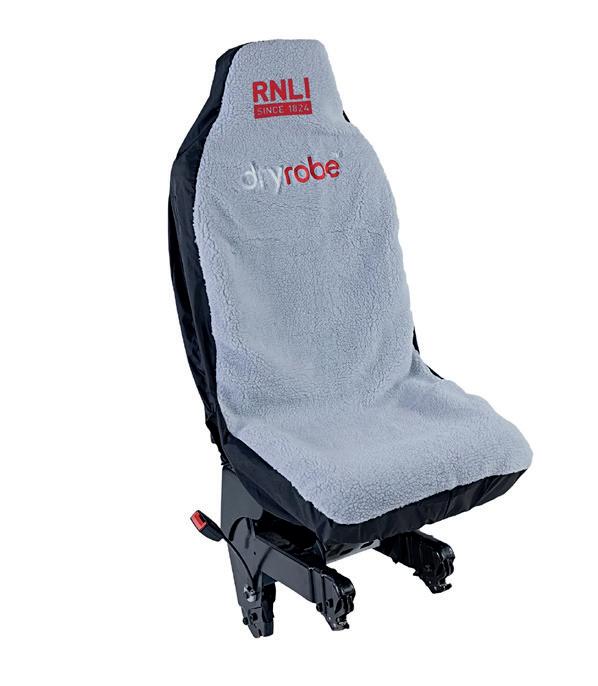
RNLI DRYROBE® CAR SEAT COVER, GREY
Whether you’re a swimmer, surfer, paddler or want to protect your car seats from muddy gear and dogs, this water-repellent cover is the ultimate accessory. Features the ‘RNLI since 1824' logo.
RRPs: £60 (single), £75 (double) Refs: RS2333502 (single), RS2333501 (double

Photos: RNLI/Harrison Bates
Chair: Janet Legrand KC (Hon)
ON THE RADAR:
WATER SAFETY HACKATHON
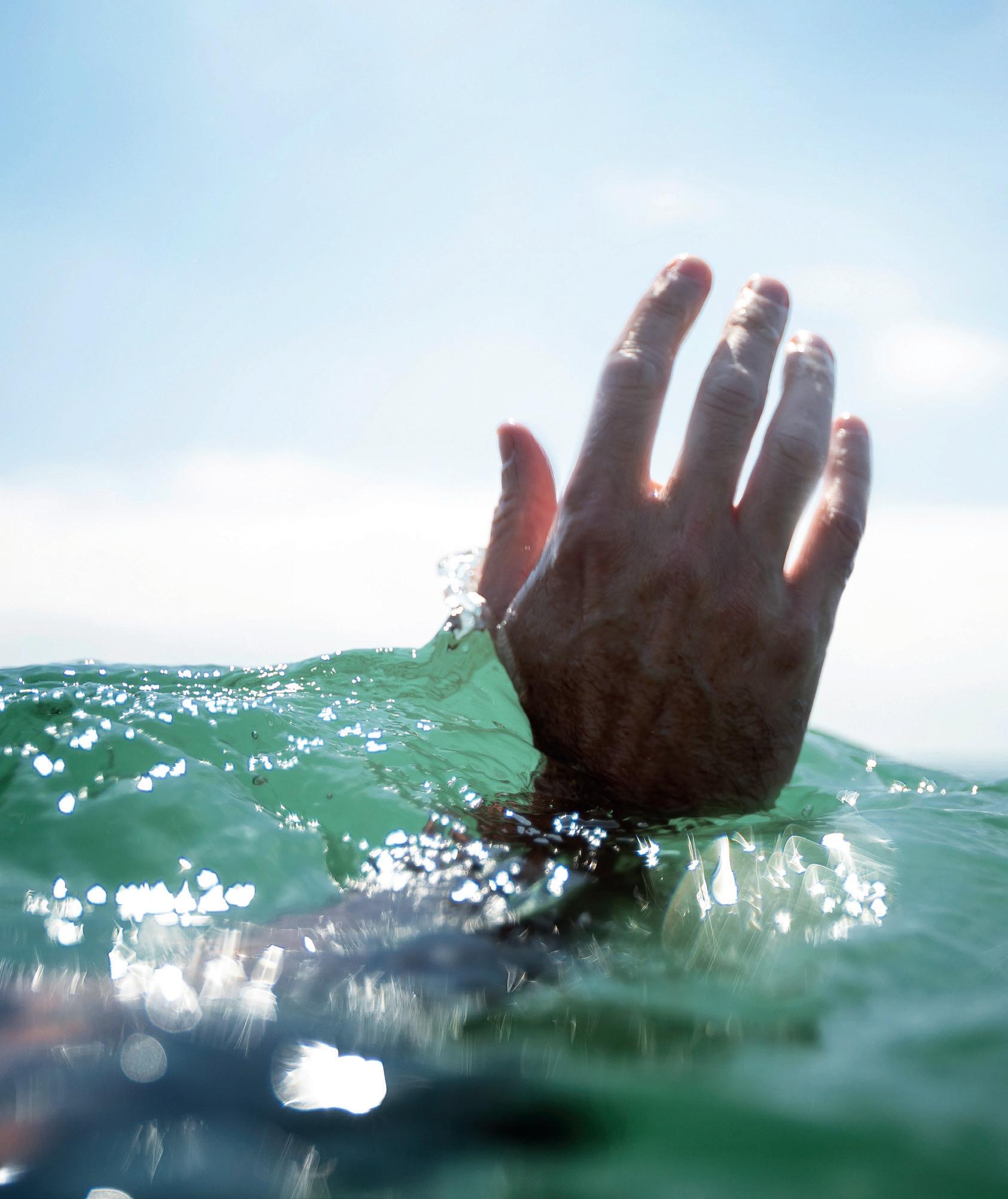
Specialists from different RNLI teams joined together for a water safety ideation day held in September with our partner Great State. The aim of the day was to generate ideas to solve the water safety challenges we face. The challenges were framed using eight problem statements, such as '1 in 4 children can’t self-rescue' and 'Inland water is the hidden danger.'
Each of the statements was worked on in smaller groups made up of people from different backgrounds and areas of expertise. Responses were then presented to the group – ranging from children giving safety advice to their parents, to displays and flash mobs at major sporting events.
As a result of the session, the RNLI Water Safety Team have a selection of ideas for further development into actionable plans that will help people stay safe in and around the water.
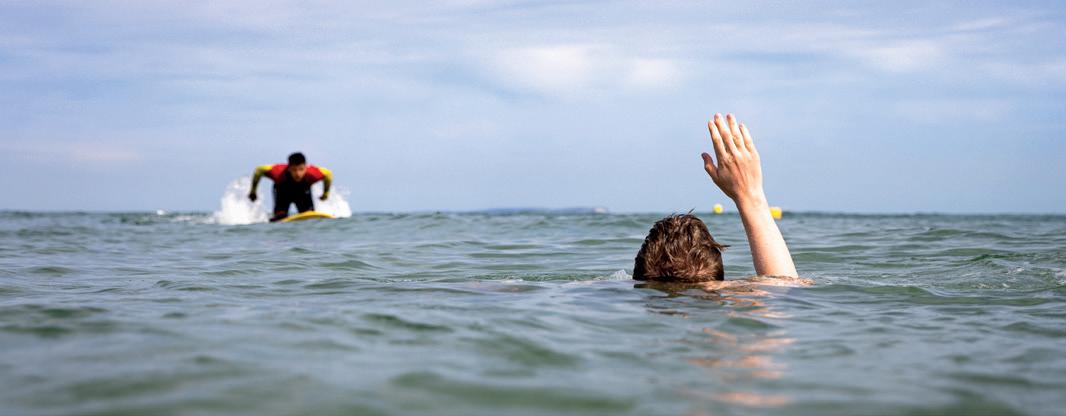
'This session challenged us to think differently and inspired innovative approaches to bringing water safety to more people'
MEET OUR
In this issue of Offshore, quotes, practical advice and lifesaving tips are brought to you by:

GUY ADDINGTON
RNLI REGIONAL WATER SAFETY LEAD
As well as leading on water safety in the southeast of England, Guy serves as a volunteer crew member at Margate Lifeboat Station.
SAM HUGHES
RNLI NATIONAL WATER SAFETY PARTNER
Sam collaborates with watersports governing bodies and organisations on water safety programmes, and is also an experienced sailor.
DAN JARVIS
DIRECTOR OF WELFARE AND CONSERVATION, BDMLR
Dan oversees the way British Divers Marine Life Rescue (BDMLR) rescues animals and trains its volunteer medics around the UK.
JOE MANNING
RNLI SENIOR ENGINEER (IN-SERVICE SUPPORT)
Specialising in critical safety equipment, Joe also has years of first-hand experience using crew kit as a volunteer lifeboat helm at Poole.


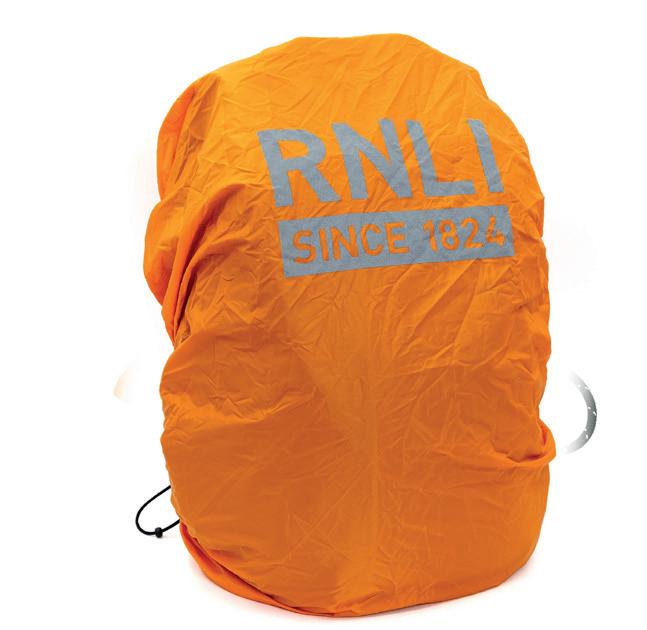
Designed to fit 25–40l backpacks, this durable cover adds protection to your belongings when travelling or hiking in the rain. In orange, with a reflective RNLI logo, it will also help keep you visible in low light and poor weather.

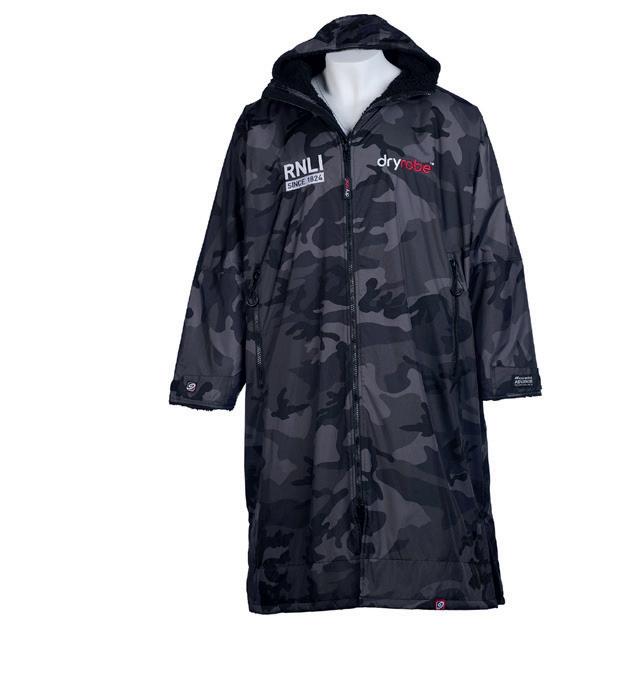
RNLI DRYROBE® ADVANCE LONG SLEEVE
A versatile, long-sleeved changing robe designed to protect you from the elements when changing on the move. Features the ‘RNLI since 1824' logo. Available in sizes S–XL.
RRP: £190
Refs: RS2348201CMB (Classic Camo), RS2348201BKN (Blue/Black)

Sam Hughes | RNLI National Water Safety Partner
FIT FOR PURPOSE
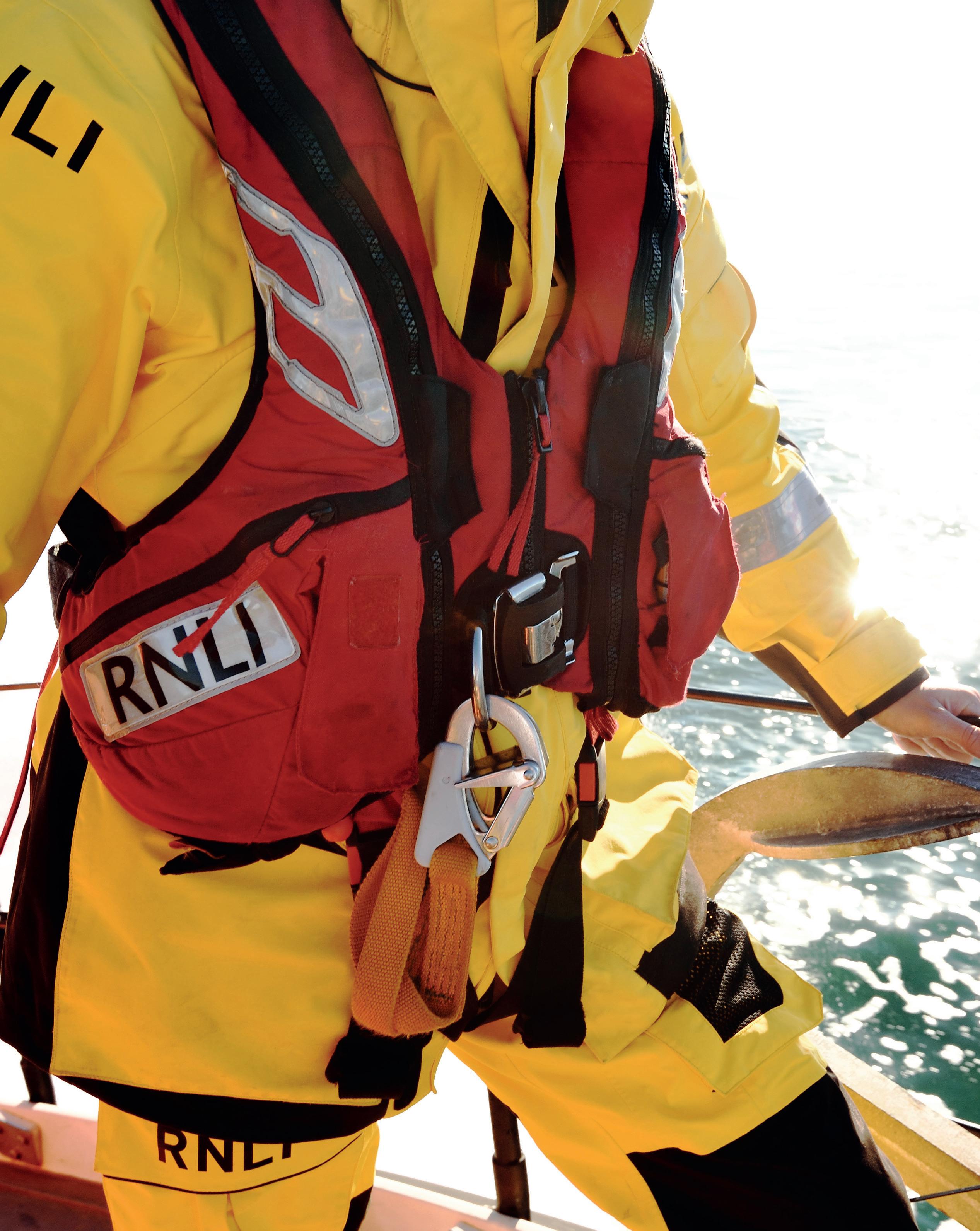
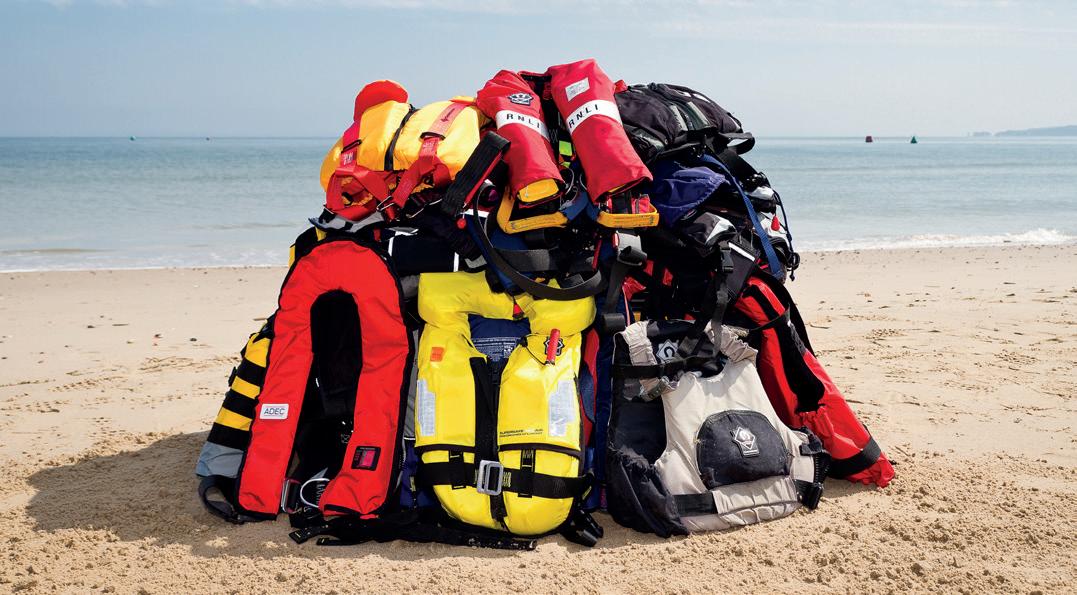
Lifejackets save lives. We should know: RNLI crews have been counting on them for more than 170 years
Whatever you’re doing on the water, a lifejacket could save your life. In fact, if you find yourself overboard in bitter waters, wearing one can increase your chances of survival up to four times*. It’s why lifejackets and buoyancy aids remain vital kit for our lifeboat crews, lifeguards and shore crew.
Things have come a long way since the RNLI designed the first cork lifejacket in 1854, and we’ve had a hand in pushing their development ever since. We take the safety of our crew very seriously, and work with volunteers and trusted suppliers to provide a range of jackets that meet different operational requirements.
AUTOMATIC SAFETY
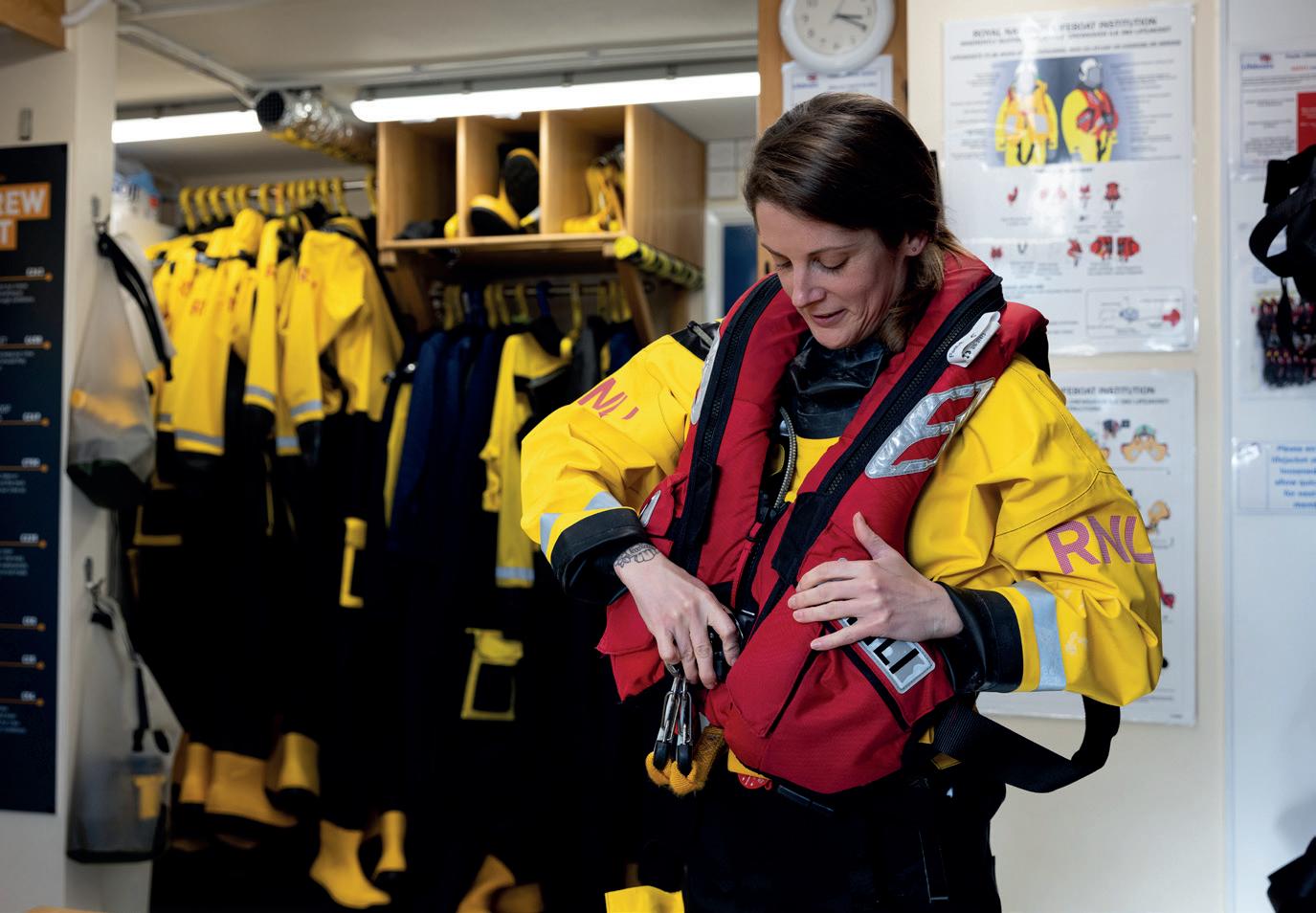
RNLI Senior Engineer Joe Manning says: 'Our all-weather lifeboat crew and survivor jackets automatically inflate on entry to the water. They offer a lot of buoyancy and what we call 'mouth freeboard' – how much your mouth is held above the waterline. These lifejackets turn you and keep your airway clear, even if you’re unconscious. They also reduce the effects of cold water shock.'
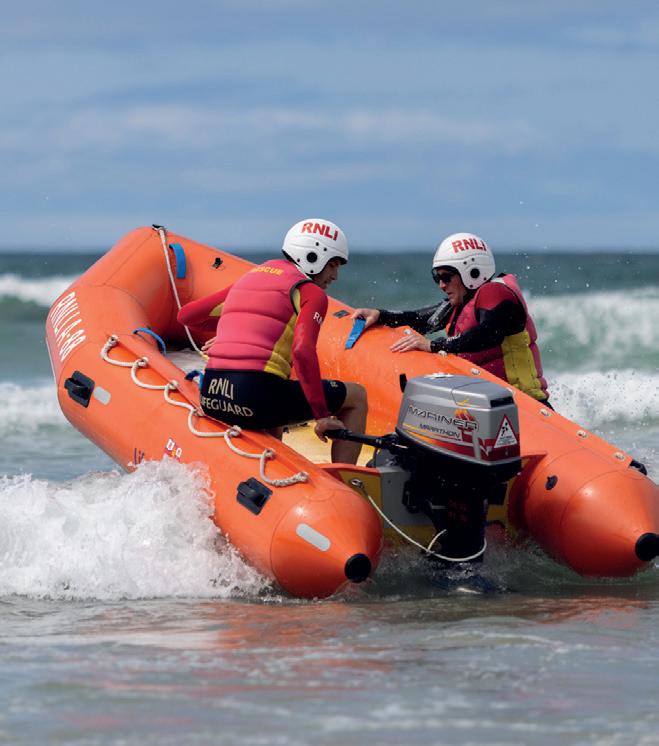
The RNLI’s general purpose and training jackets are automatic too, but our inshore lifeboat jackets are hybrids. Joe explains: 'Inshore crews often work in the water and don’t want a lifejacket suddenly going off. It’s why they have manual inflation, but we second that with some inherent buoyancy.'
'Check your lifejacket regularly. Service and pack it
MANUAL BENEFITS
come off a personal watercraft at speed, you’ll know how important that is.'
IN GOOD ORDER
according to the manufacturer's instructions, so it inflates properly when
We avoid automatic inflation in other scenarios too. 'Our tractor-driver jackets are manual because, if you're inside a flooded cab, you don’t want a jacket inflating and becoming an entrapment risk,' he says. Our inshore lifeboat crews also carry manual survivor lifejackets due to their proximity to the water.
ADDED PROTECTION
it matters'
Joe Manning | Senior Engineer and Volunteer Lifeboat Helm
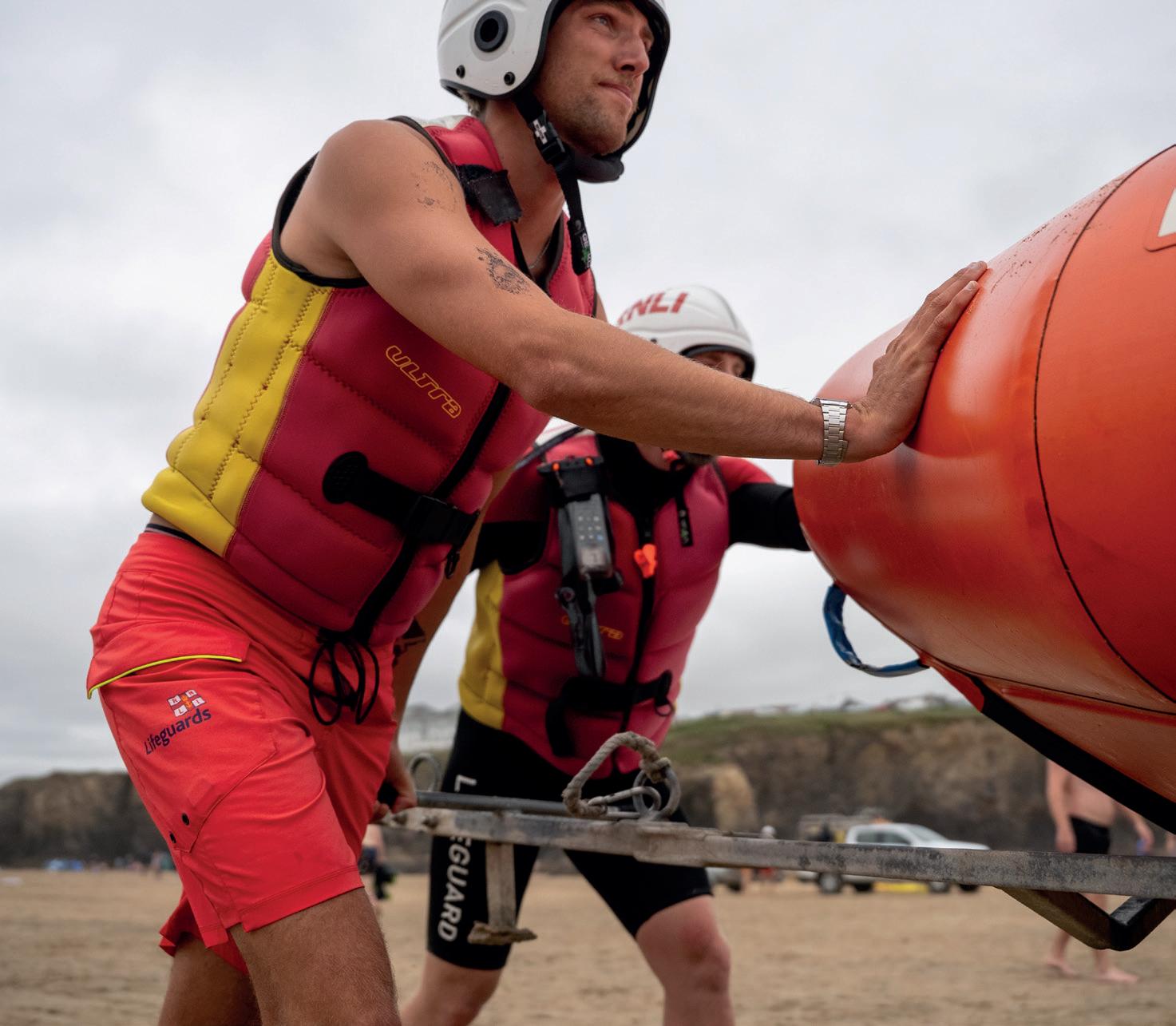
Closer to shore, buoyancy aids better suit the nature of RNLI lifeguarding. Operations Manager Brett Shepherd explains: 'Our lifeguard jackets give a degree of inherent buoyancy but still allow lifesavers to swim and dive in them. They also provide insulation and a level of impact protection. If you’ve ever
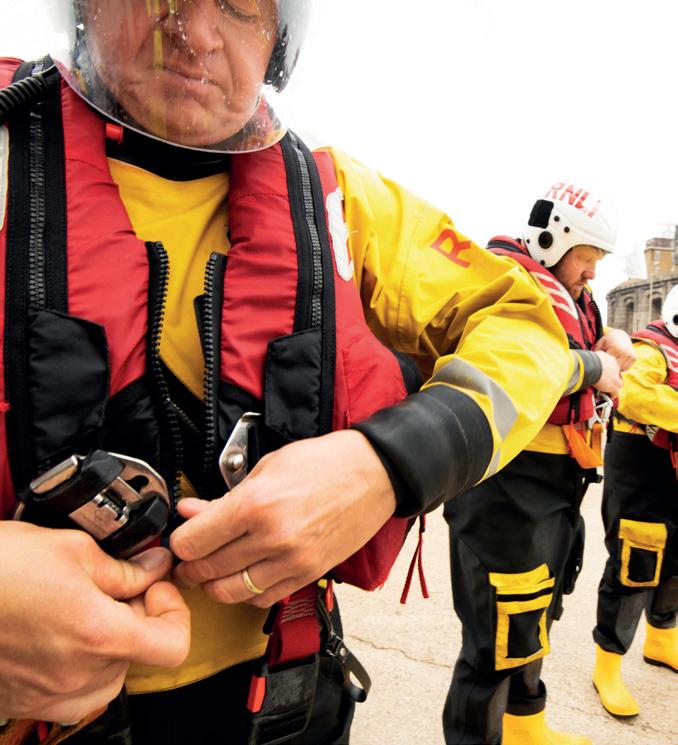
The RNLI has a clear inspection and maintenance regime for all its lifejackets. Crew jackets undergo a full inspection and service with the supplier every 12 months. If one is deployed, it is cleaned and carefully repacked according to the manufacturer’s instructions. Joe adds: 'Many of our crew jackets will be reaching end of life soon, so it’s an opportunity for an update. We’ll pick some that already meet our requirements and ask crews to test them in real-life scenarios. I’m a volunteer lifeboat helm too, so I know how important it is to take crew feedback
RNLI inshore crews, who are more likely to be in and out of the water, wear hybrid lifejacket/buoyancy aids
Crew lifejackets are fully inspected and serviced annually
Lifeguard buoyancy aids insulate and provide impact protection
EXPERT ADVICE
' Try on lots of different lifejackets or buoyancy aids. Find one that’s comfortable – one that you want to wear'
onboard. Our lifesavers deserve to feel safe and comfortable in their kit.'
'Lifeguard buoyancy aid checks include checking zips, stitching and straps,' explains Brett. 'And lifeguard supervisors run a buoyancy test on them at the end of every season.'
FIT FOR YOUR PURPOSE
' Look for a standard rated jacket. I’d recommend ISO 12402 – it’s what we choose at the RNLI'
'Consider a buoyancy aid that also provides insulation and impact protection'
Like our crews, you need the right protection for your activity. RNLI National Water Safety Partner Sam Hughes says: 'If you're yacht sailing or powerboating, you should choose a lifejacket that inflates automatically when you hit the water. But consider what rating is right for you. A 50N jacket will give you extra buoyancy if you go overboard, but one rated 275N will turn you on your back and keep your head above water in poor conditions.'
Meanwhile, buoyancy aids are a good choice for those closer to shore such as paddleboarders, foilers, kayakers and dinghy sailors. Fixed-foam jackets remain the popular choice but the range of low-profile aids is growing – including airbelts and bumbags. 'Some people
like them as they give more freedom of movement for things like paddling,' says Sam. 'But they rely on manual inflation. That may not be the first thing on your mind when you fall in. And you’ve no protection from impact or the cold.'
REGULAR CHECKS
As with RNLI lifejackets and buoyancy aids, it's important to check yours regularly too – and keep it properly maintained and serviced. 'The CO₂ canister on lifejackets can sometimes work loose or become corroded,' says Sam. 'And the material and straps will perish over time.' Joe has a top tip on this point: 'If yours has been in the sea, wash it down with fresh water and soap, get all the salt out, and leave it to air dry before repacking.' You should check your buoyancy aid too. 'Over time, the foam will degrade,' says Sam. 'Look for other wear and tear, check the buckles, and make sure it still fits properly.'
USELESS, UNLESS WORN
At the end of the day, any lifejacket or buoyancy aid is better than none. But it’s important to go and try lots on, so you find one that’s comfortable for you. 'Choose one that you want to wear,' says Sam. 'Because a lifejacket is completely useless, unless worn.'
MIND YOUR LANGUAGE
We’ve avoided the term PFD in this feature, as some find it confusing. Short for 'personal flotation device', it’s a catch-all for anything you wear in the water that helps you float. The most common types are buoyancy aids and lifejackets –though these terms can be unclear too, thanks to all the variations. Broadly speaking, buoyancy aids provide a small amount of inherent buoyancy to help you float. Lifejackets generally have no inherent buoyancy but, when inflated, provide greater overall buoyancy to keep you afloat.
Choose the right protection for your activity
Joe Manning | Senior Engineer and Volunteer Lifeboat Helm
Brett Shepherd | RNLI Operations Manager, Lifeguards
Sam Hughes | RNLI National Water Safety Partner
HIGHLIGHTS OF THE RNLI RANGE
ALL-WEATHER
Lifejacket used by our all-weather and Thames lifeboat crews, who are all less likely to be in the water:
290N buoyancy from twin automatic and manually activated bladders
· backup oral inflation
· ergonomic fit, weight carried on the waist crotch straps spray hood personal location beacon light, whistle, pockets, flare lanyard
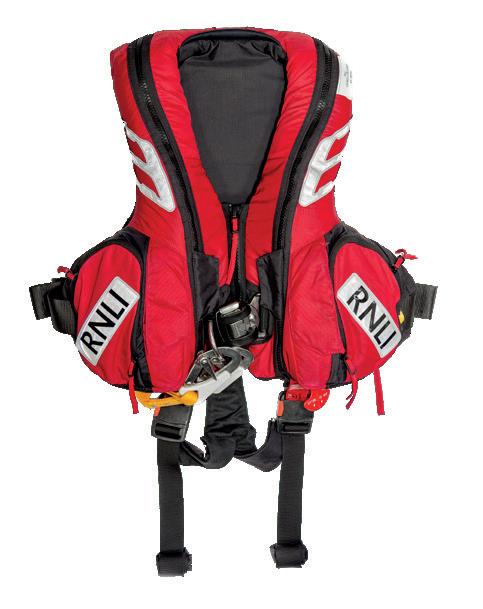
INSHORE
Hybrid lifejacket/buoyancy aid used by crews who are more likely to be in and out of the water:
· 90N foam buoyancy, plus 290N from a manually activated bladder. backup oral inflation ergonomic fit, weight carried on the waist
· crotch straps
· recovery handle personal location beacon light, whistle, pockets, flare lanyard
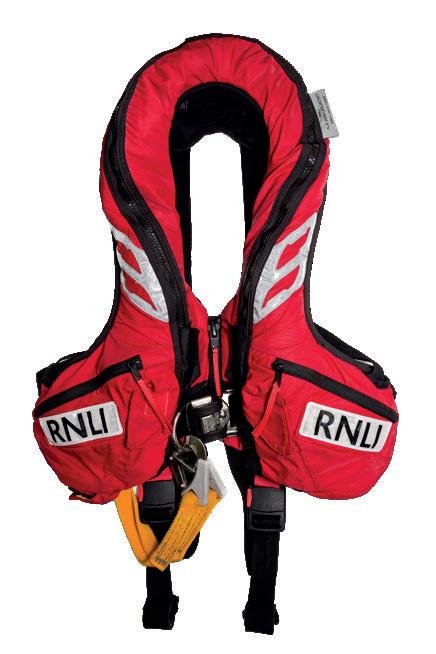
LIFEGUARD
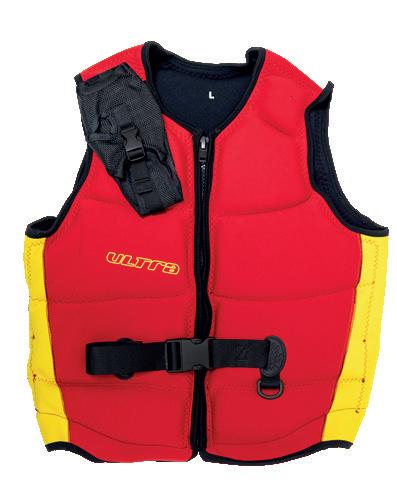
Buoyancy aid for lifeguards, used alongside the rescue watercraft (RWC) and inshore rescue boat (IRB).
· 50N foam buoyancy ability to swim or dive while using designed for quick fitting – and removal – in an emergency built-in impact protection
· insulated for warmth
· VHF radio attachment point lifespan of three seasons
SURVIVOR
Compact survivor lifejacket. This automatic version is carried on RNLI all-weather lifeboats: 180N buoyancy from an automatically activated bladder
· ergonomic, low-profile fit
· crotch straps light, whistle chin support, when inflated recovery handle
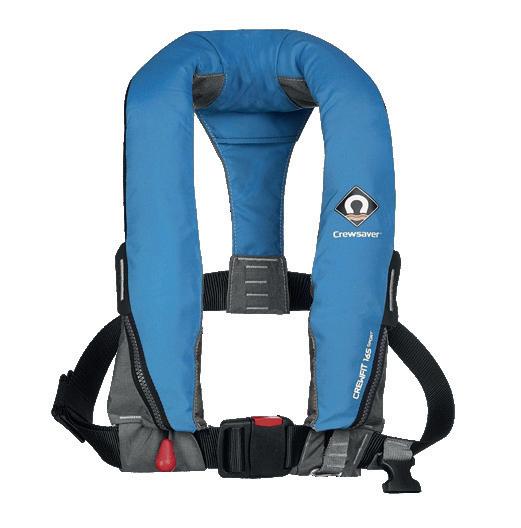
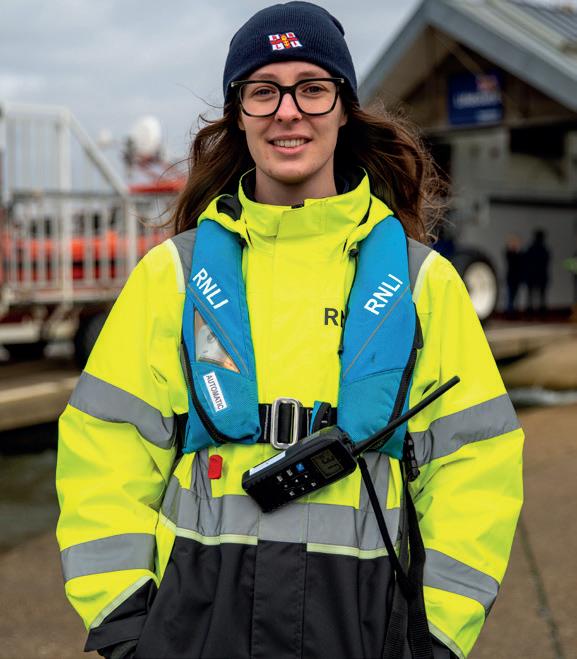
shore crew depend on these general purpose auto-inflating lifejackets
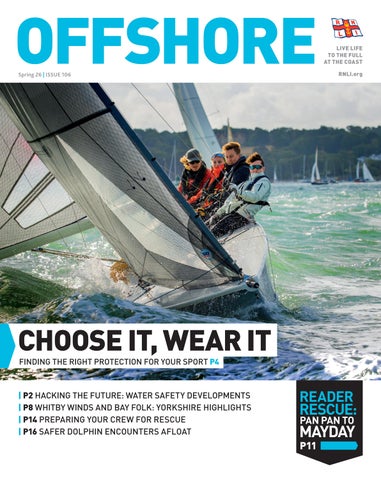
CHOOSE IT, WEAR IT
See our guide on choosing the right lifejacket for your activity. We also offer some information on how to check and maintain your lifejacket so that, if you do have to use it, it will work exactly as you expect.
Go to RNLI.org/lifejackets ■
Words: Jon Jones
Photos: RNLI/(Harrison Bates, Lee Hawkins, Nigel Millard, Ashton Milton, Nathan Williams)
RNLI
Love where you live ...
WHITBY AND ROBIN
HOOD'S BAY
Famous for its fish and chips, Whitby has plenty to offer those seeking adventure on and off the water
LEAH HUNTER
VOLUNTEER CREW, WHITBY RNLI
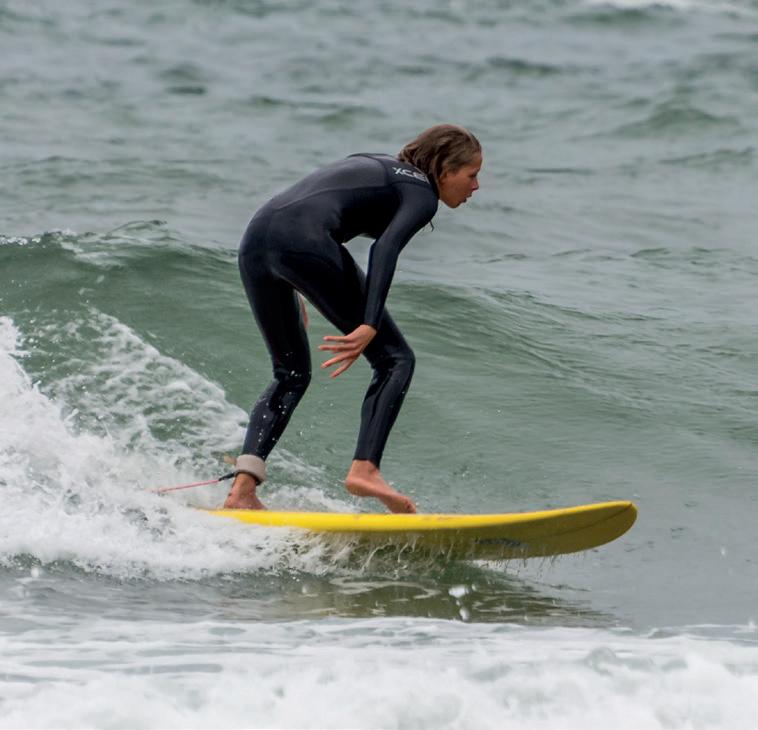
Whitby is a hidden gem for surfing on the Yorkshire coast. The scene here is slowly growing, and the surf school I run has kids clubs to get young people involved. You can hire equipment from lots of places – including surfboards, bodyboards, paddleboards, wetsuits and even deckchairs. Whitby Beach is lifeguarded in the summer, making it a safe place to learn. We get serious winter swell due
to the geography here, so the surf school is seasonal from April to October. You can kayak on the sea but there’s also the River Esk, which is a beautiful spot, full of wildlife and sheltered from the wind.
There are fossils to be found at Robin Hood's Bay, which is popular with both tourists and locals. And there are other lovely beaches to visit nearby too – including Sandsend, Runswick and Saltwick Bay.
'There are other lovely beaches to visit nearby too'
VOLUNTEER
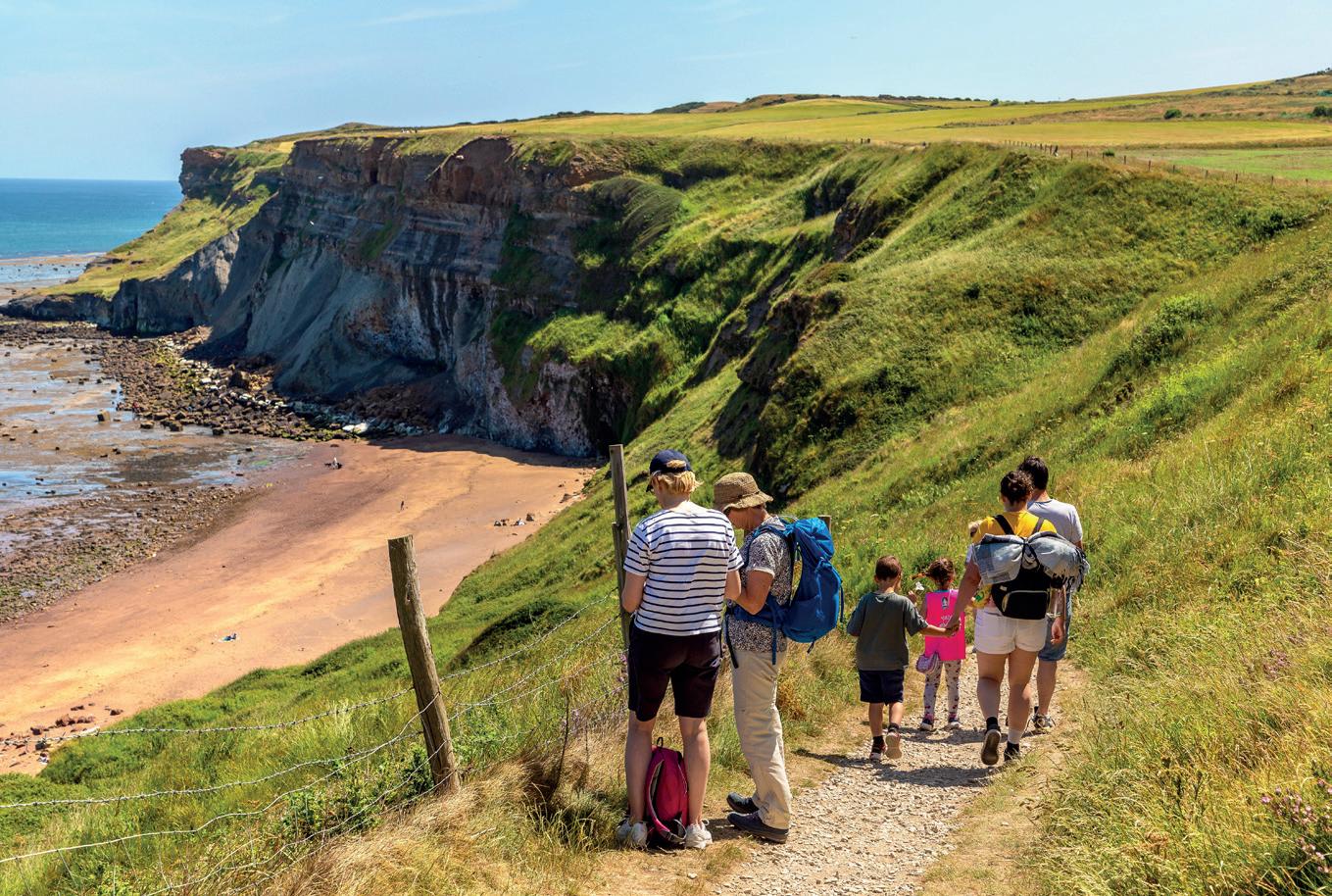
We have many nice coastal walks to explore around here. You can walk all the way along the coastal path to Saltburn in one direction and Scarborough in the other. And there’s an almost-22-mile former railway line known as Cinder Track that you can walk or cycle from Whitby to Scarborough.
Boats go out daily from Whitby, for 2-hour or 4-hour fishing trips. You can book the whole boat if you have enough people. And there are opportunities to see dolphins and minke whales off the coast when the weather is right. The wildlife boats even do whalewatching cruises at sunset.
STAY SAFE
Speaking with the crew at Whitby, the biggest problem in the area is tidal cut-off. With the geography of the coast, there are many beaches and coves that can be quickly cut off from safety by the rising tide. Always check the tide times before you head out and keep an eye out for signs warning you of dangerous areas.
JONATHAN MARR
CREW, WHITBY RNLI
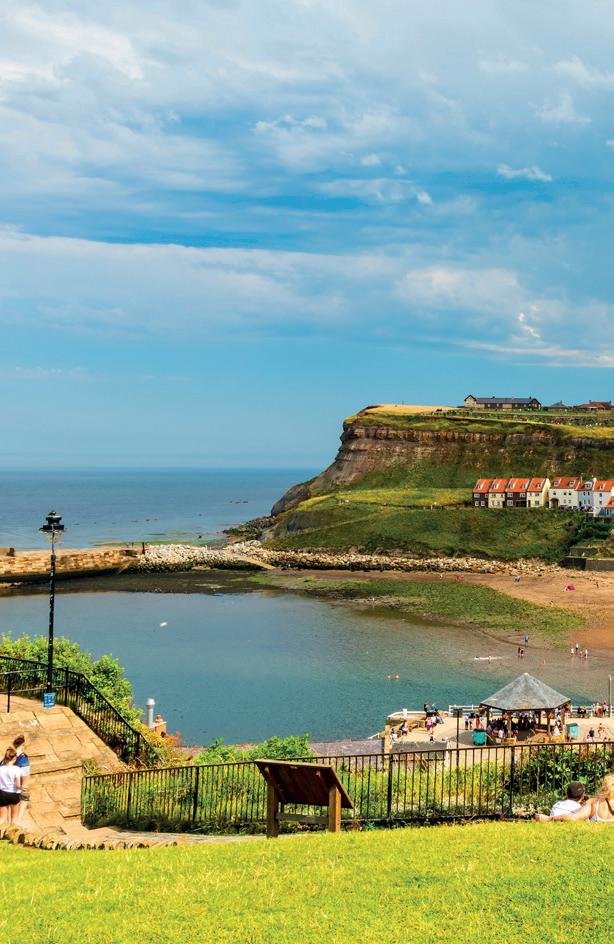
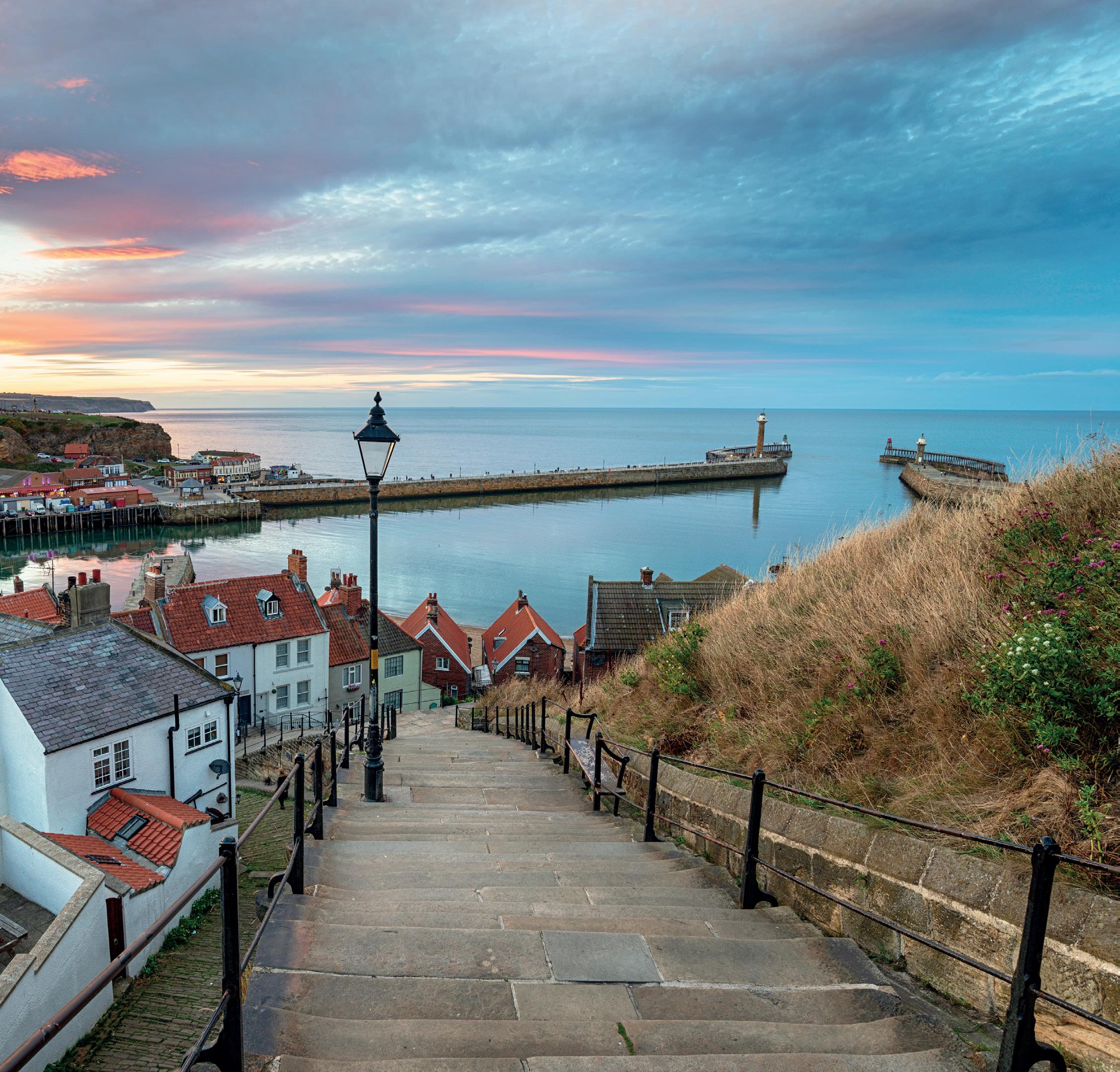
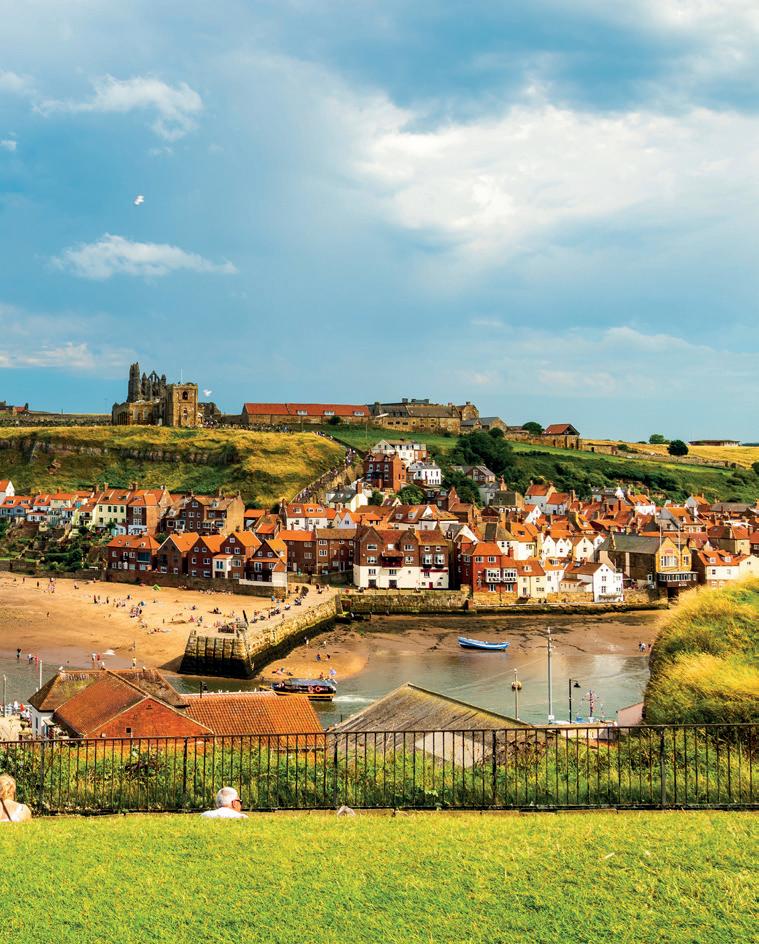
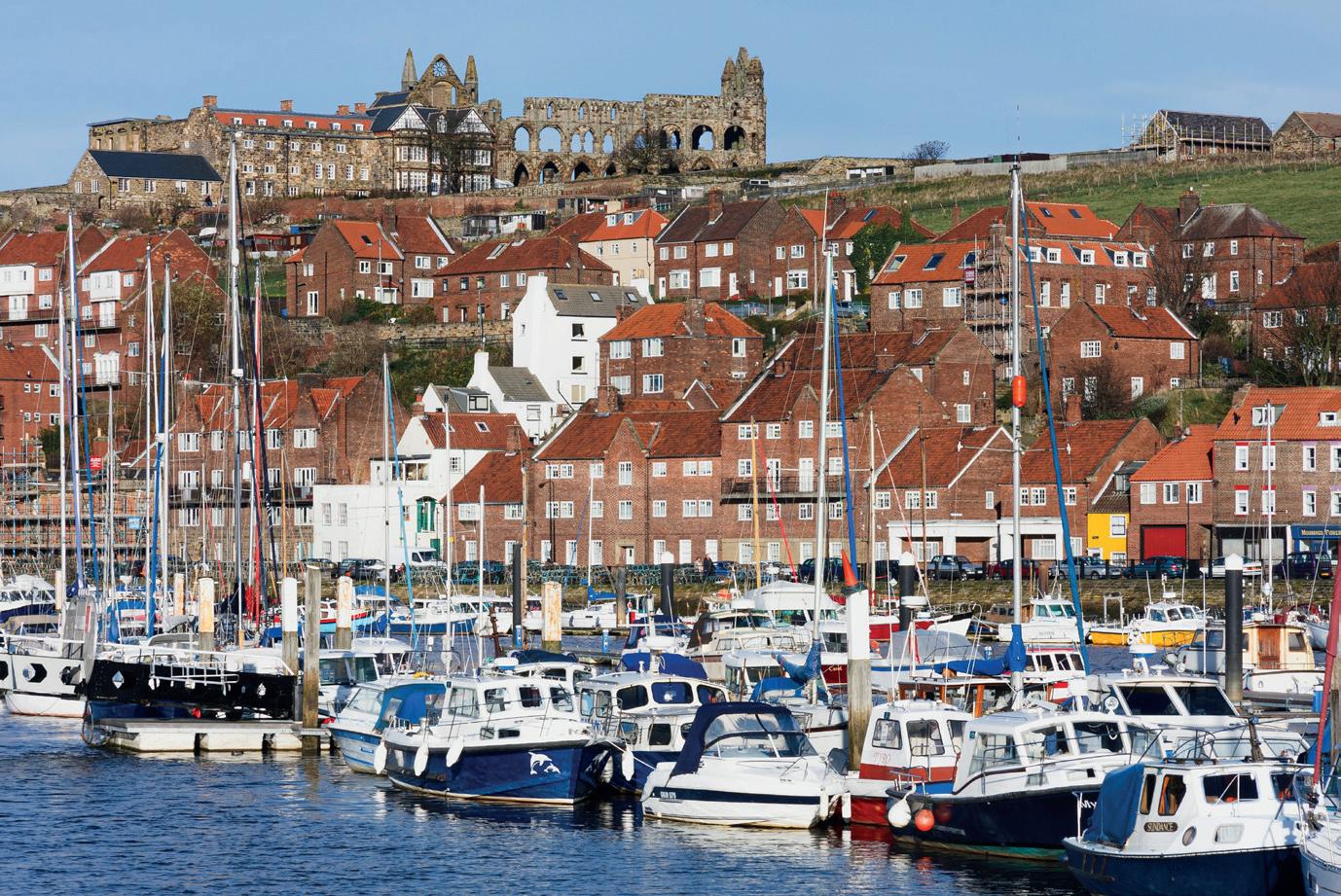
Whitby Abbey watches over the town and harbour
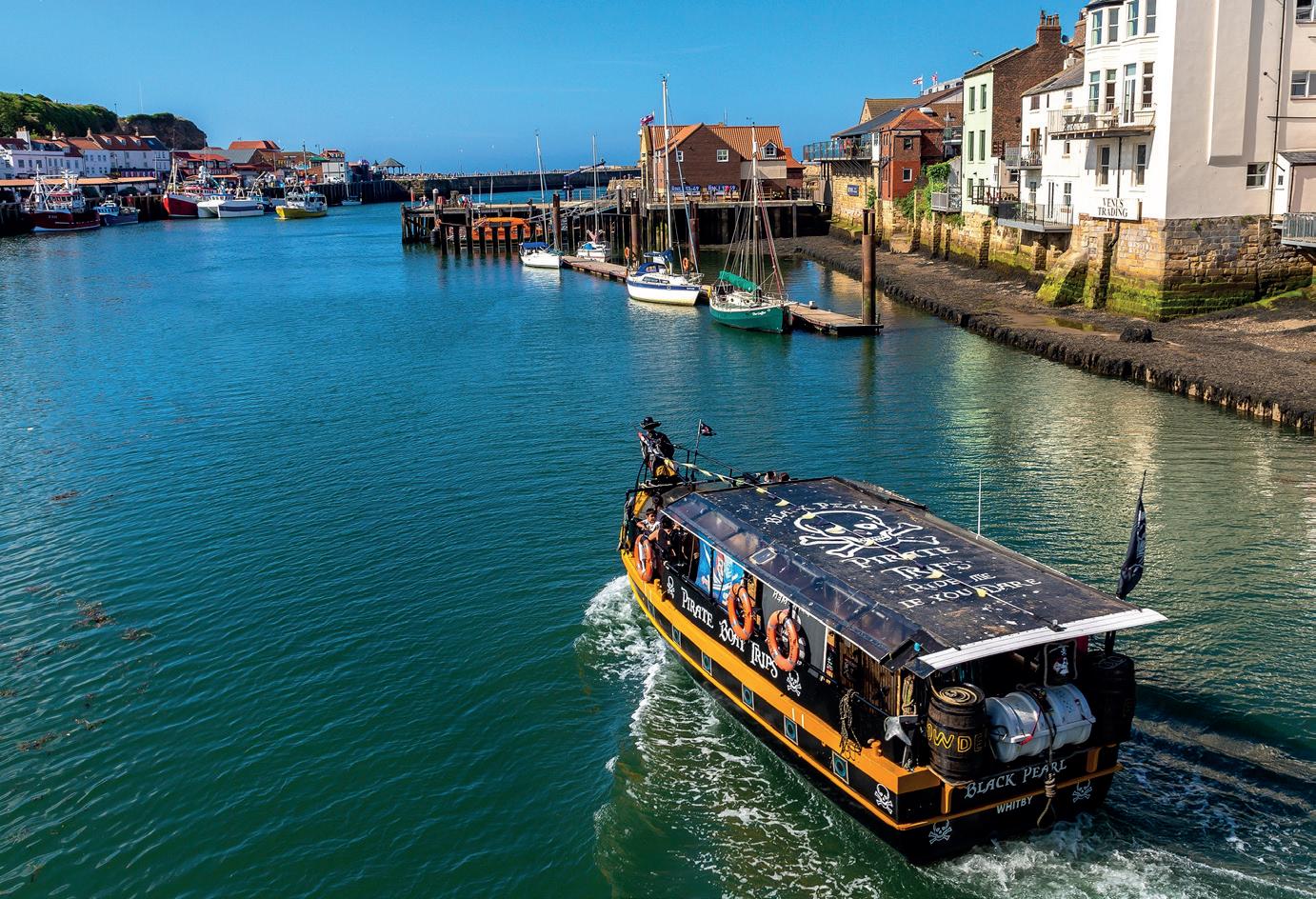
Pleasure cruises sail regularly from Whitby
The coastal path from Whitby to Saltwick
LOVE WHERE YOU LIVE
WYRD WEEKENDS
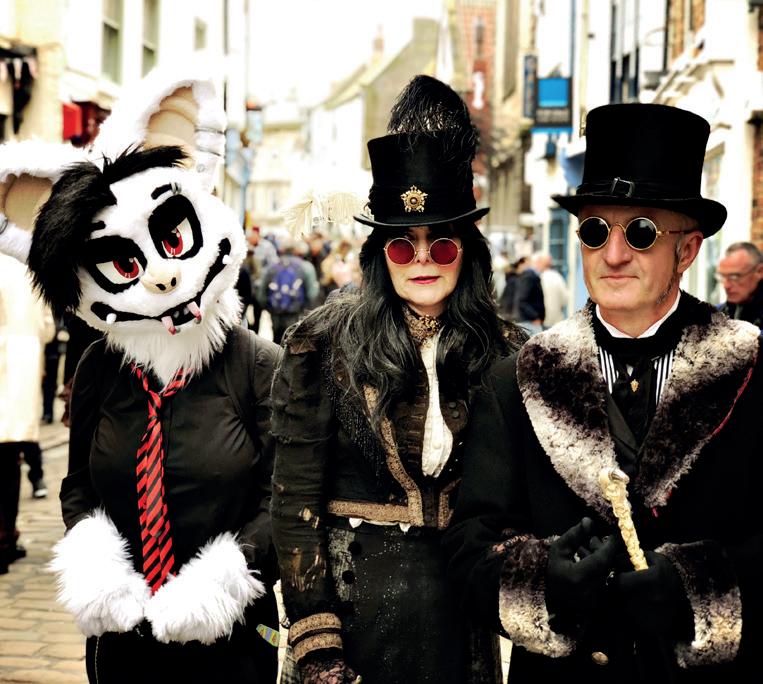
Away from the water, Whitby is also home to unique events inspired by the town’s most famous fictional resident – Dracula. Whitby Goth Weekend takes place twice a year, normally in April and the end of October (just in time for Halloween of course). An alternative music festival, if you like wearing black and all things wyrd then goth weekend could be just what you’re looking for.

THE HOME OF FOLK
This stunning seascape has been an inspiration to generations of folk musicians – with Robin Hood’s Bay itself being home to the much-loved Waterson/Carthy family. Calendar highlights include Bayfolk Folk Club’s Folk Weekend in June, Whitby Folk Week in August, and Musicport Festival in October.
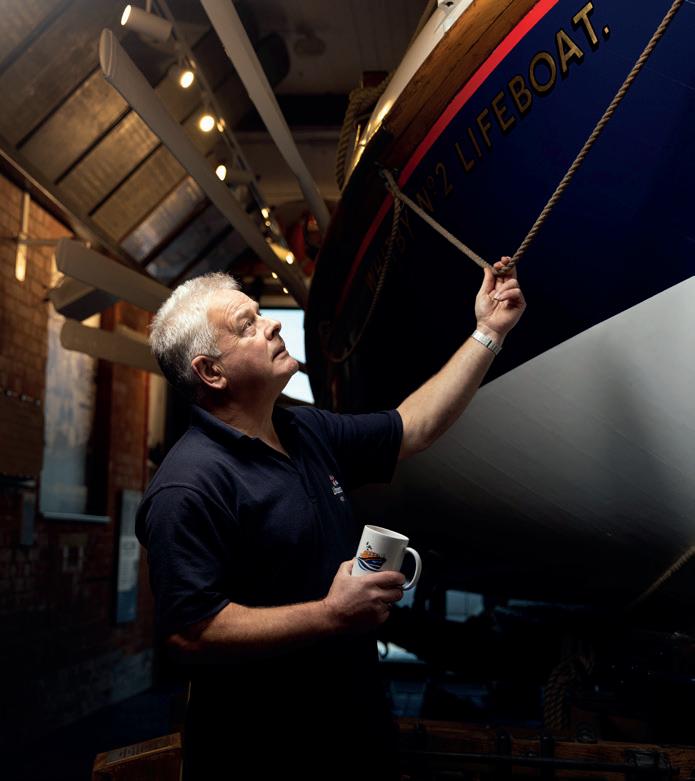
Whitby Lifeboat Museum, in our old boathouse on Pier Road, tells our crew's more than 200-year story – it's a must.
You'll find great places to eat at the harbour and marina. Our location means there’s always fantastic seafood. You’d be very unlucky to get bad fish and chips in Whitby!
'Whitby Lifeboat Museum tells our crew's story'
EMILY CLARKSON VOLUNTEER CREW, WHITBY RNLI
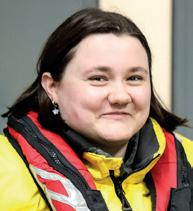
Scaling Dam Reservoir is great for watersports. There's a sailing club offering paddlesports, including kayaking. At Ruswarp, you can hire rowboats to take up the river.
All of the villages along the coast have their own sailing club so there's plenty of racing in the summer. Whitby Marina has bookable moorings and a slipway you can launch from. For a berth, just contact the harbour office.
I’m part of the local scuba diving club. We can’t take you out unless you have your own insurance, so you might need to hire your own boat. There are a few wrecks to enjoy off the coast here, and
TELL US WHERE YOU LOVE
there’s one area up towards Kettleness that's good for wildlife, with floating kelp to explore.
' There's plenty of racing in the summer'
FIND OUT MORE
• RNLI.org/WhitbyMuseum
• whitbysurf.co.uk
• whitbygothweekend.co.uk
• whitbyfolk.co.uk ■
Words: James Dwyer
Photos: RNLI/(Ceri Oakes, Nathan Williams), SGBailey, Shutterstock.com,
Let us know which area of coastline you’d like to see here in future issues by emailing offshore@rnli.org.uk
A visit to the RNLI Whitby Lifeboat Museum is a must when in town
Whitby Marina sits at the mouth of the River Esk
COLD AND EXHAUSTED
Gus Scott has logged more than 30,000 trouble-free miles onboard Arctic Explorer, much of it solo. But disaster struck last May when the yacht was disabled by severe weather 10 miles off Margate, leaving skipper and crew overcome by seasickness and cold
Gus had planned a fortnight’s sail to Lancashire, rounding the coasts of south England and Wales. His dog Trip was along for the ride, and they were joined by Gus’s partner Nicky and friend David. 'It was quite calm when we set off on the Medway,' says Gus. 'But past Grain Peninsula, it started getting choppy. The size of the waves was one thing, but I didn't expect them to be so close together. The boat was going all over the place. It was very uncomfortable, all of us were getting sick.'
They reefed down and continued with engine only. 'We were full-throttle but making less than 2 knots,' he says. 'I knew there’d be a good wind, four weather models had all said force 5 north-east. This was more like force 7–8.' Suddenly, a gust caught the yacht’s furler and yanked out the foresail. 'The drum exploded,' says Gus. 'I'd never seen that before.'
Within seconds, the 50m2 genoa was tearing itself up. They managed to haul the shredded sail back in and lash it down – but not terribly well, as Gus explains: 'Some of the knots were not up to par and it came loose.' The sail took flight again, then wrapped itself around the prop.
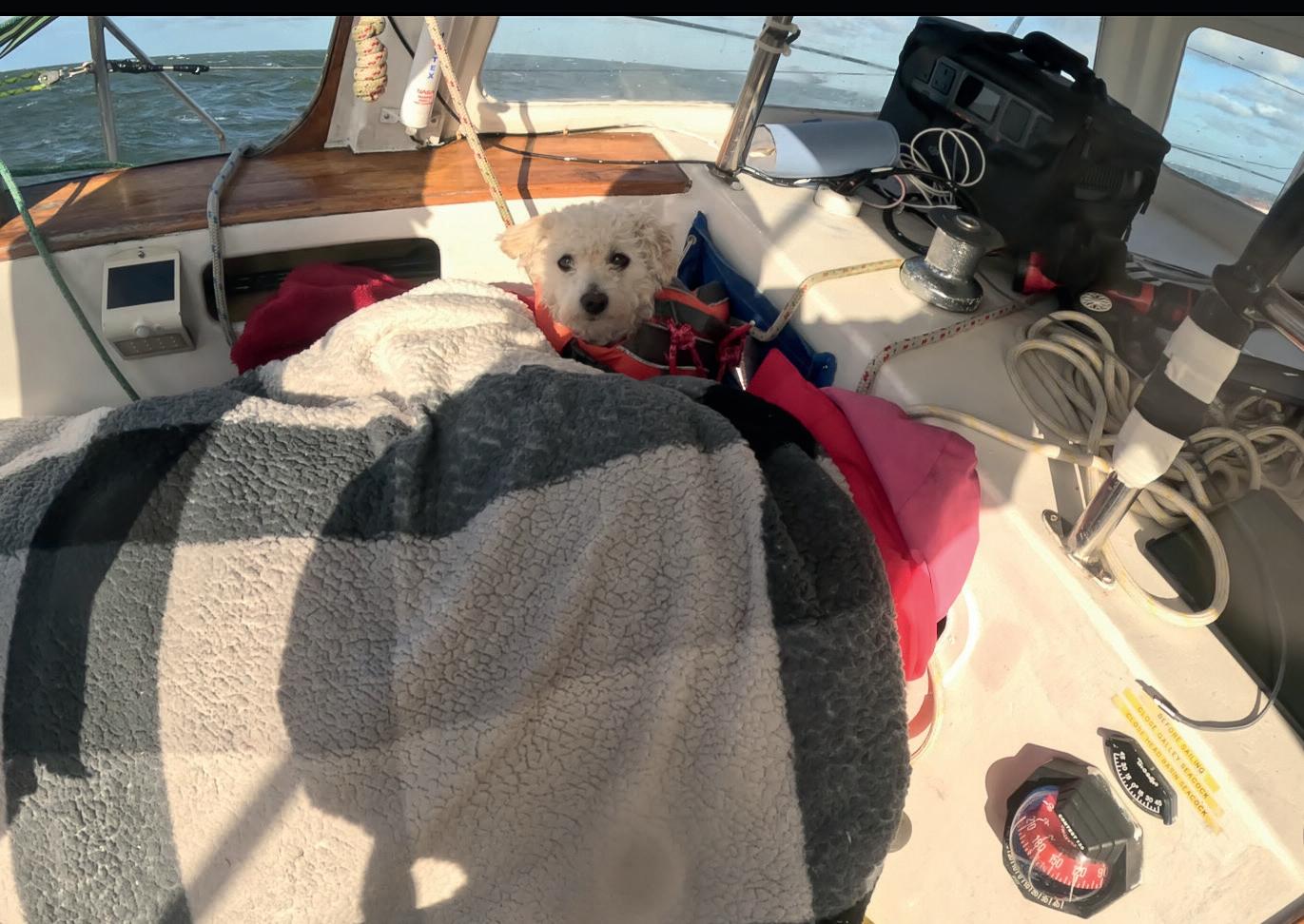
'With no propulsion, we turned side on to the weather,' says Gus. 'Big, horrible waves were hitting us beam-on. It was horrendous. Everything in the boat was thrown around.' Then Arctic Explorer hit a sandbank. Gus initially thought it would keep them from being driven ashore but then noticed that they were being pushed along it. By now, his partner was really suffering. 'Nicky was so ill,' he says. 'She laid on the cockpit floor being sick and couldn't talk. My little dog stayed with her. David started getting ill too. I made a pan pan call.'
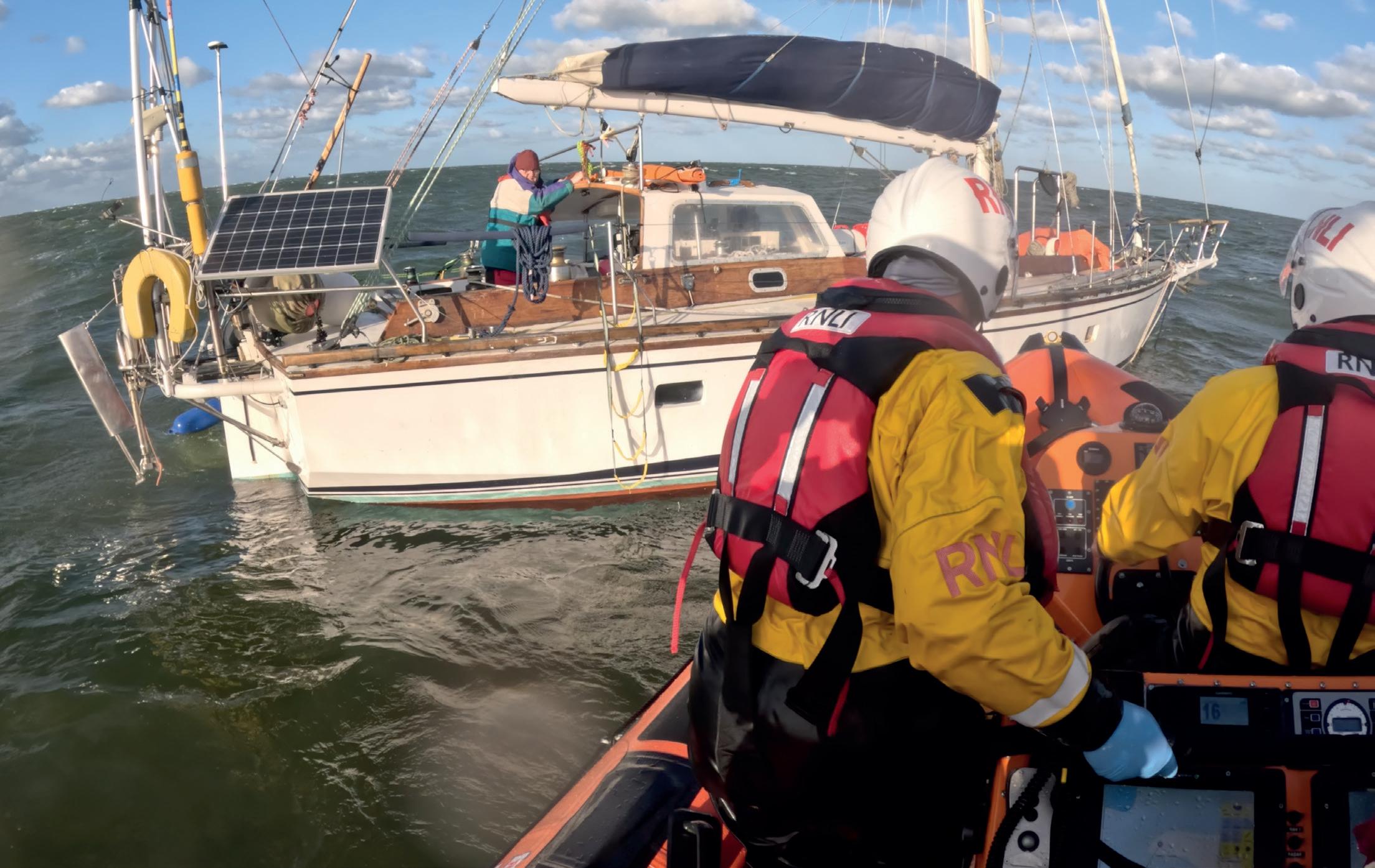
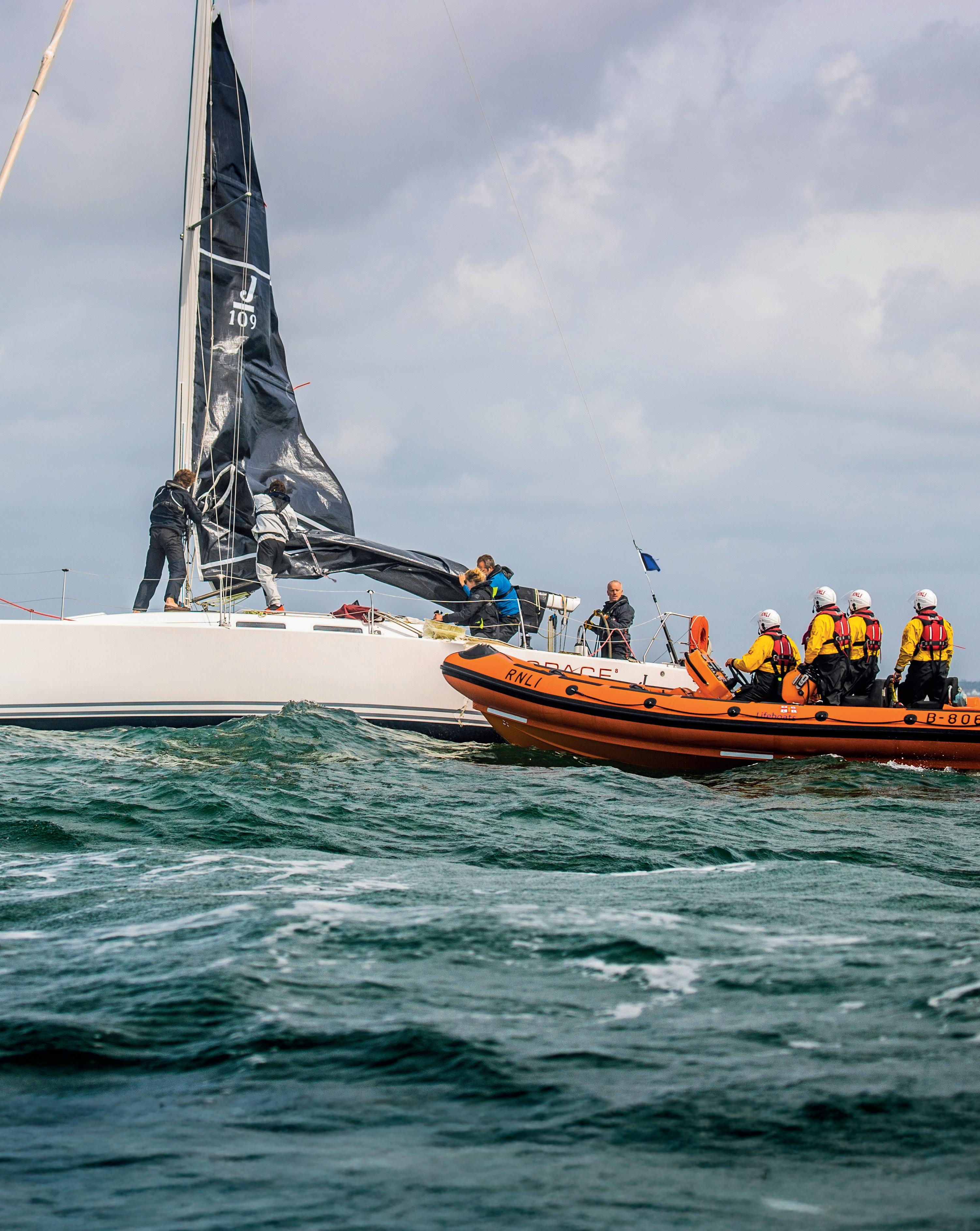
Margate RNLI's volunteers were a welcome sight for the stricken yacht's crew
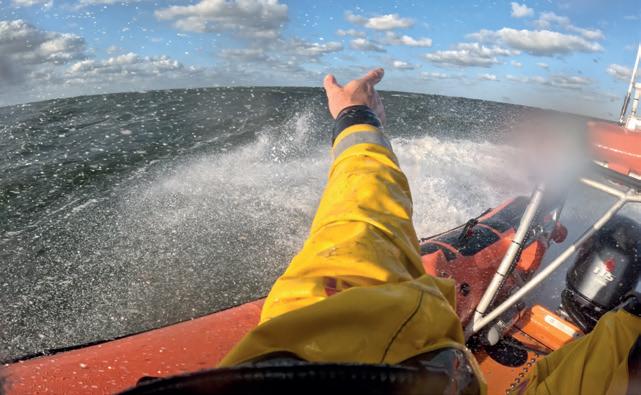
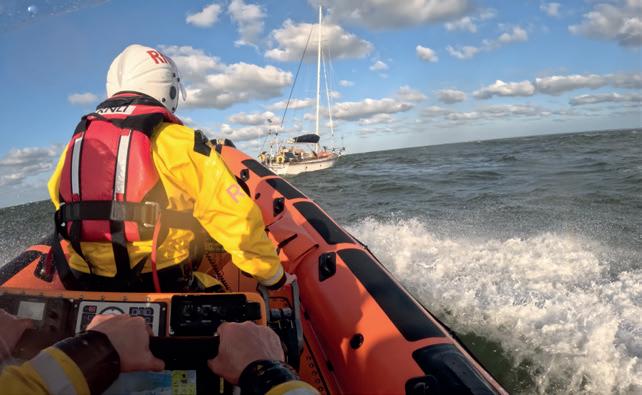
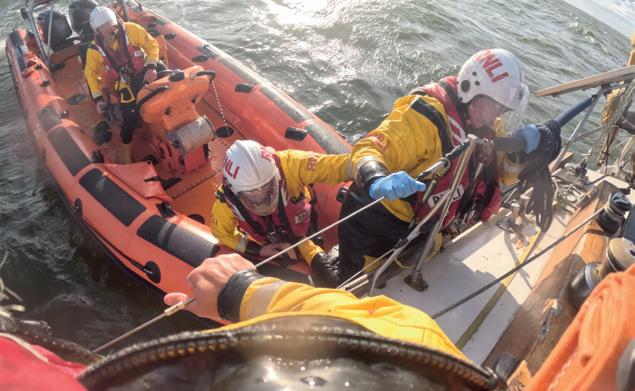
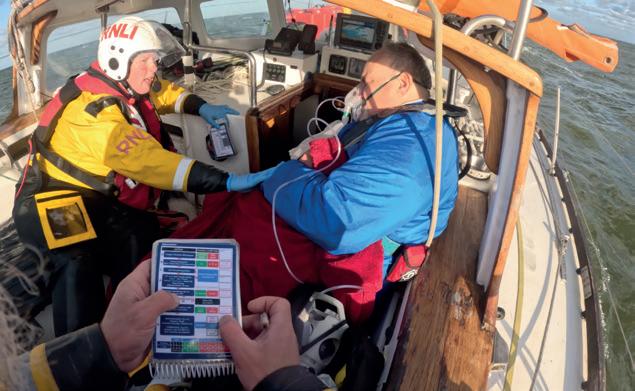
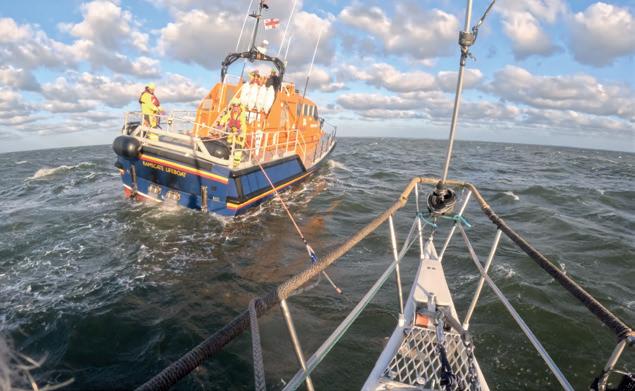
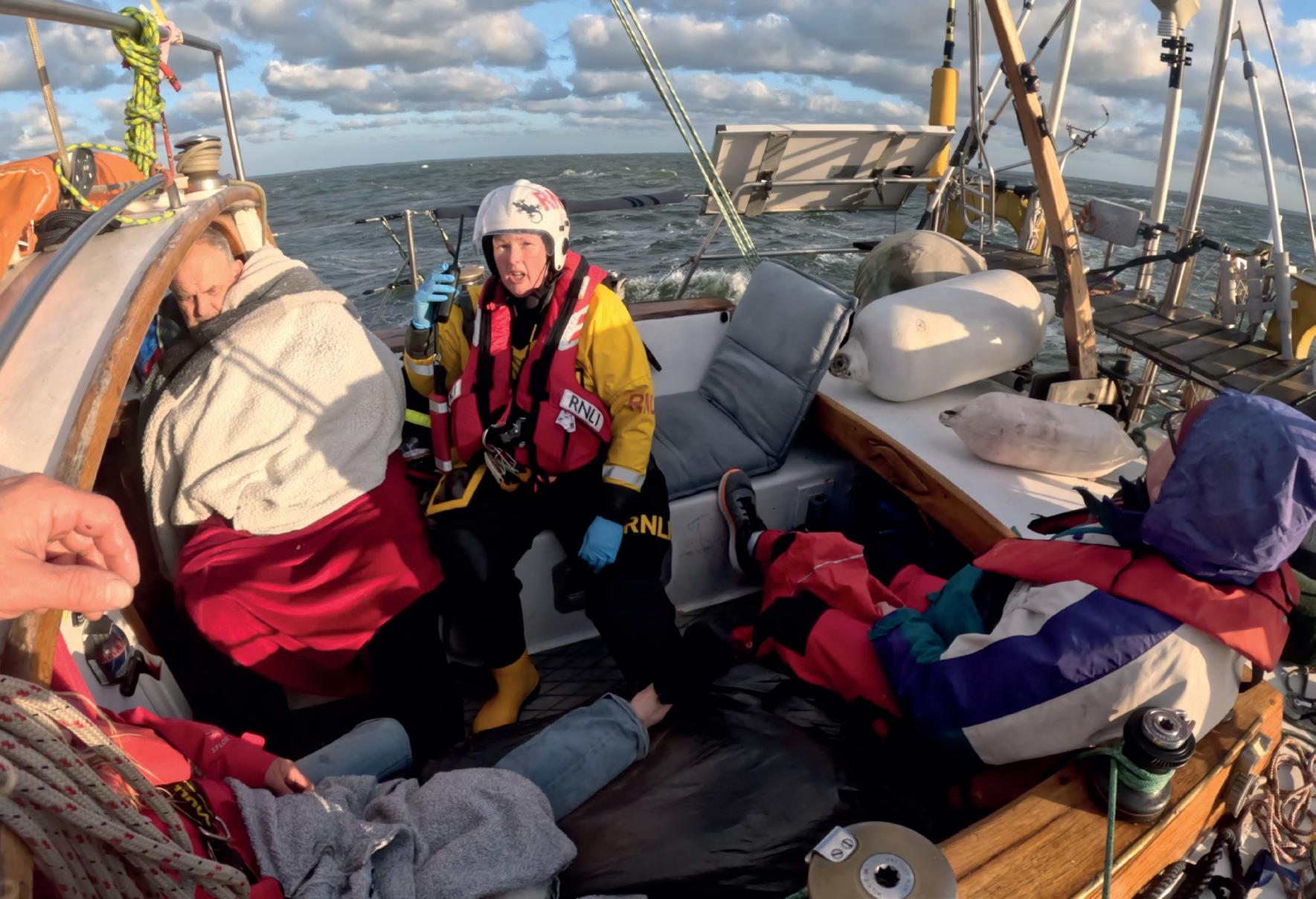
01. Margate RNLI launch their B class lifeboat Colonel Stock
02. and the lifesavers spot Arctic Explorer drifting in a force 7 ...
03. about 10 miles north-east of Margate.
04. RNLI Helm Chris Snelson helps his crew mates onboard ...
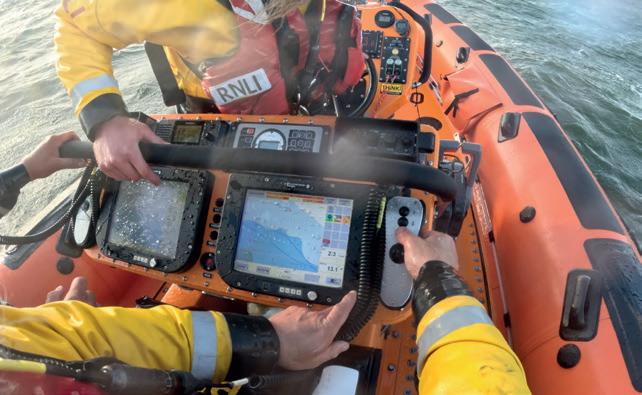
05. and they deliver casualty care to the exhausted sailors ...
06. before Ramsgate's all-weather lifeboat crew tow them to safety.
RNLI volunteers care for Gus, Nicky and David onboard Arctic Explorer during the tow into Ramsgate
GET THE LAY OF THE LAND EXPERT
'You may have an idea of what conditions you and your boat can handle. But will they be the same on all legs of your trip?
Eventually they were driven off the sandbank and set adrift – dragging the sail behind them. Gus, now also succumbing to seasickness, updated the Coastguard. 'I was retching and struggling to speak. They changed my call from a pan pan to mayday. It was the right decision. We were going down fast. The non-stop vomiting had drained us, and we were getting hypothermic.'
'Big, horrible waves were hitting us beam-on. It was horrendous'
Gus Scott | Skipper, Arctic Explorer
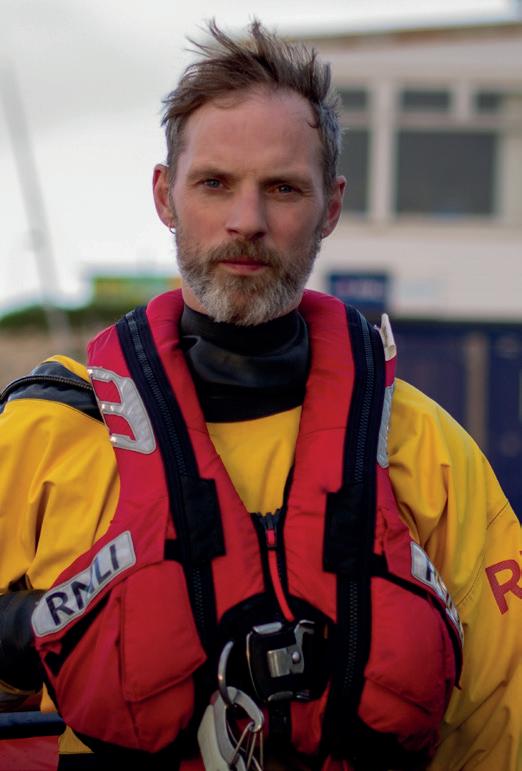
Margate lifeboat crew were the first to arrive on scene. 'Conditions were pretty pukey out there but our Atlantic 85 handled it well,' says Helm Chris Snelson. 'The yacht was rolling a lot. We put our bow alongside and waited for the right moment: I jumped and did a bit of scramble. The yacht’s deck was incredibly slippery with diesel.' Chris found Nicky face down, Dave seasick but stable, and Gus unwell with chest pains. 'My crew mate Lynn Cox is a paramedic, so we got her onboard too,' says Chris. While Lynn monitored Gus and gave him oxygen, a Coastguard helicopter arrived. Conditions made it too dangerous to evacuate anyone by air, but the chopper’s paramedic transferred down with an ECG machine. 'They confirmed that Gus’s chest pains weren’t life-threatening,' says Chris. 'So we agreed the safest option was a slow and
SHARE YOUR STORY
'RNLI crew have the benefit of local knowledge. At Margate, we know a force 4 or 5 from the south is OK – you get protection of the land. From the north, it can be horrible. So, when you check the forecast, think about how it might affect different locations. You’ll get an idea from the geography. Better still, ask a local expert.'
' Think about how the weather might affect different locations'
careful tow. Ramsgate RNLI arrived in their Tamar class lifeboat and passed a rope. We made it fast but stayed onboard, reassuring the casualties.' On arrival in Ramsgate, the casualties were handed into the care of the local ambulance service.
Reflecting on the incident, Gus says: 'I’d be more cautious in the future. I’ve done that journey so many times, so there was some complacency. We set off a little tired and hungry, and I didn’t expect the period of those waves. They were close together, which made it so unpleasant. I want to thank the RNLI crews profusely. They saved three lives – and one very good dog.'
FIND OUT MORE
Keep our essential boating checklists to hand for your best shot at trouble-free boating. Find them at RNLI.org/BoostYourSkills. ■
Words: Jon Jones
Photos: Maddie Henri/Blast FIlms, RNLI/Margate
Offshore is a space for sharing our experiences and increasing our knowledge. Do you have a story about a time things went wrong on the water, or news about ways you’re advancing water safety or watersports participation? If so, please email offshore@rnli.org.uk.
Chris Snelson | Helm, Margate RNLI
Acting as a hot water bottle for the cold humans: Trip seemed unfazed by the drama
HOW TO: BE READY FOR RESCUE
If you had to call for help at sea, would you know how best to prepare for rescue? Would your crew?
RNLI lifeboats launched more than 1,800 times to powered boat users and sailors in 2025*. And we know that even the most experienced boaters can get into difficulty. With the new season beginning, it’s crucial to prioritise safety and make sure each person onboard knows what to do in an emergency.
'When it comes to being safe on the water, prevention is key,' says RNLI Regional Water Safety Lead Guy Addington. 'There is no substitute for training in the activity you’re doing. It’s about being mentally and practically prepared before you head out. Pre-trip checks are essential too – from checking the weather and tides, to telling someone your plans, to checking your engine and fuel.'
Preventative measures also include wearing a lifejacket or buoyancy aid, carrying a means of calling for help, and knowing the RNLI’s Float to Live advice. 'Should you find yourself unexpectedly in cold water, fight the instinct to thrash and swim hard,' Guy explains. 'Instead, relax with the back of your head and ears underwater, keeping your airway protected. Stay in this position until the cold water shock and panic response have passed.'
No matter how well prepared we are, unexpected things can happen at sea and situations can quickly spiral out of control. Follow the tips opposite to prepare for being rescued – if you ever find yourself calling for help, you'll be glad you did.

1 2 3 4 5
REGIONAL WATER SAFETY LEAD GUY ADDINGTON SHARES HIS TOP TIPS FOR BEING READY FOR RESCUE


FURTHER READING
Before your trip, check that everyone onboard is familiar with your emergency plan. For instance, if there’s a man overboard, maintain visual contact with the person in the water, ideally pointing at them, as well as throwing them a flotation aid.
HAVE AN EMERGENCY PLAN KNOW HOW TO MAKE A DISTRESS CALL WEAR YOUR LIFEJACKET
Familiarise yourself with the emergency call sequence. A digital selective calling (DSC) radio transmits a digital distress alert on Channel 70. This should be followed by a voice transmission on Channel 16. The voice call should follow the standard mayday format.
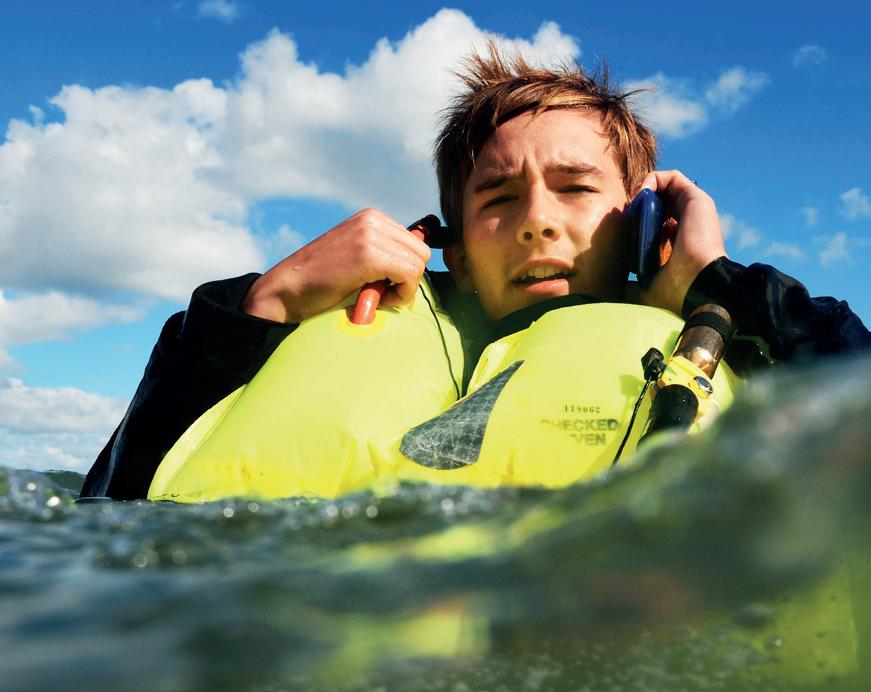
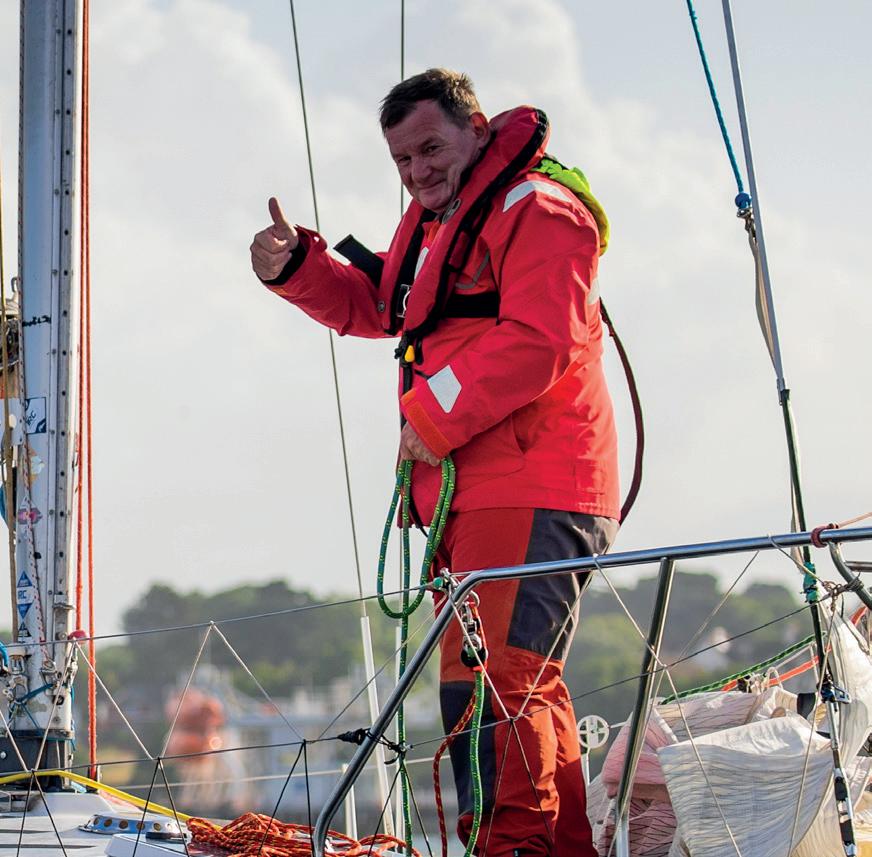
Clip onto your boat and wear a lifejacket to increase your chances of survival. If you fall into the water while not attached to your boat, you could quickly become separated from it – which makes rescue more difficult, especially at night.
Practise your basic ropework and seamanship skills, so that you can call upon them easily when they're most needed. The rolling hitch knot is invaluable in a range of emergency situations.
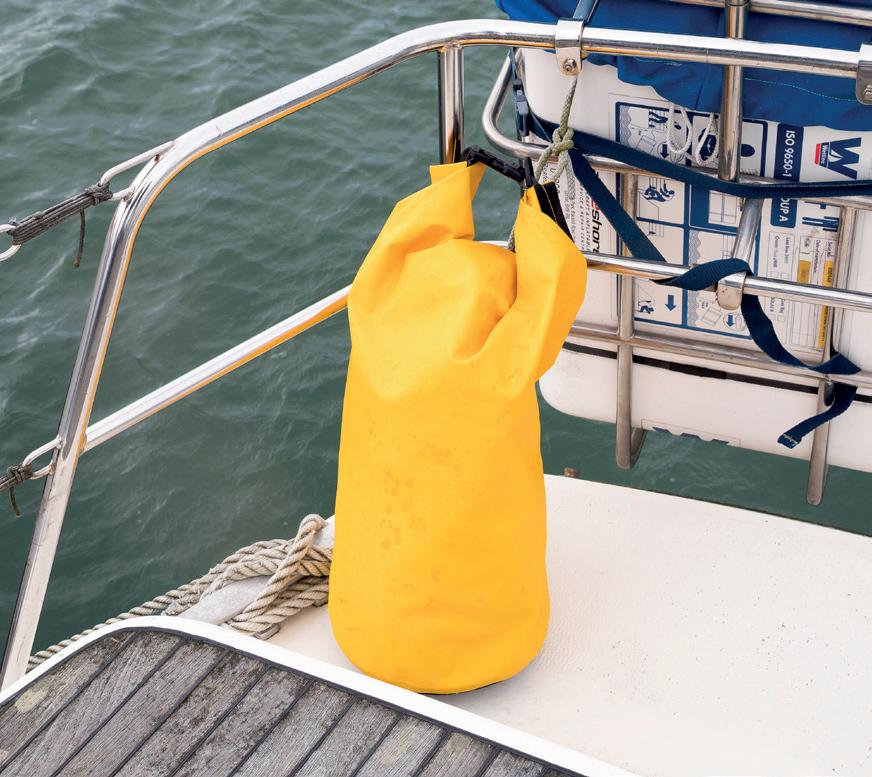
PREPARE A GRAB BAG
Have your waterproof grab bag easily accessible. If you have to be transferred to a lifeboat, you’ll need any medication and essential items, such as a mobile phone.
Read how to boost your skills at RNLI.org/BoatingSkills
And learn new knots with 50 Knots for Every Adventure: RNLI.org/knots ■
Words: Amy Bratley, Guy Addington Photos: RNLI/(Paul Dunt, Nigel Millard, Andy Parish, Nathan Williams)
Know how to make a distress call
Wear your lifejacket
Prepare a grab bag
WHAT WOULD YOU DO NEXT?
DO YOU SCENARIO
You’re out boating at sea when you spot a pod of dolphins. It’s the first time you’ve encountered dolphins, and you’ve heard how playful and agile they are. What do you do next?
EXPERT ANSWER
DAN JARVIS
DIRECTOR OF WELFARE AND CONSERVATION, BRITISH DIVERS MARINE LIFE RESCUE (BDMLR)
People get excited when they see dolphins and will often speed up or do fast, sudden manoeuvres, but that's when accidents happen and dolphins can get hit by boat propellors. In Cornwall, we’ve had three recent cases where we’ve unfortunately found a dead dolphin washed up on the beach with propellor injuries. People think dolphins are agile and can get out of the way, but if it’s a family group, there might be young animals less aware of how boats move. Or there might be older animals that are slower to react.
It’s vital to not come up directly behind dolphins, head-on, or cut across their direction of travel. Instead, slow down gradually and remain around 100m away. Limit your observation to about 15 minutes. They might be getting visited repeatedly and if they’re trying to forage or rest, they’ll get tired, hungry and stressed. Any encounter needs to be on the dolphin’s terms.
A Navigate into the centre of the pod, to see if they’ll swim alongside your boat?
B Circle around them to take photos from different angles?
C Remain quietly at a distance – at least 100m away?
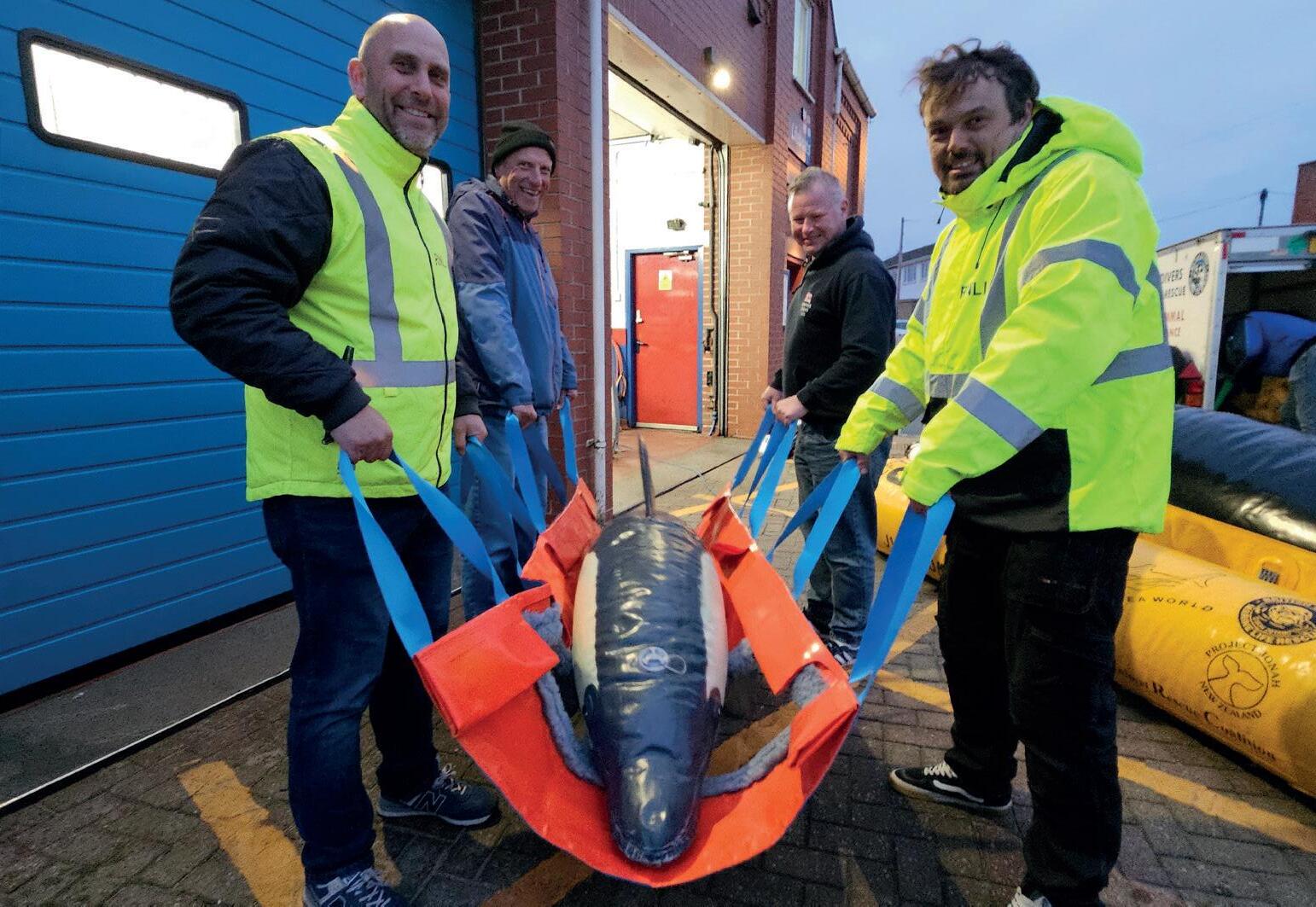
BDMLR volunteers sometimes coordinate marine mammal rescues with RNLI crews
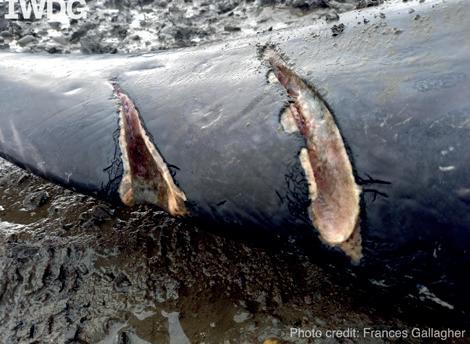
Propellor wounds can be fatal for cetaceans – boaters are advised to keep their distance
A LESSON IN MARINE MAMMAL RESCUE
When BDMLR rescue stranded, injured, or sick marine mammals, the RNLI are sometimes requested to assist. RNLI crew also encounter marine mammals on rescues or during training at sea. To help our volunteers know what to do if they spot marine wildlife in distress, BDMLR visit lifeboat stations to share their knowledge. BDMLR National Rescue Coordinator Emily Mayman says: 'We visited Withernsea RNLI with our marine mammal medics to give crew an idea of what we do, so that if we work together on a rescue, they're familiar with our equipment. We’ve since worked together on several occasions – from helping to locate a medic monitoring a seal pup when regional networks were down, to crew preparing to assist with a dolphin rescue. We’ve built a fantastic relationship and it’s brilliant to hear that several crew are now keen to train as marine mammal medics themselves!' ■
• For training in best practice around marine and coastal wildlife visit thewisescheme.org
• BDMLR’s rescue hotline is 01825 765546, or visit bdmlr.org.uk.
• Read the Marine and Coastal Wildlife Code at gov.uk
Photos: Frances Gallagher, IWDG,
Mayman/BDMLR