Photo Credits: Robin Clewley; Roscoe Rutter; Will Bedford (Fracture Sounds); Natalie Argent; Ianthe Warlow; Kieran Akhtar; Matthew Seed; Rosie Hardy; Vincent Lappartient; Mike Plunkett; Isolde Penwarden; Alicia Bickerstaff; Sam Walton; Jannah Claire; Colin MacLeod; Lu Liu; Charlie Swinbourne; Tom Kay; Venera_red_photography; images courtesy of Charlie Garstang, Isaac Middleton, Lisa McCloskey, Victor and Jonathan Stone.
News Round-Up
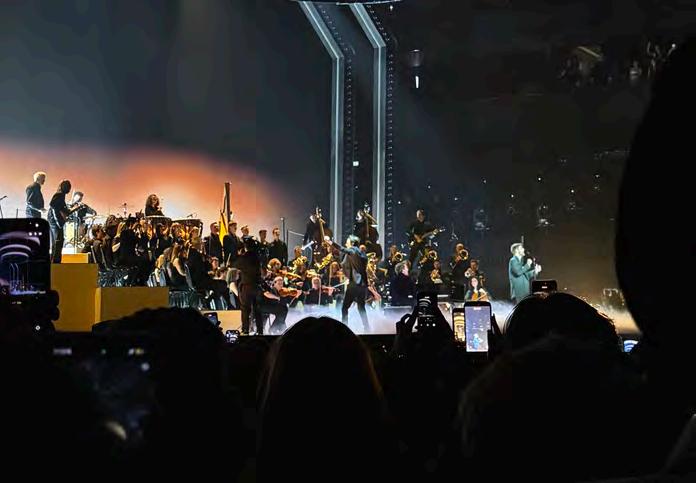
RNCM at The BRITs 2026
The RNCM played a prominent role in this year’s BRIT Awards, which took place in Manchester for the first time in the ceremony’s history. The BRITs honours the biggest and best music stars from the UK and beyond.
RNCM students, alumni, and partners contributed on stage, behind the scenes, and across the wider BRITs Fringe programme.
More than 25 alumni, along with current students Gabriela Costa Peres (cello) and Saulo Roberto (double bass), performed with Rosalía and special guest Björk as part of the Heritage Orchestra. Alumni Joe Luckin (drums), Charles Macdonald (guitar), and Chris Rabbits (bass) joined Alex Warren’s set, featuring the Hallé Choir and Orchestra. Alumni Liv Thompson (bass) and Nadia Eskandari (violin) performed as part of RAYE’s band, while graduate Sam Harding’s audiovisual studio, Machinesinger, designed the screen visuals for Olivia Dean. Beyond awards night, the RNCM also contributed to the BRITs Fringe, a city-wide programme delivered in partnership with music development charity Brighter Sound. The F irst Steps into Selling Your Music workshop, hosted at the RNCM, offered early career musicians practical guidance on navigating the commercial side of the industry.
Professor Linda Merrick CBE, Principal, said: ‘It was a pleasure to host one of the BRITs Fringe events and to welcome so many aspiring young artists and industry guests to the RNCM.
‘The BRITs is a key platform for emerging and established artists and supporting events like this are invaluable in helping the next generation understand not just how to create great music, but how to build sustainable careers around it.
‘I would also like to extend congratulations to all the students and alumni who performed at the Co-op Live Arena on Saturday night. You did the RNCM and Manchester proud.’
A royal performance
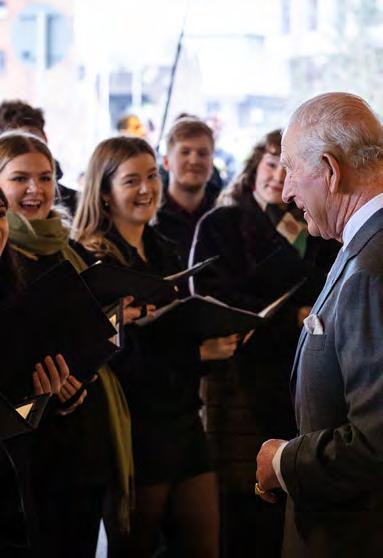
Members of the RNCM Chamber Choir had the privilege of performing for HM King Charles III during his visit to Aviva Studios in Manchester in March.
Under the direction of Stuart Overington, the ensemble performed two pieces and enjoyed a warm, engaging conversation with His Majesty about music and their studies.
As our Patron, King Charles also spent time speaking with our Principal, Professor Linda Merrick CBE. She said: ‘It was an honour to meet our Patron, King Charles III, during his visit to Manchester and to have the opportunity to chat briefly with him about our work here at the RNCM. A huge thank you to Stuart for leading our Chamber Choir, and to all the students who performed so brilliantly.’
'Piano olympics' inspire RNCM students
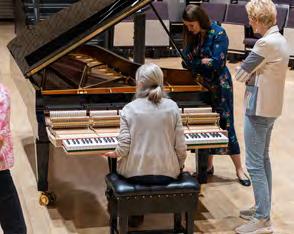
Inspired by their experiences at the Chopin Competition in Warsaw, keyboard students have played a key role in prompting the RNCM’s latest investment in its instrument fleet: a new Shigeru Kawai piano. The purchase was made possible thanks to a generous gift from the William and Frances Dobie Charitable Foundation.
S peaking about this exciting new development, Graham Scott, Head of the School of Keyboard Studies, explained ‘The impetus behind buying the Shigeru Kawai piano was largely student-driven. It is a brand with a growing reputation for quality, and a number of our musicians played one at the Chopin Competition in Warsaw, affectionately known as the ‘piano olympics’, and said they really liked playing it. It’s an important investment for us because it provides the RNCM with a diversity of instruments rather than us having all one type or make.’
It also has the seal of approval from the RNCM’s excellent team of technicians, including lead piano technician Marianne Bailey who, having played one herself, endorsed Graham’s feeling that the Shigeru Kawai would be a good choice. Graham added: ‘It is sufficiently hardy to take the heavy use of being an institutional piano at a busy conservatoire, being played for many hours a day. Our students expect excellent pianos to play on, and this is a very good addition to our fleet.’
J onathan Parkin, Chair of Trustees of the William and Frances Dobie Charitable Foundation, commented: ‘The Trustees were very pleased to contribute to the Piano Campaign and enable the RNCM to purchase the Shigeru Kawai grand piano to support the School of Keyboard Studies. The Foundation was established in 2017 in memory of Bill and Cis Dobie who loved to support the RNCM and students; in addition to annual bursaries, this was its second major donation following one for the Brass Recharge project in 2023.
'At the Benefactors Evening, I was privileged and delighted to enjoy a private recital by Liana Storey, and an explanation from Graham Scott about choosing the newly arrived piano and its rich tones.’
Celebrating RNCM Engage West Cumbria
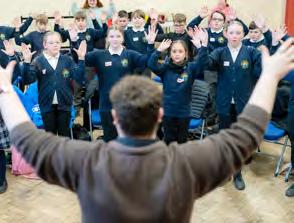
In March, we joined over 100 children in Workington to celebrate the mid-point of RNCM Engage West Cumbria – our groundbreaking initiative expanding access to high - qu ality music education and supporting the next generation of musicians and educators.
Through hands - on workshops, performances, and close collaboration with Cumbria Music Hub, local schools, and community partners, this groundbreaking five-year project is helping young people discover their potential and build skills that can take them further.
N umerous staff and students from our new Master of Education programme were involved in the event – held at Carnegie Theatre and Arts Centre on Monday 2 March – helping to develop the future music education workforce by refining their teaching practice, gaining real - wo rld experience, and working directly with young learners and local partners.
Professor Linda Merrick CBE said: ‘RNCM Engage West Cumbria is a powerful example of how the RNCM can work hand - in - ha nd with communities to widen access to music and inspire the next generation.
‘ Thank you to the staff, students, partners, and of course the young people whose enthusiasm made the day so special. It’s especially encouraging to see our Master of Education students developing their practice in such a meaningful, real - wo rld setting.’
M ade possible by a transformational philanthropic gift from the Benny Walker Charitable Trust, RNCM Engage West Cumbria is responding directly to the needs of local communities, and aims to ensure that every young person can explore and enjoy music, regardless of background or circumstance.
Recipients of the Lucy Hale Award announced
Three outstanding recipients were recently presented with the 2026 Lucy Hale Award, which champions and supports D/disabled and neurodiverse students.
The fund has been shared by classical flautist Lisa McCloskey and two Popular Music students of keyboards and guitar, Charlie Garstang and Isaac Middleton, and helped each of them to purchase essential equipment.
Master of Education student Lisa is a wheelchair user with cerebral palsy and will invest her award in an adaptive head joint for her flute which will reduce the chronic pain in her hand and wrist that is severely limiting her playing and practising.
Lisa, who studies on the RNCM’s highly specialised new degree for music teaching professionals, has faced physical and structural barriers to music education and was forced to postpone her long-held ambition of completing a performance diploma following master’s study in 2018. However, she explains that ‘music has always been the sphere in which my disability did not define me’ and now plans to support the advancement of research into music performance and disability.
First year bass guitarist Charlie has lived with the debilitating impact of Crohn’s disease since he was 14 and will use his award to purchase two new instruments: a Shruti Box and a Tanpura. Second year keyboards student Isaac will invest in a home studio (an Ableton Push 3) and high-quality headphones to reduce the negative impact of his chronic fatigue.
Speaking about the importance of the award, Isaac said: ‘ The less steps I have to take in order to write or record an idea, the easier I find it, and the more time I have to work on developing the music before needing to rest and recover.’
The Lucy Hale Award was first presented in 2024 in memory of Lucy who was diagnosed with a neuromuscular disability at a young age, graduated from the RNCM with both undergraduate and postgraduate degrees, and was set to begin a PhD studying assistive technology in music. The fund was established by her parents Nicky Hale and John Mellor, and her sister Ellie.
Charlie Garstang Isaac Middleton Lisa McCloskey
News Round-Up
2025 Honorands
Every year at the RNCM graduation ceremony, honorary awards are conferred on exceptional individuals to recognise their contributions to the world of music and to the work of the RNCM.
We were proud to celebrate a remarkable group of musicians, educators, cultural leaders, and advocates at our 2025 Congregation of Awards.
Fellowships were presented to Courteeners frontman Liam Fray, Chinese composer Xiaogang Ye, Sydney Conservatorium Dean Professor Anna Reid, cellist Li-Wei Qin, composer and educator Kate Pearson, and guitarist Dominic Miller, recognising their outstanding artistic and educational contributions.
Honorary Memberships were awarded to: Manchester Camerata CEO Bob Riley; Kevin McNeany and Barbara Mothershaw, in recognition of their significant philanthropic support of the RNCM, alongside their wider involvement in education and urban regeneration of spaces in the North West; three members of the same family – Nicola Hale, her husband John Mellor and daughter Ellie Mellor – for their distinctive contributions to cultural and community life.
In addition, 10 alumni were named RNCM Associate Members (ARNCM) in recognition of their achievements across music and education: chart-topping drummer Joe Singleton (The Lottery Winners); broadcaster and pianist Keelan Carew; Manchester Proud Chorus director and singer Dan McDwyer; award-winning euphonium player and professor David Childs; internationally renowned pianist and educator Victor Lim; Sinfonia Viva leader and violinist Sophie Rosa; composers Bethan Morgan-Williams and Asteryth Sloane; and emerging conductors Rita Castro Blanco and Miguel Sepúlveda.
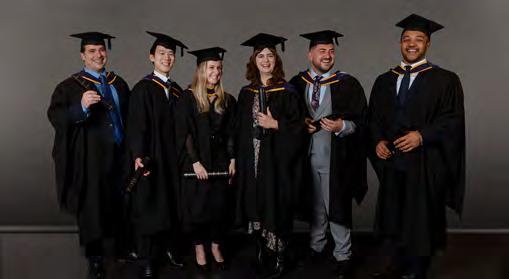
Middle: L to r: David Childs, Victor Lim, Agata Zając, Sophie Rosa, Dan McDwyer, Keelan Carew
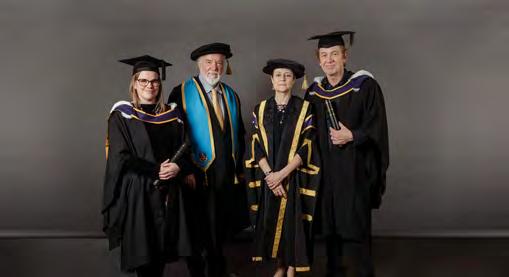
Bottom: L to r: Kate Pearson, Sir John Tomlinson CBE (President), Prof. Linda Merrick CBE (Principal), Dominic Miller
To keep up to date with all the latest RNCM news, visit our website r ncm.ac.uk/news
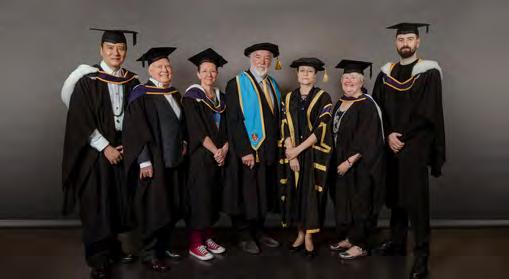
Top: L to r: Xiaogang Ye, Kevin McNeany, Prof. Anna Reid, Sir John Tomlinson CBE (President), Prof. Linda Merrick CBE (Principal), Barbara Mothershaw, Liam Fray
A decade on from the launch of its pioneering Popular Music degree, the department is now the most rapidly growing area of the RNCM. It’s a momentum the Head of Popular Music intends to keep going; Professor Andy Stott tells Sarah Walters where’s next for Pop, and why he’s so committed to pushing things forward.
This academic year, the RNCM celebrated a milestone: 10 years as the only UK
conservatoire offering a four-year bachelor’s degree in Popular Music – a change that aligned the programme with the RNCM's classical offer. It’s an anniversary that has made the Head of Popular Music, Professor Andy Stott, look back with ‘considerable pride, but also fierce ambition’
‘ It took a lot of steel to be the first conservatoire to offer this programme,’ says Andy, ‘but putting popular music on an equal footing to classical at the RNCM has been a long and deliberate vision. The competitive market is the real reason why levelling up was so important; until the focus of the debate shifted from whether pop should be taught at all, it was impossible to be ambitious enough about teaching it.
‘ When we ask students why they want to come to the RNCM, the Manchester music scene, the reputation of the institution, the chance to collaborate with classical students have always been the big draw. But the top answer now is they can’t do this programme anywhere else; they say, “I perform, I write, and I produce, and I want all of that in my degree”. The programme has become the star of the show.’
A ndy first came to the RNCM in 2007 to launch the precursor programme: a two-year Foundation in Popular Music Performance (Session Musician). It had just 20 places and was supported by funding from Greater Manchester Strategic Alliance (an optional third year at Leeds College of Music elevated it to a bachelor’s degree with honours). Its evolution into an RNCM-awarded BMus and MMus was a response to the volume and quality of applicants, and that development decision has allowed Andy and his team to prepare hundreds of young musicians for the demands of the modern music industry. Auditions (owing to the standard of the applicants) are increasingly competitive, with acceptance rates somewhere between 12 and 15 per cent.
C ore recruitment continues in five major disciplines: voice, guitar, bass guitar, drums, and keyboards. But it is changing; students are coming with a broader skill set and, more recently, have looked to specialise in production and non traditional pop instruments – such as violin (leading to the much-publicised recruitment of alumna Andra Vornicu). All students now benefit from Andy’s decision four years ago to make artist development a pillar of the programme; the success of this year’s graduating cohort (which included Island Records four-piece West Side Cowboy and BDI-signed Jack Critchlow) is validation of the wisdom of that shift.
‘ The degree outcomes are outstanding – the actual attainment of the students from an academic perspective, but also the interest and engagement with the industry is better than we’ve ever had before,’ Andy enthuses. ‘That's tangible outcomes, like students getting deals with record labels, securing management and publishing deals, gigging exposure, playing major festivals.
‘And I can say with confidence that the pop programme has definitely shifted the classical programme into a more creative artistic space. Students on the classical programme are increasingly interested in being an artist and doing their own thing. Which is really cool, because it’s important for all musicians to be multidimensional, no matter which discipline
Jack Critchlow
Andra Vornicu
Now Andy is preparing for the next big change; from September 2026, Popular Music is launching a fresh singer-songwriter pathway that will increase annual recruitment from 42 students to 60 (making it one of the RNCM’s biggest departments) and will add three more specialist vocal staff to his team. Offers have already been made to students from across the globe, including the US, Singapore, India, and The Netherlands. Singersongwriters will move through the same programme as all students but with a specialist focus on developing them as solo artists – so, for example, band sessions will be replaced with writing camps.
‘ We think that’s very exciting, in terms of its creative potential. It's very common in the industry these days for songs to be written by teams for headline artists, and for writing to be a collaborative process,’ Andy explains.
‘ It’s important we maintain these connections to industry norms as we're preparing students for the industry. Some of our new appointments reflect that ambition: Rebecca Lewis and Damian Morgan, for example, are both people who are in that world. What is also interesting from an industry perspective is that virtually every guest that we bring in for a masterclass is not just a good player, they are writing their own original music, writing with other people, producing their own music, producing for other people –it’s crystal clear their game plan is to make sure they’ve got multiple income streams.
‘ I think our duty is to train our students to have successful, sustainable careers; putting them on a single track is perilous. Becoming original artists and freelance musicians requires agility, creativity, and responsiveness to new technologies and diverse audiences, to learn how to handle the realities of the modern industry and how to manage a portfolio career that could find them in a symphony hall, an intimate festival tent, a studio composing for film, or even producing and collaborating with other artists. With us, they also experience classical training up close – opening their eyes to the technical rigour and discipline required to master a classical instrument to a level worthy of a seat in a leading orchestra.
‘ We should be continually exercised by the question of, “What's the value, and why are we doing this?”. Ultimately, it’s about equipping students with a contemporary skillset that enables them to have sustainable and successful careers, and you must give them the relevant tools that help them to be as future proof as possible.’
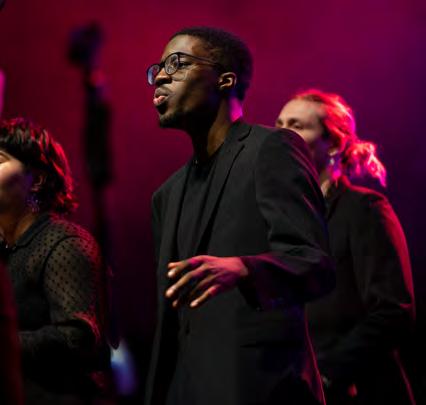
RNCM Gospel Choir
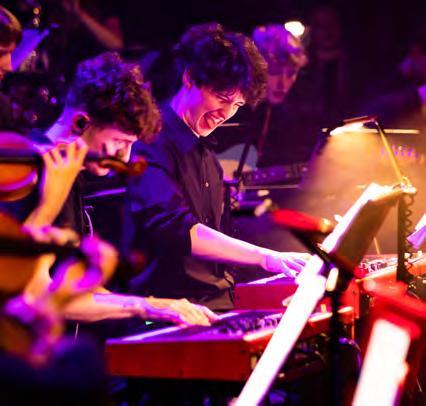
RNCM Session Orchestra
'I think our duty is to train our students to have successful, sustainable careers. Becoming original artists and freelance musicians requires agility, creativity and responsiveness to new technologies and diverse audiences.'
Professor Andy Stott
Althea
ALUMNI SPOTLIGHT
JOE SINGLETON
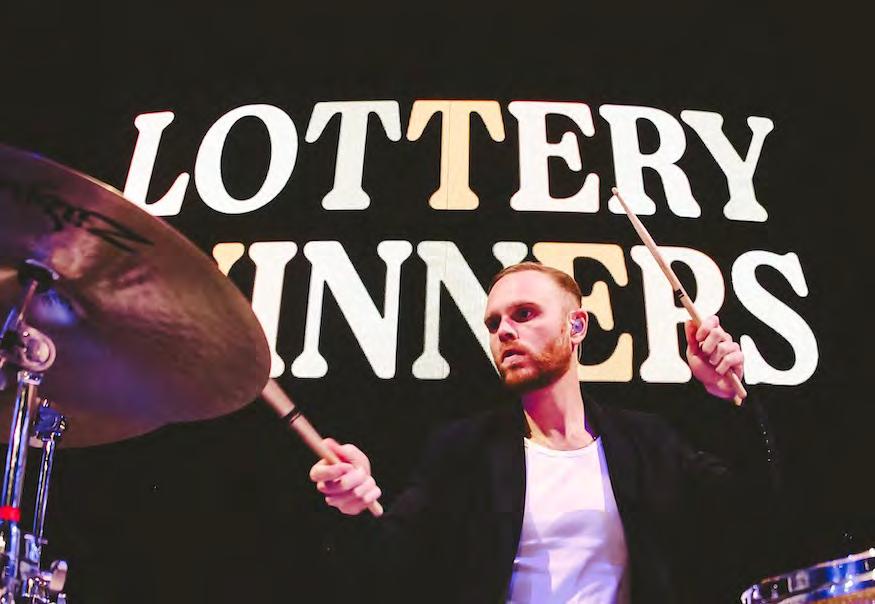
Joe Singleton, drummer for Leigh-based band The Lottery Winners, graduated from the RNCM’s Popular Music programme in 2014. Since then, he’s released four studio albums with the band, including two UK Official Chart No 1s; toured the UK and Europe with artists such as Robbie Williams, Paul Weller, Tom Jones, Richard Ashcroft, and The Wonder Stuff; and performed at major festivals from Kendal Calling to Glastonbury. And now the band is preparing to play its biggest headline show yet – a home-coming gig to a crowd of 12,000 at Leigh Sports Village Stadium in May.
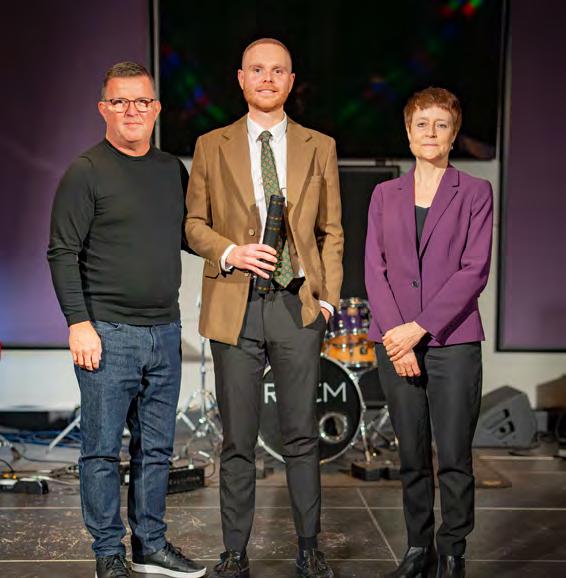
J oe recently returned to the RNCM to receive his Associateship award (ARNCM) and reflected on his time as a student with us.
Thinking back to over 10 years ago, what inspired you to choose the RNCM?
As soon as I heard about the RNCM, I knew that was the place where I wanted to study. The course was perfect for my aspirations as a musician, and I benefitted greatly from the Popular Music course. To be only half an hour up the road from home but to be within a brilliant musical hub and network was such an amazing experience and has led to so many opportunities.
Which aspects of your studies were most i mpactful for you?
My most memorable experiences during my time at the RNCM were definitely having the opportunities to play and rehearse many different styles of music with a plethora of amazingly talented musicians from a variety of different backgrounds. As the level of musicianship is so high, it really forces you out of your comfort zone and pushes your own ability.
How did your time at the RNCM prepare you for the career you have now?
M y time studying at the RNCM provided me with the experience, confidence, discipline, and work mentality to be prepared for a career within the music industry.
What do you see as the essential skills needed for a sustainable career in today’s industry?
I think the key tools to being a successful musician are to throw yourself into the deep end, take risks and opportunities whenever you can, and know that you are doing that to the best of your ability.
If you had to pick one stand out moment in your career so far, what would it be?
I’ve had so many, but the one definite career highlight I’ve had to date, is having two UK Official Chart No 1 albums. It’s great to be part of a band from a small town like Leigh that has gone on to achieve such accolades. I’ve also been lucky enough that this career has given me the chance to tour all over the world, and to meet some incredibly inspirational people whilst doing so.
L to r: Prof. Andy Stott, Joe Singleton, Prof. Linda Merrick
Northern HIGHLIGHTS
Strings alumnus
gains principal seat with RLPO
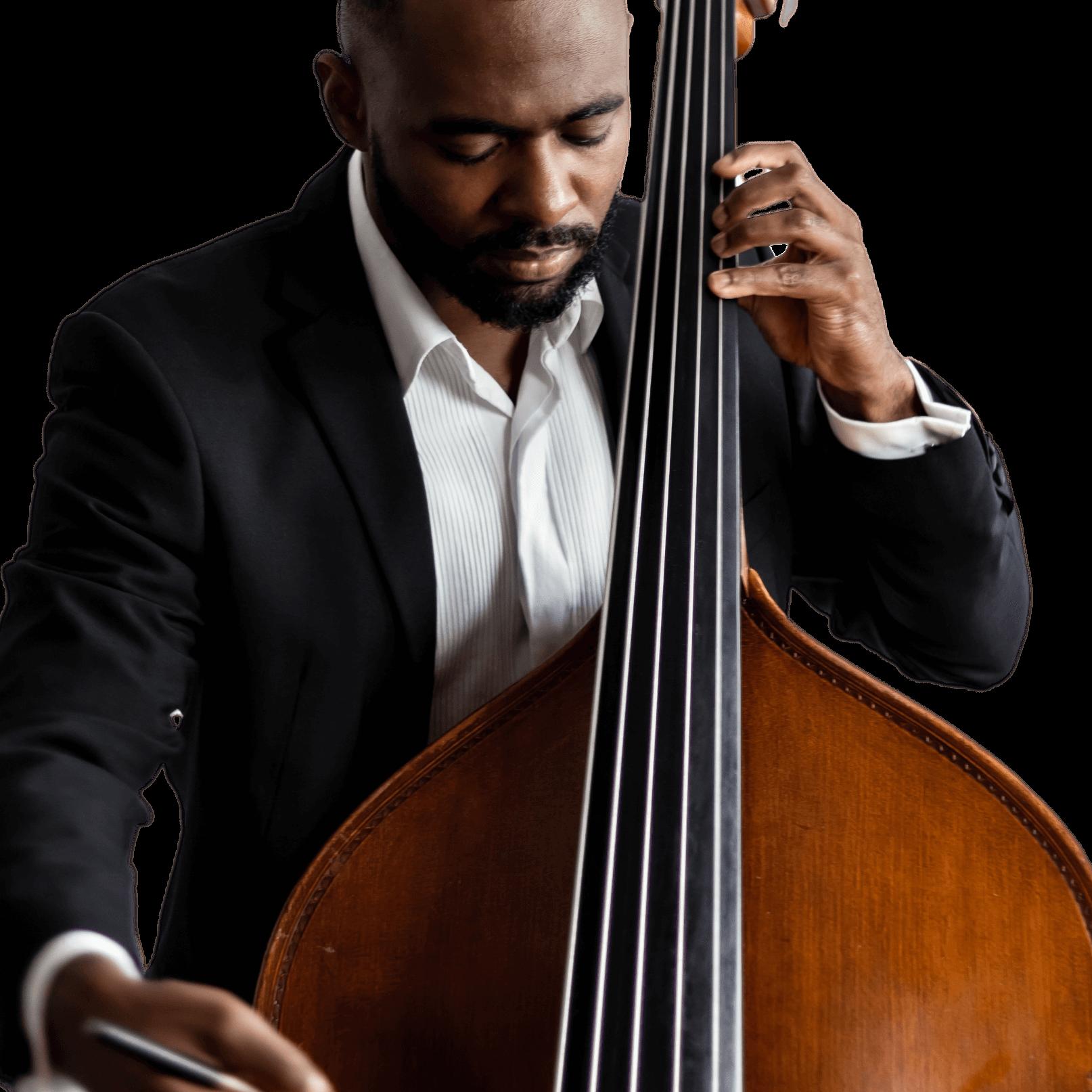
Double bassist Nathan Knight, who studied on the RNCM/Hallé Strings Leadership Training Scheme and graduated in 2017, was appointed Associate Principal Double Bassist (No 2) with the Royal Liverpool Philharmonic Orchestra ready for the start of their 25/26 season.
In recent years, Nathan has won Principal trials with the BBC NOW, Opera North, Ulster, and Bournemouth Symphony Orchestra, appeared as Guest Principal with Chineke, Royal Northern Sinfonia, and Manchester Camerata, and has performed with the BBC Symphony Orchestra and Scottish Chamber Orchestra. He is a member of Decus Ensemble and is regularly invited to do session work with Chamber Orchestra of London and Isobel Griffiths LTD.
Speaking about his new role, Nathan said: ‘I’m incredibly excited to be joining the Royal Liverpool Philharmonic Orchestra as Associate Principal Double Bass. As a teenager, I was fortunate enough to be able to play in Liverpool Philharmonic Hall many times as a member of National Youth Orchestra. It has been a fantastic experience playing there now as a professional musician and becoming re-acquainted with that great acoustic and fantastic audiences. It feels fitting that I can take the next step in my career with the Royal Liverpool Philharmonic Orchestra and contribute to an organisation whose work I very much admire.’
Nathan Knight
Worldwide signing for Tom Hillary
Award-winning conductor Tom Hillary has been signed to worldwide management with Massa Konzertmanagement.
A percussion graduate of the RNCM, Tom has since become a leading figure in the world of video game music and live film music concerts, recognised for his artistic vision, his seamless integration of music, visual design, and stagecraft, and his dynamic presence on the podium.
One of the first UK conductors to bring video game music to the orchestral stage, he founded – and is Artistic Director of – the Manchester Video Game Orchestra.
Tom’s multi-faceted career spans engagements in international concert halls and opera houses, orchestral crossover projects, and collaborations with high profile artists. Alongside his conducting work, he has performed as a percussionist with many of the UK’s leading orchestras and brass bands, recorded an extensive discography, and remains passionate about music education.
Royal accolade for vocal alumna
Live Music Now CEO Janet Fischer was awarded an MBE in the King’s New Years Honours for services to music and to charity. Founded by Yehudi Menuhin, Live Music Now brings high quality music to those experiencing social exclusion or disadvantage. The charity reaches over 85,000 people a year in community settings, and trains and employs 250 professional musicians.
Janet shared her thoughts on this recognition and her time so far with Live Music Now: ‘I am so proud to be a part of our team at Live Music Now, it is a privilege to be a part of re-imagining Yehudi Menuhin's vision from nearly 50 years ago and I am very honoured to be recognised for our work.
'Music is still so critical for the human spirit, and our ability to use live music: the making, creating, and experiencing of it is as powerful a tool for change as ever.
'My time at the RNCM gave me the opportunity to master my craft as an opera singer but also taught me to think differently and explore how we might support people experiencing challenge in a truly human way.
'During my time at Live Music Now, we've tackled some major questions, particularly around musicians, brought about by my career as a performing artist, including how to support musicians' wellbeing, what truly inclusive and supportive recruitment looks like, and how people access musical careers. However, the need for our work is ever increasing and as Live Music Now moves into our 50th year we are determined to rise to the challenge and make sure that music is at the heart of improving life outcomes across the UK.’
David Thornton (euphonium, 2001) on receiving the 2026 Iles Medal from the Worshipful Company of Musicians.
Composers Laura Bowler (2008) appointed Deputy Head of Composition, and Anna Appleby (2016 and 2024) appointed Professor of Composition at the RNCM.
Soraya Mafi (soprano, 2010) and Nyah Grace (pop vocals, 2025) who both performed at the Sky Arts Awards.
Trombonist Simon Johnson (1995) appointed Principal Trombone with London Symphony Orchestra.
Sara Salloum (classical guitar, 2018) awarded the Royal Music Association Practice Research Prize.
A number of voice graduates have secured positions with Young Artists’ programmes: Ellen Pearson (mezzo, 2022; ROH Jette Parker Artists Programme), Peter Lidbetter (bass-baritone, 2020; National Opera Studio), and Jane Burnell (soprano, 2023; Royal Swedish Opera Young Artist Programme).
Alpesh Chauhan OBE (2014) appointed Principal Conductor and Musical Advisor, National Youth Orchestra.
Steffan Lloyd Owen (bass baritone, 2020) winner, Paris Opera Competition.
Katrina Marzella-Wheeler (horn, 2007) named Conductor of the Year at the 2025 Brass Bands England Awards.
Isobel Pinder (pop vocals, 2022) whose company Let’s Go Girls was selected as a finalist in the Bath Life Awards.
Matteo Dal Maso (2024), finalist in the Donatella Flick Conducting Competition 2025.
Michael Hancock (Northern School of Music, piano and voice, 1972) released his debut solo album, Songs and Piano Music to Treasure, on Prima Facie Records.
Joe Thomas (keyboards, 2019), MD credit for the West End musical production To Sir, With Love
Composer Bethan Morgan-Williams (2014), awarded the Ernst von Siemens Composer Prize by the Ernst von Siemens Musikstiftung.
Baritone Lachlann Lawton (2019), winner at the 2025 Opera Awards.
Jack Critchlow (pop vocals, 2025) signed to a worldwide publishing deal with BDi Music.
Conductor Josephine Korda (2024), recipient of an award from the Taki Alsop Conducting Fellowship 2026-2028.
President and CEO of Charlotte Symphony, David Fisk (piano accompaniment, 1988), listed in Musical America’s Top 30 Professionals of 2025.
Rebecca Anderson (mezzo, 2021) appointed Learning and Participation Producer for Waterperry Opera.
Rob Hughes (composition, 2025) winner of the Rushworth Composition Prize.
Contact alumni@rncm.ac.uk to keep us up to date with news of your career successes or tag us in your photos @rncmlive
Soraya Mafi
Josephine Korda
Anna Appleby
Q&A: Wiebke Thormählen, RNCM Director of Research
In January 2026 the RNCM was granted Full Degree Awarding Powers, allowing it to validate its own PhDs for the first time in its 53-year history.
Director of Research, Professor Wiebke Thormählen, reflects on the significance of the award and the future of Research at the RNCM.
Why is it significant for the RNCM to be awarded Full Degree Awarding Powers (DAPs)?
What are the powers the RNCM has been granted?
This award essentially endorses the academic maturity of the institution – it shows the trust the Office for Students (OfS) has in us to educate to the highest academic level and to use those powers to play our part, as a small specialist institution, in the overall landscape of arts and music education. The OfS is also very invested in Higher Education institutions’ financial sustainability, and it is a huge endorsement that we have been trusted to use these new powers to grow the institution in a responsible way. It’s important that we’re thinking quite carefully about how having our expertise and creativity (and bringing these to bear on projects at Level 8, or PhD level) supports all our students, including those who are learning from Level 4 (UG) onwards. In the process of applying for Full Degree Awarding Powers, we took great care to address the question of how we allow our programmes across levels to cross-fertilise, as well as considering what a PhD can look like within an institution such as ours.
Importantly, validation will permit students to enjoy their entire educational journey with us. We have always regretted losing students at that top level, particularly overseas students who want to remain with us for the full duration of their education. Now we can really push them to that top level of creative thinking, and we can do so in entrepreneurial ways – in an environment in which students can collaborate with musicians from many disciplines and genres, and in which researchers are doing really interesting work across the board, from the public education space to cutting edge technologies, such as AI.
The RNCM has been authorised with Full Research DAPs, which means we are eligible to grant awards up to and including Level 8 as set out in the Framework for Higher Education Qualifications. When first awarded, these powers are routinely time limited, so in four years’ time the OfS will review and assess whether we have been exercising them successfully. After this time, we can apply for them to be converted to ‘indefinite DAPs’. The award is really an acknowledgement by the OfS of the quality and maturity of the institution in terms of research and we will absolutely be maintaining those standards, at which point we expect the award to be made permanent.
Still, we are now the only independent conservatoire outside of London with the authority to award degrees at PhD level and to validate degrees at other institutions. As part of being granted Full DAPs, we were given the power to ‘authorise other institutions to grant awards on its behalf’; whereas in the distant past our taught degrees were externally validated, and until now our PhD degrees were externally validated, we can now enter into such agreements with other providers and thereby take our good practice models outside of the institution. This could happen within the UK but also abroad.
How will that allow the RNCM to respond to the current educational landscape?
What PhDs are and how they can function within intellectual and professional training has shifted massively in the last 10 to 20 years, particularly in the Arts and Humanities. There's much more acknowledgement of artistic research and practice research as valuable methods that can contribute in interesting ways to the remit for higher education, delivered by current government strategies, to provide industry-close education and to collaborate across HE, industry, and policymakers. RDAP means we can act fast and be responsive to a particular need or topic in the sector, we can take the expertise and the heritage that we have and exploit that through the research space, and we can be quite strategic in our recruitment to select research areas that do that.
As part of this, we will be able to do close and interesting work with the industry and potentially develop innovative, non-traditional funding models for PhD study – following the example of the current Collaborative Doctoral Award model, for instance. We have a lot of expertise in music education – spanning research and practice from primary school age to higher education – and through our entrepreneurship expertise into the profession. Similarly, we have expertise in artistic practice – for example, our compositional practice at the cutting edge of technological mediation,
How is the work of RNCM Research students and alumni currently affecting the wider industry?
or our heritage in composition, arrangement, performance, and leadership of brass and wind band music – which are areas that speak to wider concerns in technologically-driven life and community coherence within this. We can now build into our long-term planning much more strategic recruitment to build such areas of expertise.
Research that can feed back out into the industries is important to us and for our close relationship with the creative industries generally, and awarding our own research degrees allows us to shape PhD programmes that actually allow that to happen. One that we are currently taking through validation is a Level 8 Advanced Artist Diploma, which has the academic rigor akin to a PhD but is an opportunity for artists who are really advanced in their learning career to come to us with their one-year project and utilise our facilities and guidance on proper methodologies to develop these projects artistically and entrepreneurially.
Many of our current research students are working on fascinating projects that affect music education and the music profession, as well as the wider cultural community. Cassie Layton is examining how she can use her creative practice as a tool to investigate the colonial records of The National Archives and break through inherited and perpetuated imperial power structures by giving voice to peoples represented in or touched by these records. Her PhD is a Collaborative Doctoral Partnership, and The National Archives is actively involved in seeking to implement the learning from the project. David Bullock is co-funded by charity Olympias Music Foundation to investigate how new models of music teaching practice can be more sensitive to Global Majority musical traditions as well as address low uptake and representation in music education.
Amelia Clarkson has just made history as the youngest commissioned female composer to work with the Ulster Orchestra. Bofan Ma in his recent PhD leveraged machine learning and AI to create innovative works – an area in which our PRiSM researchers specialise, especially AI use in live creative practice. Megan Steinberg is collaborating with disability music charity Drake Music to compose music for d/Deaf, disabled, and neurodivergent musicians, researching putting accessibility at the start of the creative process; while Alex Chapman is focused on the exploration of neurodivergent musicians’ atypical auditory processing experiences, motivations, and engagement. Other students, including Matthew Lau and Dobromir Tsenov, are performing and recording the catalogues of lost and overlooked composers to reinstate them in their nation’s cultural narrative.
Our Popular Music (PM) PhD students are also examining interesting areas. Jo Sear has been a professional musician for 30 years and a teacher for 20, and her research goal is to design an accredited programme for teaching PM styles safely, effectively, and with respect for their origins. Hans-Martin Buff is a recording engineer and music producer with significant credits (including Prince and Peter Gabriel) and his research focuses on immersive (or 3D) audio as a creative tool that can materially affect a pop artist’s approach to arrangement, instrumentation, and composition. Nicholas Waldock is exploring performance practice and technique that expands the rich musical possibilities of the bass guitar.
Our Research department is a diverse and fascinating environment, and we’re very proud to now be the institution that will both support and validate the studies of these students, and many more to come.
L to r: Cassie Layton, David Bullock, Megan Steinberg, Nicholas Waldock, Matthew Lau, Hans-Martin Buff, Dobromir Tsenov, Amelia Clarkson, Jo Sear, Bofan Ma, Alex Chapman
RNCM Launches BA Ed in Music Education
A new three-year applied music degree designed for curious, socially engaged, and forward-thinking musicians with a passion for music education, arts administration, or policy.
Learn more at our Discover RNCM open day on Friday 26 June.
On the Road: Alumni Reunited
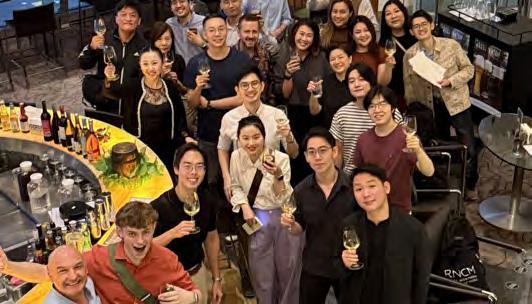
We enjoyed another fantastic year of reunions, anniversaries and get-togethers with our alumni, s tudent and staff community.
It began with a wonderful celebration marking 50 years of the RNCM’s Junior Fellowship Conducting programme with a drinks reception on home ground, bringing together graduates, current and former staff, and students. The evening culminated in a concert given by Manchester Camerata, directed by the most recent Mills WiIliams Junior Fellow in Conducting, Benjamin Huth.
From Manchester to further afield, we met up with members of our international alumni community in China, Hong Kong, and the US - the perfect way to reconnect and reunite with graduates overseas, and to share the latest news from the RNCM.
We’d love to see you at our next On the Road event. Join RNCM Connect for news of future dates and locations.
A Remarkable Year of Support
The RNCM Development Team exists to raise vital philanthropic funds for the RNCM. 2025/26 has been another fantastic year.
Whether it has been a transformative gift, a campaign, a kind donation, or a shared memory, there have been many highlights that have shown the amazing impact our supporters, students, alumni, and staff have on each other.
Here’s a selection of just some of the memorable moments from a busy year.
May
RNCM Chair Ravi Gupta hosted the launch of the RNCM Leadership Circle in London’s Handel Hendrix House. The Leadership Circle supports the RNCM’s most ambitious and impactful initiatives, ensuring we continue to be at the forefront of music education and industry innovation.
July
132 pianos officially came under RNCM ownership. This transition will save the RNCM nearly £500,000 annually in leasing and servicing fees – vital funds that can now be reinvested directly into training and supporting our students. We hosted events in Manchester and at Yamaha Music London to celebrate with our generous community of supporters, who helped us to raise over £1 million.
August
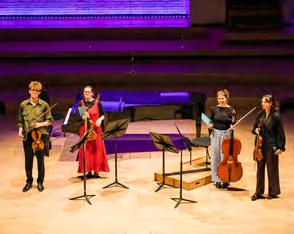
RNCM String Quartet Studio had a refresh ahead of the 2025/26 academic year, with a focus on championing home-grown talent. The Studio works with student ensembles Juna Quartet and Dovestone Quartet, alongside recent graduates Talland Quartet – all made possible thanks to the continued support from the Albert and Eugenie Frost Music Trust CIO.
September
With the transformative support of Purposeful Ventures, the RNCM Transitions programme was launched, providing advice, guidance, and information to support music learners aged 16-18 through the process of applying and auditioning for conservatoire study.
October
RNCM Annual Appeal launched, raising over £50,000 to continue forging industry ready musicians through partnerships, placements, and performance opportunities.
November
The RNCM received a significant legacy gift from alumnus Howard Totty to enable the establishment of new scholarships for students. This year was an exceptional year for legacy giving with £900,000 raised through gifts in wills, including three considerable gifts bequeathed from NSM, RMCM, and RNCM alumni.
January
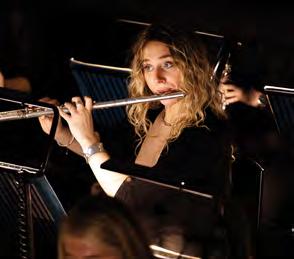
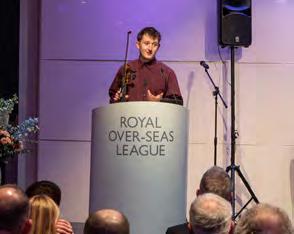
RNCM musicians gave a recital at the Royal Over-Seas League for our London community of supporters, partners, and friends.
March
We celebrated the mid-point of the five-year RNCM Engage West Cumbria Project, made possible by the Benny Walker Charitable Trust.
March
Members of the RNCM Opera Circle enjoyed insights into the preparation for the spring opera, Janáček’s The Cunning Little Vixen, attending rehearsals and hearing from the cast and creative team.
DO YOU REMEMBER?
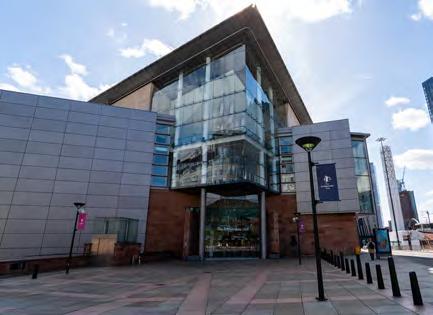
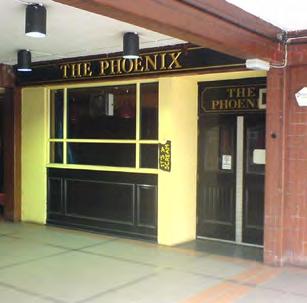
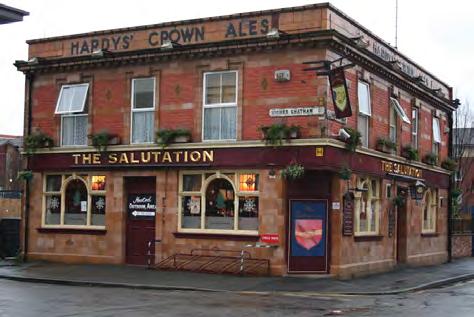
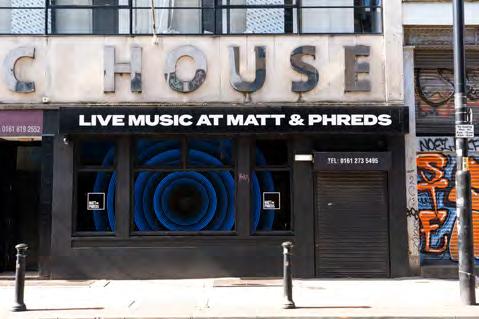
IC ONIC MANCHESTER VENUES
From memorable concerts and legendary gigs, to late-night haunts where the best nights out started (or ended!), many of Manchester’s venues will have been the backdrop to your student life in the city. The places where you performed, listened, laughed, rehearsed, forged friendships, danced, relaxed, and created lasting memories.
In this issue we take a look at the iconic Manchester venues you may remember and might still talk about!
WE’D LOVE TO HEAR FROM YOU!
Get in touch with the Alumni Team at alumni@rncm.ac.uk or visit rncmconnect.com/photos-albums to share your photos and stories.
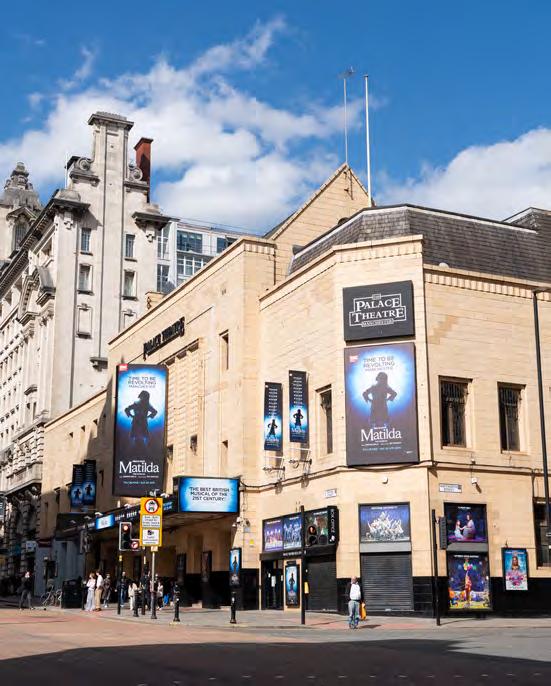
PALACE THEATRE
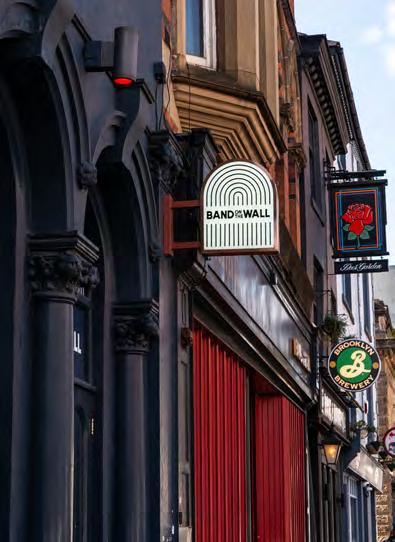
BAND ON THE WALL
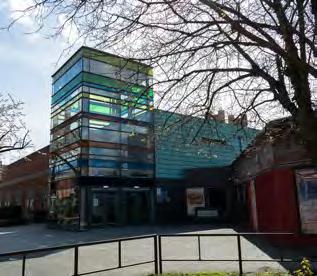
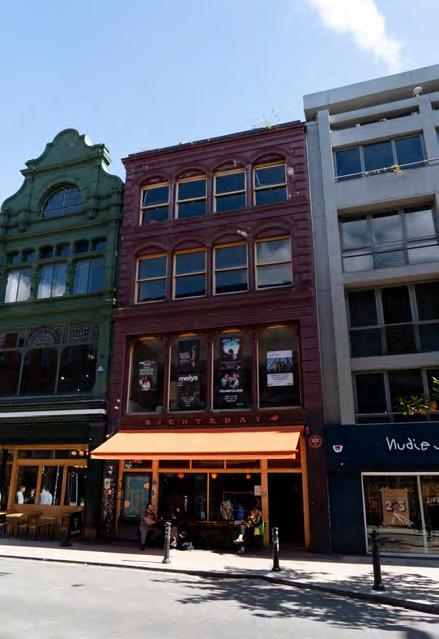
NIGHT & DAY CAFE
MATT & PHRED'S
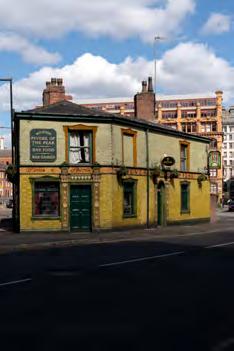
THE PHOENIX PUB
The Dorothy Stone Scholarship Award: The Story Behind a 30-Year Legacy
Our wonderful community of supporters has many different reasons for giving, and we never tire of hearing your fascinating stories and reasons for wanting to make such a meaningful contribution to the RNCM. One such story sits at the heart of The Dorothy Stone Scholarship Award.
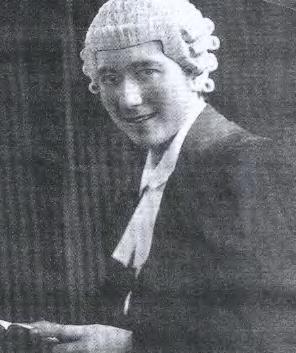
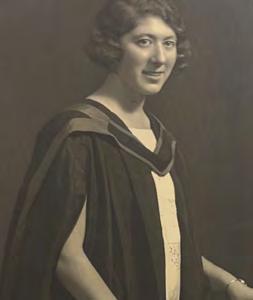
Dorothy Stone (née Lever) was a pioneer. Born in Salford, close to Strangeways Prison, she was the daughter of poor Jewish immigrants from Eastern Europe. Against the odds, Dorothy graduated with a law degree and qualified as a barrister at the age of 20. Incredibly, she was too young to be admitted to the Bar, so had to wait until she turned 21, when she became the youngest female barrister to be called.
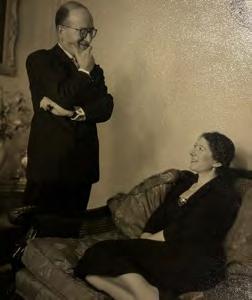
Dorothy’s son, Victor, recounts: ‘Dorothy was a true Mancunian, but in 1931 she married my father, Hyman Stone, born and bred in Sheffield. My father, after graduating from Sheffield University and becoming a solicitor, started his own practice there. Accordingly, Dorothy settled with him in Sheffield. Both my parents loved classical music, and both played the piano. They were keen that I and my brother also learned to play the piano.’
Son Jonathan Stone concurs: ‘My mother’s prowess at the piano was limited, but her interest in music was a lifelong one. Later in life she lived close to the Wigmore Hall and was a regular attender there, particularly after she was widowed at the age of 53. She also owned two debenture seats at the Royal Albert Hall, which she visited frequently, especially for the Proms. She was very interested in helping young musicians.’
The brothers recall childhood memories of the family regularly
attending concerts in Sheffield’s Civic Hall, experiencing live performances of the Hallé orchestra under the baton of Sir John Barbirolli, and spending weekends at chamber music concerts.
When Dorothy died in 1995, Victor and Jonathan felt that the most appropriate way to honour their mother's memory was to establish a scholarship at the RNCM in Dorothy’s name, to pay tribute to her love of music and her Manchester roots.
A significant donation of £150,000 from her estate, endowed to provide funds in perpetuity, has supported generations of RNCM musicians who needed financial assistance to be able to study since 1996, and helped them to go on to enjoy successful careers on concert platforms and within music education all over the world.
As well as scholarships, Dorothy’s legacy has provided crucial support for a number of other fundraising initiatives, including the RNCM Annual Appeal and, perhaps appropriately given her personal history, funded the purchase of two Steinway B pianos within our recent Piano Campaign: The Dorothy Stone Pianos.
We are incredibly grateful to Victor and Jonathan Stone for their ongoing support, and proud to be marking a remarkable 30 years of their mother’s legacy through The Dorothy Stone Scholarship Award.
The Dorothy Stone Scholarship Award
The Dorothy Stone Award Scholars: Where are they now?
Here we feature just some of our alumni who received the award, and whose professional journeys extend across the UK and internationally.
Melinda Gourlay, cello, 2008/09
Performances with leading chamber ensembles and orchestras in the UK and Australia
Stjepan Hauser, cello, 2009/10
Founding member of 2Cellos, solo and recording artist blending classical, pop, and rock genres; founder of the HAUSER Music Foundation
Mikhail Nemtsov, cello, 2010/11
Solo-Cello with Frankfurt Oper and Museumorchestra; Cello Professor at Anton Bruckner University of Music and Arts, Linz, Austria
Joris van den Berg, cello, 2011/12
‘The RNCM stands as an incredible and solid foundation to my development, my search for a unique voice in the music industry, and success. The financial support I received allowed a focus on my studies that gave me an advantage to explore endlessly, and to eventually find my voice working with the worlds of African music and classical music.
I am eternally grateful and hope many students continue to receive this support as it always makes an impact beyond the years of study.’
Abel Selaocoe
Recipient of The Dorothy Stone Scholarship Award 2017/18
Associate Solo Cello with the Royal Concertgebouw Orchestra, Amsterdam
Duncan Ward, composer/conductor, 2012/13
Chief Conductor of Philzuid (South Netherlands Philharmonic Orchestra)
Ugnius Pauliukonis, piano, 2013/14
Award-winning pianist; chamber musician, teacher, and performance art curator showcasing diverse musical talents and genres
Dr Kathryn Williams, flute, 2014/15
Internationally recognised flutist, advocate and researcher working across performance and policy to support more equitable music cultures
Aaron O’Hare, voice, 2015/16
Performances with leading opera companies across the UK and Ireland
Kana Ohashi, violin, 2015/16
Associate Concertmaster with Gewandhaus Orchestra, Leipzig
Waynne Kwon, cello, 2017/18
Sub-Principal Cello with the London Philharmonic Orchestra
Abel Selaocoe, cello, 2017/18
Established as a leading voice of reimagining classical music, combining virtuosic performance with improvisation, singing and body percussion; exclusive recording artist with Warner Classics
Maria Luc, piano, 2018/19
Award-winning pianist, actress, writer, and filmmaker
Callum Smart, violin, 2018/19
Critically-acclaimed violinist, performer, pedagogue, and innovator; Assistant Professor of Violin at Carnegie Mellon University
9
Transformational Alumni Legacy Gifts
This year has been one of the most significant years for alumni legacy giving in the RNCM’s recent history. We are grateful to have received three remarkable gifts generously bequeathed by NSM, RMCM and RNCM alumni, all of whom felt passionately about supporting RNCM students now and in the future to flourish.
These gifts will provide much needed investment for the RNCM, funding creative professional experiences with our artistic partners, inspirational teaching, as well as substantial bursaries and scholarships that will support students year after year, far into the future.
Leaving a gift to the RNCM in your will is a remarkable way to invest in the future of music; and bequests have a genuinely transformative impact on generations of young musicians, enabling them to focus on their studies and fulfil their potential without the worry of financial pressures.
Gifts of all sizes make a real difference. Every year we are honoured and grateful to be remembered by alumni, staff, music lovers, and donors who choose to support us in this way.
The RNCM Legacy Club
We recognise that leaving a gift in your will is a personal decision that you might not wish to share, but we would love to have the opportunity to thank you properly.
The RNCM Legacy Club brings together those who have pledged a gift in their will and enables us to bring you closer to the work happening at the RNCM during your lifetime.
If you would like more information about leaving a gift in your will and how your support can make a difference to the RNCM, or if you would like to inform us of a pledged gift, the Development team are on hand to offer guidance.
You can contact us on legacies@rncm.ac.uk or call 0161 907 5480
'My time as a student was defined by the opportunity to immerse myself completely in music, and that would simply not have been possible without the financial support I received from a legacy gift.
These gifts are more than just donations; they are acts of faith in young talent, and a direct investment in the future of the arts.'