Catalyst acknowledges that our publication runs on the unceded lands of the Woiwurrung and Boonwurrung language groups of the Eastern Kulin Nations. We pay our respect to the Elders, past and present. We also acknowledge the Traditional Custodians and their Ancestors of the lands and waters across Australia where creative endeavours are nurtured.
Catalyst is a student-run publication of the RMIT Student Union (RUSU). The views expressed herein are not necessarily those of the Editors, the Printers, or the Student Union.
Photographers
Huda Shehzad
Writers
Ahnaf Ar Rahman
Emily Ojansuu
Keerthi Vijaya Saravanan
Elizabeth (Liz) Read
Lily Dalton
Sri Satya Spandhana Mallela
Maya Szysko
Baylin Lipkevicius Thompson
Jhil Pancholi
Mackenzie Mitchell
Front and Back Cover
Orion (Ori) He
Editorial Committee
Huda Shehzad
Lincoln Russel
Adrien Marks
Shana Schultz
Typeface
Brandon Grotesque by Hannes von Döhren
CONTENTS
6. An Introduction to “Movement”
7. flow state - a playlist
8. Unravel & Repeat
12. Burnout Is Not a Badge: What Hustle Culture Does to Us
16. Pauline, I want a monoculture too.
20. The First Day of Class.
22. The Silent Language of Energy
24. Who Speaks for Young Workers?
28. On Big Thief
30. Body In Motion
32. Stillness is also a choice
34. What Moves You?
42. The Rebel and the Conformist with a Cause
46. How do we know the right moves to make?
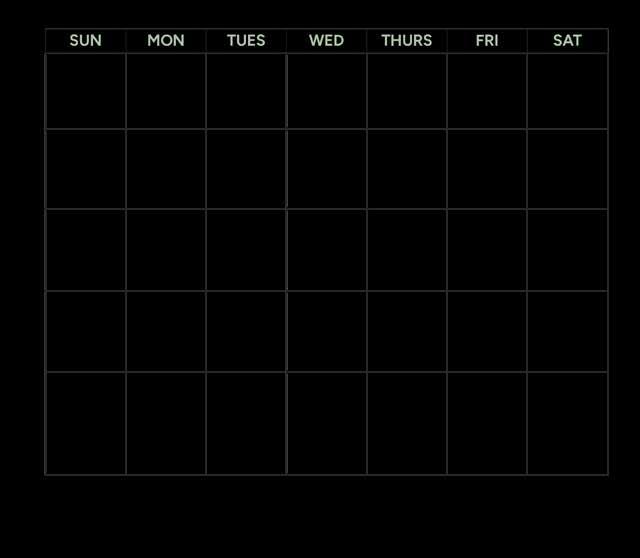
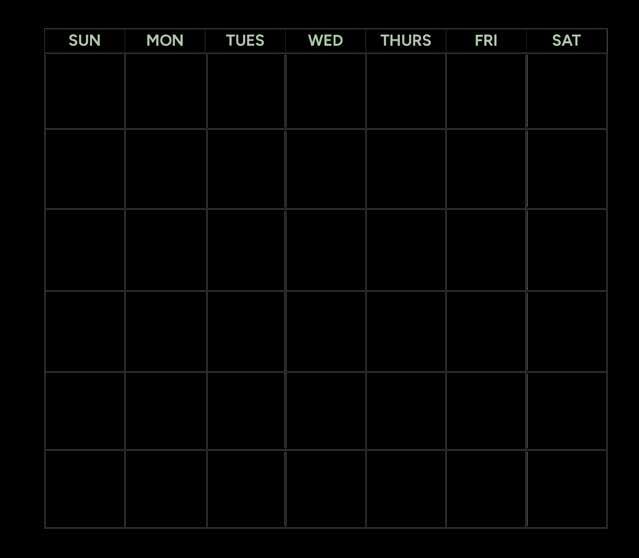
50. Semester Calendar
Movement
We are surrounded by movement; you could say it’s all we ever do. It’s in our hands, our posture, our presence. Movement is the very essence of everything we do. Every movement begins somewhere, but where does it end? How do we want our movement to be identified, do we want to be seen through our movement? Can we even identify what that is? It can be hard to move with individuality when we share the same ideals and beliefs. How can we set ourselves apart from a system that pulls people apart yet clones us together. Where does our movement lay? In the political sands? Emotional power? Physical adaptation? Artistic expression? Is movement the collective action we are trying to make? There’s a weight to our actions, and the process we take to make our grounding in this society. We don’t always do it right, at least that’s what we think. But what does it even mean to get it right? How can we move with a system so eager to make sure we give up, make sure we don’t make too much of a difference, just enough to blend right in. So.. Where do we stand in all this? What does it really mean to move people to make change?
This issue of catalyst is asking a simple question - What movement is shaping us?
Unravel &
“You know when you are in university, you’ll miss this nagging.” Something my British English teacher would bark at us repeatedly.
“They’ll be no one to hold you accountable except you”
God, I hate it when they are right. There are many ways in which I can describe the movement of life in university, but mostly it feels like being in a play that everyone except you has been rehearsing for months.
I’ll tell you my biggest fear if you promise to tell no one.
It’s being in an Olympic swimming race exactly as I am now. Everyone else is in peak physical condition, and I’m sputtering for air. The spectators all wait ages for me to finish and they’re thinking “Oh god, how’d they let her in, she has no clue”
Most people laugh when I tell them, because obviously that will never happen, but I think fear comes from feeling like that most days.
I start all my semesters the same way. Thinking it will be different. That I will be different.
I build my schedule so that every hour is accounted for. I will study if I have a spare minute. I will go to the gym and run to clear my mind. I will eat lettuce and boiled chicken. I will delete my social media. I will eat breakfast before I leave for the day. I will bring a neatly packed lunch with me every day.
I unravel as the semester progresses; skipping one day at the gym won’t hurt and if I have just Instagram and not Facebook, it’s like only half bad.
I unravel and unravel until I find myself at the end of every semester with a pack of TimTams in bed with my laptop thinking ‘as long as I pass.’
And I do. I do decently well.
However, my lesson is never learned. I will do it all again next semester. I think about how much easier it would be if I was motivated from the start. So, I create the plan again. I cross my T’s and dot my I’s.
Only to unravel again more spectacularly this time.
Last semester I decided to go a step further and announced that I was doing a sober semester.
Which lasted a month before I found myself searching Swanston Street for a loo after the Oxford Scholar had shut their doors for the evening… at 1am on a Wednesday night.
I did not make it to my 8 am French class the next morning, but I did manage to speak enough French at the exchange students on the table next to me that they decided they would rather brave Melbourne winter than sit next to this
Written by Mackenzie Mitchell
obnoxious Australian girl a second longer.
I unravel and gather the pieces over and over, but in a way that’s a win and change in itself. No matter how many times I spiral or fall apart over an assignment, I pick up the pieces and persevere.
While I can’t convince myself to go for a run every single morning or not doomscroll for an evening. I can convince myself to do my work on time to a degree that isn’t complete crap. No one else will convince me except for me.
So, I guess that’s enough for now.
Burnout Is Not
a Badge: What
Hustle Culture Does to Us
“Look at you, Busy Bee, handling everything on your own, I bet your family must be proud.” my friend said.
But a voice behind my tired eyes said, “Is it worth it?”.
Somewhere along the way being busy became something to be proud of. Taking time to recover from the toil looked for the weak. We glorify sleepless nights, celebrate overworking and treat exhaustion as the proof that we are ambitious.
I remember scrolling through social media, seeing peers boast about waking up earlier, doing more and turning every spare moment into something productive. Although it didn’t directly affect me, it did give me a feeling of insecurity for wanting to rest.
As an international student balancing university, work, finances and the pressure to build a successful future, I felt that slowing down was not an option, if I did, then I’m failing myself and the other who depend on me. I convinced myself that constantly staying busy meant I was moving forward. If I was tired, stressed or overwhelmed, I saw it as a sign that I’m getting somewhere.
Little did I know, I was burning myself out.
It’s no success. Constantly being mentally exhausted, losing motivation for things you
once cared about and feeling guilty even when you try to rest. Instead of feeling accomplished, I often found myself feeling anxious, distracted and emotionally drained.
You know what the irony is, the harder you push yourself without breaks, the less productive you’ll become.
This modern society glorifies hustle culture. It sells the idea that success requires sacrificing sleep, relationships, hobbies and even our mental wellbeing. It teaches us that our worth is measured by how much we produce rather than who we are.
Yet is it worth it, if it comes at the cost of our health?
Rest is not laziness. Taking time to recover does not mean giving up on our goals. In fact, rest is what allows us to continue pursuing them. Burnout should never be worn as a badge of honour. Being constantly exhausted is not a sign of strength, it is a sign that something needs to change.
Perhaps true success is not about doing more at all costs but about building a life where ambition and wellbeing can exist together.
We are human beings; we do not have to earn the right to rest.
Written by Keerthi Vijaya Saravanan
Photographs by Huda Shehzad
Photograph by Huda Shehzad
Pauline, I want a monoculture too.
I was an anarchist — ideologically and quite principally — at seventeen, and I made a sport of unraveling the arguments of those I saw as political adversaries. I was often ungraceful in my approach, but I was just as often right. This rightness was extremely important to me, and I found my peers who seemed not to possess it infuriating. To me, attaining rightness was not exceptional, it was very simple: one must only care to look critically at the world around them. I could sit still in English as someone stumbled through a word they should probably have already had in their vocabulary, but when that (what I perceived as) laziness spread to notions of the world, to playing careless defense for forces of overwhelming evil, or graduated to actively endorsing them, I would be nearly out of my seat. I could not understand why my peers hadn’t considered the world as I had, why they seemed so unconcerned with its injustice, or why my politics teacher had condemned me in reports for being an extremist; …After all, all I had done was illuminate the realities of our purportedly ‘liberal,’ capitalist hellscape. While I hold much of this today, I also understand that, being in high school, I was dealing with other children. Not everyone has the grace of a compassionate or politically literate upbringing, and not everyone is forced to give themselves one
having been disgraced by society for their identity.
For my usual tirades, I’ve been quiet on the dramatic “Rise of One Nation.” I have kept extremely up to date. I have privately fumed over our state and corporate media running headlines that play sheepishly into One Nation’s craved sensationalism whilst scarcely earnestly criticising them, brazenly hedging their bets over the potential flight of courtable Coalition money to the party. I have reposted fliers for the recent action in Moonee Ponds which forced Hanson to, embarrassingly, relocate her fundraiser. But I didn’t attend the action, I haven’t, until right now, written formally of my feelings, and despite the proud and cruel unreality of One Nation’s ‘worldview,’ I have felt no moth-light calling me to declare what is right. If anything, I’ve felt it all quite boring.
Watching Murdoch media or street interviews with One Nation supporters, you will realise very quickly that the vast majority of these people — of the entire Australian right-wing apparatus and their support base — not only believes absolutely fucking nothing of what they say, but no longer even cares to pretend to. Their xenophobic (huh?) bile lights no fire behind their eyes. Their ramblings of men
Design by Mariam Erradi
in dresses brings forth only a stupid grin. My god, have you ever heard them address Hanson being an open puppet of our nation’s richest oligarch in any way other than telling those who asked to just shut the fuck up? Regardless of grace deserved, the kids I railed against mostly did not know better than to spew up the propaganda they’d been served. These adults, these contemptable fucking morons, know exactly what is right and wrong, and lazily, gleefully, thumb their way through advocating violence against literally all of us who are not them.
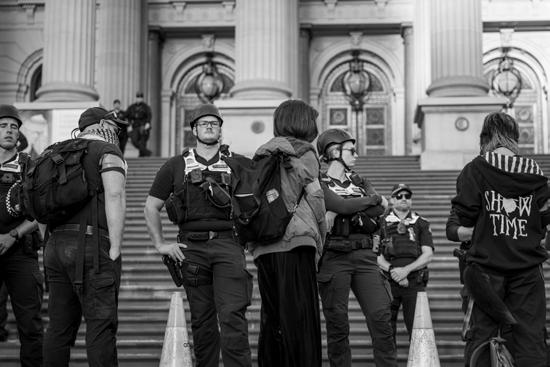
I think it is right that we take action against these people. I think student and socialist led initiatives like Students for Palestine and the Campaign Against Racism and Fascism are the right mechanisms by which we culturally force these people back into their hole — particularly in lieu of genuine efforts by our all-powerful Labor supermajority. But as a writer, as the insufferable anarchist girl in the back of your classrooms half a decade ago, I have almost nothing to say. Because what the fuck am I supposed to say in the face of such outrightly evil, bad faith engagement? What the fuck are you supposed to say to or about adults who willfully choose their unintelligence — their servitude to the malevolent forces of capital — with such enormous smiles? To those who know you know they’re lying and get off on you ‘taking the bait’ anyway? These people doltishly waddle behind banners calling for the death of liberal democracy. What the fuck do you do with people like that? Yes, I know
democracy under capitalism is a farce, I know that it inherently breeds within it this fascist rot we repeatedly face, but for fuck’s sake, there is still something worth defending here! Half of these people, whether through Evangelicalism or Zionism (what the fuck is the difference these days?), are outright egging on the end of the world!!!
I’m asking you, genuinely, what the fuck is there worth saying about this? I implore you: engage in on the ground action, be a part of the progressive, cultural hegemony being used to beat back the rot, fight for systems which do not intentionally sew it. But if we are yet to build genuine, social and systematic safeguards against the rise of such
wretched, anti-democratic, anti-life agitators, what is to be done with these people in the meantime?
Written by Liz Read
Photograph by Huda Shehzad
The First Day of Class.
Walking up to the closed glass door ahead, I reach forward and grasp its handle, only to find its locked. Feeling a little defeated, I remove my backpack and crouch beside it.
Rummaging through, my fingers sift past everything I thought was necessary for today – basically half my house – until I feel the slick plastic of my keycard rub against my fingertips.
I grasp it in a hand full as its plastic edges dig into my fingers. With my hand forming a hollowed fist, I raise it and press it into the little black scanner beside the door, on its right. With my fist full, I elbow down the door’s handle as I use my body to push the door open.
Entering through the doorway I reach my left hand backward to grasp one of my backpack’s straps. As I awkwardly enter into my classroom, I realise it's empty, just like the hall was outside it. Maybe I’m lucky, no one saw me.
Regardless, I’m too early … again. Better I’m safe than sorry.
I’ve always told myself that the first day is most important, and being here on time especially so. It’s basically a rule at this point; If you miss the first day of class, you’ll miss out on making friends. That’s what happened in grade prep, I wasn’t allowed to join two-square until June because I wasn’t a day one-er.
I don’t think it's just me, I think everyone stresses about potentially being an outcast. To me the fear feels like running up three flights of stairs just to get to class an hour early, ironic…
Like my heart beating fast, my face flushed and hot, and sweat beading down my forehead. But I think I’ve always worried too much.
Picking at the skin around my thumb nail, I can’t help nervously fidgeting. As a distraction I like to slowly lay out my things.
Laptop, check. Notebook, check. Pens, check.
I think it helps me feel in control. But as people start trickling in, I can’t help it when I feel my body tenses. My chest opens wide as I inhale sharply.
With my breath so deep, it's like all the air in the room is sucked inside me. Windows break and the outside sky enters my lungs. And like the lady who swallowed a fly, I've suddenly swallowed a flock of birds.
And with their wings stretched, they dart toward and strike my breastbone. Splitting my chest, they rush through into the room ahead of me.
But nah, not really.
I’m just exaggerating again.
But it’s true, it feels like there is this fluttering in my chest. Rising and falling, like birds in murmuration, it’s like they move in rhythm with my heart; that beats hard. It’s not all for nothing, my table is still empty.
I feel like a rock in the middle of a stream of water. Maybe I need to accept that others have chosen elsewhere, that maybe I'm destined to be alone. But my catastrophising ends when the seat across from me fills.
Locking eyes, a smile is exchanged with me. Then the seat to my right, and before I can turn my head, the seat next to me is pulled out. Plonking themselves down, turned a little to me,
‘Hi, what’s your name?’
And as the corners of my mouth lift to a smile as my name slips out softly, ‘Maya’. I'm not a rock anymore. I’ve become an otter, floating in hand with another. The stream doesn’t flow around me, but instead, I flow with it.
Suddenly this place that was once so scary, moves one step closer to familiarity. And as we talk, and I'm nothing more than myself, those magic words that everyone waits all of the first day to hear are spoken:
‘Should we get lunch together?’
With legs by twos, all four so mighty, we strut forward with each step wider than were once before. Together the world seems a little smaller, and our presence far larger.
I begin to find my place in a mass of bodies moving in every which way. And maybe not alone, but with the help of others we can move together in an effort to all find our place.
Written by Maya Szysco
Photograph by Huda Shehzad 21
THE SILENT LANGUAGE
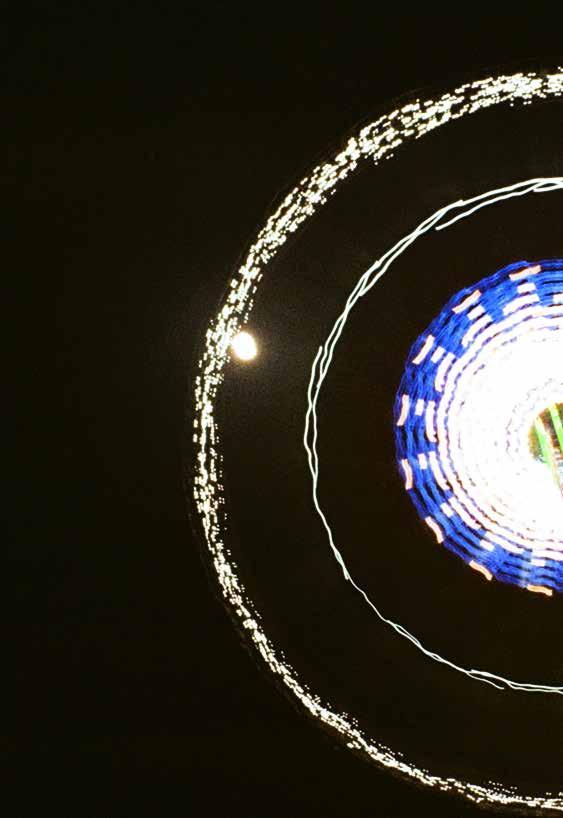
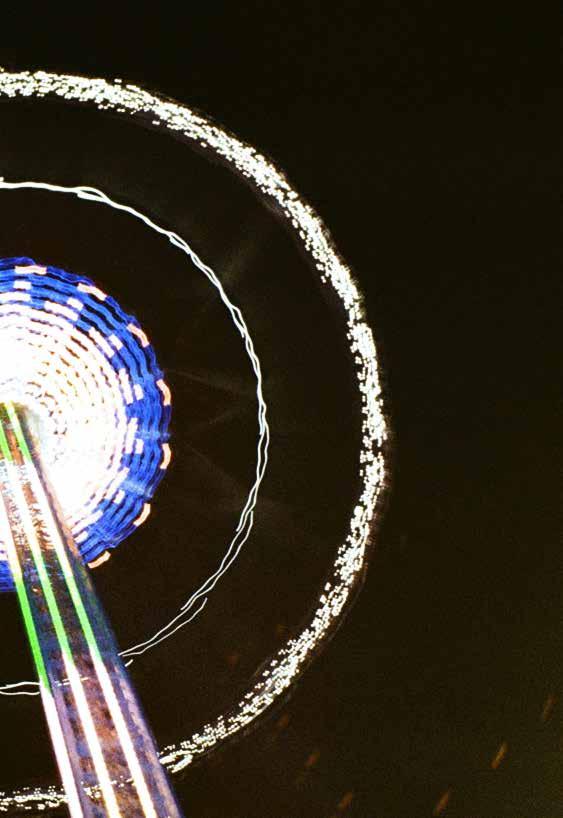
We all know that it is not only us who are constantly moving. The Earth itself is in motion, revolving in its orbit. Perhaps the movement is unavoidable because it is what connects us, not only to one another but to the universe as well.
There is no movement that truly stops. Every movement continues in one form or another. I feel that our external actions are closely connected to our internal state, and both continuously influence each other. What we think, feel and express all belong to the same ongoing flow.
Our actions define us, but so do our thoughts and beliefs, for they shape the actions we take. As per my own experience, directly or indirectly, I have come to feel that the energies we carry can influence the external environments we live or go. At whatever space we belong, it can either help us to grow into who we truly are. Not everything needs to be proven to be meaningful. Sometimes it’s about what we observe, feel and understand through situations we came across. In that sense, movement is not just physical motion. It is awareness, change and our connection to something larger than ourselves.
Movement does not mean harming others through violence or harsh words. Some of the most powerful movements communicate through gentleness and subtle way. Every person has their own way of understanding situations, just as every voice has its own way of creating change.
All living beings seek freedom. Freedom can be from anything like person, rules and regulations, system and may be even norms of this world. In context of it, some protest, some struggle and some simply rise above their limitations.
The flight of bird reminds us that if it can fly with its strength then we too can rise with our own abilities. Also, true freedom comes from learning to soar while allowing others
OF ENERGY
the freedom to soar alongside with us.
Every movement left a mark of learning on us which can be smaller or bigger. The shifting position of the Sun between two moments says it all. The fog covering the valley will eventually drift away, yet before it disappears, the sunlight gently reaches through it, revealing beauty hidden within uncertainty. Hope often works the same way. It does not remove difficulties immediately but give us enough light to see through them.
If the universe had never offered a palette of colours through Earth’s rotation, then we would never be able to understand the importance of light and dark. Dawn and dusk, day and night, all remind us that opposites do not compete; they complete one another. These scenes also remind us that our actions have a collective impact. People relocate, rebuild and change themselves to adapt to new environments and circumstances. Yet, among all this movement, do we truly understand our role? If we are fortunate enough to exist on this earth, perhaps we are fortunate enough to spread kindness, humanity and compassion.
Maybe that is what meaningful movement truly is. Not merely moving through life but leaving behind something that uplifts others. The movement that never stops in this world is not just our own, but the continuous interplay between our movement and the movement of the universe. This movement is rarely loud. The most intense changes often happen quietly. Whatever starts with us does not simply end with us. It becomes a part of something greater; leaving traces that continue to move long after we are gone. In between the respective movement existence, quietly connected through the same silent energy language.
Photograph by Huda Shehzad
Who Speaks for Young Workers?
Despite not being spoken about nearly as frequently as it once may have been, the necessity of the labour movement continues to remain one of the single most pressing political issues in Australia.
Trade union and labour movement critics who oppose the unionisation of workplaces and the general advancement of the movement frequently cite three primary arguments for their opposition: reduced productivity in the national economy, a consistently increasing inflation rate, and the position that "small businesses" are unable to pay working people the minimum wage.
Whilst on the other side of the spectrum, union advocates who support the advancement of the movement frequently cite several arguments that juxtapose the former: the rising daily expenses and cost of living for working people, an increasing rate of
workers entering insecure employment arrangements, and soaring yearly profits of major domestic and international corporations in the post-COVID era. But where does this actually leave workers in this situation?
Well, they're at the centre of the discussion, and regardless of which opinion is dominant at any given moment, they are the ammunition in both arguments.
Yet, far too often, workers themselves are excluded from the discussions that shape their lives, livelihoods and futures, and no demographic is more neglected in these debates than young workers. Whether it is lower wages, insecure work, employers neglecting their rights, or a lack of knowledge about legal workplace standards, young workers are consistently left with the short end of the stick, even compared to their older counterparts in the same industry and, in many instances, the same workplace.
Discussions centred around the question of unionisation and workplace relations, and those having these discussions, from government to the media, have systematically deserted the opinions and interests of young workers, particularly the large percentage of whom are culturally and linguistically diverse.
Now, regardless of one's own position, I implore you to concede that this is an abject failure. Young workers aged between 15 and 24 years make up 15% of the domestic workforce and fill positions in roughly 46% of the hospitality industry and 31% of the retail industry. The reality is that an enormous proportion of Australia's productive capacity depends upon the labour of young workers, and the ever-greater profits of major supermarket, retail, and restaurant chains are intrinsically reliant upon the work they perform.
Considering all of this, young workers should be in a better position than they are today.
Their work is essential for economic growth, major businesses in hospitality and retail are all but totally dependent upon their labour, and they fill roles that are uncharacteristically insecure, lower paid, and more laborious than those of the average adult worker.
So how have we ended up in this position? Well, the labour movement has, in recent decades, shown a strong tendency to ineffectively target young workers in Australia, leaving the unionisation rate among young workers substantially lower than that of the adult workforce. As of 2024–25, only 3.7% of workers aged 15–19 were identified as union members, and the rate is not much higher for workers aged 20–24, with only 7.3% being unionised.
Comparing this to the adult workforce, where 13% identify as union members, reflects a systemic disengagement between young workers and the labour movement.
But if young workers deserve better, if they deserve better pay, better conditions, and a higher standard of representation, how do we bridge the divide? How do we improve the conditions of this integral demographic of working people?
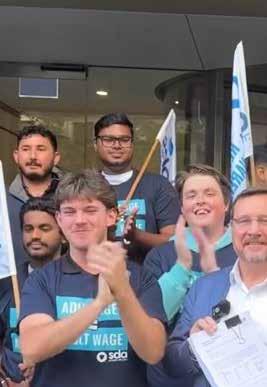
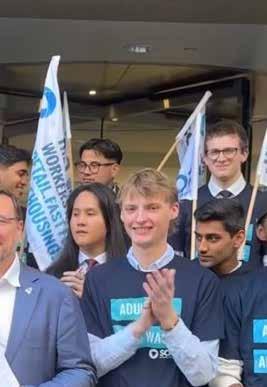
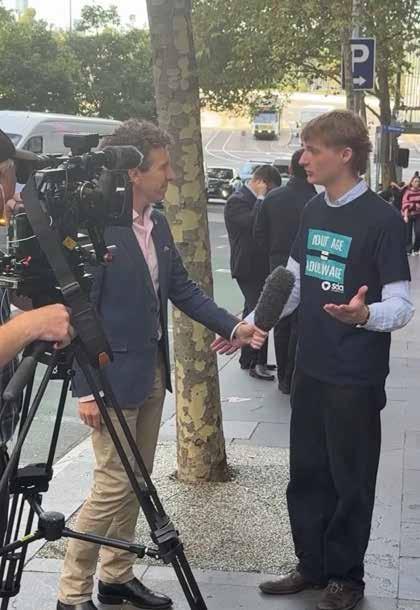
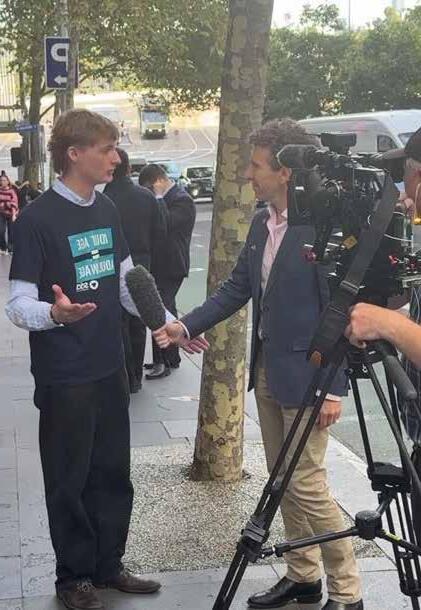
The answer is tied to a recent union victory. Handed down in March 2026, the Fair Work Commission (FWC) made a landmark ruling to phase out junior rates of pay for workers aged 18–20. The Adult Age = Adult Wage case was brought forward by a major union principally representing workers in retail, fast food, warehousing, and pharmacy.
The public notoriety of the case increased throughout 2025 as the multi-year media and onthe-ground campaign garnered significant public attention and the case became an ever-closer reality. This year coincided with what the Australian Council of Trade Unions (ACTU) recognised as a 53% surge in the number of unionised workers aged 15–24. When unions win for young workers, young workers join unions. This is what we have seen, and this is what it takes to raise the working conditions of young people.
Becoming directly involved in a union as a rank-and-file member is the most effective way to receive recognition for the importance of your labour, improve rates of secure employment, and increase the wages of young workers.
The labour movement, throughout history, has simply never benefited from inaction. It has never benefited from discouraging change, overlooking demographics within the working population, or ignoring disadvantaged people.
Giving young workers a seat at the table changes the balance of power. Within a union, an otherwise overlooked section of the workforce becomes a collective voice that cannot be ignored. Young workers should not simply be the subject of debates surrounding wages and workplace rights, they should be active participants in shaping them.
If you're a young worker reading this, join your union, know your rights, and encourage your coworkers to do the same.
The future of the labour movement depends on young workers, but just as importantly, the future of young workers depends on the labour movement.
Written by Baylin Lipkevicius Thompson
Photograph by Huda Shehzad
On Big Thief
One of the greatest songs ever written is Change by Big Thief. It is devastating in its profound truth, which is, I think, the purpose of change: our realities reformed into something on which we continue our tiny lives. Not all change is that dramatic, but it can certainly feel that way. So much of it lies beyond our control, and when things occur where we have no choice but to sit and watch, we go mad. Even when we were the ones to enact the change, there’s the consequence of newness. Biologically, newness equals danger because we cannot predict what will happen; sometimes what happens is the new thing kills us, but most often the new thing sets us free.
I think I am bad at change in the way all people are. I would do anything to avoid it but it sweeps me up regardless. The most violent part of it all is the anticipation of change— knowing that this unstoppable force is just barrelling straight at me and I’m somewhere looking down on myself thinking, girl, you just have to let it hit you.
About two months ago I lay on the carpet in my Mum and Dad’s living room next to our dog. She was to pass the next day. She was ready and I was not. I touched her frail little head and told her to be good. Dad hugged me too tight and said
Written by Lily Dalton
that I’ll be okay. This was one of those changes that I thought might take me with it, there one moment and gone inexplicably the next. Cataclysmic, as things go. Really it made me better at dealing with change than before, because I am taking it, and acceptance of change is there to hold me up. I am learning that I can’t be fully involved and invested in my world without it, unfortunately. Otherwise I would be watching it go by without me. In Change Adrianne Lenker puts this to us: “would you live forever, never die, while everything around passes?” Choosing to be stagnant, cold, and left behind just to avoid the hardest parts of being human, is something I can no longer do. Once I would have been happy to do myself the disservice—to miss the incredible mess that is discovery. There’s no denying that it’s hard. There’s also no denying that it’s inevitable.
Change, as Big Thief knows, is like “the wind”, “like the water”, “like skin”. It is all around us, as small or as big as we are. Depending on how you look at yourself. A new version of things every single day, and aren’t we lucky. We get to try again. We get our chances. I’m going to take mine and run with it, I think. Let change take me wherever I am meant to go. I’ll fight it I am sure, but change always wins. It knows what is needed, not what is wanted. That cruel yet loving hand. There’s change in the day that turns to night, and in the night that turns to day, but we always get through that, don’t we?
BODY IN
Tendon swings pendulum-sprung through arc of runner’s pace
Naphtha-rubber meets pavement, repulsed and rebounded
Designed by Alia Daniels
MOTION
Jumping ship when your favourite author turns out to be posing for the very thing they wrote in excruciating detail. Well, that was only one case of putting facts that are not true to be posed as the truth, and if Frank had gotten on that plane before Mr. Hanratty caught him, it might’ve been a true story too.
But does lying to be revered work in a world where watching a movie is treated as wellbeing when I’m not doomscrolling? Do the artists who build their castles out of sand expect the tide to wash it all away a bit too fast? Or worse, when the castle made of flesh is chipped by the vultures faster than the eye can see? In this world where a secret interest or a hobby you hold dear is accidentally discovered by the people and diluted to mere fractions of its core concept and catered to millions of people who are suddenly an expert on the topic? It might be a favourite piece of music which when discovered by everyone and everywhere feels like ripping out your feathers one by one till you can’t fly but lay on the ground with the ones who stole it from you. A deep resentment builds, creativity has been made into a one-time use commodity where if a new idea comes, it is stripped of itself and retrofitted into others, with enough iterations you get a world that feels similar and cloned, everything but new. So, who cares about the artwork you had been working on for the past few months? Or the world you built in your head? The tune you have been thinking for the past few months but feel like if you write it down, it would be lost to the world forever?
Pace has never been my cup of tea, a snail in the world of cars blowing past. Why is it that when we look at a bird and not think of giving it a name or seeing the sky but not trying to define what colour it is, that we see the most beautiful bird in the most gorgeous sky? Why is it the moment we stop defining, become the moment we start living? Does
time stop when we stop adding meaning to things? Or is the value of something seen when we start to see something without its meaning? The sausage cutter goes home every day at 5pm to watch the same tv programs to make his dinner then sleep. Wakes up the next morning to cut sausages for the day and repeat. She’s been doing this for the past two days since she was hired. “The work was nice,” she said, but she wished there was something more.
Now if I had said that she’d been doing this for the past 10 years, you’d have a different reaction, although it’s the same work. Why is that? Why is one day different from a decade? For her nothing changes, she builds her castle and washes it away every day, she’s not an artist with dreams, but then why does she want more? Why does it not stop even after a decade? Does sitting still in a cavern make your life meaningless? Or does it have meaning when you go out and hunt? They both have the same merit, you are doing something, but why does one hold less meaning than the other?
Stillness is also a choice Stillness is also a choice Stillness is also a choice Stillness is also a choice
Written by Ahnaf Ar Rahman
Photograph by Huda Shehzad
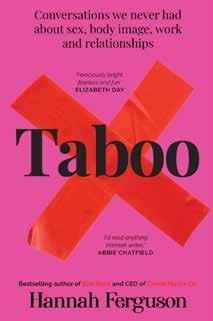
Taboo and Bite Back (2024 and 2023)
Taboo and Bite Back are the two books from Hannah Ferguson, Australian author and co-founder of new independent online commentary platform, Cheek Media. Part-memoir and part cultural, social and political commentary. Ferguson’s work urges us to challenge the long held systemic stigma and shame of uncomfortable societal topics and tackle them by bringing them into conversations/spaces for conversation.
Hannah Ferguson’s Taboo gives voice to the conversations surrounding modern womanhood that is yet to be talked about. Ferguson brings personal experiences and anecdotes to these conversations to emphasise the need to de-stigmatise; if we want to progress, and advocate for a shift in attitude. She candidly looks at how these personal experiences with her family, friends and previous partners are shaped by a wider culture that aims to shut down progressive conversations surrounding motherhood, dating, modern feminism, and money. Challenging societal views these conversations as ‘taboo’, when conversation is an integral driver for meaningful social change. Bite Back offers the same critique on feminism, politics and Australia’s media landscape, but what I feel most important and timely, is her reflection on conversations with her own family regarding conflicting political views and navigating these conversations with loved ones meaningfully. Not to win, but for growth.
Ferguson’s work is particularly relevant now through the connective theme of conversation. Bite Back urges us to engage in hard conversations with the loved ones in our lives, as a space to meaningfully listen and engage with one another. Taboo compliments this; Ferguson argues that the key to dismantling shame is conversation. She urges us to have these conversations not to come out as a winner, or to determine who has the best argument, but to express ideas, concern, and perspectives. To question why those in our lives hold these opinions, and how these opinions have developed not to attack, but to meaningfully engage. To speak without fear of making mistakes and open spaces where we can learn and grow. This approach to conversation is important right now, given the polarisation between political and social groups, where grievances have become weaponised, in the face of social unity and nuance. This divide sees us need to engage with one another meaningfully more so than ever.
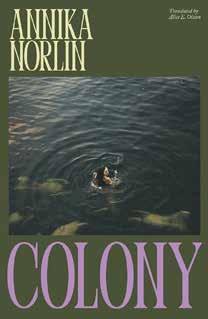
Colony - Annika Norlon (2023)
Set in Stockholm, protagonist Emelie is exhausted by her daily social life. Diagnosed with severe burnout by her therapist. In an attempt to reset, she escapes the city and sets up a camp near her grandmother’s empty cabin in northern rural Sweden. In doing so, she finds herself in close proximity to a small commune. Who themselves have been detached from society for well over a decade, referring to themselves as the Ant Colony. We hear from the perspectives of all members of the colony and see suppressed tensions surface when Emelie starts to interact with the group, despite the idyllic and organised front Emelie sees from a distance.
Annika Norlin’s Colony explores prescient themes of an “offline life” and living off the grid. As we craved at the beginning of 2026 for a more intentional lifestyle free from overarching technology, and a movement online involving users announcing they were switching to dumb phones, deleting social media, and “touching grass”, Norlin’s novel brings into question what an unconventional way of living, free from current societal expectations of productivity, self-maximisation and endless content that have found us in this state of digital fatigue, may look like. In doing so, she also questions the ethics of a completely offline lifestyle, and the withholding of members from a life where they are actively involved in conventional society. Norlin explores the expectations and hierarchies of the alternative lifestyle of the Ant Colony, and how new influences can challenge the dynamics of these groups.
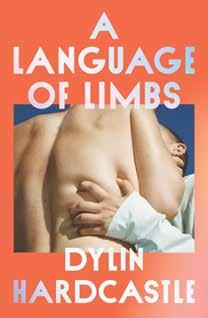
Language of Limbs - Dylin Hardcastle (2024)
Two separate lives of two women take place parallel from one another over three decades, predominantly during their time in Sydney, set in the 1980s against integral periods for queer people, including Sydney’s first Mardi Gras, the AIDS pandemic and protests for queer rights, and characterised by an overarching theme of queer violence. Starting from the 70’s as teenagers, the two lives play out alongside one another, flowing in and out from one another, almost intersecting at times throughout the story, after making two separate choices on how to navigate queer identities.
Hardcastle explores the question and complexities, set during a period of queer violence and homophobia, of whether to be openly queer and suffer, and what that might mean. Or desperately suppress queerness and suffer the costs. Whilst set in a historical movement, it is important to reflect on why queer expressions should not be denied safety and acceptance in all spaces, particularly during pride month. To do so, it’s important to reflect on, and acknowledge periods where this safety was not guaranteed to ensure future safety of queer lives in society. The rights of queer people is also an ongoing movement, and cannot be confined within a singular time, particularly at a time where queer rights are under attack.
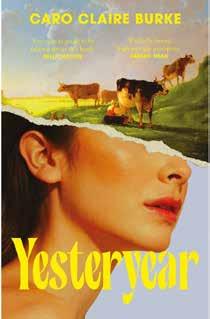
Yesteryear - Caro Claire Burke (2026)
Caro Claire Burke’s Yesteryear (2026) is a critically acclaimed novel for its commentary on the ‘trad wife’ aesthetic hypocrisy, a phenomenon that has gained alarming attention and acceptance in online spaces.
Natalie is a traditional Christian wife and influencer of the account Yesteryear Ranch, documenting her idyllic lifestyle on her rural ranch with her wealthy husband and five children, her content consists of her cooking sourdough from scratch and showcasing their farm’s organic produce. Despite having nannies hired to take care of her children and complete her domestic duties so she can commit to content creation, to uphold the image of a dutiful and subservient wife. Only to one day wake up in the setting of the true traditional life she delivered to her audience: the year 1855.
With an unexpected plot twist that bridges these two worlds together, Burke explores how despite the fact that our protagonist criticises the modern woman for dismantling societal expectations for women, her platform exploits what is now available to modern women: the ability to brand oneself, and profit from it. That whilst our protagonist is definitely not a feminist, the choice to submit oneself to this domestic, subservient lifestyle is not feminist and self-branding cannot be revered as a feminist act given it commodifies the individual and does not achieve anything for greater feminism (particularly when your brand promotes conservative womanhood), it is ultimately the conditions of modern womanhood that she thrives on, yet criticises, is where the hypocrisy lies.
Burke’s exploration of the theme of performance, particularly as a woman, is interesting. Natalie, modern and in the 1800s, is consistently concerned with her ‘performance’, and being watched, throughout the novel whether by God, men, her followers, or other women in her life - sometimes even herself. Stemming from the idea that her life actually is a performance - she is constantly performing the role of a traditional, Christian wife, for someone. This performance is constantly serving as a facade - the “success” as a dutiful Christian wife is not innate, rather a “fake it till you make it” act. As the novel progresses, Natalie’s internal conflict reveals she is in fact not fulfilled by the traditional gender roles she optimistically was during her college years, instead suffocated by them.
Burke’s novel therefore serves as a cautionary tale of the trad wife movement, given its appeal among women as our online and offline spaces grow increasingly conservative.
Written by Emily Ojansuu
Design by Nicole Klassmann
The Rebel and the Conformist
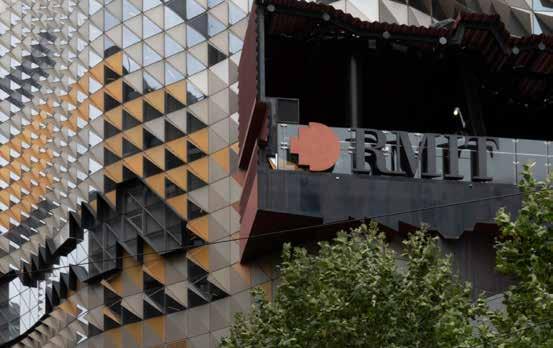
A Conformist and a Rebel walked into RMIT’s city campus and started a conversation. I was there too, quietly eavesdropping, as I always do. (Just kidding!)
Naturally, it was the Rebel who asked the first question. The question that would soon spark a fiery debate.
“What do you think is the most important thing that helped humans become one of the most successful species on Earth?”
The Conformist didn’t hesitate.
“Easy. Belonging,” he replied. “Humans thrived because they learned to work together. A sense of connection allowed us to build families, communities, cities, and entire civilisations. Alone, we survived. Together, we flourished.”
He paused before continuing.
“And don’t underestimate the power of belonging. Every major social change has required people to unite around a common purpose. Civil rights movements, environmental movements, workers’ rights movements, none of them were built by individuals alone. Change happens when people come together and believe they are part of something bigger than themselves.”
“Even today, social media platforms like Facebook, Instagram, and TikTok thrive because they satisfy one of our deepest needs: the desire to belong.”
The Rebel nodded.
“Fair point. But doesn’t that same desire to belong sometimes come at a cost?”
The Conformist raised an eyebrow.
“What do you mean?”
“Individuality,” the Rebel replied. “The more we seek acceptance, the more likely we are to follow the crowd. Friedrich Nietzsche warned about this. He called it herd mentality, the tendency to adopt beliefs simply because everyone else does.”
“And what’s wrong with conformity?” asked the Conformist.
“Nothing,” said the Rebel, smiling, “until it prevents us from questioning.”
He leaned forward.
“The courage to question is just as important as the ability to cooperate. Every major social change began because someone challenged what was accepted. Someone questioned slavery. Someone questioned inequality. Someone questioned whether women should have the right to vote. Someone looked at the world and asked, ‘What if it could be different?’”
The Rebel paused.
“History moves forward because someone questions banality. If every person had conformed completely to the beliefs of their
Conformist with a Cause
time, we might still be surviving, but we certainly wouldn’t be progressing.”
For a moment, neither spoke.
As the neutral third wheel, I found myself persuaded by both arguments. The interesting thing was that neither of them seemed entirely wrong.
The Conformist reminded me that human societies are built on cooperation. Without connection, trust, and a sense of belonging, we would struggle to achieve anything collectively. Yet the Rebel’s argument was equally compelling. Without those willing to question accepted ideas, challenge assumptions, and imagine alternatives, society would remain stagnant.
Perhaps social change has never belonged exclusively to either the Conformist or the Rebel. After all, every movement needs both: those who dare to question the world as it is, and those who come together to turn ideas into reality.
As I reflected on their debate, a thought occurred to me. What if there were a place where both of these forces could coexist? A place that encourages belonging while also rewarding curiosity. A place where people are taught not only how to participate in society, but also how to challenge it.
Then there’s that ‘Aha’ moment. They were already standing in one.
A university. RMIT.
And perhaps that brings us to the real question:
Should universities, and for that matter RMIT, lead social change?
Unarguably, both belonging and questioning are necessary for social change. One brings people together. The other pushes them forward.
So perhaps the best way to answer this question is to test RMIT against both.
First: Is RMIT creating a sense of belonging and connection?
The answer appears to be yes.
RMIT is home to students from across the world. According to university statistics, international students make up a significant proportion of the student population, representing well over a hundred nationalities. Walk through the City Campus alone and you’ll hear different languages, encounter different cultures, and meet people with vastly different experiences and perspectives.
Yet somehow, they all share the same university.
From cultural festivals and student clubs to networking events, hackathons, and collaborative research projects, RMIT constantly creates opportunities for people to connect. It is difficult to imagine meaningful social change without first
creating communities where people feel they belong.
So yes. RMIT fosters belonging.
Next: Is RMIT enabling people to question?
Again, the answer appears to be yes.
Universities are among the few places where questioning is not only accepted, but also encouraged. Student publications such as Catalyst, media platforms such as SYN, classroom debates, research projects, and student-led initiatives all provide opportunities for individuals to challenge ideas and present new perspectives.
Even recent student movements and public debates on campus demonstrate that students are not expected to agree on everything. They are encouraged to discuss, disagree, dissent, critique, and defend their viewpoints.
Questioning is not always comfortable. In fact, some of the most important conversations rarely are.
But that discomfort is often where growth begins.
So yes again. RMIT encourages questioning.
Which brings us back to the original question.
Should RMIT lead social change?
Maybe the better question is whether RMIT is helping create people who can.
After all, movements are not led by buildings, policies, or institutions alone. They are led by people. People who know how to belong without losing themselves. People who know how to question without rejecting everyone around them.
Perhaps the goal is not to choose between the Conformist and the Rebel.
Perhaps the goal is to learn when to be each.
As I was reflecting on all of this, I noticed something amusing.
The Rebel and the Conformist had already left.
A few hours later, I spotted them sitting together over matcha at RMIT’s Bowen Street cafe, laughing about something completely unrelated.
Maybe that was the answer all along.
Social change happens because people with opposing views are still willing to sit at the same table, find a common ground and work towards a common good. And, if you ask me, RMIT is one of the few places where that still happens.
Photographs by Huda Shehzad
Written by Sri Satya Spandhana Mallela 45
How do we know the right moves to make?
Stress-testing choices against your long-term goals.
"Every move begins somewhere, but where does it end?"
There is a moment before every decision when the ground feels uncertain, when the next step could carry you forward, or pull you somewhere you never meant to go. We move anyway.
We rarely know in the moment. We weigh what we were taught against what we feel, committing before the picture is ever complete.
We inherit frameworks before we are old enough to question them: follow the stable path, choose security. For a while, those borrowed maps feel like enough. Then a choice arrives that none of them account for, and suddenly they feel written for someone else’s life.
Maybe the right move is simply the one made with intention, the one we can stand behind once the dust settles.
The ground will always feel uncertain. We move anyway.