OUTCROP
Newsletter of the Rocky Mountain Association of Geologists


OUTCROP
Newsletter of the Rocky Mountain Association of Geologists
730 17th Street, B1, Denver, CO 80202 • 720-672-9898
The Rocky Mountain Association of Geologists (RMAG) is a nonprofit organization whose purposes are to promote interest in geology and allied sciences and their practical application, to foster scientific research and to encourage fellowship and cooperation among its members. The Outcrop is a monthly publication of the RMAG.
2026 OFFICERS AND BOARD OF DIRECTORS RMAG STAFF
PRESIDENT Sandra Labrum slabrum@slb.com
PRESIDENT-ELECT Ali Sloan ali@4jresources.com
1st VICE PRESIDENT
Nate La Fontaine nlafontaine@sm-energy.com
1st VICE PRESIDENT-ELECT
Danielle Robinson danielle.robinson@dvn.com
2nd VICE PRESIDENT Lisa Wolff lwolff@bayless-cos.com
2nd VICE PRESIDENT-ELECT
Ashley Castaldo acastaldo@slb.com
SECRETARY
Stephanie Forstner sforstner@diagenyx.com
TREASURER
Walter Nelson wnelson@integratedenergyresources.com
TREASURER-ELECT
Dan Bassett dbassett@sm-energy.com
COUNSELOR
John Benton jhbenton@mines.edu
ADVERTISING INFORMATION
Rates and sizes can be found on page 50. Advertising rates apply to either black and white or color ads. Submit color ads in RGB color to be compatible with web format. Borders are recommended for advertisements that comprise less than one half page. Digital files must be PC compatible submitted in png, jpg, tif, pdf or eps formats at a minimum of 300 dpi. If you have any questions, please call the RMAG office at 720-672-9898.
Ad copy, signed contract and payment must be received before advertising insertion. Contact the RMAG office for details.
DEADLINES: Ad submissions are the 1st of every month for the following month’s publication.
The Outcrop is a monthly publication of the Rocky Mountain Association of Geologists
DESIGN/LAYOUT: Nate Silva | n8silva.com
EXECUTIVE DIRECTOR
Bridget Crowther bcrowther@rmag.org
LEAD EDITOR
Danielle Robinson danielle.robinson@dvn.com
CONTRIBUTING EDITORS
Elijah Adeniyi eadeniyi@slb.com
Nate La Fontaine nlafontaine@sm-energy.com
Bobby Schoen bschoen@sm-energy.com
RMAG CODE OF CONDUCT
RMAG promotes, provides, and expects professional behavior in every engagement that members and non-members have with the organization and each other. This includes respectful and inclusive interactions free of harassment, intimidation, and discrimination during both online and in-person events, as well as any content delivered by invited speakers and instructors. Oral, written or electronic communications that contain offensive comments or demeaning images related to race, color, religion, sex, national origin, age, disability, or appearance are not appropriate in any venue or media. RMAG reminds members of the diversity and mission statements found on our website. Please direct any questions to staff@rmag.org


COVER PHOTO
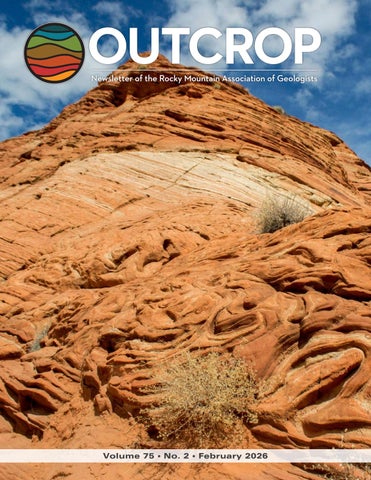
Folded sandstone resulting from soft sediment deformation in the Navajo Sandstone, near Wire Pass and Coyote Buttes, Utah. Photo by Tanner Nielsen.


MEMBERS
EVENT ATTENDEES
WEBSITE VISITORS
OUTCROP READERS
COMMUNITY CONTACTS
EMAIL SUBSCRIBERS
NETWORKING EVENTS
CONTINUING EDUCATION EVENTS
FIELD TRIPS
IN 2025YOUR SUMMIT SPONSORSHIP DOLLARS SUPPORTED: 1,200 1,400 8,000 8,000 7,000 4,000 28 13 8
2 0 2 6


October 24, 2025
Geoscience Community:
We greatly appreciate every Summit Sponsor and Event Sponsor who contributed to RMAG over the last year. Your support is essential to our organization.
In 2025, the Rocky Mountain Association of Geologists was proud to host a dynamic lineup of events, including the North American Helium & Hydrogen conference, which examined the quickly growing field Members explored the beauty and geological wonders of the Grand Canyon and the San Jaun’s as well geology across the state. Volunteers shared their passion for geoscience with students across the region through classroom visits and community festivals. Members also enjoyed numerous opportunities to connect outside the office through monthly lunches, coffees, happy hours, and our annual Golf Tournament.
Looking ahead, 2026 brings new opportunities for RMAG and our partners. Your financial support allows us to start the year off with a luncheon on the State of the Industry before diving into the impacts of new and evolving technologies on industry including in AI’s ever-growing presence. Plans are coming together to host a fundamentals class series throughout the year, two separate symposiums on the research out of USGS and research on the Mowry. Networking in 2026 will include our regular happy hours and coffee hour networking, plus we’ll have Rockbusters, the Golf Tournament and we’re bringing back the Clay Shoot. With your support RMAG Members share the wonders of earth sciences through community and school outreach. Finally, your financial support is crucial to our publication efforts, which include the monthly Outcrop newsletter and the quarterly Mountain Geologist journal.
Your financial commitment includes enrollment opportunities across all the RMAG events, whether joining the educational opportunities and joining the comradery of the golf tournament your employees will gain access. RMAG also recognizes Summit Sponsors through in-person signage, on our website, in our publications, and on social media.
Thank you to our current Summit Sponsors; we look forward to your continued support in 2026. For those not yet sponsoring, now is the perfect time to get involved. Sponsorship with RMAG d irectly supports the geoscience community – fueling education, networking, and professional development opportunities throughout the Rocky Mountain region.
We invite you to review or sponsorship packages and find the level that best aligns with your company’s goals. Whether you choose to become an annual Summit Sponsor or support a single event, your partnership will help us advance geoscience education and keep our community thriving.
Become a Summit Sponsor by contacting RMAG Executive Director, Bridget Crowther at bcrowther@rmag.org or 720-672-9898 to discuss opportunities and reserve your sponsorship for 2026.
Sincerely,
Sandra Labrum
Bridget Crowther 2026 RMAG President RMAG Executive Director


Registration

RMAG 2026 SUMMIT SPONSORSHIP
All sponsor benefits event tickets follow RMAG event registration deadlines. All benefits end 12 months after registration.
Silver
Summit Sponsorship benefit term is for 12 months! Specify type of payment on signed form, and send logo and advertisements to staff@rmag.org
Company:
Company Representative:
Address:
City: State: Zip Code:
Phone: Email:
Payment
Name as it appears on Credit Card:
Credit Card #:
Expiration Date:
Signature:
ACH: contact the RMAG office at staff@rmag.org for directions. Mail Checks payable to RMAG:
Rocky Mountain Association of Geologists (RMAG) 730 17th Street, B1 Denver, CO 80202
RMAG events are subject to change. Cancellation or rescheduling of events does not give the sponsor the right to refund. Summit Sponsors will receive benefits at any new events added into the RMAG schedule.
Thank you for your generous support!
P: (720)672-9898 staff@rmag.org www.rmag.org

730 17th Street, B1 Denver, CO 80202
RMAG JANUARY 2026 BOARD OF DIRECTORS MEETING
By Stephanie Forstner, Secretary sforstner@diagenyx.com
Greetings fellow rock lovers! I hope your winter has been filled with whatever keeps your geologist heart warm – perhaps planning your 2026 adventures, organizing your mineral collection, or getting some turns in at the March 6th Ski Day with the Denver Association of Petroleum Landmen.
This marks my first Secretary’s letter for The Outcrop, and I have to say that I’m loving this role already! As someone fairly new to Denver, the RMAG community has been incredibly welcoming. Thank you and I look forward to meeting more of you throughout the year.
The RMAG Board of Directors met January 21 via Zoom. All board members were present. We kicked off the new year with great momentum – as of January 20th, RMAG membership stands at 1,206 members. December donations were also up from 2024, which is wonderful to see.
Finance shared that RMAG remains on stable footing. Our new managed investment portfolio has been set up and funds have been transferred. We are also tracking a few year-end and conference-related items that will land in the next reporting cycle, but overall the story is steady and healthy.
Continuing Education is firing on all cylinders! A total of 530 people attended luncheons in 2025 and we’re off to a fantastic start this year with over 100 attendees for the January and February luncheons. We have an exciting 101 series lined up for 2026 including Spotfire this month, Geosteering in April, Spatial

John C. Webb Consulting Geologist
Sedimentology and Petrography of Clastic and Carbonate Systems
Python in June, and more throughout the year. A oneday Basin Conference focused on the Mowry Formation is planned for late October/early November – the call for talks goes live this month. If you have speaker recommendations for the last half of the year or suggestions for the Mowry Conference, please reach out.
The Rockbusters Ball was a blast! Huge thank you to all our sponsors. Membership has been busy planning ways to bring our community together. Swap intros, share your 2026 goals, and find collaborators at the February happy hour hosted at Resolute Brewing in Centennial. How good is your aim? Gather your team and join us May 8th for a Clay Shoot at Colorado Clays. The family friendly Summer Hike Series resumes in May. Lastly, we’re exploring a new speaker series where experienced geologists share the stories of how major fields were discovered in the Rockies, passing knowledge from generation to generation. If you know old-timers with great discovery stories to share, we’d love to hear from you!
Publications has a stellar lineup of Outcrop articles scheduled for the first half of 2026, including Castlegate fluvial architecture, structural controls on Rockies geothermal systems, and the ringing rocks of Montana. Voting for the 2025 Best Outcrop Article will be coming out soon.
Geoscience Outreach needs volunteers for the DMNS Girls in Science event on March 6th and the State Science Fair in April. If you love sharing your passion for geology with young people, please consider helping.
On The Rocks has some amazing overnight and day -trips planned June through September. Stay tuned and check the RMAG website for the full schedule and registration details. Overnight trip registration typically opens about 2-3 months in advance whereas daytrip registration opens ~6 weeks in advance.
We’ve got an incredible year ahead, and I can’t wait to see many of you out in the field, at luncheons, and at our social events. Here’s to 2026 being a year full of great geology, wonderful friendships, and memorable adventures!


Hi All,
PRESIDENT’S LETTER
By Sandra Labrum slabrum@slb.com
A ‘Very Special Rock’
Recently, RMAG passed a big milestone: we’ve officially surpassed 1,200 members! It’s incredibly exciting to be part of a professional society that is not just enduring but growing. With a membership this large, I know there are amazing ideas out there for things we could be doing that we aren’t yet. If you have thoughts, suggestions, or something you’d love to see RMAG try, please don’t hesitate to reach out to me at sandralabrum@gmail.com. I truly want to hear from you.
In the spirit of greeting all our members and honoring the tradition of February letters from presidents before me, I thought I’d use this month’s letter to reintroduce myself. Officially, I’m a Customer Success Manager and geologist at SLB. Unofficially, I’m the mom in my friend group who is tasked with identifying every rock our children pick up at the park (they are always disappointed when it’s not a “gem”).
I grew up in Eastern Washington in a very outdoorsy family, so my interest in geology started early. My dad was a survival instructor in the Air Force and used to bring home interesting rocks from the woods, which we would sit and identify using the old, bright yellow Audubon rock and mineral guide. That hobby quickly evolved into me collecting my own “samples” and stuffing them into every pocket I had—much to my mother’s frustration when they inevitably ended up in the washing machine.
It wasn’t until college that I realized this lifelong interest in rocks could actually become a career. I had an incredible Geology 101 professor at Eastern Washington University who quickly recognized
my enthusiasm for the subject. She encouraged me to join the department and the geology club, and that was it—I had found my people. After my undergraduate degree, I was fortunate to work some truly memorable geology jobs, including logging core in the Brooks Range of Alaska and sampling playas in Nevada for lithium.
Ultimately, I decided to return to school for a master’s degree in geology, and it turned out to be one of the best decisions I’ve ever made. I left Washington State University with a master’s degree, a husband, and an internship with ExxonMobil. From there, I accepted a full-time position with Schlumberger (SLB), where I’ve been lucky enough to stay through the industry’s many ups and downs for the past 14 years and I even managed to escape Houston after just two years.
RMAG was the first professional society I joined after moving here in 2014, and I’ve been happy to call myself a member and now a board member ever since. One of the things I love most about RMAG is that it reminds me how fun this profession can be: curious people, good conversations, and an excuse to get excited about rocks with other adults who completely understand why that’s a normal thing.
Now that we know each other a bit better, please say hello the next time you see me at an event. I’d love to hear what you’re working on, what brought you to geology, or what you think RMAG should try next. And if there happens to be a child nearby holding a “very special rock” that needs identifying, I’m always happy to step in—fair warning, though, it’s probably not a gem.
Good luck rock hunting!
—Sandra
YAMPA RIVER AND GREEN RIVER FLOAT TRIP YAMPA RIVER AND GREEN RIVER FLOAT TRIP


Publish with…
JUNE 1-5, 2026
JUNE 1-5, 2026
Join RMAG for a five-day float trip on the Yampa and Green Rivers! Guided by Dr Gary Gianniny, this unforgettable geologic adventure will explore the breathtaking stratigraphy and structures of Dinosaur National Monument including towering Paleozoic canyons to iconic features like the Mitten Park Fault and Split Mountain Anticline


Expanded geologic focus:
• Entire greater Rocky Mountain area of North America
• West Texas and New Mexico to northern British Columbia
• Great Plains and Mid-Continent region

Why contribute?
• Reach a broad industry and academic audience
• Quarterly peer-reviewed journal
• Permanent archiving includes AAPG Datapages
• Quick turn-around time
• Every subdiscipline in the geosciences
Email: mgeditor@rmag.org
https://www.rmag.org/publications/the-mountain-geologist/

BENEATH THE WAVES
PART 2 IN A SERIES
HOW OFFSHORE TOOLS REVEAL EARTH’S HIDDEN GEOLOGY
BY CODY BAHLAU cbahlau@ldeo.columbia.edu
INTRODUCTION
Field geology equips us to map structures, interpret stratigraphy, and reconstruct Earth’s history using both direct observations and remote tools. At sea, the goals are similar, but the constraints and methods differ. Without access to outcrops or topographic relief, marine geoscientists rely on acoustic imaging, seismic surveys, coring, and other geophysical techniques to visualize the subsurface and piece together the tectonic and sedimentary story hidden beneath the seafloor.
This article is the second in a two-part series designed to help geoscientists transition from landbased fieldwork to marine research. In Part One, we explored cruise preparation, daily life aboard, and the collaborative structure of offshore expeditions. Here, the focus shifts to the technology that makes offshore exploration possible. From multibeam sonar to seismic sources, sediment coring to ocean-bottom seismometers, this guide introduces the key equipment and acquisition techniques used aboard the
R/V Marcus G. Langseth and other global-class research vessels.
Understanding how these systems work, what data they collect, and how they complement onshore investigations is essential for anyone joining a geophysical cruise or interpreting marine data. Offshore science may be remote, but with the right tools and a well-prepared team, it opens a window into Earth’s hidden structures that lie offshore and out of view.
I. MAPPING THE UNKNOWN: EARTH’S FINAL FRONTIER
More than 70 percent of Earth’s surface lies beneath the ocean, yet vast portions of the seafloor remain unexplored. Despite decades of technological progress, only about 27 percent of the world’s ocean floors have been mapped using modern, high-resolution techniques. The remaining three-quarters represent one of the planet’s greatest scientific frontiers. Hidden beneath the waves are mountains, fault systems, volcanic ridges, and deep basins still waiting to


PHOTO 1: EM122 Data Example
PHOTO 2: Knudsen 3260 Chirp data example.

data example. Data courtesy of: Brandl, C.C., Worthington, L.L., Roland, E.C., Walton, M.A., Nedimovi , M.R., Gase, A.C., Adedeji, O., Castellanos, J.C., Phrampus, B.J., Bostock, M.G., & Wang, K. (2025). Seismic imaging reveals a strain-partitioned sliver and nascent megathrust at an incipient subduction zone in the northeast Pacific. Science Advances, 11(29), eadt3003.
be revealed.
When you open a global map or scroll through the ocean basemap on Google Earth, much of what you see is not derived from direct sonar measurements. Instead, it comes from satellite-based gravity data (satellite altimetry). These sensors detect subtle changes in sea surface height caused by gravitational anomalies from seafloor features like seamounts and ridges. While this method offers a broad approximation of the ocean floor, its resolution is often limited to several kilometers. That may be fine for suggesting large structures, but it is too coarse to capture fault lines, slope breaks, or geologic/ navigation hazards. That is where research vessels come in.

sediment processes, and the shape of Earth’s Ocean basins.
High-resolution seafloor mapping depends on ship-mounted sonar systems such as multibeam echo sounders, sub-bottom profilers, and seismic equipment. These tools send acoustic pulses into the water, measure the returning echoes, and build detailed maps of the seafloor and shallow subsurface. Each new cruise adds another piece to the global puzzle, improving our understanding of plate boundaries,
Efforts like Seabed 2030, a collaboration between the Nippon Foundation and GEBCO, aim to map 100 percent of the seafloor by the year 2030. While that goal is unlikely to be fully met on schedule, it remains a powerful call to action. It raises global awareness and drives investment in tools, access, and collaboration. Scientific vessels like the R/V Marcus G. Langseth play a vital role in this mission. Each time the Langseth activates its sonars or deploys
PHOTO 3: 2D Seismic
PHOTO 4: The team deploying seismic source array.


PHOTO 5: The team deploying the seismic streamer.
PHOTO 6: View of the Main Lab during a seismic cruise.
PHOTO 7: Example of Gravity and Magnetics data.

PHOTO 8: Performing the Gravity Tie in Reykjavik, Iceland.


seismic equipment, it contributes to global datasets that support research, resource management, and safe navigation.
Exploring the seafloor is more than a scientific pursuit. It is an ongoing adventure into the unknown. Whether charting deep rift zones, imaging fault lines, or revealing submerged mountains, each expedition pushes the boundaries of what we know about our planet.
The ocean may hide its secrets, but with the right tools and a skilled team, we are steadily peeling back the blue veil and mapping the Earth beneath the waves.
II. MARINE GEOPHYSICAL TOOL OVERVIEW
Offshore research relies on an integrated suite of geophysical tools to explore seafloor structure,
subsurface stratigraphy, and the physical properties of the oceanic crust. While these systems vary by vessel and project, the core technologies described below form the backbone of marine geoscience operations aboard ships like the R/V Marcus G. Langseth. It is worth noting that academic research vessels typically operate under different constraints than commercial ships in the oil and gas industry. Academic cruises are funded through competitive grants, often with limited budgets and tight timelines. As a result, the technology may not always reflect the latest commercial systems, but it is carefully maintained, well-understood, and optimized for scientific data collection rather than resource exploration.
Each tool contributes a different layer of information, helping scientists map, interpret, and understand the geology of the ocean floor.
PHOTO 9: Cutaway of an XBT.
PHOTO 10: OBS sitting on deck, ready to be deployed.


PHOTO 11: OBS Recovery on a stormy day.
PHOTO 12: OBS deployment
PHOTO 13: Multi-core Deployment
PHOTO 14: Multi-core Recovery
MULTIBEAM SONAR
Multibeam echo sounders (MBES) are the cornerstone of modern seafloor mapping, producing high-resolution bathymetric data that reveals features invisible from the surface. These systems use arrays of transducers to send out fan-shaped pulses of sound across a wide swath of seafloor, calculating depth by measuring the time it takes for the echoes to return.
System Aboard the R/V Marcus G. Langseth:
The Langseth is equipped with a Kongsberg EM122 multibeam echo sounder, a deep-water mapping system that operates at 12 kHz. This hull-mounted sonar is optimized for high-resolution bathymetry in water depths ranging from several hundred meters to nearly 11,000 meters, making it well-suited for mapping features across the continental slope, abyssal plains, and deep ocean trenches.
Capabilities and Data Products:
• Swath Width: Up to 5–7 times the water depth, depending on conditions. For example, at 4,000 meters water depth, the EM122 can map a swath approximately 20–28 kilometers wide. Actual coverage varies with factors such as seafloor slope, acoustic backscatter, and water column structure, with the widest swaths achieved in deep, flat regions.
• Beam Coverage: The system produces up to 432 soundings per ping, distributed evenly across the swath.
• Data Collected:
» Bathymetry: High-resolution depth measurements used to generate detailed seafloor maps.
» Backscatter Intensity: Reflectivity of the seafloor, providing insight into sediment type, rock outcrops, and habitat structure.
Processed bathymetric maps reveal features such as fault scarps, volcanic ridges, sediment channels, and even pockmarks from gas seeps. Backscatter data can highlight harder substrates like basalt or carbonate platforms compared to softer sediments.
Planning a Multibeam Survey:
Effective multibeam surveys require strategic planning to optimize data quality and coverage:
• Line Spacing: Survey lines are spaced to ensure

overlap between adjacent swaths, typically 10–20% depending on water depth and data quality goals. Greater overlap improves resolution and minimizes gaps but requires more time to complete a given area.
• Vessel Speed: The Langseth typically operates at 8–10 knots during dedicated multibeam surveys. Slower speeds improve data density and allow for greater overlap, but reduce the area covered in a given time frame. Conversely, higher speeds increase coverage but may compromise resolution, especially in rough conditions or over complex terrain.
• Turn Radii: Wide turning circles are needed to avoid coverage gaps at the outer edges of swaths, especially in deep water.
• Depth Transitions: In regions with significant depth changes, such as approaching a continental shelf or seamount, it is often advisable to divide the survey into separate regions. Shallow areas require tighter line spacing to maintain overlap and


resolution, while deeper sections allow for wider line spacing. Breaking the survey into depth-based segments improves efficiency and data quality.
• Real-Time QC: Multibeam data is monitored continuously to assess depth accuracy, swath width, and data integrity. Adjustments to speed, heading, or line spacing may be made on the fly based on seafloor conditions or technical performance.
Towed or deployed Equipment:
Unlike systems such as seismic streamers, the Langseth’s EM122 is hull-mounted, providing continuous seafloor mapping without towing external gear. This simplifies operations and minimizes risk, though data quality is still affected by sea conditions and sound velocity variations.
Weather and Environmental Considerations
Weather plays a significant role in multibeam data quality:
• Sea State: Rough seas create surface interference, often referred to as “noise,” which can distort sound wave propagation and reduce data resolution.
• Ship Motion: Excessive pitch, roll, or heave can degrade swath stability and cause gaps or artifacts in the data.
• Sound Velocity Profiles (SVPs): Accurate seafloor mapping depends on knowing how sound travels through seawater. To account for changing conditions, the science team typically launches Expendable Bathythermographs (XBTs) several times a day. These probes record temperature with depth, which is combined with estimated salinity and pressure to calculate sound velocity. The resulting profiles are used by the multibeam system to model ray paths and adjust depth calculations, helping to minimize errors caused by refraction and ensure high-quality bathymetric data.
APPLICATIONS FOR GEOLOGISTS:
• Mapping plate boundaries, mid-ocean ridges, seamounts, and rift zones
• Identifying fault systems and submarine landslide scars
• Locating coring targets, OBS deployment sites, or geological hazards
PHOTO 15: Multicore
Sampling Tube
PHOTO 16: Multicore
Sampling Tube –Close up
PHOTO 17: Piston core alongside the ship in it’s cradle.

• Supporting habitat mapping in combination with biological surveys
• Investigating features associated with methane seeps
In addition to project-specific science goals, bathymetric data from the Langseth contributes to Seabed 2030, a global initiative to map the entire seafloor by the year 2030. Seabed 2030, a collaboration between GEBCO (General Bathymetric Chart of the Oceans) and the Nippon Foundation, relies on contributions from research vessels worldwide to fill gaps in our understanding of ocean depth and morphology. Data collected during Langseth cruises is archived through national repositories like Rolling Deck to Repository (R2R) and shared with Seabed 2030, advancing both scientific research and global ocean mapping efforts.
SUB-BOTTOM PROFILERS
Sub-bottom profilers (SBP) use low-frequency sound waves to penetrate sediments and image shallow subsurface structures beneath the seafloor.
Similar to single-channel seismic, these systems produce vertical profiles that reveal sediment layers, unconformities, faults, and buried features to depths of tens to hundreds of meters, depending on sediment type and acoustic power.
When integrated with multibeam bathymetry and other geophysical tools, sub-bottom data adds a crucial third dimension by illuminating what lies beneath the seafloor surface.
System Aboard the R/V Marcus G. Langseth:
The Langseth is equipped with a Knudsen 3260 sub-bottom profiler, a hull-mounted system operating at frequencies between 3.5 and 12 kHz. Lower-frequency pulses penetrate deeper into the sediment column, while higher frequencies enhance resolution of shallow features. The Knudsen 3260 is ideal for imaging the upper tens to hundreds of meters of seafloor sediment, supporting geological, environmental, and habitat studies.
Capabilities and Data Products:
• Penetration Depth: Up to 100 meters in soft
sediments, less in course or compacted materials.
• Vertical Resolution: Varies from 0.2 to 1 meter, depending on frequency and sediment type.
• Data Collected:
» Acoustic profiles showing sediment layers, buried channels, faults, gas pockets, and stratigraphic boundaries.
» Preliminary interpretations of depositional history, sediment thickness, and shallow geologic structures.
Sub-bottom profiles often reveal features that are invisible on bathymetric maps, such as buried river channels, slumps, volcanic deposits, or gas seeps.
Planning a Sub-bottom Survey:
On the Langseth the Sub-bottom profiler is typically operated continuously during multibeam surveys, offering simultaneous seafloor and subsurface datasets. However, several factors influence survey quality:
• Frequency Selection: Lower frequencies improve penetration but reduce resolution; higher frequencies increase detail at the expense of depth. Survey design should match frequency to project goals.
• Vessel Speed: The Langseth typically maintains speeds of 8–10 knots during multibeam and sub-bottom operations. Excessive speed reduces data density, especially in shallow water.
• Survey Spacing: Line spacing is designed for overlapping multibeam coverage, which also governs sub-bottom data density. More closely spaced lines provide higher-resolution 3D understanding of the subsurface.
• Real-time Monitoring: Data is reviewed during acquisition to evaluate penetration, resolution, and system performance. Adjustments to speed, frequency, or gain settings are made as needed.
Towed or Deployed Equipment:
The Knudsen 3260 is hull-mounted, eliminating the need to tow or deploy additional gear for basic sub-bottom imaging. This simplifies operations, reduces weather risk, and allows continuous data collection alongside multibeam mapping.
Weather and Environmental Considerations:
• Sea State: Rough seas introduce noise that can obscure signal returns and reduce resolution.

• Sediment Type: Penetration is strongly affected by substrate. Fine-grained, soft sediments allow deeper penetration; coarse or compacted sediments limit it.
• Sound Velocity: As with multibeam mapping, accurate sound velocity profiles (SVPs) help correct for acoustic refraction. XBTs or other water column profiles are used to maintain data quality.
Applications for Geologists:
• Interpreting sediment deposition history and stratigraphic architecture.
• Locating coring targets for paleoenvironmental or sedimentologic studies
• Identifying fault systems, buried channels, or mass transport deposits.
• Supporting habitat mapping by revealing sediment thickness and structure.
• Detecting gas pockets, methane seeps, or archaeological features beneath the seafloor.
PHOTO 18: Piston core read to be deployed.

SEISMIC REFLECTION SYSTEMS
Seismic reflection surveys use powerful acoustic sources and long hydrophone arrays to generate images of the Earth’s subsurface. These surveys provide high-resolution profiles of sedimentary layers, fault systems, basin structures, and deep crustal features. Seismic data is essential for understanding tectonic processes, basin evolution, and geohazards like earthquakes and submarine landslides.
System Aboard the R/V Marcus G. Langseth:
The Langseth is the U.S. academic fleet’s flagship for deep-crustal seismic research, capable of conducting both 2D and 3D multichannel seismic (MCS) surveys.
• Sources Four sub-arrays of Bolt air guns (compressed-air sources used to generate acoustic energy) with a total volume of 6,600 cubic inches when deployed as a full array, typically used in 3D or large-offset 2D operations.
• Source Control: Bolt air guns are operated using
the GunLink 2000 system, which controls timing, pressure, and firing sequence.
• Streamers Up to four Sentinel Solid Acquisition System (SSAS) hydrophone streamers (long cables containing pressure sensors that record reflected sound waves), each 6 kilometers long, used for 3D acquisition. Single-streamer 2D surveys can extend up to 15 kilometers in length.
• Navigation: Integrated Orca navigation software with 4D-X and DigiCOURSE positioning systems. Streamer and source positions are tracked using a combination of GPS buoys, acoustic ranging units, and compass birds.
• Recording: Seismic signals are captured using the Sercel Seal 428 acquisition system. Data is recorded in SEG-D format (a standard for marine seismic acquisition) and monitored in real time using eSQC-Pro, Reveal, and other quality control tools.
Capabilities and Data Products:
Seismic reflection data provides detailed cross-sectional images of the subsurface:
PHOTO 19: Heat probe Deployment.
• Crustal Architecture: Maps sedimentary basins, faults, magmatic features, and deep crustal structure.
• Tectonic Boundaries: Defines rift zones, plate boundaries, and subduction systems.
• Geohazards: Identifies potential earthquake zones, tsunamis sources, or slope instability features.
• Site Selection: Supports targeting for coring, OBS deployments, or geotechnical investigations. Processed products include stacked seismic sections, structural maps, and integrated interpretations with multibeam and sub-bottom data.
Planning a Seismic Survey:
Survey design is critical to data quality, safety, and environmental compliance:
• Line Spacing: 2D lines can be designed for broad regional coverage or focused high-resolution profiles. 3D surveys use a dense grid pattern with precise crossline spacing, typically 50–150 meters.
• Shot Interval: Source timing is adjusted based on survey objectives, water depth, and permit requirements.
• Streamer Geometry: Streamer separation and length are tailored to balance resolution, depth penetration, and operational constraints.
• Navigation Precision: Uses dGPS, acoustic ranging, and compass sensors to maintain accurate source and receiver positions within global WGS84 coordinates.
Vessel speed during seismic acquisition is typically maintained between 4 and 5 knots, balancing streamer tension and shot overlap. Turn radius depends on the length of the towed equipment but is usually around 2.5 kilometers with some degree of “run back” before turning back on to line to accommodate long streamers and avoid tangles or gear stress.
Survey planning includes advance discussions about infill strategies; the need to re-shoot or supplement data due to missed coverage or shutdowns for protected species under marine mammal mitigation plans. These discussions help ensure that critical data gaps can be addressed within the operational schedule.
Towed or Deployed Equipment:
Seismic surveys rely on extensive towed arrays

deployed behind the vessel:
• Streamers: Up to four hydrophone streamers are used for 3D surveys, each typically 6 kilometers long. For 2D surveys, a single streamer may be deployed up to 15 kilometers in length. Streamers contain hydrophone groups spaced at 12.5-meter intervals.
• Source Arrays: Air gun arrays are configured with one to four sub-arrays, depending on survey objectives and desired energy output.
• Positioning Equipment: GPS tail buoys, acoustic ranging pods, and compass birds monitor streamer shape and source position in real time. Deployment can take anywhere from 12 to 72 hours depending on array configuration, environmental conditions, and survey complexity. Recovery times are often shorter ranging from 8-30 hours. These operations require tight coordination among the science team, technical staff, and deck crew. Junior scientists and student researchers often assist
PHOTO 20: Dredge on deck with Rocks.
on the streamer deck during deployment and recovery, gaining direct experience with equipment handling, rigging, and real-time communication protocols essential for safe and efficient operations.
Weather and Environmental Considerations:
Seismic operations are highly sensitive to environmental conditions:
• Sea State: Rough seas increase tension on streamers and air gun arrays, often requiring slower speeds to protect towed equipment. In extreme conditions, deployment or recovery may be delayed to reduce risk to gear and personnel. High seas also introduce low-frequency noise from swell and streamer tugging, which can reduce the clarity and resolution of recorded seismic data.
• Tension Management: Safe Working Load (SWL) limits govern how fast the vessel can operate, especially with longer or more complex streamer configurations. There is also a minimum safe speed required to maintain vessel steerage and streamer stability in the water column.
• Environmental Permits: Operations must comply with environmental regulations, including marine mammal mitigation plans. These typically involve shutdown protocols, soft-start procedures, and passive acoustic monitoring to minimize acoustic impacts from seismic sources. Planned downtime for equipment maintenance and weather delays is typically built into the survey schedule to help avoid disruptions and ensure safe, continuous operations.
Applications for Geologists:
Seismic reflection data provides unmatched insights into subsurface structure:
• Rifted Margins and Basin Evolution: Characterizes sediment accumulation, faulting, and tectonic processes.
• Subduction Zones: Images
the plate interface, forearc basins, and structures linked to earthquakes or tsunamis.
• Crustal and Upper Mantle Imaging: Reveals deep crustal reflectors, magmatic intrusions, and key transitions such as the Moho and lithospheric boundaries under favorable acquisition conditions.
• Hazard Assessment: Identifies slope failures, gas hydrates, or fault zones with geohazard potential. Seismic data is also used to refine targets for OBS deployments, sediment coring, and integrated geophysical interpretations with multibeam and sub-bottom profiles.
MAGNETOMETERS AND GRAVIMETERS
Magnetometers and gravimeters provide important insights into the physical properties of the seafloor and underlying crust. These passive geophysical tools complement acoustic systems by measuring natural variations in the Earth’s magnetic field and gravitational acceleration, helping scientists map subsurface structure, crustal composition, and

PHOTO 21: Dredge hanging from the A-Frame during mobilization.
tectonic features.
Systems Aboard the R/V Marcus G. Langseth:
The Langseth carries two primary instruments for magnetic and gravity data acquisition:
• Geometrics G-882 Marine Magnetometer: A towed instrument used to measure total magnetic field intensity. Towing the magnetometer behind the vessel helps reduce magnetic interference from onboard electronics and steel hull structures.
• Bell Aerospace BGM-3 Gravimeter: A ship-mounted instrument that continuously records gravity variations during transit and survey operations. It is mounted on a stabilized platform to compensate for vessel motion.
Both systems are integrated into the Langseth’s navigation and data management systems for real-time monitoring and georeferencing.
Capabilities and Data Products:
• Magnetometer:
» Measures total magnetic field intensity.
» Detects anomalies associated with seafloor spreading, volcanic features, and magnetic lineations.
» Helps map crustal boundaries, fracture zones, and basement highs
• Gravimeter:
» Measures small variations in gravitational acceleration caused by subsurface density changes
» Supports interpretation of sediment thickness, basin structure, and lithospheric composition Data collected from these instruments are used to generate:
• Magnetic anomaly maps
• Free-air and Bouguer gravity anomaly profiles

PHOTO 22: ROV deployment from the LARS system.
• Integrated geophysical models combining magnetic, gravity, and seismic datasets
Planning a Magnetics and Gravity Survey: Magnetometer and gravimeter surveys require careful operational planning to optimize data quality and meet project objectives:
• Vessel Speed: Both instruments are passive and can collect data continuously during transits and surveys. Typical speeds range from 8 to 10 knots for gravity and magnetics acquisition during multibeam or mapping legs. During seismic surveys, the magnetometer is towed and collects data at lower speeds (4.5–5 knots), in sync with seismic operations.
• Towed Equipment: The magnetometer is towed 150-200 meters behind the vessel to reduce magnetic noise from the ship’s hull and electronics. Deployment length depends on if the vessel has other gear in the water.
• Line Spacing: Line spacing is determined by scientific goals. For regional reconnaissance, spacing of 10–20 kilometers may be sufficient. For detailed crustal studies or tectonic mapping, line spacing is reduced to a few kilometers or less. Tie lines (perpendicular to main survey lines) are often included to check for consistency and improve gridding.
• Gravity Ties: Land-based gravity ties are recorded at known absolute gravity reference stations in port before departure and upon return. These measurements track instrumental drift over the course of the cruise. During post-processing, this drift is corrected to ensure the shipboard gravity data aligns with global or satellite-derived gravity datasets.
Towed or Deployed Equipment:
• Magnetometer Towfish: Deployed and recovered using deck winches. Careful handling is required to avoid damage during launch and retrieval.
• Gravimeter: Permanently mounted in a stable, low-vibration location within the ship, typically near the vessel’s center of gravity to minimize motion effects.
Weather and Environmental Considerations:
• Sea State: Heavy seas increase ship motion, which can degrade gravimeter data quality. Modern
stabilization and data correction methods help mitigate this, but calm conditions yield the best results.
• Magnetic Interference: Towing the magnetometer at a sufficient distance behind the ship reduces noise from the vessel’s hull and equipment. Metallic gear and electromagnetic systems on deck are carefully managed to prevent contamination of magnetic data.
Applications for Geologists:
• Identifying spreading centers, transform faults, and magnetic anomalies related to plate tectonics.
• Mapping fracture zones, igneous intrusions, and seafloor volcanic features.
• Supporting interpretation of sediment thickness and crustal structure in combination with seismic data.
• Contributing to large-scale studies of crustal formation, plate boundaries, and lithospheric processes.
Magnetic and gravity data provide essential context for offshore geophysical investigations, linking seafloor observations to deeper geologic processes and helping build a comprehensive understanding of Earth’s dynamic systems.
EXPENDABLE
BATHYTHERMOGRAPHS (XBTS)
XBTs are small probes launched over the side of the ship to measure temperature through the upper ocean column. Understanding how temperature, and thus sound velocity, changes with depth is critical for accurate multibeam sonar, sub-bottom profiling, and seismic data. Even small variations in sound speed can introduce refraction artifacts and degrade seafloor mapping or subsurface imagery if not corrected.
System Aboard the R/V Marcus G. Langseth: The Langseth routinely uses two types of XBTs to characterize sound velocity conditions in real time:
• T5 XBTs: Designed for deep-water deployments, reaching depths of approximately 1,800 meters. Recommended maximum launch speed is 6 knots.
• T7 XBTs: Commonly used in shallower water, effective to depths of approximately 760 meters. Recommended maximum launch speed is
15 knots.
Probes are launched from a handheld device known colloquially as the “XBT gun,” which gently releases the probe into the water. As the probe freefalls, it trails a fine copper wire that transmits temperature data back to the ship in real time. Once the probe reaches its target depth, the wire snaps and the unit is left to sink.
Capabilities and Data Products:
• Temperature Profiles: Continuous temperature readings from the surface to probe depth.
• Sound Velocity Calculations: Temperature is the primary driver of sound speed in seawater, with salinity and pressure also contributing. These profiles allow sonar and seismic systems to correct for real-time water column variability, improving accuracy and resolution.
Deployment Considerations:
• Frequency: On most Langseth cruises, XBTs are launched once per day.
• Multibeam Surveys: In regions with variable ocean conditions, XBTs may be launched as frequently as once per hour to maintain sound velocity accuracy.
• Targeted Drops: Probes are sometimes deployed over suspected hotspots (e.g., volcanic features or hydrothermal plumes) to detect anomalous temperature signals.
• Gridded Profiles: On large 3D or regional seismic surveys, XBT drops are planned systematically to form a sound velocity grid across the survey area, supporting both acquisition and post-processing.
• Rite of Passage: Launching your first XBT is a lighthearted tradition aboard research vessels. New science team members are often suited up in hard

PHOTO 23: ROV command container with monitors.
hats, oversized gear, and lab coats for the occasion, making it a memorable introduction to fieldwork at sea.
Applications for Geologists:
• Improving the accuracy of bathymetric and subsurface mapping
• Correcting for refraction effects in sonar and seismic surveys
• Supporting integrated oceanographic studies of water masses and thermocline structure
OCEAN BOTTOM SEISMOMETERS (OBS)
Ocean Bottom Seismometers (OBS) are autonomous instruments deployed to the seafloor to record ground motion, passive seismicity, and acoustic signals. OBS arrays extend seismic networks into the deep ocean, providing essential data for earthquake studies, tectonic imaging, and investigations of crustal structure.
System Types and Operators:
The most widely used OBS systems in U.S. academic research are maintained by:
• Scripps Institution of Oceanography (SIO): Offers both short-period and broadband OBS units for shallow and deepwater deployments. These often include integrated hydrophones and pressure sensors.
• Woods Hole Oceanographic Institution (WHOI): Maintains broadband and short-period OBS systems with high sensitivity and long-duration recording capability (several months to over a year). OBS systems operate in two modes:
• Passive Recording: OBS units are deployed for weeks to a year, recording natural seismic activity, ground motion, and ambient acoustic signals.
• Active Source Recording: In combination with seismic sources (e.g., air guns), OBS arrays capture wide-aperture and refraction data for high-resolution crustal imaging. Active source work requires additional planning, permitting, and vessel coordination.
Capabilities and Data Products:
Data Collected:
• Three-component ground motion (vertical and horizontal seismometers)
• Hydroacoustic signals (water column pressure changes)
• Seafloor pressure changes (related to deformation or tsunami waves)
Applications:
• Earthquake detection and fault zone characterization
• Crustal velocity modeling and deep imaging
• Subduction and rift system investigations
• Seafloor deformation and tsunami monitoring In addition to seismic instrumentation, some expeditions also deploy seabed electromagnetic (EM) receivers, such as those developed by Scripps Institution of Oceanography. These instruments measure the electric and magnetic fields generated as natural or controlled-source EM signals propagate through the seafloor. EM data help characterize subsurface conductivity, which is sensitive to porosity, fluid content, and lithology, offering a complementary view of subsurface structure alongside seismic velocity models. The R/V Marcus G. Langseth has successfully supported the deployment of Scripps EM receivers during multi-instrument surveys.
Planning an OBS Survey:
Successful OBS work depends on precise deployment and recovery logistics:
• Deployment Patterns: Arrays may be laid out in linear transects, polygons, or grids, depending on research goals.
• Vessel Speed: During deployment and recovery, speeds are typically reduced to 1–2 knots to ensure accurate placement and safe handling.
• Descent Rate: OBS units descend at approximately 30–50 meters per minute, so a 5,000-meter deployment takes 1.5–2.5 hours to reach the seafloor.
• Ascent Rate: After acoustic release, ascent occurs at roughly 40–60 meters per minute, with rise time depending on depth. A 5,000-meter deployment can take 1.5–2 hours to surface.
• Recovery: Units are located and retrieved using radio beacons, strobe lights, and acoustic tracking.
Active Source Considerations: When OBS are used with seismic sources, a “rollalong” method is often used:
• Deploy OBS along the planned line.
• Deploy seismic source arrays.
• Acquire active source data.
• Recover OBS and download data.
• Move to the next line and repeat. Additional coordination is required for permitting, marine mammal observers, acoustic mitigation zones, and real-time QC.
Towed or Deployed Equipment:
• Deployment: OBS are free-fall deployed with precise ship positioning aided by dGPS and acoustic transponders. Survey patterns (vessel sailing path) such as “diamond” or “pacman” are used to triangulate their final position.
• Recovery: Units are acoustically released and float to the surface for retrieval. Recoveries may use a crane, A-frame or small boat.
Additional Crew Requirements
OBS operations typically require a dedicated technical team responsible for:
• Sensor prep, battery loading, and health checks
• Deck coordination for deployment/recovery
• Acoustic tracking during descent and ascent
• Post-recovery data handling and reconfiguration Extra berths and equipment space are necessary, and advance planning with the vessel operator is essential.
Weather and Environmental Considerations:
• Sea State: Calm conditions are preferred for safe over-the-side operations. Rough seas may delay deployment or recovery.
• Currents: Drift during ascent is monitored using shipboard ADCP data and acoustic ranging programs that can model the recovery path.
• Navigation: Accurate seafloor positioning depends on real-time acoustic triangulation and precise vessel GPS.
Applications for Geologists:
• Imaging faults, tectonic plate boundaries, and deep crustal features

• Monitoring earthquake swarms, slow-slip events, and post-seismic deformation
• Supporting seismic refraction experiments for crust and mantle structure
• Improving velocity models for more accurate MCS imaging and depth conversion
• Long-term monitoring of active margins or oceanic transform faults
Academic OBS vs. Industry Nodes:
Ocean Bottom Seismometers used in academic research differ significantly from the nodes used in commercial oil and gas surveys:
• Deployment Method: Academic OBS units are typically free-fall deployed from the surface and recovered acoustically. In contrast, industry nodes are often placed and retrieved by Remotely Operated Vehicles
(ROVs), allowing for precise placement on the seafloor and better coupling to the substrate.
• Density and Scale: Industry node surveys commonly use hundreds of sensors in dense grids for high-resolution imaging over smaller areas. Academic OBS arrays usually involve fewer units (10–50), spaced more widely for broader regional coverage.
• Cost and Time: ROV-deployed nodes offer better precision and higher data density but require costly support vessels, longer deployment windows, and specialized crew. Academic OBS deployments are more time-efficient and lower-cost per station but sacrifice some coupling quality and spatial resolution.
• Duration: Academic OBS surveys typically record for weeks to months, capturing both passive and active-source data. Industry node deployments are often shorter (days to weeks) and focused on active-source imaging.
• Langseth Capability: The R/V Marcus G. Langseth has supported OBS operations involving ROV-assisted deployment and recovery on select cruises, demonstrating that the vessel is capable of precision node placement, though on a much smaller scale than commercial oil and gas operations. These differences reflect the contrasting goals of academic and industry work: broad geodynamic insight vs. high-resolution imaging of specific subsurface targets.
SEDIMENT CORING SYSTEMS
Sediment coring recovers physical samples from beneath the seafloor, providing essential groundtruth data to complement geophysical surveys. Cores reveal the composition, stratigraphy, and geochemical history of marine sediments, supporting studies of depositional processes, climate records, and benthic habitats.
The R/V Marcus G. Langseth supports multiple coring systems, operated by experienced technicians from institutions such as Oregon State University’s MARSSAM group (Marine Sediment Sampling Group), which specializes in U.S. coring operations and provides equipment, technical expertise, and sample handling support.
System Aboard the R/V Marcus G. Langseth: While coring equipment is not carried as standard, the Langseth has supported a variety of systems on past cruises and remains capable of accommodating them depending on project needs:
• Gravity Corers: Use the weight of the core barrel and attached weight to penetrate soft sediments. Gravity cores typically recover up to ~6 meters of sediment, ideal for surface stratigraphy and shallow depositional studies.
• Piston Corers: Incorporate a piston mechanism that reduces friction and disturbance during penetration, improving core recovery and preserving sediment structure. Depending on sediment type and sea conditions, piston cores on the Langseth have approached lengths of 15–20 meters.
• Multicorers: Simultaneously deploy several short core tubes (typically 50–60 cm in length), allowing recovery of undisturbed sediment at the sediment–water interface. These are widely used in studies of benthic habitats, diagenesis, and micro-paleoenvironmental change.
Data and Sample Products
Coring operations yield physical samples essential for a wide range of scientific analyses:
• Stratigraphic Records: Core sections reveal sediment layers, depositional structures, and transitions that provide insight into marine geology and tectonic settings.
• Geochemical and Biological Data: Sediment chemistry, organic content, and preserved microfossils inform studies of ocean circulation, productivity, and environmental change.
• Chronological Frameworks: Cores are dated using radiocarbon, isotopic, and paleomagnetic methods to reconstruct geologic and climatic histories, often integrated with seismic and multibeam datasets.
Planning a Coring Program
Coring operations require detailed planning to ensure sample integrity, crew safety, and operational efficiency:
• Station Selection: Sites are chosen using multibeam bathymetry, sub-bottom profiles, or seismic lines to target appropriate sediment types and sufficient thickness.
• Vessel Positioning: Dynamic positioning is used to hold the vessel steady during deployment and recovery to ensure vertical entry and accurate site targeting.
• Deck Preparation: All rigging, weights, winches, and handling systems must be planned, tested, and verified prior to operations. Safe working loads (SWLs) and gear compatibility are confirmed in advance.
• Seafloor Imaging with MISO Camera System: The Langseth can deploy the MISO deep-sea camera system, developed by Woods Hole Oceanographic Institution (WHOI), to capture high-resolution imagery of the seafloor. This helps identify suitable coring locations, confirm sediment type, and avoid obstacles such as rock or dense fauna. When used with the multicorer, the camera also confirms successful triggering and undisturbed core recovery.
• Deployment and Recovery
» Gravity and Piston Cores: Lowered vertically using a winch; penetration depends on sediment
type, sea state, and core weight.
» Multicorers: Lowered to the seafloor and triggered to collect several short cores (30–50 cm) from the sediment–water interface.
Recovery time depends on water depth, sea state, and system used.
Towed or Deployed Equipment
All coring systems are deployed over the side or stern using A-frames and winches. These operations require real-time coordination between the marine techs, science team, and bridge crew. Because of their scale and complexity, coring deployments must be factored into deck layouts, lifting plans, and cruise timelines.
Weather and Environmental Considerations
• Sea State: Calm conditions are essential for safe and successful coring. High seas may delay operations or reduce core quality through slumping or loss.
• Seafloor Conditions: Hardgrounds, outcrops, or steep slopes may prevent core penetration or damage equipment.

• Sediment Type: Fine-grained, cohesive sediments offer better core recovery. Sandy or gravelly substrates may limit penetration or retention.
Applications for Geologists
• Reconstructing depositional environments and basin evolution
• Dating sediment sequences to interpret tectonic, climatic, or volcanic events
• Paleoceanographic and paleoclimatic reconstruction
• Studying benthic habitats and biogeochemistry
• Ground-truthing multibeam and seismic interpretations
A Seagoing Tradition
A time-honored rite of passage for new science party members is the Styrofoam cup dunk. Decorated cups are placed in a mesh bag and lowered with the multicorer. At depth,
the immense pressure compresses the foam, shrinking the cups into miniature keepsakes, a fun and visual reminder of ocean physics and a cherished memento from life at sea.
HEAT FLOW MEASUREMENTS: MAPPING SUBSURFACE THERMAL STRUCTURE
In addition to acoustic and seismic imaging, many marine geophysical expeditions include heat flow studies to investigate subsurface temperature gradients, lithospheric cooling, and fluid circulation within oceanic crust. These measurements help quantify conductive heat flux, which is a key parameter for understanding plate tectonics, hydrothermal systems, and sediment properties.
Systems Aboard the R/V Marcus G. Langseth:
The R/V Marcus G. Langseth does not carry a dedicated heat flow probe as part of its standard equipment. However, portable systems can be mobilized for specific cruises, such as those operated by the Oregon State University Heat Flow Group or other NSF-supported equipment pools. These tools are compatible with Langseth’s winch and deck handling systems.
Heat flow surveys aboard the Langseth are typically integrated with multichannel seismic (MCS) operations. Seismic reflection profiles help identify ideal probe targets by highlighting areas with continuous, undisturbed sediment cover.
Capabilities and Data Products:
Heat flow probes provide in situ measurements of subsurface thermal structure and allow estimation of conductive heat flux:
• Temperature Gradient: Thermistors spaced along the probe shaft record sediment temperature with depth, often at intervals of 10 to 50 cm.
• Conductive Heat Flow: By combining measured temperature gradients with laboratory or inferred thermal conductivity, researchers can calculate geothermal heat flux.
• Secondary Insights: Anomalous values can indicate hydrothermal circulation, fluid migration, or recent tectonic activity.
Typical probes penetrate 3 to 5 meters into soft sediment, though depth depends on probe weight, descent speed, and substrate consistency.
Planning a Heat Flow Survey:
Successful surveys depend on thoughtful coordination between science objectives and field logistics:
• Site Selection: High-resolution seismic data are used to identify locations with:
» Soft, continuous sediment layers
» Minimal slope or topography
• Absence of hardgrounds or recent disturbance
• Deployment Strategy: Heat probe work is often conducted alongside MCS, coring, or dredging to minimize downtime and share transit.
• Temporal Requirements: Each deployment typically remains in place for 10 to 30 minutes to allow sediment temperatures to stabilize after insertion (thermal rebound).
Towed or Deployed Equipment:
Heat probes are deployed over the side using shipboard winches or handling systems:
• The probe is lowered to the seafloor and allowed to free-fall under its own weight.
• Once embedded, thermistors record temperature at set intervals, typically remaining in place for several minutes to hours depending on study design.
• The probe is then recovered, and data are downloaded for processing.
Recovery requires careful deck handling to avoid damage to sensors or cabling, especially in rough seas.
Weather and Environmental Considerations:
Sea state and seafloor conditions significantly affect heat flow operations:
• Sea State: Calm seas improve deployment accuracy and reduce probe tilt. Rough weather can delay operations or compromise data quality.
• Seafloor Composition: Soft, cohesive sediments provide ideal conditions for probe penetration and thermal measurements. Hard, rocky, or sloped seafloor reduces effectiveness and may damage equipment.
• Environmental Constraints: As with other seafloor operations, deployments must comply with environmental protocols, especially in protected areas.
Applications for Geologists:
Heat flow data support a range of geological and geophysical investigations:
• Crustal cooling and lithospheric age estimation:
Geothermal gradients provide key evidence for how oceanic lithosphere cools and thickens as it moves away from spreading centers.
• Identification of hydrothermal circulation and fluid flow pathways: Localized heat flow anomalies can indicate active or past fluid flow through permeable crust, particularly near mid-ocean ridges or seamounts.
• Thermal characterization of subduction zones, rifted margins, and sedimentary basins: Heat flow patterns help constrain models of mantle upwelling, plate interface temperature, and basin thermal evolution.
• Assessment of sediment thermal properties: Including compaction, porosity, thermal conductivity, and how these affect diagenesis and fluid migration. By combining heat flow measurements with seismic, multibeam, and sediment data, researchers can develop a more complete understanding of subsurface processes and the thermal evolution of the ocean crust.
DREDGING SYSTEMS
Dredging allows researchers to collect hard rock samples from the seafloor, especially from rugged, volcanic, or tectonically active regions where sediment coring is not feasible. Unlike coring, which targets soft sediments, dredging recovers rock from exposed outcrops, ridges, or slopes.
The R/V Marcus G. Langseth supports dredging operations in collaboration with experienced technical teams such as Oregon State University’s MARSSAM group (Marine Sediment Sampling Group), which specializes in U.S. sediment and rock recovery operations. MARSSAM provides dredging equipment, field technicians, and handling support for NSF-funded expeditions and contract-based cruises.
Systems and Expertise:
While dredging equipment is not part of the Langseth’s standard outfitting, the vessel has successfully supported dredging operations on past cruises using shipped-in systems and experienced deck teams.
• Rock Dredges: Heavy-duty chain bags or steel baskets are towed along the seafloor to collect fragmented rocks from exposed outcrops.
• Cable and Winch Systems: Robust winch systems and towing cable enable safe deployment and
recovery from deep water. Tension monitoring is essential to detect bottom contact, avoid snags, and protect gear.
Data and Sample Products
Rocks! Dredging might lack the finesse of coring, but there’s nothing quite like pulling a basket of fresh oceanic crust onto the deck. Each haul is a geological grab bag, offering direct insight into the deep seafloor.
• Sample-Based Analysis: Dredged rocks support studies in petrology, geochemistry, and tectonics, revealing the processes that shape oceanic lithosphere.
• Ground-Truthing Geophysics: Physical samples help validate interpretations from multibeam bathymetry, seismic data, and magnetic anomalies.
• Exploration and Discovery: Whether confirming known features or turning up surprises, dredging remains one of the most direct ways to get your hands on the seafloor.
And let’s be honest, it’ll look great on the shelf. A rock pulled from several thousand meters below the surface is hard to beat.
Planning a Dredging Program:
Effective dredging operations require close coordination between the science team, deck and marine crew, and technical support group:
• Target Selection: Site selection is based on multibeam bathymetry, seafloor slope data, and sub-bottom profiles. Steep outcrops and sediment-free zones are prioritized to increase recovery success.
• Deck Layout and SWL Verification: All dredging equipment, rigging, and handling systems must be reviewed in advance. Deck plans are finalized prior to mobilization to ensure safe working loads (SWLs) are met and lifting operations can be carried out safely and efficiently.
• Deployment and Tension Monitoring: The dredge is lowered via A-frame and towed slowly (~0.5–1 knot). Real-time winch tension is used to monitor bottom contact and prevent equipment damage or loss.
• Recovery and Sample Processing: After recovery, rocks are washed, sorted, described, and stored. MARSSAM provides saws, sieves, and curation tools, but processing and logging are the responsibility of the science team unless otherwise arranged.
Towed or Deployed Equipment:
Dredges are deployed over the stern using the Langseth’s winch and A-frame systems. Operations require real-time coordination between the bridge, deck crew, and science party. Equipment weight, seafloor conditions, and tow duration must be factored into the operational plan.
Weather and Environmental Considerations:
• Sea State: Calm weather improves control during deployment and recovery. Rough seas can jeopardize gear or reduce sample yield.
• Seafloor Composition: Targeting exposed rock with minimal sediment cover is key. Soft or flat areas reduce dredging success and increase drag.
• Environmental Compliance: Dredging is conducted with care to minimize habitat disturbance. Permitting may be required in sensitive areas or marine protected zones.
Applications for Geologists:
• Sampling mid-ocean ridges, transform faults, and volcanic seamounts
• Investigating igneous and mantle processes
• Supporting tectonic reconstructions and crustal accretion model
• Ground-truthing remote sensing and seafloor mapping interpretations
REMOTELY OPERATED AND HUMANOCCUPIED VEHICLE SYSTEMS
Note: This overview is based on general knowledge and prior ROV-supported missions aboard the R/V Marcus G. Langseth. I am not an ROV specialist, these complex systems are operated by dedicated technical teams or external contractors with specialized expertise.
Remotely Operated Vehicles (ROVs) and Human-Occupied Vehicles (HOVs) extend human access to the deep ocean, allowing direct observation, high-resolution imaging, and targeted sampling in environments ranging from shallow continental shelves to deep ocean trenches. These tools complement acoustic and geophysical surveys by providing visual context, real-time decision-making, and precision placement or recovery of instruments.
The Langseth is capable of supporting limited ROV operations, though it is not a dedicated
deep-submergence platform. Past missions have involved collaboration with external organizations who supplied systems, pilots, and engineers. Deployment of manned submersibles is not currently supported aboard the Langseth.
System Types and Capabilities:
ROVs are typically grouped by size and function:
• Observation-class: Lightweight systems designed for video documentation and basic measurements.
• Work-class: Equipped with manipulator arms, sampling tools, and scientific sensors.
• Deep-rated: Capable of operating at depths exceeding 6,000 meters.
Common system features include:
• High-Definition Cameras: Real-time visual documentation of seafloor features and habitats.
• Sampling Tools: Manipulator arms, suction samplers, push cores, and biological collection systems.
• Sensors: CTDs, pH, dissolved oxygen, acoustic positioning, and seafloor mapping tools.
• Navigation: Integrated sonar, DVL, and USBL positioning for precision maneuvering.
Manned Submersibles
Though not deployed from the Langseth, HOVs such as Alvin (WHOI) support deep-sea exploration to depths of 6,500 meters. These are typically launched from purpose-built vessels such as the R/V Atlantis.
Data and Sample Products:
ROVs and submersibles support:
• High-definition video and image mosaics of geologic and biologic features
• Targeted rock, sediment, and biological samples
• Precision placement and retrieval of seafloor instruments (e.g., OBS, temperature loggers)
• Ground-truthing of bathymetric, seismic, and sonar data
Planning an ROV or Submersible Operation:
These operations require extensive coordination before the cruise:
• Equipment Logistics: ROVs require dedicated deck space, launch and recovery systems (LARS), control vans, and power distribution.
• Specialist Personnel: Operators, pilots, technicians, and engineers are typically provided by the
ROV group.
• Site Planning: Dive targets are selected based on multibeam bathymetry, 3.5/12 kHz sub-bottom profiles, and prior geological context.
• Permitting: Operations in exclusive economic zones (EEZs) or marine protected areas may require scientific permits.
• Vessel Infrastructure: ROV operations may necessitate deck modifications or structural analysis for load handling. Pre-planning should include a review of overboarding requirements, lifting plans, and verification of Safe Working Loads (SWLs) for all gear.
Note: For NSF-funded cruises involving ROVs or HOVs, early coordination with the UNOLS Deep Submergence Science Committee (DESSC) is recommended to ensure vessel compatibility and mobilization timelines.
Deployment Considerations
• Launch and Recovery: ROVs are typically deployed over the side or stern using LARS and heavy-lift winches. A tether (umbilical) connects the vehicle to the ship, transmitting power, data, and control signals.
• Manned Submersibles: Launched via A-frames or cranes. Recovery requires excellent sea conditions to ensure crew safety.
Weather and Environmental Constraints:
• Sea State: Calm seas are critical for safe launch, recovery, and stable operations.
• Visibility: Suspended sediments or low light at depth can reduce camera effectiveness.
• Currents: Strong bottom currents may limit maneuverability or push the vehicle off target.
• Seafloor Conditions: Steep slopes, rugged terrain, or outcrops increase the risk of snagging or damage.
Applications for Geologists: ROVs and HOVs provide direct access to seafloor features and are used for:
• Imaging faults, vent fields, lava flows, escarpments, and sedimentary structures
• Collecting hand-picked rock or sediment samples for petrology and geochemistry
• Deploying and recovering OBS, heat flow probes, or long-term monitoring packages
• Investigating submarine landslides, gas seeps, and hydrothermal systems
• Validating interpretations from seismic and sonar data through visual confirmation
Once a research plan is developed and equipment is selected, the focus shifts to execution: how data are acquired at sea, how teams coordinate onboard, and how information is handled from collection through delivery. The next sections explore the practical workflows that bring these tools to life—from deployment and watchstanding to post-cruise data management and archiving practices that ensure results are accessible and reproducible long after the ship returns to port.
III. DATA ACQUISITION AND SHIPBOARD ROLES
Offshore data collection is a continuous, round-theclock operation once the vessel arrives on station. For geologists more familiar with land-based campaigns, the rhythm and structure of shipboard work may initially feel unfamiliar. At sea, every activity, whether acquiring multibeam bathymetry, firing seismic source arrays, or deploying coring gear, follows tightly coordinated workflows designed to maximize coverage, preserve data quality, and keep operations running safely and efficiently.
Science parties typically operate in 12-hour shifts, with handovers between watches ensuring continuity across operations. Even if you are not the one launching gear or managing acquisition systems, responsibilities such as logging metadata, checking real-time readouts, preparing equipment, or communicating with the bridge are essential to success. Tasks are rarely idle. Routine checks, troubleshooting, and prepping for the next station often fill the gaps between deployments.
Real-time monitoring is central to offshore data acquisition. Aboard the R/V Marcus G. Langseth, systems like the multibeam sonar, sub-bottom profiler, magnetometer, and seismic arrays stream continuous data that is reviewed by both marine technicians and watchstanders. They track instrument performance, seafloor coverage, signal quality, and environmental conditions such as sound velocity or noise interference. Adjustments can be made on the fly, modifying ship speed, line spacing, acquisition parameters, or instrument settings as needed to accommodate changing sea states, complex topography, or technical issues.
Perhaps the most universal truth of offshore
fieldwork is this: the only plan that is guaranteed to hold is that the first plan will change! Weather, equipment behavior, permit constraints, or unanticipated seafloor conditions can all force on-the-fly adaptations. Flexibility, communication, and a steady mindset are just as important as any technical skill. Learning how your role fits into this dynamic environment is key to becoming a confident and capable participant in offshore geoscience.
IV. DATA MANAGEMENT AND SAMPLE ARCHIVING
Rolling Deck to Repository (R2R) and Marine Geoscience Data System (MGDS)
Rolling Deck to Repository (R2R) is the centralized data management system for the U.S. Academic Research Fleet. Funded by the National Science Foundation (NSF), R2R supports long-term archiving, curation, and public access to underway data collected aboard UNOLS vessels, including the R/V Marcus G. Langseth. Its mission is to preserve the data legacy of each cruise and enable future reuse by the broader scientific community.
The Marine Geoscience Data System (MGDS), also NSF-funded, serves as a complementary archive for processed marine geophysical data such as seismic profiles, multibeam bathymetry mosaics, and dredged sample metadata. MGDS provides access through its searchable portal at marine-geo.org.
Why the Academic Fleet Uses R2R and MGDS
All U.S. academic research vessels routinely collect standard underway data during transits and surveys. These typically include:
• GPS and POS/MV navigation data
• Multibeam bathymetry and backscatter
• Magnetics and gravimetry
• Meteorological observations
• Surface temperature and salinity (thermosalinograph)
• R2R and MGDS ensure that these datasets are:
• Archived in long-term, trusted national repositories
• Standardized with consistent file formats and metadata
• Linked to cruise IDs, ship tracks, and resulting publications
• Discoverable through centralized, searchable
interfaces
For NSF-funded cruises, participation in R2R is mandatory. Operators submit cruise metadata, sensor logs, and raw data according to R2R protocols and timelines. MGDS often receives derived cruise products after R2R processing to support access to geophysical datasets.
Access and Availability
• Cruise summaries are posted at rvdata.us soon after completion
• Preliminary datasets (e.g., navigation, bathymetry) are usually available within weeks
• Final processed and QC’d data are released within 6–12 months
• Public access is the default, though embargoes up to 2 years may be requested by PIs and approved by NSF
• Geophysical data are also available through marine-geo.org
Final datasets are archived at NOAA’s National Centers for Environmental Information (NCEI) and MGDS. Persistent DOIs are assigned for long-term access and citation.
Integration with Cruise Planning
PIs and cruise planners are encouraged to consult R2R and MGDS when designing surveys. Archived cruise tracks, survey lines, instrumentation logs, and geophysical products from previous cruises, especially those aboard the Langseth, can help inform site selection, identify data gaps, and refine line planning. MGDS complements R2R by providing access to processed marine geoscience data including seismic reflection profiles and bathymetry compilations, helping ensure continuity across expeditions.
Core Sample Archiving
Cores and dredged rock samples collected during NSF-funded cruises are typically archived at approved repositories such as the Oregon State University Marine and Geology Repository (OSU-MGR). These facilities curate sediment cores, rock samples, and metadata in climate-controlled storage for community use.
• Science parties are responsible for labeling, logging, and packaging samples during the cruise
• Processing typically follows MARSSAM guidelines
• Cores are usually split onboard, sealed in D-tubes or
bags, and refrigerated
• Rocks are labeled and boxed for shipment; rinsing is optional and non-standardized
• Samples can be requested through OSU-MGR’s online portal or other NSF-approved facilities
• Alternate repositories must be coordinated in advance and included in the Marine Sample and Data Management Plan (MSDMP)
V. INTEGRATION AND REFLECTION: BRIDGING THE DIVIDE BETWEEN LAND AND SEA
One of the most rewarding aspects of marine geophysics is the opportunity to connect offshore data with onshore geology. Multibeam maps, seismic profiles, gravity anomalies, and recovered seafloor samples extend our understanding of Earth’s structure beneath the waves, revealing how tectonic and sedimentary processes evolve across the shoreline and into the deep ocean.
For geologists trained in field mapping or stratigraphic analysis, offshore tools offer a powerful new perspective. Structures traced in outcrop may reappear in seismic lines crossing the shelf. Sedimentary layers observed in cores can be correlated back to basin systems exposed on land. OBS deployments bridge the gap between crustal imaging offshore and earthquake monitoring onshore. Dredged rock and sediment samples provide tangible evidence to support interpretations drawn from remote sensing. When these datasets are integrated, they illuminate the continuity of Earth’s systems, from continental interiors to the ocean floor.
Just as working in the mountains, deserts, or other remote environments presents its own logistical and environmental hurdles, offshore research comes with a distinct set of challenges. It’s not a direct translation of land-based fieldwork. There are no roads to reroute or trails to follow. At sea, time is limited, conditions shift quickly, and the margin for error is small. Technical operations run around the clock, and your ability to execute a plan depends on weather, permitting, equipment behavior, and teamwork. And more often than not, the first plan changes.
Still, these challenges are part of what makes marine research so compelling. Working aboard a ship means joining a collaborative effort where science, engineering, and seamanship come together in real time.
It requires trust in your shipmates, respect for each role on board, and a willingness to adapt and contribute as needed. Alongside the logistical complexity come moments of genuine discovery, whether it’s a seafloor structure emerging on screen, a core coming up with unexpected layering, or a sunrise over open ocean after a long night watch.
These expeditions are not solo ventures. They’re shared adventures built on curiosity, grit, and collaboration. For those ready to embrace the unpredictability of life at sea, offshore geophysics delivers not only scientific discovery but unforgettable moments, lasting friendships, and the thrill of pushing into the unknown. I hope to see you coming up the gangway soon, there’s a whole ocean waiting!
VI. FINAL NOTES BEFORE YOU SAIL
As you prepare for your first cruise, or your tenth, it’s worth remembering that success offshore isn’t just about technical know-how. It’s about mindset. The ocean doesn’t operate on your schedule, and gear doesn’t always behave the way you want it to. But if you stay engaged, communicate clearly, and keep your sense of humor intact, you’ll find that even the toughest days at sea are rich with lessons, growth, and unexpected rewards. Here are a few parting thoughts to help you make the most of the experience:
• Stay Curious: Ask questions, whether about ship operations, data systems, or geology. The team is there to help you learn.
• Be Prepared: Pack efficiently, follow safety briefings, and take care of your health, offshore work can be physically demanding with no hospital nearby.
• Adapt to Life Aboard: Respect shared spaces, maintain a positive attitude, and be flexible. Schedules change, gear breaks, and weather happens.
• Understand the Big Picture: Every dataset, from bathymetry to seismic, contributes to broader scientific knowledge and helps map the unknown seafloor.
• Enjoy the Experience: Life at sea is unlike anything on land. Whether you’re launching an XBT, recovering a core, or watching sonar maps unfold, you’re part of a mission to explore Earth’s final frontier. Fair winds and following seas, we’ll see you on deck.

CALL FOR PAPERS
PETROLEUM HISTORY INSTITUTE 2026 ANNUAL SYMPOSIUM AND FIELD TRIP
BAKERSFIELD, CALIFORNIA


The World of West Coast Petroleum April 16-18, 2026
REGISTRATION AND EVENING RECEPTION Thursday, April 16, 2026
PRESENTATIONS-ORAL AND POSTER – Friday, April 17, 2026 Proceedings to be published in the 2026 Volume of Oil-Industry History
FIELD TRIP – Saturday, April 18, 2026
HEADQUARTERS HOTEL – Double Tree by Hilton, Bakersfield, California RLBK_DT_Hotel@hilton.com, or (661)-323-7111 or (661) 632-2202 For group Rate mention “Petroleum History Institute”
REGISTRATION DETAILS TO FOLLOW
ABSTRACTS BEING ACCEPTED Deadline: March 1, 2026
Please send abstracts to: Dr. William Brice - wbrice@pitt.edu or call Co-chair Vaughn Thompson – (805) 794-0070; geologistvaughn@gmail.com
HYBRID LUNCH TALK
Speaker: Riley Brinkerhoff
Date: February 4, 2026 | 12:00 pm - 1:00 pm

The Ongoing Development of the Upper Cube Adding Sticks Across the Uinta Basin
By Riley Brinkerhoff, HIVE Partners
After large deals in 2024 and increased rig-counts in 2025, Uinta operators are searching for new reserves in 2026. Low oil prices and a need to find value in existing acreage means that everyone has to make bigger wells with less. Enter the Uinta Upper Cube. This presentation will briefly review the status of the Uinta horizontal oil play, what zones are being targeted and where, and the results that different operators are seeing. Providing a definition of the upper cube, why it is developed separately from the lower cube, and what drillable zones exist within it. Following with an examination of the technical limits for the play, and what may be done to expand it, including the wells that have tested it so far.
Upper Cube rocks of the Green River Formation in the Uinta Basin of NE Utah represents lacustrine sediments from fluvial-deltaic sediments of the Douglas Creek Member to the rich oil shales and argillaceous dolostones of the overlying Parachute Creek Member.
As such, Upper Cube stratigraphy is distinguished by argillaceous mudstones, lack of molluscan fauna and interspersed, rather isolated, fluvial-dominated deltaic sets. In the deep Uinta Basin where it has proven oil production, it ranges from 800’ to 1700’ thick. Hydrocarbon productivity in this member is strongly influenced by its depositional and burial history, which controls organic richness, thermal maturity, and reservoir quality. Unlike the more prolific Uteland Butte, the Upper Cube’s hydrocarbon potential is largely limited to portions of the Uinta Basin where it has achieved a thermal maturation of at least 1.0 VRo. Otherwise, connate waters from poorly to completely uncharged dolostones and sandstones tend to overwhelm potential oil production.
The presentation will close with some predictions for the Uinta Basin Upper Cube, both on where nearterm development will occur, plus what drivers and risks operators are considering.
RILEY BRINKERHOFF is a petroleum geologist and most recently helped found HIVE Partners, which is focused on Uinta horizontal developments. In 2024, he raised $30 MM and spearheaded the successful Upper Cube NE extension. In 2025, HIVE raised another $120 MM and is pushing new Upper Cube wells across the Uinta Basin. Prior to HIVE, Riley served as exploration manager for WEM beginning in 2019, raising $550 MM for various Uinta Basin developments, most particularly as the exploration geologist in 130 playexpanding wells in five distinct target horizons. Before WEM, he worked as an asset and BD geologist at Newfield, SM Energy and QEP. He started his career at BP America. Riley holds bachelor’s and master’s degrees in geology from Brigham Young University and an MBA from the University of Utah.
D eta ile d a nd ac c ura te g eo lo gy at yo u r fin g ertip s in Pe tra , Ge o Grap h ix, A rc GIS , A cc u Map , ge o S C OU T an d o th er d ig ital ma p pin g a p plica tion s
We ste rn USA
Geol ogi cal Edge Set
Ene rgy Al te rnati ve s & Cri ti cal Mine ral s - USA
We ste rn Cana da
Geol ogi cal Edge Set
Ene rgy Al te rnati ve s & Cri ti cal Mine ral s - Ca nada
Ea ste rn USA & Ea st ern Ca nada
Geol ogi cal Edge Set
Cent ral USA
Geol ogi cal Edge Set
Me xi co
Geol ogi cal Edge Set
Map la ye rs p rov ided in s ha pe file fo rma t fo r ea sy impor t into a ll ma ppin g app lic at ions .
De liv er ab le s inc lude : f orma tion limits , o utc ro ps, su bc rop e dge s , O &G fie ld s, st ruc tu ra l eleme nt s, re ef s, sh ore lin es , c ha nne ls, pro duc tion f airw a ys , s ha le ga s tr en ds, st ru ct ure con tou rs , iso pa chs , g en era l cult ure , r ene w able & no n-r en ew ab le ene rg y pr ojec ts , min era l dep os it s, mine s, Pet ra T he mat ic Ma p pro je ct s, G eoG ra phix G e oA tla s pro je c ts , Ar cG IS M XD a nd La y er f ile s, re giona l c ro ss -s ec tion s, an d full te ch nica l s upp ort .
For mo re inf orma tio n: Joe l H a rding at + 1 4 03 87 0 8 12 2 joe lha rding@ g eoe dg es .c om ww w.ge oe dge s.c om
HYBRID LUNCH TALK
Speaker: Nate Suurmeyer
Date: March 4, 2026 | 12:00 pm - 1:00 pm

The New Exploration Tool GenAI That Builds the Solutions You’ve Always Wanted
By Nate Suurmeyer, ThinkOnward
Large language models have moved from novelty to a near necessity, offering geoscientists the ability to turn their creative ideas into working code, analytical workflows, and custom tools. This session demystifies what GenAI actually is, sophisticated pattern matching rather than a search engine, along three practical methods: Retrieval-Augmented Generation (RAG), prompting and context, and code generation. You’ll leave the conversation
with clearer insights into how these tools work, where they excel, where they fail, and experiments you can try immediately. Geoscientists are inherently creative problem-solvers with deep insights into their data and GenAI coding tools finally give you the means to build what you need, test your hypotheses faster, and understand your data better, all while maintaining scientific rigor and ethical practices.
NATE SUURMEYER is a geoscientist with a passion for finding new ways of working for over 19 years in unconventionals, deep water exploration, and digitalization. He’s been with ThinkOnwards since its beginning and is eager to see how different brains can solve some of our Industry’s biggest needs.


January 2025

February 2025

March 2025

July 2025
Badlands near Glendive Montana containing Hell Creek Fossils


Early Triassic Fluvial Deposits in the upper Red Peak Formation of the Chugwater Group are well exposed along the Red Wall of central WY This unit preserves a divers track and trace
Photography of the Gros Ventre Slide in June 2025 100 years after it occurred View is to the south from the north side of the Gros Ventre River Valley Credit James Mauch
Photo byJames Mauch, WSGS
Photo by Ryan Allen
Photo by Steve Lovelace
West Spanish Peak as seen from La Veta Credit Jonatha Evans
Geology Train in Precambrian Basement at Rock Tunnel
Photo by Peter Bucknam
Raid Peak Basin in the Winds
Photo by Lauren and Dave Heerschop

April 2025
by Geoscience Outreach Committee
Isabella Bird Community School students examining rocks with RMAG Geoscience Outreach Committee Volunteers

May 2025
Photo by Geoffrey Ellis, USGS
Serpentinized Rocks of The Trinity Ophiolite Complex, California

June 2025
Hole in the Wall, a window through the Virgelle Sandstone in the White Cliffs Section of the Upper Missouri River Breaks National Monument, Montana

October 2025
by Wyoming State Geological Survey
Deep-seated landslide susceptibility in Teton County, Wyoming. Map view is centered over Teton Pass, with Wyoming Highway bisecting the image from the east to west Darker red colors symbolize higher landslide susceptibility. Scale is 1:50,000.

November 2025
The playa on the western edge of the Great Salt Lake

December 2025
Photo
Photo by Jani Radebaugh
Loveland Pass, Colorado
Photo by Dan Bassett
Photo by Steve Quane
Photo
FEBRUARY 4, 2026
RMAG Luncheon.
Speaker: Riley Brinkerhoff. “The Ongoing Development of the Upper Cube: Adding Sticks Across the Uinta Basin.”12:00-1:00 PM. DERL, 730 17th Street, B1, Denver.
RMAG On the Rocks Field Trip.
Behind the Scenes Paleontology Tour, Denver Museum of Nature and Science. 3:30-4:30 PM.
FEBRUARY 12, 2026
WOGA Wellhead Wake -Up (Virtual Monthly Coffee Chat) Virtual. 8 AM.
IN THE PIPELINE
Contact holly.sell@yahoo.com to add Pipeline events.
RMAG On the Rocks Field Trip Committee Presents, Technologies and Resources Associated with Energy Development Denver Museum of Nature and Science Planetarium. 5:30-7:00 PM.
FEBRUARY 19, 2026
RMAG Coffee Hour. 10:00-11:00AM. Queen City Collective Coffee.
WOGA Lean- In.
Speaker: Amelia Dias De Silva. “The Charisma Factor: Cultivating Presence That Commands Respect.” CANUSA, 600 17th Street,
23rd Floor, Denver. 11:00 AM12:30 PM.
FEBRUARY 24, 2026
RMAG Happy Hour. 4PM. Resolute Brewing Company.
FEBRUARY 26, 2026
WOGA State of Energy 2026. A Fireside Chat with Trisha Curtis. Liberty Energy, 950 17th St 24th Floor, Denver. 3:00-5:00 PM.
WELCOME NEW RMAG MEMBERS!
Kristina Stem is a teacher at Erie Elementary School
Emery Goodman from Denver, Colorado
Remelle Burton with Engineering Associates from Cody, Wyoming
Niles Wethington with EOG Resources from San Antoio, Texas
Kristopher Voorhees with BPX Energy from Austin, Texas
Grant Barbone from Colorado Springs, Colorado
Ezra Flint from Denver, Colorado


Jaydan Booth is a Student at the University of Colorado
Matthew Poole with Shell from Fulshear, Texas
Amber Robbins with Eagle Adventure Tech LLC from Littleton, Colorado
Richard Blessing with Montrose Enviromental Solutions from Denver, Colorado
Scott Williamson with Montrose Enviromental Solutions from Fort Collins, Colorado
Timothy Davis from Houston, Texas
Dan Tschopp with Intrepid from Denver, Colorado
William Priakos from Lakewood, Colorado
Kevin Schill with Longmire Well Service from Houston Colorado
Robert Hettinger with the U.S. Geological Survey from Lakewood, Colorado
Wendy Hettinger from Lakewood, Colorado
Chad Baillie with Reservoir Insight Geosolutions, LLC from Arvada, Colorado
Eli Zizka from Washington D.C.

CALENDAR – FEBRUARY 2026
RMAG Happy Hour.
RMAG Luncheon. RMAG On the Rocks Field Trip.
WOGA Wellhead Wake -Up
RMAG OTR Event
RMAG Coffee Hour.
WOGA Lean- In.
WOGA State of Energy 2026.