
April 2026 Outcrop

Page 1


OUTCROP

Newsletter of the Rocky Mountain Association of Geologists

OUTCROP

Newsletter of the Rocky Mountain Association of Geologists

The Rocky Mountain Association of Geologists (RMAG) is a nonprofit organization whose purposes are to promote interest in geology and allied sciences and their practical application, to foster scientific research and to encourage fellowship and cooperation among its members. The Outcrop is a monthly publication of the RMAG. 730 17th Street, B1, Denver, CO 80202 • 720-672-9898

2026 OFFICERS AND BOARD OF DIRECTORS RMAG STAFF

PRESIDENT Sandra Labrum slabrum@slb.com

PRESIDENT-ELECT Ali Sloan ali@4jresources.com

1st VICE PRESIDENT

Nate La Fontaine nlafontaine@sm-energy.com

1st VICE PRESIDENT-ELECT

Danielle Robinson danielle.robinson@dvn.com

2nd VICE PRESIDENT Lisa Wolff lwolff@bayless-cos.com

2nd VICE PRESIDENT-ELECT

Ashley Castaldo acastaldo@slb.com

SECRETARY

Stephanie Forstner sforstner@diagenyx.com

TREASURER

Walter Nelson wnelson@integratedenergyresources.com

TREASURER-ELECT

Dan Bassett dbassett@sm-energy.com

COUNSELOR

John Benton jhbenton@mines.edu

ADVERTISING INFORMATION

Rates and sizes can be found on page 38. Advertising rates apply to either black and white or color ads. Submit color ads in RGB color to be compatible with web format. Borders are recommended for advertisements that comprise less than one half page. Digital files must be PC compatible submitted in png, jpg, tif, pdf or eps formats at a minimum of 300 dpi. If you have any questions, please call the RMAG office at 720-672-9898.

Ad copy, signed contract and payment must be received before advertising insertion. Contact the RMAG office for details.

DEADLINES: Ad submissions are the 1st of every month for the following month’s publication.

The Outcrop is a monthly publication of the Rocky Mountain Association of Geologists

DESIGN/LAYOUT: Nate Silva | n8silva.com

EXECUTIVE DIRECTOR

Bridget Crowther bcrowther@rmag.org

LEAD EDITOR

Danielle Robinson danielle.robinson@dvn.com

CONTRIBUTING EDITORS

Elijah Adeniyi eadeniyi@slb.com

Nate La Fontaine nlafontaine@sm-energy.com

Bobby Schoen bschoen@sm-energy.com

RMAG CODE OF CONDUCT

RMAG promotes, provides, and expects professional behavior in every engagement that members and non-members have with the organization and each other. This includes respectful and inclusive interactions free of harassment, intimidation, and discrimination during both online and in-person events, as well as any content delivered by invited speakers and instructors. Oral, written or electronic communications that contain offensive comments or demeaning images related to race, color, religion, sex, national origin, age, disability, or appearance are not appropriate in any venue or media. RMAG reminds members of the diversity and mission statements found on our website. Please direct any questions to staff@rmag.org

OUTCROP

MEMBERS

EVENT ATTENDEES

WEBSITE VISITORS

OUTCROP READERS

COMMUNITY CONTACTS

EMAIL SUBSCRIBERS

NETWORKING EVENTS

CONTINUING EDUCATION EVENTS

FIELD TRIPS

IN 2025YOUR SUMMIT SPONSORSHIP DOLLARS SUPPORTED: 1,200 1,400 8,000 8,000 7,000 4,000 28 13 8

2 0 2 6

October 24, 2025

Geoscience Community:

We greatly appreciate every Summit Sponsor and Event Sponsor who contributed to RMAG over the last year. Your support is essential to our organization.

In 2025, the Rocky Mountain Association of Geologists was proud to host a dynamic lineup of events, including the North American Helium & Hydrogen conference, which examined the quickly growing field Members explored the beauty and geological wonders of the Grand Canyon and the San Jaun’s as well geology across the state. Volunteers shared their passion for geoscience with students across the region through classroom visits and community festivals. Members also enjoyed numerous opportunities to connect outside the office through monthly lunches, coffees, happy hours, and our annual Golf Tournament.

Looking ahead, 2026 brings new opportunities for RMAG and our partners. Your financial support allows us to start the year off with a luncheon on the State of the Industry before diving into the impacts of new and evolving technologies on industry including in AI’s ever-growing presence. Plans are coming together to host a fundamentals class series throughout the year, two separate symposiums on the research out of USGS and research on the Mowry. Networking in 2026 will include our regular happy hours and coffee hour networking, plus we’ll have Rockbusters, the Golf Tournament and we’re bringing back the Clay Shoot. With your support RMAG Members share the wonders of earth sciences through community and school outreach. Finally, your financial support is crucial to our publication efforts, which include the monthly Outcrop newsletter and the quarterly Mountain Geologist journal.

Your financial commitment includes enrollment opportunities across all the RMAG events, whether joining the educational opportunities and joining the comradery of the golf tournament your employees will gain access. RMAG also recognizes Summit Sponsors through in-person signage, on our website, in our publications, and on social media.

Thank you to our current Summit Sponsors; we look forward to your continued support in 2026. For those not yet sponsoring, now is the perfect time to get involved. Sponsorship with RMAG d irectly supports the geoscience community – fueling education, networking, and professional development opportunities throughout the Rocky Mountain region.

We invite you to review or sponsorship packages and find the level that best aligns with your company’s goals. Whether you choose to become an annual Summit Sponsor or support a single event, your partnership will help us advance geoscience education and keep our community thriving.

Become a Summit Sponsor by contacting RMAG Executive Director, Bridget Crowther at bcrowther@rmag.org or 720-672-9898 to discuss opportunities and reserve your sponsorship for 2026.

Sincerely,

Registration

RMAG 2026 SUMMIT SPONSORSHIP

All sponsor benefits event tickets follow RMAG event registration deadlines. All benefits end 12 months after registration.

Silver

Summit Sponsorship benefit term is for 12 months! Specify type of payment on signed form, and send logo and advertisements to staff@rmag.org

Company:

Company Representative:

Address:

City: State: Zip Code:

Phone: Email:

Payment

Name as it appears on Credit Card:

Credit Card #:

Expiration Date:

Signature:

ACH: contact the RMAG office at staff@rmag.org for directions. Mail Checks payable to RMAG:

Rocky Mountain Association of Geologists (RMAG) 730 17th Street, B1 Denver, CO 80202

RMAG events are subject to change. Cancellation or rescheduling of events does not give the sponsor the right to refund. Summit Sponsors will receive benefits at any new events added into the RMAG schedule.

Thank you for your generous support!

P: (720)672-9898 staff@rmag.org www.rmag.org

730 17th Street, B1 Denver, CO 80202

RMAG MARCH 2026 BOARD OF DIRECTORS MEETING

Is it just me, or does April always feel like the real start of the year for geologists? The office months are behind us, the days are getting longer, and suddenly every weekend has a field trip competing with your yard work. I’m not complaining.

The March Board of Directors meeting was called to order with most members present and covered a full slate of committee updates. Let’s dig in.

Financially, February was a strong month. The Fidelity account gained over $31,500, bringing the Advisor Managed Investment account to roughly $1.93 million. Other key revenue drivers included 2026 sponsorships and luncheon income.

The luncheon series continues its hot streak. Nate Suurmeyer’s March talk on AI in Geoscience drew 85 attendees, with 48 in person and 37 online. For context, 530 people attended luncheons across all of 2025, and after just three months we’re already well ahead of last year’s pace. Our April 1st Luncheon with Brandon Dugan tackling Submarine Landslides will be rescheduled (no fooling). Up next: Peter Blomquist brings us the Geology of Colorado 14ers in May. Beyond the monthly talks, the 101 series is picking up steam. A Geosteering class with ZoneVu on April 29th is live for registration, with Spatial Python and Python 101 courses on deck for summer and fall.

On the social side, February’s happy hour at Resolute drew 20 people and one person showed up for coffee (note to self, don’t schedule things during NAPE). A quick update on the Clay Shoot originally planned for

May 8th: we’ve had difficulty reaching the facility, so it’s on hold for now. In the meantime, mark your calendars - the Summer Hiking Series kicks off May 30th at Matthew Winters Park.

Baseball fan? Denver Geological Society is joining us for a 1pm Rockies game on May 20th against the Texas Rangers, with a private suite and a food and beverage package. If you or your company might be interested in sponsoring, please reach out!

Publications announced the 2025 Best Outcrop Article winner: Dave Lovelace’s “Our Beloved Red Rocks.” The Best Outcrop Cover was a tie between Jonathan Evans (January) and Lauren and Dave Heerschap (March). Congratulations to all! This April issue features Moones Alamooti on structural controls on Rockies geothermal systems, and the article pipeline remains deep with topics from Montana helium exploration to shallow Rockies research drilling.

The Geoscience Outreach Committee had a banner March, visiting Isabella Bird Elementary where volunteers guided three classes of 4th graders through a Walk Through Time exercise and hands-on rock stations. Such a successful event it’s already penciled in for repeat next year. Upcoming events include Compass Montessori field trips to Triceratops Trail and Clear Creek Canyon, State Science Fair judging on April 9th, and a possible visit to Colorado Academy. Volunteers are always welcome!

The On The Rocks committee welcomed new member Kera Tucker and continues to expand the 2026 schedule. New additions include a Laramie Mountains/Snowy Range Stromatolites overnighter in July, a possible Nix Kimberlite Pipe trip near the Wyoming state line, a South Park Basin trip in August, and a Picketwire Dinosaur Trackway trip in September that the committee is exploring as a tribute to Denise Stone.

April is when RMAG really comes alive. I hope you’ll find a way to get involved, whether that’s signing up for a field trip, volunteering for outreach, or just showing up at a happy hour to swap stories.

Until next time… keep looking down (at the rocks, of course).

ON THE ROCKS

FIELD TRIPS FOR 2026

JUNE 1-5

JUNE 20

JUNE 26

JULY 11

AUGUST 14-15

SEPTEMBER 26-27

Yampa River and Green River Float Trip

Fossil Hunting Trip to Kemmerer Wyoming

Upper Arkansas ValleyLeadville to Salida

Denver Downtown Building

Stones Walking Tour

South Park Basin

Picketwire Dinosaur Trackway

Hi All,

PRESIDENT’S LETTER

Field Season Begins

Even in a year where winter barely made an appearance, there’s still something about this time of year that feels like a reset. The days are getting longer, the weather is (mostly) cooperating, and for many of us, field season is right around the corner. After months spent behind screens, in meetings, and working through the day-to-day demands of our roles, April brings a noticeable shift in energy.

This has always been my favorite part of the year. Going to school in Washington, it truly marked the start of field season and there was nothing better than that transition from classroom to outcrop. That feeling has stuck with me.

Field season has a way of reminding us why we chose geology in the first place. It’s not always the glamorous version we might imagine - there are early mornings, unpredictable conditions, logistical hiccups, and plenty of moments where nothing goes according to plan. But there’s also something grounding about being back outside, looking at the rocks directly, and reconnecting with the physical world that underpins everything we do.

For those newer to the profession, this season can be especially meaningful. It’s where classroom knowledge and technical training start to click into place in a real, tangible way. And for those with more years under their belt, it’s a chance to revisit that original sense of curiosity and rediscover the excitement that first drew us in. No matter where you are in your career, there’s value in stepping back into that mindset observing closely, asking questions, and staying open to new perspectives.

And if you’re like me and don’t always have a built-in reason to get out into the field for work, RMAG has a full slate of field trips this year to help get us outside and back on the rocks.

As we move into the coming months, I encourage you to take a moment, whether you’re in the field, supporting those who are, or simply reflecting on past seasons, to reconnect with what drew you to this profession. The pace of our work can make it easy to lose sight of that, but it’s still there, waiting to be rediscovered in the outcrop, the data, or even a fresh conversation with a colleague.

Wishing you all a safe, productive, and rewarding field season ahead.

Best,

DENVER EARTH RESOURCES LIBRARY

Join us for a focused , half-day introduction to the fundamentals of geosteering using ZoneVu. This course is designed for geologists, engineers, and industry professionals who want a clear, working understanding of real-time well placement and how modern software supports better drilling decisions.

In this hands-on session, we’ll cover: Core principles of geosteering and horizontal well placement, understanding and integrating real-time data, seismic, and completions, correlation strategies while drilling, navigating the ZoneVu interface and key workflows, practical tips for communicating with drilling teams Participants will work through guided examples in ZoneVu to see how interpretations evolve with incoming data and how small steering decisions can impact reservoir exposure.

By the end of the morning, attendees will understand both the geological thinking behind geosteering and the practical tools within ZoneVu that support confident, defensible decisions at the rig and in the office.

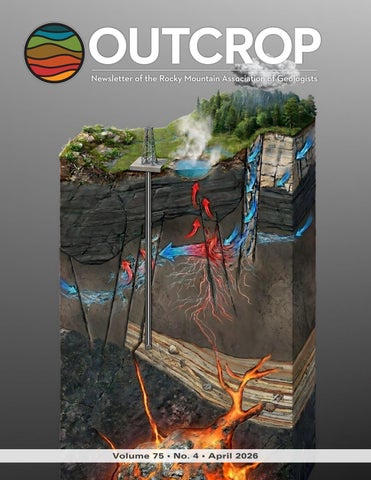
STRUCTURAL CONTROLS ON GEOTHERMAL SYSTEMS

A QUANTITATIVE ANALYSIS OF FAULT-CONTROLLED PERMEABILITY IN THE ROCKY MOUNTAINS

ABSTRACT

Geothermal systems in the Rocky Mountain region are predominantly controlled by fault and fracture networks that create high-permeability conduits for fluid flow. This study presents a quantitative analysis of 47 documented geothermal systems across the Rocky Mountain Section (Arizona, Colorado, Idaho, Minnesota, Montana, Nevada, New Mexico, North Dakota, South Dakota, Utah, and Wyoming) to evaluate structural controls on permeability and fluid flow. We integrate slip tendency analysis, dilation tendency calculations, and empirical permeability-displacement relationships to develop predictive models for geothermal exploration. Results indicate that normal faults with dip angles between 60-70° and strikes within 20° of maximum horizontal stress exhibit the highest slip and dilation

tendencies (mean Ts = 0.68, Td = 0.42), correlating with heat flow >80 mW/m². Fault displacement shows a power-law relationship with permeability (k = 2.3 × 10⁻¹⁴ × D¹·⁸, R² = 0.73). Wells within 500 m of optimally-oriented fault intersections yield 2.5-4.0× higher flow rates than single-fault systems. These findings provide quantitative parameters for exploration targeting and Enhanced Geothermal System (EGS) site selection.

Keywords: geothermal systems, structural permeability, Rocky Mountains, fault analysis, slip tendency, Enhanced Geothermal Systems

INTRODUCTION

Rocky Mountain geothermal systems are fundamentally controlled by structural permeability in fault and fracture networks that facilitate deep fluid circulation and heat transport (Sibson, 1996;

Generalized conceptual model of a hydrothermal geothermal system showing meteoric recharge (blue arrows), conductive heating from a magmatic body, and buoyancy-driven fluid convection (red arrows) through a caprock-confined fractured reservoir.

Curewitz and Karson, 1997). While previous studies have established the importance of active tectonics (Caine et al., 1996; Faulds et al., 2011), quantitative frameworks for predicting high-permeability faults remain limited across the diverse tectonic settings of the Rocky Mountain Section.

This study integrates slip tendency analysis, dilation tendency calculations, and permeability-displacement scaling to develop predictive exploration tools. We compiled structural and production data from 47 geothermal systems (50-240°C) spanning Arizona to Minnesota, applying methodologies from petroleum fault seal analysis (Yielding et al., 1997) adapted for geothermal applications. Our objectives are to: (1) quantify relationships between fault geometry, stress field, and geothermal productivity, (2) establish permeability-displacement scaling laws, and (3) provide exploration guidelines for natural systems and EGS site selection.

GEOLOGICAL SETTING

The Rocky Mountain Section encompasses 11 states (Arizona, Colorado, Idaho, Minnesota,

FIGURE 1:

Location map showing distribution of 47 geothermal systems across 11 Rocky Mountain Section states

Montana, Nevada, New Mexico, North Dakota, South Dakota, Utah, and Wyoming) with diverse tectonic provinces and varying geothermal potential (Figure 1).

Basin and Range Province

Nevada, western Utah, southern Idaho, and Arizona: Active extension (10-15 mm/yr; Kreemer et al., 2010) and high heat flow (70-110 mW/m²) characterize this province. Nevada hosts 18 high-temperature systems including Dixie Valley, Desert Peak, and Brady Hot Springs. Utah contributes Roosevelt Hot Springs and other systems along the Wasatch Front. Southern Idaho includes Raft River and other systems. Arizona systems occur in Basin and Range transition zones with moderate temperatures.

Snake River Plain-Yellowstone

Idaho, Wyoming, Montana: Magmatic heat sources provide heat flow reaching 300 mW/m² (Smith and Braile, 1994). Idaho hosts numerous direct-use systems. Wyoming includes Yellowstone systems and low-to-moderate temperature resources in basins.

Rio Grande Rift

New Mexico, Colorado: Extension and magmatism create favorable conditions. New Mexico hosts Valles Caldera, Lightning Dock, and other high-temperature systems (3 systems >150°C). Colorado includes Pagosa Springs and San Luis Valley systems along the rift (Chapin and Cather, 1994).

Northern Rockies

Montana, Wyoming: Laramide basement structures with moderate heat flow (60-80 mW/m²). Montana shows systems along major fault zones. Wyoming exhibits systems in intermontane basins and along thrust belt structures.

Colorado Plateau

Utah, Colorado, Arizona, New Mexico: Stable cratonic character with lower heat flow (40-60 mW/ m²), but localized systems occur along reactivated basement structures in Utah’s Paradox Basin, Colorado’s western slope, and Arizona’s transition zones.

Williston Basin

North Dakota, South Dakota, Montana: Low-to-moderate temperature resources (50-120°C) along reactivated Precambrian basement faults and structural features. Heat flow 50-70 mW/m² with local anomalies reaching 80+ mW/m² (Gosnold, 1990). North Dakota systems show significant potential for Enhanced Geothermal Systems (EGS) development for electricity generation, leveraging deep sedimentary sequences and basement heat. South Dakota systems serve both direct-use and potential binary power generation applications. Regional geothermal gradients of 30-40°C/km in portions of the Williston Basin provide opportunities for power generation at economical drilling depths.

Midcontinent Rift

Minnesota: Low-temperature geothermal resources associated with Precambrian rift structures and basement faults. Systems suitable for direct-use heating applications.

Modern stress orientations trend ENE to NE across most of the region (Zoback and Zoback, 1989; Heidbach et al., 2016), transitioning from normal faulting (σᵥ > σH) in Basin and Range to strike-slip (σH > σᵥ > σh) in Northern Rockies and cratonic

regions. Our 47-system dataset spans all states: Nevada (18), Utah (5), New Mexico (3), Idaho (4), Montana (3), Wyoming (3), Colorado (3), Arizona (2), North Dakota (3), South Dakota (2), Minnesota (1), with temperatures ranging 50-240°C.

METHODOLOGY

Data Compilation

Structural and geothermal data were compiled from published literature, state geological surveys, and digital elevation models. For each system we documented: location, surface and reservoir temperature, fault orientations (strike/dip), displacement, kinematics, heat flow, and production data. Stress data came from the World Stress Map database (Heidbach et al., 2016) supplemented by regional studies.

Slip and Dilation Tendency Analysis

Slip tendency (Ts = τ/σn) quantifies how close a fault is to frictional failure, while dilation tendency (Tₐ = (σ₁-σn)/(σ₁-σ₃)) measures fracture opening propensity (Morris et al., 1996; Ferrill et al., 1999). We calculated both parameters for each fault using regional stress fields at 2 km depth. For normal faulting regimes, we assumed σHmax = 0.65σᵥ and σHmin = 0.52σᵥ, consistent with Basin and Range measurements (Hickman and Zoback, 2004). High slip tendency indicates recent/active movement generating damage zone permeability, while high dilation tendency indicates open fracture systems.

Permeability-Displacement Relationships

We compiled permeability data (well tests, outcrop measurements) and fault displacements for 23 systems. Power-law relationships (k = aDb) were fit using log-transformed regression.

Statistical Analysis

Correlation analysis examined relationships between fault parameters and heat flow/production rates. ANOVA tested differences between fault types and structural settings. Production data were normalized to productivity index (PI = flow rate per 1000 m completion) for cross-well comparison. All analyses used α = 0.05 significance level.

SATURDAY MAY 30 2026 9:00 - 11:00 AM

RESULTS

Structural Characteristics

Analysis reveals that 91% (43/47) of systems are associated with mapped faults: 74% normal faults, 19% strike-slip, 7% reverse (Figure 2a). Normal faults cluster within ±20° perpendicular to minimum horizontal stress with preferred dips of 60-70° (Figure 2b,c), consistent with optimal orientation for reactivation.

Slip and Dilation Tendency

Geothermal systems show significantly higher slip tendency (mean Ts = 0.68 ± 0.14) than background faults (0.43 ± 0.18, p<0.001; Figure 3a). High-temperature systems (>120°C) exhibit the highest values (Ts = 0.73 ± 0.10 vs. 0.61 ± 0.15 for lower-temperature systems, p<0.01). Dilation tendency averages Tₐ = 0.42 ± 0.16, with 78% of high-temperature systems showing Tₐ >0.4 (Figure 3b). The combined Ts-Tₐ plot (Figure 4) reveals high-temperature producing systems concentrate in the high Ts/high Tₐ quadrant (Ts >0.6, Tₐ >0.4), including major Nevada and Utah fields.

Permeability-Displacement Relationships

Analysis of 23 systems yields a strong power-law correlation (Figure 5):

k = 2.3 × 10⁻¹⁴ × D¹·⁸ (R² = 0.73)

where k is permeability (m²) and D is displacement (m). This exponent (1.8) is consistent with damage zone scaling theory. Normal faults show systematically higher permeability than strike-slip faults for equivalent displacement. Systems with active seismicity plot above the regression line (mean residual +0.3 log units).

Fault Intersection Effects

Twenty-one systems (45%) occur at fault intersections, showing distinctive characteristics (Figure 6): (1) elevated mean heat flow (94 ± 18 vs. 72 ± 22 mW/m² for single faults, p<0.001), (2) larger thermal anomalies (8.3 km² vs. 3.1 km²), and (3) 3.2× higher productivity index. High-temperature systems preferentially occur at intersections with 40-80° angles.

FIGURE 2: Structural characteristics showing (a) fault type distribution, (b) rose diagram of fault strikes, (c) dip angle histogram

FIGURE 3: Slip and dilation tendency distributions comparing geothermal systems to background faults

FIGURE 4: Slip tendency vs dilation tendency scatter plot showing high-temperature systems in optimal quadrant

Production Data Correlations

Analysis of 23 developed systems reveals strong correlations (Figure 7):

1. Wells on high Ts faults (>0.6) yield 82 ± 34 kg/s per 1000 m vs. 31 ± 19 kg/s for low Ts faults (p<0.001).

2. Productivity index correlates positively with Ts (R² = 0.58), Tₐ (R² = 0.44), and displacement (PI ∝ D¹·⁴, R² = 0.51).

3. Wells within 500 m of fault intersections show mean PI of 4.8 ± 2.1 vs. 1.9 ± 1.3 for distant wells (p<0.001), representing the strongest single predictor.

Multiple regression incorporating Ts, distance to intersection, and displacement explains 71% of productivity variance:

log(PI) = -0.42 + 2.1·Ts - 0.3·log(dfault) + 0.5·log(D)

Systems with microseismicity monitoring show higher slip tendency (0.74 vs. 0.61), productivity (PI = 3.7 vs. 1.8), and permeability (8.3 × 10⁻¹⁴ vs. 2.1 × 10⁻¹⁴ m²), confirming active deformation maintains permeability.

FIGURE 5: Permeabilitydisplacement power-law relationship with R²=0.73

DISCUSSION

Integration with Petroleum Methodologies

Our approach bridges geothermal exploration and petroleum fault seal analysis, which typically employ shale gouge ratio methods (Yielding et al., 1997) or juxtaposition analysis (Allan, 1989). While powerful for sedimentary sequences, these are less applicable to crystalline rocks dominating Rocky Mountain geothermal systems. Our stress-based approach focuses on damage zone fracture permeability rather than fault core properties, complementing petroleum methods. The permeability-displacement relationships we document align with damage zone scaling from petroleum settings (Shipton et al., 2006), suggesting universal scaling across rock types. A key distinction is temporal scale: petroleum seal analysis addresses million-year timeframes, while geothermal permeability must persist over decades. Our emphasis on slip tendency and active deformation addresses this by identifying faults actively generating permeability.

Enhanced Geothermal Systems Implications

Our quantitative relationships directly inform EGS site selection and stimulation design.

Pre-existing faults with high slip tendency offer advantages: (1) elevated fracture density reducing stimulation requirements, (2) optimal orientation for shear stimulation (Majer et al., 2007), (3) extensive damage zones providing connectivity, and (4) ongoing natural deformation maintaining apertures. However, very high slip tendency (>0.75) poses induced seismicity risks, as demonstrated by several EGS projects (Deichmann and Giardini, 2009). Fault intersections showing 2.5-4.0× productivity enhancement in natural systems suggest EGS projects targeting intersections could achieve higher performance with less stimulation.

North Dakota EGS Potential

The Williston Basin presents particular opportunities for EGS electricity generation. Deep sedimentary sequences (>3 km) overlying hot Precambrian basement provide adequate temperatures (120-150°C at 3-4 km depth) for binary power generation. Reactivated basement faults identified through seismic data and aeromagnetic surveys offer structural templates for EGS development. The established oil and gas infrastructure, drilling expertise, and well data provide significant advantages for geothermal development. Our slip tendency framework can guide targeting of optimally-oriented basement faults for EGS stimulation.

Exploration Guidelines

Results synthesize into tiered targeting criteria:

• Tier 1 (Highest Potential): Fault intersections (4080° angles); normal faults with Ts >0.65, Tₐ >0.40; displacement >300 m; documented microseismicity; heat flow >80 mW/m².

• Tier 2 (Moderate Potential - Natural Systems & EGS): Single faults with Ts >0.60, Tₐ >0.35; displacement 100-300 m; heat flow 65-80 mW/m²; strikeslip faults with Holocene activity; deep sedimentary basins with basement temperatures >120°C at <4 km depth (e.g., Williston Basin for EGS).

• Tier 3 (EGS Development Potential): Ts 0.45-0.60; displacement <100 m; heat flow 50-65 mW/m²; basement faults in sedimentary basins with adequate thermal gradients (>30°C/km) for binary power generation.

Predictive equations enable productivity estimation: log(PI) = -0.42 + 2.1·Ts - 0.3·log(dfault) +

FIGURE 6: Fault intersection analysis showing (a) geometry schematic, (b) heat flow comparison, (c) intersection angle distribution

0.5·log(D) and permeability: k = 2.3 × 10⁻¹⁴ × D¹·⁸.

Limitations

Data quality varies across systems; permeability measurements limited to 23 systems reduce statistical power. Stress magnitude uncertainty and local variations near major structures add complexity. Permeability-displacement scatter (R²=0.73) reflects heterogeneity from lithology, mineralization, and segment linkage. Our 47-system dataset spans diverse settings: Basin and Range extensional systems (Nevada, Utah, Idaho, Arizona); magmatic systems (Idaho, Wyoming, Montana Yellowstone region); rift-related systems (New Mexico, Colorado Rio Grande Rift); cratonic platform systems (North Dakota, South Dakota Williston Basin); Midcontinent Rift systems (Minnesota); and thrust belt/intermontane systems (Montana, Wyoming Northern Rockies). High-temperature systems (>150°C) concentrate in extensional provinces (Nevada: 18, Utah: 5, New Mexico: 3), while moderate-to-low temperature systems dominate in Montana (3), Wyoming (3), Colorado (3), North Dakota (3), South Dakota (2), Minnesota (1), Idaho (4), and Arizona (2). Our slip tendency framework applies most directly to normal-faulting regimes but can be adapted for strike-slip and reverse faulting common in Northern Rockies and plateau regions. Despite limitations, systematic relationships documented here provide robust first-order controls applicable across all Rocky Mountain Section states.

CONCLUSIONS

This comprehensive analysis of 47 geothermal systems across the Rocky Mountain Section establishes quantitative relationships between structural parameters and geothermal productivity, providing a predictive framework for exploration and Enhanced Geothermal System development. Key findings include:

1. Structural Control: Ninety-one percent of Rocky Mountain geothermal systems are directly associated with faults, with normal faults hosting 74% of systems reflecting the predominance of extensional tectonics and the enhanced permeability of normal fault zones.

2. Slip and Dilation Tendency: Faults hosting

FIGURE 7: Production data correlations showing (a) PI vs slip tendency, (b) PI vs distance to intersection, (c) PI vs displacement

State

Nevada  18  150-240  Basin & Range Extension  Dixie Valley, Desert Peak, Brady

Utah  5  150-200  Basin & Range Extension  Roosevelt Hot Springs

New Mexico  3  150-240  Rio Grande Rift  Valles Caldera, Lightning Dock

Idaho  4  90-150  Snake River Plain  Raft River

Montana  3  90-150  Northern Rockies  Yellowstone region

Wyoming  3  90-150  Intermontane Basins  Thermopolis

Colorado  3  90-150  Rio Grande Rift  Pagosa Springs

Arizona  2  90-150  Basin & Range Transition  Clifton Hot Springs

North Dakota  3  50-120  Williston Basin (EGS)  Basement systems

South Dakota  2  50-90  Williston Basin  Madison aquifer

Minnesota  1  50-90  Midcontinent Rift  Deep basin

TABLE 1: Distribution of Geothermal Systems Across Rocky Mountain Section States

geothermal systems exhibit significantly higher slip tendency (mean Ts = 0.68) and dilation tendency (mean Tₐ = 0.42) than background fault populations. High-temperature systems (>120°C) show the highest values (mean Ts = 0.73), indicating that favorable stress conditions enhance both deep circulation and heat transport.

3. Permeability-Displacement Scaling: Fault zone permeability increases with displacement following a power-law relationship (k = 2.3 × 10⁻¹⁴ × D¹·⁸), consistent with theoretical predictions from

damage zone scaling. This provides a quantitative tool for estimating permeability from mapped fault displacement.

4. Fault Intersection Enhancement: Systems at fault intersections (45% of dataset) exhibit 2.5-4.0× higher productivity indices and larger thermal anomalies than single-fault systems, representing the most robust single predictor of well performance. Optimal intersection angles range from 40-80°.

5. Production Predictability: Multiple regression

LEAD STORY

TABLE 2: Statistical Summary of Structural Parameters for Geothermal Systems

incorporating slip tendency, distance to fault intersection, and fault displacement explains 71% of variance in productivity index, providing quantitative exploration targeting and economic assessment tools.

6. Geographic Applicability: The framework applies across diverse tectonic settings spanning 11 states, from Basin and Range extensional systems (Nevada, Utah) to EGS development opportunities in sedimentary basins (North Dakota Williston Basin, Minnesota Midcontinent Rift). North Dakota’s deep sedimentary sequences overlying hot basement (120-150°C at 3-4 km) present particular opportunities for EGS electricity generation.

For natural system exploration, we recommend prioritizing fault intersections with slip tendency >0.65, dilation tendency >0.40, fault displacements >300 m, and surface heat flow >80 mW/m². Wells should be targeted within 500 m of mapped high-tendency faults, preferably at intersections with

angles of 40-80°.

For EGS development, pre-existing fault zones in deep sedimentary basins with adequate thermal gradients (>30°C/km) provide critical structural templates. The Williston Basin and similar cratonic settings offer opportunities for EGS electricity generation by targeting optimally-oriented basement faults at depths where temperatures exceed 120°C.

The quantitative framework established here represents a significant advance in geothermal exploration methodology, providing tools that complement traditional surface geochemical and geophysical methods. Application of these principles should improve exploration success rates and reduce drilling risk throughout the Rocky Mountain region and similar tectonic settings worldwide.

ACKNOWLEDGMENTS

We thank the numerous geothermal operators and state geological surveys who provided data for this compilation. Discussions with colleagues in petroleum fault seal analysis helped shape our

LEAD

Permeability-Displacement

Productivity-Slip Tendency

Productivity-Displacement

Multi-variable Productivity  log(PI) = -0.42 + 2.1·Ts - 0.3·log(d) + 0.5·log(D)  R² = 0.71, n=23

TABLE 3: Empirical Relationships and Predictive Equations

analytical approach. Anonymous reviewers provided constructive comments that improved the manuscript.

REFERENCES CITED

Allan, U. S., 1989, Model for hydrocarbon migration and entrapment within faulted structures: AAPG Bulletin, v. 73, p. 803-811.

Aydin, A., 2000, Fractures, faults, and hydrocarbon entrapment, migration and flow: Marine and Petroleum Geology, v. 17, p. 797-814.

Blackwell, D. D., and M. Richards, 2004, Geothermal Map of North America: American Association of Petroleum Geologists, scale 1:6,500,000.

Blackwell, D. D., M. C. Richards, Z. S. Frone, J. F. Batir, M. A. Williams, A. A. Ruzo, and R. K. Dingwall, 2011, Temperature-at-depth maps for the conterminous US and geothermal resource estimates: Geothermal Resources Council Transactions, v. 35, p. 1545-1550.

Caine, J. S., J. P. Evans, and C. B. Forster, 1996, Fault zone architecture and permeability structure: Geology, v. 24, p. 1025-1028.

Chapin, C. E., and S. M. Cather, 1994, Tectonic setting of the axial basins of the northern and central Rio Grande rift, in G. R. Keller and S. M. Cather, eds., Basins of the Rio Grande Rift: Structure, Stratigraphy, and Tectonic Setting: Geological Society of America Special Paper 291, p. 5-25.

Coolbaugh, M. F., C. Kratt, A. Fallacaro, W. M. Calvin, and J. Taranik, 2007, Detection of geothermal anomalies using Advanced Spaceborne Thermal Emission and Reflection Radiometer (ASTER) thermal infrared images at Bradys Hot Springs, Nevada, USA: Remote Sensing of Environment, v. 106, p. 350-359.

Curewitz, D., and J. A. Karson, 1997, Structural settings of hydrothermal outflow: Fracture permeability maintained by fault propagation and interaction: Journal of Volcanology and Geothermal Research, v.

79, p. 149-168.

Deichmann, N., and D. Giardini, 2009, Earthquakes induced by the stimulation of an enhanced geothermal system below Basel (Switzerland): Seismological Research Letters, v. 80, p. 784-798.

Erslev, E. A., 1993, Thrusts, back-thrusts, and detachment of Rocky

Mountain foreland arches, in C. J. Schmidt, R. B. Chase, and E. A. Erslev, eds., Laramide Basement Deformation in the Rocky Mountain Foreland of the Western United States: Geological Society of America Special Paper 280, p. 339-358.

Evans, J. P., C. B. Forster, and J. V. Goddard, 1997, Permeability of fault-related rocks and implications for hydraulic structure of fault zones: Journal of Structural Geology, v. 19, p. 1393-1404.

Faulkner, D. R., C. A. L. Jackson, R. J. Lunn, R. W. Schlische, Z. K. Shipton, C. A. J. Wibberley, and M. O. Withjack, 2010, A review of recent developments concerning the structure, mechanics and fluid flow properties of fault zones: Journal of Structural Geology, v. 32, p. 1557-1575.

Faulds, J. E., M. Coolbaugh, G. Benoit, B. D. Oppliger, M. Perkins, N. H. Moeck, and P. Drakos, 2011, Structural controls of geothermal activity in the northern Hot Springs Mountains, western Nevada: The tale of three geothermal systems (Brady’s, Desert Peak, and Desert Queen): Geothermal Resources Council Transactions, v. 35, p. 675-683.

Faulds, J., N. Hinz, M. Coolbaugh, C. Kratt, and S. Shevenell, 2013, Assessment of favorable structural settings of geothermal systems in the Great Basin, western USA: Geothermal Resources Council Transactions, v. 37, p. 777-783.

Ferrill, D. A., J. A. Winterle, G. Wittmeyer, D. Sims, S. Colton, A. Armstrong, and A. P. Morris, 1999, Stressed rock strains groundwater at Yucca Mountain, Nevada: GSA Today, v. 9, p. 1-8. Fossen, H., and A. Bale, 2007, Deformation bands and their influence on fluid flow: AAPG Bulletin, v. 91, p. 1685-1700.

Freeman, B., M. S. Quinn, D. J. Walta, M. E. Burnett, and I. Boult, 2010, Fault seal prediction: The gouge ratio method, in S. Jolley, Q. Fisher, R. Ainsworth, P. Vrolijk, and S. Delisle, eds., Reservoir Compartmentalization: Geological Society, London, Special Publications, v. 347, p. 19-42.

Gosnold, W. D., 1990, Heat flow in the Great Plains of the United States: Journal of Geophysical Research, v. 95, p. 353-374.

Heidbach, O., M. Rajabi, X. Cui, K. Fuchs, B. Müller, J. Reinecker, K. Reiter, M. Tingay, F. Wenzel, F. Xie, M. O. Ziegler, M.-L. Zoback, and M. D. Zoback, 2016, The World Stress Map database release 2016: GFZ Data Services, doi:10.5880/WSM.2016.001.

Hickman, S., and M. D. Zoback, 2004, Stress orientations and magnitudes in the SAFOD pilot hole: Geophysical Research Letters, v. 31, L15S12, doi:10.1029/2004GL020043.

Hickman, S., M. D. Zoback, and W. Ellsworth, 1998, Introduction to special section: Preparing for the San Andreas Fault Observatory at Depth: Geophysical Research Letters, v. 25, p. 1135-1138. Kreemer, C., G. Blewitt, and W. C. Hammond, 2010, Evidence for an

active shear zone in southern Nevada linking the Wasatch fault to the Eastern California Shear Zone: Geology, v. 38, p. 475-478.

Lachenbruch, A. H., and J. H. Sass, 1978, Models of an extending lithosphere and heat flow in the Basin and Range province, in R. B. Smith and G. P. Eaton, eds., Cenozoic Tectonics and Regional Geophysics of the Western Cordillera: Geological Society of America Memoir 152, p. 209-250.

Majer, E. L., R. Baria, M. Stark, S. Oates, J. Bommer, B. Smith, and H. Asanuma, 2007, Induced seismicity associated with Enhanced Geothermal Systems: Geothermics, v. 36, p. 185-222.

Morgan, P., and C. A. Swanberg, 1985, On the Cenozoic uplift and tectonic stability of the Colorado Plateau: Journal of Geodynamics, v. 3, p. 39-63.

Morris, A., D. A. Ferrill, and D. B. Henderson, 1996, Slip-tendency analysis and fault reactivation: Geology, v. 24, p. 275-278.

Scholz, C. H., and M. H. Anders, 1994, The permeability of faults, in B. Hickman, R. Sibson, and R. Bruhn, eds., Proceedings of Workshop LXIII: The Mechanical Involvement of Fluids in Faulting: U.S. Geological Survey Open-File Report 94-228, p. 247-253.

Shipton, Z. K., J. P. Evans, K. R. Abercrombie, and E. E. Brodsky, 2006, The missing sinks: Slip localization in faults, damage zones, and the seismic energy budget, in R. Abercrombie, A. McGarr, H. Kanamori, and G. Di Toro, eds., Radiated Energy and the Physics of Faulting: American Geophysical Union Geophysical Monograph Series 170, p. 217-222.

Sibson, R. H., 1996, Structural permeability of fluid-driven fault-fracture meshes: Journal of Structural Geology, v. 18, p. 1031-1042.

Smith, R. B., and L. W. Braile, 1994, The Yellowstone hotspot: Journal of Volcanology and Geothermal Research, v. 61, p. 121-187.

Tester, J. W., et al., 2006, The Future of Geothermal Energy: Impact of Enhanced Geothermal Systems (EGS) on the United States in the 21st Century: Massachusetts Institute of Technology, 372 p. Williams, C. F., M. J. Reed, and R. H. Mariner, 2008, A review of methods applied by the U.S. Geological Survey in the assessment of identified geothermal resources: U.S. Geological Survey Open-File Report 2008-1296, 27 p.

Yielding, G., B. Freeman, and D. T. Needham, 1997, Quantitative fault seal prediction: AAPG Bulletin, v. 81, p. 897-917.

Zoback, M. D., and M. L. Zoback, 1989, Tectonic stress field of the continental United States, in L. C. Pakiser and W. D. Mooney, eds., Geophysical Framework of the Continental United States: Geological Society of America Memoir 172, p. 523-539.

Zoback, M. L., 1992, First- and second-order patterns of stress in the lithosphere: The World Stress Map Project: Journal of Geophysical Research, v. 97, p. 11,703-11,728.

HYBRID LUNCH TALK

Speaker: Brandon Dugan

Date: April 1, 2026 | 12:00 pm - 1:00 pm

IODP3-NSF Expedition 501 Offshore Freshened Groundwater and “Aquifer” Systems in the New England Continental Shelf

IODP3-NSF Expedition 501 drilled three sites along a 45 km-long, NNW-SSE transect on the southern New England continental shelf offshore Nantucket and Martha’s Vineyard to characterize an extensive offshore freshened groundwater (OFG) system. Each site was investigated with drilling, coring, wireline logging, and groundwater pumping. Long-term observatories were installed in two offshore sites to monitor formation resistivity, temperature, and pressure. Visual core description, smear slide analyses, and core and downhole petrophysical logging document an unconsolidated sedimentary package consisting of alternating layers of sand and mud. The deeper sedimentary section is Cretaceous and was deposited in a terrestrial environment. The shallow sedimentary section ranges from Paleocene to Pleistocene and was deposited in a marine environment. Interstitial water

and pumped groundwater from the nearshore sites document a transition from seawater salinity to less than 2% of seawater salinity within the upper 125 mbsf. Furthest offshore, two freshened zones with salinity that is ~50% of seawater salinity exist above 300 mbsf. The freshened water salinity is consistent throughout marine and terrestrial sediments both mud-rich and sand-rich. Preliminary isotope analysis suggested the freshened water is of Late Pleistocene origin. Compared to salinity, interstitial water chemistry, including alkalinity, sulfide, and ammonium concentrations, demonstrates more nuanced patterns, with distinct profiles as well as absolute values downcore. This integrated research program elucidates the complexity of the freshened system beneath the southern New England shelf, and has implications for understanding other OFG systems worldwide.

BRANDON DUGAN, Brandon is a professor and associate department head of Geophysics at Colorado School of Mines. Before joining Mines, Brandon earned a bachelor’s degree in geo-engineering from the University of Minnesota, Twin Cities and a Ph.D. in geosciences from Penn State University, completed a Mendenhall postdoctoral fellowship with the US Geological Survey, and was a professor of Earth Science at Rice University. In his research, he couples theory, experiments, and models to understand the interactions of fluids and solids in Earth’s shallow crust. As part of his research, Brandon regularly participates in field programs which has led to him spending about 2 years of his life on research vessels in our oceans. For research and teaching contributions, Brandon received the Asahiko Taira International Scientific Ocean Drilling Research Prize (2018) and a Blue Key Honor Society/Tau Beta Pi Outstanding Faculty Award (2017).

D eta ile d a nd ac c ura te g eo lo gy at yo u r fin g ertip s in Pe tra , Ge o Grap h ix, A rc GIS , A cc u Map , ge o S C OU T an d o th er d ig ital ma p pin g a p plica tion s

We ste rn USA

Geol ogi cal Edge Set

Ene rgy Al te rnati ve s & Cri ti cal Mine ral s - USA

We ste rn Cana da

Geol ogi cal Edge Set

Ene rgy Al te rnati ve s & Cri ti cal Mine ral s - Ca nada

Ea ste rn USA & Ea st ern Ca nada

Geol ogi cal Edge Set

Cent ral USA

Geol ogi cal Edge Set

Me xi co

Geol ogi cal Edge Set

Map la ye rs p rov ided in s ha pe file fo rma t fo r ea sy impor t into a ll ma ppin g app lic at ions .

De liv er ab le s inc lude : f orma tion limits , o utc ro ps, su bc rop e dge s , O &G fie ld s, st ruc tu ra l eleme nt s, re ef s, sh ore lin es , c ha nne ls, pro duc tion f airw a ys , s ha le ga s tr en ds, st ru ct ure con tou rs , iso pa chs , g en era l cult ure , r ene w able & no n-r en ew ab le ene rg y pr ojec ts , min era l dep os it s, mine s, Pet ra T he mat ic Ma p pro je ct s, G eoG ra phix G e oA tla s pro je c ts , Ar cG IS M XD a nd La y er f ile s, re giona l c ro ss -s ec tion s, an d full te ch nica l s upp ort .

For mo re inf orma tio n: Joe l H a rding at + 1 4 03 87 0 8 12 2 joe lha rding@ g eoe dg es .c om ww w.ge oe dge s.c om

APRIL SPECIAL HYBRID LUNCHEON

Speaker: Brian S.

Date: April 15, 2026 | 12:00 pm - 1:00 pm

Quantifying Outcrops Digital Methods in Contemporary Geoscience

Geological outcrops are routinely used for research and education purposes and are a key component of geoscientific training. Fundamentally, re-evaluation of outcrop observations and reproducibility of results is critical for scientific advancement. Accessibility to the field and outcrops, however, remain problematic for several technical and societal reasons. Since the turn of the 21st Century, a quiet revolution of geological field data collection practices, analysis, and visualisation has taken place. This talk will focus on the history of 3D outcrops, the necessity to digitally capture outcrops of all scales,

and contemporary quantitative outcrop analysis and visualisation techniques that traditional methods would struggle to achieve. The important role that digitally captured and preserved outcrops play as milieus for increased accessibility and inclusivity, and for the promotion of scientific reproducibility across both academic and industry applications, is also discussed. Digital outcrops are more accessible than ever and complement traditional field methods that provide a powerful tool across academic and industry sectors, particularly in regions with limited outcrop accessibility.

BRIAN S. BURNHAM is a geoscientist working at the intersection of Earth science and technology, with a particular focus on digital outcrop modelling (DOM) and analysis. He earned bachelor’s and master’s degrees in Geosciences and Arts and Technology from the University of Texas at Dallas, where he collaborated with geoscientists and digital artists to develop methods to analyse and visualise photorealistic 3D models of geological outcrops in immersive virtual environments. He later completed a PhD at the University of Manchester, conducting fieldwork across the United Kingdom and internationally, including South America and Spain, to build analytical tools to facilitate quantitative analysis of regional and basin scale sedimentary systems. Following his doctorate, Brian served as a Research Fellow at the University of Aberdeen before joining VRGeoscience Limited as a Senior Geoscientist, where he develops tools and analytical approaches to interpret and extract insight from digital outcrop data. Alongside his scientific work, Brian collaborates with artists and interdisciplinary researchers and advocates for open scientific practices and effective communication of scientific ideas through both technological and artistic approaches.

HYBRID LUNCH TALK

Speaker: Peter K. Blomquist

Date: May 6, 2026 | 12:00 pm - 1:00 pm

Geology of the Colorado 14ers

Structure, Origin, and Serendipity

Mountains in Colorado are ubiquitous. Colorado has the most peaks over 14,000 feet in the Lower 48 states, with 54 such peaks collectively known as “Fourteeners”, and the highest, Mt. Elbert, reaches 14,433 feet. Located in nine mountain ranges within the Colorado Rockies, all Fourteeners are either hosted by Precambrian continental crust, or rocks intruded into or deposited upon it. Geology of the 54 Fourteeners consists primarily of 70% igneous, 13% sedimentary, and 17% metamorphic rocks. The Rockies are anomalous as a major mountain range, being 750-900 miles distant from an active tectonic margin. This distance is atypical when compared to other mountain ranges of the world, which are all within 350 miles of active plate margins, and most are less than 250 miles from a plate margin.

The Colorado Fourteeners originated after the Laramide Orogeny. Formation of these peaks began in the Cretaceous with subduction of the Farallon Plate beneath the overriding North American Plate. The Farallon Plate began with a steep descent, flattening out to nearly horizontal, then moved eastward under the North American plate, in a process called flat slab subduction. This movement across and under Western North America raised the Rockies, affected volcanism, and defined the Laramide Orogeny. After further cooling, the Farallon Plate sank at a steep angle into the aesthenosphere.

A regional post-Laramide erosion surface exists

across Colorado, which may have been uplifted as much as 10,000 feet during post-Miocene time. As was common in many older mountain belts, this ancient surface had an initial elevation of about 4,000 feet, and the postulated uplift would have raised the surface to that of present summit levels greater than 14,000 feet. Modern summit elevations cluster between 14,000 and 14,433 feet.

Spatially, the Fourteeners cluster in central Colorado, a region of anomalously high heat flow, with most of these peaks either along the flanks of the Rio Grande Rift or at the intersection with the Colorado Mineral Belt. In general, elevations of the Fourteeners decrease with increasing distance from this intersection or increasing distance from the Rift flanks. A regional thermal process is implied and related to extension of the continental lithosphere.

The Colorado Fourteeners are the result of serendipity as a combination of the Laramide Orogeny, Rio Grande Rift, and Colorado Mineral Belt. The majority and highest Fourteeners are found proximal to the intersection of these three regional features, and the Fourteeners generally decrease in number and elevation distally. This may also explain why there are no Fourteeners in any neighboring states and why many of the highest points of those states are proximal to the Colorado state line.

Peter Blomquist has over 20 years of experience in a variety of positions across the oil and gas industry, including drilling programs, operations, geologic mapping, regional studies, prospecting, exploration, and acquisitions. His work history includes operating wells, from which he learned that the pumper never calls with good news. Peter is passionate about geology and its role in the business of profitably extracting oil & gas. Peter has two degrees in geology: a bachelor’s degree from the University of Minnesota and a master’s degree from the Colorado School of Mines. He is currently a well site geologist for Diversified Well Logging. His geologic interests include fluvial systems, fractal geometry, paleokarst reservoirs, and exploration at all scales. He is a Registered Professional Geologist in Texas and Wyoming, a member of RMAG, AAPG, SEPM, and West Texas Geological Society, and is an accomplished mountain climber, having climbed 57 of the 59 Colorado 14ers.

2025 RMAG Award Recipients

RMAG DISTINGUISHED SERVICE AWARD

Rob Diedrich

Rob Diedrich has been a tireless leader and volunteer for RMAG, serving as President in 2022 and dedicating more than a decade to the On-theRocks Field Trip Committee. Under his leadership, RMAG field trips became safer, decreased liability, and financially stronger, while continuing to foster collaboration and connection across our community. Even after stepping back from leadership roles, Rob continues to give his time, energy, and insight in service of RMAG’s mission.

RMAG DISTINGUISHED SERVICE AWARD

Jeff Aldrich & Mark Germinario

Jeff Aldrich and Mark Germinario made a standout impact on RMAG through their vision and leadership in expanding our technical programming. In 2022, they proposed and led RMAG’s first helium symposium, which sold out with over 400 attendees from around the world and became the organization’s most financially successful event since

COVID. Building on that success with a second symposium in 2025, Jeff and Mark’s initiative and execution have strengthened RMAG both technically and financially.

RMAG OUTSTANDING SCIENTIST AWARD

Ken Kittleson

Ken Kittleson has spent more than 50 years mapping and interpreting the geology of the western U.S., with especially influential work along the Boulder–Weld Fault Zone east of Boulder. His detailed subsurface mapping and cross sections improved the understanding of this complex fault system, producing the first coherent structural model and a series of widely cited RMAG publications. Ken’s work has had a lasting impact on both Rocky Mountain structural geology and applied subsurface interpretation.

RMAG OUTSTANDING SCIENTIST AWARD

Dave Malone

Dave Malone is a longtime leader in Rocky Mountain geology, known both for his research and for training generations of geologists through 30 years of leading the Illinois State University field camp. It is notable for his long term commitment to improving the understanding of the Heart Mountain slide, showing how a massive slab of rock moved

JEFF ALDRICH
MARK GERMINARIO

more than 120 kilometers in just minutes — a breakthrough that reshaped our understanding of largescale geologic processes. With over 60 publications and decades of mentorship, Dave’s impact on our science and our community is remarkable.

MICHAEL S. JOHNSON OUTSTANDING EXPLORER AWARD

Robert Sterling

Rob Sterling has made influential contributions to shale and tight-oil geology, with widely cited work on plays including the Bakken, Niobrara, Mowry, and Codell. His early core and geochemical studies in the Bakken helped establish workflows that were later adopted across multiple basins and played a key role in launching the tight-oil revolution. Rob’s work has been broadly recognized,

including the AAPG John W. Shelton Award and multiple honors for best papers and presentations.

HONORARY MEMBERSHIP AWARD

Paul Lillis

Paul Lillis has been a cornerstone of RMAG’s leadership and publications, serving as Vice President, Treasurer, and chairing the Publications Committee. He played a key role in modernizing RMAG’s publishing, including assigning DOIs and digitizing key works. Scientifically, Paul is a highly respected geochemist with over 90 publications and crucial contributions to petroleum system evaluations. Even in retirement, he remains an active mentor and researcher, continuing to shape the future of organic geochemistry in the Rockies and beyond.

OUTCROP ADVERTISING RATES

Photo by Lauren and Dave Heerschap

The Mountain Geologist Best Paper Award for 2025

The Rocky Mountain Association of Geologists is pleased to announce the winner of The Mountain Geologist Best Paper Award for 2025. The winning paper is “Integrated stratigraphic and geochemical analysis of organic-rich intervals of the Lewis Shale in the eastern Washakie Basin, Wyoming” by Jane S. Hearon, Justin E. Birdwell, and Paul C. Hackley.

The authors present a comprehensive understanding of stratigraphy, geochemistry and petroleum potential of organic-rich intervals

Seaway based on research of the Lewis Shale in the USGS Crow Creek 1-21 core. Data from this 601 foot continuous core was combined with regional data to describe the shift in sediment sourcing from the south to the north and the resulting impacts on hydrocarbon potential.

Thanks to all The Mountain Geologist authors and editors for your contributions to the journal in 2025.

Congratulations.

YAMPA RIVER AND GREEN RIVER FLOAT TRIP YAMPA RIVER AND GREEN RIVER FLOAT TRIP

Join RMAG for a five-day float trip on the Yampa and Green Rivers! Guided by Dr Gary Gianniny, this unforgettable geologic adventure will explore the breathtaking stratigraphy and structures of Dinosaur National Monument including towering Paleozoic canyons to iconic features like the Mitten Park Fault and Split Mountain Anticline

RMAG ON THE ROCKS

PALEONTOLOGICAL BEHIND-THESCENES TOUR

DENVER MUSEUM OF NATURE & SCIENCE, FEBRUARY 2025

In early February, a small group of RMAG members were wowed by a tour, led by Dr. David W. Krause, Senior Curator of Vertebrate Paleontology, to view fossil collections in the bowels of the Denver Museum of Nature & Science (DMNS). Before we descended into the lower levels of the Museum, Dr. Krause introduced us to Evan Tamez-Galvan, Fossil Preparator, who described the Triceratops bones discovered in 2025 from the Late Cretaceous Hell Creek Formation on U.S. Forest Service land in North Dakota. The skeletal remains were transported in a 5.5-ton plaster jacket to the Museum where the process of removing the matrix from the bones is ongoing. So far, over 5000 pounds of matrix has been removed from the Triceratops skull, vertebrae, and ribs (Figure 1).

A diagram helped sort out this configuration of bones (Figure 2), showing the portions of this dinosaur that were recovered in red. In Figure 1, it now becomes easier to recognize a small nasal horn, one brow horn, bony frill, and other parts of the skull on the right, and the neck and trunk vertebrae in the foreground. Thorough matrix removal from the lower jaw of the Triceratops reveals a spectacular specimen (Figure 3)

Another magnificent skeleton from the Late Cretaceous Hell Creek Formation on display at

the Museum in a temporary exhibit is a rare subadult Tyrannosaurus rex specimen known as ‘Teen Rex’ (Figure 4). Note the well-preserved teeth from the upper and lower jaws adjacent to a palm frond. Found in 2023, a 6,000-pound plaster jacket was removed via helicopter that included parts of the skull, including the upper and lower jaws with many teeth, tail, hind leg, and pelvis. The dinosaur itself may have weighed as much as 3,500 pounds. Additional work has been done to expose the tibia, fibula, and femur.

The next stop was in the Digital Research Lab which had, among other instruments and technologies, a 3D printer which produces hand specimens that can be analyzed more easily. Figure 5 shows a miniature copy of Teen Rex. Even with a slightly different orientation from the photo in Figure 4, there is no difficulty in identifying the jaws and the palm frond.

Next, we descended to a lower floor in the Museum to see some of Dr. Krause’s “weird” (his word) Late Cretaceous fossils from Madagascar. Having excavated in Madagascar for 32 years, Dr. Krause and his field teams have discovered thousands of specimens and described over 20 new taxa that represent scientifically unique vertebrate animals from the southern supercontinent Gondwana. One particularly interesting

FIGURE 1
FIGURE 2
PHOTO BY JAMIE BOWIE

fossil is a replica of the pug-nosed crocodile Simosuchus clarki (Figure 6). This herbivorous, terrestrial creature was heavily armored with clove-shaped teeth, a pug nose, and bony eyelids. Are those eyelids uncomfortable?

There is yet another fossil vying for a description of ‘weird’ . . . or perhaps ‘terrifying’. Figure 7 shows the 16-inch, 9-pound frog, Beelzebufo ampinga, arguably the heaviest frog that ever lived. This ‘frog from hell’ existed as an ambush predator with a bite force of a lion, seen next to Dr. Krause waiting for a snack with its open mouth (Figure 8). Beelzebufo’s name is derived from Beelzebub (Greek for “devil”) and bufo (Latin for “toad”).

Another significant scientific discovery in Madagascar was the 2010 discovery of a skull of the 20-pound, groundhog-like Vintana sertichi, now recognized as a distinct new genus and species (Figure 9). Vintana means luck in the Malagasy language, and that luck was bestowed upon the discoverer of this fossil, one of Dr. Krause’s former graduate students. In 2014, micro-CT (computed tomography) scanning, published by Dr. Krause and colleagues), revealed the details of this skull. It measured almost five inches long, twice the size of any previously known mammalian skulls from Gondwana during the time of dinosaurs (Figure 10). 1 The extraordinary research done on this skull has yielded several professional papers and extensive information about the cranium which, of course, include ‘weird’ features such as “enlarged flanges for attachment of chewing muscles, a strangely tilted braincase, and large eye sockets”.1 The assortment of colors on the CT scan in the middle of Figure 10 illustrates the various bones of the cranium.

The tour concluded with an examination of some of the mastodon and mammoth bones, visible on many storage shelves in the Museum basement. The 2010-2011 “Snowmastodon” excavation from the Ziegler Reservoir near Aspen helped to catapult the DMNS into its status as a world-class museum and research center. The tour by Dr. Krause reinforced how fortunate the Denver community is to have such scientific experts who share their knowledge with us. Thank you, Dr. Krause!

ADDENDUM

Dr. Krause and his colleagues working in Madagascar recognized immediately the severe poverty and illiteracy of the country. Founded through the Stony Brook Foundation by the Executive Director, Dr. David Krause, the Madagascar Ankizy Fund (ankizy means ‘children’ in the Malagasy language; www. ankizy.org) has raised money to build 6 elementary and secondary schools in the remote field research areas and provides support so that high-achieving students can attend high school and university in the nearest city. Healthcare missions to Madagascar allow dental and medical students with opportunities to provide preventative care at clinics staffed by Malagasy dentists and doctors.

Photos by Laura L. Wray unless otherwise noted.

1 Krause, D. W 2014. Vintana sertichi (Mammalia, Gondwanatheria) from the Late Cretaceous of Madagascar. Journal of Vertebrate Paleontology 34(6) Supplement. Society of Vertebrate Paleontology Memoir 14. 222 pages.

FIGURE 3
PHOTO BY KURT REISSER
FIGURE 5
FIGURE 4
PHOTO BY JAMIE BOWIE
FIGURE 6
FIGURE 7
FIGURE 8
FIGURE 9
FIGURE 10

APRIL 1, 2026

RMAG Luncheon.

Speaker: Brandon Dugan. Talk Title: “IODP3-NSF Expedition 501: Offshore Freshened Groundwater and “Aquifer” Systems in the New England Continental Shelf”

WOGA Q2 Tech Lunch.

Speaker: Nichole Buersmeyer. “Good Data, Better Decisions.” 600 17th Street, 23rd Floor, Denver. 11:00 AM-12:30 PM.

APRIL 10, 2026

Denver Petroleum Club Family Crawfish Boil. 4-8PM.

APRIL 15, 2026

RMAG Special Lunch.

Speaker: Brian Burnham, VRGeoscience Limited.

Talk Title: “Quantifying Outcrops: Digital Methods in Contemporary Geoscience.”

APRIL 16, 2026

RMAG Coffee Hour.

Little Owl Coffee, 401 17th Street, Denver, CO. 10 AM-11 AM.

WOGA Lean-In.

Speaker: Kami Guildner.  Talk:

IN THE PIPELINE

“Becoming Known: Lead with Presence, Attract What’s Next.” 11:00 AM-12:30 PM.

APRIL 24, 2026

Colorado Oilfield Open Golf Tournament.

Highland Hills Golf Course 2200 Clubhouse Dr. #3655, Greeley, CO. For Golf Tournament registration, please visit the official website https://birdease.com/ ColoradoOilfieldOpen Or contact Event Director Nalleli Valverde at nalleli@coogexpo. com or 7202126270.

APRIL 27-29, 2026

API Pipeline Conference and Expo: Pipeline, Control Room and Cybernetics. Gaylord Rockies Resort & Convention Center, Aurora, CO.

APRIL 28, 2026

RMAG Happy Hour.

Coal Mine Ave Brewing Co., 9719 W Coal Mine Ave., A, Littleton, CO. 4-6 PM.

RMS-SEPM Luncheon.

Speaker: Dr. Maxwell Pommer. “Pore Systems in Oil-Window Mudrocks of the Lower Green

River Formation (Castle Peak Shale Through Lower Garden Gulch), Uinta Basin, Utah.” information@rmssepm. org. Wynkoop Brewing Co., 11:30AM-1:30 PM

APRIL 29, 2026

RMAG Short Course. 101 Short course Series: Geosteering with ZoneVu.

MAY 2-3, 2026

RMAG Outreach Event. Cinco De Mayo.

MAY 5, 2026

Denver Petroleum Club Speaker Series.

Contact: Becca Causey, becca@denverpetroleumclub. com

MAY 6, 2026

RMAG Luncheon.

Speaker: Peter Blomquist. Talk Title: “ Geology of the Colorado 14ers: Structure, Origin, and Serendipity.”

Brianna Crenshaw from Missoula, Montana
Vladimir Davydov at Boise State University from Boise, Idaho
Kathleen Barret from Littleton, Colorado

Why contribute?

Why contribute?

• Reach

• Quarterly

• Permanent

greater Rocky Mountain West Texas and New Mexico -Continent

Expanded geologic focus:

Expanded geologic focus:

• Quick

• Every

• Entire greater Rocky Mountain area of North America

• West Texas and New Mexico to northern British Columbia

• Entire greater Rocky Mountain area of North America

• Reach a broad industry and academic audience

• Great Plains and Mid-Continent region

• West Texas and New Mexico to northern British Columbia

• Quarterly peer reviewed journal

• Great Plains and Mid-Continent region Why contribute?

• Permanent archiving includes AAPG Datapages

• Reach a broad industry and academic audience

• Quarterly peer-reviewed journal

• Quick turn around time

• Every subdiscipline in the geosciences

• Quick turn-around time

https://www.rmag.org/publications/the

• Permanent archiving includes AAPG Datapages

https://www.rmag.org/publications/the

• Every subdiscipline in the geosciences

Expanded geologic focus:

area of North America

• Entire greater Rocky Mountain area of North America

northern British Columbia region

• West Texas and New Mexico to northern British Columbia

• Great Plains and Mid Continent region

Email: mgeditor@rmag.org

https://www.rmag.org/publications/the -mountain-geologist/

CALENDAR – APRIL 2026

RMAG Happy Hour. RMS-SEPM Luncheon.
RMAG Luncheon. WOGA Q2 Tech Lunch.
RMAG Special Lunch.
RMAG Short Course.
Denver Petroleum Club Family Crawfish Boil.
Colorado Oilfield Open Golf Tournament.
RMAG Coffee Hour. WOGA Lean-In.
RMAG Outreach Event.

Turn static files into dynamic content formats.
Create a flipbook
April 2026 Outcrop by The Rocky Mountain Association of Geologists - Issuu