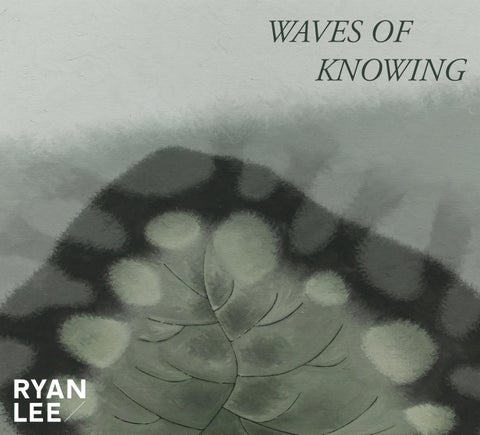
Waves of Knowing

Page 1


WAVES OF KNOWING

Cover: Detail of Tadashi Sato, Rock and Twig, 1964
Right: Detail of Bumpei Akaji, Untitled (#5), c. 1960

TADASHI

HARRY TSUCHIDANA

APRIL 9 – MAY 9, 2026

Honolulu Academy of the Arts building (c. 1951-55). Photo by Raymond M. Sato, Honolulu Museum of Art.

Foreword

My first time in Hawai'i was a disorienting experience; knowing you are in the United States, but feeling like you are not at the same time. Having grown up on the East Coast, Hawai'i always seemed distant, but as soon as I landed, there was a sense of familiarity. Each time I travel there, I feel a primordial, deep connection to the landscape, the energy that exudes from deep within, and the people.

Last year, I spent a week in Honolulu for the opening festivities of the Hawai'i Triennial, dreading my return to the mainland after exploring the rich art community. When I woke up early that Monday morning to leave for my flight, I felt a strong pull and desire to stay, but begrudgingly made my way to the airport. Then, something peculiar happened: my airline, unprompted, called to offer me a flight departing in the late evening, giving me an extra day to explore. “This had to be a sign!” I thought.

Back at the calming waters of Waikiki Beach, I texted the one person I had not yet had a chance to meet: Joyce Okano. I had seen the exhibition she curated at the Halekulani Hotel on the work of Tadashi Sato, one of the original members of the Metcalf Chateau. I told her this fortuitous story and that we were destined to meet. She must have agreed, as she invited me to see her incredible collection of art, including the members of the Metcalf Chateau. It was there, in her living room, that the idea for the exhibition at RYAN LEE Gallery formed.

I first learned about the Metcalf Chateau artists and their affiliates from the exhibition Abstract Expressionism: Looking East from the Far West, organized

by Theresa Papanikolas at the Honolulu Museum of Art in 2017. RYAN LEE Gallery represents the estate of George Miyasaki, who was prominently featured in the exhibition and catalog. Miyasaki was also a Nisei (second generation Japanese American), born in Hawai'i. He moved to the Bay Area in 1953 to attend the California College of Arts and Crafts and studied with Richard Diebenkorn and Nathan Oliveira who would have a profound influence on him. Other now-prominent artists such as Ruth Asawa, Isamu Noguchi, and Toshiko Takaezu were included as well. However, I was deeply struck by the other Japanese-American artists from Hawai’i including Satoru Abe, Bumpei Akaji, Tetsuo Ochikubo, Tadashi Sato, and Harry Tsuchidana who are the subjects of this exhibition. Each, in their own way, fused the gestural mark making of Abstract Expressionism with aspects of nature, especially water. In Hawai'i, water is land. Water is the life force that is impossible to deny.

Hawai'i has a deep and complex history, where indigeneity, colonialism, and the Asian diaspora intersect in this “tropical paradise.” The twentieth century was marked by the bombing of Pearl Harbor, which brought the United States into World War II and began the government’s unjustified incarceration of people of Japanese descent, two-thirds of whom were US citizens. Some of the artists in this exhibition served in the US military during World War II while their communities were being incarcerated. Hawai'i itself was under martial law. After the war, many of these artists used the GI Bill to go to Chicago, New York City, and Europe to immerse themselves in the new postwar art trends. One by one, pulled by the islands, each artist brought their practice back to their home, Hawai'i. They supported one another through their lifelong friendships and intersecting careers. We are honored to share a glimpse of their

George Miyasaki, Way Out West, 1960

artworks in New York, more than 70 years after some of these artists worked and lived here. I hope this exhibition and catalog will plant seeds for a whole new group of curators, collectors, critics, and scholars. It is an incredible honor and privilege to work with the families and supporters of these artists and to bring more well-deserved attention to their work.

There are so many people to thank when organizing a show like this. This show could not have happened without that fateful encounter with Joyce Okano, a tireless advocate and champion. Her singular mission to broaden the awareness of these artists has been essential and so inspiring. Additionally, I would like to thank many of the artists' family members who opened their homes and studios such as Ada Akaji, Gail Goto, and Craig and Jon Ochikubo. I also would like to thank the incredible people I met in Hawai'i: Randall Fujiki, Christina Ho, John Koga, Jon Santos, Kelly Sueda, Allison Wong, as well as lenders Stuart Boulton and Jay Shidler. Additional thanks to the late Mildred Chang, Harry Oda, and Fred Tanaka. A big thanks to Theresa Papanikolas, Ann M. Barwick Curator of American Art at the Seattle Art Museum, for her foundational exhibition, and to scholar ShiPu Wang who has been instrumental in the field of Asian American art history as well as the many before them who have promoted the field of Asian American art. I would like to thank Tyler Cann and Alejandra Rojas Silva, curators at the Honolulu Museum of Art, for their incredible generosity, knowledge, introductions, and scholarship. And finally to my business partner Mary Ryan, as well as all my colleagues at RYAN LEE, especially Lisette Fischer and Isabella Vitti, for their support and efforts in making this happen. It truly takes a village.

Tadashi Sato, Untitled, 1964

Waves of Knowing

Unless you are from Hawai'i, chances are you haven’t heard this story, but it goes like this: in 1954, seven young artists staged an exhibition in a rented house on Metcalf Street in Honolulu. The abstract paintings might have come from Paris or New York, but the house was scheduled for demolition. Pointing to this apparent dislocation, they jokingly referred to the condemned building as the “Metcalf Château.” The term became a moniker for the group, and to this day its borrowed French tends to cause some cognitive dissonance. The artists: Satoru Abe, Bumpei Akaji, Edmund Chung, Tetsuo Ochikubo, Jerry Okimoto, James Kwan Kee Park, and Tadashi Sato, were all of Japanese, Chinese, or Korean descent. They were born in Hawai'i to families that served as laborers on the archipelago’s sugarcane and pineapple plantations, about as far away from Paris as you can get while still on Earth.

Robert Griffing, Jr., the director of the Honolulu Academy of Art (now Honolulu Museum of Art) saw the exhibition on Metcalf Street and brought it to the museum that same year. This early institutional recognition helped crystallize the Metcalf Château as the mythic origin point of modernism in Hawai'i. The term has become shorthand for postwar abstraction by Asian American artists from the islands generally. Not all of the original seven would have lengthy professional careers as artists. Chung became a postman, while Park opened an art supplies store and designed textiles before moving to Los Angeles. This exhibition, Waves of Knowing, brings together the work of Abe, Akaji, Ochikubo, and Sato alongside that of Harry Tsuchidana, a slightly younger member of this expanded idea of the Metcalf Château.1 These artists adopted

The Metcalf Chateau group at the Honolulu Museum of Art (1954).
Pictured from left: Edmund Chung, Tadashi Sato, Jerry Okimoto, Satoru Abe, Bumpei Akaji, Tetsuo 'Bob' Ochikubo. Photo by Raymond M. Sato, Honolulu Museum of Art.

the language of abstraction and international modernism, but also reflected the intertwined land and seas of the Hawaiian archipelago. Connecting Hawai'i, Japan, and Manhattan, the artists of the Metcalf Château exemplify archipelagic ways of thinking about islands, not as isolated landmasses, but as interrelated cultural networks.2 Perhaps the Earth is smaller and more connected than we think.

In some ways, the story of these artists is familiar. Like many of their generation, several served in World War II and later studied art on the G.I. Bill in Europe, New York, or Chicago. They absorbed the currents of surrealism and abstraction in places like the Art Students League and the New School, emerging as ambitious modern artists of the postwar era. When Akaji, Ochikubo, and Sato served, however, it was in the segregated 100th Battalion and 442nd Regimental Combat Team, units composed almost entirely of Nisei Japanese American soldiers. While these units distinguished themselves in Europe as part of the U.S. armed forces, the same military subjected their families in Hawai'i to strict martial law, curfews, and the constant threat of incarceration. On the continent, Executive Order 9066 saw other Japanese immigrant families subject to forced removal and internment in camps. These artists’ experience of the war was hardly uniform (Sato became part of an intelligence unit translating Japanese maps, Abe opposed military service of any kind, and the younger Tsuchidana served in the Korean War) but all of them negotiated the particular questions of identity and belonging faced by Americans of Japanese descent in this period.

Given these tensions, it is possible that abstraction offered these artists a way to transcend cultural difference and speak to more universal themes. At the same time, the forms of abstraction

Tadashi Sato, Untitled (Rock with Twig), 1964

that emerged from Hawai'i were shaped by experiences, environments, and natural forms typical of this place. Tadashi Sato’s works, for example, often explore the perception of things on the surface and under the water. In Untitled (Rock with Twig) (1964), the delicate branching lines seem inscribed on the picture plane, while the composition also suggests light filtering through water and the glimpse of a submerged rock. The aerial view of Sato’s works are perhaps informed by his wartime experience as a military cartographer, but also by his experience as a fisherman in Hawai'i. The calligraphic shapes of Tetsuo Ochikubo’s Abstract (1958) drift across a similarly layered and shifting background. Bumpei Akaji’s copper reliefs suggest volcanic terrain, and their oxidized blue and green patina recalls weathered stone or tide-washed rock. His untitled, irregularly shaped work hangs on the wall like an island populated by clusters of figures.

Many of Satoru Abe’s paintings and sculptures take a similar approach, abstracting natural forms and inviting reflection on islands and archipelagos. Skyward (1962) centers on a hollow spherical structure, which the artist called a seed. Its tendrils extend both inward and outward, like filaments of coral or the branches and roots of a tree. Near this inside-out landscape hover smaller seeds suggesting moons, islands, or other planets. Abe’s works often suggest a kind of existential isolation, but at the same time his branching forms, loops of copper, and swirling stippled fields all seem to picture nature as a network.

For these artists of the Metcalf Château, abstraction was not a retreat from the world but a way of thinking through it. Their works evoke nature, but their branching, submerged, and island-like shapes suggest archipelagic understandings of separation and connection, autonomy and relation. The

Satoru Abe, Skyward, 1962.
Tetsuo Ochikubo, Abstract, 1958.

story of the Metcalf Château, then, is not only of a demolished house that became a touchstone of modern art in Hawai'i. It points to a broader understanding of modernism itself: one shaped not only in major cultural capitals, but across networks of travel, friendship, and exchange that stretched across Hawai'i, Turtle Island, and the wider Pacific.

TYLER CANN IS SENIOR CURATOR OF MODERN AND CONTEMPORARY ART AT THE HONOLULU MUSEUM OF ART.

ALEJANDRA ROJAS SILVA IS CURATOR OF EUROPEAN AND AMERICAN ART AT THE HONOLULU MUSEUM OF ART.

ENDNOTES

1. The inspiration for this title comes from Karin Amimoto Ingersoll’s Waves of Knowing: A Seascape Epistemology (Durham, NC: Duke University Press, 2016). Ingersoll discusses Native Hawaiian systems of knowledge that emerge through embodied relationships with the ocean through practices such as surfing, navigation, and fishing. Though the exhibition title invokes the relationship that these Nisei Japanese artists might have had to island thinking, it is not to claim that they shared a specifically Kanaka Maoli worldview.

2. In seeing the Metcalf Château through the lens of island and ocean studies, we are following Margo Machida’s “Looking for Toshiko,” in Toshiko Takaezu: Worlds Within, ed. Glenn Adamson, Dakin Hart, and Kate Wiener (New York: The Isamu Noguchi Foundation and Garden Museum in association with Yale University Press, 2024), 243.

LEGEND

• 1 Pearl Harbor Memorial

• 2 Honolulu Academy of Arts (now Honolulu Museum of Art)

• 3 McKinley High School (where Satoru Abe attended)

• 4 Metcalf Chateau house (2022 Metcalf Street)

• 5 University of Hawai’i Mānoa (where Bumpei Akaji got his MFA)

LEGEND

• A Bumpei Akaji born in Lāwa'i, Kaua'i

• B Tetsuo Ochikubo and Harry Tsuchidana born in Waipahu, O'ahu

• C Satoru Abe born in Honolulu, O'ahu

• D Tadashi Sato born in Kaupakulua, Maui

The first group of official Japanese immigrants arrive in Hawai'i to work on sugar plantations.

The Hawaiian monarchy is overthrown by the Committee of Safety, composed of Hawaiian subjects of American descent, American citizens and other foreigners.

Hawai'i becomes a U.S. territory.

Bumpei Akaji born in Lāwa'i (Kaua'i).

Tetsuo Ochikubo born in Waipahu (O'ahu).

Tadashi Sato born in Kaupakulua (Maui).

Satoru Abe born in Honolulu (O'ahu).

Honolulu Academy of Arts (now the Honolulu Museum of Arts) opens to the public.

At 8 years old, Sato wins first place for a poster he submitted to a territory-wide contest in Honolulu.

Harry Tsuchidana born in Waipahu (O'ahu).

The Japanese attack Pearl Harbor (O'ahu). Soon afterward, the United States enters World War II and Hawai'i is placed under martial law.

Ochikubo joins the US Army and fights with the 442nd Infantry Regiment, a segregated unit composed almost entirely of soldiers of Japanese descent.

The United States begins to intern people of Japanese descent, following Executive Order 9066 issued by President Franklin D. Roosevelt.

Sato joins the US Army and fights with the 442nd Infantry Regiment.

Akaji joins the United States Army and is sent to Italy with the 100th Battalion of the 442nd Infantry

Regiment. After he is discharged from the army, he stays in Italy to study art (with help from the GI Bill and a Fulbright Fellowship). He studies first at the Academy of Fine Arts in Florence and later at the more progressive Academia de Belle Arti, Brera in Milan.

Jackson Pollock has his first solo exhibition at Art of This Century, the innovative New York art gallery run by legendary art patron Peggy Guggenheim. World War II ends.

New Yorker critic Robert Coates coins the term “Abstract Expressionism.”

Ochikubo is discharged from the Army.

Sato ends military service and returns to Hawai'i. Sato enrolls in the Honolulu Academy of the Arts; studies with Willson Stamper, Robert Bach, Alfred Preis, and Joseph Feher.

Jackson Pollock creates his first drip paintings.

Ralston Crawford teaches art at the Honolulu Academy of the Arts. Crawford mentors Sato. Ochikubo studies at the Art Institute of Chicago (under the GI Bill).

Abe goes to New York to pursue a career as an artist. He studies painting with Louis Bouché, Jon Carrol and George Grosz at the Art Students League.

Ralston Crawford arranges a scholarship for Sato to attend the Brooklyn Museum Art School, so he travels to New York. While there, he also studied with Stuart Davis at the New School for Social Research.

Tsuchidana studies at the Honolulu Academy of Arts with Juanita Kenda and Willson Stamper.

Sato returns to live and work in Honolulu.

Abe returns to Hawai'i, meets Isami Doi who would be a strong influence on his work. He also meets Akaji, Ochikubo, Sato and Jerry Okimoto.

Akaji returns to Hawai'i from Italy and enrolls in the art department at University of Hawai'i Mānoa.

He studies painting with Jean Charlot, and creates a mosaic mural in Hemenway Hall for his thesis work.

Akaji earns one of the first MFA degrees awarded by the University of Hawai'i Mānoa department.

Abe and Akaji learn welding from a local mechanic.

Ochikubo studies at the Art Students League in New York.

Sato returns to New York to paint.

Ochikubo travels to Europe (England, Italy, France and Holland).

Tsuchidana enlists in the US Marine Corps (during the Korean War).

Abe travels to Japan, has two solo exhibitions in Tokyo. Returns to Hawai'i after a year.

Ochikubo spends a year in Japan studying traditional brush painting with Takehiko Mohri in Tokyo.

Abe creates his “white paintings” series.

Sato receives a John Hay Whitney fellowship. Metcalf Chateau exhibition opens in a dilapidated house at 2022 Metcalf St., which was slated for demolition. The show reshaped the local art scene and captured the attention of Robert Griffing, Jr., who organized a subsequent group exhibit that

propelled these artists to wider recognition.

Sato wins best painting in show at the Honolulu Academy of Arts.

Sato’s work is included in the Younger American Painters exhibition at the Guggenheim Museum in New York, alongside artists including Richard Diebenkorn, Adolph Gottlieb, Philip Guston, Franz Kline, Willem de Kooning, Robert Motherwell, Kenzo Okada, and Jackson Pollock.

Tsuchidana is discharged from the Marines. He enrolls in the Corcoran School of Art (Washington, DC) and studies there until 1956.

Sato spends a year in Japan.

Ochikubo studies again at the Art Students League in New York.

Sato returns to New York to paint.

Abe travels to New York for the second time with his wife Ruth and daughter Gail. He joins SculptureCenter, established by Dorothea Denslow (the space had a studio for professional artists to use).

Ochikubo receives a John Hay Whitney fellowship. Tsuchidana moves to New York and enrolls at the Brooklyn Museum School of Art (New York) and the Pratt Contemporary Graphics Art Center (New York) to study printmaking.

Ochikubo receives a John Simon Guggenheim Memorial fellowship.

Sato has his first solo exhibition at Willard Gallery in New York. Other artists on their roster include Anni Albers, Alexander Calder, John Ferren, Morris Graves, Norman Lewis, Richard Pousette-Dart, and David Smith.

Michael Goldberg, Kurt Roesch, Tadashi Sato, Seymour H. Knox, Jr., Grace Hartigan, Theodoros Stamos, and Ibram Lassaw at the Opening of Contemporary Art Acquisitions, 1957-1958, on December 12, 1958. In the background is Jackson Pollock’s Convergence, 1952. Photo: The Towne Studio, Buffalo, NY. Image courtesy Buffalo AKG Art Museum Archives and Digital Assets Collection.

Abe has his first solo exhibition at SculptureCenter in New York. Other artists who exhibited there around the same time include Alexander Calder, Ibram Lassaw, Louise Nevelson, and Isamu Noguchi.

Ochikubo and Sato are included in the exhibition Contemporary Art Acquisitions, 1957–1958 at the Buffalo AKG Art Museum in Buffalo, NY. Other artists in this show include Richard Diebenkorn, Arthur Dove, Helen Frankenthaler, Robert Goodnough, Grace Hartigan, Hans Hofmann, Joan Mitchell, Jerry Okimoto, Richard PousetteDart, and Clyfford Still.

Hawai'i becomes a state.

Tsuchidana receives a John Hay Whitney Fellowship.

Abe’s work is included in Recent Sculpture U.S.A. at the Museum of Modern Art, alongside artists including Ruth Asawa, Alexander Calder, John Chamberlain, Larry Rivers, and David Smith.

Ochikubo has his first solo exhibition at Krasner Gallery in New York. Other artists on their roster include Arnold Blanch, Giglio Dante, Jerry Okimoto, Merton Simpson, and Taro Yamamoto.

Akaji travels to New York to visit Abe and Okimoto.

Ochikubo studies at the Art Students League again. Sato returns to Hawai'i and settles in Lahaina (Maui).

Ochikubo studies at Pratt Institute.

Abe and Sato are included in the Annual Exhibition 1960: Contemporary American Sculpture and Drawings at the Whitney Museum of American Art. Also included are Louise Bourgeois, Lee

1961

1962

1963

1964

Bontecou, Alexander Calder, Robert Goodnough, Jasper Johns, Franz Kline, Isamu Noguchi, Larry Rivers, and David Smith.

Ochikubo receives a Tamarind Lithography fellowship.

Ochikubo teaches at the University of Mary Washington.

Abe receives a John Simon Guggenheim grant.

Ochikubo teaches at Syracuse University, leaving in 1974.

view of the exhibition "Recent

U.S.A.," May 13, 1959–August 16, 1959.

Installation
Sculpture
The two sculptures on the left are by Satoru Abe. Photographic Archive. The Museum of Modern Art Archives, New York. IN644.3. Photograph by Soichi Sunami.

The State Foundation on Culture and the Arts (SFCA) is established as the official arts agency of the state of Hawai'i. Provides grant support for arts programs and allows them to flourish.

Passage of the Art in State Buildings Act, which requires that 1% of the amount spent on a statue building project is set aside for acquisitions of art.

Ochikubo receives his MFA from Syracuse University.

Abe and his family return to Hawai'i permanently.

Ochikubo is an NEA artist in residence in Hawai'i and moves his family back to Hawai'i.

Ochikubo is a professor at the University of Hawai'i in Hilo.

Ochikubo dies.

Abe returns to Japan briefly to supervise the production of a major commission in stone.

The Contemporary Museum opens in Honolulu, dedicated to contemporary art with a special focus on Hawaiian artists.

The Contemporary Museum at First Hawaiian Center opens in downtown Honolulu. Dedicated as a showcase for Hawai'i artists, the space was underwritten by First Hawaiian Bank (whose chairman Walter Dods collected Abe’s work).

Satoru Abe: A Retrospective 1948-1998 opens at The Contemporary Museum in Honolulu. Akaji dies.

Tadashi Sato: A Retrospective–Four Themes opens at the Contemporary Museum of Honolulu.

Bumpei Akaji’s solo exhibition opens at the Contemporary Museum at First Hawaiian Center.

Sato dies.

The Contemporary Museum gifts its assets and collection to what was then the Honolulu Academy of Arts, significantly strengthening its collection. The Honolulu Academy of Arts changes its name to the Honolulu Museum of Art.

Harry Tsuchidana: A Retrospective opens at the Honolulu Museum of Arts’ First Hawaiian Center.

The Graphic Works of Tetsuo Ochikubo, 1956-1970 opens at the John Young Museum of Art, University of Hawai'i at Mānoa. Abe dies.

University of Hawai'i at Mānoa holds an exhibition revisiting the 1954 Metcalf Chateau exhibition.

Bumpei Akaji (1986). Honolulu Museum of Art.
Left, top: Satoru Abe at his Kaimuki home (2019). Photo by Dennis Oda. Courtesy Honolulu Star-Advertiser.
Left, bottom: Harry Tsuchidana (2018). Courtesy of the Tsuchidana family.
Right: Tadashi Sato in his studio on Maui (1999). Photo by Gary Kubota. Courtesy Honolulu Star-Advertiser.

Satoru Abe

Satoru Abe

Satoru Abe (1926-2025) was a skillful artist whose work spanned many mediums – painting, printmaking, and sculpture. In 1948, he moved to New York and studied at the Art Students League under Louis Bouché, Jon Carrol, George Grosz, and Yasuo Kuniyoshi. When he returned to Hawai'i in 1950, Abe met a network of artists who would become influential in shaping Hawaii’s artistic legacy – Isami Doi, Bumpei Akaji, Tetsuo Ochikubo, Jerry Okimoto, and Tadashi Sato. In 1952, Abe spent a formative year in Japan, where he had two solo exhibitions in Tokyo. Returning to New York again in 1956, Abe discovered Dorothea Denslow’s SculptureCenter, where he was given studio space and welding equipment, culminating in four solo exhibitions. Trees, seeds, and wheels are recurring motifs throughout the artist’s practice, originating from his interest in nature, the cycle of life, reincarnation, and Buddhism. In 1970, Abe returned to live and work in Hawai'i permanently and was named a “living treasure” in 1984 by the Honpa Hongwanji Mission of Hawai'i. Satoru Abe: A Retrospective 19481998 was exhibited at The Contemporary Museum in Honolulu in 1998.

His work is in the collections of the Brooklyn Museum, NY; Collection of the Hawai'i State Foundation on Culture and the Arts, HI; Honolulu Museum of Art, HI; Smithsonian American Art Museum, DC; and the Whitney Museum of American Art, NY. In 1963, he was awarded a prestigious Guggenheim Fellowship.

Painting and sculpture are two different animals. I do both because I feel incomplete doing just one. Painting is faster. You can instantly set your ideas down and finish quickly.

I’m a sculptural painter. I paint sculptural forms.

Satoru Abe (1951).
Photo by Raymond M. Sato, Honolulu Museum of Art.
Satoru Abe Skyward, 1962
Oil on canvas mounted on board
24 1/2 x 29 1/2 inches (62.2 x 74.9 cm)

6 x 5 3/4 x 2 inches (15.2 x 14.6 x 5.1 cm)

Satoru Abe Trees, c. 1986-96
Hand-cut copper and wood

x 5 1/4 x 2 inches (20.3 x 13.3 x 5.1 cm)

Satoru Abe
Two Bottles, c. 1986-96
Hand-cut copper and wood
8

Hand-cut welded copper and wood

18 1/2 x 14 x 10 inches (47 x 35.6 x 25.4 cm)

Satoru Abe
Two Became One, c. 1990

copper and wood

20 1/4 x 16 1/2 x 15 inches (51.4 x 41.9 x 38.1 cm)

Satoru Abe
Untitled, 2007
Welded
Satoru Abe Tree, 2008
Welded copper and bronze
13 x 11 x 5 inches (33 x 27.9 x 12.7 cm)

copper and wood

12 3/8 x 12 5/8 x 4 3/4 inches (31.4 x 32.1 x 12.1 cm)

Satoru Abe
Untitled, 2015
Welded

Image Dimensions: 21 1/4 x 11 1/4 inches (54 x 28.6 cm)

Paper Dimensions: 22 1/2 x 15 1/2 inches (57.2 x 39.4 cm)

Framed Dimensions: 31 3/4 x 20 1/2 inches (80.6 x 52.1 cm)

Edition size unknown, likely less than 10

Satoru Abe
Four Satyr, 1968
Woodblock

Image Dimensions: 15 x 23 1/2 inches (38.1 x 59.7 cm)

Paper Dimensions: 17 1/2 x 26 1/2 inches (44.5 x 67.3 cm)

Framed Dimensions: 25 7/8 x 31 7/8 inches (65.7 x 81 cm)

Edition of 8

Satoru Abe Aquarium (black), 1969 Woodblock

Three Waves, 1969

Image Dimensions: 15 x 22 1/2 inches (38.1 x 57.2 cm)

Paper Dimensions: 19 x 27 1/2 inches (48.3 x 69.9 cm)

Framed Dimensions: 23 3/4 x 30 3/4 inches (60.3 x 78.1 cm)

Edition size unknown, likely less than 10

Satoru Abe
Woodblock

Waiting by the Window, 1969 Woodblock

Image Dimensions: 22 1/2 x 14 7/8 inches (57.2 x 37.8 cm)

Paper Dimensions: 24 5/8 x 16 3/4 inches (62.5 x 42.5 cm)

Framed Dimensions: 27 3/4 x 19 3/4 inches (70.5 x 50.2 cm)

Edition of 5

Satoru Abe

Bumpei Akaji

Bumpei Akaji

Bumpei Akaji (1921-2002) was an artist primarily known for crafting hammered and patinated metal surfaces that evoke the power of heat, time, and nature. These works are a fusion of painting and sculpture that abound with forms inspired by ocean waves and volcanic heat. Early in his career, he studied with Hon Chew Hee, Isami Doi, and Reuben Tam. Akaji served in the U.S. Army during World War II, remaining in Italy after his discharge to study art at the Academy of Fine Arts in Florence and the Academia de Belle Arti, Brera in Milan. Returning to Hawai'i in 1950, he enrolled at the University of Hawai’i at Mānoa where he studied painting with Jean Charlot and created a mosaic mural in Hemenway Hall as his MFA thesis project. He learned how to weld in 1951 from a local mechanic, alongside Satoru Abe, and metal became his primary medium. The raw exteriors of his works belie the elegance of their calligraphic curves.

His work is in the collections of the Hawai'i State Foundation on Culture and the Arts, HI and the Honolulu Museum of Art, HI. He went on to create many important public sculptures. Marking the importance of the Pearl Harbor attack in the history of Hawai'i, Akaji’s Eternal Flame Memorial stands across the street from the Hawai'i State Capitol Building.

You start with a dream, of course ... Your dream is a reflection of many things that have happened to you.
Bumpei Akaji when he was a student at UH Manoa as he worked in Hemenway Hall (1952). Courtesy University of Hawaii Archives, Miyamoto Photo Collection.

Untitled, c. 1960

copper wall relief

34 x 57 inches (86.4 x 144.8 cm)

Bumpei Akaji
Welded

19 x 8 x 8 inches (48.3 x 20.3 x 20.3 cm)

Bumpei Akaji
Untitled (#5), c. 1960
Welded copper
Bumpei Akaji
Untitled, c. 1970s-80s
Copper wall relief
21 x 30 inches (53.3 x 76.2 cm)

Tetsuo Ochikubo

Tetsuo Ochikubo

Tetsuo Ochikubo (1923-1975) was a painter and printmaker known for his accomplished craftsmanship and extraordinary sensitivity to color and texture. After serving in the U.S. Army in World War II, Ochikubo used the GI Bill to study fine art at the University of Hawai'i, the School of the Art Institute of Chicago, the Art Students League, and the Pratt Institute. Ochikubo’s unique artistic style was the product of Japanese and American influences. He visited Tokyo in 1953 to study traditional brush painting with Takehiko Mohri, incorporating these calligraphic motifs into his artistic practice. In a 1958 New York Times article, Dore Ashton described Ochikubo “holding colors to their most subtle tonalities and forms to their most ornamental simplicity. There is in this work a quiet effort to reduce experience to its essentials.” His work was included in the 1959 Whitney Annual. Ochikubo received an MFA from Syracuse University in 1968, where he also taught as a professor.

His work is in the collections of the Art Institute of Chicago, IL; Buffalo AKG Art Museum, NY; Cincinnati Art Museum, OH; Detroit Institute of Arts, MI; de Young Museum, CA; Hammer Museum, CA; Hawai'i State Foundation on Culture and the Arts, HI; Hirshhorn Museum and Sculpture Garden, DC; Los Angeles County Museum of Art, CA; Museum of Modern Art, NY; National Gallery of Art, DC; Philadelphia Museum of Art, PA; San Diego Museum of Art, CA; Syracuse University Art Museum, NY; University of Mary Washington Galleries, VA; and Walker Art Center, MN, among others. He was awarded a John Hay Whitney fellowship in 1957, a John Simon Guggenheim fellowship in 1958, and a Tamarind Lithography fellowship in 1961.

My ultimate purpose in painting is…to understand and to be understood…to be able to understand life in its thousands of facets, to eliminate arbitrary and contrary truth, to have the function and command of beauty at the tip of my brush.

Tetsuo Ochikubo (1969). Courtesy of Syracuse University Special Collections Research Center.

1/2 x 23 1/2 inches (95.3 x 59.7 cm)

Tetsuo Ochikubo
Phoenix #6, c. 1950
Oil on canvas
37
© Tetsuo Ochikubo; Courtesy of the estate of the artist and Private Collection, HI.

Abstract, 1958

Canvas Dimensions: 18 x 24 inches (45.7 x 61 cm)

Framed Dimensions: 26 x 32 inches (66 x 81.3 cm)

Tetsuo Ochikubo
Oil on canvas

Untitled (Abstract Expressionist Composition), 1963

Lithograph

Image Dimensions: 17 1/2 x 12 1/4 inches (44.5 x 31.1 cm)

Paper Dimensions: 19 7/8 x 14 7/8 inches (50.5 x 37.8 cm)

Framed Dimensions: 28 1/8 x 21 1/4 inches (71.4 x 54 cm)

Edition of 3

Tetsuo Ochikubo

Tadashi Sato

Tadashi Sato

Tadashi Sato (1923-2005) took inspiration from nature, Buddhism, and calligraphy to create his abstract compositions. He spent his youth diving and fishing amid the coastal landscape of his home in Maui, as well as learning cultural traditions from his father who was a calligrapher and his grandfather who practiced sumi-e (a Zen Buddhist style of ink painting). After serving in the U.S. Army during World War II, he took advantage of the GI Bill, studying fine art at the Honolulu Academy of Arts, Brooklyn Museum Art School, Pratt Institute, and the New School of Social Research. In 1955, Sato continued his practice in Japan, recalling his childhood spent at a Japanese language school studying calligraphy. Between 1950 and 1960, he frequently traveled between New York and Hawai'i, exhibiting his work in both places (including at Willard Gallery in New York) and receiving a John Hay Whitney fellowship. In 1960, Sato returned to Hawai'i, going on to complete public commissions for three public libraries, the Honolulu Academy of Arts, the Kona Hospital, the Hawai'i State Capitol, and the War Memorial Gymnasium on Maui. In 2002, Tadashi Sato: A Retrospective–Four Themes was exhibited at the Contemporary Museum of Honolulu, HI.

His work is in the collections of the Buffalo AKG Art Museum, NY; Hawai'i State Foundation on Culture and the Arts, HI; Honolulu Museum of Art, HI; Modern Art Museum of Fort Worth, TX; Museum of Modern Art, NY; Ruth and Elmer Wellin Museum of Art, Hamilton College, NY; Smart Museum of Art, University of Chicago, IL; Smithsonian American Art Museum, DC; University of Arizona Museum of Art, AZ; University of Iowa Stanley Museum of Art, IA; The Vilcek Foundation, NY; Virginia Museum of Fine Arts, VA; Whitney Museum of American Art, NY; and the Worcester Art Museum, MA; among others.

My paintings are non-objective, bordering on abstraction. Ideas come from everywhere. My memories and life experiences. Many come from Maui – its mountains, ocean, colors – but I make them mine.

Tadashi Sato (1951). Photo by Raymond M. Sato, Honolulu Museum of Art.

Dimensions: 42 x 60 inches (106.7 x 152.4 cm)

Dimensions: 48 1/2 x 66 1/2 inches (123.2 x 168.9 cm)

Tadashi Sato
Journey, 1955
Oil on linen
Canvas
Framed
© Tadashi Sato; Courtesy of the estate of the artist and The Shidler Family Collection, HI.

Dimensions: 30 x 50 inches (76.2 x 127 cm)

Dimensions: 32 7/16 x 52 1/16 inches (82.4 x 132.2 cm)

Tadashi Sato
Rock and Twig, 1964
Oil on linen
Canvas
Framed
Tadashi Sato
Untitled (Rock with Twig), 1964
Oil on canvas
50 x 68 inches (127 x 172.7 cm)

1/8

Tadashi Sato
Untitled, 2004
Oil on canvas
25 x 19
inches (63.5 x 48.6 cm)

, 1953

Image Dimensions: 14 1/2 x 21 1/2 inches (36.8 x 54.6 cm)

Framed Dimensions: 21 3/4 x 28 3/4 inches (55.2 x 73 cm)

Tadashi Sato
Untitled
Gouache

Image Dimensions: 10 3/4 x 14 3/4 inches (27.3 x 37.5 cm)

Paper Dimensions: 11 3/8 x 16 inches (28.9 x 40.6 cm)

Framed Dimensions: 13 3/4 x 18 1/4 inches (34.9 x 46.4 cm)

Tadashi Sato
Untitled, 1953
Gouache

, 1964

Image Dimensions: 25 1/4 x 15 inches (64.1 x 38.1 cm)

Framed Dimensions: 34 x 22 1/2 inches (86.4 x 57.2 cm)

Tadashi Sato
Untitled
Gouache on board

Image Dimensions: 12 1/4 x 23 1/2 inches (31.1 x 59.7 cm)

Framed Dimensions: 22 7/8 x 32 1/4 inches (58.1 x 81.9 cm)

Tadashi Sato
Untitled (Wave), 1966
Gouache and ink

Harry Tsuchidana

Harry Tsuchidana

Harry Tsuchidana (1932-) is an expansive artist whose work stretches from explorations of natural motifs to geometric abstraction. He started studying fine art at the Honolulu Academy of the Arts before serving in the U.S. Marine Corps during the Korean War. After his service, he resumed his studies in Washington, DC and New York, at the Corcoran School of Art, the Brooklyn Museum School of Art, and the Pratt Institute. While studying in New York, he secured a job as a night watchman at the Museum of Modern Art. During this period, he developed a robust sense of pictorial structure and space, counting Arthur Dove and Piet Mondrian as major influences. A bit younger than the original seven members of the Metcalf Chateau, Tsuchidana became integrated in the network and formed close relationships with many of the artists. He was even introduced to his future wife, Violet, at a party at Satoru Abe's apartment in New York, and Tadashi Sato served as his best man at their wedding. Tsuchidana lived and worked in Los Angeles for six years before returning to Hawai'i in 1972.

His work is in the collections of the Museum of Friends, CO; State Foundation on Culture and the Arts, HI; and the Whitney Museum of American Art, NY. In 1959, Tsuchidana received the John Hay Whitney Fellowship. In 2016, Harry Tsuchidana: A Retrospective was exhibited at the Honolulu Museum of Arts’ First Hawaiian Center, HI.

In all painting, it’s area, line, space and color. That’s all it is. When you put the colors next to each other, you create a sensation. And you put another, another, another and it creates a totally different personality of that painting. Each one has a different personality.
Harry Tsuchidana (1957). Courtesy of the Tsuchidana family.
Harry Tsuchidana
Untitled, c. 1960
Oil on canvas
24 x 20 inches (61 x 50.8 cm)
Harry Tsuchidana Untitled, 1982
Oil on linen
21 x 26 1/2 inches (53.3 x 67.3 cm)

Image Dimensions: 8 1/2 x 10 3/4 inches (21.6 x 27.3 cm)

Framed Dimensions: 13 x 15 1/4 inches (33 x 38.7 cm)

Harry Tsuchidana
Untitled (Blue/Green Squares), c. 1970-80
Oil on unstretched canvas

Image Dimensions: 11 5/8 x 7 3/4 inches (29.5 x 19.7 cm)

Framed Dimensions: 16 5/8 x 12 3/4 inches (42.2 x 32.4 cm)

Harry Tsuchidana
Untitled (Green Vase), c. 1970-80
Oil on unstretched canvas

Image Dimensions: 10 3/4 x 8 1/4 inches (27.3 x 21 cm)

Framed Dimensions: 15 3/4 x 13 1/4 inches (40 x 33.7 cm)

Harry Tsuchidana
Untitled (Blue Moon), c. 1970-80
Oil on unstretched canvas

Paper Dimensions: 17 x 22 1/2 inches (43.2 x 57.2 cm)

Dimensions: 25 x 30 1/2 inches (63.5 x 77.5 cm)

Harry Tsuchidana
Untitled, 1958-71
Watercolor
Framed

Harry Tsuchidana

Untitled (Red Reeds), 1967

Untitled (Sunset), 1967

Untitled (Abstract Yellow), 1967

Untitled (Orange Gates), 1967

Watercolors

Paper Dimensions: 4 x 6 inches (10.2 x 15.2 cm) each

Framed Dimensions: 11 1/4 x 13 1/4 inches (28.6 x 33.7 cm) each

Paper Dimensions: 4 x 6 inches (10.2 x 15.2 cm)

Dimensions: 11 1/4 x 13 1/4 inches (28.6 x 33.7 cm)

Harry Tsuchidana
Untitled (Yellow/Green Grid), 1967
Watercolor
Framed

Paper Dimensions: 4 x 6 inches (10.2 x 15.2 cm)

Dimensions: 11 1/4 x 13 1/4 inches (28.6 x 33.7 cm)

Harry Tsuchidana
Untitled (Blue Reeds), 1967
Watercolor
Framed

Paper Dimensions: 4 x 6 inches (10.2 x 15.2 cm)

Dimensions: 11 1/4 x 13 1/4 inches (28.6 x 33.7 cm)

Harry Tsuchidana
Untitled (Gray Reeds), 1968
Watercolor
Framed

Paper Dimensions: 4 x 6 inches (10.2 x 15.2 cm)

Dimensions: 11 1/4 x 13 1/4 inches (28.6 x 33.7 cm)

Harry Tsuchidana
Untitled (Fence), 1967
Watercolor
Framed

Paper Dimensions: 4 x 6 inches (10.2 x 15.2 cm)

Dimensions: 11 1/4 x 13 1/4 inches (28.6 x 33.7 cm)

Harry Tsuchidana
Untitled (Blue Burst), 1967
Watercolor
Framed

Paper Dimensions: 13 3/8 x 10 inches (34 x 25.4 cm)

Framed Dimensions: 18 3/8 x 14 3/8 inches (46.7 x 36.5 cm)

Harry Tsuchidana
Untitled, c. 1960 Ink

Paper Dimensions: 10 x 14 inches (25.4 x 35.6 cm)

Framed Dimensions: 14 3/8 x 18 5/16 inches (36.5 x 46.5 cm)

Harry Tsuchidana
Untitled, c. 1960 Ink

Etching

Image Dimensions: 8 3/4 x 11 7/8 inches (22.2 x 30.2 cm)

Paper Dimensions: 12 7/8 x 16 5/8 inches (32.7 x 42.2 cm)

Framed Dimensions: 14 3/8 x 18 5/16 inches (36.5 x 46.5 cm)

Edition of 20

Harry Tsuchidana
Fossil, c. 1960

ACKNOWLEDGEMENTS:

We would like to thank the following people and organizations for research and image support.

Buffalo AKG Art Museum • Ellen Faletti, archivist at Honolulu Museum of Art • J. Vera Lee, librarian at Honolulu Museum of Art • Lorenzo Trinidad, Office Manager/Newsroom, Honolulu Star-Advertiser • Museum of Modern Art • Department of Special Collections, Stanford University Special Collections • Syracuse University • Mary Visco, Syracuse University • Archives at University of Hawai'i at Mānoa • University of Mary Washington Special Collections and University Archives

Published on the occasion of the exhibition

WAVES OF KNOWING

April 9 – May 9, 2026

RYAN LEE Gallery

515 West 26th Street, Fl 3

New York, NY 10011 212 397 0742 www.ryanleegallery.com

Member, Art Dealers Association of America

Essay: Tyler Cann and Alejandra Rojas Silva Managing Editor and Timeline: Isabella Vitti Photography: Mikhail Mishin and Mariko Reed Design: Lisette Fischer

Back cover:

Detail of Bumpei Akaji, Untitled, c. 1960

Publication © 2026 RYAN LEE Gallery All rights reserved.

Library of Congress Control Number: 2026937030

Turn static files into dynamic content formats.

Create a flipbook
Waves of Knowing by RYAN LEE Gallery - Issuu