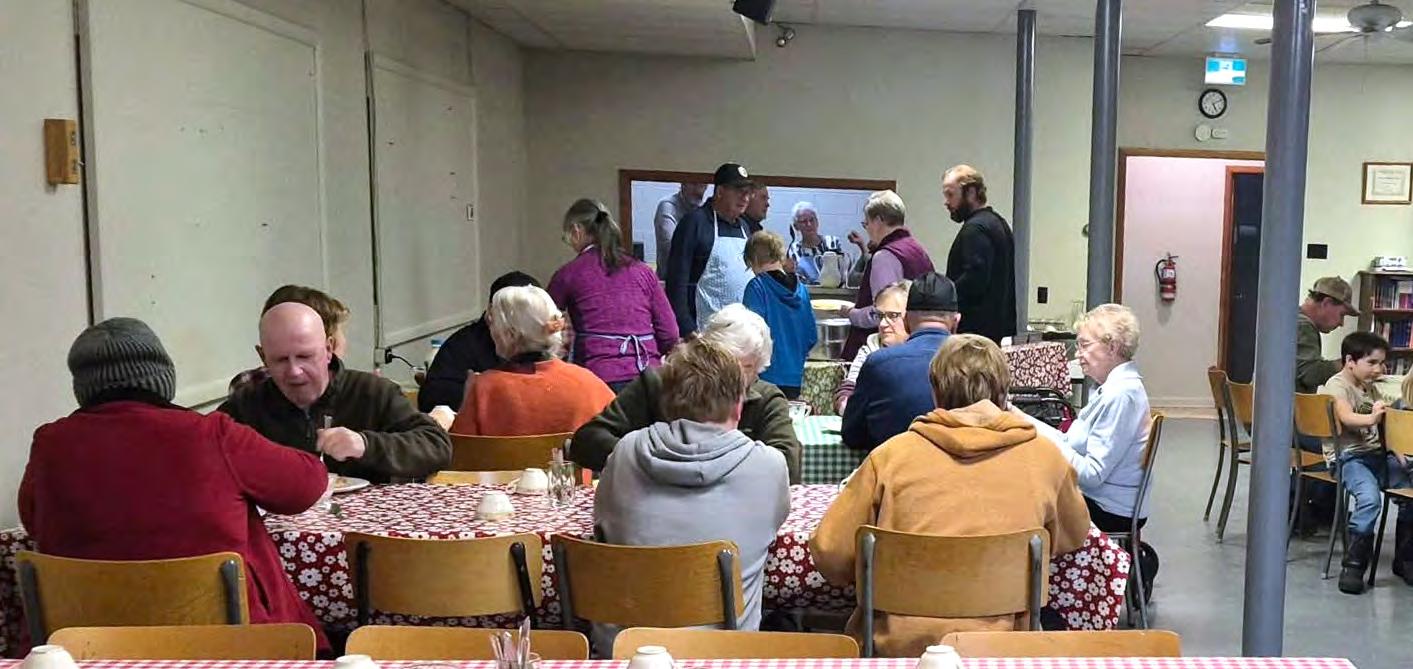
As the vibrant colors of winter fade and spring approaches, it’s time to mark an important date on the Christian calendar: Shrove Tuesday, also known as Pancake Day. This year, St. James Anglican Church invited everyone to join in their annual pancake supper on Tuesday, February 17, 2026. It’s an event not just for nourishment, but for community, reflection, and preparation for the Lenten season that follows.
But why do we celebrate with pancakes? Shrove Tuesday is the feast day before Ash Wednesday, the start of Lent—the 40-day period during which Christians reflect on the sacrifice of Jesus, including his time of fasting in the desert. This sacred time involves prayer and fasting, symbolizing both a recognition of sin and an invitation for spiritual growth. The term “shrove” originated from the practice of “shriving,” which signifies confessing sins and seeking absolution. This day serves as a reminder to examine our lives, seek forgiveness, and prepare our hearts for the
journey through Lent.
Fat Tuesday, as it’s also called, allows us that final indulgence before the fasting begins. Traditionally, it’s a day to consume the rich foods and ingredients—like meats, eggs, and fats—that will be set aside during Lent. By enjoying pancakes, which can be adorned with rich toppings, attendees can savor the bounties of the season while cleansing their homes and hearts for the weeks ahead.
Read more on pancake breakfast on page 5...
PHOTO BY CAROLYN PHILLIPS
St. James Anglican Church annual supper on February 17, 2026.
Redline Transport 2026 Driver Recognition
Submitted
By Al Lepp
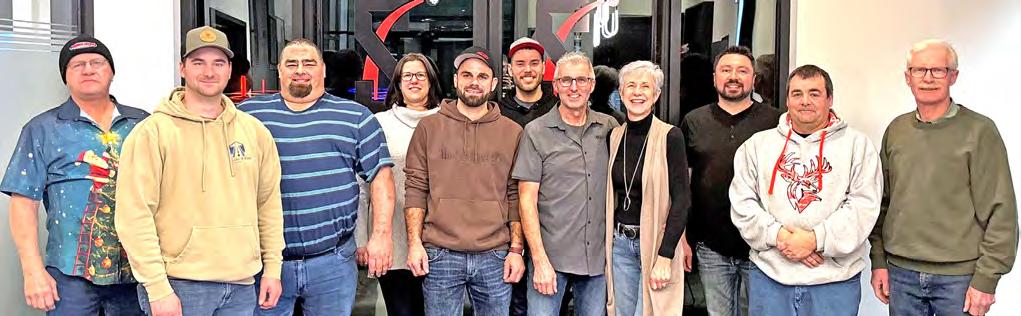
On Jan 17, 2026, the team from Redline Transport Ltd met for their annual Christmas celebration. During this event, two drivers were recognized for their professional driving to this point in their careers.
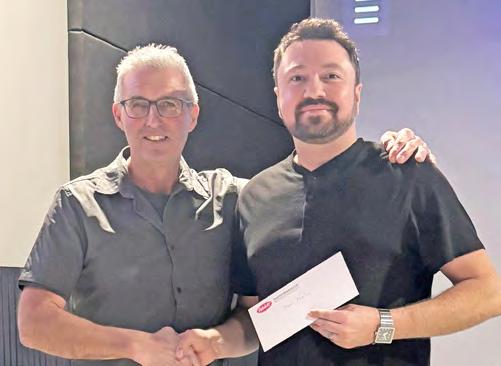
Steven Rainka of Neepawa is a Lease Operator and was presented with a gift certificate to Peterbilt MB Ltd for over 5 years of
safe and professional service to Redline Transport and the Trucking Industry. Since April 2019 Steven has safely accumulated over 1,000,000kms.
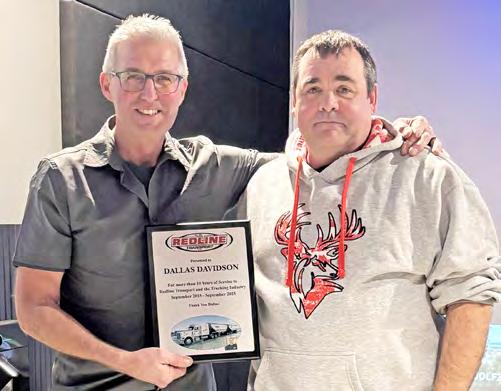
Dallas Davidson of Oak River is a Company Driver who started with Redline Transport in September 2015. Since that time he has rolled on over 1,300,000 kms in a safe and professional manner. Dallas was presented with a gift certificate to Peterbilt MB
Ltd, and a 10 Year Plaque for his service to Redline Transport Ltd and the Trucking Industry.
Congratulations to Steven and Dallas on these accomplishments.
The life of a Transport Driver is a lot more than driving. It involves long and unpredictable hours, road conditions, weather and loading or unloading circumstances. Drivers make numerous decisions during their day of work. The
English Muffin Pizzas
Ingredients
• 4 English muffins, split
• 1/2 cup canned pizza sauce
• 2 cups shredded mozzarella cheese
• 16 slices pepperoni sausage
Directions
1. Gather all ingredients. Preheat the oven to 375 degrees F (190 degrees C).
2. Arrange the English muffin halves cut-side up on a baking sheet.
3. Sprinkle with mozzarella cheese and top with pepperoni slices.
4. Bake in the preheated oven until cheese is melted and browned on the edges, about 10 minutes.
success of a professional driver also relies very heavily on the people they are surrounded by, whether at home or at the terminal. We appreciate the support of these people helping keep our units rolling safely up and down the road.
Take a look around at all the goods which are available on store shelves, warehouses, binyards, factories, fuel stations etc, and realize that a Transport Driver has played a crucial role in the supply of that product.
In other words:
“Whatever you got, a truck probably brought.”
Staff Christmas party January 2026.
Dallas Davidson recognized for 10 years of hard work.
Steven Rainka recognized for 5 years of hard work.
Community Volunteer Income Tax Program gearing up within PMH region
Submitted By PMH
The Community Volunteer Income Tax Program (CVITP) is a free service to help low-income individuals with simple tax situations complete and file their income tax and benefit return. Last year in the Prairie Mountain Health (PMH) region, volunteers helped process 4,350 tax returns and the total benefits and refunds to residents who used CVITP to complete their taxes was over $10 million. The average return to an individual client was around $3,500. In Brandon, 14 volunteers helped clients with their returns, and in the rural areas, there were 12 volunteers who gave of their time.
CVITP is a collaboration between community organizations and the Canada Revenue Agency. Through this program, community organizations such as PMH
bring together volunteers who prepare income tax returns for free. This program helps ensure that seniors, newcomers, students and all low-income residents maintain access to all the benefits to which they are entitled. This includes GST refunds, Canada Child benefit, MB Rent assist, Disability Tax credits, Pharmacare deductibles and more.
You can get your income tax done FREE through this program if you fall under one of the categories:
• One person with income under $35,000/ *Two persons with income under $45,000
• *Three persons with income under $47,500 / *Each additional dependent add $2,500
Local drop off sites: Elkhorn - Border Regional Library Elkhorn Branch; March 2 to May 1; Tues. Thurs. and Sat. between 9am and 5pm.
Reston Health Centre; March 2 to Oct. 30; Mon. - Fri. from 9am to 4:30pm Hamiota Health Centre; March 2 to Oct. 30; Mon. - Fri. between 8am to 4:30pm Virden Health Unit; 480 King Street, E. from March 2 to May 1; Mon. - Fri. 9am to 12pm and 1pm to 4:00pm.
Brandon drop off sites: The Brandon drop-off site is located at 7th Street Health Access Centre, 20-7th Street. Drop-offs at 7th Street start Feb. 23 and run until Oct. 30, Mon.-Fri., from 1:30pm until 4:30pm. Brandon Minor Injury and Illness Clinic is offering an appointment service on Mondays from March 2 to April 27. Call (204) 578-2590 to book an appointment. Outside of Brandon, several PMH sites are accepting drop-offs starting March 2. For a current listing of times and dates, please visit www. prairiemountainhealth.ca/ cvitp or check us out on Facebook, X and Instagram @ PrairieMtHealth.
Participants are asked to bring their applicable forms (including T3, T4, T5, T5007) along with any receipts for daycare expenses, charitable donations, rent, tuition and medical expenses not paid by an insurance company. If you have questions regarding the Community Income Tax Volunteer Program, can not reach/access the sites, or would be interested in volunteering or having the program come to your community, email CVITP@ pmh-mb.ca or call the 7th Street Health Access Centre at 204-578-4800.
• Invites 4th and 5th year students enrolled in a health-related program to apply for this $2000.00 bursary. Contact vwilson@ inetlinkwireless.ca or bennett2@goinet.ca
• Invites Grade 12 students wishing to enroll in a health-related program to apply for this $1000.00 bursary. Contact vwilson@inetlinkwireless. ca or bennett2@goinet.ca
MARCH 31, 2026
Perspectives
Tundra
By Chad Carpenter
Staying positive in tough times
This week marks the first of our 10 Farmers Advocate issues this year. Our FA editions are published the last Friday of each month from February through November. It appears in all three of our papers, the Neepawa Banner & Press, the Virden Empire-Advance and the Rivers Banner. Seeing as the three papers started in 1896, 1885 and 1908 respectively, I am inclined to ponder about all the changes to farming that have taken place since 1885. 1885 is a long time ago. It’s 15 years before my long-deceased grandparents were married. 1885 is 22 years before my dad was born (1907). It’s 63 years before I was born.
My dad would have been able to relate to farming in 1885 to some extent, as he grew up on a tiny farm near Christieville, Quebec and farmed there with his father using horses and even hand scythes. When he began farming on his own near Muir, Manitoba in 1933, it was with horses. After serving in WWll, he went farming again at Holland, Manitoba. His first vehicle and machinery at Holland were horse drawn. He did switch from horses to a Case VA tractor in 1946, and had a succession of tractors through to his retirement in the mid-1980s. His first vehicle was a Model T car converted to a truck, I believe, but I have no memory of it. His next car was a 1928 Chevy four door Landau model. I remember that one. How I wish I had that car today, as it was beautiful and sits only in my memory and my family photo album. It was followed by a 1938 Plymouth, a 1951 International Harvester pick up, a 1958 IHC truck and then a variety of cars until his passing in 1987.
I guess all that is somewhat irrelevant, but the transition from horses to tractors and various trucks
Right in the Centre
Ken Waddell
and cars is illustrative of how things have changed from 1885 to1985. The transition was stark, but not as stark as the changes we have seen in the years since 1985.
In the passing 40 years, farming has changed to a point where it’s almost unrecognizable and almost out of anyone’s price range. The inflation in land prices has made millionaires of some retiring farmers and debt slaves to some of those who have come along behind.
As I write this column, the ever bombastic President Trump has flung out even more tariff threats. I can’t think of a time when we were made more aware of international trade relations than we are today. It’s interesting to note that tariffs, both inside and outside of Canada have been pushing and pulling agriculture on both the production and supply side for years. In the early years of Confederation, tariffs were widespread. If I have my history straight, it was Canada’s first prime minister, John A. Macdonald, who imposed tariffs on US made farm machinery so as to prop up the eastern Canadian manufacturers and force Canadian farmers to buy Canadian machinery rather than cheaper imported farm machinery.
I can’t predict what will happen with tariffs and trade wars but I can be assured of a few things.
I have said many times that we
need to look after Faith, Family, Friends and Finances, and in that order.
Our family has faced economic difficulties a few times in our lives. We may face them again and I know that my kids, grandkids and great grands face some struggles.
But this I know, God loves us and it’s important to follow his teachings. Love your neighbour as yourself, follow the Ten Commandments. Be aware of the pitfalls that may lie ahead.
I have also said that the sun will come up tomorrow and regardless of how tough things might seem to be unfolding, there will also be many things to be thankful for.
To put it bluntly, if you don’t think we live in a land of plenty, then you haven’t observed the 40 foot long shelves of potato chips and snack food in most stores or the pallets of pet food.
There is always lots to grumble about, but it doesn’t do much good. It’s much more productive to get off our butts and do something productive. Any able bodied person who thinks they have things tough, aren’t living with the right attitude.
Disclaimer: The views expressed in this column are the writer’s personal views and are not to be taken as being the view of the newspaper staff.
Rita Friesen Homebodies
Here’s to friendships
We know that from our very first breath to our very last breath, we need human contact. Deeper than a want, it truly is an essential need.
We see how infants thrive with loving connections, how parents and caregivers are encouraged to have skin on skin time with the wee ones, even when there are tubes and wires in the picture. And we know too well the longing, need, that our elders and ill have for a hug and a hand to hold.
Not everyone is privileged to have a supportive family; physical distances and emotional distances prevent regular contact. Here’s the place where friendships excel. First, we do get to choose our friends, and we do get the opportunity to interact with them — either through the workplace, the gym, or the coffee shops. It is heart warming to watch a group of individuals sharing time and thoughts — connecting. I swing back to the human contact thought. Safe hugs are becoming more common. With the work I am privileged to do, I give, and receive wonderful hugs. I can feel an energy shift when I am greeted with a hug before a service; I am encouraged and strengthened. And as I gather with families the hugs are also shared energy, me offering my strength, granting them a moment to feel frail and sad, safely. And the Sunday morning hugs! We have worshipped together, prayed and praised together, and now rejoice in friendships and shared values. I am a hugger… a safe hugger.
Preschool and daycare were not a part of my childhood. Cousins were! And they became my playmates and lifelong friends. We share a history of experiences and people. Some school friendships last for a lifetime. I admire and respect that. I have relocated a number of times and have lost touch with old neighbours and classmates.Not for a moment have I forgotten them! We made a hat full of memories; curling bonspiels, track and field days, youth group gatherings and community celebrations. There were ten of us students that moved from grade two to twelve almost together, I know their names though I have not a clue where they are, what they do (I imagine retired!!) or if they are still with us.
As a parent I got to know other parents, some developed into friendships. I entered into community life, and here too, created some friendships. We all get/got so busy with life and living that maintaining a friendship sometimes became too much work.
And now I am old. Friendships are the gold in the golden years! We may not have shared other parts of our lives, but now we have time, and the need, for each other. I am so blessed with friends of many ages and stages. I miss, fiercely, the women who I considered my mentors, and, in turn, I have become a mentor to others. My young friends think young and allow me that freedom. With others we commiserate about our aches and pains, and forgetfulness! Each day I give thanks for the circle of friends that bless me with their time and energy… and their hugs!
Municipality of Hamiota explores reactivation of age friendly community initiative
By Armi Adair Hamiota EDO
The Municipality of Hamiota is exploring the reactivation of its Age Friendly Community initiative, renewing its commitment to enhancing supports and services for residents of all ages. Hamiota has been recognized as an Age Friendly Community since Council passed its designation in 2013, and revisiting this status provides an opportunity to reassess community needs and strengthen accessibility and inclusion across the community.
Reactivation would reconnect Hamiota with the Manitoba Association of Senior Communities (MASC), the provincial lead for the Age Friendly Manitoba initiative. MASC supports more than 85 member organizations and over 95 communities working to promote environments where older adults can access services, participate socially, and maintain independence.
Renewed engagement with MASC would provide Hamiota with provincial tools, best practices, and ongoing support as the municipality considers next steps.
Re-energizing Hamiota’s Age Friendly designation represents a meaningful opportunity to reaffirm the municipality’s dedication to supporting residents at every stage of life. Updates will be shared as plans progress.
On February 12, Marg Fraser of MASC visited Hamiota to present a $9,994.00 Community Collaboration Grant to assist with the purchase of ten Tarlo Senior Benches. These benches,
Pancake Supper at Church
continued from page 1
At St. James Anglican Church, the atmosphere was warm and welcoming, embodying the spirit of community as families and friends gathered to share a meal. For just $10, guests could enjoy a plate of freshly made pancakes, complemented by juicy sausages. The supper featured a delightful array of toppings that catered to every taste: from tangy stewed rhubarb and homemade preserves to rich syrups and whipped cream. With tea and coffee also available, it was a perfect opportunity to connect over a delicious meal.
The pancake supper is an invitation not only to indulge in delicious food but also to engage in meaningful conversations about faith and personal growth. As attendees gathered around the tables, they shared stories, laughter, and the spirit of community. This communal aspect of Shrove Tuesday perfectly encapsulates the essence of the Lenten preparation—coming together to support and uplift each other.
As we approach this poignant time in
the Christian faith, remember that Shrove Tuesday is more than just a day for pancakes—it’s a chance to reflect on our lives, seek forgiveness, and prepare our hearts for the journey ahead. Whether you’re a long-time member of St. James Anglican Church or someone looking to explore this tradition, the pancake supper is an experience that should not be missed.
Many gathered on February 17, 2026, at St. James Anglican Church in Rivers to celebrate together with delicious pancakes and meaningful connections as we prepare for the beautiful season of Lent. In flavors and fellowship, may we find the true essence of this time—an opportunity for spiritual renewal and community joy.
designed with sturdy armrests, higher seating, and easy mobility, will be placed in key areas frequented by all residents and visitors—such as the baseball diamond, aquatic centre, cenotaph, playground, and community hall—where accessible seating is currently limited.
Mayor Randy Lints, Mason Mourad, Marg Fraser (MASC), Councillor Kelvin Tiller, and Danette Brooks.
Tulum, an amazing sight
By Gerry Nolan Rivers Banner
Our family and friends recently travelled to Cancun Mexico for a week of sunshine and relaxation. The weather was cool in the morning and warm in the afternoon, making it a fun vacation. The service was great and the people were friendly!
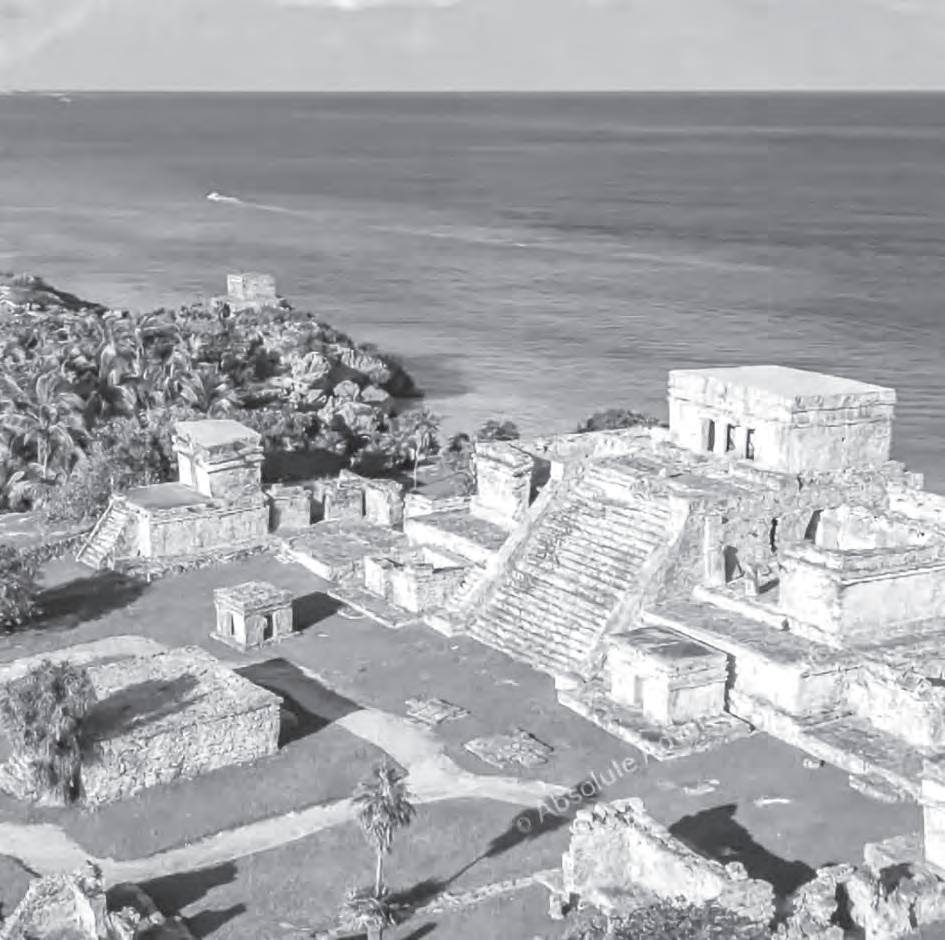
One day we all went on an excursion to Tulum, which is situated 130 kilometers south of Cancun. The thirteenth century walled Mayan architectural site at Tulum National Park which overlooks the sea and incorporates the cliff tops Castillo built in watch towers.
The greatest attraction at the Tulum ruins is its location, as it is built facing the rising sun, and is the only Mayan settlement located on the beaches of the Caribbean.
Tulum means “Wall”, a reference to its location. The
Rivers Rehab is a blessing for many
Submitted
By Dianne Kolwalchuk
One of great assets in this community is the Rivers Rehab Program located at the Riverdale Health Centre. When our hospital was “closed” many years ago, the building was re-purposed as a rehabilitation centre. The value of this facility in this part of the province cannot be exaggerated. Rivers Rehab offers patient-centred care for those who are recovering from orthopedic surgery, amputation, or stroke. At a recent meeting, Rivers Women’s Institute (WI) members had the opportunity to learn about the treatment provided and the team that provides it. Kaitlyn Paddock, physical therapist, and Tanya Beaulieu, occupational therapist, spoke confidently about the work they do. We are thankful that such care is provided right here in Rivers. Kaitlyn also led the WI members through a series of strengthening exercises that can be done by anyone.
The February 6th WI meeting was the first for 2026. Programs have been planned for the entire year. Each month, a different topic will be presented -- sometimes by invited guests, sometimes by a member. We look forward to a year of learning, friendship, and support. And of course, each meeting ends with a good visit over a cup of tea.
The March meeting will be held on the 13th at the home of Dianne Kowalchuk. A guest will tell us all about the recreation activities and classes available in Rivers, with a focus on activities for seniors. We will also learn about the much-anticipated return of the handivan. Women’s Institute is an organization that brings women together. Visitors are always welcome.
original inhabitants called it Zama, meaning the place of the dawning sun.
Our guide for the day was Niza, who is a Maya. Niza was terrific! His grandfather told him when he was a lad that he would be his educator and would teach him the Mayan way. Niza was very well educated, with great reading and writing skills. He took his time to answer all our questions and shared some amazing history of the ruins. At one point he sat down on the ground and picked up a twig to draw diagrams and pictures in the sand so we could visualize the stories he was describing to us.
I cannot explain the full meaning of what we saw, there was so much detail to this fascinating place. What I will say though is if you ever get the opportunity to vacation in Mexico, take the excursion to Tulum, you will feel so blessed by its beauty and charm.
SUBMITTED
The thirteenth century walled Mayan architectural site at Tulum National Park.
Farmers’ Advocate
What is traceability and why is it
important to the beef industry?
By Matthew Atkinson
Past President, and District 8 Director
Manitoba Beef Producers
Editor’s Note: This column was originally published in the February 2026 edition of the Manitoba Beef Producers newspaper Cattle Country, and has been reprinted with permission.
In recent weeks, there has been lots of discussion, especially on social media about potential Canadian Food Inspection Agency (CFIA) changes to Canada’s livestock traceability system. Unfortunately, some incorrect information is circulating that said these changes took effect January 1, which is not the case. And there is some misinformation about what the proposed changes could mean for beef producers in their day-to-day operations. I am focusing this month’s column on why traceability is important to our sector, what is being proposed –but not yet enacted or being enforced, and where the matter stands today.
It is also important to note that Manitoba Beef Producers, along with other industry stakeholders such as the Canadian Cattle Association (CCA) had called for a pause on the implementation of proposed changes until such time as beef industry questions and concerns are addressed by the Canadian Food Inspection Agency.
The CFIA issued a statement on Jan. 10 where it said that it “will pause any
The
farm season
publication of the regulations until the proposed changes are more widely understood and concerns are heard and taken into consideration.”
Livestock traceability systems have three main objectives: to reduce the impacts of animal diseases by assisting with disease investigations, to provide accurate and up-todate livestock identity and movement information, and, to better protect public health and animal health.
The three pillars of traceability are premises identification (PIDs), animal identification (CCIA tags), and animal movement through the recording of move-in data on cattle. An example of how traceability is being used is in the investigations into bovine tuberculosis cases in beef cattle in Saskatchewan and a dairy herd in Manitoba.
Effective traceability is important for enhancing disease preparedness efforts and helping to minimize the number of affected producers if a disease arises. Traceability systems have also been used to share information about floods and fires in provinces where livestock may have been at risk due to these types of disasters.
Continued on Farmers’ Advocate third page
PHOTO BY ROB WADDELL
This beautiful sunrise, seen along Highway #16 between Neepawa and Minnedosa promises a new day.
Letter: Closing Ag research stations may hamper Ag industry
Editor’s note: This letter is directed for Heath MacDonald, theMinister of Agriculture and Agri-Food. This letter was also shared with the Farmers’ Advocate to be shared with the readership:
Dear Minister MacDonald, I am writing to express my deep concern regarding the government’s unilateral decision to close three Agricultural Research Facilities and four Research Farms across Canada.
Agriculture and food production play a foundational role in Canada’s economy and, more importantly, in the health and well-being of Canadians. Citizens who pay taxes rightly expect access to safe, wholesome, high-quality food. As the founder and editor of a farm magazine, Charles Walters, once said: “The function of a producer is not just to grow bins and bushels; it is to grow quality food that produces minds capable of thought and reason.” When one considers the current physical and mental health challenges facing our society, it is evident that significantly more—not less—research is required. Research and industry together play a critical role in meeting that objective.
Equally important is the human element. A substantial amount of specialized human capital is at stake. The scientists, technicians, and support staff working at these facilities represent decades of accumulated expertise. Decisions of this magnitude demand careful evaluation of both the people and the long-term consequences of eliminating this capacity.
Innovation is not merely important—it is the lifeline of any industry and country. Research should be viewed much like the purchase of capital equipment: through the lens of return on investment. A trusted expert in this field has advised me that investments in agricultural research historically generate returns of 20–30 to 1, even after accounting for the time value of money.
individual merits, based on the projects underway, by a qualified committee of “big-picture” thinkers with a long-term mandate. It is difficult to believe that such an evaluation was completed prior to the closure decision. However, it is not too late. I strongly encourage your department to involve industry and citizens over the next year in a transparent evaluation process, culminating in a public report that clearly identifies:
The value of current research programs Projects that could be paused Work that may be outdated and suitable for termination
Our soils, water, livestock, and food safety systems are Canada’s most basic and irreplaceable resources. These must be preserved at all costs— for future generations and for the international customers who rely on Canadian exports. Everything begins with the soil, supported by responsible water and livestock management.
I am also concerned about the fate of long-term joint ventures currently underway between government, industry, and individuals. If projects are terminated mid-stream, any resources contributed by third parties must be repaid. Moreover, independent, third-party research is essential in agriculture—as in any industry—to verify results and maintain public trust. Without it, Canadians are shortchanged, innovation is stifled, and research risks becoming dominated solely by large corporations whose first responsibility is to shareholders.
consider the following:
In 2024, Agriculture and the agri-food system generated $149.2 billion in economic activity— seven per cent of Canada’s GDP—with primary agriculture contributing $31.7 billion.Every dollar of sales at the primary end creates 4.70 dollars of economic activity in the agri-food system.
Agriculture and Food Processing represent Canada’s largest manufacturing employer, supporting 2.3 million jobs (1 in nine Canadian jobs).
Agriculture and Seafood exports exceed $100 billion annually.
Future : With the right investment, industry reports suggest agriculture has the potential to outperform the auto and aerospace sectors combined.
These facts clearly demonstrate that primarylevel research in soil, water, and livestock is essential to producing competitively priced, high-quality raw products—allowing the entire food system to thrive for Canadians and export markets alike.
have weathered difficult periods before, and we will again. That is precisely why I am urging you to pause, listen, and
examine all options before permanently dismantling research facilities that safeguard Canada’s soils, water, livestock, food safety, and long-term economic resilience. Harvey Dann West St. Paul, MB
All Canadians are facing uncertain and challenging times, particularly given global instability and our unpredictable relationship with our southern neighbour. We
I recognize the difficult balance required in public decision-making between ideology, necessity, acceptability, and affordability. However, the first step must be the creation of a qualified, independent committee to examine each facility—its projects, people, infrastructure, and future potential—and report back with findings, potential savings, and recommendations for modernization where appropriate and available to all segments of society.
Each research facility should be evaluated on its
To underscore the importance of this issue,
Beef industry traceability rules need more study
Continued from Farmers’ Advocate front page
More than 40 per cent of Canada’s beef cattle production is exported annually, so maintaining market access is key. Livestock traceability systems support Canada’s disease status reporting to international bodies and export markets, which is important for maintaining trading opportunities and supporting economic sustainability in our industry. The faster a disease investigation can be done and information shared with trade partners, the better.
The federal traceability requirements currently in effect for cattle were introduced in 2000. The proposed amendments to Part XV of the Health of Animals Act — Traceability Regulations have been under discussion between the CFIA and members of the beef value chain for several years. This has included ongoing input from provincial cattle associations like MBP and various national associations. In 2016, nineteen industry organizations endorsed the Cattle Implementation Plan, the sector’s preferred approach to traceability system adjustments. The beef industry has continually provided feedback as the proposed changes have been moving through the government’s regulatory change
process, such as the gazetting process. This will continue.
So what types of changes have been proposed, but not taken effect?
Key changes for producers include:
• A requirement to get or keep current a premises identification (PID) number from the provincial government.
• A requirement to include your PID number when you are purchasing approved indicators (tags) and when you are reporting information related to identification of cattle and their movement, and
• Reporting the arrival of cattle (i.e. move-in reporting) within seven days.
It is important to note that under the proposed traceability system updates that movement reporting into the Canadian Livestock Tracking System (CLTS) is not required for animal movements within the same farm. As proposed, you won’t be expected to report calves within hours of birth. Calves may be tagged and recorded before leaving the farm, just like now. You will only have to report new animals coming onto your operation (move-in).
There is a proposed exception though for cattle going to/from rodeos/fairs/exhibitions, to community pastures (which is done as a group, not individual tag numbers), and to veterinary clinics, where both their
departure from your operation and their return will need to be reported into the CLTS. We recognize there are some questions about these requirements and it is important there is industry alignment on these types of concerns.
As proposed under new regulations, if you sell your calves through an auction market, the auction will report those calves moving in as a group. The purchaser of those calves will then report individual tag numbers when they move onto that operation.
As for the existing regulations and for which no changes are being proposed, cattle must still be tagged before leaving the site of origin. You also need to report tag retirement when animals are slaughtered, exported or die.
The CFIA has a webinar that gives a good overview of what the proposed changes mean. I strongly encourage you to check it out. See: https://www.youtube.com/ watch?v=5w3ALso7lg0&t=6s MBP’s website also has more information about what’s being proposed. Go to: https://mbbeef. ca/our-news/ understandingproposed-updates-to-livestock-traceabil-
ity-regulations
Follow along on MBP’s social media for updates as well. Get a premises identification via Manitoba Agriculture at https://www. gov.mb.ca/agriculture/food-safety/ traceability/premises-identification.html
Begin reporting move-in events to the Canadian Cattle Identification Agency (CCIA). See https://www. canadaid.ca/ . Get familiar with the Canadian Livestock Tracking System (CLTS) or the CLTS MOBO app which allows for online reporting. The CLTS is managed by the CCIA and it is not a government database. Some of you may opt to use apps and programs which can integrate reporting with the CLTS. The information you report is confidential, protected and only accessed if a disease traceback is needed.
As of now, publication of the final traceability amendments in Canada Gazette II is not expected any earlier than this spring. As noted, the CFIA has paused this process for an undetermined length of time to get more input. MBP and other industry stakeholders will continue to provide that to them based on
feedback from our members. If there is another public comment period, I also strongly urge you to make your questions and concerns known to the CFIA. There is supposed to be a one-year window between publication of regulatory changes and when they would come into effect. The beef industry has requested a robust education and awareness process to give all time to prepare. As well, MBP has also advocated with the CFIA for a period of soft enforcement while producers get familiarized with any changes made.
Whatever traceability system changes are enacted must be practical for producers, not add more regulatory burden and should provide clear value for the sector, such as assisting with timely disease investigations and ensuring confidence among our trading partners. Having a well functioning traceability system is very important for the Canadian beef industry for the reasons I’ve explained in this column. If you have questions or concerns, please continue to reach out to us, and explore the resources I’ve identified here to learn more.
Let’s work together to simplify your monthly payments into one and take charge of your budget.
Connect with one of our lending experts today to consolidate your loan. Sunrise can help you make the pieces fit!
Three personal care businesses celebrated in Hamiota
Kareena Sims with Root 21 Hair Studio and Katie Wright with Movement Massage.
By Anne Davison Rivers Banner
A new hair salon was welcomed into Hamiota with a grand opening held Feb.1. It’s a service you can’t live without. As current stylists have limited hours, there was a real need for Root 21 Hair Studio. No surprise, hair stylist Kareena Sims says February dates filled up quickly.
She’s appreciative of help from Hamiota Economic Development for promoting her grand opening. “They did the plumbing, and cut the counter,” a modification her space required.
“And so then, we did all the painting. Well, we - my dad - did all the painting and hanging all the shelves,” says Kareena, also thankful for his help.
While opening her own studio is a dream come true, she values her time spent with CB Aspire Salon and Spa in Rivers. Kareena is rural, through and through
with her partner, Scott Lane, a horse trainer.
The grand opening in the business complex at 221 Elm Street included Movement Massage Therapy. Katie Wright, a certified RMT, began in the Hamiota location in July. Another welcome service in any town.
Katie says, “My path began by attending the Wellington College of Remedial Massage Therapy in Winnipeg and then continued on to attend the Western College of Remedial Massage Therapy in Regina.” Katie also has a horse connection; she’s a breakaway roper.
From Oak River, JoAnn Drul’s Country Bliss Esthetics was first in the Elm Street building. She started up nearly four years ago, providing a variety of skin care products and services as well as manicures and pedicures. She’s happy with her clientele.
“I feel like I’m as busy as I want to be right now at this stage in my life, because I’m still nursing as well.”
She works at Hamiota’s PCH, Birch Lodge, and enjoys
her work there as well.
With Hamiota’s Elm Street suite of offices ready and waiting for tenants, one business attracted the next and the next. Now the building is beginning to take on character as a personal care service centre.
Hamiota has become a centre for health and wellness with the hospital, emergency service and medical clinic, and provides additional health related services.
Dynamic Physiotherapy has expanded and recently purchased the Hamiota Healing office building at 49, 3rd Street. Physiotherapists are Cam McGhee and Jacinta Doupe. Former building owner Jennifer McConnell Andrew provides massage therapy and Spinal Flow therapy; and Dr. Stewart McMillan’s service is Harvest Chiropractic.
Armi Adair, for Hamiota Economic Development Corporation, is pleased to see the recent developments. She noted that now, Hamiota hopes for a dental practice to return within the medial clinic.
Submitted By Metro Creative
Reading is a beloved pastime that’s having a moment. A number of variables have helped to renew people’s interest in reading. BookTok, a popular subcommunity on the social media platform TikTok in which users create videos to recommend and discuss books, is one such variable.
The BookTok trend has helped to spark and revive many people’s interest in reading, and that’s paid dividends for the bookseller Barnes & Noble, which plans to open 60 new stores in 2026 after opening 30 new stores in 2023, 61 in 2024 and 67 in 2025. Reading more also pays considerable dividends for readers, particularly school-aged book lovers. Research has found that reading has a notable impact on brain development in children.
Reading can foster critical thinking skills. Reading fosters critical thinking skills by engaging readers in a story and encouraging them to ask questions about its characters and plot. The tutoring experts at Readability, who specialize in helping a diverse group of readers in making the shift from learning to read to reading to learn, note that reading helps students assess situations logically and form reasoned opinions.
Reading can help build language skills. Reading helps children build their vocabularies by enabling them to read new words. Reading aloud to children can be especially beneficial for young children, but reading to themselves also encourages kids to learn new words. As children read and learn new words, their language skills expand.
Reading fosters a sense of wonder about the world. The wide range of literary genres, from sci-fi to fantasy to history, can instill in children a sense of curiosity and wonder about the world they live in. That can spark interest in other subjects at school, including science, mathematics and art.
Reading can benefit youngsters’ attention spans. Modern children are inundated with stimuli that does not necessarily foster longer attention spans. Social media videos and even some children’s television programming may have an adverse effect on kids’ ability to build a strong attention span. Reading helps kids to strengthen their focus by requiring them to concentrate on a narrative and process information as the story unfolds. That requires kids to maintain their attention for far longer than the average social media video. Reading has a profound impact on the development of young children’s brains. That makes it both an enjoyable and effective pastime.
PHOTO BY ANNE DAVISON
SUBMITTED PHOTO
At the Grand Opening on Feb. 1
JoAnn Drul of Country Bliss Esthetics works with high quality skin care products.
Westman high school hockey
By Gerry Nolan Rivers Banner
The Hamiota Huskies are on a roll right now and it could not come at a better time. On February 19, the Huskies defeated last season’s champions, Vincent Massey Vikings, by a 4-2 score. Duncan McLean led the way offensively scoring twice and assisting on another goal. Aaron Roels scored a goal and also had an
assist. Josh Mathison scored the other Huskie goal. Assists were credited to Reid Hutchings, Sam Rivas and Nash McMaster. The two teams split the eight minor penalties called in the game. Next up for the Huskies was a game against the Renegades, with Hamiota walking away with a hard fought victory by a score of 2-1. There were only 3 minor penalties called in the game.
Aaron Roels and Josh Mathison scored the goals with Reid Hutchings and Duncan McLean picking up the assists. The Huskies improved their overall record to 15 wins and 12 losses. They currently sit in ninth but are only 2 points behind the Golden Bears and the Raiders.
Keep it rolling guys, it’s the right time of the season to get on a winning roll!
Starting Seeds – Part II
Submitted
By Patricia Hanbidge
Last week our column focused on some of the basics surrounding starting your own seeds. We talked about plants needing light, water, warmth, oxygen and food to grow and a little bit about the seed itself. Growing your own plants from seed is magical.
Most gardeners derive great satisfaction from growing plants. They grow just for ornamental value but also for growing food that graces our tables when we cook for both friends and family. Starting seeds allows a greater degree of satisfaction and enables the gardener and the chef to know exactly what products were used on the plants from the beginning of life. Growing your own is also a more sustainable alternative to purchasing food that has been grown many miles away and had to undergo an unbelievable amount of transportation in order to get to our local grocer.
You might be wondering why it is a good idea to start seeds. After all, it is a bit of work and you do need to purchase some gear in order to do it right. First and foremost, starting seeds will allow you to extend the growing season. This is a good thing as our frost-free days range from around 90 to 120 on the prairies. Many of the desirable crops you might like to grow need more than that amount of time to mature. Also, if you are a gardener, you already know that what you wish to grow that cannot be seeded into the garden in spring might not be available for you to purchase as bedding plants. We all like to be individual and grow in our gardens whatever we choose, so starting your own seeds will give you much more variability in your garden.
Another consideration to think about is the importance of maintaining diversity in our seed sources. Growing heritage or heirloom plants allows a refurbishment of seeds that otherwise might be lost forever. In the age of genetically modified seeds and the ease of travel may make us more aware of the importance of ensuring our roots, our history, heritage and ultimately our seeds are
Winter Olympics
By Gerry Nolan Rivers Banner
The Winter Olympics have come and gone. What a great group of athletes represented Canada. We are all very proud of their accomplishments. There were the celebrations of victory and the agony of defeat along the way. Some of the events that take place are mind boggling how these athletes perform at the levels they compete.
Congratulations to Travis Sanheim, formerly of Elkhorn, who was just outstanding for the men’s hockey team on winning a silver medal in Milano.
Travis made all of Canada proud but for all of the people of Elkhorn and surrounding area even more proud.
Congratulations to all the competitors from all the nations on a job well done. Also to all the officials and volunteers, thank you for your commitment to the games.
One thing I noticed was that after the events were done and medals were decided and being handed out how all the amateur athletes would congratulate one another, be it a pat on the back, a handshake or giving each other a hug. What a great sign of
sportsmanship?
Two things I did not like were the trash talking that came out in curling and hockey. To me this is not acceptable. The media can stop it, but they do not. I guess they figure this needs to be shown over and over. It takes away from the other athletes who work and train so hard to achieve their goal.
All in all it has been a great two weeks of entertainment but it is time to get back to normal programming ,like the stretch for the NHL playoffs and watch the boys of summer, as they have started the grapefruit season!
maintained appropriately for future generations. Other than the generalization that germination begins with the uptake of water, there are a host of conditions that are necessary for successful germination. To simplify things for you, let’s think of what you are growing as being either warm or cool-season crops. Warm season crops like sweet corn, lima beans, tomatoes, peppers, melons, okra, eggplant will generally need a warmer season of growth and typically a slightly warmer germination temperature. Cool season crops will generally need the opposite. The other common variable you may encounter is the need to either have light conditions or dark conditions for that magical process to begin.
Once that life has begun then it is important for you to provide every little thing that will be needed in order to grow healthy plants that are ready to be transplanted out into the garden. Many times, people do not realize the essential need to grow these little plants under grow lights.
Generally, my grow lights sit just above the canopy and I raise the lights as the plants grow. This ensures strong, sturdy plants that are not long, slender and droopy when grown with not enough light.
As far as broad planning of planting dates, plant celery, eggplant, leeks, peppers and tomatoes in mid March and in April, broccoli, cantaloupe, cauliflower, lettuce, pumpkins, squash and watermelon. This timing will give you sturdy plants for planting out around the long weekend in May. This will of course vary with the temperature, light and other environmental conditions where you are growing. Hanbidge is the Lead Horticulturist with Orchid Horticulture. Find us at www.orchidhort.com; by email at growyourfuture@gmail.com on facebook @orchidhort and on instagram at #orchidhort.
Tune into GROW Live on our Facebook page https:// www.facebook.com/orchidhort or check out the Youtube channel GROW…
Ref Memories
Ref to writer
Gerry Nolan
This week I would like to share about someone who influenced me even though I never refereed with him. I was sad to hear that Larry Nickol from Killarney passed away recently. Larry played the game but his first love was baseball. He played in championship games but also umpired in those championship games as well.
One day as I was about to continue to umpire baseball games, I was invited to go to an umpires’ school. There were a few of us that went, as we would be umpiring the Manitoba Senior Baseball League, including working games in the Provincial playoffs. We spent time going over the rule book and the interpretation of those rules and how they applied to the game of baseball.
Larry was running the clinic and he said one sentence that stuck with me all through hockey and baseball seasons. He asked a question. “What is fair?” I had never heard that said before. It really resonated
with me! It was a statement for the ages with me. Thank you Larry for being a great mentor. It shifted my thought process in umpiring baseball games as well as refereeing.
In hockey we see it all the time, the punches in the face after a whistle that are ignored, yet if someone retaliates, they get called. Why in the world is the first punch not called? Why is retaliation always called? That is not fair and an official can make this biased decision, based on that way of officiating.
The fighting instigator penalty always made no sense to me. The instigator gets a 2-minute penalty and, more often than not, it is not called correctly. What was the initial penalty that would be called, that would be the instigator penalty. Now here is a scenario. I slash, crosscheck, punch or any other minor penalty and go after you and drop the gloves and we engage in a fight. Who is the instigator? Well, in my opinion the player who started the whole thing with a slash, punch etc would be the instigator and should be penalized accordingly.
Back to Larry. I worked some Provincial league finals and Manitoba senior baseball finals. Working with Larry was always fun. He was never in a rush to make the call unless it was a bang, bang play at first.
One night in Brandon the Cloverleafs were playing the
Manitoba Community Newspaper Association Province Wide Classifieds
NOTICES
Advertisements and statements contained herein are the sole responsibility of the persons or entities that post the advertisement, and the Manitoba Community Newspapers Association and membership do not make any warranty as to the accuracy, completeness, truthfulness or reliability of such advertisements. For greater information on advertising conditions, please consult the Association’s Blanket Advertising Conditions on our website at www.mcna.com.
URGENT PRESS RELEASES - Have a newsworthy item to announce? An exciting change in operations? Though we cannot guarantee publication, MCNA will get the information into the right hands for ONLY $35.00 + GST/HST. Call MCNA (204) 947-1691 for more information. See www.mcna.com under the “Types of Advertising” tab for more details.
NOW BOOKING YOUR CLASSIFIED ADS FOR SPRING 2026! Let us help you book your blanket classified ads across Manitoba, and increase your pres-
Riverside Canucks. Larry was the first base umpire, I was calling second and third base. Well, we had a bang, bang play at first and Larry was taking his own sweet time about making the call. Was the runner safe or out? After which seemed like an eternity, Larry called the runner out, which in my opinion was the correct call.
At the end of the inning, I walked over to Larry and said, great call Larry, that was a banger. He smiled and nodded his head and said thank you. I said, I do have a question for you, why the delay in the call. Did you go for coffee or something? Did you forget what you were going to call, or were you distracted in some way ?
Larry said, I was just trying to keep the crowd in suspense, keep them on the edge of their seats. Now run along back to your base and do your job! Larry was grinning from ear to ear. We had a lot of laughs in the clubhouse after the game. He said I just wanted to replay the call in my mind, it was that close a play, which it was.
The world is not a better place without him, but his memory stays with me. Larry, it was my pleasure working with you, and thank you for teaching me. It has always stuck with me, what you said at that umpires school so long ago, back in the 1990’s. Rest in Peace big guy, it was a lot of fun working with you!
ence! If have a booth at any upcoming TRADE SHOWS, advertise NOW, and let people know that you will be there by placing an ad with us! Your ad will be seen in the MCNA Member Newspapers, in over 368,000+ homes in Manitoba. Please Call THIS NEWSPAPER NOW to book, or call MCNA at (204) 947-1691 for more details or to book ads. Take advantage of our great pricing! MCNA - Manitoba Community Newspapers Association. www.mcna.com
Under supervision of the Manager of Public Works the successful applicant will operate municipal equipment, perform regular maintenance on all municipal equipment and any attachments, maintain municipal roads and ditches. General duties include operating municipal equipment as and when required to maintain roads and ditches, streets, lanes, public spaces (grading in the summer and snow plowing in the winter). Check on road signs and replace any that are in disrepair or are missing, mark roads with proper signage if required, recondition machinery in off season, and all other duties as prescribed.
Although work will be primarily assigned in a designated area, either urban, utility, or rural, assistance may be required by other Public Works Departments. Assistance must be given based on qualifications, availability, ability, and need. Applicants should have experience operating and maintaining heavy equipment including, but not limited to, graders, loaders, gravel trucks, mowers, etc. Have good mechanical aptitude. Be willing to learn and continue professional development efforts. Have a valid Class 5 Manitoba Driver’s License, and Class 3 Drivers License would be an asset.
The right candidate can expect a comprehensive salary and benefits package consistent with the collective agreement to be negotiated.
Individuals interested in this position should send a resume and cover letter to CAO Mark Humphries RM of Oakview, PO Box 179, Oak River, MB, R0K 1T0, or email cao@rmofoakview.ca. The selection committee intends to review applications as early as February 18, 2026; however, applications will continue to be accepted until the right candidate is found.
We thank all who apply and advise that only those selected for further consideration will be contacted.
IN LOVING MEMORY JOYCE MILVINA ESPEY
It is with profound love and heavy hearts that we announce the passing of our mom, Joyce Milvina Espey (Moffat) on February 11 at the age of 90. Her quick wit and ability to spark laughter remained with her until the very end.
Our Mom was born on March 20, 1935. She was one of 6 daughters born to Bert and Maud Moffat of Rapid City. After the passing of her mother 28 days after Mom was born, she was later blessed with a stepmother, Eddie, and eventually a little sister that joined the family. At the age of 16, and after completing basic schooling, mom moved to Rapid City and worked as a Bank Teller. This was well suited for Mom, and she spent the rest of her life managing the farm books and all financial and administration duties.
She met our dad, Gordon Espey, and they were married November 28, 1953, in Rapid City.
Mom and Dad started their farm adventures near Cardale which lasted 60 years. Mom embraced being a farmer’s wife. She not only raised 3 children, she drove the grain truck, made all of the meals (with exceptional baking skills), tended to a massive garden, maintained a beautiful yard with flower beds, sewed our clothes, knitted our mitts and toques, and cared for the many animals that come with farm living.
Being a part of a community was also part of farm life. Mom was an active participant and choir member of the Cardale United Church for over 70 years, the UCW, Cardale Rink, Cardale Sports Day – you name it and mom was at it making something delicious for the event.
Mom’s love of music shone through her choir commitment, attendance at local concerts and plays, and dedication to ensuring we learned piano, organ, guitar, drums, and bagpipes.
In 2014, mom and dad sold the farm and moved to Rivers. They maintained their connection to the Cardale Community while embracing town life and daily walks to the coffee shop. They enjoyed this time in their lives. Mom remained in their home in Rivers after Dad’s passing in December 2020 until March 2025 when she moved to River Heights Terrace in Brandon.
Mom is survived by her three daughters, Judy (Charlie Hall), Lois, and Lori (Jason Milroy). She is also survived by her stepfamily including grandsons Graeme (Andrea), Tyler (Channy), and great grandsons Liam and Matix. In addition, Mom is Auntie Joyce to dozens and dozens.
We extend our sincerest gratitude to the Brandon Assiniboine Centre medical team and associated therapies along with our remarkable community for the tremendous support to mom and her daughters.
Donations can be made in mom’s honor to a community organization of choice. A Celebration of Mom’s life will be planned in June 2026. Expressions of sympathy may be made at www.memorieschapel.com. Arrangements with Memories Chapel, Brandon, 204-727-0330.
The Rural Municipality of Oakview features the communities of Oak River, Cardale, Rapid City and Basswood within a total area of 1120 square km, and a population of approximately 1630 residents.
Killarney Hamiota Brandon Birtle Pilot MoundDeloraine
204-764-2744 FUNERAL DIRECTOR Dwayne Campbell ~ 204-764-2746 204-764-2744 FUNERAL DIRECTOR Dwayne Campbell ~ 204-764-2746
Dwayne Campbell Brittany MacLellan
Stewart Endeavors
Gravel - Sand - Stone - End Dump/Belly Dump Services - Excavating
stewartend2015@gmail.com 204-365-0086
Alex Stewart Box 916, Rivers MB, R0K1X0
By Robin Wark Rivers Banner
Jets looking to keep season alive
The Rivers Jets are looking to battle back this week in the Tiger Hills Hockey League playoffs.
Entering this week, the local senior team faced a 2-0 deficit in its best-of-five quarterfinals series against the Virden Oil Kings. The Oil Kings won 6-3 in Rivers and 6-2 at home. Game three was slated for Feb. 24 in Rivers after the Banner’s deadline.
“Our backs are against the wall for sure, but we are going to leave everything we have out on the ice Tuesday,” Jets coach Ryan Lamb said. “I have to applaud our guys. We went into Virden pretty short and battled. Game three is going to be a war and, hopefully, we come out on the right side and force the series back to Virden Wednesday.”
If the Jets are able to extend the series, game four would be on Feb. 25 in Virden. A fifth and final game would take place in Rivers on Feb. 28.
Game Two
Oil Kings 6, Jets 2
In game two, on Feb. 21, the Jets held a 2-1 lead about seven minutes into the second period. Rivers’ Riley Boles had opened the scoring in the first period. Virden scored shorthanded to tie it up at 1-1 before the first intermission. In the second, Cam Ramsay scored on the power play to make it 2-1 for the visitors. The Oil Kings then scored five straight goals.
The Jets were one-for-six on the power play. Virden was zero-for-three. Rivers goalie Riley Lamb made 30 saves. For Virden, Riley Wallace stopped 17 shots.
Game One Oil Kings 6, Jets 3
The Jets had a strong start in game one. Captain Riley Shamray staked them to a 1-0 first period lead. With 2:15 gone by in the second session, Kaelen Huibers extended Rivers’ lead to 2-0. The Oil Kings scored three goals, including one on the power play, in the second to take a 3-2 lead.
Thirty-nine seconds into the third period, the Jets’ Layton Veitch scored with the man advantage to tie things up at 3-3. Virden defenceman Nolan Wallace scored the game winner on the power play just 59 seconds later. Virden added two empty net goals in the final two minutes.
Huibers finished with two points. Lamb made 35 saves. Wallace had 16 for Virden.
Rivers Jets Cam Ramsay scored a goal at the Saturday night game on Feb. 21 against the Virden Oil Kings. Owen Warham and Riley Shamray assisted.
Rivers Metis local celebrating Louis Riel Day
By Carolyn Phillips Rivers Banner
On Louis Riel Day, communities across Manitoba come together to honour the legacy of a man who played a pivotal role in shaping the identity of the Métis people and the province itself. This day, celebrated with joy and appreciation, allows families to reconnect, reflect, and engage with the rich history and culture of the Métis.
Louis Riel, recognized as a key leader of the Métis people, was born in the early 19th century and emerged as a significant figure during tumultuous times on the Canadian prairies. The Métis, a distinct group with their own language, culture, and heritage, are integral to the tapestry of Canada’s history. Their ancestral lands have been spread across what is now Ontario, Manitoba, Saskatchewan, Alberta, British Columbia, and the Northwest Territories, as well as parts of the northern United States.
Riel’s passion for the rights of the Métis people, his establishment of the province of Manitoba, and his controversial struggles for justice are pivotal chapters in Canadian history. His legacy, overshadowed by challenges and adversity, continues to resonate with Métis communities today. Riel’s story is one of resilience, illustrating the complexities faced by Indigenous peoples in their fight for recognition and equality.
The observance of Louis Riel Day was officially established in 2007, enriching the calendar of holidays in Manitoba. The initiative was remarkably studentdriven, with school children participating in a naming contest. The name “Louis Riel Day” was chosen, encapsulating the spirit of the holiday—a tribute to a historical figure who embodies the struggles and aspirations of the Métis nation. Although the date lacks a specific event in Riel’s life, it serves as a focal point for remembrance and celebration.
The first Louis Riel Day was commemorated in 2008, and since then, it has transformed into a vibrant celebration of family and community spirit. The holiday provides an opportunity for individuals to partake in diverse activities, from enjoying winter sports to engaging in cultural exhibitions. It also serves as a reminder for all Manitobans—and indeed, all Canadians—about the rich heritage and traditions of the Métis people.
Recent celebrations at Millennium Park in Rivers were a resounding success, with participants expressing their joy and excitement. The beautiful weather, delicious food, fun games, and laughter created a welcoming atmosphere for families and friends of the Rivers Metis Local to come together. Events like these are vital, not just for fostering community ties, but also for educating attendees about the significance of Louis Riel and the contributions of the Métis people to Canada’s identity.
and unity, encouraging us all to embrace the diverse narratives that shape our shared history.
As we reflect on Louis Riel Day, it’s an opportunity to recognize not only Riel’s historical impact but also the ongoing journey of the Métis people in Canada. This day serves as a celebration of culture, resilience,
In honoring Louis Riel, we open the door to understanding, acceptance, and a dedication to ongoing dialogue about the important issues facing Indigenous communities today. Together, let’s continue to celebrate our differences, learn from one another, and build a brighter future. Thank you to everyone who participated in this year’s events, making Louis Riel Day a memorable occasion for all!
Celebrating Louis Riel Day Brock Anderson, Doug and Robin Crisps, Ed Mackay, Lance Anderson, Sabrina Bornkessel, Minister Will Goodon, Georgette Church, Joan Church, Sean Branconnier, Teyah Branconnier and Hayden Saltesz.