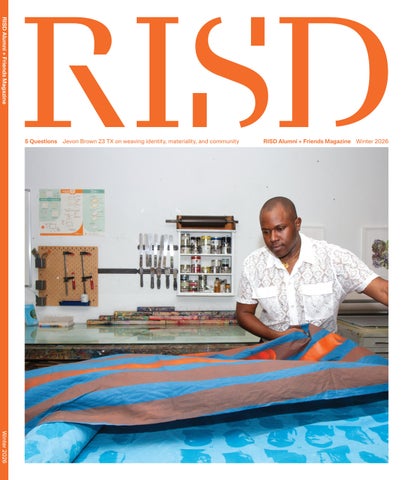
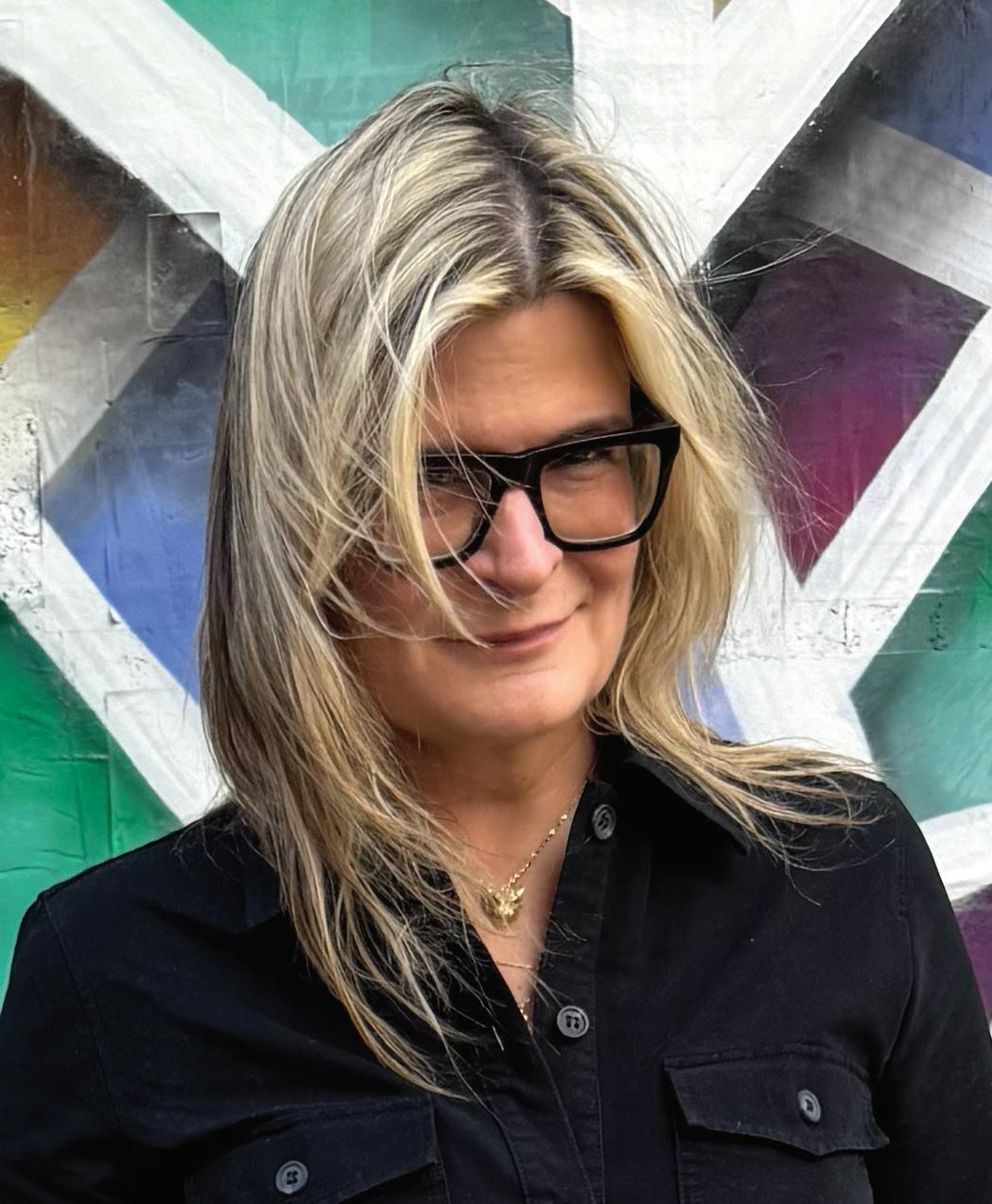
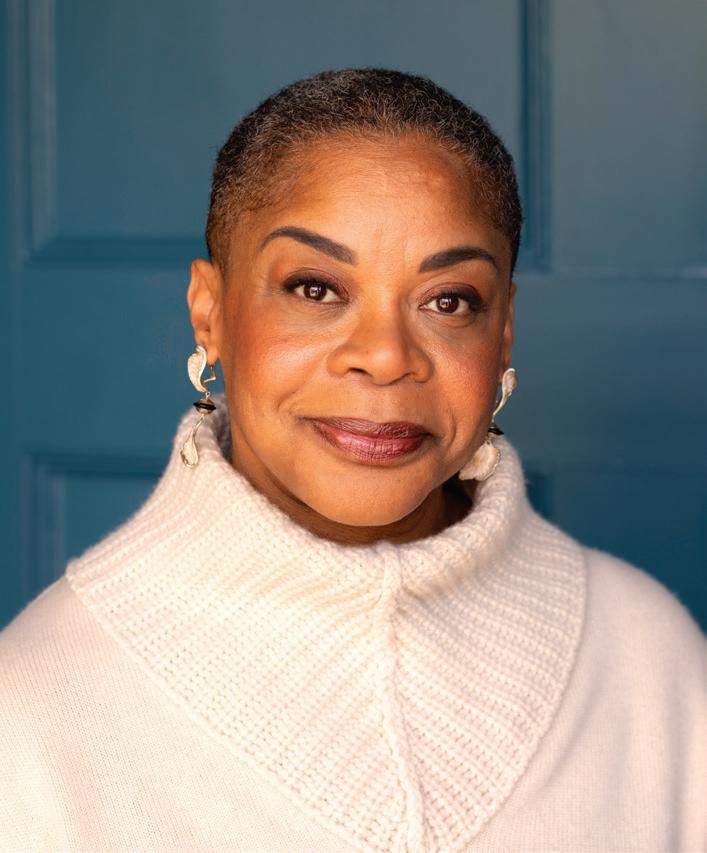
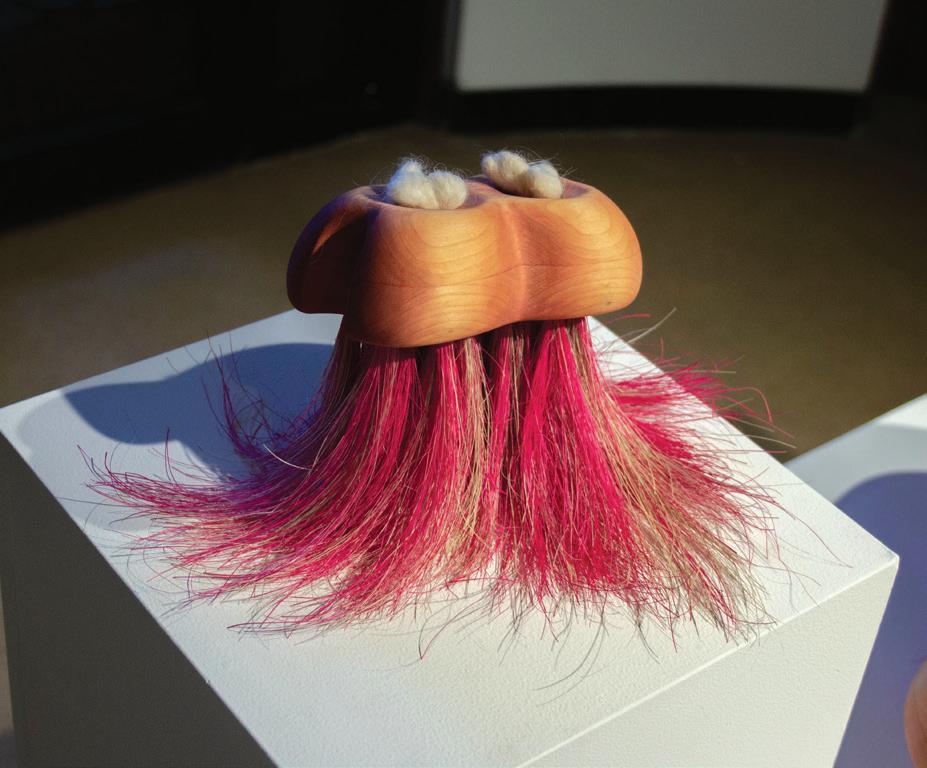
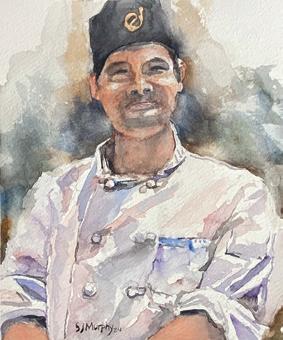
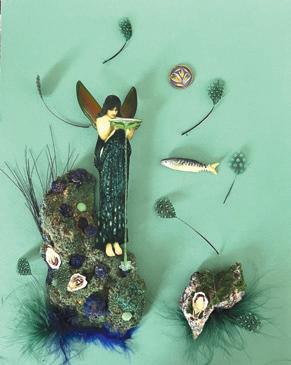
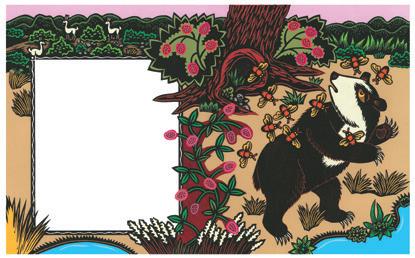
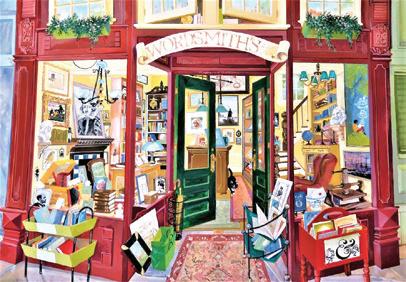
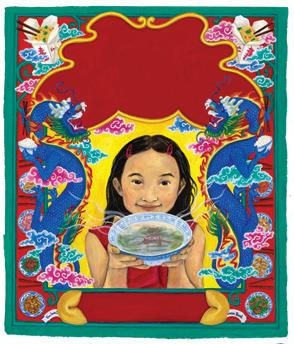
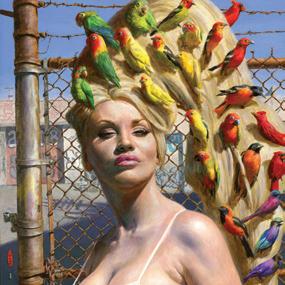
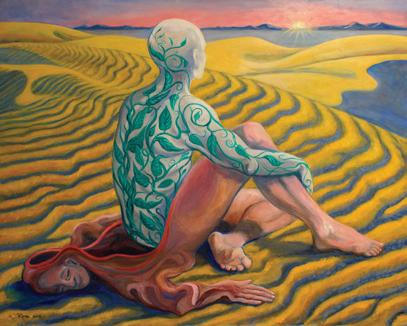
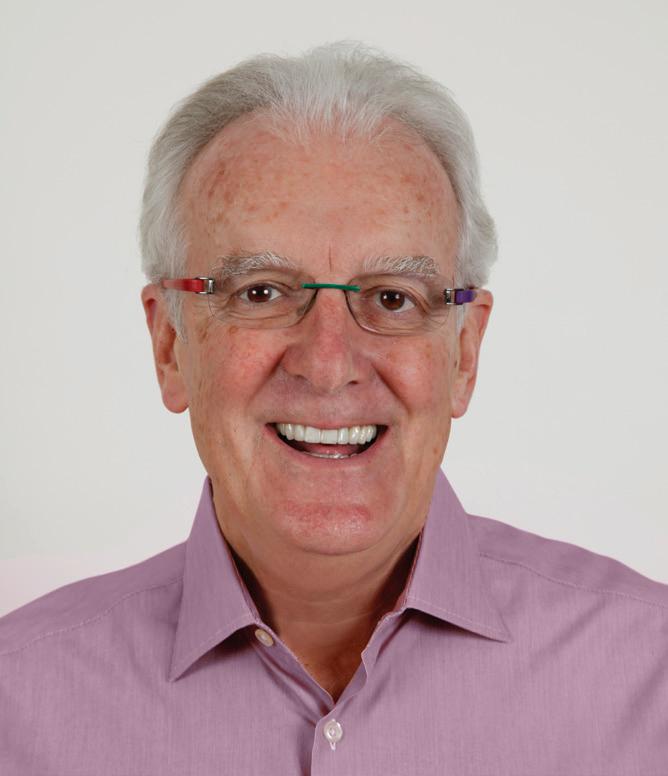
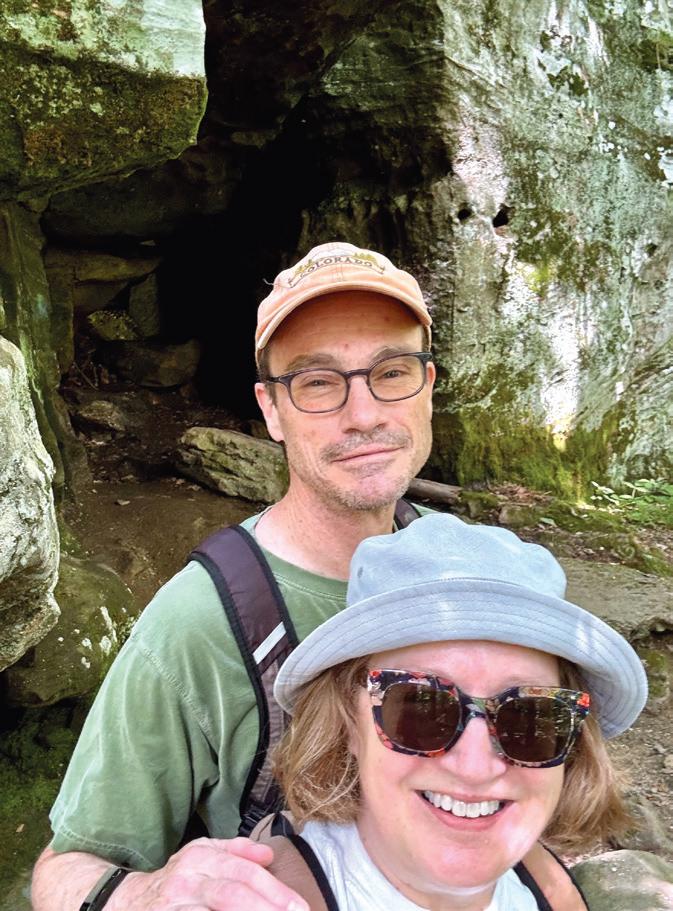
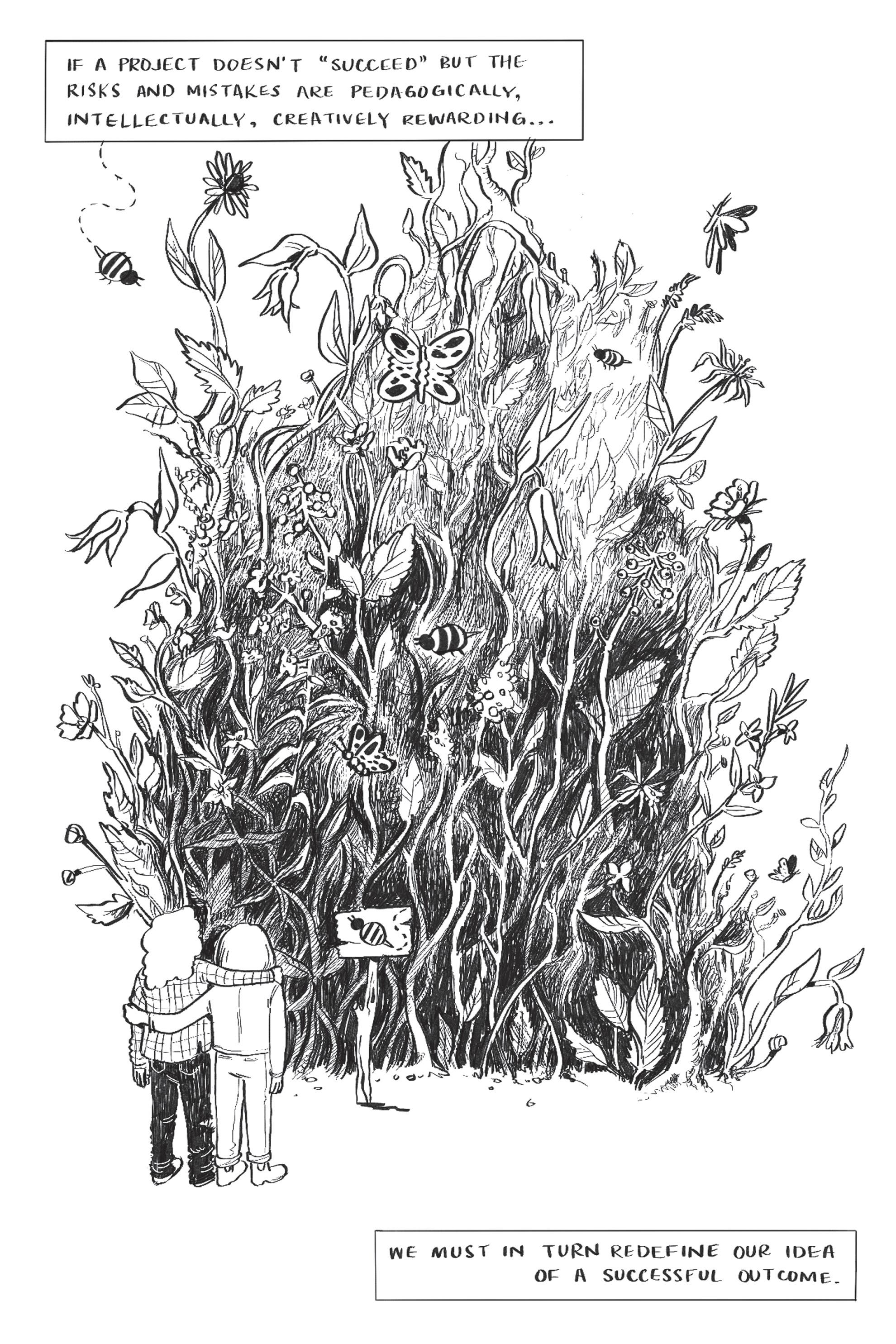
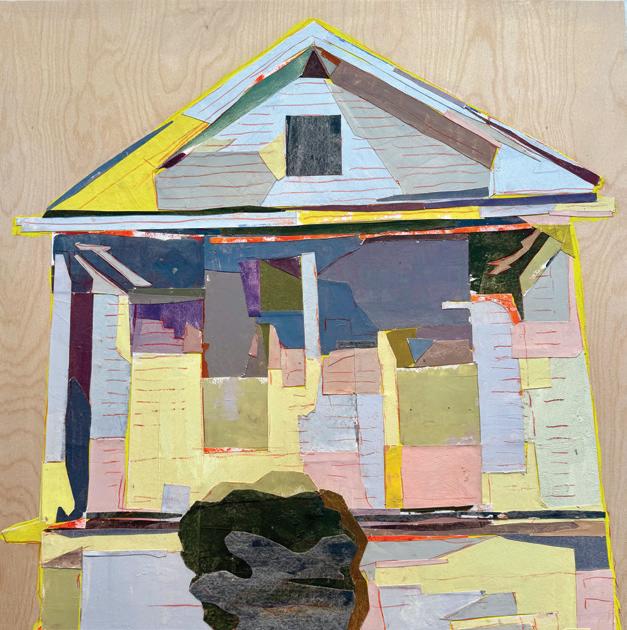
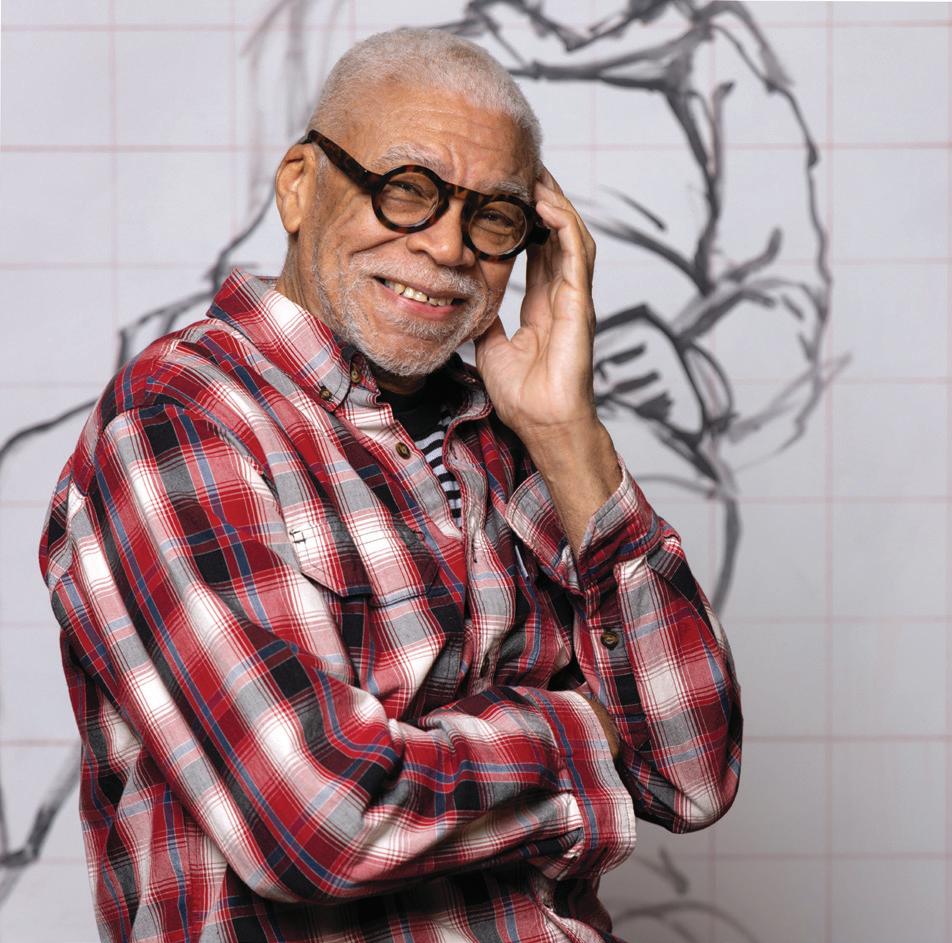
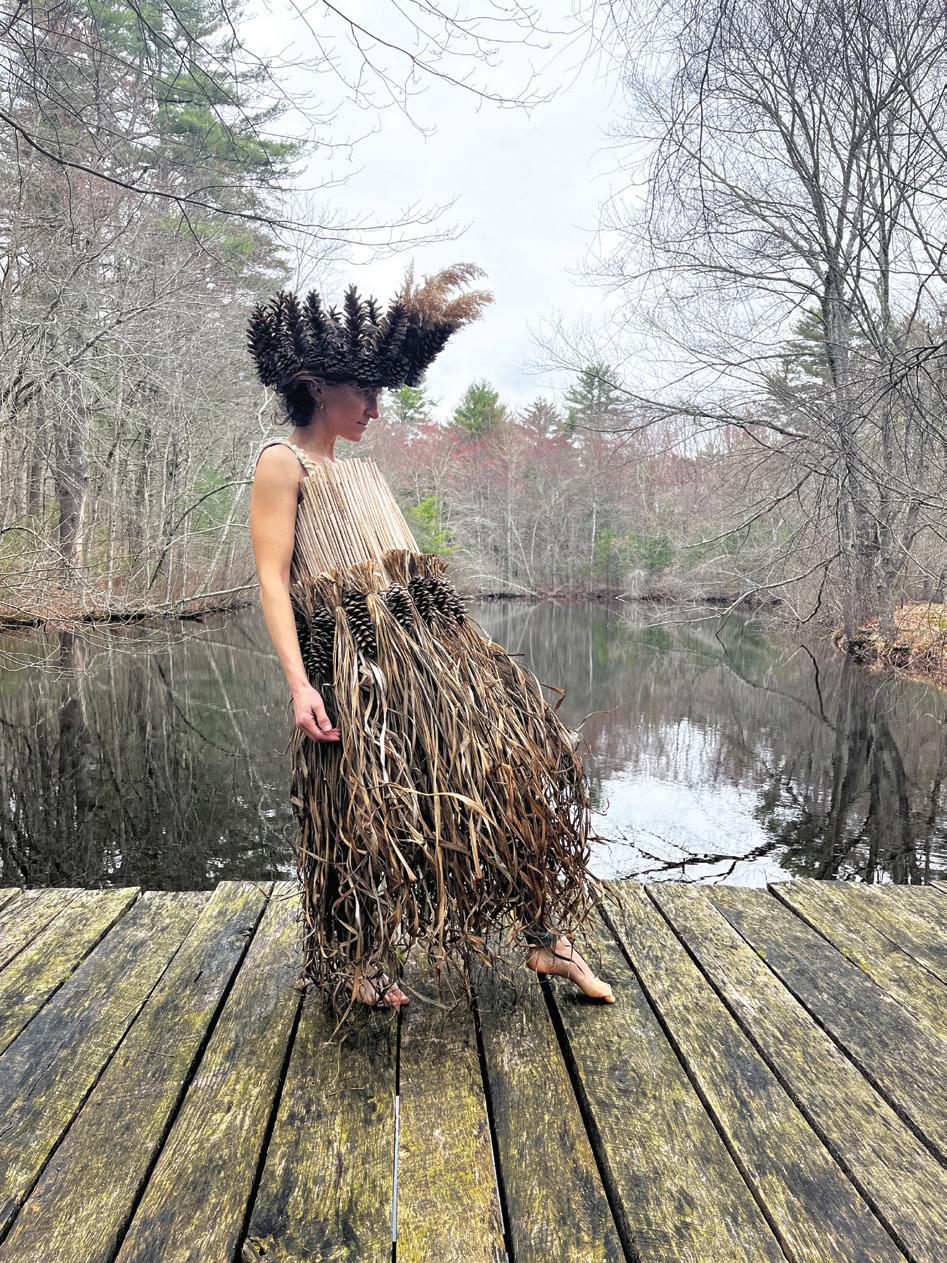
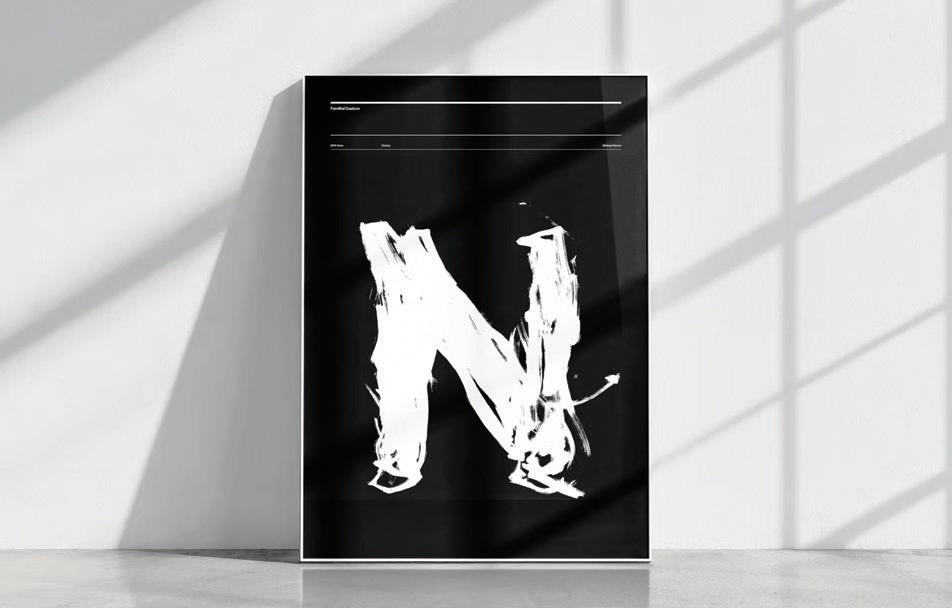
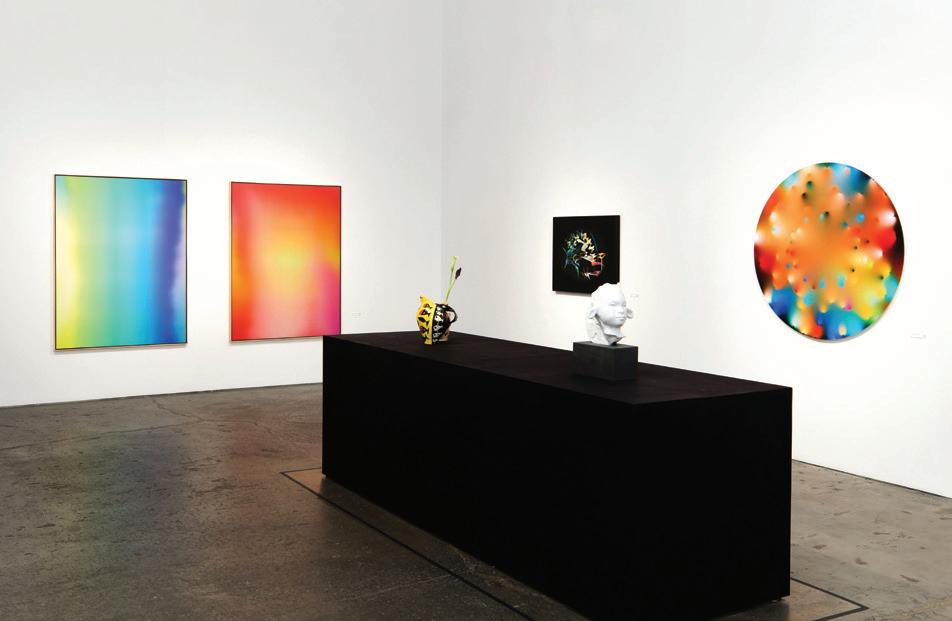
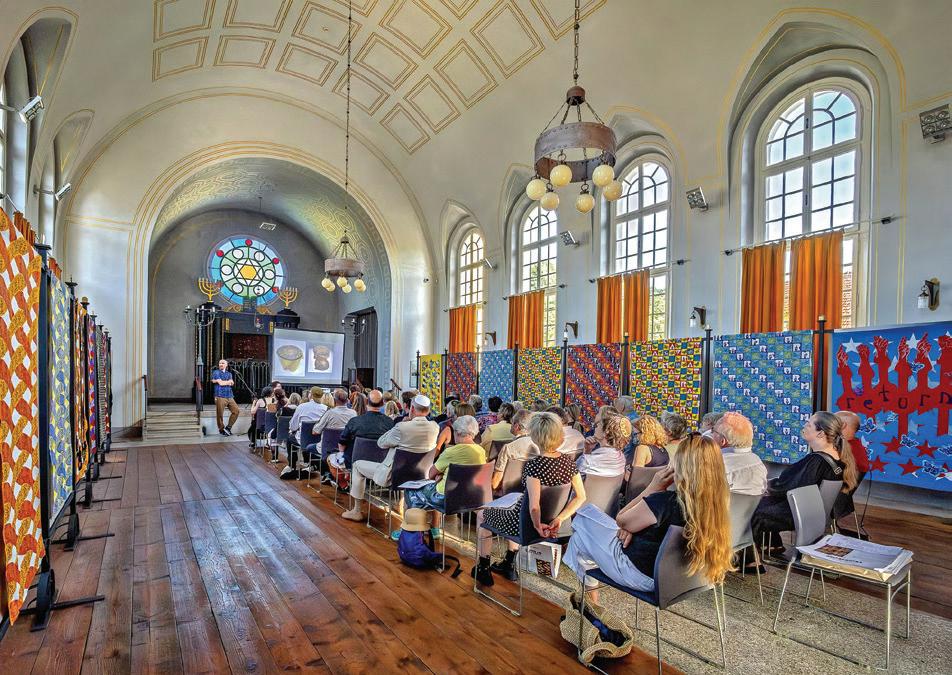
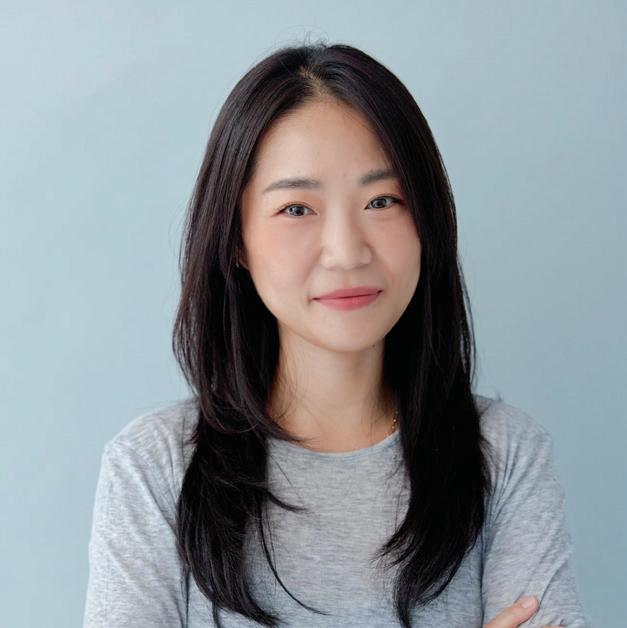
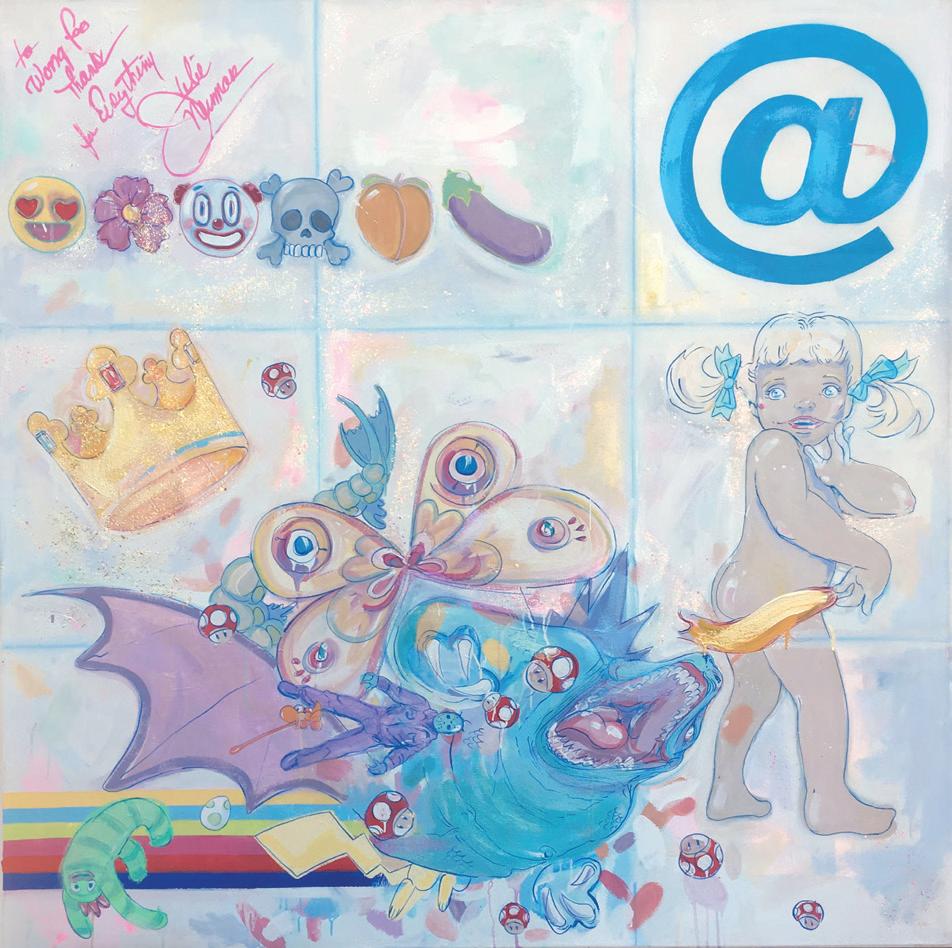
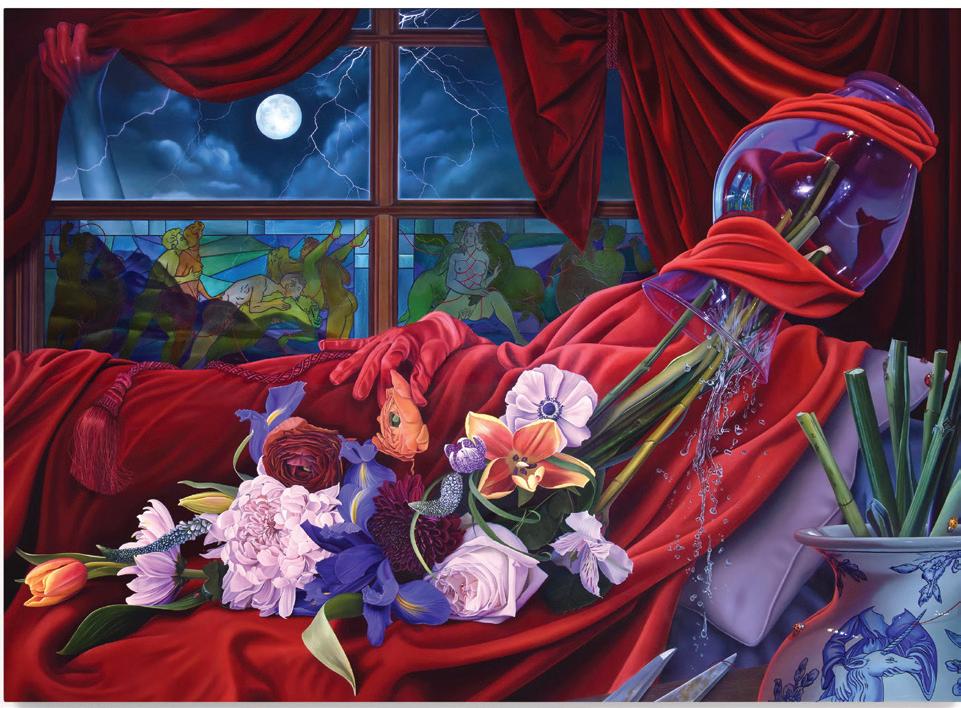
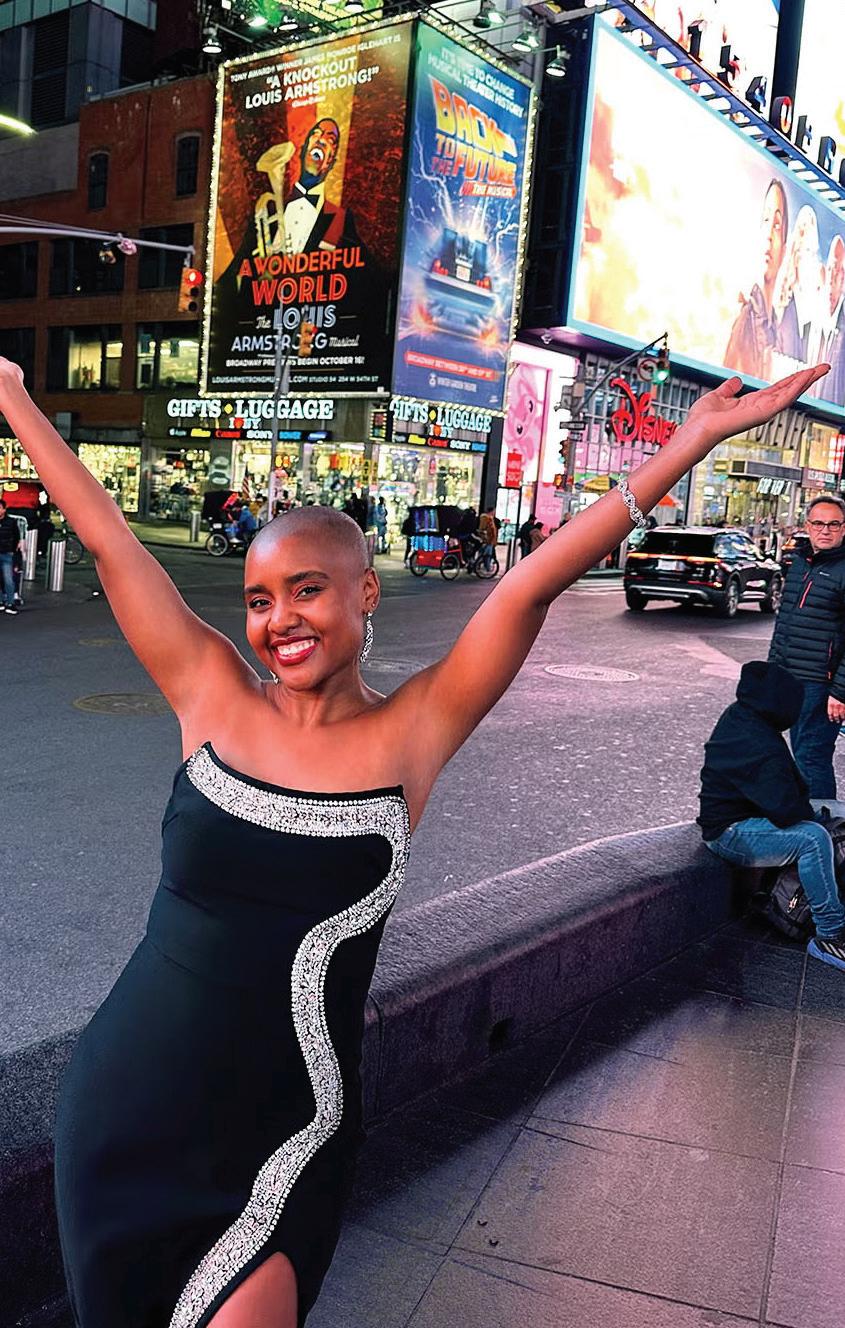
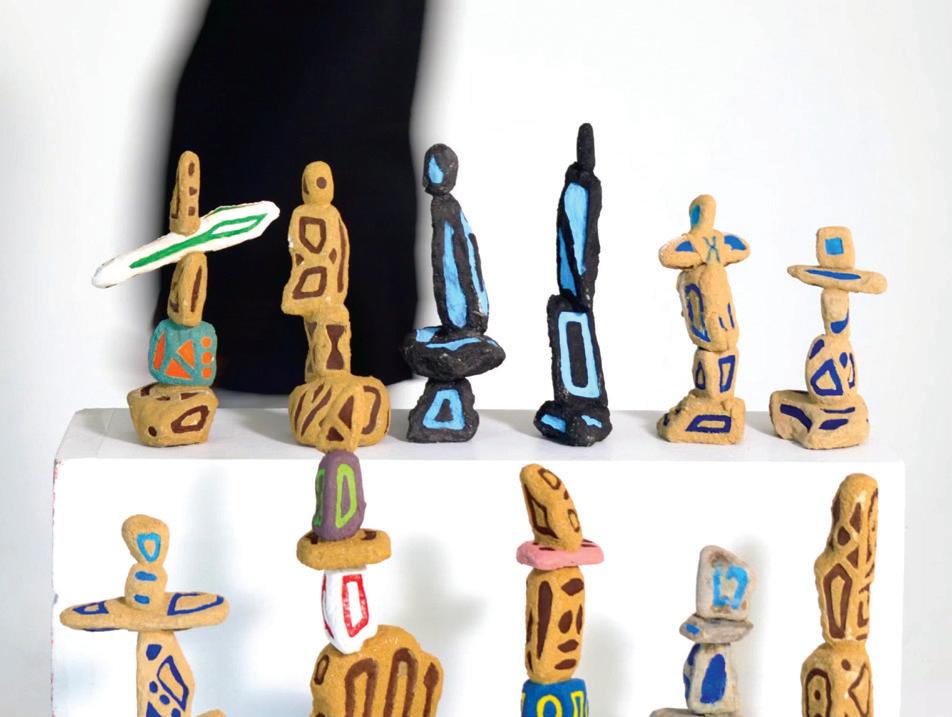
5 Questions Jevon Brown 23 TX on weaving identity, materiality, and community
Handcrafted Wonder
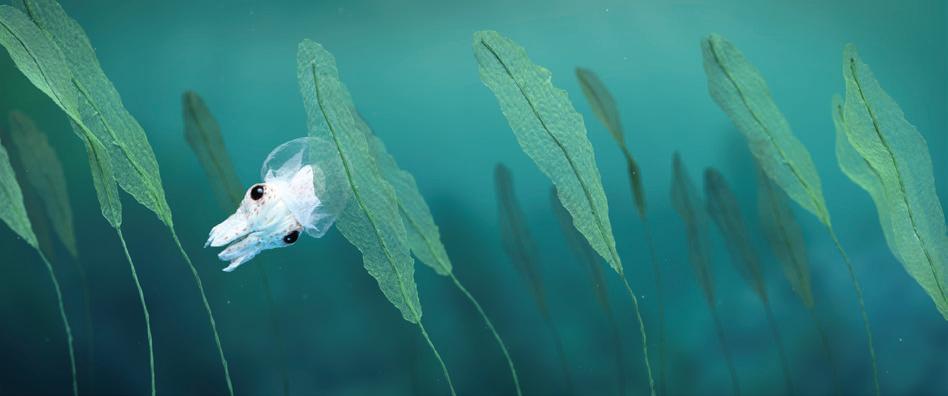
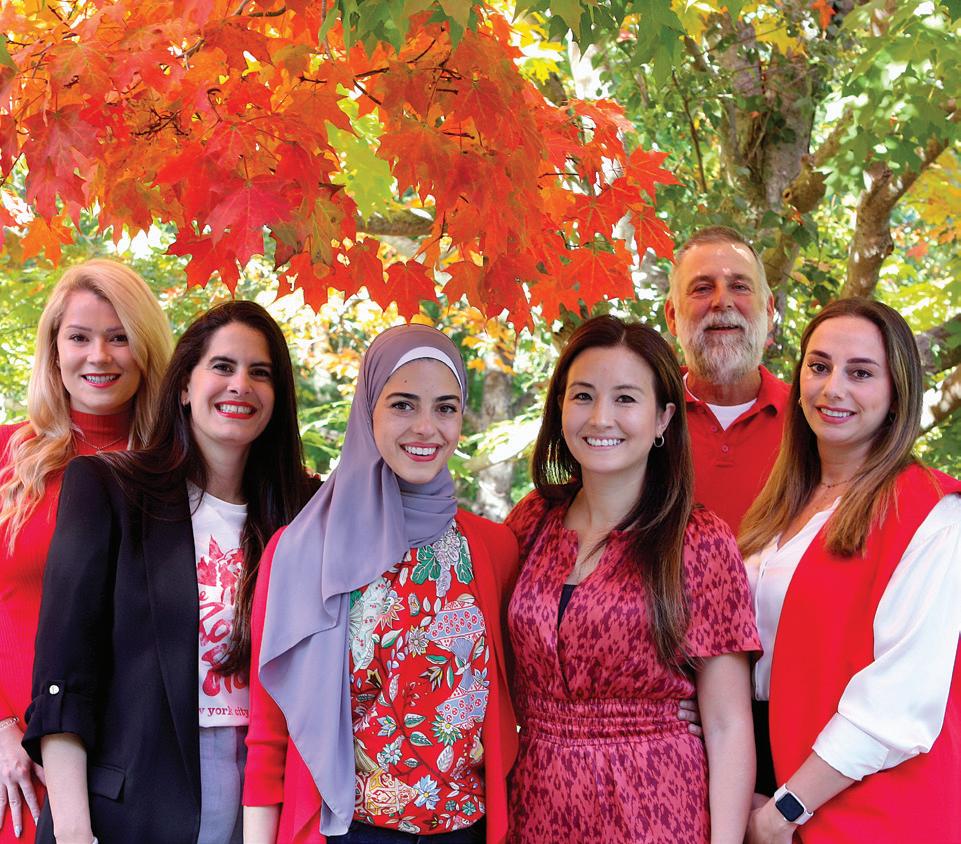
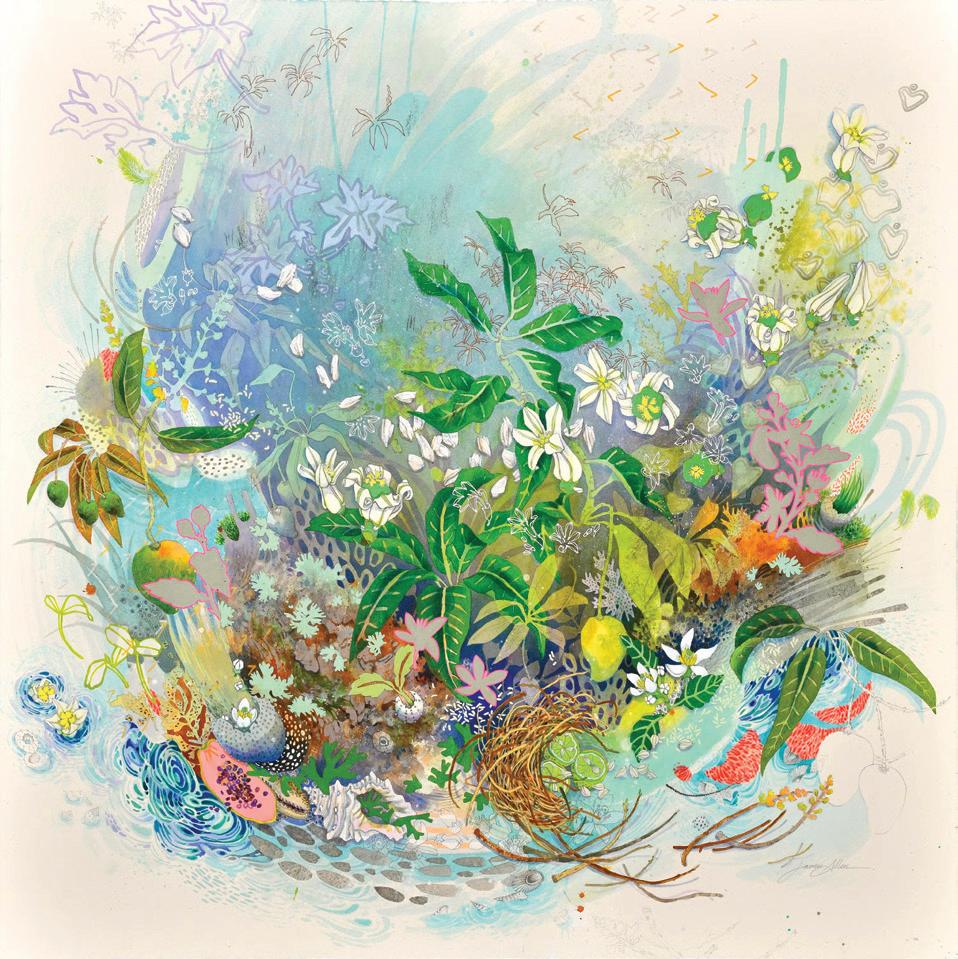
Meet the creative team behind the Emmy-winning docuseries Octopus!
Tiny Tutorials
Alumni share bite-size lessons in creativity.
38
Crafted from Origin
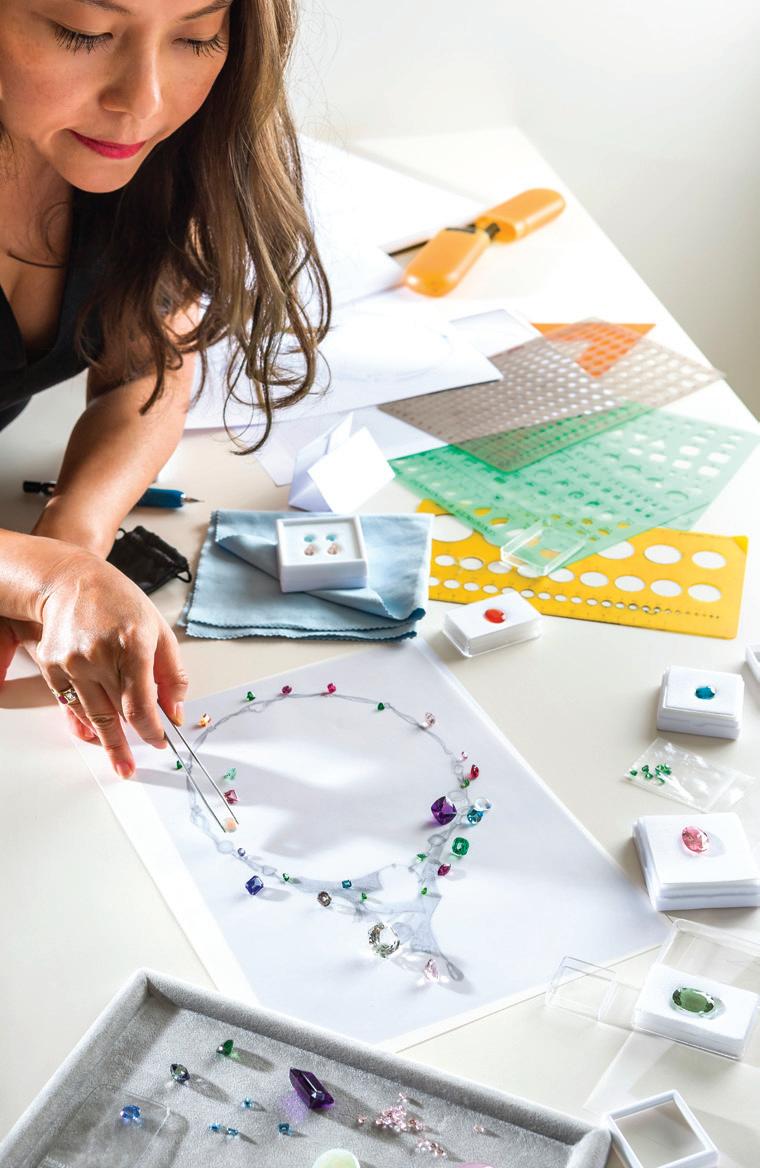
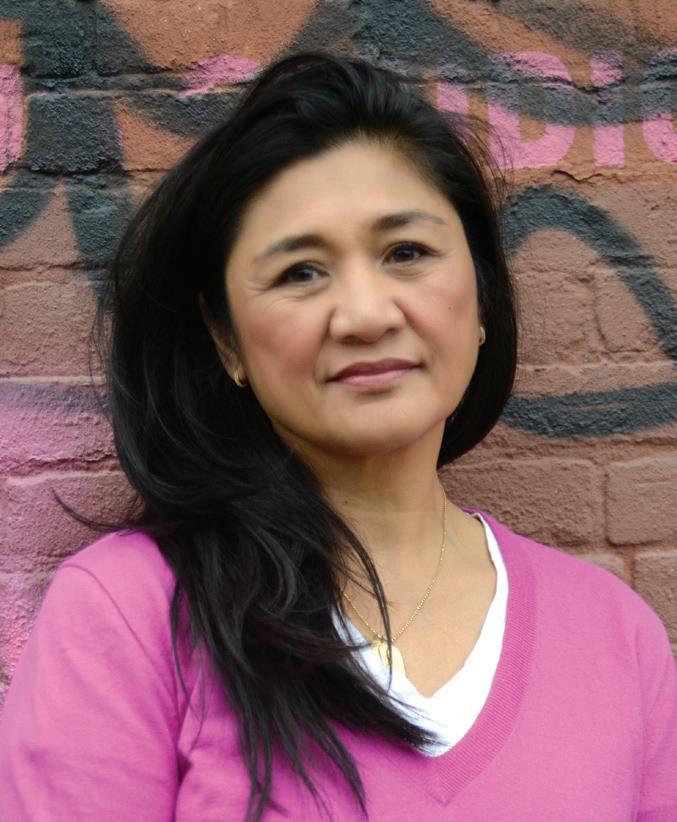
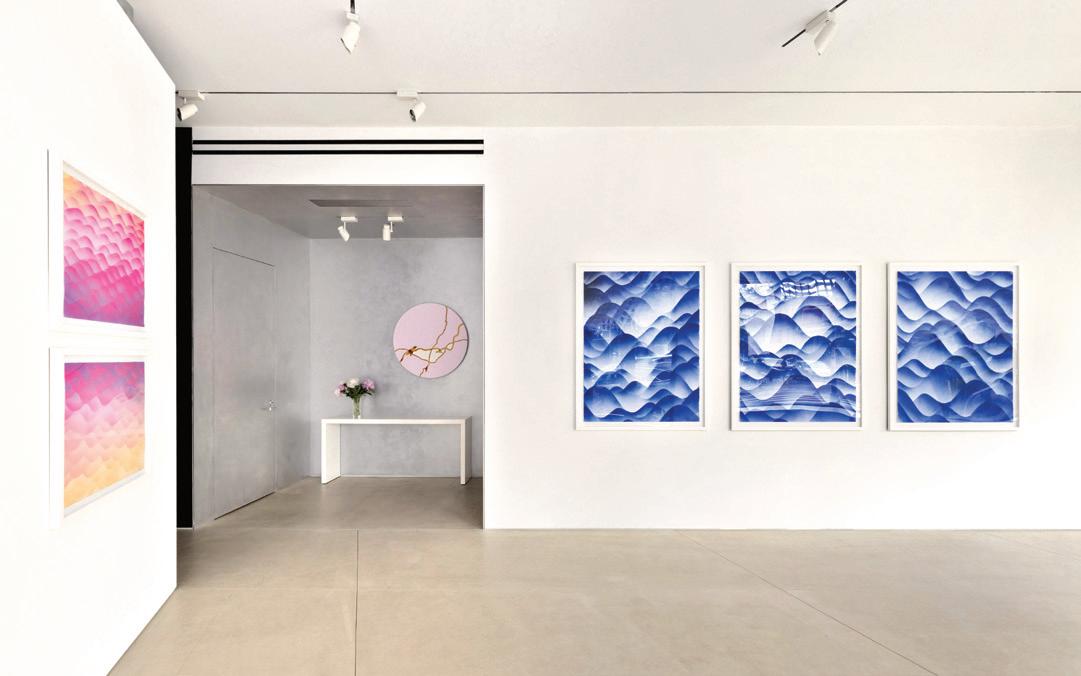
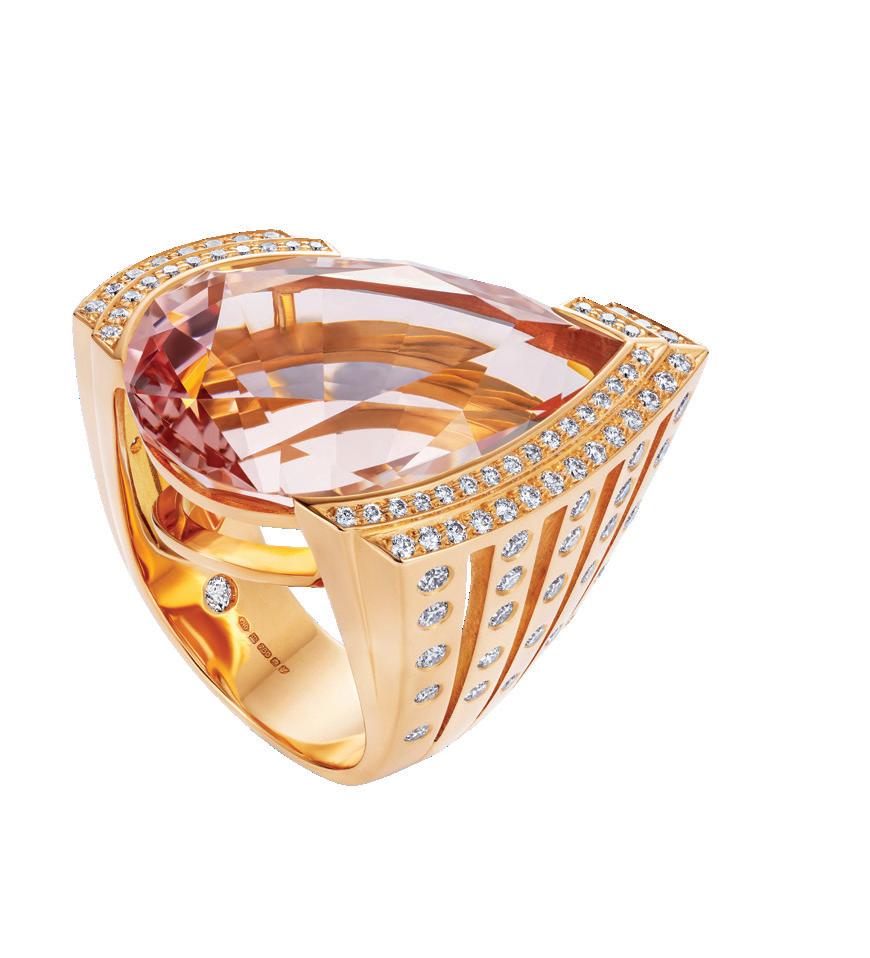
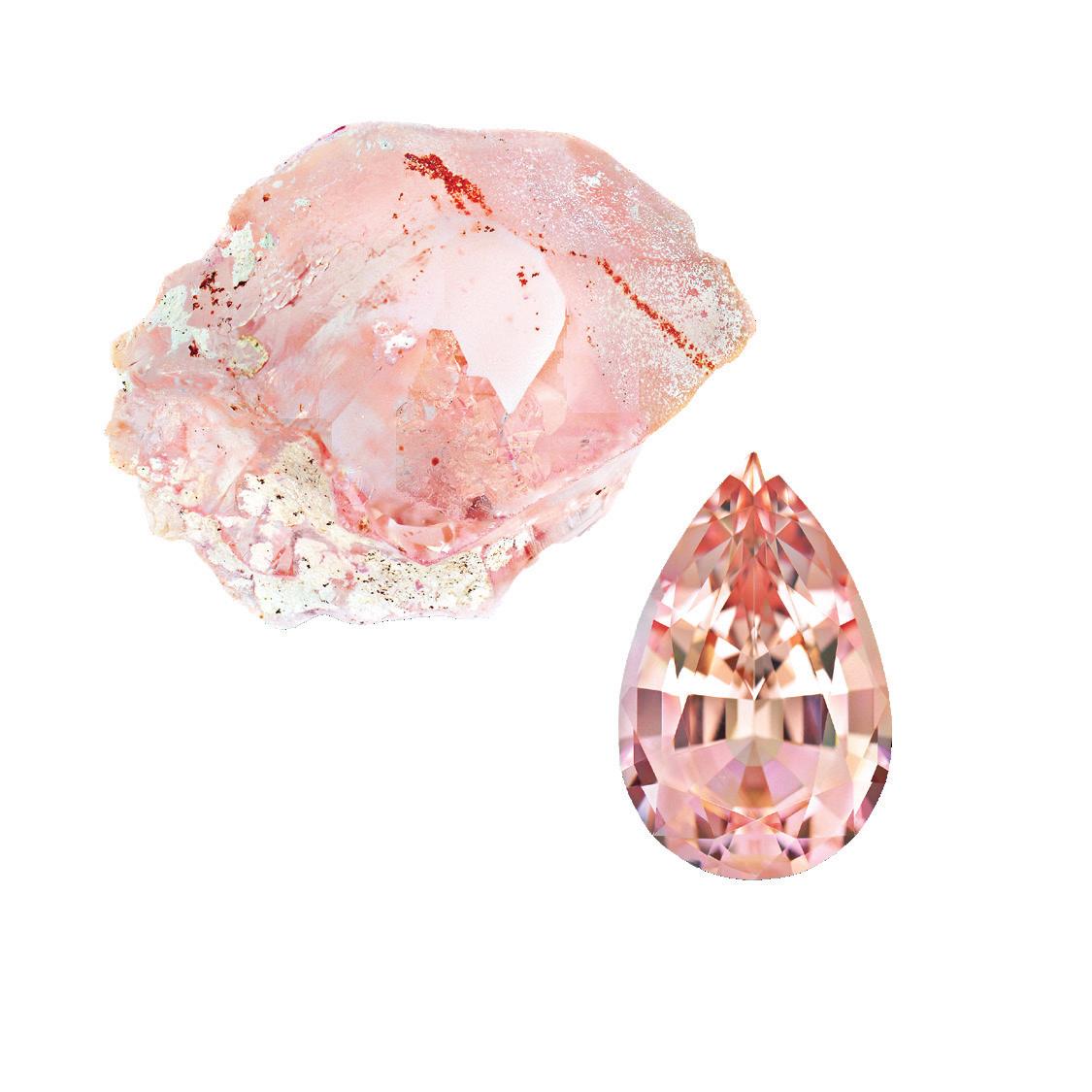
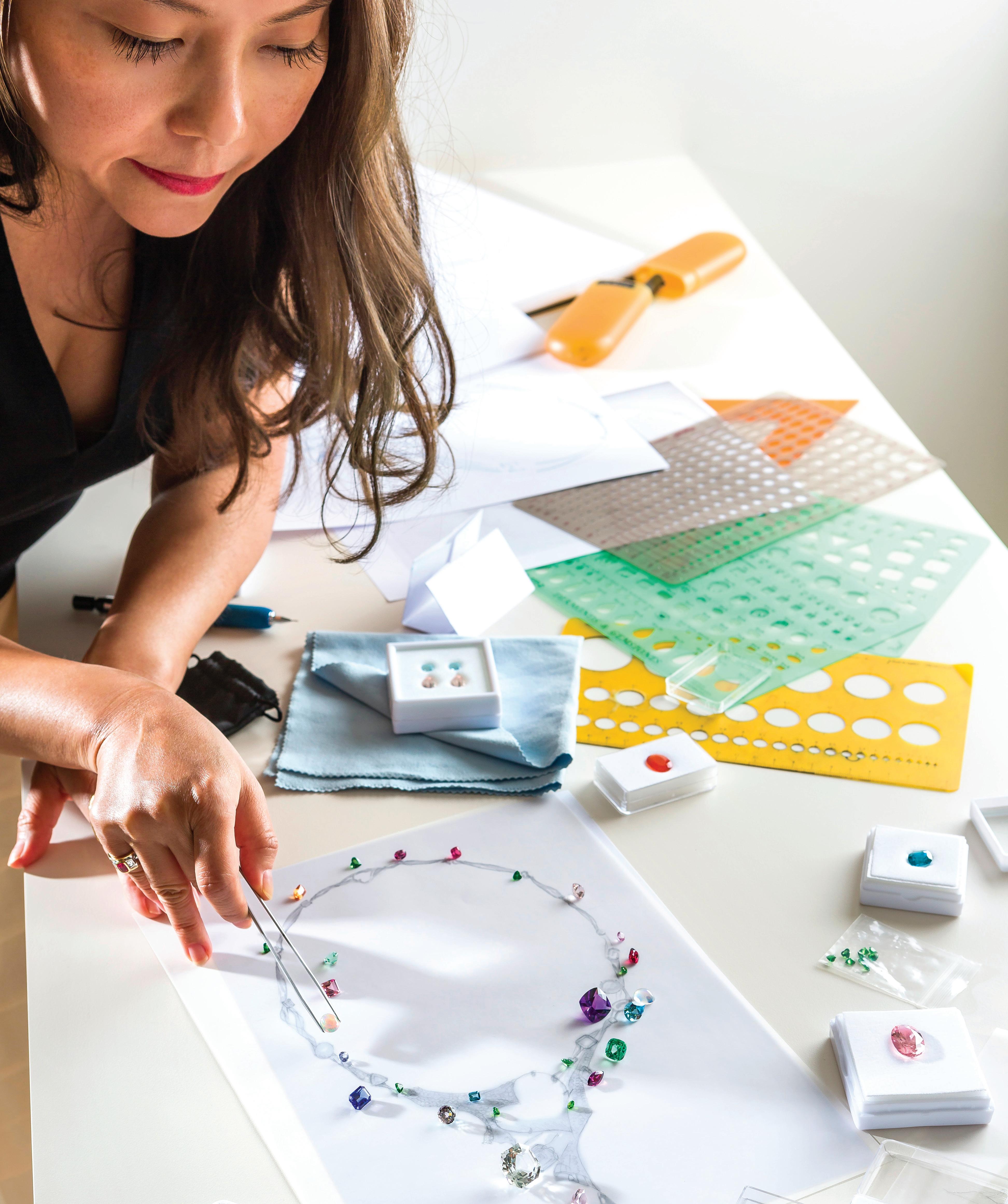
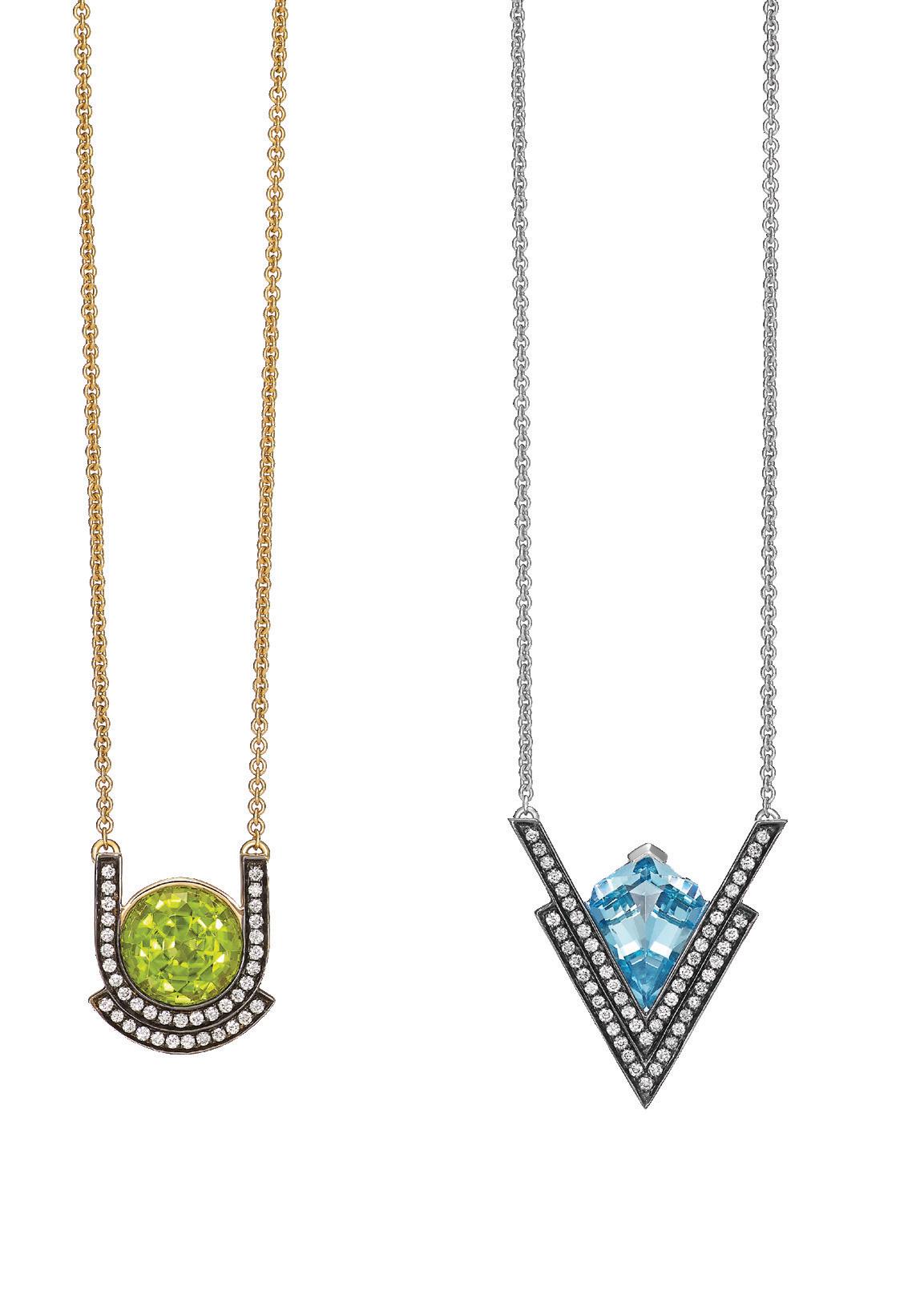
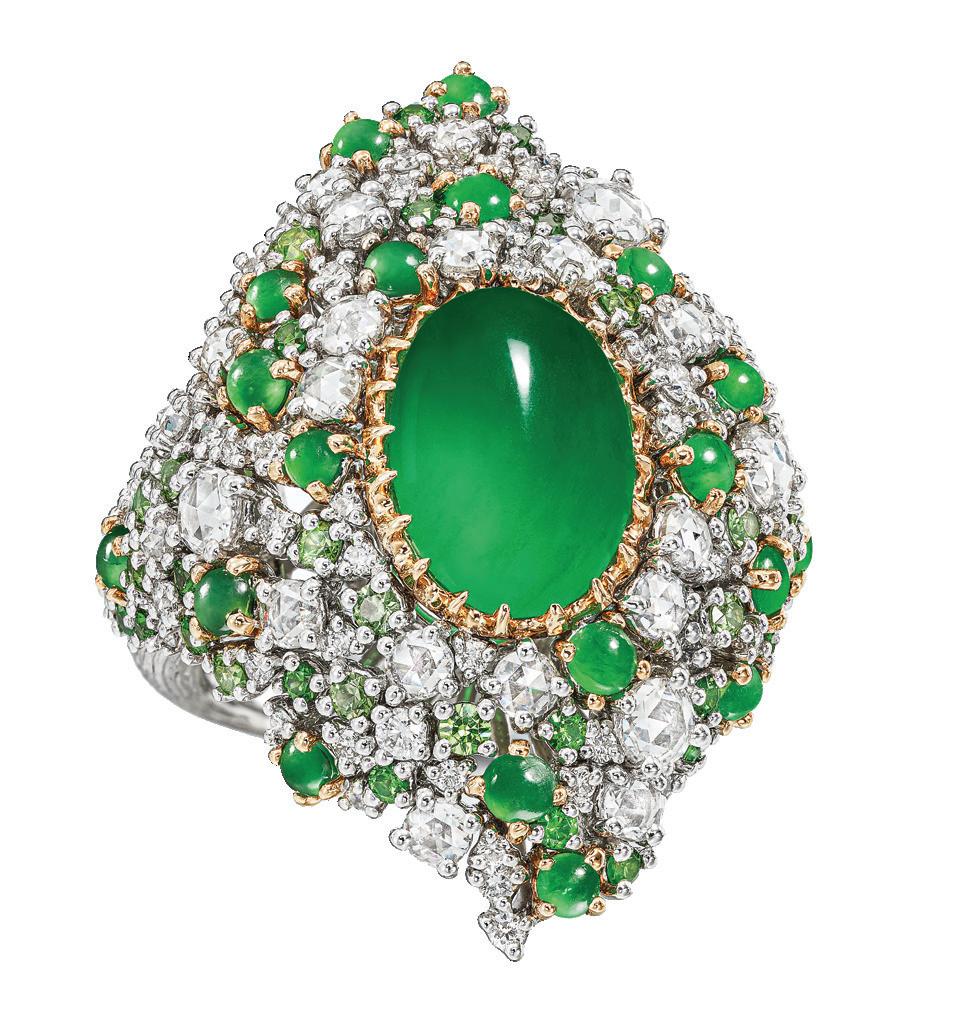
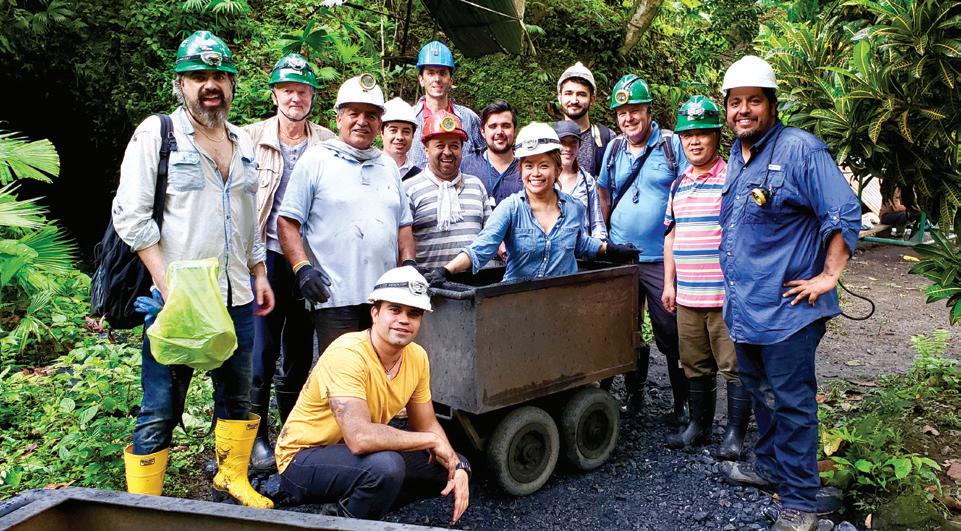
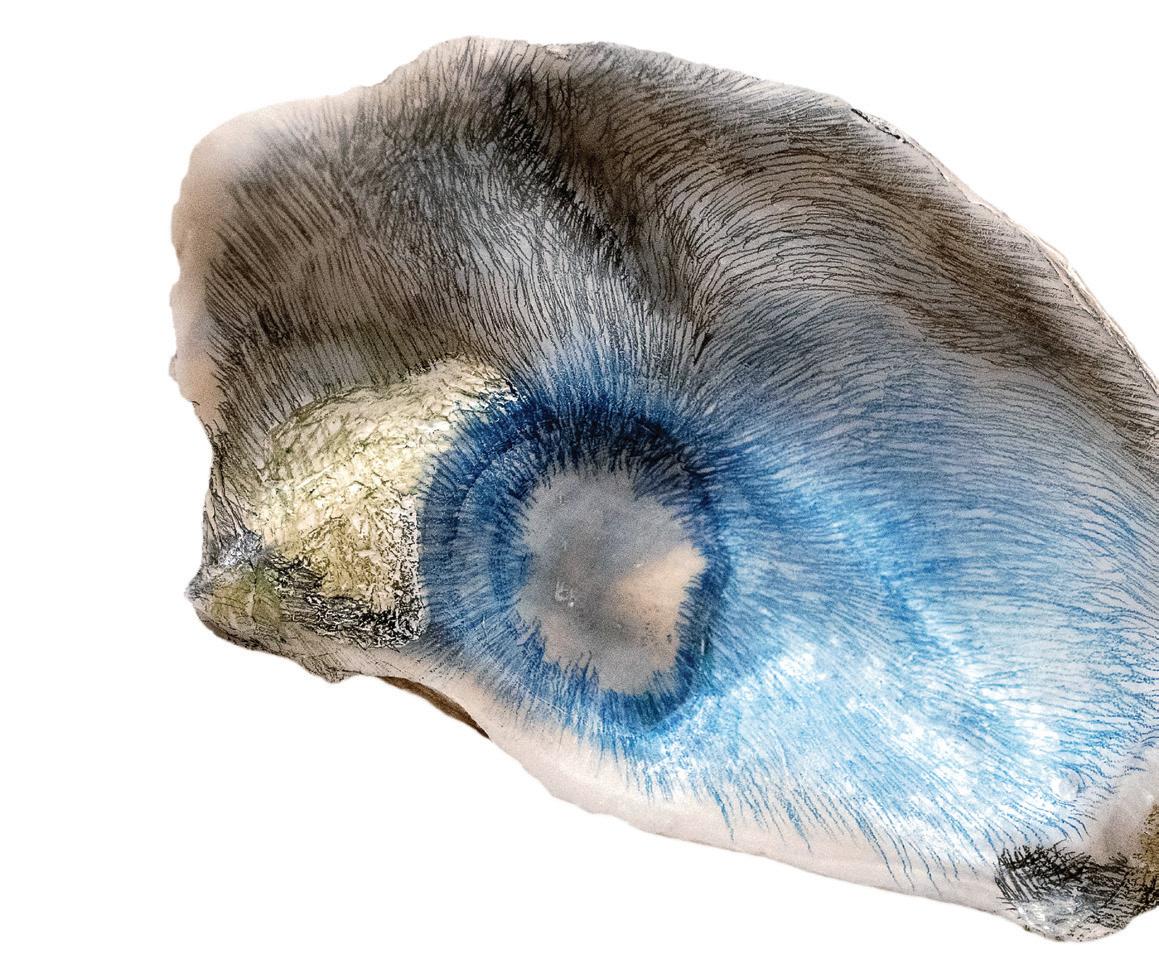
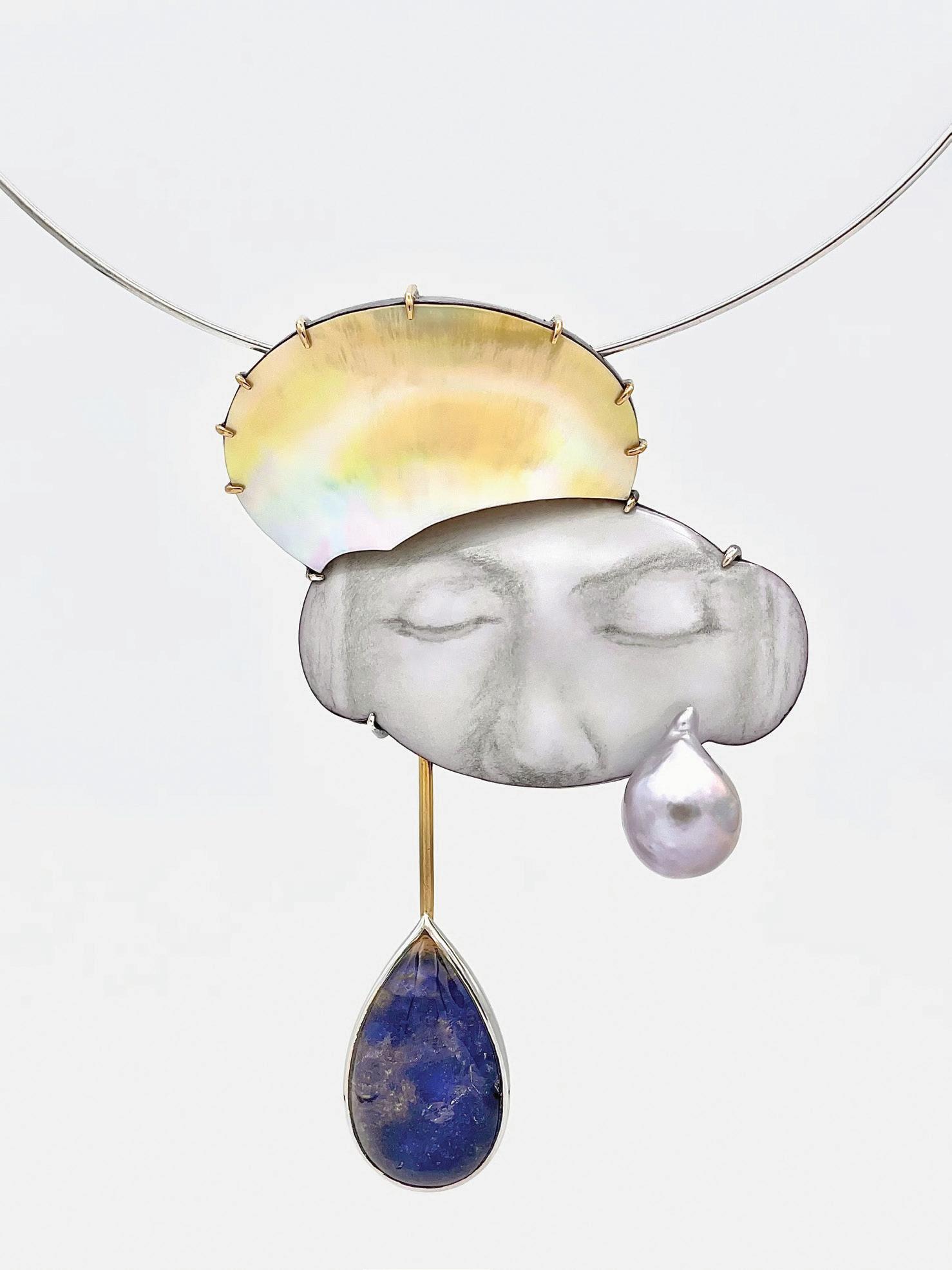
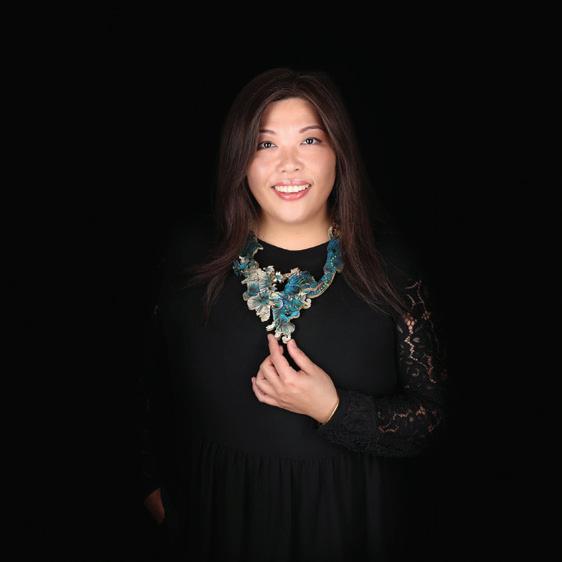
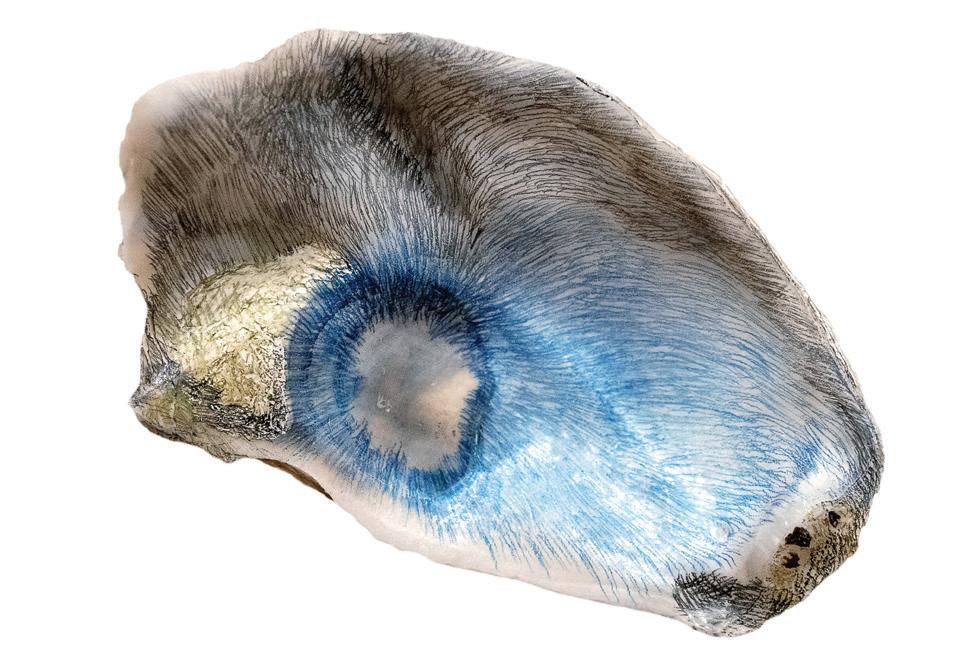
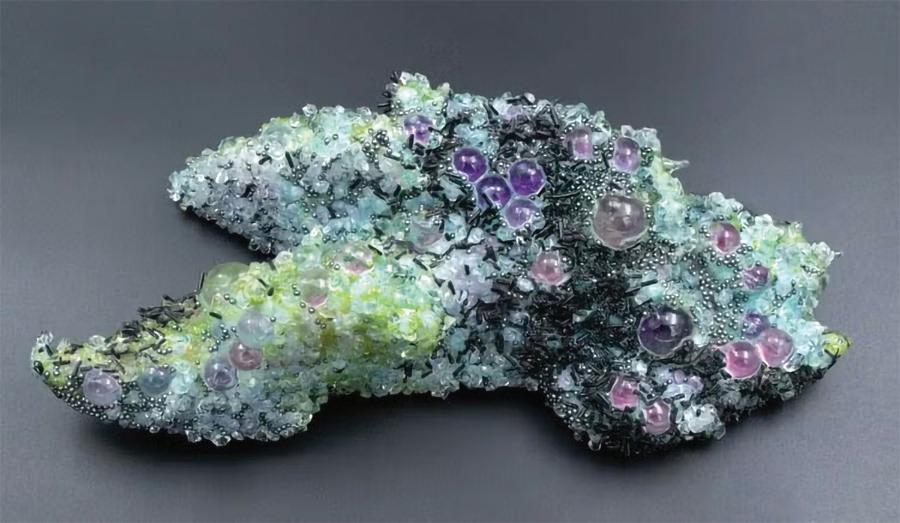
Pearl Ng 98 ID is on a global journey of making with meaning.
Noteworthy Class notes and alumni spotlights
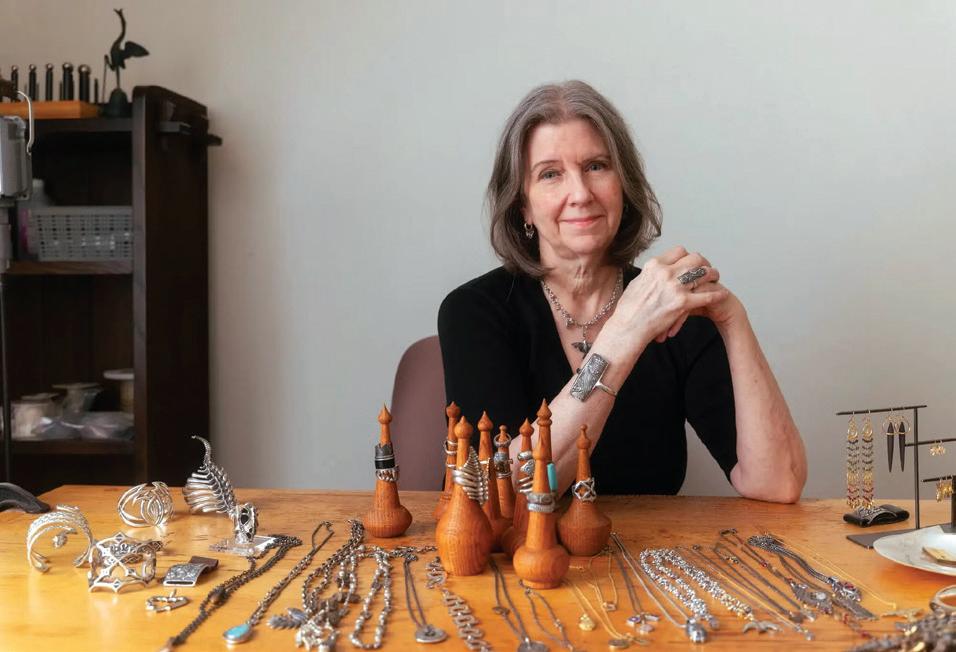
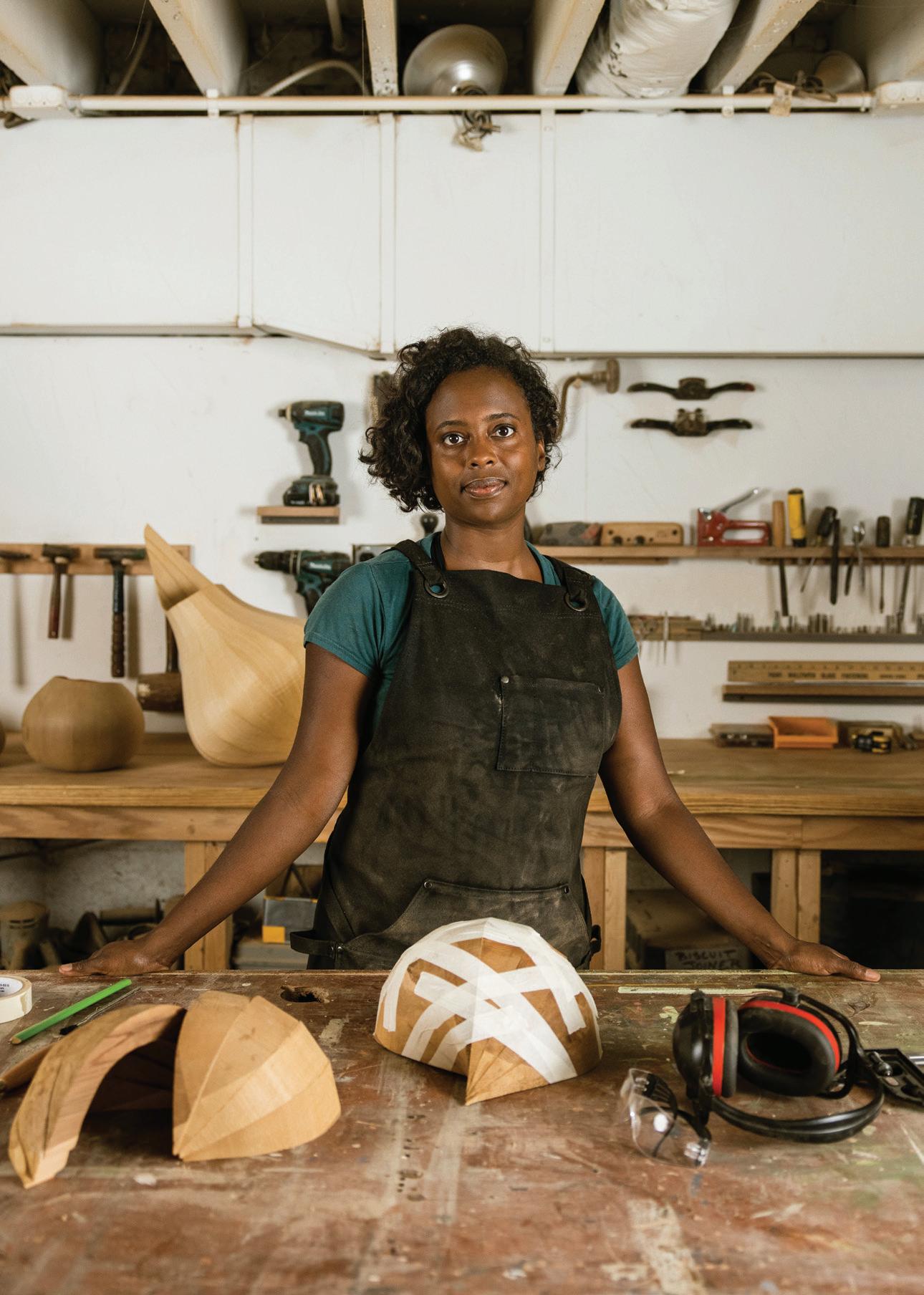
Studio Visit Join an alum in the space that defines so much
From the Alumni Association
President Sol Armada de la Cruz
Dear RISD alumni and friends,
It’s an incredible honor to step into the role of Alumni Association president and represent our creative community. With more than 33,000 alumni across 90 countries, it feels like no matter where I go, I meet someone who carries the RISD spirit. We all know it when we see it, and others do, too. RISD artists and designers think big, challenge conventions, design experiences, and imagine what’s next. I can’t think of a better community to belong to.
Together we form a constellation of thinkers and makers whose collective energy drives innovation. As Alumni Association president, I hope to help strengthen connections across generations, disciplines, and continents and through shared opportunities to learn, collaborate, and give back.
I’m especially inspired by the momentum building toward RISD’s 150th anniversary in 2027. I look forward to celebrating our legacy and RISD’s future with all of you and welcome your ideas for how we do this on a global scale.
Thank you for the creativity, generosity, and curiosity you bring to the RISD community every day. Our shared story continues, ever evolving.
Warmly,
Sol Armada de la Cruz 92 AP President, RISD Alumni Association
RISD Alumni + Friends Magazine
Chief Editorial Team
Gillian Kiley
Julie Powers
Class Notes Coordinator
Ellen Scotto-Bourget
Design
Once–Future Office
Contributing Writers
Jennifer Liese, Director, RISD Center for Arts & Language
Kaylee Pugliese, Marketing and Communications
Katelyn Silva
Simone Solondz, Marketing and Communications
Special thanks to the Office of Marketing and Communications
Publisher
Crystal Williams, President, Rhode Island School of Design
Amanda Clark MacMullan, Vice President, Institutional Advancement
RISD Alumni + Friends Magazine is published by Institutional Advancement. Vol. 4 Issue 1, Winter 2026, Copyright 2026, RISD. All rights reserved. Reproduction in whole or in part without written permission is prohibited.
Please visit alumni.risd.edu/form-selection to submit class notes for possible publication.
RISD Alumni + Friends Magazine is printed on Rolland Enviro, certified by the Forest Stewardship Council (FSC). Printed by Lane Press in Burlington, Vermont.
From the President
Last fall, I saw the Furniture Design department triennial exhibition. At RISD, triennials feature work by both current undergraduate and graduate students, as well as work by alums. They are wonderful opportunities to marvel at the range of practices our students embody, from traditional furniture design and lighting to experimental pieces and surprising takes on everyday functional objects. I was delighted by the intricate pattern carved on a wooden table, the cleverness of a curvaceous mirror flanked by a slight storage shelf, and how the metal shades on a floor lamp were pleated and folded, creating an exciting juxtaposition between light, metal, and wood. Witnessing the outcome of creative thinking, critique, and iteration really impressed on me the incredibly bold and courageous undertaking it is to stretch as a maker and thinker. There is so much magic here!
Creative. Daring. Limitless = RISD!
In 2027, RISD celebrates its 150th anniversary, amplifying its legacy of training generations of dynamic artists, designers, creative thinkers, and entrepreneurs who have shaped cultures around the world. Across industries and genres, and from neighborhoods to continents, RISD alums have contributed questions and ideas that have made our world more joyful, more beautiful, more sustainable, and more liveable. Over the next year in this magazine, our website, newsletters, and other touchpoints we will be sharing memories of RISD’s first 150 years as we look toward its next 150. I hope you will enjoy reminiscing about your favorite campus venues and learning about new developments, catching up with alums who share stories about how RISD has shaped who they have become, and celebrating the myriad ways in which RISD is helping to reimagine our world.
Crystal Williams, RISD President
Illustration Department Celebrates 75 Years
RISD’s Illustration department marked its 75th anniversary in 2025 with a celebratory exhibition featuring work by more than 200 alumni. Organized by Department Head Robert Brinkerhoff and Institutional Advancement, the show’s closing reception drew hundreds of attendees during Families Weekend in October.
“As RISD’s largest major, Illustration is home to about 300 undergraduates and 30 MFA students with wide-ranging interests,” notes Amanda Wright, Executive Director of Donor Relations and Engagement. “We invited alums to share whatever they felt best reflected their creative journey a painting, a book illustration, a film still, and more.”
To encourage participation, submissions were gathered electronically and laser-printed at RISD. The work spanned 67 years of graduates, from 1958 to 2024, and included luminaries such as painter Eric White 90 IL, graphic novelist Brian Selznick 88 IL, and award-winning children’s book authors Grace Lin 96 IL/HD 25 and Jarrett J. Krosoczka 99 IL.
“The breadth of possibilities for Illustration alums is what makes the department so popular,” says
Brinkerhoff. “Our alums do everything from designing films to working as photographers, art directors, and gallery artists.” Since its founding, he adds, the program has emphasized drawing, painting, and narrative image making. And while markets change, “there is always a need for visual materials to embellish, explain, underscore, express, and communicate.”
The 2022 launch of RISD’s MFA in Illustration added a civic-minded dimension focused on social and political concerns. “Our grad students are interested in using their talents to effect change,” Brinkerhoff notes.
A catalogue accompanying the exhibition highlighted alum voices. “At RISD, illustration has always been about more than just pretty pictures,” says professor and alum Fred Lynch 86 IL. “It’s about the visual expression of meaningful ideas. This show celebrated that tradition.”
Interior Architecture Shapes Community
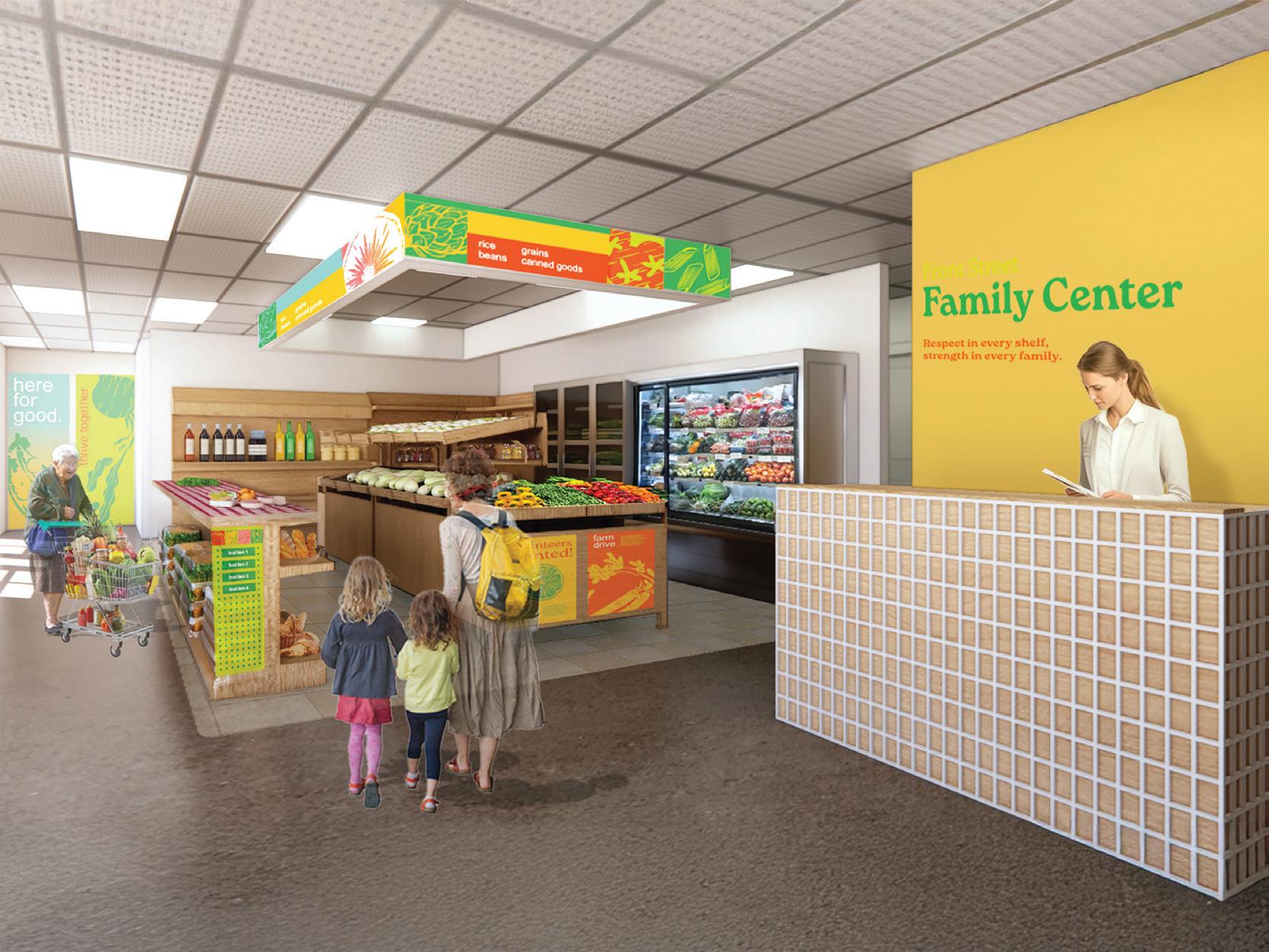
Earlier this year, Interior Architecture students gathered at Millrace Kitchen and Events in Woonsocket, RI for their annual design charette a five-day, hands-on challenge to strengthen a local community space through design. This year’s focus: reimagining a pantry space at the Front Street Family Center, which has outgrown its footprint and feeds more than 250 families each week.
“The work you’re doing has a real impact on our community,” said Erin Spaulding, executive director at Connecting for Children and Families (CCF), as she welcomed the students. Joined by Rhode Island Community Food Bank COO Jen Tomassini and NeighborWorks Blackstone River Valley’s Meghan Rego, Spaulding encouraged students to think beyond function. “People come here for human connection as well as food,” Tomassini explained.
Eight teams of graduate and undergraduate students, each led by a RISD faculty member, toured the center’s pantry, boutique, offices, and kitchen before diving into ideas aimed at making the space more efficient, dignified, and welcoming, from improving circulation for food deliveries to adding
spaces where families can meet with staff.
“Community engagement is an important way for designers to help their neighbors,” said Interior Architecture Critic Elizabeth Debs. “The point of the annual charette is to use our design skills to make the world a little bit better.”
The teams turned sketches into thoughtful, budget-friendly proposals that improved layout and flow. At week’s end, the RISD community voted on their favorites. Pathways to Plenty won first place for dissolving the institutional feel and encouraging connection. The Harbor: A Place of Arrival earned second for its calm, harbor-inspired spaces, while Hub & Spoke placed third with a cost-conscious redesign using existing materials.
CCF’s Spaulding says the students’ renderings will help guide renovations and support future grants.
“I’ve learned so much from the students about line of sight, budgeting, and more,” she said. “Their ideas truly strengthen what we can offer our community.”
Loop Lab Promotes Material Circularity
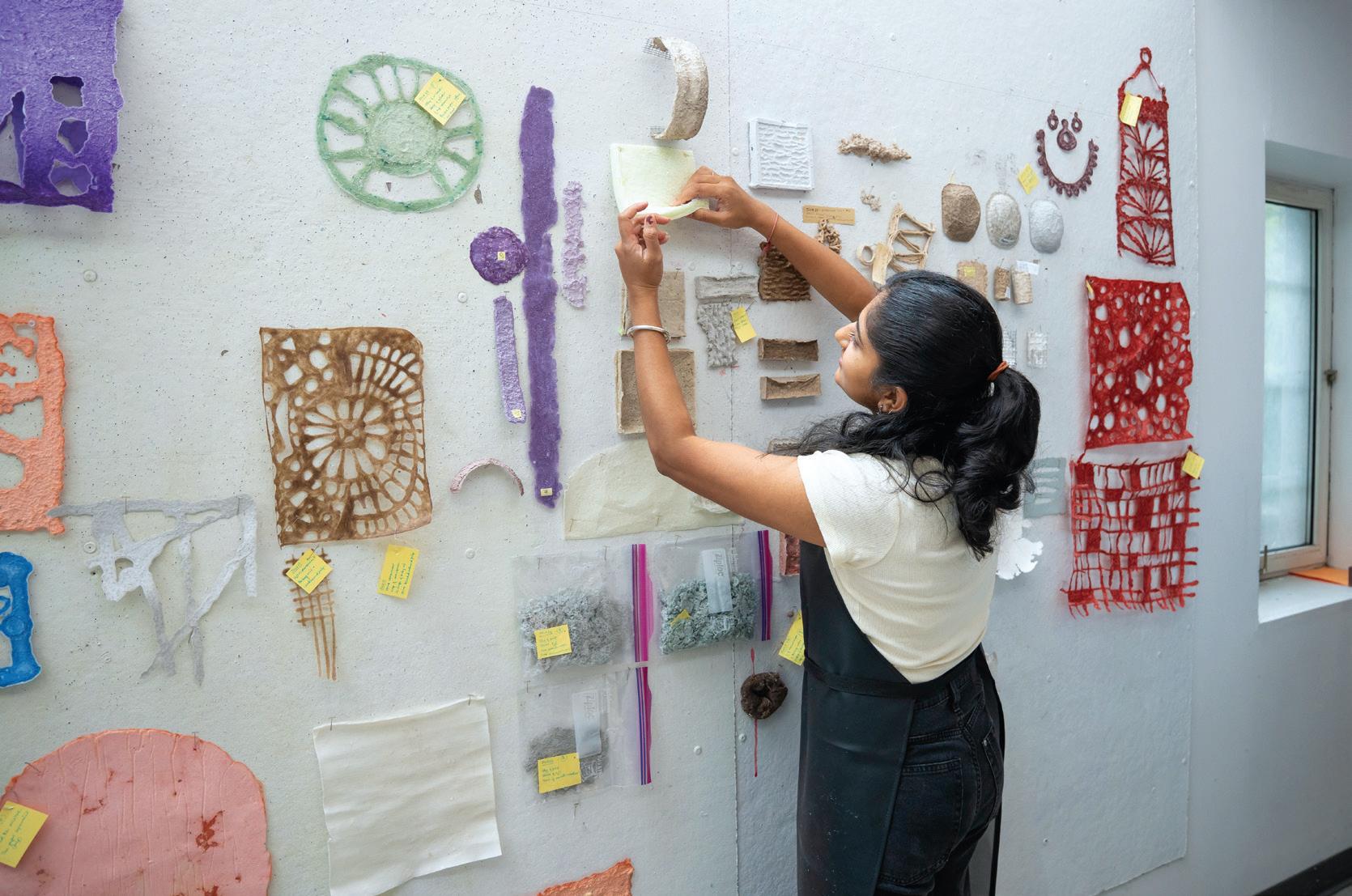
A new initiative at the Edna W. Lawrence Nature Lab is converting RISD’s own waste streams into raw materials for creative practice. Called Loop Lab, and funded with a $100,000 grant from the Maxwell/ Hanrahan Foundation, the pilot project kicked off in the summer of 2025 by reclaiming discarded materials from academic departments and converting them into new paper, slurries, bricks, and clays that can be used in both analogue and digital fabrication, including laser cutting and 3D printing.
Loop Lab helps foster a more regenerative future for RISD, says Jennifer Bissonnette, the Houghton P. Metcalf, Jr. (HD 96) Director of the Nature Lab, while engaging student and faculty ingenuity.
Students work with Loop Lab faculty liaison and project coordinator Haley MacKeil MFA 21 PR, who teaches in the Experimental and Foundation Studies (EFS) division, to collect fiber waste including blotter paper, cardstock, cotton muslin, denim, used drawing pads, matte boards, newsprint, and other biodegradable and plastic-free materials. Beginning with papermaking techniques, the group researched and documented novel methods of converting
unwanted items into new art and design supplies, exploring processes ranging from vacuum forming to liquid paper extrusions and foams. The resulting materials are available for students through Second Life Exchange, a depot for free, upcycled art materials on campus. Recipes for creating materials ranging from foams to 3D prints and techniques for working with the materials are showcased on the Nature Lab website naturelab.risd.edu/research/looplab
Disha Dharesh Kumar Rajashekaria MID 26 hangs up a piece of newly created paper foam at the Loop Lab.
Image by
Celebrating RISD’s 150th with A Students’ History of RISD”
This year, the Fleet Library completed digitizing the entire archive of RISD student publications— 1,000-plus issues of more than 40 titles now accessible on RISD’s Digital Commons.
RISD’s collection of student publications begins in 1910 with The Lotus, a literary yearbook full of charming illustrations and satiric verse. From weekly single-sheet listings of campus events (The Broadsheet, 1935–40) to monthly newspapers packed with political, institutional, and aesthetic debates (Blockprint, 1953–68) to the print and digital mix of essays, art, poems, interviews, news, and more that is v.1 (volume-1.org, 2015–present) this archive documents in captivating detail what The Lotus called “the life of this, our school.”
In celebration of RISD’s 150th anniversary in 2027, an anthology of 150 selections from RISD student publications is in the works. The anthology will start in the early 1900s, just where Infinite Radius: Founding Rhode Island School of Design, produced to celebrate RISD’s 125th anniversary and covering 1850–1913, leaves off. Encompassing subjects from activism to interdisciplinarity, art to ecology, as well as visiting
speakers and campus and world events, the volume, “The Life of This, Our School”: A Students’ History of RISD, 1910–Now, will represent a students’ history of RISD.
Edited by Jen Liese, director of RISD’s Center for Arts & Language, in collaboration with alumni and current students, the anthology will take form as a newspaper, website, and/or a bound volume and will include an introduction and reflections by alumni and student editors and writers on its contents and themes.
Liese encourages alumni to reach out to anthology150@risd.edu with: memories of RISD’s past student publications, interests in supporting current student publications, selections from the archive to suggest for the anthology, and, with any luck, physical copies of Blockprint from 1953–55 (currently missing from the library collection). This project is one of many initiatives planned for the 150th anniversary, each honoring RISD’s contributions to art, design, and education.
150 Years in Motion FOR RISD’S FUTURE
At RISD, we’re in constant motion. Sketching ideas into being, building what doesn’t yet exist, experimenting with form, function, and meaning. As our 150th anniversary approaches, we have the opportunity to celebrate not only our history but the forward momentum that keeps us imagining what comes next.
Remember RISD’s origin story? On January 11, 1877, a cold, windy morning in Providence, 47 women gathered on the East Side of the city to decide how to use $1,675 in surplus funds returned from their support of the 1876 Women’s Centennial Exposition in Philadelphia. They took a vote and narrowed it down to two ideas: start an art and design school or erect a fountain in Roger Williams Park. The final vote was 34 to 13 in favor of founding an art and design school. What these innovative women set in motion made RISD the world-class institution it is today.
For the past year, members of the 150th Anniversary Committee have come together to plan the milestone moment RISD will reach in 2027. The committee carries forward the same spirit of forward thinking that first inspired RISD’s founders. This group of alumni, faculty, staff, and trustees has laid the groundwork for a celebration of RISD’s legacy and bright future. We invite you to join us! Please share your ideas, projects, and presence as we build toward 2027 together. The coming year will be full of moments that capture RISD’s energy and forward motion including on-campus events and happenings around the globe, celebrations during the 2027 Commencement Reunion weekend, and an Artists Ball in New York.
This milestone isn’t a pause; it’s a spark. It reminds us that RISD has never stood still, and never will. Our community continues to move the world through art, design, and creativity, and together, we’ll keep that motion going for the next 150 years and beyond.
With pride and anticipation,
Amanda Clark MacMullan Vice President, Institutional Advancement
FOR RISD’S FUTURE
That’s Where I Want to Go”
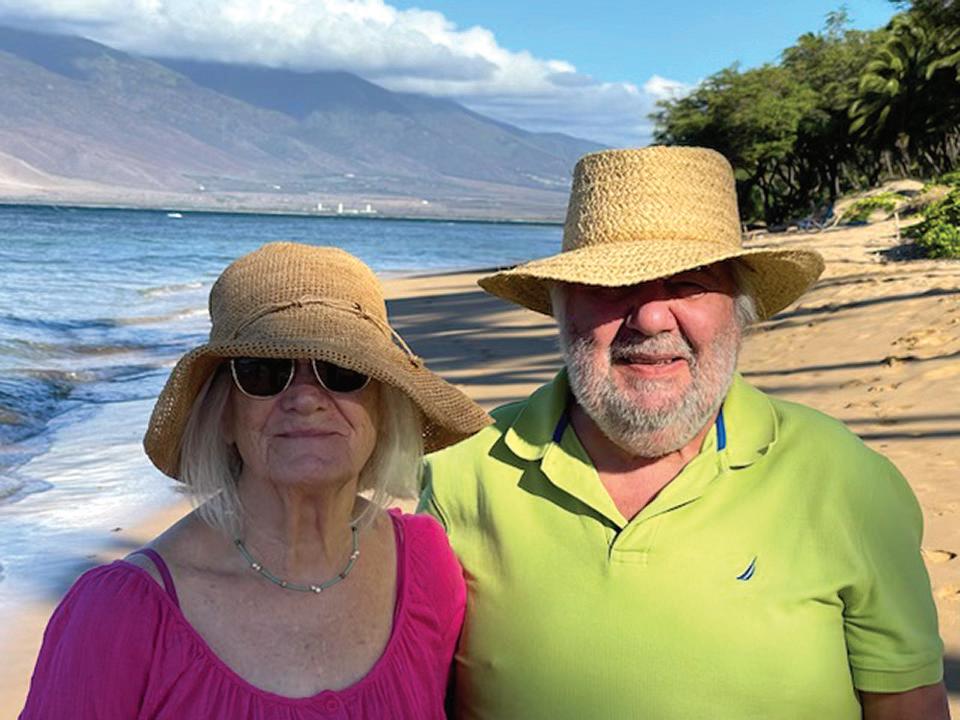
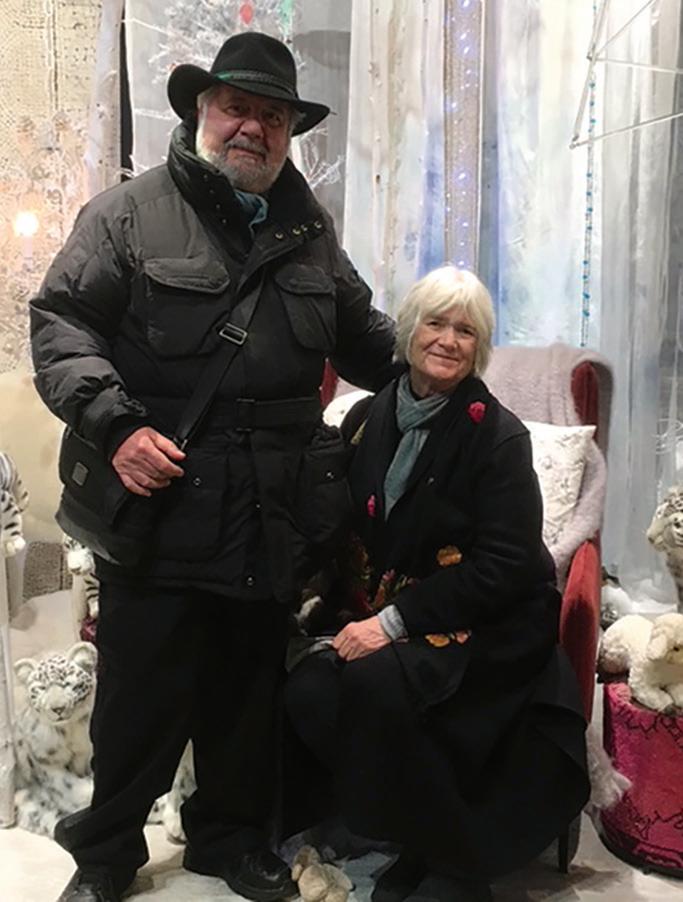
RISD shaped Charlotte Forsythe 67 PT and Gerald Fandetti BArch 68. Now their generosity opens doors for future artists.
When Charlotte Forsythe 67 PT was a teenager living on a US Air Force base in Kyushu, Japan, she came across an article in Glamour magazine about an art school in Rhode Island. “I’d always loved to draw,” she recalls, “and reading that story, I thought, that’s where I want to go. RISD is the place for me.”
It would take her a few more years and a detour to the University of Kentucky before she arrived at RISD on a scholarship. “RISD was expensive, even then,” she says. “So I worked as a nanny, typed envelopes for the Admissions Office, really whatever it took. The school took a chance on me, and it changed my life.”
Charlotte met her future husband, Jerry Fandetti BArch 68, during their Foundation year. Fandetti grew up just miles away in Johnston, RI, where two high-school art teachers one a RISD alum had recognized his talent and arranged a meeting with the college’s Admissions Office. “I still remember sitting in that big auditorium for the drawing test,” he says. “The admissions officer told us, ‘Look to your left, look to your right. Two of you won’t get in.’ I guess I was the lucky one.”
Both came to RISD on scholarship support, and both remember that first-year experience as transformative. “Foundation year was all about the interrelation of ideas,” Fandetti says. “You’d be given a block of wood and told to make a hole in it, and then everyone would discuss what they’d created and why. It taught us how to learn from one another, how to think differently.” Forsythe adds, “It wasn’t about memorizing answers. It was about searching yourself for solutions. That mindset shaped everything we’ve done since.”
After RISD, the two built distinguished creative careers. Fandetti graduated from the Graduate School of Design at Harvard and went on to design and build over 20 townhouse developments and commercial projects in Cambridge, MA. Forsythe is an award-winning artist who has exhibited at galleries all over the world, from The Providence Art Club to the Honolulu Museum of Art and at US Embassies throughout Europe. Together, they launched a series of ambitious restoration projects in New England. Their work has included the historic Mary Prentiss Inn in Cambridge, recipient of the Massachusetts Historical Commission Preservation Award, and the 19th-century Engine 7 Firehouse, which they transformed into the Kendall Hotel on the MIT campus. “That one was quite a project,” Fandetti says. “We moved the 500-ton brick firehouse four times to get
it in the right location to erect a seven-story tower and build a parking garage underneath. But it was unique and distinctive when it was done, and successful enough that when we sold it, we could start giving back.”
The couple recently deepened their longstanding commitment to RISD with a $1 million gift to expand the Gerald N. Fandetti ’68 and Charlotte B. Forsythe ’67 Scholarship Fund, first established in 2009. The fund supports a first-year student in the Experimental and Foundation Studies program, the same place where their own story began.
“We felt RISD was the place to give because it had such an impact on our lives,” Fandetti says. “RISD’s art and design education is the best in the world. You learn how to think about things differently. We’re happy to help make that possible for today’s students.”
Forsythe echoes that sentiment. “I want another student, someone who maybe thinks, I can’t afford it, but I know it’s the place for me, to have the same chance I had. That’s what this scholarship is about.”
Amanda Clark MacMullan, RISD’s Vice President of Institutional Advancement, calls the couple’s generosity transformative. “This remarkable gift from Jerry and Charlotte opens doors for talented students,” she says. “What makes it even more meaningful is that it honors their own journey, one that began in Foundation Studies and led to a lifetime of creative collaboration.”
Today, Fandetti and Forsythe continue to live surrounded by art, architecture, and the echoes of history. They’ve restored properties like Willowdale Estate in Topsfield, MA, now a venue for weddings and community events, and Paradise Park, a venue of historic properties in Muhlenberg County, KY. They remain passionate about preserving the character of the buildings they touch. “Growing up around all those historic structures in Providence gave me an appreciation for the past,” Forsythe reflects. “When you preserve something well, you give it a new life.”
For both of them, the decision to invest in future generations of RISD artists and designers feels like coming full circle. “It all starts with that blank sheet of paper,” Fandetti says. “RISD taught us how to make something out of nothing, to create where nothing existed before. That’s what we hope today’s students will do: take that chance, create something new, and build a future that’s their own.”
FOR RISD’S FUTURE
Creative Pathways
An experience abroad, a faculty member’s insight and guidance, an environment where artists and designers can find their people and commit to a practice that is meaningful for themselves and others. In small moments and through big, life-changing opportunities, RISD students find their paths or break new ones. Their work has tremendous impact on our global culture, and it is fueled by RISD’s broad community, who generously support the RISD Fund. From financial aid to career development, tools, student wellness, and more, the RISD Fund is vital to student success.
Here, four RISD community members, creators and educators themselves, talk about their relationship to RISD and why they support the RISD Fund.
For Stuart Murphy 64 IL P 98, the programs that bookended his time at RISD helped shape his professional, creative, and personal life. Freshman Foundation (now known as the Experimental and Foundation Studies program), in which all incoming students study drawing, design, and spatial dynamics, was a watershed year, immersive, “thrilling, demanding, and fulfilling,” Murphy says. Via the European Honors Program, he spent his senior year in Rome with 20 students who became lifelong friends.
“Those are two experiences that are unparalleled in the impact that they had on me and my life and my career,” Murphy says.
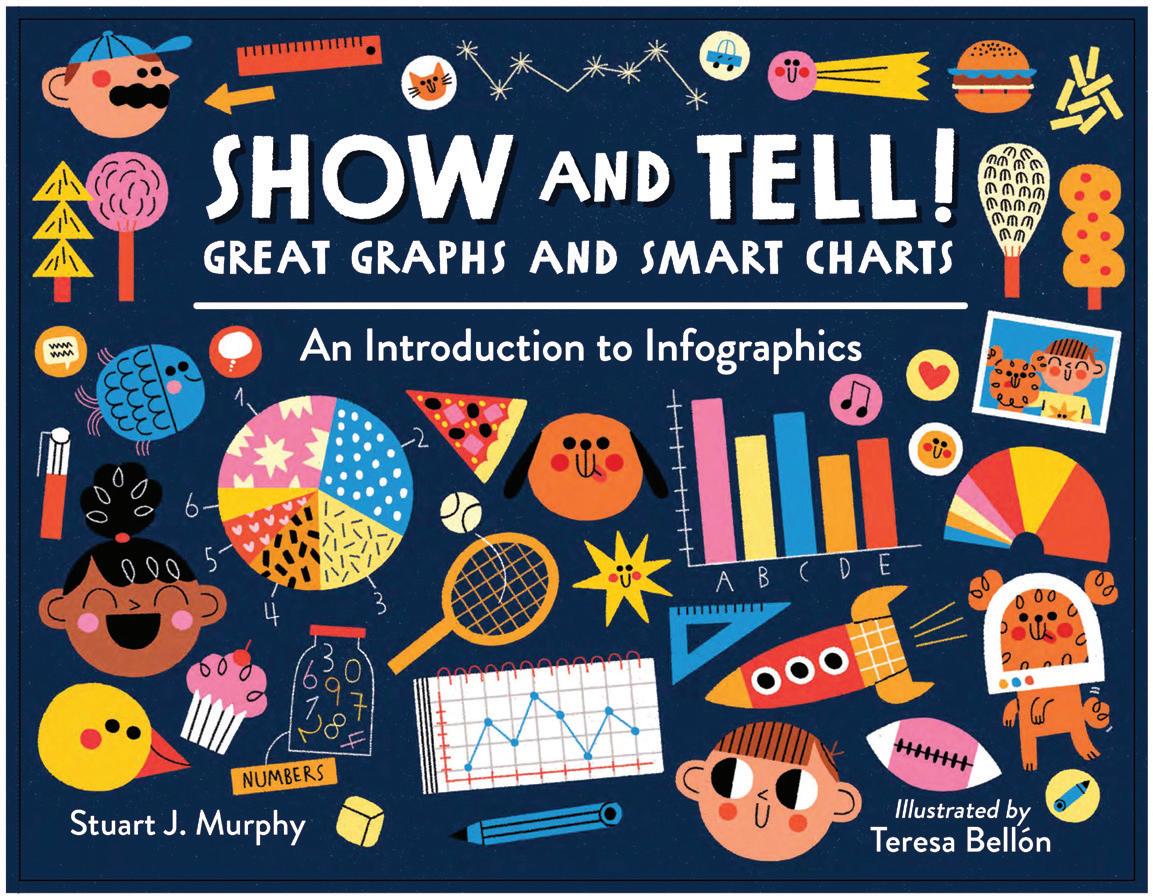
Murphy has spent his career working in educational publishing, first as a designer, then as an art director and later as co-founder of Ligature, Inc., a Chicago-based company dedicated to the development of high-quality educational products for schools. An advocate for visual learning, he became a visual learning specialist a job he invented so visual representation could be included in the development of educational products from their inception. Among his many projects, he is the creator
of MathStart, an award-winning, illustrated 63-book series that teaches math to young children through stories and visual models.
For many years, Murphy has been active in the RISD community, starting out as an alumni volunteer, working on RISD’s Future by Design capital campaign, and serving as a member of the Board of Trustees and as an Emeritus Trustee, among other roles. He has generously supported priorities ranging from the Museum Annual Fund to renovation funds, the RISD Scholars program, and more. In particular, he has championed the RISD Fund, contributing to it every year since 1979.
“All of my work is based on visual learning theory and practice,” Murphy says, “and certainly that idea, that concept, that notion began with my RISD education. So it’s natural that I would be interested in giving back over the years in the various ways that I have.”
Murphy, who attended his 60th reunion in 2024, says it has been gratifying to see the widely varied, exciting and fulfilling careers his peers have had, and he remains committed to ensuring that RISD’s art and design curriculum can provide the same foundation for success for today’s students.
“It’s important to promote creativity in young people,” Murphy says. “And I think it’s important to help young students get the education that they deserve.”
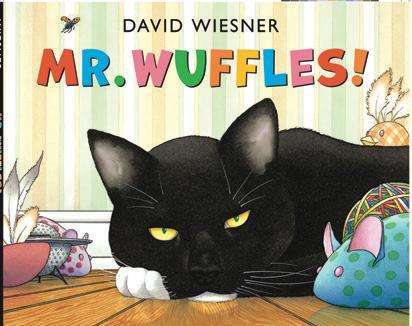
Show and Tell is Murphy’s 80th and most recent children’s book. All of his works are still in print.
Photo courtesy of Stuart Murphy
Words
Gillian
Kiley
Photo by Bart Feliciano
When Sonjie Feliciano Solomon 02 ID was 18, a RISD professor reviewed her portfolio and encouraged her to apply. Solomon, who lived in St. Louis, MO, in what she describes as a conventional conservative bubble, remembers thinking, “I would love to be in that kind of creative, curious environment.” But, in deference to her parents, she shelved the idea and pursued a business degree at Georgetown University. After college, she worked in advertising for seven years, but still craved the chance to go to art school and finally applied to RISD. She was accepted for Illustration, but during the summer transfer program, her 3D design professor said, “You should be building things. You think spatially.” Solomon switched to Industrial Design, not having known about the profession before, and never looked back.
“I loved being surrounded by students who were pushing themselves to be their best, to come up with innovative solutions, and think outside the box. I had never been exposed to these kinds of thinkers before,” Solomon says. “I really credit RISD for giving me that environment to be able to think in a different way.” Solomon’s May 2025
As a returning student, Solomon was older than most of her classmates, married, and soon, pregnant with her first child in her first year. After taking a break when her daughter was born, she returned to school. Even with a 10-month-old to take care of, Solomon excelled, eventually graduating with honors.
“I know at the time people were asking, ‘How are you doing this?’ I just wanted it so bad. I wanted this kind of life,” Solomon says.
After RISD, Solomon worked both full-time and freelance for various designers and most recently was an exhibition designer for the Brooklyn Museum. She left in April 2025 to focus full-time on her studio practice. In her work, she incorporates tools and processes from her industrial design education to create paintings, sculptures and textiles. Solomon is interested in the phenomenon of awe in response to the natural world and aims to echo patterns and elements in nature to evoke feelings of calm, wonder and peace.
“Being able to be creative has carried me through a lot of hard times,” Solomon says. “Going into a studio and working out the challenges in life is invaluable. We have to turn our hard stories into lessons or gifts.”
Solomon devotes her time and resources to lifting up others at RISD. She is a new member of the RISD Fund Campaign Committee and a member of the Centennial Society, which recognizes donors who give to the RISD Fund for at least three years in a row.
“I have made donations to RISD because that’s been baked into my understanding of giving back to society, finding the issues and institutions that have changed your life, or moved you, or are important to you, and helping support them,” Solomon says.
It is important to Solomon to strengthen RISD’s foundation so its curriculum and creative community are here for others in the future.
“I feel most human as an artist,” Solomon says. “And I don’t think I could have done this without this training and this freedom to just explore ideas and try to make something out of nothing. I’m so thankful for it.”
An abundance of cats may not spring to mind when imagining the impact of a RISD education on a family, but for Claire Schen PhD P 23 and Dr. Gregory Cherr P 23, cat-sitting, as well as new perspectives on cultivating confidence in young scholars, greater personal involvement in the arts, and new modes of professional collaboration are all part of the experience.
“We’ve babysat cats of RISD alumni for months on end. We’ll do anything we can to support these brilliant young artists,” says Schen, associate professor of history and associate dean for undergraduate research and scholarship at SUNY Buffalo.
Schen and Cherr, who is the senior associate dean for graduate medical education and professor of surgery at SUNY Buffalo, got to know RISD through their child, Maddy Cherr 23 IL. As educators, both found the culture of critique at RISD striking.
“A lot of what I do now in my role is fostering the education of young physicians,” Cherr says, “and we hear all the time about how people don't get enough feedback, they don't know how they’re doing. When Maddy started with the other freshmen, RISD emphasized basic communication skills, understanding how to receive and give thoughtful feedback and help people improve. It’s a gift.”
Schen and Cherr say that by October of Maddy’s first year, they could see how mind-expanding the RISD experience was, and that Maddy had found their people. This allayed fears that the transition from a STEM-focused high school to an art and design school might be bumpy.
“We always learned something ourselves, and we were always impressed by students that we interacted with,” when visiting RISD, Cherr says. “You could just see their brains always working, and they were so thoughtful and talented.”
During Maddy’s undergraduate days, Schen and Cherr began supporting the RISD Fund, a practice they continue today.
“We give to RISD because I think students should be able to make a free choice to study what really suits them, what gives them motivation and drive and makes their brains work,” Schen says.
“It felt good to support the institution because it's helping people become better adults and they'll be successful for that,” Cherr adds.
Schen and Cherr say RISD has also changed their lives. Engaging with the arts community at RISD led them to become more involved with the arts community in Buffalo. Schen is exploring weaving as part of her research practice, and she and Maddy collaborated on a visual essay, “Embracing the Untamed Garden,” that interrogates the effect of the COVID-19 pandemic on teaching and learning and was published in the September 2025 American Historical Review.
“RISD had a huge impact on Maddy, but really it stretched into the rest of the family too, and I didn't expect that.”
“ We give to RISD because I think students should be able to make a free choice to study what really suits them, what gives them motivation and drive and makes their brains work.”
Claire Schen
Image
AT THE MUSEUM
By Students for Students
Through the Museum Guild, area college students create new points of entry to the RISD Museum
Can you learn to vogue in a gallery at the RISD Museum? Can you have a dinner party there? Do you have to pay to get in? Yes, yes, and no.
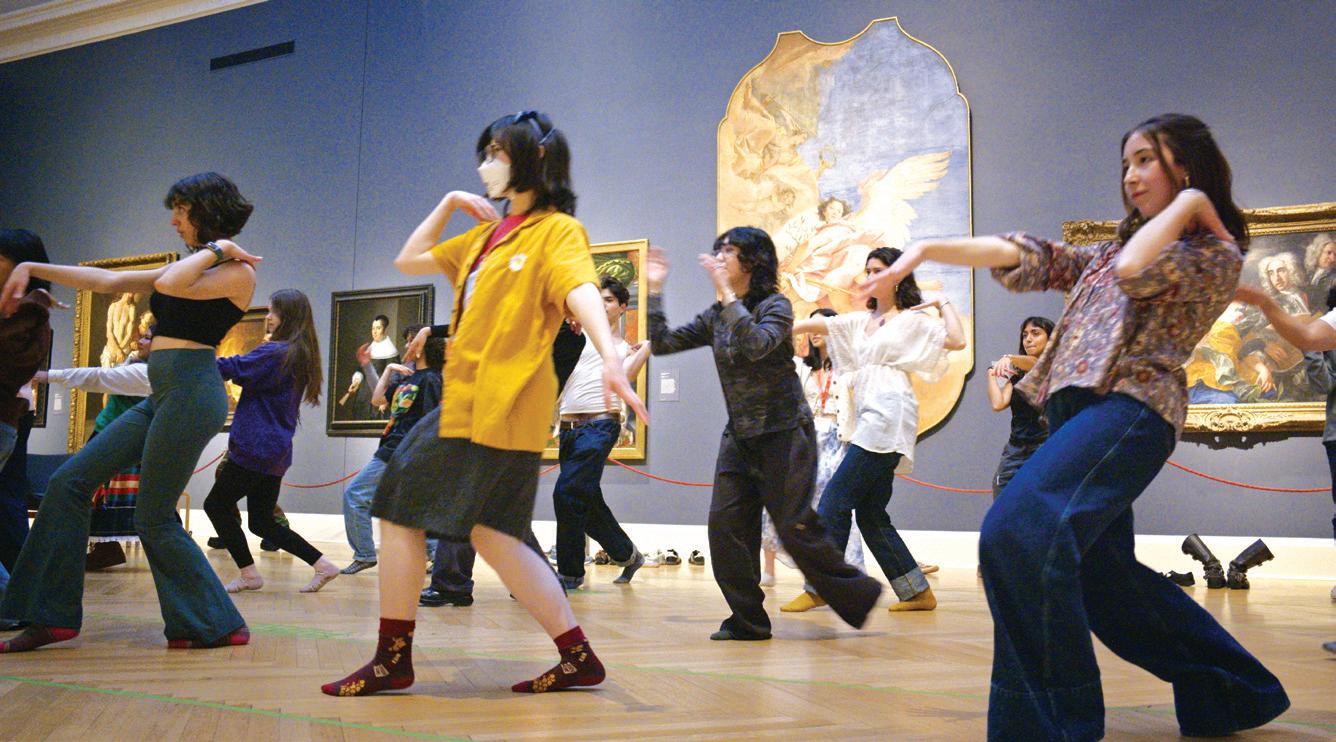
If you visited the museum on April 17, 2025, a free-admission Thursday evening, you would have seen a performance from Rhode Island College’s Ballroom Dance in the Grand Gallery, followed by a cha-cha workshop, time for improvisational dance and finally, a voguing workshop led by Providence instructor Nielle Taylor hosted by RISD’s Mango Street, a club for students from all backgrounds of the Hispanic diaspora, and BAAD (Black Artists and Designers). The masterminds behind the event were the 12 members of the Museum Guild, students from local colleges and universities who create public programming that offers new ways of understanding and engaging with the museum, with the needs and interests of college students in mind.
“People have preconceived notions of what’s permitted in a museum,” says Gonzalo Alvarez Garcia BArch 27, who has been a Guild member for three years. “Our main mission is to try to reimagine what a museum can look like, and how people can feel in a museum.”
Noor Rahim, a returning Guild member who is studying art history and cultural anthropology at Rhode Island College, says local college students may not automatically think of the RISD Museum as a destination, but she, like other Guild members, serves as an ambassador for the experience.
“I often need to encourage others to visit the museum,” Rahim says. “However, once people have an initial experience that feels comfortable and engaging, they return of their own accord. I think the museum should feel like a place to spend time in and the community should be comfortable to engage with the space how they choose within reason.”
Alvarez Garcia emphasizes that the Guild is not a group focused on curating exhibitions, nor was it formed to be an apprenticeship for that profession. While the RISD Museum offers several programs for pre-professional training, the Guild, he says, centers community programming and imagining what the museum of the future can look like, with the goal of helping college students know they are welcome to have unexpected experiences in museum spaces.
The Museum Guild is open to students from RISD, Rhode Island College, Brown, the Community College of Rhode Island, Johnson and Wales, the University of Rhode Island, Wheaton College, Bryant University, Roger Williams University, and the University of Massachusetts, Dartmouth. It is run by students, who manage everything from programming and outreach to communications and reviewing new
membership applications each September, with the support of Alexandra Poterack, the RISD Museum’s director of academic programs. Guild members receive stipends for their work and collaboratively generate ways to offer singular museum encounters to their peers and the broader community.
“I’ve really seen the power of self-directed programming, the ways it helps students gain skills and stretch themselves,” says Poterack, who liaises between the museum and the group. “Guild members really pick up on and respond to what’s needed in their own college communities.”
Returning Guild member Gabrielle Harkless 26 GD grew up in Amsterdam and says she was privileged to live so close to some of the world’s most renowned museums. She learned about herself and others through conversations, museum events and talks, including what was left out of many museum experiences.
“My mother was very invested in telling me the stories behind a lot of the artworks,” Harkless says. “I knew many voices were not reflected in those spaces at the time.”
Through the Museum Guild, Harkless has found a place to talk about those missing perspectives and narratives as the group works to boost both access and engagement among their peers.
“I really enjoy how the Guild prioritizes being in a group setting and listening to everybody’s voices,” Harkless says. “We try to break down the regular barriers that exist within museums, and we really focus on allowing people to have conversations.
“The ethos is, nobody decides anything before having a conversation about it,” Alvarez Garcia agrees.
That extends from ideation to execution of events, and is embodied in the events themselves. “Dinner Party,” the Guild’s fall 2024 event, encouraged conversations among strangers using “menus” listing different artworks.
“You would start off as a solo individual taking this menu and expressing what you enjoyed about a piece in the gallery. And then you would pass it to somebody else and they would reflect on your perspective and what you enjoyed,” Harkless explains. “And then there was the final piece of being able to speak to that person and sharing these perspectives.”
For Poterack, the Guild’s work is inspiring because students “don’t just criticize how museums operate and sit back.” Questions about repatriation of art, funding structures, lack of staff diversity, and hiring practices have swirled around museums for a long time, Poterack says, but “Guild members grapple with these issues and do something. They take action to engage public audiences.”
At the Museum
Words by
Gillian
Kiley
The Grand Gallery was the setting for a voguing workshop at the Museum Guild’s spring 2025 Ballroom Bash event.
Re:Pattern was a two-part 2024 Museum Guild program featuring work in a wide range of media by student artists, including Unknown Maker by Brown Class of 2024 student Lola Simon. Photograph by Dee Speaks.
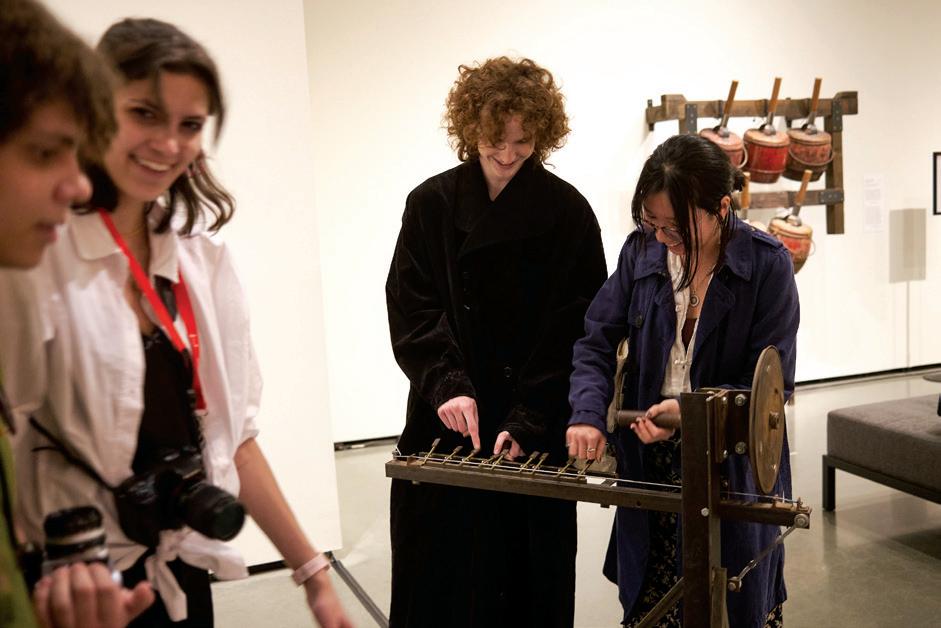
At the April 2023 Sonic Salad event, participants made music on unique instruments from Anarchestra while Femi Shonuga-Fleming BArch 26 remixed the sounds live in adjacent gallery.
Drawn Back: Stephen Talasnik’s Gift to the RISD Museum
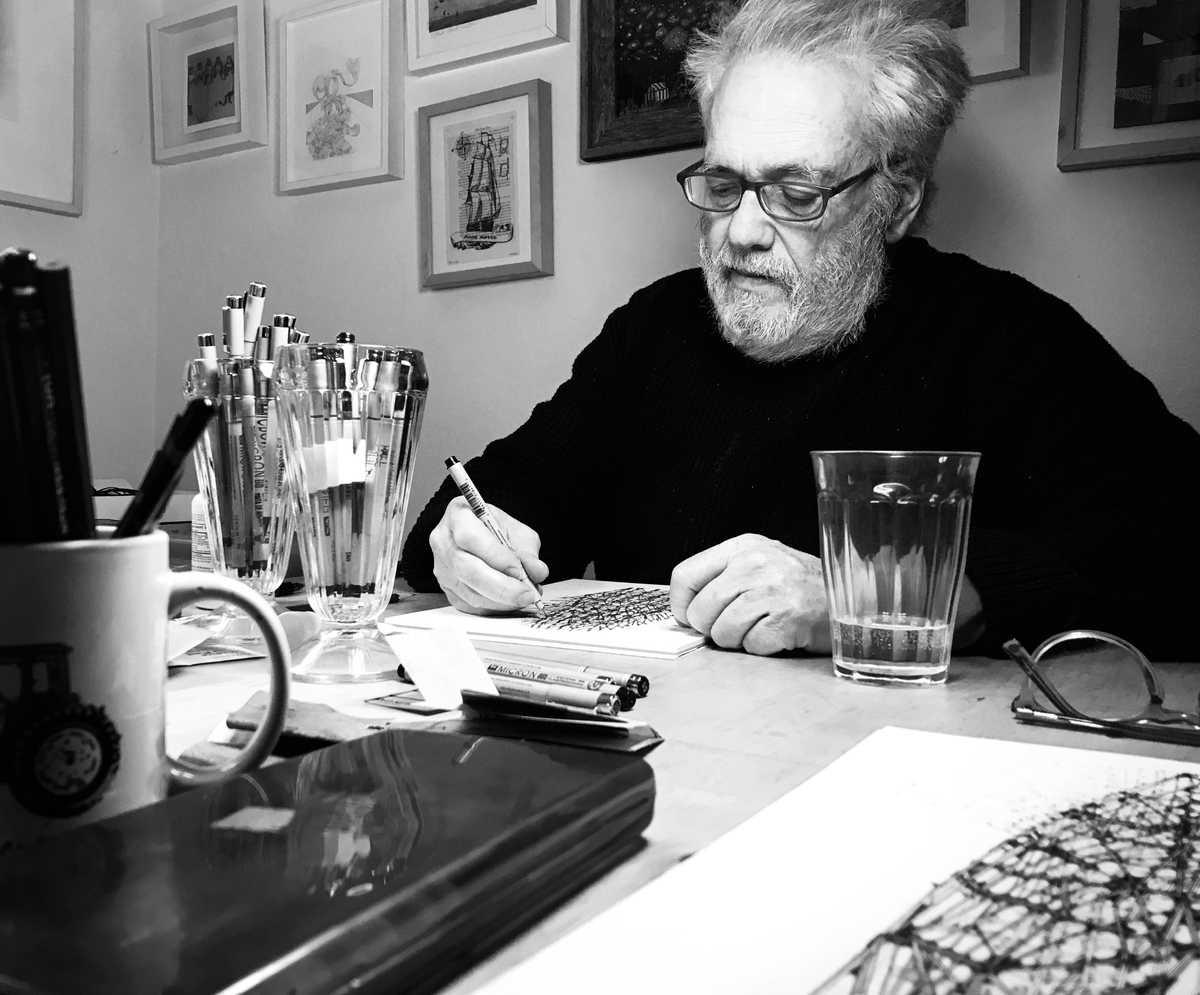
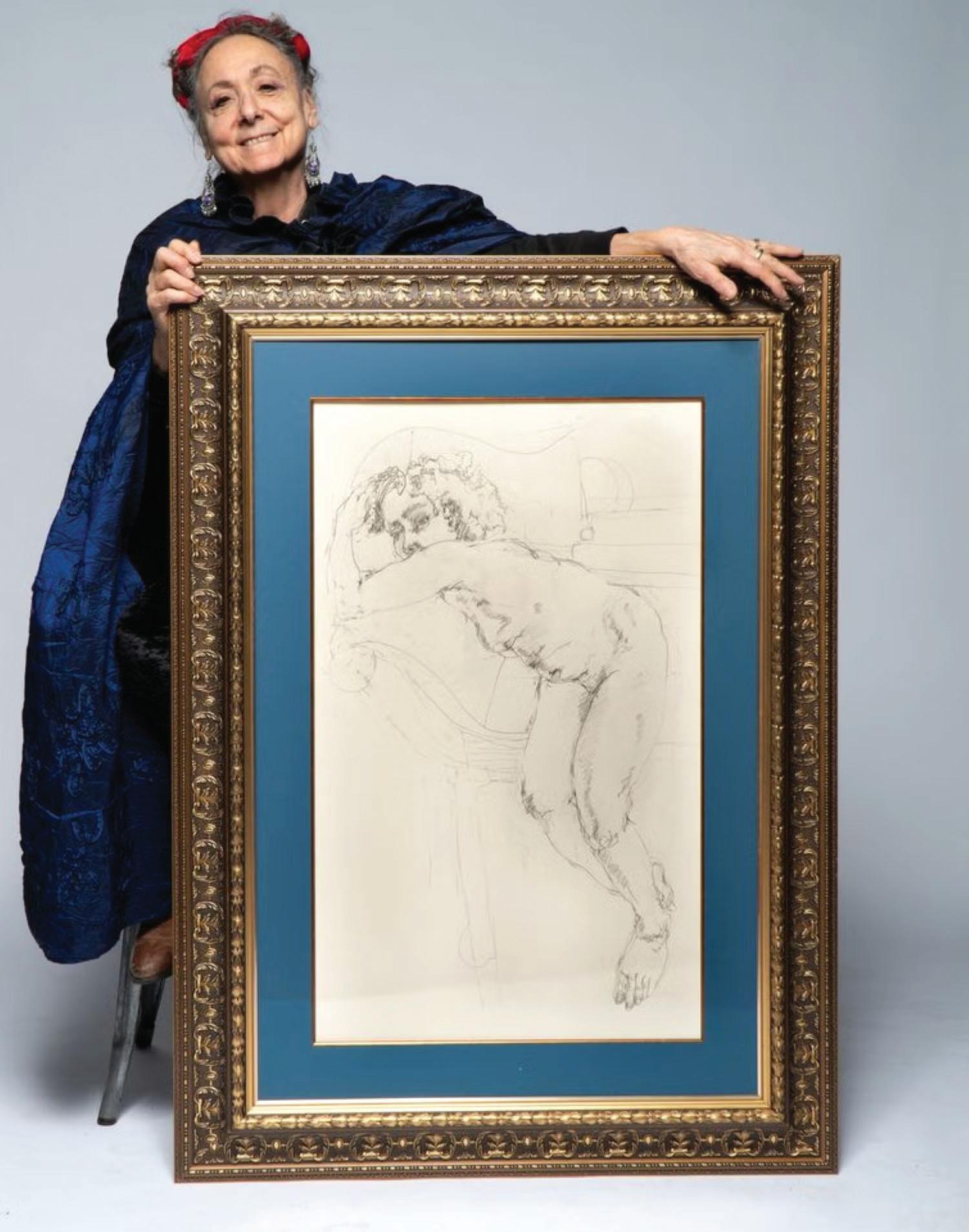
Stephen Talasnik 76 PT discovered his love of drawing long before RISD, but it was here, amid photographers, architects, and industrial designers, that he learned to see it differently. The crosspollination of ideas, led by faculty across these disciplines, has stayed with him for five decades. Now, to mark his 50th reunion, Talasnik has given one of his drawings to the RISD Museum as a tribute to the place that shaped him.
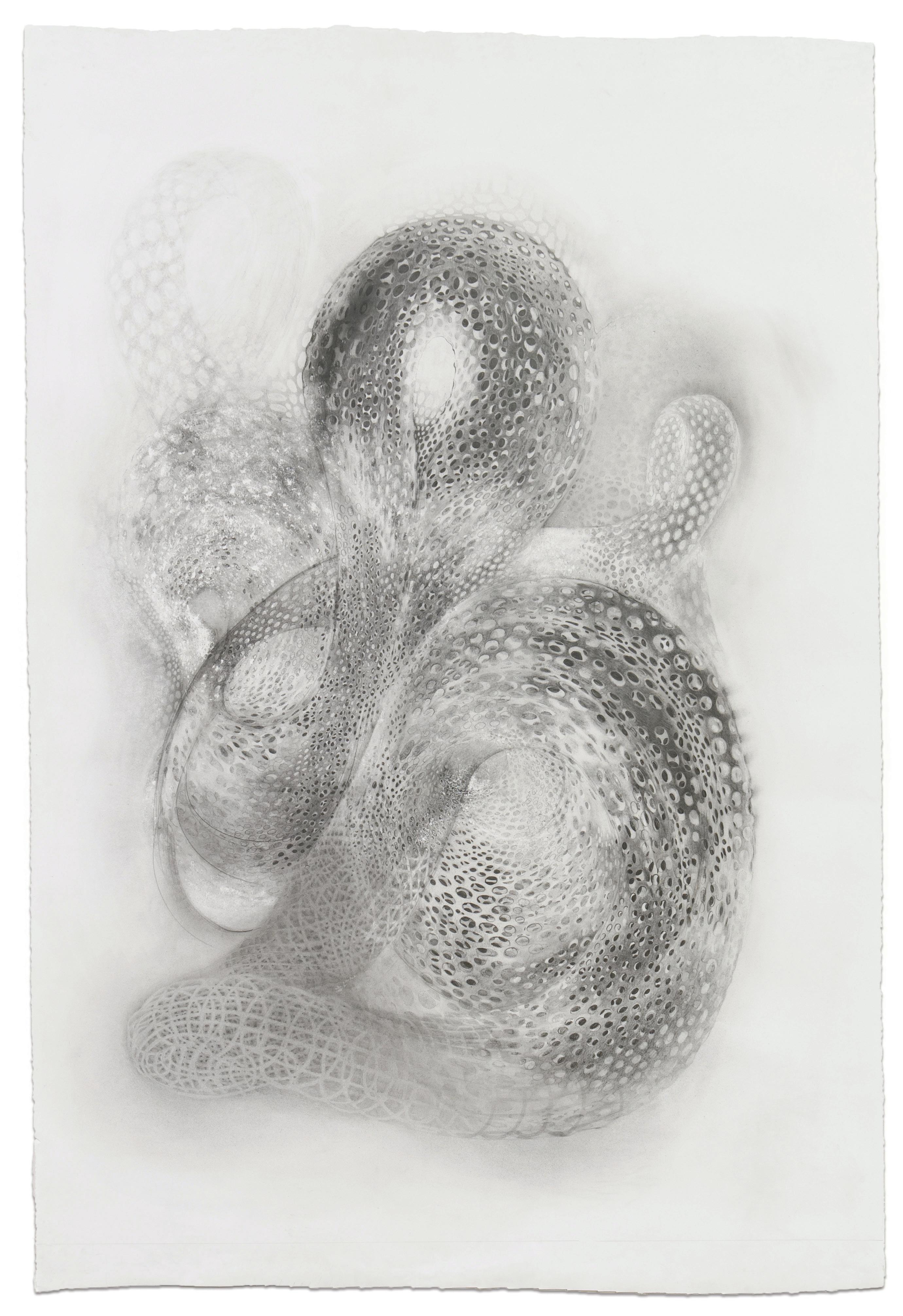
The work, Savant, is part of a series of seven exploring Talasnik’s fascination with “organic engineering” through invented math. Six pieces in the series already belong to major museums, including the Metropolitan Museum of Art and the Philadelphia Museum of Art. But he held onto Savant for years, waiting for the right moment and place. “I knew where I wanted it to go,” he says. “RISD nurtured me as an artist. It felt right that this seminal work return to the place that shaped me.”
Though Talasnik entered RISD during the conceptual art movement of the 1970s, it was his Foundation year that left the deepest mark, intense and alive with discovery. He still thinks of Experimental and Foundation Studies faculty member George Pappas and hours spent in the legendary Nature Lab with Edna Lawrence 20 PT. But his most profound lessons came from an unexpected source: the Photography department. At the time, black-andwhite photography giants Aaron Siskind HD 81 and Harry Callahan HD 79 led the program, and their ideas transformed how he understood drawing. “I actually learned more about drawing from my Photography teachers,” he says. “Siskind and Callahan emphasized touch, the human trace in an image. It guides me every time I draw.”
RISD’s open, cross-disciplinary culture shaped him just as deeply. With freedom to experiment in typography, graphic design, architecture, and industrial design, Talasnik built a visual language both personal and broadly informed. “Artists thrive on curiosity,” he says. “RISD was and still is about curiosity.”
Since leaving RISD, Talasnik has created largescale, outdoor ephemeral art, climate-focused works, sculptures, and paintings, but drawing remains his core. He has exhibited internationally and shown in leading galleries, and his work has been acquired
by museums around the world, including Centre Pompidou (Paris), Albertina (Vienna), National Gallery of Art (DC), and the British Museum (London). Yet he has resisted branding or mechanizing his process.
“I don’t use computers. I don’t use machines,” he says. “The only machines I value are my hands.” For him, drawing is intimate and human. When viewers tell him they can see his hand in the work, it’s the greatest compliment.
That belief, rooted in his earliest RISD experiences, guided his decision to place Savant at the RISD Museum. Some artists worry museums are where art goes to disappear, he admits with a laugh, but he trusts this piece will live vibrantly here.
“Artists thrive on curiosity. RISD was and still is about curiosity.”
Stephen Talasnik
Words by
Julie Powers Image by Liam
Talasnik
Stephen Talasnik, Savant , 2012-2013. Graphite on paper.
Museum, Providence, RI.
AT THE MUSEUM
On View
Current
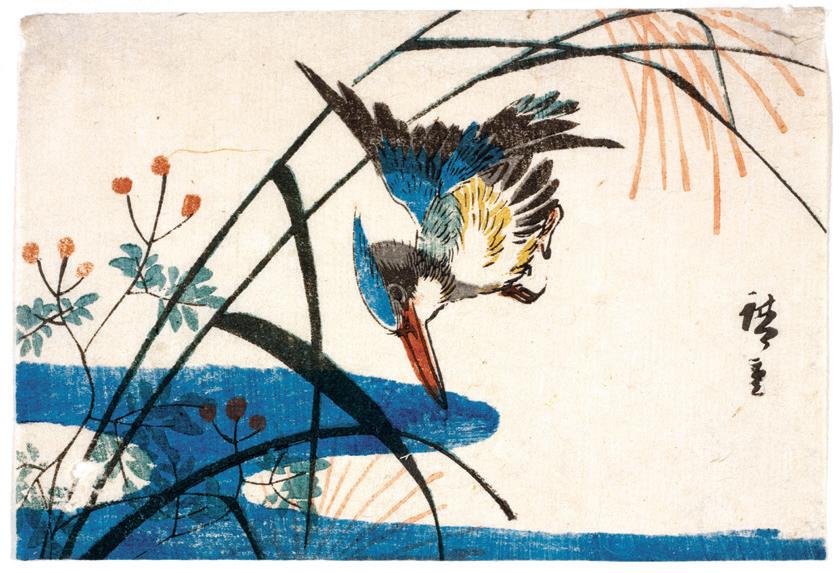
Shimmering Beauty: Kingfishers in Art and Poetry
December 20, 2025 – June 7, 2026
The Flower, The Labor, and The Sea September 27, 2025 – June 28, 2026
Brighten Up! Contemporary Enamels June 1, 2024 – May 2, 2027
A Shared Journey: The Barkan Contemporary Ceramic Collection at the RISD Museum September 13, 2025 – March 5, 2028
Art and Design from 1900 to Now June 4, 2022 – December 1, 2030
The
Collector’s Journey
For those who want to learn, discover, and invest in the world of art collecting.
Installation view of Shimmering Beauty: Kingfishers in Art and Poetry on view 12-20-2025 through 06-07-2026 at the RISD Museum.
Upcoming Events
Living with Art: A Private Collection Visit February 2026
Humans and Technology Making Art, Together IN PROCESS
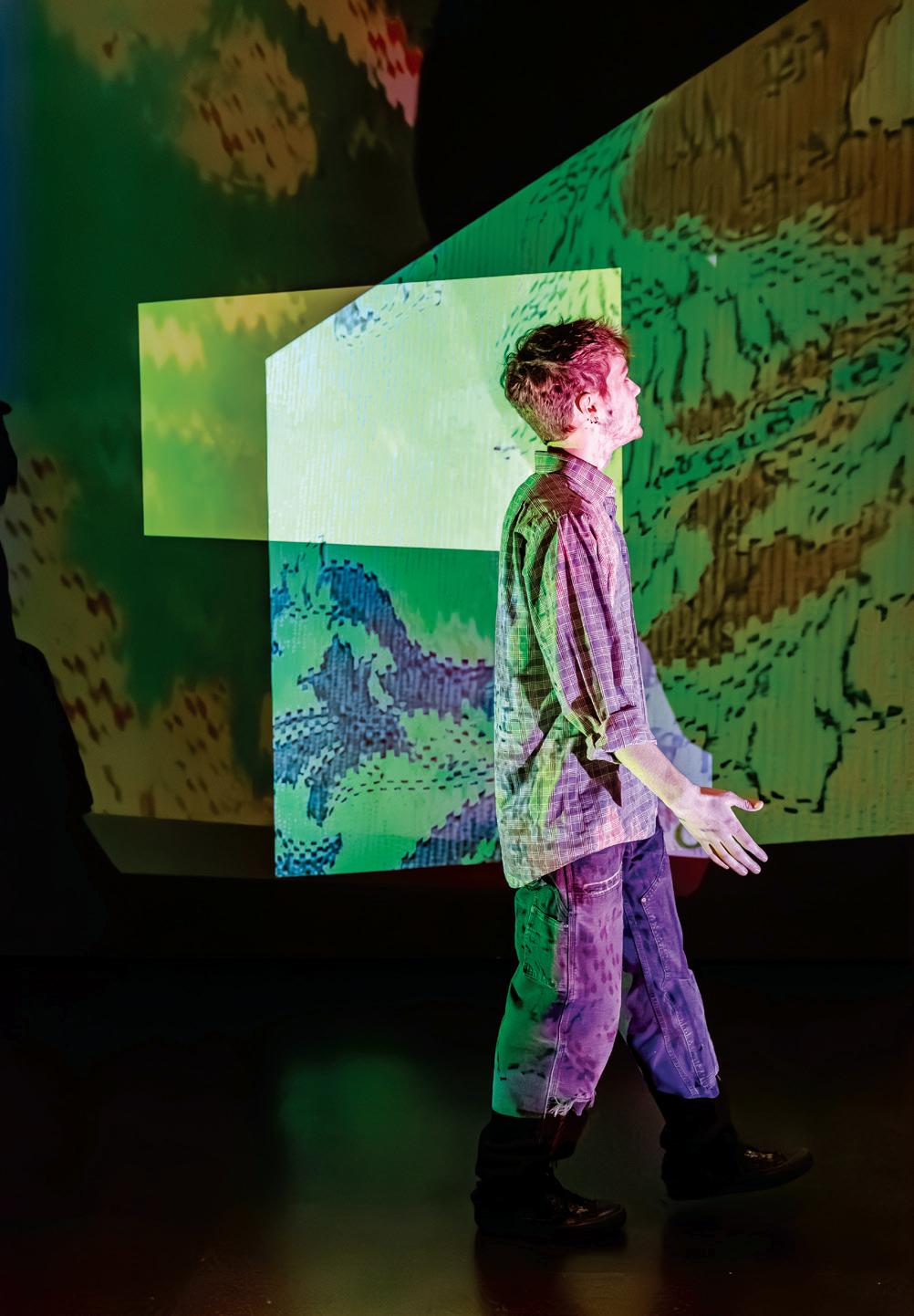
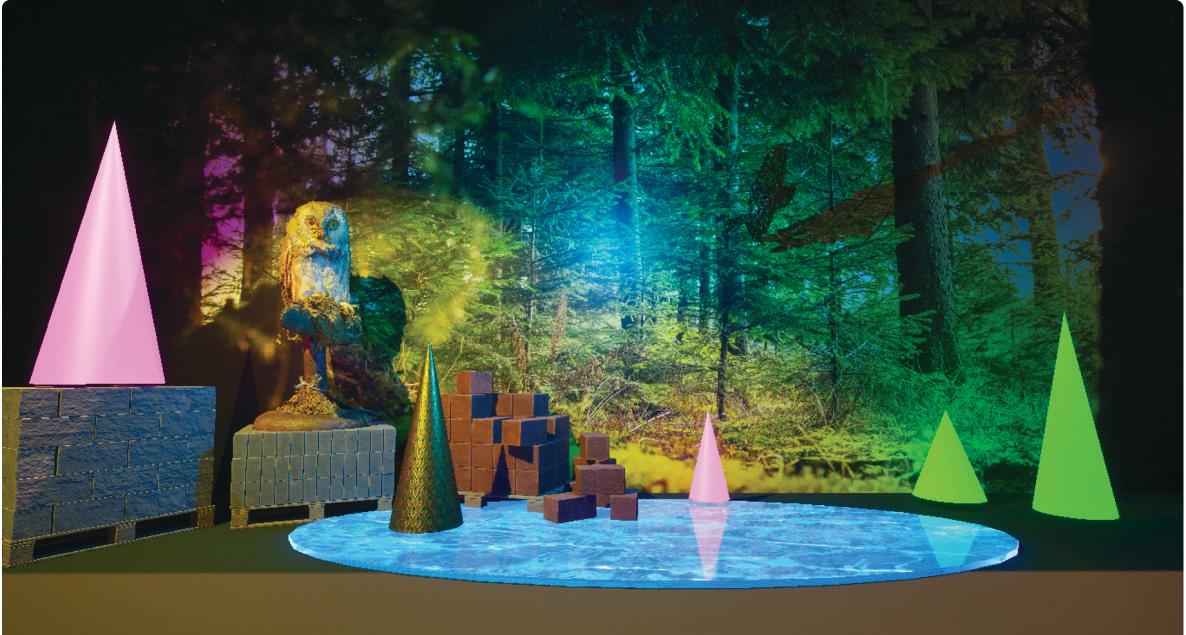
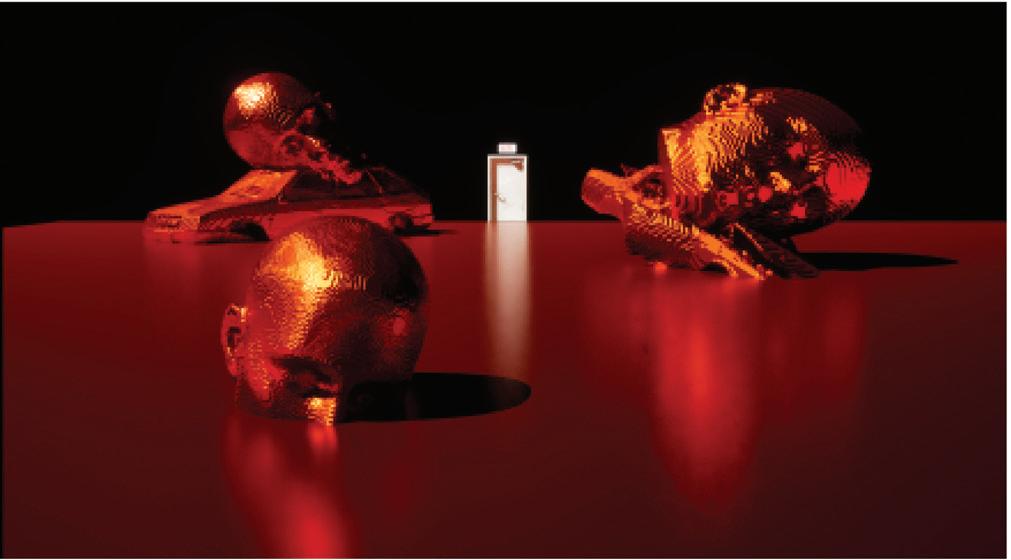
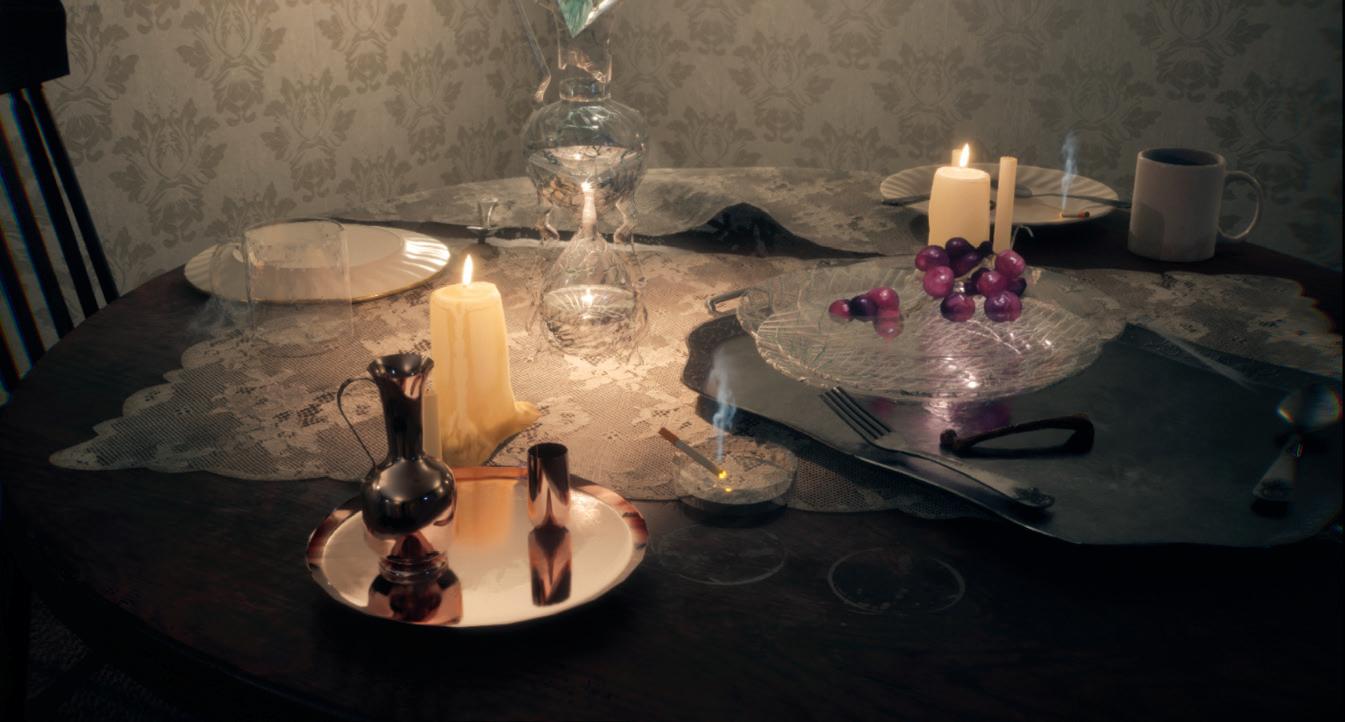
Experimental Unreal, a new studio course offered through the Computation, Technology and Culture Department (CTC), combines the power of gaming technology with student art to create something entirely new. Sasha Lee 28 AC one of 16 students in the course is using video game development software to create an immersive art experience.
Like a Lilliputian from Gulliver’s Travels, viewers explore a world much larger than themselves, moving among enormous natural elements such as wood beams and leafy greens interspersed with construction materials like concrete blocks and pipes. The area is dimly lit, with occasional illumination from a flickering spotlight or sunlight that enters through an opening in the wall, creating an ambiance of quiet anticipation and mystery.
Lee and her peers are learning how to use Epic Games’ Unreal Engine in unconventional ways like speculative world-building and emergent design, rather than traditional game creation. Lee says, “For this project, I wanted to create a mood of exploration using diverse elements and lighting changes, while making something that felt familiar yet unfamiliar through the use of scale.”
Launched in tandem with the CTC department (the first new academic department at RISD since 1996) in fall 2025, Experimental Unreal is the brainchild of Daniel Lefcourt 97 PT, a professor of Art and Computation and a celebrated contemporary fine artist. He and his wife, Megan McLarney 97 FAV,
collaborated on an experimental artwork in 2020, photographing and modeling compost piles and uploading them into a gaming engine to generate a “compost pile of digital content collages.” Lefcourt found the experience rewarding and began exploring ways to introduce students to gaming technology for experimental fine art.
Hanyi Wang MFA 26 DM, a second-year graduate student in the Digital + Media department, is intrigued by the emerging applications of technology for artmaking, and the class has made a big impression. “It’s helped expand my artistic imagination, especially in vision, space, and digital interaction,” she says, adding, “I’ve especially enjoyed the discussions on visual composition and spatial manipulation, as well as the projects that allowed me to explore my own interpretations of those topics.”
Experimental Unreal is conducted weekly in 5-hour sessions focused on demonstrating key topics, including lighting and camera fundamentals, visual scripting, and AI Behavior Trees. In addition to technical demonstrations, the class examines historical and experimental approaches in film, animation, music, architecture, and process-driven art movements such as Situationism, Gutai, and Neoconcretismo. Wang notes, “The examples of artworks, books, and digital media pieces shared in class were so valuable in helping me break away from fixed assumptions about what the Unreal Engine can create.”
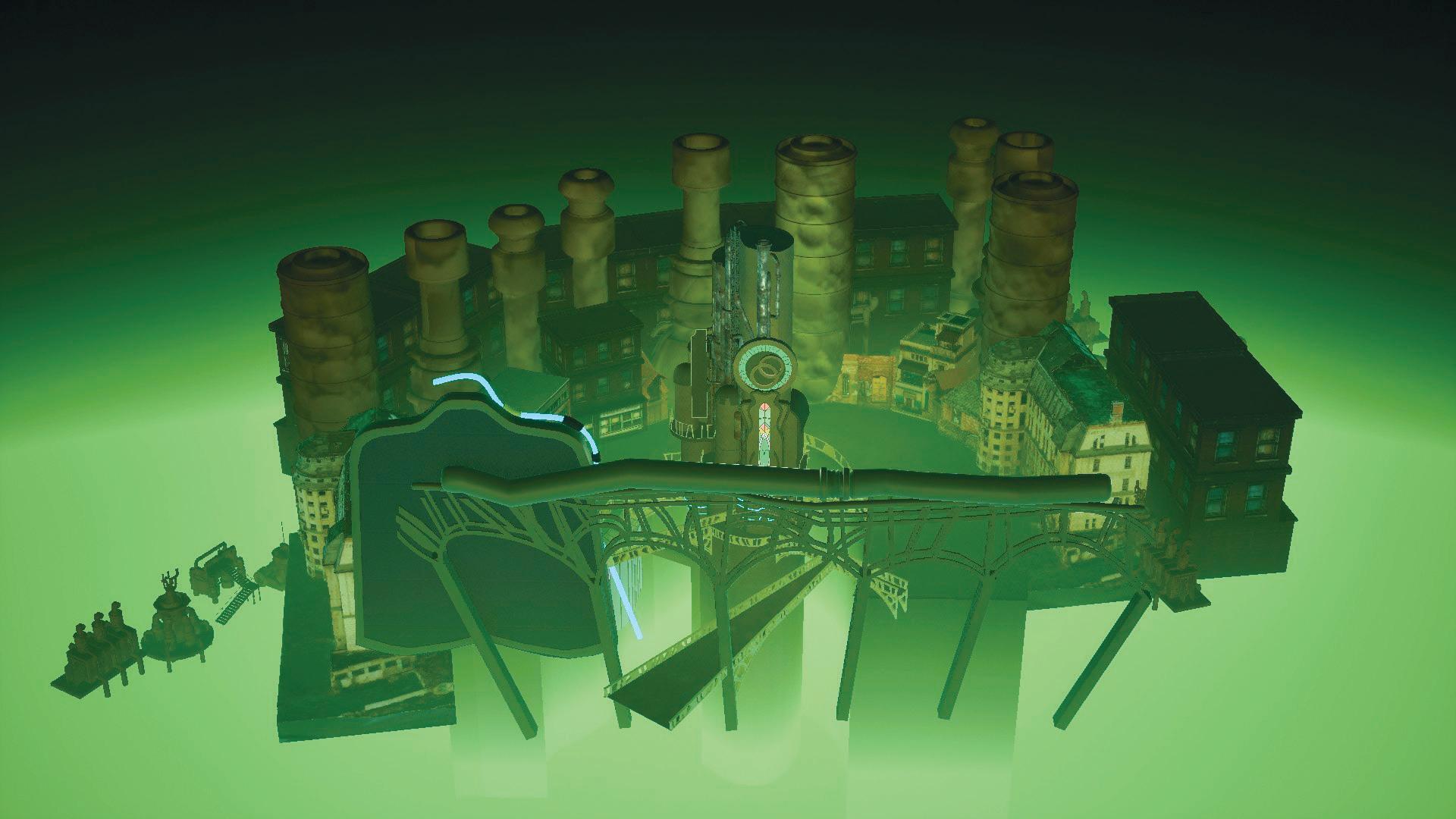
Experimental Unreal combines the power of gaming technology with student art to create something entirely new.
Hanyi Wang MFA 26 DM , workshop studies from the first weeks of the course.
Assignments build toward a final self-directed project. Students first imported elements to create a still life and used the gaming software for designing the composition, lighting, and color. For her composition, Lee used models of apples in various sizes, shapes, and levels of decay, with fine detailed textures and beam lighting elements.
Another project explored abstraction and optical confusion through the strategic use of animated objects, particle effects, materials, and lighting. Wang created an animation sequence that starts in a living room, but as the camera travels forward, the perspective of the space begins to distort and reveals that there is no enclosed home space at all. “I’m particularly interested in exploring ambiguity between inside and outside, and between domestic and outdoor spaces, so this project of creating a space of confusion was exciting,” he says.
A third assignment asked students to explore basic physics with interactions and collision events. Andrew Pak 25 GD was inspired by Minecraft’s use of “interesting physics to create mob spawners.” Pak created his own spawning project that continuously creates blocks— textured using images he found online—that collide with one another repeatedly, “creating this great chaotic mess,” he says.
"Students are doing a great job exploring how artists can collaborate with gaming technology to make something entirely new and different. This course offers our student-artists the opportunity
to have discoveries through the process of making, and I think that connects strongly to the RISD ethos,” says Lefcourt, who has been impressed with the student work thus far and remarks on Lee’s immersive world as particularly compelling. “Sasha’s project doesn’t look like a video game. It has a cinematic feel to it. The lighting application is creepy and dramatic, and the world has this kind of abstraction that feels entirely new.”
Lefcourt is eager to see what the students come up with for their final projects. Lee says her culminating project will feature another immersive world, this time, a one-to-one replica of her dormitory in which, depending on where you’re standing, you see different times or memories. She was inspired by Google Maps. “If you walk around in street view, you’ll see renderings from 2025, and then suddenly, there’s a spot where they haven’t updated and it’s 2017. I want to create that same kind of jarring time jump experience,” she explains.
While Lefcourt says he was nervous to launch Experimental Unreal because the technology can be challenging, he’s gratified that the class is “really working” and students have embraced using gaming technology with an “art- and design-first approach.” He plans to teach it again next semester and encourages all to join.
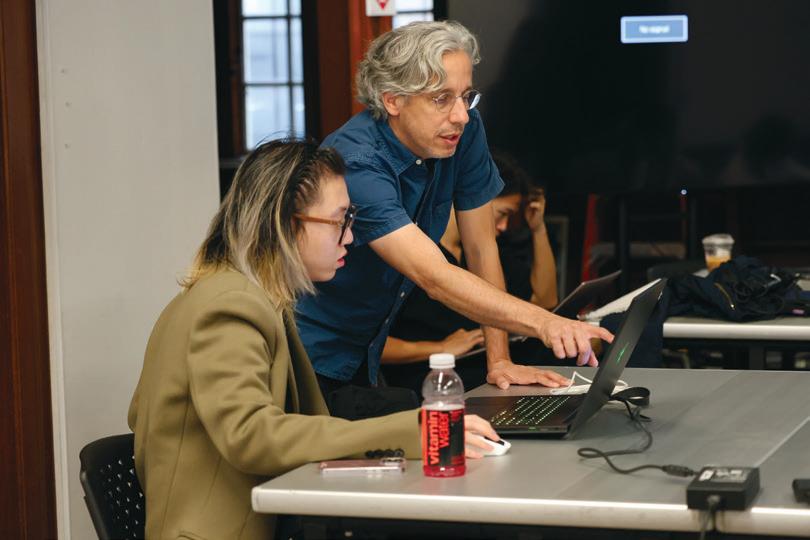
Professor Daniel Lefcourt works in class with Samuel Li 28 AC
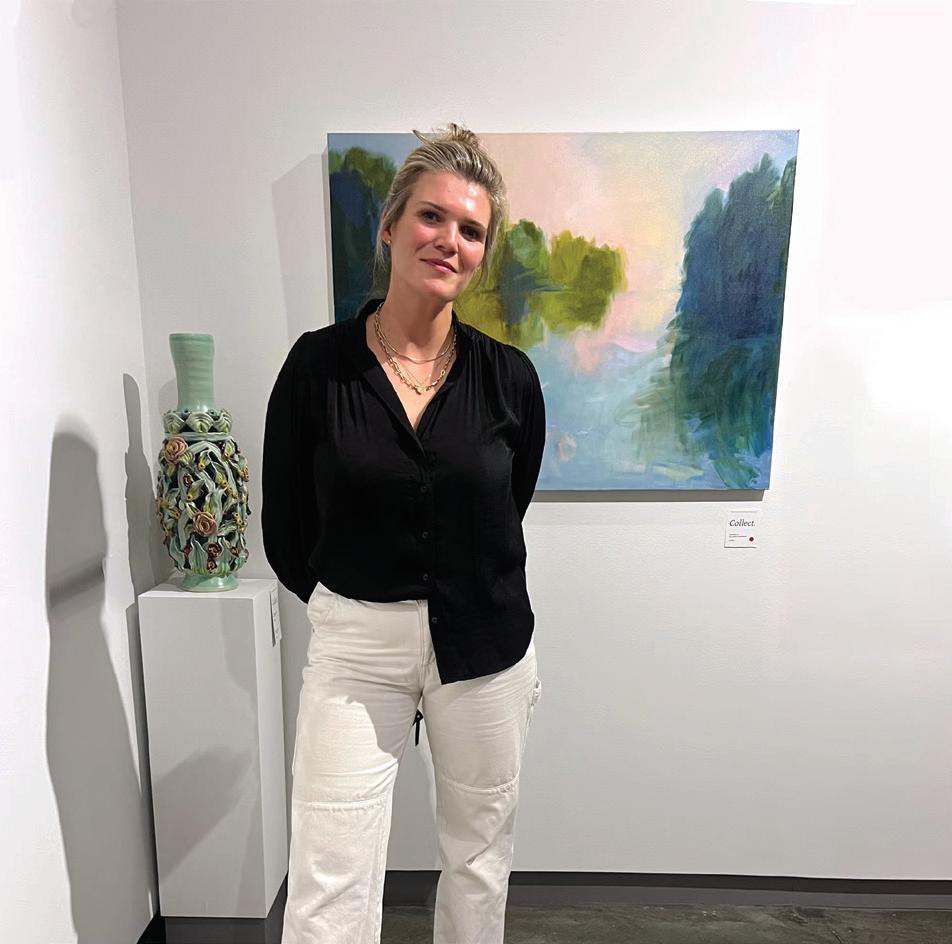
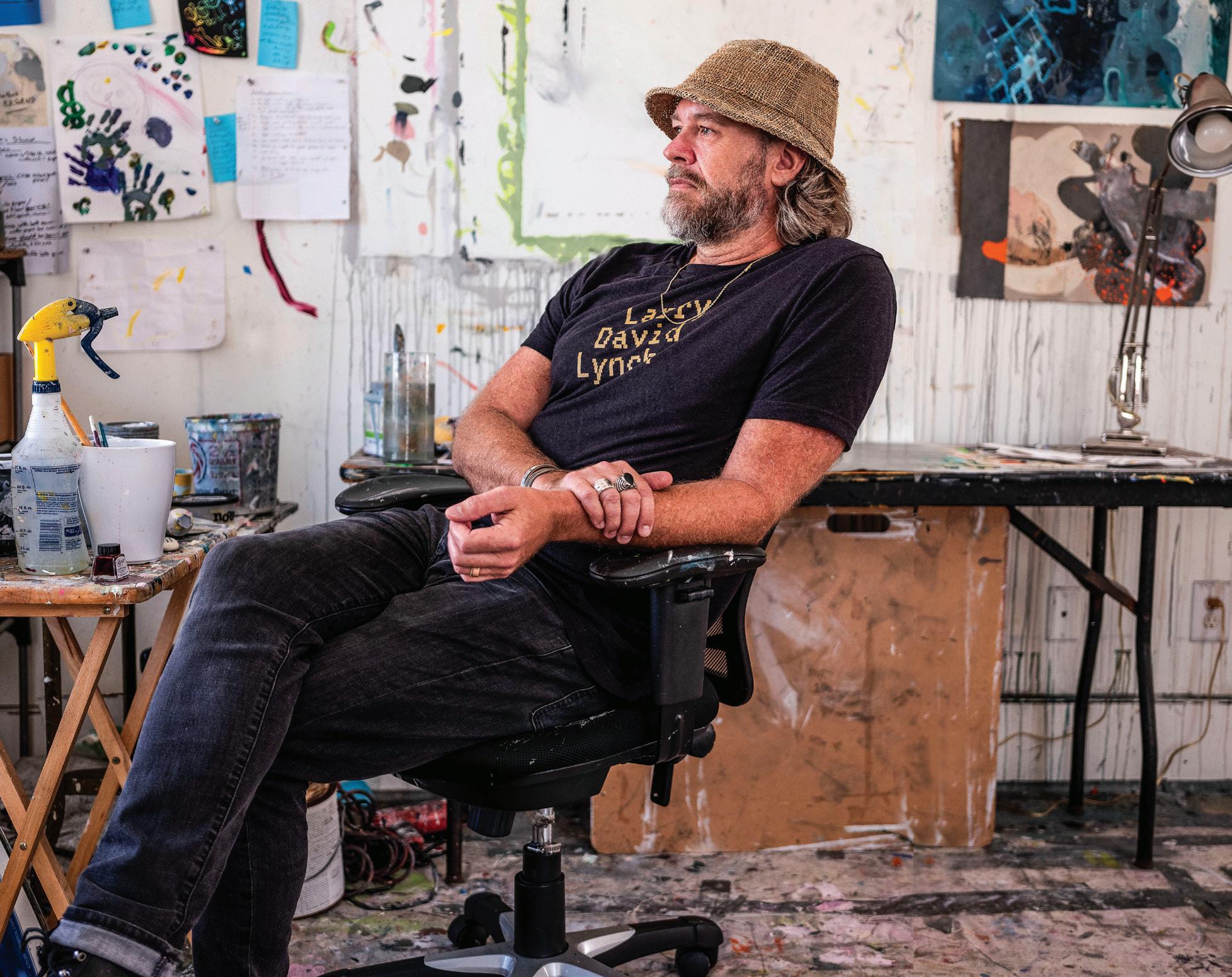
5 Questions with Jevon Brown 23 TX
Interview by Julie Powers
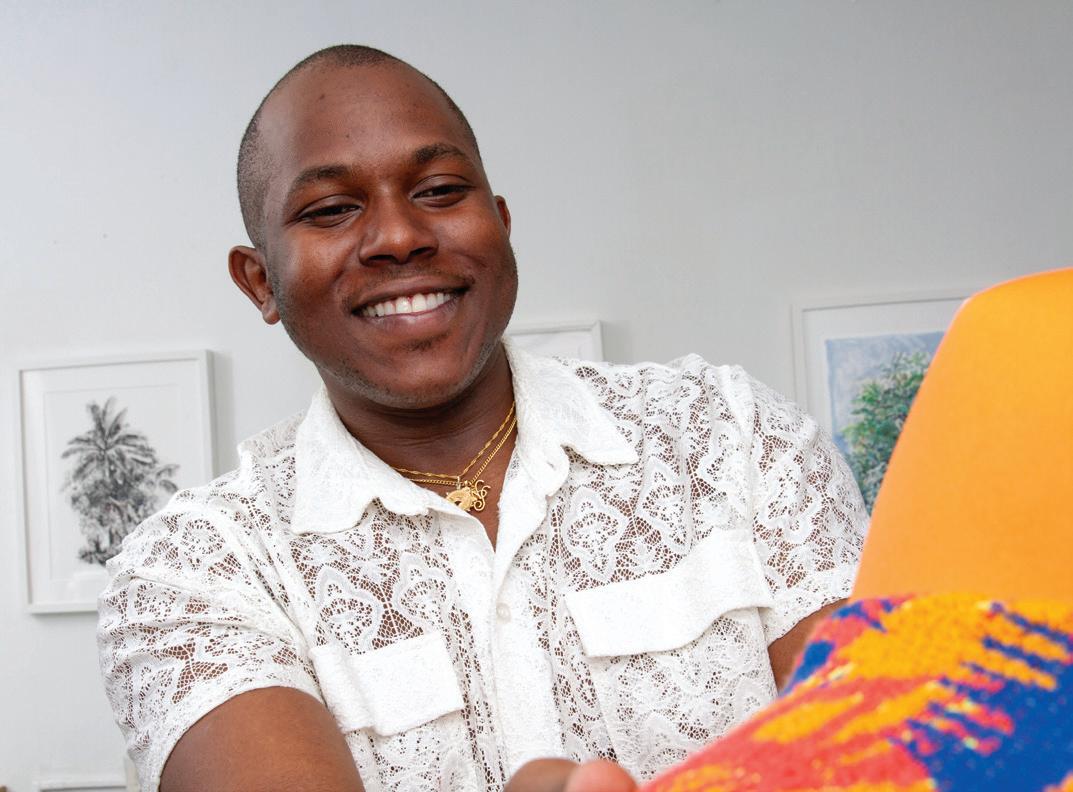
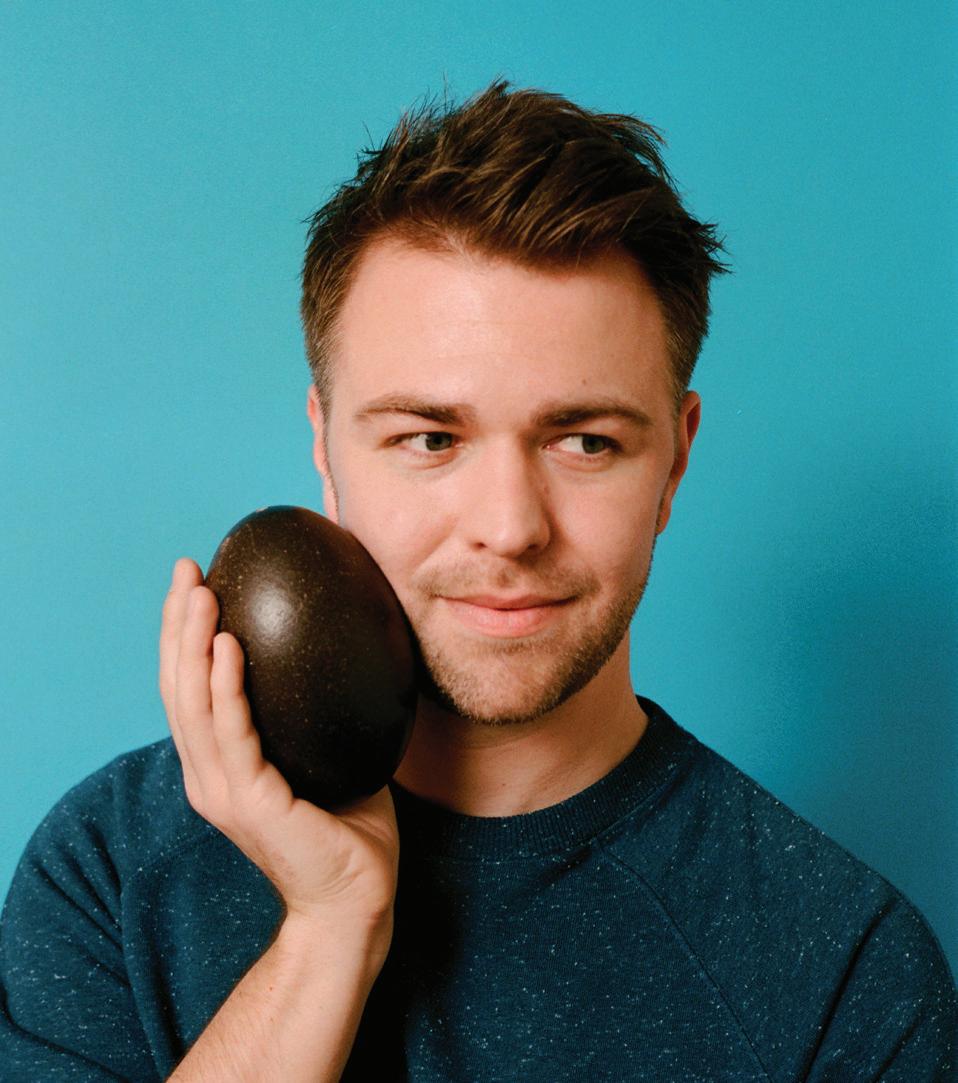
Since graduating from RISD in 2023, Miami native Jevon Brown has been carving out a space as both an artist and an arts leader.
Currently in Oolite Arts’ Live.In.Arts Residency Program and set to take on several others around the globe in 2026, he’s exploring how creative practice and cultural heritage can shape community while also learning to navigate and influence—the wider art world.
Your practice seems to weave together art, culture, and community. How do you describe what you’re working on right now?
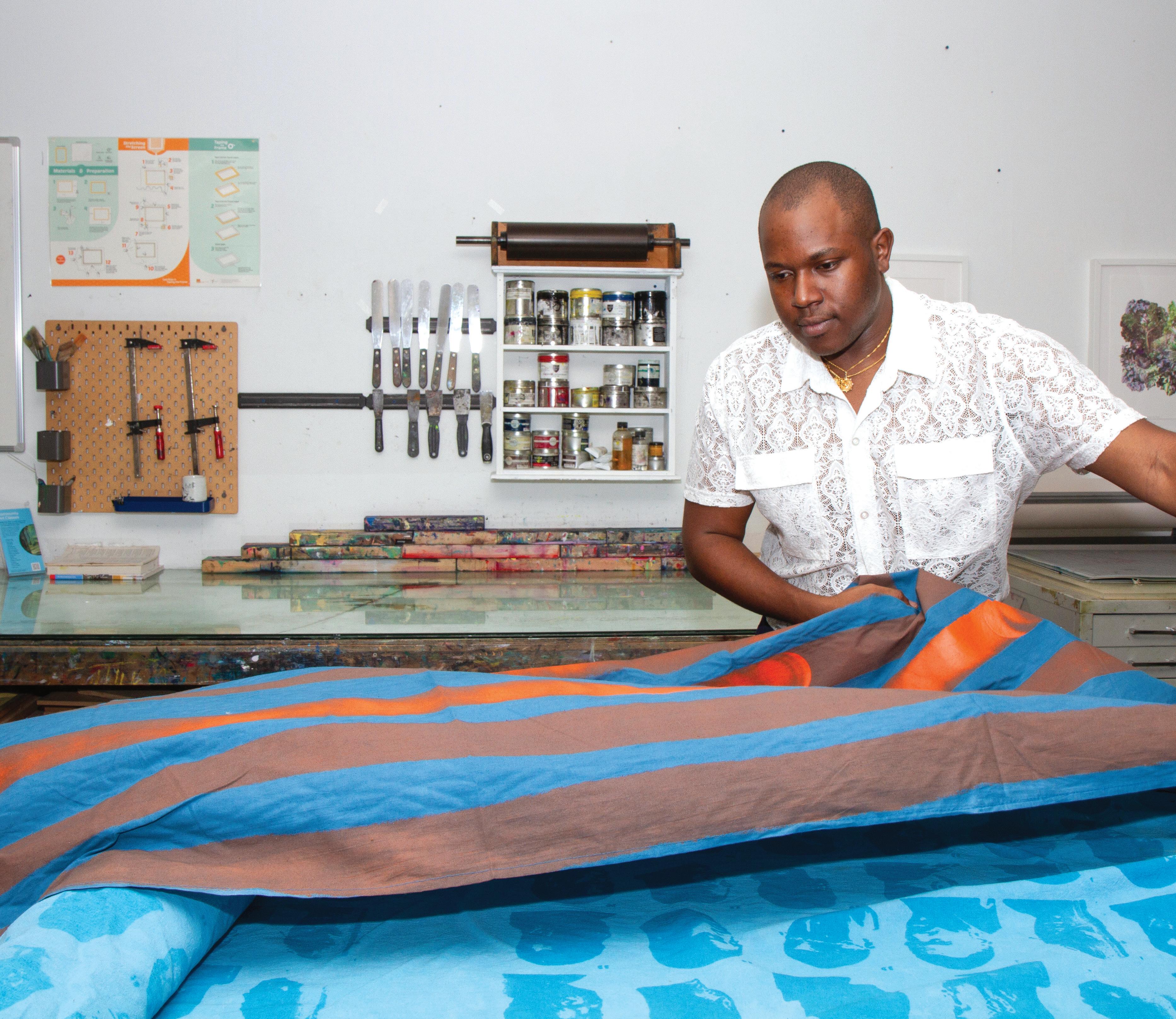
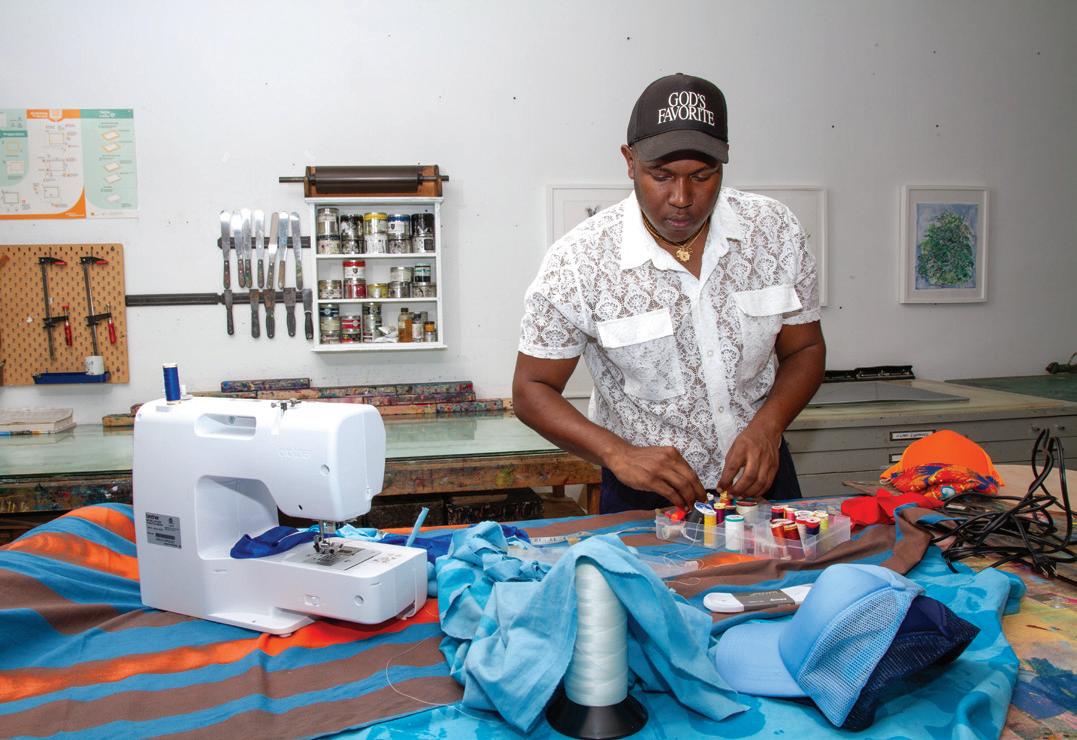
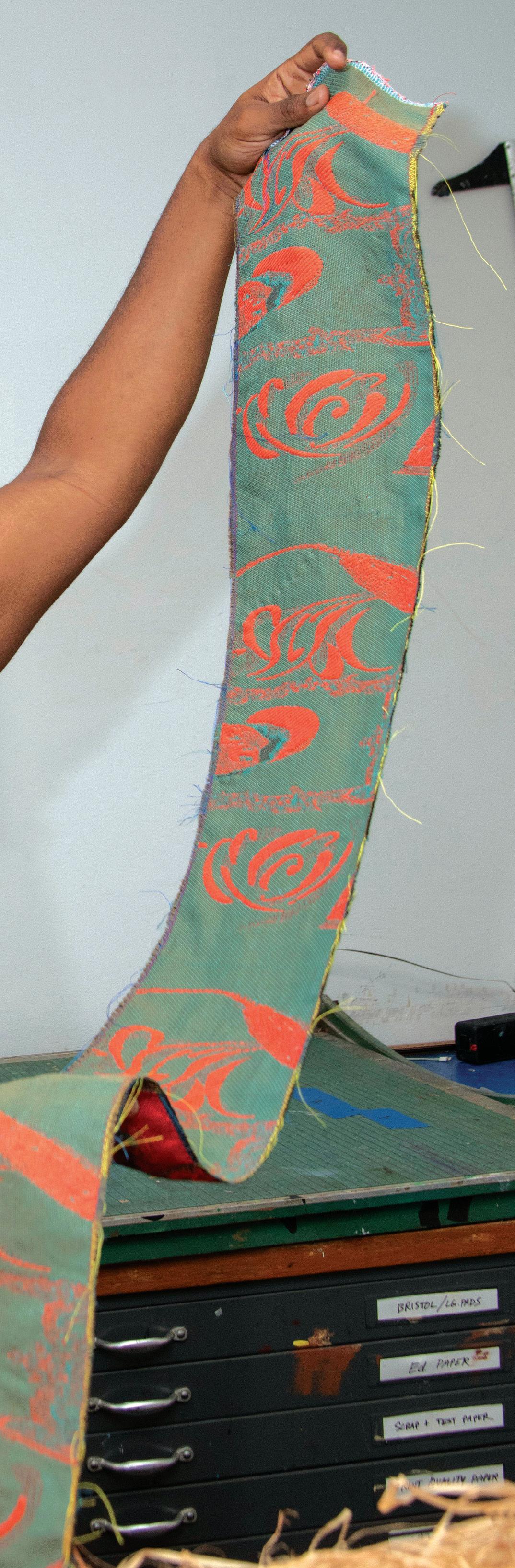
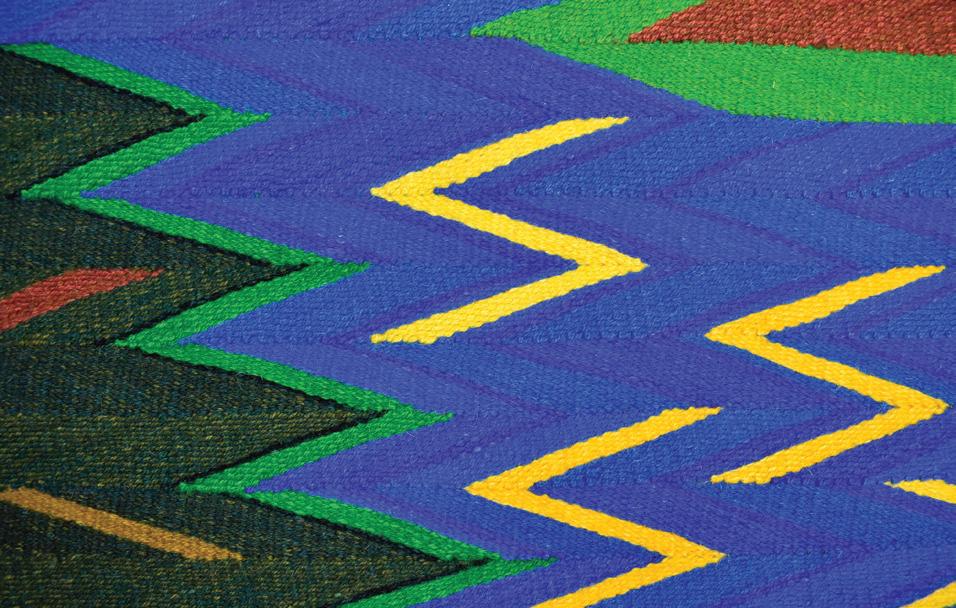
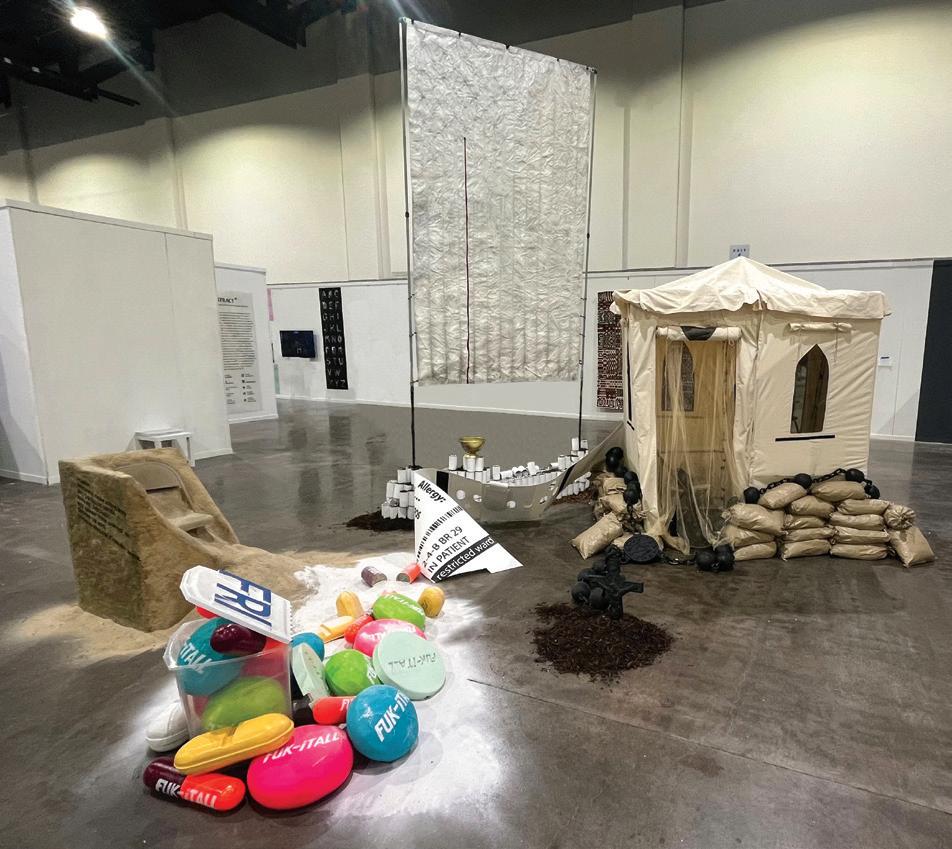
My work is very multidisciplinary; it ranges from textile installations to crafted objects that dig into cultural heritage, especially the Caribbean and Southern Black identity I grew up with in Miami. I’m interested in how men, specifically men of color, embody shared spaces, the rituals that form community, and the textures and objects that hold memory. Hands-on making is at the heart of it. Textiles, collage, screen printing, sculptural forms. I’m unpacking all these different things and working through material investigations. Because at the end of the day, I’m a maker.
Also, right now, I’m learning more about arts administration, integrating that into my practice, and figuring out what it means not only to create but to help shape the spaces where art lives. Since graduation, I’ve been on a journey of learning how artists can also be leaders and decision-makers in the field, and I’m also thinking a lot about how to navigate museums, nonprofits, and other professional art spaces, so my practice lives beyond the studio.
5 Questions with Jevon
You’ve said you knew from a young age that you wanted to be an artist. What sparked that? Honestly, I had really amazing teachers early on. My third-grade art teacher, Ms. Cohen, would enter my work into the Miami-Dade County Youth Fair every year, and I’d win these small, first-place checks that I could cash at Winn-Dixie. It made me feel like art was something I was good at and could keep pursuing. In high school, I knew I would finally have four full years of consistent art education, which really helped me build skills and confidence. That’s when I decided to leave Florida and go to RISD to see how far I could push myself creatively. I was ready to take that risk, even though it felt daunting.
And, I’d say being surrounded by artists, both when I was a student and now as their peer, is what keeps the spark going. People like Sasha Gordon 20 PT. Her work is just so expertly done and so, so amazing. Malika Temba 18 TX, Qualeasha Wood 19 PR, Rada Singhasaneh 22 IA, Zoe Lee 24 ID I could keep going.
Is there one piece that feels like it sums up who you are as an artist?
Definitely my senior project at RISD. It was an immersive textile installation I call the The Barbershop Series. It grew out of research into Black and Caribbean spaces, memory, and masculinity, and it pulled together everything I’d learned at RISD: textile development, collage, material history, theory, design thinking, rhythms, and patterns. It was the first time my ideas and cultural storytelling all clicked in one body of work. That project, honestly, is what led to residencies like the one I’m doing now. I’m using grant money now for my latest project, Magic City Barbershop, another series of installations that explores Black hair traditions and barbershop culture.
What lessons from RISD still shape how you work? Fall in love with the process, not just the outcome. You’ll make bad art, probably a lot of it, before you make great art, and that’s okay. Experiment, stay flexible, and don’t critique yourself during the making process. RISD taught me to absorb from everything, to lean on mentors and peers, and to see my career as a series of “eras” that will evolve. It also taught me the language of the art world, from curators to galleries, which is huge as I move between making and whatever lies ahead.
What advice would you give to young artists just starting out?
Be present and stay open. Build a network of people who will help through the hard parts and celebrate the wins. Let go of your ego and grow your reservoir of knowledge through professors, librarians, museum staff, classmates, lectures. And stay curious about where it might lead. Art can open doors, so keep learning, and imagine a future that’s bigger than what you first thought possible.
RISD in one word Enigmatic
Favorite meal or restaurant in Providence
When I wasn’t at the Met, sometimes we’d go to Thailand Modern Eatery. It was a vegan Thai restaurant with the best mango sticky rice and curries.
Go-to studio soundtrack right now I’m listening to a lot of folk, indie, and traditional music right now. It gets me in a meditative state. When I was making the transition from RISD to the working world, I listened to a Christian artist named Madison Ryann Ward. She blends folk, R&B, hip-hop, and gospel, and it had a big effect on me.
Tool or material you can’t live without Do I have to pick one? Oil pastels, a sketchbook, needle and thread. And a sewing machine.
First thing you made that felt truly “you” When I first created tapestries and combined my love for color and materiality. It expanded how my textiles looked and my visual storytelling.
Dream collaboration
Louis Vuitton, HoodByAir, Grace Wales Bonner. I love how they create visual storytelling culture. I’d also love to work with Barry Jenkins, who worked on Moonlight. Or RaMell Ross MFA 14 PH
Favorite place to recharge in Miami
The beach. Also, playing sports or making art.
Favorite RISD class
I have two: Photography and Race: Blackness and The Self and Pan-African Aesthetics: Past, Present, Future. They both got me thinking about important questions about the role and responsibilities of an artist.
Handcrafted Wonder
Words by Julie Powers
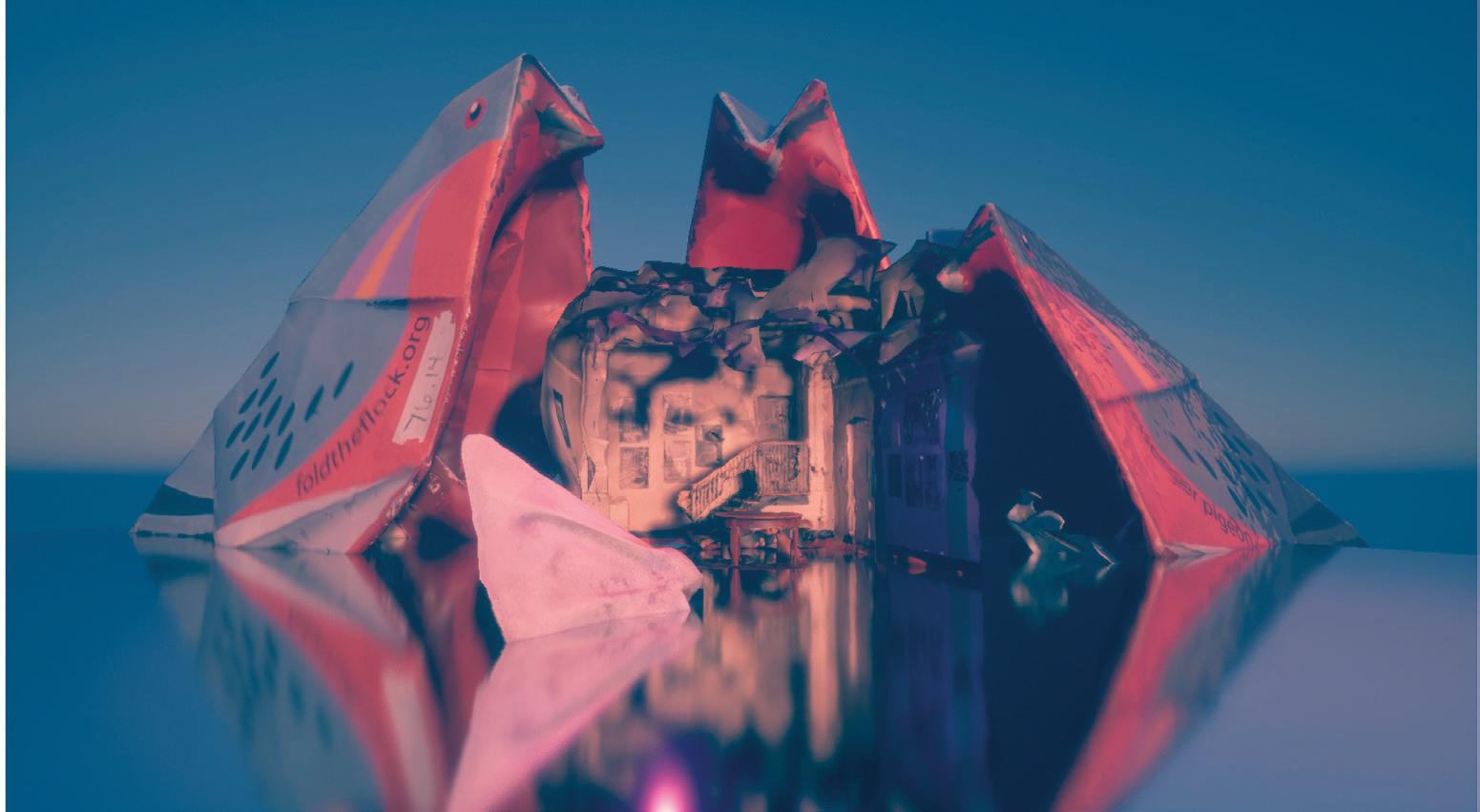
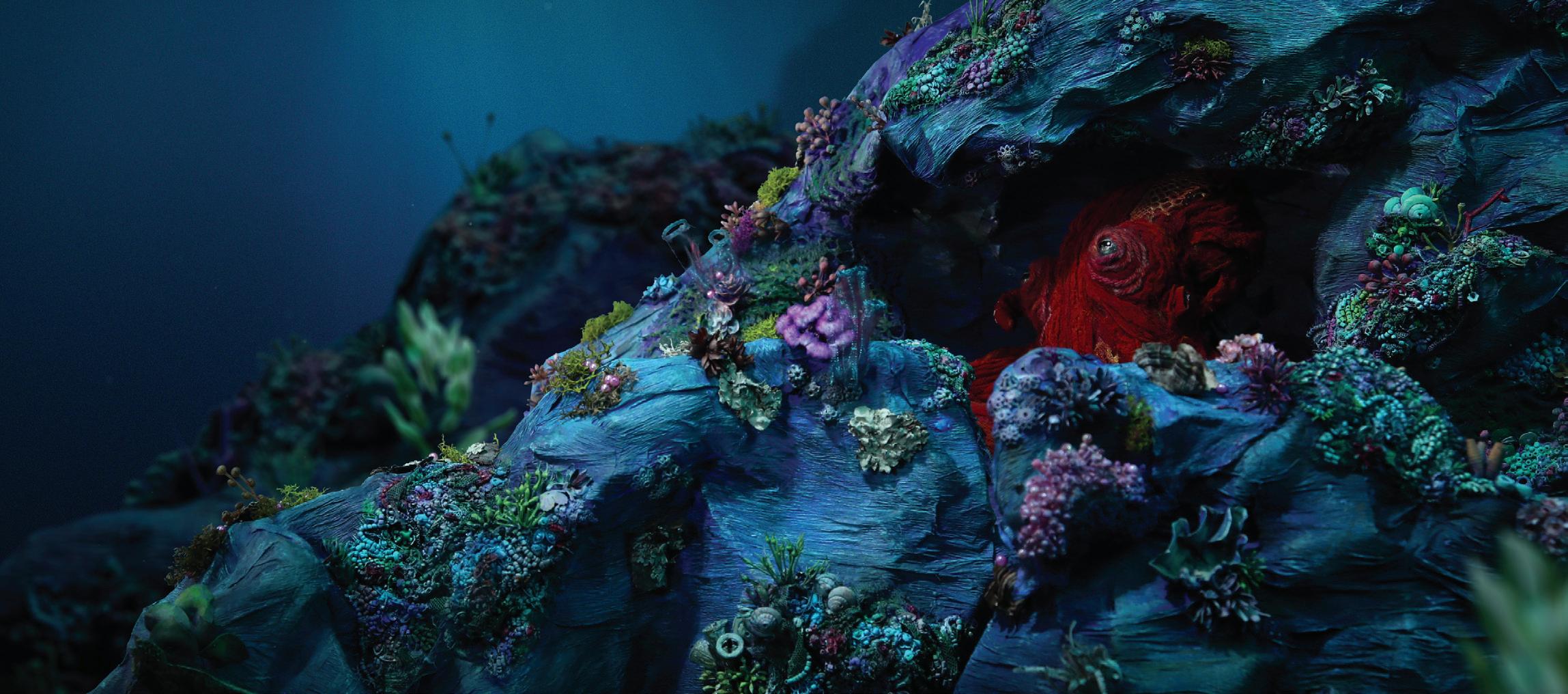
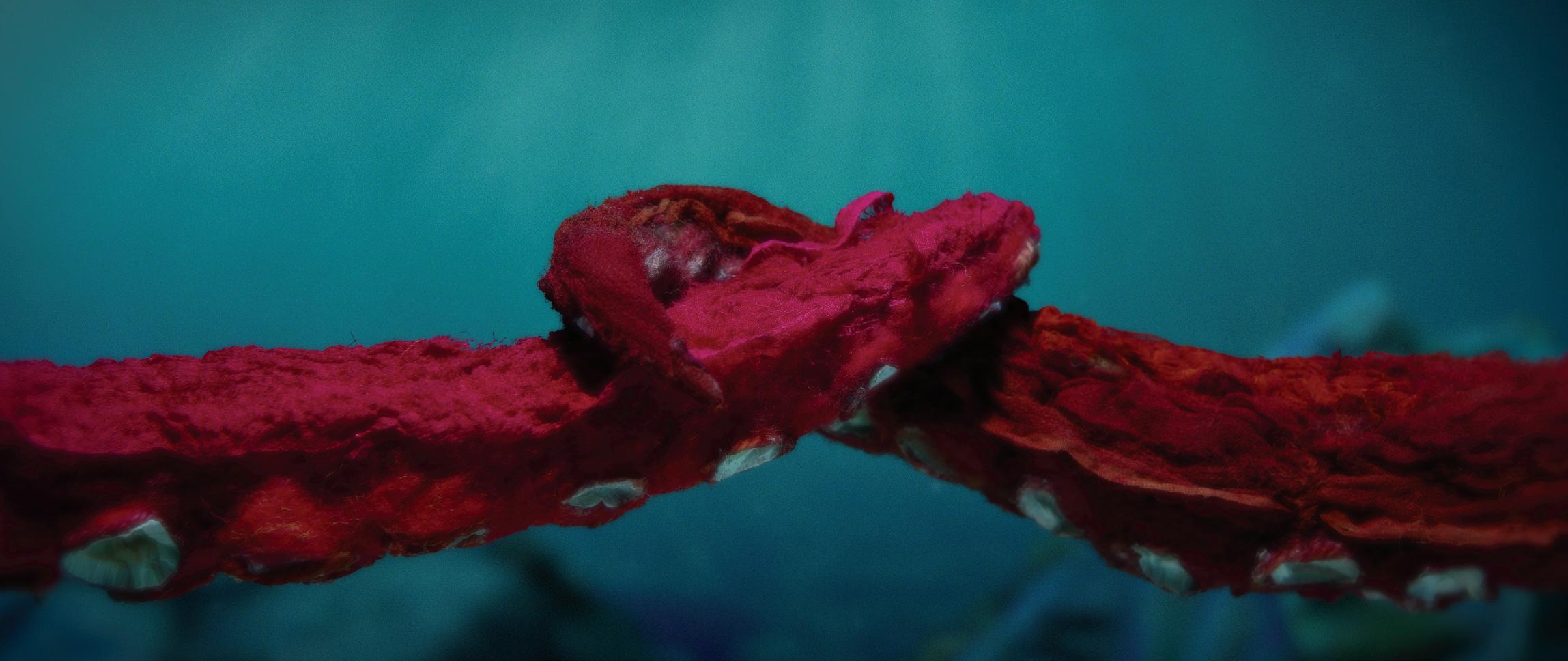
When Doris, a beautifully handcrafted stop-motion giant Pacific octopus, drifts across the screen, viewers can see the artistry it took to bring her to life.
A closer look at the docuseries Octopus!, where Doris takes center stage, also reveals the unmistakable spirit of RISD in every frame.
The project winner of the Creative Arts Emmy Award for Outstanding Motion Design this past fall is a collaboration between the New York–based studio Mighty Oak and Hayley Morris 08 FAV, who designed, fabricated, and led the art direction for Doris. Mighty Oak, founded and led by Michaela Olsen 09 FAV and Emily Collins 08 FAV, brought Octopus! from concept to creation for Amazon MGM / Jigsaw, with Olsen overseeing the project’s overall creative direction of the animation and graphics, including the concept and visual language that shaped Doris herself.
The two-part series, narrated by actress and screenwriter Phoebe Waller-Bridge, explores the life cycle of octopuses from birth and growth to mating, reproduction, and death through live-action storytelling and handcrafted animation. For the project, Jigsaw Productions enlisted Mighty Oak to create original motion sequences that could visualize the science and wonder behind the story. Into that framework came Morris, whose handmade vision for Doris became the emotional core of the series.
“Creating the Doris puppet has been one of the most fulfilling projects of my career,” said Morris.
“I wanted her to resemble a real octopus while also possessing subtle human traits... I aimed for her surface to feel rich and tactile, realistic from a distance, yet on closer inspection revealing delicate details like lace and yarn that emphasized her handmade origins.”
Morris’s creative process is material-driven. During the design phase, she sourced wool, yarns, lace, chiffon, and other textiles and, through experimentation, she discovered a blend of materials that captured the texture of octopus skin and, as she describes, “the graceful, undulating movement of an underwater creature.”
For Olsen, Collins and their team at Mighty Oak, a studio known for blending traditional craft with cinematic storytelling, creating Octopus! was a dream come true. “It was the easiest ‘yes!’ of Mighty Oak’s 10-year career,” Olsen said. “We loved seeing Doris’s puppet come together piece by piece, and I’m still in awe of how the tentacle animation turned out. Animating eight legs is not easy.”
That sense of wonder and risk was embedded in every phase of production. With only about 10 minutes of stop-motion animation to tell an entire life story, the Mighty Oak team leaned on techniques like frontlight / backlight setups, scene reuse, and compositing to stretch their visuals.
Behind the scenes, RISD-trained alumni held key roles across the chain of creation: Anthony Galante 15 FAV (Cinematographer, Storyboard Artist, Fabricator & Set Stylist), Minkyung Chung 16 IL (Fabricator & Set Stylist), Maria Jose Esquivel 17 IL (Storyboard Artist), Julia Chien 22 FAV (VFX Compositor), and Conor O’Kelly-Lynch 07 FAV (VFX Compositor).
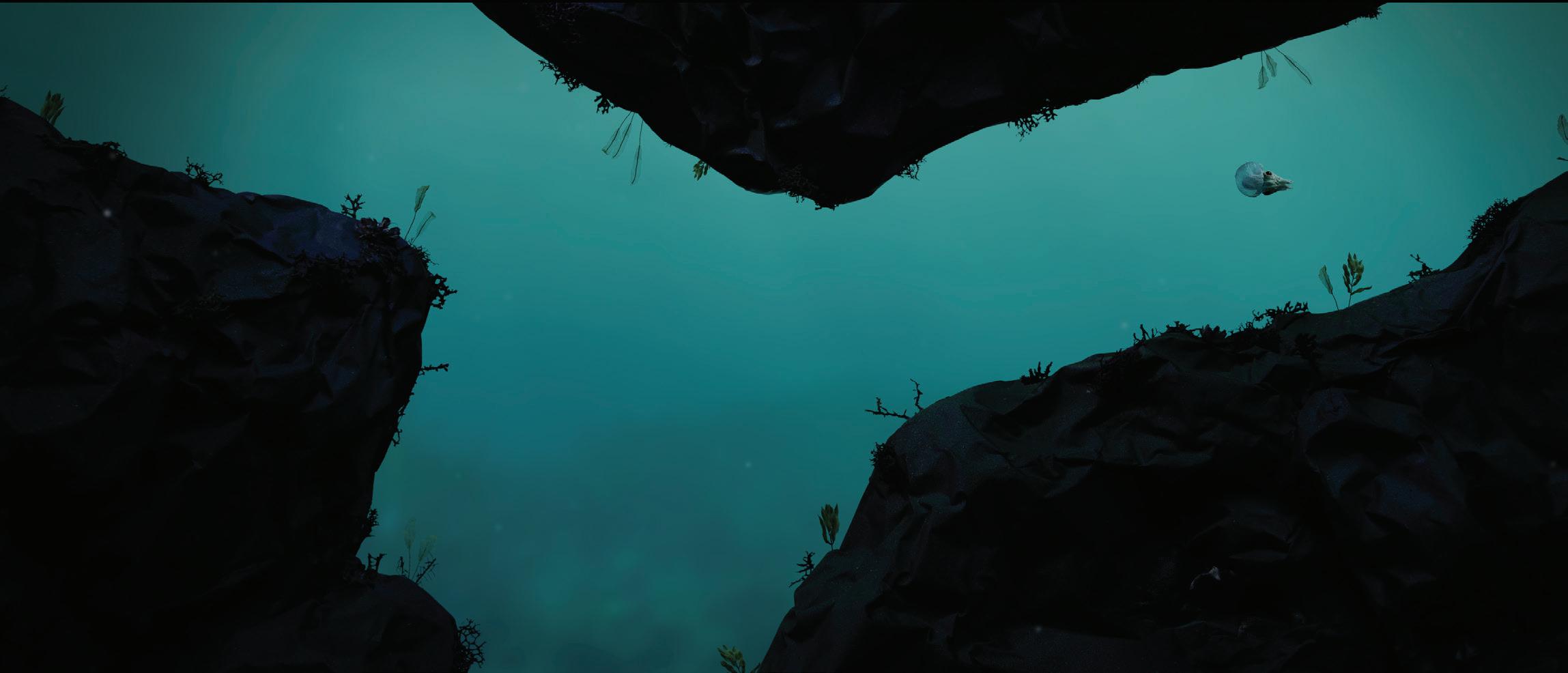
Morris envisioned a richly tactile underwater world and gathered moss, seed pods, and mushrooms from Vermont to blend in with the underwater terrain. She packed the collection into a large suitcase bound for New York City, where Chung brought the vision to life, integrating the natural elements into her sculptural environments. Chung embedded the forest finds into paper rock formations, embellishing them with beads and fabric flora to evoke the textures and rhythms of an imagined ocean landscape.
“Beyond cultivating a strong creative work ethic, RISD instilled a deep commitment to exploration and pushing boundaries in every project we approach,” said Collins, “I would say that applies to everyday life too, encouraging us to artfully and thoughtfully defy expectations. Why use a plain black umbrella when you can use one that is iridescent and has googly eyes on it?”
When Octopus! premiered in May 2025, it was met with praise for its poetic fusion of documentary and handcrafted animation. Doris became the bridge between scientific narrative and imaginative empathy. Critics and audiences saw more than technique; they saw heart, patience, and personal voice.
The Emmy win ultimately honors not only a stop-motion creature but a network of RISD alumni whose education continues to animate their professional identities. “We are grateful to be part of a tight-knit alumni community who are eager to create work together that excites us,” says Collins. “Ideally, it resonates with audiences, too.” Projects like Octopus! embody the lineage of RISD’s hands-on, crossdisciplinary approach, where illustration meets film, design meets physics, and making meets meaning.
When Design Heals Alumni
Transforming Healthcare Through Innovation
Words by Gillian Kiley and Julie Powers
Across the healthcare landscape, RISD alumni are reimagining how we care for one another.
Some invent life-altering medical devices that bring safety and dignity to patients and their families. Others apply design thinking and problem-solving to improve wellness, access, and the human experience of care.
The alumni featured here prove that art and design have the power to heal, drive innovation, and transform lives.
JULES SHERMAN
Jules Sherman 94 ID is reimagining healthcare through design rooted in empathy and innovation. She invents medical devices that transform care for some of the most fragile patients: new mothers, preterm infants, children with complex needs, and the families who support them. Her practice thrives on collaboration with clinicians, engineers, and caregivers, she says, guided by curiosity and a love of hands-on problem solving, skills she honed at RISD. “RISD empowered me to build physical things myself and with others,” she says. “Design always includes craft, care, and collaboration.”
In 2025, after a 30-year career that has evolved into pioneering work in healthcare, Sherman was honored with the Cooper Hewitt National Design Award, recognizing her impact as a medical product designer embedded in academic children’s hospitals.
Her path wasn’t straightforward. After graduating from RISD, she found early success designing consumer goods for major retailers. But in 2010, a traumatic hospital birth opened her eyes to how poorly many medical devices serve women and children. “After challenges during and after the birth of my child, I was drawn to use my skills as a designer to make labor and delivery safer and less overwhelming,” she recalls.
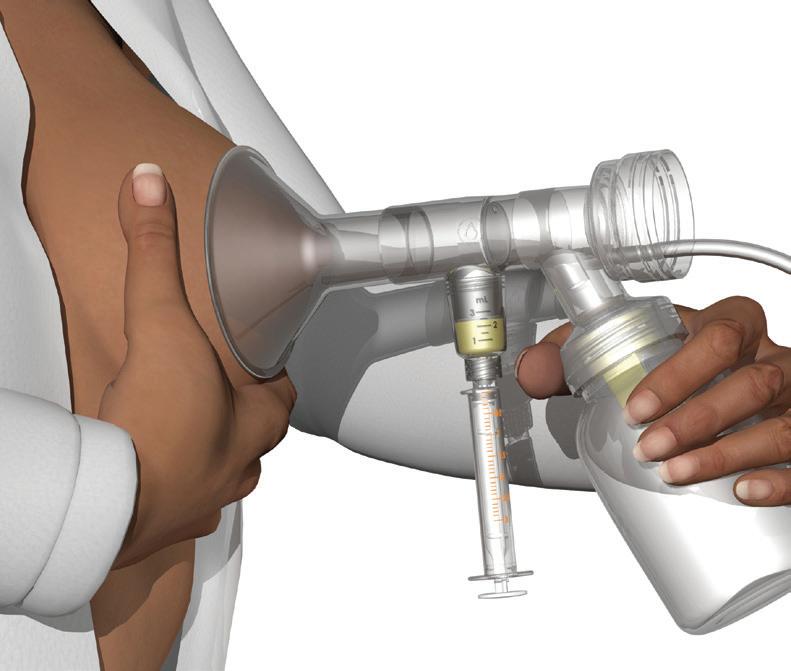
That turning point set Sherman on a mission. She returned to graduate school at Stanford University, studying healthcare product design. In 2012, she designed and patented Primo-Lacto, a closed system for collecting colostrum, the nutrient-dense fluid produced immediately after childbirth. The system was acquired by Lansinoh, helping mothers provide critical early nutrition without losing precious drops.
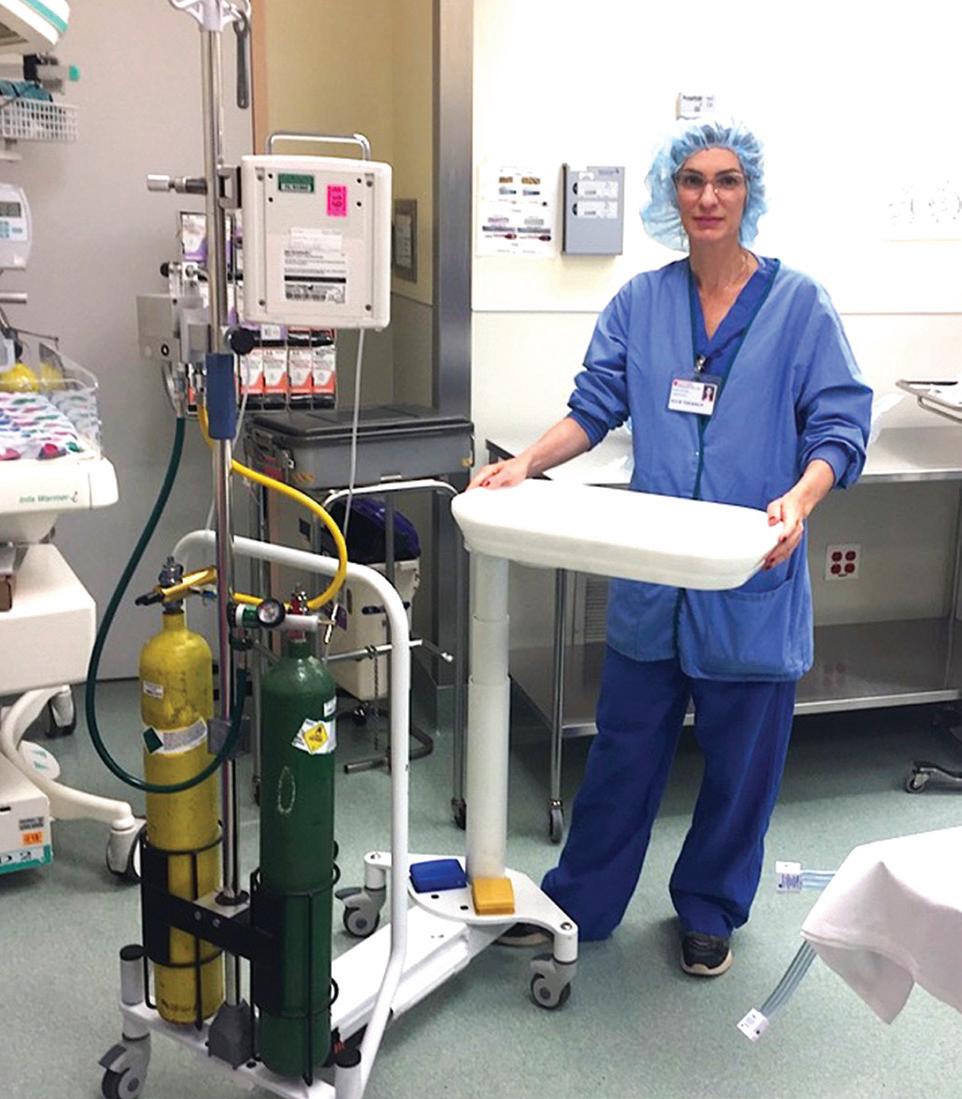
After graduation, she joined the Safety Learning Lab for Neonatal and Maternal Care at Stanford Medicine, where she co-invented solutions grounded in design thinking methodology, including NOOMA, a delayed cord clamping cart for preterm infants, and the Pelvic Lift Cushion, improving pelvic exams in low-resource clinics. Sherman also published research on how delivery-unit design impacts maternal outcomes.
More products followed, such as the Kangarobe, a patented garment that makes safe skin-to-skin care possible for parents whose preterm babies are connected to multiple lines and tubes. Her current passion project is Trach Sense, a CO2-sensing device that alerts caregivers when a child’s tracheostomy tube is obstructed or dislodged, an issue that can quickly become life-threatening at home.
Sherman is an educator and advocate as well as an inventor. As former director of the Biodesign Program at Children’s National Hospital, she trained pediatric nurses in human-centered design and continues to mentor future innovators as an adjunct professor at the University of Maryland’s Fischell Department of Bioengineering.
Sherman’s journey is a powerful reminder that creativity paired with empathy can change the world. “I had no background in medical devices when I made the shift,” she says. “RISD shaped me profoundly. It taught me to trust my curiosity as a guide and to approach design as both a discipline of craft and a way of thinking.”
Jules Sherman “
After challenges during and after the birth of my child, I was drawn to use my skills as a designer to make labor and delivery safer and less overwhelming.”
JUSTIN HAI 98 ID DESIGNING BALANCE, REBALANCING LIVES
When Justin Hai 98 ID considers his time at RISD, it’s not the drawings he made or the things he designed that first come to mind. He thinks about grit.
“RISD taught me how to think,” he says. “It was about solving a problem, taking critique, picking yourself back up, and trying again. That ability to grind and keep going has shaped everything I’ve done since.”
That mindset has led Hai on an unconventional path from art and design school to working with Disney, creating a green fitness equipment company, designing and constructing FBI buildings, founding a half-billion-dollar skincare company, and now helping people reclaim their health.
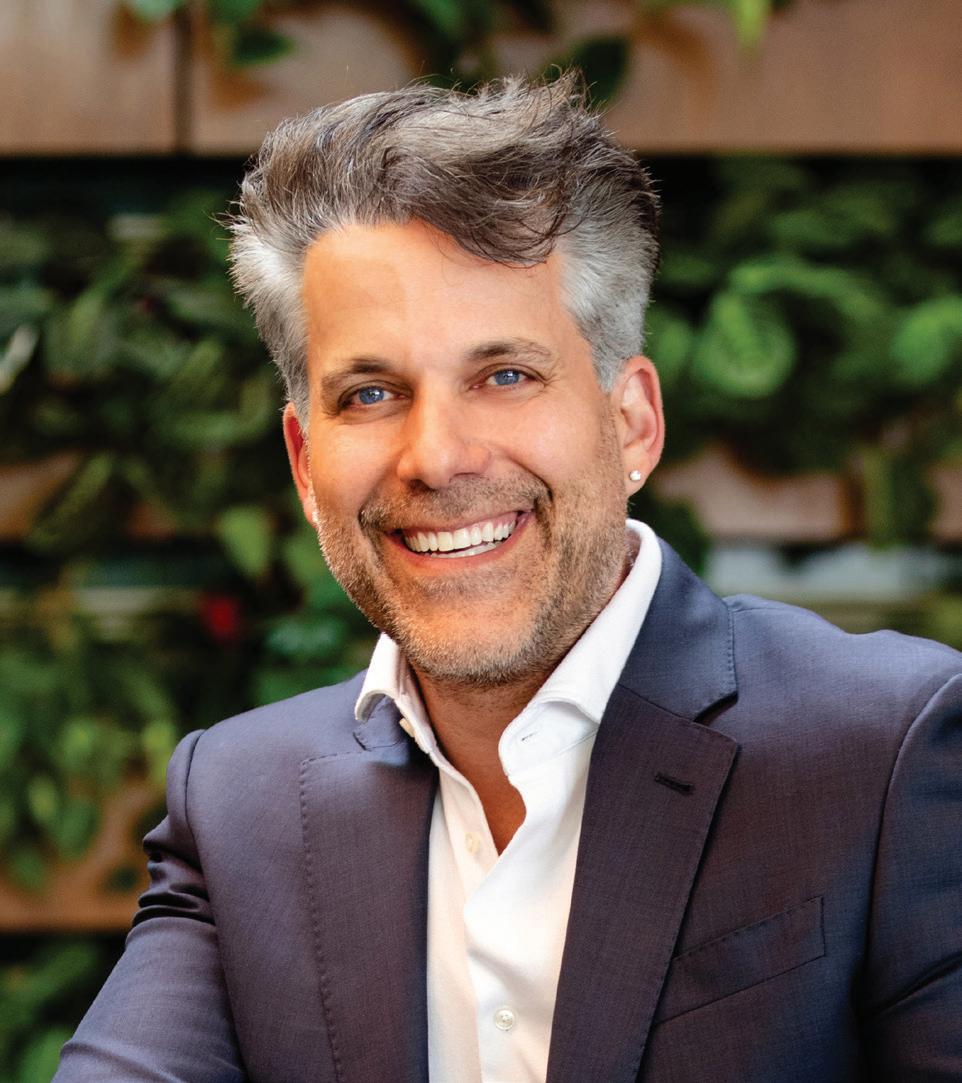
He’s the co-founder of and health innovator behind Rebalance Health, a company built on a simple but powerful insight. When the body’s stress hormone, cortisol, is out of balance due to modern factors like artificial light and constant demands from technology, sleep suffers, hormones misfire, and overall well-being declines.
“I understood that cortisol was at the root of why so many people can’t sleep or lose weight, and feel run-down,” Hai explains. “I proved that theory right, and, after a lot of trial and error, built a company to help people reset their hormonal balance with a whole-body system.” Rebalance’s products harness Hai’s proprietary delivery system with mint lozenges designed to optimize ingredient absorption and bioavailability. In clinical studies, this approach produced striking outcomes; participants reported up to an 80% reduction in perimenopause symptoms, along with meaningful improvements in sleep and overall well-being. The science is rigorous, grounded in published, peer-reviewed medical journals, yet communicated with clarity and accessibility, something Hai credits to his RISD education.
“As an entrepreneur, I have to tell a story to the customer,” he says. “RISD taught me how to explain complicated ideas and concepts to consumers or investors quickly. That skill has been invaluable as I’ve brought a new kind of health solution to market.”
Before Rebalance, Hai co-founded Alastin Skincare, helping grow it into a leader in regenerative skincare before its acquisition by global powerhouse Galderma. His earlier career spanned energy-saving technologies that earned him an invitation to present at the Pentagon and to the Secretary of Defense. As a student, he helped pioneer the heads-up display concept now used in BMWs. Through every chapter, Hai says the spirit of critique, creativity, and resilience he absorbed at RISD has guided him forward.
“You learn how to take feedback at RISD. There might be a whole day of classmates and professors dissecting your work, and you keep going. If something isn’t good enough, you refine it. If the model fails, you rebuild it,” Hai says. “That’s rare. Most people don’t get that kind of education. It’s a masterclass in persistence and humility.”
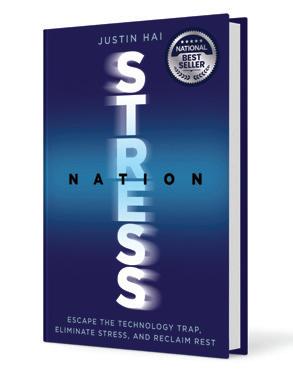
That same mindset carried into his latest endeavor as an author. Stress Nation, which debuted as a national bestseller, expands on the science and philosophy behind Rebalance, exploring how modern technology has rewired our biology to overproduce cortisol and how people can reclaim balance through awareness and habit change.
“Everything I’ve done has come back to one thing: helping people feel better,” Hai says. “That’s the real measure of success. RISD taught me resilience, but life taught me empathy. Rebalance brings those two lessons together.”
Sager, right, and his colleagues at Heirloom strive to bring a human touch to their work, whether the challenge is domestic design, medical devices or digital futures.
TATE SAGER 15 ID A HOLISTIC APPROACH TO USER EXPERIENCE
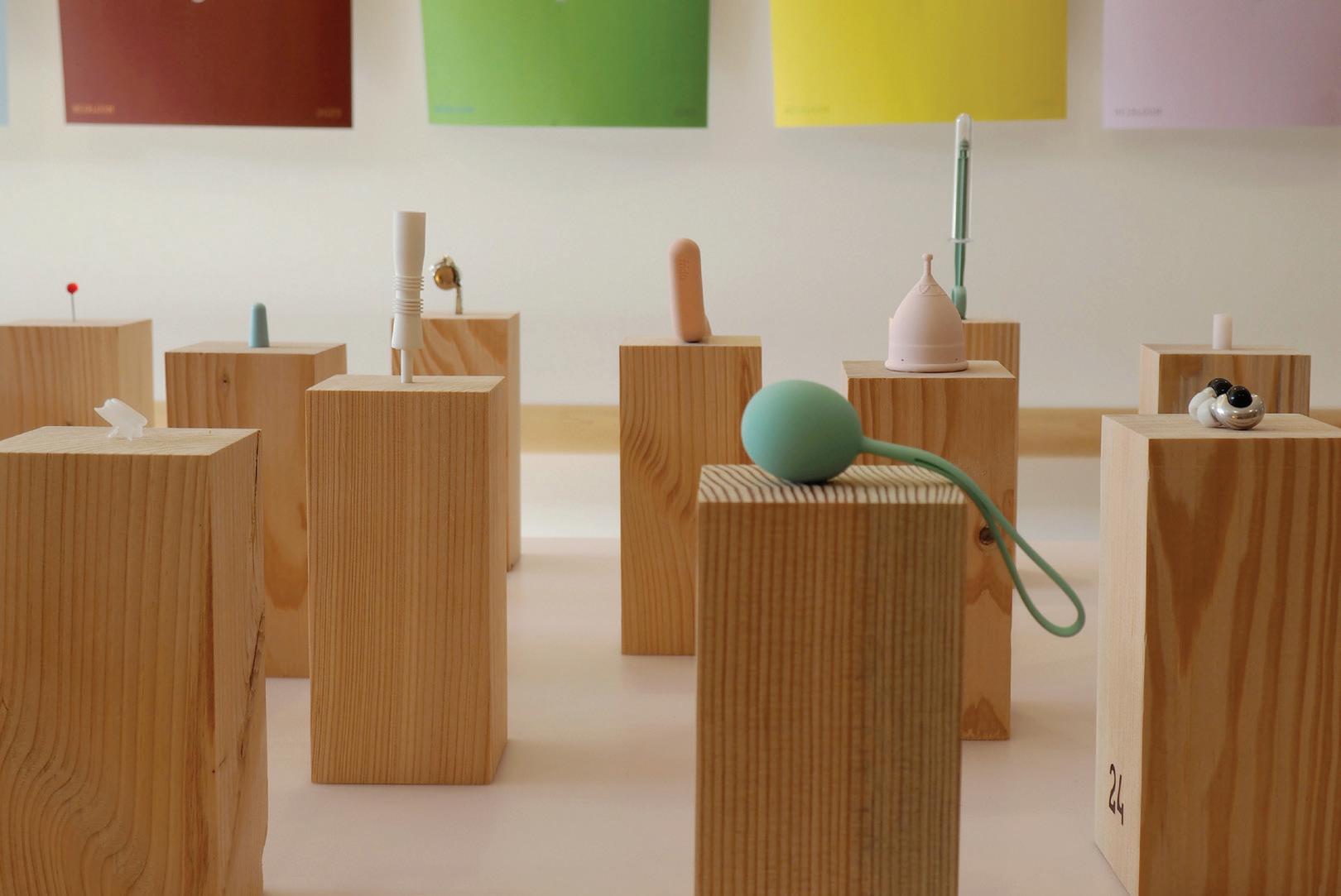
At their September 2025 exhibition Out of Orifice at the London Design Festival, the design studio
Heirloom set out 36 objects, all of which are made to be inserted into the body, on a display table. Ranging from contact lenses and vibrators to pessaries, the items challenged viewers to closely consider what we put in our bodies and ask whether they could be designed with more care and humanity.
Heirloom co-founder Tate Sager 15 ID says some viewers were intrigued by the exhibition, because the objects focused on core human experiences of health, well-being, and pleasure, in contrast to consumer goods typically showcased at design fairs. “We wanted people to see a whole other world of products that maybe you’re not using yet, but perhaps you will in the future. As opposed to a more distanced mode of user research, we want to feel personally invested in how healthcare products are created.”
Heirloom designs a wide range of products, from audio speakers and children’s toys to lab research equipment and mobile apps. When designing for the healthcare space, in addition to perfecting the engineering and medical function of a device, Sager focuses on the whole person who will ultimately use the product, because he knows it can broadly affect their quality of life.
Currently, Sager and his team are working on improving the home dialysis experience, and thinking about how a dialysis system fits into patients’ living spaces. Every night, Sager says, a dialysis patient will have six liters of liquid moving through their body, and they will need a month’s supply of fluids and related items on hand.
“Does my home suddenly get filled with medical equipment that makes me not want to bring people over?” Sager asks, centering the point of view of the patient in approaching design. “Is set-up quick, and is using the product easy or something that I’m depressed about doing every day?”
Ultimately, Sager says, he hopes these products that Heirloom designs make a person feel confident giving themselves a therapeutic treatment that fits into their life. He would like dialysis to feel as easy and pedestrian as washing your face in the morning, so he brings that vision to his team’s work on the device’s design.
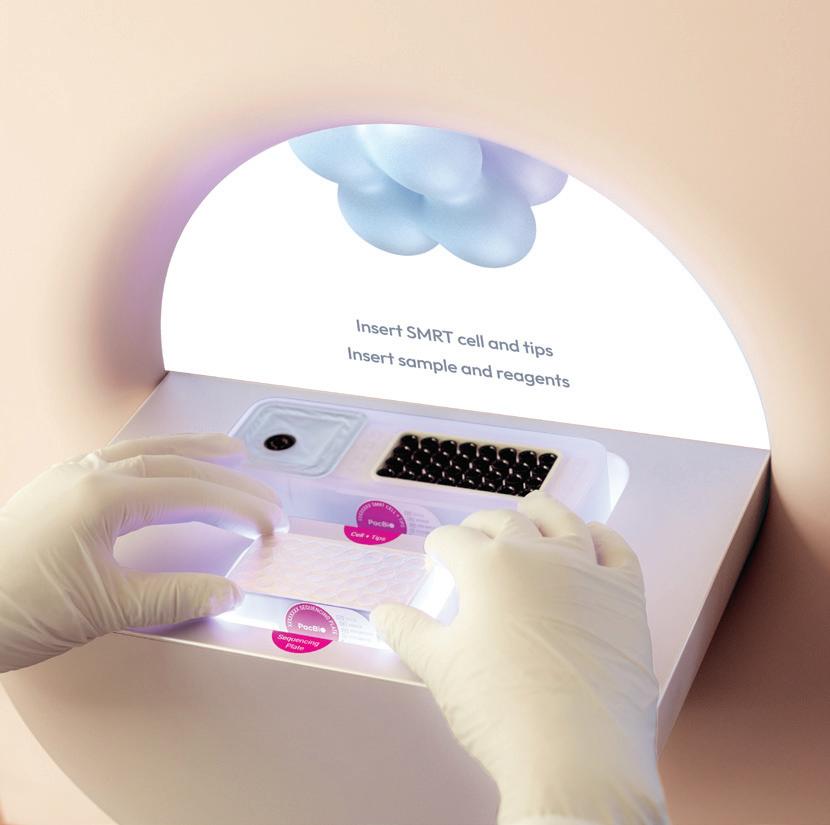
Ease-of-use in medical product design is a quality that can embody both optimism and future-thinking. Sager and his colleagues at Heirloom designed Vega, PacBio’s genetic sequencing platform that can be used for cancer research, gene function study, DNA comparison, and more. PacBio sought a cleaner interactive experience for their users, and Heirloom delivered a sleek, award-winning instrument that is simpler to use and 30 percent more efficient than other sequencers. Everything a researcher needs is readily accessible, while the complex inner workings are tucked away. A digital avatar helps users quickly identify each instrument and sample and stay organized.
“We wanted to create a device that would help make someone feel like they’re going to have a great scientific breakthrough that day,” Sager says.
Vega’s compact size and lower price point make it accessible to small and mid-sized research labs and institutions. In the future, Sager says, genetic sequencers may be available to clinicians or non-technical users at local pharmacies. The sequencer design should help those users feel they are doing cuttingedge precision medicine, Sager says, and customers should feel inspired and optimistic about what the technology can bring to health care.
Knowing that some end-users, like dialysis patients, do not get to choose whether they use the products he designs, Sager is focused on bringing empathy and a holistic focus on human experience to his work.
“I’ve been incredibly grateful to bring serious design attention to these products and to make them, and their users, feel distinctly like themselves.”
SLOAN KULPER
MID 06 INNOVATIVE SOLUTIONS FOR A NEW DEMOGRAPHIC
A quarter billion people around the world have osteoporosis, a medical condition in which the bones become brittle and fragile from loss of tissue. When those patients have surgery to repair a broken hip, shoulder, or spine, the rate of complication is nearly 25 percent, according to Sloan Kulper MID 06, co-founder of Lifespans, Ltd., a medical technology company focused on the failure, migration, and fatigue performance of new orthopedic implants.
Kulper became aware of the need for a better way to understand and treat patients with osteoporosis while he was pursuing his PhD in medicine at the University of Hong Kong in the Department of Orthopaedics and Traumatology.
Clinicians and engineers emphasized that as elderly patients lived longer, they had new needs that were not served by traditional solutions for mending broken bones.
“With implant devices like screws or pins that were designed decades ago, the fundamental design rests on assumptions about demographics and clinical cases of decades past,” Kulper says.
Surgeons described the internal structure of the bones of their elderly patients as “like tofu.” For those patients, traditional implants often failed, because the impact of a patient’s own body weight on fragile bones could cause the implant to dislodge or “migrate” after surgery particularly during the six-to-nine-month fracture healing process.
In response, Kulper and his colleagues developed a new “soft” hip implant with a patented polymer tip to better match the mechanical strength of weak osteoporotic bone. To commercialize it, the team of five co-founded Lifespans just as COVID-era biomedical testing laboratory shutdowns stopped their hardware development in its tracks.
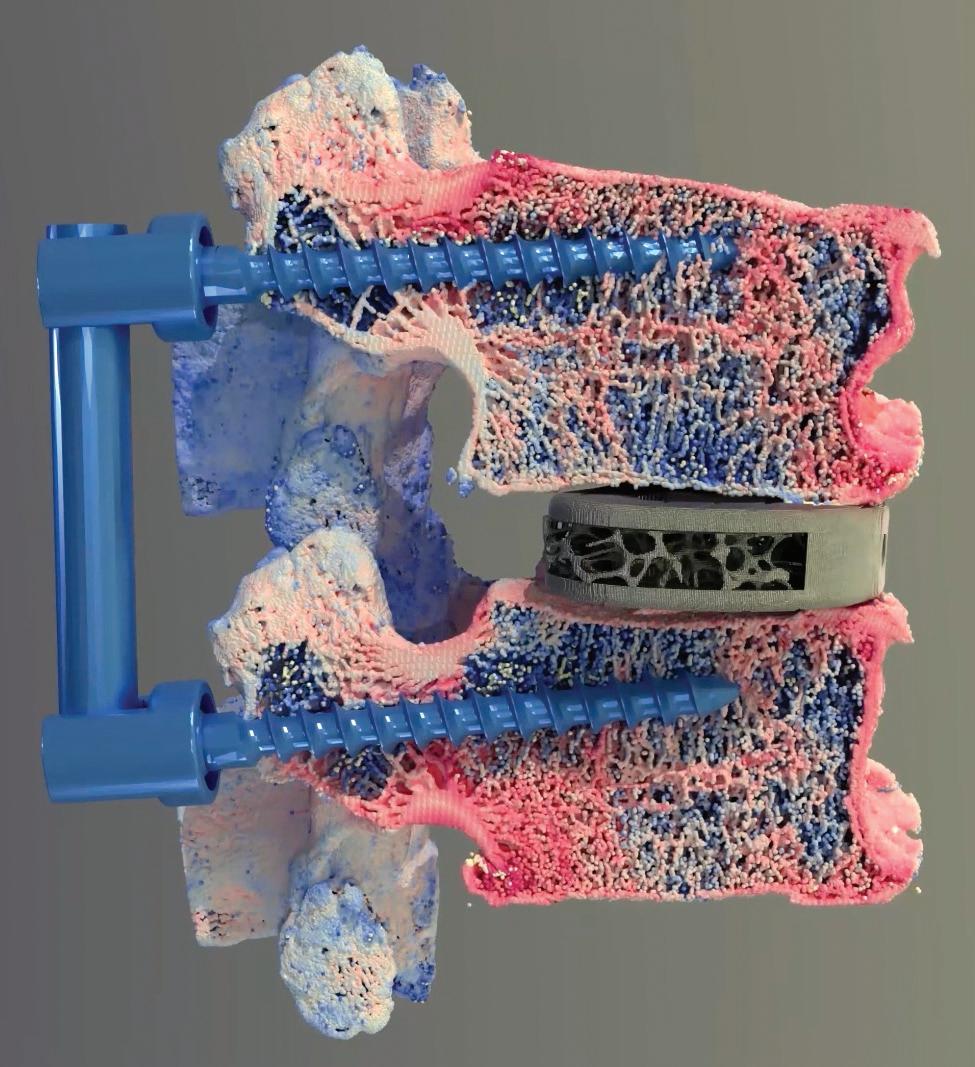
The team pivoted to focus on another technology they had developed, a method of simulating bone cracking and crushing behavior named AlfonsoTM after one of Kulper’s mechanical engineering advisors, Alfonso Ngan.
“It’s essentially a virtual bone for testing the safety of implants,” Kulper says. “Seeing our team struggle to get conventional simulation methods to work, Professor Ngan had inspired us to borrow thinking from other fields in his case, the modeling of metallic foams using particle-based modeling methods which led to our breakthrough. The internal structure of bone is similar to foam.”
The patented method allows doctors to create a 3D model of a patient’s bone and run simulations that will predict the performance of different approaches to fracture repair. Now, AlfonsoTM is used by engineers at some of the largest medical device companies in the world to design safer and more effective bone implants, and it has been widely recognized as a breakthrough in the field.
Kulper says his RISD training and values have been critical to his work. That is evident in his ability to tell stories visually, confront complexity, and apply a design process that keeps track of multiple stakeholders and questions. Equally important is bringing empathy to the process.
“The problems with designing for health care are very technical, but they also have a fundamentally very human element to them,” Kulper says. “People can live 40 years after having a hip replacement. We want those patients to have successful outcomes and live well.”
ACEIL HALABY 11 ID A BREAKTHROUGH DESIGN IN HEALTH
MONITORING AND TREATMENT
What are the symptoms of cardiovascular disease?
For women, nausea, jaw pain, and overall weight gain can signal heart attack risk. For men, symptoms are often abdominal weight gain, arm pain, and shortness of breath. While the disease presents differently depending on whether one has XX or XY chromosomes, most clinical trials studying heart disease included only XY patients (men) until 1993, when a law was passed requiring that women be included in clinical trials sponsored by the US National Institutes of Health.
The dearth of data on how cardiovascular and other diseases manifest in women can lead to years-long delays in diagnosis and treatment, and tragic outcomes. Especially at risk are women who have had adverse pregnancies or are in perimenopause. For Aceil Halaby 11 ID, co-founder and COO of BloomerTech, and her colleagues, there was a clear need to collect medical-grade data and health metrics so women and their doctors could monitor and treat disease.
The desire to close the data gap and improve medical care more broadly was informed by personal experiences with ill family members. Halaby had seen firsthand how confusing data from a wearable electrocardiogram (ECG) could be after her husband experienced heart palpitations. And Alicia Chong Rodriguez, BloomerTech’s co-founder and CEO, lost her grandmother to a sudden heart attack when Chong was just 12.
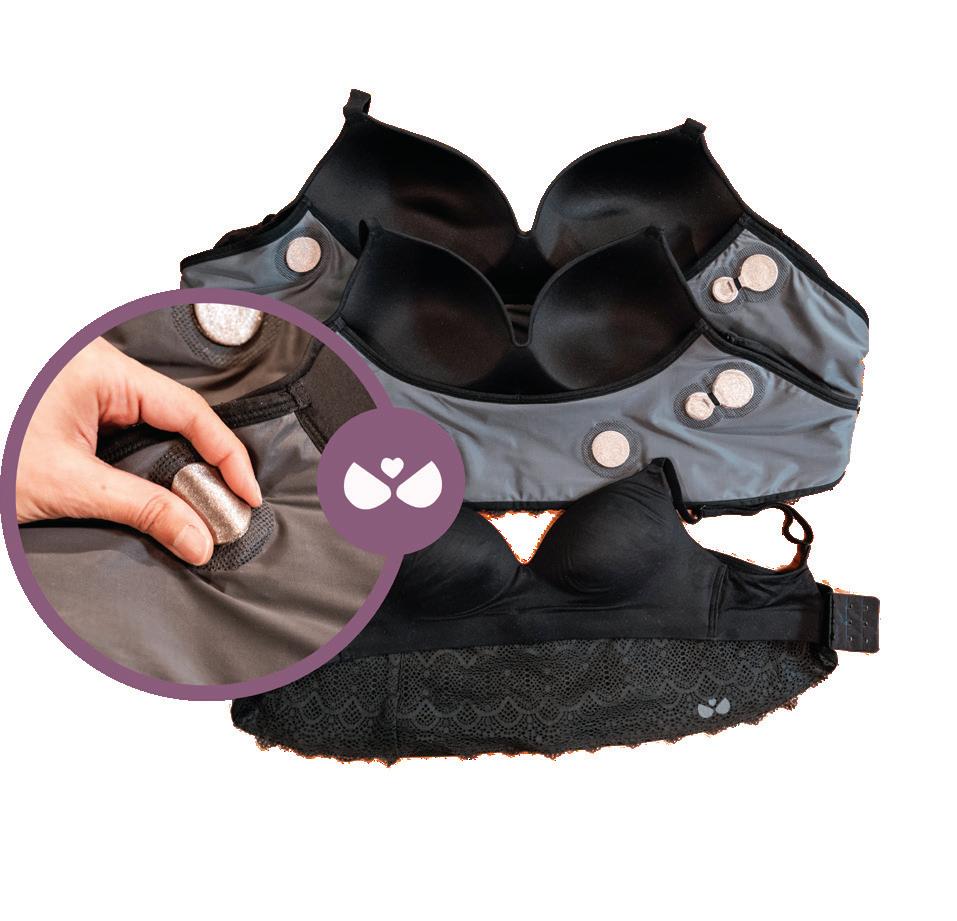
To collect meaningful, actionable data and to solve for clunky, short-term monitoring devices, Halaby and Chong created the Bloomer Bra. A comfortable, everyday garment fitted with medicalgrade textile sensors that track heart rhythm, breathing, temperature, posture, and movement over time, the bra is discreet and comes in several styles. Through personal biomarkers and tracking symptoms, the bra can help women and their doctors detect female-pattern cardiovascular disease early. The device connects via Bluetooth to a mobile app and then sends data to the cloud, making highquality data available instantly.
“I think the best comments we received are from patients who say, ‘Oh, this looks sexy. I won’t feel sick in this,’” Halaby says. “We are always thinking, what does the woman need beyond physical products? How are we helping her on her health journey? How are we helping her age gracefully and have quality of life rather than just extending years?”
Industrial design, Halaby says, is a discipline that can help designers focus on creating products and processes for the long-term benefit of humanity. After initially working on the long-term livability of buildings, Halaby became one of just 18 students out of thousands who applied to join MIT’s Integrated Design and Management master’s degree program. Founded in 2014 by her former RISD professor, Matthew S. Kressy 88 ID, the program brought together designers, engineers, and business students to solve sociotechnical problems. Halaby and Chong met in the program and founded BloomerTech in 2017.
Halaby says she enjoys working in the highly regulated and impactful field of medical devices, and credits her design studies with improving her ability to get complex ideas across simply to a variety of stakeholders.
“Industrial design forces me to explain things like I would to my kids. It’s simple but important to articulate: females are not small men, and female pattern disease is an untapped market.”
On View The Art of Medicine
By viewing these medical designs as works of art, we celebrate RISD alumni who transform technical necessity into objects of precision and possibility.
RONALD RUSSO 64 ID
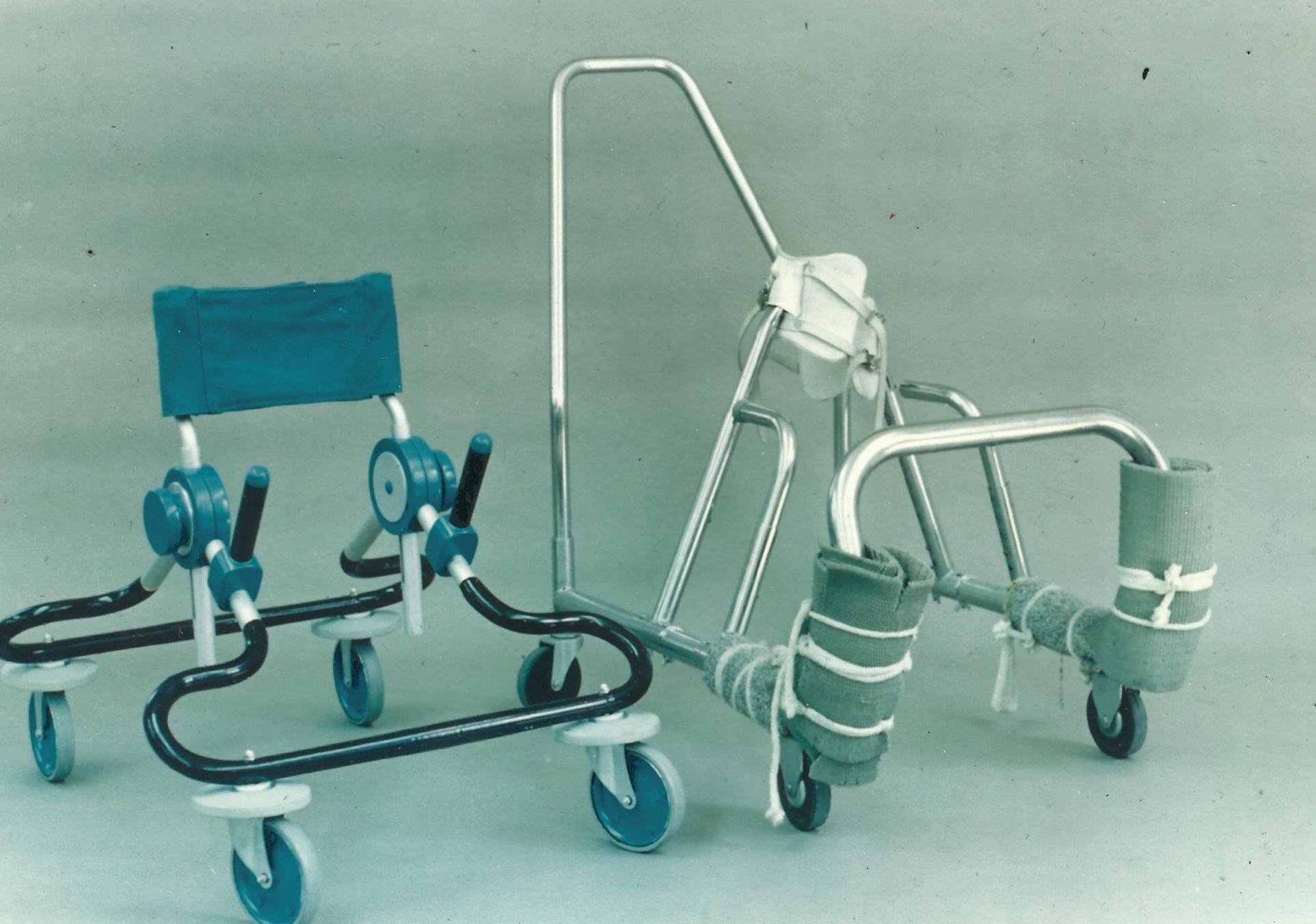
As a RISD senior in 1964, Ronald Russo 64 ID redesigned a pediatric walker used at Meeting Street School, creating a safer, adjustable model that folded easily and protected children from bumps and scrapes. It was an early sign of a career that would be spent transforming healthcare. Russo later went on to invent hundreds of lifesaving medical devices used by millions worldwide, including blood-draw valves and respiratory care products.
The Art of Medicine
The Art of Medicine
JUAN NOGUERA MID 15
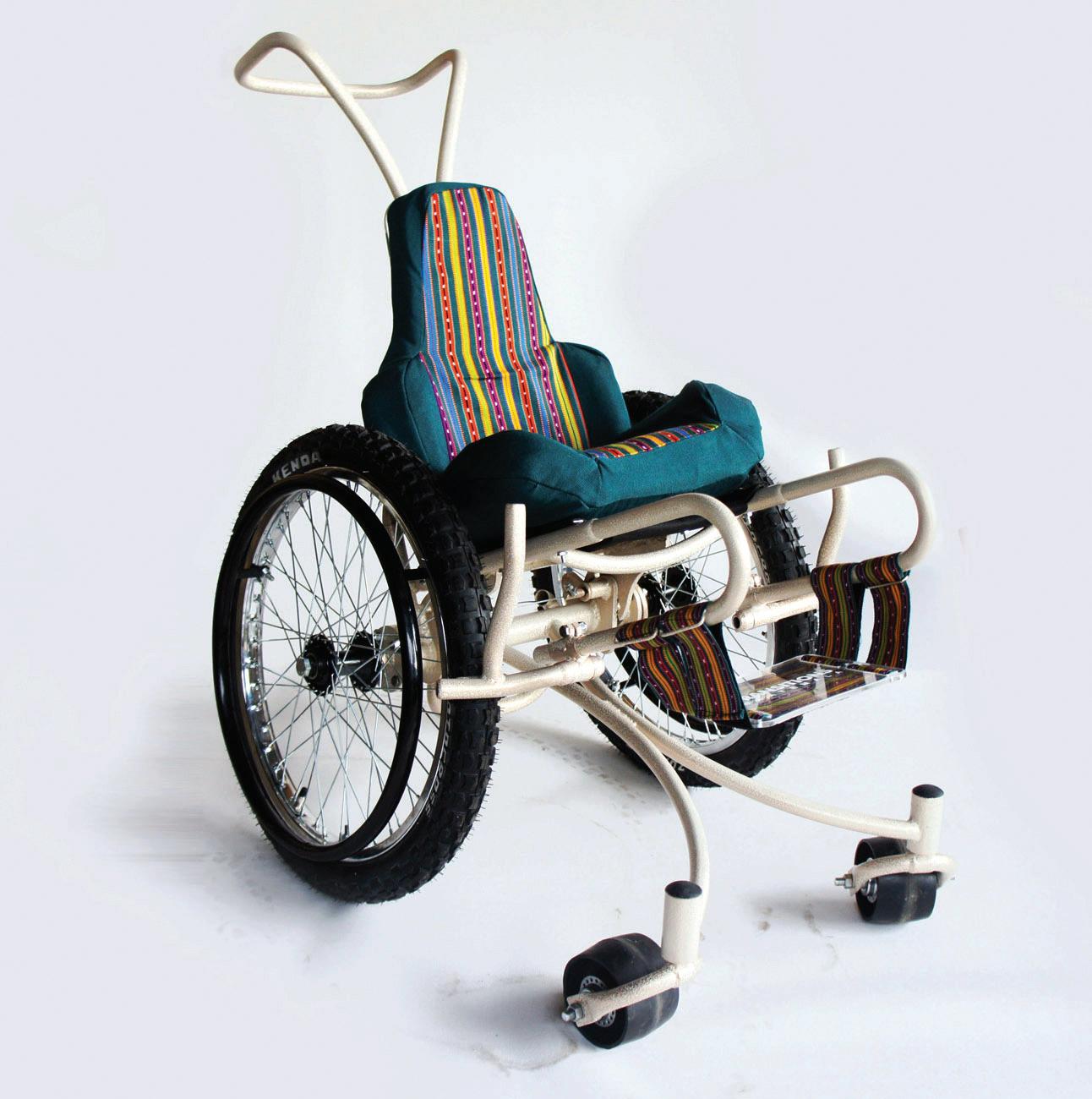
For his graduate thesis, Juan Noguera MID 15 set out to rethink the wheelchair as a lifeline designed for the community it serves. Working with Guatemala’s Transitions Foundation, he developed a wheelchair built for uneven streets and unpaved ground, that could be repaired with readily available parts. The result is a mobility device that honors human dignity and transforms lives through thoughtful design.
EMILY SLAPIN 06 IL
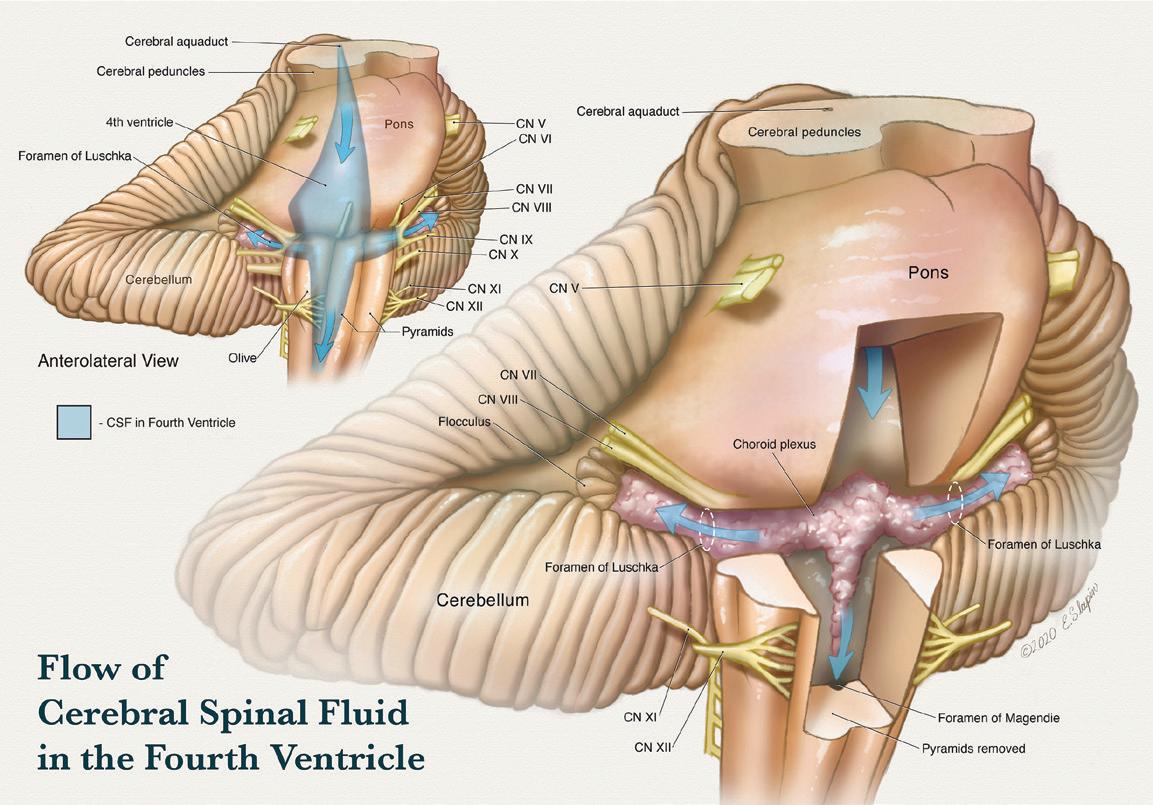
After graduating from RISD and earning an MFA at the New York Academy of Art, Emily Slapin 06 IL spent nearly a decade teaching before discovering medical illustration. She completed a master’s in medical and biological illustration at Johns Hopkins, where she learned to translate complex anatomy into clear visuals. Now, she’s helping to establish a medical illustration studio at Rhode Island Hospital in collaboration with pediatric surgeon Dr. Francois Luks, bringing art and science together.
Tiny Tutorials
In this issue, alumni share the techniques, tools, and processes that keep their creativity flowing. Think of it as a mini-masterclass, RISD-style.
HOW TO CREATE COLLAGE MATERIALS DAPHNE MINKOFF MFA 91 PT
Use a palette knife to spread any extra paint into thin layers across paper. Once dry, these sheets become raw material for small collages. Build them in response to the painting you’re working on, testing how color, shape, and value play together.
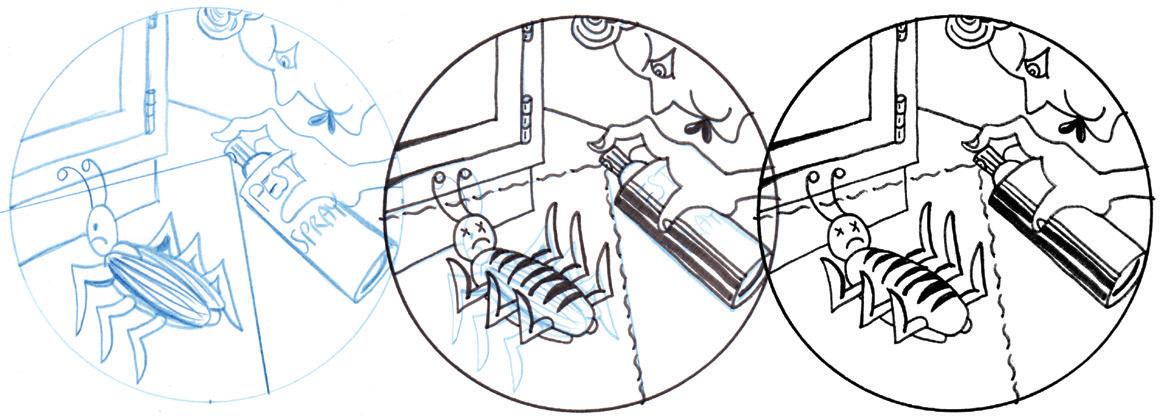
ZAP OUT BLUE PENCIL LINES ALLEN SPETNAGEL
02 IL
Zap out blue pencil lines by splitting RGB channels in Adobe Photoshop. Scan an image, such as a pen and ink cartoon with blue under-drawing, then choose “split channels” in the Photoshop channels docker. This separates the red, green, and blue channels into individual windows. Adjust the levels of black and white in the “levels” menu until any remaining trace of your blue line fades away. Save your image and get on with your work!
DESIGN
ARTICULATED
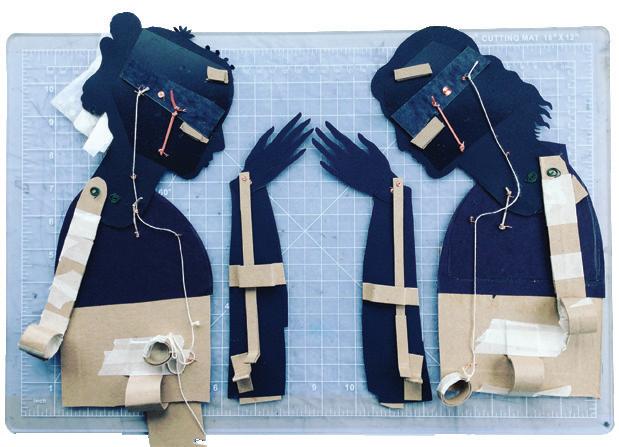
SHADOW PUPPETS LINDA WINGERTER
96 IL
For the prototype, cut rough shapes from file folders and pin together with thumbtacks to make moving joints. Try connecting body parts with linkages, so that moving an arm, for instance, might also move a head. When you find the nuanced movement you like, take it apart and use it as a pattern, cutting and refining the final figure out of a thicker cardstock, matboard, or plastic.
MAKE MIXED-MEDIA
ARTWORK
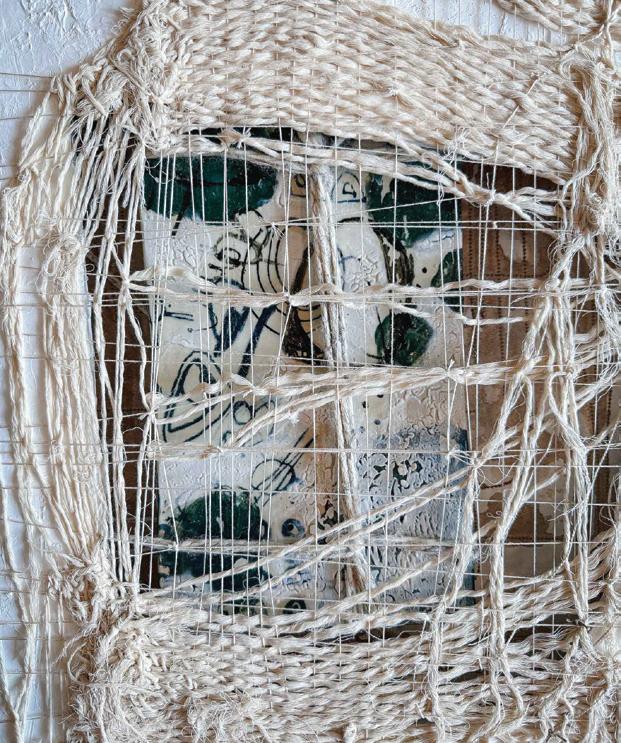
J LONG MLA 05
Begin by machine-sewing a grid onto watercolor paper, then dye with concentrated tea. It distresses as it dries, leaving holes and frayed edges. In parallel, construct a wooden panel, cutting into its surface with a jigsaw, sanding it smooth, and applying a thick layer of acrylic. Afterward, a ceramic tile that has been silkscreened, glazed, and fired in the studio is suspended behind the panel and secured with heavy thread. The dyed paper becomes the backdrop, attached to the panel’s reverse. Lastly, weave across the painted panel, pulling fibers tight in some areas and leaving others open to reveal the ceramic tile and dyed paper beneath
EMBED GRAPHITE DRAWINGS IN RESIN SABA QIZILBASH MAE 04
1. Use graphite pencils to draw on a piece of drafting film that’s cut slightly smaller than your resin mold so it can float freely.
2. Slowly mix resin to prevent bubbles.
3. Add a drop of resin dye to tint.
4. Let the resin mix settle for a few minutes until the cloudiness disappears and bubbles rise to the surface.
5. Pour resin into half your mold.
6. Using a small heat torch, blow out all visible bubbles.
7. Gently immerse your graphite drawing on drafting film into the mold. (Make sure the drawing is not touching the base of the mold.)
8. Pour remaining resin over the drawing until the entire mold is filled and the drawing is happily suspended in the resin.
9. Finally, blow out any visible bubbles with a torch and cover with a dust screen.
10. Leave overnight to harden and fall in love with the results the next morning.
JOHN COBB 77* PT
1. Masonite (untempered)
2. Cradle with poplar
3. Rabbit skin glue
4. Homemade gesso (eight coats)
5. Smooth as heck
6. Drawing/Sumi ink-darks
7. Bole, even smoother
8. Paint ’til the sun goes down
9. Gilding
10. After 6 to 8 months, the work may be varnished
Special thanks to Peter Buchman 81 IL for suggesting the idea behind “Tiny Tutorials.”
If you have a story idea for the Alumni + Friends Magazine, email alumni@risd.edu
Crafted
from Origin
Pearl Ng 98 ID is on a global journey of making with meaning
Words by Julie Powers
Pearl Ng stands deep in a Brazilian mine, surrounded by sweat-slick stone, the light beam on her helmet cutting through the darkness. The local guide gestures for her hands, and Ng extends them out, palms up. A soft spill of mica lands in her grasp, and the guide sifts through to reveal what Ng has traveled thousands of miles to find: emeralds.
For Ng, a journey like this one is more than sourcing; it’s a pilgrimage. She yearns to know the origins of the materials she uses for her luxury brand, Pearly
Bespoke, and this dedication has taken her from remote mines in Brazil, Sri Lanka, and East Africa to the Colombian jungle. By tracing the path of every gem from mine to market, she connects her clients not just to a piece of high-end jewelry that she will later create but to the land, the hands, and the history behind it.
“I like to say that Pearly Bespoke is built on transparency, ethical sourcing, and deeply personal design,” she explains. “I want my clients to know exactly where their gems come from, why we’re designing in a certain way, and the values that drive our work.”
Ng didn’t set out to become a jeweler. Trained in industrial design at RISD, she imagined a career spent crafting beautiful, functional objects. But over time, the principles that fueled her love for design, like precision, craftsmanship, and innovation, led her into the world of jewelry. “RISD faculty are the best in the world at teaching you to hone both the skills and ideas you need as a designer,” Ng, affectionately known as Pearly herself, explains. “At RISD, you learn to make things perfectly. And, then how to make them even better.”
After graduating, Ng began her career designing leather goods and accessories. She moved from New York to Hong Kong to launch a multi-category brand that spanned shoes, bags, jewelry, and homeware, a lifestyle vision reminiscent of labels like Kate Spade. The concept garnered attention, landing her work in Vogue and on runways at London Fashion Week.
But, despite the buzz, the business struggled to be financially sustainable. “I was showing at Fashion Week and getting industry praise,” she says. “But it wasn’t lucrative, and I knew I needed to pivot. It was difficult, wildly hard, but I knew that I could do it because RISD taught me how to find a path.”
That turning point led her to apply for the Gian Scholarship, which allowed her to study gemology and rebrand her business. It was a game-changer. Delving into the science and artistry of gemstones sparked a new creative chapter and helped reframe her business entirely. With a renewed focus on bespoke fine jewelry, Ng found not only artistic fulfillment but also a sustainable business model. And, once again, industry experts took notice. She’s been featured in publications like InColor and The Jeweler, and won a silver award in the Precious Jewellery category from Goldsmiths’ Craft and Design Council (GC&DC) in 2024.
Now based in the UK, she’s working to expand her presence in the European market. It’s a new challenge, different from the familiarity of Hong Kong, but she’s embracing the opportunity to connect with a broader audience. To help demystify the world of high-end jewelry, Ng launched a YouTube channel aimed at educating consumers about gemstones, craftsmanship, and the nuances of luxury design. Lately, Ng has been returning to her roots. Her early interest in silverware, which she says was first sparked during her RISD days, recently led to a gold award at the 2025 GC&DC. The recognition in the
“The RISD mindset is unparalleled. You’re taught to think critically and to problem solve.”
Pearl
Ng
Silversmith category, earned for her silver wine and tableware designs, has opened new doors and reignited her passion for objects that bridge the functional and the sculptural.
Throughout her journey, the RISD influence has never left her. “The RISD mindset is unparalleled,” she says. “You’re taught to think critically and to problem solve. In the 30 years since I graduated, I’ve encountered many RISD alums who have built successful businesses. They’re entrepreneurial, competitive, and masters of their craft. I see those same traits in myself they’re part of my DNA. That shared foundation keeps drawing me back, because we all drank from the same source. It’s why people hire RISD graduates; we’re known for our drive.”
It’s easy to see that RISD spirit in Pearly Bespoke, where Ng is redefining what modern luxury looks like. It’s rooted in craft, powered by purpose, and driven by the belief that every piece should tell a story.
WONDERFUL TO ME
Albert Costa 58 AR
“In 2024, I was privileged to be with the 65th reunion group. June Anderson Bernard 59 GD insisted that I go. It was great to see my colleagues and participate in a nice lunch at the Providence Art Club. My granddaughter Catrina was there also. Thank you, Sarah Reed 94 PH, Alumni + Family Relations Officer, for all your effort. It was an enjoyable day.
Many of my colleagues contacted me, surprised that I am still working. After my wife Judith passed away, I decided to keep doing architecture. Architecture has been so wonderful to me, my family, and to so many nice people. It has brought love and happiness to us all. I am in contact with Vincent Amore 58 AR and Robert Farley 59 AR, who are retired, and we occasionally get together. At this time, I am the senior architect in the Commonwealth of Massachusetts.
It is interesting to note that the United States space agency, NASA, is looking into a research station on the moon. The station complex is to be completely underground and within a mountain. My 1958 thesis was exactly that: a moon research station completely underground in a mountain, with all the amenities. In retrospect, I can never forget, and remember vividly, Freshman Foundation, among others, the Nature Lab and Edna Lawrence 20 PT. Thank you, RISD.”
65TH RISD REUNION
20 PORTRAITS OF PEOPLE READING BANNED BOOKS
Bob Burnside 64 ID
Bob Burnside 64 ID launched a new website, bobburnside.com, showcasing his sculpture commissions that incorporate a geometric language he developed based on a joint of four sets of three triangular bars grouped around an empty center, which can be connected in myriad ways to form different structures. He has also created versions using magnets and bent aluminum elements. Burnside credits late RISD professor Marc Harrison HD 98 for inspiring this idealistic pathway.
In addition to his commissioned works, Burnside continues to create anonymous, site-specific guerrilla art installations. His kinetic “spinners,” installed throughout San Francisco’s Castro neighborhood, are designed to make the streetscape more dynamic and engaging. More of his wind-powered works can be seen at windpoweredart.com.
Karen Moss 66 PT
In early 2025, Karen Moss 66 PT had an exhibition at the Boston Public Library in Copley Square featuring 20 portraits of people reading banned books. The series featured readers ranging in age from preschoolers to 98, and was on view from January through March. The work shown above depicts artist Kata Hull reading Our Bodies, Ourselves (acrylic on rag paper, 2024, 26 × 20").
Moss also organized a companion event at the library featuring artist Cullen Washington, Jr. and author Joshua Rubenstein, who spoke about the importance of books in shaping their lives. She later discussed the project on Under the Radar with Callie Crossley on Public Radio.
Bunny Harvey 67 PT / MFA 72 PT
A new show of work by Bunny Harvey 67 PT / MFA 72 PT, Windborne Songs, opened last September at Nancy Devine Gallery in Warren, RI. The exhibition ran through November 9, 2025.
Merrie Dail 68 GD
“After a many-decades long battle, in 2024 my husband Glenn died due to complications of Parkinson’s disease and Lewy body dementia. My memoir about our journey, Racing Sunset, is so titled, not only because he was a naval aviator. There were many times we were, indeed, racing the disease.
For more than a decade, his illness was misdiagnosed / undiagnosed. It was easy to sometimes feel alone. A new PD diagnosis is made every seven minutes and the incidence is expected to double within the next 20 years. While wanting to honor Glenn and his journey, the greater goal is to help raise awareness of Parkinson’s disease and start a much-needed national conversation.
I never intended to write a book, certainly not about such a difficult and personal subject. I hope our journey offers a window into disease awareness and changes how we interact with, and care for, those touched by life-altering illness.”
Ed Baranosky 69 PT
Ed Baranosky 69 PT had six poems and two paintings published in the final issue of Littoral Press Magazine (#38, August 2025), which remains available online. His work also appeared in The Write Launch (September 2025) and in the inaugural issue of The Prudence Dispatch (page 41), which features his poem Sandpiper II.
WINDBORNE SONGS
Perci Chester MAT 69 / MFA 69 PT Slip Seat by Perci Chester MAT 69 / MFA 69 PT was selected to be included in the Untitled 19 exhibition at Soo Visual Arts Center in Minneapolis, MN by juror Keisha Williams. The exhibition ran February–March 2025.
Maureen McCabe 69 SC
A 55-year retrospective of work by Maureen McCabe 69 SC was on view at the William Benton Museum of Art at the University of Connecticut, Storrs, from August–December 2025. She also delivered the Annual Gene and Georgia Mittelman Lecture in the Arts, A Life Conjuring Art and Magic, on November 1, 2025.
“When I was a child, art opened up an entirely new world for me.”
Judith Unger
LIFE SHAPED BY ART
Judith Unger 67 PT / MFA 72
“I need to sculpt and draw it’s essential to my existence,” says Judith Unger 67 PT / MFA 72, whose lifelong passion continues to drive her internationally recognized career. In 2025, Unger was invited to exhibit in the 2025 Florence Biennale (October 18–26), whose theme celebrated the eternal dialogue between light and darkness.
Her work has also appeared in multiple editions of both the Florence Biennale and Venice Biennale, most recently in 2024 at Palazzo Mora alongside work by artists Yoko Ono, Jeff Koons, and Marina Abramović. In April 2025, Unger received the International Prize, The New Great Masters, in New York, and presented her work at the 110th ASALH Conference honoring the founders of Black History Month.
Inspired by her mother, a painter, Unger began drawing as a child in Connecticut and still recalls weekly trips to the Metropolitan Museum of Art. She has said, “when I was a child, art opened up an entire new world for me.”
1970s
Henry Horenstein 71 PH / MFA 73
Henry Horenstein 71 PH / MFA 73 was at the 20/20
Photo Book Fair with The Print Center booth in Philadelphia, PA this past September, signing copies of his new book Miles and Miles of Texas and the 20th Anniversary reprint of Honky Tonk.
Bob Dilworth 73 PT
Bob Dilworth 73 PT has been named a 2025 Joan Mitchell Fellow, one of only 15 US-based artists recognized this year in painting and sculpture. The fellowship provides $60,000 in direct funding over five years, along with professional development and peer engagement opportunities.
Based in Providence, Dilworth creates richly layered paintings that draw on stories from his family, friends, and Southern roots, often incorporating fabric and sewn elements to deepen the narrative and texture of his work.
20/20 PHOTO BOOK FAIR
Joe Brin 74 PH Joe Brin 74 PH recently completed several creative projects, including the film A String of Pearls: The Small Miracles of Charles Middleberg and its companion book, Buoyant: A Child’s Journey of Survival He also presented Side Walks, a solo exhibition of photographs at The Space Art Gallery in Philadelphia, and created The Tsunami and the Horseshoe Crab, a parable rendered on a 15-foot scroll in Japanese ink on Pescia Italian etching paper.
2025
JOAN MITCHELL FELLOW
REFLECTIONS ON THE HUMAN BODY
1970s
Carol Peligian 77 IL
Carol Peligian 77 IL was featured in the exhibition Synthetica at Theodore, NYC last spring. The exhibition explored the intersection of past and future through innovative materials and form, combining traditional and invented media to reflect on the human body’s connection to the world and the tension between the tangible and the ephemeral.
Peligian’s work has also been exhibited at Sue Scott Gallery in NYC, FALSE FLAG Gallery in Long Island City, NY, the Museum of Biblical Art in Dallas, TX, the Guild Hall Museum in East Hampton, NY, and the Parrish Art Museum in Water Mill, NY, and is included in public and private collections.
Richard Talbert 79* AR
Richard Talbert 79* AR had works in the fine arts exhibition In Good Company in North Adams, MA, from August–September 2025.
Laurence Young MAE 79
“It has been 35 years since I first arrived in Provincetown, MA to study plein air painting under Lois Griffel at the Cape School. Though I have a master’s in Printmaking from RISD, that experience opened a new path, and Provincetown has remained at the heart of my artistic life ever since.
Over the years, I’ve shown with local galleries like Ellen Harris and Alden Gallery, as well as venues in Boston, Connecticut, and beyond. My work was recently included in the juried exhibitions at the Cape Cod Museum of Art, Addison Gallery, and Larkin Gallery. My works are included in both private and public collections, including PAAM and the Muller Collection.
Nature has always been a source of solace for me. In childhood, it was a refuge; today it’s the foundation of my daily practice. My landscapes are built from those quiet walks into the National Seashore, where memory and present moment meet.”
1980s
Dana Schneider 82 SC
“The New York Times has acknowledged my 25 years of making and designing jewelry for movies. I am the only person who has specifically done this for over 80 movies, TV, and streaming. I am a self-taught jeweler, but my years of working in the foundry gave me my basic knowledge of metalwork.”
“ The New York Times has acknowledged my 25 years of making and designing jewelry for movies. I am the only person who has specifically done this for over 80 movies, TV, and streaming.”
Dana Schneider
1ST PLACE WINNER
Sally Larrick 86 TX
Sally Larrick’s 86 TX handwoven tapestry of hand-dyed wool, Heaven and Earth (46 × 52") 2025, received the 1st Place Award at the Chattahoochee Handweavers Guild Juried Biennial Exhibition, Inspirations. The exhibition ran August–October 2025 at The Hudgens Center for Art & Learning, Duluth, GA.
John Ruggieri 88* PT
“This past spring, I took my art outside where much of it is created for a fun portrait photoshoot with Thomas Alan Productions. Thank you to Tom for capturing some unique photographs of me and my art for a cover feature in Rocky Point Neighbors magazine!” Rocky Point is located in Warwick, RI.
Image by Daniel Lozada for The New York Times
1980s
SEPARATION
Michael Sloan 85 IL
When Michael Sloan 85 IL sat down to work on Separation, a new six-part graphic narrative for The New York Times, he approached the story with a deep sense of responsibility. The series, created in collaboration with longtime friend and writer Jake Halpern, follows a Honduran family living in New York City as they face the threat of deportation. Their names and identities are altered for protection, but their circumstances are painfully real.
Sloan and Halpern first partnered on Welcome to the New World, which chronicled the early months of a Syrian refugee family’s life in Connecticut, earning the pair the 2018 Pulitzer Prize in Editorial Cartooning. With Separation, they again embed themselves in the lives of a family navigating the US immigration system, this time focusing on an eldest son who has just turned 18 and is suddenly at greater risk of removal.
Working closely with editors and designers at The Times, Sloan combines journalistic rigor with the expressive visual language honed in RISD’s printmaking studios. His stark compositions, reminiscent of woodcuts, aim to humanize a complex policy debate. “We want to honor the family’s story,” he says. “And we hope the work deepens understanding and empathy at a critical moment.”
“We hope the work deepens understanding and empathy at a critical moment.”
Michael Sloan
Jill Greenberg 89 PH
Jill Greenberg 89 PH was featured in the group show, A Lens of Her Own, in Tel Aviv, Israel. The exhibition included 20 contemporary women photographers matched with 20 historical women photographers.
40 WOMEN PHOTOGRAPHERS, 1 SHOW
1990s
Lisa Corrado 90 GD
There’s a fun-loving art installation in downtown Hingham, MA the LOVE BIRD!
Artist Lisa Corrado 90 GD writes, “This bird is a reminder to all who pass that one small act of love can set a movement in flight. Spread your wings and know that even the smallest of kind gestures are the grandest of all gifts. Take care of yourself and all that surrounds you. Be a LOVE BIRD.
Thank you, Freshman Foundation, in 1987 for challenging us to create a public piece of art. Back then I created a full-size papier mache black panther without Google or YouTube. Today I could refine the craft with the help of technology and online searches, but this would have never ignited in me without the experience I had at RISD. So much to be thankful for. Keep creating and spreading the love!”
“This would have never ignited in me without the experience I had at RISD.”
Lisa Corrado
1990s
Yomi Matsuoka 91 ID
FACULTY SHOUTOUTS
ORANGE
BLOSSOM
SPECIALS
After graduating from RISD, Yomi Matsuoka 91 ID has been designing consumer electronics at Sony, Palm, and now Google. Recently, Google featured his work on their SNS outlet.
Matsuoka writes, “I love what I do, and RISD pretty much made me who I am. When I design things, I still think about how my faculty like Mickey Ackerman MID 79 / P 11 / P 13, Ken Hunnibell 69 ID / MAE 72 / P 80 / P 91 / P 00, Robert O’Neal, Mark Hazel, Seth Stem, and Merlin Szäsz would think of them. Perhaps because I talk so much about how good RISD was, my son Kira attended the Pre-College Summer Program this year. I could not be a happier dad!”
Gitty Duncan 92 GL
Gitty Duncan 92 GL exhibited a pair of handmade shoes in the Fiber Art Now ARTwear show at The Visions Museum of Textile Arts in San Diego, CA from October 2025 through January 29, 2026. Two pairs of her boots were selected to be in the Expressions West 2025 show at the Coos Art Museum in Coos Bay, OR in the fall, and her favorite pair, the Orange Blossom Specials, showed in the 15th National Juried Show at SAGE Community Arts in Sheridan, WY last summer.
Chris Kane 92 IL
Chris Kane 92 IL recently formed a company called Hot Funk Foundry in Providence, RI to collaborate with artists and students. They are currently offering workshops for making unique leather art belts with sculptural lost-wax cast bronze buckles.
Shani Schermerhorn 95 IL
“My first EP is out with some of my favorite songs. I write authentic, poignant, and meaningful indie rhythm and sound to move, heal, and inspire all who listen!”
Jeremy Botts 96 GD
Jeremy Botts 96 GD completed his 16th year teaching art and design at Wheaton College in Illinois where he was recently honored with the Senior Teaching Achievement Award. His personal practice is multidisciplinary, incorporating lettering, drawing, design, printmaking, sound and video performance, and installation. More of his work can be seen on Behance.
Glen Baldridge 99 PR
Glen Baldridge 99 PR recently presented Wrecked Exotics at North Optical in Portland, ME. A suite of 18 risograph prints and an accompanying artist’s book, the series features red sports cars caught mid-crash and explores themes of beauty, excess, and fragility through experimental printmaking techniques developed over years in the studio.
Zoungy Kligge 99 SC
“Lately I spend much of my time teaching art to people of all levels and ages drawing, painting, plein air and urban sketching, digital art, animation, handbuilt ceramics, and sometimes even warm glass! Much of my teaching happens at GoggleWorks, one of the largest arts centers in the country, located in Reading, PA.
I also publish a weekly Substack called Artist’s Cheat Sheet which contains dozens of articles focused on art interests, culture, and art know-how, most of which are published initially for free to make arts ed more accessible. Voluntary paid subscriptions help keep it going. It was recently listed as high as #24 on Substack’s Rising Art & Illustration newsletters!”
“Lately I spend much of my time teaching art to people of all levels and ages—drawing, painting, plein air and urban sketching, digital art, animation, handbuilt ceramics, and sometimes even warm glass!”
Zoungy Kligge
GOUACHE CHEAT SHEET
THE ENCHANTED FOREST DRAGON OF BROOKLINE
1990s
BY HAND AND HEART
Adam Doyle 98 IL
This fall, Adam Doyle 98 IL unveiled The Enchanted Forest Dragon of Brookline, a 560-square-foot mural commissioned by the Massachusetts town and installed at 1654 Beacon Street.
Though the artist has created several room-sized murals before, this marks his first large-scale public work. Doyle writes, “I created The Enchanted Forest Dragon of Brookline for my hometown to be vibrant and beautiful. Also, to remind us that nature is our wisest teacher, showing us how to coexist in harmony and abundance. Imagination is the garden of our mind, where ample attention allows us to cultivate the reality of our dreams. Kindness is a gift we can choose to give with every interaction, no matter how large or how small. Art made by hand and heart connects us to the authentic human experience of life.”
Rich with color and symbolism, the mural features a dragon winding through an enchanted landscape, alongside a fairy quietly reading, a nod to the nearby Brookline Booksmith.
PEACE & PURPOSE, MAKING BY HAND
Tzu-Ju Chen 00 JM
Tzu-Ju Chen 00 JM was named a 2025 United States Artists (USA) Fellow, one of 50 artists and collectives nationwide recognized for their creative vision and cultural impact.
Born in Taiwan and now based in the US, Chen draws inspiration from her family’s tailoring traditions and her own experiences of displacement and belonging. “Honoring skills used for centuries, I find new ways to express my creativity while maintaining a fluidity between tradition, cultural identity, and contemporary relevance,” she says.
Working in metal, Chen finds peace and purpose in the intimate act of making by hand. Her layered, evocative jewelry reflects memory, material, and place, with each piece a meditation on identity and home. The $50,000 USA Fellowship supports artists whose work bridges cultures and deepens connections across communities.
TRANSLATING ENERGY INTO PAINT
Caroline Adams 01 PR
Atmosphere was a solo exhibition of recent abstracted landscapes in oil and egg tempera by Caroline Adams 01 PR that ranat Calloway Fine Art & Consulting in Washington, DC from September–October 2025.
“Whether we’re gazing at a mountain range or across a mill pond, Atmosphere defines the space between the observer and the water, soil, hills, rock. It shifts at every moment. Clouds recede and light flickers across the water. The air seems to thicken and a new shadow defines the edge of a mountainside. A variation of color marks the sky below and above the clouds. This work reflects the many atmospheric shifts in life, translating the energy into paint. Some vibrate with darkness. Others feel like they’re about to float off the canvas.”
Yuko Oda MFA 02 SC
Yuko Oda MFA 02 SC was featured in an exhibition curated by Martina Tanga, former curator from the Boston Museum of Fine Arts, entitled Learning with Trees, Artists for Climate and Environmental Solutions It ran at Sala Uno, Centro Internazionale d’Arte Contemporanea, Rome, last fall. Each artist in the exhibition placed trees at the center of their practice for this new body of artwork, grounded by careful observation, delicate dialogue, and visionary imagination.
“Designed to rekindle our innate connection with the natural world, they are expressions of raw beauty, possibility, and consciousness.”
Sara Seelenbrandt
Sara Seelenbrandt 02 ID
Wrapped in Nature was a series of multisensory nature performances by Sara Seelenbrandt 02 ID, using materials from Rhode Island environmental habitats. Staged in the summer and fall of 2025 at the Spiral Labyrinth, an outdoor art installation in North Kingstown, RI, models wore Seelenbrandt’s garments, which were constructed from materials like pine cones, branches, acorns, flowers, honeycomb, fruits and fibers harvested in Rhode Island by Seelenbrandt and her friends. “Designed to... rekindle our innate connection with the natural world, they are expressions of raw beauty, possibility, and consciousness,” the artist says.
2000s
David Sieren 02 GD
“
Familial Gesture, a three-generation collaboration between my dad (79), my daughter (9), and me (44) exploring expressive reinterpretations of Neue Haas Grotesk, was recognized in the Society of Typographic Arts’ highly regarded 2025 STA 100 competition as among ‘the finest examples of communication design and typography created around the world.’ The project is both a formal exercise and a collection of expressive artifacts that mark the experience a celebration of each participant’s visual interpretation of the source material and the intergenerational relationships that were strengthened through the communal act of making. The project was first exhibited as part of Typeforce 13 in February 2025, an international exhibition of typographic works held at Co-Prosperity in Chicago’s Bridgeport neighborhood.”
Jordanne N. Renner 03 PH
Jordanne Renner 03 PH was featured in Lenscratch, an online platform focused on fine art photography, for a series that she began while at RISD.
THREE
GENERATIONS OF COLLABORATORS
“I would love to welcome any and all RISD alumni to visit the gallery and discuss the works and what we’re doing.”
Adam Heft Berninger
Adam Heft Berninger 03 GD
“Two months ago, I opened a new gallery in the Lower East Side of New York City, with 2,500 square feet of street-level space. I’ve been running this gallery at fairs, pop-up exhibitions, and online for the past three years, but finally opened this permanent space and renamed the gallery to my family name, Heft.
FEATURED IN LENSCRATCH
Through the gallery, I partner closely with artists using systems of various kinds to create new works. This sometimes means algorithms and artificial intelligence, or simple rules and instructions, often manifesting in creative use of materials, always bringing rigor to their practice and works.
I recently opened a second group show, and this exhibition completed the triangulation of our program to come, showing artists from around the world that, together, tell a broad story for what art using systems and technology can be.
I’m excited to use this gallery as an active creative space and to help evolve what I believe is a critical movement in art, for a time where culture is itself increasingly digital. I would love to welcome any and all RISD alumni to visit the gallery and discuss the works and what we’re doing.”
SITE-SPECIFIC INSTALLATION IN CZECHIA
2000s
Noah Breuer 04 PR
Artist Noah Breuer 04 PR, whose Jewish ancestors once owned a textile factory in Dvůr Králové, returned to Czechia with a new exhibition. Created as a site-specific installation for the restored synagogue in Český Krumlov, Návrat featured 16 largescale textile prints inspired by his family’s history and Jewish tradition.
Jillian Conrad MFA 04 SC
Jillian Conrad MFA 04 SC exhibited in What Drawing Can Be, a group exhibition at the Menil Drawing Institute in Houston, which was on view through August 2025. The show explored expanded definitions of drawing in contemporary practice and was featured in Hyperallergic.
As a 2024–25 Fulbright Scholar at Cardiff University in Wales, Conrad developed holy-hole, a drawingbased project that maps and interprets the landscapes of Welsh holy wells. Across both projects, she explores drawing and sculpture as intertwined languages shaped by landscape, time, and touch.
Mark Pack MFA 04 PT
Last summer, Mark Pack MFA 04 PT was in the Summer Invitational at Sherry Leedy Contemporary Art in Kansas City, MO, where he exhibited two new pieces.
Jamie Allen 05 IL
The MACC Biennial 2025 at the Schaefer International Gallery in Kahului, Maui featured 45 artists selected from a statewide open call including Jamie Allen 05 IL showcasing voices from across Hawai‘i in a contemporary dialogue of relevant ideas and innovative approaches.
Youji Noh 05 GD
Youji Noh 05 GD has been promoted to Executive Creative Director at Media Arts Lab Seoul, where she will lead the creative team in continuing to produce iconic, culture-shaping work for Apple. A key force in the evolution of MAL Seoul’s creative identity, Noh has led celebrated campaigns such as AirPods Cases, Behind the Mac, and the Shot on iPhone film directed by Park Chan-wook, as well as the Made on iPad music video for Jay Park, animated by webtoon artist Namon. She also contributed to global campaigns developed in the Seoul office, including Shot and Edited. Noh writes that she is “excited to continue growing the Seoul office at a time when the city is at the forefront of global creative culture.”
2000s
“Alison Croney Moses creates wooden objects that reach out to your senses”
Trustees
of deCordova
REACHING OUT TO YOUR SENSES
Alison Croney Moses 06 FD
Alison Croney Moses 06 FD continues to earn major recognition for her deeply sensory, wood-based sculptures that explore identity, heritage, and connection. In 2025, she was awarded both the James and Audrey Foster Prize from the ICA Boston and the Rappaport Art Prize from deCordova Sculpture Park and Museum, two of New England’s most prestigious honors for contemporary artists.
The Trustees of deCordova write, “Alison Croney Moses creates wooden objects that reach out to your senses the smell of cedar, the color of honey or the deep blue sea, the round form that signifies safety and warmth, the gentle curve that beckons to be touched. Born and raised in North Carolina by Guyanese parents, making clothing, food, furniture, and art is embedded in her memories of childhood. She carries these values and habits into adulthood and parenting creating experiences, conversations, and educational programs that cultivate the current and next generation of artists and leaders in art and craft.”
Her work is in the collections of the Museum of Fine Arts, Boston; the Museum of Fine Arts, Houston; and the Renwick Gallery of the Smithsonian American Art Museum. She has also been featured in American Craft Magazine and Boston Art Review
CULTIVATING THE NEXT GENERATION OF ARTISTS AND LEADERS
2000s
Louisa Donelson 06 PT
Louisa Donelson 06 PT recently accepted a new position as director of programming at the Portland Museum of Art in Portland, ME.
Jennie W. Maines 06 JM
“In September 2025, I opened a boutique on 106 William Street, in Newport, RI. Blu Cove is where I can allow my creativity to be unleashed. I carefully select unique items for purchase. From hand-blown glass pieces for the home to beautiful jewelry, I have something for everyone. I also sell my own oil paintings. I’m excited to see what the future holds. Come by and say hello!”
Jackie Guido 07 ID
Jackie Guido 07 ID served as senior designer with Factioned, the Brooklyn-based design-build firm that collaborated with theatrical visionary Jordan Roth on his performance Radical Acts of Unrelenting Beauty at the Louvre’s Cour Marly in Paris. The large-scale production, blending fashion, architecture, and multimedia performance, marked Roth’s artistic debut and ran in parallel with the museum’s Louvre Couture exhibition. Guido and the Factioned team led creative design direction and production, transforming Roth’s conceptual vision into an immersive visual experience that bridged art, design, and performance on one of the world’s most iconic stages.
Islay Taylor MFA 07 JM
Islay Taylor MFA 07 JM has been named executive director of DESIGNxRI (DxRI), Rhode Island’s only nonprofit dedicated exclusively to strengthening the state’s design sector. An accomplished arts administrator, educator, and curator, Taylor brings more than a decade of experience leading inclusive, communitycentered creative programs across Rhode Island.
She most recently served as associate director at The Steel Yard, where she expanded access to workforce training, artist residencies, and the industrial arts. Taylor succeeds Rue Sakayama 06 FAV, outgoing executive director, and will guide DxRI’s next chapter of growth and collaboration through a strategic planning process, championing design as a driver of creativity, innovation, and opportunity statewide. Sakayama, left, and Taylor are pictured above.
Therese Iacono Photography
2010s
Hannah Abelow 10 PT
“It has been a long journey but it’s finally here: The Dusty Planet Miniature Golf Course, Bar and Arcade is open now in Providence!”
Hannah Abelow 10 PT and her brother Doug Abelow, along with a vast community of local artists and fabricators, built The Dusty Planet, a hand-fabricated, nine-hole mini-golf course with a space fantasy adventure theme.
Nicola Fan 10 GD
Nicola Fan 10 GD is a Hong Kong-based graphic designer and award-winning filmmaker whose work moves between design, documentary, and narrative film. A director for commercials, motion graphics, and feature projects, she has created for clients including M+ Museum, the Hong Kong Museum of History, Ralph Lauren, and The Women’s Foundation.
In 2021, Fan was selected by Werner Herzog as one of 50 international filmmakers to join his Film Accelerator Lab in Lanzarote. Her short documentary The Island Lives, created during the lab, went on to screen at Cannes Court Métrage in 2022. Her narrative short Daffodil is now streaming on Amazon Prime Video, and her debut feature documentary She Objects premiered at the Sundance Film Festival: Hong Kong, sparking wide dialogue about gender representation in media.
SPACE FANTASY ADVENTURETHEMED MINI GOLF COURSE IN PROVIDENCE
Jenny Lai 10 AP
“I had the incredible honor of speaking at the Osaka World Expo. The theme of the discussion, The Power of Design to Create New Traditions: Shaping the Future of Lifestyles, brought together four designers from around the world: a Google Arts & Culture creative producer from London, a TikTok human interface designer from Singapore, a fashion entrepreneur from Japan, and me. Each of us had the chance to introduce our own work before diving into a lively discussion about how tradition and innovation can coexist.”
Evan Polivy 10 FAV
“I recently launched a premium sporting goods store called Huyck House. We celebrate the intersection of athletics and aesthetics through thoughtfully curated high-quality sports equipment and fashion products designed to express your style and complement your home environment. For the RISD community that values design and craftsmanship, we hope Huyck House offers a fresh, thoughtful alternative to standard sporting goods stores.
RISD-RUN BRAND
FEATURED AT RISD-RUN
SPORTING GOODS STORE
One of the brands we feature on Huyck House is Kadet Golf, co-founded by David Yoo 10 AP Matt Cavallaro 10 ID is a product design consultant at Huyck House.”
POKÉMON AND PRINCESSES GAAAAAAASP
2010s
Ted DiLucia, Jr. 12 FAV
A lover of the triangle between art history, pop culture, and self, Ted DiLucia, Jr. 12 FAV explores everything from glitz and glam to Pokémon and princesses, ruby slippers, Smash Brothers, and social media in the series The Cult Classics Paintings
Sara Fetterolf MArch 14
Sara Fetterolf MArch 14 has been honored with the American Institute of Architects (AIA) Chicago Foundation 2025 Dubin Family Young Architect Award. She was celebrated at the AIA Chicago’s Designight 2025 event on September 18, 2025, held at the Harris Theater for Music and Dance in Millennium Park.
Jesse Kaminsky MFA 14 SC
From August to September 2025, OVERLAP gallery in Newport, RI presented Backscatter, artworks that captured fleeting, almost spiritual moments of stillness, light, and reflection. The exhibition invited viewers to pause and notice subtle shifts: glimmers of light, traces of time, and the quiet connections between perception and the natural world.
Through sculpture, drawing, and installation, the artists explored transformation and impermanence. Works by Joetta Maue and Katherine Mitchell DiRico used light to explore time and perception, while Funlola Coker, Kaminsky, Leah Piepgras, and Esther Solondz MFA 80 PH created pieces that examined how materials, memories, and even the human body change over time.
Alexandra Metcalf 15 IL
“A gasp is involuntary.
A gaaaaaaasp is performative, a melodramatic flinging up of the arms, a prolonged recoiling.
A gaaaaaaasp is both sound and action.
A gaaaaaaasp might dissolve into a wail.”
Jennifer Higgie
The Perimeter gallery in London presented Gaaaaaaasp, the first public solo exhibition by Alexandra Metcalf 15 IL, a British-American artist based in Berlin. Through paintings and spatial installations, Metcalf explored gender, interiority, and psychological tension within shifting historical and domestic settings in the May–July exhibition.
Piece by Jesse Kaminsky, Water Gate Eye Shard 2
2010s
Jaime Brias 16 ID
Jaime Brias 16 ID showed a layered sculpture made of abaca fiber at Révélations, a contemporary art and craft fair at the Grand Palais in Paris in May 2025. Each layer reflects a different stage of the weaving process of the T’boli tribe, an Indigenous group from the southern Philippines. Brias designed the piece, Heart of Abaca, with his mother. He says the work pays homage to the tribe's deep connection with nature, wrote that the work pays homage to the tribe’s deep connection with nature and their mastery of T’nalak fabric.
Feiyi Bie MArch 17
Feiyi Bie MArch 17, exhibition designer at The Newark Museum of Art, recently led design for two major exhibitions: Aminah Robinson: Journeys Home, A Visual Memoir (October 2025–March 2026), a nationally touring show celebrating the life and legacy of artist Aminah Brenda Lynn Robinson, and Risham Syed: Destiny Fractured (on view through March 7, 2027), part of the museum’s Global Contemporary series. Together, these projects highlight Bie’s role in shaping dynamic, socially engaged exhibitions that explore identity, history, and global perspectives through art.
HOMAGE TO THE T’BOLI TRIBE FROM THE SOUTHERN PHILIPPINES
Suzie Shin 17 GD
TRAVELING INTERNATIONAL EXHIBITION
Suzie Shin 17 GD co-curated Alexander Girard, Reverberations Forever, which was on view from August to November 2025 at 411 Gallery in Columbus, IN. The exhibition celebrated the timeless influence of Alexander Girard, whose work is woven tightly throughout the town of Columbus. Co-curated with Rick Valicenti, the show also featured pieces loaned by local residents, creating a dialogue between Girard’s legacy and the Midwest’s living design community.
In addition to Shin, RISD artists featured in the exhibition included: Fabian Fohrer MFA 20 GD, Jenice Kim 17 IL, and Jane Park 18 TX
Mary Yang MFA 17 GD
Mary Yang MFA 17 GD curated and organized Tone in Tongue, a traveling international exhibition presented in 2025 at Otis College of Art and Design (July–August), the Shanghai Research Institute of Printing Technology (August–October), and the Maryland Institute College of Art (October–November). The show brought together 50 designers and 100 publications to explore shared histories and evolving identities within East Asian visual culture, creating a cross-cultural dialogue about language, design, and belonging.
THE NEWARK MUSEUM OF ART’S GLOBAL CONTEMPORARY SERIES
Tone in Tongue included work by RISD alums Arnon Karnkaeng 17 GD, Can Suny Yang 18 GD, Desmond Pang MFA 16 GD, James Chae 06 GD / MFA 16, Nicole Zhu 25 IL, Scarlett Xin Meng MFA 16 GD, Seyong Ahn MFA 20 GD, and YuJune Park 05 FD
MAKE IT MATTER
Nick Adam MFA 18 GD
“Design can normalize hate or it can resist it.”
When the state of Illinois set out to confront a growing epidemic of hate acts, the mission was simple and impossible: make it easy to report, make it visible, and make it matter.
Nick Adam MFA 18 GD led the design team at Chicago-based Span Studio in creating the brand identity and public campaign for Help Stop Hate. From the start, Adam understood that this couldn’t be design as decoration; it had to be design that works. His team built an identity and reporting system that was trauma-informed, multilingual, and rooted in trust. Every touchpoint, from hotline materials to outreach graphics, was crafted in the seven most-spoken languages across Illinois, ensuring the message reached everyone, safely and clearly.
The results were immediate. Within a week of launch, Help Stop Hate recorded five times more reports than the previous six months combined a 12,000% increase in visibility and action.
National recognition followed. Design critic Steven Heller praised the project’s fusion of government, service design, and visual culture, while Adam reflected in Creative Review: “Design can normalize hate or it can resist it.” That conviction, he says, traces back to RISD, where his graduate thesis asked a simple question that still drives his work: What if design could save lives?
Nick Adam
Marisa Adesman MFA 18 PT / PR
Marisa Adesman MFA 18 PT / PR presented her first New York solo exhibition, Under the Rose, at Anat Ebgi in Tribeca (June–August 2025). Th gallery writes, "The seven paintings that comprise Under the Rose are an exquisite performance of dramatic tension: stillness under pressure, the moment before escape, the suspenseful beat before a trick is resolved. Adesman’s paintings represent the culmination of over two years’ worth of work... Smooth and luminous, built through hundreds of layers of glazing, Adesman achieves a glass-like surface that recalls Dutch still life painting rendered with a contemporary slickness. Her obsessive technique captures hyperreal droplets of blood, stained glass, delicate petals, ripe fruit, and soft flesh with meticulous focus."
SIGNATURE STYLE
Zharia Shinn 18 IL
Zharia Shinn 18 IL brought her signature collage style to Broadway, and the world took notice. She won a Gold Graphis Poster Award 2026 for her artwork promoting A Wonderful World: The Louis Armstrong Musical, a vibrant visual celebration of the jazz legend’s life told through the perspectives of his four wives.
Working closely with art director Christina D’Angelo and the creative team at The Pekoe Group, Shinn layered hand-cut paper textures and bold color harmonies to echo Armstrong’s rhythm, charisma, and emotional depth. The result was a portrait that feels as alive and improvisational as jazz itself, an image that both honors and reimagines the icon.
The poster’s reach was extraordinary. It appeared on The View and Good Morning America, illuminated Times Square during the 2025 New Year’s Eve ball drop, and became one of Broadway’s most recognizable visuals. As Broadway News noted, Shinn’s collage “captures the soul of Armstrong through a lens of joy and resilience.”
“Shinn’s collage captures the soul of Armstrong through a lens of joy and resilience.”
2020s
Dorian Epps 21 ID
Dorian Epps 21 ID and Lizzy Sour (Lizzy Jweinat 23 SC / MA 24 AE) held a gallery showing at the WaterFire Arts Center in Providence, RI from September–October 2025, titled Family Business They designed the gallery to resemble the first floor of a house, with each artist taking an entire room to share their personal stories.
Xavier Hardison 21* PT
In September 2025, Xavier Hardison 21* PT showed at the annual B:25 Best of Baltimore, a juried exhibition spotlighting the city and region’s best artists, at Quid Nunc Art Gallery. Later in the fall, Hardison’s company X-Artifacts partnered with Hickok Cole and Washington Project for the Arts to host 2K25: An Art Night Celebration. The event commemorated 25 years of fundraising for DC’s art community.
RISD ON BROADWAY!
2020s
Julius Cavira MFA 22 SC / MA 25 AE
Julius Cavira MFA 22 SC / MA 25 AE recently launched a Substack focused on the art world. He writes, “Written reflections on my time in the art world specifically my experiences at RISD and SAIC and my service in the US Army during the Iraq War. In this space, I share everything I know about being an artist: cross-hatching, oil painting, ceramic hand-building, carpentry, welding, performance, and memoir writing. Through my work, I transform personal trauma into painting, sculpture, Op-Eds, improv, and more, confronting themes of identity, resilience, cultural tension, and marginalized voices.”
Eric Wu 22 ID
Since graduating from RISD, Eric Wu 22 ID has led design at Seek AI, an AI startup that focuses on enterprise data. In June 2025, Seek AI was acquired by IBM as part of their watsonx AI Labs initiative in New York City.
Sichen Grace Chen 22 IL
Sichen Grace Chen 22 IL, also known as “SG,” presented her solo exhibition, AMPHIBIOUS –A Return to Self and Place, at Lipont Gallery in Richmond, Canada, in July 2025.
Drawing on her experiences living between China, British Columbia, and Rhode Island, Chen’s abstract, luminous paintings are alive with fiery color and organic movement and reflect a journey of transformation and return.
PUSHING THE “KAWAII” AESTHETICS TO ITS BREAKING POINT
Qinru Zhang 22 FAV
In July 2025, Qinru Zhang 22 FAV and Soo Park 24 ID exhibited soft licking at the Millennium Film Workshop in Brooklyn, NY. Zhang, a NYC-based multi-media artist, uses 3D animation and digital painting to transform hyper-femininity. In soft licking, she presents candy-colored avatars and glitch-laced dreamscapes that push the “kawaii” aesthetic to its breaking point, exposing the mechanics of self-control. Park, a Seoul- and Brooklyn-based sculptor and animation filmmaker, works at the intersection of childhood nostalgia and trauma glorification with a sense of humor.
AWARD-WINNING
Ting-lung Steve Chang MID 23
GOLD PRIZE IN THE INTERIOR DESIGN MUSE DESIGN AWARDS
RISD alum Ting-lung Steve Chang MID 23 is currently contributing to the design team at MacKenzie-Childs in New York. His practice centers on integrating cultural storytelling, craftsmanship, and contemporary living through furniture, lighting, and material-driven solutions.
In August 2025, Chang’s project Timeless Luxury in a Studio Suite of Black, Gold, and Passion, located in Hsinchu, Taiwan, was awarded Gold in the Interior Design – Compact Living category at the internationally recognized MUSE Design Awards. The project integrates bronze-toned tiles, handcrafted green ceramics, and bespoke furnishings to create a compact yet luxurious environment. Each element was selected to echo local culture and natural landscapes, weaving a narrative of earth, forest, and jungle into contemporary living.
During his time at RISD, Steve explored the intersection of cultural identity and materiality, themes that continue to inform his professional work today. This recognition underscores his commitment to bridging cultural narratives with modern design practice. As a RISD graduate, he continues to bring the school’s spirit of design innovation to a global stage, contributing to conversations on how design shapes the way people live and experience space.
2020s
Olivia Springberg 23 PT
In her solo exhibition, Gates of Horn, at Storage gallery in New York City in August 2025, Olivia Springberg 23 PT engaged with sites of improbability places that exist between the visible and invisible. She presented an array of paintings that transform geometry and color into spiritual structures. Her compositions range from traditional rectangles to shaped canvases inspired by religious symbols, geoglyphs, and ancient scripts. These forms reflect a deep interest in abstraction’s power to hold meaning and presence.
IN BETWEEN THE VISIBLE AND INVISIBLE
Dominick Cocozza 24 PT
REFLECTIONS OF LATINX INDIGENOUS HERITAGE
Dominick Cocozza 24 PT presented Me acuerdo (I Remember), a solo exhibition at Aunty’s House in Providence’s Valley Arts District. Opening at the close of Hispanic Heritage Month and extending into Native American History Month, the show reflected his Latinx Indigenous (Maya Tz’utujil) heritage. Featuring 11 works centered on the Guatemalan worry doll, the exhibition explored memory, identity, and belonging. Adopted from Guatemala in 2002, Cocozza reimagines the dolls as symbols of resilience and cultural reclamation. Aunty’s House was founded by artist and RISD lecturer Lilly Manycolors MA 22 GAC.
INTERNATIONAL ARCHITECTURE AWARD
Jiamin Yang MDes 24
Jiamin Yang MDes 24 won an International Architecture Award for his work on the design of Aluminum Grotto and Public Ground in Bangkok, Thailand with his firm Jenchieh Hung + Kulthida Songkittipakdee / HAS design and research. Bestowed by The Chicago Athenaeum: Museum of Architecture and Design and The European Centre for Architecture Art Design and Urban Studies, the awards honor the world’s most significant new buildings, landscape architecture, and planning projects.
2020s
Ryan Brandon Hsiao 24 GD Mackerel Flare, a custom typeface designed by Ryan Brandon Hsiao 24 GD, won first place in the 2025 Updike Prize for Student Type Design held by the Providence Public Library. Mackerel Flare “walks a fine line between sans and serif, structure and ornament, wood and stone.” Ryan developed the typeface while taking a grad type design course taught by Cyrus Highsmith 97 GD. He is currently a designer at Once–Future Office, where he and Dungjai Pungauthaikan MFA 07 GD have been working on designing this magazine!
Ella Baum MFA 25 PH
The RISD MFA Photography cohort of 2025 presented Lucid Dreams, an exhibit at the Penumbra Foundation in New York City from August–September 2025. Curated by Ella Baum MFA 25 PH, the exhibition featured Mengru Du MFA 25 PH, Zhu Gaocanyue MFA 25 PH, Katelynn M. Rogers MFA 25 PH, Tam Stockton MFA 25 PH, and Yuchen Wang MFA 25 PH
LUCID DREAMS EXHIBIT IN NEW YORK CITY
Books
Check out these new reads from RISD alumni authors and illustrators.
FEATURED FIRST-TIME AUTHOR: SHIVANTIKA JAIN KOTHARI 15 IL
Shivantika Jain Kothari 15 IL and Ria Mirchandani (Brown Class of 2015) grew up two minutes apart in Bombay, attended college in Providence, and later lived eight subway stops apart in New York. They often found themselves experiencing the pull of one city while living in the other. Bombay || New York: A Tangled Tale of Two Cities published in December 2024, was written by Mirchandani and illustrated by Kothari. It features bright, lively illustrations and paired vignettes that show similarities between two bustling cities on opposite sides of the globe. Here’s how they compare the kirana store of Bombay to an NYC bodega. For the kirana store: “They know your grandfather’s favorite juice. They’ve seen you throw your first public tantrum over a Cadbury.” For the bodega: “You won’t find prices on items here; bodegas are designed for the regulars who intuitively know that red grapes cost $5.99 and green cost $6.50.” With humor and close attention to detail, Kothari and Mirchandani explore how it feels to call two cities home.
Robert E. Barry (deceased) 53 GD This fall, Penguin Random House (Doubleday) posthumously published a sequel to Robert E. Barry’s popular 1963 children’s book, Mr. Willowby’s Christmas Tree, based on a manuscript he created in the 1960s. The new book, released in October 2025, is titled Mr. Willowby’s Head Over Heels Christmas.
Illustrated Stories from Home:
Bamber 01 IL Ukrainian Alphabet of Tasty Foods: Bilingual Ukrainian-English
MFA 03 PH Buddhism and Infinity: A Fun Thought Experiment about Mind Energy
Natalie Stopka 07 IL
From Plant to Pigment: How to make your own vibrant inks, pastels and paints
Breanne Trammell MFA 08 PR Chicago Loosies
Joe G. Brin 74 PH Buoyant: A Child’s Journey of Survival
Torrie Rush Morrison 88 GD / P 17
Married Days
Chris Eboch 91 PH Reluctant Psychic Mystery series
Bonnie Kelso 92 PR Sleepy Sea and Quail Trail
Kristin L. Varner 95 IL Dog Trouble
Bronwyn Gruet 09 IL 101 First Words for Dogs
Angela Hsieh 17 IL Lu and Ren’s Guide to Geozoology
Xavier Hardison 21* PT PHENOMENON
Angie Kang 21 IL Our Lake
Justin Hai 98 ID Stress Nation
Adrianna
Jessica Jecca (aka “Jecca”)
Merrie Dail 68 GD Racing Sunset: A Parkinson’s Journey
Henry Horenstein 71 PH/MFA 73 Miles and Miles of Texas
In Memoriam
Alumni
Dorothy Meegan 41* PT
Mary Bramhall 49 GD
Conrad Richard 50*
Sally Green 52 IA
Nancy Wood 52 PT
Paul Darling 53 IL
Barbara Wylan 55 AP
Beveley Leyko 56 AP
Judith Motta 57* TX
Alan Wilkinson 57* ID
Raymond DeCesare 59 AR
Chris Gorman 59 GD
Charles Winding, Jr 60 ID
Gretchen Simpson 61* PT P 96
Norman Whittaker 62 LA
Priscilla Longo 63 AP
Howard Windham 63 GD P 10
Bill Hellmuth 64 IA
Dennis Ury BArch 66
Jim Mahon 67 IL
Tom Brunger MFA 69 SC
Theodor Noth BArch 69
Scott Miller 72 GD
Linzy Norton 75 GD
Nicholas Anderson 78 FAV
Stanford Chong MFA 83 PH
Amanda Stead 84 TX
Claudia Brandenburg 89 GD
Benjamin Cooke 07 FAV
Lumin Wakoa MFA 10 PT
Katie Ross 14 PR
Faculty
Zane Anderson
Paul Virgadamo 95* SC
Sheri Wills
This In Memoriam reflects RISD’s records as of October 31, 2025. If you know of a community member who has passed away and is not on this list, please notify us at alumni@risd.edu. Visit alumni.risd.edu/in-memory to access remembrance posts and obituaries, where available.
THOMAS SCHUTTE RISD PRESIDENT FROM 1983–1992
Former RISD President Thomas F. Schutte, who led the college from 1983 to 1992, passed away in Buffalo, New York, on March 26, 2025, at the age of 89. With a career in higher education spanning more than 60 years, Schutte was a transformative leader in art and design, serving in leadership positions at prominent art institutions: Philadelphia College of Art (1975 – 1983), RISD, and Pratt Institute, where he served as president from 1993 until his retirement in 2017.
At RISD, Schutte was instrumental in creating many of our current institutional structures, including the reorganization of RISD’s divisions and the creation of departments, such as Jewelry and Metalsmithing, Ceramics, Printmaking, and Glass. He oversaw major projects including the expansion of the Waterman Street Dormitories and Metcalf Refectory; the renovation of the What Cheer Garage, Benson Hall, and the Design Center; the construction of the RISD Museum’s Daphne Farago Wing; and the purchase of the Washington-Providence Building, now known as 20 Washington Place.
Schutte helped establish the Association of Independent Colleges of Art and Design (AICAD), which continues to strengthen art and design colleges nationwide. He received honorary degrees from St. Thomas Aquinas College and Pratt, and was deeply engaged in cultural and preservation efforts. Beyond his professional life, he was an avid collector of early American antiques, a gardener, and a dedicated swimmer.
The RISD community extends its condolences to the Schutte family, including Thomas’ wife Tess Lansing Schutte, and their sons David and Douglas, his sister Caroline Schutte Chandler, his grandchildren, great-grandchildren, and the many members of his extended family.
Dr. Thomas F. Schutte. Photo courtesy of Pratt Institute.
Studio Visit
TIM HUSSEY 92 IL
I recently had a show called Fragments + Facades with Shepard Fairey 92 IL / HD 21 at the Aiken-Rhett House Museum here in Charleston [South Carolina]. It’s a beautiful house, more than 200 years old, and the Historic Charleston Foundation has maintained its naturally decomposed state, which is rare in Charleston. With its creaky floors and layers of peeling wallpaper archivally pinned into place, it was a great showcase for Shepard and me. His street art often melds with urban decay, and mine involves layers and layers of surfaces that hint at a fictional history. Our work was in separate rooms, which is important to me, keeping that differentiation. Entering an exhibition is like reading a book. You need to be immersed in the artist’s vision to believe that their world exists.
I spent six years in New York and four in LA and a couple in Santa Fe. Now my studio is in my home here in Charleston. I think you can blossom into your own unique thing wherever you are, even if it’s a small town. I would say though that if you live in a more traditional place, you need to have some art lifelines. One lifeline for me is my five best buddies from my
years at RISD. Nelson Ryland 92 PH is now an editor for 60 Minutes. Peter Russell BArch 01 is an architect. James Scott 94* AR is an artist and model maker. Maja Hanson 92 AP is a fashion designer who has styled Cyndi Lauper and Naomi Campbell, among others. Bo Joseph 92 PT is a painter whose work was recently acquired by the RISD Museum. Bo and I were roommates together on Congden Street, and he was a major inspiration. He was studying under Al DeCredico 66 PT. Al was a legendary teacher at RISD for many years who taught students how to work from the gut. Anyway, when we all get together, we talk, cry, we go deep! We’re like family.
Tim Hussey in his home studio, as captured by Jerry Siegel. An image from the same shoot is featured in Siegel’s 2025 book At This Moment: Portraits of South Carolina Artists
with Jen Liese, director of RISD’s Center for Arts & Language.
RISD Asian Alumni Reunion
We can’t wait to welcome everyone back to campus for a celebration of culture, cuisine, and community. Stay tuned for registration information.
If you have any questions, contact Dallas Pride, Executive Director of Alumni + Family Relations, at alumni@risd.edu.
Rhode Island School of Design
20 Washington Place Providence, RI 02903
“How would your collection smell if it were a perfume or scent?” Each year, graduating Apparel Design students at RISD explore this question through a unique collaboration with IFF (International Flavors & Fragrances), a leading global producer of ingredients and products used in flavor, fragrance, food ingredient, and bioscience sectors. IFF’s fine fragrance arm is responsible for some of modern perfumery’s most well-known scents, from Estée Lauder’s Youth Dew to Viktor&Rolf’s Flowerbomb. Since 2019, IFF perfumers have shared their artistry in the studio, helping students translate their concepts into fragrance as they refine their collections. This year marks the launch of a formal three-year partnership, deepening a relationship grounded in creative cross-pollination: students offer fresh perspectives on scent from an apparel design lens, while IFF brings unmatched expertise in perfumery. Together, they elevate curiosity, craft, and innovation, exemplifying the kinds of partnerships that move RISD forward. Work by Jersey Bond 25 AP.