Lindsey Christiansen Art Song Festival 2026
Frühlingsnacht
with Lydia Brown, piano
Alexa Farah, soprano
Brendan Fritz, baritone
Benjamin Glick, baritone
Aaron Lynch, tenor
Daniel Piver, baritone
Sarah Vawdrey, soprano
Sunday, May 3, 2026 at 3 p.m.
Gill Memorial Chapel
Rider University
2083 Lawrenceville Road
Lawrenceville, N.J.

Please note the unauthorized use of any recording device, either audio or video is prohibited by law. Out of courtesy to the performers and everyone in the audience, please refrain from using cell phones and electronic devices.
Program
Frühlingslied
Felix Mendelssohn
Das erste Veilchen (1809-1847)
Winterlied
Neue Liebe
Gruß
Sarah Vawdrey, soprano
An die Geliebte Franz Schubert
Labetrank der Liebe (1797-1828)
Die Sternenwelten
Die macht der Liebe
Skolie
Blondel’s Lied
Aaron Lynch, tenor
Robert Schumann
Der Hans und die Grete tanzen herum (1810-1856)
In meiner Brust, da sitzt ein Weh
Der arme Peter wankt vorbei
Brendan Fritz, baritone
Pause
Die Nacht
Richard Strauss Kornblumen (1864-1949)
Epheu
Du meines Herzens Krönelein
Alexa Farah, soprano
Der gang zum Liebchen
Johannes Brahms Serenade (1833-1897)
Sommerfäden
Sonntag
An den Mond
Trost im Gesang
Benjamin Glick, baritone
Robert Schumann
Lehn’deine Wang’ an deine Wang’ (1810-1856)
Mädchen-Schermut
Mein Wagen rollet langsam
Daniel Piver, baritone
Texts & Translations
Frühlingslied
(Karl Joseph Simrock)
In dem Walde, süße Töne Singen kleine Vögelein; Auf der Aue, Blumen schöne Blühen gen des Maien Schein. Also blüht mein hoher Muth, Im Gedanken ihrer Güte, Die mir reich macht mein Gemüte Wie der Traum dem Armen thut.
Das erste Veilchen
(Karl Egon Ebert)
Als ich das erste Veilchen erblickt, Wie war ich von Farben und Duft entzückt!
Die Botin des Lenzes drückt' ich voll Lust An meine schwellende, hoffende Brust.
Der Lenz ist vorüber, das Veilchen ist todt; Rings steh'n viel Blumen, blau und rot, Ich stehe inmitten, und sehe sie kaum, Das Veilchen erscheint mir im Frühlingstraum.
Winterlied
(Swedish Folk Song Text)
Mein Sohn, wo willst du hin so spät?
Geh' nicht zum Wald hinaus, Die Schwester find'st du nimmermehr, O bleib' bei mir im Haus!
Da draußen ist's so kalt, so rauh, Und heftig weht der Wind; Bist ganz allein im weiten Wald, O bleib' bei mir, mein Kind!
O Mutter, Mutter, laß mich zieh'n, Trockne die Thrän' im Blick, Die Schwester find' ich ganz gewiß Und bring' sie uns zurück.
Bis ich sie find', ist doch kein' Rast, Ist doch kein' Ruhe hier; Den Schnee und Wind bin ich gewohnt, Bald kehr' ich heim zu dir
I.
(Sharon Krebs, trans.)
In the forest little birds Are singing sweet sounds; Along the heath are blooming Beautiful flowers in the May sunshine. Thus blooms my valiant courage, When it thinks of her goodness, Which enriches my spirit As dreams do for poor men.
(Bertram Kottmann, trans.)
When I caught sight of the first violet, how delighted was I at its colours and fragrance!
It was Spring's herald that I enthusiastically clasped to my swelling, hoping breast. Springtime is over, the violet is dead; there are many flowers, blue and red, around me, I stand amongst them and hardly notice them, it's the violet that appears in my springdream.
Winter Song
(Laura Stanfield Prichard, trans.)
My son, where do you want to go so late? Don’t go into the forest, You’ll never find your sister, O stay with me at home!
Outside it’s so cold, so raw, And the wind blows fiercely; You’ll be all alone in the wide forest, O stay with me, my child!
O Mother, Mother, let me go, Dry the tears in your eyes, I will certainly find [my] sister And bring her back to us.
Until I find her, I’ll have no peace, And certainly no rest; I’m used to snow and wind, I’ll come back to you soon.
Die Mutter sah ihm lange nach, Er ging zum Wald hinaus; Der Wind ward still, die Nacht verging, Doch er kehrt' nicht zum Haus.
Und der Schnee zerschmolz, der Wind verweht', Kam wieder Sonnenschein
Und Blüth und Blätter überall: Die Mutter blieb allein.
Neue Liebe
(Heinrich Heine)
In dem Mondenschein im Walde Sah ich jüngst die Elfen reiten; Ihre Hörner hört' ich klingen, Ihre Glöcklein hört' ich läuten.
Ihre weißen Rößlein trugen Gold’nes Hirschgeweih und flogen Rasch dahin; wie wilde Schwäne Kam es durch die Luft gezogen.
Lächelnd nickte mir die Kön'gin, Lächelnd im Vorüberreiten.
Galt das meiner neuen Liebe, Oder soll es Tod bedeuten?
Gruß (Heine)
Leise zieht durch mein Gemüth Liebliches Geläute.
Klinge, kleines Frühlingslied, Kling' hinaus in's Weite.
Zieh hinaus bis an das Haus, Wo die Veilchen sprießen. Wenn du eine Rose schaust, Sag', ich lass' sie grüßen.
An die Geliebte (Josef Stoll)
O dass ich dir vom stillen Auge
In seinem liebevollen Schein
Die Träne von der Wange sauge, Eh’ sie die Erde trinket ein!
Wohl hält sie zögernd auf der Wange
Und will sich heiss der Treue wein
Nun ich sie so im Kuss empfange, Nun sind auch deine Schmerzen mein!
The mother watched him for a long time, He went out into the forest; The wind became still, the night passed, but he still didn’t return home.
And the snow melted, the wind vanished, Sunshine came back Along with all the blossoms and leaves: The mother was left alone.
New Love
(Marty Lucas, trans.)
In the moonlit forest I watched the elves a-riding, I heard their horns sound I heard their bells ring.
Their white horses, with golden antlers, flew on swiftly, like white swans Travelling through the air.
The queen nodded at me and smiled, smiled, as she rode overhead; Was it because of my new love? Or does it mean death?
Greeting
(Marty Lucas, trans.)
Sweet chimes are softly filling my soul; Ring, little springtime-song Ring out: far and wide.
Go forward till you reach the house, where the violets bloom; And if you see a rose, give her my greetings.
To the Beloved (Richard Wigmores, trans.)
Oh that from your silent eyes, in their loving radiance, I might drink the tears from your cheek before the earth absorbs them!
They remain hesitantly on your cheek, which they dedicate warmly to constancy. Now, as I receive them in my kiss, your sorrows, too, are mine.
Labetrank der Liebe (Stoll)
Wenn im Spiele leiser Töne
Meine kranke Seele schwebt, Und der Wehmut süsse Träne
Deinem warmen Blick entschwebt: Sink’ ich dir bei sanftem Wallen Deines Busens sprachlos hin; Engelmelodien schallen, Und der Erde Schatten fliehn.
So in Eden hingesunken, Lieb’ mit Liebe umgetauscht, Küsse lispelnd wonnetrunken, Wie von Seraphim umrauscht: Reichst du mir im Engelbilde Liebewarmen Labetrank, Wenn im schnöden Staubgefilde Schmachtend meine Seele sank.
Die Sternenwelten (Slovak poem by Urban Jarnik
Trans. By Johann Georg Fellinger) Oben drehen sich die großen Unbekannten Welten dort, Von dem Sonnenlicht umflossen Kreisen sie die Bahnen fort! Traulich reihet sich der Sterne Zahlenloses Heer ringsum, Sieht sich lächelnd durch die Ferne Und verbreitet Gottes Ruhm.
Eine lichte Straße gleitet
Durch das weite Blau herauf, Und die Macht der Gottheit leitet Schwebend hier den Sternenlauf; Alles hat sich zugeründet, Alles wogt in Glanz und Brand, Und dies große All verkündet Eine hohe Bildnerhand.
Jene Sternenheere weisen, Schöpfer! deine Majestät! Selig kann nur der sich preisen, Dessen Geist zu dir entweht; Nur dein Loblied wird er singen, Wohnen ob dem Sphärengang, Freudig sich durch Welten schwingen, Trinkend reinen Engelsang.
Love’s Reviving Potion (Richard Wigmores, trans.)
When, amid the strains of soft music, my suffering soul hovers, and sweet tears of sadness flow from your warm gaze: I sink down silently on your gently heaving breast. Angelic melodies sound and the earth’s shadows take flight. Thus, immersed in paradise, exchanging love with love, whispering kisses, drunk with ecstasy, as if seraphim played about us: you gave me, in the form of an angel, a reviving potion, warm with love, as my languishing soul sank in the hateful, dusty wastes.
The Worlds of the Stars (Malcom Wren, trans.)
Revolving above us are the great Unknown worlds up there, bathed in sunlight They circle around in their course! Organised harmoniously, the stars’ Innumerable host surrounds them, They look at each other, smiling, Across the distances and radiate the glory of God.
A light pathway slides Up through the broad blueness, And the power of divinity directs The hovering course of the stars; Everything has been completed, Everything is surging with light and fire, And this great universe is proclaiming The presence of an exalted designing hand.
Each of the constellations is pointing to Your majesty! Creator!
Only someone who values you can be blessed, Whose spirit flies towards you; He will sing only songs of praise to you, Living beyond the route of the spheres, Leaping joyfully through worlds and Drinking in the pure songs of angels.
Die macht der Liebe (Johann von Kalchberg)
Überall wohin mein Auge blicket, Herrschet Liebe, find ich ihre Spur, Jedem Strauch und Blümchen auf der Flur Hat sie tief ihr Siegel eingedrücket.
Sie erfüllt, durchglüht, verjüngt und schmücket
Stets das All der wirkenden Natur; Erd und Himmel, jede Kreatur Lebt und webt durch sie, von ihr beglücket.
Skolie
(Johann Ludwig von Deinhardstein)
Lasst im Morgenstrahl des Mai’n
Uns der Blume Leben freun, Eh’ ihr Duft entweichet!
Hauch er in den Busen Qual, Glüht ein Dämon im Pokal, Der sie leicht verscheuchet.
Schnell, wie uns die Freude küsst, Winkt der Tod, und sie zerfließt; Dürfen wir ihn scheuen?
Von den Mädchenlippen winkt Lebensatem, wer ihn trinkt, Lächelt seinem Dräuen.
Blondels Lied
(Johann Gabriel Seidl)
Spähend nach dem Eisengitter
Bei des Mondes hellem Schein, Steht ein Minst’rel mit der Zither
Vor dem Schlosse Dürrenstein, Stimmt sein Spiel zu sanfter Weise Und beginnt sein Lied dazu, Denn ein Ahnen sagt ihm leise: „Suche treu, so findest du!“
König Richard, Held von Osten, Sankst du wirklich schon hinab?
Muss dein Schwert im Meere rosten, Oder deckt dich fern ein Grab?
Suchend dich auf allen Wegen, Wallt dein Minstrel ohne Ruh’, Denn ihm sagt ein leises Regen: „Suche treu, so findest du!“
TThe Power of Love
(Malcom Wren, trans.)
Everywhere, wherever my eye looks, Love is in control, I find a trace of it; An exalted designing land
Every shrub and little flower on the ground
It fills up, glows through, rejuvenates and adorns
The whole of active nature, at all times: Earth and heaven, each creature
Lives and interconnects through love, made happy by love.
Drinking Song
(Malcom Wren, trans.)
In the morning beams of May let Us enjoy the flower of life
Before its scent fades!
If it breathes anxiety into the breast
There is still a demon glowing in the beaker That can easily scare it off.
As quickly as joy kisses us
Death beckons us and it flies away; Should we be afraid of death?
Beckoning from the lips of girls is The breath of life; anyone who drinks this Can laugh at death’s threats.
III.
Blondel’s Song (Richard Stokes, trans.)
Peering through the iron bars
In the bright moonlight, A minstrel stands with his zither Before Dürrenstein Castle, He tunes it for a gentle air
And then begins his song, For instinct tells him softly: ‘Seek in faith, and you shall find!’
King Richard, hero of the Orient, Have you really perished?
Must your sword rust in the sea, Or does a distant grave conceal you?
Seeking you on every path, Your minstrel wanders without rest, For instinct tells him softly: ‘Seek in faith, and you shall find!’
Hoffe, Richard, und vertraue, Treue lenkt und leitet mich. Und im fernen Heimatgaue
Betet Liebe still für dich.
Blondel folget deinen Bahnen, Margot winkt dir sehnend zu, Deinem Minstrel sagt ein Ahnen: „Suche treu, so findest du!“
Horch, da tönt es leise, leise Aus dem Burgverliess hevor, Eine wohlbekannte Weise
Klingt an Blondels lauschend Ohr.
Wie ein Freundesruf, ein trauter, Schallt sein eigen Lied ihm zu, Und sein Ahnen sagt ihm lauter: „Suche treu, so findest du!“
Was er sang, das singt er wieder, Wieder tönt es ihm zurück, Süsses Echo klingt hernieder, Keine Täuschung, sichres Glück! Den er sucht auf seinen Bahnen, Ach, sein König ruft ihm zu, Nicht vergebens war sein Ahnen: „Suche treu, so findest du!“
Heimwärts fliegt er mit der Kunde, Da war Leid und Freude gross, Fliegt zurück mit edler Runde, Kauft den teuren König los. Rings umstaunt vom frohen Kreise, Stürzt der Held dem Sänger zu; Gut bewährt hat sich die Weise: „Suche treu, so findest du!“
Der Hans und die Grete tanzen herum (Heinrich Heine)
Der Hans und die Grete tanzen herum, Und jauchzen vor lauter Freude.
Der Peter steht so still und so stumm, Und ist so blass wie Kreide.
Der Hans und die Grete sind Bräut’gam und Braut, Und blitzen im Hochzeitgeschmeide.
Der arme Peter die Nägel kaut Und geht im Werkeltagkleide.
Der Peter spricht leise vor sich her, Und schauet betrübet auf beide: „Ach! wenn ich nicht gar zu vernünftig wär’, Ich täte mir was zu leide.“
Hope, Richard, and have trust, Loyalty leads and guides me, And in your distant native land, Love in silence prays for you. Blondel follows your trail, Margot yearns for your return; Instinct tells your minstrel: ‘Seek in faith, and you shall find!’
Hark! The very faintest sound Rises from the castle dungeon, A familiar melody Reaches Blondel’s listening ear. Like a dear friend’s greeting, His own song echoes back to him, And instinct now more strongly tells him: ‘Seek in faith, and you shall find!’
What he sang, he sings again, And it echoes back once more, Resounding sweetly back again, No delusion, certain joy! Him he sought along the trail, Ah, the king now calls to him, His instinct was not in vain, ‘Seek in faith, and you shall find!’
Home he flies with the tidings, Great was the sorrow and joy, Back he flies with a noble escort, And ransoms his beloved king. All around stand astonished, As the hero embraces his minstrel: His refrain has at last proved true ‘Seek in faith, and you shall find!’
Hans and Grete are dancing about (Richard Stokes, trans.)
Hans and Grete are dancing about, And crying aloud for joy. Peter stands there speechless and still, Looking as white as chalk.
Hans and Grete are groom and bride, And gleam in wedding finery. Poor Peter is biting his nails And wearing his working clothes.
Peter mumbles to himself Looking sadly at the pair: ‘If I weren’t such as sensible lad, I’d do myself some harm.’
In meiner Brust, da sitzt ein Weh (Heinrich Heine)
„In meiner Brust, da sitzt ein Weh, Das will die Brust zersprengen; Und wo ich steh’ und wo ich geh’, Will’s mich von hinnen drängen.
„Es treibt mich nach der Liebsten Näh’, Als könnt’s die Grete heilen; Doch wenn ich der ins Auge seh’, Muss ich von hinnen eilen.
„Ich steig’ hinauf des Berges Höh’, Dort ist man doch alleine; Und wenn ich still dort oben steh’, Dann steh’ ich still und weine.“
Der arme Peter (Heinrich Heine)
Der arme Peter wankt vorbei, Gar langsam, leichenblass und scheu. Es bleiben fast, wie sie ihn sehn, Die Leute auf den Strassen stehn.
Die Mädchen flüstern sich ins Ohr: „Der stieg wohl aus dem Grab hervor.“ Ach nein, ihr lieben Jungfräulein, Der steigt erst in das Grab hinein.
Er hat verloren seinen Schatz, Drum ist das Grab der beste Platz, Wo er am besten liegen mag, Und schlafen bis zum Jüngsten Tag.
Die Nacht
(Hermann von Glimm)
Aus dem Walde tritt die Nacht, Aus den Bäumen schleicht sie leise, Schaut sich um in weitem Kreise, Nun gib Acht!
Alle Lichter dieser Welt, Alle Blumen, alle Farben Löscht sie aus und stiehlt die Garben Weg vom Feld.
Alles nimmt sie, was nur hold, Nimmt das Silber weg des Stroms Nimmt vom Kupferdach des Doms Weg das Gold.
The pain in my breast (Richard Stokes, trans.)
‘The pain in my breast Will burst my heart; Wherever I am, wherever I go, It drives me ever onwards.
‘It drives me to be near my love, As if Grete could ease my pain; But when I look into her eyes, I must hurry away again.
‘I climb up to the high hills, For there one is alone; And when I’m standing still up there, I stand quite still and weep.’
Poor Peter
(Richard Stokes, trans.)
Poor Peter totters past, So slowly, timid and pale; Folk in the street almost stop When they see him passing by.
The girls whisper to each other: ‘He must have risen from his grave.’ Which is not true, my dear young girls, He’s about to lie in his grave.
He has lost his own true love, And so the grave is the best place For him to lie and sleep Till the Day of Judgement comes.
IV.
Night
(Richard Stokes, trans.)
Night steps from the woods, Slips softly from the trees, Gazes about her in a wide arc, Now beware!
All the lights of this world, All the flowers, all the colours She extinguishes and steals the sheaves From the field.
She takes all that is fair, Takes the silver from the stream, Takes from the cathedral’s copper roof The gold.
Ausgeplündert steht der Strauch:
Rücke näher, Seel’ an Seele, O die Nacht, mir bangt, sie stehle Dich mir auch.
Kornblumen
(Felix Dahn)
Kornblumen nenn ich die Gestalten, die milden mit den blauen Augen, die, anspruchslos in stillem Walten, den Tau des Friedens, den sie saugen aus ihren eigenen klaren Seelen, mitteilen allem, dem sie nahen, bewußtlos der Gefühlsjuwelen, die sie von Himmelshand empfahn. Dir wird so wohl in ihrer Nähe, als gingst du durch ein Saatgefilde, durch das der Hauch des Abends wehe, voll frommen Friedens und voll Milde.
Epheu (Efeu) (Felix Dahn)
Aber Epheu nenn' ich jene Mädchen mit den sanften Worten, mit dem Haar, dem schlichten, hellen um den leis' gewölbten Brau'n, mit den braunen seelenvollen Rehenaugen, die in Tränen steh'n so oft, in ihren Tränen gerade sind unwiderstehlich; ohne Kraft und Selbstgefühl, schmucklos mit verborg'ner Blüte, doch mit unerschöpflich tiefer treuer inniger Empfindung können sie mit eigner Triebkraft nie sich heben aus den Wurzeln, sind geboren, sich zu ranken liebend um ein ander Leben: an der ersten Lieb'umrankung hängt ihr ganzes Lebensschicksal, denn sie zählen zu den seltnen Blumen, die nur einmal blühen.
Du meines Herzens Krönelein (Felix Dahn)
_Du meines Herzens Krönelein_, du bist von lautrem Golde, Wenn Andere daneben sein, dann bist du noch viel holde.
The bush stands plundered:
Draw closer, soul to soul, Ah the night, I fear, will steal You too from me.
Cornflowers
(Richard Stokes, trans.)
Cornflowers are what I call those girls, Those gentle girls with blue eyes, Who simply and serenely impart
The dew of peace, which they draw
From their own pure souls,
To all those they approach,
Unaware of the jewels of feeling They receive from the hand of Heaven: You feel so at ease in their company,
As though you were walking through a cornfield,
Rippled by the breath of evening, Full of devout peace and gentleness.
Ivy (Richard Stokes, trans.)
But ivy is my name for those Girls with gentle words, With sleek fair hair And slightly arched brows, With brown soulful Fawn-like eyes that well up So often with tears which are Simply irresistible; Without strength and self-confidence, Unadorned with hidden flowers, But with inexhaustibly deep, True and ardent feeling, They cannot, through their own strength, Rise from their roots, But are born to twine themselves Lovingly round another’s life: Their whole life’s destiny Depends on their first love-entwining, For they belong to that rare breed of flower That blossoms only once.
You, my heart's coronet
(Richard Stokes, trans.)
_You, my heart’s coronet_, you are of pure gold, When others stand beside you, you are still more lovely.
Die Andern tun so gern gescheut, du bist gar sanft und stille; Daß jedes Herz sich dein erfreut, dein Glück ist’s, nicht dein Wille.
Die Andern suchen Lieb’ und Gunst mit tausend falschen Worten, Du ohne Mund- und Augenkunst bist wert an allen Orten, Du bist als wie die Ros’ im Wald, sie weiß nichts von ihrer Blüte, Doch Jedem, der vorüberwallt, erfreut sie das Gemüte.
Der gang zum Liebchen (Josef Wenzig)
Es glänzt der Mond nieder, Ich sollte doch wieder Zu meinem Liebchen, Wie mag es ihr gehn?
Ach weh, sie verzaget Und klaget, und klaget, Daß sie mich nimmer Im Leben wird sehn!
Es ging der Mond unter, Ich eilte doch munter, Und eilte daß keiner Mein Liebchen entführt.
Ihr Täubchen, o girret, Ihr Lüftchen, o schwirret, Daß keiner mein Liebchen, Mein Liebchen entführt!
Serenade
(Johann Wolfgang von Goethe)
Liebliches Kind, Kannst du mir sagen, Sagen warum Einsam und stumm Zärtliche Seelen Immer sich quälen, Selbst sich betrüben
Und ihr Vergnügen Immer nur ahnen Da, wo sie nicht sind; Kannst du mir’s sagen, Liebliches Kind?
Others love to appear clever, you are so gentle and quiet; That every heart delights in you, is your fortune not your will.
Others seek love and favours with a thousand false words, You, without artifice of mind or eye, are esteemed in every place, You are like the rose in the forest, knowing nothing of its flowers, Yet rejoicing the heart of every passer-by.
V.
The Walk to the Beloved (Richard Stokes, trans.)
The moon shines down, So I should set out Again to my love, How is she, I wonder?
Alas, she’s despairing And lamenting, lamenting She’ll never see Me again in her life!
The moon went down, But I hurried off happily, Hurried so that no one Should steal my love. Keep cooing, you doves, Keep whispering, you breezes, So that no one Should steal my love!
Serenade
(Richard Stokes, trans.)
Lovely child, Can you tell me, Tell me why, Lonely and silent, Sensitive souls Always agonise, Always grieve, And feel they’d be happier Anywhere than where They actually are; Can you tell me, Lovely child?
Sommerfäden
(Karl August Candidus)
Sommerfäden hin und wieder Fliegen von den Himmeln nieder; Sind den Menschen Hirngespinnste, Fetzen goldner Liebesträume.
An die Stauden, an die Bäume Haben sie sich dort verfangen; Hochselbsteigene Gewinnste Sehen wir darunter hangen.
Sonntag
(Johann Ludwig Uhland)
So hab’ ich doch die ganze Woche Mein feines Liebchen nicht geseh’n, Ich sah es an einem Sonntag Wohl vor der Türe steh’n: Das tausendschöne Jungfräulein, Das tausendschöne Herzelein, Wollte Gott, wollte Gott, ich wär’ heute bei ihr!
So will mir doch die ganze Woche
Das Lachen nicht vergeh’n, Ich sah es an einem Sonntag Wohl in die Kirche geh’n:
Das tausendschöne Jungfräulein, Das tausendschöne Herzelein, Wollte Gott, wollte Gott, ich wär’ heute bei ihr!
An den Mond (Karl Joseph Simrock)
Silbermond mit bleichen Strahlen pflegst du Wald und Feld zu malen, gibst den Bergen, gibst den Talen der Empfindung Seufzer ein.
Sei Vertrauter meiner Schmerzen, Segler in der Lüfte See: Sag' ihr, die ich trag' im Herzen, wie mich tötet Liebesweh.
Sag' ihr, über tausend Meilen sehne sich mein Herz nach ihr. »Keine Ferne kann es heilen, nur ein holder Blick von dir.«
Sag' ihr, daß zu Tod getroffen diese Hülle bald zerfällt; nur ein schmeichlerisches Hoffen sei's, das sie zusammenhält.
Gossamer
(Richard Stokes, trans.)
Back and forth gossamer threads Flit down from the sky; They are man’s fantastical thoughts, Scraps of golden dreams of love.
On the shrubs, on the trees That’s where they are caught; There we see our own fate Hanging by a thread.
Sunday
(Richard Stokes, trans.)
For a whole week now I haven’t seen my love; I saw her on a Sunday, standing at her door: my loveliest girl, my loveliest sweet, would to God I were with her today!
Yet I’ll still be able to laugh all week; I saw her on a Sunday, as she went to church: my loveliest girl, my loveliest sweet, would to God I were with her today!
To the Moon (Emily Ezust, trans.)
Silver moon with pale rays, you often paint the forest and field; you give the mountains, you give the valleys a sigh of feeling.
Be the confidant of my sorrows, sailor on the sea of the air:
Tell her, whom I carry in my heart, how yearning for love is killing me.
Tell her that over a thousand miles my heart pines for her.
"No distance can heal it, only a loving glance from you."
Tell her that I have been struck mortally and my body soon shall fall; only a flattering hope keeps me together.
Trost im Gesang (Justinus Kerner)
Der Wandrer, dem verschwunden So Sonn' als Mondenlicht, Der singt ein Lied ins Dunkel Und härmt sich länger nicht. Er schreitet mutig weiter Die menschenleere Bahn, Viel lichte Sangesbilder, Die ziehen ihm voran.
Nacht ist's auch mir geworden, Die Freunde stehen fern, Von meinem Himmel schwindet Der allerletzte Stern; Doch geh' ich mutig weiter Die menschenleere Bahn, Noch ziehen Sangesbilder Ja mir auch licht voran.
Lehn’ deine Wang’ an meine Wang’ (Henrich Heine)
Lehn deine Wang' an meine Wang', Dann fliessen die Tränen zusammen; Und an mein Herz drück fest dein Herz, Dann schlagen zusammen die Flammen!
Und wenn in die große Flamme fliesst
Der Strom von unsern Tränen, Und wenn dich mein Arm gewaltig umschließtSterb' ich vor Liebessehnen!
Mädchen-Schwermut (Lily Bernhard)
Kleine Tropfen, seid ihr Tränen
An den Blumenkelchen da?
Oder war's des Herzens Sehnen, Das die Blumen weinen sah?
Frühlingssäuseln, wehst die Klagen
In das zarte junge Grün?
Oder hör' nur ich es fragen: Wo sind deine Freuden hin?
Gottes Augen seid ihr nimmer, Sternlein in dem Himmelszelt!
Ach, es strahlt kein Trostesschimmer
In die freudenlose Welt!
Consolation in Song (Richard Stokes, trans.)
The wanderer, who disappeared As sun and moonlight, He sings a song into the dark And grieves no longer. He strides forward brave
Along the deserted path, Brighter images of songs Draw him forward.
Night has fallen for me too, Friends are far away, From my sky fades
The very last star; But I go forward brave
Along the deserted path, Still images of song draw Yes, light guides me too.
Rest your cheek against my cheek (Richard Stokes, trans.)
Rest your cheek against my cheek, Together our tears shall flow; And to my heart press firm your heart, Together the flames shall leap!
And when in that great flame
The stream of our tears shall flow, And when you clasp my arms tightlyI shall die of love’s desire!
A girl's melancholy (Eric Sams, trans.)
Little drops, are your tears
Which fall to the small flower cup; Or was it the heart’s longing, That saw the flowers weep?
Spring breeze, do you waft my laments Into the delicate young greenery?
Or is it only I who hears the question: Where have your joys gone?
You are not the eyes of God, Little starts in the vault of heaven! Ah, it shines no glimmer of comfort
In the joyless world.
Mein Wagen rollet langsam
(Heinrich Heine)
Mein Wagen rollet langsam
Durch lustiges Waldesgrün, Durch blumige Taler, die zaubrisch Im Sonnenglanze blühn.
Ich sitze und sinne und träume, Und denk' an die Liebste mein; Da grüßen drei Schattengestalten Kopfnickend zum Wagen herein.
Sie hüpfen und schneiden Gesichter, So spöttisch und doch so scheu, Und quirlen wie Nebel zusammen, Und kichern und huschen vorbei.
My wagon rolls slowly (Richard Stokes, trans.)
My wagon rolls slowly Through a cheerful green forest, Through floral valleys that magically Bloom in the sunbeams.
I sit and muse and dream And think about my beloved. There three shadowy figures scurry, Nodding to the wagon.
They scurry and make faces, So mocking and yet so shy, And they swirl together like mist And snicker and dart away.
2026 Lindsey Christiansen Art Song Festival Team –
Lydia Brown, Artistic Programming Director, Musical Coaching, & Pianist
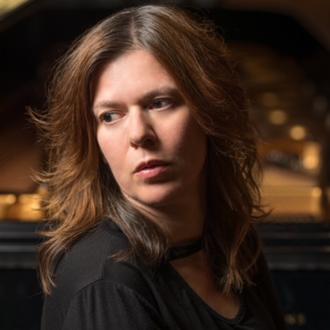
Pianist Lydia Brown has achieved and enjoys a diverse career in recital, opera and chamber music. She has appeared in recital at the Salle Cortot, Théâtre des Champs-Élysées, Isabella Stewart Gardner Museum, Alice Tully Hall, Weill Hall, Philadelphia Chamber Music Society, Coolidge auditorium at the Library of Congress and the Phillips Gallery, and has toured with many prominent artists from the rosters of the Pro Musicis Foundation, Young Concert Artists, the Piatigorsky Foundation, Musicians from Marlboro and Concert Artists Guild.
After completing the Metropolitan Opera Lindemann Young Artist Program, Lydia Brown became an assistant conductor at The Metropolitan Opera and has maintained a position there since 2005. She joined the music staff of the San Francisco Opera in 2011. In addition, Miss Brown has enjoyed long working relationships with Spoleto Festival USA, SongFest and Gotham Chamber Opera.
Among her primary interests is the preparation and performance of new music which includes world premieres of song cycles by John Harbison, Libby Larsen, Richard Hundley, Paola Prestini, Daniel Sonenberg and Renee Favand-See and the musical preparation of operatic premieres including Èmilie by Kaija Saariaho, Faustus the Last Night by Pascal Dusapin, the NYC premiere of Elliott Carter’s What Next? and Dolores Claiborne by Tobias Picker. She is honored to have served on the jury of the Naumburg International Vocal Competition, as well as on the mentoring panel of the Duffy Institute of New Opera.
Miss Brown is the current Chair of the Collaborative Piano Department at The Juilliard School. Other teaching appointments include positions at the Yale School of Music and the Cincinnati College-Conservatory of Music Opera faculty. Since 2006 she has been the coordinator and pianist of the Vocal Program at the Marlboro Music Festival and School.
Her special interests include Music For Food, of which she founded the Cincinnati chapter, and Sing For Hope in which she performed on the inaugural concert.
Victoria Browers, producer & coordinator
Julia Hanna, musical coaching
The Singers
Alexa Farah, soprano, is pursuing a BM in Voice Performance and a BM in Music Education. Alexa is in their fourth year of studies with voice teacher, Margaret Cusack. Past performances include El Gato in El Gato Con Botas, Adele in Die Fledermaus, and Monica in The Medium with Westminster Opera Theatre, under the baton of Susan Ashbaker.
Brendan Fritz, baritone, is a 19-year-old Vocal Performance major from Elizabethtown, PA. A student of Margaret Cusack and Akiko Hosaki, Brendan has a special appreciation for art song, especially of Schubert and Schumann. After graduating, he hopes to pursue a professional career in opera and art song.
Benjamin Glick, baritone, is a sophomore Bachelor of Music in Voice Performance studying with Aaron Cafaro. Past performances include El Rey in El Gato Con Botas Awards include 1st place in the Westminster Voice Awards in 2025 and 1st place in the NJ NATS Festival of Singing in 2025.
Aaron Lynch, tenor, is from Rochester, NY and studies with Todd Thomas at Westminster Choir College in NJ. He recently was featured in new opera Speed Dating Tonight by Michael Ching and will sing with Berkshire Choral International this summer as a vocal scholar for Beth Willer’s British Mavericks.
Daniel Piver, baritone, is from Long Island, New York. He has appeared as a soloist with the Westminster Choir and the Princeton Society of Musical Amateurs. He holds a Bachelor of Music in Music Education from Westminster Choir College and is currently pursuing a master’s degree in Choral Conducting, studying conducting with Dr. Donald Nally, and voice with Dr. Christopher Arneson and Ms. Faith Esham.
Sarah Vawdrey, soprano, is a graduate student in choral conducting and sacred music at Westminster Choir College, where she studies conducting with Donald Nally, voice with Christopher Arneson, and organ with Michael Diorio.
The Lindsey Christiansen Art Song Festival Endowment Fund
For decades Westminster Choir College has been a Center for the study of Art Song, which has included an annual Art Song Festival. After she passed away in 2017, the Festival was named for Lindsey Christiansen to honor her life and legacy. Professor of Voice at Westminster Choir College for 40 years, from 1977 to 2017, and Chair of the Voice Department for 18 years, Professor Christiansen specialized in German Lieder and was a life-long student and lover of the music of Franz Schubert. She was an exceptional voice teacher and a demanding professor of song literature classes, where she instilled in countless students a love for song.

Established to honor the life and legacy of Professor Lindsey Christiansen, this fund sustains the study and performance of art song at Westminster Choir College. Contributions may be made online or sent to:
Westminster Choir College of Rider University
Attn: Art Song Festival
2083 Lawrenceville Road Lawrenceville, NJ 08648
About Rider University & Westminster Choir College
Located in Lawrenceville, New Jersey, Rider University is a private co-educational, student-centered university that emphasizes purposeful connections between academic study and real-world learning experience. Rider prepares graduates to thrive professionally, to be lifelong independent learners, and to be responsible citizens who embrace diversity, support the common good, and contribute meaningfully to the changing world in which they live and work.
The College of Arts and Sciences is dedicated to educating students for engaged citizenship, career success, and personal growth in a diverse and complex world. The college cultivates intellectual reflection, artistic creativity, and academic maturity by promoting both broad academic inquiry and in-depth disciplinary study, while nurturing effective and ethical applications of transferable critical skills. The College consists of four schools: the School of Humanities and Social Sciences, the School of Communication, Media, and Performing Arts, the School of Science, Technology, and Mathematics, and Westminster Choir College.
Culturally vibrant and historically rich, Westminster Choir College has a legacy of preparing students for thriving careers as well-rounded performers and musical leaders on concert stages, in schools, universities, and churches, and in professional and community organizations worldwide. Renowned for its tradition of choral excellence, the college is home to internationally recognized ensembles, including the Westminster Symphonic Choir, which has performed and recorded with virtually all of the major orchestras and conductors of our time. In addition to its choral legacy, Westminster is known as a center for excellence in musical pedagogy and performance.

Rider University gratefully acknowledges the generous support of: Michael T. '89 & Susana Santaguida '89 Gummel and Kasey & Billy Ziff for their support of our Rider Friend of the Arts patron program.
Upcoming Performances
THE ACTING SHOWCASE
Tuesday May 5, 7:30 p.m.
Bart Luedeke Center Theater
WESTMINSTER CHOIR: THE WESTMINSTER CHOIR LOOKS FORWARD
Thursday, May 14, 7:30 p.m. Bristol Chapel 101 Walnut Lane, Princeton, NJ 08540
WESTMINSTER CHOIR COLLEGE CHAPEL SERVICE
Friday, May 15, 7 p.m.
Princeton University Chapel
FOR MORE INFORMATION ON UPCOMING PERFORMANCES, SUBSCRIPTION AND PATRON PROGRAM OPTIONS, VISIT RIDER.EDU/ARTS.