K ENTUCKY &
HOMES GA R DENS













HOMES GA RDENS
Published by RHP Publishing, LLC PO Box 22754 Lexington, KY 40522 859.268.0217
Publisher: Rick Phillips 1rickphillips@windstream.net
Associate Publisher: Carolyn Rasnick carolyn@rhppublishingllc.com
Circulation and Distribution: 1rickphillips@windstream.net
Account Executives: Rick Phillips 859-797-3705 • 1rickphillips@windstream.net
Terri Carpenter 859-806-6123 • sweetTstaging@gmail.com
Beth Swanson 859-556-4593 • bethknowsads.kyhg@gmail.com
Editors: Rick Phillips, Carolyn Rasnick
Senior Associate Editor: Kirsten E. Silven
Photography: Walt Roycraft
Contributing Writers: Ray Hunter Kirsten E. Silven
Art Direction & Design: Sarah Smith
Printing: Cummings Printing 4 Peter’s Brook Dr. Hooksett, NH
Kentucky Homes and Gardens is published six times a year by RHP Publishing, LLC. 859.268.0217 www.kentuckyhomesandgardens.org All rights reserved.
Reproduction in whole or part without written permission is prohibited.
Subscription price: $24.95 for one year (six issues). Single copies: $8. Kentucky residents add 6% sales tax.
Subscriptions and change-of-address should be sent to Kentucky Homes and Gardens, Subscriber Service Center, PO Box 22754, Lexington, KY 40522


C K OOKING ENTUCKY IN C K OOKING ENTUCKY IN 1
STEEPED IN CHARM
Mrs. Teapots Tea Room
& Eatery in Bellevue
By Kirsten E. Silven
Tucked along Fairfield Avenue in Bellevue, Kentucky, Mrs. Teapots Tearoom & Eatery offers a transportive dining experience that feels at once rooted in English tradition and distinctly personal in its execution. Since opening its doors in 2005, the beloved tea room has cultivated a loyal following, drawn to its thoughtful approach to hospitality, where vintage teapots, fine china, and a carefully layered interior create an atmosphere of quiet charm and gentle nostalgia.
Today, under the stewardship of co-owners Chef Jacob Perry and Ricky Meirovici, Mrs. Teapots continues to honor its legacy while subtly refining its culinary and experiential offerings. The result is a destination that feels both timeless and refreshed—an inviting space where guests are encouraged to linger.
“Mrs. Teapots is truly a labor of love,” shared Ricky Meirovici, Co-Owner and Experience Director at Mrs. Teapots Tearoom & Eatery. “Our goal has always been to create a space where people feel welcomed, cared for, and able to slow down. In a fast-paced world, we’re proud to offer something a little more intentional and meaningful”
That sense of intention is perhaps most evident in the tearoom’s signature high tea service, a fully coursed, multi-tiered experience that unfolds over the course of 90 minutes to two hours. Presented on traditional three-tiered stands, the service follows the classic progression of savory to sweet, featuring delicate tea sandwiches, house-made breads and scones, and an assortment of desserts. Each element is crafted in-house—from soups and scones to pastries—ensuring both consistency and a sense of culinary authorship.
“Our full high tea service is by far the most popular,” shared Jacob Perry, Co-owner and Executive Chef at Mrs. Teapots. “It’s a multicourse experience that includes our house-made scones, rotating savory sandwiches, and a full dessert tier. Guests especially love our scones and our chicken salad, along with our seasonal desserts that change frequently.”
For those seeking a lighter experience, the tearoom also offers afternoon tea and lunch service, though the emphasis remains on the ritual itself. Tables are dressed in linens, teacups are carefully matched, and guests are invited to fully inhabit the moment. The environment plays an equally important role: floral installations, vintage furnishings, and whimsical details, such as hats and assorted decorative accents, all contributing to a curated and delightfully immersive setting.
Beyond its daily service, Mrs. Teapots has become a sought-after venue for celebrations and gatherings, from bridal showers to intimate events. Seasonal offerings further enhance its appeal, most notably “Christmas at Mrs. Teapots,” when the space is transformed with festive décor and music, creating a richly atmospheric holiday tradition that draws returning guests year after year.
Reservations are strongly encouraged, particularly on weekends. For those who do secure a table, the reward is more than just another great meal; it’s an artfully curated experience and a welcome invitation to slow down.
Open Tuesday through Saturday for lunch and high tea, Mrs. Teapots Tearoom & Eatery is located at 339 Fairfield Avenue in Bellevue, Kentucky. For more information or to make a reservation, call (859) 491-2731.
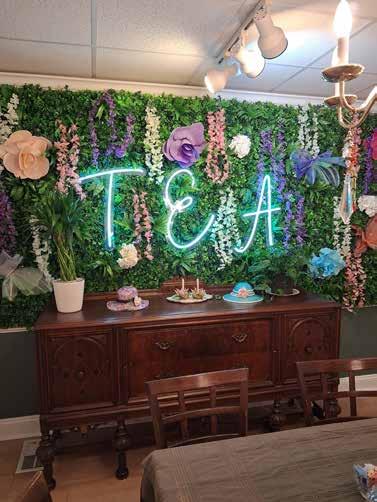
1 A lush, garden-inspired feature wall anchors the interior of Mrs. Teapots Tea Room & Eatery in Bellevue, Kentucky, where cascading florals and a glowing installation create an immersive backdrop for the tearoom’s English-inspired high tea service. Framed by vintage furnishings and delicate millinery accents, the setting reflects the establishment’s signature blend of whimsy and refinement—an environment designed not simply for dining, but for a fully realized experience rooted in tradition and endless charm.
MRS. TEAPOTS SIGNATURE CREAM SCONES
Ingredients
• 2 cups all-purpose flour
• 1/2 cup granulated sugar
• 3 teaspoons baking powder
• 1/4 teaspoon salt
• 4 tablespoons (1/2 stick) cold unsalted butter, cubed
• 2/3 cup milk (or heavy cream for a richer texture)
• 1/2–1 cup add-ins of choice (dried fruit, fresh berries, chocolate chips, or nuts)

Instructions
1. Preheat oven to 350°F and line a baking sheet with parchment paper.
2. In a large bowl, whisk together the flour, sugar, baking powder, and salt.
3. Cut in the cold butter until the mixture resembles coarse crumbs.
4. Stir in your desired add-ins.
5. Pour in the milk and gently mix until a soft dough forms, being careful not to overmix.
6. Scoop portions onto the prepared baking sheet.
7. Bake for approximately 16 minutes, or until lightly golden.
Serve warm with sweet cream and preserves.
2 A colorful assortment of freshly baked scones anchors the table at Mrs. Teapots Tea Room & Eatery in Bellevue, Kentucky, where a whimsically adorned teapot and thoughtful presentation set the tone for an experience that is both inviting and quietly refined. Equal parts comfort and charm, the offering reflects the tearoom’s devotion to detail and its enduring appeal for those who appreciate a leisurely, yet refined and well-crafted bite. SEE RECIPE.


4 A savory course befitting a refined tea service, this quiche features roasted tomatillos, Guinnessglazed caramelized onions, and Welsh cheese set within a house-made threecheese scone crust, paired with a composed mixed greens salad accented by red currants, toasted pecans, and a bright orange vinaigrette. At Mrs. Teapots, such offerings reflect the tradition of incorporating elegant, knife-and-fork fare into a full tea menu, where dishes like quiche provide a more substantial counterpoint to the tiered presentation of lighter courses.
5 2
4
3
3 House-baked and thoughtfully composed, an assortment of savory and sweet breads are another beloved part of the tearoom’s multicourse tea service. An essential element of the traditional progression that balances heartier offerings with delicate sweets, at Mrs. Teapots the slices are served warm with house-made sweet cream, jam, and preserves.

5 Presented as part of the tearoom’s signature high tea offering, this carefully composed multi-course service arrives on a classic threetiered stand. This enduring format elegantly stages savory selections, breads, and sweets in a refined progression, with delicate tea sandwiches, fruitstudded slices, and jewel-toned petit desserts all arranged with elegant precision.

STRONG BORDERS, BETTER YARDS
By Ray Hunter
Photography Courtesy of

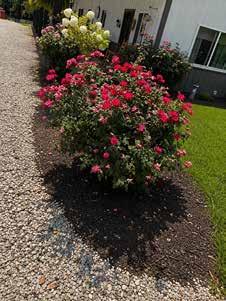
Awell-kept yard often comes down to the details. Clear lines and thoughtful design can turn an ordinary landscape into something that feels complete. For many homeowners, that transformation starts at ground level with the borders that frame flowerbeds and walkways. Owner and operator of Bluegrass Borders Custom Concrete Curbing, Joseph Miller focuses on creating durable, low-maintenance edging that brings order and definition to outdoor spaces.
Joseph started Bluegrass Borders three years ago after seeing how often traditional edging failed. Plastic shifts out of place. Metal rusts and bends. Both require ongoing attention that most homeowners do not want to deal with. His approach centers on continuous concrete curbing, a seamless option that stays in place and reduces upkeep.
1 Before:
A curved planting bed blends into the gravel drive, with no clear edge to separate materials. Mulch and stone meet loosely, softening the landscape’s overall shape.
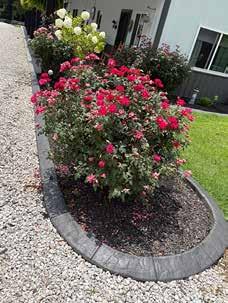
2 After:
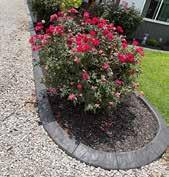
Concrete curbing from Bluegrass Borders defines the bed with a clean, continuous edge. The border contains mulch, separates it from the gravel, and gives the row of roses a more structured, finished look.
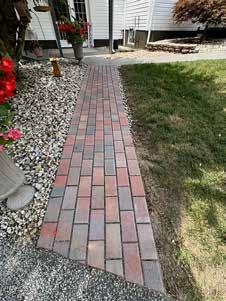
3 Before:
A brick walkway meets grass and decorative stone without a defined boundary. The edges appear uneven, and materials begin to shift into one another.
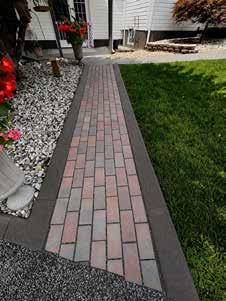
4 After:
A custom concrete border frames the walkway, reinforcing the straight lines of the brick pattern. The edging creates a clear division between lawn and stone, improving both durability and visual order.
5 6 7
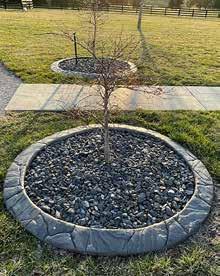
5 Circular tree rings are shaped with textured concrete borders that hold dark stone neatly in place. The consistent edging emphasizes each planting area while protecting the surrounding lawn.
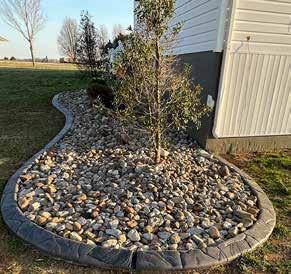
6 A flowing foundation bed is framed with continuous concrete curbing, guiding the line of the landscape along the home. The border maintains the bed’s shape and prevents rock from spreading into the yard.
“I kept seeing the same problem over and over. People would spend time and money on their landscaping, but the edging would break down or move within a season or two. I wanted to offer something that actually holds up and still looks clean years later,” Joseph said.
Concrete curbing acts as a permanent barrier. It keeps mulch and rock in place while stopping grass and weeds from creeping into beds. It also creates a defined edge, giving each part of the yard a clear boundary.
“We look at it as the picture frame of your yard. You can have great landscaping, but without that clean edge, it doesn’t stand out the same way. The curbing ties everything together and gives it a finished look.”
Bluegrass Borders offers custom designs that go beyond a basic edge. Each installation can be colored and stamped to complement the home. Some homeowners prefer a natural stone look, while others choose a smoother finish. The layout of the yard and the goals for the space usually guide those decisions.
Planning is key. Placement should support how the yard is used, not interfere with it.
“A lot of it comes down to how the yard lays and how people use their space,” Joseph explained. “You don’t want to block access or create spots where water sits. We try to walk through all of that ahead of time so it works the way it should long term.”
One of the most common regrets comes after the project is finished. Homeowners often wish they had extended the curbing further once they see the difference it makes.
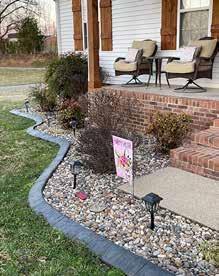
7 A curved bed filled with river rock follows the front of the home, outlined with stamped concrete curbing from Bluegrass Borders. The defined edge supports landscape lighting and keeps decorative stone contained.
“Almost every time, once it’s done, people say they wish they had gone a little further with it. When they see how clean it looks and how much easier it makes things, they start thinking about the areas they didn’t include,” he said.
Beyond appearance, concrete curbing adds practical benefits. It helps control soil erosion and can guide water away from the home’s foundation, reducing the risk of pooling or damage over time.
Maintenance is simple. Concrete edging requires a yearly coat of sealer. Reinforcement cable adds strength, helping the curbing stay in place without shifting or cracking under normal conditions.
Cost depends on yard layout, terrain, and design choices. More detailed patterns or custom color work can increase the price, but many homeowners find the long-term savings in maintenance worth the investment.
For those starting from scratch, the best first step is to think about function. Consider how the space is used and where definition is needed. From there, a consultation can help refine the layout.
In neighborhoods where many homes share similar layouts, small upgrades can make a noticeable difference. Continuous borders help a property stand out while keeping the design cohesive.
“If someone’s on the fence, I always tell them to just start with one area,” Joseph said. “Once they see the difference, it usually speaks for itself.”
For more information or to schedule a free consultation, contact Bluegrass Borders Custom Concrete Curbing at 270-218-7029 or visit them on Facebook.

Cultivating Place
Doran Arboretum at Murray State
By Kirsten E. Silven
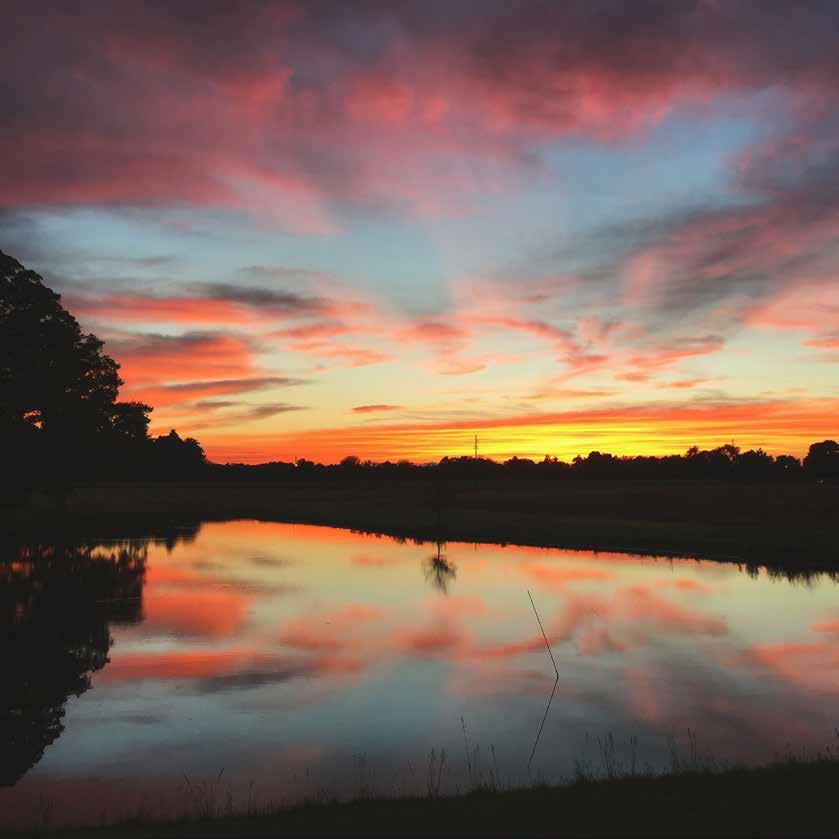
1 As evening settles over the Doran Arboretum at Murray State University, the pond reflects a vivid sunset in bands of coral, gold, and soft blue. Widely regarded as one of the most beautiful places in Murray, Kentucky, the arboretum offers a peaceful setting for enjoying the twilight.
Set within the rolling landscape of western Kentucky and a stop on the official Kentucky Garden Trail, the Doran Arboretum at Murray State University offers a quietly compelling study in how education, ecology, and design can coexist with purpose. Encompassing 13 acres of the historic 44-acre Pullen Farm, the arboretum functions as both a public garden and a living classroom through the ever-evolving landscape, where students and visitors alike engage directly with the rhythms of nature and the broader agricultural context of the region.
From the outset, the experience is defined by movement. A gently looping walking path draws visitors through a series of curated garden spaces, each composed with a balance of structure and organic forms. Along the way, diverse plant collections unfold in layered compositions, and native species are interwoven with carefully selected ornamentals, demonstrating both ecological sensitivity and ornamental value. Pollinator habitats are particularly prominent, with sun-loving perennials creating vibrant corridors alive with butterflies and bees, reinforcing the arboretum’s commitment to biodiversity and sustainability.
Photography Courtesy of Murray Convention & Visitor’s Bureau
Water also serves as a central organizing element within the landscape. A 0.8-acre pond anchors the site, its surface animated by a central fountain and framed by a combination of manicured turf, naturalistic plantings, and mature canopy trees. From higher vantage points, the pond reads as a reflective plane, lending a visual pause within the broader composition, while beyond it, the working landscape of the farm comes into view. Here, an active student-run apiary and wheat research plots extend the narrative beyond ornamental gardening, linking the arboretum to the agricultural traditions that define this part of Kentucky.
Elevation, which is rare in famously flat Calloway County, is introduced with a raised mound, affectionately referred to by locals as the “mountain,” that provides both visual interest and a shift in perspective. At its summit, a pavilion and adjacent garden features create a sense of destination, while a small bubbling pond initiates a sequence of cascading water that moves gently through the landscape below. From this vantage point, visitors can take in sweeping views of the surrounding farm, reinforcing the relationship between cultivated garden and working land.
Throughout the arboretum, planting design is instructive and immersive. Beds are arranged in naturalistic drifts, with attention given to seasonal succession, textural contrast, and plant performance in the regional climate. Cultivars such as Tradescantia ‘Osprey’—a refined hybrid derived from the native T. virginiana—demonstrate how native lineage can be elevated through selection, offering immense ornamental beauty and ecological value. Clearly labeled plantings further emphasize the arboretum’s educational mission, inviting visitors to engage not only visually, but intellectually.
This dual purpose as both a public garden and teaching tool is central to the arboretum’s identity. “Equally distinctive is the Arboretum’s student-centered model, where the majority of daily operations are carried out by students in horticulture classes,” shared Dava Hayden, M.S., Horticulture Instructor and Arboretum Manager at Murray State University. “Students gain hands-on experience by managing every aspect of the grounds, from planting and pruning to composting, propagation, and even honey bee care. This immersive approach transforms the Arboretum into a living classroom, where education and realworld application are seamlessly intertwined.”
The site’s history adds further depth to its contemporary relevance. “What makes the Doran Arboretum truly unique is its deep-rooted history and the remarkable legacy of Mabel Pullen, whose determination and resilience shaped the land into what it is today,” Hayden noted. “After losing her husband and facing financial hardship, Mabel fought to reclaim and sustain her farm through years of hard work, ultimately transforming bankruptcy into lasting success.”
Upon her passing, Mabel entrusted the property to Murray State University, with the intent that it would continue to serve agricultural endeavors. This legacy is evident not only in the land itself, but in the way the arboretum engages with the community. Seasonal events, from Earth Day celebrations and plant sales to family-focused programs and agricultural showcases, ensure that the space remains active and accessible throughout the year. It is, as Erin Carrico, Executive Director of the Murray Convention and Visitors Bureau, describes, a place of consistent connection. “Everyone enjoys walking around the arboretum, even during the colder months,” she shared. “It’s a fantastic resource and the perfect space to get outside and connect with nature.”
This sense of ease is part of a broader cultural rhythm. “We like to say we are on ‘Murray Time,’ which generally runs about 10 minutes behind everyone else,” Carrico quipped. And this attitude seems to permeate the arboretum itself, creating a place where time slows and movement through the landscape is unhurried.
Today, the grounds continue to expand, with new acreage, a forthcoming welcome center, and additional educational facilities all in the works. In a region defined by agriculture and a strong sense of community, the Doran Arboretum stands rooted in history, shaped by education, and designed for discovery.
The Kentucky Garden Trail is a Passport Program, where participants can collect custom stamps at each garden along the trail. Once 6 garden stamps have been collected, a prize is given. When all 12 stamps are collected, visitors receive a grand prize, further encouraging exploration and appreciation of Kentucky’s botanical treasures.
The trail is an exciting collaboration of 9 Tourism Offices throughout Kentucky - Oldham County, Louisville, Bullitt County, Murray, Madisonville, Owensboro, Frankfort, Bowling Green, and Lexington. The trail’s website also features 2-day itineraries to help visitors plan other things to do during their visit to the gardens. To learn more about the Kentucky Garden Trail, visit KentuckyGardenTrail.com or call (502) 222-0056.
The Doran Arboretum at Murray State University is located at 300 Hickory Drive in Murray, Kentucky. It is open daily from dawn until dusk and admission is free. For more information, visit www.tourmurray.com or call 270-809-3841.
2
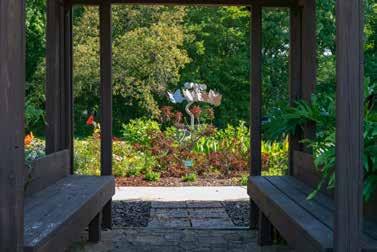
2 Framed by the pergola, a carefully composed garden vignette unfolds beyond, where layered plantings of annuals, perennials, and richly colored foliage surround a stunning butterfly sculpture by local artist John Toras. The open-air structure, one of the original garden features, was constructed by horticulture students in 2004 following the arboretum’s acquisition of the farm in 2000 from Mrs. Mabel Pullen.
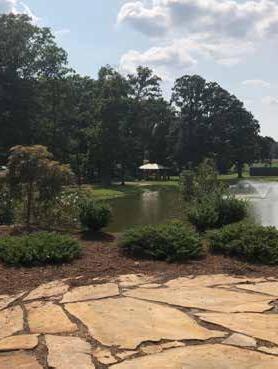
3 A broad sweep of native sandstone flagstone—commonly found throughout western Kentucky and Tennessee—forms a naturalistic overlook. Beyond, the pond unfolds as a central organizing element, its surface animated by a distant fountain and framed by layered plantings of evergreen shrubs, ornamental trees, and softly contoured turf. A pavilion sits just beyond the water’s edge, partially veiled by mature canopy trees that lend shade and structure to the scene.
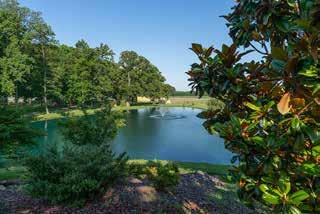
4 From the mountain-top overlook, a 0.8-acre pond unfolds below, its surface animated by a central fountain and framed by a layered edge of turf, shrubs, and mature canopy trees. In the foreground, the glossy, broadleaf foliage of a magnolia adds structure and depth, reinforcing the sense of elevation. Beyond the water, the landscape transitions to working ground, where a student bee apiary and wheat research plots extend the arboretum’s mission from ornamental display to agricultural study.
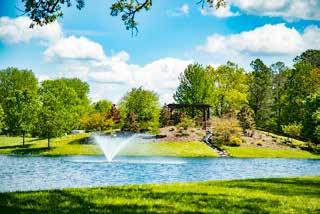
5 An idyllic fountain anchors this composition, drawing the eye toward a gazebo set atop a gently contoured rise. A diverse collection of native and introduced landscape plants creates a rich, layered backdrop for the mountain garden, where deciduous trees, ornamental shrubs, and low, textural plantings are arranged in naturalistic groupings. Stone accents and a narrow cascade articulate the slope, guiding movement through the landscape, while a sweep of manicured turf along the shoreline provides a clean, structured foreground.
6 Sun-loving perennials spill toward the pond’s edge in a layered planting designed to support both color and ecology, creating a vibrant vantage point for observing butterflies and other pollinators at work. Clusters of tickseed (Coreopsis) weave bright yellow notes through fine-textured foliage, while upright spires of beard-tongue (Penstemon) introduce vertical rhythm and seasonal bloom. Plant labels punctuate the bed, underscoring the arboretum’s educational mission.
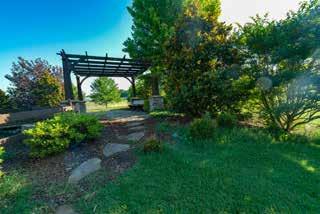
7 A timber pergola crowns the arboretum’s “mountain,” its open framework casting patterned shade across a meandering flagstone path that ascends through layered plantings of evergreen shrubs and flowering understory trees. Anchored by stone piers and framed by the mature canopy, the structure offers a quiet overlook. The setting balances structure with softness, creating an intentional garden spot that has become one of the town’s most cherished proposal spots, where hundreds of “I do’s” have been shared.

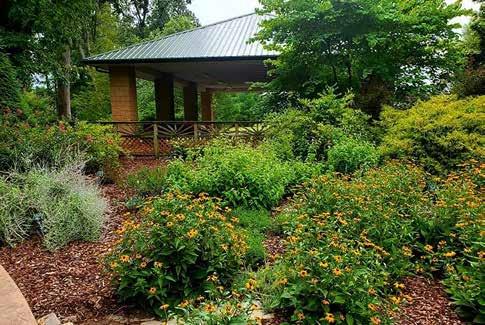
8 A pavilion-style shelter sits beyond a richly planted foreground, offering a shaded focal point within the landscape. Sweeping drifts of black-eyed Susans (Rudbeckia) create a vibrant display, interwoven with silvery foliage and low, textural groundcovers that provide contrast and seasonal depth. A gently curving path moves through the bed, guiding the eye toward the structure, while layered shrubs and small trees frame the scene and lend a sense of enclosure.
9 A close-up view of Tradescantia ‘Osprey’ highlights its delicate white petals and vivid blue centers set against arching green foliage. Part of the Andersoniana Group, this hybrid is derived from the native T. virginiana, offering both ornamental appeal and pollinator value. Clusters of unopened buds signal a steady succession of blooms, reinforcing its role as a reliable, season-long performer in the garden.

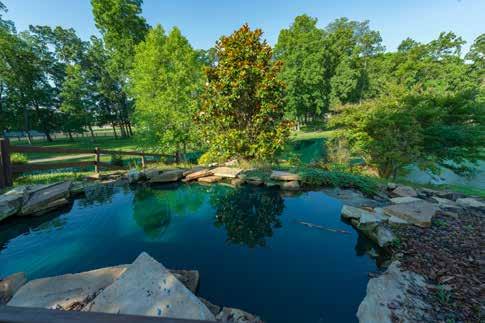
10 A small, bubbling pond crowns the “mountain,” at Doran Arboretum, its dark, reflective surface contained by a ring of irregular stone that reinforces the site’s naturalistic intent. From this elevated basin, twin waterfalls begin their descent, initiating a gentle movement of water through the landscape below. A specimen magnolia rises at the center, its glossy foliage mirrored in the still pool, while glimpses of the larger pond and open lawn beyond extend the view, creating a layered sequence of water, plantings, and elevation.

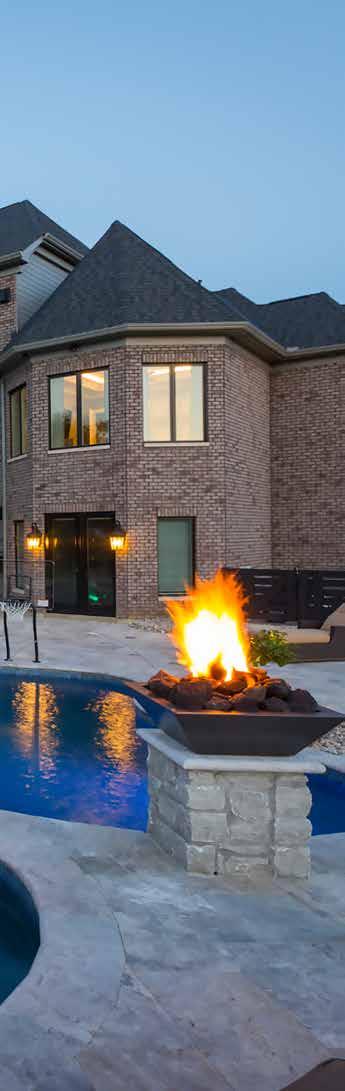
Elemental Outdoor Living
By Kirsten E. Silven
In today’s most thoughtfully designed residences, the outdoor environment is no longer treated as an afterthought, but rather as an integral extension of the home’s architectural language. Nowhere is this more evident than in the increasing sophistication with which fire and water features are being conceived, with elements once considered decorative now central to the planning of luxury outdoor living spaces.
At the highest level of design, water is rarely static. Instead, it is articulated through movement, sound, and reflection, often serving as the connective tissue that organizes the landscape. From gently circulating lazy rivers that introduce a sense of quiet motion, to tiered waterfalls that provide both visual depth and a measured acoustic backdrop, water features are being engineered with a level of nuance that parallels interior design. Increasingly, these installations are calibrated to engage multiple senses, as soft cascades create a continuous auditory layer, while carefully placed lighting transforms the surface into a dynamic plane after dusk.
Equally important is the way water is integrated into the broader composition. Pools are no longer conceived as standalone amenities; they are embedded within the site, responding to architecture, topography, and circulation. “Designing a luxury outdoor living space is about more than just high-end materials,” shared DJ Geddes, vice president of Geddes Pools. “It’s about creating a seamless transition between the comfort of the indoors and the beauty of the outdoors,” adding that luxury design dictates that a pool or water feature should not look “dropped in” but rather feel like an extension of the home’s existing architecture and living spaces. This philosophy is evident in projects where water edges align with structural axes, terraces step naturally into the landscape, and material palettes echo those found inside the home.
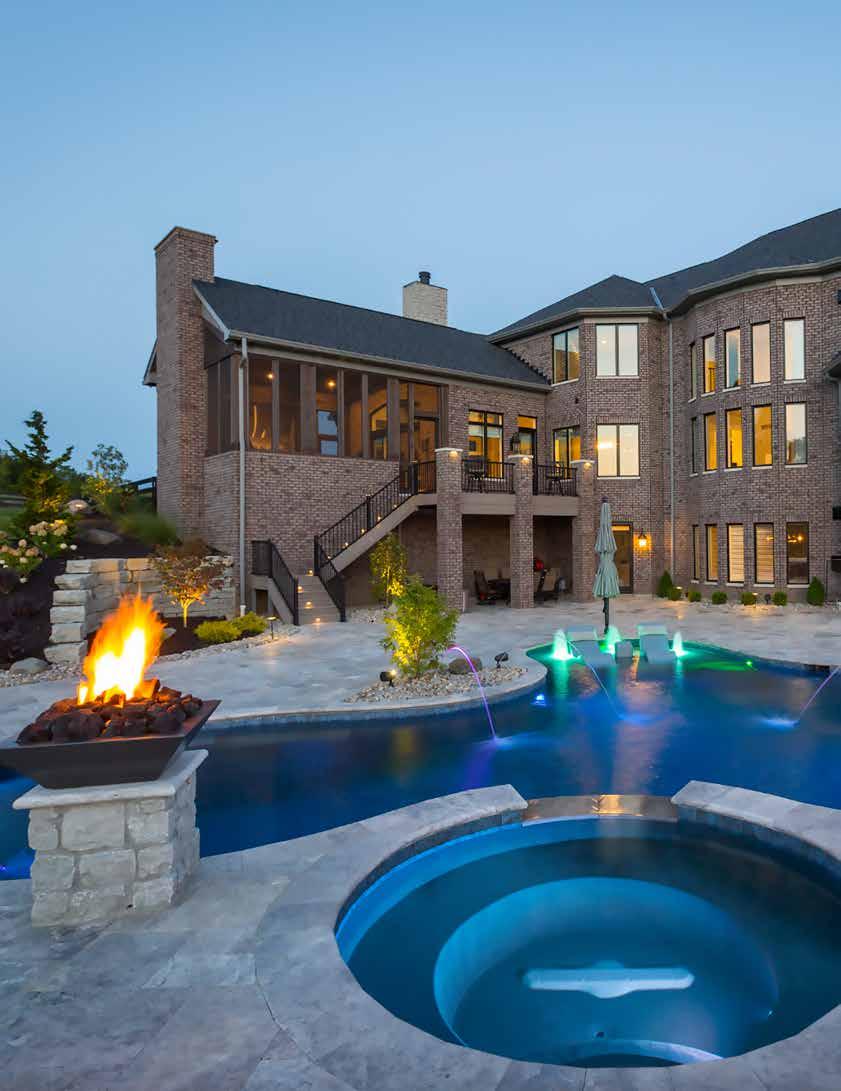
1 This expansive pool terrace presents a balanced composition of fire and water, with a raised spa in the foreground establishing a strong geometric anchor, leading the eye toward the main pool. Here, illuminated jets arc across the surface, introducing movement and a subtle sense of play. Flanking the pool’s edge, elevated fire bowls rest atop stone plinths, providing vertical emphasis and a warm counterpoint to the cool, reflective water below. Carefully integrated lighting enhances circulation and highlights key features without overpowering the scene.Photo, design and installation by Hensley Custom Building Group.
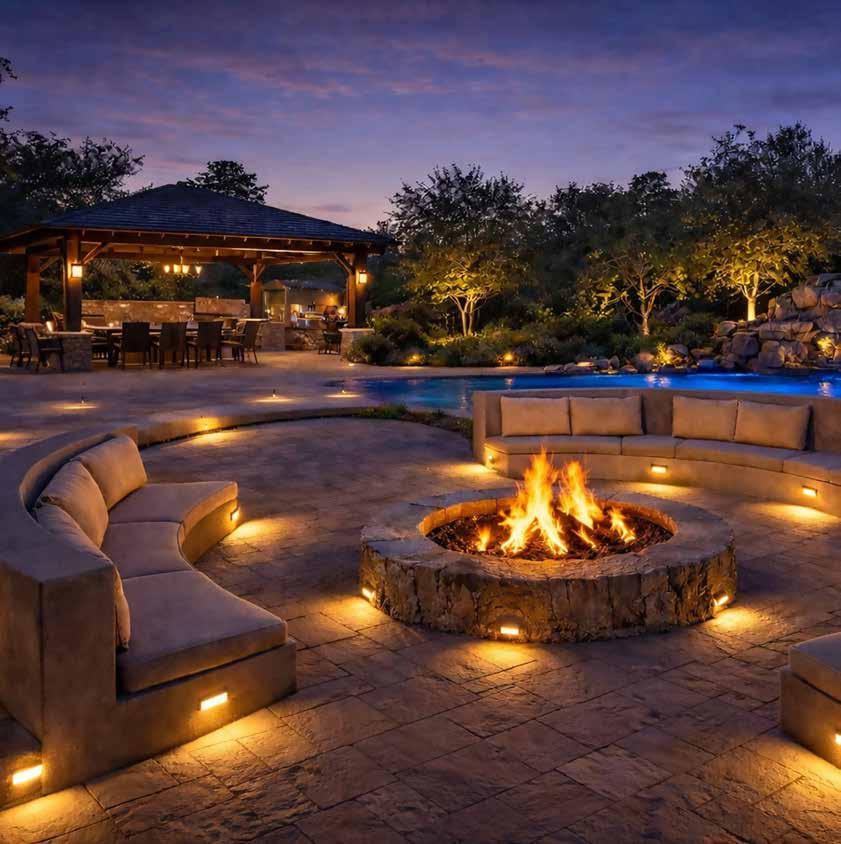
2 Organized around a circular fire pit, this outdoor gathering space demonstrates a disciplined approach, where geometry, lighting, and materiality work in concert. Continuous curved seating defines the perimeter, creating a cohesive enclosure that encourages conversation while maintaining clear sightlines across the landscape. Beyond, a pool and elevated waterfall extend the visual field, while a covered pavilion in the distance supports outdoor dining and entertaining, reinforcing the site’s layered functionality. Photo, design and installation by Dugybear Hardscaping Services.
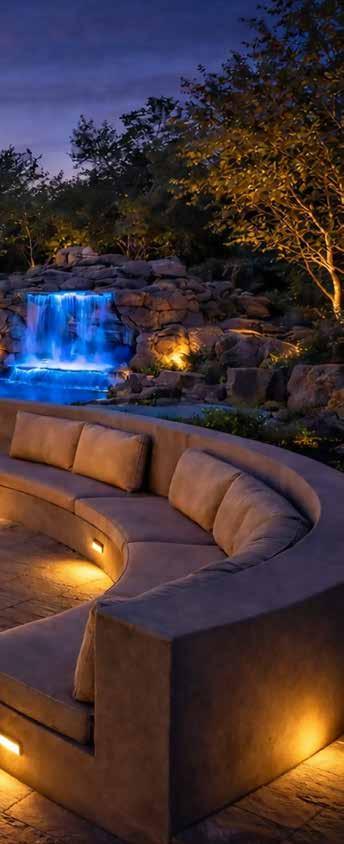
Fire, by contrast, introduces an opposing yet complementary element, defined by warmth, movement, and immediacy. Today’s fire features are increasingly sculptural, often positioned to serve as focal points within carefully orchestrated gathering spaces. Sunken conversation pits, elevated fire bowls, and linear gas installations are designed not only for visual impact, but to shape how people inhabit the space. Circular seating arrangements, for instance, encourage interaction and intimacy, while integrated lighting within stone or masonry elements reinforces the overall design.
The relationship between fire and water is where these environments achieve their greatest complexity. When juxtaposed, the two elements heighten one another and the flame appears more vivid against the cool, reflective surface of water, while the presence of water tempers the intensity of fire, creating a balanced sensory experience. In many highend installations, this interplay is carefully choreographed, with a fire feature positioned at the center of a shallow reflecting pool, or a series of flames arranged along the edge of a water feature, introducing a sense of vertical emphasis within an otherwise horizontal composition.
Importantly, these spaces are not strictly seasonal anymore, even in Kentucky. “Fire features are no longer just for summer,” Geddes added. “With the rise of high-end, sunken fire pits, permanent outdoor fireplaces and gas-powered fire tables, we are building spaces that are just as inviting in December as they are in July.” This shift reflects a broader trend toward year-round outdoor living, where some design decisions are informed as much by winter use as summer entertaining. Covered pavilions, integrated heating elements, and wind-conscious layouts allow homeowners to extend their use of these spaces well beyond traditional boundaries.
Material selection also plays a critical role in ensuring longevity and cohesion. Neutral tones, natural stone, and enduring finishes that will not feel dated over time remain in demand. “Our motto at Geddes Pools has always been, ‘Today’s Quality is Tomorrow’s Reputation,’ so we remain hyper focused on making sure we use quality materials, while also focusing on expert installation and follow through,” Geddes shared. “Trends come and go, but your investment in hardscaping and water features should last for decades, so it’s important to keep the pool shell, main patio material and structure of the fire feature timeless and neutral.” This approach also allows more expressive elements—lighting, furnishings, and plantings—to evolve over time without compromising the integrity of the core design.
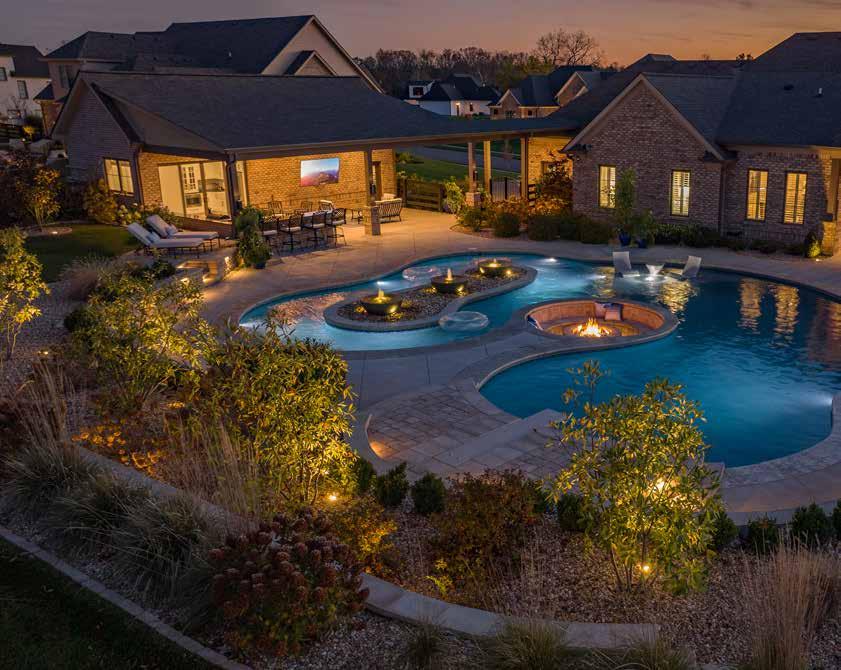
3 At dusk, this carefully composed outdoor living oasis showcases a sophisticated interplay of fire and water, where each element is carefully positioned to enhance the overall experience and design. Conceptualized and built by DJ Geddes of Geddes Pools, the dual entertainment pool features a gently circulating lazy river, balanced by a tanning ledge and deep diving pool. At the center, an island introduces sculptural interest with three bubbling water bowls, their illuminated movement adding texture and rhythm, while a sunken fire pit just beyond provides a compelling counterpoint, its flickering flame anchoring the composition. Surrounding terraces and a covered outdoor living space seamlessly extend the amenities, with thoughtfully integrated lighting casting a warm glow across the scene. Photo courtesy of Geddes Pools.
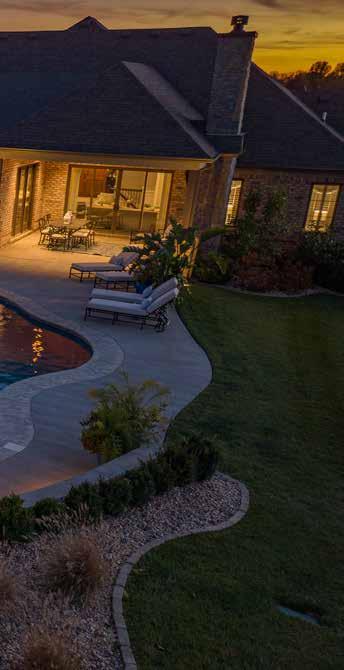
Technology is reshaping how these environments are experienced as well, with advanced control systems now allowing homeowners to adjust fire intensity, water flow, lighting color, and even temperature from a single interface, often via smartphone or integrated home automation platforms. Fire bowls can be ignited remotely, water features can be programmed to shift throughout the evening, and lighting schemes can be tailored to different moods or occasions. This level of control not only enhances convenience but enables a degree of customization that was previously unattainable.
Beyond technology, there is a growing emphasis on layered functionality. Outdoor kitchens, dining pavilions, and lounge areas are being arranged in sequences that encourage movement and discovery, rather than isolated zones. Pathways, stepping stones, and changes in elevation are used to guide circulation, often crossing over or alongside water features, reinforcing a sense of connection between elements. In these compositions, the landscape is experienced as a series of moments— each distinct, yet part of a cohesive whole.
“In recent years I have noticed a vast increase in extending the home’s outdoor living spaces – bringing the outdoors in,” shared Paula Wheatley, Design and Sales Leader for Hartstone Tile. “In our region, we are very fortunate to have all four seasons, giving us the opportunity to enjoy our outdoor spaces when it’s colder and also when it’s hot and humid.” Her observation underscores a broader shift in priorities: outdoor spaces are no longer ancillary, but essential, designed with the same rigor and attention to detail as interiors.
Ultimately, the most successful examples of fire and water integration are those that feel inevitable; where each element appears to belong, and where the experience unfolds naturally. Whether through the quiet cadence of a waterfall, the glow of fire reflecting on water, or the careful alignment of forms and materials, these environments offer a new framework for living that supports gathering, relaxation, and encourages daily use, while reinforcing a seamless dialogue between the home and landscape.
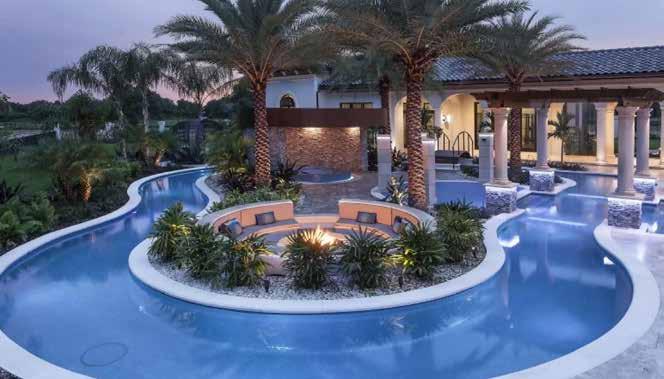
4 Encircled by a gently curving lazy river, this island-style seating area transforms the fire feature into a destination within the landscape. A built-in, crescent-shaped bench frames the central fire element, creating a defined gathering space that remains visually connected to the surrounding pool. The water introduces a sense of flow and guides the eye through the composition, while its surface reflects the soft glow of the fire and the carefully integrated landscape lighting. Lush plantings reinforce the resort-inspired character, softening the hardscape and enhancing a sense of enclosure without limiting its openness. Nearby, a series of architectural water features and colonnades extend the experience, adding depth and a subtle sense of procession. Design and construction by Ryan Hughes Design Build. Photo by Joe Traina.
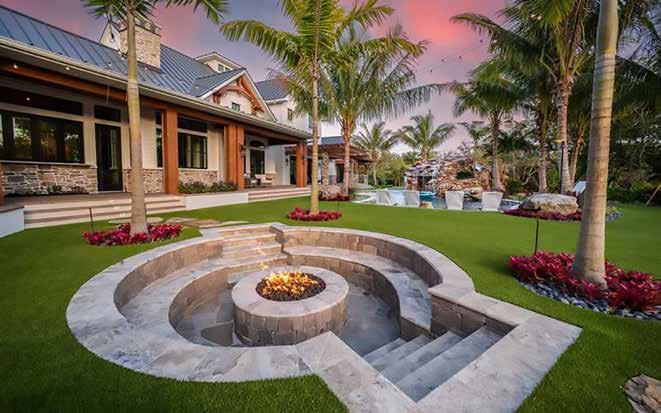
5 Set within a structured, sunken conversation area, the fire feature becomes an architectural anchor, its circular form and stone construction reinforcing symmetry and permanence within the landscape. The flame, contained within a glass-lined surround, introduces a refined layer of movement and light, drawing focus inward while subtly illuminating the seating. In the distance, a swimming pool complete with a series of waterfalls extends the composition beyond the immediate gathering space. Photo, design and installation by Lucas Lagoons.
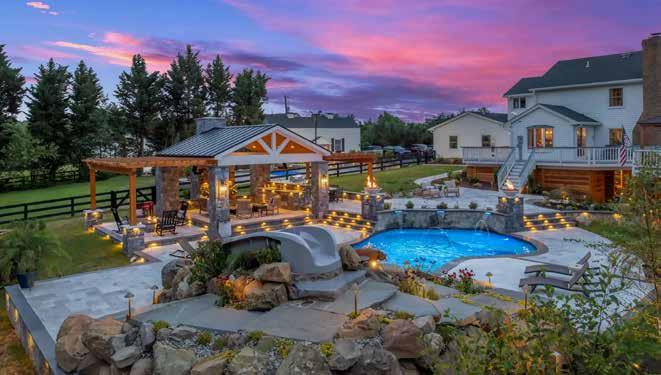
6 This expansive outdoor living environment brings together water, fire, and light in a composition designed for visual impact and everyday use. A freeform pool anchors the scene, its illuminated interior and gentle water features introducing movement and a cooling contrast to the surrounding stonework. Elevated just beyond, two prominent fire bowls and a built-in fire pit provide warmth and focal interest, their flickering glow reinforcing the layered arrangement of steps, seating areas, and gathering zones. A covered pavilion, supported by substantial stone columns and accented with timber detailing, extends the living space outdoors, while integrated lighting traces each level, enhancing circulation and emphasizing changes in elevation. Naturalistic rock groupings and planting beds soften the hardscape, creating a cohesive transition between built and organic elements. Photo, design and installation by Stonelux.
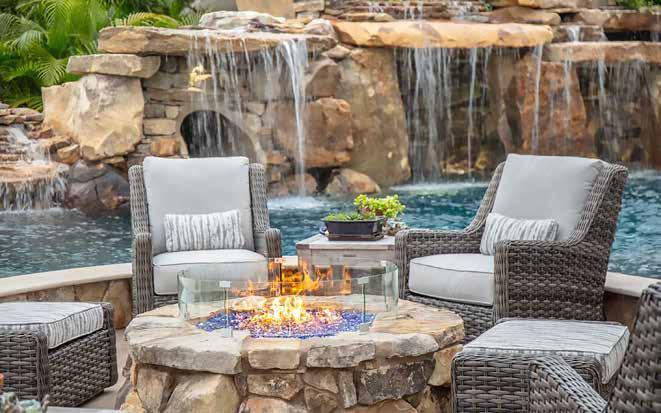
7 A charming seating arrangement highlights the enduring appeal of pairing fire with moving water in a residential landscape. A circular gas fire table, constructed of natural stone and topped with a transparent wind guard, serves as the focal point, its flame rising above a bed of reflective glass. Just beyond, a series of tiered stone waterfalls soften the space with a continuous veil of motion, their gentle, rhythmic sound creating a soothing acoustic backdrop that enhances the overall sense of calm and cohesion. Photo, design and installation by Lucas Lagoons.
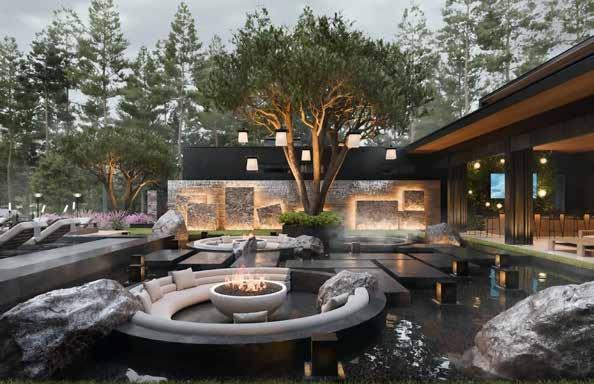
8 Centered within a shallow, reflective water plane, this circular lounge reimagines the traditional fire pit as an immersive architectural element. A low-profile fire bowl anchors the composition, encircled by continuous, built-in seating that invites gathering while maintaining a seamless connection to the surrounding water feature. A series of stepping platforms introduces a measured approach across the surface, guiding movement with intention, while substantial stone elements provide a tactile contrast to the clean-lined geometry. Beyond, a textured water wall, softly illuminated, establishes a modern, layered backdrop that enhances visual depth and ambient sound. Overhead, suspended lanterns and discreet uplighting within the tree canopy extend the experience vertically, casting a gentle glow that unifies the space. Photo, design and installation by Foxterra Design.
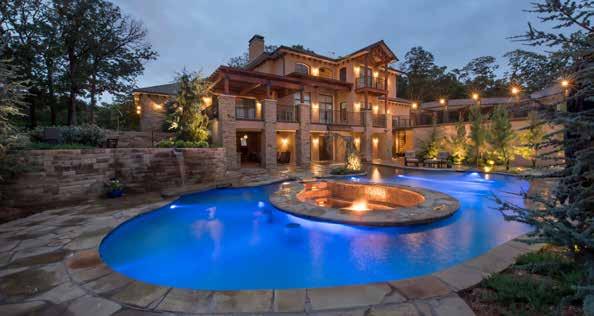
Set against the backdrop of a commanding residence, this outdoor living environment is organized around a sculptural pool that balances fluid form with architectural clarity. The water’s edge guides the eye toward a centrally positioned, sunken fire feature, where a circular conversation pit is seamlessly integrated within the pool itself, allowing flame and water to coexist in a striking, immersive composition. Subtle illumination beneath the waterline enhances depth and movement, while a nearby cascade introduces a gentle auditory layer that softens the space. Stone terraces and tiered retaining walls establish a sense of structure and permanence, anchoring the design within its landscape, while thoughtfully placed lighting highlights vertical elements and extends usability into the evening hours. Photo, design and construction by Trouble Free Pools.
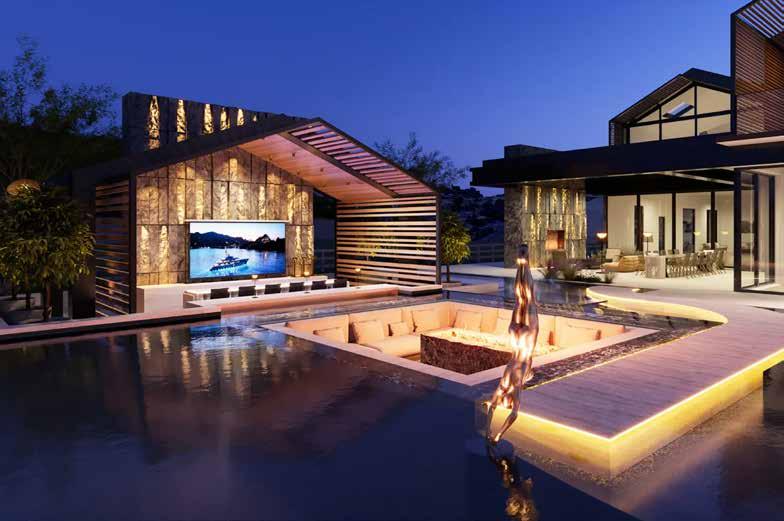
10 Defined by crisp architectural geometry and a restrained material palette, this contemporary outdoor living space explores the interplay of fire and water with deliberate precision. A reflecting pool mirrors the composition, its dark surface amplifying integrated lighting and drawing focus to a sunken conversation pit, where a linear fire feature introduces warmth and a natural gathering point. Beyond, a covered pavilion clad in textured stone and slatted wood extends the experience with an outdoor media wall, while sculptural flame elements at the water’s edge provide vertical emphasis and a dynamic counterpoint to the pool’s stillness. Photo, design and installation by Foxterra Design.


1 At work on Sanctuary (20½” x 47½”), a Justin Behnke pattern, Darcy arranges and fits individual glass pieces before final assembly. The visible pattern beneath and surrounding tools reflect the precision required at this stage.
In a quiet stretch of wooded land near the Daniel Boone National Forest, Darcy Marohn has found her rhythm in glass. Surrounded by the natural beauty of McCreary County, her stained-glass work reflects both patience and place. What began as a late-in-life creative pursuit has grown into a disciplined craft shaped by instinct, repetition, and a deep connection to light.
Darcy’s path to stained glass was not a traditional one. After 33 years working in quality control and calibration, she retired to Kentucky in 2015 with her husband, Stan, and finally had the time to give serious attention to a medium that had fascinated her since childhood. The turning point came through family. When her aunt, a stained-glass artist, had to stop working because of arthritis, she passed down her equipment and glass inventory. That gift gave Darcy a starting point, but the rest she had to build for herself.
“I have had no formal lessons. I watched YouTube videos until I drove my husband nuts, and I just kept at it until I figured things out,” she said. “I am self-taught through trial and error, and that’s how I learned every part of it.”
That self-directed approach still shapes the way she works. She gives herself time to sit with a pattern, think through her choices, and let the piece take shape before she begins. The landscape around her also plays a steady role in what she creates.
“How could you live in such a beautiful area and not be influenced to create art? Being surrounded by the woods and nature every day, it naturally shows up in what I make.”
Darcy’s influences also include her Celtic heritage and the clean geometry of the Art Deco era. She does not force her work into a single style, but her pieces often balance movement, order, and strong visual structure. She began with simple sun catchers, then moved into larger panels once she was ready for more demanding work. The process behind each piece is detailed and exacting. It starts with a pattern and continues through glass selection, cutting, grinding, foiling, soldering, framing, and finishing. Every stage calls for patience and precision.
Piece by Piece
The Stained Glass of Darcy Marohn
By Ray Hunter
Courtesy of Stan Marohn
“There are a lot of steps, even for a small piece. You trace the pattern, cut every piece, grind them down to fit, wrap them in copper foil, and then solder them together,” she said. “It takes time to get everything lined up the way it should.”
That kind of work leaves little room for carelessness. Even a small mistake can affect the entire piece, so each step demands focus and control.
“The biggest challenge is trying not to waste glass. It’s extremely expensive, so every score, every scrap, every break matters. You learn to slow down and be careful with every piece.”
Even without a set message or recurring theme, her work feels personal. Each panel reflects her eye for color and texture, along with the mood she brings to it when she starts. She often studies patterns for months before deciding exactly how she wants a piece to look.
“I’m very proud of all my work because each piece has a lot of me in it. The colors I choose can be bold or more subdued, depending on how I’m feeling when I start a project.”
That connection becomes even stronger once a panel is complete and the light begins to move through it. For Darcy, the finished piece is not just an object but an experience, one that changes with the time of day and the quality of the light.
“When I look at a finished piece, I feel a real sense of peace and tranquility. That’s what I hope other people feel too when they see the light come through it,” she said.
Darcy’s approach is grounded in patience, persistence, and a willingness to learn by doing. What began with an inherited set of tools has developed into a practice that is thoughtful, technically demanding, and deeply personal. Piece by piece, she has made the craft her own.
Her work is available locally at the Artisan Outlet in Somerset and the Artisan Shop at the Train Depot in Stearns. She has completed select commissions and is considering new projects based on their scope. More examples can also be found on Cumberland Craftwork’s website, cumberlandhandcrafted.com.
Photography

2 First Light (23” x 24½”), designed by Sherry Fain, centers on a bold circular form with radiating lines that suggest motion and energy. Darcy uses contrast between warm and cool tones to emphasize the shifting effect of light through the glass.

4 Darcy’s next project, Hare with Peonies (22” x 30”) by Terry Gillman, begins as a detailed pattern map marked with numbered sections. Each segment guides the cutting and placement process, showing the level of planning behind the finished work.

3 In Draco (34” x 34”), also from a Justin Behnke pattern, a detailed dragon fills the center within a circular border. The segmented glasswork and repeating shapes emphasize symmetry while reinforcing the strength of the overall design.

5 This magnolia wood bowl features a continuous band of stained glass set into the form, adding color and pattern around the edge. Repeating shapes introduce rhythm while preserving the wood’s smooth, rounded profile.
6 In Living Echo (33” x 19”), also patterned by Justin Behnke, vertical movement and repeating forms guide the eye through the composition. The interplay of muted and saturated glass adds depth while maintaining a controlled, architectural feel.
7 A 22½-inch square panel based on a Justin Behnke pattern, Celtic Knot features interwoven lines and deep purple tones that create a structured, symmetrical design. The layered glasswork highlights Darcy’s precision in aligning complex curves and intersections.
8 Monarch (17” x 22½”) captures the recognizable butterfly form within a structured border, using strong contrast between dark outlines and bright orange glass. The composition balances natural subject matter with controlled framing.



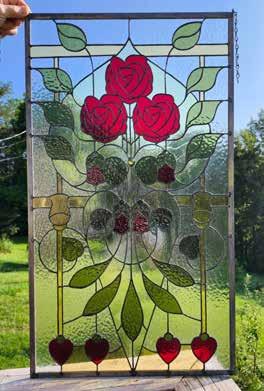
9 The elongated format of Mackintosh Rose (18½” x 33”), from a Justin Behnke pattern, reflects Art Deco influence through its linear structure and stylized floral motif. Repeated shapes and clean divisions create a balanced, vertical rhythm.
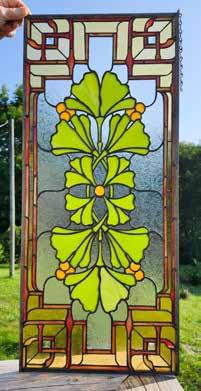
10 In Ginkgo (14” x 31½”), based on a Justin Behnke pattern, layered leaf forms extend upward in a vertical arrangement. The use of varied green tones and textured glass creates subtle movement while maintaining a clear, organized layout.
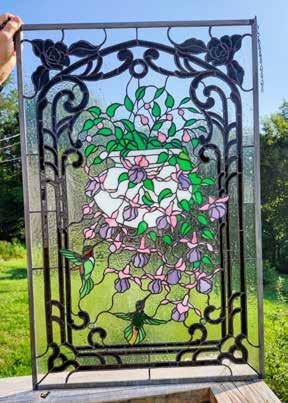
11 Hanging Pot (23” x 35”), from a Justin Behnke pattern, features cascading blossoms and trailing greenery arranged within a defined frame. Darcy balances the organic flow of the plant forms with a structured border that anchors the composition.

12 A hand-turned magnolia wood bowl by Stan Marohn is accented with a stained-glass rim, combining natural wood grain with geometric glass inlays. The contrast highlights the transition between organic material and structured design.
Magnolia Hall
By Ray Hunter
A Lake Cumberland Landmark
et on four acres overlooking Lake Cumberland, Magnolia Hall Estate stands as a lasting piece of Burnside’s history. Built in 1926, the home reflects a Colonial Greek Revival design, with a brick exterior and a balanced, formal presence.
The house spans 8,500 square feet and was originally designed by architect George L. Elliott, the same architect behind the Virginia Theater in nearby Somerset. It was built for the Glanton family, whose veneer company once employed a large share of the town’s workforce.
Today, the home includes five bedrooms, three bathrooms, and three sunrooms, along with a butler’s pantry, full basement, and a heated and air-conditioned attic. The layout is expansive, offering both formal spaces and more relaxed areas.
Brandon Becker purchased the home in March 2017 and moved in that July. From the start, he saw it as more than just a place to live.
“I didn’t just see a house. I saw something that needed to be saved. It would have been a shame to let a place like this disappear,” Brandon said.
Katie Gregory Slone, a District Court Judge who lived in the home as a child in the early 1980s, remembers it as something distinct and memorable, even at a young age.
Photography by Walt Roycraft
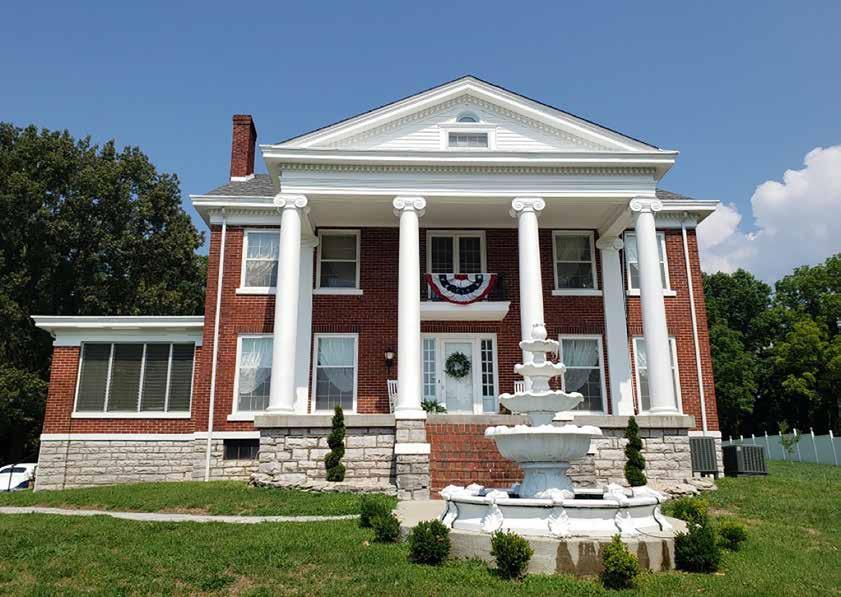
1 Magnolia Hall presents a classic Colonial Greek Revival façade, defined by its symmetrical brick exterior and four-column portico. The elevated front entry and stone foundation reinforce the home’s scale, while a tiered fountain and custom concrete work introduce a formal landscape element that complements the architecture.
“It felt like something straight out of Gone with the Wind. Back then, we didn’t appreciate all the antiques, but looking back, I see how special it was and how much work went into it,” she said.
Nearly every part of the home has been touched, from refinished floors to rebuilt ceilings. Brandon added detailed wall moldings throughout and sourced chandeliers to match the scale of each room, leaving only two original fixtures in place. Much of the work was hands-on, with help from contractors, friends, and family.
The central hall sets the tone as soon as you enter. To one side sits the formal dining room, and to the other, the main living space. Above, a chandelier gifted by his great-grandmother anchors the room, adding a personal connection.
“My great-grandmother bought that chandelier for me before she passed. Having it here makes the house feel connected to my own story, not just the past of the home,” he said.
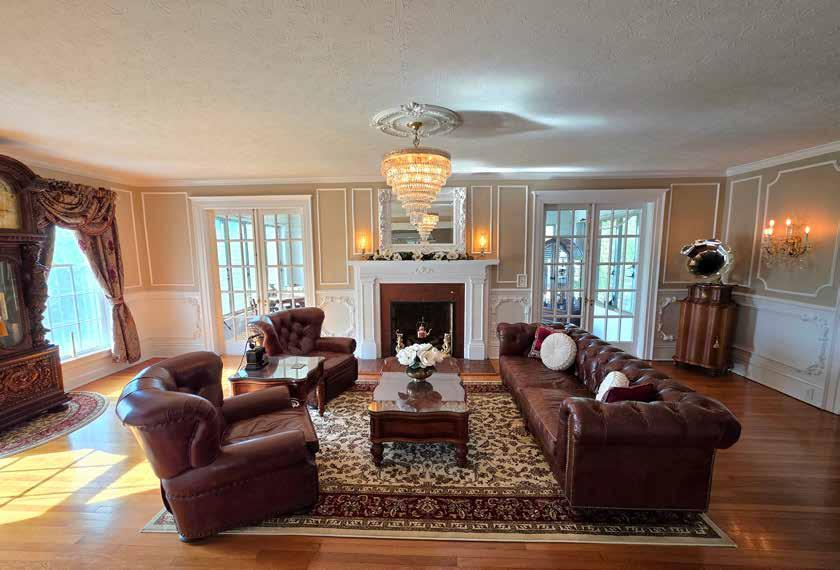
The living room is one of the most complete expressions of Brandon’s style. A restored fireplace, original wall sconces, and carefully chosen antiques create a space that feels intentional without being staged. A 500-pound grandfather clock, known as the Maiden Clock, stands as a focal point, while Chesterfield leather furniture grounds the room.
“I’ve always collected antiques. I got that from my mother,” he said. “I’ve picked up pieces from all over the country, kept the ones that mattered, and this house gave me a place to bring it all together.”
Many of the antiques have been restored for everyday use, allowing the home to function as both a collection and a living space.
Brandon regularly hosts events, from holiday celebrations to work gatherings. Despite the size, the flow of the first floor allows people to move easily between rooms without feeling crowded.
“I’ve had 30 or 40 people here at once, and it still feels comfortable. The way the rooms connect makes it easy to host without it ever feeling overwhelming,” he said.
Beyond the formal spaces, the home offers quieter areas. A downstairs sunroom with a pool table overlooks the lake, while an upstairs sunroom serves as a casual living space flooded with natural light. The attic has been transformed into a large theater room, offering a place to relax away from the home’s more formal spaces.
Judge Slone sees a natural alignment between the home and its current owner.
2
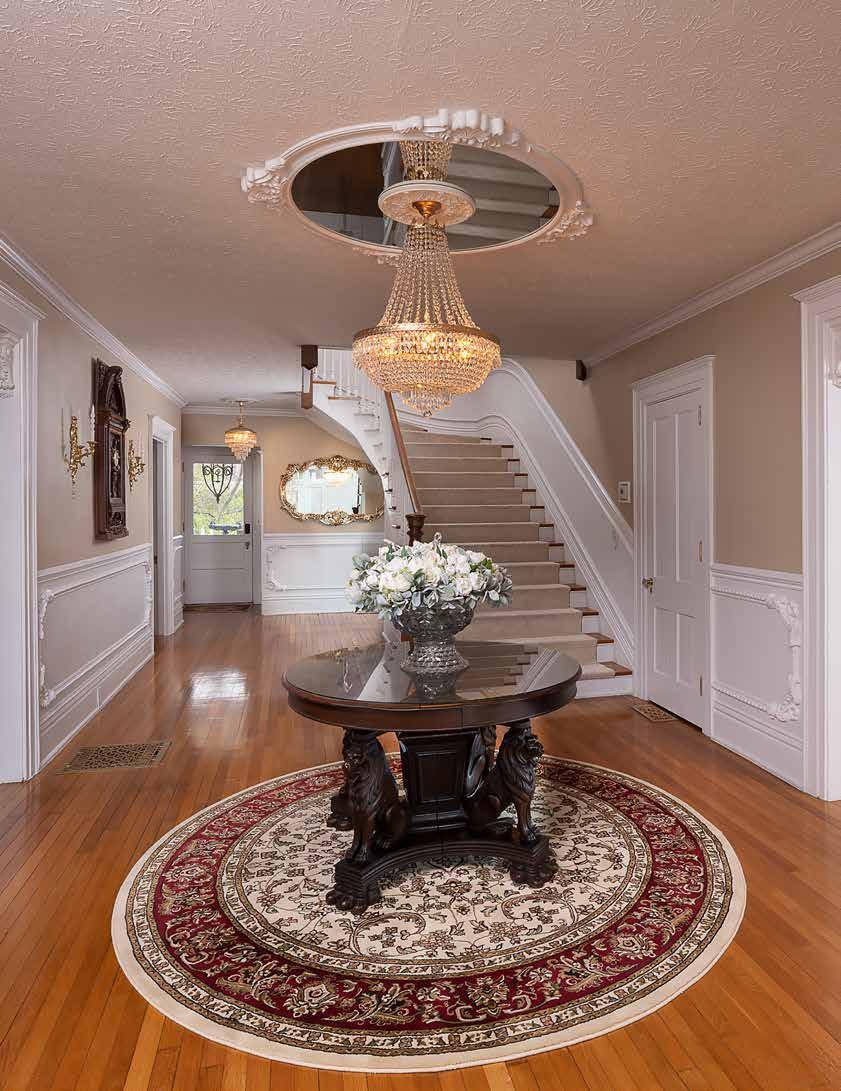
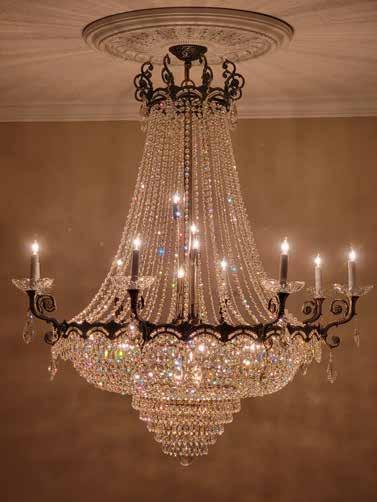
2 Crystal strands cascade in layers from a tiered chandelier, creating a soft, prismatic effect as light moves through the room. The fixture is anchored by a detailed ceiling medallion, reinforcing the home’s focus on traditional craftsmanship and formal detailing.
“Brandon is an old soul. The way he loves history and surrounds himself with those pieces, it feels like he belongs in a house like that,” she said. “He reminds me of a modern-day Great Gatsby.”
Even in its size and detail, Brandon values the home for qualities that are less obvious.
“It’s one of the quietest places I’ve ever been. The plaster walls and the real brick make a difference. It feels solid, and it’s more efficient than people expect,” he said.
Magnolia Hall is formal but lived in, shaped as much by its past as by the way it’s used today.
“I wanted this to be something that could stay in a family. Something that doesn’t get lost over time. That was always the goal,” he said.
Magnolia Hall Estate remains a place where history is not only preserved but lived in, with each detail continuing to reflect its origins.
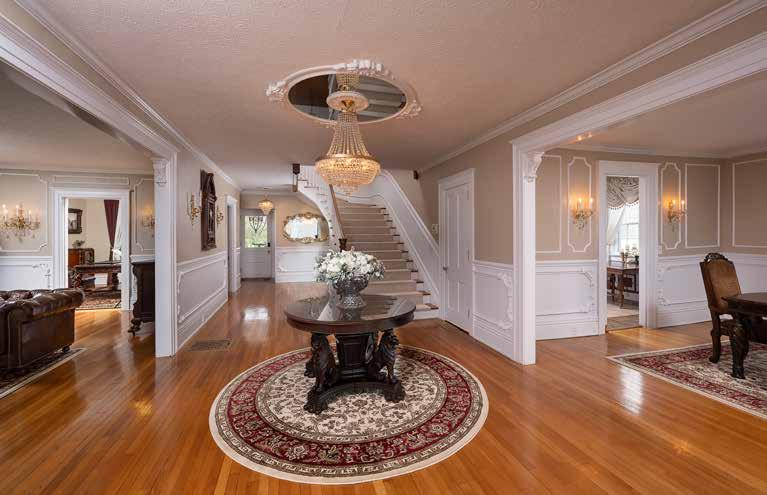
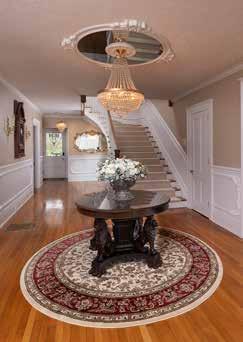
3 The central hall establishes the home’s tone with restored hardwood floors, applied wall moldings, and carefully proportioned openings that lead into adjacent rooms. A crystal chandelier, positioned beneath a ceiling mirror detail inspired by historic homes, draws the eye upward, while the staircase anchors the space.
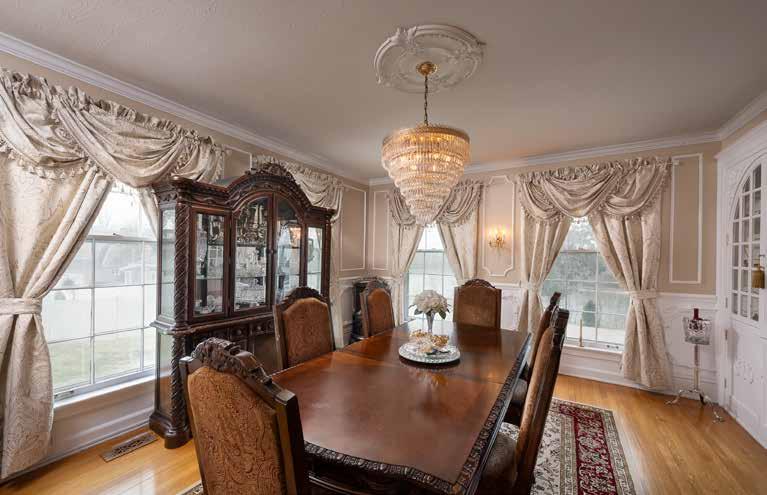
4 Positioned to take advantage of the lakefront setting, the formal dining room is framed by tall windows and layered drapery. Swarovski crystal accents in the treatments cast subtle reflections, while a crystal chandelier and traditional china cabinet reinforce the room’s symmetry and formal use.
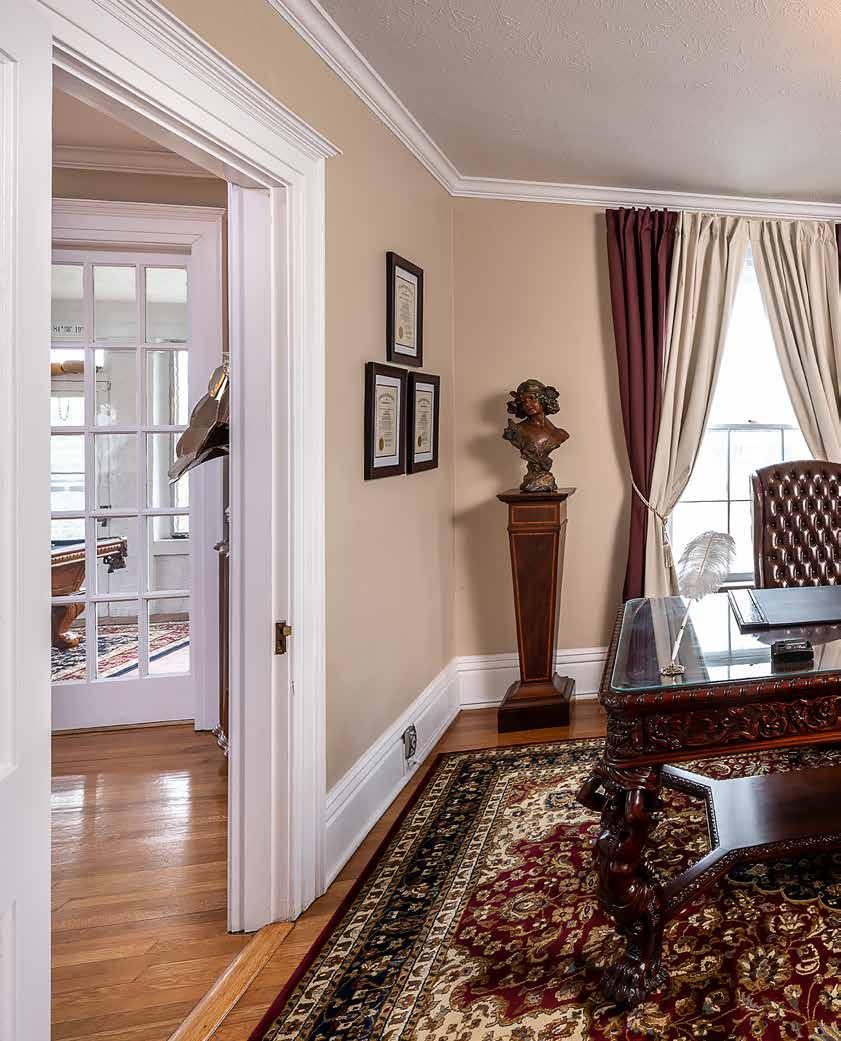
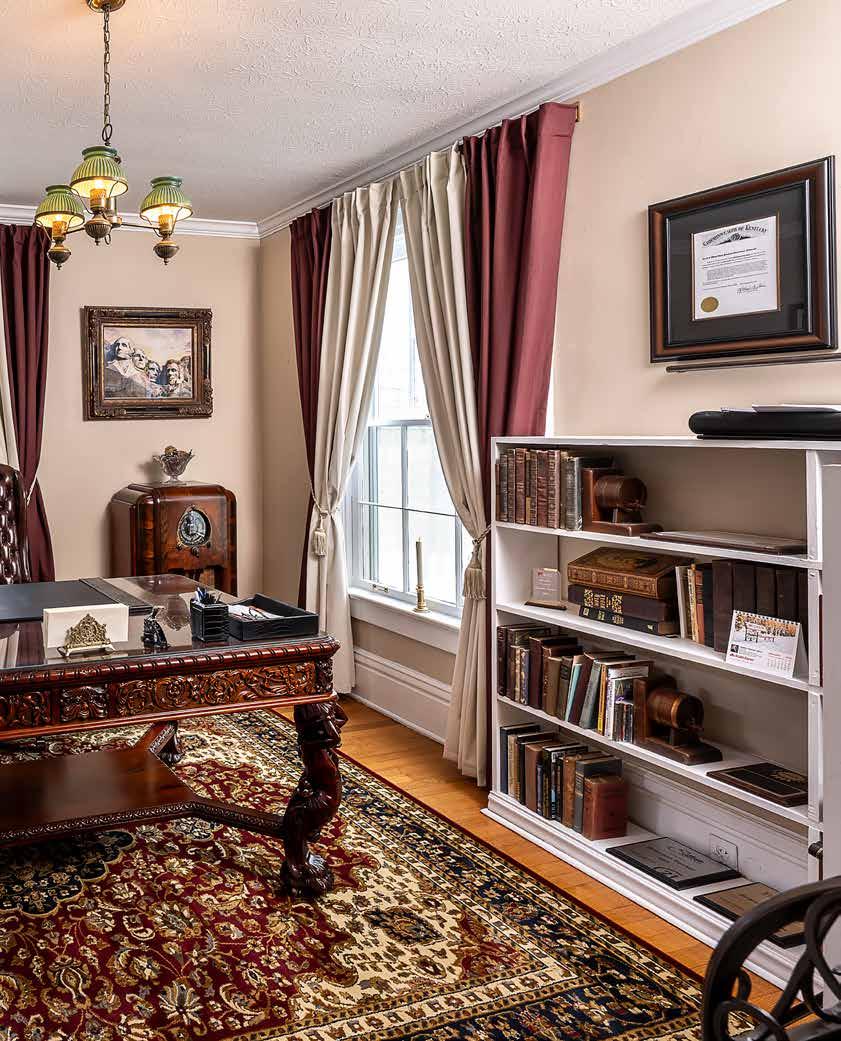
5 Rich wood tones and layered textures define the study, where a carved mahogany desk attributed to R.J. Horner serves as the focal point. Traditional drapery, a 1938 Zenith radio, and curated pieces collected over time create a space that reflects both function and a long-standing appreciation for antiques.
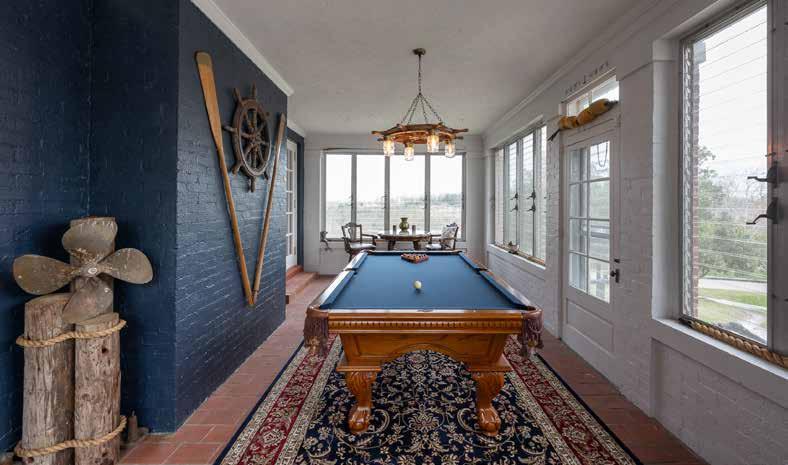
7 Set along the rear of the home, the downstairs sunroom opens toward views of Lake Cumberland and introduces a more relaxed setting. A custom chandelier crafted from a ship wheel hangs above an American Heritage pool table, while painted brick and wide windows allow light to move through the space.
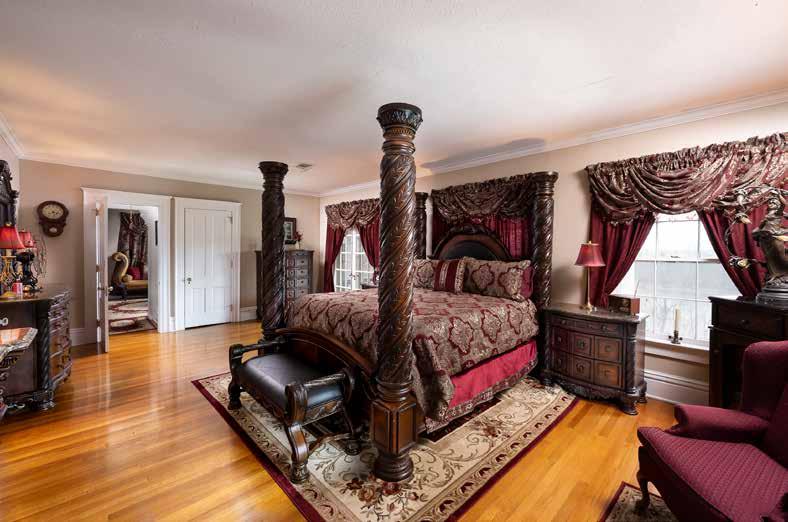
8 In the primary bedroom, a carved four-poster bed defines the scale of the room and is paired with coordinating wood furnishings. Layered textiles and area rugs ground the space, while large windows maintain a connection to the surrounding property.
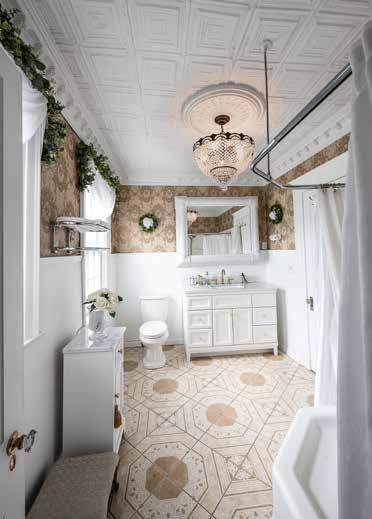
9 The primary bathroom blends updated finishes with decorative detailing, including patterned tile flooring and a prominent ceiling medallion. A crystal chandelier and classic vanity introduce traditional elements while keeping the space functional and refined.
10 The living room is arranged with symmetry and balance, centered around a fireplace framed by detailed millwork and a mirrored mantel. Leather seating and layered rugs define the gathering area, while light from surrounding windows softens the structure and highlights the room’s proportions.
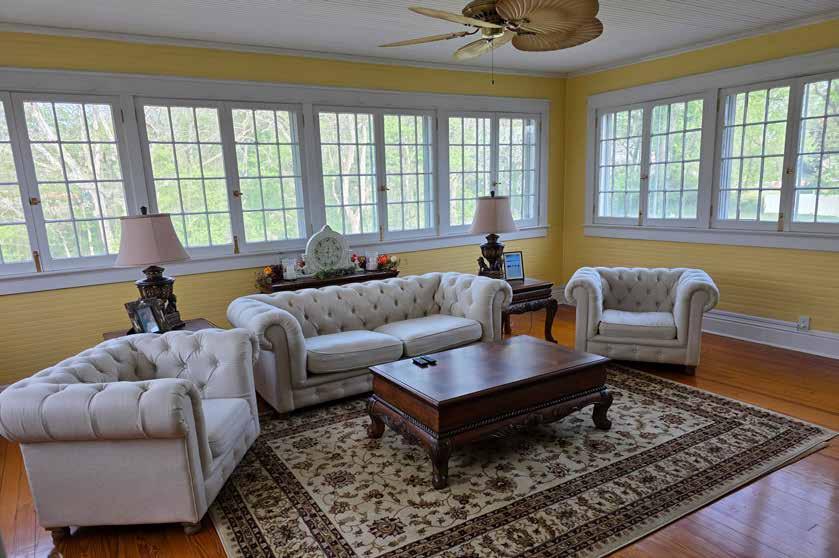
11 Wrapped in windows, the sunroom draws in consistent natural light and frames views of the surrounding property. Neutral seating, warm wood floors, and a simple layout create a relaxed setting that contrasts with the home’s more formal living spaces.
HOME CREDITS
Original Architect (1926): George L. Elliott
Tile Installation: Mike Winget, Michael’s Tile (Top Notch Flooring, Somerset, KY)
House Painter: David Heckman
Roof & Gutters: Greg Cox
Restoration Support: Family & Friends
A HOUSE SHAPED BY LAND AND WATER
By Ray Hunter
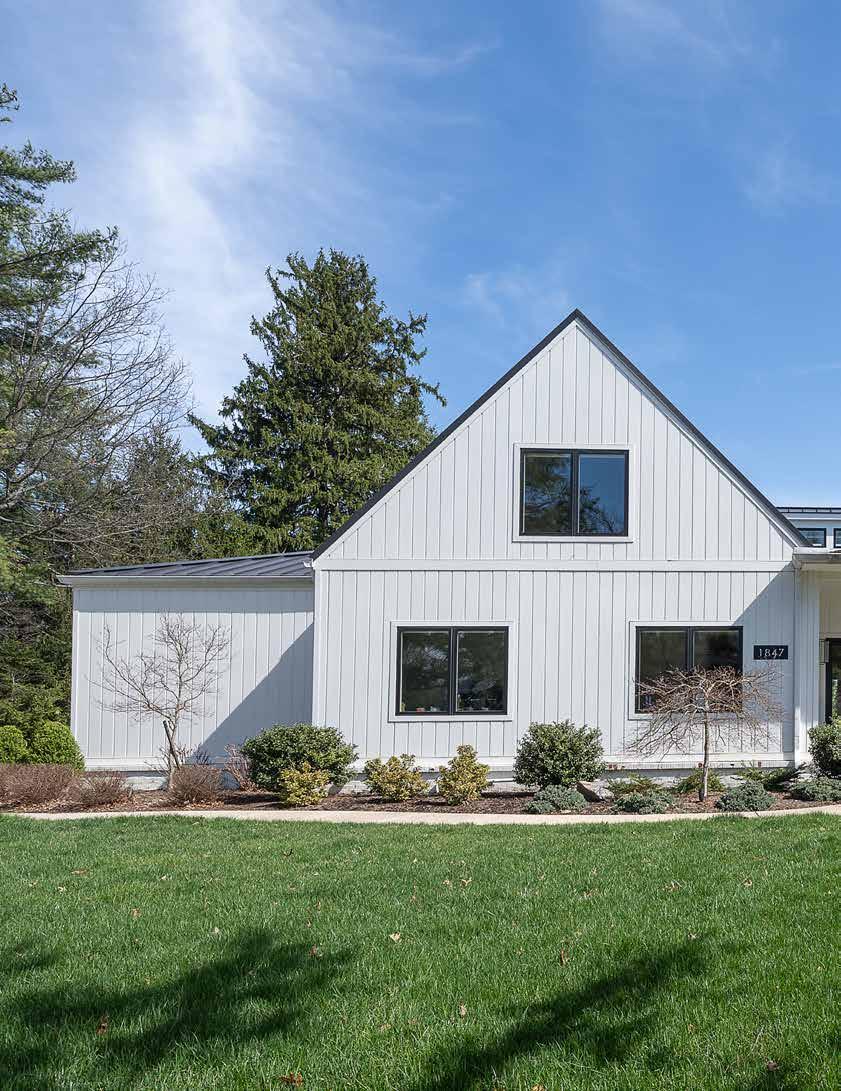
1 Clean lines and a balanced gabled form define the exterior, where white boardand-batten siding contrasts with dark roofing and window trim. The recessed front entry adds depth and creates a subtle transition from the landscape into the home. Simple, low-profile landscaping frames the structure without distracting from the architecture.
Photography by Walt Roycraft
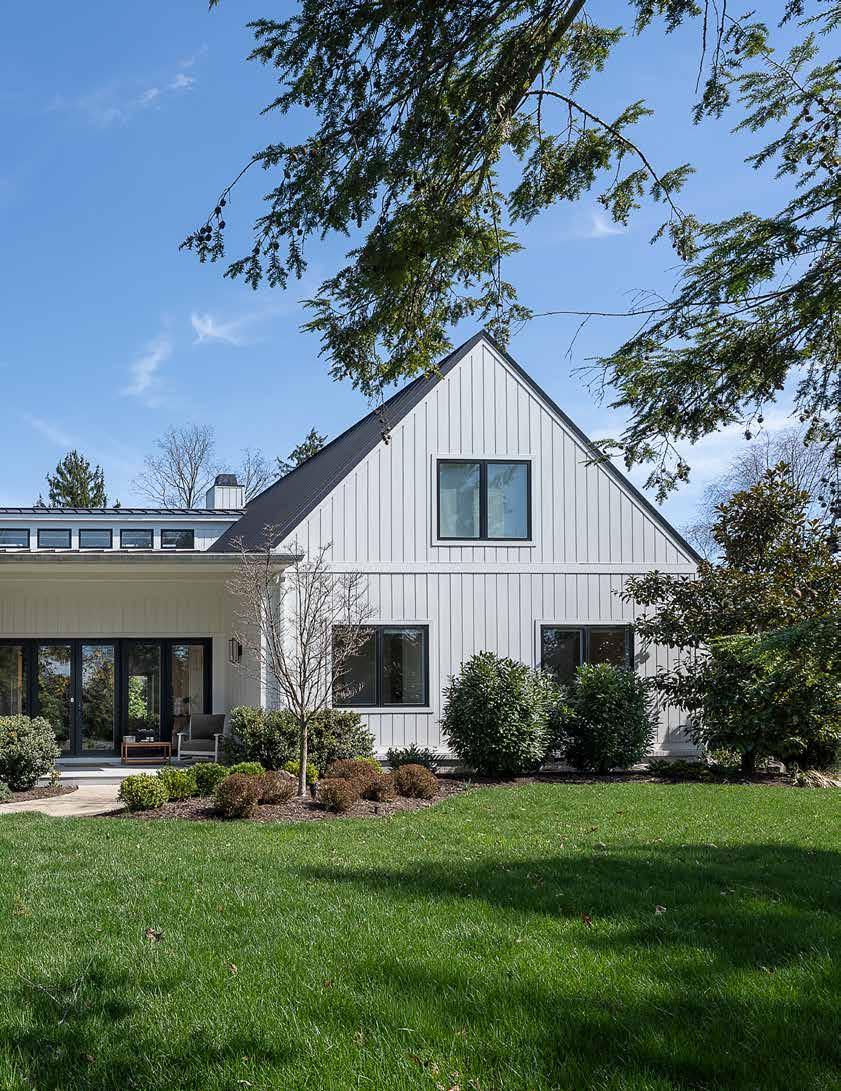
In a quiet Lexington neighborhood, this custom-built home reflects thoughtful planning and a clear sense of how its owners want to live today. Spanning approximately 8,500 square feet, the home includes four bedrooms, five full bathrooms, and two half baths in the main residence, along with a detached garage that offers additional living space.
After nearly 30 years in Lexington and raising three children there, the homeowners built this house five years ago as a place that would support the next stage of their lives. They moved in the night before Thanksgiving in 2020 and hosted the holiday the very next day. The home was designed for one-floor living with long-term comfort in mind.
“We downsized with this house once our three children all left the nest. We built with aging in place in mind.”
The design began with a general idea of a modern farmhouse, but the homeowners focused less on labels and more on choosing materials and features that felt right. The entire plan took shape around the clerestory windows at the center of the home. Working with McCoy Architects, the design developed outward from that point, creating a layout that brings in natural light and connects the main living spaces.
“The clerestory windows are my favorite part of the house. We started the plans with the architect with this feature and built out from there.”
That openness continues along the back of the house, where nearly 90 percent of the exterior wall is glass. The view centers on a carefully designed pond and waterfall. The homeowners worked closely with Larry Moore of Xstream Aquatics to refine the layout, checking views from inside the home and how the sound would carry through open windows.
“We are water people. The pond designer spent tons of time with us getting it just right. I was inside the house and went from room to room, making sure we had a clear view and open windows would let in the wonderful sound.”
The main living space brings the kitchen, family room, and dining area together in one open layout designed for connection.
“Our family room, kitchen, and dining table are all in one open space where we enjoy family time. Everyone pitches in on the cooking, setting the table, and overall reverie. With everyone’s busy lives, we cherish every minute we get to spend together.”
The kitchen features stone and countertops by Quality Stone in Nicholasville, paired with clean cabinetry and a layout that supports both cooking and gathering. Large Marvin windows and doors reinforce the connection between the interior and the landscape.
The primary suite continues that approach. A zero-entry shower with a built-in bench and a sunken tub beneath the window support long-term comfort while also reflecting personal history tied to a family home on Hilton Head Island.
“Every piece of artwork has a story. Even when we were making practical decisions, we still wanted the house to feel personal.”
Personal details appear throughout, including a custom-designed office floor with an original Blake Eames painting set into it. A living green wall at the front of the house introduces texture and is supported by a built-in irrigation system.
Outdoor living plays an equally important role in how the home functions day to day. The fully covered porch extends the living space beyond the walls of the home. With ceiling heaters and a fireplace, it remains comfortable year-round and accommodates large gatherings with ease.
A fully glassed-in sunroom offers another way to experience the outdoors while remaining inside, capturing views of the pond and surrounding landscape in every season. Together, these spaces create a seamless flow between indoors and out, adapting easily to both quiet moments and full-house gatherings.
The result is a home that feels cohesive in both design and purpose. Light, water, and thoughtful planning shape every space, but it is the way the home supports connection that defines it. It is built for everyday living, for gathering, and for making the most of time spent together.
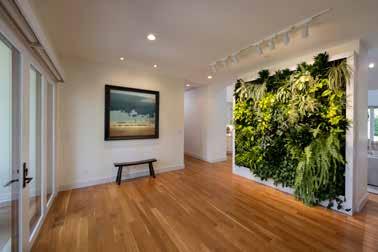
2 A vertical green wall introduces texture and movement into the front hall, combining a range of live plants in a structured installation. Built with a concealed irrigation system, it remains easy to maintain while still making a strong visual impact. Visible from the street, it adds a distinctive element that connects the interior to the exterior.
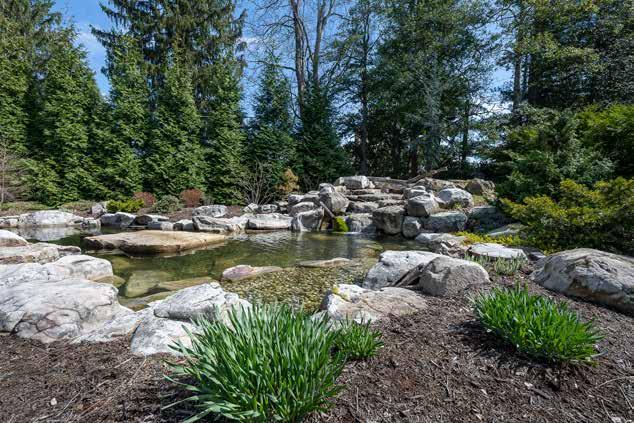
3 Layered stone and moving water shape a backyard feature that feels integrated into the landscape rather than added to it. Designed by Larry Moore of Xstream Aquatics, the pond and waterfall were carefully positioned to align with interior sightlines. The result is a feature that not only anchors the yard but also enhances the experience inside the home through both view and sound.
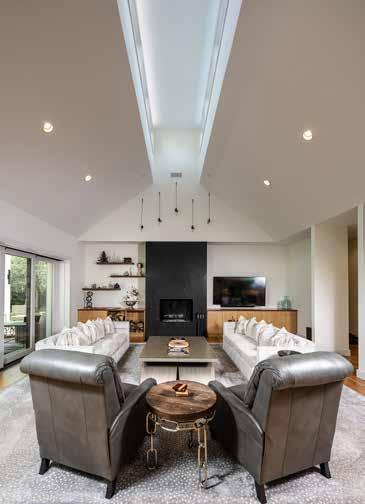
4 Natural light moves through the family room from above, where clerestory windows emphasize the ceiling height and draw the eye upward. The fireplace anchors the space, framed by built-in cabinetry that keeps the layout balanced. Seating is arranged to encourage conversation while maintaining a clear view of the outdoors.
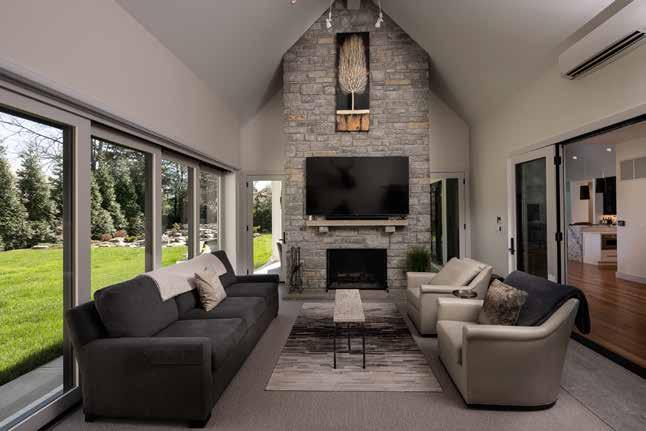
5 The four-season sunroom extends the living area toward the backyard, creating a space that can be used year-round. A stone fireplace adds structure and warmth, while expansive glass walls maintain uninterrupted views of the pond and waterfall. The room acts as a transition between interior comfort and outdoor living.
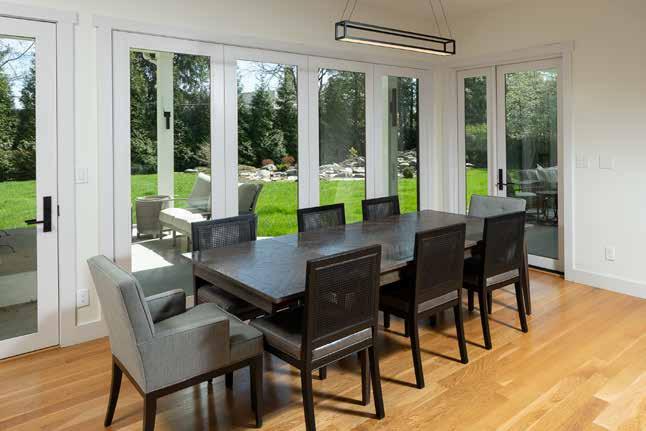
6 Positioned along a wall of glass, the dining area takes full advantage of the backyard setting. The long table supports both everyday use and larger gatherings, with light shifting throughout the day to change the mood of the space. Direct access to the patio allows the room to extend easily outdoors.
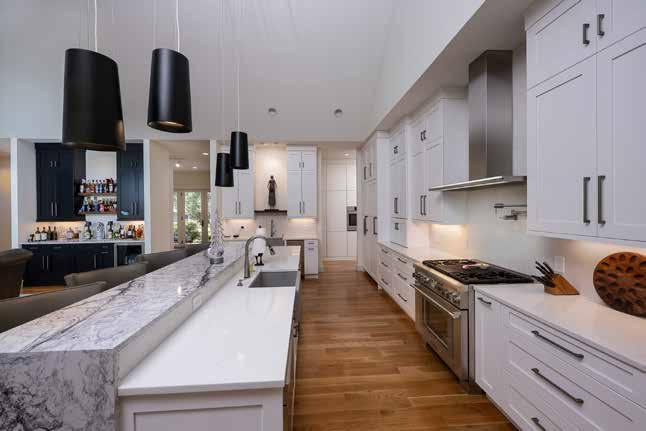
7 The kitchen pairs clean white cabinetry with stone surfaces from Quality Stone in Nicholasville, creating a workspace that feels both efficient and refined. A large island provides prep space and casual seating, while pendant lighting defines the area without overwhelming it. Integrated appliances and storage keep the overall look consistent and uncluttered.
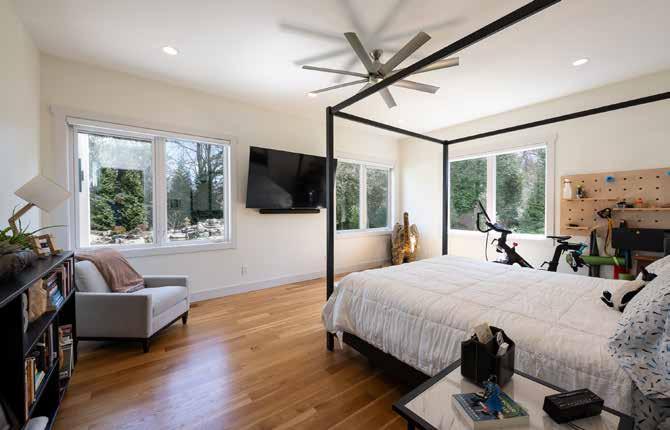
8 Large windows in the primary bedroom frame views of the pond and surrounding greenery, bringing natural elements into the room. The layout remains simple, allowing the view to take priority. A restrained color palette and minimal furnishings support a quiet, uncluttered environment.
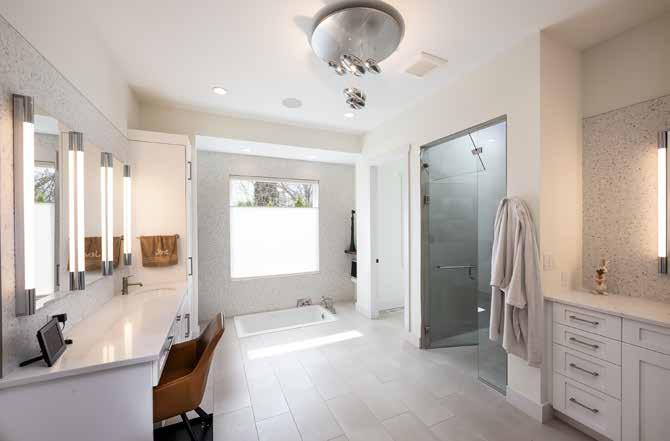
9 In the primary bathroom, accessibility and design are addressed together through a zero-entry shower and a sunken tub set beneath the window. The layout allows for easy movement while still maintaining a sense of openness. Neutral materials and soft light create a space that feels calm and functional.
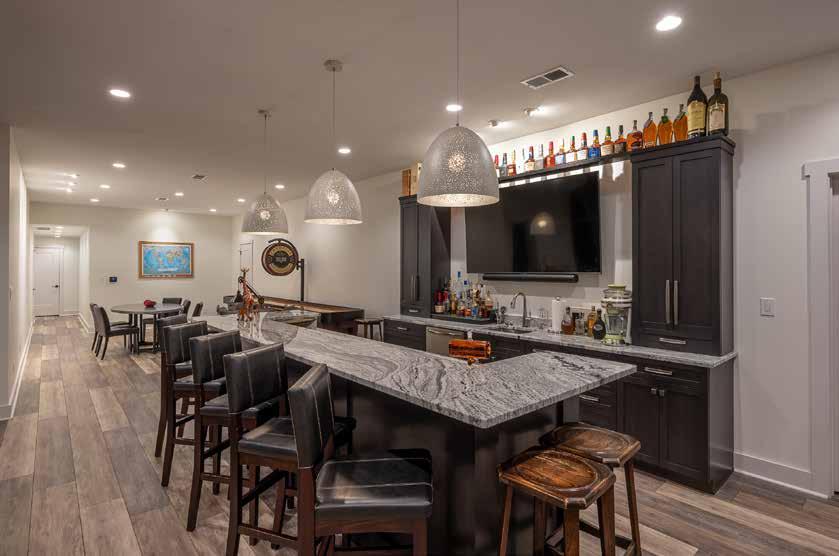
10 The lower level introduces a different atmosphere, with a basement bar finished in darker cabinetry and stone surfaces. The layout supports both casual use and larger gatherings, with open space for movement and seating. Layered lighting keeps the area functional while adding depth and contrast to the design.
HOME CREDITS
Architect: McCoy Architects LLC
Interior Design: Megan Green, For Friends
Pond Design: Larry Moore, Xstream Aquatics
Stone and Granite Work: Quality Stone, Nicholasville
Windows and Doors: Marvin Windows and Doors
The Architecture of Arrival
By Kirsten E. Silven
Photography Courtesy of Lenihan Sotheby’s International Realty
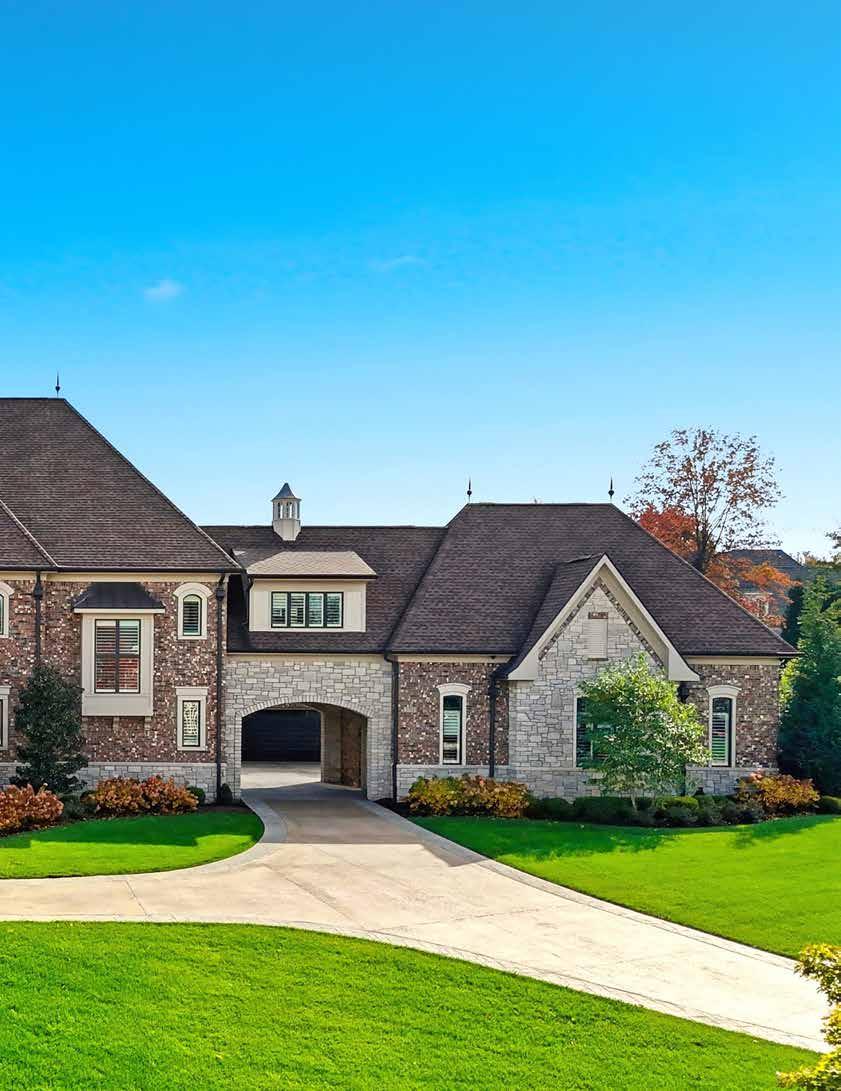
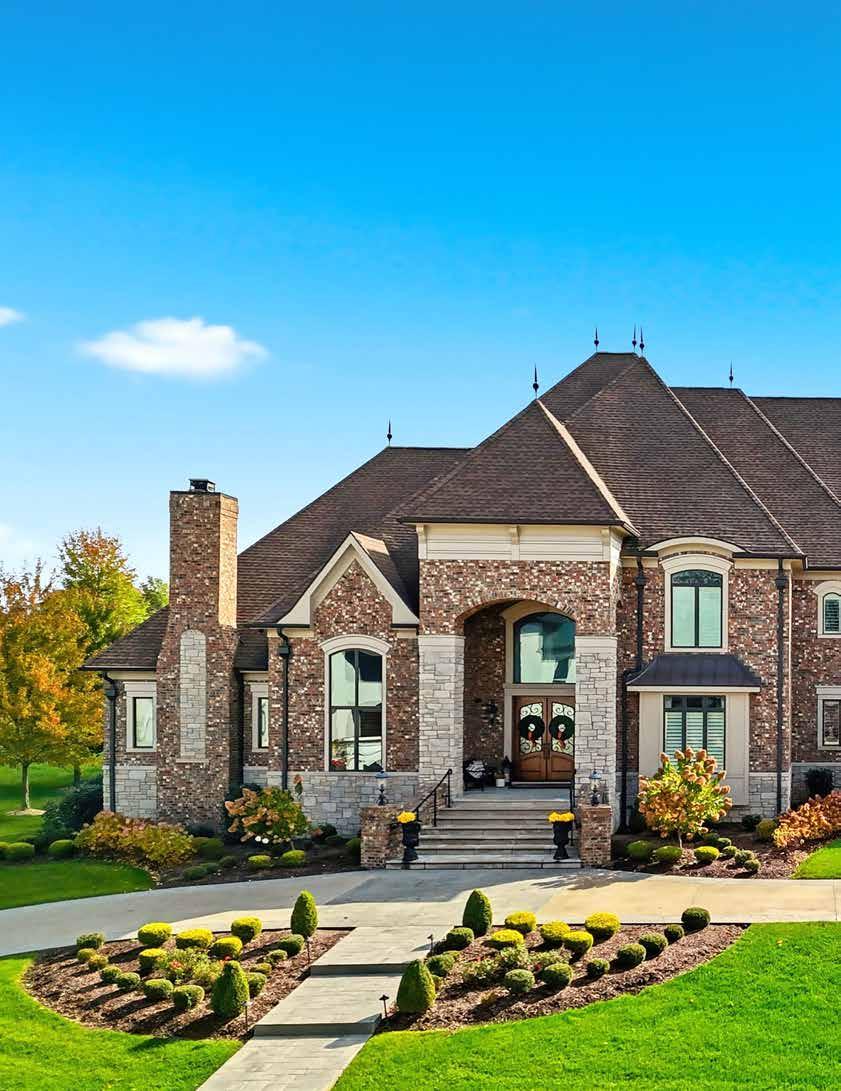
1 A commanding front elevation introduces this nearly 13,000-square-foot residence in Prospect’s Harrod’s Glen, where a masterful interplay of brick and stone establishes both texture and gravitas. Set on a one-acre parcel, the six-bedroom, six-and-a-half-bath home unfolds with a sense of measured symmetry, its steeply pitched rooflines, varied gables, and arched openings lending architectural depth and a distinctly European influence. The approach is equally impressive, with a sweeping circular drive framing the manicured lawn and sculpted foundation plantings, guiding the eye toward the central entry, where the arched portico creates a moment of arrival. To the right, a gracious porte-cochère extends seamlessly into a private motor court, discreetly connecting to a seven-car garage.
Tucked within one of Prospect’s most coveted enclaves, this extraordinary custom residence in Harrod’s Glen offers a compelling study in scale, craftsmanship, and livability. Located just a short drive from Louisville, the home spans more than 13,000 square feet, yet its design resists any sense of excess for its own sake. Instead, it unfolds with intention and balances grand architectural gestures with moments of intimacy, pairing meticulous detailing with an ease of everyday living.
From the approach, the home signals its presence with quiet confidence. A circular drive frames the brick-and-stone façade, where varied rooflines and arched openings create a sense of depth and permanence. A porte-cochère extends to a motor court and seven-car garage; an amenity that speaks as much to practicality as it does to passion… Especially for automotive enthusiasts!
Inside, a grand foyer establishes the home’s design language with clarity. Sightlines extend through to the formal living room, where a soaring wall of arched windows floods the space with natural light. Overhead, an intricately coffered ceiling is subtly illuminated to add dimension and rhythm, setting a tone that carries throughout the residence. To one side, the dining room offers its own interpretation of ceiling artistry, with layered coffers and tailored millwork creating a more intimate yet equally refined environment.
“The first-floor configuration is ideal and the layout is perfect for entertaining, but there are also plenty of intimate spaces, which is unique for a home of this scale,” shared listing agent and broker Jon Mand of Lenihan Sotheby’s International Realty.
At the heart of the home, the kitchen functions as both a culinary workspace and a social anchor. Doublelayered granite surfaces, custom off-white cabinetry, and professional-grade appliances—including multiple ovens, a warming drawer, dual dishwashers, and a wine refrigerator— create a setting that is capable and visually compelling. The geometric hammered tin ceiling is inset within a coffered framework, introducing texture and a subtle interplay of light. The oversized island, designed to accommodate both preparation and gathering, reinforces the kitchen’s role as a central hub, with seating that allows for effortless interaction.
From here, the layout transitions seamlessly into a hearth room, where a floor-to-ceiling creek-stone fireplace anchors the space. Hidden uplighting within the crown molding enhances the volume of the ceiling, while sliding doors open to a screened outdoor living area just beyond, reinforcing the home’s fluid connection between interior and exterior spaces.
“Anyone would enjoy this home,” stated listing agent and broker Brandon Jones, also with Lenihan Sotheby’s International Realty. “It truly appeals to all demographics and stages of life, with a first-floor primary suite, office and ample living space, including a total of six bedrooms to accommodate visiting friends and family members.”
That versatility is perhaps most evident in the primary suite, which feels quietly removed from the rest of the home. Generous in scale yet composed with restraint, the bedroom is defined by a vaulted tray ceiling with integrated shadow-box lighting, creating a stunning layered ambient effect. An adjoining fireside sitting area overlooks the pool terrace, blurring the boundary between interior comfort and outdoor serenity. The suite continues into a spa-like bath, where a vaulted barrel ceiling crowns a soaking tub set against a stacked stone accent wall and fireplace. A walkin shower room—complete with multiple showerheads and full-height tilework—delivers a resort-caliber experience, while dual boutique-style closets complete the composition.
Upstairs, three additional bedroom suites are arranged alongside an open loft and sitting area, offering flexibility for visiting family and guests. Meanwhile, the lower level has been conceived as a destination in its own right. A state-of-the-art theater, expansive bar, fitness room, and additional guest accommodations provide a full spectrum of leisure options. The standout feature, however, is the golf simulator, which is an immersive, top-tier installation enhanced by a custom Augusta Masters–inspired mural. Set slightly below the surrounding floor level, the space is designed for both play and spectatorship, with bar-height viewing areas creating a dynamic, social environment.
Outdoors, a sculptural gunite saltwater pool anchors the rear terrace, complete with a built-in hot tub, dual cascading waterfalls, tanning ledge, and an integrated inpool table. Surrounding lounging areas are thoughtfully arranged, offering both sun-drenched and shaded moments throughout the day. There is also a manicured putting green and a full-scale multi-sport court equipped for tennis, volleyball, pickleball, and basketball, providing options for both casual play and more competitive pursuits. A covered screened-in porch, complete with a fireplace, dining and seating areas, grill, refrigeration and cooktop, connects directly to the kitchen, allowing for seamless entertaining on any scale.
“Every aspect of this home is incredibly well done,” Jones said. “It is also in excellent condition and has been impeccably maintained.” Mand agreed, echoing the sentiment: “The entire design is so well executed. It’s also worth noting that you could not touch this level of craftsmanship at this price point in a new build today.”
Throughout, the home reveals a rare balance that can accommodate large-scale gatherings and quieter, more personal moments with ease. Whether hosting a crowd of 100 or enjoying a quiet evening by the fire, the spaces adapt without compromise. More than just another singular property, this residence represents a fully realized lifestyle, merging privacy, comfort, and recreation in an expansive and carefully considered setting.
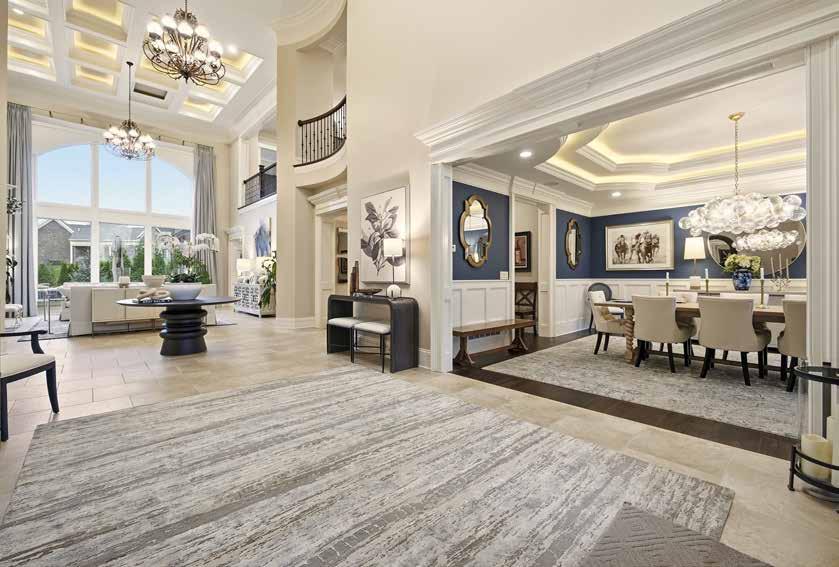
2 From the grand entrance foyer, the formal living room unfolds as an immediate statement of scale and sophistication, setting the tone for the entire residence. Bathed in natural light from a soaring wall of arched windows, the space is defined by an exquisite coffered ceiling, its recessed panels softly illuminated to emphasize depth and architectural rhythm. To the right, the dining room reveals its own intricately layered coffered ceiling, continuing the theme of refined craftsmanship while introducing a more intimate, tailored atmosphere. Rich millwork, substantial cased openings, and a restrained palette of warm neutrals unify the spaces, while elegant lighting adds a sculptural presence overhead. The open yet purposeful flow between foyer, living room, and dining room creates a sense of arrival that is both grand and inviting—an introduction that unmistakably signals a residence of exceptional caliber.
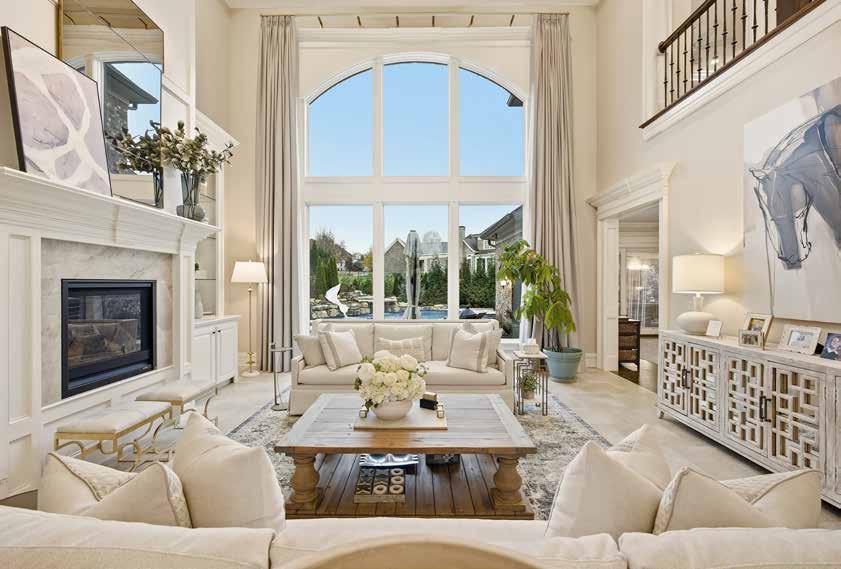
3 The formal living room unfolds as a study in light, volume, and symmetry, anchored by a soaring two-story arched window that captures sweeping views of the outdoor living spaces and pool beyond. Floor-to-ceiling drapery panels, outfitted with discreet motorized shades, allow for effortless transitions between openness and privacy, while a limestone-clad fireplace with a classic mantel provides a focal counterpoint to the verticality of the space. Tailored millwork, integrated cabinetry, and a restrained palette of layered neutrals lend a sense of quiet refinement to the space. The cased opening to the right leads into the kitchen and connects seamlessly with one of the home’s inviting hearth areas, reinforcing a natural flow for both daily living and entertaining. Above, an open gallery hall overlooks the room and extends to guest accommodations; an architectural gesture that enhances connectivity and grandeur within the home’s interior composition.
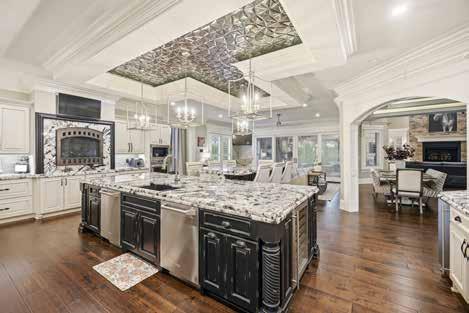
4 At the heart of the home, a true chef’s kitchen boasts a custom hammered tin ceiling set within a coffered framework, while an oversized island crowned with double-layered granite serves as both a commanding focal point and a central gathering space, outfitted with dual dishwashers, a wine refrigerator, and ample prep surfaces. Custom off-white cabinetry lines the perimeter, offering exceptional storage while seamlessly integrating a suite of professional-grade appliances, including several ovens and a dedicated warming drawer. Reinforcing the kitchen’s role as a social hub, the thoughtful layout has seating for up to 14 guests distributed between a seven-top table and the adjacent hearth room, which also boasts a gas fireplace. Beyond, additional living areas and access to the outdoor spaces further expand the home’s entertaining capacity, allowing for a seamless indoor-outdoor flow.
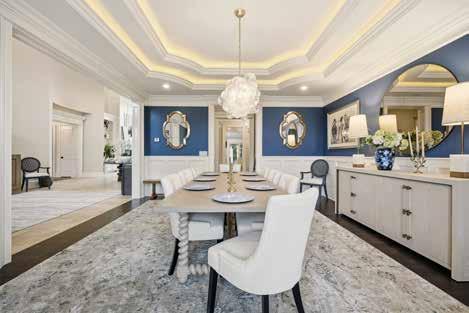
5 A richly appointed dining room showcases the home’s commitment to bespoke craftsmanship, where an intricately layered coffered ceiling is subtly illuminated with integrated cove lighting to create a warm, ambient glow. The sculptural ceiling treatment draws the eye upward, its tiered geometry framed by substantial crown moldings that speak to the level of detail carried throughout this residence. Deep blue accent walls are balanced by crisp white wainscoting, while mirrored wall accents, a streamlined sideboard, and a contemporary chandelier composed of clustered glass forms add layers of visual interest. The room’s thoughtful circulation enhances both function and flow, with the formal living room to the left, and a butler’s pantry with bar area directly ahead, providing an elegant transition into the kitchen beyond.
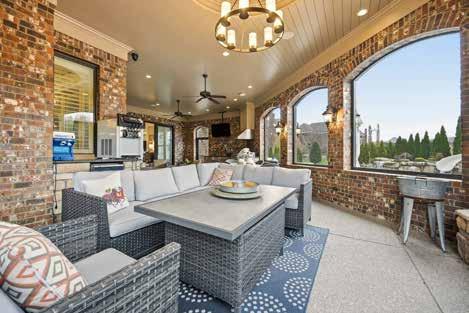
6 Just off the eat-in kitchen, this thoughtfully designed screened-in space extends the home’s entertaining footprint while maintaining a seamless connection to the surrounding interior and exterior living areas. Clad in richly toned brick with a tongue-and-groove ceiling overhead, the space is both substantial and inviting, its arched screened openings framing uninterrupted views of the property’s resort-style amenities—including the pool, putting green, and multi-sport court beyond. A vent hood and cooking station add another layer of functionality, allowing for effortless al fresco dining and entertaining without ever losing sight of activities outside. Wall-mounted lanterns cast a warm glow against the brick, reinforcing the space’s architectural character, while the durable flooring and tailored furnishings strike a balance between elegance and livability.
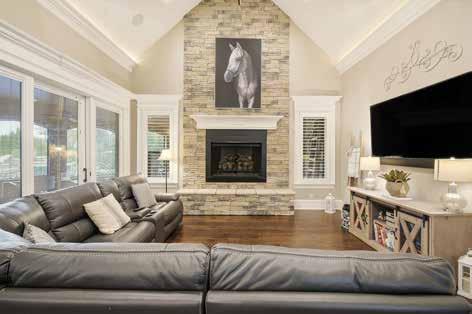
7 Also connecting seamlessly to the chef’s kitchen, this vaulted hearth room provides a warm, inviting counterpoint to the home’s more formal spaces. A striking floor-to-ceiling stacked stone gas fireplace with a classic mantel anchors the room, while discreet uplighting concealed within the crown molding softly washes the ceiling, enhancing volume and creating an ambient, evening-ready glow. Along one wall, sliding glass doors open directly to the expansive screened-in outdoor living space, reinforcing the home’s effortless indoor-outdoor flow.
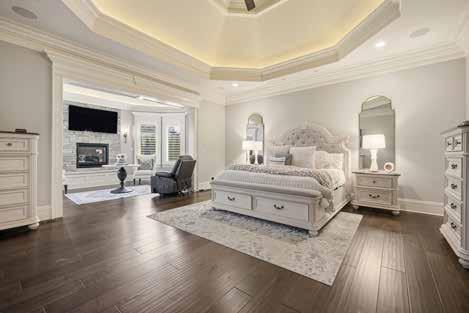
8 Tucked away to feel like its own private wing, the expansive primary suite serves as a serene retreat, defined by its impressive scale, refined architectural detailing, and a quiet sense of seclusion. Overhead, a dramatic vaulted tray ceiling with integrated shadow-box lighting creates a layered, multi-dimensional effect, casting a soft ambient glow that enhances the sense of volume and sophistication. Underfoot, rich wide-plank hardwood flooring grounds the space, while an adjacent fireside sitting area is thoughtfully oriented to overlook the resort-style pool terrace.
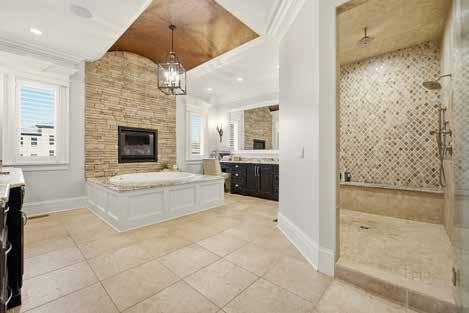
9 Scaled to match the grandeur of the home, the primary bath unfolds as a private retreat where refined architectural detailing and luxurious materials converge. A romantic vaulted barrel ceiling crowns the soaking tub, set against a striking stacked stone accent wall and anchored by a fireplace. To one side, an expansive walk-in shower room delivers a spa-like experience, complete with multiple showerheads, a built-in bench, and full-height tilework that underscores the home’s impeccable scale and craftsmanship. Oversized vanities with rich cabinetry and granite countertops are proportioned in keeping with the home’s overall footprint, while dual boutique-style closets (not pictured) complete a composition designed for comfort, privacy, and luxury at every turn.

10 A standout feature of the lower level, this top-of-the-line residential golf simulator delivers a fully immersive, club-quality experience within the comfort of home. Set slightly below the surrounding floor level, the simulator bay is thoughtfully designed for both play and spectatorship, allowing guests to gather at bar-height seating above and enjoy an unobstructed view of the action. A custom Augusta Masters–inspired mural wraps the space, lending a bespoke, gallery-like backdrop.
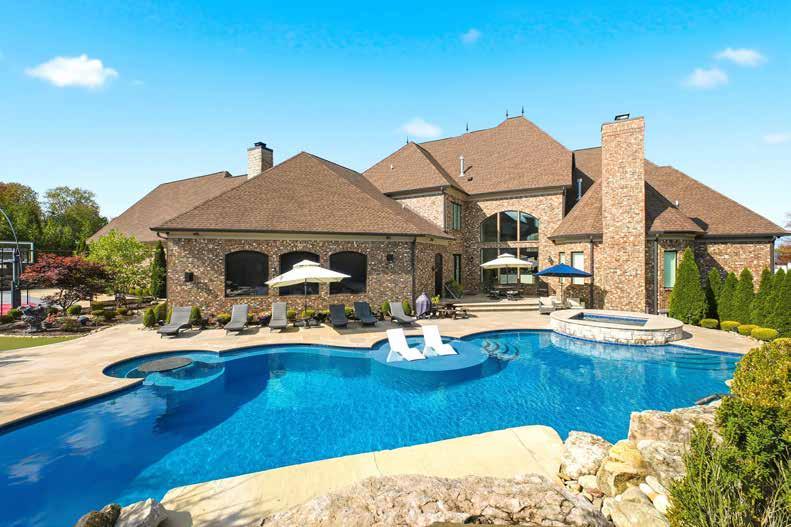
11
Evoking the feel of a private luxury resort, the grounds unfold as a series of thoughtfully composed outdoor living spaces anchored by a sculptural gunite saltwater pool. The built-in hot tub, dual cascading waterfalls, and integrated in-pool table add visual interest and functionality, while a generous tanning ledge offers a relaxed perch within the water. Manicured putting greens (not pictured) and a full-scale multi-sport court equipped for tennis, volleyball, pickleball, and basketball also extend the home’s recreational offerings.
HOME CREDITS
Builder: Chris Osborne, Deville Homes



Augusta
Where the River Still Leads the Way
By Ray Hunter
1 An aerial view shows Augusta’s compact layout along the Ohio River, where homes, shops, and streets sit close to the water without barriers. The open riverfront remains a defining feature of the town’s landscape.
Set along a quiet bend of the Ohio River, Augusta feels like a place that never rushed to keep up. The town holds onto its past in a way that feels lived in, not preserved for show. Brick buildings line the streets, and river views stay open and uninterrupted. It’s the kind of place where a day can unfold without a plan.
Janet Hunt, Bracken County Tourism Director, sees that sense of ease as central to Augusta’s identity.
“The hospitality here is something people notice right away, and it really does feel like stepping back into time,” she said. “It’s a place where you can slow down and just enjoy being here.”
Augusta dates back to the late 1700s and once served as a major port along the Ohio River. That history still shows up in everyday ways. It’s in the homes along the river, in the buildings that have been repurposed rather than replaced, and in the stories local businesses continue to share with visitors.
That connection to the past is especially visible at sites tied to the Underground Railroad. The Payne Home and White Hall, both privately owned, remain part of that story, along with the Old 1811 Jail, which is open for weekday tours. These places offer a direct link to the people and events that shaped the region.
For first-time visitors, one of the simplest ways to experience Augusta is from the water. The Augusta Ferry, one of the last of its kind, offers a short crossing that recalls an earlier era. Whether you walk on for a dollar or drive across, it gives you a clear view of the river and the town that grew alongside it.
Riverside Drive brings that riverfront into focus at street level, with open views, benches, and direct access to the water.
“Taking a walk along Riverside Drive on a warm day is one of the best ways to experience Augusta,” Janet said. “It’s peaceful, it’s scenic, and it really lets you take everything in at your own pace.”
Augusta’s small business presence shapes much of the visit. Beehive Augusta Tavern stands out for both its food and its second-floor balcony overlooking the river. Benchmark Coffee offers a quick stop for a drink before heading back out, and shops like Nina’s add a personal layer to the experience. Owned by George Clooney’s mother and open on select days, Nina’s is one of many places that reflects the town’s character in a real way.
That sense of connection carries beyond Main Street. The Rosemary Clooney House draws visitors interested in the life and legacy of George Clooney’s aunt, while the Augusta Distillery ties its bourbon to the town’s founder, Philip Buckner, and shares the story of its 1800s building. The Baker-Bird Winery, home to the oldest wine cellar in America, adds another layer, with new developments still on the horizon.
Photography Courtesy of Augusta/Bracken County Tourism
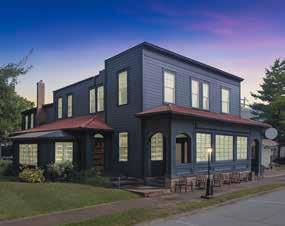
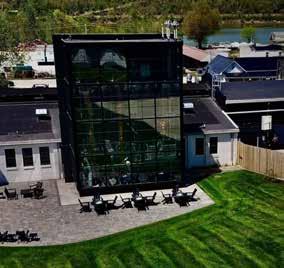

2 The Rosemary Clooney House preserves a piece of Augusta’s cultural history, with its dark exterior and simple architectural lines reflecting its original era. The home remains a key stop for visitors exploring the town’s legacy.
3 The Augusta Distillery blends a modern glass addition with historic brick structures, highlighting the site’s layered past. Outdoor seating extends the space toward the river, connecting the distillery to its surroundings.
4 A painted mural along Main Street reflects Augusta’s riverfront identity, with layered hills, a working boat, and the Ohio River rendered in soft, muted tones. A small pavilion and bench seating nearby create a quiet space to stop and take in the scene.
Events carry that energy throughout the year. Beginning in April with the Flamingo Spring Fling and continuing through Riverfest Days in July, Swingtime by the River in September, and the Turning of the Leaves Festival in October, there is a steady rhythm of gatherings that reflect different sides of the town.
Some of Augusta’s most memorable moments are the quieter ones. A walk down 4th Street reveals an unexpected row of six churches, each with its own style. Sunset Point offers a clear view of the river as the day winds down.
What sets Augusta apart is its open connection to the river. Unlike other towns where tracks or flood walls block the view, Augusta keeps the river in full sight. That openness shapes the experience in a way that feels simple and direct.
Augusta doesn’t try to reinvent itself. It stays rooted in what it has always been. For visitors, that means stepping into a place where the past and present sit side by side.
To plan your visit or explore upcoming events, visit Augusta’s official tourism website or follow Augusta/Bracken County Tourism on Facebook for updates and local highlights.
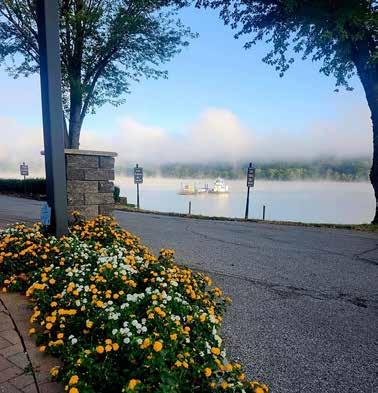
5 The Augusta Ferry moves across the Ohio River in early morning light, partially framed by seasonal plantings along the riverfront. The working ferry remains one of the town’s most recognizable and active features.

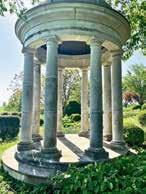
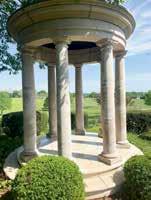













$4,200,000 Franklin County Frankfort 13+ acres
Englewood Democrat Drive


srodes@homesinlex com





Package deal for seven Vacant Land parcels, also available as individual lots Excellent location currently zoned PO; however, it has great potential for redevelopment as Franklin County continues to embrace the area around interstate exit interchanges Established businesses, retail, and restaurants are already in place, with a car dealership coming to the immediate area. Easy access to Lexington, Louisville, as well!
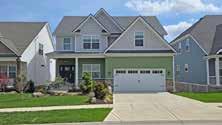
$758,000
The Home Place 4 Beds | 2.5 BA 2,605 SQ FT
1356 Angus Trail

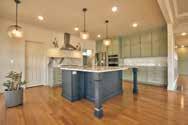
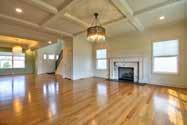
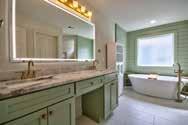
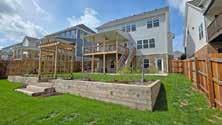
This home is truly better than brand new! The sellers have thoughtfully added numerous upgrades to this fantastic property, which backs up to a serene green space & tree line. The residence features a lovely open floor plan including a formal dining area, family room, & a dream kitchen The kitchen is equipped with top-of-the-line appliances, including a Thermador five-burner gas range w/a quartzite floating shelf & vented exhaust fan, two ovens, a microwave, a three-rack Bosch dishwasher, & an LG three-door refrigerator You will also find a walk-in pantry & a stunning quartzite island w/seating Upstairs, the primary oasis includes a luxury bath with a bidet, a lighted vanity mirror, & a dressing table, alongside three additional spacious bedrooms & another full bath The fully outfitted laundry room features an LG ThinQ washer & dryer that stays with the home The lower-level walkout offers abundant natural light & access to a patio. Outside, you will love the professionally landscaped, terraced, & fenced backyard, complete w/an arbor and a beautiful garden area This property is a move-in-ready gem