

K ENTUCKY &
HOMES GA R DENS


















HOMES GA RDENS
K ENTUCK Y &
Published by RHP Publishing, LLC PO Box 22754 Lexington, KY 40522 859.268.0217
Publisher: Rick Phillips 1rickphillips@windstream.net
Associate Publisher: Carolyn Rasnick carolyn@rhppublishingllc.com
Circulation and Distribution: 1rickphillips@windstream.net
Account Executives: Rick Phillips 859-797-3705 • 1rickphillips@windstream.net
Terri Carpenter 859-806-6123 • sweetTstaging@gmail.com
Editors: Rick Phillips, Carolyn Rasnick
Senior Associate Editor: Kirsten E. Silven
Photography: Walt Roycraft
Contributing Writers: Ray Hunter Kirsten E. Silven
Art Direction & Design: Sarah Smith
Printing: Cummings Printing 4 Peter’s Brook Dr. Hooksett, NH
Kentucky Homes and Gardens is published six times a year by RHP Publishing, LLC. 859.268.0217 www.kentuckyhomesandgardens.org All rights reserved.
Reproduction in whole or part without written permission is prohibited.
Subscription price: $24.95 for one year (six issues). Single copies: $8. Kentucky residents add 6% sales tax.
Subscriptions and change-of-address should be sent to Kentucky Homes and Gardens, Subscriber Service Center, PO Box 22754, Lexington, KY 40522


A CHEF-LED TABLE AT AZUR IN LEXINGTON C K OOKING ENTUCKY IN C K OOKING ENTUCKY IN
By Kirsten E. Silven
For more than two decades, Azur Restaurant & Patio has quietly defined a particular kind of Lexington dining, pairing culinary expertise with a genuine sense of place. Located in the Beaumont neighborhood, Azur has long been a favorite for diners who value thoughtful food, polished service, and an atmosphere that feels refined but never remote.
“At Azur, we are a chef-led restaurant built around inspired seasonal and local cuisine,” shared owner Sylvia Lovely. “Our menu changes four times a year and not just with a few features. Nearly the entire menu is refreshed each season. That commitment keeps us moving, growing, and creating.” This seasonal philosophy is foundational, ensuring the kitchen remains responsive to whatever is fresh, available, and creatively compelling at any given moment.
While the menu evolves, a handful of dishes have earned enduring status. Azur’s Bourbon Fried Chicken—a crisply fried chicken breast served over whipped potatoes and Southern-style green beans, finished with bourbon cream gravy—remains a touchstone for regulars. The Woven Shrimp, phyllo-wrapped and lightly fried, arrives atop coconut–sweet corn risotto and is finished with a smoked bourbon–hot honey glaze, striking a careful balance between richness and restraint. To close the meal, a seasonal fruit cobbler with buttery crust, served warm with vanilla ice cream, offers a nod to traditional comfort food.
Creativity is not only limited to the plate. “We give our chefs and bartenders the unique opportunity to lean into their creativity, work with new ingredients, and draw inspiration from flavors around the world,” shared general manager Taylor Huston. “Over the years, many members of our kitchen team have used Azur as both an educational stepping stone and a creative outlet on their way to becoming even stronger chefs. Every season brings new and thoughtful dishes and cocktails for our guests to experience.”
Despite its wide-ranging influences and refined execution, Azur also remains firmly grounded in Southern hospitality. “My inspiration to cook comes from hospitality at its core,” shared Chef Tim Perkins. “Seeing people happy and connecting with one another over a meal I’ve made for them brings me so much joy.” The dining room and patio reflect that ethos in a polished yet comfortable vibe, designed for lingering conversations and unhurried meals.
Guests enjoy a dining experience that feels elevated but approachable, guided by a knowledgeable service team and supported by a well-curated wine list and cocktail program. Beyond nightly dining, Azur extends its hospitality through events that invite deeper engagement. Monthly Wednesday Wine Nights, Gale’s Cocktail Classes, and quarterly Chef Series Dinners offer guests the chance to explore new flavors and techniques. Weekly traditions like Wagyu Burger Mondays, half-priced wine bottles on Tuesdays, live music on Fridays and Saturdays from April through December, and a relaxed Sunday brunch keep the restaurant in step with the rhythms of everyday life.
“Over our 21-year history, Azur has become a Lexington staple and a special place for many,” Lovely shared. “With our kitchen team led by Chef Tim Perkins, we hope to continue to delight our guests with thoughtful food, hospitality, and experiences worth coming back for.” That sense of continuity matters. “Whether you have been dining with us for years or are planning your first visit, we are grateful to be part of your celebrations, traditions, and everyday evenings out,” Huston said. “Our goal is simple: to keep evolving, keep creating, and keep making Azur a place that feels like home.”
Azur is located at 3070 Lakecrest Circle in Lexington’s Beaumont neighborhood. To learn more about upcoming events or to make a reservation, visit azurrestaurant.com or call 859-296-1007.
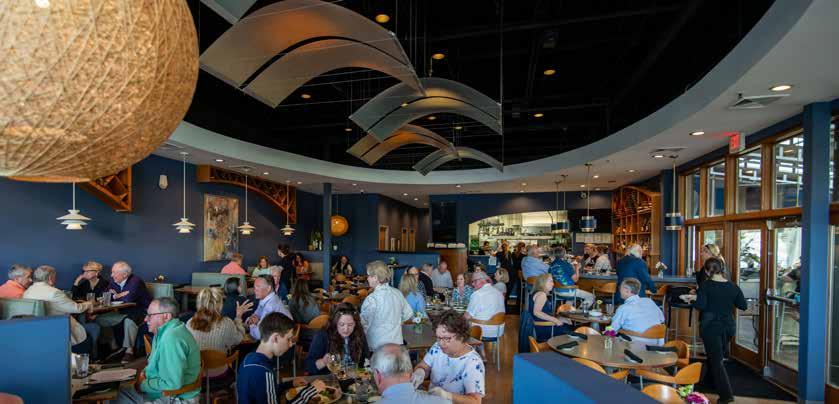
1 Lively banter sets the scene in the dining room at Azur Restaurant & Patio in Lexington’s Beaumont neighborhood, where warm wood floors, sculptural acoustic panels, and generous natural light create an inviting backdrop for the restaurant’s seasonal, often local, always chef-driven fare. Following a return to service last year, the focus remains firmly on the table—thoughtfully composed dishes, vibrant flavors, and a polished yet relaxed vibe.
CHEF TIM PERKINS’ CLASSIC WESTERN KENTUCKY BURGOO
Makes 2 Quarts, Serves 4 people Prep: 30 Minutes Cook Time: 14 Hours
Total Hours: 14.5
Ingredients
• 1 lb beef chuck roast
• 1 lb bone-in chicken thighs
• 1 lb potatoes diced small
• 1/2 cup chopped cabbage
• 1/3 cup sweet corn
• 1/2 cup chopped yellow onion
• 1/4 cup ketchup
• 2 tsp lemon juice
• 2.5 tbsp worcestershire sauce
• 2.5 tbsp white vinegar
• 4 tbsp salt (or to taste)
• 2 gallons water (more if needed)
• cayenne pepper (to taste)
• black pepper (to taste)
Method
• Add chicken, beef, salt, and water to a large pot (or your crock pot). Cover and simmer on low for 12 hours. Add water as needed to keep meat covered throughout the cooking process.
• Remove the meat and strain the broth through a fine sieve to remove any solids that remain.
• Remove the bones from the chicken and shred both the chicken and the beef.
• Add the remaining ingredients to the strained broth along with the shredded meats.
• Simmer on low for an additional 2 hours, uncovered. Pair with your favorite cornbread and enjoy!
2 Chef Tim Perkins’ Western Kentucky Burgoo at Azur Restaurant & Patio simmers for hours to achieve remarkable depth and richness. Slow-cooked beef chuck and bone-in chicken are gently shredded and returned to a savory broth layered with potatoes, cabbage, sweet corn, onion, and a balanced tang of Worcestershire, vinegar, and citrus—resulting in a comforting, deeply flavorful stew that feels both timeless and refined, especially when paired with a warm wedge of cornbread. (See recipe).

2

4 3

3 Chef Tim Perkins brings a deeply personal point of view to the kitchen at Azur Restaurant & Patio. Born and raised in Lexington, Perkins honed his craft at respected local kitchens including Tuk Tuk Snack Shop, The Stave, Local Feed, and the Campbell House Hotel, before expanding his experience as an executive and private chef in Pennsylvania. Grounded in Southern tradition yet guided by refined technique, his cooking reflects both his Kentucky roots and a thoughtful, contemporary sensibility—an approach perhaps best captured in his celebrated biscuits, which have quietly earned a devoted following of their own.

4 A polished take on a timeless favorite, the filet mignon is expertly prepared and paired with whipped potatoes, vibrant sautéed broccolini, and a velvety béarnaise that brings subtle richness to each bite.
6 5
5 A fan favorite, the woven shrimp features delicately textured phyllo-wrapped shrimp, lightly fried until crisp and set atop a creamy coconut–sweet corn risotto. Finished with a subtle drizzle of bourbon-smoked hot honey, the dish balances sweetness, heat, and crunch with precision— an artful composition that showcases the kitchen’s knack for marrying global technique with Kentucky-driven flavors.

6 Wine enthusiasts gather at Azur for a guided sommelier tasting at a monthly Wednesday Wine Night, featuring three thoughtfully selected wines paired with chocolate and chefcurated appetizers, and Tuesdays bring half-price bottles to enjoy on the patio or in the dining room.



By Ray Hunter
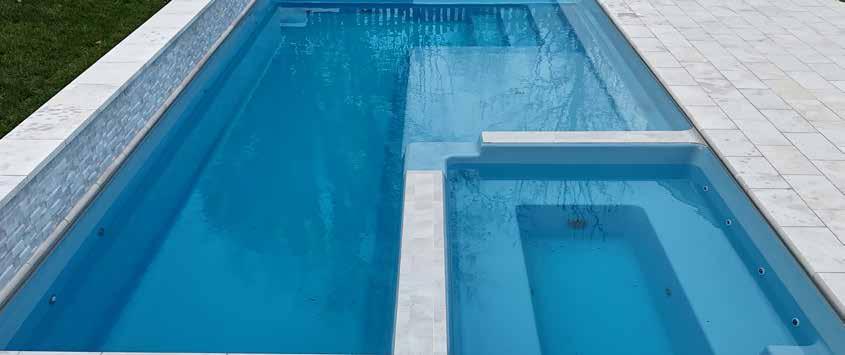
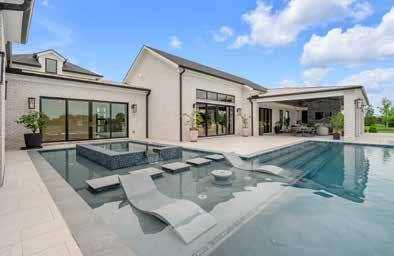
1 As warmer weather approaches, pools like this fiberglass pool-and-spa combo require careful startup to protect both water quality and equipment. The built-in tanning ledge and integrated spa mean circulation and chemical balance must be restored methodically before regular use. Marble coping and decking should be inspected for winter movement or debris buildup before the system is fully running. Features such as the raised retaining wall and waterfall also need to be checked early to prevent strain once circulation begins.
In Kentucky, warm weather rarely eases in quietly. One week, the cover is still on the pool. The next, the temperature spikes, and everyone wants to swim. A smooth start to the season depends on how and when a pool is opened. Done well, it sets up months of clear water and steady performance. Done in a rush, it can mean algae, cloudy water, and equipment strain before Memorial Day.
DJ Geddes, vice president of Geddes Pool Company, has seen both outcomes. After decades in the business, he says the difference usually comes down to preparation and timing.
“Starting strong in the spring means more carefree swims all summer,” he said.
The first step is simple but often delayed: uncover the pool early. Waiting too long allows water temperatures under the cover to rise, creating an ideal environment for algae growth. DJ advises removing the cover carefully, cleaning it properly, and inspecting the pool before turning anything on.
“The goal is to uncover safely, inspect early, and start circulation properly to avoid issues like algae or equipment strain.”
Inspection should include checking the liner or plaster for visible damage, looking at fittings and skimmers, and examining pumps, filters, and heaters. Any cracked parts, brittle seals, or worn components should be addressed before the system is fully running. Small issues caught early prevent larger failures once the pool is in daily use.
Once the physical inspection is complete, circulation comes next. Restore water to the proper level, prime the pump, and start the filtration system. From there, water chemistry becomes the priority. Test and balance pH, alkalinity, and sanitizer levels before heavy use.
Cloudy or green water is one of the most common early-season frustrations.
“We typically see the same recurring issues year after year,” DJ added. “Most stem from timing, winter prep shortcuts, or rushing the startup process.”
Many of those problems trace back to how the pool was closed in the fall. Incomplete winterization, unbalanced water, or debris left behind under the cover can complicate opening months later. DJ encourages homeowners to think of closing and opening as connected steps in the same process. Care taken in October pays off in April.
“At Geddes Pools, we’ve seen that most spring opening issues are preventable with proactive steps—especially good winter closing habits, careful timing, and a methodical startup.”
For homeowners who prefer not to handle the process themselves, professional opening services can remove the guesswork. Crews typically manage cover removal, equipment checks, system startup, and initial chemical balancing. The advantage is not just convenience. It is knowing the pool begins the season operating as designed.
After opening, the focus shifts to routine maintenance. Clear water and reliable equipment depend on consistent weekly habits. DJ recommends testing water chemistry at least once a week, adjusting as needed, and maintaining sanitizer levels. Skim the surface, vacuum debris from the floor, and empty skimmer baskets regularly to keep circulation steady. Shocking the pool as needed helps maintain clarity and control organic buildup.
“We emphasize consistent routine care to keep your pool crystal-clear, safe, and enjoyable all season long,” he said.
Technology is also changing how homeowners manage their pools. In 2026, smart automation systems allow users to control pumps, lighting, and heating through mobile apps. Variablespeed pumps and heat pumps improve energy efficiency while reducing operating costs. AI-driven robotic cleaners now scrub floors and walls and skim the surface, reducing the physical workload required to maintain water quality.
Photography Courtesy of DJ Geddes Pool Co. Inc.
2
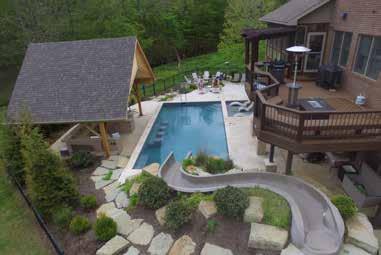
Complex backyard builds like this require a thoughtful spring opening process. The offset tanning ledge, interior barstools, swim-up bar, and 36-foot custom water slide all rely on proper water levels and balanced chemistry before heavy use. Circulation systems must be inspected and primed carefully to avoid early-season cloudiness or algae growth. When multiple features are involved, a methodical startup protects both performance and long-term durability.
“We’ve been keeping a close eye on the evolving pool industry, and 2026 brings exciting advancements focused on smarter technology.”
Even with better tools, the fundamentals remain steady. Open early. Inspect carefully. Balance water correctly. Stay consistent week to week. Kentucky summers bring heat and humidity, and a pool that starts the season properly is far easier to maintain than one that begins with avoidable problems.
For DJ, the message is practical. Preparation leads to enjoyment. When the work is handled upfront, the reward is simple: clear water, steady equipment, and a backyard ready for gathering as soon as the weather turns.
For more information or to schedule a spring opening, readers can visit www.geddespools.com or call 859-885-4296. You can also follow Geddes Pools on Instagram at @geddespools, on Facebook at Geddes Pool Company, Inc, and on X at @ GeddesPools to see recent projects, seasonal tips, and the Wildcat Waterboys promo videos. 2 3
5
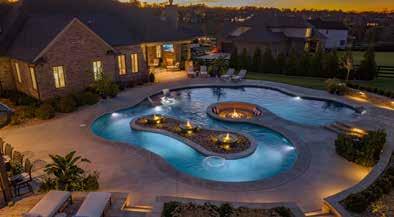
3 Spillover spas, tanning ledges, and integrated fire-andwater elements add beauty, but they also underscore the importance of careful opening procedures. The spa’s flow must be checked separately to confirm smooth circulation before use. Water chemistry needs to be precisely balanced to keep surfaces and finishes protected throughout the summer. A steady, measured startup sets the tone for a season of reliable performance and clear water.
4
4 A multi-feature layout like this demands early inspection and structured startup. The lazy river, diving area, tanning ledge, waterfall wall, and inset diving board all depend on proper circulation and equipment checks before swimmers return. Winter debris or delayed openings can quickly affect water movement in more intricate designs. Addressing each feature individually during spring startup helps prevent costly mid-season repairs.
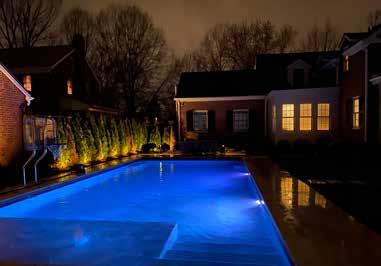
5 Clear water and even lighting don’t happen by accident at the start of the season. After uncovering the pool, filtration and chemical levels must be restored gradually to achieve the clarity shown here. LED lighting systems should be tested during opening to confirm that wiring and fixtures weathered the winter properly. Taking time to inspect and balance early ensures the pool looks this clean from the first warm weekend forward.

Painting With Flowers
By Kirsten E. Silven

1 Benary’s Giant Purple zinnias rise on slender stems, their richly colored blooms serving as a magnet for pollinators, including a monarch butterfly paused here mid-forage. Behind them, rudbeckia and other flowering annuals form a softly focused backdrop, reinforcing the garden’s multi-dimensional approach to color and habitat. The interplay of plantings reflects an emphasis on biodiversity as much as visual interest, allowing nectar-rich flowers to serve double duty as ornamental anchors and ecological support.
Set within the Mentelle Park neighborhood, just minutes from downtown Lexington, Lynn Winters’ garden is both deeply personal and quietly instructive. It is a place where creativity, cultivation, and daily life intersect across a third of an acre, and what was once just barren lawn has, in just two growing seasons, become a richly planted landscape of flowers and vegetables.
“I really fell in love with the community first,” Lynn shared. “I’ve always been drawn to neighborhoods in transition.”
That sense of evolution mirrors her own path. After operating Lynn’s Paradise Cafe and the World of Swirl in Louisville for many years, Winters closed the business following a prolonged illness related to mold exposure. She spent several years on the West Coast before returning to Lexington in 2016—a city she knew well as a teenager—to care for aging parents. What began as a potentially temporary return became something more permanent, as she fell back in love with the city and, toward the end of 2017, purchased this 1915 Dutch Colonial in Mentelle Park.
The house itself turned into a six-year renovation, completed in 2024, with Winters living on-site throughout construction, making outdoor space a necessary refuge. “I was taking care of my mom and dad while the renovation was ongoing, so I started to spend more time outside,” Lynn shared. “Although I didn’t know anything about gardening, I have always loved being outside.”
When she began, the landscape was unremarkable. “Both the back and front were all grass with some shrubs and a few flowers around the edge,” she said. Today, that description feels almost unimaginable, and almost every inch is now planted with flowers, vegetables or flowering shrubs.
The entire transformation is rooted in intention. Windows and doors were added, lining the back of the house, opening directly onto the garden and dissolving the boundary between inside and out. “I landscaped so you step straight out onto the earth— flowers are right outside the back doors and windows,” Lynn shared. “I wheelbarrowed many yards of topsoil in to bring the backyard up seven feet, so you can step out the back door right into the garden.”
A newly added second-floor porch stretches nine feet deep across the front of the house, holding a variety of blooms and serving as a place to relax and observe the garden below. Even the sidewalk feels integrated into the landscape, softened by cosmos, zinnias, and rudbeckia that press gently toward the street, inviting neighbors into the experience.
Central to the garden’s rapid evolution is Lynn’s embrace of no-dig gardening, an approach in which planting beds are built directly atop existing grass or soil using layers of cardboard and compost. Sourced from Landscapers Corner, the compost forms the foundation for beds that suppress weeds, improve soil health over time, and remain flexible, since the system allows for continual reinvention.
Photography by Walt Roycraft

“I primarily do annual flowers and vegetables because I love redesigning the garden each year with different ideas,” Lynn said.
Two years ago, the garden held only flowers. Last year, vegetables were added, so the entire third of an acre is cropped. And although losing two large trees might have derailed a different garden, here it prompted adaptation. Since the beds are not fixed or dug in, they were easily reconfigured to respond to the shifting light and new growing conditions. Tomatoes, eggplant, cucumber, peppers, melons, and an expansive collection of annual flowers now share the garden in everchanging combinations.
As a chef, the edible landscape is also inseparable from Lynn’s creative identity. “I really enjoy growing things,” she added. “Combining design, art, and a love of cooking with whatever I grow and plant.”
This year alone, she is growing 67 varieties of tomatoes, including Costoluto Genovese heirlooms from Italy’s early 1900s, and at least 11 different types of cherry tomato, encouraging friends and neighbors to sample and compare.
As an artist, Lynn has sometimes planted by looks over flavor; a philosophy that led her to grow varieties she had never even encountered before, many of which have become staples. “Now, I also plant by flavor! It’s like a large 3-D art project I can eat, paint, and enjoy with friends,” she shared. “I am literally painting with flowers and vegetables in this indoor-outdoor living space, in Kentucky.”
In fact, art quite literally sits at the garden’s center. An old outbuilding—originally a donkey shed—was saved and repurposed rather than removed. Clad in dark paint and softened by Boston ivy, cosmos, and rudbeckia, it functions as a flexible studio space. In warm weather, it becomes a painting studio, and when the seasons change, it can also serve as a seed-starting hub.
Nearby, a pond edged with red lobelia creates a quiet counterpoint to the productive beds. A small sitting area tucked alongside offers a place to pause, while monarch butterflies drift through Benary’s Giant Purple zinnias and other pollinator-friendly blooms nearby. Neighbors frequently stop by to pick whatever is ripe, reinforcing the garden’s role as a shared asset.
“I came to understand through this process that I live a very indoor-outdoor lifestyle,” Lynn added. “And there are always some projects going on around here.”
Despite its scale and abundance, the garden is meant to encourage rather than intimidate. “Anyone can start a garden no matter where you live, including downtown, out in the suburbs, or even in an apartment,” Lynn said. “There is always space to start a garden. You can do it - you just need to learn a few things. Anyone can do a small bed without much effort, to grow something you can cook with and a few flowers you can put on the table, or give to friends.”
That open, generous spirit defines this garden as much as its plantings. Built entirely by hand in just two years, it stands as a living record of curiosity, resilience, and creative reinvention. The result is not just another garden - it’s a way of life that unfolds season by season, rooted firmly in the present, and open to whatever comes next.
2
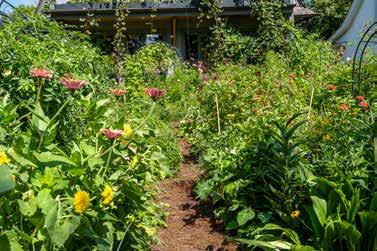
2 Threading through the heart of the garden, a dense mix of ornamentals and edibles flank a meandering path, creating a sense of immersion at every step. Zinnias rise above the lower plantings, their rounded blooms scattered throughout the border, while rudbeckia punctuates the scene with golden notes deeper in the planting. The layered arrangement draws the eye forward and back at once, reinforcing the garden’s role as both passage and destination.

3
3 Spikes of red lobelia rise from the pond’s edge, where they can thrive in consistently moist soil, while Rudbeckia forms a sunlit backdrop, extending the composition deeper into the garden and adding warmth to the scene.
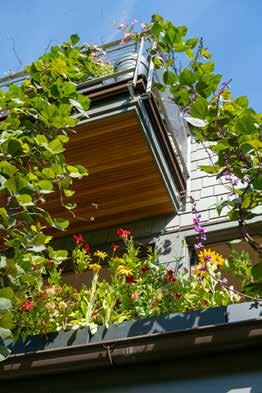
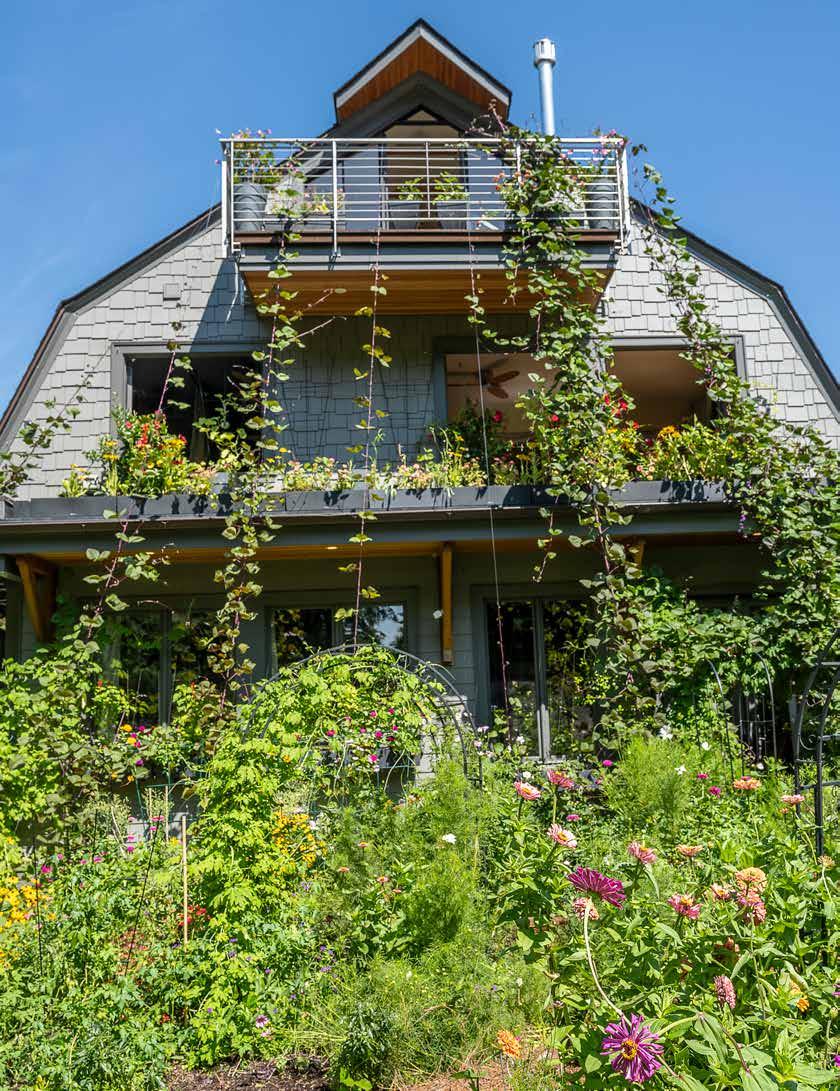
4 Vines of hyacinth bean climb the railings of the third-floor porch, their broad leaves and delicate purple blooms softening the home’s uppermost level and drawing the garden skyward. Below, the back edge of the second-floor porch is lined with flowering plantings that spill gently over the railing, further extending the garden’s upward momentum. Together, the layered porches reinforce a seamless relationship between architecture and planting, allowing the garden to rise, quite literally, through the house.
5 An edible bitter melon hangs from a slender vine, its deeply textured, golden-orange fruit grown from rare seeds and trained vertically, the curling tendrils and lobed leaves allowed to develop freely, while keeping the fruit well aired.
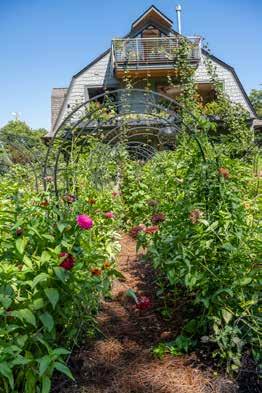
6 A narrow path guides the eye toward the front of the house, passing beneath arched trellises trained with Sun Gold tomatoes, their vines weaving structure and productivity into the ornamental landscape. Zinnias line the walk in jewel tones, creating a lively counterpoint to the vertical growth overhead and reinforcing the garden’s generous, informal spirit. Beyond the plantings stands the 1915 Dutch Colonial Lynn Winters renovated from top to bottom, its historic proportions complemented by a newly added porch rising above the garden canopy, serving as an elevated retreat that connects daily life inside the home with the everchanging garden below.

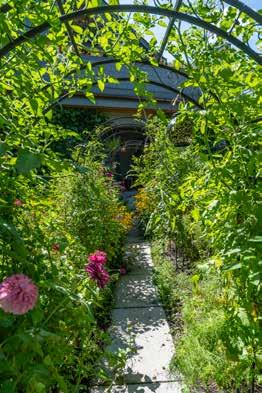
7 A series of arched trellises frame the tomatoes and melons that are climbing overhead in a lush corridor that leads to the back of the house, creating shade and a sense of structure in Lynn Winters’ abundant garden, which is located in Lexington’s Mentelle Park neighborhood. A narrow path is softened here by an exuberant mix of ornamentals and edibles, with zinnias punctuating the green in saturated pinks, reflecting a thoughtful balance of productivity and beauty; where kitchen-garden staples and their flowering companions lend color, texture, and seasonal rhythm to garden.
9 Prized in Italy since the early 1900s, clusters of Costoluto Genovese heirloom tomatoes with their characteristic deeply ribbed shoulders and irregular forms hang heavy on the vine, captured here in various stages of ripening.
Design: LA Winter Design (Lynn Winter)
Compost: Landscapers Corner Seeds: Rare Seeds; Johnny’s Seeds
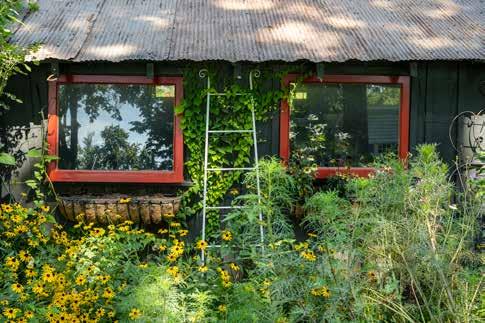
8 Once a humble donkey shed, this small outbuilding now sits at the center of the garden as a flexible, retreat, thoughtfully preserved and repurposed rather than replaced. Boston ivy climbs the dark-painted façade, while cosmos and rudbeckia press in at ground level. Sometimes used as a painting studio when weather permits, the “she shed” serves as both destination and pause point within the landscape, as a space shaped by creative practice and the seasonal demands of the surrounding garden.

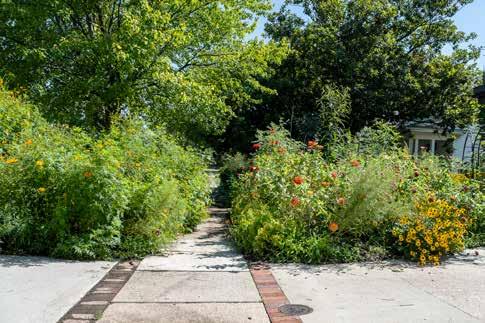
10 The sidewalk is a threshold into the garden, where exuberant plantings soften the hard edges of concrete and brick. Feathery cosmos spill generously along the left side of the walk, creating a sense of movement, while the opposite border is anchored by zinnias and rudbeckia, which offer warmer tones and a denser, more upright presence. The composition allows ornamental annuals to mingle freely and establish a welcoming rhythm at ground level, while mature trees provide a leafy canopy above the layered plantings.

Layered Living Rooms
By Kirsten E. Silven
As luxury interiors evolve in 2026, the living room is reclaiming its role as the emotional center of the home. Once dominated by expansive open plans and pared-back minimalism, today’s most coveted living spaces are warmer, more personal, and intentionally composed. The emphasis has shifted toward comfort, architectural character, and rooms that feel layered over time rather than designed in a single moment.
“After decades of open-concept living, we’re seeing a clear shift back toward more intimate living rooms—spaces designed to encourage conversation, comfort, and a sense of retreat,” said Michelle Rudzik, owner of Fleur de Bleu Creations. “Homeowners want rooms that feel purposeful and inviting, where family and friends can truly connect.”
This renewed focus on intimacy is reshaping both layout and scale. Rather than one oversized seating arrangement, designers are carving out conversation groupings, reading corners, and secondary nooks that invite lingering. These cozier compositions foster connection while allowing living rooms to function fluidly for both everyday life and entertaining.
Material choices play a pivotal role in establishing this sense of warmth. Plush, tactile textiles like boucle, mohair, and washed linen are replacing stiff modern upholstery, while organic materials like rattan, wicker, reclaimed wood, and raw stone introduce visual softness and authenticity. Sustainability has become more than a talking point; it is now a defining feature of luxury, with homeowners gravitating toward vintage, artisan-made, and responsibly sourced pieces that tell a story.
Color, too, has reemerged as a powerful design tool. Cool grays and stark white palettes are giving way to earthy, nuanced tones—terracotta, olive, mushroom, warm whites, and deep, inky blues—that bring depth and mood to a space.
“Luxury living rooms are moving away from stark minimalism and embracing richer, more expressive palettes,” Rudzik said. “We’re seeing muddled blues, soft mushroom tones, greens with gray undertones, and warm hues with red notes, along with color drenching—where walls, trim, and ceilings are all painted the same shade—to create depth, cohesion, and personality.”
This approach—sometimes referred to as color capping or color drenching—creates enveloping interiors that feel both sophisticated and grounded. When paired with natural fabrics and subtle pattern, these tonal rooms strike a balance between elegance and livability.
Architectural detail is another hallmark of the modern luxury living room. Rather than relying on scale alone, designers are turning to craftsmanship and proportion to elevate a space.
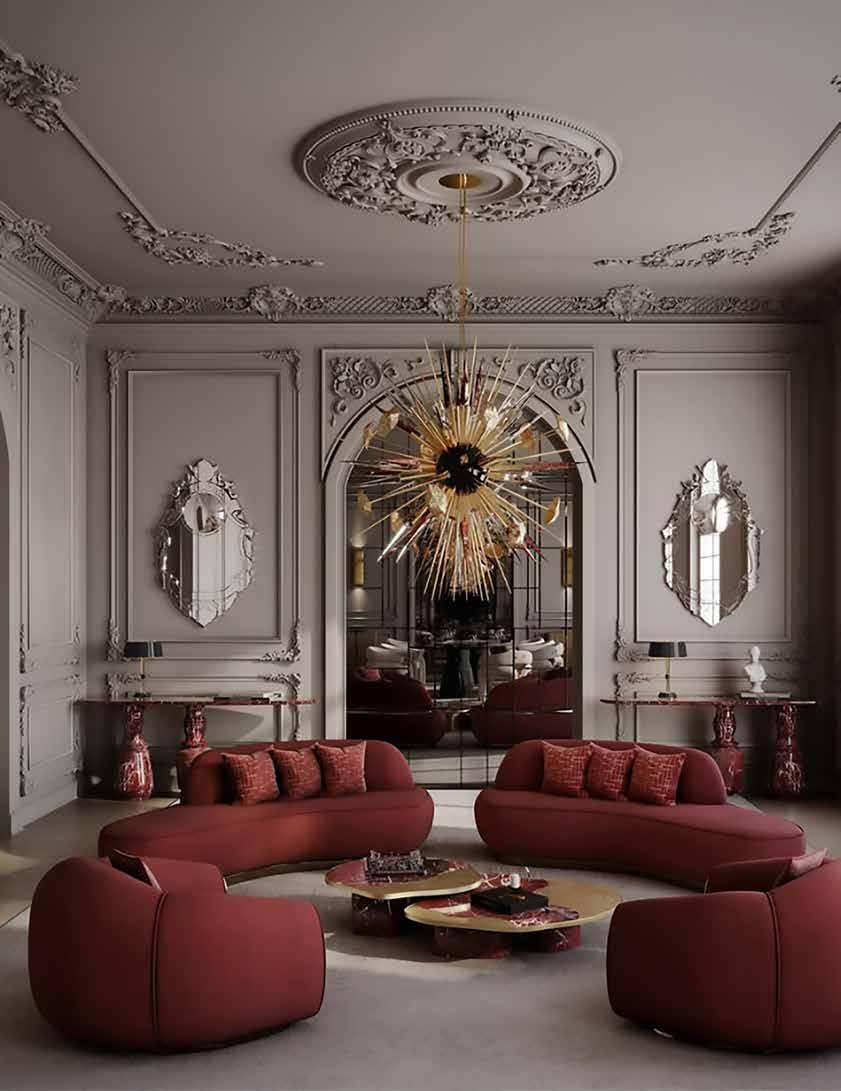
1 A dramatic interplay of heritage architecture and contemporary form defines this room, where historic plaster detailing and ornate ceiling medallions are paired with boldly modern furnishings. Curved, lowslung seating upholstered in a saturated oxblood tone introduces softness and movement, arranged in a circular configuration that prioritizes conversation and flow. A sculptural, starburst chandelier acts as a striking counterpoint to the room’s classical framework, reinforcing the growing trend of juxtaposing oldworld craftsmanship with expressive, contemporary design elements. Photo courtesy of Boca do Lobo.
“Today’s interpretation of luxury feels very rooted in architectural integrity,” she said. “Elements like coffered ceilings, exposed beams, custom built-ins, and detailed millwork are replacing oversized, showy spaces, resulting in rooms that feel calm, sophisticated, and deeply personal—an unpretentious form of wealth that’s quietly confident.”
Furniture selections reinforce this philosophy. Soft, curved silhouettes and lowprofile forms are replacing sharp angles and rigid geometries, lending rooms a more relaxed, sculptural quality. Asymmetry and gentle curves soften sightlines, while layered lighting—table lamps, sconces, and floor lamps—replaces reliance on harsh overhead fixtures, allowing spaces to transition effortlessly from day to evening.
“Furniture is a long-term investment, and homeowners benefit enormously from professional guidance when making those decisions,” Rudzik noted. “Timeless pieces layered with antiques, natural materials like linen, leather, wicker, rattan, and wool, and a nod to Kentucky’s refined Southern sensibility create living rooms that feel effortless, organic, and enduring.”
Personalization is perhaps the defining element of today’s luxury interiors. Rather than highly coordinated, showroom-perfect rooms, designers are curating spaces that feel collected—blending new furnishings with vintage finds, heirloom pieces, and unexpected accents. Decorative details once considered old-fashioned, such as fringe, trim, and tailored fabric treatments, are returning in subtle, sophisticated ways.
Homeowners with existing open-concept layouts can still achieve this more intimate aesthetic with thoughtful planning.
“Even in large, open living rooms, intimacy can be achieved through thoughtful vignettes,” she said. “Grouping furniture into distinct zones—whether for conversation, reading, or games—and varying heights throughout the room keeps the eye moving and adds visual interest, while simple updates like paint, lighting, or textiles can dramatically elevate the space.”
As 2026 unfolds, what is notably falling out of favor is just as telling: sterile all-white rooms, cold gray palettes, certain high-contrast black-and-white schemes with sharp furniture edges, and single overhead light sources are being replaced by environments that feel more human, tactile, and emotionally resonant, even when the space has a more contemporary feel.
The modern luxury living room is no longer about simply making a statement. Today, it is also about creating a sanctuary that feels warm, intentional, and deeply reflective of the people who live there. 2
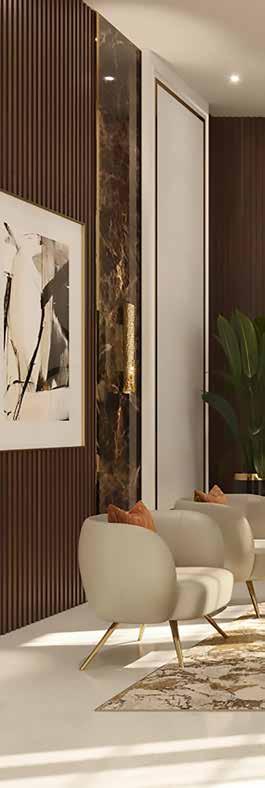
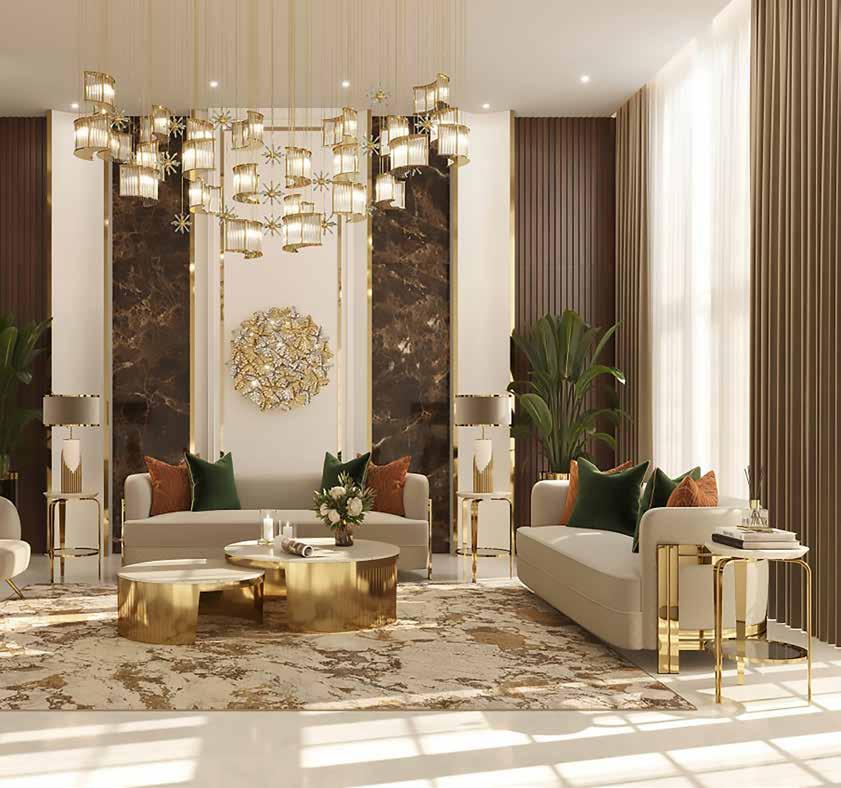
2 Balancing symmetry, material richness, and curated softness, this living room is a polished expression of contemporary luxury. Vertically fluted wall panels and veined stone accents introduce architectural rhythm, while a layered lighting scheme is anchored by a cascading chandelier, adding depth and visual interest overhead. Upholstered seating with subtly rounded profiles is arranged to frame nested metallic coffee tables, reinforcing a sense of cohesion and flow. Photo courtesy of Castro Lighting.
3 Sculptural form and soft geometry defines this lightfilled space, where curved seating arrangements create an intimate conversation zone within a generous footprint. A channel-tufted sectional anchors the room, paired with organically shaped coffee tables that introduce visual fluidity and tactile contrast. Tall arched windows, dressed in tailored drapery, flood the room with natural light while reinforcing its architectural elegance. Photo courtesy of EDI Living.
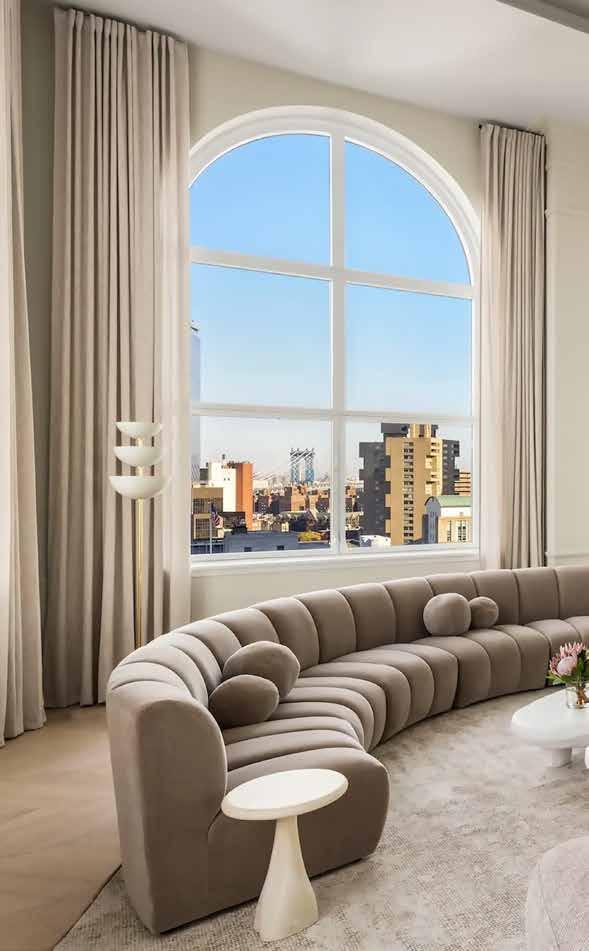
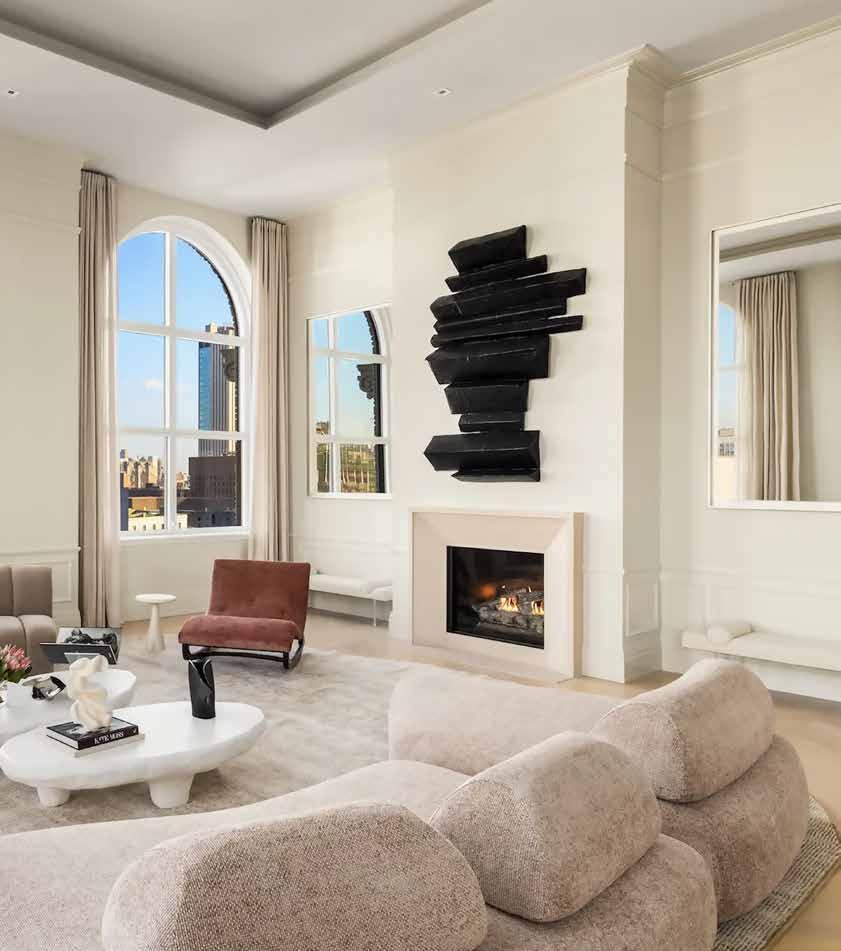
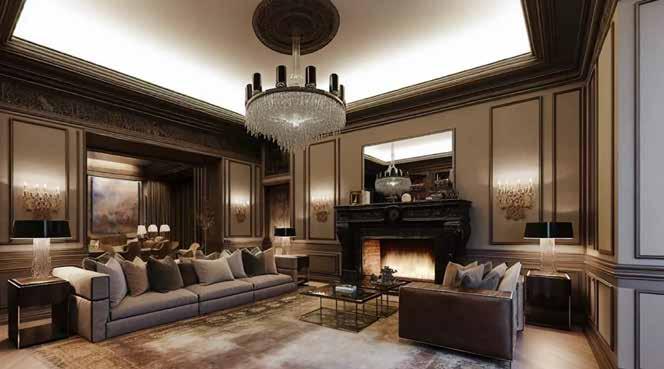
4 Demonstrating how traditional detailing continues to influence contemporary luxury interiors, this grand, classically informed living room boasts deeply scaled millwork, paneled walls, and a substantial fireplace surround establish architectural gravitas, while a coffered perimeter ceiling with concealed illumination softens the room’s formality. Generous seating upholstered in neutral textiles is arranged to frame the hearth, reinforcing the fireplace as a natural focal point and gathering place. Photo courtesy of Rosewood Group.
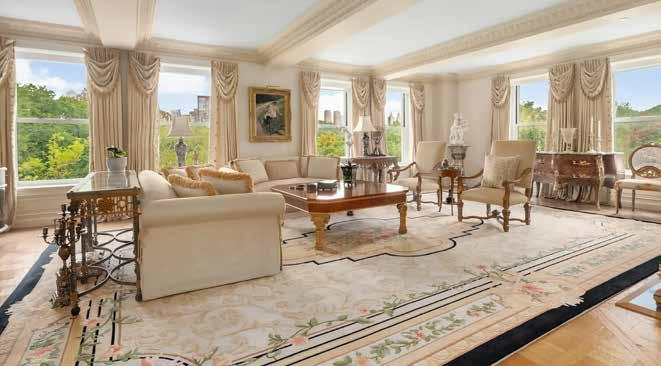
5 Underscoring the renewed interest in classical proportion and enduring craftsmanship within luxury interiors, this traditionally-appointed living room boasts coffered ceilings with ornate molding to establish a formal architectural framework, while floor-to-ceiling windows dressed in tailored swags and panels soften the room’s symmetry and frame expansive views beyond. Upholstered seating with carved wood details is arranged around a refined central table, encouraging conversation within a gracious, well-balanced layout. Photo courtesy of Brown, Harris, Stevens.
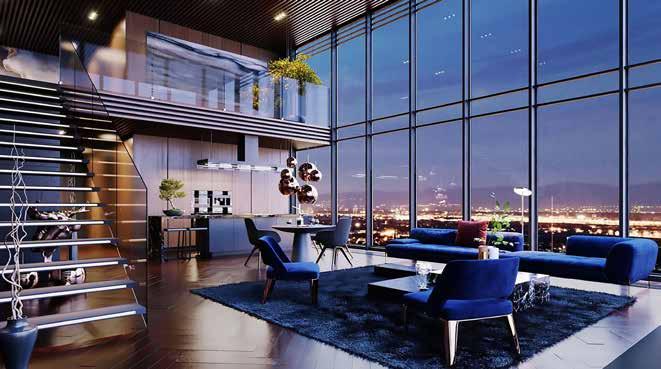
6 Floor-to-ceiling glazing transforms this luxury living room into a study in verticality and light, blurring the boundary between interior architecture and the surrounding cityscape. The double-height volume is grounded by sculptural seating upholstered in saturated blue tones, arranged atop a dense area rug that visually anchors the space within the expansive footprint. Clean-lined furnishings and a streamlined stone coffee table emphasize proportion and balance, while a floating staircase, glass balustrades, and a mezzanine level introduce a sense of movement and spatial layering. The restrained material palette, featuring dark-stained flooring, sleek metal accents, and softly reflective surfaces, illustrates a continued shift toward contemporary elegance. Photo courtesy of Achieve Realty.
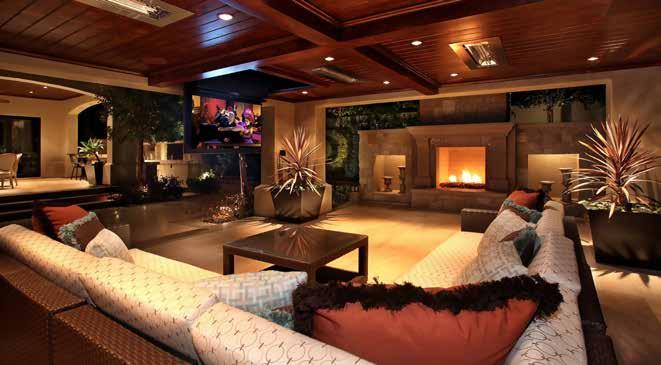
7 Defined by warmth and architectural presence, this luxury living room blends indoor comfort with an outdoor sensibility. A richly stained coffered wood ceiling introduces depth and structure overhead, while layered recessed lighting softens the space and eliminates reliance on a single light source. Deep, low-profile seating upholstered in neutral performance fabrics is arranged to encourage conversation, anchored by a central coffee table and oriented toward a substantial stone fireplace that serves as both focal point and gathering element. Natural materials, woven textures, stone masonry, and oversized planters with sculptural greenery reinforce the trend toward organic finishes, while integrated technology and seamless transitions to adjacent spaces reflect a growing emphasis on livability. Photo Courtesy of Remodeluxe.
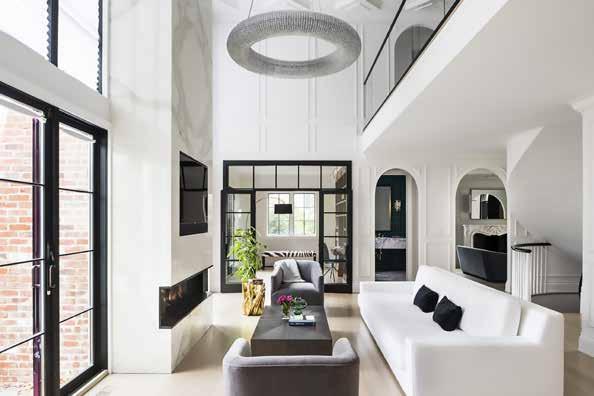
8 A refined balance of scale and restraint defines this timeless double-height living room, where crisp architectural detailing is paired with a softened, contemporary furnishings plan. White paneled walls and arched openings create visual continuity throughout the space, while black steel-framed doors and windows introduce contrast and structure. Seating is intentionally streamlined, allowing circulation and sightlines to remain open, with a neutral palette that emphasizes texture over color. A sculptural ring chandelier anchors the vertical volume above, underscoring a broader trend toward living rooms that feel light-filled, thoughtfully edited, and architecturally expressive rather than overtly decorative. Photo courtesy of JSE Interior Design.
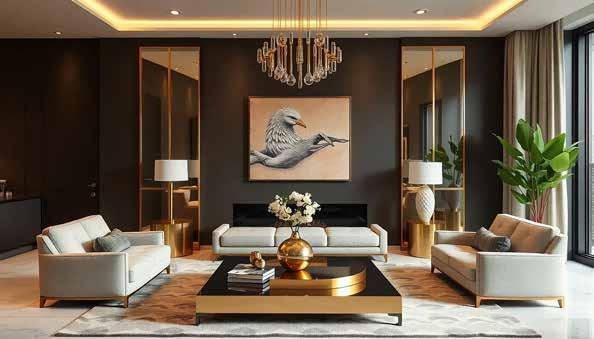
9 A balanced composition of contrast and restraint defines this contemporary space, where dark, matte wall finishes are offset by warm metallic accents and tailored upholstery. Symmetry plays a central role, with paired sofas and flanking mirrors establishing visual order while subtly amplifying light. A sculptural chandelier and recessed cove lighting introduce layered illumination, softening the room’s strong architectural lines. Curved furnishings and a custom coffee table with a mixed-material profile reinforce the ongoing shift toward softer forms, while curated art, organic greenery, and refined accessories underscore a trend toward spaces that feel polished yet deeply livable. Photo courtesy of Henck Design.
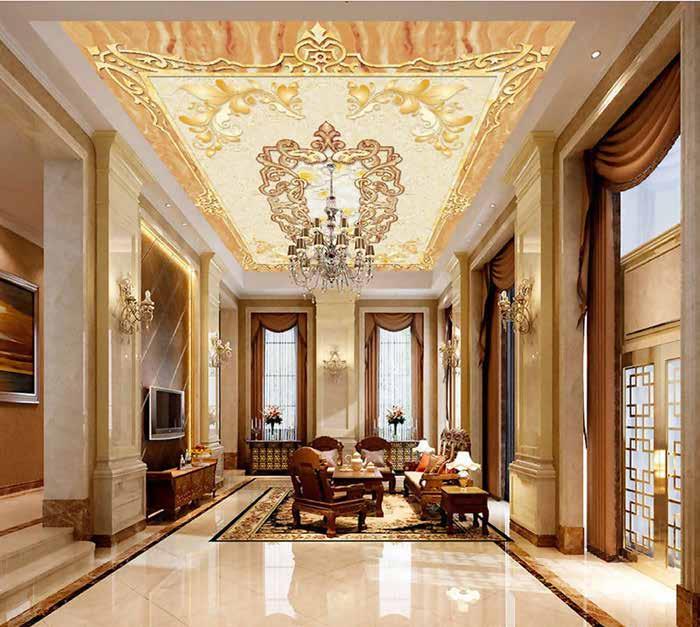
10 An ornate, classically proportioned living room illustrates a renewed appreciation for craftsmanship and decorative detail in luxury interiors. A richly embellished ceiling treatment—framed by layered molding and anchored by a crystal chandelier—draws the eye upward, reinforcing verticality and formal symmetry. Polished stone floors and substantial columns establish a sense of permanence, while tailored window treatments and traditional furnishings introduce warmth and livability within the grand scale. The arrangement reflects a broader shift toward rooms that celebrate architectural heritage and refined ornamentation, balancing historical reference with a carefully composed, contemporary approach. Photo courtesy of BVM Home.

BBy Ray Hunter Photography Courtesy of Billy Yarosh (Photography)

Billy
Chasing the Edge of Light Billy Yarosh’s Kentucky Landscapes Yarosh
1 Artist: Billy Yarosh
Billy stands on a forest trail, arms crossed, relaxed but focused, in the same environment that fuels his work. The wooded backdrop mirrors the spaces he returns to again and again to reset and observe. His portrait feels grounded and direct, much like his approach behind the lens. For him, the landscape is not simply a subject, but a lifelong relationship.
illy Yarosh did not set out to become a landscape photographer. His path began with a canoe, an 8-megapixel Kodak EasyShare, and a two-month paddle through the waterways of the Northeast. In the summer of 2006, he and his partner traveled from the Fulton Chain in the Adirondacks to Fort Kent, Maine. Along the way, he stopped at small-town libraries to send stories and photos back to his hometown newspaper. That early mix of adventure and storytelling shaped the way he sees the outdoors today.
Now based in Lexington, Billy has built a body of work rooted in Kentucky’s forests, gorges, and shifting light. After moving to Morehead in 2010 to finish a degree in computer science, he fell in love with Eastern Kentucky’s rugged terrain. Years later, after the sudden death of his best friend in 2019, he made a decisive change. He left his job, joined the engineering team at AllTrails, and invested in better camera equipment. He returned to the woods with a new purpose and began sharing his journeys on Instagram.
“I wanted to take that same approach on my young canoe trip through the regions and trails of Kentucky and the surrounding area,” Billy said.
What began as a way to document hikes quickly turned into a deeper calling. Billy’s photography centers on access and connection. He wants viewers to feel present in the landscape, not just observe it from a distance.
“The goal of my photography is to take folks along my journey,” he added. “To experience the landscapes and their moods, their shifting light and colors, and to help people find a piece of themselves in the images.”
His pull toward nature began long before Kentucky. Growing up with a backyard that opened into wooded hillsides and creek beds, he spent hours exploring, swimming, and searching for artifacts. The woods became a place to think and reset. That instinct remains.
“I have always been pulled back to the woods, to clear my head, to rewind, and to feel that childlike feeling again.”
While he could travel widely, Billy often returns to Daniel Boone National Forest. He describes it as raw and honest. Waterfalls, arches, and gorge overlooks draw him back, especially in spring when the forest turns deeply green and alive with wildlife and wildflowers. Many of these places sit just off familiar roads, hidden behind everyday storefronts.
His shooting process blends preparation and instinct. Night sky images demand careful planning. Foggy mornings and fleeting beams of light do not. Billy carries his camera strapped to his chest, ready to capture what he calls “heavenly moments” that last only seconds.
“My process is about 50/50, heavily planned and curated versus instinct and moments,” he said.
Light guides much of his work. He favors the edge of the day, when shadows lengthen, and color softens. Though not a morning person, he consistently positions himself for sunset, watching how the landscape shifts as daylight fades.
“When light is on the edge of a landscape, everything softens, the colors smooth, and the scene presents itself either bold in color or muted in peace.”
Beyond aesthetics, Billy hopes his photographs serve a practical purpose. He partners with state and local parks to promote managed lands and encourage outdoor use. For some viewers, his images may inspire a hike. For others, especially those less able to travel, they may offer a moment of immersion.
As a Kentucky Crafted juried artist, Billy participates in the Kentucky Crafted Market each March at the Kentucky Horse Park’s Alltech Arena. He encourages readers to attend, noting that many artists rely on this single annual event to connect with the public.

Through each image, he continues to return to Kentucky’s trails with a camera in hand, searching for light, movement, and quiet scenes that often go unnoticed. He hopes viewers feel invited into those moments.
Readers interested in following Billy’s work can find him on Instagram at @bill.hikes and on Facebook at billy.hikes.fb. He maintains a dedicated photography site at prints.billyhikes.com, where prints, licensing opportunities, and office installations are available. His work is also featured at Earth Shop gallery in the Red River Gorge. For collaborations, partnerships, or print inquiries, he welcomes direct messages through his social platforms.

2
2 Gatliff Bridge Fall Moods
A low blanket of fog drifts across the water at Gatliff Bridge, turning the arches into soft silhouettes and doubling them in reflection. These quiet, in-between conditions can make a familiar place feel brand new for a few minutes. It’s the kind of hidden beauty Kentucky’s state parks still hold, even for people who think they’ve seen it all from the road. Scenes like this reward patience and timing more than planning.

3
3 Cumberland Falls - Fiery Fall
Cumberland Falls cuts clean through the gorge, framed by autumn color and a thin veil of mist hanging above the river. Waterfalls often run lower in fall, but this one still carries steady force, and the season’s cooler air makes the spray linger. The edge-of-day light warms the cliffs and softens the water into a silky flow against the darker pool below. It’s a classic Kentucky view, but the mood shifts quickly with weather and light.

4 Pine Mountain Epic Mornings
On Pine Mountain, a lone figure stands on a rock outcrop as the sun breaks over layered ridgelines, sending long rays across the valley. A person in the frame provides scale, allowing viewers to feel the landscape’s size rather than guessing it. The moment reads as both vast and personal, the way a big overlook can make you quiet without trying. It reflects a balance of preparation and instinct, arriving early and staying ready for what the light decides to do.
4 5

5 Chained Rock Fiery Landscape
From Chained Rock, the foreground stone and iron chain guide the eye straight into a sunrise spread across the horizon. Low clouds pool in the valleys like water, separating dark ridges into layered silhouettes. This kind of image requires planning and precision, but the sky still changes by the minute. The final frame feels expansive and earned, shaped by both preparation and reaction.
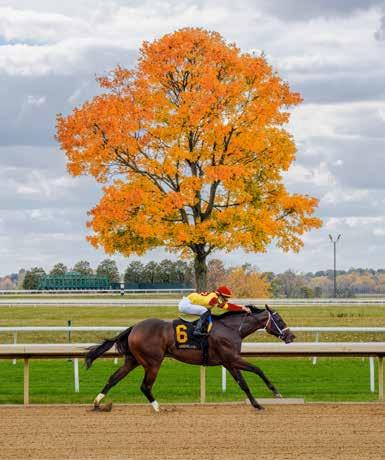
6 Keenland That Fall Oak
A racehorse stretches into full stride at Keeneland, with a blazing oak behind it that nearly steals the show. Mixing action with landscape adds depth to the Bluegrass setting, where speed and stillness meet in a single frame. The bright silks, the track, and the open sky place the scene firmly in Kentucky without explanation. It’s a reminder that “nature” here includes cultural landmarks shaped by land and season.
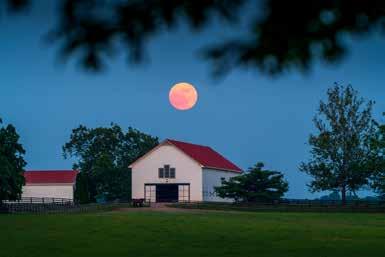
7 Strawberry Moon Farm Scene
A pink-toned Strawberry Moon lifts over a white barn and red roof, casting a quiet glow across the Bluegrass pasture. Long lenses compress the scene, making the moon feel close while maintaining the openness of the farmland. Capturing a moonrise like this takes careful positioning and patience as the horizon shifts by the second. The soft blush of color that night lived up to its seasonal name.

8 The Pinnacles - Deep in Thought
At the Pinnacles of Berea, a seated figure watches the sun drop behind the ridge, with the Bluegrass stretching beyond the trees. Places like this hold two landscapes at once, mountains in the foreground and open farmland in the distance. Warm light skims the rock, turning the overlook into a natural seat, inviting pause rather than movement. It’s the kind of view that encourages reflection long after the hike ends.

9 Into the Pines, Double Falls
At Double Falls, water splits and drops over rock ledges into a narrow, moss-lined corridor below. Kentucky’s watershed runs strong, but steep cliffs force fast runoff, making scenes like this dependent on recent rain and exact timing. Moments like these are highlighted to encourage thoughtful visitation and awareness of conditions. When the flow is right, the falls feel powerful and fleeting all at once.


12 Milky Way over Hanson’s Point
10 Milky Way over Natural Bridge
The Milky Way rises in a vertical column above Natural Bridge, placing the sandstone arch in direct relationship with the cosmos. This is one of Billy Yarosh’s most recognized images and highlights the precision required for night photography. Moon phase, cloud cover, and seasonal alignment all have to cooperate for a scene like this to unfold. The result feels both grounded and infinite at once.
10 11

11 Natural Bridge - A Mid Winters Dream
Snow coats the branches and cliffs around Natural Bridge, transforming the sandstone into a winter study of white and muted gray. Kentucky rarely sees this kind of soft, even snowfall, which makes timing critical when it does arrive. The snowglobe effect lasted only briefly before shifting conditions changed the scene. The result is a rare winter portrait of one of the state’s most visited landmarks.
12 13
In late spring and early summer, the Milky Way arches across the sky for only a short window of weeks. From Hanson’s Point, the galaxy stretches wide over the ridgelines of the Red River Gorge, where some of the region’s darkest skies remain. These images require hiking in, waiting it out, and trusting forecasts and timing. When conditions align, the Gorge feels vast and almost untouched.

13 Dog Fork Retreat
From the mouth of a cave at Dog Fork, a lone figure stands framed by stone and forest as water drops in a clean ribbon from above. The scene feels contained and quiet, like a pause in the middle of a long hike. Including a person creates scale and emotional entry into the landscape. The surrounding caves and creeks carve deep ravines that encourage stillness over motion.
Where Structure Meets Motion
By Ray Hunter & Photography by Walt Roycraft
In Lexington’s Mentelle neighborhood, Lynn Winter’s 1915 Dutch Colonial holds its historic shape from the street, but inside it reflects years of deliberate rebuilding. The 2,300-square-foot home includes three bedrooms and two full baths, along with a renovated attic, a second-floor porch, and a small third floor sleeping balcony. Lynn bought the house in late 2017 and spent the next six years reshaping it into a space that supports how she lives and works every day.
“I looked at over a hundred homes before I came upon this one,” Lynn said. “The minute I saw it, I knew it was for me—the house, the yard, all of it. Plus, I loved the neighborhood.”
Lynn once owned Lynn’s Paradise Cafe and the World of Swirl. After closing those businesses, she moved to the West Coast for several years. In 2016, she returned to Lexington to care for her parents as they aged. She had lived here as a teenager, and coming back felt different. After her parents passed, she realized she had fallen in love with the city again and decided to stay and make her home here.
When she purchased the house, it needed serious work. The attic was unusable. Systems were outdated. The layout felt closed off. What followed was a six-year renovation that touched every surface and structure. Lynn replaced every major system, removed walls, rebuilt ceilings and floors, and strengthened the framework while living in the house throughout the process.
“I took down many walls and redid the whole thing, from the floors to the walls to the ceilings,” she added. “I wanted to build my forever home, and I lived in it while doing the work.”
One of the most significant structural changes happened at the back of the house. Lynn added a two-foot extension to bring the rear walls into alignment, creating the strength needed to install windows and doors across the back façade. The result is a main living space that feels open and connected, with natural light moving across the room throughout the day.
The main level was designed to shift with the seasons and with whoever happens to be there. Furniture moves. Doors open. The space adjusts without losing its center.
“In winter, we gather around the fireplace, and during the rest of the seasons, I turn the couch, and we enjoy the space with the doors open onto the garden. I landscaped so that you step straight out onto the earth—flowers are right outside the back doors and windows.”
Up front, Lynn built a nine-foot-deep second-floor porch where she keeps flowers and relaxes when she can. A small third floor sleeping balcony adds another retreat. She also renovated the attic, transforming what had been unusable space into functional square footage, and installed a secondfloor kitchen dedicated to projects.
“I use the whole house as a large workshop, constantly moving things in and out as the need arises,” Lynn said. “When the bad weather hit, I moved things around in the living room and set up my painting studio in the middle. When good weather returns, I’ll move back out and get set up to sow seeds. There’s always some project going on.”
Material choices tie the renovation to Kentucky. Lynn selected local limestone for counters, mantels, and shelving and left it untreated so it can age naturally. She used fir for built-ins and mantel supports. Original pine floors were restored, and reclaimed local pine was sourced to complete the third floor, which had no flooring when she purchased the home. Handmade glass and an abundance of windows bring light across all three levels.
The structure may be over a century old, but the energy inside it is immediate and hands-on. In Mentelle, this Dutch Colonial is not preserved for display. It is used, reworked, and lived in fully, which is exactly what Lynn intended when she decided it would be her forever home.
1 Hyacinth beans climb toward the third-floor porch, reinforcing the vertical sweep of the Dutch Colonial façade. The rear extension and expanded glass subtly reshape the structure while respecting its 1915 form. Vines travel upward across siding and railing, softening the geometry without disguising it. The exterior reflects renovation and growth happening simultaneously.
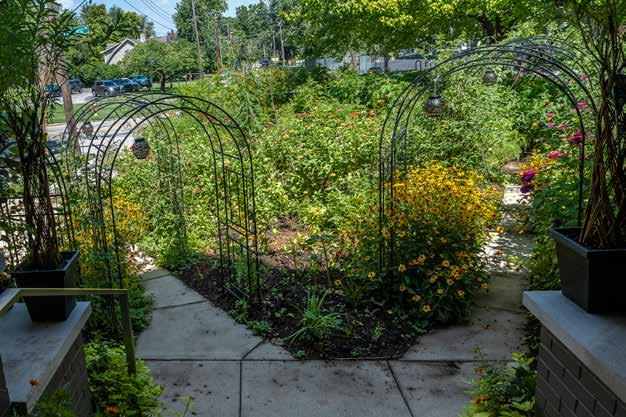
2 From the front porch, the walk moves through planted beds and iron arches that frame the approach to the house. The garden does not sit at the perimeter. It directly engages the structure, signaling that the landscape is part of the architecture. Even the entry sequence reflects Lynn’s hands-on approach, where cultivation and construction evolve side by side. The path feels intentional and layered, offering a preview of the work and vision carried throughout the property.
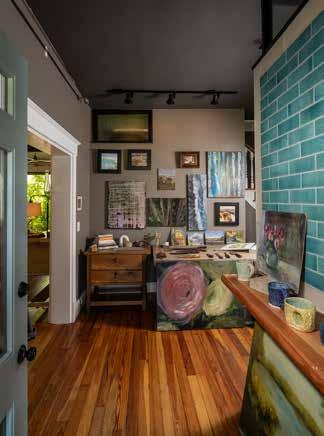
3 The foyer doubles as a working gallery, with Lynn’s paintings arranged salon-style against a deep-toned wall. Restored pine floors run underfoot, bringing warmth and history back into a space that once required full reconstruction. A high transom window draws in filtered light, highlighting brushstrokes and texture. This entry is not simply transitional. It announces that creativity shapes the home from the moment you step inside.
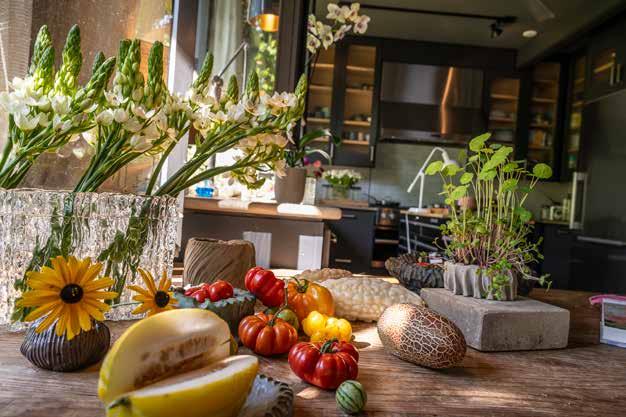
4 Produce, flowers, and herbs gathered steps from the back doors rest on a broad wood surface beneath limestone counters and open shelving. The kitchen reflects the larger renovation philosophy of durability, natural materials, and connection to the outdoors. Dark cabinetry anchors the room while light moves freely through expanded rear windows. What is grown outside flows directly into daily routines, reinforcing the house as both working space and gathering place.
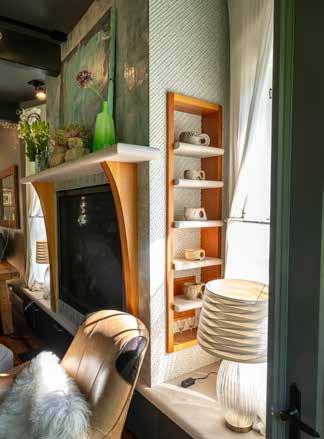
5 Local limestone defines the fireplace surround, mantel, and shelving, left untreated so the material can age naturally over time. Fir supports reinforce the built-ins and maintain clean structural lines. Handmade coffee cups and collected objects sit within reach, reinforcing that the room is built for daily use rather than display. In colder months, the fireplace becomes the center of activity, grounding the open living area with weight and permanence.
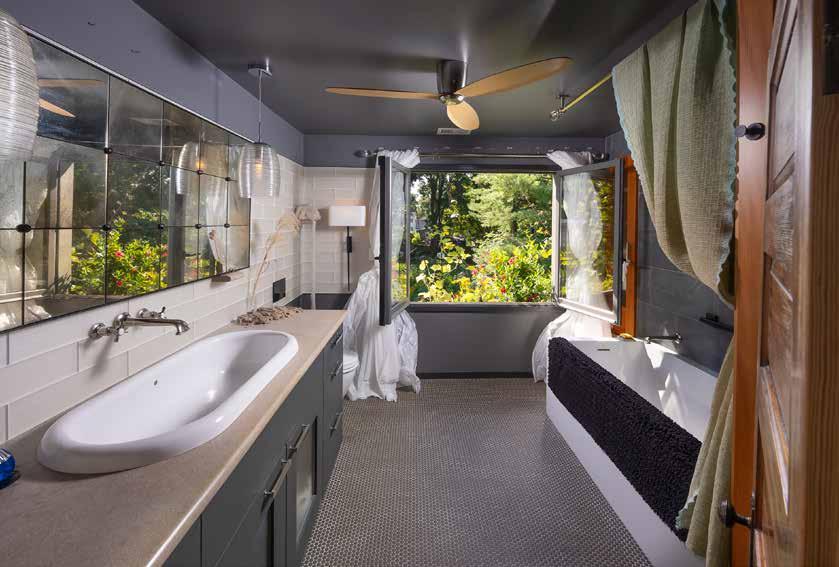
6 The second-floor bathroom balances limestone surfaces with simple tile and restrained fixtures. Natural light softens the space and highlights material texture rather than ornament. Clean lines and practical finishes reflect the same renovation philosophy seen throughout the house. The room feels deliberate and calm, rooted in proportion and function.
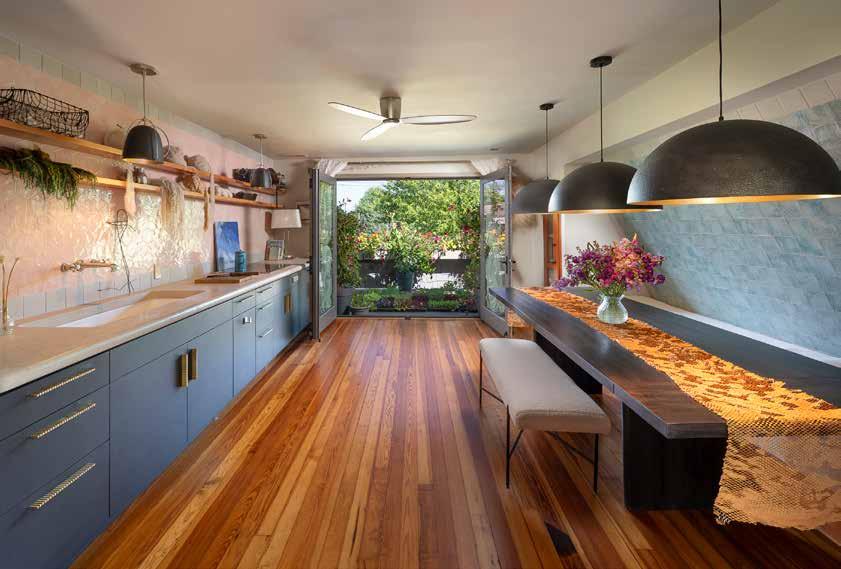
7 A second-floor project room opens toward the porch, allowing air and daylight to move freely through the space. Cabinetry remains restrained so the room can shift as needed for painting, planting, or seasonal work. Structural adjustments during the renovation created clarity and flexibility on this level. It functions as part studio, part workshop, and part retreat.
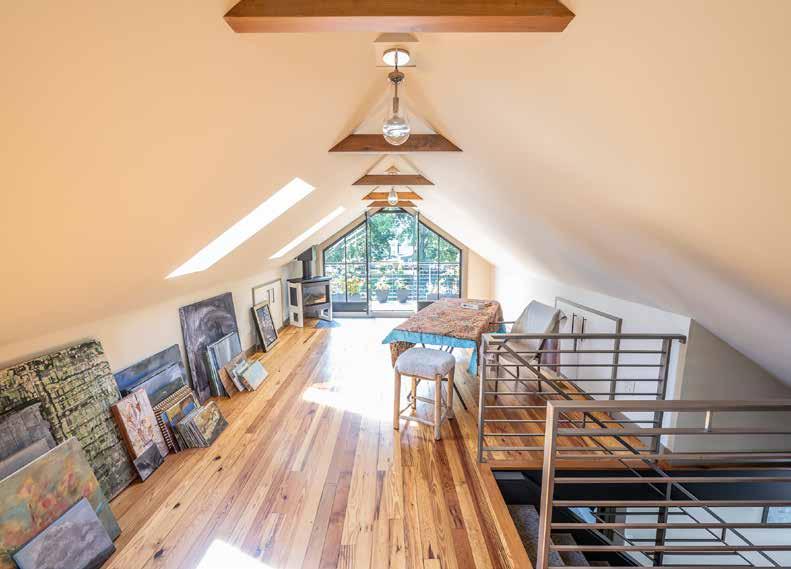
8 The third floor, once unusable, now serves as a studio and sleeping space beneath the sloped roofline. Restored pine floors extend toward a compact balcony overlooking the garden below. Exposed beams and simple fixtures emphasize structure and craft over ornament. This level feels personal and quiet, shaped by light and view.
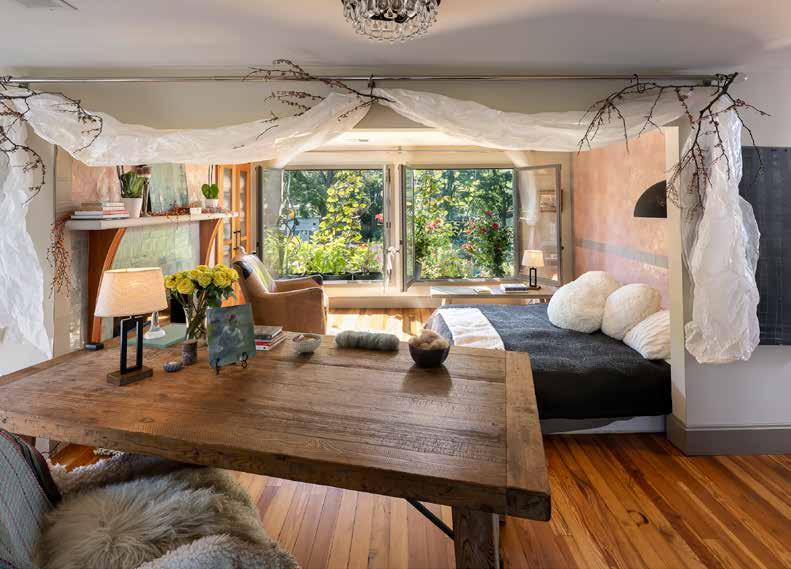
9 The primary bedroom maintains the home’s consistent language of natural materials and filtered light. Large windows frame the raised garden, keeping the exterior present even in this more private space. A substantial wood table and layered textiles add weight and warmth without excess. The room carries the same balance found throughout the house, structure first, atmosphere second.
HOME CREDITS
Design: LA Winter Design (Lynn Winter)
General Contractor: Gary Murphy, Prajna
Countertops & Shelving: Counter Culture
Tile: Louisville Tile
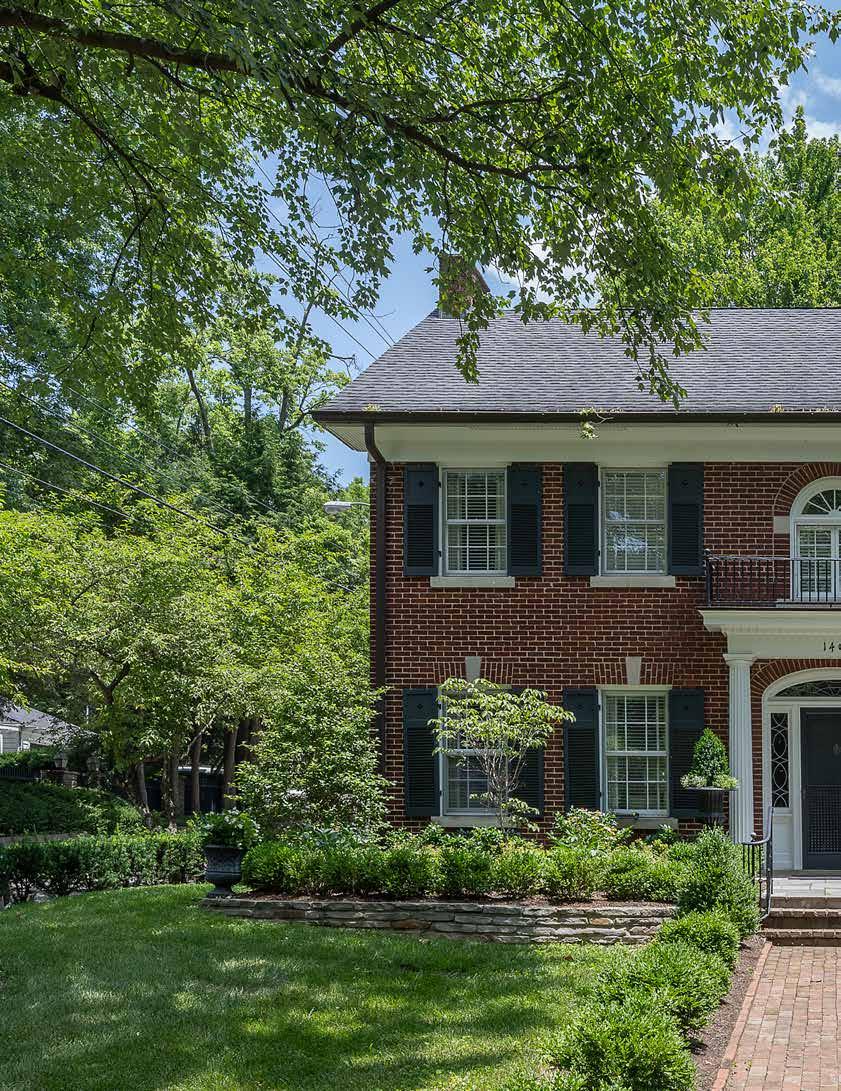
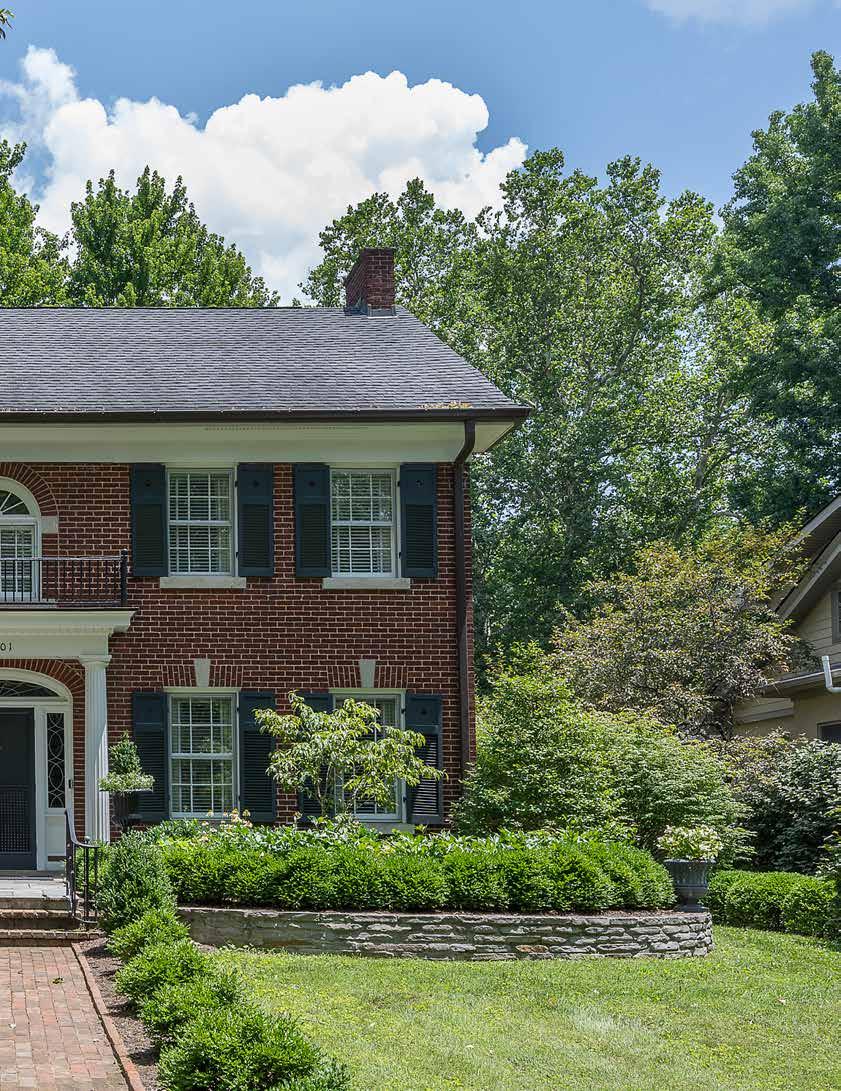
1 Designed in 1920 by architect Warfield Gratz, the red-brick Colonial faces Ashland Park with the symmetry and restraint that define its era. A centered arched entry, black shutters, and balanced window placement give the façade a steady presence within the Ashland Park/Kenwick neighborhood. Mature landscaping softens the structure while reinforcing its long-standing place across from one of Lexington’s most established green spaces.
A Century renewed In AshlAnd PArk
By Ray Hunter
Photography by Walt Roycraft
Set across from Ashland Park, in one of Lexington’s most established neighborhoods, a 1920 Colonial Classic stands with quiet authority. Designed by architect Warfield Gratz, the home has remained a steady presence for more than a century and has had only three owners in its lifetime.
Dr. Laura Justice became the third when she purchased the property in November 2020. The house had not been renovated since the early 1950s. Much of the original construction remained intact, and while it had been well maintained, it did not fit her needs. Laura saw potential in its structure and setting. After a full renovation, she moved into the main house in December 2021 and began shaping a home that honors its history while supporting modern living.
“I was drawn to the location first. Being right across from Ashland Park and just steps from Henry Clay’s home felt special,” Laura said. “The setting alone made me want to invest in bringing the house back to life.”
From the beginning, her goals were practical. The home relied on an old boiler system, and the electrical and plumbing systems needed to be updated. Laura wanted to modernize the infrastructure while preserving architectural integrity.
“My design goals were to update the essentials like central heat, electric, and plumbing, but to do it in a way that maintained a true 1920s feel. I didn’t want to erase the history. I wanted to support it.”
The renovation extended beyond cosmetic changes. Laura completed a full overhaul of the main house, refreshed the front yard and garden, renovated the detached garage apartment, and added a workout room in the garage. Inside, the first floor experienced the most dramatic transformation. Walls were removed to open up the rooms and improve the flow between the kitchen, dining area, and living room.
Double back doors now connect the kitchen to the garden, establishing a circular flow throughout the main level. Original windows were preserved, and some were repurposed when those doors were added. Most of the hardwood floors remain, grounding the home in its original era.
Designer Lannie Cornett guided many of the architectural details. Antique furniture pieces were incorporated into the island design by Morningside Woodcrafters, and another antique element was built into a kitchen wall. Lannie sourced wallpaper, cabinet hardware, fixtures, and tile that reinforce the Colonial style while allowing the home to function comfortably today. Interior designer Barbara Ricke later helped layer in modern art and finishing touches that add depth without overwhelming the structure.
Upstairs, Laura and Lannie reworked the primary suite in a significant way. A staircase that once led from a sitting area down into the kitchen was removed. In its place, they created a larger bathroom and transformed the former bath into a walk-in closet complete with a stackable washer and dryer.
“We removed a staircase that didn’t make sense for how we live today and used that space to create a much larger bathroom,” she added. “Then we turned the old bathroom into a walk-in closet with a washer and dryer. I absolutely love having that in my closet. It makes daily life so much easier.”
The kitchen has become a central gathering place where Laura cooks with her children, both amateur chefs. The open layout also makes entertaining feel natural. Friends gather in the living room for mahjong, and the first floor now allows easy movement between spaces.
“Opening up the first floor changed everything. The kitchen, dining, and living areas now flow together, and with the doors opening to the garden, it creates this circular movement through the house. It makes entertaining feel natural and relaxed.”
Even in quieter moments, the house works just as well. The redesigned primary suite offers privacy and efficiency. The firstfloor half bath reflects the same attention to detail as the larger spaces. Nothing feels overlooked.
“I truly love every room. I adore the kitchen, my bedroom, the bath, and the walk-in closet we designed, even the first-floor half bath. The house really suits my lifestyle, and the spaces are easy to use.”
After more than a century, this Ashland Park home feels both grounded and current. Its history remains visible in the details, but its energy comes from the life unfolding inside it. And that, more than anything, is what makes it feel complete.
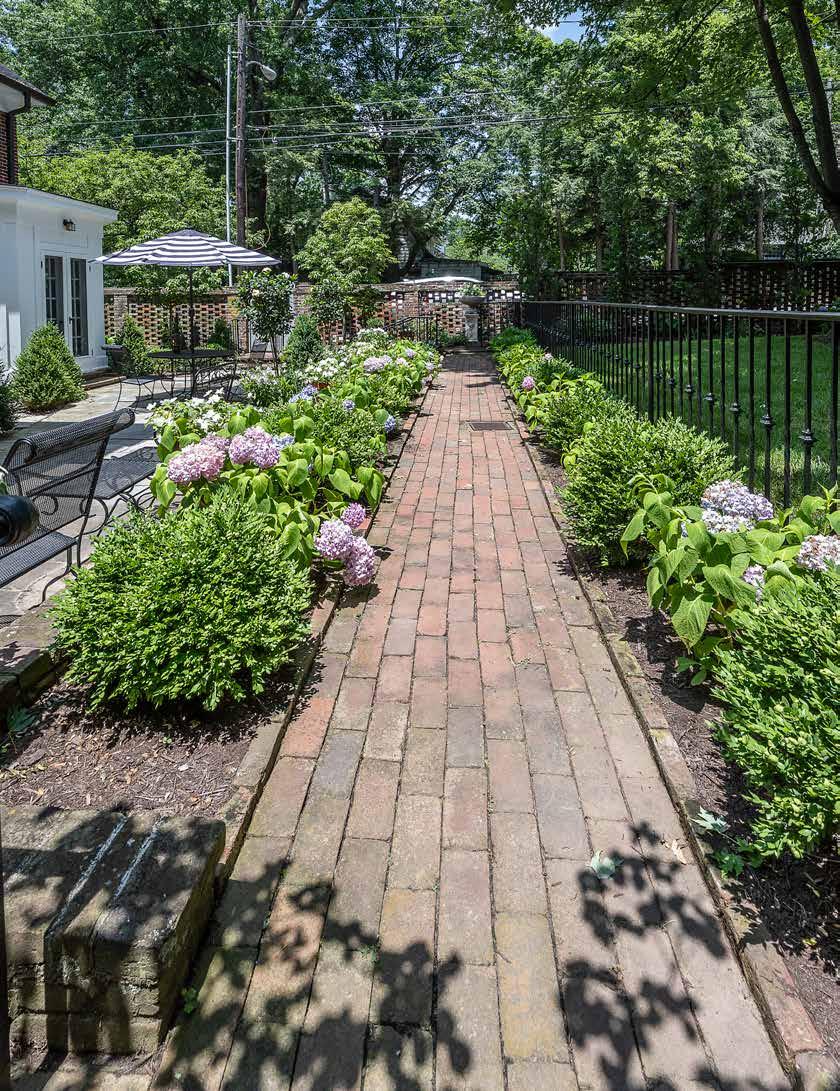
2 A brick walkway moves through clipped boxwoods and hydrangeas toward a patio designed for gathering. The structured planting mirrors the home’s architectural order, while the surrounding greenery creates privacy and calm. Double doors from the kitchen open directly onto this space, extending the first-floor redesign outdoors and supporting the circular flow Laura envisioned for entertaining.
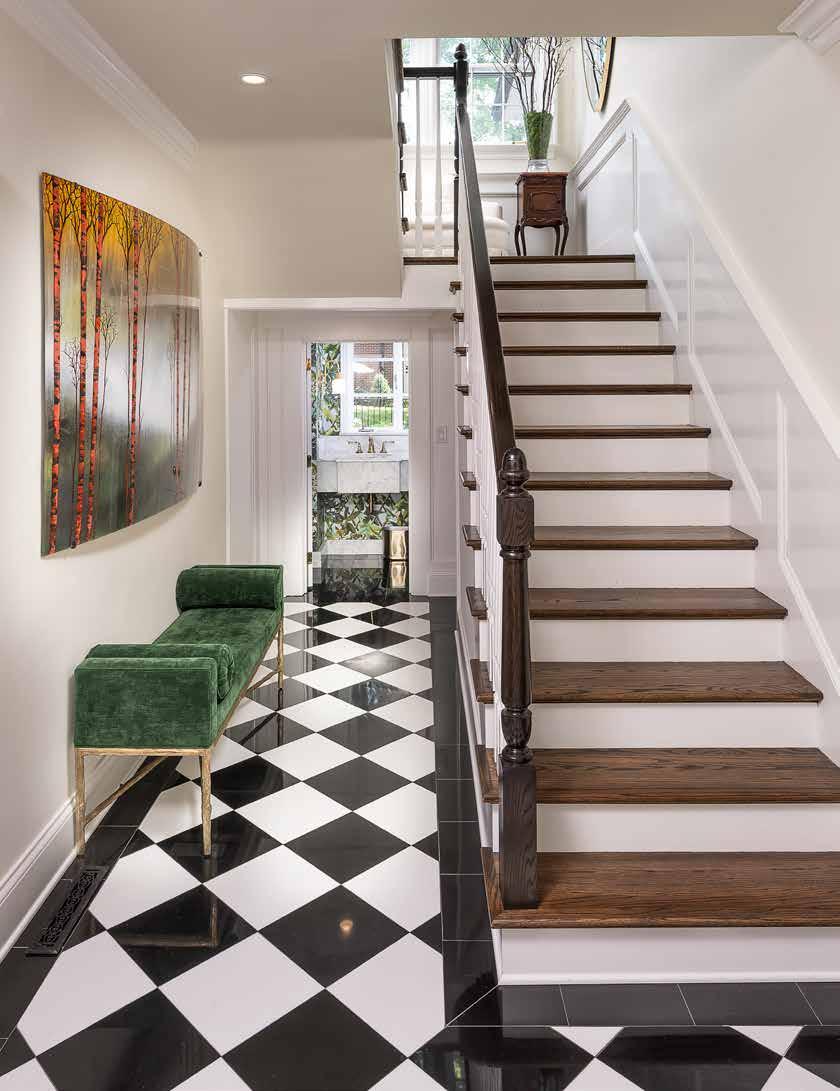
3 The entry makes a confident first impression with its black-and-white checkered floor and original staircase rising along the wall. Crisp trim work and classic detailing preserve the home’s historic framework. Artwork by Christopher Owen Nelson commands attention along the stair wall, introducing bold color and scale within the traditional setting.
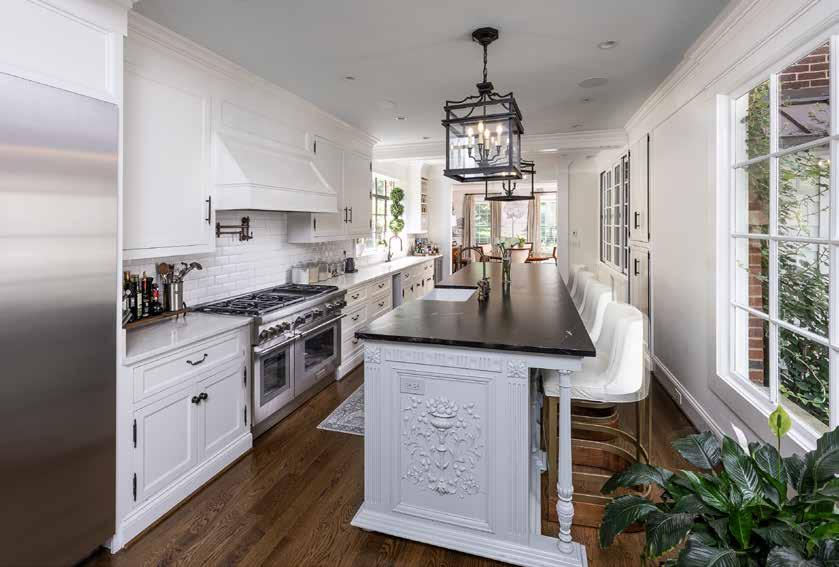
4 The galley kitchen stretches with long sightlines, detailed cabinetry, and classic millwork that reflect the home’s Colonial roots. Light moves through the windows, highlighting traditional finishes and thoughtful storage. Antique elements incorporated into the island design reinforce the 1920s character while anchoring a space that now supports daily cooking and gathering.
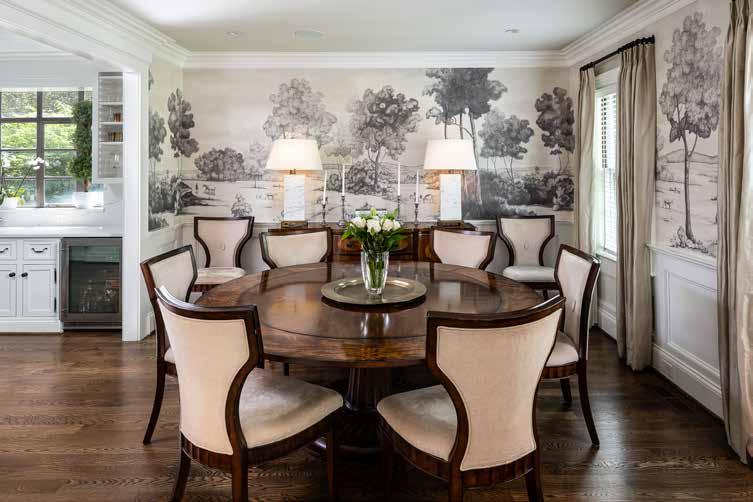
5 A round dining table centers the room beneath crown molding and a tailored light fixture. Scenic wallpaper wraps the walls in layered detail, complementing the traditional furnishings and wood flooring. The space feels intimate yet open, positioned just off the kitchen to support the easy flow Laura created throughout the first floor.
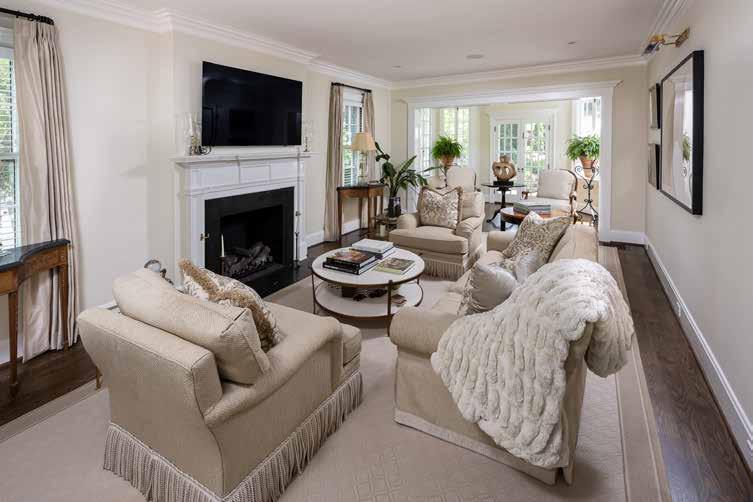
6 Arranged around a traditional fireplace, the main seating area reflects the openness created during the firstfloor renovation. Wide cased openings draw the eye into adjoining spaces, reinforcing the circular flow Laura envisioned. Crown molding, layered textiles, and warm wood flooring preserve the Colonial character while allowing the room to function comfortably for both quiet evenings and gatherings with friends.
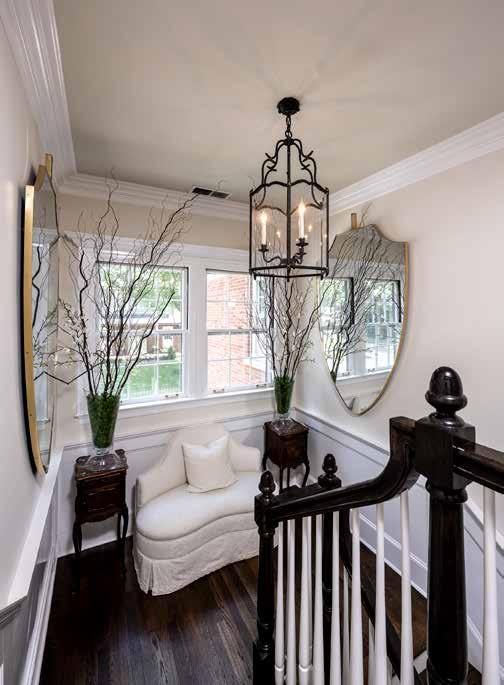
7 Natural light filters through the windows at the upper landing, where the original staircase and dark wood banister remain defining architectural features. A small seating vignette introduces softness between levels, while mirrors and tailored lighting enhance the sense of height and proportion within the historic structure.
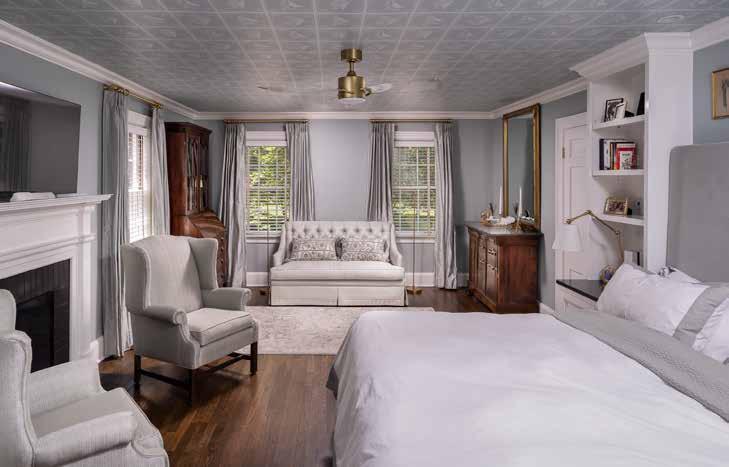
8 Soft gray walls, classic furnishings, and balanced millwork create a sense of order and calm in the primary suite. A fireplace anchors the room, while symmetrical window placement and tailored drapery reinforce the home’s 1920 design language. The redesigned layout improved flow to the adjoining bath and closet, making the space both refined and practical.
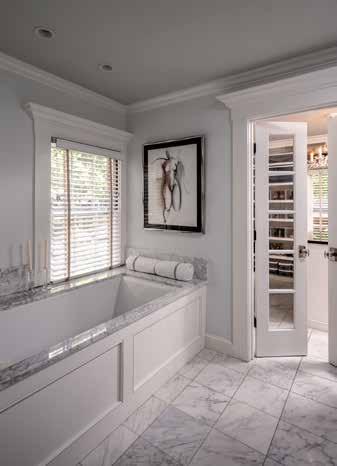
9 Marble flooring and a built-in soaking tub sit beneath natural light, reinforcing the timeless aesthetic Laura prioritized throughout the renovation. French doors open to a walk-in closet created from the home’s former bathroom, where a stackable washer and dryer were thoughtfully integrated to support daily routines.
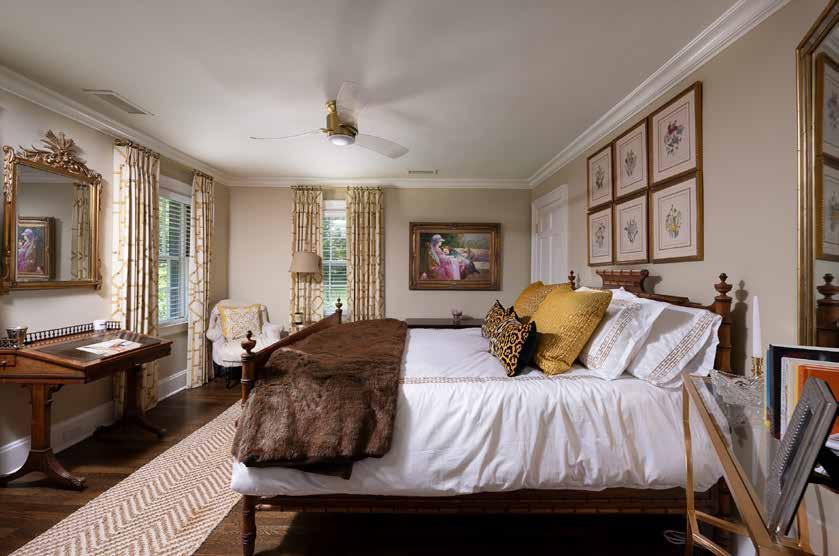
10 Warm wood flooring, framed artwork, and patterned textiles bring layered texture to the guest room. Coordinated window treatments and classic trim maintain the Colonial style, while the comfortable furnishings create a welcoming retreat for visiting family and friends.
HOME CREDITS
Original Architect (1920): Warfield Gratz
Interior and Architectural Design: Lannie Cornett, Lexington
General Contractor: Warner Homes, Lexington
Custom Cabinetry and Woodwork: David Everhart, Winchester
Kitchen Island and Antique Woodwork: Morningside Woodcrafters, Lexington
Garden Design: Lannie Cornett, Lexington
Interior Design Finishes: Barbara Ricke, Lexington
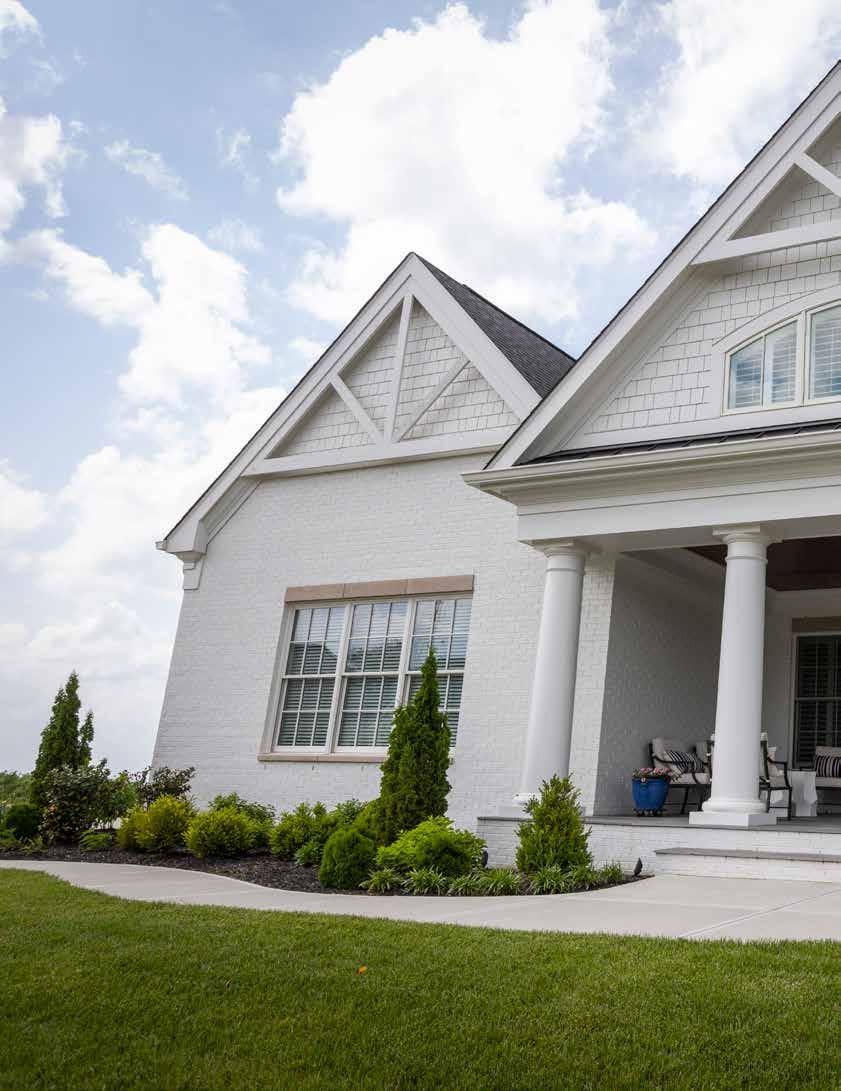
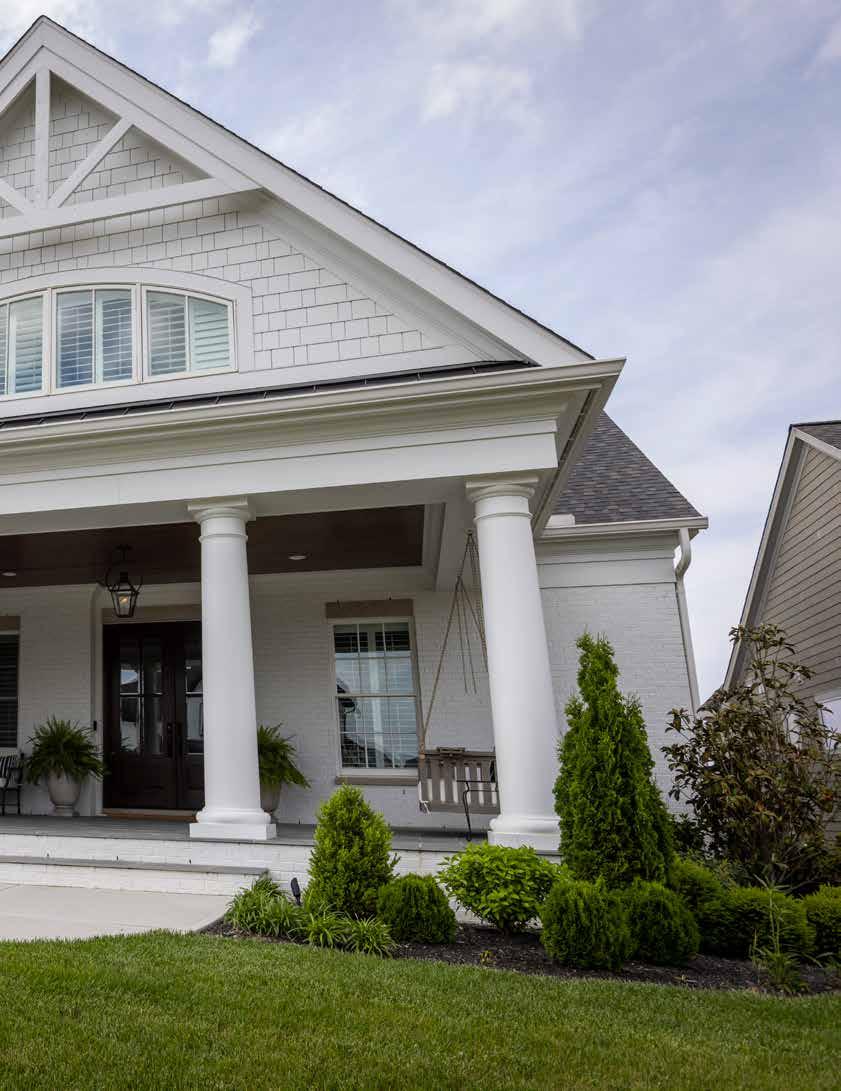
1 Presenting a gracious, classically proportioned façade, this view of the home’s front elevation highlights its crisp white brick, shingle-style gables, and substantial columns, which frame a deep, welcoming porch that is designed for everyday living as much as arrival. A traditional gas lantern marks the entry, while a bed swing positioned to the right of the front door underscores the porch’s role as a functional outdoor living area. Above, a generous bunk room accommodates the homeowners’ grandchildren, thoughtfully tucked beneath the roofline overlooking the approach. To the left of the porch, a broad window conceals a deep and wide three-car garage set discreetly behind the façade, preserving the home’s architectural balance and functionality.
By Kirsten Silven
RVP
Elevated by Design
Photography Courtesy of Ross Van Pelt,
Photography
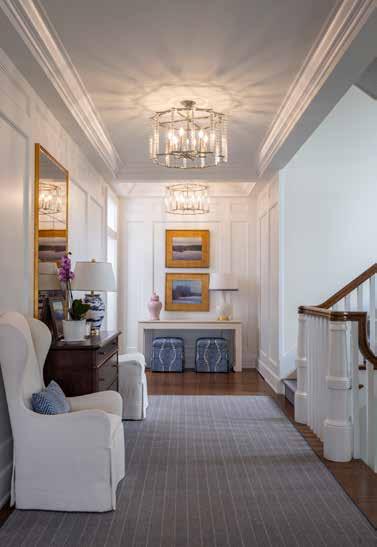
2 The home’s main entryway unfolds just inside a double mahogany front door, creating a refined introduction defined by custom millwork and a crisp, white palette. Tailored wainscoting wraps the space, serving both an aesthetic and functional role by discreetly camouflaging a push-latch laundry room door integrated into the wall to the right of the artwork. A custom-made newel post and traditional stair balustrade lend architectural presence, while layered crown molding and lantern-style ceiling fixtures add depth and a soft, ambient glow. The paired artworks by local artist Paula Risch depict the Ohio River through changing seasons, an intentional reflection of the home’s bluff-top setting in Villa Hills overlooking the river, adding a subtle infusion of color within the otherwise restrained interior. A transom window above the cased opening to the left allows light to filter through, while a home office is situated just off the entry to the right, beyond view.
Set high atop a bluff in Villa Hills, just south of Cincinnati, this custom-built home is oriented to maximize sweeping views of the Ohio River and the downtown skyline— an outlook that shaped its design from the start. Part of a newly developed community with its very own neighborhood restaurant, the 8,800-square-foot residence reflects a strong connection to place and a thoughtful approach to everyday living. The homeowners relocated here from a previous home just a mile and a half away, choosing to stay rooted in an area they prize for its proximity, sense of community, and elevated setting.
Purchased in January 2020, the lot offered a rare combination of elevation and openness, allowing the home to be oriented deliberately toward the river below. Expansive windows, carefully calibrated furniture placement, and a seamless connection between indoor and outdoor spaces all work to ensure that the landscape remains ever-present.
“The view guided the design from the very beginning,” shared interior designer Erin Tuemler of Interior Design Consulting. “Furniture was scaled to maintain clear sightlines and keep the landscape front and center.”
The homeowners are no strangers to thoughtful design, and this marks their third collaboration with Tuemler; a relationship built on trust, shared vision, and a clear understanding of how a home must perform for both daily life and larger gatherings.
“Our goal for the home’s interior was to create a light, traditional aesthetic infused with unexpected moments and a sharp attention to detail,” Tuemler shared. “The result is a crisp, white palette that feels clean, intentional, and timeless.”
From the front elevation, the home introduces itself with quiet confidence. White brick, shingle-style gables, and a deep, columned porch establish a classic architectural framework, softened by lived-in details such as a bed swing positioned to the right of the front door and a traditional gas lantern marking the entry. Above the porch, a generous bunk room—designed to accommodate 16 grandchildren—nestles beneath the roofline, while a wide window to the left discreetly conceals a deep, threecar garage tucked behind the façade.
Inside, the main entryway sets the tone with custom millwork, tailored proportions, and subtle ingenuity. Paneled wainscoting wraps the space, not only reinforcing the home’s cleanlined aesthetic but also concealing a push-latch laundry room door seamlessly integrated into the wall. A bespoke newel post anchors the staircase, while layered crown molding and lantern-style fixtures lend a sense of ceremony. Works by local artist Paula Risch—depicting the Ohio River across changing seasons—add restrained color and a direct connection to the surrounding landscape.
The heart of the home unfolds just beyond, where the main living room sits adjacent to the kitchen and opens fully to a patio and porch through folding doors that disappear neatly into the walls. When opened, the space becomes a true indooroutdoor room, blurring boundaries and amplifying the home’s relationship to its setting. A detailed ceiling treatment, built-in cabinetry, and a gas fireplace anchor the room, while warm wood flooring balances the predominantly light palette.
The kitchen itself is both refined and inviting, crowned by a shiplap ceiling that introduces texture without distraction. Taj Mahal quartzite countertops span a generously proportioned island, complemented by custom Amish-made cabinetry designed to meet the homeowners’ exact needs. Painted cabinetry is offset by select natural wood elements, adding warmth and visual depth. A butler’s pantry lies to the right, while a discreet corner doorway leads to the formal dining room, reinforcing a circulation plan designed for effortless entertaining.
The formal dining room continues the home’s architectural rigor with a modified coffered ceiling that reinterprets a traditional detail with softened proportions. Illuminated built-ins display treasured pieces collected during years of travel while also providing substantial storage for inherited china and silver. Just beyond view, a secondary “dirty kitchen” supports entertaining for larger gatherings, while a nearby door opens to a screened-in porch, extending the room’s function beyond its walls.
On the main level, the primary suite is conceived as a private retreat. A richly detailed custom ceiling draws the eye upward, while red oak flooring—finished in a bespoke stain—grounds the space. Built-in window seating with deep storage drawers offers both comfort and practicality, while the en-suite bath is deliberately restrained, finished in natural marble with heated floors, polished nickel and glass hardware.
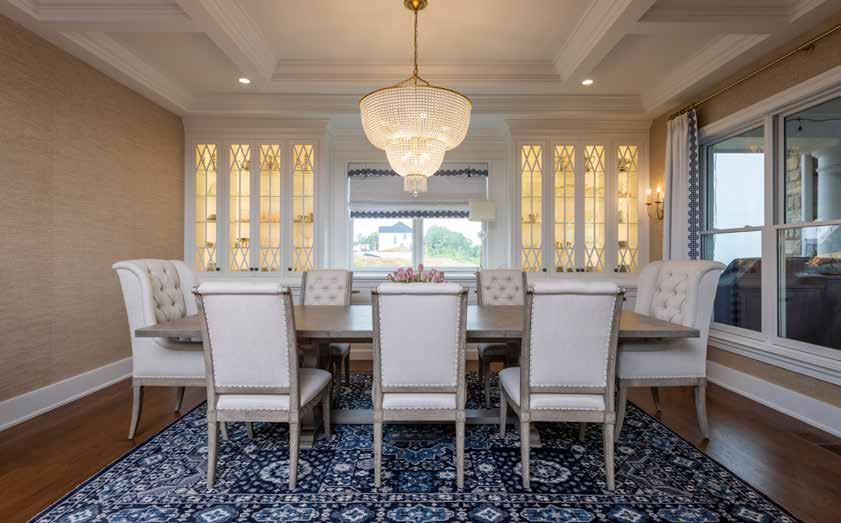
3 Balancing classic symmetry with thoughtful functionality, the formal dining room opens seamlessly to the great room while maintaining a sense of occasion. The modified coffered ceiling is reimagined with softened proportions and layered trim, adding architectural depth while drawing the eye toward a tiered crystal chandelier that anchors the space. Custom built-in cabinetry is illuminated from within, showcasing objects collected by the homeowners during years of travel, while also providing generous storage for china and silver heirlooms. Just beyond view to the left, a butler’s pantry and secondary “dirty kitchen” support entertaining with ease, while a door to the right connects the space directly to a screened-in porch, extending the room’s functionality and reinforcing its role as a hub for both formal gatherings and everyday living.
The second floor holds three en-suite bedrooms, along with the expansive bunk room featuring eight bunks and four beds—an unmistakable nod to the scale of family life the home was built to support. In addition, the residence includes five bedrooms, five full baths, and two powder rooms, along with an elevator, mudroom, and craft room, designed to support multigenerational living.
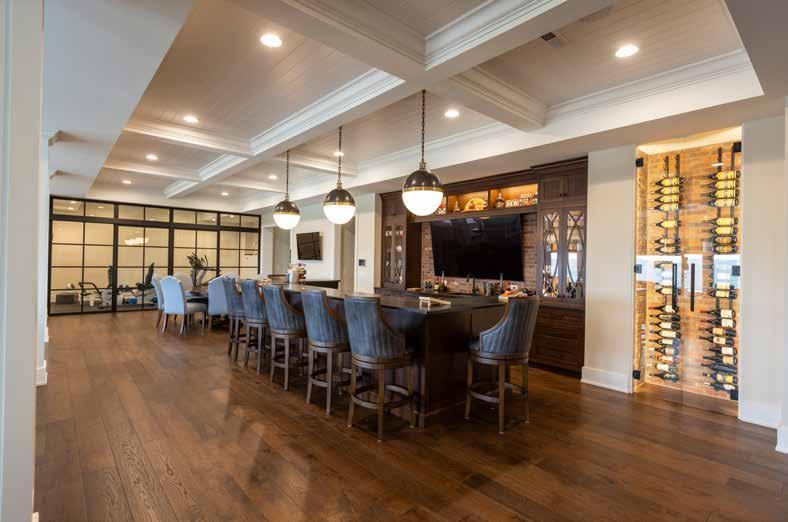
The lower level reveals a different, moodier and more masculine side of the home. Brick carries through multiple spaces, introducing texture and weight while remaining beautifully balanced by lighter finishes. A custom bar area with soapstone countertops, integrated appliances, and adjacent wine cabinet anchors the level, with a glass-fronted exercise room and a bourbon room just beyond that is secured by a custom black iron gate. Nearby, a golf simulator adds another layer of recreation, while a play nook tucked beneath the stairs offers a dedicated hideaway for younger grandchildren.
A family room on this level opens to the backyard, where a retaining wall creates informal seating, and the fire pit anchors idyllic evenings spent outdoors. Swivel chairs inside encourage conversation, while a theater area nearby replaces traditional fixed seating with a sectional and chaise, emphasizing comfort over predictable formality.
Ultimately, the home succeeds in part because it balances architectural discipline with genuine livability and a timeless, deliberate sense of style.
“Every detail was designed with intention, reflecting careful consideration of daily living while allowing the home to comfortably host family and friends,” Tuemler added.
At its heart, the home is defined by sweeping views and the natural rhythms of a large, blended family. It moves effortlessly from still mornings overlooking the river to breathtaking sunsets, shaped by conversation and connection.
4
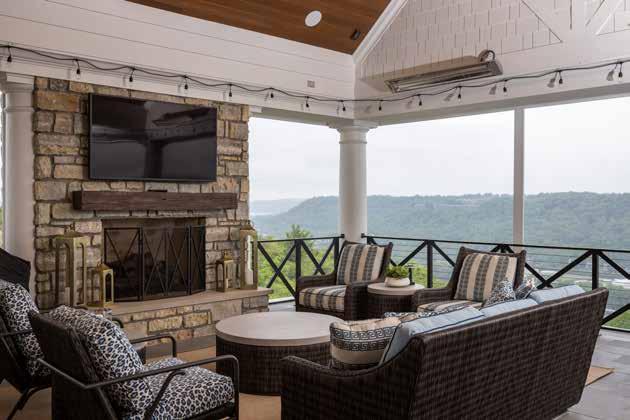
4 Designed to fully embrace its elevated setting, this outdoor living space offers sweeping views of the Ohio River below and front-row seating for vivid sunsets. A gas fireplace clad in natural stone anchors the seating area, lending both warmth and architectural presence, while integrated heaters—four in total—extend usability well beyond warmer months. The soaring wood ceiling creates a sense of enclosure without sacrificing the openness of the view, while generously-scaled seating boasts high-performance outdoor fabric, tailoring the space for relaxation and entertaining. An outdoor dining table lies just out of view, where the family loves to gather for meals whenever time and weather permits.
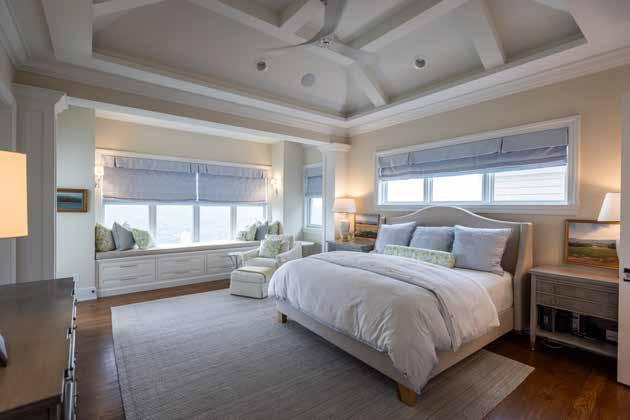
5 Located on the first floor, the primary bedroom is a serene retreat, defined in part by the intricate custom ceiling, which elevates the space and draws the eye upward with sculptural precision. Warm-toned red oak flooring is finished in a custom stain and works to ground the room, while the built-in window seat boasts deep drawers that are ideal for storing extra comforters and pillows. Softly tailored upholstery, layered textiles, and custom Roman shades create a calm, balanced effect, while a painting by local artist Paula Risch introduces a subtle connection to the surrounding landscape. The door opens to another porch, further blurring the boundary between indoor tranquility and the home’s commanding outdoor setting.
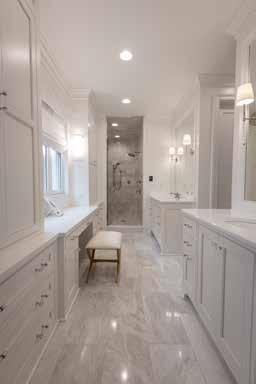
6 Embracing a restrained, timeless sensibility, the primary en-suite bath is anchored by natural marble that extends across the floors and into the walk-in shower, where its subtle veining brings depth without distraction. Heated floors enhance everyday comfort, while a built-in vanity along the left wall is bathed in natural light, and tailored cabinetry works with substantial polished nickel hardware to reinforce a sense of quiet elegance. Between paired sinks, a discreet hallway leads to the water closet, clothing closet, and laundry room, streamlining daily routines without interrupting the room’s serene composition. Glass and nickel fittings are echoed throughout in the refined stem detailing of wall sconces, establishing a cohesive language of classic luxury.
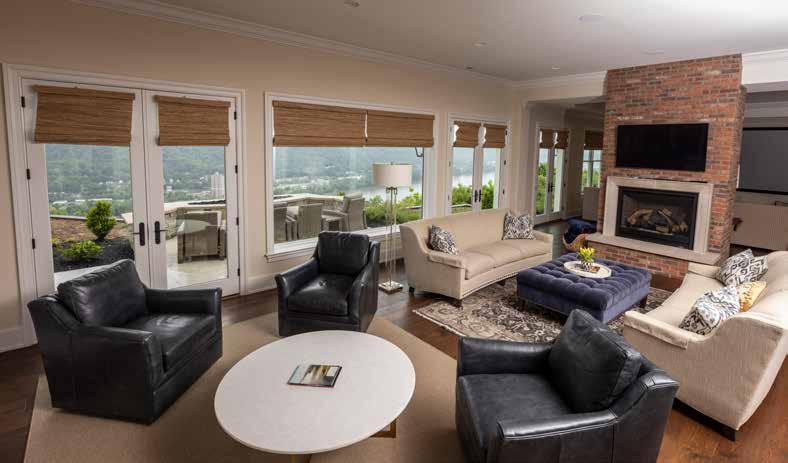
7 The lower level family room is an inviting, flexible gathering space, oriented toward a wall of expansive windows and French doors that frame stunning river views while allowing effortless flow to the exterior spaces. A gas fireplace wrapped in exposed brick anchors the room, its warmth echoed by rich wood flooring and layered furnishings arranged to encourage conversation. Swivel chairs provide adaptability, while upholstered sofas and a generously scaled ottoman create a relaxed yet polished atmosphere. Just outside, a retaining wall and integrated fire pit shape a casual seating area and open yard space where grandchildren can play, extending the room’s function well beyond its walls. To the right, just out of view, a theater area trades traditional fixed seating for a sectional and chaise, reinforcing the home’s emphasis on comfort, connection, and everyday livability.
8 The lower-level bar area is a fabulous entertaining spot, where generous proportions and layered materials dispel any notion of being below grade. Ten-foot coffered ceilings introduce architectural height and rhythm, while warm wood flooring and brick—carried seamlessly into the wine cabinet and backsplash—establish continuity with adjacent spaces like the bourbon room, which lies just beyond the bar to the right. Anchored by soapstone countertops, the bar is also outfitted with an oven, dishwasher, ice machine, and integrated storage, allowing it to function with the ease of a standard kitchen. Upholstered bar seating encourages lingering, while a nearby round table boasts seating for eight, creating a natural setting for conversation. Straight ahead, the exercise room remains visually connected, reinforcing the openness of the home’s layout.
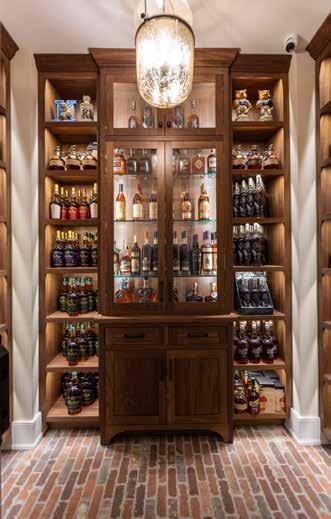
9 Situated in the lower level near the bar, the bourbon room is conceived as a richly layered retreat that reflects the homeowners’ passion for collecting—and enjoying— bourbon. Custom cabinetry in warm wood tones provides both display and storage that is illuminated to highlight the extensive collection, while open shelving to either side of the glass-front center section reinforces a sense of tailored symmetry. Brick flooring is carried through multiple lower-level spaces, introducing both texture and depth, lending a moodier, more masculine character while remaining balanced by lighter finishes and carefully scaled lighting. A custom black iron gate allows entry and is repeated at the nearby entrance to the workout room, tying together function and craftsmanship, creating a cohesive architectural language in the lower level.
10 Situated just off the kitchen, the home’s formal living room fully captures sweeping views of the Ohio River through arched windows that flood the space with natural light. A richly detailed custom ceiling is articulated with intersecting beams and subtle curvature, adding architectural presence overhead, while tailored built-ins frame the gas fireplace and media wall. To the left, folding doors open seamlessly onto a patio and porch, once again dissolving the boundary between interior and exterior spaces, transforming the room into a true indoor–outdoor living area when weather permits. Softly layered furnishings, a sculptural chandelier, and warm wood flooring balance a sense of comfort with refinement, creating a gracious setting against a dramatic backdrop.
11 The main kitchen is both refined and welcoming, anchored by a shiplap ceiling that adds subtle texture overhead and lends architectural interest to the expansive space. Taj Mahal quartzite countertops stretch across a generously scaled island, their soft veining complementing custom Amish-made cabinetry that was meticulously designed to exacting specifications. Crisp painted cabinetry is balanced by select natural wood elements, introducing depth and providing an organic counterpoint to the tailored palette. A professional-grade range and integrated appliances are seamlessly incorporated, while sculptural lighting defines the island as a gathering place for everyday meals and conversation. The kitchen opens directly to the formal living room, with a butler’s pantry for effortless entertaining, while the corner doorway leads to the formal dining room, reinforcing the home’s thoughtful flow.
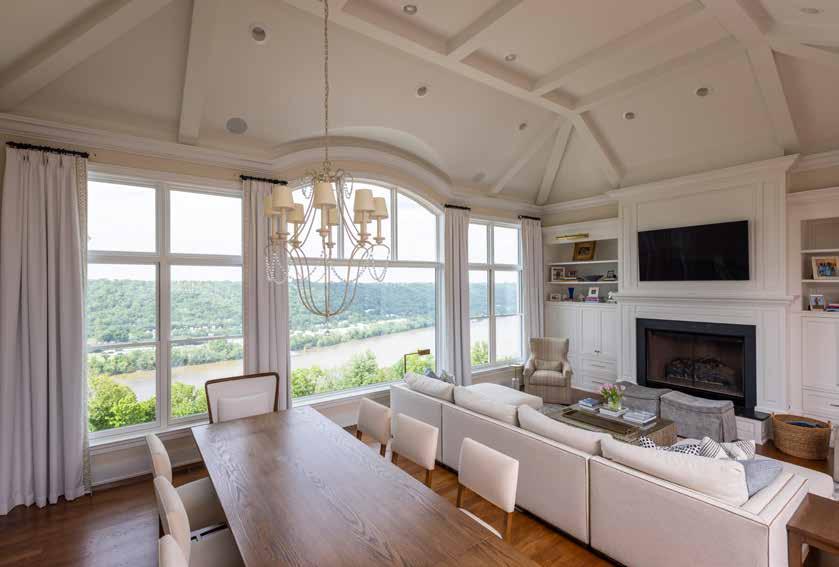
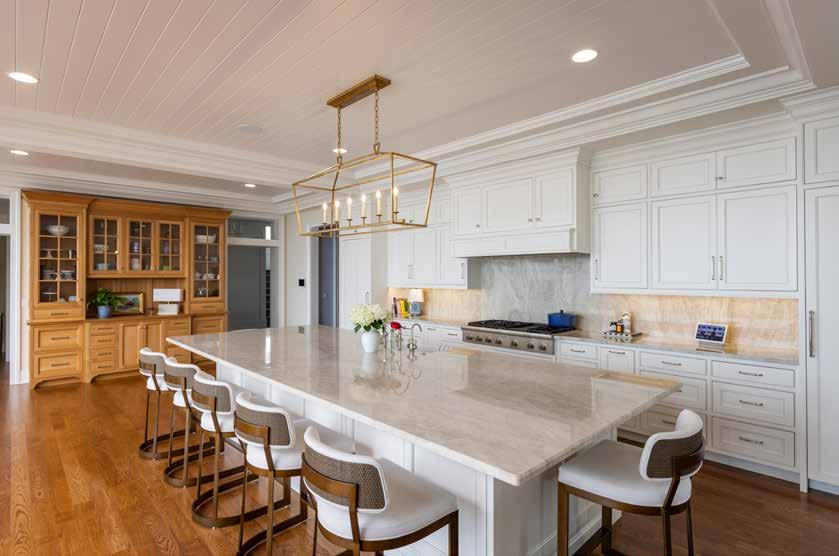
HOME CREDITS
Interior Design: Erin Tuemler, Interior Design Consulting
Architect: Steve Ginter, Architects ll, Ltd
Builder: Ashley Builders Group



1
Pikeville
Where Appalachian Grit Meets Main Street Energy
By Ray Hunter
1 Public art adds color and personality to Pikeville’s Main Street district, and murals like this one help the downtown feel current while still rooted in place. The mountain landscape painted on the wall mirrors the Appalachian scenery surrounding the city, tying the streetscape back to its setting. Paired with brick storefronts and seasonal flower baskets, it captures the “walkable, historic downtown” Jill describes. It’s also a reminder that Pikeville’s revitalization shows up in details you notice while you stroll.
Set in the heart of the Appalachian Mountains, Pikeville greets you with views of the mountains and a downtown that feels active and grounded. The hills rise close, but the streets stay open and walkable. Historic buildings sit beside murals and storefronts that keep the energy current. You can move from a café to a city park to a trailhead without feeling rushed.
Jill Fraley Dotson has served for seven years as Executive Director of Community Relations, Tourism, and Main Street for the City of Pikeville. She works across tourism, downtown revitalization, and economic development, helping shape both the visitor experience and the growth of the historic Main Street district.
“My role focuses on telling Pikeville’s story, celebrating who we are, where we’ve been, and where we’re going,” Jill said.
Start in the downtown and Main Street district, where much of that heart shows up. Pikeville is a nationally accredited Main Street Community, and the designation reflects steady investment and planning. Historic architecture frames walkable streets lined with locally owned shops and restaurants. Murals add color. Pikeville City Park, located in the center of downtown, creates space to gather and pause. The district feels lived in. It functions as both a business hub and a social space.
For a deeper look at Pikeville’s resolve, head to the Pikeville CutThrough. Jill calls it one of the most remarkable engineering projects in the country. The Cut-Through is the second-largest earth removal project in United States history. Crews carved through a mountain to protect downtown from flooding and open land for development. Scenic overlooks give visitors a clear view of the scale and ambition behind it.
“It is a powerful symbol of Pikeville’s determination and vision, literally reshaping our city’s landscape and future.”
Outdoor access strengthens Pikeville’s appeal. Bob Amos Park offers miles of hiking and walking trails, horseback riding, and scenic overlooks that remind you how close the mountains remain. The Levisa Fork provides kayaking opportunities. The nearby Hatfield-McCoy Trails draw riders from across the country. Visitors can base themselves downtown and reach serious outdoor recreation within minutes.
Entertainment adds another layer. The Appalachian Wireless Arena hosts major concerts and events, bringing national acts to Eastern Kentucky. The Appalachian Center for the Arts offers performances in a more intimate setting. Brothers Wright Distillery, one of the city’s newest downtown additions, adds a stop that ties craftsmanship to history. Visitors can tour, taste, and learn about the distilling process.
“Pikeville blends Appalachian heritage with modern energy in a way that’s truly special,” she said.
That balance carries into Pikeville’s role as a regional center for education, healthcare, and commerce. Jill points to resilience and forward thinking as long-standing traits. Investments like the Cut-Through project and steady downtown development reflect a community willing to plan for the future while honoring its Appalachian roots.
“Projects like the Pikeville Cut-Through and our role as a regional center reflect a community that has never been afraid to think boldly and invest in its future.”
Photography Courtesy of Dusty Layne – City Photographer
Each season brings a different rhythm. Spring and summer fill the calendar with festivals and outdoor events. Fall draws visitors for mountain color and cooler air. Winter leans into downtown charm and holiday gatherings. April stands out with the annual Hillbilly Days Festival, now in its 49th year. The three-day event celebrates Appalachian heritage and raises money for Shriners Children’s Hospital.
Pikeville attracts a wide range of visitors. Outdoor adventurers come for trails and riding. Music lovers come for arena shows and performances. History enthusiasts come for the downtown area and the Cut-Through. Food and bourbon fans come for local restaurants and distillery stops. Families come because the city feels welcoming and easy to navigate.
“Anyone who appreciates character, community, and connection feels at home here,” Jill said.
Pikeville leaves a steady impression. The mountains frame it. The downtown anchors it. The community carries it forward. Visit once, and you understand why so many return.
To plan your trip, visit www.visitpikeville.com for event listings, attractions, dining options, and travel information. You can also follow Pikeville City Tourism on Facebook, Instagram, and TikTok for updates and a closer look at what’s happening throughout the year.

4 Spring color lines Huffman Avenue, turning an everyday corridor into a scenic stroll through the center of town. Flowering trees and tidy plantings soften the streetscape while the surrounding hills and downtown buildings create a layered view in the distance. Pikeville’s setting matters here: you’re still in the city, but the mountains remain part of the frame. It’s the kind of simple, seasonal moment that makes a visit feel personal, not programmed.

2 3
2 Downtown Pikeville feels built for wandering, with wide sidewalks, string lights overhead, and the mountains rising just beyond the rooftops. A classic streetscape anchor, the Pikeville street clock marks the pace at an intersection framed by hanging flower baskets and flags. This is the kind of walkable Main Street district Jill highlights, where historic architecture and smallcity energy meet in one compact footprint. It’s an easy starting point for first-time visitors who want to shop, eat, and explore without having to get back in the car.

3 A simple welcome sign says a lot when it sits framed by tulips and spring greenery. It sets the tone for Pikeville’s “big heart” reputation, where visitors often describe the city as feeling like home. Seasonal plantings like these match the city’s emphasis on making downtown and public spaces inviting year-round. It’s a small first impression, but it signals the pride and care that show up throughout Pikeville’s Main Street district and community events.
4 5 6
5 The Pikeville Cut-Through changed the city’s future, and views like this hint at the scale of what was carved into the mountain. Jill calls the Cut-Through one of the most remarkable engineering projects in the country, the second-largest earth-moving project in U.S. history. From an overlook, the stepped rock face reads like a cross-section of the land itself, with layers exposed and the valley stretching beyond. It’s not just a landmark to photograph; it’s a physical symbol of Pikeville’s willingness to think big and invest in long-term change.

6 Dinner in White brings downtown Pikeville together for one of its most visible Main Street traditions: a fundraising night that fills Main Street with dinner and dancing for about 600 people each June. Pictured here are Jill and her husband, surrounded by guests dressed in white beneath string lights, with downtown buildings forming the backdrop. The event reflects the community spirit visitors feel right away, especially when Main Street turns into a shared celebration space. It’s a snapshot of Pikeville at its most social, and a good example of how downtown stays active beyond daytime shopping and dining.



$4,200,000 Franklin County Frankfort 13+ acres
Englewood Democrat Drive





$975,000 Greenbrier

2097 Bahama Road






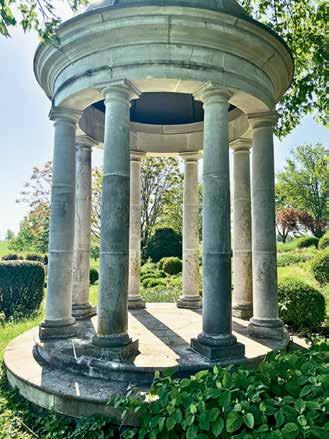
Where others pressure blast, we carefully revive. Trusted for nearly 20 years, we restore Kentucky’s finest homes and estates. Openings are limited. Call us today to reserve your exterior cleaning.