pro grow news




Andover Collection™ Pavers King of Hearths Fireplace with Natural Stone Veneer Bluestone Coping
Andover Collection™ Pavers, ScapeStone™ Fire Pit Ancestral WallStone™ with Bluestone Coping
Natural Stone Veneer Ledgestone Bluestone Paving MillStone™ Pavers Ancestral™ WallStone and ScapeStone™ Fire Pit

pro grow news SPRING 2018 board committees
PRESIDENT
Tim Hay, MCH
Bigelow Nurseries, Inc.
Tel: (508) 845-2143
VICE PRESIDENT
Peter Mezitt, MCH
Weston Nurseries, Inc.
Tel: (508) 435-3414
SECRETARY/TREASURER
Chris O’Brien, MCH
Howard Designs, Inc.
Tel: (617) 244-7269
PAST PRESIDENT
Jim Stucchi, MCH
Ahronian Landscape and Design, Inc.
Tel: (508) 429-3844
DIRECTORS
Deborah Trickett, MCH
The Captured Garden
Kerry Preston, MCH
Wisteria & Rose, Inc.
Steve Charette
Farm Family Insurance Family
David Vetelino, MCH
Vetelino Landscape, Inc
Jean Dooley, MCH
Mahoney’s Garden Centers
EXECUTIVE DIRECTOR
Rena M. Sumner
Tel: (413) 369-4731

EDUCATION & RESEARCH COMMITTEE
Kathy Bergmann, MCH — Chair
Bergmann Construction
Tel: (508) 435-3414
FINANCIAL COMMITTEE (FINCOM)
Steve Corrigan, MCH — Chair
Mountain View Landscapes & Lawncare, Inc.
Tel: (413) 536-7555
Chuck Baker, MCH — Vice Chair
Strictly Pruning
Tel: (508) 429-7189
GOVERNMENT RELATIONS COMMITTEE
Chris O’Brien, MCH — Chair
Howard Designs, Inc.
Tel: (617) 244-7269
HISTORY COMMITTEE
Philip Boucher, MCH — Chair
Elysian Garden Designs
Tel: (508) 695-9630
Skott Rebello, MCH — Vice Chair
Harborside P.S.
Tel: (508) 994-9208
MAGAZINE COMMITTEE
Gaele McCully, MCH MCLP — Chair
Mahoney’s Garden Center
Tel: (781) 729-5900
MASSACHUSETTS CERTIFIED HORTICULTURIST BOARD (MCH)
Jack Elicone, MCH — Chair
John R. Elicone Consulting
Tel: (617) 527-5706
PRODUCTS COMMITTEE
Peter Mezitt, MCH — Chair
Weston Nurseries, Inc.
Tel: (508) 435-3414
Massachusetts Nursery & Landscape Association P.O. Box 387 Conway, MA 01341 mnlaoffice@aol.com www.mnla.com www.PlantSomethingMA.org www.mnlafoundation.org
pro grow news

Hit the Ground Running
ByTim Hay
There’s been no time to glow in the light of my election. It has only been a few weeks, Rena is already asking for the President’s Message, and I find myself rushing to get it done even though I was thinking I had plenty of time. As you are reading this, weeks — no months — may have passed since I wrote it.
We can all look back to the March nor’easters, as well as the one that never was, asking, “Will it never end?” After a snowstorm for last year’s Dreams & Solutions Winter Forum, Mother Nature paid us back with great weather for 2018. In February, we were all ready for an early spring, but this is New England, and winter just does not want to leave. That groundhog better not show his head for a long time! I know I will have to expand the vegetable garden again this year. It’s what happens when winter stays too long and my wife has more time to look through the pile of seed catalogs. Spring will be here soon — it always comes.
MNLA has been working hard to find a government relations director — no small task. The special task force has worked through the process, and we have built a stronger partnership with the associations involved. It is a great feeling to know the associations brought together by Henry Gillet will continue to have a solid message and vision going forward. I hope we will have found that person by my next President’s message. As members, you should be very proud of the Government Relations Committee and their efforts on Ag Day, where MNLA had a great presence on Beacon Hill. The joint proclamation to honor Henry was very well attended, with Governor Baker, Lieutenant Governor Polito, Commissioner Lebeaux, and many members from both chambers in attendance. It was standing-room-only, and I was amazed to see how much Henry meant to all of Massachusetts agriculture.
It was a pleasure to receive the warm welcome and well wishes at the annual meeting, but I must thank the MNLA board and committees for their efforts and support for me as well as the association. I would want to thank Pat Bigelow and my co-workers for their support and understanding. Being an active, involved, and supportive MNLA member will hopefully allow all of you to grow your business. As our mission statement says, “We are to be a resource of success for every one of our members.” Please reach out to me if you have question or ideas to help you achieve that success. MNLA is here to be a resource for you.
As our green industry moves forward without New England Grows, I hope MNLA can help fill that void. New England Grows gave 25 years of award-winning horticultural
tradeshows to many segments of the green industry. They educated us at the trade show and provided millions of dollars in educational grants to the industry through its many partnerships. We owe New England Grows board, staff, and management a big thank-you. This is a big void to fill, and MNLA would like to help by expanding programs and educational opportunities. We would like your input. Please let us know what your needs are.
I hope you take advantage of this summer’s Down to Earth event at Wachusett Mountain. Mark your calendars, bring your crews, invite your colleagues: July 26th is going to be a great day to learn, network, and have fun. The Education & Research Committee has been working hard to make this event a day filled with something for all. This is one more way to keep dreams and solutions going all year long. I hope to see you there.
Please feel free to contact me with any question or concern or just to catch up.
Tim Hay, MCH Bigelow Nurseries, Inc. MNLA President

MNLA Committees
MCH Committee
Celebrating MCHs
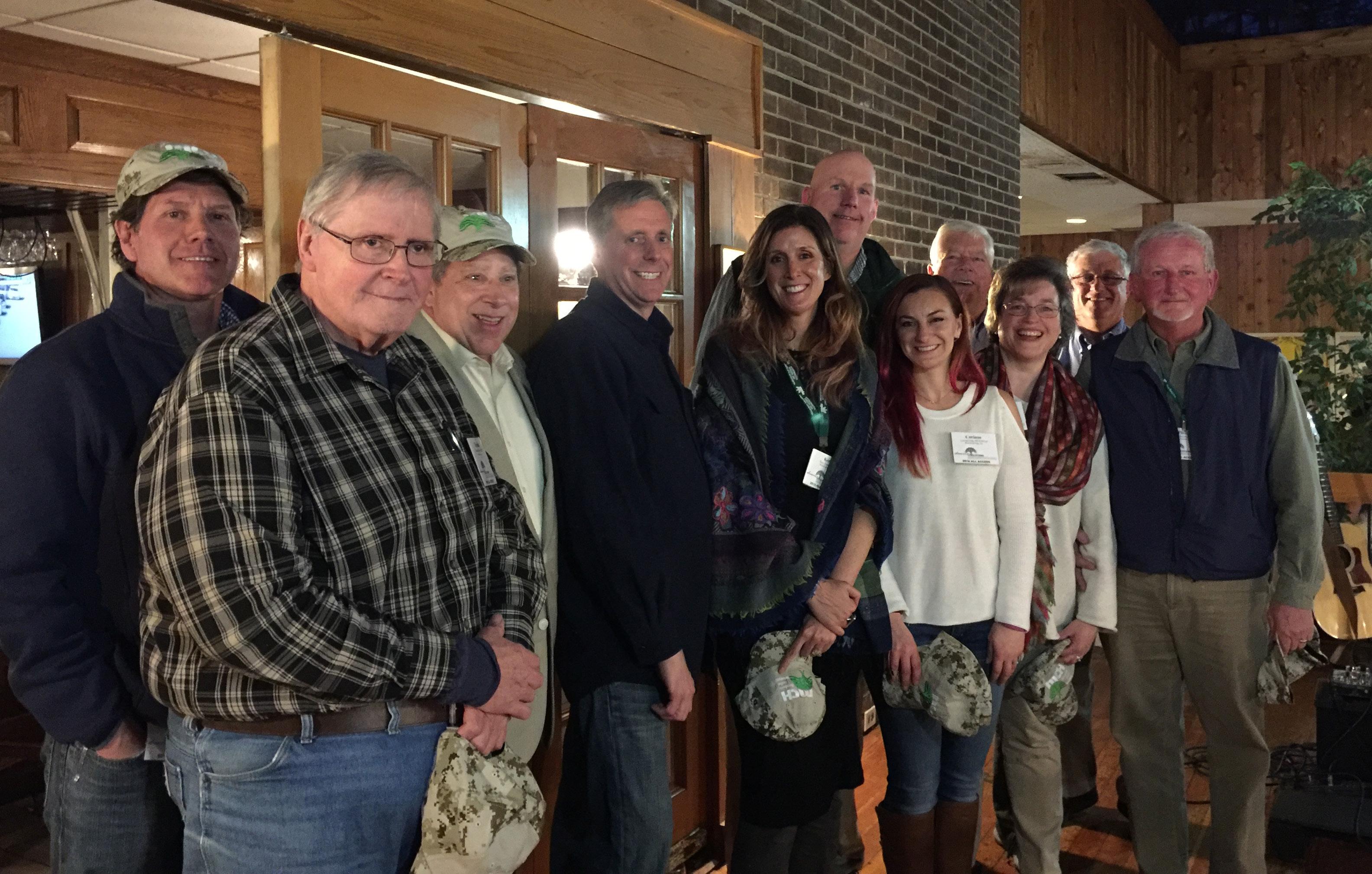
MCHs who have held their accreditation for 30 years or more were honored by the MCH board at the Winter Forum Meet & Greet. MCHs received a custom-embroidered hat and the well wishes of the more than 150 members who attended the first day of the Winter Forum. Celebrating this great accomplishment are:
1980 Philip Boucher, MCH
1980 Marcia Chapman, MCH
1980 James McManus, MCH
1980 R. Wayne Mezitt, MCH
1981 Patricia Bigelow, MCH
1981 Thomas Bradley, MCH
1981 Dennis Dowd, MCH
1981 John Flanigan, Jr., MCH
1981 Roger Lusignan, MCH
1981 James McBratney, MCH
1981 Shawn Shea, MCH
1982 Edward Bemis, MCH
1982 Michael Sahagian, MCH
1982 Randolph Wright, MCH
1983 Mark Ahronian. MCH


Established in 1910, Cavicchio Greenhouses is a fourth-generation New England farm working more than 250 acres in Sudbury. As a horticultural grower and landscape distributor, we cultivate and supply an extensive variety of annuals and perennials, nursery stock, stone, masonry and landscape materials. With a hard-earned reputation for service, quality, selection and sustainability, we work with professionals and garden centers throughout the area to keep our region beautiful.
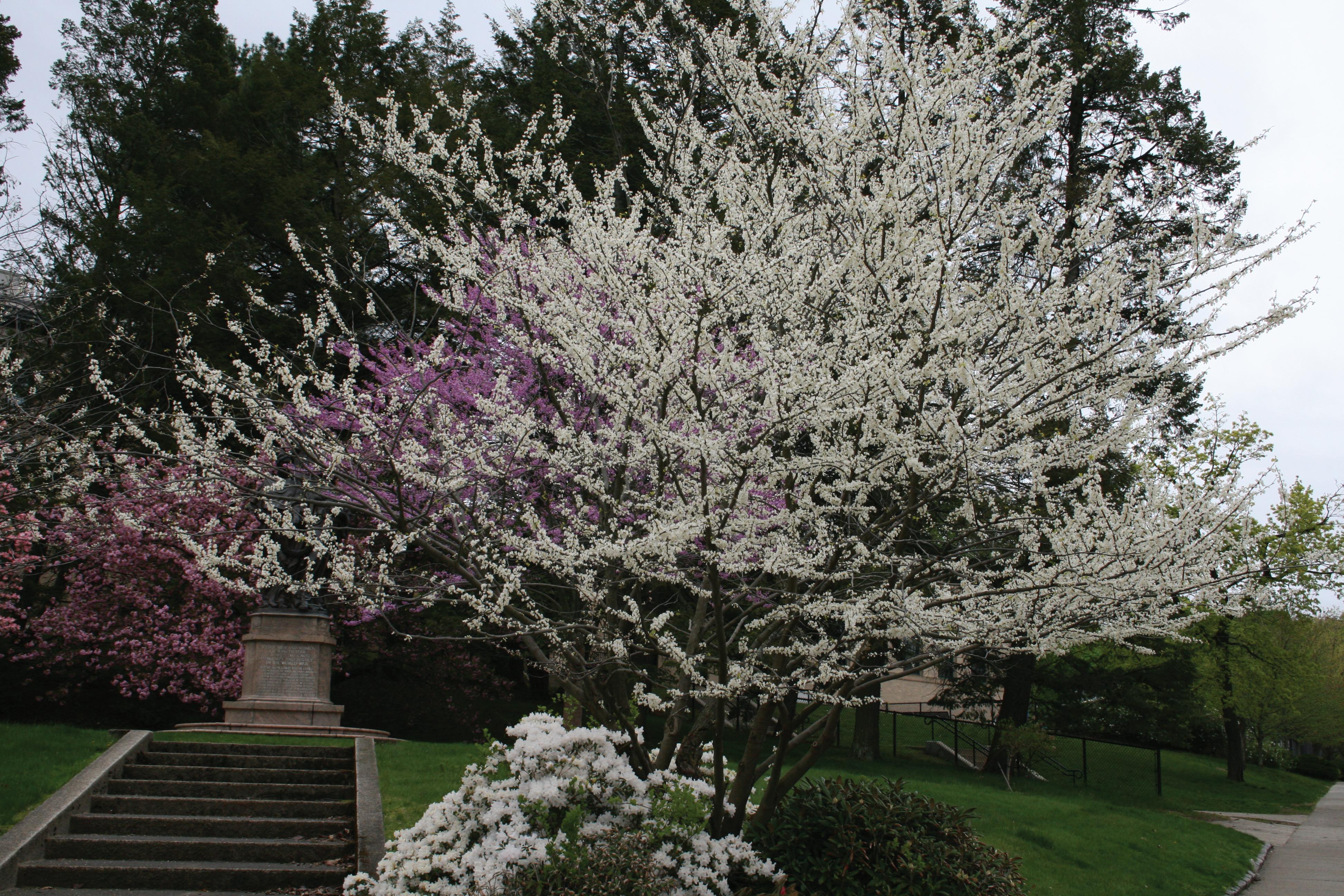
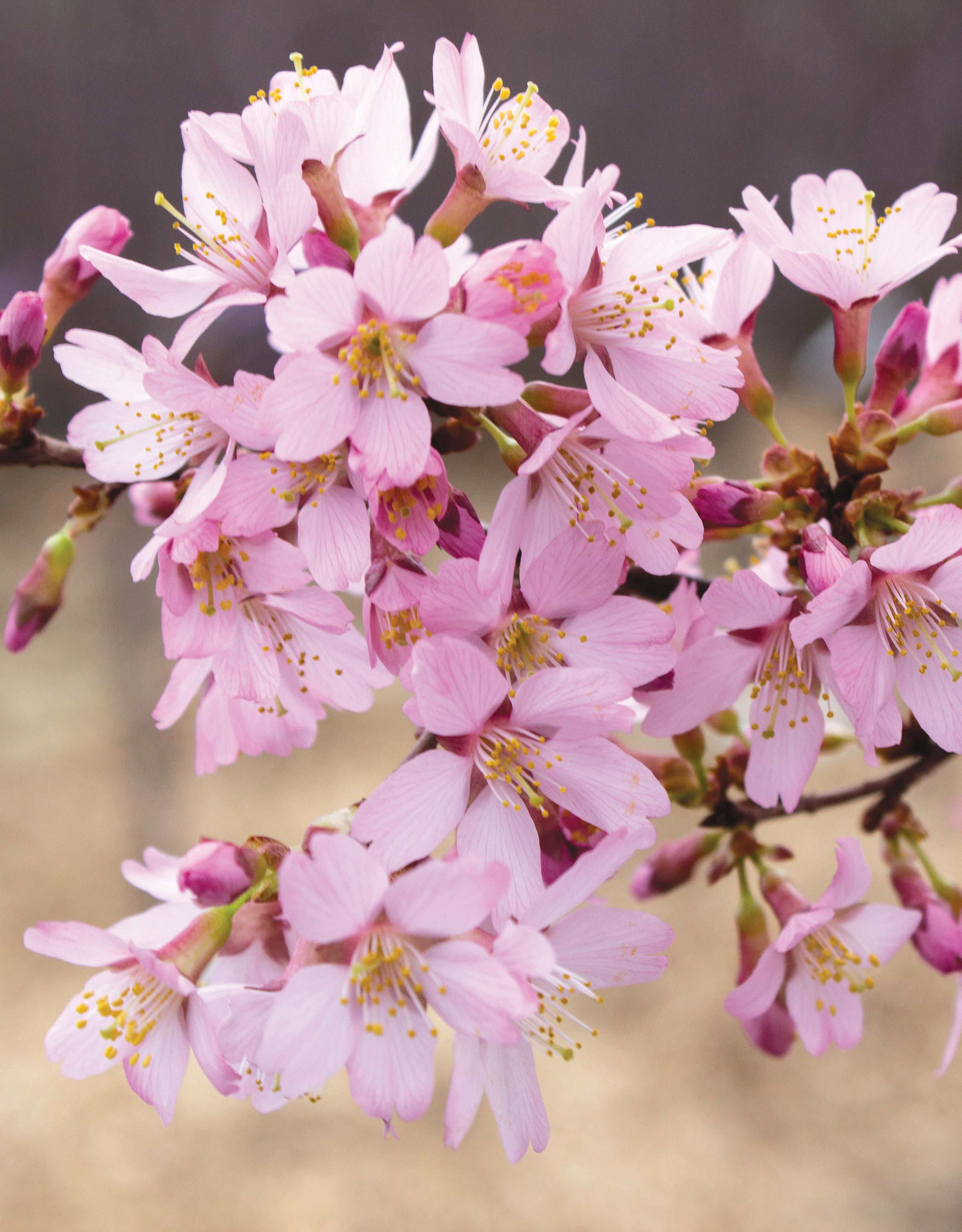
Prunus Campanulata ‘Okame’

MNLA Committees
MNLA Foundation
The Search Goes On
In1898, the USDA sent out a group of agricultural scientists to search the globe for new or undiscovered plants for crops that might be grown in the United States. Many new plants were brought back to be tested and used in the various commodity segments around the country. The southern and far western states were the first to benefit from improved citrus and cotton hybrids with better yields or taste over those currently being grown.

The most improved introductions were those of figs and date palms. Large groves that were planted as early as 1903 adapted well and were an overwhelming success. They soon became a major sought-after crop for southern California and parts of the Southwest that continues today. All these new finds by global plant explorers resulted in improved economies for these states and especially for small farm communities.
From an MNLA Foundation point of view, the USDA tale reminds me of our recent Job Fair and Winter Forum in Sturbridge. Like the global excursions that brought new agricultural products, future employees and workforce leaders need to be discovered, cultivated, and encouraged. The 1898 endeavor points out how successful action by one individual can move the future of another. Our focus in supporting our green industry community through scholarships is important. A scholarship — the gift of an educational opportunity — means a brighter future for each of our deserving candidates.
Foundation Board members are not budgeted nor intrepid nor adventurous enough to search beyond our state borders for worthy scholarship applicants. Finding them is not hard. Only your consideration and generosity can help us support these opportunities. But please think IMPACT. The more we can offer to just a few more applicants, the greater the result for all of us. When you hear of our fundraising efforts, please lend a hand to support the future of individuals and the Massachusetts green industry. We want to create a dependable financial pathway to support all the scholarship opportunities that benefit our industry.
The Job Fair was uplifting to me — uplifting to see students experience some of what our industry offers both in the trade show and in the educational forums. I saw them in much the same way we looked or acted not that long ago. Every time you see interested young individuals, think of the USDA story and the uplift it represented. Think how you can be of service to the next generation of industry workers. A gift to the Foundation ensures an opportunity to a deserving student and our future. It is up to us to employ, mentor, and offer our support for their journey.
Philip Boucher, MCH
Elysian Garden Designs
MNLA Foundation Chair
Government Relations
Time Well Spent
Mass Ag Day at the State House was held on March 27 this year. MNLA joined other agricultural organizations to discuss legislative and regulatory issues important to our green industry with the governor and legislative leaders. An additional highlight was a ceremony honoring the many contributions of MNLA’s legislative agent, Henry S. Gillet, who passed away December 21, 2017.

MNLA members spent the day meeting with the chairs of key legislative committees and their staff members to review problems and opportunities affecting horticultural enterprises. These exchanges generally were productive, highlighting language in proposed bills that could adversely affect landscapers. The meetings also presented opportunities to promote policies that would enhance agricultural industries.
Key issues for our industry this year include:
• Support the Department of Agricultural Resources through the operating and capital budgets, as well as retention of income from licensing fees paid by pesticide license holders.
• Support pollinator health through development of sciencebased solutions and the planting of diverse, ample sources of bee forage plants.
• Develop water resource policies that result in efficient horticultural irrigation standards, educate consumers in water conservation, and provide guidance for water supply managers.
• Support a personal income tax credit for the purchase and installation of qualified irrigation equipment intended to reduce water use.
• Support legislation to establish an estate tax valuation for farms that will protect and provide for following farming generations.
Legislators and their staff members often say Mass Ag Day is their favorite State House event of the year. That is true in no small part because the ag industry comes equipped with delicious food and beautiful plants that are given away to visitors in the Great Hall. MNLA representatives chatted with many visitors to our table, including Governor Charlie Baker, who asked about MNLA’s $5.2 billion economic impact study.
During the formal speeches on the day’s program, many friends, family, and acquaintances of Henry Gillet gathered in Nurse’s Hall to hear speakers extol his many accomplishments and personal integrity. Henry had served as MNLA’s legislative agent since June 1995. He helped craft our legislative agenda through those years by offering insights that strengthened our program and made us much more effective in dealing with the legislature and executive agencies. We miss him greatly.
Chris O’Brien, MCH, Howard Garden Designs, Inc. Government Relations Committee Chair


Spring Discovery of Winter
By Mandy Bayer, Ph.D.
Late winter into early spring can be a time of conflict for horticulturists as warmer days and sunshine hint of nicer weather, but cold nights and the reality of possible winter weather remind us that spring is not yet here. The fluctuation of temperature impacts plants as they begin to deharden and emerge from dormancy. It is also a reminder to continue to be on the lookout for possible winter damage on plants. Some damage, such as broken branches and frost cracks may already be obvious, but other damage is sneaky, not becoming evident until the bitter temperatures and winter storm warnings are beginning to be forgotten.
Large, broken or damaged branches from snow or ice are easy to spot and likely have already been taken care of by spring, but smaller broken or damaged branches will likely not be obvious until growth resumes in spring. These branches should be pruned out when it is determined that spring recovery is not occurring. Frost cracks occur when bark and wood expand and contract due to warming and cooling caused by sunlight exposure, but temperatures remain cold. Bark contracts faster than inner wood in response to cooling, causing both the bark and the wood beneath it to crack and
pop. These cracks will close in warmer weather, but can recur in succeeding winters and can be sites of insect or disease damage.
Winter burn is most common on the south side of plants where sun is reflected off the snow causing greater warming than the air temperature; this leads to an amplified day-tonight temperature swing. The magnitude of winter burn can be variable with the greatest damage occurring when buds are damaged.
Frost heaving is the result of freezing and thawing cycles, which can lift shallow-rooted plants from the ground. This leaves the roots unprotected from cold temperatures, frost, and wind. These plants should be replanted as soon as the ground thaws. Damaged or dead buds and leaves can occur when temperatures warm in late winter or early spring and new growth begins. The tender new tissue is killed when the temperature drops and a frost or freeze event occurs.
Chewing and rubbing damage from rodents, rabbits, and deer can be obvious. Animals feed on the branches and trunks of plants, potentially girdling the plant or even destroying the plant to the ground. Common signs of animal damage include chewing, defoliation (especially on lower branches), and girdling of stems and branches. Girdling is the removal of bark and phloem layer from the stem or trunk, which disrupts or
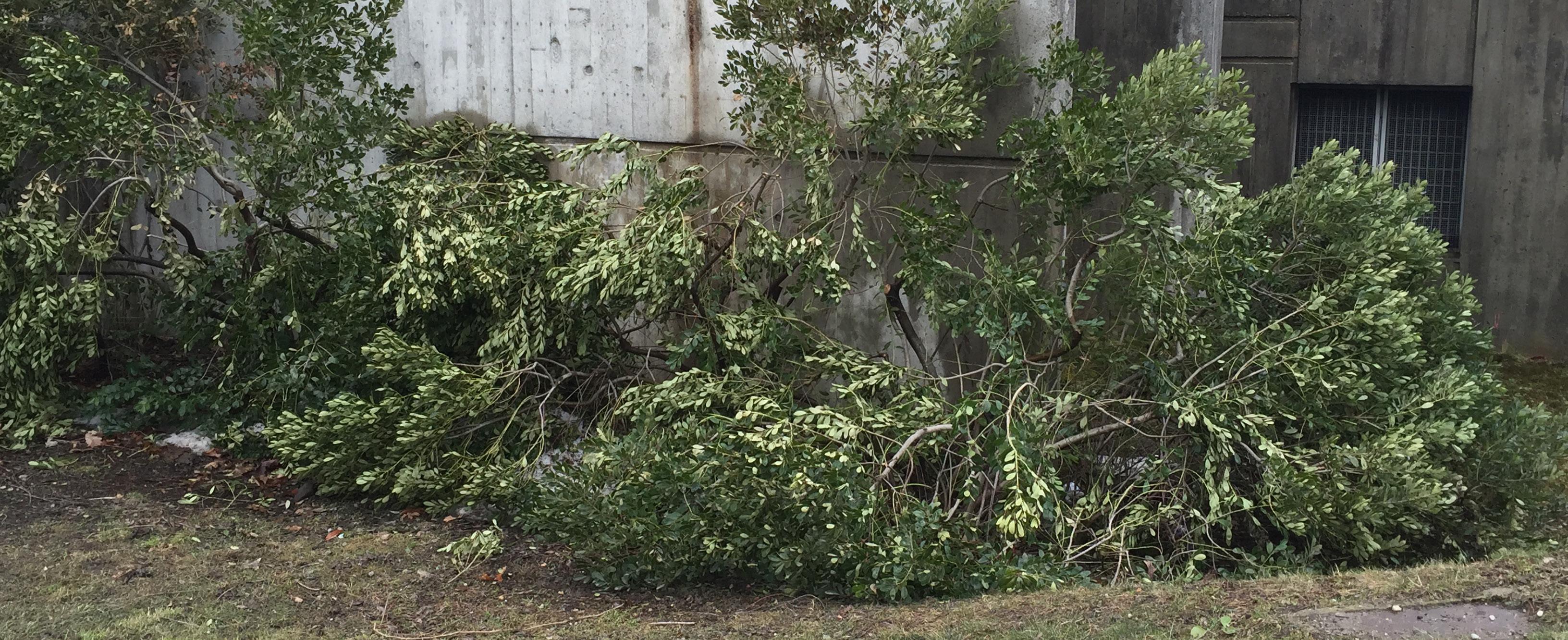
Plant damage from snow load
Plant Injury
prevents the transport of sugars to the roots. Recovery of the plant will be dependent on the extent of damage, and girdling frequently results in extensive damage or death of the plant.
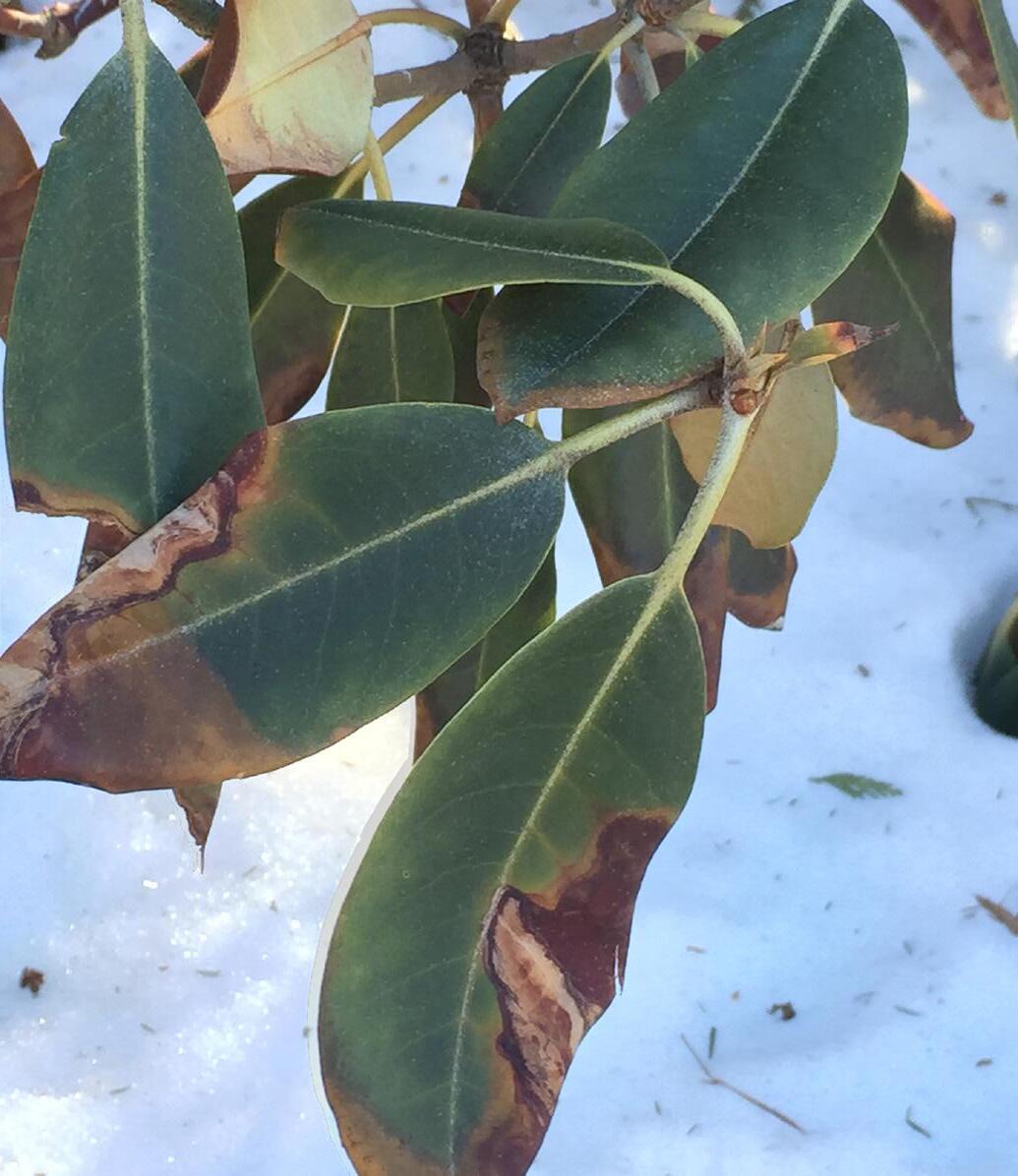
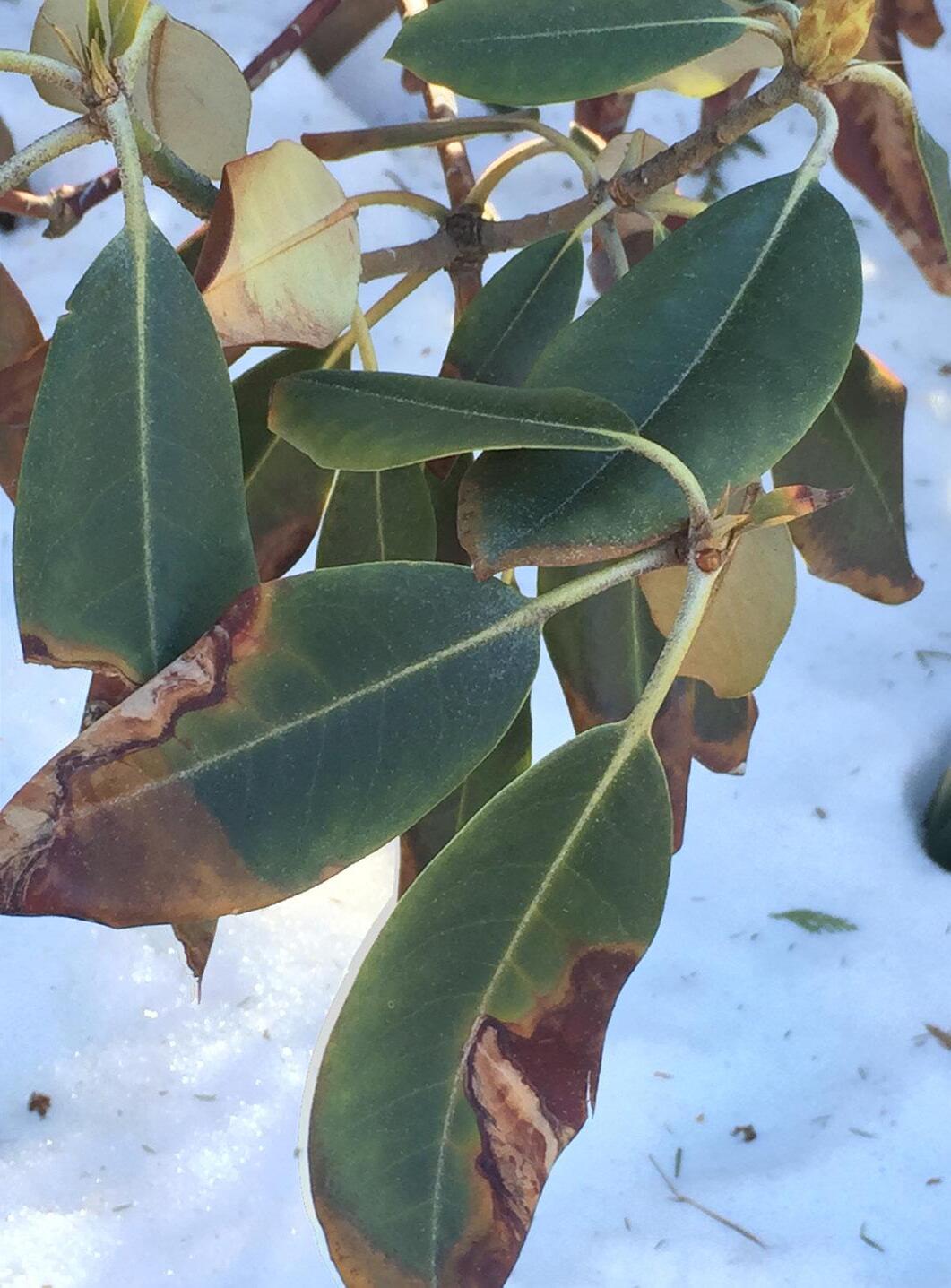
Warmer, windy, sunny days increase transpiration from evergreen plants, but frozen ground prevents adequate water uptake. This leads to leaf scorch and desiccation. Injury can range from browning of leaf and needle tips to necrosis and defoliation with severe injury. Desiccation injury is most prominent on broadleaved evergreens such as Rhododendron spp. because of the large surface area.
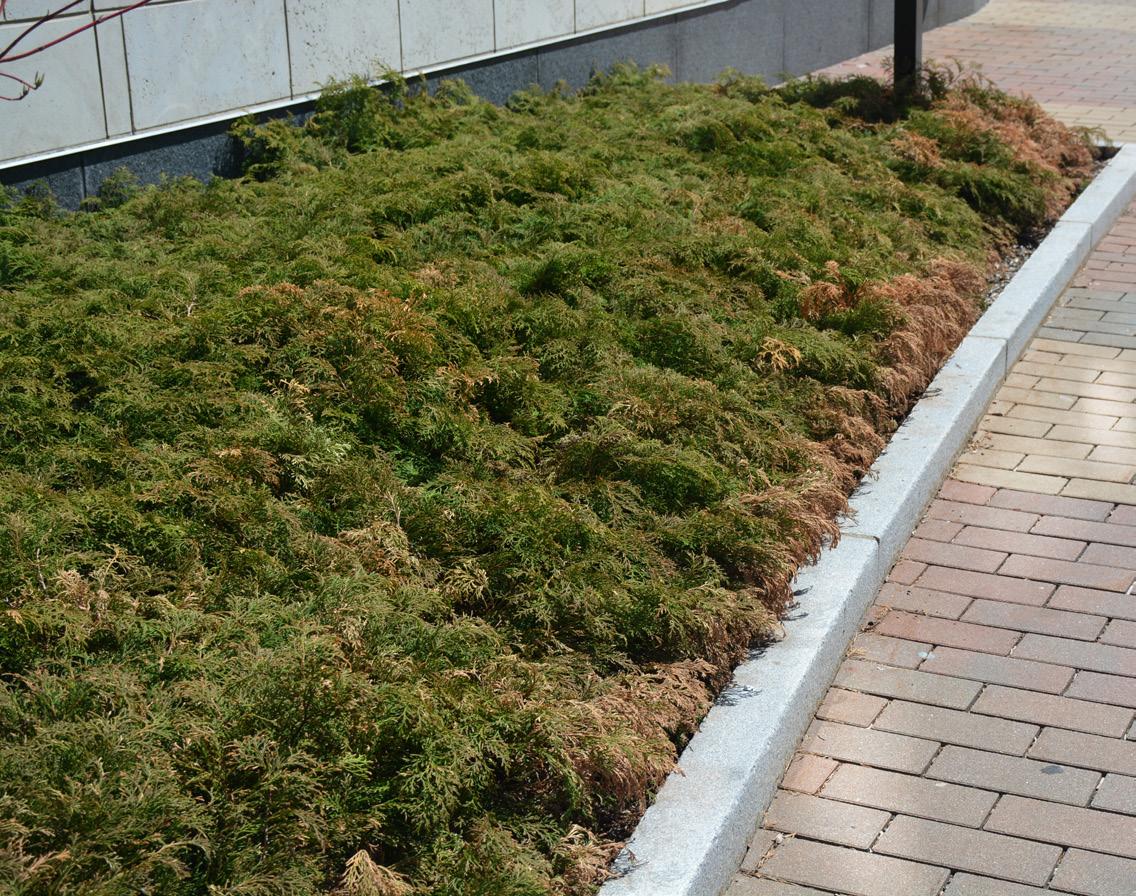
Salt spray damage can cause leaf scorch on broadleaf and needle evergreens. It can be distinguished from winter burn or desiccation, because damage is generally restricted to the side of the plant close to the sidewalk or street. Foliar, bud, and small branch damage can occur when plants are sprayed by vehicles with snowmelt containing dissolved salts. Snow cover can help protect plants from direct spray from the road. Salt-laden runoff water can damage plants not directly next to streets and sidewalks. Sodium and chloride ions separate when salts are dissolved in water and can be taken up by plants instead of needed soil minerals. This can lead to deficiencies of nutrients such as potassium and phosphorus or chlorine toxicity inside the plants. Rock-salt accumulation in landscape beds can lead to physiological drought, because

Salt-laden runoff damage on turf
Salt-spray damage on Siberian carpet cypress
the rock salt absorbs available water and leads to plant water stress. Salt damage may not be evident until later in the spring as plants emerge from dormancy.
Preventing winter damage in the future:
• Select hardy plants, keeping in mind that plants on the edge of their hardiness zone are more likely to be damaged.
• Avoid fertilization or pruning in late summer; this can stimulate new growth and prevent plants from hardening off properly.
• Irrigate plants properly to establish deep root systems.
• Mulch to help insulate roots and maintain soil moisture.
• Use burlap screens to protect evergreens from wind and salt spray.
• Install plants away from overhangs or use wooden protective structures to prevent snow falling off roofs onto delicate plants.
Mandy Bayer, Ph.D., is Extension Assistant Professor of Sustainable Landscape Horticulture at the Stockbridge School of Agriculture, University of Massachusetts Amherst.
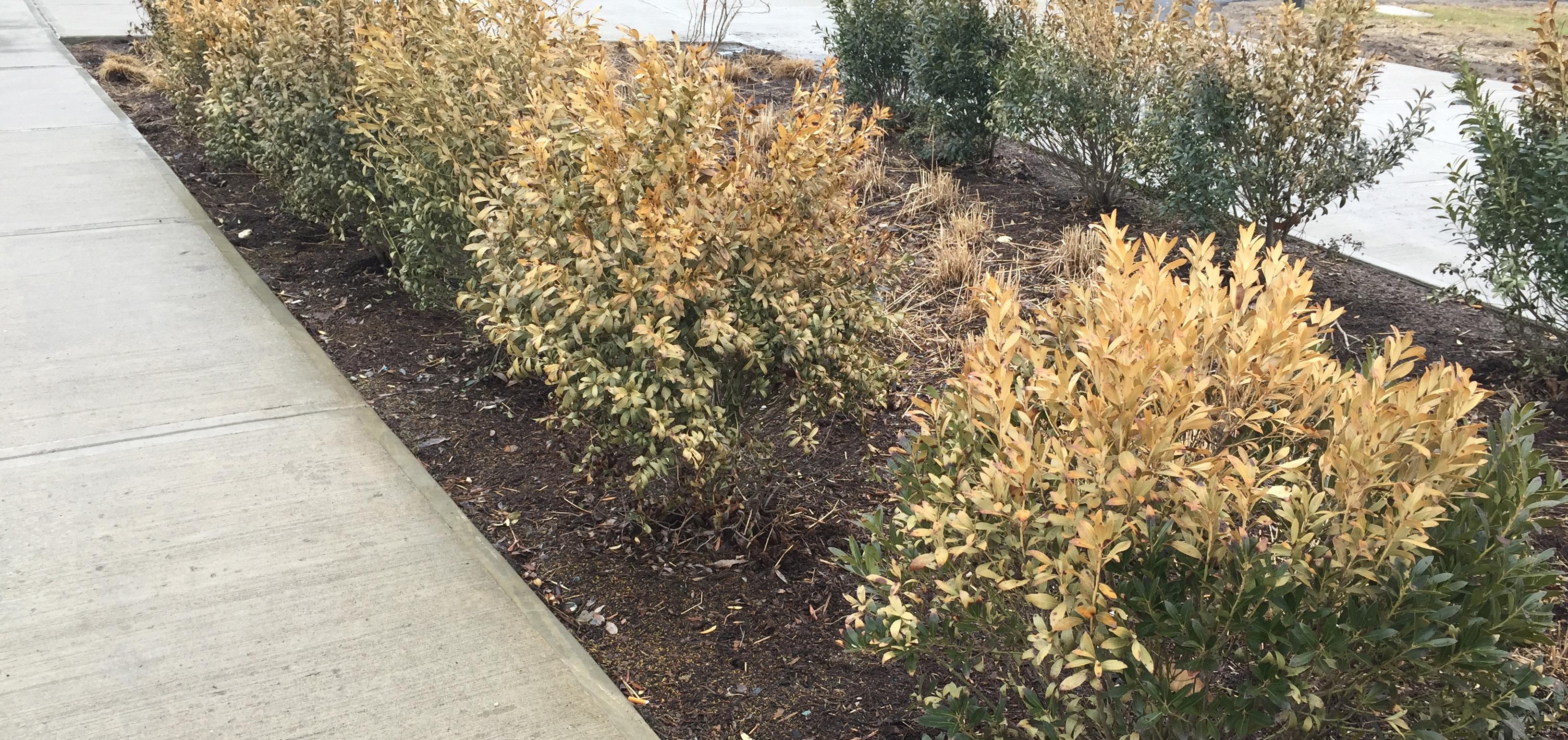
Desiccation and salt-spray damage on inkberry holly. The bottom parts of the plants were protected by snow cover.
Leaf scorch on rhododendron
MORE YOUR ALLY THAN YOUR AGENT


With FARM FAMILY, you’ll get an agent who has the know-how and products to help you properly manage your family’s risks. An open appointment book, along with options for home, auto, life, farm and business coverage, means you can feel good that you’re getting more an ally than just an agent. Wherever you are in Massachusetts, there’s a Farm Family agent close to you. Give us a call for more information.




























Winter Moth Numbers at a Record Low: Promising Data from Elkinton
By Joseph Elkinton, PhD, and Tawny Simisky
It’s that time of year again, where anyone with vested interest in the health of oak, maple, apple, and many other deciduous plants such as cherry, basswood, ash, white elm, crabapple, and blueberry begins to wonder what is currently known about the winter moth population in Massachusetts.


Dr. Joseph Elkinton, professor of environmental conservation at the University of Massachusetts in Amherst has excellent news for us all: Data from his lab’s research locations in eastern Massachusetts suggest that this invasive pest’s population size is at an all-time low. In fact, the 2017 winter moth population was the lowest they have seen since studying and working toward the biological control of this insect for the past 13 years. Hopefully, this will mean low winter moth caterpillar numbers for the 2018 season in most areas where they are present in eastern Massachusetts. Winter moth outbreaks and subsequent defoliation of the abovementioned host plants were first noticed in Mass-
thought to be caused by a native insect. However, the persistence and severity of the outbreak in Plymouth County caused retired Plymouth County UMass Extension Horticulturist Deborah Swanson to send caterpillars to UMass Extension Entomologist Robert Childs and Dr. Elkinton to further investigate what species could be responsible.
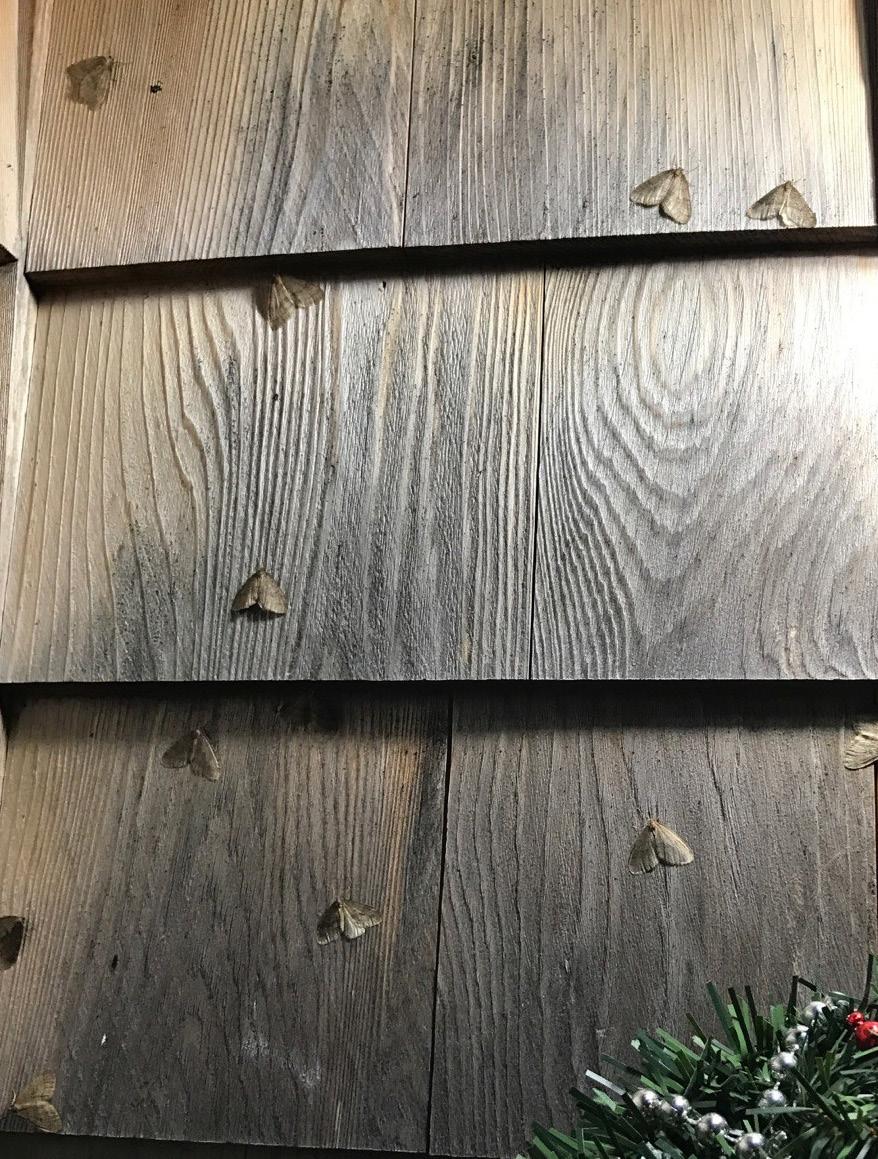
Adult male winter moth (Operophtera brumata) attracted to an outdoor light at a Martha’s Vineyard residence on 12/23/2017. Photo courtesy of Dr. Angela Madeiras
In 2003, following a collaborative effort with UMass Extension and Plymouth County Extension, Dr. David Wagner of the University of Connecticut and Richard Hoebeke of Cornell University confirmed that winter moth (Operophtera brumata) was responsible. Over the next decade, winter moth caused defoliation spread over all of the North Shore into the western suburbs of Boston and across the South Shore onto Cape Cod and Mar-
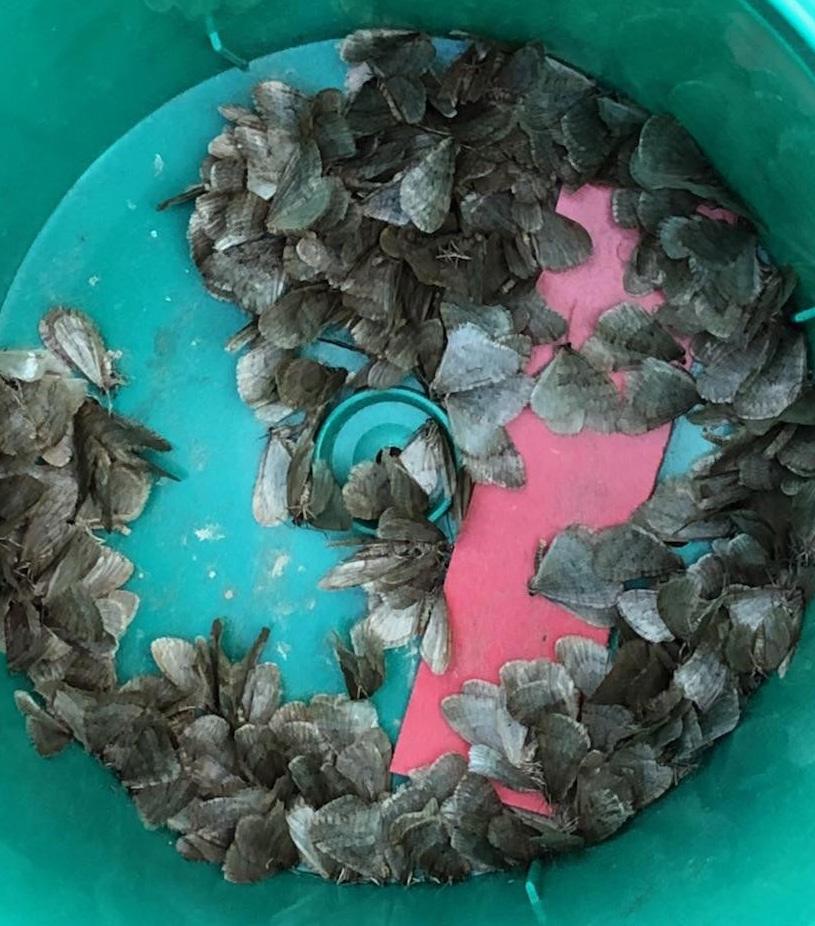
A trap monitored by the Elkinton Lab in Acton containing adult male winter moth viewed in December 2017.
tha’s Vineyard and into Rhode Island and coastal Maine.
Winter moths overwinter in the egg stage, hidden in the cracks and crevices of bark or under lichen on host plants. Eggs are tiny and difficult to see without magnification. Each female moth may lay 150-350 eggs, which are initially green but quickly turn a red-orange color. In March, prior to hatching, eggs will turn bright blue and then dark blue-black. It is believed that egg hatch in Massachusetts occurs when 20–50 growing degree days (base 50º F) have accumulated, which can be anywhere from late March into early- to mid-April, depending on the year and the location. (The Elkinton lab at UMass uses a base 40º F when completing growing-degree-day calculations for this insect and suggests that hatch occurs between 177 and 243 GDD (base 40°F).
Photo courtesy of George Boettner
Lab
In most years, egg hatch coincides with bud break of the host plants. Tiny winter moth caterpillars crawl up tree trunks and branches toward these buds, and if the bud has expanded enough, they can wriggle their way inside and begin feeding even prior to leaf expansion. These caterpillars cannot chew their way into closed buds, but once buds open and they enter, they are capable of causing significant damage to the host plant leaves, which will later expand and reveal tattered damage. Like gypsy moth caterpillars, winter moth caterpillars are capable of dispersing using a technique referred to as “ballooning.” A strand of silk is spun, and the lightweight larvae use the wind to be blown haphazardly toward host plants. Once the inchworm-like caterpillars are full-grown (approximately 1 inch in length), they drop to the soil to pupate, usually in late May, where the pupae remain until late fall.
Adult winter moths usually begin to emerge around Thanksgiving, or earlier, as evidenced last fall on November 16, 2017, as reported by Deborah Swanson in Hanson, Massachusetts. Adult emergence continues through December and even into January, whenever air temperatures are mild (above freezing) and the ground remains unfrozen. Small, light-brown male moths can be seen flying around, often attracted to porch lights or other outdoor light sources. Females are wingless and cannot fly; they crawl up tree trunks and release a pheromone to attract males for mating.
Since 2005, Dr. Elkinton and his laboratory, with the help of dedicated volunteers, have managed the large task of collecting, releasing, and monitoring the efficacy of Cyzenis albicans, a tachinid fly
parasitoid of the winter moth as a biological control agent attacking winter moth (C. albicans can only successfully develop in winter moth). This fly, originally from Europe, had previously been established in other North American locations such as Nova Scotia in the 1950s and met with much success in reducing outbreak populations of winter moth to a non-pest status. The female fly (Cyzenis albicans) lays its eggs (up to 1,000 of them) on host plant foliage of the winter moth, and winter moth caterpillars will eat the eggs of the flies. The egg will hatch and a tiny fly maggot will lie in wait inside the immature winter moth, until the caterpillar is done feeding and drops to the ground to pupate. The immature fly maggot will then complete its development inside of the winter moth pupa, where it will remain until the following spring.
In the spring, at approximately the same time winter moth eggs hatch, the flies (Cyzenis albicans) emerge from the deceased caterpillar pupae in the soil, mate, and lay more eggs for more caterpillars to ingest. There is one generation of flies per year.
To collect the fly, Elkinton’s lab manager George Boettner traveled each April-May for seven years to Vancouver Island in British Columbia where both winter moth and the fly were established in the 1970s. At that location, he managed a crew of helpers who collected many thousands of winter moth caterpillars over about a one-month period. About half of the winter moth caterpillars they collected had the fly larva inside them. The flies were then reared to the pupal stage in the laboratory in Massachusetts, and the adult flies were released at various locations the following spring.
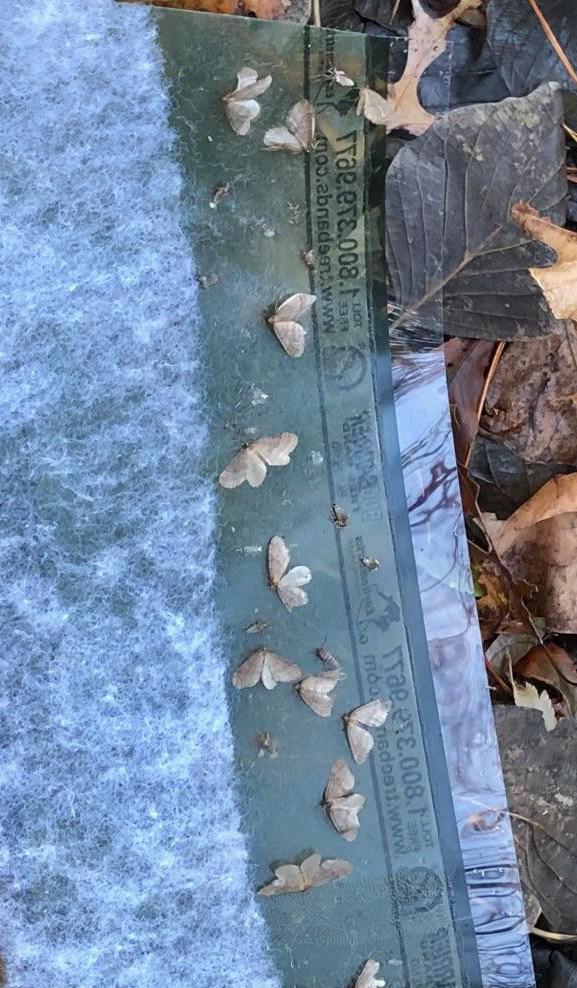
A tree band monitored by the Elkinton Lab in Hanson containing mixed fall cankerworm adult females and (primarily) male and female adult winter moth (Operophtera brumata). Male winter moth have wings and females are wingless. Photo courtesy of George Boettner (December 2017).
To date, the Elkinton lab has released Cyzenis albicans at 43 sites in Massachusetts, Connecticut, Rhode Island, and Maine. The fly has been established at 32 of those locations, and the Elkinton lab has evidence of its ability to spread throughout the local winter moth population at those sites from the initial point of release. They now have data for sites located in Falmouth, Hanson, Hingham, Wellesley, Wen-
ham, and Yarmouth, Massachusetts indicating that parasitism of winter moth pupae by C. albicans ranges from 15-48 percent. Typically, this might not be a high enough percentage to reduce a pest population, but in the case of winter moth, that is what the data shows at these locations. As parasitism rates for the tachinid fly increase, the density of healthy winter moth pupae decreases.
So how are these tachinid flies able to have such an impact on the winter moth population at this time? Data collected by the Elkinton lab shows that native predators in Massachusetts prey heavily on winter moth pupae in the soil where they reside between May and November. At their research sites, Hannah Broadly, one of Dr. Elkinton’s PhD students, has trapped and identified 29 species of predatory ground beetles (Carabidae) feeding on winter moth pupae. She has also identified what may be a previously
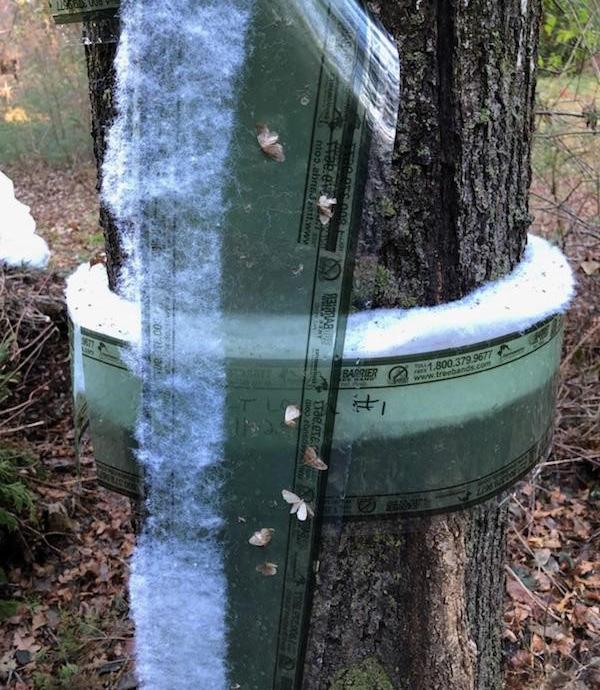
Tree bands monitored by the Elkinton Lab in Hanson containing mixed fall cankerworm adult females and (primarily) male and female adult winter moth (Operophtera brumata). Male winter moth have wings and females are wingless. Photo courtesy of George Boettner (December 2017).
Resources
undescribed (unknown to science) parasitoid wasp in the genus Pimpla (Family: Ichneumonidae). With the help of taxonomic collaborators, she is currently working to determine whether this is a new species or if it corresponds to one that has been previously described.
At this time, it would seem that the decline currently seen in the winter moth population may be a combination of the impact of Cyzenis albicans, predators present in the environment, and parasitoids such as Pimpla spp. coupled with abiotic factors. For example, recent warm springs have led to early egg hatch of the winter moth, and in some cases were followed with a cold snap lasting a week or so. In situations such as those, bud expansion may be delayed, in which case young caterpillars cannot wriggle their way in to feed and subsequently starve. Overall, the decrease in winter moth larvae, pupae, and adults seen in 2017 is a welcome sight for many in eastern Massachusetts, and we certainly hope this trend continues!
For more information about winter moth, visit www. ag.umass.edu/landscape/fact-sheets. Growing degree day information is available in the Landscape Message for areas throughout Massachusetts, using a base 50ºF. For more information on how to calculate growing degree days, please visit this fact sheet. The Elkinton lab at UMass uses a base 40º F when completing Growing Degree Day (GDD) calculations for this insect and suggests that hatch occurs between 177 and 243 GDD (base 40°F, January 1 start date, double sine method). Resources such as uspest.org allow you to manipulate how GDDs are calculated, including using a base 40ºF and different mathematical models. The reason for using Base 40 is that 40ºF is very close to the minimum temperature for winter moth development and considerable GDD accumulation occurs between 40-50ºF. Predicting hatch with GDDs is imperfect for this insect. Research in the Elkinton lab and in Europe has shown that later springs with older eggs require fewer GDD to hatch.
Joseph Elkinton, PhD, is Professor of Environmental Conservation at UMass Amherst. Tawny Simisky is an Extension Entomologist at the UMass Extension Landscape, Nursery, and Urban Forestry Program.

Winter Events
Ag Day at the State House
Ag Day 2018 was a day of celebrating agriculture and the legacy of the late Henry Gillet, MNLA’s legislative lobbyist from June 1995 to December 2017.

Winter Forum and Job Fair
Attendees had the opportunity to meet more than 60 companies in the Exhibit Hall at the Sturbridge Host Hotel & Conference Center. More than 600 attended the two-day event, which included educational programs, pesticide credits, MCH recertification points, and book signings by keynote speakers.

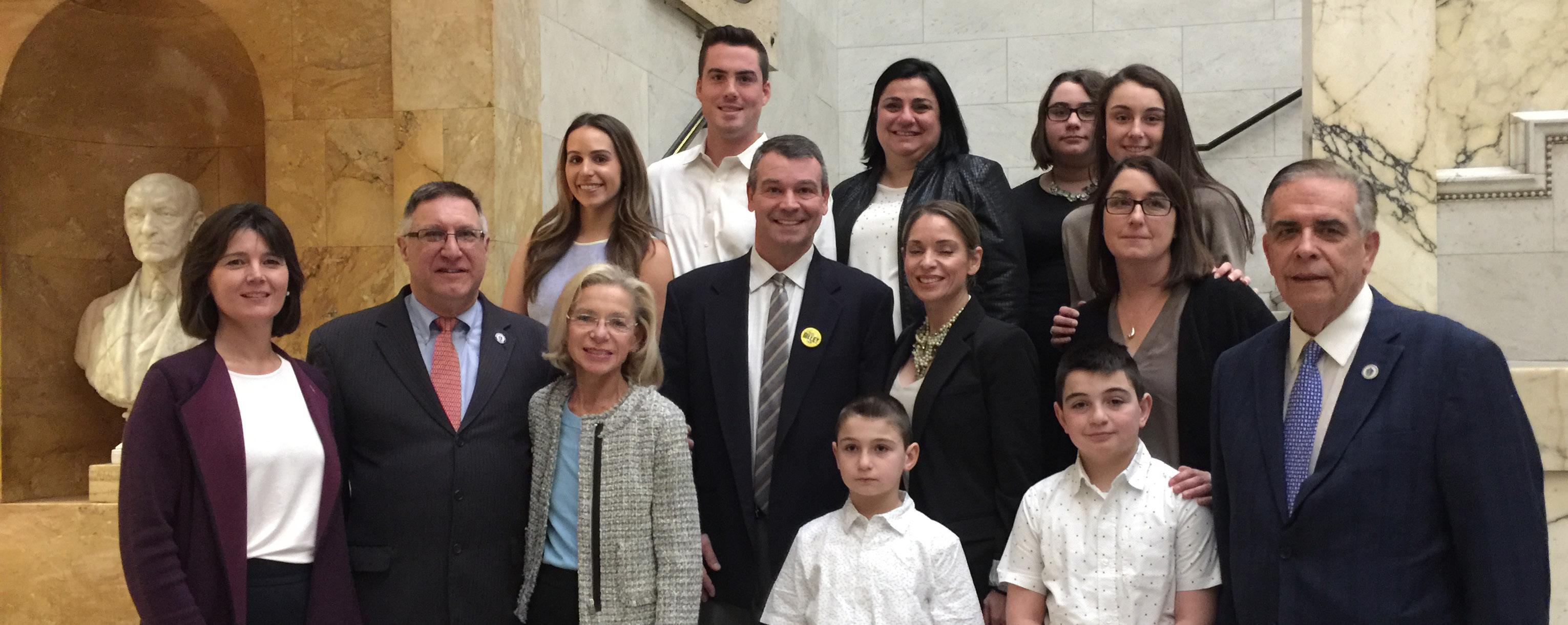
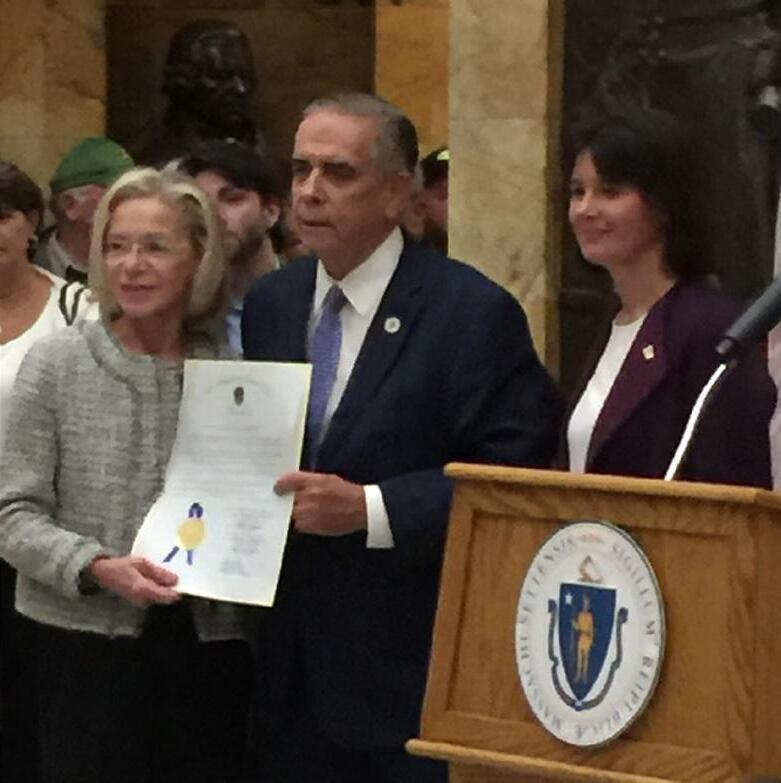
A ceremony at the Massachusetts State House to receive the resolution from both houses of the legislature honored Henry Gillet’s agricultural advocacy legacy. Front (L-R) Representative Carolyn Dykema, Senator Michael Rodrigues, and Susan Gillet with family members of the late Henry Gillet. Front far right, Representative Alan Silvia.
Senator Michael Rodrigues Susan Gillet, Rep. Alan Silvia, and Rep. Carolyn Dykema presenting the Resolution.
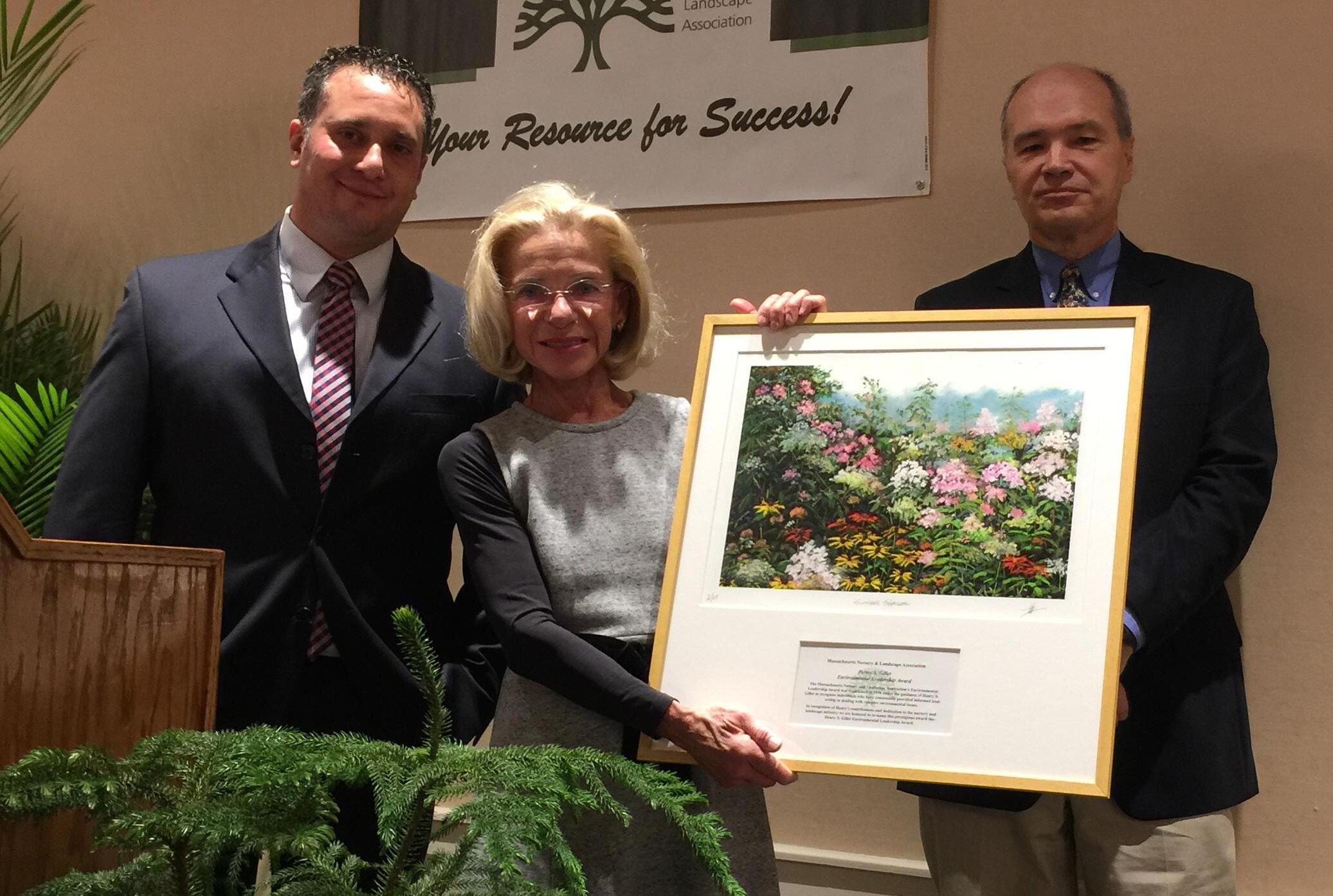
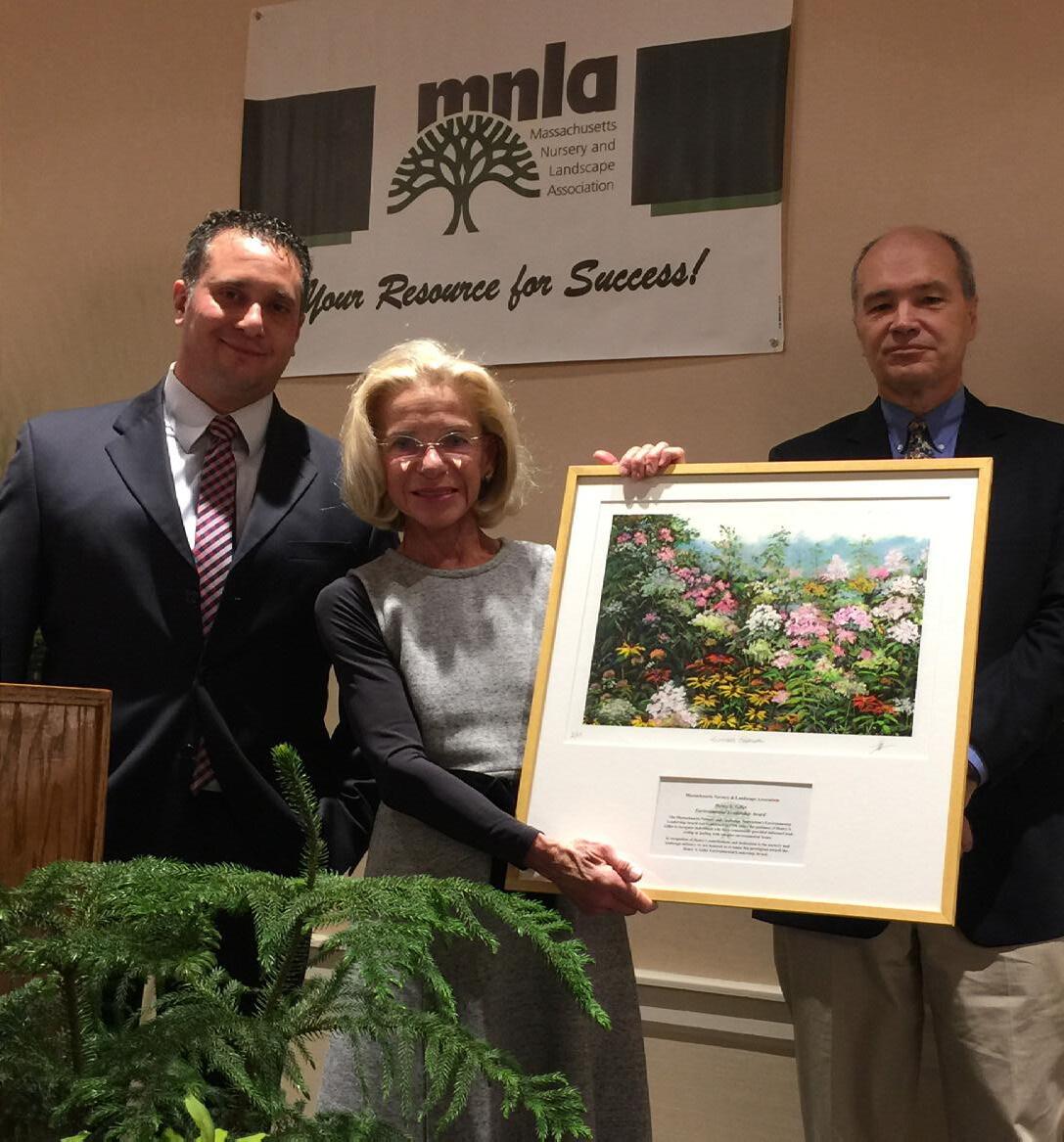
The Environmental Leadership Award
is MNLA’s most prestigious award. Established in 1998, the award recognizes individuals who have consistently provided informed leadership in dealing with complex environmental issues. As you can imagine, this award was initiated under the guidance of MNLA Government Relations Director Henry Gillet, who passed away unexpectedly on December 21, 2017. His legacy of leadership and mentorship to MNLA and the broader agricultural industry is immense. There are not enough words to express our appreciation for Henry’s efforts on our behalf for the more than 22 years he served our organization.
Knowing that we wanted to honor and highlight Henry’s legacy for future generations, the MNLA Board of Directors voted to rename our most prestigious award to the Henry S. Gillet Environmental Leadership Award in Henry’s honor. Susan Gillet accepted the artist-signed copy of our newly named award from Tom Bradley.
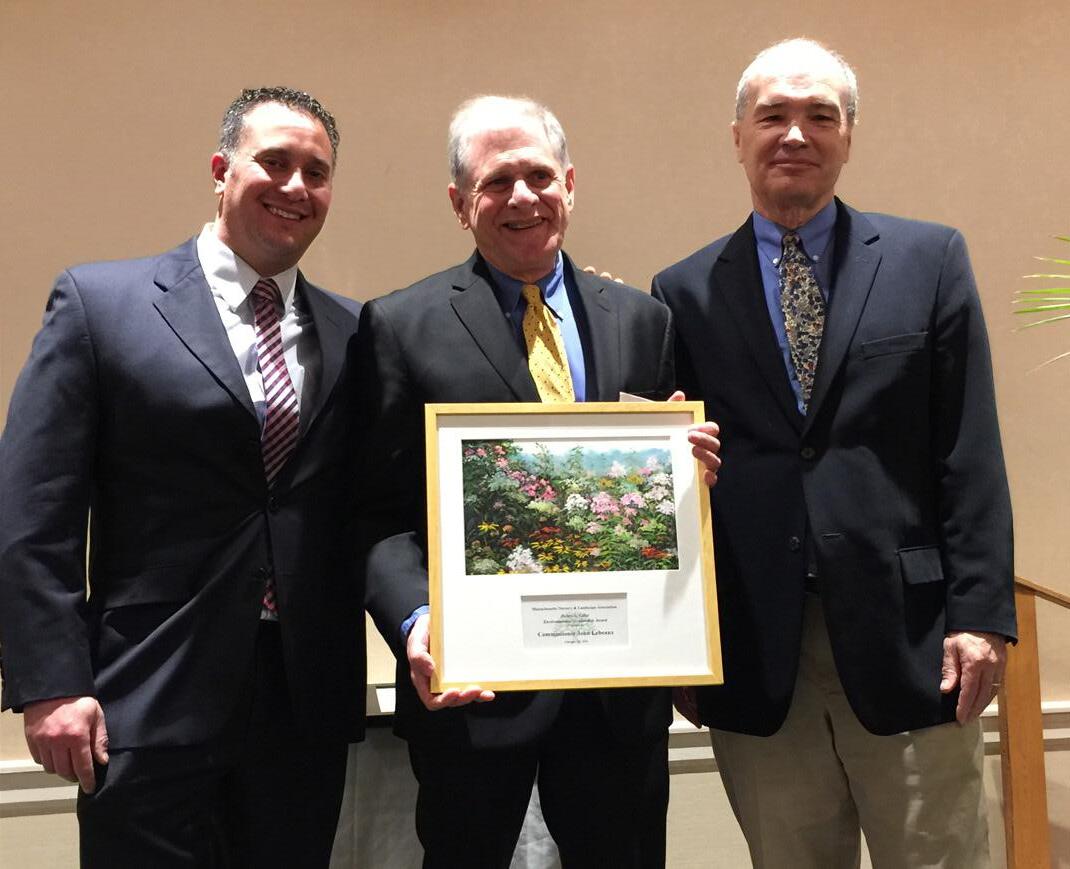
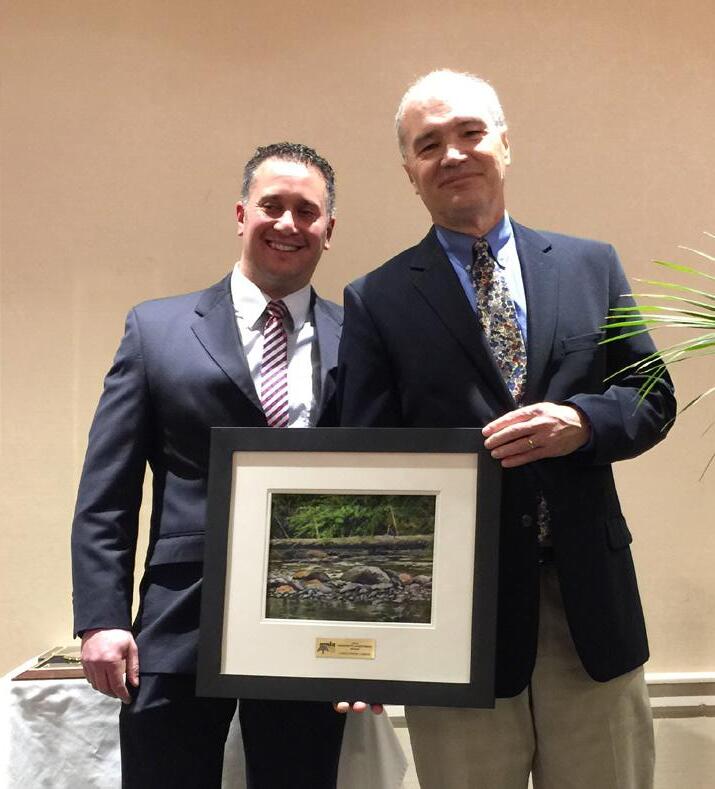
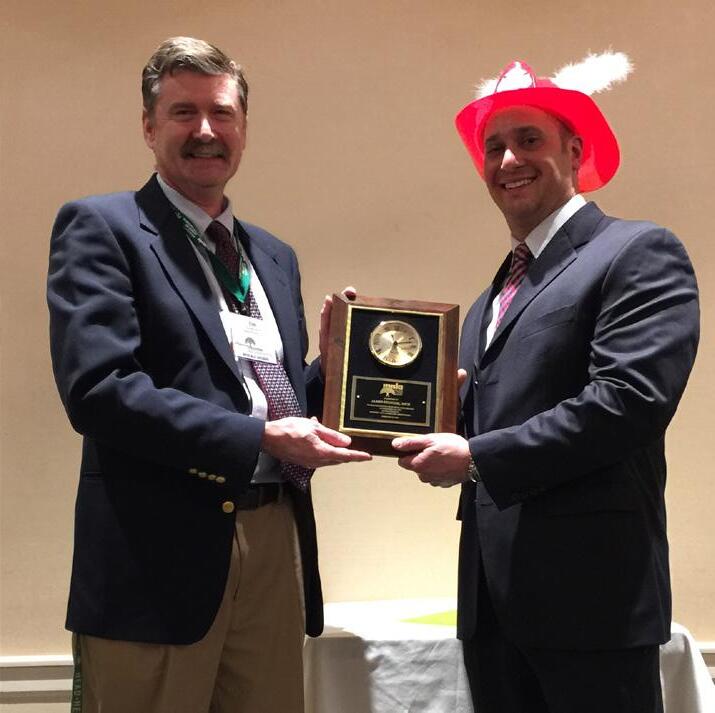
The first recipient of the newly named award is Commissioner and MNLA past-President John Lebeaux, MCH, (center). Proudly presenting the award were President Jim Stucchi, MCH, (left) and Government Relations Chair Chris O’Brien, MCH.
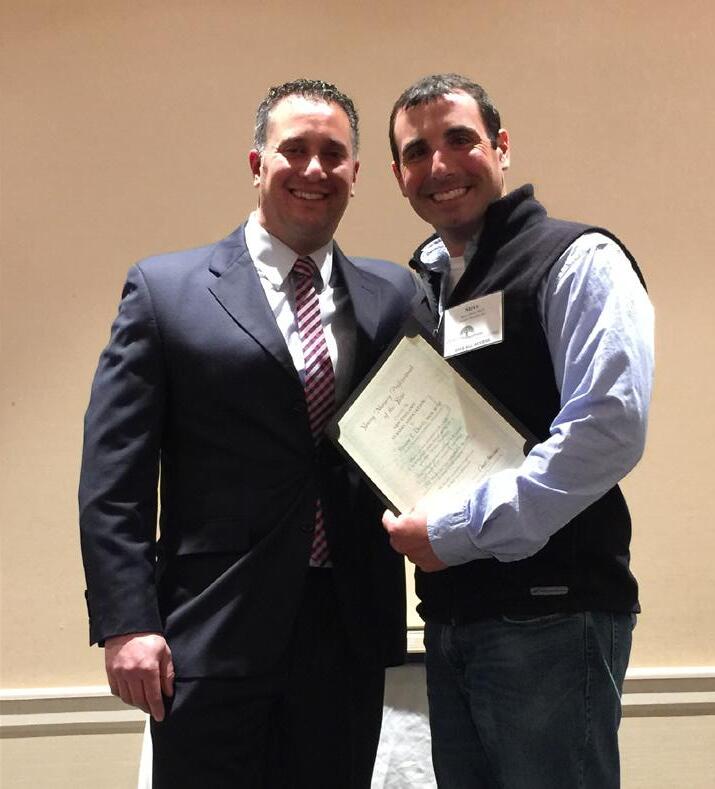
The New England Nursery Association (NENA) awarded its 2018 Young Nursery Professional of the Year for Massachusetts to Steve Davis MCH, (right), Bigelow Nurseries, Inc.
Jim Stucchi, MCH, (left) presented the President’s Award to Chris O’Brien, MCH, Howard Designs
In a changing of the guard, President-elect Tim Hay, MCH, of Bigelow Nurseries thanked immediate past-President Jim Stucchi MCH, (right), of Ahronian Landscape & Design for his many years of dedicated service to MNLA.
Business Focus
Employer Insights for 2018
by Joyce Gioia
Every year at about this time, The Herman Group issues its annual forecast, which is intended to provide employers with insights about what to expect in the coming years so they can position themselves for success.

2018 is going to be a challenging year for employers looking to hire the talent they need. Intensifying labor shortages will prompt a variety of changes to the way employers recruit and retain talent.
1. Upward pressure on wages. The war for talent has finally arrived, and talent shortages are forcing business leaders to take a new look at wages. They will need to weigh the quality of a candidate against the cost to hire him/her.
2. Focus on the “employee experience” will increase. For years, many employers have given lip service to the employee experience while continuing to provide an environment that does not support employees doing their best work. This year, many — if not most— employers will wake up to the realization that what they have done in the past will not work going forward. If they do not materially change, they will find themselves unable to recruit (and retain) the talent they want and need.
3. Growing emphasis on flexibility in schedule and location. Another result of increasing labor shortages will be the mounting demand for flex-time and flex-place.
These types of flexibility will be difficult (or impossible) for some employers to offer. For them, focusing on any type of flexibility they can offer will be important, while looking at what else they can offer that has a high perceived value to the employee — and a low cost to them.
4. More companies will hire for soft skills and culture fit. For years, we have heard employers say, “I hire for attitude and train for aptitude.” We are beginning to see that taken to the next level. Case in point: Jay Patel, CEO of Wintergreen Hospitality in Chapel Hill, North Carolina, focuses on essential interpersonal skills, reflected in emotional intelligence, writing, speaking, empathy, clear communication, and conflict resolution. He looks less for traditional and formal credentials and more for life experience and wise talent; the result is exceptional customer service and superior guest hospitality scores. In the future, more employers will follow this path.
5. Expect to see higher percentages of contingent workers. The corporation of the future that Herman and Gioia forecasted in 1998 (“Lean & Meaningful: A New Culture for Corporate America”) is here. Some companies, particularly start-ups, will not even consider hiring an employee full-time before s/he has completed at least six months as a contractor. Most employees value the flexibility of working as a contractor, and some employers will find themselves negotiating unusual contracts to be able to
bring on these talented free agents full-time. For lower-level workers, expect to see more seasonal, temporary, and part-time workers brought on when needed and let go when not. In fact, according to the global staffing agency Ranstad, “many workers are seeking project or consultant-based work, with as much as 61 percent of the workforce choosing agile careers by 2019.”
6. Greater use of big data in HR. Expect to see people and predictive analytics move beyond HR-specific data. That means companies will be looking at a variety of factors, and more importantly, taking action to optimize the return on investment of everything from advertising to training budgets. Not surprisingly, what is working to indirectly drive bottom line profits will be given more attention (and money) and what is not working will quickly lose favor and be more difficult to justify for the next round of budgets. The upside is profitability, but the downside is that some good ideas may not be re-funded, simply because they did not work the first time. It will be important for companies to remain vigilant to market opportunities and not dismiss investments that have not worked in the past but could benefit from some adjustment.
7. Shortage of data scientists encourages innovative solution. Marie L. Clark, founder and chief idea and innovation officer at Ambient Intelligence, Inc. is leading a movement in support of organizations and individuals. Clark believes the secret to employers winning the talent race and positioning themselves
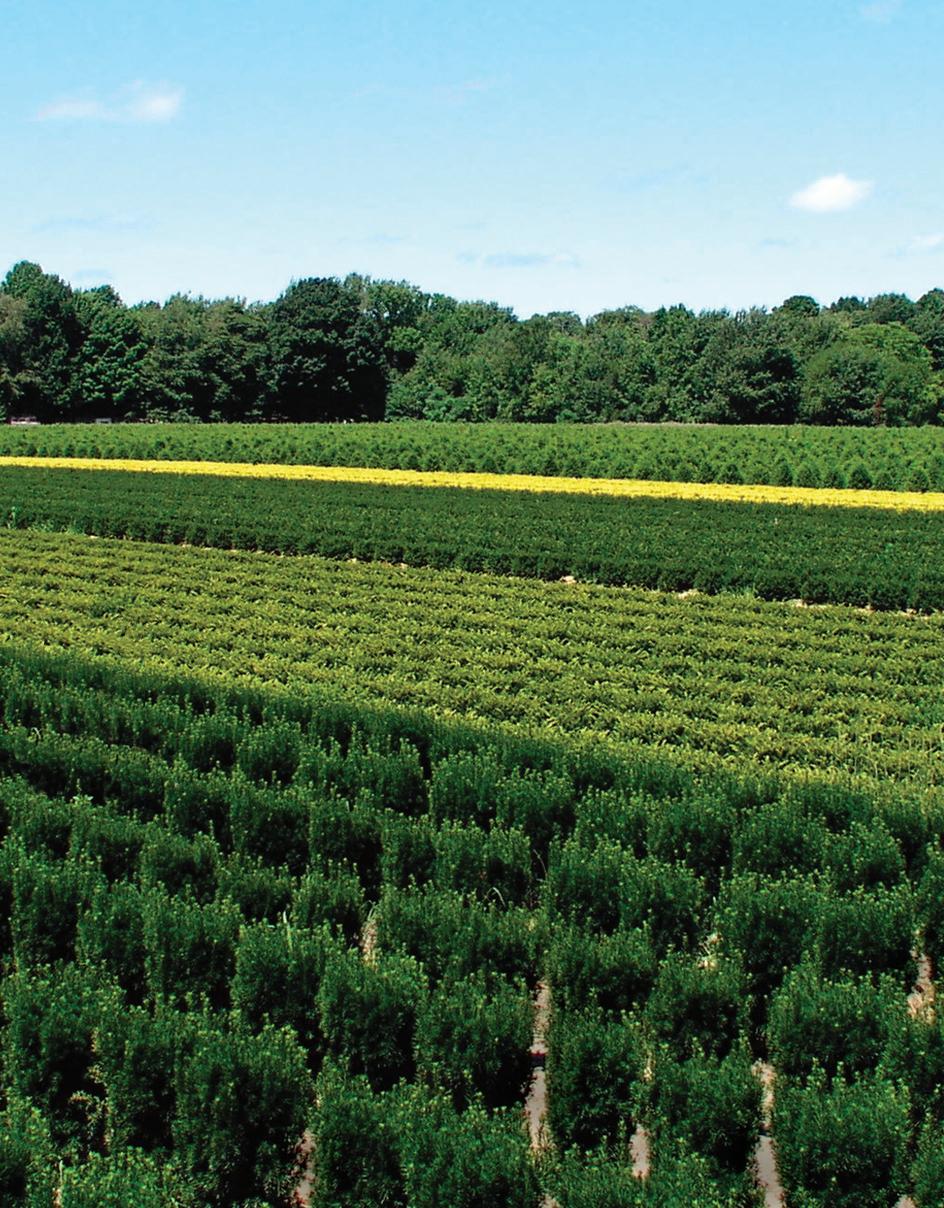
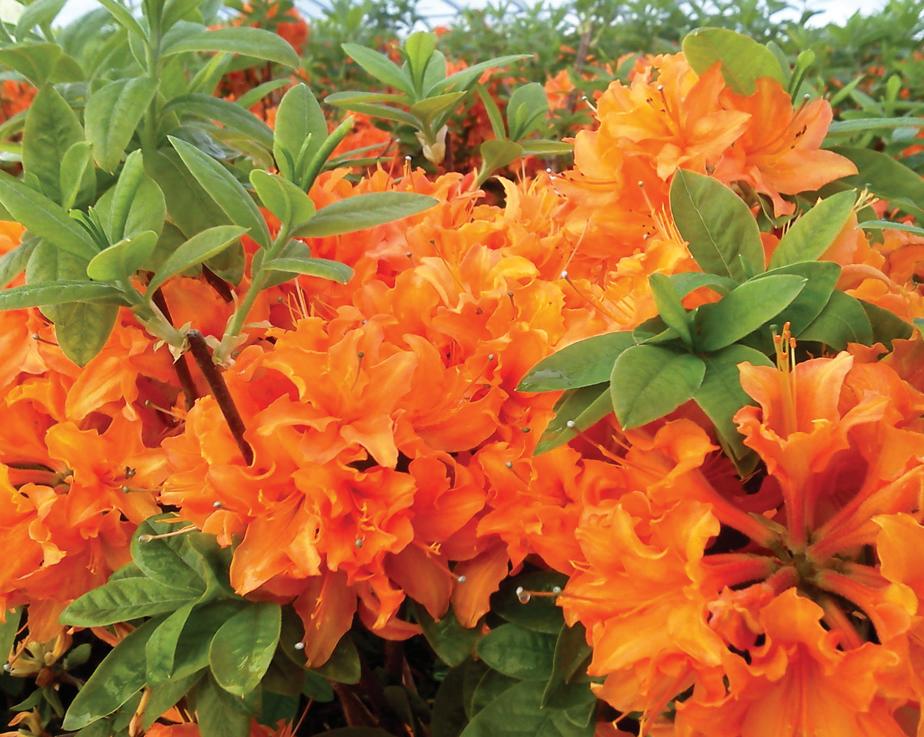
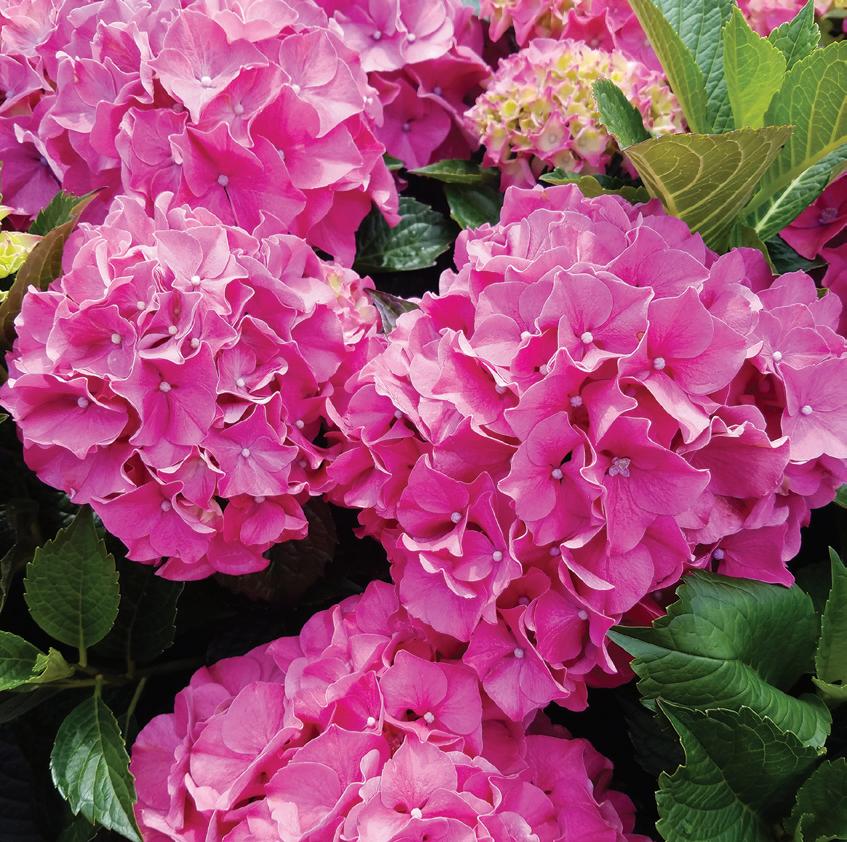
Mandarin Lights Azalea Hortense Hydrangea
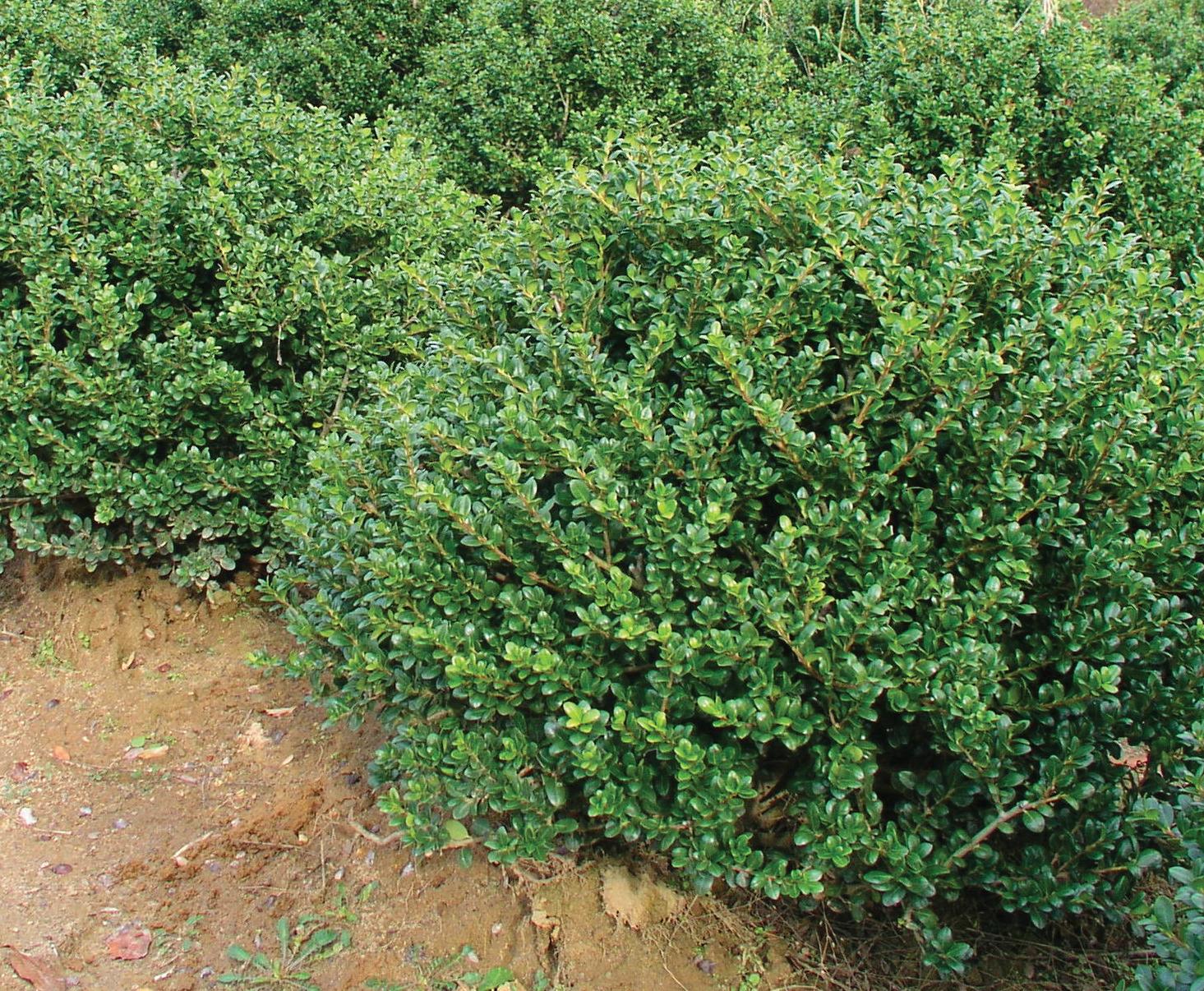
Northern Beauty Holly
Admiration
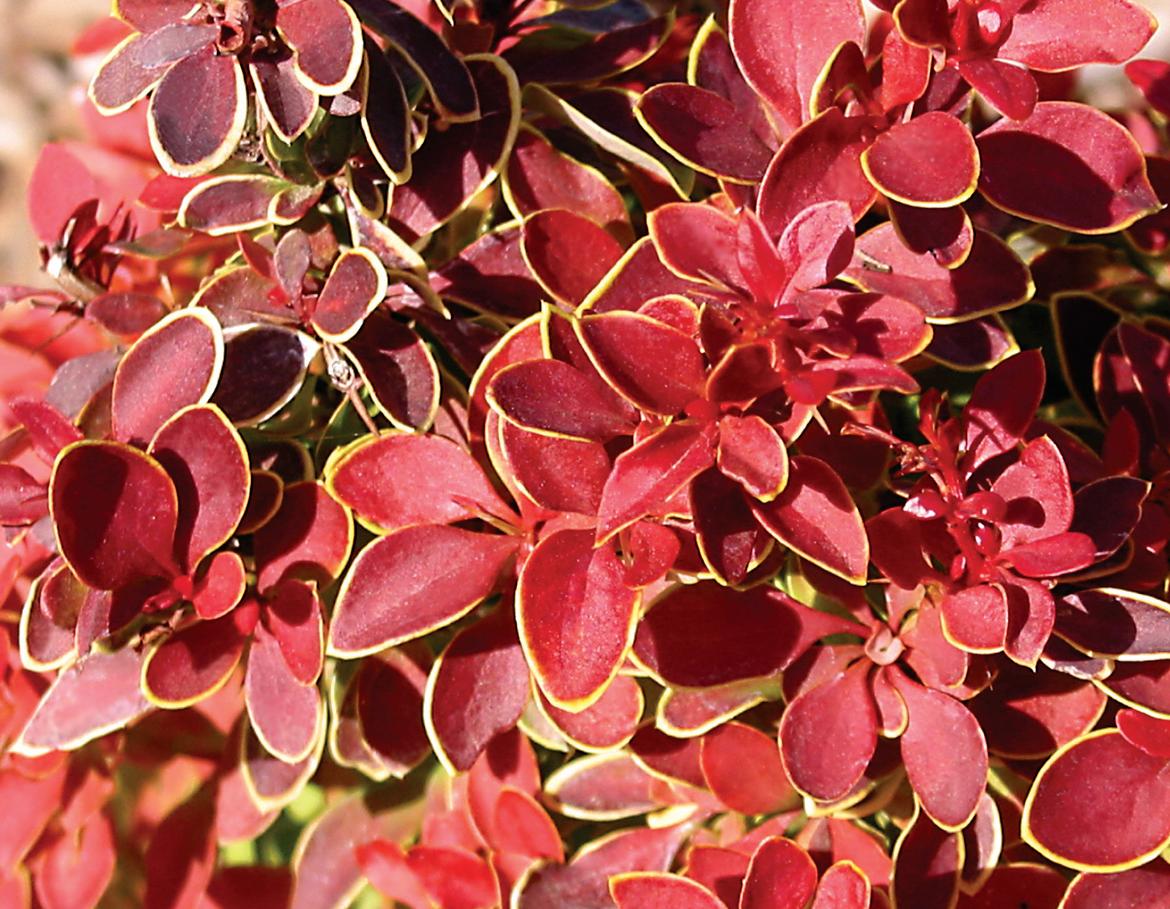
Barberry
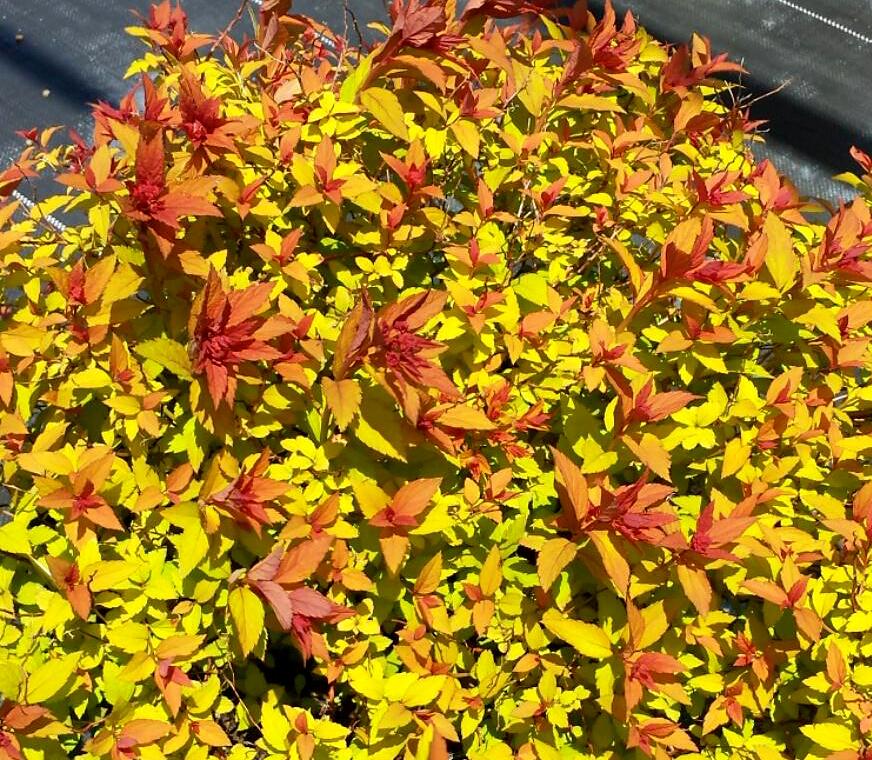
Carpet Spirea
New England Wetland Plants, Inc.
Wholesale Native Plant Nursery
Your source for...
Trees, Shrubs, Ferns, Flowering Perennials, and Grasses Coastal and Inland Wetland Plants
Specialty Seed Mixes
Coir Logs, Straw Wattles, Blankets and Mats
820 West Street, Amherst, MA 01002
Phone: (413) 548-8000 Fax: (413) 549-4000 Email: info@newp.com Web: www.newp.com
for success is to shift from thinking they have to find individuals with all of the data science skills. Rather, Clark suggests that data science be a “team sport,” and that the greatest success is achieved when employers tap the passions and talents of their people — not expecting one individual to know and do it all. This strategy has many benefits for people and companies. (Look for a Herman Trend Alert on this topic next month.)
8. Upskilling will help solve the STEM skills gap. Another result of the tightening labor market is that employers will get serious about upskilling their own people. By capitalizing on their talented team members, they not only retain the knowledge and insight within their organizations, but they also retain the people who have already proven their value to the company. And by the way, due to advancing automation, the most valuable skill we can teach people is how to learn; the second most valuable skill is to how to embrace change.
9. Expect to see additional AI and digital platforms implemented to enhance the recruiting and HR processes. Advancing work technologies are changing the ways in which companies and their employees work. To keep up with these changes, business

Holyoke, MA (800) 862-0089
Charlton, MA (508) 987-0101
Wilmington, MA (866) 830-5909
Norwalk, CT (203) 831-9748
Plainville, CT (888) 889-9996
Hamden, CT (203) 288-2222
Smithfield, RI (401) 232-2597
Albany, NY (518) 650-6228


leaders will need to adapt and evolve in 2018, applying new tools, and therefore, new strategies to every phase of the employment lifecycle. According to Randstad Sourceright’s 2017 Talent Trends survey, “a majority (84 percent) of C-suite executives and human capital leaders believe AI and robotics will have an impact on the workplace in the next three to five years.”
10. Automation will mostly support the work of humans, not replace them. For the foreseeable future, we will still need skilled workers to operate most machines. At the same time, machines are becoming increasingly complex, so we will need skilled workers who can keep learning and growing. In a recent study, Forrester Research reported “close to 15 million new jobs will be created in the U.S. alone over the next decade as a result of automation and smart machines.” As we reported last week in the Littler-Prime comment to the United States Department of Labor, automation holds tremendous potential and significant benefits in efficiency and productivity for the companies that invest in their people and do it right.
11. Sexual harassment claims will grow exponentially. We have only seen the tip of the iceberg with regard to sexual harassment claims. Not only are they not going away, but we expect to see continuing waves
of allegations, firings, convictions, and perhaps settlements, reaching to the highest levels of our institutions, as we see the truth exposed and abusers brought to justice. Do not expect women employees to continue to tolerate any level of sexual harassment until the accusations begin to create a backlash.
In 2018, the winners will be the organizations that can draw additional insights from this evolving workplace and dominate the competitive landscape by investing in their people and processes, as well as automation and robotics to maximize ROI.
To read the entire new Ranstad study, visit http://insights. randstadusa.com/six-workforce-trends-that-will-dominate-2018 From ‘The Herman Trend Alert,’ by Joyce Gioia, futurist, speaker, and author. Joyce can be reached at 336-210-3548 or by visiting www.hermangroup.com. The Herman Trend Alert is a trademark of The Herman Group of Companies, Inc. To subscribe, visit http://www.HermanTrendAlert.com.

Refueling Vehicles and Equipment
Workers in the landscape industry have been severely injured while refueling equipment and vehicles. Extremely painful burns resulting from ignited fuel can be disfiguring and debilitating.
While many precautions related to fuel handling seem like common sense, hurry and inattention often subvert sound judgment. Other best practices are less known, but there are safeguards both managers and crew members can follow to help prevent injuries associated with refueling vehicles and equipment.
Safeguards for Managers
• Follow all local, state and federal regulations, including federal OSHA standards 29 CFR 1910.106 and 1926.152 related to flammable liquids, including fuel.
• Provide and ensure crew members use portable fuel containers or safety cans that include flame-arrestor screens in safety-can spouts and are approved by a nationally recognized testing laboratory such as the Underwriters’ Laboratories. Unapproved containers can leak or spill fuel or even rupture.

• Ensure fuel is kept in closed containers when not in use.
• Instruct employees to dispose of leaked or spilled fuel immediately and safely.
• Be sure flammable liquids are not used within 50 feet of an open flame or other source of ignition. Some conditions will warrant even greater clearance.
• Post no-smoking signs in areas of your facilities where fuel or other flammable liquids are stored or handled.
• Ensure proper fire extinguishers are available at all facilities and jobsites and that they are positioned within appropriate distances of equipment/vehicle refueling areas.
• Include rules regarding transporting fuel and refueling vehicles and equipment in your company’s written safety program.
• Thoroughly train and regularly retrain all employees on your company’s policies regarding handling and working near flammable liquids.
• Regularly inspect jobsites to make sure crew members are following these policies and strictly enforce them.

Safeguards for Crew Members
• Understand that gasoline and diesel fuel are extremely flammable. Don’t smoke or have an open flame while fueling, operating, or working near vehicles and equipment.
• Fill equipment fuel tanks before you begin work at each jobsite. Turn off the engine before refueling a vehicle or piece of equipment. Don’t dispense fuel into a portable container while it is sitting in a vehicle or in a truck bed. Place the container on the ground to avoid hazardous static electricity build-up.
• Before dispensing fuel into a vehicle, touch a metal part of the vehicle away from the fuel tank with your bare hand to help dissipate static electricity on your body. Touch the fuel--dispensing nozzle to the fuel-tank rim on vehicles and equipment before you begin fueling, and keep it in contact during the refueling process. This helps prevent static electricity from building up and causing a spark.


• Don’t fill a fuel tank all the way to the top. Leave at least one inch of vertical space for fuel expansion.
• Loosen fuel caps slowly to relieve tank pressure. Use a funnel, if needed, to prevent fuel from spilling. Promptly dispose of spilled or leaked fuel according to your company’s guidelines.
• Use only portable fuel containers or safety can that are approved by a nationally recognized testing laboratory such as the Underwriters’ Laboratories and that have flame-arrestor screens in safety-can spouts.
• Let the engines of all equipment (mowers, leaf blowers, trimmers, chain saws, generators, etc.) cool down before you add fuel to tanks. Start portable, enginepowered equipment at least 10 feet from refueling sites, and secure spark-plug boots to avoid sparks and possible fuel-vapor ignition.
Safety Sense is provided by the National Association of Landscape Professionals as a service to its members. Visit https://www.landscapeprofessionals.org/nalp/safety-riskmanagement/safety-news/safety-news.aspx


Arborjet provides cutting edge solutions to the green industry’s insect and disease problems. From high tech equipment to formulations that change the way we think about plant health care, Arborjet offers the tools you need to save America’s landscapes.







MARKETPLACE

Plant for Success
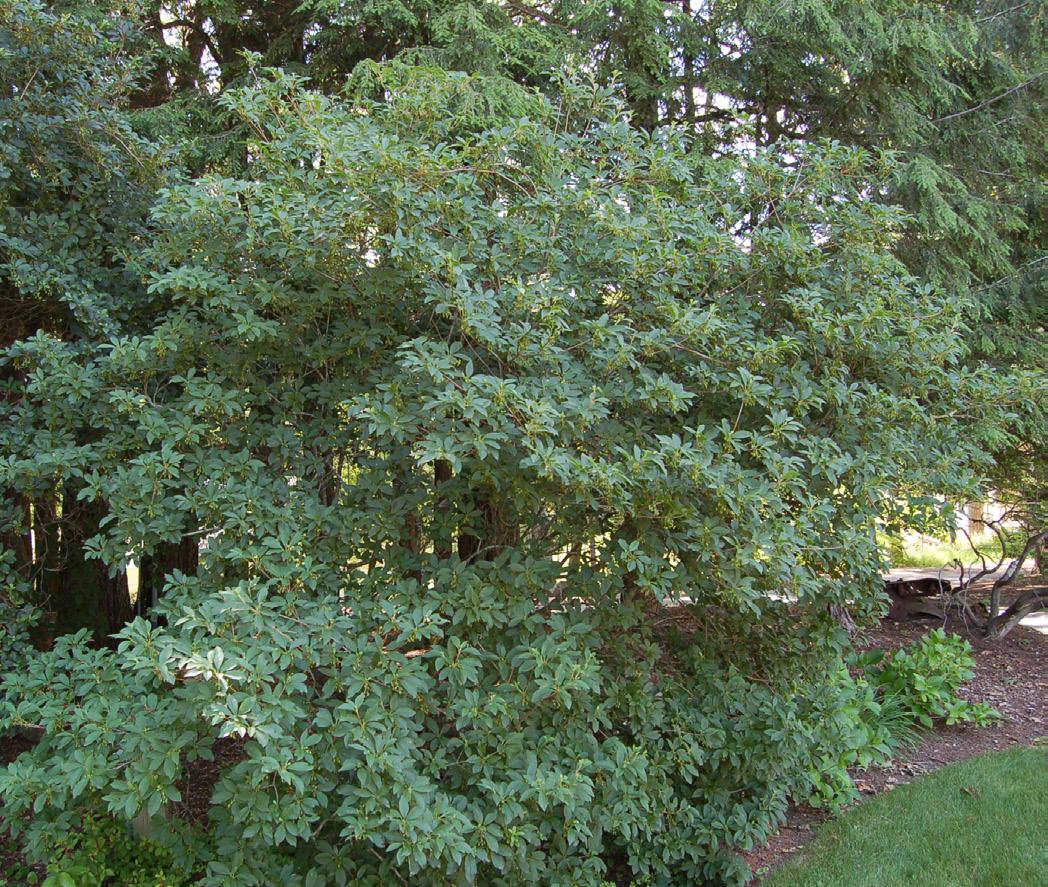
Enkianthus campanulatus — Redvein Enkianthus
Enkianthus has a beautiful, layered, upright growth habit, similar to azaleas and rhododendrons. It can be used in a mixed woodland border or in a foundation planting, anchoring the corner or screening a large, blank wall of a house. It can also be used in plantings surrounding patios and walls, softening these areas to create a natural appearance.
Because of its large size and beautiful fall color, it can also be a great plant for the back of the border. Enkianthus suffers no serious insect or disease problems and the foliage stays fairly clean all season long. It is also very deer resistant, which is an essential quality in my local area.
Facts and Features
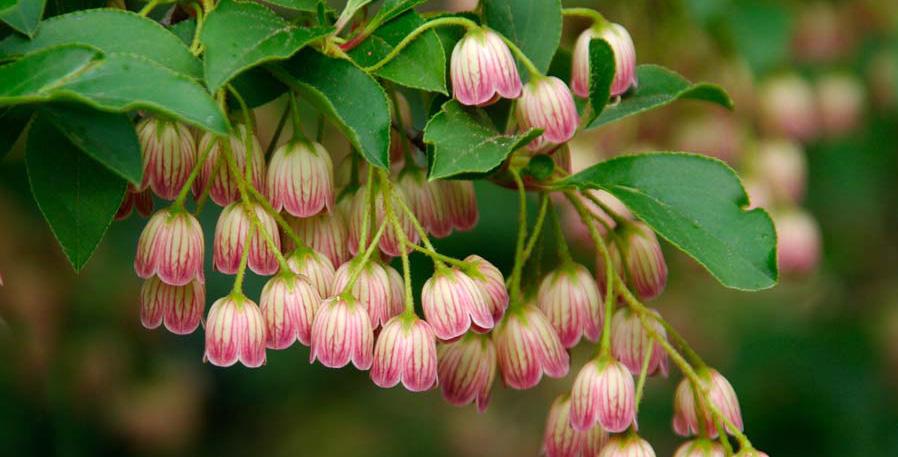
This large shrub blooms in May and June. The flowers are not very showy, but are still beautiful and interesting when viewed at a close range. They are small, bell-shaped, creamy-yellow or light orange, with red veins.
In the fall, the yellow, orange, and red foliage is very vibrant, especially in sunny locations, but Enkianthus grows well in sun or shade. This plant is a member of the ericaceae family and combines well with other plants in the same family, like Azaleas and Rhododendrons. It is native to Japan.
Grace Peabody, Eastgate Garden Design, Topsfield, Massachusetts

Enkianthus campanulatus Redvein Enkianthus
Type: Large Shrub Hardiness Zone: 4 to 7
Partial Shade or Sun Soil: Moist, Well-Drained Deciduous
Fall Color: Yellow, Orange, Red Size: 12–15ft. High / 8ft.Wide Growth Rate: Slow

•Extensive selection of
•Hardscape & Masonry Supply
•Landscape Lighting
•Residential & Commercial Irrigation Supply
•Custom seed blending
• Equipment Rental (Bobcat, Ditch Witch, Turf Equipment & More)
• Bulk Mulch, Loam & Stone
Northeast Turf & Irrigation Supply
•New England Delivery Routes


Northeast Greenhouse & Nursery Supply
•
• Pots, Growing Media, Fertilizer, Irrigation & more
& Turf Supply
• Complete Turf & Ornamental Mangement line
•
•
Northeast Arbor Supply