The Landscape Contractor magazine October 2017 Digital Edition
Impact Program on page 31
Photo Credits
ILCA Awards Program 1, 8-9
Rick Reuland 10, 26-27, 50, 52
Doug Tallamy 10, 14, 16
Rick Darke 10-12,14, 16, 19, 20
Christy Webber Landscapes 22-24, 36-38
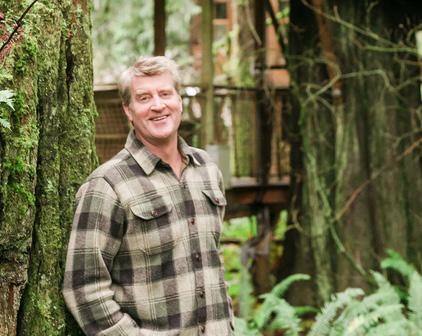
Pete Nelson 27-28
The official publication of the Illinois Landscape Contractors Association (ILCA), The Landscape Contractor is dedicated to educating, advising and informing members of this industry and furthering the goals of the Association. The Landscape Contractor carries news and features relating to landscape contracting, maintenance, design and allied interests. Publisher is not responsible for unsolicited material and reserves the right to edit any article or advertisement submitted for publication. Publication reserves right to refuse advertising not in keeping with goals of Association. WWW.ilca.net
Volume 58, Number 10. The Landscape Contractor (ISSN # 0194-7257, USPS # 476-490) is published monthly for $75.00 per year by the Illinois Landscape Contractors Association, 2625 Butterfield Road, Ste. 104S, Oak Brook, IL 60523. Periodicals postage paid at Oak Brook, IL and additional mailing offices. Printed in USA.
POSTMASTER: Send address changes to The Landscape Contractor, 2625 Butterfield Road, Ste 104S, Oak Brook, IL 60523. DISPLAY ADVERTISING SALES: Association Publishing Partners, Inc., Ph. (630) 637-8632 Fax (630) 637-8629 email: rmgi@comcast.net CLASSIFIED ADS, CIRCULATION AND SUBSCRIPTION: ILCA (630) 472-2851 Fax (630) 472-3150 PUBLISHER/EDITORIAL OFFICE: Rick Reuland, rmgi@comcast.net, Naperville, IL 60540 Ph. (630)637-8632
2625 Butterfield Road Ste. 104S Oak Brook, IL 60523
Feature Writer patpeltier@charter.net
Meta Levin
Feature Writer meta.levin@comcast.net
Nina Koziol
Feature Writer n.koziol@att.net
Heather Prince
Feature Writer princeht@sbcglobal.net
Marilyn Witney
Feature Writer madwitney@comcast.net
OCTOBER
October 5, 2017
Women’s Networking Group Fall Event Chandler’s Chophouse Schaumburg, IL
October 17, 2017
Impact Conference: Building Sustainable Landscapes
Chicago Botanic Garden Glencoe, IL
November 2, 2017
Annual Party
Two Brothers Roundhouse Aurora, IL
November 16, 2017
Pruning Workshop
Spring Valley Nature Center Schaumburg, IL
From Where I Stand —
On October 17, 2017, ILCA will debut the inaugural Impact Confernece: Building Sustainable Landscapes. It would be overly simplistic to say this event is a year in the making. In actuality, Impact is probably a decade in the making. It is the byproduct of two organizational philosophies that were once one, then split, meandered through the intellectual forest, only to meet back up again.
In 2009, I received an email from a plucky and motivated member named Tom Lupfer who asked why ILCA didn’t have a Sustainable Committee. I did what most executive directors did when posed with these quandaries, I promptly put him in charge. Tom saw a sister organization, then called the Midwest Ecological Landscape Association (MELA) as thriving in that space. They had a committed core of volunteers and spoke in the language of movements, not non-profit associations.
What Tom also noticed was that MELA’s message, albeit inspirational, was not helping him solve problems he had in the field. He had already drank the Kool-Aid. He did not need to be convinced that sustainable landscaping had merit. What he needed was tactical help that would help him get more sustainable systems in the ground.
This was a common complaint from many members. They understood that environmentallyfriendly landscape practices were becoming more mainstream, they just lacked a complete understanding of these systems and how to implement them. If contractors couldn’t have the kitchen table conversations with clients, contractors would either dissuade their clients from installing features like rain gardens or permeable pavers or rainwater harvesting systems or simply never bring them up in the first place.
There wasn’t one way to be sustainable like there wasn’t one way to design. Any good faith effort widened the tent and created better practices and more enduring landscapes.
In their humility, the SLC also created a definition of sustainable landscaping they still use today. They realized they could not define something they barely understood themselves. Any definition would have a short shelf life and would need to evolve just as fast as the industry’s best practices. Instead, they created not a definition of “what,” but one of “when.” They used a venn diagram to describe what sustainable landscape practices were.
Prepare for Impact
Tom’s committee also needed bodies and we didn’t have a deep bench of companies actively engaged in sustainable landscaping. This was the dark days of the recession so contractors were more worried about the phone ringing than changing industry paradigms. As luck would have it, the ILCA Leadership Council was sending its second class through the program. Part of this program was for graduates to make a commitment to volunteerism. A handful of members said they had an interest in the environment. That opened the door wide enough for ILCA to rush in and deputize them as founding members of the ILCA Sustainable Landscape Committee.
It turned out to be a blessing in disguise that this first group had little awareness of sustainable landscape practices. All of them were feeling their way in the dark. This caused them to gel quickly and to never shame one another. That was one thing ILCA noticed quickly with sustainability. There was an imperiousness surrounding some companies that the rest of the industry wasn’t progressing fast enough. The true believers demanded the industry change overnight. This meant moving away from products and practices the landscape industry had been using for decades.
That green-shaming was palpable and probably put sustainable landscaping into a state of arrested development for five years. The SLC realized they were in a minority. They were the small boy standing in front of the tank. Instead of looking down their noses at other companies, they began to acknowledge these companies’ constraints.
Like Saint Patrick and the shamrock, sustainable landscaping occurs when environmentally-friendly landscape practices that clients desire are able to make revenue for professional landscape contractors. When you have the intersection of environment-demand-profit, you truly have a sustainable landscape practice.
Ooh boy, did that rub people the wrong way. I remember speaking about this at a few industry meetings and various ILCA and MELA events. People did not like that profit was anywhere near a definition of sustainable landscaping. Frankly, those who landscape for a living were surprised by the kerfuffle. It is impossible to run a landscape businesses without profit. No matter how wonderful a tactic, material, or design if a company cannot make money, the entire system comes crashing down. It is not to say that unprofitable systems are not important or wonderful for the environment, they are. It is just that they won’t last.
Not being the director of MELA, I cannot speak to its history. I only watched and supported MELA from afar. We met with them regularly, sponsored their events, sent our magazine to all of their members, and tried to share best practices. Yet, I cannot say there was never friction. MELA looked at ILCA as the glacially slow big brother who was heavy on resources, but short on vision. In turn, ILCA viewed MELA as the fiery, bleeding heart growing more impatient with an industry refusung to change. It is only through time and wisdom that I realize we were both right and both wrong at the same time.
In truth, both organizations had a lot to learn from one another. When we finally moved past the tribalism, we realized sustainable landscaping needed to lock the visionaries and practitioners in a room together for a year. In essence, when MELA dissolved and its core members joined ILCA, that’s exactly what we got.
At first, it was awkward. The first meeting was quiet and reserved. You could tell MELA members were boisterous and passionate but didn’t want to crack the veneer. You could tell the ILCA members were calculating and practical and were terrified to admit they were still neophytes on a lot of these concepts. The clock on the wall ticked. People sipped coffee and exchanged sideways glances. I began to worry these two sides were incongruent.
Then, the veneers cracked. With each passing meeting, a comfort level grew. The committee members began to interact and laugh. They were self-deprecating and admitted when they were wrong or didn’t know something. They began to trust one another. They realized they had far more in common than they had differences. They also started listening to each other.
I was amazed at the command and awareness former MELA members had of this segment of the landscape industry. They had deep rolodexes of experts and speaker contacts that stretched
711 S Material Road, Romeoville, IL
800-762-5738 * 815-836-0086 RocksEtc@ATT.net
18715 Route 84 N * Cordova, IL
800-736-1356 * 309-654-2261 Sales@XylemLtd.com
From Where I Stand —
across the country. They read books, watched documentaries, and listened to podcasts. Sustainability was their jam. The ILCA members had deep experience on selling and implementing these systems. They listened to the complaints of other contractors and clients. They understood the challenges of going from concept to functioning reality. MELA and ILCA, for over a decade, tugged each end of the spectrum, and now we’re meeting in the middle. This was the first “impact” long before the event had a name. It almost had to be this way. Whether through happenstance or fate, MELA and ILCA needed to take our respective journeys.
President Lisa Fiore
Don Fiore Company, Inc. (847) 234-0020 lfiore@donfiore.com
Vice-President Tom Lupfer Lupfer Landscaping (708) 352-2765 tom@lupferlandscaping.com
Secretary-Treasurer
Jose Garcia
Natural Creations Landscaping, Inc. (815) 724-0991 info@naturalcreationslandscaping.com
Immediate Past President Mike Schmechtig Schmechtig Landscape Company (847) 566-1233 mschmechtig@schmechtiglandscapes.com
Directors
Mark Breier National Seed Co. (630) 963-8787 mark.breier@natseed.com
Allan Jeziorski Hartman Landscape (708) 403-8433 allan@hartmanlandscape.net
Kevin Manning K & D Enterprise Landscape Management, Inc. (815) 725-0758 kmanning@kdlandscapeinc.com
Scott McAdam, Jr. McAdam Landscaping, Inc. (708) 771-2299 Scottjr@mcadamlandscape.com
Dean MacMorris Night Light, Inc. (630) 627-1111 dean@nightlightinc.net
Emerald Lawn Care, Inc. (847) 392-7097 marku@emeraldlawncare.com
Donna Vignocchi Zych ILT Vignocchi, Inc. (847) 487-5200 dvignocchi@iltvignocchi.com
President’s Message —
www.ilca.net
“Say what you mean, mean what you say, and do what you say you’ll do”
Seems like a simple task but how many of us at the end of the day feel like we were left out on a limb by someone who told us they could help? Why do we find that in groups there end up being just a few that take on the work for all? I remember this happening when I was in school, those notorious “group projects” where there was always one or two people who skated along on the tails of others just because they could. I think this holds true in our adult lives as well, as we work on hiring and promoting employees and gaining the trust and respect of prospective clients.
Recently, I was in a meeting with fellow board members Dean MacMorris and Mark Breier to work on our upcoming rough draft for committee management training and protocols. We were discussing how refreshing it is when people actually “… do what they say they will do.” We have so many great members on committees here at ILCA, and we couldn’t do it without you! But there’s always more work to be done. For those of you in the association who are not part of one of our hard working committees, but would like to get involved, please take the time to reach out to the office staff and see where help is needed or where your individual skills are best suited.
Some of the newest committees, including the Turf Committee and the Sustainable and Ecological Landscape Committee are off and running with two great programs now running under the ILCA umbrella, Turf Education Day (TED) and the Impact Conference, which are fantastic additions to our current educational events. The Women’s Networking Group is also hosting an event to discuss Bridging the Gap between Generations, Customer Retention Practices and Work/Life Balance. I hope many of you have a chance to attend at least one of these, as I think each one has important information to offer so many of us. ILCA is on track to provide events and education to help serve the entire membership with our five year event calendar helping us along the way.
The ILCA board of directors is on task to do “what we say we will do” with the help of our strategic and operational plans. We want to continue to grow our membership, develop marketing techniques to promote our industry and to help encourage growth and understanding on all fronts. We definitely can’t succeed without the help of our many committees. We appreciate all of you who “say what you mean, mean what you say, and do what you say you’ll do”!
Thank you and best wishes for a successful fall season!
“Alone we can do so little, together we can do so much.”
- Helen Keller
Thank you,
Lisa Fiore
September 18,
2017
The Pizzo Group • Ball Residence
Leland
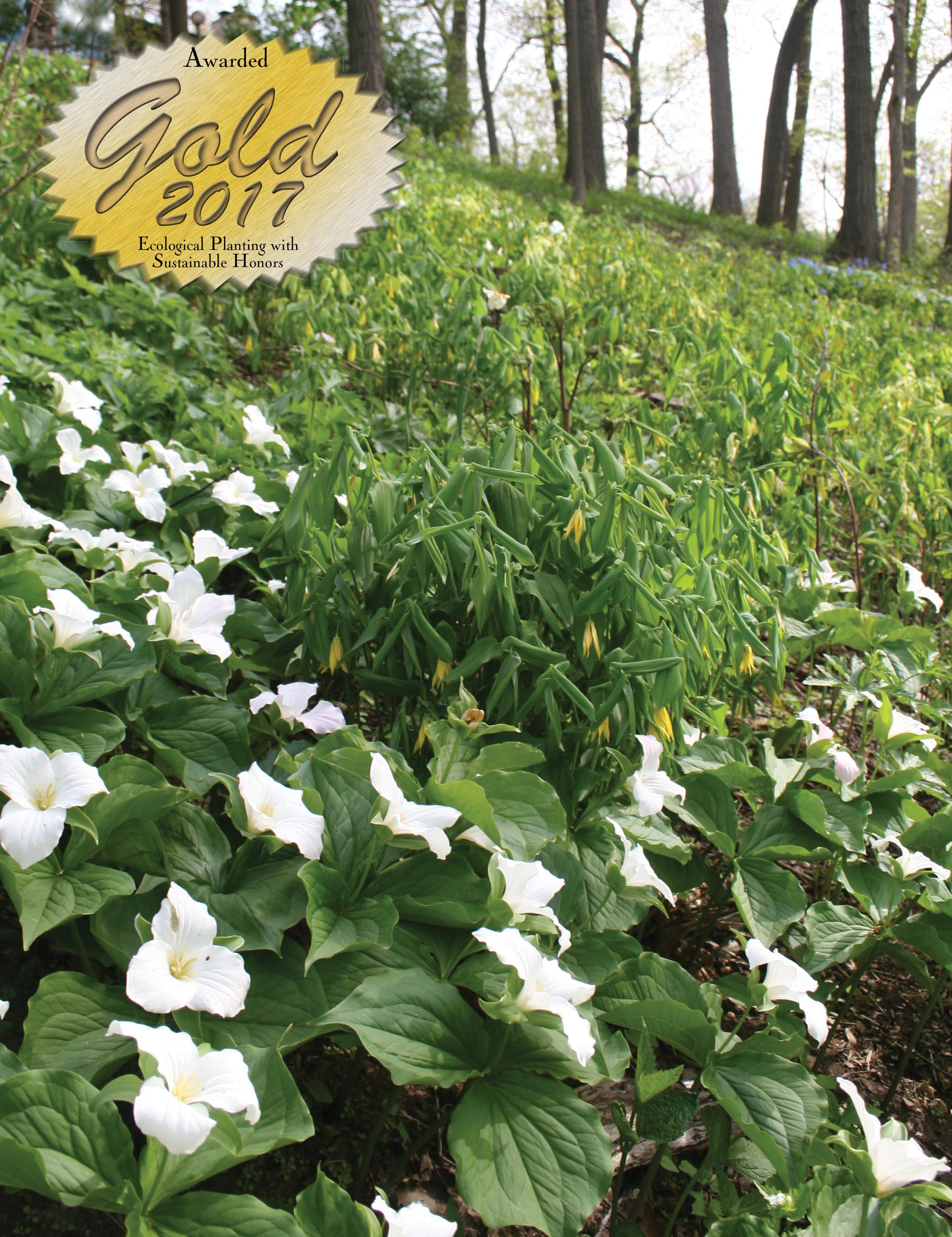
The client’s strong desire to reconnect with the native woodlands on her residential property created a need for a comprehensive restoration and maintenance plan. A mix of formal and natural areas was developed so that the client could maximize the usable spaces on the steep slopes.
The Red Oak savanna of her hillside site had been long neglected and the homeowner was deeply concerned with eliminating invasive species. Our first task was clearing invasive brush. We then performed controlled burns to open up the forest floor and bring sunlight to the treasures locked in the soil. The natural areas were overseeded with a woodland wildflower mix and thousands of additional plugs were planted. By the following
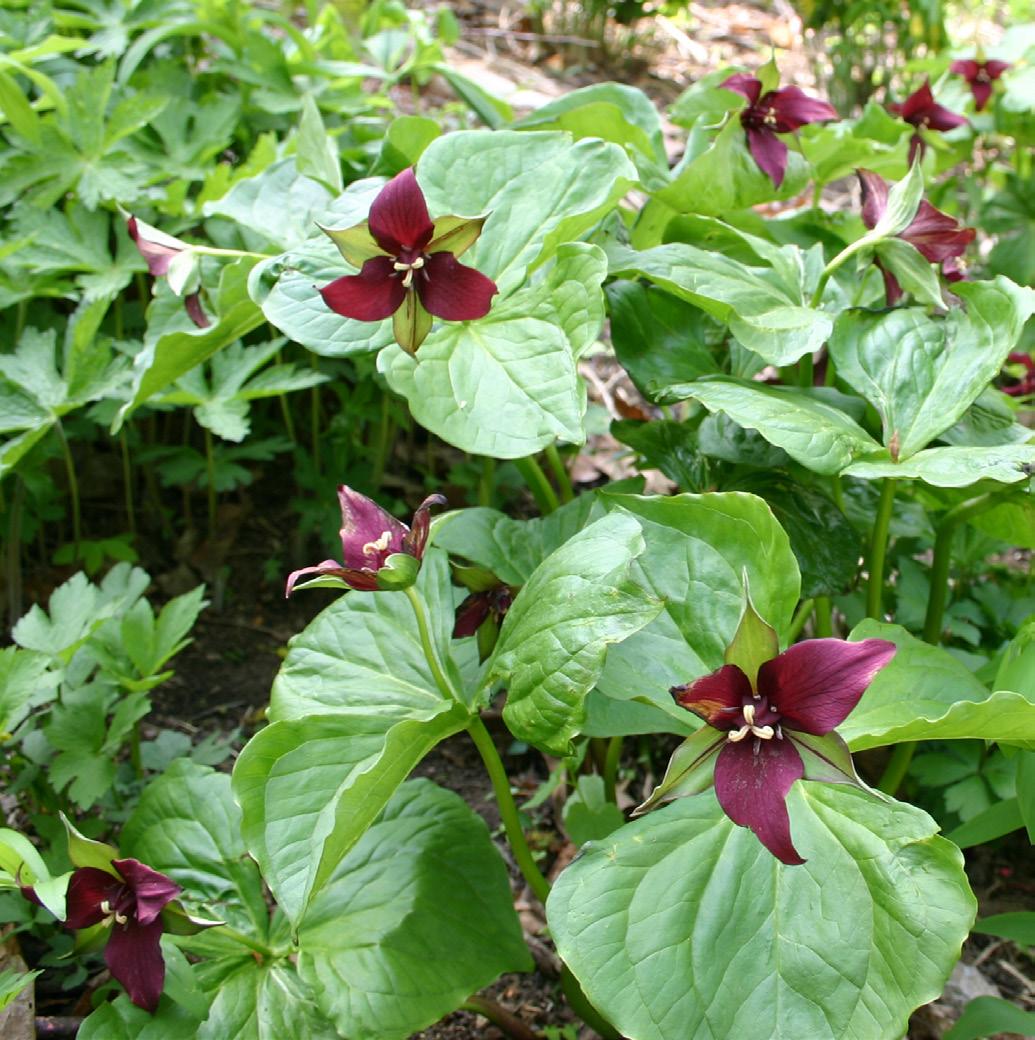
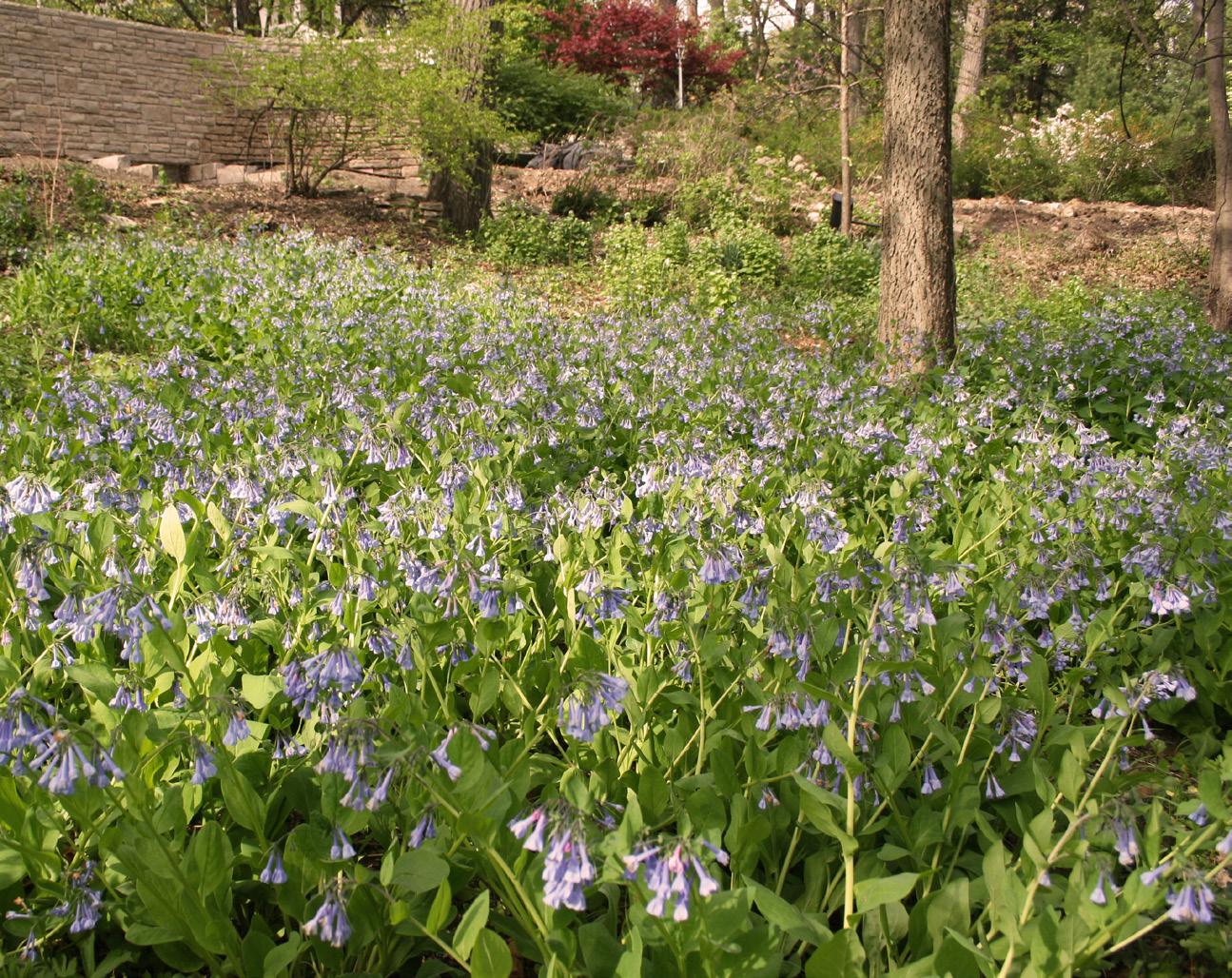
spring a carpet of ephemeral wildflowers emerged. Virginia bluebells, barge-flowered bellwort, white trillium, red trillium, wild ginger and more responded to our restoration strategies. To the client’s enchantment, One-flowered broomrape, a rare parasitic flower, has been found in conjunction with its host plants, aster and goldenrod. More than 125 species of native plants have colonized the site with wildflowers blooming throughout the season.
The client has been delighted with the transformation of their property. Birds, insects, and animals call the site home and add to the rich mosaic of the restoration. The homeowner is thrilled with her Midwestern forest aesthetic
Creating a New Landscape Aesthetic —
A Conversation with Doug Tallamy and Rick Darke — Creating a New Landscape
by Heather Prince
Doug Tallamy and Rick Darke
want to revolutionize how we landscape our homes and businesses. They passionately advocate for creating beautiful vibrant living layers that feed our souls, plus birds, butterflies, bees, and turtles. In addition, these interactive spaces would offer ecosystem services such as stormwater management, cleansing the air, stabilizing top-soil, moderating extreme weather, and sequestering carbon. It’s a tall order, but with your help, we can offer an alternate vision for horticulture that will enrich all of us.
In their most recent book, The Living Landscape, Darke and Tallamy lay out a design and planting philosophy that stresses building layers of trees, shrubs, perennials, and groundcovers to richly fill our outdoor spaces with both beauty and function. Layered landscapes offer incredible richness with four-season interest, spaces teeming
with bird, insect, and animal life, as well as long-blooming plants for sweeps of color. Help connect your clients with their outdoor spaces and let humans and nature be rewarded.
“Go step by step. Start with trees and work down through the layers. Build the walls of your outdoor rooms and frame them in woody shrubs at different heights. Then add the wallpaper of perennials and groundcovers,” instructs Tallamy. “Maybe start by cutting the lawn in half. You don’t have to eliminate it. Lawn is a great material to use as a ground layer to walk through your garden rooms. The lawn you keep should be manicured, but it should be used as a medium to guide you through your landscape. Swaths of manicured lawn are a cue to your neighbors that this is a designed landscape, not the abandonment of landscaping. But, try to add more plants and choose those that are high-functioning.” Instead of orga-
Rick Darke
Doug Tallamy
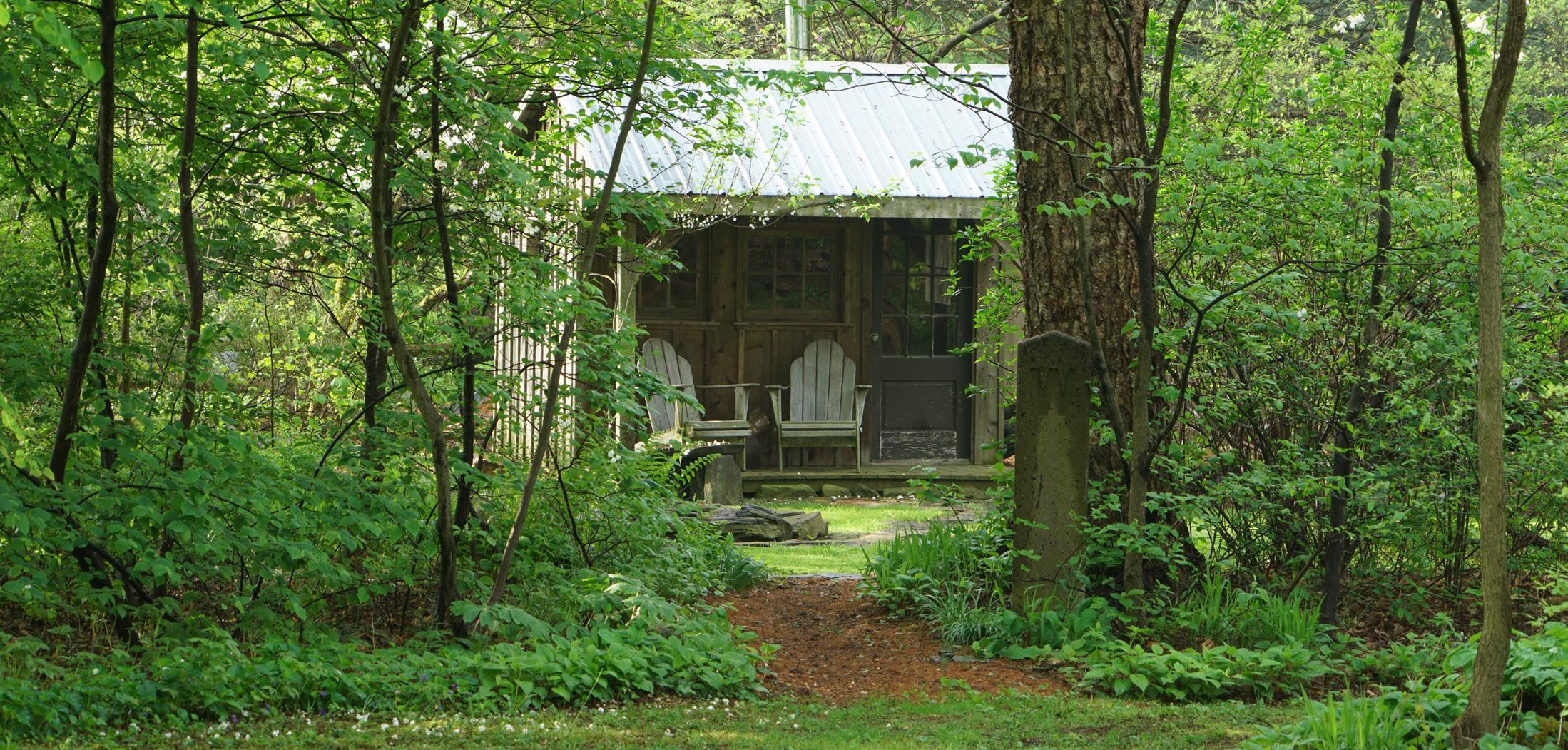
A small cabin in back of Rick’s garden in layered plantings
Aesthetic
nizing spaces only with hardscape, “try organizing the landscape by using plants. It creates delineated spaces, but ones that are more malleable, mutable, and sensual. It’s good for the industry and good for people,” commented Darke.
High-function plants are native plants that Tallamy and Darke find offer many benefits beyond being beautiful. Choose plants that not only provide bountiful flowers, but also feed pollinators and wildlife. Think about adding deep-rooted, long-lived plants to help hold groundwater. They offer thorough charts in The Living Landscape, but a key example would be oaks. “In most places, the most powerful tree is an oak because it delivers the most ecosystem services. They are the larval host for more than 500 species of butterflies and moths alone,” commented Tallamy. Some other examples of high-functioning trees are hackberry, serviceberry, pagoda dogwood, tulip tree, black gum and American hop hornbeam. All of these can shade our patios and decks, but also offer food and shelter for birds, screening solutions, flowers, and fall color. For shrubs, consider chokeberry, buttonbush, redtwig dogwood, sumac, spicebush, viburnum, and winterberry. These offer a myriad of textures and colors that can be interlaced through
the landscape, but also food and shelter for wildlife. Some of our favorite wildflowers like coneflower, goldenrod, butterflyweed, false indigo, asters, and black-eyed Susans are top plants for function, especially pollinators. “The popularity of pollinator gardens is booming. There’s a lot of interest in planting for bees, but try to add some plants for the specialist bees. The best plants for specialists in the upper Midwest are sunflowers, asters, goldenrods and willows. Specialist bees are outstanding pollinators and we’re still learning about their roles and needs,” indicated Tallamy.
Although Tallamy and Darke stress using native plants, they also feel strongly that a landscape doesn’t need to be 100% natives. “About 5% of plant genera contribute 75% of the food to local food webs. So, let’s be sure to include those powerhouse plants. This allows for compromise. If you’re a dahlia fanatic, plant dahlias. As long as you have your oaks, serviceberries etc., your yard will still do its job in your neighborhood,” said Tallamy. “The first time Doug and I were walking my property, we came across my katsura tree and we stopped. I cited it as an example of a nonnative, innocuous tree. Doug told me I could’ve planted an (continued on page 12)
The Barton garden, Landenberg, PA Magnolia virginiana
Creating a New Landscape Aesthetic —
(continued from page 11)
oak. I replied that katstura has a fragrance in fall, a luminosity to the leaves, it’s relatively disease-free and adapted to our climate. What’s wrong with that? Then as we started to leave, we noticed an oriole’s nest in the branches. It’s planted at the edge of a field. Orioles need woods that border fields. They built the nest because the tree provides a function for the bird. So, yes, plant native plants, but allow room for others that function well and that you’ll treasure. As humans, we tend to the things we care most about, so if you love roses, plant roses. But tuck in a viburnum here and there,” commented Darke.
One way to introduce clients to the concept of layered landscapes is through water management. This year in the Midwest, we’ve experienced extraordinary rains. It’s brought water and drainage issues to the front of the minds of property managers and homeowners. As more municipalities encourage property owners to keep stormwater on their properties, a number have programs promoting permeable paving, rainbarrels, and raingardens. Raingardens have become a good entry point to introduce a way to control water on a property, but also add a beautiful garden space buzzing with life. “Lawn is very close to an impermeable (continued on page 14)
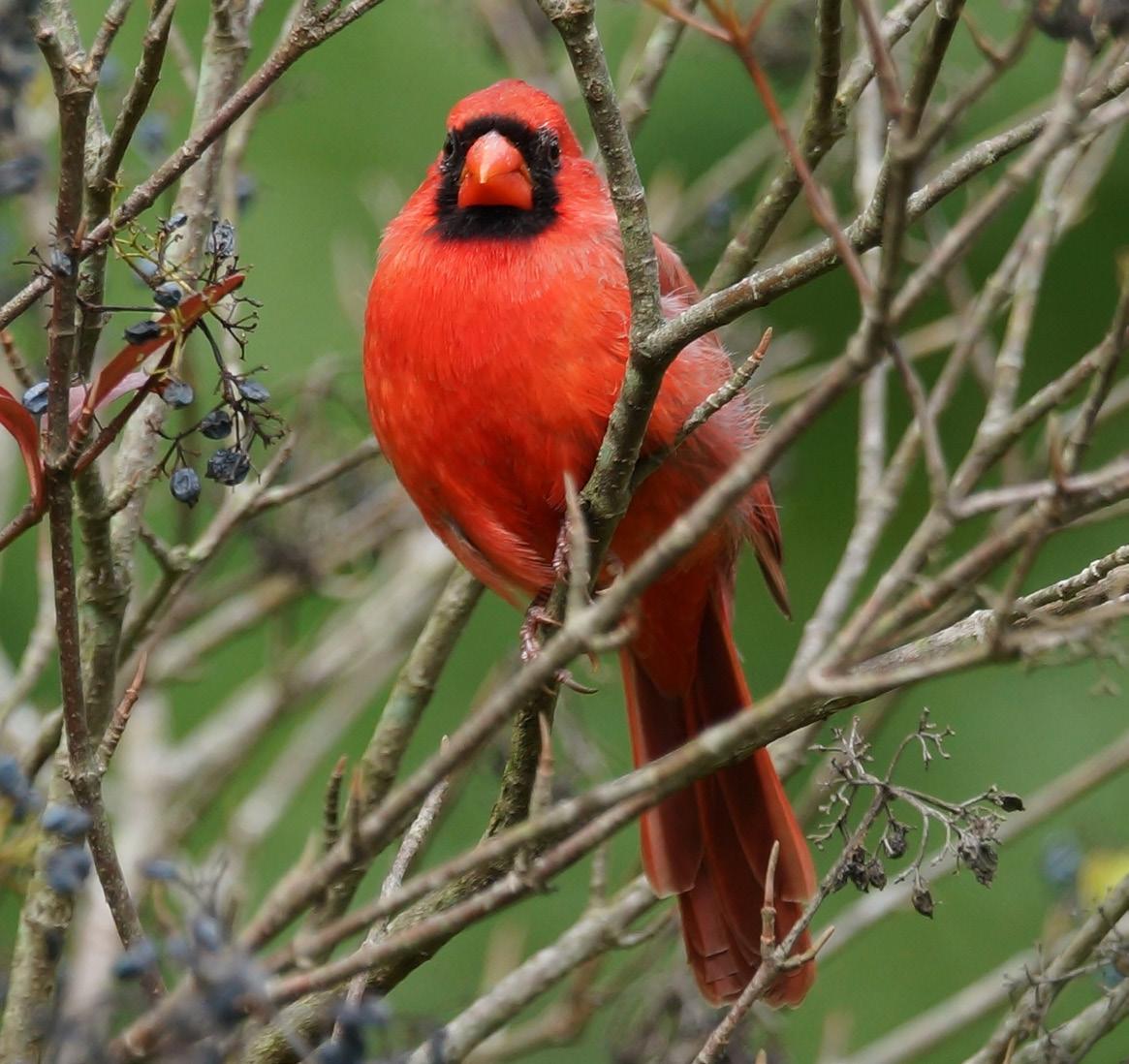
Cardinal in Viburnum nudum outside Darke’s bathroom window
Tilia americana at Milbourne
Creating a New Landscape Aesthetic —
(continued from page 12)
scape will give you time back to simply get out and enjoy the space.” There have been a vast array of recent studies proving the host of benefits provided by interacting with nature and green spaces, especially children. Tallamy agrees, “The very best way to do that is to create these spaces in your own yard. It’s therapeutic, convenient, consistent, and constant. Private yard spaces can be enormously rewarding. We can have homegrown national parks, just add more plants. There are all kinds of benefits from interacting with nature in walkable and watchable spaces. We are too “plugged in” to the digital world. Natural interactions in your yard provide an opportunity to balance your life.” By creating layered spaces, we add an element of surprise and delight. “The landscape that’s the most influential is the one closest to home, the landscape of the kitchen or bathroom window,” said Darke. Why not create an immersive experience for our clients so they too can enjoy the stress-relieving, life-extending benefits of the outdoors? Let’s share the excitement of watching robins nest outside the kitchen window or raising a couple of monarch caterpillars so we can watch up close the fascinating lifecycle of butterflies. Let a child interact with nature at their own pace “Try two-hour doses. After all, our kids are the future stewards of the planet,” observed Tallamy.
(continued on page 16)
A bluejay in flight
View of layered landscape from bathroom window
Creating a New Landscape Aesthetic —
(continued from page 14)
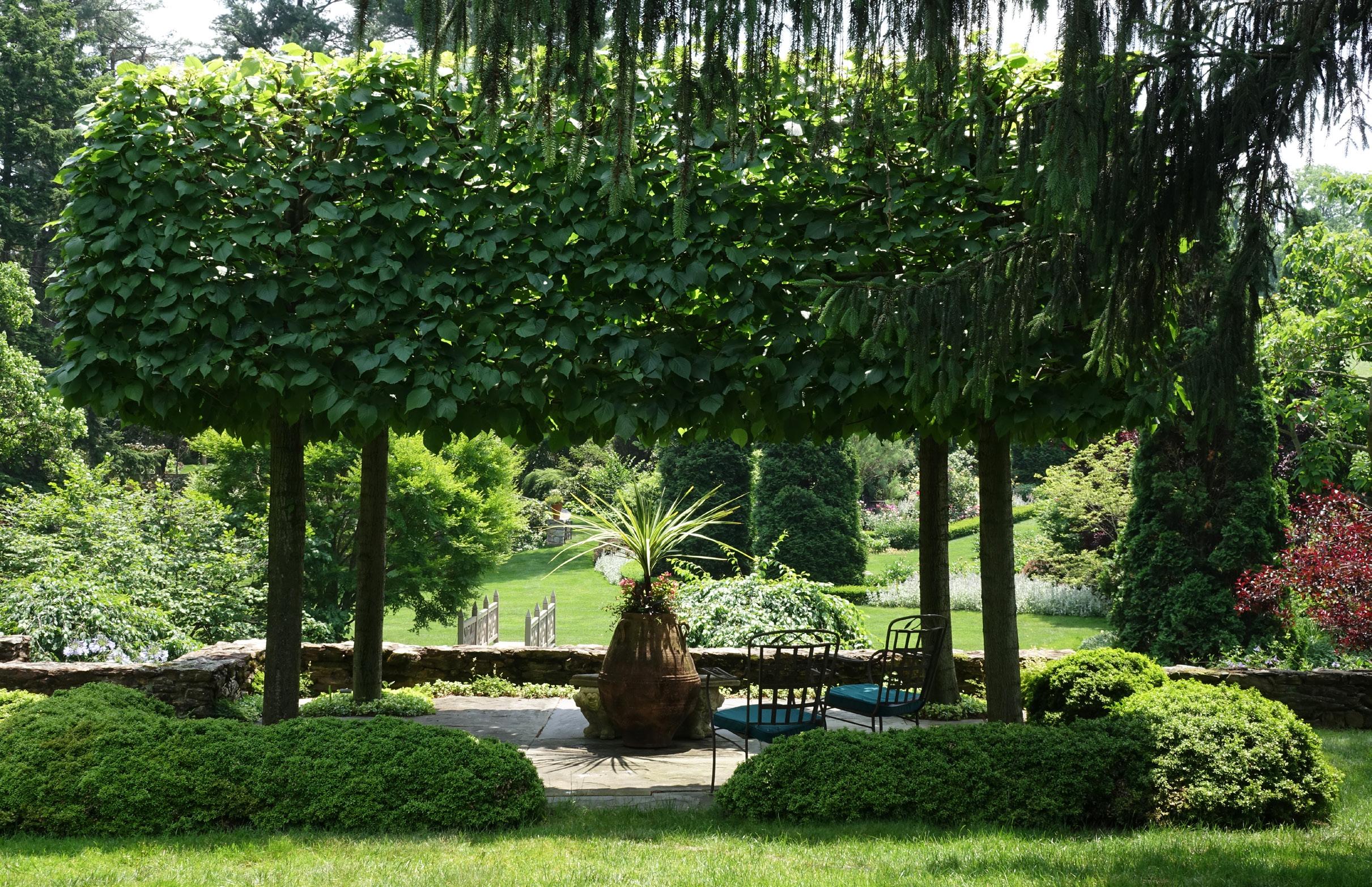
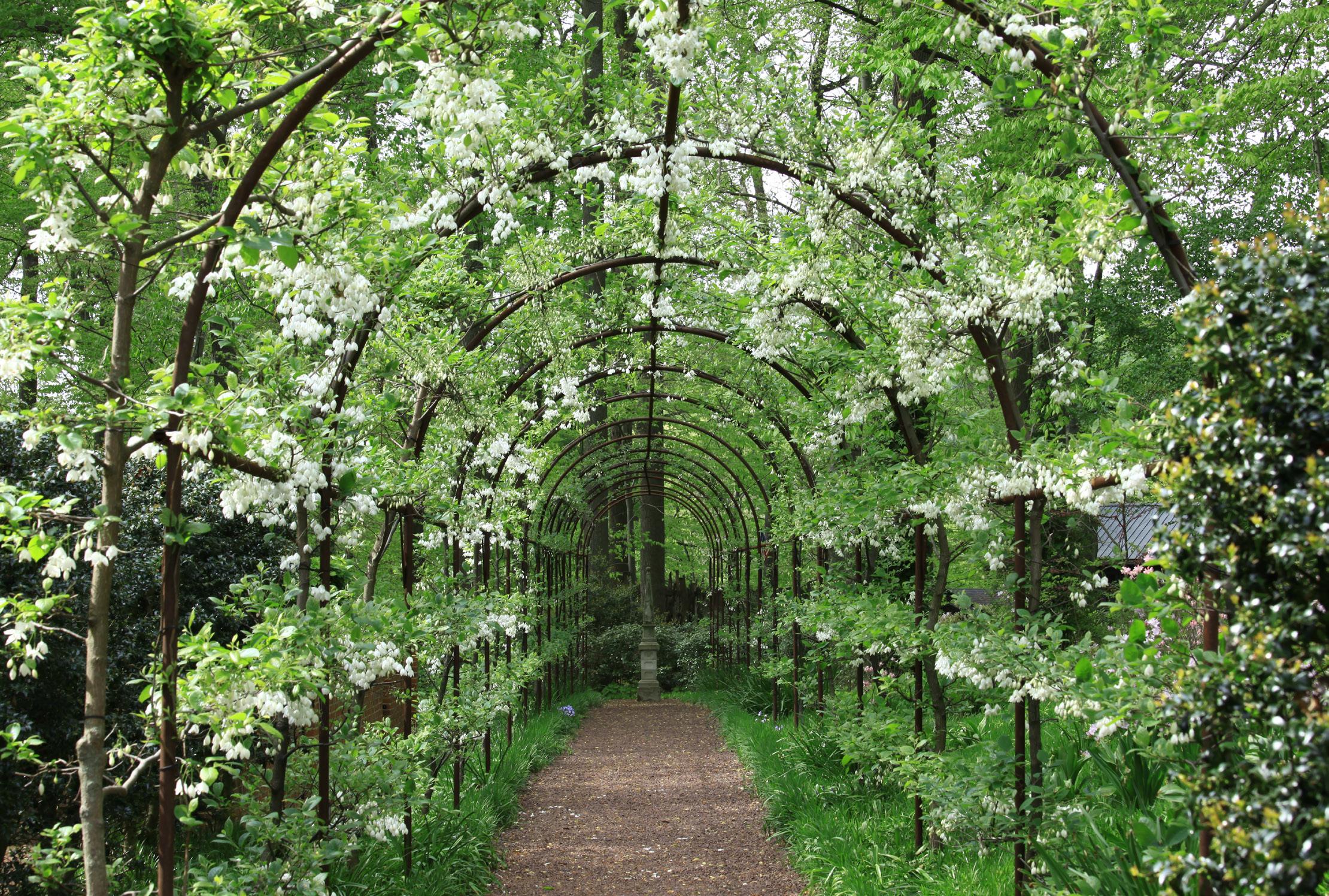
Layered landscaping doesn’t mean messy or unstructured. It does give permission for people to relax a little and perhaps loosen some areas of the yard. However, you can use many native plants in formal situations. “For example, there’s a photo in the book of an allee of large-flowered two-winged silverbell (Halesia diptera var. magniflora) trained over a structure to form a tunnel. There’s more people-time involved to maintain it, but it’s still providing all the ecosystem services and is highly functional. Another example is in a really wonderful 50-acre English garden called Millbourne in York, Pennsylvania. American lindens are limbed up and then coppiced to make a square with an open roof. I conferred with Doug, and those lindens support tons of species. In nature, they are a big loose tree, but in a formal landscape, they are equally beautiful. They have equal foliar sustainability. The difference is the resources needed to maintain it,” commented Darke.
Examples like this give you opportunities to connect clients with beautiful, high-functioning, durable plants that support many species, but require your unique expertise to maintain in a formal setting. One of the most important lessons of creating this new landscape aesthetic is using our expertise as growers, horticulturists, contractors, designers, and architects to give our clients (continued on page 18)
Halesia diptera var magniflora allee
Evening primrose moth
Creating a New Landscape Aesthetic —
(continued from page 16)
enriching spaces. We can create business opportunities with the idea of building livable, interactive spaces with more plants and strategically interwoven lawn. We can design, sell, and maintain more planted spaces and build more business. It’s also a way to increase the knowledge and expertise of your staff and elevate the profession. “There’s lots of opportunity, especially with ILCA, to work with teaching institutions that can provide foundations for your employees. These partnerships with universities, public gardens, land trusts, etc. are really important. I was really struck by the ILCA theme of ‘The Path to Professionalism’,” said Darke. “We need to contribute to the local ecosystem function. It’s an exciting change and an exciting business opportunity. You can make a living selling productive plants,” indicated Tallamy. “How do we make aesthetically pleasing landscapes that are ecologically sound? There are people jumping into it, but we need a lot more. There are 129 million homes in the U.S.; if everyone added productive plants to his or her landscape, it would be a tremendous economic boom for the nursery industry. Recognizing that we need to build sustainable landscapes is a great first step. We can work out how to do that over the coming years. This is part of the cultural change that we need. I’ve been talking to folks about this for 10 years now and I’m encouraged by how fast things are adopted.”
This new landscape aesthetic cultivates the human experience of nature. “There’s a move toward naturalism. People are looking for their landscapes to be more functional. Landscapes should be filled with more intrigue, surprise, and serendipity,” observed Darke. “I wrote some couplets to help explain the living layers landscape philosophy that include: personal and shared; intimate and expansive; dynamic and sustainable; sensual and practical; and walkable and watchable. There’s a unique balance between our intimate spaces at home and how they have the power to impact our planet.” By creating new experiences with garden rooms layered in native plants we give our clients singular pleasures in observing and being a part of their own backyard ecosystems. Chasing fireflies is a treasured treat and by cultivating ground covers, perennials, and shrubs, we create the right habitat to attract them. Include a bird bath, fountain or water feature and attract myriad types of birds that add a symphony of song. Not only are our songbirds beautiful to watch, but they are top predators of nuisance insects, providing even more services to the garden. Why not make more “walkable and watchable” spaces that connect humans to the natural world? The benefits are countless for us as business people in horticulture and as stewards of the future planet.
(more photos on page 20)
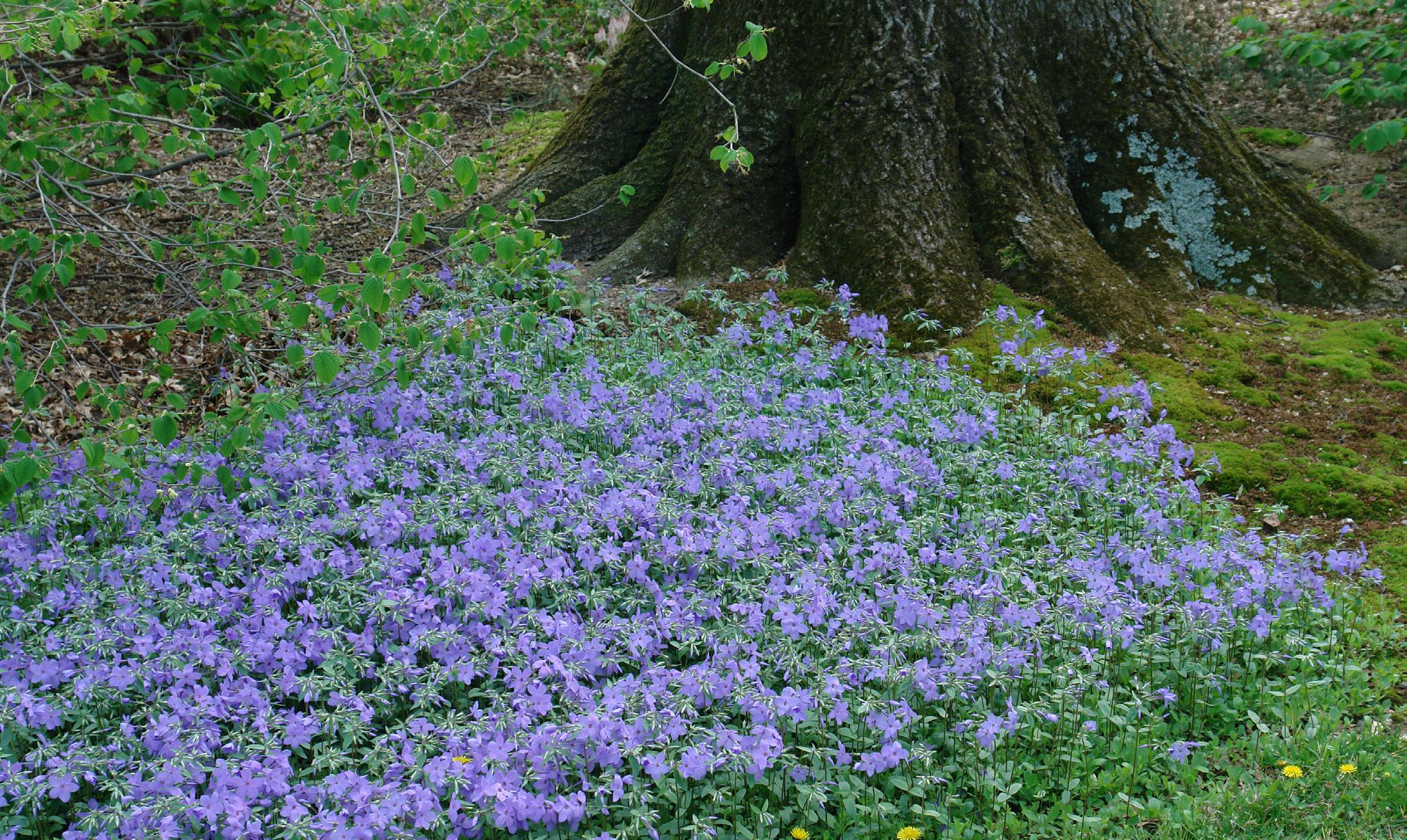
Phlox stolonifera Blue Ridge as flowering living mulch
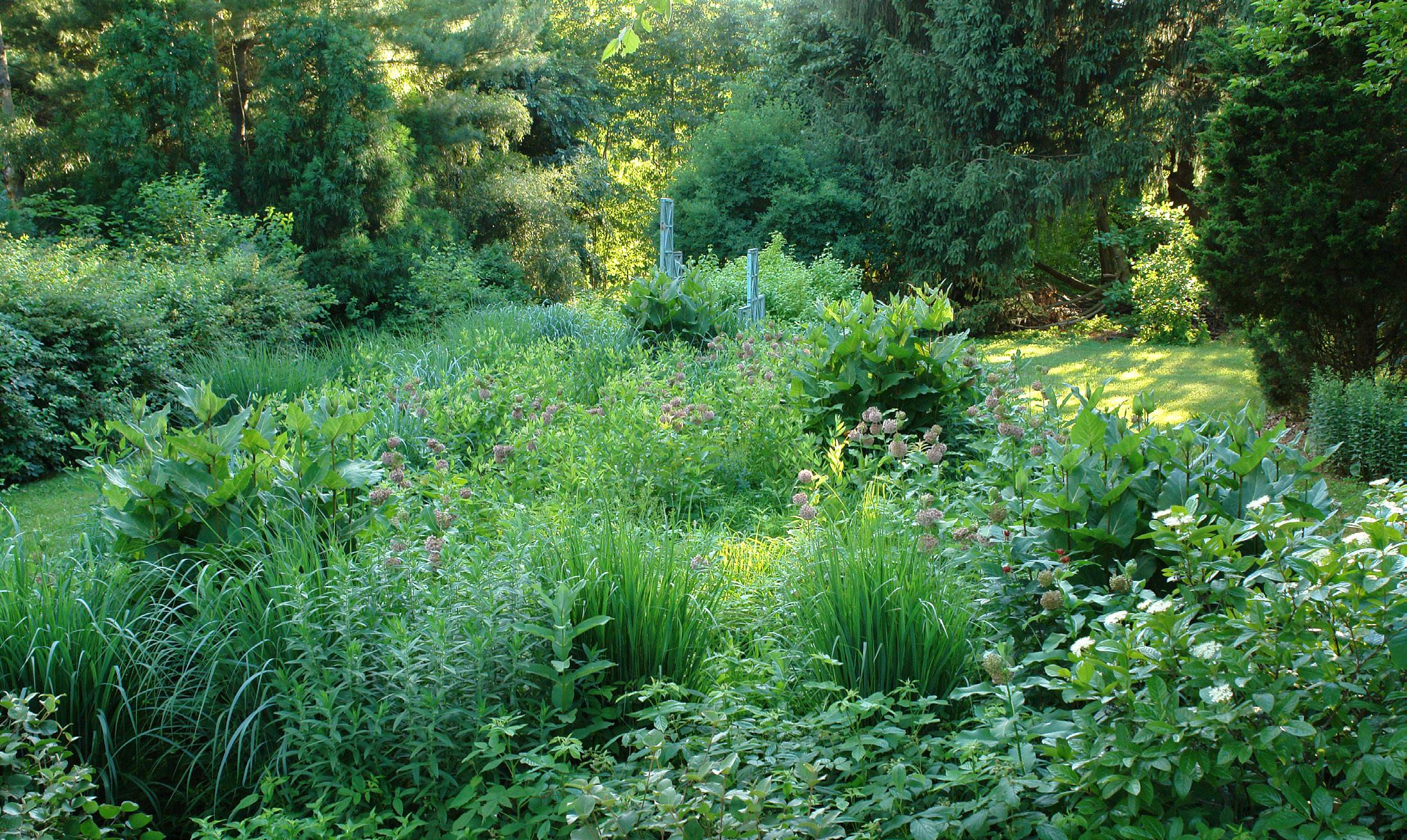
A small meadow garden with Silphium perfoliatum and Asclepias syriaca
Creating a New Landscape Aesthetic —
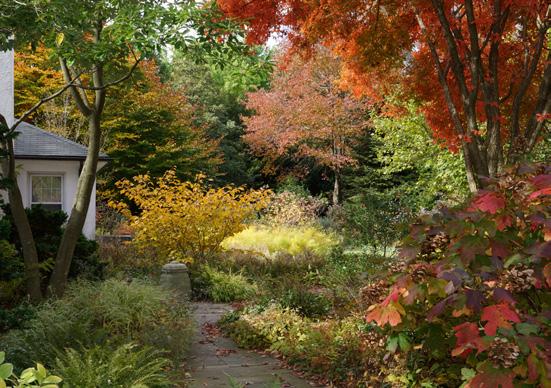
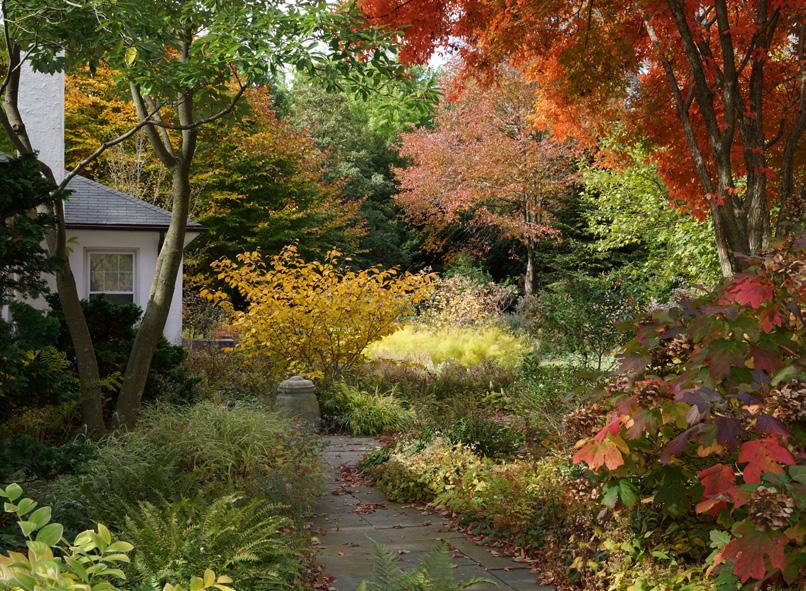
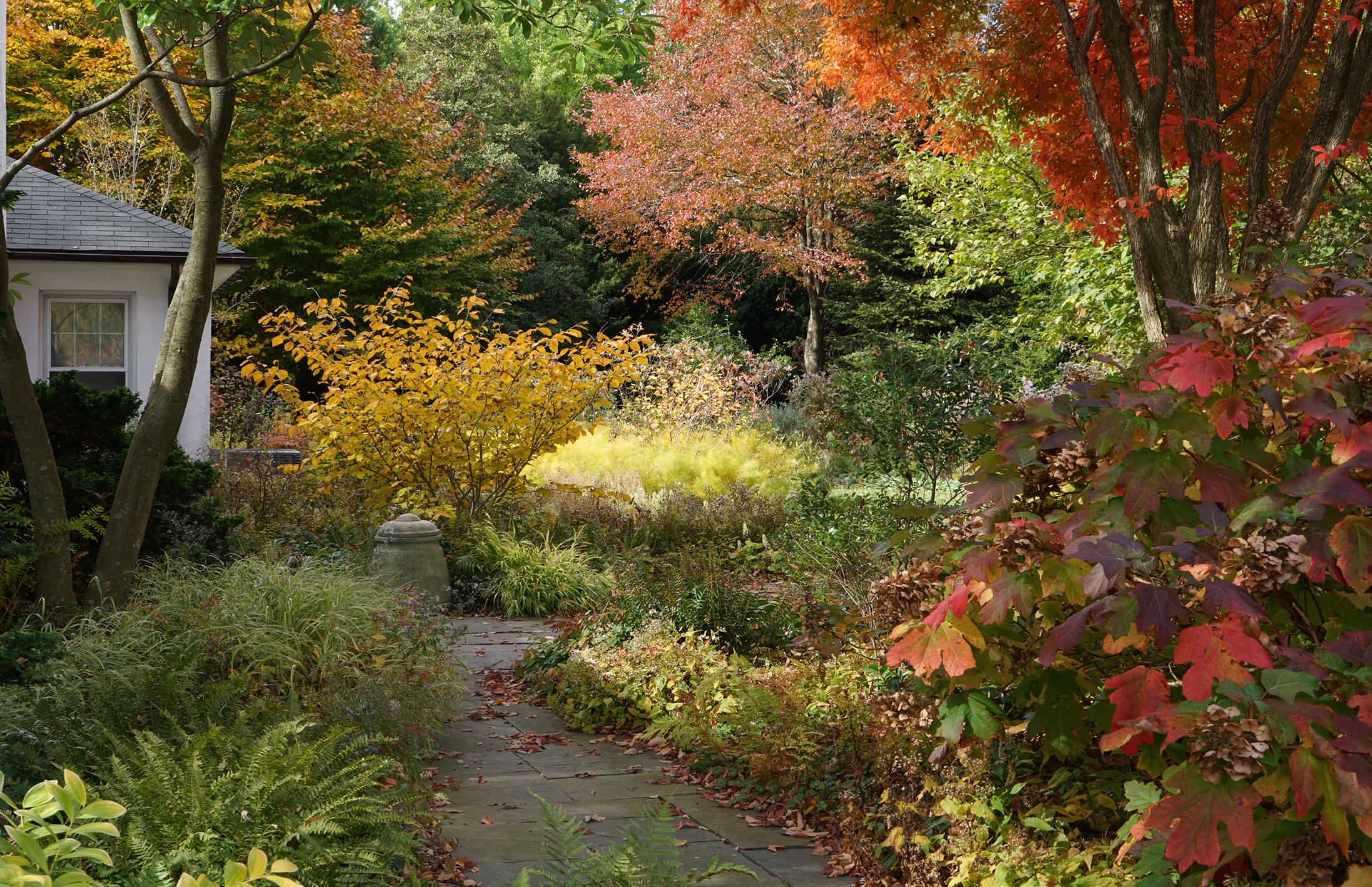
Front garden in fall, including native Nyssa, Fagus, Amsonia, Aster, Hydrangea, Ilex, Itea, Polystichum, and Halesia
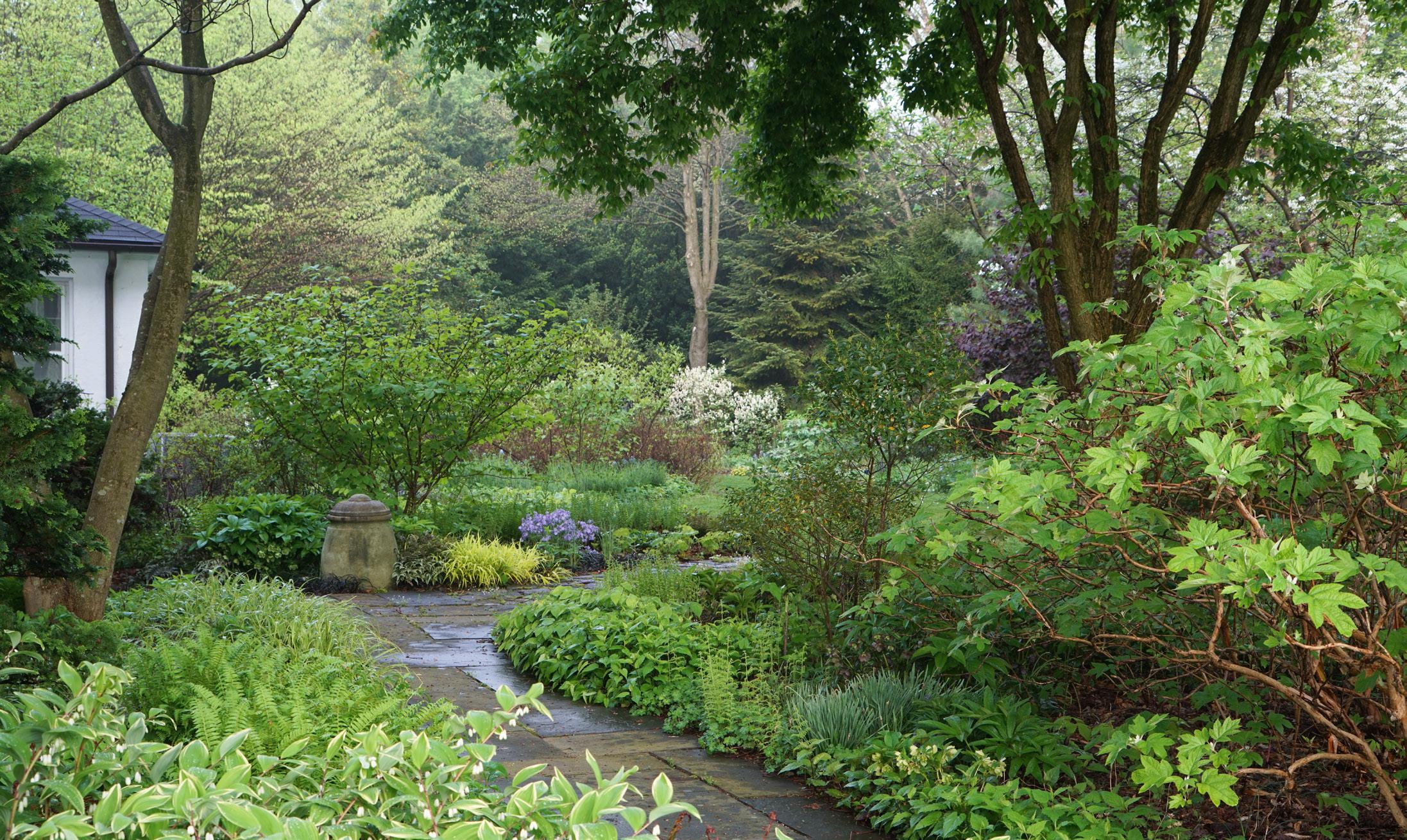
Darke’s front walk in spring - compare to autumn view
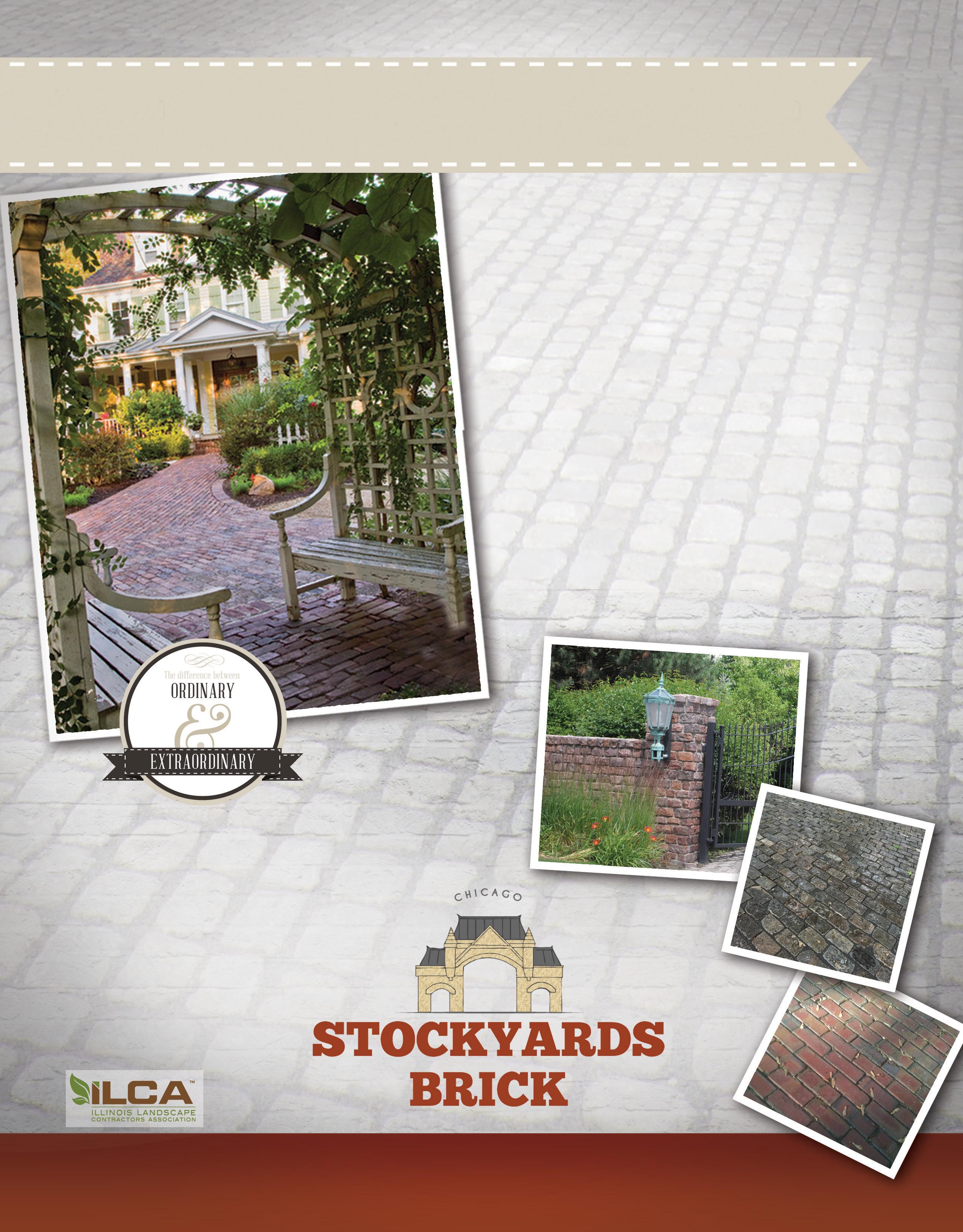
VINTAGE PAVERS
Reclaimed from the old streets of many Midwestern cities, clay street pavers and antique granite pavers have become a unique, preferred choice when design requires the elusive look of originality. Once an old street, now an exclusive driveway, reclaimed street pavers provide the look and appeal of natural design. No comparison can be made to these beautiful brick, the texture, the wear of years of weather and use from old carriages and vintage automobiles have created an exceptional patina that newly manufactured concrete pavers cannot match.
Stockyards
Brick Clay
Street
Pavers & Antique Granite Pavers are utilized most commonly for driveways, paths, walkways and patios. Reclaimed pavers are also used in the construction of many exclusive homes as well as restaurants and country clubs. Some designers are also suggesting them for use in atrium flooring.
ALSO AVAILABLE ARE ANTIQUE COMMON BRICK FROM CHICAGO AND VARIOUS OTHER MIDWESTERN CITIES ALONG WITH RECLAIMED WOOD AND TIMBERS.
The USGBC’s Leadership in Energy and Environmental Design (LEED) rating system is nationally accepted benchmark for green building. Stockyards Brick is proud to support the United States Green Building Council by providing a wide selection of products that comply with LEED guidelines and contribute to LEED certification.
Granite Gate
Granite Pavers
Tracking the Tiny Trend
Tiny Landscapes: Urban Backyard
by Nina Koziol
More often than not, landscape firms deal with smaller scale projects—a renovated foundation planting, a new paver path, a patio, deck or other features. For Part Two of our “tiny landscape” series, we’re looking at a backyard makeover in Chicago’s Wrigleyville neighborhood.
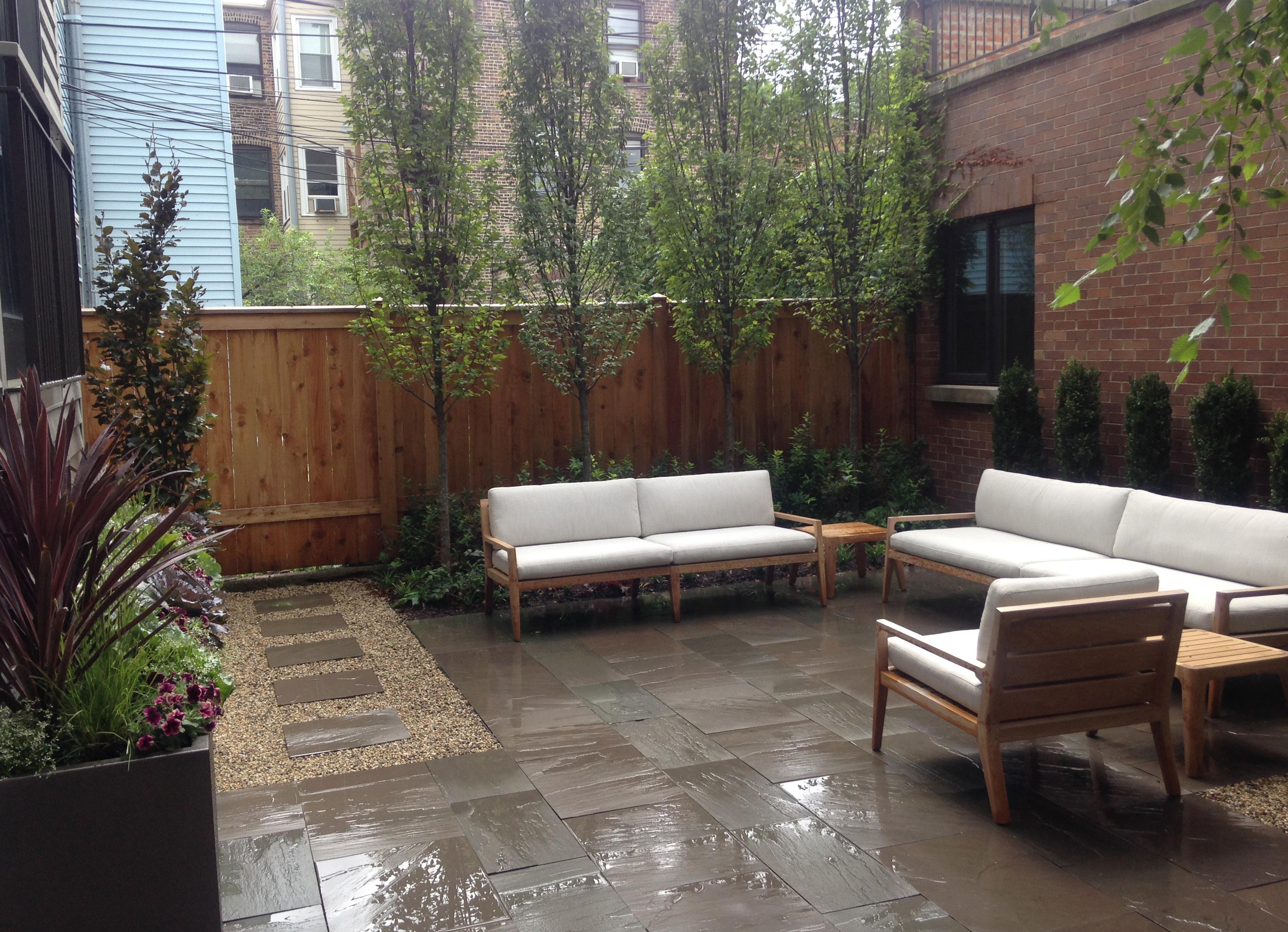
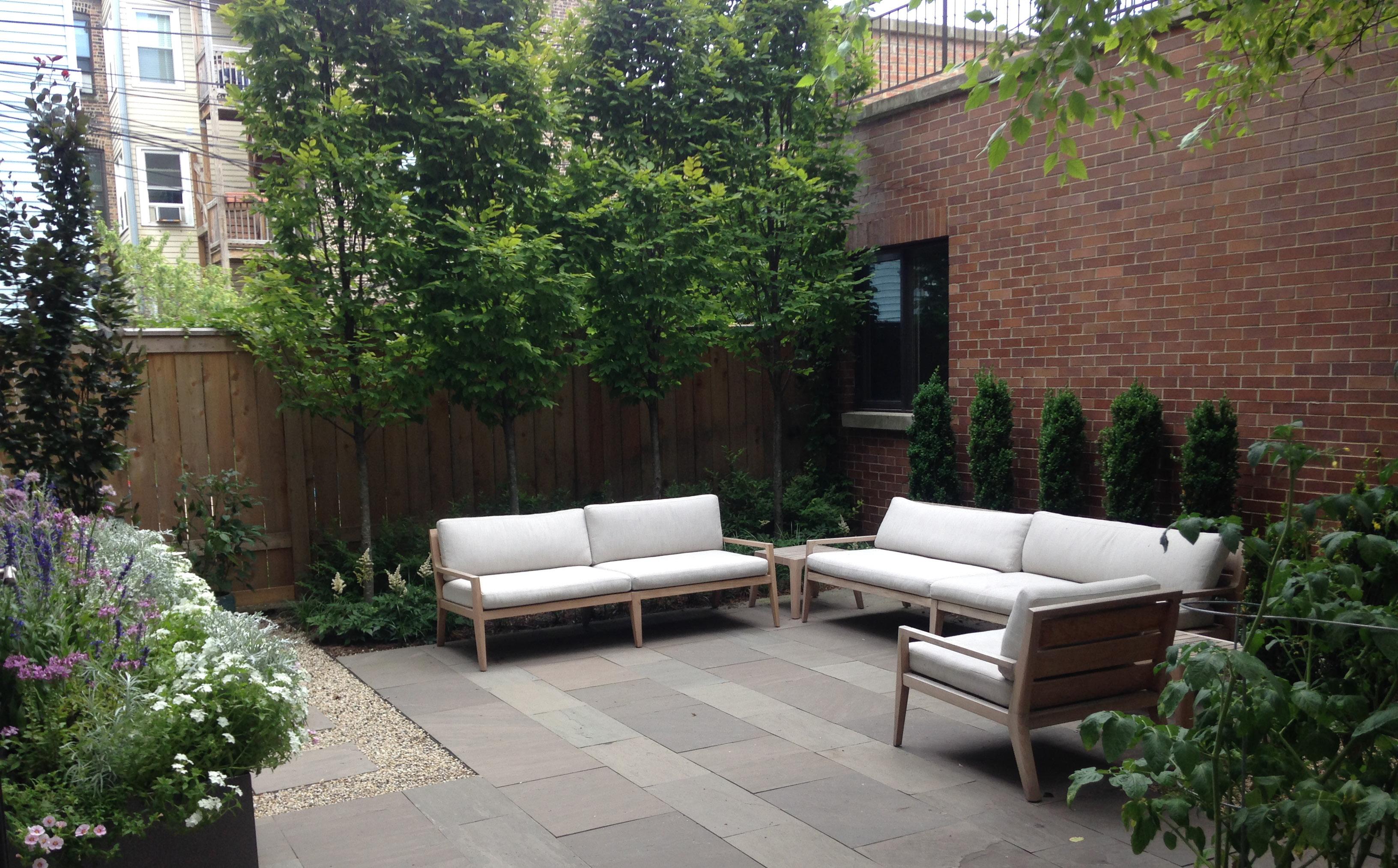
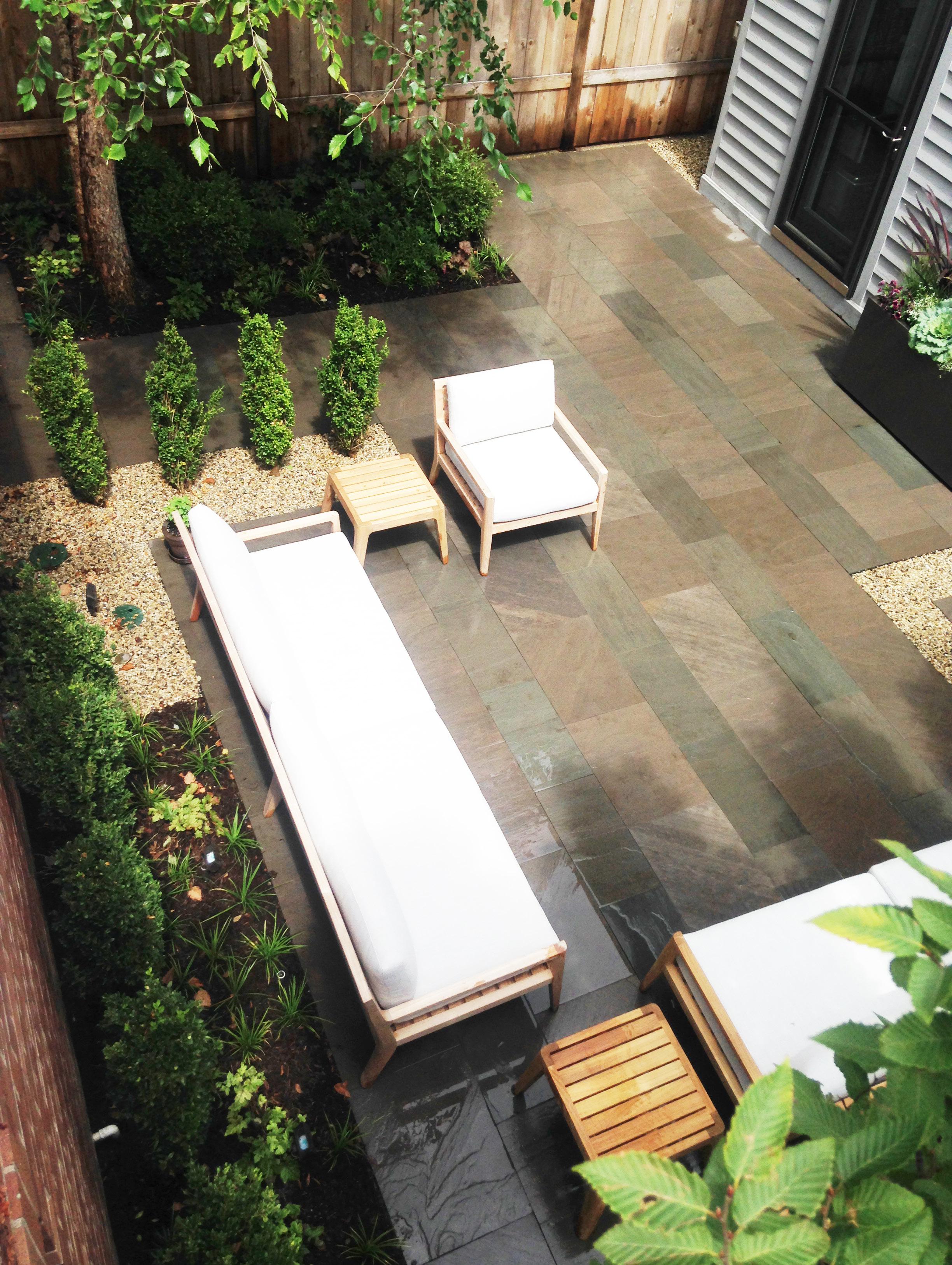
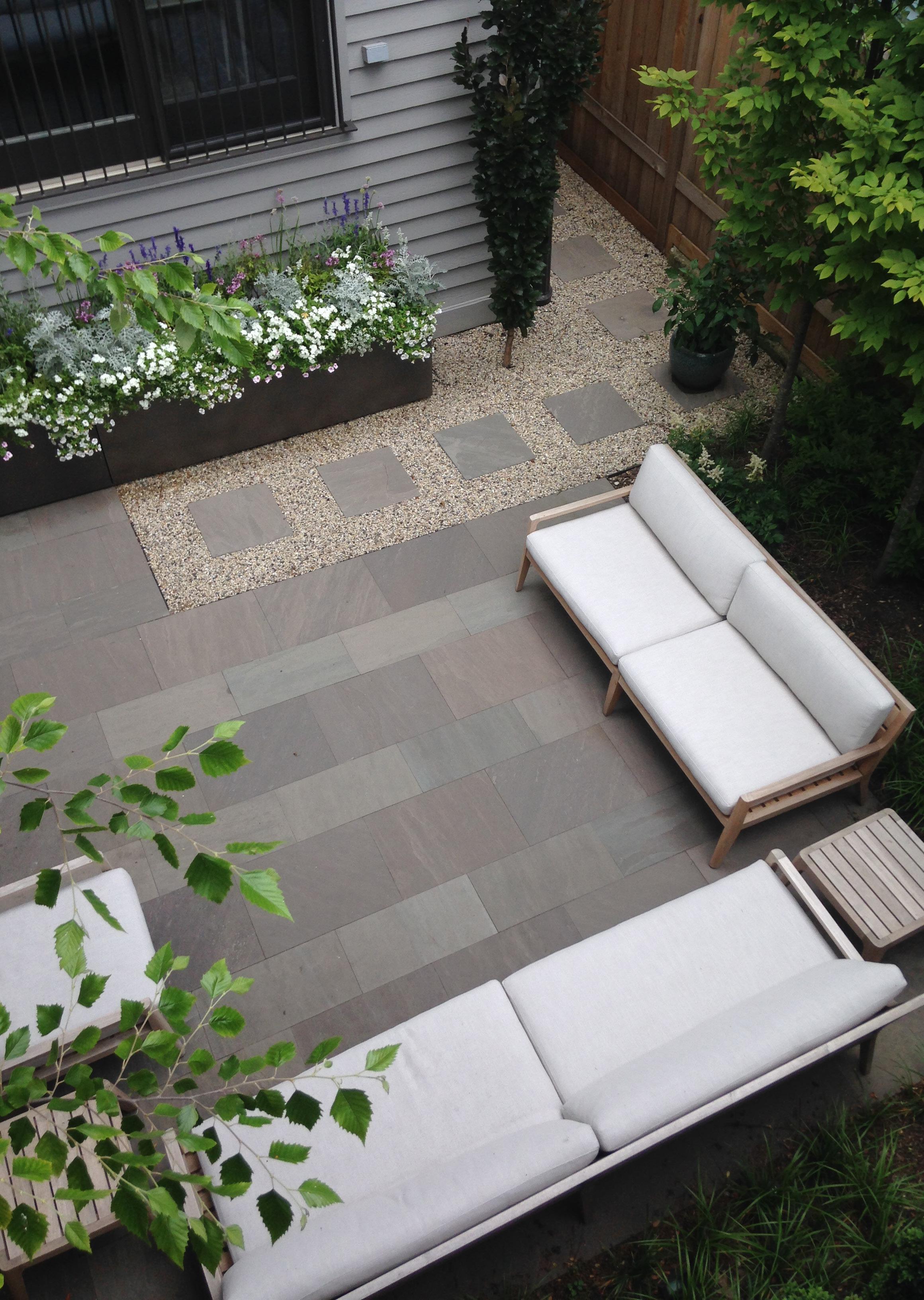
“It’s a pretty standard Chicago backyard lot—25 feet wide by 20 feet long,” said Drew Kibbe, senior designer for Christy Webber Landscapes. “The clients wanted a nice oasis that was simple and clean—no yard work—they wanted all hardscape and privacy. The birch was the only lone survivor—it was a dirt and grass pit.”
A garage rooftop serves as an open deck that gets hit with sun and heat during the summer. The homeowners wanted the backyard space to be more cool and dark where they could listen to the Cubs on the radio (or hear the crowds roar from the nearby ballpark).
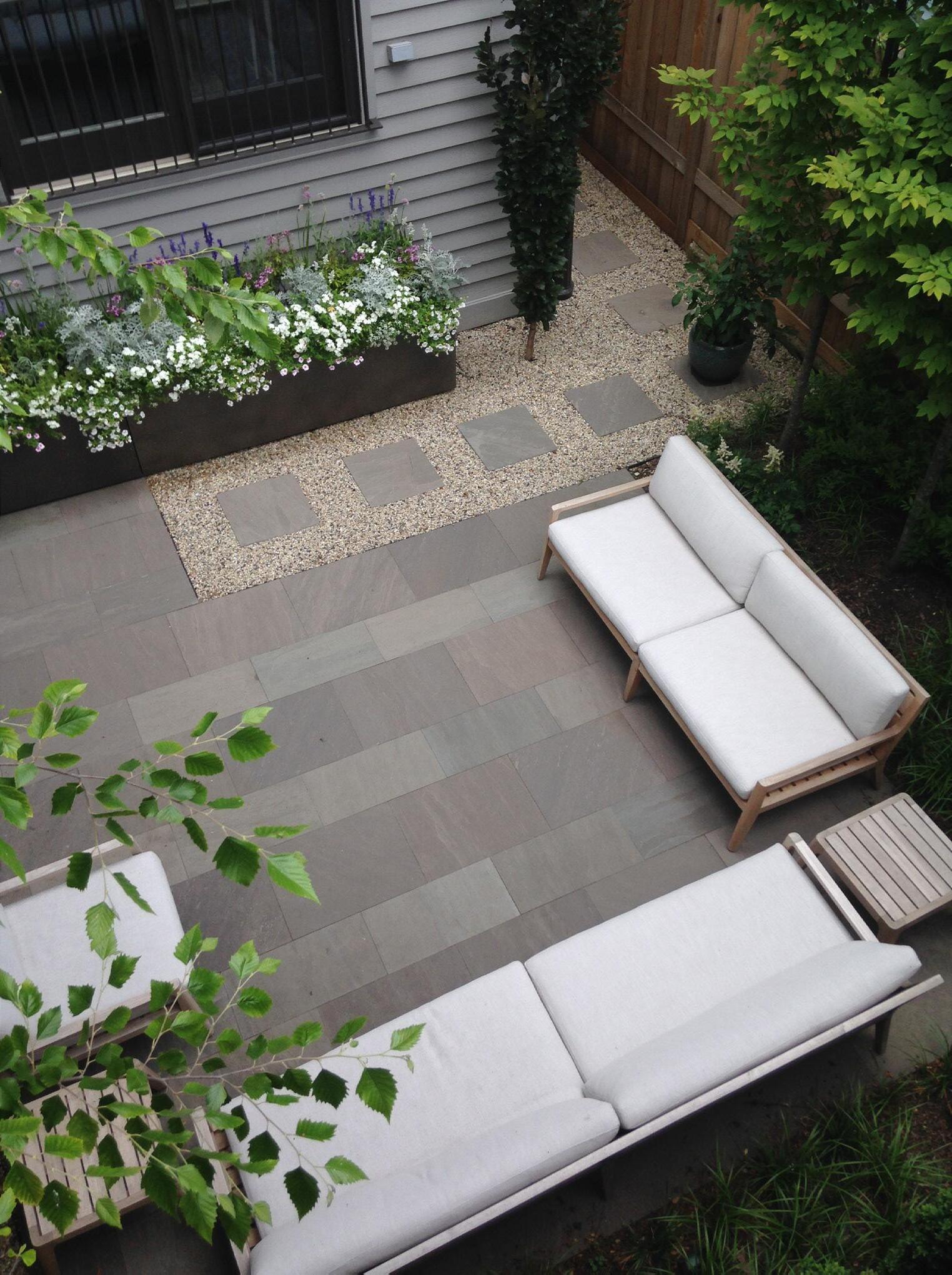
Kibbe chose smoky mountain sandstone for the floor. “It’s one of those stones that not many people know about.” When the stone is dry, it has a warm light purple-mauve color where bluestone is more cool.
“The trick was finding a bridge between the siding material on the house and on the garage,” he said. “The sandstone had these warmer mauve tones that played well with the vinyl siding and the
Backyard Makeover
more standard brick siding on the garage.”
He purposely laid the stone in long bands. “In a small space, playing with perspective is a big part of what you’re doing. It creates the illusion of more room.”
For Kibbe, one of the most important things in a small space is thinking about the vertical planes to add depth. To address that, he chose Frans Fontaine hornbeam (Carpinus betulus ‘Frans Fontaine’). “They fit a pretty narrow niche for trees and can handle full shade, full sun, poor soil and good soil. They are the new hipper arborvitae.”
In the past, landscapers might use narrow arborvitae or ornamental pears for a vertical screen. “We need more tools in our tool kit for these tight, narrow dark spaces. Everyone is leaning toward a more modern contemporary design. These trees fit within that clean structure having big bold movement.”
The trees were planted two feet off the fence line so the clients can see past them. “It creates those spaces where it layers things and adds a third dimension and creates the illusion of more space.”
Attention to Detail
“Whenever I’m doing a small space, I like to have a couple of bold elements. You don’t want your eye going all over the place. A statue or water feature gives you something to focus on and creates a story.”
The planters are from Ore in Salt Lake City, Utah, http://orecontainers.com/ and are powder-coated aluminum that look like hammered bronze. “Ore does custom highend laser cut planters that have all sorts of bells and whistles that can be added to them—lights, speakers, drip trays, internal irrigation sleeves, for example.” The planters get a seasonal rotation.
(continued on page 24)
Tracking the Tiny Trend
(continued from page 23)
The homeowners chose furniture from Restoration Hardware. “We liked the openness under the seating—closed bottom seating would have truncated the patio.”
Getting There
For the first six years of Kibbe’s career, he designed big sprawling suburban landscapes. “The budget typically gets eaten by foundation planting, edgings and gravel—and there’s a time and place for that. I get more of a kick designing small spaces because I get to experiment with the palette of materials. I might only use 60 square feet of pavers instead of 200, and then can use the more expensive ones.”
Access was limited to a standard city “gangway” and all of the material was brought in on wheelbarrows including the stone and fractured pea gravel. “Fractured pea gravel locks up tighter and has angles unlike normal pea gravel, which gets kicked around. When I’m designing I know that everything is coming in on a wheelbarrow. You have to think about the constraints of the space.”
The homeowners were shown a three-dimensional sketch so they could visualize what the final space would look like. The project took two weekends to install and in the future, Kibbe will design a new space for the homeowners’ garage rooftop.
“Building relationships with clients is important. They trust your eyes and they know what you do will be beautiful. They get your design aesthetic and give you free rein. We can
make something beautiful together and not knit-pick over the details.”
Kibbe offers these tips for designing successful small spaces: Simplicity Rocks. “Keeping the ground plane simple, clean and uncluttered makes it feel bigger.”
Rule #1. “Use light colors in small spaces.”
Break Rule #1. “You have a tool box but feel free to step outside. I didn’t use a light paver. I used the darker paver because it goes with the siding. I kind of bucked the general rules. If you only work within the toolbox, you’ll never be able to push the edge.”
Think outside the phlox. “About 80% of my projects are in full shade and that’s a challenge because most people want super colorful gardens. In shade, nothing flowers that long, so for a full season you want texture and colorful foliage instead of flowers.”
Plan ahead. “When you’re designing, allow for traffic flow patterns. And make sure the scale of the furniture is the right size.”
Does your firm have an interesting tiny landscape you’d like to share?
Email ninakoziol@icloud.com
i Landscape
January 31 — February 2, 2018
by Meta Levin
With the creative direction “Elevate,”
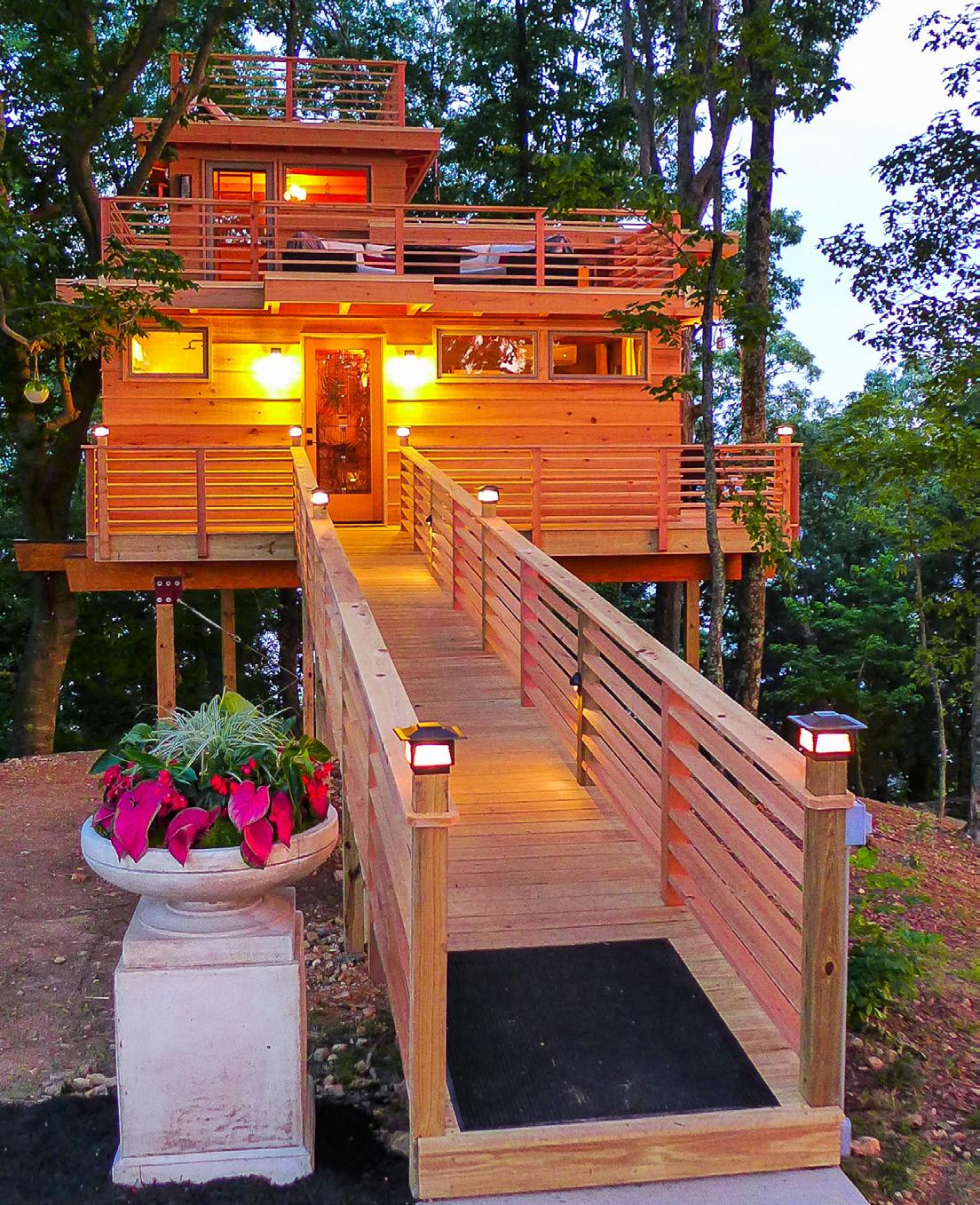
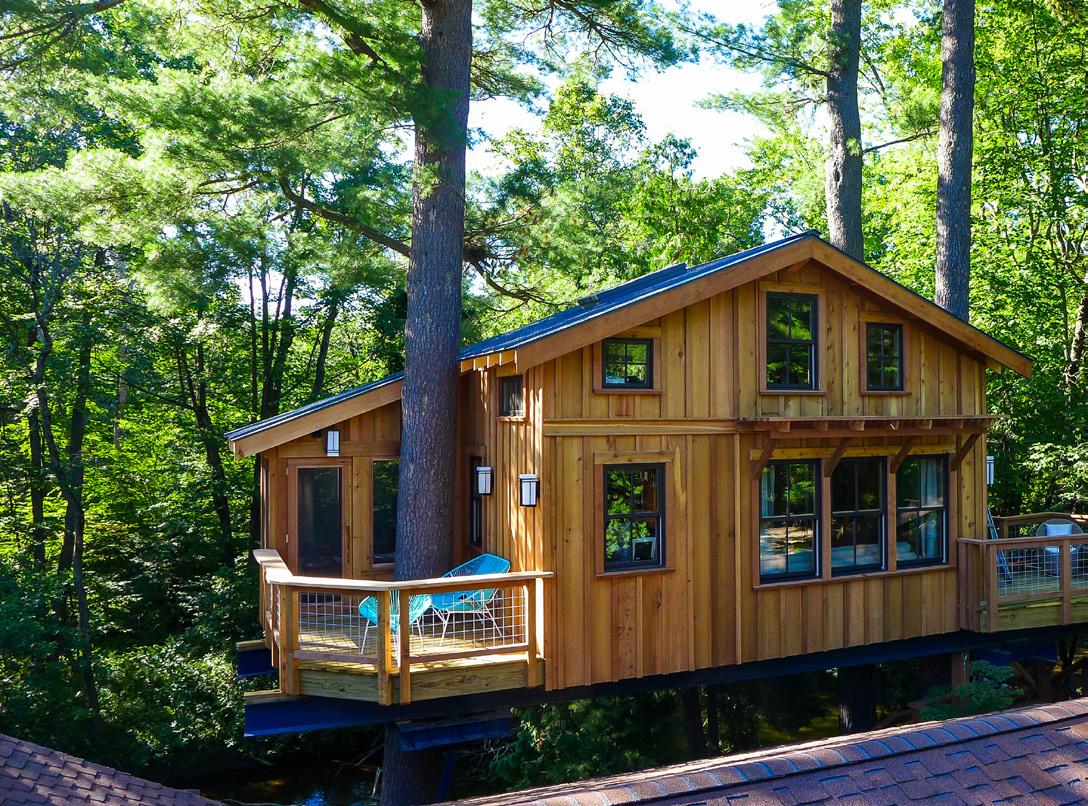
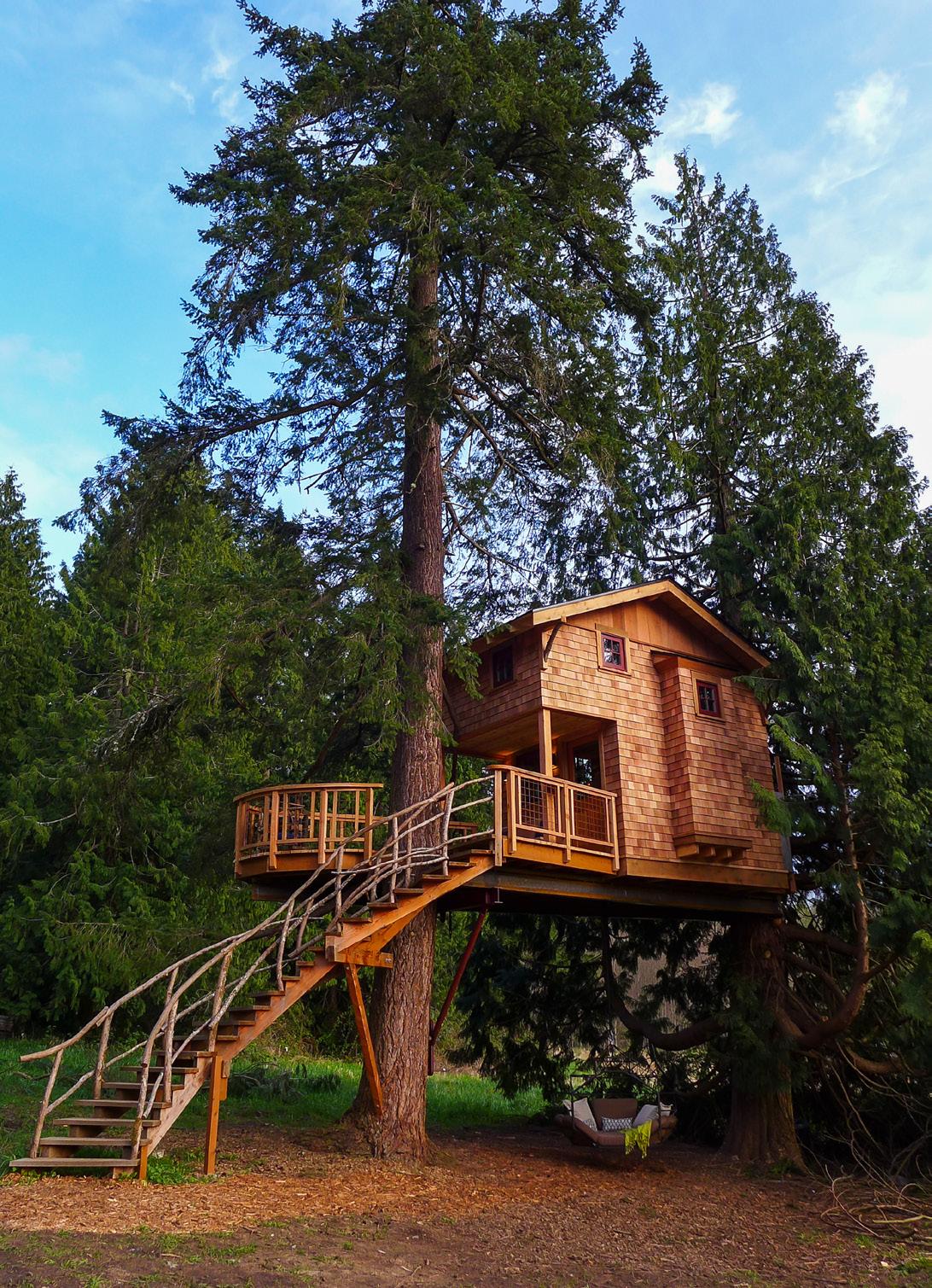
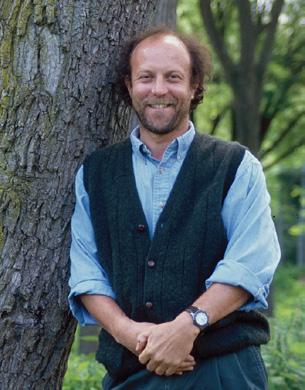
iLandscape 2018 will take attendees up, up and away, soaring through the trees with Animal Planet’s “Treehouse Guy,” Pete Nelson, and flowing through new garden styles, toe-tapping music, artists in residence and bigger and better raffle prizes.
iLandscape 2018 is scheduled to run from Wednesday, January 31st through Friday, February 2nd at the Renaissance Schaumburg Convention Center.
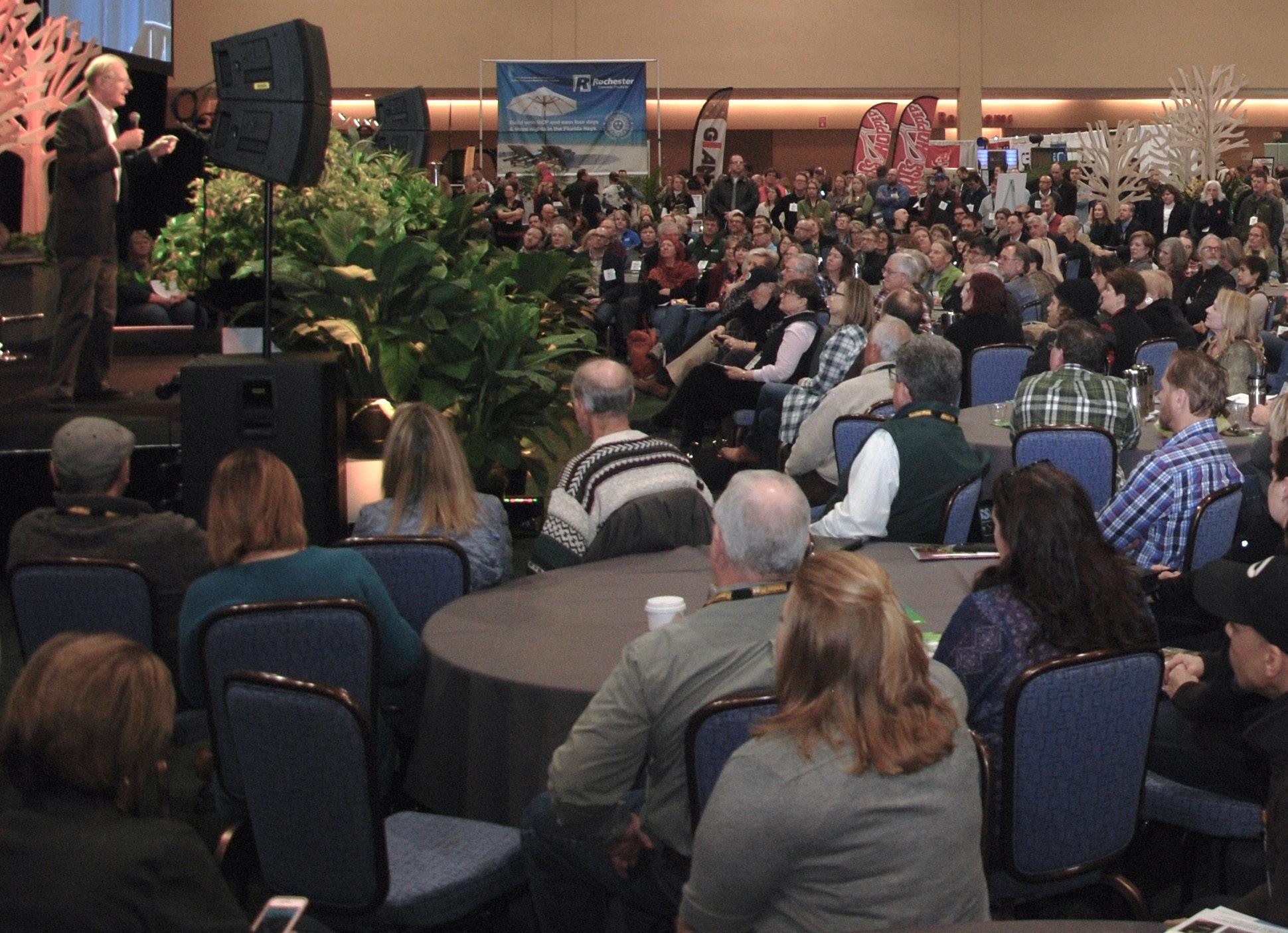
In recent years “we have seen tree houses submitted for awards,” says ILCA Executive Director Scott Grams. In keeping with this trend, Nelson, star of Animal Planet’s “Treehouse Masters,” will kick off the fifth annual iLandscape show at 10:15 a.m. on Wednesday, with a keynote address, focusing on (continued on page 28)
Preview — iLandscape 2018
ELEVATE 2018
(continued from page 27)
the treehouses that used to be just for kids, but have become adult fare. Nelson will discuss many of the successes and challenges he faces in his business.
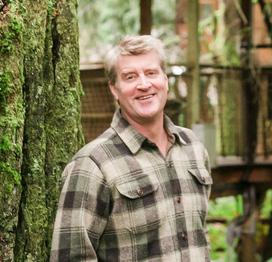
In fact, Nelson and his wife own and operate Treehouse Point in Washington state, a retreat, featuring six treehouses for guests to rent. His company, Nelson Treehouse & Supply, teaches people how to design and build treehouses. The author of three books, his treehouse creations have also been featured on television shows, as well as in newspaper articles.
Nelson will follow up his keynote address with a Thursday education session, addressing the “how-to” covering his techniques, plans, and materials. “He’s high energy and brings a passion to his work,” says Grams. “Nelson understands construction, working with nature and client demand.”
Speaking of high energy, the annual Wednesday night party will feature “Wedding Banned,” a lively band that encourages audience participation with humor. “It’s sort of a wedding band gone awry,” says Grams.
There will be the new and different, as well as new takes on the traditional. Dutch garden designer, nurseryman and author, Piet Oudolf, will talk about his unique garden design philosophy in a lecture sponsored by The Millenium Park Foundation.
Located at the southern end of Millennium Park, the Lurie Garden was designed by Oudolf and Robert Israel. Oudolf is considered a leading figure in the “New Perennial” movement, which uses flowing areas of herbaceous perennials and grasses.
Award winning garden designer, author and international speaker, Tracy Disabato-Aust, will talk to attendees both Thursday and Friday, about high impact, low maintenance gardens. In addition to her work with landscape design, Disabato-Aust is a nine time All American triathlete and part of Team USA, as well as an equestrian, competing in dressage.
Thursday: The Well Tended Perennial Garden.
Friday: High Impact, Low Care Garden Plants.
There will be dozens of other topics
other education sessions.
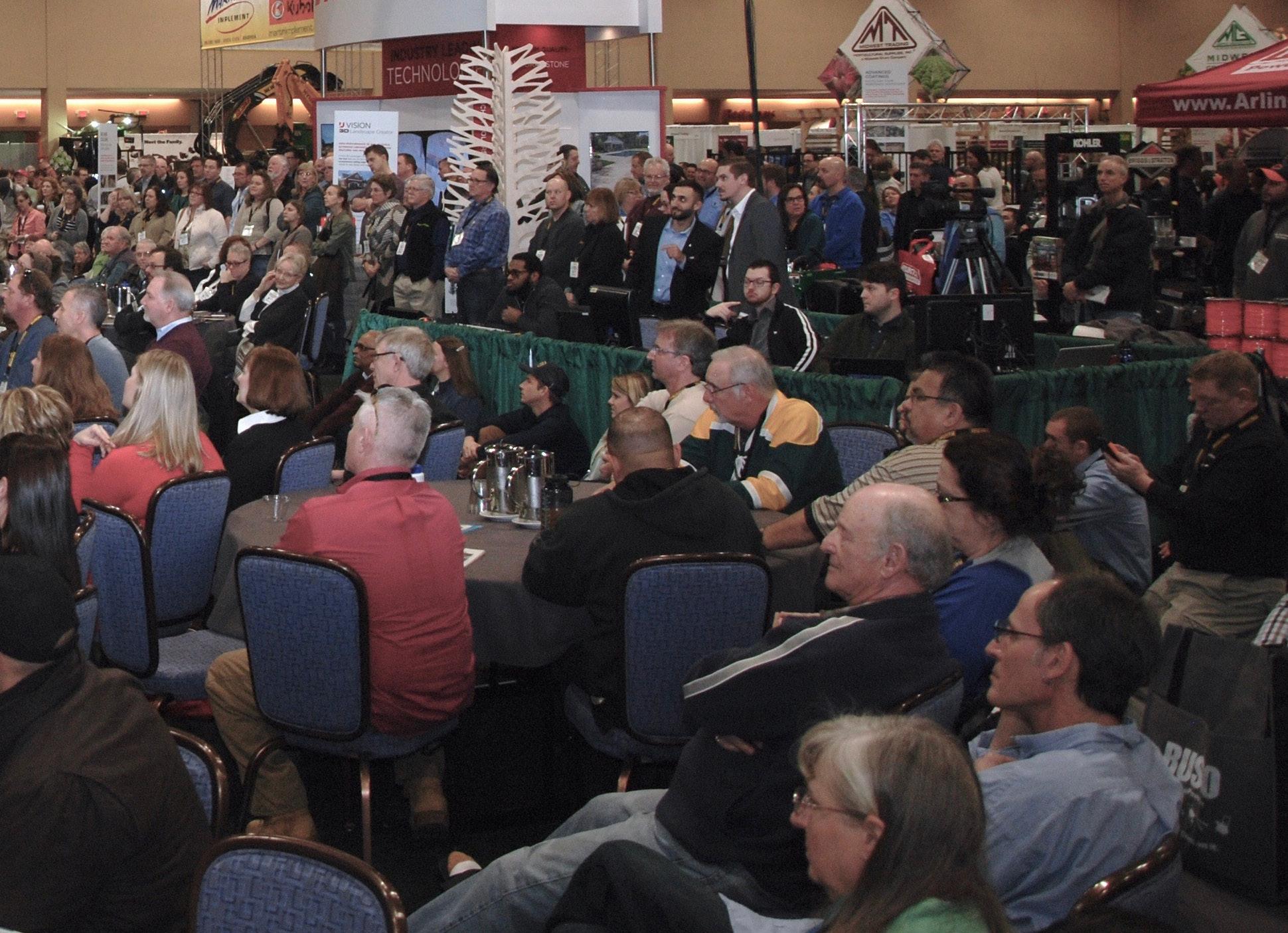
The tradeshow has been sold out for months and will, like last year, spillover from the convention hall into the ballroom. On Friday, students and job seekers, can attend the career fair, where they will be given a chance to meet with some of Illinois’ top green industry employers.
Some of the changes will not be evident to iLandscape attendees, but are making a difference to those planning the event. iLandscape Experience co-chairs Dave Warning and Dave Moyer have divided the iLandscape committee into subcommittees, each with its own chair. They include:
• Katrina House – Wednesday night party; food, entertainment and prizes
• Bob Hursthouse – Futures and planning
• Laurie Damgaard – Communications and show promotion
• Tim Caldwell – Keynote speaker, big prizes
• Jennifer Fick – Day time entertainment
• Scott Lucchetti – Layout, including developing gardens in conjunction with Chris Walsh of Topiarius, who has been instrumental in designing and installing the gardens for the last several years
Kim Hartmann heads the ILCA education committee, which handles the education program at iLandscape.
October 17, 2017
Registration 7:30 AM - 8:30 AM
Chicago Botanic Garden
Joseph Regenstein School
WELCOME AND INTRODUCTIONS
8:30 AM - 8:45 AM
Alsdorf Auditorium
Jeff Swano, Sustainable & Ecological Landscape Committee Chair
Carol Becker, Sustainable & Ecological Landscape Committee
Scott Grams, ILCA Executive Director
Loren Nagy, Davey/The Care of Trees, Premier Sponsor
KEYNOTE SPEAKER
8:45 AM - 10:00 AM
Alsdorf Auditorium
Finding Your Niche: Establishing an Ecological Focus for Your Firm
Larry Weaner, Larry Weaner Design Associates
Demand for ecologically beneficial landscapes is increasing, and businesses with an ecological focus realize an expanded client base and an invigorated creative atmosphere. Offering an ecological approach, however, requires knowledge and skills rarely taught in horticulture and design programs. This presentation guides landscape architects, designers, contractors, and others through what’s needed to establish a respected, visible presence in the fields of ecological landscape design and management. Participants gain a new understanding of local plant communities, learn about design projects modeled on regional ecosystems, acquire practical design, restoration, and management techniques, and discover new ways to grow their skills and businesses.
10:10 AM - 11:10 AM
BREAKOUT SESSIONS
Alsdorf Auditorium
Building Resilient Communities with Green Infrastructure One Code at a Time
Julia Noordyk, Wisconsin Sea Grant Green infrastructure is a proven and effective means to reduce storm water pollution and volume (plus it looks great!). Yet, there remain critical barriers to its implementation. Outdated codes and ordinances can have a broad impact on green infrastructure and often will directly or indirectly discourage or prohibit its use. Come learn about a new tool that can help communities overcome barriers in local regulations to support green infrastructure implementation.
Pullman Room
The New IPM:
Integrated Plant Management
Dan Dinelli, North Shore Country Club
10:00 AM - 10:10 AM — Break
Integrated Pest Management is providing benefits to sustainable landscapes that go far beyond controlling pests. As a strategy, IPM has evolved to include growing healthy plants that can avoid and resist common pests. Integrated Plant Management is how landscape professionals should approach traditional IPM. Well managed landscapes can never forget they are being managed for a purpose – aesthetics, habitat, food production, sports and leisure. The healthiest landscapes will marry their purpose with their management practices.
Linneaus Room
Selling to the Sustainable Landscape Customer
Pamela Todd, Chicago Living Corridor
A sophisticated customer base you may not know about is seeking sustainable landscaping providers. Are you ready to respond? In this workshop you’ll learn about who and where these customers are and what motivates them to seek sustainable landscaping providers. You’ll be surprised to find out that they think most contractors are ill equipped to help them. Find out how you can understand the needs of these customers and how you can respond with installation and maintenance services they need. If you’re motivated to tap this market, you can learn how to listen, respond and grow your business in new and unexpected ways.
11:10 AM - 11:20 AM — Break
Sponsored
PLENARY SESSION
11:20 AM -12:35 PM
Alsdorf Auditorium
A New Garden Ethic
Benjamin Vogt, Monarch Gardens
This talk explores ecology, science, psychology, philosophy, and landscape design as we ponder how to embrace gardens as places to create change benefiting all species. Through inspiring quotes, new research, evocative photos, and model urban landscapes of all sizes, you’ll be taken on an empowering journey into designing on a deeper level. In Vogt’s view, gardening with native plants is an ethical and even moral imperative in a time of climate change and extinction. Ultimately, we’ll answer how our urban and suburban landscapes can save wildlife, why this is important right now, and what needs to happen from homes to churches to medians and parks.
2:00 PM - 3:00 PM
BREAKOUT SESSIONS
Linneaus Room
Landscape Gardening: A Weed Assassin’s Guide to Profitable Maintenance of Revolutionary Landscapes
Ken Williams, Ringer’s Landscaping
12:35 PM - 2:00 PM — Lunch & Vendor Fair
VENDOR FAIR IN NICHOLS HALL —
Enthusiasm for native plants in home landscapes is increasing exponentially. A new and very knowledgeable customer base that demands these plants is emerging and creating a new opportunity for the landscape industry. Why? Because native plants require different maintenance techniques and a different delivery method, and both are profitable, less work and more efficient for the contractor as well as the customer. This presentation demonstrates how landscape contractors can combine basic horticultural knowledge with readily available new resources to provide a unique maintenance service for today’s customers, and sustainable landscapes for tomorrow.
Pullman Room
Principles of Biological Systems and Implications
Dan Kittredge, Bionutrient Food Association
This engaging session covers the dynamics of how plants evolved and the sustainable management practices necessary for them to flourish. Participants will learn strategies for soil aeration, hydration, mineral balancing, inoculation and feeding through the liquid carbon pathway. Implications for soil carbon sequestration, increases in pest and disease resistance, along with food value, flavor, aroma and shelf life will also be covered. What’s sustainable about these methods? They are based on certifiably organic practices and an integrated understanding of biology. But it’s not rocket science. Attendees will gain practical information to assist in their management of soil and the plants that grow in it.
3:00 PM - 3:10 PM — Break
Sponsored by—
Sponsored by—
3:10 PM - 4:10 PM
BREAKOUT SESSIONS
Pullman Room
Sustainable Water Management Practices
Ed Beaulieu, Aquascape
Sponsored by—
Water presents an endless array of both challenges and opportunities. This presentation shows how green strategies can be used to decrease the impact of storm water and at the same time provide an alternative source for water needed in the landscape. Aquatic ecosystems and wetland filtration techniques will be showcased as they increase the overall water quality while providing valuable habitat for local wildlife.
Linneaus Room
Habitat Makeover -
Improving the Bird and Butterfly Habitat of Your Projects
Andy Stahr, ecology+vision, llc
A Pizzo Group Company
THANKS TO OUR GENEROUS SPONSORS
Premier Sponsors
Session & Tabletop Sponsors
Sponsored by—
Every site we work on is different, presenting unique challenges. As a result, a careful habitat assessment is key to prescribing the best possible solution for each project. This session communicates how bird and butterfly habitats for your clients can be amazingly improved by using rain gardens, bioswales, and shoreline makeover kits. Attendees will learn how to educate their salespeople on habitats and how to communicate those benefits to the customer.
4:30 PM - 6:00 PM — Reception
Reception featuring live music by The Jim Tashjian Trio in Burnstein Hall
Session Sponsors
Tabletop Sponsors
Enfoque: Sección en Español
Paisajismo en espacios reducidos:
Por Nina Koziol
Con cierta frecuencia, las firmas de paisajismo trabajan en proyectos de pequeña escala –plantas perimetrales renovadas, un nuevo camino asfaltado, un patio, una terraza u otros elementos pequeños. Para la Segunda Parte de nuestra serie de “paisajismo en espacios reducidos”, estamos mirando la renovación de un patio en el vecindario de Wrigleyville en Chicago.
“Es un patio muy común en Chicago –25 pies de ancho por 20 pies de largo”, afirma Drew Kibbe, diseñador sénior de Christy Webber Landscapes. “Los clientes querían un oasis atractivo que fuese sencillo y limpio –que no requiriese de trabajo de jardinería–, querían elementos de concreto y privacidad. El abedul fue el único sobreviviente –era un hoyo de suciedad y hierba.”
El techo de un garaje sirve de azotea abierta impactada por el sol y el calor durante el verano. Los dueños de la casa deseaban que el espacio del patio fuera más frío y oscuro desde el cual pudieran escuchar a los Cubs por la radio (o el clamor de la multitud en el parque de béisbol más cercano).
Kibbe seleccionó arenisca de las montañas humeantes para el piso. “Es una de esas piedras que no mucha gente conoce”. Cuando la piedra está seca, tiene un color morado-malva claro cálido, mientras la piedra caliza azul es más fría.
“Lo importante era encontrar un puente entre el material de revestimiento de la casa y del garaje”, dijo. “La arenisca tenía estos tonos malva más cálidos que combinaban bien con el revestimiento de vinilo y el revestimiento de ladrillo más estándar en el garaje”.
Renovación de patios urbanos
Intencionalmente dispuso las piedras en bandas largas. “En un espacio pequeño, jugar con la perspectiva es un elemento importante del conjunto. Crea la ilusión de más espacio”.
Para Kibbe, una de las cosas más importantes en un espacio pequeño es pensar en los planos verticales para añadir profundidad. Para resolver eso, seleccionó el carpe Frans Fontaine (Carpinus betulus ‘Frans Fontaine’). Alcanzan en un nicho bastante estrecho para árboles y pueden resistir la sombra total, el sol, un suelo deficiente y un suelo bueno. Son el nuevo arborvitae “hip”.
En el pasado, los paisajistas podían usar arborvitae delgado o peras ornamentales para una pantalla vertical. “Necesitamos más herramientas en nuestro kit de herramientas para estos espacios estrechos y oscuros. Todo el mundo se está inclinando hacia un diseño contemporáneo más moderno. Estos árboles encajan en esa estructura limpia con movimientos audaces”.
Los árboles fueron plantados a dos pies de la línea de la cerca para que los clientes pudieran ver a través de ellos. “Crea esos espacios donde las cosas se extienden en capas y añade una tercera dimensión, creando la ilusión de más espacio”.
Atención a los detalles
“Siempre que estoy trabajando en un espacio pequeño, me gusta tener un par de elementos audaces. No es conveniente que los ojos deambulen por todo el espacio. Una estatua o un elemento acuático facilitan un lugar para concentrar la vista y crean una historia”.
Las macetas son de Ore en Salt Lake City, Utah, http://ore-containers.com/ y están recubiertas con aluminio en polvo que tiene la apariencia de bronce martillado. “Ore fabrica macetas lujosas personalizadas, cortadas a láser, que tienen todo tipo de campanas y silbatos –por ejemplo, luces, parlantes, bandejas recogegotas, mangas de irrigación interna”. Las macetas reciben una rotación estacional.
(continúa en la página 24)
Enfoque: Sección en Español
(viene de la página 23)
Los dueños de la casa seleccionaron muebles de Restoration Hardware. “Nos gustó la apertura debajo de los asientos –asientos con fondo cerrado habrían truncado el patio”.
Transporte en carretillas
Durante los primeros seis años de su carrera, Kibbe diseñó extensiones de terrenos ajardinados suburbanos. “El presupuesto usualmente se consume en plantas perimetrales, cenefa y grava –y hay un tiempo y un lugar para eso. Disfruto más cuando diseño espacios pequeños porque puedo experimentar con la paleta de materiales. Puedo utilizar únicamente 60 pies cuadrados de adoquines en lugar de 200, por lo que puedo instalar los más caros”.
El acceso se limitó a una pasarela urbana estándar y todo el material se transportó en carretillas incluyendo las piedras y gravilla fracturada. “La gravilla fracturada se cierra más estrechamente y tiene ángulos a diferencia de la gravilla normal, que tiende a desparramarse. Cuando estoy diseñando sé que todo viene en carretillas. Hay que pensar en las limitaciones del espacio”.
Se mostró a los dueños de la casa un bosquejo tridimensional para que pudieran visualizar el espacio final. El proyecto fue instalado en dos semanas y en el futuro, Kibbe diseñará un nuevo espacio para el techo del garaje.
“Es importante fomentar las relaciones con los clientes. Confían en tus ojos y saben que lo que harás será hermoso. Perciben la estética de tu diseño y te dan riendas sueltas. Juntos podemos hacer algo bello sin ser muy quisquillosos con los detalles”.
Kibbe ofrece estos consejos para diseñar exitosamente espacios pequeños: La sencillez es beneficiosa. “Mantener el terreno sencillo, limpio y despejado hace que se sienta más grande”.
Regla #1. “Utilice colores claros en espacios pequeños”.
Romper la Regla #1. “Usted tiene un kit de herramientas pero siéntase en libertad de apartarse de él. No utilicé adoquines claros. Utilicé los más oscuros porque hacen juego con el revestimiento. Evadí las reglas generales. Si únicamente trabajas dentro del kit de herramientas, nunca podrás romper fronteras”.
Hay que pensar fuera del phlox. “Aproximadamente un 80% de mis proyectos son bajo sombra y eso es un desafío porque la mayoría de las personas desean jardines con colores súper llamativos. En la sombra, nada florece durante tanto tiempo, por lo que durante una temporada completa usted desea textura y follaje de colores vivos en lugar de flores”.
Planifique anticipadamente. “Cuando esté diseñando, permita los patrones del flujo de tráfico. Y asegúrese de que la escala de los muebles tenga el tamaño adecuado”.
For years Tom Lupfer has been bothered by the number of landscape contractors who are operating without registration as a business in Illinois, as well as failing to offer their employees workers’ compensation insurance.
“It’s a plague in the industry,” says Lupfer, ILCA vice president and owner of Lupfer Landscaping.
Now, ILCA is providing a way for its members to do something about it. Created in conjunction with the Illinois Workers’ Compensation Commission (IWCC), ILCA has produced a Worker’s Compensation Insurance Empowerment Packet, providing information on how to file a complaint with the IWCC.
The packet also includes a step-by-step guide for verifying whether a contractor has an active worker’s compensation certificate.
“We’re trying to level the playing field,” says Allan Jeziorski, president of Hartman Landscape and a member of the ILCA board. Lupfer agrees, “This is not about driving people out of business. It is about bringing them into compliance with the laws and becoming responsible members of the industry. And who knows, maybe one day they might become an ILCA member. Win-Win.”
(continued on page 42)
IS THE CLOCK TICKING ON YOUR ROOT INTRUSION PROTECTION?
ONLY Root Intrusion Protection Designed to Last as Long as Your Dripline
The latest addition to the best-selling line of landscape dripline, Netafim’s Techline® HCVXR is the ONLY landscape dripline that infuses Cupron® Copper Oxide directly into the mold of each emitter to provide a long-lasting root barrier for subsurface drip irrigation systems that won’t wash away after years of use.
• High Check Valve in Each Emitter for Uniform Distribution on Sloped Landscapes
• Built-in Anti-Siphon Feature Protects Against Debris
• Four New Emitter Flow Rates
• Laser Etching on the Dripline for Easy Identification
638-2346 www.netafimusa.com
TRUSTWORTHY FOR
RWC INSURANCE GROUP
“Specializing
(continued from page 40)
That means for the landscape contractor, as well as for the homeowners, who may not realize that they are at risk. “Homeowners don’t understand the risk that they take if they hire contractors without workers’ compensation insurance and an employee is injured on the job,” says Jeziorski. Standard homeowners’ insurance policies may not cover that.
“I’m not talking about the guy with one pick-up truck, who maybe hires his brother,” says Lupfer. “I’m concerned about the four-truck operator, who has a website and looks like he has a legitimate business.” At the same time, Lupfer says, they are not registered with the state as a legal business, probably have no workers’ compensation insurance and are not paying overtime.
Because they do not shoulder the costs of registering with the state, and paying for workers’ compensation, liability and any other insurance, they can and do (continued on page 44)
(continued from page 42) often underbid legitimate contractors, says Lupfer and Jeziorski.
“We’re trying to level the playing field.”
-Allan Jeziorski
“Our last membership survey showed that the biggest challenge our members faced was the lack of professional and legal business practices by others in the industry,” says Scott Grams, ILCA Executive Director. While ILCA requires members to be legally registered with the state, as well as offering the necessary workers’ compensation and liability
insurance and pay their employees overtime when applicable and paying necessary taxes, “we were not doing anything about the companies that were blatantly skirting the law.”
One of the big advantages of working with an ILCA member is that the company is vetted, says Jeziorski.
When ILCA approached the IWCC and asked how the association could help, IWCC asked landscape contractors to become its eyes and ears. “IWCC has strong enforcement powers,” says Grams. It can, for instance, seize assets, although it will give those who are not in compliance time to comply.
Grams notes that 99 percent of ILCA members are fully covered by worker’s compensation insurance, but as many as 40 percent of landscape contractors in general are operating without or with insufficient insurance.
They are putting their employees at risk, because if they get hurt, they are not covered. “The victims are being left out in the cold,” says Lupfer. There is,
Member Since 1987
however, a small state fund that covers workers who are injured on the job, but not covered by worker’s compensation insurance. There often is not enough money in it to pay medical bills and there is nothing when that fund runs out. “We are empowering our members to do something.”
This does not mean blindly reporting a competitor or doing so out of spite. Those who suspect a contractor of falling into this category, are asked to first check the national database of workers compensation policies: https:// www.ewccv.com/cvs/; under “Notice and Disclaimer” select the “accept” button, which will take you to a searchable database. You then will be asked to enter the company’s full or partial name, as well as the date (under “coverage date” use the day’s date) and hit “search.” This will take you to a list of covered companies.
(continued on page 46)
“99 percent of ILCA members are fully covered by worker’s compensation insurance, but as many as 40 percent of landscape contractors in general are operating without...”
-Scott Grams
Special Feature —
“This is not about driving people out of business. It is about bringing them into compliance with the laws and becoming responsible members of the industry. And who knows, maybe one day they might become an ILCA member. Win-Win.”
-Tom Lupfer
(continued from page 45)
A company’s name could not appear for a myriad of reasons:
1. The name was spelled wrong
2. The name was not correct; even a slight modification (and, instead of an ampersand, for instance) will result in a no-match
3. The company may be self-insured
4. The company may be a sole proprietor (no employees, except the owner)
5. The company could be a “doing business as” and the policy may be listed under another name (to verify this, check the Illinois Secretary of State’s corporation/LLC lookup – https://cyberdriveillinois.com/departments/busi ness_services/corp.html)
Once you are confident that the company is not listed as carrying a policy, it is time to submit the information to IWCC. The packet, emailed to members in early September, includes a form titled, “Insurance Compliance Telephone Case Intake Sheet.” For more information and resources, check http:// www.iwcc.il.gov/act.pdf or http://www. iwcc.il.gov/faq.htm.
“The process takes all of about three to five minutes,” says Lupfer, who has
received positive feedback from ILCA members when he tells them about the new program. “They say, ‘it’s about time.’” Some are, however, concerned about the target companies learning who reported them. The IWCC assures us that it is “done anonymously.”
He is hoping that successes will build on current lobbying efforts. “This is a first step,” he says. “Not a last step.”
New Golf Committee Chair Jim Bilinski
by Meta L. Levin
It’s time to give back. That’s what Jim Bilinski was thinking a couple of years ago when he contacted ILCA Executive Director Scott Grams about becoming more involved in ILCA.
“When you get to a certain age, your goal is to give back to the places and people who have given so much to you,” he says. “You can make a difference.”
Grams pointed him towards the Golf Outing Committee. A golfer, Bilinski eagerly joined the committee and, when the former chair, Scott McAdam, Jr., stepped down to join the ILCA Board, Bilinski stepped up, becoming the new Committee chair.
Bilinski, a risk management consultant and independent insurance broker for Market Financial Group, has been working with people in the green industry for 35 years. Early in his career he realized that this was an underserved population in the insurance industry and set out to learn as much about their needs as possible.
Now he focuses on the industry. “They are great people to work with,” he says. “Many have become good friends, as well as clients.”
Looking ahead, Bilinski hopes to continue to provide ILCA members with a golf outing that offers opportunities toward the end of the season for fellowship, fun and a chance to talk with the suppliers who are the sponsors, in a pleasant, low key environment.
He is hoping to run a successful event; one that allows the participants to “turn off their phones” for a while and enjoy a round of golf with their col-
leagues and friends.
He also has noted that the Golf Outing Committee has never been selected as ILCA’s Committee of the Year. “I want to at least get us a mention,” he says.
A native of South Bend, IN, Bilinski earned a BS in finance from Indiana University and, in 1973, entered the insurance industry. He has been in Illinois since the early 1980s, working for three different firms along the way. Market Financial Group is a regional insurance brokerage firm.
As a risk management consultant, he can go into his clients’ businesses “a little more in depth,” letting him work with them in detail to design coverage for their specific needs.
Bilinski also gives back to his community. For the last four years he has mentored a youngster through the Big Brother/Big Sister organization. In addition, he is a trustee of the It’s All About Kids organization in McHenry County, a program that provides financial assistance to families whose children have pediatric cancer.
In previous years, he has served on
the Bartlett zoning board, as well as sitting on various municipal and school citizens committees.
He teaches at the Sunday School in his church and plays golf, although he admits that, “I don’t have as much time as I used to for golf.”
His connection with ILCA has given Bilinski much satisfaction. “It allows me to work with folks who share the same philosophy,” he says. “They are hardworking people who work together to help solve problems.”