MAY.26 LANDSCAPE ILLINOIS Magazine DIGITAL EDITION
Photo Credits
CONTENTS DEPARTMENTS
Awards Committee 1
Awards Committee 8-9, Rick Reuland 16-18
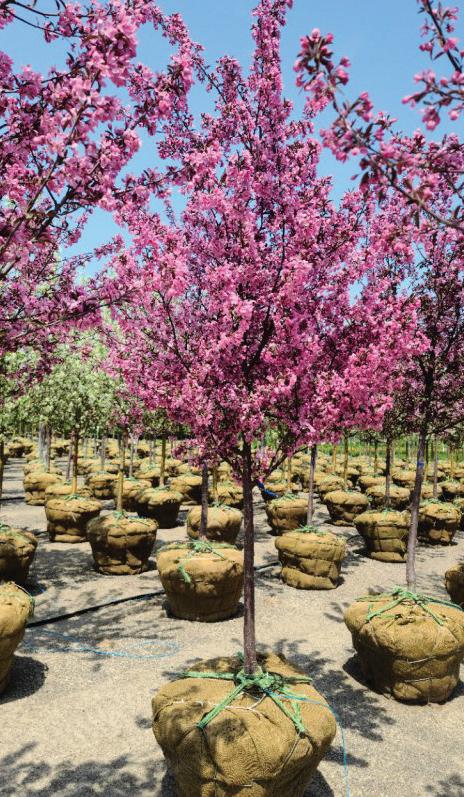
Pappas Landscape & Design 24-37
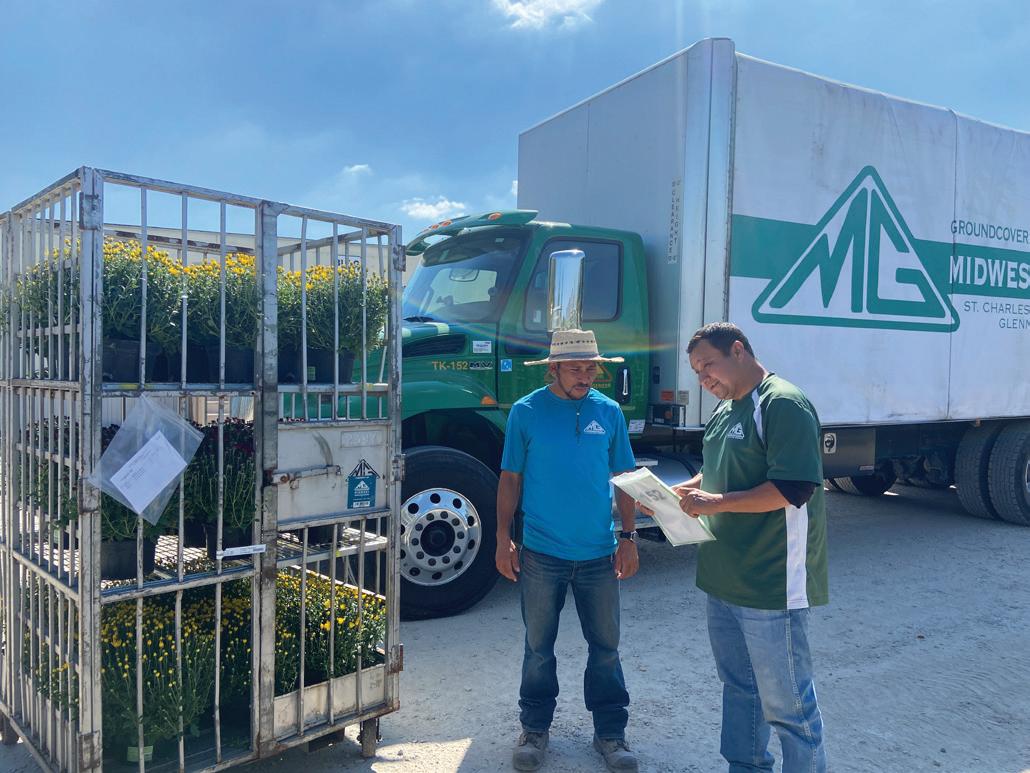
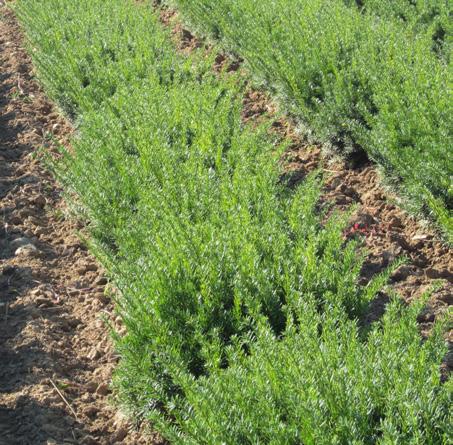
Midwest Groundcovers 44, 46, 48
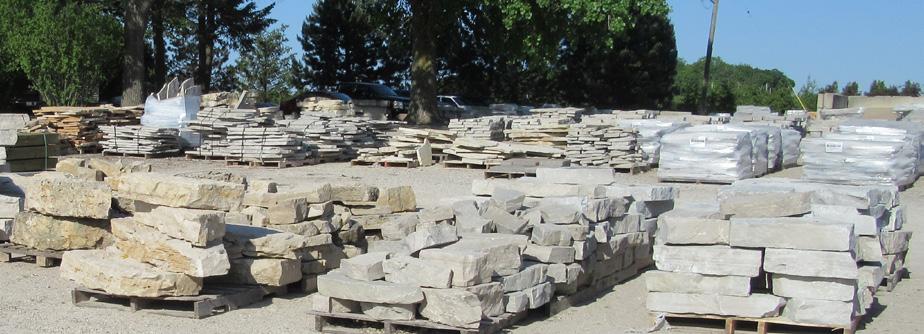
Inspire Outdoor Living 54
The official publication of Landscape Illinois, — Landscape Illinois —The Magazine is dedicated to educating, advising and informing members of this industry and furthering the goals of the Association. Landscape Illinois Magazine carries news and features relating to landscape contracting, maintenance, design and allied interests. Publisher is not responsible for unsolicited material and reserves the right to edit any article or advertisement submitted for publication. Publication reserves right to refuse advertising not in keeping with goals of Association. www. LandscapeIllinois.org.
Volume 67, Number 5. Landscape Illinois Magazine (ISSN # 0194-7257, USPS # 476-490) is published monthly for $75.00 per year by: the Illinois Landscape Contractors Association, 2625 Butterfield Road, Ste. 104S, Oak Brook, IL 60523. Periodicals postage paid at Oak Brook, IL and additional mailing offices. Printed in USA.
Postmaster: Send address changes to Landscape Illinois Magazine, 2625 Butterfield Road, Ste 104S, Oak Brook, IL 60523. Display Advertising Sales: Association Publishing Partners, Inc., Ph. (630) 6378632; email: rmgi@comcast.net. Classified ads, Circulation and Subscription: Landscape Illinois (630) 472-2851 Fax (630) 472-3150 Editorial office: Association Publishing Partners, Inc., Naperville, IL
Magazine Staff
Rick Reuland
Executive Director
Scott Grams (630) 472-2851 sgrams@landscapeillinois.org
Statewide Director of Development
Kellie Schmidt kschmidt@landscapeillinois.org
Director of Events
AnneMarie Drufke adrufke@landscapeillinois.org
Education Manager
Melissa Custic mcustic@landscapeillinois.org
Office Manager
Alycia Nagy anagy@landscapeillinois.org
Membership & Marketing Manager
Marissa Stubler mstubler@landscapeillinois.org v Landscape Illinois
2625 Butterfield Road Ste. 104S Oak Brook, IL 60523 (630) 472-2851 • Fax (630) 472-3150 www.landscapeillinois.org
Landscape Design Unplugged The Morton Arboretum Lisle, IL
August 20, 2026
Summer Field Day: The Landscape & Snow Expo Lake County Fairgrounds Grayslake, IL
September 3, 2026
Turf Education Day (TED) NIU Naperville Naperville, IL
September 15-17, 2026
Growers Tour Ohio Nurseries
OCTOBER
October 2-3, 2026
LIFT: The Landscape Professional Summit For Women Eaglewood Resort & Spa Itasca, IL
Hot town, summer in the city Back of my neck gettin’ dirty and
gritty
Been down, isn’t it a pity?
Doesn’t seem to be a shadow in the city - The Lovin’ Spoonful
Working outside is one of the selling points of the landscape industry. The profession attracts people who reject the cubicle life and don’t want to stare at four walls and a “Hang in There” cat poster. In addition to working outside, nature provides for this industry. The sun, the rain, the heat, the cold, and the cycle of birth and rebirth is what landscaping is all about. The plants, and the people who tend to them, depend on the weather to survive.
Yet, nature can be cruel. The weather isn’t always cooperative. Landscapers, along with golfers and sailors don’t look at daily or even hourly weather reports. They see the weather in terms of minutes as they look for windows in the reddish/greenish waves of a Doppler radar.
Landscape and nursery employees have come to accept the weather for what it is. We can shake our fists, but it arrives just the same. Like little league umpires, you wait until the last possible minute, but sometimes the game just has to be called.
At the time, NALP and AmericanHort took leadership roles on the issue and worked with the US Department of Labor to provide comments as part of the rule-making process. This was a, sweeping rule covering millions of workers and employers, so the agency took time to listen to stakeholder concerns. As one can imagine, it is difficult to find standards that work for farmers, baggage handlers, waiters, landscapers, miners, roofers, carpenters, professional athletes, filmmakers, and hundreds of other professions who work in the heat.
When President Trump took office, it all stopped. Many of the Biden-era rules were cancelled or postponed as Trump Administration officials entered new agencies with new priorities. Further, DOGE was active at the beginning of the Trump Administration who postponed or cancelled many of the 1-off programs monitoring heat related illnesses. For a year, the heat died down.
I am not sure how many landscape employees would consider the heat on an 80-degree day “excessive.” Most people use the adjective “perfect” to describe a day like that. It was only a matter of time before lawmakers attempted to define the weather. New legislation has created labels like “excessive” and “extreme” to define workplace temperatures. On the hot side, these ranges start at 79-degrees. On the cold side, 32-degrees.
The Heat is On
In the last 5 years, workplace temperature has become a major issue in Washington DC and in dozens of states across the country. Plant zones indicate the climate is changing and that means warmer warms, wetter wets, and colder colds. In 2022, OSHA added heatrelated inspections to its National Emphasis Program. Since the change, OSHA has conducted more than 5,000 federal heat-related inspections.
Temperature related illness is serious, but does not result in many annual workplace deaths. Nationally, about 40-50 workers die annually from temperature related exposure. More people die of bee stings each year than workplace temperature illness. O’Hare Airport, a sea of punishing blacktop and roaring jet engines has had only one heat related illness in the last five years.
In 2024, the Biden Administration released a proposed rule with the goal of protecting millions of workers from the health risks posed by extreme heat. If finalized, the proposed rule would have impacted 36 million workers in indoor and outdoor work settings. The proposed rule would have required employers to develop injury and illness prevention plans. The plan would have required employers to evaluate heat risks and provide drinking water and shaded, paid rest breaks.
As has been the case in this new red and blue state world, when the federal government eliminates a priority, it reflexively becomes a big deal for states with different politics. 7 blue and purple states passed legislation after the heat rule was suspended. California has made it a point to carry forth policies dropped by the Trump Administration. With that said, purple Nevada also passed heat legislation for two reasons: it’s a heavy pro-union state and it’s really friggin’ hot. Additionally, 16 other states, red and blue alike, have introduced legislation that captures the essence of the Biden-era rule. And, yes, Illinois is one of them.
In February of 2025, Rep. Edgar González, Jr. filed HB3756. This bill would create the Workplace Extreme Temperature Safety Act. It gives vast authority to the Director of the Illinois Department of Labor to pass sweeping rules related to excessive and extreme heat/cold within indoor and outdoor workplaces. It borrows a lot from the proposed OSHA rule, but looped in cold weather temperature protections. OSHA offers much more leeway to cold weather employers since personal protective equipment (PPE) is available for those who work in extreme cold. Heat, is an entirely different matter as acclimation, fluids, and rest are usually the only way to protect against extreme heat. In Illinois, blizzards and cold get a lot of the publicity, but heat waves claim 4x the lives that cold snaps do.
The bill takes some major swings. It establishes excessive and extreme temperature thresholds. For excessive, it creates a range of 80-degrees to 89 degrees. Statistically, that would cover 86 working days out of the typical 160 total outdoor production days (54%). On the cold side, it sets excessive between 32-degrees and 10-degrees. Extreme heat is defined as 90-degrees or above and extreme cold is 10-degrees or below. On these days, employees would be given mandatory paid breaks to cool-off or warm-up every few hours. The lengths of these breaks would be determined by IDOL, but we assumed 15-30 minutes at a time.
Landscape Illinois joined a coalition of dozens of business groups to provide feedback on the bill. This coalition was vast. It included manufacturers, merchants, surgeons, baggage handlers, tuckpointers, roofers, and every other profession who deals with excessive temperatures.
The Representative was curious what impact these regulations would have on a “day in the life” of each industry. Landscape Illinois
sharpened our pencils and got to work. Based on a metric of 54% of all work days, we estimated one maintenance crew would have $30,625 in unrecoverable paid time off per season. These would be mandatory, paid breaks at job sites based on temperature fluctuations.
Many industries avoid extreme heat by starting and ending the day earlier. In landscaping, this presents a problem since most communities, by ordinance, prohibit landscape work before a prescribed time. Most companies prefer not to work on Saturdays unless weather forces them to. Landscape Illinois has never supported running crews on Sunday, especially with such a large, family-oriented and religious workforce. The option of “starting earlier” is not available to most companies operating in heavily residential areas.
For snow, the optics of lawmakers slowing the emergency response to snow events were terrible. We argued the State of Illinois should not be complicit in sidelining dedicated workers who plow and push snow when time is of the essence and critical infrastructure needs to get back online. We merely trade one type of liability for a graver one. If a zero-tolerance parking lot is not cleared, this could mean slip-and-falls or a lack of access for emergency vehicles while employees were taking a forced break.
Legislation puts employers and employees into a tight spot. Employees don’t want to work until dusk due to mandatory breaks. Employers can’t cover the costs of the overtime required to stay on schedule. No one wants employees to put their health at risk, but the legislation assumes employee health is at risk the second a thermometer crosses a line. The business coalition argued there are too many factors within each industry to justify that mindset.
The most insidious part of the legislation was that it allowed for private right of action. It would only take a handful of complaints before a class action suit could be brought. This industry is no stranger to wage-and-hour class action suits. Past and current employees sign onto class action out of the promise of a potential payout. In terms of dollars and cents, if a company is accused (not found guilty of, accused) of not paying for heat/cold rest breaks it could mean settlements in the hundreds of thousands of dollars. It does not matter if the company is guilty or not, because the company will have to settle. A trial could take 3 years and cost $2-3 million. It becomes a math problem. These companies are never found guilty. They are only accused and attorneys push for a settlement. With the settlement, very little trickles down to the employee and most is absorbed by the law firm as part of legal fees.
It is likely that this bill will collapse under its own weight. With that said, there is too much smoke to deny there is fire around the issue of temperaturerelated illness. It is likely this bill will be refiled next year to begin another 2-year shelf life. A change in power in Washington will mean some of the OSHA heat standards are resurrected. Companies are going to need to face these issues until we adjust or blot out the sun.
Many companies within Landscape Illinois have internal protocols for dealing with extreme temperatures. These are based on experience and with the intent of protecting employees. These were not mandated or required, but the business listened to field staff and better understands what conditions force the business to be that little league umpire and call the game. If-and-when politicians write the standards, it is best to use these actual models as a starting point versus the musings of bureaucrats who walk around Capitol Hill using an underground. temperature-controlled tunnel system.
As temperatures become more extreme, we need to work collaboratively with our workforce to understand what accommodations can be made. If we don’t do it ourselves, there are lines of lawmakers lining up to do it for us. If that happens, the old southern maxim becomes true – it ain’t the heat that’ll get ya, it’s the bureaucrats. To avoid that reality, let’s keep a cool head out there. It’s our only way to beat back the heat.
Becky Thomas Spring Grove Nursery, Inc. (815) 448-2097 bthomas@springrovenursery.com
Aaron Zych ILT Vignocchi, Inc. (847) 487-5200 azych@iltvignocchi.com
www.landscapeillinois.org
Lastmonth, I moved a little closer to turning 50. It’s often said that “50 is the new 40” or “60 is the new 50,” and while those ideas are well intentioned, my body occasionally disagrees. Still, as I look ahead rather than back, I feel grateful for the experiences that have shaped me. I have lived a fortunate life — learning from legends, celebrating successes, and working through challenges alongside people who have meant a great deal to me.
One of the most humbling aspects of getting older is the growing awareness of our own mortality. As time passes, loss becomes more familiar, and the reality that life is finite becomes increasingly clear. Those moments of reflection serve as important reminders to appreciate the people and opportunities we have today.
That appreciation is especially relevant in the work we do every day. We are part of an incredible community, and it is something we should never take for granted. I am deeply grateful to Grace Koehler for encouraging me to become involved with ILCA and for helping me step beyond my comfort zone. Through her influence, I discovered spring ephemerals and developed a passion for native plants that I never expected. I am also thankful for the many mornings spent sharing coffee and conversation with Gary Deaton. When Gary first walked into Kaknes looking for a job, I was hesitant. Fortunately, Dave encouraged me to give him a chance. That decision led not only to a key contributor to our operation, but also to a friend that will stay with me long after he has gone. The lesson is simple, yet powerful: giving people an opportunity can profoundly shape both your organization and your life.
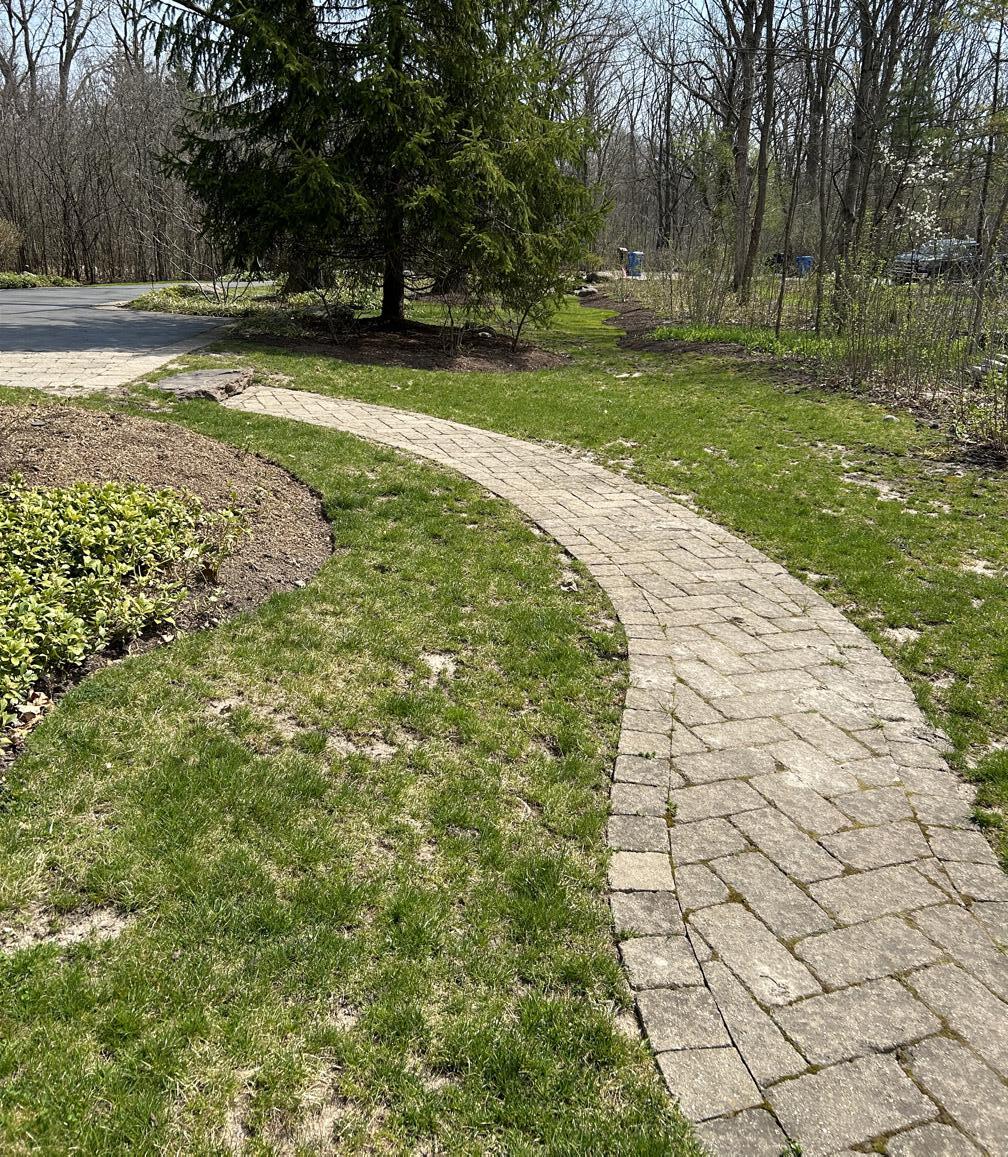
Recently, while considering changes to my backyard — including installing a more formal hardscape path — I was reminded of how deeply personal our connections can be. We carry remarkable products at Lurvey, and I wanted to showcase them at home. In the process, I realized the bluestone steppers I had considered replacing were a gift from Rosendo Guzman of Western DuPage. Letting go of that connection no longer felt right.
The final lesson I continue to learn is this: the people in our lives will not always be with us. It’s important to acknowledge them, value them, and tell them what they mean to us while we can. In the words of Mt. Joy’s Silver Lining, tell the ones you love that you love them —and teach only what you truly know.
Thank you all for being part of this journey.
Kevin McGowen, President Landscape
Illinois
Elmes pasado, me acerqué un poco más a los 50 años. A menudo se dice que «los 50 son los nuevos 40» o que «los 60 son los nuevos 50», y aunque esas ideas parten de buenas intenciones, mi cuerpo no siempre está de acuerdo. Aun así, al mirar hacia adelante en lugar de hacia atrás, me siento agradecido por las experiencias que me han moldeado. He tenido una vida afortunada: he aprendido de leyendas, he celebrado éxitos y he superado retos junto a personas que han significado mucho para mí.
Uno de los aspectos más aleccionadores de envejecer es la creciente conciencia de nuestra propia mortalidad. A medida que pasa el tiempo, la pérdida se vuelve más familiar y la realidad de que la vida es finita se hace cada vez más evidente. Esos momentos de reflexión sirven como importantes recordatorios para apreciar a las personas y las oportunidades que tenemos hoy.
Ese agradecimiento es especialmente relevante en el trabajo que hacemos cada día. Formamos parte de una comunidad increíble, y es algo que nunca debemos dar por sentado. Estoy profundamente agradecido a Grace Koehler por animarme a involucrarme con ILCA y por ayudarme a salir de mi zona de confort. Gracias a su influencia, descubrí las plantas efímeras de primavera y desarrollé una pasión por las plantas autóctonas que nunca hubiera imaginado. También estoy agradecido por las muchas mañanas que pasé compartiendo café y conversación con Gary Deaton. Cuando Gary entró por primera vez en Kaknes buscando trabajo, yo tenía mis dudas. Afortunadamente, Dave me animó a darle una oportunidad. Esa decisión no solo dio lugar a una pieza clave en nuestra empresa, sino también a un amigo que permanecerá conmigo mucho tiempo después de que se haya ido. La lección es sencilla, pero poderosa: dar una oportunidad a las personas puede moldear profundamente tanto tu organización como tu vida.
Recientemente, mientras pensaba en hacer cambios en mi jardín trasero —incluida la instalación de un camino pavimentado más formal—, recordé lo profundamente personales que pueden ser nuestras conexiones. En Lurvey tenemos productos extraordinarios, y quería exhibirlos en casa. En el proceso, me di cuenta de que los peldaños de piedra azul que había pensado sustituir eran un regalo de Rosendo Guzmán, de Western DuPage. Renunciar a esa conexión ya no me parecía lo correcto.
La última lección que sigo aprendiendo es esta: las personas que forman parte de nuestras vidas no siempre estarán con nosotros. Es importante reconocerlas, valorarlas y decirles lo que significan para nosotros mientras podamos. En palabras de «Silver Lining» de Mt. Joy, dile a tus seres queridos que los quieres, y enseña solo lo que realmente sabes.
Gracias a todos por formar parte de este viaje. Traducción realizada con la versión gratuita del traductor DeepL.com
Kevin McGowen, Presidenta, Landscape Illinois
Kevin McGowen
Clarence Davids & Co. • Matteson Chasemoor of Burr Ridge
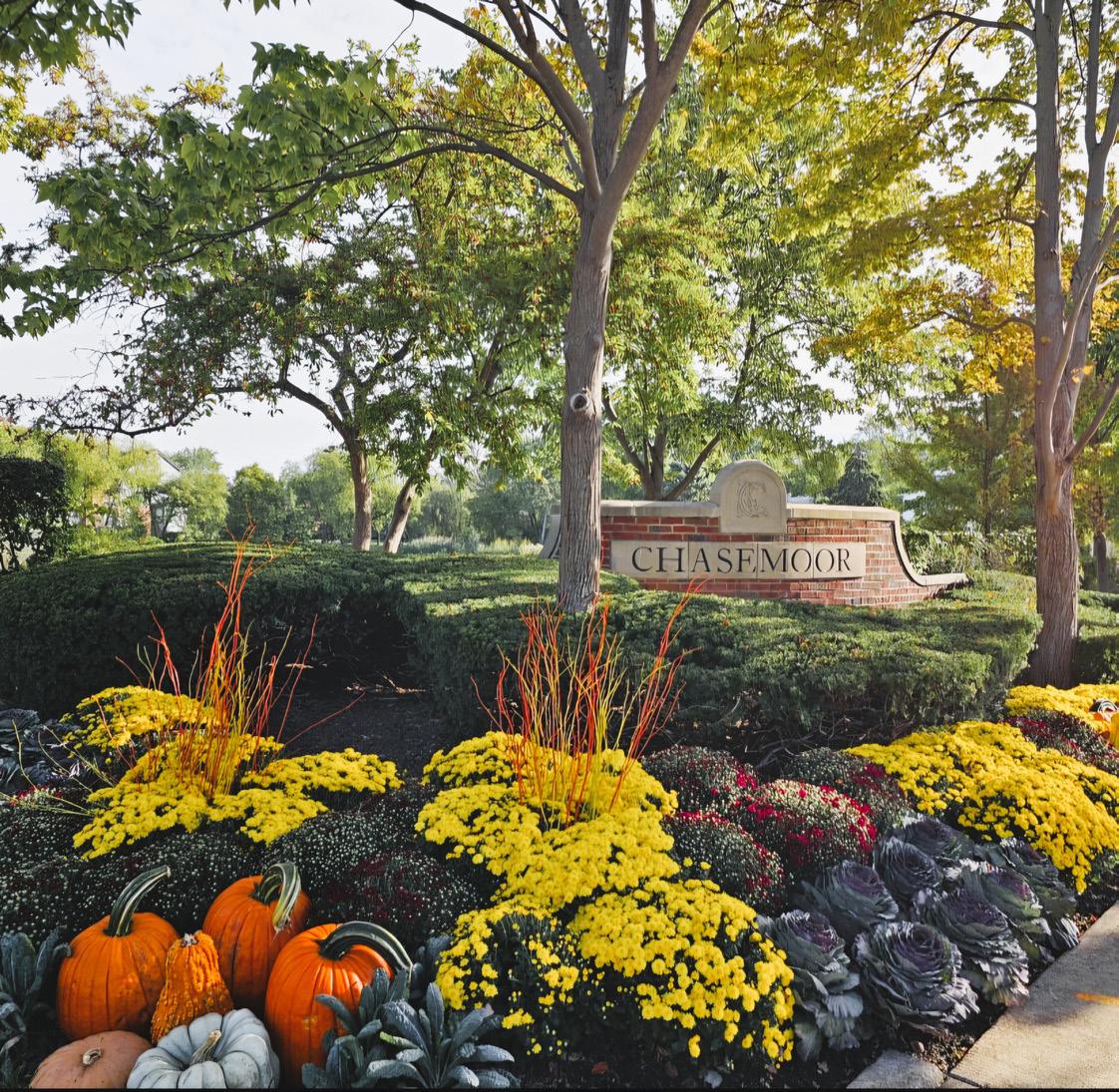
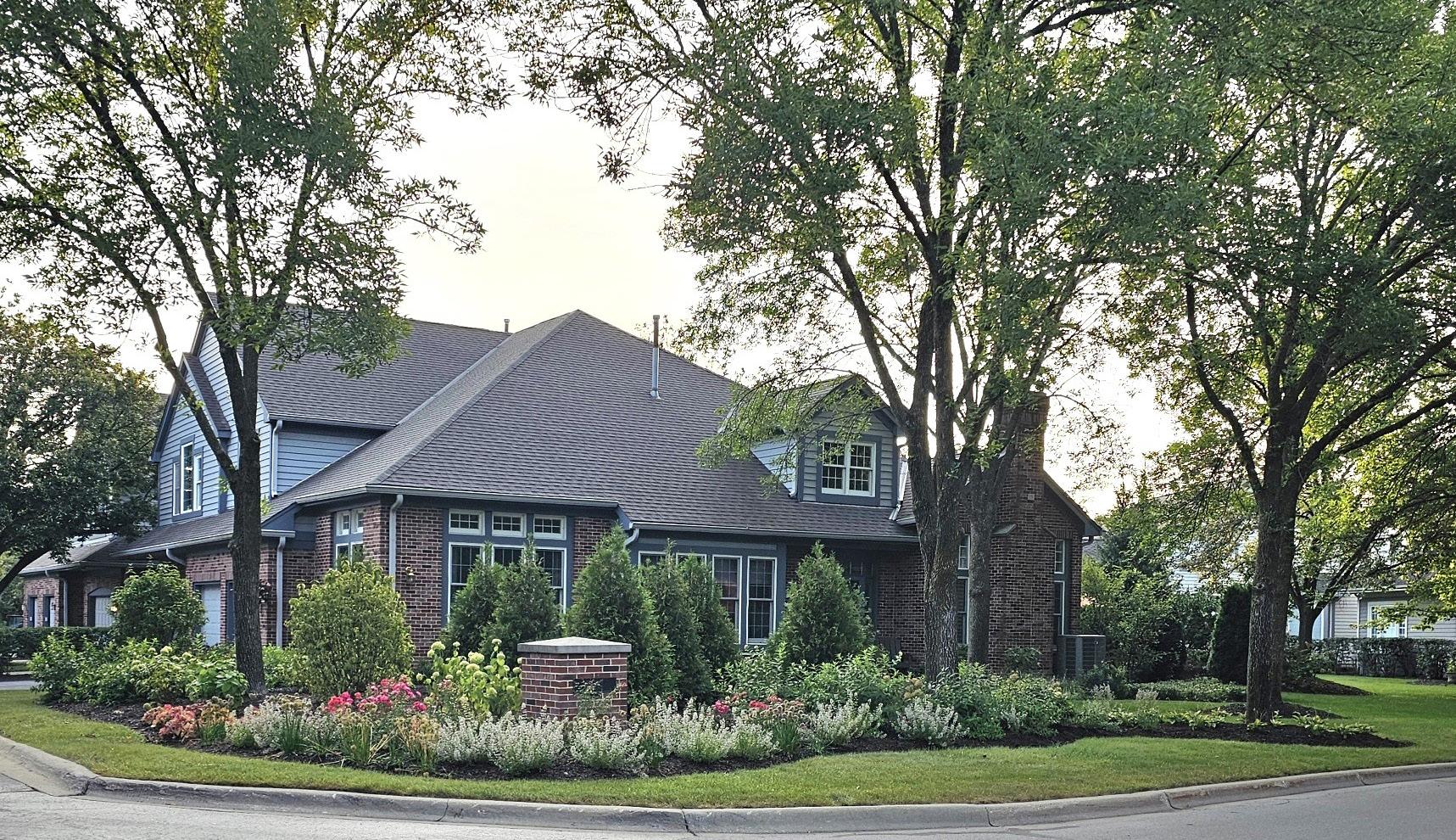
Chasemoor is a beautiful oasis of landscape pageantry creating magical experiences of grandeur for homeowners and visitors year-round. Whether it’s the fully landscaped entrance monument walls attracting attention, the striking appeal of freshly edged tree rings with mulch, the blooms
of fresh flowers or the smell of freshly cut grass, Chasemoor homeowners and visitors enjoy the time of wonder, mystery and beauty as they walk paths within Chasemoor. Living in the Midwest means one thing, short summers.
Wa rranties:
Do they promote client satisfaction?
by Nina Koziol
When you buy a refrigerator or a washing machine, the manufacturer typically provides a warranty—usually a written guarantee of a product’s integrity and of the maker’s responsibility for the repair or replacement of defective parts over a certain period. But those products are not subject to freeze, thaw, hail, snow, ice, salt, drought and deluge. Both hardscape and plants are subject to the vagaries of our Midwest climate.
Plant Warranties
Landscape contractors and nurseries have a great challenge when it comes to their products and projects. “If a plant is going to die, it’s going to die the first year,” says Landscape Architect Bob Hursthouse, president of Hursthouse, Inc. “Even if the client was negligent, we can extend the warranty. We’re doing it sometimes into a second or third year. Let’s get it fixed, get it right now, and, let’s move forward together.”
It also depends on the size of the project. “Our biggest category is repeat clients and referrals from them,” Hursthouse said. “It’s about client goodwill—that’s our whole point. We try to do the right thing for our clients every single day and value our reputation for tomorrow. It’s too easy for people to throw out a bad review, take it to social media. So, we work really hard to take care of ourselves and our reputation.”
Providing a warranty promotes a lot of good will according to Bob Bertog, president of Bertog Landscape. “Let’s say something is struggling and the client says the warranty is coming up on one year. My gut says the plant is going to be fine. I’ll say let’s make a deal—if I think it’s going to make it, I’ll extend the warranty for another year. That makes them happy and usually the plants make it.” He may also say, “I’ll replace it right now if you want, but if it’s in a hedge and only one plant is struggling, they’ll be fine with it if I extend the warranty.”
Client Education
“It’s about client goodwill— that’s our whole point. We try to do the right thing for our clients every single day and value our reputation for tomorrow.”
— Bob Hursthouse
Many homeowners are simply not into maintaining their landscape. Showing them the value of their investment can stave off problems. “We did a manual from the beginning,” Hursthouse says. The company’s current instruction guide takes clients through them month by month along with what to expect in year two. “It was a little threefold handout on day one. It’s easy to assume people know how to take care of plants. For example, they’ll say they have a sprinkler system so they don’t have to water. However, they need to get the hose out because the sprinkler system is not going to take care of the trees or shrubs. Those are the perceptions.” The instructions include the proper way to water. “We ask them, ‘Are ou doing those things’? We’ll stick a moisture probe in the root ball to check.”
(continued on page 12)
(continued from page 10)
Bertog’s firm warranties perennials and roses for 30 days. “We’re installing perishable items,” he says, and despite using the right plants and placing them correctly, the problem can be the client. “If you go to the store, buy a gallon of milk and leave it on the counter for six hours are you going to be able to go back to return it? You don’t guarantee perishable items.” Education is a big piece as well. “We give very explicit watering and care instructions and I make sure that I’m very clear. Famous last words from a client — ‘I have a sprinkler system’ —but I’m telling you that’s not enough water for new plants even for perennials that may have a gallon root ball.
“You explain a little horticulture to them—digging down at least a foot to show them. A sprinkler system doesn’t go down there. They say they water and I’ll get my soil probe and there will be enough water in the top inch. The clients appreciate that you’re educating them.” The same goes for plants that are slow to take off. “The saying is: the first year they sleep, the second they creep and the third they leap. They can understand that.”
ty sod, he says, “If the sod was shaved and a big piece died, we’re going to replace it. If it’s the whole yard—every job is a little different—common sense and sticking to your guns— that’s not how I work. We don’t warranty that.”
Hardscape Warranties
“With large projects we’ll extend the warranty for life if we maintain the property. Then you have a built-in maintenance customer too.”
— Bob Bertog
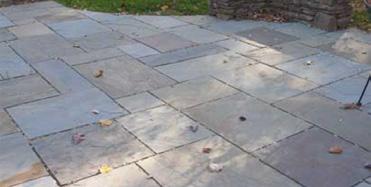
Hursthouse offers a three-year warranty on all landscape construction and one year on concrete flat work. “We do some concrete but not a lot. Concrete is guaranteed to crack. We know it is because we’re in Chicago. It’s a rigid material and we’re building it on something that’s not rigid — our soil.” Another problem for hardscape, especially concrete, are de-icers used by clients. “You have salt dripping off the cars. “We recognize every choice has a pro and a con. A concrete pour is fairly cost effective and we can get a faux finish that looks decent, but it’s guaranteed to crack. A blue stone patio can last forever. What’s the value proposition for the client?”
“If someone spent $50,000 on a project, and didn’t water, you’ve got to have a commonsense approach from a business point of view,” Bertog said. “We’re careful about it. Typically woodies have a one-year warranty and if they’re planted correctly and watered, they have a pretty good chance of surviving. Where people run into issues are the perennials and sod. People think sod should be warrantied. And, if the sod farm ‘cuts’ don’t have one inch of soil on them, there’s a problem. The client will say, ‘The sod didn’t take’, but it’s because they didn’t water it.” Although Bertog does not typically warran-
Hardscape warranties are somewhat different and looser than plant warranties at Bertog. “If it’s new construction you have to be really careful, especially vertical work,” Bertog said. “There could be settling. When we do any vertical work, we try to put in the footing to go to the frostline. It’s about educating the client.”
Although it’s not set in stone, Bertog says,“With large projects we’ll extend the warranty for life if we maintain the property. If you’re maintaining the property, you’ll notice if perennials are dying. If the woodies are dying, you replace with what was originally installed. Then you have a built-in maintenance customer too.”
(continued on page 14)
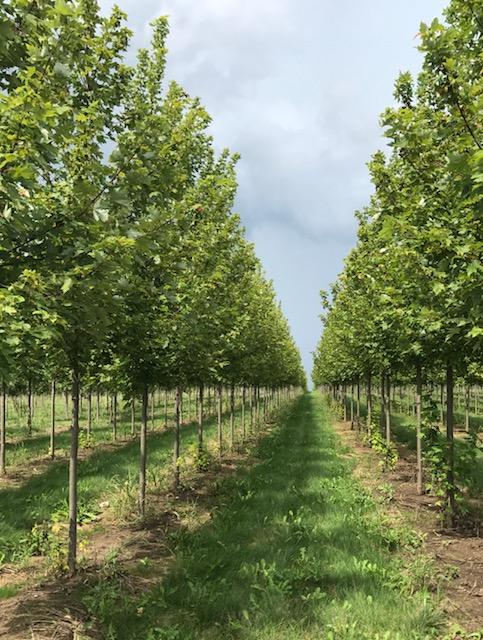
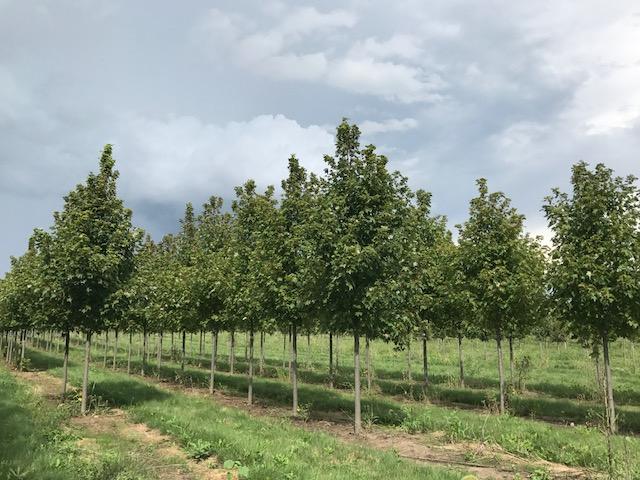
Chicagoland area with of 400 acres of quality field-grown nursery stock .
Cedar Path Nurseries has two conveniently located sales yards, Lockport and Barrington, to better serve our clients.
Growers & Distributors of Quality Nursery Stock
We are the premier shade tree grower in the Chicagoland area with of 400 acres of quality field-grown nursery stock . Cedar Path Nurseries has two conveniently located sales yards, Lockport and Barrington, to better serve our clients.
We are the premier shade tree grower in the Chicagoland area with of 400 acres of quality field-grown nursery stock .
We are the premier shade tree grower in the Chicagoland area with 400 acres of quality field-grown nursery stock. Cedar Path Nurseries is conveniently located in Lockport to serve our clients.
Cedar Path Nurseries carries a full line of B&B trees and shrubs, container shrubs, perennials and groundcovers. Not only are we your onestop -shop, but we are sourcing experts. We look forward to assisting on your next project.
We are the premier shade tree grower in the Chicagoland area with of 400 acres of quality field-grown nursery stock .
Cedar Path Nurseries has two conveniently located sales yards, Lockport and Barrington, to better serve our clients.
Cedar Path Nurseries has two conveniently located sales yards, Lockport and Barrington, to better serve our clients.
Cedar Path Nurseries carries a full line of B&B trees and shrubs, container shrubs, perennials and groundcovers. Not only are we your onestop-shop, but we are sourcing experts. We look forward to assisting on your next project.
Cedar Path Nurseries carries a full line of B&B trees and shrubs, container shrubs, perennials and ground covers. We are, not only your one-stop shop, but we are also sourcing experts. We look forward to assisting on your next project.
Cedar Path Nurseries carries a full line of B&B trees and shrubs, container shrubs, perennials and groundcovers. Not only are we your onestop-shop, but we are sourcing experts. We look forward to assisting on your next project.
Cedar Path Nurseries carries a full line of B&B trees and shrubs, container shrubs, perennials and groundcovers. Not only are we your onestop-shop, but we are sourcing experts. We look forward to assisting on your next project.
Lockport, Illinois
Lockport, Illinois
Barrington, Illinois
Barrington, Illinois
Barrington, Illinois
15235 W. Bruce Road, Lockport, IL 60491 Office 815.838
15235 W. Bruce Road, Lockport, IL 60491 Office 815.838
15235 W. Bruce Road, Lockport, IL 60491
Office 815.838- 4900 |Fax 815.838.4999
Barrington, Illinois
190 W. Penny Road, Barrington, IL 60010 Office 847.551.3700 | Fax 847.551.3707
190 W. Penny Road, Barrington, IL 60010
Office 847.551.3700 | Fax 847.551.3707
SALES@CEDARPATH.NET | WWW.CEDARPATH.NET
190 W. Penny Road, Barrington, IL 60010 Office 847.551.3700 | Fax 847.551.3707 SALES@CEDARPATH.NET | WWW.CEDARPATH.NET
SALES@CEDARPATH.NET | WWW.CEDARPATH.NET
(continued from page 12)
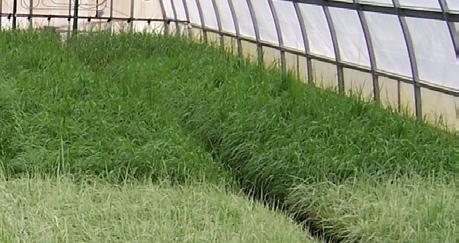
Midwest Groundcovers
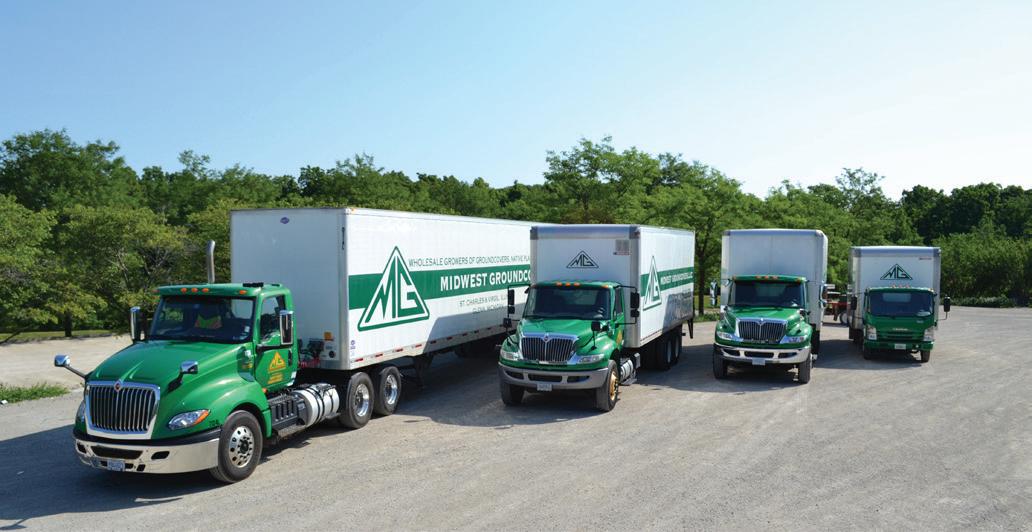
“We don’t actually warranty or guarantee anything. Customers have five days to submit issues,” says Nikki Melin, vice president of sales and marketing at Midwest Groundcovers. “After that, because we don’t have control over the plants, we do not warranty.”
Mariani Plants
“We do not warranty our plants once customers take receipt of the product and sign off on our paperwork; it is theirs,” says Mike Mennenoh, general manager of Mariani Plants. “Now of course if we ship a dormant plant and that plant doesn’t perform, we will then credit the customer. Since we are wholesale only, we do not have warranties factored into our pricing. We stand behind our quality and feel confident that once our product leaves the property, those plants will perform.
The Value of Trade Shows
Editor’s note:
by Krystal Flogel
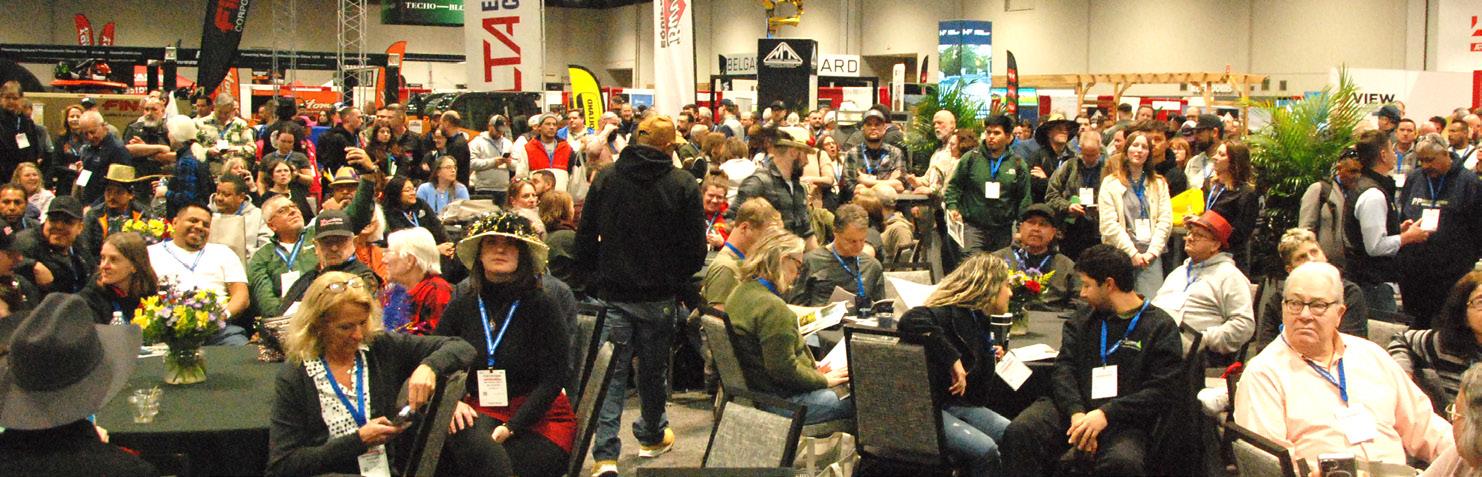
Trade shows have changed a lot over the years, from new faces and products, to venue and timing changes, to exciting new technologies. We’ve seen shows fall out of favor and be replaced by others, industry organizations have restructured and changed names, and some shows went virtual in the face of a global pandemic. In short, our trade shows have evolved along with our industry. In the not-so-distant past, winter trade shows like Mid-Am were more like order-taking hubs. While there are still those who attend these events with the intent of sourcing plant material, the focus of our modern-day trade shows has shifted more and more towards networking and brand-building opportunities instead. So, if generating orders is no longer the primary objective of our industry events, how do we quantify the value and justify the costs of attending them?
Krystal Flogel is a grower for Mariani Plants and contributor to Landscape Illinois Magazine. Here she offers us a candid, armslength view of two of our most important annual events. We’re pleased to share it with our larger audience.
While we may not be able to draw a straight line from shows like InVigorateU or iLandscape to our open order reports, I think most of us would agree they provide value that goes far
beyond immediate sales. This was on my mind last month during Growers Swap Shop, the last session of InVigorateU in Bloomington. I was struck in that moment by the candor of the conversation — an open forum made up of competitors, peers, and friends, all coming together to share challenges and experiences in an effort to find solutions. This says everything you need to know about our industry. And when we think about the year ahead and the season of chaos that is just around the corner, experiences like these are a reminder that we aren’t alone, and that maybe our problems aren’t so unique. When it comes to preparing for the start of the season, there is no barometer quite like iLandscape. In the weeks leading up to spring, it’s only natural for us to try and predict what could go wrong. Whether it’s the political landscape, the weather, or the economy, we all want to be prepared for possible hurdles that could derail us on our path to a successful season. But the energy and optimism of a show like iLandscape is nothing short of an antidote for pre-season anxiety.
(continued on page 18)
(continued from page 16)
We don’t know what our trade shows will look like in another twenty years, but I’m willing to bet that, in a lot of ways, they’ll be very much the same. We’ll still be talking about labor, new plant varieties, and ways we can benefit from the latest and greatest technology. But most importantly, I think these types of events will remain invaluable when it comes to motivating and inspiring us. We’ll always have setbacks and unpredictable obstacles that prevent us from having the perfect year, but the relationships we build along the way are what continue to move our industry forward.
Here’s looking forward to another great year with all of you!
If There’s a bustle in Your Hedgerow Beyond Arborvitae Screens
by Trevor Smith
Ahedgerow can do far more than block a view. At its best, it becomes living infrastructure: a layered planting that screens unwanted sightlines, softens wind and noise, feeds birds, supports pollinators, and brings beauty from spring through winter. In New England, the most successful hedgerows are rarely rigid walls of one species. They are dynamic, mixed plantings that balance privacy with habitat and ornamental value.
The strongest approach is to build the hedge with roughly 70 to 85 percent deciduous shrubs and small trees, then weave in 15 to 30 percent evergreen plants for year-round cover. That ratio gives you the best of both worlds. Deciduous natives deliver the flowers, berries, and fall color that make a planting feel alive and seasonal, while evergreens hold the screen in winter, block the most offensive views and provide shelter when birds need it most.
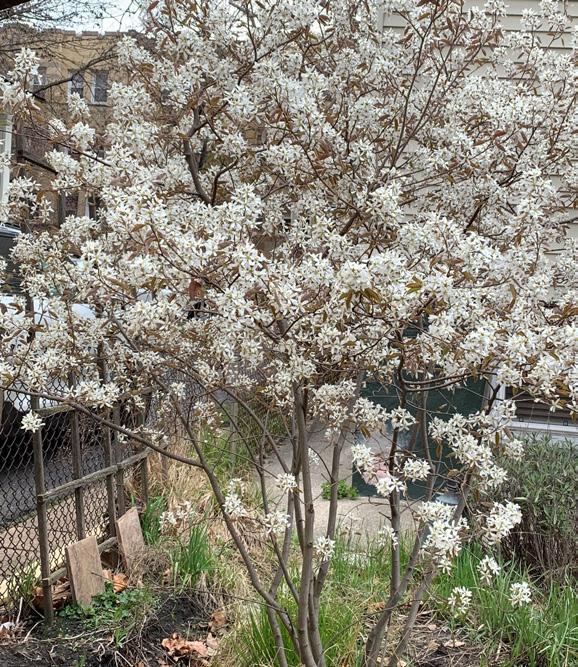
For sunny sites, some of the best native choices include smooth arrowwood viburnum, eastern shadbush, winterberry, red chokeberry, highbush blueberry, gray dogwood, nannyberry, sweet pepperbush, American hazelnut, and wild raisin. Together, these plants offer an extraordinary sequence of interest. Serviceberry lights up early spring with white flowers and follows with edible summer fruit. Chokeberry and blueberry bring outstanding fall color. Winterberry carries vivid fruit deep into the colder months. Arrowwood and nannyberry provide structure
and reliability, while gray dogwood and hazelnut help create the kind of dense, layered habitat that birds use for nesting and shelter.
For shade or woodland-edge conditions, the palette shifts slightly. Spicebush, maple-leaved viburnum, pagoda dogwood, witch-hazel, winterberry, wild raisin, sweet pepperbush, gray dogwood, serviceberry, and American hazelnut are especially valuable. Spicebush is one of the finest native shrubs for bright shade, with soft yellow flowers in early spring, glowing fall color, and excellent ecological value. Maple-leaved viburnum thrives where many other shrubs struggle and adds rich red-purple autumn tones. Pagoda dogwood brings an elegant layered form, while witch-hazel extends the season with fragrant fall blooms when little else is flowering.
If your priority is birds, focus on shrubs that provide both fruit and cover. Winterberry, serviceberry, highbush blueberry, gray dogwood, nannyberry, and hazelnut are among the strongest choices. They offer food across multiple seasons and help create the thicket-like branching structure many birds prefer. If your priority is pollinators, emphasize sweet pepperbush, serviceberry, chokeberry, blueberry, and spicebush. These plants help bridge the season with nectar and pollen, from early spring into midsummer.
Evergreens should be used strategically, (continued on page 22)
Serviceberry
Winterberry
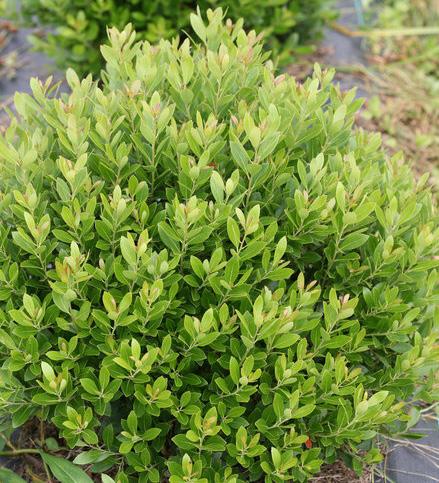
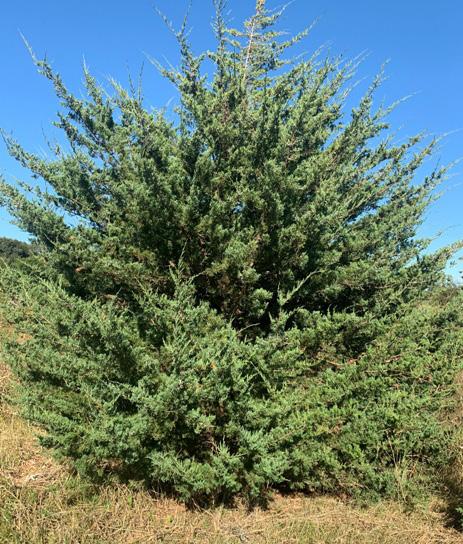
(continued from page 20) not overwhelmingly. Inkberry is one of the best evergreen shrubs for mixed hedgerows, especially where soils are acidic. Eastern red cedar can provide taller vertical screening in sunny sites. In part shade, mountain laurel adds evergreen mass and remarkable bloom. These plants are most effective when planted in drifts or pockets, rather than as a single unbroken line.
The most beautiful hedgerows feel generous and natural. They screen, but they also flower, fruit, shift in color, and shelter life. Done well, a hedgerow is not just a boundary. It is one of the richest and hardest-working elements in the landscape.
About the Author
Trevor Smith is an ecological landscape designer, speaker, and educator specializing in native plants, green infrastructure, soil regeneration, and habitat creation. For more than two decades he has helped homeowners, institutions, and municipalities design and build landscapes that manage stormwater, support biodiversity, and perform under real-world climate stress. Trevor is the founder of ReEarth Solutions, a soil-focused venture dedicated to “changing the industry from the ground up” by bringing high-performance, biologically rich soil systems to the landscape trade. Through his projects, trainings, and talks, he works to bridge the gap between cutting-edge soil science and everyday landscape practice — so that doing right by the planet also makes good business sense.
Eastern Red Cedar
Inkberry
Pappas Landscape & Design of Excellence in Landscape
by Heather Prince
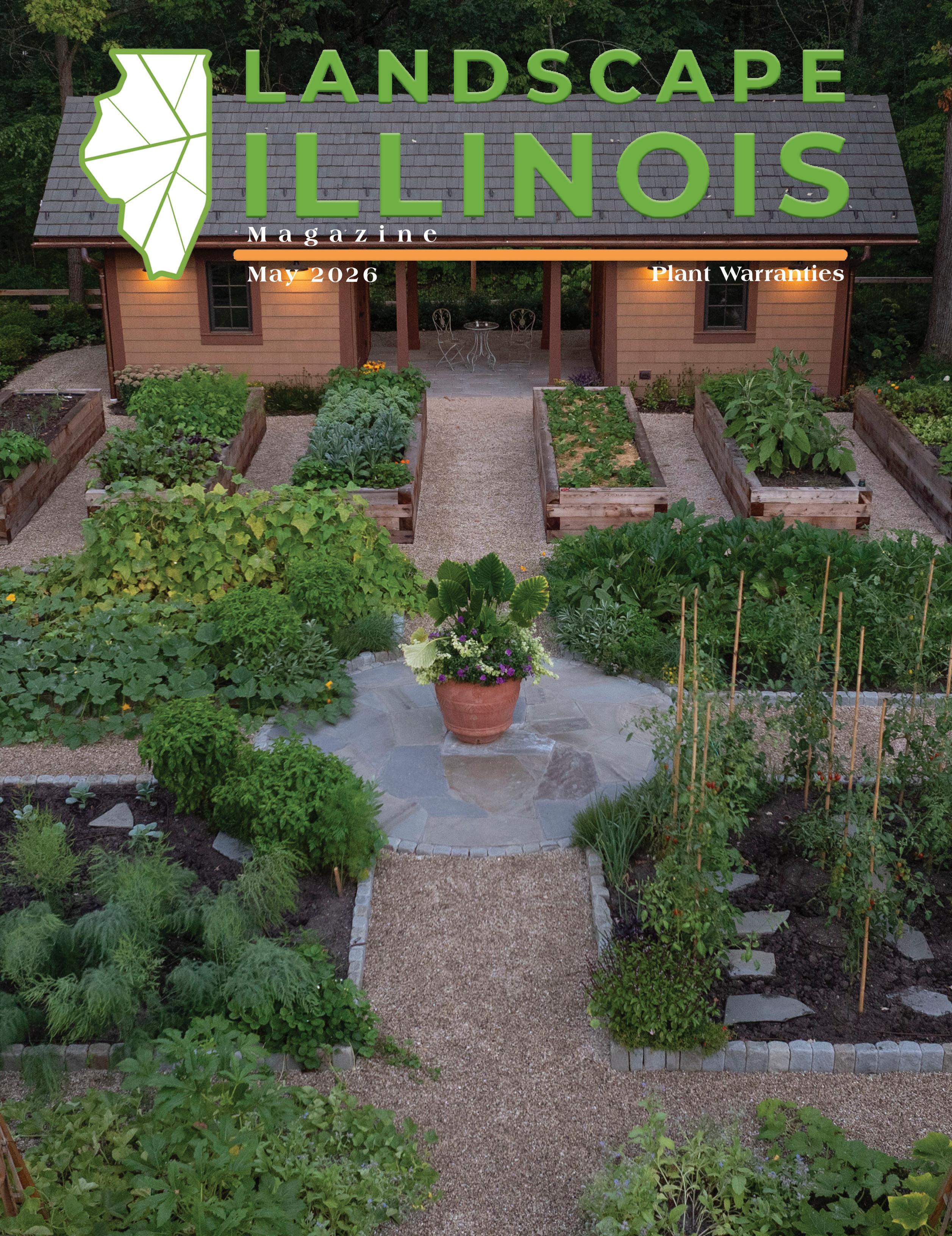
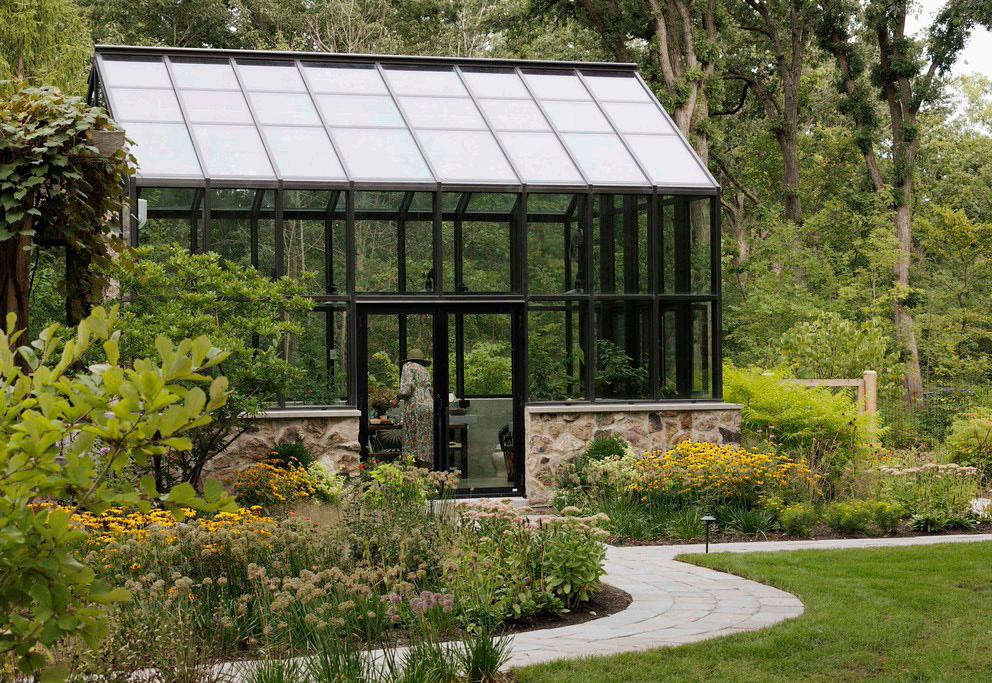
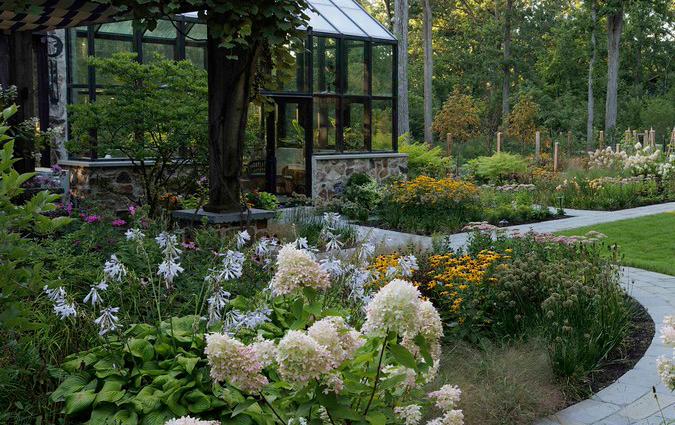
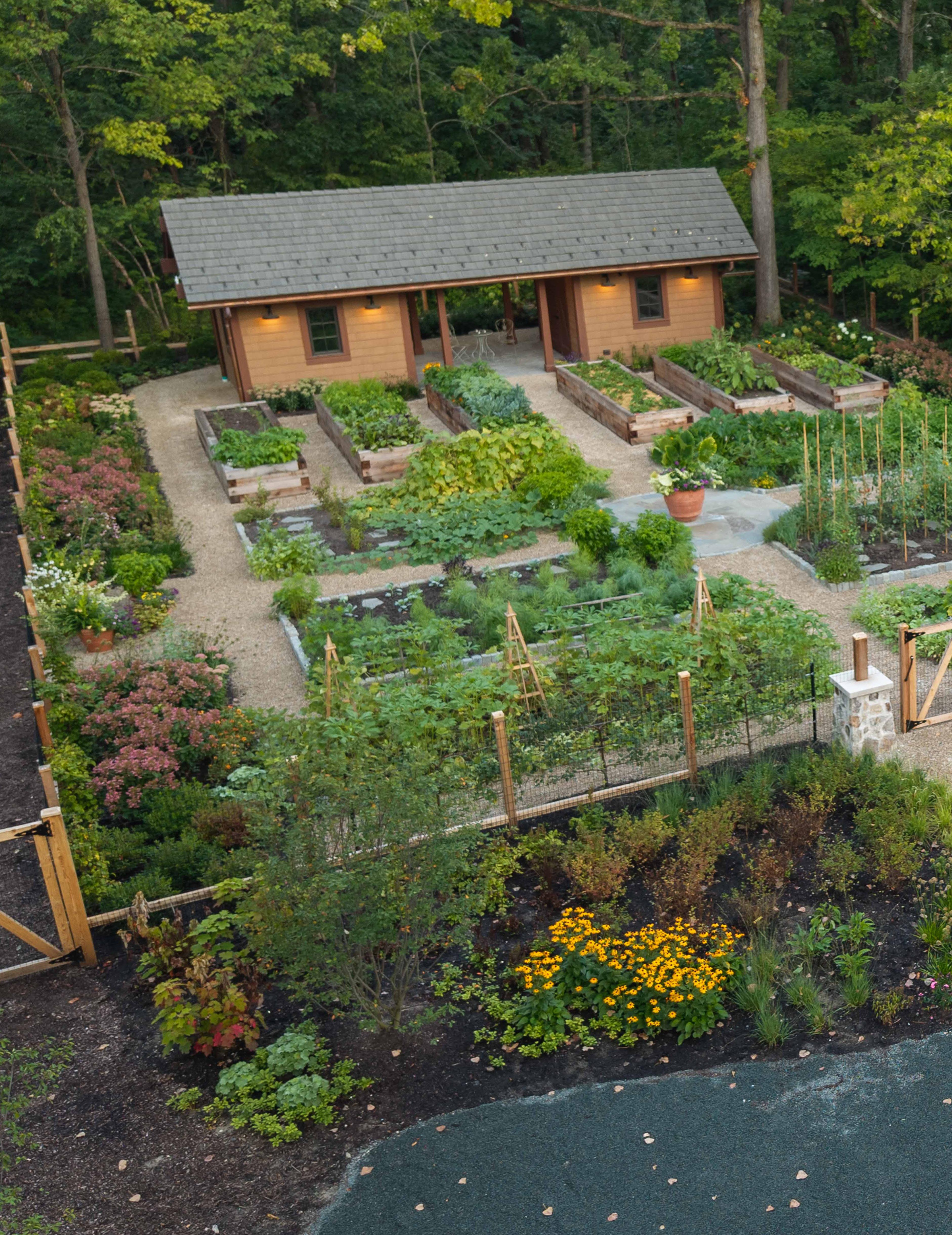
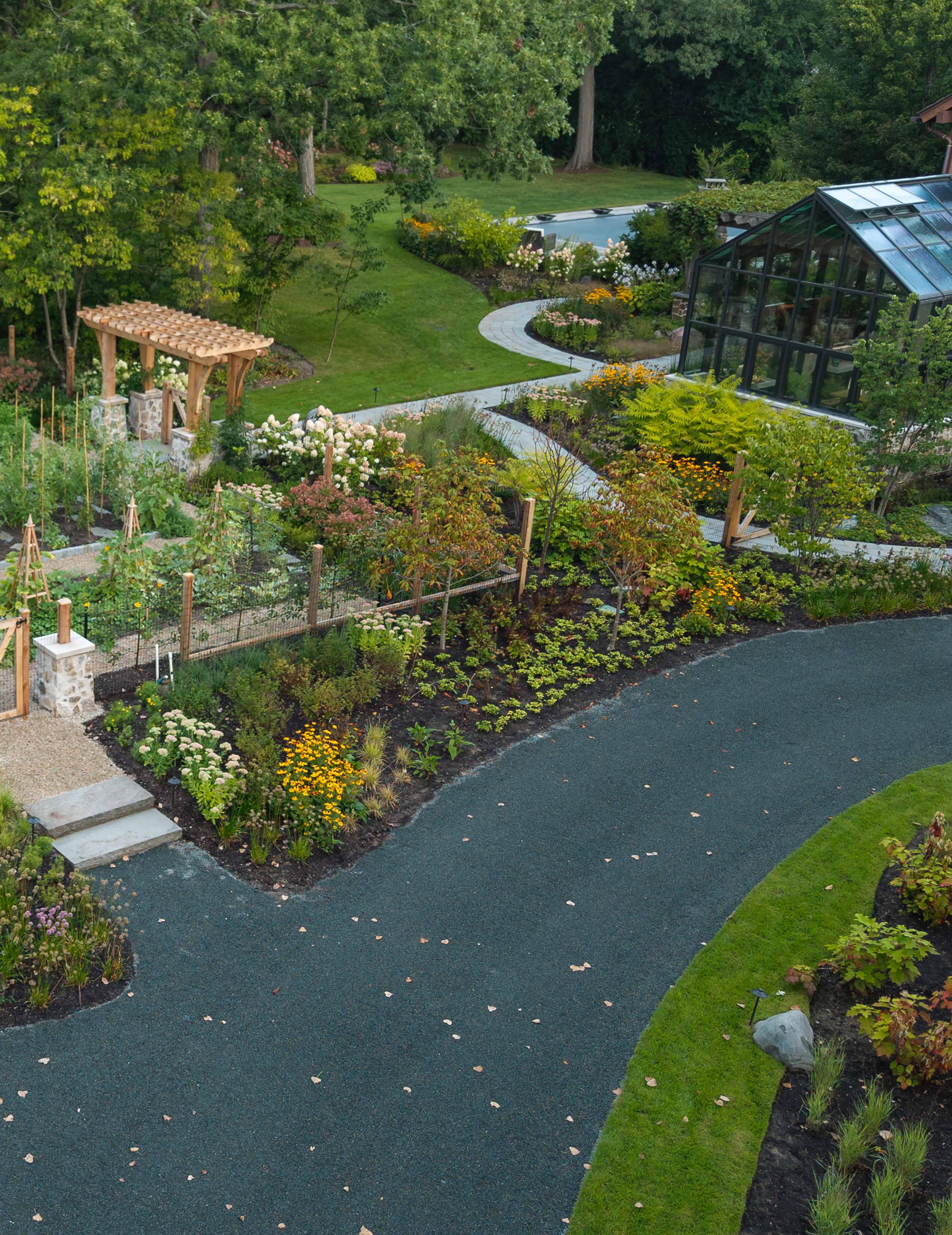
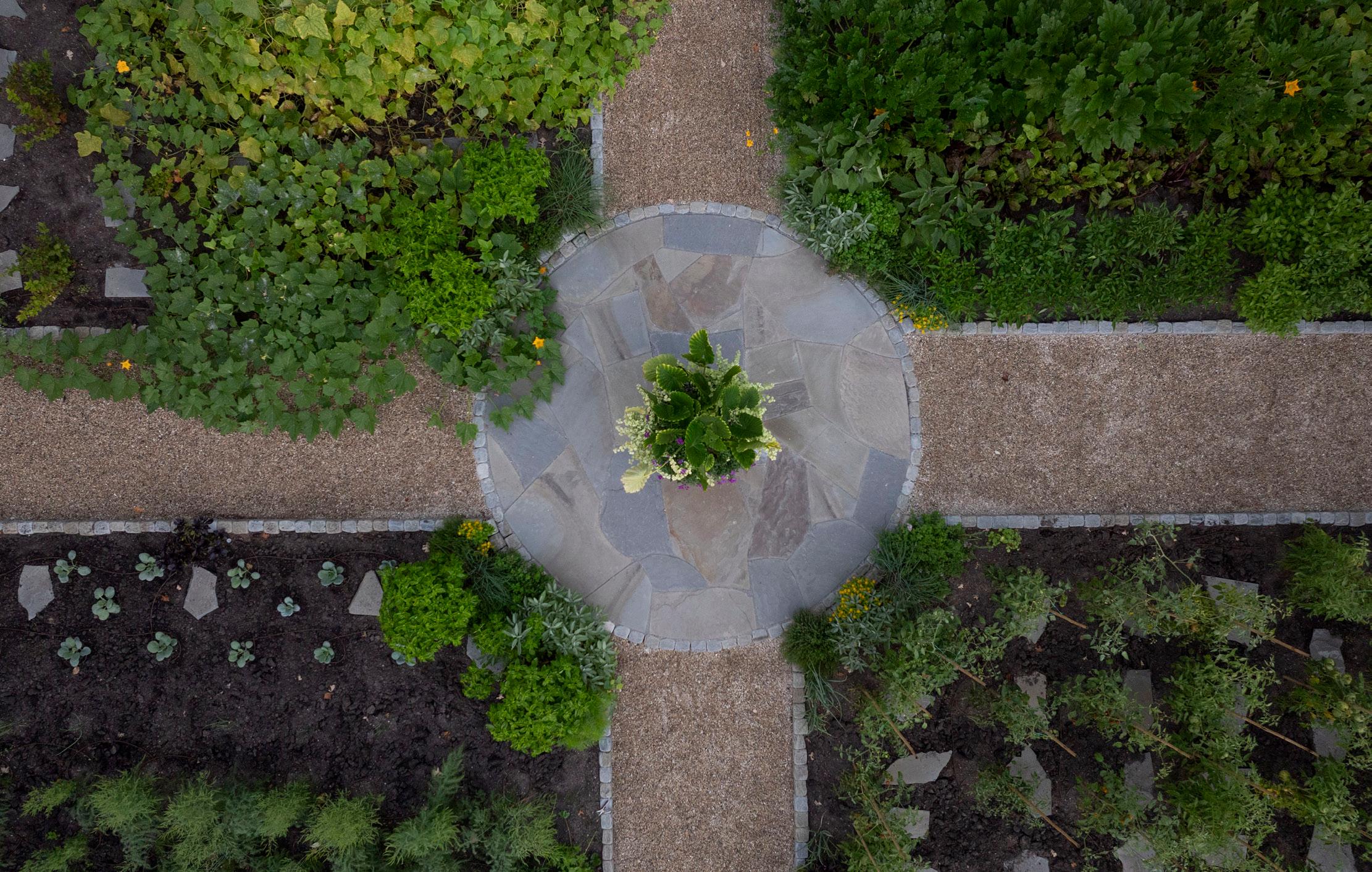
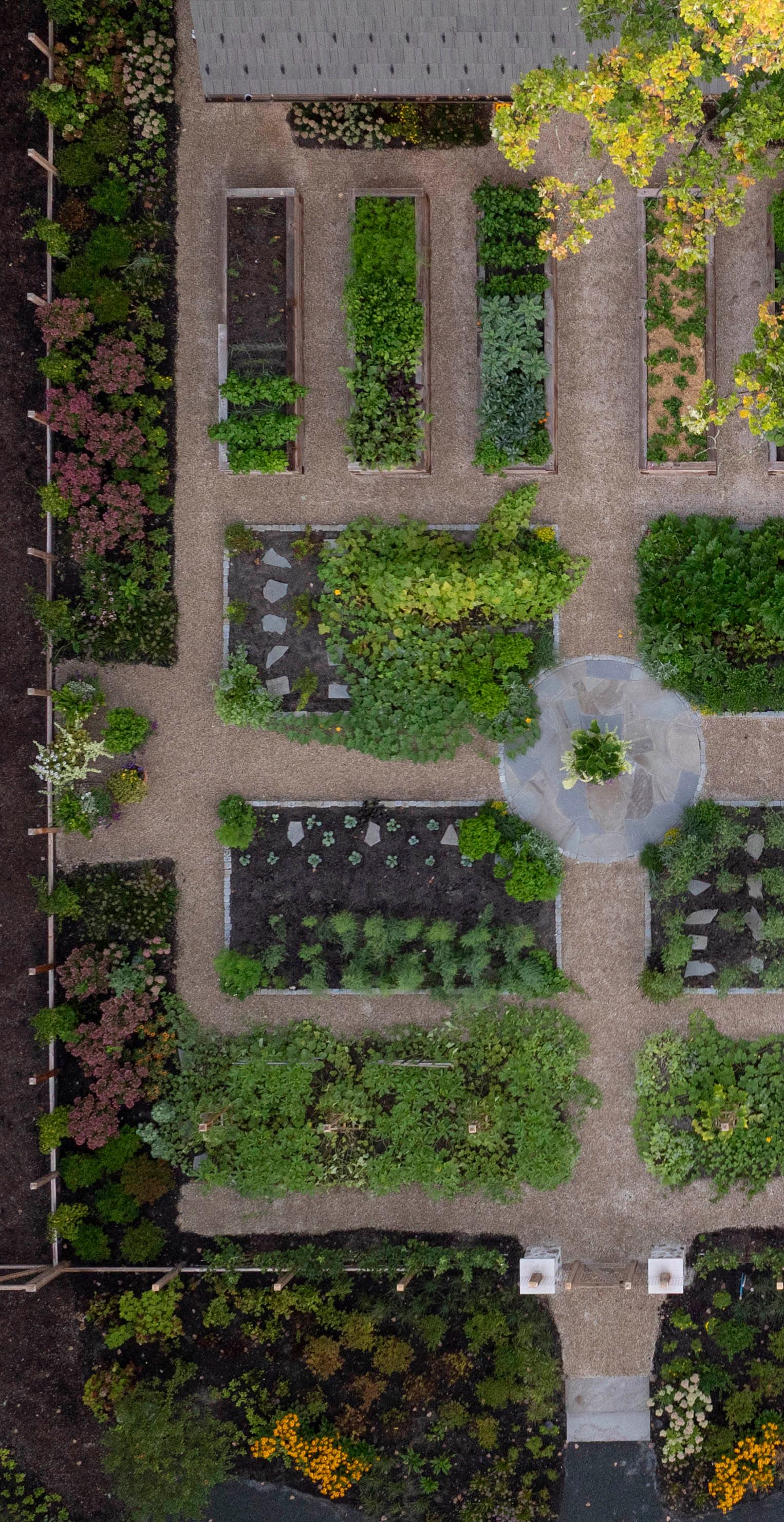
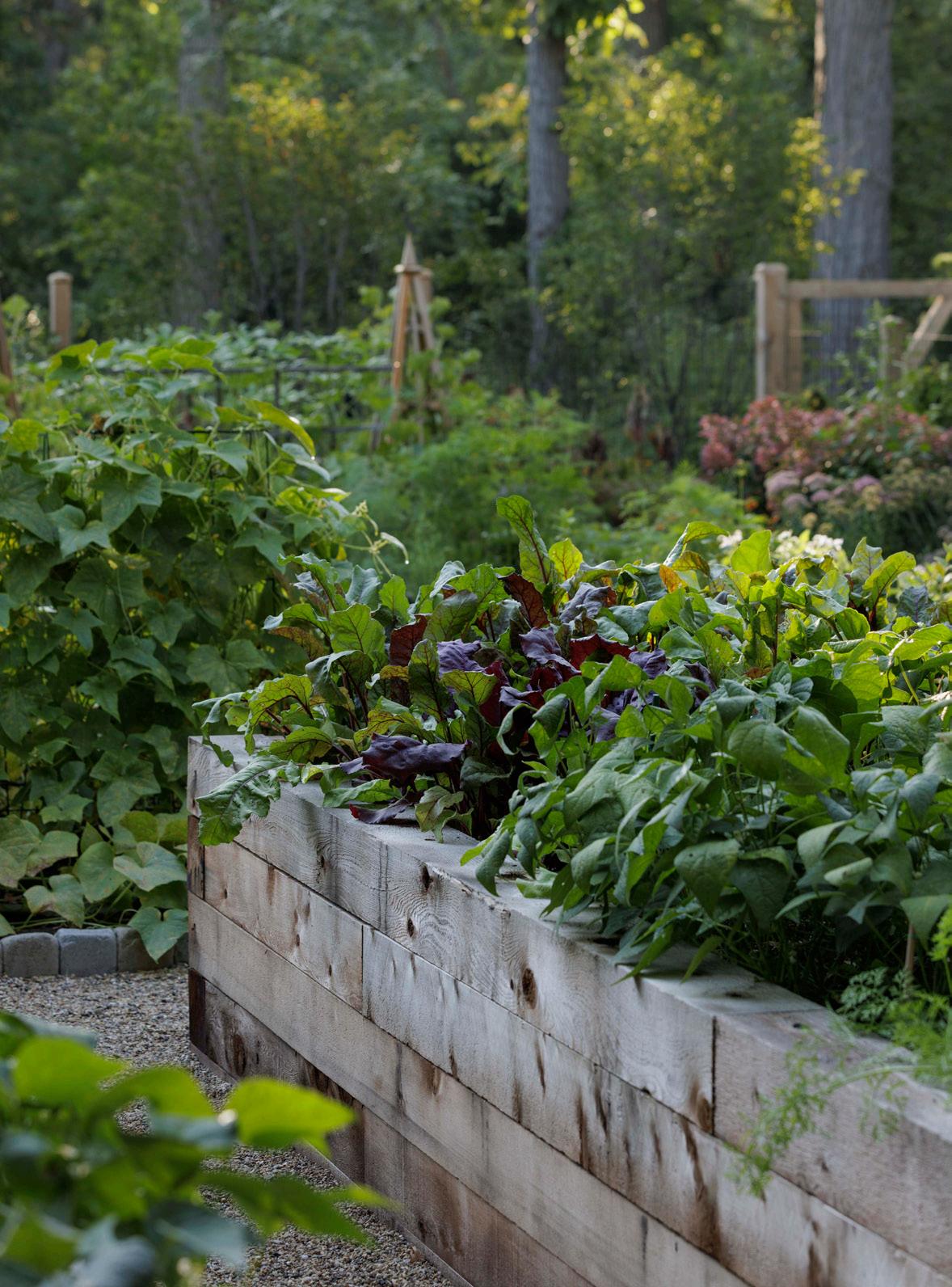
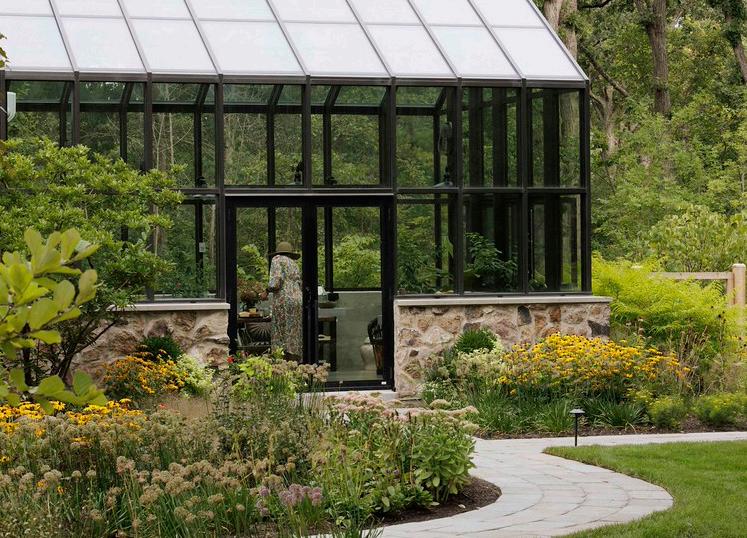
Tucked deep on a wooded lane in Riverwoods, a rustic family home has been transformed into a gardener’s retreat with the help of the team at Pappas Landscape & Design. When the property next door became available, the client jumped at the chance to expand and create the Europeanstyle potager of his dreams. We sat down with Kiki Pappas and Robbie Fisher to discuss the project. The winner of the 2026 Judges Award at the Excellence in Landscape Awards Night on February 24, 2026, this thoughtful, elegant garden space is a beloved haven for the clients and a beautifully realized garden respite.
A Gardener Client
“The client is a very avid gardener,” said Pappas. “Before this project, he had a smaller vegetable and herb garden. When they bought the property next door, they demolished the house and started thinking about what would be next.” Pappas was initially called in to take down the house and level the site. After a conversation with the client while walking the old gravel drive of the neighboring property, an idea for a garden developed. “After we did the demolition, the winter came and went, and that little seed just sparked a whole world of possibilities
Design Wins Triple Crown andscape Awards
for the homeowner,” commented Fisher.
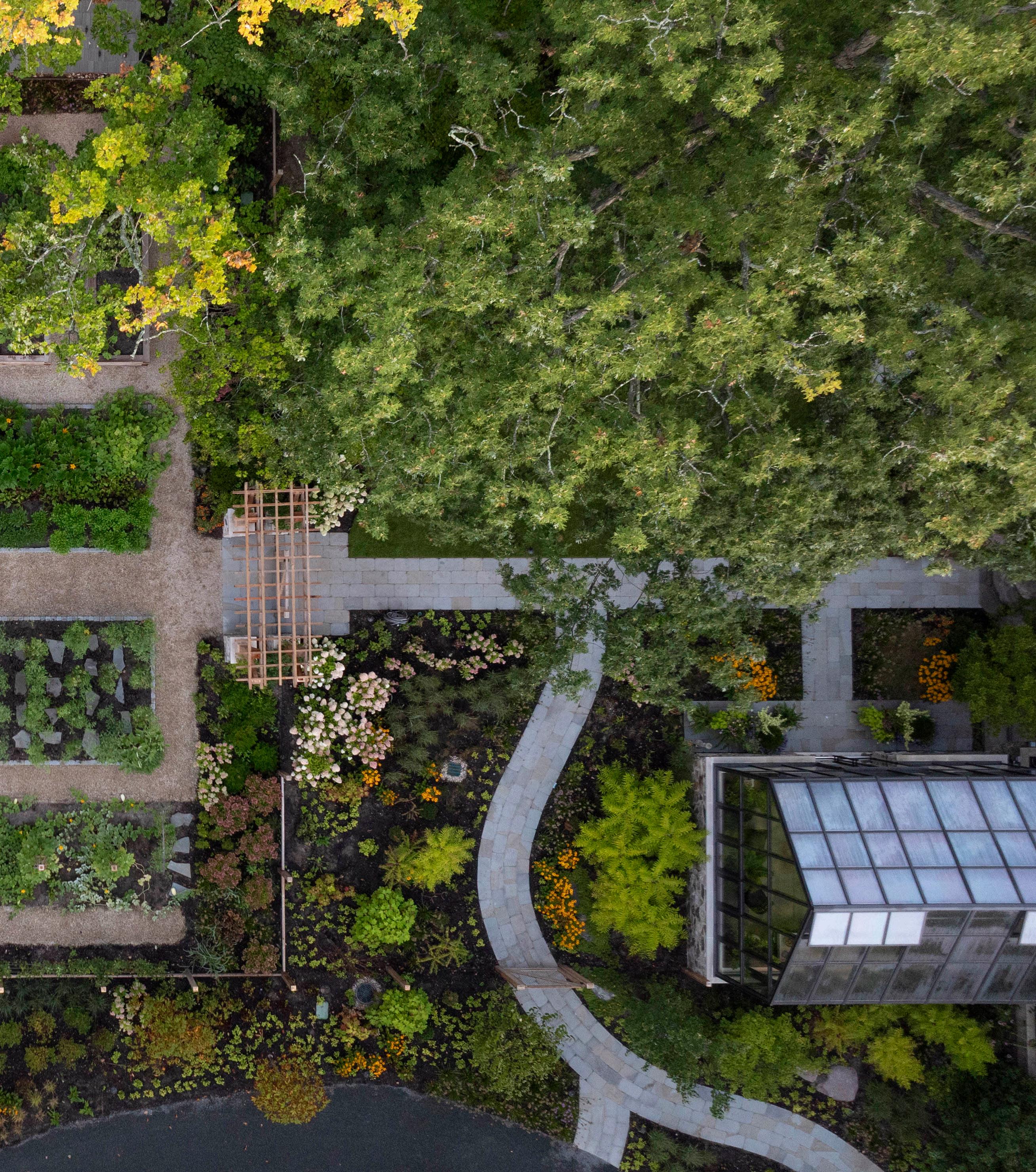
The plan blossomed from there to include a greenhouse attached to the house that would lead to a potting shed and a large garden for vegetables, fruit, and herbs. “He loves to start his plants from seed in the greenhouse in the winter, and then plant successively outside,” said Pappas. “We were tasked with figuring out how much space it would need and how do we actually design it? What’s it going to look like?
(continued on page 26)
(continued from page 27)
images for reference only, provide samples for review
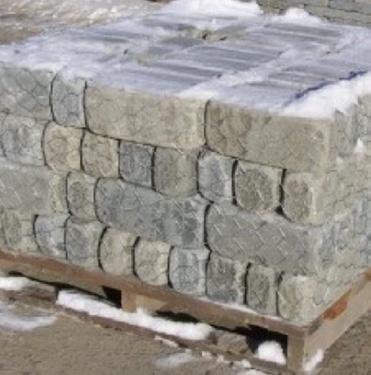
bluestone pea
pea gravel blue grantie chip
"full color" bluestone (irregular)
bluestone "no rust" (irrgeular)
"full color" bluestone (dimensional) "grade 8" / blue driveway
(continued from page 29)
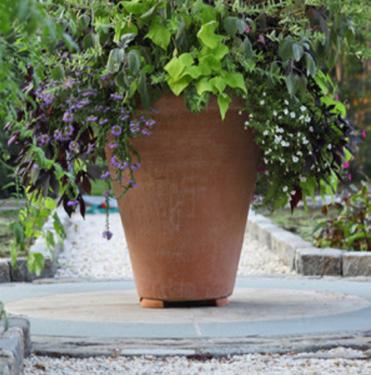
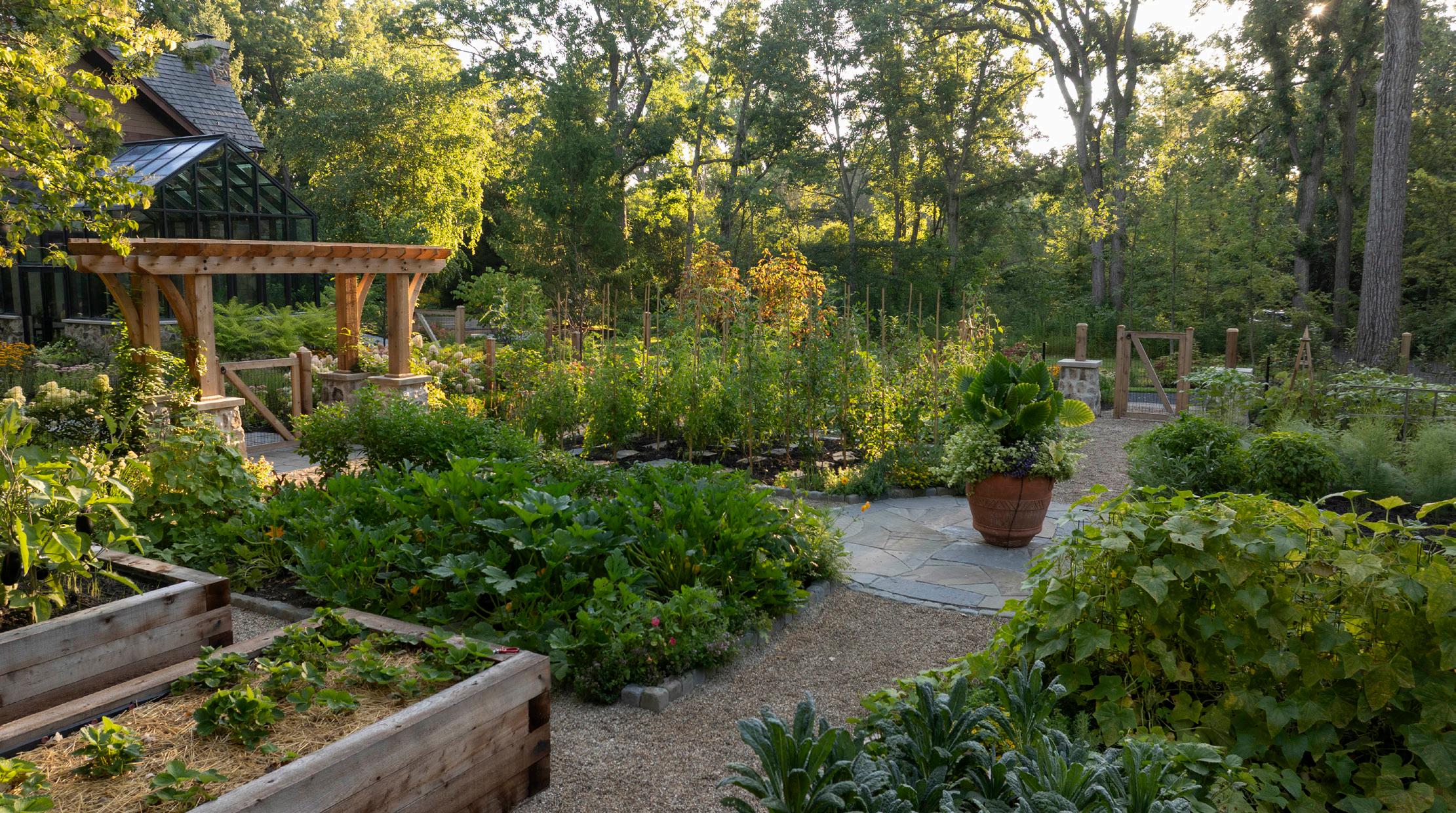
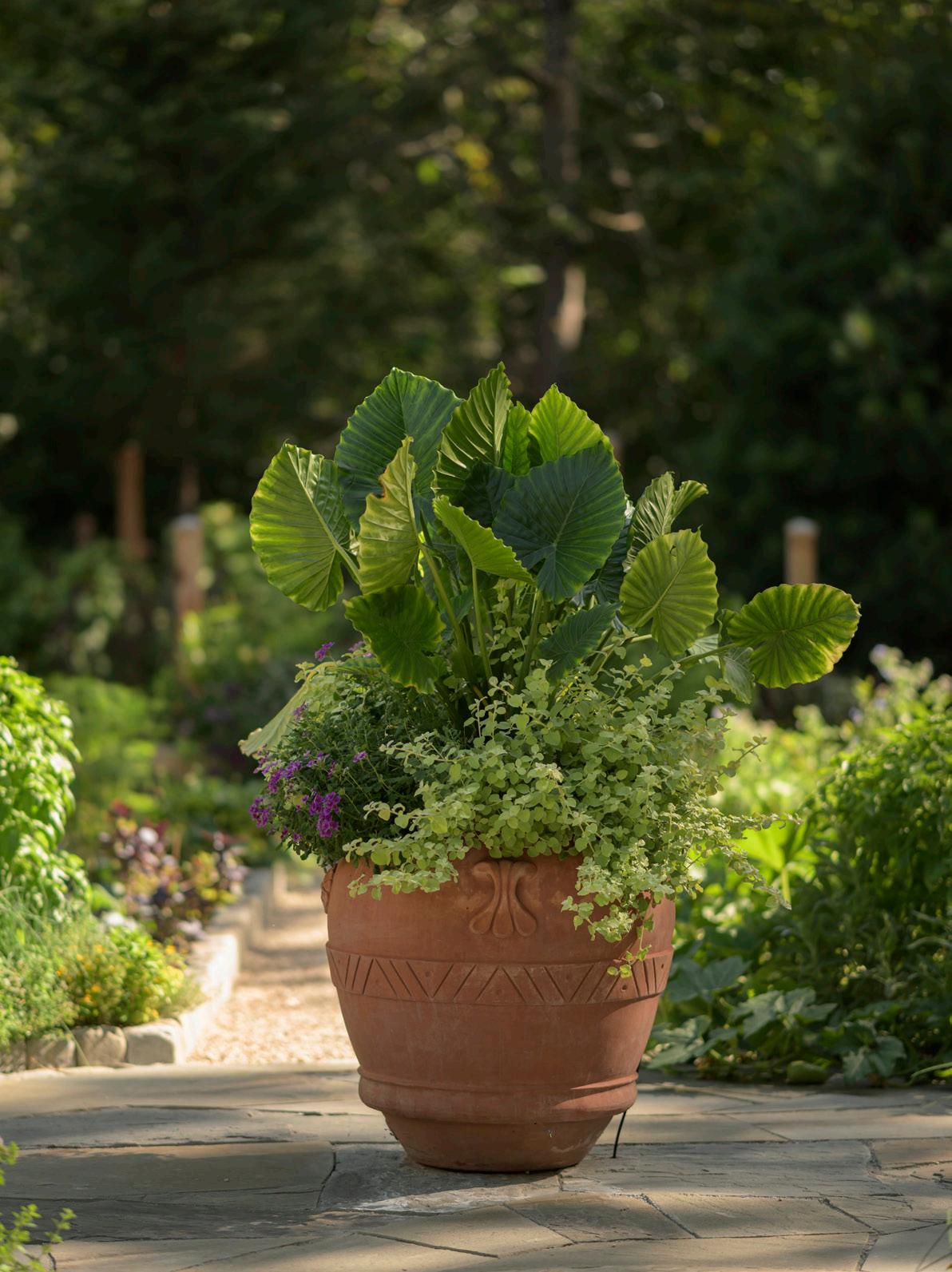
They travel a lot and they’re the type of people who, when they’re in France or Italy, they gather inspiration and take pictures of things that they like. On a recent trip to the French countryside, they loved the gravel underfoot with the terra cotta pots. They loved the elegance of it, and they wanted to combine that with a rustic feel since the home is in the woods.”
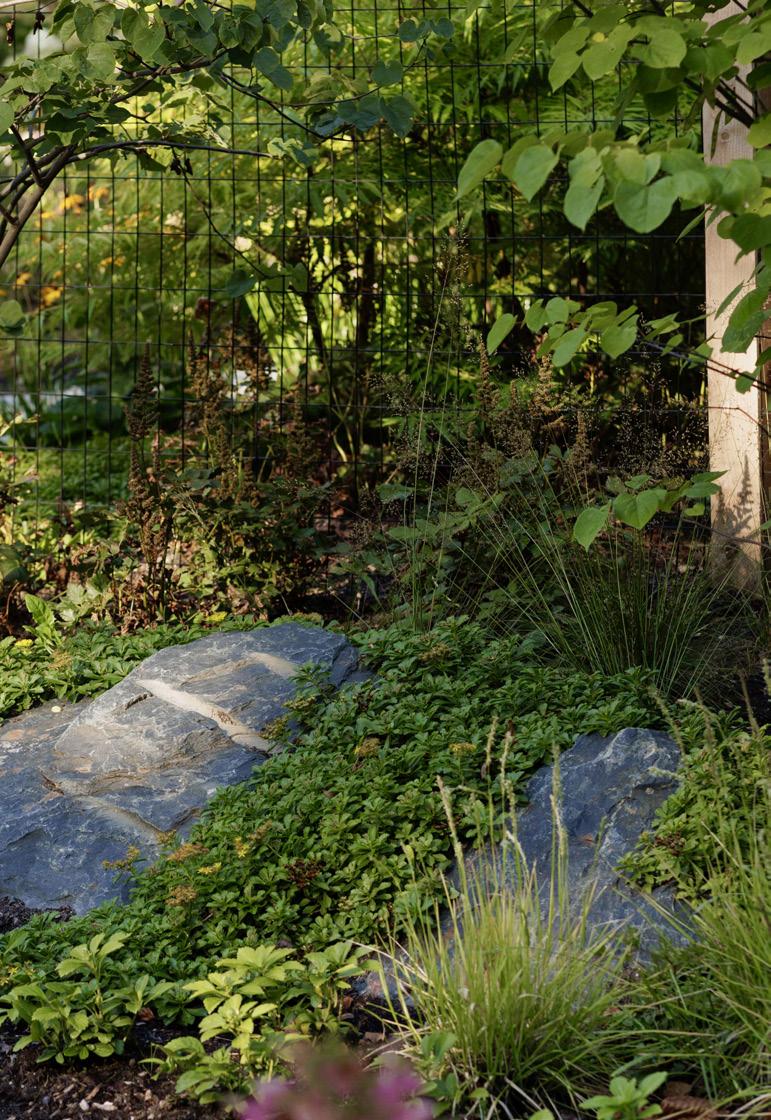
The construction moved forward in careful phases. “Phase One was the demolition,” reported Fisher. “Phase Two was getting involved with the greenhouse construction and the potting shed and then Phase Three was the garden. We brought in Paul Blanding and Catie Trudeau from The Outside Design Studio to take a relatively blank canvas and make it a beautiful, functional garden space. The thing I love about their aesthetic is they’re masters of ‘organized chaos.’ They use a lot of native plants with sophisticated layering effects incorporating varying heights, bloom cycles and colors to really make it feel like the plantings could have always been there.”
As the team navigated wetland and woodland restrictions, determined the area with the most abundant sunlight, and sorted out how to connect the spaces, a plan emerged for a Europeaninfluenced garden. In addition to those challenges, a robust deer and rodent population required fencing to protect the tender veggies.
(continued from page 32)
(continued from page 33)
Challenges and Opportunities
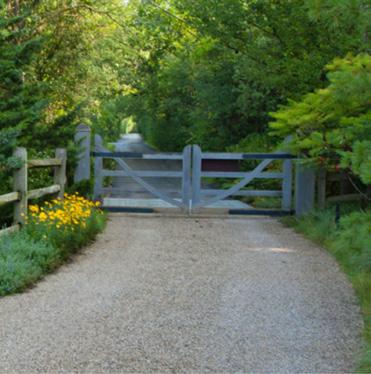
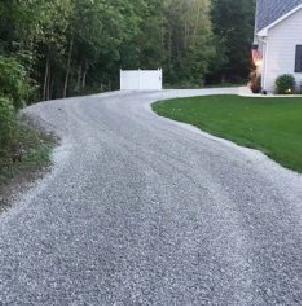
How do you marry an existing home with rustic wood siding and boulder accents with a fresh space connected by a new curving blue granite chip gravel drive? Beyond thoughtful layout, material choices made all the difference.
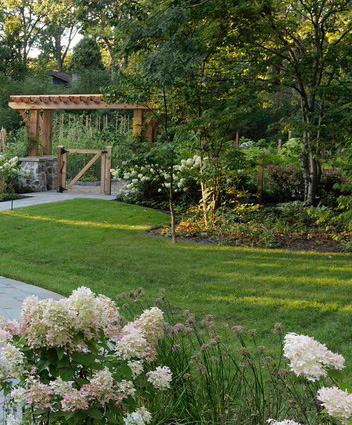
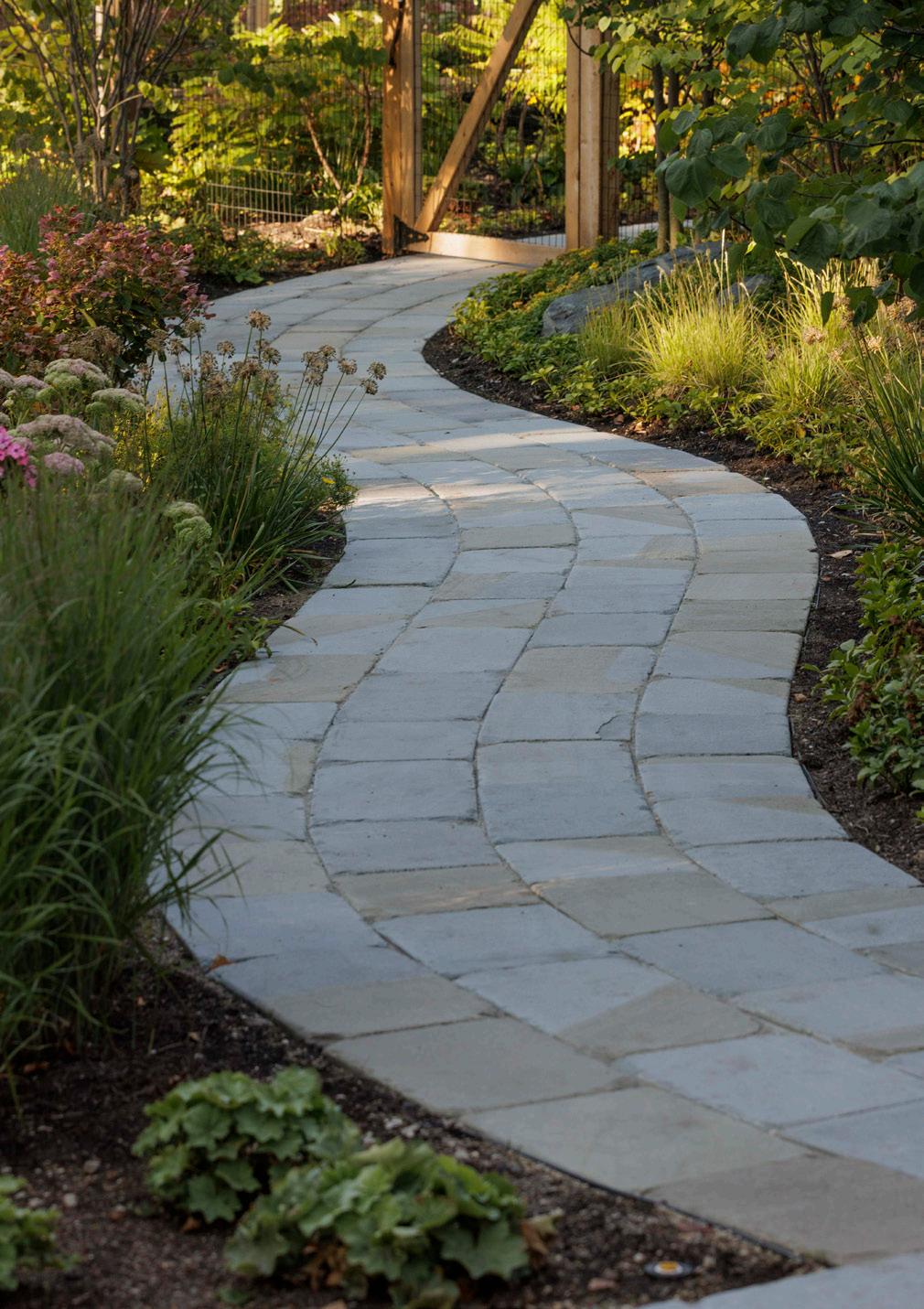
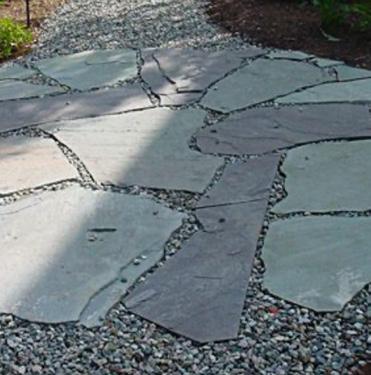
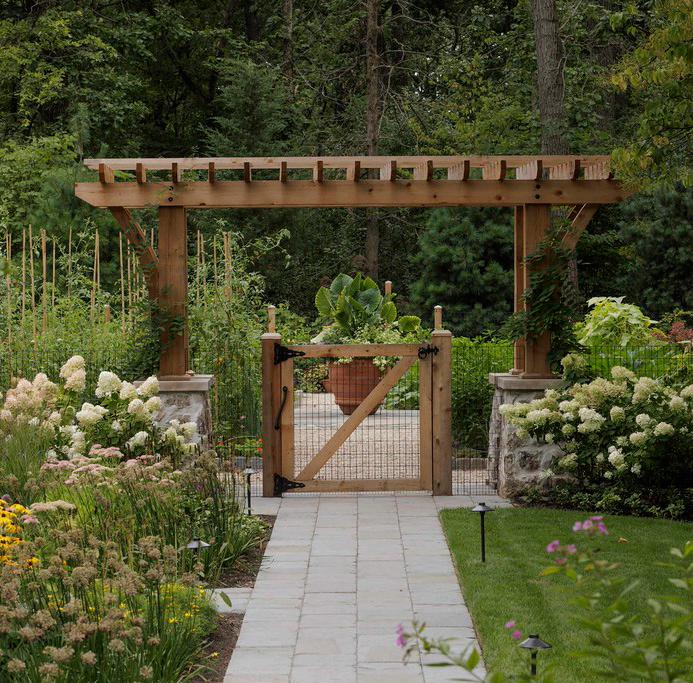
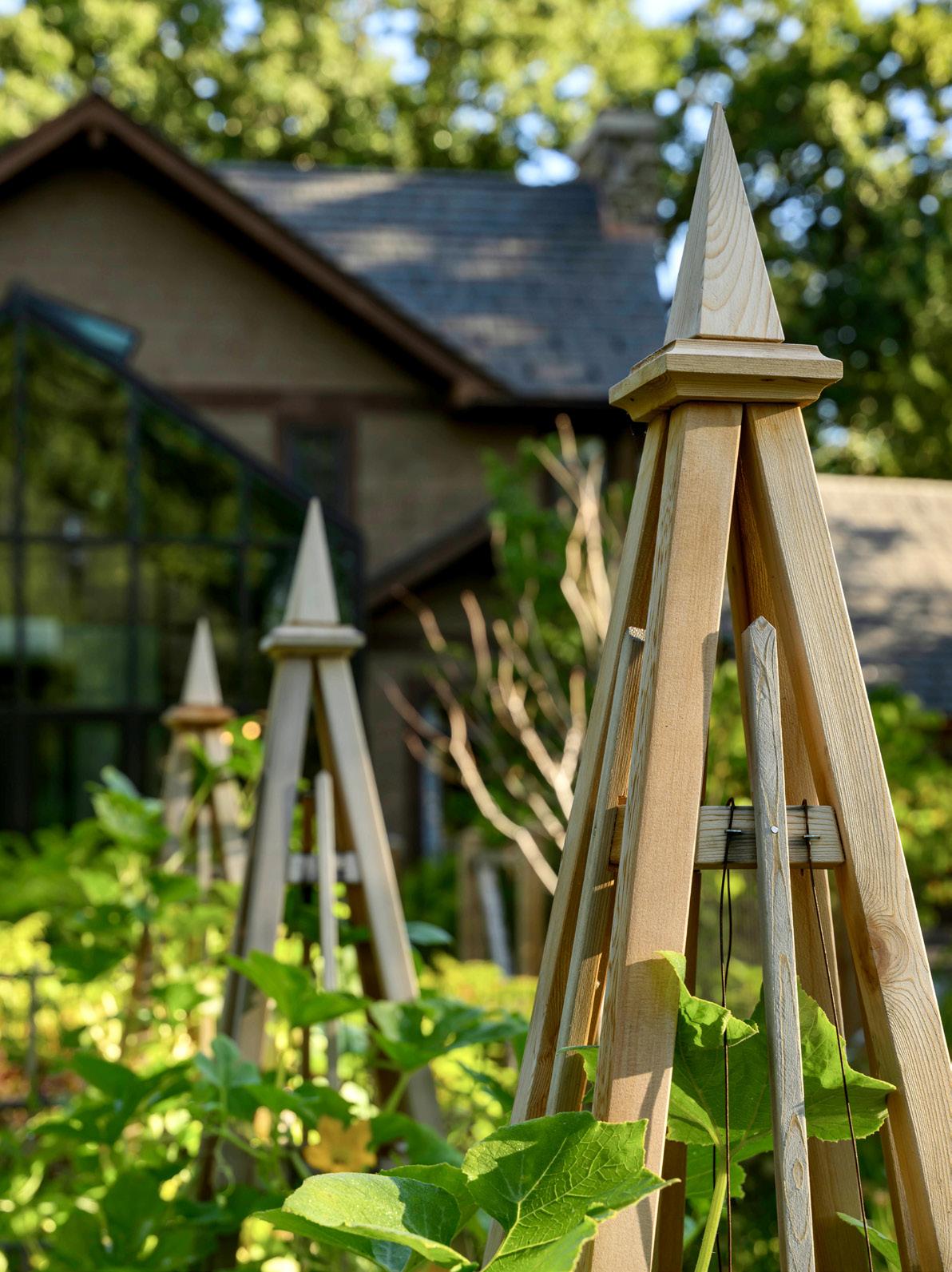
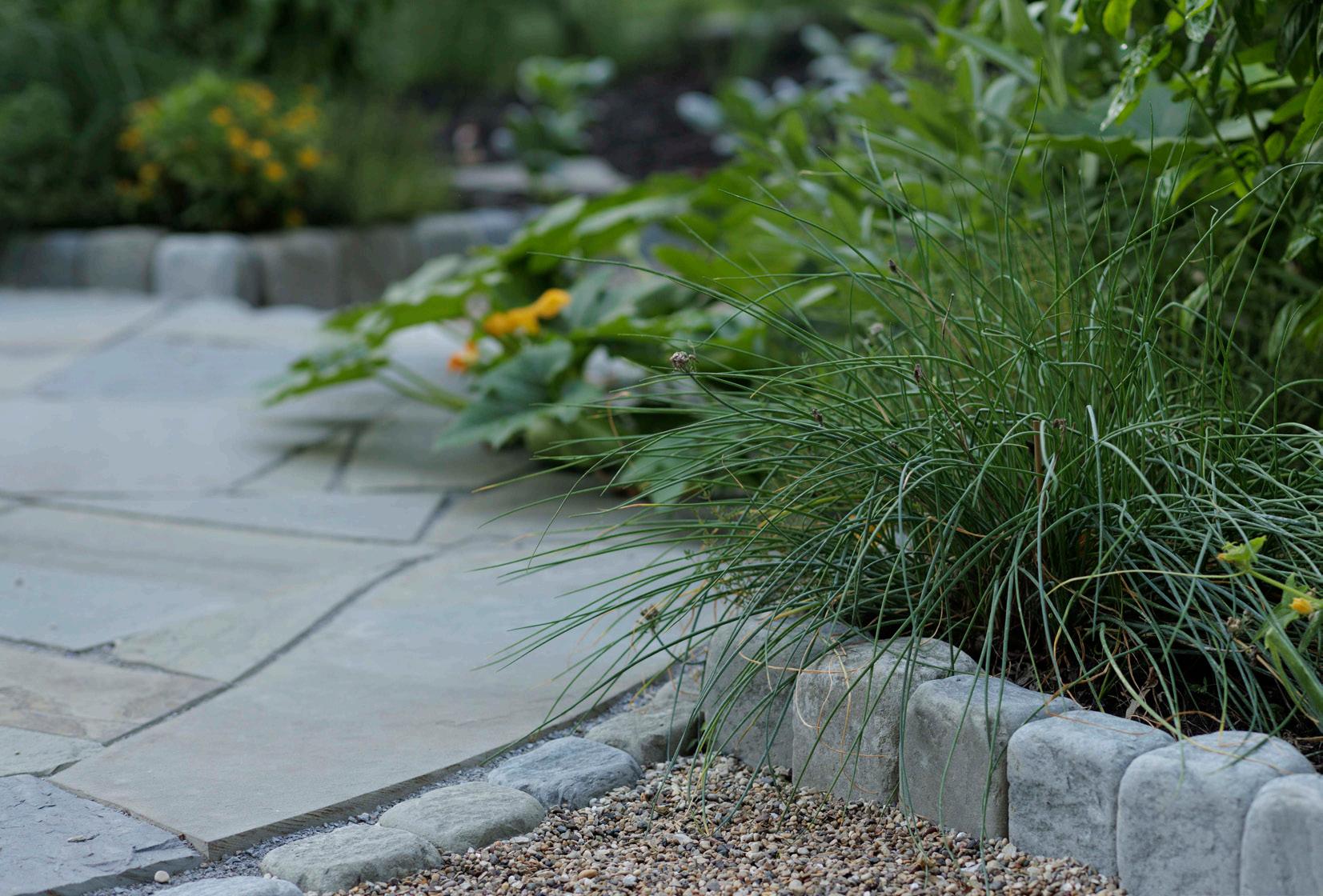
“We focused on bringing that rustic elegant feel and vision alive with the material selection,” commented Pappas. “We used bluestone. We used pea gravel. We incorporated western red cedar for all the fencing. To tie into the existing home, we used the same stone on the masonry piers for the pergola and gates.” The homeowner still had a stash of stone from when the house was built. The team was able to fit it into the piers, piece-by-piece so that all the masonry flows together.
Connecting the existing asphalt driveway with its paver border to the new gravel required some creativity. Prior to construction, there was a paver landing area that transitioned into the boulder masonry on the front porch. The team pulled it up along with the existing paver paths and stored it to reuse on the drive. Now, a curve of fitted, bluestone flagstone welcomes you to the front steps.
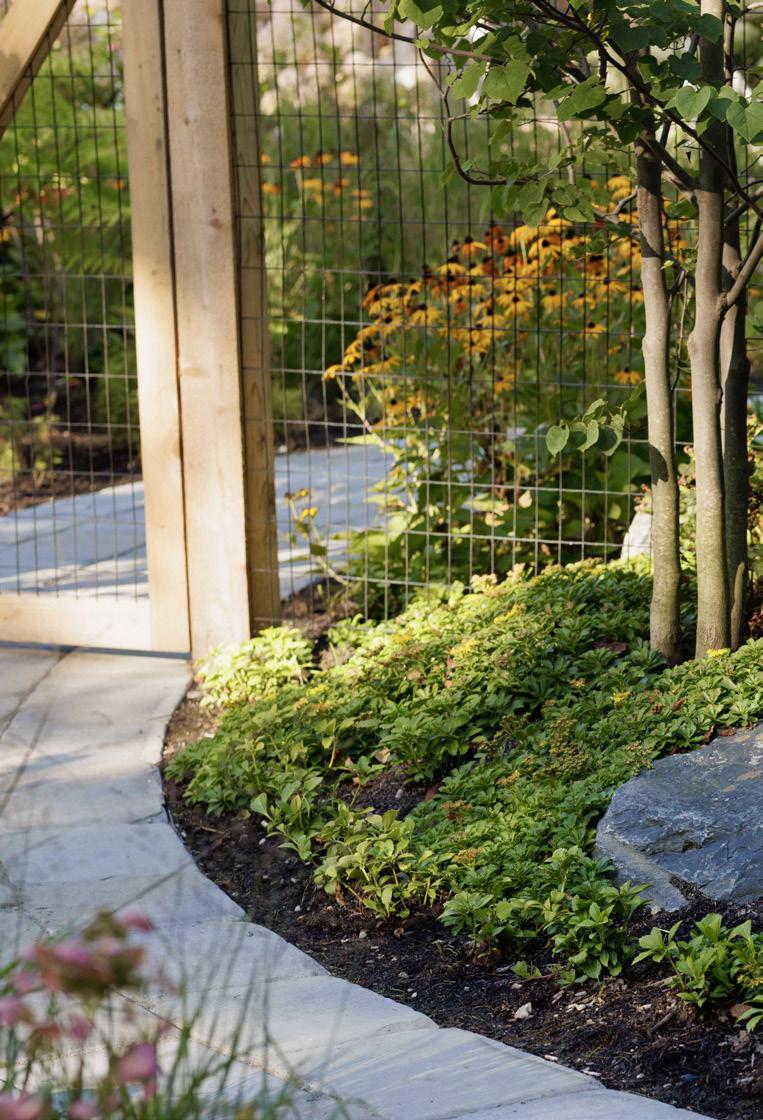
Being in a naturalized area, wildlife is abundant. “They have deer and they have smaller rodents, but they really wanted to be able to see through the garden,” said Pappas. Instead of a stockade fence or heavy gauge wire, the team got creative. A fine mesh was buried 12 inches below grade to discourage digging animals and then a wider wire mesh continues above to discourage deer. “We had a lot of discussions about how wildlife would interact with the fence and garden,” observed Fisher. “We didn’t want to sacrifice sight lines. The open wire lattice almost disappears, and the tighter mesh is hidden by the perennials.”
A construction plan was finalized in March, but meanwhile, the homeowner’s seedlings were growing in the greenhouse and spring planting was beckoning. “He had a very strict planting schedule, so we worked around that, making sure that the beds for his veggie garden had perimeter fencing completed first,” said Pappas. “It made us get creative to work with the site a bit out of sequence. We had just finished the grading, then we had these huge planting beds installed with seedlings. Now we’re trying to finalize the hardscaping and do all masonry, while also keeping it a clean site so that these beds are not getting contaminated and nothing is getting trampled.” The accelerated and accommodating schedule literally bore fruit. “He got his seeds in the ground on time and his little baby plants.” commented Pappas. “By the time we were done with the project, there was a full-blown veggie garden.”
(continued on page 36)
(continued from page 34)
The Result
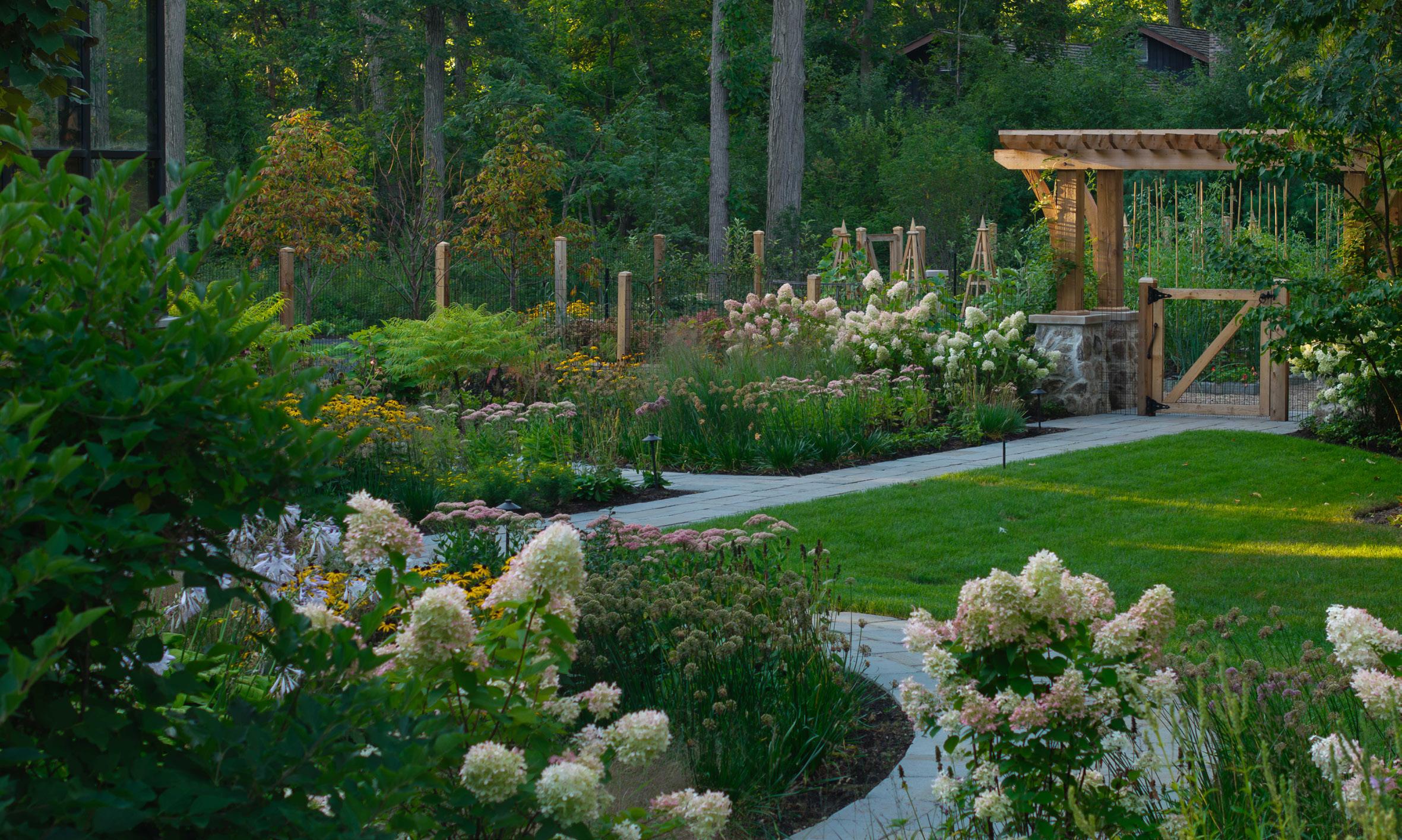
Today, the stunning rustic elegance of the potager is wrapped in layers of long-blooming perennials and shrubs. The clients are thrilled to realize their dream of farm to table living and are constantly in the garden with a basket, harvesting for the next meal. The space is softly lit for an evening meal or glass of wine at the bistro table by the potting shed.
“You just kind of sink into the space,” commented Fisher. “You’re in the woods, but you have this nice, quaint, Europeanstyle garden where you can feel the gravel under your feet, and you just kind of melt into the scene. It’s really, really special.”
“They are incredibly proud of their garden,” said Pappas. “They love having family and friends over to enjoy it, but more than anything they’ve really fallen in love with being home. It completely transformed their property. For them, it went from just a house with a pool in the backyard to a property that feels like its own self-sustaining retreat. For us, seeing that come to life was really special and it made us proud to deliver the result they envisioned. You don’t always get clients who are this knowledgeable or passionate about plants and landscapes and have a clear vision from the start. There was a real appreciation for both the beauty and functionality of the space, and how everything tied together. It’s something they had been dreaming about for a long time.”
The team at Pappas found the project deeply challenging, but also very fulfilling. “Iron sharpens iron, so it made us better, too,” reflected Fisher. “We came out on the other side of it knowing a lot more and thinking a lot more about all the details. For us to be able to offer creative solutions, to work around challenges, and incorporate existing materials – it’s been very rewarding.”
Where Rewholesalers Fit Between Growers and Contractors
by Alex Head
In most landscape projects, the focus naturally lands on the designer who envisioned the space, the contractor who builds it, and the grower who produced the plants. But there is another role working in the background that helps keep projects moving, fills gaps, and solves problems along the way. Rewholesale nurseries sit between growers and contractors, helping get the right plant material to the jobsite at the right time and in good condition.
A rewholesale nursery sources plant material from multiple growers, brings it into a yard where it can be held and maintained above ground, and supplies it to contractors as projects come together. For many contractors, the value of a rewholesaler becomes most clear on projects where timing is tight, plant lists are complex, or conditions change midstream. Unlike production nurseries, which operate around what they grow and harvest, rewholesalers operate around what contractors actually need for a job. That difference shapes everything from sourcing to delivery.
Filling the gaps in availability
Growers typically work from a planned crop and a defined inventory. That model is essential for production, but it can leave gaps when a contractor needs a specific size, species, or quantity that isn’t available locally. A rewholesaler’s role is to search beyond any single availability list and pull material together from multiple sources.
This might mean locating a particular caliper tree from another region, assembling a mixed order from several growers, or tracking down a hard-to-find cultivar that completes a design. Because rewholesalers aren’t limited to what’s in their own fields, they can look more widely and piece together what a project calls for.
For contractors, this often means fewer compromises. Instead of defaulting to substitutions due to limited local supply, they have another path to find the right material.
Last-mile delivery that fits real jobsites
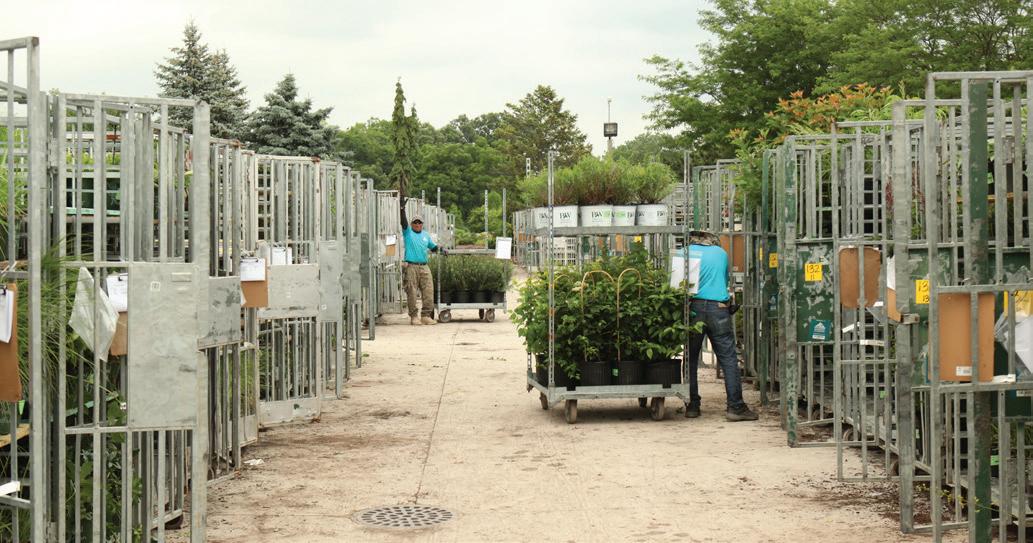
One of the most practical contributions a rewholesaler makes happens at the very end of the process — getting plants from a yard to where they’ll actually be installed. Most growers ship on semis, which are efficient for moving large volumes from field to yard but aren’t always suited for the realities of an active jobsite. Limited access, tight neighborhoods, and the need to handle plant material carefully can make semi deliveries challenging once plants reach their destination.
Rewholesalers help bridge that gap with smaller flatbed trucks equipped with liftgates, allowing plant material to be gently lowered to ground level without damage and without requiring a tractor on site. That added control can make a significant difference when handling delicate shrubs, specimen plants, or smaller trees that need to arrive in top condition.
Some operations take it a step further by offering tractor-assisted delivery. For larger caliper trees or heavy root balls, having the ability to help offload and place material around the jobsite can save contractors time and labor while reducing the risk of injury or plant damage. Instead of simply dropping plants at the curb, deliveries can be coordinated in stages and positioned closer to where installation will actually happen.
For contractors managing multiple projects, this kind of hands-on delivery support makes plant logistics far more manageable.
Flexibility that growers can’t always offer
Production nurseries have to keep crops moving, and much of their work is tied to seasonal digging windows. For fieldgrown material in particular, plants can only be safely dug during certain times of the year, typically in spring and fall
when conditions allow for successful transplanting. That schedule doesn’t always line up with the reality of landscape work, where projects change, schedules slide, and installations get pushed back weeks or even months.
Rewholesalers help bridge that timing gap in a few different ways. In some cases, they can receive material during digging windows and hold it for a short period until a project is ready, giving contractors a place to stage plants without needing their own space. But just as importantly, a rewholesale yard functions as a place with material already on hand and ready to go.
Contractors can often pull in, select what they need, and load up the same day. That convenience becomes especially valuable when a job needs to keep moving or when plans change and additional material is required quickly.
It also creates a useful environment for collaboration. Many contractors bring clients to walk the yard, look at plant options in person, and make final selections together. Having a wide range of material displayed in one easily walkable space makes it easier for clients to visualize choices and move forward with confidence.
A second set of eyes on plant selection
Another area where rewholesalers quietly contribute is plant knowledge. Because they interact with multiple growers and see a wide range of species, sizes, and regional variations, they develop a (continued on page 40)
(continued from page 39)
broad perspective on what performs well, what is readily available, and what is becoming harder to find.
Contractors often lean on that experience when making final selections, adjusting plant lists, or considering alternatives. Sometimes it’s as simple as confirming availability in a certain size. Other times it’s a conversation about which species might be a better fit for a site or whether a certain variety is realistic to source this season.
That knowledge base comes from seeing patterns across growers and across projects, not just within one production operation.
Support beyond the plant delivery
Another less visible role rewholesalers often play is helping contractors navigate challenges that come up on the jobsite. Questions about plant identification, watering, plant stress, insects, or site conditions don’t always have obvious answers, especially when issues show up unexpectedly. Because they work with such a wide range of plant material, rewholesalers can often help identify plants, talk through pest concerns, troubleshoot transplant stress, and suggest care adjustments based on weather and site conditions — sometimes simply offering a helpful second opinion when something doesn’t look right.
Rewholesalers can also act as connectors within the industry. After working with many contractors over time, they develop a sense of who specializes in certain types of work. Making introductions — whether it’s pointing someone toward a drainage
expert, a contractor known for transplanting large trees, or a firm experienced with a particular type of installation — helps projects move forward and strengthens the broader professional network.
Working alongside, not in place of, growers
Rewholesalers don’t replace production nurseries. The industry depends on strong growers producing quality plant material. Instead, rewholesalers help move that material into projects where it might not otherwise go and make it easier for contractors to access a wider range of options.
At its core, rewholesale is about flexibility. Contractors need access to material that fits the job, delivery that fits the site, and practical knowledge when questions come up. By sourcing widely, coordinating deliveries, and adapting to changing project timelines, rewholesalers help ensure the right plants show up at the jobsite when needed, ready to go into the ground.
Midwest Plant Talk
Garden Trends for 2026:
How to make landscapes stand out among the crowd, while also thinking sustainably
by Cameron McCauley
As professionals in the green industry, most of us always want to know “what’s next?” It’s a common question as we work through our springtime, checklists and knocking things out one by one. But how do we stay on top of trends and what moves the needle with customers to continue to stay on the pulse of our industry?
Every year, Garden Design releases their ‘Trends in Garden Design’ series highlighting some popular design and aesthetic choices to predict what customers will be looking for in their landscapes. We know some customers (and designers) might be stuck and not want to move from their usual design procedures. But these trends give us an opportunity to think forwardly and be on the cutting edge of what is popular in our industry. Here are some of the highlights from the 2026 Trends guide.
Keystone Plantings
Touching on the top trend of 2025, which was the “Rise of Native Plants and ‘Nativars,’” 2026 leads off with Keystone Plantings, a big part in the Homegrown National Park initiative that has continued to grow in popularity. According to the National Wildlife Federation, a
Keystone Plant is one that is essential to the lifecycle of many different species of flora and fauna – take them away and the ecosystem collapses; like how removing a ‘key’ stone in an ancient roman arch will trigger its demise. Entomologist Dr. Doug
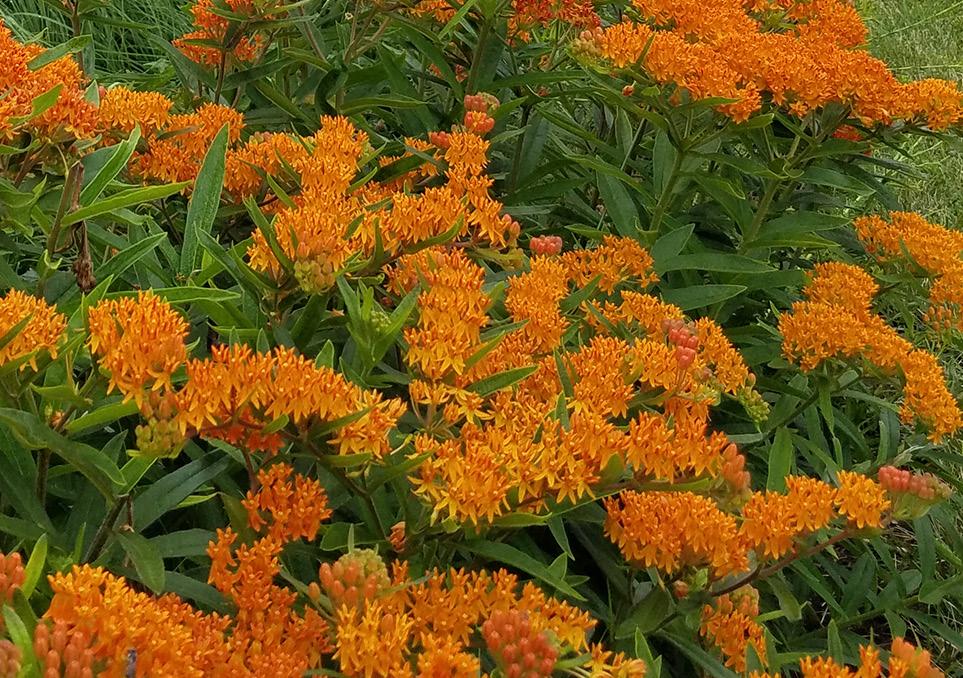
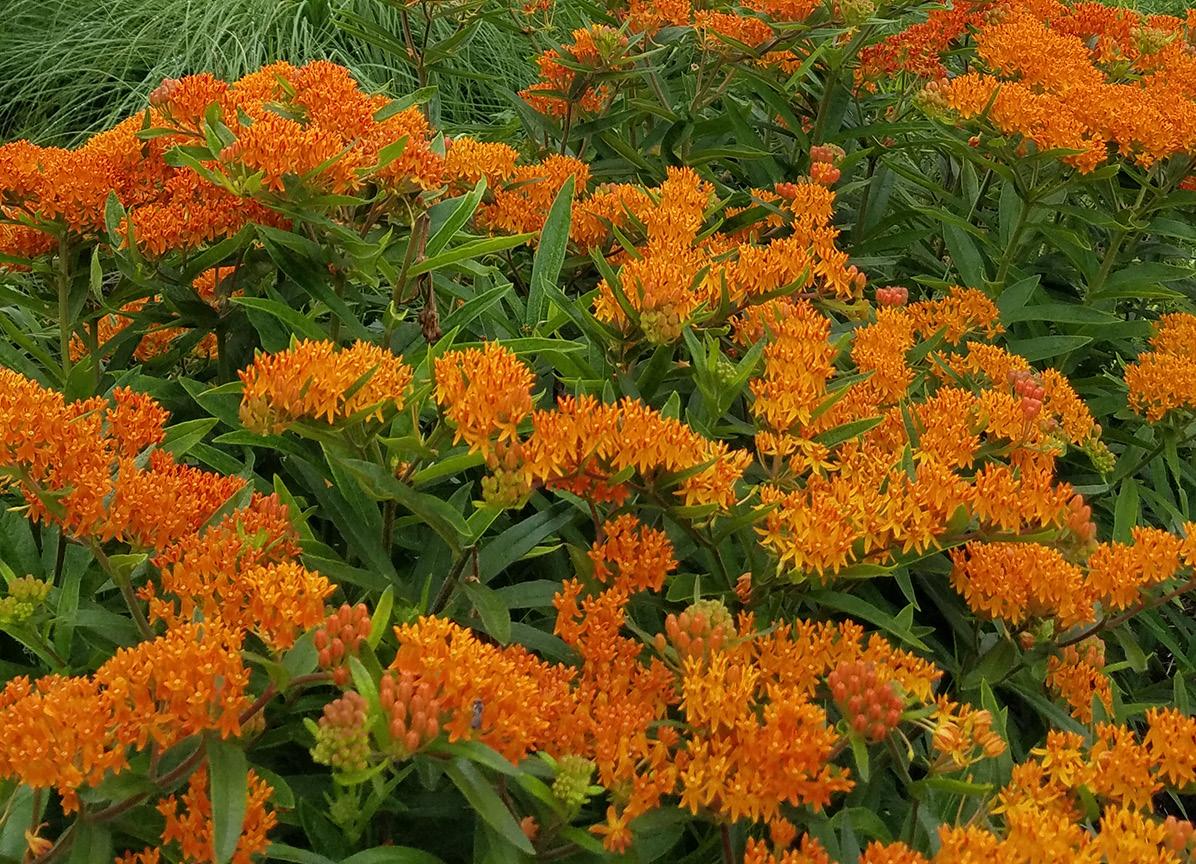
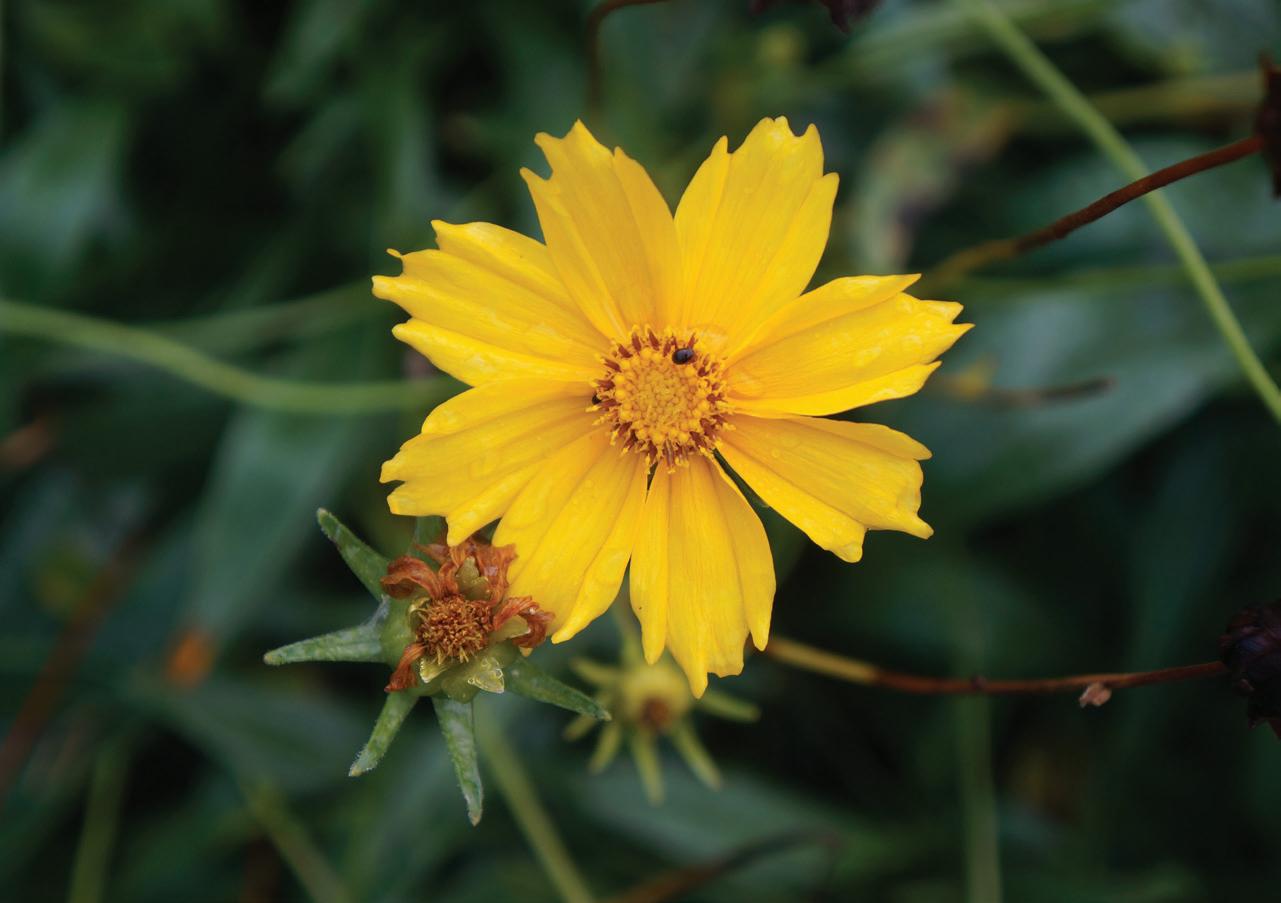
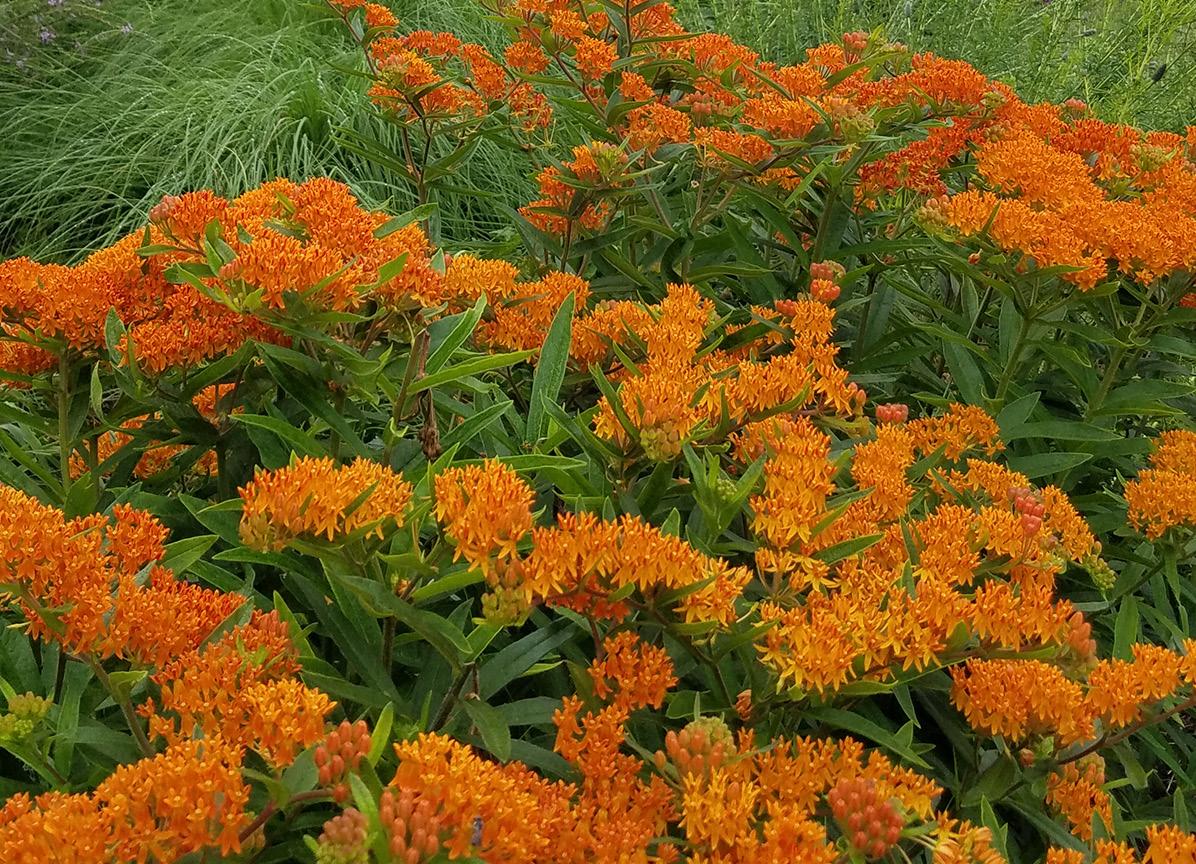
Tallamy and his team at the University of Delaware have identified that 14 percent of native plants (the Keystone Plants) support 90 percent of all butterfly and moth species in North America. That is quite a selling point for customers who yearn to be pollinator friendly with their landscapes. The good news is that these Keystone Plants are generally easy to find and grow in our region – and include staples like Asclepias tuberosa, Echinacea purpurea, Coreopsis lanceolata, and Rudbeckia hirta
Concerns about light pollution from an ecological standpoint
Generally, when we think about reducing light pollution, we think of large-scale initiatives by cities and municipalities. Homeowners are starting to think about how they can do their part. While we often think of light pollution as effecting bird migration patterns, recent research shows that artificial light can disrupt the circadian rhythm of all living things, including plants. Artificial light has the potential to shift the timing of leaf budding and leaf drop in trees, and can affect flowering cycles in ornamental plants. Homeowners and new construction can help reduce light (continued on page 44)
Midwest Garden Compost
MIDWEST GARDEN COMPOST
• Dark brown to black color, rich in plant available nutrients, and screened to 3/4” minus
• Average organic matter of 30%
• Sustainably sourced locally, comprised of aged local green feed stock, manure, and food scraps. Material is composted and then cured for 30 – 60 days
• Average pH 7.5-8.0
OMRI Listed® = verified by the Organic Materials Review Institute (OMRI) to meet USDA National Organic Program (NOP) standards for use in organic farming, processing, and gardening.
Midwest Plant Talk
(continued from page 42)
ward facing fixtures placed on a timer or motion sensor, opting for warmer bulbs, and being more conscientious about whether every light is truly necessary.
Maximalist vs. Minimalist
With the pandemic gardening craze now a few years in the past and gardeners continuing to work from home, the ‘Maximalist’ trend has seen gardens shift from low-mainte-
nance, simple, and streamlined to abundant and bountiful. Customers who got the gardening itch from the work from home era are more inclined to try new things, find what works for them, and plant them in abundance. Where we might’ve seen more structured landscapes in the past, walking through the neighborhood you will more than likely see a smorgasbord in beds, combining perennials, natives, shrubs, and edibles all in one.
Rich, Deep, Jewel-Tone Colors
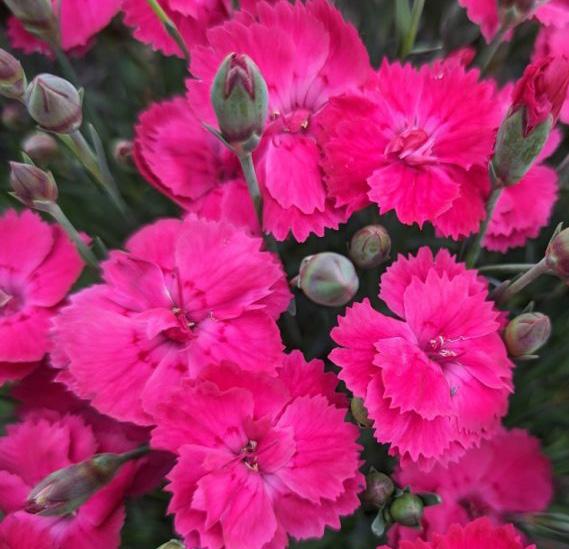
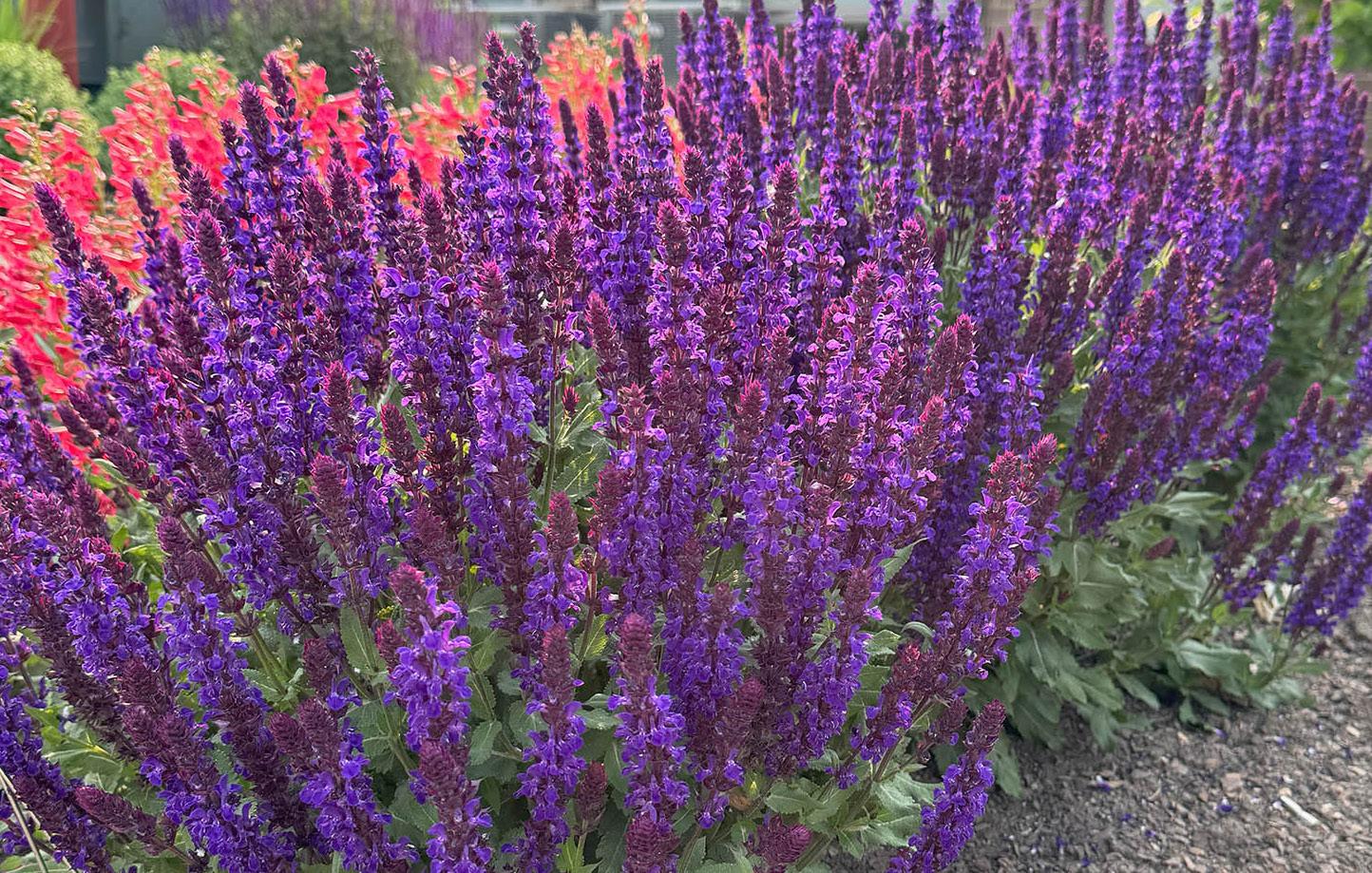
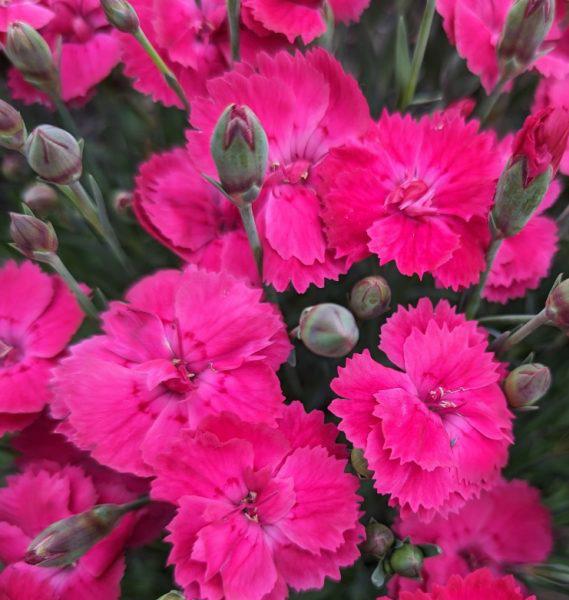
The final 2026 trend is the emergence of more striking colors in the landscape compared to the previously popular softer and muted palette. A few of the newer bold color varieties on the scene are Summer Wine® Black Ninebark from Proven Winners®, and perennials Dianthus Glamour Time™ Cheddar Pinks (continued on page 46)
(continued from page 45) and Perpetual Purple™ Salvia, both from Bloomin’ Easy®. Every year we see more and more colorful and floriferous offerings that hit the market to keep pushing the limits!
So, if you want to stay on trend and speak the language of today’s garden design, start weaving these concepts into your everyday conversations with customers and colleagues.
For
Tendencias en jardinería para 2026:
Cómo conseguir que los jardines destaquen entre los demás, sin dejar de lado la sostenibilidad
por Cameron McCauley
Como profesionales del sector del paisajismo, a la mayoría de nosotros nos gusta preguntarnos constantemente: «¿qué nos depara el futuro?». Es una pregunta habitual mientras nos movemos al ritmo frenético del día a día en primavera, revisando nuestras listas de tareas y tachándolas una a una. Pero, ¿cómo podemos estar al tanto de las tendencias y saber qué es lo que realmente influye en los clientes para seguir estando a la vanguardia de nuestro sector? Cada año, Garden Design publica su serie «Tendencias en diseño de jardines», en la que destaca algunas opciones populares de diseño y estética para predecir lo que los clientes buscarán en sus paisajes. Sabemos que algunos clientes (y diseñadores) pueden sentirse estancados y no querer alejarse de sus procedimientos de diseño habituales. Pero estas tendencias nos brindan la oportunidad de pensar con visión de futuro y estar a la vanguardia de lo que es popular en nuestro sector. A continuación, presentamos algunos de los aspectos más destacados de la guía de tendencias de 2026.
Plantaciones clave
Retomando la principal tendencia de 2025, que fue el «auge de las plantas autóctonas y los
‘nativares’», 2026 arranca con las plantaciones clave, una parte importante de la iniciativa Homegrown National Park, cuya popularidad no ha dejado de crecer. Según la Federación Nacional de Vida Silvestre,
una planta clave es aquella que resulta esencial para el ciclo de vida de muchas especies diferentes de flora y fauna: si se eliminan, el ecosistema se derrumba; al igual que la retirada de una piedra «clave» en un arco romano antiguo provocaría su derrumbe. El entomólogo Dr. Doug Tallamy y su equipo de la Universidad de Delaware han identificado que el 14 % de las plantas autóctonas (las plantas clave) sustentan al 90 % de todas las especies de mariposas y polillas de Norteamérica. ¡Es un argumento de venta de peso para los clientes que desean que sus jardines sean respetuosos con los polinizadores! La buena noticia es que estas plantas clave suelen ser fáciles de encontrar y cultivar en nuestra región, e incluyen especies básicas como Asclepias tuberosa, Echinacea purpurea, Coreopsis lanceolata y Rudbeckia hirta.
Preocupaciones sobre la contaminación lumínica desde un punto de vista ecológico: por lo general, cuando pensamos en reducir la contaminación lumínica, pensamos en iniciativas a gran escala de ciudades y municipios. Los propietarios de viviendas están empezando a pensar en cómo pueden aportar su granito de arena. Aunque a menudo pensamos que la contaminación lumínica afecta
reduce light pollution through small changes, like using shielded, downward facing fixtures placed on a timer or motion sensor, opting for warmer bulbs, and being more conscientious about whether every light is truly necessary.
a los patrones migratorios de las aves, investigaciones recientes muestran que la luz artificial puede alterar el ritmo circadiano de todos los seres vivos, incluidas las plantas. La luz artificial tiene el potencial de alterar el momento de la brotación y la caída de las hojas en los árboles, y puede afectar a los ciclos de floración de las plantas ornamentales. Los propietarios de viviendas y las nuevas construcciones pueden ayudar a reducir la contaminación lumínica mediante pequeños cambios, como utilizar luminarias con pantalla orientadas hacia abajo y controladas por un temporizador o un sensor de movimiento, optar por bombillas de luz más cálida y ser más conscientes de si cada luz es realmente necesaria.
Maximalista frentea minimalista
Ahora que la moda de la jardinería durante la pandemia ya queda unos años atrás y los jardineros siguen trabajando desde casa, la tendencia «maximalista» ha hecho que los jardines pasen de ser de bajo mantenimiento, sencillos y estilizados a ser abundantes y prósperos. Los clientes a los que les picó el gusanillo de la jardinería durante la era del teletrabajo se inclinan más por probar cosas nuevas, encontrar lo que les funciona y plantarlo en abundancia. Mientras que en el pasado podíamos ver paisajes más estructurados, al pasear por el barrio es muy probable que veas una mezcla variada en los parterres, que
combina plantas perennes, autóctonas, arbustos y comestibles, todo en uno.
Colores ricos, profundos y en tonos joya
La última tendencia para 2026 es la aparición de colores más llamativos en el paisaje, en comparación con la paleta más suave y apagada que era popular anteriormente. Algunas de las variedades de colores más atrevidos que han aparecido son el Summer Wine® Black Ninebark de Proven Winners®, y las plantas perennes Dianthus (continúa en la página 46) (continúa de la página 45) Glamour Time™ Cheddar Pinks y Perpetual Purple™ Salvia, ambas de Bloomin’ Easy®. Cada año vemos más y más ofertas coloridas y floríferas que llegan al mercado para seguir superando los límites. Así que, si quieres estar a la última y hablar el lenguaje del diseño de jardines actual, empieza a incorporar estos conceptos en tus conversaciones diarias con clientes y compañeros.
Llámenos a Mariani Plants: 866-627-4264 / marianiplants.com
Mariani Plants se enorgullese en su attencion al cliente. Tenemos expertos ajentes de ventas de habla hispana en nuestras dos localidades, Kenosha Wisconsin y Garden Prairie Illinois. Mariani Plants esta aquí para proveerle mejores plantas, mejor servicio y mejor selección. TODOS JUNTOS MEJOR.
When spring hits and the schedule fills up, McCullough Kubota is the answer to your equipment headaches. Instead of losing time to breakdowns, backlogs, or undersized machines, tap into our well-maintained Kubota rental fleet built for landscape pros With fast turnaround, flexible terms, and a knowledgeable team that understands your work, McCullough Kubota keeps your crews productive and every spring project on track.
Requesting a Natural Stone
by Daniel Wood
Here’s a practical, field-ready checklist you can use to request accurate quotes from natural stone distributors. The goal is to eliminate back-and-forth and avoid pricing surprises.
It’s your responsibility to provide a material takeoff with all details clearly defined. Do not just send the plans and details to the distributor and ask them to do this for you. You are legally responsible for understanding exactly what is required to quote and install the project, as per plans and details.
Natural Stone Ordering Checklist
1. Project Overview
• Project type (patio, pool deck, wall veneer, steps, coping, etc.)
• New build or renovation
• Project location (zip code for freight)
• Timeline / delivery window
2. Stone Type & Material
• Stone type (limestone, sandstone, granite, bluestone, travertine, etc.)
• Specific product name or quarry (if known)
• Natural vs. manufactured (confirm natural stone)
• Color range / blend preference
• Finish:
o Thermal
o Natural cleft
o Honed
o Tumbled
o Brushed
o Sandblast
3. Cut & Pattern
• Format:
o Dimensional (uniform sizes)
o Nominal, cut undersize to allow for a joint
o Full Dimension, cut true to size for butt joints
o Irregular / flagstone
o Ashlar / pattern kit
• Exact sizes or pattern breakdown
• (e.g., 12x24, 18x36, 24x24 OR 4-piece pattern)
• Thickness:
o 1” calibrated
o 1.5”–2”
o Variable thickness (range)
4. Quantity & Coverage
• Total square footage (include waste factor)
o Typical waste:
• 5–10% for dimensional
• 10–20% for irregular
• Linear footage (for coping, steps, caps, curbing)
• Freeze-thaw durability (critical in Midwest climates)
• Slip resistance (especially for pool decks)
• Salt resistance (for de-icing environments)
• Water absorption limits (if specified)
• Solar Reflectance Index (to ensure comfort and/or energy efficiency)
• Compressive Strength (pedestrian vs. vehicular applications)
8. Packaging & Calibration
• Palletized or loose
• Calibrated thickness required? (yes/no)
• Maximum acceptable thickness variation
• Crating requirements for delicate materials
Quote
9. Quality Expectations
• Acceptable color variation (tight blend vs natural variation)
• Allowable defects (veining, fossils, pits)
• Sorting requirements (select grade vs standard)
• Photos or samples requested before shipment
10. Logistics & Delivery
• Delivery location (jobsite vs yard)
• Equipment on site:
o Forklift available? (yes/no)
o Liftgate required?
• Delivery restrictions (residential street, time windows)
• Freight type:
o LTL vs full truckload
• Need for call-ahead delivery - Provide site contact and information
• Exact location onsite to place the delivery
11. Pricing Details to Request
Ask distributors to clearly break out:
• Price per sq ft / ton / pallet
• Coverage rate for flagstone and full bed depth veneer
• Freight cost (separate vs included)
• Fuel surcharge if applicable
• Pallet/crate charges
• Fabrication costs (if any)
• Lead time
• Minimum order quantities
12. Samples & Submittals
• Physical samples requested (yes/no)
• Shop drawings needed (for custom pieces)
• Photo approval prior to shipment
13. Terms & Conditions
• Payment terms
• Return policy
• Breakage / damage policy
• Overages and shortages handling
Daniel Wood is a natural stone and material consultant for Lurvey Landscape Supply. He is also Education Committee Chair for the Natural Stone Institute as well as a Past President of NSI.
Pro Tips (from industry practice)
• Everyone wants an accurate and timely quote. When all the necessary information isn’t clearly defined or provided upfront, it leads to an ongoing chain of emails, calls, texts, and follow-ups as the distributor tries to understand exactly what you need quoted.
Time is one of the most valuable resources we all have, and none of us needs more back and forth digital communication than necessary. To ensure you receive your quote quickly and accurately, always provide all required details at the start.
• For certain products — such as overseas materials or custom fabricated items gathering accurate information takes time. It’s important to set realistic expectations and understand that distributors may need additional time to obtain detailed pricing, lead times, or specifications. Requesting a quote with the expectation of receiving it the same day or next day may not be possible for these types of materials. However, if the item is in-stock inventory product, a quick turnaround may be achievable.
• Additionally, many distributors offer pricing catalogs or online pricing tools that allow you to look up costs yourself. Using these resources whenever possible can save time and help streamline the quoting process.
Inspire Outdoor Living, Inc.
Edvin Lopez
Bartlett, IL 60103
(630) 888-9271
contact@inspireoutdoorliving.com
Inspireoutdoorliving.com
by Meta L. Levin
Edvin Lopez and his father, Edvin, Sr., are close. In 2020, Lopez’s father, who had experience in the landscape industry, joined his son in starting Inspire Outdoor Living, Inc. in Bartlett, IL.
Although the senior Lopez retired in April of 2025, he continues to serve as a trusted advisor, says his son. “His perspective is invaluable when making strategic decisions that impact the future of the business.”
Initially Inspire Outdoor Living was just the father and son. At the time Lopez was working as a safety and environmental manager, “a role that instilled in me a deep respect for systems, structure, accountability and the responsibility that comes with leading people.” He has taken an OSHA training course and holds a project manager certification from Triton Community College in River Grove, IL.
The fledgling company benefitted from a unique set of circumstances: during the pandemic, the landscape industry
was allowed to continue operations, customers were working from home and many people Lopez knew were out of work and looking for a job. Within the first year, they realized that they needed more help, calling on friends and family members to work for them. “We’re still growing,” he says. Now Inspire Outdoor Living employs eight to 10 people during the season. “Our employees bring an incredible work ethic to our company.”
Initially, they offered basic landscape services, but soon clients began asking for more. “Right away we started to hire people with skills,” says Lopez. In addition, he began taking advantage of training available through Landscape Illinois, as well as vendors, such as Unilock®. “I want to continue to educate myself about this industry,” he says. “When I entered the landscaping industry, I started from the ground up, working hands-on in the field and learning every aspect of the trade. Those early years shaped my work ethic.”
They also helped to give him a clear vision of not only how he wants to run the company, but his broader mission, as well. “Through continuous education, leadership development and active involvement in professional organizations, I transitioned from working in the field to leading a structured, systems driven company focused on long term relationships, high standards and a strong culture,” he says.
To that end, he concentrates on building a company that offers opportunities for its employees, exceptional experiences for clients and a positive and lasting impact in the community.
From the beginning, Lopez and his father wanted to provide services, “the right way,” he says. So that they “ensure long-term performance, not just short-term beauty.” Using that approach, Inspire Outdoor Living now offers commercial and residential landscaping, landscape design and installation, hardscaping, property maintenance and cleanup and snow removal.
All of which brought him to Landscape Illinois. “It has standards and I want to carry those standards,” says Lopez. “We want potential clients to be confident that we operate the right way.” Eventually, he hopes to have the time to become involved in the association, but for now he takes advantage of educational opportunities.
Originally customers were local homeowners, but the business has expanded to include the Chicago metropolitan area’s northwest suburbs, including Schaumburg, Hoffman Estates, Elgin, Glendale Heights and more.
A deeply religious man, he believes he is a “steward of a vision that God placed in my heart, to use this platform to serve others, develop leaders and create something that will outlive me.”
Family is important to Lopez. He and his wife, Sandra, have two children, Iker, age 13, and Elisa, who is six years old. He spends regular time in the gym with his son, loves to camp and enjoy other outdoor activities as a family and cheers for his children in their activities. He is also active in his church.
His spiritual foundation, he says, “reminds me that success is not measured only by growth or completed projects, but by the way we impact people’s lives and the example we set for others.”
Irrigation and Lighting Technician Trainee
Position Overview
We are seeking a motivated individual interested in developing a long-term career within a small irrigation and landscape lighting company. Our organization provides installation and service for both residential and commercial clients. The ideal candidate is eager to learn, committed to developing new skills, and capable of growing into a key role focused on the installation and service of irrigation and low-voltage lighting systems.
Key Responsibilities
· Assist with and perform installation and service of irrigation and lighting systems
· Work independently and collaboratively as part of a crew
· Operate in outdoor environments and varying weather conditions
· Install irrigation heads and perform physical tasks such as digging and trenching
· Troubleshoot system issues, including reading voltage meters and diagnosing problems
· Interact professionally and courteously with customers
Qualifications & Requirements
· Strong willingness to learn and develop technical skills
· Ability to work independently following training
· Valid work authorization
· Valid driver’s license
· Ability to lift a minimum of 50 pounds
· Ability to kneel and perform physically demanding tasks
· Mechanical aptitude and troubleshooting skills preferred
· Strong communication skills and customer service orientation
What We Offer
· Comprehensive training and ongoing guidance
· Necessary tools and equipment to per-
form assigned duties
· A stable career path within a service-based industry that continues to provide consistent demand for skilled professionals
Please note that a standard background check will be conducted upon acceptance of a job offer.
We welcome applicants who are dependable, hardworking, and committed to building a successful career in the irrigation and lighting industry.
How to apply: Email resume to irrigationrxinc@gmail.com
Salary Range: $23-$27/HR or possible salary
Landscape Architect
Landscape Designer (Residential Design-Build)
Location: Elburn, IL 60119 (in person; commute required)
About Plandscape LLC
Full-service design, install, and maintenance firm serving the far western suburbs for 35+ years. Lead projects from consultation through install with our team.
Requirements:
5+ years residential design-build: design, sales, estimating, project management
Strong hardscape/plant knowledge; read/ develop plans; accurate site evaluation/measurements
Self-starter with excellent client communication/sales; organized and detail-oriented Preferred: Degree in Landscape Architecture/ Design or related; 3D software (Realtime Landscaping Architect or Uvision; training available); Salesforce a plus Key Responsibilities: Qualify leads; onsite consultations; community networking
Site analysis; concepts; material selections to budget
Takeoffs/estimates; coordinate subcontractors; proposals and client presentations (pricing, 3D/site plans)
Pre-construction meetings; oversee install for design/budget/schedule; quality control/ changes
Client updates; final walkthrough; invoicing/ documentation
Compensation & Schedule: Full-time; Monday–Friday; in person Benefits: 401(k), PTO, flexible schedule
How to apply: Send resume and portfolio to ryanb@plandscapeinc.com.
Salary Range: Pay: $90,000–$130,000 per year + commission
Landscape Supervisor
We are looking for a Landscape Supervisor for our maintenance division!
The Landscape Supervisor will report to the General Manager. This position will oversee all landscape maintenance. Compensation is 16% above the industry average according to Indeed.
Dispatch and manage crews, including drivers, equipment operators, shoveling crews, and subcontractors.
Coordinate material deliveries, equipment staging, and site logistics.
Serve as on-site point of contact for clients, architects, and vendors.
Plan and execute snow removal operations on assigned routes during winter months.
Prepare and submit daily reports, time sheets, and project status updates to the General Manager.
Qualifications:
Minimum 2 years of experience in landscaping.
Experience managing crews and subcontractors.
Ability to speak Spanish is a plus. OSHA 10+ or equivalent safety training preferred.
Benefits:
Competitive base salary with opportunities for bonuses.
Company vehicle provided for business use. 401(k) Plan (enrollment available after 6 months and 1,000 hours of employment) Health Insurance—Group Health Plan with 50% company contribution (eligible the first day of the month after 2 full months).
PTO—10 days in the first year, plus 1 additional day earned each subsequent year (max 15 days), accrued monthly.
Cell phone and laptop for work-related tasks. How to apply: Call 708-331-4911 or email info@beverlycompanies.com
Salary Range: $60,000.00 - $80,000.00
Equipment Manager
We are looking for an Equipment Manager to manage our fleet!
The Equipment Manager will report to the General Manager. This position will oversee all our landscape and snow removal
equipment, ensuring we have the necessary equipment where it needs to be when it needs to be there. The Equipment Manager will be issued a company vehicle (available at our main shop) for travel to company locations and job sites.
Responsibilities
- Manage all company equipment and fleet assets for landscaping and snow operations.
- Ensure equipment is staged, delivered, and on-site when crews need it.
- Assign and coordinate equipment across crews and job sites to maximize uptime.
- Work with mechanics and vendors to keep equipment safe, compliant, and ready.
- Track equipment usage, maintenance records, and inspections.
- Train operators on proper use, care, and safety expectations.
- Respond to equipment issues and breakdowns in the field.
- Support purchasing, rentals, and replacements as needed.
- Oversee snow removal operations for an assigned area during winter months.
- Assist with storm prep, equipment readiness, and post-storm checks.
- Maintain safety, DOT, OSHA, and company compliance standards.
- Report fleet status and equipment needs to management.
Qualifications
- Previous experience with equipment management.
- Proficiency with basic computer applications (email, scheduling software, mobile reporting).
Benefits:
401(k) matching
Health insurance
Paid time off
Parental leave
How to apply: Call 708-331-4911 or email info@beverlycompanies.com
Salary Range: $70,000.00 - $100,000.00 per year
Join the Team That’s Shaping the Future of the Green Industry
SiteOne Landscape Supply is the largest wholesale distributor of landscaping products in the U.S. and Canada, supporting green industry professionals who design, build, and maintain outdoor spaces of every kind. With over 700 locations and a long-standing commitment to customer success, we’re proud to be the partner our customers trust for expertise, quality, and service.
But we’re more than a distributor — we’re a people-first company. Our associates drive our success, and we invest in their growth through professional development, competitive benefits, and a culture rooted in safety, teamwork, and our SiteOne DNA.
At SiteOne, you’ll find:
• Career advancement opportunities — including over 750 promotions annually.
• Comprehensive benefits such as medical, dental, and life insurance; paid time off; eight paid holidays; parental leave; 401(k) with company match; and DailyPay.
• Training & certifications, including Line of Business Certifications, CDL support, tuition reimbursement, and access to development tools for every step of your journey.
• A wide range of career paths across Sales, Leadership, Customer Service, Branch Operations, and Field Support roles. Whether you’re just beginning your career or looking to take the next step, now is the perfect time to join SiteOne and grow Stronger Together™.
How to apply: Explore all current opportunities and apply at: Careers.SiteOne.com
Salary Range: Compensation varies by position, location, and experience. Posted roles include a pay range and benefits information, available at Careers.SiteOne.com.
Ecological Restoration Technicians
Work in a dynamic, outdoor environment to help us reclaim, repair, and restore nature!
Summary:
Crew Members perform hands-on ecological restoration tasks under the supervision of a Crew Leader. This role is essential for implementing habitat improvement practices across wetlands and prairies.
Work changes often, but will include: Brush clearing and site preparation activities. Herbicide application.
Installation of native plants, seed, and erosion control materials.
Stewardship activities including mowing, hand pulling of weeds, and herbicide application to control invasive species. Application of prescribed fire. Assist with site preparation and cleanup. Our work tasks change more often than the seasons! Every month is different!
Hours: Monday through Friday. Occasionally, Saturday and/or Sunday work is necessary during prescribed fire season. Staffing needs and weather conditions will change total hours and starting/ending times. We work with and in nature!
Qualifications:
Driver’s license is a plus.
Basic plant identification skills (native and invasive species).
A passion for the outdoors, nature, or plants! We work outdoors!
Ability to follow oral/written directions. Ability to read a map.
Develop effective working relationships with other employees.
Certifications: (you will obtain these within the first year of employment)
State of Illinois Pesticide Operators License (Training Provided by Pizzo)
First Aid/CPR (Training Provided by Pizzo)
I100/S130/S190 Wildfire Firefighter
Certifications (Training Provided by Pizzo)
OSHA 10-hour (Training Provided by Pizzo)
Expected Physical Demands:
Exert up to one hundred pounds (100 lbs.) of force occasionally, up to fifty pounds (50 lbs.) of force frequently, and/or up to twenty pounds (20 lbs.) of force constantly to move or carry objects.
Expected Work Conditions:
We work in gorgeous dynamic landscapes that are often near bodies of water, wildlife, steep slopes, or on rough terrain.
This job is outdoors, in nature, throughout the year. The job may yield exposure to hot, cold, wet, humid, or windy conditions caused by the weather. Additionally, expect exposure to prescribed fire, contact with water or other liquids, exposure to loud and/or extended noises, and exposure to smoke, mud, sun, and dust.
Benefits:
Our comprehensive benefits package includes competitive salaries, generous health care options, extensive paid leave, retirement plans, and continuous professional development opportunities, ensuring our team members are supported both in and out of the workplace.
Safety:
Safety is always Pizzo’s number one goal. As an employee, you have a legal right to a safe and healthy workplace.
At Pizzo, you are asked to read the workplace safety and health posters and comply with all applicable OSHA and Illinois safety standards. Our employees follow all lawful employer safety and health rules and regulations and wear/use the required protective equipment while working. You may be asked to join our health and safety committee, provide guidance on-site from a H/S perspective, or render first aid. We all share the responsibility of making sure everyone goes home to
their family safely every day!
Please Note: This job description is not intended to be a complete list of all responsibilities, duties, or skills and due to the changing nature of the job is subject to review and change at any time, with or without notice. This position is non-exempt based on FLSA laws. The Pizzo Group uses E-Verify and third-party background check services during the hiring process. All your information will be kept confidential according to EEO guidelines.
How to apply: https://pizzo.bamboohr.com/ careers
Salary Range: 17-21
Landscape, Hardscape, Pool Designer, Project Manager/Sales
Position Overview: We are seeking an experienced and motivated landscape and hardscape designer/ project manager to join our team. This is an opportunity to step into a leadership role and run your department within an expanding company. We specialize in high-end outdoor living spaces, including in-ground pools, patios, outdoor kitchens, pergolas, and full backyard transformations. Our company has doubled in size over the past two years, and we are looking for the next key team member to help us continue that growth.
Key Responsibilities:
-Design custom outdoor living projects, including:
- In-ground pools (fiberglass & vinyl liner)
- Hardscapes (patios, retaining walls, fire features)
- Outdoor Kitchens, pergolas, and water features
-Develop 2D and 3D design plans for client presentations and project execution
-Meet with clients to understand their vision and guide them through the design process
-Prepare plans for estimating, bidding, and construction
-Manage projects from initial concept through final completion
-Coordinate with field crews, subcontractors, and suppliers
-Ensure projects are delivered on time, on budget, and to a high standard
Qualifications:
- Bachelor’s degree in Landscape Architecture, Design, or related field (preferred) OR minimum of 5+ years experience in landscape/hardscape design AND project management
-Strong knowledge of construction practices in outdoor living projects
-Experience with design software such as Pool Studio, VIP3D, AutoCAD, or similar
-Ability to create detailed and visually compelling 2D and 3D designs
-Strong organizational and project management abilities
-Bilingual (English/Spanish) is a plus What we offer:
-Opportunity to lead and grow your own department
-Fast-growing company with a strong reputation and consistent project flow
-High-end, creative projects- not cookie-cutter work
How to apply: Send resume to mbusin@ statementsinstone.net or call 708-534-8780 for a phone interview or schedule an in-person meeting
Salary Range: $50,000 to $85,000+ commissions
Nursery Customer Service Representative Position Summary
The CSR will be the primary point of contact for our B2B customers, supporting the sales process, managing customer inquiries, and coordinating order fulfillment. As a key team member, you will help drive sales growth and enhance customer satisfaction.
Key Responsibilities
Assist the Outside Sales Team with preparing quotes, providing product information, running reports, following up with customers, and managing pricing and Earned Volume Discount (EVD) processes.
Address inquiries, provide product recommendations, and resolve issues related to orders, deliveries, and product availability. Maintain accurate customer records, sales activities, and order histories in the CRM system.
Enter B2B orders accurately and efficiently in the ERP system. Coordinate with internal departments to ensure timely order fulfillment and invoicing.
Gather feedback from B2B customers to improve services and share insights with the sales team.
Collaborate with the Outside Sales Team, Admin team, and Logistics Coordinator to ensure accurate delivery schedules and seamless order fulfillment.
Participate in training sessions to enhance product knowledge, customer service skills, and industry expertise. Seek feedback for personal and professional growth.
Qualifications
Required:
Proven experience in customer service or related roles.
Minimum High School Diploma or GED Preferred:
Experience with CRM and ERP systems. Knowledge of the nursery or landscaping industry.
How to apply: Email resume to cepping@ breezyhillnursery.com and snieto@breezyhillnursery.com
Salary Range: Starting hourly rate: $19/hour
CLASSIFIED ADS CLOSING DATES & RATES
June. 2026 issue ads: May 15. 2026 July. 2026 issue ads: June 15, 2026
PLEASE NOTE: “HELP WANTED” AD SALES ARE LIMITED TO ILCA MEMBER COMPANIES
Magazine Cost is $5 per line
Minimum charge $50
Website Cost is $12 per line
Minimum charge $120 (About 6 words/line)
Submit your ads online at landscapeillinois.org Call Alycia Nagy (630) 472-2851
• Outc roppi ng s a nd Bou lder s
• Conc rete & C l ay Paver s
• Reta i n i ng Wa l l s
• Pond s a nd Low Voltage L i g ht i ng
• Seed s & Fer t i l i zer s
• Mu lc h & Decorat ive Stone
• L i mes tone Sil l s & Cou nter Tops
• Blues tone - Nom i na l & Di men siona l
• Bu i ldi ng Stone
• Mason r y P roduc t s
Warming Trend
By Nina A. Koziol
May is all about anticipation in your clients’ gardens. Each day brings a new discovery. Buds on trees and shrubs are starting to swell. Spring flowering bulbs, or perhaps some native trillium or bloodroot, are popping up in shade gardens. Now’s the time to ponder designs for early summer container combos. And, to promote seasonal container rotation for the ultimate in accessorizing their landscapes.
Golden Full Moon Maple
by Mark Dwyer
I’ve never considered myself an impatient gardener as I’ve invested years in amending soils, trialing various plants and providing lengthy investments in comprehensive TLC to select plants. The golden full moon maple (Acer shirasawanum ‘Aureum’) is one of those plants. This slow-growing, not inexpensive, Asian maple is a glowing contributor in the partly shaded garden. The fan-shaped foliage contributes bright chartreuse to golden color and truly illuminates every setting. I’ve successfully grown these in public garden settings as well as at home and the slow, steady, incremental growth doesn’t dissuade me from patiently watching these specimens gain size as garden focal points. Offering full disclosure, I’ve had some failures with this maple in the past but the demise was associated with substandard and regretful planting locations.
Preferring moist, well-drained and slightly acidic soils, this species is fairly adaptable once it settles into an optimum location. This golden form, while tolerating full sun, does benefit from dappled shade or some protection from intense sunlight late in the day to maintain the integrity of the brightest foliage. In heavier shade, it reads more as a chartreuse but still has pizzazz in the understory. The leaves, each with 9-13 shallow lobes, emerge bright yellow in spring and are frequently accented with a thin, red edge. The fall color can be a decent orange to orange-red late in the season. Small, reddish-purple flower clusters appear in early spring and develop into red, winged samaras that dangle amongst the foliage late into the season.
Listed as hardy in USDA zones 5-7, I was amazed to see this grafted
selection shrug off the previous polar vortices that were so damaging to traditional Japanese maple (Acer palmatum) selections. Sheltered locations with protection from winter winds are ideal for this selection to “nestle in” nicely. Similar to other maples, verticillium wilt susceptibility is a frustration and some other common disease and insect challenges can arise with struggling or declining specimens.
I’ve seen references indicating a mature height and width of 20’ or so for this upright, mounded, small tree. I’ve never run across one that big in the Midwest but have seen a few 12-15’ selections that are impressive as I can only speculate as to their relative age in reaching that stature. The older specimens that I still observe in my area of southern Wisconsin are all around 10’ in height with a similar width. The branching pattern is attractive and I’ve also noted some specimens with the lowest branches left in place for a “shrubbier” appearance and contribution.
This attractive small tree has a long history with introduction from Japan into the Netherlands back in 1865. Receiving the Award of Garden Merit (AGM) from the Royal Horticultural Society (RHS) back in 1993, the golden full moon maple continues to be a popular addition to the landscape and the premiere golden foliage, smaller scale maple for the discerning (and patient) gardener!
Endura Coping
EnduraColor projects deserve Endura Coping
Engineered with premium aggregates and color throughout, Endura™ Coping delivers the refined EnduraColor™ texture, lasting color, and durability you’ve come to trust. Beautiful to install exactly as is — or get creative and customize the edge detail without compromising its color or finish.