July 2018 Digital Edition of The Landscape Contractor magazine
July 25-26, 2018 Complete Event Program Begins on Page 29
Put Vegetable Gardens Into Your Toolbox
Solid information on the Foodscaping trend
Irrigation Contractor Essentials
What every irrigation contractor should know
Influencing Company Culture Combatting the disengagement problem
Summer Snow Days Complete Program
Everything you need to know before you attend
All Aboard! Get Online! Another look at online marketing and Millennials
EN ESPAÑOL
Photo Credits
ILCA Awards Program 1, 8-9
Rick Reuland 5, 7
The official publication of the Illinois Landscape Contractors Association (ILCA), The Landscape Contractor is dedicated to educating, advising and informing members of this industry and furthering the goals of the Association. The Landscape Contractor carries news and features relating to landscape contracting, maintenance, design and allied interests. Publisher is not responsible for unsolicited material and reserves the right to edit any article or advertisement submitted for publication. Publication reserves right to refuse advertising not in keeping with goals of Association. WWW.ilca.net
Volume 59, Number 7. The Landscape Contractor (ISSN # 0194-7257, USPS # 476-490) is published monthly for $75.00 per year by the Illinois Landscape Contractors Association, 2625 Butterfield Road, Ste. 104S, Oak Brook, IL 60523. Periodicals postage paid at Oak Brook, IL and additional mailing offices. Printed in USA.
POSTMASTER: Send address changes to The Landscape Contractor, 2625 Butterfield Road, Ste 104S, Oak Brook, IL 60523. DISPLAY ADVERTISING SALES: Association Publishing Partners, Inc., Ph. (630) 637-8632 Fax (630) 637-8629 email: rmgi@comcast.net CLASSIFIED ADS, CIRCULATION AND SUBSCRIPTION: ILCA (630) 472-2851 Fax (630) 472-3150 PUBLISHER/EDITORIAL OFFICE: Rick Reuland, rmgi@comcast.net, Naperville, IL 60540 Ph. (630)637-8632
2625 Butterfield Road Ste. 104S Oak Brook, IL 60523
Feature Writer patpeltier@charter.net
Meta Levin
Feature Writer meta.levin@comcast.net
Nina Koziol
Feature Writer n.koziol@att.net
Heather Prince
Feature Writer princeht@sbcglobal.net
Marilyn Witney
Feature Writer madwitney@comcast.net
From Where I Stand —
Summer Snow Days
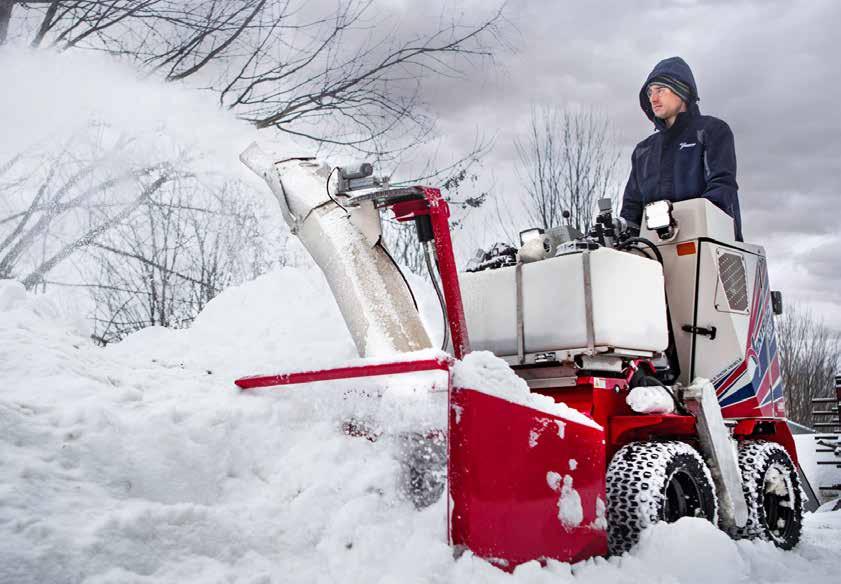
debuts this July 25-26 at Pheasant Run Resort in St. Charles. Summer Snow Days is the inaugural tradeshow & education and networking event for snow professionals. This event is one of the most daring we’ve ever done and will showcase new products and gather the best minds in the country to help contractors expand their snow operations and profits. The event will cover residential, commercial, municipal, and multi-family snow operations. This is the first regional event for Illinois snow professionals who serve a vital role in their businesses and communities.
This will be the end of a long, snow-covered road for the ILCA. Years ago, when Illinois was facing snow season after snow season of record snow fall totals, it was easy to sense the importance of snow operations to a company’s bottom line. As the snow fall totals lightened, it became clear that the most successful companies engaged with their snow operations year round and not just when the first flake hit the ground.
When it comes to snow, ILCA is divided into a handful of camps. The first camp consists of landscape companies who view snow as a natural outgrowth of their traditional services. To them, plowing snow is as natural as cutting grass or laying stone. These companies don’t equivocate or question why they plow snow, they just do it like a restaurant chooses to serve breakfast or a car wash offers waxes.
done a handful of presentations at iLandscape. We’ve snuck a few sessions into Summer Field Day or other events. We do an annual magazine issue on snow operations. We have attended and exhibited at national events like SIMA. We have passed legislation aimed at protecting snow professionals from excessive liability. We have wondered out loud if ILCA will one day become the Illinois Landscape and Snow Contractors Association. As with any snow contractor, we’ve taken a reactionary approach to snow as a trade association. When something happens, we react.
But baby it’s Cold Outside
The second group of members always keep their snow operations on a tight leash. They constantly evaluate the benefits and drawbacks of the fourth season. They are attracted to the profit, but also leery of the actual and hidden costs of plowing snow. Sure, it takes its toll on equipment, but it takes a far greater toll on the employees required to manage it. Snow does not favor the weak. These members constantly balance the pros and cons.
The final group of members are blissfully unaware of snow operations. They don’t plow snow and they have no interest in plowing snow. When snow and temperatures fall, it’s time to stop working and an opportunity to enjoy some necessary R&R. Field staff go on unemployment. Handshakes are exchanged. Doors and shops are locked up tight for the winter, and everyone enjoys a long winter’s nap.
The snow is always whiter on the other side of the fence. I am sure, that every now and then, that first group romanticizes about what it must be like to not plow snow. They dream of warm nights, cozied up near a fireplace with a glass of brown liquid in their hands. The snow falls quietly outside their windows while families sleep and the dog snores steadily on their slippered feet.
I am sure the second group looks to the first and thinks how easy it must be when a company has the best equipment, discounts on bulk materials, and a well-compensated and focused workforce. There aren’t desperate and panicked calls on a snowy night because you can’t track down a driver. There aren’t trucks stranded on the side of the road with shredded transmissions and no back-up plan. There aren’t desperate negotiations with salt suppliers at the tail end of the season.
Then that final group, well, I am not sure what they think because they are sleeping in an easy chair next to a roaring fire with a glass of brown liquid in their hands. Maybe ask the dog?
ILCA has dabbled in snow education throughout the years. We’ve
The idea for Summer Snow Days grew out of a request I had from a member who was just getting started in snow control operations. He had an astonishingly simple question - How do I pay my employees involved in plowing snow? I was asked to contact a few members, off the record, and find out how they handled employee compensation during snow operations. Obviously, snow has intense challenges because it’s the most variable part of the most variable industry on the planet. It either snows or it does not snow. Past results are not indicative of future behavior. In the last ten years, we’ve had years with 82” of snow and years with less than 20”. We’ve had seasons with 15 pushes in a month and seasons with zero.
So, I went about making my calls. I asked seven different companies the exact same question and got seven different answers. No one was even sure they had it right and used an amalgamation of base pay, performance incentives, and all sorts of other methods to stay legal and also manage to pry their employees out of bed on snowy mornings. Each call basically ended the same way. They would detail their method in hushed tones, then pause, say, “Well, that’s how we have always done it,” pause again and say, “But let me know what you find out.”
Delving into the fourth season, it was clear that many snow contractors don’t share information like they do on the landscape side. They rarely talk to one another about operations, equipment, deicers, or contracts. Even the stark differences in billing and contract balancing showed that there were few best management practices that are shared industry-wide.
Most ILCA members approach landscaping as an art or a vocation. They are dedicating their lives to self-improvement. They want to constantly learn and relearn technique as they challenge their companies to raise the bar for their clients. In this sense, landscape professionals are students of the discipline. The best spend their professional lives in pursuit of transcendence. Snow contractors, and many are the exact same people, shift their mindset during the snow season. Snow is a puzzle to be solved. It is an exercise in efficiency. There can be a point where snow, for all the obvious curveballs severe weather events can throw, can be tamed, understood, and profited from. With that in mind, servicing this constituent group within the industry requires different tactics.
When ILCA made the decision to service this audience, we really didn’t know what the eventual end product would be. The new event didn’t even have a name. Poor Marissa Stubler, our Marketing Coordinator, was given a weekend to come up with a list of potential names. Sadly, Snowmance and Snowtopia were left on the cutting room floor. A tradeshow seemed like the best vehicle for snow content because so much of the industry revolves around vendor rela-
ALL TOGETHER BETTER
From Where I Stand —
tionships. These can range from mechanized equipment to deicing products to vehicles to fuel.
We also realized we were missing two other elements. We needed an educational program that would cover a number of topics from liability to operations to materials to labor. Further, we needed to bring the industry together to let them gel. We needed to get snow contractors talking to one another to see if the smaller problems could be solved by a few texts and phone calls versus sessions and speakers. Therefore, on top of the education, the event will feature roundtables and a Cabin Fever networking reception around the Pheasant Run fire pit.
Summer Snow Days has been planned and orchestrated by an amazing and talented committee. It balances the talents of suppliers and contractors just as any snowy day in our industry does. We tapped two amazing chairs in Paul Washburn and Mike Clark from Acres Group. They are the yin and yang of the contractor side of the industry. Mike, known as “Frosty,” lives and breathes ops while his counterpart Paul (he needs a nickname!) sharpens his pencil and lives in a world of numbers, contracts, and mitigating liability.
Acres is one of the largest private snow contractors in the country. They could easily turn their backs on small snow contractors struggling to solve the puzzle. Instead, they’ve made it a point of emphasis to educate upstarts on how to estimate, bid, and perform safe snow operations. That is how an industry leader should approach competition versus viewing any pick-up truck with a blade as stealing from the cookie jar. The same can be said of Bertog, Cornerstone, Balanced Environments, McAdam and the other contractors lending their expertise to the program.
The inaugural program committee is rounded out by: Kelly Knudson, Reinders; Brad Beaulieu, Martin Implement Sales, Inc.; Patti Howe, LafargeHolcim; John Downing, Casey Equipment –Casey JCB; Adam Dudek, West Side Tractor Sales; Robert Bertog, CLP, CSP, Bertog Landscape; Wes Arnold, 1st Choice Equipment; Peter Liakouras, Russo Power; Jon (J.R.) Warner, Ariens Company; Alex Straughn, Beverly Environmental; Jim “Turk” Turcan, Cornerstone Partners; Board Advisor Scott McAdam, McAdam Landscape Professionals, and supported by Education Manager AnneMarie Drufke. To anyone who knows the snow side of the industry, it is clear Summer Snow Days is in good hands. I have been amazed by the committee’s energy, camaraderie, and ability not to freeze when faced with a blank canvas.
Unfortunately, ILCA cannot predict the weather. All we can do is what we always do; bring together the best minds in a certain segment of the industry to talk shop and help solve problems. The snow program begins on page 29 and we hope you enjoy and support this inaugural effort. As a result, I can’t promise you still won’t have those snowy mornings where warm blankets beckon you back to bed. Instead, let’s hope you will have a smile on your face as you crawl back into bed after carving channels through a frozen landscape so the world can go back to work. The weather outside will be frightful, but rest easy, your work is done for the day, and that is so delightful.
Scott Grams
June 19, 2018
President Tom Lupfer Lupfer Landscaping (708) 352-2765 tom@lupferlandscaping.com
Vice-President Jose Garcia Natural Creations Landscaping, Inc. (815) 724-0991 info@naturalcreationslandscaping.com
Secretary Treasurer Donna Vignocchi Zych ILT Vignocchi, Inc. (847) 487-5200 dvignocchi@iltvignocchi.com
Immediate Past President Lisa Fiore Don Fiore Company, Inc. (847) 234-0020 lfiore@donfiore.com
Directors
Jennifer Fick
Wilson Nurseries and Landscape Supply (847) 683-3700 jennf@wilsonnurseries.com
Allan Jeziorski Hartman Landscape (708) 403-8433 allan@hartmanlandscape.net
Jeff Kramer Kramer Tree Specialists, Inc. (630) 293-5455 jwkramer@kramertree.com
Kevin Manning K & D Enterprise Landscape Management, Inc. (815) 725-0758 kmanning@kdlandscapeinc.com
Scott McAdam, Jr. McAdam Landscaping, Inc. (708) 771-2299 Scottjr@mcadamlandscape.com
Dean MacMorris Night Light, Inc. (630) 627-1111 dean@nightlightinc.net
Mark Utendorf Emerald Lawn Care, Inc. (847) 392-7097 marku@emeraldlawncare.com
I thought I would honor our outgoing President and start my first message with a quote from an obscure moment in history; the 1992 Vice-Presidential debate.
“Who am I?”
I founded Lupfer Landscaping 25 years ago and have never worked for another landscaper. I’ve done it my way, and for better or worse, it’s been a successful ride. My company is the quintessential ILCA member; both in gross revenue and number of employees. We specialize in high-end maintenance and all the design-install work those customers generate (little outside or competitive bidding). I grew up in Western Springs and attended Northwestern University. Politics was my first job after college, but I soon went back to my roots and started a landscaping company. My first truck was a Pontiac Grand Am and my first employee is still with me. My wife runs the office and my kids run my life. The best way to describe me is ‘a middle linebacker who coaches wrestling.’
“Why am I here?”
I joined the Board for one reason: to level the playing field between legal companies and the black market. It has been too difficult for too long for legitimate companies to grow and prosper because the black market (which makes up to 40 percent of our industry) steals employees, sucks up work, and keeps our prices artificially low. It also gives the industry a black eye because the public loses the sense of value for what we do and steers their kids away from an industry they think is represented by the lowest of the low.
Let me get this straight: the black market means I can’t grow because I can’t generate enough profit to finance the growth (banks don’t actually lend money anymore), and because there are not enough qualified employees to put in the trucks even if I had the money. But look, the employees are right across the street mowing a lawn for half of what it costs me and they’re working with no insurance, no overtime, no training, no benefits, and no safety net.
My goal is not to punish the black market, but to bring them into the fold of legally operating companies. Who knows, they might even become ILCA members.
“OK Lupfer, what are you going to do about it?”
When I bring this up most people roll their eyes and say it’s too big a problem. But then Rome wasn’t built in a day. We started by going to the State and got the Empowerment Packet published. Then we started the Future Landscape Industry Professionals Committee to recruit new people to the industry. Then we started a political action committee to lobby Springfield to make changes. Then we hired a marketing firm to extol our virtues to the world. So, you can see, there is a lot ILCA has already done, but keep an eye out; I guarantee you we will be doing even more to make this industry the best it can be. We can’t ignore this problem any longer and I will ask every ILCA member to be a part of the solution.
I am excited to be your President for the next year and will work hard to do the best I can. Feel free to email me any comments, questions, or concerns you may have. Thank you,
Tom Lupfer June 5, 2018
Green View Landscaping • Normal
The clients had a vision of creating a Tuscan Villa nestled into the hillside, to be enjoyed by family and their future generations. Privacy and an abundance of color were of utmost importance. Views from all outdoor living areas and from key locations in the house were also important.
The clients have very discerning tastes and high expectations with regards to quality design, architectural consistency, attention to detail, and outstanding craftsmanship.
Substantial grade change and proximity to a neighbor necessitated, screening for privacy, retaining walls and addressing surface water runoff. Additional challenges included restricted access to property, protecting the few existing mature trees during construction, engineering of walls and water features, minimal impact to the adjacent protected conservation area, and working with various agencies to obtain required permits.
The design process started with siting the house on the property to maximize the spectacular panoramic view.
Berms and swales in the front lawn nestle the house into the hill, and provide a sense of rolling hills reminiscent of the Tuscan countryside.
Large trees and shrubs planted around the perimeter of the property provide structure and privacy, allowing the pool terrace to remain open to soak up the sun.
Brick inlays at the base of driveway and portico welcome visitors to the property, and compliment the architectural style of the house.
The outdoor living area includes a large pool and terrace, multiple seating areas, and a fire pit. A pergola on the terrace provides a shady retreat. The refreshing sound of a waterfall, reflecting pool, raised water garden, container water garden collection, bubbling urns, and a water spout provide and, enhancing the Tuscan experience.
Materials selection was crucial to create the Tuscan style and atmosphere. Weathered clay bricks in a variety of colors and patterns, split faced wall block, large scale timber beams, and irregular flagstone enhance the Tuscan style. Large drifts of bold color plantings attract hummingbirds, butterflies, and songbirds, bringing color, sound, and movement to the landscape.
Artful design, attention to detail, and excellent craftsmanship combined to elegantly capture the rustic natural beauty and simplicity of a Tuscan Villa.
Mikula Tuscan Villa
Summer Snow Days Preview
By Meta L. Levin
July’s heat and humidity will morph into the sparkle of winter snow and ice during the first ILCA Summer Snow Days (SSD), July 25-26, 2018 at Pheasant Run Resort and Conference Center, in St. Charles, IL.
Designed as a tradeshow, education and networking event for snow professionals, SSD will feature the best minds in the country sharing knowledge focused on improving and expanding your business, serve as a showcase for new products and address issues about residential, commercial, multi-family snow and municipal operations.
“This being our inaugural event, we opted for the central location of Pheasant Run Resort,” says Snow Committee Member Jim Turcan, president of Cornerstone Partners Horticultural Services. It has everything needed, exhibit hall, education session rooms, hotel lodging, golf, after hours social events with transportation to a vibrant St. Charles downtown area, and even room to grow in the future.
Plans currently call for SSD and Summer Field Day to alternate years. In fact, registration is on a par with past Summer Field Days, says ILCA Snow Committee Co-Chair Mike Clark, vice president, snow operations, Acres Group. “We feel it will be a success.”
Pheasant Run also helped keep the behind the scenes costs down, says Clark. “We wanted to keep them as low as possible, but keep things nice.”
Counteracting the weather outside and getting everyone into the snow and ice mood, falls, in part, to ILCA Snow Committee member Kelly Knudson, who has called on compatriots who work with holiday lighting. The entrance will be festooned with snowflake shaped lights, as well as other decorations, designed to give the place a winter flavor.
The exhibit hall is sold out! Over 50 exhibitors will be showcasing the latest equipment, supplies and services. There will also be an outdoor demonstration area with various equipment. The committee also has put together a list of edu-
cational sessions that reflect the needs and concerns of landscape contractors who spend their winters with snow and ice.
“The snow and ice industry has dramatically advanced in terms of science, technology and innovation, increasing the necessity of implementing and standardizing best practices,” says Turcan. “Keeping up with these new advances doesn’t just make you better than your competition, it’s now permission to even play.”
A keynote address by NFL Super Bowl Champion Don Beebe, will kick off the event at 9 a.m., July 25. Beebe’s message, “Never Giving Up,” is based on his own football history, starting with playing only two years of college football, one of which was at Chadron State, a small NAIA school. From that beginning, he had a successful NFL career, including playing on the Green Bay Packers team as they won the Super Bowl Championship.
SSD is planned to have something for everyone: receptions, networking, mentoring round tables, education sessions and the exhibit hall.
Since this is the first such conference, engenders excitement on many levels. ILCA members who have been unable to attend SIMA (Snow and Ice Management Association) programs, held annually at rotating locations throughout the country, now will be able to take advantage of presentations by some of the stars in the industry. In addition, they will have the opportunity to examine up-to-date equipment and materials in time for winter ordering.
SIMA cooperated with ILCA in planning the event. “They’re going to have a booth at Summer Snow Days and even passed along speaker suggestions,” says ILCA Executive Director Scott Grams. While the SIMA exhibit areas usually features manufacturers, ILCA’s event will feature distributors. “So, it is a symbiotic relationship.”
Because the educational sessions were planned based on a member survey, there should be something to excite just about (continued on page 12)
Summer Snow Days Preview
(continued from page 10)
everyone. “There is a lot of higher learning being brought to this event,” says Turcan, who is particularly focused on the opportunity for informal learning from his fellow snow and ice professionals. To that end, roundtables on such topics as labor, emergency preparedness, storm management, sub-contractor relations, maintenance and production efficiency are scheduled for 10 a.m., Thursday, July 26.
For more networking, as well as fun, a reception and networking opportunity is set for 4:00 to 6:00 pm, Wednesday, July 25, featuring complimentary cocktails and snacks, as well as a chance to mingle with contractors, exhibitors and sponsors.
Meanwhile, Clark, is looking forward to presentations covering the financial side of the business. “A lot of people don’t realize the costs behind the work,” he says. To that end, there will be sessions including profitability estimating and other aspects of the business side.
He’s also eagerly anticipating a presentation covering the Limited Liability Act, a relatively new Illinois law that controls a snow and ice contractor’s liability. In effect since 2016, “it is a huge win for our industry and one that contractors need to have a full understanding of while signing client contractors related to indemnification clauses,” says Turcan.
On the practical, day to day side, Snow Committee member Knudson, wants to hear about liquid ice melters, especially non-chlorides, currently in use in Minnesota, where officials are trying to eliminate chlorides. Her boss, Mary Reinders, executive vice president of Reinders, Inc., and Joel Baxter, Reinders’ territory manager, winter products, will be among the presenters. Knudson, herself, is a soft goods territorial manager for Northern Illinois for the company.
She’s also hoping to learn more about insurance, so that she can pass the information along to her customers. “I think that we have pretty well nailed all aspects of snow,” she says. For many landscape contractors this may be their first opportunity to learn about the snow and ice management industry.
Currently, educational sessions include:
Wednesday, July 25th
10:00am-11:00am
Potential Game Changer –
The Snow Removal Limited Liability Act
Sherm Fields, Acres Group and Kerry Bartell, Kovitz Shifrin Nesbit
Signed into law in 2016, the Snow Removal Limited Liability Act designates liability for accidents, slip and falls, etc. as it pertains to snow contractors. This session may help contractors use this law to protect their businesses, while generating additional income and profit.
Sustainable Winter Management (SWiM): A Framework for Professionalism
Phil Sexton, WIT Advisers
Learn how winter management contractors can develop a framework for professionalism by following the standards and guidelines of the Sustainable Winter Management (SWiM)™ program and certifications for properties. This session covers educating your clients to help them predict their costs, control quality, and understand the environmental effects, business continuity issues and risks associated with managing winter storms and seasons.
1:00pm-2:00pm
Know Your Costs and Succeed in Snow: Part 1
Jim Schwantz and Jon Schwantz, Acres Group
This two-part session will deliver a budgeting strategy for a snow operation’s hourly equipment and manpower costs. This strategy is designed to help manage cost and liability for a company’s snow operation. The presentation will include contract structuring, indemnification clauses, and other critical items related to a snow operation. Ultimately success in snow should be measured by achieving a fair profit for the contractor, while delivering quality service for the client.
Winter Treatments and Applications
Diana Clonch, DW Clonch, LLC
This session will help build your understanding and knowledge base of treatments and application rates and see firsthand how others are making inroads by adding and/or expanding treatment types and applications.
2:00pm-3:00pm
Minimizing the Salt
Damage to Turf, Trees & Landscape
Mark Mann, American BioChar Company
Learn how activated biochar can mitigate plant damage from salt and other “pollutants,” and how to minimize the potential negative effects of winter salting and deicing using a fall application of the activated biochar and humate blend. The presentation includes detailed results of case studies of remediation and mitigation of salt damage. It also will review protocols that can economically and effectively remediate salt damage on turf & landscape.
Summer Snow Days Preview
Off Season Tactics for Your Snow Business
Phil Harwood, Pro-Motion Consulting
The professional snow and ice management business has become a year-round business of its own, as evidenced by the growing number of snow-only contractors. The challenge for those who are not a snow-only company is to be able to stay focused on their snow businesses during the off-season by prioritizing their efforts and concentrating on the highest value opportunities.
3:00pm-4:00pm Snow & Ice Best Practices
Martin Tirado, SIMA
Several best management practices have been created for the snow and ice industry. The presentation will cover a detailed review of current best practices, discuss why best practices matter, and teach attendees how to implement them in their company.
Know Your Costs and Succeed in Snow: Part 2
Jim Schwantz and Jon Schwantz, Acres Group
This two-part session will deliver a budgeting strategy for hourly equipment and manpower costs for a snow operation. The goal of this strategy is to help manage cost and liability for a company’s snow operation. The presentation will include contract structuring, indemnification clauses, and other critical items related to a snow operation.
Thursday, July 26th Education
9:00am-10:00am
Liquid Strategies to Reduce Overhead Costs and Increase Profit Margins
Mary Reinders, Reinders
Joel Baxter, Reinders
This session will cover the following: exploring potential cost savings thru utilizing liquid strategies, illustrations on when to use and examples, comparing anti-icing vs. de-icing, suggested billing guidelines on liquids, and start-up costs vs. liquid ROI.
Six Steps to a Business Plan: A Repeatable Process for Every Year
Larry Heuvelman, The Owner Consultant
Most companies don’t have a business plan, and don’t realize the value of one done properly. The presenter will walk participants step-by-step through the process to create a business plan that is so simple, the bank will even love it. Then we will discuss how to implement your new business plan and get the buy-in from your key people and staff.
1:00pm-2:00pm
Weather Math Toolbox
Phil Harwood, Pro-Motion Consulting
The complexity of snow contracts often leaves prospective customers confused and frustrated. By incorporating weather math into proposals, snow professionals can learn to educate their prospective clients about the risk-reward tradeoffs that exist with various contract forms. Learn how to discuss and display weather data, probability, and impact in a clear, concise, and professional manner in your proposals.
Small Changes Lead to Making You Real Money
Tony Johnson, Chloride Conscious & Midwest Salt
Learn how to create an effective and stable winter supply chain where profits become more predictable. The presenters will show participants how to transition from always spreading solids to spraying liquids and saving money. Liquids can have some of the biggest impacts for positive change to the environment, while increasing profits. They will review costing models from companies using liquids as well as using examples from other companies in the audience.
2:00pm-3:00pm
Maximize Profitability with Proper Equipment Maintenance
Dan Kakareka, New Holland North America
This session will focus on reducing maintenance costs by learning how to properly protect equipment during the winter season. Attendees will discuss protecting cooling systems, maximizing battery life, undercarriage maintenance and tire care. Go in depth and learn about the changes to emissioned engines and how to react to them.
Getting Some R&R: Recruiting and Retention Strategies to Build Your Snow Team
Alex Riley, MeritHall, Inc.
Let’s face it, fewer people want to get up at 3 a.m. to shovel or plow snow. Successful employee recruitment must be a core focus for a growing contractor. Leveraging referral programs, word of mouth, and recruiting techniques is an essential function that must be constantly managed. Join Alex as he shares information about real-world referral, bonus, and recruiting methods with proven results. He’ll also discuss how leaders can engage employees to retain them longer. There’s no need to be searching for next season’s employees if you can keep the ones you have.
Clark is hopeful that “everybody can learn,” that they will be able to take away ideas they can use in the future.
Put Vegetable Gardens into Your Tool Box
i Landscape
by Nina Koziol
When it comes to home gardens, Brie Arthur has some persuasive ideas about how landscapers can take advantage of overlooked opportunities. “You hear a lot about urban farming and rooftop vegetable gardens, but there are 180 million acres of suburban development in the U.S.,” says Arthur, who wrote, The Foodscape Revolution: Finding a Better Way to Make Space for Food and Beauty in Your Garden (2017).
“Food unites us,” she says. “Foodscaping is an opportunity for landscapers and homeowners. Incorporating edibles into their gardens promotes a healthy lifestyle, it’s sustainable landscape management, and it’s an opportunity to make more money.” She spoke to a standing-room-only crowd at the 2018 iLandscape conference.
said. “After 2008, we learned that beautiful landscapes just
don’t cut it. When the recession hit, it was nail salons and landscaping that got dropped from homeowner budgets.” But some homeowners are looking at vegetable gardening as a way to save some money while producing some of their own fresh food. And, the cooking craze has others wanting to grow unusual, super fresh veggies.
About 35% of all households in America grow food at home or in a community garden, according to a National Gardening Association report. Among younger households, the largest
designers and contractors can help provide these potential clients
“Homeowners want more out of their investment and they (continued on page 18)
(continued from page 16)
miles—it can take up to 1500 miles per product from farm to the grocery store. As an industry, we could help reduce this.” She points to the resurgence of downtown neighborhoods—think of Chicago’s River North area—as a direct result of new, trendy restaurants that are spurring an interest in creative home cooking. Food programs online and on t.v., and the desire for fresh, homegrown produce are also fueling the garden-to-plate movement.
Originally from southeastern Michigan, Arthur studied landscape design and horticulture at Purdue University. She spent more than a decade as a grower and propagator, but now she combines her passion for plants and sustainable landscaping by promoting the use of edibles in landscape design. “Foodscaping is not a new idea at all. It’s the integration of edibles in our ornamental and traditional landscapes.”
That’s not to say that she doesn’t love turf. “I started as a turf major in school.” Arthur also held a pesticide applicator’s license for 15 years, but wants to see fewer “chemical packages” sold to homeowners. “Why can’t we nurture ecology at the same time as we landscape,” she asks.
Homeowner Associations
Arthur sees an opportunity in homeowner’s associations where about 23% of the budget typically goes to landscape maintenance and turf management. “It’s not about ripping out all the grass,” she said. “In North Carolina, we have an 80:20 law. It’s 80% lawn, 20% plantings.” For the last decade she’s worked with people who had the desire to grow plants and to grow some of their own food. She provides them with landscape plans that are drawn to scale, so that when they present them to a homeowners’ association they have some professional guidance.
“You give clients a living asset,” she told the audience. “You make it possible to have clean air and soil. We waste our resources on keeping spaces open with mulch—mulch is just crumpled up trees. We have to stop making the simplest choice the only choice. If you can offer a more sustainable management practice, clients are willing to pay more.”
Recipe for Success
Her own suburban garden features wheat, sesame, oats and rice interspersed with roses, herbs, blueberries, peppers and tomatoes. The foundation planting beds are edged with kale and lettuce for part of the growing season. Arthur says that many edibles grow in the same conditions as other ornamental plants. Her design is typically informal, like a wildflower meadow. Wheat grows alongside poppies and larkspur, which attract pollinators. Once the summer heat kicks in, the cool-season greens are switched out with colorful annuals like salvia and marigolds.
Vegetables don’t need their own defined garden, although some clients might prefer that layout. But, Arthur wants landscapers to think beyond raised beds. “You don’t need lumber (continued on page 20)
With rich bright hues of orange, red and burgundy foliage, and large white flowers that transform into bright red seed-heads, Ginger Wine™ Physocarpus is truly irresistible in the landscape. Combine this beautiful display with superior mildew resistance and this adaptable native from Proven Winners® ColorChoice® won’t fail to impress, even in the toughest of conditions.
Available from these suppliers
Alsip Home & Nursery
St. John • 219-365-0882
CJ Fiore
Prairie View IL • 847-913-1417
Cedar Path Nurseries
Lockport | Barrington www.cedarpath.net
Hinsdale Nurseries Willowbrook IL • 630-323-1414
Kaknes Landscaping Supply Naperville IL • 630-416-1002
Lurvey Landscape Supply Des Plaines | Park City | Volo www.lurveys.com
Midwest Groundcovers
St. Charles IL • 847-742-1793
SiteOne
Addison | Naperville www.siteone.com
www.provenwinners-shrubs.com
GINGER WINE™
Food for Thought
(continued from page 18)
to grow vegetables,” Arthur said. “Square-foot gardening should not be the exclusive model for growing edibles.” Before anything gets planted, she starts with a “living” soil rich in organic matter and microbes. Next, she incorporates some of the most beautiful perennials with edibles in her clients’ borders.
“Allium ‘Millenium’ is an awesome plant,” she said. She uses it as a biological control, planting it near cucumbers, kohlrabi, radishes and sage to deter pests like voles and chipmunks as well as insects like cucumber borer. “Ornamental plants offer biological diversity and alliums help fight against in-ground dwelling mammals,” she explained.
She pairs butterfly weed, Asclepias tuberosa ‘Hello Yellow’ with cilantro, okra and peppers. “Cilantro is a host plant for swallowtail butterflies,” she explained. Heliopsis ‘Tuscan Sun’ grows alongside dill and parsley. But it is the rice, like ‘Black Madras’ that she likes because it not only looks like purple fountain grass, but the seeds are edible.
In a twist that many younger homeowners might appreciate, Arthur uses sun-loving shrubs, such as Callicarpa, Hydrangea and Buddleia, as living stakes for edible plants.
“I plant Black Krim tomatoes amongst them,” she said. “Tomatoes and hydrangeas need the same conditions so it works out.” She plants 150 types of tomatoes in her own garden.
Deterring Deer and Other Varmints
Rabbits, deer, squirrels, chipmunks, mice—you name it— they’re likely to take part in the vegetable garden harvest. “Your best strategy is fencing, netting, cages or reflective tape,” she said. Garlic is a common ingredient in many commercial repellents so she plants garlic cloves amongst the other vegetables.
Motion-sensor irrigation is sometimes used for new landscape construction to repel deer. “You can deter mammal browsing by planting the edges of beds with arugula, basil, oregano and onions. And, dwarf basil used as an edging helps repel rabbits. It smells like burnt hair.” When it comes to explosive vole populations, Arthur says the culprit is often using too much mulch. “It breaks down and makes for perfect vole tunnels.”
Getting Children Involved
giving them a handout with your firm’s contact information may provide future leads from their parents.
“We have to figure out how to get into kids’ consciousness,” Arthur said. “Eight-year-olds want to be better educated and to make good decisions. Growing food leads to health and wellness. Imagine if every landscape grew some food. They’d be contributing to a bigger thing. It’s not complicated.”
Here are a few of Arthur’s favorite ornamental and edible pairings:
• Baptisia ‘Lemon Meringue’ with peppers, squash and rice. “I’m so impressed with new Baptisia varieties. It’s an exquisite plant, with seed pods in winter and it’s low maintenance.”
• Leucanthemum superbum ‘Banana Cream’ with basil, celery and fennel
• Monarda ‘Bubblegum Blast’ “I grow it with grains. Sesame is really beautiful and something unique. Sesame can grow 7-feet tall so I put it in with ornamental grasses.”
• Nepeta ‘Cat’s Meow’ with Swiss chard, tomatillo, spinach and kale
• Phlox ‘Minnie Pearl’ with cabbage, eggplant, rhubarb and strawberries
• Tomato ‘Chef’s Choice Yellow’ and ‘Patio Choice Yellow’ with ‘Mad Hatter’ pepper Learn more at her web site: BrieGrows.com
Selling Points
• Get the word out to your clients by emphasizing the benefits of including some edibles in their landscape.
• Freshly picked fruits and vegetables are higher in nutrients than those that have traveled across country or beyond to get to the grocery store.
• Fresh vegetables and herbs taste better. They’re the perfect addition to a garden for those who enjoy cooking.
• Vegetables and herbs can be grown in the ground, in attractive raised beds, in containers and in mixed borders.
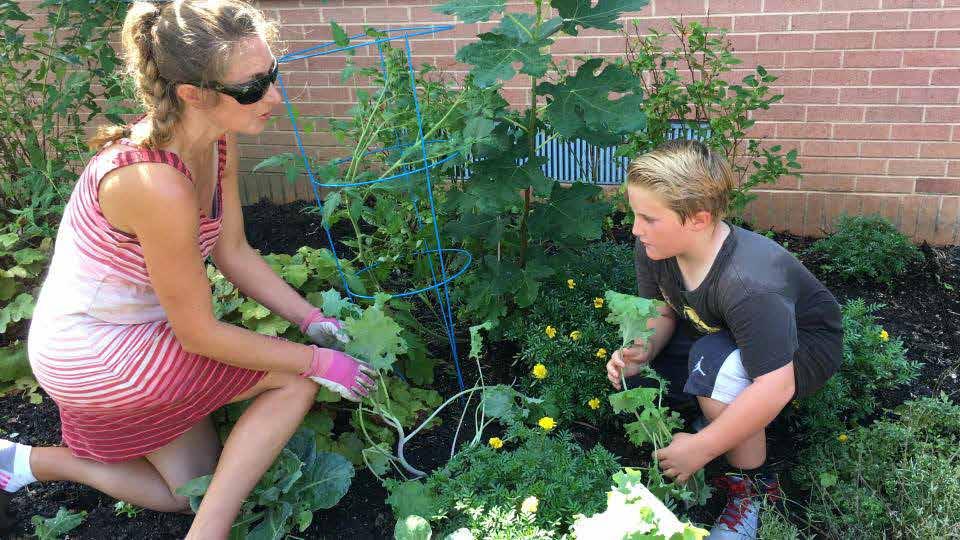
• Make vegetable gardening a family hobby. It’s a great activity for children and grandchildren. It allows them to get their hands dirty and learn about growing food. And, those picky eaters may decide to eat what they grow.
Irrigation Contractor Essentials—
By Meta L. Levin
In the last couple of years technology has revolutionized the irrigation industry, says Kevin Battistoni, so, he told attendees, get on board.
Battistoni was one of three presenters during the fourhour refresher course, “Irrigation Contractor Essentials,” sponsored by the ILCA Irrigation Committee and coordinated by committee chair, Alex Mayfield. Required and approved by the Illinois Department of Public Health, the course covered essentials for professional irrigation contractors.
“We strived to provide current content within the frame work of the approved course,” says Mayfield.
To do that, the committee reached out to Battistoni, Hunter Industries’ Midwest sales representative for Illinois, Wisconsin and eastern Missouri, as well as to Kevin Crouch, Spears Manufacturing Company’s Midwest regional sales manager and Brian Carlson, Mid-Continent marketing.
Carlson covered backflow prevention, methods of preventing water from flowing into potable drinking water. “This was state required and code approved,” says Mayfield.
A representative of a backflow manufacturer, Carlson discussed the importance of backflow prevention, as well as ways in which they are used in different situations. The ILCA Irrigation Committee helped present applicable state laws.
The presentation included examples of unapproved RPZ (reduced pressure zone) valves, including some installed below ground, which is contrary to state law. These valves protect against flooding and must be installed above ground or in a basement with a working sump pump, says Mayfield.
These must be certified by a licensed plumber as soon as they are installed, then recertified annually. “This is to insure clean drinking water,” says Mayfield. “So, a backflow preventer must be installed in every irrigation system.”
Crouch’s presentation covered methods for properly joining poly and pvc fittings used by many contractors. “We’ve been doing it the same way for 20 years,” says Mayfield. Nevertheless, there was something to learn.
Crouch demonstrated how to bevel the pipe ends and properly using the solvent cement. The beveling involved
i Landscape
putting an angle on the outside end, sanding the edges and ensuring that the glue covers the entire joint. The bevel allows it to penetrate properly, not gathering in the middle of the fitting. “A lot of irrigation contractors already were doing this, but they didn’t know why,” says Mayfield. “It makes a lot of sense. The joint is going to be much stronger.”
Battistoni covered basic irrigation design, as well as how Wi-Fi has changed controllers. The latter dominated the discussion. Five years ago, a digital connection would have been expensive. Now, however, with Wi-Fi a contractor or homeowner can look at the settings from home, a mobile phone or computer anywhere.
Contractors can monitor hundreds of systems at minimal cost, says Battistoni, thus being more proactive. It allows for everything from predictive watering to shutting down the system if there is a high probability of rain.
“I’ve been in the industry for 21 years, but the last two years have been more exciting, because of the opportunities that technology affords,” says Battistoni.
While technology hasn’t affected the products doing the irrigation, it has brought efficiencies to the operation. It allows for monitoring and, thus, a higher level or service for the customer. “Contractors and homeowners can be simultaneously notified so that they can take action,” he says. “It allows us to monitor the water flow and the electricity, so that we can address problems before there is any damage to the landscape.”
Contractors can adjust water use based on weather and wind speed (which affects temperature and humidity). “The software allows us to monitor and provide savings in time, labor and money,” says Battistoni. Not only does this provide for higher profit margins, but there is a pocketbook savings for both the contractor and the customer.
Clients are, says Battistoni, obsessed with their phones and use the irrigation app on it to monitor their systems. The contractor can monitor it all year round, shutting it down when it rains and preventing wasted water. “The homeowner and the contractor can see the savings,” he says.
Sound Business Practices
Influencing Company Culture i Landscape
By Patrice Peltier
Is your company full of texters, clock watchers and people who think everything is “not my job”? You may have a disengagement problem, two green industry professionals told a highly engaged audience at iLandscape.
Vanessa Mueller has been a wholesale sales rep at Johnson’s Nursery for nine years. Anne Mino, now owner of Redbud Landscaping, put her master’s degree in leadership to work at Brickman, traveling the country to consult with branch offices. The two met getting undergraduate degrees in horticulture at Iowa State University, and they shared their expertise in and passion for professional development in a presentation entitled “Influencing Company Culture.”
Employees who are disengaged—who aren’t challenged and aren’t interested in doing their jobs--are a costly problem, the speakers explained. They cited a Gallup Poll that found:
• Only 29% of the workforce is engaged at work.
• $350 billion are lost every year due to employee disengagement.
• Decreased productivity of each disengaged employee costs employers $3,400 to $10,000 per employee.
On the flipside, the speakers cited Gallup Poll findings on the benefits of high levels of employee engagement where self-starting employees take ownership of their jobs:
• 20% higher sales
• 10% higher customer satisfaction
• 48% fewer safety incidents
• 22% more profitability
• 37% less absenteeism
• 25% less turnover
Developing employee engagement begins with company culture, the speakers explained. Company culture includes the beliefs and behaviors that form a personality. This culture, which is continually evolving, influences the way people think, feel and act. As important as it is, corporate culture is something that may have developed unintentionally, they explained.
Often company culture is grounded in old belief systems. “There’s the authoritarian model that says, ‘Here’s your job. Don’t ask any questions, just go do your job,’” Mino explains. “There’s also the idea that the company can’t make money unless everyone works 75 hours a week during the summer, and the idea that if you have an office job you have to sit at your desk from 8 to 5 to accomplish what you need to do,” Mino explains.
Even the idea that employees are primarily motivated by money is old thinking, Mueller says. She cited a study finding that while 89% of employers think their people leave for more money, only 12% of employees cite that as the reason for leaving a company. “That shows the disconnect between employees and management,” she adds.
“We need to find a new model. We need a general shift away from old beliefs,” Mino adds.
Mueller has experienced such a shift in her workplace. When the current owner took over sole responsibility for the company, the culture changed dramatically.
“The culture used to be top-down,” she explains. “Chad Johnson has made all the difference in the world. He’s turned the company into a team. He’s all about emphasizing individual contribution and encouraging growth. It’s been very exciting to see the company culture change.”
If you want to change your company’s culture, start with yourself, the speakers explain. Owners and managers are often quick to blame generational differences or lack of resources, according to the speakers. They focused, instead, on four areas that can improve engagement: trust, value, vision and autonomy.
“I really believe if you take care of people, the rest takes care of itself,” Mino says.
“If your employees feel safe, they’re contributing; they’re engaged,” Mueller adds. “If your employees don’t feel safe, if they can’t trust you, it’s painful for everybody.”
The speakers offered these suggestions for developing trust in the workplace:
• Keep your promises. Do what you say you’ll do.
• Own your mistakes.
• Have each others’ backs. Don’t throw anyone under the bus.
• Remember employees are watching and listening all the time. What are your actions and behavior telling them?
• Be transparent with information.
The second step, according to the speakers, is to clearly and simply state your company’s vision. Employees need to have a sense of purpose as well an understanding of what’s in it for them. Be sure to do more than give lip service to your company vision, the speakers advise. “Don’t hang it on the wall and forget it,” Mueller says. “Live it.”
Employees not only need to know the company’s values, they need to feel valued, Mueller and Mino explain. Managers (continued on page 26)
Sound Business Practices
(continued from page 24)
can do this by knowing each employee’s strengths and what makes them tick, remembering to say “thank you” and recognizing good performance. Mueller and Mino also recommend gathering employees’ input and using it, providing opportunities for personal growth and development and promoting team camaraderie.
“Little things make a big difference,” Mino says, explaining that rewarding and recognizing performance doesn’t have to be costly.
Knowing your employees enables you to give the most impactful recognition, the speakers say.
”If you have a plant person working for you, get them a plant. If your co-worker is into sports, get them a nerf ball for around the office,” Mueller says. “It is easy to give a gift card, but when you pay attention and make it personal it makes a difference.”
Mino seconds that. A handwritten thank you card, a cup of coffee, a few hours off to go see their kid’s event can be powerful motivators, according to Mino. “It ties back to knowing your people,” she says.
Employees who are self starters appreciate autonomy, the speakers say. Creating an environment that fosters self-starters means establishing clear expectations of employees, encouraging them to think outside the box, and asking employees for their ideas on how to solve problems or improve established systems.
“Bring in your younger employees to get new ideas and perspectives,” Mino says. “Combine different generations to come up with solutions that work for everyone.”
Establishing goals with employees helps make them accountable to themselves and to you, the speakers explain. Having written goals also makes employee reviews easier, they say.
The presentation elicited a number of lively discussions. “I couldn’t believe how many people wanted to talk,” Mueller says. “They asked for suggestions and ideas from each other.”
One of the major themes was how to find and keep employees, according to Mueller. In this, they’re not alone. Mueller cited a Green Industry Benchmark Report that said the biggest challenge owners in the green industry report is attracting and retaining employees. According to the same report, 79% said it was difficult to very difficult to find new employees.
Mino recommends looking first for people who share the company’s values and vision. “A top performer who doesn’t share your vision and values can be pretty disruptive,” Mino points out. She recommends looking within the existing workforce for people who already share the company’s values. Could these people grow into new positions with education and training, she asks.
It’s easier to train people for a new skillset if they already understand your vision and values, she says. “That’s the trickier part of the equation.”
“There were a lot of questions about training because, gosh, training your people—what could be more dangerous,” Mueller says. Employers face the possibility of training employees who will ultimately leave and work for competitors. Still, other audience members countered, the alternative is to have employees wearing
the company uniform, representing the company and not being adequately trained. “Either way, it’s dangerous,” Mueller says.
Attendees share what Mueller described as “nightmare scenarios” about employees’ problematic behavior. Much of it revolved around the use of phones and social media. These often impact employees’ attentiveness on the job and also may result in inappropriate posts on social media and even the company website.
“It was surprising to see how much people were willing to share in hopes of finding some advice,” Mueller says.
“Vanessa and I were blown away by the amount of participation from the group,” Mino says. “It was surprising how open and honest they were willing to be. It turned into a bigger conversation about how to retain employees—and that’s a conversation that could go on for days.”
To Mino, the bottom line is simple. “It goes back to taking care of your people, helping them feel part of the group, giving them a sense of purpose,” she says.
Evaluating and perhaps changing your corporate culture takes an investment of time and energy initially, Mueller acknowledges. “But when you reach that last stage, autonomy, employees find their own activities, their own ways to be engaged in their jobs. When you have people who take responsibility and own their jobs in a company that values engagement, that’s where the magic really starts to happen.”
Blades, Pushers & Tires
Compact Wheel Loaders
Walk-Behind Snow Blowers, Brooms
Skid Steer Loaders
Sectional Pushers
Lease Rent
3 to 8 Yd. Wheel Loaders
Arthur Weiler, Inc.
Clavey’s Nursery, Inc.
Doty Nurseries LLC
Fox Ridge Nursery
Goodmark Nurseries, LLC
GRO Horticultural Enterprises
Hinsdale Nurseries, Inc.
Kaneville Tree Farms, Inc.
Kankakee Nursery Co.
Midwest Groundcovers
Poul’s Nursery, Inc.
Spring Grove Nursery, Inc.
The Fields on Caton Farm, Inc.
We are experienced wholesale growers producing thousands of acres of quality, northern Illinois-grown nursery stock.
A wide variety of shade trees, intermediate trees, shrubs, evergreens, broadleaf evergreens, vines, groundcovers and perennials are available.
our website for a complete inventory listing by nursery–quickly find the hard-to-get items you need!
July 25-26, 2018
Pheasant Run Resort and Conference Center
St. Charles, IL
Featuring—
Two days of Education, Innovation and Fun!
• Exhibitor Trade Show
• Educational Classes
• Networking Opportunities
Wednesday, July 25, 2018
7:30 AM — Registration Opens
Coffee available while supplies last
8:00 AM — 4:00 PM — Exhibit Hall Hours
8:30 AM - 9:00 AM SALON 4 Breakfast Forecast John Boyle, Weather-Command
9:00 AM - 10:00 AM
Keynote Speaker: SALON 4
Don Beebe, NFL Champion
Enjoy Don Beebe’s life story of “Never Giving Up”. The unlikely path of playing only 2 years of College football, in which one of those years was at a tiny NAIA school named Chadron State, to a 9-year NFL career and a Super Bowl Championship with the Green Bay Packers.
The Snow Removal Limited Liability Act was signed into law in September 2016. This new law has a dynamic impact in regard to who assumes liability for accidents, slip and falls, etc. for snow contractors. While the law is favorable to contractors, it currently flies (for the most part) under the radar within our industry. This session discusses and answers questions that may help a contractor utilize this law to protect their business while potentially generate additional income and profit. We will look at the act from a legal, contractor, and client point of view.
SALON 2
Sustainable Winter Management (SWiM): A Framework for
Professionalism
Phil Sexton, WIT Advisors
Learn how winter management contractors can develop a framework for professionalism by following the standards and guidelines of the Sustainable Winter Management (SWiM)™ program and certifications for properties. You will learn how to educate your clients to predict their costs, control quality, and understand the environmental effects, business continuity issues and risks associated with managing winter storms and seasons.
11:00 AM - 1:00 PM Exhibit Hall and Lunch
What are your lunch options? You can grab lunch at the concession stand in the exhibit hall, Terrace Café or the Clubhouse Lounge.
1:00 PM - 2:00 PM
SALON 2
Know Your Costs and Succeed in Snow: Part 1
Jim Schwantz & Jonathon Schwantz, Acres Group
This two part session will deliver a budgeting strategy for hourly equipment and manpower costs for a snow operation. The goal of this strategy is to help manage cost and liability for a company’s snow operation. This strategy will include contract structuring, indemnification clauses, and other critical items related to a snow operation. It is important to achieve a fair profit for the contractor and quality service for the client. Ultimately success in snow should be measured in accomplishing both.
Sponsored by:
SALON 6
Winter Treatments and Applications
Diana Clonch, DW Clonch, LLC
What are the available options for snow and ice treatment? What do acceptable application rates look like? And how are they achieved? Are you considering using liquids or growing your use of liquids in your snow and ice operation? Build your understanding and knowledge base of treatments and application rates and see firsthand how others are making inroads by adding and/or expanding treatment types and applications.
SALON 2
Minimizing the Salt Damage to Turf, Trees & Landscape
Mark Mann, American BioChar Company
Learn why salt can be devastating to plants, how activated biochar can mitigate salt and other “pollutants,” and how to minimize the potential negative effects of winter salting and deicing using a fall application of the activated biochar and humate blend. We’ll discuss detailed results of case studies of remediation and mitigation of salt damage. We’ll also review protocols that can economically and effectively remediate salt damage on turf & landscape.
SALON 6
Off Season Tactics for Your Snow Business
Phil Harwood, Pro-Motion Consulting
3:00 PM - 4:00 PM
SALON 2
Know Your Costs and Succeed in Snow: Part 2
Jim Schwantz & Jonathon Schwantz, Acres Group
See desciption on previous page.
Creating a documentation process is imperative within any growing organization. Few of us remember everything we fail to write down… and having staff amplifies that by a number too difficult (and scary) to contemplate. Creating an easy to understand, easy to implement, streamlined documentation process that everyone in your organization can follow, will give companies more profits and more free time.
Sponsored by:
SALON
6
Snow & Ice Best Practices
Martin Tirado, SIMA
Several best management practices have been created for the snow & ice industry. Do you know what they are and how to implement them into your company? We will cover a detailed review of current best practices, discuss why best practices matter, and teach attendees how to implement them in their company.
Sponsored by:
1st Choice Equipment
A Beep, LLC (Digatalk)
Alexander Equipment Co., Inc.
Ariens Gravely
Arlington Power Equipment
Blu Petroleum, Inc.
Buck Bros Inc.
Burris Equipment
Casey Equipment
Chloride Sales
Contree Sprayer & Equipment
Dultmeier Sales
Emergent Safety Supply
EnviroTech Services, Inc.
Feece Oil Co.
Greenius
High PSI, Ltd.
Jerry Haggerty Chevrolet
JKS Ventures, Inc.
Kalb Corporation
LaFarge Fox River Decorative Stone
Lakeshore Recycling Systems
Martin Implement Sales
Modeco
Monroe Truck Equipment
National Seed
Nordic Plow LLC
Patten Industries
R.A. Adams Enterprises
Reinders
Russo
SiteOne
SNI
Snow
Vermeer
Voigt
West
Summer Snow Days Trade Show
Thursday, July 26, 2018
7:30 AM — Registration Opens
Coffee available while supplies last
8:00 AM — 2:00 PM Exhibit Hall Hours
8:30 AM - 9:00 AM SALON 4 Breakfast Forecast John Boyle, Weather-Command Sponsored by:
9:00 AM - 10:00 AM
2
Liquid Strategies to Reduce Overhead Costs and Increase Profit Margins
Mary Reinders, Reinders
Joel Baxter, Reinders
This session will cover the following: exploring potential cost savings thru utilizing liquid strategies, illustrations on when to use and examples, comparing anti-icing vs. de-icing, suggested billing guidelines on liquids, and startup costs vs. liquid ROI.
10:00 AM - 11:00 AM
SALON 4 RoundtablesParticipate in three, 20 minute discussions
Featuring topics such as labor, emergency preparedness, storm management, sub-contractor relations, maintenance, production efficiency, and more!
$1,000 in cash + prizes!
11:00 AM - 1:00 PM Exhibit Hall and Lunch
SALON 6
Six Steps to a Business Plan: A Repeatable Process for Every Year
Larry Heuvelman, The Owner Consultant
Most companies don’t have a business plan, and most don’t realize the value of one done properly. We’ll walk step-by-step through the process to create a business plan that is so simple, the bank will even love it! Then we will discuss how to implement your new business plan and get the buy-in from your key people and staff.
What are your lunch options? You can grab lunch at the concession stand in the exhibit hall, Terrace Café or the Clubhouse Lounge.
SALON
1:00 PM - 2:00 PM
SALON 2
Small Changes Lead to Making You Real Money!
Tony Johnson, Chloride Conscious & Midwest Salt
SALON 6
Weather Math Toolbox
Phil Harwood, Pro-Motion Consulting
Learn how to create an effective and stable winter supply chain where profits become more predictable. We will discuss how buyers and users will NOT be affected by salt shortages while virtually achieving their top 5 goals in purchasing bulk road salt and other de-icing products every year. Many contractors are already using liquids to fight snow events, and don’t even know it. We’ll show you how to transition from always spreading solids to spraying liquids and saving you real money. Liquids is one of the biggest impacts for positive change to the environment and increases your profits. We will review costing models from companies using liquids as well as using examples from other companies in the audience. We have the tools and resources to get you started in using liquids for under $2,500 and within 30 minutes.
The complexity of snow contracts often leaves prospective customers confused and frustrated. This is made worse when snow contractors are unable to clearly explain the differences in a way that makes sense to the buyer. By incorporating weather math into proposals, snow professionals will educate their prospects about the risk-reward tradeoffs that exist with various contract forms. Learn how to discuss and display weather data, probability, and impact in a clear, concise, and professional manner in your proposals.
2:00 PM - 3:00 PM
SALON 2
Maximize Profitability with Proper Equipment Maintenance
Dan Kakareka, New Holland North America
Reduce your maintenance costs by learning how to properly protect your equipment during the winter season. Attendees will discuss protecting cooling systems, maximizing battery life, undercarriage maintenance and tire care. Go in depth and learn about the changes to emissioned engines and how to react to the changes.
SALON 6
Getting Some R&R: Recruiting and Retention Strategies to Build Your Snow Team
Alex Riley, MeritHall, Inc.
Let’s face it, fewer people want to get up at 3 a.m. to shovel or plow snow. Successful employee recruitment must be a core focus for a growing contractor. Leveraging referral programs, word of mouth, and recruiting techniques is an essential function that must be constantly managed. Join Alex as he shares information about real-world referral, bonus, and recruiting methods with proven results. He’ll also discuss how leaders can engage employees to retain them longer. There’s no need to be searching for next season’s employees if you can keep the ones you have.
Thanks to our Sponsors, Exhibitors, Attendees, and Committee Summer Snow Days would not have been possible without ALL of you!
Gold Sponsors
Blizzard Sponsors Snow Sponsors Frost Sponsors
White
VINTAGE PAVERS
Reclaimed from the old streets of many Midwestern cities, clay street pavers and antique granite pavers have become a unique, preferred choice when design requires the elusive look of originality. Once an old street, now an exclusive driveway, reclaimed street pavers provide the look and appeal of natural design. No comparison can be made to these beautiful brick, the texture, the wear of years of weather and use from old carriages and vintage automobiles have created an exceptional patina that newly manufactured concrete pavers cannot match.
Stockyards Brick Clay Street Pavers & Antique
Granite Pavers are utilized most commonly for driveways, paths, walkways and patios. Reclaimed pavers are also used in the construction of many exclusive homes as well as restaurants and country clubs. Some designers are also suggesting them for use in atrium flooring.
ALSO AVAILABLE ARE ANTIQUE COMMON BRICK FROM CHICAGO AND VARIOUS OTHER MIDWESTERN CITIES ALONG WITH RECLAIMED WOOD AND TIMBERS.
The USGBC’s Leadership in Energy and Environmental Design (LEED) rating system is nationally accepted benchmark for green building. Stockyards Brick is proud to support the United States Green Building Council by providing a wide selection of products that comply with LEED guidelines and contribute to LEED certification.
Granite Gate
Granite Pavers
ClayStreetPavers
Días de Nieve de Verano
Por Meta L. Levin
El calor y la humedad de julio se convertirán en el brillo de la nieve y el hielo del inverno durante el primer evento de Días de Nieve de Verano (Summer Snow Days / SSD) de ILCA, el 25 y 26 de julio de 2018, en el Pheasant Run Resort and Conference Center, de St. Charles, IL.
Diseñado como una feria y evento educativo y para establecer redes de contacto para profesionales de la nieve, SSD presentará a las mejores mentes del país compartiendo conocimientos enfocados en mejorar y ampliar su negocio, servirá de vitrina para nuevos productos y tratará asuntos relacionados con operaciones de nieve residenciales, comerciales, multifamiliares y municipales.
“Siendo este nuestro evento inaugural, optamos por la ubicación central de Pheasant Run Resort”, afirma Jim Turcan, miembro del Comité de Nieve y presidente de Cornerstone Partners Horticultural. Tiene todo lo que se necesita, salón de exposiciones, salas de sesiones educativas, alojamiento, campo de golf, eventos sociales después de los horarios con transporte a la vibrante área del downtown de St. Charles e incluso espacio para crecer en el futuro.
Los planes son alternar cada año SSD y el Día de Campo de Verano. De hecho, la inscripción está a la par con Días de Campo de Verano en el pasado, afirma el Co-Presidente del Comité de Nieve de ILCA, Mike Clark, vicepresidente de oper-
aciones de nieve de Acres Group. “Sentimos que será un éxito”. Pheasant Run también ayudó a mantener bajos los gastos internos y de gestión, asegura Clark. “Deseábamos mantenerlos lo más bajo posible, pero conservando la calidad”. Contrarrestar el clima afuera y poner a todos en el espíritu de nieve y hielo, es tarea que corresponde, en parte, a Kelly Knudson, miembro del Comité de Nieve de ILCA, que ha llamado a compatriotas que trabajan con luces para festividades. La entrada estará engalanada con luces en forma de copos de nieve y otras decoraciones, diseñadas para darle un sabor invernal.
Al momento de escribir esto, el salón de exposiciones está ocupado en un 60 por ciento y se siguen haciendo reservaciones de nuevos proveedores. El comité ha elaborado una lista de sesiones educativas que reflejan las necesidades e inquietudes de los contratistas de paisajismo que pasan los inviernos con nieve y hielo.
“La industria de nieve y hielo ha avanzado considerablemente en términos de ciencia, tecnología e innovaciones, aumentando la necesidad de implementar y estandarizar mejores prácticas”, afirma Turcan. “Mantenerse al día con estos nuevos avances no solo permite superar a los competidores, ahora es también elemento esencial para competir”.
El discurso de apertura a cargo de Don Beebe, Campeón
de la NFL, dará inicio al evento a las 9 a.m. del 25 de julio. El mensaje de Beebe, “Nunca darse por vencido” se basa en su propia historia dentro del fútbol, que comenzó cuando jugó dos años de fútbol universitario, uno de los cuales fue en Chadron State, una pequeña institución universitaria de la NAIA. Desde el comienzo, tuvo una carrera exitosa con la NFL, incluyendo jugar en el equipo de los Green Bay Packers cuando ganaron el Campeonato del Super Bowl.
Se planificó que SSD tenga algo para todo el mundo:
recepciones, oportunidades de establecer redes de contacto, mesas redondas de mentoría, sesiones educativas y el salón de exposiciones.
Que esta sea la primera conferencia de esta naturaleza, genera entusiasmo en muchos niveles. Los miembros de ILCA a los que no les ha sido posible asistir a los programas de la SIMA (Snow and Ice Management Association), que se celebran anualmente en lugares rotativos por todo el país, podrán ahora beneficiarse de las presentaciones de algunas de las estrellas
Enfoque: Sección en Español
de la industria. Además, tendrán la oportunidad de examinar equipos y materiales actualizados a tiempo para los pedidos de invierno.
SIMA coopera con ILCA en la planificación del evento. “Tendrán puestos de exhibición en Días de Nieve de Verano y podrán pasar sugerencias de los conferencistas”, afirma Scott Grams, Director Ejecutivo de ILCA. Si bien las áreas de exhibición de SIMA usualmente presentan fabricantes, el evento de ILCA también presentará distribuidores. “Por lo tanto, es una relación simbiótica”.
Debido a que las sesiones educativos se planificaron en base a una encuesta entre los miembros, habrá algo para entusiasmar a prácticamente todos los asistentes. “Habrá muchas oportunidades de recibir formación superior en este evento”, asegura Turcan, quien se concentra especialmente en la oportunidad de aprendizaje informal de sus compañeros profesionales de la industria de nieve y hielo. Con ese propósito, están programadas para las 10 a.m. del 26 de julio, mesas redondas sobre temas tales como mano de obra, preparación para emergencias, control de tormentas, relaciones con subcontratistas, mantenimiento y eficiencia en la producción.
Para más oportunidades de establecer redes de contacto y divertirse, está programada para el miércoles 25 de julio, de 4:00 a 6:00 p.m., una recepción en la que se servirán cocteles y bocadillos de cortesía, con oportunidades de establecer redes de contacto y cambiar impresiones con contratistas, expositores y patrocinadores.
Mientras tanto, Clark espera con entusiasmo las presentaciones que abordan el lado financiero del negocio. “Mucha gente no está consciente de los costos detrás del trabajo”, asegura. Con ese fin, habrá sesiones que incluirán cálculos de rentabilidad y otros aspectos del lado comercial.
También anticipa con mucho interés una presentación sobre la Ley de Responsabilidad Limitada, una ley relativamente nueva en Illinois que controla la responsabilidad de los contratistas de servicios de nieve y hielo En vigencia desde 2016, “Es una gran victoria para nuestra industria y los contratistas deben comprenderla totalmente al firmar acuerdos con contratistas clientes en relación con cláusulas de indemnización”, asegura Turcan.
En el lado práctico del trabajo diario, Knudson, miembro del Comité de Nieve,
desea escuchar acerca de fundidores de hielo líquido, especialmente los que no usan cloruros, que actualmente se usan en Minnesota, donde los funcionarios están tratando de eliminar los cloruros. Su jefa, Mary Reinders, vicepresidente ejecutiva de Reinders, Inc., y Joel Baxter, gerente territorial de Reinders, productos invernales, estarán entre los presentes. Knudson misma es gerente territorial de productos blandos para la compañía en la región norte de Illinois.
También espera aprender más sobre seguros, para poder pasar la información a sus clientes. “Creo que tenemos cubiertos todos los aspectos de la nieve”, dice. Para muchos contratistas de paisajismo esta podría ser su primera oportunidad de obtener información sobre la industria del control de nieve y hielo.
Clark espera que “todos podrán aprender” y llevarse muchas ideas que pueden usar en el futuro.
Vea el Programa de Días de Nieve de Verano completo comenzando en la página 29 de esta edición.
Para
Servicios y Beneficios
•
•
•
• Publicaciones
•
•
• Eventos
•
• Trabajadores Temporarios
•
Consumer & Plant Trends —
All aboooooard! Get online for new
sales!
i Landscape
By Patrice Peltier
If you want to find today’s consumers — and help them find you — you need to have an online presence. That’s the bottom line delivered by Jeff Gibson, Landscape Business Manager at Ball Horticultural Company, and two former Ball employees, Mason Day and Seth Reed, co-founders of the gardening app GrowIt!
If you’re not online, you risk being left on the platform when the juggernaut of Millennial consumers pulls out of the station, the three said during their iLandscape presentation, “Trends and the plants that go with them.”
To make his point, Gibson — the self-described “old guy” of the trio — asked the audience to consider their own consumer behavior. When asked how many people go online to research major purchases, a majority of hands went up. It was an “a-ha moment,” according to Gibson.
“It’s seems like a silly epiphany in this day and age, but many of us are not helping consumers shop for our products and services the same way we shop — online,” he explains.
In fact, in 2017, 50,000 people searched GrowIt! for local places to buy plants. “People want to know if you have what they need before they come to see you,” Day explained.
Day and Reed, both Millennials, developed their app as a way to reach the next generation of green industry consumers, “digital natives” who research and make purchases on their phones.
“Seth and I are not tech guys. We’re green industry guys working on the sustainability of our industry. We want to make sure we still have jobs in 20 years,” Day explains. “We need to convince young people that plants are something to be interested in.”
However, as Gibson’s opening question proves, it’s not just young people who shop online these days. “My mom is in her 60s, and she bought most of her Christmas presents online this year,” Day notes.
Started three years ago, GrowIt! has become a go-to place for 500,000 members to crowdsource information on plants. They ask and answer questions, share photos, create projects and have rated more than 2.5 million plants. The founders hope to have 1 million users by the end of the year.
All these consumers talking to one another online has given Day and Reed a lot of insight into what products, services and information people are looking for. That created a second mission for GrowIt!—providing market data and consultation to the industry.
During iLandscape, Day and Reed shared the insights they’ve learned into what young consumers want.
Information, please.
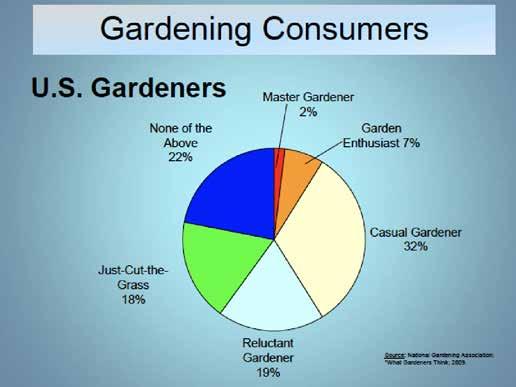
According to the National Gardening Association, only 9% of gardening consumers are experienced. Day and Reed find this borne out in the data they’re collecting on GrowIt!
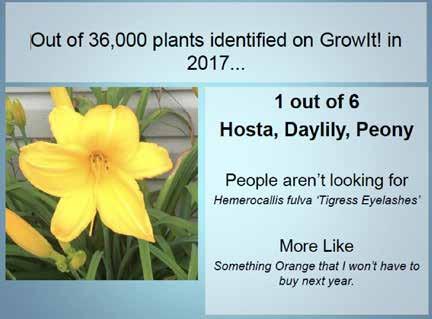
“The oldest Millennials are in their later 30s. Many have just bought their first house, and it has all these plants in the yard. People are posting, “Hey, I don’t know what these are. Do I dig them up or leave them?” Day explains. “People aren’t looking for Hemerocallis fulva ‘Tigress Eyelashes’, it’s more like “I want something orange that I won’t have to buy next year,” Day explains.
“People are starting to think about plants. They know their favorite color, and they know where they want to put plants,” Day says. “Millennials think of plants as decorating. The plants are paint. Once planting becomes science, they’re lost.”
This has big implications for how we arrange plants and horticulture information, Day says. In garden centers, plants are often arranged alphabetically by botanical name. This is not user-friendly for consumers who don’t know a plant’s name—common or botanical. Similarly, references to container sizes are not useful.
“Someone who has no experience doesn’t know what a 4-inch pot is or how many it takes to fill a window box or maybe even what a window box is,” Day notes. One indication of new consumers’ lack of plant knowledge is the app’s plant identification function. One out of every six plants identified on GrowIt! is a hosta, daylily or peony.
(continued on page 44)
Jeff Gibson
Mason Day
Seth Reed
Consumer & Plant Trends —
(continued from page 42)
The new generation of consumers is looking for assistance and information from “trusted partners,” according to Day.
“We trust our peers more than anyone which is why we share almost anything online,” Day admits. He says younger consumers need someone to help them, “but we don’t want someone to hold our hand. We’ve learned how to do things from watching YouTube. Our attitude is ‘teach me how to do this.’”
Providing fact sheets about plant care or e-mailing customers maintenance tips can help an independent garden center become a trusted adviser, Day says. “The consumer says, ‘Dave’s Garden Center really helped me out with this.’ It creates brand loyalty. Mass marketers don’t have the ability to reach out
on an individual basis.”
Landscape contractors can develop an advisory relationship by involving their clients in maintenance. “A maintenance company could say, ‘I’ll be back in two weeks, but here’s what you can do to take
care of the landscape in the meantime,’” Day explains. “It helps give consumers a sense of ownership.”
Subscription services
“In the past, people didn’t want to buy on a subscription basis, unless it was a newspaper or a magazine,” Day says. All that has changed. Think Dollar Shave Club, Stitch Fix and all the delivered meal packages.
According to Day, subscription services meet three factors young consumers are looking for: convenience, home delivery and personalization. For business owners, subscription services provide a recurring revenue stream, the ability to stay in front of the consumer and the opportunity to become a trusted partner.
(continued on page 46)
www.clesen.com
Consumer & Plant Trends —
(continued from page 44)
For instance, a garden center or landscape contractor might offer monthly delivery of a potted herb for $20 a month or a flat fee for the growing season, Day explains. Better yet, if the customer has the option to pick up the monthly offering, they’re likely to see something else they want to purchase from you, Day adds.
Another subscription idea is decorative planted containers that are switched out seasonally. “You could say, ‘We’ve got your porch covered in every season,’” Day explains. He
also suggests building in an expectation of change.
“You’ve got to tell them up front that the spring container isn’t going to look great in the summer, and that’s why you’ll bring them a new one in June and maybe again in August,” Day says. “People pay $25 for a candle, and when it’s burned down they don’t object. We need to instill the idea that the value gets used up over time.”
Packages
Rather than using plant names and pot sizes to market plants, Day suggests putting together packages that are differentiated by value. “Packages help people understand a price point, and they help create a psychological value-added for mid-tier options,” Day explains. (continued on page 48)
Consumer & Plant Trends —
(continued from page 46)
For instance, if you’re merchandizing yellow-flowering plants, the “low-cost” option might be a 6-pack of seed-grown marigolds. The “intermediate” option could be a 4.5” pot of gerbera daisies or celosia, while the “premium” option is a Baja Gold Echinacea.
Similarly, landscape designers could put together different levels of designs: the economy version has 5 types of flowers, the intermediate option has 8 varieties and the premium plan has 10+, Day explains.
Containers
Millennials are gardening on a smaller scale. They often have smaller yards, less lawn and larger decks or patios, Day says. Instead of focusing on sweeping garden beds, Day encourages landscape contractors to think in terms of containers.
Ornamental containers create opportunities to switch out the containers several times a season or throughout the year. But, don’t limit your thinking to ornamentals, Day cautions. Millennials—and others--have embraced edibles.
Gibson sites the 2017 National Gardening Survey as evi-
dence of this trend. “One in three US households grow something edible at home, be it in a large raised kitchen garden or a pot of basil on a window sill,” he explains.
“When bundled together as a sub-class called “Food Gardening”, the retail sales of Vegetable Gardening, Fruit Trees, Growing Berries and Herb Gardening is a $3.8 billion dollar category. This is one billion dollars larger than Flower Gardening, a much more glamorous category from a retailer and supply chain point of view.”
Just five years ago, the Food Gardening categories amounted to only $2.75 billion, Gibson points out, adding, that this is the only gardening category to show real, inflation-adjusted growth since the financial crisis of 2008.
Multi-tasking plants
Younger consumers also value plants for their function, Day says. It’s not enough for a plant to have pretty flowers. Does it attract pollinators? Butterflies? Provide fragrance? Food? Support wildlife?
“Lavender is a triple threat,” he says with a chuckle. “It’s looks pretty; it smells good, and it’s good for pollinators.
“We’ve become a society that thinks it’s not ok for some-
thing to have just one purpose. Our phones aren’t just for talking. They have to take pictures, give us directions, and let us pay our bills,” he notes.
Easy does it
Younger consumers are getting interested in plants, especially the ones that are easy to take care of. “Succulents” are the most searched term on GrowIt!, and Echeveria is the plant that’s most-often added by Millennials, Mason says.
“People figure they can put a succulent on their desk, and they don’t need to water it. It grows without much care,” Mason explains. “Then, they started realizing there were houseplants that were easy care.”
One of the top-trending plants currently is Pilea, peperomioides, aka the UFO Plant. “There are 50,000 images on Instagram,” Day reports. In fact, the top five
plants added to GrowIt! by Millennials are houseplants, Day reports. Even macramé hangers are making a comeback.
The Times, they are a changin’
“As an industry, we’re built on personal interaction, but the new customers don’t get information that way,” Day explains. “It makes people in our industry cringe that people would rather send a text than come in and talk to a person. For better or worse, that’s really where we’re at. It’s how the digital natives use technology.”
“In our industry, people are hesitant to jump on a bandwagon. They wait to see if something works,” Day acknowledges. He suggests our industry can’t afford to take that approach with technology.
Consumer & Plant Trends —
“At least try something different. Don’t accept the status quo,” Day says. “If you’re just doing fine, there’s no growth.”
Gibson agrees. Business owners may recognize they’re personally not equipped to lead the way into new technology, but that shouldn’t stop them, Gibson says.
“Many organizations already have people within the company who know how to do these things. Business owners just need to listen to them, to leverage the knowledge of the junior staff, the people who live in that world already.
“This is a unique opportunity for business owners to listen to their own team and include the ideas of the younger staff,” Gibson continues. “That’s a more efficient way of managing your business anyway.”
Consumer & Plant Trends —
Did you know?
Baby Boomers, long courted for their buying power, are no longer the largest group of consumers.
Millennials, ages 16-35, are now the biggest consumer group. They are 27.9% of the population, compared to 24.1% for Boomers. Add in the generation in between, Gen X (ages 36-51) at 21.3% of the population, and Boomers are far out numbered.
The largest age group of consumers is 26-year-olds. There are 4.75 million of them.
Five million of the six million new households were headed by 18-34-year-olds.
The Power of the Net
• The average person spends 2 hours a day online accessing sites such as Facebook (1.3+ billion mobile users), YouTube (1 billion active users), Instagram (300+ million users), Linkedin (465+ million users) and Pinterest (110+ million users).
• Over 50% of product searches begin on Amazon
• When it comes to purchasing lawn and garden products, the
Consumer & Plant Trends — Who will disrupt your business?
by Patrice Peltier
“We need to watch out for factors that will disrupt our business,” Jeff Gibson, landscape business manager at Ball Horticultural Company, cautioned at iLandscape.
The taxi industry didn’t foresee Uber; the hotel industry didn’t foresee AirBnB, and brick-and-mortar retailers never imagined the impact of Amazon, Gibson pointed out. “Who’s going to be a disrupter for the landscape industry,” he challenged the audience. Gibson shared ideas from Howard Tullman, a venture capitalist, serial entrepreneur and retired CEO of 1871, an “incubator” for some 500 digital startups. Gibson, Mason Day, and Seth Reed introduced Tullman’s ideas at iLandscape in January. Reed and Day, former Ball Horticultural employees, created the GrowIt! app. GrowIt! is headquartered in 1871 which was created by Tullman and is located in the Merchandise Mart.
For iLandscape, Gibson drew upon a presentation Tullman, a graduate of Northwestern University’s School of Law, made in 2016 during the Northwestern Engineering’s Dean’s Seminar Series. Gibson synthesized Tullman’s talk with the following points:
• Both the pace and intensity of change is increasing, and it is increasing in every industry, regardless of whether it’s business-to-business or business-to-consumer.
• Every business, no matter the industry, is competing for the same thing: people’s time and attention. This means that our plants and flowers don’t just compete with other plants and flowers. They compete against anything and everything that consumes time and attention: hobbies, social media, books, you name it.
• We constantly run the risk of being disrupted by somebody with “good enough” tools and a disregard for history or how business is “supposed” to be conducted in a particular industry. Anyone can build a website or web store; anyone can take payments, and anyone can find people with interests in an area in which they want to offer products and services.
• Do it to yourself before others do it to you. Companies that are successful in the long run are constantly reinventing themselves. IBM started in typewriters; Apple didn’t bother with phones until 10 years ago, and George J. Ball who
started growing and selling finished cut flowers 113 years ago is now running its business with WebTrack, the most successful supply chain management tool in the greenhouse industry. Each of these companies stayed true to its core values, while dramatically shifting its areas of business emphasis.
How much time are you spending on perfecting the present, and how much on creating the future? Making little tweaks to make today’s process better is important, but it’s also important not to lose sight of what we want to do in 5, 10, 25 and 100 years.
Follow this You Tube link to see Tullman’s presentation. Tech Trends and how they are changing our lives, businesses and the future
New Member Profile Snapshot
LandscapeHub, Inc.
100 S. State Street, Ste. 3-123 Chicago, IL 60603 (847) 514-2458
Lisa Fiore
www.landscapehub.com
by Meta Levin
LandscapeHub, Inc. was designed and created to bring the landscape materials ordering, payment and delivery process into the digital age.
Founder Lisa Fiore, along with co-founders, Ed Rockhill and Chad Cooper, have built a platform that has digitized the entire process, from locating and comparing prices, to ordering, paying and arranging for delivery, says Fiore. “This is an idea that has been developing for a couple of years.”
She and her collaborators acquired their initial funding in 2017 and partnered with a Chicago agency to build the website. It gives users the ability to source and build a quote at various vendors, then place the order and coordinate pick up or delivery.
LandscapeHub’s soft launch took place in the summer of 2017, but it officially was introduced during the 2018 iLandscape. “We sponsored the keynote speaker,” says Fiore. “Before that people learned about us through word of mouth.”
No stranger to the landscape industry, Fiore has been working for Fiore Nursery and Landscape Supply, since she was in her early 20s, eventually rising to president of the organization.
Rockhill previously served as vice president at Fiore and now is vice president of sales for the new LandscapeHub.
Cooper is the new company’s chief technology officer and has experience in a variety of industries.
Already LandscapeHub has attracted more than 85 suppliers, who sell through the platform.
Originally, the company started with three employees, but now employs 15. Emily Stuart, Dave Williams, Joe Juricic and Will Haverkamp, all of whom have been active in ILCA through previous jobs, started in the fall of last year and were joined by six software engineers, a horticulturalist, a marketing professional and a vice president of operations. “We are a small, but mighty team,” says Fiore.
They are working to standardize plant nomenclature and packaging to make finding material easier for customers. A new feature also allows users to save preferred suppliers, as well as arrange payment online.
Since last summer, Fiore has noticed an increase in the number of landscape contractors who are using the site and they are not just from one area. In fact, the company has attracted vendors from 12 different states, including Texas, Kentucky and Indiana.
They also are reaching out into the community, sponsoring the recent ILCA young professionals event, as well as other educational opportunities. “We are on a mission to empower all people within the industry,” says Fiore. To that end, they are planning a series of lunch and learn programs to promote LandscapeHub, but also to explain how the digital process works and how they believe it can benefit the industry.
With a background like Fiore’s it’s no surprise that LandscapeHub almost immediately joined ILCA. “It’s the best regarded association in our area,” she says. “iLandscape is the premier event and ILCA is committed to educating and fostering the next generation of professionals.”
This all fits neatly into LandscapeHub’s vision, which Fiore describes as “improving the lives of all green industry professionals, empowering buyers and suppliers and building a platform that promotes transparency and trust. We’re building a bridge between the buyers and the suppliers.”
Classified Ads
Landscape Designer/Salesperson
Bruss Landscaping of Wheaton is looking to add another talented Architect/Designer to our team. 2017 marks our 65th year of providing high quality residential landscape design and installation services to DuPage and eastern Kane counties. If you have a passion for residential design and sales, are self-motivated and focused on superior customer service we would like to meet you. Candidates must have earned a degree in Landscape Design/Architecture/Horticulture. At least 3 years professional experience is preferred however we are open to recent graduates as well. Bruss is a relaxed work environment, although seasonally hectic, with a strong benefit package. Eric Bruss, ebruss@brusslandscaping.com, (630) 665-1600.
Landscape Construction Careers
Sellers Services, Incorporated is an awardwinning landscaping company and we are seeking a Landscape Construction Project Manager to manage some exciting projects in Culver, Indiana and the surrounding area. Our company builds and maintains the landscapes on some of the most beautiful homes on Lake Maxinkuckee and the surrounding area. If you want to make a difference in your life and the lives of our customers, then we want to talk to you immediately! We are willing to pay top dollar for your talent. Ideal candidate will have at least 5 years of management and landscape or construction
experience, to include paver patios, retaining walls, etc. An incredible opportunity awaits. Email your resume to adam@sellersservicesinc.com today.
Pesticide Spray Tech
Hoy Landscaping is looking for an experienced pesticide spray tech to join our landscape maintenance team. Qualified candidate must have a current Commercial Pesticide Applicator/Operator license as well as a Drivers License. Competitive pay based on experience. Call 708-356-1066 and ask for Greg. Or, send resume to info@hoylandscaping.com.
Field Superintendent
The Field Superintendent will assist with getting crews set up for jobs & checking on job sites as necessary.
Duties will include: Getting crews materials in yard each morning; setting up jobs; checking in-progress/completed projects; accurately measuring completed projects for close out
Qualifications: High school/equivalent required, college degree preferred; min. 1- 2 years in similar position, experience in landscape restoration a plus; ability to read/
Your Future is Our Future!
understand plans; ability to work outside in various weather conditions; must have valid driver’s license & maintain insurability with McGinty’s fleet carrier; strong written/oral communication skills
Please email resume to Taylor at TAbrahamson@McGintyBros.com
Address: 27788 West Case Road, Wauconda, IL 60084
Type: Full time with availability to work 45-50 hours per week Monday-Friday
Landscape Maintenance Client Rep (F/T)
Landscape firm in Libertyville seeks individual possessing strong background in project/ client mgmt., customer service, estimating, sales, leadership communication skills, as well as all phases of horticulture, turf mgmt. and proper maintenance techniques. Min. 3-5 yrs. exp.; valid DL a must; SP speaking a plus. Exc. comp. & benefits pkg. Email resume: (ndeeter@roccofiore.com)
Account/Client Manager
We are accepting resumes for the position of Account/Client Manager. This position entails working with our existing clientele and monitoring their landscape. This position requires a degree in horticulture or equivalent work experience. The ideal candidate will have worked in this position
James Martin Associates, Inc. is a leader in the Landscape and Snow Management industry and has been providing services to our customers for over 40 years We are always looking for exceptional individuals in Vernon Hills, Illinois and Boulder, Colorado.
Classified Ads
HELP WANTED
before at another landscape company. This position requires skill in customer service, estimating, and turf management practices. Upward movement is available in our growing business. Please email your resume to info@suburbanlandscaping.net
Field Operations Manager
Moore Landscapes, LLC is looking to fill our open position for Field Operations Manager (Service Leader) in our Chicago Branch. This person will oversee field crews and assist in planning, organizing, directing and coordinating the services of maintenance and installation among other responsibilities. Competitive Salary and Benefits. Come join the Moore Landscapes Family! Please send resume to: kat@moorelandscapes.com
Maintenance Division Manager
Immediate Opening: Maintenance Division Manager Poul’s Landscaping & Nursery, Inc. Long Grove, IL www.Pouls.com * info@pouls.com * 847-949-6667
Established in 1966, Poul’s Landscaping & Nursery, Inc. is a thriving, family-ownedand-operated business based in Long Grove, IL. Poul’s is uniquely constructed with three divisions working together: full-service residential maintenance/enhancements, design/ construction, and a wholesale nursery. Poul’s has a small-office atmosphere with big business sales numbers. The profitable maintenance division has nearly doubled in only 3 years and we are looking for the right candidate to continue to grow the division. Responsibilities: Establishing and building a relationship with new and existing clients; working with maintenance supervisors, support staff and other team members to provide
FOR SALE
the highest quality customer service; maintaining and exceeding contract renewal rates and achieving financial goals. Requirements: Candidates should either have horticulture or landscape design/architecture degree or extensive experience, horticultural knowledge, and a proven track record in previously held positions. ISA Arborist Certification and fluent in Spanish are a plus. This is a salaried position with incentives and includes a competitive benefits package. Please email your resume to wendy@pouls.com.
HELP WANTED
Account Manager
45+ year old, full service landscape design/ build, maintenance, tree removal and plant health care company currently seeking candidates for a position in our Landscape Maintenance Division as an Account Manager. The position will report to the Landscape Division Manager and focus on client relations and maintain direct control over the Maintenance Foreman responsible for servicing the Account Manager’s clients. A well suited candidate will possess a strong horticultural background. A degree in a related field is a plus.
Develop and maintain a strong positive relationship with customer base.
Proactively manage properties by identifying and correcting issues before the customer brings them to our attention.
Propose corrective course of action to client. Monitor and direct activity of crews, adjusting scheduling to efficiently complete weekly routes. Meet with company generated new leads and proposed new work. Increase company revenue by selling enhancements to existing clients.
Please send resumes to: john@kinnucan.com
CLASSIFIED ADS CLOSING DATES & RATES
July 2018 issue ads: June 15, 2018
August 2018 issue ads: July 15, 2018
September 2018 issue ads: August 15, 2018
PLEASE NOTE: “HELP WANTED” AD SALES ARE LIMITED TO ILCA MEMBER COMPANIES
Magazine Cost is $5 per line
Minimum charge $50
Website Cost is $12 per line
Minimum charge $120 (About 6 words/line)
Submit your ads online at ilca.net or call Alycia O’Connor (630) 472-2851
Before You Go...
Dirty Little Secrets:
Hidden Details Can Make or Break Your Projects
By Scott Mehaffey
Like many of you, I’ve had the good fortune to work on some historic properties where the original clientsand landscape company - did things right. And by that, I mean, they built to last! (If you’ve ever had to remove a concrete footing the size of a Volkswagon Beetle, you’ll know what I’m talking about.) Back when labor and materials were cheaper (especially labor), landscapes were often designed and constructed to last 100 years - or more.
It’s fascinating to look at old landscape drawings and photographs to see how things were done before everything was mechanized - when teams of horses hauled trees out of the nursery and landscape crews used block and tackle, gantry cranes and hammer and chisel to create the intended effects. Before blowers, we used brooms; before lasers we used levels - and people had to think. When hand-crafted meant using your actual hands, workers made sure it was done right the first time. (Do I sound like a cranky old man?)
Unfortunately, labor and materials are considerably more expensive today - but fortunately, we have an ever-expanding array of improved tools and technologies at our disposal. From five landscape companies serving a given market, we now have fifty or five-hundred - so everyone’s looking for efficiencies and a competitive edge. And clients raised on the insta-landscapes of HGTV and a steady stream of consumer magazines just want “the look” - they often don’t even care how it’s built.
Too often we’re called in to fix the schlocky work of a competitor - and occasionally of our own crews. A confident, communicative and well-trained construction foreman is worth his or her weight in gold (and yes, ILCA is paying me to say that) - as is a landscape architect or designer who has actually spent time in the field studying how the world is constructed. Of course, this may also be a good time to explain to the customer how
things should be built - that is, if you can get them to listen.
Larger landscape companies with a well-organized design team already know that design elements and details reviewed by a civil or structural engineer, approved by the municipality, and successfully priced and installed are used again and again. “I want a driveway like the Smith’s, a stoop like the Brown’s, and a pool like the Roberts’ - only make it look French, not Italian,” sayeth the design director or team leader. Sometimes it’s not custom but customized that we’re after.
When a client’s budget is tight and they refuse to implement a more ambitious design in phases, we can strip it to the bare essentials and use quality materials for the same amountor use cheaper materials for a “similar” effect. Either approach can work if you give them a quality design and installation. Proper material selection won’t matter if footings, foundation walls, compacted base, reinforcement, drainage - and in many cases, irrigation - aren’t done right.
Site prep, clean-up and disposal are key: too many landscapers get caught taking shortcuts and get a bad reputation as a result. Make sure that your crews are not “burying the evidence.” Rubbing dirt on a gashed tree-trunk or pulling soil off the basal flare of a shrub that’s planted too low won’t make things right - it may buy you some time, but in the end, it costs the company more money. As grandpa used to say, “If you don’t have time to do it right the first time, then you must think you have time to go back and do it again!”
Scott Mehaffey is a landscape architect and Executive Director of the Farnsworth House National Historic Site in Plano, IL. Scott is an ILCA member, a past speaker and instructor, and has held many public- and private-sector positions across the Chicagoland area. This column is meant to challenge, inspire and entertain.
CREATIVITY
Your clients rely on you to show them what’s possible.
UNLEASH YOUR IMAGINATION with Unilock pavers and walls to create brag-worthy, one-of-a-kind outdoor spaces that build your company’s reputation for style and quality.
Only Unilock offers EnduraColor™ Plus Architectural Finishes
From the sleek modern lines of Umbriano®, to the historic street paver feel of Town Hall ®, this exclusive collection sets a new standard for everlasting beauty.
Learn more about how Unilock products can help your projects stand out - Local territory managers in your area are only a phone call away.
Combine NEW U-CARA™ Opal and Granite Fusion with Umbriano ® French Grey for a sleek and modern design.
U-CARA™ Fascia panels can be placed anywhere along the Sure Track Backer Block, allowing for a variety of patterns, color and texture combinations not possible with other systems.