The Landscape Contractor magazine July 2017 Digital Edition
Ringers
Photo Credits
ILCA Awards Program 1, 8-9
Nina Koziol 10-16, 18-22
Chicago Botanic Garden 24-28
ILCA Design Committee 29-36
H & H Landscape 52
Jason Fritz/Cardno 62
The official publication of the Illinois Landscape Contractors Association (ILCA), The Landscape Contractor is dedicated to educating, advising and informing members of this industry and furthering the goals of the Association. The Landscape Contractor carries news and features relating to landscape contracting, maintenance, design and allied interests. Publisher is not responsible for unsolicited material and reserves the right to edit any article or advertisement submitted for publication. Publication reserves right to refuse advertising not in keeping with goals of Association. WWW.ilca.net
Volume 58, Number 7. The Landscape Contractor (ISSN # 0194-7257, USPS # 476-490) is published monthly for $75.00 per year by the Illinois Landscape Contractors Association, 2625 Butterfield Road, Ste. 104S, Oak Brook, IL 60523. Periodicals postage paid at Oak Brook, IL and additional mailing offices. Printed in USA.
POSTMASTER: Send address changes to The Landscape Contractor, 2625 Butterfield Road, Ste 104S, Oak Brook, IL 60523. DISPLAY ADVERTISING SALES: Association Publishing Partners, Inc., Ph. (630) 637-8632 Fax (630) 637-8629 email: rmgi@comcast.net CLASSIFIED ADS, CIRCULATION AND SUBSCRIPTION: ILCA (630) 472-2851 Fax (630) 472-3150 PUBLISHER/EDITORIAL OFFICE: Rick Reuland, rmgi@comcast.net, Naperville, IL 60540 Ph. (630)637-8632
2625 Butterfield Road Ste. 104S Oak Brook, IL 60523
Senior Writer treethyme@aol.com
Patrice Peltier
Feature Writer patpeltier@charter.net
Meta Levin
Feature Writer meta.levin@comcast.net
Nina Koziol
Feature Writer n.koziol@att.net
Heather Prince
Feature Writer princeht@sbcglobal.net
Marilyn Witney
Feature Writer madwitney@comcast.net
October 5, 2017
Women’s Networking Group Fall Event Chandler’s Chophouse Schaumburg, IL
October 17, 2017
Impact Conference: Building Sustainable Landscapes Chicago Botanic Garden Glencoe, IL
From Where I Stand —
“The beatings will continue until morale improves.” - Unknown
No one is exactly sure as to the origin of this popular quote. Some have attributed it to Captain Bligh and the infamous mutiny on the Bounty. Others say it dates back even further to Voltaire. Some say the expression has more recent origins in the French or Japanese navies. The expression has since become a joke, but it’s early uses were not intended to be funny. There was a prevailing sentiment that the best way to make enlisted men love you, was to beat it into them.
As the recession becomes a fading scar on the landscape industry, the entire employeremployee relationship has changed. Landscaping lost 20% of its workforce in five years and many have been reticent or unwilling to return. The gradual increase in client business has gone from being a welcome relief to a growing problem. The phone continues to ring, clients continue to refer, pent up demand continues to surge. Landscaping has come roaring back. The industry clearly is not ready to meet the demand due to a labor shortage. It has met that roar with a terrified meow.
I have not heard a single contractor say they are hurting for work. The rainy spring has only put further demand on the labor force to catch up. Employees are not stupid. They understand there’s been a shift towards an employee-based market. Many of those employees are taking full advantage. This has manifested itself in a sense of entitlement for which most employers were not ready. Going from a crushing recession to a dire labor shortage in three years is enough to cause whiplash.
money will follow” or “Follow your passion and you’ll never work a day in your life.” It was only a matter of time before we began to not only believe it, but demand it.
Corporate, (or the more generalized “organizational”) culture, is defined by academic Richard Perrin as, “The sum of values and rituals which serve as “glue” to integrate the members of the organization.” It is often noted that corporate culture is implied, not expressly defined, and develops organically over time from the cumulative traits of the people the company hires. In essence, leadership sets the tone, but employees either perpetuate or change the culture.
The Culture Wars
I’ve fielded more calls this season regarding the labor force than the last three years combined. Dozens of landscape companies have called to express their difficulties navigating the new labor situation. It goes beyond just trying to locate people. Most employers feel taken advantage of by some of their current employees. They feel standards have dropped as employees become more empowered. Employees have grown lazy, disobedient, and show a blatant disregard for their equipment and work rules. Employers have complained that it’s become increasingly difficult to enact discipline when those employees know they can walk at any time.
Now for the bad news. This is not going to change. Employers are not going to wake up tomorrow and find a line of prospective employees outside their chain-link fences. A new generation of American workers is not going to fall in love with landscaping as a vocation no matter how many politicians talk about the intrinsic rewards of hard work. Companies will succeed or fail in this era based on labor and labor alone. This is the new reality and it’s not the employees, but the employers who will need to adapt.
Jobs no longer bisect our lives into two halves; professional and personal. Everything has now been blended together. The cliché of the miserable worker with the shouty, demanding boss is gone. No one wants to live in a 1950’s comic strip. In reality, company culture is a manifestation of what we’ve been paying lip service to for years. We’d hear expressions like, “Do what you love and the
So why did organizations get so concerned with their cultures all of a sudden? Many assume employees began to demand a more positive workplace culture. Employees make a lot of demands, but that is not often the reason why organizations change. In brief, companies focused on improving their corporate cultures because studies showed the financial benefits outweighed the drawbacks. A positive corporate culture helped with goal setting, strategic planning, finding personnel, innovation, and brand and image management.
Consider this implication for landscape companies. A Columbia University study showed that the likelihood of job turnover at an organization with a rich company culture is a mere 13.9 percent, whereas the probability of job turnover in a poor company culture is 48.4 percent. Do I have your attention now?
Now, many business owners or managers will think this focus on culture is just another example of how entitled workers have become. These businesses will inevitably ask, “Don’t they know I’m doing my employees a favor?” Anyone who works in a high functioning team environment knows that’s BS. Management is pure bliss when you are surrounded by a selfmotivated team of professionals working towards common goals. Successful companies have stopped this silly, outdated charade that employees are replaceable drones. Employees are the most vital, nonrenewable resource in the landscape industry. You know it, I know it, they know it.
The best part about culture is that it is 100% within a company’s control. It is one of the few areas related to personnel that an employer has complete domain over. Tomorrow, any employer could walk into his or her office and make significant changes to the company culture. An employer, in one day, could decide to raise wages, increase break times, provide extra time off, update uniforms, sponsor a soccer team, arrange for a taco truck, have a family picnic, give out employee awards, or buy a super-cool foosball table.
Ok, I get it. Those cost money, take time, are blatant mollycoddling, and are difficult to support when an employer feels his employees haven’t earned them. I agree, those do help improve company culture, but are mostly symbolic. What academic John McLaughlin advocates instead is that employers should answer seven questions about their businesses and share their results. He says these are central to determining the organization’s culture:
1. Do I encourage my employees to innovate?
2. Do I care more about the details or the finished product?
3. Do I care more about results or the process in which those results are achieved?
Why I Give
Answering a pressing need to exert political influence with lawmakers in Springfield, ILCA has re-instituted its Political Action Committee (PAC).
Donations for the PAC are desperately needed. To demonstrate this need and serve as a personal call to action, The Landscape Contractor will interview a PAC donor in each issue for the months ahead.
This month we talked with Fred Wacker of Mariani Landscape.
Fred Wacker Mariani Landscape
Lake Bluff, IL
Why is this cause important to you?
Why should it be important to all contractors?
If we have an opportunity to speak constructively about how to make the climate for small and medium size businesses in Illinois better- and it needs to be better—supporting the ILCA and its PAC is a perfect way we can collectively do so.
Benjamin Franklin famously said back in revolutionary times that we either hang together or assuredly will hang separately. There is tremendous power in being together as an aligned industry. The big things we care about- availability of skilled and qualified labor, a good business climate, and fair rules, not burdensome regulation—these are all things we all need in Illinois. By speaking with a unified voice we are much more influential than if we stay silent or fight individual battles. ILCA has been a force in our state’s green industry for decadesThe PAC makes us stronger than ever and gives us an even better chance to be heard.
Do you have a history of political donation?
We support our local and state representatives, and we often welcome the chance to discuss the issues that are important to us with them—how could they know what truly affects us as landscape contractors and nurserymen if we stay quiet?
Why should contractors follow your lead?
If we work together we can make a positive impact in Illinois. ILCA’s political voice needs to be heard. Our elected officials are there in the first place to serve the people, businesses, and institutions of our fine state. We sadly are as a state noncompetitive with many other states in the nation when it comes to beneficial business climate, workforce availability and general economic health. Yet we are all located here and our profession means we will remain here. Isn’t that in itself a great reason to get involved? The Mariani team thinks so!
From Where I Stand —
4. Do I care how my decisions impact my employees?
5. Do I value team or individual accomplishments more?
6. How aggressive should my employees be in the marketplace?
7. How important are rules in my business?
For example, if an employer cares more about results than process, stop micromanaging and vice versa. If an employer wants his employees to innovate, they need time to innovate and an environment and platform to pass along their thoughts to management.
A company cannot make an unhappy employee happy by doing nothing, or worse, adopting draconian work rules. Morale will not improve regardless of the frequency or severity of the beatings. An employer is not going to make unhappy employees happy by telling them how easy they REALLY have it. You are wasting your breath with that, it’s a lot easier just to say, “Good bye.”
Unhappiness starts a chain reaction in a business. An unhappy employee begins to become less productive. This leads to frustration and stress for management. That stress is relieved when the employee leaves, but a hole is created that needs to be filled by other employees. Those other employees are required to work harder and longer. They grow unhappy, and become less productive. The loop is closed on the vicious circle. Further, most landscape companies fill their ranks by asking current coworkers to reach out to family and friends. If the most effective recruiting tool is current employees, and those employees are miserable, the problem has been compounded.
There are two reasons for a negative company culture. The first reason is ignorance — the employer is well-meaning he/she simply does not know the problems that exist. The second is ego — the employer senses there is a negative culture, but simply does not want to change. That would require an acknowledgment that something is wrong and ownership is the problem. That is really, really hard, especially for Type-A owners or those from the old school. I get that, but shake it off.
The best way to determine the current culture is to ask someone who won’t lie to you. Don’t drag the most miserable foreman into your office and sweat him out under a hot light. Most likely, he will lie out of a sense of self-preservation. That lie will be deadly. It will only cause an employer to fold his arms proudly and assume nothing is wrong. A few weeks later, that employee is gone and could take three more with him.
Just five years ago, the rules were different. Duds and low performers were let go, or, at least not missed. Everything has changed. An employer should look long and hard at the payroll and start with the premise, what if there is no “next guy.” The company must examine the list of low performers and determine how many can be saved by improvements to the company culture. If an employee is too far gone, he or she should be terminated. Nothing sends a clearer message that the culture is changing than cleaning house. For those who remain, the message should not be, “You might be next.” The message should be, “I believe in you. I want you to buy in.” Tell those employees what you value and have them tell you how they can help, perhaps, over an epic game of foosball.
May 17, 2017
President Lisa Fiore
Don Fiore Company, Inc. (847) 234-0020 lfiore@donfiore.com
Vice-President Tom Lupfer Lupfer Landscaping (708) 352-2765 tom@lupferlandscaping.com
Secretary-Treasurer Jose Garcia
Natural Creations Landscaping, Inc. (815) 724-0991 info@naturalcreationslandscaping.com
Immediate Past President Mike Schmechtig Schmechtig Landscape Company (847) 566-1233 mschmechtig@schmechtiglandscapes.com
Directors
Mark Breier National Seed Co. (630) 963-8787 mark.breier@natseed.com
Allan Jeziorski Hartman Landscape (708) 403-8433 allan@hartmanlandscape.net
Kevin Manning K & D Enterprise Landscape Management, Inc. (815) 725-0758 kmanning@kdlandscapeinc.com
Scott McAdam, Jr. McAdam Landscaping, Inc. (708) 771-2299 Scottjr@mcadamlandscape.com
Dean MacMorris Night Light, Inc. (630) 627-1111 dean@nightlightinc.net
Mark Uttendorf Emerald Lawn Care, Inc. (847) 392-7097 marku@emeraldlawncare.com
Donna Vignocchi Zych ILT Vignocchi, Inc. (847) 487-5200 dvignocchi@iltvignocchi.com
President’s Message —
As I sit at my computer and think about writing my first President’s Message, I look back over my time in this industry and think about all the people I have met and who have influenced me along my career path. I think about how far I have come from where I started and how much more I have left to learn. When I first started, there was not much of a labor issue. I did not know what it was to go through a recession or fight a political battle. But I knew I wanted to learn more about our industry and the people who are a part of it. That is what led me to ILCA. Not only did I learn about the rewards and struggles of an industry of which I was proud to be a part, but I made some amazing friends who not only “do what I do,” but who also understand the blood, sweat and tears that are a part of creating and maintaining beautiful spaces to be appreciated for generations. I will be forever grateful for the friendships that I have made so far. And I look forward to those friendships I have yet to make. “There are no strangers here; only friends you have not yet met.” — William Butler Yeats.
Beyond friendships, I have many family members who have been and who are members of the landscape community. For longer than I can remember, there has been a Fiore in the landscape industry; either growing, designing, installing or maintaining. I suppose this seemed like a logical path for me to follow. Before entering college at Michigan State University I thought long and hard about what I wanted to be when I grew up and what I wanted to do. Originally I thought I would be a building architect, but my love of the outdoors and the desire to be “hands on” led me to the field of landscape architecture. Eventually, I joined my dad, Don Fiore, to try my hand in the design/build world. Working in landscape contracting has been a great fit for me and I look forward to what lies ahead, both here and in my role at ILCA.
I am honored to be a part of an organization that fights for its members, honors them and provides learning tools to make us all better. I feel a great deal of pride to be President as we continue to move forward. We are enormously fortunate to have such a great Board of Directors, staff and dedicated committee members who help make it all happen.
Speaking of committees, there is a great event on July 13th, it is In the Field Design Tour, put on by our always creative Design Committee and following that on August 10th is Summer Field Day at the College of DuPage. Our Summer Field Day Committee is working hard behind the scenes to make this another memorable event. Hope to see you there!
I will borrow my parting words, from someone who said it well… “Far and away the best prize that life has to offer is the chance to work hard at work worth doing”
– Theodore Roosevelt
www.ilca.net
Thank you,
Lisa Fiore
June 8, 2017
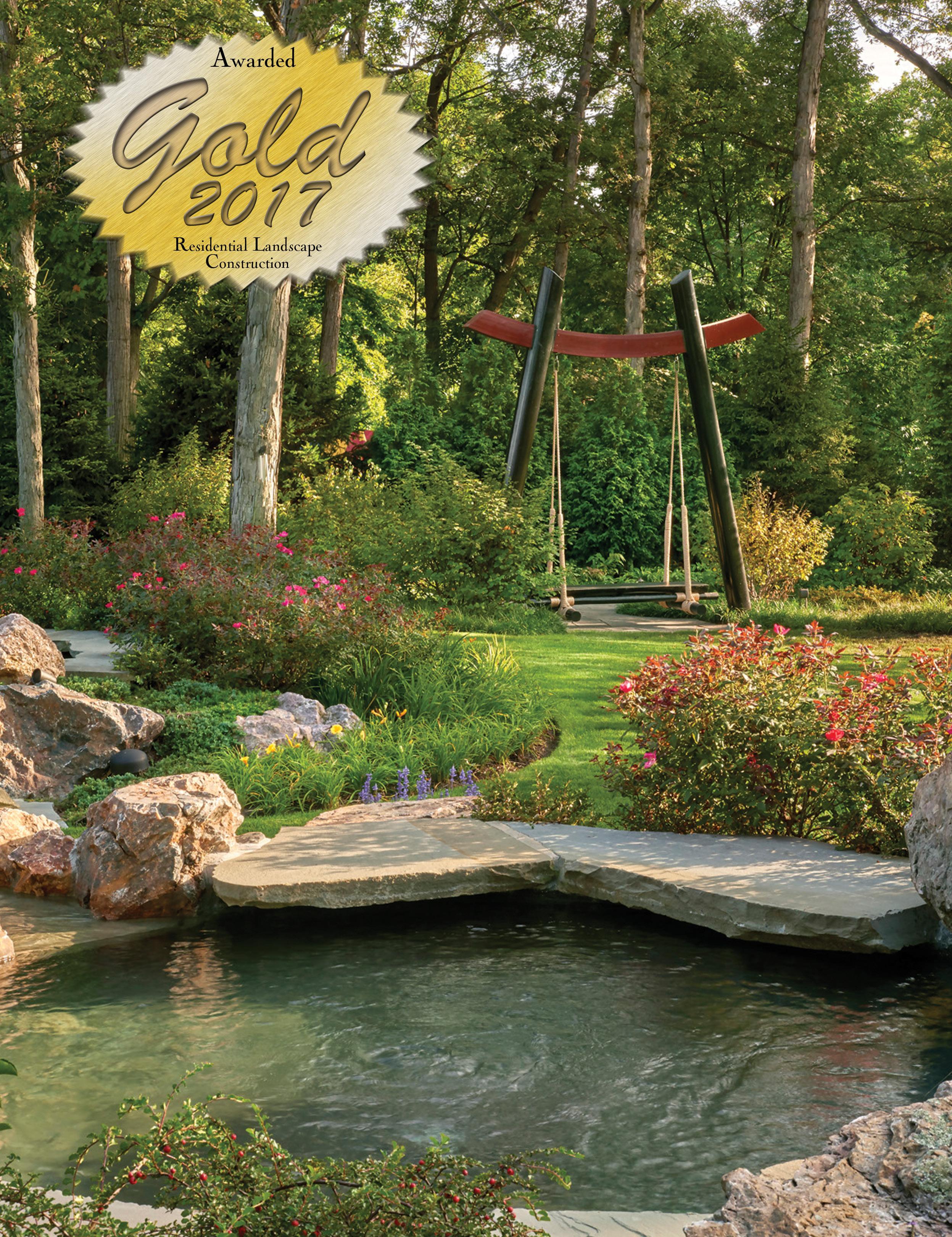
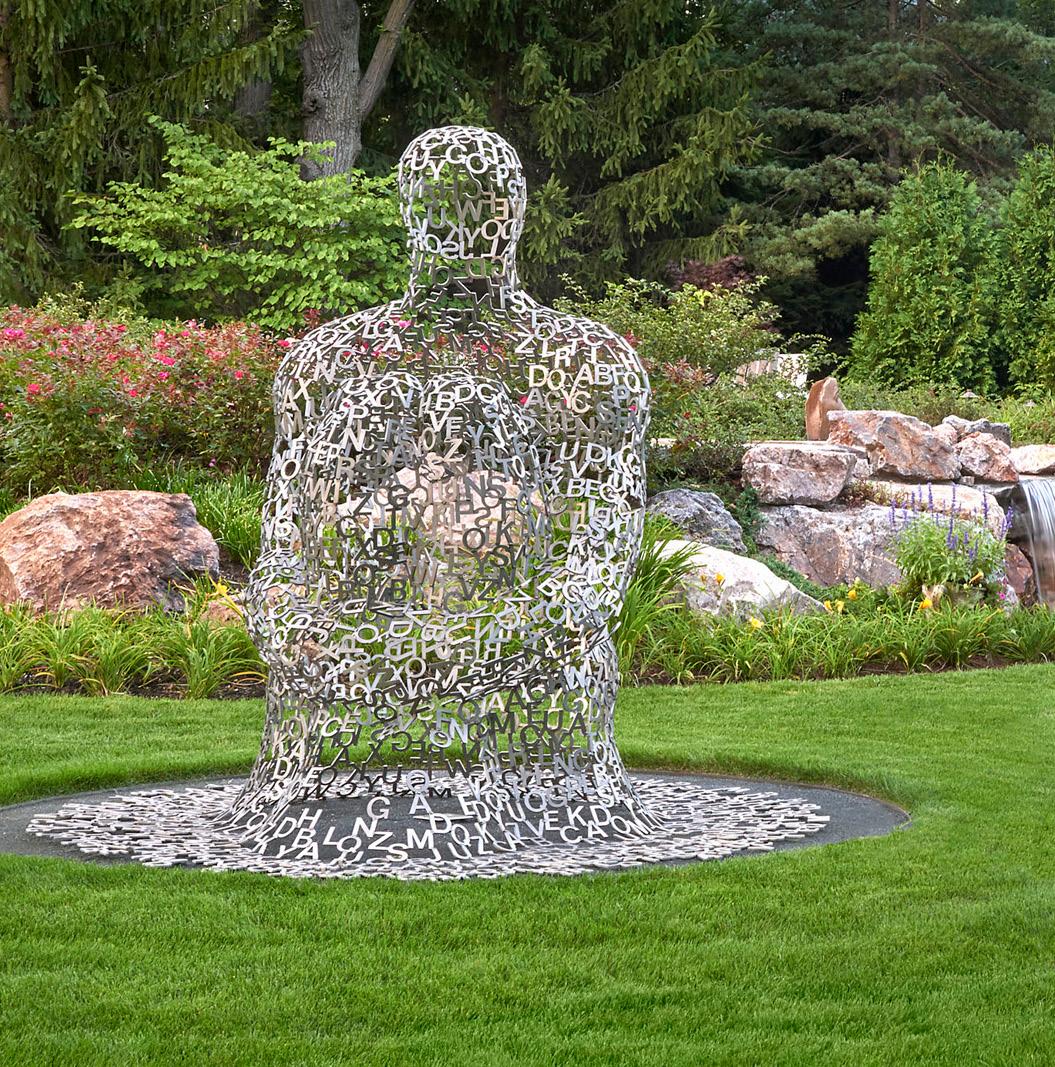
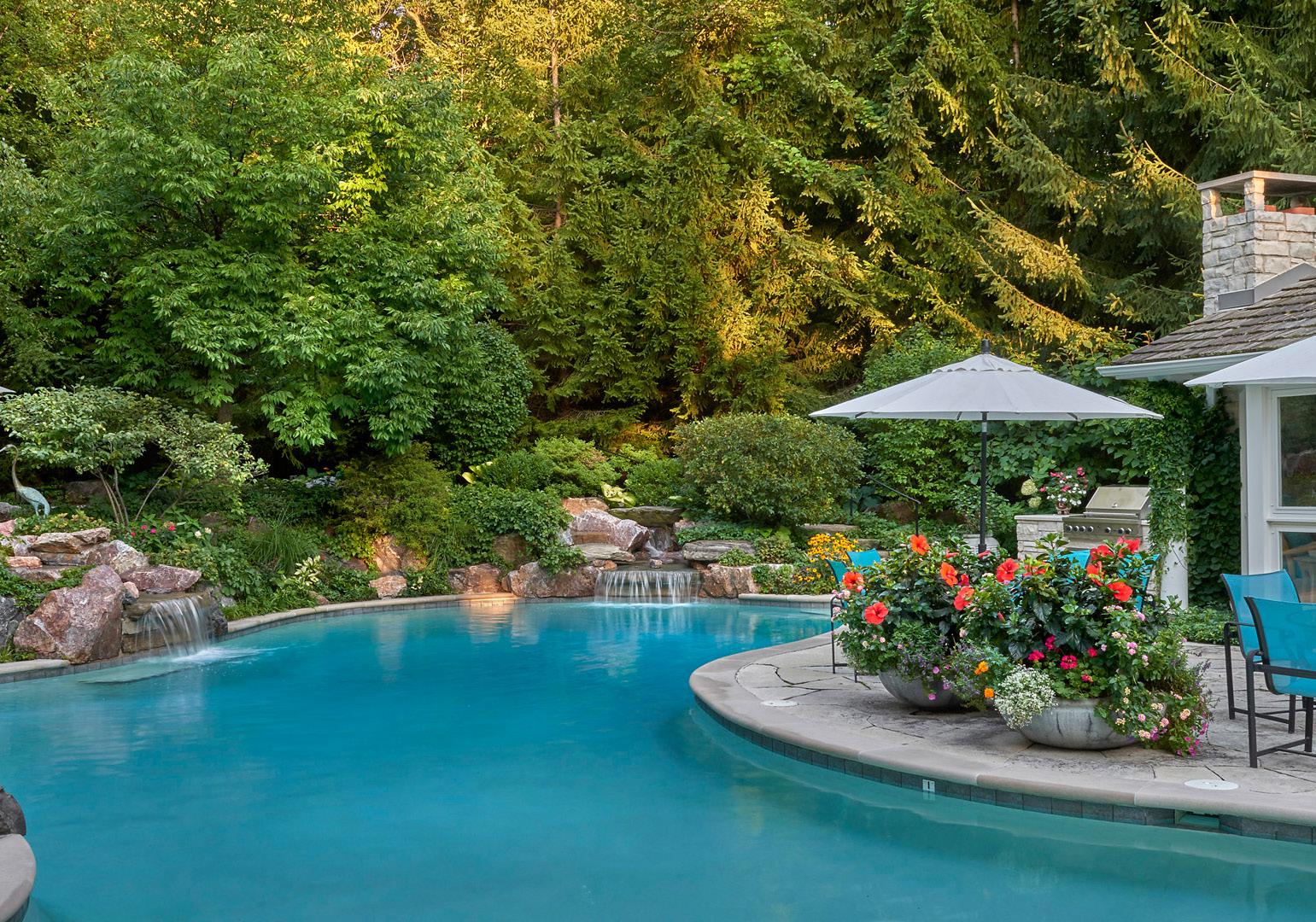
Scott Byron & Company • Art in the Landscape
Lake Bluff
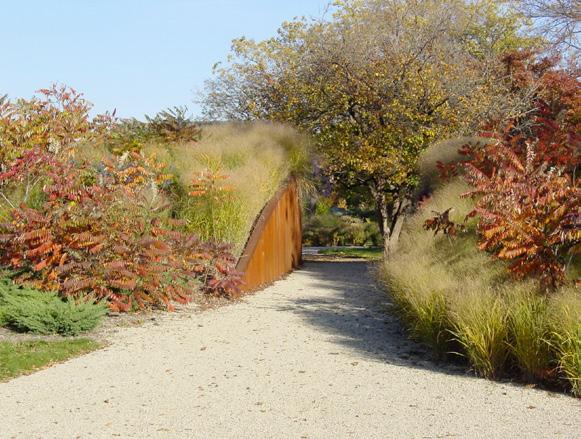
AHighland Park resident was presented with the opportunity to expand their existing property. They wanted to create a series of destination gardens, locate sculpture throughout the property, and have spaces for entertaining. Unifying the two lots into one new integrated and inviting space was critical, with the sense of privacy and beauty.
As one wanders through the landscape, a path carries them through a series of gardens and relaxation areas that integrate sculptural elements with gardens and water features. A multi-layered terrace offers a variety of uses from spacious entertaining to cooking, dining, and relaxing around a fire. The destination oasis invites visitors to swim in the naturalistic pool and experience the cascading waterfalls. The path also leads to an organic vegetable garden enclosed by a curvilinear wood and stone fence surrounded by perennials, inviting one to stop inside for the fresh herbs and vegetables. Indeed, this versatile space can run the gamut from supporting individual relaxation to vibrant social interaction.
Creating outstanding vistas from inside the home and throughout
the property was also a priority. The outdoor sculptures were carefully placed for prime viewing from inside the home, while garden spaces were designed to create a lush, integrated setting for the artwork. The sculpture and flourishing plantings offer inspirational views and serenity. Artistic details encourage visitors to explore the grounds at their leisure. Quiet nodes for reflecting invite visitors to relax and admire the ever-changing views throughout the day and seasons. Soft lighting allows the gardens to be enjoyed after dark.
The project also incorporated a number of custom details such as an Asian-inspired outdoor swing, outdoor kitchen, and garden shed. Specimen ornamental trees punctuate the landscape while native plantings fill the curvilinear lines of the gardens. Masses of perennials and ornamental grasses fuse and link the landscape to the site.
A combination of well-selected plant material, perfectly placed sculptures, elegant design details, and gardens that flow seamlessly throughout the property worked together to create one unified space that is beautiful, versatile, and in harmony with the home.
Summer Field Day 2017
by Meta Levin
“It’s a wonderful site and an amazing academic facility,” says Paul Guzzetta, 2017 Summer Field Day co-chair. His enthusiasm is centered on the College of DuPage. “It’s quite an asset locally.”
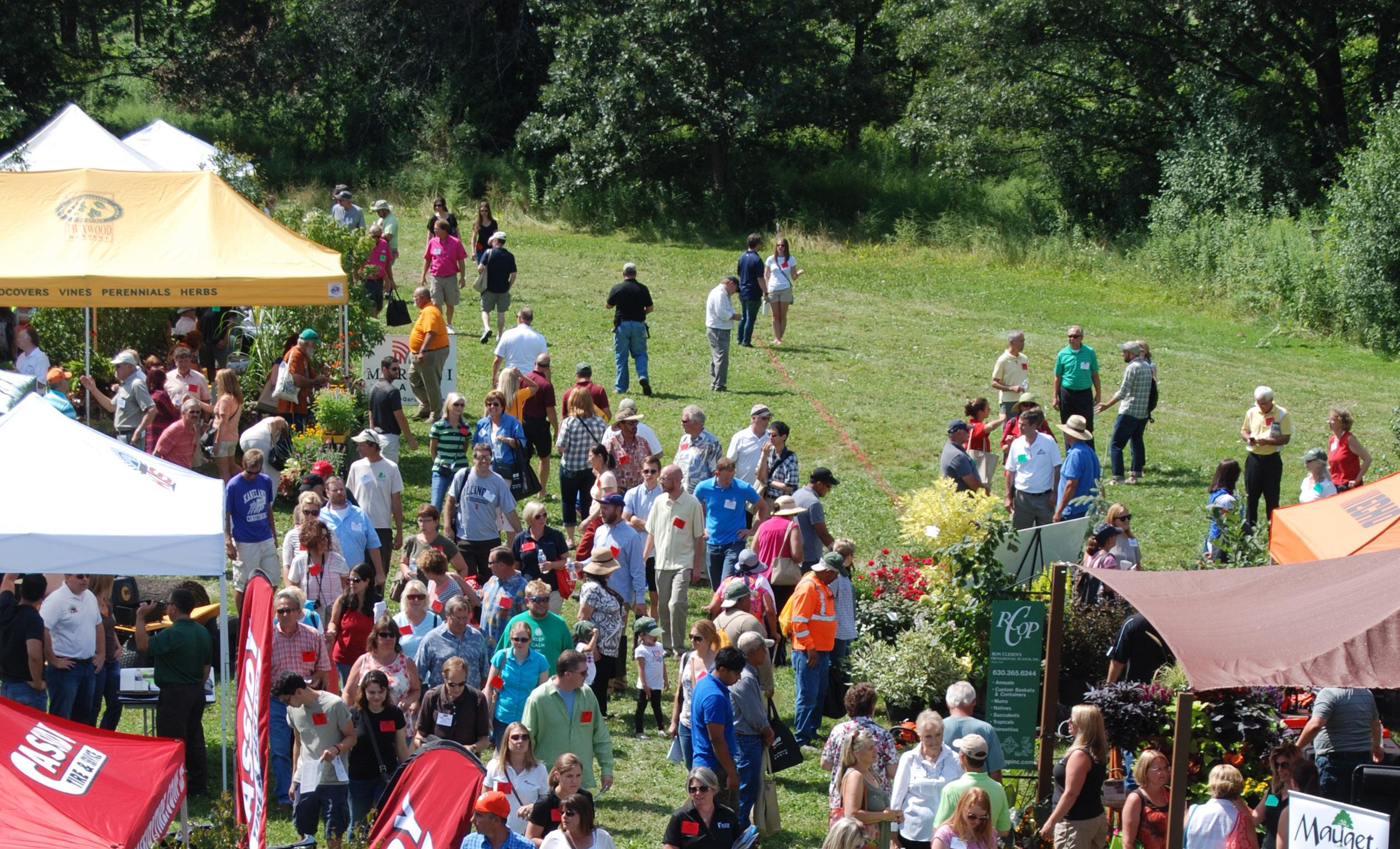
Summer Field Day is scheduled for 8:30 a.m. to 3 p.m., Thursday, August 10, 2017 at the College of DuPage (COD), 425 Fawell Blvd., Glen Ellyn, IL.
The college, which has been known for its ornamental horticulture program since
the early 1970s, sits on 273 acres of landscaped land. “It’s probably the most beautifully designed and landscaped community college I’ve seen,” says Guzzetta, whose co-chair is Sheri Lundell, a sales executive with RCOP, Inc. Guzzetta is an owner/partner with Kaneville Tree Farms, Inc.
“She’s extremely organized and a wonderful addition to our committee,” says Guzzetta of Lundell. “I’m fortunate to have her as a co-chair.”
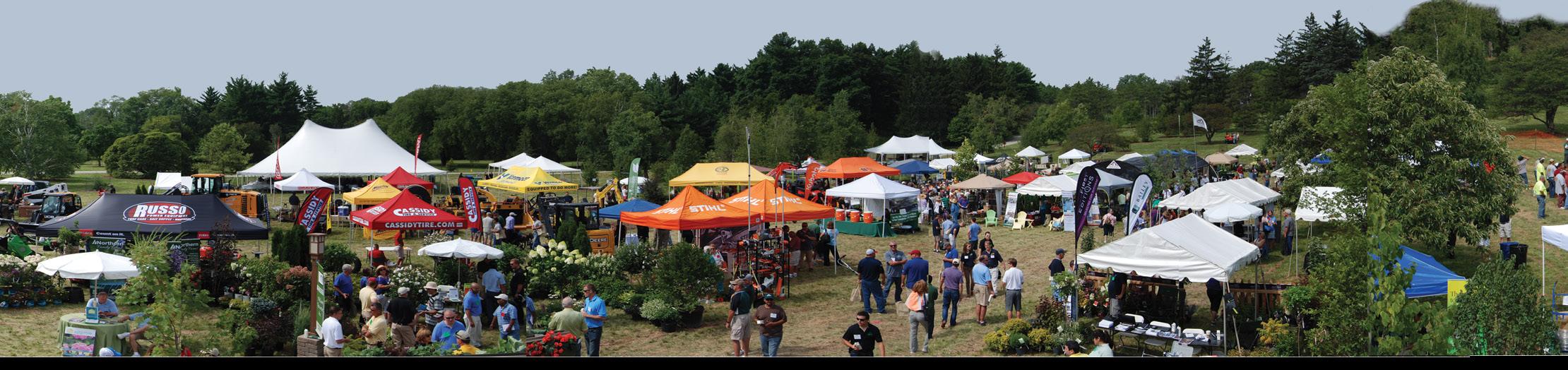
ILCA’s Summer Field Day committee plans to take full advantage of the COD facility. Guzzetta expects at least as many exhibitors as were attracted to last year’s event at Midwest Groundcovers. “I am pleased with the amount of support we are getting from our supplier members.” They will be set up on a grassy area on the west side of the campus.
(continued on page 12)
Orland Park
18405 115th Avenue
Orland Park, IL 60467
Phone: 708-349-8430
South Elgin
420 Nolen Drive
South Elgin, IL 60177
Phone: 630-883-3320
26354 N US HWY 12 Wauconda, IL 60084
Phone: 847-469-0120
martinimplement.com
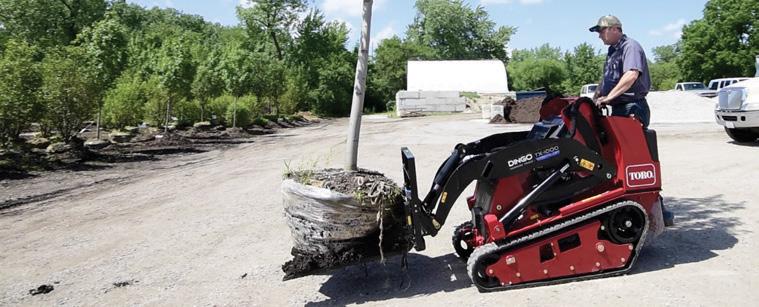
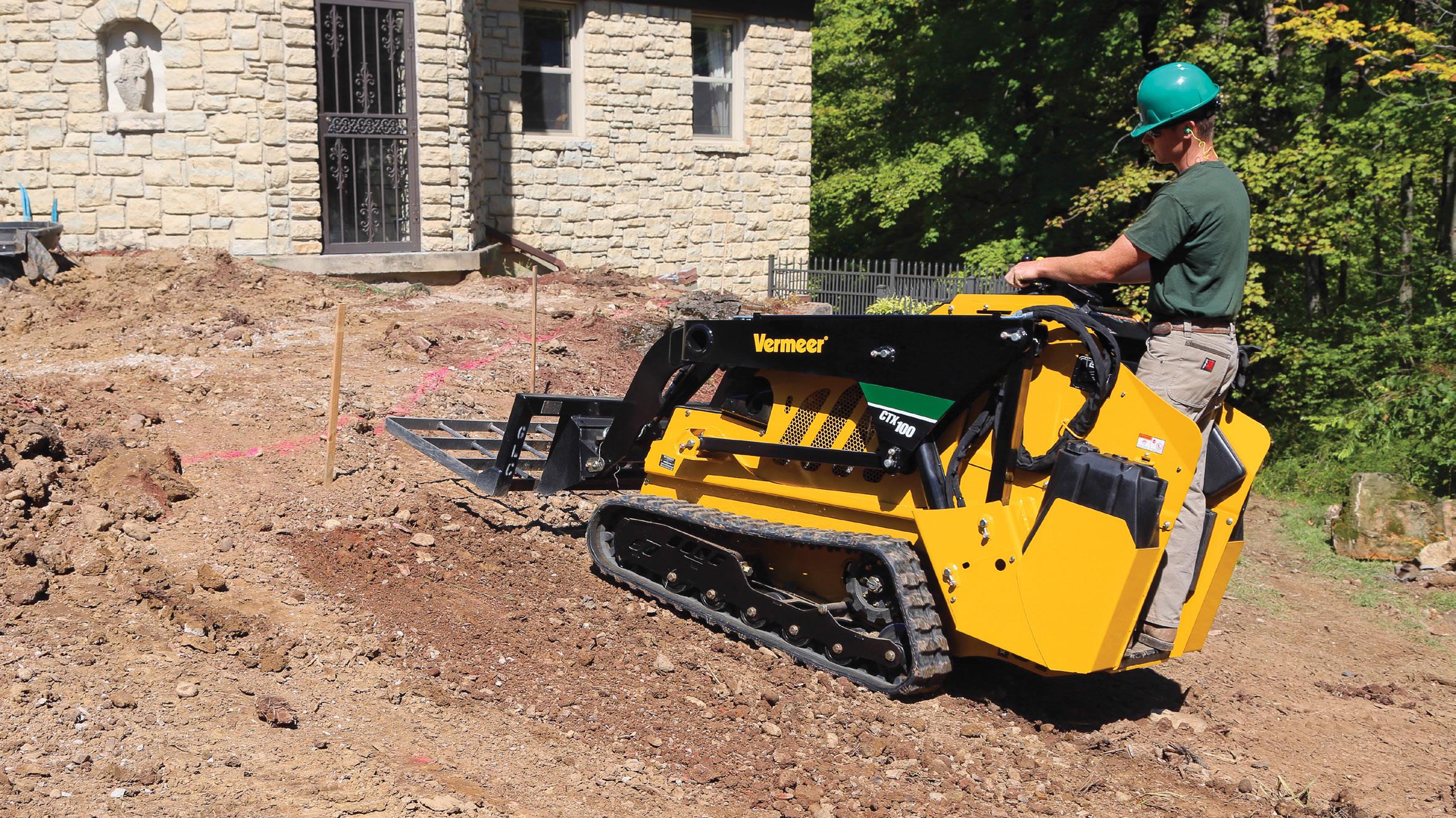
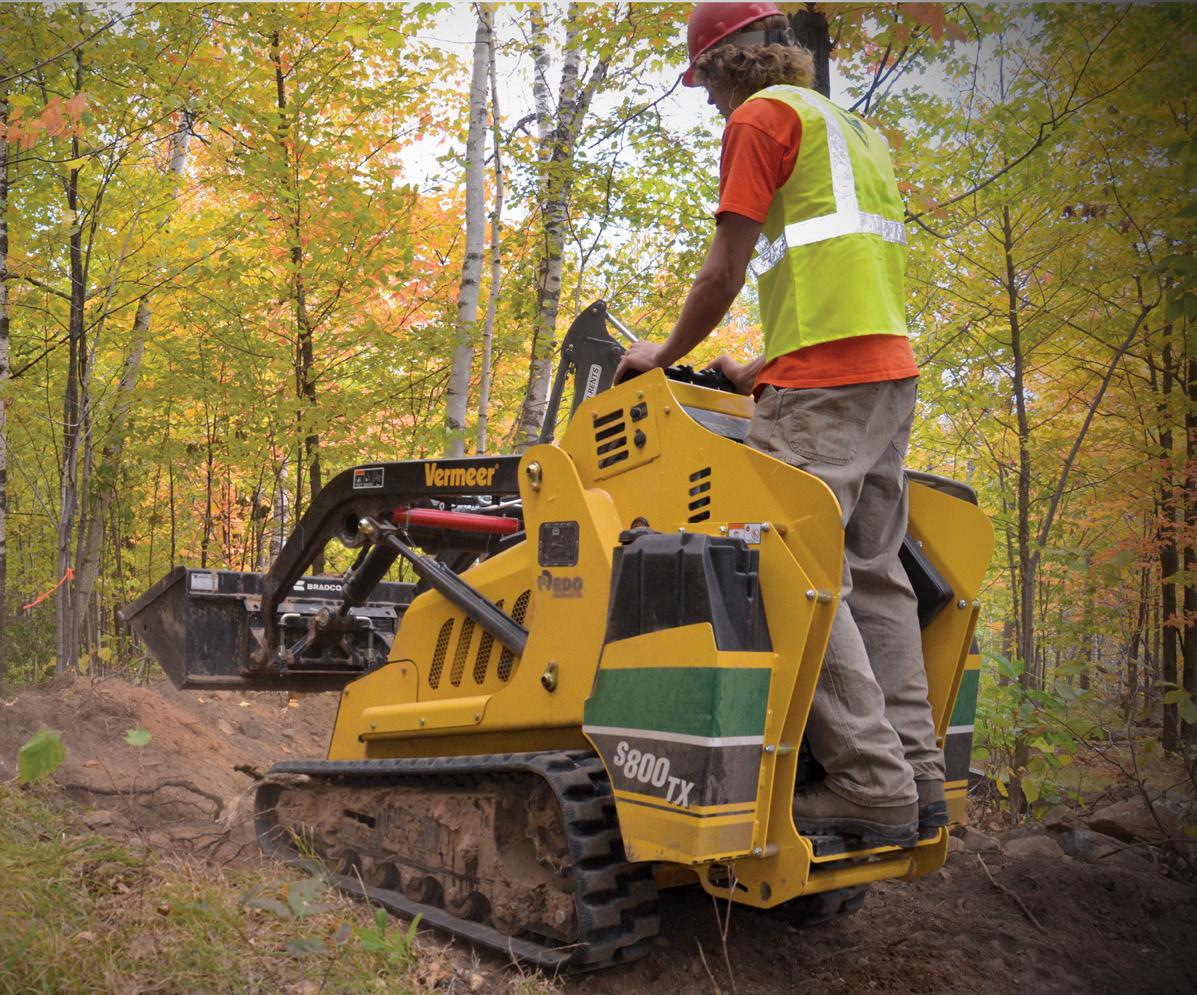
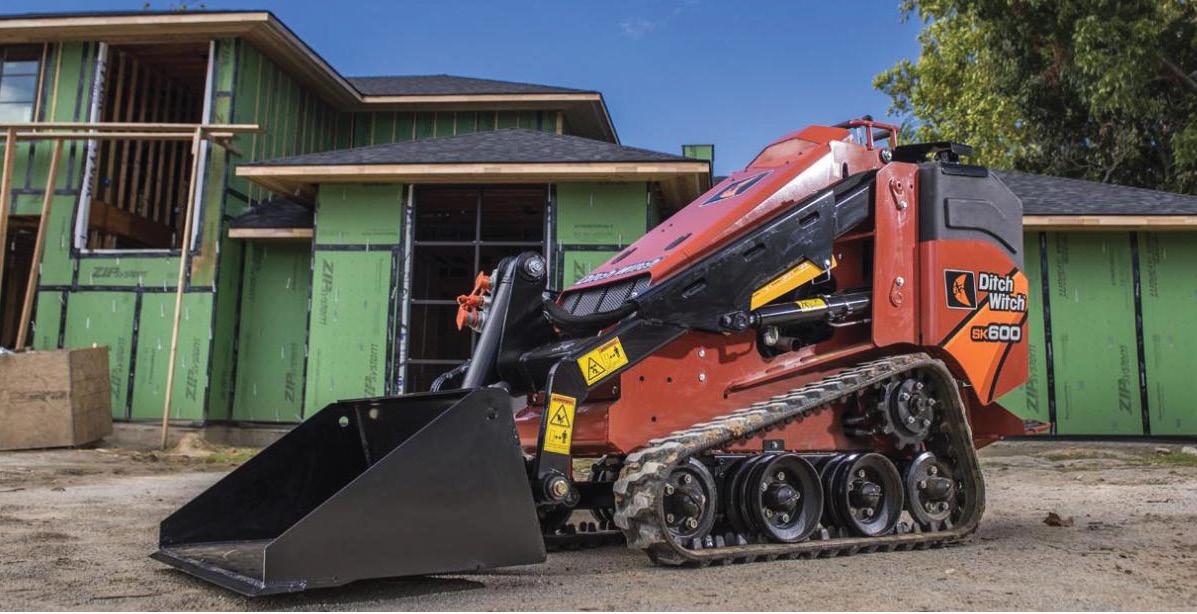
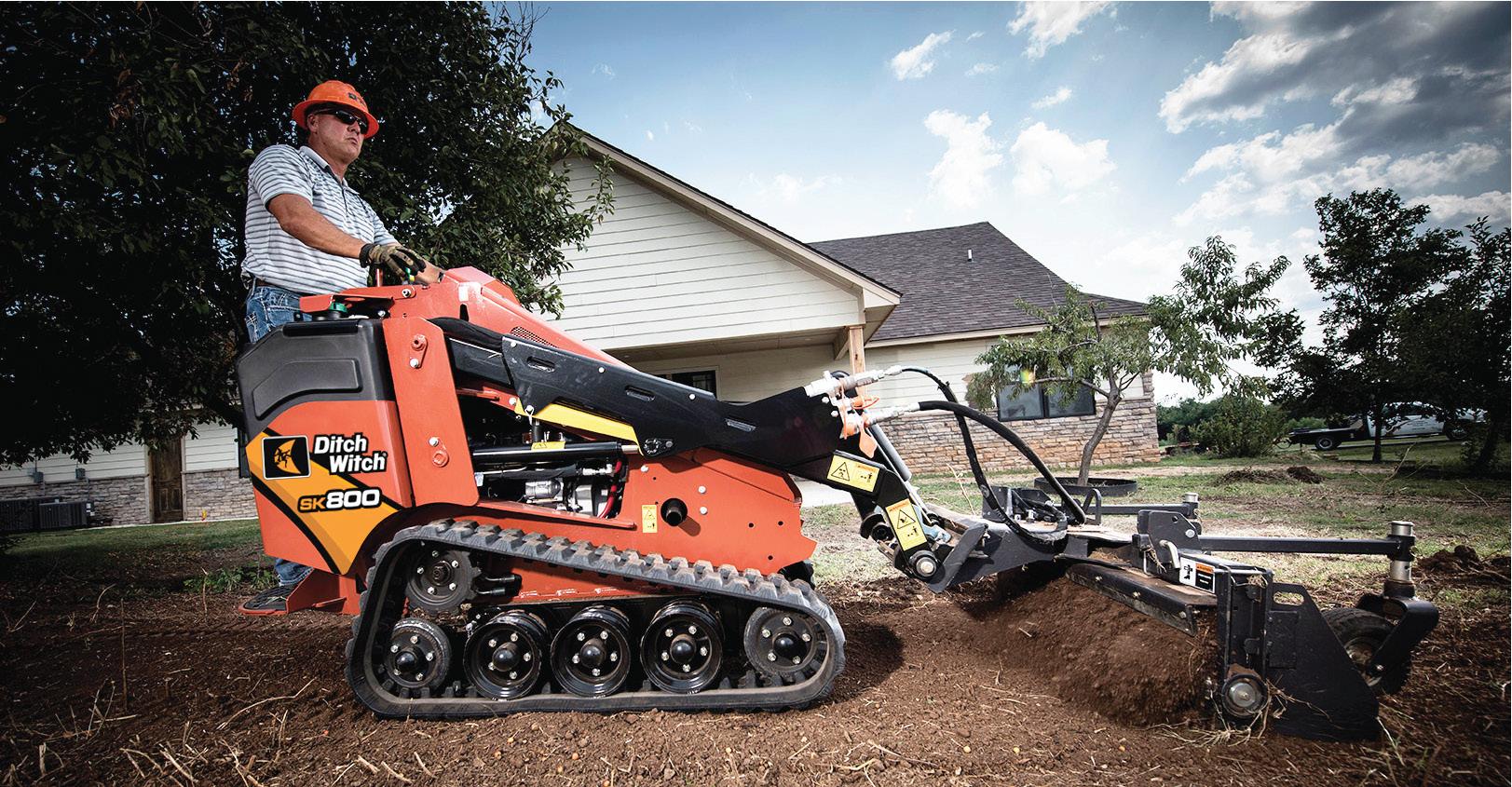
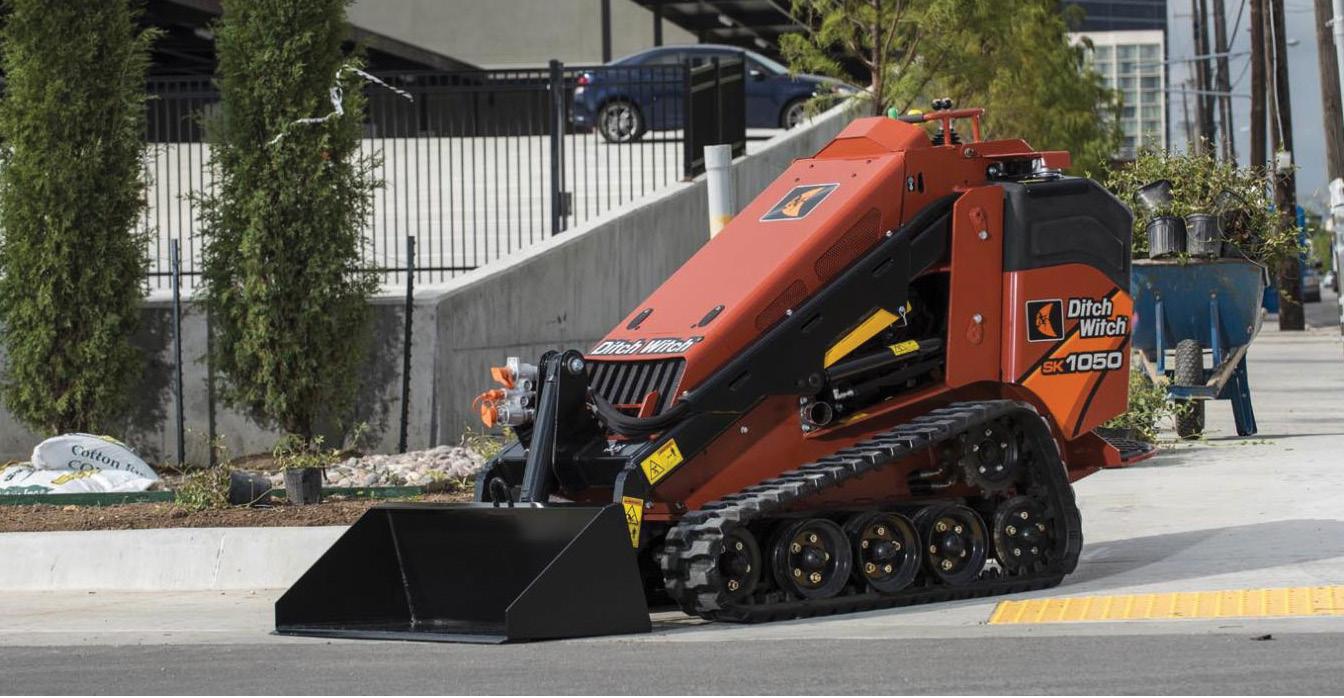
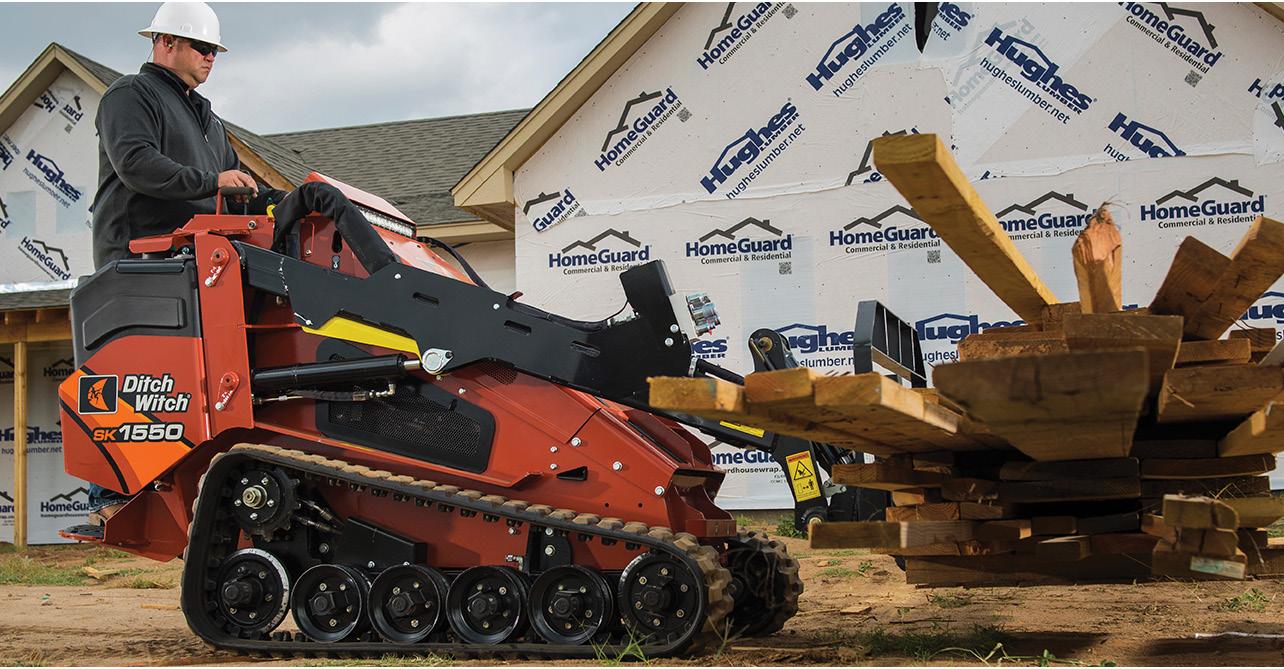
The Dingo TX 1000 has a rated lift capacity of 1,000 lbs
Summer Field Day 2017
(continued from page 10)
“There’s always something new to learn from our exhibitors,” says Guzzetta. “Products, equipment, plants – it’s a great time of year to find something that’s relevant to what you are doing now.”
At press time, there were two confirmed education programs, both offering CE credit for landscape architects, with more expected. The two are: Designing with Colored Concrete with Keith Boudart, Butterfield Color, Inc. and Native Grasses in the Landscape with Andy Stahr, ecology+vision. They carry 1 CE each.
1. Designing with Colored Concrete – Using project photographs, this presentation will focus on ways to color new and existing concrete. It will cover the factors that affect color quality, as well as proper installation techniques. At the end, attendees should be able to explain the basic design and material options available to their clients.
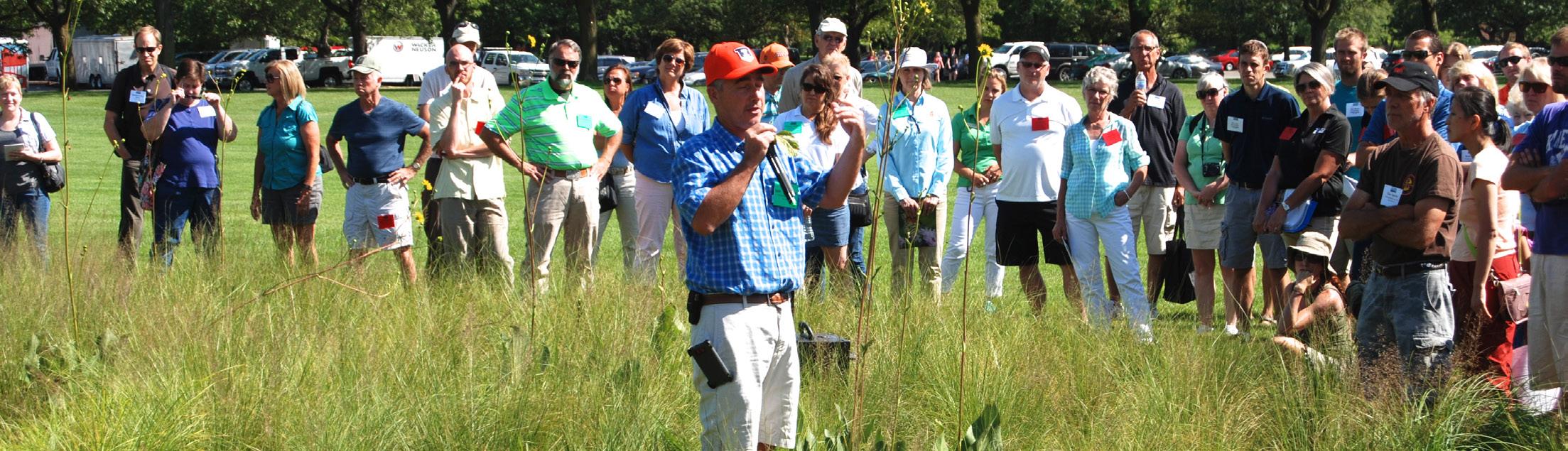
2. Native Grasses in the Landscape – This interactive seminar is intended to show attendees how to make the most out of native grass-
es. Stahr will cover the advantages of native grasses in landscapes, the value of a good seed mix, expectations and timing of native grasses, the significance of plans and specifications, installation methods for native grass seed, native grass plugs and sod options.
Additional education sessions will be added to the website. ilca.net.
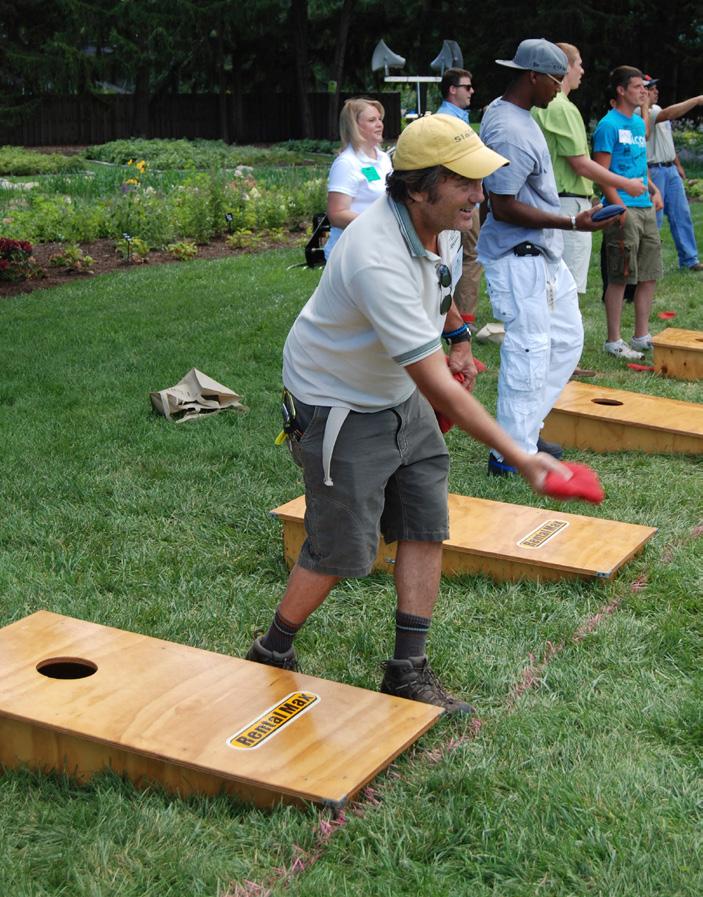
The day will include a return of the Bean Bags tournament, as well as:
• A lemonade stand at the Arthur Clesen booth
• An ice cream social sponsored by SmithAmundsen
• Lunch catered by COD
• A beer garden sponsored by The Tree Connection
• Tours of various aspects of the horticulture program
• A gnome hunt with cash prizes
• Opportunities to test drive equipment
• Parking on a blacktop parking lot
COD is well known in the green industry for its programs, as well as its facilities. “It is one of the most active and well respected two-year horticulture programs,” says Scott Grams, ILCA’s executive director, who also sits on the college’s ornamental horticulture advisory committee. “This is a great example of a feeder program.”
“We’ve had a close relationship with ILCA for many years,” says Judy Burgholzer, who serves as coordinator of the horticulture department, as well as chairing the Horticulture Advisory Committee and sitting on the ILCA FLIP committee. “This is a great chance to showcase the horticulture department.”
(continued on page 14)
Double Play ® Big Bang ™ Spiraea
Massive pink flowers are larger than those of other varieties, making Double Play® Big Bang™ Spiraea a very showy version of this durable landscape plant. The foliage is impressive, too: it glows orange in spring then transforms into sunny yellow.
Available from these suppliers in 2017
Midwest Groundcovers
St. Charles IL • 847-742-1793
Kaknes Landscaping Supply Naperville IL • 630-416-1002
CJ Fiore Prairie View IL • 847-913-1417
Lurvey
Des Plaines | Park City | Volo www.lurveys.com
Cedar Path Nurseries
Lockport | Barrington www.cedarpath.net
Alsip Home & Nursery
St. John • 219-365-0882
SiteOne
Addison | Naperville www.siteone.com
Hinsdale Nurseries
Willowbrook IL • 630-323-1414
Summer Field Day 2017
(continued from page 12)
The ornamental horticulture department includes a greenhouse, outdoor landscape lab, plant installation area, hardscape installation area and plant identification lab. This is not to mention that COD also has a sustainable urban agriculture lab, several raised beds and green roof. It’s all available to students to learn.
Guided tours will be available during Summer Field Day. “We feel that we have a good program,” says Burgholzer, who is one of two full time faculty members in the department. The other is Brian Clement, an instructor and advisor, who also chairs the Illinois State Landscape Design Contest for high school and college students, as well as sitting on the ILCA Education Committee.
“We are going back to school,” says Grams.
(see sidebar on page 16)
Arthur Weiler, Inc.
Clavey’s Nursery, Inc.
Doty Nurseries LLC
Fox Ridge Nursery
Goodmark Nurseries, LLC
GRO Horticultural Enterprises
Hinsdale Nurseries, Inc.
Kaneville Tree Farms, Inc.
Kankakee Nursery Co.
Midwest Groundcovers
Poul’s Nursery, Inc.
Spring Grove Nursery, Inc.
The Fields on Caton Farm, Inc.
Experienced wholesale growers producing thousands of acres of quality, northern Illinois-grown nursery stock.
Offering a wide variety of shade trees, intermediate trees, shrubs, evergreens, broadleaf evergreens, vines, groundcovers & perennials.
Summer Field Day 2017
(continued from page 14)
For more than 40 years, the College of DuPage has prepared young people and retrained older workers to play integral roles in the green industry. In the beginning, 1970, the school rented a greenhouse at Naperville Central High School in Naperville, IL and an experienced professional taught the classes in a laboratory situation. The college’s ornamental horticulture program also used facilities at Ball Nurseries, Vaughn Seed Company and the Morton Arboretum.
In 1970, the department offered 16 classes, ranging from “Local Flora in DuPage County” to “Soil and Fertilizers” and “Landscape Design and Applications.”
Now there are 250 students, a number that has been steadily increasing since 2009. They can choose from more than 50 classes, three degrees and nine certifications. The department employs two full time and about 25 part-time teachers, all industry professionals. In addition, there is a full time classified staff that helps keep the greenhouse, the landscape laboratory and the sustainable agriculture laboratory running.
From the beginning, there has been an advisory committee, consisting of the most prominent leaders of the local community, representing a cross-section of ornamental horticulture’s occupational areas. Now 15 members strong, the current advisory
committee includes Scott Grams, ILCA’s executive director. It represents all areas in the green industry, including landscape contractors, garden centers and florists.
Clauss Brothers’ Century of Progress
By Becke Davis
Clauss Brothers, Inc., has begun the countdown toward its own Century of Progress. Based upon their motto: “Building greener tomorrows since 1925,” the company will celebrate its 100th anniversary in 2025. And what a first 100 years it will have been.
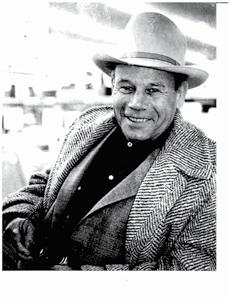
Although Walter H. Clauss – known to his co-workers as Walt, but to most ILCA members as Wally — has been a fixture in ILCA for so long that it may seem as if he has been around forever. It was Wally’s father, Otto, and his younger brother, Henry, who founded the company in 1925. The two brothers were born in Germany, where their father, August Clauss, had a nursery and landscape business in town of Uhingen in the Baden-Wurttemberg State of Germany. The business focused on fruits such as apples, peaches, pears and grapes.
Wally’s father, Otto, arrived in 1923. His ship, the
Hannover, departed from Bremen, and arrived on July 13. His brother’s Rudy and Henry had arrived the year before. Initially they worked for relatives in Berwyn, Illinois who had a greenhouse there. There were actually four Clauss brothers – Rudy came to America but later returned to Germany. The youngest brother, Gus, was the last of the Clauss Brothers to come to America. He became a baker in downtown Chicago.
When Otto and Henry formed Clauss Brothers in 1925, their main work was at large homes in areas like River Forest, where they installed rock gardens and did other landscaping work. As Wally Clauss notes, “There wasn’t much commercial landscaping work in those days.” Wally joined the firm
Otto Clauss
Henry Clauss
Progress – Then and Now
in 1956, after graduating from the University of Arizona with a split degree in horticulture and animal science. Around that time, another key player, Ian Stevenson was added to the com pany and became a key part of their management team.
Wally recalls, “The city was just beginning to form a lot
caliper locust and ash. Some of the parks were in tough areas. We’d trim the trees up high so kids couldn’t climb them, but a lot of the little trees wouldn’t live – the weather didn’t seem to matter. In the small parks, we might install 30 to 40 trees, in the bigger parks, maybe 100. For the first few years we dug those trees by hand in winter using a 90-pound air hammer to get through two feet of hard frost – very few landscapers worked in the middle of winter in those days.
out. We could finally put the air hammer away!”
Clauss Brothers worked all over the city – north, west, south – anywhere the city had land. “Most of the parks were bare grass when we started,” says Wally. “Some had ball parks, but most were just bare ground.” In 1929 Clauss Brothers installed one of their first large projects, planting fruit trees and other plants in a ten-acre park for People’s
“We finally did get a back hoe, and later we pre-dug the holes and filled them with leaves or mulch,” says Wally. “We caught on to mulch when I was walking through a park district nursery and noticed a pile of leaves in a depression in the ground with no frost on them. Everything else was frozen. That put us on to something – we could dig out six inches and fill it with wood chips, brush or leaves and that would keep the frost
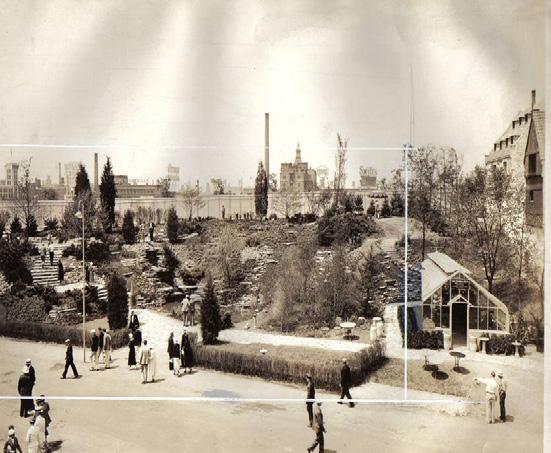
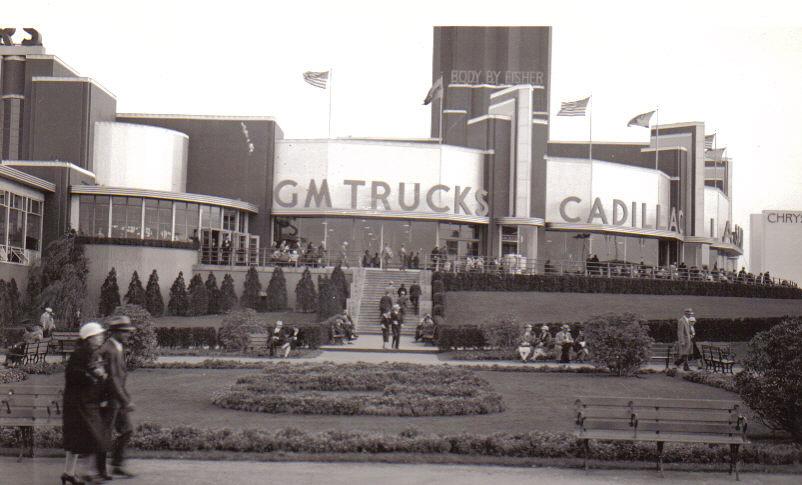
The company, which had started out with two employees, was “doing all right, plugging along,” in Wally’s words. Then came their first big break – the 1933 Chicago World’s Fair, aptly named A Century of Progress. This was the opening salvo in Clauss Brothers string of renowned projects. “I don’t really know how they got involved in the World’s Fair in the first place,” Wally says. “I was two years old at the time. It was their first really big job. My dad and uncle each made about $1,200 a year, and this was the Depression, when most people would work for a meal a day. It was just the two of them plus foremen, and when they went to hire laborers, men lined up for blocks looking for work. They needed a lot of people.”
When Clauss Brothers got the contract for the World’s Fair, they still had to come up with funding to hire crews and equipment and purchase materials. Wally’s dad, Otto Clauss, solic-
Walter Clauss Ian Stevenson Pete Stevenson
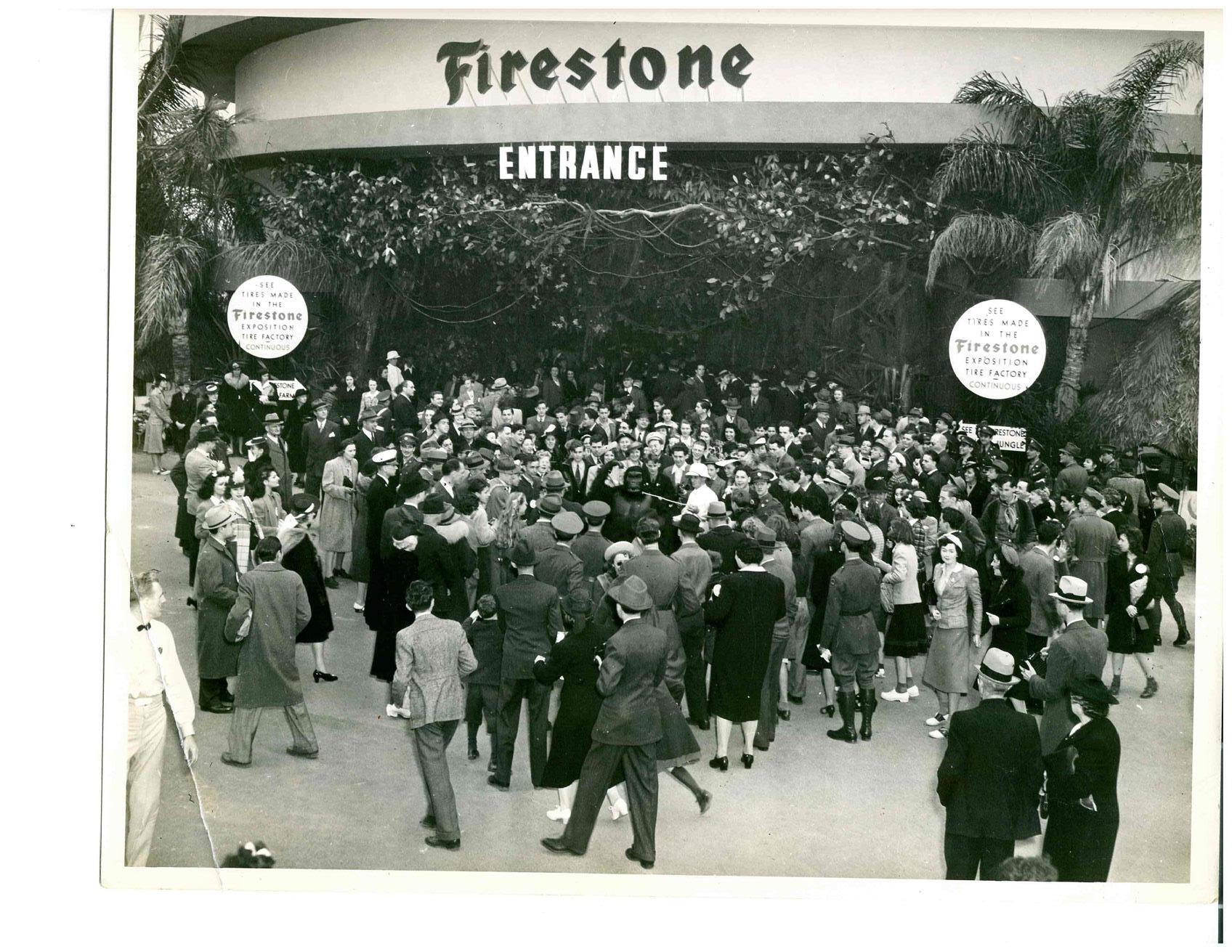
The much-heralded Firestone Exhibit
Family Ties —
ited the owner of one of Chicago’s biggest department stores to see if they would finance him in this venture, but he was turned down. There was no assurance that the World’s Fair was going to be a financial success – none had been so far – and it was the middle of the Depression. “Who’s going to give you money for a fair they think will be a failure?” Wally’s dad wondered. He finally got a loan from Northern Trust and was able to meet his payroll, Wally recalls. “Everyone thought the fair would be a failure, but it was just what people needed – it ran for two years, and it was a big success.”
The first year of the World’s Fair was poorly attended and, as anticipated, it lost money. But it was decided to extend the Fair another year. $5 million was spent in improvements, and at the end of the second year, the fair had made a healthy profit after all the bond holders were paid, and the surplus was donated to charity.
One of the projects the Clauss Brothers were responsible for at the World’s Fair was planting the common areas with grass and trees. They also landscaped the rock gardens at the Belgian Village, one of the focal points of the fair and one of the last projects they completed, the Swiss Village, the Travel and Transportation Building and the Firestone exhibit.
There was one problem – Clauss Brothers didn’t own any large semi-trailer trucks at the time, only flatbeds and some
trailers, and all the sod and plant materials for the Fair had to be hauled down there. Wally recalls, “Dad told me there really wasn’t such a thing as a sod farm in those days – they would approach a farmer and ask if they could buy the sod from the horse pasture or cow pasture. There were a lot of farms then, and everybody had cows. The sod was all hand cut with spades – they used whatever grass was in the field, cut it off right there in the field and then reseeded the field for the farmer. Some of it looked pretty good, but when they replanted it they conditioned it, maybe top dressed it, and superfertilized it. They had to cut it and load it – maybe they rolled it, I’m not sure if it was rolled or cut into slabs. They cut it thick so it was pretty heavy, too.”
Shortly after the 1933-34 World’s Fair, Clauss Brothers was hired to do a landscaping project at the Great Lakes Exposition in Cleveland, where they had 100 days to landscape a 150acre site. Their work at the Chicago World’s Fair paid off when they were hired to do some large projects, particularly the Firestone exhibit, at the 1939-40 New York World’s Fair. Wally’s dad, Otto, went to New York while Henry stayed and kept things running smoothly in Chicago. The Clauss brothers had lots of relatives in New York, many of whom were hired as foremen, and the rest of the laborers were hired on location in New York. Clauss Brothers also worked at the 1964 World’s
Fair in New York City, where they landscaped large exhibits for Firestone and General Motors, and the 1974 World Exposition in Spokane, WA.
Although Wally only heard his dad and uncle talk about the earlier World’s Fairs, he actually attended the 1964 World’s Fair in New York City. “We created a jungle at the Firestone exhibit, like a rubber plantation,” he says.
“Firestone flew my dad to see a real rubber plantation first. They didn’t have premade fake plastic plants in those days so there were real plants outdoors at the exhibit, and they had fake plants specially made for the indoor exhibit, where live elephants were brought in from the zoo to wander among the fake plants.”
Wally’s uncle Henry retired to a ranch in Arkansas with his daughter and son-in-law in 1981; he died in 1987.
“My dad never did retire,” Wally observes. After his father, Otto, died in 1983, Wally became president of the company. After Ian Stevenson died in early 1999, his sons Jim and Pete managed the company. Wally later partnered with Peter A. Stevenson, who is now the company president and senior project manager while Wally is still the owner and CEO.
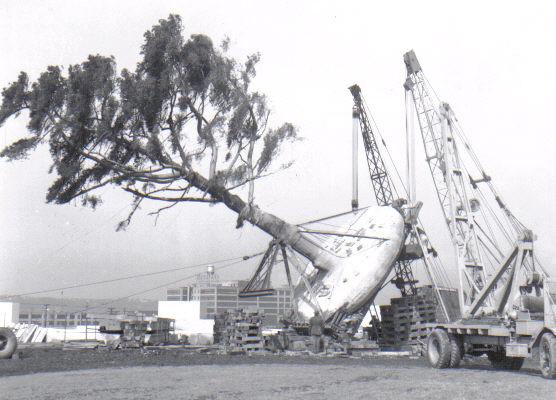
Moving large trees for the Firestone HQ
name has come to mean quality first. Not quantity. We believe in the tried and true techniques of construction. Our machines and technology may change, but our techniques remain the same. Our jobs are built to last, they stand the test of time.
“My father was a wonderful man, he was just not that easy to work for,” says Stevenson. “What I learned from my father is still what I follow. On many projects, Clauss Brothers works as a General Contractor, not a landscape contractor. This occasionally ruffles some feathers among the trades. The real value we offer clients is to find problems and offer solutions before they get too far along in the construction process. This saves everyone countless headaches.” He adds, “Clauss Brothers does not have a lot of turnover. We had one older guy, Girardo, who worked with us for 47 years. His son and grandson both work here, too.”
Like his father before him, Pete Stevenson lives in pursuit of “quality and honesty.”
“Quality is what we’re all about,” he says. “The Clauss
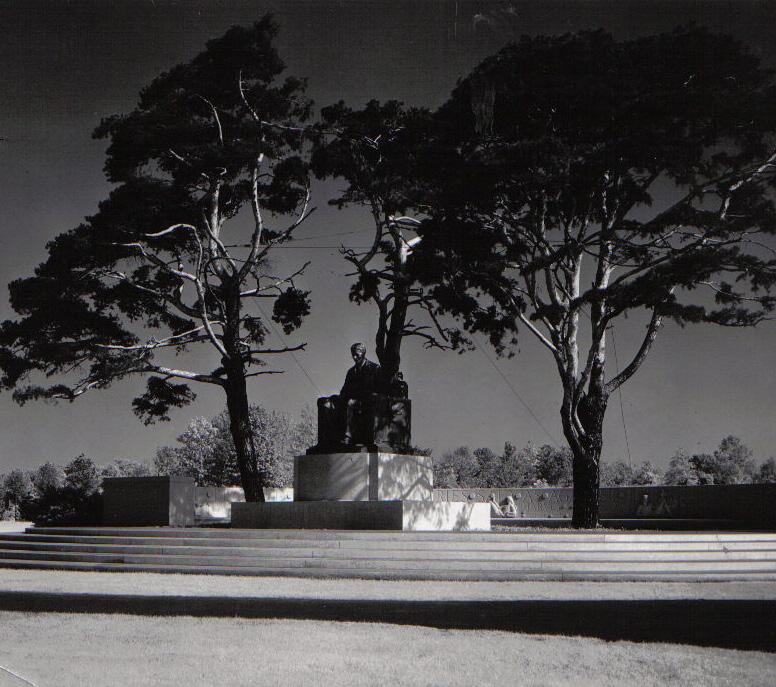
Clauss Brothers developed long-standing relationships with both Firestone and GM, doing major projects for them at their headquarters and at other locations. Wally recalls, “In about 1951-1952, the Firestone plant in Akron, OH built a memorial to their founder, Harvey Firestone. They hired Clauss Brothers to bring in some large trees that were to be part of the memorial – the statue of Harvey Firestone was to be set among the trees. My dad and
Family Ties —
uncle bought the trees out of a farmer’s yard, 34 miles from the site. They bought the big trees, dug them and replaced them with smaller pines.
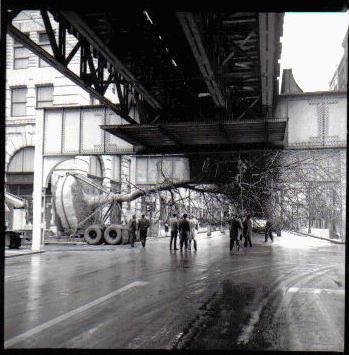
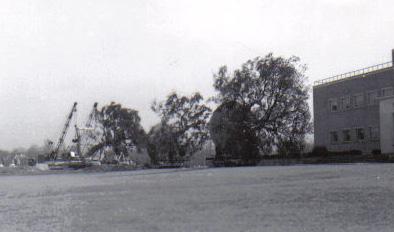
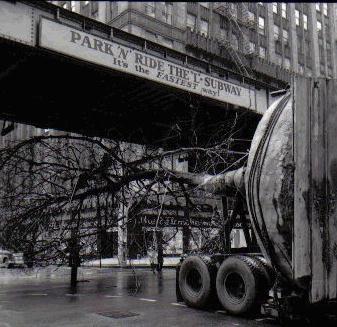
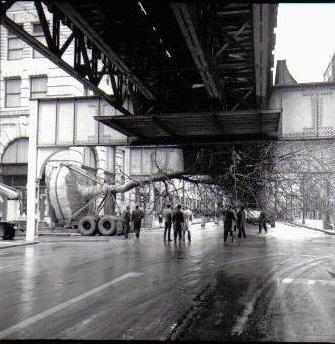
“These trees were absolutely enormous – they took up the whole road. They were 100 year old Scotch pines, each was 50 to 60 feet high. They sprayed the balls in gunnite to move them — each tree weighed 80 tons and had a 24 foot root ball that was four feet deep, 1933 — plus the gunnite. It took 10 days to move the three trees 34 miles. They went through a couple of little towns, and each time they approached a town Commonwealth Edison and the phone company had to turn off the power, go ahead of the trucks and take down all the overhead cables. Once the trucks passed through the towns, they would put the cables back up again. What an experience!
“At night the trucks stopped right in the road with barricades. One night a policeman who wasn’t aware what was happening told my dad, ‘You’re going to have to move these trees.’ My dad looked at him and said, ‘Where would you like me to put them?’ I still remember that!
“We tried to find a route that would avoid small creeks and bridges, but we couldn’t avoid them altogether. Since the small bridges couldn’t support the weight of the trucks and trees, we had to use wooden timbers
with jacks to block them from the bottom up. Then we would go back and reload the timbers. Also, because the branches of the trees were low, we had welders who had to cut the railings off the bridges before the trucks crossed, then they would go back and weld the railings on again after the trucks passed.
Another moving experience
“We also dug a large locust from Lincoln Park and two from the South Side and moved them to the Civic Center Plaza, before the Picasso was there. There were two small trees and one tall one, between 20 and 50 feet, weighing about 45 tons each. We did the job in the middle of the night.
“A contractor using a 60 foot crane was going to lift the trees into planting position. We could see that the trees were not going to be balanced because of the way they had attached the cables around the middle of the root ball. There’s only one place to attach the cables so the tree will stay balanced. My dad, my uncle and Bob Loudon, who
Moving very large trees in Chicago
was working with them, each told the contractor that the trees would not stay balanced, but the contractor brushed them off. They wouldn’t listen and sure enough, the first tree crashed. It broke quite a few branches, but it wasn’t a disaster.”
During World War II, Clauss Brothers was hired to do some defense work for the Department of Army Engineers, traveling to Long Island and to New Jersey and planting trees for camouflage around – and over – large torpedo factories. “From the air it looked like the road continued through the building,” Wally explains. “They made it appear that the road continued across the roof of the building, planting trees and all. It was a fooler!” The company did an enormous amount of planting at that time. “They planted trees around anti-aircraft guns on Long Island,” says Wally, “but I don’t think they were ever used.”
Meanwhile, back in Germany, Wally’s Uncle Rudy made a name for himself in an unusual way. As Wally tells it, American tanks were going from town to town. Uhingen was not an important area as far as the war went, but if the American tanks got any resistance, they would blow up the town. There was a disturbance of some kind when the tanks rolled into Uhingen, and when it looked as if the tanks might open fire, Rudy yelled, “Stop! I got brothers in Chicago, I know the White Sox and the Cubs!” Apparently that
was sufficient to save the town.
A lot happened in the early years of Clauss Brothers, from World’s Fairs to World Wars, not to mention the Great Depression. Wally’s father, Otto, is listed as one of the early officers of the Chicago Horticultural Society and Garden Center. Among the early “professional and commercial” group of the Board of Governors is “Otto Clauss, Nursery Specialist.” But Wally’s goal was not to follow his dad into the landscape business. Wally already knew what he wanted to be — a cowboy.
This wasn’t just a childhood dream. “I really wanted to be a cowboy,” says Wally. “And I actually was one for 10 years or more. My dad sent me to a private school in Arizona. There, I roped calves and played polo for gym class — we actually competed against another school.
“In 1945 or ’46 I went to a cattle ranch/guest ranch in Jackson, Wyoming where they leased the land for grazing. I went back the next summer, as soon as I could. I’d go with the boss and learn about rodeo roping. I rodeoed a bit in small shows.
“Later I worked at a cattle ranch near Fort Huachuca (in Arizona). The owner, Mr. Mosen, was great. My dad was having throat trouble at the time and he came and worked cattle and rode up in the mountains until his throat got better. I was head wrangler there. There were black bears, elk and moose. I’d load the pack horses and do a little guiding on the side. Once I was crossing a big valley with a guest, and we came
Clauss Brothers has performed wide variety of work for the Chicago Park District
across a baby bear. The guest wanted to rope the bear. It was a real Wild West show!
“I went to the University of Arizona and received split degrees in Horticulture and Animal Science. It was more Animal Husbandry at first. But you need so much money to start a ranch, that I focused more on Horticulture. “I came back home after I graduated and Dad and Uncle Henry were glad to have me. After I got married, I went back to Tucson every winter,” says Wally. “It’s a very nice town, and I went back for quite a few years.”
Clauss Brothers president Pete Stevenson remembers his dad giving him and his brother Jim an early taste of landscape work by having the boys dig up a maple tree in their yard, ball and burlap the tree and then move and replant it. It was a lesson Pete never forgot.
Pete was still a youngster when his dad joined the company, about the same time Wally Clauss came on board. As Pete recalls, his father
was hired to be in charge of the General Motors pavilion at the New York World’s Fair, along with Henry and Otto Clauss. Prior to that Ian was a landscape architect at Meadowbrook Nursery, and it wasn’t long before that he graduated from Rhode Island School of Design.
While at Clauss Brothers, Ian ran the Kemper Lakes project encompassing one square mile of property, and simultaneously oversaw a project for Employers Insurance of Wausau. “My dad was a hands-on kind of guy,” says Pete. “He wasn’t in the forefront, but when it came to construction management and construction engineering, he was probably one of the foremost landscape architects around.”
For several years both Ian and Pete had offices at Kemper. “We didn’t design the golf course at Kemper, but we did excavate the lakes,” says Pete. “My dad worked with Kemper almost 30 years. After his death, Kemper
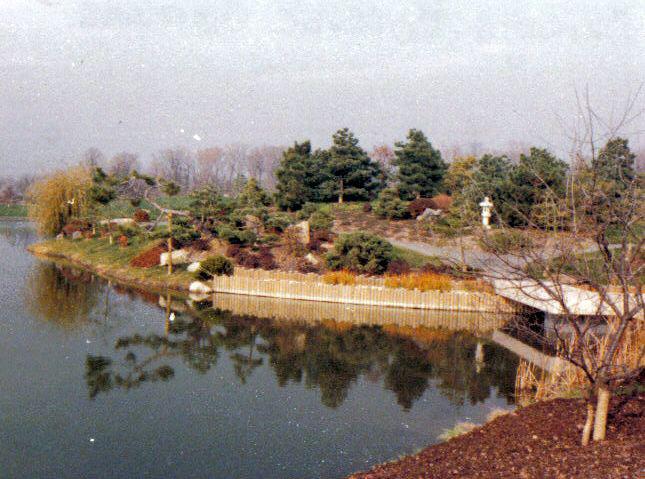
Chicago Botanic Garden Japanese Island
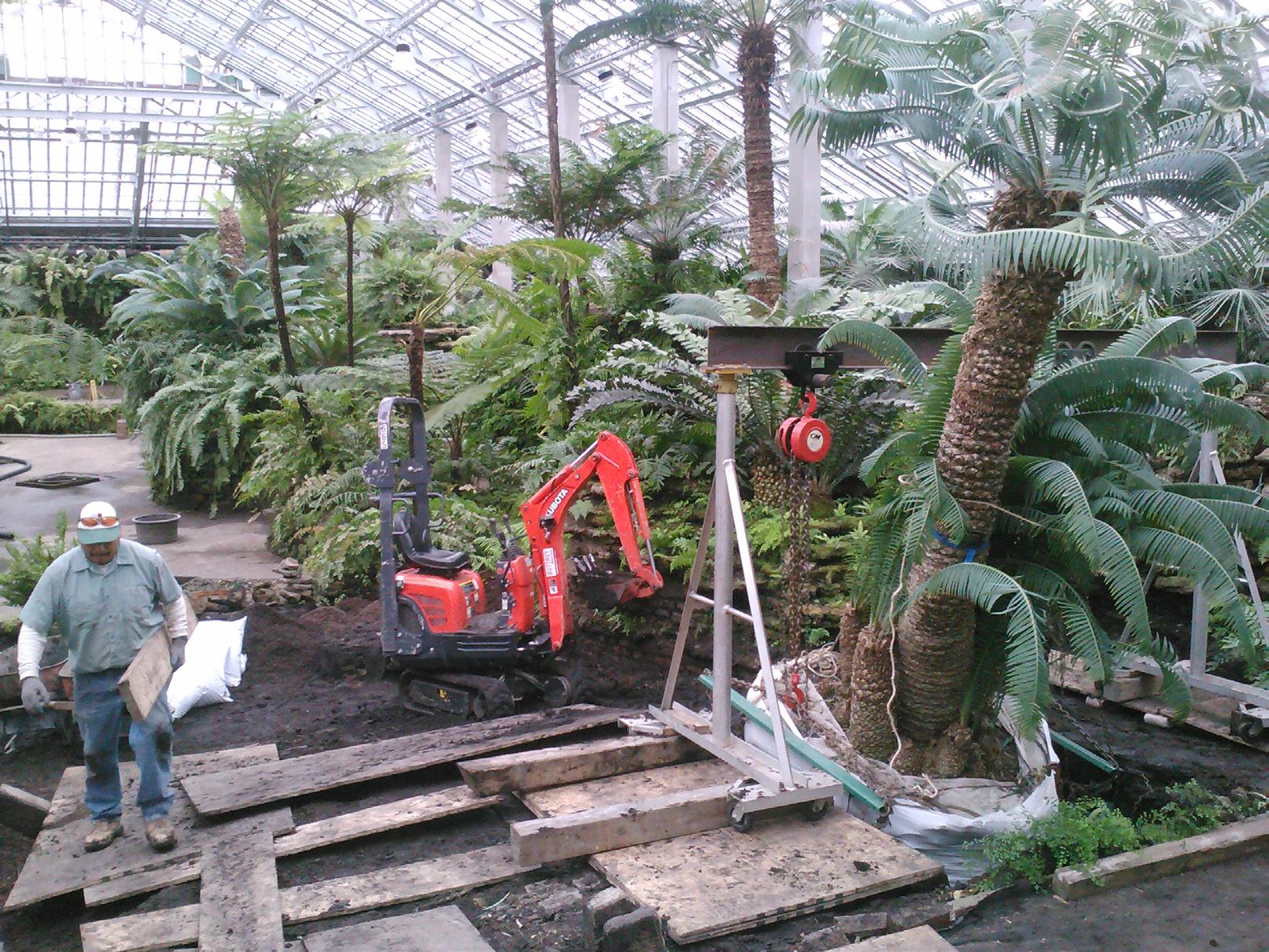
Garfield Park Conservatory, hail damage restoration
planted an elaborate memorial garden in my dad’s honor.” Even though the company has changed ownership, the memorial garden is still there.
Wally joined the company about the time they moved to Roselle. “We bought a farm, outgrew it, then moved to Streamwood. Later we moved from Streamwood because of the Cook County taxes. Now we have a comfortable Cape Cod office on six and a half to seven acres in Elgin. We haven’t built our farm yet, but I hope to build it this summer, with indoor parking for the trucks. We’re starting to work with villages now, and we’re doing playgrounds, picnic areas and ball fields. We’ve done some work for the Art Institute and we’re also working at the Field Museum right now.”
After the war, Clauss Brothers did a lot of work landscaping Chicago’s parks, much of this
was restoration work on the parks, their ponds, shorelines and structures. Natalie Gongaware, project manager/landscape architect for Clauss Brothers, got to know the company during the 10 years she worked for the Chicago Park District. She reflects on her decision to join Clauss Brothers.
“It was really a top notch company and I respected them. When I decided to leave the park district, Clauss Brothers was where I wanted to be. I’ve been with Clauss Brothers 19 years now, often working with the park district, since I knew a lot of their background and history with the parks.
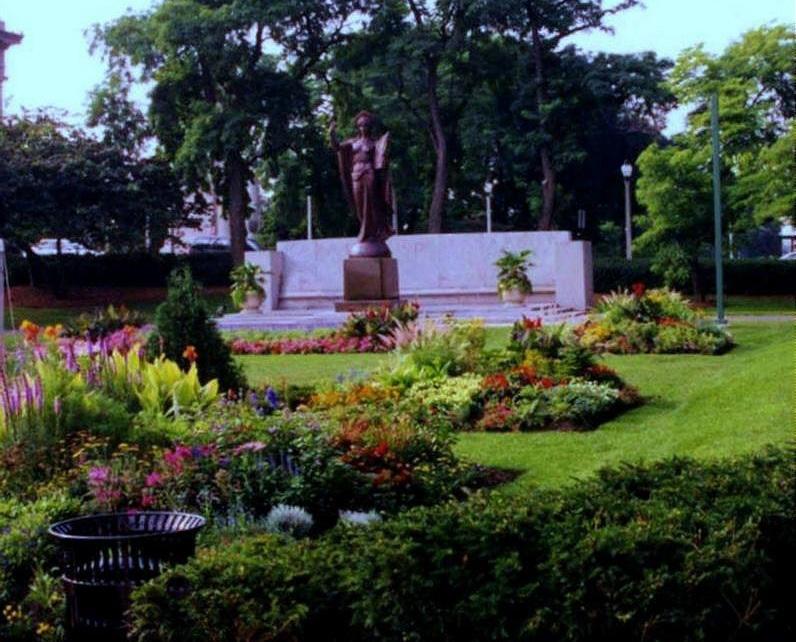
Clauss Brothers and the Chicago Park District have had a long working relationship. We have been fortunate to work on some of their most treasured and historic sites. In Grant Park alone we rehabilitated the Rose Garden and landscaping around Buckingham Fountain and built the Tiffany Garden just south of Buckingham Fountain. We planted their annual gardens for years and
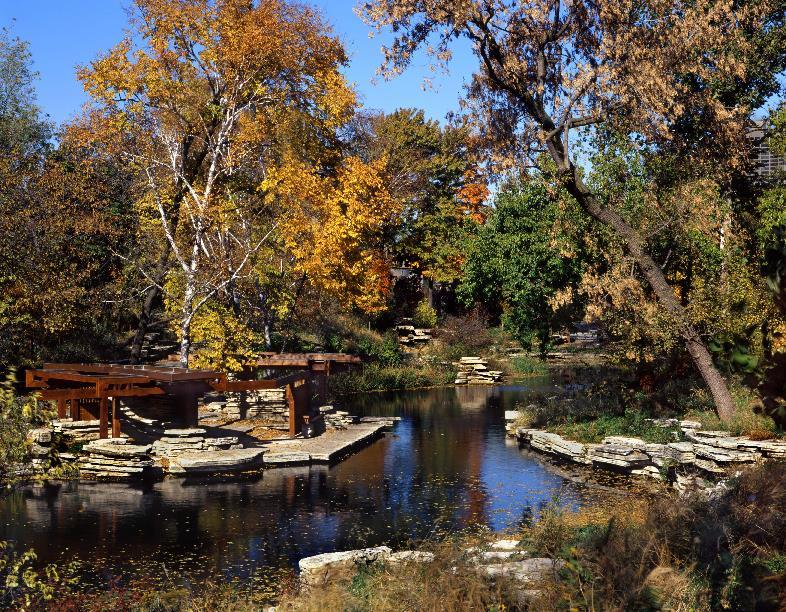
Alfred Caldwell Lily Pool restoration
Family Ties —
worked with the Park District reforesting and saving the largest stand of American Elm trees in the US.
Another historic site we were privileged to work on was the Alfred Caldwell Lily Pool just north of the Lincoln Park Zoo. Over the years it had become neglected. Pete and Jim Stevenson at Clauss Brothers did a total restoration of the project including the pavilion structures, North avenue entrance and lagoon dredging. Every stone on the flagstone path and walls was photographed and numbered while we worked with the mason to ensure restoration was completely accurate. The entire planting pallet was restored as per the historic records. Natalie was fortunate to discuss landscape theories and the Lily Pool with Alfred Caldwell himself. Unfortunately he passed away before seeing his beloved Lily Pool restored. The project was an ILCA gold winner.
Clauss Brothers has restored many historic parks and landscapes for the Park District, including another site, the Osaka Japanese Garden on the Wooded Island in Jackson Park. “The building had burned down at one point,” Natalie explains. “We worked with a Japanese architect to help us restore the garden. He made sure each stone was placed carefully and stated that each one had a meaning. Today, our maintenance project manager, Brian Stern, is still doing additional renovation work at the site with the Park District making it one of the revered Landscapes in the Chicago Park District.
Columbus Park was another historic renovation site. The waterfall area is a Jens-Jenson designed landscape. “We took the original plan and restored perennials and plantings to their
original structure” says Natalie. ‘We removed cattails and thistle from the theater, removed invasive and exotic plants, salvaged and pruned other plants and restored the path”. Pete Stevenson who has overseen a multitude of the Park District’s restoration projects also restored the council ring at Columbus Park. Council Rings were a big part of the prairie style landscape.
In addition to the historic sites Clauss Brothers was also called upon to perform the complete and sometimes unusual realm of landscape projects for the Chicago Park District. Just some of the spectrum of assignments included turning a quarry into a park at Stearns Quarry, designing and building a fitting memorial to Chicago Firefighters, restoring and expanding the Burnham and Montrose Bird Sanctuaries, building an array of various playground parks with themes and variety of play, reforesting parks from the mass of the lakefront to the intimate neighborhood park, reconstructing all types of sports fields, turning a closed zoo into a nature playground at Indian Boundary Park and restoring some of the historic lagoons throughout the city.
Over the years, the annual program was one of the areas that the Park District relied on us to maximize our creativity. We tried to be on the forefront of gardening. We used over 1,200 varieties of annuals, always experimenting and trying to showcase new varieties and new concepts. We incorporated colored theme gardens, gardens with tropicals and even installed a fabricated wire Lochness monster in the garden by the Lincoln Park lagoon. When rabbits killed the crabapples in
Restoration of the Japanese Garden, Jackson Park, Chicago
the Cancer Survivors Garden we cut them down, spray painted them blue and incorporated them into the gardens. It was crazy; we were receiving calls on where people could purchase the Blue trees. We also created other sculptures to integrate into the gardens made of everyday construction materials, giving homeowners ideas to think outside the box in their gardens.
The work Clauss Brothers did at the Garfield Park Conservatory is up on their list of their proudest achievements. The Chicago Park District decided to build an urban Botanic Garden in the city at Garfield Park. They were fortunate to have been selected to build the City Garden at the Conservatory. It was an ILCA gold winner as well.
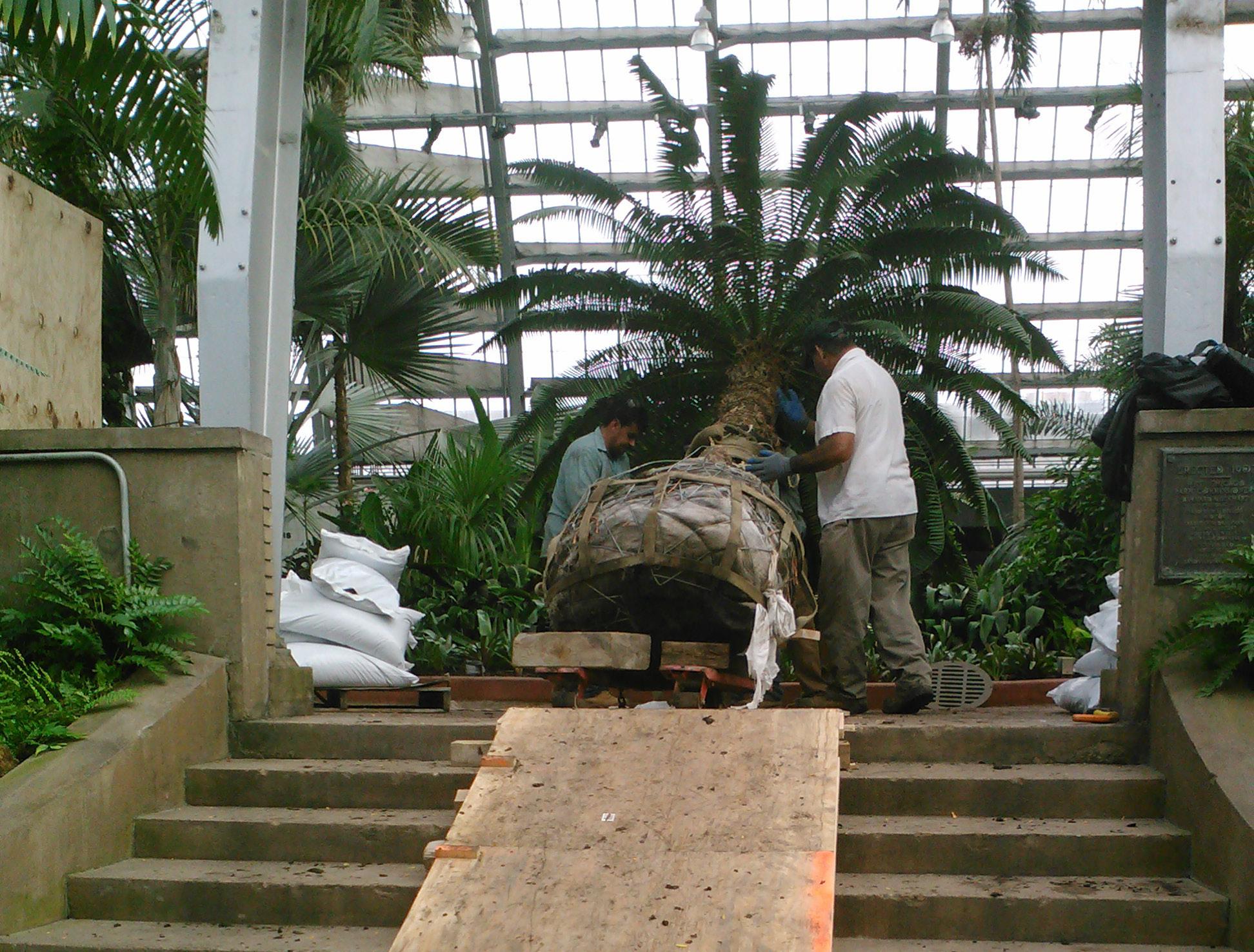
One of the more memorable projects with the Park District was at the Garfield Park Conservatory. It was severely damaged by a hail storm. The old glass roofs had shattered and covered many of the old conservatory rooms including the famed Jens Jenson Fern room and the Cactus house. Hundreds of year old cycads, palms and cactus were speared with falling glass. We were asked to remove the incredible amount of glass shards from the soil and priceless plants. Once removed, the plants, some weighing thousands of pounds, had to be transplanted from their locations among the raised rock walls so that the construction of the new roofs can begin. Besides the age of the plants, the sheer weight of the plants and location of the various raised rock walls was the challenge of doing it all without mechanical means, as there was no way to get large equipment into the room. With a little bit of ingenuity and a lot of muscle it was completed and most of the rare and historic
plants were salvaged. The cactus room was probably the most “fun”, as the needles and poisonous nature of the plants made it all interesting.
Brian Stern, Project Manager of Clauss Brothers’ maintenance division, has been with the company 38 years. “In 1978 I was still in high school and I needed a summer job,” he says. “I stayed on and did night classes at the College of Lake County. Clauss Brothers was building Kemper Lakes—that was Ian Stevenson’s project, and since his son Pete was more construction, I was maintenance from the start. I came from Wisconsin and knew how to drive tractors, lawn mowers, etc., and I already knew how to operate machinery. Running crews, managing crews – that was where I excelled. Later I became assistant greenskeeper at Kemper Lakes, and then I did maintenance on the Kemper building. It was only one building back then – now it’s four.”
Wally says, “Brian Stern is a super guy, so well organized. He’s been with the company forever.”
The Ian Stevenson Memorial Garden at Kemper Lakes
Family Ties —
Stern recalls the restoration work at Garfield Park Conservatory: “Because the hailstorm damaged the inside and outside of the conservatory, we had to change out all the plants. Since the coconut palms were going to die anyway, we dug them and moved them to Oak Street Beach over the summer. It was all through Natalie we were able to do that.”
Wally says Mayor Daley wasn’t a fan of the relocated palm trees. He remembers the mayor complaining, “This is Chicago, not Miami!”
Confirming that Clauss Brothers work is built to last, Natalie Gongaware observes, “We are now doing restoration work on some of the projects that their dads —Wally’s, and Pete’s — did years ago. There are large trees at the Art Institute and in Daley Plaza that their dads moved there in the 1950s and 1960s. Some of those trees are still there today.”
Brian Stern observes, “Clauss Brothers isn’t a huge company, but if it can be done, we’ll try to take it on. We’ve been ready to take on some crazy things, too.
“When we did Ball Seed we worked all winter. We set up two heated portable greenhouses and put hay down so the ground
wouldn’t freeze. We did whatever we could get done over the winter.”
“We only had ten to twelve people when I started,” Wally recalls. “Now everybody knows what they’re going to do every morning and they drive their own vehicles straight from home to the job. That saves a lot of time and money. Usually a supervisor drives a pick-up. Sometimes they go on their own, sometimes they’ll go together with someone designated as the driver. They find out where to go the day before, unless the weather is bad. This makes an enormous difference.”
Welcome to ILCA
Clauss Brothers was one of the first members of what is now ILCA. Wally Clauss has worn many hats over the years, but to longtime ILCA members, if you say “Wally Clauss,” they’ll say, “Summer Field Days.” Since Clauss Brothers joined ILCA in 1960, Wally Clauss has served as Chairman of Summer Field Day (1972), Chairman of the Scholarship Committee (1980 – 84), was chair of the Education Seminar in 1982, served on the Immigration
City Garden. Garfield Park Conservatory
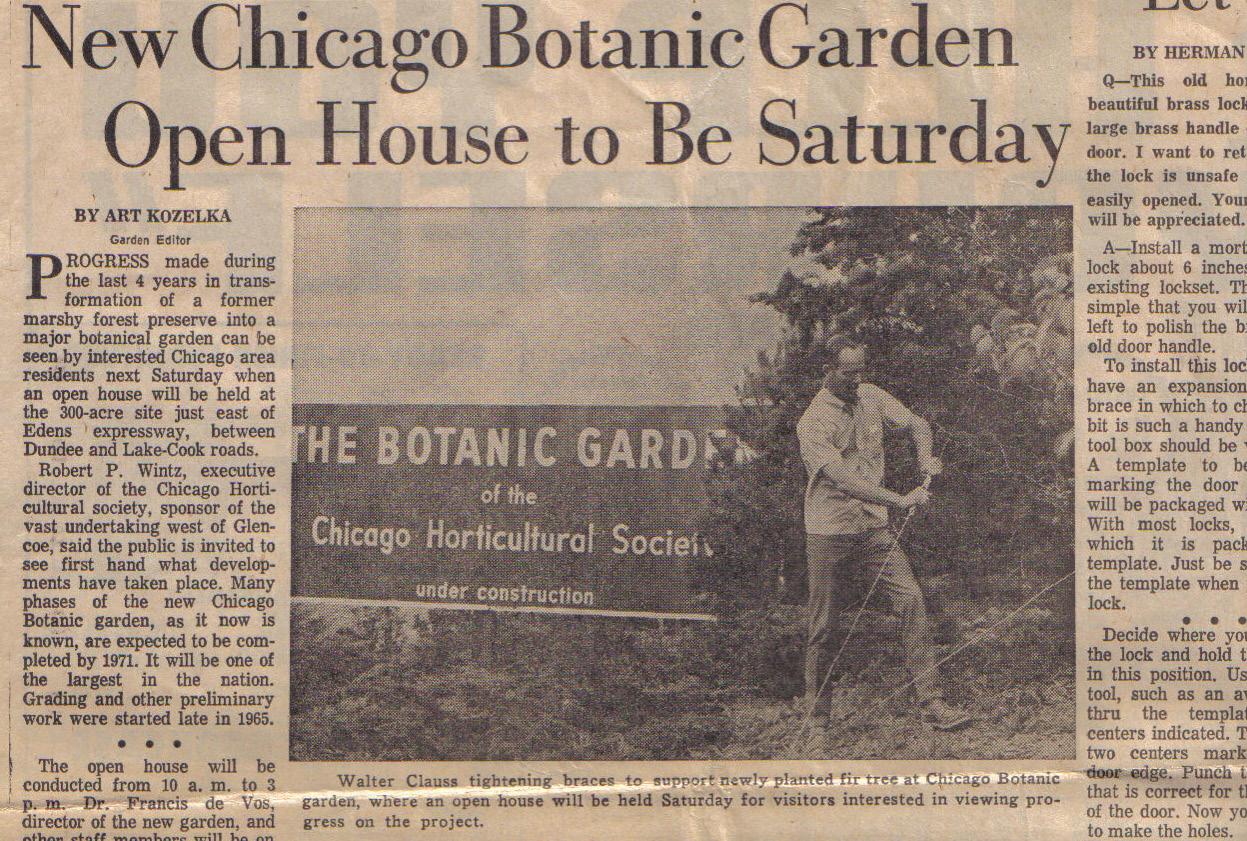
Committee in 1988 and on the Nominating Committee in 1987 and 1988. He served on the ILCA Board of Directors for more than 10 years and was designated ILCA’s Man of the Year in 1982. Wally’s early service as chair of Summer Field Day led to more than 30 years of volunteering on this committee. Wally attended his first Summer Field Day in 1971. The following year, Clauss Brothers was busy helping landscape the new Chicago Botanic Garden. When interviewed about “the good old days” of Summer Field Day about 10 years ago, Wally said, “We did a lot of the planting at the Chicago Botanic Garden – we worked there for years. In 1972, Al Kikel of the ILCA asked me to serve as Summer Field Day chairman and act as a go-between with the Botanic Garden and the ILCA. The Botanic Garden wasn’t even open yet, there was one garden completed then, but we were doing a Summer Field Day there. It was the first SFD I really worked on, and it turned out quite nice.
“I enjoy it,” he continued. “It’s only once a year – it is work, but it’s fun at the same time and I’ve always had a good time. I didn’t want to be the chairman, though, I wanted to be the guy who set up the booths. We had good helpers and the majority of them stayed for years and years. We’d go out to dinner, have fun and joke a lot. The people are all great – the ILCA staff, the landscape contractors who are on the committee, the host people.
“It’s fun to set up the show, the whole thing is very enjoyable and rewarding. The show is usually the first Wednesday in
August. I and another volunteer would get the plan from the host company so we could do the layout for the booths and parking, etc. We would go in to see where we could put the booths, which are 20 feet by 20 feet average, with 20 foot aisles. We do the layout on paper first – that’s the biggest thing – then we do the parking lot layout, then the administration area. A day or two before the show we go in and mark the layouts with paint. If the SFD is going to be complicated or out of town, we may start work on Sunday. Otherwise, we set up registration, food tents and everything on Monday and Tuesday, and on Tuesday everyone moves in.
“As far as rewards, it is satisfying to see that they are a success, but that success can depend on the location — closer Field Days are better attended. Seeing a lot of people there on Wednesday, working with the hosts, seeing my fellow landscape contractors – surprising as it may seem, many of the SFD committee members are company owners.
“It’s much, much bigger and more organized now,” says Wally. “It got real large for a couple of years, now it’s down a little. People don’t have time in August – it used to be the slow time, but now trees are dug and waiting for you. We had a few less people on the committee then. Originally we had a committee of seven or eight people and we did everything – hung signs, set up booths, hired people to set up tents. Now we have more people – not a lot more, but enough – everyone helps. It’s not a huge committee but everyone is extremely reliable and it’s extremely well organized.
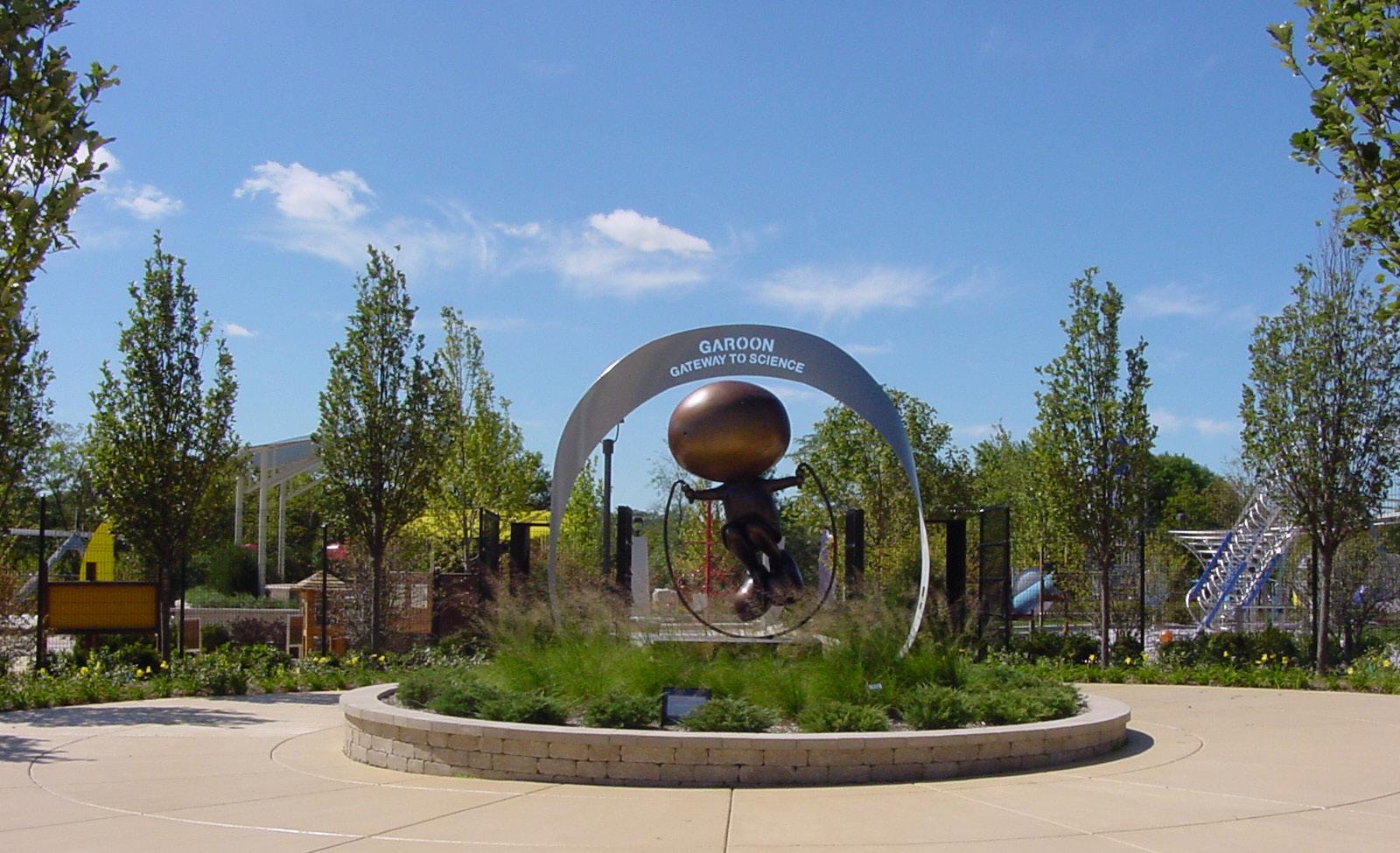
Garoon Gateway to Science
Family Ties —
“At some of the first Summer Field Days we had 40 booths, 60 tops, and the attendance wasn’t near what it is now. Now we average 100 booths. We also hold small seminars now, with about 50 to 60 people attending. We have to be careful there, though — we can’t plan too many events like that or people won’t go to the booths.”
My friend Paul Guzzatta of Kanveville Tree Farms is now the Summer Field Day Chairman. He’s a really capable guy and has a unique ability to always find a good restaurant, no matter where the current Field Day location might be.
Asked how Summer Field Days, and landscaping in general, has changed since the early days, Wally says, “Number one on the list is much more sophisticated equipment. You still need laborers today, but in the 1950s we used to do it all by hand – trenchers were just barely invented then. There were no weed eaters or blowers, we swept the sidewalks. There were no gas hedge trimmers – there were electric ones, but they were limited. Tractors are bigger now and do so much more. Things might have been a little easier going and we weren’t as sophisticated then, but it wasn’t all that different.”
Speaking of friends
Tom Kusmerz, Sr., president of The Barn Nursery and Landscape, is a good friend of Wally’s from their years working together on Summer Field Day. “I jumped into the business in 1967, mowing lawns and thinking, ‘Sure, I know how’ when I didn’t have a clue. I met Wally through ILCA and he said, ‘You’ve got to be on this committee.’ You’d go to the old-timers and they’d stop what they’re doing and answer your questions. Wally, Ron Damgaard and Ralph Synnestvedt would act as mentors. I got a free education on landscape construction just by asking them questions. Wally’s daughter, who was in the corporate world, came to a Mid-Am show. She said, ‘I don’t get it. You’re competitors and you like each other.’”
“Field Day was just about camaraderie – for many, many years the committee was a group of twelve people, almost unchanged. Wally, Kurt Miller and I would meet for lunch –we became really good friends. Wally and I have a lot in common – we both love landscaping and we love to hunt. I could easily leave and go to a ranch, that would be heaven. I don’t think I’ve ever seen Wally in anything but cowboy boots.
Kurt Miller, president of Thornapple Landscaping, Inc. and vice president of Thornapple Maintenance, Inc., met Wally when he joined ILCA’s Summer Field Day Committee to get more involved. “It was around 1982 or ’83,” Kurt recalls. “Summer Field Day was at Schroeder’s and it rained all day. I was in charge of the beer, lugging beer kegs in the rain. With Field Day, you end up travelling all over the state. You work long days and then jump in the pool at the end. It’s always been good - you work hard and party hard. Wally was always there, very dependable. He’s a true-to-his-word kind of guy.”
Many people remember Clauss Brothers because of their big trucks and their ability to move large trees when it was a lot trickier than it is today. “They had a truck that could lift big trees, like an auto wrecker truck with a crane that could lift and move things,” recalls Miller.
Wally remembers the Chicago Botanic Garden as one of Clauss Brothers’ most interesting projects. “We were one of the first on the job, and there were no roads when we got there,” he remembers. “It was all mud, but it was very hilly with beautiful lakes.”
Kemper Lakes was another project that stands out for Wally. “Ian had an office up there, and we maintained it for years. Indoor plants, snow plowing, the golf courses – we built and maintained it.”
A company strong with employees
Clauss Brothers’ General Manager and Controller Susan Miller says she has worked there “only ten years,” managing the administrative side of the business. She got the job after responding to an ad when their general manager retired. “After interviews with Walt and Pete, what struck me the most was the integrity of the company. It’s employee focused, not at all about the guys at the top. They were also the guys in the field, working 12 hours a day.
“ It was so refreshing to come here,” says Susan. “You just do what you need to do. We have an open door policy and we meet only when we have to. There were some processes and procedures to change and they were made without a lot of persuasion. They trusted me as an individual, that I’d take them down the right path. No one individual here is trying to be a star, everyone is treated with equal respect.”
“In my experience, the whole corporate philosophy here is so different from a lot of corporate structures today.The company is not bogged down in bureaucracy or eogs.
Juana Orzechowski, another longtime employee, is in charge of Payroll and Human Resources at Clauss Brothers. “We enjoy our work as well as each other’s company,” she says. “We’re more like a family. Twenty-three years ago, my supervisor and I were the only office peersonnel. Today, although the ompany has a lot of work, we are very efficient as a small staff. My manager has a good grasp of the most productive work distribution.
Chicago, now 184 years old, has long ago achieved its first “Century of Progress.” In just eight years, Clauss Brothers will mark that milestone, too.
Postscript: Wally Clauss has been the principal voice in the telling of this history. As the story draws to a close, he wanted to acknowledge the many contributions of his son Brian, who worked for the company for 25 years. His career at Clauss Brothers was cut short due to a serious back issue. Unfortunately, Wally reports that Brian passed away in February of 2017.
Compost Available for Commercial Use
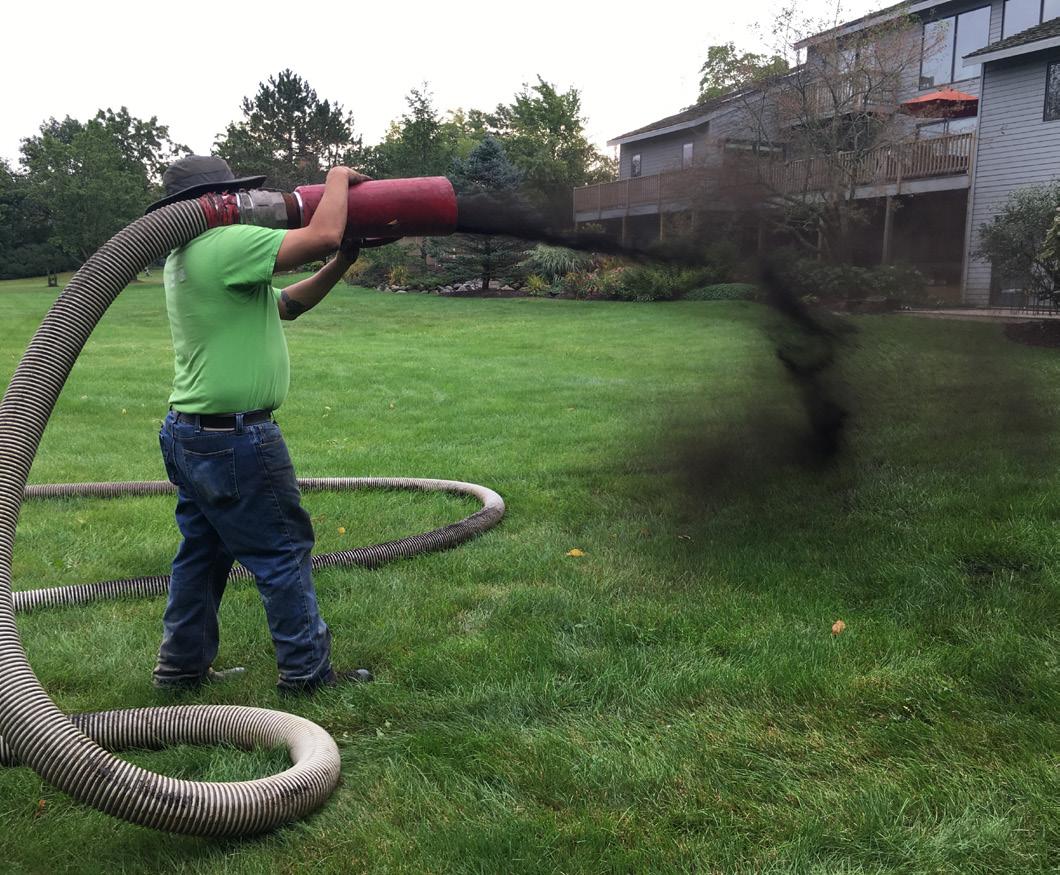
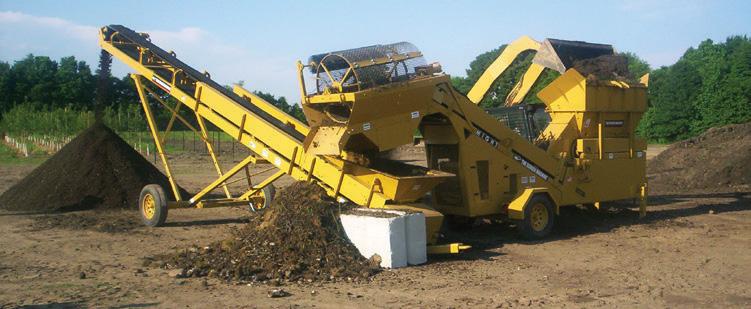
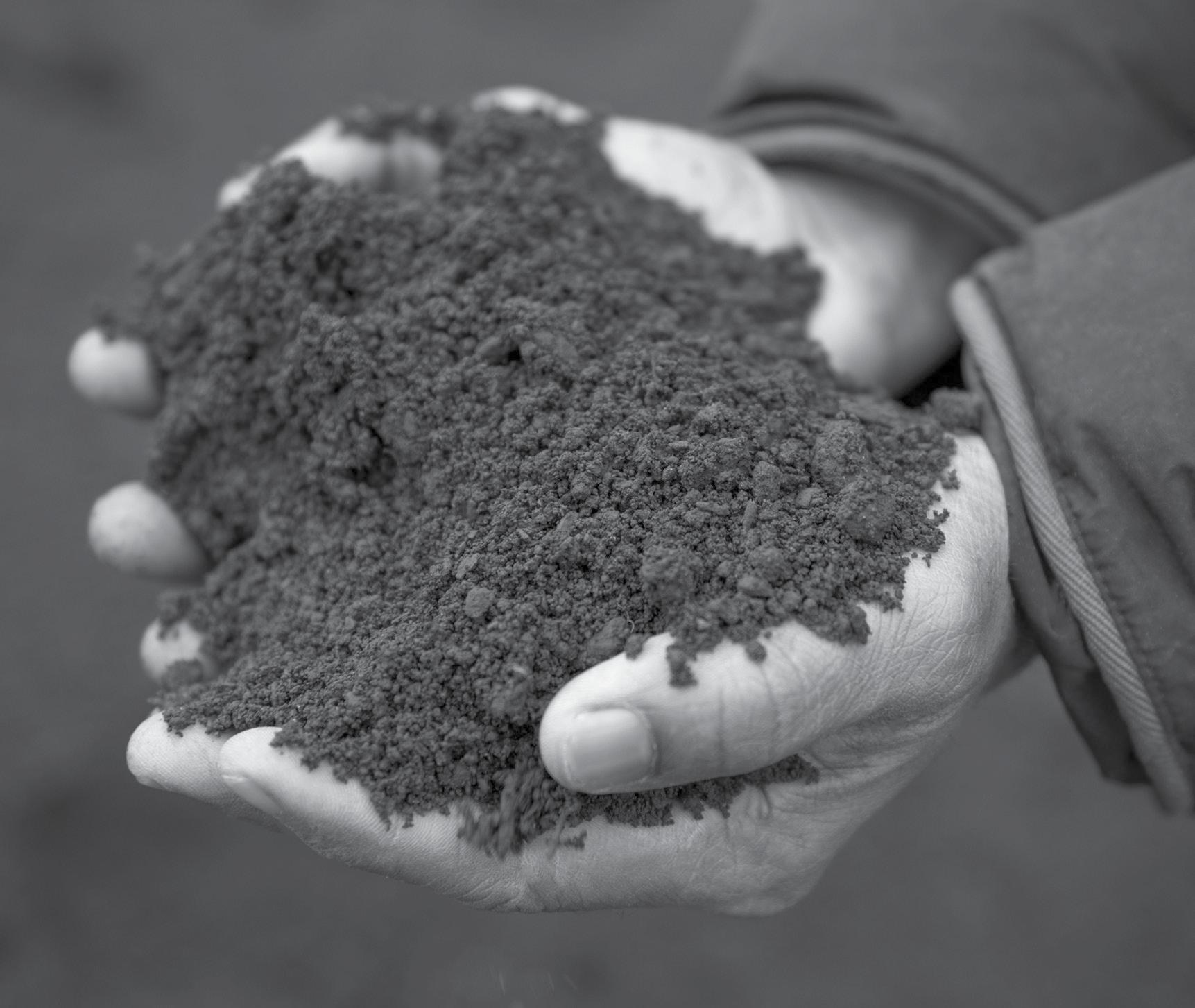
The Metropolitan Water Reclamation District of Greater Chicago is offering premium quality composted biosolids for commercial use. Our blend is effective, economical and safe. It’s also eco-friendly.
Apply it in a variety of ways:
• Use as a conditioner for turf grass
• Mix with custom topsoil blends
• Add to planter beds and pots
Only $30 +tax per cubic yard
Available at two locations
Harlem Avenue Solids Management Area 7430 Portage Trail, Forest View, IL 60402
Calumet Solids Management Area
12600 S. Doty Rd., Chicago, IL 60628
Call (708) 588-4300 to arrange for pickup, or email biosolids@mwrd.org.
New Members
LANDSCAPE CONTRACTORS
M&J Asphalt Paving Co., Inc.
James Distasio 3124 South 60th Court Cicero, IL 60804
Phone: 708-222-1200
Fax: 708-222-1213
Email: jvd@mjpaving.com
Website: mjpaving.com
M&J is a full-service asphalt paving, concrete, landscaping, and snow and ice control contractor serving commercial, municipal, utility and large-scale residential customers in Chicagoland since 1979. M&J provides turn-key ground construction and preservation services to its customers, including parking lot installation and restoration, pervious asphalt and concrete solutions, decorative paving and brick paver installation, as well as a host of landscaping services. M&J is a one-stop shop for all of your highvalue, high-profile needs.
Wilson Landscape Inc
Brian M Younker 1735 Terry Drive Joliet, IL 60436
Phone: 815-725-7335
Fax: 815-725-7535
Email: brian@wilsonlandscapeinc.com
Website: wilsonlandscapeinc.com
Wilson Landscape Inc was founded in 1985. We offer 24/7 service to our commercial clients to help them maintain a safe and aesthetic 365 days a year. Our services include Lawn Maintenance, Landscape Maintenance, Landscape Installation, Landscape Design, Property Maintenance, Parking Lot Sweeping, Power Washing, Porter Service and Snow and Ice Removal.
Rainbow Treecare Scientific Advancements (RTSA) is creating extraordinary breakthroughs in the green industry across the United States. A fundamental premise of Rainbow is the integrity of our people, products and services. For more than 40 years, Rainbow has been dedicated to scientifically proven-methods and we believe in continuous education, research and discovery as we support and grow as leaders in our industry. Our plant health care products and services are guaranteed to give complete customer satisfaction while delivering unprecedented service, performance, quality and value.
Landscaping Today for
Ringers Landscape offers a fresh perspective
By Marilyn Witney
Some well-known
entrepreneurs have launched their innovative businesses out of the humble garage. Walt Disney made his first films; Steve Jobs tinkered with his first computer; and Amazon’s Jeff Bezos sold his first books online, all from that back yard structure.
Enter Ringers Landscaping. Not quite as well-known, not exactly worldwide, but nevertheless entrepreneurial, innovative and jam-packed with promise for the future of the company, and the future of our planet.
The Beginning
Conceived after summers mowing lawns, and set up in his parent’s garage, young Erik Ringstrand named his company after his boyhood moniker
“Ringer.”
Erik’s busy Fox River Grove business grew to about $500,000 in the first five years using conventional landscaping methods. During the summers, his high school chum Brandon Losey worked on Erik’s crews. Pursuing a degree from Iowa State University’s (ISU) renowned sustainable landscape architecture program, Brandon started talking about a “different” way of doing things, working with nature rather than against it. Erik had helped rebuild parts of New Orleans after the devastation of Hurricane Katrina, and saw first-hand how man’s destruction of wetlands and other coastal ecosystems contributed to the enormous destruction there. This and his innate love of people and the planet opened the door to the new landscaping methods that Brandon brought him from his studies at ISU.
When Brandon graduated from ISU in 2010, he came in full time with Erik. Soon after, he was his fullfledged business partner and Ringers transformation to sustainable landscaping services began. Like yin and yang, the two worked together with Erik in charge of business, operations and staffing, and Brandon as the designer, marketer and visionary for sustainability.
The question they had to answer, according to Brandon, was “Can a conventional company be retrofitted for sustainability and still make money?” In addition, Brandon wondered “how will theories and philosophies from the classroom hold up once challenged by the real world?”
A lot of trial and error followed. They listened to their crews about what worked and what didn’t. They explored new products and equipment. And they hired some amazing people.
Ten years and going strong
This year, Ringers celebrates its ten-year anniversary, and has grown to a $3,000,000 enterprise, serving hundreds of clients in the far Northwest Chicago suburbs. In addition, their business stretches north to properties in Wisconsin whose owners want sustainable landscaping services, but can’t find them with any other qualified and competent contractor. With “Landscaping Today for Tomorrow” as their mission statement, Ringers Landscaping has a solid base for more growth, and even more opportunity to connect clients with their environment and promote all the benefits of a meaningful, sustainable landscape.
Moving from the garage in 2008, and then to a small industrial park, Ringers now occupies a two-acre property in Fox River Grove, with nine crews and thirty employees. The crews specialize in an array of services including residential construction, commercial construction, hardscape, tree care, organic lawn care
for Tomorrow
and sustainable gardening. The tools and products Ringers uses, and the operation of their business, are all rooted in their mission for sustainable practices that don’t compromise the planet. “It’s our goal,” according to Erik and Brandon, “to leave every site knowing that we improved both the landscape and the lives of those who engage with it.”
Leaning in to sustainability
In 2012, when horticulturist Ken Williams came on board, Ringers’ knowledge base and sustainable practice increased exponentially. Ken brought with him a lifetime of experience and over a dozen years working in notfor-profit horticultural environments where no chemicals and limited budgets prevailed. He knows plants intimately, which blended perfectly with Brandon’s artistry and sustainable philosophy.
“Since he joined us,” Brandon says, “whenever we come up against a problem or challenge, we ask ourselves ‘What would Ken do?’” Ken is a valuable educator for both the company and its clients, leading up the Ringers three-man Gardening Crew. He teaches clients to tolerate a weed here and there until the timing is right for removal; to leave last year’s perennials up all winter to feed the spring soil; and to be gentle to the earth so it can yield better results.
In addition to Ken, other highly
qualified staff was hired. Megan Bradburn, also a talented graduate of Iowa State, was added in 2013 as the second Ringers Designer. Her plant knowledge and artistry with them in a sustainable landscape, combined with an infectious sense of humor, made her an indispensable addition. Finally, a cast of more than two dozen crew members, some new and some already on board, took a chance on Ringers’ new direction. Many have stayed for the entire decade. At first it was a tough sell to ask them to change from the conventional practices they’d been applying for a lifetime. But now they’re skilled in new methods, using Dutch hoes, mowing high, mulching right and building rain gardens. They’re ready to meet any new ideas that Erik and Brandon toss their way.
Education for Clients… and for Children
An especially useful teaching tool for potential and current clients is the Ringers Landscaping website: www. ringerslandscaping.com. Their blog entitled “Seedlings” which appears in full on the site provides an enormous amount of information on just about every landscaping topic.
One of their blog entries entitled “Organic Fertilizing” provides exact details of how Ringers approaches this (continued on page 38)
Profiles in Sustainability —
(continued from page 37)
service, and what the customer can expect from organic lawn care versus one that is doused with chemicals. “We always direct potential lawn-care customers to this post before they sign on,” says Brandon, “so we know they understand how a sustainable lawn will be different … in terms of tolerance for an occasional weed, and also in how they mow, water and do other home lawn maintenance.”
Back in 2011, Ringers served about 110 clients with conventional lawn care using traditional fertilizers and weed killer. They decided to turn their lawn care efforts entirely organic at the beginning of the season, and asked their customers to review the Organic Fertilizing blog post. They lost about sixty clients once they absorbed the post’s details asking “Is Ringers program right for you?” However, the customers who stayed were the ones who realized the importance of sustainability
in the landscape and welcomed the aesthetic changes in exchange for less maintenance, lower costs and a healthier, safer outdoor space. From these sixty that remained, Ringers has now built their business back up to eighty customers for organic lawn care, which includes aeration, seeding, organic fertilization and organic compost top-dressing. They have about 250 residential and commercial contracts for lawn maintenance.
Education also extends to teaching landscapes at both schoolyards of Fox River Grove School District 3, which have been installed and are maintained by Ringers. They began their work for the District when Superintendent and Business Manager, Dr. Tim Mahaffy, issued a simple RFP for lawn/landscape/ snow and walkway maintenance back in 2010. “The District’s aim was to beautify the schools through our landscapes and at the same time develop an environmentally conscious project that would create learning opportunities
for the students, teachers and parents at the schools,” he said in an interview. “Ringers designed a three-year phase-in for the sustainable plantings, and they have become our recognized contractor, approved by our Board of Education.”
Each year they’ve met to add projects like native woodland paths and rain gardens to increase the sustainability and the beauty of the schools’ landscapes. “As Superintendent,” remarked Dr. Mahaffy, “I haven’t had to see a new vendor since 2010. I love the way our buildings look, plus teachers can bring classes outdoors to the gardens to study botany, biology, ecology, math, and all sorts of demonstration opportunities.”
Homeowners love the education they get from Ringers too. Woodstock client Pat Inman, who calls Brandon “an artist in the garden,” stays home from work when she knows Ringers staff will be on her ten-acre property. “I learn something new every time they come (continued on page 40)
• Classic Mulch
• Color Enhanced Mulches
• Shredded Aged Mulch
• Safe T Mat Engineered Wood Fiber (Playground Mulch)
• Screened Compost
Mushroom Compost
Sand & Gravel • Top Soil
Leaf Mulch
Profiles in Sustainability —
(continued from page 39) by,” Pat says. “They have transformed my landscape in phases and now I enjoy it so much more. I don’t look at it like ‘just a lot of work’ because there is no maintenance with the plantings Ringers has installed. I can just sit back and enjoy my space.” That’s what a lot of Ringers customers say. They say they have become much more engaged in and connected to their outdoor spaces, and that with Ringers help, “My new landscape has changed my life.”
Giving Back … Getting Clients
For Ringers marketing efforts, Brandon says he uses very little traditional media to attract customers. Instead, he has found that hanging out with people who are committed to stewardship of the land is a much better way to find the right customers. Barrington Area Conservation Trust (BACTrust) is one such group. According to Lisa Woolford, their Executive Director, “When I met Ringers in 2014, I was struggling to find a sustainable landscaping partner for our Conservation@Home program that certifies sustainable landscapes. But I wanted to kick the tires and use them for my own home landscape to see if they’re the real deal.”
capabilities and direct referrals to them have helped build their business while they so generously share their time and talent with our organization.”
Most of Ringers Landscaping customers come to them by word of mouth like this, and 90 percent say they work with Ringers because of their sustainability ethic.
Focus on Sustainability… at Work and on the Site
It turns out they were. They designed and installed a gorgeous and functional rain garden in the front of her house that year. Since 2015, Ringers has
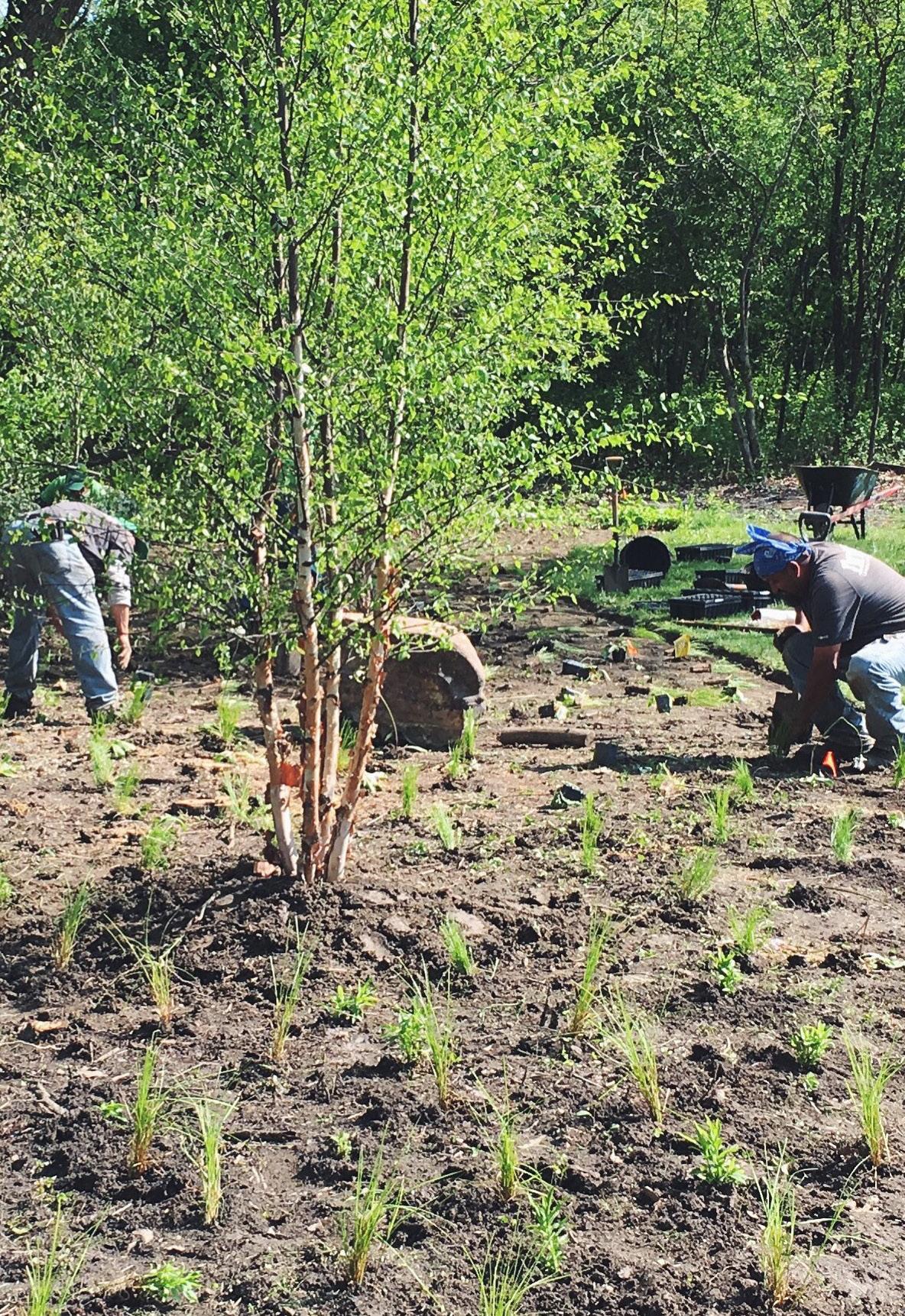
helped BACTrust certify twenty-one landscapes. This year, they designed a plan for a Monarch Waystation butterfly garden that can be part of a landowner’s Certification. Brandon’s design is packaged into a kit with native host and pollinator plants purchased through a grant, and given to churches, schools and non-profit organizations and available for purchase by homeowners. Thirty-seven monarch gardens will be installed this year.
“It’s been a two way street,” Lisa says. “Our social media about Ringers’
Ringers’ sustainability ethic is also at work throughout their entire business. They are beekeepers to three hives in their own yard, and assisted others setting up eight hives through a Barrington nonprofit called Smart Farm that helps hungry families. They maintain a large vegetable garden on their property that’s available to staff at work and to bring home to their families. They brew their own compost tea that’s used as one of the main components of their organic fertilizing program. And they utilize a closed cycle mulching process that trucks their landscape waste to a Carpentersville site, and returns to Ringers with organic mulch to spread back into clients’ landscapes. In addition, on-site equipment like propane mowers and blowers and electric line trimmers are quieter and produce fewer emissions.
(continued on page 42)
Profiles in Sustainability —
(continued from page 40)
What’s Ahead
Erik and Brandon took time this year in the off-season to evaluate Ringers as it moves into its second decade. They’re in the midst of outfitting their third maintenance crew with all-electric equipment. The goal is to create a zeroemission crew within two years, including hopes for a commercial grade electric pickup truck. Continued education is also high on their goals for the next decade, for themselves, their crews and their customers. Integrating food crops into the landscape is a new practice they are just learning about, and they hope to continue their
efforts building relationships with likeminded people at community-wide not for profits. Finally, push technology is on their priority list. Using G Suite, LMN
(Landscape Management Network), SketchUp, DropBox and more have been essential to helping them grow Ringers thus far. For the future, Brandon and Erik believe these tools will become even more seamless and powerful for sharing and communicating with each other and with customers about how landscaping can work harder to protect the planet.
Learn more on October 17th at the ILCA Sustainable Landscaping Conference, Impact: Building Sustainable Landscapes, and visit the ILCA website www.ilca.net to find Resources to help add sustainable services to your business.
Enfoque: Sección
en Español
Paisajismo de hoy para mañana Ringers Landscaping ofrece una perspectiva
Por Marilyn Witney
Algunos empresarios de renombre han lanzado sus empresas innovadoras desde sus humildes garajes. Walt Disney hizo sus primeras películas; Steve Jobs realizó pequeños ajustes a su primera “computadora”; y Jeff Bezos de Amazon vendió su primer libro en línea, todo desde esa estructura de patio. Entra Ringers Landscaping. No tan bien conocida ni exactamente mundial, pero, no obstante, emprendedora, innovadora y llena de promesas para el futuro de la compañía y el futuro de nuestro planeta.
El comienzo
Concebida después de muchos veranos cortando céspedes y establecida
en el garaje de sus padres, el joven Erik Ringstrand nombró a su compañía con su apodo de la niñez, “Ringer”. El negocio de Erik en Fox River Grove creció hasta convertirse en una empresa de $500,000 durante los primeros cinco años utilizando métodos de paisajismo convencionales. Durante los veranos, su amigo de la secundaria, Brandon Losey formó parte del personal de Erik. Cuando estudiaba para obtener un diploma del renombrado programa de arquitectura paisajista sostenible de la Universidad Estatal de Iowa (ISU, por sus siglas en inglés), Brandon comenzó a hablar acerca de una manera “diferente” de hacer las cosas, trabajando con la naturaleza en lugar de contra ella. Erik había ayudado a reconstruir parte de New Orleans después de la devastación producida por el Huracán Katrina y pudo ver directamente cómo la destrucción causada por el hombre en los pantanos y otros ecosistemas costeros contribuyeron a la enorme destrucción que hubo esa ciudad. Esto y su amor innato por las personas y el planeta abrieron las puertas a los nuevos métodos de paisajismo que Brandon aportó de sus estudios en la ISU.
Cuando Brandon se graduó de la ISU en 2010, comenzó a trabajar a tiempo completo con Erik. Poco después, fue su socio de pleno derecho y comenzó la transformación del negocio de Ringers en un servicio de paisajismo sostenible. Como yin y yang, los dos trabajaron conjuntamente, con Erik a cargo de las operaciones comerciales y la dotación de personal y Brandon como diseñador, promotor de ventas y visionario de la
sostenibilidad.
Según Brando, la pregunta que tuvieron que contestar fue “¿Puede una compañía convencional reconfigurarse para la sostenibilidad y seguir siendo rentable?” Además, Brandon se preguntaba “¿Tendrán los mismos resultados que en el aula teorías y filosofías universitarias al ser confrontadas con el mundo real?”
Hubo después mucho ensayo y error. Escuchaban a sus equipos de trabajo hablar sobre lo que funcionaba y lo que no. Exploraron nuevos productos y equipos. Y contrataron a mucha gente maravillosa.
Diez años y los éxitos continúan
Este año, Ringers celebra su décimo aniversario y su negocio ha crecido hasta convertirse en una empresa de $3,000,000 que atiende a cientos de clientes en los suburbios del noroeste de Chicago. Además, su negocio
fresca
se extiende hacia el norte hasta propiedades en Wisconsin cuyos propietarios desean servicios de paisajismo sostenible, pero no los encuentran con ningún otro contratista calificado. Con “Paisajismo de hoy para mañana” como la declaración de su misión, Ringers Landscaping cuenta con una base sólida para más crecimiento y todavía más oportunidades para conectar a los clientes con su entorno natural y promover todos los beneficios de un paisajismo sostenibles significativo. Después de haber abandonado su garaje en 2008 y pasarse posteriormente a un pequeño parque industrial, Ringers ocupa actualmente una propiedad de dos acres en Fox River Grove, con nueve equipos de trabajadores y treinta empleados. Los equipos de trabajadores se especializan en una variedad de servicios que incluyen construcciones residenciales, construcciones comerciales, elementos sólidos en jardinería, cuidado de árboles, cuidado de césped orgánico y jardinería sostenible. Las herramientas y los productos que Ringers utiliza y la operación de su negocio están enraizados en su misión de implementar prácticas de sostenibilidad que perjudican el planeta. “Es nuestra meta”, afirman Erik y Brandon, “retirarnos de cada sitio con la convicción de que mejoramos tanto el paisaje natural como las vidas de los que se relacionan con él”.
Inclinándose hacia la sostenibilidad
En 2012, cuando el horticultor Ken Williams se incorporó a la
compañía, la base de conocimiento y las prácticas sostenibles de Ringers se incrementaron exponencialmente. Ken aportó una vida de experiencias y más de doce años de trabajo en entornos horticulturales sin fines de lucro donde predominaban los presupuestos limitados y la ausencia de sustancias químicas. Conoce las plantas íntimamente, lo que combinó a la perfección con la maestría de Brandon y su filosofía sostenible. “Desde que se incorporó a nuestra compañía”, afirma Brandon, “siempre que se nos presenta un problema o tenemos que hacer frente a un desafío, nos preguntamos ‘¿Qué haría Ken?’” Ken es un valioso educador tanto para la compañía como para sus clientes, liderando el equipo de jardinería de tres hombres de Ringers. Enseña a los clientes a tolerar una maleza ocasionalmente hasta que llegue el momento adecuado para eliminarla; dejar las plantas perennes del año anterior durante todo el invierno para alimentar el suelo de la primavera; y ser cuidadosos con la tierra para que rinda mejores resultados.
Además de Ken, se contrató a otro miembro calificado del personal. Megan Bradburn, otra graduada talentosa de la Universidad Estatal de Iowa, fue contratado en 2013 como segunda Diseñadora de Ringers. Sus conocimientos sobre las plantas y habilidad para manejarlas en un paisaje sostenible, combinados con un sentido del humor contagioso, la convirtieron en una adición indispensable para la compañía. Por último, un conjunto de más de dos docenas de miembros
del equipo de trabajadores, algunos nuevos otros ya incorporados, decidieron aventurarse en la nueva dirección de Ringers. Muchos han permanecido con la compañía durante toda la década. Al comienzo resultó difícil convencerlos de las ventajas de cambiar las prácticas convencionales que habían aplicado durante toda su vida. Pero ahora están capacitados en los nuevos métodos: uso de la azada holandesa, cortar el césped alto, cubrir con mantillo correctamente y crear jardines de lluvia. Están listo para hacer frente a cualquier idea nueva planteada por Erik y Brandon.
Educación para clientes … y para niños
Una herramienta de enseñanza especialmente útil para clientes potenciales y actuales es el sitio web Ringers Landscaping: www.ringerslanding.com. El blog titulado “Seedlings” (Plantas de semillero) que aparece completo en el sitio, ofrece gran cantidad de información sobre casi todos los temas relacionados con el paisajismo.
Una de las entradas del blog titulada “Fertilización orgánica” ofrece detalles exactos sobre la forma en que Ringers proporciona este servicio y lo que pueden esperar los clientes de un cuidado de césped orgánico versus uno empapado de substancias químicas. “Siempre dirigimos a los clientes potenciales de cuidado de césped a este post antes de firmar el contrato”, afirma Brandon, “para asegurarnos de que comprendan la diferencia de un césped sostenible… en términos de tolerancia a las malas hierbas ocasionales y también cómo deben cortar, regar y realizar otras labores de
A Look Behind the Scenes at
by Ashley Marrin, iLandscape Experience Committee
You Spoke, We Listened
First of all, thank you to all of the exhibitors and attendees who took time out of their busy schedules to fill out the surveys after iLandscape. We greatly appreciate the feedback! Immediately following iLandscape, the Experience Committee digs deep and begins to plan for the next iLandscape show. We start out by analyzing the data from the surveys to make sure we are meeting the needs and expectations of our attendees and exhibitors.
The Top Three
The top three reasons professionals attend the iLandscape Show is for education, the tradeshow, and networking. With that in mind, we wanted to dig deeper and understand additional drivers for attendees at the iLandscape Show. The results of the survey showed that curiosity was the top reason, gardens & décor was in second, professional CEU credits was in third, and finally prizes & giveaways was a close fourth. As we plan for iLandscape 2018 we will continue to satisfy the above drivers for show attendance with a rotating show layout with new and innovative décor, interactive exhibits, and quality educational programs.
Relationship Building
Sales techniques have changed over the years and as the survey results illustrate, attendees and exhibitors are focused on building stronger relationships with existing and potential clients. At the show, 84% of attendees stated they reconnected with business contacts, 64% of attendees made valuable new contacts, and 72% of attendees learned about a new product, service, or technology to help their business. The iLandscape Show is a valuable place for networking and we will continue to create unique networking opportunities for our attendees and exhibitors. A high level of satisfaction was declared when it came to the quality, (continued on page 50)