


PRESIDENT
Peter Mezitt, MCH Weston Nurseries, Inc. Tel: (508) 435-3414
VICE PRESIDENT
Chris O’Brien, MCH Howard Designs, Inc. Tel: (617) 244-7269
SECRETARY/TREASURER
Kerry Preston, MCH Wisteria & Rose, Inc. (617) 522-3843
PAST PRESIDENT
Tim Hay, MCH Bigelow Nurseries, Inc. Tel: (508) 845-2143
DIRECTORS
Deborah Trickett, MCH The Captured Garden
Steve Charette Farm Family Insurance Family
David Vetelino, MCH Vetelino Landscape, Inc
Jean Dooley, MCH Mahoney’s Garden Centers
David Anderson Hartney Greymont, Inc.

EDUCATION & RESEARCH COMMITTEE
Deborah Trickett, MCH — Board Liaison The Captured Gardens (781) 329-9698
FINANCIAL COMMITTEE (FINCOM)
Steve Corrigan, MCH — Chair Mountain View Landscapes & Lawncare, Inc.
Tel: (413) 536-7555
Chuck Baker, MCH — Vice Chair Strictly Pruning Tel: (508) 429-7189
GOVERNMENT RELATIONS COMMITTEE
Chris O’Brien, MCH — Chair Howard Designs, Inc. Tel: (617) 244-7269
HISTORY COMMITTEE
Philip Boucher, MCH — Chair Elysian Garden Designs Tel: (508) 695-9630
Skott Rebello, MCH — Vice Chair Harborside P.S. Tel: (508) 994-9208
MASSACHUSETTS CERTIFIED HORTICULTURIST BOARD (MCH)
Jack Elicone, MCH — Chair John R. Elicone Consulting Tel: (617) 527-5706
Corinne Jean, MCH — Vice Chair Wisteria & Rose (617) 522-3843
PRODUCTS COMMITTEE
Peter Mezitt, MCH — Chair Weston Nurseries, Inc. Tel: (508) 435-3414
GOVERNMENT RELATIONS DIRECTOR
Jason Wentworth Tel: (617) 417-4050
EXECUTIVE DIRECTOR
Rena M. Sumner Tel: (413) 369-4731
Massachusetts Nursery & Landscape Association P.O. Box 387 Conway, MA 01341 mnlaoffice@aol.com www.mnla.com www.PlantSomethingMA.org www.mnlafoundation.org www.mnla.com
ProGrowNews is published quarterly by the Massachusetts Nursery & Landscape Association (MNLA), P.O. Box 387, Conway, MA 01341, tel. (413) 369-4731. Articles do not necessarily reflect the view or position of MNLA. Editorial coverage or permission to advertise does not constitute endorsement of the company covered or of an advertiser’s products or services, nor does ProGrowNews make any claims or guarantees as to the accuracy or validity of the advertiser’s offer. (c) 2014 All rights reserved. No part of this publication may be reproduced in print or electronically without the express written permission of the MNLA.

ByPeter Mezitt, MCH
there ever a better time than right now to be working in the green industry? The unfortunate occurrence of an international pandemic has made people evaluate what is most important to them, and we seem to be at the top of the list, along with every other supplier and service for outside the home. It’s almost like people discovered what we already knew. Once people were forced to slow down and spend more time at home, the home finally got the attention it deserved as that special place to enjoy, experience, and make memories. And the outside became a focal point through the year with new patios, pools, and plantings like we have never seen before.
Statistics show there are almost 20 million new gardeners in the United States this year, and most are saying they felt successful overall and are going to stick with it next year. Most of these folks say they gave it a try because they wanted to make their outdoors more beautiful than before. Others wanted to engage with planting for the exercise and activity factor, while many others wanted to plant vegetable gardens and orchards to produce their own food. Whatever the reason, homeowners are more connected to what we do. Let’s enjoy that we are so important to many people’s lives these days and do what we can to keep people engaged and successful so it continues after the pandemic winds down.
By the time you read this, MNLA’s new Virtual Forum will be launched; with 12 educational presentations — one each Thursday from January through April. These educational sessions will further your knowledge and give you the confidence you need to be successful in your business. Please watch for our newsletters and check the website occasionally to learn more about this robust lineup. You can benefit in so many ways, including earning your MCH credits.
Along with the educational sessions, industry suppliers will educate viewers on their products and services through a Vendor Marketplace. You will have opportunities to chat with sponsors or view a presentation during and after these sessions to remain up to date on the green and hard goods you rely on in your business as well as learn about new products and services available to you. The Vendor Marketplace will reside on the MNLA website all year, and many of these vendors will participate in this year-long sponsorship program.
opportunity where members who are looking for employees (who isn’t?) can advertise the positions they need to fill. MNLA will put forth an advertising blitz in late winter to generate awareness and interest from educational institutions and the public at large.
Lastly, our annual meeting will be held virtually on March 4th via Zoom. We will have a terrific keynote speaker — Ian Baldwin — you will not want to miss. We will also present the Environmental Leadership Award to a very deserving legislator who has helped our industry this past year.
It has been challenging to see people in person for quite some time, but we look forward to connecting with you virtually over the winter months. Hopefully, we can see each other in person this summer.
Peter
Mezitt, MCH Weston Nurseries, Inc. MNLA President

by Jason Wentworth

The Massachusetts Legislature limps slowly to the end of the 191st session of the General Court but, as I finish writing this on December 10, it’s hard not to focus on Governor Charlie Baker’s announcement regarding COVID-19 two days prior.
In his message, Governor Baker detailed the frightening surge of coronavirus cases in Massachusetts and the Commonwealth’s response. With close to 4,000 new cases and 40 new deaths statewide, the Governor instituted a rollback on the reopening plan, returning to a previous iteration of COVID restrictions. The restrictions are intended to provide a “bridge” to the time when a vaccine is available, and the restrictions focus on public gatherings, restaurants, gyms, etc.
What does that mean for our members? There are no direct impacts, but we’ve all come to learn the only certainty during this pandemic is uncertainty. The vaccine is like elusive sunshine on the horizon, but it’s always darkest before the dawn. Our members need to continue to operate “to the letter of the law” and then some.
Coir

As I’ve said several times since March, a scenario in which a sweeping lockdown is imposed may be unlikely, but it is not impossible. The ability to remain open and provide our essential services feels like a right to us, but to others it seems like a privilege. To those people, this privilege can be taken away, deservedly or not. Our team has fought too hard to give up now, but we need each and every member and their employees to continue that fight as well.
Continue to maintain standards that meet or exceed Massachusetts and CDC guidelines. Feel free to promote how safe your business is, whether it’s via social media or customer newsletter. Many of our members made tremendous gains last season, and not just because of high demand; our members were clearly taking the pandemic seriously, and customers appreciated that. Let’s continue that high level of service throughout every spoke in the wheel of services offered by our members.
Our adaptation in the face of this crisis has endeared us to our customers, employees, and the ancillary businesses we deal with. It has also been recognized by policy makers. When faced with a potential shutdown in March, a phalanx of legislators pointed to the inequity of the situation and the fact that closing our members would actually have negative public health impacts. They pointed to our voluntarily adopted practices. We earned their trust and their advocacy at the highest levels of government. I’m confident that, if we continue to operate as we have, we will continue to have them in our corner. It’s up to us now to do our part, remain vigilant, and keep on working. Jason Wentworth,
Peacefield Strategies MNLA Government Relations Director

by Wayne Mezitt, MCH
Our clients often express confusion why some plants thrive in their gardens and others disappoint. Why can crape myrtle (Lagerstroemia) and camellia do well on Cape Cod but fail in our mainland gardens? What causes winter-burned leaves or disappointing flowers on some rhododendrons, while others in my yard look just fine?
As professionals, reasons for these situations may seem obvious to us. But most homeowners are less savvy, and that’s why applying our professionalism for them is imperative.
Researchers tell us that plants develop their optimum tolerance for cold temperatures with gradual acclimation each winter. “Cold hardiness requires that plants have acclimated properly through the natural process of lengthening nights and cool temperatures to become dormant. This is an active metabolic process requiring adequate moisture and proper nutritional balance.”
Flower buds are generally less coldhardy than growth buds on the same plant. The actual flower bud hardiness of each individual plant is determined by “the relationship between the degree of cold hardiness (super-cooling ability of florets) and the acclimation intensity in flower buds.” Buds are at their hardiest condition when full dormancy conditions have been reached.
Every tree, shrub, and perennial has its own unique genetic composition that determines its winter hardiness. If a plant cannot tolerate the minimum winter temperatures in a region, it won’t thrive. A plant’s hardiness rating is a fundamental element we New Englanders consider when designing a garden, and it’s frequently the only major factor in our decision.
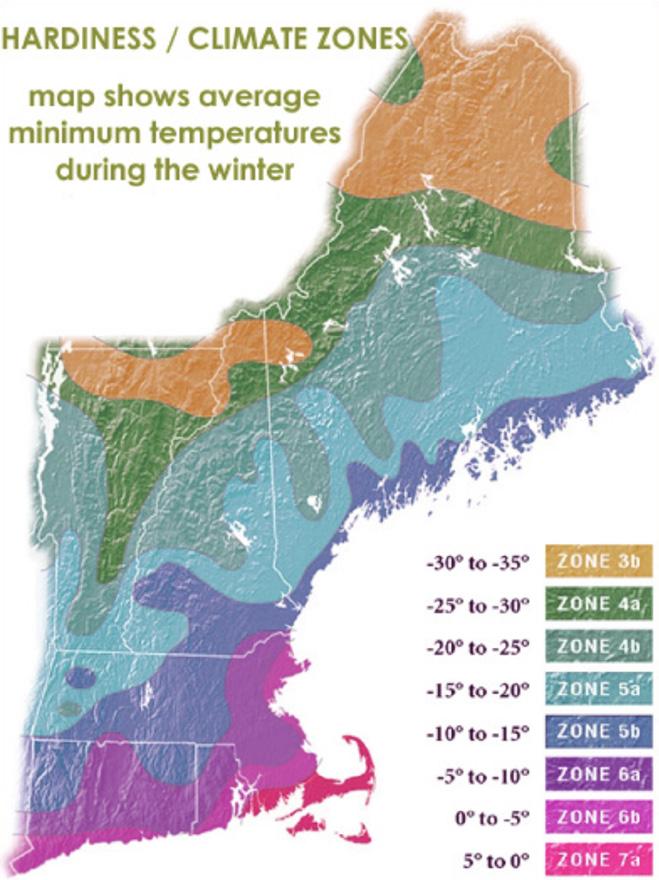
Horticulturists have measured the minimum (and maximum) range of temperature tolerances for virtually every species on the market. The USDA Temperature Zone ratings (which map the nationwide historical minimum temperatures) are the most widely accepted criterion for plant adaptability.
• Worcester has historically been in USDA Zone 5, experiencing average minimum temperatures ranging from –20° to –10° F.
• Boston is in USDA Zone 6, typically expecting minimum winter temperatures from –10° to 0°F.
• Cape Cod is mostly USDA Zone 7, 0° to +10°F. average minimum.
Garden plants such as firethorn (Pyracantha), dove tree (Davidia), cherrylaurel (Prunus laurocerasis), and Leyland cypress (Cupressus × leylandii) generally succeed on Cape Cod and may perform well in Boston, but are disappointingly less consistently winter-hardy most years in the Worcester area, northward, and westward.
USDA Zones rate the above-ground hardiness of the plant in the ground, not necessarily its root hardiness. Potted plants tend to be less winter-cold tolerant than their in-ground sisters because their root system is exposed and can be damaged when matching the ambient air temperatures.
But it’s important not to use the historic USDA Zone ratings as the sole determinant of a plant’s suitability for a location! As our climate changes, average minimum winter temperature zone ratings continue to evolve. Many additional considerations (some are called microclimate factors) should be taken into account in choosing the appropriate plants for your client’s needs.
Note: Be sure your clients understand that “hardiness” differs from “heartiness” (which is the vigor and robust qualities shown by the plant). Many plants are hearty in appearance even though they are not sufficiently hardy to thrive in certain climates.
• Annual temperature extremes and fluctuations; humidity
• Expected snow cover, first/last frost dates, length of the seasons

• Soil characteristics including moisture, drainage, acidity, and organic content
• Shade conditions and intensity of sunlight
• Exposure to wind, salt spray, and traffic
• Proximity to bodies of water or structures that tend to moderate temperatures
• Competition from other plants for water, nutrients, and light
• Disturbance by animals and pests
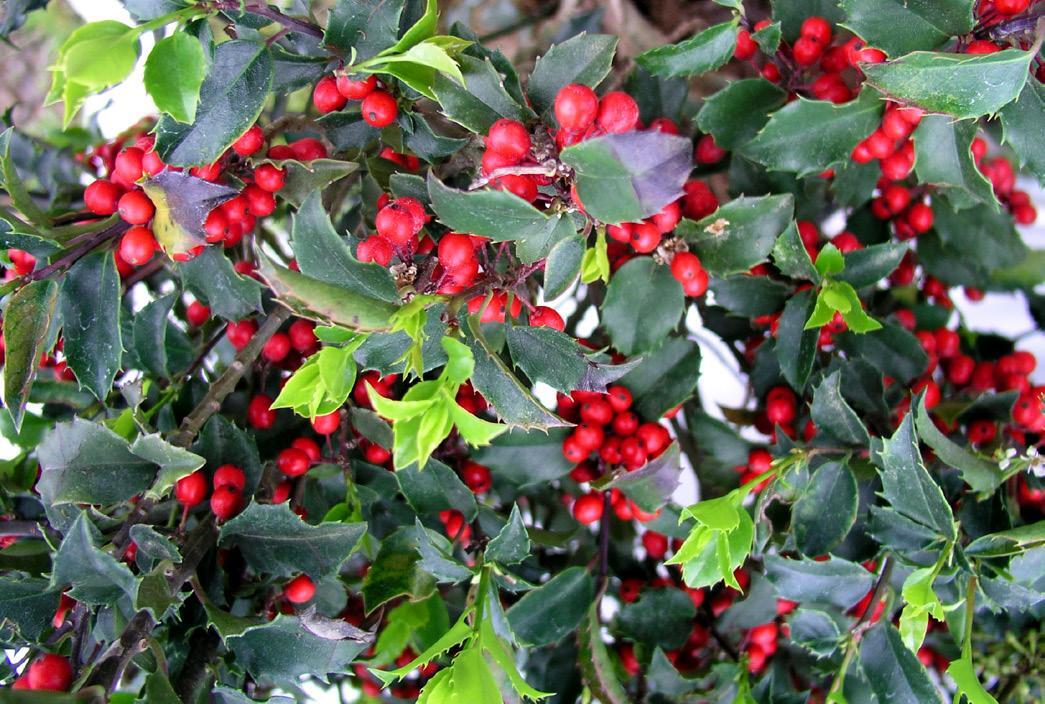
Some cultivars have been bred/selected to suit challenging conditions, and a few species of lesshardy genera tolerate colder temperatures. For example, the blue hollies (Ilex x meserveae) show little of the winter damage that often affects the appearance of other types of evergreen hollies.
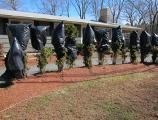
Rhododendron PJM differs from most rhododendrons, proving tolerant to low temperatures, full sun, as well as open, windy locations that can damage the familiar large-leaf
rhododendrons. The species Abelia mosanensis (fragrant abelia) is far more winter-hardy than other abelia species which suffer winter damage in northern climates. Many new cultivars of plants now on the market, like dogwood, forsythia, and viburnum, have been bred and selected for improved winter hardiness.
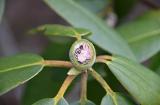
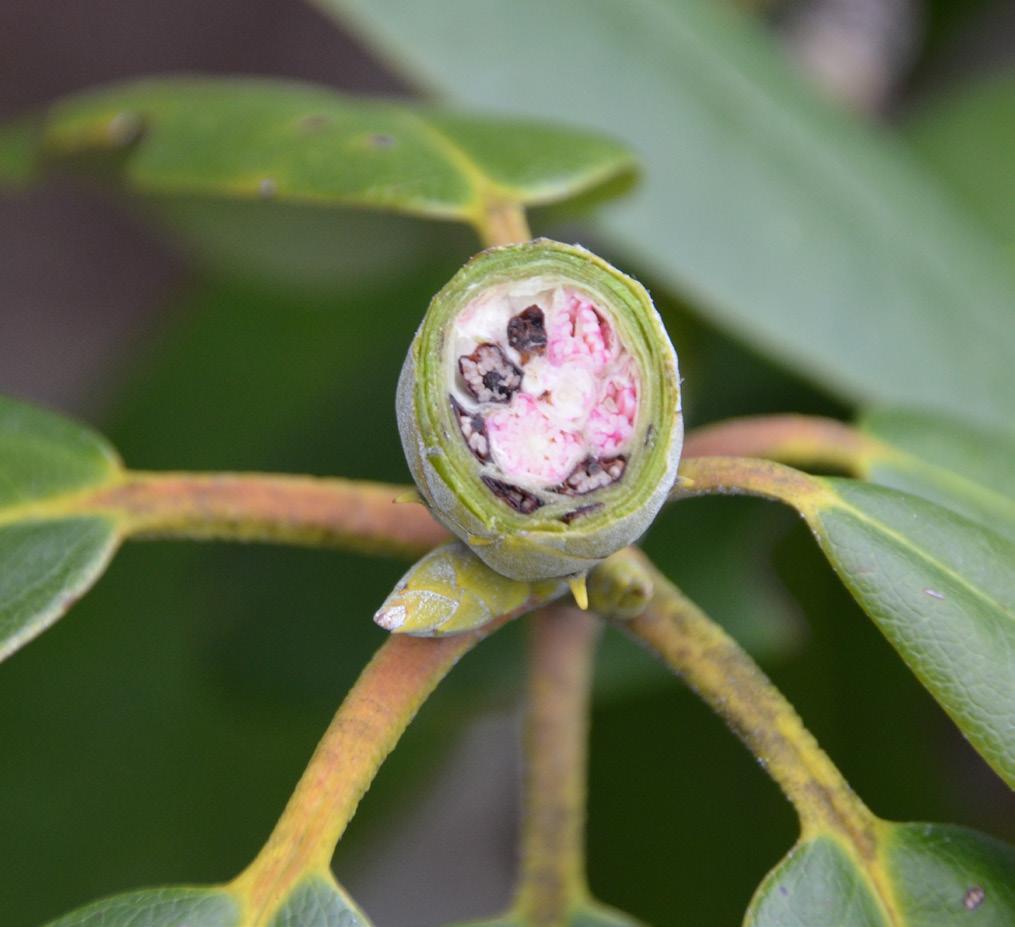
Partially blasted rhododendron bud
Local plant societies such as the Massachusetts Horticultural Society, Grow Native Massachusetts, the Massachusetts Chapter of the American Rhododendron Society, and Native Plant Trust provide helpful information for plant performance in regional gardens. Most plant catalogs publish zone ratings for the plants they list, but these can often be “generous” in their claims; if a plant hardiness rating looks too good to be true, be wary.
Working with your clients so they understand why so many factors, including winter hardiness, affect their garden plant choices will enhance your credibility with them and also result in better outcomes for their yards and your professional reputation.

By Bobbie Schwartz, FAPLD
The sun is shining, but it’s not yet time to put away the winter coats. However, if someone doesn’t have a fence or is thinking about replacing one, read on.

Although many landscapes have beautifully designed planting plans, creativity seems to be lacking when it comes to designing the fencing. We are used to seeing picket fences, stockade fences, split rail fences, and perhaps even bentwood fences, but why must those types of fences be the only ones we use? Why are the designs always vertical? And why are they always white, black, or gray?
For instance, I have a stockade fence that came with the house more than 35 years ago. It has held up fairly well and serves as an innocuous background for that section of my gar-
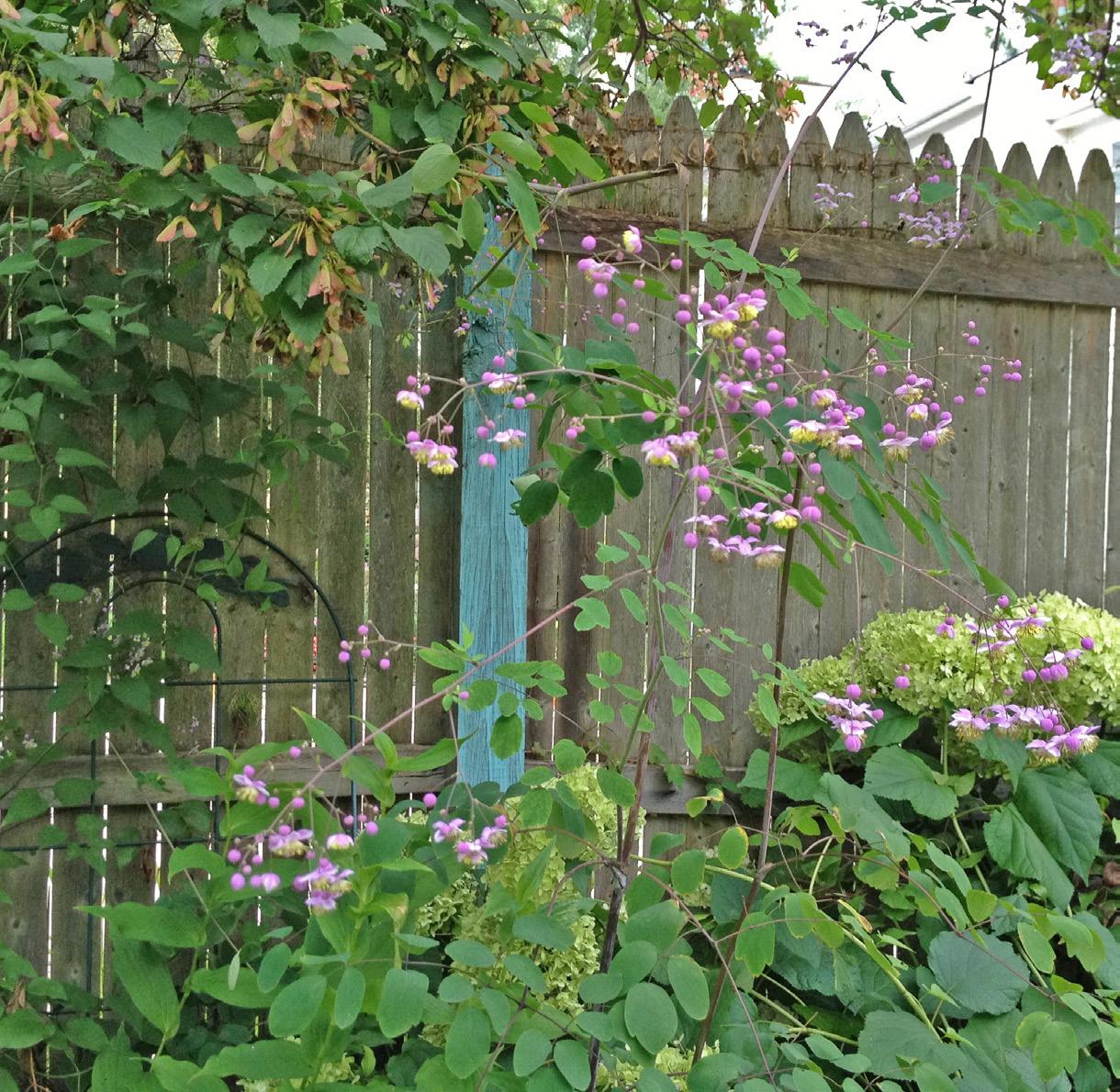
Painting every other fence post aqua turned a boring fence into sight that pleases the eye even during the winter.
den. The fence is very long, so when I changed the trim color of my house and garage from brown to aqua, I painted every other fence post the same color and topped the posts with copper caps.
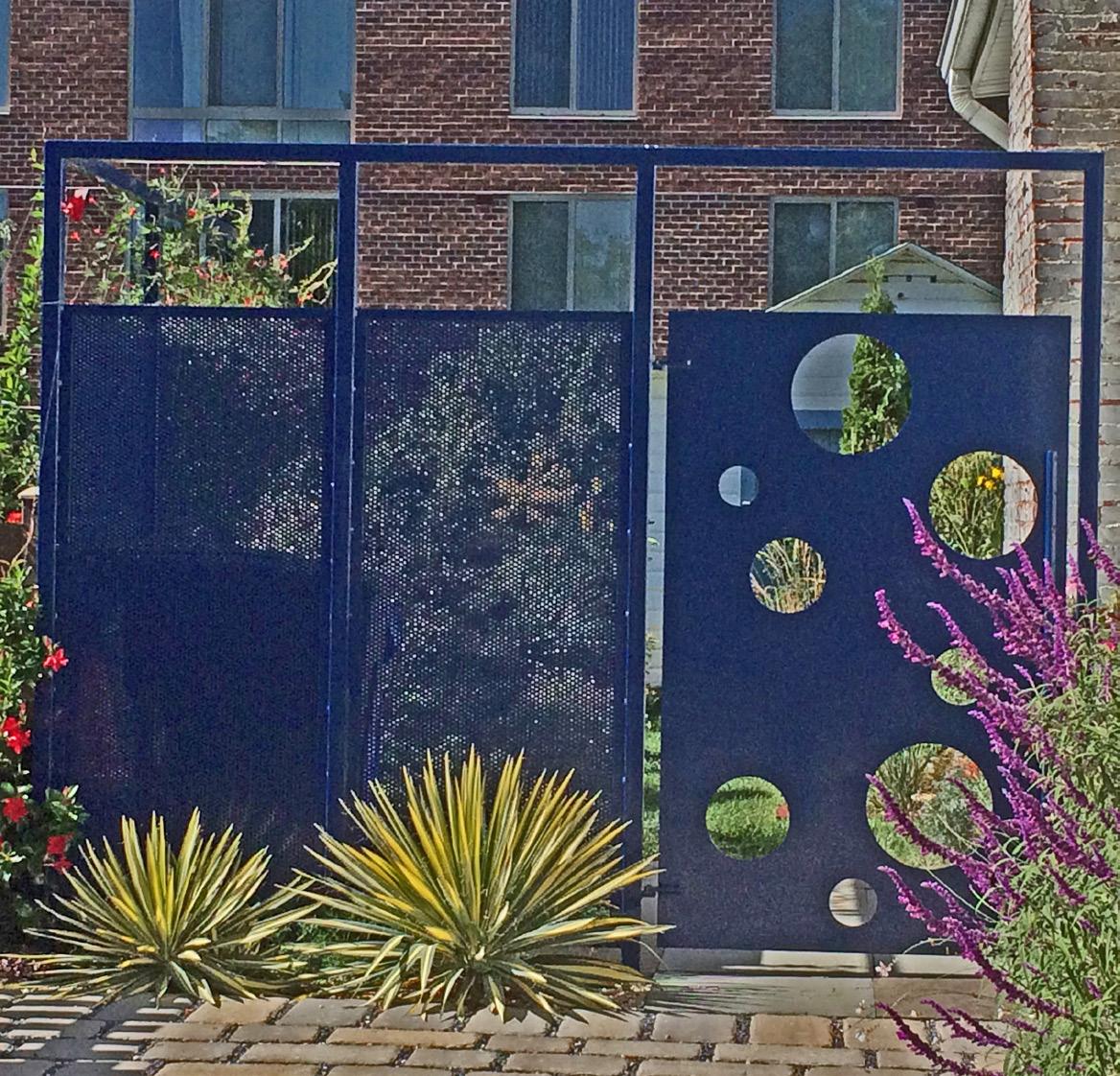
A woman who used to be in manufacturing took materials she was familiar with and made them into something special. She used royal blue Eco-Mesh, wire mesh and frames that are powder coated in a wide variety of colors. It can be used for plant facades, screens, trellises and more that are strong and sustainable but she used it to create a tall fence that separates her driveway from her backyard.

With AMERICAN NATIONAL, you’ll get an agent who has the know-how and products to help you properly manage your family’s risks. An open appointment book, along with options for home, auto, life, farm and business coverage, means you can feel good that you’re getting more an ally than just an agent.
Wherever you are in Massachusetts, there’s a American National agent close to you. Give us a call for more information.






















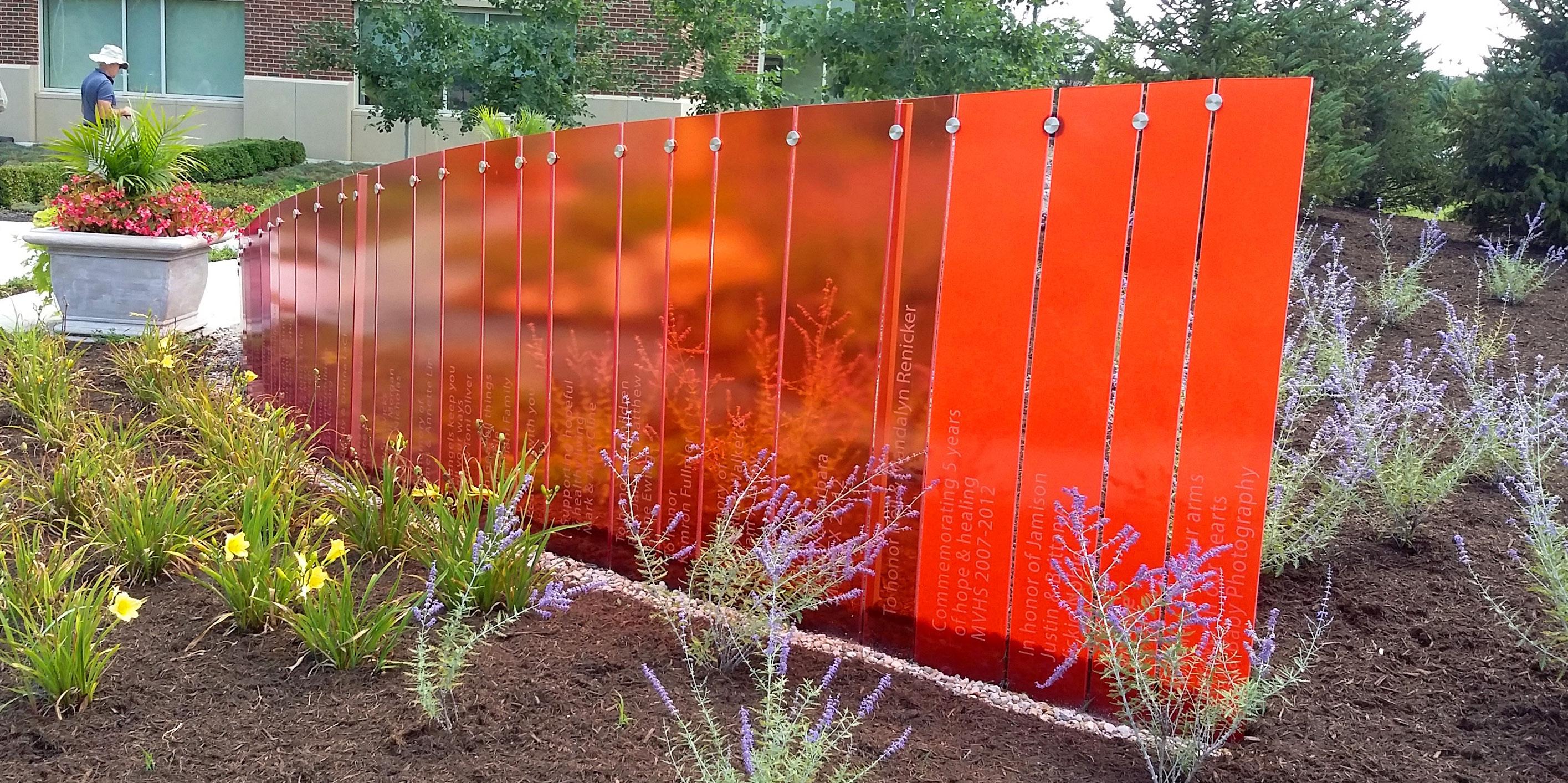
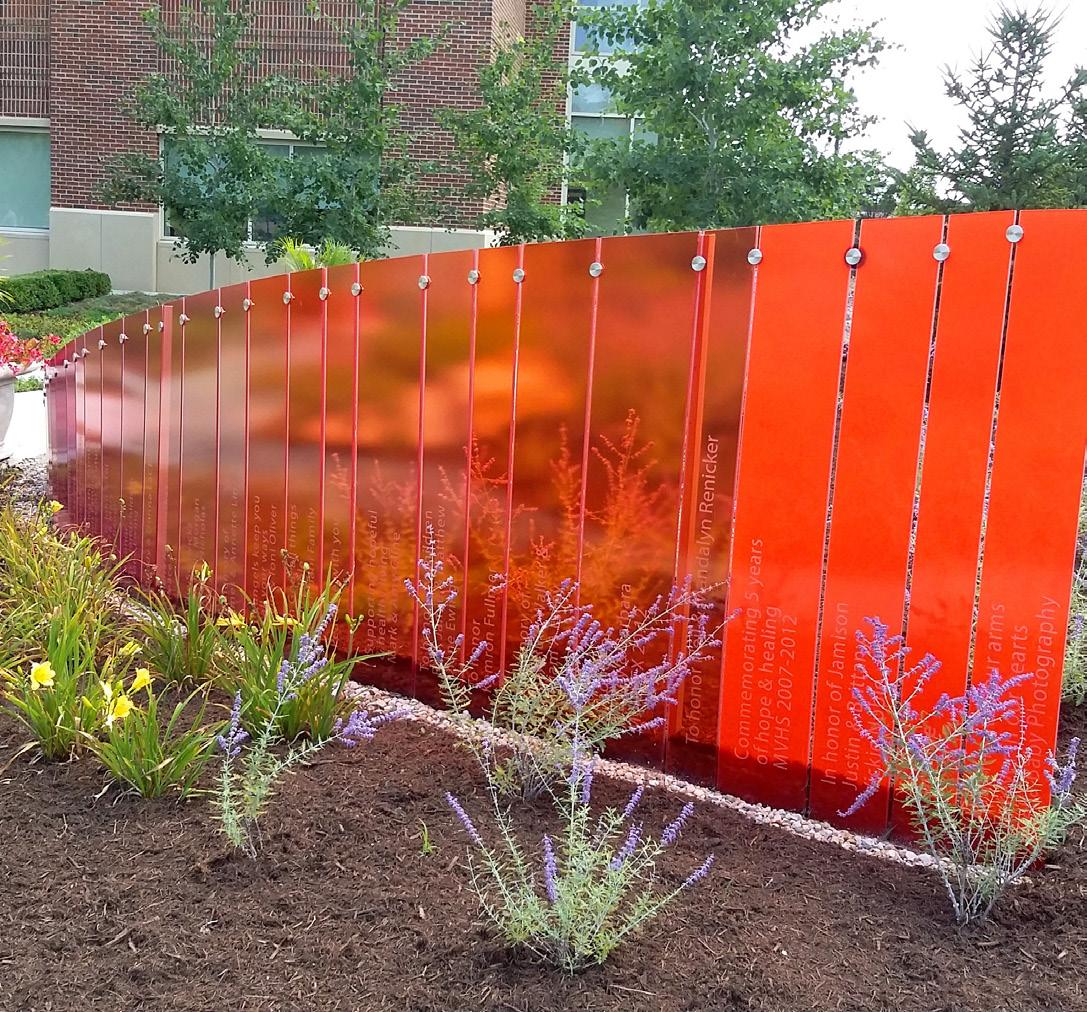
One of Ohio’s award-winning landscape designers sparked a commercial landscape with a fence composed of orange metal panels. How’s that for something different?
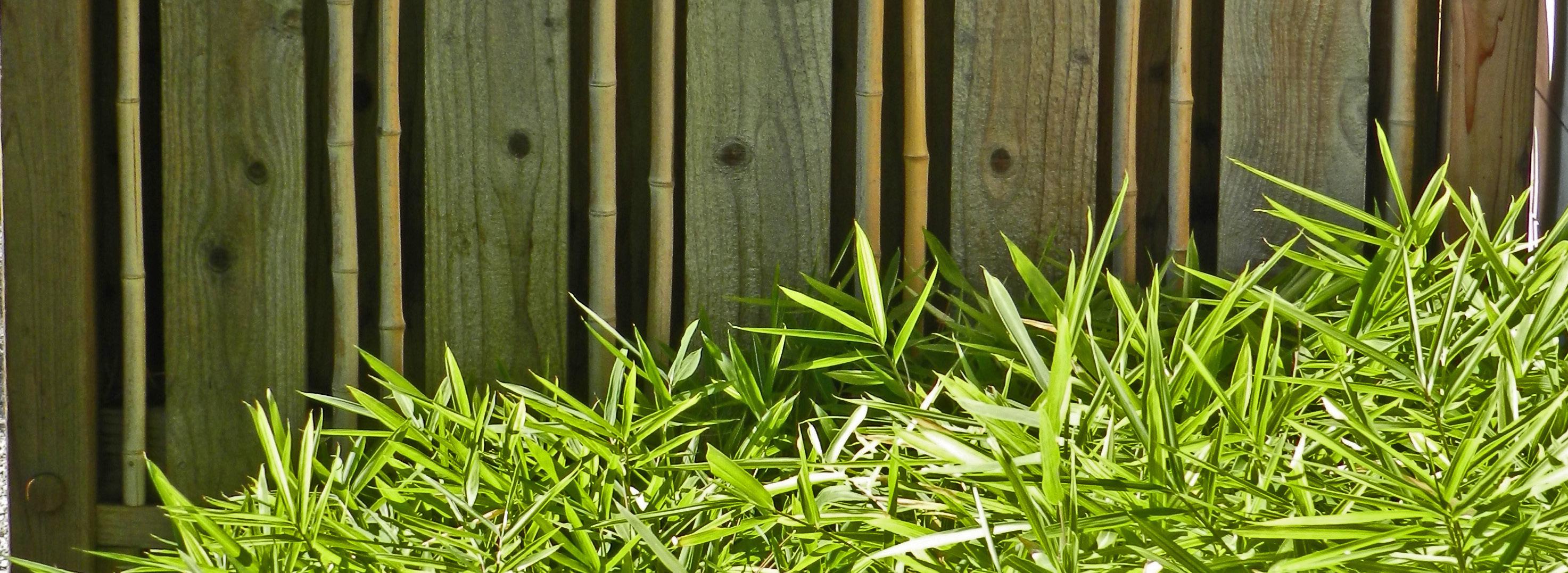
Vertical fences such as the frequently used board-on-board are incredibly boring. Why not add another material to make the fence more interesting? We’re always looking for materials that will last, so why not use bamboo, which is rot and pest resistant? In an orientalstyle garden, a fence that intersperses wood boards with bamboo stalks creates a study in textural contrast.
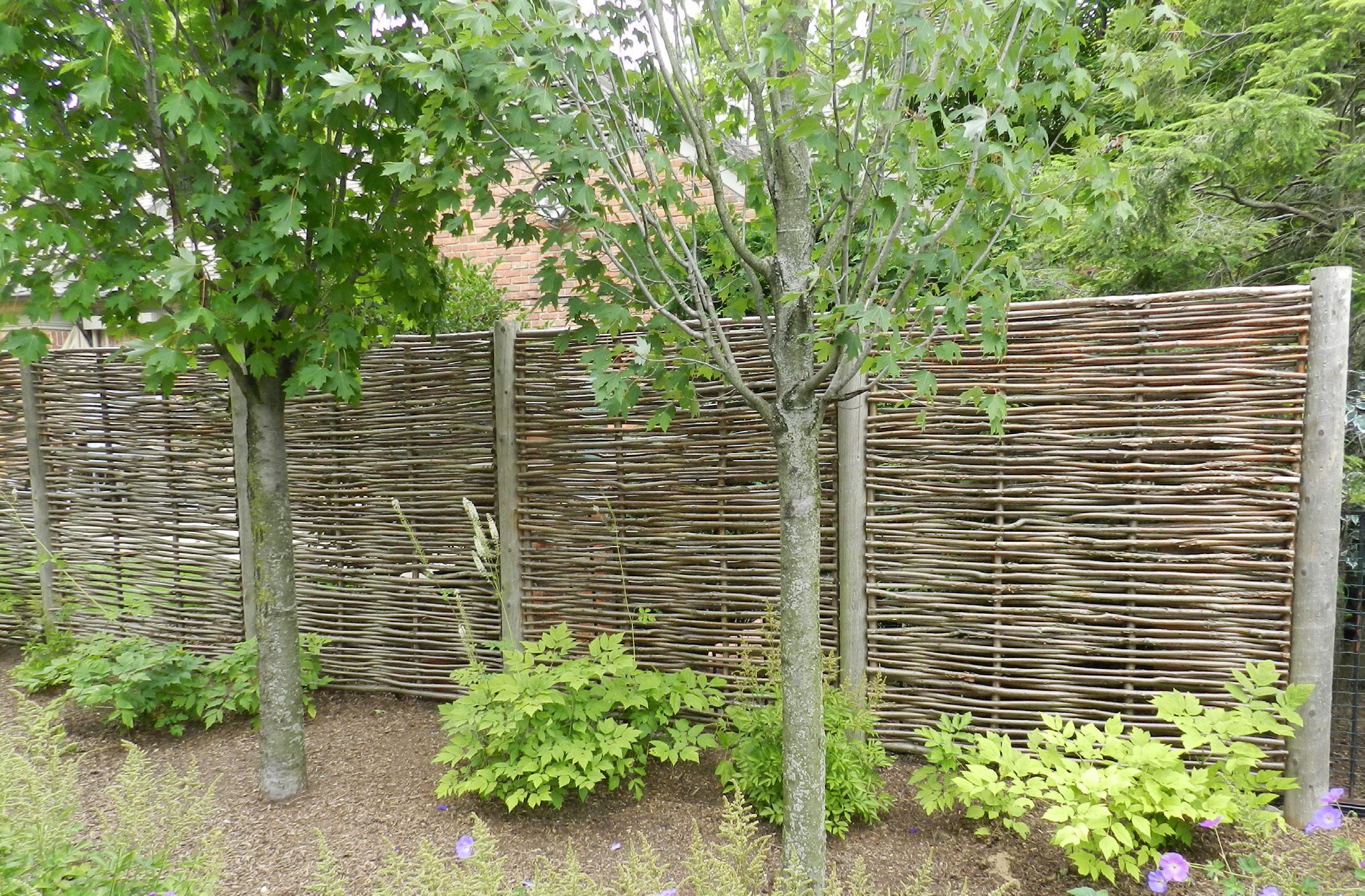
It seems to me that a fence of horizontal design would greatly enhance a small space because it would give the illusion of greater width. I’ve encountered this type of fence made of irregular boards in England and here in the States, usually with a lattice topper.
The typical bentwood fence is made out of relatively thick branches, but I saw one in Detroit that was more like woven willow.
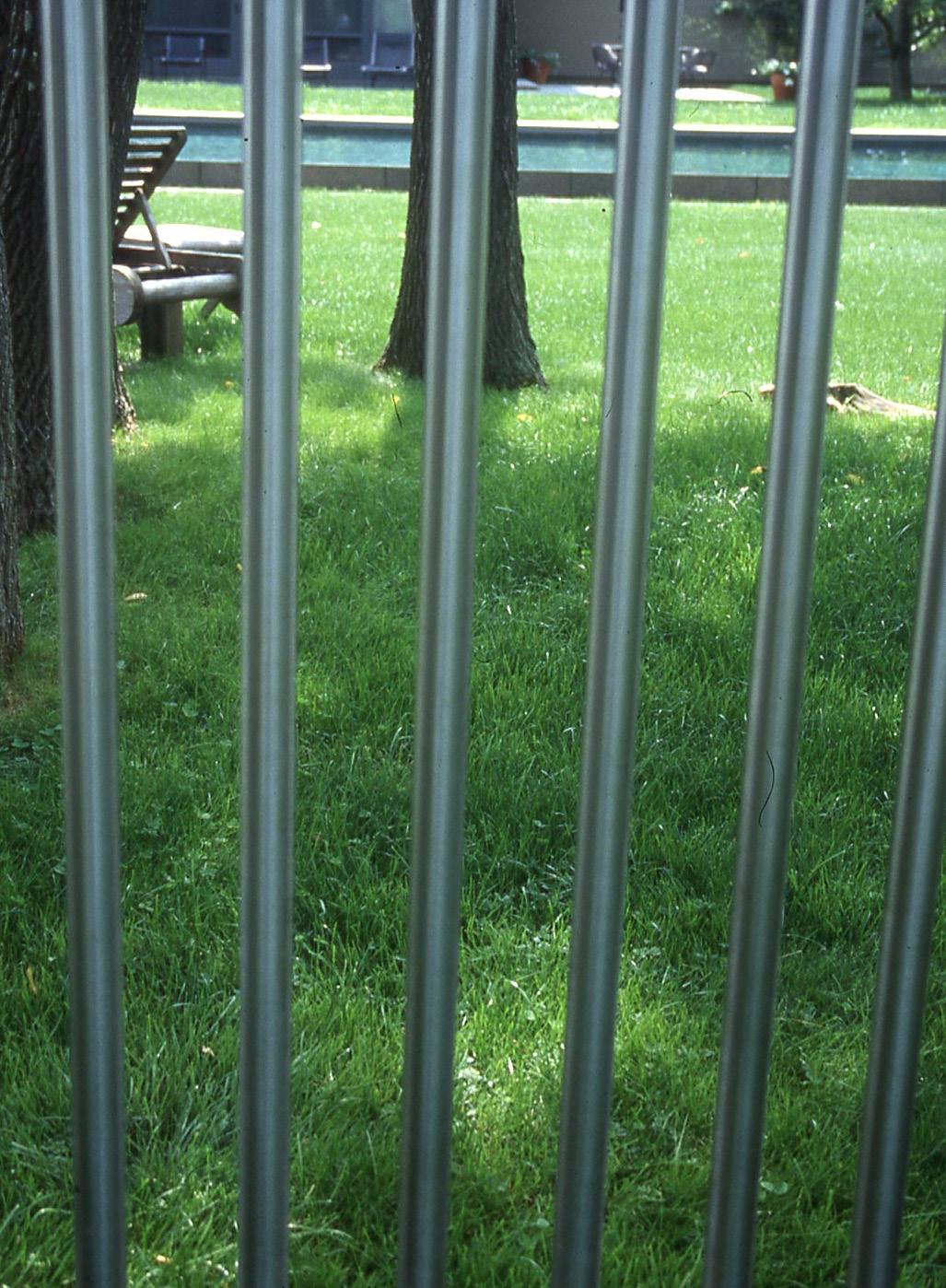
R: This fence divides the house and pool from the beach beyond.
Below: A stand of dwarf bamboo echoes this Asian-themed fence that is partially composed of bamboo.
• Includes a 3 year / 1,500 hour Customer Value Agreement (CVA) – genuine CAT parts for all recommended maintenance intervals delivered right to your shop or job site.

Just a few of the new ways we say, “Hello and welcome to Milton CAT.”
• Includes a 3 year / 3,000 hour Extended Protection Plan covering Hydraulics, Technology and Powertrain. Offer expires January 31, 2021
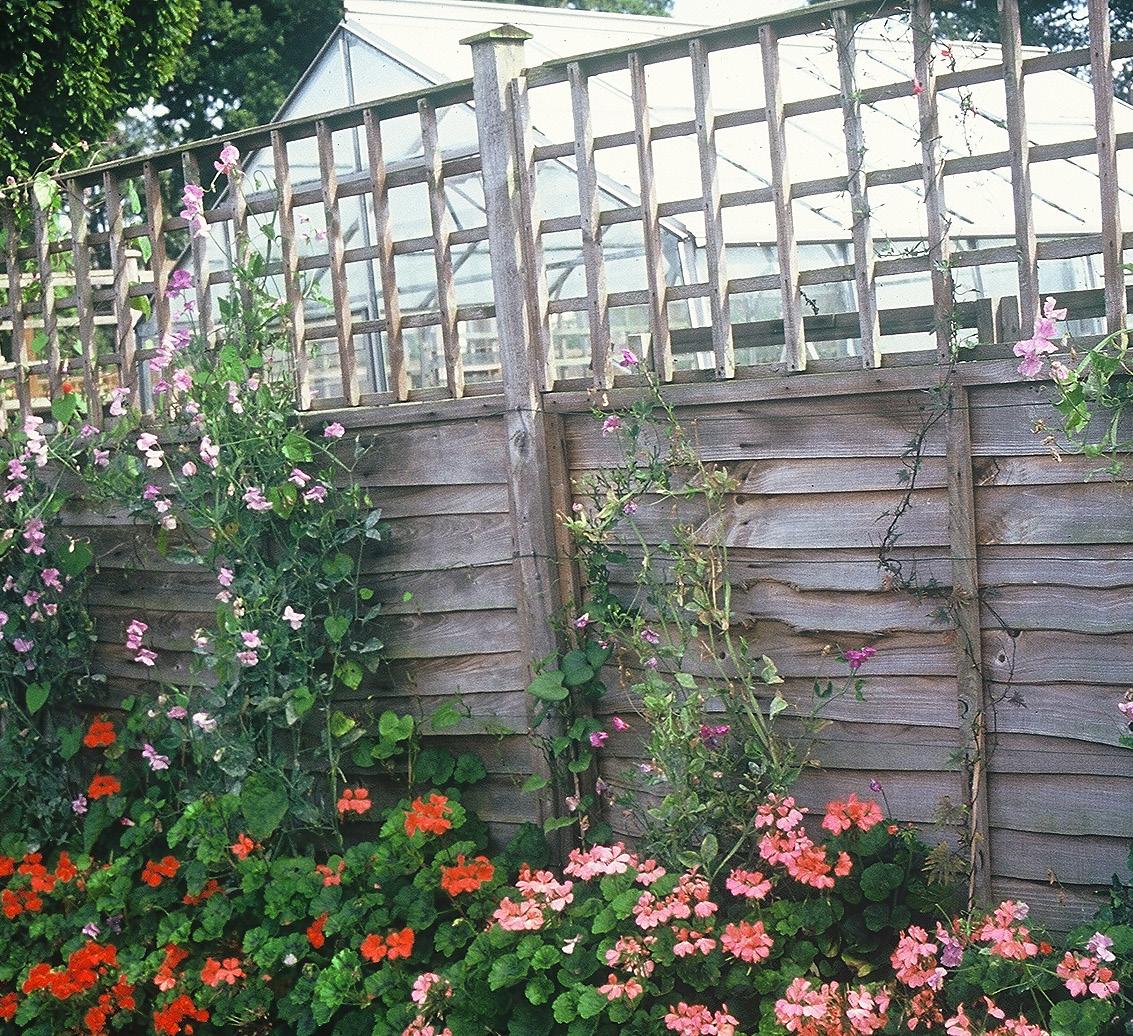
It was very graceful but also provided total privacy. In my travels, I’ve seen an infinite variety of fences. These are only a few of the more unusual ones. I hope you will be inspired to create some distinctive fences of your own.
Bobbie Schwartz, a certified landscape designer in Shaker Heights, Ohio, is the owner of Bobbie’s Green Thumb, a full-time business focusing on landscape design, consultation, installation and maintenance, lecturing, and writing. Most of Bobbie’s designs are for residential properties. Her landscape signature is the use of perennials, flowering shrubs, and ornamental grasses to facilitate color and interest throughout the year. An obsessed gardener for fifty years and a landscape designer for forty-two years, her extensive travels to gardens and nurseries have contributed greatly to her knowledge of design and new plants. Bobbie has received several design awards for residential, commercial, and institutional designs. She lectures locally and nationally for master gardeners, botanical gardens, and landscape associations on various aspects of design and perennial and ornamental grass gardening. She also writes extensively for various associations and magazines. Her book, Garden Renovation: Transform Your Yard into the Garden of Your Dreams, was released by Timber Press in 2017.
It took four days, hard work by volunteers from the Harvard Lions Club, and generous contributions of materials and services from the American Fence Association and two of MNLA’s own — Bigelow Nurseries in Northboro and Omasta Landscaping in Hadley — to transform a patch of grass into a beautiful service-dog training area at Clear Path for Veterans New England (Clear Path NE) in Devens, Massachusetts.
Clear Path NE (https:// www.clearpathne.org/) is a 501(c)3 established in 2017 to provide support to veterans through a wellnessbased Community Center to bolster those who served, with a particular emphasis on reconnecting veterans to their communities upon their return home.
One of Clear Paths NE’s core programs is the training of service dogs for veterans dealing with posttraumatic stress disorder, military sexual trauma, and/or traumatic brain injury. As this program expanded, Clear Path NE identified the need for a large, outdoor, fenced training area, but did not have the resources to build it.
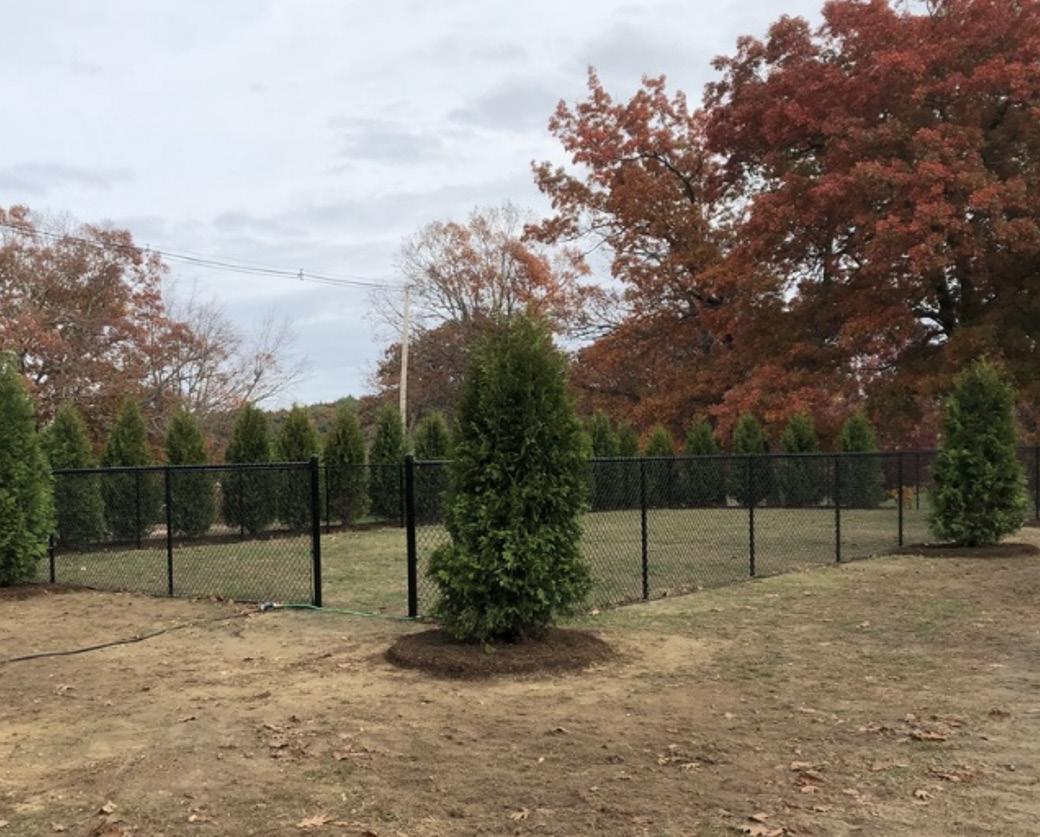
The Harvard Lions Club stepped forward to take on this project. Lion Bill Johnson first reached out to the American Fence Association for help. They generously provided all of the required fencing materials, and the Lions put it together in just two days.
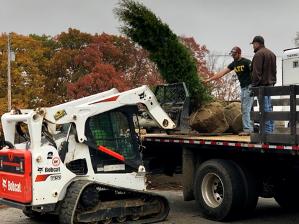
Johnson then contacted MNLA Executive Director Rena Sumner for assistance with acquiring shrubs to provide necessary screening for the training area. Rena reached out to the MNLA Board, and Pat Bigelow called Bill the very next day to tell him Bigelow Nurseries wanted to adopt the project, generously offering 29 8-foot-tall, dark-green arborvitae to be planted along the fence periphery.
Realizing that the handling and planting of such mature shrubs required professionals, Bigelow’s Jeff Willman connected Johnson with Chris Omasta, who drove 1.5 hours from Hadley with equipment and crew from his Omasta Landscaping and Yellow Ribbon Trucking companies