pro grow news
How Much Lawn Do We Really Need?
Demystifying Rhododendrons and Azaleas
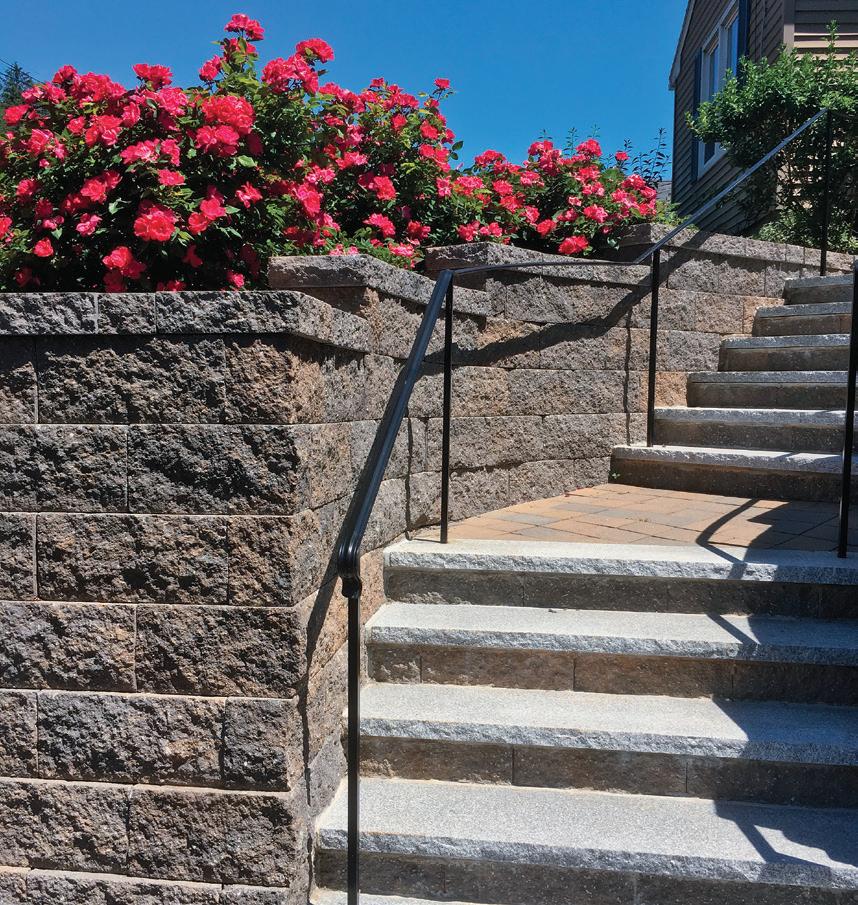
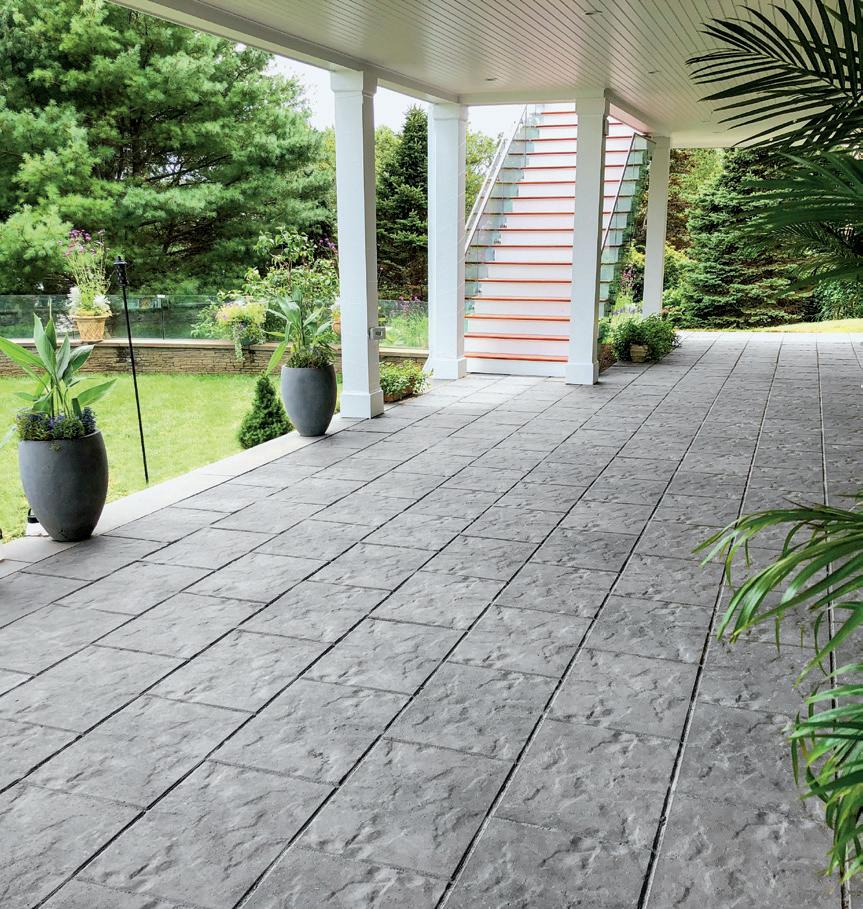
Fat Face™ Wall & Steps • Universal Coping™ Granite Treads • FineLine™ Pavers
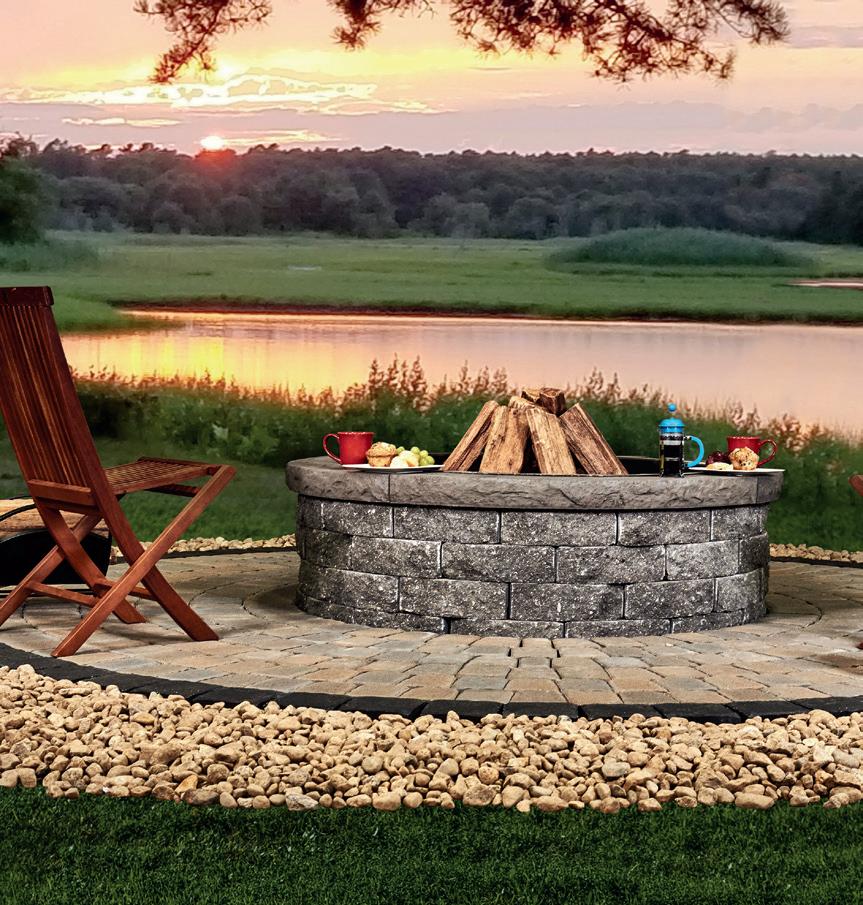
Yankee Cobble™ Circle Pak & Graphite Border ScapeStone™ Fire Pit XL • CastStone™ Coping XL
Andover Collection™ StoneCleft GrandStone featuring Color with 4D Technology
MillStone™ Pavers Bluestone Coping Natural Rounds Stone

pro grow news Summer 2020 board committees
PRESIDENT Peter Mezitt, MCH Weston Nurseries, Inc. Tel: (508) 435-3414
VICE PRESIDENT
Chris O’Brien, MCH Howard Designs, Inc. Tel: (617) 244-7269
SECRETARY/TREASURER
Kerry Preston, MCH Wisteria & Rose, Inc. (617) 522-3843
PAST PRESIDENT
Tim Hay, MCH Bigelow Nurseries, Inc. Tel: (508) 845-2143
DIRECTORS
Deborah Trickett, MCH The Captured Garden
Steve Charette Farm Family Insurance Family
David Vetelino, MCH Vetelino Landscape, Inc
Jean Dooley, MCH Mahoney’s Garden Centers
David Anderson Hartney Greymont, Inc.
EDUCATION & RESEARCH COMMITTEE
Deborah Trickett, MCH — Board Liaison The Captured Gardens (781) 329-9698
FINANCIAL COMMITTEE (FINCOM)
Steve Corrigan, MCH — Chair Mountain View Landscapes & Lawncare, Inc. Tel: (413) 536-7555
Chuck Baker, MCH — Vice Chair Strictly Pruning Tel: (508) 429-7189
GOVERNMENT RELATIONS COMMITTEE
Chris O’Brien, MCH — Chair Howard Designs, Inc. Tel: (617) 244-7269
HISTORY COMMITTEE
Philip Boucher, MCH — Chair Elysian Garden Designs Tel: (508) 695-9630
Skott Rebello, MCH — Vice Chair Harborside P.S. Tel: (508) 994-9208
MASSACHUSETTS CERTIFIED HORTICULTURIST BOARD (MCH)
Jack Elicone, MCH — Chair John R. Elicone Consulting Tel: (617) 527-5706
Corinne Jean, MCH — Vice Chair Wisteria & Rose (617) 522-3843
PRODUCTS COMMITTEE
Peter Mezitt, MCH — Chair Weston Nurseries, Inc. Tel: (508) 435-3414
GOVERNMENT RELATIONS DIRECTOR
Jason Wentworth Tel: (617) 417-4050
EXECUTIVE DIRECTOR
Rena M. Sumner Tel: (413) 369-4731
Massachusetts Nursery & Landscape Association P.O. Box 387 Conway, MA 01341 mnlaoffice@aol.com www.mnla.com www.PlantSomethingMA.org www.mnlafoundation.org
pro grow news
ProGrowNews is published quarterly by the Massachusetts Nursery & Landscape Association (MNLA), P.O. Box 387, Conway, MA 01341, tel. (413) 369-4731. Articles do not necessarily reflect the view or position of MNLA. Editorial coverage or permission to advertise does not constitute endorsement of the company covered or of an advertiser’s products or services, nor does ProGrowNews make any claims or guarantees as to the accuracy or validity of the advertiser’s offer. (c) 2014 All rights reserved. No part of this publication may be reproduced in print or electronically without the express written permission of the MNLA.
www.mnla.com

An Industry Perspective
ByPeter Mezitt, MCH
Irecently spoke with a group of garden center owners who reflected back on what happened this spring, and we all realized one thing: We are an important part of many people’s lives. The fact that we are considered essential in the COVID era says a lot, but it really goes beyond that. Before COVID, I don’t think we realized how much people value us in terms of what we offer or what we do for them.
People stayed home for months and really looked into whom they trust to work with, and more times than not, they chose their local garden center or local landscaper over the unfamiliar, larger corporate options. Many customers in our garden center said, “I don’t know what we would have done if we could not come here this spring.”
We should all feel blessed and fortunate to be in the business of selling plants and selling beauty during these times, and many of our businesses have done quite well amid this crisis. The public generally sees us as passionate people who have the ability to pivot and do the right thing to service our customers in a responsible and safe manner. Whether starting a vegetable garden for the first time or tackling a backyard make-over, your local knowledge and expertise is what consumers are looking for these days. There is no telling how much longer this crisis will continue, but I am confident our members will remain committed to demonstrating strong leadership through the upcoming months.
Things may never go back to the way they once were, and I urge all of you to use these past few months as a learning opportunity. Take some time to set goals for what you need to do going forward to continue to make your business important in people’s lives. Evaluate the way you run your business and the ways you communicate with your customers. More people will be working from home, and since they will spend the majority of their time there, it is likely they will want to make their home a place they really enjoy. How does your business adapt to the realities of the future?
Speculating on the second half of the year, I believe people will continue to place importance on creating beauty and enjoyment at their homes. Many people will still be working remotely, college-age kids will be living at home more often, sports and group activities will be diminished through the fall months, and people will still feel the need to minimize time they spend around unfamiliar people or within public indoor spaces. I think we should plan for strong demand for our products and services throughout the fall and holiday seasons.
Fall and winter décor will be more important than ever if more families spend more time at their homes.
Next year — who knows? If we get to the point where we see a clear pathway for combating the coronavirus, the economy should improve. If we are still looking for solutions and still seeing problems, will people continue to invest in their homes? Will things get so bad people can no longer afford the things we offer? Like all of you, I vote for the first scenario and getting back to feeling free again and doing all the things we enjoy.
In the meantime, continue to be diligent in doing the right things with your personal and professional lives, and feel good that you are part of something important in people’s lives.
Peter Mezitt, MCH Weston Nurseries, Inc. MNLA President
Government Relations Update
by Jason Wentworth
Following up on my last article, MNLA’s work on your behalf ensured that our greenhouses, garden centers, nurseries, and landscape services remained open, even as other industries were paused or tightly restricted in response to the COVID-19 pandemic. Most of our members who provided feedback reported higher-than-normal numbers, and all of us on the board are thrilled we were able to turn such a potential negative into a positive. Personally and professionally, I am grateful to you for doing what you do and doing it the right way. The positive feedback I’ve received from legislators and regulators has been tremendous. It’s a testament to you all, not just as business owners but as good citizens, and it makes my job advocating for you easier and more rewarding.


Of course, while the quarantine has driven more people into their gardens, not everyone has been as fortunate. When the Massachusetts Department of Revenue (DOR) released its May revenue report, tax collections (due to a steep decline in sales, etc) were $320 million behind targeted goals. That’s a 13.1 percent decrease from May 2019. For Fiscal Year 2020, Massachusetts is looking at a 6.5 percent decline from the previous year. As you can imagine, the pandemic response has significantly stretched state revenue, and the legislature will be working toward stability for the FY2021 budget. At the moment, they’ve been forced to adopt a “1/12th” budget strategy to get from month to month. Instead of the usual last July of the two-year legislative session, legislators will be pulled away from campaigning to deal with state finances, the continuing response to the pandemic, and the many bills that remain in consideration.
No matter, vigilance is required to make sure nothing problematic slips through unnoticed. Also, we would like to see sensible legislation like S2314, a bill limiting liability for contractors and subcontractors engaged in snow and ice management, pass. Many of our members would not be able to continue these critical operations without some adjustment to the current system. This bill is currently in Ways and Means. Additionally, we are still advocating for the policy requiring the responsible use of neonicotinoids. It’s too important of a tool for our members to be lost to the whims of a ballot petition. Despite the challenges we all collectively face, MNLA will continue to partner with stakeholders across agriculture to not just find solutions to problems but also work to prevent problems from occurring.
Jason Wentworth, Peacefield Strategies MNLA Government Relations Director
MCH Board Member Challenge
by Jack Elicone
Plant
Selfie
Challenge
Meet MCH board members and learn about a new plant! Each pro|grow|news will feature a different MCH board member and a new plant challenge as a way to earn a .5 MCH credit.
I am MCH Board Chair Jack Elicone. I have been involved in the green industry since 1978 and have been an MCH since 1986.
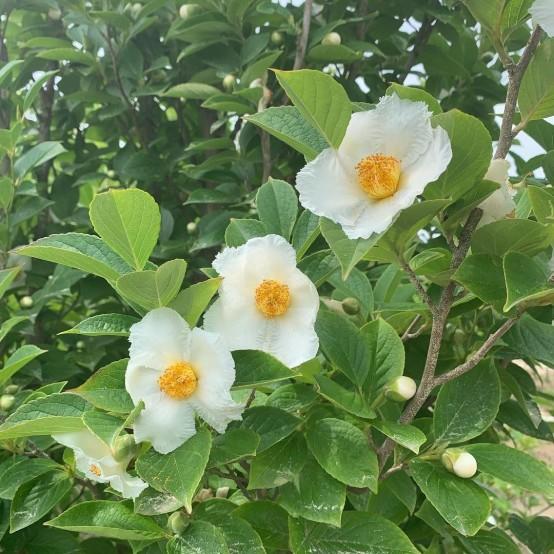
My favorite perennial is Pulmonaria just because it is such an early harbinger of spring. My favorite tree is Stewartia because of its multi-seasonal interesting foliage, flower, and bark.
Participate in our Plant Selfie Challenge. Send us your selfie with your favorite plant variety of the season and tell us why for .5 credits! Limit one submission per season. All submissions will be posted on our Plant Something social media pages targeted to consumers.
Watch our Plant Geek eNews for more MCH credit opportunities.

Demystifying Rhododendrons and Azaleas
by Wayne Mezitt, MCH
The genus Rhododendron dominates the heath family (Ericaceae); it comprises over 1,000 species and is one of the largest genera of woody plants in the world. Native species, both evergreen and deciduous, occur in Europe, North America, Asia, and the Pacific islands, with a single species in Australia, but none are indigenous to South America or Africa. First described in writing by Linnaeus in his Species Plantarum in 1753, it wasn’t until the 19th century that details about the genus became more widely documented. Most rhododendron collecting, selecting, growing, and hybridizing did not take place until the early 1800s. England and Europe were the primary centers for these efforts, ultimately resulting in the development of thousands of hybrids.
Rhododendrons and azaleas are among the world’s most
popular landscaping choices. They are well-favored for their appealing flowers, attractive foliage, and suitability for a range of soil and light conditions. In the northeastern USA when we refer to rhododendrons, most everyone envisions plants like our native large-leaf rhododendrons: R. maximum (rosebay rhododendron), R. catawbiense (Catawba rhododendron), and a wide selection of large-leaf hybrid cultivars. Azaleas, for most of us, are generally perceived as being compact, May-flowering semi-evergreen shrubs with small flowers. Exploring a bit further, the distinction between rhododendrons and azaleas becomes somewhat ambiguous. Some rhododendrons drop their leaves in winter or have smaller leaves, and some types appear to grow and perform more like azaleas. And some azaleas are actually deciduous rather than evergreen. Rhododendron classification has evolved over the years as a complex amalgamation of terms and characteristics. Even for expert horticulturists, readily distinguishing between unfamiliar species or hybrids of rhododendrons and azaleas can be vexing.
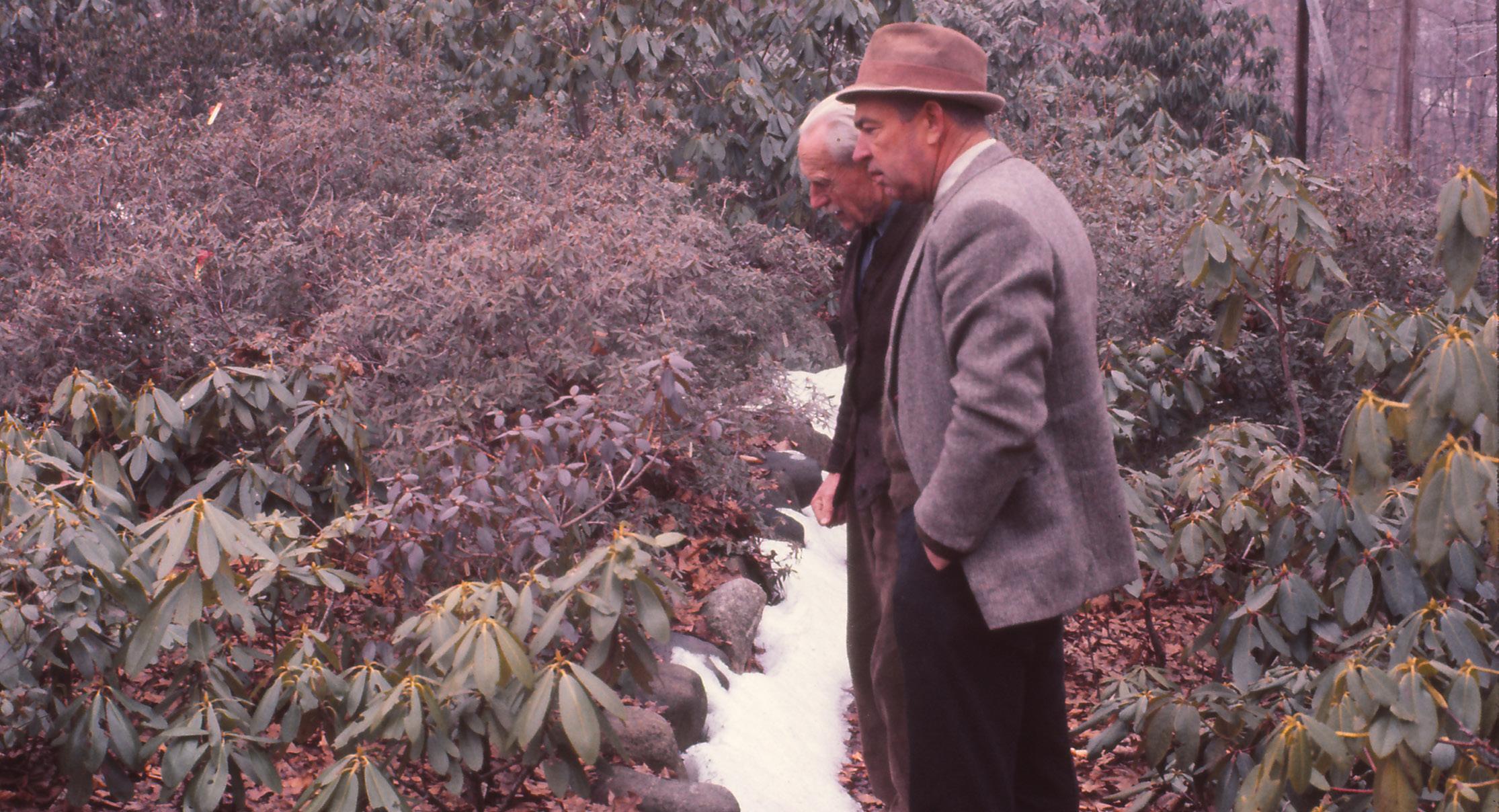
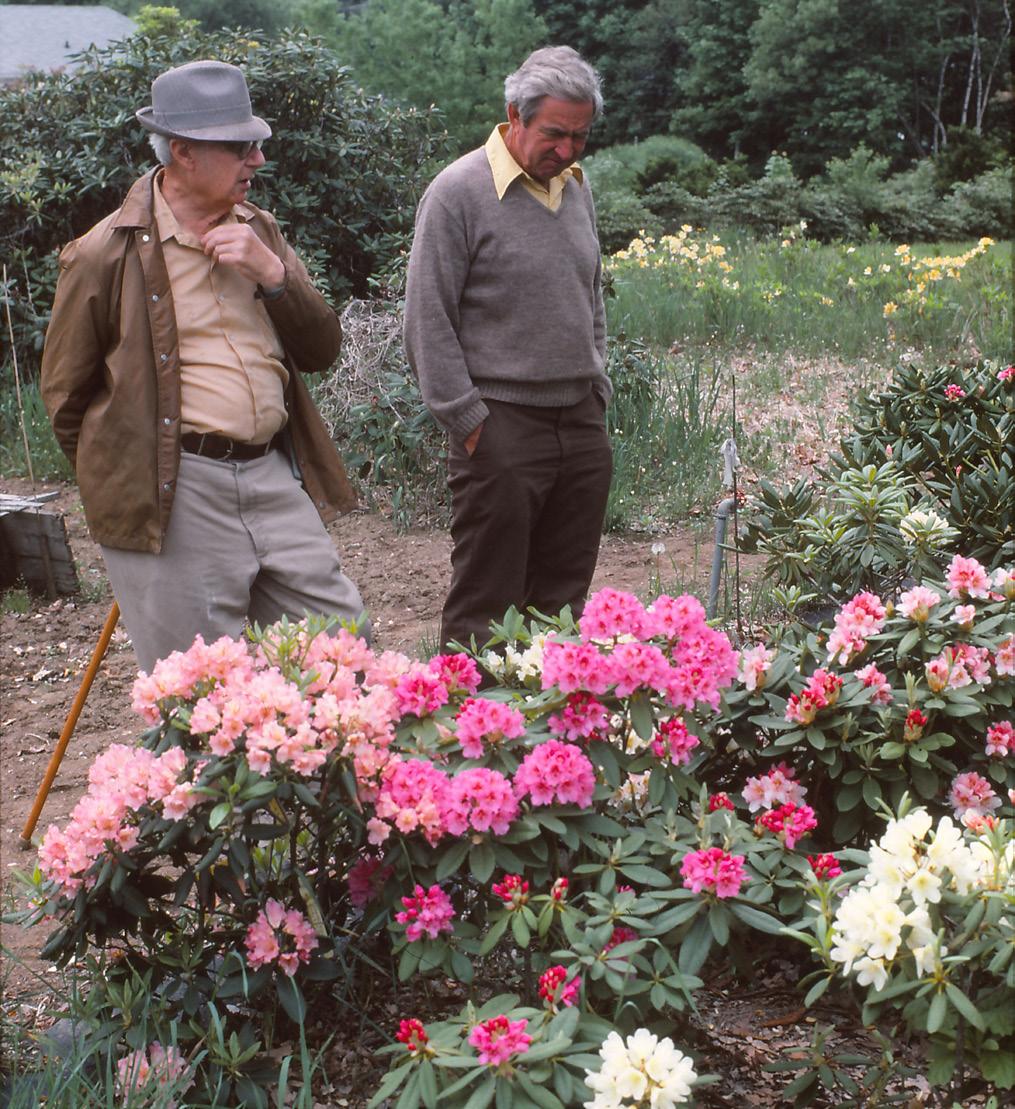
Edmund Mezitt and Guy Nearing 1969
All azaleas are technically rhododendrons, but not all rhododendrons are azaleas. Rhododendrons are now technically classified into two groups: lepidote or elepidote. Lepidote rhododendrons generally have small leaves and always have tiny scales on the undersides of their leaves. Conversely, elepidote rhododendrons usually have larger leaves with smooth undersides, and they lack leaf scales. Azaleas (also classified as elepidotes), generally have small leaves with appressed (parallel to the surface) hairs on the underside of each leaf, most visible along the midrib.
To readily distinguish between rhododendrons and azaleas in bloom, simply count their stamens. Azalea flowers have five stamens, or one per flower-lobe, while rhododendron flowers have 10 (or more) stamens, or two per lobe. Azaleas also tend to have tubular or funnel-shaped flowers, while rhododendron blooms are generally more bell-shaped.
Rhododendron Categories
This article applies my personal observations to simplify designations (see accompanying chart), segmenting rhododendrons into four categories:
1. Small-leaf rhododendrons (the lepidotes, but I’m calling them the Early Rhododendrons because they’re generally early-spring-flowering)
2. Large-leaf rhododendrons
3. Evergreen azaleas
4. Deciduous azaleas.
Applying these categories should make it easier for lay people to understand and differentiate among their features
and functions. A sub-section of the deciduous azaleas is a group I’m calling the Summer Azaleas because of their bloom period. Early Rhododendrons are arbitrarily designated as those typically in flower before Mother’s Day; Summer Azaleas flower mid-June or later (in Hopkinton, Massachusetts). I try to avoid using the monikers “lepidote” and “elepidote” as, for many of our customers, these scientific terms are more than they need to know, and worse, sound too much like a disease. That’s not very helpful for encouraging purchases!
Named hybrids and cultivars Rhododendrons and azaleas have been popular garden plants since the 19th century, primarily in England and Europe where enthusiasts devoted major efforts to use them in landscapes and begin hybridizing. Nurseries in the USA began listing large-leaf rhododendron and evergreen or deciduous azalea species in the late 1800s, especially the varieties mostly grown from seed, rarely hybrids or cultivars.
Large-leaf rhododendrons Named large-leaf rhododendron hybrids were developed in England starting in the early 1800s, but most were not sufficiently winter hardy for the northeastern America climate. In 1917, Ernest Wilson published a list of “Ironclad Rhododendrons” based upon trials at the Arnold Arboretum. These 14 named hybrids formed the basis for the USA’s first reliably winter-hardy cultivars. Due to propagation difficulties and other factors, it took until midcentury for named cultivars to become commonly available in the USA. Today, thousands of choices are readily available.
Small-leaf rhododendrons With the exception of the Wilson rhododendron (R. x laetivirens), very few named hybrids of small-leaf rhododendrons — only seedlings — were
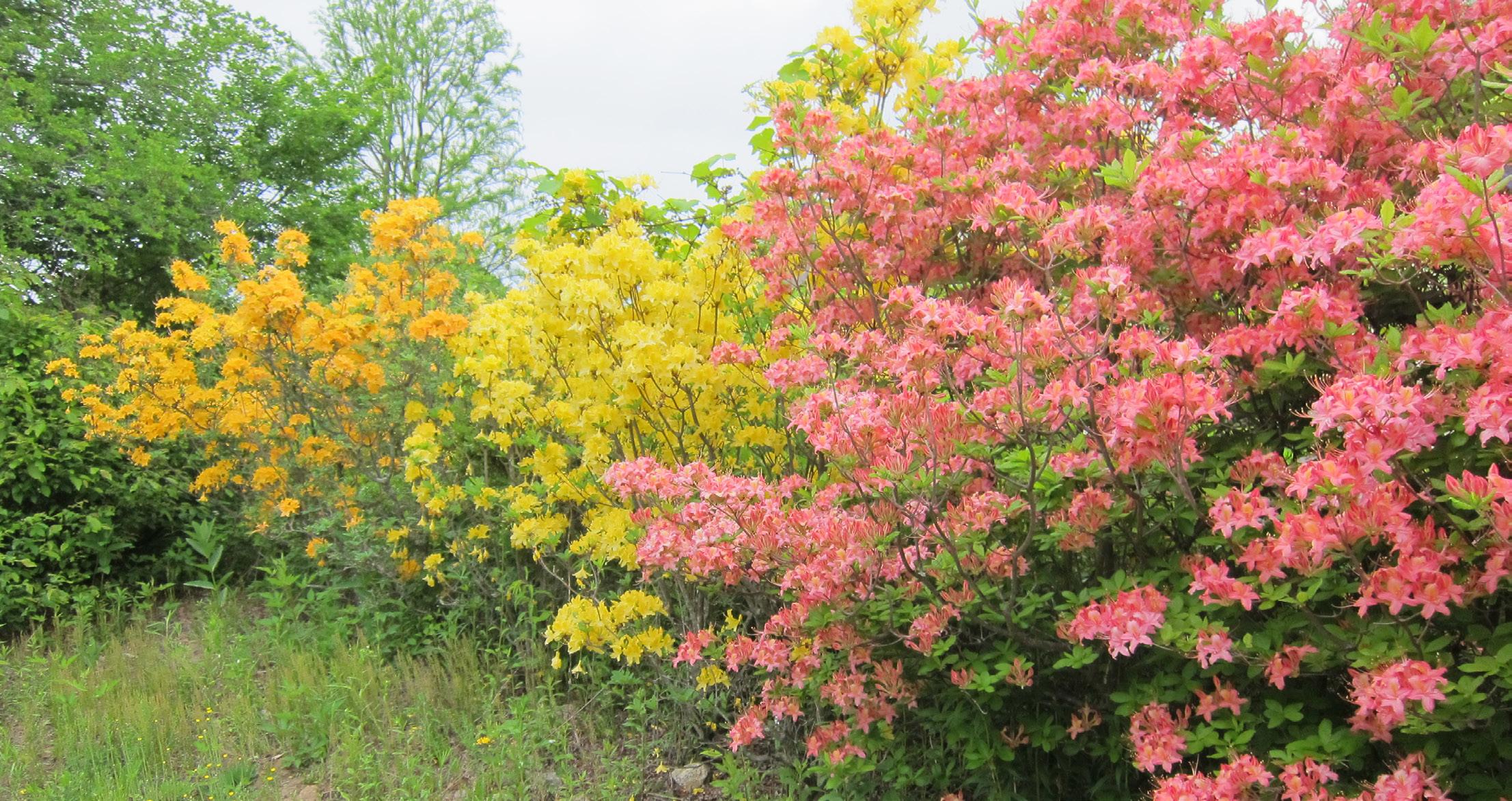
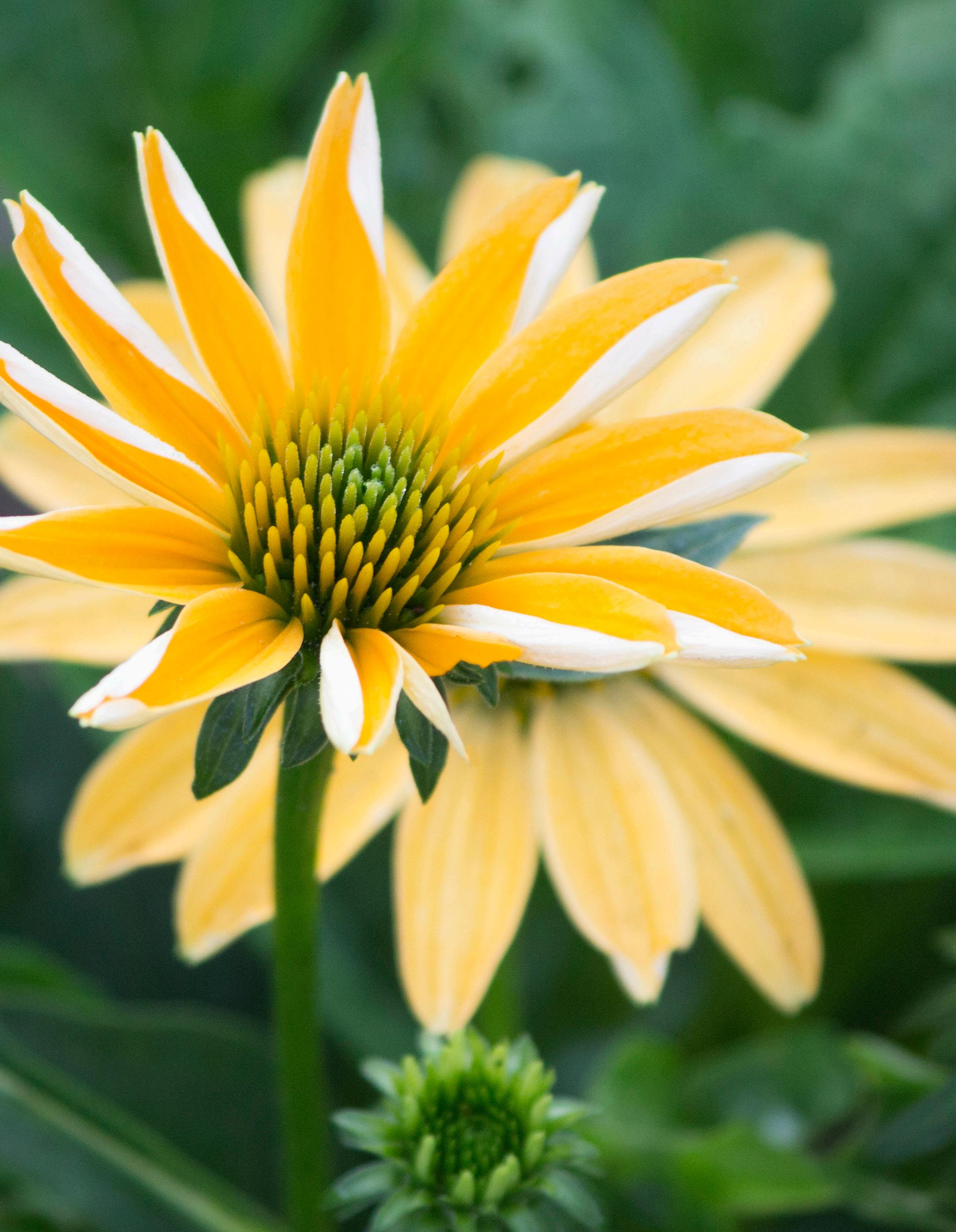
R to L: Anna’s Smile, Seabreeze, Baltic Amber
Established in 1910, Cavicchio Greenhouses is a fourth-generation New England farm working more than 250 acres in Sudbury. As a horticultural grower and landscape distributor, we cultivate and supply an extensive variety of annuals and perennials, nursery stock, stone, masonry and landscape materials. With a hard-earned reputation for service, quality, selection and sustainability, we work with professionals and garden centers throughout the area to keep our region beautiful.
widely offered for sale until the 1940s. During my 50-year career as a nurseryman, I feel fortunate to have witnessed and participated in the successful development of numerous small-leaf rhododendron hybrids. In many ways, these exemplify the New England character: tough, hardy, spare, resilient, and adaptable to weather extremes. Many turn out to be better suited than some of the more traditional rhododendron categories for today’s landscapes.
Deciduous Azaleas The earliest named deciduous azalea hybrids were developed in Belgium and England starting in the early 19th century, but were not readily available in the USA until the early 1900s. Only in recent years has customer interest in named deciduous azalea cultivars started to rebound. This trend may be due to the current resurgence of interest in native plants; many of the deciduous azaleas are native to the USA.
Evergreen Azaleas Some evergreen azalea named hybrids began appearing on the USA market in the late 1800s, initially from Asia. Most of these were less than reasonably winter hardy for the northeastern USA. Until the early years of the 20th century, Zone 6 or hardier named evergreen azaleas were rare.
and grew seedlings from these superior plants in an effort to improve the resulting offspring. Named cultivars of many plants including azaleas and large-leaf rhododendrons were only then starting to become more available for their customers.
Recognizing improvement potential in the small-leaf types, Ed used Carolina rhododendron as a parent in his first hybridizing attempt; Rhododendron ‘PJM’ was the fortuitous result. Arguably today’s most widely used rhododendron cultivar in this region, ‘PJM’ is readily recognizable for its vibrant-purple ushering-in-the-spring flowers, distinctivelycolored and aromatic winter foliage, hardiness, and availability. Over the next four decades, Ed made thousands of hybrid crosses, largely focused on improving the features of small-leaf rhododendrons.
One of the challenges for successfully marketing the Early Rhododendrons is their primary feature: They bloom so early in the season. Many homeowners are not ready to visit garden centers until spring is well underway, when the weather becomes more agreeable. Flower color is a primary motivator for purchasing a plant, and the blooms on many of the Early Rhododendrons have faded by mid-spring.
The Season Expanders: Early Rhododendrons and Summer Azaleas
As detailed in the accompanying chart, the small-leaf rhododendrons (termed Early Rhododendrons) offer winter hardiness and adaptability features that other evergreen rhododendrons and azaleas lack. Compared to most large-leaf rhododendrons, they grow more slowly, have a smaller stature, bloom earlier, and prefer sunnier locations. As the historic grand estates with their extensive acreage and accompanying unlimited budgets continued their decline, these more refined small-leaf types increased in popularity. People still perceive them as being similar in many ways to evergreen azaleas, but they perform far more successfully in northern garden conditions.
Starting in the 1920s, hybridizers including Joe Gable, Guy Nearing, and into the 1960s, UConn professor Dr. Gustav Mehlquist, bred and introduced a number of new small-leaf hybrids. More than a dozen of their hybrids, including R. ‘Connewago’, ‘Windbeam’, ‘Purple Gem’, ‘Ramapo’, ‘Pioneer’, and Mary Fleming’, came to market spurred by their smallerscale suitability for more space-constrained suburban gardens.
Graduating from Cornell with a degree in landscape architecture in 1937, my dad Edmund Mezitt re-joined his dad (Peter J.) and mom (Anna Olga) in the family nursery business. During his growing-up years in the nursery business, Ed had joined with his parents to identify the best forms of the many species they offered for sale; they harvested seed
The so-called Summer Azaleas have similar marketplace challenges: By the time they open their flowers so late in spring and into July, many garden center customers are off enjoying their summer vacations, no longer paying as much attention to their yards. The nearby native azaleas that are the parents for most of these azaleas may be in bloom in the local woods and swamps, but potential customers are oblivious about the opportunity for using them in their gardens. And as with the Early Rhododendrons, it’s difficult for buyers to appreciate their appeal without personally seeing them.
Growing and Using Rhododendrons Today
Over the years, considerable effort has been devoted worldwide to increasing the availability and quality of rhododendrons and azaleas. Improved propagation and growing practices using innovative techniques have made them now commonplace on the market. No question, the current availability of so many rhododendron species and hybrids adds inspiring color, excitement, and value to our gardens. But with so many choices today, homeowners often need professional guidance to choose the best types to suit their needs and conditions.
Rhododendrons differ significantly in their tolerance to various climate, soil, and moisture conditions. Some types may prefer sunny areas, others need shady conditions, and all can vary widely in their winter hardiness, even within the same category. Deer enjoy browsing on rhododendron foliage and buds, creating major challenges for many homeowners. Landscape maintenance requirements are fundamental
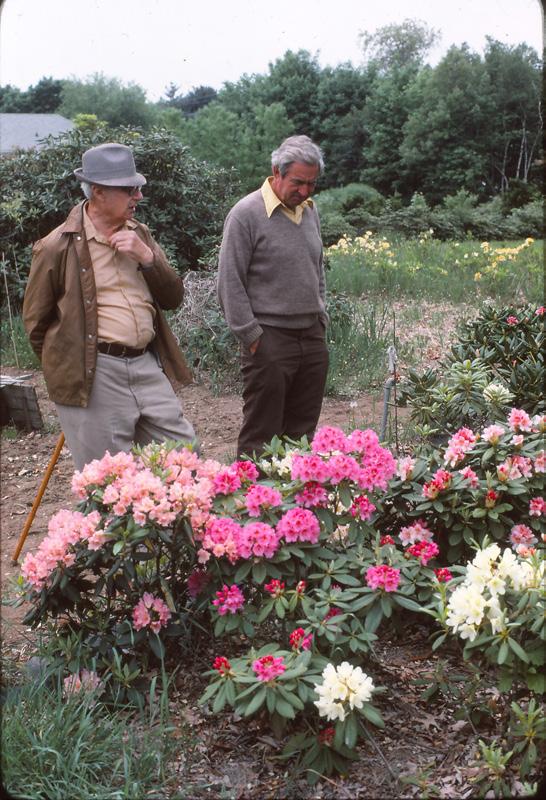
Ed Cary and Ed Mezitt May 1979
considerations, particularly with today’s smaller yards and a myriad of other activities competing for the use of our time. As a horticulturist and rhododendron lover, it’s evident to me that there’s a compelling need for us, as nursery professionals, to create solutions. We must make it easier and more enjoyable for homeowners to be successful with rhododendrons in their yards. And as with all aspects of gardening in today’s world, it is paramount that our potential customers understand and appreciate the myriad ways horticulture is relevant to the quality of their daily lives.
Rhododendron and Azalea General Characteristics
R. Wayne Mezitt is a third-generation nurseryman and a Massachusetts Certified Horticulturist (MCH). He is currently chairman of Weston Nurseries of Hopkinton and Chelmsford, MA, and owner of Hort-Sense, a horticultural advisory business. Wayne currently serves as trustee chairman for the Massachusetts Horticultural Society at The Gardens at Elm Bank in Wellesley, Massachusetts.
season of bloom April to mid-May May-June May May-early June ( JuneJuly)
colors pink, lavender, white red, pink, purple, white, yellow no yellows few purples fragrance none occasionally rare common bloom duration ~2 weeks +/- ~2 weeks +/- 1-2 weeks 1-3 weeks
Foliage size 1"-3" long 3"-6"+ long 1/2"-2" typically 1"-3" typically texture delicate, light bold, heavy delicate coarse, twiggy retention 0-2 years 2-3 years semi-evergreen totally deciduous summer color green green green green fall color cultivar colors vary green cultivar colors vary cultivar colors vary winter color cultivar colors vary green cultivar colors vary no leaves over winter
wind tolerance windburn resistant may windburn may windburn superior winter tolerance fragrance PJM-types: spicy none none none mildew-prone? resistant resistant rare occasional to rare
Growth rate slow to moderate rapid slow to moderate moderate to rapid habit vary: upright, wide vary: upright, wide as wide as tall taller than wide size at 10 years 2-5 ft. tall
size at maturity 4-10 ft. possible
Where to plant full sun prefer tolerate tolerate prefers part shade tolerate prefer prefers tolerate full shade not recommended tolerate tolerate not recommended windy areas realtively tolerant may windburn not recommended tolerate well-drained soil required recommended required recommended acid humusy soil recommended recommended required recommended
Culture deadhead? not needed recommended not needed not needed shear or prune every 2-3 years every 3-6 years every 3-5 years every 2-3 years irrigate recommended recommended recommended prefer mulch recommended recommended recommended recommended
Hort-Sense Chart 2018
Sustainability — How Much Lawn Do We Really Need?
By Bobbie Schwartz

In the United States, suburban homes are invariably surrounded by lawn. The amount depends on the size of the property but few people question whether the lawn is really needed; it just goes with the territory. Lawns did not come into vogue until the nineteenth century when they became a status symbol. Until then, space around a dwelling was used to grow food for the inhabitants and feed for the animals.
Over the years, I’ve driven past properties with so much lawn that three football teams could play or practice at the same time. Unquestionably, young families need space where their children and dogs can play, but how much space do they really need? I believe it’s time for landscape architects, landscape designers, and landscape contractors to pose this question to their clients.
From a design point of view, lawn acts as a visual balance to planted space because it is relatively low and uniform, thus resting the eyes. However, there are innumerable groundcovers, some of them grass lookalikes such as Liriope spicata (Lilyturf) and Carex (Sedge) that could fill this role. In some instances, hardscaping, such as sidewalks or patios, can fill this role. For instance, in my first house, the west-facing front-yard lawn was totally shaded by three huge oak trees. Trying
to keep the lawn looking decent was an exercise in futility but everyone else in our block had lawn in the front yard. Mind you, the children were never allowed to play there because such activity might ruin the lawn. The children either played in the back yard or in the street.
Eventually, I tired of batting my head against the proverbial wall and vowed I would take out all the lawn as soon as I could afford it. A few years later, after removing the lawn, I laid winding brick paths through the front yard and filled the spaces between the paths with shade-loving perennials, ornamental grasses, and shrubs. Although that redesign took place over forty years ago, the subsequent owners have kept that design and other homeowners on the block have attempted to imitate it.
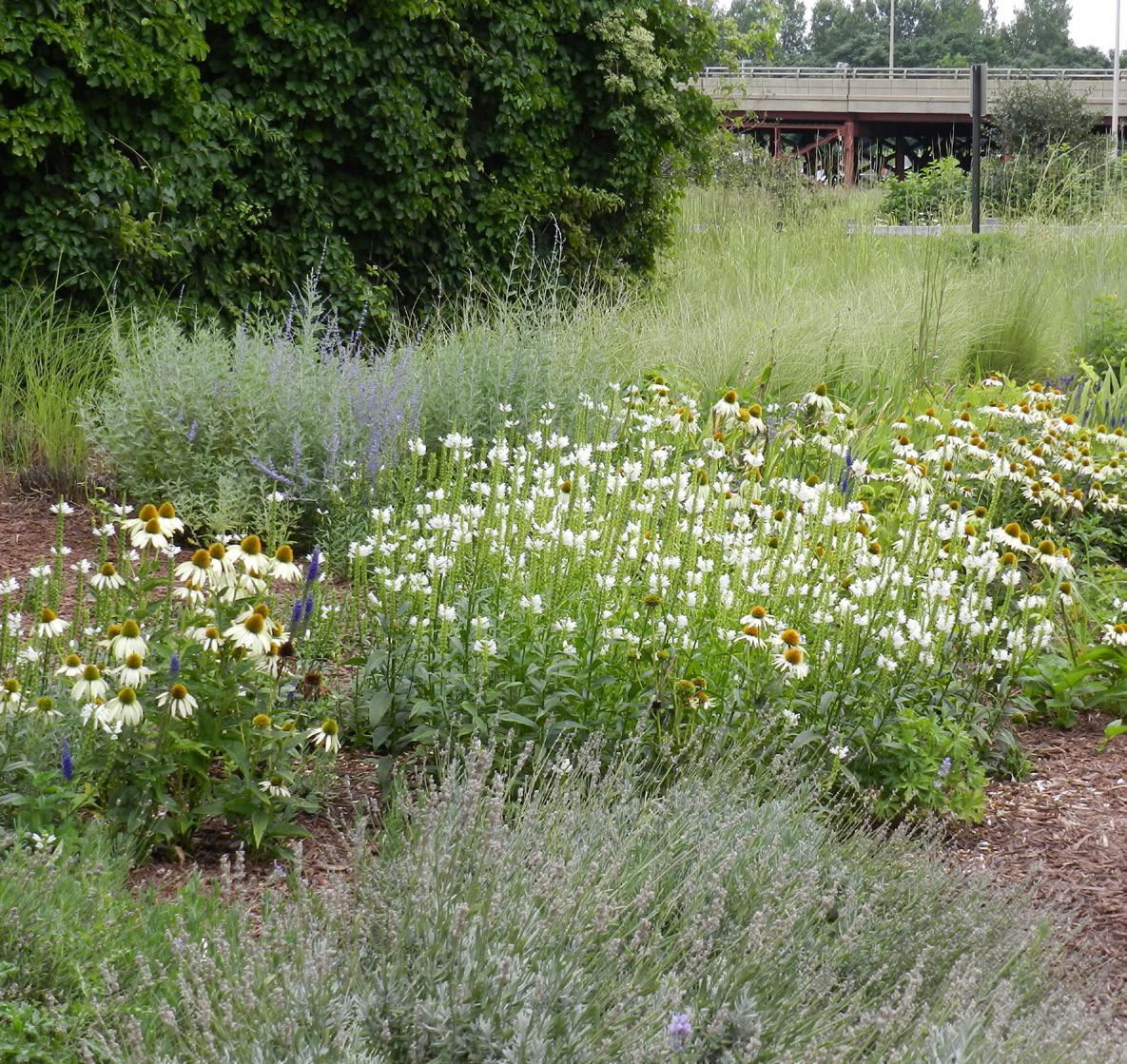
Much of the world seems to be suffering from drought and other problems that are a result of chemical residues. Although some lawn services that base their practices on the use of organics exist, most use an array of herbicides and pesticides that end up in our water systems, ultimately causing medical conditions for thousands, if not millions, of people. Who decided lawns have to be perfect? Why can’t they be full of clover or creeping Veronica that has tiny blue flowers in June? This obsession with perfect lawns may change if and when new legislation is enacted that bans the use of pesticides. The province of Ontario passed such legislation in 2008. The ban means residents in Ontario will no longer be permitted
Ford Rouge Factory bed near visitor center
Photo by Bobbie Schwartz
to legally apply chemical pesticides, including herbicides, insecticides, and fungicides, to their lawns and gardens, Additionally, lawns are water guzzlers. Granted, there are some turf grasses that require less water, but they have not yet gained favor with the general public. In fact, I would guess most people have never even heard of buffalo grass or no-mow grass. The other reason such grasses are rarely used is that these grasses do not remain green during a northern winter.
It hasn’t happened yet in Ohio, but some states that face greater water supply problems are debating whether to legislatively restrict the amount of lawn a property may have. Should the restriction be less severe if the owner can prove that the only water being used to irrigate the lawn is from diverted rainwater or gray water? Some of the proposed legislation would restrict lawn to a quarter of the property with the proviso that more might
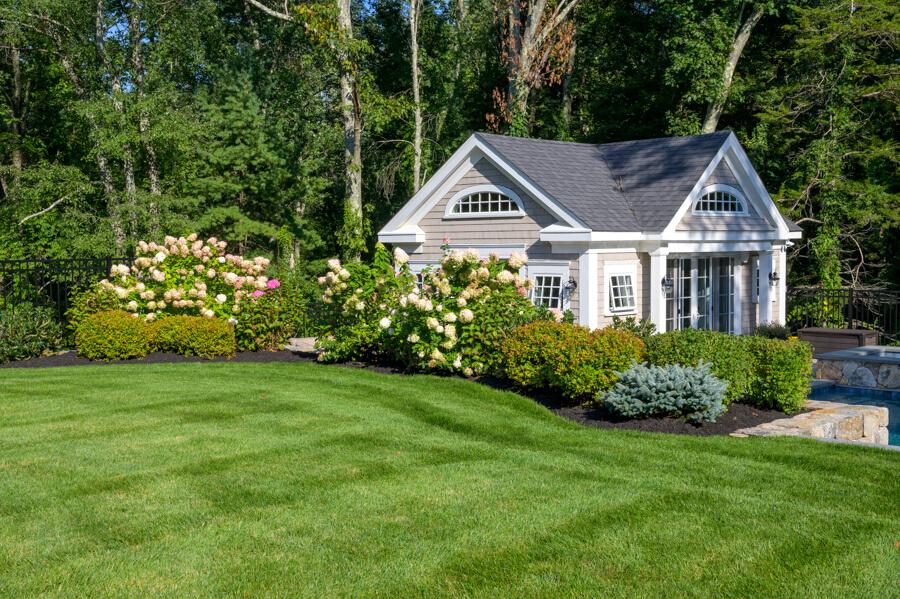
be allowed if the owner can prove he is conserving water in other ways. Those who argue that lawn adds curb appeal might want to rethink that thesis. Any well-designed landscape will add curb appeal and, in fact, could also add fragrance, flower, fruit, color, and texture.
Another aspect of water use that needs to be examined is irrigation. How many times have you seen sprinkler systems spraying water on lawns when it’s raining? At the very least, moisture sensors should be required to override timers that property owners never think to turn off or on. Those who design and sell irrigation systems also should encourage clients to use subsurface or drip irrigation to decrease the amount of water that ends up as runoff or evaporation. Both are a giant waste of water. We should also consider the amount of energy we consume in cutting the lawn and the amount of pollutants that enter the air we breathe as a result. At the beginning

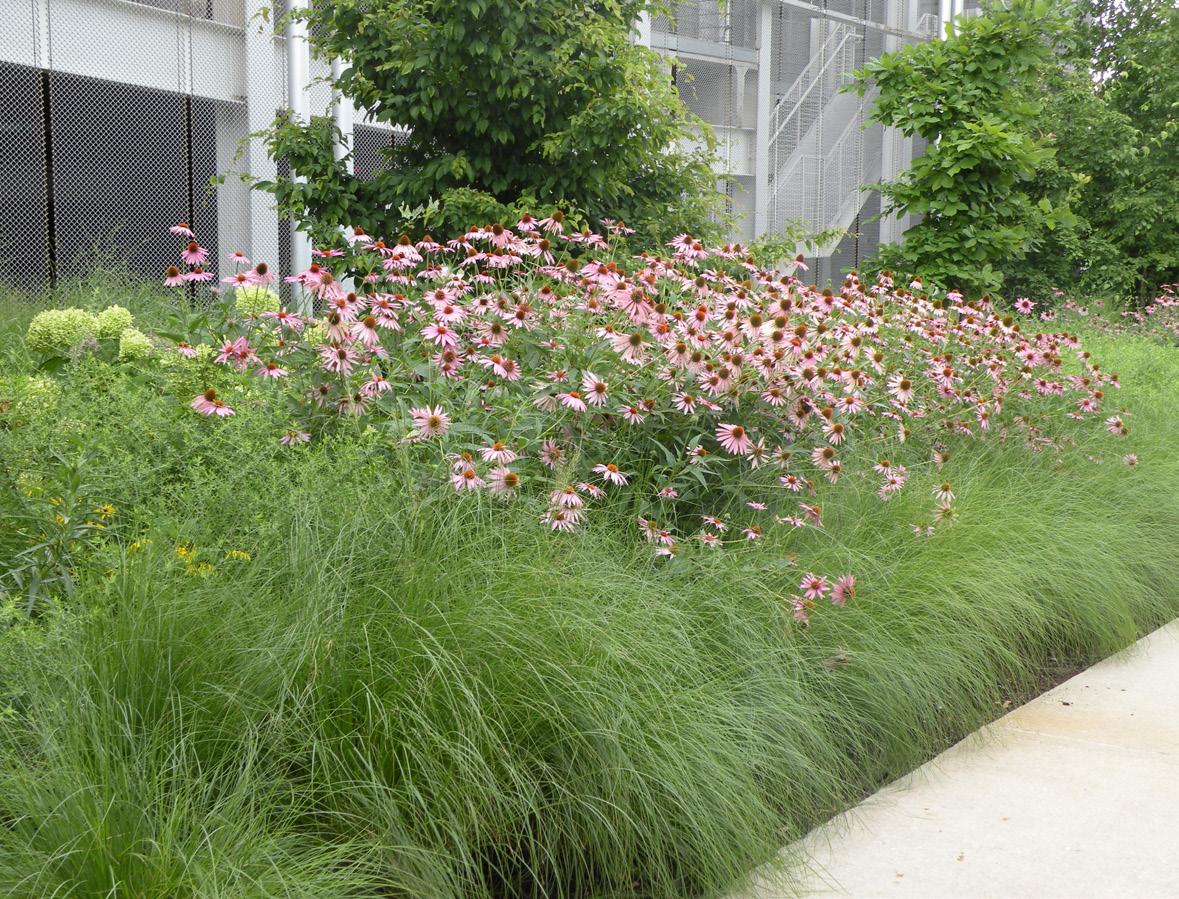
Stylized prairie
Photo by Bobbie Schwartz

Because your business never stops, we want owning new Cat® compact equipment to be simple and hassle-free. Right now, you can take advantage of zero down and zero interest with unmatched support from Milton CAT. Plus, this finance rate can be applied to attachment purchases, helping you get more done for less.
Just a few of the new ways we say, “Hello and welcome to Milton CAT.”
of the 20th century, everyone used push mowers. The only energy consumed was human energy. In that sexist era, husbands pushed the mower, and their waists were much slimmer than they are today. Even now, if a family hasn’t hired a lawn service to cut the grass, the family’s mower is probably gas-powered. If the property is big enough, the mower has morphed into a riding mower that consumes even more gasoline and requires no expenditure of calories. So, my question again is: How much lawn do we really need?
Some restrictions make more sense than others. Why plant grass on steep slopes in the first place? Mowing is difficult in these situations. I suspect the answer is money. It’s cheaper to seed a hillside than plant it, at least initially, but in the long run, the maintenance costs of labor, equipment, and power will be higher. Communities that have minimum acreage requirements should give serious consideration to limiting the amount of turf allowed while encouraging the installation or continued existence of natural areas such as meadows.
Lest I be accused of focusing on
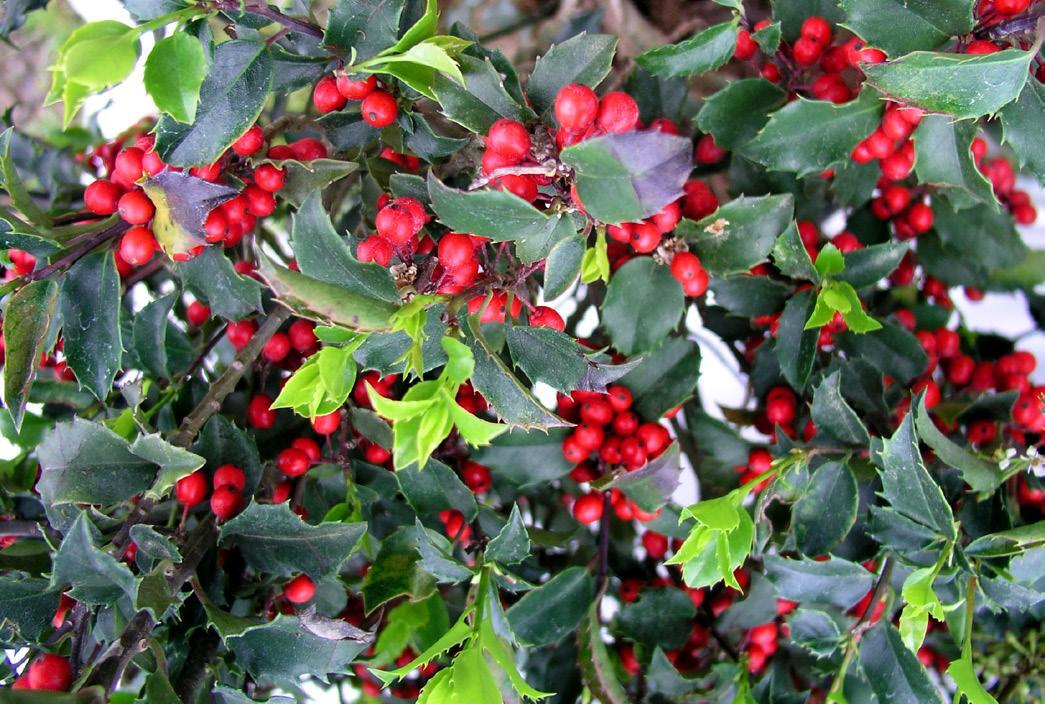
Blue Princess Holly
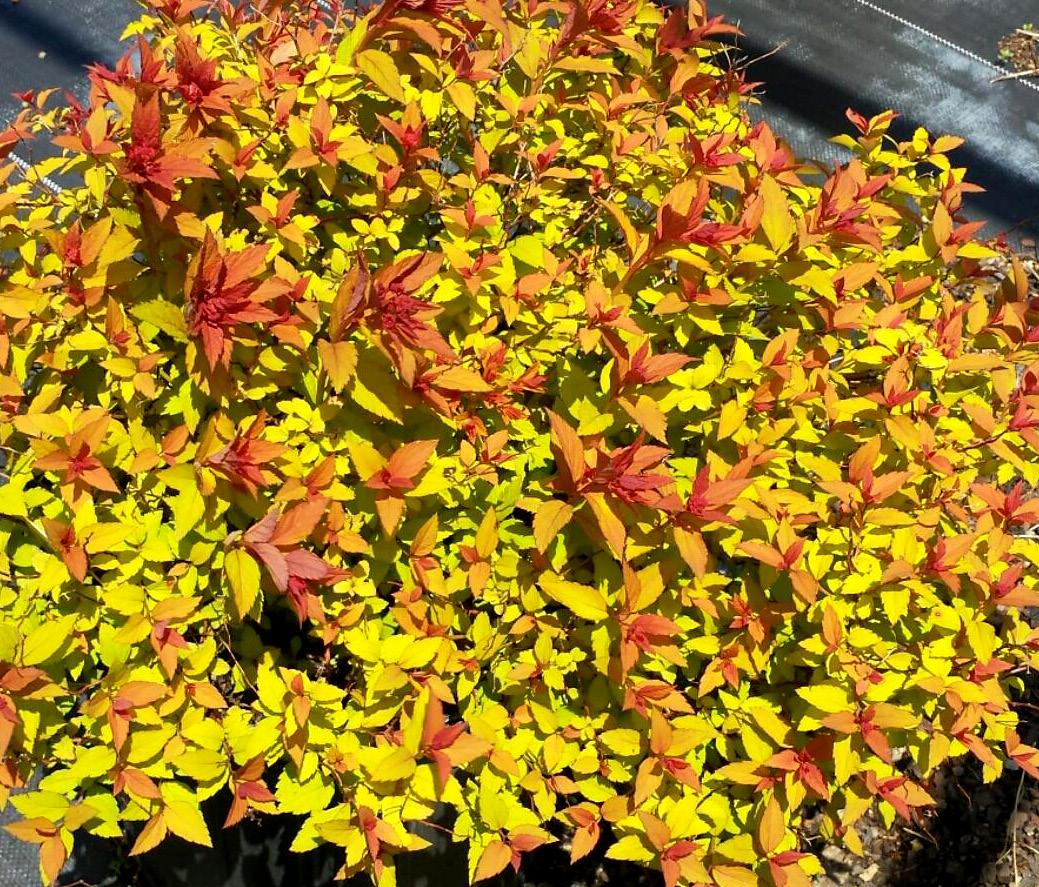
Magic Carpet Spirea
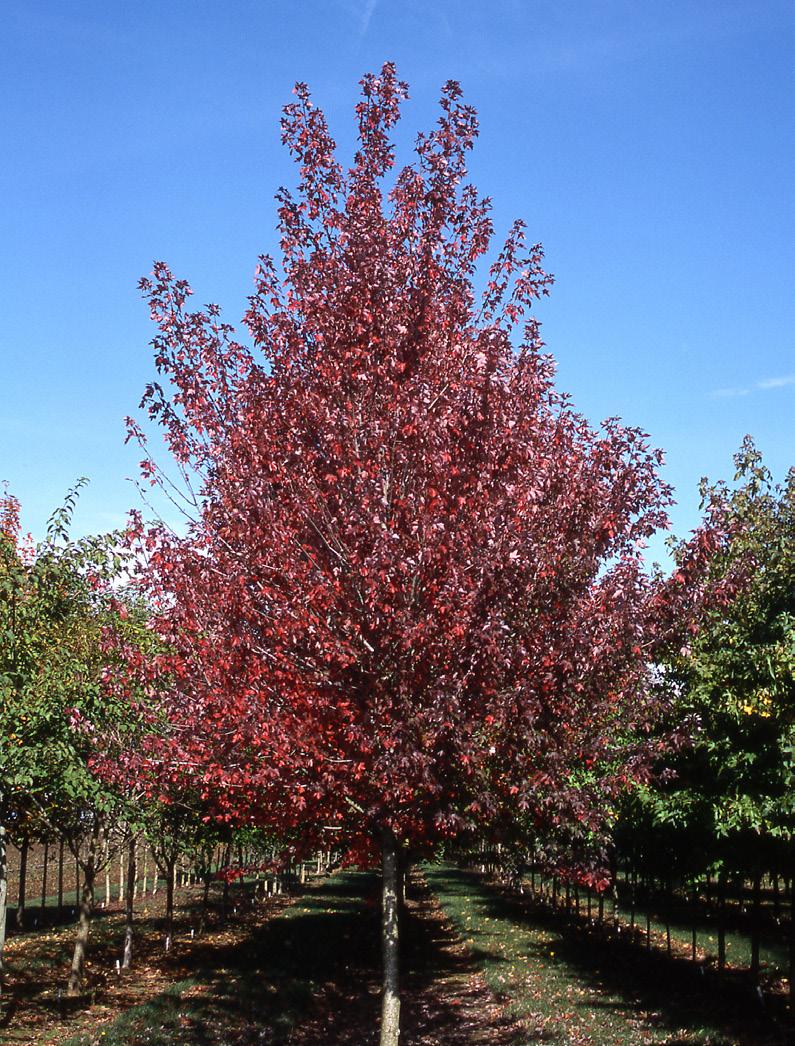
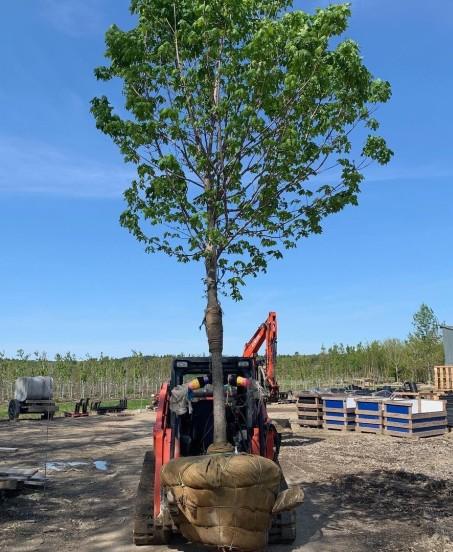
Redpointe Maple
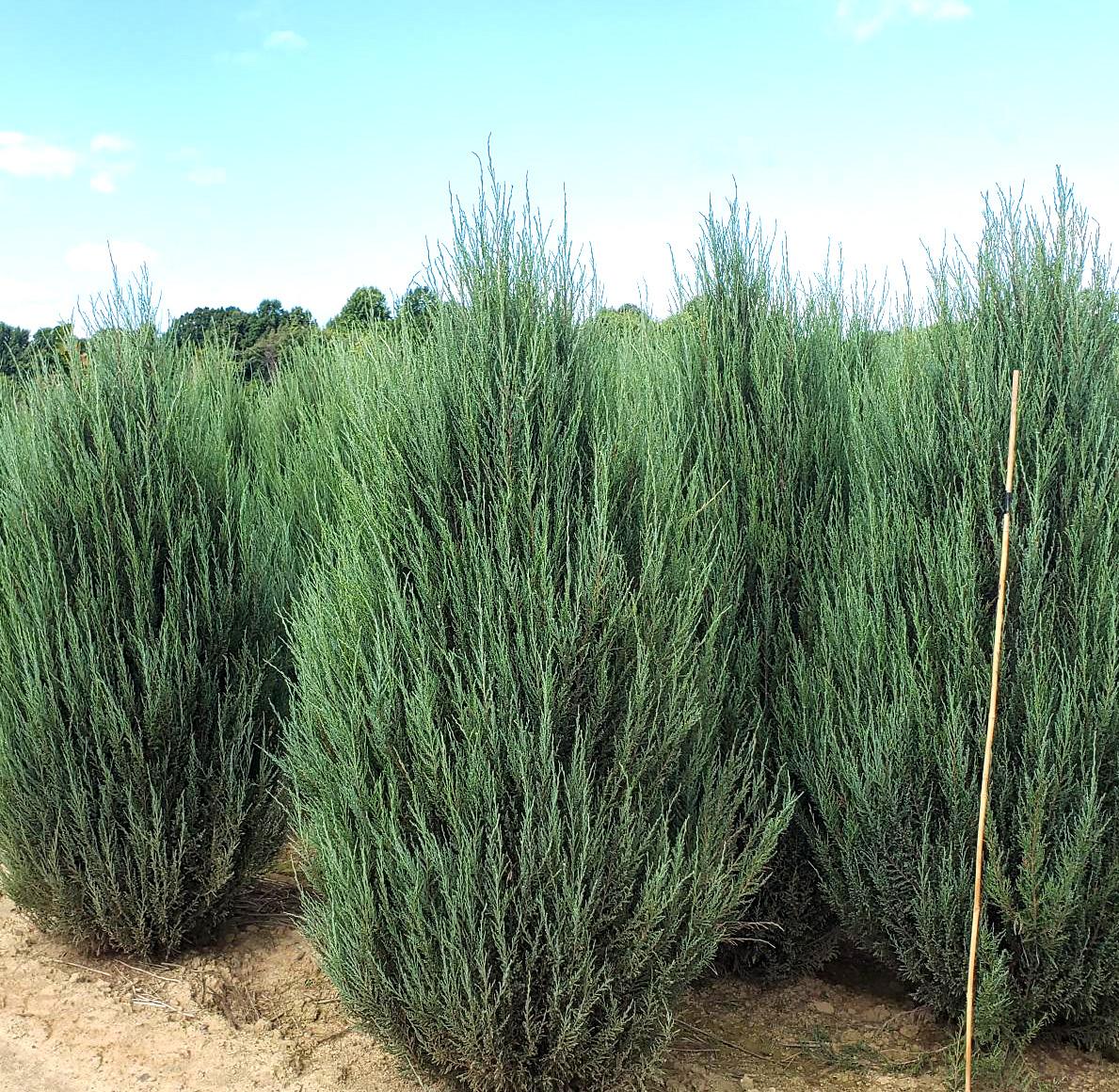
Blue Arrow Juniper
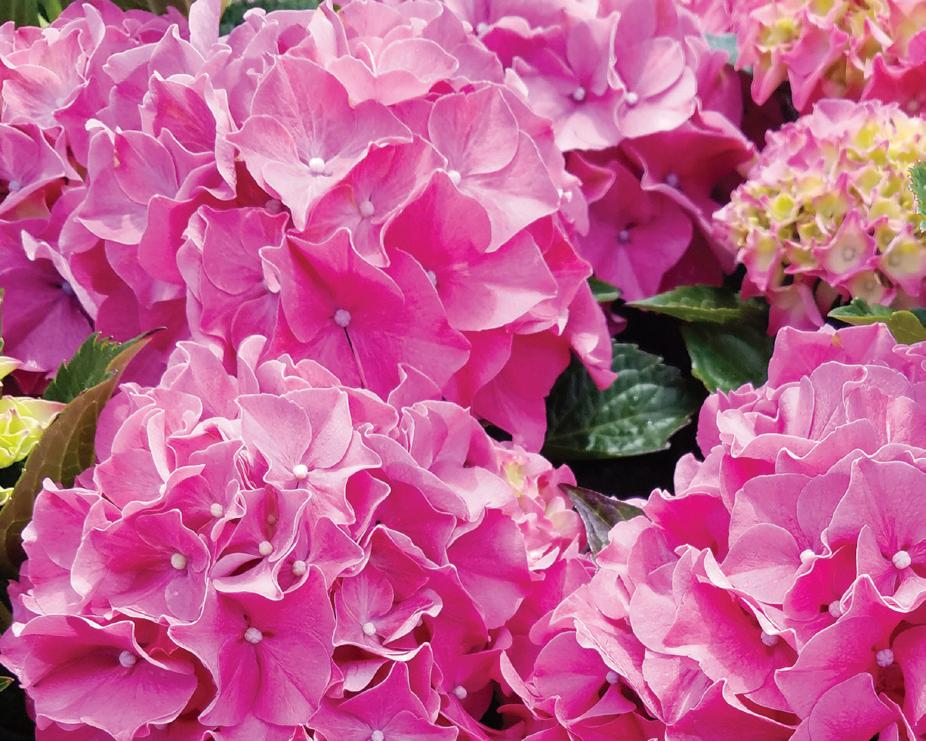
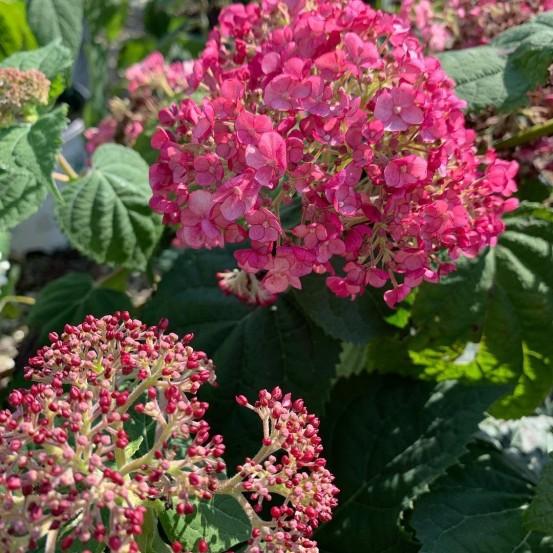
Hortense Hydrangea
homeowners rather than commercial property owners, I find the same misplaced priorities exist but at an even higher ratio. Many large corporations have campuses, most of which are lawn that is never used for anything. We need to change the outlook of corporate executives and their architects and landscape architects. Some change has already begun, as evidenced by a 2009 Business Quarterly survey that asked firm contacts about client demand and design alternatives for traditional turfgrass. Overall, 35.2 percent of firms reported increased demand for turfgrass alternatives. The top reasons for requested alternatives were saving money on utility/maintenance costs, meeting green design benchmarks like the Sustainable Sites Initiative, lowered upkeep time and effort, reducing environmental harm, and meeting a government ordinance or code.
The huge spaces of corporate campuses could enrich the lives of their employees if they were designed with plants that please the eye and also attract wildlife. There are so many beautiful plants that would bring birds and butterflies. A few days ago, while snow still covered the ground, I looked out my office window and saw a flock of robins (which no longer fly south for the winter) sitting in my old crabapple tree, feasting on the dried fruits. Connecting with nature in this way enriches the soul. Looking out the window at an expanse of lawn does not.
In a perfect world, we wouldn’t need legislation to change our philosophy and practices of lawn-keeping. The desire to improve the environment for generations to come would be enough. Hopefully, dialogue and awareness are changing and will continue to change the philosophy that lawn is necessary and the more the better.
Bobbie Schwartz, a certified landscape designer in Shaker Heights, Ohio, is the owner of Bobbie’s Green Thumb, a fulltime business focusing on landscape design, consultation, installation and maintenance, lecturing, and writing. Most of Bobbie’s designs are for residential properties. Her landscape signature is the use of perennials, flowering shrubs, and ornamental grasses to facilitate color and interest throughout the year. An obsessed gardener for fifty years and a landscape designer for fortytwo years, her extensive travels to gardens and nurseries have contributed greatly to her knowledge of design and new plants. Bobbie has received several design awards for residential, commercial, and institutional designs. She lectures locally and nationally for master gardeners, botanical gardens, and landscape associations on various aspects of design and perennial and ornamental grass gardening. She also writes extensively for various associations and magazines. Her book, Garden Renovation: Transform Your Yard into the Garden of Your Dreams, was released by Timber Press in 2017.
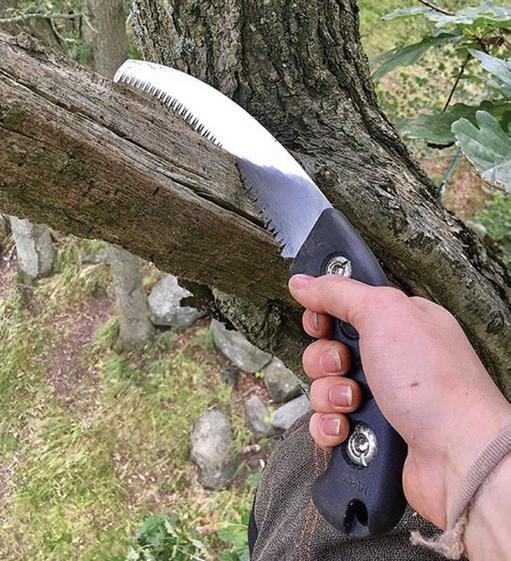
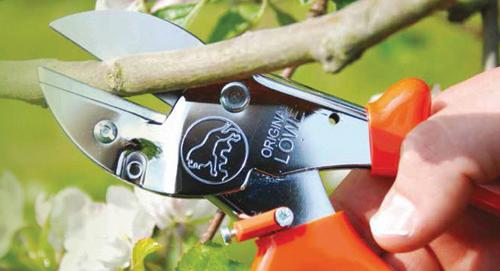
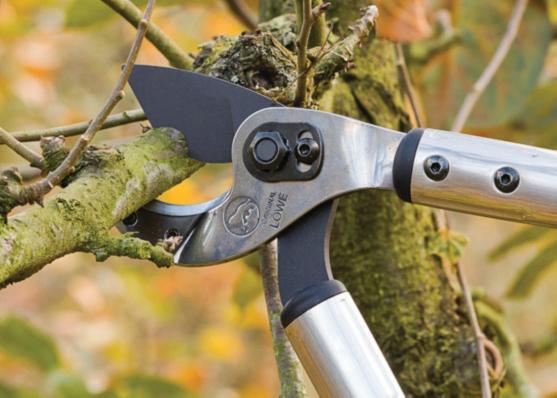
Equipment & Tools for Landscape Professionals












The New Garden Society
By Gaele McCully, MCH
Everyone who works in the horticultural industry knows it demands knowledge, skill, hard work, and long hours, all of which are rewarding in themselves. Many of MNLA’s members find additional rewards by sharing their expertise with others and giving back to their communities.
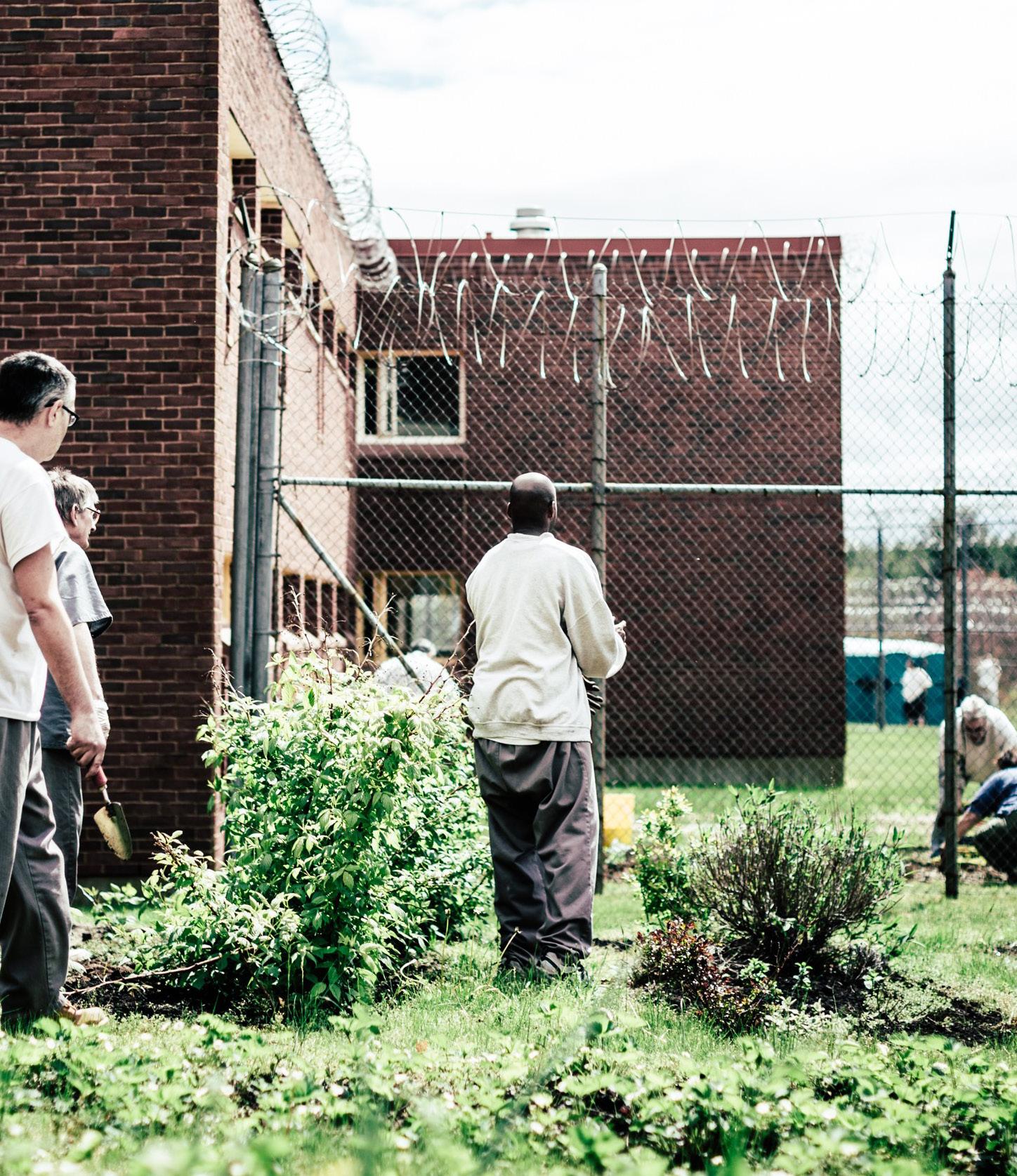
One such member is Renée Portanova. Renée is the lead horticulturalist at the Newton Cemetery and Arboretum. She also devotes many hours to leading The New Garden Society (TNGS), a non-profit organization she co-founded with Erika Rumbley in 2014. Erika is the director of horticulture at the Isabella Stewart Gardner Museum. TNGS was inspired by James Jiler and his book, Doing Time in the Garden, which outlined his approach to creating a successful horticultural vocational training program within correctional facilities.
While Renée had no experience working with incarcerated people, she saw an opportunity to merge her interests in land restoration, the green economy, and adult education with the opportunity to improve the lives and opportunities of those in the correctional system. She approached the Massachusetts Department of Corrections (DoC), which expressed interest in the idea.
expertise and land-care experiences to every classroom. Supplementary reading is provided to participants through an on-site horticulture library.
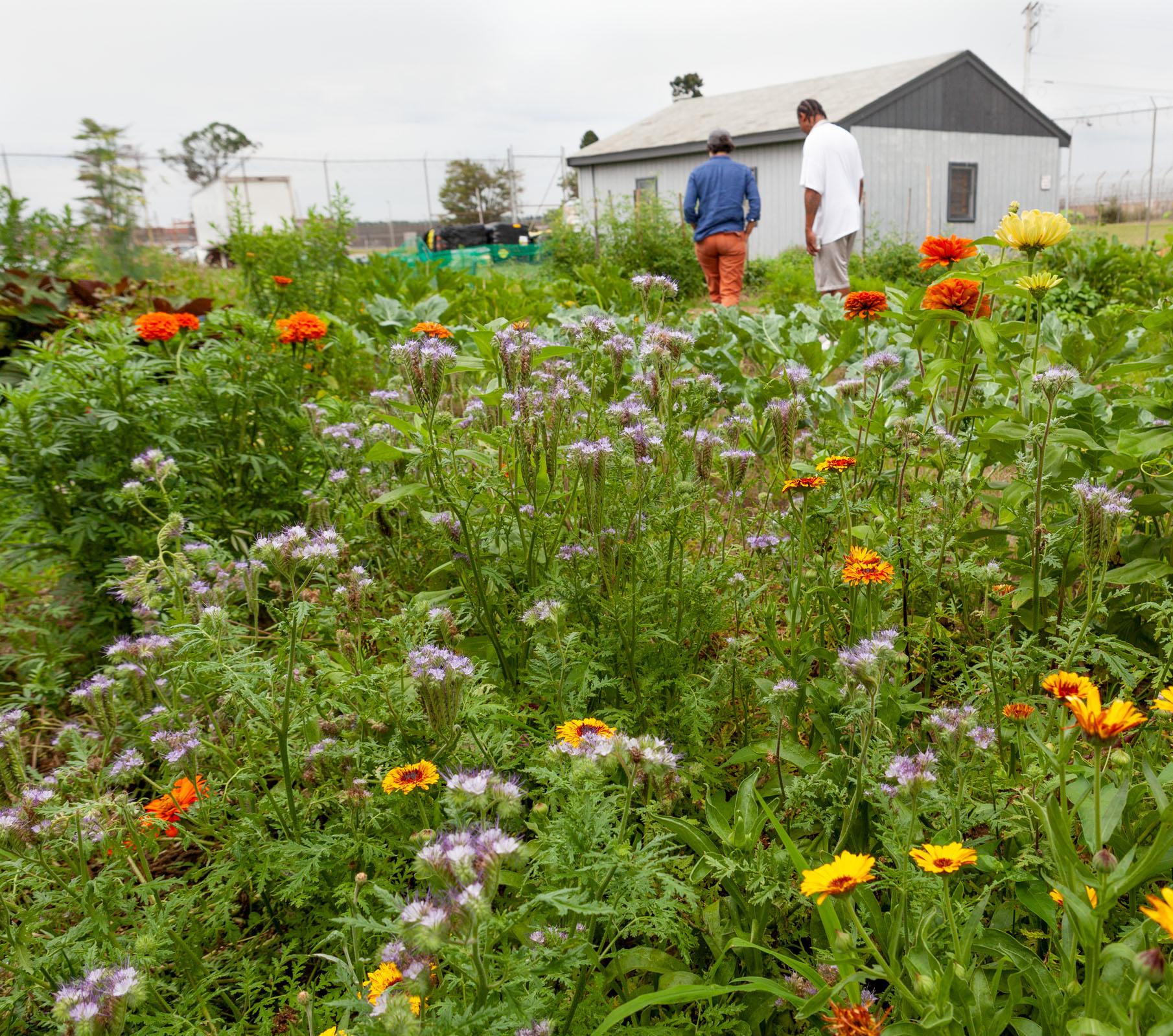
TNGS currently leads vocational training programs at two greater-Boston prisons: Old Colony Correctional Center and the Massachusetts Treatment Center. In 2015–2016, TNGS facilitated a pilot Summer Plant Lab to support high-school science learning at a Massachusetts Department of Youth Services facility in Boston. From 2013–2016, TNGS also ran the therapeutic horticulture program at the DoC’s Bridgewater State Hospital prior to the facility’s privatization. Eight additional Massachusetts correctional facilities have identified a need for horticulture programming.
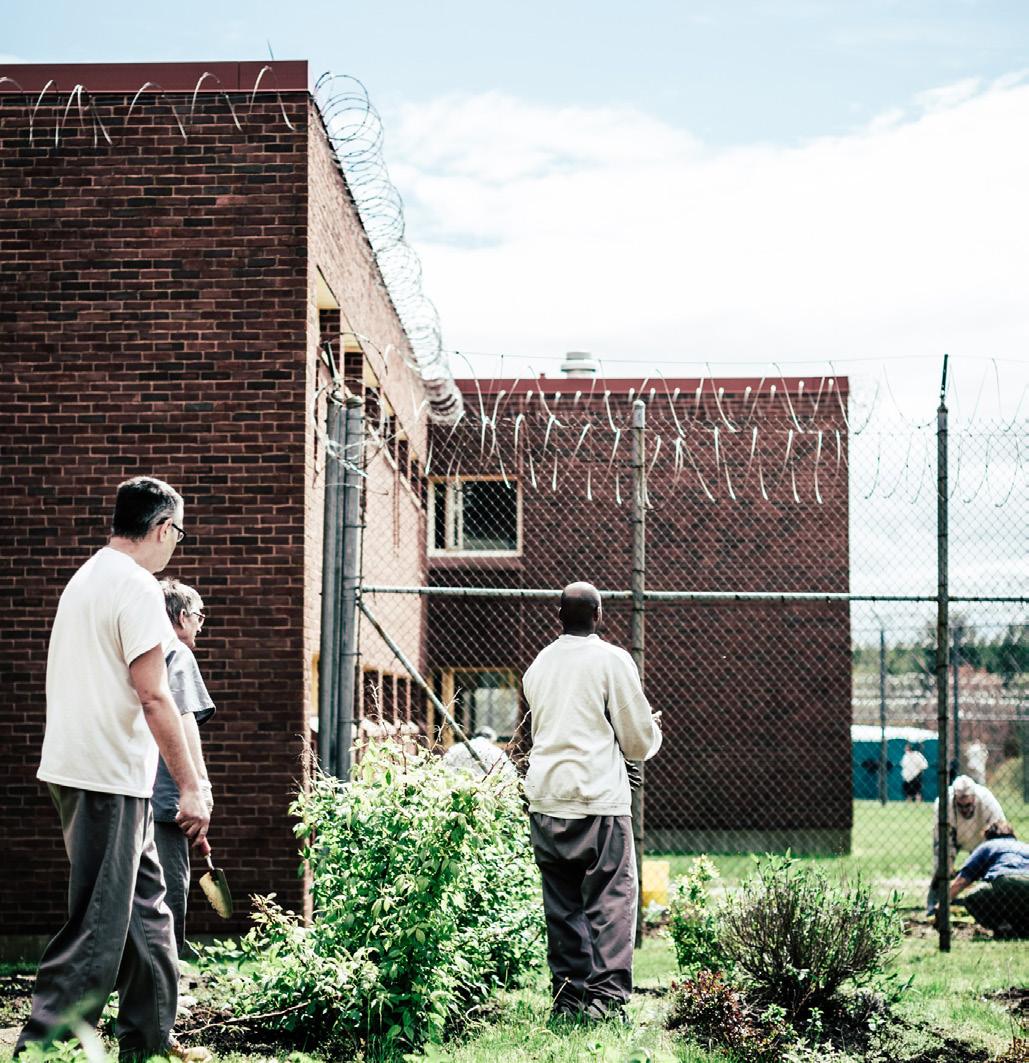
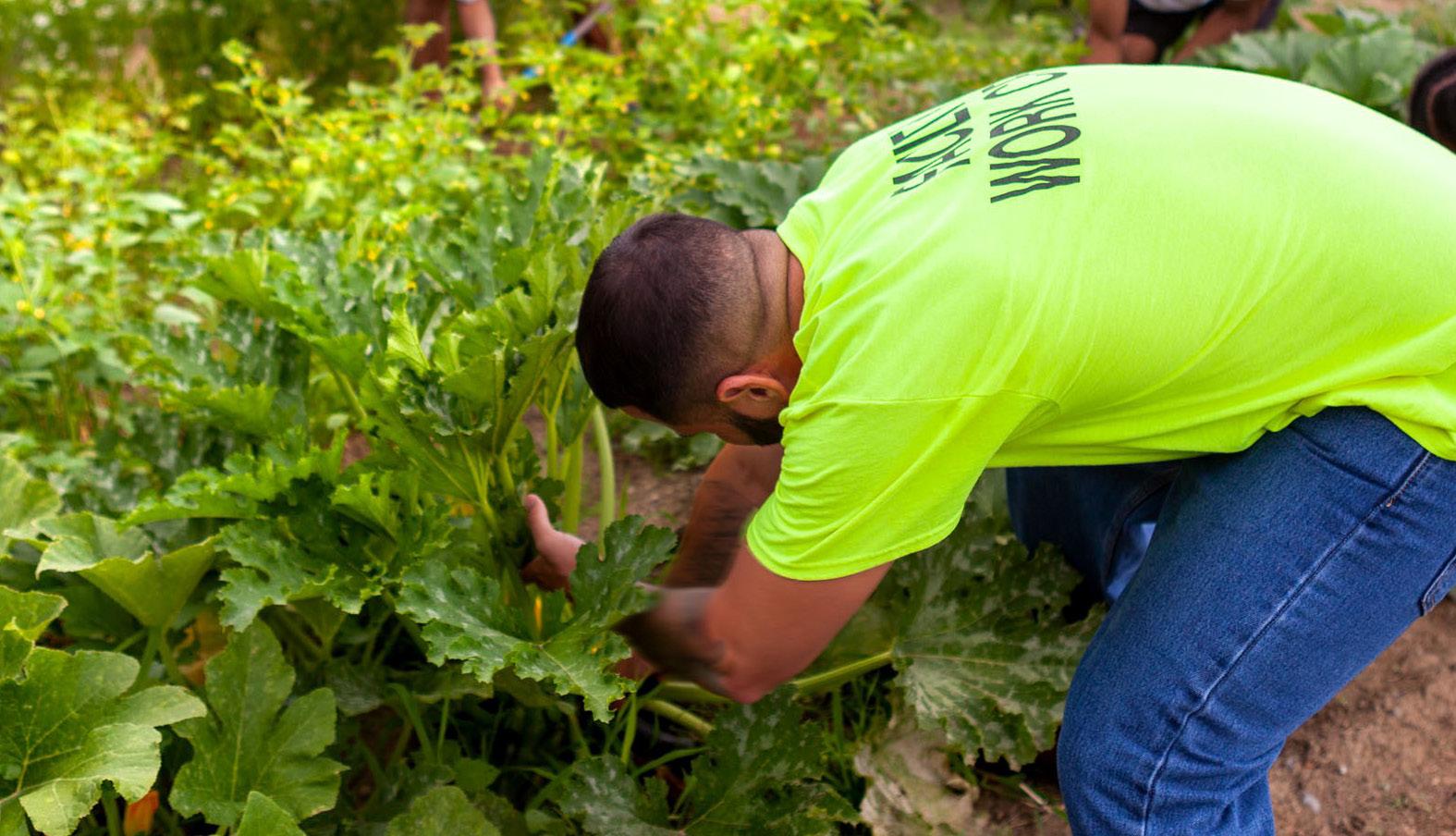
Working closely with the director of treatment, the program has trained over 500 incarcerated and detained students, ages 13-80, in the art and science of plants. Weekly classes teach the core concepts of horticulture, and students apply these concepts in prison gardens and greenhouses, where they find healing and an opportunity to build job skills. TNGS’ prison-based trainings are taught by horticulturists, farmers, landscapers, and other green industry professionals who bring their diverse plant
The program operates in minimum- and mediumsecurity facilities and has been popular with students since its inception. They have grown more than 3,000 pounds of food that supplements each facility’s kitchen and provides hunger relief to local community organizations.
TNGS defines success in terms of giving people job skills and teaching what it means to be a team player, finish a task, be on time, etc. Students fill out a questionnaire identifying the kind of skills they want to learn and their motivation for being in the program at the beginning of the season, and then again at the end of the program. The therapeutic and transformative powers of gardening has become apparent over time, with respondents providing qualitative comments about their sense of wellbeing. Here are some quotes from program participants:
MORE YOUR ALLY THAN YOUR AGENT

With AMERICAN NATIONAL, you’ll get an agent who has the know-how and products to help you properly manage your family’s risks. An open appointment book, along with options for home, auto, life, farm and business coverage, means you can feel good that you’re getting more an ally than just an agent.
Wherever you are in Massachusetts, there’s a American National agent close to you. Give us a call for more information.























“The skills you learn here apply to the rest of your life.” -D
“It helped me to be part of a group that’s positive, that’s working towards something.” -J.
The garden brings out the best in people.” -L.
“You learn something new in the garden every year, every day.” -B.
“I appreciate you for encouraging me to keep going when I wanted to quit. You guys, too. These guys told me to get with it and to work hard and I did.” -R.
“We have the intent and purpose to expand on what we’ve learned, to make sure this garden isn’t a dead-end.” R.
“The garden course gives me something to look forward to every Monday.” -V.
“It brought me back to simpler times with my grandparents.” - D.
“Nature has a way of always being interesting. Giving it my undivided attention takes my mind off my surroundings.” - M.
Renée says working with the DoC has challenges, but not because the people involved are inherently challenging. Each facility has its own culture and each administration has its own rules. Some
elements of the program can be standardized; some are site specific. Safety and security sometimes limit the program and the resources they can offer. Communication can be challenging because of staff changes and people moving from facility to facility. Current restrictions do not permit TNGS staff to interact with people who were formerly
AMERICA’S
LANDSCAPE TRUCK
90 days
incarcerated. However, they are currently working with a DoC task force to find ways to track the statistics around recidivism and whether the program helps people find work post-incarceration. A goal for 2020 is to compile a list of companies and green industry allies that would be interested in hiring people who have been through the program.
TNGS relies on green industry professionals to deliver their programs. They welcome guest presenters and anyone who might advise or wish to serve on their board. In-kind contributions of soil, compost, plant material, tools, equipment, and other supplies are always welcome and much needed.
TNGS is affiliated with the American Horticultural Therapy Association, Northeastern Organic Farming Association, and the Northeast Horticultural Therapy Network.
Renée can be reached at info@thenewgardensociety.org

Holyoke, MA (800) 862-0089
Charlton, MA (508) 987-0101
Wilmington, MA (866) 830-5909
Norwalk, CT (203) 831-9748
Plainville, CT (888) 889-9996
Hamden, CT (203) 288-2222
Smithfield, RI (401) 232-2597
Albany, NY (518) 650-6228
UMass Plant Diagnostic Laboratory has Reopened
The UMass Plant Diagnostic Laboratory has reopened for plant disease, insect pest ,and invasive plant/ weed samples. At this time, we can only accept mail-in samples; walk-in samples cannot be accepted.
Please refer to our website for instructions on sample submission and to access the submission form:
https://ag.umass.edu/services/plantdiagnostics-laboratory
Mail delivery services and staffing have been altered due to the pandemic, so please allow for some additional time for samples to arrive at the lab and undergo the diagnostic process. We look forward to resuming activities and diagnosing your plant problems.

Note: The UMass Extension Soil and Plant Nutrient Testing Lab will also announce its re-opening plans soon.
Safety Sense
Heat Safety: Heat Exhaustion vs. Heat Stroke
• Identifying heat-related hazards
Rolling into the dog days of summer, heat will be a constant factor your crews will face in the field. Workers can become overheated due to the internal heat generated by physical labor and external heat in the environment. Other risk factors include lack of acclimatization and wearing clothing that holds in body heat.
Avoiding Heat-Related Illnesses
Heat-related illnesses are preventable, and it’s important to have a program in place to help mitigate the chance of it occurring, along with training your crews to know how to spot and treat a heat-related illness.
The main elements of a heat stress program include:
• Providing water, rest and shade
• Acclimatizing workers
• Modifying work schedules to reduce workers’ exposure to heat
• Training employees on the symptoms and treatment of heat-related illnesses
• Monitoring heat-illness symptoms
• Having an emergency plan and response
New employees who have not spent time working in hot environments or being physically active will need to accli-
matize to the heat. Encourage these workers to stay hydrated, work shorter shifts, and take frequent breaks.
During a rapid change to excessively hot weather, even experienced workers should begin on the first day of work in excessive heat with 50 percent of the normal workload and time spent in the hot environment; 60 percent on the second day; 80 percent on the third day; and 100 percent on the fourth day.
Spotting Heat-Related Illnesses
Heat stroke is the most serious heat-related illness. The symptoms of heat stroke can include:
• Confusion, altered mental status, slurred speechLoss of consciousness
• Hot dry skin or profuse sweating

• Seizures
• Body temperature greater than 104 degrees Fahrenheit
If a co-worker shows possible signs of heat stroke, seek medical help immediately and call 911. Move the worker to a shaded, cool area and remove outer clothing. Cool the victim with cold water or an ice bath, if possible. Circulate air around the individual to speed cooling and place cold, wet cloths on the head, neck, armpits, and groin.
Heat exhaustion is the second-most severe heat-related illness and is often a result of excessive sweating. The symptoms for heat exhaustion include:
• Headache
• Nausea
• Dizziness
• Weakness
• Irritability
• Thirst
• Heavy sweating
• Body temperature greater than100.4 degrees Fahrenheit
Co-workers suffering from heat exhaustion should be moved to a cool location. Remove unnecessary clothing such as shoes and socks. Cool the worker with cold, wet cloths and have them frequently sip cool water. Workers with signs or symptoms of heat exhaustion should be taken to a clinic or emergency room for medical evaluation and treatment. Make sure that someone stays with the worker until help arrives. If
symptoms worsen, call 911 and get help immediately.
Heat cramps are muscle pains caused by the loss of body salts and fluid during sweating. Workers with heat cramps should drink water and have a snack or drink sports drinks every 15 to 20 minutes. Seek medical attention if the worker has heart problems, is on a low-sodium diet, or if the cramps do not subside within an hour.
A heat rash can be caused by excessive sweating during hot, humid weather. The best treatment for heat rash is to provide a cooler, less humid work environment. The rash area should be kept dry. Powder may be applied to increase comfort. Oils and creams should not be used to treat a heat rash.
For more information on heat illness, check out the Heat Illness Prevention campaign.
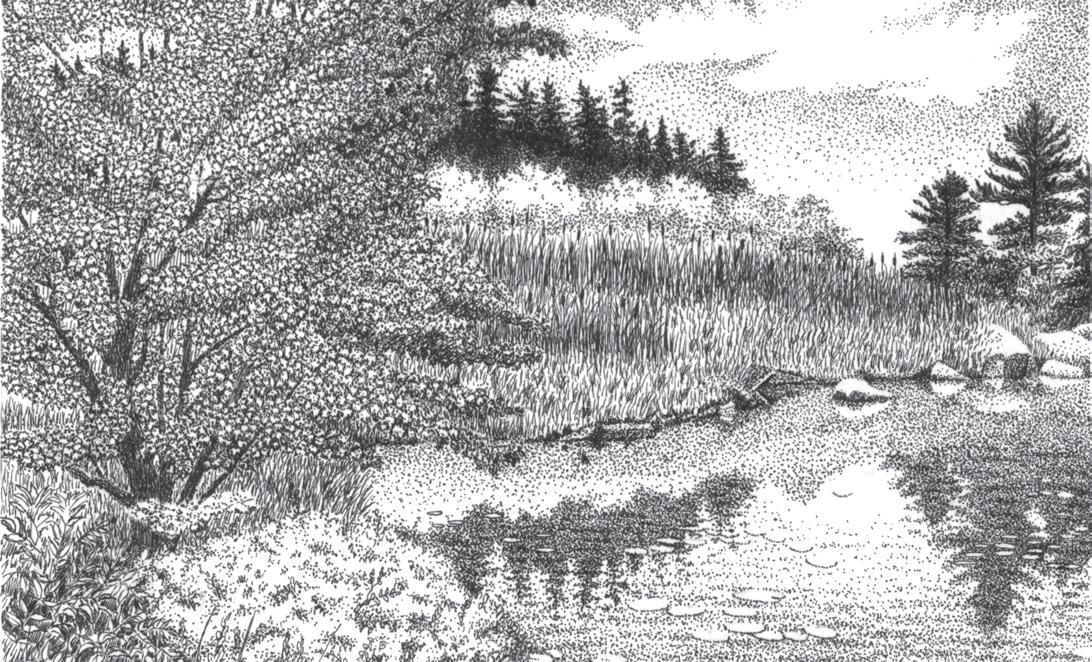
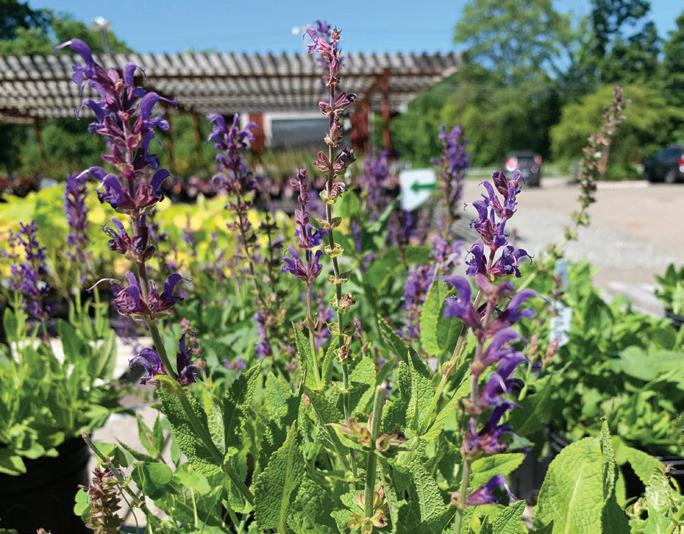
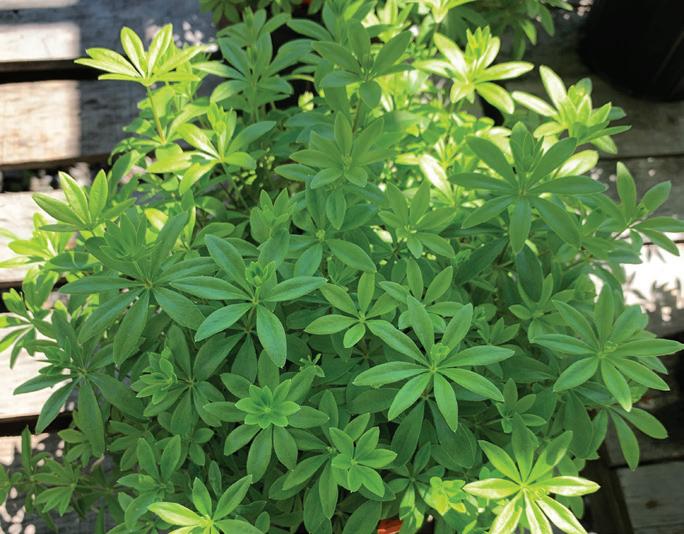
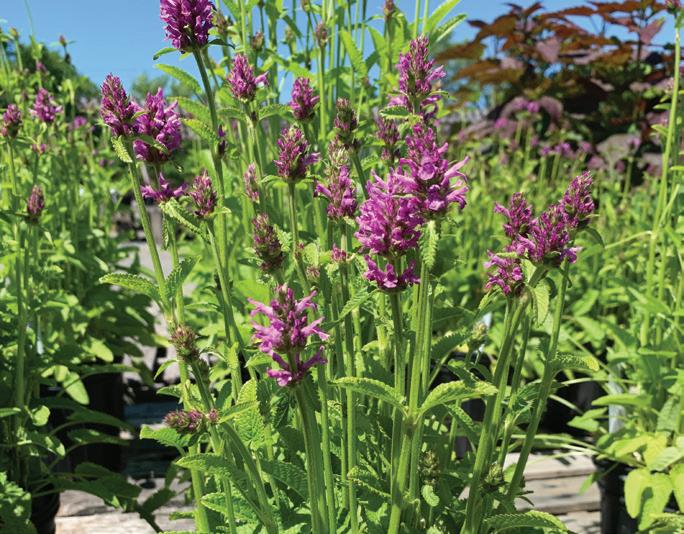
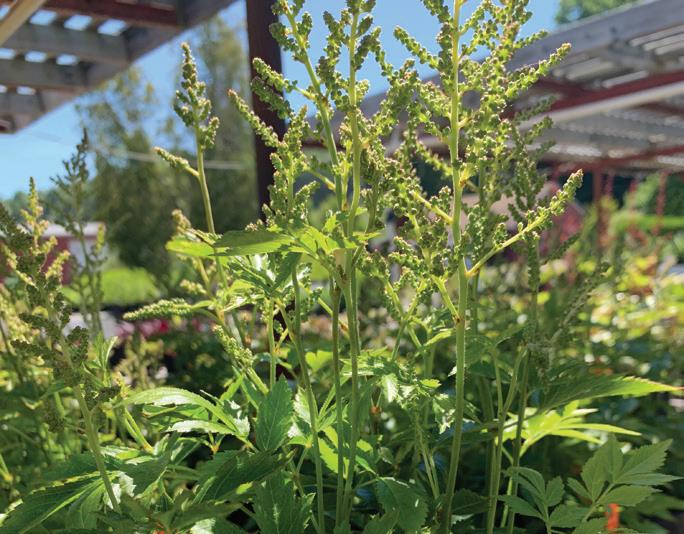
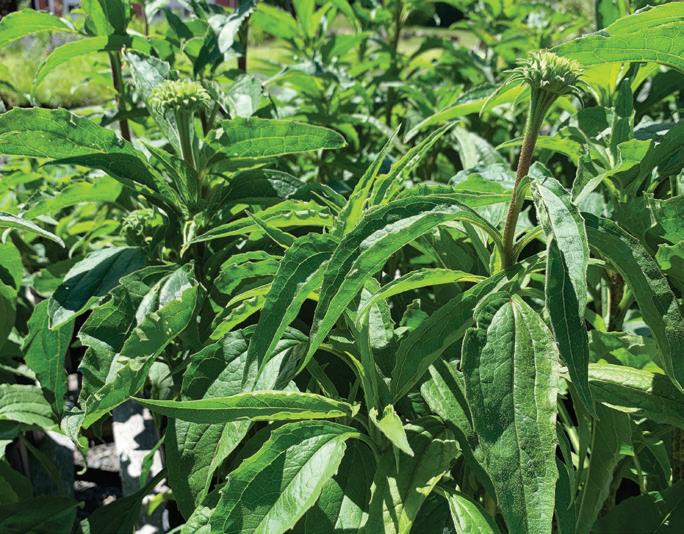
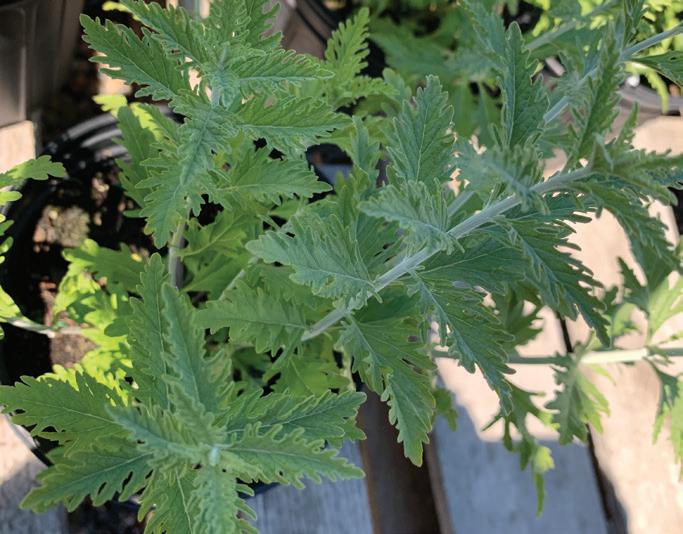
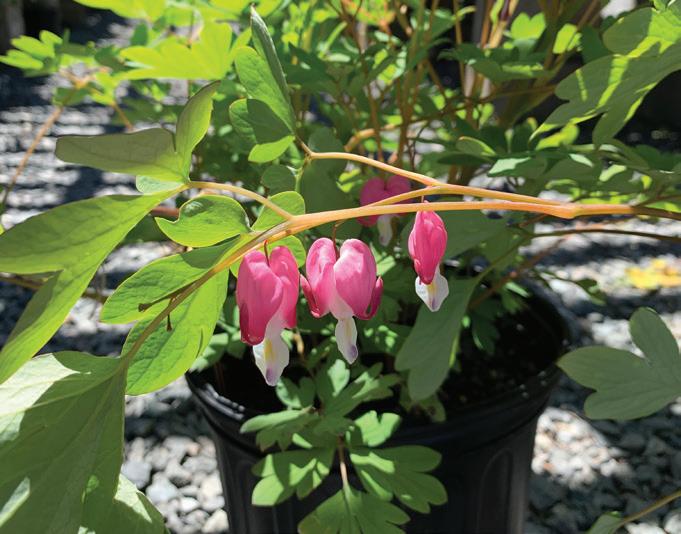
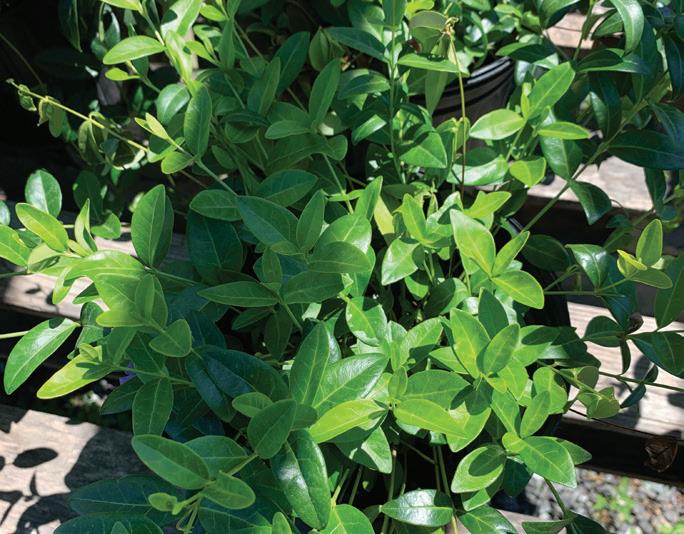
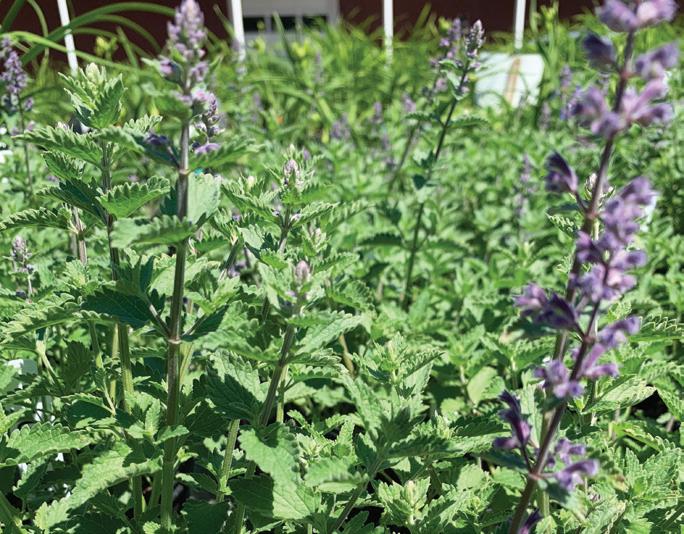
Provide the Latin name for all nine perennials below and earn 1 MCH credit! Submission deadline is August 30, 2020 and can be emailed to mnlaoffice@gmail.com, sent via postal mail to MNLA, PO Box 387, Conway, MA 01341, or submit online at: mnla.com/plant-challenge
Thank you to Nick Steiman, MCH of Bigelow Nurseries for the challenge!
MARKETPLACE



Plant for Success
Japanese Umbrella Pine
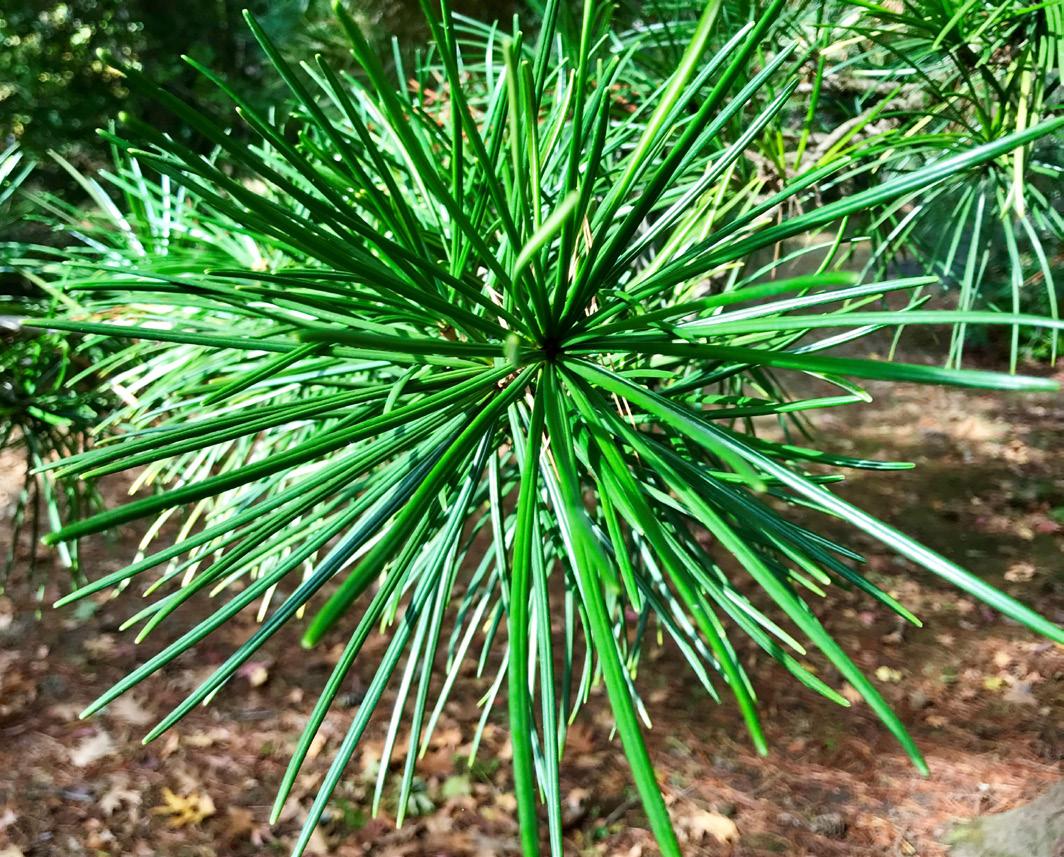
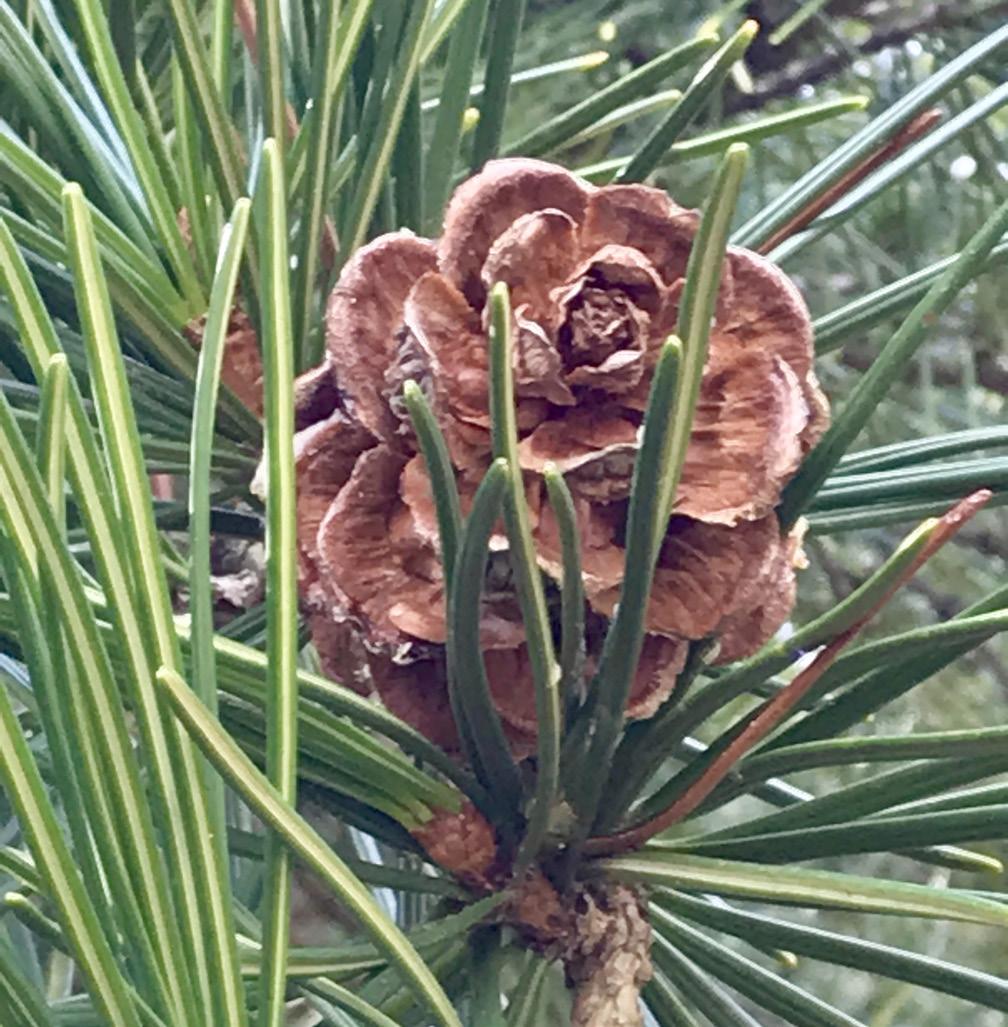
The Japanese umbrella pine is one of my favorite trees. Unique, artistic, and somewhat prehistoric in appearance, the 2-to-5 inch-long needles are bundled together at the tips of the branches, and displayed in whorls. The common name of the Japanese Umbrella Pine refers to the whorls of needles that resemble the spokes of an umbrella.
This incredibly unique evergreen is prized for its strong, leathery-textured, dark-green, glossy evergreen foliage while simultaneously providing excellent shelter for birds.
It looks its best as an accent tree among a grouping of other evergreen trees and shrubs or as a stunning specimen tree in the landscape. It is also appropriate for use in mixed beds and borders, along foundations, or even grown in a container.
You’ll have the best success if planted in early spring to allow the roots more time to establish. Plants are best if protected from cold winds in winter. A bronze tone may occur temporarily in winter under certain conditions.
Facts and Features
Sciadopitys verticillata is believed to date back to the days of dinosaurs, and the Japanese Umbrella Pine is actually no pine at all. In fact, they are so unique they are the only members of their family and genus.
Commonly single stemmed in the home landscape, they often become multi-stemmed with age. The foliage persists on average 3 years. The Japanese Umbrella Pine will not thrive in alkaline soils.
Indigenous to Japan, the Umbrella Pine is referred to as Koya-maki and is considered to be one of their five sacred trees.
Bridget B. McGovern, MCH Curbside Appeal Garden Design
Botanical Name: Sciadopitys verticillata
Common Name: Japanese Umbrella Pine
Type: Small to medium tree
Exposure: Full sun to part sun/part shade. Protect from hot late-afternoon sun and from sweeping winds
Size: 20–30 feet tall in the home landscape (up to 90 feet tall in the wild) with a spread of 15–20 feet
Hardiness Zone: 5 to 7
Soil: Evenly moist, well-drained, rich, acidic
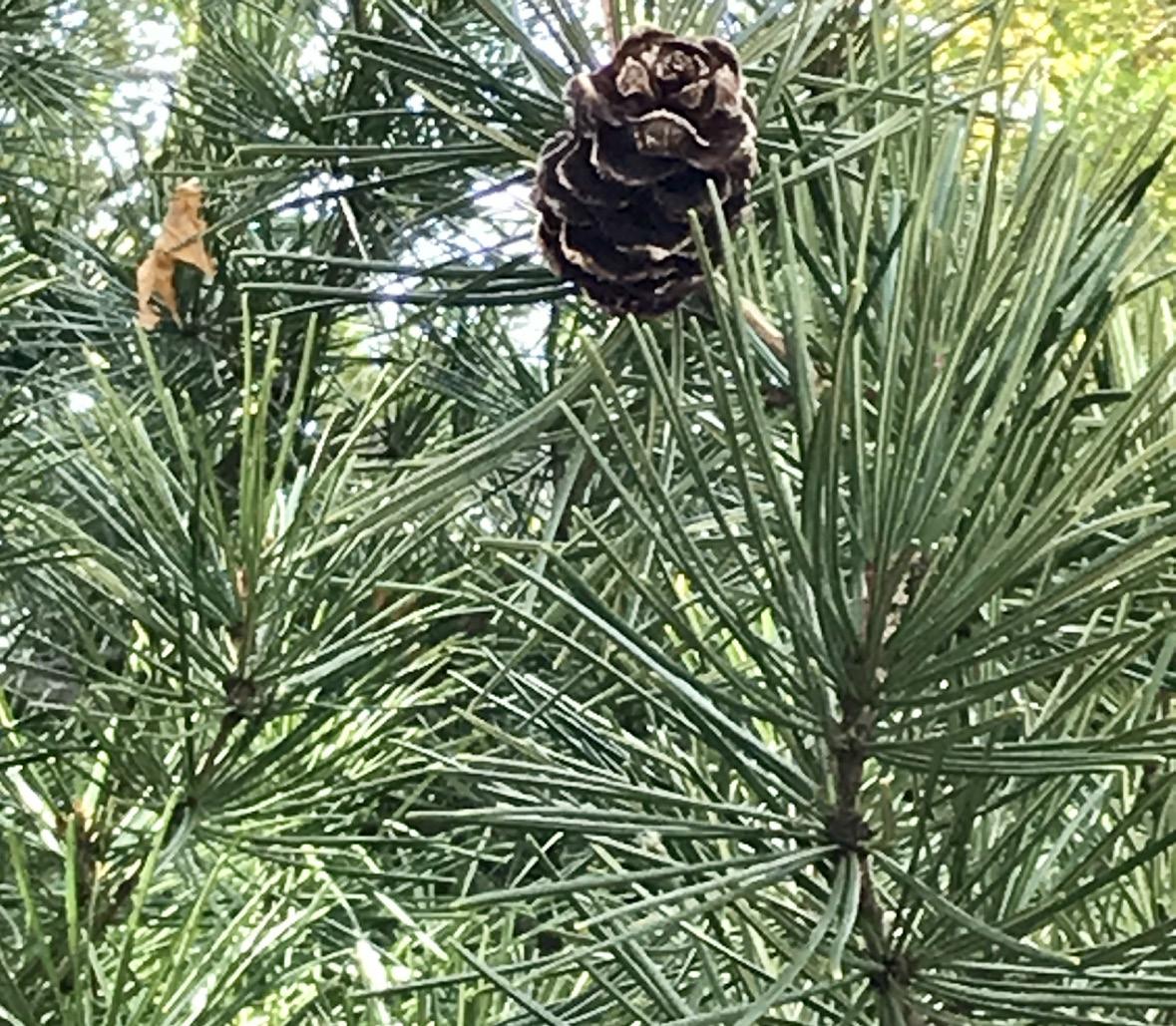
Fall color: Glossy, waxy textured, deep-green evergreen foliage; mature bark is orange to reddish-brown and peels in plates and strips; cones turn brown
Growth Rate: Slow, often less than 6” per year