Herald Great Homes - LON, NAS 01-22-2026

Page 1


The new standard

Nassau County’s 2026 real estate

assau County has long been defined as the place where nature meets art — a sophisticated tapestry of sleek modern enclaves and sprawling mid-century estates. As we enter 2026, the market is shedding the post-pandemic frenzy in favor of a refined, sustainable "normalization."

For the discerning buyer, Nassau offers a rare trifecta: the cultural proximity of Manhattan, the tranquility of a North Shore retreat, and a market characterized by resilient value.

Single-family stronghold

The 2025 data reveals a market that has matured into a position of strength. While the volume of new listings saw a slight dip of 10.6% in late 2025, the underlying demand remains ironclad. The median sales price for single-family homes climbed to $840,000 — an 8.4% year-over-year increase.

Perhaps most telling for the high-end investor is the velocity of the market. The average "Days on Market" dropped to just 45 days, a 10% acceleration from the previous year. In Nassau, quality inventory does not linger. Buyers are acting with precision, and sellers are receiving nearly 98.2% of their original list price, proving that while the "bidding war" era has stabilized, the "value era" is in full swing.

Condos and co-ops: The luxury pivot

The luxury landscape in Nassau is increasingly diverse, with high-end condominiums and co-operatives offering a lowmaintenance "lock-and-leave" lifestyle.

Condominiums: While the median price saw a temporary correction to $770,000 in late 2025, the long-term trajectory is up 8.7% over the last 12 months. Interestingly, condos are selling significantly faster than they were a year ago—plunging from 79 days to just 53.

Co-Operatives: This sector remains a dark horse for growth, with median sales prices surging 10.3% to $369,500. For those seeking an entry point into prestigious zip codes, the co-op market offers a blend of historic charm and modern convenience.

Lifestyle shift for 2026

Heading into 2026, the "Gold Coast" allure is being redefined by more than just square footage. Today’s high-net-worth buyers are prioritizing "wellness real estate." The trend is moving toward homes that function as private sanctuaries—incorporating advanced air purification, integrated smart-home ecosystems, and dedicated "Blue Mind" spaces that leverage Nassau’s spectacular waterfronts for mental tranquility.

Market snapshot

Strategic takeaway for 2026

Source: OneKey MLS

With inventory down 15.6%, scarcity is the defining feature of the current market. We are no longer in a market of "anything sells," but rather one of "excellence sells." Buyers in 2026 are more analytical, focusing on turnkey properties and climateresilient infrastructure. For sellers, this means that premium pricing is still achievable, provided the property meets the high aesthetic and functional standards of the modern executive.   Whether it is a sleek apartment overlooking the Sound or a sprawling estate in the heart of the county, Nassau remains one of the safest and most prestigious bets in the New York metropolitan area.

outlook

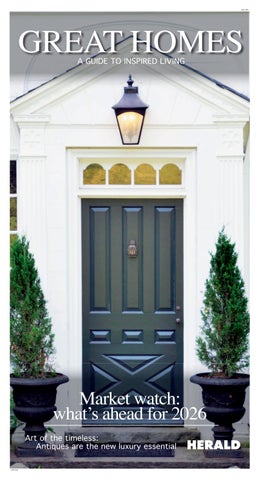
Market Watch

In 2026, the Nassau County luxury market is defined by a flight to "turnkey excellence." While the county as a whole is seeing a healthy annual appreciation of 7–8%, specific enclaves are outperforming the average due to a combination of architectural pedigree, new infrastructure and an extreme scarcity of move-inready inventory.

Here are the top neighborhoods currently showing the most significant appreciation and buyer demand,

1. North Shore "Gold Coast" Titans

These areas remain the blue-chip anchors of Nassau County, with demand consistently outstripping the limited supply of sprawling estates.

Old Westbury: Known for its grand horse farms and private estates, this area has seen a surge in value as high-net-worth buyers seek maximum privacy. Median home values here have stabilized at approximately $2.5 million, with "modernized" historic estates commanding massive premiums.

Sands Point: This peninsula continues to be a top performer for waterfront luxury. The shift toward "wellness real estate" has made its private beaches and expansive, multi-acre lots more valuable than ever, with average property values often exceeding $3 million.

Kings Point: Frequently ranking as one of the wealthiest enclaves in the country, it remains a focal point for the ultraluxury segment ($5M+), which saw a significant volume increase throughout 2025.

2. ‘New Luxury’ Transit Hubs

With the full integration of LIRR's Grand Central Madison, neighborhoods with "walkable luxury" and quick commutes are seeing a significant value lift.

Manhasset (North Hempstead): The "Plandome" and "Manhasset Crest" areas are seeing some of the county’s highest appreciation. New luxury constructions (starting at $2.8M+) and the proximity to the Americana Manhasset’s high-end retail make it a perennial favorite for executives.

Great Neck: Specifically the village areas like Kensington and Great Neck Plaza. While the median price is around $1.5 million, the "Rose at Great Neck" and other luxury condo developments are driving a niche market for high-end downsizers.

3. Emerging Growth And New Construction Hotspots

Investors and builders are currently focused on these areas, leading to a "teardown-and-rebuild" boom that is rapidly lifting neighborhood medians.

Syosset: A favorite for luxury builders creating upscale colonials and "modern farmhouses." Its top-tier school district ranking ensures that even at $1.8M - $2.2M, homes trade quickly.

Glen Cove: The "Garvies Point" waterfront development has transformed this area into a luxury destination. It is benefiting from significant state "Smart Growth" investment, making it a high-appreciation play for 2026.

Long Beach: For those seeking "Coastal Contemporary" living, Long Beach is seeing a spike in value for elevated, newly constructed waterfront homes that offer a modern alternative to the traditional North Shore aesthetic.

TOM TRIPODI Featured Listings

Art of the timeless

Antiques are the new luxury essential

In an era defined by the "fast" and the "disposable," the modern home is increasingly finding its soul in the past. While sleek lines and smart technology provide the framework for contemporary living, it is the inclusion of antique furnishings and decor that provides the character. Whether it is the storied patina of a 19th-century mahogany desk or the intricate charm of vintage collectibles, antiques offer something mass-produced items never can: a narrative.

Hallmark of craftsmanship

The enduring appeal of antiques lies primarily in their construction. Unlike today’s assembly-line furniture, antiques are a testament to a time when master craftsmen prioritized longevity over volume. These pieces have endured through decades —and often centuries thanks to the superior quality of old-growth woods and hand-finished joinery. When you invest in an antique, you aren’t just buying a piece of furniture; you are acquiring a specimen of history that has already proven its ability to stand the test of time.

A distinctive design edge

For the design-savvy homeowner, antiques are the secret weapon for creating a space that stands apart. In a world of carbon-copy interior trends, incorporating "brown furniture" the industry term for mid-range antique wood pieces adds a layer of texture, contrast, and personality that reproductions simply cannot mimic.

Interestingly, these mid-range pieces are often more affordable than high-end modern replicas.

They allow a novice collector to begin their journey with substantial, high-quality items before graduating to investmentgrade pieces that rival fine artwork in both value and prestige.

The sustainable choice

Beyond aesthetics, antiquing is a profoundly "green" endeavor. In today’s eco-conscious society, the luxury market is shifting toward sustainability. Antiquing is the ultimate form of recycling; it breathes new life into existing treasures, reducing the demand for new raw materials and the carbon footprint associated with modern manufacturing. Choosing a vintage armoire over a new one is an elegant way to practice environmental stewardship without sacrificing style.

The thrill of the hunt

For many, the draw of antiques is as much about the process as the product. Browsing through curated galleries or hidden markets is a relaxing, meditative experience a sophisticated treasure hunt. It offers a unique opportunity to:

•Unearth History: Discover the origins and stories behind unique artifacts.

•Evaluate Your Own Collection: Gain hands-on experience that helps you understand the value of items you may already own, which is invaluable for those looking to downsize or manage an estate.

In a world of carboncopy interiors, antiques add texture, contrast, and personality that reproductions simply cannot mimic.

•Smartlt Invest: While trends in modern decor fluctuate, well-chosen antiques generally retain their value, making them a stable addition to your household assets.

Starting your collection

If you are new to the world of antiquing, the wealth of digital information available today makes it easier than ever to become an informed buyer. Start by exploring mid-range inventory to develop your "eye" and understand which styles resonate with your home’s architecture.

As you gain expertise, you may find yourself drawn to those rare, high-end pieces that serve as the focal point of a room much like a gallery-grade painting. Whether you are looking for a rare coin, a vintage toy to add nostalgia to a library, or a statement dining table, the world of antiques invites you to own a piece of the past while building a beautiful future.

Insider's guide:

Tips for identifying authentic period furniture

When navigating the world of high-end antiques, the difference between a mass-produced reproduction and a true period piece often lies in the smallest details. Use this checklist to help distinguish authentic history from modern imitation.

Examine the joinery: Before the mid-19th century, dovetail joints (the interlocking wedges connecting drawer fronts to sides) were cut by hand. Look for slightly uneven spacing or varying sizes in the "teeth." If the joints are perfectly uniform and machine-precise, the piece is likely a modern reproduction.

Check the underside and back: Authentic antiques rarely show perfect finishes in hidden areas. Look at the back of a cabinet or the underside of a table; you should see secondary woods (like pine or poplar used for structural support) and signs of hand-planing. If the hidden surfaces are as smooth as the front, it’s a red flag.

Look for ‘shrinkage’ and symmetry: Wood shrinks across the grain over centuries. A perfectly circular 18th-century tabletop is rare; usually, there will be a slight ovaling (perhaps 1/8 to 1/4 of an inch) as the wood has breathed over time. Check for slight irregularities that prove the piece has "aged" in place.

Investigate the hardware: Remove a screw if possible. Original screws from the 1700s and early 1800s have blunt ends and off-center slots because they were hand-forged. Additionally, look for "shadowing" or ghost marks around brass handles, which indicate the hardware has been there for decades.

The smell test: While it sounds unusual, the scent of a piece is telling. Genuine antiques often have a distinct, lingering aroma of old wood, wax, or even faint cedar. A strong smell of chemicals, fresh stain, or particle board is a definitive sign of a contemporary piece.

Douglas Elliman is one of the largest independent luxury residential real estate brokerages in Nassau County.*

Local and Global Strength. Direct Reach.

Brokerage On Long Island by Volume and Transactions*

$2.5+Billion In Listed & Closed Sales in Nassau County in 2025*

2,455

Total Listed & Sold Properties in Nassau County in 2025*

Turn static files into dynamic content formats.
Create a flipbook
Issuu converts static files into: digital portfolios, online yearbooks, online catalogs, digital photo albums and more. Sign up and create your flipbook.