![]()


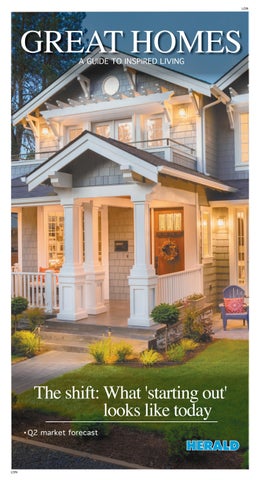
The shift: What 'starting out' looks like today
• Q2 market forecast


How rising prices, shifting buyer priorities and limited inventory are redefining the first step into homeownership
FBy Christy Hinko
or generations, the idea of a starter home on Long Island carried a familiar promise: buy modestly, build equity and move up. Today, that definition has changed so dramatically that many buyers, agents and economists say the term itself may no longer reflect reality.
In the decades following World War II, Long Island became a national model for suburban growth. Developments such as Levittown introduced mass-produced single-family homes designed specifically for young families entering the housing market. These homes were typically less than 1,500 square feet and priced within reach of middle-class buyers. The expectation was simple: purchase a first home, gain equity and eventually upgrade.
That formula helped build generational wealth.
On Long Island, a starter home is no longer defined by size — it’s defined by price.
Baby boomers and many Gen X buyers purchased entry-level homes at relatively low prices and benefited from decades of appreciation. But rising land costs, zoning restrictions and limited new construction have reshaped the market.
Today, the concept of a starter home is defined less by size or layout and more by relative price. Zillow now categorizes starter homes as those in the lowest third of local values. On Long Island, that often still means properties exceeding $1 million in nearly 30 communities.
The numbers behind the shift
Median sale prices reflect the new reality. Nassau County single-family homes averaged about $830,000 in 2025, while Suffolk County averaged about $699,000, according to OneKey MLS data. Homes also continue to sell quickly, averaging less than 50 days on the market in both counties.
Out of more than 11,000 homes sold on Long Island in 2025, just 1,363 qualified as starter homes based on pricing and property characteristics. A traditional starter home typically has two to three bedrooms and one bathroom, but price — not size — is now the defining factor.
Real estate professionals say today’s buyers have adjusted expectations rather than abandoning the market.
“The definition of a ‘starter home' has definitely shifted over the past few years,” Oksana Malayeva said. “On Long Island, many first-time buyers are now prepared to spend anywhere from the mid-$600,000s to the low-$800,000s, depending on the neighborhood, taxes and condition of the home.”
Malayeva, a licensed real estate salesperson with Signature Premier Properties in Rockville Centre, said demographics are also evolving as affordability challenges reshape who can buy.
“Today’s starter-home buyers are primarily young professionals in their late 20s to late 30s, newly married couples and growing families who are transitioning from renting,” she said. “Many are dual-income households who have been saving aggressively or receiving family support to help with down payments.”
From temporary step to long-term strategy
In many cases, buyers are redefining what “starter” means in terms of longevity. Instead of planning to stay five to seven years, many buyers now expect to stay much longer due to high interest rates and limited inventory.
That shift has changed what buyers prioritize. Flexibility and long-term livability now often outweigh square footage.
“Another major shift is that starter homes are no longer always seen as ‘temporary,’” Malayeva said. “With higher interest rates and limited inventory, buyers are thinking more longterm,” Malayeva said. “They’re looking for properties that can be expanded into — homes with potential for growth, finished basements or adaptable spaces for remote work.”
Inventory constraints continue to drive competition, particularly for well-priced homes.
“Inventory remains tight, so well-priced homes continue to
generate strong interest,” she said. “The biggest challenge for first-time buyers right now isn’t necessarily willingness to spend — it’s competition and affordability when factoring in taxes and monthly carrying costs.”
Expanding the definition of 'home'
Agents say buyers are expanding both property type and geography in response to rising costs.
“On Long Island, the definition of a starter home has evolved,” said Crystin Quick, a real estate salesperson with Douglas Elliman in Long Beach. “With inventory still limited compared to buyer demand, today’s buyers are broadening both what they’ll purchase and where they’ll look.”
That shift includes increased interest in co-ops, condos and smaller homes in less traditionally sought-after neighborhoods.
Quick said, “Many are considering co-ops and condos in addition to single-family homes and expanding their search to a wider geographic area to find the right fit.”
Even with rising prices, agents say many buyers still see starter homes as an important entry point into wealth building.
“Buyers are prioritizing condition, location and longterm value over size alone,” Quick said. “A starter home remains a strong investment because it allows buyers to enter homeownership and build equity.”
Lifestyle demand continues to drive prices
Across the region, price growth continues to be fueled by lifestyle demand as much as housing supply constraints.
“The definition of a starter home isn’t what it used to be,” Douglas Elliman real estate salesperson, Christine Ferramosca said. “Today it is about long-term potential, financial strategy and making a smart first move.”
Rising prices appear unlikely to reverse dramatically in the near term.
“With price points steadily rising — and little indication they’ll ease anytime soon — first-time buyers are taking a far more strategic approach to household formation,” Ferramosca said. “As of January 2026, the median single family home price for Nassau County was $835,000, up 3.1 percent yearover-year as demand continues to be fueled by the desire for the suburban lifestyle, sense of community our towns provide and proximity to beautiful beaches, vacation spots and Manhattan.”
Buyers are also thinking more holistically about how homes will support future life stages.
“Many are searching for homes with the flexibility to grow alongside them, rather than planning to trade up within just a few years,” Ferramosca said. “Others are choosing to wait longer to afford a larger home from the outset or leaning on family support when possible to help bridge the gap.”
The shift on Long Island reflects a broader national divide. In parts of the Midwest and Sun Belt, starter homes remain relatively accessible. But in high-cost coastal markets, starter homes increasingly resemble what previous generations considered move-up properties.
Meanwhile, smaller pockets of affordability still exist in the Northeast, including parts of upstate New York, New Jersey, Connecticut and Pennsylvania, where some entry-level homes still fall under $200,000. But those markets often lack the job density, infrastructure and lifestyle amenities that continue to drive demand on Long Island.
The result is a housing landscape where the traditional stepping-stone model is fading. Instead, starter homes on Long Island increasingly represent long-term financial commitments rather than temporary housing solutions.
The American dream of homeownership still exists here — but for many first-time buyers, it now requires more planning, more savings and a willingness to rethink what “starting out” really looks like.invites you to own a piece of the past while building a beautiful future.

Douglas Elliman is one of the largest independent luxury residential real estate brokerages in Nassau County.* Local and Global Strength. Direct Reach.


s we look ahead to warming up from the deep freeze and await the first signs of spring, our local market is entering a phase that experts are calling the “Great Normalization.”
After years of frenetic bidding wars and a take-it-or-leaveit environment for buyers, the second quarter of 2026 seems to shaping up to be the most balanced and strategic season we have seen in over half a decade.
From the canal-front homes of Massapequa, the bustling streets of Lynbrook, and gracious streets of Rockville Centre to shorefront neighborhoods of Long Beach and east, this shift represents a move away from the post-pandemic adrenaline and toward a more sustainable, calculated rhythm.
Psychological
The most significant catalyst for the Q2 2026 market is the movement in mortgage rates. After peaking in previous years, the 30-year fixed rate has finally begun to dance around the 5.9% to 6.2% range. While this is a far cry from the 3% "golden handcuffs" many homeowners locked in during 2021, it represents a critical psychological threshold for buyers.
For South Shore communities, which historically attract a high volume of first-time and "move-up" buyers, this dip is a game-changer. In towns like Baldwin and Oceanside, we could be seeing a spring surge of buyers who were sidelined for the last 24 months. These buyers are coming back with a refined strategy: they are no longer just looking for a house; they are looking for a monthly payment they can live with.
Financial analysts from Fannie Mae and local groups suggest that the "rate reset" is finally unlocking pent-up demand. Buyers who have been sidelined since 2023 are returning to the market with a renewed sense of purchasing power. However, this isn't a return to the "buying at any cost" era. Today’s buyers are payment-focused, analyzing the total monthly carry of a home rather than just the sticker price.
Inventory Loosening: More Choice, Not A Surplus
One of the most encouraging signs for Q2 is the projected increase in inventory. In Nassau County, for-sale listings are expected to be up nearly 9% year-over-year. For a market that has been "land-locked" and starved of options, this is a significant shift.
Currently, Nassau County maintains roughly 2.1 to 2.5 months of supply. While a "balanced" market technically requires about six months, the current increase is enough to change the tone of the conversation. Buyers are finally regaining the luxury of the "second showing." The frantic "sight-unseen" offers of the past are being replaced by a more intentional process where buyers can compare neighborhoods and revisit decisions.
The "Lock-in Effect" is slowly eroding. Life events — jocularly known in the industry as the "3 Ds": Death, Divorce and Diapers — continue to force moves regardless of mortgage rates, finally bringing more single-family homes to the market.
Unlike 2023, where speed was the only variable, 2026 buyers are analytical. They are taking the time to attend second showings and are prioritizing homes that offer energy-efficient upgrades to offset rising utility costs.
Keep in mind that condition is king. While the market is
normalizing, a sharp divide has emerged between move-in ready homes and those requiring updates. In Nassau County, the median sold price for a home currently sits at approximately $831,000, with many properties still fetching 100.4% of their list price.
However, this strength is concentrated in "turnkey" properties. Homes that are professionally staged, updated with modern finishes, and move-in ready are still seeing multiple offers within the first 14 days. Conversely, properties that are "dated" or need significant cosmetic work are sitting on the market for an average of 40 to 50 days.
For sellers, this means the "aspirational pricing" strategy of 2024 is no longer viable. Success in Q2 2026 depends on accurate pricing based on early-year comps and a commitment to presentation. A home that is correctly priced and presented is still likely to move quickly, but the market is no longer forgiving of overpricing.
One of the most persistent challenges in Nassau has been "inventory paralysis" — homeowners staying put because they didn't want to trade a 3% mortgage for a 7% one. Going into Q2 2026, this "lock-in effect" is finally beginning to thaw.
As we move into the second quarter of 2026, the real estate narrative in Nassau County is shifting away from the high-velocity bidding wars of the past and toward a more calculated "smarter market.” While much of the media attention often gravitates toward the inland hubs or the North Shore's Gold Coast, the true heartbeat of the 2026 spring season is found along the South Shore.
It’s emerging as the primary laboratory for Nassau’s new economic reality: a blend of stabilizing prices, improving inventory and a renewed focus on lifestyle value.
Inventory levels across the South Shore are projected to be up 9% year-over-year. In Massapequa, for instance, new listings in early 2026 have shown a steady uptick as baby boomers begin their long-anticipated transition to downsizing or relocating out of state.
‘Turnkey’
A fascinating trend is the widening price gap based on home condition. The median sold price in Nassau stands at roughly $831,000, but this figure is a "tale of two houses."
In locales like Seaford and Wantagh, move-in ready, "turnkey" homes —those with updated kitchens, modern flooring, and professional staging — are still commanding multiple offers and selling at 100.4% of list price.
Conversely, properties that are "dated" or require significant cosmetic work are sitting on the market for an average of 40 to 50 days. Today’s buyer is often a millennial professional who is "cash-poor" after a large down payment and has little appetite (or budget) for a major renovation immediately after closing. For sellers in this makes "pre-sale prep" the most important investment they can make right now.
Snapshot (Q2 2026


Introducing a brand-new, never-lived-in four-level waterfron masterpiece on Reynolds Channel with 60 feet of premium waterfront a new bulkhead, and private dock. Offering 5.248 sq ft, this luxur estate features 5 bedrooms, 4.5 designer baths, an elevator, chef’s kitchen, and expansive living spaces with unobstructed water views Enjoy resort-style amenities including a hot tub, built-in BBQs, heatec rooftop deck with NYC views, a 3-car garage, ample parking, anc exclusive Point Lookout beach and playground rights.

Discover this charming brick Cape in Point Lookout, thoughtfully updated with new windows, a modern
and a brand-new roof. Set on an expansive 6.000 sqft four-lot property, fully enclosed by brick walls with a
and ample parking. Just one block from the ocean with exclusive resident beach rights. This home delivers the perfect coastal lifestyle.

Welcome to your luxury beachside retreat set on four expansive lots totaling 8,000 sq ft. This stunning home offers 5 bedrooms and 4 baths, including a primary suite ����������������������������������������������������� a chef’s kitchen with high-end appliances, custom ������������������������������������������������������ island. Outdoors, enjoy a fully equipped kitchen, lush landscaping, and a heated saltwater Gunite pool just steps from the beach. Additional features include six parking spaces, a 2-car garage, pool house, and extra storage���������������������������� A beautiful turn-key home on the highly desirable ocean block of Point Lookout. This residence offers exceptional craftsmanship and new balconies with stunning views. The property includes a 2 car driveway and a 1 car garage